

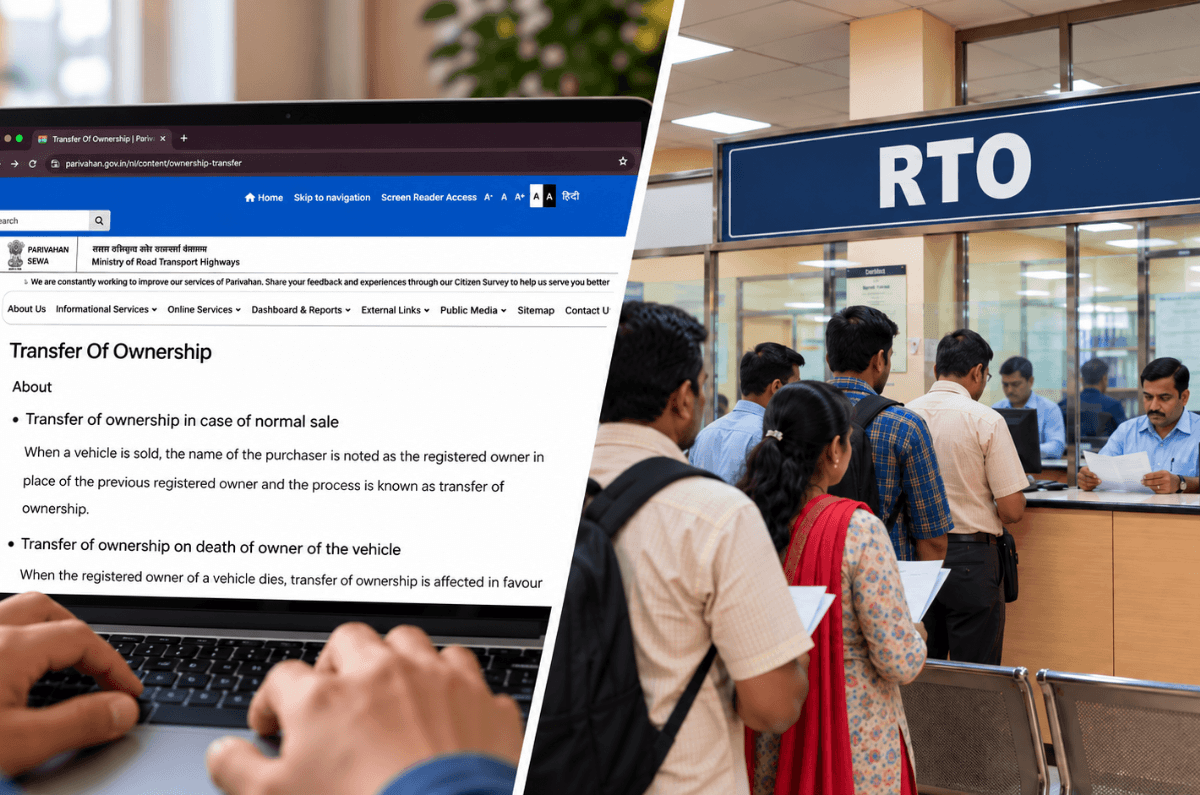
How to transfer RC from one state to another: Process, documents, fees explained

How to transfer RC from one state to another: Process, documents, fees explained

If you are moving to another state or selling your car to someone, you need to transfer the vehicle registration. This updates the registration to the new state if you relocate, or to the new owner if you sell the car. Since each state’s transport department has its own rules, registration certificate (RC) transfer fees, requirements and timelines can differ. So how exactly do you transfer your RC to a new regional transport office (RTO) and what are the documents and fees required in the process? We answer all your questions here.

Disclaimer: This guide is for private vehicles. Commercial vehicles need additional paperwork, such as permit and fitness documents, which are not covered here. The information used here comes from the Parivahan portal. Documents, fees and deadlines vary by state and RTO, and are subject to change. Check with your local RTO before you apply or pay.

What forms are required for an RC transfer?

FormPurpose
Form 29The seller’s notice reporting the transfer of ownership.
Form 30The buyer’s application to register the vehicle in their name.
Form 31Transfer of the vehicle to the person who succeeds the owner after their death.
Form 32Transfer of a vehicle bought through a government auction.
Form 28Application for a No-objection Certificate (NOC).
Form 35Application to remove loan, lease or hypothecation details from the RC.

The form you need depends on how the vehicle’s ownership is changing. Forms 29 and 30 are the main forms used in a regular used-car sale.

Why should you complete the RC transfer soon after a sale?

If you do not complete the ownership transfer or pay the applicable RTO charges, you may face penalties. You could also be held legally responsible if a car you sold is still registered in your name and is involved in an accident or criminal offence.

For a vehicle transferred within the same state, the buyer should submit the ownership-transfer application within 14 days of the sale. If the vehicle is registered in another state, the buyer should apply within 45 days. The seller should also protect their own interests instead of waiting for the buyer to finish the entire process. Form 29 and the sale intimation should be submitted promptly to create an official record of the handover. State transport departments may charge late fees or impose penalties if the application is submitted after the deadline.

Don’t forget to transfer the insurance policy

Updating the RC does not automatically transfer the motor insurance policy. The buyer should contact the insurer, submit the updated ownership documents and complete a new proposal or endorsement request. The RC and insurance policy should ultimately show the same owner’s name and address.

The seller’s No Claim Bonus (NCB) belongs to the seller. The seller can request an NCB retention certificate and use the eligible discount on another vehicle. The buyer should start the insurance transfer immediately and complete it within 14 days of the ownership transfer. A delay may affect eligibility for an own-damage claim.

What other documents are required for an RC transfer?

The exact list can vary by state and RTO. A regular sale usually requires:

  • Original RC.
  • Completed and signed Forms 29 and 30
  • Valid motor insurance certificate
  • Valid pollution under control (PUC) certificate
  • The buyer’s identity and address proof
  • PAN card or Form 60, where applicable
  • Passport-sized photographs
  • Pencil print of the chassis and engine numbers, if required
  • Sale agreement or delivery note
  • Applicable tax-clearance proof
  • Fee-payment receipt
  • Financier’s NOC and Form 35, if a loan is recorded
  • RTO NOC for an interstate transfer

Some states allow Aadhaar-based authentication and digital document submission. Others may require physical copies or verification at the RTO.

How to transfer an RC online?

You can usually start the ownership transfer through the Parivahan vehicle-services portal.

Step 1: Open vehicle-related services

Go to the vehicle-related services section on Parivahan and select the state where the vehicle is registered.

Step 2: Enter the vehicle details

Enter the registration number and open the online services section. For authentication, you may need the last five digits of the chassis number and an OTP sent to the registered mobile number.

The mobile number linked to the RC must be active. If it is outdated, the registered owner may need to update it before continuing.

Step 3: Select transfer of ownership

Choose the transfer-of-ownership service. In some states, the seller must start the application before the buyer can enter the remaining details.

Step 4: Enter the buyer and sale details

Enter the sale date, the buyer’s address and identity details, and any other information requested. Make sure all entries match the supporting documents.

Step 5: Upload the documents

Upload the signed forms and supporting documents where online uploads are available. Make sure the images are clear, and all signatures can be seen.

Step 6: Pay the applicable fee

Check the fee details and pay online. Save the payment receipt and application number.

Step 7: Complete verification

Depending on the state, verification may be completed through Aadhaar authentication, faceless verification or a physical visit to the RTO.

For a physical verification, you may need to bring the original RC, signed forms and identity documents.

Step 8: Track the application

Use the application number or vehicle registration details to check the status on the Parivahan portal. After approval, the updated RC may be available digitally through DigiLocker or mParivahan before the physical card arrives.

How to transfer an RC offline?

You can also complete the transfer by visiting the RTO. The seller and buyer should fill in and sign Forms 29 and 30. The buyer then submits the forms, original RC, insurance, PUC, identity documents and other required papers to the appropriate registering authority.

After the fee is paid, the RTO checks the application and updates the registration record. It may ask for a physical vehicle inspection, especially for interstate transfers, address mismatches or document discrepancies. Always collect an acknowledgement or receipt when you submit the application.

How to transfer an RC within the same state?

A transfer within the same state is usually simpler because the vehicle keeps its existing registration number. The buyer generally submits Forms 29 and 30 along with the RC, insurance, PUC and personal documents. A separate NOC for an interstate transfer is normally not required. However, the process can differ if the seller and buyer come under different RTO jurisdictions within the same state. The online portal will usually direct the application to the relevant authority.

How to transfer an RC between states?

An interstate sale may involve two related processes:

  • Ownership transfer
  • Re-assignment of the registration mark in the buyer’s state

The seller should get an NOC from the original RTO using Form 28. The buyer then submits the ownership-transfer documents and pays the applicable road tax in the destination state, whether it be from Haryana, Maharashtra or Tamil Nadu. We will explain this process in the following FAQs.

The documents may include:

  • Original RC
  • Forms 29 and 30
  • RTO NOC
  • Insurance and PUC certificates
  • The buyer’s local address proof
  • Tax-payment documents
  • Pencil print of the chassis and engine numbers
  • Vehicle inspection report, if required

If the vehicle is moved to another state for more than 12 months, the owner may also need to apply for a new registration mark.

A road-tax refund from the original state is handled separately and depends on that state’s rules. The owner may need to provide proof of re-registration and tax payment in the new state.

How to get an NOC?

There are two ways to apply for an NOC – offline and online. The first method requires you fill out a copy of the Form 28. After that, attach the other required documents which are mentioned above, pay the applicable fee and submit the application at your RTO. Before starting, make sure there are no pending challans, unpaid toll dues, or vehicle tax payments, as the RTO will not issue an NOC if any dues remain. This process can also be done online by visiting the Parivahan portal – parivahan.gov.in. An NOC is valid for six months from the date of issue.

How to transfer the RC of a car with an active loan?

Check the RC for a hypothecation entry that names the bank or finance company. A vehicle with an active loan generally cannot be transferred without the financier’s consent. The seller should first close the loan or obtain the required approval. After the dues are cleared, the lender provides a loan-closure or no-dues certificate and signs Form 35. The owner can then apply to remove the hypothecation entry from the RC. In some states, you can request hypothecation removal and ownership transfer at the same time. Completing the loan-removal process first can reduce the risk of rejection.

How to transfer the RC of a car after the registered owner’s death?

When the registered owner dies, the person who succeeds to the vehicle should inform the registering authority and apply to transfer ownership using Form 31. The successor may use the vehicle for up to three months if the registering authority is informed within 30 days of the owner’s death.

The application usually requires:

  • Form 31
  • Original RC
  • Insurance and PUC certificates
  • Death certificate
  • Proof of succession or legal-heir documents
  • Declarations from other legal heirs
  • The applicant’s address and identity proof
  • Vehicle-verification documents, if required

Requirements can differ if there is a will, more than one legal heir or a dispute over ownership.

How to transfer the RC of a car bought at a government auction?

If you buy a vehicle through an auction held by or on behalf of the Central or a state government, you should apply using Form 32 within 30 days of taking possession. The buyer must submit the auction certificate or sale order, the government authorisation for the auction, the available vehicle documents and the applicable fee. Auction vehicles may have incomplete records, repairs that are still needed or unusual registration histories. Check the documents before bidding.

How much does an RC transfer cost?

RC transfer charges depend on the vehicle category, state, smart-card fee, postal charge, any outstanding tax and whether extra services are needed. The Parivahan portal shows the amount payable before you make an online payment. Under Rule 81 of the Central Motor Vehicles Rules, the RC transfer fee is half the standard registration fee. This may amount to Rs 150 for a motorcycle and Rs 300 for a private car. Delays can attract a late fee of Rs 300 per month for motorcycles and Rs 500 per month for cars. Some states may also impose a penalty if the application is not submitted within 14 days of purchase. Road tax is charged separately, and is applicable if the vehicle is being re-registered in another state.
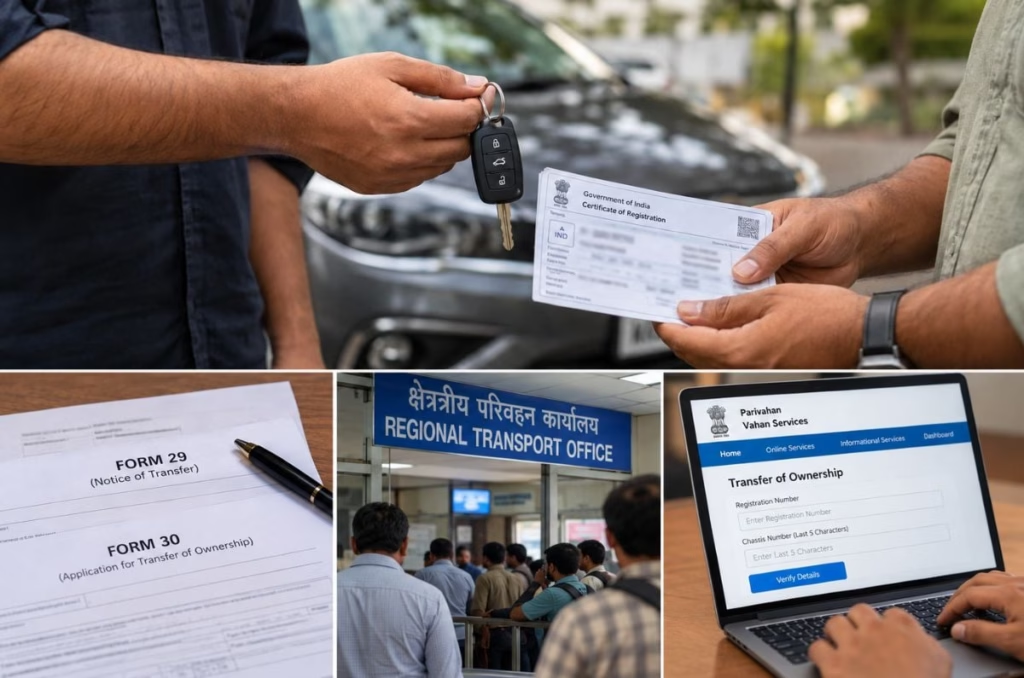
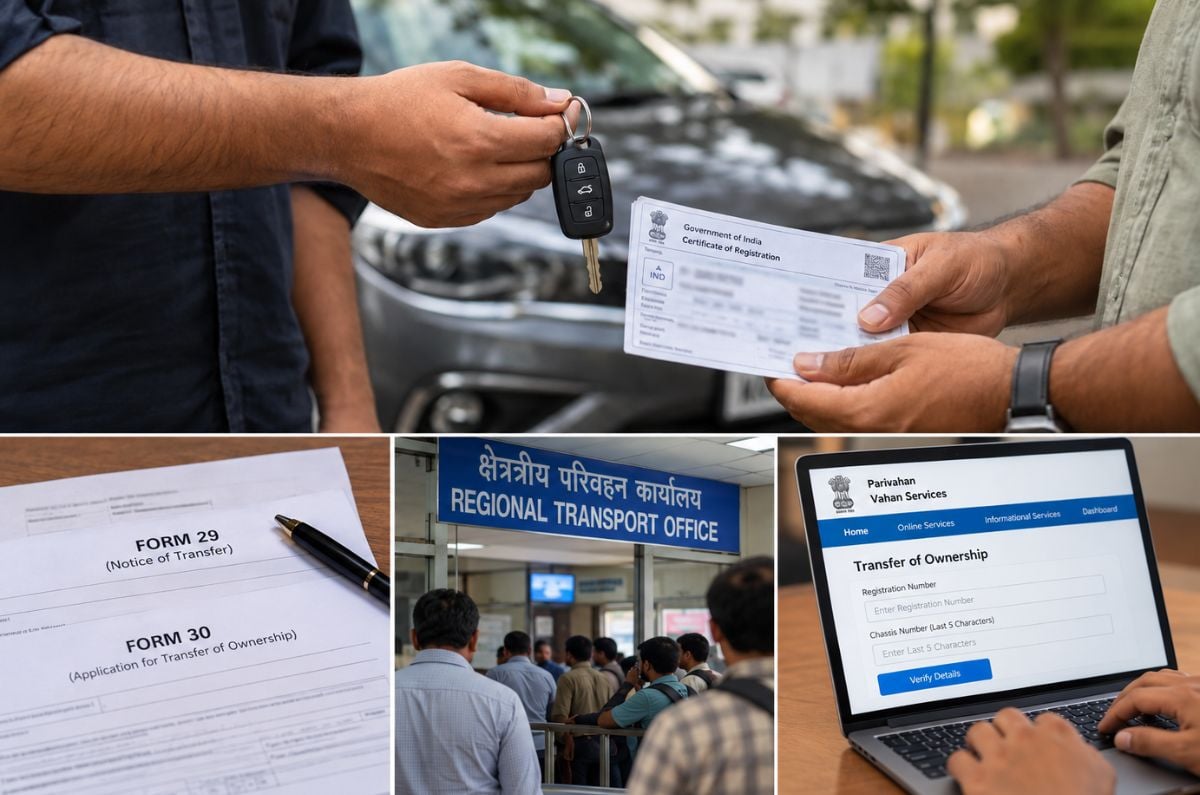
How to transfer vehicle ownership in India: Process, documents, fees explained

How to transfer vehicle ownership in India: Process, documents, fees explained
How to transfer vehicle ownership in India

The sale of a car or two-wheeler isn’t considered complete until its registration certificate (RC) carries the name of the new owner. Prior to this, the seller of the vehicle remains its legal owner on record. This means that any challans issued, tax dues, or even liability in case of an accident are to be resolved by the existing owner. So, how does vehicle ownership transfer work and what are the necessary steps one needs to take to complete this process.

Disclaimer: This guide is for buyers and sellers of private vehicles. Commercial vehicles need additional paperwork, such as permit and fitness documents, which isn’t covered here. The information used here comes from the Parivahan portal and state transport department websites. Documents, fees and deadlines vary by state and RTO, and are subject to change. Check with your local RTO or a government-approved official portal before you apply or pay.

1. Why you need to complete the RC transfer soon after sale?

Both the seller and buyer should sign a sale agreement, thus documenting the transaction. Remember, the vehicle legally belongs to whoever’s name appears on the RC. This means unless the RC is transferred to the new owner, any untoward incident (including traffic violations, accidents and crimes) involving the vehicle can remain the responsibility of the seller. A factor for the buyer to consider is the insurance policy, which is deemed transferred along with the vehicle, though the buyer still has to apply to the insurer within 14 days to have it put in their name.

Before the sale, the seller should clear any pending challans and ensure that there are no unpaid National Highway tolls. Both parties should confirm that any pending loan amount (if applicable) on the vehicle has been cleared. Once the vehicle is handed over, the seller should also close or delink the FASTag linked to it.

2. What paperwork do you need for an RC transfer?

A normal sale of a vehicle involves two forms. The seller files Form 29 (notice of transfer), reporting the sale to the registering authorities where the seller and buyer reside. Meanwhile, the buyer files Form 30 (application for transfer), along with the RC and insurance certificate. Depending on the state, the RTO may also ask for the PUC certificate, PAN card or Form 60, address proof, a chassis and engine pencil print, the buyer’s date of birth proof and undertaking, a passport-size photograph and a tax clearance certificate.

There are three cases that may involve extra paperwork. If the vehicle is registered in another state, the RC transfer application will also need a no objection certificate (NOC) from the source RTO (whether it be from Delhi, Maharashtra or Karnataka). If the owner has died, the legal heir applies on Form 31 with the death certificate. In case the vehicle was bought at a government auction, the buyer applies on Form 32 with the sale certificate and a copy of the government order authorising the auction.

Bank auctions are a bit different to government-run ones. These usually involve vehicles repossessed by banks and finance companies over unpaid loans. Since they aren’t government auctions, Form 32 doesn’t apply here. Instead, the lender provides a sale letter and a NOC, though the RC transfer follows the same process as a government auction. Vehicles here are sold on an ‘as is’ basis, so no warranty or test drives – any pending challans or road tax are likely to be sorted by the buyer. To know about all the other forms that may be required, scroll to the bottom of the story.

3. How much does an RC transfer cost and what are the deadlines?

The RC transfer application has to be submitted within 14 days of the transfer if the vehicle is registered in the same state. The deadline goes up to 45 days if the vehicle is from another state. A legal heir has to inform the RTO within 30 days of the original owner’s death and apply for a transfer within three months. Meanwhile, an auction buyer gets 30 days to transfer the RC from the date of taking possession of the vehicle.

As for the costs involved, the central fee that’s set under Rule 81 of the Central Motor Vehicles Rules describes it as half the registration fee, depending on the vehicle’s class. This works out to Rs 150 for a motorcycle and Rs 300 for a private car. If the buyer misses these deadlines, they will attract a late NOC fee of Rs 300 a month for motorcycles and Rs 500 a month for cars. Certain states levy a penalty if the RC transfer isn’t applied for within 14 days of purchase. Road tax is separate, and is applicable if the vehicle is being re-registered in another state.

4. Should you apply for RC transfer online, through an agent or do it yourself?

You can apply for an RC transfer through the Vahan portal (vahan.parivahan.gov.in/vahanservice/vahan). Enter the registration number, select ‘Basic Service’s and verify with the last five digits of the chassis number and an OTP sent to your registered mobile number. Then choose ‘Transfer of Ownership’, fill in the details and pay the fee displayed. The receipt carries a trackable application number, while the application moves to the concerned RTO for processing.

Some states also let you upload documents and book an appointment online, while others still want the papers submitted in person. Doing it yourself at the RTO costs nothing beyond the official fee, and your documents go directly to the office in charge of processing them. However, this can take time and effort from your end, perhaps even requiring multiple visits in case of missing or incorrect documents.

If absolute convenience is what you want, you can get the process done through an agent. This will not only save you the hassle of standing in queues or making follow-up visits to the RTO, but also help with inter-state RC transfers that can involve an NOC and re-registration. Understandably, this convenience comes at a cost (which can vary from agent to agent) and also having your original documents and signed forms being with a third party. If you do use an agent, don’t sign blank forms and always ask for official receipts and the application number for self-tracking the progress.

5. Other forms that may be required for an RC transfer

Form

What’s it for

Submitted by

Form 28

Application for a no objection certificate (NOC)

Seller – when the vehicle moves to another RTO or state

Form 31

Application for transfer on death of the owner

Legal heir

Form 32

Application for transfer of a vehicle bought at public auction

Auction buyer

Form 35

Notice of termination of hypothecation

Owner and financier, if there was a loan on the vehicle

Form 36

Application for transfer to the financier’s name

Financier, for a repossessed vehicle


RBI का लोन प्राइसिंग प्रपोजल: कर्ज लेने वालों पर इसका क्या हो सकता है असर?

RBI loan pricing proposal: रिजर्व बैंक ऑफ इंडिया (RBI) ने लोन प्राइसिंग के लिए एक नया फ़्रेमवर्क प्रस्तावित किया है। इसका मकसद छोटे लोन के लिए फ़्लोटिंग इंटरेस्ट रेट, स्प्रेड और कुल लागत में बदलाव को उधार लेने वालों के लिए ज़्यादा पारदर्शी बनाना है। रिजर्व बैंक ऑफ इंडिया (लोन और एडवांस पर इंटरेस्ट रेट) निर्देश, 2026 का ड्राफ़्ट कमर्शियल बैंकों, क्षेत्रीय ग्रामीण बैंकों, को-ऑपरेटिव बैंकों, ऑल-इंडिया फ़ाइनेंशियल इंस्टीट्यूशन और नॉन-बैंकिंग फ़ाइनेंशियल कंपनियों (NBFCs) – जिनमें हाउसिंग फ़ाइनेंस कंपनियां भी शामिल हैं उनपर लागू होगा। प्रस्तावित निर्देश 1 अप्रैल, 2027 से लागू होने वाले हैं।

यहां वे मुख्य प्रस्ताव दिए गए हैं जिनके बारे में कर्ज लेने वालों को पता होना चाहिए।

फ़्लोटिंग लोन रेट के लिए साफ रीसेट फ़्रेमवर्क

प्रस्तावित फ़्रेमवर्क के तहत, लेंडर को फ़िक्स्ड और फ़्लोटिंग-रेट लोन की कीमत तय करने के लिए इंटरनल या एक्सटर्नल बेंचमार्क के साथ रिस्क-बेस्ड स्प्रेड का इस्तेमाल करना होगा। बेंचमार्क, रीसेट फ़्रीक्वेंसी और रीसेट की तारीख लोन एग्रीमेंट में बताई जानी चाहिए।

फ़्लोटिंग-रेट लोन के लिए, बेंचमार्क रीसेट की अवधि तीन महीने से ज़्यादा नहीं हो सकती। हालांकि, यह जरूरत कुछ छोटी रेगुलेटेड संस्थाओं(जिनमें बेस लेयर की NBFCs शामिल हैं) के लिए अनिवार्य नहीं होगी।

इजी होम फाइनेंस के चीफ फ़ाइनेंशियल ऑफ़िसर विकास कुमार मिश्रा ने कहा कि प्रस्तावित फ़्रेमवर्क से फ़्लोटिंग-रेट पर लोन लेना ज़्यादा अनुमान लगाने लायक हो सकता है। मिश्रा ने कहा, “हर फ़्लोटिंग रेट को ज़्यादा से ज़्यादा तीन महीने के रीसेट साइकल वाले साफ़ बेंचमार्क से जोड़ने से उन उधार लेने वालों के लिए ज़रूरी अनुमान लगाने की सुविधा मिलती है जिन्होंने पहले असमान ट्रांसमिशन देखा है।”

कर्ज लेने वालों के लिए, इसका मतलब यह नहीं है कि EMI में कोई बदलाव नहीं होगा। फ़्लोटिंग-रेट लोन तब भी महंगा हो सकता है जब बेस बेंचमार्क बढ़ता है। इसके बजाय, प्रस्तावित नियमों का मकसद बेंचमार्क और रीसेट मैकेनिज़्म को ज़्यादा साफ़ बनाना है।

लेंडर के लिए लोन स्प्रेड बदलने पर सीमाएं

RBI ने इस बात पर पाबंदियां प्रस्तावित की हैं कि लेंडर बेंचमार्क पर लिए जाने वाले स्प्रेड में कैसे बदलाव कर सकते हैं।

स्प्रेड में क्रेडिट रिस्क प्रीमियम, ऑपरेटिंग कॉस्ट, टर्म प्रीमियम और बिज़नेस स्ट्रैटेजी से जुड़ी बातें शामिल हो सकती हैं। क्रेडिट रिस्क प्रीमियम में तब बदलाव किया जा सकता है जब उधार लेने वाले का क्रेडिट प्रोफाइ बदलता है, बशर्ते उसकी समीक्षा की जाए। हालांकि, फ़्लोटिंग-रेट लोन पर स्प्रेड के अन्य हिस्सों में तीन साल तक कोई बदलाव नहीं किया जा सकता है। तीन साल की अवधि की गिनती पहली बार लोन की रकम मिलने या पिछली बार स्प्रेड में बदलाव होने (जो भी बाद में हुआ हो)से की जाएगी। मिश्रा ने कहा कि ज़्यादातर स्प्रेड कंपोनेंट्स में तीन साल की प्रस्तावित स्थिरता से कर्जदाता के लिए EMI में होने वाले बदलावों को समझना आसान हो सकता है।

उन्होंने कहा, “लोन स्प्रेड पर तीन साल की प्रस्तावित स्थिरता एक अहम बदलाव है।” “लोन मिलने या उसमें बदलाव के बाद ज़्यादातर स्प्रेड कंपोनेंट्स को तीन साल के लिए फिक्स करने से अनिश्चितता कम होनी चाहिए और EMI में होने वाले बदलावों को समझना आसान हो जाना चाहिए।”

JSA एडवोकेट्स एंड सॉलिसिटर्स के पार्टनर सिद्धार्थ मनचंदा ने भी ‘स्प्रेड’ से जुड़े प्रावधान को ड्राफ्ट के अहम हिस्सों में से एक बताया। उन्होंने कहा कि तीन साल की अवधि के दौरान स्प्रेड के नॉन-क्रेडिट-रिस्क वाले हिस्से को बढ़ाने की इजाज़त नहीं होगी, जबकि इसमें कटौती बिना किसी भेदभाव के करनी होगी।

₹50,000 तक के लोन के लिए APR की एक तय सीमा (सीलिंग) हो सकती है

प्रस्तावित फ्रेमवर्क में छोटे लोन (स्मॉल-टिकट बॉरोइंग) के लिए भी एक खास प्रावधान है। RBI चाहता है कि लेंडर माइक्रोफाइनेंस लोन और कम रकम वाले लोन के लिए सालाना ब्याज दर (APR) की एक तय सीमा (सीलिंग) लागू करें। APR में ब्याज दर के साथ-साथ बाकी सभी चार्ज और फीस भी शामिल होंगे। कम रकम वाले लोन का मतलब ₹50,000 तक का पर्सनल लोन है।

इससे लोन लेने की कुल लागत की तुलना करना आसान हो सकता है, खासकर तब जब फीस और दूसरे चार्ज लागत का एक बड़ा हिस्सा हों। मनचंदा ने कहा कि छोटे लोन के मामले में, बताई गई ब्याज दर (हेडलाइन इंटरेस्ट रेट) से हमेशा उधार लेने वाले की कुल लागत का पता नहीं चलता।

उन्होंने कहा, “उस सेगमेंट में हेडलाइन रेट कभी भी असल बात नहीं होती थी। असल बात फीस का पूरा ढांचा होती थी। सब कुछ एक ही नंबर में समेटना ही वह बदलाव है जिसे असल में महसूस किया जाएगा।”

ब्याज की गणना का तरीका होगा एक जैसा

RBI ने ब्याज की गणना के लिए एक कॉमन तरीका भी सुझाया है। ज़्यादातर लोन के लिए, ब्याज हर महीने के आधार पर लिया जाएगा और इसकी गणना ‘एक्चुअल/एक्चुअल डे-काउंट कन्वेंशन’ का इस्तेमाल करके रोजाना कम होते बैलेंस पर की जाएगी। खेती से जुड़े लोन के लिए कुछ खास छूट होंगी। इस कदम से रेगुलेटेड लेंडर्स (कर्ज़ देने वाली संस्थाओं) के बीच ब्याज की गणना का तरीका एक जैसा हो जाएगा।

मौजूदा लोन 2029 तक नए फ्रेमवर्क में आ जाएंगे

सुझाए गए बदलावों का असर आखिरकार मौजूदा बेंचमार्क-लिंक्ड लोन पर भी पड़ेगा। RBI ने सुझाव दिया है कि इंटरनल या एक्सटर्नल बेंचमार्क से जुड़े सभी मौजूदा लोन को 1 अप्रैल 2029 तक एक बार की मैपिंग प्रक्रिया के ज़रिए नए फ्रेमवर्क में बदल दिया जाए। इस बदलाव के लिए उधार लेने वाले की मंज़ूरी ज़रूरी होगी।

बदली हुई ब्याज दर, बदलाव से ठीक पहले लागू दर से ज़्यादा नहीं हो सकती, और लेंडर्स बदलाव के लिए कोई फ़ीस नहीं ले सकते।

मिश्रा ने कहा कि नए लोन के लिए प्रस्तावित लागू होने की तारीख और मौजूदा लोन के लिए बदलाव की समय-सीमा के बीच दो साल का समय लेंडर्स को अपने सिस्टम और कम्युनिकेशन प्रोसेस को अपडेट करने का मौका देता है। उन्होंने कहा, “समय-सीमा भी महत्वपूर्ण है। नए नियम 1 अप्रैल 2027 से नए लोन पर लागू करने का प्रस्ताव है, जबकि सभी मौजूदा फ्लोटिंग रेट लोन के 1 अप्रैल 2029 तक नए फ्रेमवर्क में बदलने की उम्मीद है।”

NBFC लोन अपने-आप रेपो-लिंक्ड नहीं होंगे

ड्राफ़्ट में सभी लेंडर्स के लिए एक्सटर्नल बेंचमार्क का इस्तेमाल करना ज़रूरी नहीं है।

कमर्शियल बैंकों को फ्लोटिंग-रेट पर्सनल लोन और फ्लोटिंग-रेट MSME लोन को एक्सटर्नल बेंचमार्क से जोड़ना होगा। NBFC, क्षेत्रीय ग्रामीण बैंकों, को-ऑपरेटिव बैंकों और अखिल भारतीय वित्तीय संस्थानों के लिए, एक्सटर्नल बेंचमार्क से जुड़ना वैकल्पिक रहेगा।

इसलिए, NBFC से फ्लोटिंग-रेट लोन लेने वालों को यह नहीं सोचना चाहिए कि लोन अपने-आप RBI रेपो रेट से जुड़ जाएगा। ड्राफ़्ट अभी फ़ाइनल नहीं है। प्रस्तावित निर्देश 1 अप्रैल 2027 से लागू होने हैं, बशर्ते RBI फ्रेमवर्क को फ़ाइनल कर ले।

10 लाख रुपये की FD पर कहां होगी सबसे ज्यादा कमाई? जानें कौन-कौन से बैंक दे रहे 8% से ज्यादा ब्याज

(डिस्क्लेमर: मनीकंट्रोल.कॉम पर दिए गए विचार एक्सपर्ट के अपने निजी विचार होते हैं। वेबसाइट या मैनेजमेंट इसके लिए उत्तरदाई नहीं है। यूजर्स को मनी कंट्रोल की सलाह है कि कोई भी निवेश निर्णय लेने से पहले सार्टिफाइड एक्सपर्ट की सलाह लें।