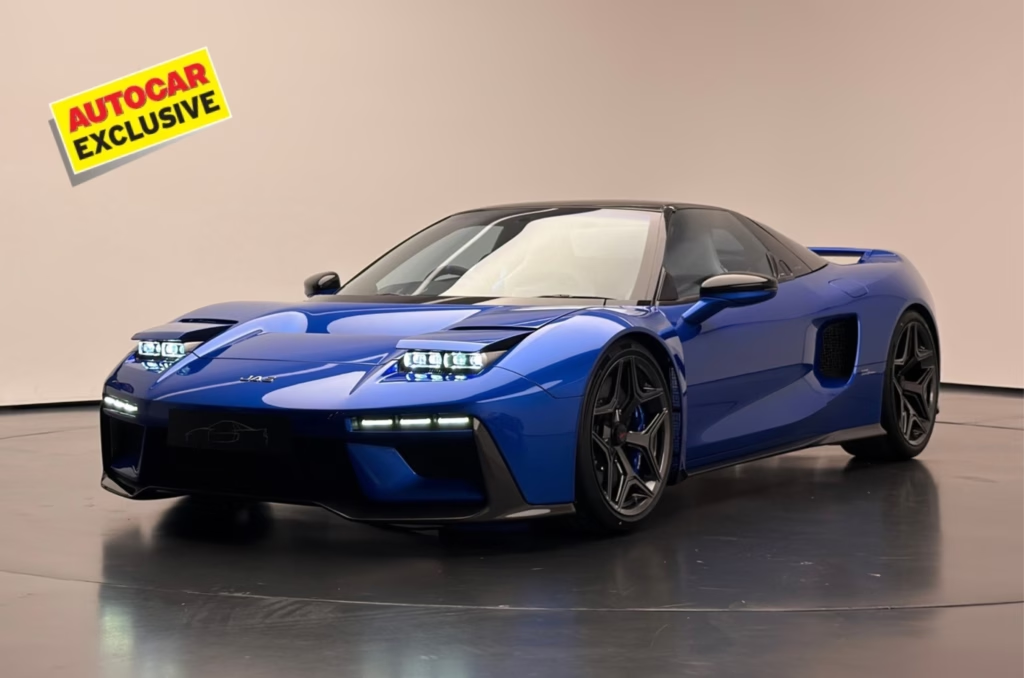
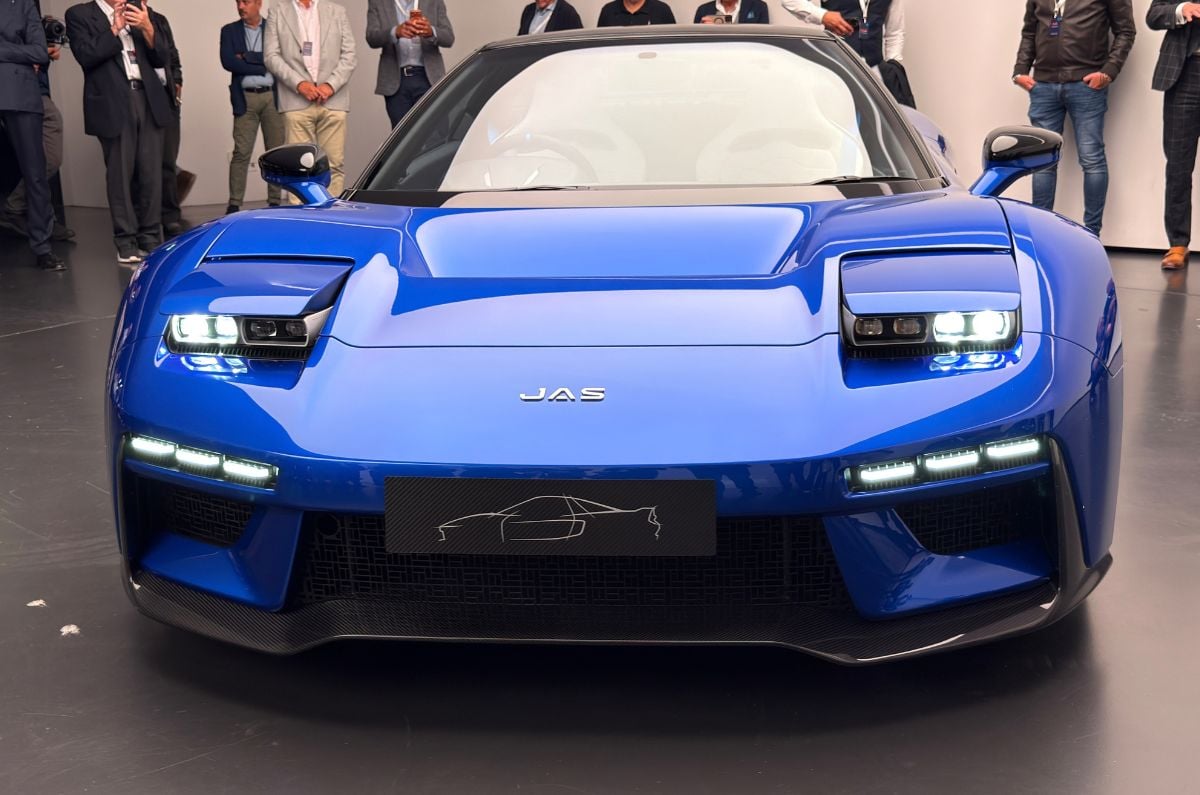
There are few cars that changed the supercar world quite like the original Honda NSX. It proved that a mid-engined exotic could be fast, reliable, approachable and, crucially, enjoyable without trying to intimidate its driver. More than three decades later, JAS Motorsport has taken that philosophy and given it a thoroughly modern interpretation.
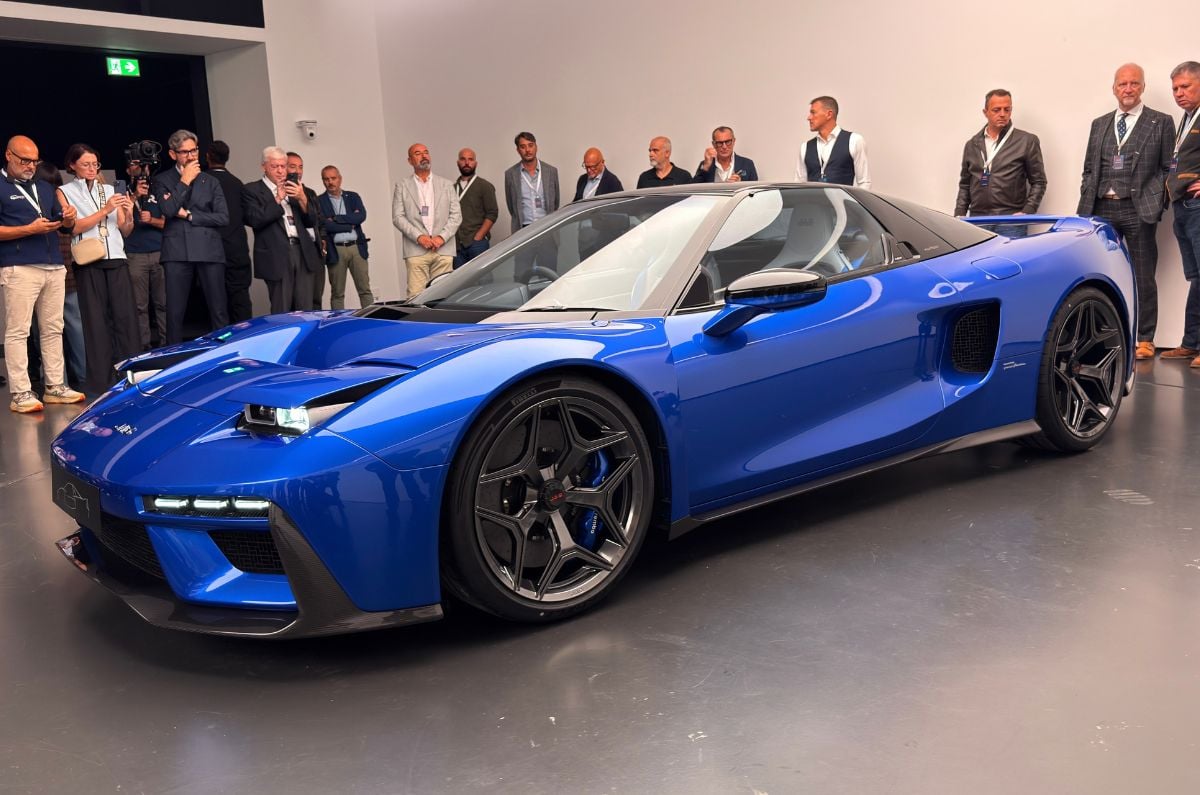
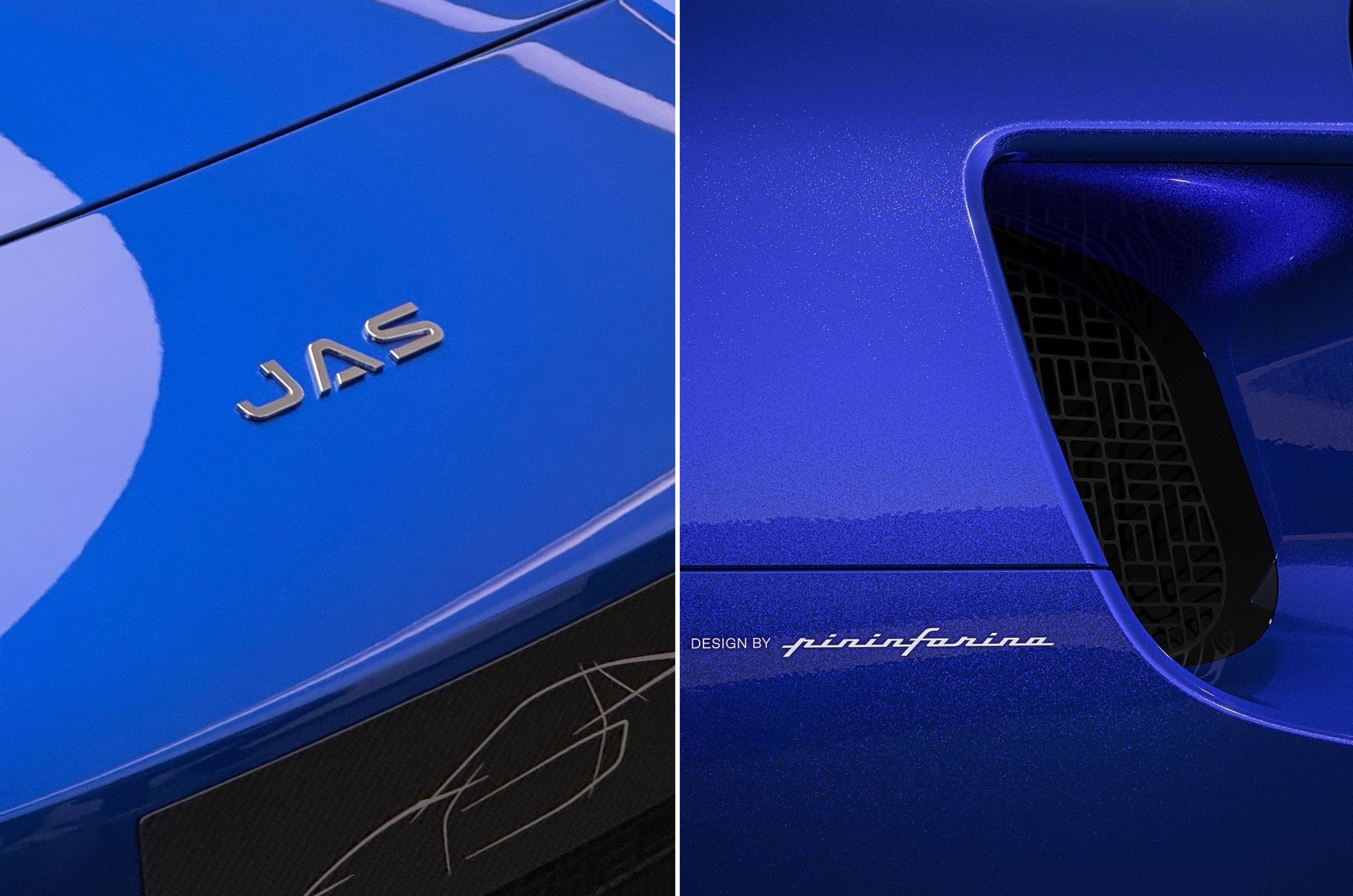
Meet the JAS Tensei. Tensei translates roughly to “rebirth” in Japanese, and the name neatly captures what JAS is attempting here. This isn’t simply an NSX restoration, nor is it a cosmetic restomod. JAS has taken the first-generation NSX as its starting point and re-engineered the car with modern materials, motorsport know-how and a new body designed by Pininfarina. And there will be just 35 examples.
But first, Who is JAS?
Launched in 1995, JAS Motorsports was named after its founders Paolo Jasson, Maurizio Ambrogetti and Giorgio Schön. They have been the official partner for Honda since 1998 and have since developed race cars for various competitions with successful results in touring car championships.
JAS Tensei: Exterior design
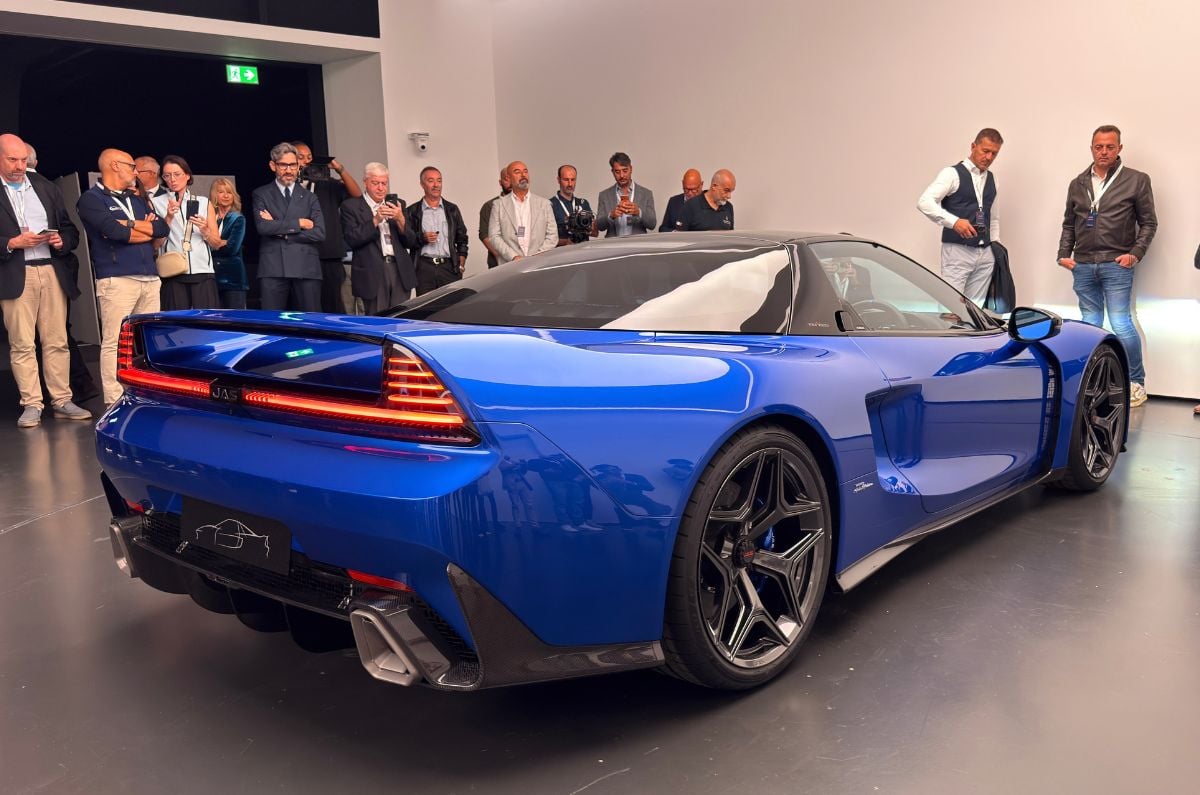
Look at the Tensei from a distance and the connection to the original NSX is immediately apparent. The proportions remain familiar, as do several of the visual cues that defined Honda’s icon. But the details are considerably more modern.
The body is constructed entirely from carbon fibre, allowing JAS to alter the car’s dimensions and surfaces while keeping weight under control. Pininfarina was responsible for the design, bringing an Italian interpretation to a fundamentally Japanese concept. It is an interesting collaboration because Pininfarina already has history with the NSX story. The company was involved with Honda’s HP-X concept, which preceded the production NSX.
The result is therefore less a replica and more an alternate evolution of the original car — essentially asking what the NSX might have looked like had its development continued into the modern era.
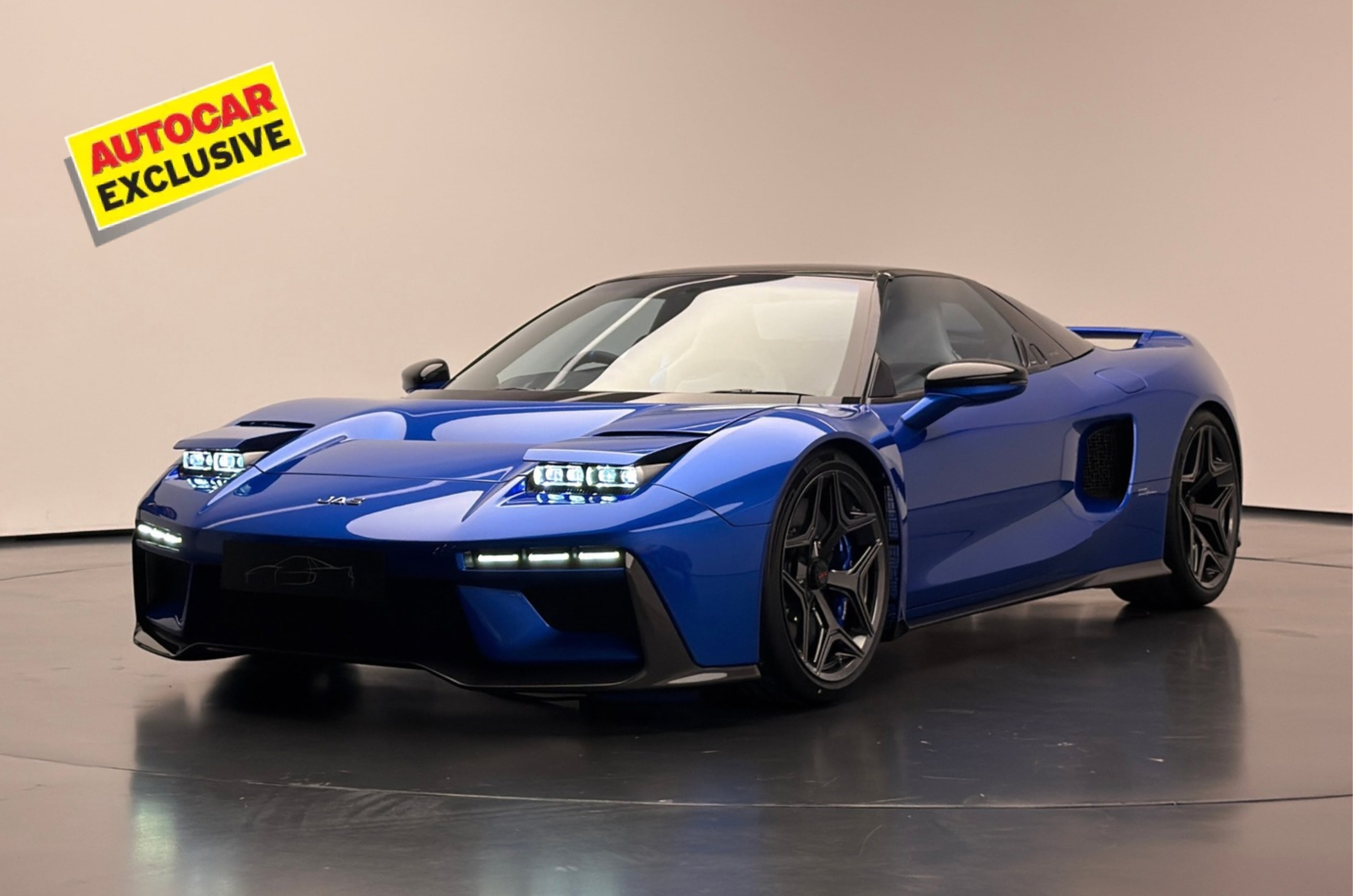
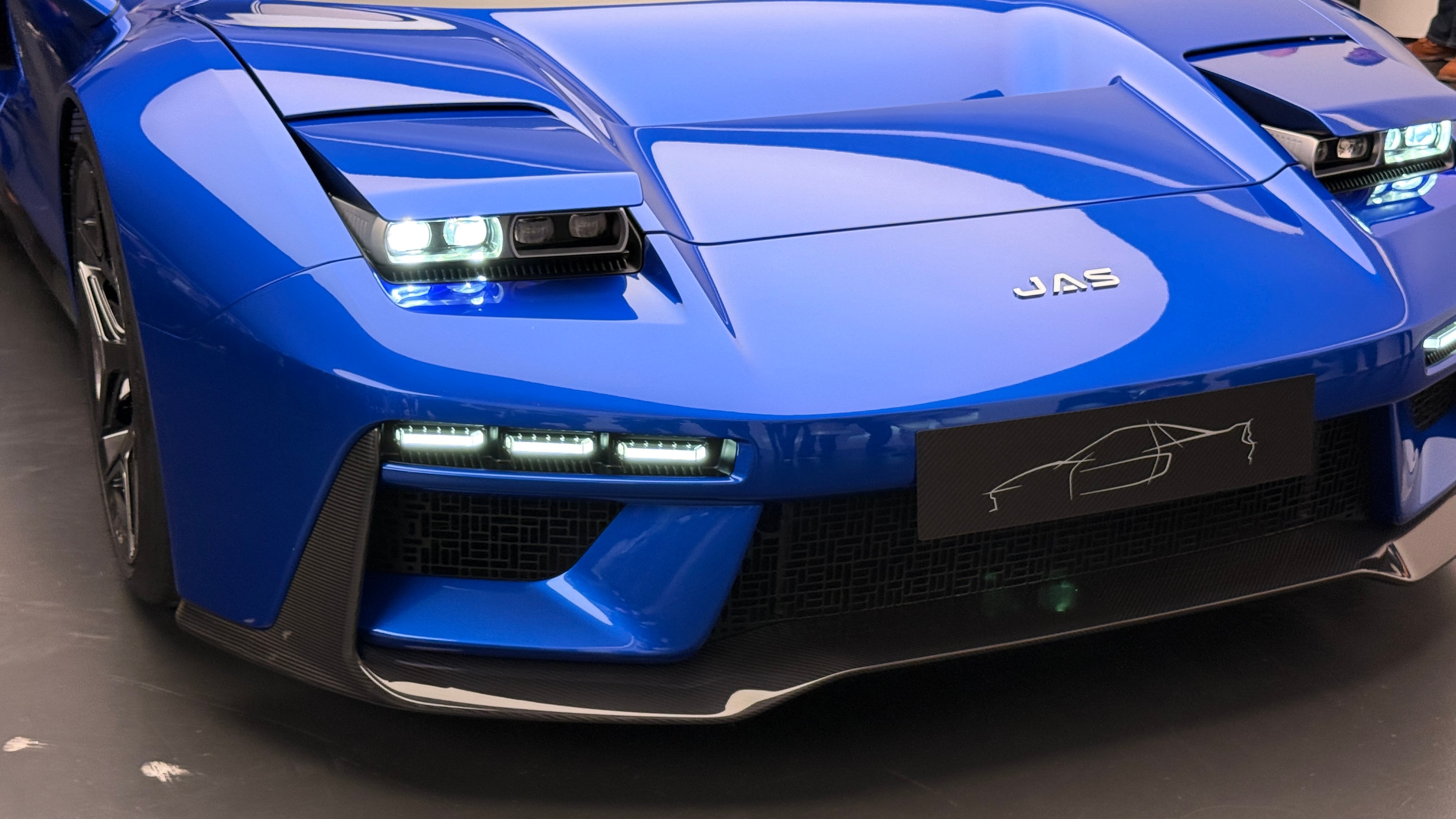
The front bumper is sculpted to guide air under the car and out of the massive duct in the bonnet. The pop-up headlamps have been retained but now feature LED treatment. The wiper covers have also been redesigned and in fact the only part that has been untouched is the roof. The A and B pillars are more raked and the wheels have gone up by a massive 4 inches. 15s and 16s on the NSX are now 19s and 20s on the Tesei. Interestingly the door handle with the NSX badge is also carried over. Low down you will spot the iconic Pininfarina badge that we are used to seeing on Ferraris.
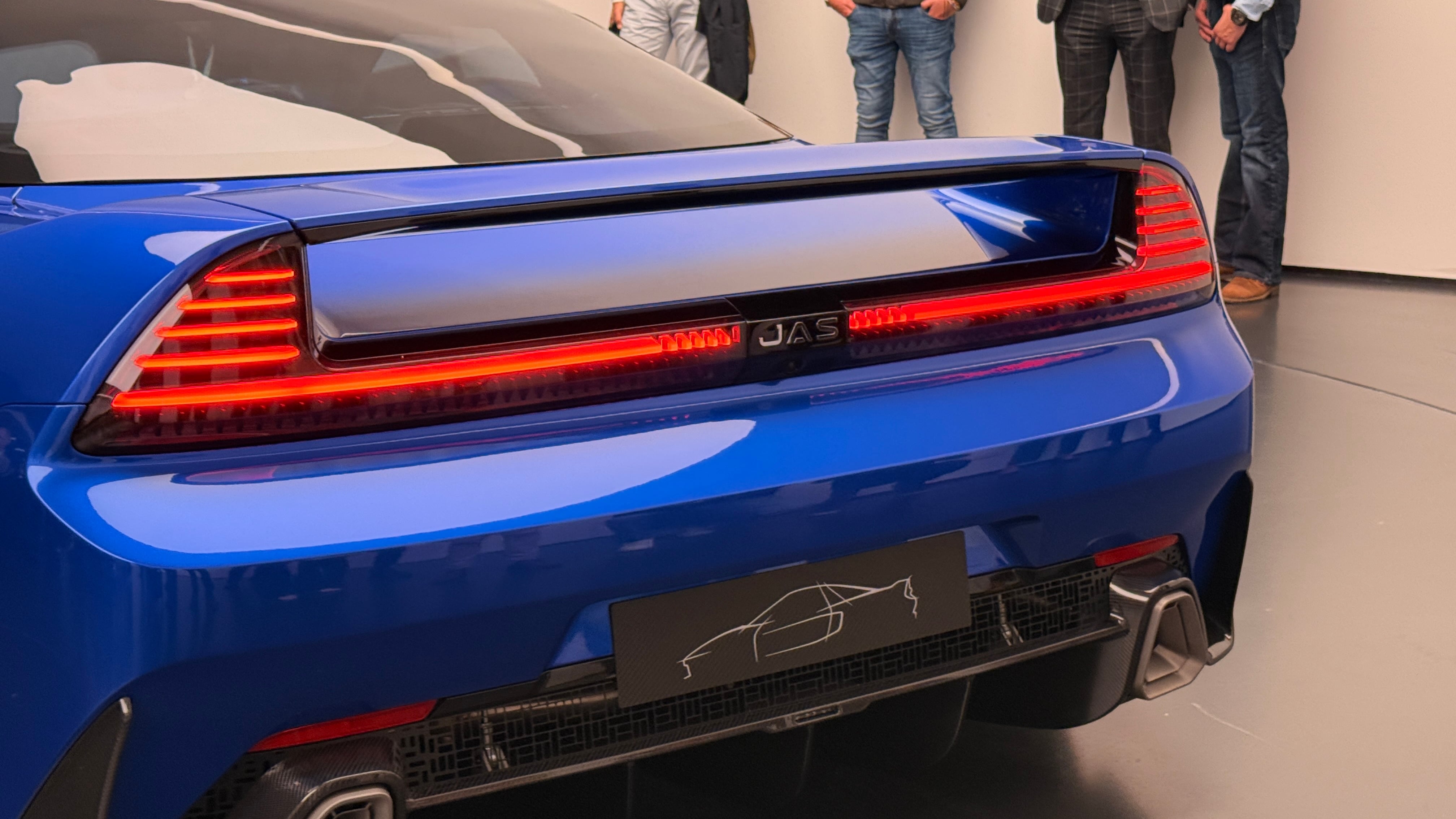
At the rear the integrated spoiler has been reworked with slight changes to the panels so as to improve airflow. The diffuser is carbon fibre and the exhausts are massive too. Like the original NSX, the tail lamps are stretched across the width and now hey 3D effect for the LED strips. Overall, it is a resto mod done to perfection. Just enough modern touches without skewing it from the iconic design.
JAS Tensei: interior and features
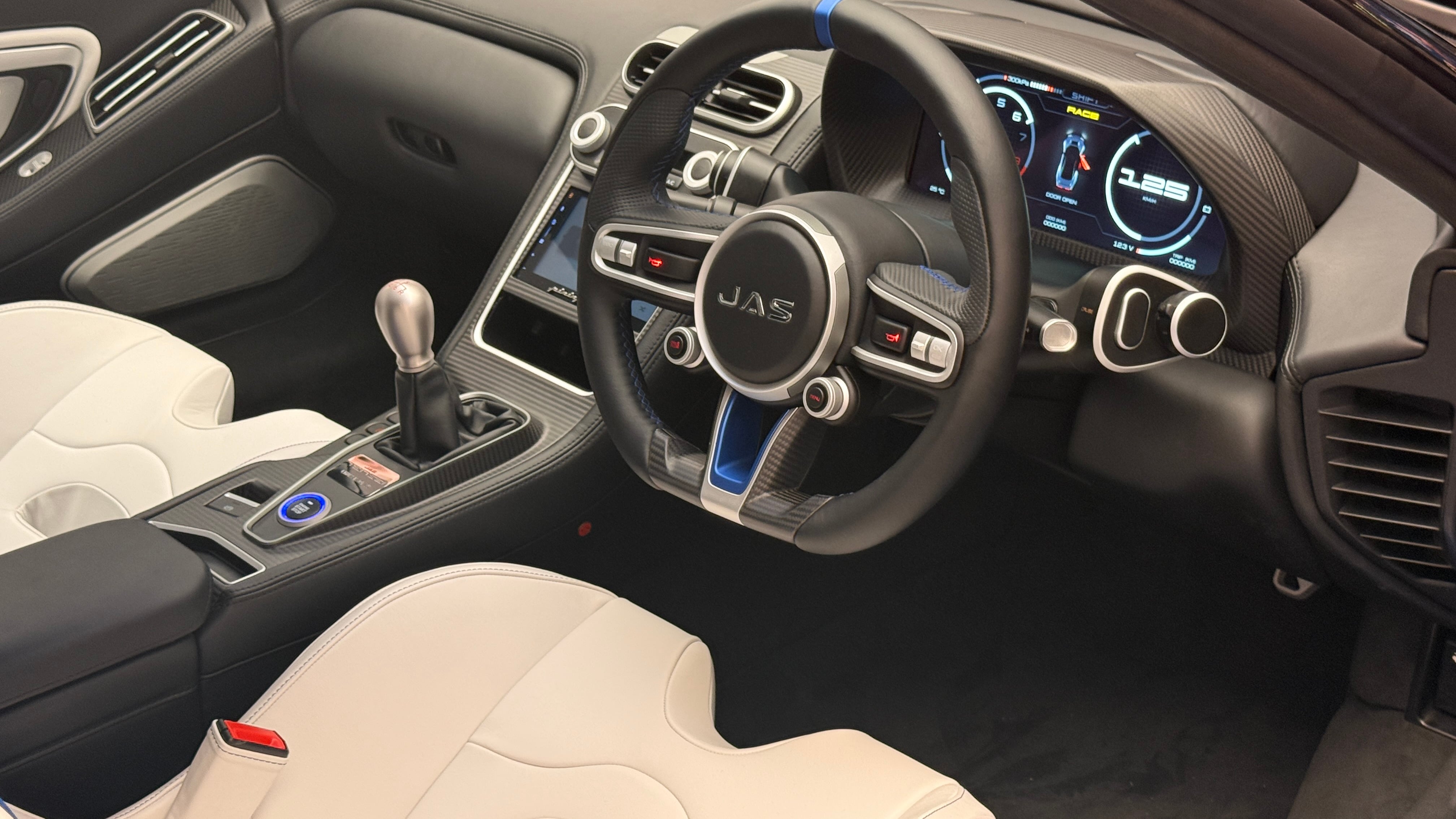
Inside the size of the cabin is identical to the original NSX, although there are updates all around. There’s a new sporty steering wheel, digital drivers display and sports seats. However, there is a full configurator available to spec your Tensei to your liking. The seat upholstery and paints can be customised along with brake calliper colours and wheels. A pleasant surprise is the centre console that does away with a massive tablet as per current trends and instead features a modest touchscreen with the climate control switchgear similar to the NSX. Pininfarina wanted to ensure none of the essence of the NSX was lost in an attempt to modernise the cabin
JAS Tensei: Powertrain and specs
Perhaps the most significant decision sits behind the cabin. The Tensei retains a naturally aspirated V6, rather than adopting the turbocharging or hybrid assistance that has become almost mandatory for modern supercars.
The 3.5-litre V6 has been extensively re-engineered with Judd Power, the British motorsport engineering specialist. The work goes considerably beyond simply increasing displacement or fitting a louder exhaust. The engine gets a billet crankshaft, forged lightweight pistons and connecting rods, individual throttle bodies, upgraded cooling and revised ignition and engine management systems. There are also new headers and an exhaust system designed to give the engine a more immediate and visceral character. The result is 420hp, with the engine capable of revving to 8,500rpm.
Those figures may not sound extraordinary in an era of 1,000hp hybrid hypercars, but that misses the point of Tensei. JAS isn’t chasing an enormous power-to-headline ratio. Instead, the emphasis is on response, linearity and the connection between throttle, engine and driver.
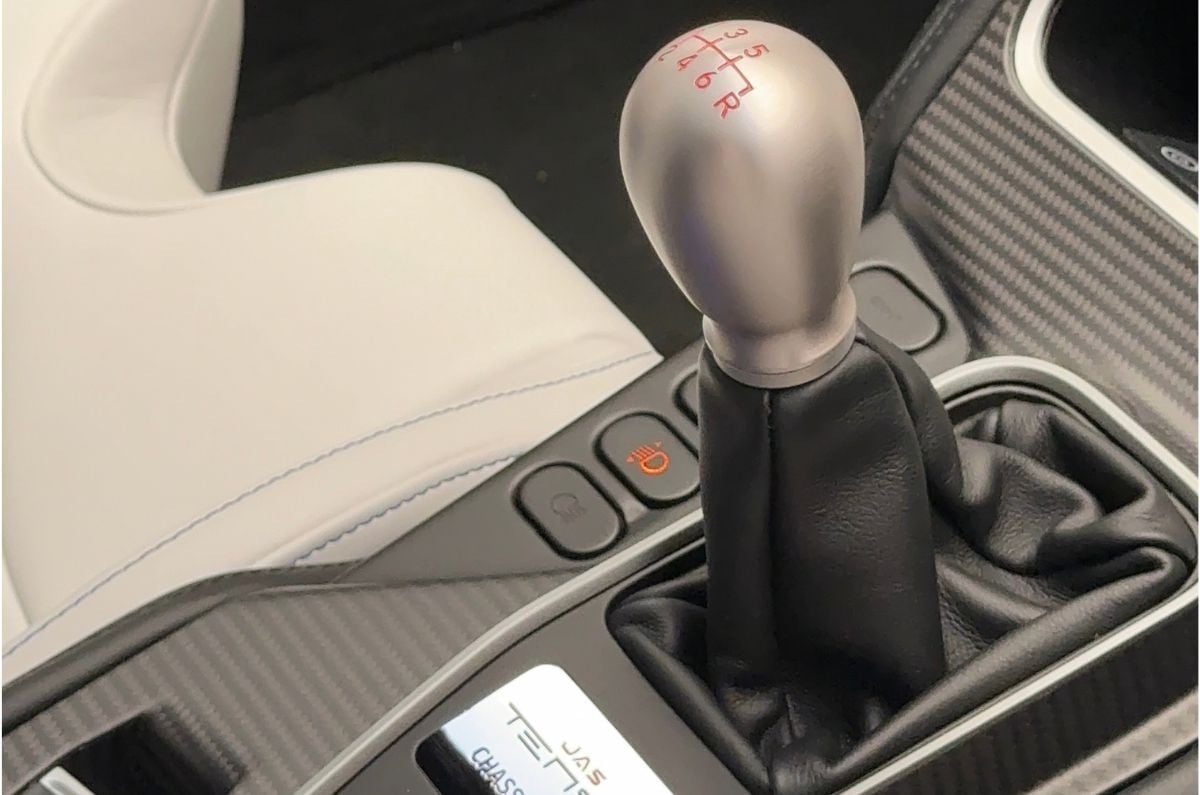
The other big piece of the puzzle is the gearbox. The Tensei uses a six-speed manual transmission and remains rear-wheel drive. That combination, together with the naturally aspirated V6, is perhaps the clearest indication of what JAS wants this car to feel like. The objective isn’t to overwhelm the driver with acceleration figures; it is to make every interaction with the car feel mechanical and deliberate.
The chassis has been extensively revised as well, with bespoke suspension components, revised geometry, upgraded bearings and uprights, enhanced anti-roll bars and KW dampers with electronically controlled damping. There is also a hydraulic front-axle lift system, while forged aluminium wheels measure 19 inches at the front and 20 inches at the rear.
JAS has taken one of the most important analogue supercars ever made and asked how its fundamental qualities could be preserved in 2026. It’s a carbon-bodied, naturally aspirated, manual, rear-wheel-drive supercar with an 8,500rpm redline. And that makes the Tensei interesting for reasons that go far beyond its rarity. It is effectively a reminder that performance isn’t necessarily about making a car faster in every measurable way. Sometimes it is about making the driver feel more involved.
Motorsport without turning it into a race car
This is where JAS’s background becomes particularly important. JAS Motorsport has spent decades developing Honda competition cars, and that experience forms the foundation of the Tensei programme. But the challenge here is fundamentally different from building a race car. A race car can sacrifice refinement, usability and longevity in pursuit of lap time. A road-going supercar cannot.
Tensei therefore represents an interesting middle ground: motorsport-derived engineering, but applied to a car designed to be driven on the road. The engine is built and tested by Judd Power before returning to JAS in Italy, where each car undergoes further testing and validation.
JAS Tensei: Super exclusive
JAS plans to build only 35 Tenseis, each individually specified by its owner. Production takes place at JAS Motorsport’s facility near Milan, with the car bringing together Japanese engineering heritage, British motorsport expertise and Italian design.
It is an unusual combination, but perhaps that’s exactly what makes the Tensei so compelling. The original NSX was unusual because Honda approached the supercar formula from a completely different direction.
Three decades later, JAS is doing something remarkably similar. It isn’t trying to build the most powerful supercar. It is trying to build the most involving interpretation of an icon. And if the original NSX was Honda’s idea of what a supercar should be, the Tensei is JAS Motorsport’s answer to what that idea could become today.
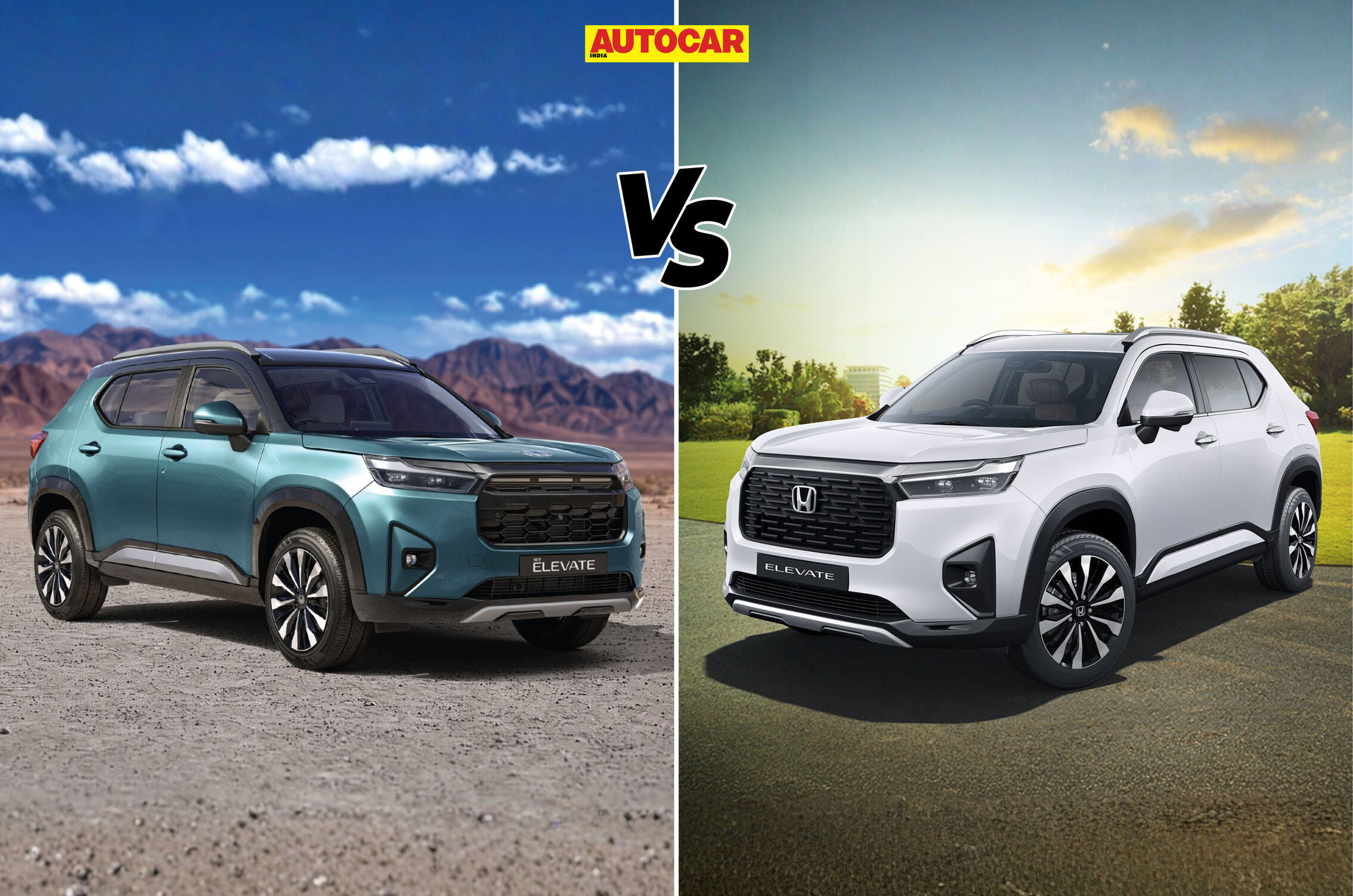
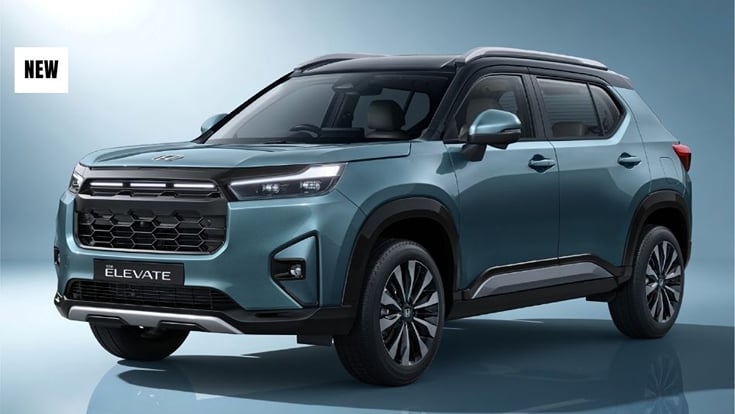
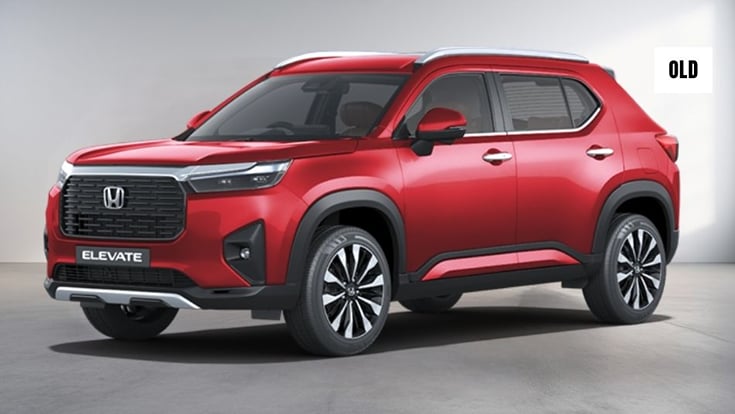
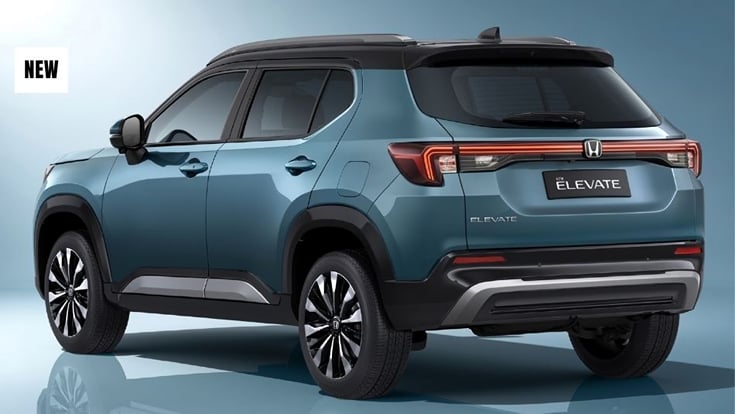
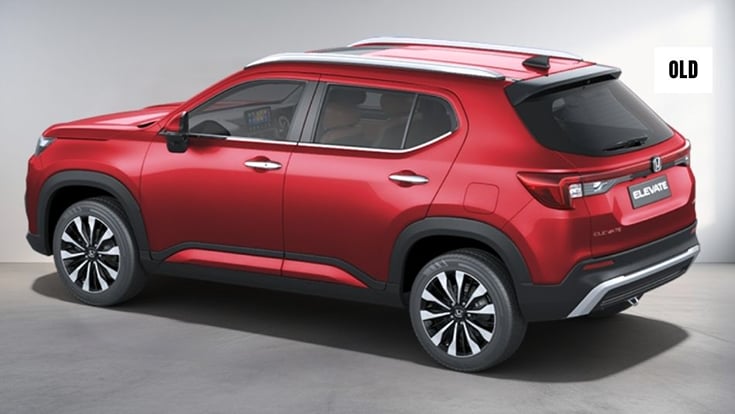
Honda has introduced its first mid-life cycle update for the Elevate. It brings several much-needed upgrades to its mid-size SUV through refreshed looks and feature additions. But what’s exactly new on the Elevate facelift? From exterior, interior, features, and price, we compare the new and old models to find out.
Honda Elevate new vs old: Exterior
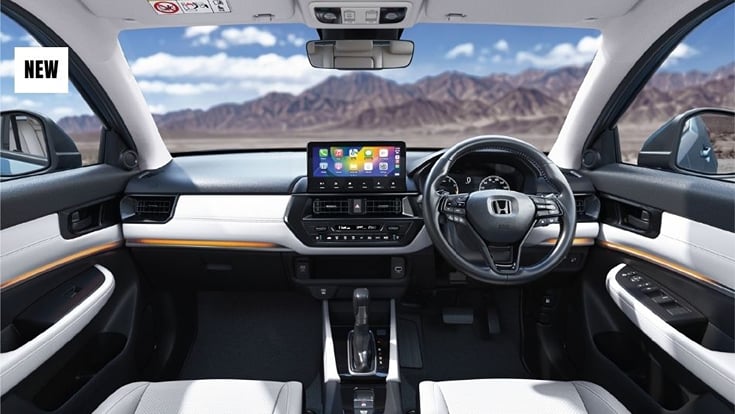
The Elevate facelift retains much of its design from its predecessor, but updates make it look bolder than before. The LED headlamps with L-shaped signatures have been carried over, but are now connected by segmented DRL strips. The older model offered two grille design choices, but the newer Elevate gets a gloss black grille with a honeycomb pattern. The bumper has been retained, but the fog lamp housings now get a body colour finish. Additionally, the Honda badge has been repositioned from the grille to the bonnet. Additionally, the body cladding around the vehicle gets a gloss black finish as opposed to the matte black finish on the outgoing car.
In profile, the Elevate facelift looks largely identical to its predecessor, even carrying over its 17-inch alloy wheels. Except this time, there’s silver cladding for the lower sides. At the rear, the LED tail-lamps on the facelift now get the connected treatment, though the bumper has been retained. There’s a new Nordic Forest Pearl paint job as part of the Elevate’s colour palette.
Honda Elevate new vs old: Interior and features
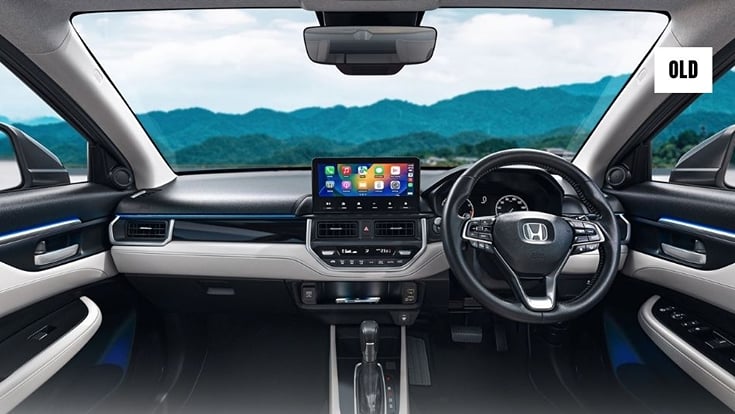
Inside, the Elevate facelift looks largely similar to its predecessor. However, there’s more leatherette padding on the dashboard with tasteful use of ambient lighting, replacing the faux wood trim on the older model. Additionally, the HVAC control housing on the facelift has been slightly tweaked. The older Elevate was offered with two dual-tone themes, namely black and white and black and brown. The new one, however, comes with the former theme only. Black versions come with an all-black cabin theme.
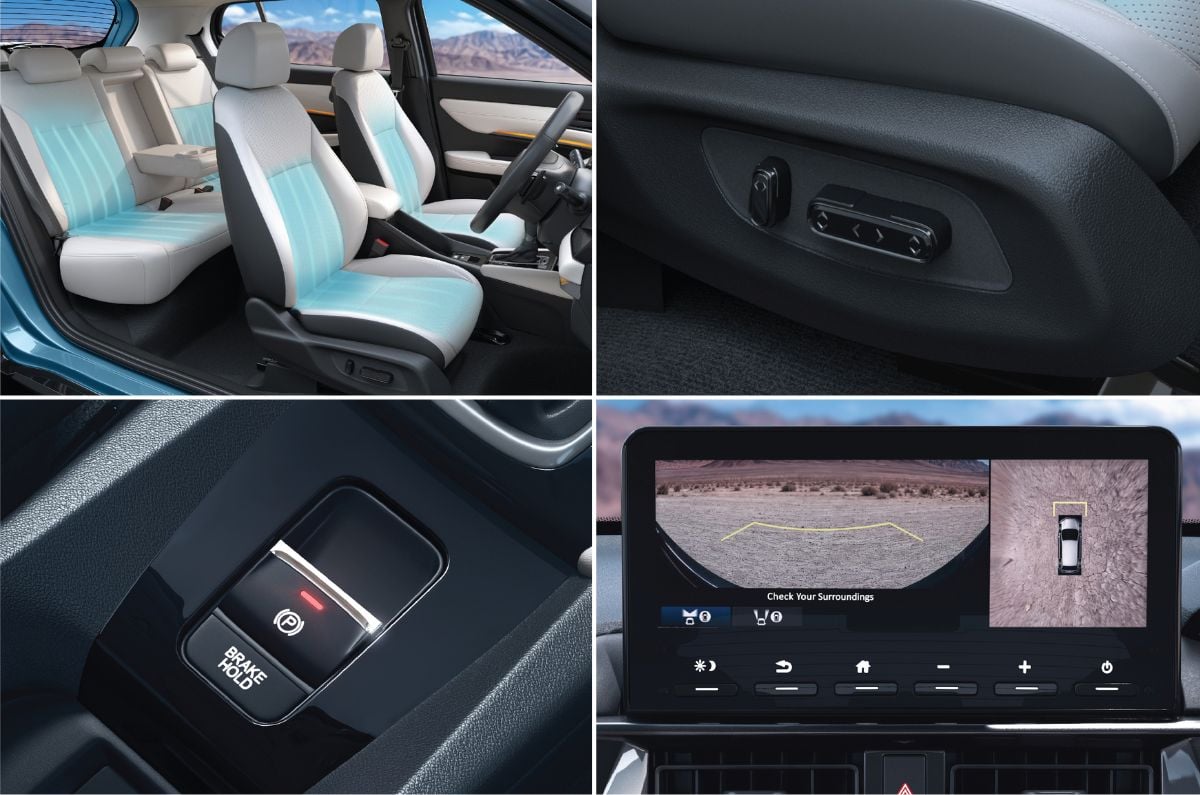
Honda has introduced much-needed feature additions to the Elevate facelift. This includes powered and ventilated front seats, first-in-segment rear seat ventilation, a 360-degree camera, an air purifier, and factory-fitted ambient lighting. Safety enhancements include rear disc brakes, an electronic parking brake with auto hold, front parking sensors, and adaptive cruise control with stop-and-go functionality for its level 2 ADAS suite. The new Elevate continues to come with features from the older model like a wireless phone charger, part-digital instrument cluster, a lane-watch camera system, wireless Apple CarPlay and Android Auto, and an 8-speaker sound system.
Honda Elevate new vs old: Sound insulation
On another note, Honda has claimed to improve the overall NVH levels, which were a major drawback of its predecessor. Sound deadening to wheel arches. This has been done by adding more sound deading materials behind the instrument panel and wheel wells.
Honda Elevate new vs old: Prices
Honda Elevate new vs old: Prices
Variant
New Elevate (Rs lakh)
Old Elevate (Rs lakh)
Difference (Rs)
SV MT
11.80
11.80
–
V MT
12.29
12.27
2,000
V CVT
13.79
13.43
36,000
VX MT
13.93
13.92
1,000
VX CVT
15.39
15.08
31,000
ZX MT
15.39
15.18
21,000
ZX CVT
16.89
16.36
53,000
ZX+
16.89
–
–
ZX+ CVT
18.30
–
–
The Honda Elevate facelift begins at the same price as the older model at Rs 11.80 lakh. Comparing like-for-like variants, prices on the new Elevate have increased by up to Rs 53,000. There’s also the addition of a new top-of-the-line ZX+ trim. While the older Elevate topped out at Rs 15.36 lakh, the newer model tops out at Rs 18.30 lakh, marking an increase of Rs 1.94 lakh.
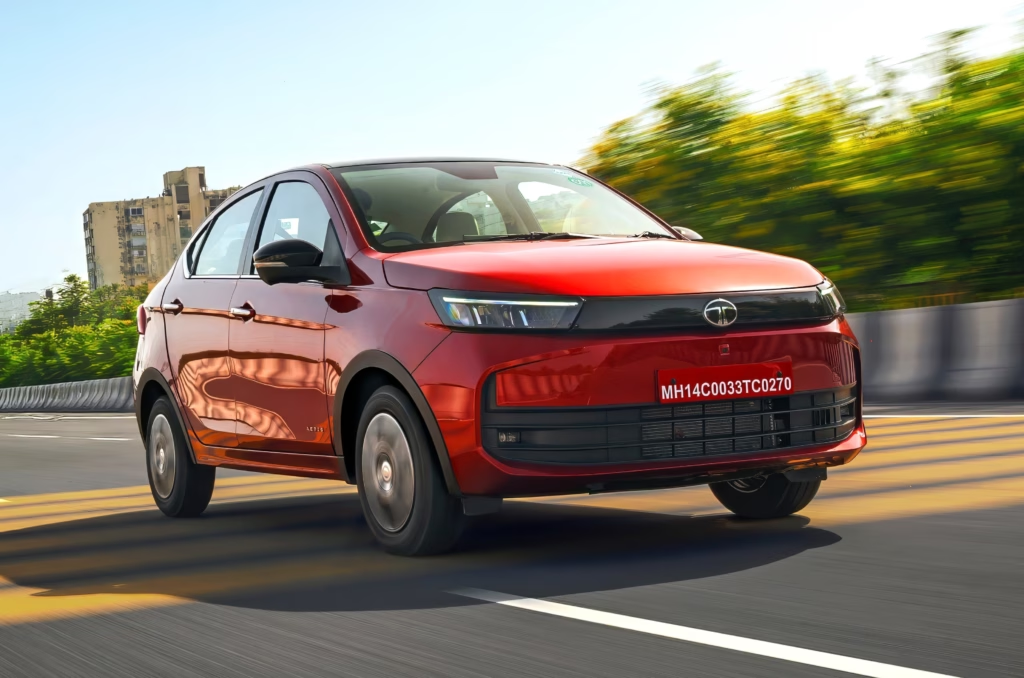
The Tata Tigor never quite made the impact the manufacturer hoped for in the compact sedan segment. Now, Tata has reworked it and given it a new identity as the Aeris, with a fresh design, a more upmarket cabin and a longer list of features. That alone makes the Aeris an interesting proposition, but there is another reason its arrival is well timed.
Tata has a CNG option in a market where demand for the fuel is growing rapidly, with CNG cars accounting for nearly 22 percent of passenger vehicle sales in FY2026, up from around 12-13 percent three years ago in FY2023. That gives the manufacturer an interesting opportunity, but the bigger question is whether the Aeris itself has enough going for it this time around.
Tata Aeris iCNG exterior design and engineering – 8/10
Looks more modern than the Tigor, but the Tiago influence is hard to miss
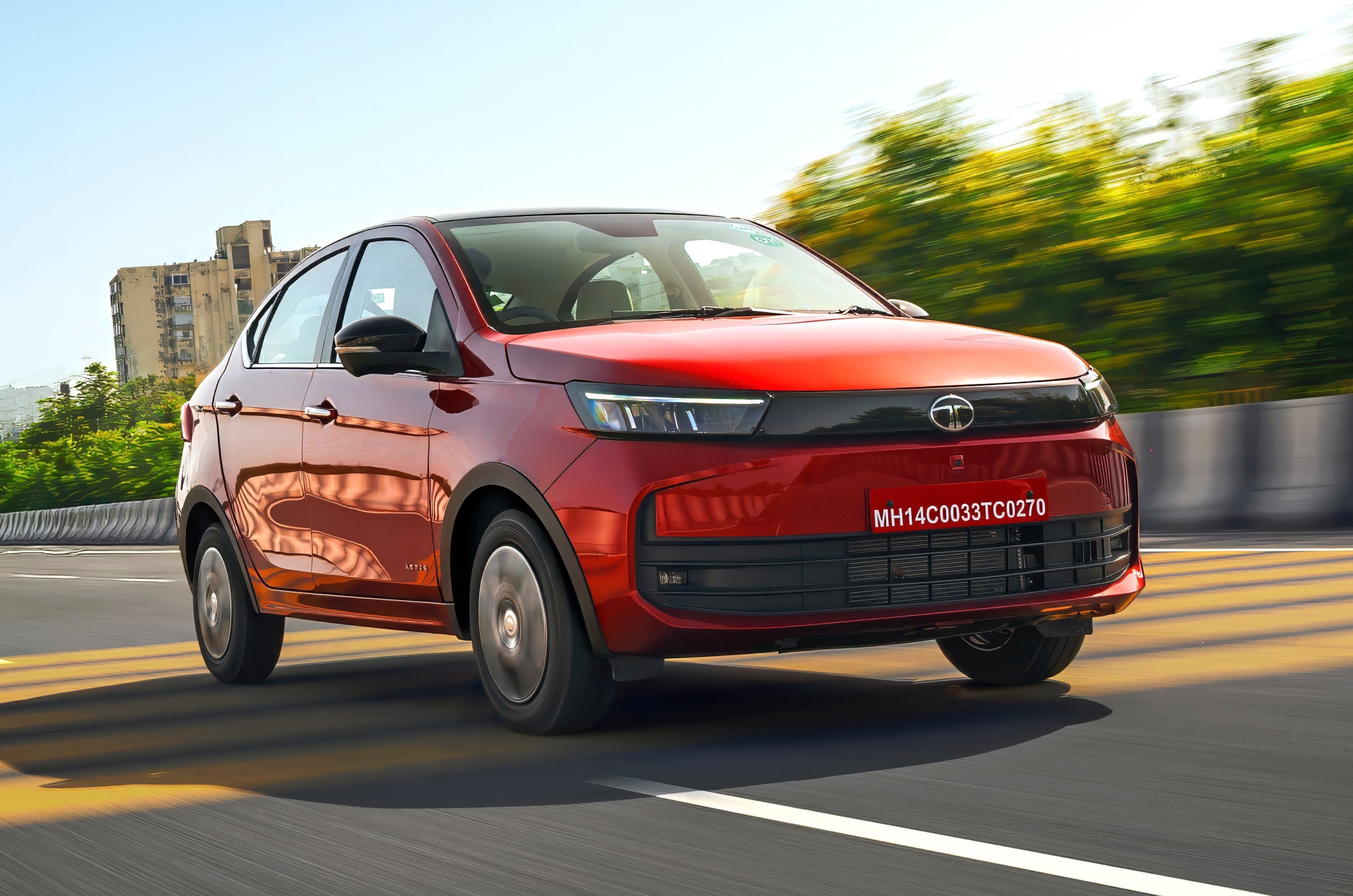
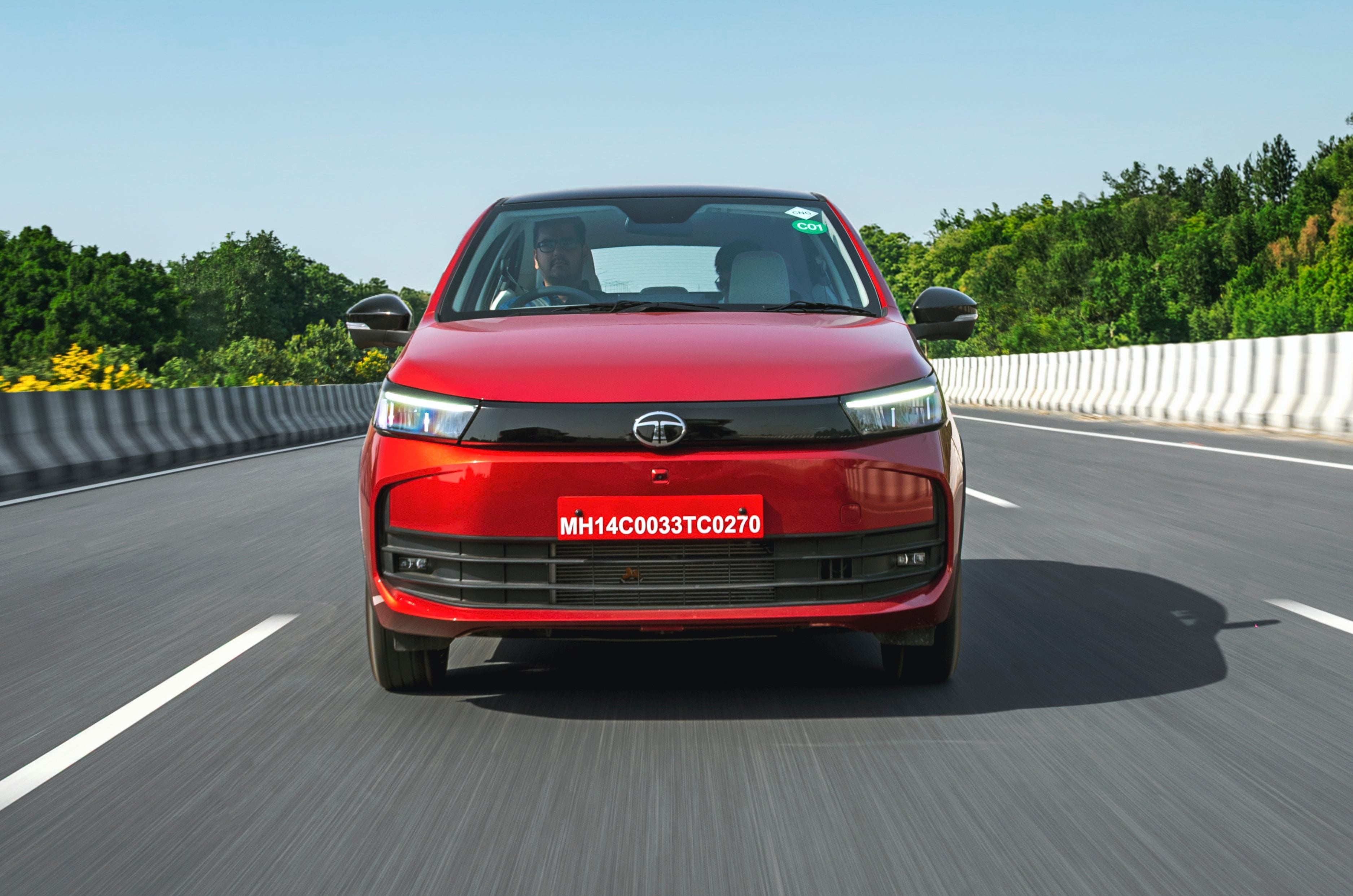
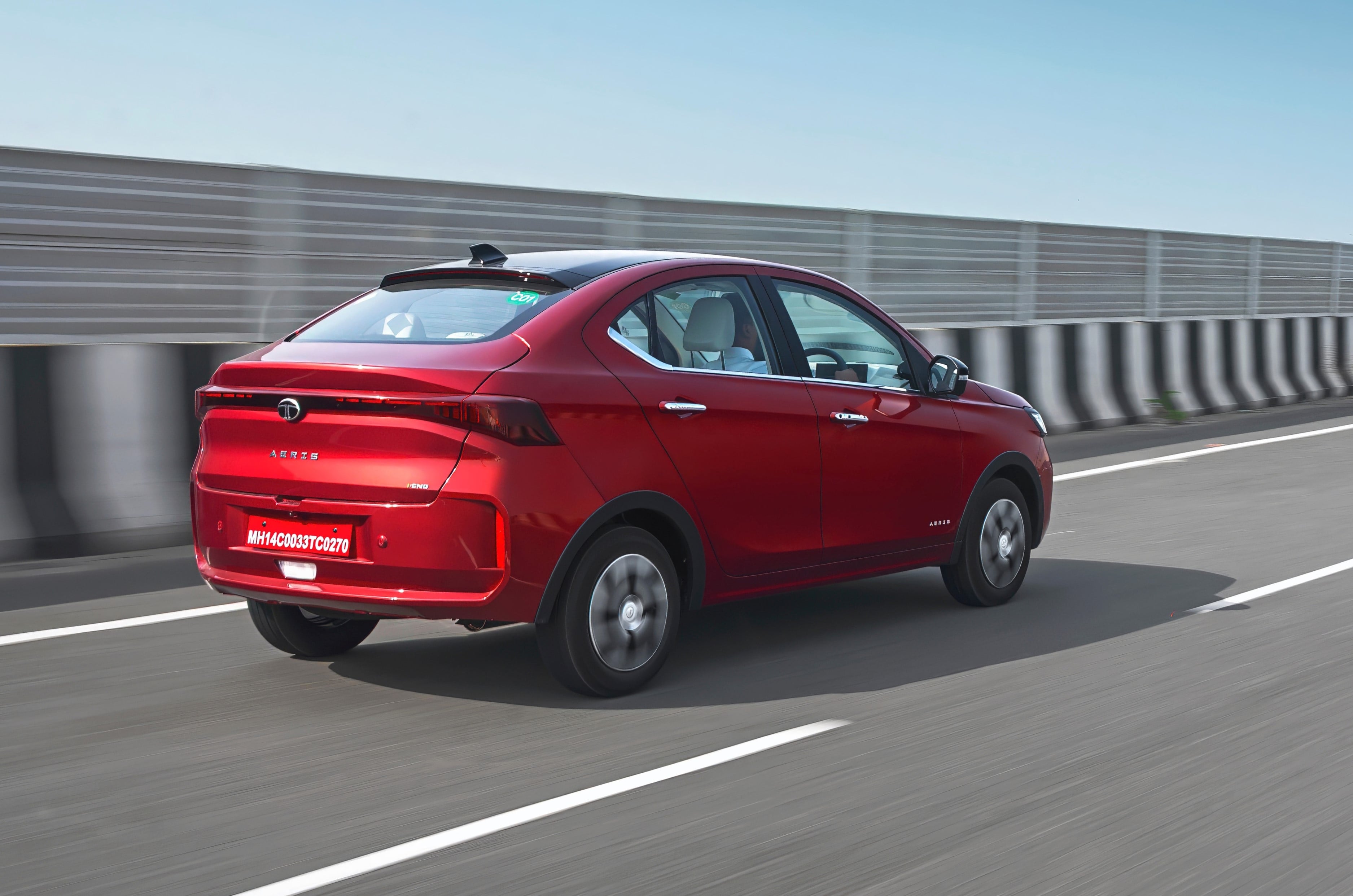
Save for the new bumper, the fascia is similar to the Tiago and looks very modern.
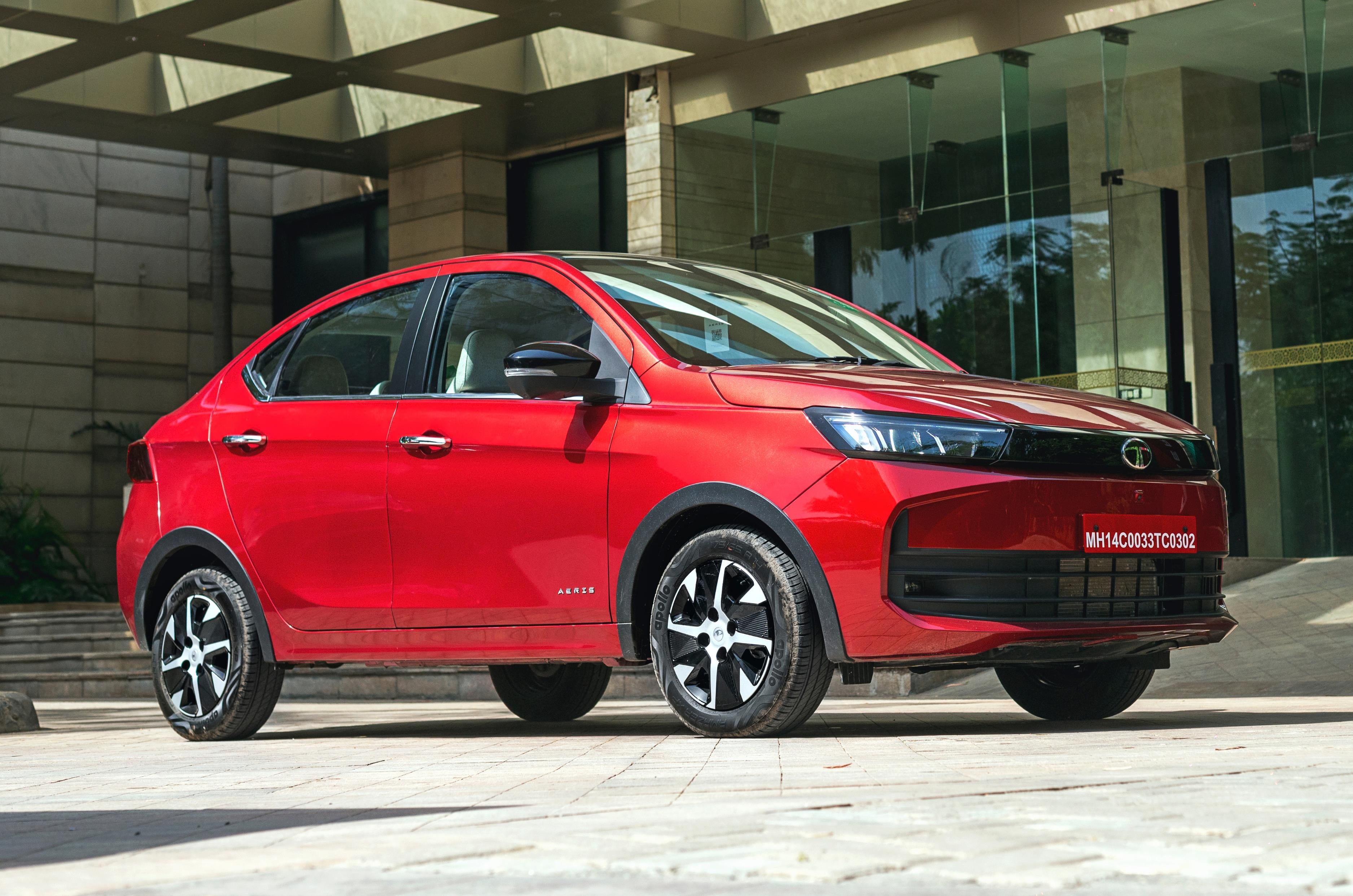
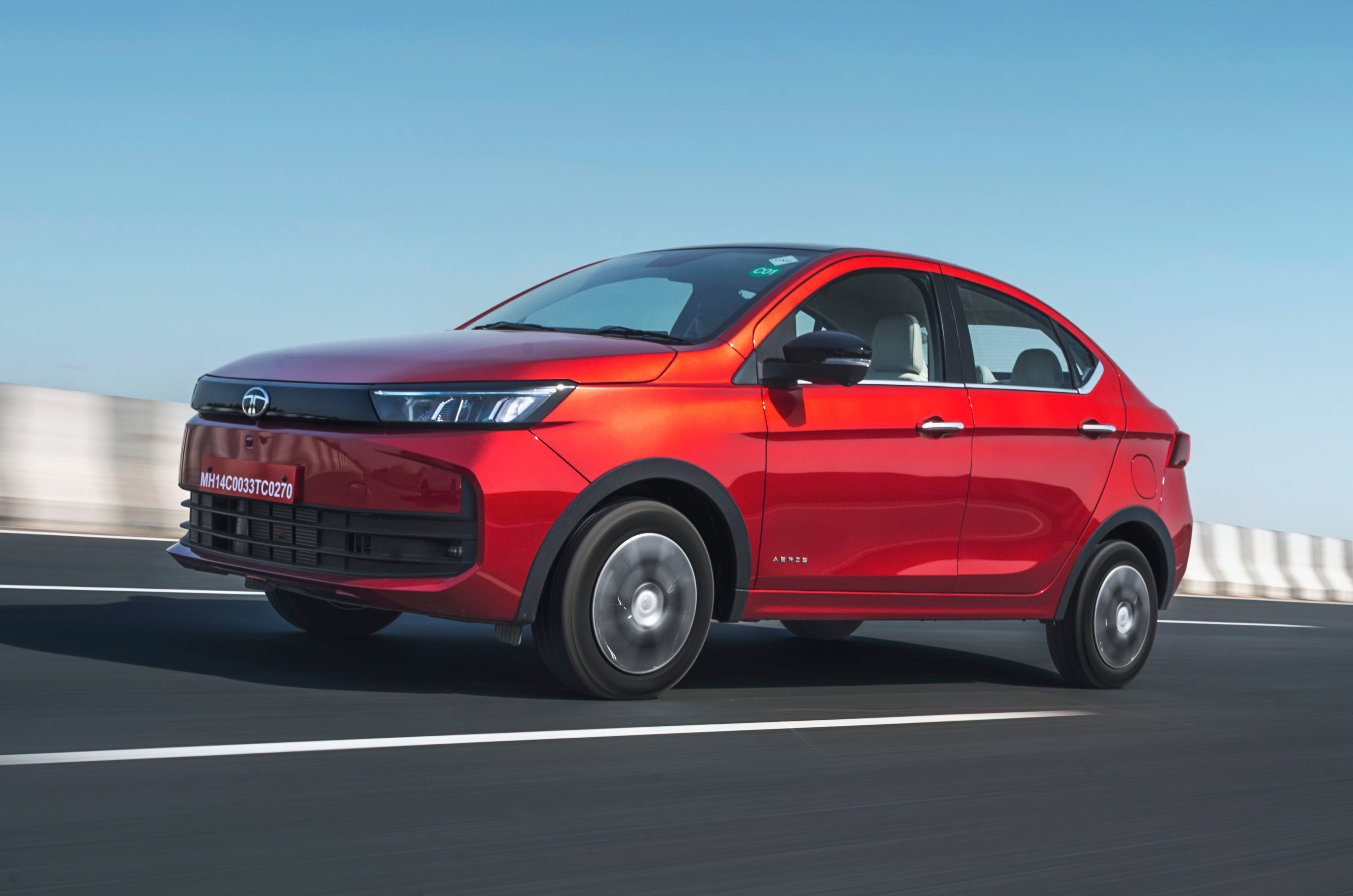
The Tata Aeris looks more modern and sleeker than the older Tigor, but there’s a strong sense of familiarity to its exterior design. It borrows several elements from the Tiago, giving the two cars a similar visual identity, but that also means the Aeris does not look particularly distinctive.
At the front, it gets slim LED headlights with integrated LED DRLs, joined by a gloss black trim, a design treatment that is very similar to the Tiago. What’s new is the front bumper with wider air inlets. It also features fog lamps that get an LED upgrade from the Tigor’s halogens. The Aeris also gets a new clamshell bonnet.
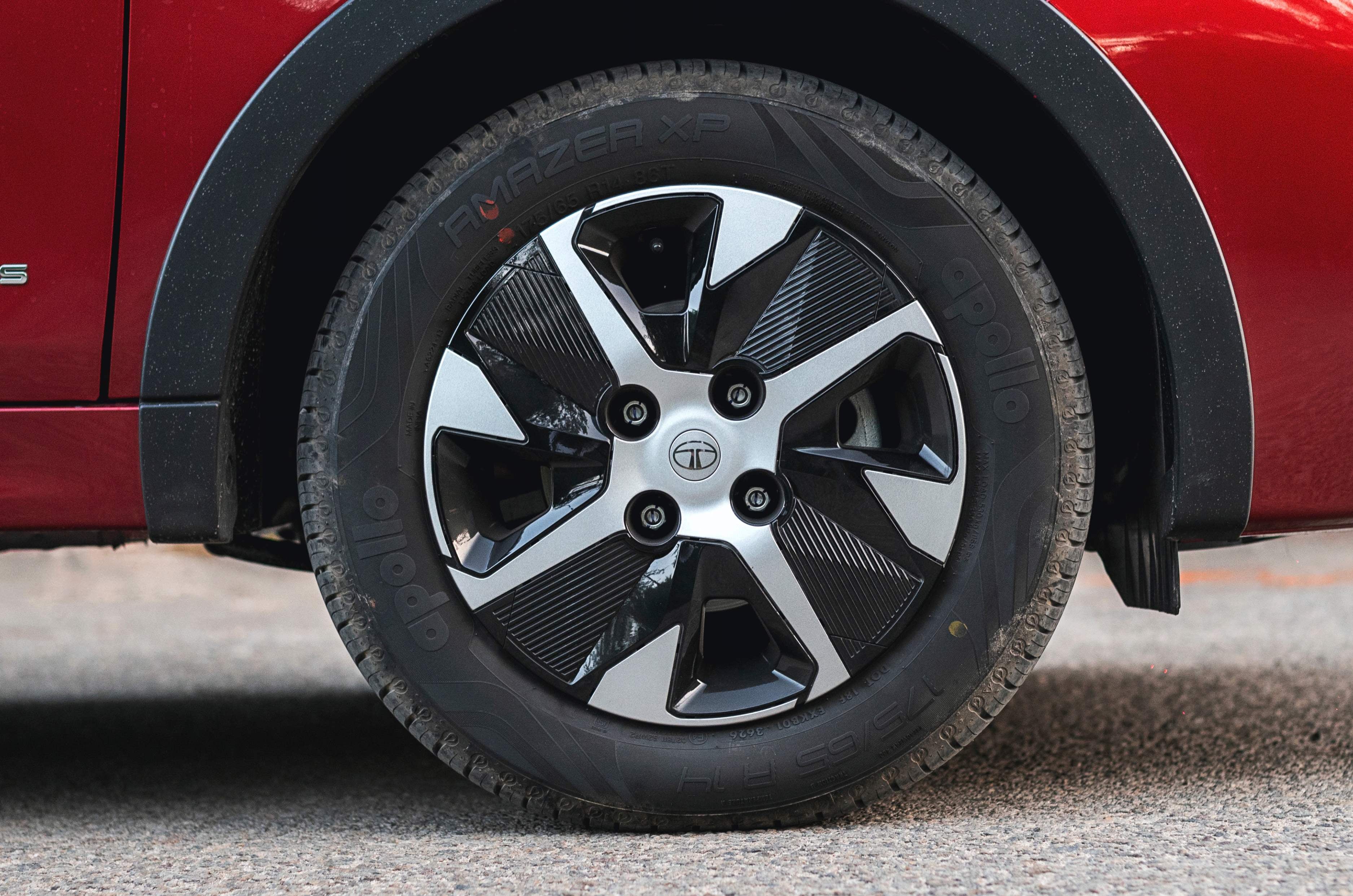
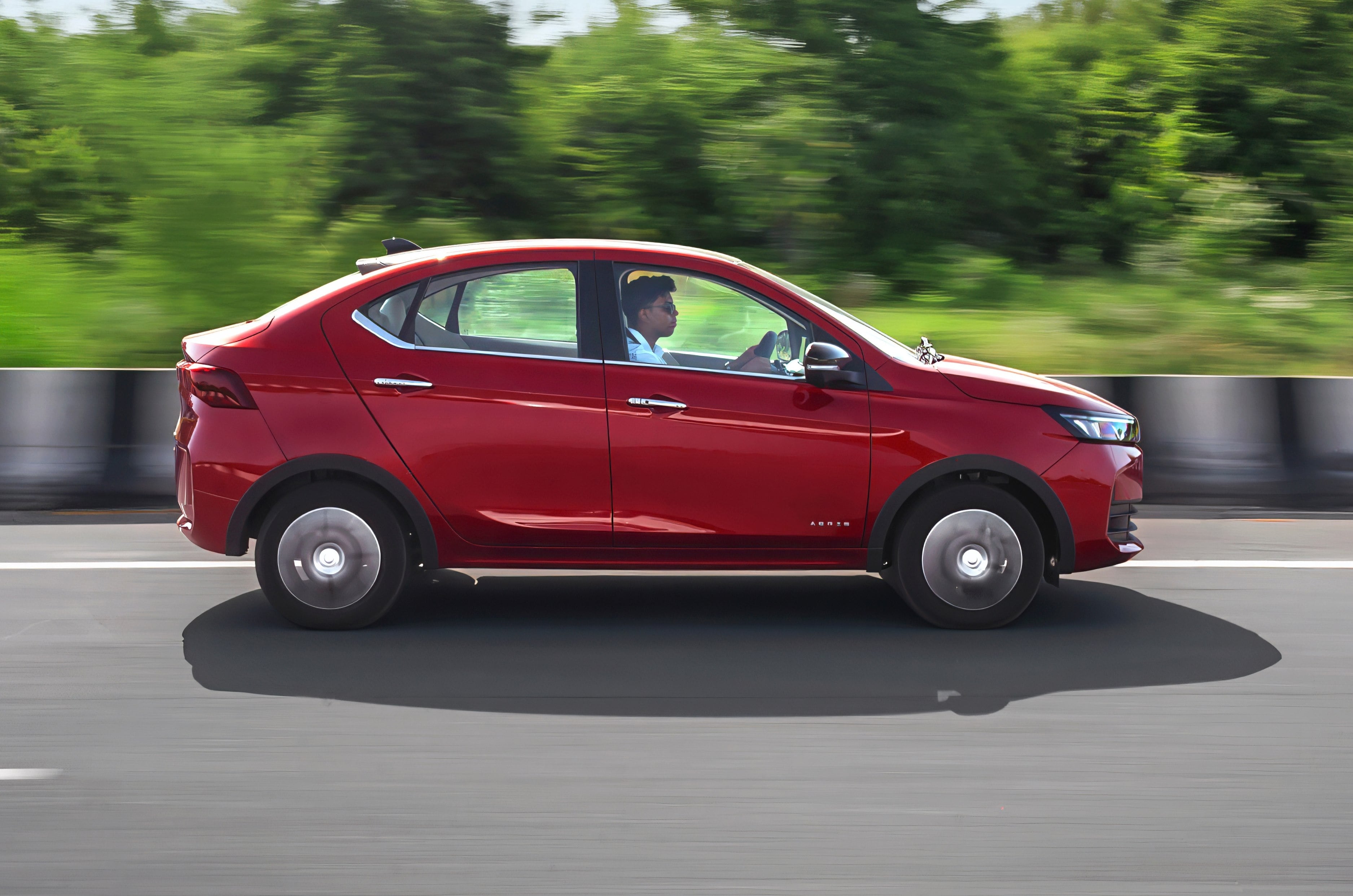
The wheel arch cladding adds contrast, but they make 14-inch wheels look undersized.
In profile, the iCNG gets the 14-inch stylised steel wheels which look undersized, particularly against the prominent wheel-arch cladding. The cladding is made from recycled materials and features a speckled texture. The use of chrome on the door handles and the window line further gives some contrast to the Aeris’ otherwise clean profile.
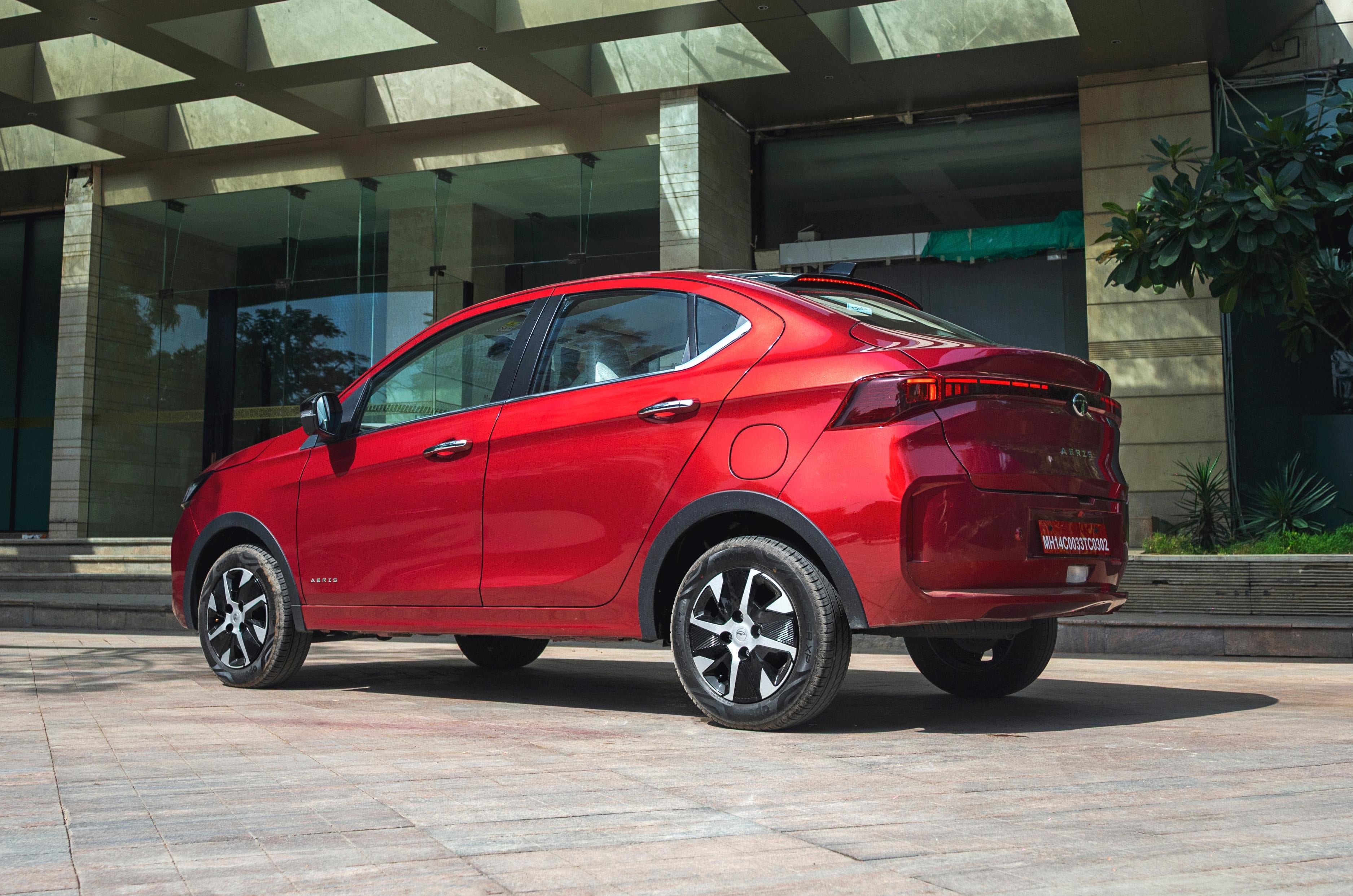
The Aeris retains the Tigor’s distinct coupe-like roof that flows into the tail. The rear features segmented LED taillights joined by red plastic trim, and new Aeris lettering on the centre of the tailgate. The rear bumper features a reverse light and has an overall clean design.
Tigor’s fastback-like sloping roofline is retained; new taillights make it appear larger.
The Aeris is 3,995mm long, 1,684mm wide and stands 1,532mm tall. It has a wheelbase of 2,450mm. These dimensions are similar to the older Tigor. While Tata has not quoted an official ground clearance figure, we found it adequate for broken roads and large speed breakers. All of this is expected to appeal to most buyers.
Tata Aeris iCNG interior space and comfort – 8/10
Lighter theme makes the cabin feel airy, and revised cushioning improves seat comfort
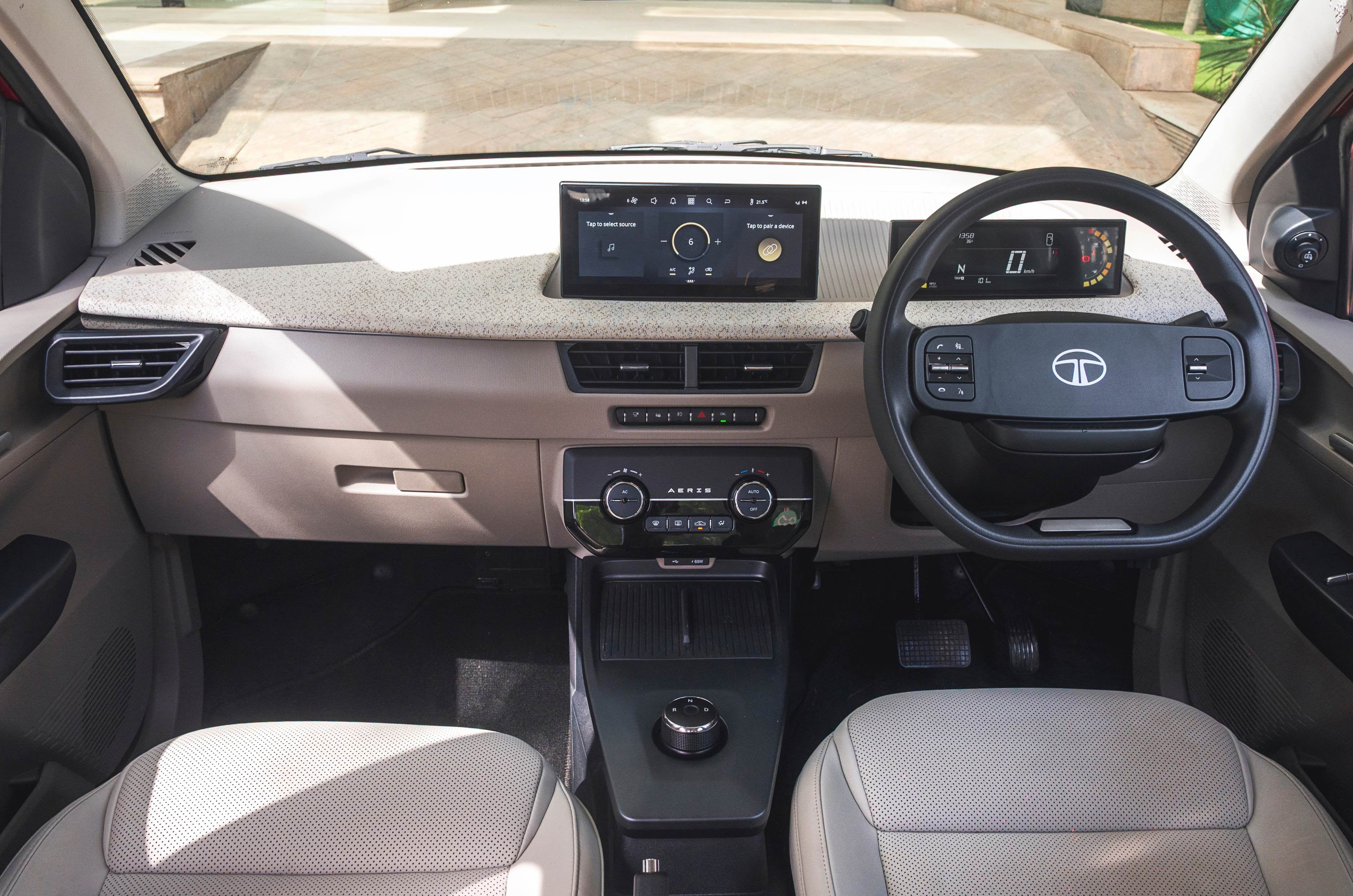
The dashboard looks minimalistic, and the lighter theme makes the cabin feel airy.
The Tata Aeris’ interior layout is the same as the Tiago and looks neat. The lighter beige theme makes the cabin feel airy. However, this same thing might make it difficult to keep the interior spick and span. The dashboard has a clean look, featuring two free-standing displays and a revised 2-spoke steering wheel.
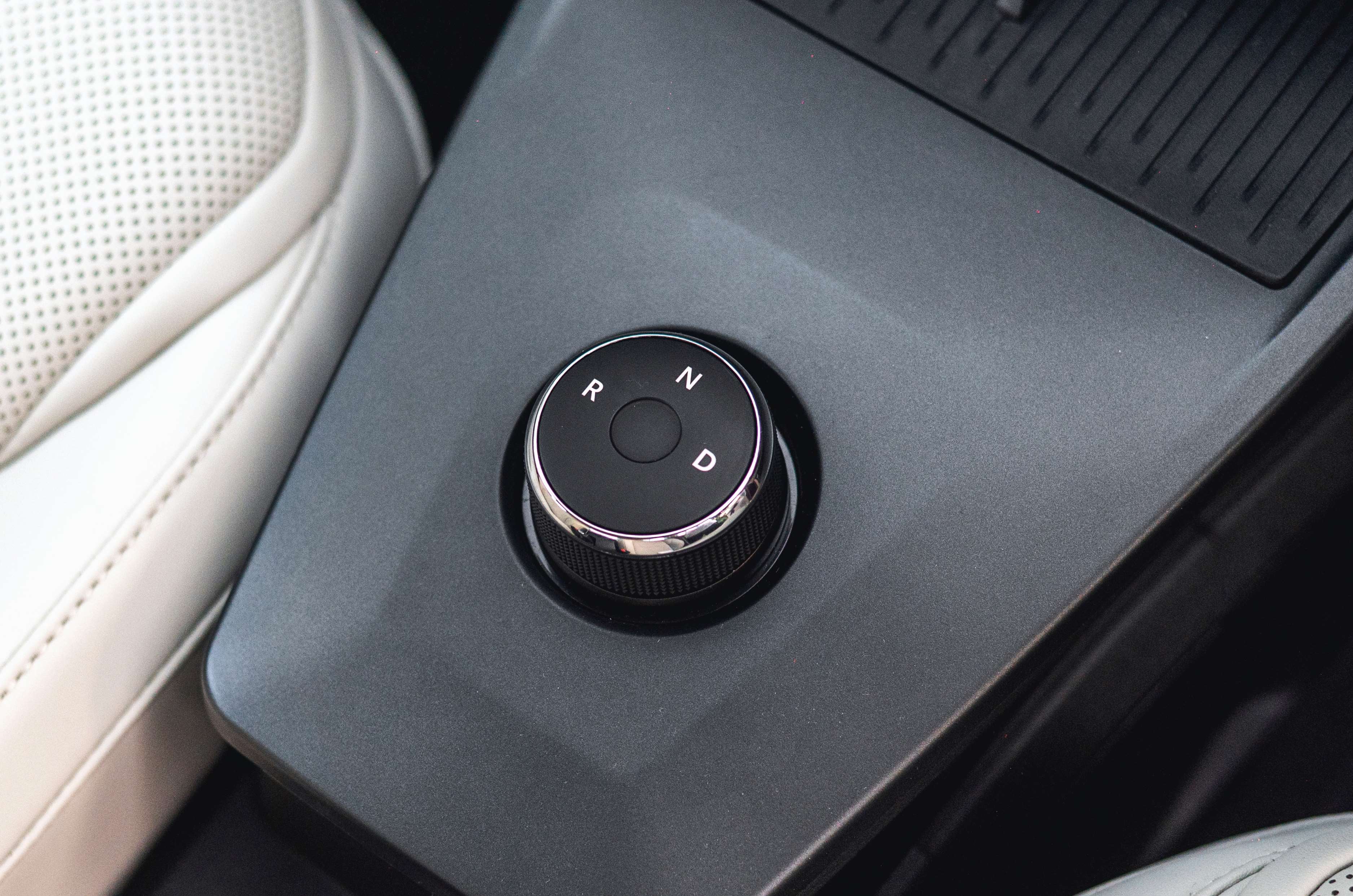
The rotary dial does not have illuminated drive modes, but operating it is a breeze.
The manual variants feature a new, more premium-looking gear stalk, while the AMT variants get a cleaner-looking rotary drive selector with N (neutral), D (drive) and R (reverse) modes. The rotary dial does not feel finicky, and the modes switch seamlessly. One complaint, however, is that the drive modes (N, D and R) are not illuminated, which means you rely on the instrument cluster to know which mode is selected.
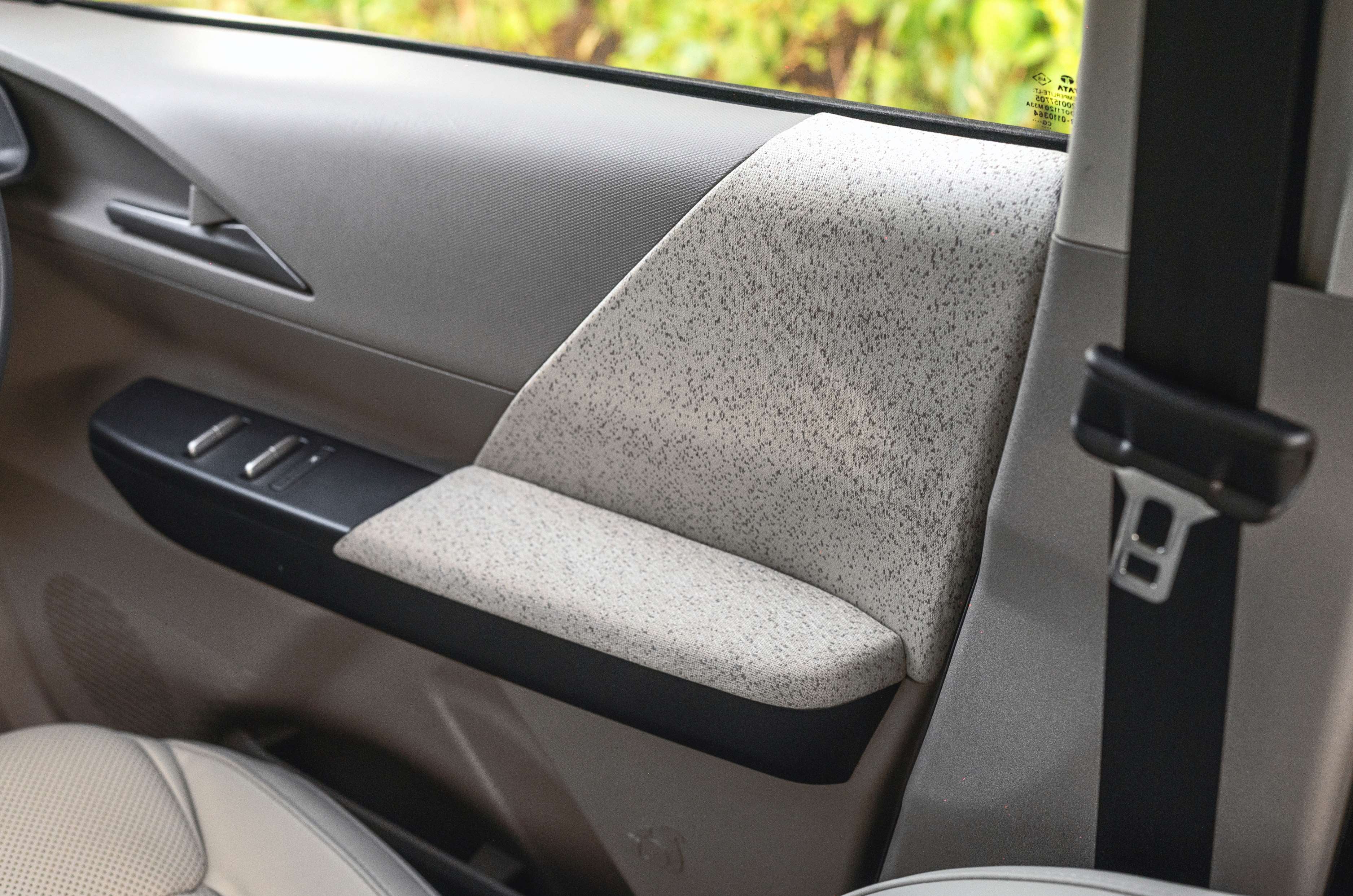
The Aeris gets floating door handles like on the Sierra, which feel sturdy.
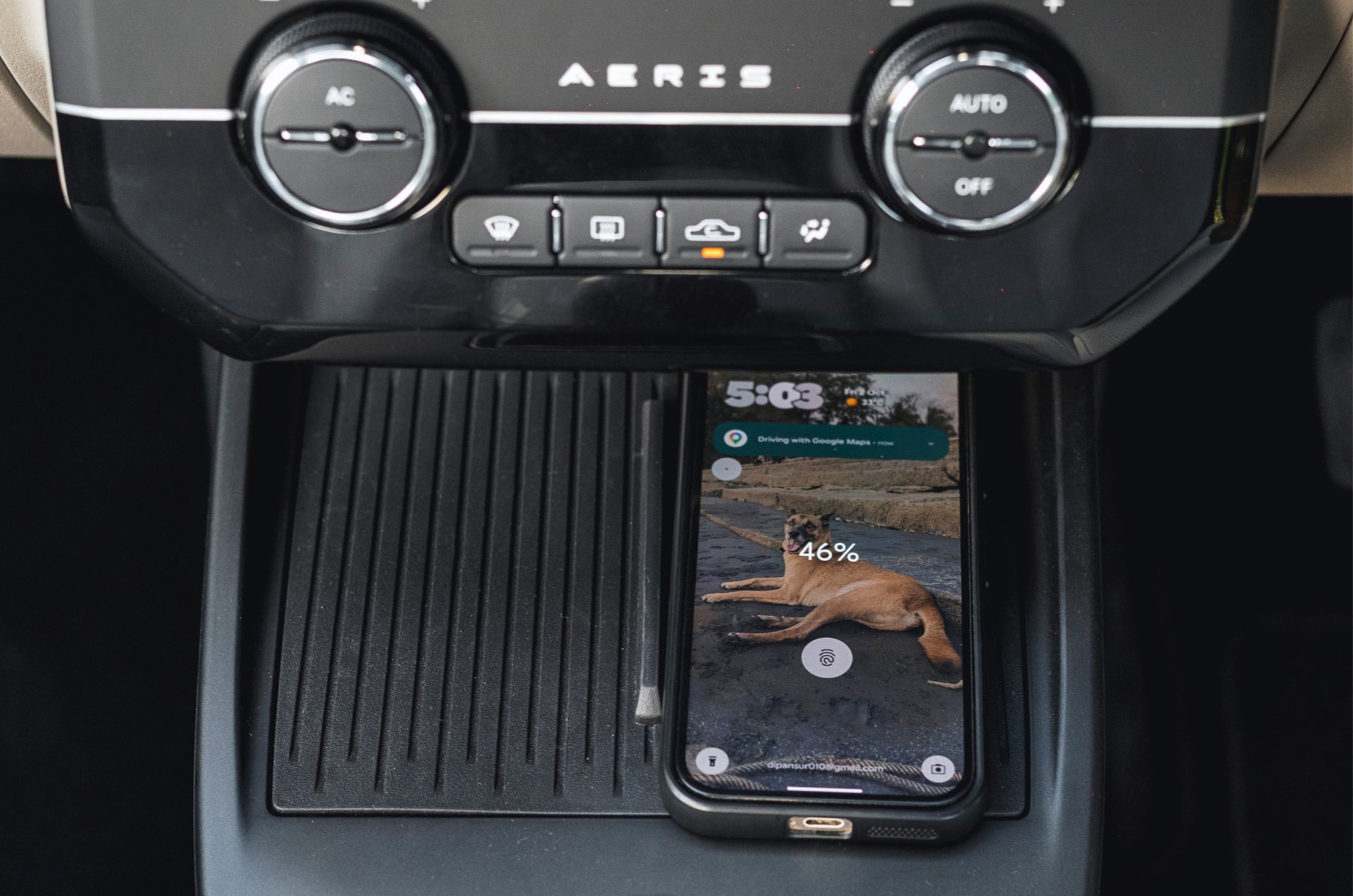
The centre console has also been thoroughly redesigned for a cleaner look and a more practical application. It features two rubberised pads to keep phones, one of which gets wireless charging capability in the top-spec Accomplished trim. The centre console also features two cupholders and a leatherette-wrapped centre armrest which integrates a decent cubby space. The doors have floating-style handles integrated with the armrest, which feel sturdy.
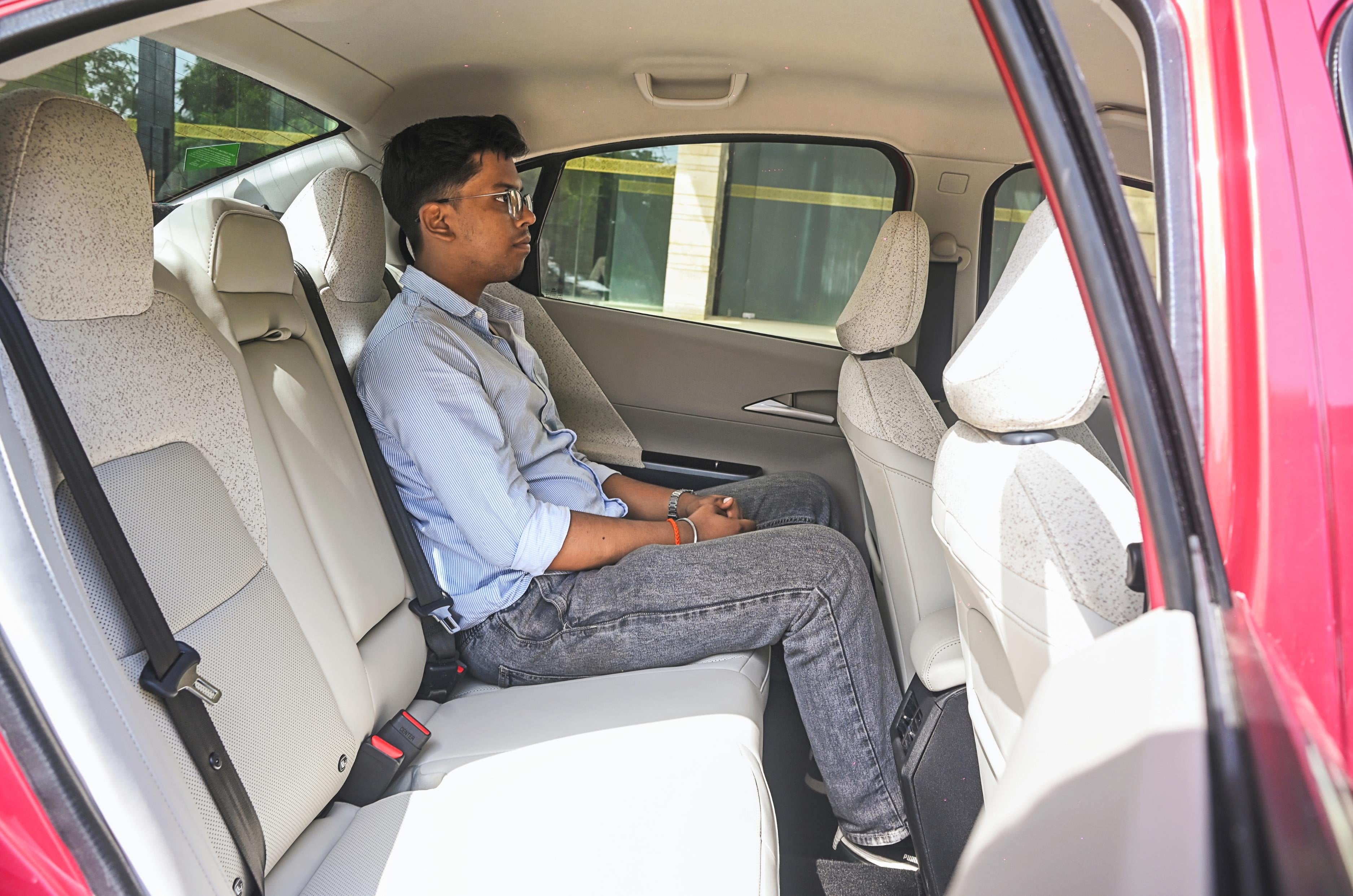
Legroom and kneeroom won’t be an issue for most, but taller passengers could feel the headroom is tight.
The seats feature revised cushions and bolsters that have increased the overall comfort and are wrapped in a part leatherette upholstery that feels premium. The rear seats are comfortable as well and offer good legroom and kneeroom. The headroom, however, could be an issue for passengers over 6 feet tall. The rear passengers benefit from dedicated air vents and a 65-watt Type-C charger. These seats get fixed headrests.
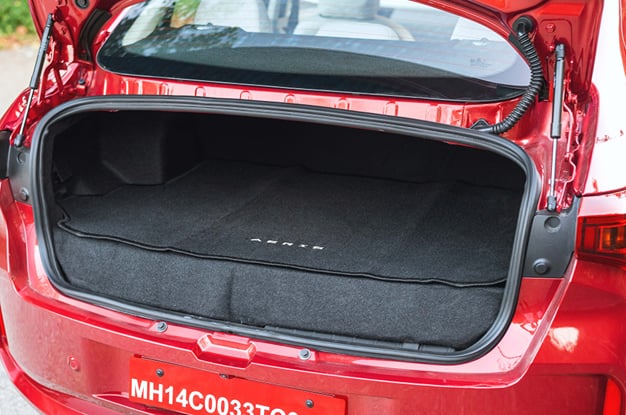
Aeris CNG’s boot space figure is not revealed, but could be similar to the Tigor CNG’s 227-litre space.
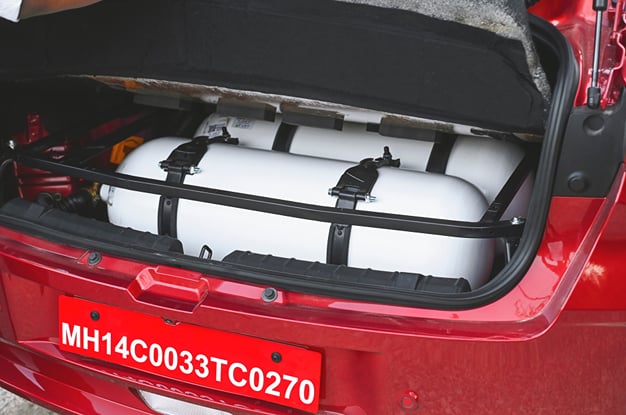
The Aeris iCNG gets a dual-cylinder tank setup inside the boot, unlike its rivals that use a single CNG tank and are left with very little usable boot space. Despite the additional tank, the Aeris has enough room for a couple of backpacks and a small luggage bag. Tata also offers a 13-inch underbody-mounted spare wheel, which is more useful than a puncture repair kit.
Tata Aeris iCNG features and safety – 9/10
Gets a lot of modern-day features, some of which could have better integration
Segment-only ventilated seats cool effectively and mark a step up in the comfort quotient.
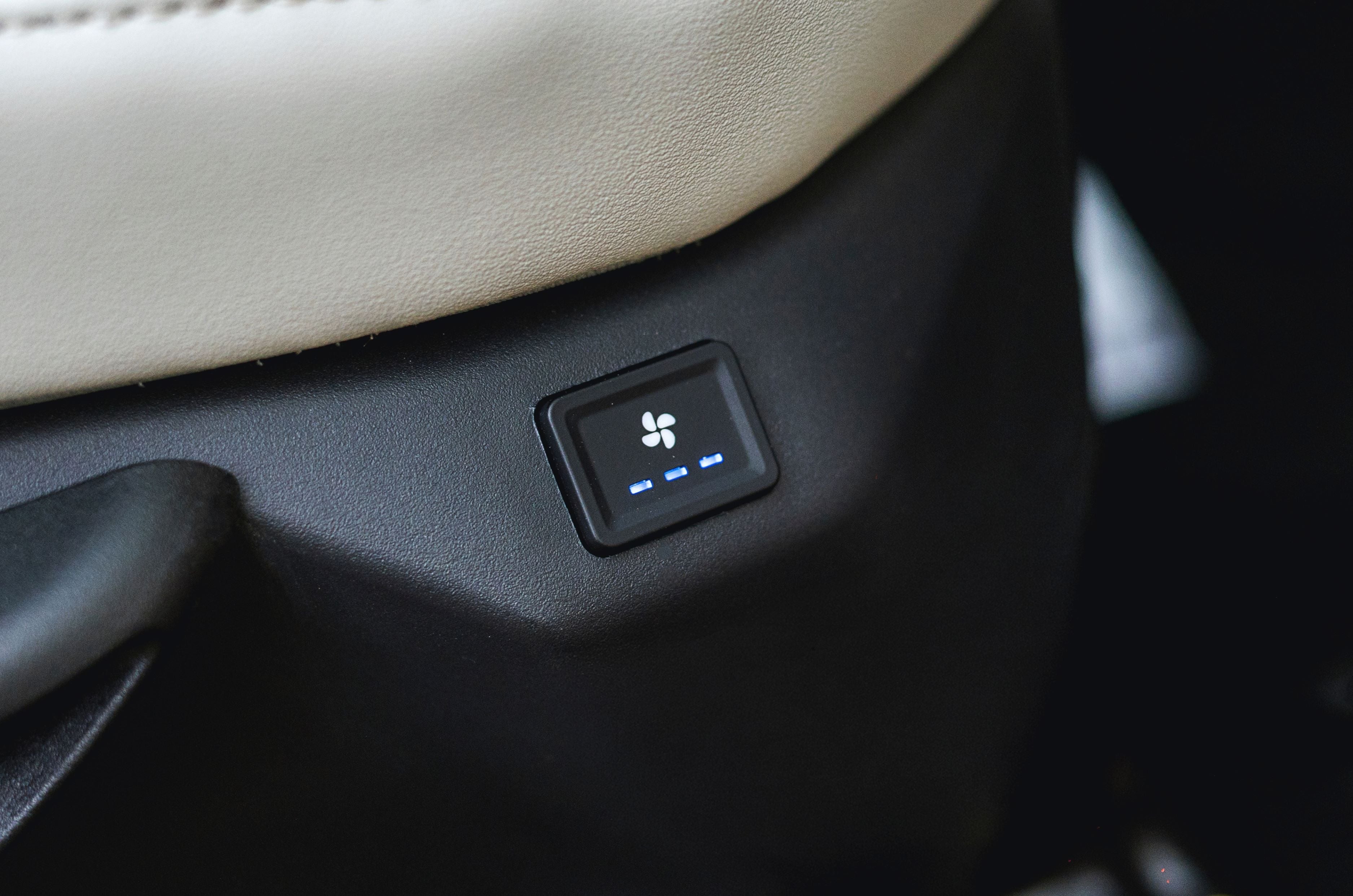
Like other Tata cars, the Aeris is filled with features to the brim. It debuts a front seat ventilation function for the compact sedan segment, which is offered with the Aeris’ top Accomplished trim. During our drive, the seat ventilation was very effective in cooling the cabin in Faridabad’s near 40deg ambient temperature. However, there’s no confirmation on the infotainment system or the driver’s display when the feature is engaged or the ventilation level is changed.
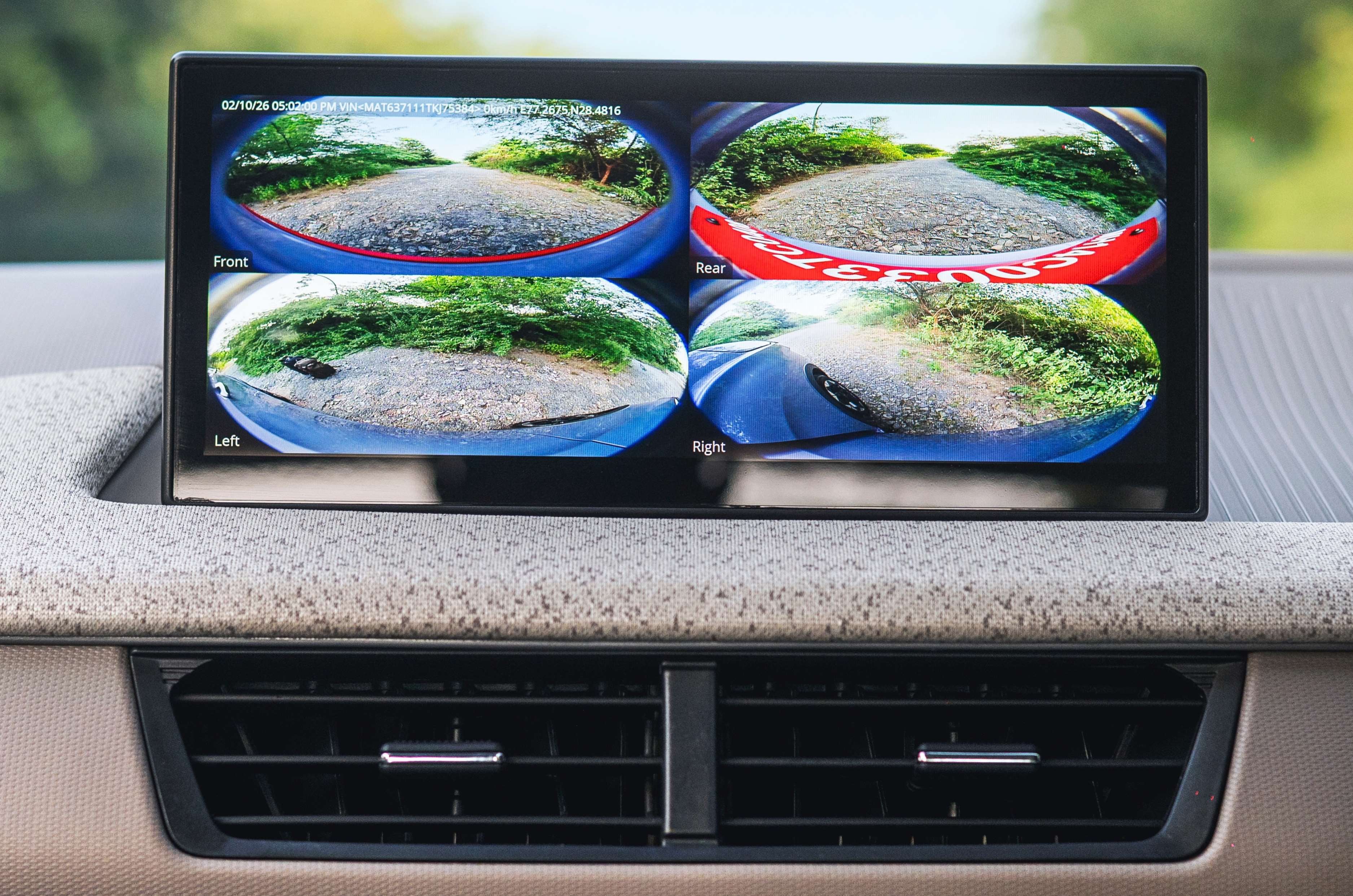
360-degree camera system has a crisp feed and can record the surroundings.
A 10.25-inch infotainment touchscreen is the same as before, which remains slick to use and has no lag even when browsing through multiple menus. The user interface (UI) is also easy to get used to. The Aeris continues with a 360-degree camera setup that is also lag-free and works well even in low-light conditions. Tata has added a new DVR feature, which allows the surround-view cameras to double up as a dashcam and record the surroundings of the car. These recordings can be stored and accessed either on the infotainment touchscreen or a USB drive, and can also be seen on a phone via a QR code.
The instrument cluster has a retro theme and displays all the important driving data, but the steering wheel’s tilt angle and the driver’s seating position sometimes obscure certain details. The steering wheel lacks the leatherette wrap offered with the Tigor, but feels nice to hold nevertheless. The wheel is now free of the Tigor’s scratch-prone gloss black trim and thankfully retains physical controls. It also gets cruise control, but only with the manual variants.
The wireless charger works well, but tends to make the phone hot during prolonged use.
The 4-speaker, 2-tweeter audio system is a step down from the Tigor’s 4-speaker, 4-tweeter setup, although sound quality is still good enough for the price. Certain features also could have been integrated better. The wireless charging pad can also heat up phones, particularly during extended use. Cooling vents near the pad could have fixed the issue. The infotainment system switches to the blind-spot monitor every time the indicators are used, which can be annoying when following navigation. The rear seats also lack pressure sensors, so the seatbelt warning continues to chime until the belts are fastened.
Standard safety features include 6 airbags, ISOFIX child seat anchorages on the rear seats, rear parking sensors and 3-point seatbelts with reminders on all seats. Higher variants equip the Aeris with a 360-degree camera, a day/night inside rearview mirror (IRVM), rain-sensing wipers, rear defogger, a tyre pressure monitoring system (TPMS) and ESP with traction control. The pre-facelift Tigor received a four-star rating from Global NCAP in 2020, but the Aeris has yet to be tested by Bharat NCAP.
Tata Aeris iCNG performance and refinement – 6/10
Performance in the city is adequate, but it feels out of breath if pushed hard
The 3-cylinder engine is not the smoothest in the segment and the NVH levels are also not the best.
The Tata Aeris continues with the Tigor’s 1.2-litre, three-cylinder naturally aspirated engine, producing 76hp and 97Nm in CNG guise. It is offered with a five-speed manual and a five-speed AMT, and we drove the latter.
At city speeds, the engine has enough performance to keep up with traffic, but the CNG-AMT combination is not particularly responsive. There is a noticeable pause between pressing the accelerator and the powertrain responding, which becomes more evident when you need to accelerate quickly.
Performance is adequate in the city, but it feels out of breath during overtakes.
The AMT also makes starts from standstill quite jerky, which can get tiresome in stop-and-go traffic. Once up to speed, however, the Aeris settles into a relaxed rhythm and is comfortable enough when driven at a steady pace. The AMT also gets paddle shifters for manual gear changes, which are useful when you want more control over the gearbox, particularly during overtakes.
On the highway, the lack of response is more noticeable, particularly when overtaking. The Aeris can maintain triple-digit speeds, but building speed takes time, and overtaking requires some planning. The rotary gear selector itself, however, as mentioned above, is neat and easy to use.
As you start driving, the vibrations from the 3-cylinder engine are ironed out till you reach 2,500rpm.
Refinement is another weak point. Refinement is another weak point. The engine feels generally smooth when driven gently, but above 2,500rpm, engine noise and vibrations become quite pronounced. Wind and road noise insulation isn’t particularly strong either, so the cabin gets fairly noisy at higher speeds.
Tata Aeris iCNG ride comfort and handling – 8/10
Has a commendable ride quality for a sedan on both rough roads and highways
Like other Tata cars, the suspension is well tuned to Indian conditions.
The Aeris is particularly impressive over poor roads. The suspension does a good job of absorbing broken surfaces and larger bumps without unsettling the car, while the ground clearance is adequate for tackling rough roads and large speed breakers. Despite being a sedan, it does not feel particularly vulnerable to bad roads.
Out on the highway, the Aeris is equally composed. It stays planted at triple-digit speeds and does not feel floaty or nervous when driven quickly. The steering is also nice to hold and offers decent feedback, although there is some vagueness around the centre that takes away a little from the confidence.
Tata Aeris iCNG mileage and efficiency
We expect it to offer a real-world mileage in the 25-30km/kg range
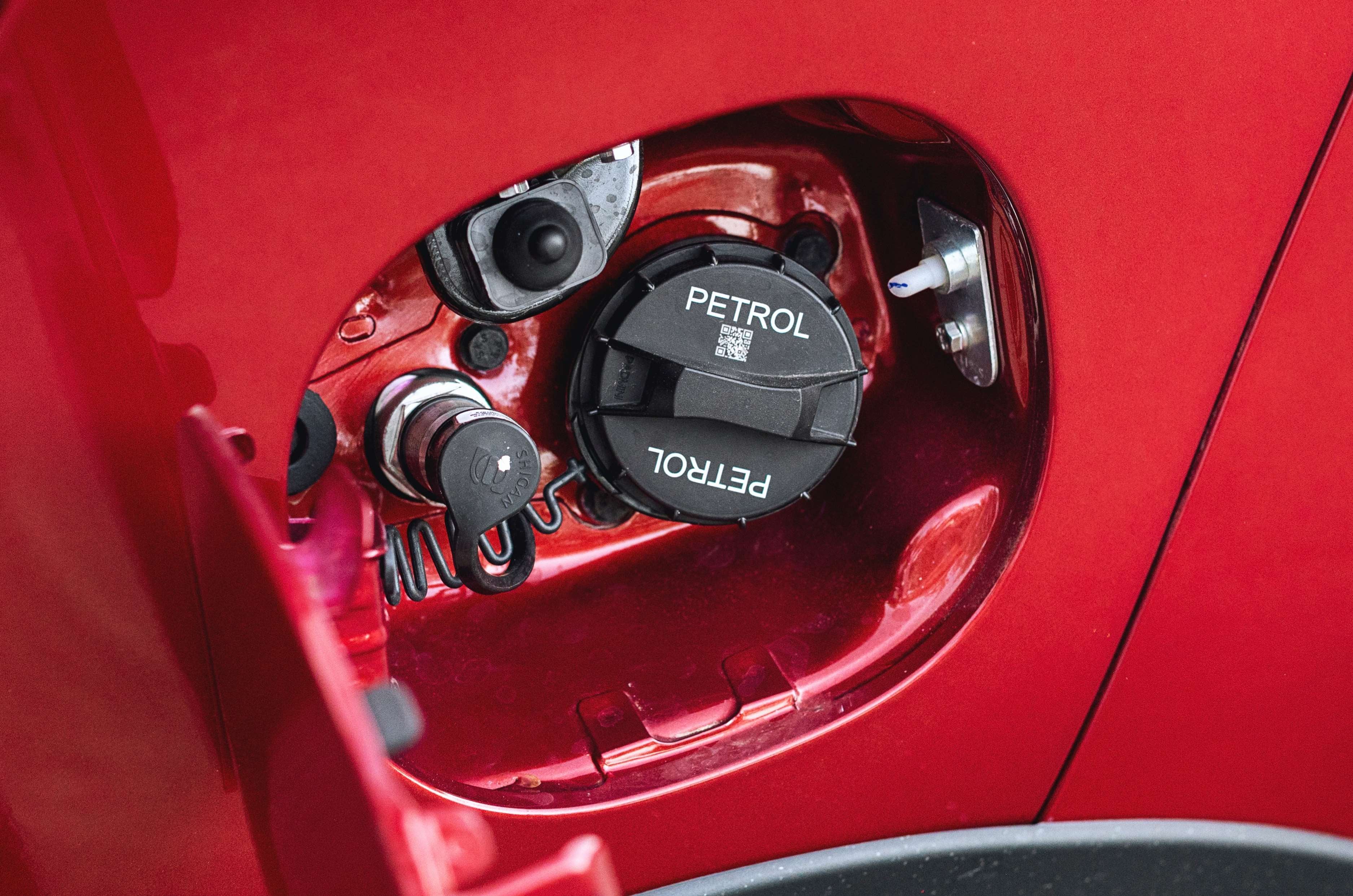
It kills the ignition whenever the fuel lid is opened, offering a layer of safety while filling fuel.
While we haven’t put the Aeris iCNG through our full test yet, its CNG powertrain should make it considerably more economical to run than the petrol version. Tata is yet to reveal an official efficiency figure, but we expect real-world mileage to be in the 25-30km/kg range. We’ll bring you our tested mileage figures once we put the Aeris iCNG through our standardised test procedures.
Tata Aeris iCNG value for money – 8/10
CNG buyers don’t have to compromise on features, but the AMT isn’t ideal
The Aeris CNG offers good value, but AMT should be chosen only if city driving is a priority.
The Aeris, priced from Rs 5.70 lakh to Rs 9.10 lakh (ex-showroom), is a more convincing compact sedan than the Tigor ever was. Its modern design, well-equipped cabin, comfortable ride and, most importantly, useful boot space despite the CNG setup give it plenty going for it. The fact that Tata offers the CNG powertrain with higher-spec variants also means buyers don’t have to sacrifice features for lower running costs.
The CNG-AMT powertrain, however, takes some shine off the package. The slow responses, jerky starts and excessive NVH at higher revs make it better suited to relaxed city driving than frequent highway use. Even so, for buyers looking for a practical and well-equipped CNG sedan, the Aeris does make a stronger case than its predecessor and even against its rivals.
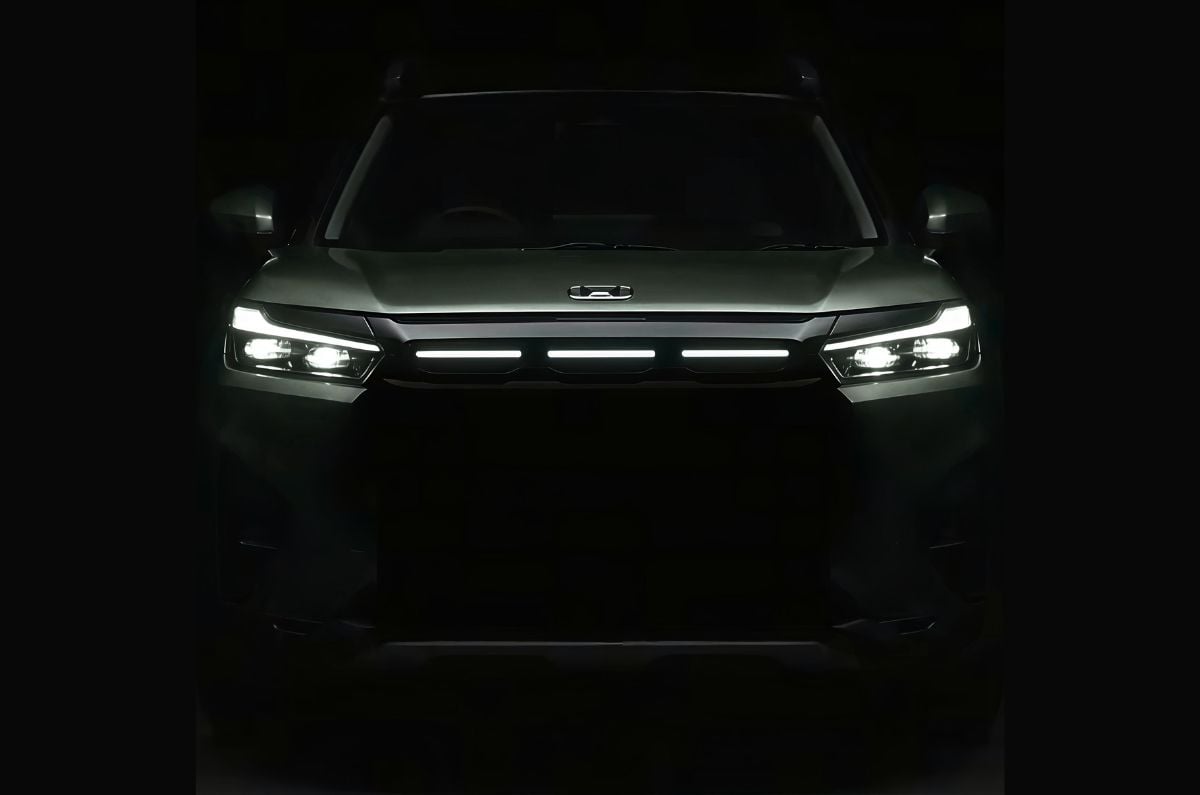
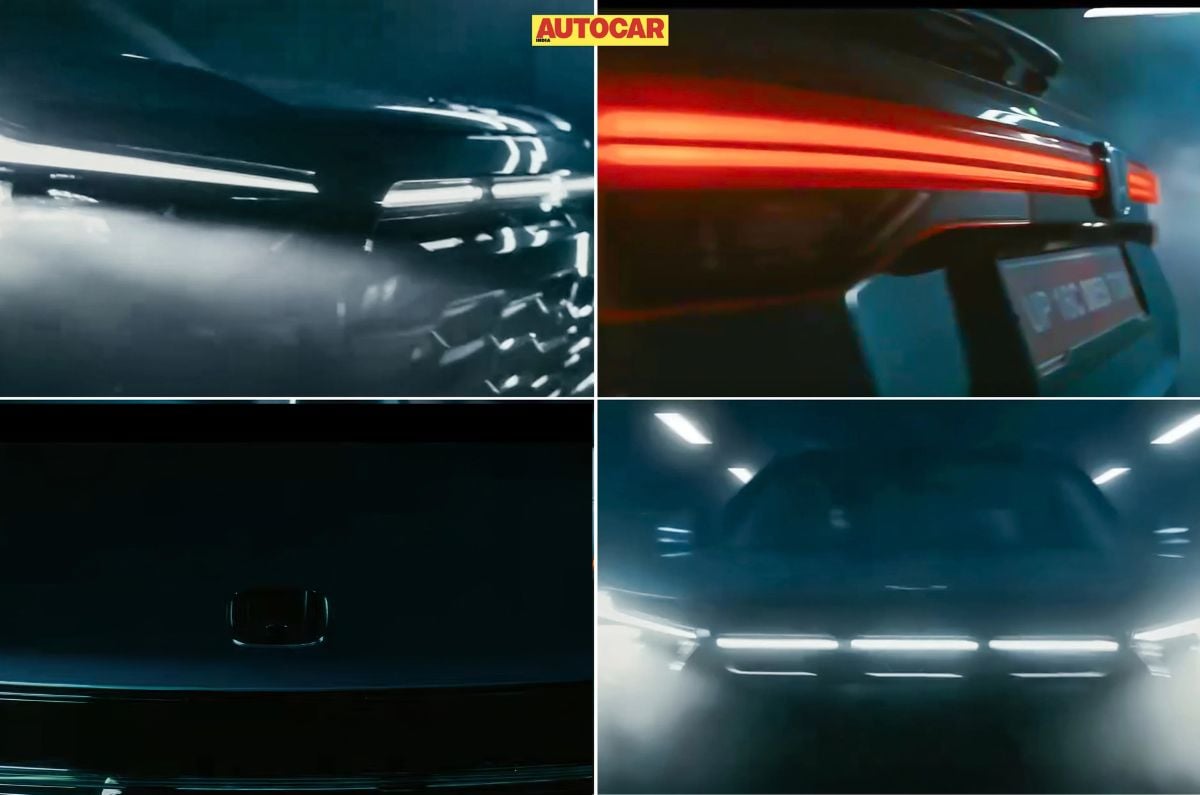
Honda is slated to launch the Elevate facelift on October 6. This will be the first mid-life update for the Honda mid-size SUV, which was introduced in 2023. The brand has also shared teasers and commenced pre-bookings of the upcoming SUV for Rs 21,000. Ahead of its launch, here’s all that you can expect from the Honda Elevate facelift.
What will the Honda Elevate facelift look like?
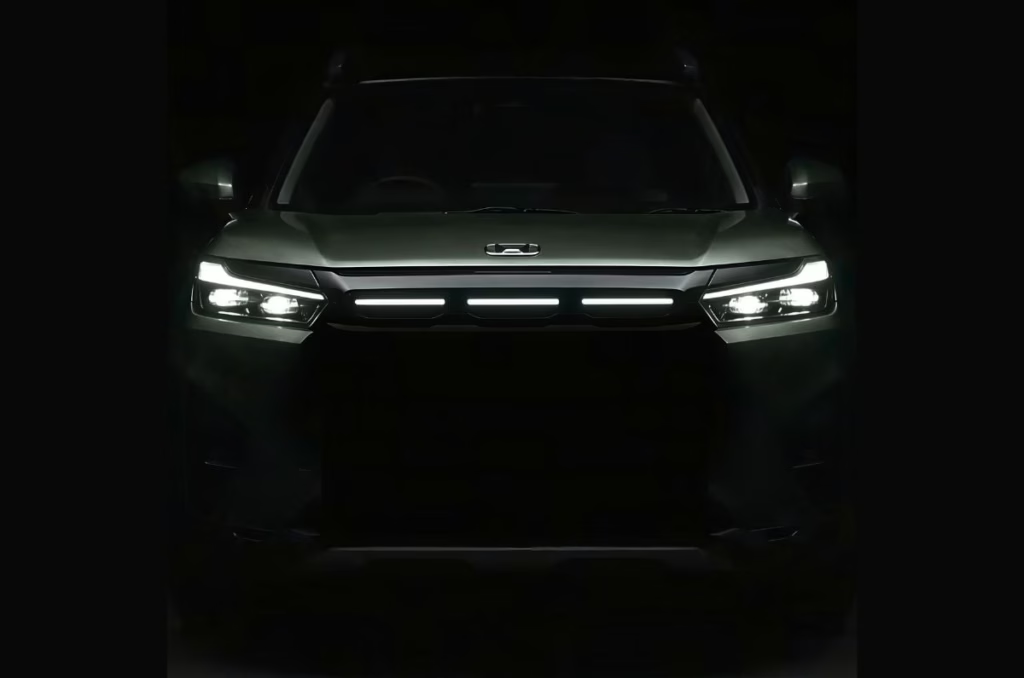
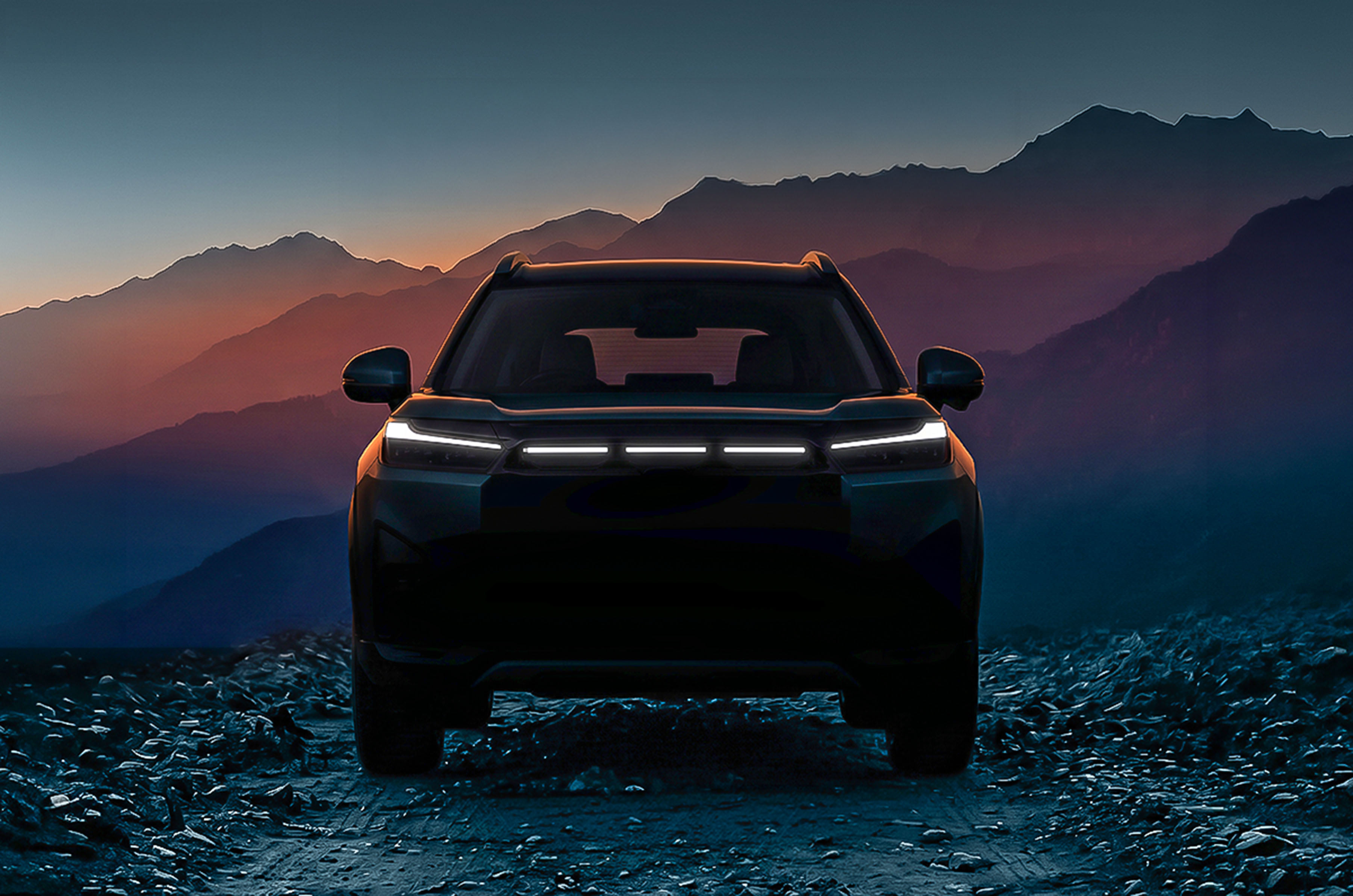
Teaser videos of the Honda Elevate facelift hint toward a bolder look for the SUV. At the front, the LED headlamps are connected by segmented LED DRLs; the gloss black grille gets a honeycomb pattern, and the Honda badge has been repositioned to the bonnet. Additionally, the H-shaped chrome element above the grille now sports a black finish. At the rear, the LED tail-lamps get a connected treatment. Meanwhile, the 17-inch alloy wheels appear to carry the same design as before.
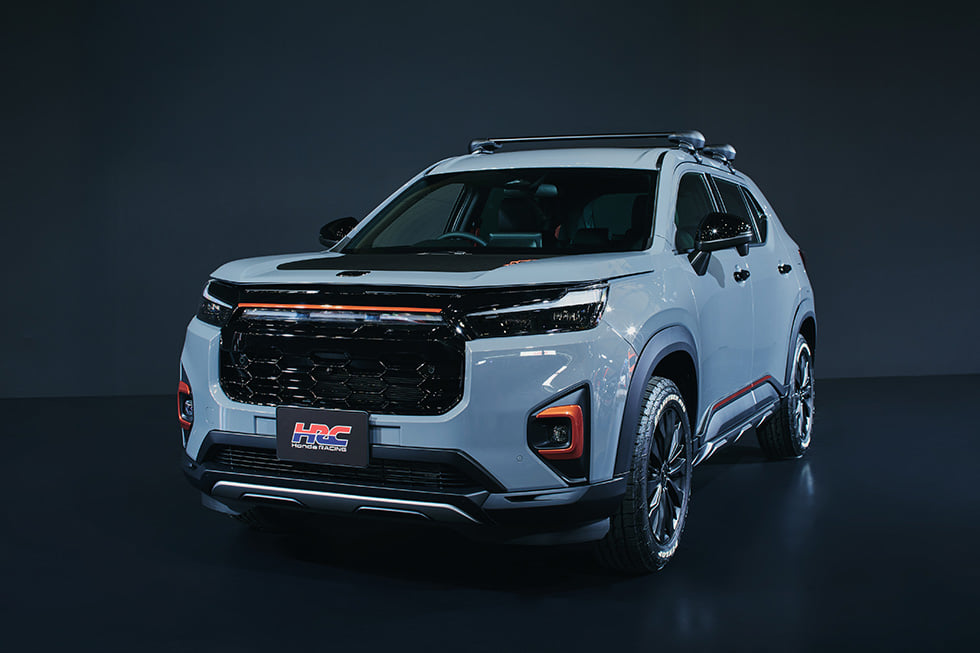
Interestingly, the new design elements on the Elevate facelift look closely similar to the WR-V TrailSport HRC Concept. For those who didn’t know, the India-made Elevate is sold in Japan as the WR-V, and the TrailSport HRC Concept was revealed earlier this year at Tokyo Auto Salon 2026.
What will the Honda Elevate facelift interior look like?
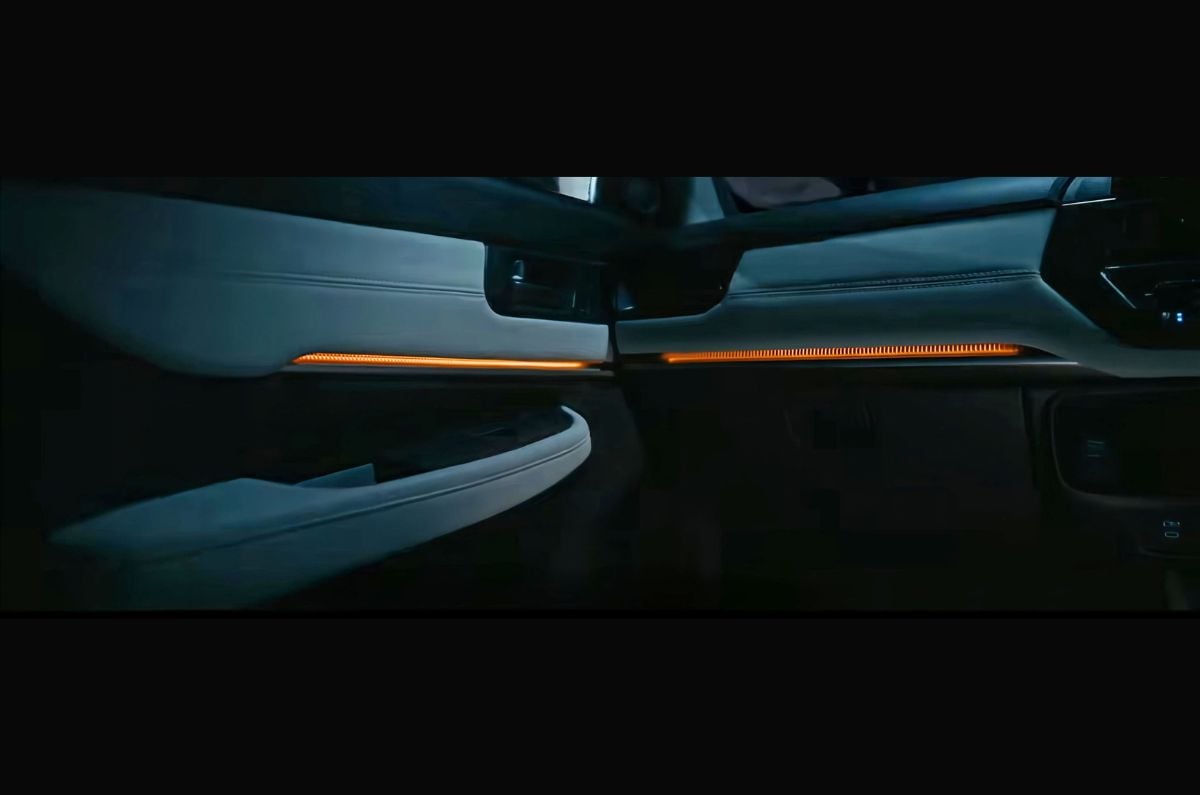
Honda has provided a small glimpse of the Elevate facelift’s dashboard, hinting at more soft-touch leatherette trim on the dashboard. Expect minor revisions to the Elevate facelift’s overall cabin layout, along with new upholstery and trim materials. Like the current version, Honda could offer the interior in two themes, namely white and black; brown and black.
Will the Honda Elevate facelift get new features?
The current Elevate misses out on some feel–good features that rivals offer. Honda is likely to fix this with the facelift. Expect new goodies like powered and ventilated front seats, dual-zone climate control, panoramic sunroof, rear sunblinds, and updated graphics for the infotainment system to come on the Elevate facelift. Teasers also reveal the presence of an ambient lighting system, which is an optional accessory for the current model. Meanwhile, features like a wireless phone charger, part-digital infotainment system, lane-watch camera system, wireless Apple CarPlay and Android Auto, 8-speaker sound system, and Level 2 ADAS suite will be retained.
Will the Honda Elevate facelift powertrains be retained from the current version?
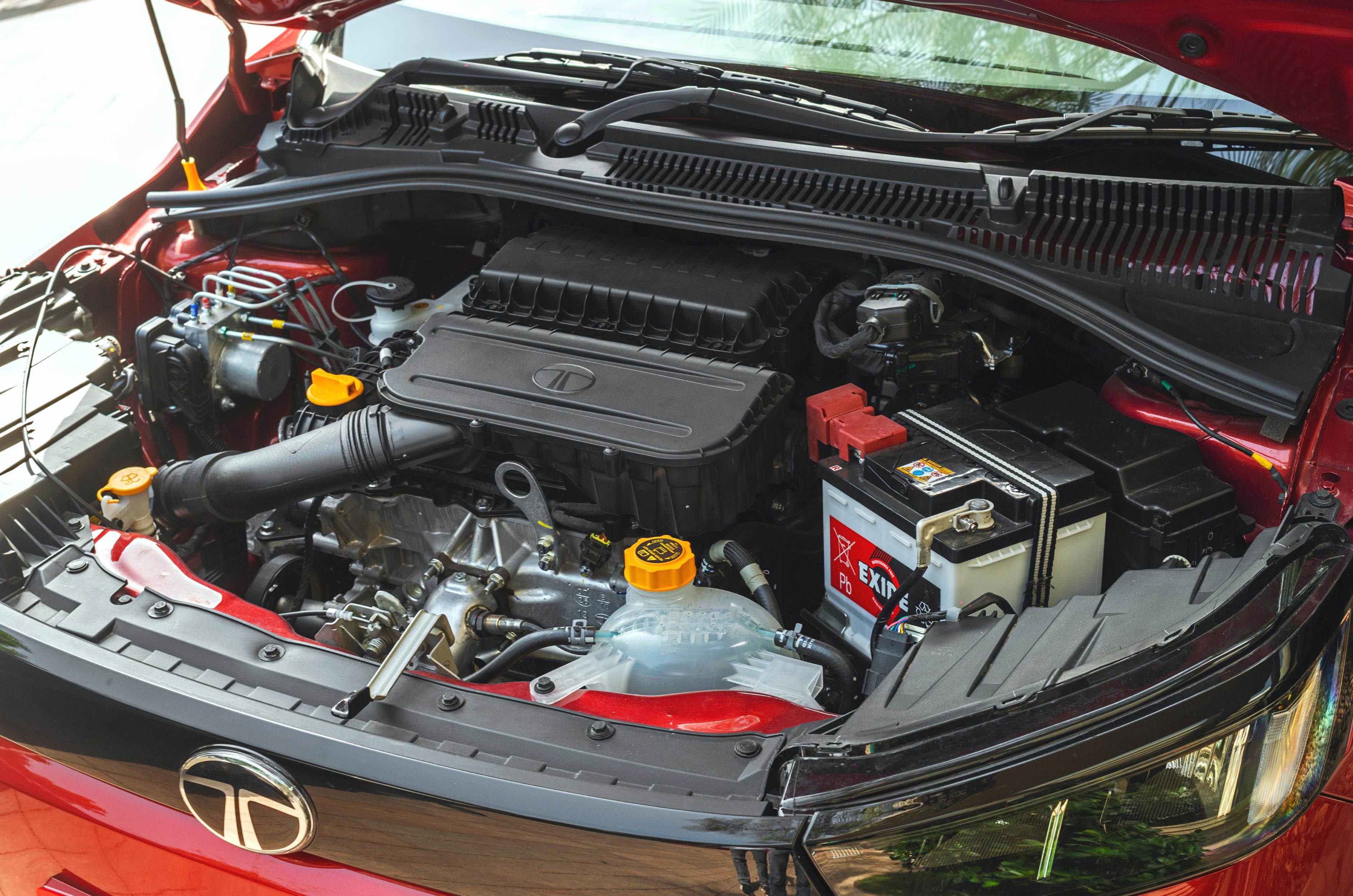
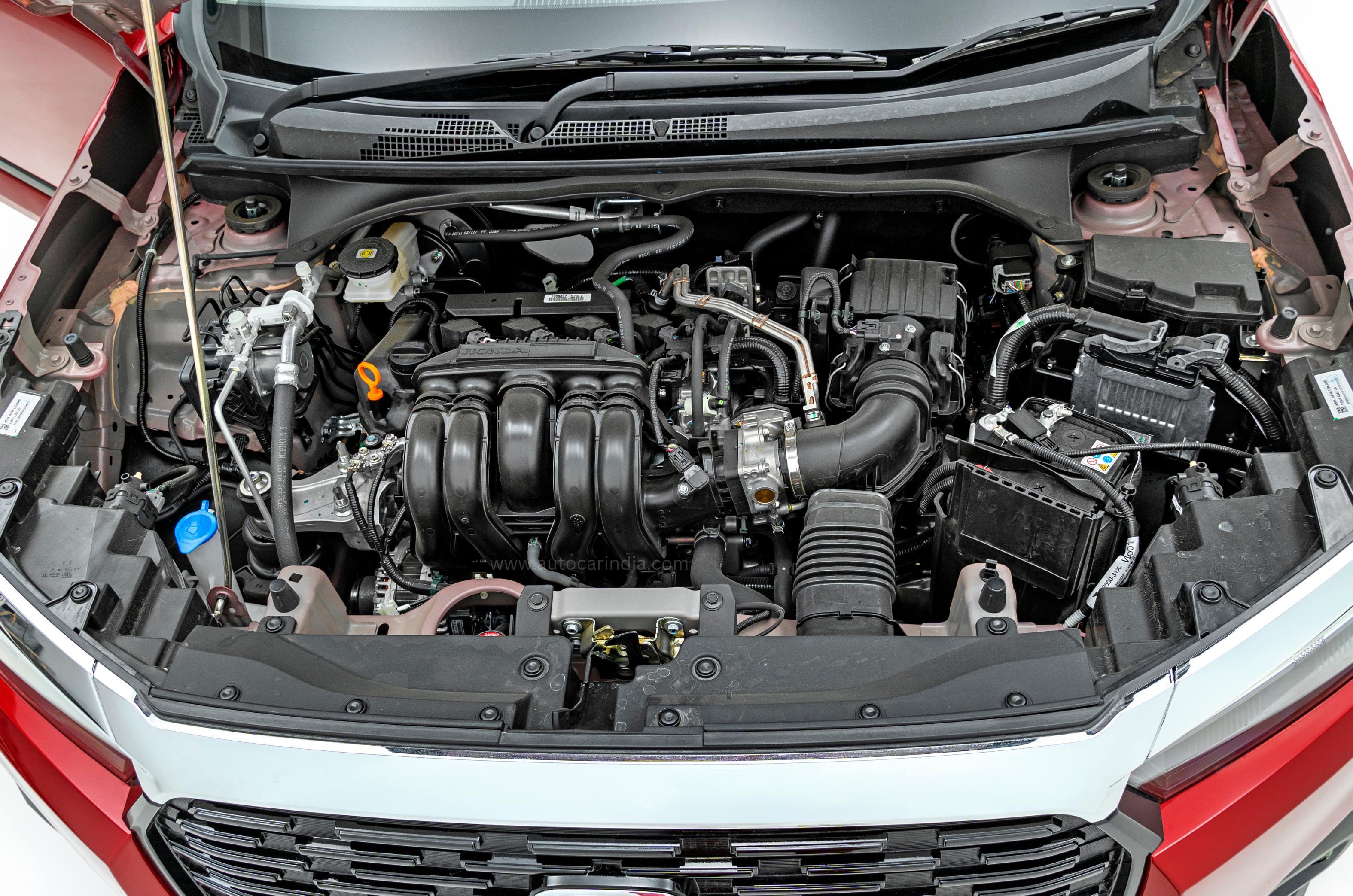
Current Elevate engine bay used for representation.
Yes, the Elevate facelift is highly likely to continue with the same powertrain options as the current model. This includes a single 1.5-litre, 4-cylinder, naturally aspirated petrol engine producing 121hp and 145Nm. Power is sent to the front wheels via a 6-speed manual or a 7-step CVT. Additionally, a dealer-fitted CNG kit can also be paired with this engine in manual guise for select variants. On the other hand, it is unlikely that the City’s strong-hybrid powertrain could make it to the Elevate facelift.
What is the expected price of the Honda Elevate facelift?
It’s worth noting that the current Elevate begins at a higher starting price than its rivals, ranging from Rs 11.88 lakh to Rs 16.36 lakh. With the facelift, the prices are expected to be slightly dearer for the Honda SUV. It will continue to take on rivals like the Hyundai Creta, Skoda Kushaq, Volkswagen Taigun, Kia Seltos, Tata Sierra, Maruti Grand Vitara and Victoris.
In the previous issue (August 2026), you saw the Skoda Kylaq take on the familiarity of India, the hills and traditions of Nepal, and the variety of China through Tibet’s gorgeous but bone-shaking terrain, followed by the sensory overload of food and culture. Now, it was time for a fresh experience through Central Asia on the ancient Silk Route, subsequently entering Europe towards our final destination.
Kyrgyzstan – Uzbekistan – Kazakhstan
Kyrgyzstan
The Kylaq had everyone turning heads.
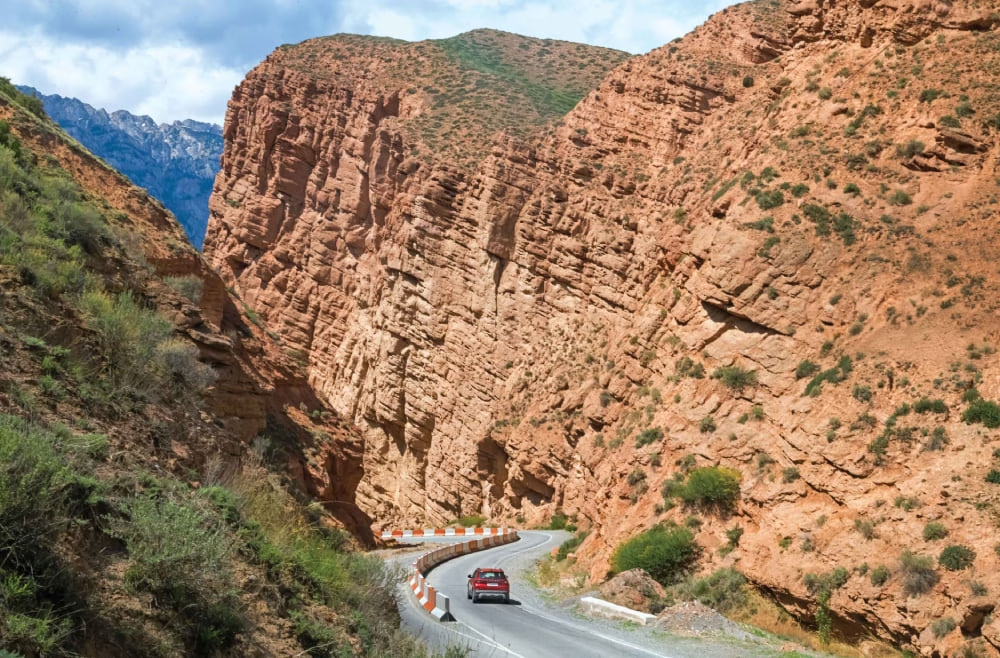
Crossing the Chinese border into Kyrgyzstan was like crossing into a different world. The differences are immediate, right from the signage, fonts and faces to the sights, terrain and traffic. Being a landlocked country peppered with alpine mountains, one doesn’t need to go far to experience what Kyrgyzstan has to offer. As you drive through the ribbon of tarmac between the peaks, you realise why it is called the “Switzerland of Asia”.
A roughly 400km drive to our first halt in Naryn was smooth sailing. However, the chilly weather was a far cry from the piercing heat of China. We pulled out our jackets that were buried deep in our bags and made a beeline the next day for the capital city of Bishkek. The roads are a driver’s delight, and while there aren’t many sights to stop and admire, the Orto-Tokoy Reservoir made for a stunning photo-op.
Kyrgyzstan in numbers
Torgart – Uzbek border
Distance covered
1,321km
Fuel consumed
126.49 litres
Average fuel economy
10.44kpl
Approx. fuel cost
Rs 11,727
Avg. per-litre fuel cost
Rs 92.58
Total time driven
34hrs 23min
Average speed
38.4kph
From Bishkek, we headed to Osh, which is also known as the capital of the south and is the oldest city in Kyrgyzstan. Walking through the Jayma Bazaar in the city centre, you may get a bit of celebrity treatment, as the locals aren’t used to having many tourists just walking through. Some playful heckling and wide smiles add to the overall experience.
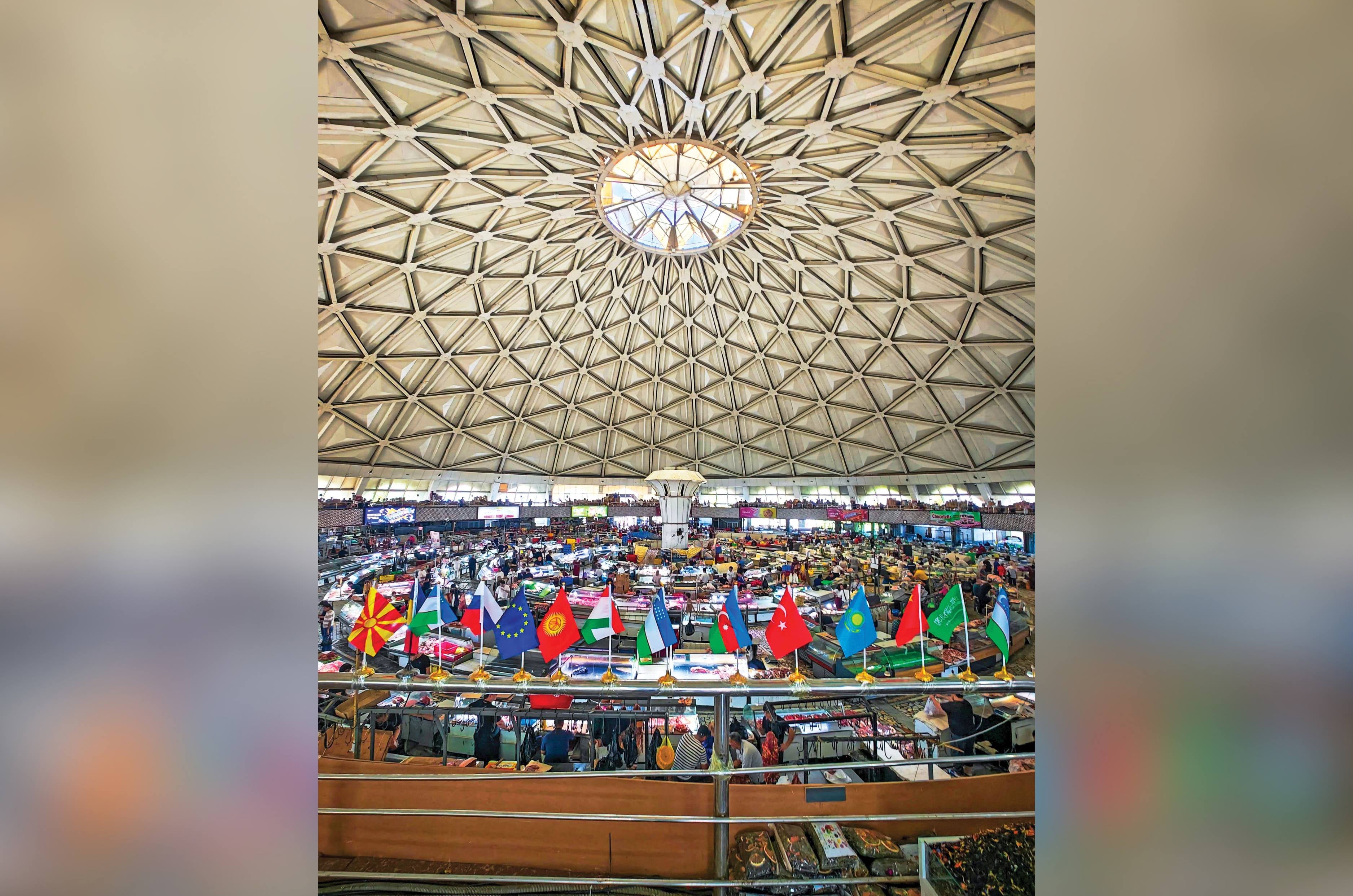
Chorsu Bazaar is a one-stop shop for everything in Tashkent.
What the market offers is mounds of kurut, a snack made from curdled milk or oghurt, salted and then hardened. The best part is its extended shelf life without needing a refrigerator. We packed some with the hope of eating it at home, knowing fully well that it would vanish by the next town.
From Osh, we would be exiting the stunning valleys and terrain of Kyrgyzstan and entering the city of Fergana in Uzbekistan.
Uzbekistan
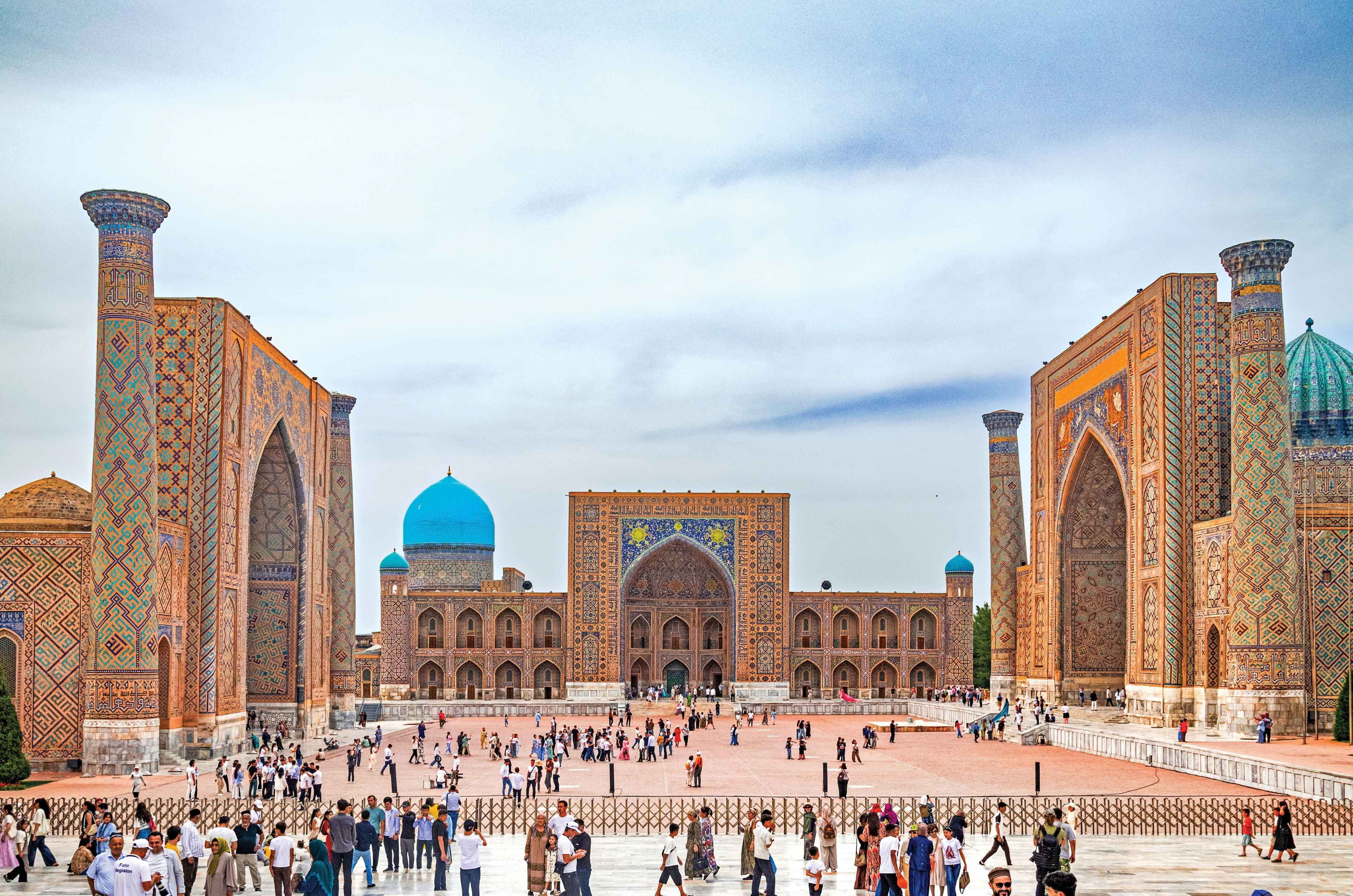
Registan Square in Samarkand is breathtaking from every angle.
Like Kyrgyzstan, Uzbekistan also has its own personality. While there are similarities in the faces and fashion, the city of Fergana has a tinge of European infrastructure. Roads are lined with trees and patir shops – flatbread made from butter or lamb fat, with intricate detailing and some sesame seeds sprinkled on top. It’s pretty enough to dissuade you from eating it, but tastes like something that would go extremely well with a cup of chai.
Uzbekistan in numbers
Kyrgyz-Uzbek border – Turkistan
Distance covered
1,257km
Fuel consumed
81.74 litres
Average fuel economy
15.37kpl
Approx. fuel cost
Rs 9,800
Avg. per-litre fuel cost
Rs 120
Total time driven
27hrs 5mins
Average speed
46.4kph
What is also fascinating is the number of old Soviet-era cars still running on the highways with no fuss. We shared road space with old Ladas crammed with luggage inside and on the roof. Over the smooth highways of Uzbekistan, the Kylaq had an easy run, allowing us to focus on the sights around us.
From Fergana, we headed to the capital city of Tashkent. A properly modern metropolis with high-end malls and low-slung supercars, parks, walkways and everything you expect from a big city. So, to get a taste of age-old tradition, we ventured towards Samarkand, which used to be a major trading hub on the Silk Route.
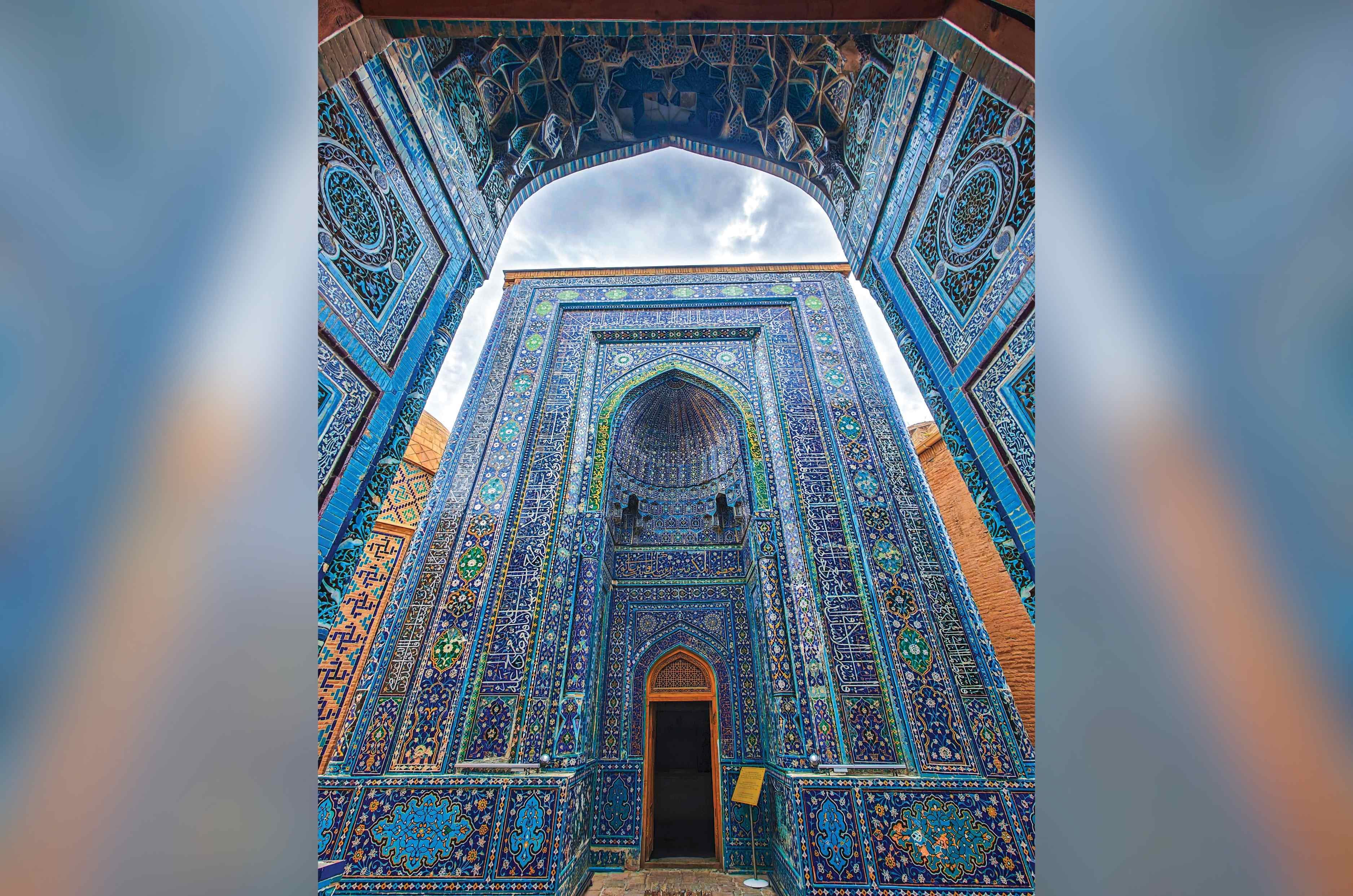
The Shah-i-Zinda ensemble has 11 mausoleums with incredibly detailed azure and turquoise tiles.
Entering Samarkand, you almost feel the tradition in the air. Years of cross-cultural civilisation have made it a stunning destination to get a glimpse of history, and it is unlike any other Western or Eastern city. The highlight here, of course, is the Bibi-Khanym Mosque in the Registan ensemble. Turquoise domes kissing the sky, with walls adorned with hand-carved artistry, are nothing short of breathtaking.
You can walk through the corridors and the square innumerable times, and each time, you will gasp at the sheer detail and effort. And to think it was built as far back as the 15th century. Magnificent is an understatement.
After soaking in the stunning detail, we headed back to Tashkent and straight to the equally fascinating Chorsu Bazaar. What looks like an IMAX dome on the outside is a full-fledged one-stop shop on the inside. Teas, dry fruits or even a leg of lamb, you can get it all here.
Uzbekistan’s market is nothing short of paradise for tea lovers.
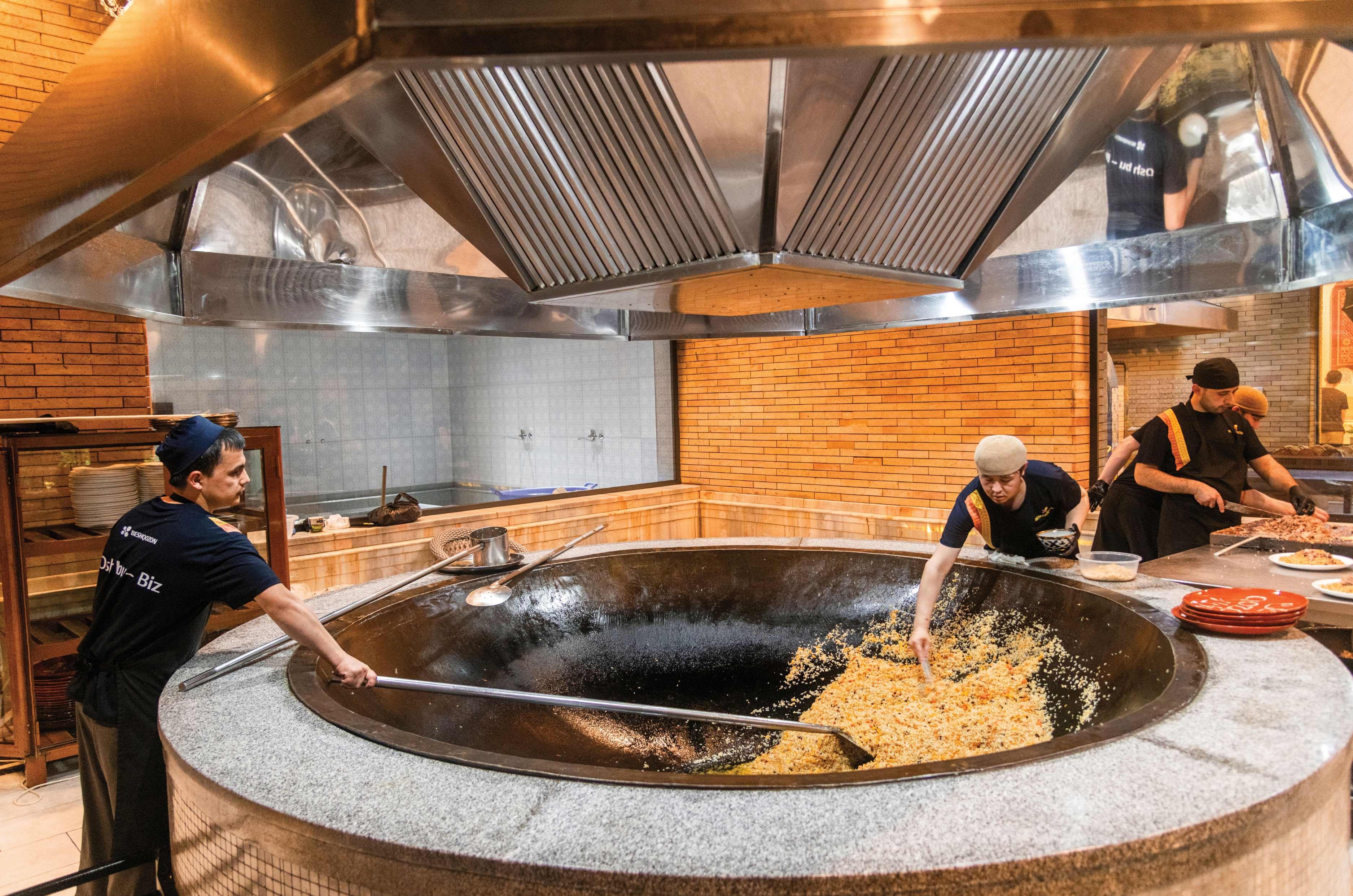
After a long walk that ended with bags of tea and dehydrated kiwis, we headed for Uzbekistan’s pièce de résistance: the famous plov. Like a biryani, but made with different spices, and if you want to go heavy on culture, you can have one with horse meat, too. Some bravehearts did try it and resorted to chicken or lamb, but it did offer the lost taste of biryani and got us homesick in the first bite.
Massive dome known as a kazan used to make the famous Uzbek plov.
After days of driving through mountains and around lakes, and walking through corridors that were once at the peak of world trade, our next adventure would take us to the Great Steppe of Kazakhstan.
Kazakhstan
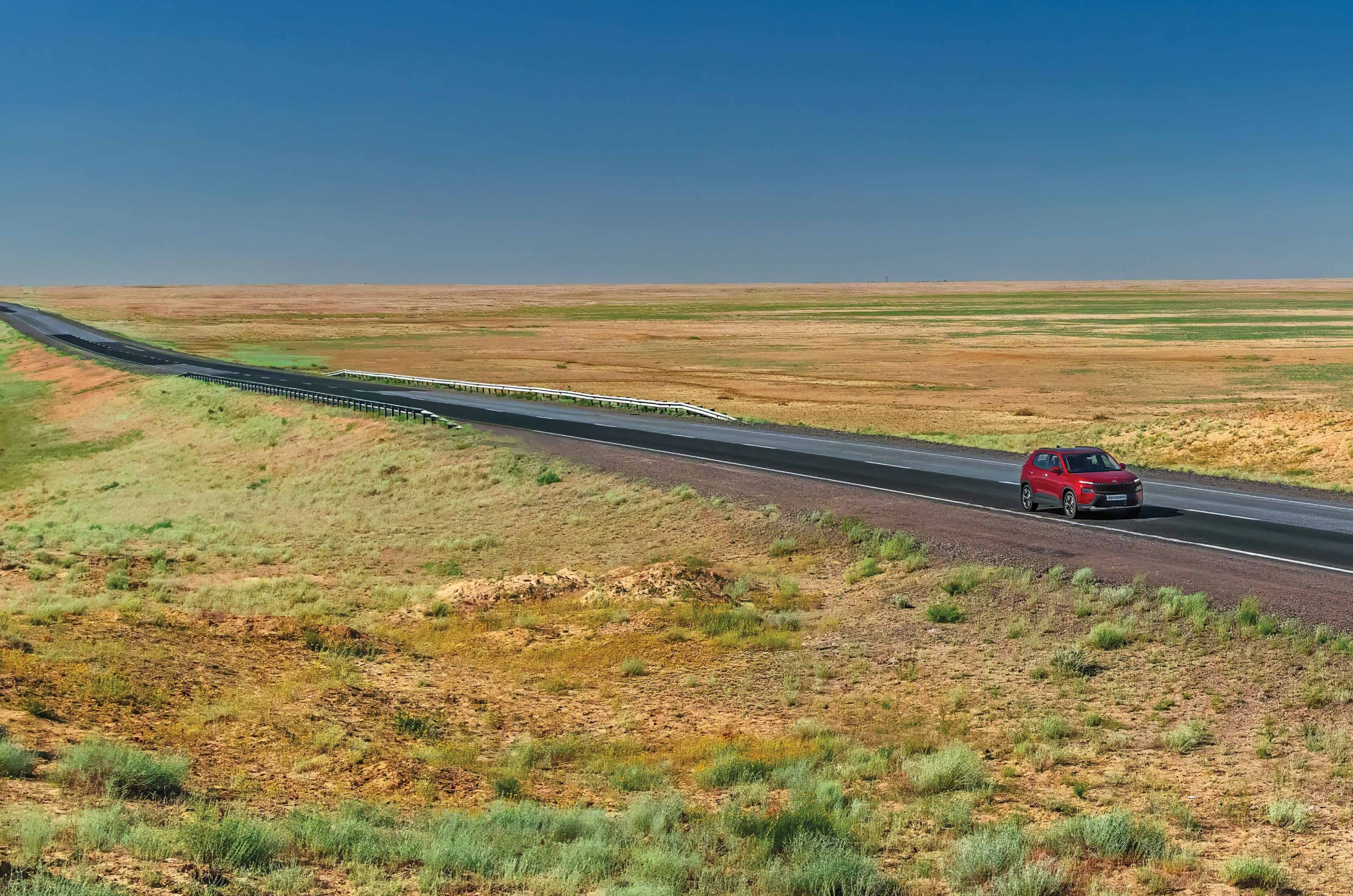
The Great Steppe in Kazakhstan feels like driving on an endless treadmill.
Crossing from Turkmenistan after vigorous checks, Kazakhstan feels almost desolate. Arrow-straight highways for kilometres, between acres of flat land with nothing on the horizon. We were driving through green pastures that would turn into brown, dried patches before turning green again, kilometre after kilometre.
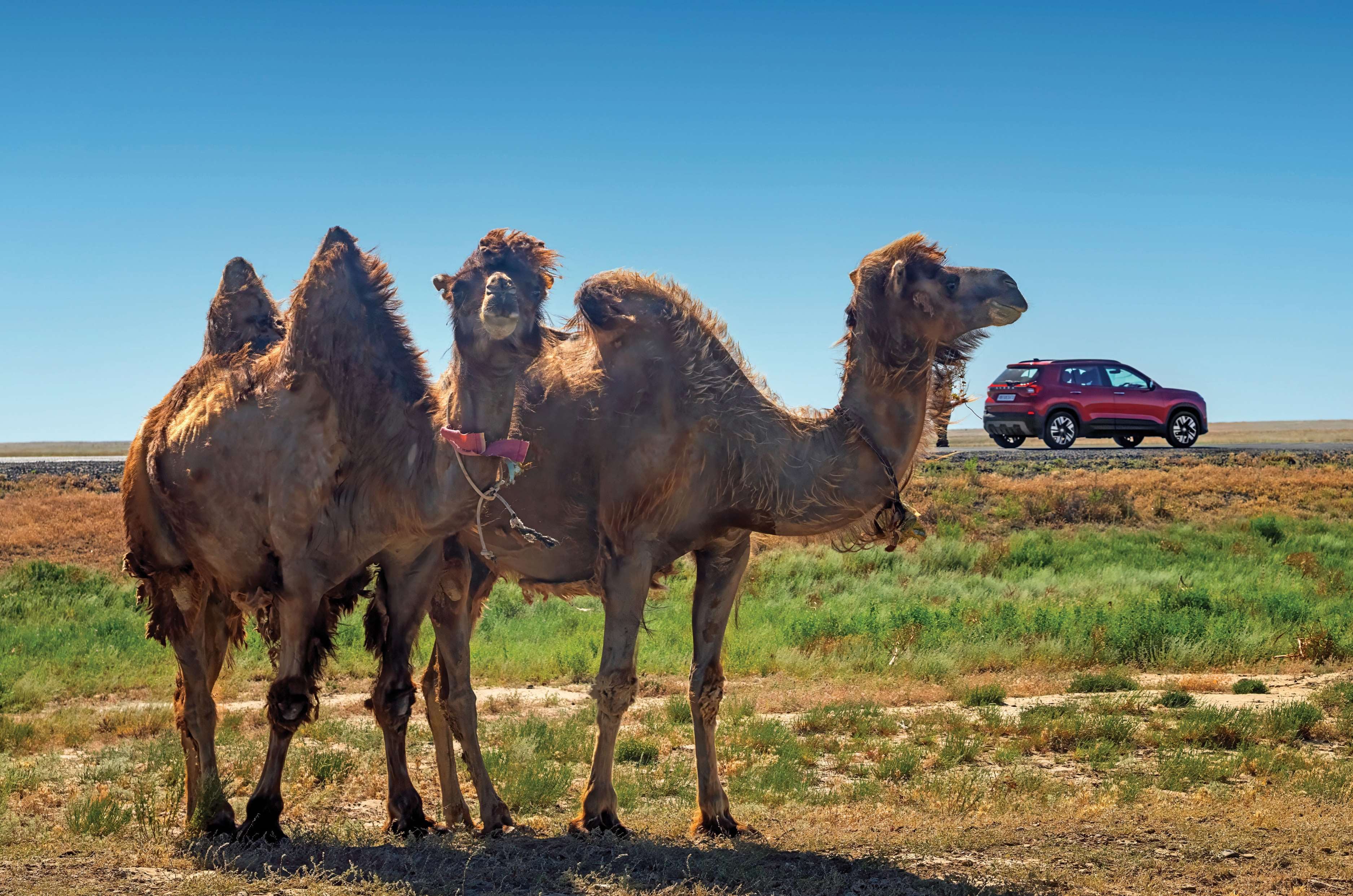
The Great Steppe, while stunning in size, is also a bit monotonous when you’re driving through it for days. The only respite would be a herd of double-humped Bactrian camels, cooling off at a nearby pond and often curious to know what a cherry-red Kylaq was doing in the middle of Kazakhstan.
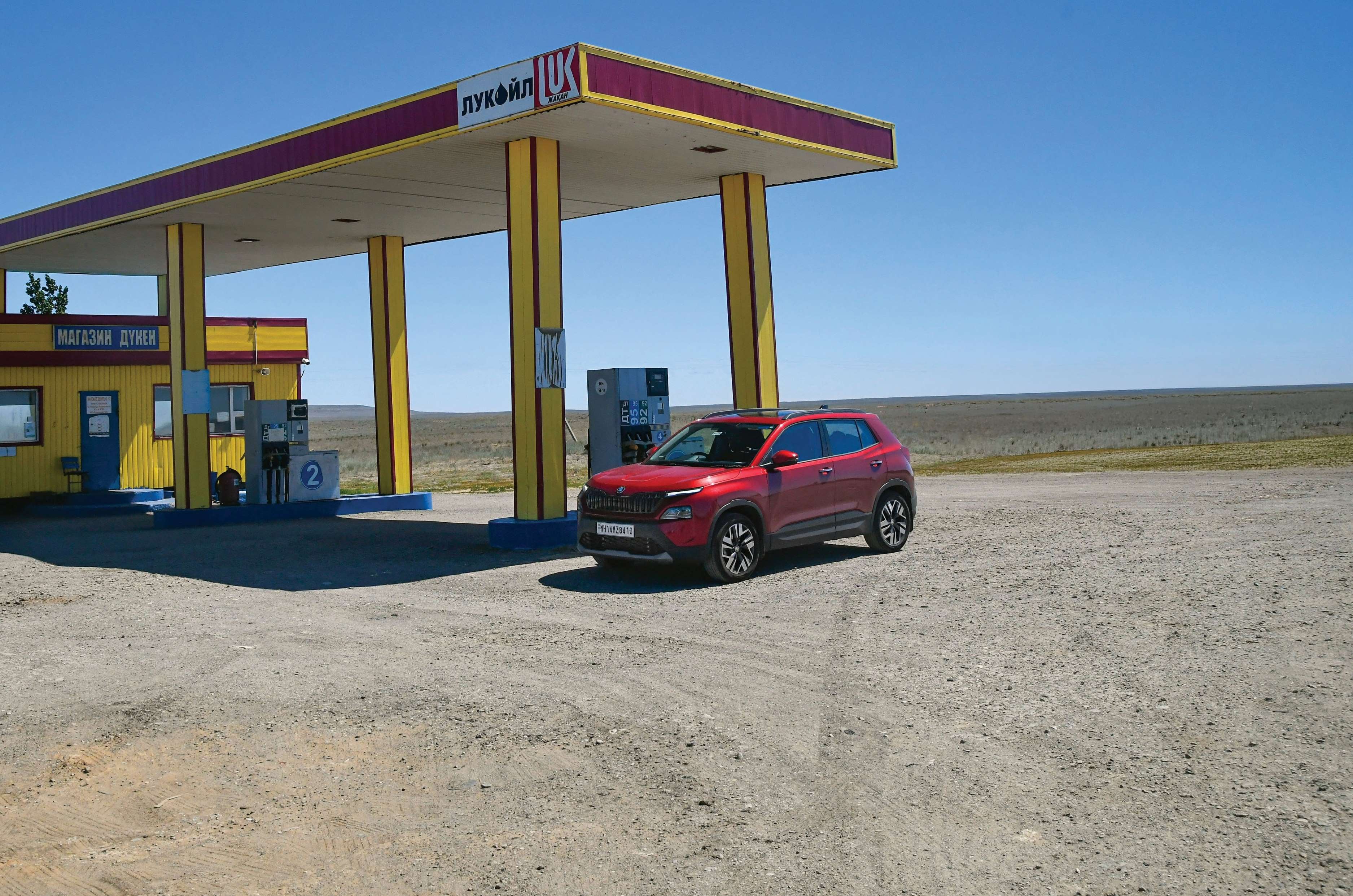
At Rs 58.17 per litre, Kazakhstan offered the lowest fuel price of the entire drive.
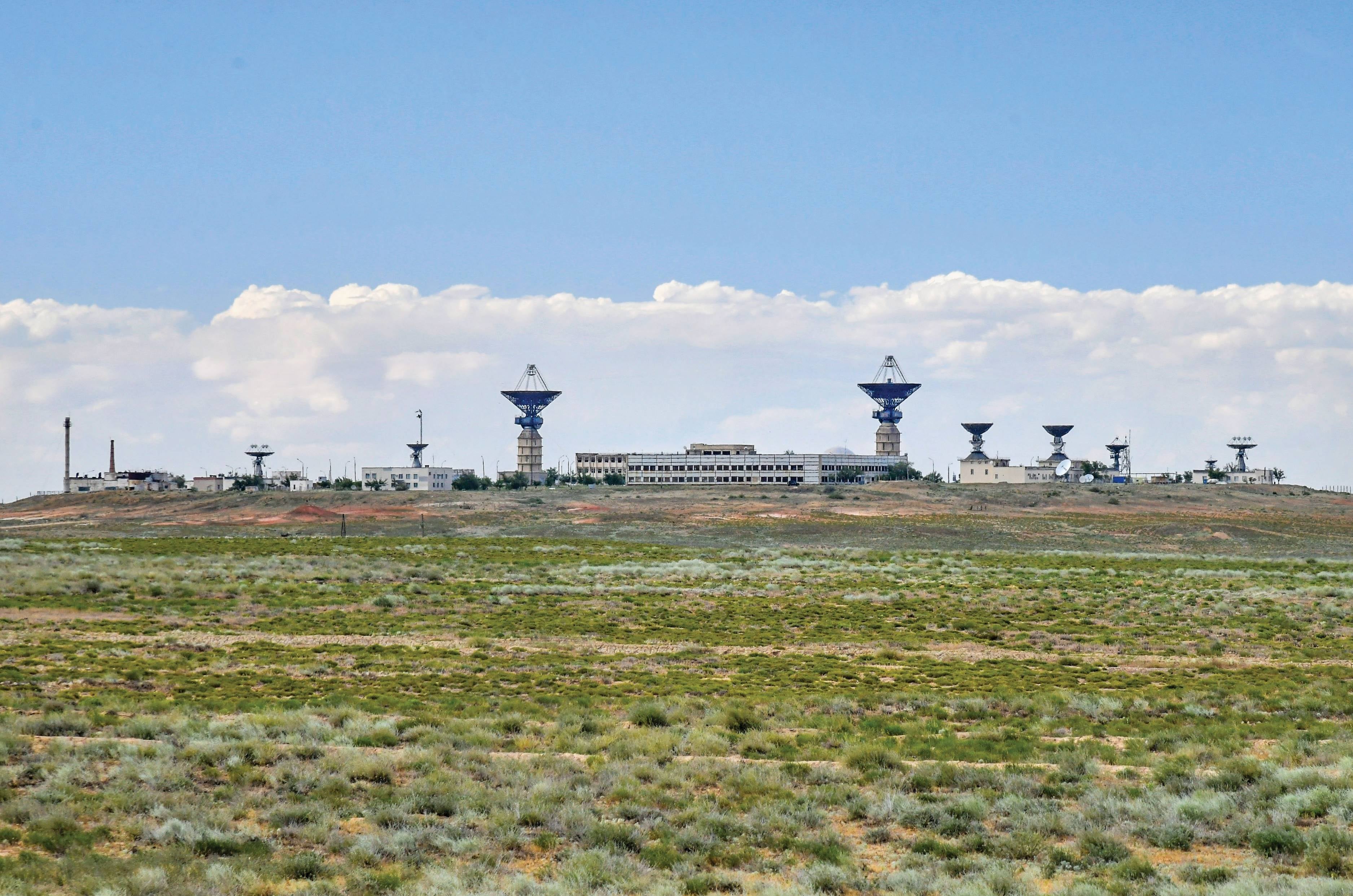
An interesting stop between Turkistan and Aral is the Baikonur Cosmodrome, which is the world’s first and largest operational space launch facility. However, thanks to the endless highways through Aral, Aktobe and Atyrau, we only got to test the Kylaq’s wheel alignment and its highway stability more than we would have liked.
Baikonur Cosmodrome – the world’s first, largest and operational space launch facility.
The mighty Stans were all about breathtaking sights, warm people and mouth-watering cuisine. The region still feels unadulterated, and that itself is what makes it special.
Kazakhstan in numbers
Turkistan – Kazakh-Russia border
Distance covered
3,237km
Fuel consumed
229.52 litres
Average fuel economy
14.10kpl
Approx. fuel cost
Rs 13,325
Avg. per-litre fuel cost
Rs 58.17
Total time driven
42 hrs
Average speed
77.1kph
Georgia – The Birthplace of Wine
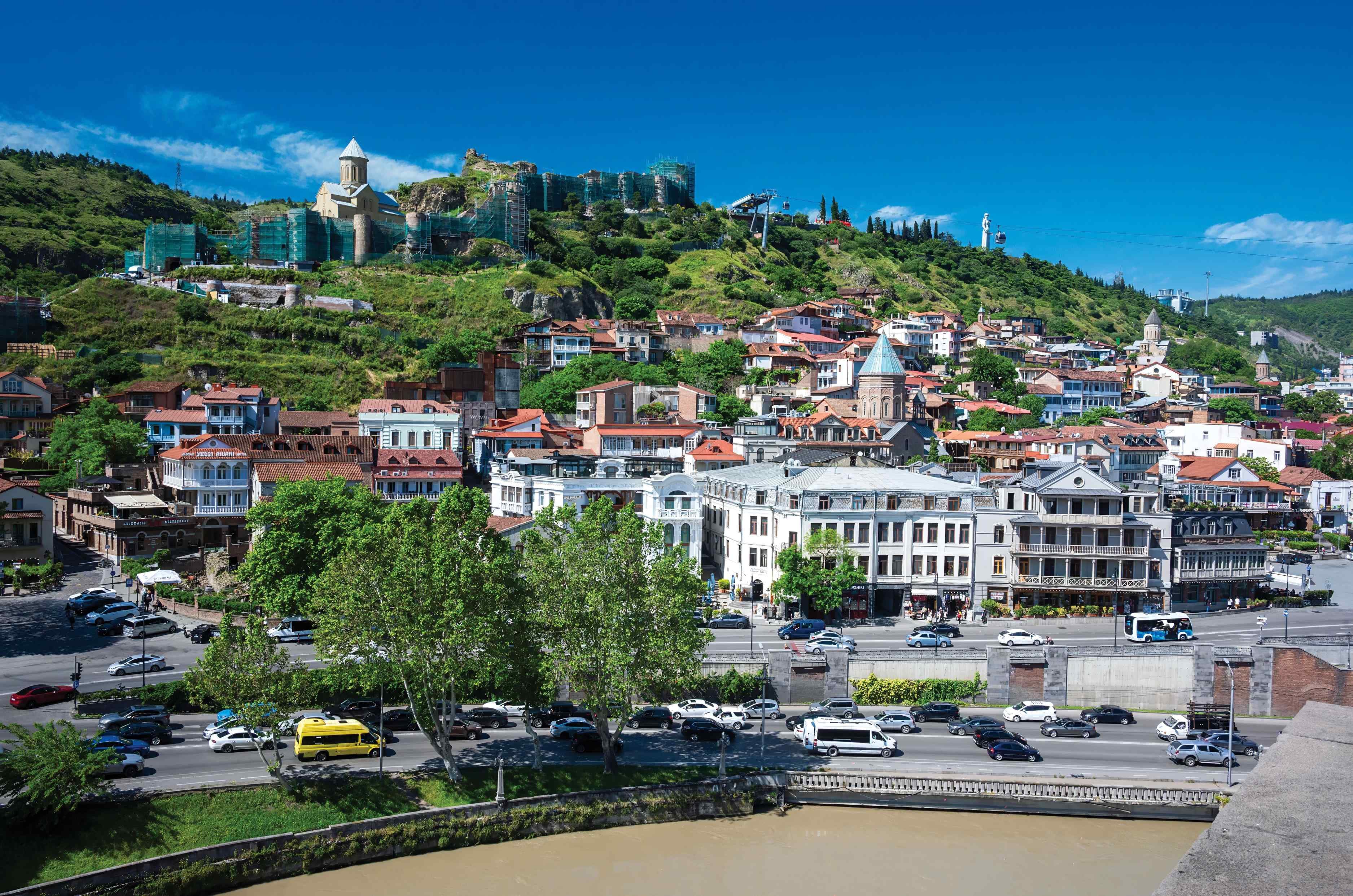
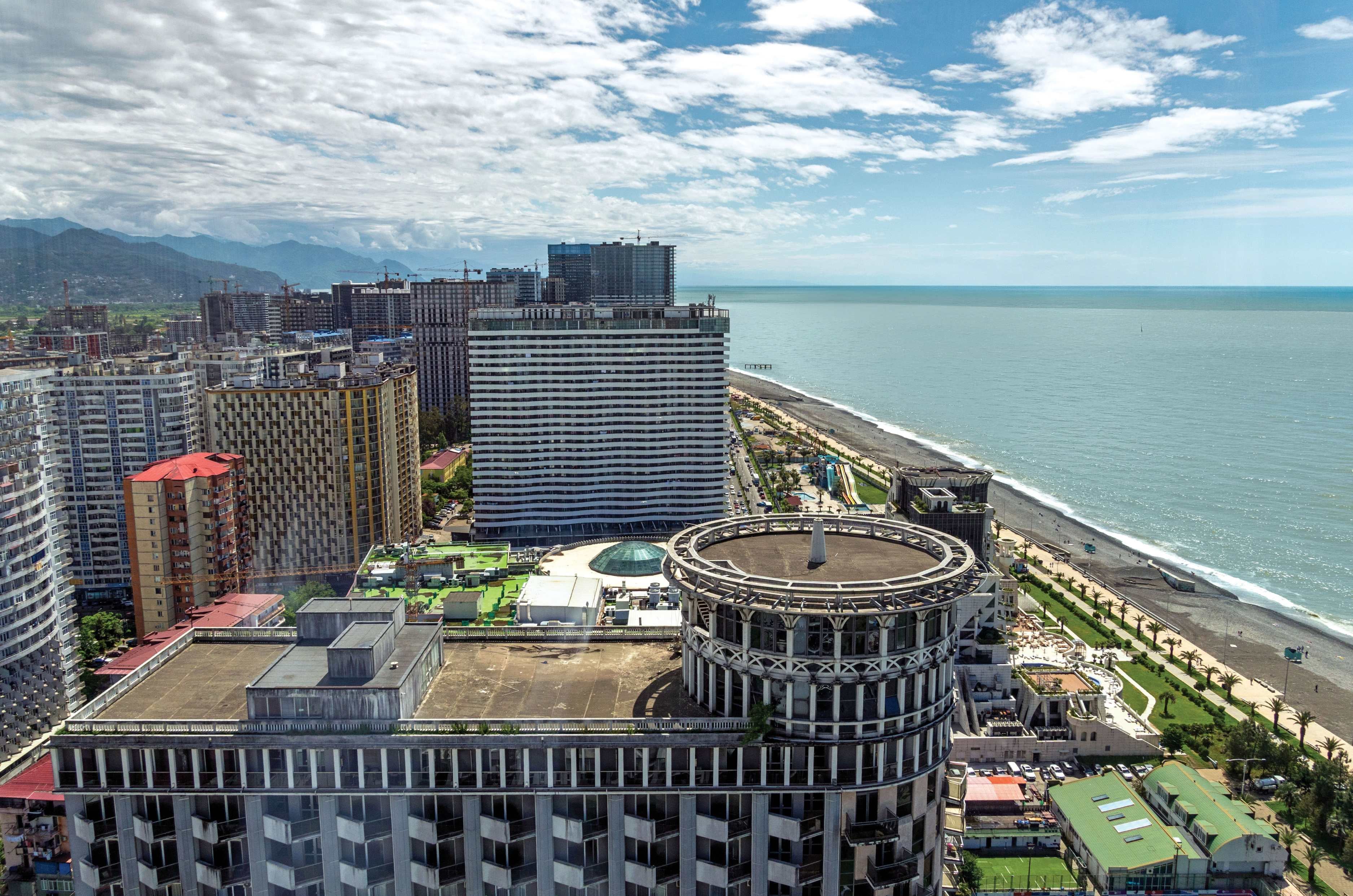
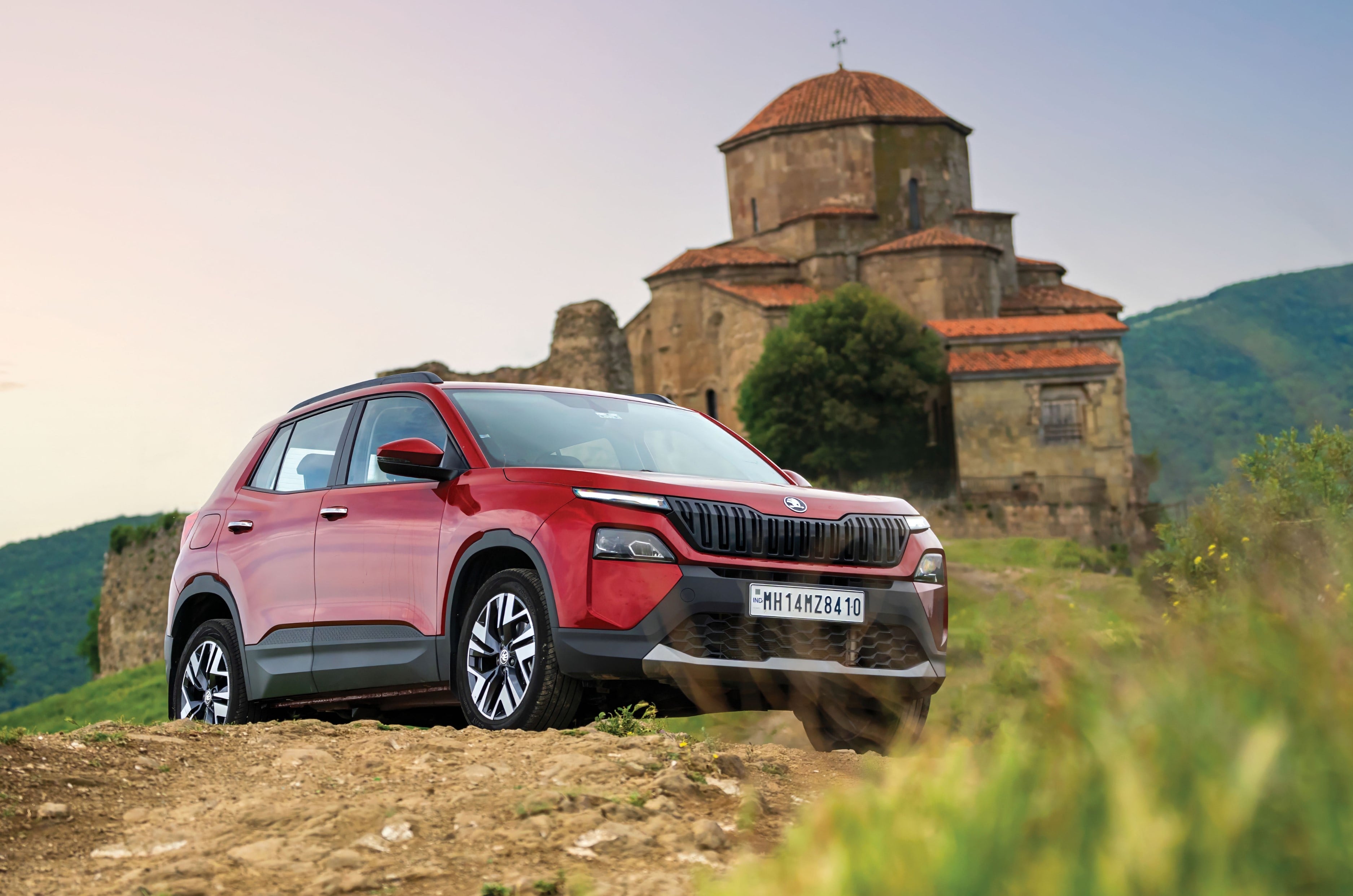
Compared to the vast landscapes and long highways of the Stans, Georgia was a contradiction. Based within the Caucasus Mountains, it has its share of twisties, which the Kylaq enjoyed. But the capital, Tbilisi, is the largest city and thereby pretty chaotic to drive in. Peak-hour traffic is just like what you would have in India, so we parked the car in a worryingly narrow alleyway and, for the most part, made our way on foot.
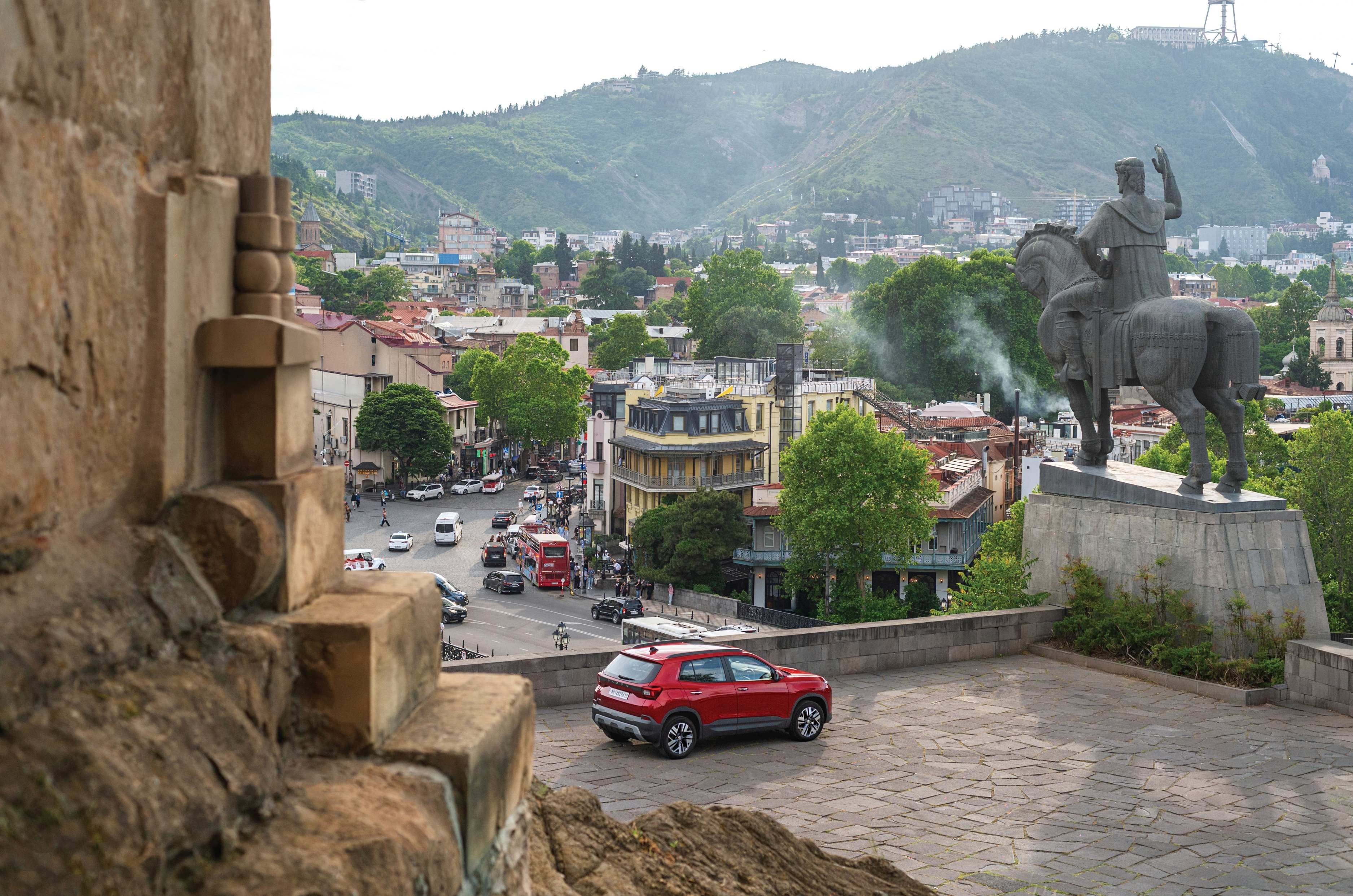
Huge statue of the founder of Tbilisi King Vakhtang I Gorgasali.
Like any big city, Tbilisi has its modern side, with glass buildings and modern restaurants, but there is still a large section that is rooted in tradition. Cobblestone streets with wooden houses and sulphur baths are a fascinating experience, as is the fantastic view from near the monument of King Vakhtang Gorgasali, the founder of Tbilisi.
The monument itself is a striking bronze equestrian statue located on a rocky cliff above the Mtkvari River, next to the historic Metekhi Church in Tbilisi, Georgia. But Georgia is known to be the birthplace of wine, and on our drive to Tbilisi, we spotted several vineyards sprawling for acres. We had to get a closer look, and thankfully, our guide’s friend owned one of them.
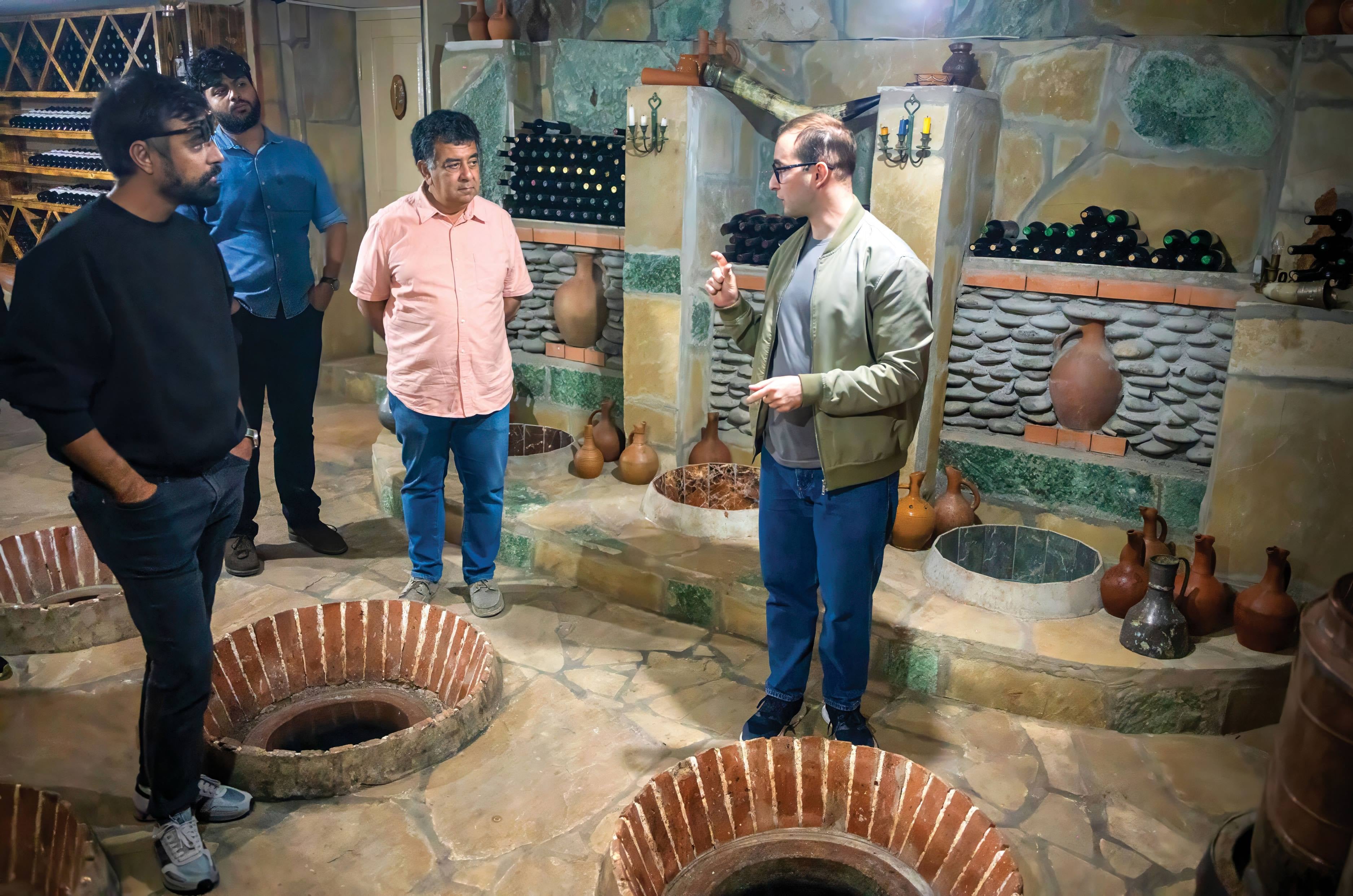
Georgian wine fermented in clay jars buried in the ground.
The Georgians still use the ancient process of fermenting wine in barrels under the floor, but have now blended it with modern technology that allows them to control the temperature and get a more consistent batch each time. Wine connoisseur or not, the experience is enthralling.
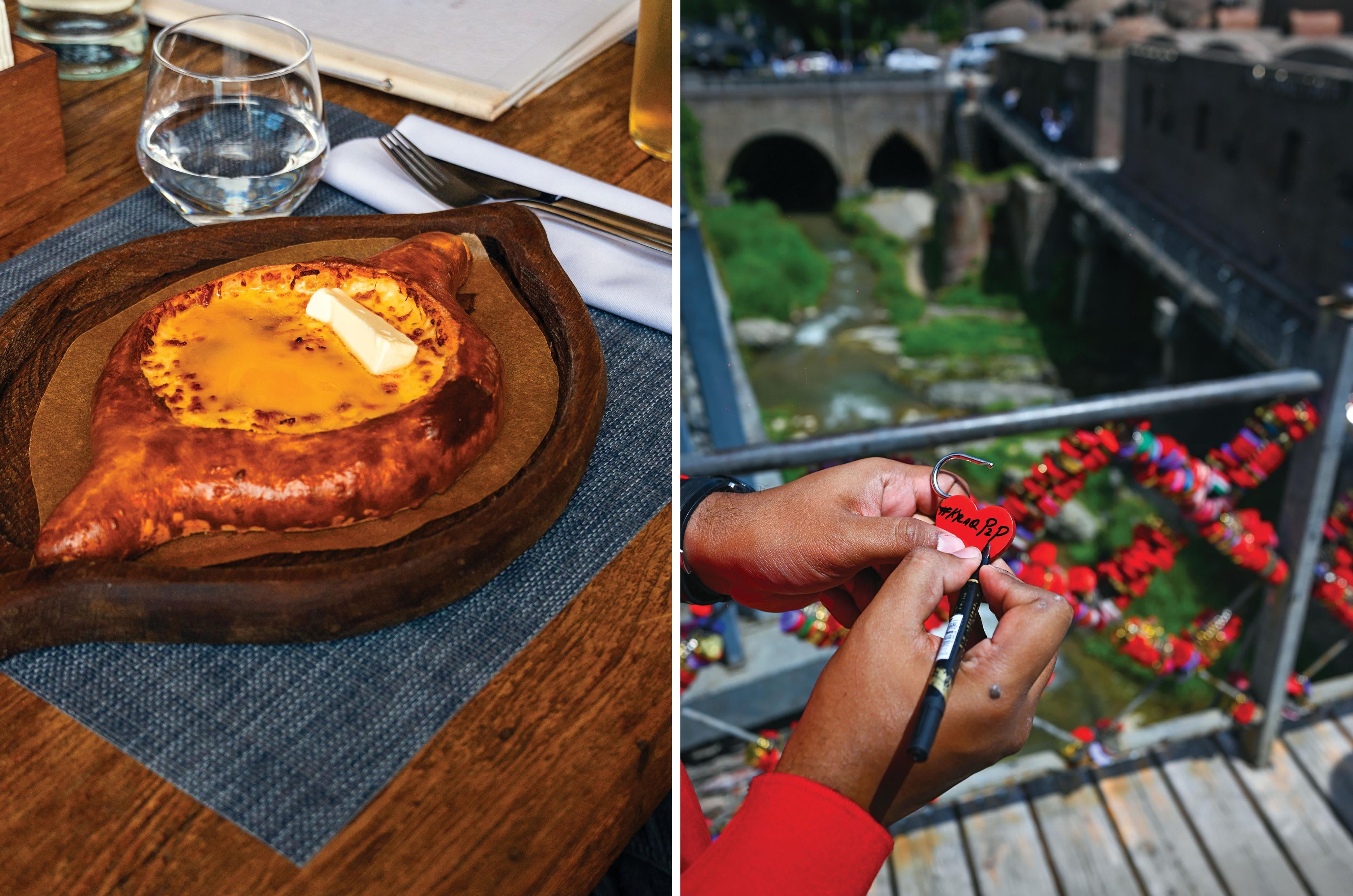
Khachapuri (flatbread with cheese and egg) is Georgia’s national snack.
The city tour built up an appetite, and we followed the scent of fresh bread for some authentic khachapuri. A Georgian flatbread that is hollowed out in the centre and filled with cheese, khachapuri varies depending on the region you’re in. You can have it with an egg cracked into it or with meat, too.
Coastal city of Batumi is a stark contrast of Tbilisi.
With sightseeing done, we drove the next day to the coastal city of Batumi. A vibrant, modern city with a lot more European influence. However, if the roads in Tbilisi were narrow, Batumi was on another level. Despite the compact dimensions of the Kylaq, our hotel parking was a sidewalk cordoned off by the hotel manager, as there simply was no space to park.
14th-century Gergeti Trinity Church has stunning views of the Caucasus Mountains.
Still, we made the most of it by strolling by the shore of the Black Sea, watching the locals angling for fish. Georgia, just like the Stans, offered a unique glimpse into this part of the world and its diverse culture. For our final stretch before Europe, we had one last country to drive through – the colourful Türkiye.
Georgia in numbers
Tbilisi – Türkiye border
Distance covered
624km
Fuel consumed
58.62 litres
Average fuel economy
10.64kpl
Approx. fuel cost
Rs 7,607
Avg. per-litre fuel cost
Rs 129.78
Total time driven
17.5hrs
Average speed
58.5kph
Türkiye – Gateway to Europe
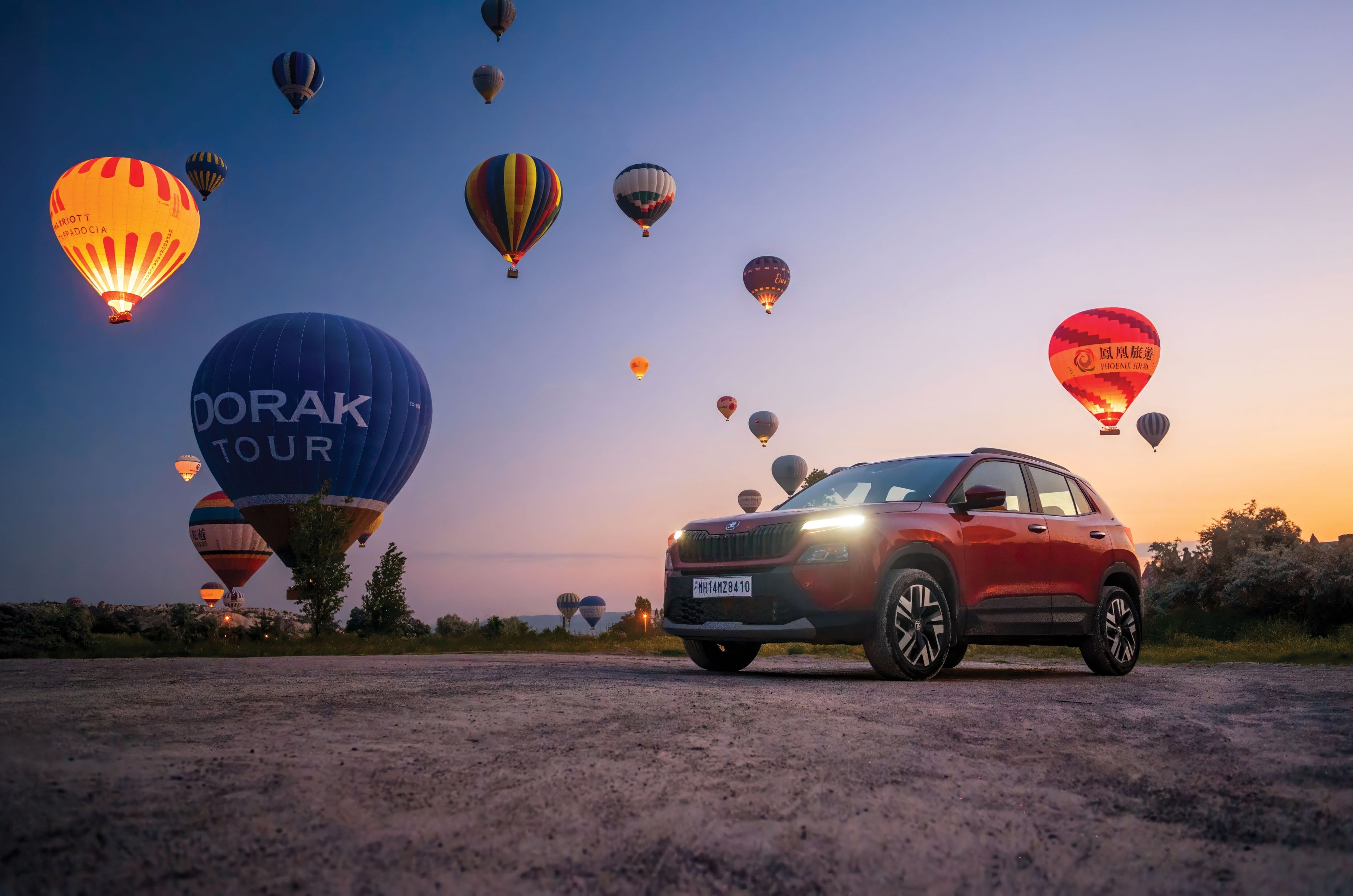
Cappadocia’s claim to fame is well worth the hype.
As the Kylaq crossed into Türkiye, our first stop was in Erzurum. A major winter sports town, but thanks to the time of year, our ski resort was bright, sunny and without an ounce of snow. A quick stroll through the small town and we hit the sack in preparation for a 700km-plus drive to the tourist haven that is Cappadocia.
The next morning, the plan was to do what you must do in Türkiye – take a hot-air-balloon ride. A pre-dawn wake-up call is never comfortable, but the peace was soon shattered by the sound of a group of old diesel Land Rover Defenders revving to keep themselves warm while they waited to transfer tourists to the balloon launch site. The balloon ride is arguably the largest tourist attraction in Türkiye, so there was quite the rush.
We, too, loaded up the Kylaq and hit the road to get the perfect shot of the sun coming up over the hills while the sky was filled with balloons. And boy, did we get it. As the orange tinge hit the fairy chimneys, we saw what the hype was about. The visual is nothing like you have ever seen: watching one colourful hot-air balloon is rare, and here there were over a hundred. We shot GBs worth of images and videos and got back to catch up on the broken sleep from earlier.
Türkiye in numbers
Erzurum – Bulgaria border
Distance covered
1,436km
Fuel consumed
98.1 litres
Average fuel economy
14.63kpl
Approx. fuel cost
17,187
Avg. per-litre fuel cost
Rs 134.19
Total time driven
19.5 hrs
Average speed
73.64kph
A relaxing drive the next day got us to Istanbul, which, to some, might seem like the capital thanks to its bustling character – a glimpse of which we got as we got closer. A traffic jam stretching for more than a couple of kilometres brought the Kylaq to crawling speeds. To avoid the repercussions of driving next to hasty cab drivers, we parked the Kylaq and headed to check out the nightlife, but more importantly, the döner kebab.
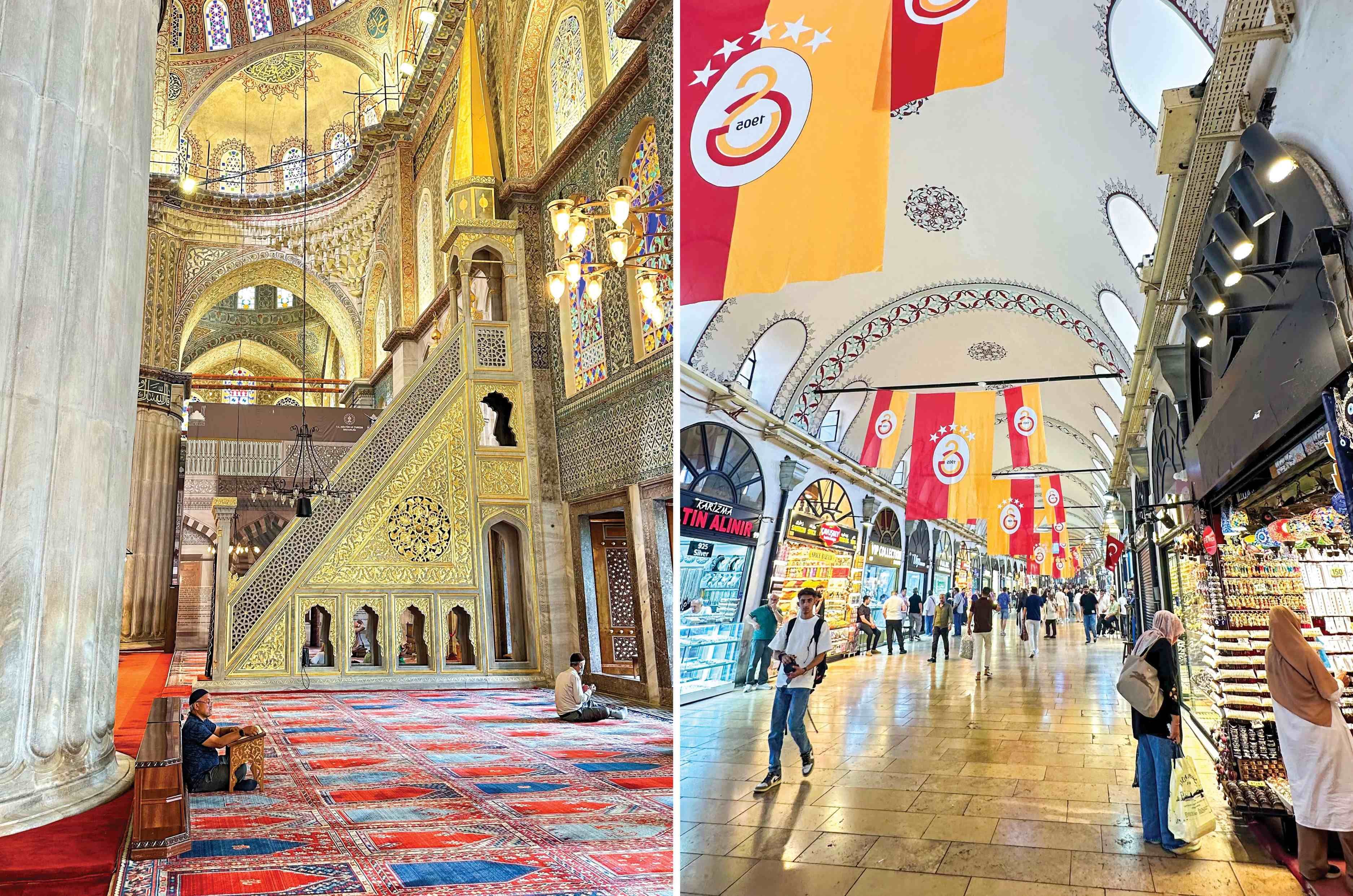
Exceptional interiors and an unbelievable calm in Istanbul.
Similar to a shawarma, the döner kebab consists of a pile of meat that is cooked on a rotisserie over a flame. The dripping fat is mopped up by pita bread, which is then loaded with the sliced meat and seasonings. After a long walk through the Grand Bazaar, haggling for a fake Rolex, the döner becomes almost a necessity.
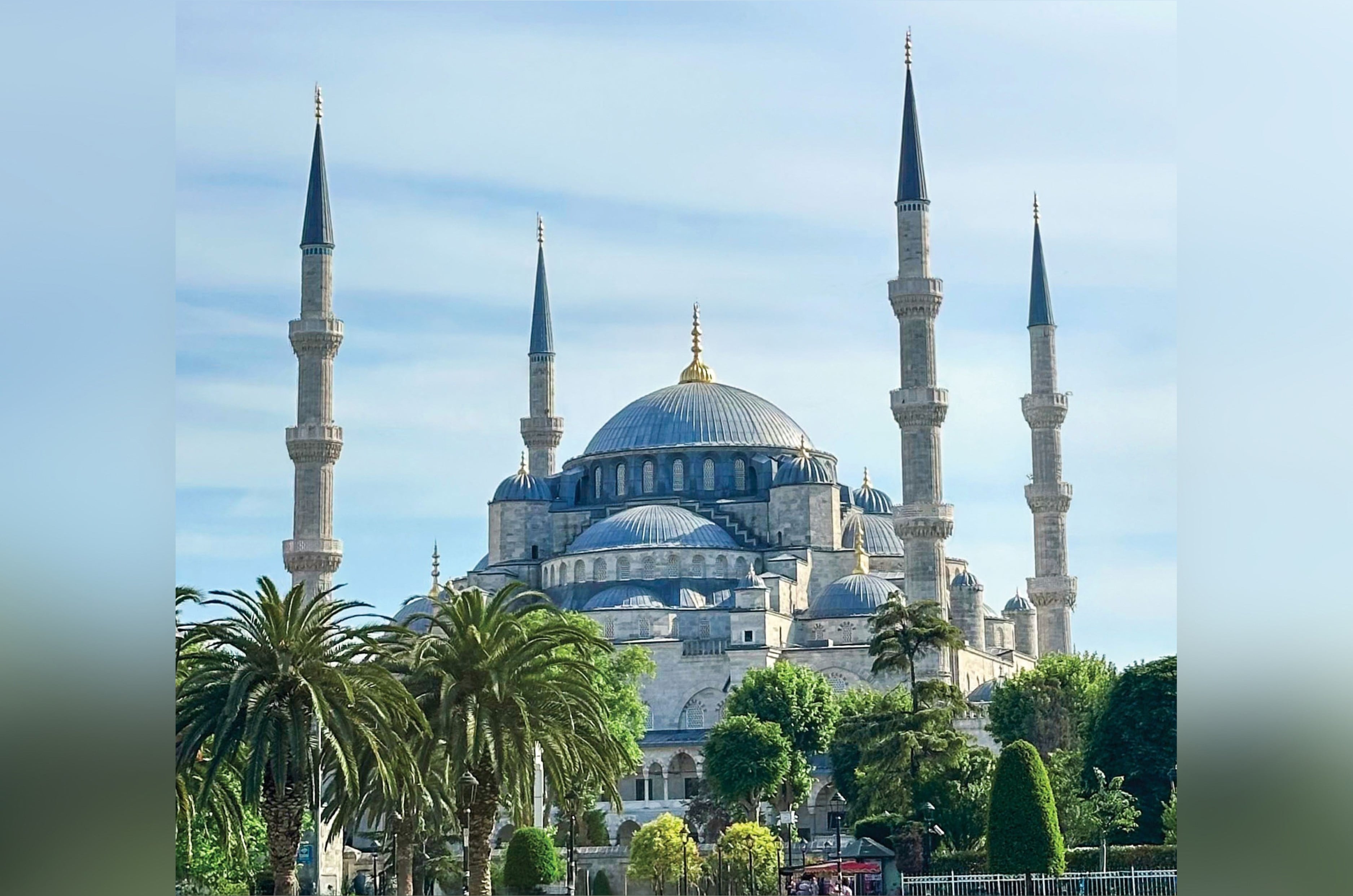
What’s also equally stunning is the Blue Mosque. Known formally as the Sultan Ahmed Mosque, it was constructed between 1609 and 1617 in the Ottoman era by Ahmed I. To get the entire mosque in frame, you need to fall back to the Hagia Sophia Mosque, which is in the same vicinity. Both equally grand, equally detailed and equally important.
The Blue Mosque, built in the Ottoman era, is majestic.
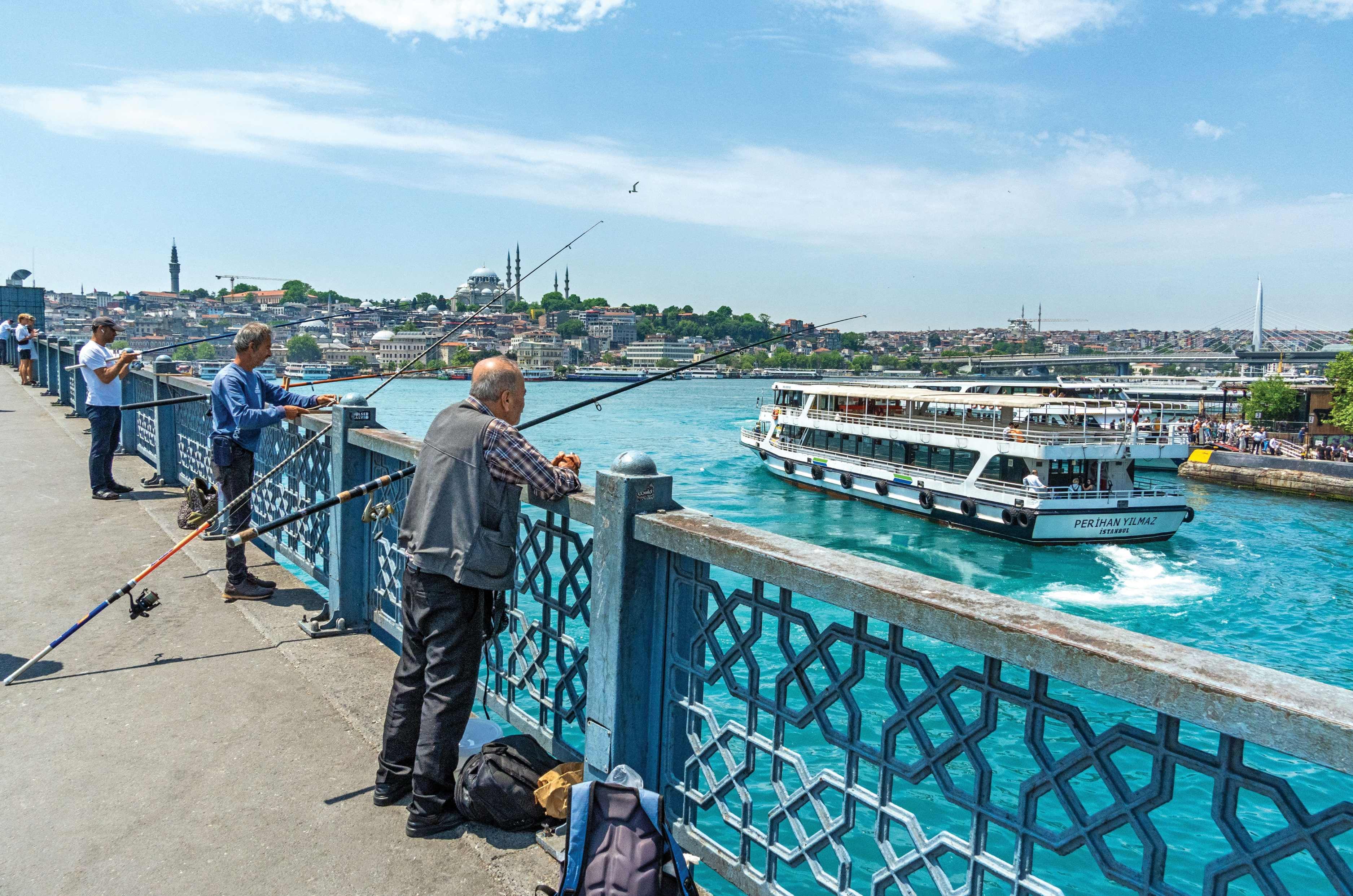
To explore more of Türkiye, we got back into the Kylaq and realised there was a bridge that is unlike any other in the world. The Bosphorus Bridge is located over the Bosphorus Strait, but its claim to fame is that it, quite literally, has one end in Asia and one end in Europe. You can cross the bridge in about two minutes, depending on traffic, but the sense that you can practically drive over from Asia into Europe before you can finish watching a reel is unreal.
Angling over the Bosphorus strait is a common hobby.
Europe – Home Stretch
Bulgaria – Romania – Hungary – Slovakia – Prague
The end of our incredible Pune-to-Prague drive was now a matter of days away. After over two months on the road, we were a couple of thousand kilometres away from the finish line. The excitement that had tapered off midway was back in full force.
We would be entering Europe through Bulgaria, and the border, as expected, was busy. Documentation, carnets, passports, stringent car checks and some explaining later, we were finally in.
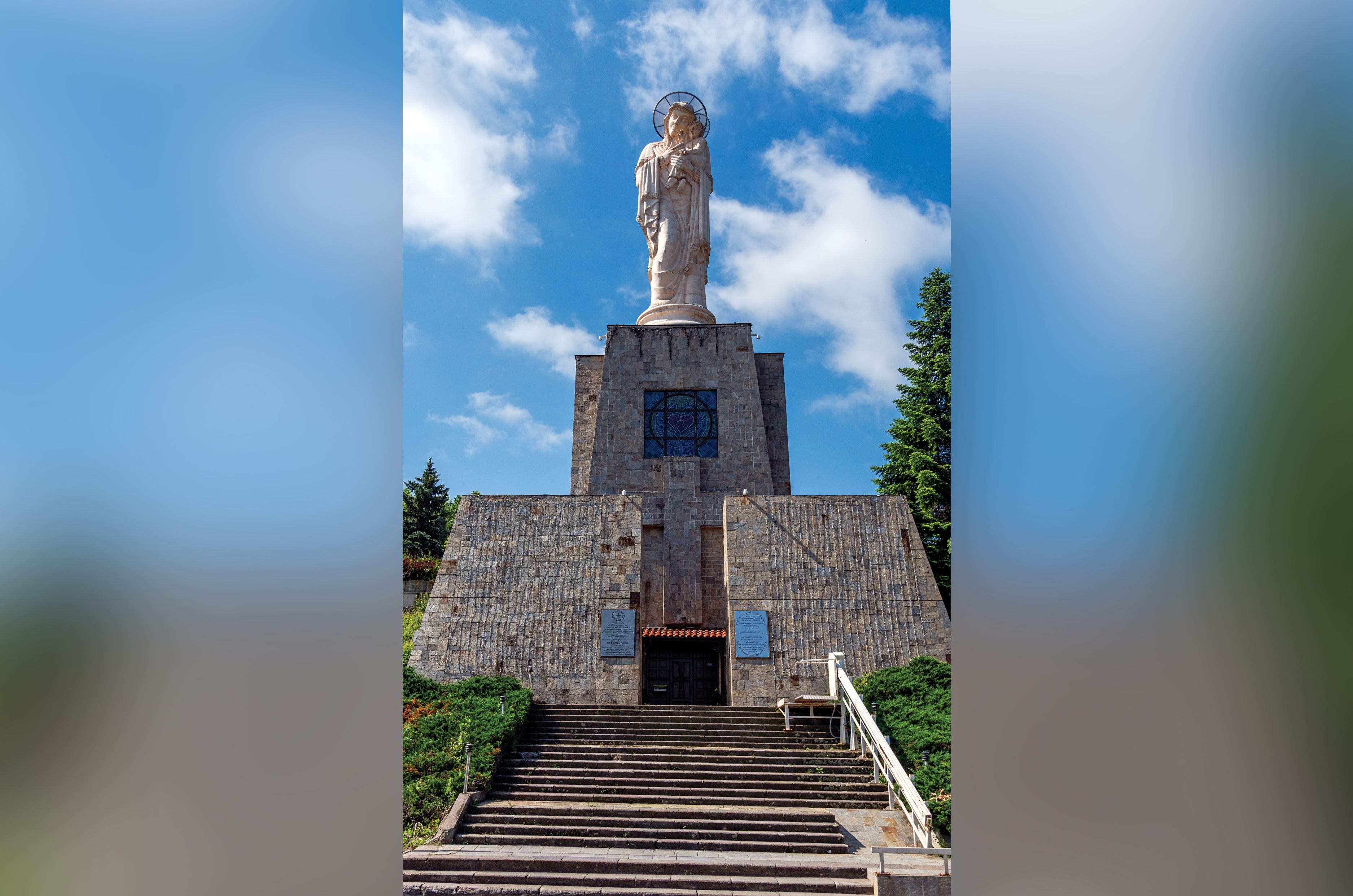
Monument of the Holy Mother of God in Haskovo.
Haskovo is a quaint town with a slow pace and none of the bustle of a European city, but it boasts a Guinness record for having the towering Monument of the Holy Mother of God, the tallest statue of the Virgin Mary and Baby Jesus in the world. Naturally, we had to check it out before we headed further.
Crossing countries in Europe is the equivalent of crossing states in India. There are no significant border checks or passport-control booths. A board with the blue EU flag and the name of the country is all you will see.
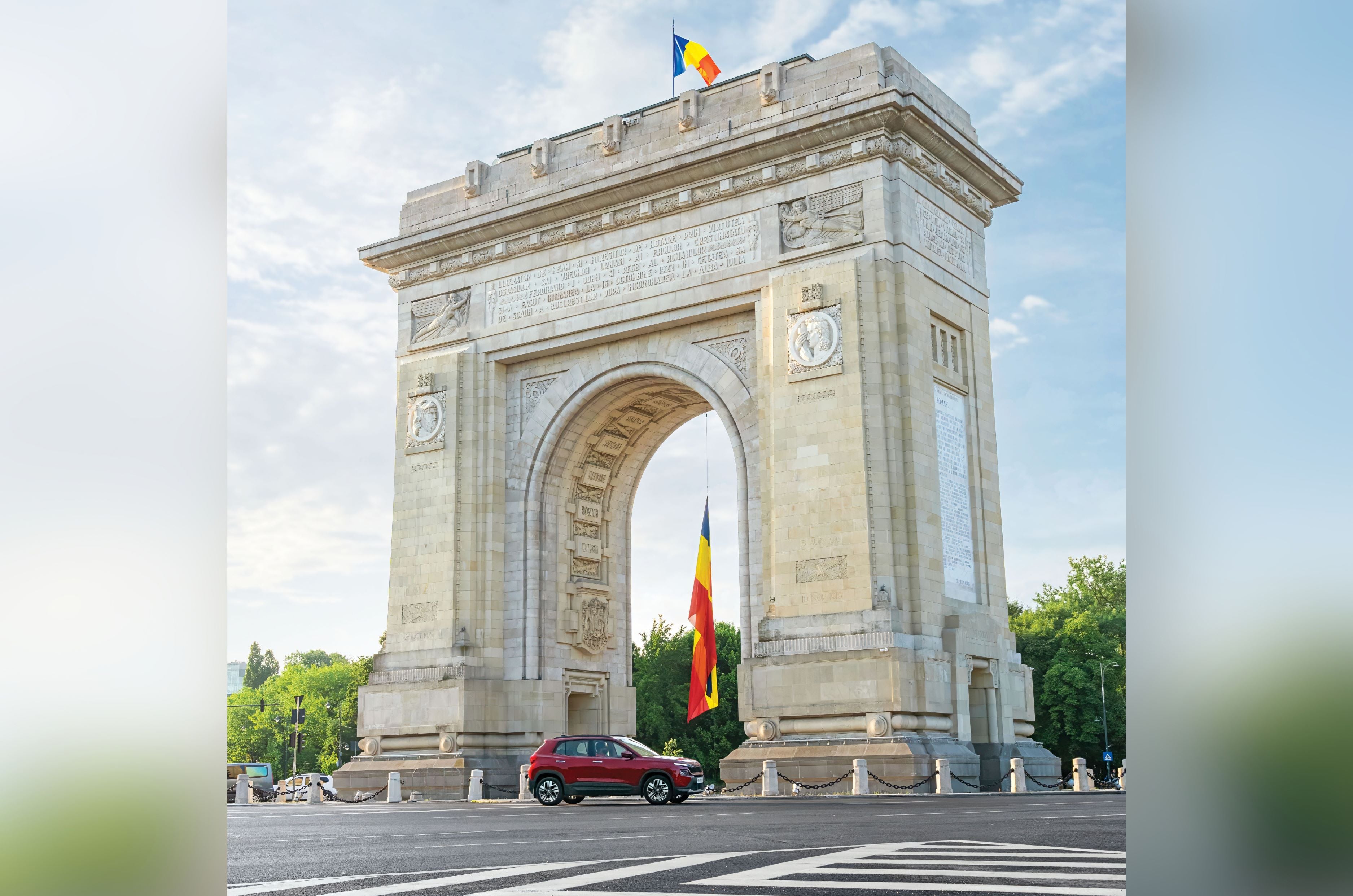
Romania’s Arcul de Triumf an ode to the one in Paris.
We crossed into Romania rather unassumingly and headed for Bucharest. The capital is picturesque and is also colloquially known as “Little Paris”. Like the Arc de Triomphe in Paris, Romania too has its own version. A tad smaller in comparison, but just as iconic.
However, what takes the cake is the Parliament Building, formally known as the Palace of the Parliament, which is also the heaviest building in the world, standing at approximately a ridiculous 4,098,500 tonnes. We couldn’t verify that, but since the Kylaq looked like a mere speck in front of it, it was all the proof we needed.
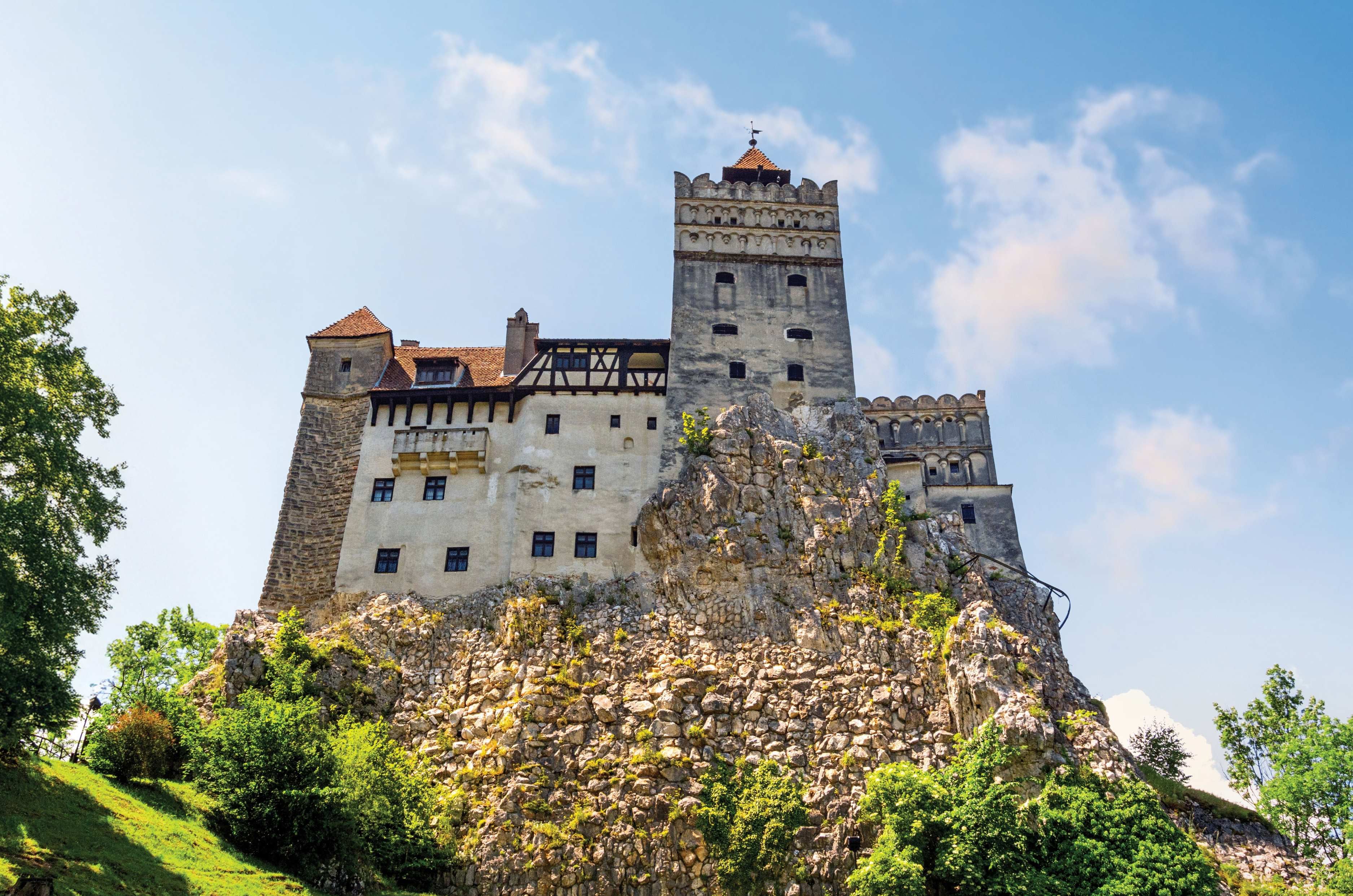
Bran Castle is widely marketed as Dracula’s home.
Bucharest also has a thriving nightlife, with the quiet cobbled streets turning into party hubs post-sunset. As we headed towards Hungary, we couldn’t help but make a stop at Bran Castle. Despite the myth that it was once home to the famous Dracula, there is nothing but merchandise at the foot of the castle to prove that claim. Historians have dismissed the claim and, while it is fascinating, there is plenty of evidence against it. Still, that did not stop us from buying some fake vampire teeth and Dracula magnets.
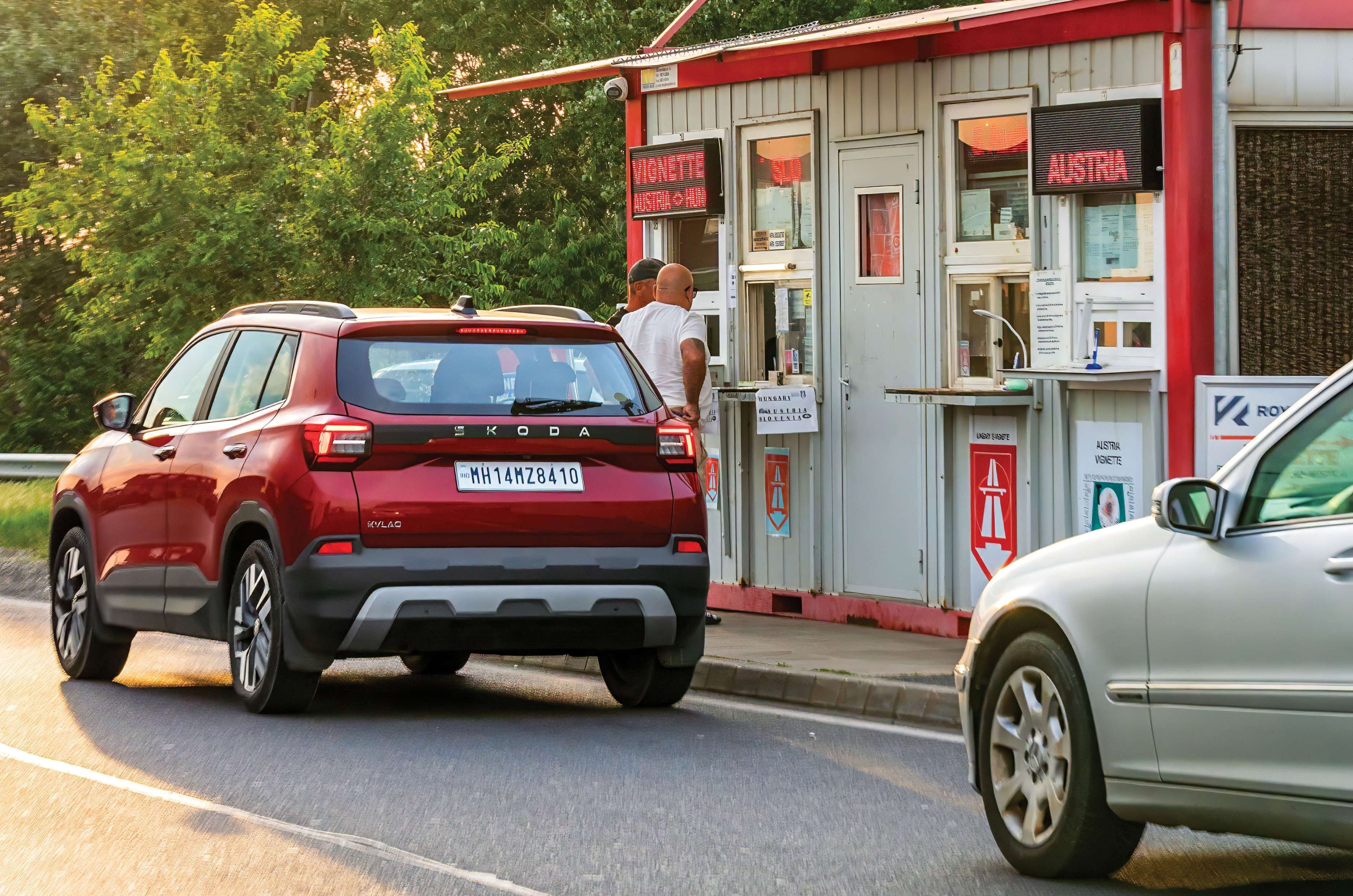
Vignette is Europe’s FASTag and is essential on the freeways.
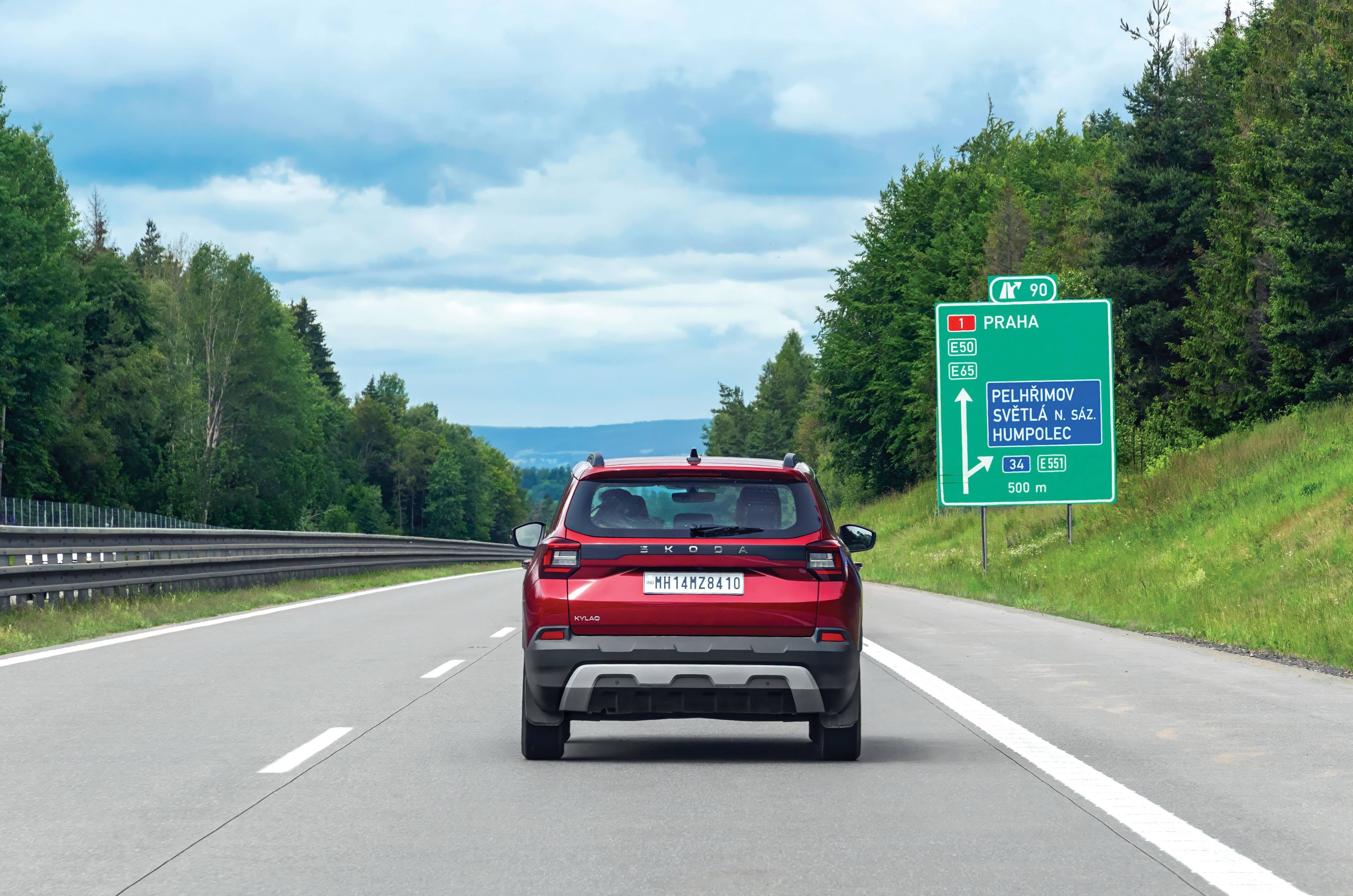
From the shores of the Black Sea, we drove into landlocked Hungary. The drive to Budapest was long, but thanks to Europe’s seamless highways, it was light work for the Kylaq. In Europe, it just blended in with the other cars, and at no point did it feel out of place. It might have been built in India, but it felt every bit as European as it got closer to Prague.
Budapest’s Parliament Building sits by the banks of the Danube River.
As we drove by the banks of the Danube, we were in awe of the stunning Hungarian Parliament Building. Budapest is also known for its bridges, with as many as 13 iconic ones, each with its own identity.
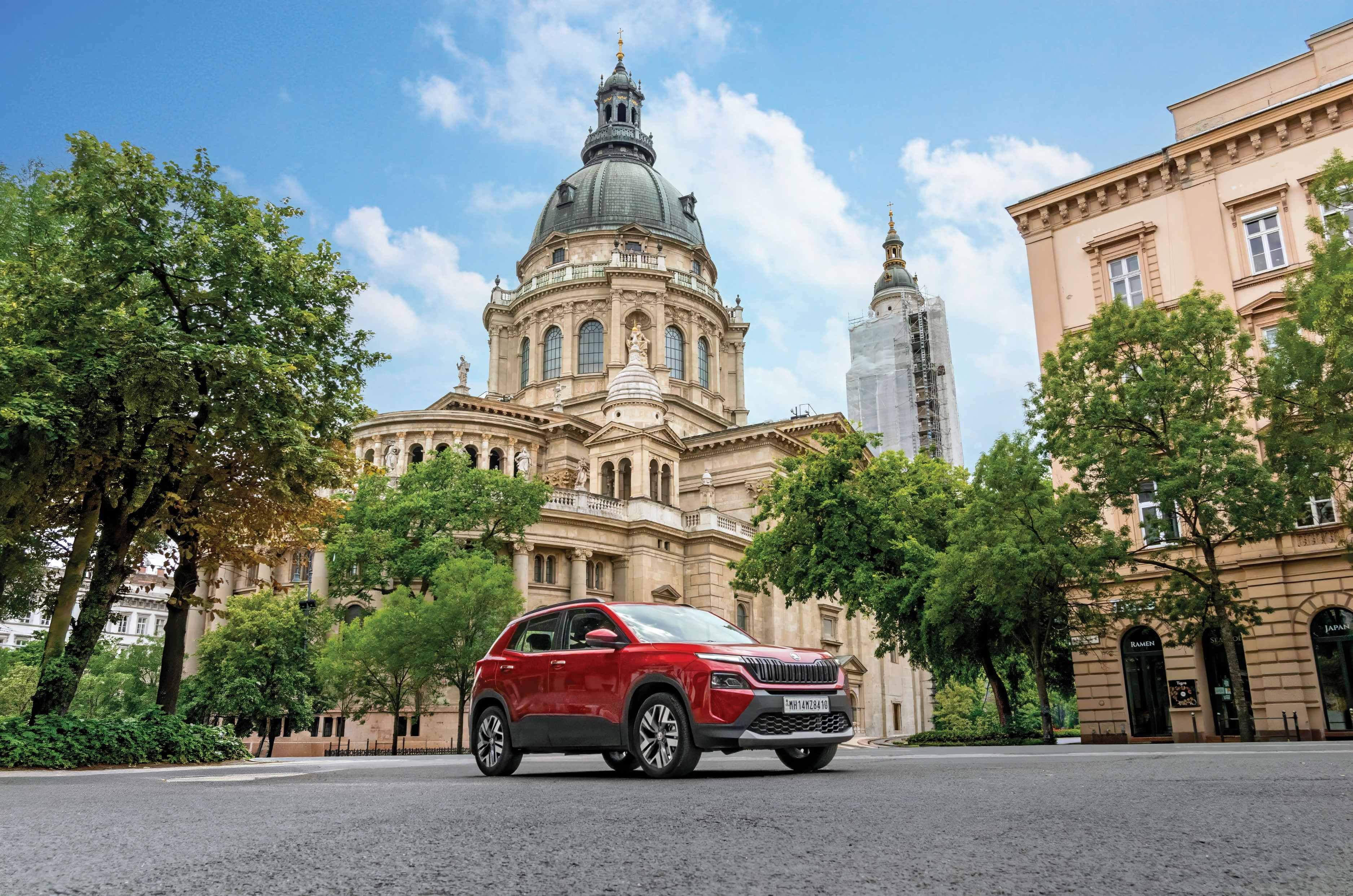
St. Stephen’s Basilica is the largest church in Budapest.
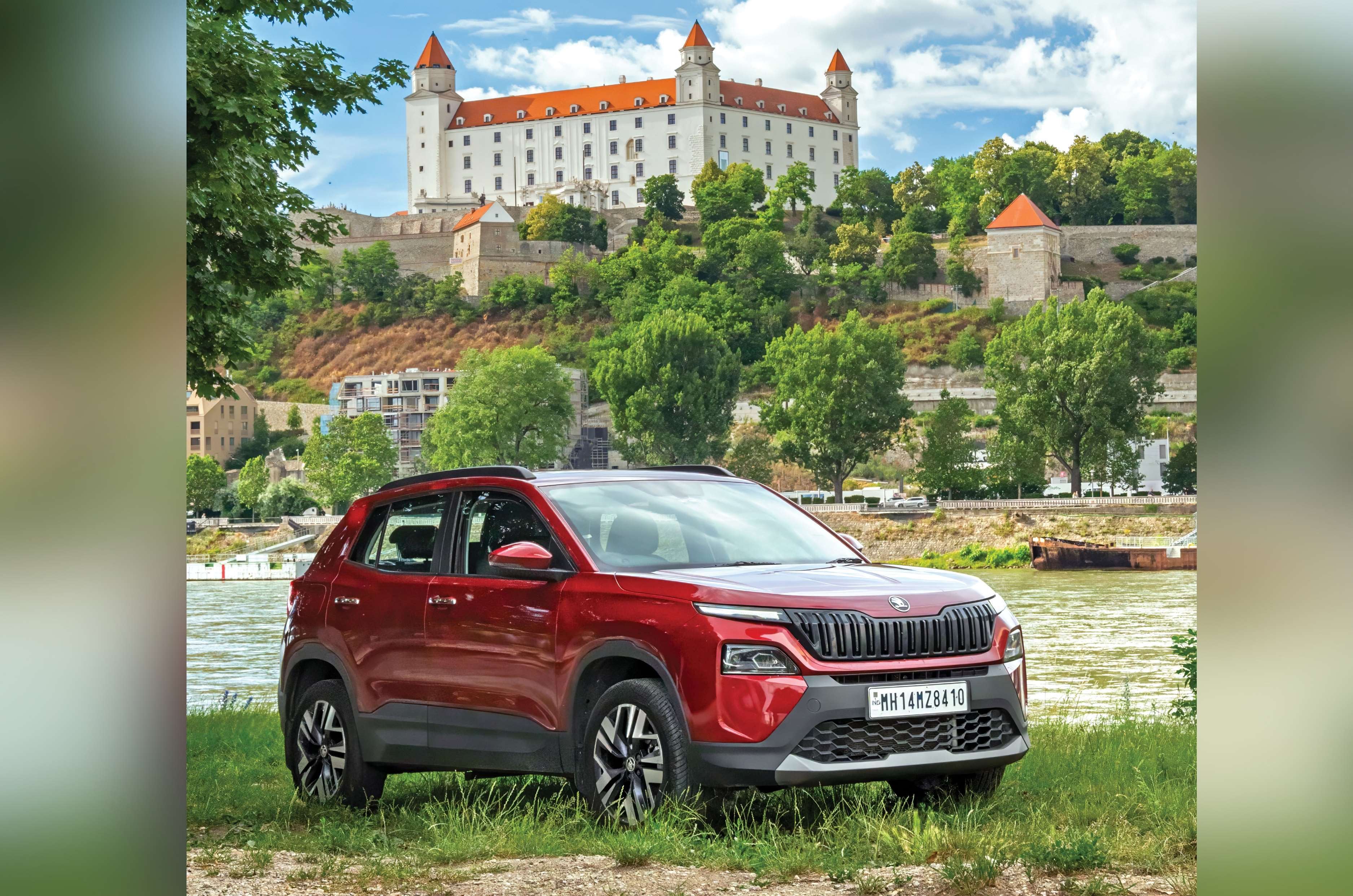
The last country before we entered the Czech Republic was Slovakia. The small country, with a quarter of the population of Mumbai, has a rather interesting Indian connection, as we found out in the pedestrian-only zone of its capital, Bratislava. Bratislava was visited by Pt. Jawaharlal Nehru in 1938, along with a young Indira Gandhi, regarding the freedom movement under British rule.
Bratislava Castle, built in the 13th century on the banks of the Danube, is now a museum.
The town square is also an open market with rich produce, handmade jewellery and a lot more. After buying the last few souvenirs before our bags exploded, we were set for the home stretch.
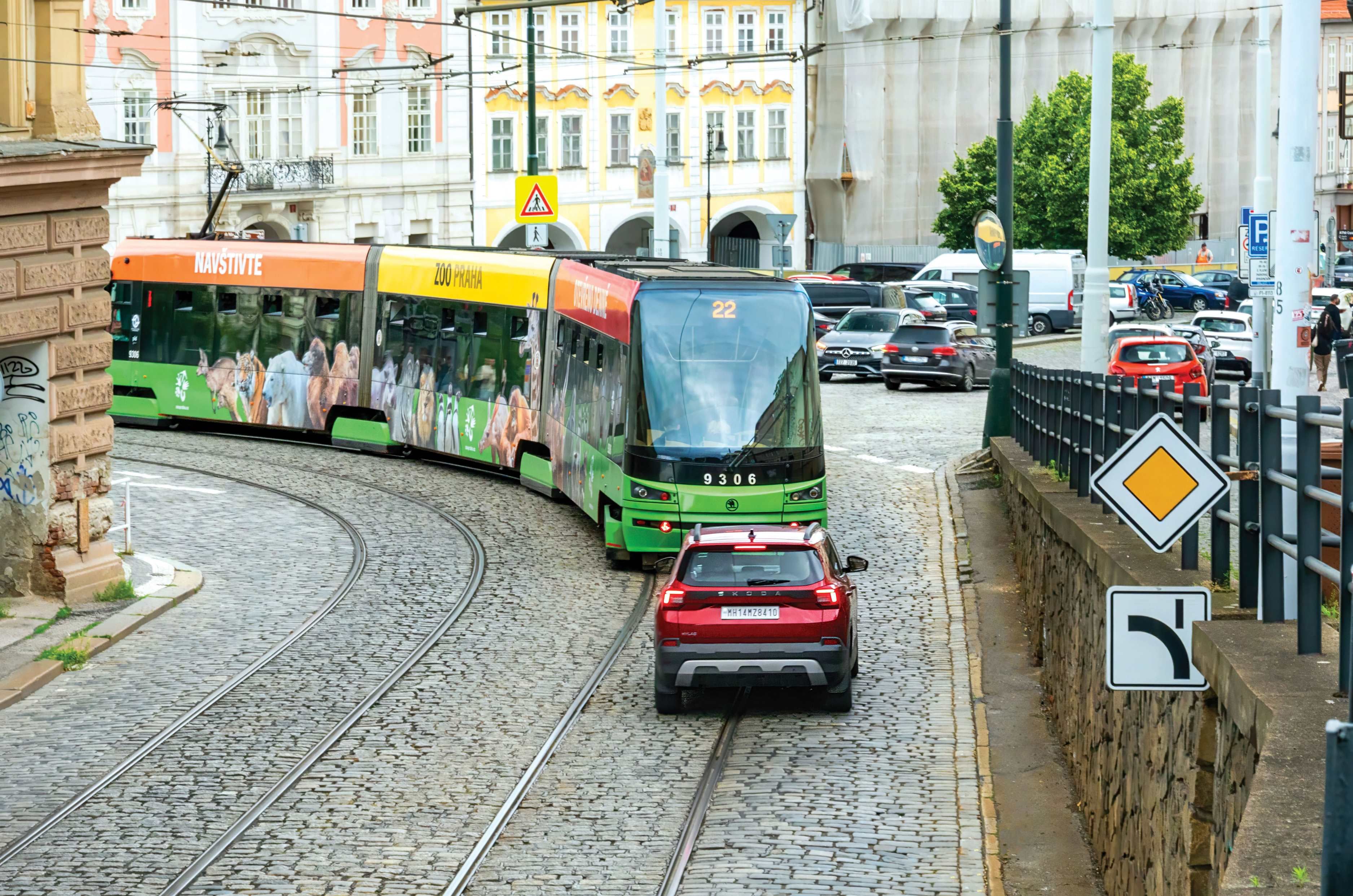
Prague boards were the beginning of a bittersweet end.
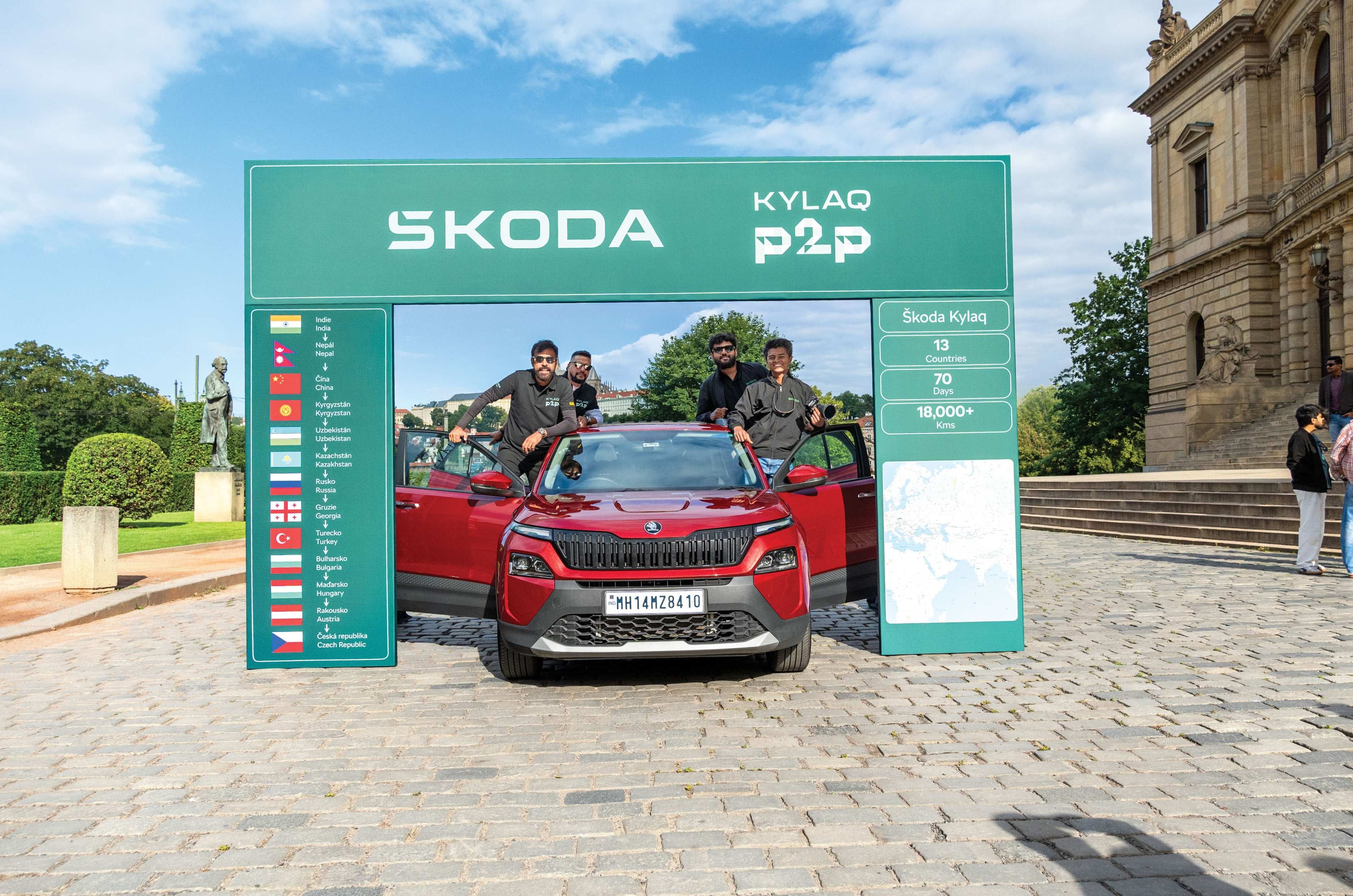
Prague was no more than 200-odd kilometres away, and the bittersweet feeling of it all coming to an end loomed over each and every one of us. As we crossed Brno and got closer to Mlada Boleslav (Skoda’s headquarters), we all reminisced about how gigantic this drive had been. Seventy days, almost 20,000km and not a single fault with the car, not even a puncture.
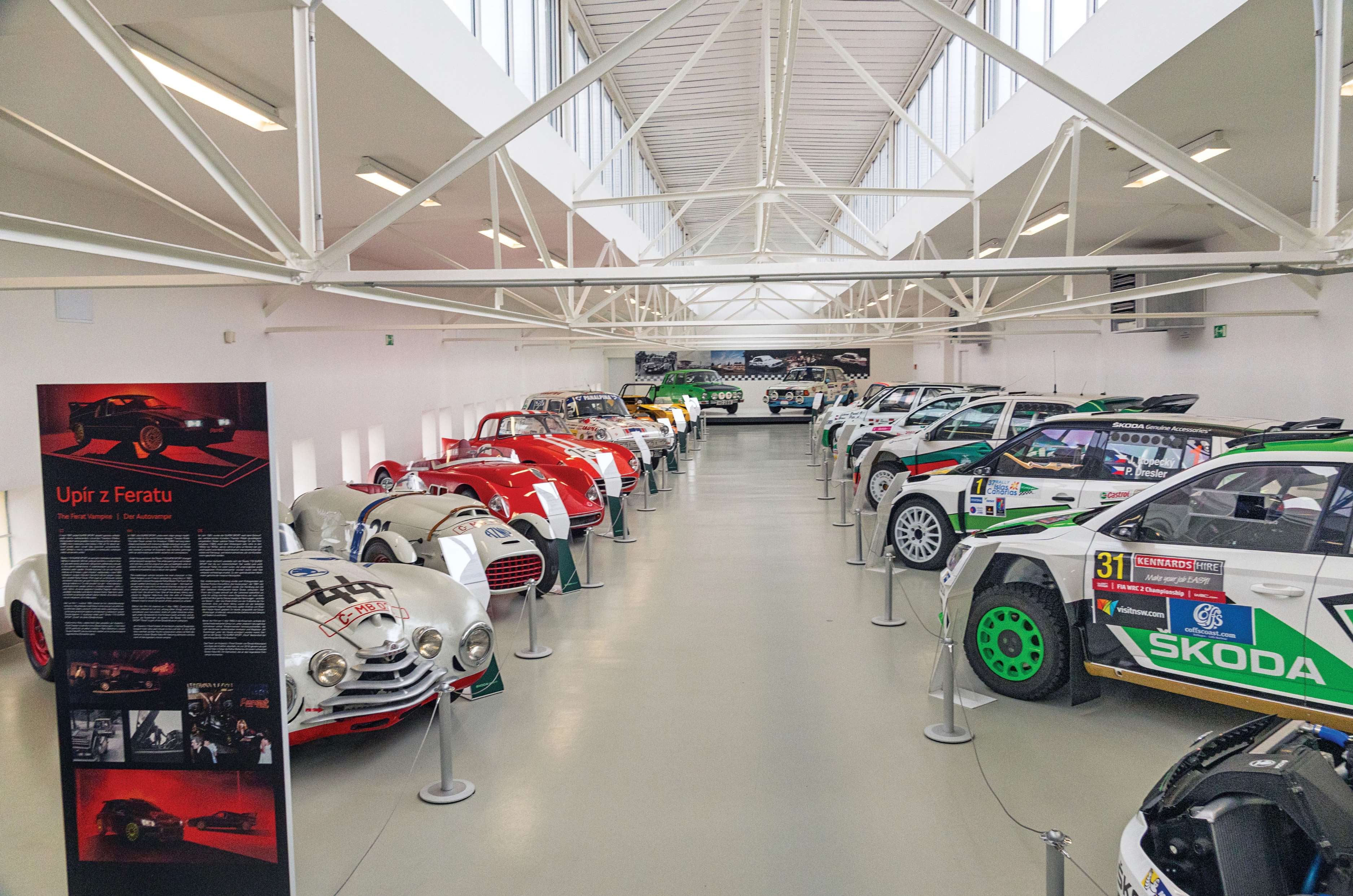
Rich history of rally and motorsport at the Skoda museum.
We crossed the Skoda factory gates with employees gazing in amusement and confusion. They had never seen this car, but strangely, it had a Skoda logo. As we parked the car near the iconic museum that preserves over 130 years of history, we had to peek in and see where it all started.
The fact that a simple bicycle gave birth to one of the largest auto manufacturers in the world is pretty astonishing. Road cars, racing cars and rally legends, Skoda has done it all. A reputation built over a century for being tough, resilient and deeply desirable.
Watching the Indian-made Kylaq sitting proud and faultless in the gleaming sunlight against the backdrop of Prague Castle, looking exactly like it did on the factory floor in Chakan, only proves that the 130-year-old ethos is still the same, no matter where Skoda builds a car.
The final picture in the camera that will always take us back in time
In a world rapidly shifting towards more screens and fewer experiences, a drive like P2P isn’t just a rarity; it’s a statement of defiance: as long as there’s a world to explore, we will find a way to drive across it.
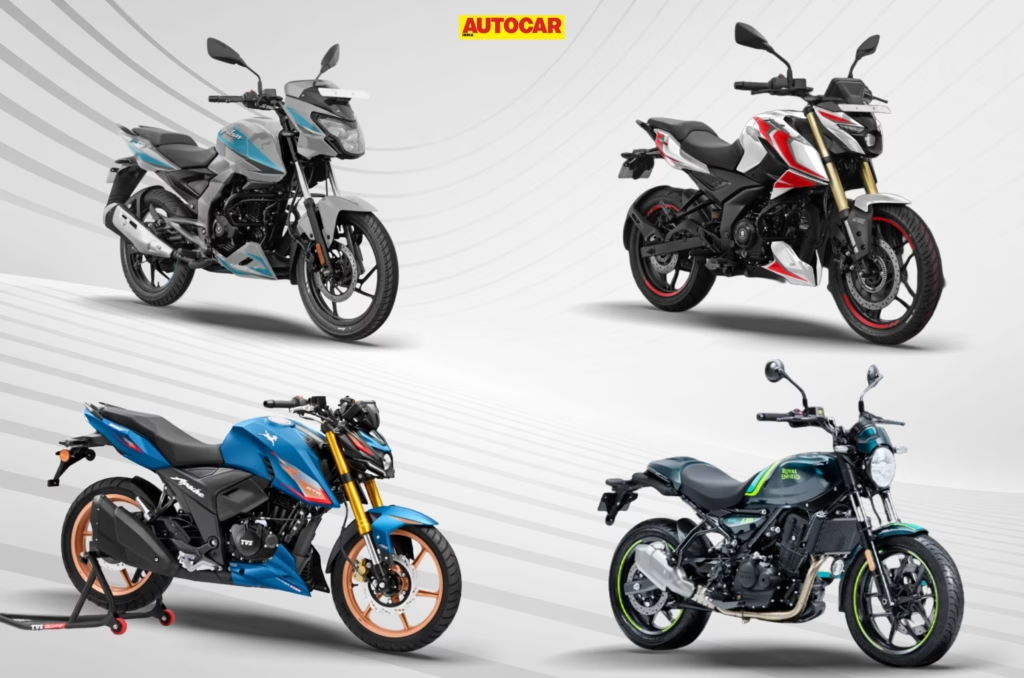
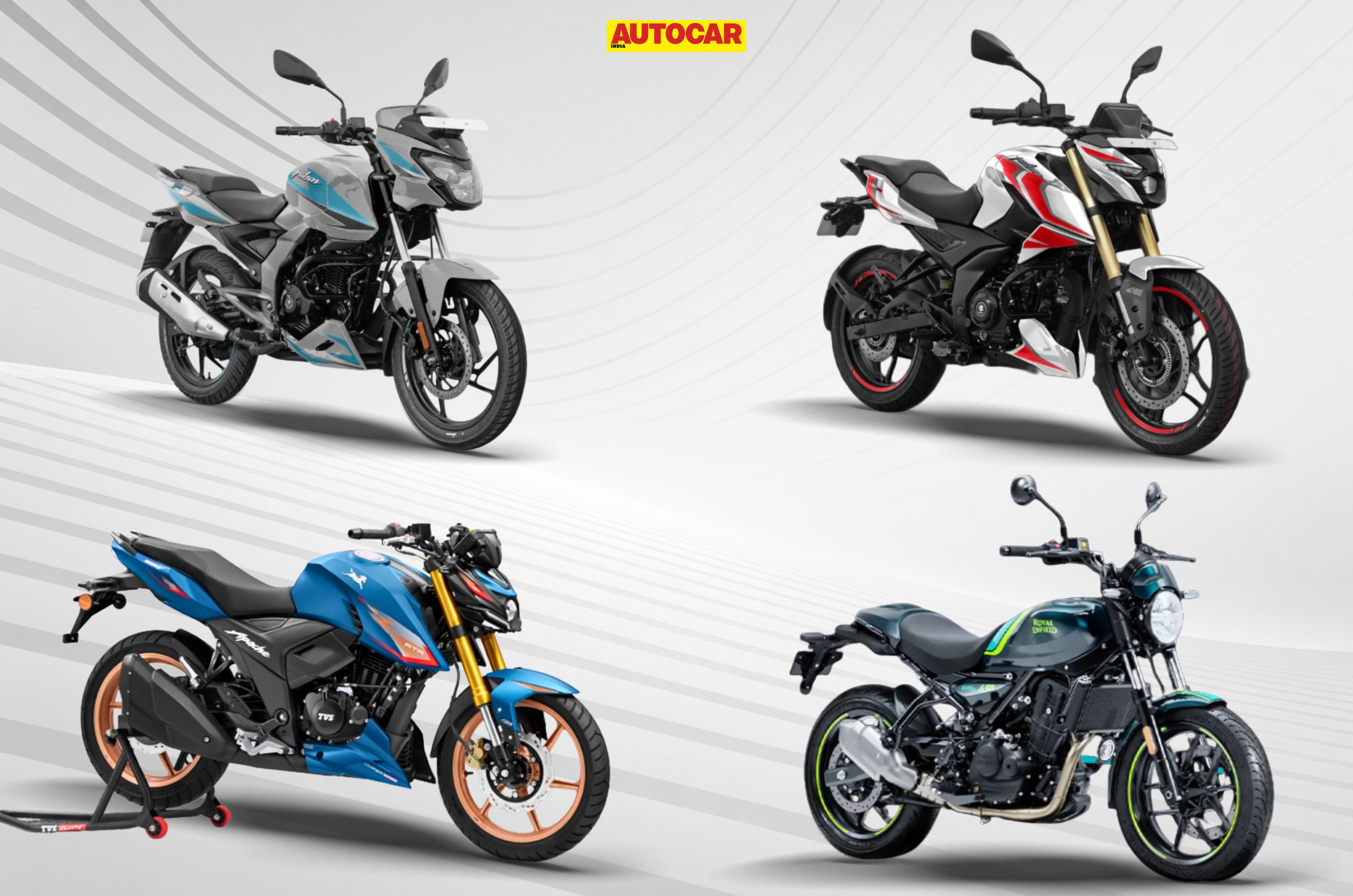
Navigation has been one of the major challenges for every aspiring motorcyclist. Unfortunately, major smartphone OS manufacturers don’t deem us profitable enough to solve it for us; but, our OEMs might have a smarter solution for that, by way of Google Maps mirroring. Today, you can buy a motorcycle for as low as Rs 1.04 lakh and still be able to navigate your way through your city, or wherever your heart takes you. Speaking of, let’s start with that very motorcycle.
All prices mentioned are ex-showroom, Delhi for the specific variant with Google Maps mirroring feature.
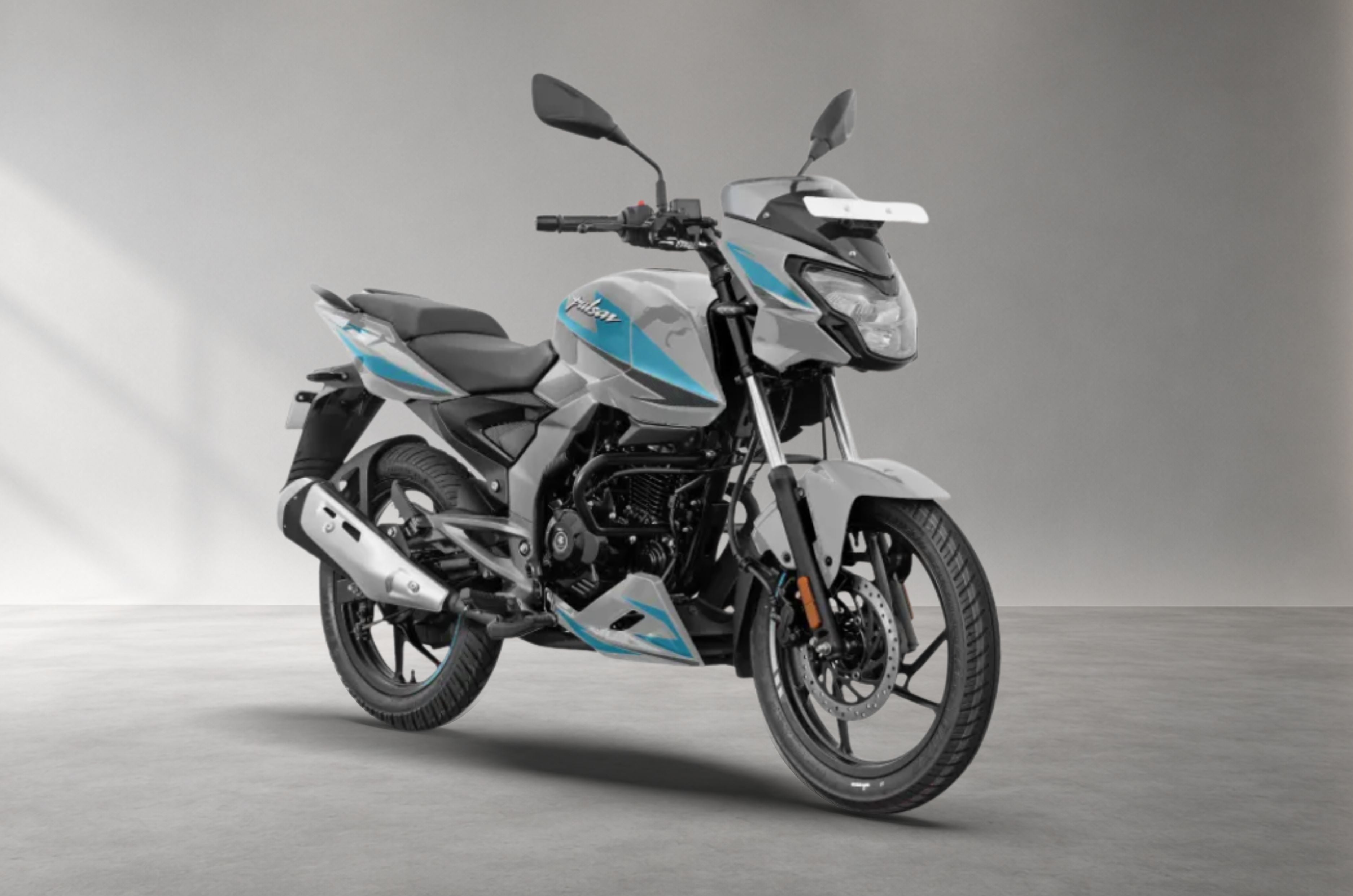
Bajaj Pulsar 125
Rs 1.04 lakh
Bajaj had comprehensively upgraded the classic Pulsar 125 with many changes and a whole slew of features, including Google Maps mirroring on the top-most Split Seat variant. Besides that, you get a 124.58cc engine with 12.1hp and 11.4Nm, a front disc brake, and three ride modes. A decent choice if you mostly commute in the city, but if you find yourself on the open roads on every chance you get, look at the bigger brother.
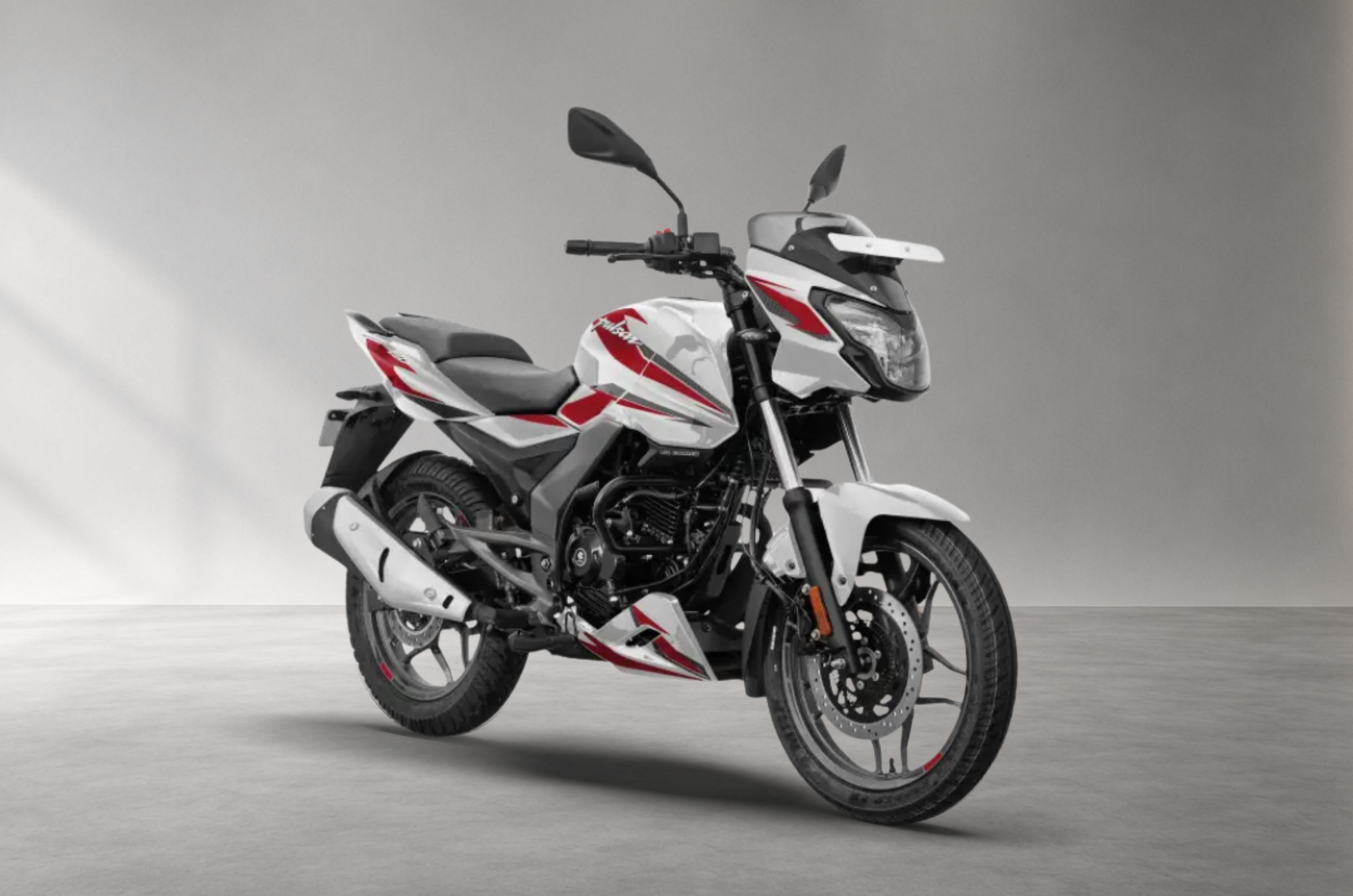
Bajaj Pulsar 150
Rs 1.29 lakh
Admittedly, Rs 25,000 isn’t a small step-up in this price range. However, besides retaining the same feature-set and silhouette, on the Pulsar 150 you get a larger 149.5cc engine with 14.1hp and 14.1Nm, which should make highway stints seem less stressful on you and the motorcycle; and saying that you have the Pulsar 150 has a better ring to it, but that’s a subjective opinion. If Bajaj isn’t your brand of choice, though, we have another Indian manufacturer known for pushing the envelope on features.
TVS Apache RTR 160 4V
Rs 1.41 lakh
TVS has made the Apache series synonymous with features over the past few years, so of course it responded to Bajaj upgrading the classic Pulsars. Its best-selling Apache RTR 160 4V now also has a TFT display that supports Google Maps mirroring. TVS, in its usual fashion, turns things up a notch by offering even more power from its 159.7cc engine (17.55hp and 14.73Nm) and a whole lot more features like dual-channel ABS, traction control, a slipper clutch, more premium design, etc., That’s quite a bit more for Rs 12,000 over the Pulsar 150 but if you wonder whether Bajaj has a similar offering, fret not.
Bajaj Pulsar N160 SS
Rs 1.43 lakh
This is the first motorcycle on which Bajaj debuted the new 5-inch TFT screen with Google Maps mirroring. It’s since been extended to other Pulsars. Over the Pulsar 150, the N160 SS offers a bigger 164.9cc engine with 18.5hp and 14.4Nm (directly sparring with the RTR 160 4V), ride-by-wire, traction control, one extra ride mode, a slipper clutch, and a more modern design that may suit your preferences better. The N160 SS also offers dual-channel ABS as standard. If you feel like you’re done with the 150-160cc class, the next upgrade is closer than you think.
TVS Apache RTR 200 4V
Rs 1.50 lakh
The Apache RTR 200 4V has now been relegated to getting the “et al” treatment from TVS so now it is almost too close to the RTR 160, one might say. However, it retains the bigger 197.75cc engine with close to 21hp and 17.25Nm. The only other feature that still remains exclusive to the 200 is the preload-adjustable USD fork that TVS brought back, with the recent update. Worth paying Rs 7,000 extra You decide, but if you are somehow not satisfied with the value on offer, the next motorcycle wears value-for-money as a badge of honour on its sleeve.
Bajaj Pulsar NS400Z
Rs 1.90 lakh
Bajaj’s downsized 349cc Pulsar NS400Z has gone down in price again, and the company gave it the same TFT unit as on the other Pulsars just two days ago; and we might see it in even more of their motorcycles soon. Anyway, the NS400Z gives you a steep jump in power with 40.6hp and 33Nm. It retains the feature-set from the N160 SS as-is with power and torque as its biggest differentiation from almost every other motorcycle on this list. If you’re in a phase of your life where you’re on long rides more often than commutes, you might prefer the next motorcycle more.
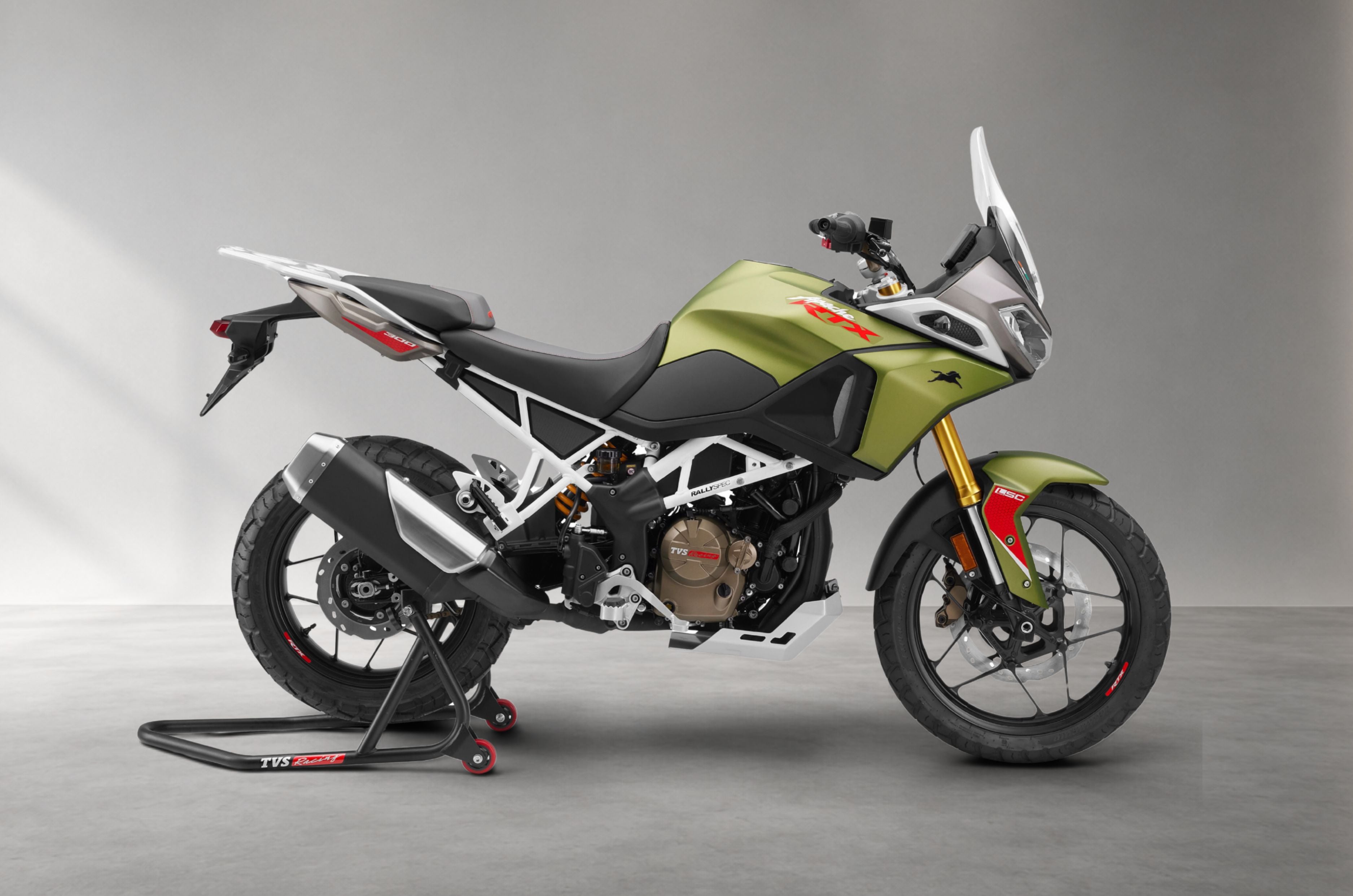
TVS Apache RTX 300
Rs 2.19 lakh
TVS’s first adventure tourer popularised the feature in question a year ago, offering it on the top and BTO variants. Compared to the NS400Z, you get a smaller 299.1cc engine with 36hp and 28.5Nm. However, the Apache RTX 300 is no slouch in features in any other way, matching the NS400Z on every feature on offer. If you’re an experienced motorcyclist who’d like to tune your ride more minutely, stepping up to the BTO variant at Rs 2.39 lakh might be worth it, considering it gives your adjustable suspension on both ends. If none of these sound exciting enough for you, maybe see if the last one does the trick.
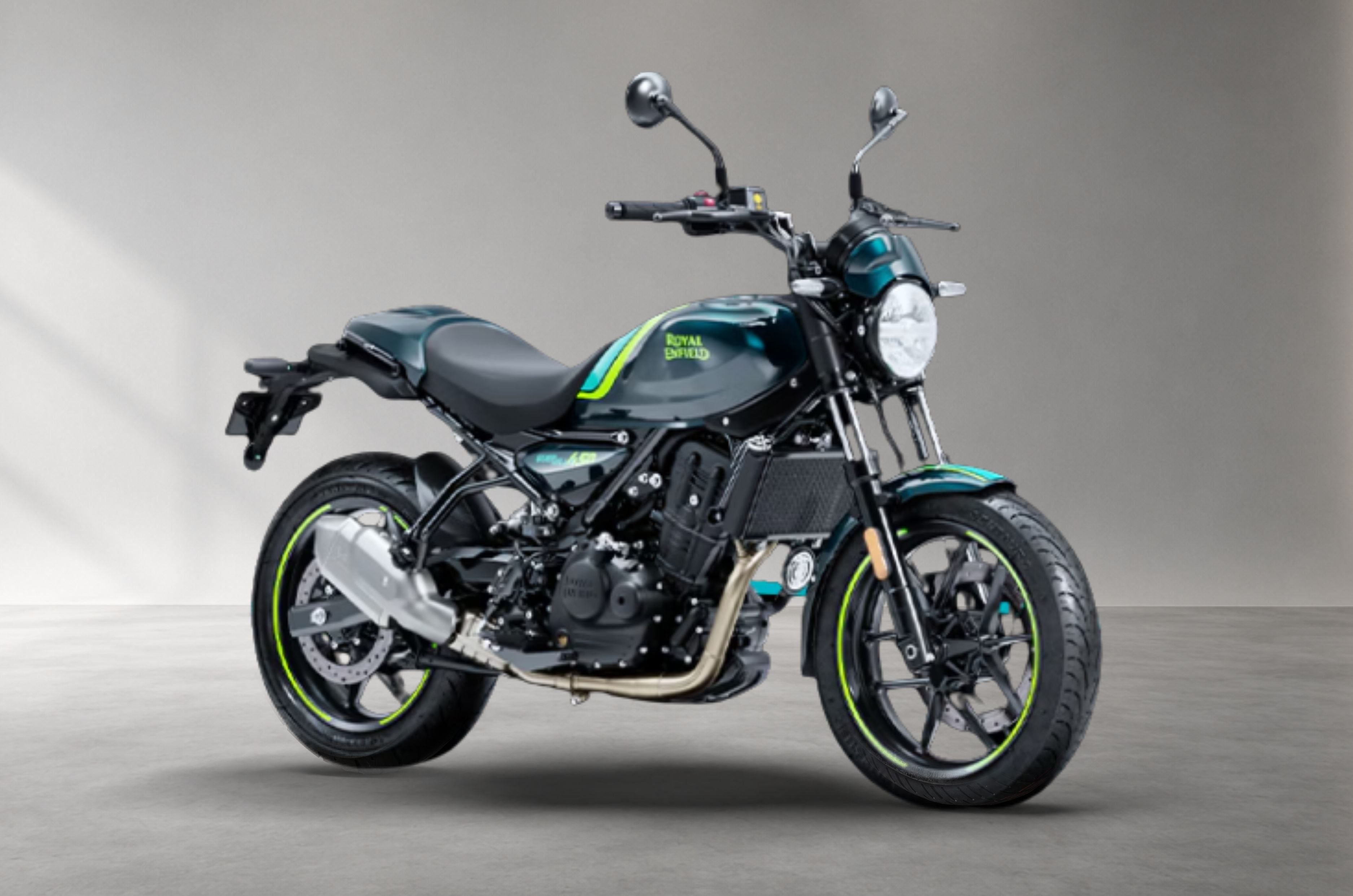
Royal Enfield Guerrilla 450
Rs 2.51 lakh
Royal Enfield introduced a new 4-inch TFT display with the Himalayan 450 that could project Google Maps powered navigation onto it, making the Chennai-UK based manufacturer technically the first to have figured this solution out. If you didn’t know this already, pressing and holding the M button on your Guerrilla 450 (and the Himalayan and Bear 650) will change the dials to the ‘digital’ look. After that, connecting your smartphone to the Royal Enfield app and starting navigation will make the whole map show on your display.
Getting back to the Guerrilla 450 itself, it’s Royal Enfield’s take on a sport-naked. Similar to most motorcycles on this list, its primary purpose isn’t touring, but when has that ever stopped the determined? The Guerrilla also has a 450cc engine that doles out 40.02hp and 40Nm, making it the most powerful motorcycle on this list. It goes toe-to-toe with the other motorcycles in terms of the features on offer, although most of the additional price is for its extra power (and the 40 percent GST of course).
That concludes the list of motorcycles under Rs 3 lakh with Google Maps mirroring, for now. We expect Bajaj to extend the same TFT display to even more of their portfolio in the near future. TVS might respond to that in their own, unique way so this list is all but guaranteed to grow even more in the near future. It’s one more significant hurdle removed for a motorcyclist, and every meaningful step counts.
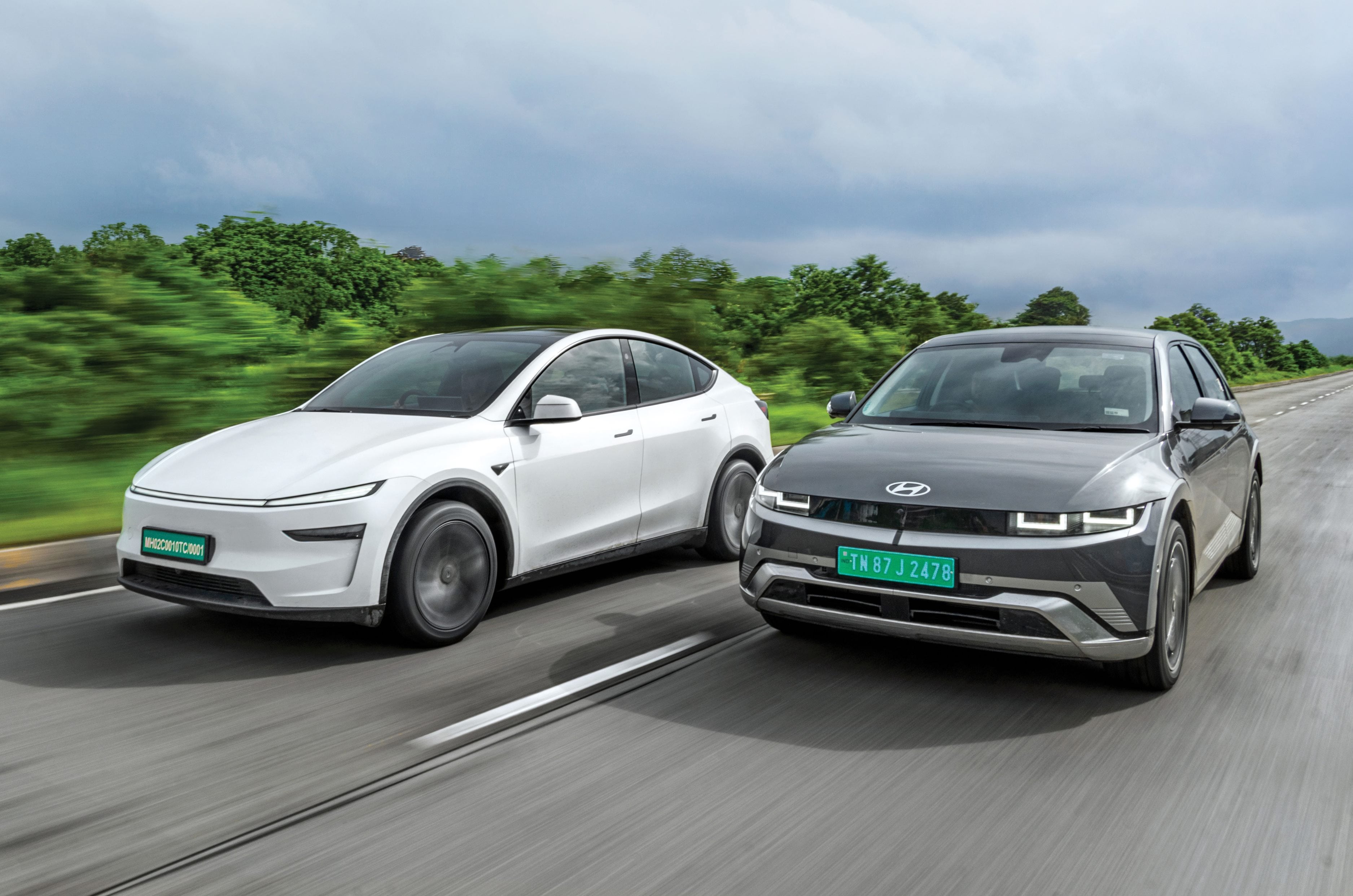
The Hyundai Ioniq 5 has been one of the standout EVs of recent years, so much so that we crowned it our 2024 Car of the Year. Back then, besides being one of the most impressive electric cars on sale, it was also among the most affordable in its segment. And when compared with rivals like the BYD Sealion 7 and BMW iX1, the Ioniq 5 came out on top thanks to its comfort, practicality and value.
Fast forward to 2026, and the landscape has changed. Hyundai has updated the Ioniq 5, and the biggest talking point is its larger 84kWh battery. But in the process, this value-focused EV has become one of the most expensive options available.
Tesla, meanwhile, has dropped prices. The Model Y now starts at just under Rs 51 lakh, undercutting the Ioniq 5 and transforming itself from one of the pricier alternatives into the more affordable option. With the pricing hierarchy flipped, this comparison has become more interesting than ever.
Tesla Model Y vs Hyundai Ioniq 5: Exterior design
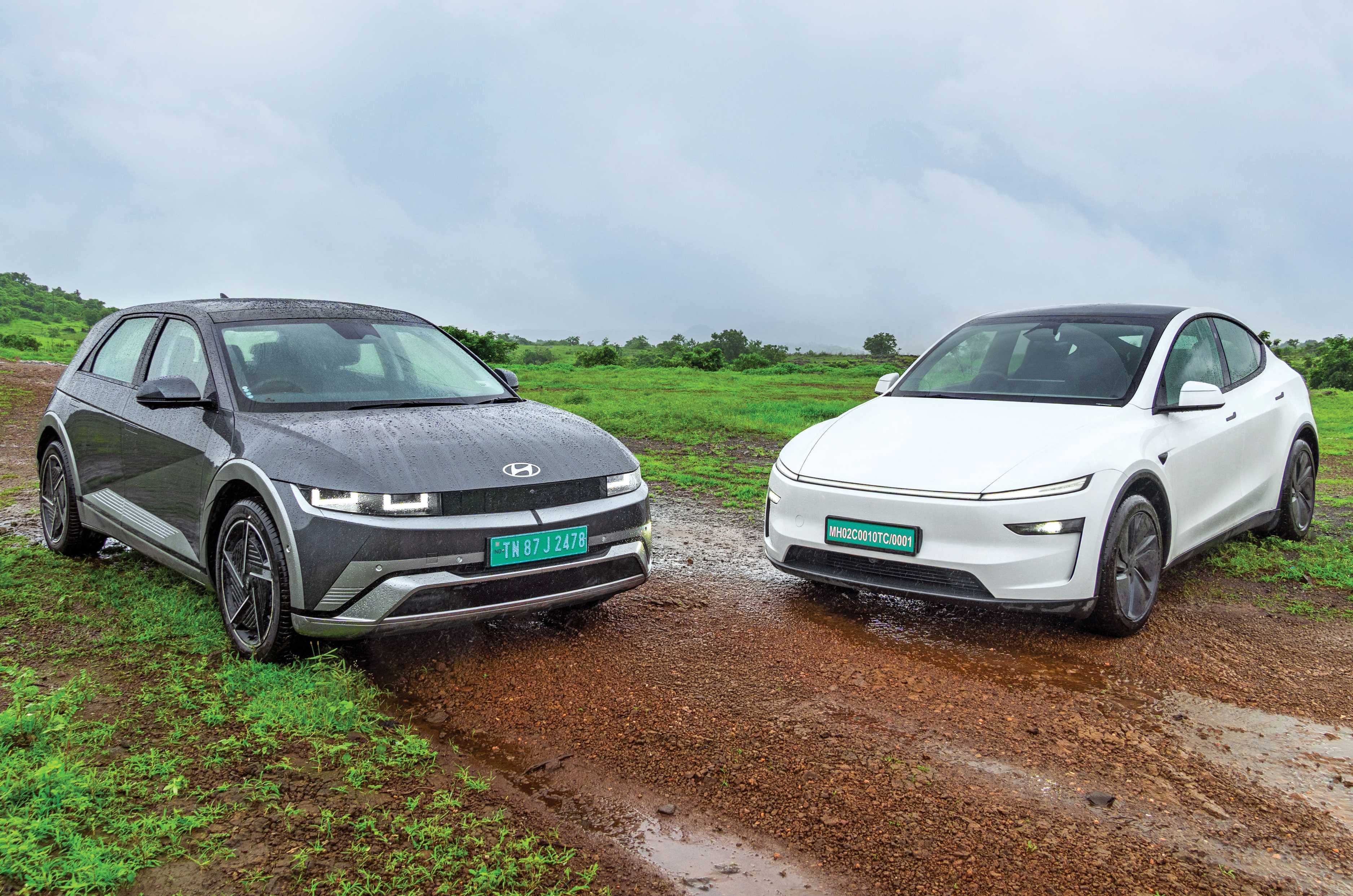
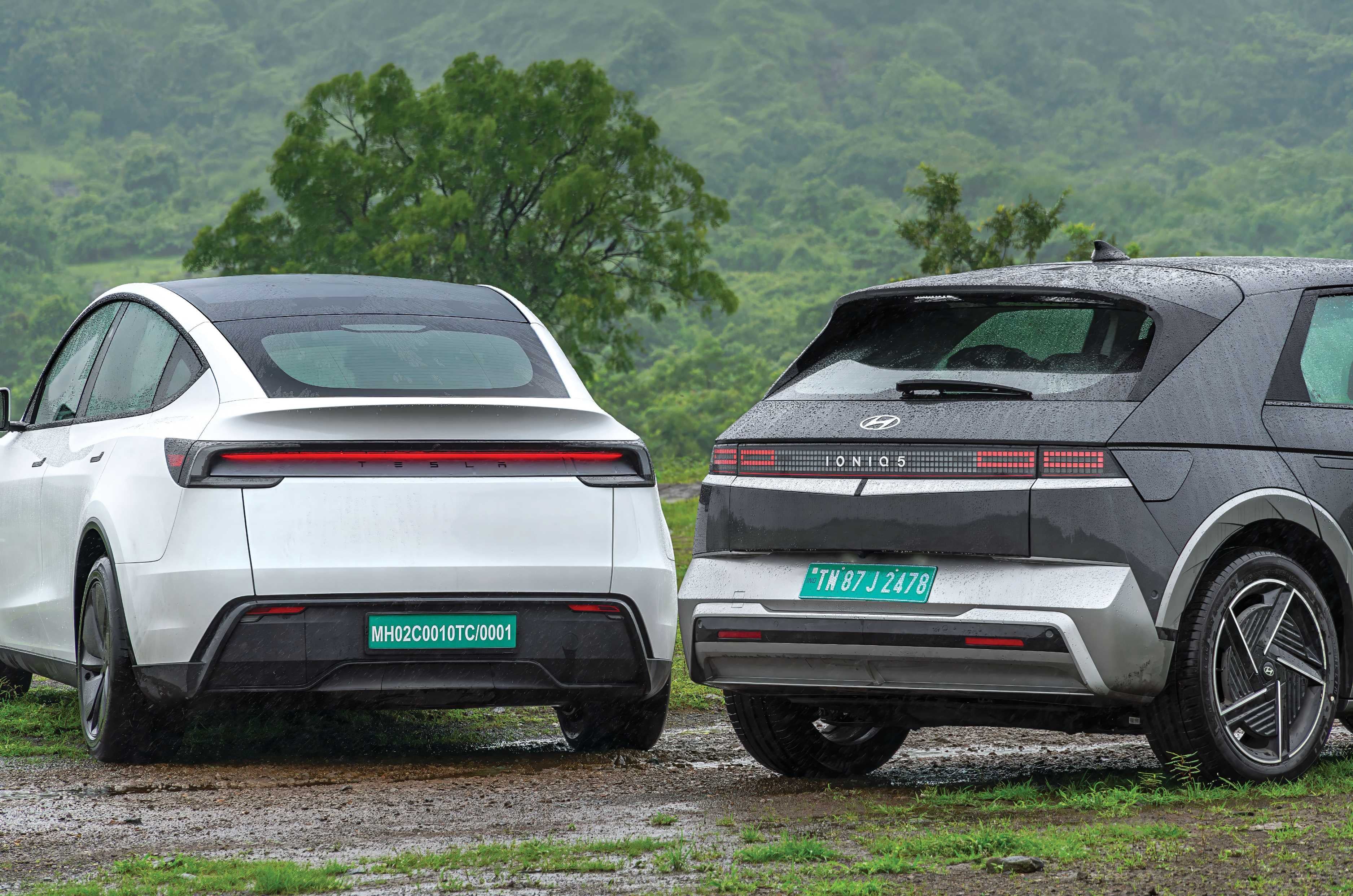
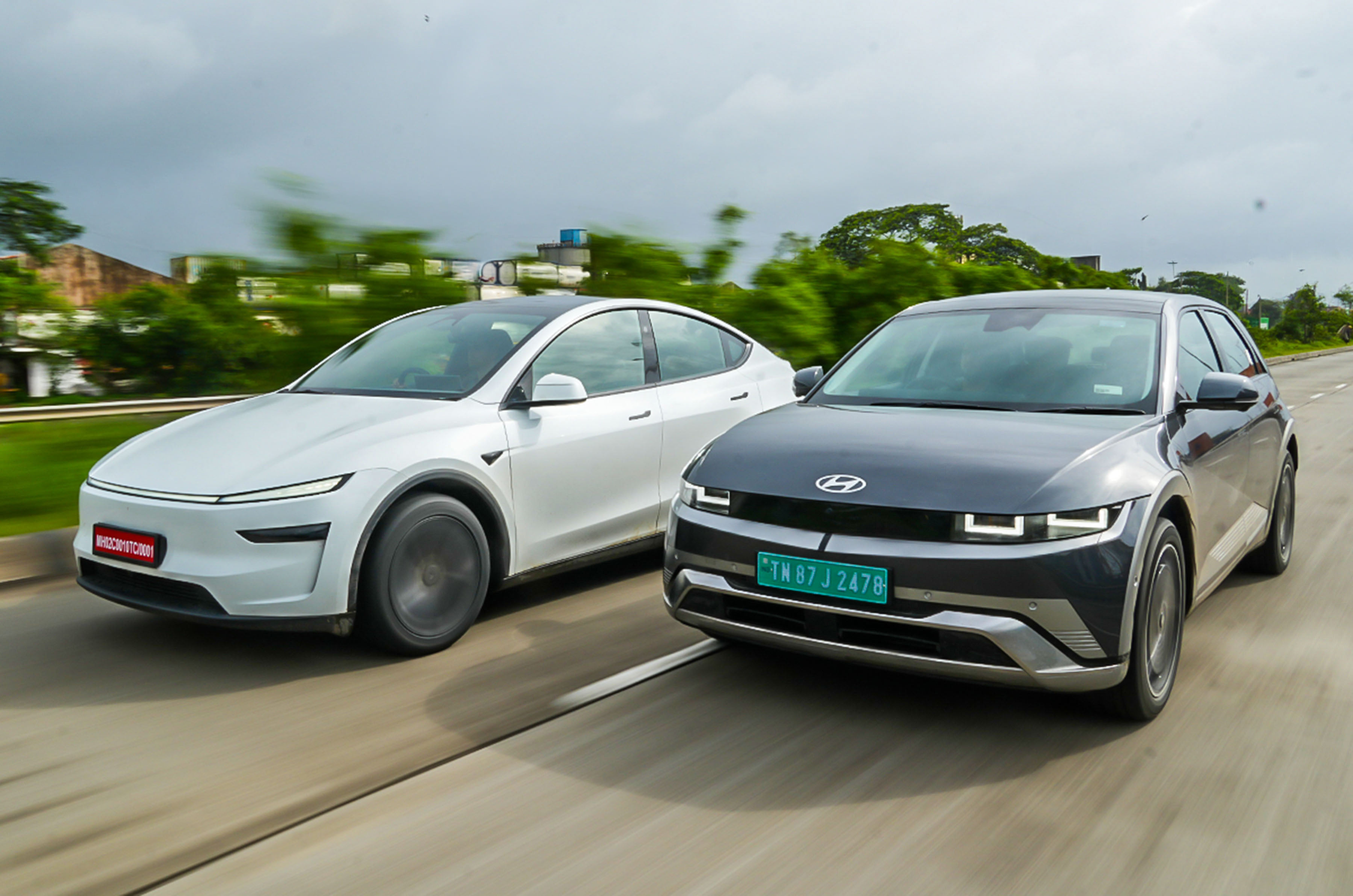
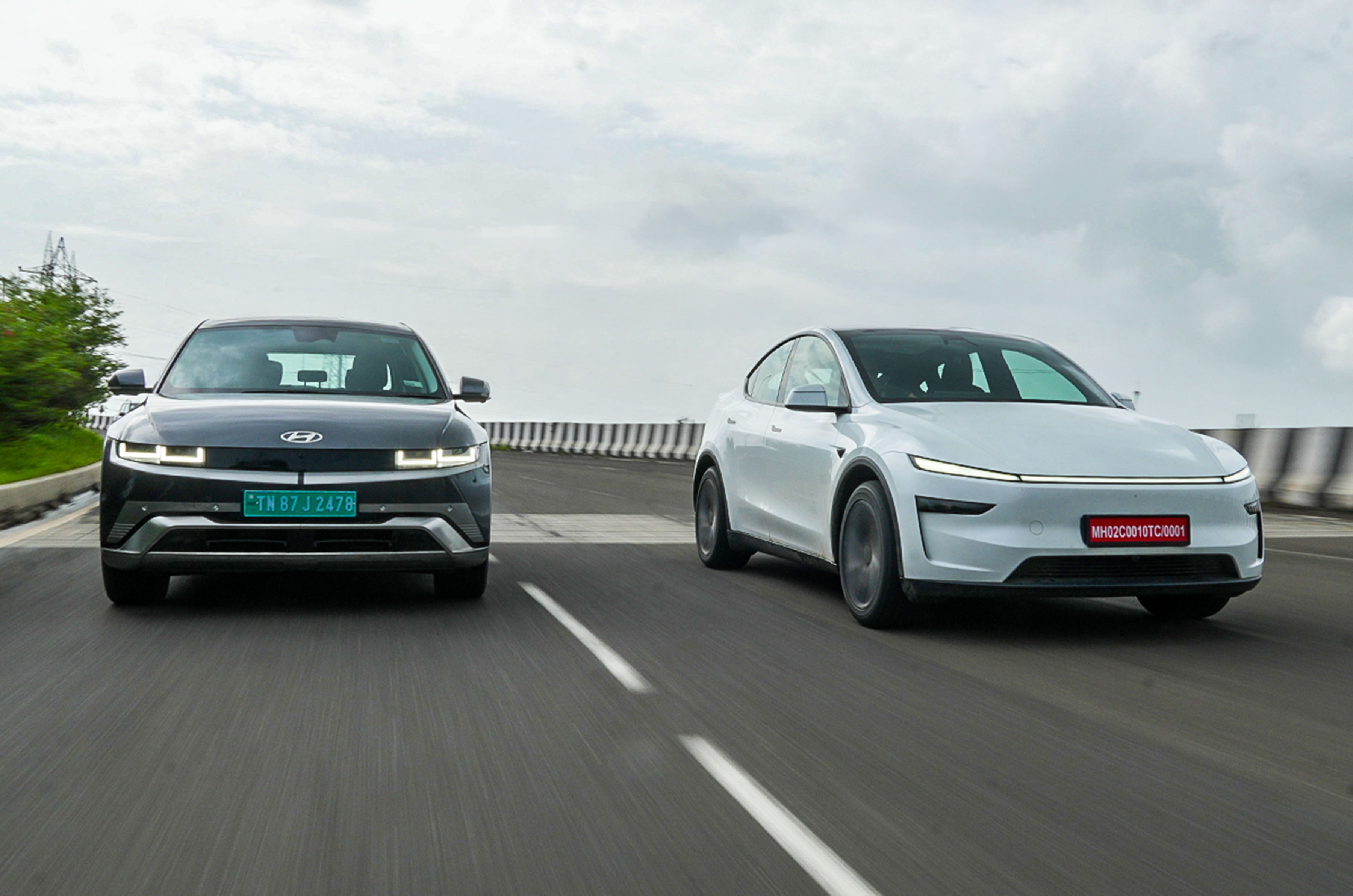
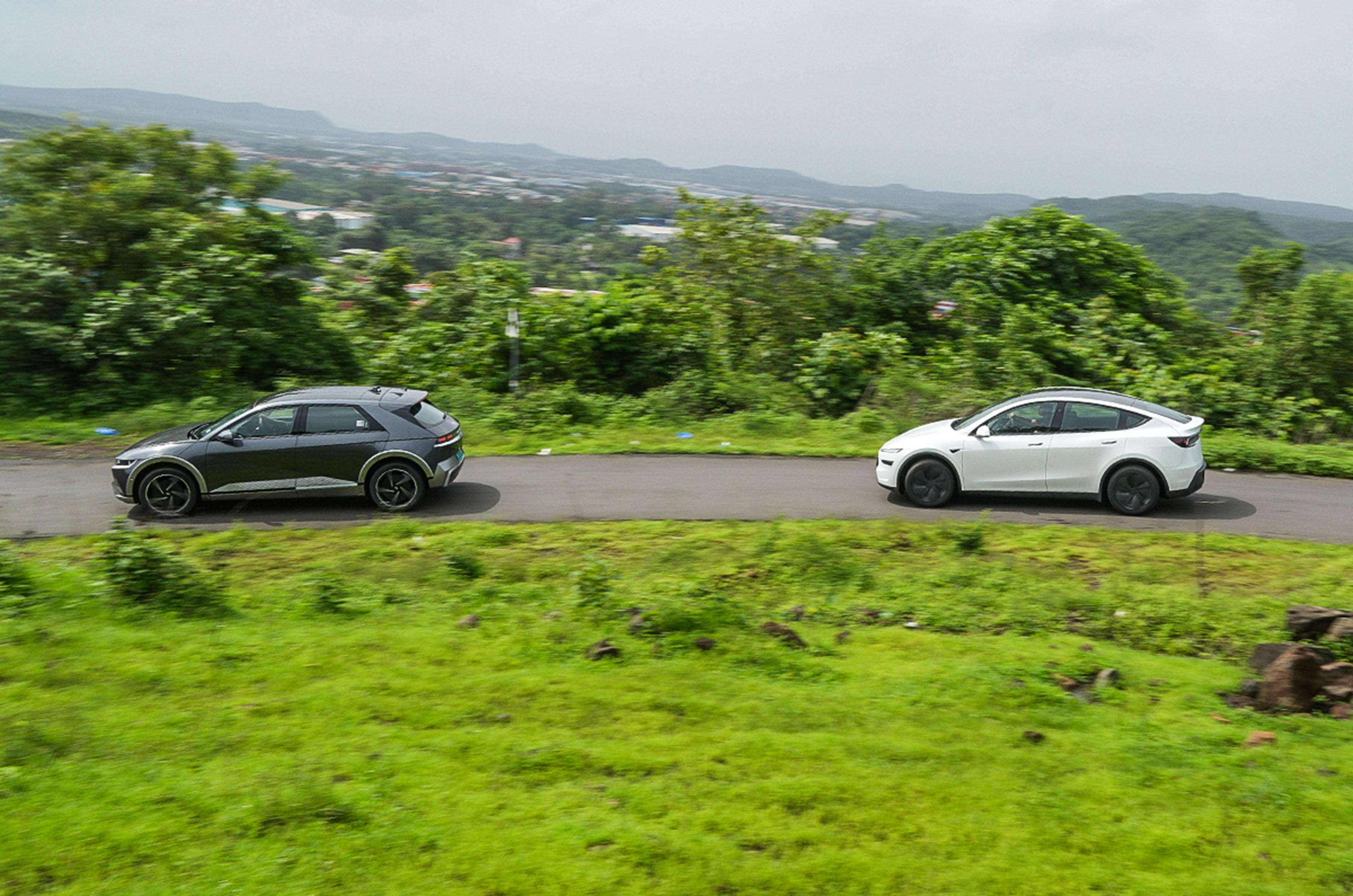
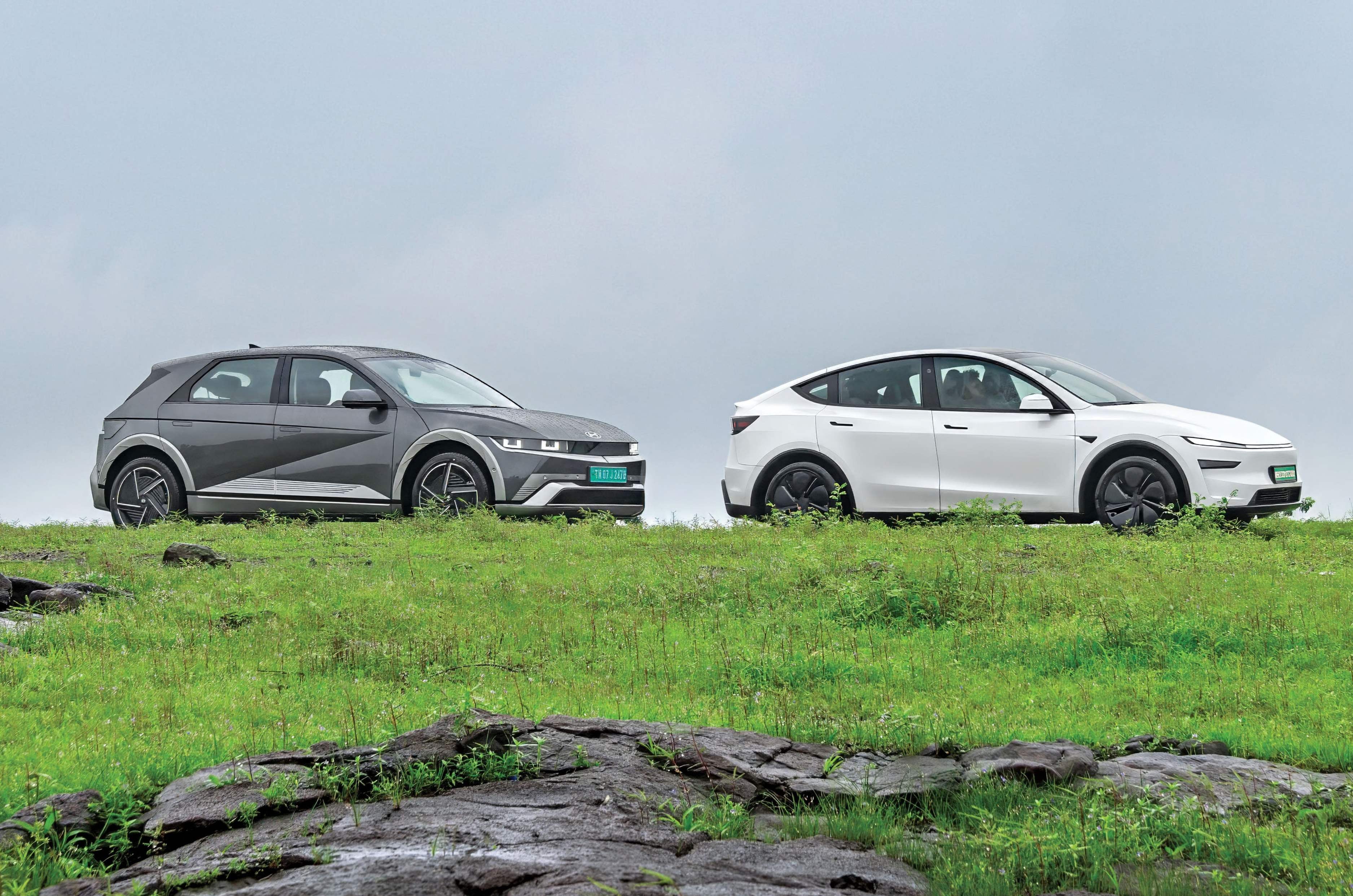
The Tesla Model Y is the larger vehicle overall, although the Hyundai counters with a longer wheelbase. Neither car follows a traditional SUV or sedan template, with muscular proportions and aggressive styling, but the Ioniq 5 stands out with its retro-futuristic design language, blending hatchback and crossover cues into a shape that is both distinctive and characterful. That said, its styling will continue to divide opinion.
The Tesla, by comparison, plays it a little safer. It too wears a crossover body style, but with a minimalist design that is unlikely to offend anyone. Frameless windows and a unique tail-lamp treatment with a hidden light bar add some flair to its otherwise fuss-free styling.
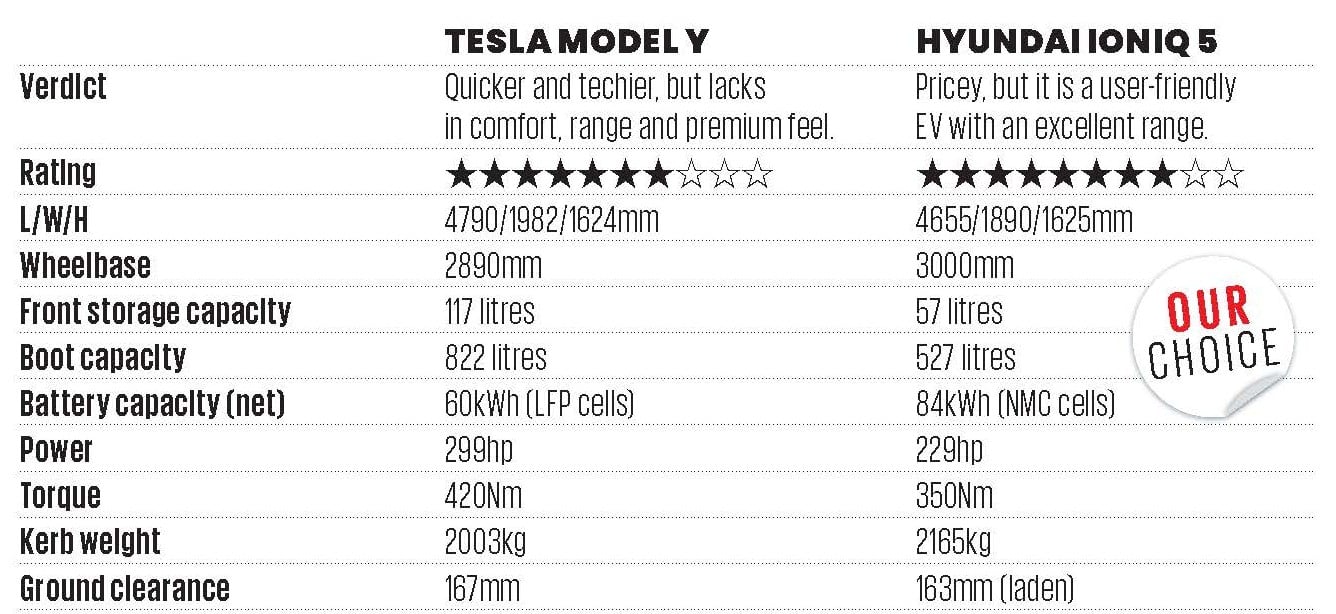
It’s worth noting that Tesla lists ground clearance at 167mm (unladen), while the Ioniq’s figure is specified as laden, coming in at 163mm. In the real world, the Tesla occasionally scrapes over unusually large speed breakers, while the Hyundai clears most of them despite its longer wheelbase.
Tesla Model Y vs Hyundai Ioniq 5: Interior and features
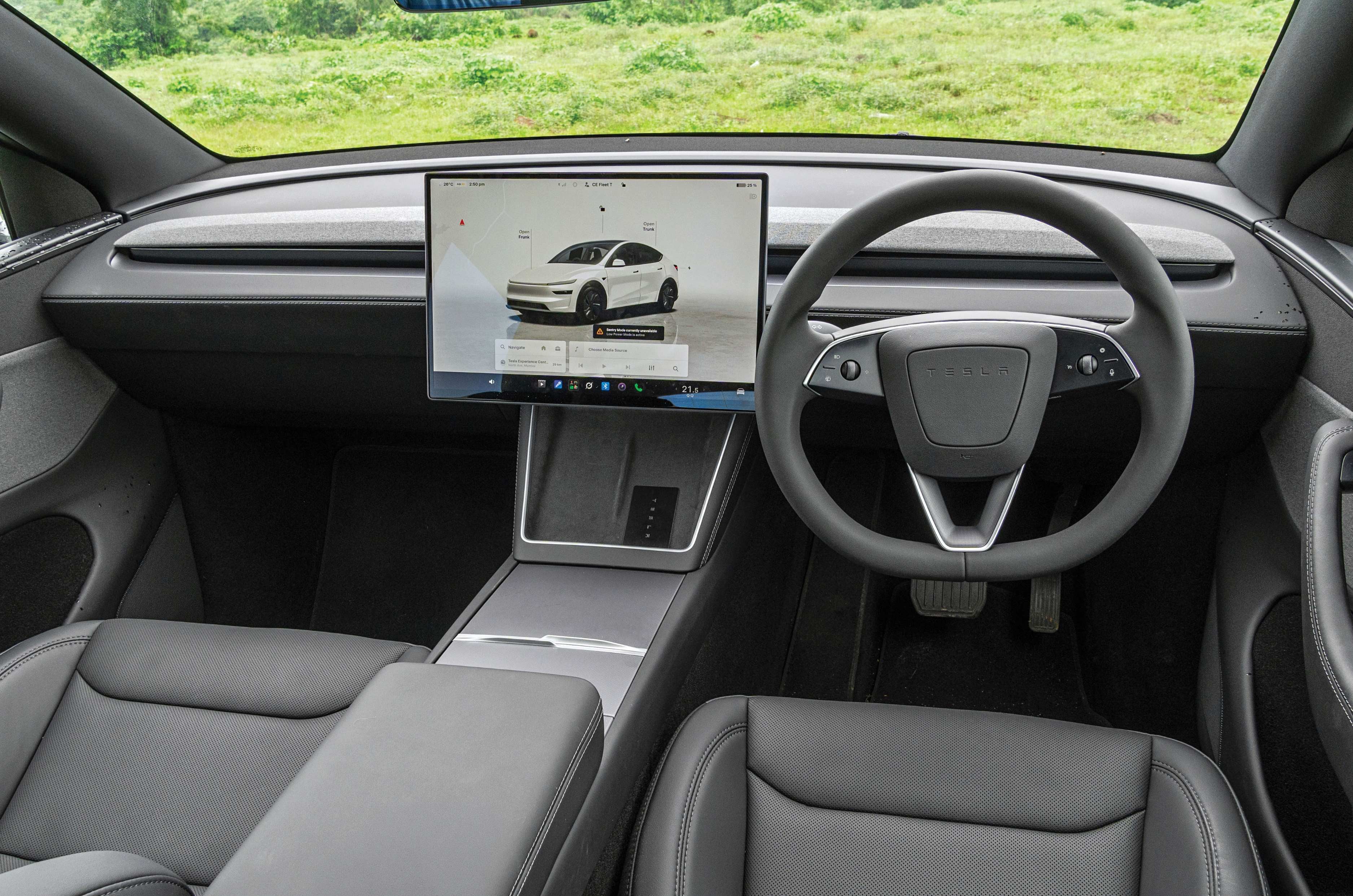
Takes minimalism to a whole different level, with merely a handful of physical controls. Lack of design elements, vegan materials don’t feel special.
Tesla’s non-motorised flush door handles remain a usability frustration, requiring an awkward push-and-pull action to operate. On the inside, the Model Y’s cabin embraces minimalism to an even greater extent. Even the air vents are hidden. The lack of design elements looks clean, but this and the choice of materials diminish the sense of occasion one expects at this price point.
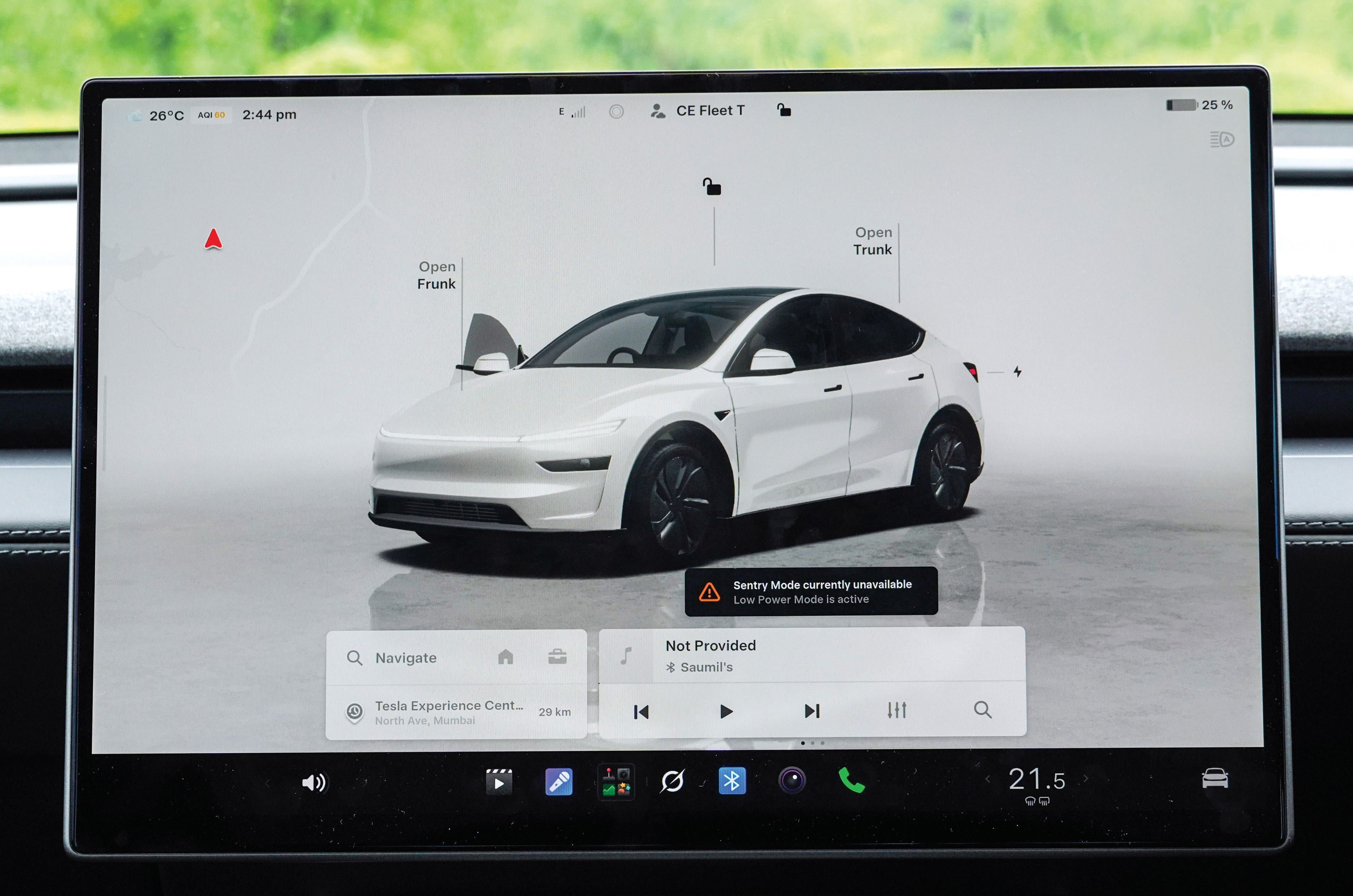
All functions are relegated to its slick screen.
Taking centre stage, quite literally, is a massive touchscreen. Nearly every function is controlled via the screen, including controls for the frunk, tailgate, glovebox, climate control, seats and steering, and mirror adjustments, among many others. This over-reliance on the touchscreen is daunting at first, but Tesla’s software experience is exceptional. The interface remains the benchmark for responsiveness, fluidity and overall usability.
The steering wheel features multi-function controls that take some time to get accustomed to. The high-beam flasher is integrated into the steering wheel too. Thankfully, the indicators and power-window switches remain physical controls. The lack of buttons might seem futuristic, but it often feels as though technology has taken precedence over usability. There are two charging pads, and below them sits an unusually bulky centre console that robs the cabin of some of its sense of space. Hampering usability further is the exceptionally deep storage area, which requires you to stretch to reach items placed inside.
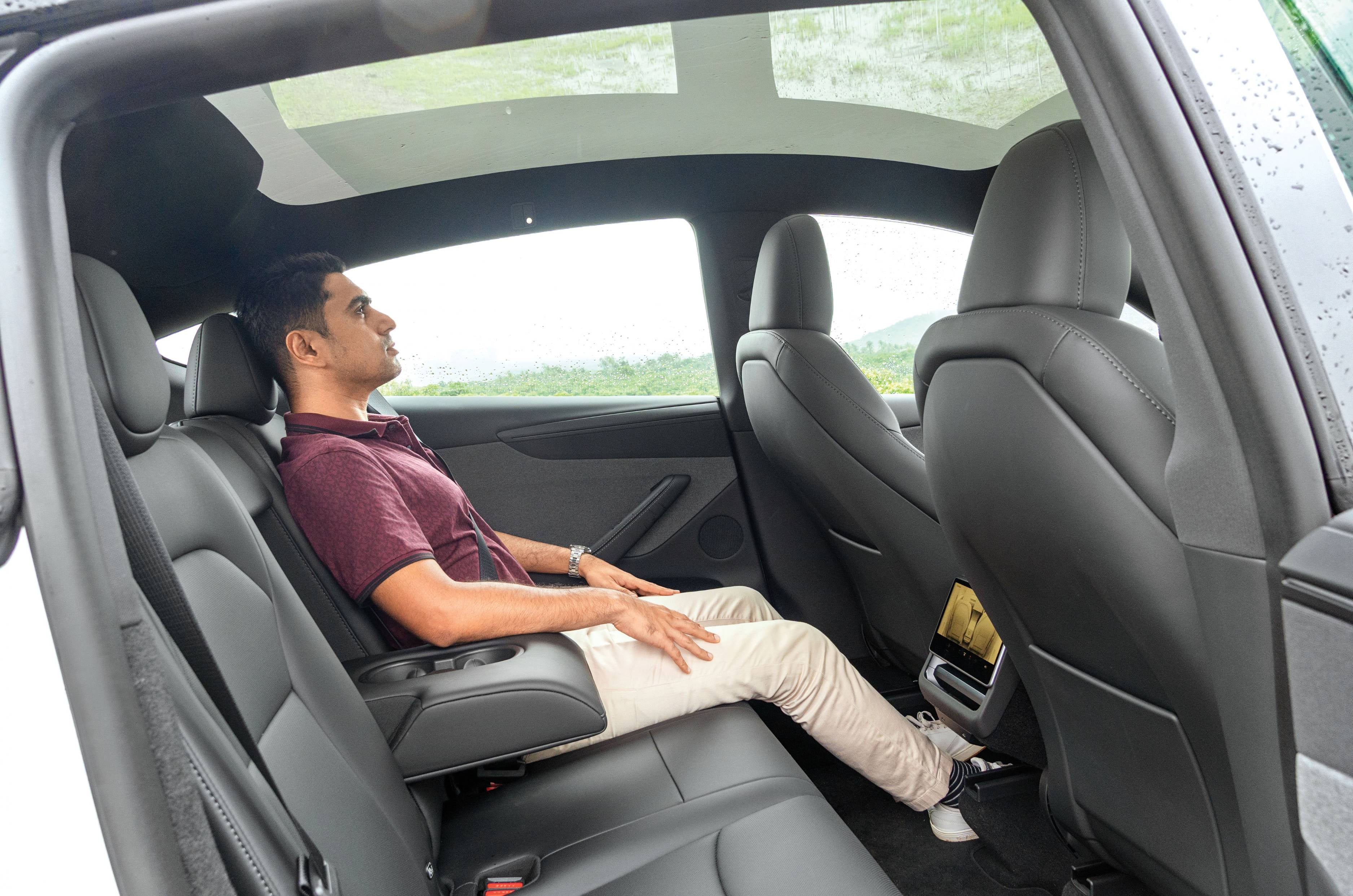
Albeit a bit low-set, this space feels airy thanks to its low window line.
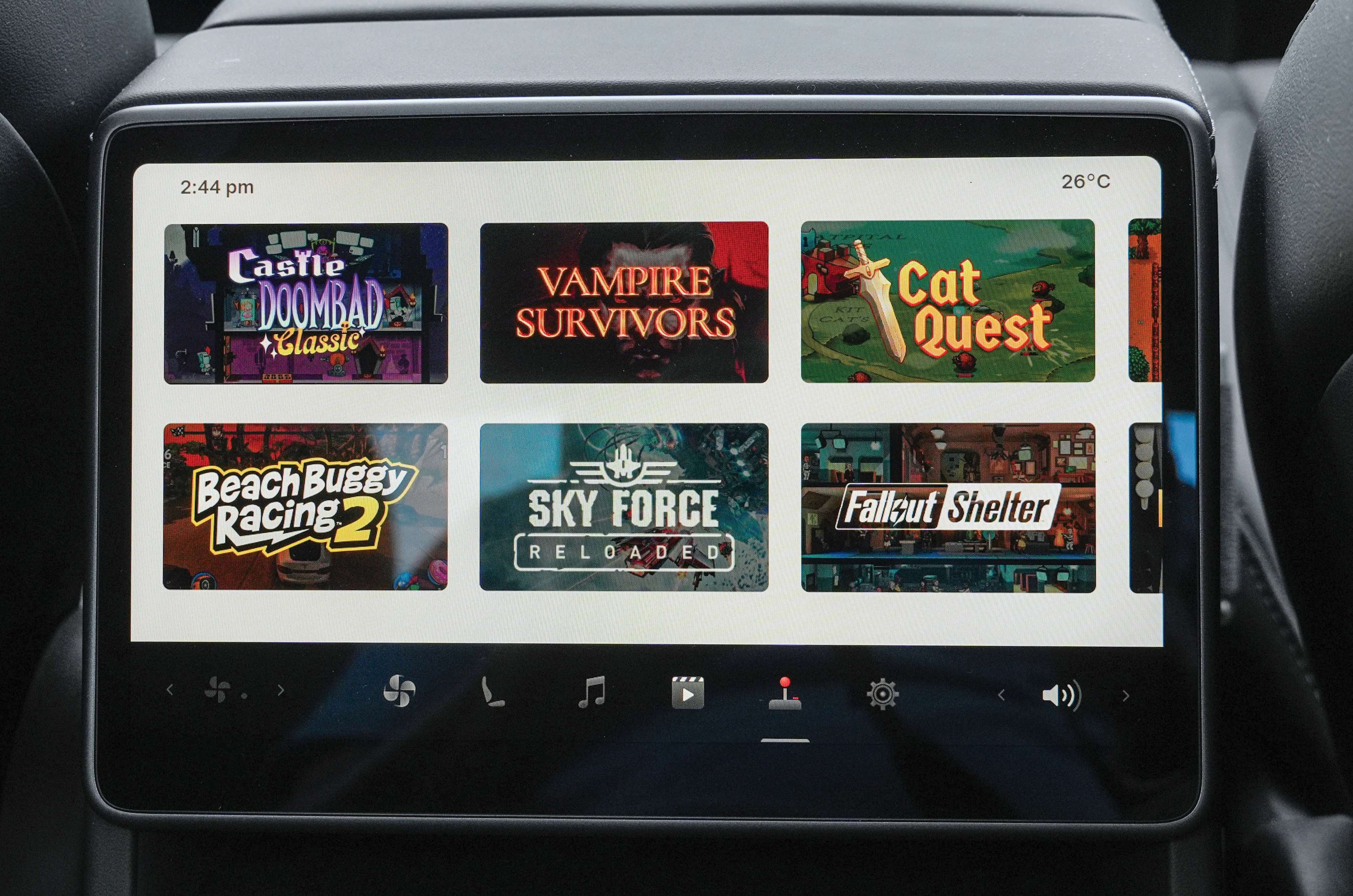
The front seats look simple and are surprisingly comfortable, with heating and ventilation functions. The rear seat is equally comfortable, although the seating position is somewhat low, resulting in a knees-up posture. What’s nice is that the backrest reclines to a comfortable angle. Rear-seat passengers are also treated to a dedicated touchscreen capable of controlling climate functions, streaming content and even gaming.
Rear screen for controls, games and videos.
One major drawback is that the sunroof still lacks a dedicated sunshade, causing the cabin to heat up considerably under the afternoon sun. The rear windows also miss out on sunshades.
More suited to our conditions, the black interiors are well-finished. It gets full marks as far as storage, ergonomics and usability goes.
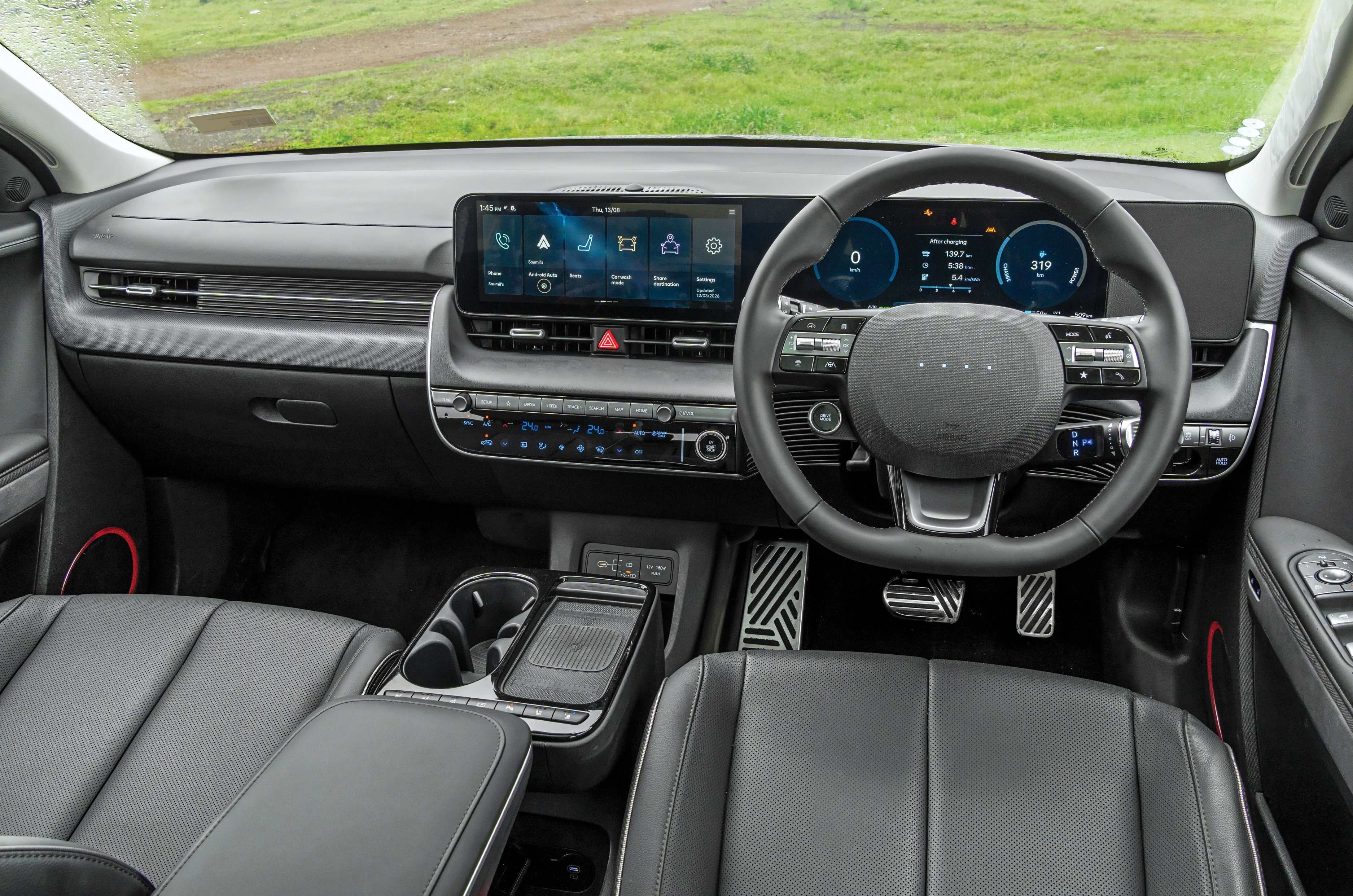
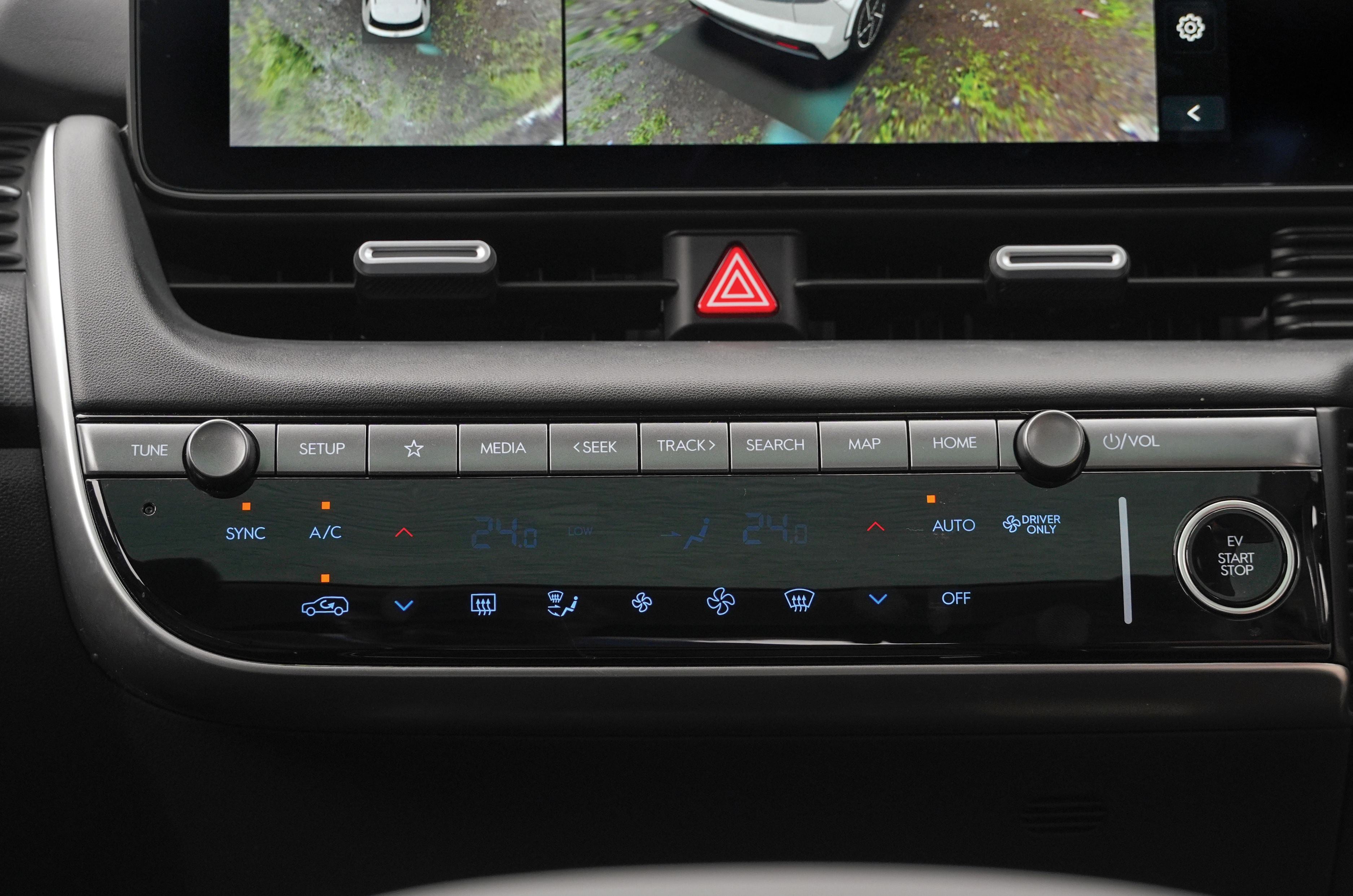
The Ioniq 5’s interior takes a more balanced, user-friendly approach. Not only does it get motorised pop-out door handles, but its cabin also combines touch-sensitive controls with physical buttons and knobs, creating an environment that feels intuitive from the moment you step in.
Thankfully, it retains physical controls.
Material quality is impressive, and where the Hyundai truly excels is in comfort and practicality. Storage areas are thoughtfully integrated throughout the cabin, and the sense of space is outstanding, making the Ioniq 5 particularly easy to live with.
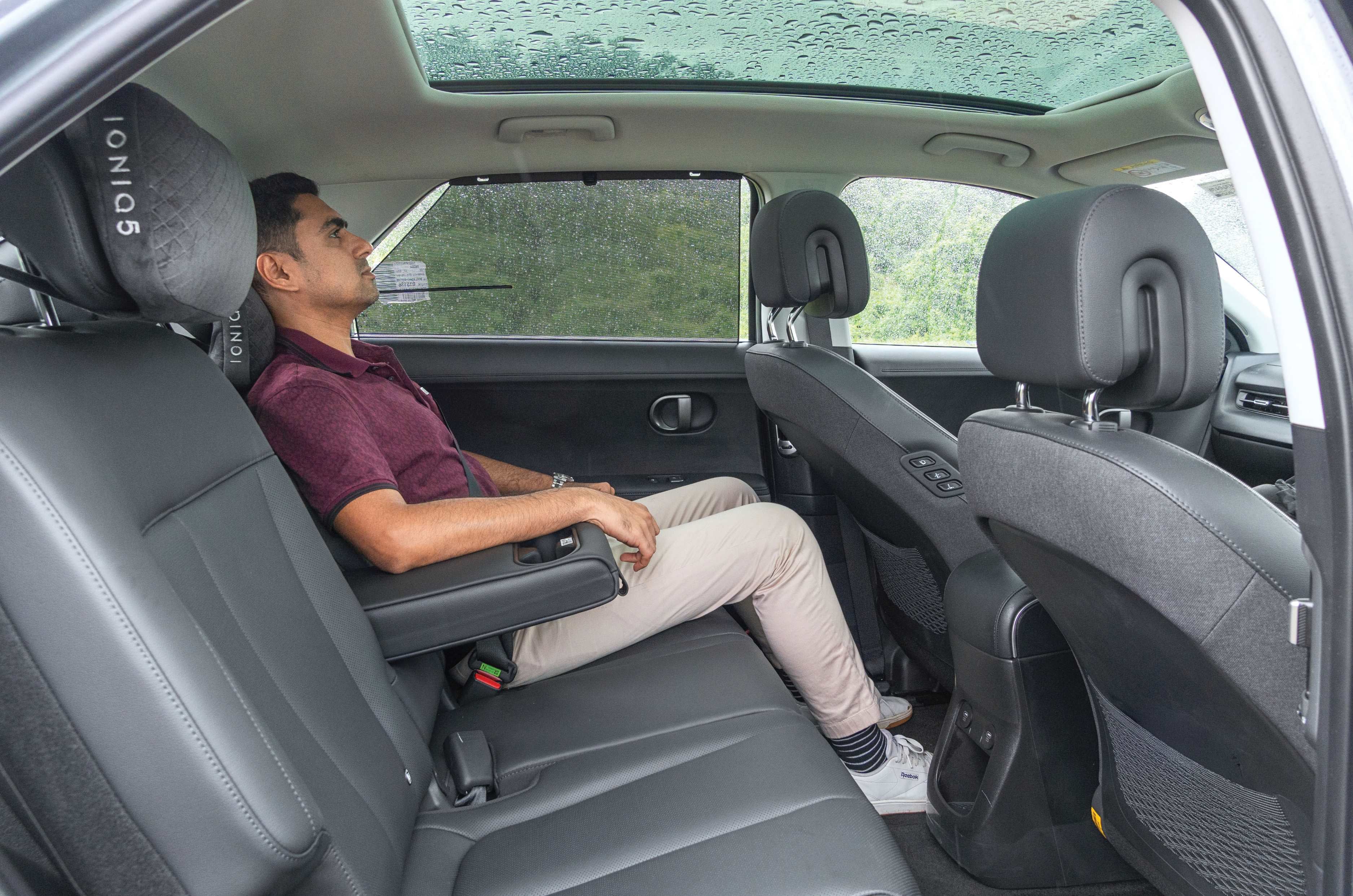
Slide, recline, boss function and sunshades mean a better rear experience.
The front seats are broader and more comfortable, with extensive adjustment, including an ottoman-style leg support. Both front seats can be set up in a ‘zero-gravity’ position, where your back is reclined and legs lifted on the ottoman, making it very comfy. Plus, you can have the seats cooled or heated too, which adds to the relaxing experience. Rear-seat comfort is equally impressive, thanks to a bench that both slides and reclines. While it doesn’t get a dedicated rear screen like the Tesla, it does offer window sunshades and a 3-pin socket to power larger electronic devices.
Along with a larger boot, the Tesla gets substantial underfloor storage.
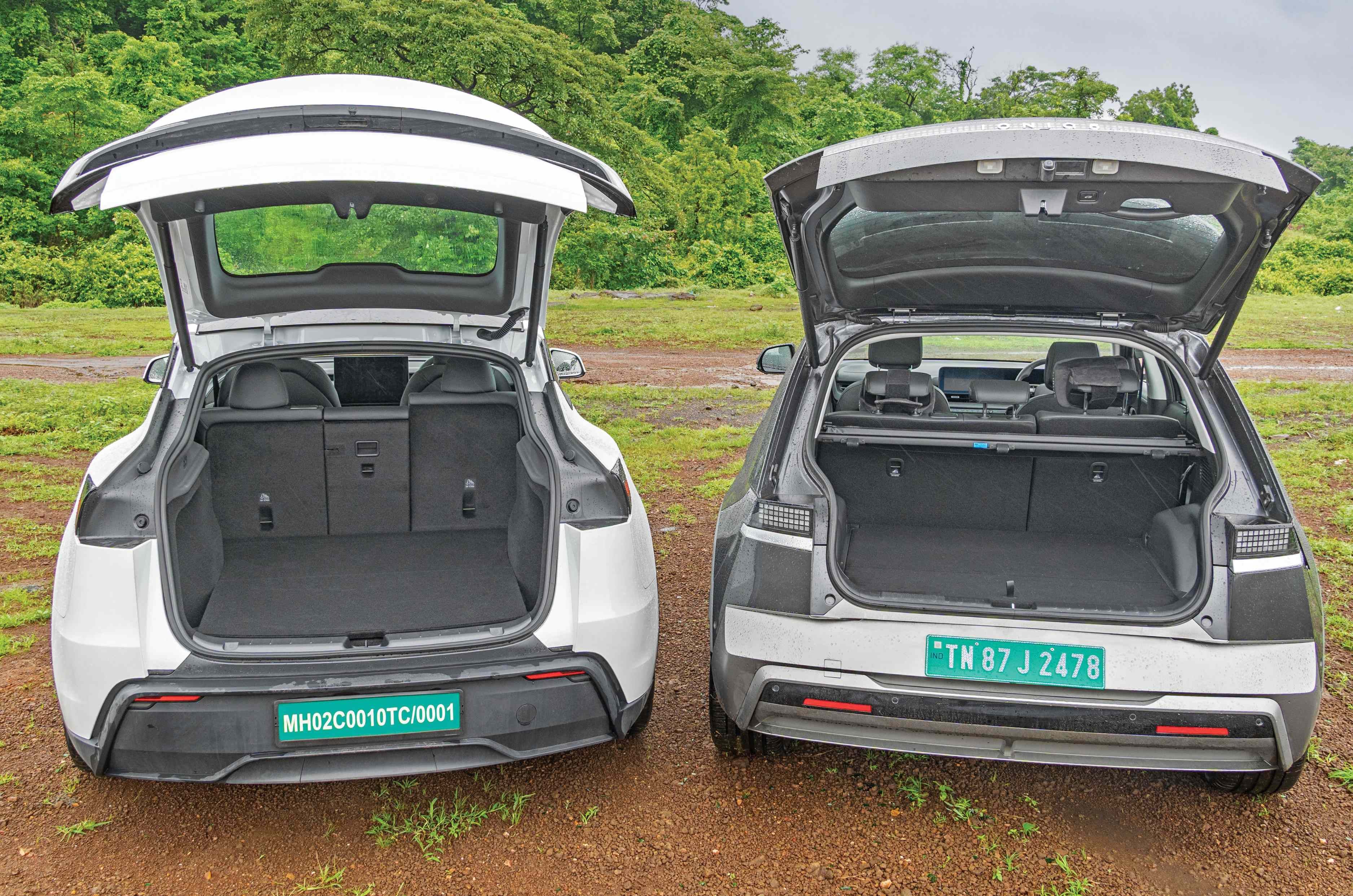
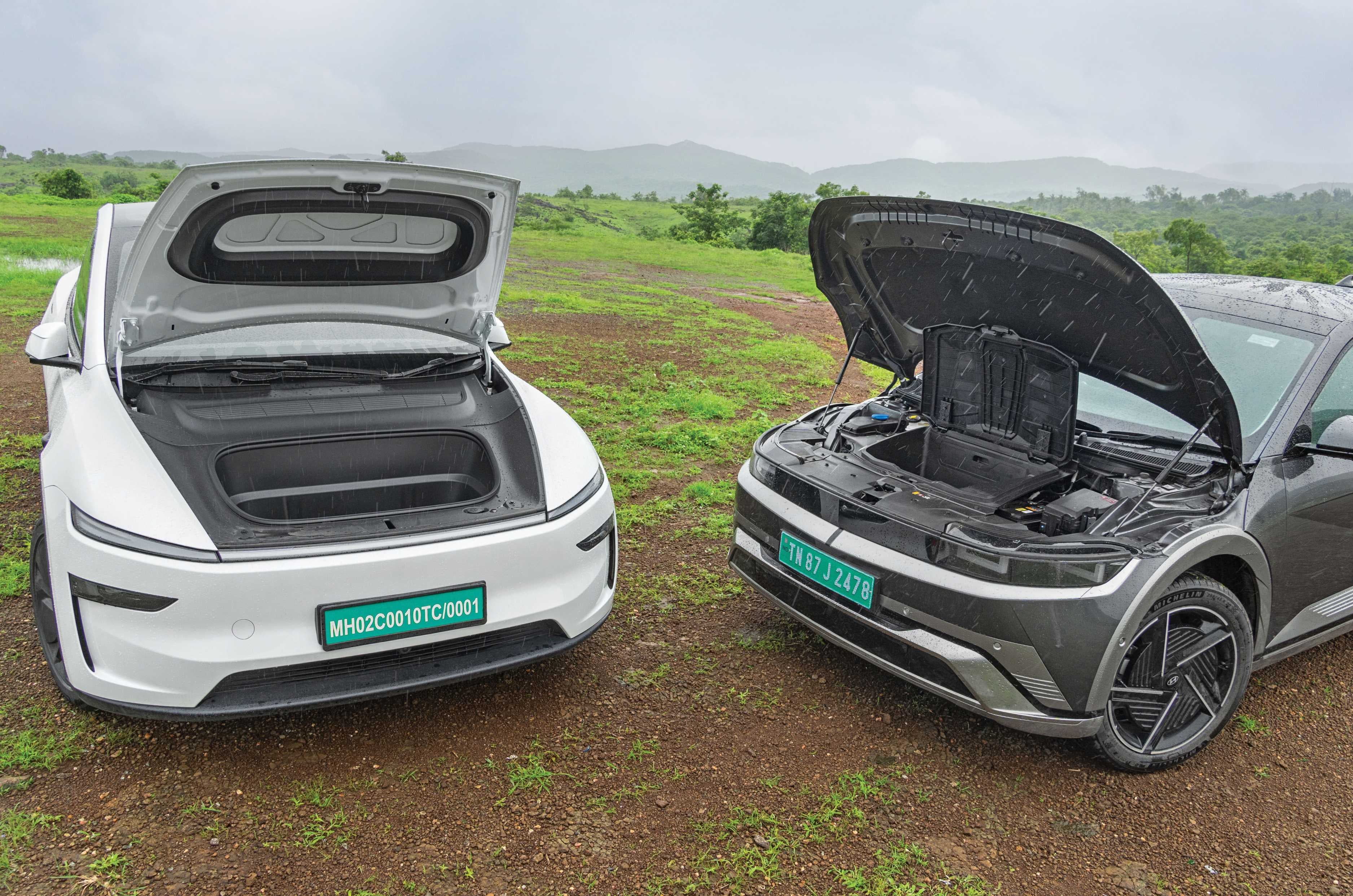
The Tesla regains some lost ground when it comes to luggage-carrying capacity. Its front luggage compartment is broader and deeper than the Ioniq’s, and its boot is more spacious too. Additionally, it offers even more storage space beneath the boot floor. The Ioniq 5, on the other hand, not only falls a bit short in outright boot capacity, but also has a relatively higher loading lip, making it slightly more challenging to load heavy luggage.
The Model Y has a deeper and wider front-loading area than the Hyundai.
Tesla Model Y vs Hyundai Ioniq 5: Powertrain and performance
Hyundai has increased the battery size from 72.6kWh to 84kWh (gross capacity) while continuing to use Nickel Manganese Cobalt (NMC) cell chemistry. This feeds a 229hp/350Nm rear-mounted motor, which is 12hp more than before. However, the larger battery has pushed kerb weight up to 2,165kg, which is 150kg more than the outgoing version.
In contrast, the Model Y uses a 64kWh (gross capacity) battery with Lithium Ferrous Phosphate (LFP) cell chemistry, powering a 299hp/420Nm rear-mounted electric motor. While it is significantly more powerful, the Tesla is also 162kg lighter. As a result, its performance feels considerably stronger. It feels quicker off the line, accelerates harder and responds more eagerly to throttle inputs than the Hyundai.
Tesla keeps things simple with just two drive modes: Standard and Chill, the latter serving as an economy setting. Impressively, Chill mode remains highly usable and, despite being toned down, still accelerates as strongly as the Hyundai in its sportiest setting.
Tesla Model Y vs Hyundai Ioniq 5: Acceleration test (in seconds)
Tesla Model Y
Hyundai Ioniq 5
20kph
1.29
1.31
40kph
2.33
2.66
60kph
3.48
4.05
80kph
4.69
5.71
100kph
6.19
7.97
120kph
8.23
10.83
140kph
10.78
14.63
160kph
14
20.27
To put its performance into perspective, the Model Y accelerates from 0-100kph in just 6.19 seconds in Standard mode and reaches its 203kph top speed in roughly 25 seconds. Even in Chill mode, it completes the 0-100kph run in a respectable 8.25 seconds, just 0.28 seconds slower than the Ioniq 5. More interestingly, the Tesla reaches 160kph in 18.58 seconds, making it 1.6 seconds quicker to the mark.
Tesla Model Y vs Hyundai Ioniq 5: Regenerative braking distance (80-20kph)
Tesla Model Y
Hyundai Ioniq 5
Strongest
116.71m (Standard)
136.45m (i-Pedal)
Weakest
223.55m (Reduced)
391.50m (Level 1)
In the Model Y, regenerative braking has just two modes – Standard and Reduced – and the retardation is seamless, though quite strong when you lift off the accelerator. Notably, Standard mode generates stronger deceleration than the Ioniq 5 in its most aggressive single-pedal setting. And while both cars support true one-pedal driving, the Tesla’s implementation feels more natural and intuitive. The Ioniq, though, with its multiple levels, can be set up to have retardation feel more ICE-like and thus very familiar.
Turning our attention to the Hyundai Ioniq 5, it may not dominate traffic-light drag races, but the good news is that power delivery is exceptionally smooth, and the overall driving experience feels highly refined. It offers multiple drive modes that alter part-throttle responses, steering feel and brake-pedal feel, although outright acceleration remains largely unchanged between them.
In general, the Ioniq 5’s cabin feels slightly more hushed than the Model Y’s, with a quieter motor and lower levels of road and tyre noise. Notably, though, the Tesla’s frontal sound insulation is exceptional – from inside the cabin, you would swear its horn is rather meek, but we assure you, that isn’t the case.
Tesla Model Y vs Hyundai Ioniq 5: Ride and handling
The Model Y is quicker, but the Ioniq 5 betters it on range and fast-charging speed.
On the move, the Model Y inspires confidence. High-speed stability is excellent, and it changes direction with greater eagerness compared to the Ioniq. The small-diameter steering wheel offers different weight settings, but even its lightest mode feels substantial; it isn’t that light, one-finger-twirl setup and does come across as heavy. Ride comfort also doesn’t feel particularly plush. The suspension is quite firm and thuds noticeably over potholes and broken surfaces, making it less suited to rough Indian roads.
The Ioniq 5 takes a different approach. It feels far more comfortable and user-friendly, thanks to lighter steering and a softer suspension that, despite its 20-inch alloy wheels, absorbs road imperfections with much greater composure than the Tesla. The result is a more relaxed and comfortable driving experience. Sure, it doesn’t feel as sporty while changing direction and can feel a touch floaty at higher speeds, but that is a compromise many buyers will gladly accept for its low-speed pliancy and overall comfort.
Tesla Model Y vs Hyundai Ioniq 5: Range and efficiency
For our real-world range test, we ran the Hyundai Ioniq 5 in Eco mode and the Model Y in Chill mode, with the former’s regenerative braking set to Level 2 in the city and Level 1 on the highway, and the latter’s set to Standard in the city and Reduced on the highway.
As far as efficiency goes, the Ioniq 5 was more efficient in the city, delivering 6.22km/kWh, while the Model Y managed 5.84km/kWh. On the highway, the Tesla’s superior aerodynamics yielded 6.52km/kWh, whereas the Ioniq 5 managed 5.71km/kWh. However, thanks to Hyundai’s substantially larger battery, its overall average range extrapolates to 501km, comfortably ahead of the Tesla’s 371km.
Tesla Model Y vs Hyundai Ioniq 5: Real-world range and efficiency
Tesla Model Y
Hyundai Ioniq 5
Claimed range
500km
690km
City range
350km
523km
City efficiency
5.84km/kWh
6.22km/kWh
Highway range
391km
479km
Highway efficiency
6.52km/kWh
5.71km/kWh
Average range
371km
501km
Average efficiency
6.18km/kWh
5.96km/kWh
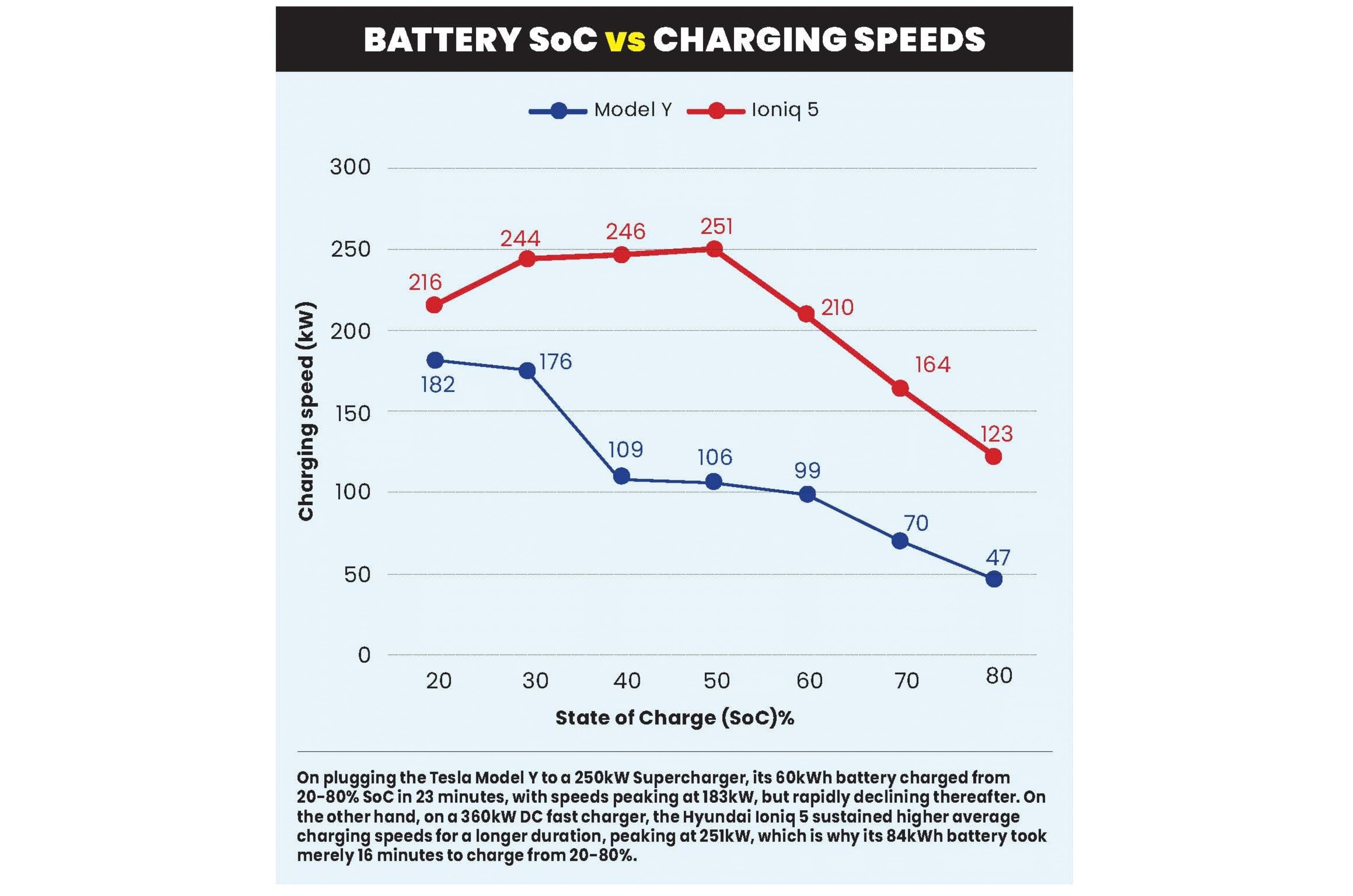
As for charging performance, we plugged the Model Y into a 250kW Tesla Supercharger, where it achieved peak charging speeds of 183kW. However, the Model Y does not sustain such high speeds for long, and its 60kWh battery is charged from 20-80 percent SoC in 23 minutes. From there, it took an additional 30 minutes to reach a full charge.
The Hyundai Ioniq 5 performs even better. Connected to a 360kW DC fast charger, its 800V electrical architecture enabled it to consistently maintain higher average charging speeds, peaking at 251kW. As a result, its 84kWh battery charged from 20-80 percent SoC in just 16 minutes. Like the Tesla, however, it required an additional 33 minutes to charge from 80 percent to full.
Tesla Model Y vs Hyundai Ioniq 5: Verdict
The Ioniq 5 no longer offers the value it once did. The Model Y, however, does.
The Tesla Model Y makes a compelling case for itself. It is quicker, more technologically advanced and backed by software that remains among the best in the automotive world. Crucially, it is now the more affordable option, making it a very tempting proposition. However, its over-reliance on the touchscreen, heavy steering, a firm low-speed ride and limited range due to the smaller battery count against it.
In comparison, the Hyundai Ioniq 5 remains the more rounded package. Its superior ride comfort, more intuitive cabin, significantly longer real-world range and impressive charging performance give it a clear edge where it matters most. More importantly, it feels better adapted to Indian roads and daily usage, thanks to its lighter steering and more comfortable ride.
At current prices, though, the Hyundai no longer holds the value card, nor does the brand command the same equity or snob value as some similarly priced rivals. But judged purely on its merits, the Hyundai Ioniq 5 continues to be the best all-round EV at this price point and thus gets our vote.
Not too long after a significant update, Mahindra has given the Thar yet another shot in the arm. The Thar OG now gets a whole new set of upgrades to the design, interior and, mainly, under the skin. A new suspension, new steering and added features are all part of the aim to make it more liveable and urban-friendly while retaining the Thar’s butch and bullyish character. Have they succeeded?
Mahindra Thar OG exterior design and engineering – 9/10
Design updates have retained the classic Thar look and road presence.
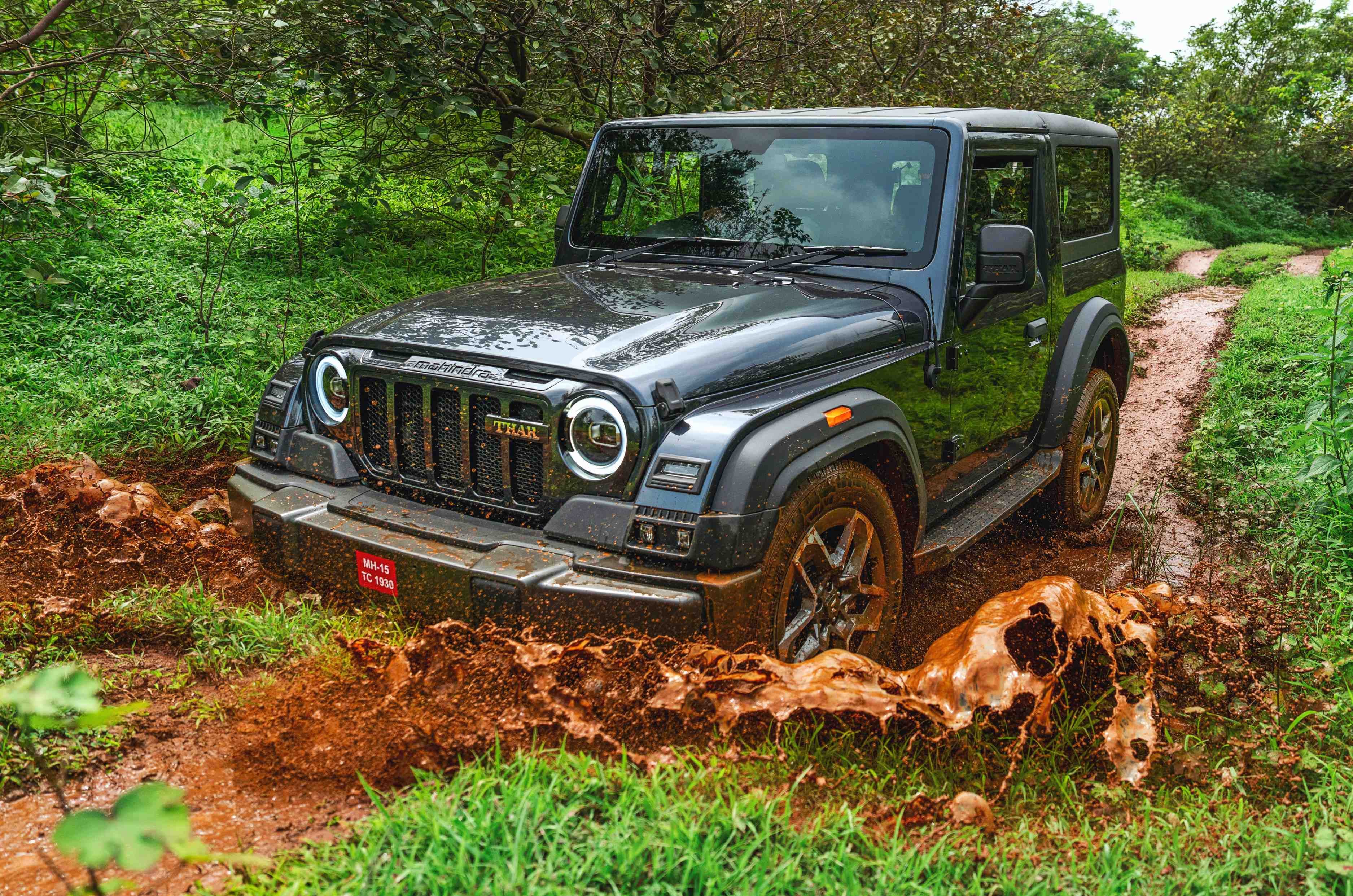
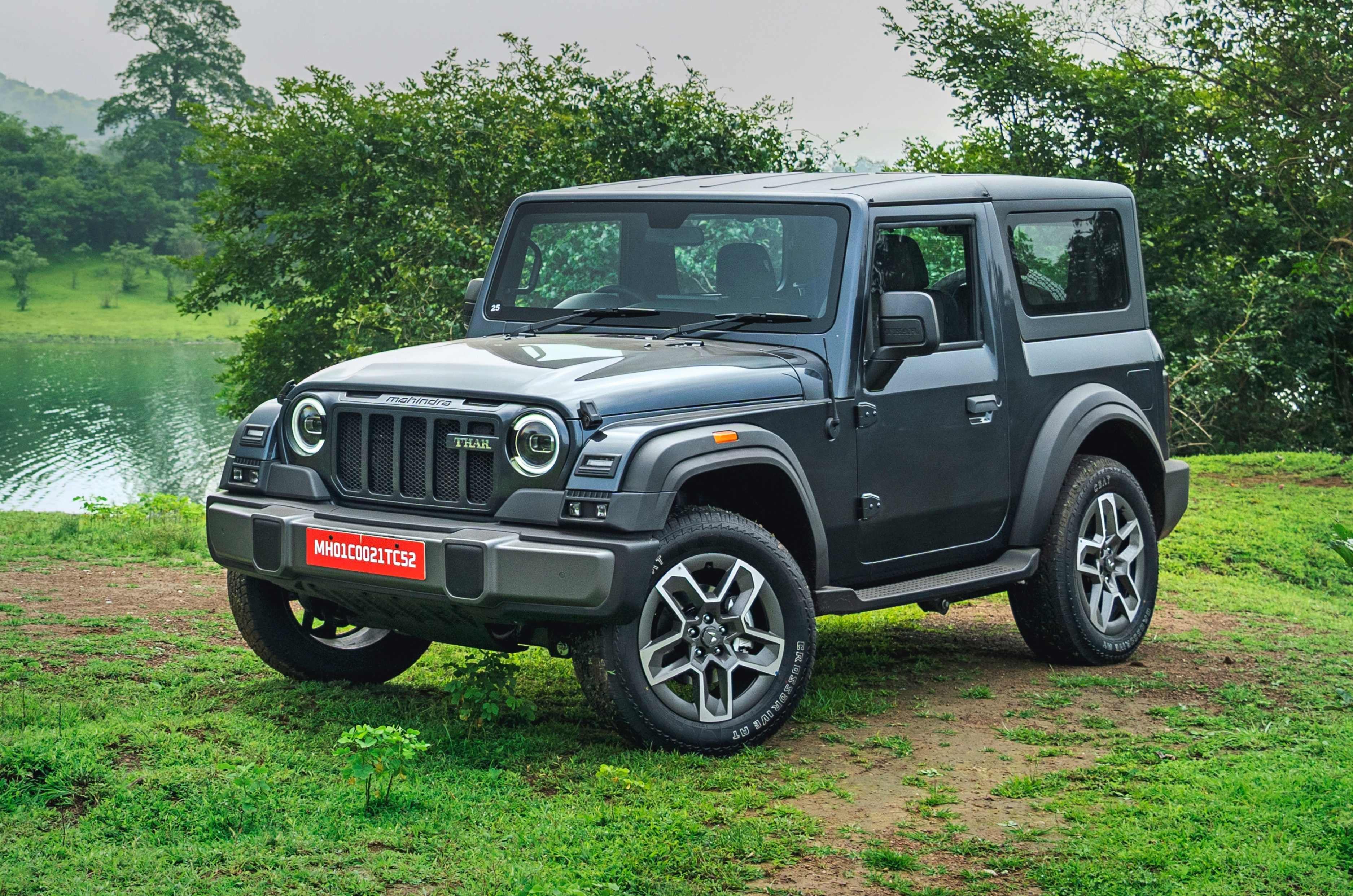
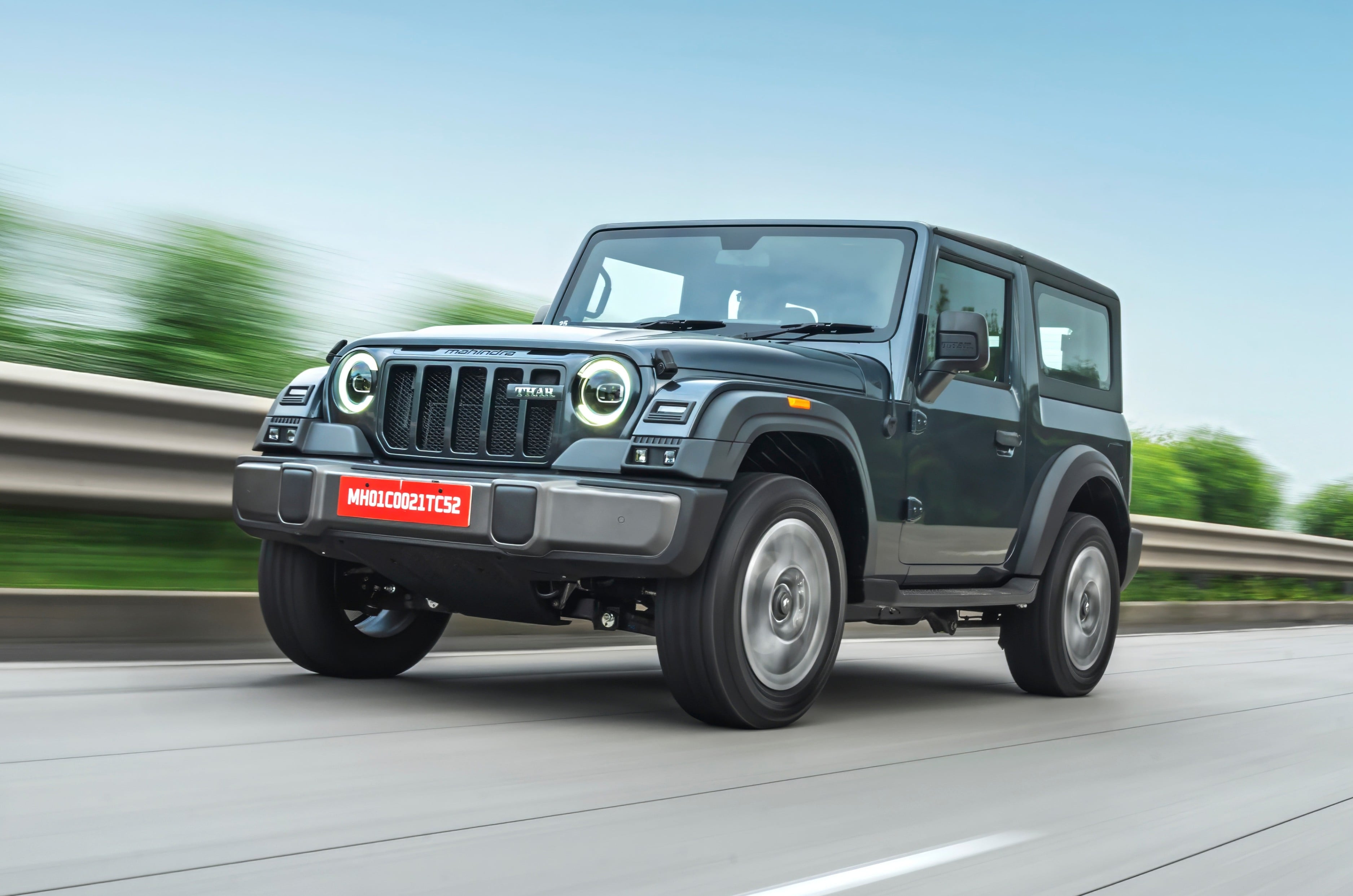
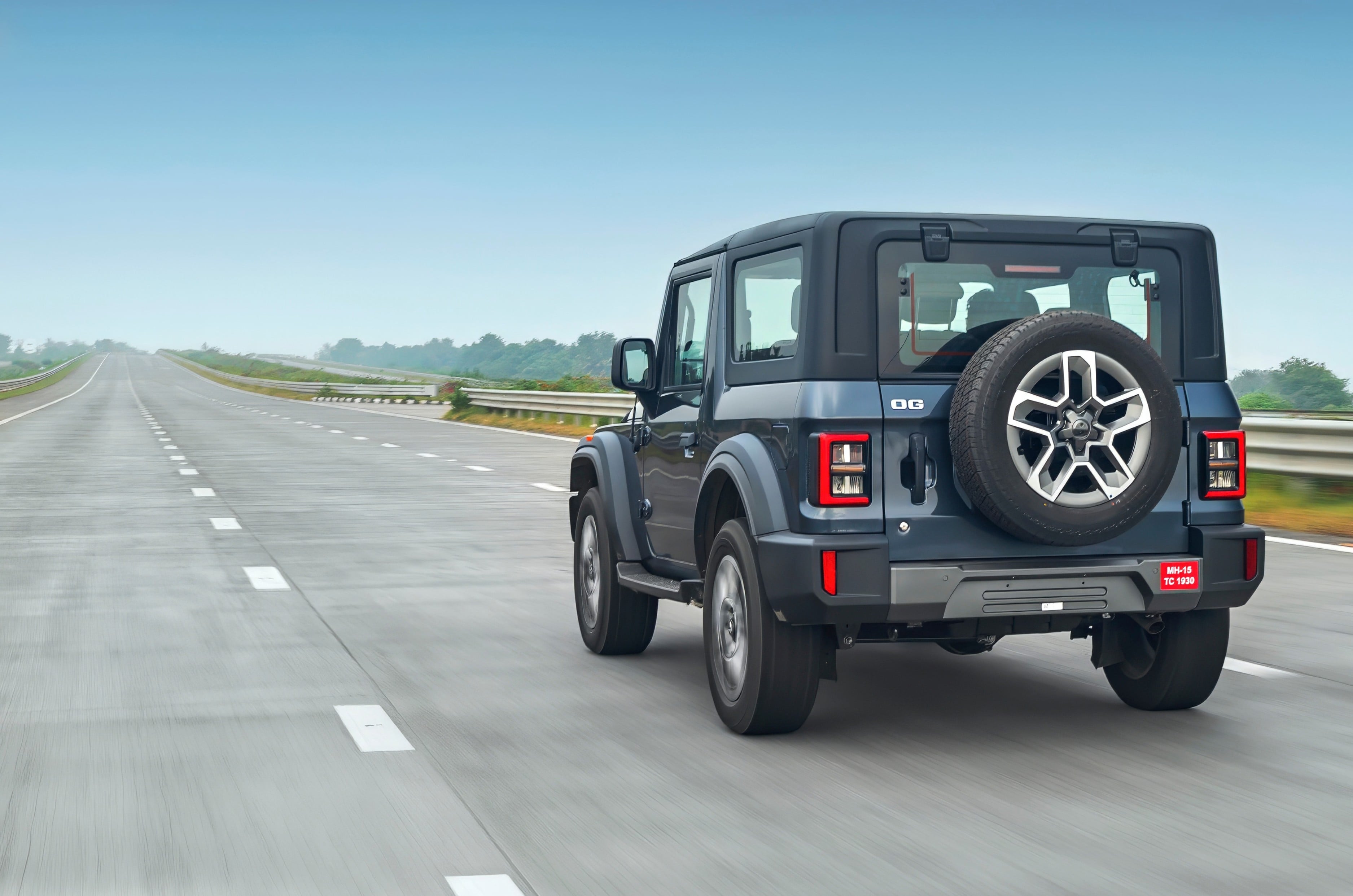
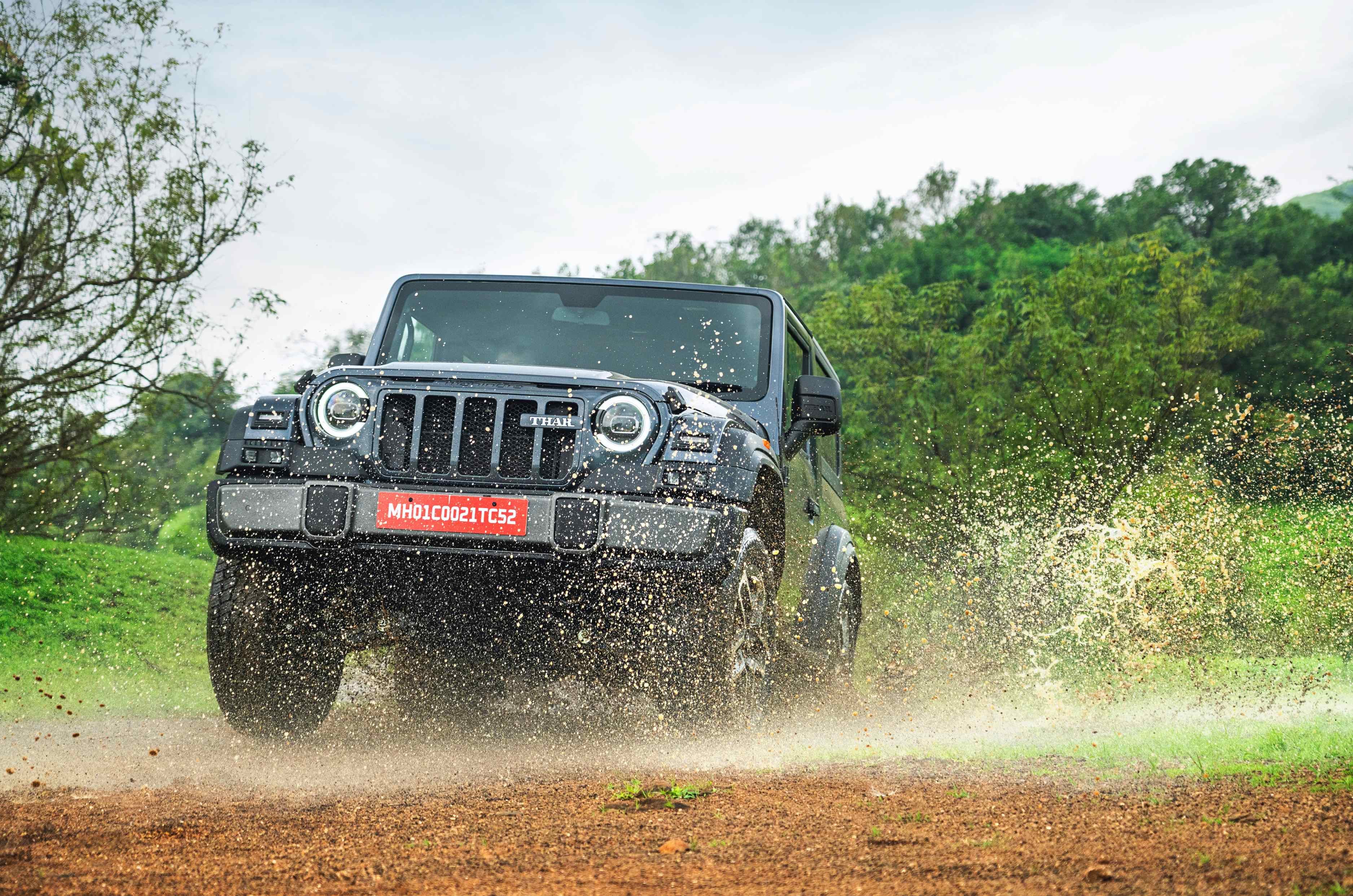
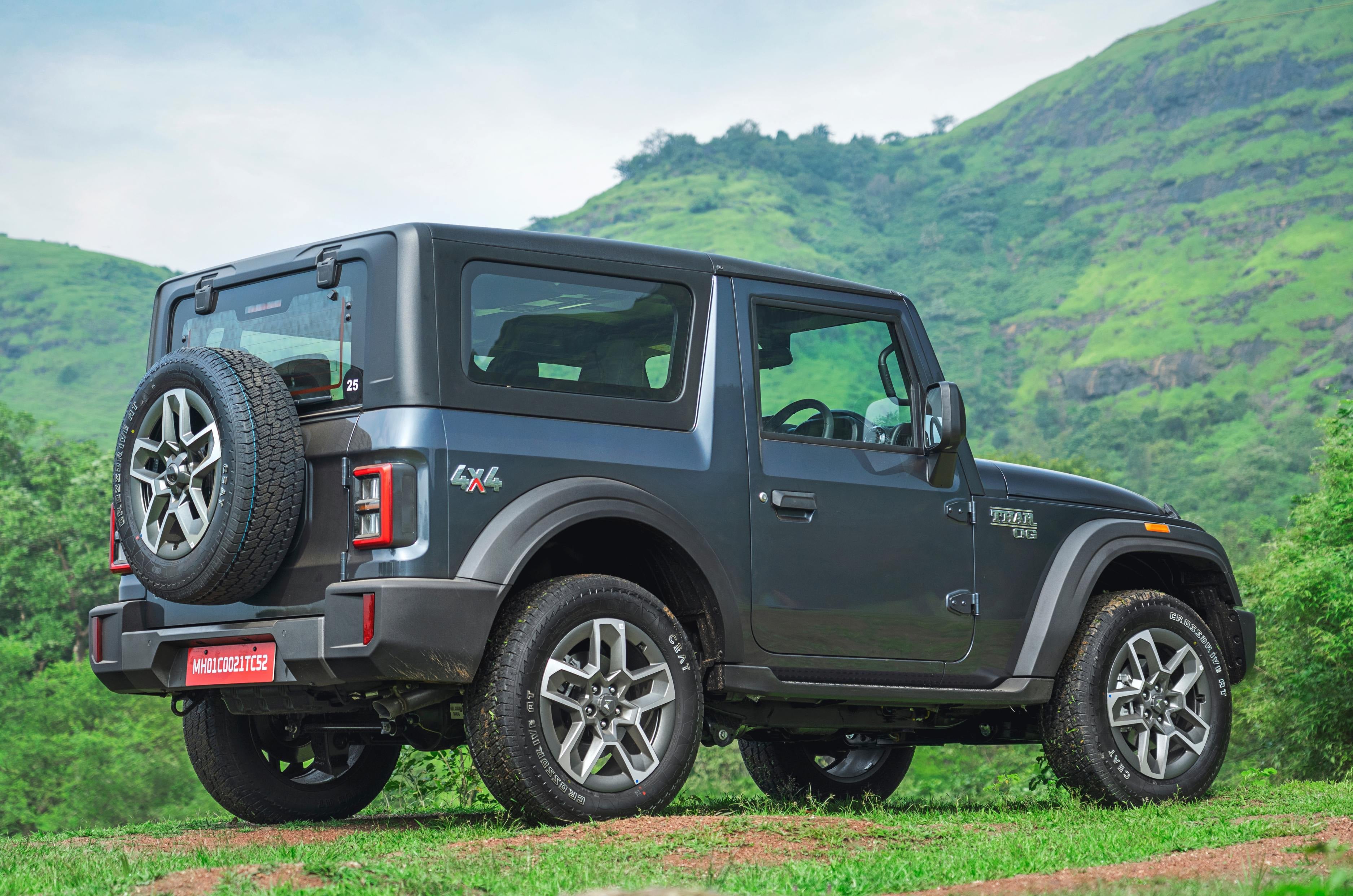
The design is why the Thar stands out, so Mahindra has not done much to change its character. However, it now gets some modern touches. At the front, the halogens are replaced with LED headlamps with C-shaped LED DRLs, along with LED fog lamps. The grille has been redesigned, with the Thar logo forged into it, and so has the front bumper. Look closer, and you will also see front parking sensors now, while the track has been widened for more stability.
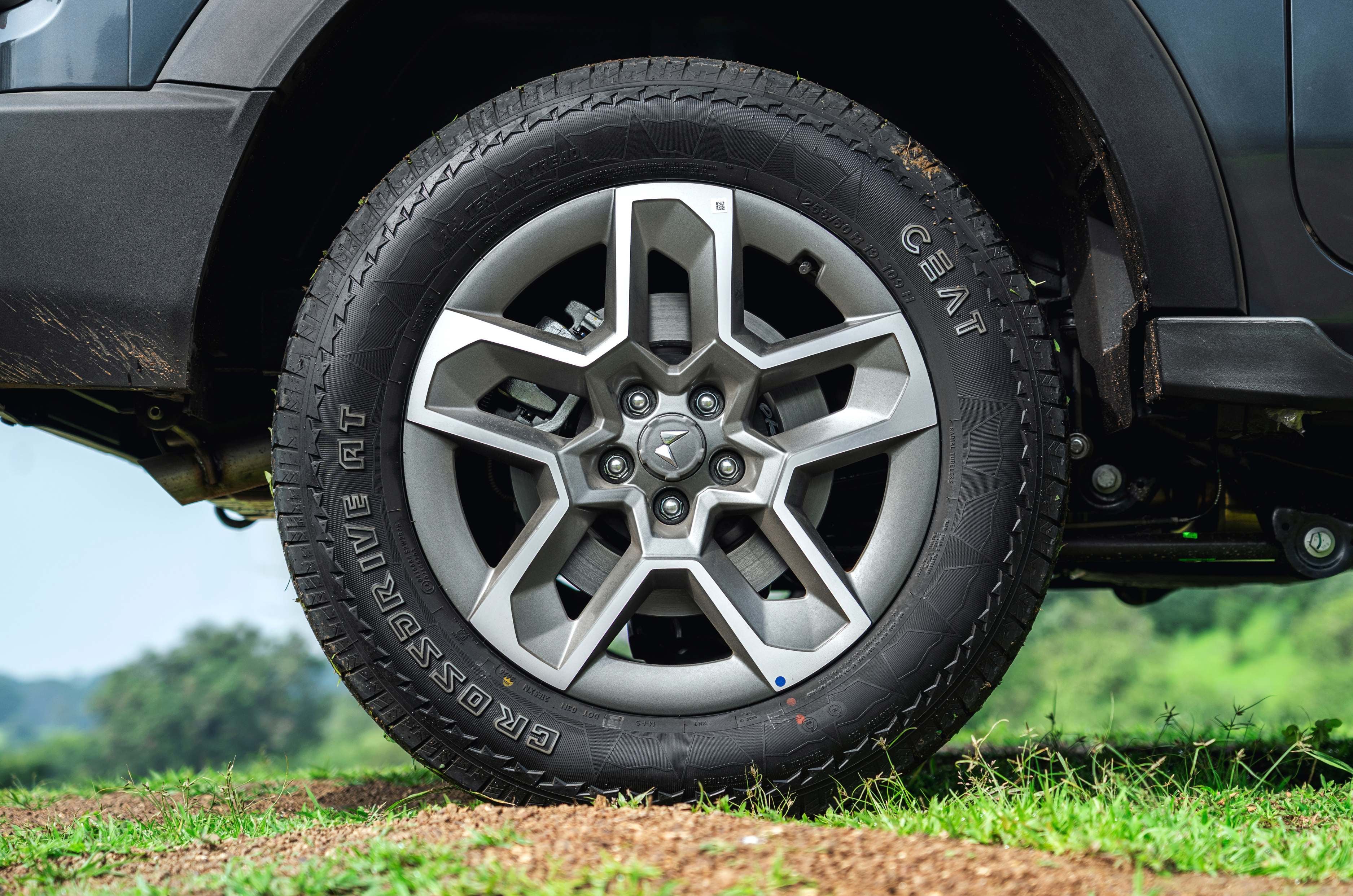
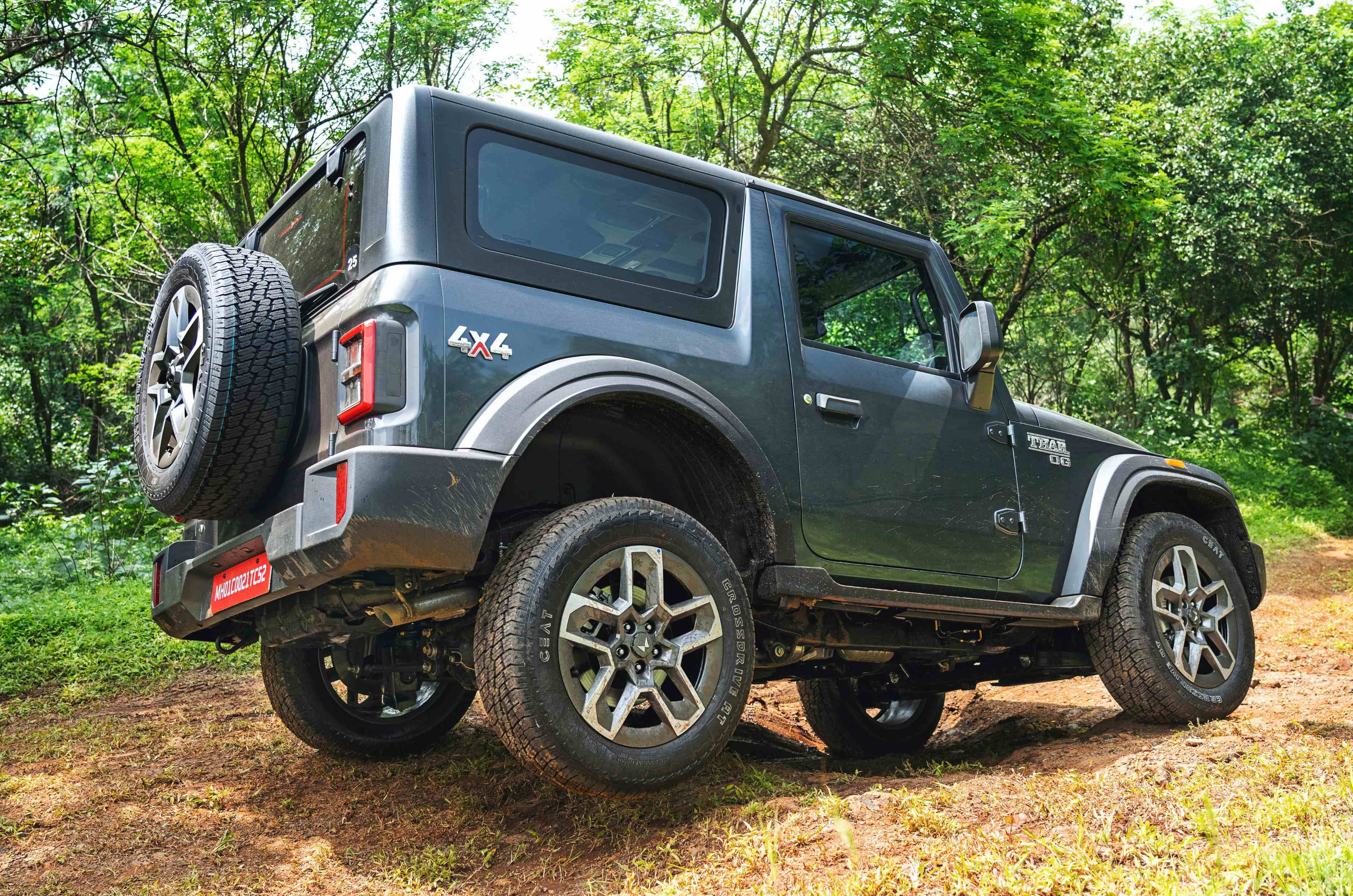
19-inch alloy wheels with AT tyres add to the toughness.
What you don’t see is the new platform the Thar sits on. The OG is now based on the Gen 4 chassis, dubbed M-Glyde, which also serves the Roxx. The side profile flaunts new 19-inch wheels with AT tyres, the Thar OG badge and a new design for the cladding.
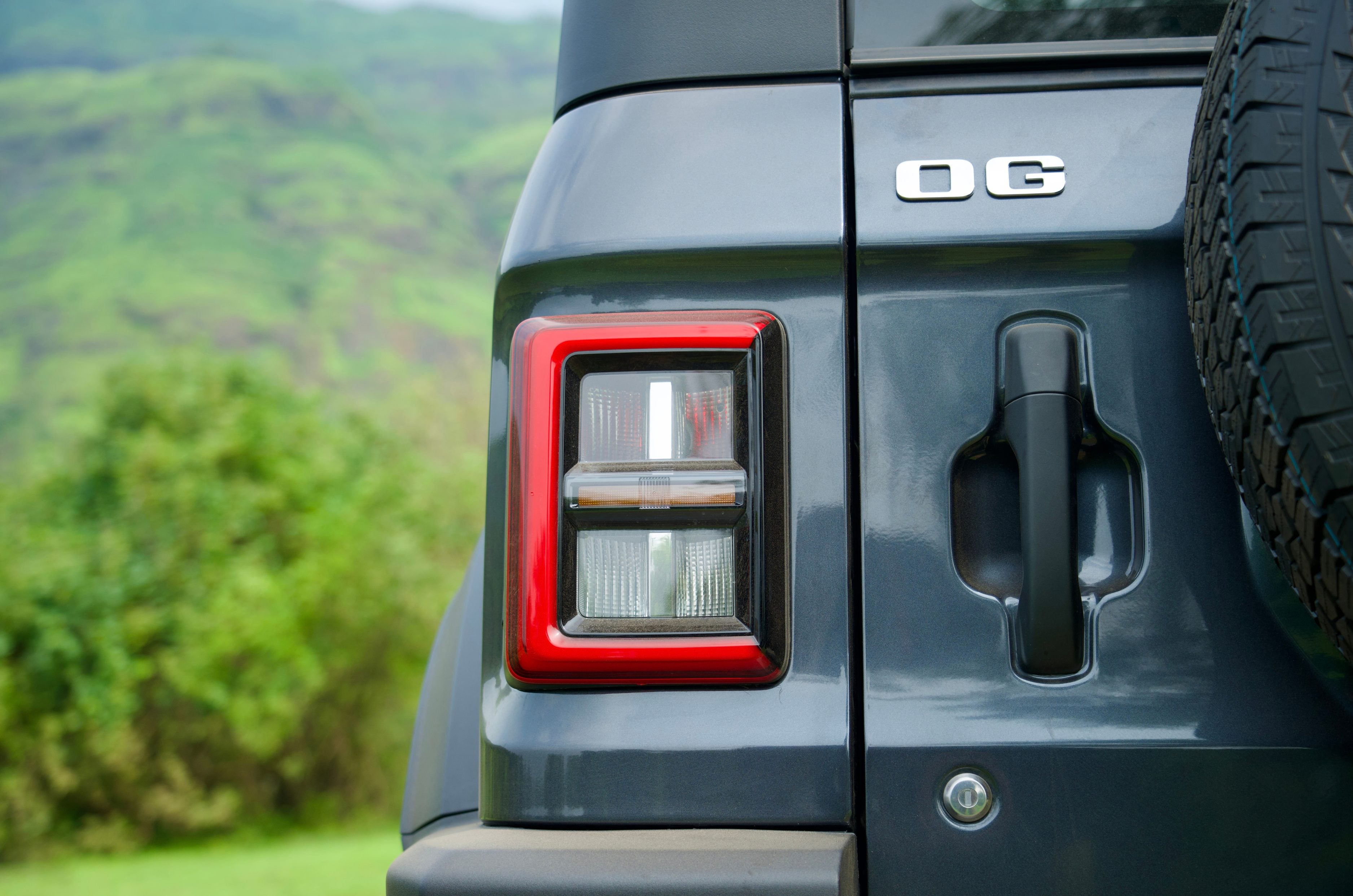
LED taillamps are similar to the Thar Roxx.
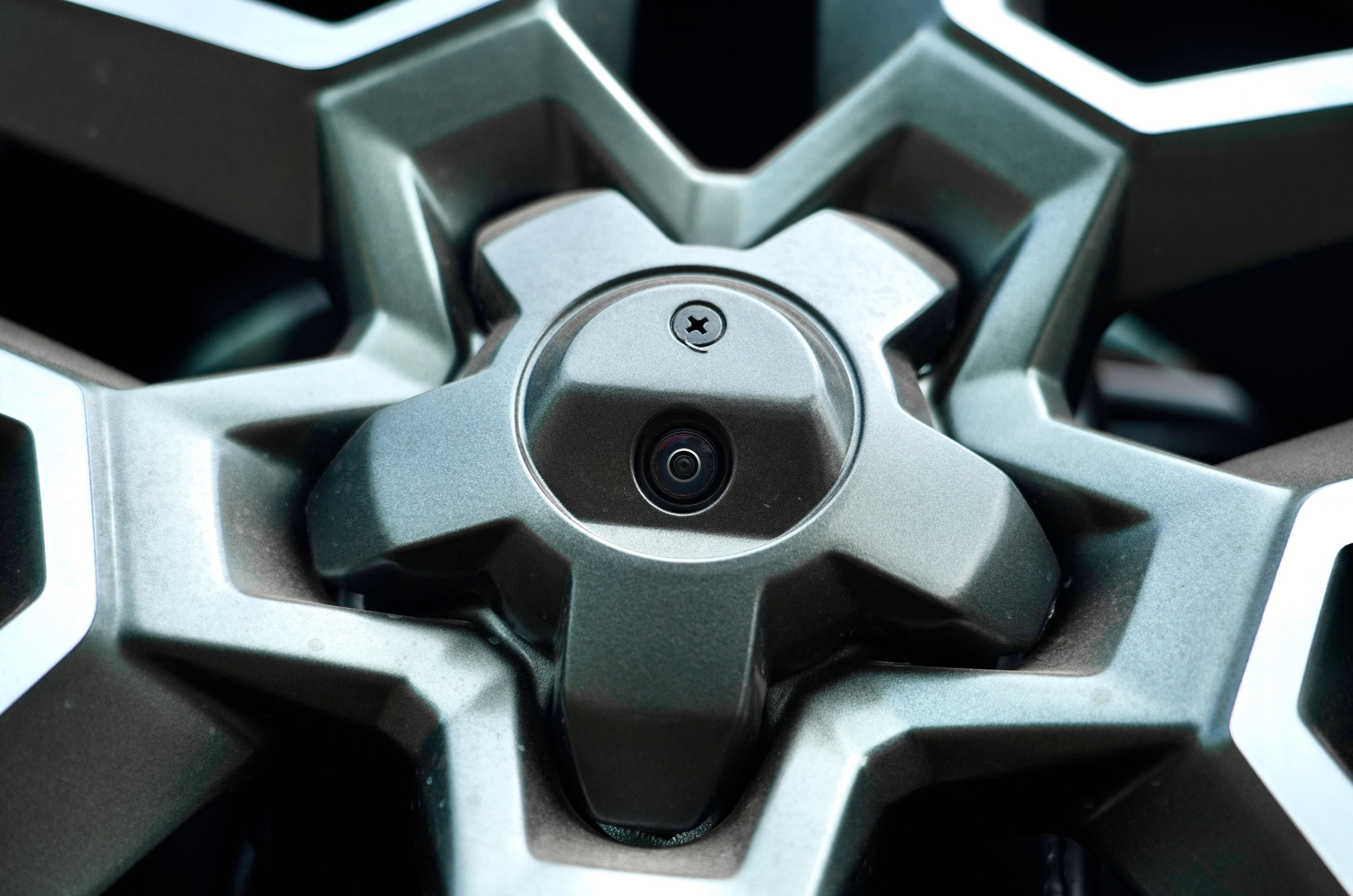
The rear continues with the LED treatment, with C-shaped taillamps, a new bumper and another OG logo. A closer look reveals a rear camera in the centre of the spare wheel.
The reversing camera is tucked in the centre of the spare wheel.
Overall, the imposing, butch design remains, with new modern touches.
Mahindra Thar OG interior space and comfort – 6/10
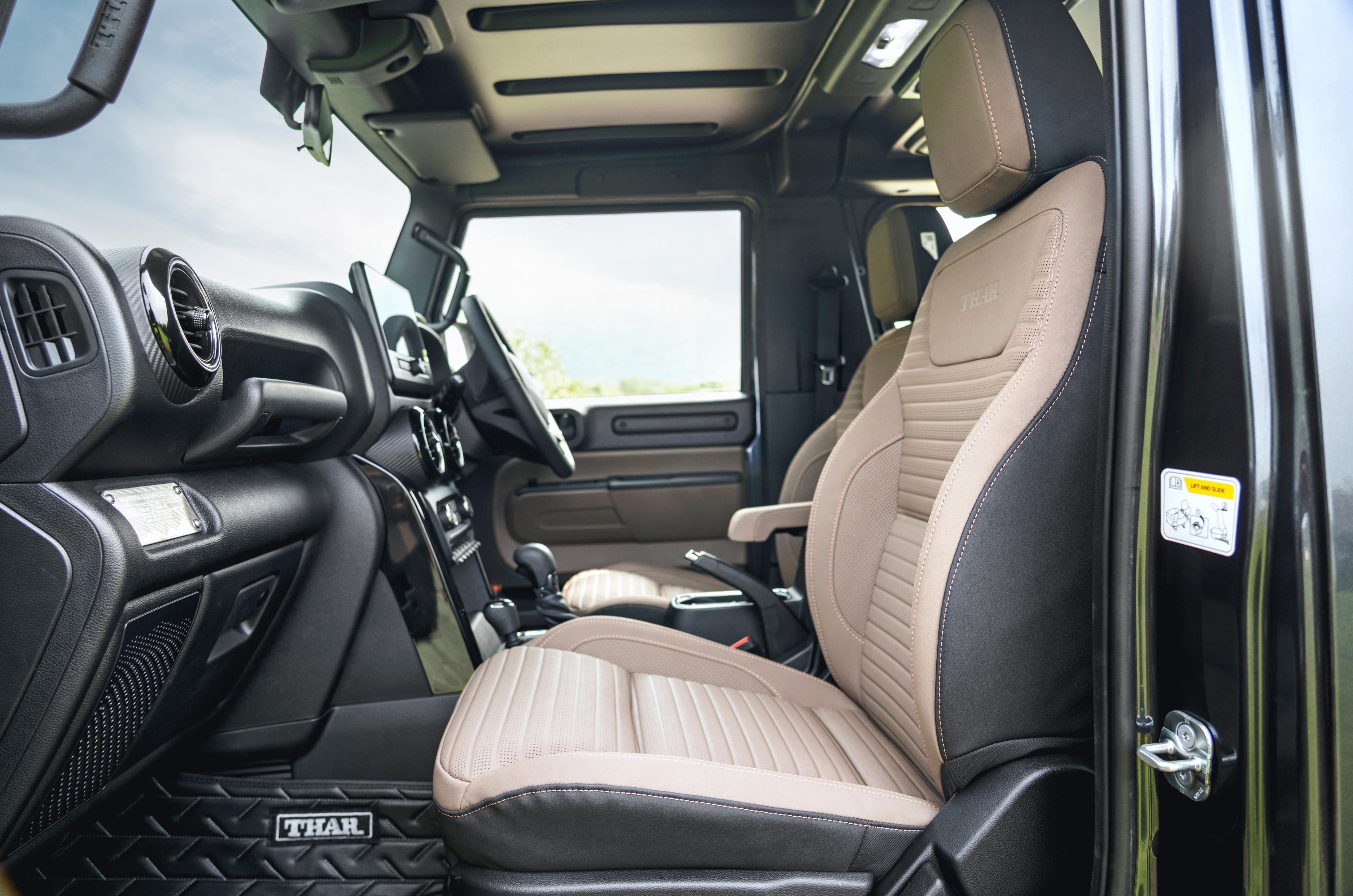
Top-spec ZXT trim gets leatherette upholstery in a new shade.
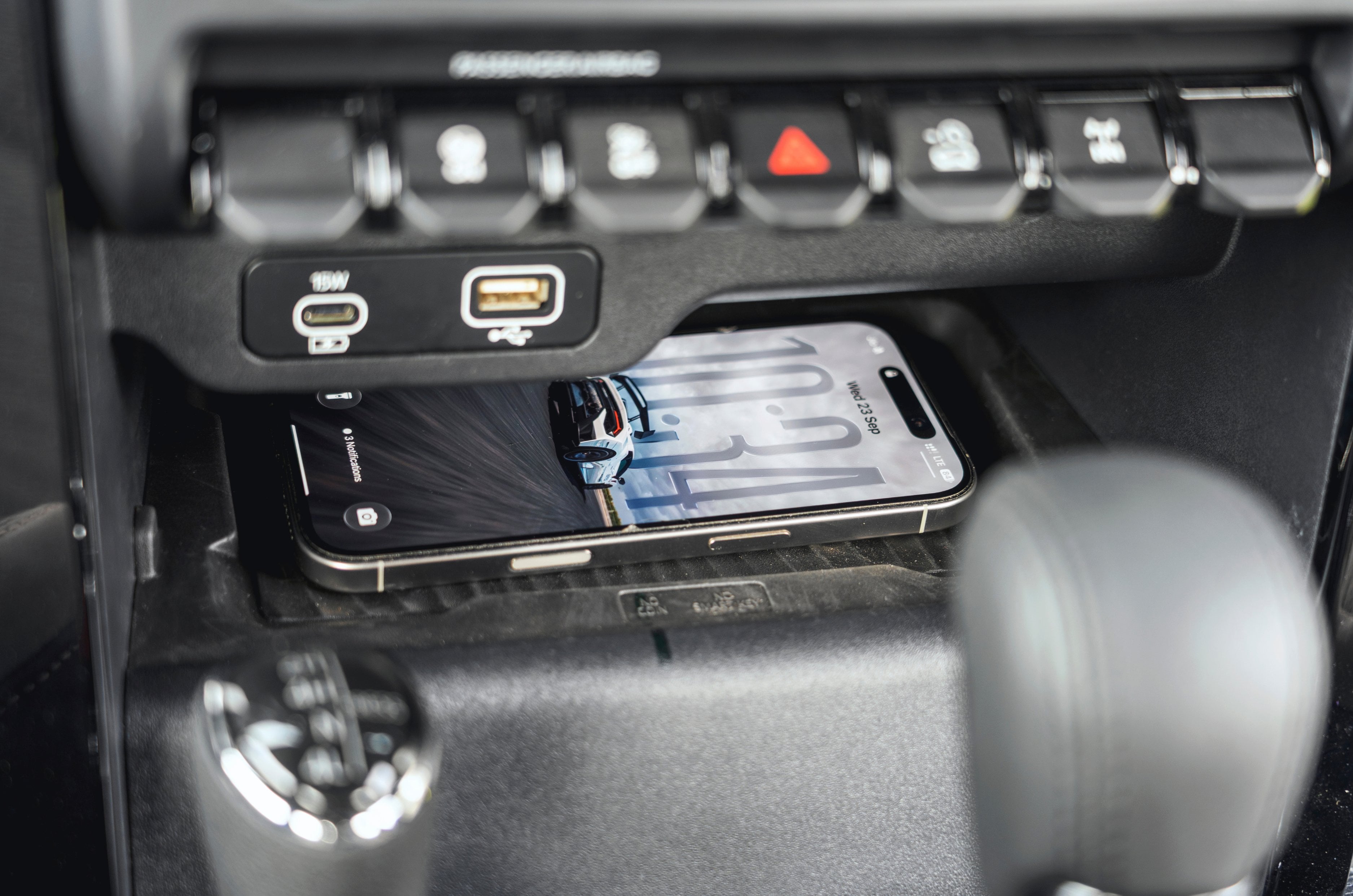
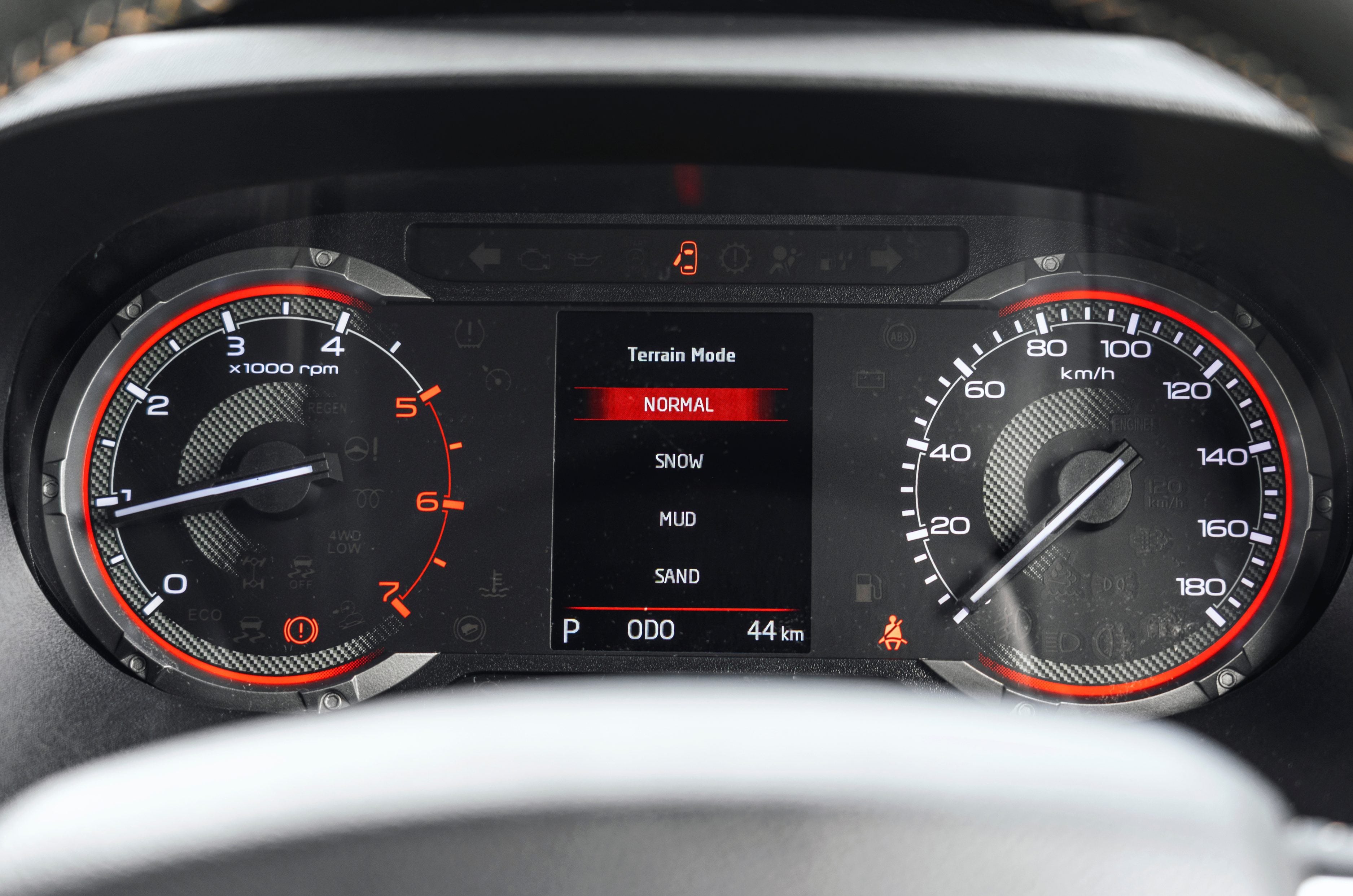
Compared to the exterior, the changes on the inside are a lot more subtle. The new top-spec ZXT trim gets leatherette upholstery finished in a shade of brown, which looks premium with the exposed stitching. There is a new wireless charger and two new switches on the centre console: one for the terrain modes and the other to engage the electronic locking differential.
Gets a new wireless phone charger and different switchgear.
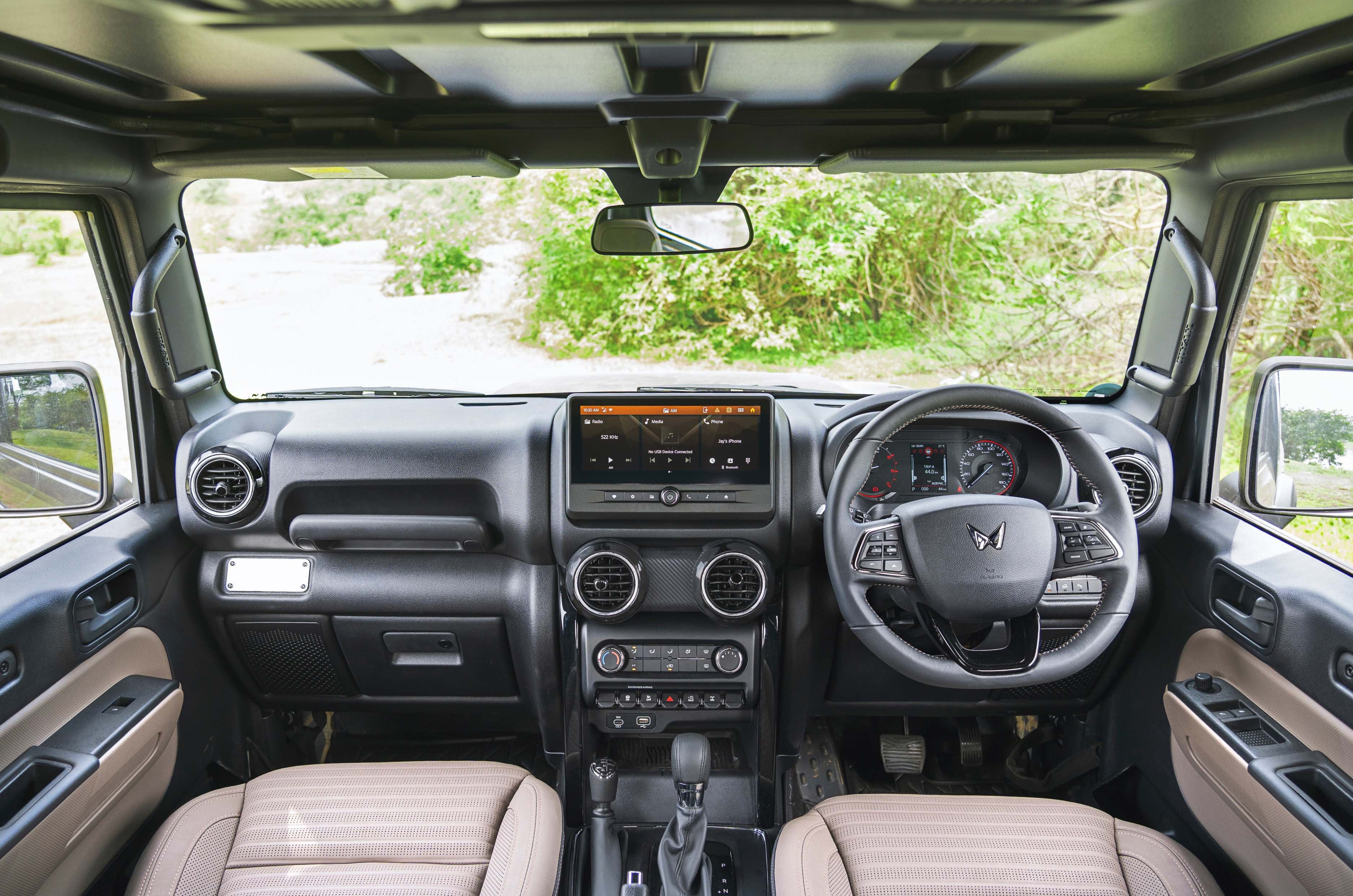
The Thar received a facelift around a year ago, when the cabin was brought up to date with a new steering wheel, touchscreen and dashboard, and these features have been carried over to the OG. The seats are broad and comfy but miss out on ventilation. The two dummy buttons on the centre console will hopefully be used for this feature soon.
Dashboard design is unchanged from the 2025 facelift.
The steering wheel is also the same as before, as is the analogue instrument cluster with an MID in the centre. The plastics, however, feel low-rent, especially when you consider the rivals in the same price bracket.
Just enough room in the rear seat; gets AC vents now.
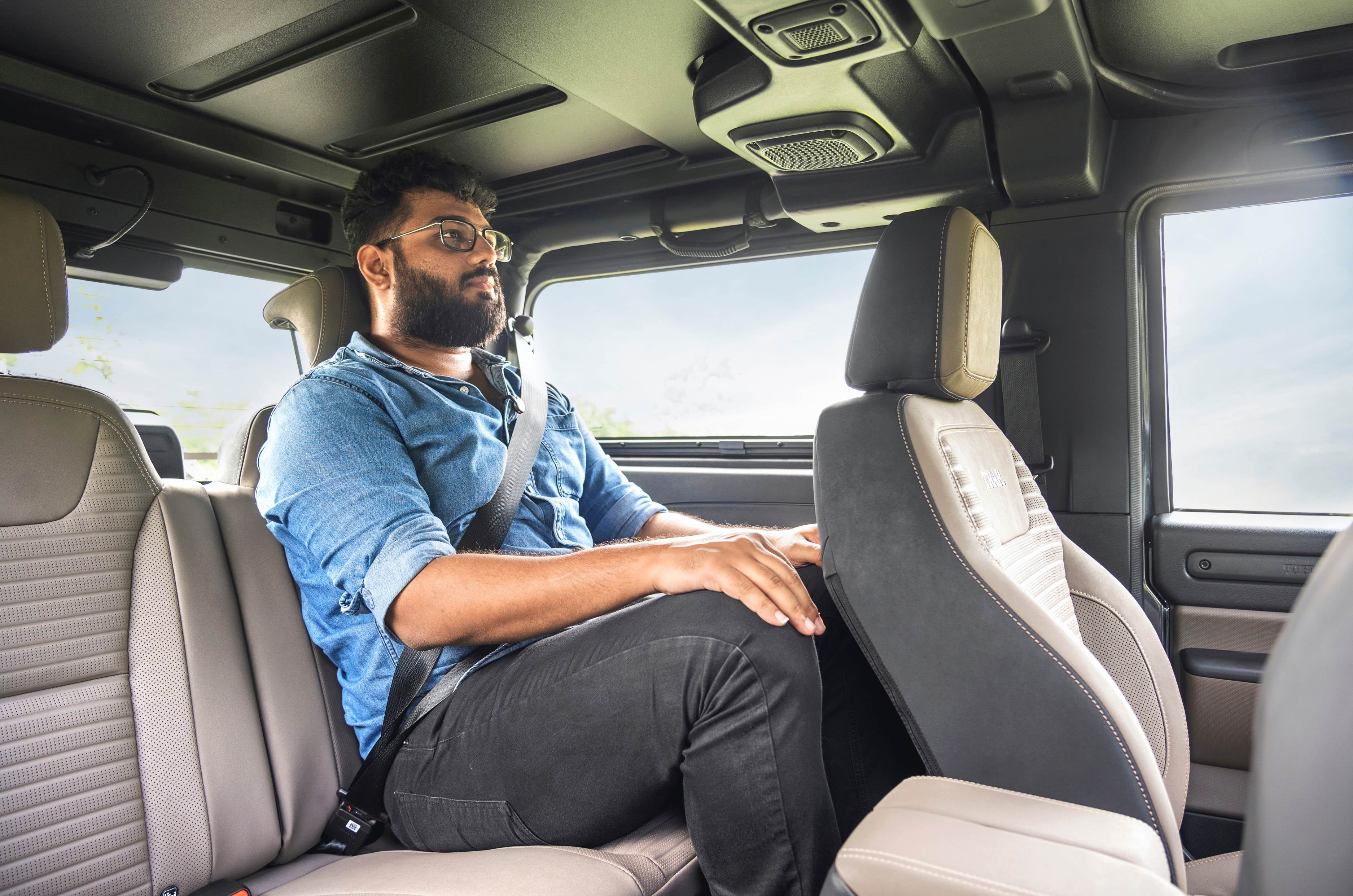
At the rear, space remains as it was, and it is exclusively a two-seater. However, the addition of AC vents, a USB-C port and soft-plastic armrests with cupholders has enhanced comfort. The backrest can recline, and short drives should be easy once you settle in.
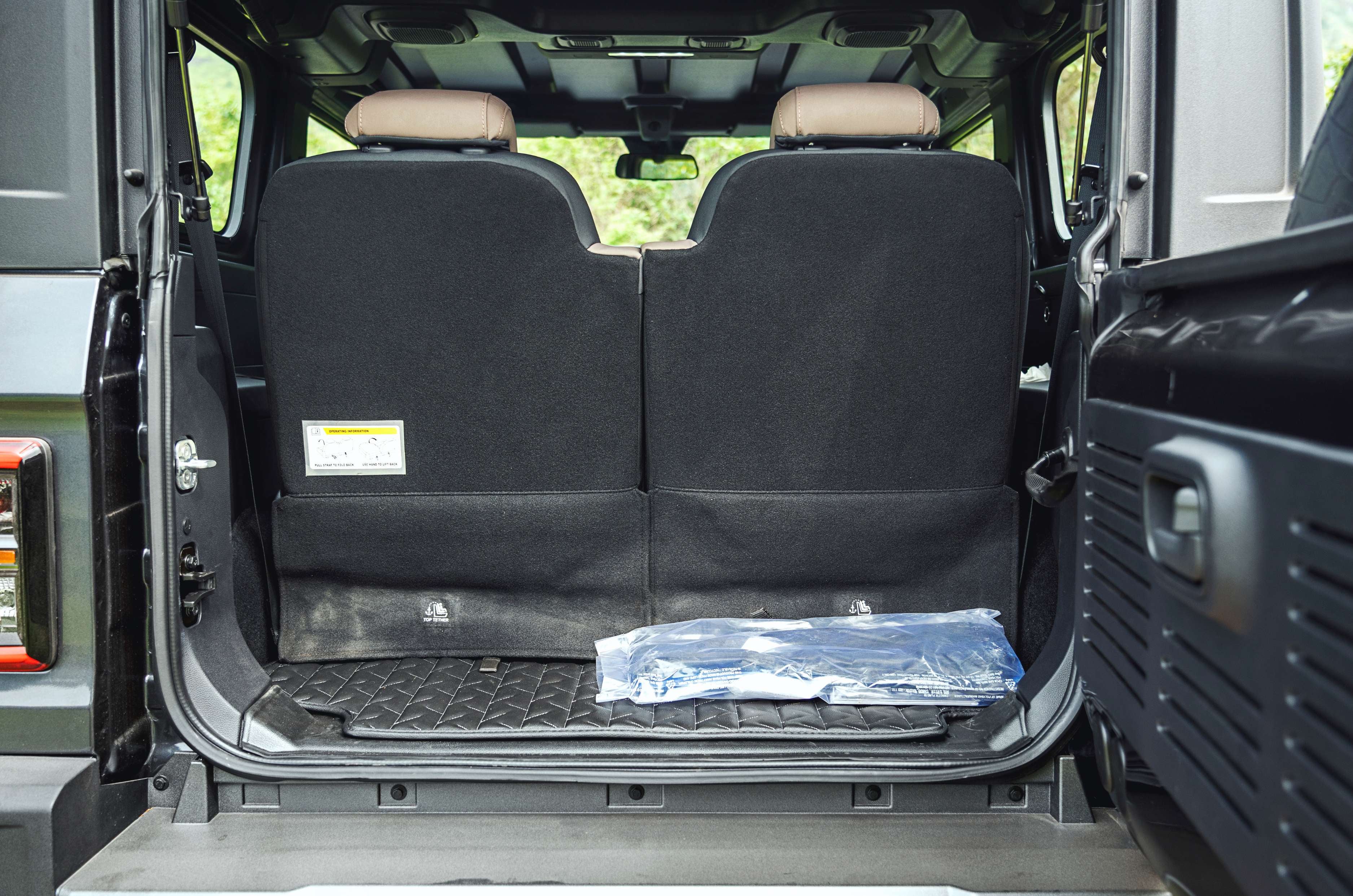
Boot space is still not adequate for long trips or airport runs without folding the second row.
The boot space remains a weak point too, with barely any room for an airport run. Large suitcases will require folding down the second row.
Mahindra Thar OG features and safety – 7/10
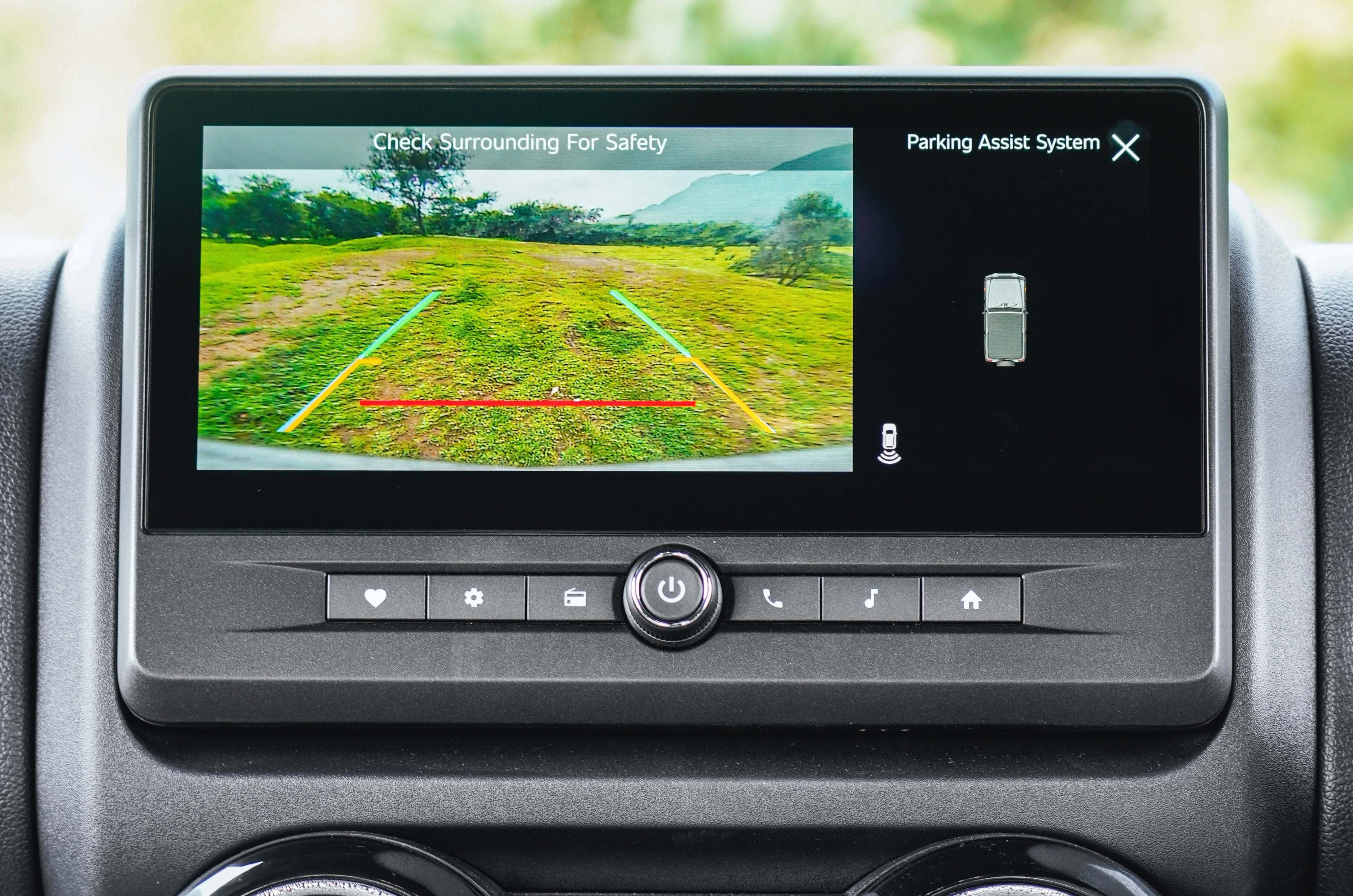
Not the best clarity and misses a 360-degree view, which is essential for off-roading.
The Thar OG isn’t on par with rival mid-size SUVs but does get the essentials this time around. There are grab handles, manual AC controls, a USB-A port for Apple CarPlay since it isn’t wireless, and a USB-C port for charging. Android Auto gets wireless connectivity.
Crucially, the ZXT trim gets six airbags now, with the launch of the new HPTS airbags, which stand for Head, Pelvis, Thorax and Shoulder. There are front parking sensors with a reversing camera now, although, given the Thar’s off-road bias, a 360-degree camera would have been a lot more useful. The ESP also gets a retune for better response, and then there are the big mechanical updates under the skin.
Mahindra Thar OG performance and refinement – 8/10
The bump in power and torque makes it better at highway cruising.
Powering the Thar OG is the same powertrain lineup as before, but with a bump in power and torque for the turbo-petrol engine and the bigger diesel. We had the 2.2-litre diesel engine on test with the six-speed automatic gearbox. The engine now produces 152hp and 330Nm, which is 18hp and 30Nm more than the outgoing unit.
To be honest, the jump in performance is not evident initially, as Mahindra engines have always had a good off-the-line response. Where the power comes in is in the second half of the rev band. Highway cruising at triple-digit speeds is a bit more effortless now, but you wouldn’t enjoy rushing the Thar. Sedate cruising is what it does best.
Highway stability is better now, but over an uneven stretch it still tosses you around.
What Mahindra has also improved is NVH, and the cabin is a bit more muted now. You still hear the diesel drone past 2,500rpm, but overall sound damping has been improved.
The gearbox, too, likes to pace itself, and quick overtakes come at the cost of engine noise. The shifts are smooth but relaxed, and even in manual mode, you don’t get much better response. Enthusiastic driving is not something the Thar enjoys, contrary to the infamous videos circulating online.
Mahindra Thar OG ride comfort and handling – 7/10
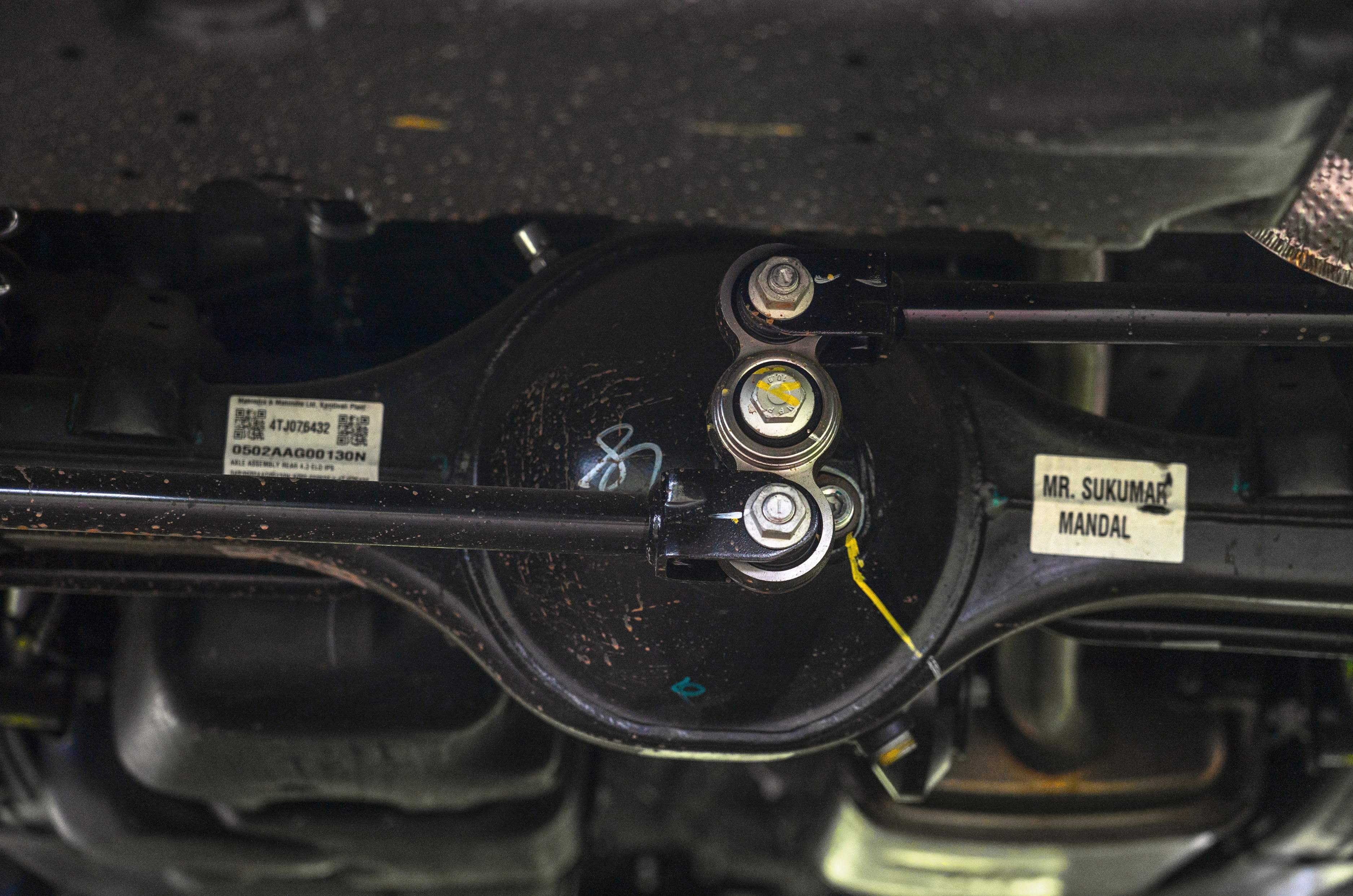
Rear pentalink suspension with Watts linkage for added stability and comfort.
The biggest advances to the Thar OG have taken place under the body. The stiffer Gen 4 chassis is paired with a new Pentalink suspension at the rear, with a Watts linkage and DAVINCI dampers. Frequency-dependent damping, however, is only available on the top-spec trim. But has that improved the Thar on the road? The simple answer is yes.
The Watts linkage is responsible for adding stability at the rear. Imagine you’re pushing a shopping trolley. If one wheel suddenly moves sideways while you hit a bump, the trolley gets wobbly. The Watts linkage basically tells the axle: “You can go up and down, but please stay in the middle.” The effect is less bouncing over uneven highways and bad patches.
The electronic locking differential is now convenient to use, making the Thar just as capable as before.
Then there is the DAVINCI damping that was seen on the XUV 7XO. The thuds coming from sharp, low-speed bumps are now not as harsh and, while it will still toss you around, if you hit a bad bump, it won’t unsettle the car. To add even more comfort with the bigger 19-inch wheels, the ZXT trim also gets frequency-dependent dampers along with the DAVINCI setup. Over a rough patch, you can tell they are working full-time to keep the cabin unfazed.
New gen 4 platform seen on the Roxx now underpins the 3-door Thar.
Now, as sophisticated as all of this is, the Thar OG is still a hardcore body-on-frame SUV at the end of the day. The new tech has certainly improved its on-road manners, but if you want a plush, supple ride, the Thar won’t cut it. A long drive will now be more comfortable, but you will still get knocked awake from your snooze.
Terrain modes work with ESP, throttle control and steering input for maximum assistance while off-roading.
The new EPS, however, has made a huge difference. The amount of effort needed to steer and turn the Thar is no longer a game of might. Under 20kph, the steering is light enough to twirl with just one finger, but as the speed rises, it gains heft so as not to feel uncomfortably light at speed. So, there is no need to wrangle with the steering to make a three-point turn anymore.
Also new and exclusive to the ZXT trim are rear disc brakes, which have added to the stopping power. The bite is stronger, and the Thar feels a lot more confident when slowing down now.
Mahindra Thar OG price and verdict – 8/10
The Thar OG is improved in all areas without sacrificing its character.
With a starting price of Rs 10.32 lakh, the Thar OG is rather tempting. However, for most of the new bells and whistles, you will have to opt for the top-spec ZXT trim, which starts at Rs 13.99 lakh for the 1.5-litre engine with RWD. The diesel-AT version we drove will set you back Rs 18.99 lakh, so you need to be sure of what you want. The Thar OG is mighty capable, has a lot of character and is a lot better in every area than before. But as an everyday car, you’d still want some more practicality, creature comforts and refinement. However, if you are someone who likes to off-road or even just take the long way home with little regard for plushness, there is nothing like the Thar OG under Rs 65 lakh.
The BMW i7 has been embraced wholeheartedly by India’s ultra-high-net-worth buyers. Since its launch in 2023, it has dominated the high-end luxury sedan space, and interestingly, has consistently outsold its own petrol sibling. In fact, around 60 percent of 7 Series buyers have opted for the EV. With the 2026 i7 now being locally assembled in India and the i7 50 xDrive priced at Rs 1.95 crore, exactly at par with the petrol 740, BMW expects the scales to tilt even further in favour of the electric version.
BMW has also introduced the significantly more powerful i7 M70 xDrive. However, as a full import priced at Rs 2.65 crore, it commands a substantial Rs 70 lakh premium, which is likely to limit its appeal. For most buyers then, the locally assembled i7 50 xDrive is expected to remain the sweet spot of the range.
BMW i7 50 xDrive Exterior Design and Engineering – 8/10
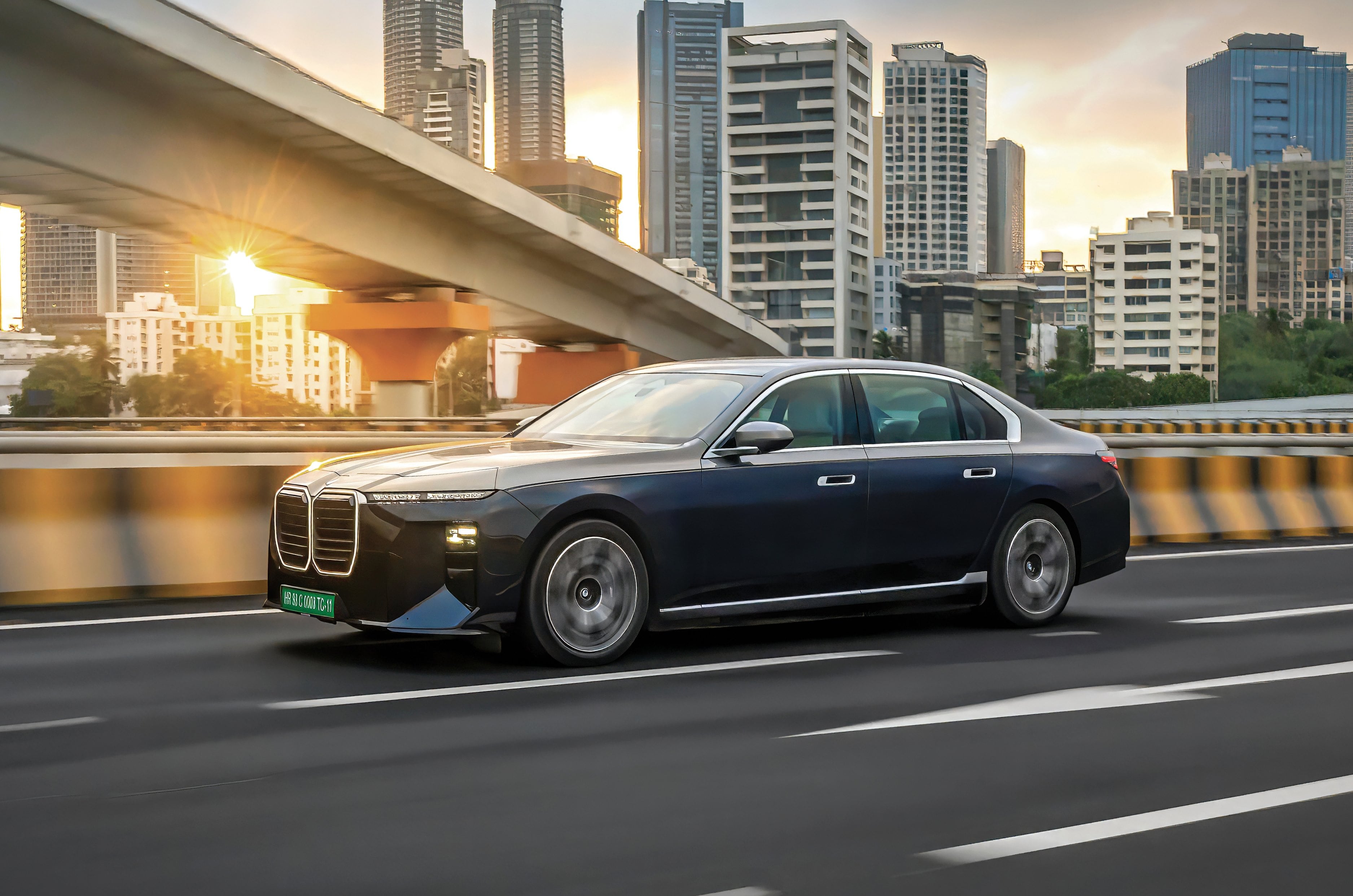
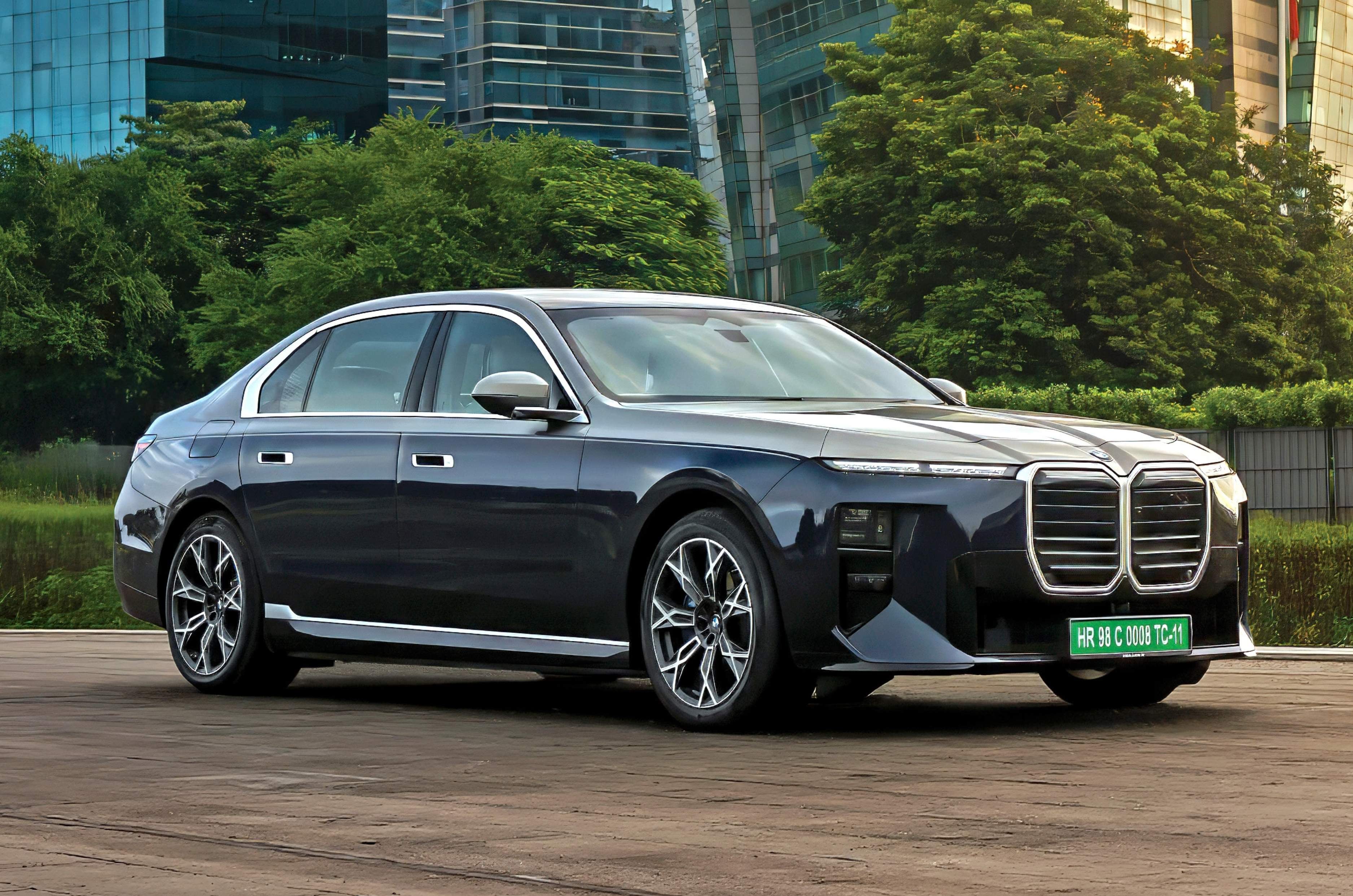
The cleaned-up styling looks significantly more palatable than its predecessor.
BMW has made substantial changes to the i7’s styling. The DRLs are now longer and slimmer, and feature a crystalline effect that looks absolutely stunning up close. The oversized kidney grille has also been redesigned and, like before, remains illuminated. The air dam adopts a more rectangular design, the headlamps are vertically oriented, and the excessive black treatment has been done away with completely.
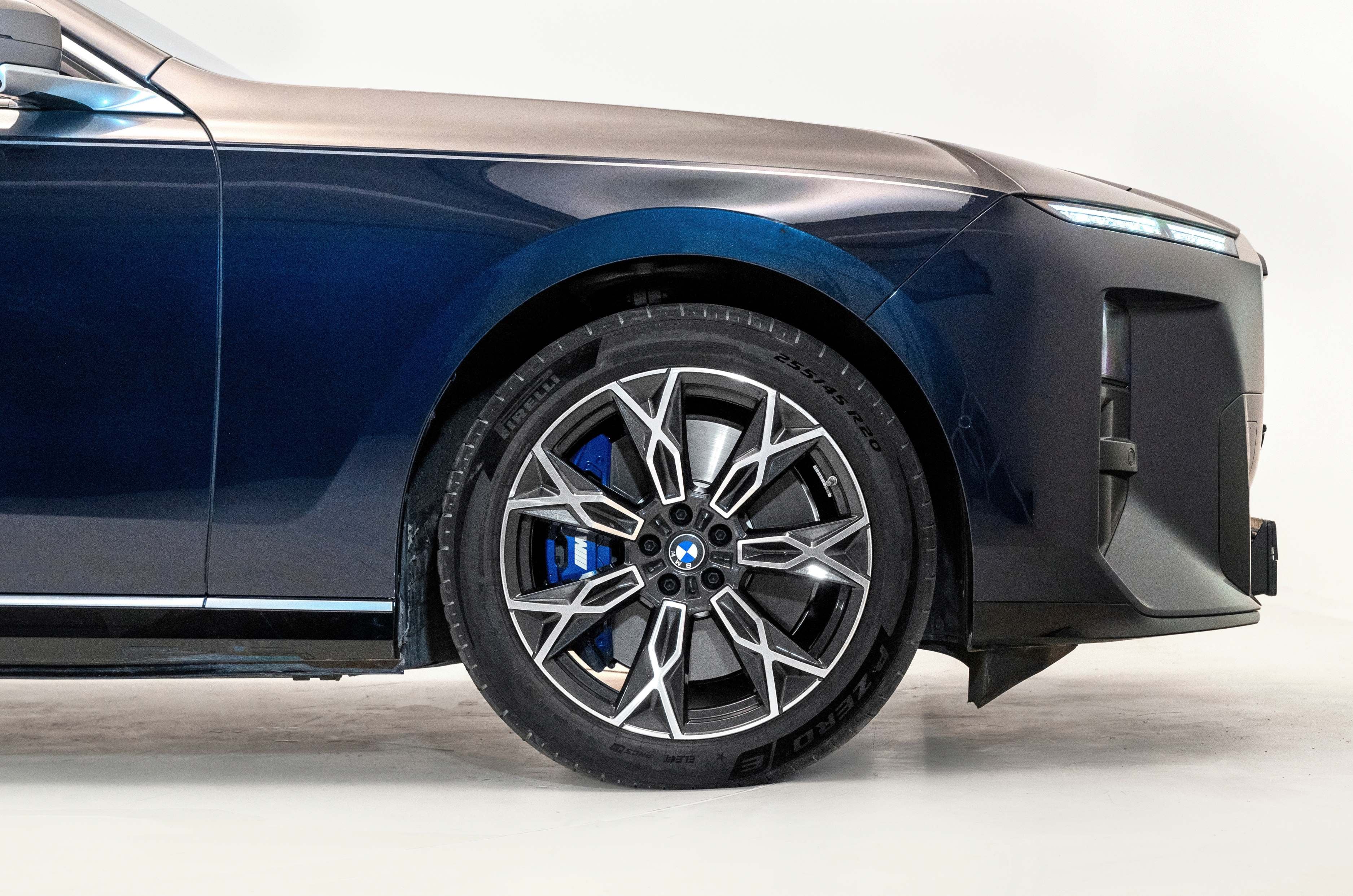
The tyres appear undersized but owners are unlikely to complain given the ride comfort benefits that come with the higher-profile tyres.
New 20-inch alloy wheels replace the outgoing version’s 21-inch units. While some might argue they appear slightly undersized, owners are unlikely to complain given the ride comfort benefits that come with the higher-profile tyres.
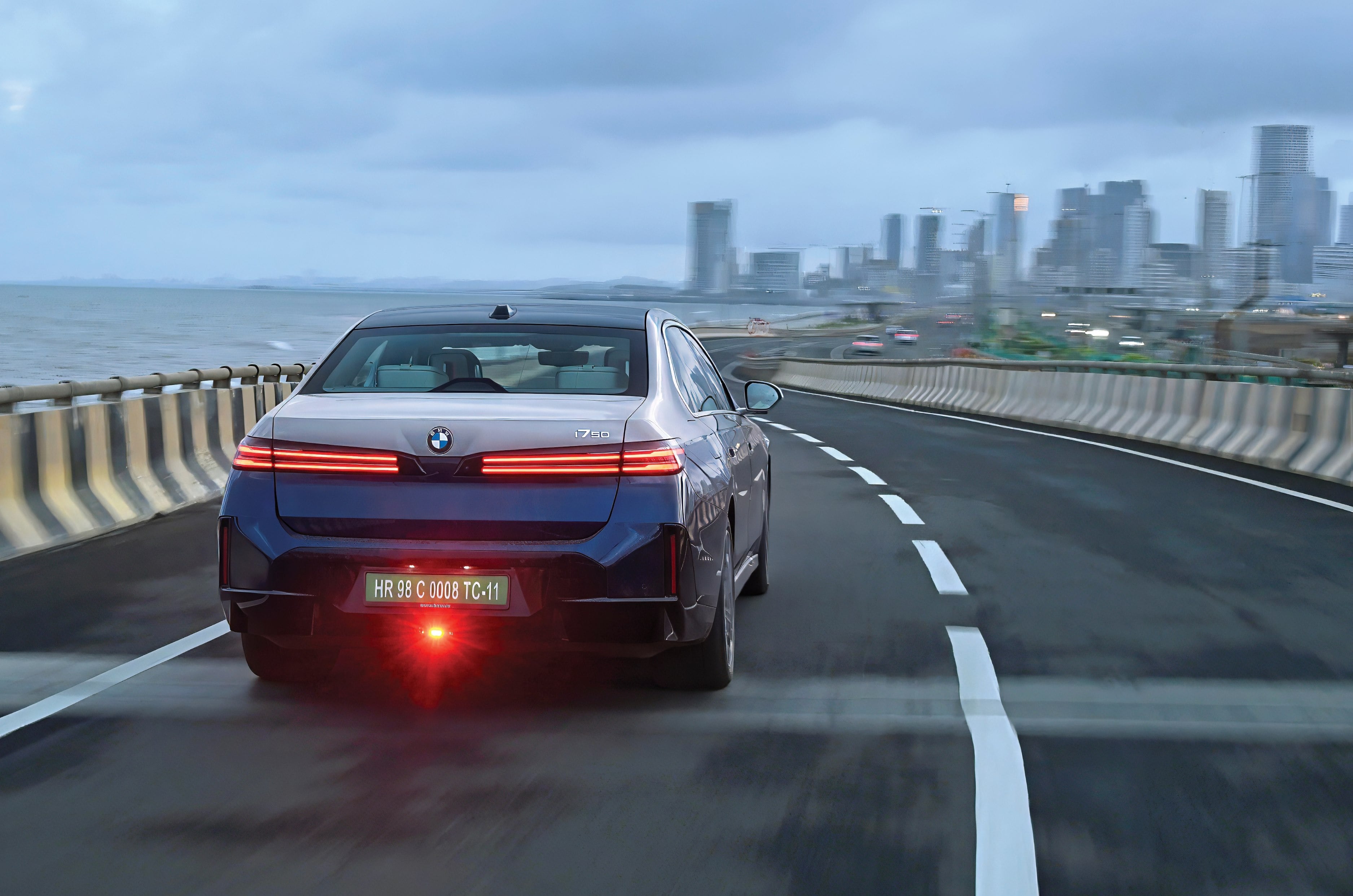
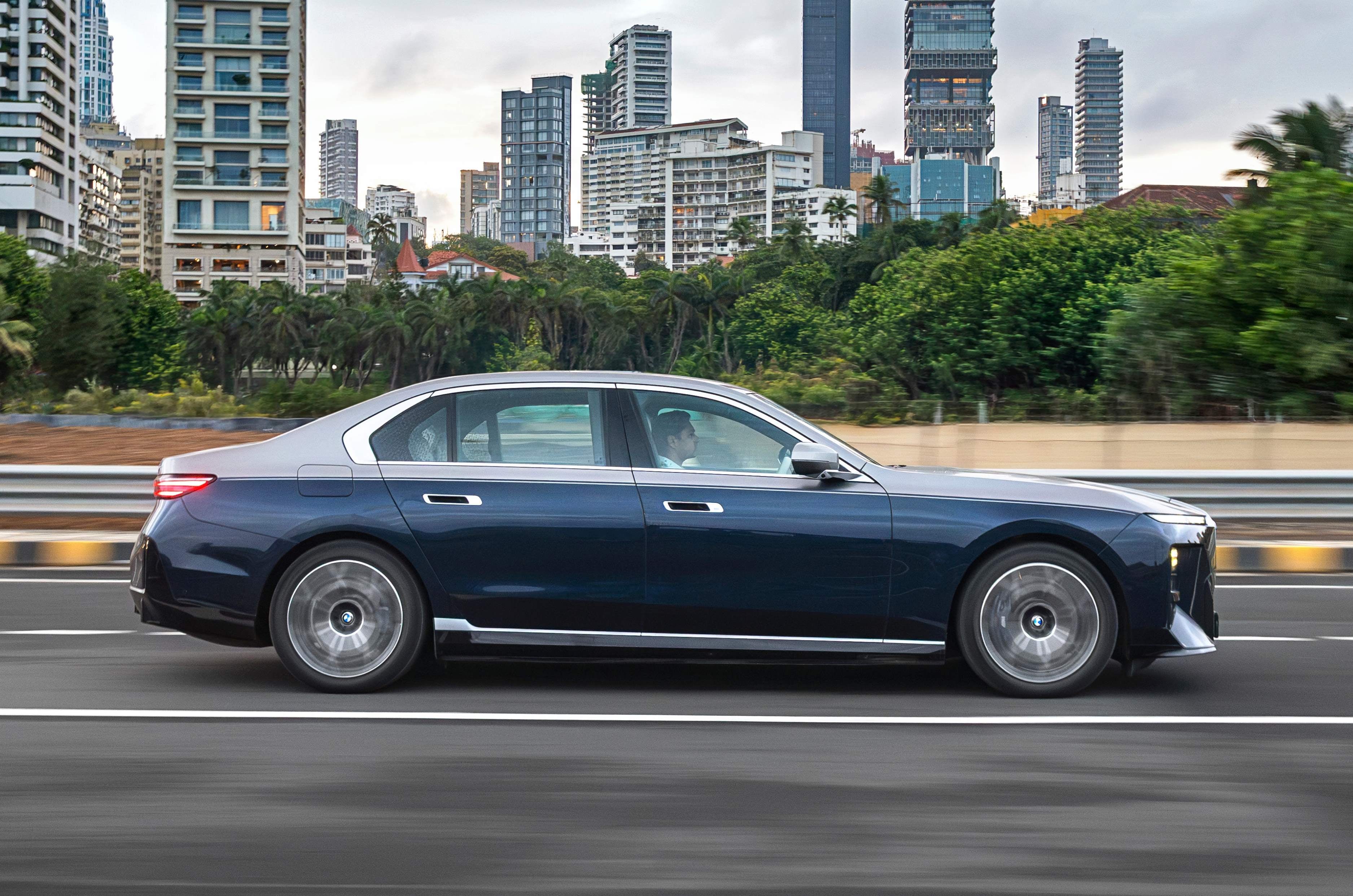
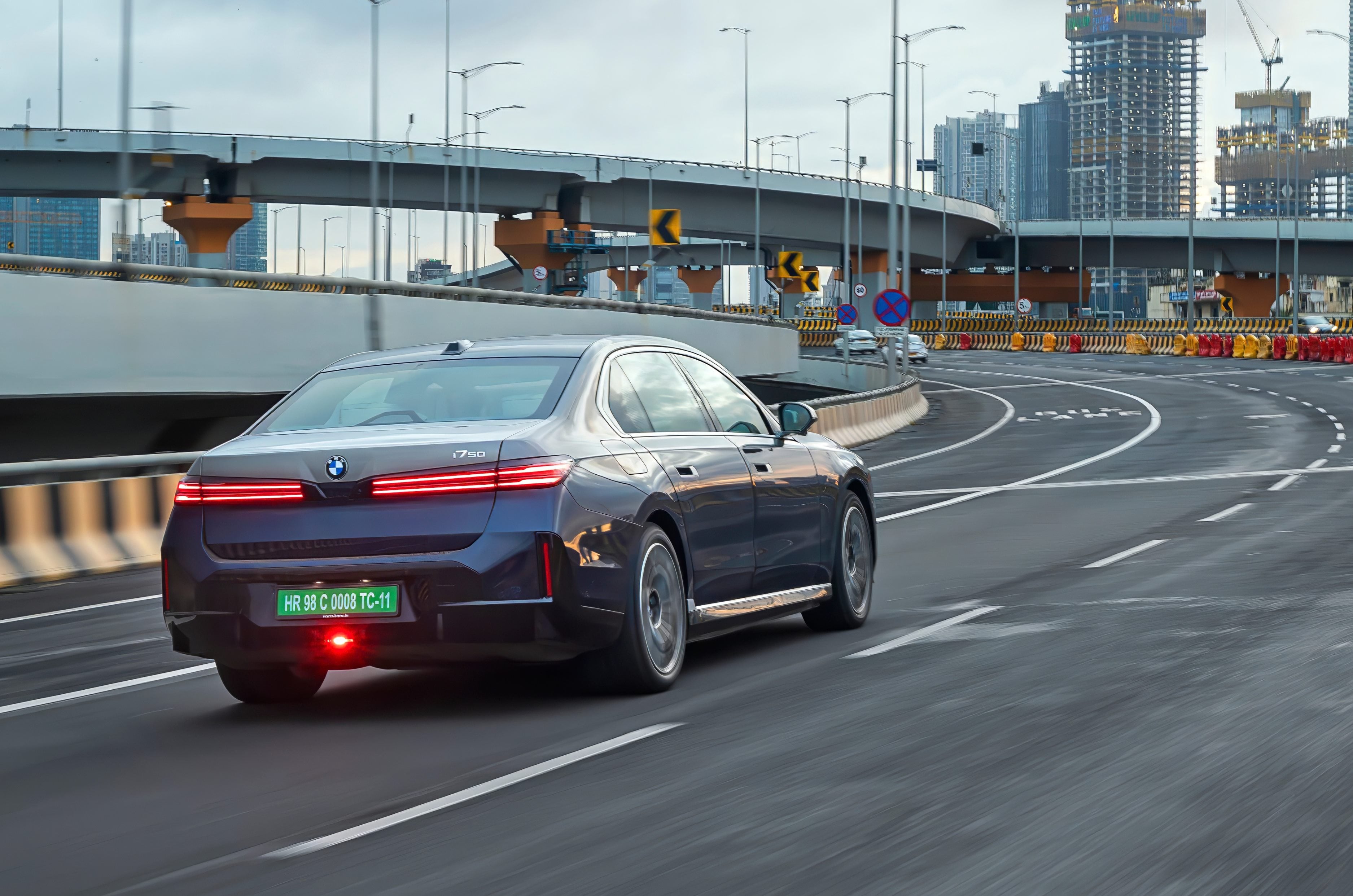
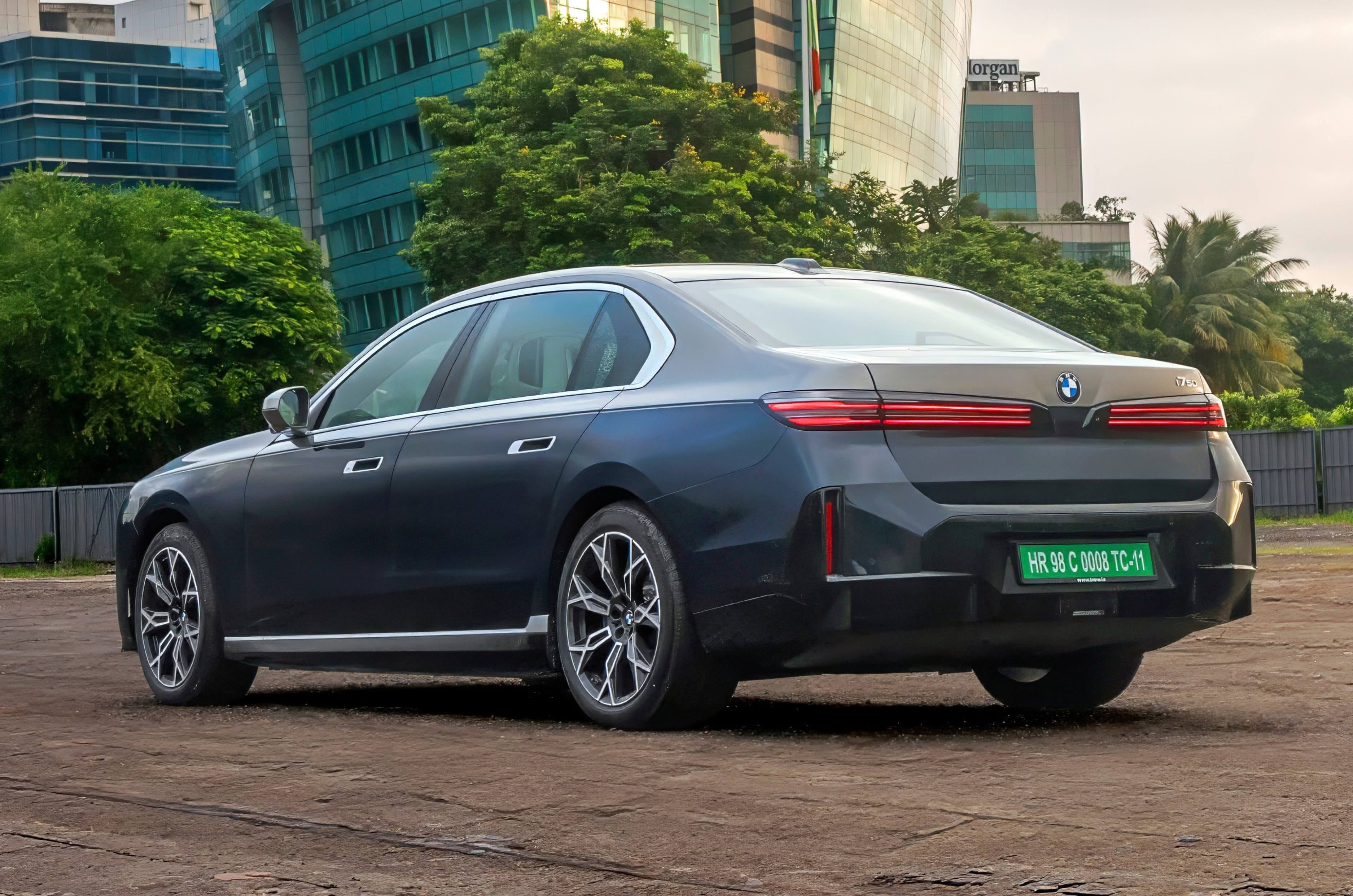
Like the front, the rear has also been cleaned up. There’s a new diffuser, broader tail-lamps, and a neater bumper design. Overall, this iteration looks significantly more palatable than its predecessor, and in the optional two-tone paint finish of our test car, road presence was immense.
BMW i7 50 xDrive Interior Space and Comfort – 9/10
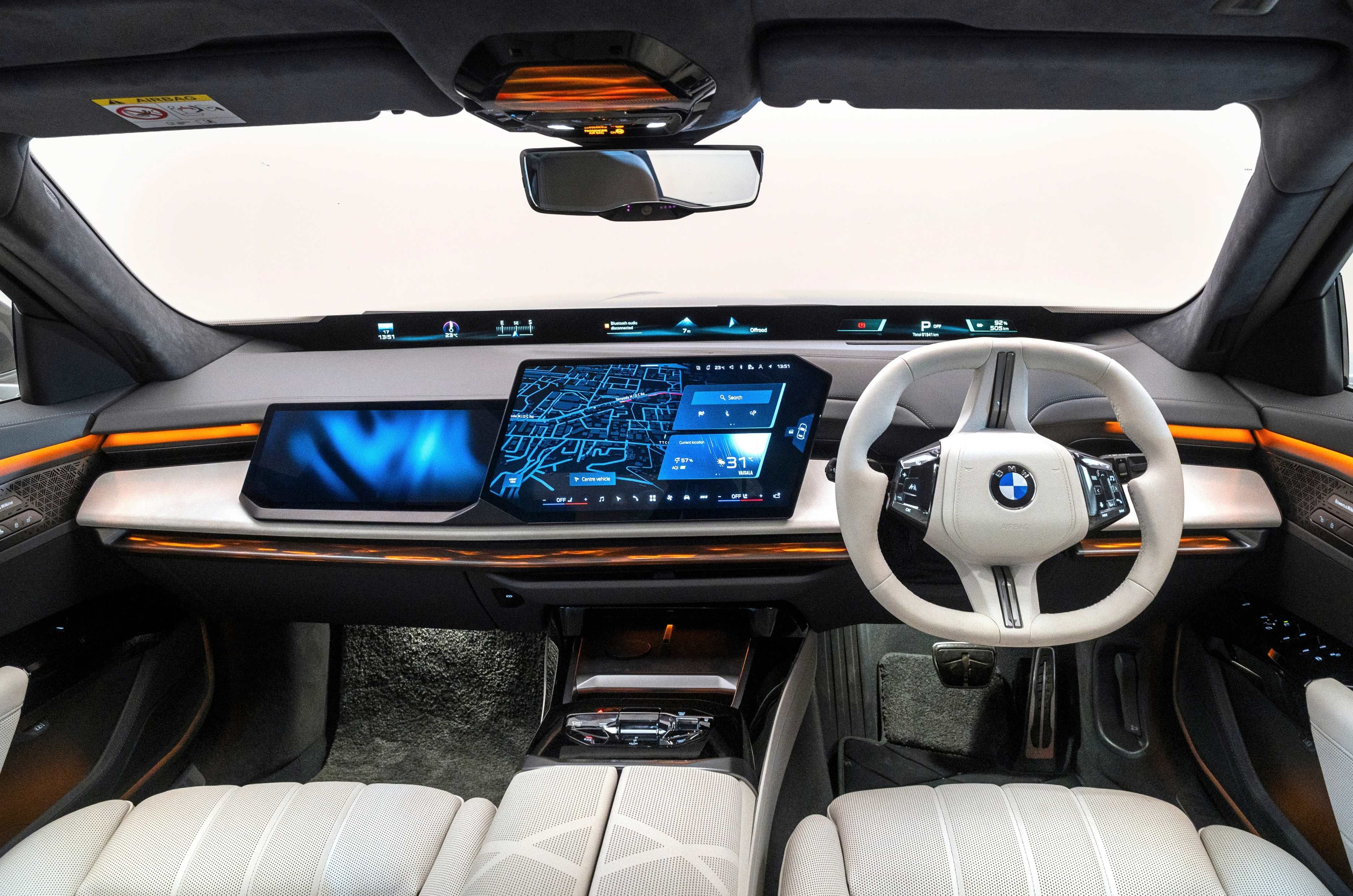
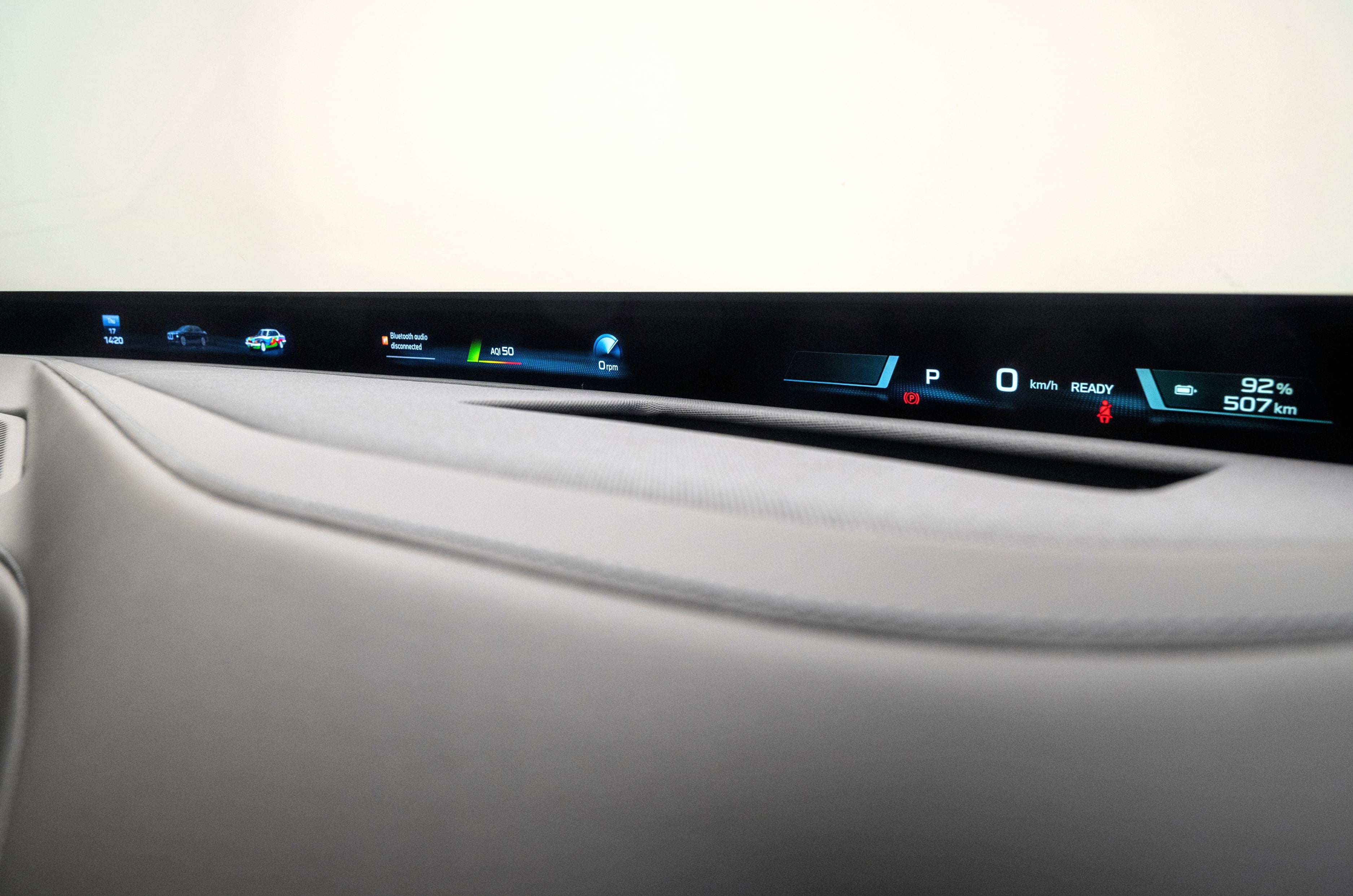
The redesigned dashboard adds freshness and previews the direction BMW’s future interiors are expected to take.
The i7’s dashboard has been completely redesigned, adding much-needed freshness while also previewing the direction BMW’s future interiors are expected to take. The biggest talking point is the deletion of the conventional instrument cluster. In its place sits a new panoramic head-up display positioned right at the base of the windscreen, projecting a wealth of information. It is highly customisable and, besides essentials like speed, charge status and warnings, can display motor speed, navigation, compass information, audio details, date and time, outside temperature, air quality, or even one of BMW’s Art Cars as a decorative element in the remaining six slots. The display is sharp, brilliantly executed, and sits naturally within your field of vision without becoming distracting.
A panoramic head-up display projects a wealth of information, it’s highly customisable and the display is sharp and brilliantly executed.
As for design, the new steering wheel is far more divisive. Its octagonal shape, combined with spokes extending from the horn boss at the 12 and 6 o’clock positions, makes it look unconventional. The light-coloured finish is also likely to be difficult to keep clean — you may even find yourself asking your chauffeur to wear gloves. On the plus side, it feels pleasant to hold, and the controls, though limited in number and not individual buttons, are satisfying to use.
There’s also a new 17.9-inch free-standing touchscreen along with a smaller passenger display, both adopting a parallelogram shape. Curiously, the top-right corner of the central screen appears as though it has been chipped off, although that isn’t actually the case. Generous ambient lighting, crystalline detailing for the drive selector, volume controller and start-stop button, silver speaker grilles, and an overall light-coloured cabin theme further elevate the sense of luxury.
A one-touch relaxation mode transforms the rear seat into a lounge-like position. Updated 8K theatre screen is still part of the package.
Expectedly, the seats are supremely comfortable. All four seats get heating, ventilation and massage functions. Additionally, the rear-left seat features a one-touch relaxation mode that transforms it into a lounge-like position, complete with a raised ottoman, a fully-forward front passenger seat, and a fold-down footrest. Sadly, like the outgoing model, the spare wheel remains mounted on the boot floor, significantly compromising luggage capacity.
BMW i7 50 xDrive Features and Safety – 10/10
The i7 50 M Sport comes loaded with virtually every feature luxury sedan buyers could ask for. The new panoramic end-to-end head-up display replaces the conventional instrument cluster and is not only unique and highly customisable, but also exceptionally well executed. The 17.9-inch touchscreen is new too, and now benefits from additional shortcut keys in addition to permanently displayed climate-control functions, making it marginally easier to operate than before. However, the user interface still feels somewhat overwhelming, with an abundance of functions buried within multiple sub-menus.
The central screen is marginally easier to operate than before. The new front passenger entertainment display is likely to be of limited relevance to most owners.
Also new is a front passenger entertainment display, though we suspect it will be of limited relevance to most owners. The new 31.3-inch 8K rear theatre screen, on the other hand, is likely to see much greater use, particularly on longer journeys.
Carried over from the outgoing version and continuing to add a sense of occasion are the powered doors, which open and close at the touch of a button.
Its Bowers & Wilkins Diamond Surround Sound System with Dolby Atmos delivers an incredibly immersive audio experience.
The highlight, however, is the outstanding Bowers & Wilkins Diamond Surround Sound System with Dolby Atmos and a whopping 35 speakers. It even delivers a 4D experience, with a pronounced thump felt through all four seats. The result is an incredibly immersive audio experience that is sure to impress even the most discerning audiophile.
BMW i7 50 xDrive Performance and Refinement – 9/10
Its performance feels effortless and reassuring, while the accelerator calibration is smooth and progressive for everyday driving.
The i7 50 xDrive uses a dual-motor setup producing a combined 483hp and 660Nm, which is more than adequate for a luxury sedan of this nature. There’s rarely any need to switch out of Efficient mode because there is always a vast reserve of torque available. The effortless performance feels reassuring, while the accelerator calibration is smooth and progressive during everyday driving.
Press the accelerator beyond the halfway mark and the i7 takes off like a scalded cat. Acceleration is rapid, with this 2.8-tonne luxury sedan sprinting from 0-100kph in just 5.5 seconds and reaching 200kph in a shade under 19 seconds. Owners can also choose to activate synthetic motor sounds that play through the speakers, adding a dramatic, sci-fi soundtrack to acceleration. These can be switched off entirely for a completely silent experience.
There are multiple regenerative braking settings, including Adaptive, High, Mid and Low. Of these, Adaptive stands out for its excellent calibration, intelligently varying regeneration and coasting based on traffic and road conditions. There’s also a dedicated one-pedal ‘B’ mode selectable via the drive selector. It delivers regeneration similar to the High setting but, unlike it, can bring the car to a complete stop without any brake pedal input.
BMW i7 50 xDrive Range and Efficiency – 9/10
The i7 50 xDrive gets a larger 112.5kWh battery pack with NMC cell chemistry, replacing the outgoing version’s 101.7kWh unit. As a result, this version claims a WLTP range of up to 728km. Although we haven’t yet subjected it to our range tests, we expect it to comfortably deliver over 500km in real-world conditions, which is more than sufficient for most users. BMW claims the battery can charge from 10-80 percent in 28 minutes using a 250kW (or higher) DC fast charger. On a 22kW AC charger, a full charge takes approximately six hours.
BMW i7 50 xDrive Ride Comfort and Handling – 10/10
What’s truly impressive is the pillowy ride quality. It shrugs off badly broken roads with ease, and maintains excellent body control.
Piloting the i7 may initially seem intimidating given its considerable dimensions, but its light steering and rear-axle steering significantly aid manoeuvrability. The latter allows the rear wheels to turn either with or against the fronts by up to 3.5 degrees, helping the car feel remarkably agile for its size.
What’s truly impressive is the pillowy ride quality. The thick, high-profile tyres add another layer of cushioning, allowing the i7 to shrug off even badly broken roads with ease. It absorbs potholes effortlessly, keeps road shocks well isolated, and maintains excellent body control. Passengers are also spared the uncomfortable side-to-side movements over unusually rough patches.
Selecting Sport mode does firm things up slightly, but while the air suspension becomes tauter and body control improves further, ride comfort never suffers. Handling feels predictable and, thanks to xDrive all-wheel drive, the i7 feels exceptionally planted and offers impressive grip when tackling corners. Rear-wheel steering also does a remarkable job of disguising its size.
In short, the i7 can be driven surprisingly enthusiastically, and for a luxo-barge, it drives exceptionally well. We would, however, recommend leaving the steering in Comfort mode, as it feels unnecessarily heavy in Sport.
The suspension raises by 20mm over the 136mm standard setting, allowing it to clear all but the most poorly designed obstacles.
Sport mode also lowers the ride height by 10mm from the standard 136mm setting. While beneficial for dynamics, it makes the underbody vulnerable even on relatively small speed breakers. Thankfully, two taps on the touchscreen raise the suspension by 20mm over the standard setting, allowing it to clear all but the most poorly designed obstacles. Cabin insulation is outstanding too, keeping road, wind and ambient noise effectively isolated from occupants.
BMW i7 50 xDrive Price and Verdict – 9/10
At Rs 1.95 crore, the locally assembled i7 50 xDrive is priced exactly at par with the petrol-powered 740 and is even a few lakhs more affordable than its chief rival, the Mercedes-Benz S-Class. Yet pricing alone isn’t what makes the i7 such a compelling proposition.
What truly sets it apart is the sheer sense of occasion it delivers. Its styling is bold, the cabin feels genuinely special, ride comfort is exceptional, and the level of technology on offer significantly elevates its desirability. Add to that an extraordinary audio system and the effortless refinement that only a luxury EV can deliver, and the i7 feels every bit the flagship it is.
Yes, luggage space remains compromised by the spare wheel placement, and the touchscreen interface isn’t quite as intuitive as that of its chief rival. But in this segment, neither is likely to be a deal-breaker.
The bigger takeaway is that BMW has successfully made the electric version of its flagship sedan the more desirable one. For buyers seeking luxury, comfort and technology, the i7 50 xDrive isn’t merely an excellent EV, it’s quite simply all the luxury car you’ll ever need.
Like many of Tata’s other SUVs, the Sierra can now be had with a blacked-out Dark Edition cosmetic package. The Sierra Dark Edition is available from the Pure L trim onwards, where it commands a premium of Rs 20,000 over the standard version. For all succeeding trims, the Sierra Dark Edition costs Rs 30,000 extra. Pricing for the Sierra Dark Edition starts at Rs 13.99 lakh for the Pure L trim, and at Rs 21.59 lakh for the top-spec Accomplished+ trim.
Sierra Dark Edition gets new Friesian Black paint finish
Interior gets blacked-out treatment with violet and purple highlights
Available with all powertrain options of the Sierra
Here’s a look at the full price list of the Tata Sierra Dark Edition:
Tata Sierra Dark Edition price (ex-showroom)
Trim
Petrol-MT
Petrol-DCT
Turbo-petrol AT
Diesel-MT
Diesel-AT
Pure L #Dark
Rs 13.99 lakh
Rs 15.29 lakh
–
Rs 15.44 lakh
–
Pure L (O) #Dark
Rs 14.59 lakh
Rs 15.89 lakh
–
Rs 16.04 lakh
Rs 17.34 lakh
Pure+ L #Dark
Rs 15.29 lakh
Rs 16.59 lakh
–
Rs 16.74 lakh
Rs 18.04 lakh
Adventure+ L #Dark
Rs 17.29 lakh
Rs 18.59 lakh
Rs 19.29 lakh
Rs 18.49 lakh
Rs 19.79 lakh
Accomplished #Dark
Rs 18.29 lakh
–
Rs 20.29 lakh
Rs 19.29 lakh
Rs 20.29 lakh
Accomplished+ #Dark
–
–
Rs 21.29 lakh
Rs 20.59 lakh
Rs 21.59 lakh
Tata Sierra Dark Edition exterior and interior
As you’d expect, the Sierra Dark Edition comes finished in Friesian Black on the outside as standard. Much of the exterior trim is black instead of chrome, and the Tata emblems and alloy wheels have been darkened as well. Lastly, this stealth-spec Sierra gets ‘#DARK’ badging on the front fenders.
The blacked-out finish extends to the Sierra’s cabin as well, but Tata has added a pop of colour by way of violet metallic trim pieces in areas like the AC vent bezels, door handles, front armrest, front seatbacks, and more – even the seat stitching is purple. There are otherwise no changes to the interior layout or features list over the standard versions of the Sierra, so depending on the variant, you get goodies like a triple-screen setup, ventilated front seats, a panoramic sunroof, dual-zone climate control, a powered tailgate, connected car tech, Level 2 ADAS, a 360-degree camera, a 12-speaker JBL Black sound system, among others.
Tata Sierra Dark Edition engine and gearbox
There are no changes to the powertrain offerings for the Sierra Dark Edition. It offers the same configurations found in the trim it’s based on. That means depending on the variant, you get a 106hp 1.5-litre naturally aspirated petrol engine with either a 6-speed manual or 7-speed DCT, a 118hp 1.5-litre diesel mill with either a 6-speed manual or 6-speed torque converter, or a 160hp 1.5-litre direct-injection turbo-petrol motor mated solely to a 6-speed torque converter.