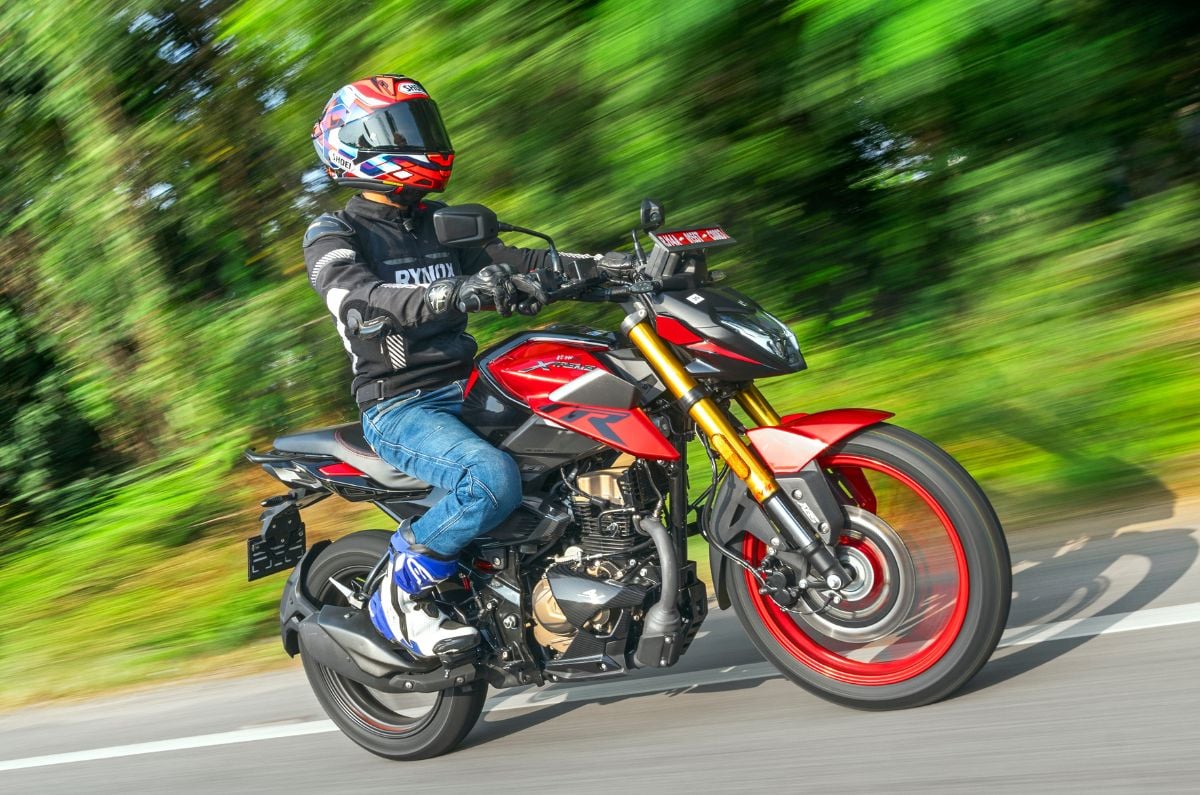
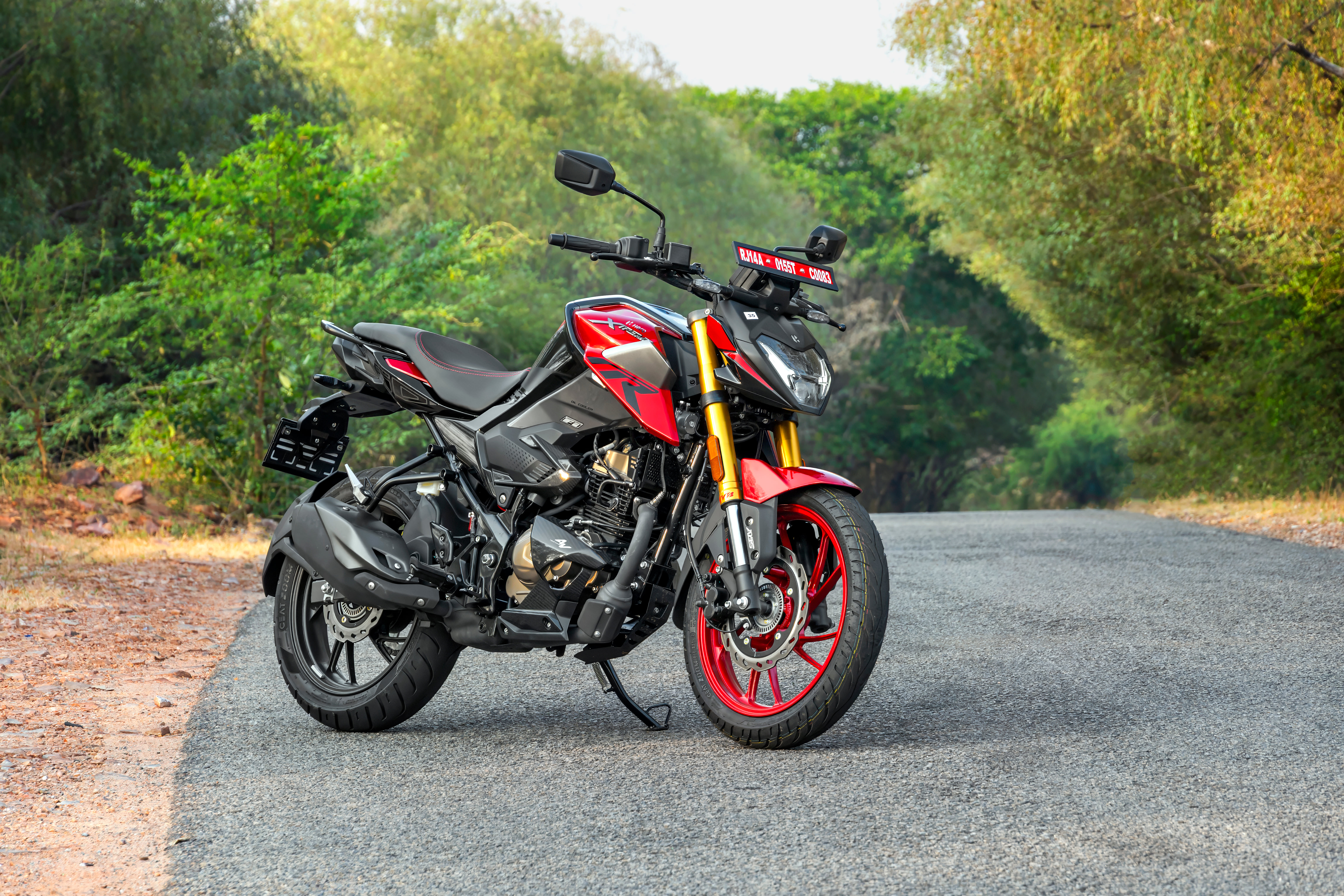
The Hero Xtreme 160R has been around since 2020 and has received a few updates over the years. For 2026, the bike gets a third-generation upgrade with a design overhaul and several new features. We spent some time with the bike in Jaipur to bring you our first impressions.
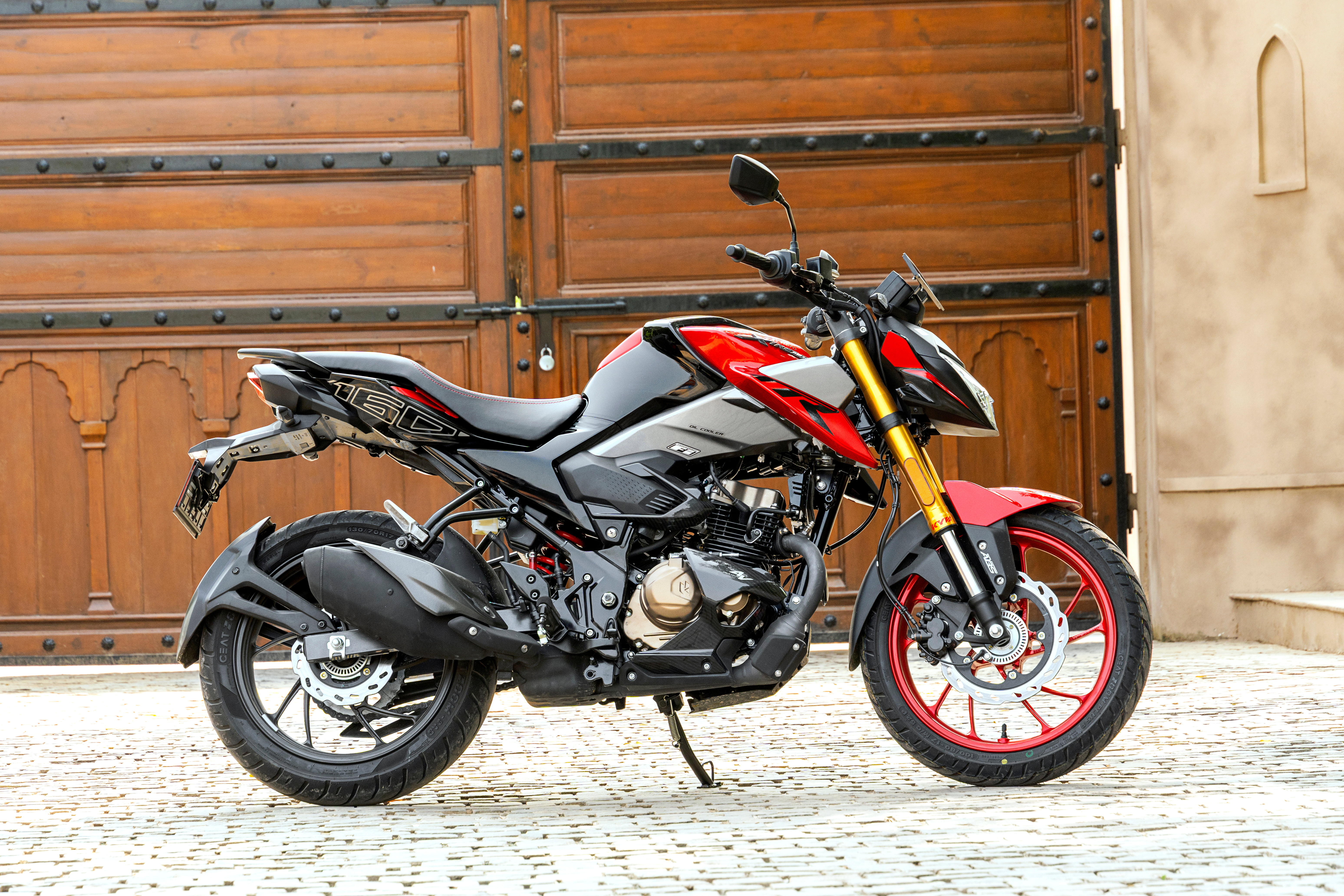
The design silhouette is now closer to that of the 250R, with similar LED DRLs and sharp panels all around. The bike we were riding was the top-spec Carbon variant, which gets faux carbon-fibre panels in a few places. Additionally, it also gets five-step adjustable clutch and brake levers. Overall, the bike certainly looks better than ever. A split seat is available as an accessory, but I feel it would have been nice to have it offered as standard on this variant.
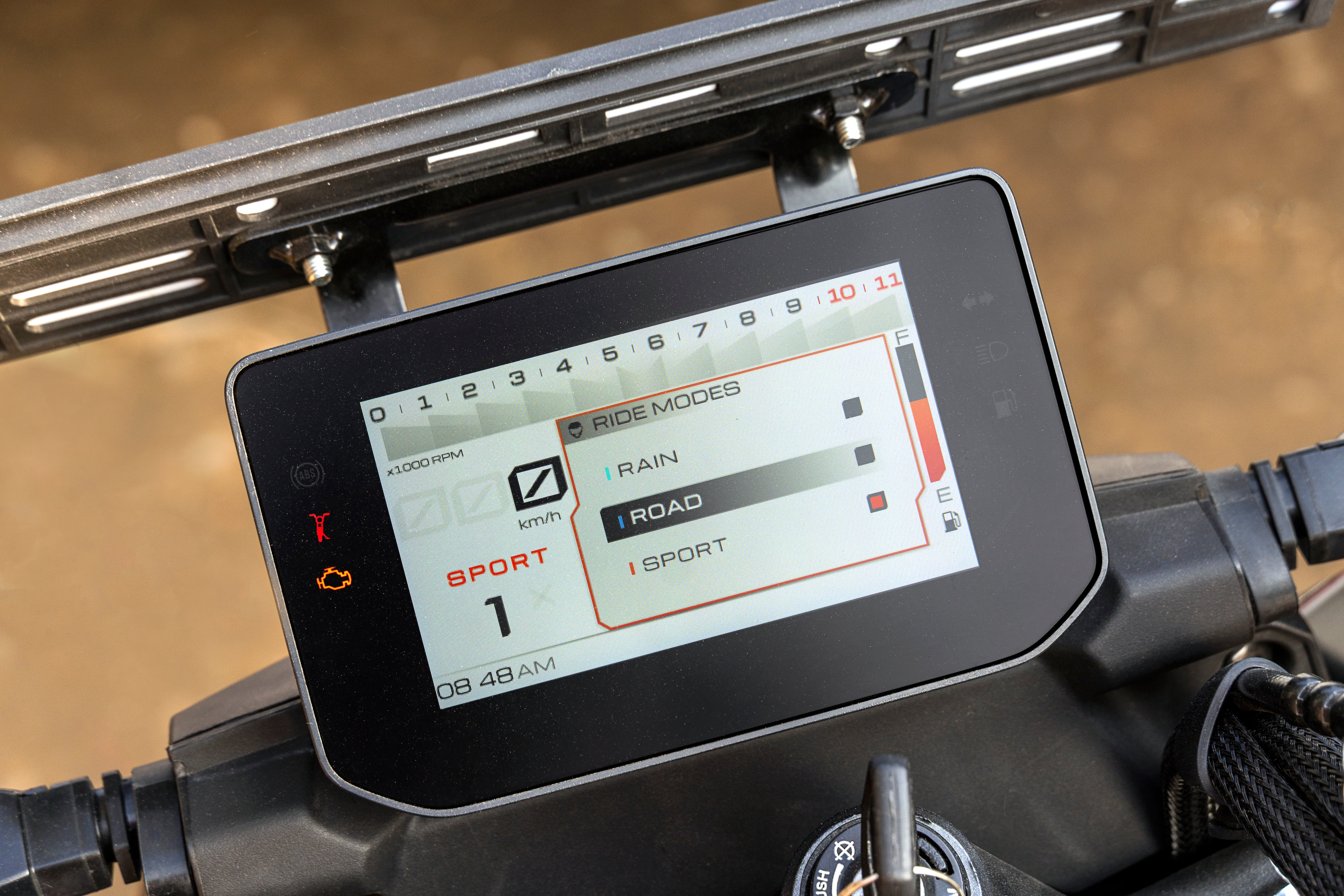
The feature list is now extensive, with a TFT screen, ride-by-wire throttle with three riding modes (Rain, Road and Sport), cruise control, and a panic brake alert system. The engine is the same 163.2cc unit, making 17.1hp at 8,750rpm and 14.6Nm of peak torque at 6,500rpm. Compared to the Combat Edition from earlier, it is just 0.2hp more powerful, with this power being produced 250rpm higher in the rev range. Hero claims a 0-60kph acceleration time of 4.4 seconds.
I started my day riding in Sport mode and soon realised that the throttle response is very snatchy. The on-off transitions are not smooth, which gets a bit annoying when riding in stop-go traffic. In Road mode, it is not as snatchy but still feels inconsistent. The fuelling has clear room for improvement with this new ride-by-wire system, and this was not an issue with the previous cable throttle system on the older model.
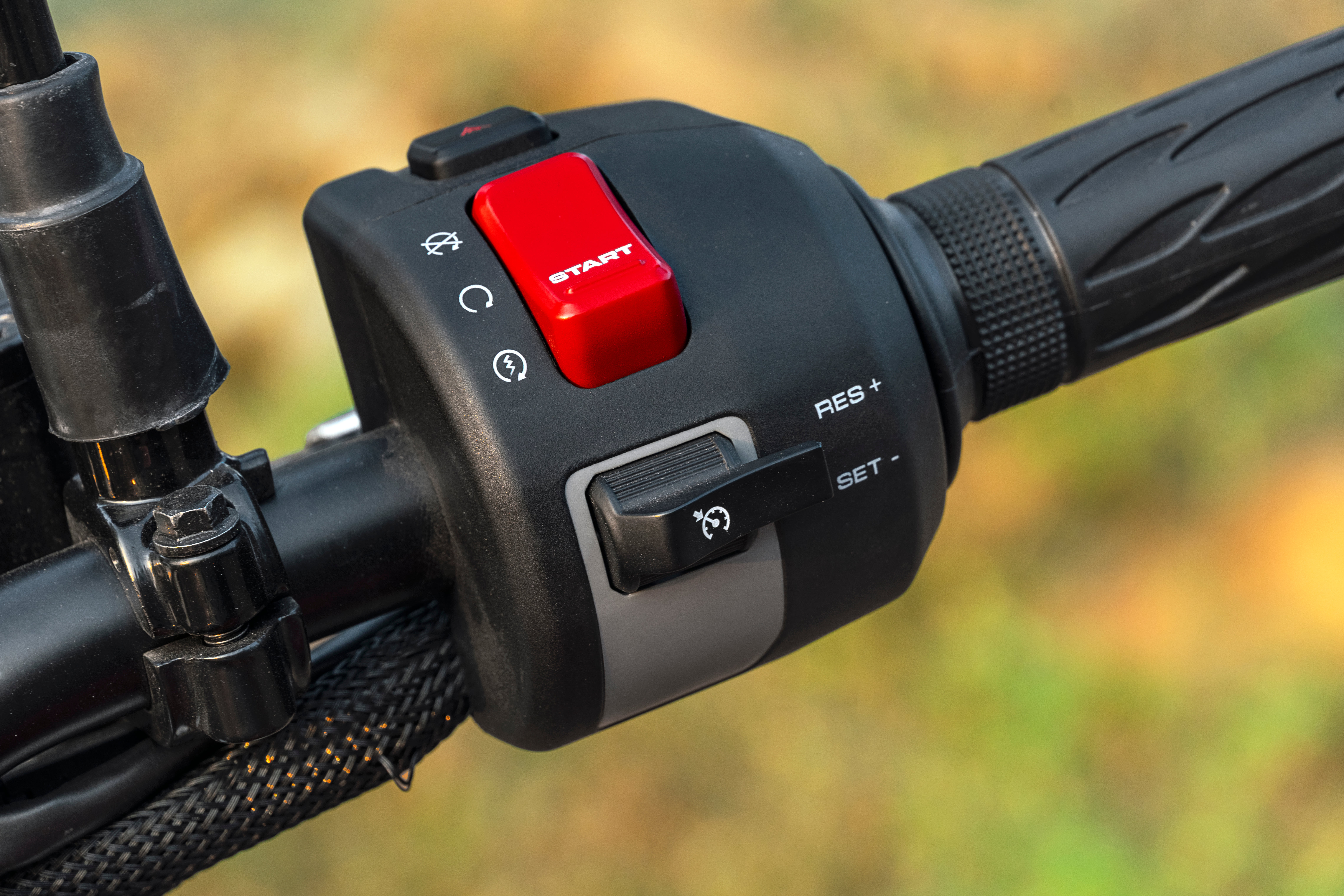
Out on the highway, the sweet spot for cruising is around 85-90kph. Beyond that, there is a slight buzz through the handlebar and footpegs. The bike can show over 110kph on the display, but the engine does feel stressed at anything above 95kph. The cruise control function works well, and while it is not something I found myself using much, Hero tells us that its customers in more rural areas who have daily commutes on highway roads appreciate such a feature.
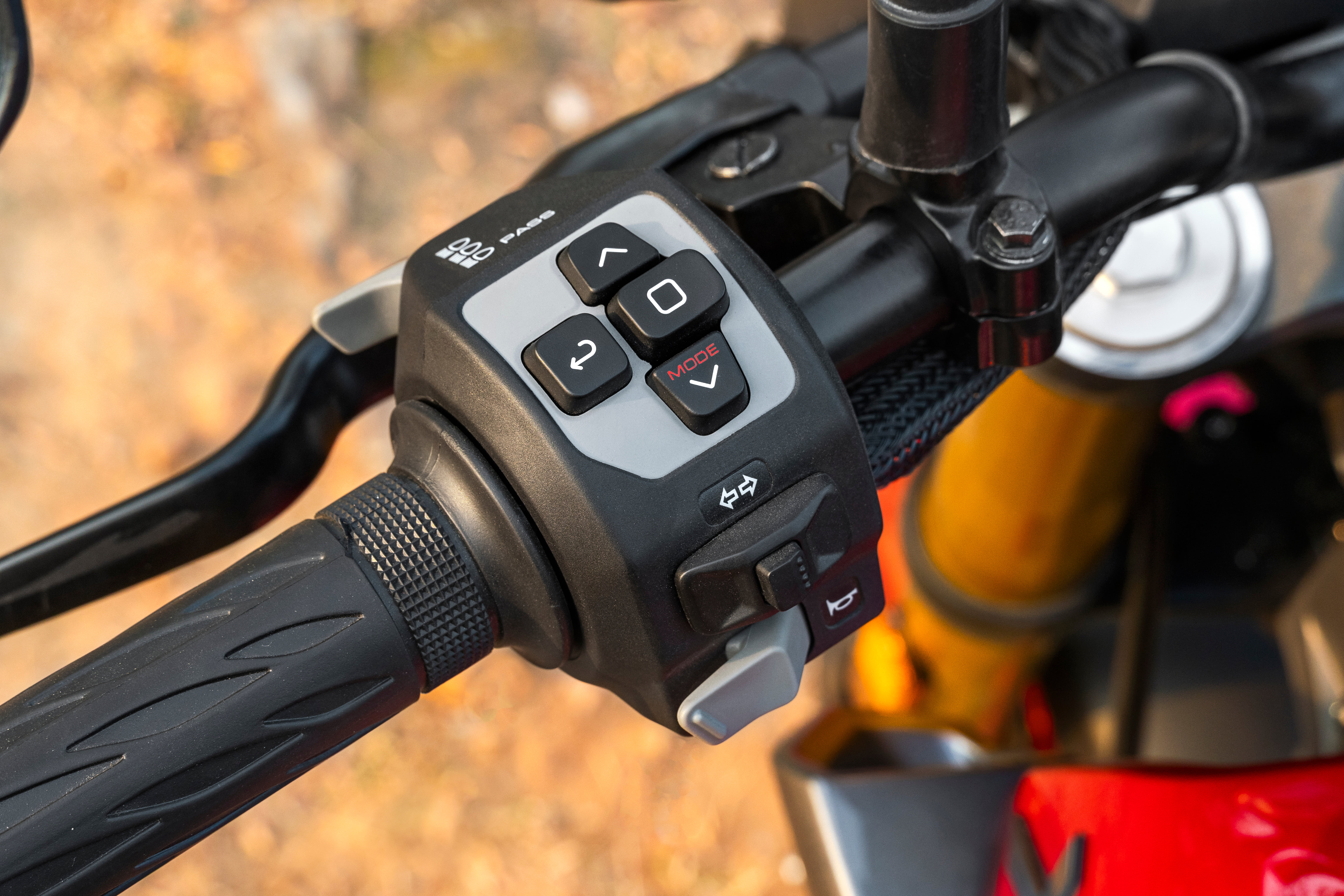
Another aspect of the riding modes I did not like is their user-friendliness. You need to long-press the down button on the left-hand switchgear, after which you have to press up or down again to select your preferred mode, followed by the select button. A single dedicated button to cycle through the modes would have been ideal and made switching modes on the go less distracting.
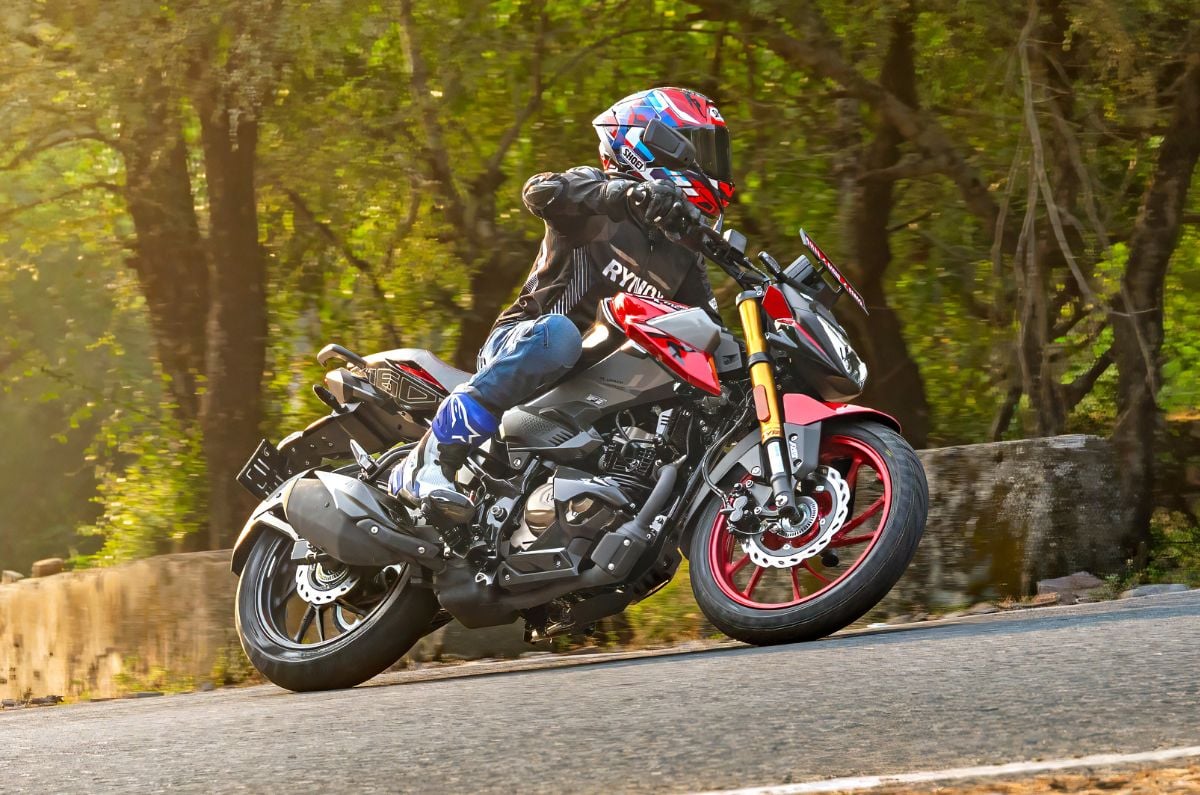
The handling of the Xtreme 160R has always been good, and that remains unchanged. It is a nimble machine that is easy to flick into corners, and the tyres do a good job of providing grip. The suspension absorbs smaller bumps and undulations well, but you will have to slow down for larger potholes. The initial bite from the front brake is not as sharp as I would have liked with a spongy initial feel and the bite builds only after the lever has been pulled in halfway.
There are three variants of the bike: Standard, Pro and Carbon. The Standard is priced at Rs 1.27 lakh (ex-showroom) and is still equipped with a mechanical throttle. It gets a colour LCD screen, disc brakes at both ends with a single-channel ABS system, and a telescopic front fork. This variant will be available starting somewhere starting in the first quarter of next year.
The Pro variant, priced at Rs 1.37 lakh (ex-showroom), gets a ride-by-wire throttle, riding modes, dual-channel ABS, a USD fork and cruise control. Finally, the top-spec Carbon variant, priced at Rs 1.41 lakh (ex-showroom), gets a TFT console, illuminated switches, adjustable levers and coloured wheels.
At its price point, the top-spec Carbon variant we were riding offers good value for the features on offer. However, the fuelling certainly need to be worked on and the Xtreme 160R would be a much better all-round package when that happens. If you aren’t someone who cares about a TFT screen, USD fork, and features like cruise control, the base variant with the mechanical throttle would be the one to wait for.
Jaipur Waste Management Startup: देशभर में आज स्वच्छता अभियान को लेकर शहरों में इंदौर से आगे निकलने की होड़ है, जिसके लिए प्रशासन और शहरों की संस्थाएं लगातार लोगों को कचरे और साफ-सफाई के प्रति जागरूक करती हैं। लेकिन कुछ लोग ऐसे भी होते हैं जो इस बीड़े को खुद उठाते हैं। ऐसे ही जयपुर के दो युवा हैं, जिन्होंने कचरे और वेस्ट मैनेजमेंट सिस्टम के स्टार्टअप से ₹250 करोड़ का साम्राज्य खड़ा कर दिया। आज यह सिर्फ एक सफल स्टार्टअप ही नहीं है, बल्कि ‘फोर्ब्स अंडर-30’ की लिस्ट तक इनके स्टार्टअप का डंका बज चुका है।
जयपुर के अभिषेक गुप्ता और अभिनव शेखर वशिष्ठ ने 2018 में ‘वीवॉइस लैब’ (WeVOIS Labs) कंपनी की शुरुआत की और आज उनका यह स्टार्टअप 25 से अधिक शहरों में काम कर रहा है। ‘वीवॉइस लैब’ के इस क्लीन-टेक स्टार्टअप की कहानी जयपुर के इन दोनों युवाओं के 2016 में कॉलेज कैंपस सफाई अभियान और वेस्ट अवेयरनेस कैंपेन से शुरू हुई थी। उस समय कॉलेज के इस सफाई अभियान को उन्होंने सिर्फ एक प्रोजेक्ट के रूप में नहीं देखा, बल्कि कचरे और सफाई के स्थाई समाधान पर विचार शुरू किया और यहीं से ‘वीवॉइस लैब’ स्टार्टअप की नींव पड़ी।
6 लाख टन से ज्यादा वेस्ट कचरा प्रोसेस करती है ‘वीवॉइस लैब’
आंकड़ों के अनुसार देश में हर साल 62 मिलियन टन कचरा निकलता है, जिसे या तो खुले में फेंक दिया जाता है या जला दिया जाता है। लेकिन जयपुर के अभिषेक गुप्ता और अभिनव शेखर की कंपनी ‘वीवॉइस लैब’ वेस्ट मैनेजमेंट सिस्टम के रूप में अपनी खास पहचान रखती है। इस कंपनी का सिस्टम पूरी तरह इंटरनेट ऑफ थिंग्स (IoT) पर आधारित है। इसमें हर घर, होटल और अस्पताल को ‘रेडियो फ्रीक्वेंसी आइडेंटिफिकेशन’ (RFID) टैग दिया जाता है, जिससे कचरा उठाने से लेकर प्रोसेस होने तक रियल-टाइम मॉनिटरिंग होती है। इसमें कचरा कब उठा, किसने उठाया, कितना उठा, वर्कर की उपस्थिति, परफॉर्मेंस और प्रोसेस पर खास निगरानी रखी जाती है।
जयपुर की इस ‘वीवॉइस लैब’ कंपनी के जरिए हजारों वर्कर्स को रोजगार भी मिल रहा है। फिलहाल वीवॉइस लगभग ₹250 करोड़ का क्लीन-टेक स्टार्टअप बन चुका है, जो 25 शहरों में काम कर रहा है और हर साल 6 से 7 लाख टन से ज्यादा वेस्ट प्रोसेस कर रहा है।
गांवों में भी शुरू किया ‘रूरल स्मार्ट विलेज सेंटर’
कचरे का निपटान और जागरूकता फैलाने का ‘वीवॉइस लैब’ का काम सिर्फ शहरों तक ही सीमित नहीं है, बल्कि यह गांवों में भी ‘रूरल स्मार्ट विलेज सेंटर’ के रूप में काम कर रहा है। यहां वेस्ट मैनेजमेंट सिस्टम के साथ-साथ लोगों को रोजगार और स्वच्छता की शिक्षा भी दी जा रही है। हाल ही में ‘वीवॉइस लैब’ ने बिसलेरी के साथ मिलकर जयपुर में हर महीने 30 टन प्लास्टिक वेस्ट उठाना शुरू किया है। साथ ही 300 टन क्षमता वाला टेक्सटाइल वेस्ट रीसाइकलिंग प्लांट भी शुरू किया है। आने वाले समय में 10 और शहरों को इस सिस्टम से जोड़ा जाएगा, ताकि 3 हजार टन प्लास्टिक वेस्ट को लैंडफिल में जाने से रोका जा सके।
लंबे समय से जयपुर के ये दो युवा टेक्सटाइल कचरे के वैज्ञानिक रीसाइक्लिंग से रोजगार और पर्यावरण संरक्षण को एक नई दिशा देने पर काम कर रहे हैं। कुछ ही दिनों में राजधानी जयपुर में ‘वीवॉइस लैब’ द्वारा टेक्सटाइल रीसाइक्लिंग यूनिट शुरू की गई है, जिसके बाद से कचरे के सस्टेनेबल डेवलपमेंट के लक्ष्यों पर काम किया जा रहा है।
‘वीवॉइस लैब’ के जरिए किस प्रकार होती है टनों कचरे की रीसाइकलिंग
‘वीवॉइस लैब’ खासतौर पर शहरों को स्वच्छ और पर्यावरण-अनुकूल बनाने में मील का पत्थर साबित हो चुकी है, जो अलग-अलग तरीकों से कचरे की रीसाइकलिंग करती है। ‘वीवॉइस लैब’ के वर्कर्स द्वारा एकत्रित कचरे का उपयोग अलग-अलग रूपों में किया जाता है; जैसे गीले कचरे को खाद बनाने के लिए भेजा जाता है, जबकि सूखे कचरे से कागज, प्लास्टिक, धातु, कांच और वस्त्र जैसी सामग्रियां बनाने के लिए उसे अलग-अलग छांटा जाता है।
कंपनी की ‘रीसूत्र’ यूनिट में अत्याधुनिक तकनीक का उपयोग किया जाता है, जो कपड़ा अपशिष्ट को ट्रैक, प्रोसेस और पुनः उपयोग योग्य उत्पादों में परिवर्तित करने में सक्षम है। आमतौर पर एकत्रित कचरे का अधिकांश भाग लैंडफिल स्थलों (कचरे के ढेरों) में डाल दिया जाता है, जिससे हानिकारक गैसों का उत्सर्जन होता है और पर्यावरण प्रदूषित होता है। लेकिन लैंडफिल स्थलों पर कचरे के ढेर को रोकने के लिए, ‘वीवॉइस लैब’ ने नगर निकायों की सहायता से प्रायोगिक परीक्षण भी किया है।
‘वीवॉइस लैब’ जनरेट कर रही है लोगों के लिए रोजगार
जयपुर की ‘वीवॉइस लैब’ एक अपशिष्ट प्रबंधन कंपनी है जो कचरे के संग्रहण, ट्रैकिंग, पृथक्करण और पुनर्चक्रण में सुधार के लिए तकनीक का उपयोग करती है। इसके साथ ही कंपनी का मुख्य फोकस टेक्सटाइल अपशिष्ट को पुनः उपयोगी संसाधनों में बदलकर सर्कुलर इकोनॉमी को बढ़ावा देने पर रहता है। इसके अलावा कंपनी अधिक से अधिक लोगों के लिए रोजगार उपलब्ध करा रही है, जो एक स्मार्ट सिस्टम के जरिए काम करता है।
कंपनी में एक खास ‘रूट मैनेजर सॉफ्टवेयर’ डिजाइन किया गया है, जो सहायकों के लिए आपके घर तक पहुंचने और समय पर सेवा प्रदान करने का मार्ग निर्धारित करता है। साथ ही, कंपनी का सुव्यवस्थित अलर्ट प्रबंधन प्रणाली वाला मोबाइल ऐप उपभोक्ताओं को निर्धारित पिकअप से पहले हर बार सूचना प्राप्त करने में सक्षम बनाता है।
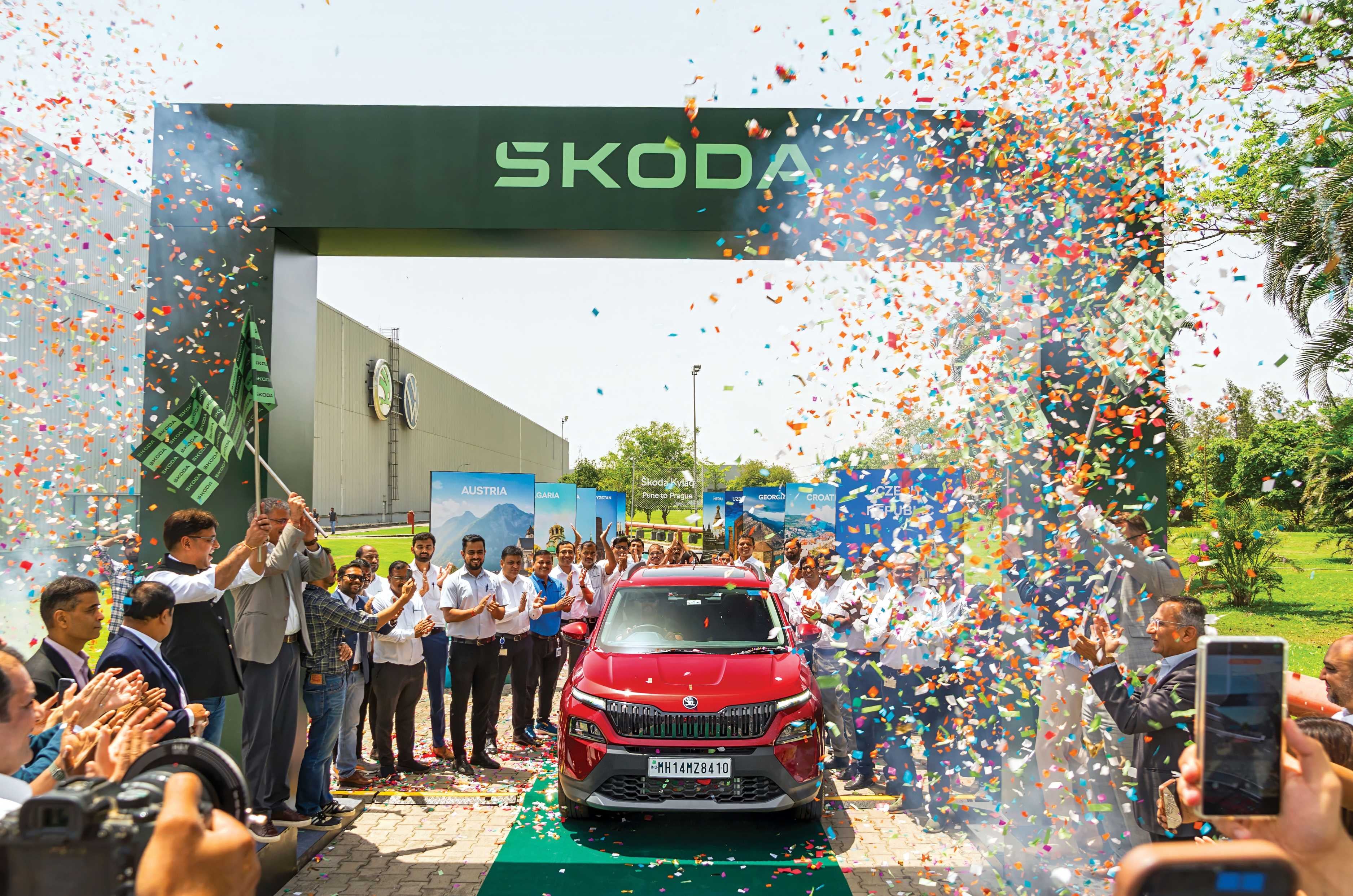
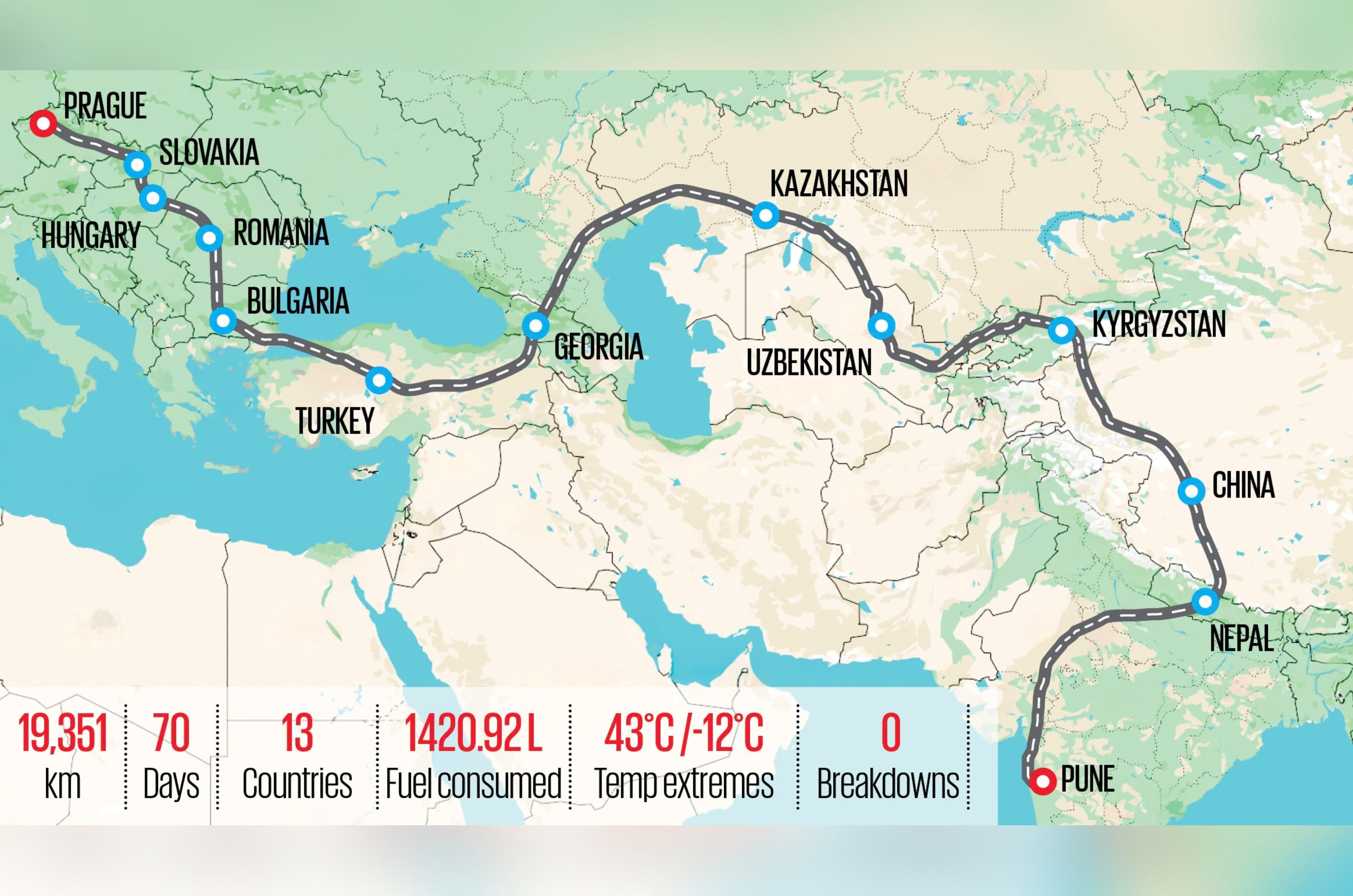
There are road trips, there are overland expeditions, and then there are journeys that become conversations with continents. This one starts in the industrial heart of Maharashtra, inside Skoda India’s sprawling Chakan facility. The end point lies nearly 20,000 kilometres away at Skoda Auto’s headquarters near Prague in Mladá Boleslav, Czech Republic, where bicycles evolved into automobiles and a 130-year-old story continues to be written.
Between these two factories lie thirteen countries, four major mountain ranges, countless cuisines, dozens of languages and enough history to fill libraries.
Our companion? Not a flagship SUV or a luxury grand tourer, but Skoda’s smallest SUV – the Kylaq, which recently celebrated its one-year anniversary. Driving it from Pune to Prague is a tall order, but surviving one year in India and being accepted with flying colours is enough cred one needs to take on the world.
India – Home Turf
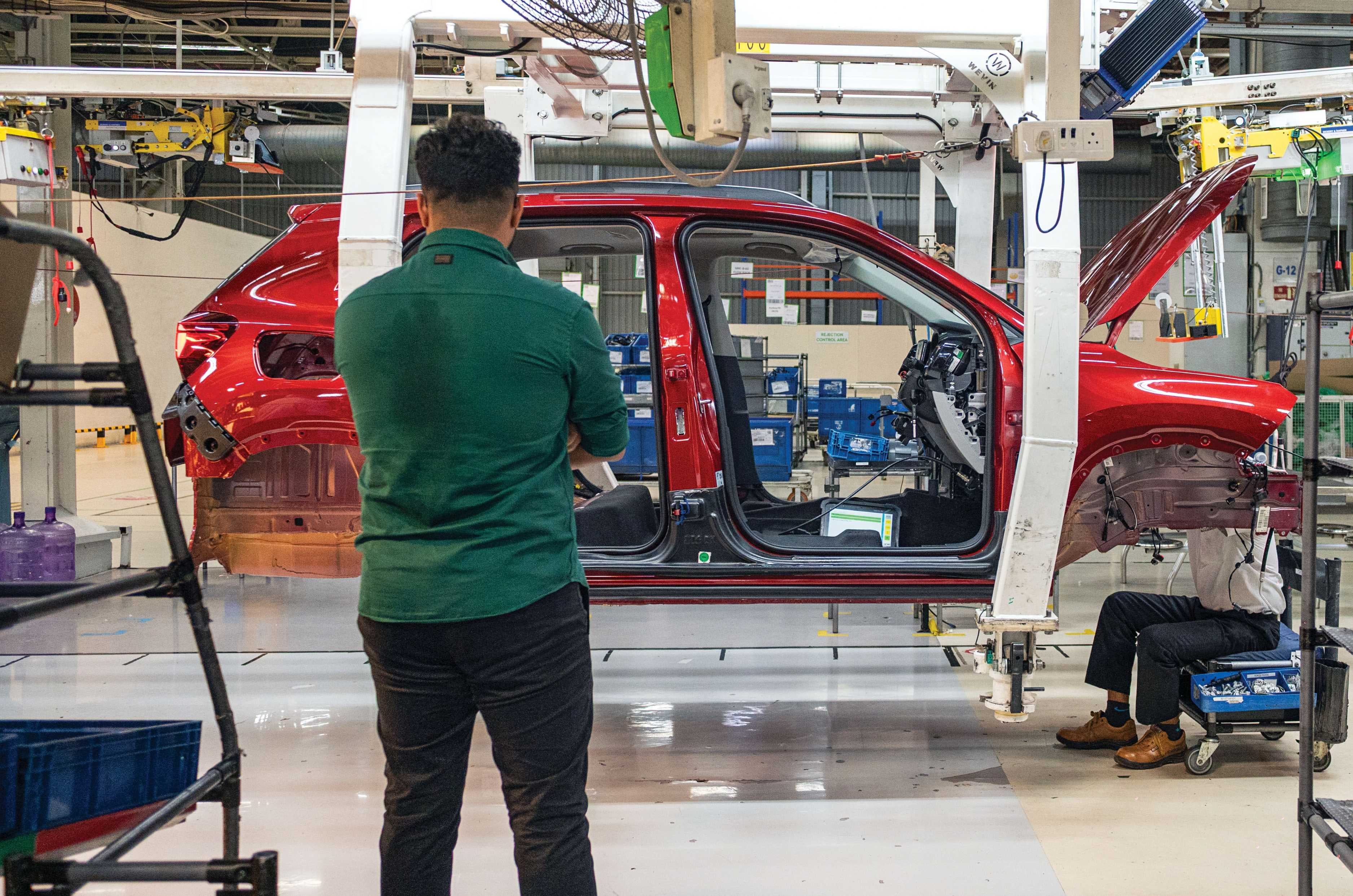
Witnessing the Kylaq’s birth added more responsibility.
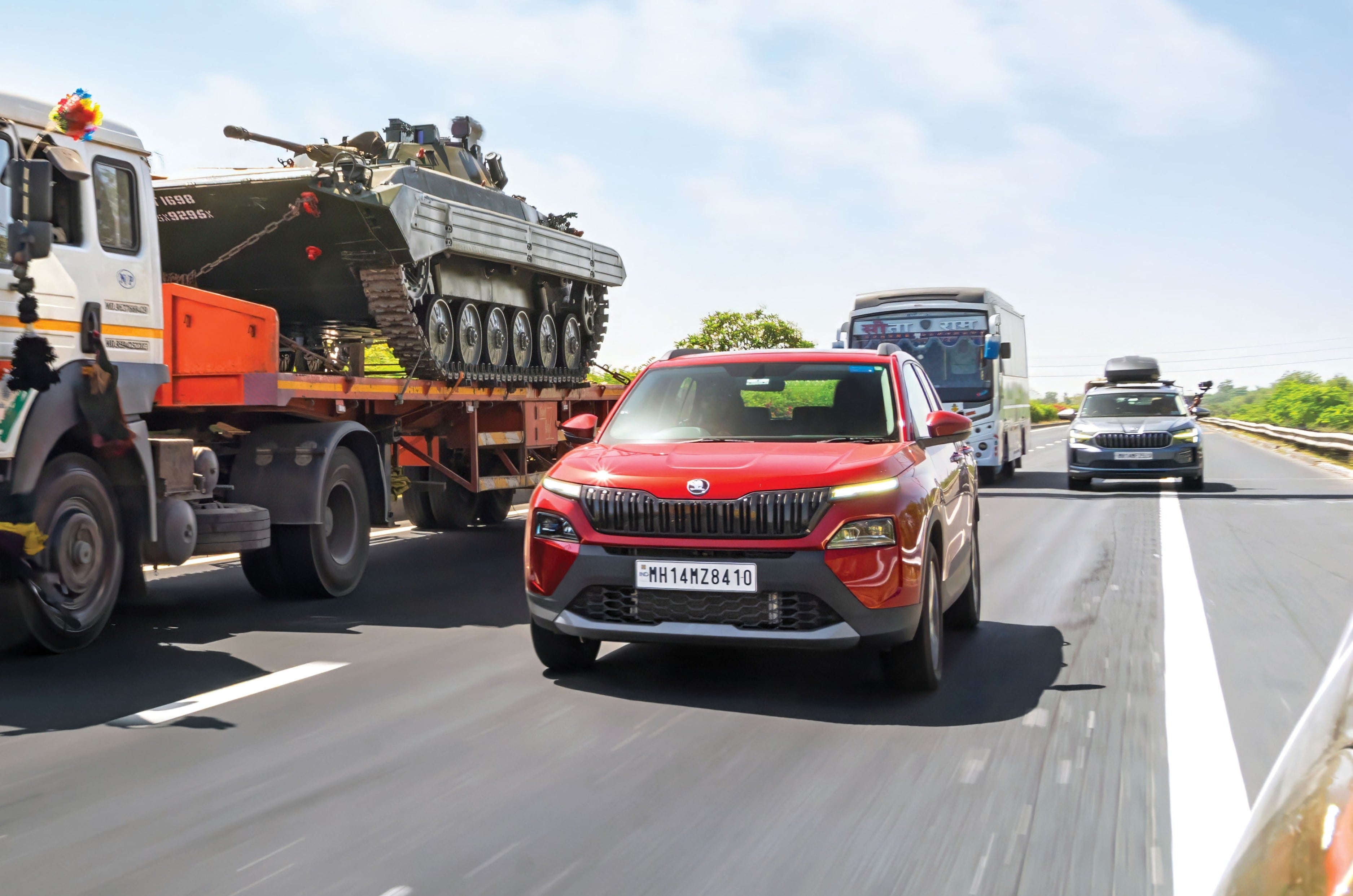
On a cross-country road trip, you’d imagine the home country would be the easiest leg. With India, it was the opposite. To some, it’s organised chaos, but honestly, it’s anything but organised. Erratic traffic, erratic egos, and road conditions fit only for a Mars rover – India was the biggest challenge on the drive from Pune to Prague. As the odometer ticked over its first kilometre, right outside the gate of Skoda’s Chakan plant, a blood-red PMPML bus was ready to trade paint with the cherry-red Kylaq. A dinged-up Kylaq parked on the streets of Prague wouldn’t be a good look, so it was imperative that I babysit this compact SUV like a million-dollar supercar. Having watched the car being assembled on the factory floor, from bare bones to the finished package, only added to the emotion – driving it in traffic felt like walking a toddler across a football field. Eyes wide open, ready to block any attack.
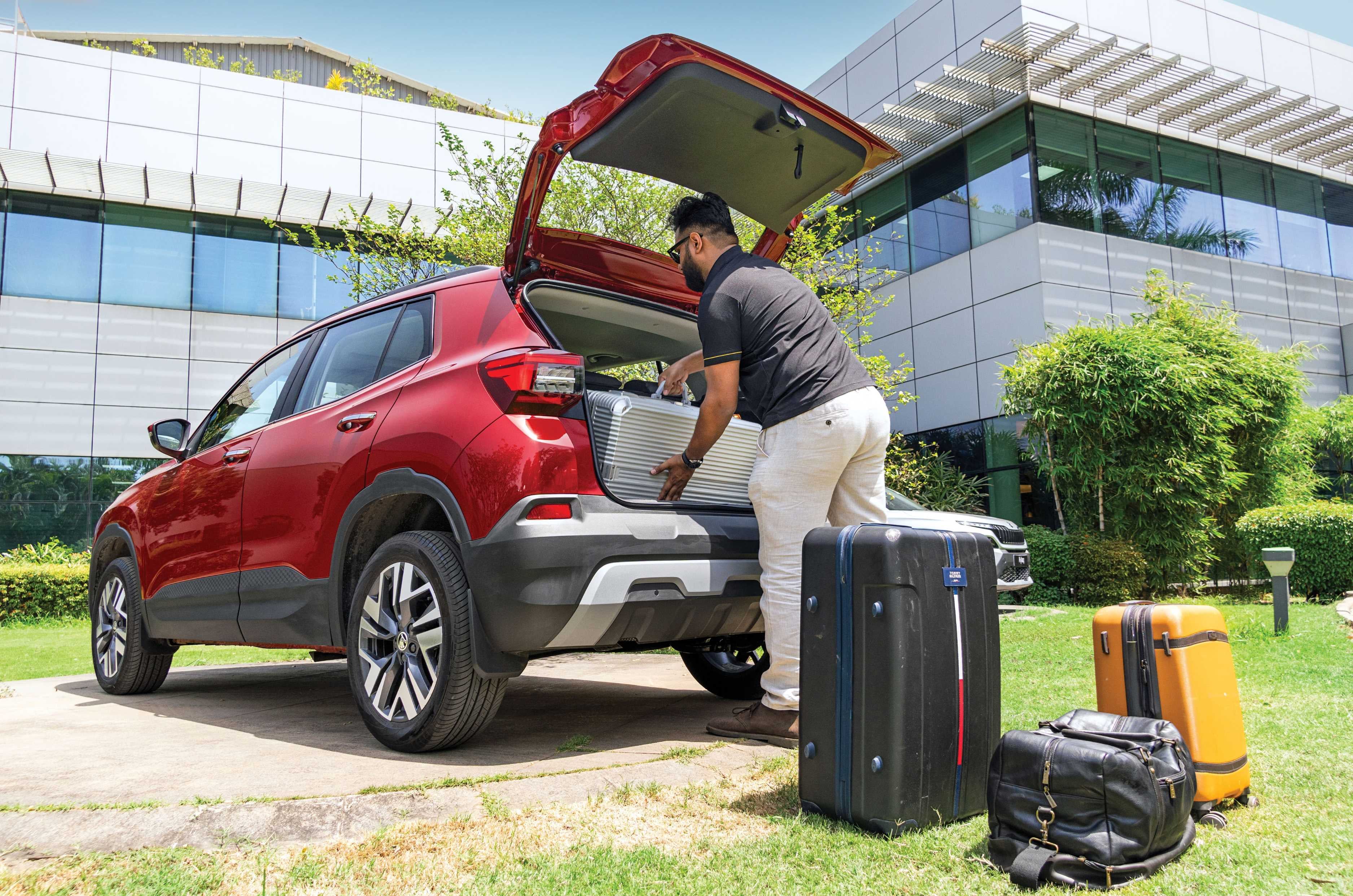
446-litre boot packed to the brim for 70 days on the road.
We got onto the Pune expressway and then crossed the Atal Setu in Mumbai, the longest sea bridge on the entire journey. Mumbai was home, both to me and to the Autocar India office, so after a few greetings from co-workers and the obligatory photos, we headed towards our first state crossing. The infamous Western Express Highway that leads out of Mumbai lived up to its reputation, but with a little anxiety, panic and a few expletives, we made it onto the national highway.
No telling what you’d spot on Indian highways.
The first of countless food stops was Hotel Ahura, renowned for its akuri and kheema. Needless to say, we carb-loaded to the max and made a beeline for Vadodara.
Pune-Birgunj in numbers
Distance covered
2,487km
Fuel consumed
234.46 litres
Average fuel economy
10.62kpl
Approximate fuel cost
Rs 23,629
Average per-litre fuel cost
Rs 100.87
Total time driven
55hrs 20min
Average speed
44.95kph
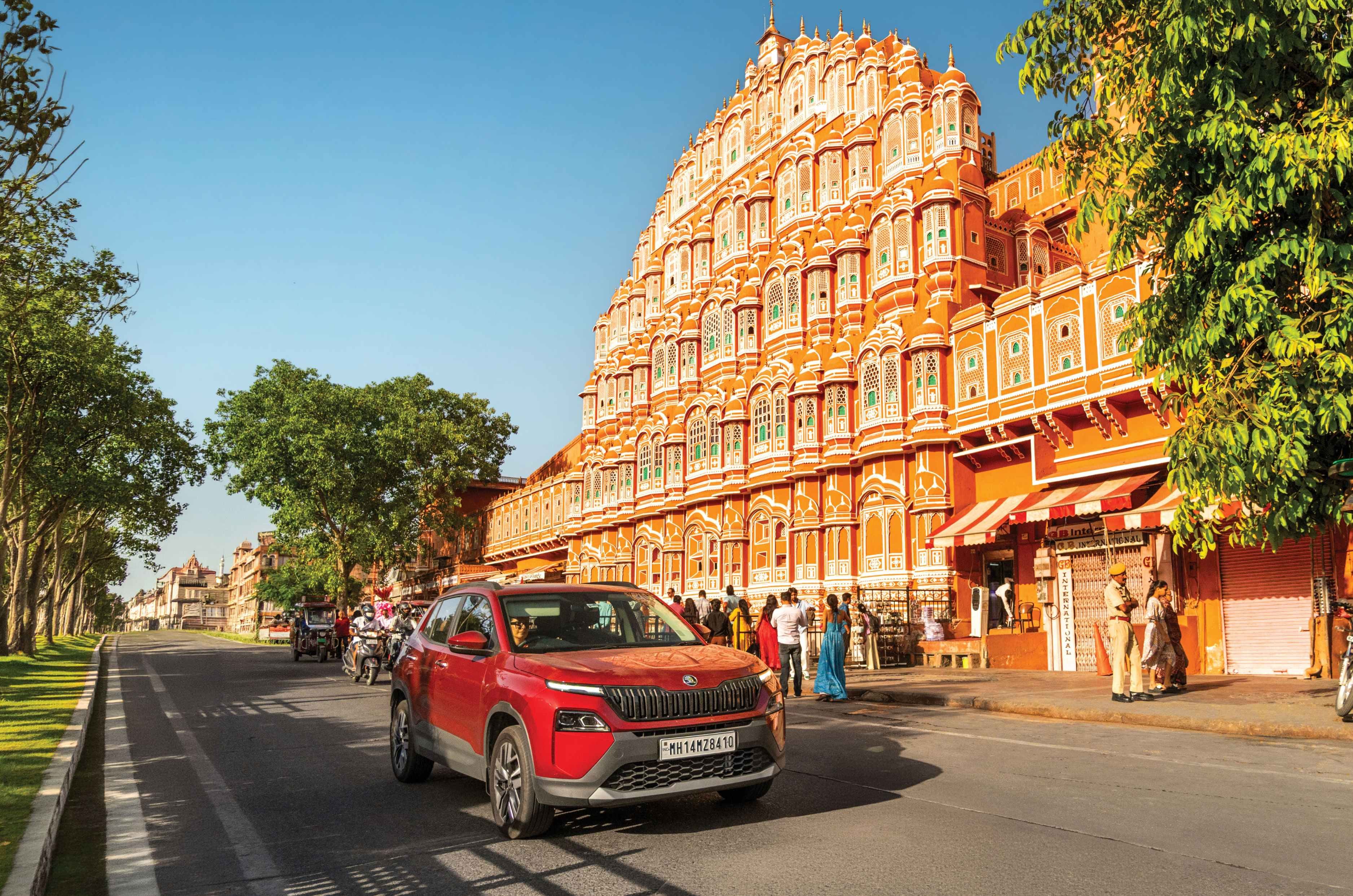
Crossing into Gujarat, the Kylaq could finally stretch its legs and spool up that turbo on the state’s spotless highways. The stability and effortless cruising were a welcome relief, since the bulk of the kilometres on this drive would be covered on long, open highways. Gujarat was a short stint – we made only an overnight halt in Vadodara before slipping out ahead of the morning traffic. The drive into Rajasthan was seamless, and Udaipur greeted us with a mix of heat and traffic. The City of Lakes is worth taking the time to explore, but a late arrival and early morning departure left us with just enough time to grab a traditional meal. All that driving had built up an appetite, so we put it to a vote between a massive vegetarian thali and laal maas – the latter won by a landslide. From the City of Lakes, we headed to Jaipur, the Pink City: just as picturesque as Udaipur, and just as colourful and chaotic. The sun setting over the beautiful Amer Fort made for a cracking backdrop, and a few glimpses of the Jal Mahal on the way back were a treat too. The iconic Hawa Mahal, with its 953 windows, never fails to amuse, but getting a photo of the five-storey icon without a chorus of honks is next to impossible. The next morning, after threading through Jaipur’s narrow lanes, we made it back onto the highway, heading for Agra.
Iconic Hawa Mahal ought to be seen first-hand.
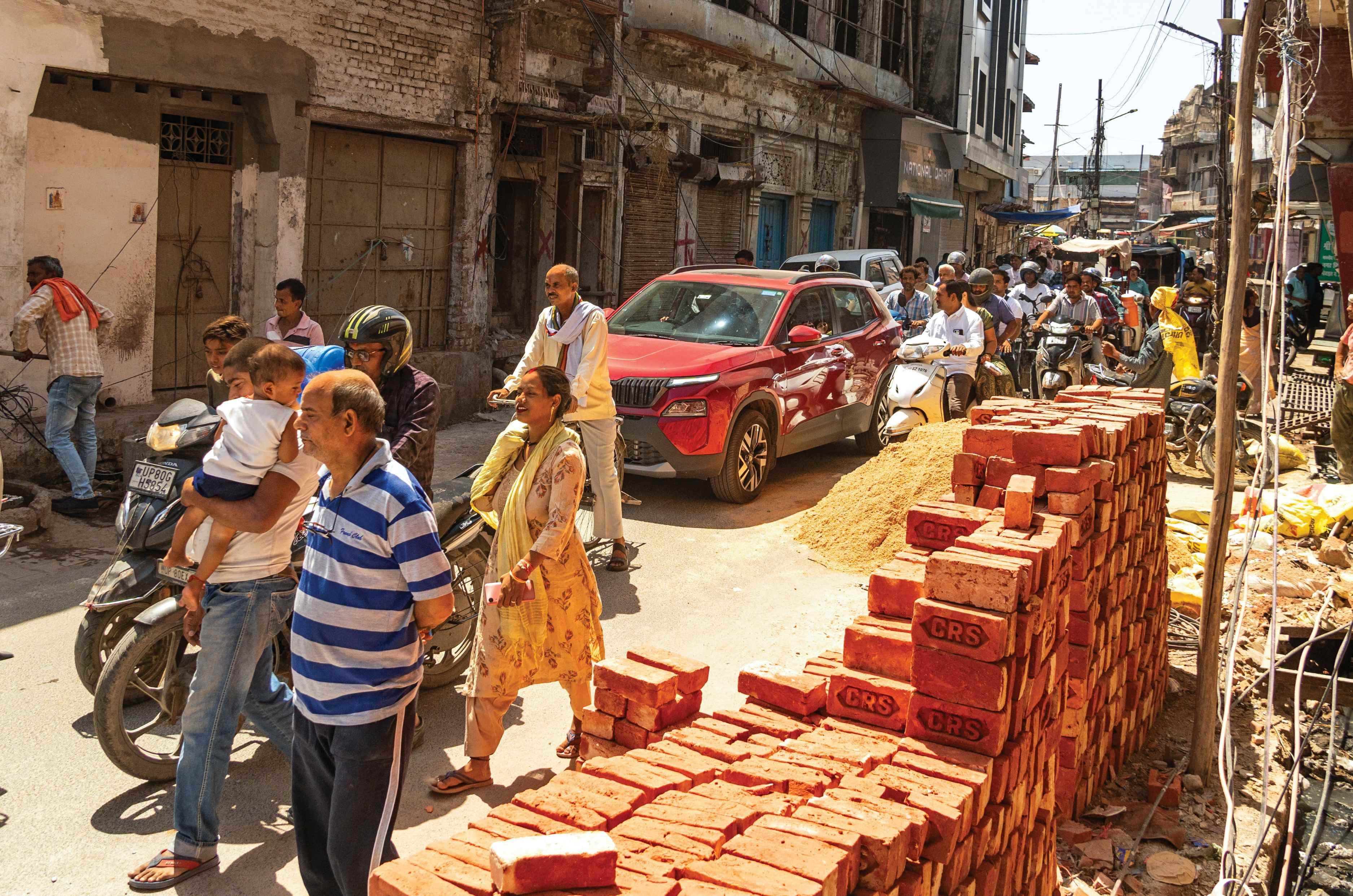
Agra is synonymous with the Taj Mahal, but the Agra Fort – from which you can see the Taj in the distance – is just as mesmerising. The detailing and architecture are second to none, and you could spend hours walking through its courtyards and passages, taking endless pictures. We, of course, also made it to the Taj itself, amid the hordes of tourists, if only to avoid the guilt of visiting Agra without a shot of the world-famous white dome. Tourism done, it was time for some petha – though the lanes near the petha shops seemed to be the exact width of the Kylaq, and that’s where peak anxiety set in. We got out of the mess, walked around the car to check for scratches and scribbles, and sighed in relief. India was adding to the tension, and we were barely halfway through it.
Agra’s narrow lanes were a nightmare to drive through.
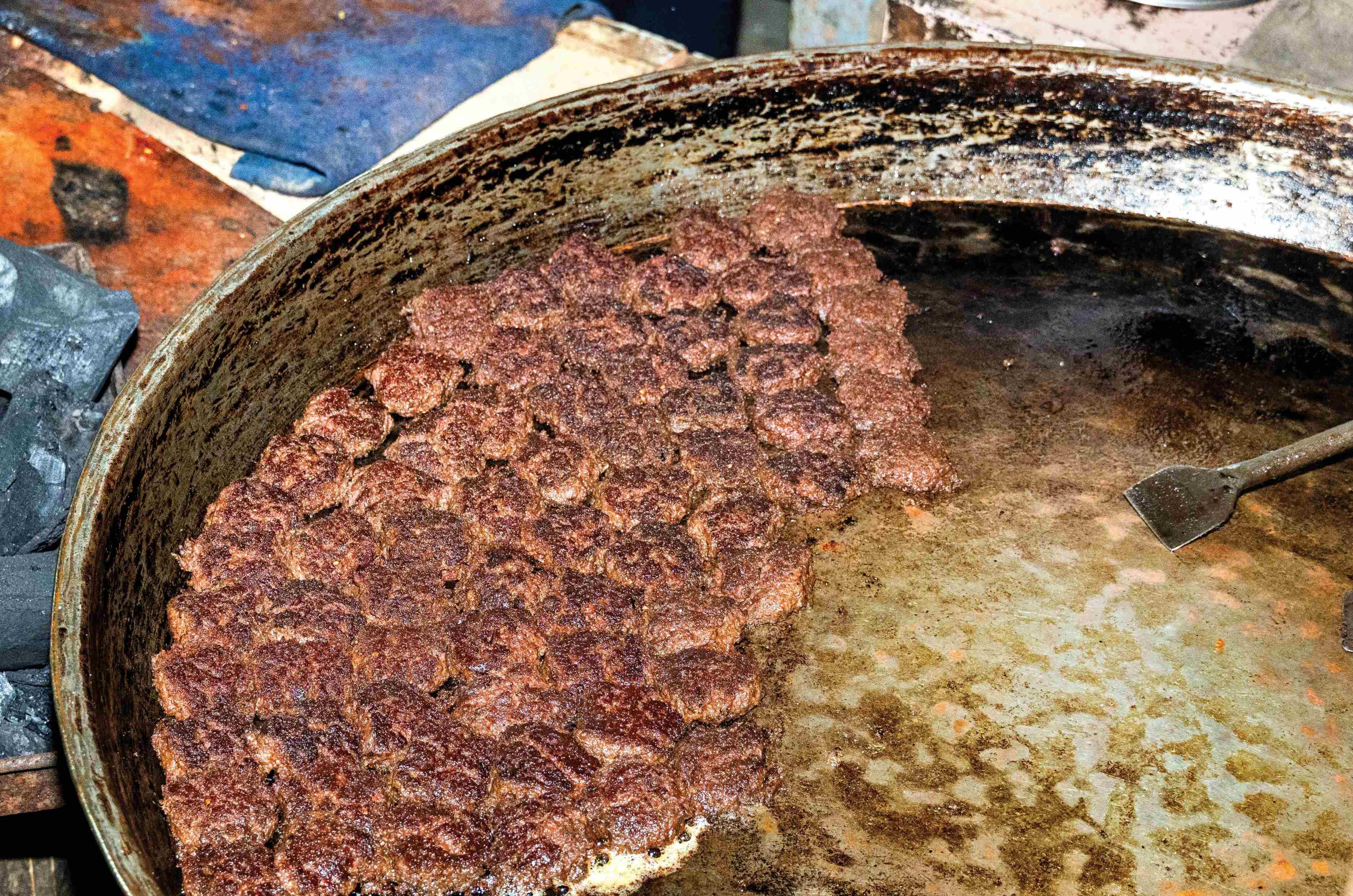
Our next stop from Agra was foodie heaven – Lucknow. The biryanis, kebabs, and tandoors were exactly what we expected, and exactly what Lucknow delivered. Finding your way here is easy – you could do it blindfolded, following the smoke and sizzle to wherever you need to be. Tunday Kababi is a must, and after a heap of biryani laced with kebabs, a long walk through the countless chikankari shops helps burn off some of the calories.
Lucknow’s Tunday Kababi still has us drooling over Galouti kebabs.
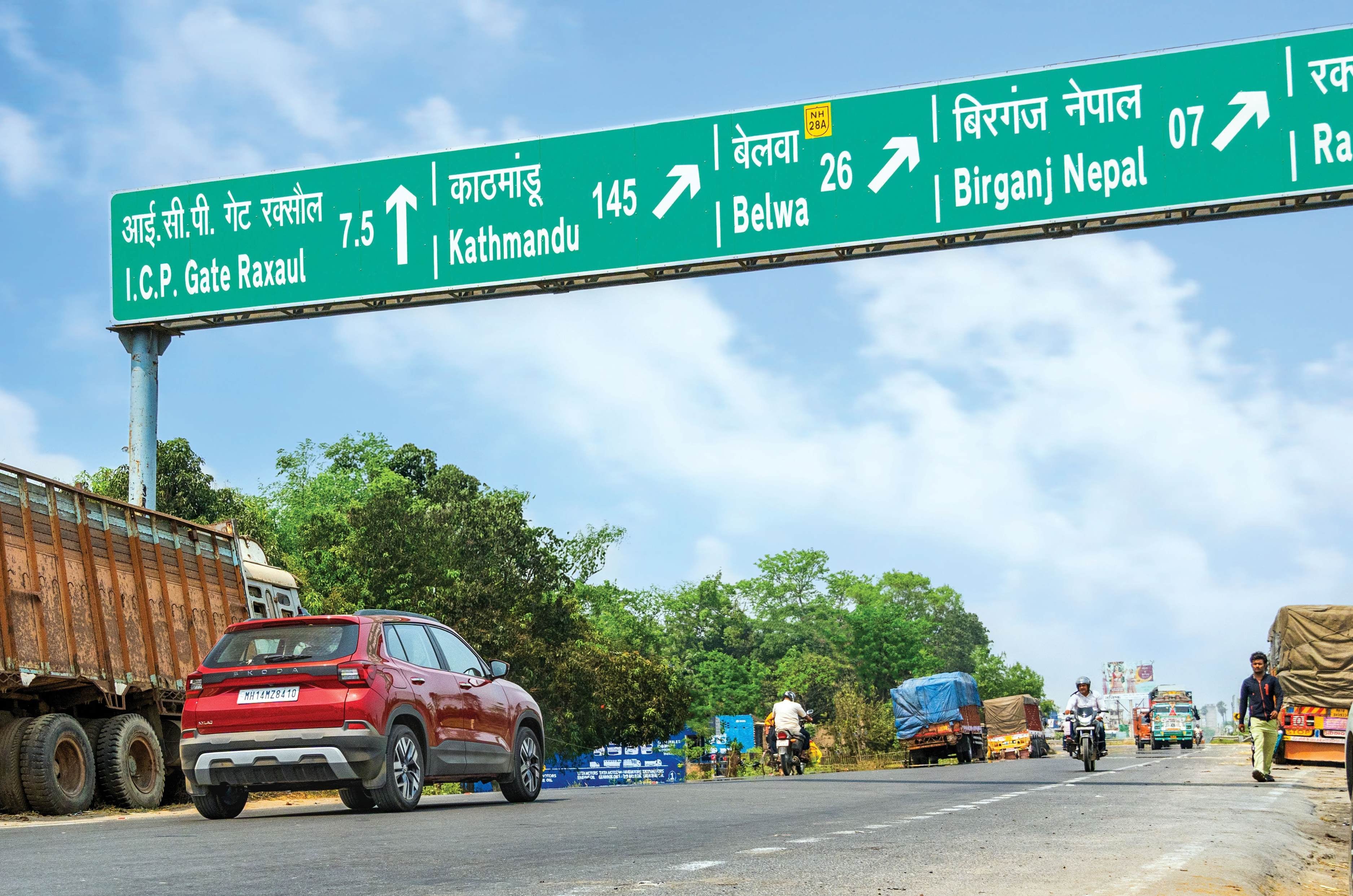
We were closing in on the end of the India leg, with one last stop in Gorakhpur before the Nepal border. To celebrate, a group of Skoda owners, officially known as the ‘Fans of Skoda’ joined us for a celebratory convoy as we drove out – everything from Octavia RS models to Kodiaqs and Kushaqs turned up as a send-off before we went international. The loud, chaotic border towns past Gorakhpur delivered one final challenge as we exited through Raxaul.
Final stretch before the Kylaq left India for the first time.
The India-Nepal border is still raw and basic, with none of the high-tech systems you might expect. A drive of this scale comes with a mountain of paperwork – visas, carnets, insurance, and more – and sifting through all of it manually takes a while. After a gruelling five hours, the Kylaq crossed out of India for the very first time.
Nepal – Old World Charm
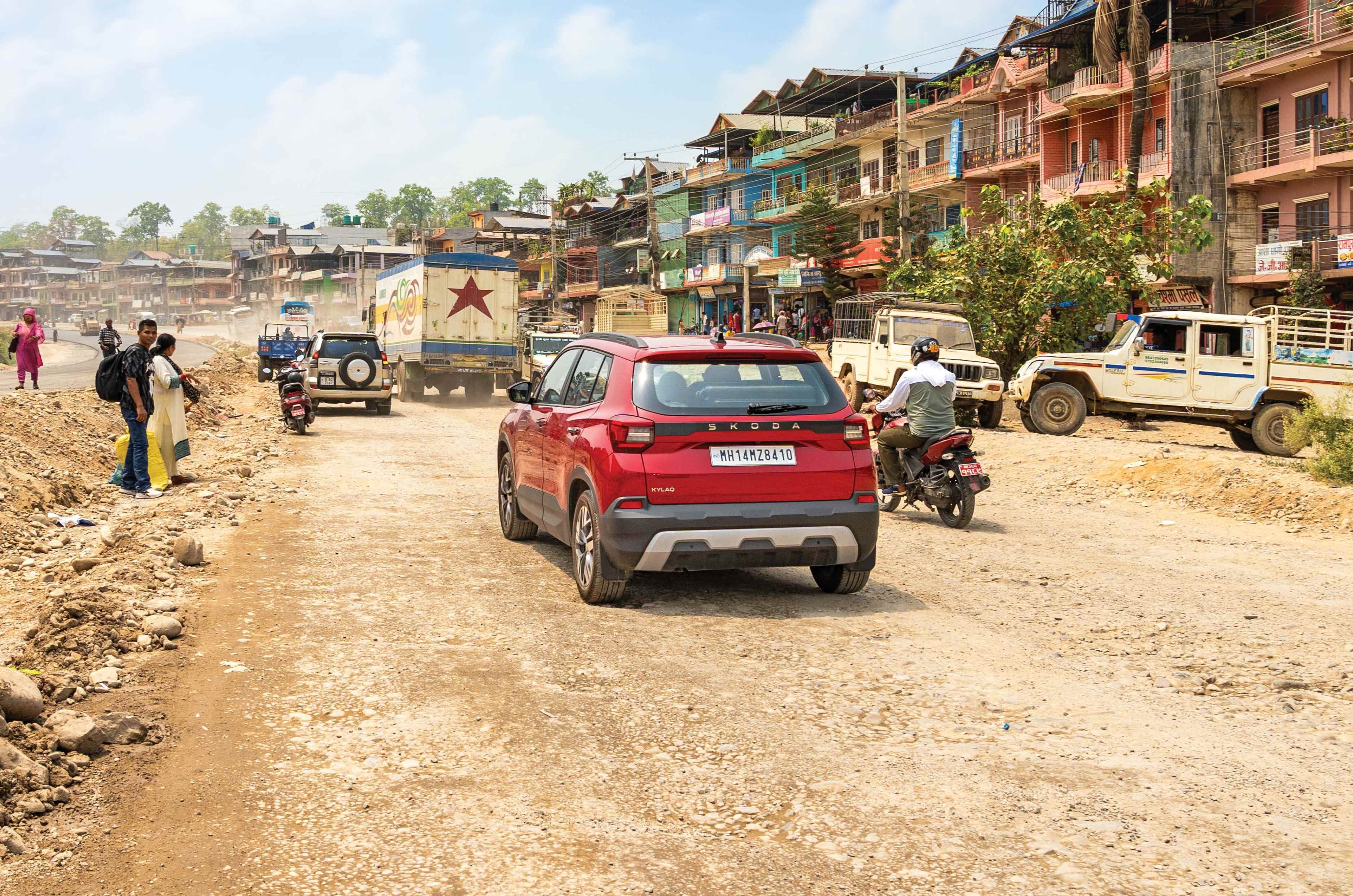
Nepal’s state highways give Indian roads a run for their money.
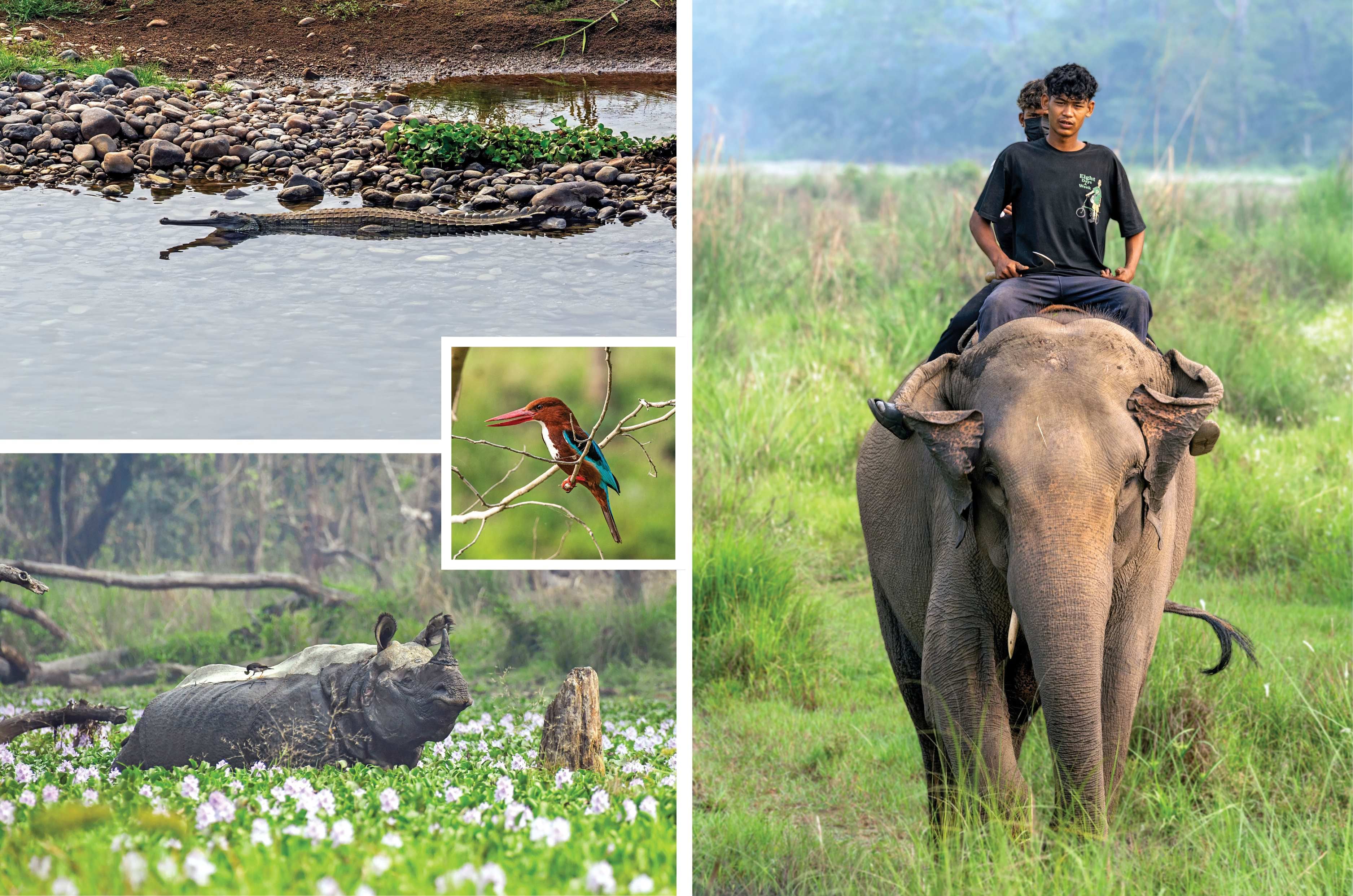
If the Indian side of the border was old-school, Nepal’s immigration post is almost antique. Drive past it, and you’d likely miss it altogether – the only tell-tale sign is a simple gate with ‘Immigration Office’ hand-painted on it. This humble-looking house is, in fact, the immigration office, where, just like on the Indian side, every check is done manually. Fine print, identity proofs, and everything in between were checked meticulously before we were welcomed into Birgunj. Our main draw in Nepal was the bustling capital, Kathmandu, but there were magnificent stops along the way, starting with Chitwan National Park. Home to nearly 700 one-horned rhinos, the park also shelters elephants, Bengal tigers, cobras, the elusive gharial, and abundant flora. The Kylaq would have been fun to explore it in, but we opted for the park’s safari vehicle to relax and take in the surroundings. Paddling a beaten-up wooden kayak past crocodiles and snakes adds a rush, but it’s nothing compared to a rhino staring you down in all its magnificence. The park gave us a welcome break from long hours behind the wheel.
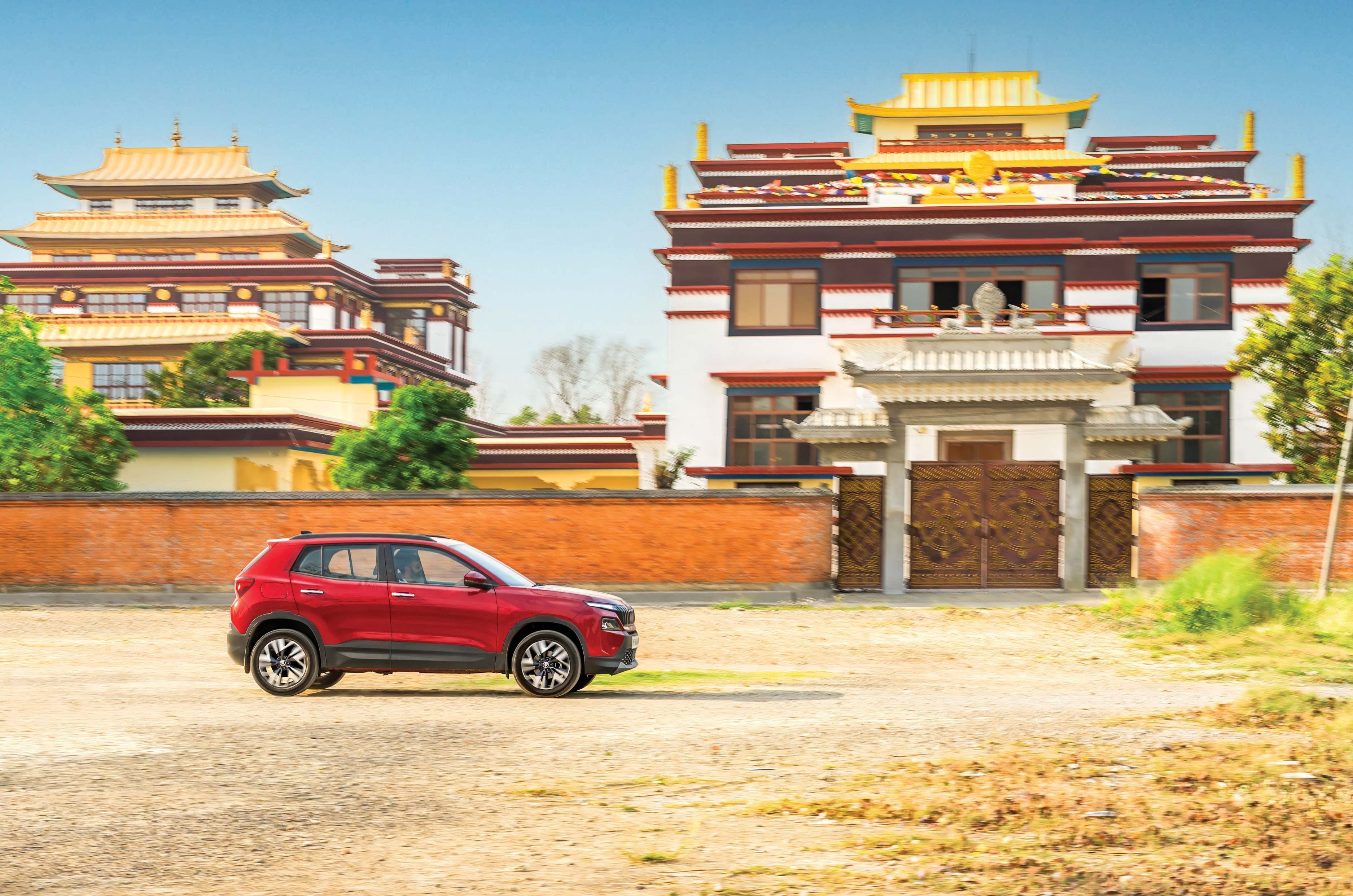
Lumbini is home to 32 unique styles of monasteries.
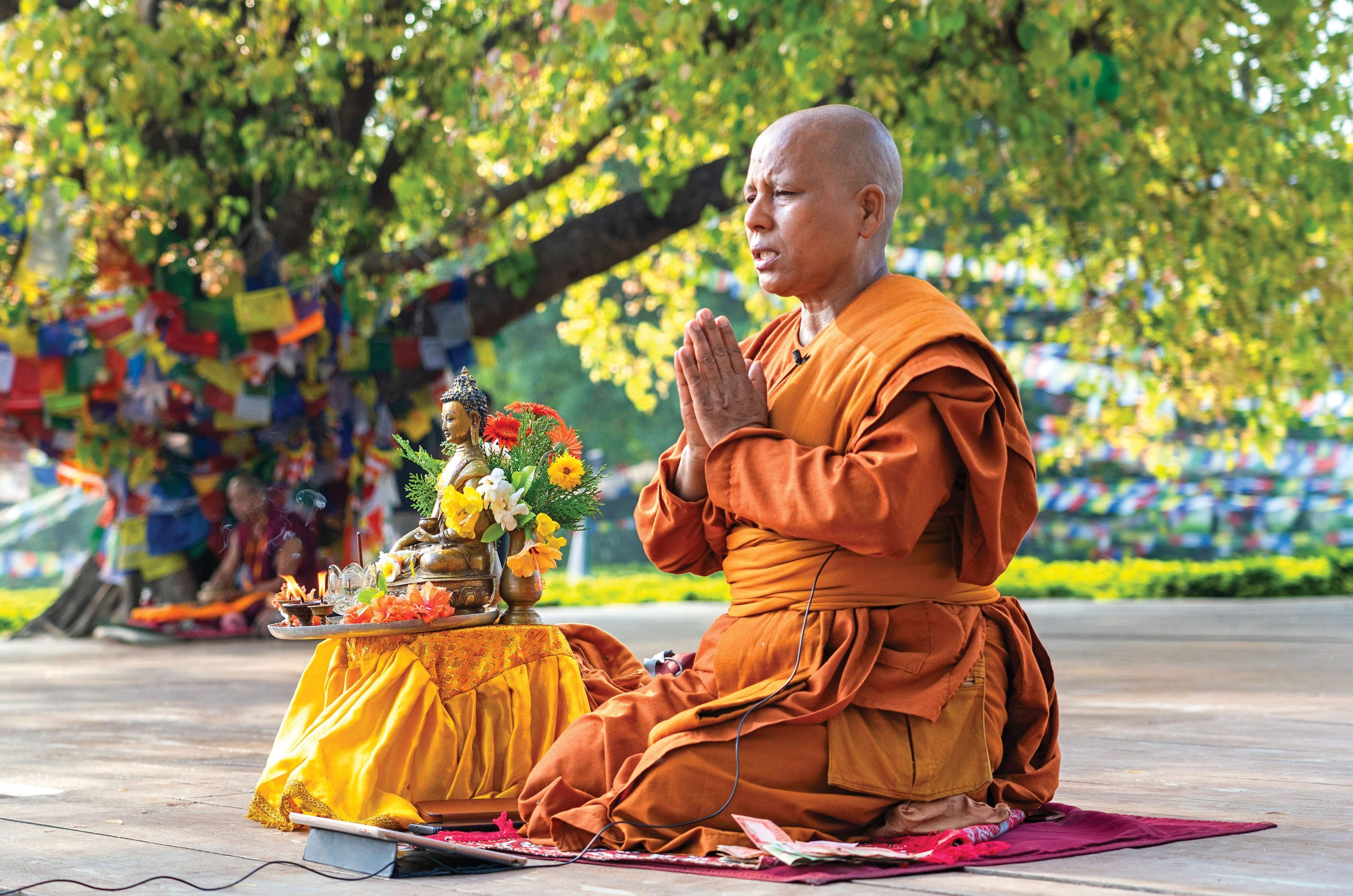
Next was Lumbini, a spiritual haven and, more importantly, the birthplace of Siddhartha Gautama (Lord Buddha) around 563 BC. Its fascinating monastic zone showcases monasteries built by Buddhist nations from around the world, each reflecting its own culture through design and architecture – a remarkable collection of temples spanning diverse traditions. The feeling of peace there was unlike anything I’d experienced, but it was soon disrupted by the road to Pokhara.
Lumbini provided a moment of calm through the chaos.
Mountain passes are notorious for destroying Google’s ETAs – landslides, breakdowns, and deteriorating roads mean a stretch that should take an hour could take five, depending on your luck. We braced for traffic and drove straight into a landslide clearing. A two-hour wait meant the sun was setting as we rolled into the quaint town of Pokhara. Bustling with cafés and pop culture, it felt like a mini Kathmandu, but with the stunning Phewa Lake turning orange at sunset. The calm that began in Chitwan came full circle on the shores of Phewa Lake.
Chitwan is home to the gharial and over 700 one-horned rhinos.
Kathmandu, though, was a different animal entirely – every bit a capital city, and a world away from the slow pace of Chitwan or Lumbini. The music is loud, the traffic is hectic, and the city is anything but quiet. Ironically, the only quiet things on the road are the cars – China’s dominance in Nepal is stark, with three in five cars on the road being Chinese EVs. Geely, BYD, and GWM rule the market, with only a handful of Hyundais and Kias as competition.
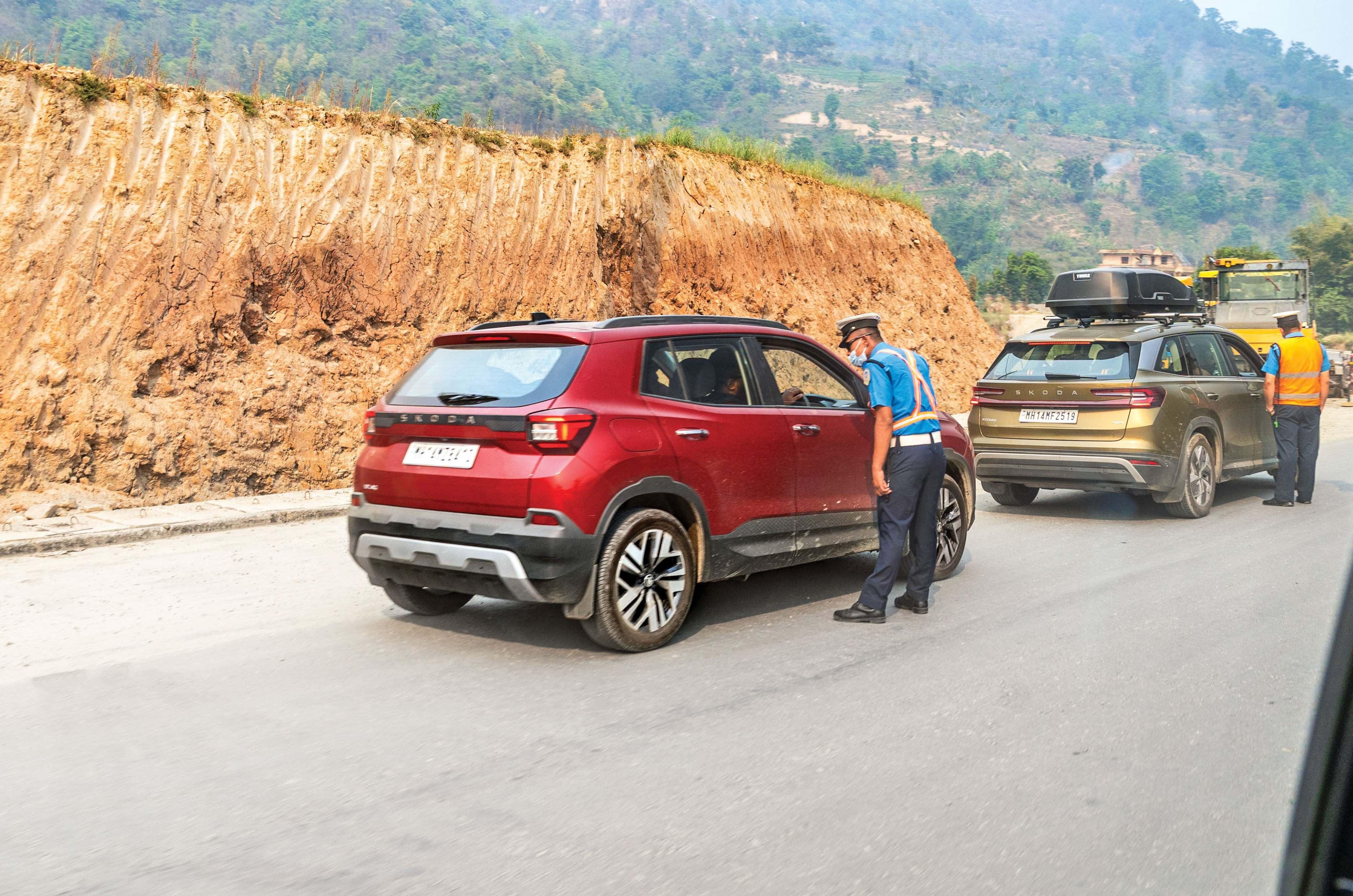
Authorities were always curious thanks to Indian number plates.
The party scene rules Kathmandu too. At night, the city comes alive as a hub for tourists from around the world. Hiking gear and North Face apparel go for a fraction of the price – and, often, a fraction of the quality – alongside quirky masks and fridge magnets at every tourist stop. Spend a little more time, though, and you’ll find excellent coffee shops and the famous Thakali thali: thick buckwheat porridge with salads, meat, and plenty of flavour. Good thing too, since walking through Durbar Square works up quite an appetite. Partly destroyed by the devastating 2015 earthquakes, the temples have since been restored to their former glory, though you can still spot the scars in a few bent pillars and roofs. It’s a culture and tradition worth preserving, and Nepal deserves credit for doing exactly that.
Birgunj-Sino-Nepal Border in numbers
Distance covered
922km
Fuel consumed
115.96 litres
Average fuel economy
7.13kpl
Approximate fuel cost
Rs 15,846
Average per-litre fuel cost
Rs 136.65
Total time driven
34hrs 25min
Average speed
27kph
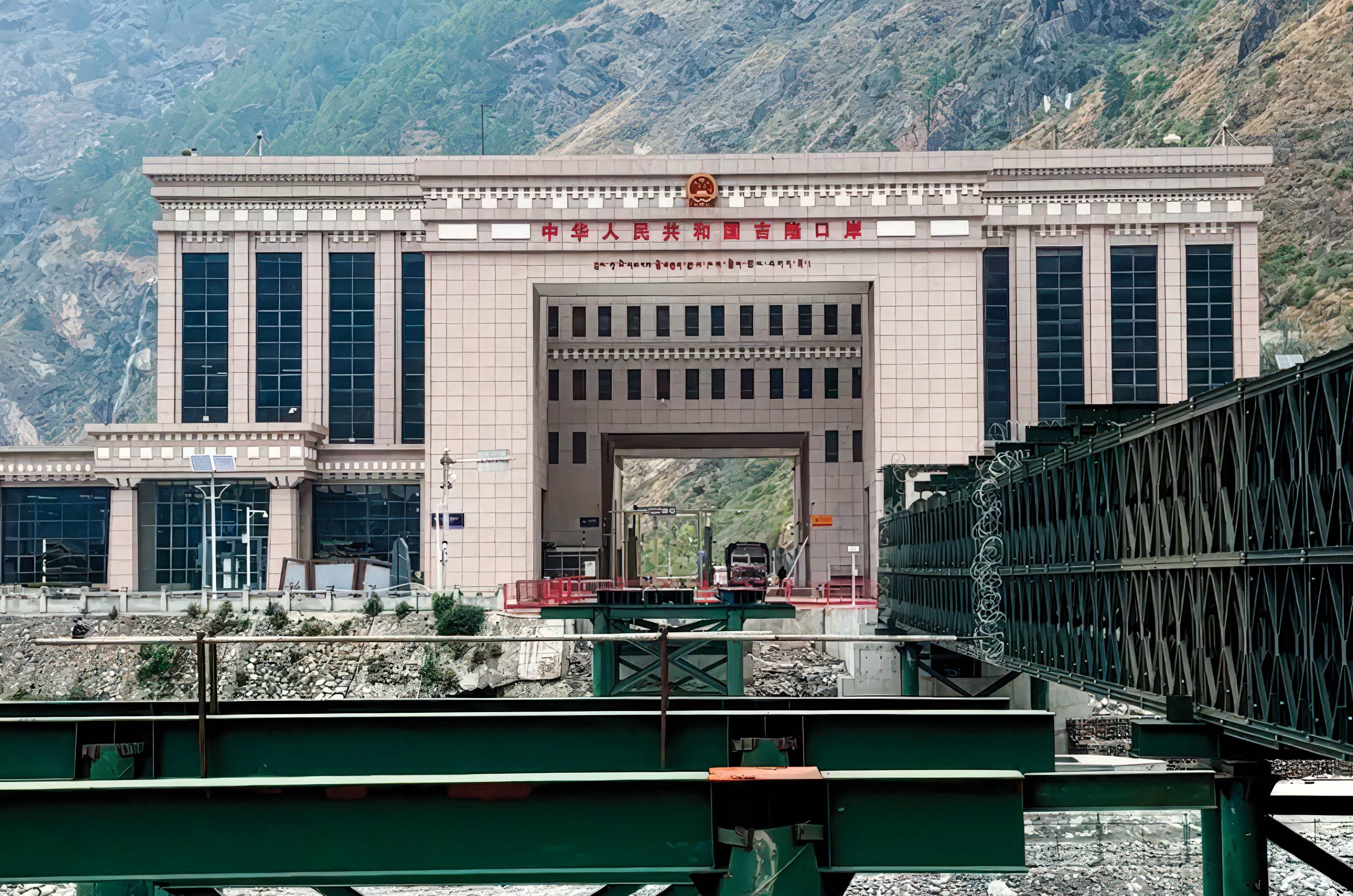
With Kathmandu explored, we headed towards our second border crossing – and this one was far more intense. Once we left Kathmandu, we left the tarmac behind too. Muddy back roads, still wet from the previous night’s rain, meant slush and a constant need for 4WD. Even so, though packed to the brim with luggage, the Kylaq stayed light enough and had enough clearance to pick its way around the mud on the approach to the Rasuwa Bridge. From there, you can see the Chinese immigration building towering over everything around it. With the Kylaq thrumming with excitement, we crossed into Tibet – the roof of the world.
Tibet/China – Roof of the World
China’s border crossing is as imposing as it gets.
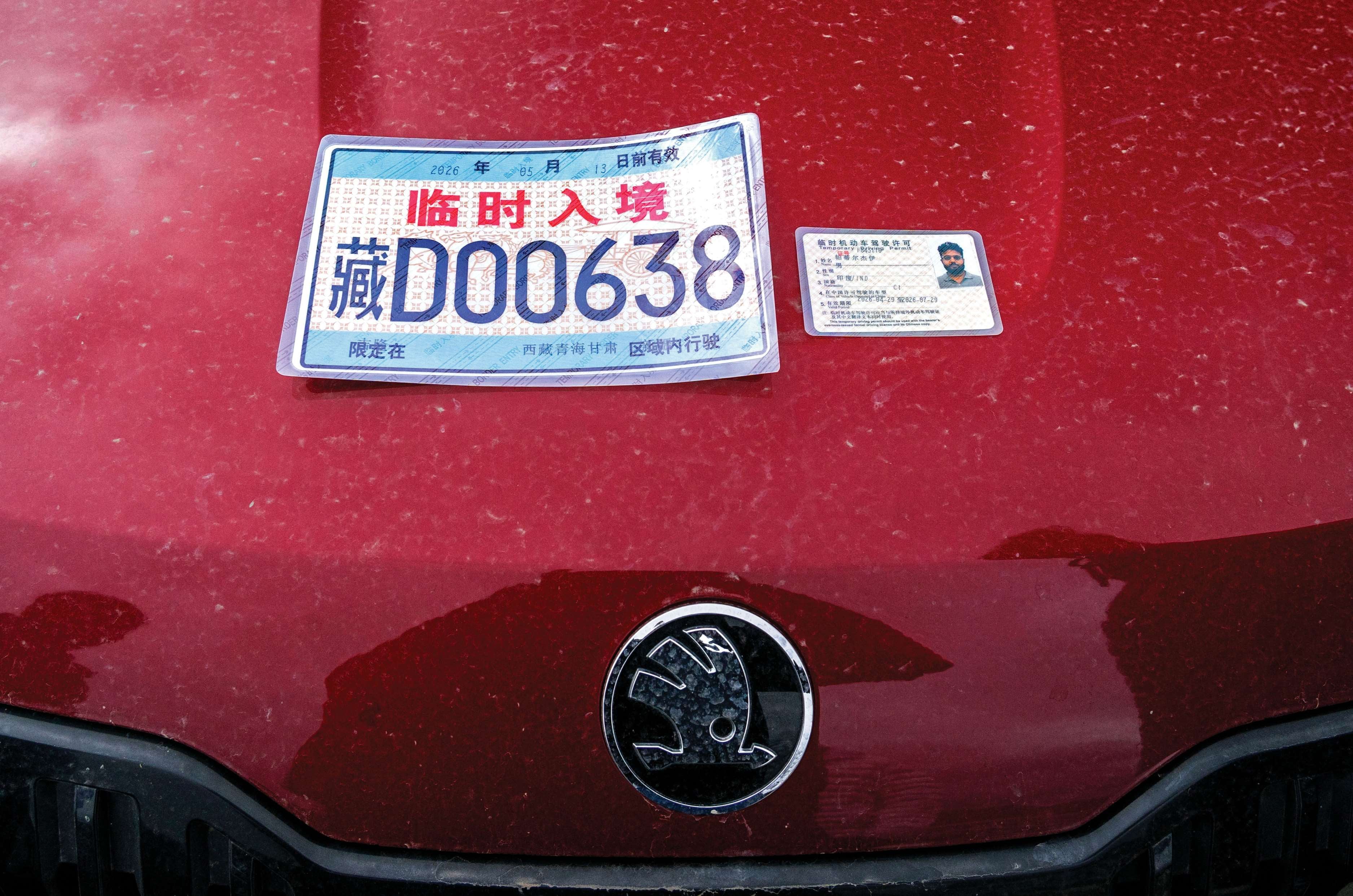
Crossing into Tibet felt like crossing into the future. For a region tucked deep into the mountains, it’s exceptionally developed – the roads are smooth and well-signed from the moment you cross the bridge, barely a hundred metres before the immigration office. In China, we weren’t taking any chances, knowing any misstep here could jeopardise the rest of the journey. After answering the customs officers honestly – and impressing them with the scale of the Kylaq’s challenge – we entered the lovely town of Gyirong. Old Chinese architecture, plenty of red, and signboards we couldn’t quite read were early signs that we really were in a different world now. Nepal had shared plenty with India – the cars, the food, the roads – but China felt entirely its own. We thought we’d seen our share of speed cameras, but China put us to shame – they appear every 50 metres or so, complete with flashes. There’s simply no room for error, and you’re monitored everywhere you go – aneerie feeling that takes some getting used to. Another non-negotiable is to obtain a special driving licence for every person that will be driving and a China-specific number plate, which you have to place on your dashboard so the cameras can pick up any infringements. A regular India-style RTO office with long queues and a lack of urgency got us homesick for a bit.
Local license and registration are non-negotiables in China.
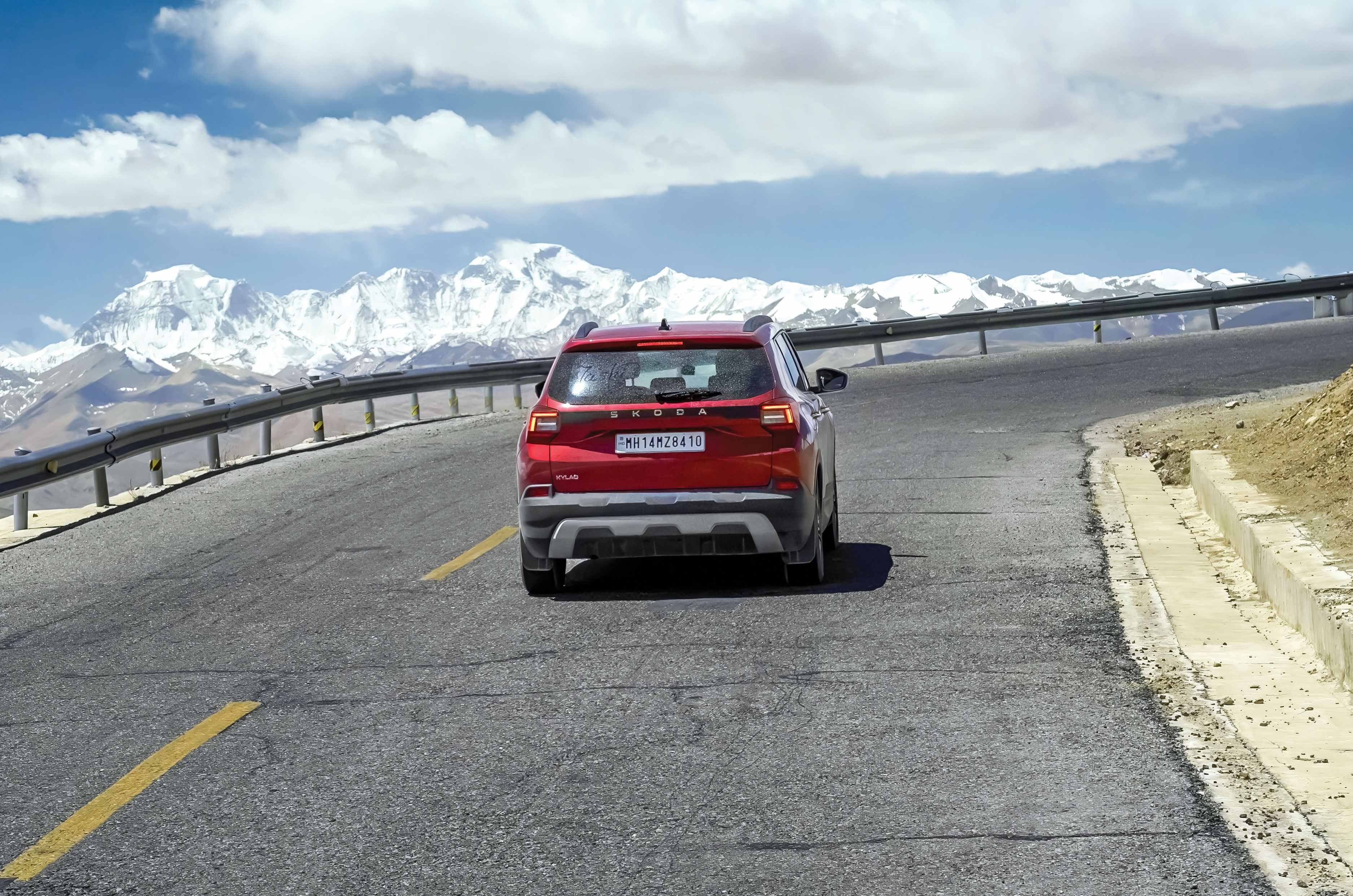
A few mugs of hot ginger-lemon tea eased us into the chill, and we set off for Mount Everest Base Camp. High altitudes are usually punishing for small-capacity engines, but thanks to its turbocharged engine, the Kylaq barely broke a sweat, buzzing through the passes. Its 6-speed automatic had been a great convenience through the chaos of India and Nepal, but the winding mountain roads and immaculate tarmac meant I could switch to manual and take control via the paddle shifters. Paddle-shift response is often sluggish, but not here – the shifts were quick, and the taut suspension held its ground even through tight hairpins.
Everest hove into view long before we made it to base camp.
It made for a great drive and great footage, right up until we spotted the peak in the distance. Even from afar, Everest is breathtaking, and mercifully the clouds stayed clear as we got closer. You can’t take a car near base camp itself – a one-hour bus ride covers that final stretch. It’s strange how you lose your breath as you approach Everest – partly the thin air and altitude, but you’d lose it all the same just from the view. Words don’t do it justice, and don’t be surprised if you shed a tear or two – it’s overwhelming.
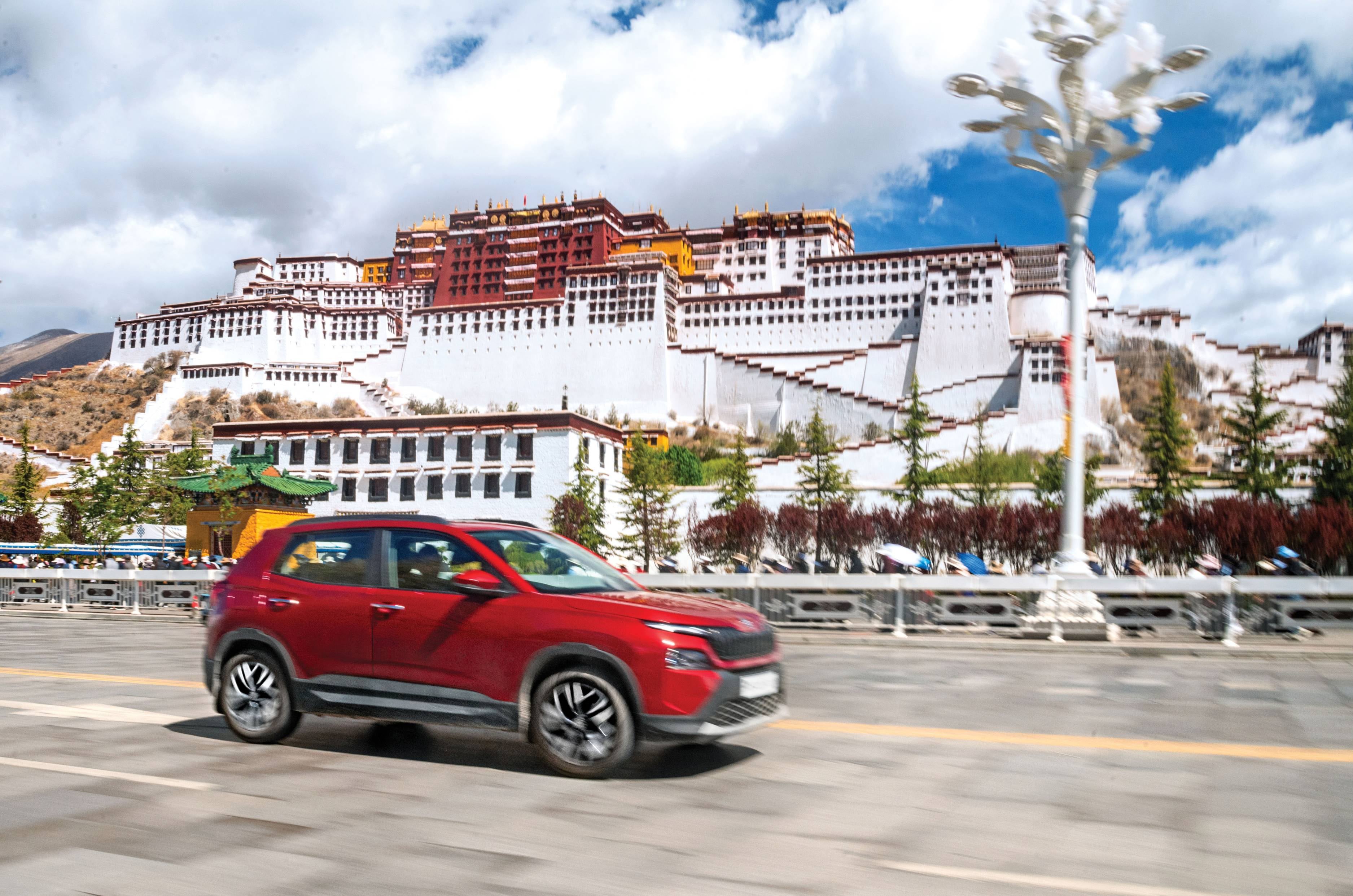
Stunning Potala Palace; once home to the Dalai Lamas.
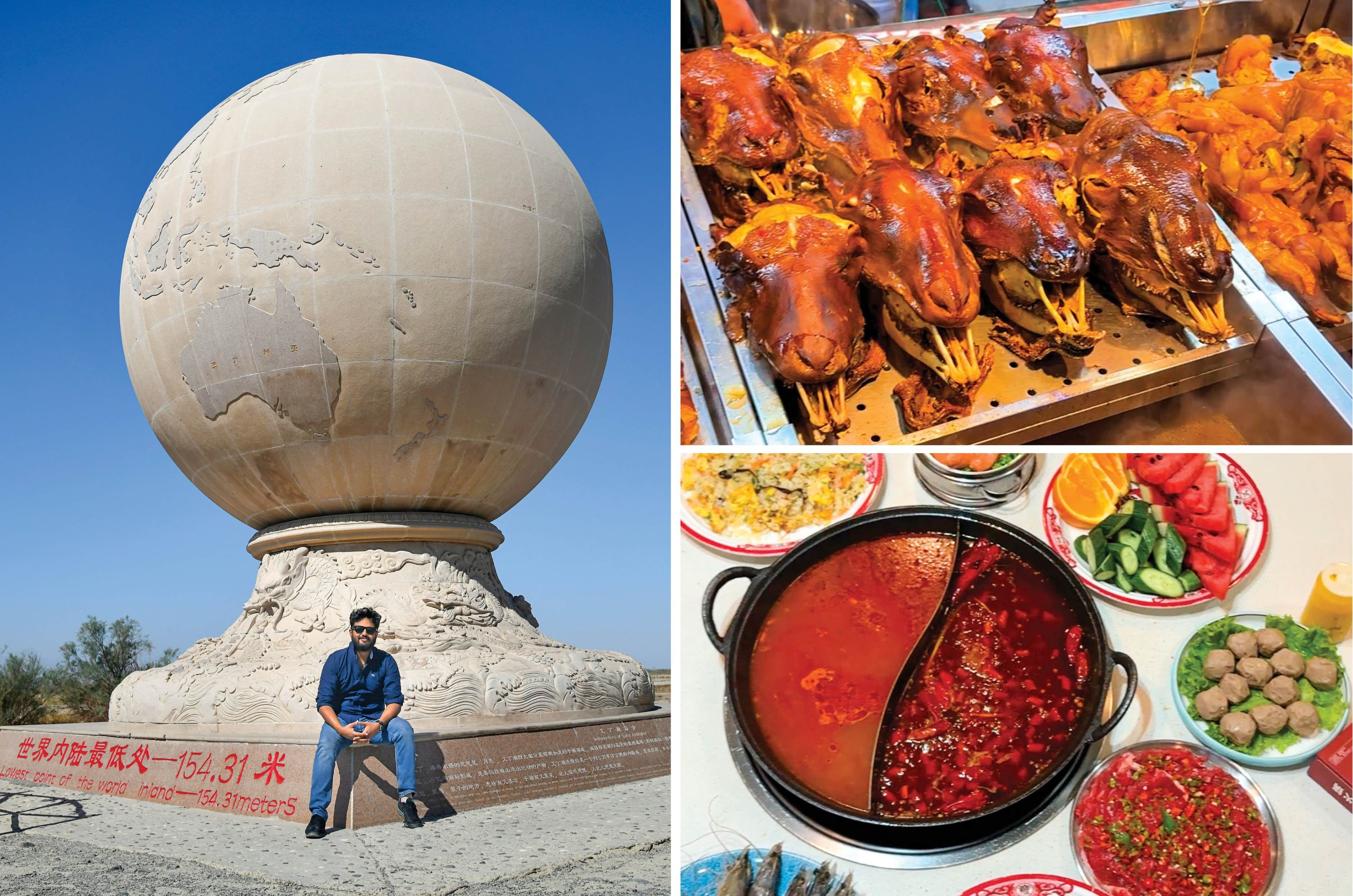
With Everest ticked off, it was time to take on China’s vastness. We headed to Lhasa, the spiritual capital of Tibet, home to the grand Potala Palace. Once home to monks and lamas, this stunning palace holds incredible history and artefacts – spiritual or not, its significance to the country’s history is unmistakable. The drive kept revealing itself through unique food, dialects, faces, and even geography. One day we were freezing thousands of feet above sea level; days later, in Turpan, we were below sea level in blistering heat. From boiling hotpots to grocery-store instant noodles, China pushed us well outside our comfort zone, and the Kylaq wasn’t spared either.
L: From EBC’s high to Turpan Depression’s low – Jay was at 154m below sea level here. R: Street food in China not for the faint-hearted.
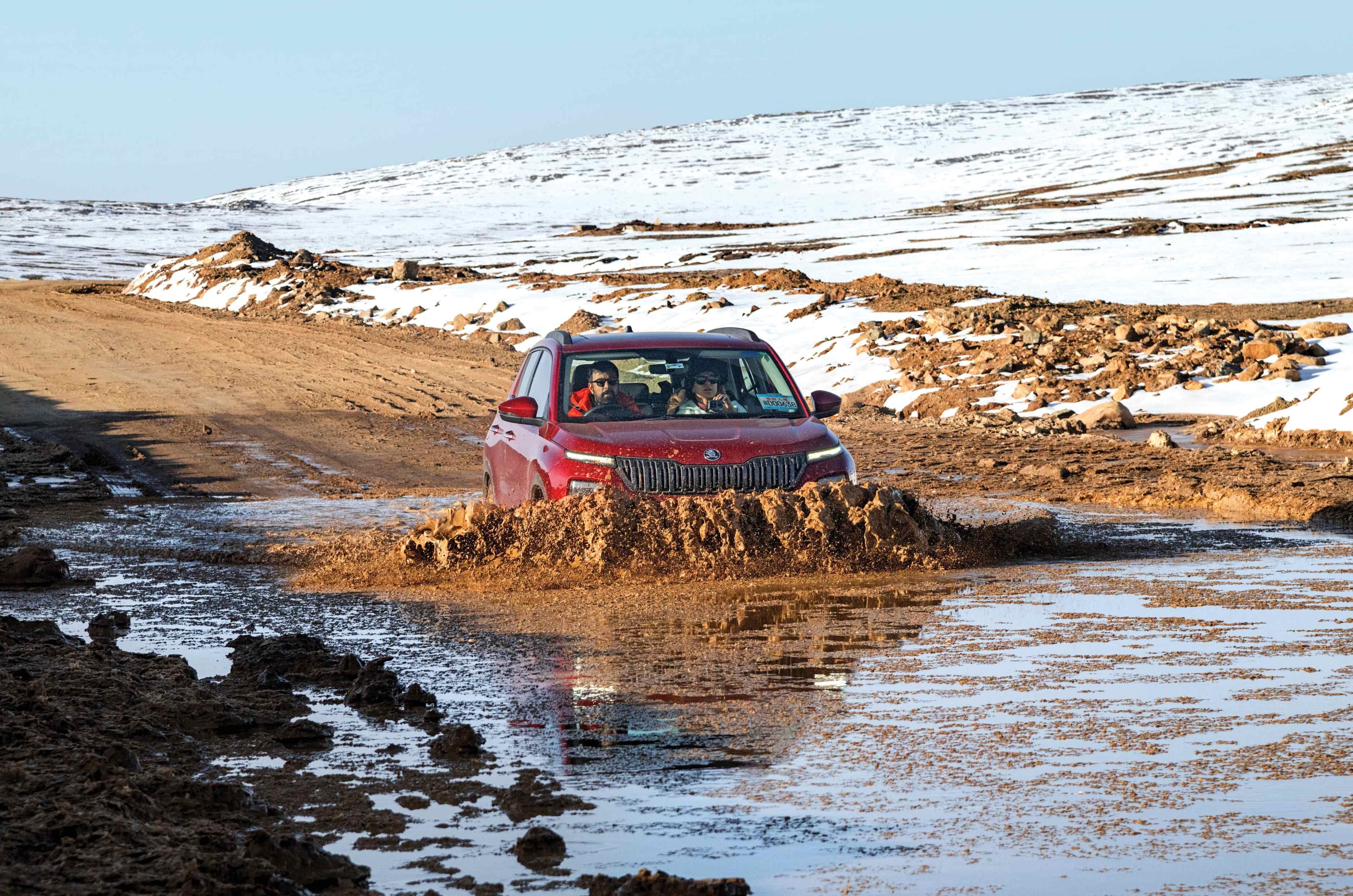
Two full days on the way to Golmud were entirely off-road, taking over 13 hours of driving, with our average speed dropping to 18kph as the Kylaq waded through water up to its bonnet and emerged without complaint.
In China, you get perfect roads or, simply, no roads.
A stretch that would have broken most cars left the Kylaq unscathed. China hit hard, but the Kylaq hit back harder. From day one, it had faced challenge after challenge, and from day one, it had come out on top. Three countries in, it still carried the same zeal it started with – and while we were rattled, it stood strong each night, ready for the next day.
Pacific Mall Jaipur Launch: जयपुर शहर क सुंदरता और चमक धमक अब सिर्फ किलो-महलों और ऐतिहासिक इमारतों, हवेलियों तक ही सीमित नहीं रह गई हैं बल्कि जयपुर देश के बड़े शहरों जैसे दिल्ली, मुंबई, बैंगलोर और हैदराबाद की तरह आधुनिक चकाचौंध के इंफ्रास्ट्रक्चर की चमक भी जयपुर में बिखरे रही हैं बड़े-बड़े शाही और लग्ज़री होटलों के साथ राजधानी जयपुर के शॉपिंग मॉल्स में दुनियाभर के लग्जरी ब्रांडों, रेस्तरांओं और शॉपिंग हब के रूप में अपनी पहचान बना रहा हैं।
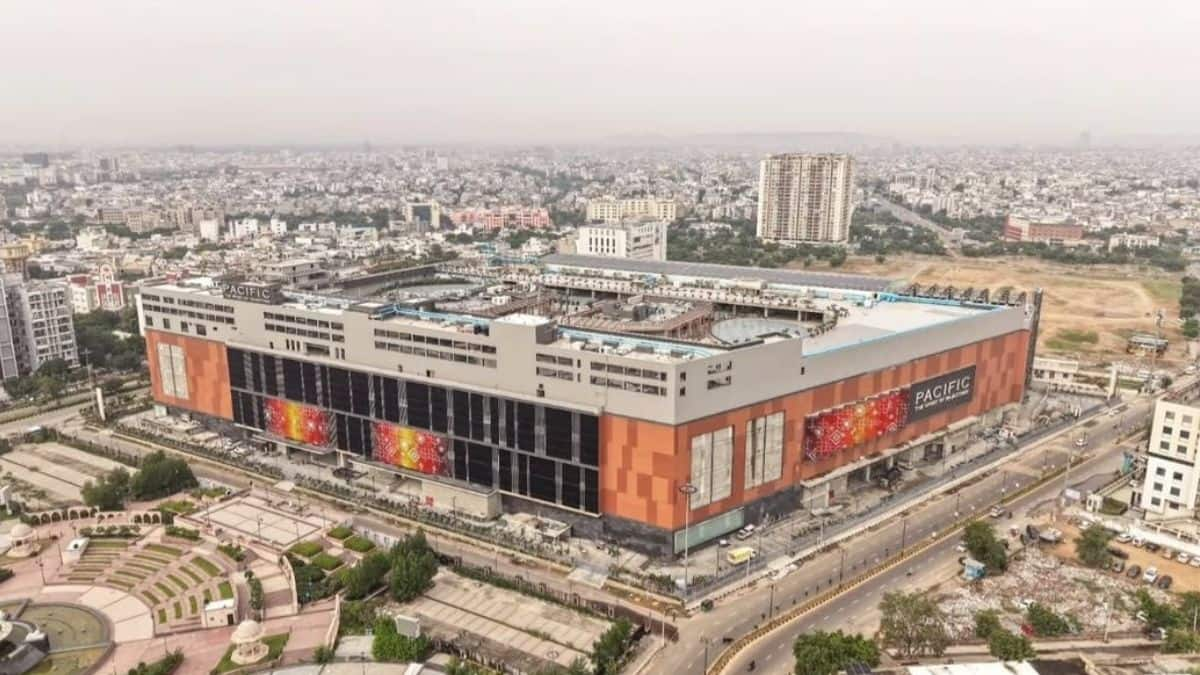
जयपुर के मानसरोवर इलाके में हालही में बनकर तैयार हुआ उत्तर भारत का सबसे बड़ा और राजस्थान का सबसे आधुनिक पैसिफिक मॉल जिसके उद्घाटन का इंतजार पूरा शहर कर रहा है। मानसरोवर VT रोड़ पर सालों की मेहनत से बनकर तैयार हुआ पैसिफिक मॉल का उद्घाटन 11 अक्टूबर को होगा जो जयपुर की आधुनिक चकाचौंध में चार चांद लगा देगा।
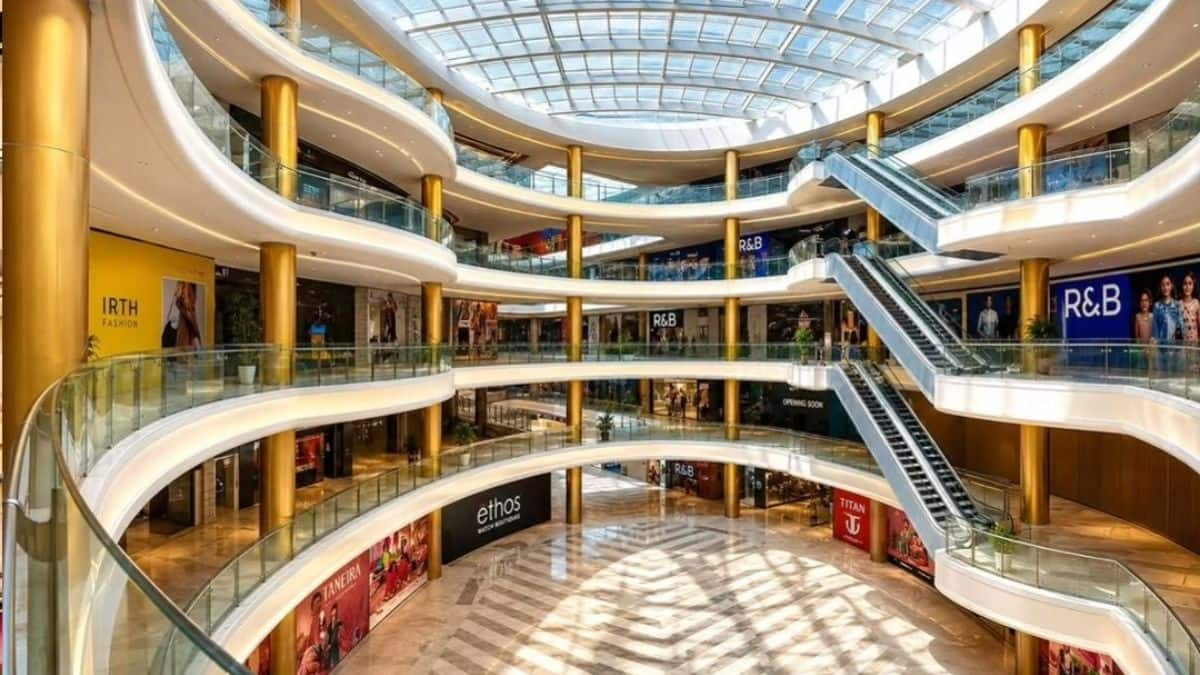
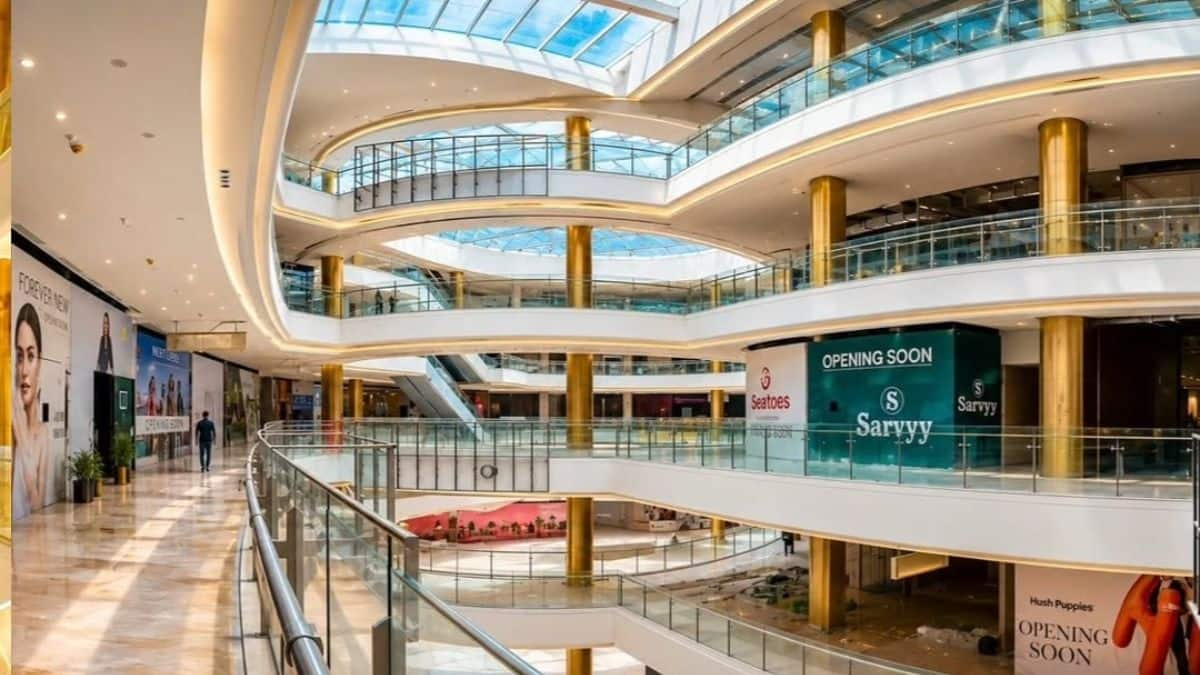
जयपुर में बनकर तैयार हुआ पैसिफिक मॉल लगभग 12 एकड़ की जमीन पर बना हैं जो राजस्थान का सबसे बड़ा शॉपिंग मॉल हैं जहां जयपुर में पहली बार IKEA, Uniqlo, Michael Kors और Armani Exchange जैसे कई बड़े अंतरराष्ट्रीय और भारतीय ब्रांड्स इस मॉल के जरिए अपनी जगह जयपुर में बनाने के लिए तैयार हैं जयपुर के पैसिफिक मॉल 450 से अधिक ब्रांड्स के आउटलेट्स के साथ खुलने वाला जयपुर का सबसे भव्य शॉपिंग मॉल होगा।
दुबई मॉल की तरह जयपुर में चमकेगा पैसिफिक मॉल
दुनियाभर में जब भी शॉपिंग मॉल्स और शॉपिंग सेंटर की बात आती हैं दुबई मॉल की सबसे ज्यादा चर्चाएं होती हैं। ऐसे जयपुर का पैसिफिक मॉल भी राजस्थान का दुबई मॉल से कम नहीं हैं। जिसे खासतौर पर ‘The Spirit of Rajasthan’ थीम पर तैयार किया गया है जो राजस्थान की समृद्ध सांस्कृतिक विरासत और आधुनिकता का एक बेहतरीन संगम हैं।
जयपुर में पैसिफिक मॉल का निमार्ण पैसिफिक ग्रुप द्वारा किया गया हैं जहां इसके खुलने के बाद जयपुर को शॉपिंग, डाइनिंग और एंटरटेनमेंट के मामले में एक वैश्विक पहचान मिलेगी। क्योंकि इस मॉल में लोगों की लिए दुनियाभर के लग्जरी ब्रांड्स के आउटलेट्स इसे खास बनाएगा।
साथ ही पैसिफिक मॉल में शॉपिंग के साथ जयपुर के सिनेमा और मनोरंजन को भी नई ऊंचाईयां मिलने जा रही हैं क्योंकि इस मॉल में शानदार 9-स्क्रीन मल्टीप्लेक्स सिनेमाघर के साथ राजस्थान का पहले IMAX आईमैक्स का अनुभव जयपुर के लोगों को मिलेगा।
मॉल में 30 से अधिक फूड कोर्ट काउंटर, 40 से अधिक कैफे व रेस्तरां से लग्ज़री फूड का स्वाद लोगों के लिए हॉट-स्पॉट बनेगा। साथ ही इस मॉल के साथ जोड़कर 135 कमरों वाला लेमन ट्री होटल भी तैयार किया जा रहा हैं जो 2027 तक तैयार होगा। जो जयपुर के तेजी से विकसित हो रहे पर्यटन और बाजार को नया आयाम देगा।
जयपुर के सबसे लग्जरी मॉल में लोगों को मिलेगी ये सुविधाएं
जयपुर में शुरू हो जा रहा पैसिफिक मॉल जयपुर के अन्य शॉपिंग मॉल्स की तरह नहीं बल्कि उससे भी बढ़कर लोगों को या सुविधाएं मिलेंगी। जहां शॉपिंग, इंटरटेनमेंट, फूड, कॉर्पोरेट बिजनेस, स्पोर्ट्स और अंतरराष्ट्रीय ब्रांड्स की चकाचौंध सबसे खास होगी।
जयपुर का यह पैसिफिक मॉल 8 मंजिला के रूप में तैयार किया गया हैं जहां अलग-अलग वेन्यू कर लोगों को खास सुविधाएं मिलेंगी। जहां 3 हजार गाड़ियों की पार्किंग से लेकर हॉस्पिटैलिटी और कमर्शियल डेस्टिनेशन का यह मॉल सबसे बड़ा हब होगा। मॉल में दुनियाभर के फैशन और लाइफस्टाइल स्टोर, प्रीमियम और लक्जरी कपड़ों के स्टोर, इलेक्ट्रानिक्स हब, आईमैक्स मल्टीप्लेक्स सिनेमा, बच्चों के लिए भव्य गेमिंग जोन और हर वो चीज जो मॉल नाम सुनते ही लोगों के मन में दिखाई देने लगता हैं।
जयपुर में फिलहाल वर्ल्ड ट्रेड पार्क, टाईटन मॉल, पिंक स्क्वायर मॉल, जयपुर मॉल जैसे कई लग्ज़री मॉल्स है जहां युवाओं का हूजूम हर समय मॉल में उमड़ा रहता हैं जो दुनियाभर के बाजारों और ब्रांड्स के पर्यटन का मुख्य केंद्र हैं।
Jaipur Skydome: जयपुर दुनियाभर में अपनी बेहतरीन इमारतों और किलों-महलों के लिए मशहूर है। इसलिए कुछ वर्षों में जयपुर डेस्टिनेशन वेडिंग, प्री-वेडिंग फोटोशूट, लाइव कॉन्सर्ट और बड़े इवेंट्स का हब बन गया है। जहां बॉलीवुड सेलिब्रिटीज की शादियां हों या बॉलीवुड सिंगर्स के लाइव कॉन्सर्ट्स, जयपुर देशभर में अपने इन वेन्यू के लिए लोगों की खास पसंद है। ऐसे में जयपुर को डेस्टिनेशन वेडिंग, कॉन्सर्ट और बड़े इवेंट्स के लिए भव्य स्काईडोम के रूप में एक नया वेन्यू मिलने जा रहा है।
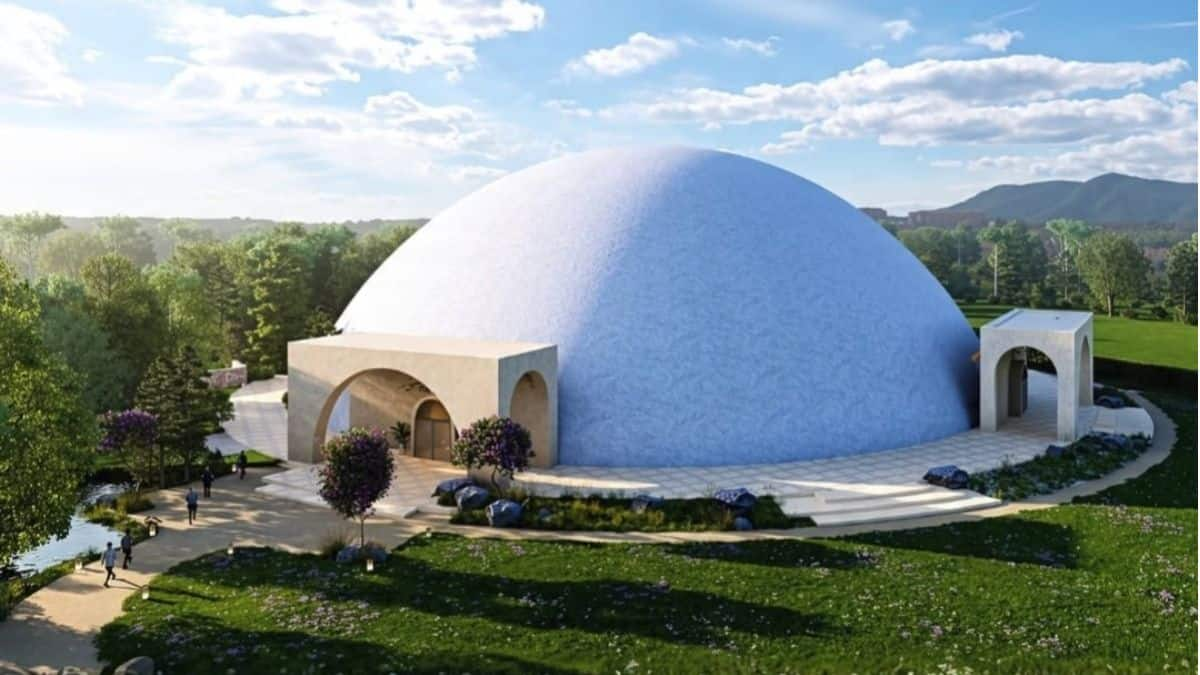
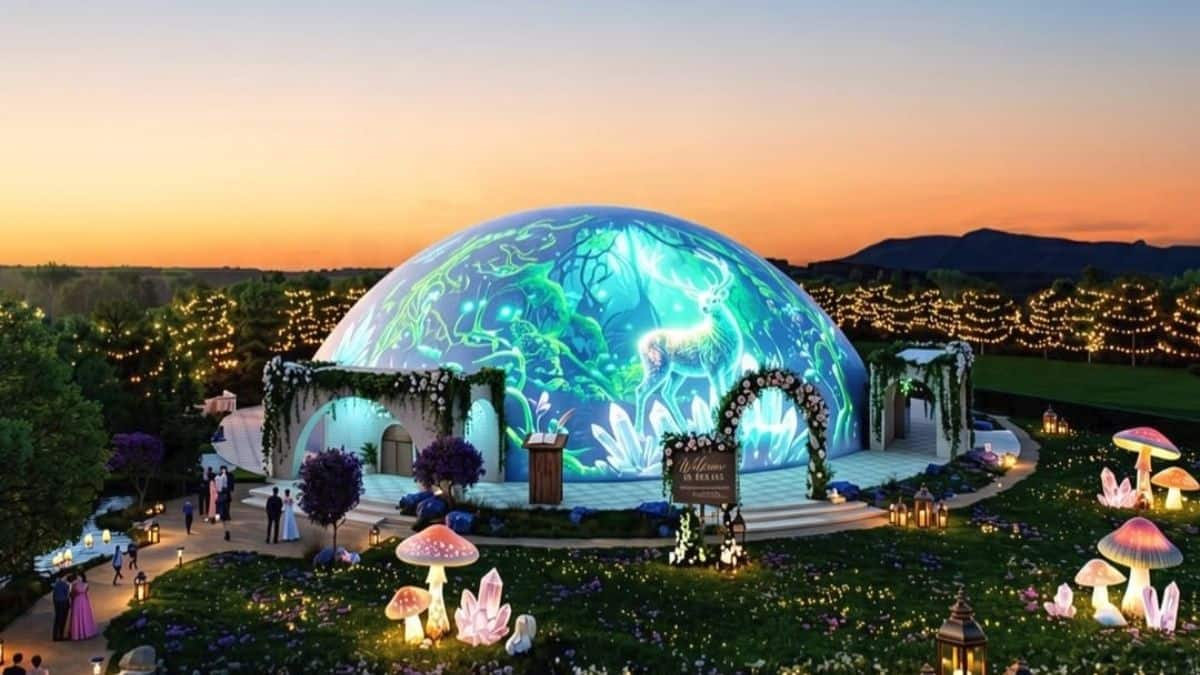
जयपुर से 20 किलोमीटर दूर स्थित कूकस इलाका, जो अपनी शाही और लग्जरी होटलों के लिए जाना जाता है, यहां एयर सपोर्टेड मेम्ब्रेन टेक्नोलॉजी से भारत का पहला 17 क्रिस्टी लेजर प्रोजेक्टर स्काईडोम बनने जा रहा है, जिसकी शुरुआत अक्टूबर माह से होगी। फिलहाल दुनिया की प्रतिष्ठित कंपनी स्काईडोम ने आधिकारिक रूप से इस भव्य स्काईडोम की 3D इमेज के साथ इसे जयपुर में बनाने की घोषणा की है और इस प्रोजेक्ट पर कंपनी द्वारा कार्य शुरू कर दिया गया है।
पिंक सिटी में तैयार होने वाले इस खास स्काईडोम को परमानेंट इमर्सिव इवेंट वेन्यू के रूप में विकसित किया जाएगा। इसमें 360 डिग्री प्रोजेक्शन के जरिए पूरा डोम ही स्क्रीन की तरह इस्तेमाल किया जा सकेगा। यानी जिस जगह पर गेस्ट बैठेंगे, उसी जगह की वॉल और छत इवेंट की थीम के हिसाब से बदलती नजर आएंगी। कभी पूरा डोम जंगल जैसा दिखेगा, कभी तारों भरा आसमान और कभी कोई दूसरा विजुअल एक्सपीरियंस लोगों को यहां देखने को मिलेगा।
क्यों खास है जयपुर का हाइटेक स्काईडोम
आपको बता दें कि जयपुर में डेस्टिनेशन वेडिंग हो या लाइव कॉन्सर्ट या फिर आईफा जैसे बड़े इवेंट्स, इन भव्य इवेंट्स के लिए अलग-अलग वेन्यू पर भव्य स्टेज तैयार किए जाते हैं जहां करोड़ों रुपये का खर्च आता है। लेकिन जयपुर में तैयार हो रहा यह खास स्काईडोम अपने आप में इमर्सिव इवेंट वेन्यू है, जहां लाइटिंग, साउंड और टेक्नोलॉजी के जरिए दर्शकों को ऐसा महसूस होगा जैसे वे असल में उस कहानी या उस वातावरण में प्रवेश कर गए हैं।
इस हाइटेक स्काईडोम की कई खूबियां हैं जैसे- यह डोम 60 मीटर चौड़ाई और 21 मीटर ऊंचाई के साथ आएगा। इसमें लोगों के लिए 30 हजार स्क्वायर फीट का इवेंट स्पेस होगा, जहां एक साथ 5 हजार से अधिक लोगों की कैपेसिटी होगी। इसके अलावा डोम के बाहर 30 हजार स्क्वायर फीट का लैंडस्केप्ड लॉन, 20 हजार स्क्वायर फीट का बैक-ऑफ-हाउस एरिया और डोम के अंदर 17 क्रिस्टी लेजर प्रोजेक्टर होंगे जो 360 डिग्री प्रोजेक्शन मैपिंग के साथ इसका आकर्षण बढ़ाएंगे। इससे वेन्यू पर संगीत समारोहों, शादियों, लाइव मनोरंजन और अनुभवात्मक कार्यक्रमों का एक बिल्कुल नया रूप देखने को मिलेगा। साथ ही डोम के अंदर राजस्थान की कल्चरल ब्यूटी, मॉडर्न टेक्नोलॉजी और इमर्सिव स्टोरीटेलिंग का अनुभव भी एक ही जगह मिलेगा।
भारत का पहला और सबसे बड़ा डोम होगा यह स्काईडोम
जयपुर के कूकस में पिंक सिटी के लिए डिजिटल तकनीक का नया युग शुरू होने जा रहा है, जिसका गवाह यह खास स्काईडोम होगा। यह सिर्फ एक डोम नहीं, बल्कि इंडिया का पहला और लार्जेस्ट परमानेंट इमर्सिव इवेंट डोम होगा। जहां दर्शकों को वेन्यू के रूप में एक ऐसा एक्सपीरियंस मिलेगा, जहां इंडिया की कहानी, उसकी हेरिटेज, कल्चर, नेचर और स्पेस का मैजिक सब कुछ एक ही डोम के अंदर देखने, सुनने और महसूस करने को मिलेगा। इसीलिए जयपुर इस डोम के जरिए एक नया एक्सपीरियंस देने जा रहा है।
आपको बता दें कि यह एयर सपोर्टेड मेम्ब्रेन टेक्नोलॉजी से बना है, यानी बिना किसी पिलर या बीम की मदद से बनाया जाने वाला खास डोम, जिसे खासतौर पर 86% साउंडप्रूफ, 30 से 70 डिग्री सेल्सियस टेम्परेचर और 80 से 120 किमी प्रति घंटे की हवा की रफ्तार को देखते हुए डिजाइन किया गया है।
वेडिंग और हॉस्पिटैलिटी डेस्टिनेशन का हब बन गया है जयपुर
जयपुर शहर सिर्फ अपनी सुंदरता के लिए ही नहीं, बल्कि देश-विदेश के लोगों के लिए डेस्टिनेशन वेडिंग, कॉर्पोरेट इवेंट, कॉन्फ्रेंस, कॉन्सर्ट, लाइव एंटरटेनमेंट, फैशन शो, एग्जीबिशन और कल्चरल प्रोग्राम आयोजित करने के लिए पहली पसंद बनकर उभरा है। पिछले 3 वर्षों में जयपुर में 8-10 लाइव कॉन्सर्ट्स और आईफा अवार्ड्स की मेजबानी इस बात की गवाह है।
जयपुर भारत के तमाम शहरों को पीछे छोड़ते हुए वेडिंग और हॉस्पिटैलिटी डेस्टिनेशन के तौर पर अपनी जगह बना चुका है। अब जयपुर में बड़े इवेंट्स के लिए ऐसा इंफ्रास्ट्रक्चर तैयार करने की जरूरत है, जो नई टेक्नोलॉजी और बड़े एक्सपीरियंस को सपोर्ट कर सके। इसलिए जयपुर में बन रहा यह स्काईडोम इसी दिशा में एक सुनहरा कदम है।
Jaipur JLN Marg Master Plan: जयपुर की गुलाबी बसावट और वर्षों पुरानी वास्तुकला से बनी सड़कें ही जयपुर शहर की खास पहचान हैं, जो पूरे शहर को अद्भुत आर्किटेक्चर के रूप में जोड़ती हैं। इसलिए जयपुर को भारत का पेरिस भी कहा जाता है। यहां की प्रमुख सड़कें जिन्हें वर्षों पहले इस प्रकार से तैयार किया गया था कि आने वाले समय में भी जयपुर की सड़कों का इंफ्रास्ट्रक्चर बढ़ते समय के साथ लोगों के लिए सरल और सुविधाजनक रहेगा।
लेकिन लगातार जयपुर में बढ़ती ट्रैफिक की समस्या अब वर्षों पुरानी वास्तुकला पर भारी पड़ रही है। अगर बात करें जयपुर की प्रमुख सड़कों की, जिसके साथ पूरे शहर के अंदर और बाहर की कनेक्टिविटी जुड़ी हुई है, तो इनमें मुख्य रूप से जेएलएन मार्ग, मिर्जा इस्माइल रोड, टोंक-अजमेर, दिल्ली और आगरा रोड प्रमुख हैं। लेकिन बढ़ते ट्रैफिक के दबाव के चलते अब जयपुर की सड़कों को मास्टर प्लान की तरह फिर से हाईटेक तरीके से रिनोवेट करने पर मंथन चल रहा है, जिसका पहला चरण जेएलएन मार्ग से शुरू होगा।
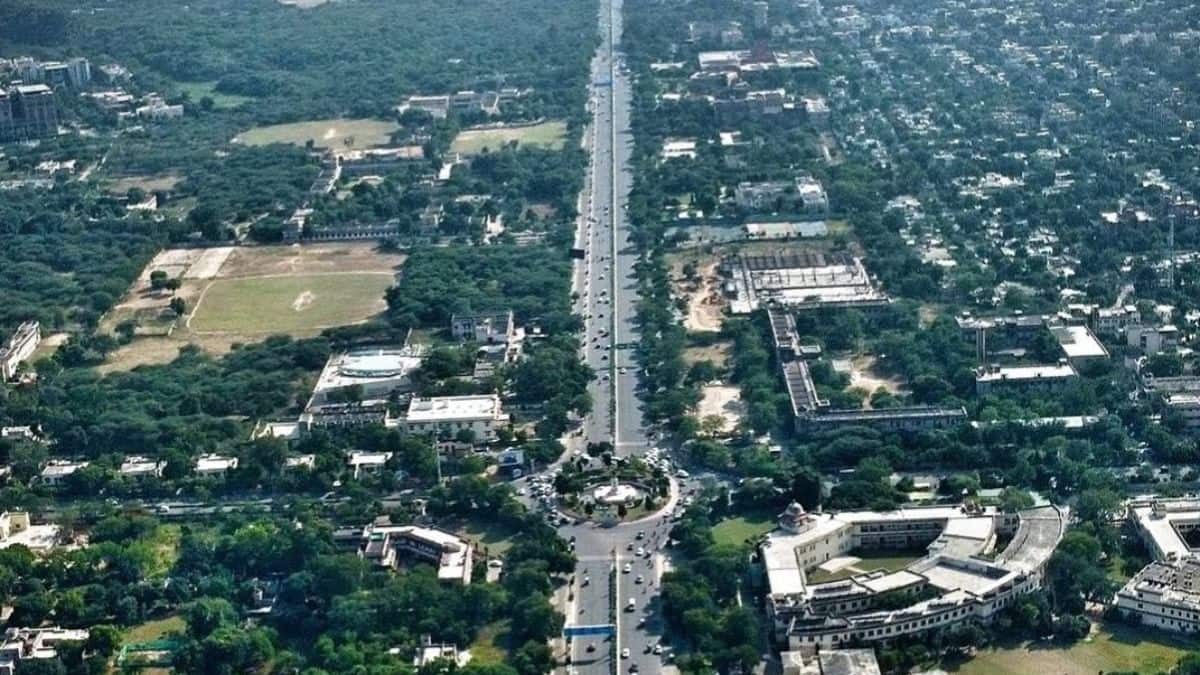
जेएलएन मार्ग जयपुर की सबसे वीआईपी और व्यस्ततम सड़क है, जिसकी कुल लंबाई जवाहर सर्किल से अल्बर्ट हॉल तक 7.5 किमी है, जहां इस सड़क पर 9 तिराहे-चौराहे हैं। जेएलएन मार्ग जयपुर की सबसे चौड़ी और साफ-सुथरी सड़कों में से एक है, जहां पीक आवर्स में लोगों को अब ट्रैफिक जाम से निजात दिलाने की कवायद शुरू हो गई है। इसलिए अब जेएलएन मार्ग के ट्रैफिक सिस्टम में दिल्ली की तर्ज पर स्कूल ऑफ प्लानिंग एंड आर्किटेक्चर के रूप में इसका इंफ्रास्ट्रक्चर तैयार किया जाएगा।
एलिवेटेड, अंडरपास और क्लोवर लीफ से चमक जाएगी सड़क
हाल ही में जयपुर के जेएलएन मार्ग पर हर दिन बढ़ती ट्रैफिक व्यवस्था को देखते हुए जेएलएन मार्ग पर ट्रैफिक का सर्वे किया गया था। जिसके बाद इस वीआईपी रूट को पूरी तरह सिग्नल-फ्री बनाने के लिए जवाहर सर्किल से त्रिमूर्ति सर्किल तक अलग-अलग चौराहों-तिराहों पर एलिवेटेड रोड, क्लोवर लीफ, अंडरपास और यू-टर्न का भव्य इंफ्रास्ट्रक्चर तैयार किया जाएगा। जिसके लिए जयपुर डेवलपमेंट अथॉरिटी को मास्टर प्लान के लिए हरी झंडी मिल चुकी है।
अब जेएलएन मार्ग पर जल्द ही इस मास्टर प्लान को धरातल पर लाने की कवायद शुरू हो गई है। जेएलएन मार्ग पर आम जनता को ट्रैफिक जाम की समस्या से निजात दिलाने के लिए इस मास्टर प्लान में बेहतरीन ट्रैफिक सिस्टम के साथ समय-अवधि पर फोकस रहेगा। क्योंकि सामान्य रूप से 7.5 किमी के इस रूट पर पीक आवर्स में लोगों को 30-45 मिनट लगते हैं, लेकिन जेएलएन मार्ग के मास्टर प्लान तैयार होने के बाद यह दूरी 12 से 15 मिनट तक हो जाएगी।
जेएलएन मार्ग की सड़क के इंफ्रास्ट्रक्चर और दूरी की बात करें तो इस वीवीआईपी रूट पर जवाहर सर्किल से रामनिवास बाग तक प्रत्येक 800 मीटर से 1 किमी तक 9 तिराहे-चौराहे हैं।
इस प्रकार से बदलेगा जेएलएन मार्ग का पूरा इंफ्रास्ट्रक्चर
जेएलएन मार्ग के मास्टर प्लान के तहत पूरी सड़क को सिग्नल-फ्री करने के साथ इस प्लान पर वर्क किया जाएगा। जिसमें एसएमएस मेडिकल से राजस्थान विश्वविद्यालय तक 1.5 किमी लंबाई में एलिवेटेड, गांधी सर्किल पर अंडरपास, बजाज नगर तिराहे पर क्लोवर लीफ, ओटीएस पर एमएनआईटी के सामने से यू-टर्न तैयार होगा।
वहीं जेडीए चौराहे को पूरी तरह बंद किया जाएगा और रामनिवास बाग और शांति पथ की तरफ से चौराहे पर आने वाले ट्रैफिक को भवानी सिंह रोड की तरफ या त्रिमूर्ति सर्किल की तरफ जाने के लिए गांधी सर्किल से पहले यू-टर्न स्ट्रक्चर बनाया जाएगा। इसके अलावा राजस्थान विश्वविद्यालय से पहले एलिवेटेड खत्म होगी और गांधी सर्किल के नीचे राजस्थान विश्वविद्यालय से जवाहर सर्किल की तरफ जाने वाले ट्रैफिक के लिए अंडरपास बनेगा।
साथ ही गांधी नगर मोड़ से अरण्य भवन जाने वाले ट्रैफिक को अंडरपास की सुविधा मिलेगी। इससे आगे वानिकी प्रशिक्षण संस्थान से लेकर ओटीएस चौराहे के पहले तक एट-ग्रेड एक बड़ा लूप प्रस्तावित किया गया है। जिसके चलते गांधी सर्किल से ओटीएस चौराहे की तरफ सीधा जाने वाला ट्रैफिक निकलेगा। इस प्रकार पूरे जेएलएन मार्ग पर एलिवेटेड, अंडरपास, क्लोवर लीफ, पदयात्री मार्ग और यू-टर्न का ऐसा स्ट्रक्चर तैयार होगा जिससे पूरी सड़क सिग्नल-फ्री के रूप में संचालित होगी और लोगों का सफर जेएलएन मार्ग पर मिनटों में पूरा हो जाएगा।
फेज वाइज होगा तैयार
जेएलएन मार्ग जयपुर का सबसे वीआईपी रूट होने के साथ सबसे व्यस्ततम मार्ग भी है, इसलिए जयपुर डेवलपमेंट अथॉरिटी के मास्टर प्लान को अलग-अलग फेज में तैयार किया जाएगा। जिसमें मास्टर प्लान के काम के समय ट्रैफिक सिग्नल-फ्री होने से ट्रैफिक को रुकना नहीं पड़ेगा।
जानकारी के मुताबिक जेएलएन मार्ग के इस मास्टर प्लान में करीब ₹500 से ₹600 करोड़ की लागत से इसे तैयार किया जाएगा, जिसे तैयार होने में 2 से 3 साल का समय लगेगा। आपको बता दें जयपुर का जेएलएन मार्ग जयपुर का सबसे वीआईपी और सुंदर रूट है, जहां चाहे देश के प्रधानमंत्री हों या राष्ट्रपति या फिर दुनियाभर की दिग्गज हस्तियां, जयपुर आने-जाने के लिए सबसे ज्यादा इसी रूट का उपयोग होता है। आज भी जेएलएन मार्ग की सड़क पर पहुंचते ही लगता है कि जयपुर की सबसे सुंदर, सुव्यवस्थित और वीआईपी सड़क जेएलएन मार्ग ही है, जहां दिन-रात लाखों वाहनों की आवाजाही रहती है।
SMS Hospital Jaipur: जयपुर में स्थित प्रदेश के सबसे बड़े अस्पताल सवाई मानसिंह अस्पताल में मरीजों की लगातार बढ़ती संख्या और लोगों को बेहतरीन चिकित्सा सुविधाएं देने के लिए लगातार नए नवाचार किए जा रहे हैं। साथ ही अस्पताल में अलग-अलग विभागों में मेडिकल इंस्टीट्यूट, अत्याधुनिक सेंटर और लैब स्थापित किए जा रहे हैं। इसलिए प्रदेश के सबसे बड़े अस्पताल में भव्य इंफ्रास्ट्रक्चर डेवलप किए जा रहे हैं। इन बिल्डिंग इंफ्रास्ट्रक्चर में सबसे खास 24 मंजिला आईपीडी टावर जो अब अपने भव्य आकार में दिखाई देने लगा है।
सवाई मानसिंह अस्पताल में बन रहा यह IPD टावर देश की सबसे ऊंची मेडिकल इमारतों में से एक होगा जिसे लोग आयुष्मान टावर के नाम से पहचानेंगे। फिलहाल IPD टावर के कंस्ट्रक्शन का काम तेजी से चल रहा है और उम्मीद है कि 2027 तक लोगों को आयुष्मान टावर में बेहतरीन चिकित्सा सुविधाओं का लाभ मिलना शुरू हो जाएगा।
SMS हॉस्पिटल में तकरीबन ₹600 करोड़ की लागत से तैयार हो रहे इस IPD टावर में लोगों को 1200 बेड की सुविधा मिलेगी। जहां बिल्डिंग में लोगों को एयर एंबुलेंस से लेकर स्काईवॉक वे और ग्रीन कॉरिडोर की सुविधा मिलेगी। IPD टावर के कंस्ट्रक्शन का पहला फेज 2025 से शुरू हुआ था जो अब तैयार होने के बाद भव्य आकार लेने लगा है। IPD टावर की यह बिल्डिंग जयपुर सेंटर की सबसे बड़ी बिल्डिंग भी है जिसे लोग दूर से ही देख सकते हैं।
IPD टावर से मिलेगी राजस्थान को पहली एयर एंबुलेंस की सुविधा
राजधानी जयपुर में 50 से भी अधिक अत्याधुनिक हॉस्पिटल और हाइटेक मेडिकल सेंटर हैं लेकिन जयपुर के किसी भी अस्पताल में एयर एंबुलेंस की सुविधा अभी तक उपलब्ध नहीं है इसलिए सवाई मानसिंह अस्पताल राजस्थान का पहला ऐसा सरकारी अस्पताल होगा जहां मरीजों को देशभर के बड़े शहरों तक जाने और अंग प्रत्यारोपण के लिए एयर एंबुलेंस की सुविधा मिलेगी।
SMS हॉस्पिटल में मरीजों के ऐसे कई मामले हैं जिनमें उन्हें जयपुर से दिल्ली एम्स, मुंबई, चेन्नई और विदेशों तक इलाज के लिए रेफर किया गया है साथ ही लिवर, हार्ट जैसे अंगों को प्रत्यारोपण के लिए देशभर में भेजा जाता है। लेकिन अब लोगों को मेडिकल इमरजेंसी के लिए एयर एंबुलेंस के जरिए जयपुर से ही देशभर के किसी भी अस्पताल में पहुंचने का लाभ मिलेगा।
IPD टावर में फिलहाल बिल्डिंग के सबसे टॉप फ्लोर पर एयर एंबुलेंस के लिए हेलीपैड कंस्ट्रक्शन का काम प्रगति पर है और 2026 के आखिरी तक यह बनकर तैयार हो जाएगा। IPD टावर में सबसे ऊपर तैयार किया जा रहा हेलीपैड पूरी तरह लोहे और कंक्रीट के साथ हाइटेक टेक्नोलॉजी से तैयार किया जा रहा है।
IPD टावर में ऑपरेशन थिएटर से लेकर आईसीयू तक मिलेगी ये खास सुविधाएं
सवाई मानसिंह अस्पताल में तैयार हो रहा IPD देश की सबसे भव्य सरकारी इमारतों में सिर्फ देखने और दिखाने के लिए नहीं बल्कि इंफ्रास्ट्रक्चर और सुविधाओं के रूप में सबसे भव्य इमारत बनने जा रही है जहां लोगों को इस टावर में जमीन से शुरू होते ही तकरीबन 1600 गाड़ियों की भव्य पार्किंग सुविधा मिलेगी। साथ ही पूरी बिल्डिंग को बेहतरीन इंजीनियरिंग के साथ लोगों को स्काईवॉक वे और नीचे ग्रीन कॉरिडोर देखने को मिलेगा।
IPD टावर के अंदर 112 आईसीयू, 837 जनरल वार्ड, 125 कॉटेज वार्ड, रजिस्ट्रेशन सेंटर, 26 प्री-ऑपरेशन थिएटर और 22 पोस्ट-ऑपरेशन थिएटर तैयार किए जा रहे हैं। इन खास सुविधाओं के साथ ही IPD टावर में रेडियो और माइक्रोबायोलॉजी जैसी अलग-अलग एडवांस लैब तैयार हो रही हैं। पूरे आईपीडी टावर में इलाज के लिए आने वाले मरीजों को रजिस्ट्रेशन से लेकर ऑपरेशन तक की सभी सुविधाएं एक स्थान पर मिलेंगी। पूरे IPD टावर को इस तर्ज़ पर तैयार किया जा रहा है जहां अस्पताल की प्रमुख बिल्डिंगों से इसका जुड़ाव रहेगा।
उत्तर भारत में सबसे बड़ा मेडिकल हब बनने जा रहा है SMS हॉस्पिटल
राजस्थान में चिकित्सा सुविधाओं के क्षेत्र में राजधानी जयपुर का सवाई मानसिंह अस्पताल सबसे बड़ा हब बनकर उभर रहा है जहां सिर्फ जयपुर, राजस्थान से ही नहीं बल्कि देश-विदेश से लोग बेहतरीन इलाज के लिए सवाई मानसिंह अस्पताल पहुंचते हैं जहां उन्हें बेहतरीन इलाज की सुविधा मिलती है।
हाल ही के कुछ वर्षों में सवाई मानसिंह अस्पताल में तेजी से इंफ्रास्ट्रक्चर बढ़ा और अलग-अलग बीमारियों के लिए अलग-अलग विभागों में अत्याधुनिक सेंटर और लैब शुरू किए गए हैं। इनमें नेशनल ड्रग डिपेंडेंस ट्रीटमेंट सेंटर, जेनेटिक टेस्टिंग लैब, टॉक्सिकोलॉजी लैब, बायोकेमिस्ट्री लैब, न्यूरोओटोलॉजी लैब, स्किन इंस्टीट्यूट (इंसटीट्यूट ऑफ डर्मेटोलॉजी) शुरू हुए हैं जहां लोगों को बेहतरीन इलाज की सुविधा मिलना शुरू हो गया है।
सवाई मानसिंह अस्पताल में लगातार मेडिकल फैसिलिटीज बढ़ने के चलते सबसे ज्यादा उत्तर भारत से मरीज अपना इलाज करवाने आते हैं। इसलिए सवाई मानसिंह अस्पताल देश के सबसे बड़े मेडिकल हब के रूप में उभर रहा है।
Jaipur Election Results 2026 News: राजस्थान के 309 नगरीय निकायों के चुनाव की मतगणना के शुरुआती रुझानों में सत्तारूढ़ भारतीय जनता पार्टी (BJP) बढ़त बनाए हुए है। भगवा पार्टी को कांग्रेस भी कड़ी टक्कर दे रही है। राज्य निर्वाचन आयोग के अधिकारियों ने बताया कि मतगणना सुबह आठ बजे शुरू हुई। इसके लिए व्यापक सुरक्षा इंतजामों के साथ अन्य आवश्यक व्यवस्थाएं भी की गई हैं। 11 बजकर 45 मिनट तक के आंकड़ों के अनुसार, राज्य के 10,245 वार्डों के घोषित परिणामों में BJP ने 1,937, कांग्रेस ने 1,646 और निर्दलीय उम्मीदवारों ने 1,040 वार्डों में जीत दर्ज की है।
इसके अलावा राष्ट्रीय लोकतांत्रिक पार्टी ने 42, भारत आदिवासी पार्टी ने आठ, बहुजन समाज पार्टी (BSP) ने छह, मार्क्सवादी कम्युनिस्ट पार्टी (माकपा) ने छह और आम आदमी पार्टी (AAP) ने पांच वार्डों में जीत हासिल की है।
इन आंकड़ों में निर्विरोध चुने गए 77 उम्मीदवार भी शामिल हैं। राज्य में जिन 309 नगरीय निकायों के चुनाव की घोषणा की गई है। उनमें 10 नगर निगम, 47 नगर परिषद और 200 से अधिक नगरपालिकाएं शामिल हैं। इन सभी निकायों में कुल 10,245 वार्ड हैं। जयपुर नगर निगम के 150 वार्डों के लिए वोटों की गिनती चल रही है। भारतीय जनता पार्टी (BJP) शुरुआती बढ़त बनाए हुए है।
यहां- देखें लाइव अपडेट्स
11 बजकर 45 मिनट का अपडेट:- सोमवार सुबह 11 बजकर 45 मिनट तक के आंकड़ों के अनुसार, राज्य के 10,245 वार्डों के घोषित परिणामों में BJP ने 1,937, कांग्रेस ने 1,646 और निर्दलीय उम्मीदवारों ने 1,040 वार्डों में जीत दर्ज की है। इसके अलावा राष्ट्रीय लोकतांत्रिक पार्टी ने 42, भारत आदिवासी पार्टी ने आठ, बहुजन समाज पार्टी (BSP) ने छह, मार्क्सवादी कम्युनिस्ट पार्टी (माकपा) ने छह और आम आदमी पार्टी (AAP) ने पांच वार्डों में जीत हासिल की है।
इन आंकड़ों में निर्विरोध चुने गए 77 उम्मीदवार भी शामिल हैं। राज्य में जिन 309 नगरीय निकायों के चुनाव की घोषणा की गई है, उनमें 10 नगर निगम, 47 नगर परिषद और 200 से अधिक नगरपालिकाएं शामिल हैं। इन सभी निकायों में कुल 10,245 वार्ड हैं।
Electric vehicles have skyrocketed in significance over the past decade, particularly in light of global issues like climate change and pollution. EVs require no fossil fuels to run, and therefore emit zero harmful pollutants into the atmosphere. To promote the adoption of EVs, September 9 was designated ‘World EV Day’ six years ago by sustainability-focused companies Green.TV and ABB Group, and is recognised worldwide.
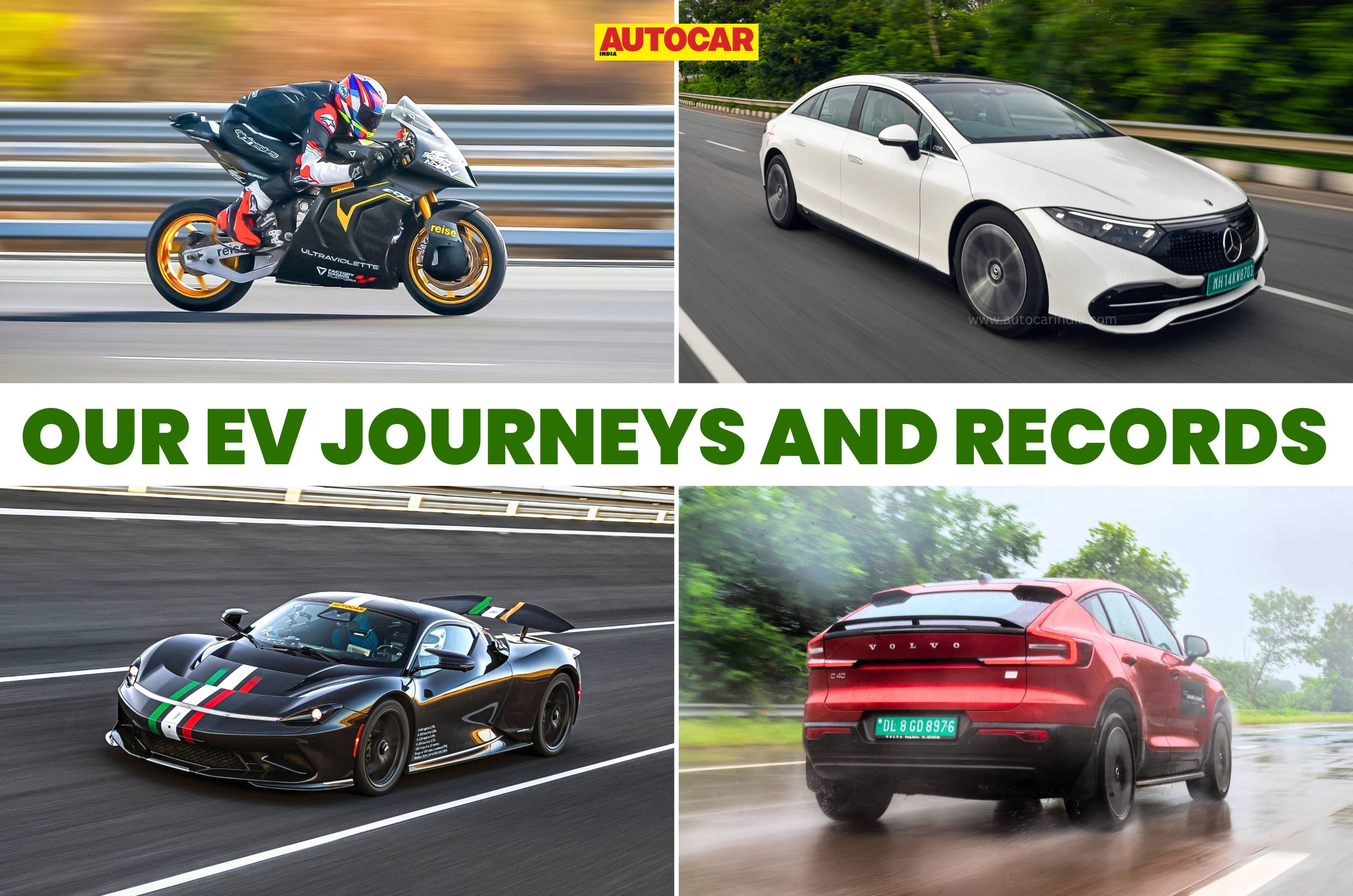
On the sixth iteration of World EV Day, let’s take a look at some of Autocar India’s most notable achievements in the all-electric mobility space.
1. Mercedes Benz EQC clean energy charging
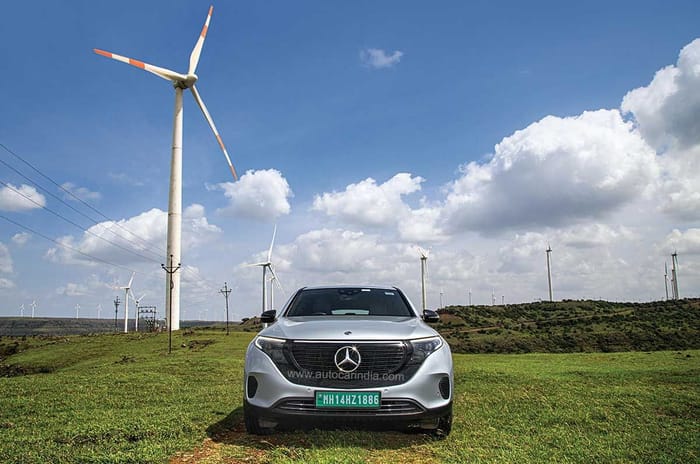
Hydro, wind and solar energy were the only means of charging we used
In 2021, we set out on a journey in the Mercedes-Benz EQC to explore how truly “green” EVs can be when powered by renewable energy only; at present, coal is the primary source of energy production. We departed from the Mercedes-Benz facility in Chakan with a full charge, heading to Tata Power’s Khopoli hydroelectric plant, Agaswadi wind farm and Mulshi solar farm.
Along the way, we investigated clean power sources – hydro, wind and solar – that could sustainably fuel EVs in India. While the EQC couldn’t be charged directly from the hydro grid since it mixes with the main grid, we were able to charge the SUV via a 15A plug at Tata Power. However, we did tap charging power directly from wind turbines and solar panels for the EQC. Ultimately, this trip showed us that our EVs could soon be truly emissions-free – not just at the tailpipe, but across the entire power chain.
2. Green Mumbai Drive 2021
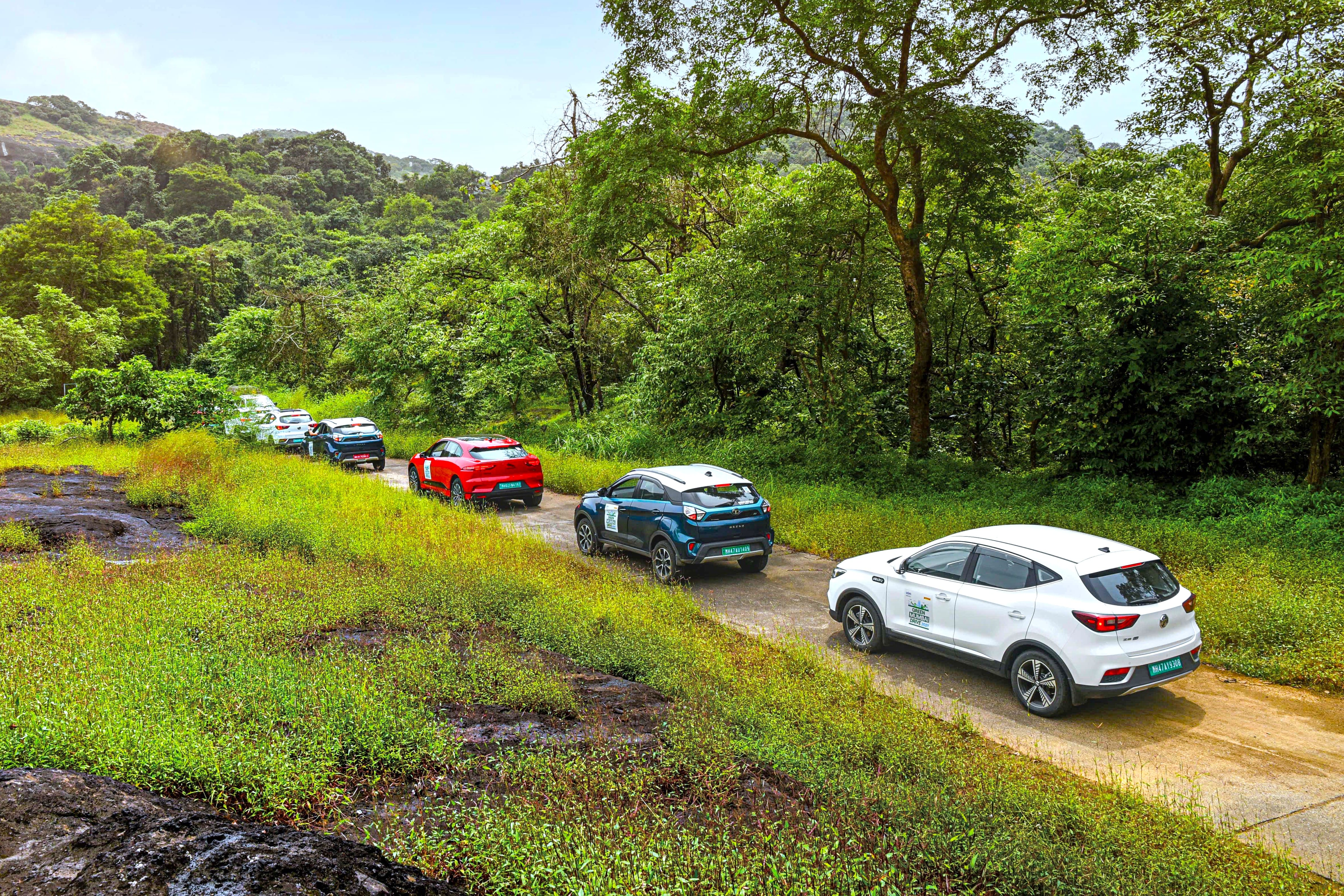
30 EVs quietly trundling through the Sanjay Gandhi National Park
We achieved a rare feat by bringing together every EV that was on sale in India at the time and driving them across Mumbai and through the protected Sanjay Gandhi National Park in Borivali. 30 EVs were part of the drive, including the Hyundai Kona, Tata Nexon EV, MG ZS EV, Mercedes-Benz EQC, Jaguar i-Pace, Audi e-tron GT, and even a Tesla Model X.
The Green Mumbai Drive was flagged off from the Mahalakshmi Racecourse by Aditya Thackeray, MoS for Tourism, Environment and Protocol, and Jeet Adani, director of Adani Electricity. Notable auto industry executives like Santosh Iyer (Mercedes-Benz India), Balbir Singh Dhillon (Audi India), Rohit Suri (JLR India), and Amit Suri (Volvo India) were also part of the event.
3. Debuting EVs in two different national parks
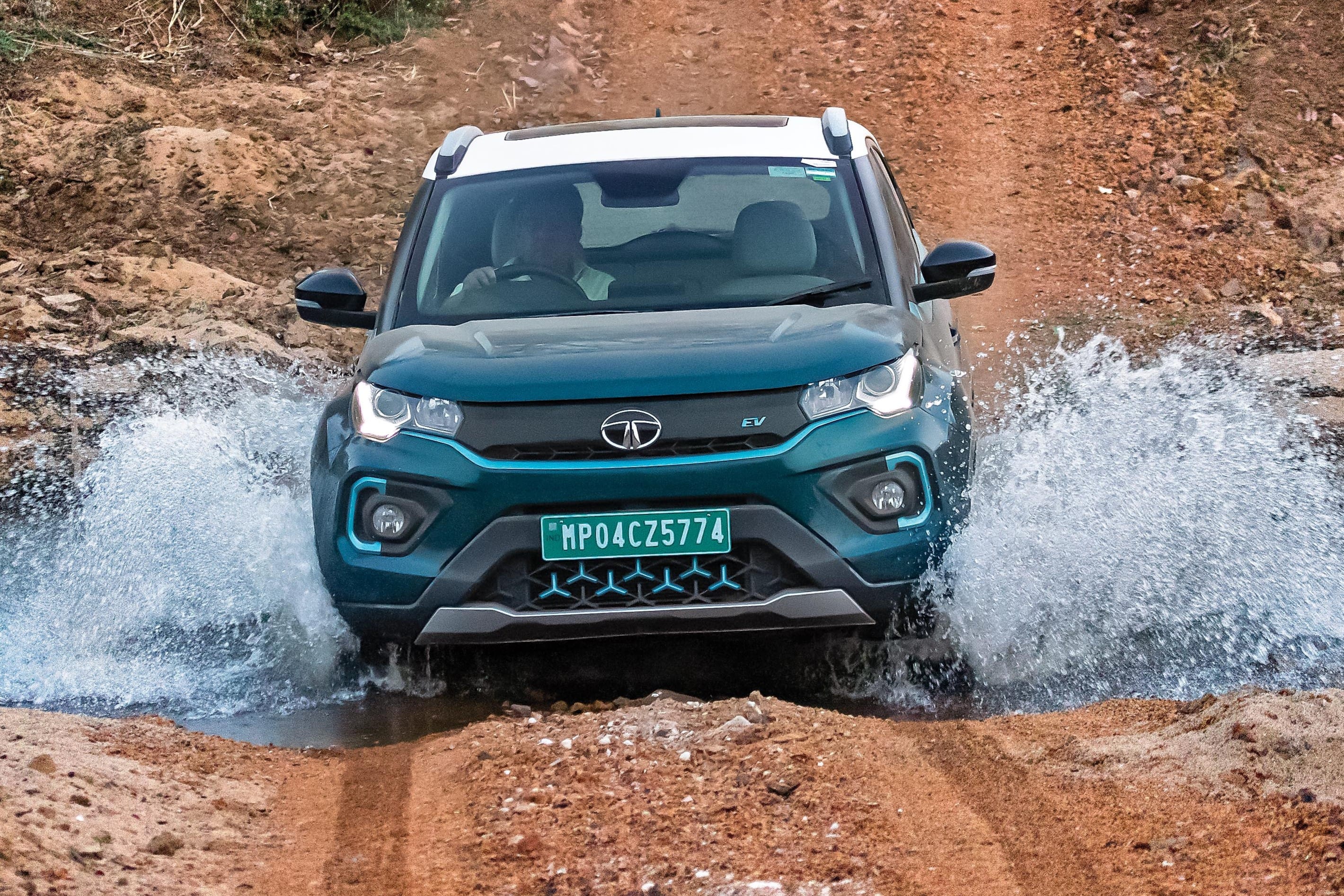
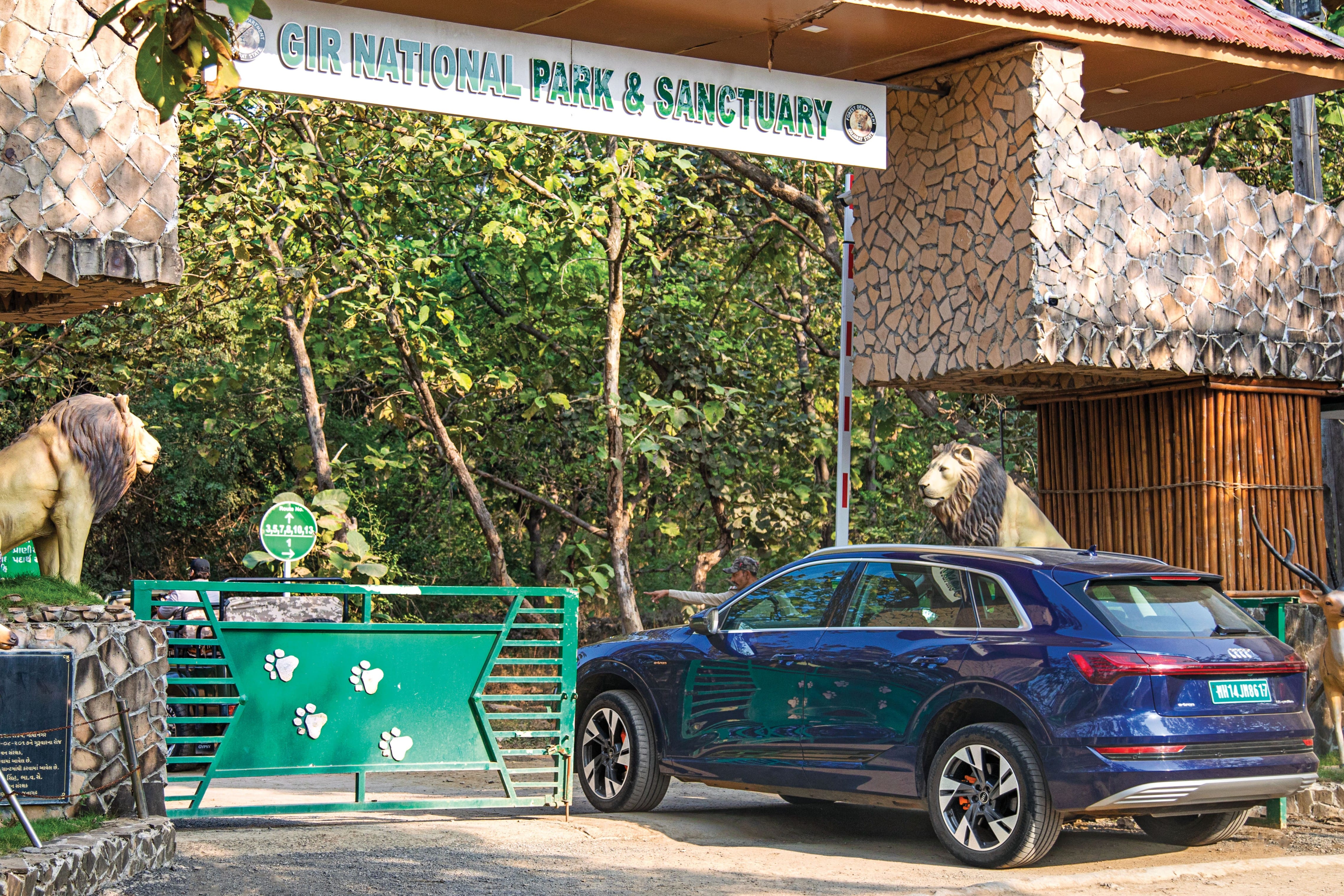
Tata Nexon EV in Satpura Tiger Reserve, Audi e-tron in Gir National Park
In 2021, we were the first to drive an electric car (specifically, the Tata Nexon EV) into Madhya Pradesh’s Satpura Tiger Reserve. The roughly 140km drive from Bhopal to Forsyth Lodge was completed with around 30km of range remaining, despite starting with the battery at 92 percent. With no fast-charging infrastructure nearby, the Nexon EV had to be charged overnight using a 15A socket. During the safari, the torquey and compact EV performed well on steep inclines and narrow forest trails, and its silent operation allowed it to approach wildlife like sambars, gaurs, wild pigs, and even a leopard without the noise of an idling engine – no tiger, though.
Then, in 2022, we were yet again the first to drive an EV into Gujarat’s Gir National Park, this time in an Audi e-tron. Reaching our accommodation induced a great deal of range anxiety due to faulty chargers along the way, but we managed to get there with around 20 percent of charge remaining. Once we reached, the e-tron was an excellent companion to tour the park with, helping us spot wildlife like chital, crocodiles, lions, and more.
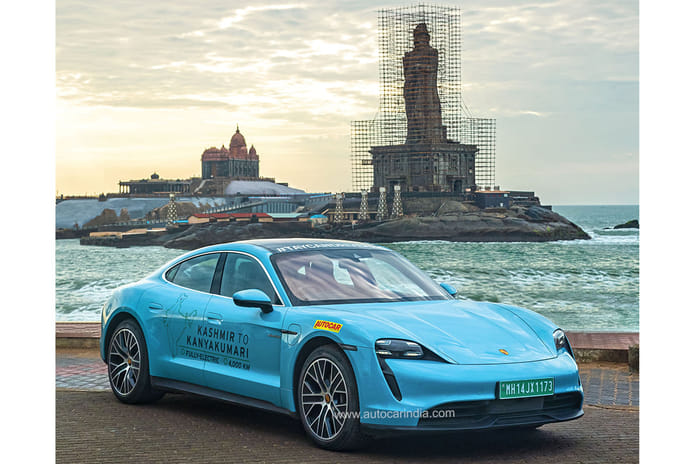
4. Porsche Taycan Kashmir to Kanyakumari road trip
Nearly 4,500km in a performance EV
2022 saw us take one of our most ambitious roadtrips to date: 4,467km from Kashmir to Kanyakumari in a Porsche Taycan. Despite challenges like landslides in Jammu, flooded roads in Punjab, and power outages at certain charging spots, the Taycan handled the journey with ease. On one of the most efficient legs, the Porsche EV delivered 7.1km/kWh, working out to an indicated range of 475km.
Comfort mode was the default setting, but we did have lots of fun in some stretches courtesy of the Taycan’s Sport Plus drive mode. Up to 225kW of fast charging bolstered convenience, and total charging expenses tallied up to just Rs 15,422 – cheaper than fuel for an equivalent petrol car. More than just distance, the trip proved that combining sports car-like performance with electric efficiency works perfectly in real-world conditions, and that the Taycan is more durable than you may think.
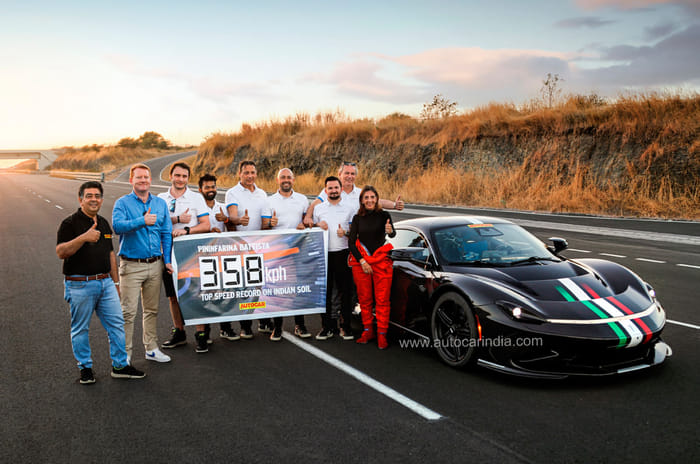
5. Pininfarina Battista India top speed record
1900hp, quad-motor hypercar achieved a 358.03kph top speed
Back in early 2023, we set a new Indian top-speed record with the 1,900hp Pininfarina Battista electric hypercar at the NATRAX high-speed oval near Indore. Achieving an impressive v-max of 358.03kph, the Battista blitzed past the previous record of 332.20kph, which was also set by us in 2016 in an Audi R8 V10 Plus.
The Battista top-speed run also ended up establishing new world records for a production car: 0-300kph in 10.49 seconds and a quarter-mile time of 8.55 seconds, all verified by the Federation of Motor Sports Clubs of India (FMSCI).
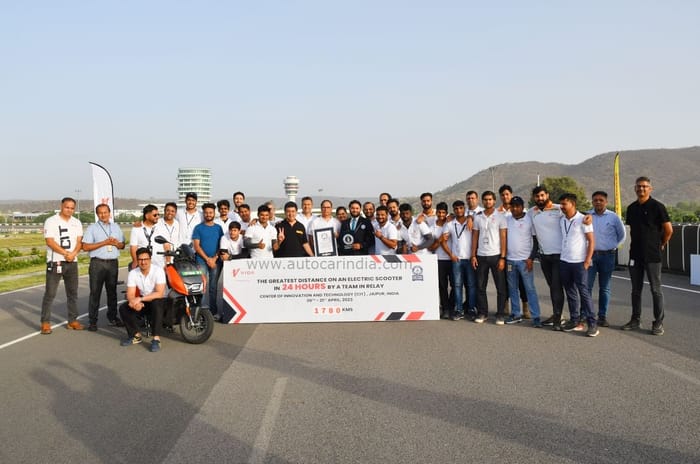
6. Hero Vida V1 Pro longest distance in 24 hours record
The e-scooter travelled just shy of a whopping 1,800km
The endurance challenge relied on swift battery swaps and flawless coordination, with the pit crew achieving 38 battery changes in under 20 seconds – quite impressive considering the extreme heat, rider fatigue, and complexity involved. Moreover, the Vida V1 Pro ran flawlessly throughout, handling the gruelling conditions with ease and maintaining performance consistently.
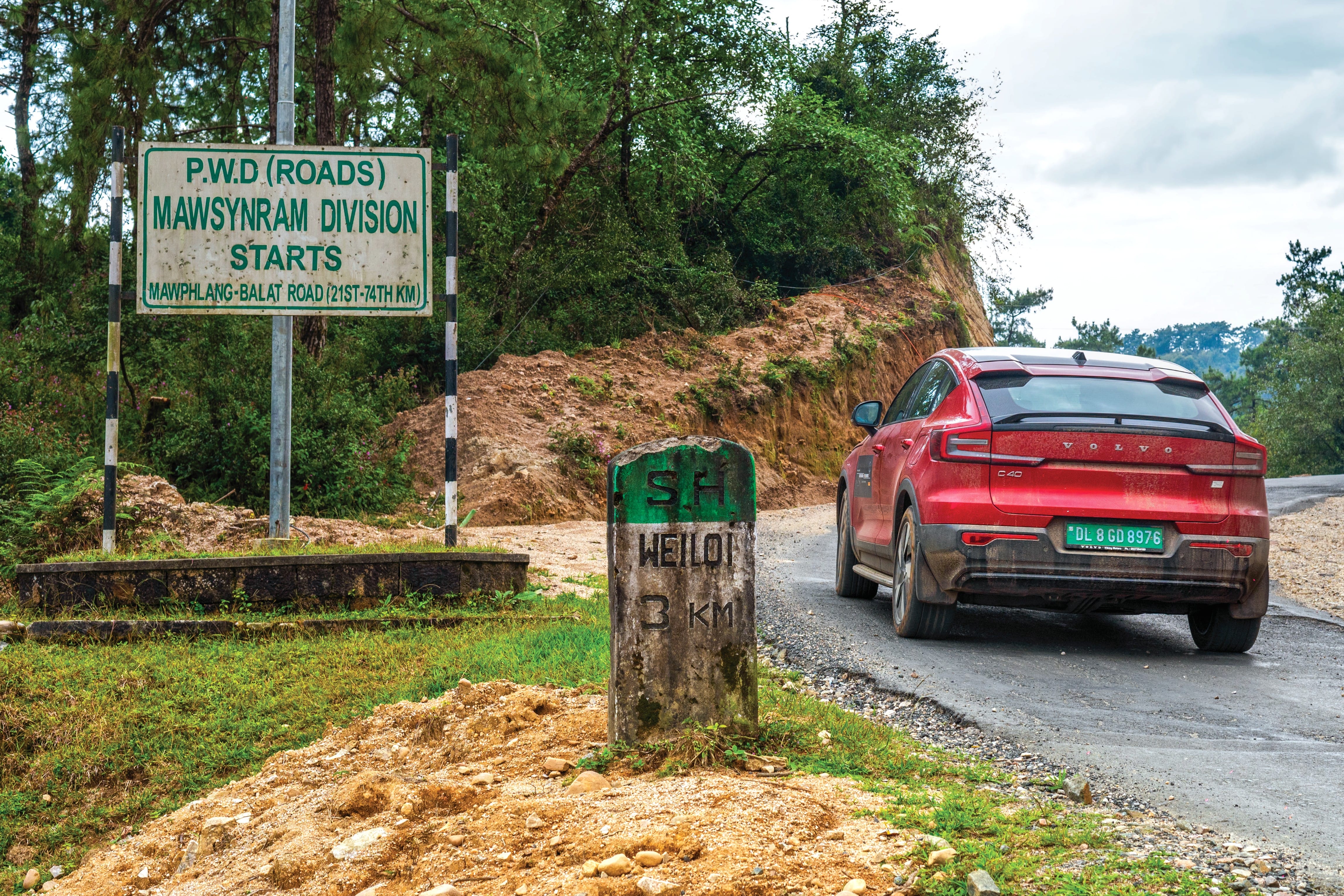
7. Volvo EC40 Jaisalmer to Mawsynram road trip
From India’s driest region to its wettest
In 2024, we took the Volvo EC40 (formerly known as the C40 Recharge) on a roughly 3,000km road trip from Jaisalmer in Rajasthan – one of India’s driest locations – to Mawsynram in Meghalaya, widely recognised as the country’s wettest. The route included a detour to Ghaziabad’s Volvo Reverse Project, a former dumping ground where around 10,000 trees had been planted as part of the company’s reforestation initiative.
Charging was carried out mainly overnight with DC fast chargers also used along the route, and the EC40 posed no issues during the journey. Ironically, we encountered heavy rain and waterlogging in Jaisalmer but surprisingly little rainfall in Mawsynram.
8. Mercedes Benz EQS sedan longest distance world record
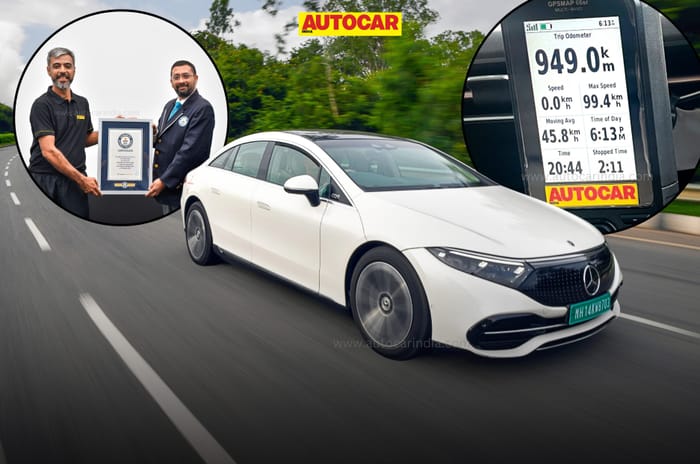
Setting off from Bangalore on a full charge, the EQS 580 covered a distance of 949km when it reached its destination in Navi Mumbai, beating the previous Guinness World Record for the same by 32.26km. Impressively, the 949km real-world range exceeds EQS 580’s claimed range of 817km by just over 16 percent. It’s also worth mentioning that the two-day journey was completed under arduous conditions like heavy rainfall, lots of traffic, broken roads, and even a flat tyre.
9. Porsche Taycan BIC EV lap record
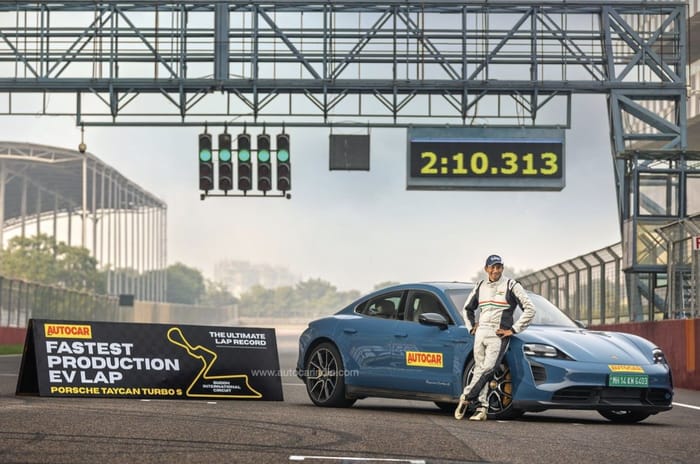
2:10.313 lap time makes the Taycan the fastest EV around BIC so far
At the Buddh International Circuit in Greater Noida, we lapped a Porsche Taycan Turbo S and clocked a time of 2:10.313 minutes – the first-ever EV lap record around the 5.125km track. Despite its rather portly kerb weight of 2,370kg, the Taycan delivered unexpectedly sharp performance at BIC thanks to 761hp and 1,050Nm, a low centre of gravity (aided by the heavy 93.4 kWh battery), precise steering, and superb balance.
Upon hitting the apex and pinning the throttle, the Taycan belied physics the way it propelled out of corners with explosive speed, and despite weighing 845kg more, the EV achieved nearly the same top speed as the 911 GT3 RS at the end of BIC’s main straight.
10. Ultraviolette F99 India top speed record
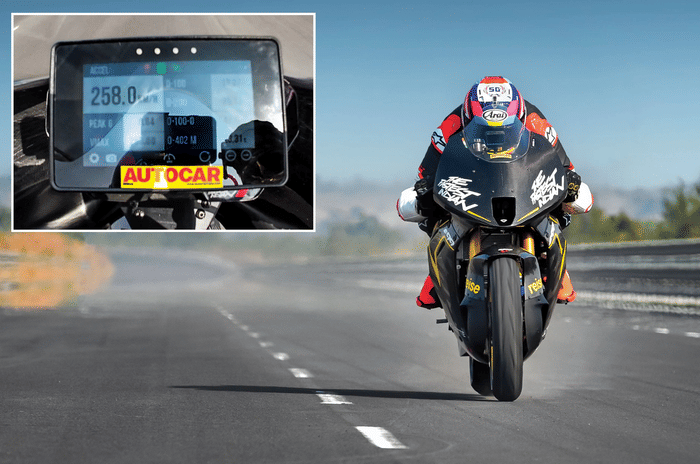
258kph around NATRAX and a 100-200kph run of 6.2 seconds
One of our more recent records entailed setting a new benchmark for made-in-India two-wheelers by hitting a top speed of 258kph on the Ultraviolette F99 at the NATRAX oval. Designed around a 400V architecture with a liquid-cooled powertrain, the purpose-built F99 packs 120hp and an astounding 972Nm (measured at the rear wheel).
The F99’s custom trellis frame, forged carbon-fibre bodywork, Brembo brakes, and Ohlins suspension helped the bike remain stable at high speeds, culminating in a clean record run captured via precision V-Box data. It also achieved a blistering 0-200kph run in under 10 seconds and 100-200kph in just 6.2 seconds, smashing previous Indian motorcycle speed records.
11. Mercedes Benz EQS SUV temperature change record
From the sweltering heat of Rajasthan to the sub-zero chill of Ladakh
Our 2025 Guinness World Record saw us achieving the greatest temperature change endured by a production EV. We accomplished this using the Mercedes-Benz EQS 450 SUV, driving from the scorching heat of 47.5 deg-C in Rajasthan to the below-freezing chill of -3.7 deg-C in Ladakh, for an impressive overall temperature swing of 51.2 deg-C.
The journey tested the limits of the EQS 450 SUV, especially its 122kWh battery’s thermal management system. Despite extreme variations in temperature, the climate control and battery systems kept the EQS 450 SUV performing smoothly and safely.
8th Pay Commission Jaipur Meeting: 8वें केंद्रीय वेतन आयोग का काम अब तेजी से आगे बढ़ रहा है। सरकारी कर्मचारियों और पेंशनभोगियों के वेतन, भत्तों और पेंशन में संशोधन की प्रक्रिया के तहत आयोग देश भर के विभिन्न संघों और संगठनों के साथ लगातार परामर्श कर रहा है।
इसी कड़ी में 8वां वेतन आयोग 31 अगस्त और 1 सितंबर को राजस्थान के जयपुर में हितधारकों और कर्मचारी यूनियनों के साथ आधिकारिक बैठकें करने वाला है। सुप्रीम कोर्ट की पूर्व जस्टिस रंजना प्रकाश देसाई की अध्यक्षता वाला यह आयोग कर्मचारियों की समस्याओं, मांगों और कामकाजी परिस्थितियों का जायजा ले रहा है।
8वें वेतन आयोग की सिफारिशें लागू होने से देश के 50 लाख से अधिक केंद्रीय कर्मचारियों और 65 लाख से अधिक पेंशनभोगियों को सीधा लाभ मिलेगा।
सितंबर और अक्टूबर में किन-किन शहरों का दौरा करेगा आयोग?
मार्च से ही आयोग विभिन्न राज्यों का दौरा कर आंकड़े और सुझाव जुटा रहा है। आगामी दिनों का शेड्यूल इस प्रकार है:
चेन्नई (तमिलनाडु): 7 से 8 सितंबर
पुडुचेरी: 9 सितंबर
चंडीगढ़: 16 से 18 सितंबर
बेंगलुरु (कर्नाटक): 7 से 8 अक्टूबर (अपॉइंटमेंट के लिए 18 सितंबर तक आवेदन खुला है।)
मुंबई (सेंट्रल रेलवे): रेलवे कर्मचारियों की कामकाजी स्थितियों का प्रत्यक्ष अनुभव लेने के लिए आयोग मुंबई में सेंट्रल रेलवे का दौरा भी करेगा।
जयपुर बैठक और राज्य दौरों का क्या है मुख्य एजेंडा?
हालांकि आयोग ने कोई आधिकारिक लिस्ट जारी नहीं की है, लेकिन कर्मचारी यूनियनों द्वारा सौंपे गए ज्ञापनों के आधार पर बैठकों में मुख्य रूप से इन मुद्दों पर चर्चा हो रही है:
फिटमेंट फैक्टर और बेसिक पे: बेसिक सैलरी में बढ़ोतरी और नए फिटमेंट फैक्टर का निर्धारण।
महंगाई के हिसाब से वेतन संशोधन: महंगाई दर और जीवन यापन की लागत के अनुकूल सैलरी स्ट्रक्चर तैयार करना।
भत्तों का पुनर्गठन: हाउस रेंट अलाउंस (HRA) और ट्रैवल अलाउंस (TA) में सुधार।
पेंशन सुधार: सेवानिवृत्ति के बाद वित्तीय सुरक्षा को बेहतर बनाना।
कर्मचारी कल्याण और कार्य परिस्थितियां: कर्मचारियों के मनोबल और कार्यस्थल की सुविधाओं में सुधार।
कब तक लागू होंगी 8वें वेतन आयोग की सिफारिशें?
आयोग के गठन 3 नवंबर 2025 से 18 महीने के भीतर सिफारिशें सौंपनी हैं। इसका मतलब है कि आयोग फरवरी से मई 2027 के बीच अपनी आधिकारिक रिपोर्ट सरकार को सौंप सकता है।
पिछले वेतन आयोगों के रुझान को देखें तो सिफारिशें आने के बाद उनके अंतिम क्रियान्वयन में 2 से 3 साल का समय लग जाता है। यानी 2027 में होने वाली घोषणाओं का पूर्ण लाभ कर्मचारियों को 2029 या 2030 तक मिल सकता है।