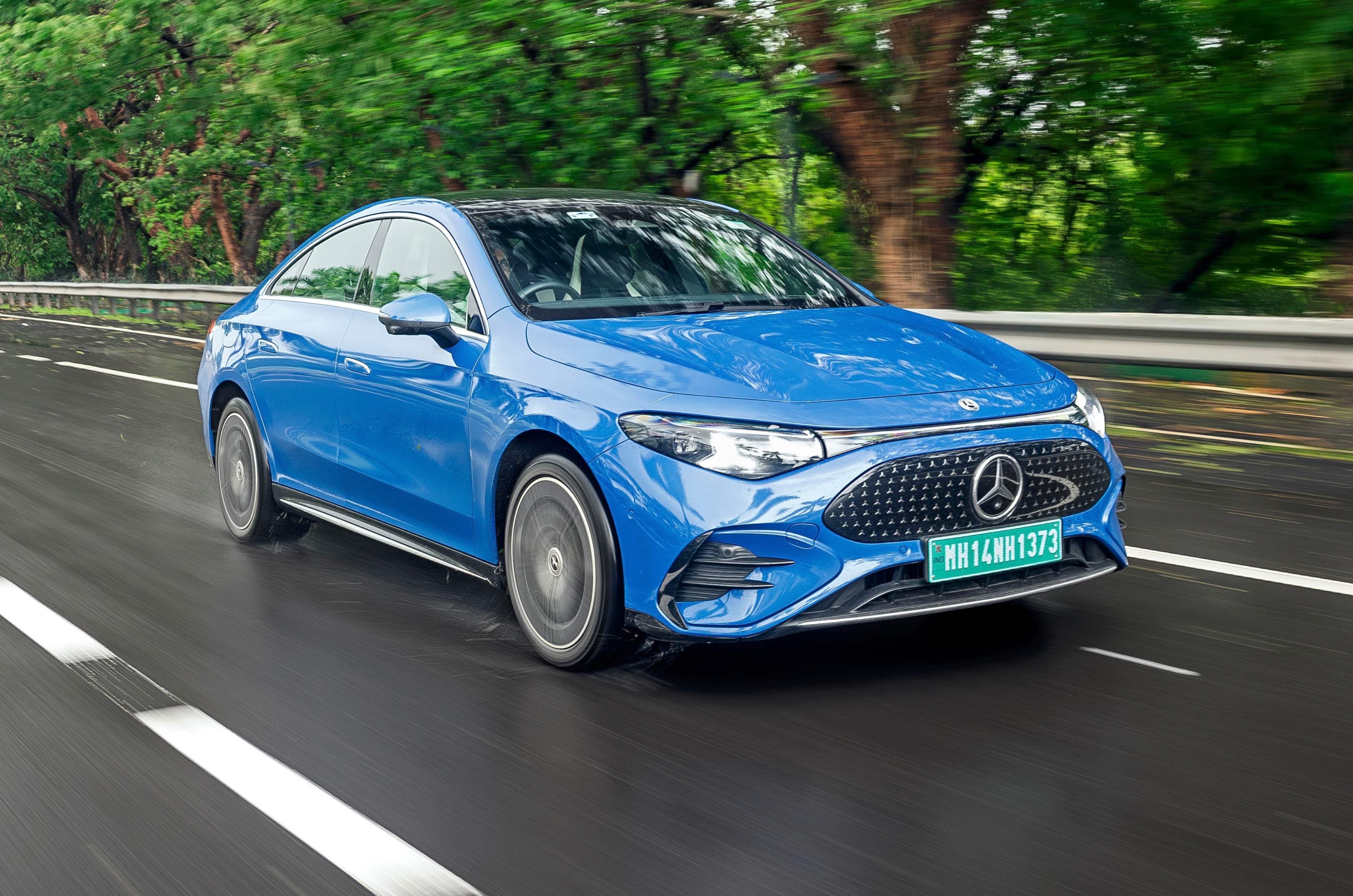
Mercedes-Benz CLA 250+ road test review

Mercedes-Benz CLA 250+ road test review

When we first drove the all-new, all-electric Mercedes-Benz CLA, we came away impressed with its smooth powertrain and its promise of a substantial real-world range. We’ve now subjected it to our real-world performance and efficiency tests to see if it delivers on that promise.

Mercedes CLA 250+ exterior design and engineering – 8/10

Polarising, aero-efficient design; based on new MMA platform.

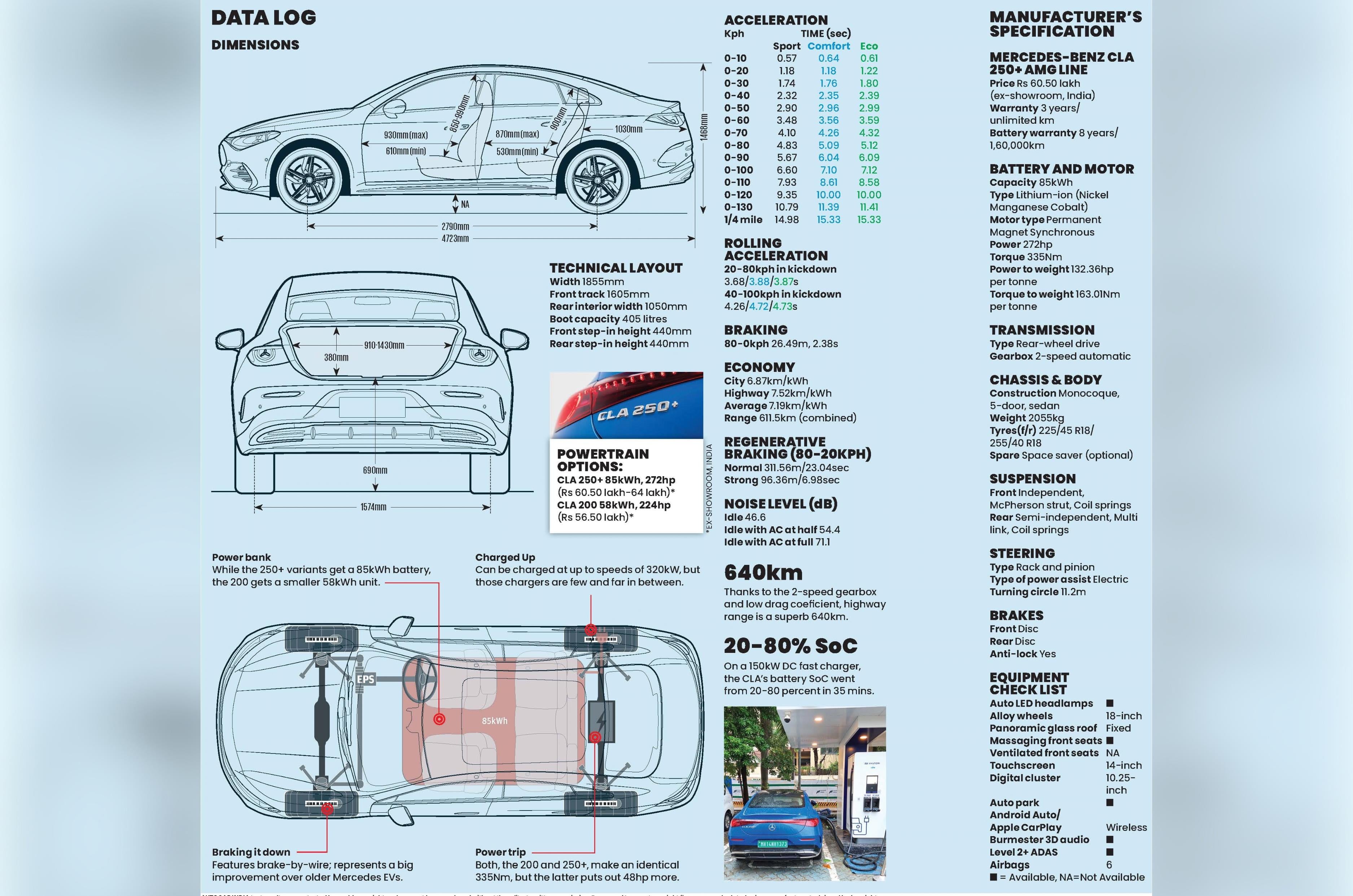
The new CLA has been designed with efficiency very much in mind, but Mercedes hasn’t completely abandoned the visual character that made the original car appealing. Its smooth, rounded silhouette is familiar from other Mercedes EVs, yet the low-slung, coupé-like roofline and frameless doors give it a distinct identity. Flush-fitting door handles, a sealed-off grille, aero-optimised 18-inch AMG alloys and a fully sealed underbody all contribute to an exceptionally slippery shape, with a drag coefficient of just 0.21Cd.
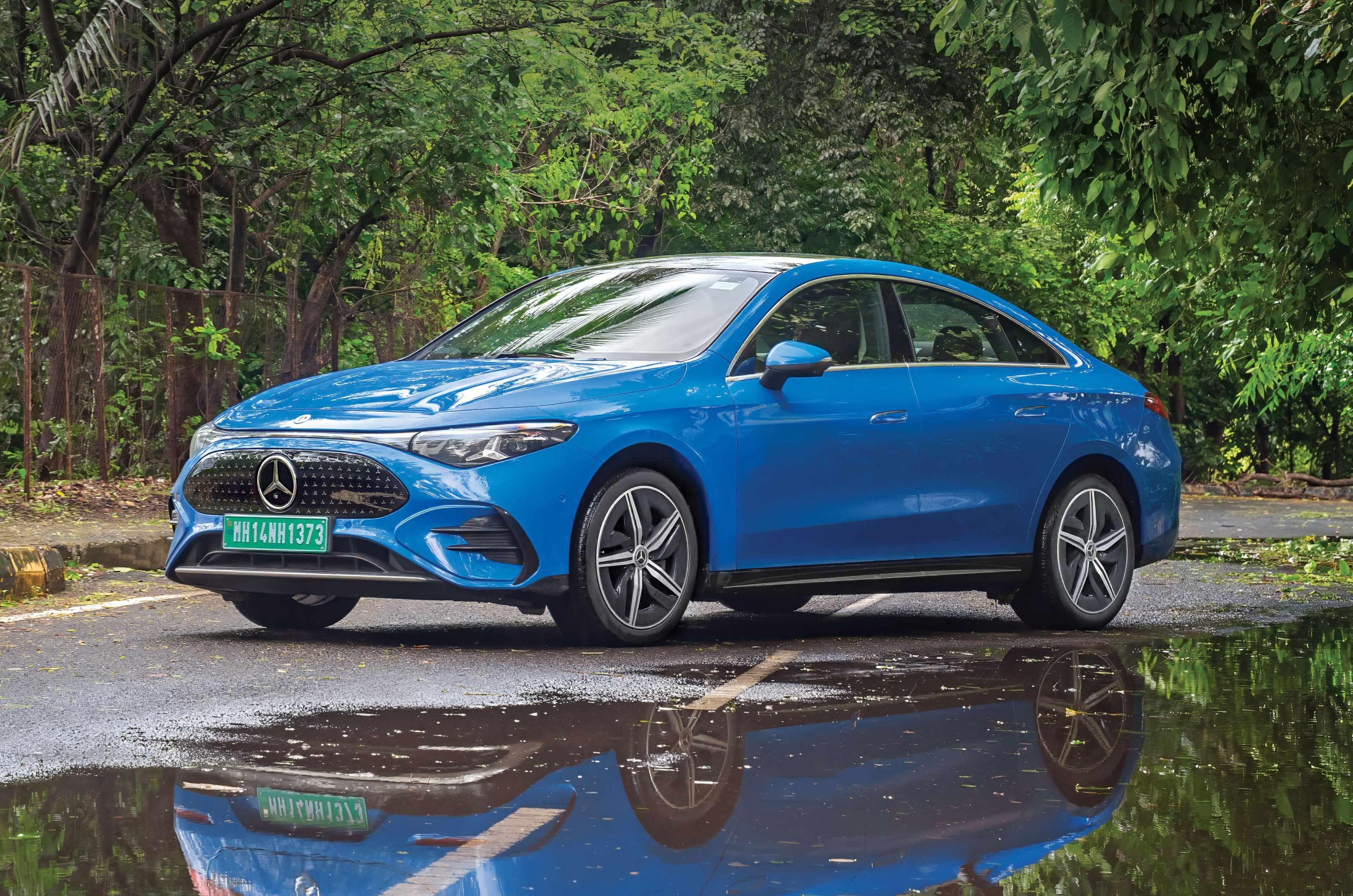
Mercedes’ three-pointed star features prominently across the CLA, appearing on the bonnet, grille, headlamps and tail-lamps. The grille itself gets 142 illuminated stars, which might sound excessive on paper, but they do give the CLA a distinctive look and, in person, seem to work rather well.

More significant, however, is what lies underneath. The CLA EV is the first Mercedes to use the new Modular Architecture (MMA) skateboard platform, which will also underpin future models. At over 4.7m long, more than 1.8m wide and over 1.4m tall, with a wheelbase approaching 2.8m, it is roughly the same size as a BYD Seal.

Mercedes CLA 250+ interior space and comfort – 7/10

Impresses with tech and quality; cramped rear with high floor.

The CLA makes a good first impression inside. Its doors open wide for easy access, while the cabin combines smart design with good materials and build quality. The CLA 250+ is offered in AMG Line trim, so you get a flat-bottomed AMG steering wheel, sporty metal pedals and AMG-spec upholstery.
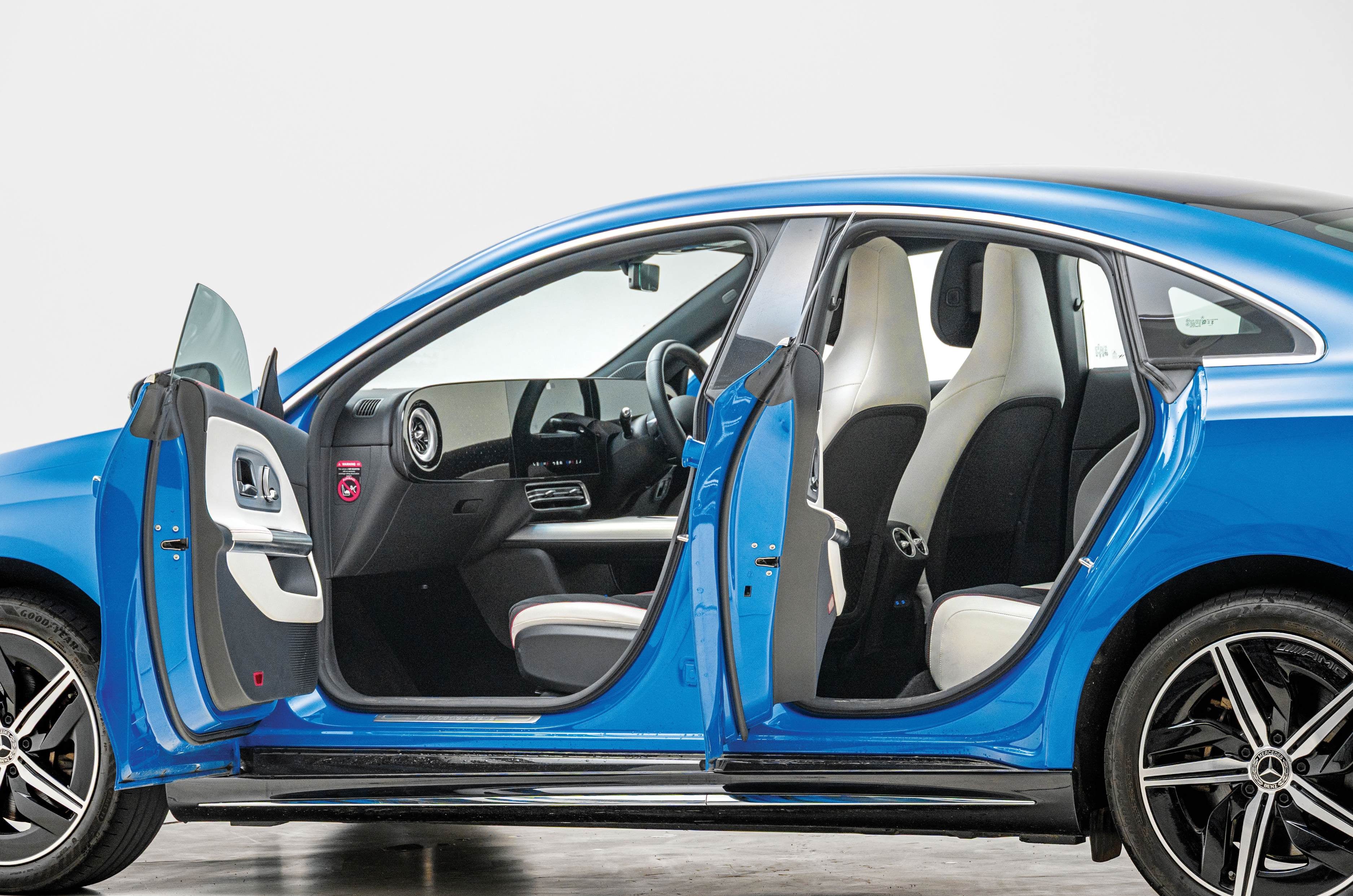
Doors open wide to aid access to the cabin; retains the stylish frameless doors.

The dashboard is dominated by a large gloss-black panel housing the digital displays. The graphics are sharp, the interface is clean, and the system is easy to navigate. What isn’t quite as convincing is the near-total absence of physical controls. Apart from a few capacitive shortcuts for functions such as volume and drive modes, most functions are accessed through the touchscreen, which isn’t ideal while on the move.
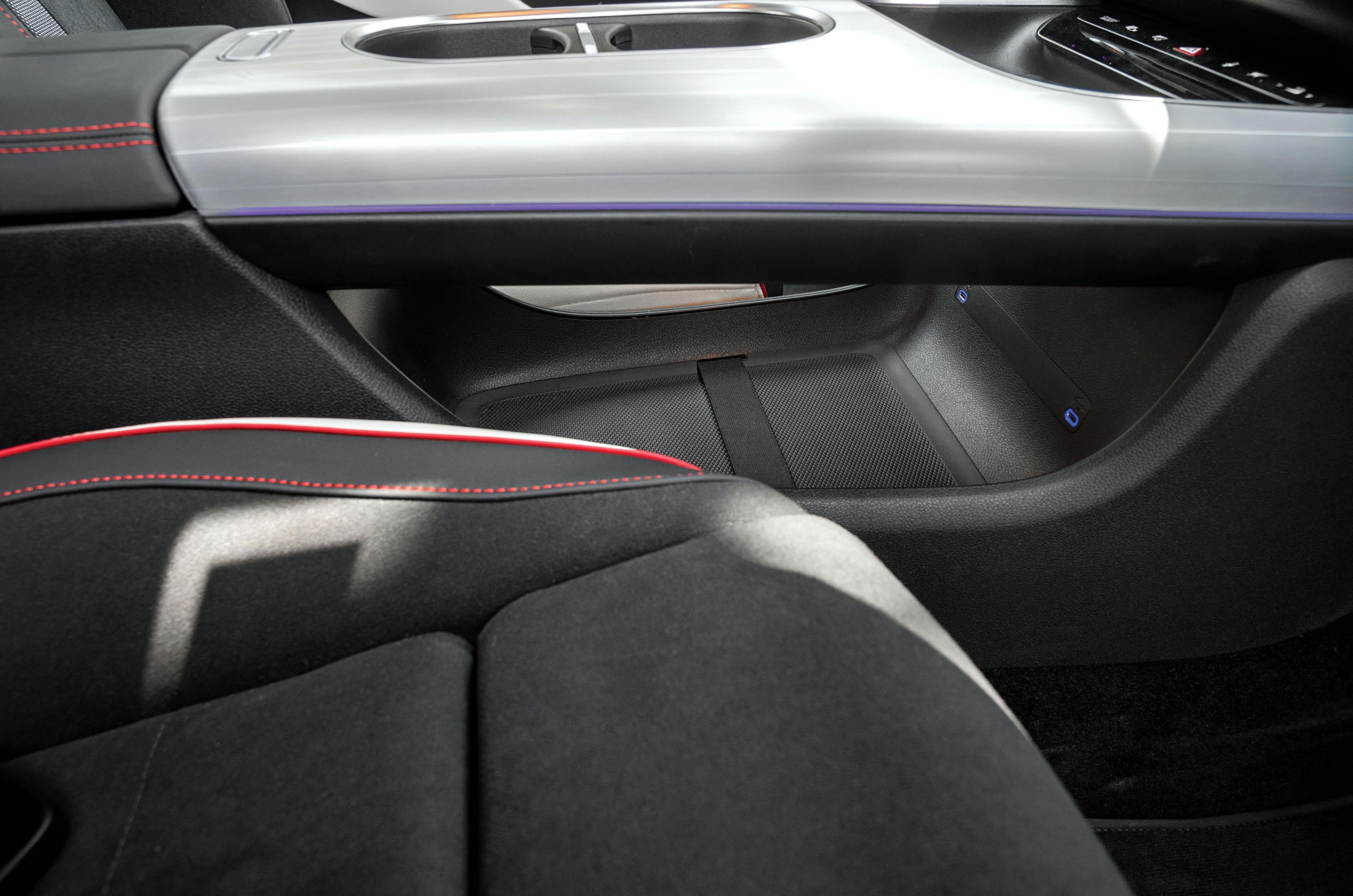
Centre console has two levels, with the top featuring cupholders and a wireless charger, and a large cubby space below.

The third passenger display offered in the 250+ Launch Edition has been omitted here, with its place taken by a gloss-black panel featuring illuminated Mercedes stars. The turbine-style air vents at either end of the dashboard are a nice touch, though, and are particularly satisfying to operate.

There is decent storage, too. You get a large glovebox, storage beneath the centre armrest, bottle holders in the doors and a floating centre console with cupholders and a wireless charger on top, along with a large storage area underneath.
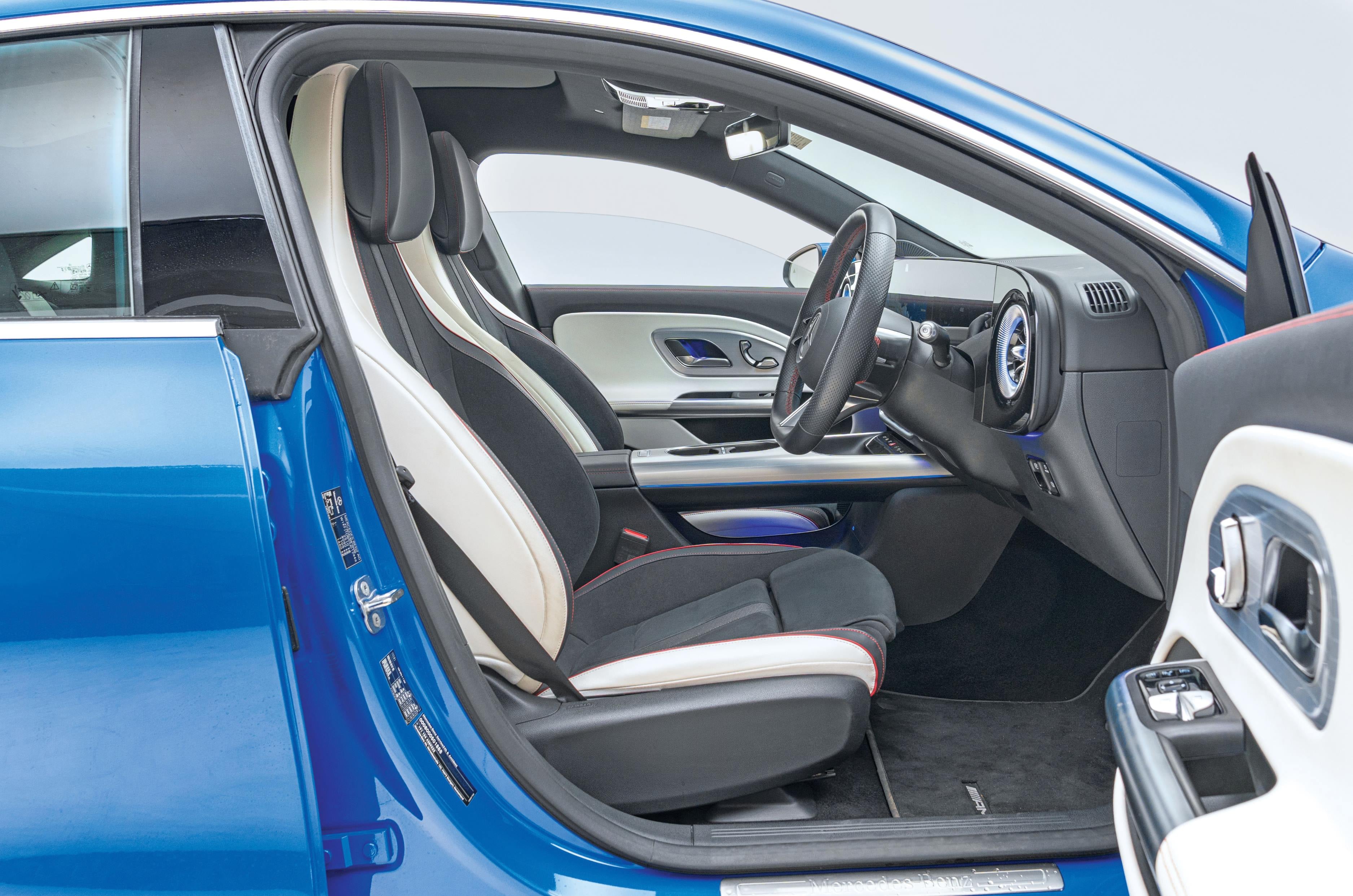
AMG Line brings Alcantara and leather trim for the snug and supportive seats; relatively knees-up seating here too.

The front seats are supportive and well padded, although larger occupants might find them a little snug. More importantly, the relatively high floor means you sit with your knees raised even in the front. At the rear, this issue is more pronounced.
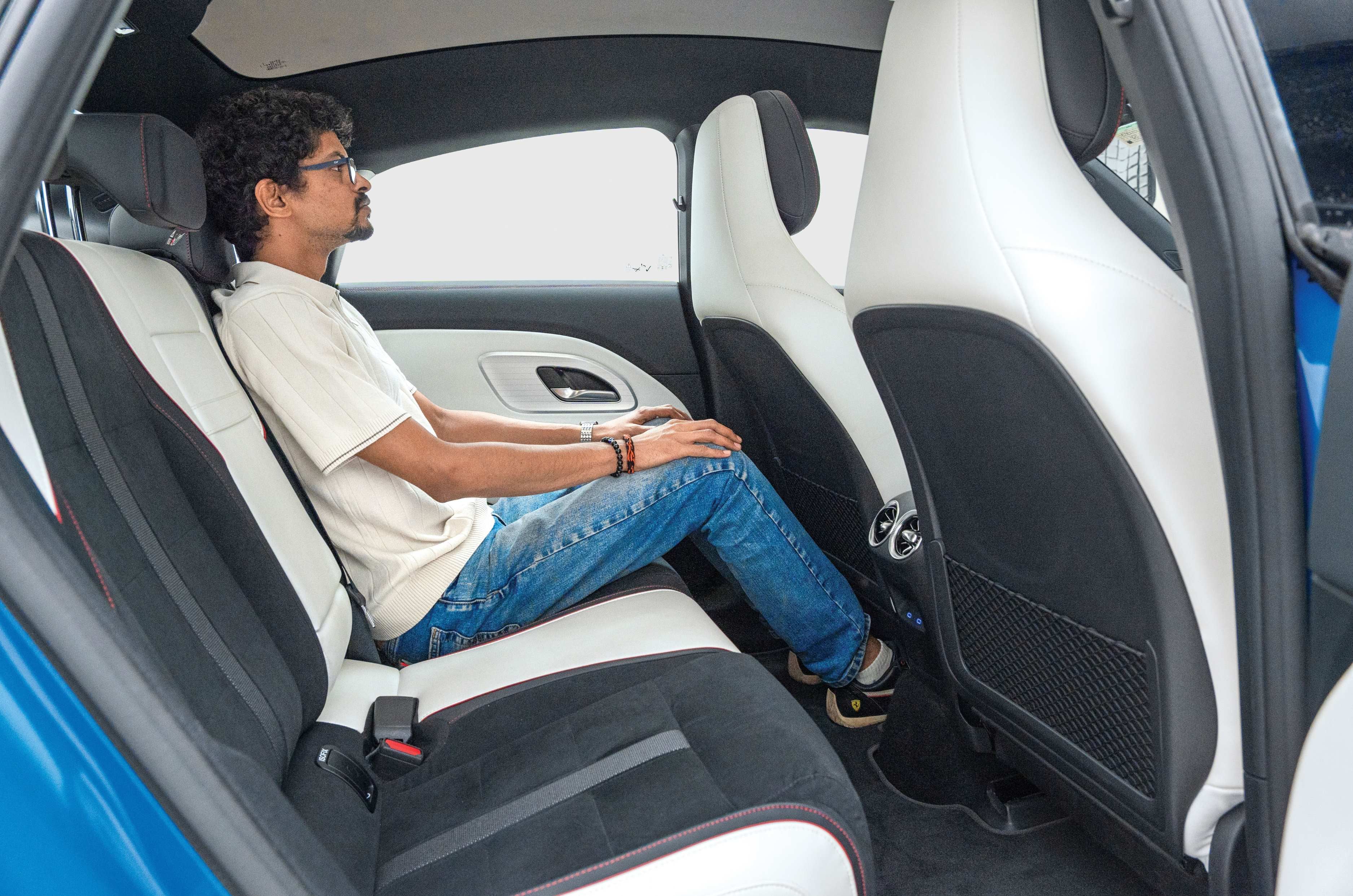
High floor results in knees-up seating, upright backrest and sloping roof further compromise rear seat’s comfort.

Although the CLA has a longer wheelbase than its predecessor, which improves knee room, the battery beneath the floor eats into under-thigh support and results in a knees-up seating position. The upright backrest and sloping roofline further compromise comfort, particularly for taller passengers. There is a centre armrest with cupholders and dedicated rear AC vents, but this still isn’t a car we’d recommend for regular chauffeur-driven use.
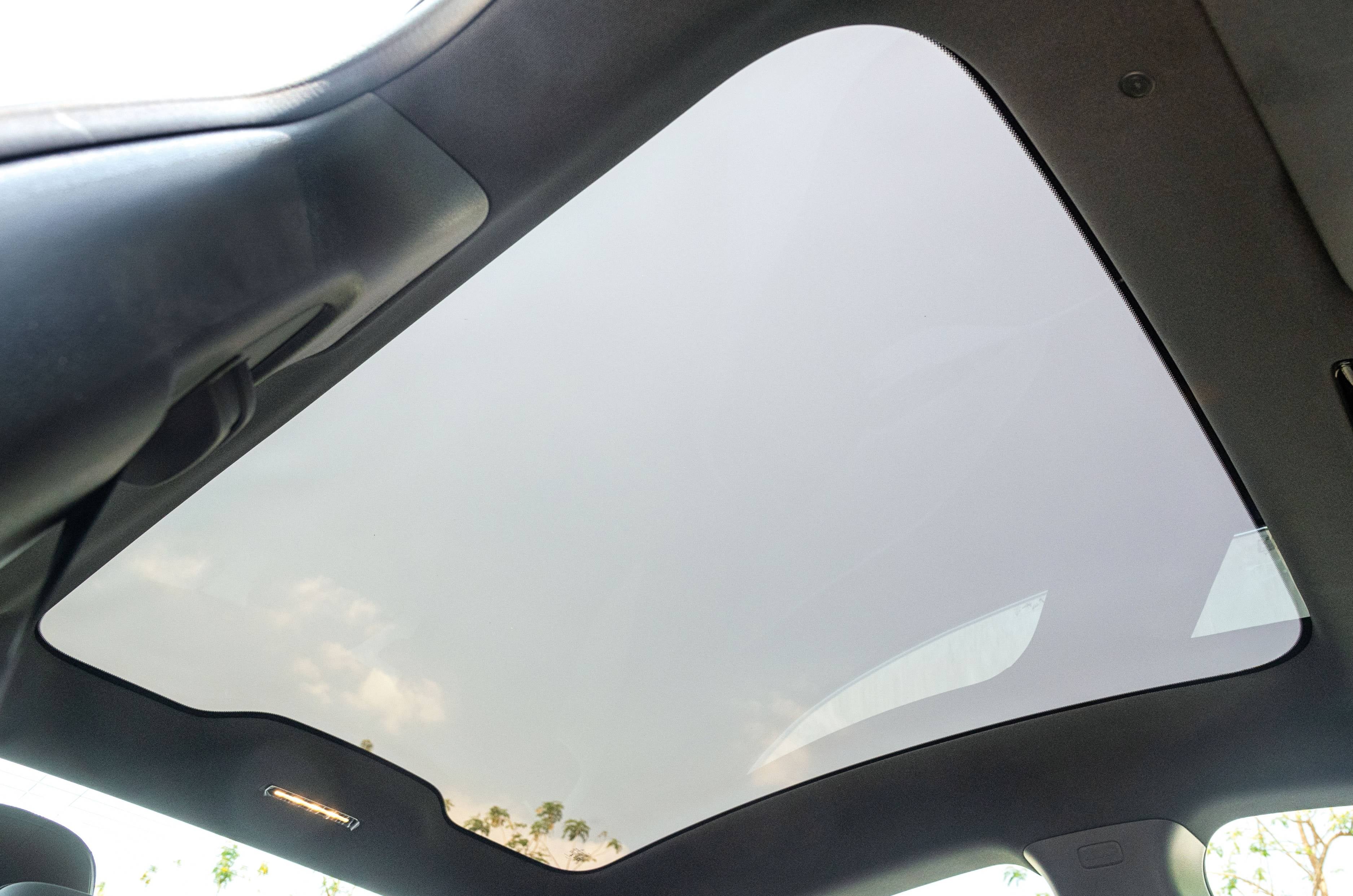
There is a large fixed panoramic glass roof that does make the cabin feel more spacious. Mercedes says the glass is heat-insulated, but a sunshade would have been welcome, particularly in our climate. It also misses sunblinds for the rear windows, meaning the rear AC has to work particularly hard to keep the back of the cabin cool.
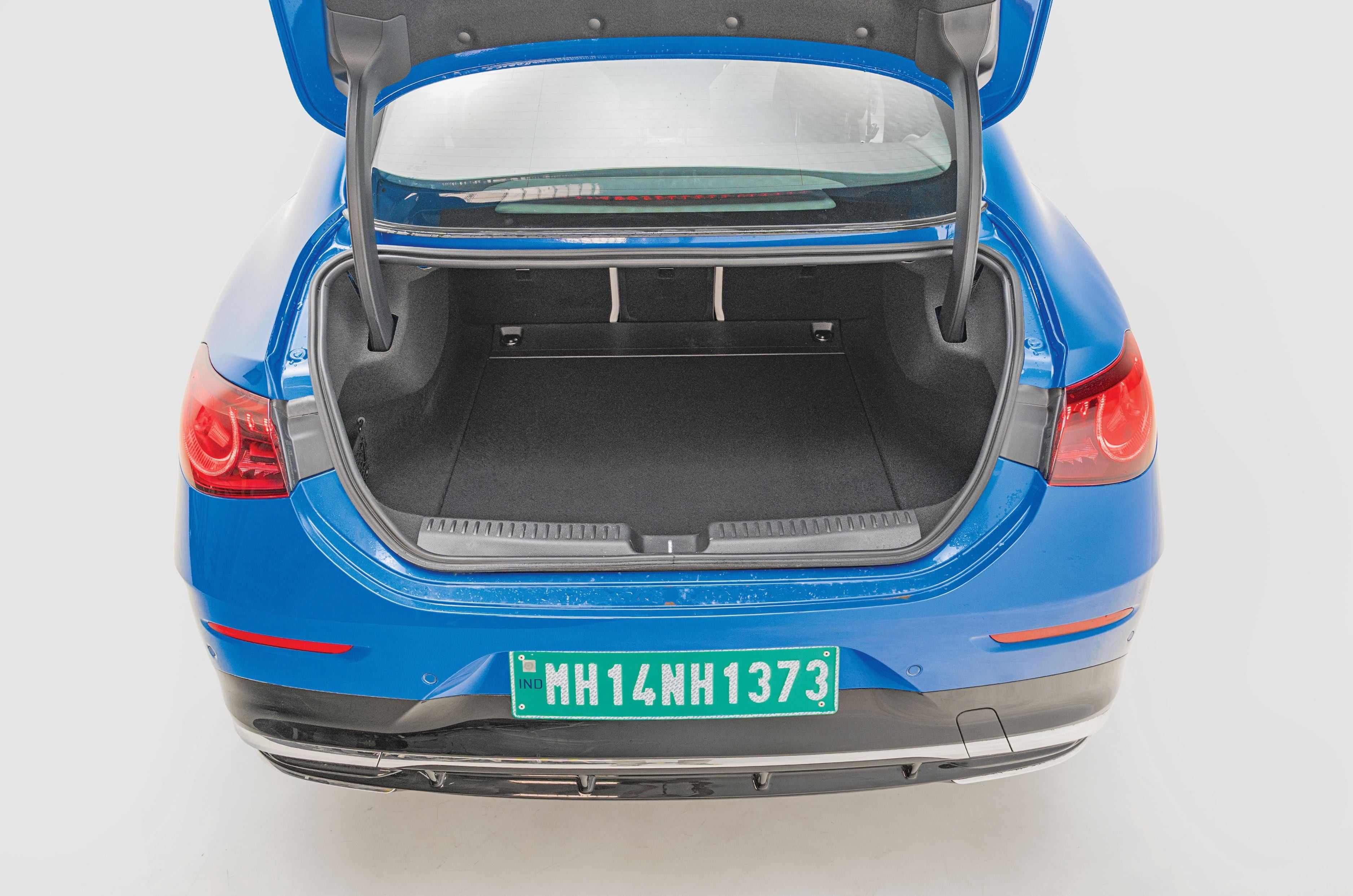
Cargo space is a useful 405 litres; boot opening isn’t large, though.

Boot space stands at a useful 405 litres. More interestingly, the CLA gets a 101-litre front trunk – the first time Mercedes has offered a frunk on one of its EVs.
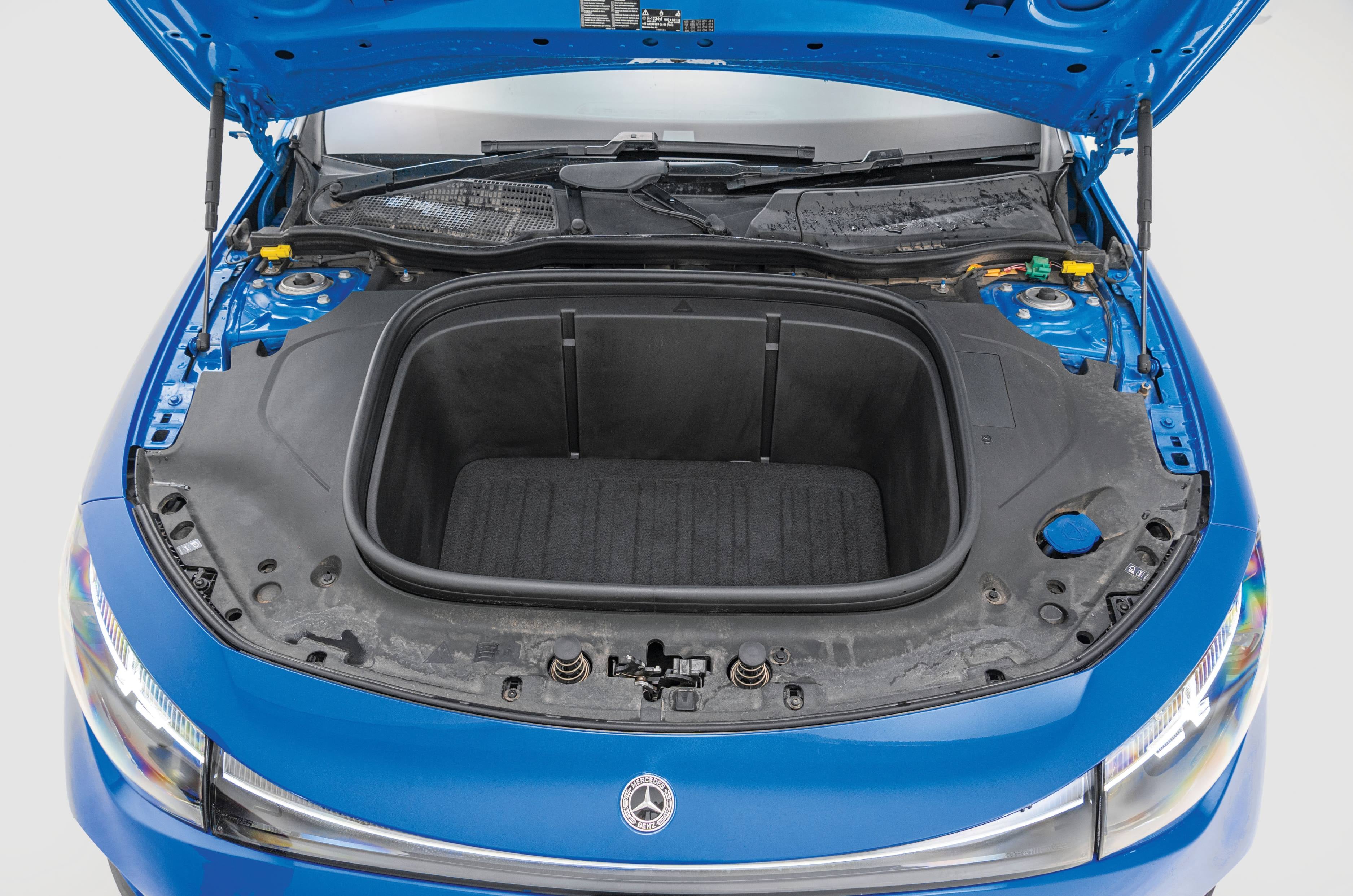
In a first for Mercedes-Benz EVs, there’s a convenient 101-litre front trunk.

Mercedes CLA 250+ features and safety – 9/10

Packed with cutting-edge tech and features; no seat ventilation.

The CLA is a showcase for Mercedes’ latest technology. Four supercomputers provide the computing power, which Mercedes says is more than 200 times that of the previous CLA. It is also the first Mercedes to use the company’s new MB.OS infotainment operating system.
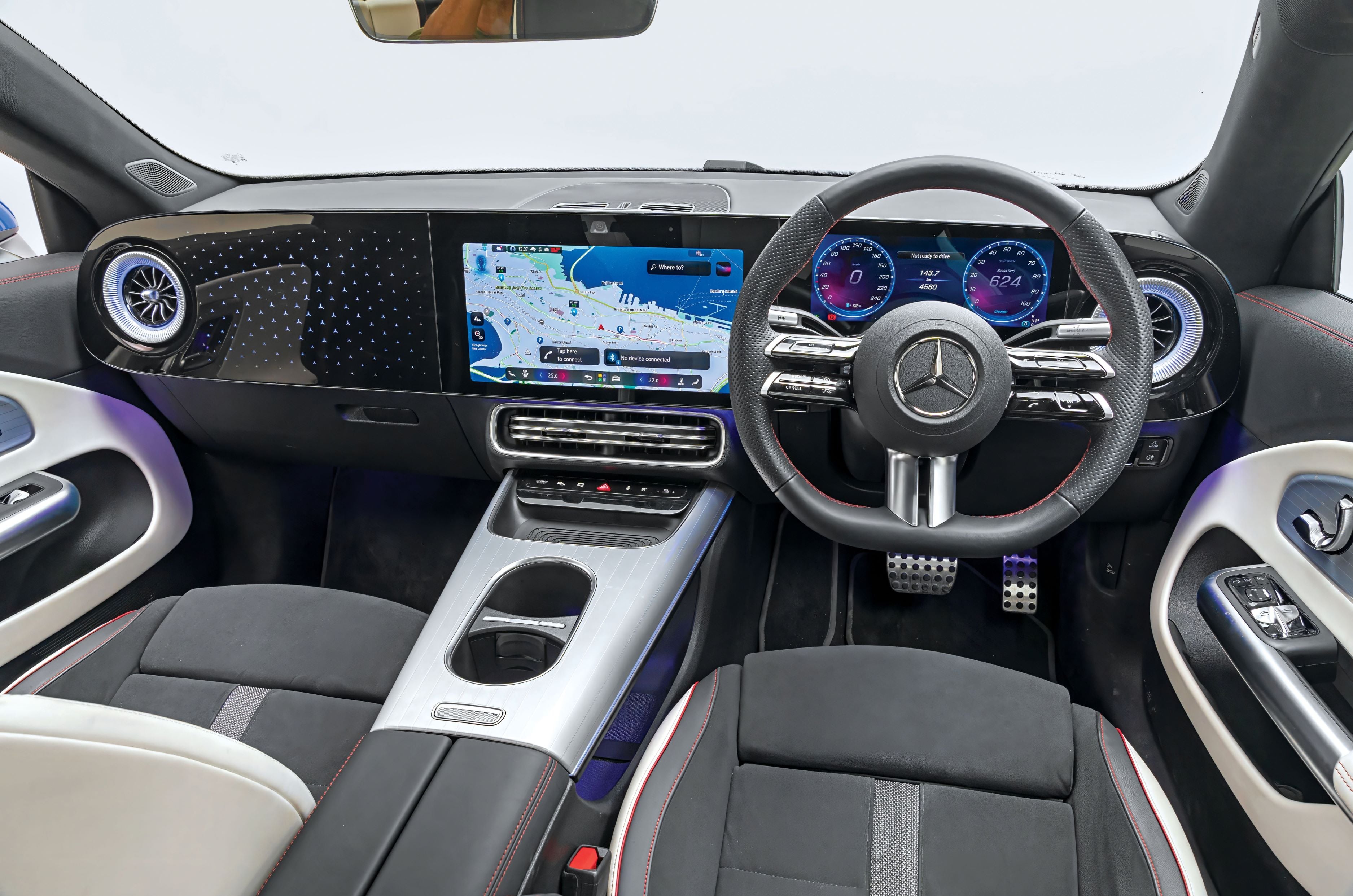
With the AMG Line styling package, the 250+ gets a flat-bottomed AMG steering, metal pedals and AMG seat upholstery; third passenger screen is reserved for the Launch Edition; cabin is practical with loads of storage, and overall fit/finish is good.

An Nvidia processor allows for quick responses, while over-the-air updates mean the system can be updated without a visit to the workshop. There’s also a new MBUX Virtual Assistant, which learns about the driver, including their language, accent and mood. It uses AI tools, including ChatGPT, Gemini and Bing, to further make your life easier, and you can ask them to do just about anything from setting navigation to changing the AC and so much more.
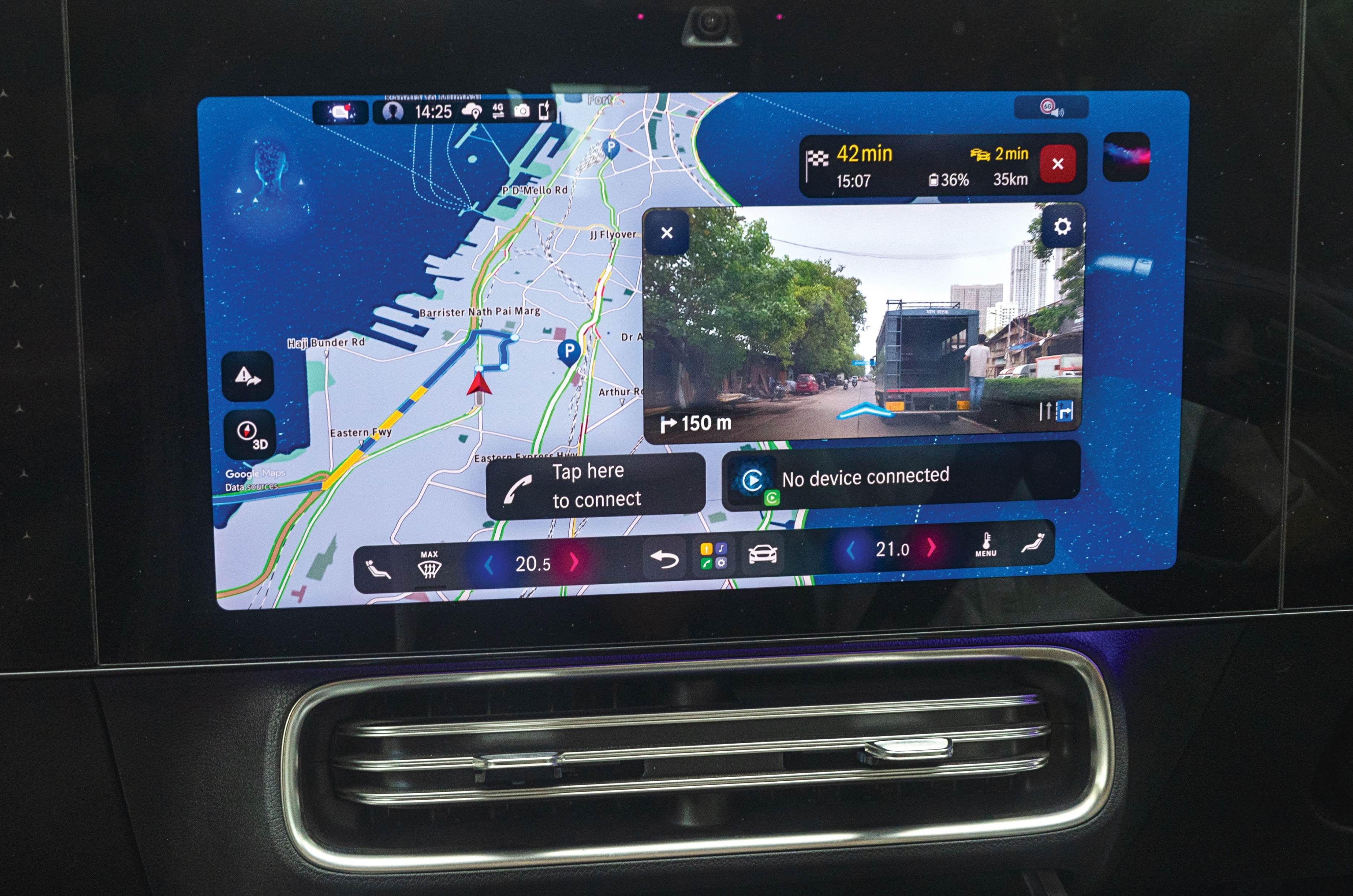
Screen is slick, has sharp graphics and native maps, which show directions in real-time using the camera feed.

The CLA also gets the new MB.Charge app, which brings charging providers together in one place. It can locate chargers, show their real-time availability, help plan a journey and even handle payment for a charging session.

The feature list is extensive. Highlights include a 14-inch central touchscreen, 10.25-inch digital driver’s display, powered, heated and massaging front seats, dual-zone climate control, configurable ambient lighting, a panoramic glass roof, Burmester 3D audio, wireless phone charging and auto parking. Ventilated front seats, however, aren’t offered.
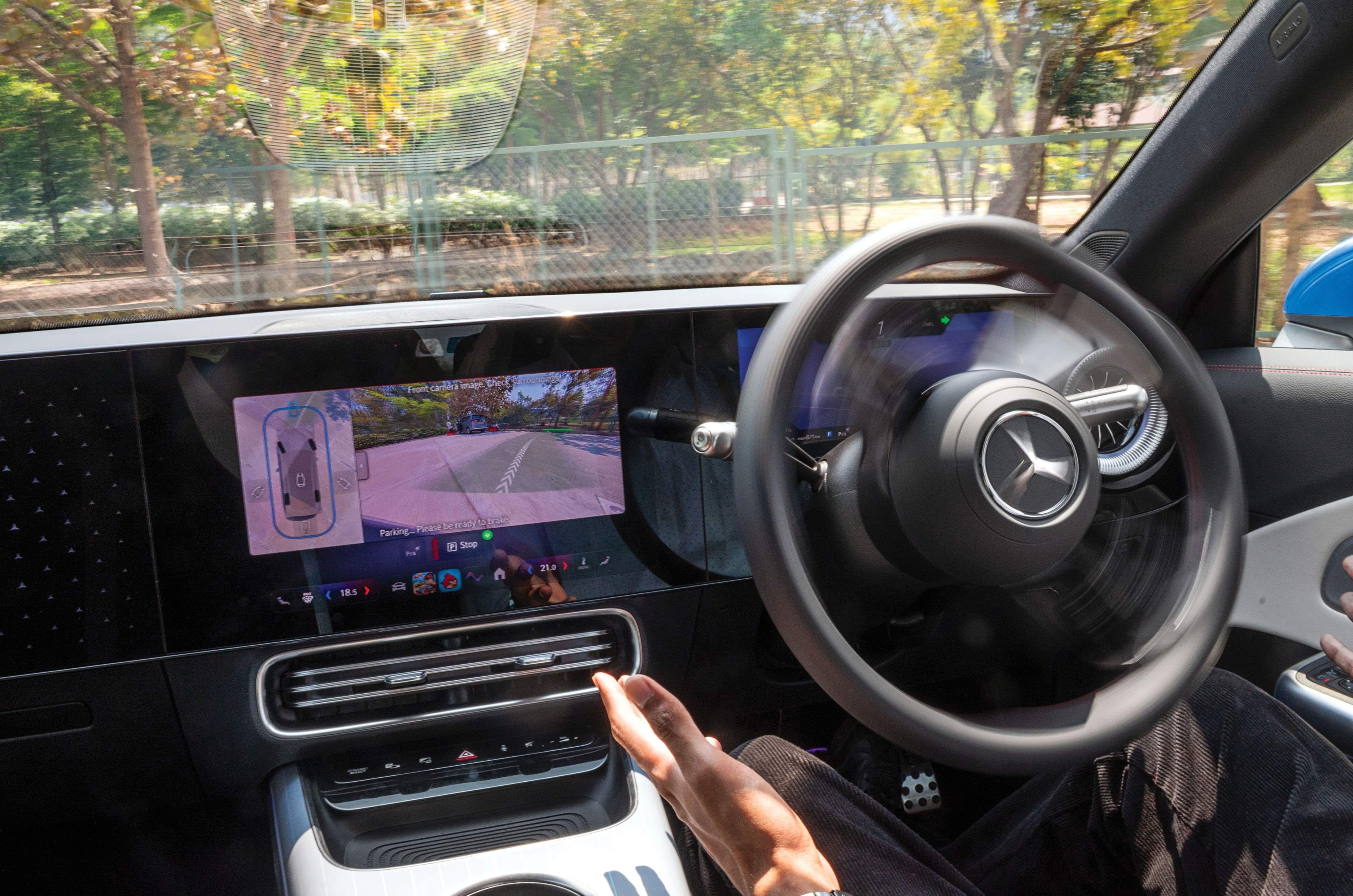
CLA 250+ packs in an auto park feature, which works very well in unmarked spaces too.

Safety equipment is comprehensive, with six airbags, a 360-degree camera and Level 2+ ADAS, which Mercedes calls MB.Drive. It includes adaptive cruise control, lane-keep assist, blind-spot monitoring, autonomous emergency braking and semi-autonomous driving functions. The system uses a combination of radar sensors and cameras and didn’t feel overly intrusive; better than previous Mercs, which feel trigger-happy with emergency braking. The CLA was also the safest car tested by Euro NCAP in 2025.

Mercedes CLA 250+ performance and refinement – 9/10

Smooth, progressive powertrain; refinement is impressive.

The CLA 250+ uses a rear-mounted electric motor producing 272hp and 335Nm. Performance is brisk, but what stands out more than outright acceleration is the way it delivers its performance.

Unlike some performance EVs that deliver power aggressively from the moment you bury the accelerator, the CLA builds speed in a smooth, progressive manner. The power delivery is linear, and there’s always enough performance on tap. Sport mode sharpens the response, while synthesised sounds played through the speakers add a little more theatre.
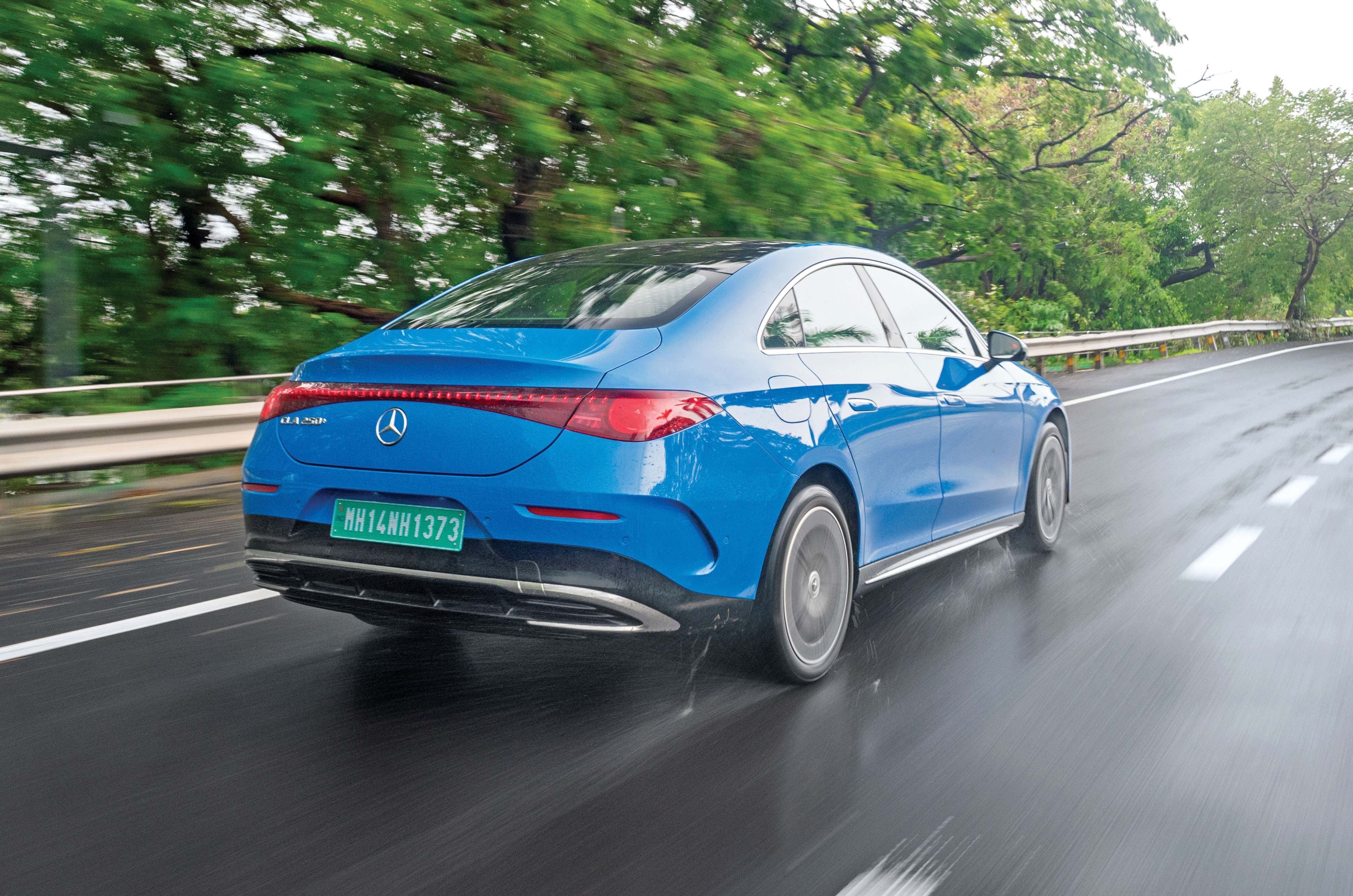
In our performance tests, it managed a 0-100kph time of 6.6sec in Sport mode, narrowly beating the claimed time of 6.7sec. Rolling acceleration is impressive too, with 20-80kph in Sport taking 3.68sec, and 40-100kph being dealt with in 4.26sec. Naturally, performance in the Comfort and Eco drive modes is more sedate than Sport, with the difference between the former two being almost negligible. 
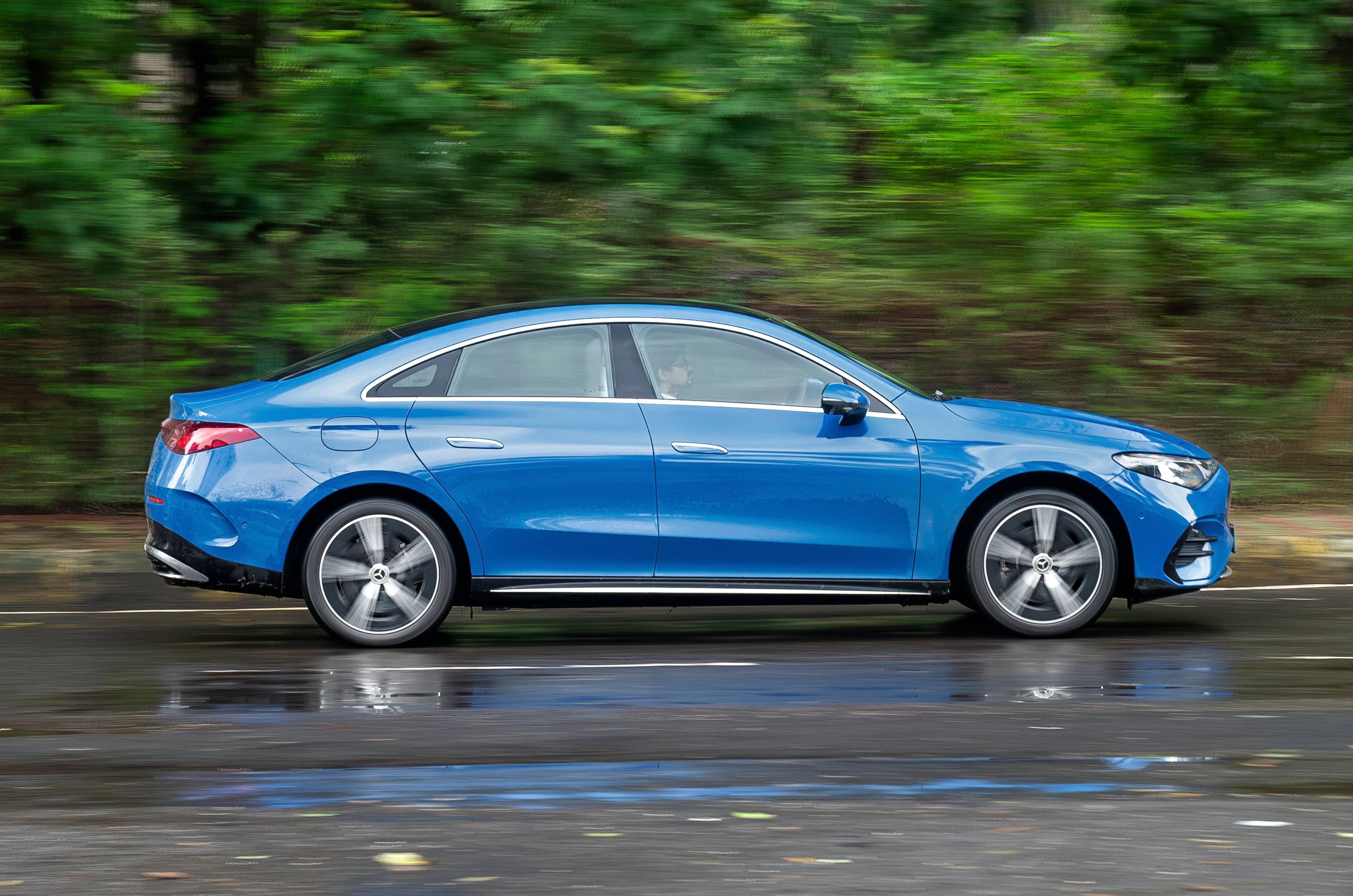
Mercedes has also opted for a two-speed gearbox, which is unusual for an EV, but makes sense here. The short 11:1 first gear helps with initial acceleration, while the taller 5:1 second gear is intended to improve efficiency at higher speeds. And from behind the wheel, you can feel when it shifts gears. Mercedes claims a drivetrain efficiency of 93 percent, and that plays an important role in the CLA’s impressive range.

The new brake-by-wire system is another area where the CLA makes a big improvement over older Mercedes EVs. Brake response is reassuring, with a good bite and a natural, consistent feel. In our braking test, the CLA came to a halt from 80kph in 26.49m despite it being on a damp surface.
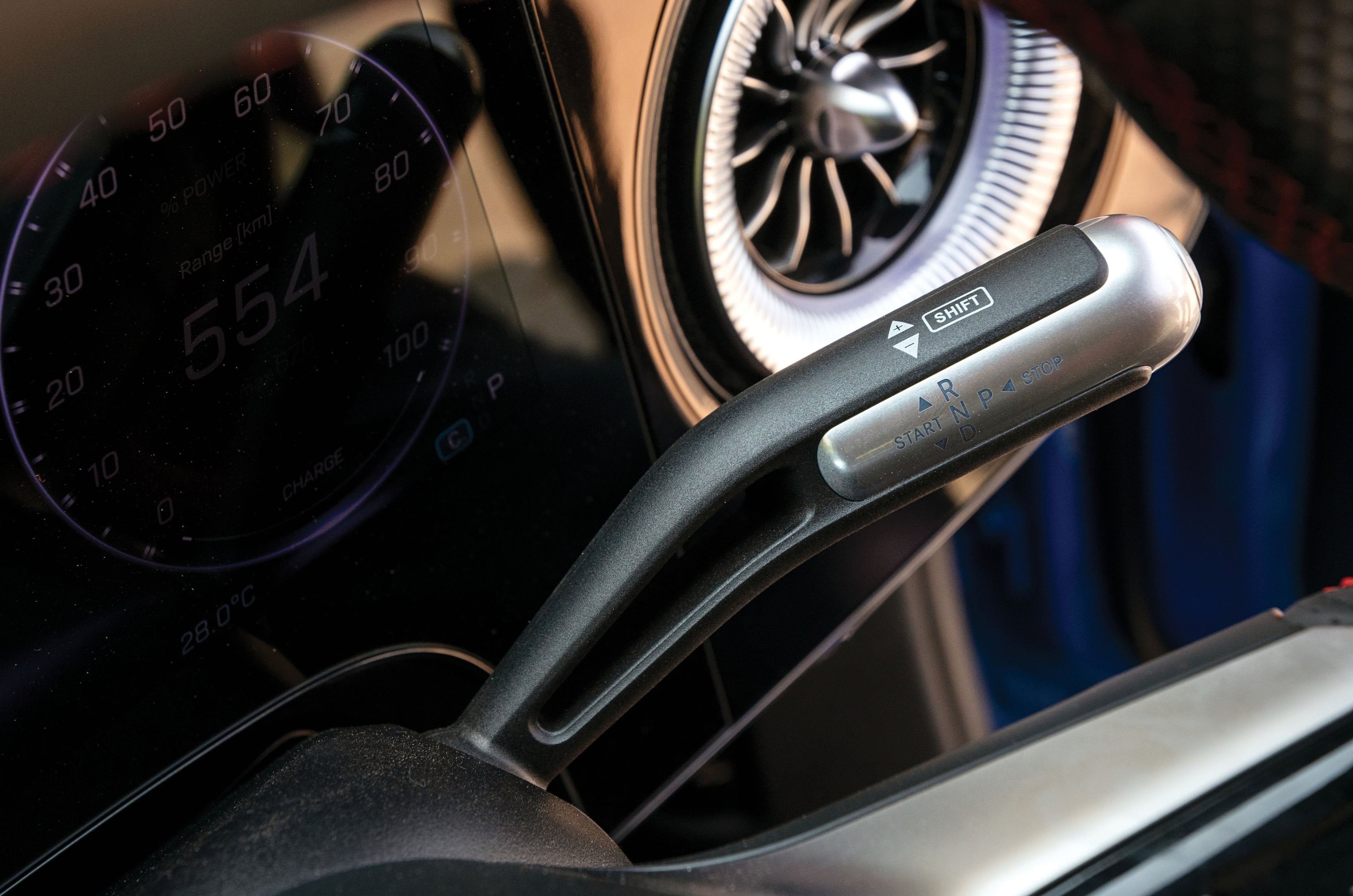
Control stalk now houses the start/stop button, the drive selector, and is also used to toggle between regen braking modes.

There are four levels of regenerative braking, including a one-pedal mode and an adaptive setting. They work well, with the Normal setting bringing it from 80-20kph in 311.56m, while the Strong setting takes 96.36m for the same. It’s worth noting, however, that Mercedes has moved the controls for the regen from the steering-mounted paddles used on some EVs to the gear selector stalk. You push or pull the stalk to change the regen level, and this isn’t quite as intuitive. The same stalk also incorporates the start/stop button.

Where the CLA really impresses is refinement. The absence of an engine obviously helps, but Mercedes has also done an excellent job of keeping wind and road noise out. At speed, the cabin remains remarkably quiet. A CLA 200 variant is also available in India, using the same rear-mounted motor layout but producing a lower 224hp and 335Nm. However, we’re yet to test this version.

Mercedes CLA 250+ tested acceleration times (sec)

 SportComfortEco
0-10kph0.570.640.61
0-20kph1.181.181.22
0-30kph1.741.761.80
0-40kph2.322.352.39
0-50kph2.902.962.99
0-60kph3.483.563.59
0-70kph4.104.264.32
0-80kph4.835.095.12
0-90kph5.676.046.09
0-100kph6.607.107.12
0-110kph7.938.618.58
0-120kph9.351010
0-130kph10.7911.3911.41
1/4 mile14.9815.3315.33
20-80kph (rolling)3.683.883.87
40-100kph (rolling)4.264.724.73

Mercedes CLA 250+ range and efficiency – 9/10

Low drag, efficient powertrain mean superb real-world range.

Mercedes claims a WLTP range of 792km from the 85kWh (net) NMC battery, although, predictably, the real-world range is lower. In the city, with the regen set to the strongest mode, it delivered an efficiency of 6.87km/kWh that translates to a range of 584km. On the highway, with the regen set to ‘Normal’, it delivered an efficiency of 7.52km/kWh for a 640km range. With an average efficiency of 7.2km/kWh, you can expect a real-world range of 612km on a single charge, which is very impressive.
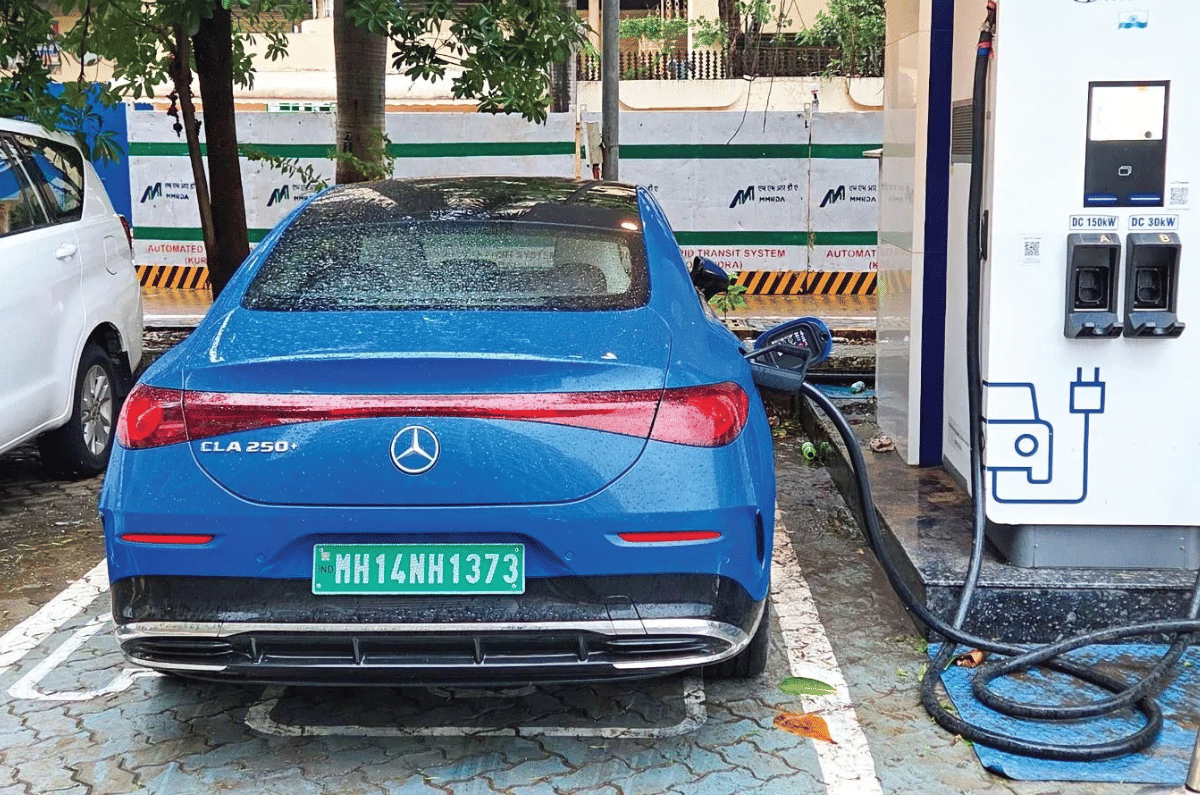
In the city, the strongest regen setting enabled it to recoup energy effectively, which helped boost efficiency, while the two-speed gearbox, with its taller 5:1 second gear, enabled greater efficiency at higher speeds and thus contributed to the EV’s highway efficiency. Combined with the low 0.21Cd drag coefficient and the normal regen mode that allows for more coasting, it proved even more efficient on the highway, which isn’t usually the case with EVs.

The CLA 250+ uses an 800V electrical architecture and supports charging at up to 320kW, but chargers capable of delivering that output remain few and far between in India. In our charging test using a 150kW DC fast charger, we saw an average charging speed of around 92kW with a peak charging speed of 125kW. To charge from 20-80 percent, it took 35 minutes and consumed 53.89kWh in total. This, combined with the efficiency and large real-world range, should make long-distance driving relatively stress-free.

Mercedes CLA 250+ tested range

City (km/kWh)6.87
Highway (km/kWh)7.52
Average (km/kWh)7.19
Range (km)611.5

Mercedes CLA 250+ ride comfort and handling – 8/10

Strikes a mature balance between ride and handling.

The CLA’s rear-wheel-drive layout gives it an enjoyable character on a winding road, and the steering is one of its stronger points. With no drive being sent through the front wheels, it feels precise, building up weight progressively with speed. It’s light enough at low speeds to make manoeuvring easy, yet gains enough weight as you go faster.
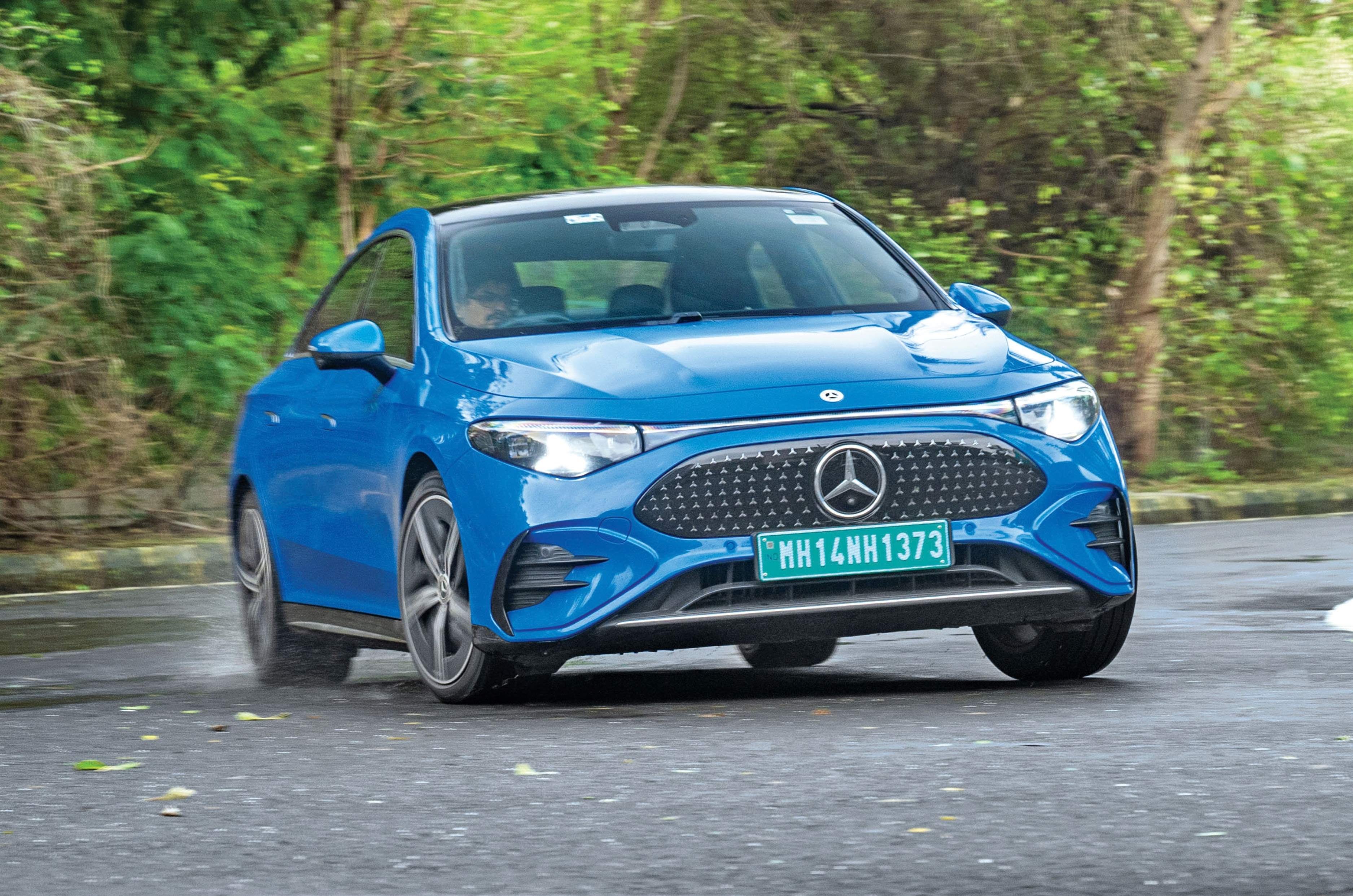
Thanks to the CLA’s rear-wheel-drive setup and precise steering, it feels agile and good fun around corners.

Mercedes has increased the Euro-spec CLA’s 107mm ground clearance for India and made suspension changes to better suit our roads, and both have worked. There’s enough clearance to deal with regular-sized speed breakers, while the additional height hasn’t really compromised the car’s handling or comfort. Around corners, the CLA remains agile, and body roll is well controlled. The ride does have a hint of firmness to it, but it deals with road imperfections without fuss and feels composed at both low and high speeds. Overall, it’s a mature combination of ride comfort, stability and handling.

Mercedes CLA 250+ value for money – 8/10

Refined and efficient powertrain, long range and sorted ride and handling make it Merc’s best EV yet.
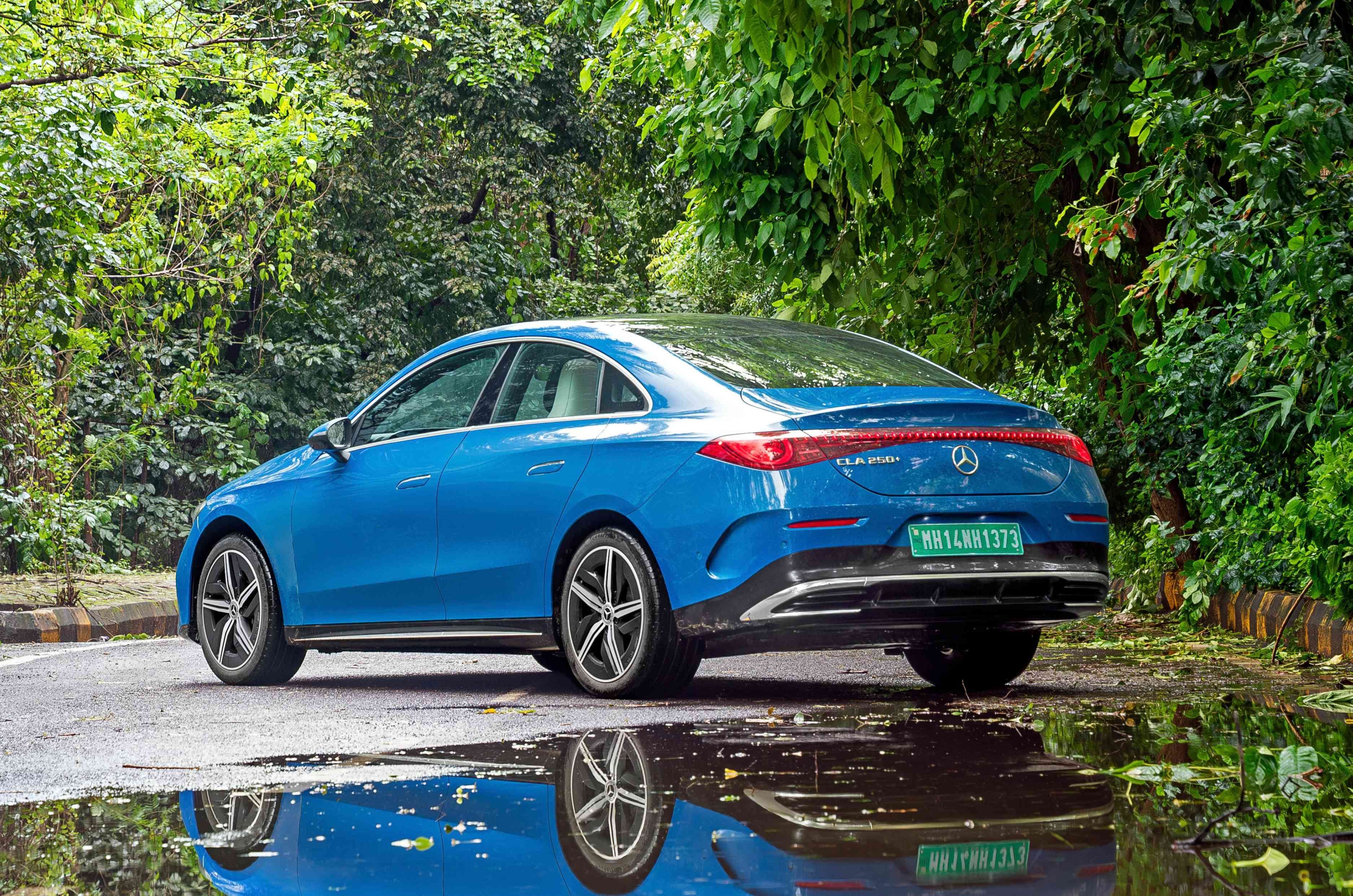
Priced at Rs 60.50 lakh (ex-showroom), the CLA 250+ is a fairly compelling proposition, considering what it brings to the table. There are shortcomings, most notably the cramped rear seat, knees-up seating even at the front, and the absence of sunshades for the panoramic roof and rear windows. But if you’re going to drive yourself and want a luxury EV that’s distinctive, the CLA makes a strong case for itself.

Its powertrain is smooth and refined, its efficiency is excellent, it has an impressive real-world range of over 600km, and it strikes a very good balance between ride comfort and handling. Add to that a cabin packed with cutting-edge tech, and the new CLA emerges as one of the company’s most accomplished EVs yet.  
Suzuki e-Access vs Yamaha EC-06 comparison: Night & Day

Suzuki e-Access vs Yamaha EC-06 comparison: Night & Day
Suzuki e-Access vs Yamaha EC-06 comparison

While the Indian manufacturers have been quick to capitalise on the EV boom, the Japanese have been rather more measured in their approach. Honda arrived in 2025 with not one but two in-house electric scooters, though both had unique limitations that prevented them from succeeding.

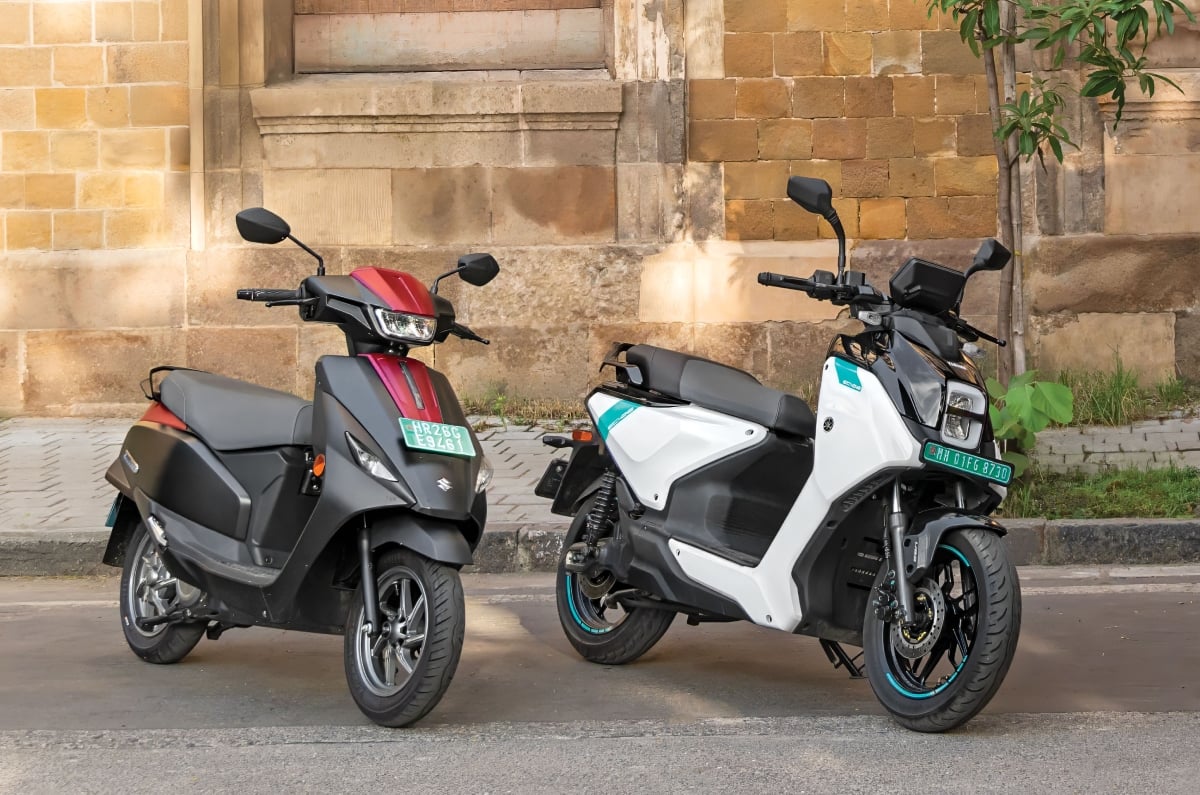
Suzuki, like Honda, chose to develop its own platform from scratch, but its e-Access appears expensive for what it offers. Yamaha, meanwhile, took a markedly different route for its more affordable offering and partnered with an Indian startup. The EC-06 is, in essence, a more expensive River Indie in sharper clothes. 

So if you’ve been waiting for a Japanese e-scooter, you now have two choices, but like their very different inceptions, both also offer you two very different flavours of electric scooter. The question, then, is which one deserves your money – and whether either deserves it over the competition.

Not hiding in plain sight

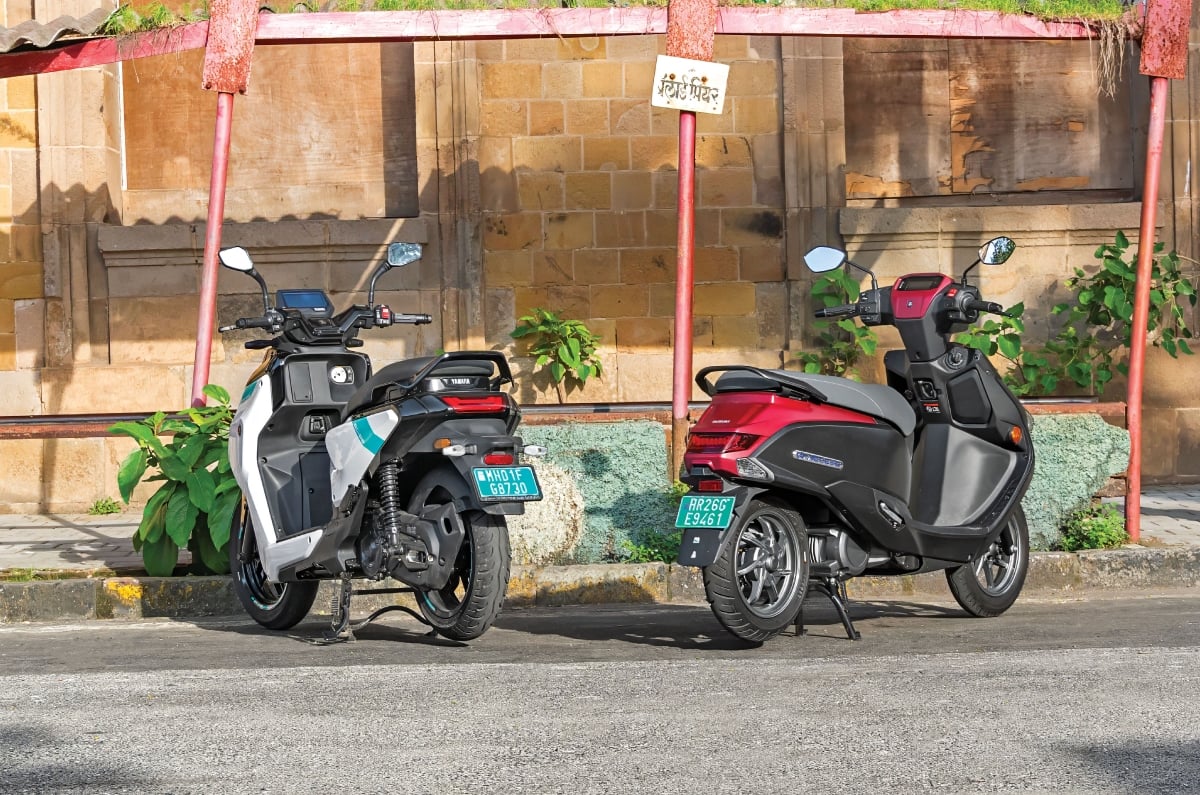
Subtle, these scooters are not. Both take distinctly left-field approaches to styling and will stand out from the crowd. Over the fortnight we spent with them, the EC-06 consistently drew more positive attention thanks to its chunky, squared-off proportions. The e-Access found its niche too, though its double duck-bill nose, flowing front panels with a contrastingly boxy tail make it more of an acquired taste.


Yamaha EC-06

Suzuki e-Access

Kerb weight132kg122kg
Seat height770mm765mm
Underseat storage24.5 litres17 litres
Ground clearance145mm (laden)160mm (unladen)

Climb aboard and their personalities diverge further still. The e-Access feels more like a conventional scooter. Despite its compact dimensions, it never feels cramped, even for taller riders, while its 765mm seat height makes it instantly approachable for shorter ones.

The EC-06, by comparison, feels a size larger. Its riding triangle is noticeably roomier, which taller riders will appreciate in a segment that seldom caters to them. Yet, with a friendly 770mm seat height, it remains fairly unintimidating for shorter riders. In fact, tall riders will want a higher seat.

Different strokes

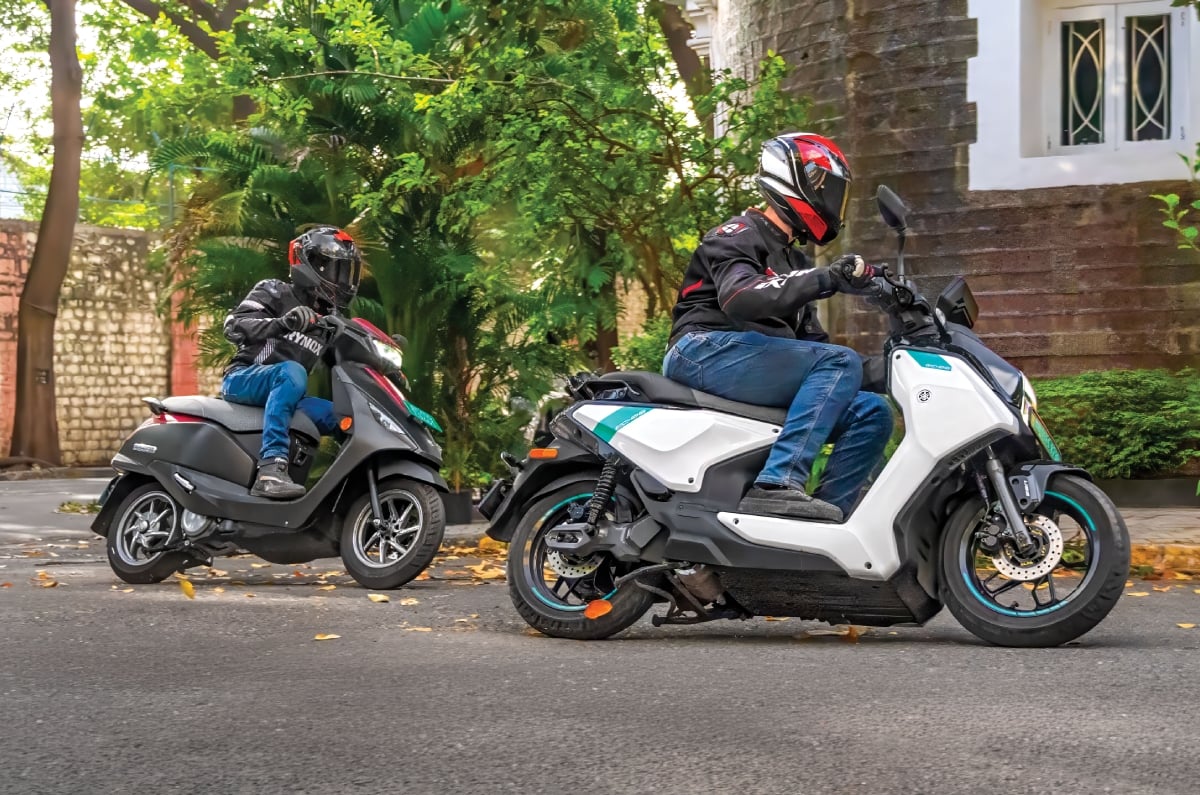
The riding experience of both also reflects two very different engineering philosophies. The 122kg e-Access feels exceptionally light on its feet; whether wheeling it around a parking space or flicking it into a bend, it responds eagerly – actually, a bit too eagerly. Some of that can be attributed to Suzuki mounting the battery pack vertically beneath the seat, a decision that, as you will read further on, has implications elsewhere too.


Yamaha EC-06

Suzuki e-Access

Battery capacity / chemistry4kWh / NMC3.072kWh / LFP
MotorPermanent Magnet SynchronousPermanent Magnet Synchronous
Power6.7kW4.1kW
Torque26Nm15Nm

Like the latest Burgman, its ride also errs towards the firmer side rather than the plush feel of a TVS iQube. It isn’t uncomfortable by any means, but it is something worth paying attention to on a test ride. Taller riders will also discover the Suzuki’s compactness during full-lock U-turns, where their knees will foul the handlebar.

On the flip side, the EC-06 is relatively heavier and slower to steer, but it’s a small tradeoff. That’s because its larger 14-inch wheels lend it greater stability at faster speeds and also help it dismiss broken roads with admirable composure. Its absorptive suspension also factors in here, though particularly sharp impacts can provoke a slight judder in the fork.

E-Access has the more flighty, energetic demeanour, whereas the EC-06’s handling is more sure-footed.  

The Yamaha’s seat, however, leaves quite some room for improvement. Its forward-sloping shape constantly makes you slide forward, necessitating frequent shuffling about. The padding is also too soft, and after just 30 minutes or so, you find yourself sinking into the seat pan. This results in a gradually more knees-up riding position, which might sound like a trifling problem at first but one that becomes increasingly apparent over longer journeys.

Neither one gets ABS, which feels like quite an egregious oversight considering their price points. Nevertheless, the Yamaha’s brakes inspire greater confidence because they are powerful without being overly aggressive, and its wider tyres also provide better traction. The Suzuki’s brakes, conversely, are almost too sharp. On Mumbai’s slippery concrete roads, they demand a more measured touch when coming to a halt quickly.

Not that you’ll often rely heavily on them. That’s partly down to the well-calibrated regenerative braking system and partly because the e-Access’ performance is quite unremarkable. Not only is it much slower than the EC-06, but it also feels noticeably less eager than the petrol-powered Access. It’s perfectly usable in the city, but on faster roads, overtakes require planning. Unsurprisingly, the Yamaha feels considerably livelier. It accelerates with genuine enthusiasm in its top Power mode, the regenerative braking is seamlessly calibrated in all 3 modes (Standard and Eco being the other two) and, despite using chain drive, its drivetrain is remarkably silent – akin to a hub-mounted motor.

Feel Good (?) Features

Build quality on both is reassuringly solid and exactly what one expects from the Japanese. At these prices, however, there are a few omissions that are difficult to overlook.

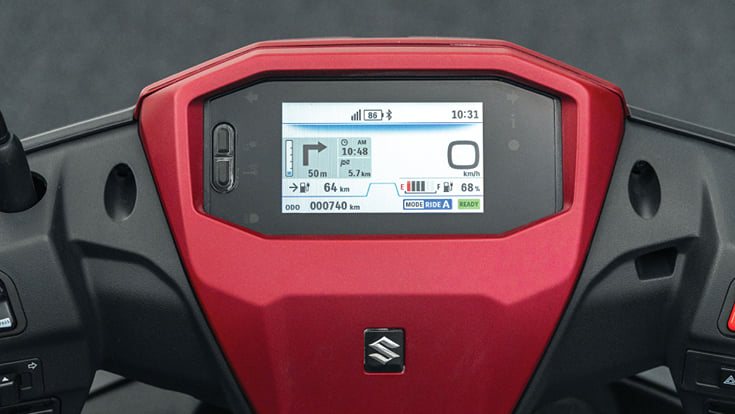
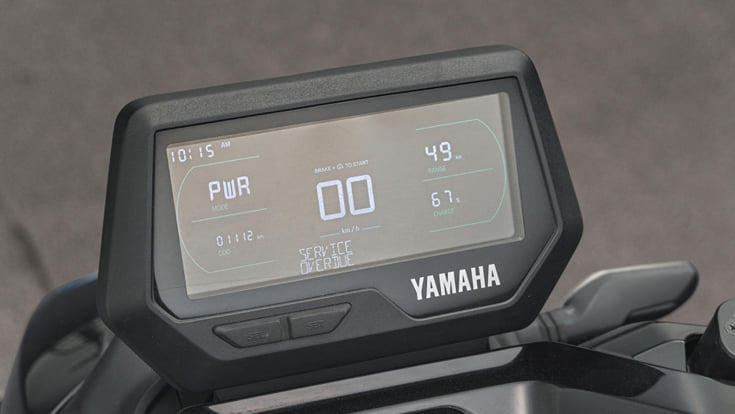
The e-Access employs the same TFT display found on the ICE Access 125 and Burgman, both of which cost substantially less. Yamaha, meanwhile, supplies only the slower 480W charger, despite the considerably more affordable River offering a faster 750W unit as a Rs 3,000 option.

Instrument cluster side by side comparison
 

Same TFT as ICE Access; EC’s negative LCD is simpler but well laid out.


The EC-06 also sacrifices a lot of storage compared to the Indie. Its 24.5-litre under-seat boot is far short of the latter’s enormous 43-litre boot and trails established rivals such as the iQube, Rizta and Chetak. The River’s lockable 12-litre glovebox has been omitted too, though Yamaha has used this to reposition the charging port to a more convenient location.

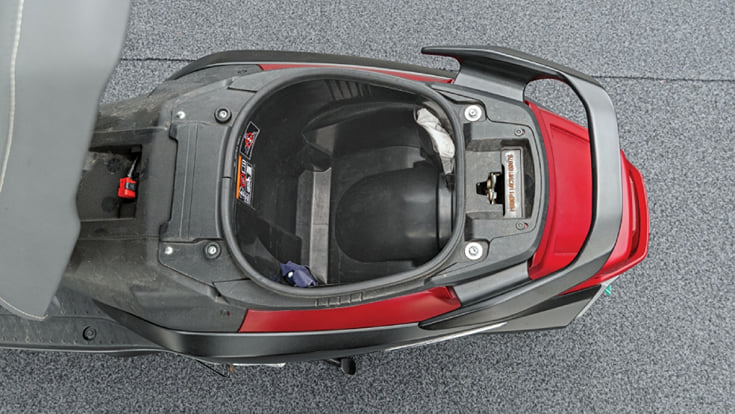
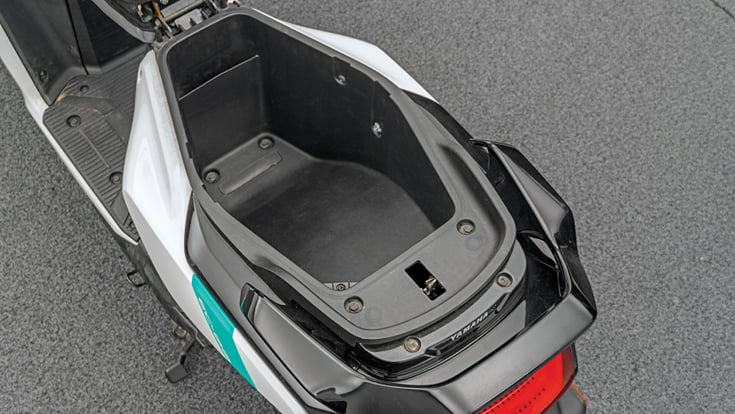
Side by side of EC-06 and e-Access underseat storage
 

e-Access’ 17L boot far too small and oddly shaped; Yamaha’s 24.5L boot is more usable but not segment-leading.


If the Yamaha’s storage is merely average, the Suzuki’s is positively outclassed. The battery’s position beneath the seat results in just 17 litres of bootspace – roughly half what you’ll find on rivals like the Rizta and Chetak. In fact, even the ICE Access 125 offers you quite a bit more storage space. The e-Access’ boot is also shaped quite awkwardly, and unless the charger’s cables are folded with almost Victorian precision, it simply refuses to fit.

Range Rovers?

An electric scooter ultimately needs to deliver one thing above all else – promising range to reduce your running costs. In Ride A mode, which delivers full performance and max regen, the e-Access covered a little over 88km in our range test. Given its smaller 3kWh battery and its use of safer, but less energy-dense, LFP chemistry, the result is respectable in isolation; however, compared to the market’s front-runners, it falls far short.


Yamaha EC-06

Suzuki e-Access

0-40kph

3.46s

4.94s

0-60kph

6.82s

11.93s

Roll-on Acceleration  
20-50kph3.31s5.46s
30-70kph7.34s17.01s
50-80kph10.96s–

Our test on the EC-06 was conducted in its middle Standard mode, which retains full performance but softens throttle response compared to Power mode. It covered 114km, comfortably exceeding the distance initially predicted. Both scooters deserve praise here, as their range indicators proved refreshingly honest, not indulging in optimistic guesswork.


Yamaha EC-06

Suzuki e-Access

60-0kph

22.87m

24.64m

Using Eco mode will naturally extend the range on both, though with reduced acceleration and lower top speeds. Thankfully, neither becomes painfully slow. Even in Eco, both climb flyovers and keep up with city traffic without reducing themselves to rolling roadblocks.

While the Yamaha’s range is undoubtedly more impressive, its charging time is a rather different story. The supplied 480W charger requires a glacial ten hours to replenish a flat battery. Meanwhile, the Suzuki’s 600W unit requires around six hours to do the same, although its battery pack is also smaller.

One thoughtful detail both manufacturers deserve credit for is the inclusion of a dedicated charger bag. It is a small touch, but one that should help protect the charger from spending years rattling around inside the boot.THE BIGGER PICTURE

Judged purely against each other, the result is straightforward – the EC-06 clearly wins. It offers superior performance, greater comfort, longer range and also costs much less than the e-Access.


Yamaha EC-06

Suzuki e-Access

Price (ex-showroom, Bengaluru)Rs 1.71 lakhRs 1.92 lakh

However, if you zoom out and look at the broader market, the context changes. At Rs 1.71 lakh, the Yamaha is hardly inexpensive, and the Suzuki, which is knocking on the door of Rs 2 lakh, is even worse off. When proven alternatives from TVS, Ather, Bajaj, Vida and River offer similar or even superior alternatives for substantially less money, the Japanese appear more like fringe players and less like mainstream contenders.

There will undoubtedly be a small demographic of buyers for whom a Japanese badge carries enough cachet to justify this big premium. However, for the rest of us, the more keenly priced and proven homegrown contenders are the better bet.

Renault Duster hybrid launch on October 17

Renault Duster hybrid launch on October 17
Renault Duster Hybrid India launch

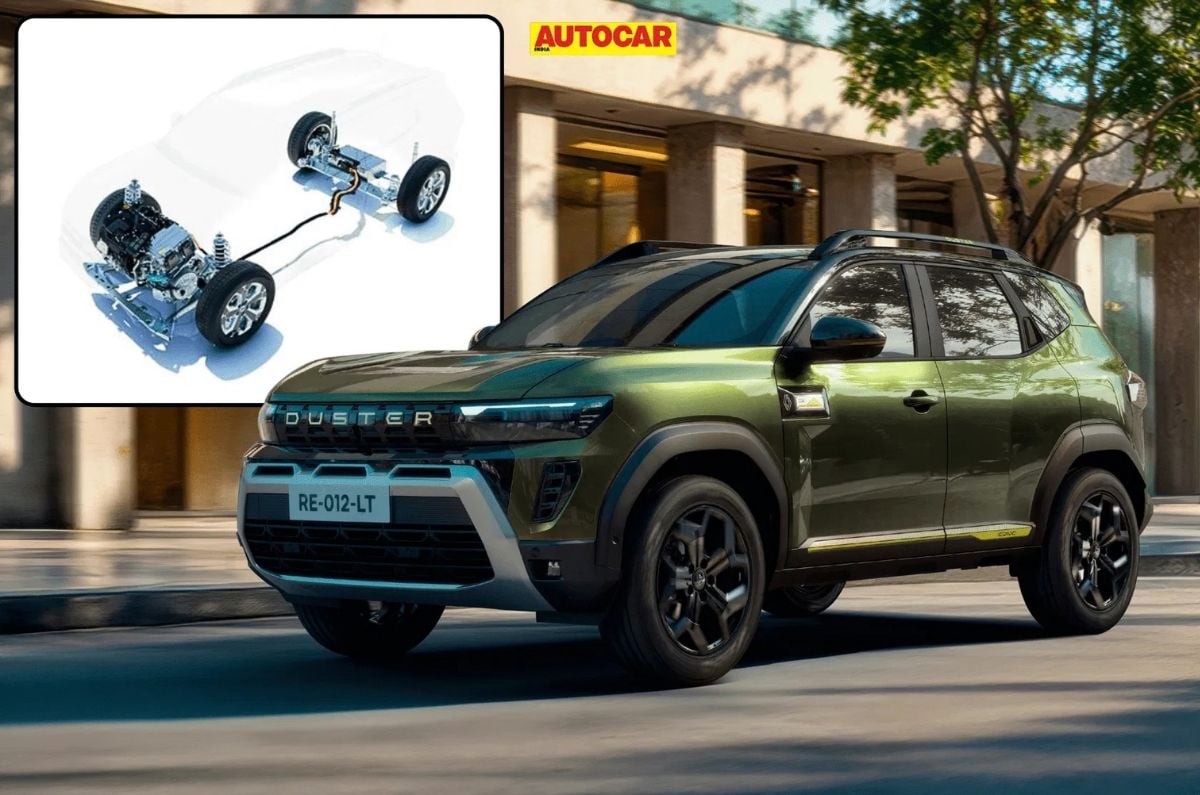
Renault is finally gearing up launch the Duster hybrid in India on October 17. This will be the third powertrain option on the Duster, adding to the existing 1.0-litre and 1.3-litre turbo-petrol engines. Called the E Tech system, Renault says it draws from its experience and expertise in Formula 1.

  1. New strong hybrid unit will be third powertrain for the Duster 
  2. It combines a 1.8-litre petrol engine with two electric motors 
  3. To rival hybrid variants of Grand Vitara, Victoris and Hyryder 

Renault Duster strong-hybrid details 

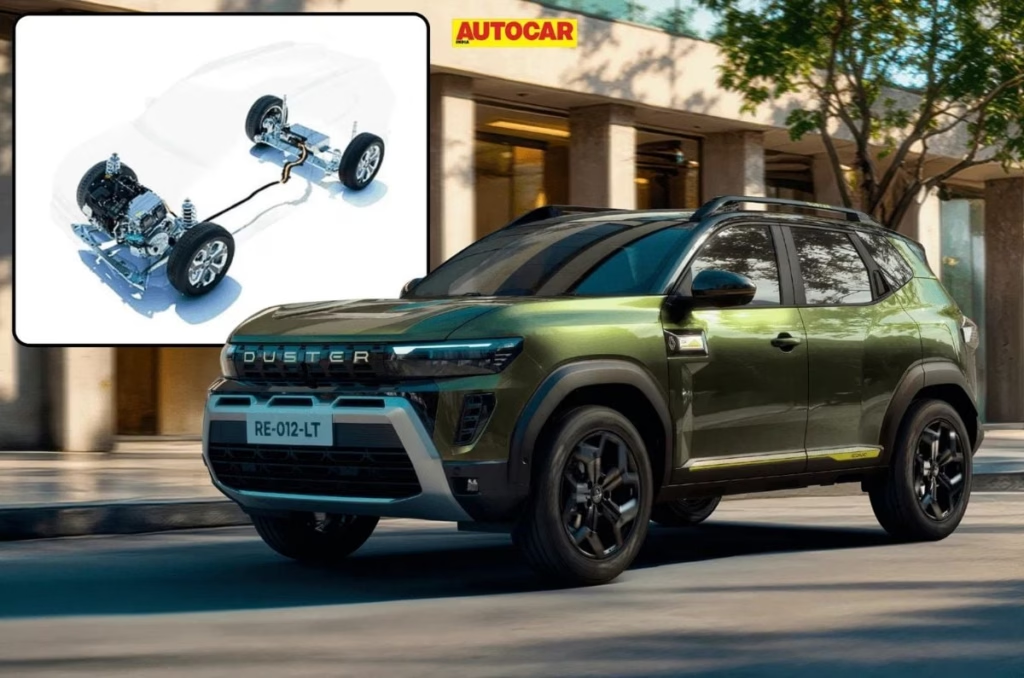
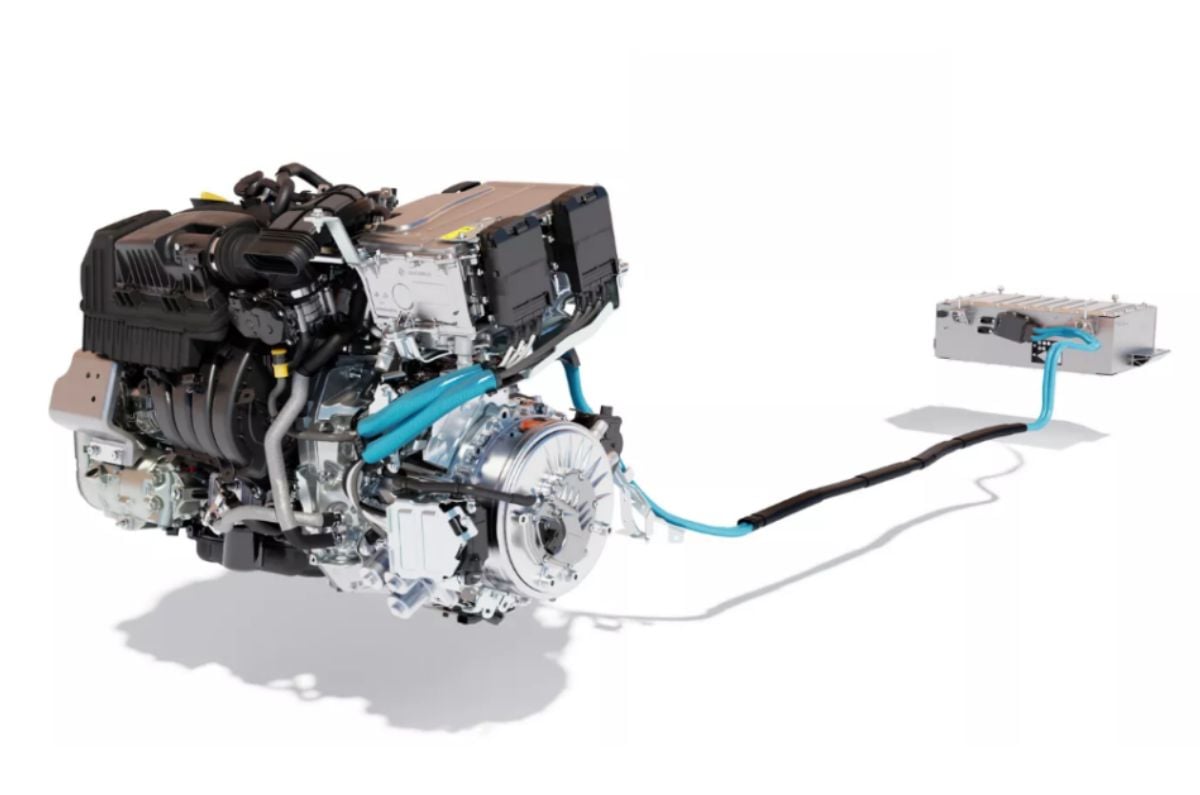
The strong-hybrid Duster combines a naturally aspirated 1,789cc four-cylinder petrol engine with two electric motors, a 20hp unit acting as a generator and a 49hp motor powering the wheels. Combined, the system produces 160hp and 172Nm, and it is supported by a 1.4kWh battery pack. 

Unlike the Toyota hybrid system seen on the Hyryder, Grand Vitara and Victoris, Renault’s E Tech setup works differently. The Duster’s hybrid combines a petrol engine with electric drive and a battery, and it sends power to the wheels through a multi-mode automatic gearbox. While Toyota’s full hybrid uses an e-CVT and a power split device for a largely step-free driving feel, Renault’s hybrid transmission uses fixed gear ratios and can shift between them. This means engine rpm is expected to rise and fall more like a conventional automatic, and you may notice gear engagements as it switches between electric drive, engine drive, and a combination of both. It also uses a larger 1.4kWh battery pack compared to Toyota’s 0.76kWh unit.

Renault strong-hybrid E-Tech 160 hp powertrain

As with any full hybrid, the efficiency gains come from low-speed electric running, regenerative braking and the ability to keep the petrol engine off when it is not needed. However, real-world fuel economy will still depend on traffic conditions, speed, ambient temperature and driving style. That said, Renault claims the engine will enable 80 percent of city drives to be done in EV mode.

The strong hybrid is expected to help make up for the absence of a diesel engine option on the new Duster. This will also directly compete with the likes of the Maruti Grand Vitara, Victoris and Toyota Hyryder strong-hybrids in the midsize SUV segment. 

ईवी चालकों को बड़ी राहत! नोएडा की 30 अहम पार्किंग में लगेंगे चार्जिंग स्टेशन, कार से लेकर दोपहिया तक होगी चार्जिंग की सुविधा

EV Charging Stations Noida: नोएडा में इलेक्ट्रिक वाहन चालकों के लिए बड़ी राहत की तैयारी है। शहर में अब घर के अलावा सार्वजनिक स्थानों पर भी ईवी चार्जिंग की सुविधा मिलने लगेगी। उत्तर प्रदेश इलेक्ट्रिक वाहन नीति-2022 के तहत नोएडा प्राधिकरण और यूपी रिन्यूएबल एंड चार्जिंग इंफ्रास्ट्रक्चर लिमिटेड के बीच 24 सितंबर को एमओयू हुआ है।

इस MoU के तहत शहर की 30 अहम पार्किंग में ईवी चार्जिंग स्टेशन लगाए जाएंगे। प्रत्येक स्थान पर कम से कम दो चार्जर होंगे, जिनसे एक साथ दो कार और एक दोपहिया वाहन चार्ज हो सकेगा। चार्जिंग स्टेशनों का पूरा खर्च कंपनी उठाएगी, जबकि प्राधिकरण स्थान उपलब्ध कराएगा।

इससे ईवी वाहनों की खरीद में भी हो सकता है इजाफा

अब तक नोएडा में ईवी वाहन खरीदने वाले लोगों के सामने सबसे बड़ी चिंताओं में से एक सार्वजनिक जगह पर चार्जिंग की सुविधा की कमी भी रही है। घर पर चार्जिंग की सुविधा होने के बावजूद शहर में सफर के दौरान बैटरी खत्म होने पर वाहन को चार्ज करने के विकल्प न के बराबर हैं। ऐसे में नोएडा निवासी ईवी खरीदने से पहले चार्जिंग को लेकर सोचते हैं। अब 30 अलग-अलग पार्किंग वाली जगहों पर चार्जिंग स्टेशन लगने से वाहन चालकों को होने वाली परेशानी दूर होगी।

सार्वजनिक स्थानों पर चार्जिंग की सुविधा बढ़ने से ईवी चालकों को सफर के दौरान चार्जिंग की चिंता से राहत मिल सकेगी। खास बात यह है कि हर एक स्थान पर कम से कम दो चार्जर लगाए जाएंगे, जिनसे एक साथ दो कार और एक दोपहिया वाहन को चार्ज किया जा सकेगा। नोएडा में चार्जिंग नेटवर्क बढ़ने से आने वाले समय में ईवी वाहनों की खरीद में भी इजाफा देखने को मिल सकता है।

इन जगहों पर लगेंगे चार्जिंग स्टेशन

नोएडा प्राधिकरण के सीनियर अधिकारी एस पी सिंह द्वारा दी गई जानकारी के अनुसार नोएडा मेट्रो पार्किंग सेक्टर 101, वेद वन पार्किंग सेक्टर 78, बॉटनिकल गार्डन पार्किंग सेक्टर 38, मेट्रो पार्किंग सेक्टर 76, मेट्रो पार्किंग, ब्लॉक E सेक्टर 51, हेरिटेज हॉस्पिटल्स लिमिटेड पार्किंग क्षेत्र सेक्टर 119, नोएडा इंडोर स्टेडियम पार्किंग लॉट सेक्टर 21A, मेट्रो पार्किंग, ब्लॉक C सेक्टर 81, मेट्रो पार्किंग सेक्टर 154, मेट्रो पार्किंग गढ़ी चौखंडी / गढ़ीपुर सेक्टर 145, मेट्रो पार्किंग झट्टा सेक्टर 146, शहीद भगत सिंह पार्किंग लॉट सेक्टर 150, मेट्रो पार्किंग सेक्टर 144, नोएडा अथॉरिटी पार्किंग (NSEZ मेट्रो के पास) ब्लॉक A फेज-2, वेंडर्स जोन (हल्दीराम के पास) सेक्टर 18, सब मॉल (SAB Mall) पार्किंग सेक्टर 27 में लगाए जाएंगे।

नोएडा के महत्वपूर्ण जगहों पर मिलेगी ये सुविधा

इसके साथ ही कैम्ब्रिज स्कूल पार्किंग सेक्टर 27, ब्रह्मपुत्र मार्केट पार्किंग सेक्टर 29, अंडरग्राउंड मल्टीलेवल पार्किंग ब्लॉक B सेक्टर 1, बीएचईएल (BHEL) ऑफिस पार्किंग के पास सेक्टर 18, महामाया फ्लाई-ओवर के नीचे पार्किंग ब्लॉक C सेक्टर 38, गंगा शॉपिंग कॉम्प्लेक्स पार्किंग सेक्टर 29, निरूलाज होटल के सामने सेक्टर 15, स्टेट बैंक ऑफ इंडिया के पास पार्किंग, सेक्टर 2, आईजीएल (IGL) गैस स्टेशन विकास मार्ग सेक्टर 122, साया स्टेटस मॉल सेक्टर 129, इन्फोसिस कैंपस सेक्टर 132, एनटीपीसी ईओसी (NTPC EOC) ऑफिस ब्लॉक A सेक्टर 24, नोएडा अथॉरिटी का नया ऑफिस सेक्टर 96, कमांड कंट्रोल सेंटर बिल्डिंग सेक्टर 94 में स्थापित किए जाएंगे।

रिपोर्ट- सुमित राजपूत

Nissan reveals the Pixo for Europe with up to 259km range

Nissan reveals the Pixo for Europe with up to 259km range
Nissan Pixo EV revealed for Europe

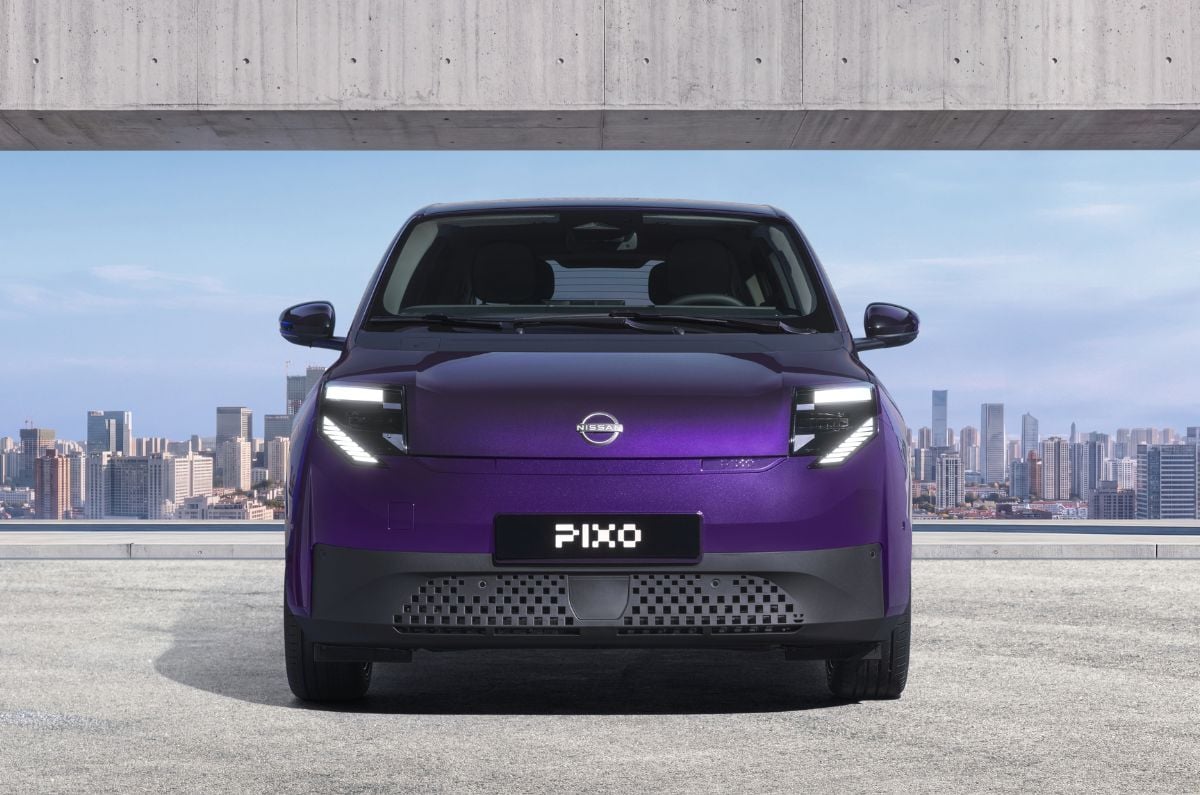
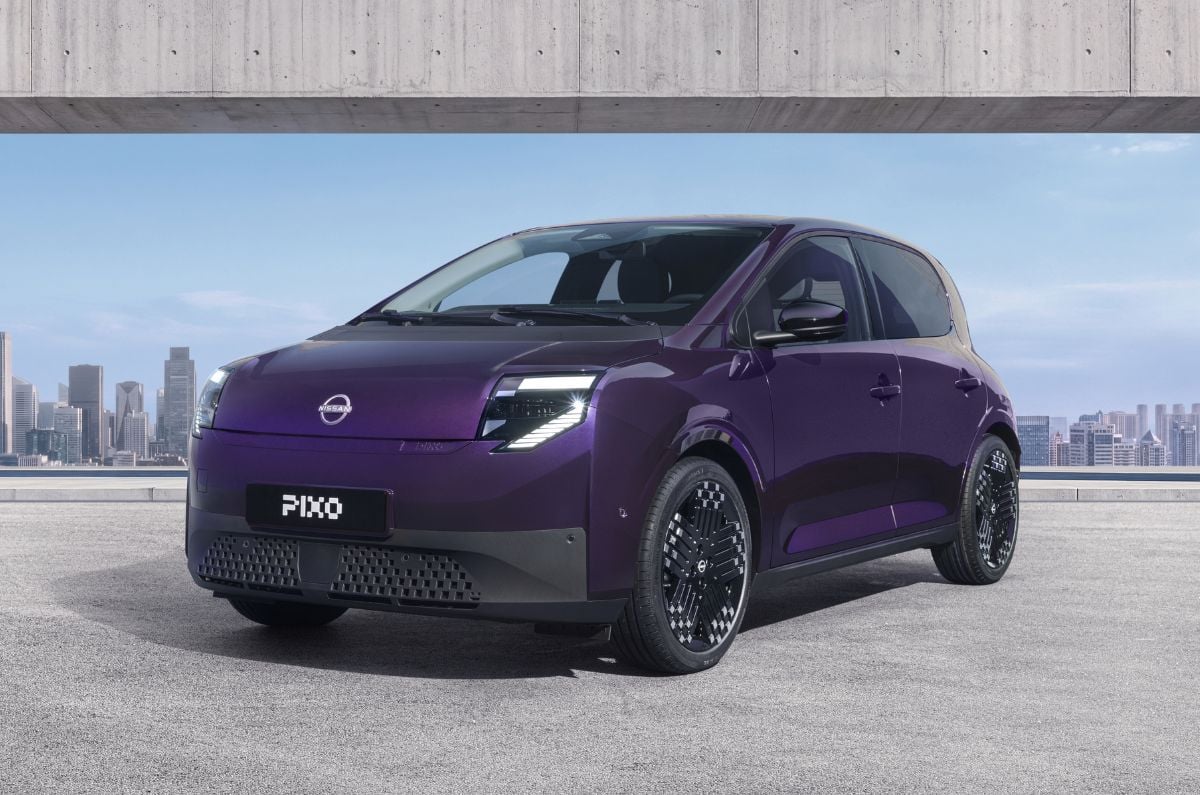
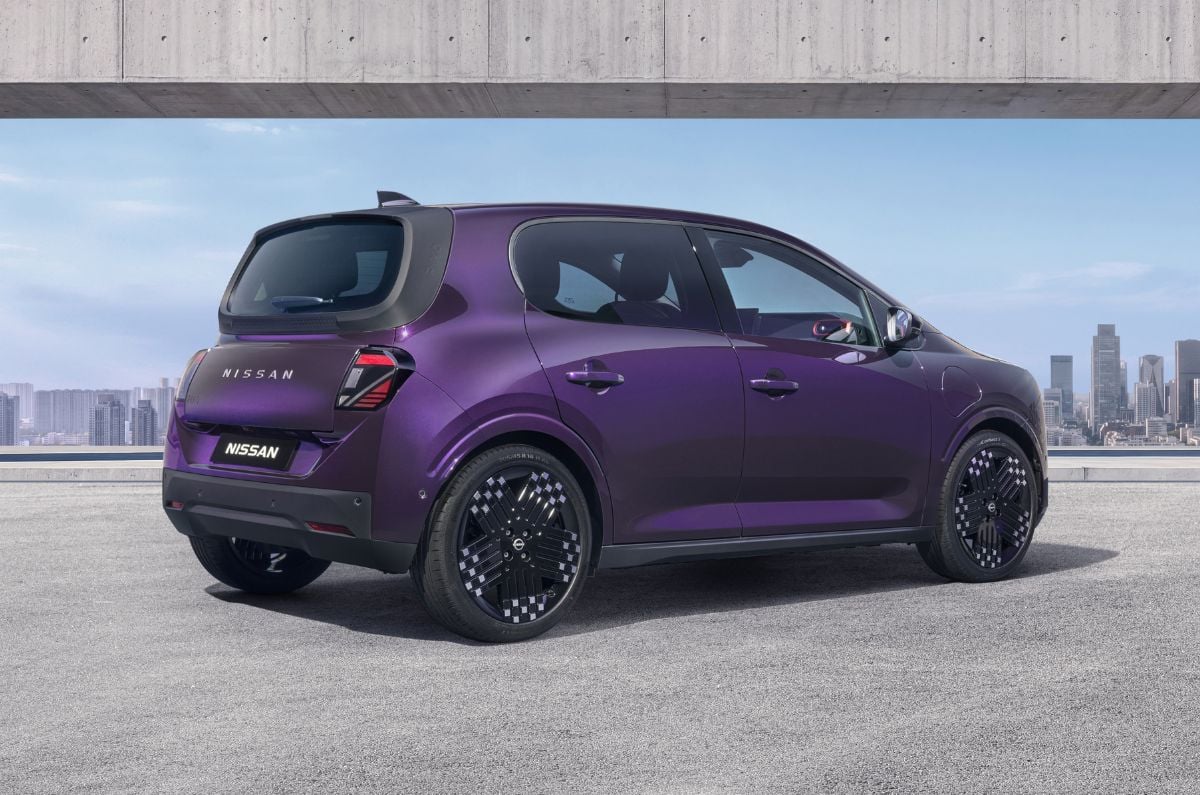
Nissan has pulled the covers off the Pixo, which is an A-segment EV specifically meant to cater to the urban buyer in Europe, according to the automaker. The Pixo is the result of a collaboration between NDE (Nissan Design Europe) and alliance partner Renault, and is manufactured at the latter’s Novo Mesto facility in Slovenia.

  • Design highlights include pixel-inspired lighting and “robot face” front bumper.
  • 3,796mm long, 1,790mm wide and seats up to four adults.
  • Sliding rear seats, 10-inch touchscreen, Google built-in, ADAS and more.
  • 27.5kWh battery, 82hp motor and up to 259km WLTP range.

Nissan Pixo exterior and dimensions

The Pixo features striking colour options and cube-inspired proportions

Nissan Pixo front quarter

The Nissan Pixo features the Japanese brand’s latest design language meant specifically for EVs. The cube-inspired proportions of the Pixo are accompanied by what the brand says are pixel-inspired lighting and a “robot face” front bumper. ‘Pixo’ lettering aside, there are also ‘2-3’ markings to denote ‘Ni-San’ in Japanese. There are pixel-like highlights on the 18-inch wheels, while ‘Nissan’ is spelled out on the tailgate.

Nissan Pixo rear quarter

Nissan says that the Wonder Purple and Gear Blue paint options are meant to reinforce the Pixo’s youthful urban character, and these striking colours are contrasted by black trim bits on select surfaces. At 3,796mm long and 1,790mm wide, Nissan claims that the Pixo’s dimensions are specifically meant to fit European cities without compromising space on the inside. Meanwhile, it has a 9.9-meter turning circle.

Nissan Pixo interior design and features

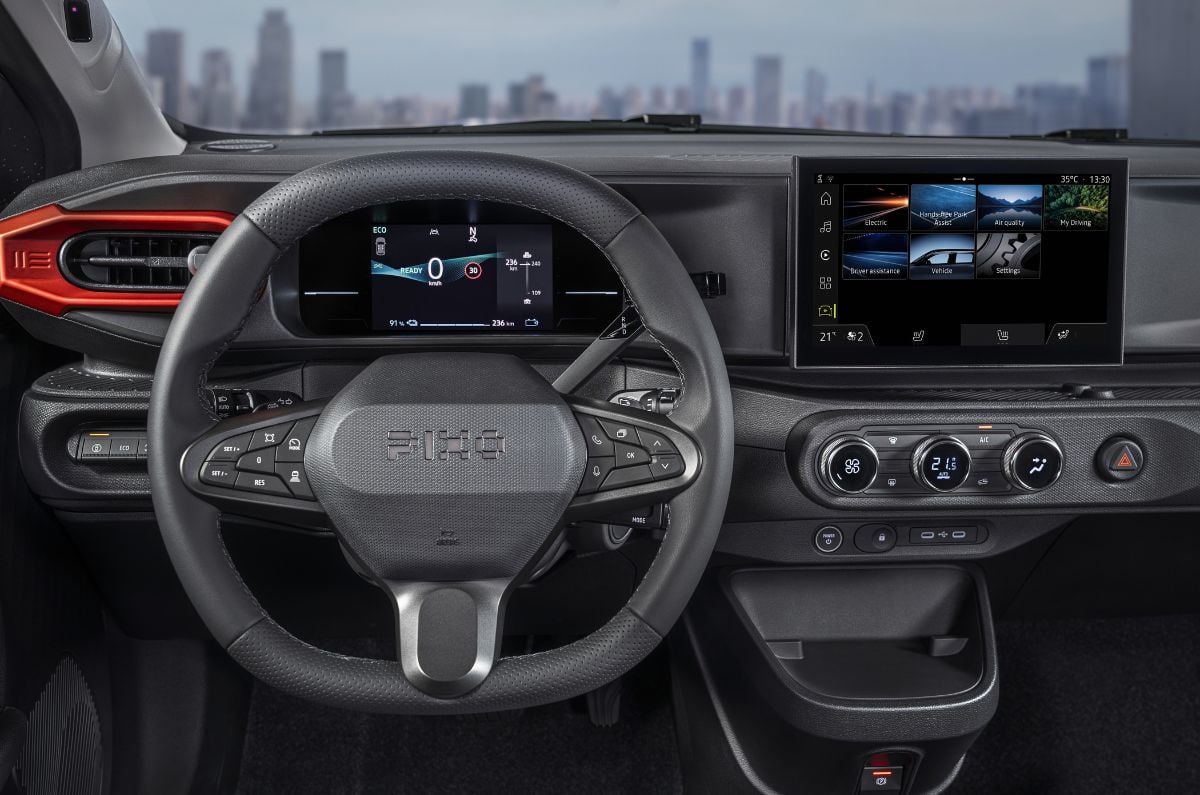
This EV has been designed to carry up to four adults and sports a vertically stacked dashboard

Nissan Pixo interior

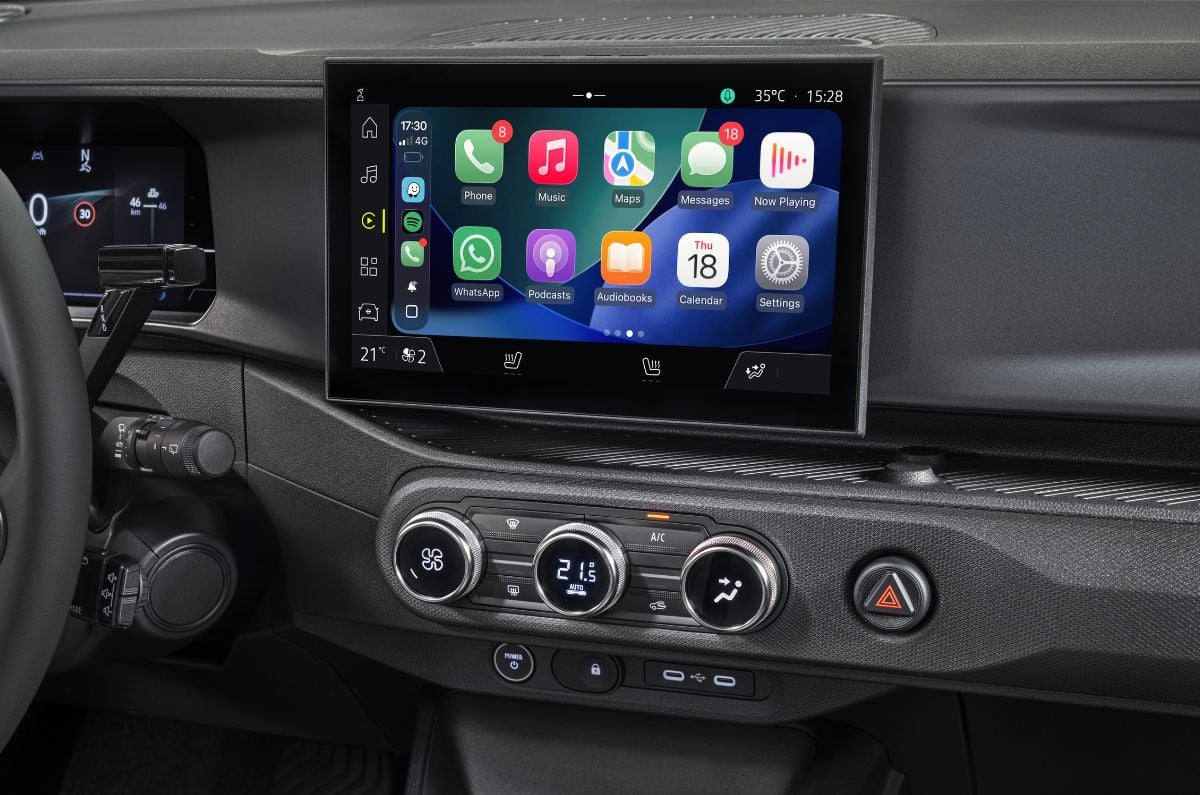
The Nissan Pixo has a relatively modern but simple-looking interior. However, it does get a vertically stacked dashboard with a textured finish and orange accents around the AC vents. There are physical buttons and dials to control the automatic climate control system, with a large drive-selector stalk behind the steering wheel. The dash also integrates a 7-inch digital driver’s display and a tablet-style 10-inch touch-infotainment screen.

Nissan Pixo dashboard

Equipment highlights of the Nissan Pixo include Google Gemini, which the brand claims is ‘first-in-segment’ and that it will be offered in 16 languages and dialects. Adding to this list will be Google built-in features, MyNissan app and Face ID with the capability of recognising different drivers and remembering their personalised settings. The Nissan Pixo will be available with ADAS (advanced driver assistance systems), integrating adaptive cruise control, lane-departure warning and ‘Hands-Free Parking’.

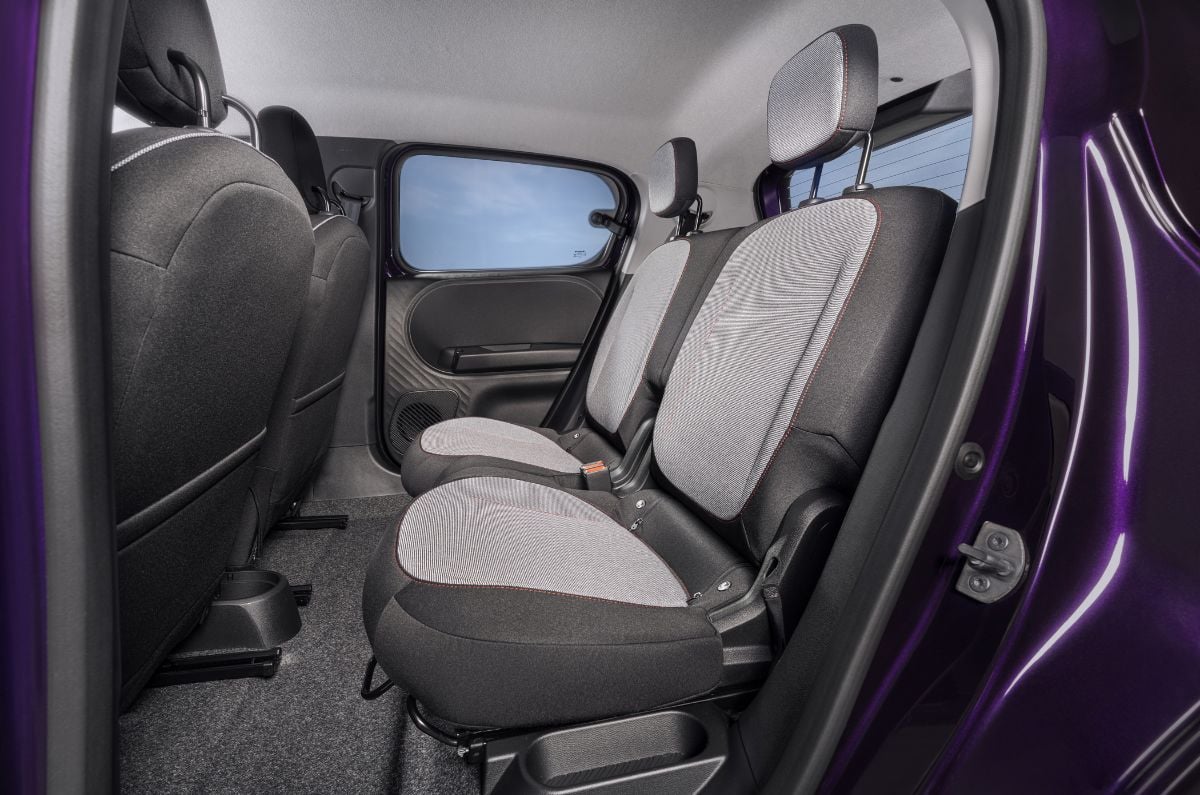
Nissan Pixo rear seats

There are dual-tone fabric seats that look simple, and there’s enough space to carry four adults, with the rear units capable of being individually slid forward or backward based on cargo-space requirements. Nissan says that the Pixo can accommodate up to 356 litres of cargo in the boot – out of which 50 litres is taken up by the charging cable. “We’ve worked hard to maximise the space within the Pixo’s compact dimensions, creating a cabin that feels open, practical and surprisingly roomy,” said Masato Koyama, Lead Exterior Designer at Nissan Global Design.

Nissan Pixo powertrain and charging

This electric powertrain comprises a lithium iron phosphate battery and a single electric motor

The Nissan Pixo is equipped with a 27.5kWh lithium iron phosphate (LFP) battery pack, which energises a single electric motor capable of producing 82hp. While Nissan hasn’t released torque or performance figures of the Pixo yet, it does claim a WLTP range of 259km on a full charge.

Nissan Pixo charging

The Pixo supports DC fast-charging at up to 50kW, which the brand says can take the state of charge from 15-80 percent in around 28 minutes. The Nissan Pixo also supports bi-directional AC charging of 11kW. Nissan is yet to announce the price of the Pixo, though customer deliveries in Europe are scheduled start in early 2027.

Ultraviolette receives USD 85 million funding to expand production capacity

Ultraviolette receives USD 85 million funding to expand production capacity
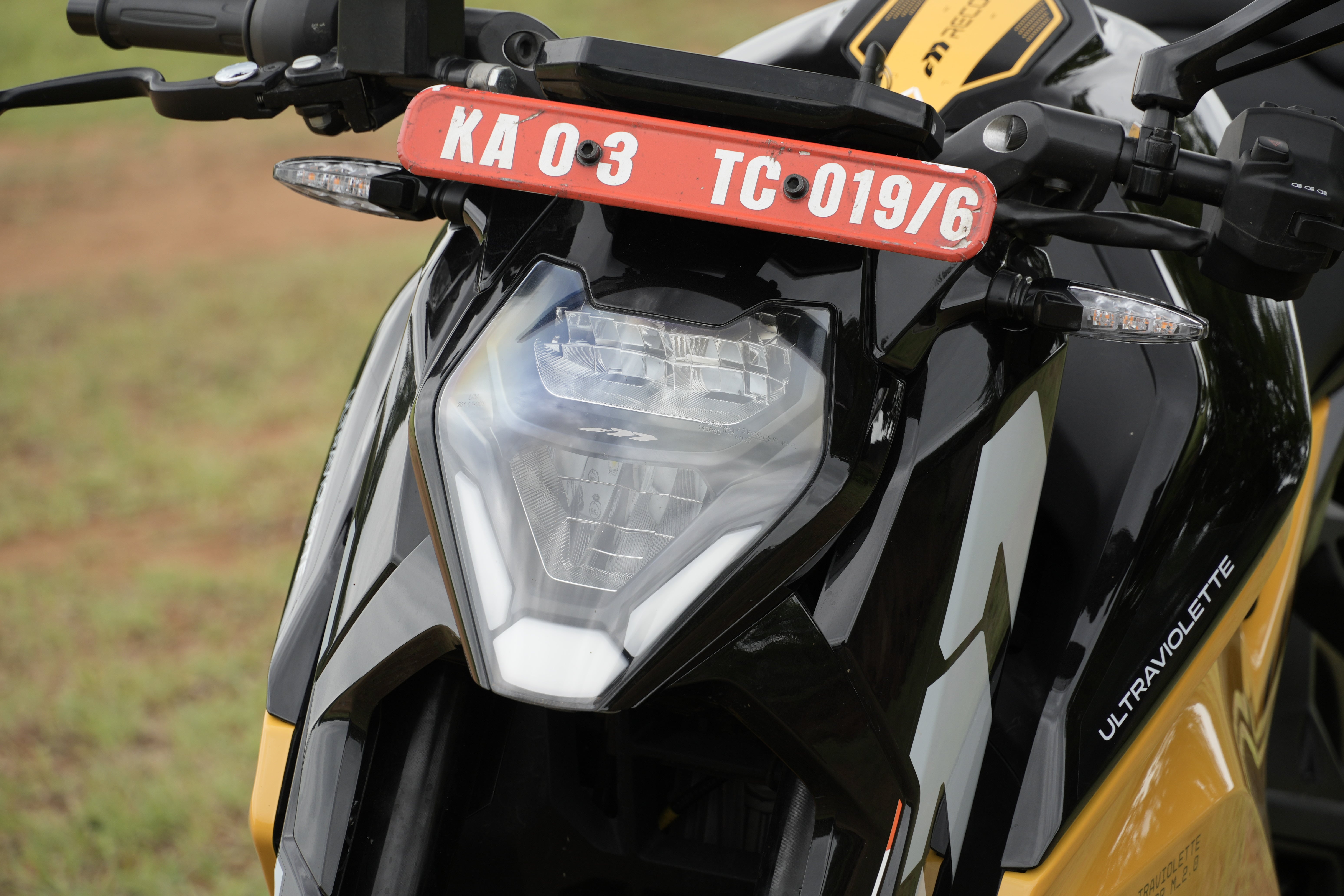
Ultraviolette Automotive F77 Mach 2 Headlight

Bengaluru based EV manufacturer, Ultraviolette had recently announced plans for a new manufacturing facility in Hosur, to increase production capacity up to 5 lakh units a year. The company has now received USD 85 million in a new funding round. The additional capital and the new factory is expected to boost the manufacturing of its current products, the F77 (Mach 2 and Superstreet), X-47, and development of upcoming platforms and products.

  1. The USD 85 million funding was led by Deep Tech Fund Yali Capital and TDK Ventures
  2. New Hosur plant expected to increase production capacity up to 5 lakh units a year
  3. Ultraviolette currently has the means to build battery architecture ranging from 48V to 400V

Ultraviolette plans expansion in India and abroad

Four new products and US entry planned for next year

Currently, Ultraviolette operates in India and 20 European countries. With the fresh round of investment, the company has targeted an US market entry next year, alongside key markets in Latin America and Southeast Asia. The USD 85 million funding round was led by Deep Tech Fund Yali Capital and TDK Ventures and investment from Lip-Bu Tan, Chief Executive Officer of Intel, Chairman of Walden International and Advisor to Ultraviolette, alongside the company’s current and long-term investors. UV says the new and continued support from the investors will help scale production of its current portfolio as well as upcoming products.

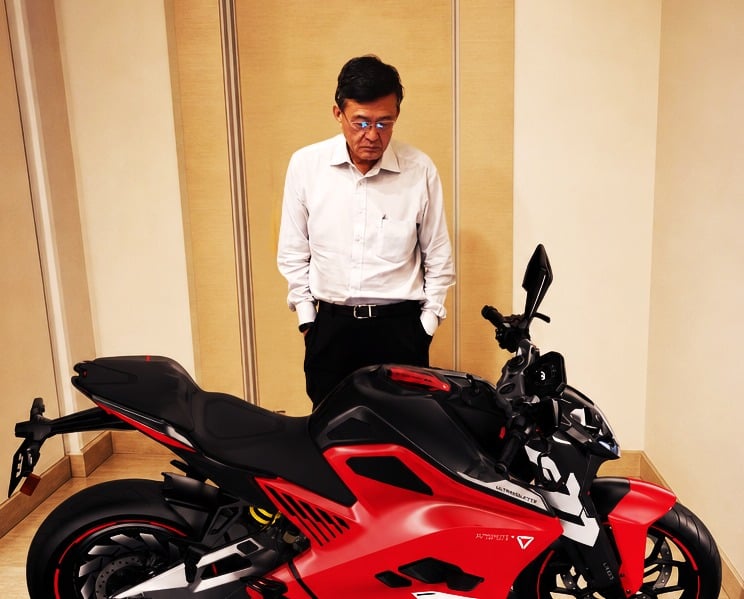
Inside image showing Intel CEO checking out a Ultraviolette F77 Mach 2

The investment will also help with the development of UV’s next generation of models. The company currently boasts technical capabilities to build battery architecture spanning 48V to 400V which it says allows for engineering platforms catering to different needs. Its current list of investors include Zoho Corporation, TVS Motors, and Qualcomm Ventures. Besides India, UV currently operates across Europe including Germany, France, Spain, Portugal, the UK, Belgium, Netherlands, Italy, Switzerland and Hungary.
 

BMW i7 50 xDrive review – All The Luxury You Need

BMW i7 50 xDrive review - All The Luxury You Need
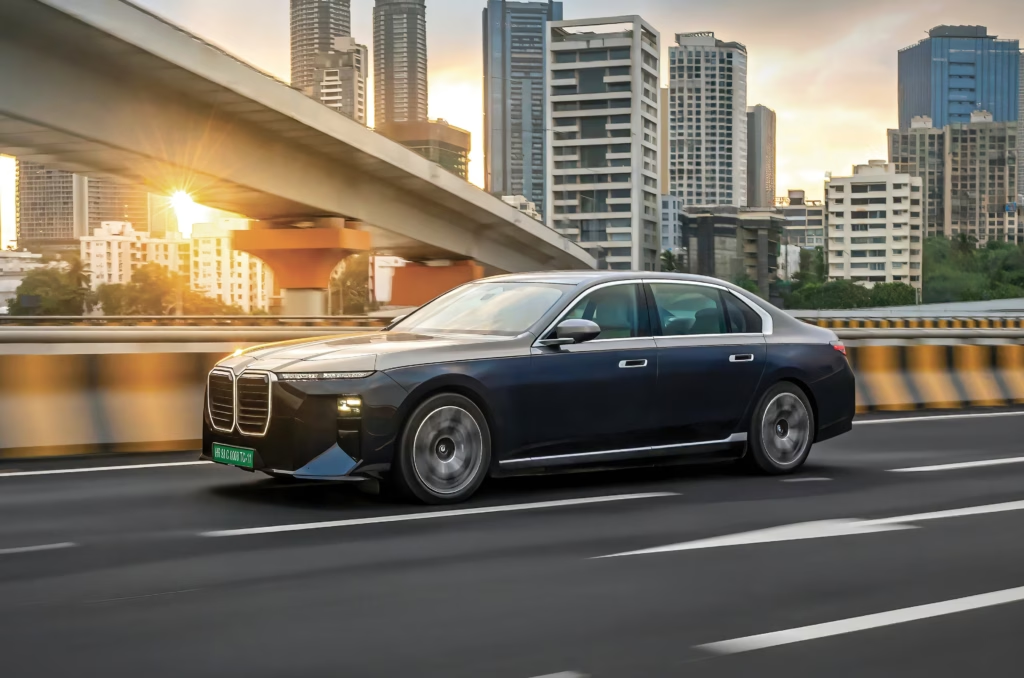
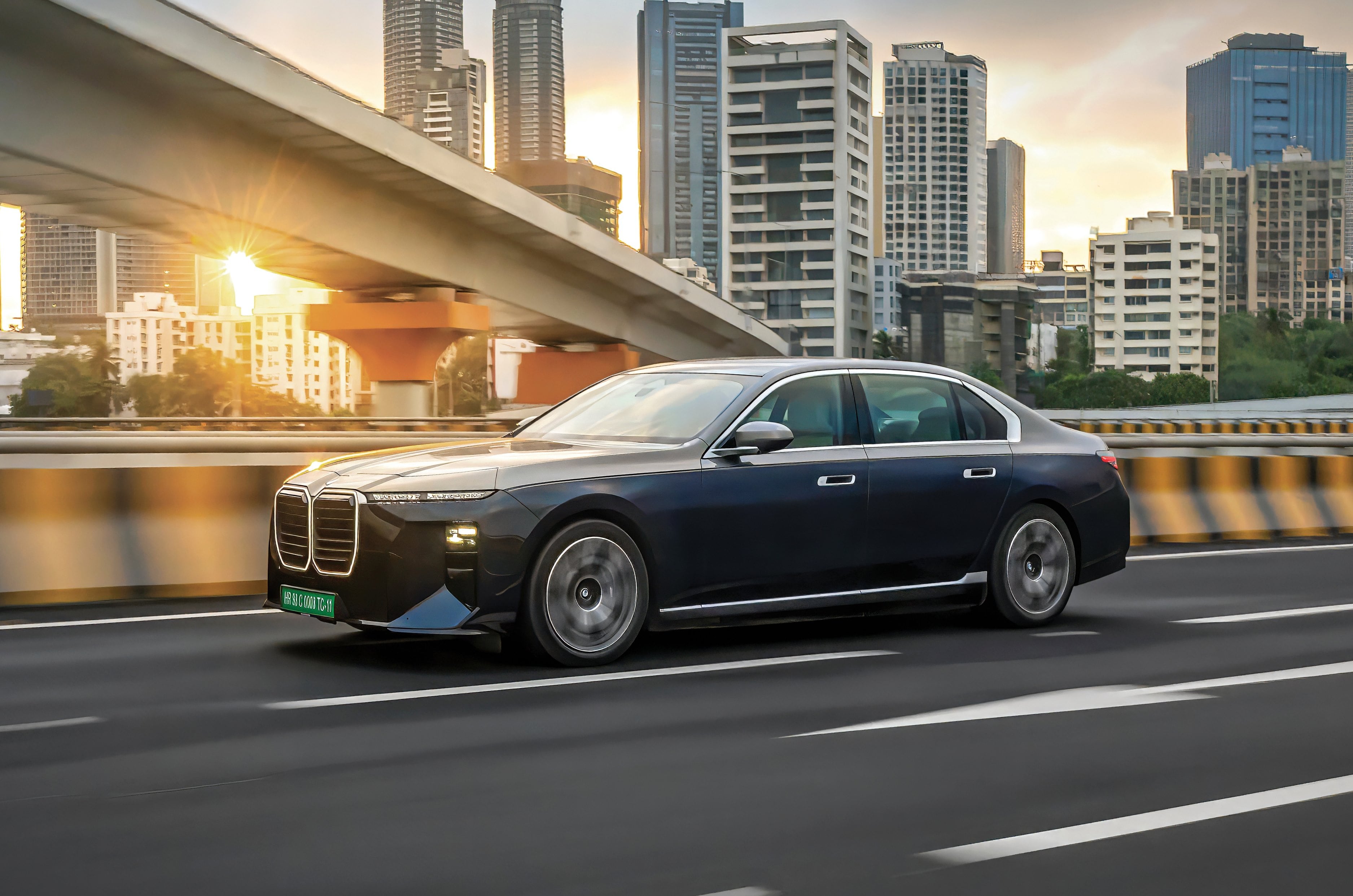
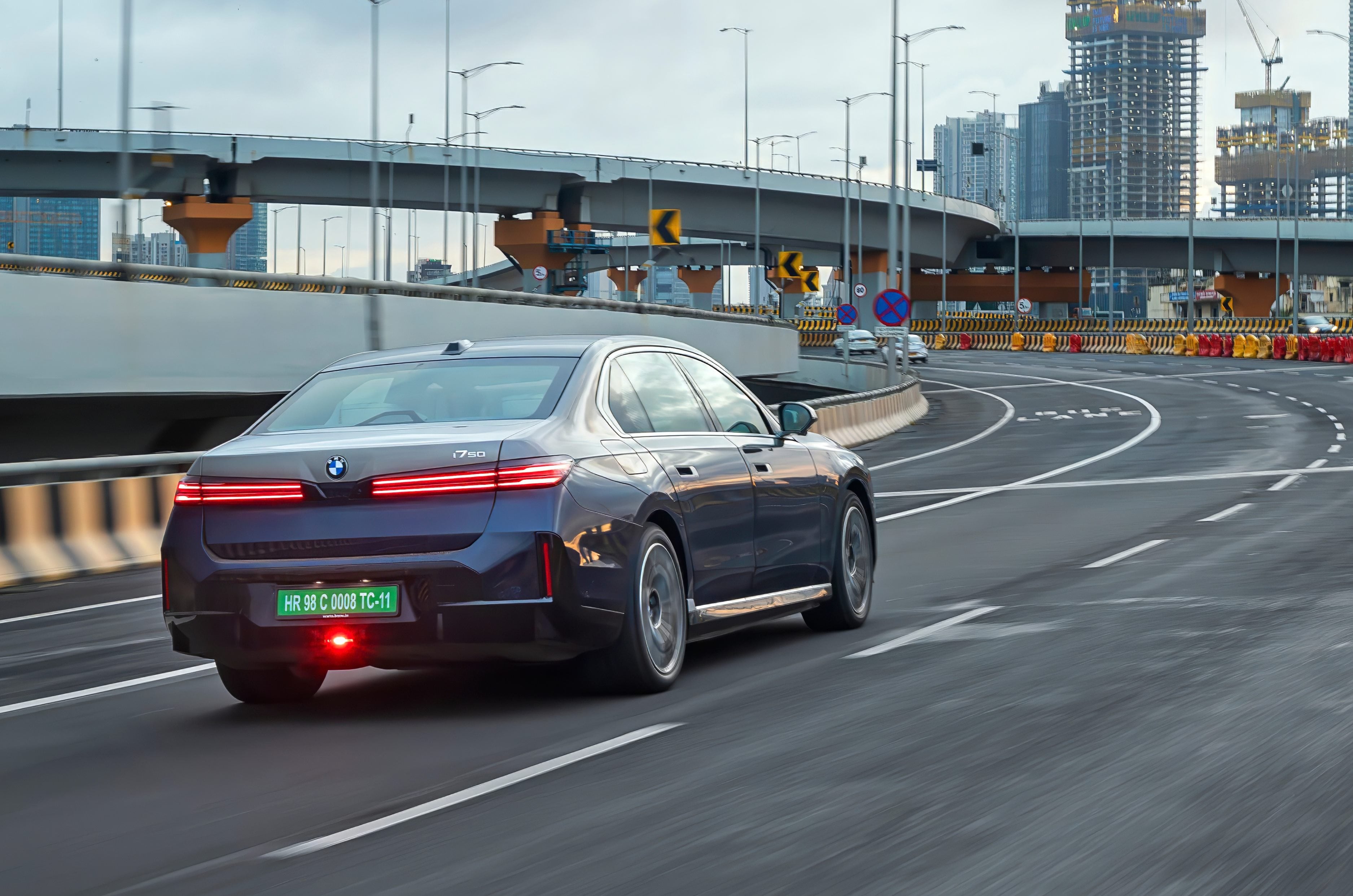
BMW i7 50 xDrive front quarter tracking

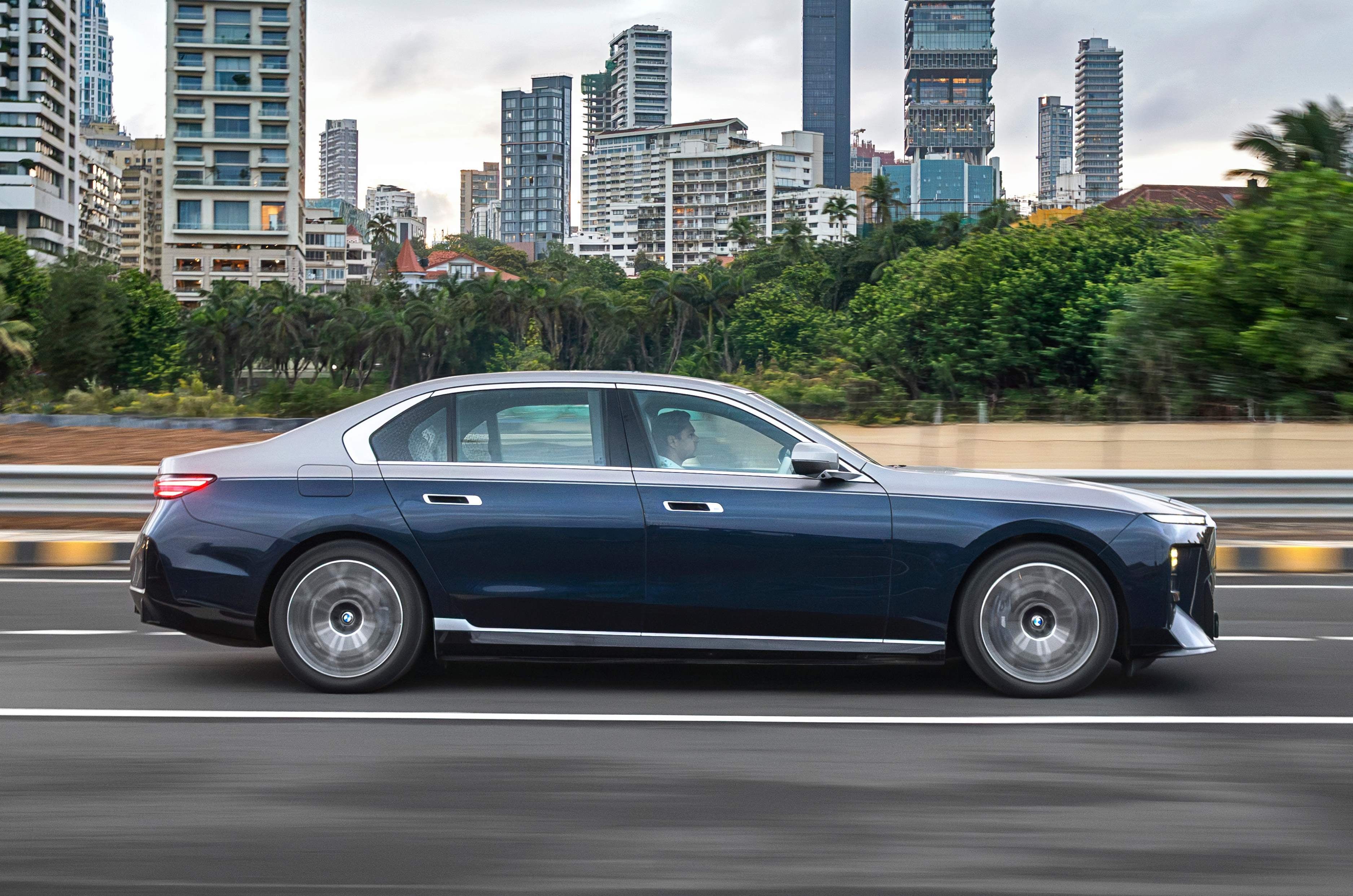
The BMW i7 has been embraced wholeheartedly by India’s ultra-high-net-worth buyers. Since its launch in 2023, it has dominated the high-end luxury sedan space, and interestingly, has consistently outsold its own petrol sibling. In fact, around 60 percent of 7 Series buyers have opted for the EV. With the 2026 i7 now being locally assembled in India and the i7 50 xDrive priced at Rs 1.95 crore, exactly at par with the petrol 740, BMW expects the scales to tilt even further in favour of the electric version.

BMW has also introduced the significantly more powerful i7 M70 xDrive. However, as a full import priced at Rs 2.65 crore, it commands a substantial Rs 70 lakh premium, which is likely to limit its appeal. For most buyers then, the locally assembled i7 50 xDrive is expected to remain the sweet spot of the range.

BMW i7 50 xDrive Exterior Design and Engineering – 8/10

The cleaned-up styling looks significantly more palatable than its predecessor.

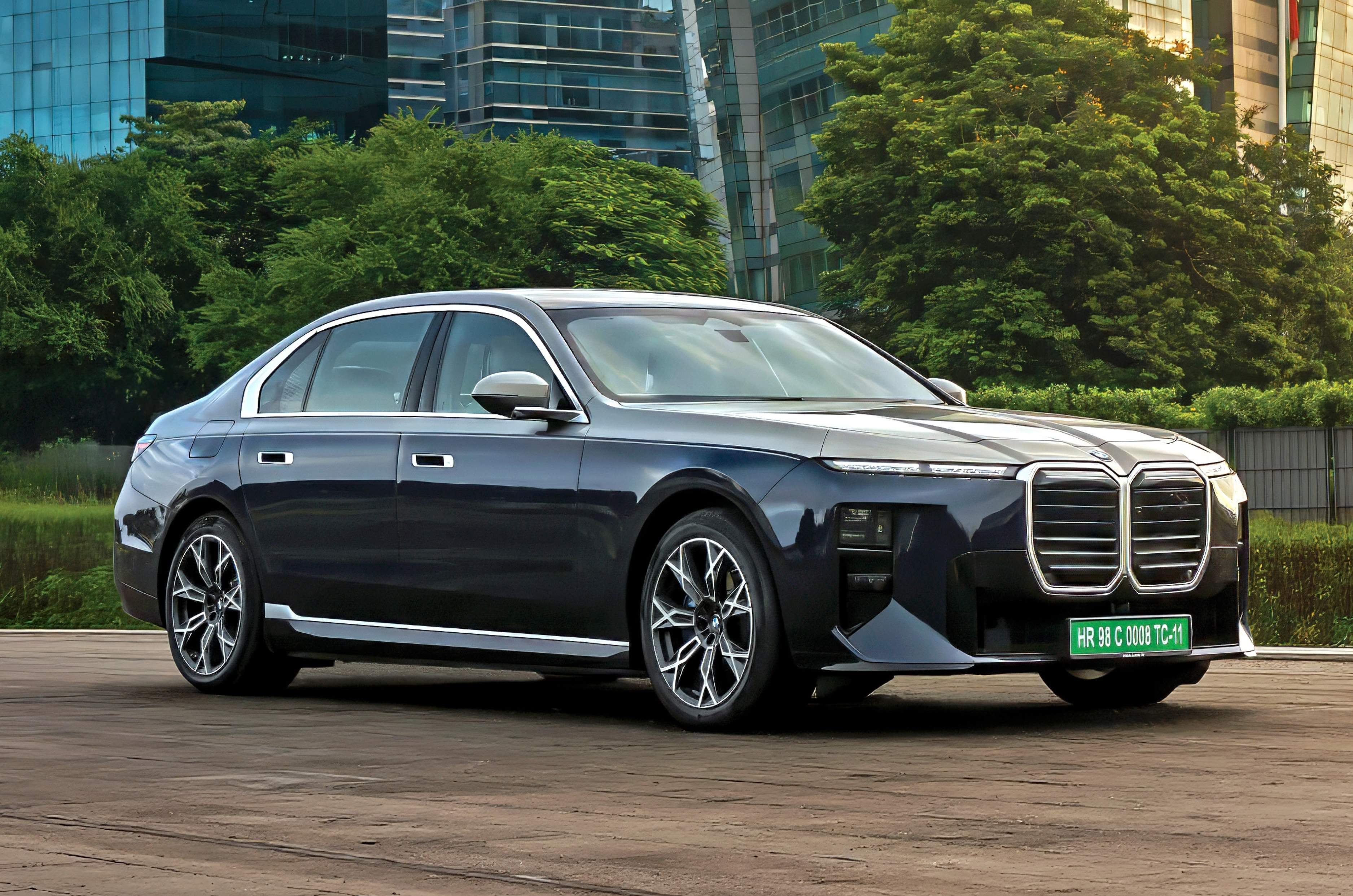
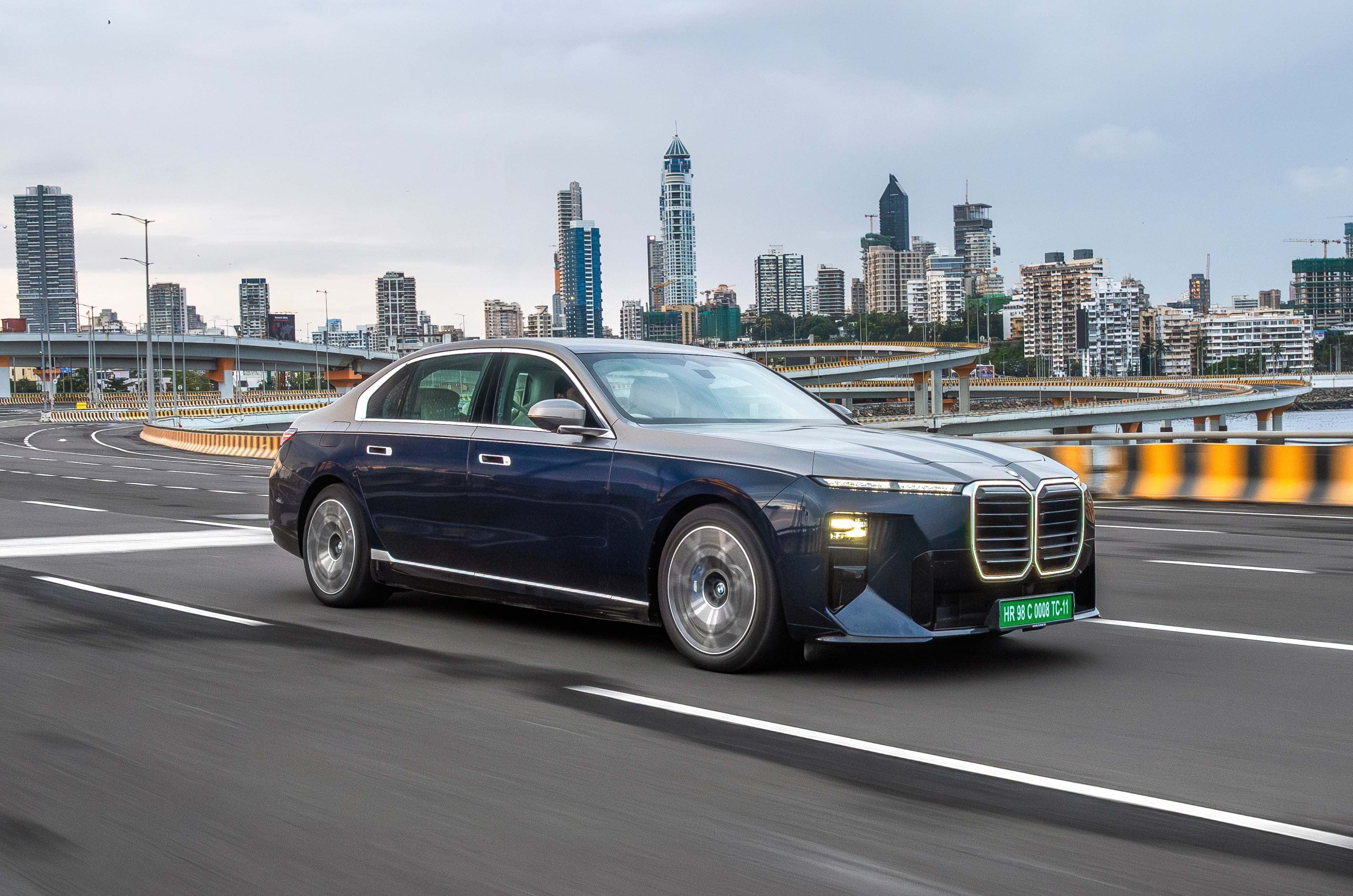
BMW has made substantial changes to the i7’s styling. The DRLs are now longer and slimmer, and feature a crystalline effect that looks absolutely stunning up close. The oversized kidney grille has also been redesigned and, like before, remains illuminated. The air dam adopts a more rectangular design, the headlamps are vertically oriented, and the excessive black treatment has been done away with completely.

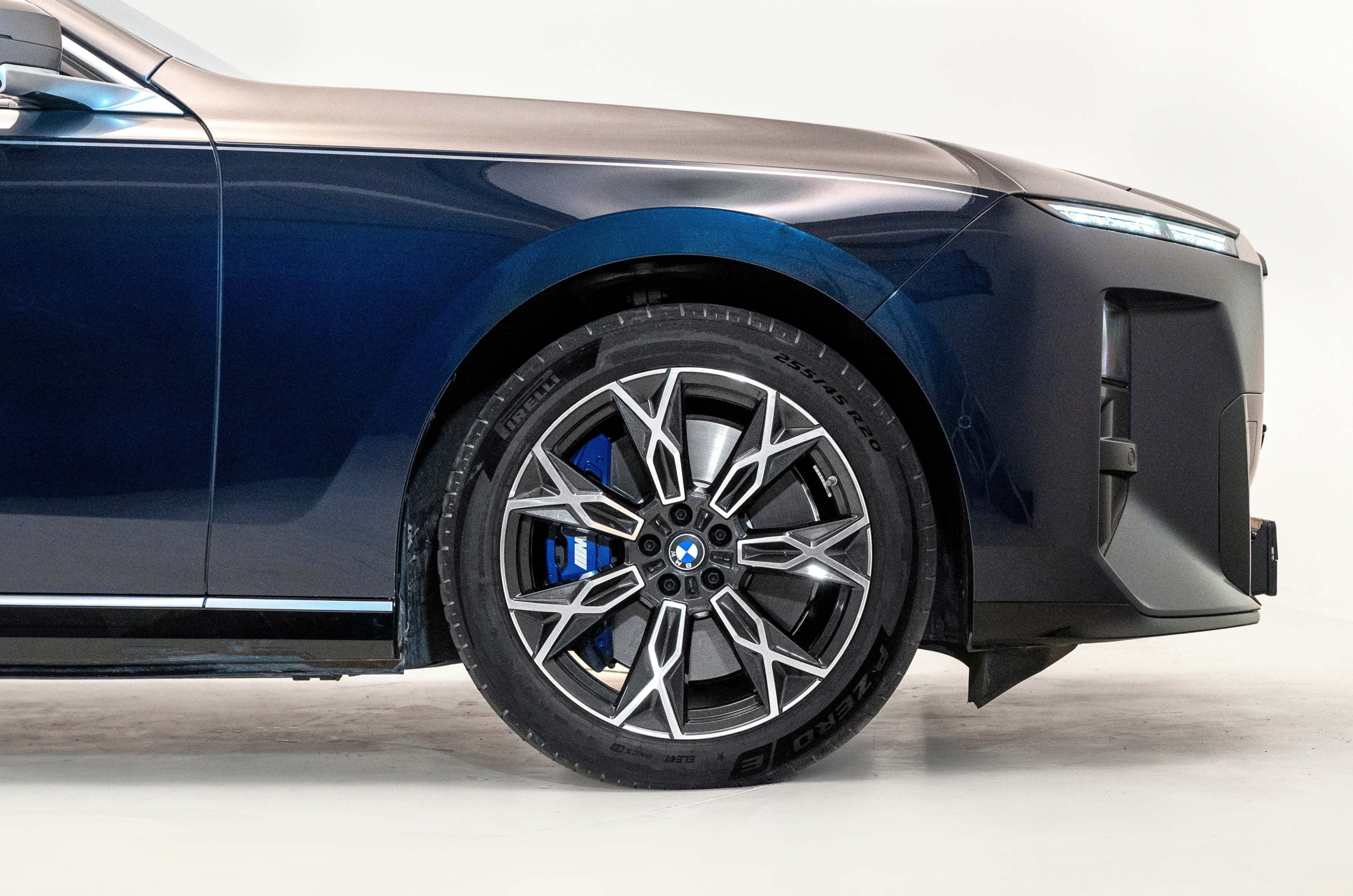
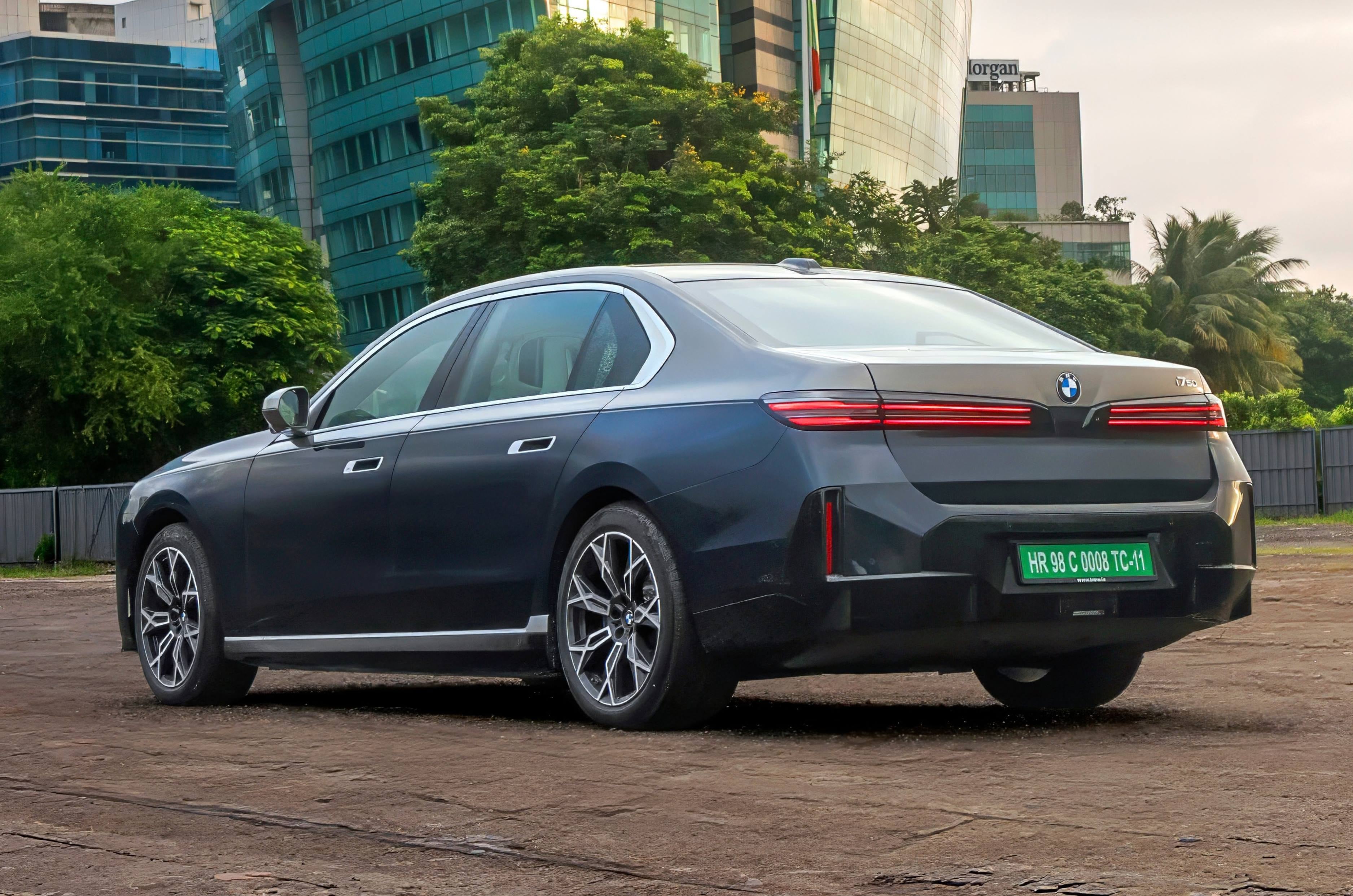
The tyres appear undersized but owners are unlikely to complain given the ride comfort benefits that come with the higher-profile tyres.   

New 20-inch alloy wheels replace the outgoing version’s 21-inch units. While some might argue they appear slightly undersized, owners are unlikely to complain given the ride comfort benefits that come with the higher-profile tyres.

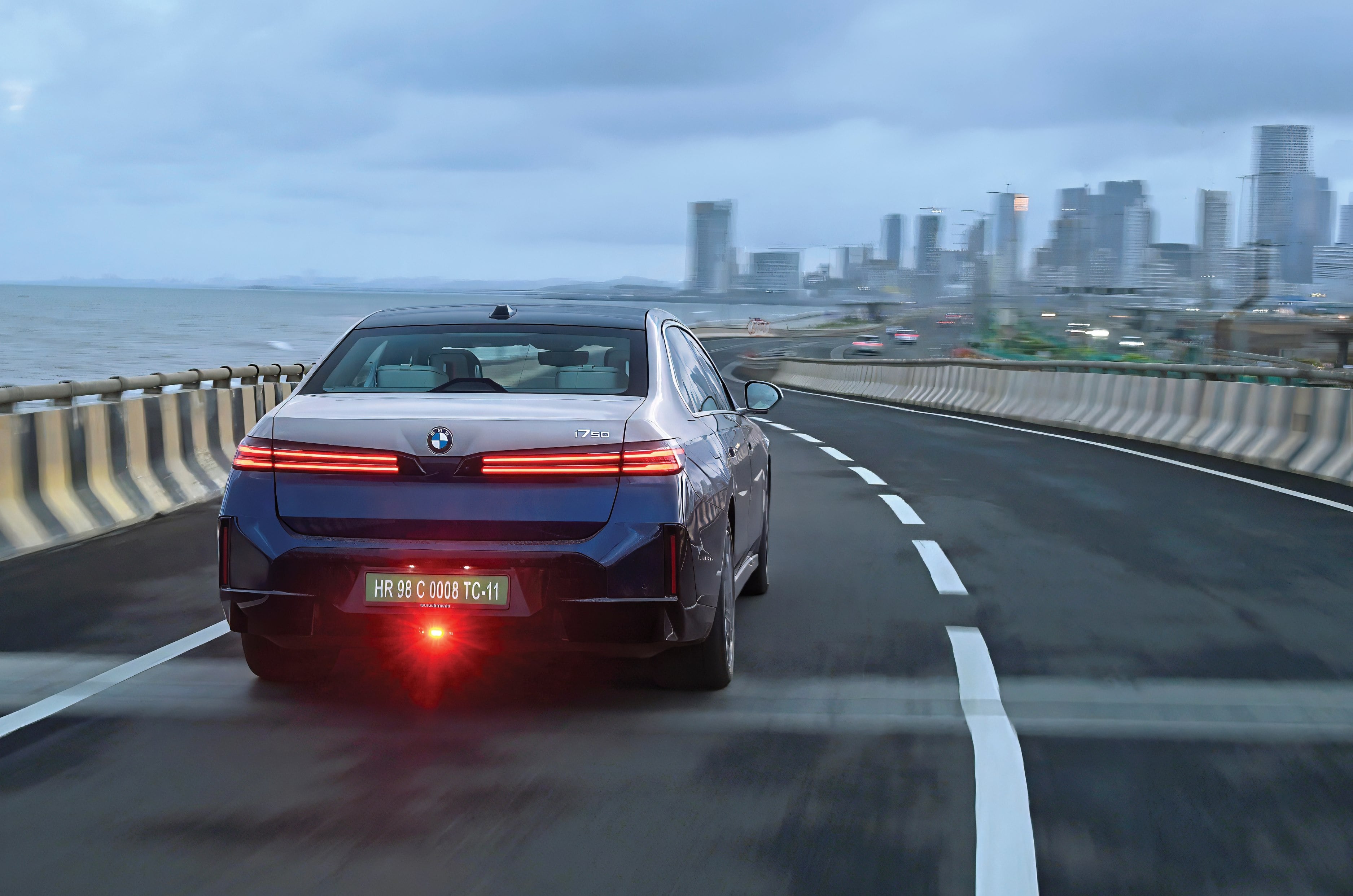
Like the front, the rear has also been cleaned up. There’s a new diffuser, broader tail-lamps, and a neater bumper design. Overall, this iteration looks significantly more palatable than its predecessor, and in the optional two-tone paint finish of our test car, road presence was immense.

BMW i7 50 xDrive Interior Space and Comfort – 9/10

The redesigned dashboard adds freshness and previews the direction BMW’s future interiors are expected to take.

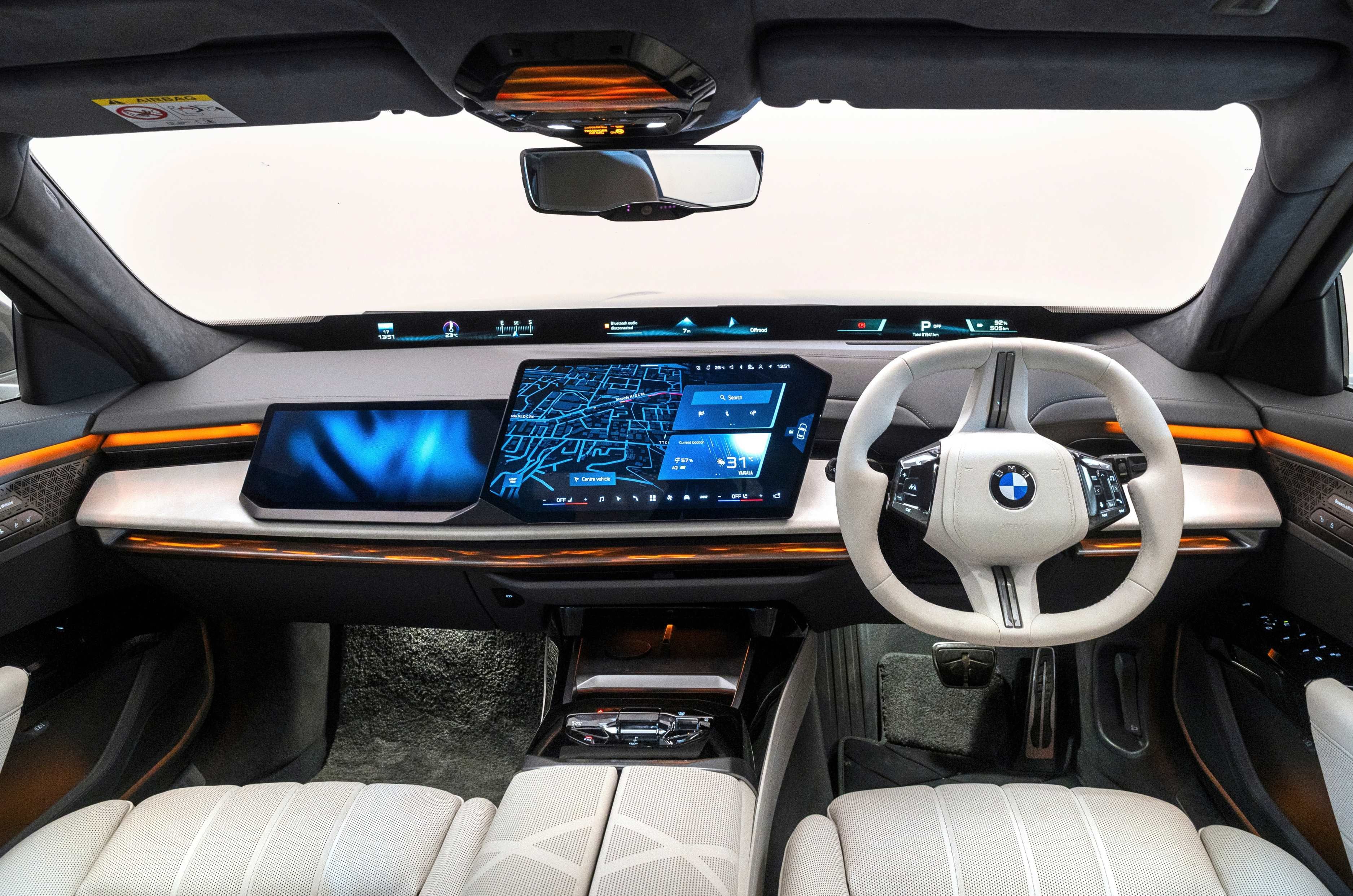
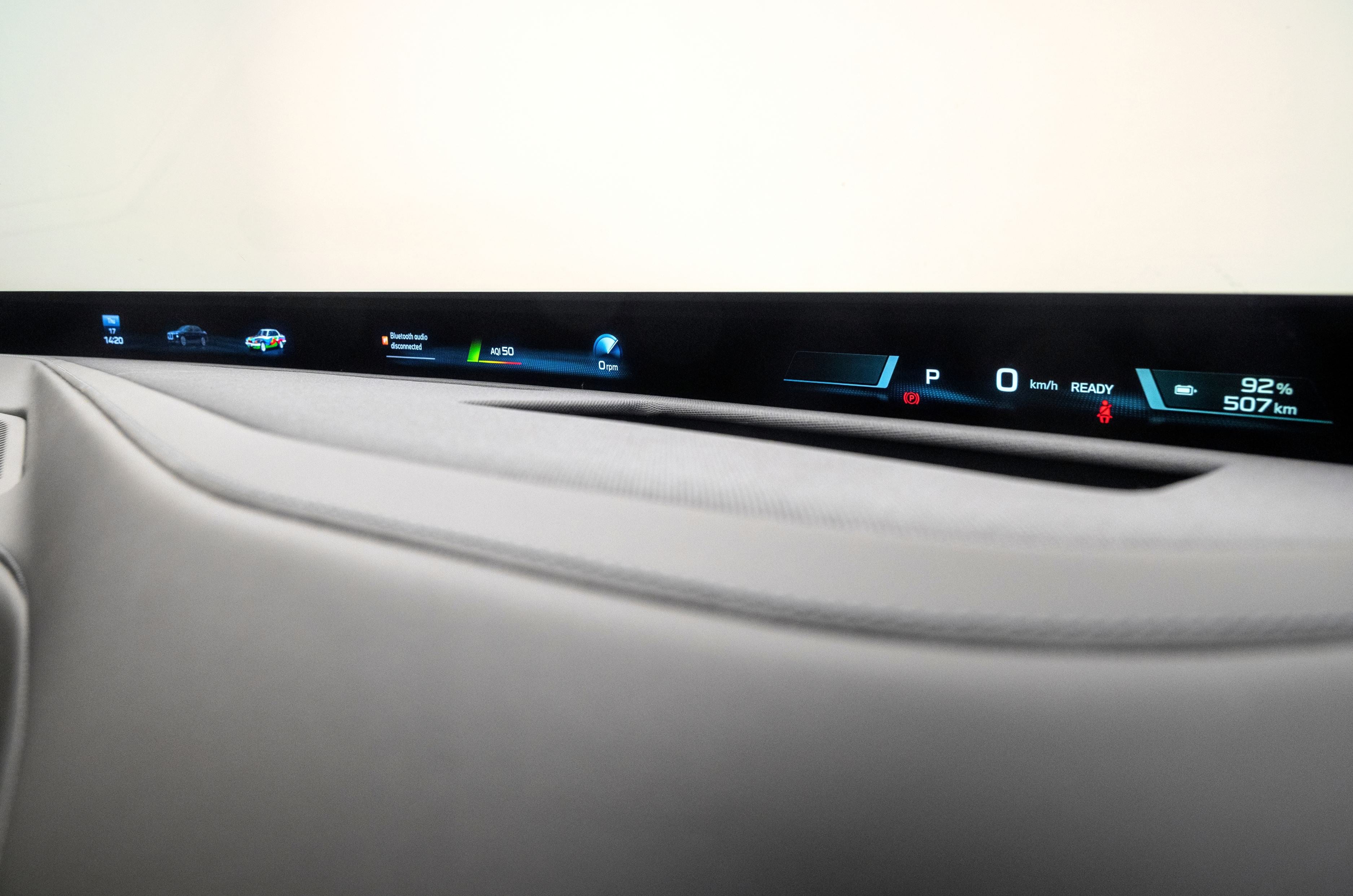
The i7’s dashboard has been completely redesigned, adding much-needed freshness while also previewing the direction BMW’s future interiors are expected to take. The biggest talking point is the deletion of the conventional instrument cluster. In its place sits a new panoramic head-up display positioned right at the base of the windscreen, projecting a wealth of information. It is highly customisable and, besides essentials like speed, charge status and warnings, can display motor speed, navigation, compass information, audio details, date and time, outside temperature, air quality, or even one of BMW’s Art Cars as a decorative element in the remaining six slots. The display is sharp, brilliantly executed, and sits naturally within your field of vision without becoming distracting.

A panoramic head-up display projects a wealth of information, it’s highly customisable and the display is sharp and brilliantly executed.

As for design, the new steering wheel is far more divisive. Its octagonal shape, combined with spokes extending from the horn boss at the 12 and 6 o’clock positions, makes it look unconventional. The light-coloured finish is also likely to be difficult to keep clean — you may even find yourself asking your chauffeur to wear gloves. On the plus side, it feels pleasant to hold, and the controls, though limited in number and not individual buttons, are satisfying to use.

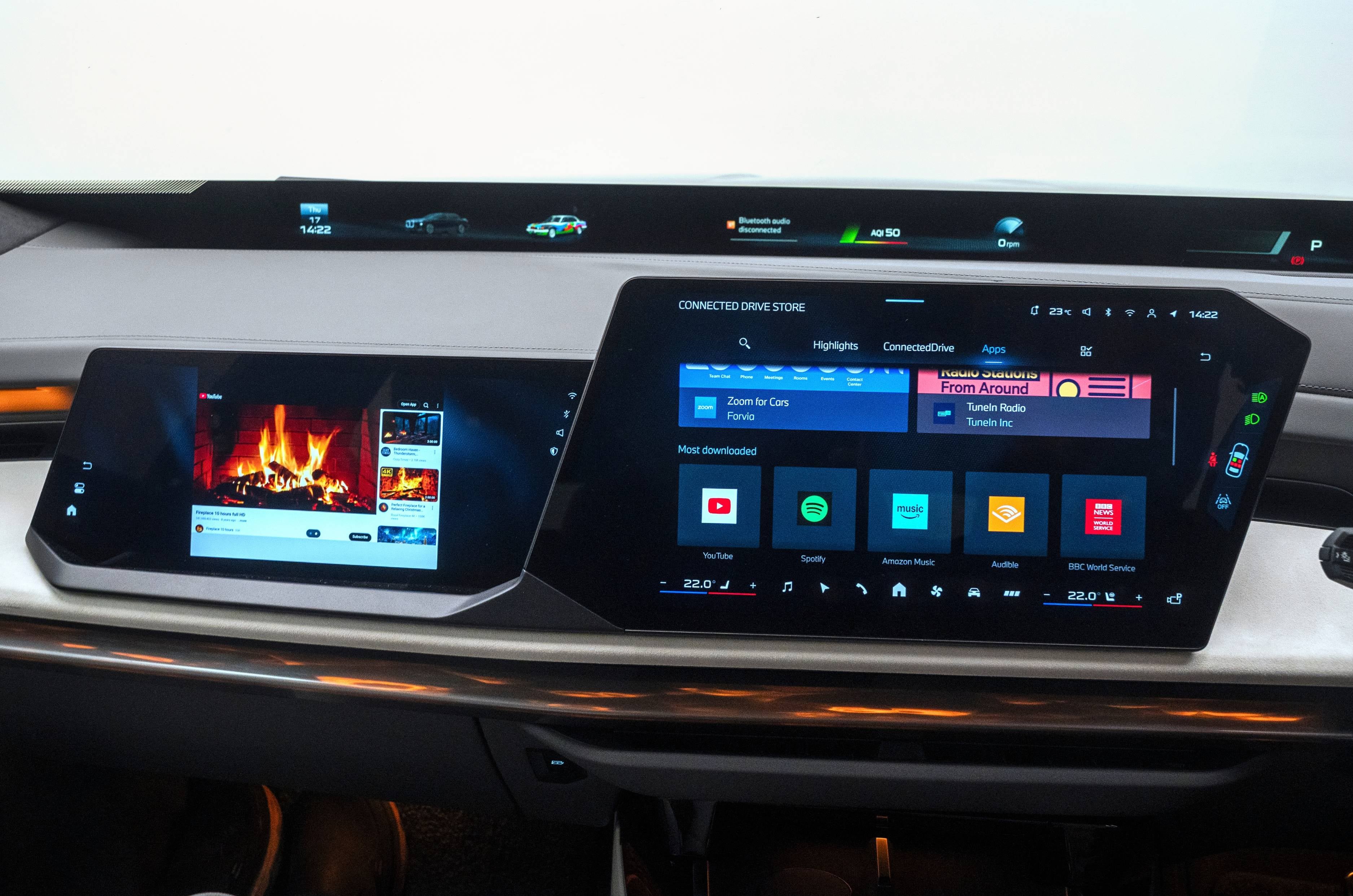
There’s also a new 17.9-inch free-standing touchscreen along with a smaller passenger display, both adopting a parallelogram shape. Curiously, the top-right corner of the central screen appears as though it has been chipped off, although that isn’t actually the case. Generous ambient lighting, crystalline detailing for the drive selector, volume controller and start-stop button, silver speaker grilles, and an overall light-coloured cabin theme further elevate the sense of luxury.

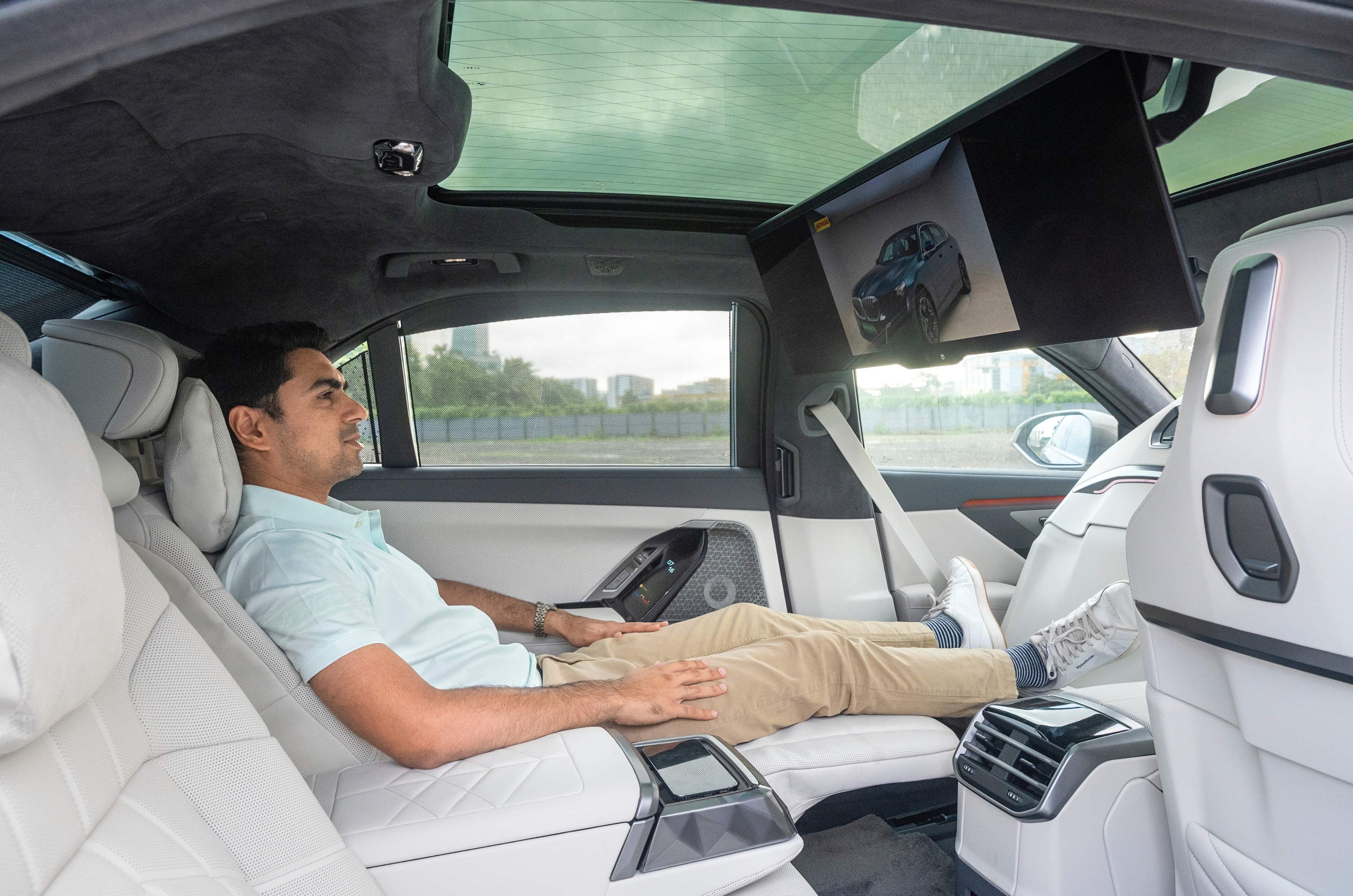
A one-touch relaxation mode transforms the rear seat into a lounge-like position. Updated 8K theatre screen is still part of the package.

Expectedly, the seats are supremely comfortable. All four seats get heating, ventilation and massage functions. Additionally, the rear-left seat features a one-touch relaxation mode that transforms it into a lounge-like position, complete with a raised ottoman, a fully-forward front passenger seat, and a fold-down footrest. Sadly, like the outgoing model, the spare wheel remains mounted on the boot floor, significantly compromising luggage capacity.

BMW i7 50 xDrive Features and Safety – 10/10

The i7 50 M Sport comes loaded with virtually every feature luxury sedan buyers could ask for. The new panoramic end-to-end head-up display replaces the conventional instrument cluster and is not only unique and highly customisable, but also exceptionally well executed. The 17.9-inch touchscreen is new too, and now benefits from additional shortcut keys in addition to permanently displayed climate-control functions, making it marginally easier to operate than before. However, the user interface still feels somewhat overwhelming, with an abundance of functions buried within multiple sub-menus.

 The central screen is marginally easier to operate than before. The new front passenger entertainment display is likely to be of limited relevance to most owners.

Also new is a front passenger entertainment display, though we suspect it will be of limited relevance to most owners. The new 31.3-inch 8K rear theatre screen, on the other hand, is likely to see much greater use, particularly on longer journeys.

Carried over from the outgoing version and continuing to add a sense of occasion are the powered doors, which open and close at the touch of a button.

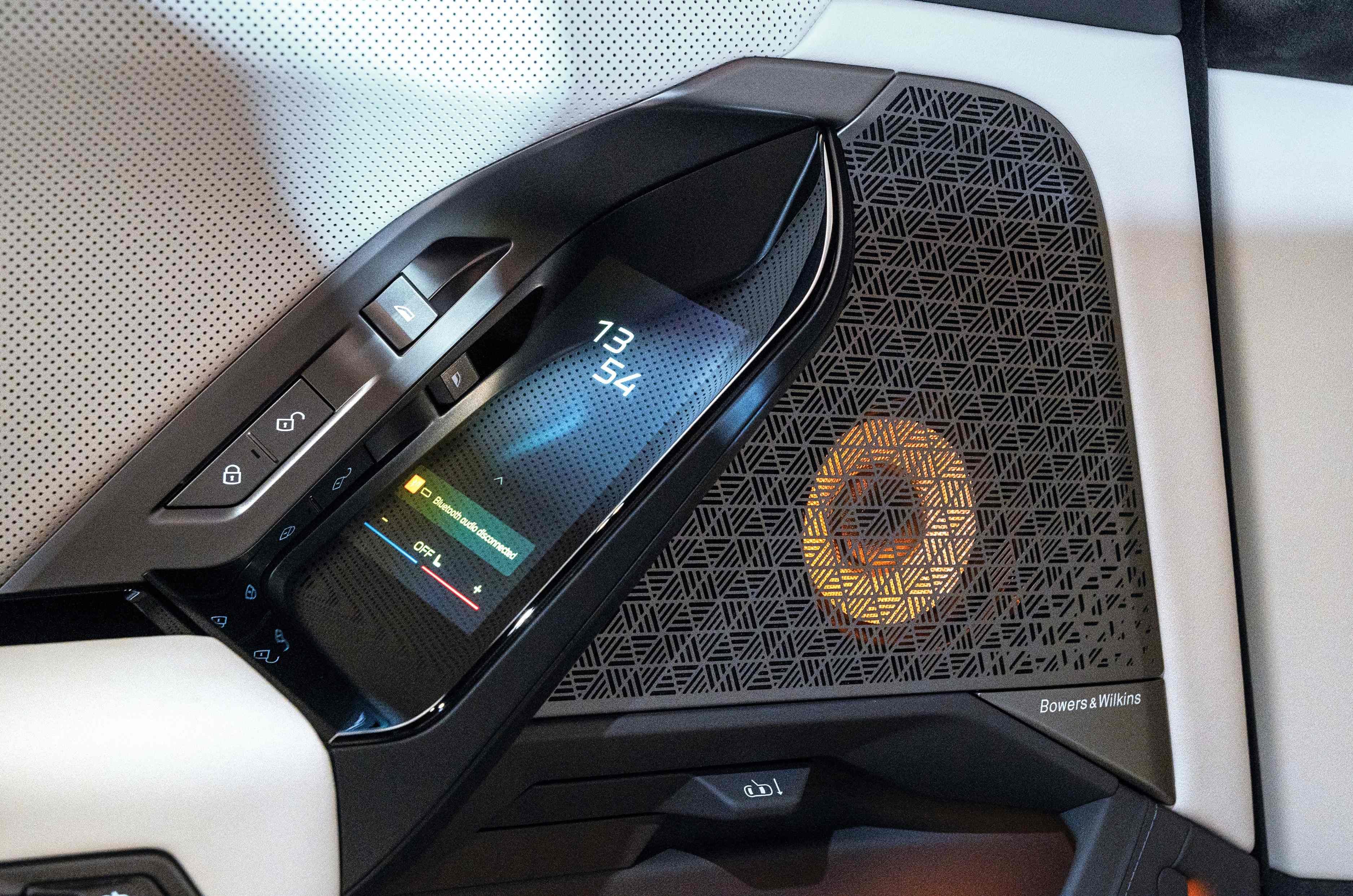
Its Bowers & Wilkins Diamond Surround Sound System with Dolby Atmos delivers an incredibly immersive audio experience. 

The highlight, however, is the outstanding Bowers & Wilkins Diamond Surround Sound System with Dolby Atmos and a whopping 35 speakers. It even delivers a 4D experience, with a pronounced thump felt through all four seats. The result is an incredibly immersive audio experience that is sure to impress even the most discerning audiophile.

BMW i7 50 xDrive Performance and Refinement – 9/10

 Its performance feels effortless and reassuring, while the accelerator calibration is smooth and progressive for everyday driving.

The i7 50 xDrive uses a dual-motor setup producing a combined 483hp and 660Nm, which is more than adequate for a luxury sedan of this nature. There’s rarely any need to switch out of Efficient mode because there is always a vast reserve of torque available. The effortless performance feels reassuring, while the accelerator calibration is smooth and progressive during everyday driving.

Press the accelerator beyond the halfway mark and the i7 takes off like a scalded cat. Acceleration is rapid, with this 2.8-tonne luxury sedan sprinting from 0-100kph in just 5.5 seconds and reaching 200kph in a shade under 19 seconds. Owners can also choose to activate synthetic motor sounds that play through the speakers, adding a dramatic, sci-fi soundtrack to acceleration. These can be switched off entirely for a completely silent experience.

There are multiple regenerative braking settings, including Adaptive, High, Mid and Low. Of these, Adaptive stands out for its excellent calibration, intelligently varying regeneration and coasting based on traffic and road conditions. There’s also a dedicated one-pedal ‘B’ mode selectable via the drive selector. It delivers regeneration similar to the High setting but, unlike it, can bring the car to a complete stop without any brake pedal input.

BMW i7 50 xDrive Range and Efficiency – 9/10

The i7 50 xDrive gets a larger 112.5kWh battery pack with NMC cell chemistry, replacing the outgoing version’s 101.7kWh unit. As a result, this version claims a WLTP range of up to 728km. Although we haven’t yet subjected it to our range tests, we expect it to comfortably deliver over 500km in real-world conditions, which is more than sufficient for most users. BMW claims the battery can charge from 10-80 percent in 28 minutes using a 250kW (or higher) DC fast charger. On a 22kW AC charger, a full charge takes approximately six hours.

BMW i7 50 xDrive Ride Comfort and Handling – 10/10

What’s truly impressive is the pillowy ride quality. It shrugs off badly broken roads with ease, and maintains excellent body control.

Piloting the i7 may initially seem intimidating given its considerable dimensions, but its light steering and rear-axle steering significantly aid manoeuvrability. The latter allows the rear wheels to turn either with or against the fronts by up to 3.5 degrees, helping the car feel remarkably agile for its size.

What’s truly impressive is the pillowy ride quality. The thick, high-profile tyres add another layer of cushioning, allowing the i7 to shrug off even badly broken roads with ease. It absorbs potholes effortlessly, keeps road shocks well isolated, and maintains excellent body control. Passengers are also spared the uncomfortable side-to-side movements over unusually rough patches.

Selecting Sport mode does firm things up slightly, but while the air suspension becomes tauter and body control improves further, ride comfort never suffers. Handling feels predictable and, thanks to xDrive all-wheel drive, the i7 feels exceptionally planted and offers impressive grip when tackling corners. Rear-wheel steering also does a remarkable job of disguising its size.

In short, the i7 can be driven surprisingly enthusiastically, and for a luxo-barge, it drives exceptionally well. We would, however, recommend leaving the steering in Comfort mode, as it feels unnecessarily heavy in Sport.

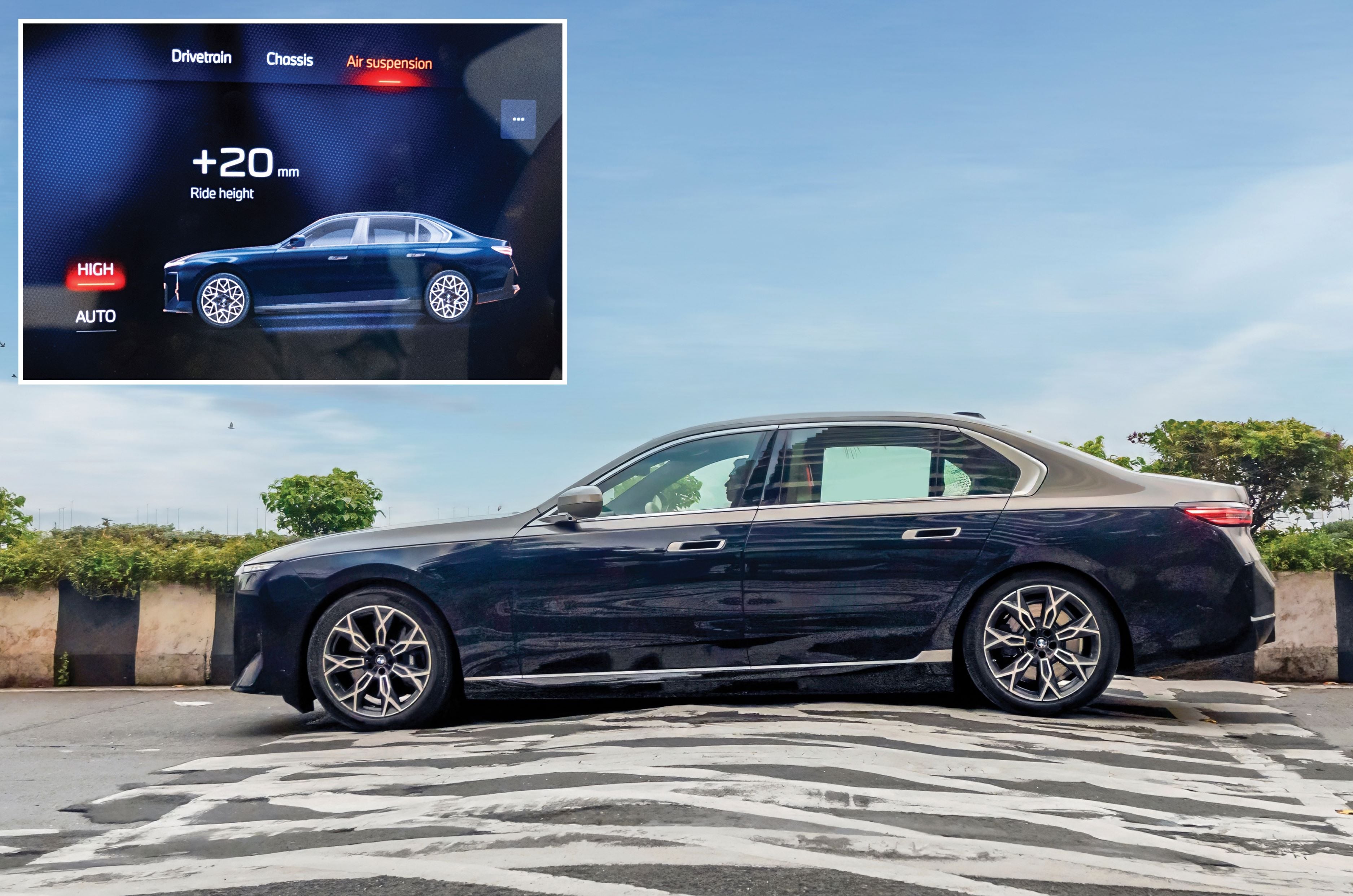
The suspension raises by 20mm over the 136mm standard setting, allowing it to clear all but the most poorly designed obstacles.

Sport mode also lowers the ride height by 10mm from the standard 136mm setting. While beneficial for dynamics, it makes the underbody vulnerable even on relatively small speed breakers. Thankfully, two taps on the touchscreen raise the suspension by 20mm over the standard setting, allowing it to clear all but the most poorly designed obstacles. Cabin insulation is outstanding too, keeping road, wind and ambient noise effectively isolated from occupants.

BMW i7 50 xDrive Price and Verdict – 9/10

At Rs 1.95 crore, the locally assembled i7 50 xDrive is priced exactly at par with the petrol-powered 740 and is even a few lakhs more affordable than its chief rival, the Mercedes-Benz S-Class. Yet pricing alone isn’t what makes the i7 such a compelling proposition.

What truly sets it apart is the sheer sense of occasion it delivers. Its styling is bold, the cabin feels genuinely special, ride comfort is exceptional, and the level of technology on offer significantly elevates its desirability. Add to that an extraordinary audio system and the effortless refinement that only a luxury EV can deliver, and the i7 feels every bit the flagship it is.

Yes, luggage space remains compromised by the spare wheel placement, and the touchscreen interface isn’t quite as intuitive as that of its chief rival. But in this segment, neither is likely to be a deal-breaker.

The bigger takeaway is that BMW has successfully made the electric version of its flagship sedan the more desirable one. For buyers seeking luxury, comfort and technology, the i7 50 xDrive isn’t merely an excellent EV, it’s quite simply all the luxury car you’ll ever need.

Tata Aeris leaked in full ahead of launch

Tata Aeris leaked in full ahead of launch
Tata Aeris details leaked

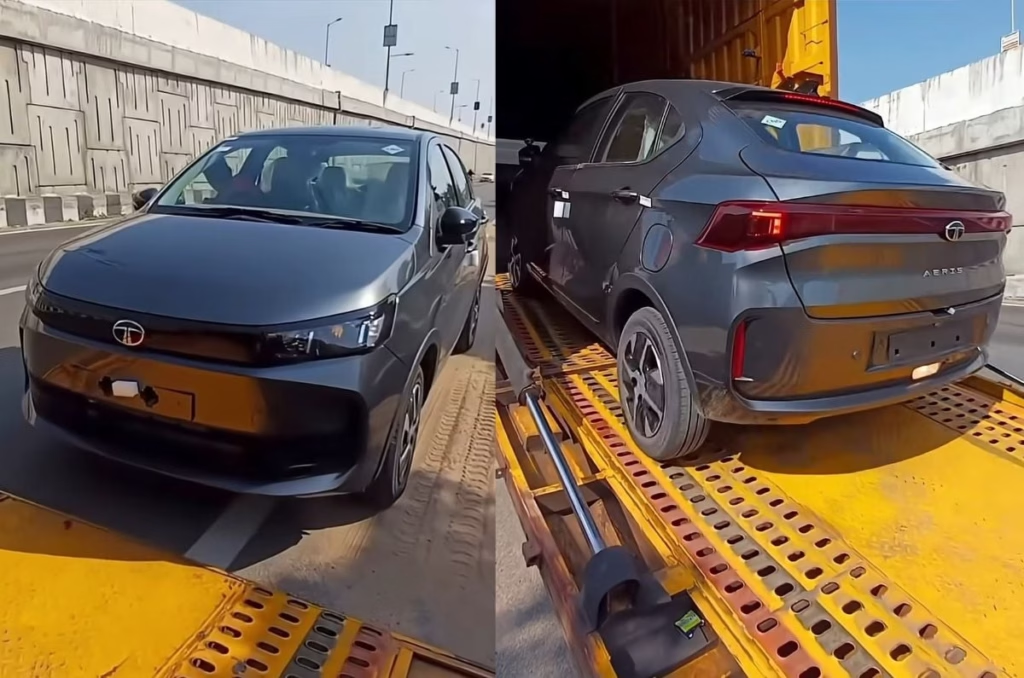
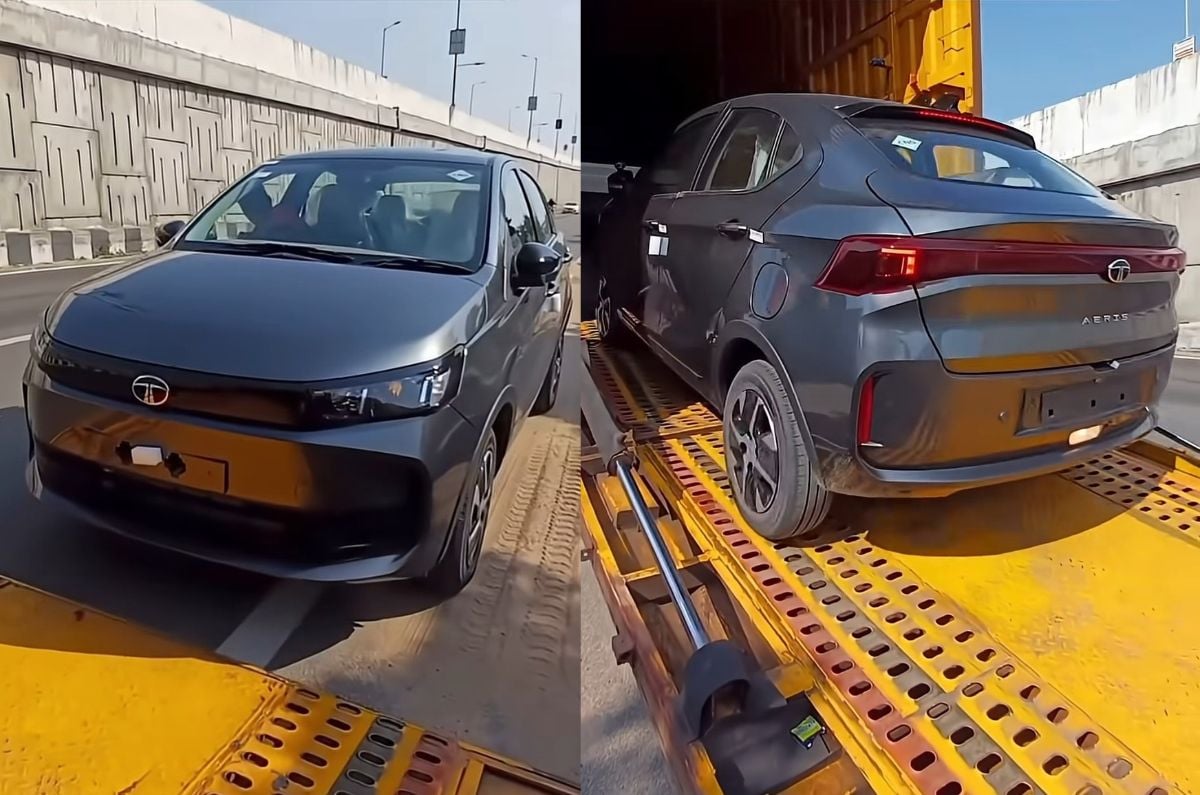
A video of the upcoming Tata Aeris has been leaked on social media just ahead of its launch on September 25, 2026. The footage clearly shows a showroom-ready i-CNG variant of the Aeris being driven off a trailer. The Tigor successor will also be available in petrol and EV guises. Official teasers of the Aeris have been released by Tata Motors, while design patents of the new sub-4-meter sedan have also surfaced.

  • Tiago-inspired design cues at the front and rear.
  • Two-tone interior, free-standing touchscreen and digital gauge cluster.
  • CNG version confirmed.

All you need to know about Tata Aeris ahead of launch tomorrow

All you need to know about Tata Aeris ahead of launch tomorrow
Tata Aeris exterior teased

Tata Motors is set to launch the Aeris on September 25, 2026, both in internal combustion (ICE) and fully electric (EV) avatars. The Aeris is essentially a rebranded Tigor facelift, and the upcoming sub-4-metre sedan has already been previewed through official teasers and design patent filings. Here’s all you need to know about the Tata Aeris before it breaks cover tomorrow.

1. How will the Tata Aeris look?

The Aeris gets a sleeker face and new lighting without losing the Tigor’s notchback profile 

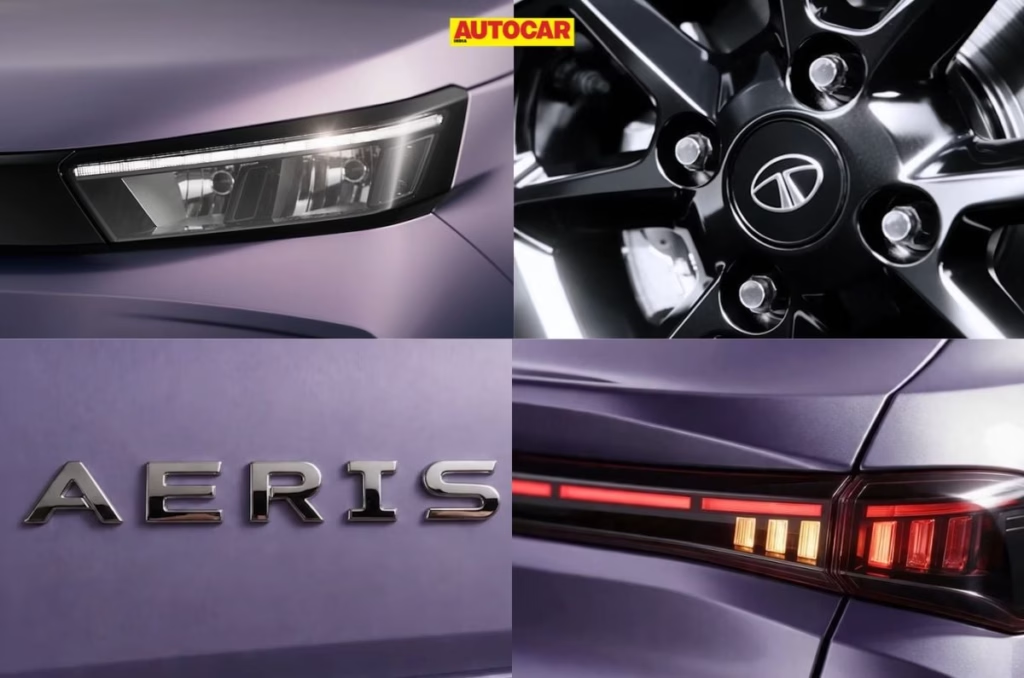
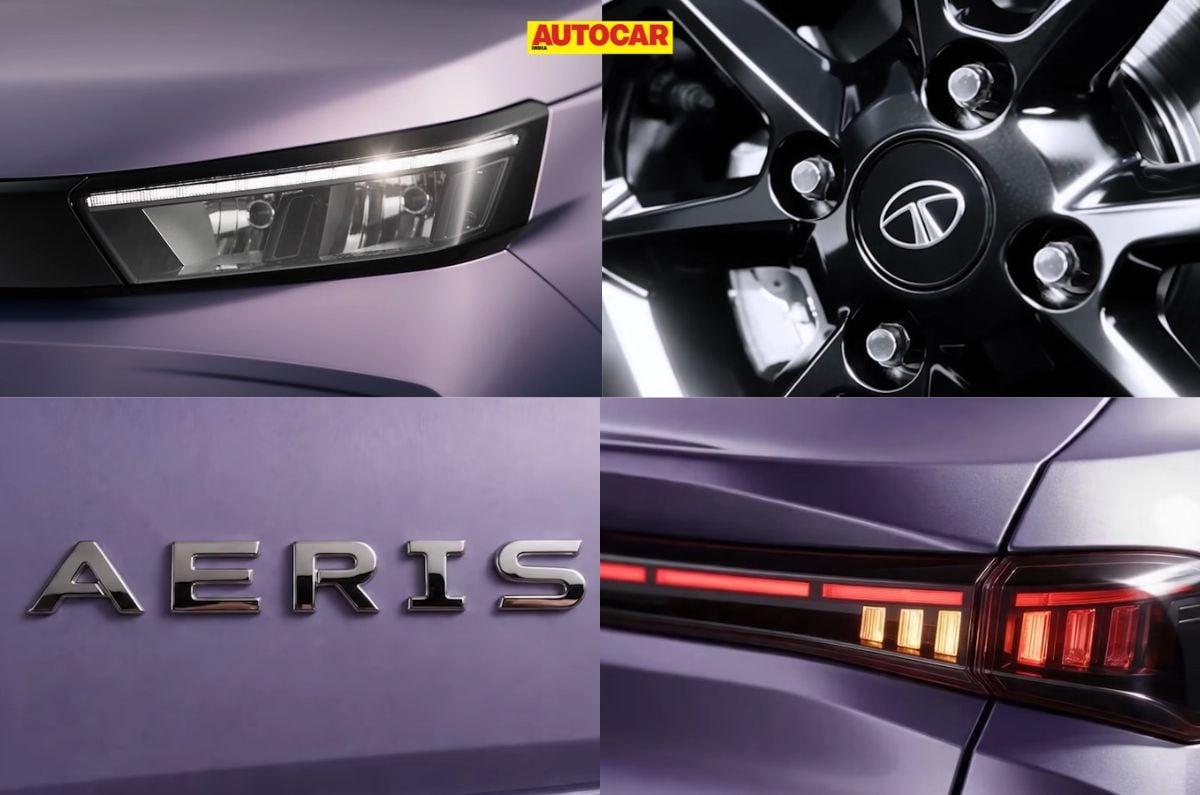
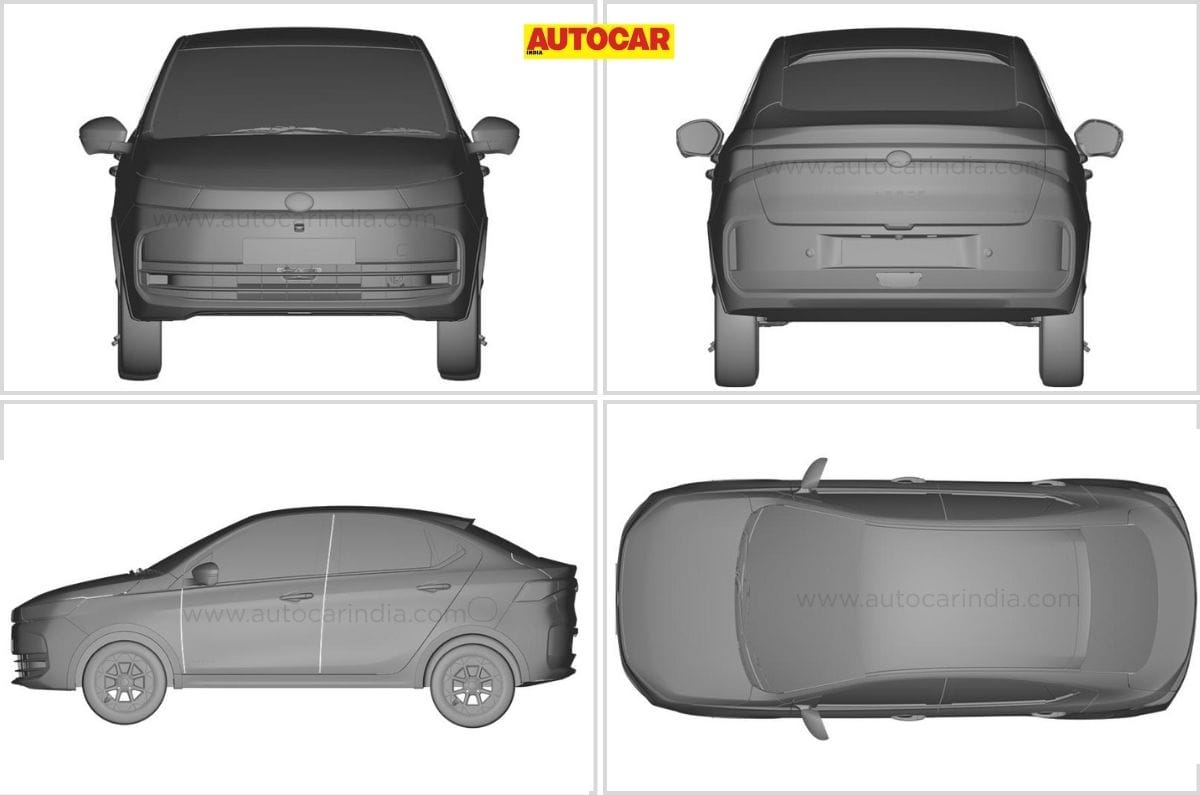
Compared to the Tigor, the new Tata Aeris will sport a sleeker front fascia featuring slim LED headlamps and thin LED DRLs. The official teaser also confirms LED fog lamps and C-shaped elements in the front bumper. Patent images suggest sharper-looking connected tail-lamps, with the number plate having been moved from the bootlid to the bumper.

Tata Aeris patent images
Design patent of the Aeris as filed by Tata Motors.

Other changes expected include a new shoulder line and wheel designs, plus a new purple colour. The Aeris EV should share much of the ICE version’s overall design language, with a few tweaks as seen in Tata’s other ICE-to-EV models. The notchback roofline of the outgoing Tigor will be carried over, as shown in the patent filings.

2. How different will the interior of the Tata Aeris be?

The Aeris will get a more modern-looking and feature-rich cabin over the Tigor

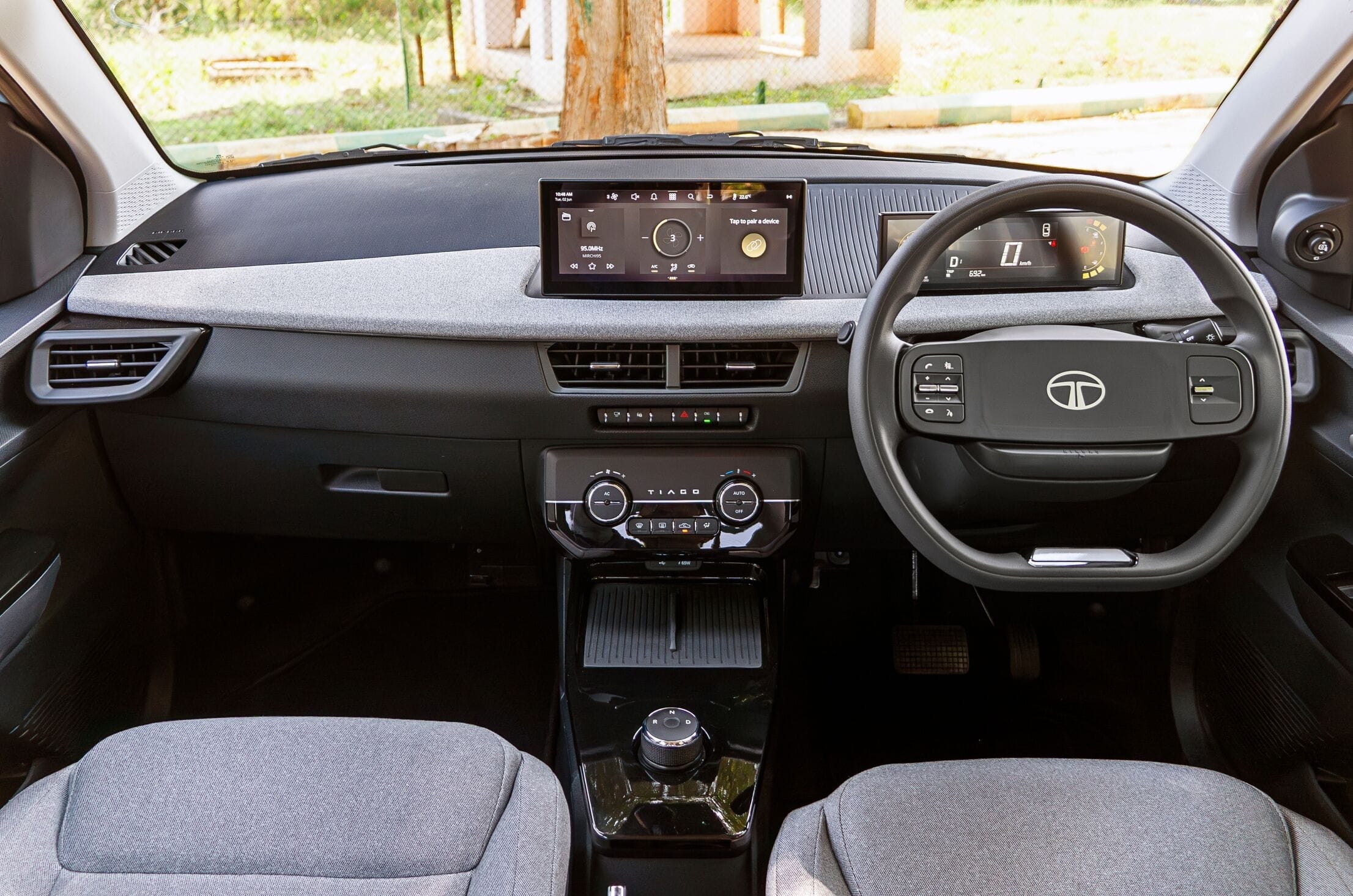
Tata hasn’t teased the cabins of the Aeris yet, but they are expected to be similar to those of the new Tiago and Tiago EV. This means a modern-looking dual-tone theme with piano-black accents and a layered dashboard design with two free-standing digital displays, plus Tata’s new two-spoke steering wheel and an array of physical buttons and dials.

Tata Tiago interior
Tata Tiago’s interior shown for representational purposes only.

The Tata Aeris is also expected to share the feature set that’s available with the updated Tiago. Wireless charging, automatic climate control, rear AC vents, a 10.25-inch touchscreen, a digital driver’s display, wireless Apple CarPlay & Android Auto, connected car tech, a 360-degree camera, 6 airbags and electronic stability control could all be offered with select variants of the Aeris as well.

3. What powertrain options will the Tata Aeris get?

The ICE version could get the same setup as the Tigor; the pure-electric option may get the Tiago EV’s battery packs

On the powertrain front, the Aeris ICE variants could carry on with the existing Tigor’s engine and gearbox options. The latter’s 1.2-litre naturally aspirated three-cylinder engine produces 86hp and 113Nm when on petrol, and 76hp and 97Nm when running on CNG. Its gearbox choices are a 5-speed manual and a 5-speed AMT (automated manual transmission).

As for the Aeris EV, it may borrow the Tiago EV’s 19.2kWh and 24kWh battery packs. Alternatively, Tata could equip it with the larger 26kWh battery that currently powers the Tigor EV. Both setups utilise a permanent magnet synchronous motor producing up to 75hp/114Nm and 75hp/170Nm, respectively. The Tata Aeris EV is likely to offer a multi-mode regenerative braking system and multiple drive modes as well.

4. What is the expected price of the Tata Aeris?

Tata could offer the Aeris EV with BaaS to lower upfront costs 

A slew of updates could potentially bump up the price of the Tata Aeris when compared to the Tigor. For reference, the combustion-powered Tigor is priced between Rs 5.70 lakh and Rs 9.10 lakh, while the Tigor EV is priced from Rs 12.49 lakh to Rs 13.75 lakh – both ex-showroom. Tata could offer the Aeris EV with a Battery-as-a-Subscription (BaaS) option on the EV to lower upfront costs, as it has done with the Tiago EV. The Tata Aeris will rival the Honda Amaze, Maruti Dzire and Hyundai Aura, while the Aeris EV doesn’t have any direct competitors.

Bentley Torcal revealed ahead of mid-2027 India launch

Bentley Torcal revealed ahead of mid-2027 India launch
Bentley-Torcal-front-quarter-static

For 107 years, Bentley has been defined by what sits under the bonnet: supercharged Blowers, mighty W12s and thundering V8s. The Torcal has none of that. It’s Bentley’s fourth model line and its first electric car. It slots in below the Bentayga, and it will never get a petrol engine. Bentley also calls it the template for every Bentley that follows, whatever the powertrain.

Like many modern Bentleys, the Torcal is named after a natural wonder. El Torcal de Antequera is a dramatic landscape of weathered limestone in southern Spain. The car is also the first Bentley to wear the brand’s redesigned, modernised emblem, which was revealed last year. That leaves one question that matters. Take away the engine, and is it still a Bentley? We haven’t driven it yet, so the full answer will have to wait. After a close look at the First Edition, the fully loaded launch car, there’s plenty to go on.

Bentley Torcal exterior design: light is the new chrome

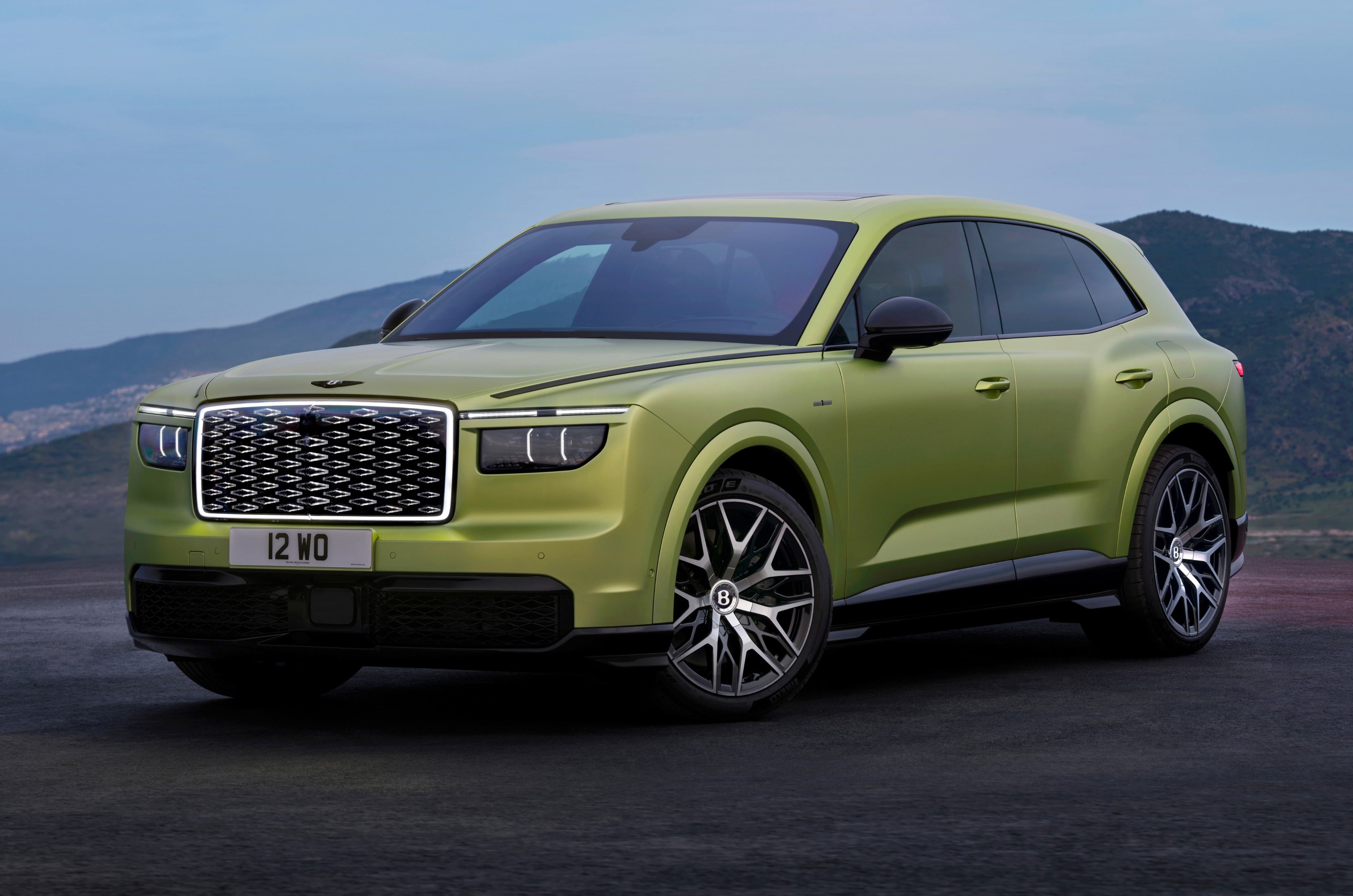
Designing an EV for a brand with this much pedigree was never going to be easy, but Robin Page’s in-house team at Crewe has done a fine job. The Torcal sits 50mm lower and is 120mm shorter than a standard-wheelbase Bentayga, yet it looks the better proportioned of the two. The wheelbase is just over three metres, the car is about five metres long, and the overhangs are short. Bentley’s signature ‘endless bonnet’ does much of the visual heavy lifting.

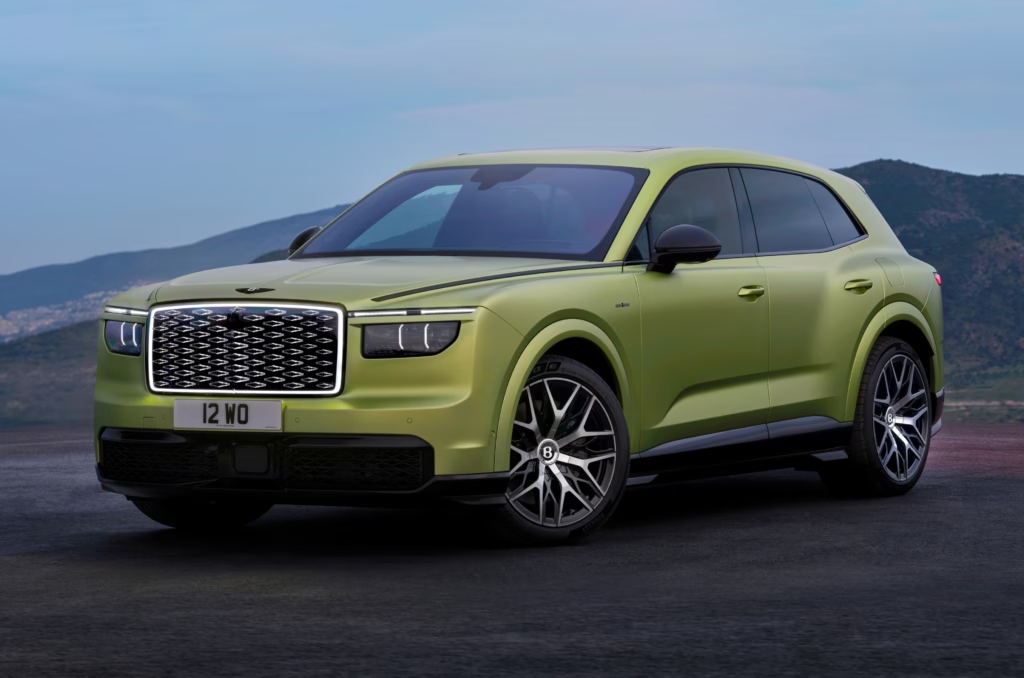
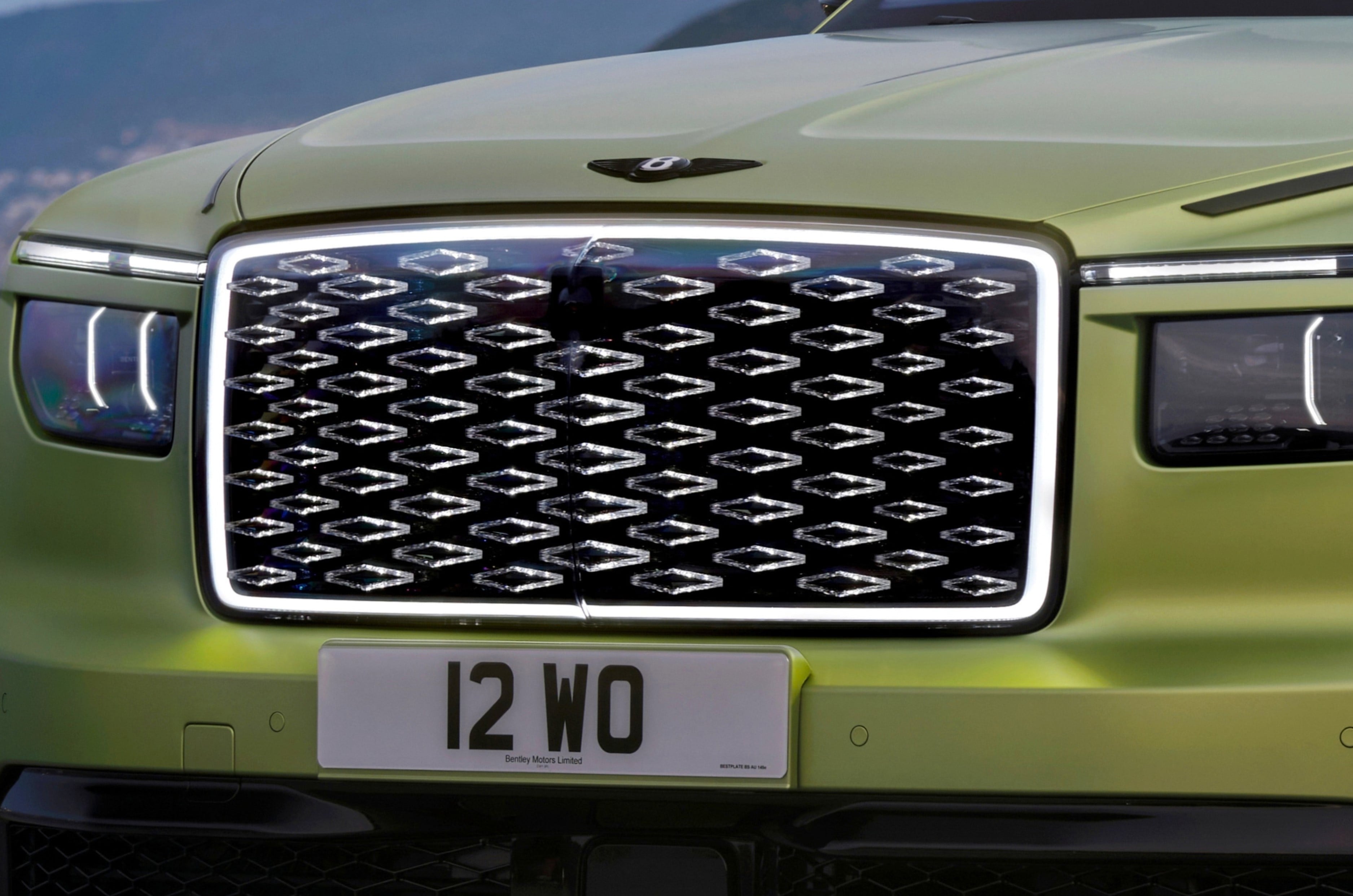
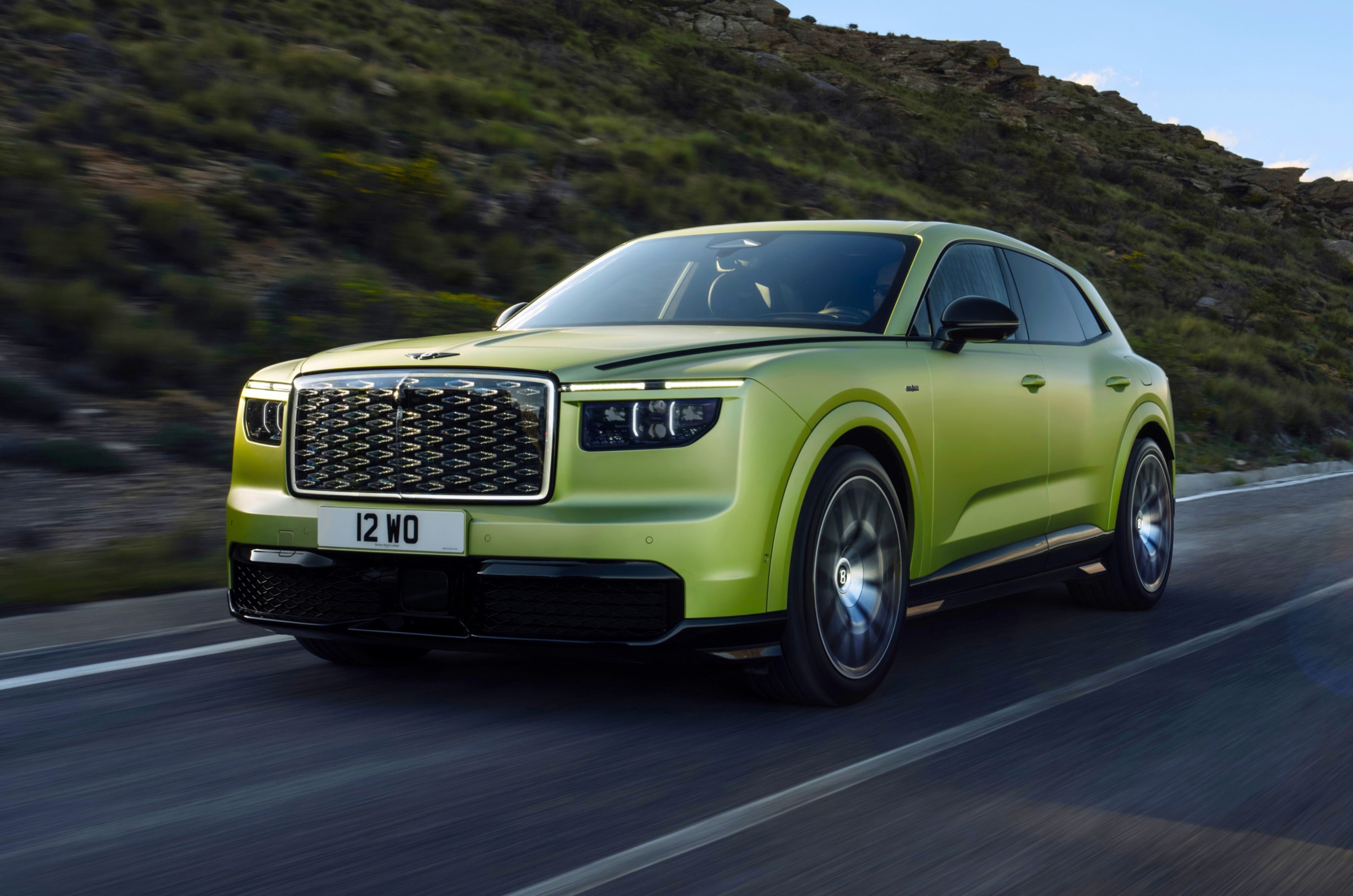
The Torcal gets a clear polycarbonate panel with diamond-like elements for a grille. 

An EV doesn’t need a grille for cooling, but Bentley argues that a car without one is faceless. The Torcal’s solution is an illuminated one with crystal-effect, diamond-like elements set behind a clear polycarbonate panel. It’s the car’s signature piece, and it will look spectacular filling someone’s rear-view mirror. The face echoes the Continental T, reinterpreted through slim, high-tech lighting.

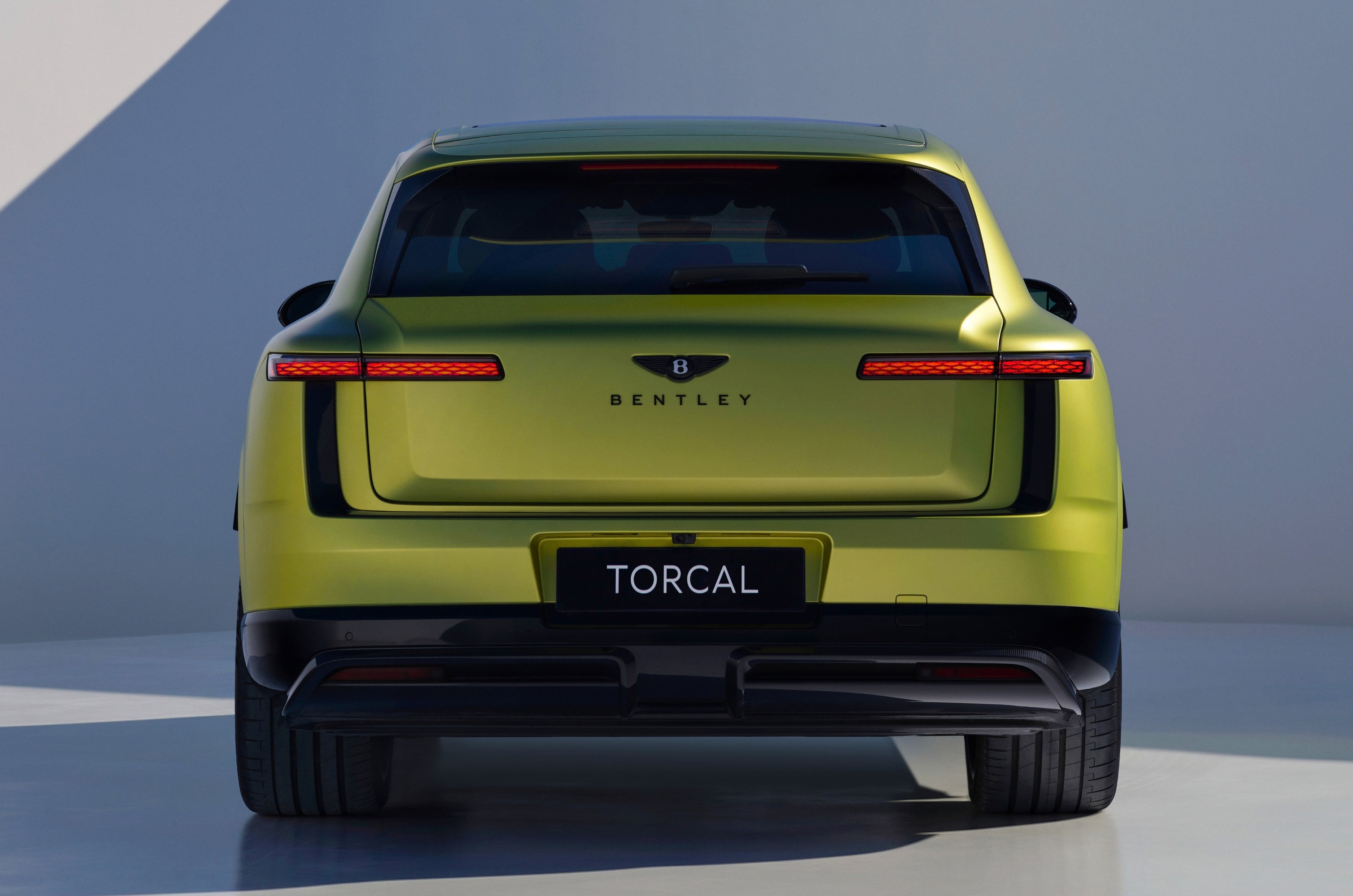
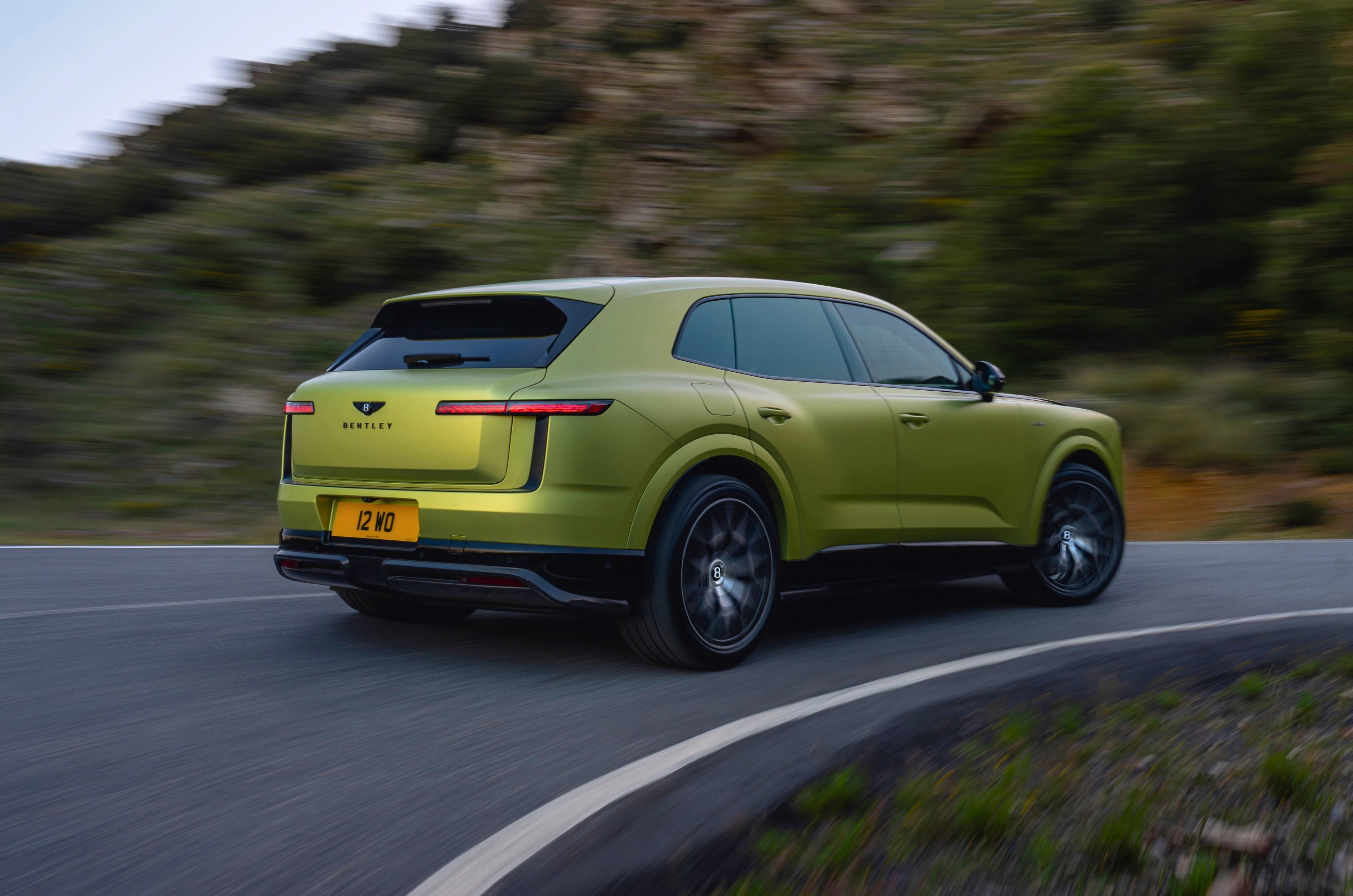
The flanks are deliberately free of fussy creases. The cabin tapers towards the rear so the body can swell over the back wheels, a look the designers call the ‘resting beast’. At the back, Bentley claims are some of the slimmest tail-lamps in the industry. A U-shaped motif ties them together and emphasises the car’s width.

U-shaped motif at the rear ties the tail lamps together. 

Our car rode on 22-inch wheels. The core car gets 21s as standard, and India-spec cars may well get the smaller, higher-profile rim. Other neat touches include a charging flap that slides open when you wave a hand over it, and a 90-litre frunk under that long bonnet. The 460-litre boot isn’t especially generous, and there’s no spare wheel, only a puncture repair kit. On Indian roads that could be an issue, though most owners will simply leave a flat to the chauffeur to fix 

Bentley Torcal interior: Screens, with restraint

The cabin is completely new, and the tricks start before you’re inside. All four doors are powered and radar-controlled. The driver shuts theirs by pressing the brake pedal, and passengers can close theirs simply by buckling up.

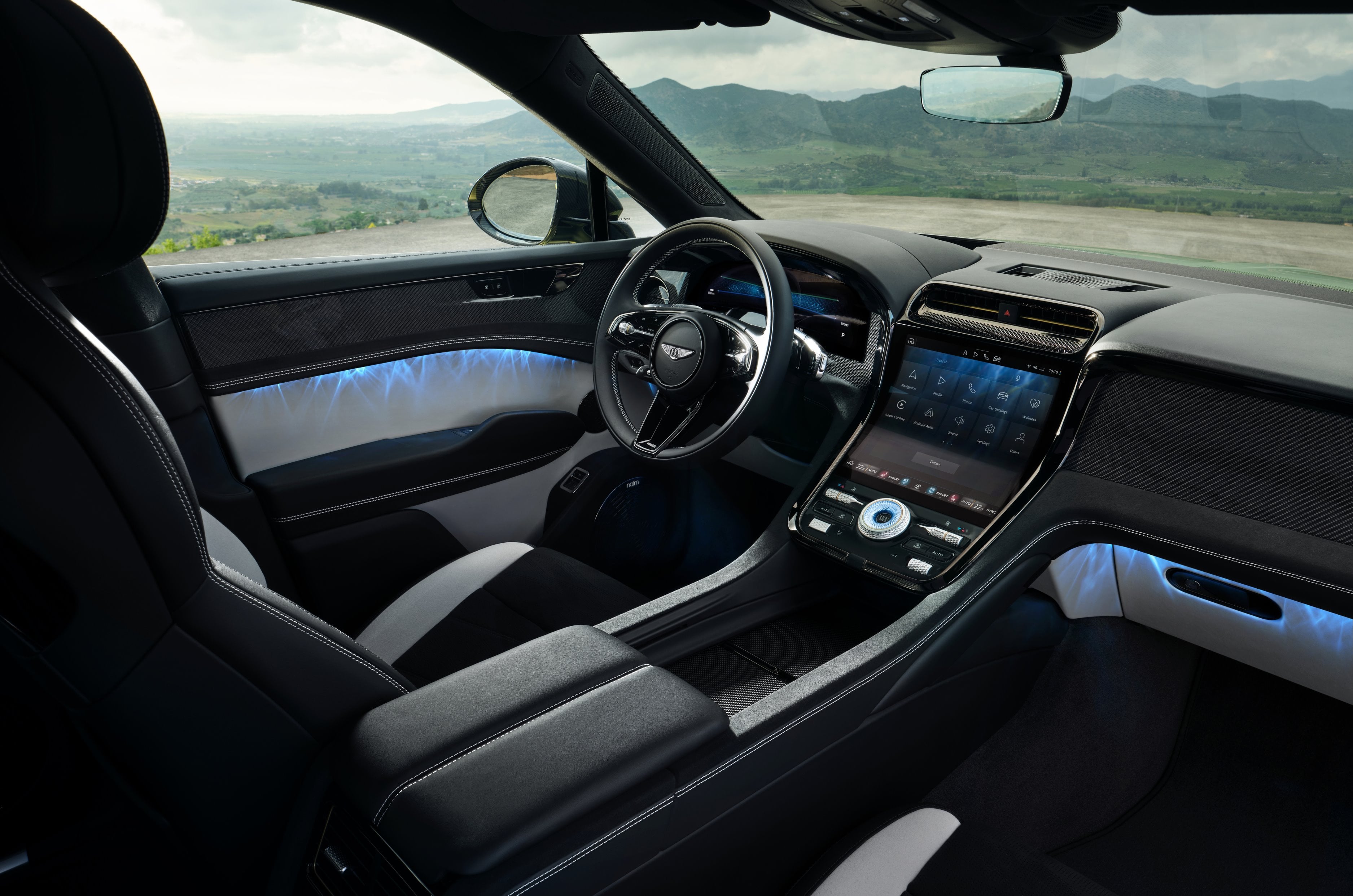
The first thing you notice is that Bentley hasn’t turned the Torcal into an iPad showroom. The centrepiece is the curved OLED centre screen. It doesn’t perch on the dash like a tablet; it sweeps down and flows into the centre console as one continuous form, and nothing else in the class looks quite like it. The OLED panel gives deep blacks and rich colours, and the curve brings every corner of the display within easier reach. Crucially, physical controls haven’t been binned. The switches have a beautiful knurled finish and satisfying, precise clicks, and purists will love them.

A curved OLED touchscreen infotainment is the centrepiece of the interior. 

There’s one gripe. The direction of the front air vents is set through the touchscreen, a trend creeping into many luxury cars, and a physical slider would have been far nicer. Otherwise, we haven’t seen any car balance digital and physical controls better.

The tech runs deep. A facial-recognition camera in the rear-view mirror identifies the driver and loads their seat, steering and ADAS settings. An augmented-reality head-up display projects navigation arrows and hazard markers into the driver’s line of sight.

Curated experience

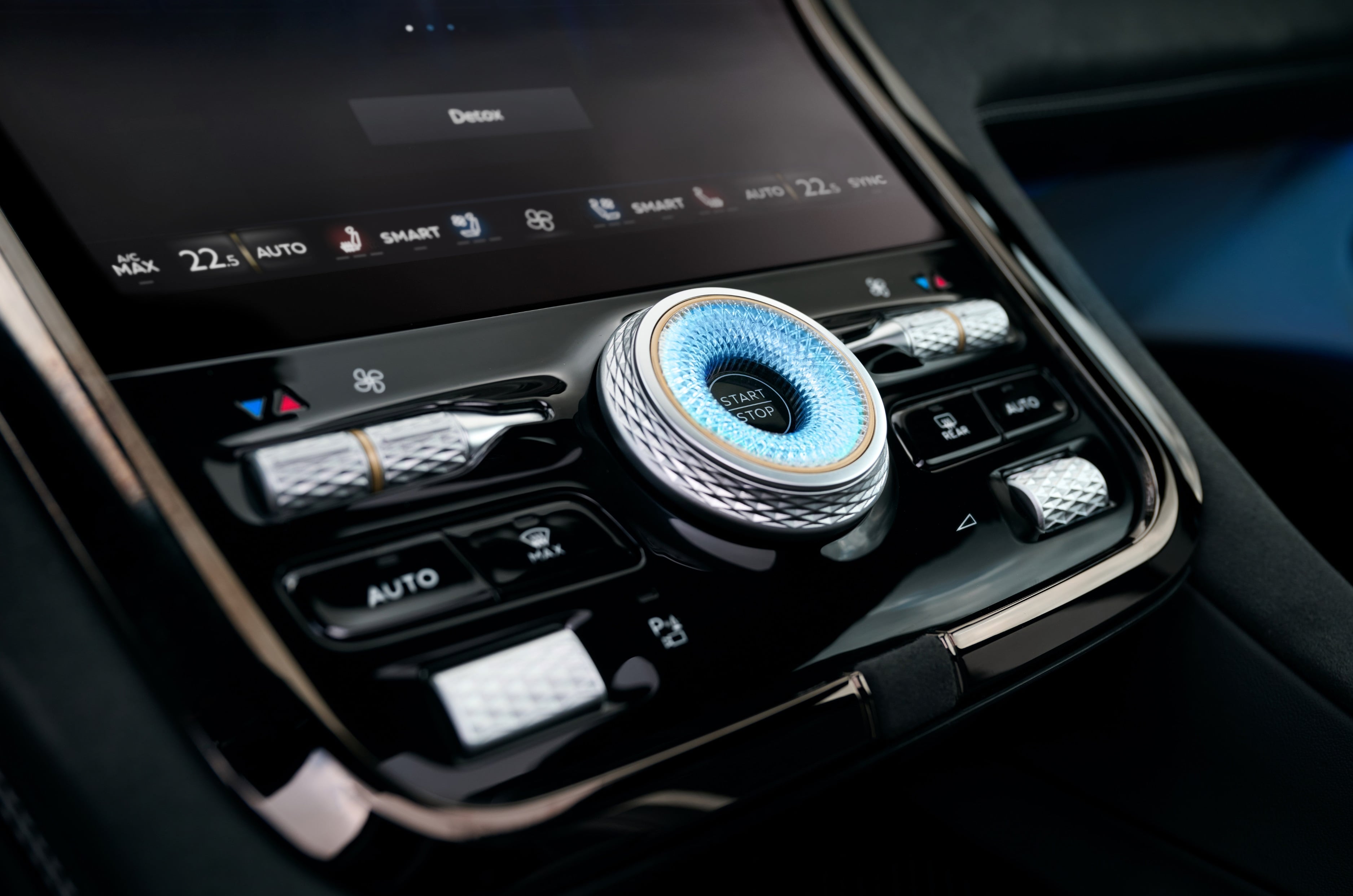
Twist the rotary collar around the starter button and you cycle through four Experience Modes. Each one changes the cabin’s lighting, sound, climate and displays as well as the car’s dynamics.

Rotary dial around the starter button can be used to cycle through four Experience modes. 

Sport bathes the cabin in blue rather than the expected red. Bentley’s reasoning is that red signals anger while blue signals focus, which makes it a better colour for driving fast. Bentley mode balances performance and comfort. Comfort mode calms things down and offers a ‘digital detox’ that hides all but essential information. Refresh ups the fresh-air flow and brightens the lighting.

Drumming up character

The hardest thing about an electric Bentley is making it feel like a Bentley. For traditional owners, that means sound. The 6¾-litre V8 is iconic, but it was never a perfect engine. Bentley’s view is that its flaws, like in humans, give it emotion and character. So rather than synthesising a flawless digital imitation, Bentley recorded real musicians on drums, viola and bass guitar. The result is the ‘Dynamic Symphony’, complete with tiny imperfections. It responds to torque demand and speed, grows louder in Sport, and can be switched off entirely. 

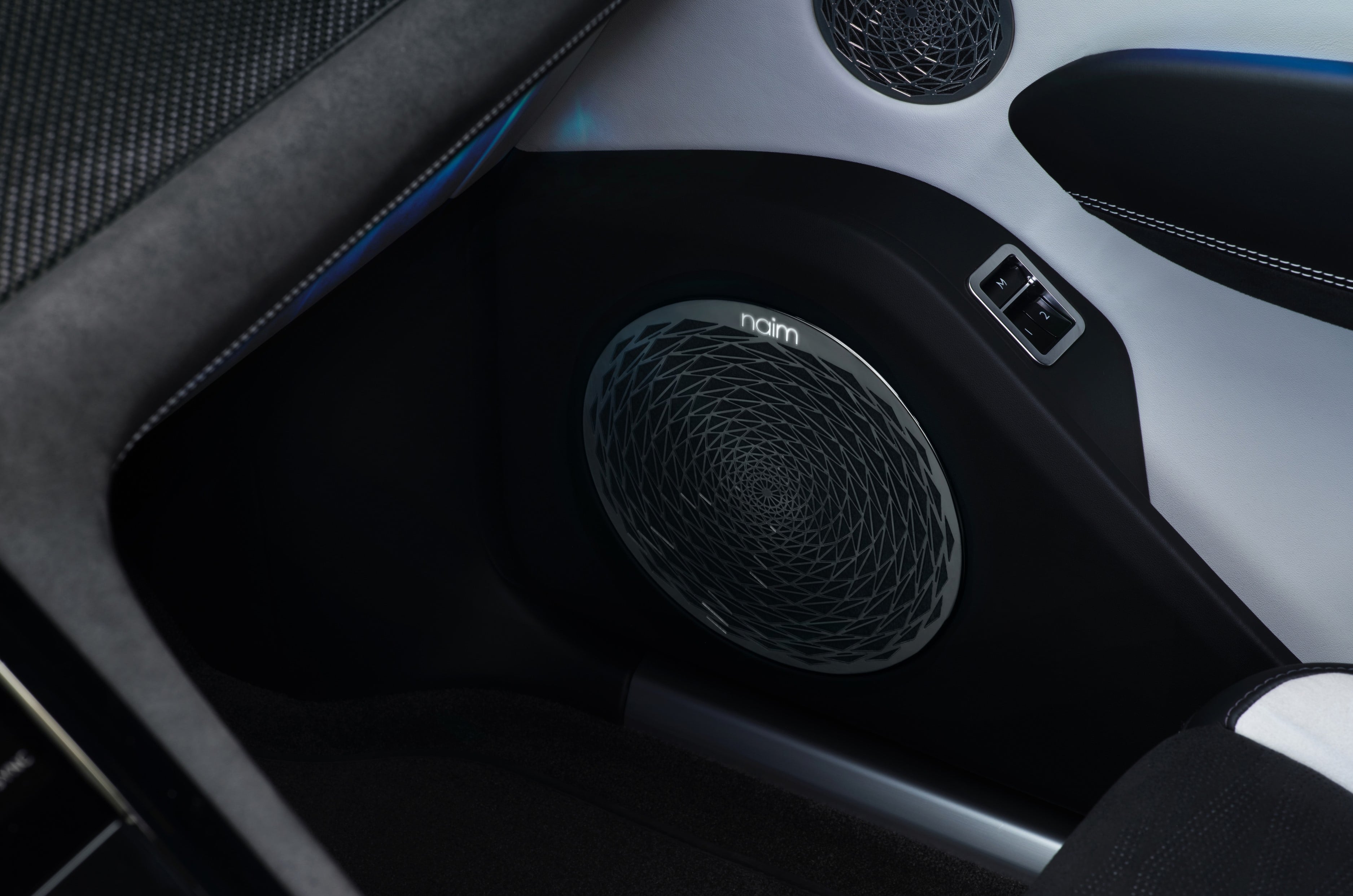
Optional Naim audio brings 28 speakers with Dolby Atmos 7.1 

The attention to sound goes further. The indicator tick is a recording of a hammer striking leather in Bentley’s upholstery workshop, and the touchscreen chime comes from a crystal glass. Standard audio is a 620W, 16-speaker system. The Naim option runs to 1,780W and 28 speakers, with headrest speakers, seat shakers and Dolby Atmos 7.1 

Material world

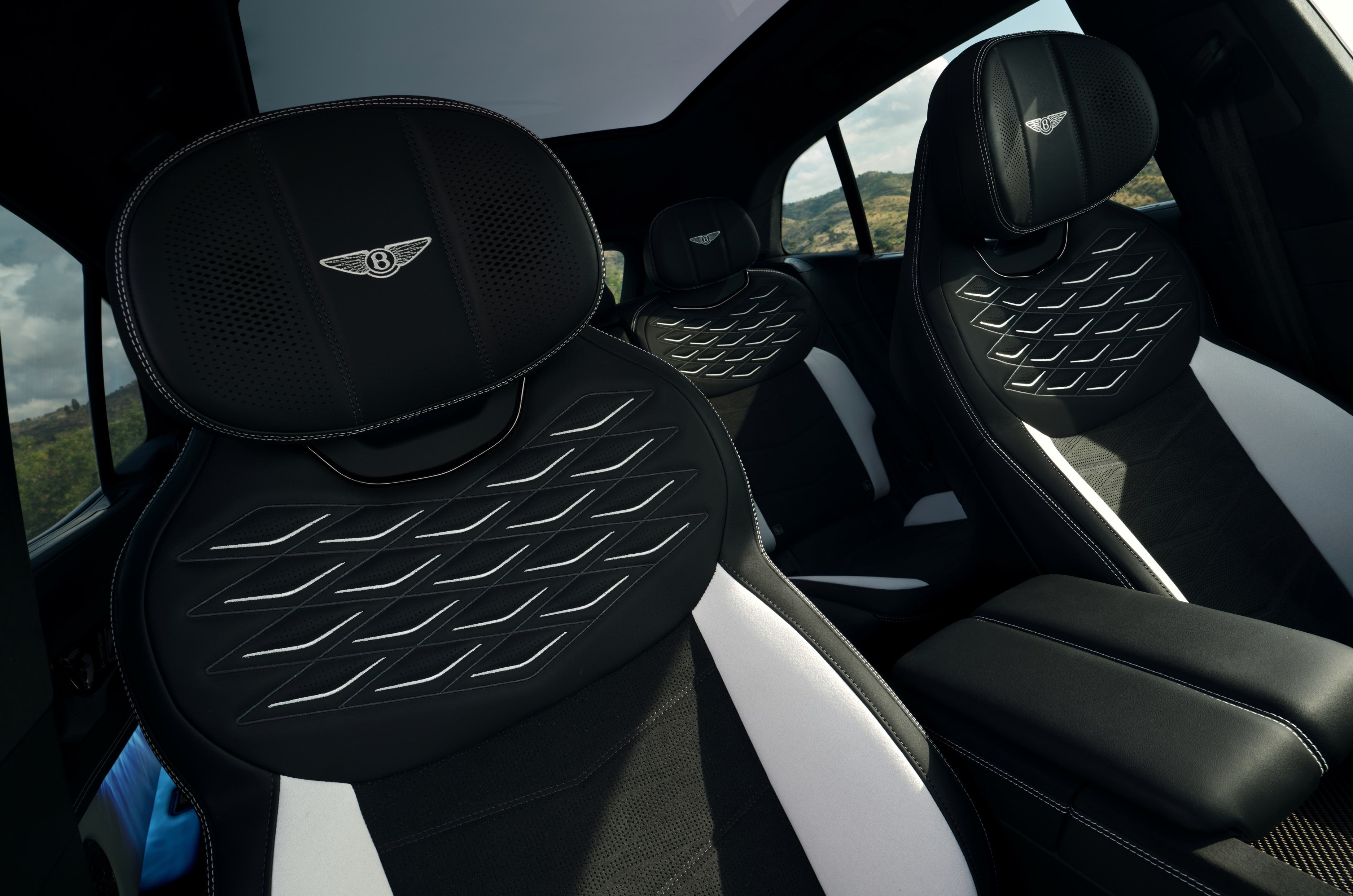
Materials are traditional Bentley, pushed further. There are wood veneers less than a millimetre thick, crisp aluminium and a deep piano black. Leather comes in 15 shades. The real headline is the world’s first 100 per cent Merino wool automotive fabric, developed with Somerset weavers Fox Brothers.

Scope for personalisation is vast, with 15 different shades just for the leather. 

New Mulliner finishes include Ombré Walnut, which presses up to 1,000 layers of walnut off-cuts and recycled paper into a veneer that fades from black to smoke. Sunburst Aluminium reinterprets the engine-turned dashboards of old Bentleys. Overhead, the Frosted Diamond sunroof uses switchable glass, so you decide how much light floods in. The scope for personalisation is vast. A second car we saw, trimmed in lighter upholstery with far more brushed aluminium, felt like a different interior altogether.

Bentley Trocal back seat experience 

Legroom and headroom at the back are quite decent. 

The rear seat matters most for Indian buyers, many of whom will be chauffeured. It’s impressive for a car smaller than a Bentayga. Under-thigh support is genuinely good, which is rare in an EV, where the battery usually pushes the floor up. Legroom and headroom are decent, though this is ultimately a car to be driven.

The rear climate vents get the physical controls the front vents lack. There are heated and cooled seats, and three USB-C ports, one of them rated at 100W for charging a laptop. The rear bench is also the first in a Bentley to power-fold.

Bentley Torcal specs, battery and range 

The Torcal gets a 113kWh battery for a claimed WLTP range of 600km. 

The Torcal rides on the PPE platform that underpins Porsche’s Cayenne Electric. The Cayenne tops 1,100hp in its most potent form, but Bentley has deliberately stopped short. The flagship makes 888hp and 1,350Nm, the most torque of any Bentley ever and has launch control which I doubt will ever be used!  That’s enough to take a roughly 2.7-tonne SUV from 0-100kph in 2.9 seconds. Bentley’s research found that most customers find anything more violent uncomfortable.

Two permanent-magnet motors draw from a 113kWh (net), 800V battery, which carries a 10-year, 100,000-mile warranty. Claimed range is 600km WLTP. This is a continent-crosser, so charging speed was a priority. On a 400kW charger, a 10-80 per cent top-up takes 16 minutes, and around 160km of range goes in during a seven-minute coffee stop. India currently has no such high-speed chargers, yet. 
It also gets fully active suspension and rear-wheel steering. 

The chassis is Bentley’s most advanced yet. Fully active suspension replaces anti-roll bars altogether, and five degrees of rear-wheel steer shrink the turning circle to 11.1m. Carbon-ceramic brakes with 440mm front discs are optional. The ADAS suite uses 25 radars, sensors and cameras. It can reverse the car along the last 50 metres of its route, and it can park itself in a designated space up to 200 metres away.
Bentley Torcal India launch plans 

The Torcal arrives in India in the second half of 2027. It’s a smidgen smaller than the Bentayga but will be substantially pricier, because EVs don’t get the same customs-duty benefit under the new UK-India FTA. Expect around Rs 4.5 crore, ex-showroom. Is it worth it? We’ll tell you once we’ve driven it. Standing still, at least, the Torcal makes a convincing case that a Bentley without an engine is still a Bentley.