
India-EU FTA is a big opportunity to bring niche models: VW CEO Thomas Schafer

India-EU FTA is a big opportunity to bring niche models: VW CEO Thomas Schafer
VW CEO Thomas Schafer

Volkswagen is preparing for a much bigger push in India, with the company reviewing its broader product, powertrain and investment plans. While a locally produced compact SUV has already been confirmed for launch next year and is expected to drive volumes, the brand is also looking at the India-EU free trade agreement (FTA) as an opportunity to bring select niche models from its global portfolio here.

“FTA has been announced in Europe. It is a huge opportunity to bring a certain sort of niche models to widen the portfolio for the consumer to offer some exciting models every now and then, which is great,” Member of the Board of Management of Volkswagen AG and CEO of Volkswagen Brand Thomas Schafer told us. He did not reveal which models could be on the cards, but said the company is taking a long-term view and will study market conditions over the next few months before making a decision.

VW’s renewed focus for India

Schafer’s India visit comes as Volkswagen reviews its global business strategy amid geopolitical tensions, changing trade policies and a growing move towards regional manufacturing. “So, globally, we see almost like a decoupling. You have a geopolitical situation and the old business model where everything’s focused on Europe, and then you export to other markets is long gone. At the same time, you have a very different dynamic in China than in the US, which is putting import duties on Europe under certain attacks. So, in that game, you have to change your business model; you have to adapt it. And that’s what we’re busy doing,” he added.

This shift could benefit India. Along with the growing domestic market, Volkswagen sees India as an important hub for engineering, IT and R&D. “We will focus a lot on India going forward. Not only because the market is exciting and growing and creating more opportunity for the future, but also the sort of knowledge base that you have here in India,” he said.

Volkswagen also sees exports as an important way to build scale out of India. The company already exports vehicles made in the country to more than 40 markets, with Mexico being one of the major markets that imports vehicles from India. “So, exports are an important part of our business, and we will always strengthen that going forward,” he said. For the upcoming compact SUV, export potential could also help boost volumes and strengthen the business case.

More powertrains can be offered at the right time

Volkswagen’s current portfolio comprises cars powered by turbo-petrol engines, even as CNG and diesel remain in demand and EVs are gaining momentum. “So, what is clear is, in the long run, there will be strong electrification, especially also in India…You see it accelerating, probably driven by the conflict in the Middle East and the oil situation,” he said.

At the same time, he clarified that be it flex-fuel, CNG, diesel or EV, the brand has the technology already on sale in certain parts of the world. “We have flex-fuel, super strong in South America for years; we have CNG, diesel and EVs, it’s all there…When it’s the right time to localise it, we will localise it,” Schafer said.

The challenge, he said, is deciding when and how to use each powertrain technology. “The dynamics in India and the market shift have been quite significant even in the last couple of months. So, to be honest, we haven’t concluded our planning on that, but the good thing is that we have it and we can deploy it if and when it is the right situation,” he stated. Volkswagen is also evaluating its next-generation models and newer platforms, but these plans are still under consideration.

Cost remains a major hurdle for VW in India

Cost has been one of Volkswagen’s biggest challenges in India. Schafer said the company has spent the past few years working on two key areas: ensuring that its products retain the core characteristics of the Volkswagen brand while simultaneously reducing the cost base. “We worked over the last four years very focused on the cars that we bring to the market now are through and through Volkswagen in terms of quality, brand fit. And, yes, our cost base is traditionally high because we are very much focused on Europe and especially Germany,” he added.

India, he said, will play an important role in Volkswagen’s efforts to reduce costs, especially through more cost-effective development and manufacturing. “Part of the programs that’s been in the media over the last, especially two years, has been reducing our cost base, developing more in more cost-efficient places like in India very much, but also shifting production from high-cost locations into lower-cost locations,” he said.

Volkswagen is now working on its next set of products, investment plans and powertrain options for India. With India becoming an increasingly important part of its global strategy, there is plenty to look forward to from the brand in the coming years.
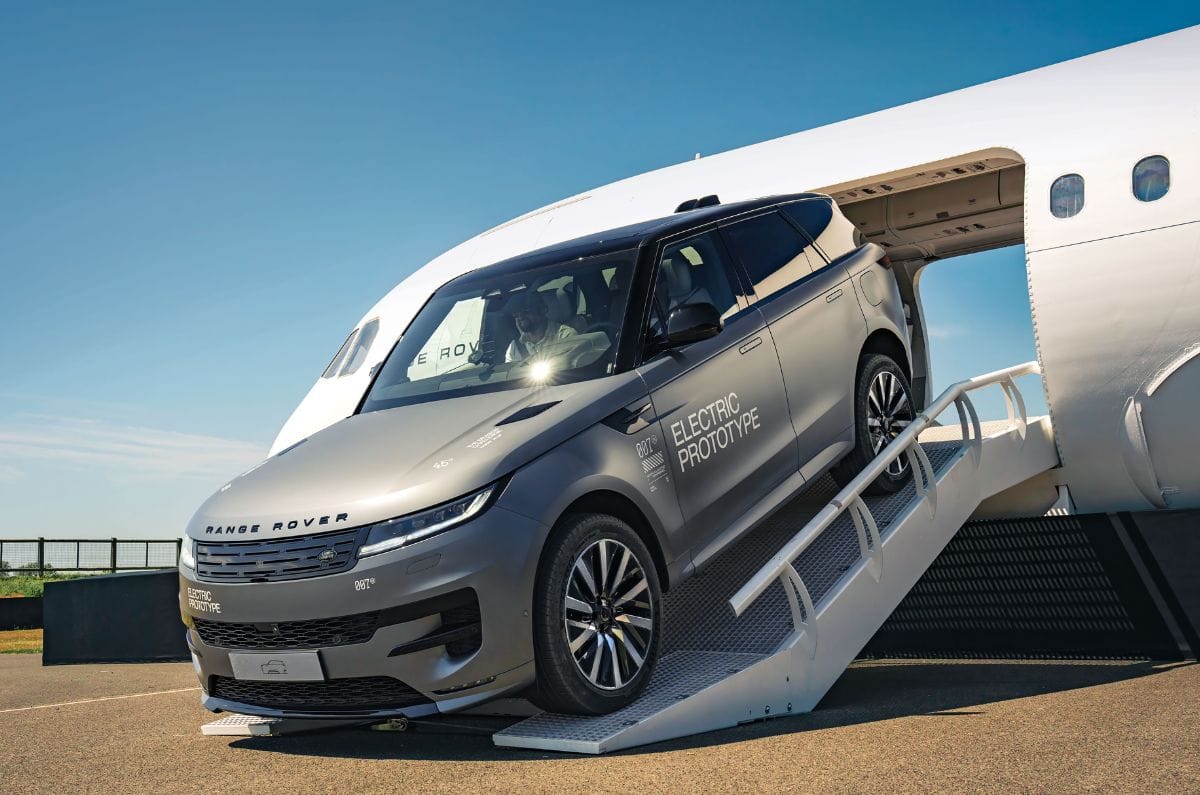
Range Rover Sport Electric Prototype First Drive: Shockingly Familiar

Range Rover Sport Electric Prototype First Drive: Shockingly Familiar
Range Rover Sport Electric prototype drive

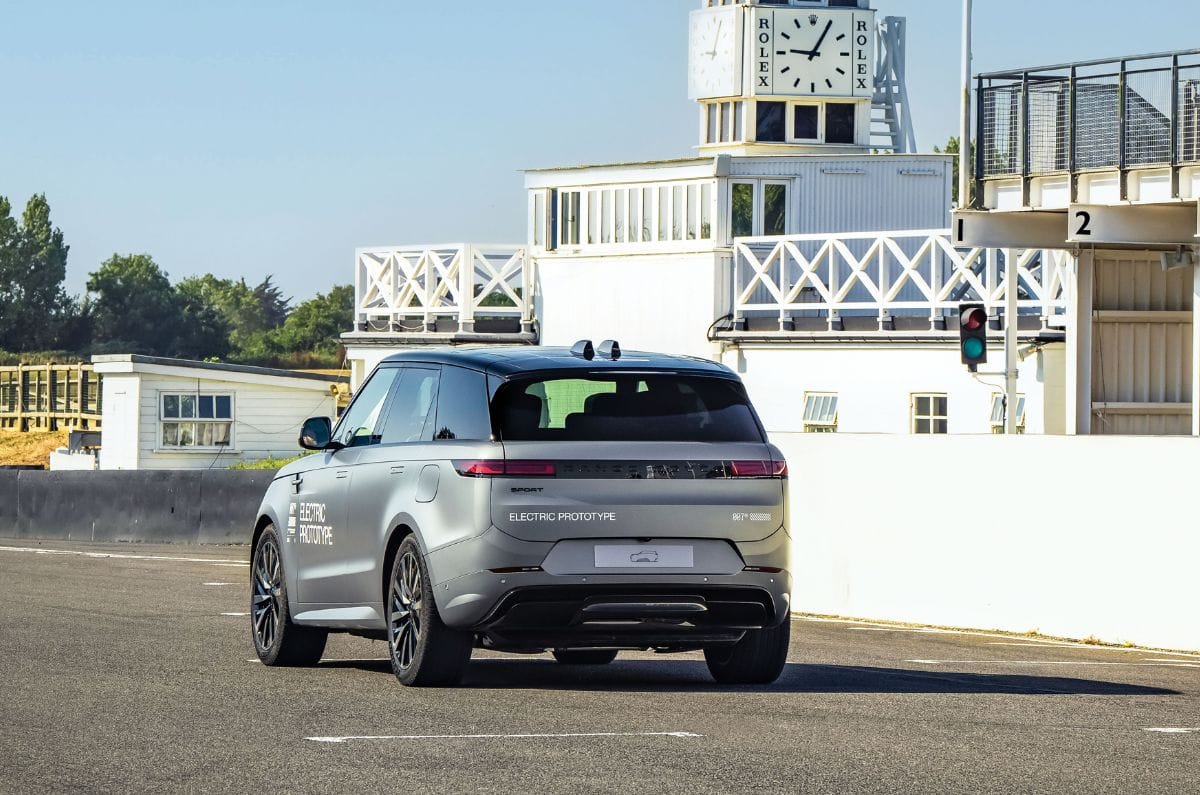
The Range Rover Sport EV has been a long time coming. After what feels like an eternity of teasers and test mules, the electric Range Rovers will finally be launched globally in September this year and should arrive in Indian showrooms around March 2027. Look at the car and you may wonder what took the company so long, because this appears to be just the regular Range Rover Sport. That, as it turns out, is entirely the point.

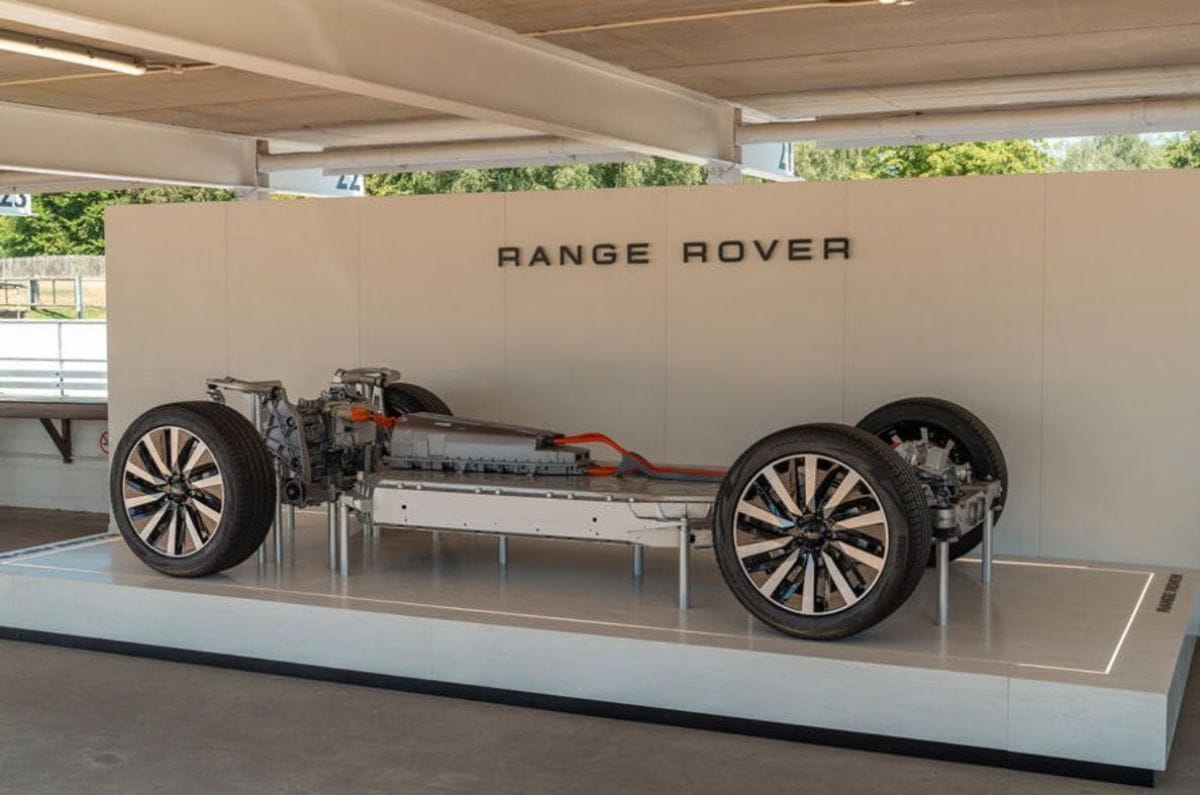
Under the familiar skin sit 300 patents’ worth of tech, a new 800V electrical architecture, two 326hp motors and a 118.5kWh battery, all validated over 60,000 hours of testing, the most for any Range Rover yet. The motors are Land Rover’s own design, developed in-house because nothing off the shelf could deliver the kind of instant, finely controlled torque the brand demanded for serious off-roading. The only real giveaways on the outside are a grille with narrower air slots and a new set of alloys with a more aero design, in keeping with the EV theme. Land Rover deliberately didn’t tamper with the styling because customers were clear – don’t change it, just make it better.

The new architecture, motors and battery have gone through 60,000 hours of testing.

So, is it better? A specially curated lap of the Goodwood circuit, complete with gravel stages and some party tricks, was our chance to find out.

Range Rover Sport Electric Prototype: performance, ride and handling 

Set off, and the first impression is of eerie silence. All you can hear is the blower working overtime on a hot Goodwood day. Even when the tarmac ends and the gravel begins, the Sport EV feels like a magic carpet, gliding along on a pillow of velvet. The ride quality is absolutely exceptional, better even than the standard car’s, and that’s saying something.

When you want a quick turn of pace, the combined 550hp and 850Nm don’t leave you wanting. Engage launch control, and the Sport EV catapults forward hard enough to be a genuine shock, though the delivery is measured rather than manic. There is, however, a hint of torque steer from the front axle under hard acceleration, a slight tug at the wheel that reminds you how much force is being exerted. The brakes on our prototype also felt a bit grabby, with a sharp initial bite. Land Rover engineers admit this isn’t the final calibration and say production cars will have a more progressive pedal feel.

The Sport EV feels like a magic carpet, gliding along on a pillow of velvet.

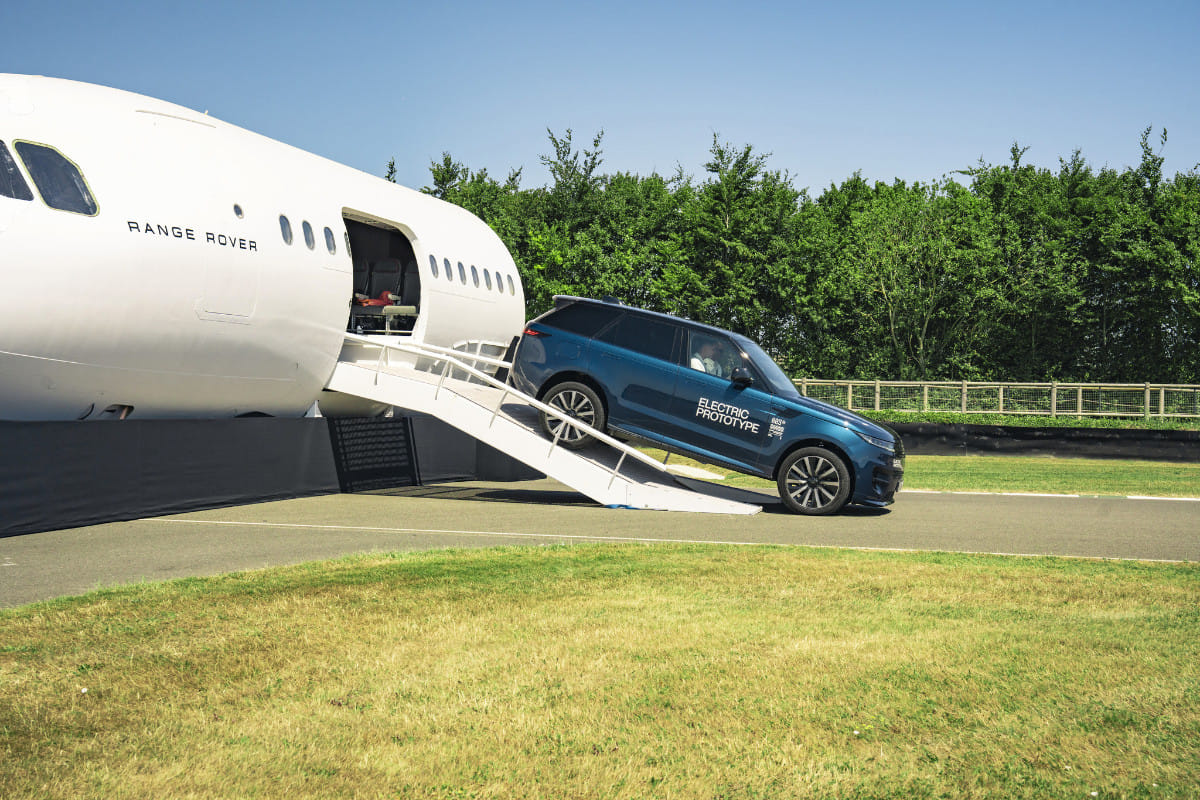
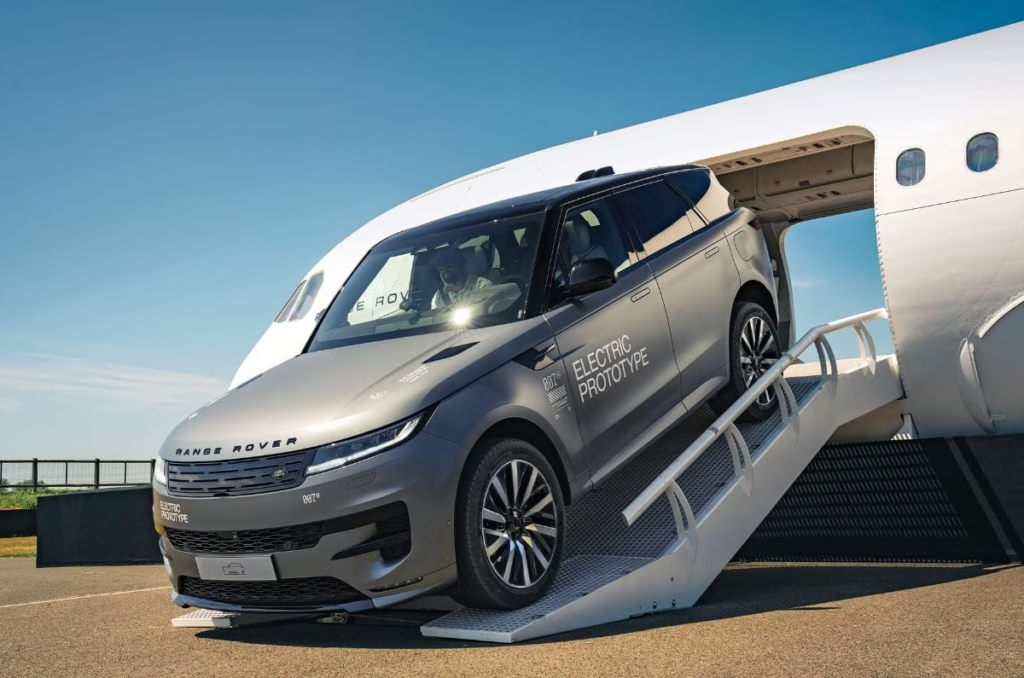
Then came the fun exercises, laid out to prove that this plush, polished and uber-refined Range Rover can do things no owner would ever dare attempt. The Sport EV climbed a staircase – a cheeky nod to the brand’s world record 999-step climb – and we even drove it through the fuselage of an Airbus. Silly? Absolutely. But it showcased what makes an electric drivetrain so effective off road. Torque arrives instantly from zero rpm and builds with perfect linearity, and because the electronics can meter out drive to each motor with such precision, there’s no need for the old hardware of locking diffs and low-range gearboxes. Raise the suspension to off-road height, let the cameras and hill descent control do their thing, and the car simply walks over obstacles. The single-pedal mode is something the engineers have finally nailed too, and it works seamlessly alongside hill descent control when needed.

The big surprise is how tidily this near 2.8-tonne SUV handles. Flick the wheel suddenly, and you can feel the mass move, but otherwise, it stays impressively planted through corners, helped by a centre of gravity that sits a significant 73mm lower than in the combustion car. Range Rovers have always had a top-heavy feel when pushed; this one doesn’t.

Questions remain. A real-world range of 531km is promised, but given the bluff shape and sheer size of this flagship EV, that figure could prove optimistic if driven briskly. Some owners may have liked the convenience of a frunk in their EV, which is absent, and packaging the rear motor has killed off any seven-seat option. Then again, these are misses most owners may not miss at all.

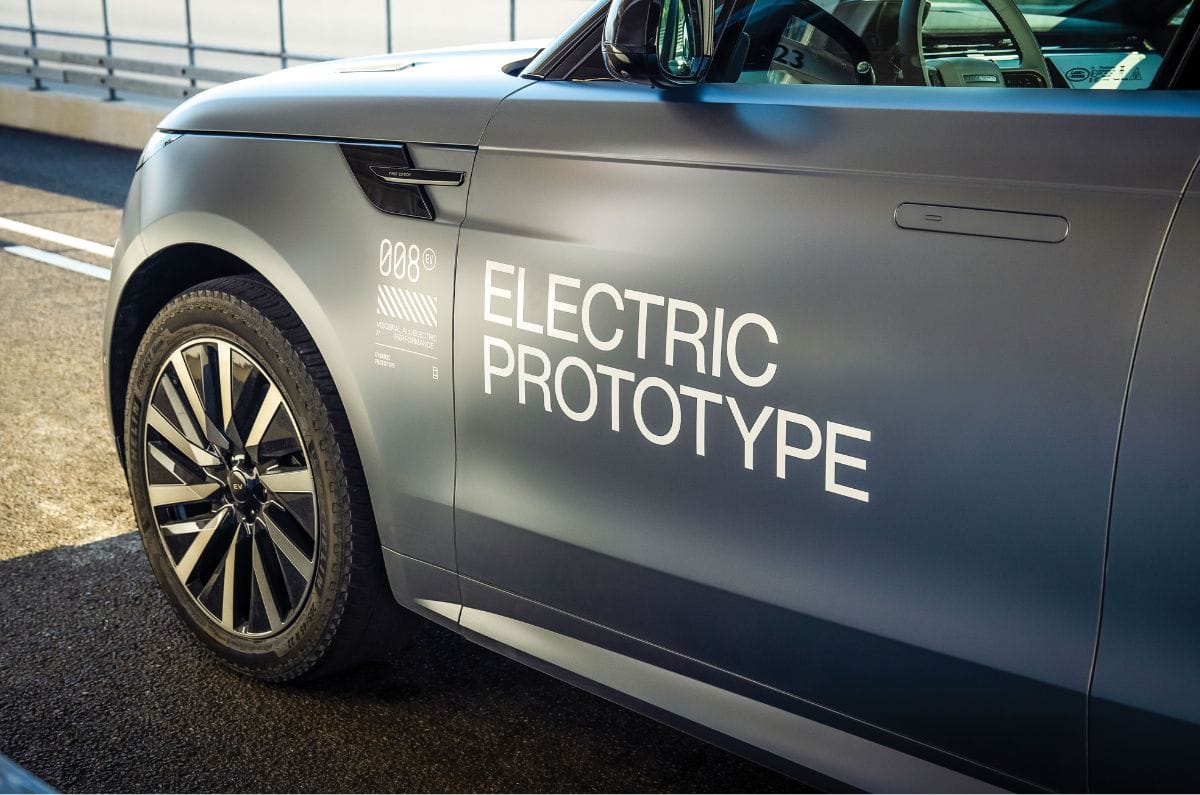
Prototype badging aside, there’s little to separate this from the combustion-engined Sport.

Pricing isn’t announced yet, but expect it to sit above the locally assembled combustion equivalents. More importantly, on this evidence, it will set a new benchmark for luxury for the brand. The electric Range Rover Sport doesn’t reinvent the formula, but it quietly perfects it.

Suzuki e-Access road test, review

Suzuki e-Access road test, review
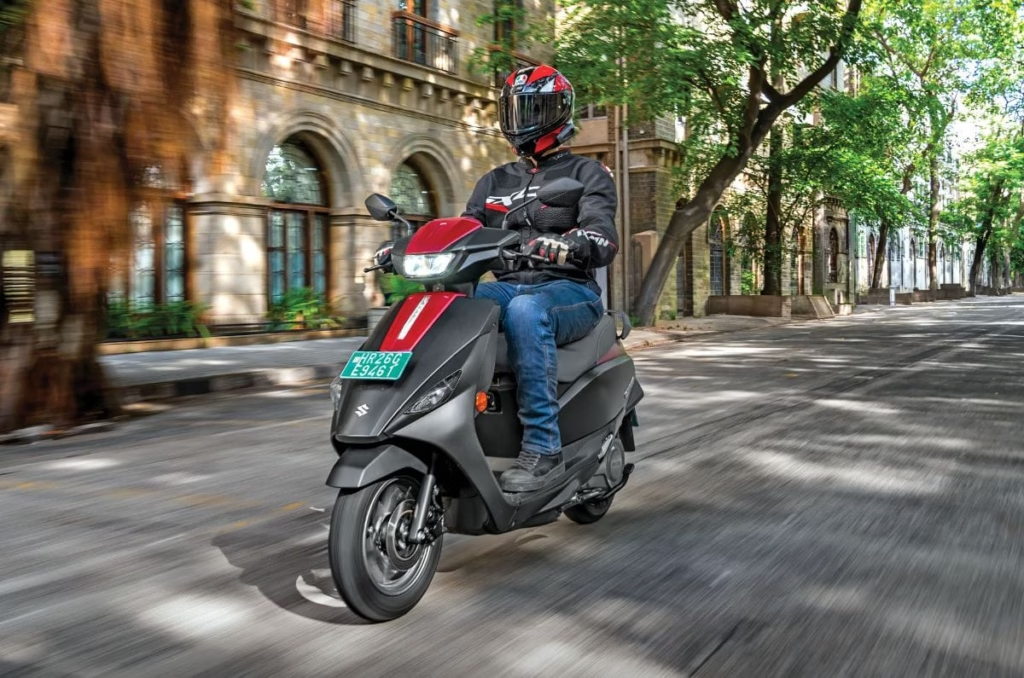
Suzuki e-Access front left side riding shot on road

Suzuki first showed the e-Access back in January 2025, but it was actually launched only a year later, in January 2026. While the e-Access has definitely lost the first mover advantage in the burgeoning EV market, has it at least come prepared? 

e-Access Design and Features – 6/10

Unusual design won’t be to everyone’s tastes, features aren’t ground-breaking.

The e-Access is a ground-up new product, which has very little shared with its massively popular petrol-powered namesake. Its design is a clean-sheet one, and most people found it quite polarising. The swooping, double ‘duck-bill’ front end, mated to a contrasting, boxy rear section, doesn’t really gel well cohesively. Like all Suzuki two-wheelers, the e-Access feels solidly built, and the quality is quite decent too. 

Decent is also a good way to describe its feature set, which includes the same bright and logically laid-out 4.2-inch TFT display as the 125cc Access and Burgman Street. In terms of riding modes, there are 3 in total – Eco, Ride B and Ride A – but on the move, you can only switch between Eco and either of the Ride modes. Both Ride A and Ride B give you full power, and the only difference is in the levels of regenerative braking. A has stronger regen, while in B, it is more gentle. To toggle between A and B, you have to be at a standstill, and this is a needless hoop to jump through.  

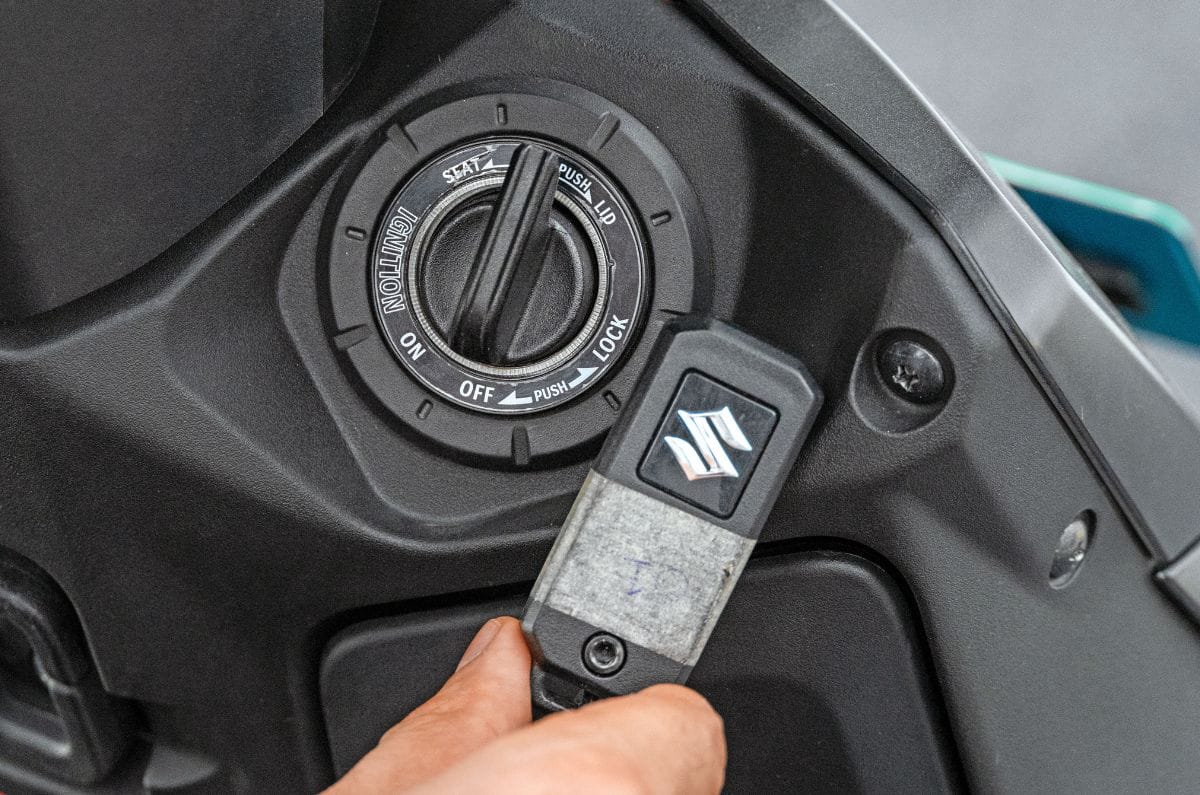
Suzuki e-Access key fob
Keyless ignition convenient to have, and very few e-scooters offer it today.

The feature set also includes a very convenient keyless ignition system, a spacious, open cubby on the front apron with a USB-A charger and an oddly-shaped, very small 17-litre underseat boot. In an age where most rivals routinely offer 30-35 litres of boot space, the e-Access falls woefully short, and in fact, even the latest-gen ICE Access gives you more. 

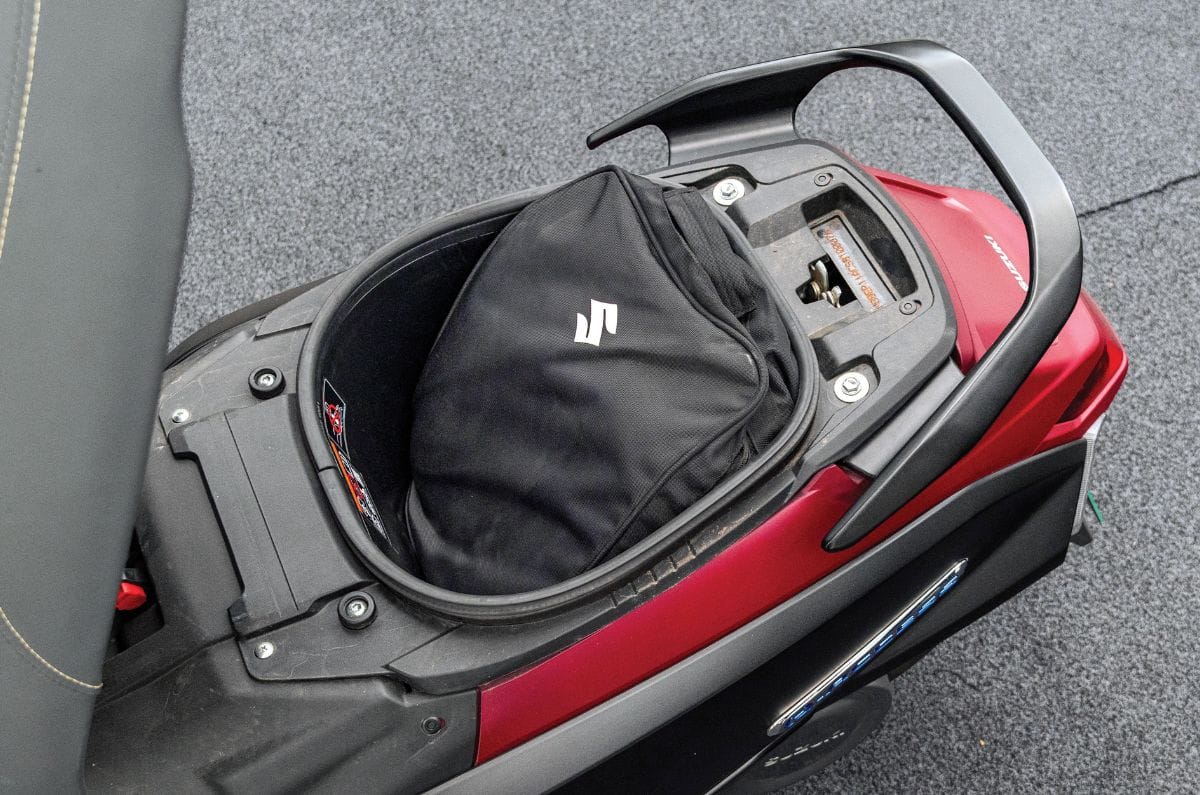
Suzuki e-Access boot
17L boot feels archaic today, charger cables need to be folded just right to fit inside.

It comes with a reasonably sized 600W charger, which took 6 hours flat to top up a flat battery to full. Suzuki also provides a well-thought-out bag in which you can store the charger, which is another neat touch. However, if you don’t pack the charger’s cables just right and place the bag inside the boot, it won’t close. Moreover, once the charger is in the boot, there’s very little free space available. This is a consequence of Suzuki positioning the batteries under the seat, which also has some ramifications on the scooter’s handling, but more on that later. 

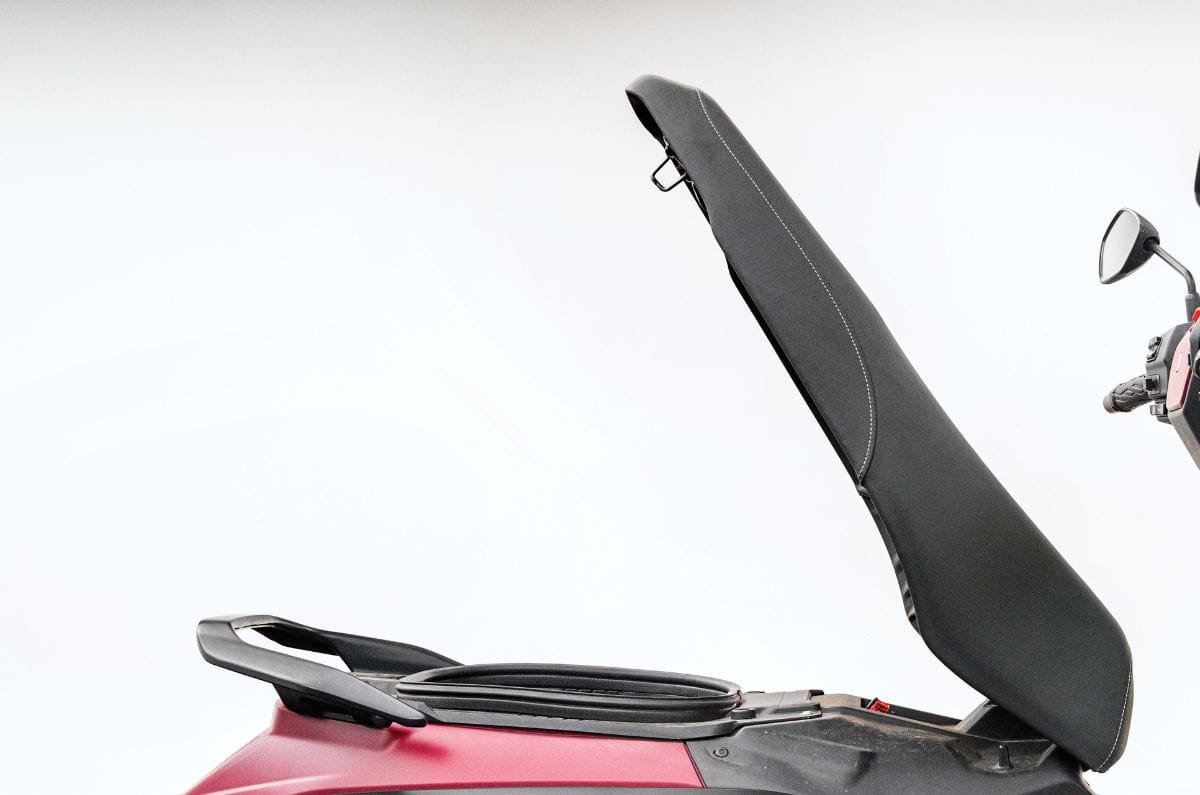
One silver lining is that the e-Access’ seat stays in the position you leave it in once you open it, courtesy of a small spring-loaded mechanism at the hinge, which is quite a neat touch. 

Suzuki e-Access seat open
Seat stays open on its own without needing to keep it manually propped open.

e-Access Performance and Range – 6/10

Range and performance are just about adequate.

Every EV has shortcomings, but the important question is, can they be overlooked in the interest of the savings it brings via lower running costs? Unlike most mainstream manufacturers, which use NMC (Nickel Manganese Cobalt) batteries, Suzuki has chosen LFP (Lithium Ferrous Phosphate) chemistry for the e-Access. LFP cells typically have a longer life and lower risk of thermal runaway incidents, but the trade-off is lower energy density, and ergo, lower range.

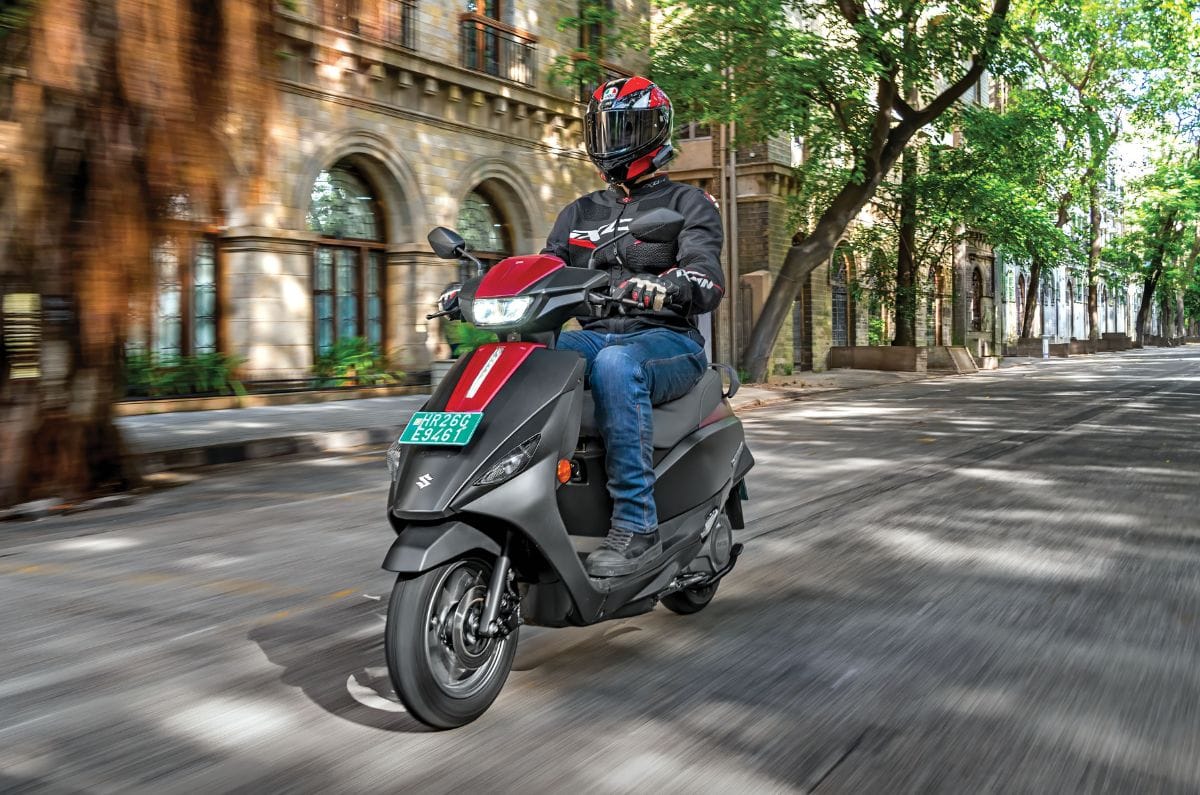
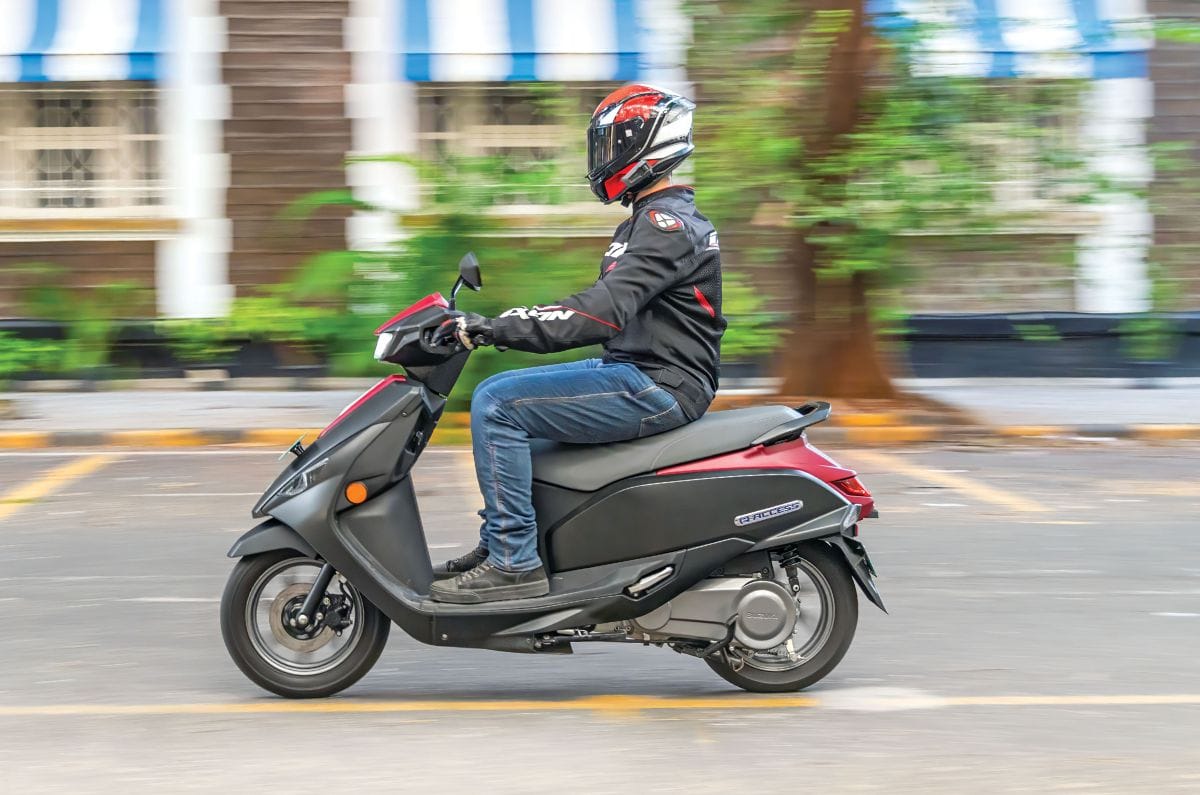
Suzuki e-Access left side profile riding shot on road
Neutral ergonomics and well-judged suspension help keep you comfortable.

With a 3.072kWh LFP battery pack and a claimed 95km IDC range, range was never going to be the e-Access’ USP. In our tests, using Ride A mode (maximum power, maximum regenerative braking), we managed to cover a little over 88km on a single charge. This is a decent number in isolation, but quite a bit lower compared to rivals with similarly sized batteries, which can cover upwards of 100km. 

One positive is that, once the range indicator had calibrated to our riding style, its predictions proved to be accurate, and the number shown on screen could be relied upon as the actual distance you’d go. Using Eco mode will obviously increase range on a single charge, but performance will be much gentler. What is nice is that even in Eco, the e-Access can maintain pace with big-city traffic as well as climb flyovers.

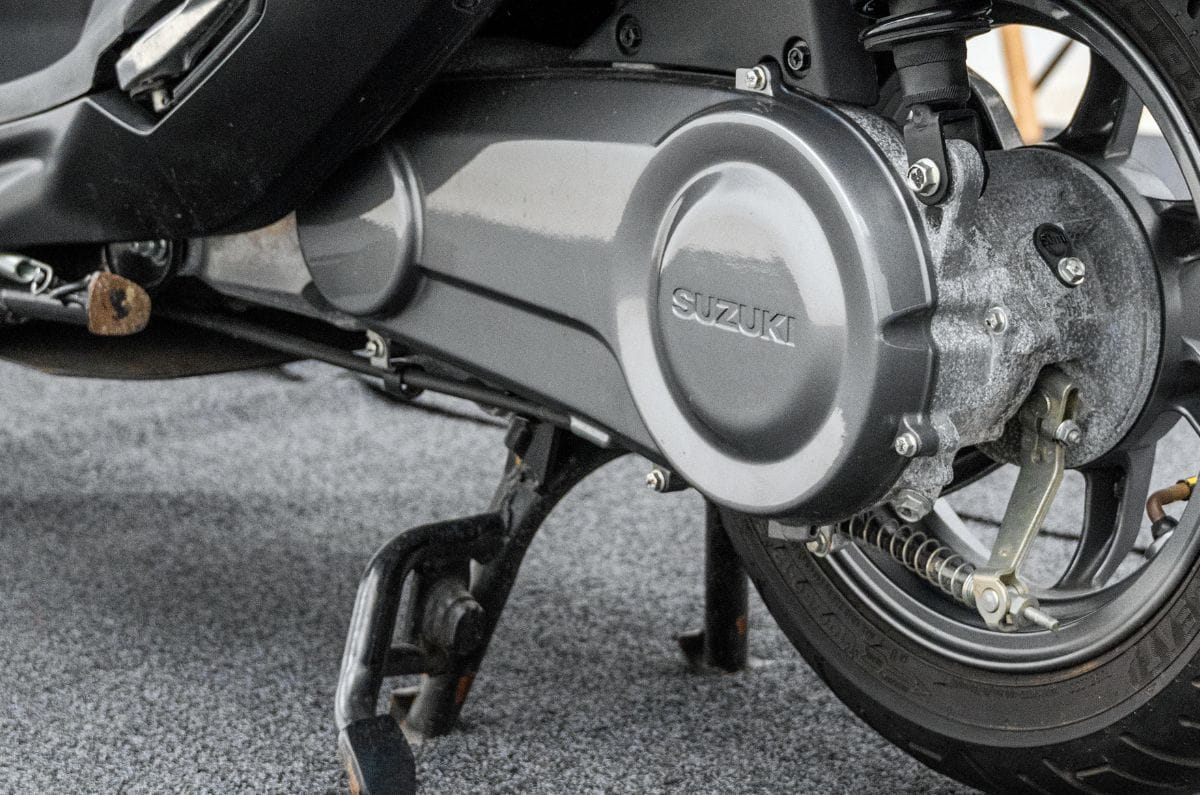
Suzuki e-Access motor
Motor delivers power in a predictable, unhurried manner, but the powertrain is quite noisy.

While the performance never feels inadequate, it is definitely a letdown on a machine bearing the ‘Access’ badge. In our tests, the e-Access took nearly 12 seconds to complete the 0-60kph sprint, which not only makes it slower than most other well-known e-scooters, but also much slower than the Access 125 that takes 7.68s for the same test. In fact, its performance, even in the most powerful Ride A mode, is so mellow that even the gentle Honda Activa 110 would leave it in the dust in a traffic-light grand prix. Another bug bear we have with the e-Access’ powertrain is that the powertrain is on the noisier side among all the reputed EVs on sale today.

e-Access Ride and Handling – 7/10

It’s light, easy and intuitive to ride, but over-eager handling is a mismatch.

To sit on, the e-Access feels pleasantly ‘normal’, and while this is certainly a compact machine, taller riders will be reasonably accommodated. However, while its low 765mm perch will be welcoming for shorter folks, riders over 6 feet will find it a bit too low. With a flat seat, spacious floorboard and well-tuned suspension, the e-Access is quite a comfortable machine and will isolate you to a great degree from all but the worst of bumps on our roads. 

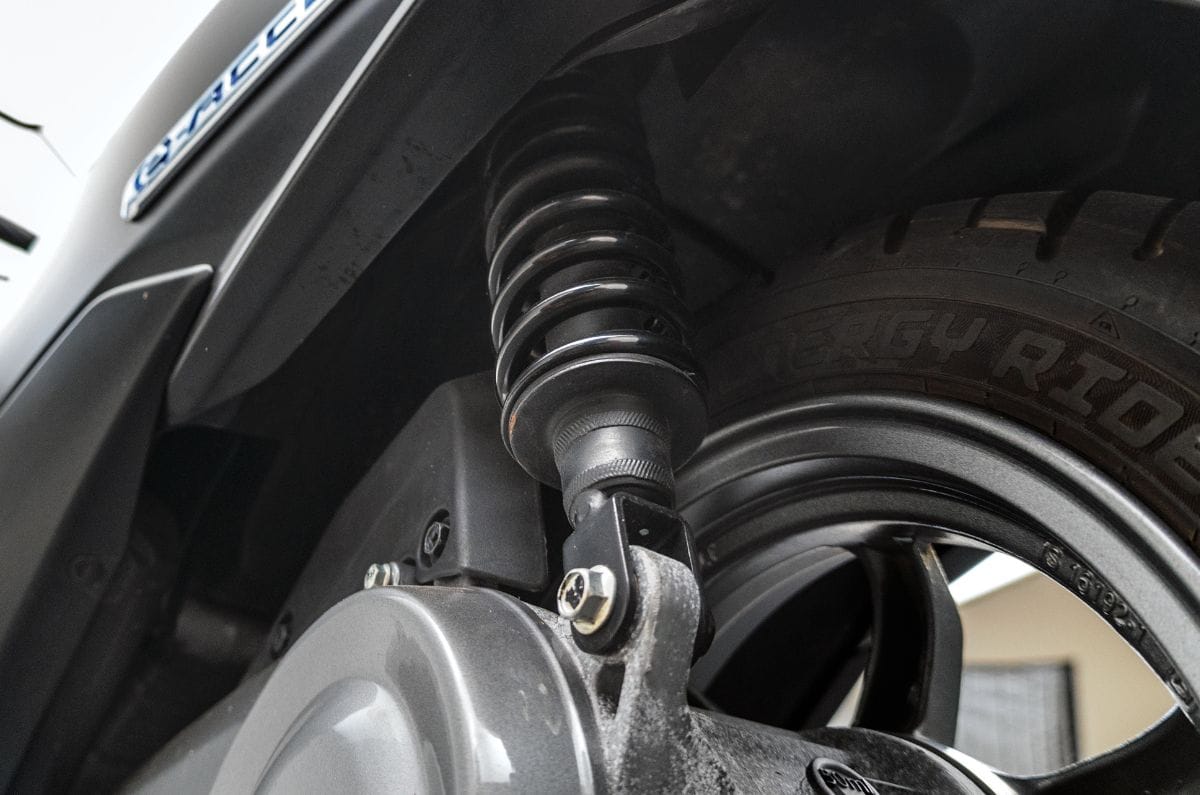
Suzuki e-Access monoshock
Suspension is well set up and shields you from bumps, but is more taut than floaty.

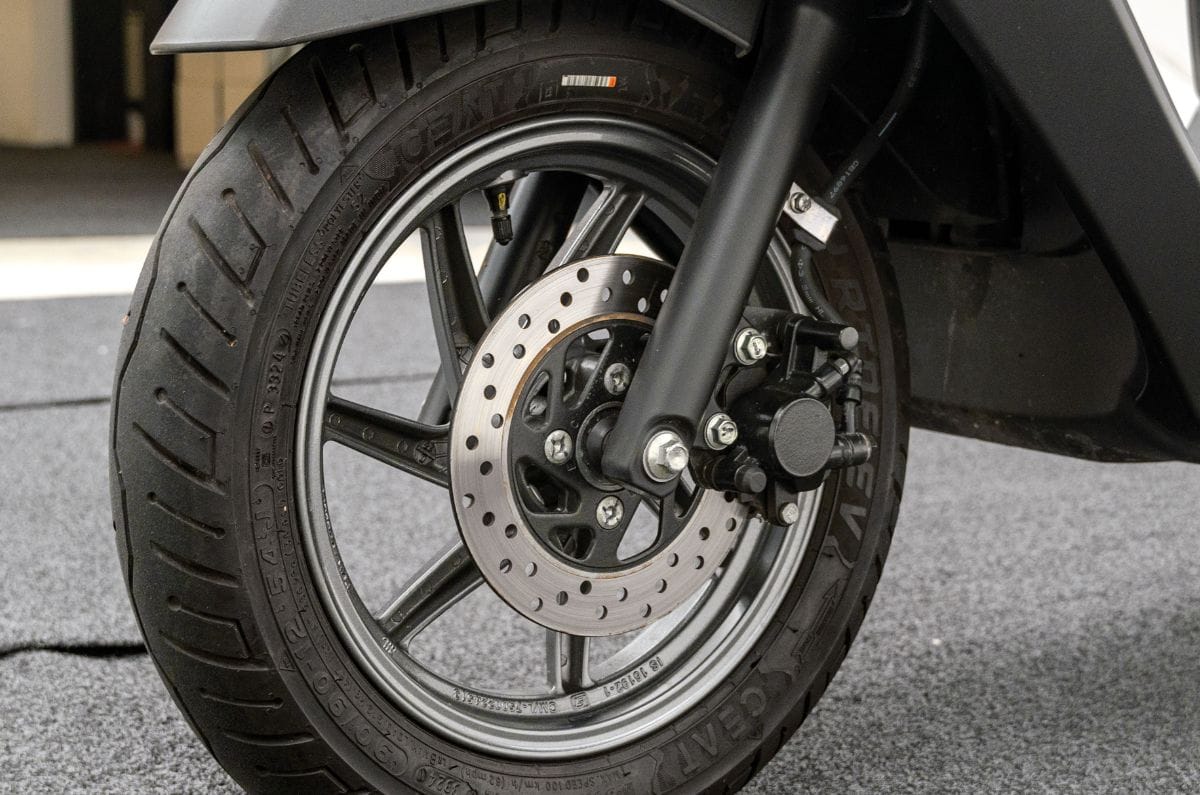
Like the new Burgman, its suspension is not overtly soft and feels quite taut, which isn’t necessarily a deal breaker, but something to watch out for. Braking power is quite good, although the lack of ABS and a sharp bite mean you have to be mindful when slowing down. 

Suzuki e-Access front brake
Brakes work well, but are quite sharp and bitey. Lack of ABS is a downer at this price.

At 122kg, it is fairly light, and slicing through traffic is a breeze. In fact, the scooter displays a tendency to lean over onto its side quicker than you’d expect, which is partly down to its smaller 12-in wheels and thinner tyres. It is also another consequence of Suzuki mounting the battery pack vertically under the seat. As a result of the centre of gravity being fairly high, the e-Access almost ‘falls’ into a corner, and this behaviour won’t be to everyone’s liking.

e-Access Price and Verdict – 6/10

All said and done, it’s not the average features, tiny storage area, mellow performance or lacklustre range which will dissuade you from buying it. These are all things that buyers could overlook in exchange for the quality assurance that comes with the Suzuki Access name. However, the deal breaker here is the super-steep Rs 1.92 lakh asking price, which is very difficult to justify when similarly specced, proven options from reputed Indian brands like TVS, Bajaj, Vida (Hero) and Ather cost up to Rs 60,000 less. 

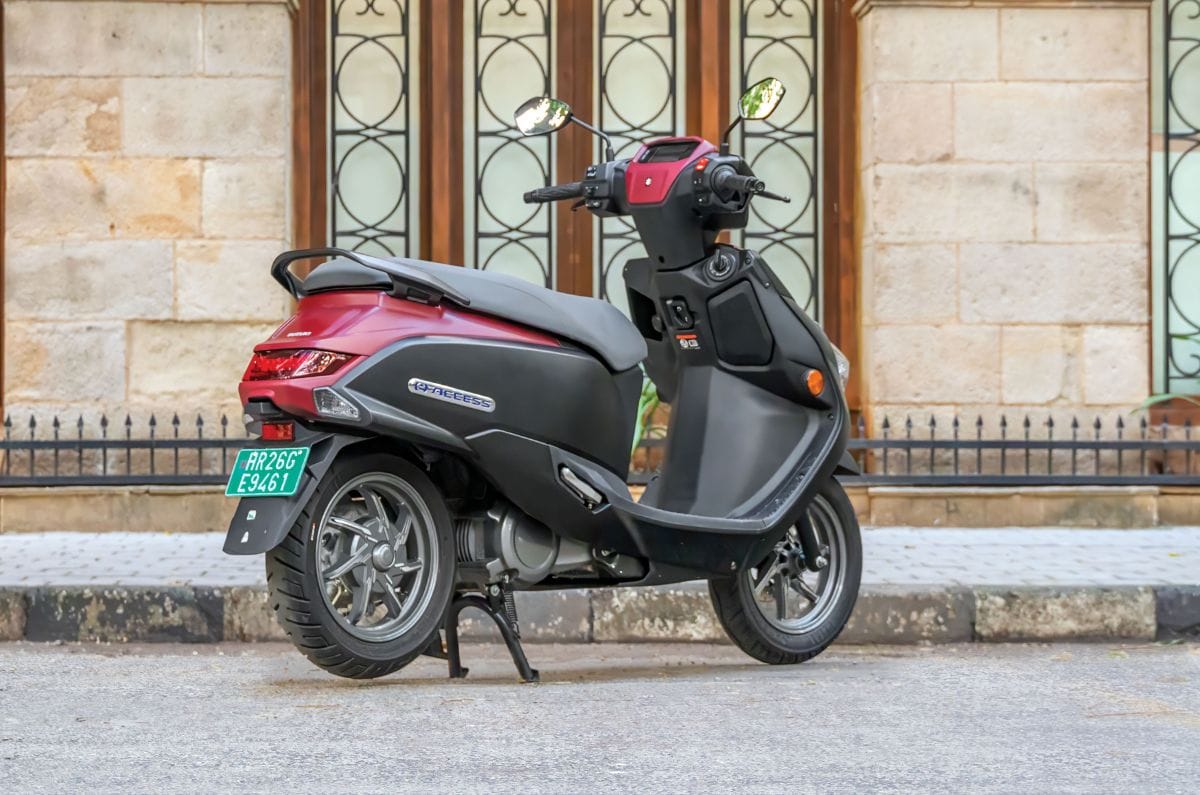
Suzuki e-Access rear right side static on road
Gets some things right, but it’s far too expensive.

The e-Access gets some things right, like good comfort, and has typical Japanese strengths, like the promise of reliability, longevity and good quality. However, today’s market values a good price point without compromising on range, storage and quick charging times. For the e-Access to follow in the successful footsteps of its ICE namesake, simply leveraging an established name and charging an unreasonably stiff premium for it is unlikely to pay off.

Tata cars to get pricier from September 1

Tata cars to get pricier from September 1
Tata Punch front logo

Tata cars are set to get pricier by up to Rs 25,000 from September 1, 2026. The exact price hike will vary depending on the model, but the Indian automaker cited continued inflationary pressures and rising input costs as some of the reasons behind its decision. Tata Motors stated that increasing the prices of its cars will help the company offset these challenges. Hyundai has also announced a price hike for September, with Mauruti Suzuki announcing a similar decision for August 2026.

  • Reasons include inflationary pressures and rising input costs
  • Foreign exchange volatility and high employee separation costs also cited

Tata Motors price hike in September 2026

The company said that it has been bearing the brunt of sustained inflation and input costs, but continuing to do so will begin impacting profits. One of the main culprits behind this has been the rising cost of EV batteries, becoming around 10 percent more expensive over a period of several months.

Other factors behind the September 2026 price hike include foreign exchange volatility and high employee separation costs, according to Tata Motors. The resultant hike is to affect the brand’s EV and ICE (internal combustion engine) models, with the exact model-wise breakup yet to be announced. However, prices of Tata SUVs are expected to go up across the board.

मारुति, हुंडई के बाद अब Tata Motors PV का ऐलान, 1 सितंबर से ₹25000 तक बढ़ाएगी कारों की कीमतें

मारुति सुजुकी इंडिया और हुंडई मोटर्स इंडिया के बाद अब टाटा मोटर्स पैसेंजर व्हीकल्स लिमिटेड (TMPV) ने अपनी गाड़ियों की कीमतें बढ़ाने की घोषणा की है। कंपनी 1 सितंबर से अपनी सभी गाड़ियों की कीमतों में 25,000 रुपये तक की बढ़ोतरी करेगी। कंपनी ने इसकी वजह बढ़ती लागत और महंगाई के दबाव को बताया है। टाटा ग्रुप की कंपनी TMPV ने शुक्रवार को बयान में कहा कि बढ़ोतरी के तहत सभी सेगमेंट्स के इंटर्नल कंबंशन इंजन (ICE) व्हीकल्स और इलेक्ट्रिक व्हीकल्स (EVs) आएंगे। कीमतों में बढ़ोतरी मॉडल और वेरिएंट्स के आधार पर अलग-अलग होगी।

टाटा मोटर्स पीवी के मुताबिक, ‘‘बढ़ती लागत और महंगाई के प्रभाव को आंशिक रूप से संतुलित करने के लिए कीमतों में यह बदलाव किया जा रहा है।’’ बयान में कहा गया कि TMPV अब भी इस बढ़ोतरी का एक बड़ा हिस्सा खुद वहन कर रही है लेकिन कीमतों में बदलाव के जरिए इसका कुछ बोझ ग्राहकों पर डाला जा रहा है। TMPV की गाड़ियों में छोटी कार टियागो से लेकर प्रीमियम SUV सफारी और हैरियर EV तक शामिल है। इन वाहनों की कीमत लगभग 4.7 लाख रुपये से लेकर 31 लाख रुपये के बीच है।

शेयर में गिरावट

कंपनी के शेयरों में 21 अगस्त को गिरावट है। शेयर BSE पर 318.95 रुपये के लो तक गया। 1.17 लाख करोड़ रुपये है। शेयर की फेस वैल्यू 2 रुपये है। शेयर BSE 100 इंडेक्स का हिस्सा है। शेयर 6 महीनों में 15 प्रतिशत, एक साल में 24 प्रतिशत और 2 साल में 52 प्रतिशत नीचे आया है। कंपनी में जून 2026 के आखिर तक प्रमोटर्स के पास 42.51 प्रतिशत हिस्सेदारी थी।

Technocrats Plasma 74% प्रीमियम पर लिस्ट, ₹132 के शेयरों ने एंट्री पर ही भर दी झोली; लगा अपर सर्किट

मारुति और हुंडई ने कितना बढ़ाया प्राइस

मारुति सुजुकी इंडिया ने अपनी सभी गाड़ियों की कीमतों में औसतन लगभग 0.5 प्रतिशत की बढ़ोतरी की है। यह 18 अगस्त 2026 से लागू हो गई है। अगस्त की प्राइस हाइक के तहत मारुति सुज़ुकी की कारें अलग-अलग मॉडल और वेरिएंट के हिसाब से 2,500 से 30,000 रुपये तक महंगी हो रही हैं। इनपुट कॉस्ट में लगातार हो रही बढ़ोतरी के कारण कंपनी ऐसा कर रही है। हुंडई मोटर इंडिया भी 1 सितंबर, 2026 से सभी कारों के दाम 1 प्रतिशत तक बढ़ाएगी। किस कार का दाम कितना बढ़ेगा, यह मॉडल और वेरिएंट पर निर्भर करेगा।

Disclaimer: यहां मुहैया जानकारी सिर्फ सूचना के लिए दी जा रही है। यहां बताना जरूरी है कि मार्केट में निवेश बाजार जोखिमों के अधीन है। निवेशक के तौर पर पैसा लगाने से पहले हमेशा एक्सपर्ट से सलाह लें। मनीकंट्रोल की तरफ से किसी को भी पैसा लगाने की यहां कभी भी सलाह नहीं दी जाती है।

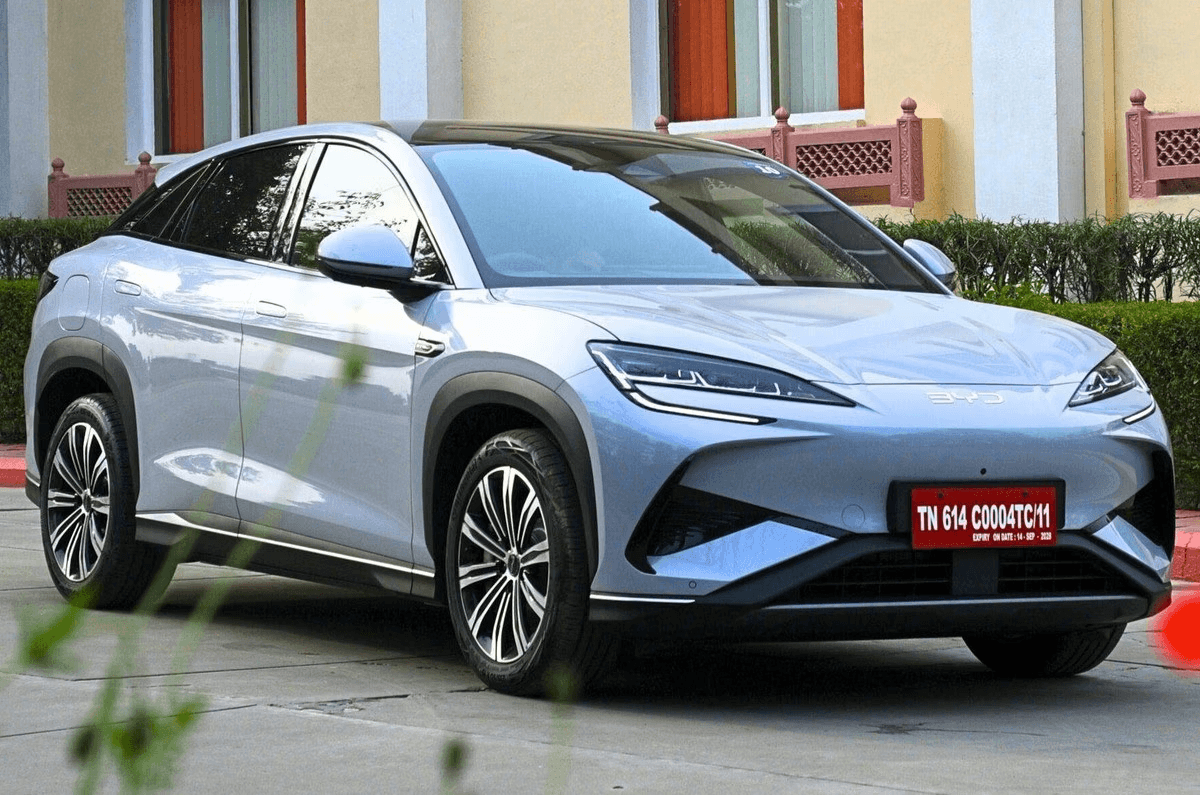
Entry-level BYD Sealion 7 Dynamic trim launched at Rs 41.90 lakh

Entry-level BYD Sealion 7 Dynamic trim launched at Rs 41.90 lakh
BYD Sealion 7

To make the BYD Sealion 7 EV more accessible, the Chinese carmaker has introduced the new Dynamic trim at Rs 41.90 lakh, ex-showroom. It replaces the Rs 49.90 lakh-Premium as the base trim and is Rs 8 lakh cheaper. Compared to the rest of the line-up, the Sealion 7 Dynamic gets a smaller battery and fewer features.

First India-made Skoda EV expected in 2028

First India-made Skoda EV expected in 2028
India-made Skoda EV details

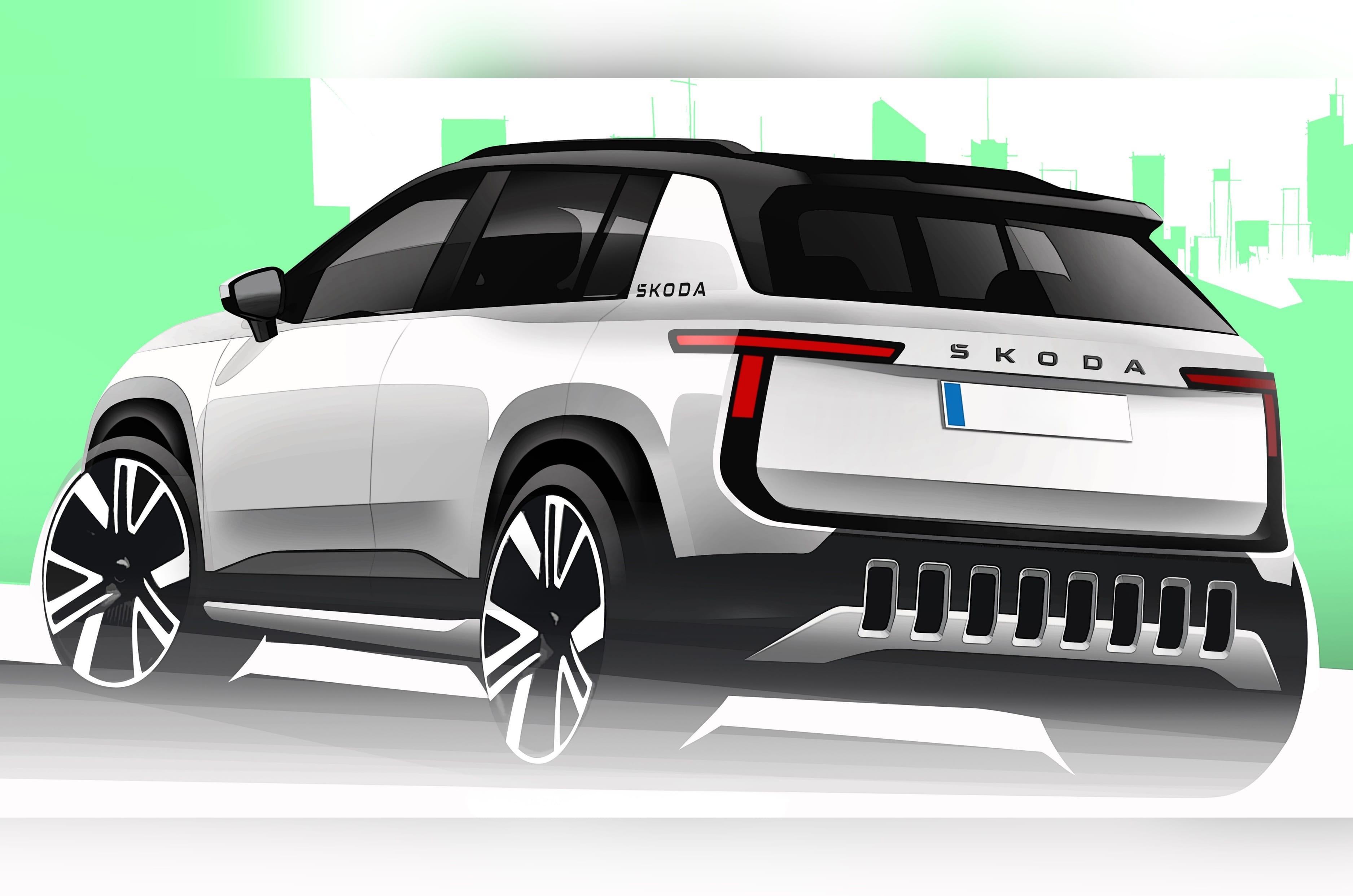
In a rapidly evolving and diversifying market like India, Skoda’s lineup has strictly been limited to just petrol models until now, with petrol itself shrinking and currently making up less than 50 percent of the overall market. The Czech carmaker is now finally looking to diversify, having announced an aggressive CNG plan, a return to diesel with the Superb and also EVs, but in limited batches of fully imported models. However, a locally made EV is still crucially missing from the lineup. Autocar India understands that this gap is expected to finally be addressed in 2028 with a locally produced EV.  

India-made Skoda EV details

Having announced a fresh barrage of products, Skoda has now moved on to what it is internally referring to as the India 3.0 programme. The programme is expected to support a CNG-powered Kylaq in 2027 and two locally manufactured battery electric vehicles starting in 2028 – the first will be a 5-seater, followed by a 7-seater at a later stage. 

“We know we have to do electric, so we are now thinking about what would be the best option for an electric car in India,” Martin Jahn, Skoda Auto board member for sales and marketing, told Autocar India on the sidelines of the updated Slavia’s launch. 

While Jahn did not disclose specific details about the EVs, as we’ve reported previously, the EV programme is likely to use an adaptation of the Volkswagen Group’s China Main Platform, or CMP. The version being developed for India is referred to as the India Main Platform, or IMP, and will be tailored to local costs and market requirements.

The group intends to leverage an existing electric architecture while localising the platform, battery system and key components. A high level of localisation will be essential to price the models competitively in India’s mainstream EV market. Speaking to Autocar India, Skoda India brand director Ashish Gupta also acknowledges saying, “The volume EVs are going to come when there is localisation, and that is something which we are working on heavily.” 

Where will the investment for the new EVs come from?

That’s the most important question, with new investment being key to designing, developing and engineering Skoda’s locally-made EVs. We understand the carmaker is close to finalising its next phase of investment in India. The company hasn’t officially disclosed the size or structure of the proposed investment, but sources say it could be around one billion euros. 

Skoda is examining different ways to fund and execute the EV programme, including bringing in a strategic partner. As previously reported, Skoda Auto Volkswagen India is in the final stages of discussions for an alliance with the JSW Group. The proposed structure is likely to give the Indian conglomerate a majority stake and bring in the much-needed capital for the EV programme.  

The discussions have yet to reach a formal conclusion, and the final structure and scope of the proposed alliance are still to be announced. Skoda Auto Volkswagen India is also examining other funding routes if the partnership does not materialise. 

With inputs from Hormazd Sorabjee

Tesla Model Y vs Mercedes CLA EV real-world range compared

Tesla Model Y vs Mercedes CLA EV real-world range compared

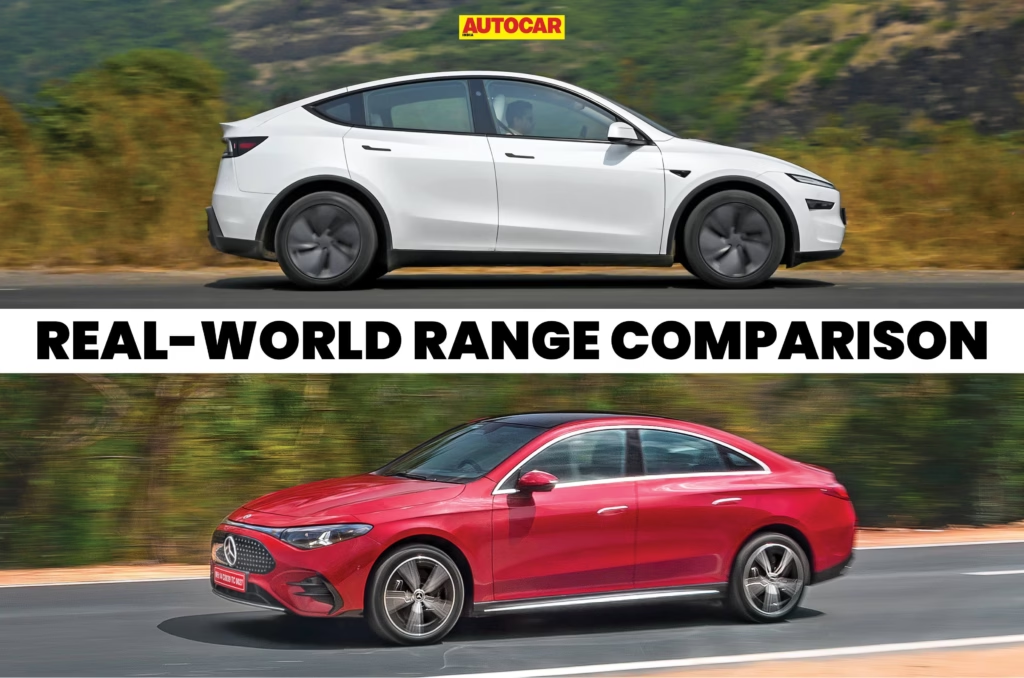
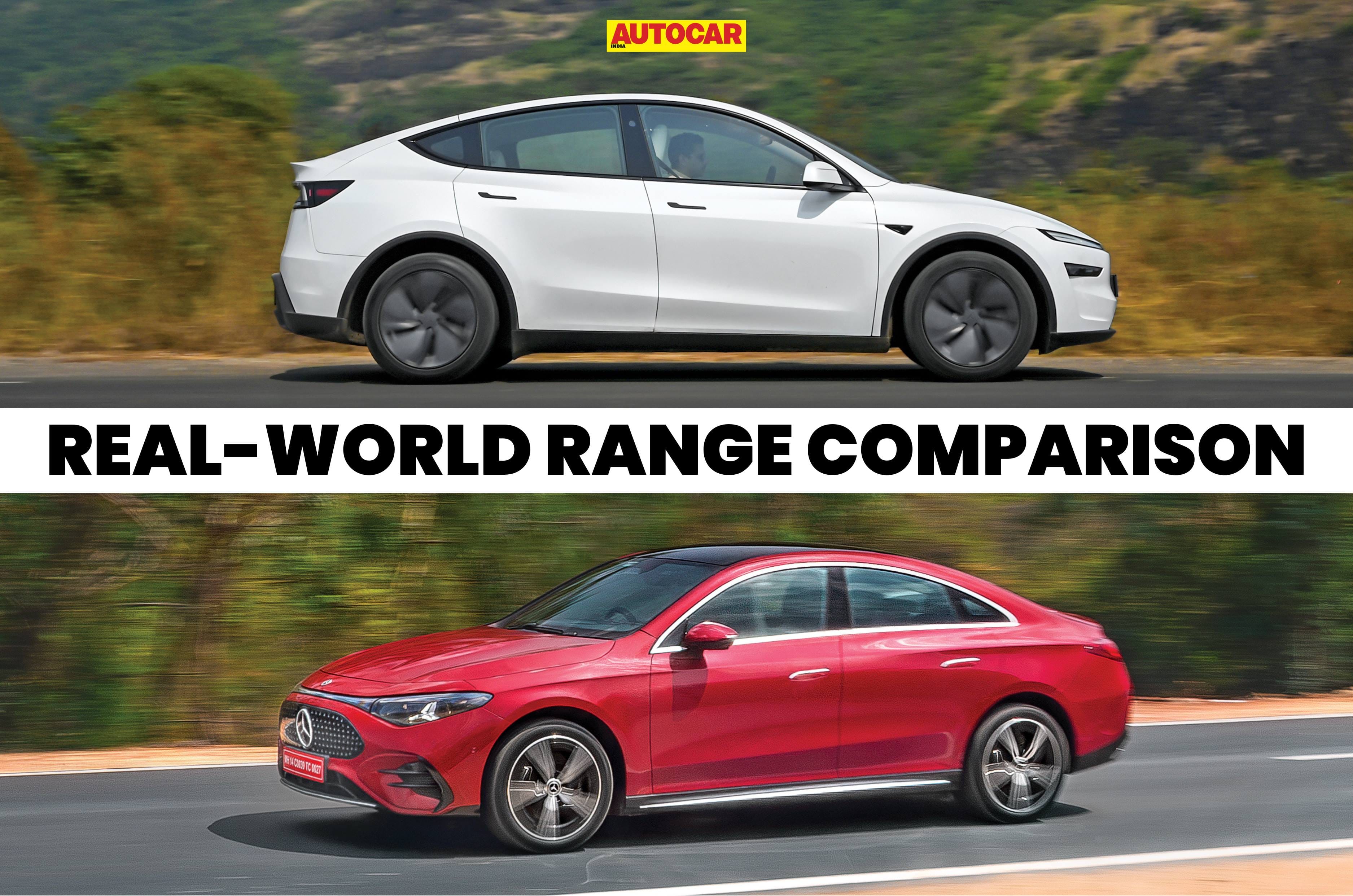
The Tesla Model Y and Mercedes-Benz CLA EV are two zero-emission offerings priced below Rs 65 lakh, but they take very different approaches. The Model Y is a crossover and Tesla’s only model on sale in India, while the CLA sedan is the entry point to Mercedes-Benz’s EV range. They also use different battery sizes and claim different ranges. We recently put both to our comprehensive range tests to see how they compare in the real world.

Tesla Model Y vs Mercedes CLA EV: Specifications, price

 Model Y PremiumCLA EV 250+ AMG Line
Battery size (kWh)6085
Power (hp)299272
Torque (Nm)420335
Drive layoutRWDRWD
Claimed range (km)500792
Kerb weight (kg)1,9282,055
Price (in Rs lakh)50.8960.50

Both are rear-wheel-drive electric vehicles, but the CLA 250+ AMG Line has a much larger 85kWh battery compared to the Model Y Premium RWD’s 60kWh unit. This gives the CLA a claimed range of 792km, significantly higher than the Model Y’s 500km.

The Tesla, however, makes more power and torque at 299hp and 420Nm, compared with 272hp and 335Nm for the CLA. The Model Y is also lighter at 1,928kg versus 2,055kg for the CLA.

There is also a noticeable price difference. The Model Y Premium RWD costs Rs 50.89 lakh – Rs 9.61 lakh less than the CLA 250+ AMG Line, which is priced at Rs 60.50 lakh.

Tesla Model Y vs Mercedes CLA EV: Real-world range

 Model Y PremiumCLA EV 250+ AMG Line
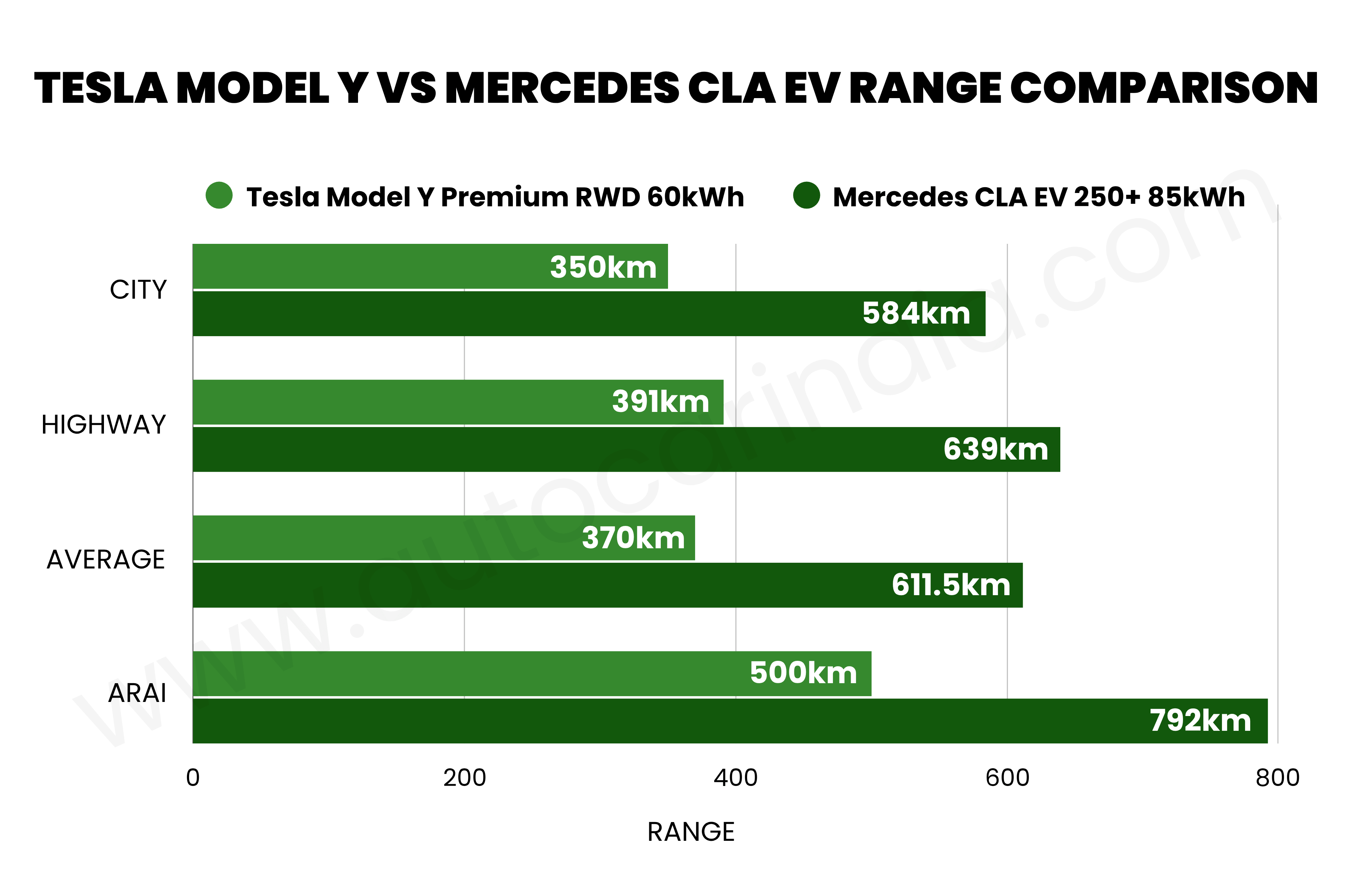
City (km)350584
Highway (km)391639
Average (km)370611.5

Clearly, the CLA 250+, with its larger battery pack, has the upper hand in real-world range despite weighing more. In our tests, it managed 584km in the city and 639km on the highway, compared with 350km and 391km, respectively, for the Model Y. The two-speed gearbox, with its taller 5:1 second gear that enables greater efficiency at higher speeds, also contributed to the EV’s highway efficiency. This gives the CLA an average real-world range of 611.5km, which is 241.5km more than the Model Y’s 370km.

Its slightly lower drag coefficient of 0.21 versus 0.22 for the Model Y is also a contributor to its higher range. That said, a 0.22Cd figure is still excellent for a crossover.

Tesla Model Y vs Mercedes CLA EV real-world range compared

The Mercedes sedan also has stronger regenerative braking. In the strongest regen mode, the CLA EV slowed from 80kph to 20kph in 6.98 seconds, covering 96.36 metres. The Tesla Model Y took 8.28 seconds and needed 116.71 metres to cover the same speed reduction. One-pedal driving is available on both EVs.

Autocar India’s range testing

For our real-world range comparisons, we begin with each car’s battery fully charged and tyre pressures set as per the manufacturer’s recommendations. We drive the cars on a fixed loop covering both city and highway stretches while maintaining set average speeds. We then calculate the range based on the percentage of charge consumed. The AC is set to 22deg C in auto mode, and we use features such as the music system, lights and ventilated seats as needed, just as a regular user would. This approach ensures consistency and gives a clear idea of what to expect in actual conditions.

Ex-showroom prices mentioned above are as of August 20, 2026.

Maruti Suzuki Share Price: प्राइस हाइक के बाद शेयर 1% तक उछला; नोमुरा बोली- मार्जिन बचाने के लिए और बढ़ानी पड़ सकती हैं कीमतें

मारुति सुजुकी इंडिया ने अपनी सभी गाड़ियों की कीमतों में औसतन लगभग 0.5 प्रतिशत की बढ़ोतरी की है। यह 18 अगस्त 2026 से लागू हो गई है। नोमुरा का मानना है कि अगर कंपनी को अपने मार्जिन को बचाना है तो आगे कीमतें और बढ़ाने की जरूरत होगी। अगस्त की प्राइस हाइक के तहत मारुति सुज़ुकी की कारें अलग-अलग मॉडल और वेरिएंट के हिसाब से 2,500 से 30,000 रुपये तक महंगी हो रही हैं। इनपुट कॉस्ट में लगातार हो रही बढ़ोतरी के कारण कंपनी ऐसा कर रही है।

इससे पहले मारुति सुजुकी ने जून 2026 में भी कारों की कीमत बढ़ाई थी। उस वक्त भी कीमतें 30000 रुपये तक बढ़ाने की बात कही गई थी। नई बढ़ोतरी के बाद मौजूदा वित्त वर्ष 2026—27 में अब तक मारुति सुजुकी की ओर से कीमतों में की गई कुल बढ़ोतरी लगभग 0.9 प्रतिशत हो गई है।

नोमुरा का मानना है कि ओरिजिनल इक्विपमेंट मैन्युफैक्चरर्स को अभी भी ज्यादा लागत का सामना करना पड़ सकता है। इसकी वजह है कि रबर, कॉपर, एनर्जी और वेंडर लेबर की लागत में बढ़ोतरी का असर कुछ समय बाद दिखाई देता है।

लगभग 150-200 बेसिस पॉइंट्स की और बढ़ोतरी जरूरी

नोमुरा के मुताबिक, मारुति सुजुकी को FY27/28/29F के लिए 10.5 प्रतिशत/11.8 प्रतिशत/11.9 प्रतिशत के EBITDA मार्जिन के बाजार अनुमानों को पूरा करने के लिए कीमतों में लगभग 150-200 बेसिस पॉइंट्स की और बढ़ोतरी करनी पड़ सकती है। नोमुरा का कहना है कि कंपनी की रणनीति समय-समय पर सोच-समझकर कीमतें बढ़ाने की लगती है, ताकि मांग पर कम से कम असर पड़े। डीलरों का कहना है कि मांग मजबूत बनी हुई है। लेकिन ब्रोकरेज का कहना है कि वह छोटी कारों के सेगमेंट पर कीमत में बढ़ोतरी और महंगाई के असर पर नजर रखेगी, क्योंकि इस सेगमेंट में ग्राहक कीमतों को लेकर ज्यादा संवेदनशील होते हैं।

HDB Financial Services Share Price: मॉर्गन स्टेनली का बढ़ा भरोसा, रेटिंग और टारगेट प्राइस बढ़ाया; शेयर 4% तक उछला

नोमुरा ने मारुति सुजुकी के लिए 14,071 रुपये प्रति शेयर का टारगेट प्राइस बरकरार रखा है। मध्यम अवधि में, EV यानि इलेक्ट्रिक व्हीकल अपनाने की बढ़ती रफ्तार मारुति सुजुकी के लिए मार्केट-शेयर के लिहाज से एक बड़ा जोखिम बनी हुई है। इंडस्ट्री में पैसेंजर व्हीकल EV की पैठ लगभग 7 प्रतिशत तक बढ़ गई है। अगर EV की पैठ तेजी से बढ़ती है, तो कंपनी के मार्केट-शेयर पर असर पड़ सकता है। इसकी वजह है कि EV मार्केट में मारुति सुजुकी की हिस्सेदारी 40 प्रतिशत से काफी कम रहने की संभावना है।

Maruti Suzuki के शेयर में तेजी

मारुति सुजुकी इंडिया के शेयर में 20 अगस्त को दिन में लगभग 1 प्रतिशत तक की तेजी दिखी। BSE पर शेयर 13809.40 रुपये के हाई तक गया। कंपनी का मार्केट कैप बढ़कर 4.34 लाख करोड़ रुपये हो गया है। शेयर की फेस वैल्यू 5 रुपये है। शेयर साल 2026 में अब तक 17 प्रतिशत नीचे आया है।

Disclaimer: मनीकंट्रोल.कॉम पर दिए गए सलाह या विचार एक्सपर्ट/ब्रोकरेज फर्म के अपने निजी विचार होते हैं। वेबसाइट या मैनेजमेंट इसके लिए उत्तरदायी नहीं है। यूजर्स को मनीकंट्रोल की सलाह है कि कोई भी निवेश निर्णय लेने से पहले हमेशा सर्टिफाइड एक्सपर्ट की सलाह लें।

Tempsens Instruments IPO: खुलते ही छा गया यह IPO! 1 घंटे में फुल, लिस्टिंग पर बंपर मुनाफे का बड़ा इशारा

Tempsens Instruments IPO: राजस्थान बेस्ड टेम्पसेंस इंस्ट्रूमेंट्स इंडिया के 650 करोड़ रुपये के आईपीओ को निवेशकों की तरफ से पहले ही दिन जबरदस्त रिस्पांस मिला है। 20 अगस्त को बोली खुलने के पहले ही घंटे में यह इश्यू 1.20 गुना सब्सक्राइब हो गया। ग्रे मार्केट में भी इसके अनलिस्टेड शेयरों की भारी डिमांड देखने को मिल रही है।

Tempsens Instruments IPO: सब्सक्रिप्शन स्टेटस

एनएससी (NSE) के आंकड़ों के मुताबिक, आईपीओ में ऑफर पर रखे गए 1,51,81,667 शेयरों के मुकाबले 1,89,88,300 शेयरों के लिए बोलियां मिल चुकी हैं:

गैर-संस्थागत निवेशक (NII): 2.31 गुना सब्सक्रिप्शन

रिटेल निवेशक (RII): 1.50 गुना सब्सक्रिप्शन

₹650 करोड़ रुपये के इस कुल आईपीओ में ₹95 करोड़ का फ्रेश इश्यू और ₹555 करोड़ का ऑफर फॉर सेल (OFS) शामिल है। निवेशक इस आईपीओ में 24 अगस्त तक बोली लगा सकते हैं। इस आईपीओ के लिए ICICI Securities और JM Financial बुक-रनिंग लीड मैनेजर के रूप में काम कर रहे हैं।

एंकर इन्वेस्टर्स से जुटाए ₹194.5 करोड़

आईपीओ खुलने से ठीक एक दिन पहले 19 अगस्त को कंपनी ने एंकर निवेशकों से ₹194.5 करोड़ जुटाए। अरंडा इन्वेस्टमेंट्स और गोल्डमैन सैक्स जैसे दिग्गज इंटरनेशनल फंड्स के साथ एचडीएफसी, निप्पॉन लाइफ, कोटक महिंद्रा और टाटा जैसे 8 डोमेस्टिक म्यूचुअल फंड्स को भी शेयर अलॉट किए गए।

जुटाये गए पैसों का कहां होगा इस्तेमाल?

फ्रेश इश्यू से मिलने वाले ₹95 करोड़ में से ₹18.1 करोड़ का इस्तेमाल इलेक्ट्रिक हीटिंग और केबल सॉल्यूशंस बिजनेस के कैपिटल एक्सपेंडिचर के लिए। ₹55 करोड़ कंपनी का कर्ज चुकाने के लिए और बाकी रकम जनरल कॉर्पोरेट जरूरतों में इस्तेमाल होगी।

कंपनी की कमाई और बिजनेस प्रोफाइल

राजस्थान बेस्ड टेम्पसेंस इंस्ट्रूमेंट्स टेम्परेचर सेंसर्स बनाने वाली देश की प्रमुख कंपनी है। दुनिया भर में इसके 15 मैन्युफैक्चरिंग यूनिट्स हैं और भारत के टेम्परेचर सेंसर सेगमेंट में इसका 10.5% व नॉन-कॉन्टैक्ट टेम्परेचर सेंसर मार्केट में 21.3% मार्केट शेयर है।

कंपनी के वित्तीय प्रदर्शन की बात करें तो FY26 में इसका कुल रेवेन्यू 17.5% बढ़कर ₹444.9 करोड़ रहा, जो FY25 में ₹378.5 करोड़ था। इस दौरान कंपनी का नेट प्रॉफिट भी 11.2% की बढ़त के साथ ₹60.6 करोड़ से बढ़कर ₹67.3 करोड़ पर पहुंच गया। कंपनी को अपनी कुल कमाई का 71.5% हिस्सा घरेलू बाजार से और बाकी 28.5% हिस्सा एक्सपोर्ट्स से मिलता है।

GMP से तगड़ा लिस्टिंग गेन का इशारा

इन्वेस्टरगेन के अनुसार, Tempsens Instruments का शेयर ग्रे मार्केट में ₹220 के प्रीमियम पर ट्रेड कर रहा है। ₹300 के अपर प्राइस बैंड पर इसका अनुमानित लिस्टिंग प्राइस करीब ₹520 (₹300 + ₹220) बैठता है। इस हिसाब से निवेशकों को करीब 73% का लिस्टिंग गेन की संभावना है।

सब्सक्राइब करें या नहीं? जानें ब्रोकरेज की राय

दिग्गज ब्रोकरेज हाउस आनंद राठी ने Tempsens Instruments के IPO को लंबी अवधि के नजरिए से ‘Subscribe’ करने की सलाह दी है। ब्रोकरेज के मुताबिक, ₹300 के अपर प्राइस बैंड पर यह शेयर FY26 की कमाई के आधार पर 35.4x P/E और 25.64x EV/EBITDA के वैल्यूएशन पर उपलब्ध है।

कंपनी की मजबूत रेवेन्यू ग्रोथ, टेम्परेचर सेंसर्स व केबल्स का डायवर्सिफाइड प्रोडक्ट पोर्टफोलियो और दुनिया के 80 से ज्यादा देशों में फैलता बिजनेस इसकी सबसे बड़ी ताकत है। हालांकि, ब्रोकरेज ने यह भी सतर्क किया है कि अपर प्राइस बैंड पर कंपनी का वैल्यूएशन पूरी तरह से फेयरली प्राइज्ड नजर आ रहा है, लेकिन इसके लंबे समय के बिजनेस फंडामेंटल्स बेहद मजबूत हैं।

SBI Securities ने भी Tempsens Instruments के IPO को लंबी अवधि के लिए ‘Subscribe’ करने की सलाह दी है। ₹300 के अपर प्राइस बैंड पर पोस्ट-इश्यू बेसिस पर कंपनी का वैल्यूएशन 37.3x FY26 P/E पर आंका है। ब्रोकरेज ने थर्मल इंजीनियरिंग सेगमेंट में कंपनी की मार्केट लीडरशिप, प्रोजेक्ट्स और मेंटेनेंस (MRO) के बीच बैलेंस रेवेन्यू मिक्स और FY24 से FY26 के बीच एक्सपोर्ट में मिली 46.5% की सालाना ग्रोथ को बड़ा पॉजिटिव बताया है।

Disclaimer: यहां मुहैया जानकारी सिर्फ सूचना के लिए दी जा रही है। यहां बताना जरूरी है कि मार्केट में निवेश बाजार जोखिमों के अधीन है। निवेशक के तौर पर पैसा लगाने से पहले हमेशा एक्सपर्ट से सलाह लें। मनीकंट्रोल की तरफ से किसी को भी पैसा लगाने की यहां कभी भी सलाह नहीं दी जाती है।