JSW MG bets on PHEVs to challenge diesel models in executive SUV market

JSW MG bets on PHEVs to challenge diesel models in executive SUV market
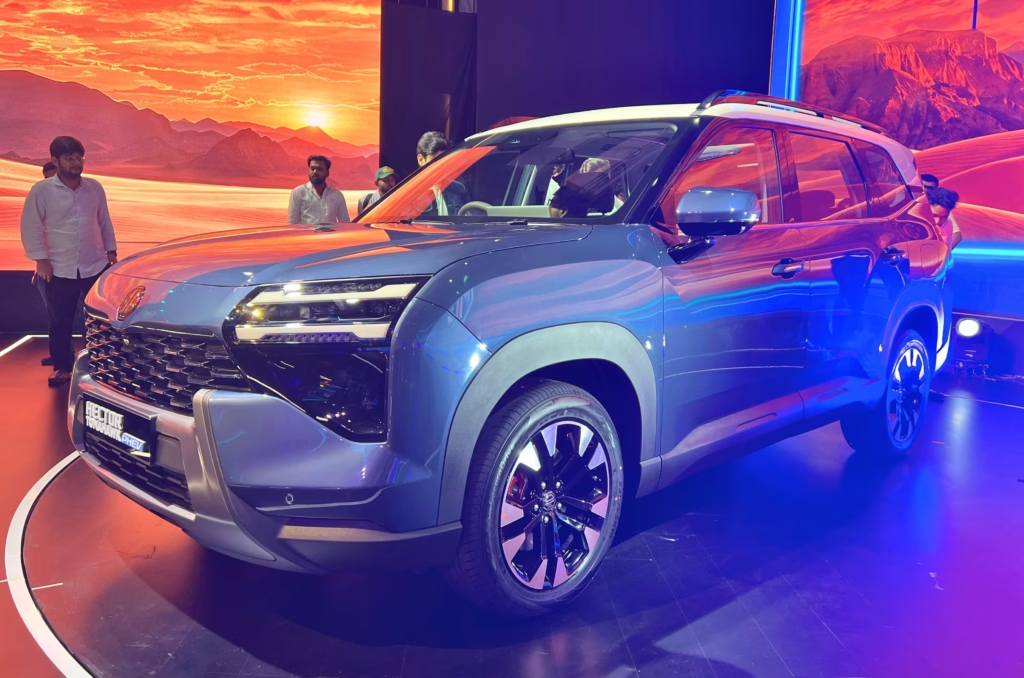
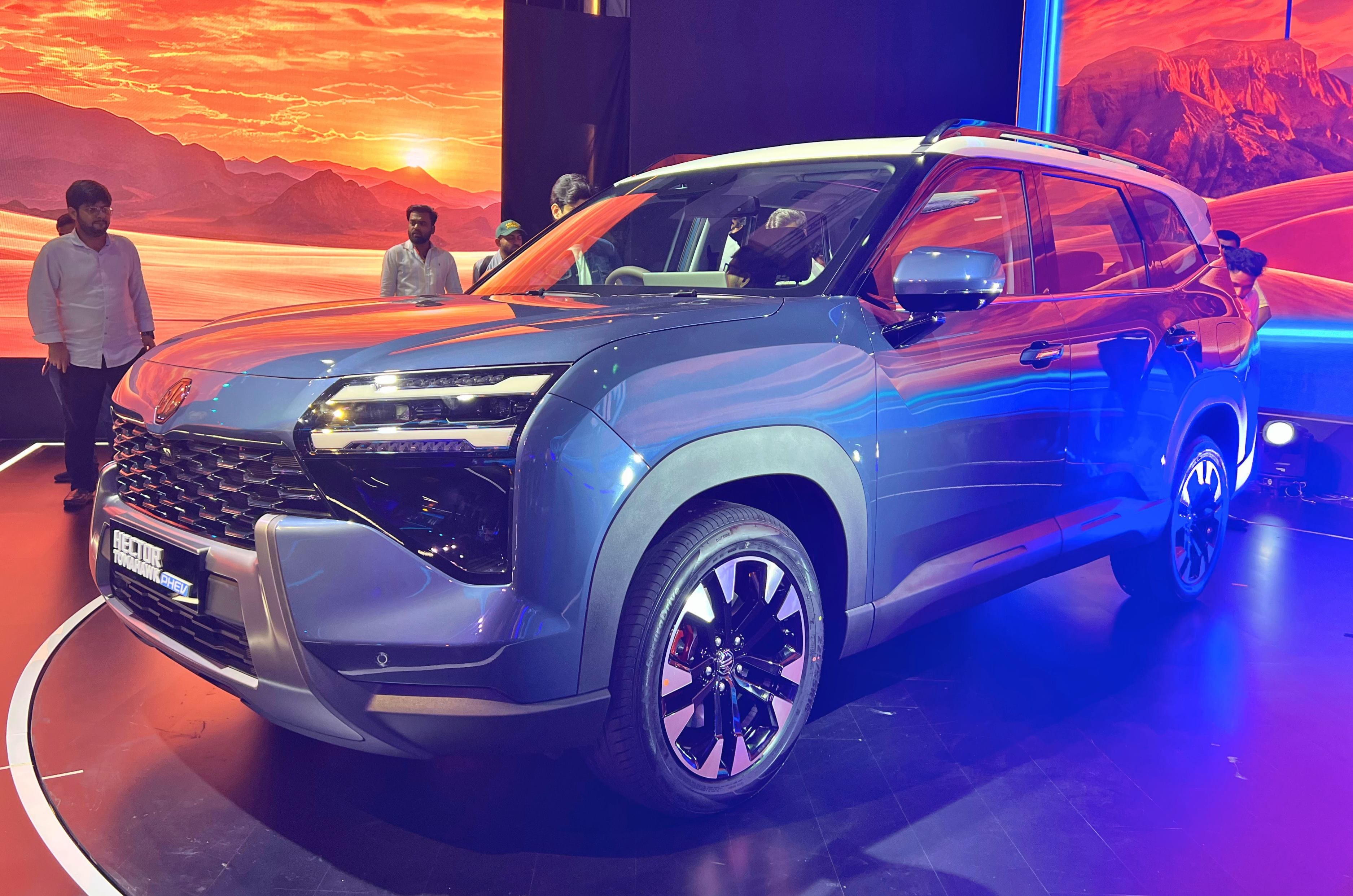
Hector Tomahawk PHEV

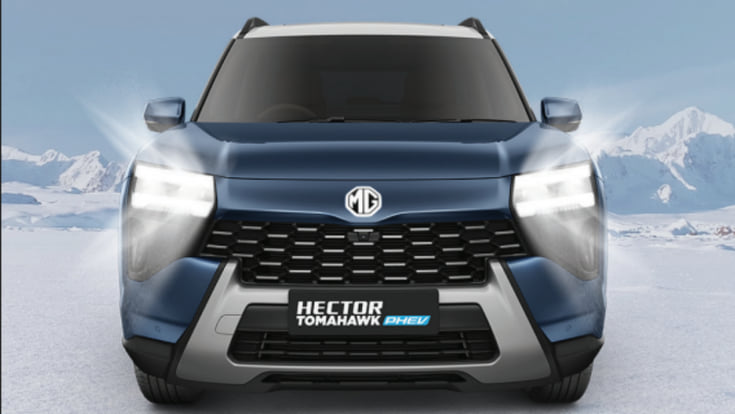
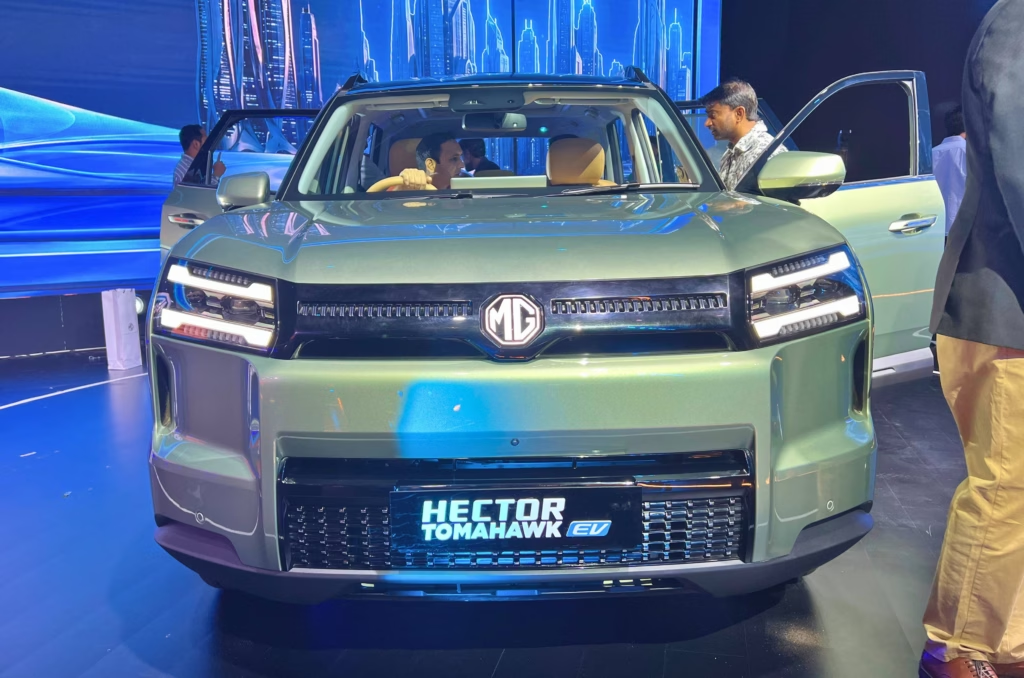
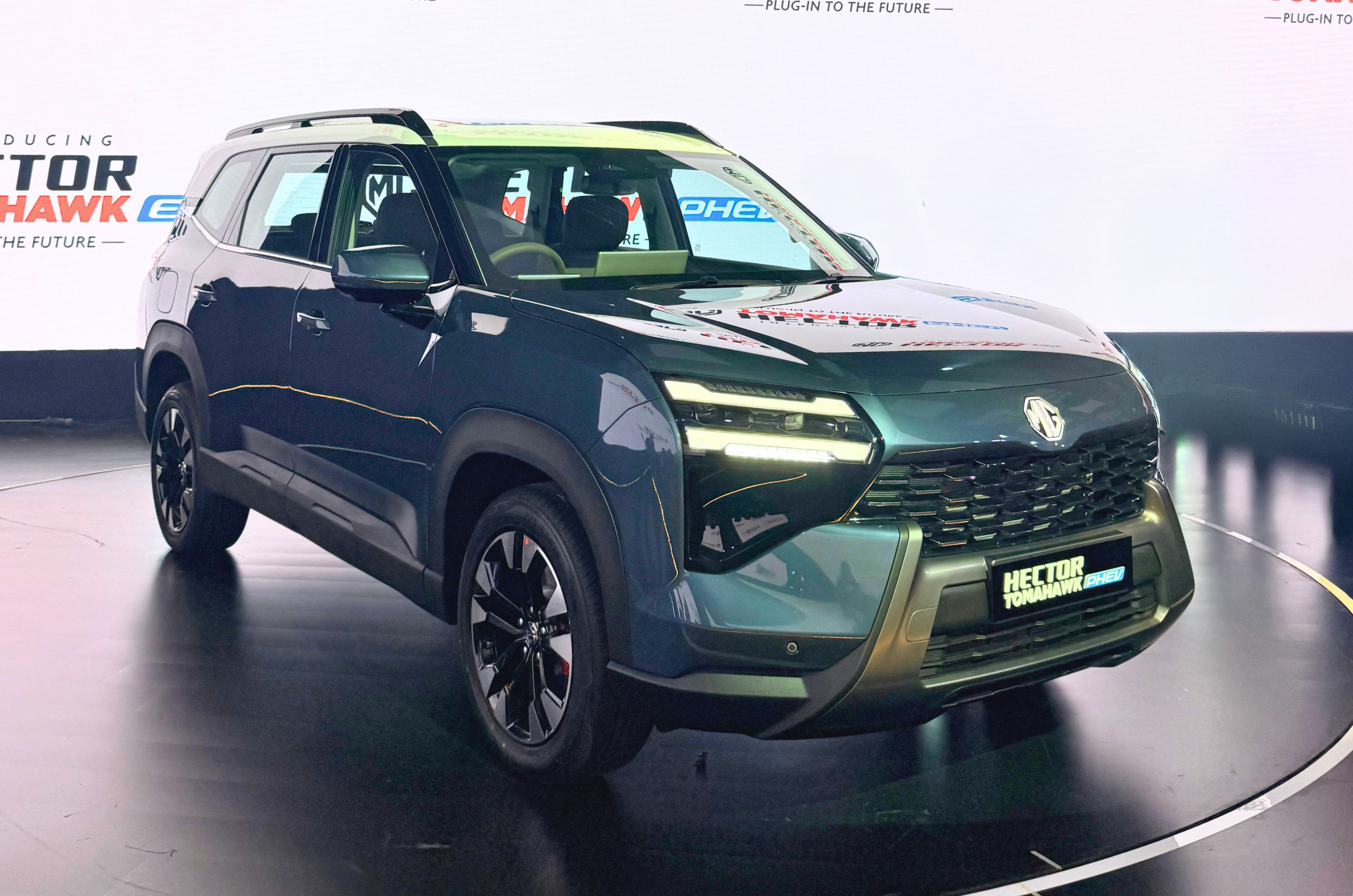
JSW MG Motor is betting on plug-in hybrid technology to attract buyers of executive diesel SUVs, with the Hector Tomahawk PHEV forming the centrepiece of its strategy. The company believes the powertrain can offer the lower running costs of electric driving without the range concerns associated with a pure EV. The seven-seat Tomahawk PHEV offers more than 115km of electric-only driving and a combined range of over 1,100km.

  1. MG claims Rs 3,000-4,000 running cost per 1,000km, versus Rs 10,000-12,000 for diesel
  2. JSW MG targets the executive SUV market that sells 50,000 units a month
  3. Company aims for 5,000-6,000 Tomahawk sales per month

JSW MG eyes executive diesel SUV market
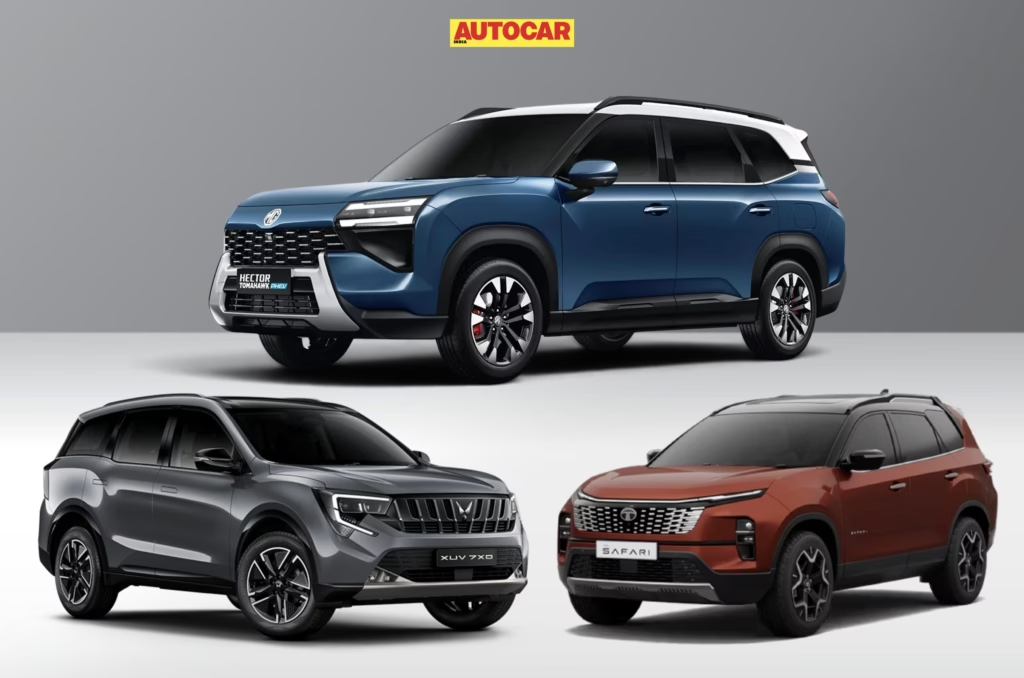
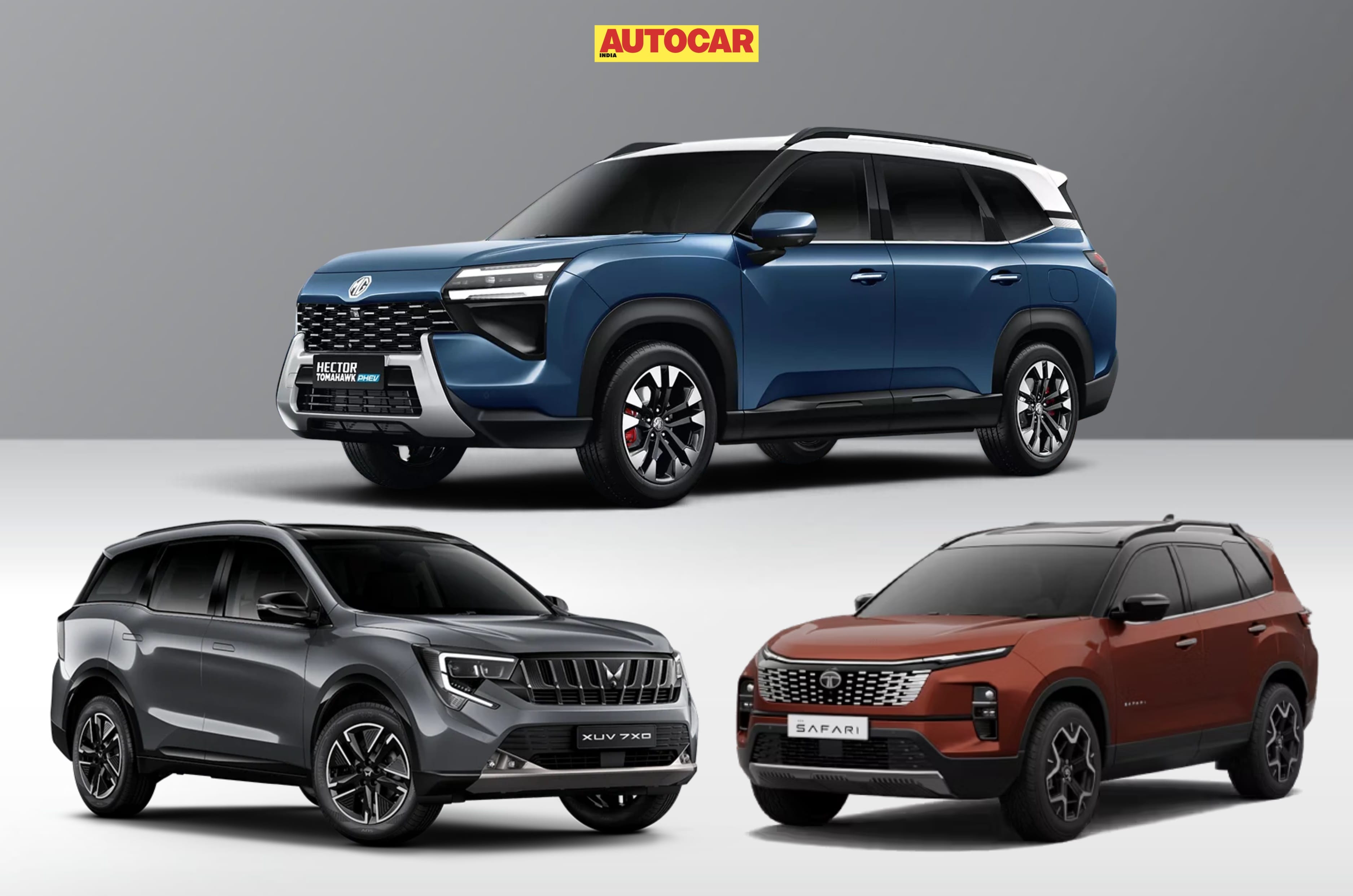
JSW MG says that the executive SUV market in India accounts for around 50,000 units a month, with diesel SUVs contributing about 40,000 units and EVs around 10,000. The diesel segment includes models such as the Mahindra XUV 7XO, Tata Safari and Tata Harrier, while the EV segment includes the Mahindra XEV 9S, Tata Harrier EV and Kia Carens Clavis EV.

“If you look at the diesel C-sized market, that is about 40,000 units. The C-sized EV market is about 10,000. So, the total potential is 50,000,” says Anurag Mehrotra, Managing Director, JSW MG Motor India.

The Hector Tomahawk PHEV is priced Rs 1.5 lakh-2 lakh higher than the top diesel automatic variants of the Mahindra XUV 7XO, Tata Safari and Tata Harrier. JSW MG expects to justify this premium through lower operating costs and the overall product package.
The Tomahawk PHEV has no direct mass-market PHEV rival in India and will instead target diesel SUV buyers. According to surveys cited by Mehrotra, owners in this segment typically cover 18,000-20,000km a year, with many combining daily commutes with regular outstation travel.

“They want the fuel efficiency of a diesel because they are travelling longer distances,” says Mehrotra. “For them, there has not been a new-energy choice. The plug-in hybrid takes away the range issue completely, but still gives you the unit economics of an EV.”

Vinay Raina, Chief Commercial Officer, JSW MG Motor India, says many of these customers choose diesel because it suits their usage rather than because of a fixed preference for the fuel. “The Indian consumer is willing to experiment,” he says.

MG Hector Tomahawk PHEV running costs
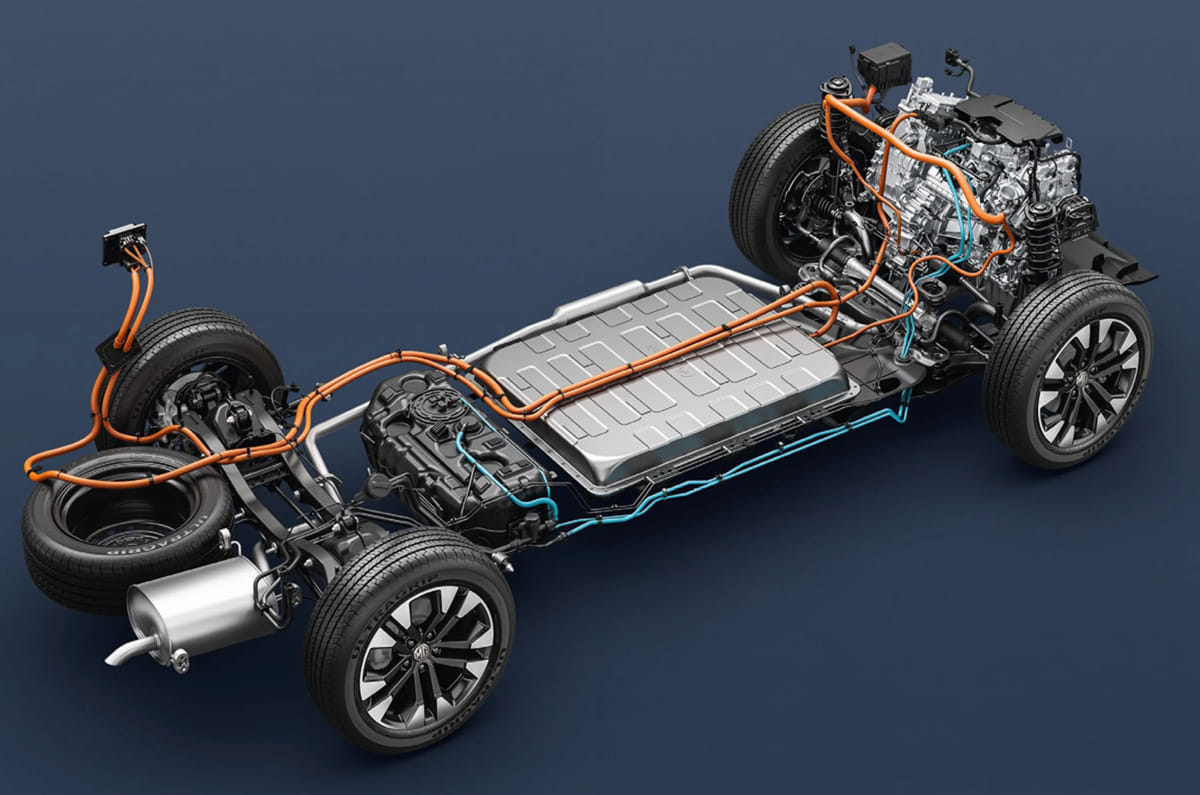
JSW MG estimates that covering 1,000km in the PHEV could cost Rs 3,000-4,000, compared with Rs 10,000-12,000 in a diesel SUV. This calculation assumes regular charging and substantial use of the electric mode. “The plug-in hybrid will be close to a third of the cost of running a diesel,” Mehrotra says.

The company says the PHEV can return around 22kpl when used mainly as a hybrid, while its claimed 30-50kpl figure assumes regular charging and that most daily travel is completed using electric power. These figures include kilometres covered on electricity and therefore cannot be directly compared with the fuel economy of a diesel SUV. Charging costs also need to be included when calculating the overall running cost.

This also means the claimed savings will depend on how the vehicle is used. Owners who regularly charge at home and complete much of their daily driving on battery power should use less petrol, while those who rarely charge will rely more on the engine and lose much on the projected savings.

JSW MG targets 5,000-6,000 Tomahawks a month
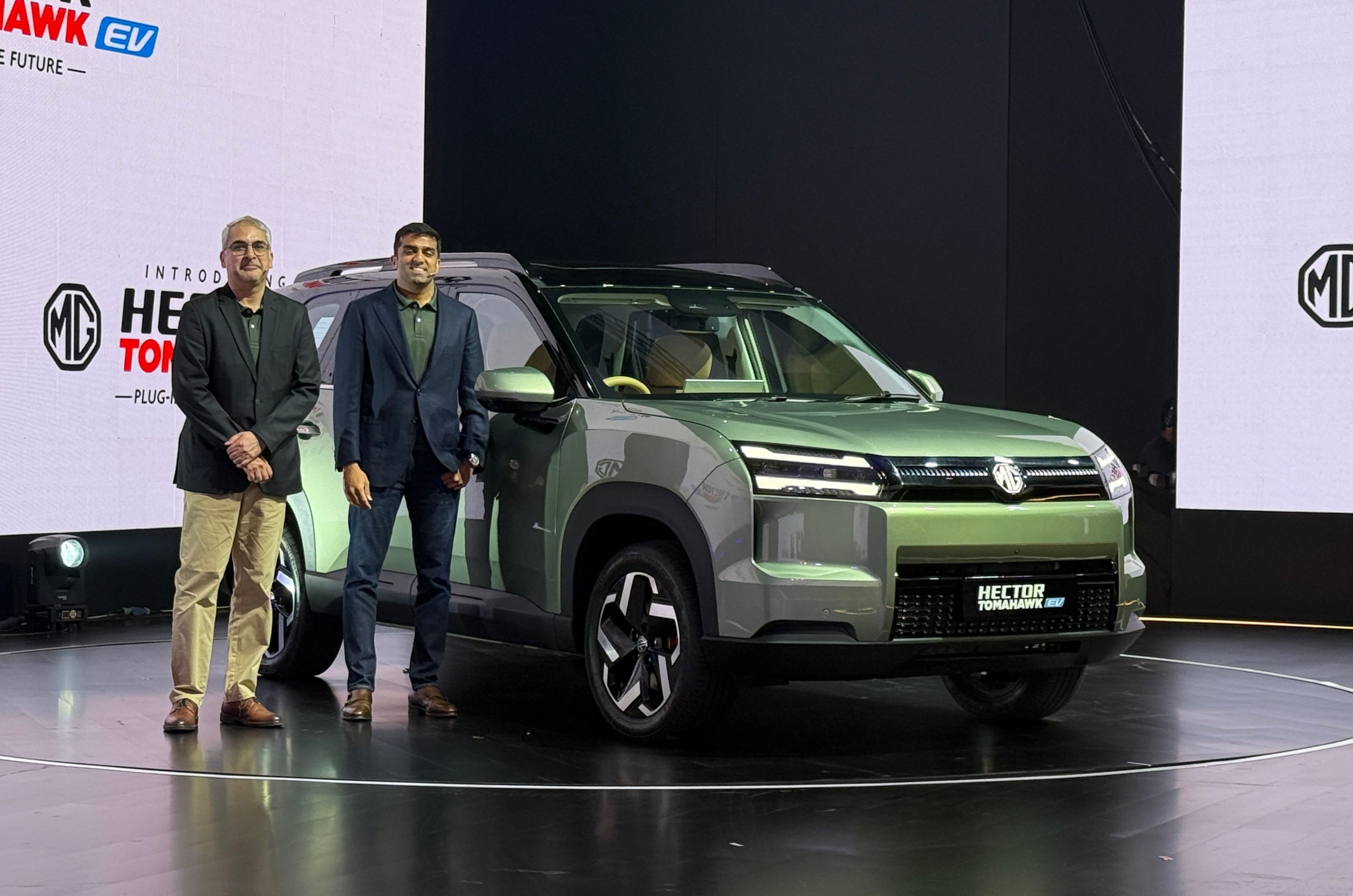
JSW MG is targeting monthly sales of 5,000-6,000 units for the Tomahawk range, which includes the EV and PHEV. The company has not specified how that volume will be split between the two powertrains. At the targeted volume, JSW MG estimates the range would account for around 10-12 percent of the 50,000-unit monthly executive SUV opportunity it has identified. 

The Tomahawk EV and PHEV are based on the company’s ADAPT architecture, which is designed to support multiple powertrain types. JSW MG currently has achieved around 45 percent localization in the Tomahawk and plans to increase this to approximately 70 percent by next year, with the investment already approved by its board.
Ather details Konarc durability tests ahead of August 29 launch

Ather details Konarc durability tests ahead of August 29 launch
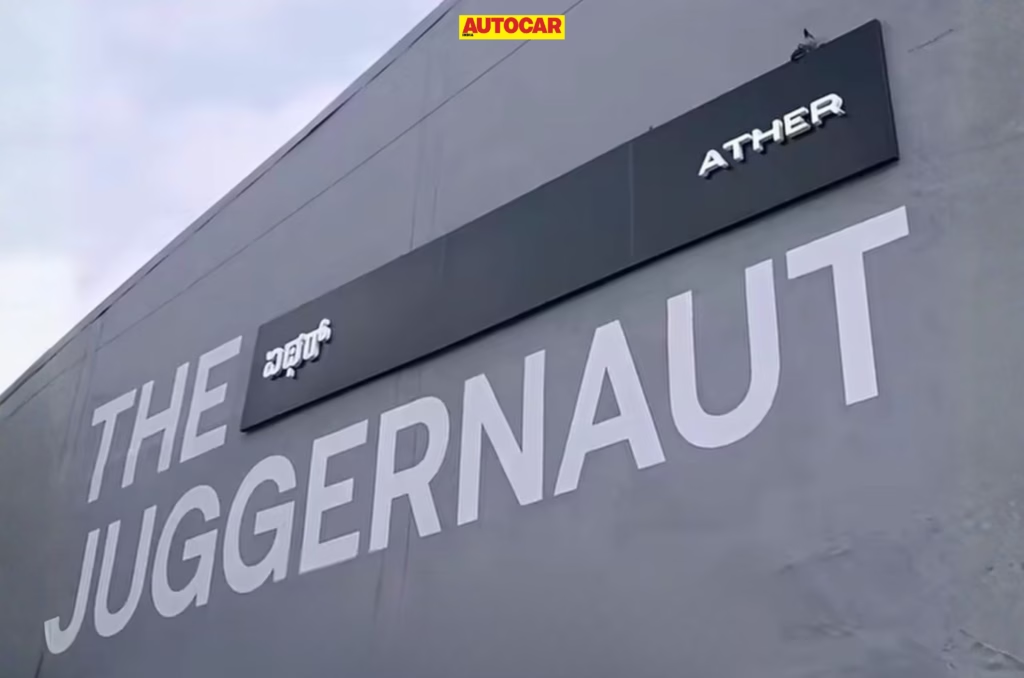
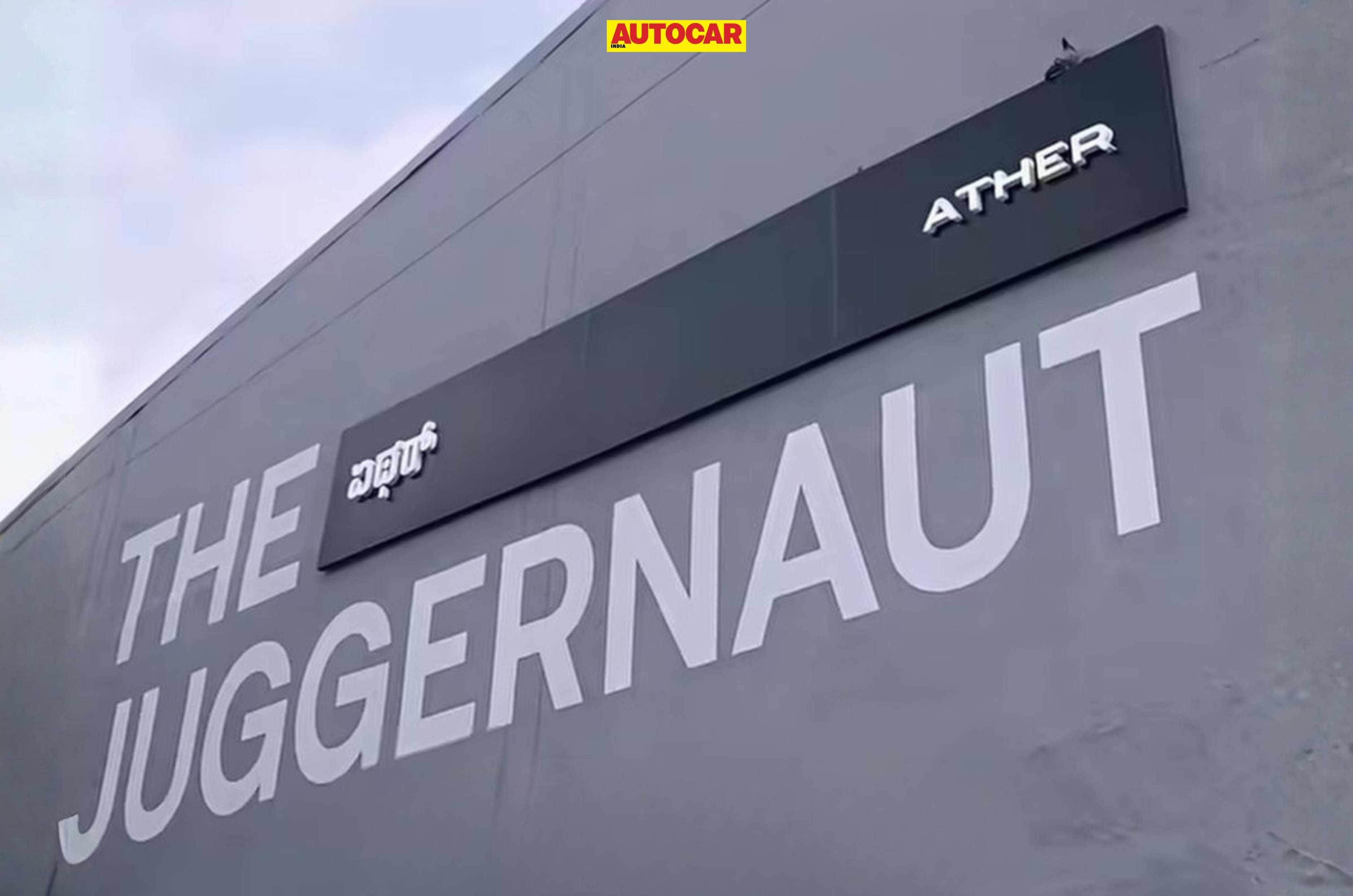
Outside image of Ather's testing facility, the Juggernaut

As we know, Ather’s first scooter based on the EL platform, Konarc, is gearing up to launch on August 29, at their annual community day. We had learned earlier that the Konarc will get metal body panels and few other details about the platform. Now, Ather has detailed the durability tests they’ve conducted on the Konarc to ensure that it’s built robustly.

  1. Tested at The Juggernaut, Ather’s in-house testing ground
  2. Some of the tests include drop tests, flood simulations, and vibration testing

Robust testing in tough conditions

With a 1 lakh km condensed riding cycle

We’re now aware that Ather is looking to position the Konarc as their first mass market EV and as such, they claim to have tested it far beyond what a normal ride would demand at The Juggernaut, the brand’s in-house testing ground. Posted on the brand’s Instagram page, some of the different tests include drop tests, load testing, shaking, vibrating, compressing one lakh kilometres of riding into an accelerated cycle. To take things up a notch, scenarios like heavy rains, deep water wades, floods were also simulated.

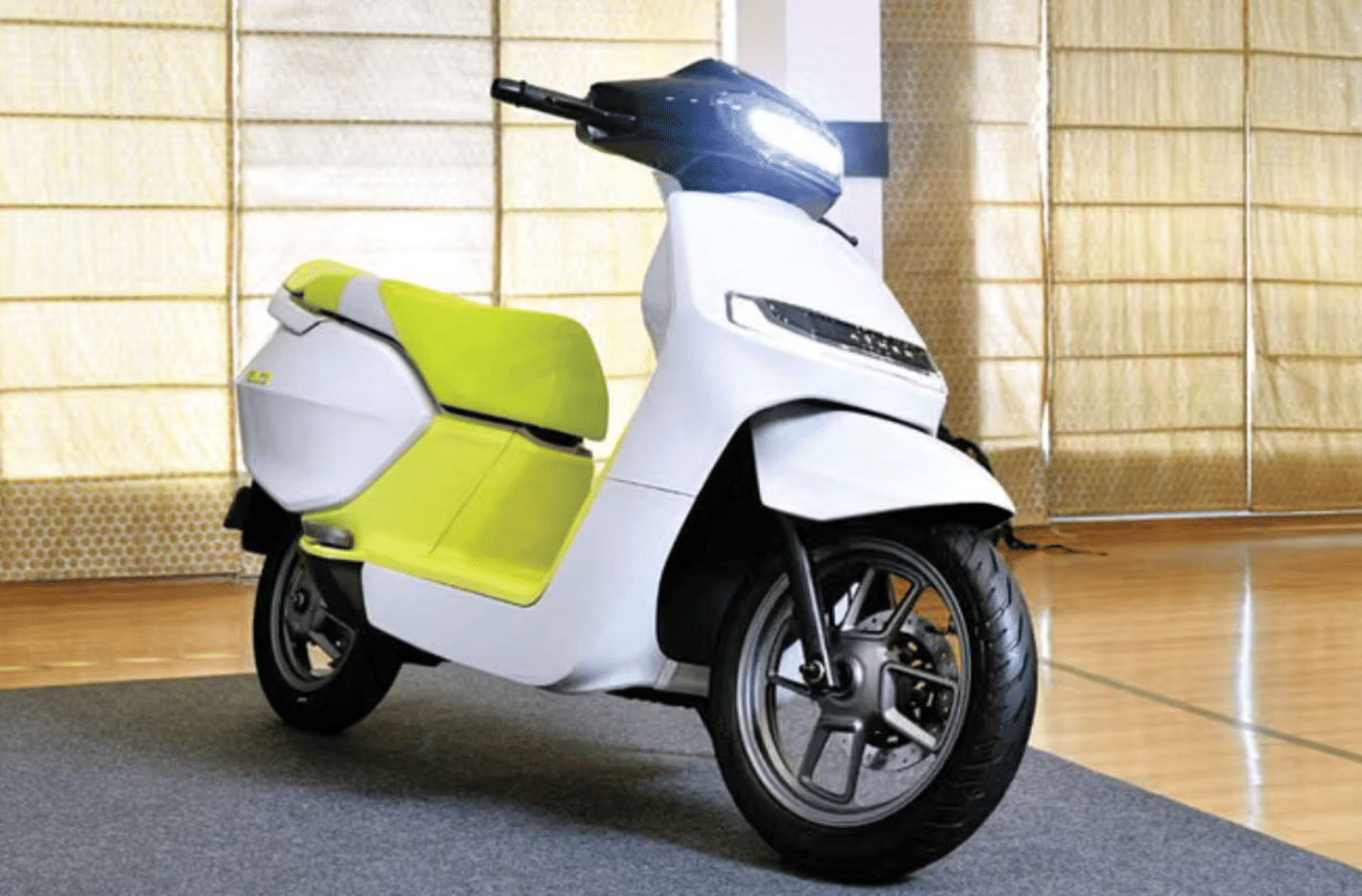
Front right quarter image of the Ather EL01 concept
EL01 concept used for representative purpose

Beyond these admittedly robust testing scenarios, the video also shows the Konarc undergoing typical durability tests for parts like the brakes, suspension, stands, and switches. The video also further substantiates previously known information like the steel chassis, metal body panels, a swingarm mounted motor, a 14-inch front wheel and a 12-inch rear wheel. We should get to know exactly what the Konarc can do on August 29 with more insights and information into the scooter.
 

MG Hector Tomahawk EV vs PHEV: Differences explained

MG Hector Tomahawk EV vs PHEV: Differences explained
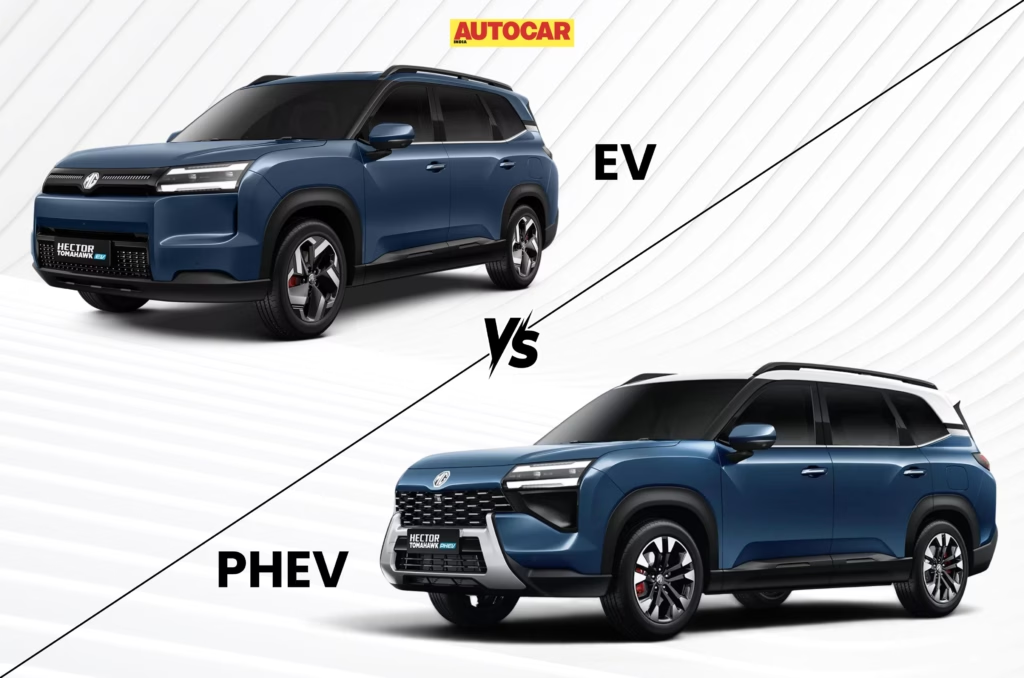
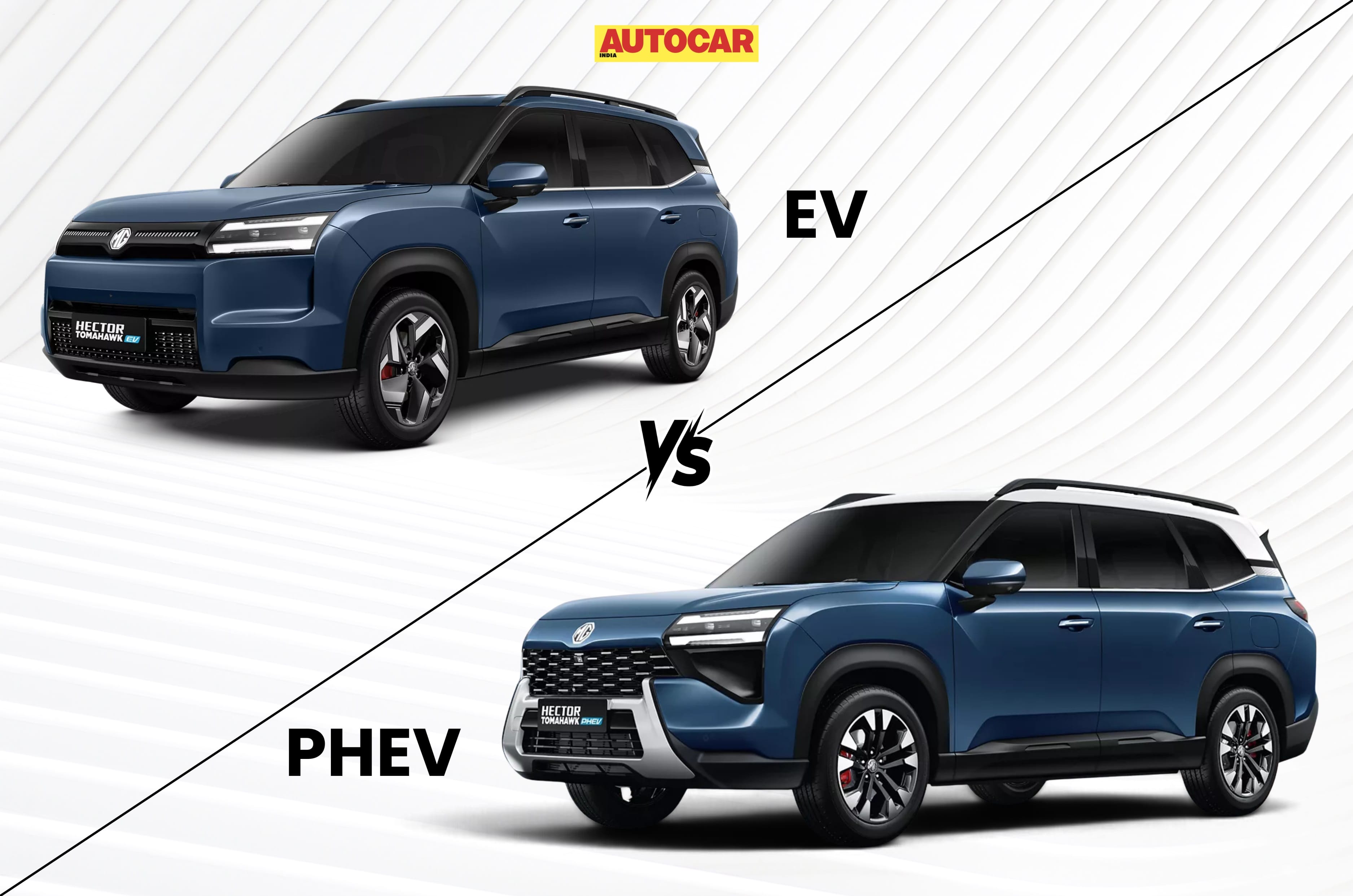
MG Hector Tomahawk EV vs PHEV

JSW MG Motor has launched the Hector Tomahawk with two electrified powertrains: a fully electric version and a plug-in hybrid. Although the two share the same basic dimensions and cabin design, there are several differences in their exterior detailing, equipment, seating configuration, battery and charging systems. Here’s how the two versions compare.

MG Hector Tomahawk EV vs PHEV: Price and variants

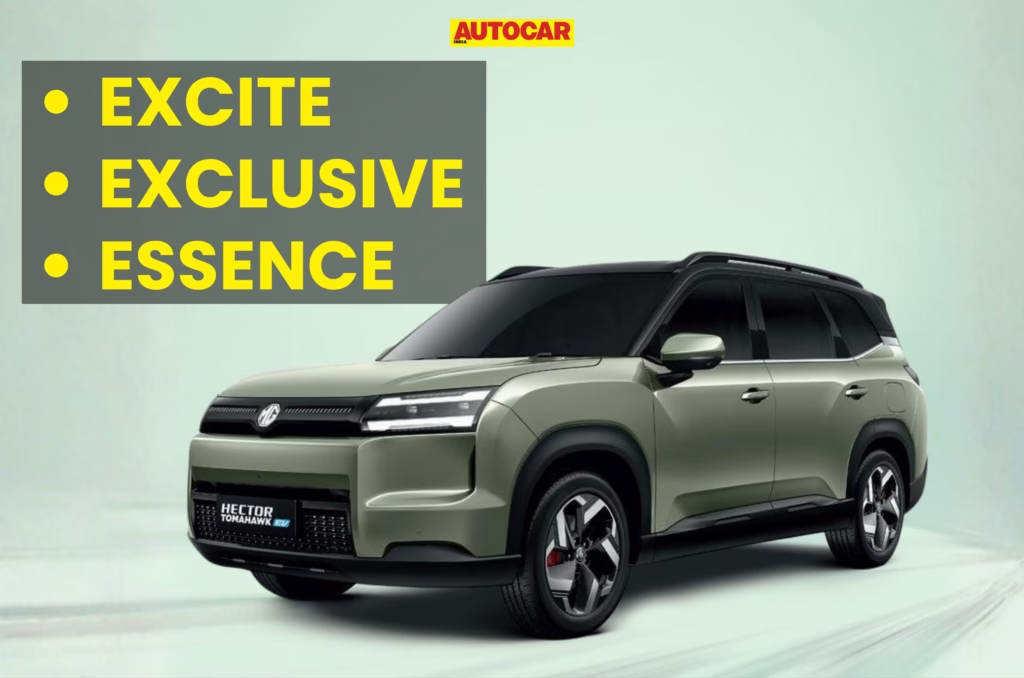
VariantSeatingEV price (ex-showroom)EV BaaS*PHEV price (ex-showroom)PHEV BaaS*
Excite7-seatRs 19.49 lakhRs 13.99 lakh
Exclusive7-seatRs 21.99 lakhRs 15.99 lakhRs 25.70 lakhRs 21.79 lakh
Essence7-seatRs 23.49 lakhRs 17.49 lakhRs 27.80 lakhRs 23.89 lakh
Essence5-seatRs 22.99 lakhRs 16.99 lakh

*For the EV, the battery rental is Rs 4.90 per km, while for the PHEV it is Rs 3.20 per km.

The Hector Tomahawk EV is priced from Rs 19.49 lakh to Rs 23.49 lakh (ex-showroom). It is available in Excite, Exclusive and Essence trims in the seven-seat configuration, while the five-seat version is offered only in the Essence trim at Rs 22.99 lakh.

The PHEV is positioned higher in the range, with prices starting at Rs 25.70 lakh for the Exclusive seven-seater and going up to Rs 27.80 lakh for the Essence seven-seater. Unlike the EV, however, a 5-seat configuration is not available here. 

MG Hector Tomahawk EV vs PHEV: Exterior

EV
PHEV


Both versions measure 4,745mm in length, 1,850mm in width and 1,770mm in height, with a 2,810mm wheelbase. They share the rectangular LED projector headlamps with LED DRLs and an illuminated MG logo, but the front-end treatment is completely different. 

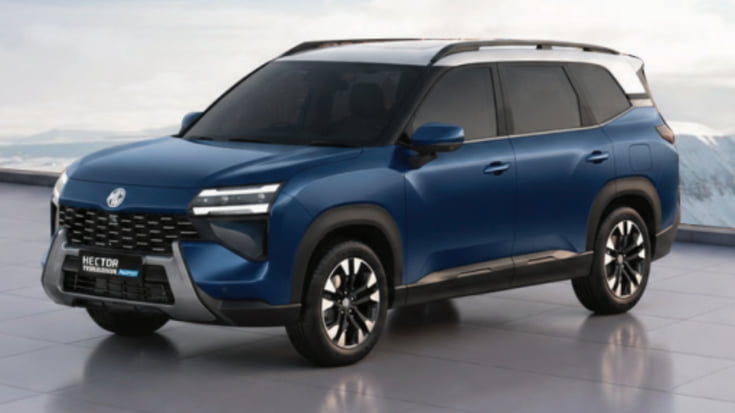
The PHEV versions gets a conventional three-dimensional grille with chrome inserts, gloss-black elements below the headlamps and a chunky bull bar-like silver trim piece on the lower bumper. Meanwhile, the EV gets a closed-off fascia, lending it a more minimalistic look than the PHEV version. The PHEV also gets red brake callipers on the higher-spec version.

EV
PHEV


The two versions use different wheel designs for the 18-inch dual-tone alloys. There is also a difference in the dual-tone treatment. The EV gets a black roof, while the PHEV gets a white roof. Both, however, get roof rails, a powered tailgate and wraparound LED tail-lamps.

MG Hector Tomahawk EV vs PHEV: Interior

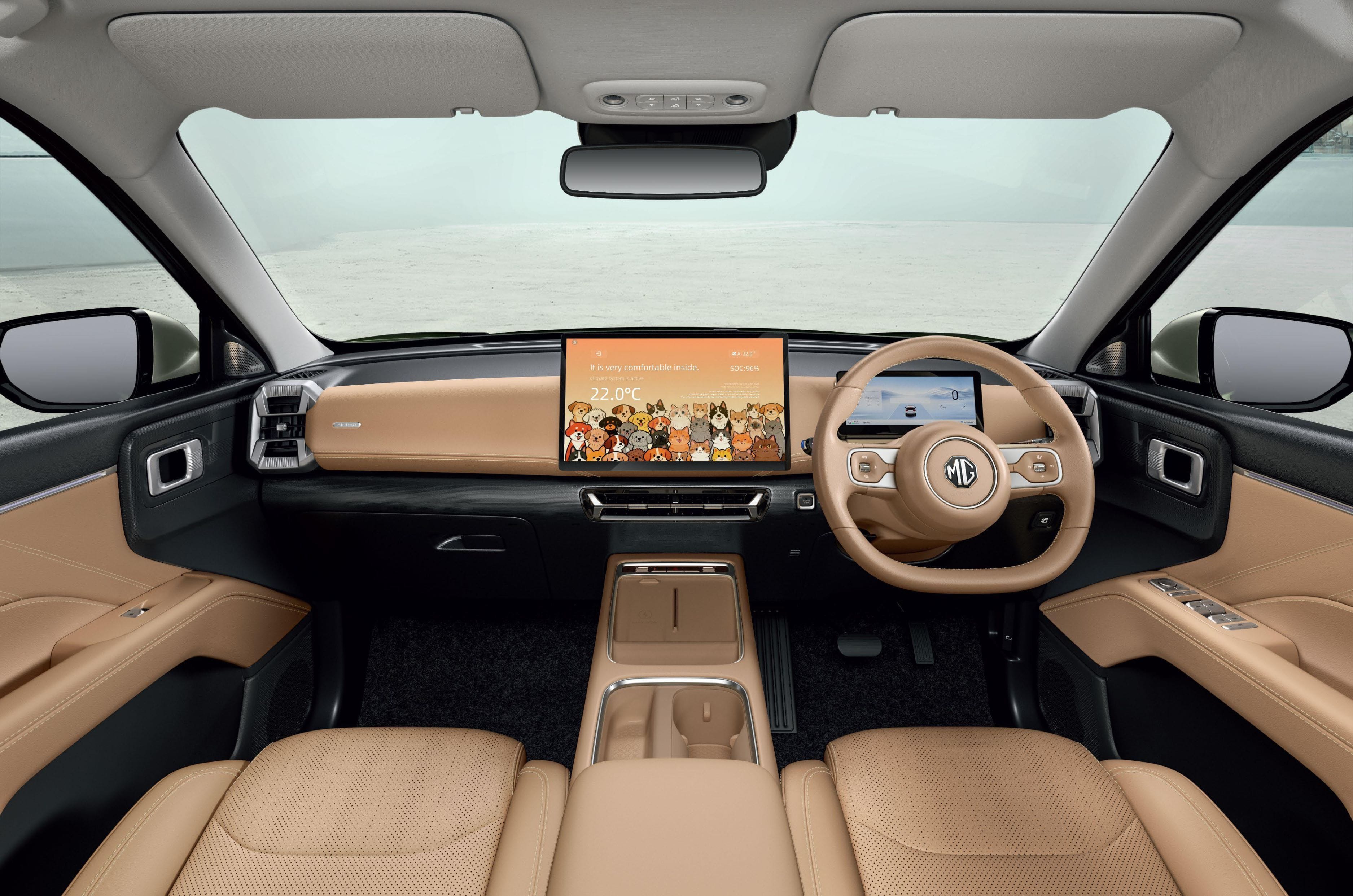
The two versions have the same basic cabin layout, but differ in colour. The EV gets a beige interior, while the PHEV gets a brown interior. Both get a panoramic sunroof, ventilated front seats, 256-color ambient lighting, wireless charging and an 8.8-inch digital driver’s display. The top versions of both get the 15.6-inch infotainment screen. Both versions also use a stalk-type drive selector, positioned behind the steering wheel.

The more significant difference is the seating configuration. The EV is available as a five- or seven-seater, while the PHEV is offered only as a seven-seater. The five-seat EV has 610 litres of boot space, expanding to 1,053 litres with the second row folded. The seven-seat EV offers 192 litres with all three rows in use and 528 litres with the third row folded. The PHEV, being seven-seat only, has 604 litres of boot space in the Exclusive and 579 litres in the Essence with the third row folded.

The EV also has a slightly different seating position because of its battery packaging, with occupants sitting in a more knees-up position than in the PHEV.

MG Hector Tomahawk EV vs PHEV: Powertrain

EV
PHEV


The Hector Tomahawk EV uses a 204hp electric motor that produces 310Nm. It is powered by a 69.2kWh battery and has a claimed MIDC range of 517km. The EV supports up to 90kW DC fast charging, with MG claiming a 30-80 percent charge time of around 35 minutes.

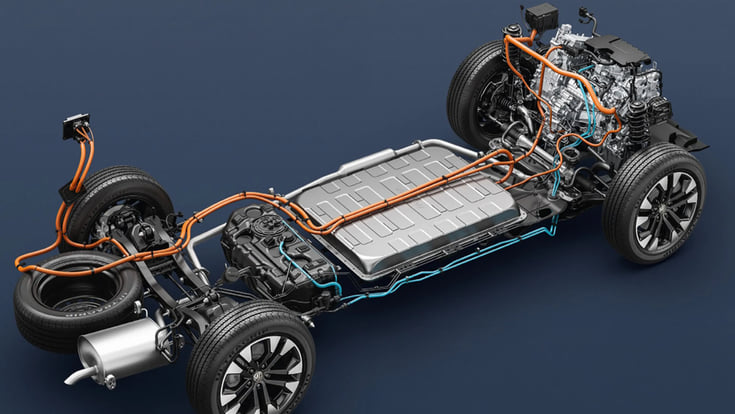
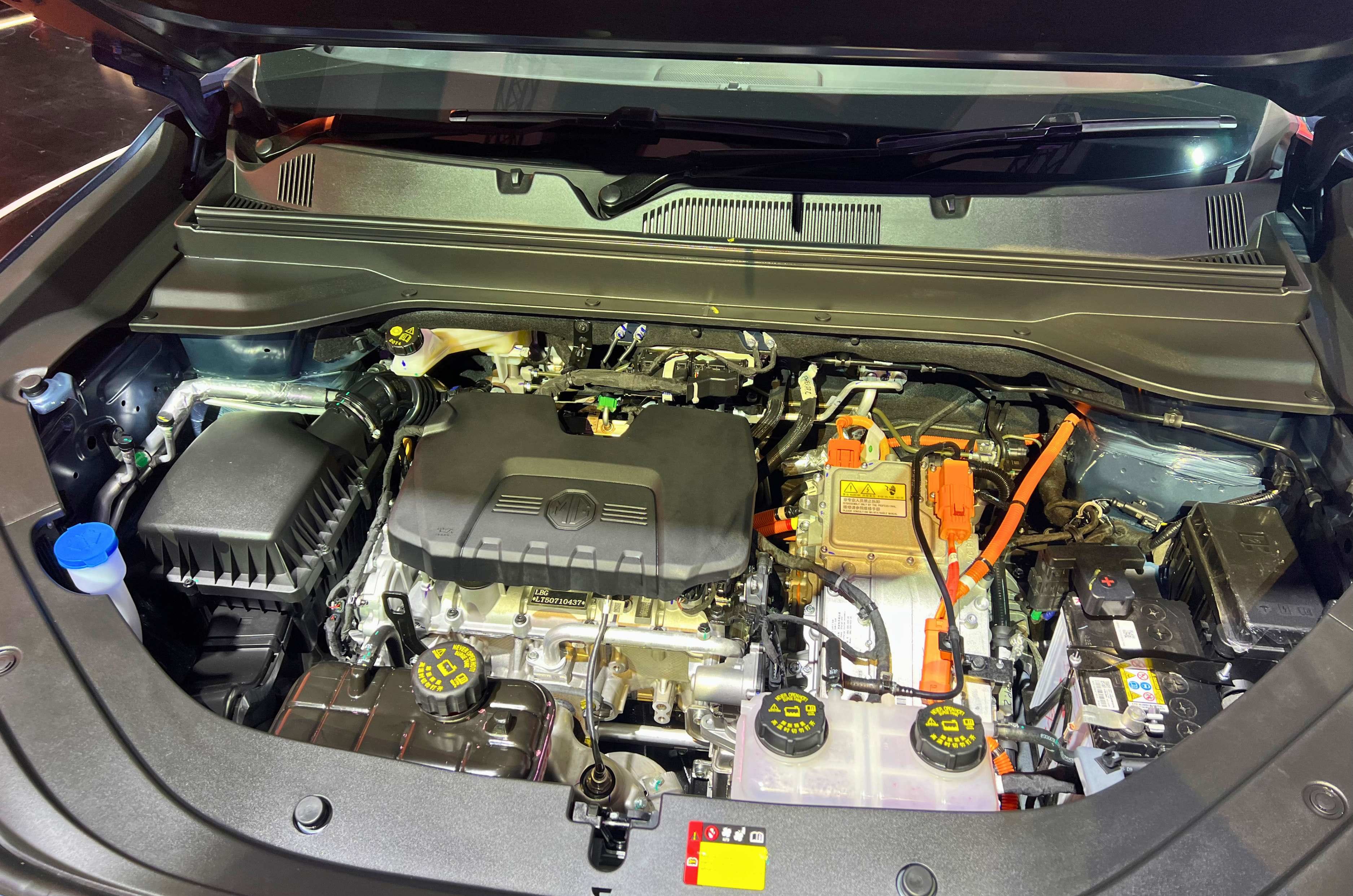
The PHEV combines a 1.5-litre naturally aspirated petrol engine, electric motor and 20.5kWh battery, with a dedicated hybrid transmission with an e-clutch. The powertrain produces a combined 198hp and 230Nm. MG claims an electric-only range of over 115km and around 40kpl combined fuel efficiency. A full tank of fuel and a fully charged battery can take it more than 1100km. 

The PHEV supports up to 25kW DC charging and is claimed to take around 35 minutes to charge from 30-80 percent. It can also be charged using a 3.3kW AC charger, which takes around 7.5 hours for a 10-100 percent charge.

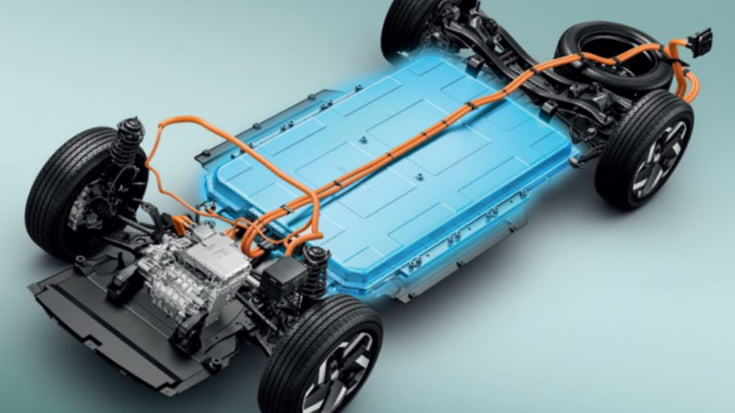
The key difference is that the EV is powered solely by its battery and electric motor, while the PHEV combines a smaller battery and electric motor with a petrol engine, allowing it to operate on electric power or use the engine when required.

MG Hector Tomahawk EV 7-seater vs rivals: Price, specs compared

MG Hector Tomahawk EV 7-seater vs rivals: Price, specs compared
MG Hector Tomahawk EV 7-seater vs rivals

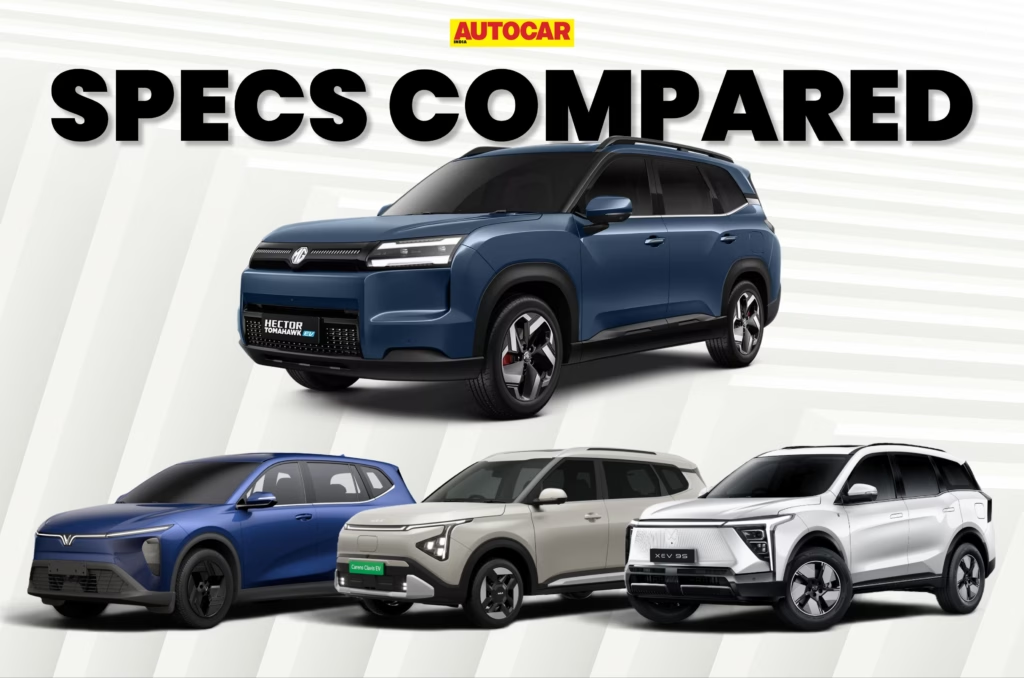
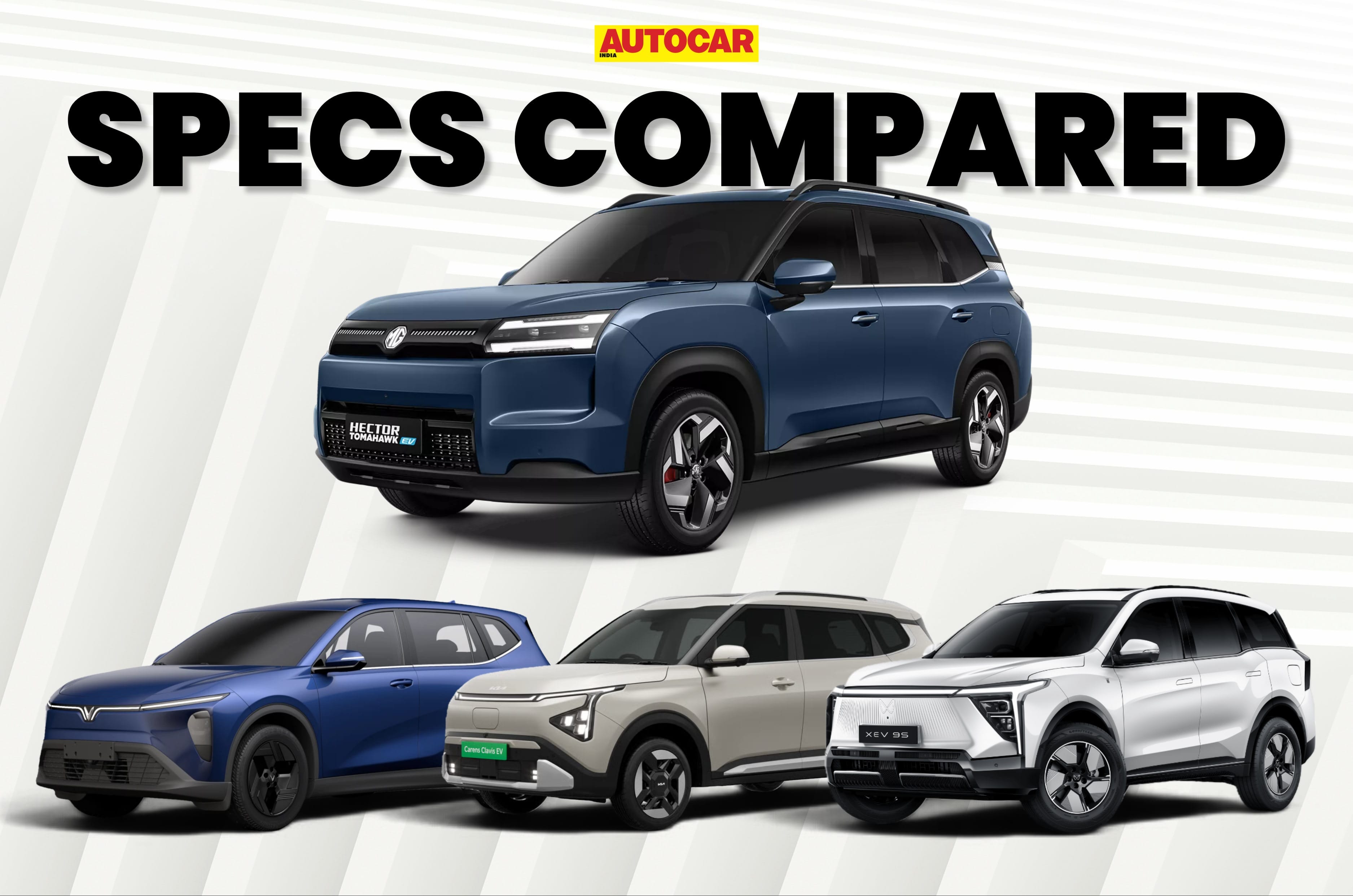
The MG Hector Tomahawk EV is the latest entrant in the mass-market three-row EV segment, going up against the Mahindra XEV 9S, Kia Carens Clavis EV, Vinfast VF MPV 7, and BYD eMax 7. Below, we’ve compared the 7-seat version of the Hector Tomahawk EV to see how it fares against its rivals on paper.

MG Hector Tomahawk EV 7-seater vs rivals: dimensions

 Hector Tomahawk EVXEV 9S

Carens Clavis EV

VF MPV 7

eMax 7

Length (mm)4,7454,737

4,550

4,740

4,710

Width (mm)1,8501,900

1,800

1,872

1,810

Height (mm)1,7701,747

1,730

1,734

1,690

Wheelbase (mm)2,8102,762

2,780

2,840

2,800

Wheel size (inches)1818

17

19

17

Boot space (litres)*192126180
Frunk space (litres)N/A15025N/AN/A

*With all three rows up.

The Hector Tomahawk EV is the longest among its rivals, and wins out in the wheelbase and height departments as well. However, the XEV 9S and VF MPV 7 have the Hector Tomahawk EV beat in terms of width. Its 18-inch wheels are in line with class standards. Coming to boot space, the Hector Tomahawk EV claims the largest volume with all three rows up, though it’s worth noting that neither Mahindra nor Kia disclose similar figures. That said, the XEV 9S and Carens Clavis EV are the only ones here to offer frunks for additional storage.

MG Hector Tomahawk EV 7-seater vs rivals: battery and motor

 Hector Tomahawk EVXEV 9S

Carens Clavis EV

VF MPV 7

eMax 7

Battery size (kWh)69.259 / 70 / 79

42 / 51.4

60.13

71.8

Electric motor setupSingle, frontSingle, rearSingle, frontSingle, frontSingle, front
Power (hp)204231 / 245 / 286

135 / 171

204

163 / 204

Torque (Nm)310380

255

280

310

Gearbox1-speed AT1-speed AT1-speed AT1-speed AT1-speed AT
Drive layoutFWDRWD

FWD

FWD

FWD

The Hector Tomahawk EV does quite well on the battery capacity front, with its 69.2kWh pack falling short of only that of the eMax 7 and the higher versions of the XEV 9S. Power output is a similar story, with the Hector Tomahawk EV matching the e Max 7’s stronger state of tune and beating out the Carens Clavis EV and the VF MPV 7 – the latter by quite a slim margin. The XEV 9S remains the only EV in this space that’s not front-wheel drive.

MG Hector Tomahawk EV 7-seater vs rivals: range and charging

 Hector Tomahawk EVXEV 9SCarens Clavis EVVF MPV 7eMax 7
Battery capacity (kWh)69.259 / 70 / 79

42 / 51.4

60.13

71.8

MIDC range (km)517521 / 600 / 679404 / 490

517

485 / 530 (NEDC)

7.2kW AC charging time (hours)12.58.7 / 10.2 / 11.7
11.2kW AC charging time (hours)6 / 7 / 84 / 4.75
DC charging time (minutes)35 (90kW)20 (140kW) / 20 (160kW) / 20 (180kW)39 (100kW)30 (80kW)37 (80kW)

As far as range goes, the Hector Tomahawk EV surpasses the Carens Clavis EV and the lower-spec version of the eMax 7, matches the VF MPV 7 (even though the Vinfast has a smaller battery), and falls well short of the XEV 9S. Even the base version of the XEV 9S claims a higher range than the Hector Tomahawk EV despite its 10kWh capacity deficit. The Hector Tomahawk EV’s AC charging time is also higher than that of the 79kWh XEV 9S. Unlike the XEV 9S and Carens Clavis EV, the Hector Tomahawk EV does not support 11kW AC charging either.

MG Hector Tomahawk EV 7-seater vs rivals: price

 Price range (in Rs lakh)
Hector Tomahawk EV19.50-23.50 (13.99-17.49 w/ BaaS)
XEV 9S*20.65-29.95
Carens Clavis EV18.04-25.00
VF MPV 724.49
eMax 728.30-29.90

*Prices exclusive of home charger and installation costs.

MG has priced the Hector Tomahawk EV very competitively, with it undercutting the XEV 9S, VF MPV 7, and eMax 7. The Carens Clavis EV is the only one with a lower starting price than the Hector Tomahawk EV, but the Kia’s top-spec variant is Rs 1.5 lakh more expensive than that of the MG SUV. Moreover, MG offers the Hector Tomahawk EV with a battery-as-a-service (BaaS) scheme, which knocks up to Rs 6 lakh off the sticker price and introduces a monthly battery rental fee of Rs 4.9/km.

All prices are ex-showroom, India.

MG Hector Tomahawk EV colours gallery

MG Hector Tomahawk EV colours gallery
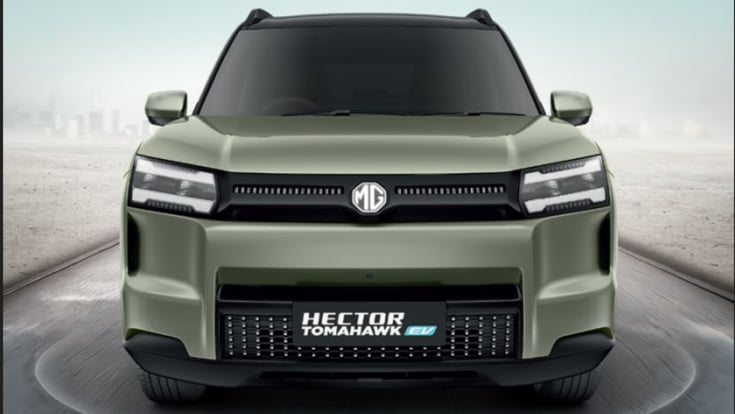
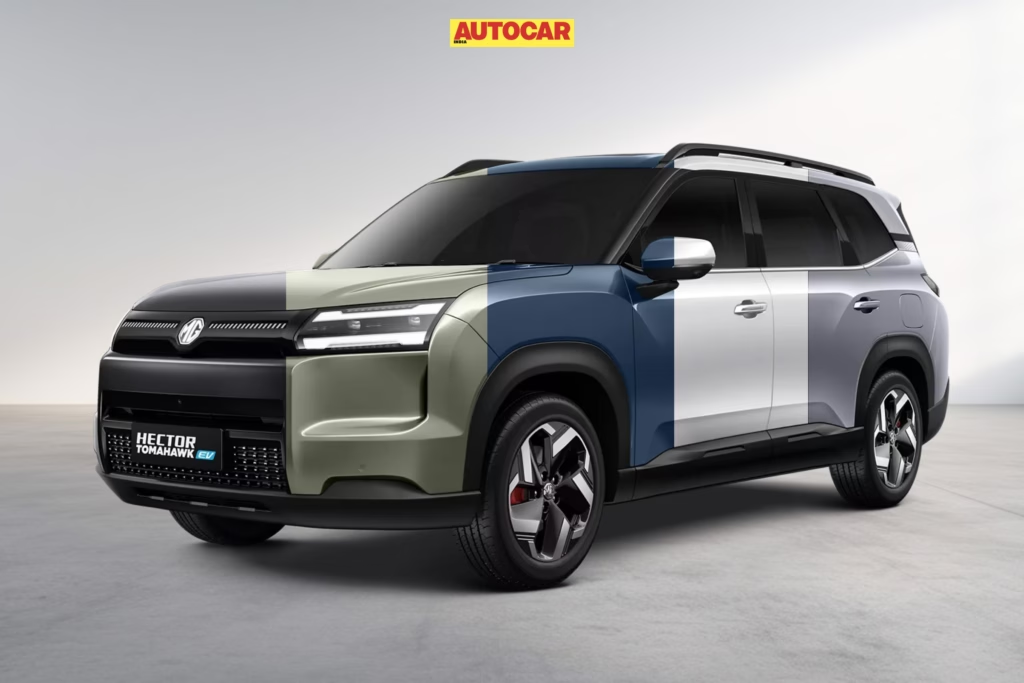
MG Hector Tomahawk EV

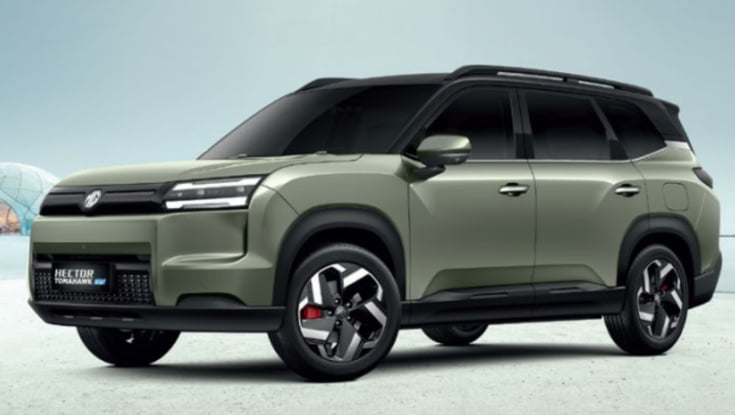
The new MG Hector Tomahawk EV is offered in five monotone shades and one dual-tone shade. Monotone shades include Khaki Green, Aurora Silver, Starry Black, Celadon Blue and Pearl White. The Khaki Green paint can be had with a blacked out roof as well. 

The MG Hector Tomahawk EV’s price starts at Rs 19.49 lakh and goes up to Rs 23.49 lakh, ex-showroom. The carmaker is also offering a BaaS or battery-as-a-service option with the SUV.

MG Hector Tomahawk PHEV exterior and interior image gallery

MG Hector Tomahawk PHEV exterior and interior image gallery
MG Hector Tomahawk PHEV Front Quarter

Alongside the fully electric model, JSW MG Motor has also launched the plug-in hybrid version of the Hector Tomahawk. Called the MG Hector Tomahawk PHEV, it too is based on the company’s ADAPT platform. The plug-in hybrid option pairs a 1.5-litre Atkinson-cycle petrol engine with a single electric motor and a 20.5kWh battery pack. The brand claims a maximum range of over 1,100km (on a full tank and charge), while the quoted 0-100kph time of the MG Hector Tomahawk PHEV is 9 seconds.

Also see

MG Hector Tomahawk EV exterior and interior image gallery

Genesis GV90 exterior and interior design image gallery

MG Hector Tomahawk EV exterior and interior image gallery

MG Hector Tomahawk EV exterior and interior image gallery
MG Hector Tomahawk EV Front

JSW MG Motor has four variants of the Hector Tomahawk EV on sale, spread across 5- and 7-seater versions. The Hector Tomahawk EV is based on the brand’s ADAPT (Advanced Drive Architecture Platform Technology) platform and is powered by a 69.2kWh battery pack. Driving the front wheels is a single permanent magnet synchronous electric motor that generates 204hp and 310Nm of torque. The maximum claimed range of the MG Hector Tomahawk EV is 517km.

Also see

BMW i5 LWB image gallery

2027 Hyundai Tucson image gallery

Which variant of the MG Hector Tomahawk EV should you buy?

Which variant of the MG Hector Tomahawk EV should you buy?
MG Hector Tomahawk EV

The MG Hector Tomahawk EV is a three-row SUV available in Excite, Exclusive and Essence trims. All three use the same battery pack and electric motor, with the main differences being the features and seating layouts on offer. If you’re considering the Hector Tomahawk EV, here’s a detailed look at which variant makes the most sense.

MG Hector Tomahawk EV: Prices, powertrain specs

TrimBaaS price (Rs)Non-BaaS price (Rs)Difference (Rs)
Excite 7 seater13.99 lakh + 4.9 per km*19.5 lakh5.51 lakh
Exclusive 7 seater15.99 lakh + 4.9 per km*22 lakh6.01 lakh
Essence 5 seater16.99 lakh + 4.9 per km*23 lakh6.01 lakh
Essence 7 seater17.49 lakh + 4.9 per km*23.5 lakh6.01 lakh

*Battery rental fee.

The MG Hector Tomahawk EV, like all MG EVs sold in India (excluding the M9 and the Cyberster), is available with a Battery-as-a-Service (BaaS) scheme that lowers the upfront cost. Notably, buyers opting for BaaS have to pay a battery rental fee of Rs 4.9 per kilometre. For the Hector Tomahawk EV, the scheme reduces the upfront price by up to Rs 6.01 lakh.

All trims feature a 69.2kWh battery pack, which powers a 204hp, 310Nm electric motor mounted on the front axle. The sprint from 0-100kph takes 8.2 seconds. On the Modified Indian Driving Cycle (MIDC), the SUV can go up to 517km on a single charge. As per MG, it takes about 35 minutes to charge the battery from 30 percent to 80 percent with a 90kW DC fast charger. With a 7.4kW AC unit, the carmaker claims a charging time of about 12.5 hours for a 10 percent to 100 percent top-up.

MG Hector Tomahawk EV: Features

Excite

Rs 19.5 lakh

  • Six airbags
  • Electronic stability program (ESP)
  • Traction control system (TCS)
  • Hill hold control
  • ABS and EBD
  • All four disc brakes
  • Electronic parking brake with auto hold
  • TPMS
  • Front and rear defogger
  • Rear wiper and washer
  • Three-point seatbelts for all seats
  • Reverse parking camera
  • 8.8-inch driver’s display
  • 12.8-inch touchscreen
  • Wireless Android Auto, Apple CarPlay
  • AI voice assistant
  • OTA updates
  • Six speakers
  • Steering-mounted controls
  • Leatherette seat upholstery
  • Pro Pet mode
  • Eco, Normal, Sports, Custom drive modes
  • Powered adjustment for front seats
  • Push button start/stop system
  • Powered ORVMs with auto fold and integrated turn indicators 
  • Tilt and telescopic adjustment for steering wheel
  • Cruise control
  • Slide function for second-row seats (7-seater version)
  • Second and third row AC vents
  • 60:40 split seats in the second row with recline function
  • 50:50 split seats in the third row (7-seater version)
  • Front armrest with storage for the driver
  • Type-A and fast charging Type-C ports at the front
  • Fast charging Type-C, Type-A ports in the second row
  • Height-adjustable headrests 
  • LED projector headlights, LED tail lamps
  • LED daytime running lights (DRLs)
  • Illuminated MG logo at the front
  • 18-inch alloy wheels
  • Roof rails

Exclusive

Rs 22 lakh

In addition to Excite

  • 360-degree camera with Transparent Chassis view
  • Rain-sensing wipers
  • Ambient lighting (blue colour only)
  • Panoramic sunroof
  • Ventilated seats at the front
  • 50W wireless charger with cooling
  • Chrome-finish on select exterior trims
  • Automatic headlights
  • Powered tailgate

Essence

Rs 23 lakh-23.5 lakh

In addition to Exclusive

  • Level 2 ADAS
  • Adaptive cruise control
  • Front parking sensors
  • Auto-dimming IRVM
  • Memory function for the driver’s seat
  • Rear window sunshade
  • 15.6-inch touchscreen
  • 10-speaker Infinity sound system
  • Multi-colour ambient lights (256 colours)
  • Rear parcel tray (5-seater version only)
  • Vehicle to load (V2L), vehicle to vehicle (V2V) charging support
  • Vehicle to home (V2H) charging support
  • Red-coloured brake callipers

Which variant of the MG Hector Tomahawk EV should you buy?

The mid-spec Exclusive trim, priced at Rs 22 lakh, ex-showroom, is the one we recommend for the MG Hector Tomahawk EV. Compared to the base Excite, it adds front ventilated seats, a 50W wireless charger with cooling and a powered tailgate, features that should appeal to buyers of such an EV. With the BaaS option, the upfront cost can be reduced by Rs 6.1 lakh (as on August 26, 2026), making for a significant initial saving. Buyers who want the five-seat version will have to choose the top-spec Essence trim, as it is the only one available with this seating configuration. 

What’s good is that there is no difference in performance or range across the lineup. All trims use the same 69.2kWh battery pack and 204hp electric motor, while the MIDC-rated range remains identical at 517km.