Jefferies Model Portfolio : अगर आप बाजार की गिरावट का फायदा उठाकर कुछ खरीदने का मन बना रहे हैं तो चलिए आपको बताते हैं कि इस समय दिग्गज ब्रोकरेज जैफरीज क्या कर रहा है। दरअसल जेफरीज ने अपने मॉडल पोर्टफिलियो में अभी बड़े बदलाव किए हैं। जेफरीज ने अपने मॉडल पोर्टफोलियो बदलाव करते हुए कहा है कि इस समय निवेश के लिहाज से लार्जकैप शेयर अच्छे लग रहे हैं। लार्जकैप शेयरों में रिस्क-रिवॉर्ड बेहतर है। लार्जकैप शेयरों का वैल्युएशन भी सस्ता है। जेफरीज़ का कहना है कि वित्तीय वर्ष 2026 से 2028 के दौरान लार्जकैप शेयरों और अन्य शेयरों के बीच अर्निंग ग्रोथ का अंतर कम होता जा रहा है। इसी कारण जेफ़रीज़ ने अपने पोर्टफोलियो में लार्जकैप शेयरों की हिस्सेदारी बढ़ा दी है।
जेफरीज: मॉडल पोर्टफोलियो में क्या बदला?
जेफरीज ने अपने मॉडल पोर्टफोलियो में RIL की हिस्सेदारी बढाई है। अब इस शेयर का वेटेज 7.5 फीसदी हो गया है। वहीं, ब्रोकरेज ने अपने पोर्टफोलियों में कोटक महिंद्रा बैंक और वेलस्पन कॉर्प को जोड़ा है। इसके पोर्टफोलियो में इन दोनों शेयरों की हिस्सेदारी 2% और 2.4% है। जेफरीज RIL पर बुलिश है। रिलायंस अगले एक साल के लिए अपने अनुमानित EV/EBITDA के 8.4 गुना पर कारोबार कर रहा है, जो पिछले 10 वर्षों के एवरेज लेवल से 23% कम है। ब्रोकरेज की राय है कि ज्यादा GRM के चलते अर्निंग्स अपग्रेड देखने को मिल सकता है। जेफरीज़ को यह भी उम्मीद है कि कंपनी के प्रॉफिट अनुमान बढ़ सकते हैं और इसके ग्रॉस रिफाइनिंग मार्जिन (GRM) में सुधार हो सकता है। इन्हीं मुख्य कारणों से जेफरीज़ ने अपने पोर्टफोलियो में इस शेयर का वेटेज बढ़ाया है।
(डिस्क्लेमर: नेटवर्क 18 मीडिया एंड इनवेस्टमेंट लिमिटेड पर इंडिपेंडेंट मीडिया ट्रस्ट का मालिकाना हक है। इसकी बेनफिशियरी कंपनी रिलायंस इंडस्ट्रीज है।)
कोटक बैंक पर भी जेफरीज का बुलिश नजरिया है। ब्रोकरेज का कहना है कि नया MD & CEO आने से इस शेयर को पोर्टफोलियो में जोड़ा गया है। कंपनी में 15% से ज्यादा की ग्रोथ संभव है। यह शेयर फिलहाल अपने एवरेज बुक वैल्यू के 1.8 गुना पर कारोबार कर रहा है। यह पिछले 10 सालों के एवरेज लेवल से 50% कम है। जेफरीज के मॉडल पोर्टफोलियो में कोटक महिंद्रा बैंक का वेटेज 2% होगा।
वेलस्पन कॉर्प पर जेफरीज का कहना है कि यह US और वेस्ट एशिया में तेल-गैस इंफ्रा का बड़ा प्लेयर है। स्टॉक को कई साल की अपसाइकिल का फायदा मिलेगा। इसको घरेलू मैन्यूफैक्चरिंग का भी फायदा मिलेगा। कंपनी को कई सालों तक प्रॉफिट मिल सकता है क्योंकि अमेरिका और पश्चिम एशिया में तेल और गैस इंफ्रास्ट्रक्चर पर खर्च बढ़ सकता है। कंपनी को इन इलाक़ों में लोकल मन्यूफैक्चरिंग से भी मुनाफा हो सकता है। वेलस्पन कॉर्प को 2.4 फीसदी वेटेज के साथ पोर्टफोलियो में शामिल किया गया है।
कहां घटाया वेटेज?
जेफरीज ने रेट सेंसिटिव यानी ब्याज दरों के बदलाव से ज्यादा प्रभावित होने वाले निवेशों का वेटेज घटाया है। एनबीएफसी और रियल एस्टेट की हिस्सेदारी कम की गई है। एनबीएफसी वे वित्तीय कंपनियां हैं जो बैंक हुए बिना कर्ज देने जैसी सेवाएं देती हैं।
हालांकि,दोनों पर ब्रोकरेज अब भी ओवरवेट है। इसका मतलब तुलना वाले बेंचमार्क से ज्यादा हिस्सेदारी रखना है। इसलिए वेटेज घटाने को पूरी तरह बाहर निकलना नहीं समझना चाहिए। आयशर मोटर्स का वेटेज भी घटाया गया है। नोट में कटौती के बाद की हिस्सेदारी नहीं दी गई है।
मॉनेटरी पॉलिसी पर जेफरीज
जेफरीज के मुताबिक,कमजोर मानसून और कमोडिटी कीमतों में बढ़त से महंगाई बढ़ने का जोखिम बना हुआ है। ऐसे मेंअक्टूबर की पॉलिसी में ब्याज दर बढ़ सकती है। उसे आरबीआई से दरों में 50 से 75 बेसिस पॉइंट बढ़ोतरी की उम्मीद है।
डिस्क्लेमर: मनीकंट्रोल.कॉम पर दिए गए विचार एक्सपर्ट के अपने निजी विचार होते हैं। वेबसाइट या मैनेजमेंट इसके लिए उत्तरदाई नहीं है। यूजर्स को मनी कंट्रोल की सलाह है कि कोई भी निवेश निर्णय लेने से पहले सर्टिफाइड एक्सपर्ट की सलाह लें।
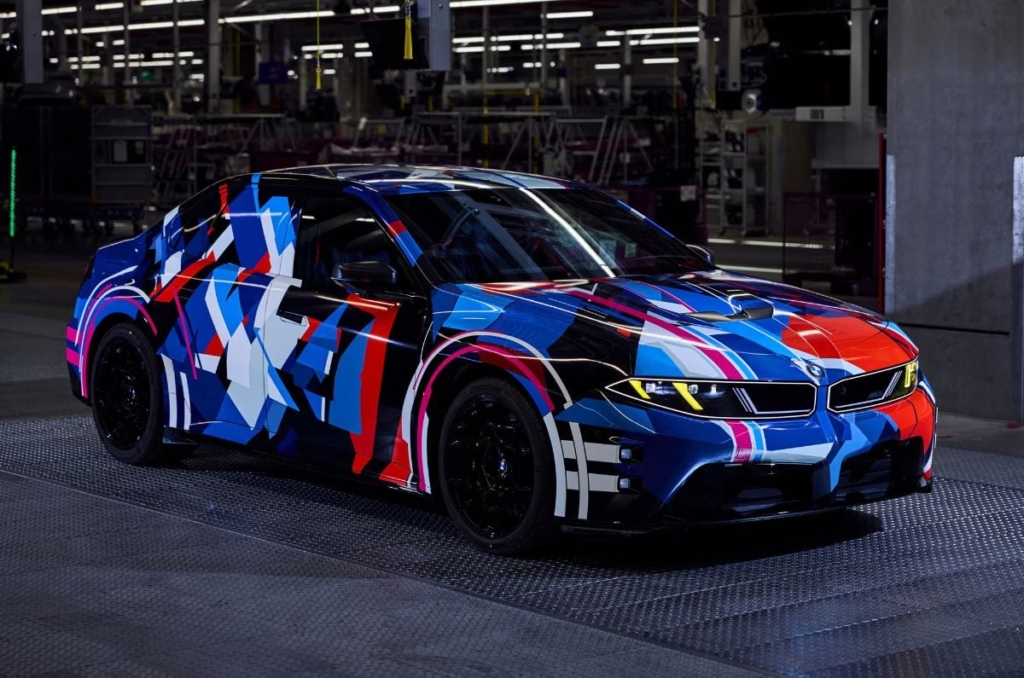
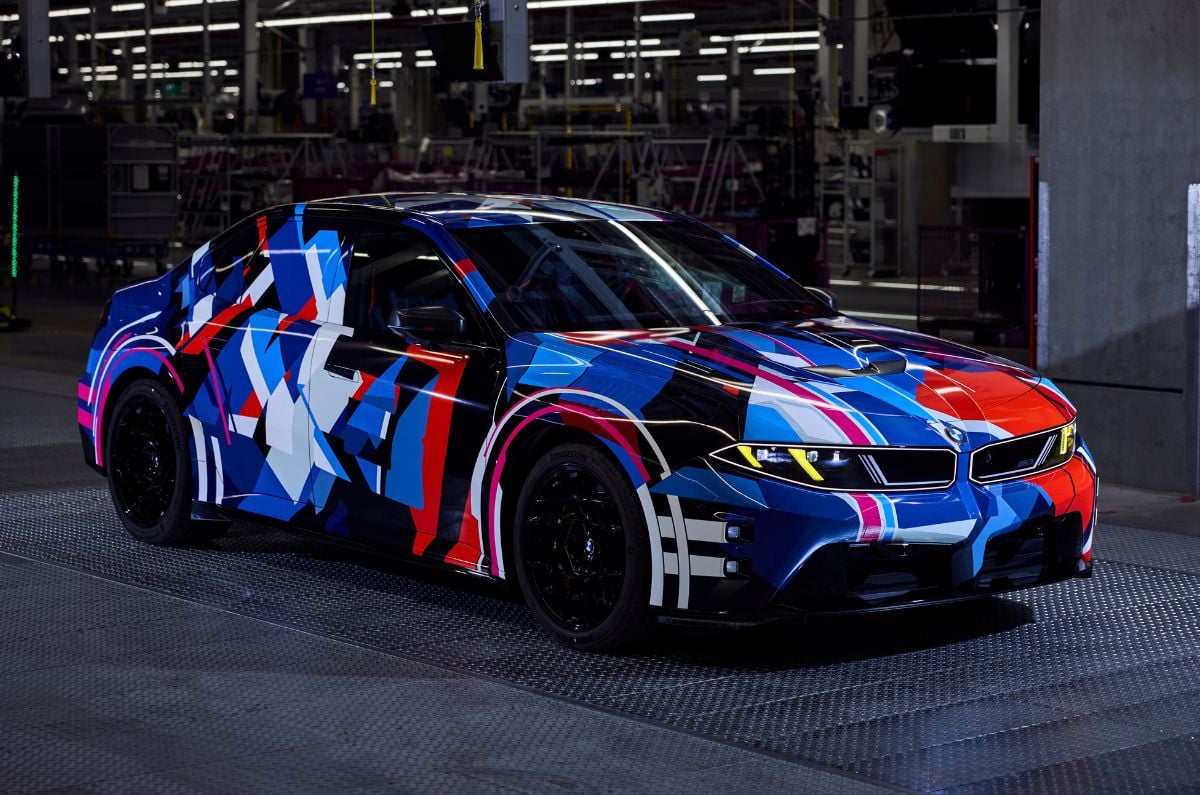
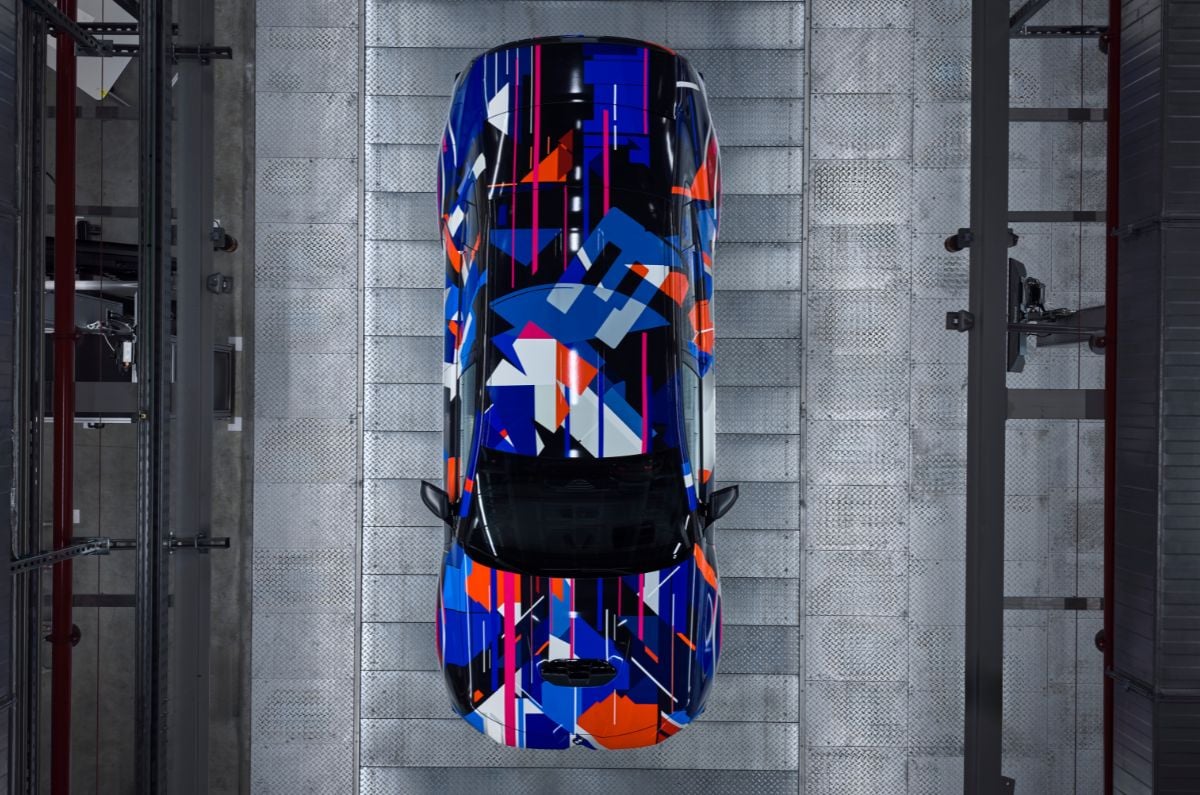
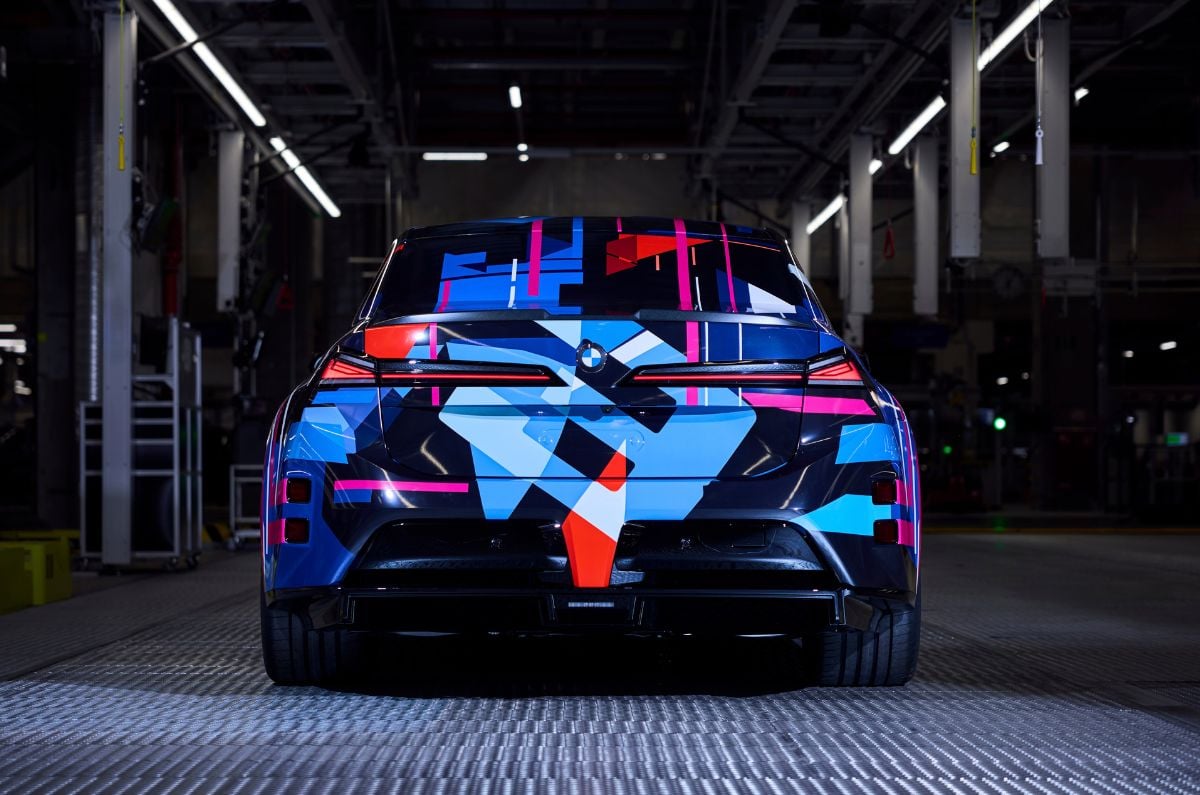
BMW has revealed a near-production M3 electric wrapped in camouflage. The images released provide us an insight into what the final, production model will look like. The fully electric M3 is to be produced at the German luxury automaker’s main plant, where the first BMW Neue Klasse model, the fully electric i3, is made. “We are delighted that we will also be producing the first fully-electric BMW M3 here in Munich,” said Peter Weber, Head of BMW Group Plant Munich.
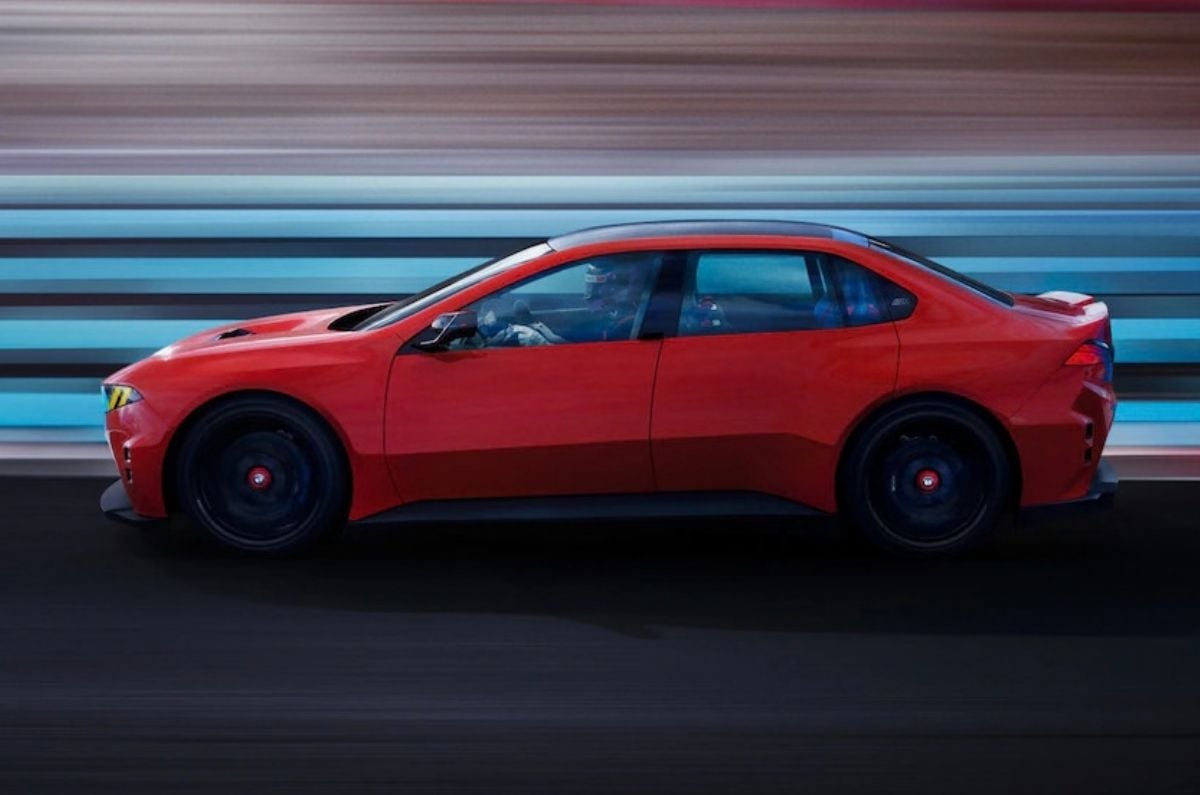
BMW M3 electric exterior design
Neue Klasse details visible include the sleek front grille and LED elements
Some of the design details poking through the camouflage are similar to what we see on the combustion-powered 3 Series. This means there’s the new kidney grille up front that’s flanked by angular LED lighting signatures. Lower down, however, is a revised bumper with pronounced aero elements and cube-shaped LEDs stacked vertically. The bonnet of the M3 electric also sports a hump.
The so-called “reinterpreted M aero” ORVMs of the concept have been replaced by a more conventional design. Save for the centre cap design, the all-black alloy wheels look similar to what was seen on the concept. The rear of the camouflaged M3 electric gets a bootlip spoiler and the same cube-like design integrated into the bumper.
BMW M3 electric expected interior and features
Some of the design and equipment seen on the Neue Klasse concept will make it to the production model
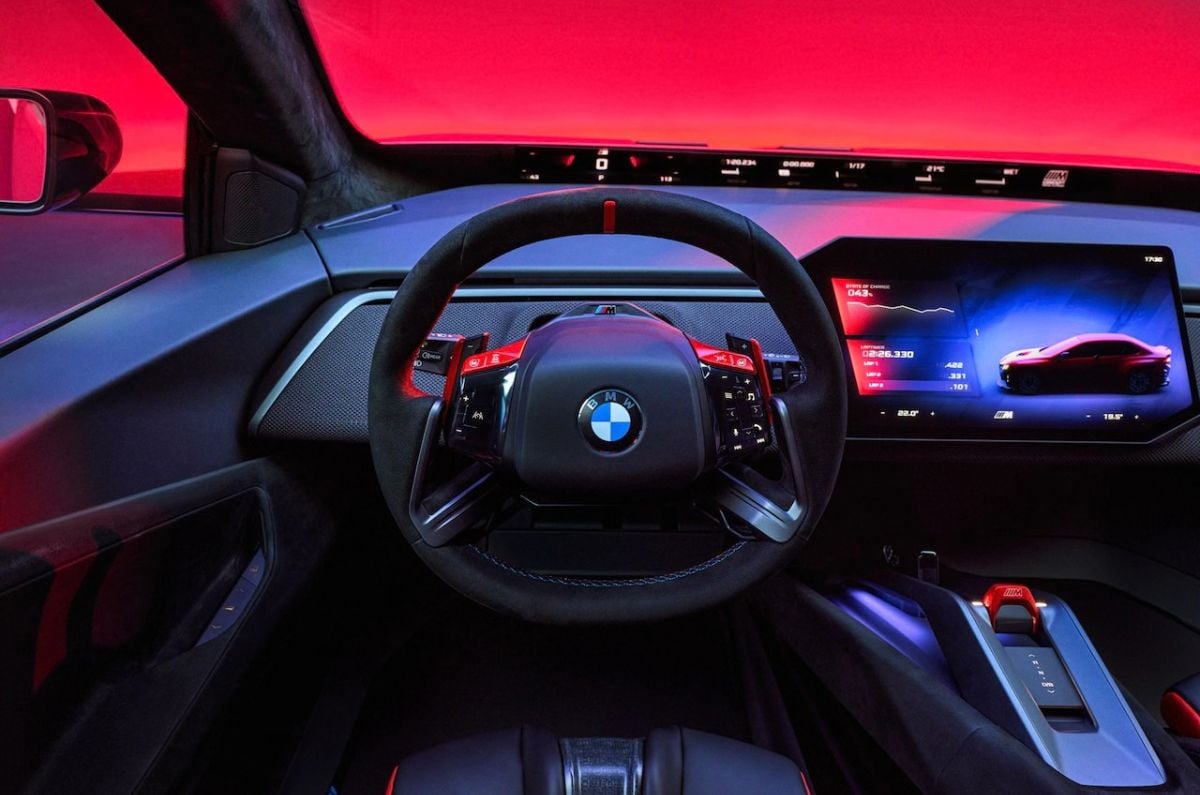
BMW M Neue Klasse concept interior
While BMW is yet to show the interior of the upcoming M3 electric, it’s likely to borrow some of the cues from the Neue Klasse concept. The latter was showcased with a sleek digital instrument panel cutting across the base of the windscreen and a chunky steering wheel with red highlights and BMW M stitching. The sloping centre console of the concept has a red toggle-style drive selector with ‘M’ branding, while the dashboard features a ‘floating’ infotainment screen.
BMW M Neue Klasse concept interior
The cabin of the Neue Klasse concept is primarily finished in black leather, with hexagonal lighting pattern on the textured dashboard. The production model could also come with the sporty bucket seats finished in a two-tone M livery. There will also be ‘M’ lettering and graphics on the seats and displays, respectively, as has been the case with other BMW M cars.
BMW M3 electric powertrain
The M3 EV could feature an 800V architecture and four electric motors
BMW said that the Neue Klasse concept featured an M-specific version of its sixth-generation cylindrical cells with a capacity of over 100kWh. The 800-volt architecture powers four electric motors – one for each wheel – as part of its new M eDrive powertrain. This will be accompanied by BMW’s new ‘Heart of Joy’ control unit and M Dynamic Performance Control software, with wheel-specific power delivery and braking systems.
BMW is yet to reveal specifics regarding this setup’s output or performance. “It’s not about having even more power. At the end of the day, you can’t put that down to the road anyway. You need to have sufficient power at every corner of the car and we are using four electric motors, but you will never use it at the same time,” BMW M CEO Franciscus van Meel told Autocar UK.
BMW M Neue Klasse concept
Instead, the focus here appears to revolve around better stability without compromising agility. “You can brake the inner wheels, accelerate the outer ones and can get out of turns in a completely different way. It’s a new era of vehicle dynamics,” said van Meel.
He also stated that the fully electric M3 will come with simulated gear shifts but without simulated engine sounds, with the intention being better driving intuitiveness. “We tried all the different sounds. We had a high-revving V10 from the M5, a high-revving V8 from the M3 and even tried the four-cylinder from the E30. But every sound only made sense for that specific car. If you try to put the sound in another car, the feeling is not right.”
According to van Meel, the priority while driving on a track isn’t down to just copying the feel and emotion of a combustion-powered car. Quickness around the track is more important. “You need to have some pedal feel and ratios that you are comfortable with, so that you automatically know you are driving [for example] 100mph because you are in third gear, because you know the deceleration and acceleration. That’s what you want. You can of course copy a gearbox, and it’s already quite emotional. That’s a good idea. But we want more,” van Meel continued.
BMW M3 electric production
The M3 EV will be made at the BMW Group Plant in Munich
BMW will be investing around EUR 650 million into its Munich facility to prepare it for fully electric models. Part of this investment has gone into modernising production structures and systematic digitalisation, along with enhancing cooperation with the development teams and suppliers. According to the brand, from 2027 onwards, this facility will only be producing EVs such as the M3 electric.
GST Council Meeting: गुड्स एंड सर्विसेज टैक्स (GST) काउंसिल की 57वीं बैठक की तारीख में बदलाव किया गया है। GST काउंसिल की 57वीं बैठक पहले 7 अक्टूबर को होनी थी, लेकिन अब इसे एक दिन आगे बढ़ाकर 8 अक्टूबर कर दिया गया है। GST काउंसिल सेक्रेटेरिएट के मुताबिक, जरूरी परिस्थितियों (अनअवॉइडेबल सर्कम्स्टैंसेज) के कारण ये बदलाव किया गया है। ये बैठक 8 अक्टूबर को सुबह 11 बजे नई दिल्ली स्थित भारत मंडपम के समिट रूम में आयोजित की जाएगी।
वित्त मंत्री की अध्यक्षता में होगी बैठक
केंद्रीय वित्त मंत्री निर्मला सीतारमण की अध्यक्षता में होने वाली GST काउंसिल की बैठक में सभी राज्यों के वित्त मंत्री भी शामिल होंगे। करीब एक साल से अधिक समय बाद होने जा रही इस बैठक को लेकर 5 अक्टूबर को नया मेमोरेंडम जारी किया गया। राजस्व सचिव की मंजूरी से जारी इस पत्र में बैठक की तारीख बदलने की जानकारी दी गई है। वहीं GST काउंसिल के सभी सदस्यों को इसकी सूचना देने के लिए कहा गया है।
पिछले साल कब हुई थी बैठक
गुड्स एंड सर्विसेज टैक्स (GST) काउंसिल की 56वीं बैठक 3 और 4 सितंबर 2025 को आयोजित हुई थी। इस बैठक में केंद्र और राज्यों ने GST व्यवस्था में बड़े बदलावों पर सहमति बनाई थी। खास तौर पर GST की दरों और अलग-अलग टैक्स स्लैब में बदलाव का फैसला लिया गया था। 22 सितंबर 2025 से नई GST व्यवस्था लागू हुई, जिसमें मुख्य रूप से 5% और 18% के दो टैक्स स्लैब रखे गए। वहीं, लग्जरी और कुछ खास महंगे सामान पर 40% की सबसे ज्यादा GST दर तय की गई। इससे पहले 1 जूलाई 2017 से 5%, 12%, 18% और 28% के चार स्लैब लागू थे।
महाराष्ट्र सरकार ने ओला, उबर और रैपिडो जैसी बाइक टैक्सी सेवाओं को लेकर बड़ा फैसला किया है। सरकार ने इन कंपनियों को जुलाई 2027 तक अपने पूरे बाइक टैक्सी बेड़े को 100 परसेंट इलेक्ट्रिक व्हीकल (EV) में बदलने का निर्देश दिया है। यानी तय समयसीमा के बाद इन कंपनियों की बाइक टैक्सी सेवाओं में सिर्फ इलेक्ट्रिक व्हीकल (EV) का इस्तेमाल किया जाएगा। मुख्यमंत्री देवेंद्र फडणवीस के निर्देश के बाद महाराष्ट्र के परिवहन विभाग ने बाइक टैक्सी कंपनियों को इलेक्ट्रिक वाहनों पर जाने के लिए नौ महीने का समय दिया है।
इस दौरान कंपनियां चरणबद्ध तरीके से अपने मौजूदा बेड़े को EV में बदल सकेंगी। विभाग ने राज्य की राइड-हेलिंग कंपनियों और सभी क्षेत्रीय परिवहन कार्यालयों (RTO) को भी इस नई समयसीमा की जानकारी दे दी है।
6 महीने का मिलेगा समय
द इंडियन एक्सप्रेस की रिपोर्ट के मुताबिक, नई योजना के मुताबिक, पेट्रोल वाली बाइक से टैक्सी सेवा देने वाले ऑपरेटरों को पहले चरण में अपने वाहनों को इलेक्ट्रिक बाइक से बदलने के लिए छह महीने का समय दिया जाएगा। यानी इस अवधि के दौरान उन्हें धीरे-धीरे पेट्रोल बाइक की जगह EV को अपने बेड़े में शामिल करना होगा। रिपोर्ट के मुताबिक, महाराष्ट्र बाइक टैक्सी नियम 2025 के तहत जिन कंपनियों ने पहले ही प्रोविजनल या टेम्पररी लाइसेंस के लिए आवेदन कर दिया है, उन्हें पहले फेज में इलेक्ट्रिक व्हीकल पर स्विच करने के लिए छह महीने का समय मिलेगा।
करीब 18 महीने दी जाए समयसीमा
सरकार का ये फैसला बाइक टैक्सी चालकों और उनके संगठनों की चिंताओं के बाद आया है। उनका कहना है कि कम समय में पेट्रोल बाइक को EV से बदलना ड्राइवरों पर आर्थिक बोझ डाल सकता है। महाराष्ट्र बाइक टैक्सी वेलफेयर एसोसिएशन ने सरकार से इलेक्ट्रिक वाहनों पर शिफ्ट होने के लिए अधिक समय देने की मांग की थी। एसोसिएशन ने मुख्यमंत्री देवेंद्र फडणवीस, राज्य के परिवहन मंत्री और परिवहन आयुक्त के सामने यह मुद्दा रखा था। संगठन की मांग थी कि बाइक टैक्सी चालकों को पेट्रोल से इलेक्ट्रिक बाइक पर जाने के लिए करीब 18 महीने की समयसीमा दी जाए, ताकि उन्हें अचानक ज्यादा खर्च का सामना न करना पड़े।
बाइक टैक्सी कंपनियों ने EV पर पूरी तरह शिफ्ट होने के लिए 2030 तक का समय मांगा था, लेकिन महाराष्ट्र सरकार ने उनकी मांग नहीं मानी। सरकार ने कंपनियों को EV में बदलाव के लिए सिर्फ नौ महीने का समय दिया है।
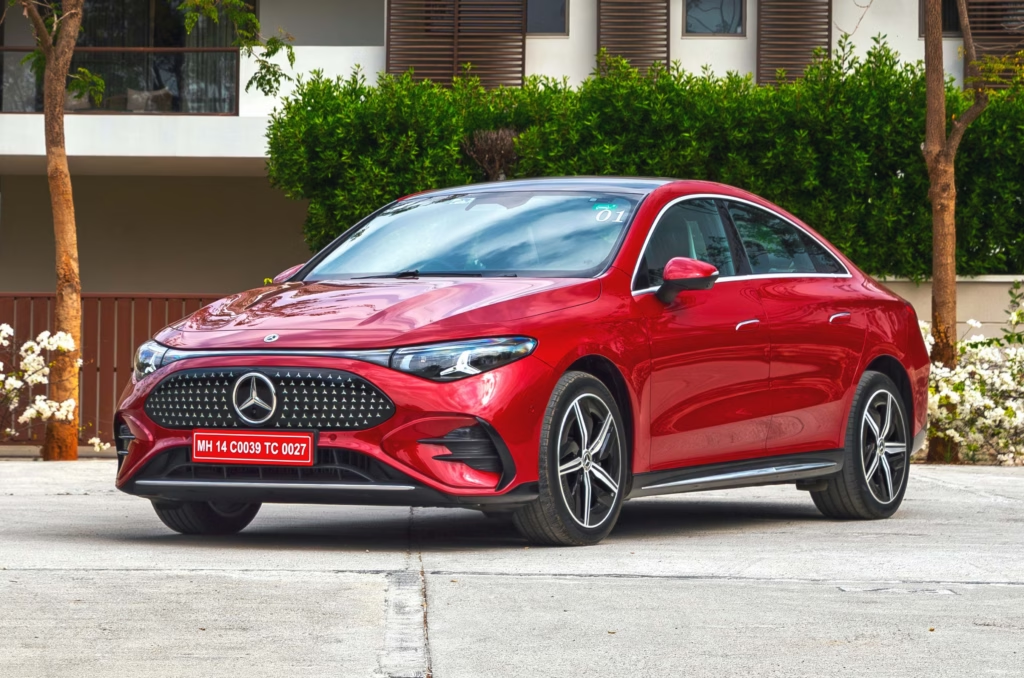
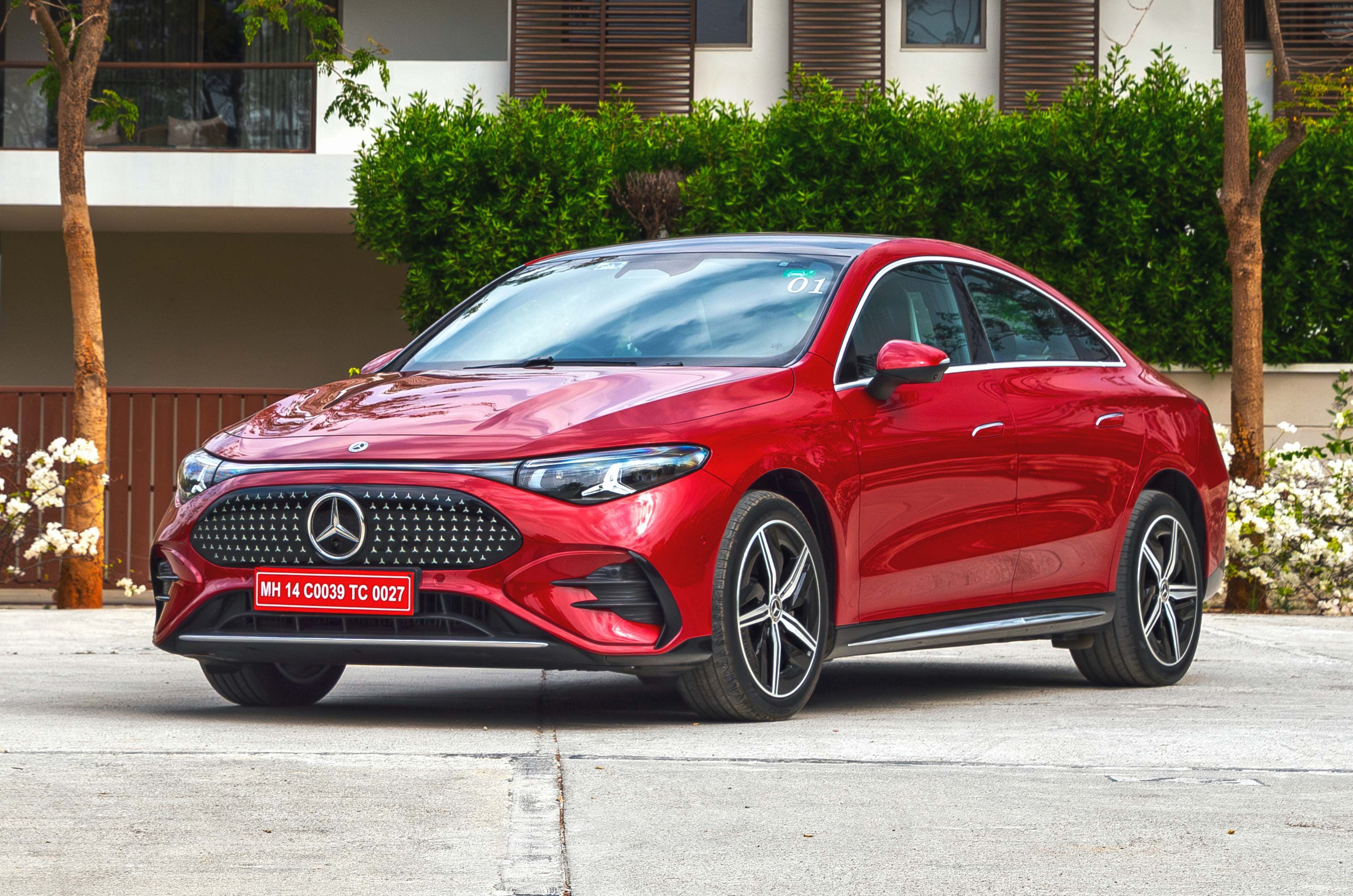
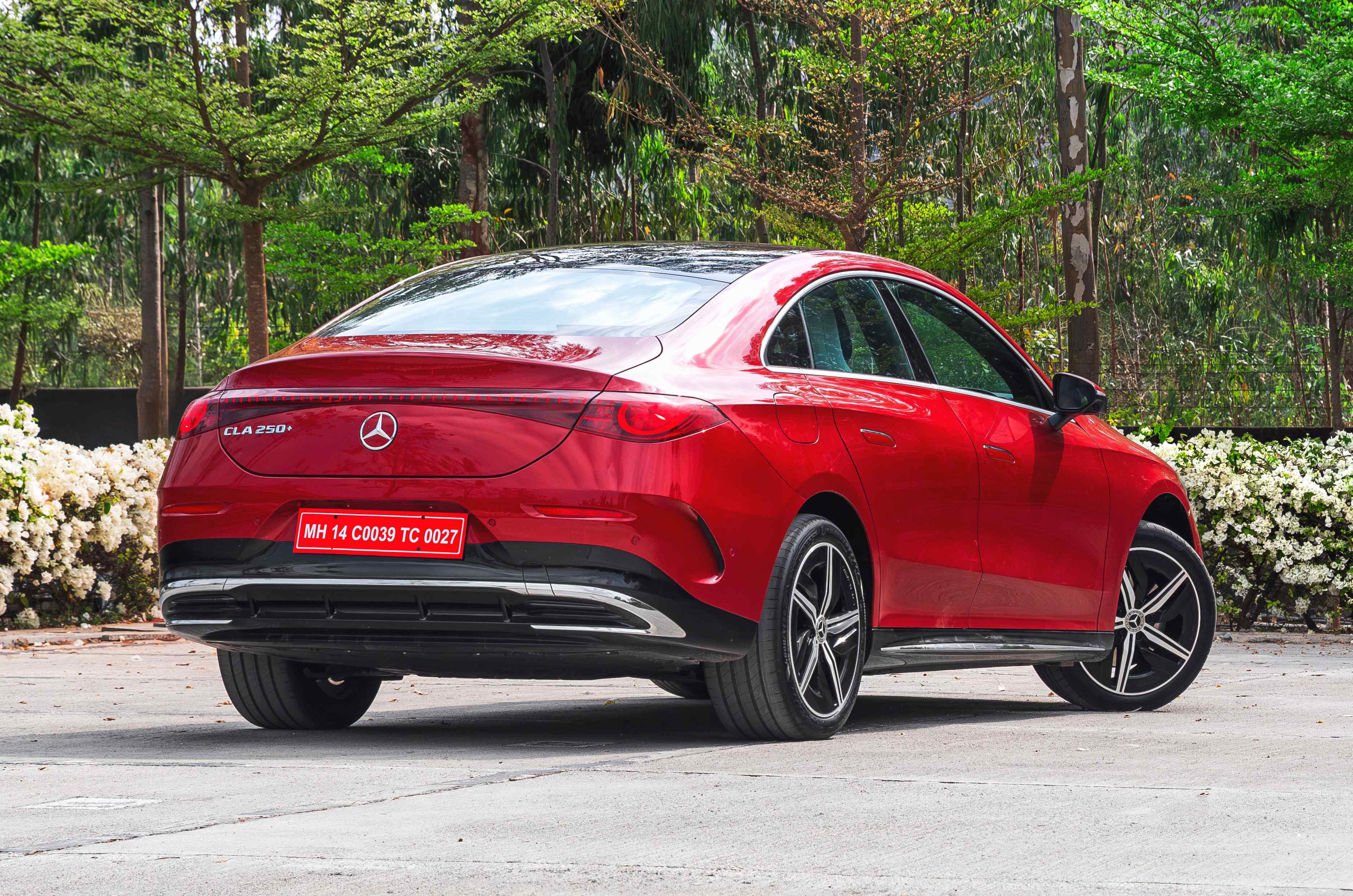
Mercedes-Benz India says the CLA Electric has received more than 1,000 confirmed orders, with deliveries extending into March 2027 due to limited supply. Customers are currently facing waiting periods of up to six months for the electric sedan. The strong demand comes as Mercedes-Benz recorded its highest-ever January-September sales in India, with 15,190 cars retailed in the first nine months of 2026, up 8 percent from the same period last year.
The July-September quarter also set a new sales record, with 5,422 units retailed, a 6 percent increase over Q3 2025. Growth was driven by new launches and demand for long-wheelbase models like the E-Class, GLE, GLS and V-Class. The company also said repeat purchases from existing Mercedes-Benz customers as part of the replacement cycle contributed to demand.
Mercedes-Benz sees strong demand for CLA Electric
The CLA Electric, launched in April this year, has helped drive Mercedes-Benz India’s electric car sales, which grew 16 percent in January-September 2026. Mercedes-Benz expects EVs to account for 20-25 percent of its sales next year if supply improves. The company says supply remains the main constraint on its electric car sales. Managing director and CEO Santosh Iyer said Mercedes-Benz India could have achieved 7-8 percentage points higher EV penetration this year if not for supply-side issues.
The automaker also recorded strong demand at the top end of its range. Sales of the EQS Maybach SUV grew 68 percent year on year in January-September 2026, and the company will begin deliveries of the new electrified S-Class from mid-October. The top-spec MANUFAKTUR version is sold out for the year, while a limited number of Exclusive Line cars remain available for order.
Mercedes-Benz sales rise 6 percent in Q3
The core luxury segment accounted for around 60 percent of Mercedes-Benz India’s sales in January-September, with the C-Class, GLC, GLE and long-wheelbase E-Class making up the bulk of this segment. The entry-luxury segment, comprising the GLA and CLA Electric, accounted for around 15 percent of sales and grew 4 percent during the period.
The company’s top-end portfolio grew 13 percent and accounted for more than 25 percent of sales. Mercedes-AMG sales rose 18 percent during the period. Q3 sales were also 17 percent higher than in the previous quarter.
Diesel share rises to 40 percent
Diesel models now account for 40 percent of Mercedes-Benz India’s sales, up from 38 percent, according to managing director and CEO Santosh Iyer. The increase comes as chief rival BMW has been shifting its model line-up away from diesel and towards electrified powertrains in India.
Mercedes-Benz GLC Electric bookings open
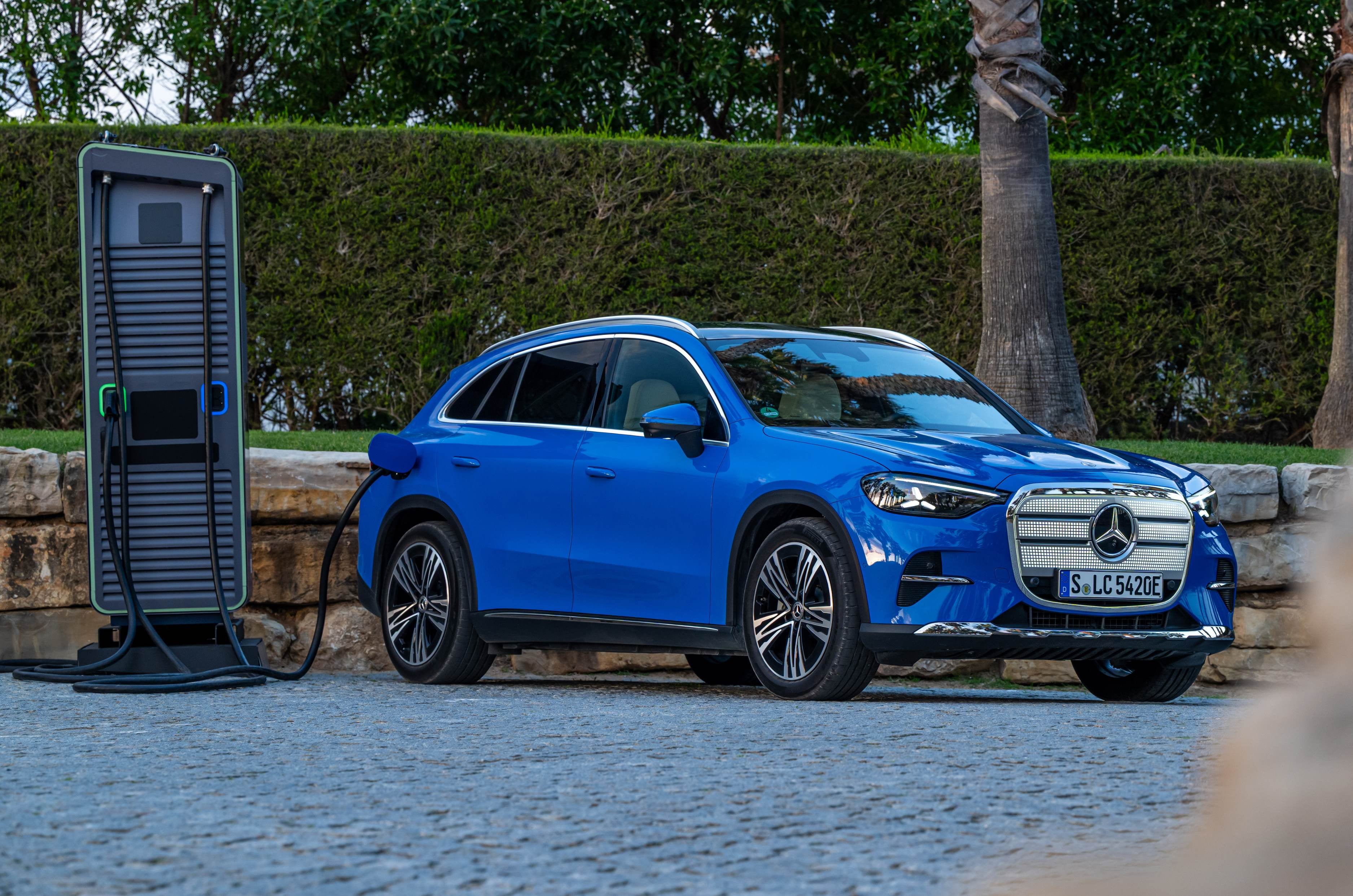
Mercedes-Benz has opened bookings for the GLC Electric in India ahead of the model’s launch on November 4. The SUV will be assembled at the company’s Chakan plant and will initially be offered in the 400 4Matic version, with a 94kWh battery and a claimed WLTP range of 715km.
The GLC Electric will join the CLA Electric, EQS SUV, EQS Maybach SUV and G580 in Mercedes-Benz India’s electric line-up.
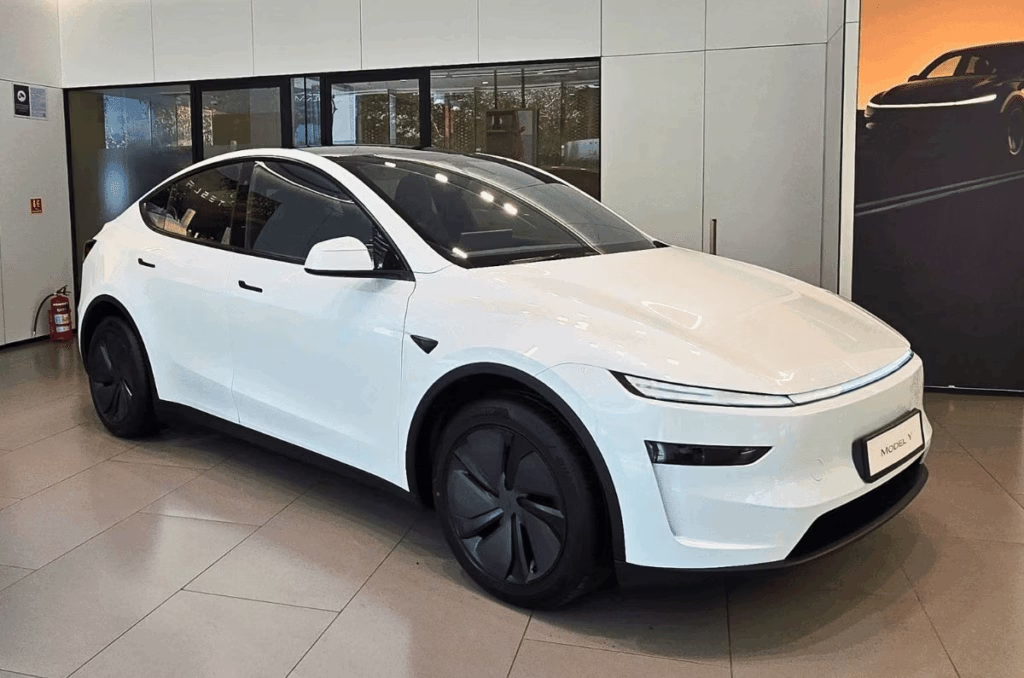
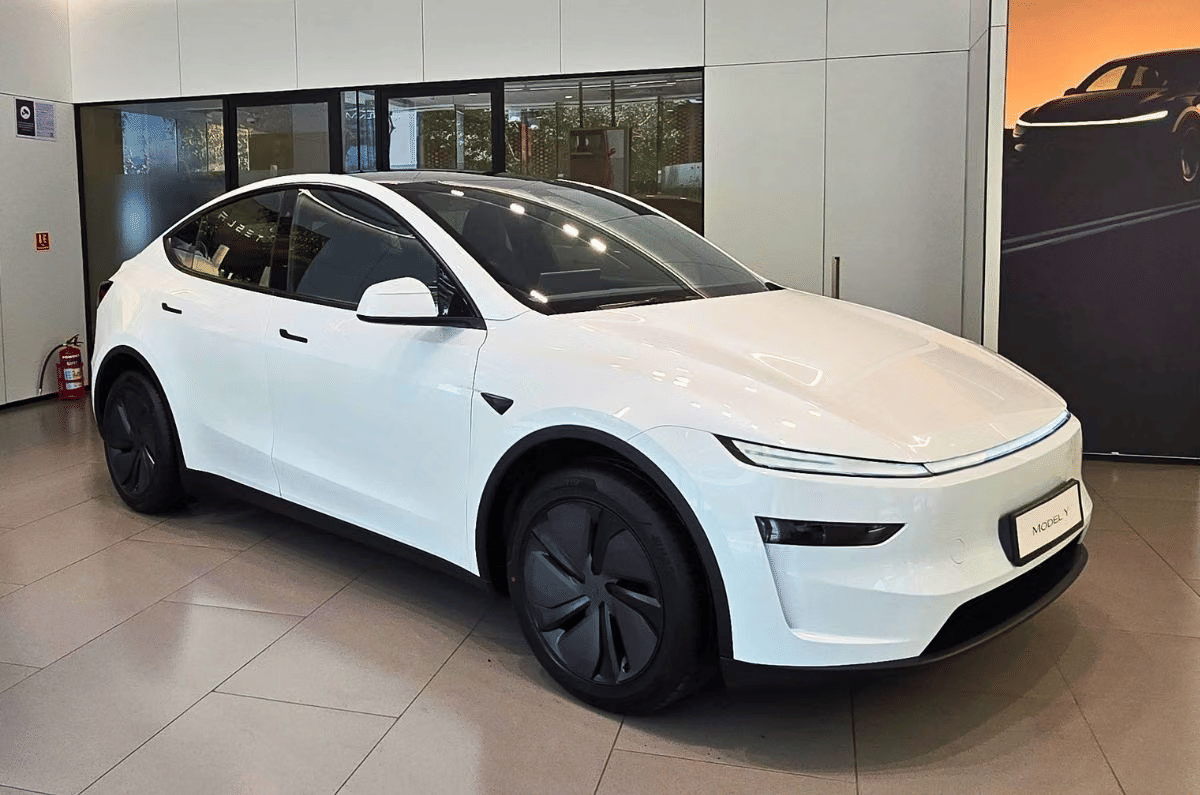
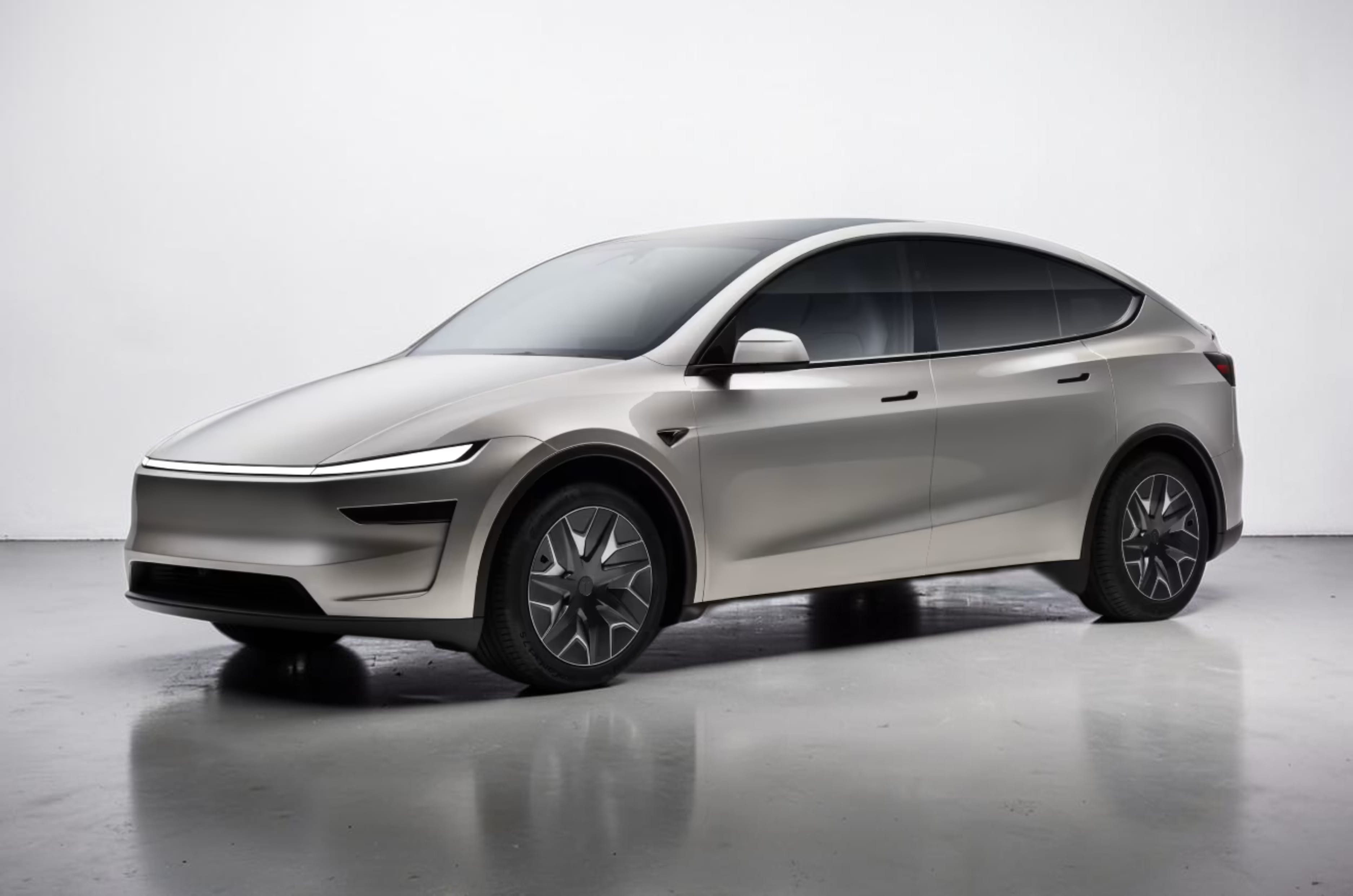
A little over 13 months after entering the Indian market, Tesla has crossed the 1,000-unit sales mark with its sole offering – the Model Y. According to the Vahan portal, Tesla India recorded total deliveries of 1,017 Model Y units between September 2025 and October 2, 2026. Last month, Tesla recorded its highest-ever monthly sales in the country at 291 units, up 322 percent from 69 units from the year-ago period. Month-on-month, too, sales were up 149 percent from 117 units in August.
Tesla India sales so far
Triple-digit sales registered since July
Tesla Model Y sales in India so far
Month
Units
Change (percent)
September 2025
69
–
October 2025
40
-42
November 2025
48
20
December 2025
69
44
January 2026
38
-45
February 2026
29
-24
March 2026
53
83
April 2026
43
-19
May 2026
36
-16
June 2026
38
6
July 2026
116
205
August 2026
117
1
September 2026
291
149
October 2026*
30
–
Total
1,017
–
*Data for October 1 and 2.
The American EV maker’s September sales performance came during a record month for India’s electric passenger vehicle (e-PV) market, which recorded monthly retail sales of 35,995 units; Tesla accounted for 0.80 percent of total e-PV sales. It also moved up to second place in the luxury e-PV segment for the first time, outselling Mercedes-Benz India, which sold 125 units in September. BMW India was the segment leader with 502 units and a 51 percent share. Tesla’s share of the luxury e-PV market rose to 30 percent in September 2026, from 11 percent a year earlier. In July, Tesla had moved ahead of Volvo to take third place.
Tesla Model Y L AWD.
From September 2025 until June 2026, the Model Y recorded monthly deliveries in double digits. Sales rose 205 percent month-on-month to 116 units in July, compared to just 38 units in June. Between July and October 2, Tesla delivered 554 Model Ys, accounting for 54 percent of its total sales so far. This came after Tesla India cut the Model Y Premium RWD base trim’s price by Rs 9 lakh in May, bringing it down to Rs 50.89 lakh. The Tesla EV is available in five-seater (Model Y) and six-seater (Model Y L) iterations. Compared to the top-spec Model Y L Premium AWD, the Model Y Premium RWD costs Rs 11.1 lakh less.
The Model Y rivals the Hyundai Ioniq 5 (Rs 55.71 lakh), Kia EV6 (Rs 65.98 lakh) and BYD Sealion 7 (Rs 49.4 lakh to Rs 55.9 lakh).
Model Y specs, range
The Model Y Premium RWD gets a 64kWh battery (gross capacity) with a claimed 500km WLTP range, and it uses a 299hp, 420Nm electric motor. The battery size of the Model Y L has not been revealed. Since the Model Y L in right-hand drive configuration is also available in Australia, and going by the Australian-spec model, it is likely powered by an 88.2kWh battery (gross capacity). Power and torque figures are estimated at 514hp and 590Nm, respectively. Tesla India has confirmed that the Model Y L gets a dual-motor AWD setup and has a claimed range of 681km (WLTP).
Tesla India expanding sales, charging network
6 showrooms, 7 charging stations are operational here
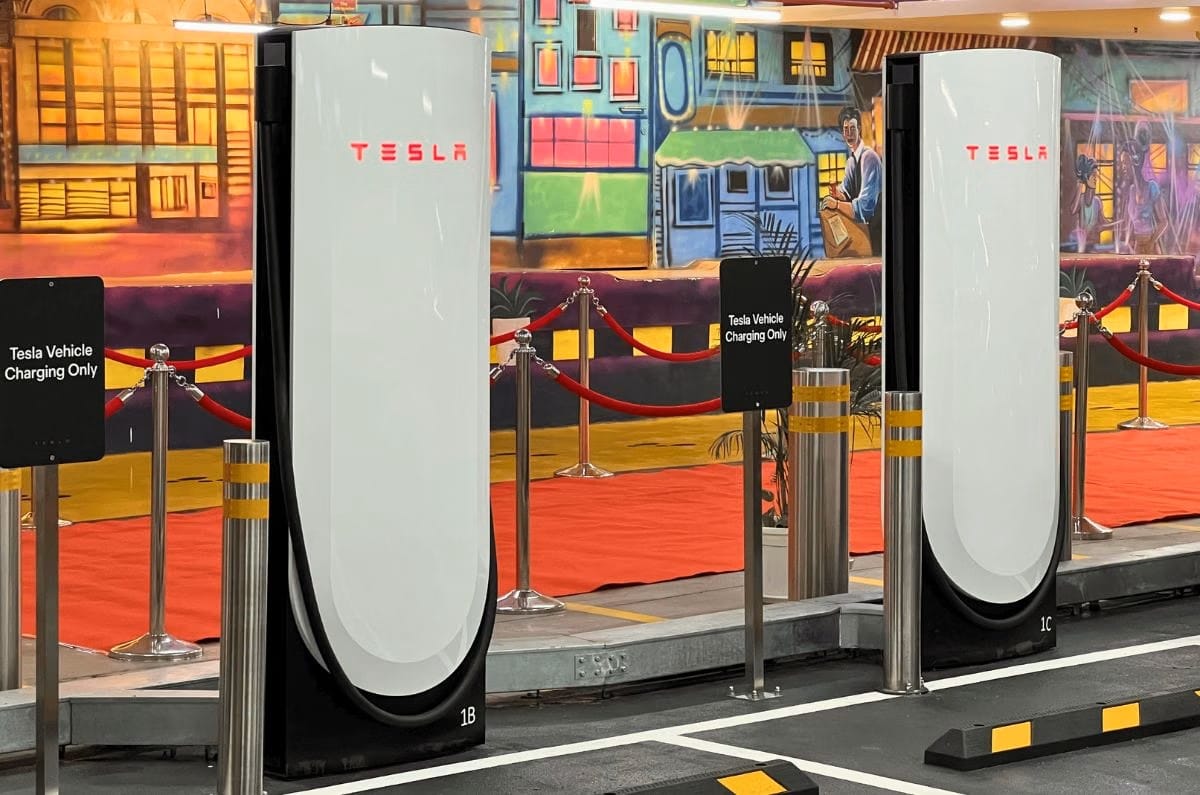
Last month, Tesla India opened its sixth showroom in Chennai, adding to its existing outlets in Mumbai, Delhi, Gurugram, Bengaluru and Hyderabad. It has also started service and bodyshop operations in Chennai, taking its service network to eight locations.
In August, Tesla opened its latest Destination Charging facility at Lake Shore Thane in Mumbai. It has four 11kW AC chargers. Tesla now operates seven charging stations in India, including locations in Navi Mumbai, Delhi and Gurugram, with 20 Superchargers and 24 Destination Chargers.
Ex-showroom prices mentioned above are as on October 5, 2026.
मेरठ के एक शख्स को अपनी गर्लफ्रेंड के साथ मोमोज खाना भारी पड़ गया। व्यक्ति को गर्लफ्रेंड के साथ मोमोज खाते हुए उसकी पत्नी ने देख लिया। पति को दूसरी महिला के साथ देखकर पत्नी नाराज हो गई और दोनों के बीच जमकर बहस हुई। विवाद बढ़ने पर जब पति कार लेकर वहां से जाने लगा, तो पत्नी उसकी कार के बोनट पर बैठ गई और उसे रोकने की कोशिश करने लगी। पत्नी ने अपने पति के खिलाफ पुलिस में शिकायत दर्ज करवाई है। इस घटना का वीडियो भी सामने आया है। ये वीडियो तेजी से वायरल हो रहा है।
बोनट पर बैठी महिला
पुलिस के अनुसार, शनिवार शाम मयंक सिंह लोहियानगर में एल-ब्लॉक पुलिस चौकी के पास अपनी कथित गर्लफ्रेंड माही वर्मा के साथ मौजूद था। इसी दौरान उसकी पत्नी सुनीता सिंह वहां पहुंच गई और दोनों को साथ देख लिया। इसके बाद सुनीता और मयंक के बीच बहस शुरू हो गई। देखते ही देखते मामला बढ़ गया और मौके पर काफी हंगामा होने लगा। पुलिस के मुताबिक, विवाद के बाद मयंक वहां से निकलने के लिए अपनी कार में बैठ गया। उसे रोकने के लिए सुनीता कार के सामने खड़ी हो गई। बताया जा रहा है कि जैसे ही मयंक ने गाड़ी आगे बढ़ाई, सुनीता कार के बोनट पर गिर गई। इसके बाद कुछ दूर तक वह कार के बोनट पर ही रही।
100 मीटर तक चली कार
वीडियो में सुनीता चलती कार के बोनट को पकड़े हुए नजर आ रही हैं और आसपास मौजूद लोगों से मदद मांगती दिख रही हैं। बताया जा रहा कि कार करीब 100 मीटर तक चलती रही, जिसके बाद सड़क पर लोगों की भीड़ जमा होने लगी। लोगों को इकट्ठा होता देख मयंक ने आखिरकार कार रोक दी। घटना का वीडियो अब सोशल मीडिया पर सामने आया है। अब पुलिस इस मामले की जांच कर रही है।
Meerut, Uttar Pradesh
A woman clung to the bonnet of a moving car in Meerut after catching her husband inside with another woman.
She had stood in front of the vehicle; he drove off anyway, and she held on. https://t.co/wbyGAJ84Ww
सुनीता ने पुलिस में शिकायत देकर अपने पति मयंक पर मारपीट करने, दहेज के लिए परेशान करने और दूसरी महिला से संबंध रखने के आरोप लगाए हैं। पुलिस ने मामले को गंभीरता से लेते हुए मयंक के खिलाफ हत्या की कोशिश के आरोप में भी केस दर्ज किया है। फिलहाल पुलिस पूरे मामले की जांच कर रही है और घटना से जुड़े सभी पहलुओं की जानकारी जुटाई जा रही है।
प्रधानमंत्री नरेंद्र मोदी के संसदीय क्षेत्र वाराणसी में इलेक्ट्रिक वाहनों को बढ़ावा देने के लिए अब ईवी चार्जिंग स्टेशन बनाए जाएंगे।वाराणसी शहर के अलग-अलग 25 स्थानों पर ईवी चार्जिंग स्टेशन का निर्माण होगा। फिलहाल 5 स्थानों पर चार्जिंग स्टेशन के निर्माण के लिए स्थान भी चिह्नित किये गए है। शहर के कचहरी स्थित आम्बेडकर चौराहे से इसकी शुरुआत होगी। यहां बने पब्लिक फैसिलिटी सेंटर को तोड़कर नए सिरे से ईवी चार्जिंग सेंटर को विकसित किया जाएगा।
पब्लिक प्राइवेट पार्टनरशिप (पीपीपी) मॉडल पर इन चार्जिंग स्टेशन को तैयार किया जायेगा। जहां न सिर्फ आप अपने इलेक्ट्रिकल वाहनों को चार्ज कर सकेंगे बल्कि वहां बैठ आप आसानी से समय को काट भी पायेंगे। इन स्टेशन पर बैठने के लिए पर्याप्त व्यवस्थाओं के साथ शुद्ध पेयजल,शौचालय, फ्री वाई फाई सहित अन्य सुविधाएं होंगी। इस ईवी चार्जिंग स्टेशन पर मुख्य रूप से दोपहिया वाहनों के चार्जिंग की सुविधा उपलब्ध होगी। इसके अलावा हल्के वाहनों को भी यहां चार्ज किया जा सकेंगा।
फर्स्ट फेज में यहां बनेंगे स्टेशन
वाराणसी में फिलहाल ईवी चार्जिंग स्टेशन के लिए जो 5 स्थान तय किए गए है उनके कचहरी के आंबेडकर चौराहे के साथ रुद्राक्ष कन्वेंशन सेंटर, रविंद्रपुरी,गुरुधाम और सारनाथ शामिल है। माना जा रहा है अक्टूबर महीने के अंत से सभी तय स्थानों पर इसके निर्माण का काम शुरू हो जायेगा। नगर आयुक्त हिमांशु नागपाल ने बताया की इन ईवी चार्जिंग स्टेशन से चालकों को बड़ी राहत मिलेगी। फिलहाल फर्स्ट फेज में उन स्थानों पर ही इसका निर्माण हो रहा है जहां हर रोज लोगों की आवाजाही ज्यादा है।
तेजी से बढ़ रहें EV वाहन
बता दें कि वाराणसी में बीते कुछ सालों में ईवी वाहनों की संख्या में तेजी से बढ़ोतरी हुई है। एक आंकड़े के मुताबिक, वाराणसी में फिलहाल 62 हजार से ज्यादा ईवी वाहनों का रजिस्ट्रेशन हुआ है। इनमें मोटर साईकिल, रिक्शा और कार शामिल है। वाराणसी के सड़को पर इस समय 22500 से ज्यादा ई रिक्शा दौड़ रहें है, इसके अलावा 21 हजार इलेक्ट्रिकल वाहने भी है। वहीं 10 हजार के करीब टू व्हीलर वाहनों का रजिस्ट्रेशन भी हुआ है। उम्मीद जताई जा रही है आने वाले दिनों में ईवी वाहनों की संख्या अभी और बढ़ेगी। यही कारण है की वाराणसी में स्मार्ट सिटी के सहयोग से हाईटेक ईवी चार्जिंग स्टेशन के निर्माण के लिए पहल की गई है, जिसका फायदा ईवी वाहन चालकों को मिलेगा।
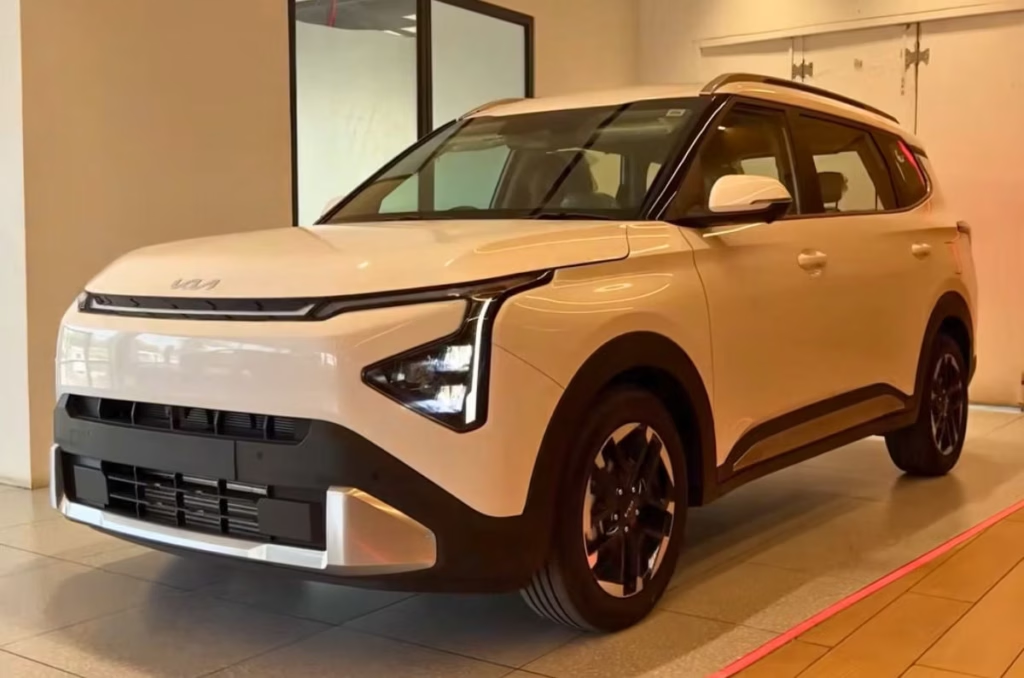
Kia has rolled out a range of benefits across its India line-up for October 2026, including cash discounts, exchange and scrappage offers, loyalty benefits and corporate discounts. The offers vary by model, variant and powertrain, with select cars also getting additional benefits such as an extended warranty. Here is a model-wise breakdown of Kia’s October offers.
Disclaimer: Offers/benefits may vary by city and are subject to stock availability. Buyers are advised to check with their local dealer for exact figures.
Kia Carnival discounts in October 2026
Up to Rs 1.70 lakh off
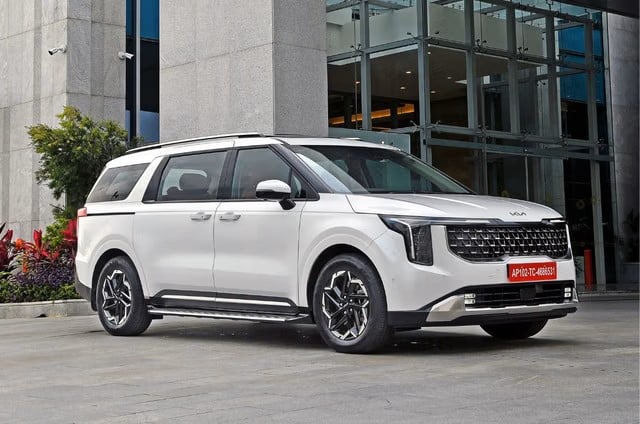
The Kia Carnival gets the highest benefits in Kia’s October 2026 offer programme, with savings of up to Rs 1.70 lakh. The package comprises a Rs 1 lakh exchange offer, Rs 20,000 scrappage benefit and corporate benefits of up to Rs 50,000.
Kia’s flagship MPV focuses on rear-seat comfort and space, making it a compelling choice among chauffeur-driven buyers. Priced from Rs 59.65 lakh, the Carnival does not have a direct rival, although the MG M9 is positioned in a similar price bracket.
Kia Carens Clavis discounts in October 2026
Up to Rs 95,000 off
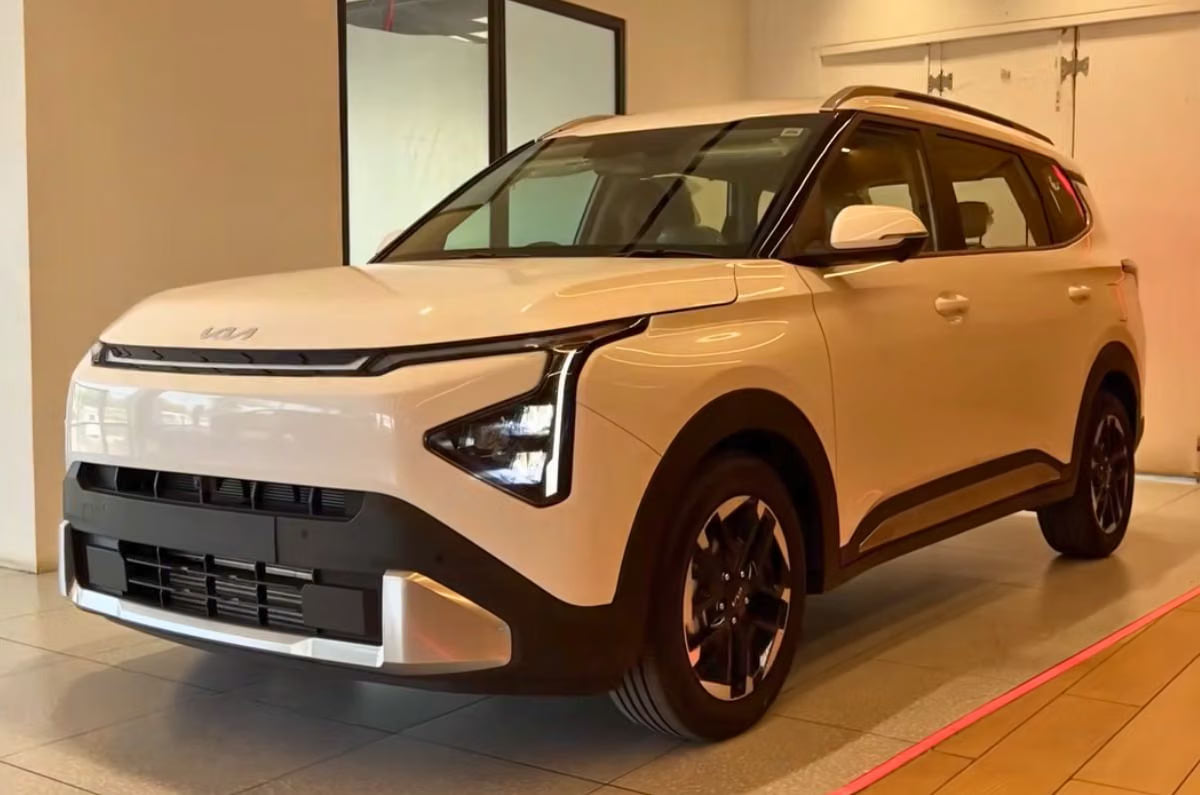
The Kia Carens Clavis gets benefits of up to Rs 95,000 on its ICE variants, excluding the CNG version. The offer comprises a Rs 10,000 cash discount, Rs 30,000 exchange benefit, Rs 20,000 loyalty benefit, Rs 20,000 scrappage benefit and corporate benefits of up to Rs 15,000.
The Clavis is available in six- and seven-seat configurations, with naturally aspirated petrol, turbo-petrol, CNG and diesel engine options. Prices range from Rs 11.39 lakh to Rs 21.79 lakh, ex-showroom. It is sold alongside the older Carens, which remains the lower-priced option in Kia’s MPV line-up. The Clavis rivals MPVs such as the Maruti Suzuki XL6 and Toyota Rumion, while its price also overlaps with larger three-row SUVs such as the Hyundai Alcazar and Tata Safari.
Kia Carens Clavis EV discounts in October 2026
Up to Rs 75,000 off
The Carens Clavis EV gets benefits of up to Rs 75,000 across its range. The offer includes a Rs 20,000 exchange benefit, Rs 20,000 loyalty benefit, Rs 20,000 scrappage benefit and corporate benefits of up to Rs 15,000. No cash is available for the Clavis EV this month.
The electric MPV offers a practical, well-finished cabin and strong performance even under load. However, it is significantly more expensive than the ICE-powered Clavis. The Clavis EV is priced between Rs 18.04 lakh and Rs 25 lakh, ex-showroom. It rivals the BYD eMax 7 and VinFast VF MPV 7.
Kia Sonet discounts in October 2026
Up to Rs 65,000 off
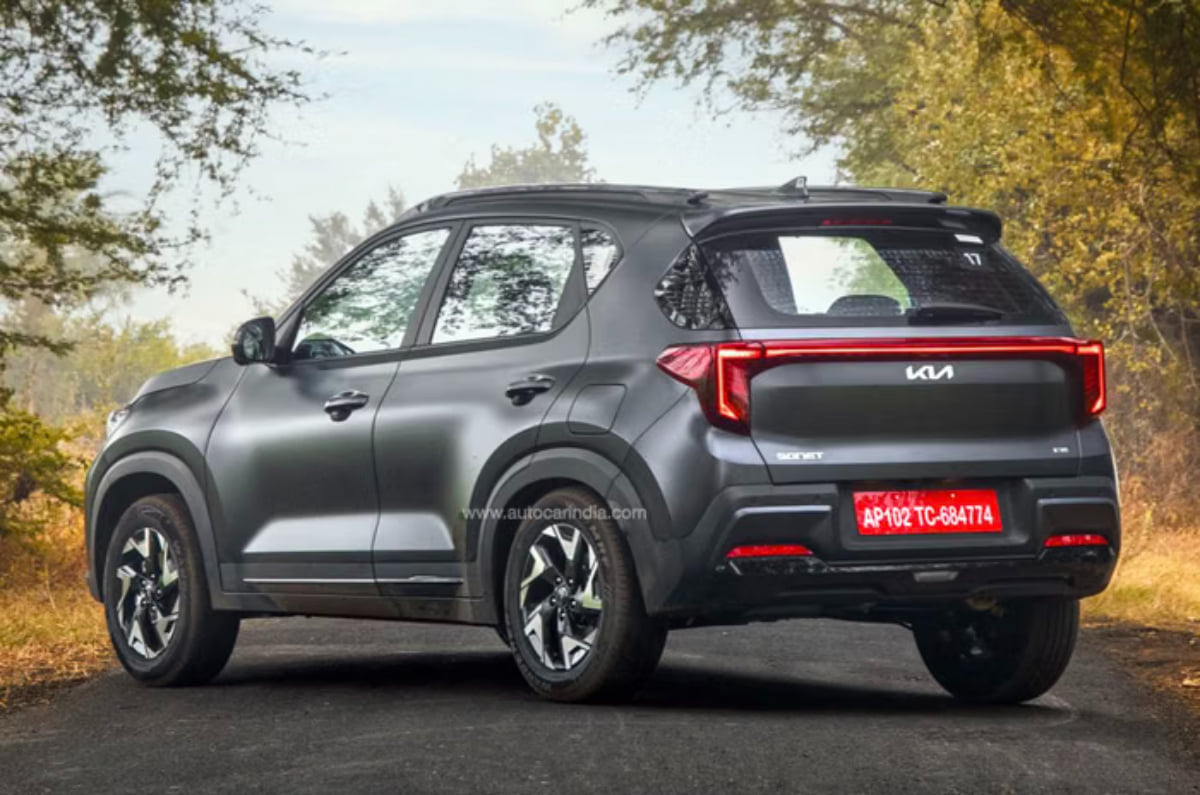
Benefits on the Kia Sonet vary by powertrain and variant. The naturally-aspirated petrol 1.2-litre HTK (O) gets the highest benefits of up to Rs 65,000, comprising a Rs 15,000 cash discount, Rs 20,000 exchange benefit, Rs 15,000 scrappage benefit and corporate benefits of up to Rs 15,000. The Sonet diesel , turbo-petrol and naturally-aspirated variants get benefits of up to Rs 50,000.
The compact SUV offers a long equipment list and multiple engine options. However, rear-seat space is limited and higher variants can get expensive. A rival to the Maruti Suzuki Brezza, Tata Nexon, Skoda Kylaq, Hyundai Venue and Mahindra XUV 3XO, the Sonet is priced between Rs 7.41 lakh and Rs 14.27 lakh.
Kia Syros discounts in October 2026
Up to Rs 55,000 off
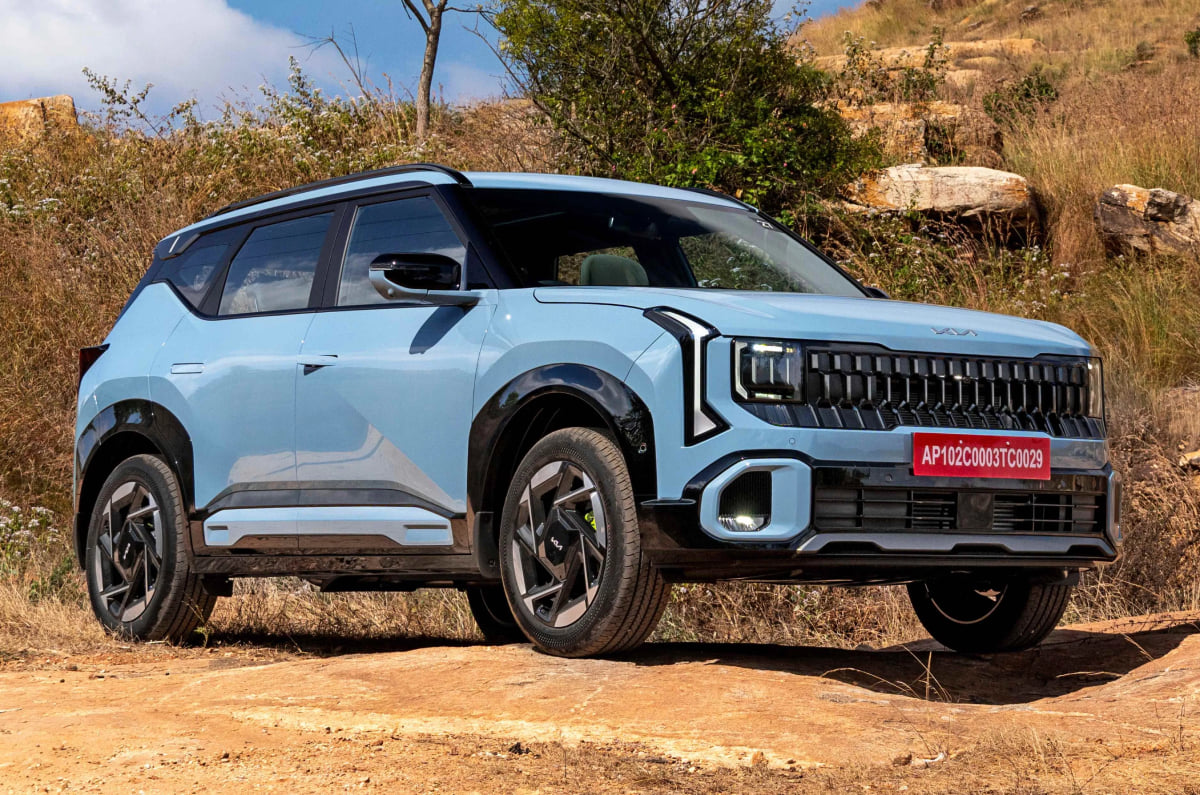
The Kia Syros gets benefits of up to Rs 55,000 on its ICE variants. The offer includes a Rs 20,000 exchange benefit, Rs 20,000 scrappage benefit and corporate benefits of up to Rs 15,000. Kia is also offering a free extended warranty with the Syros.
The Syros stands out for its stylish cabin and spacious rear seats, although NVH levels in both petrol and diesel variants remain high. The Kia Syros’ rivals include the Tata Nexon, Mahindra XUV 3XO, Maruti Suzuki Brezza, Skoda Kylaq and Hyundai Venue. It is priced from Rs 8.42 lakh to Rs 15.82 lakh.
Kia Carens discounts in October 2026
Up to Rs 45,000 off
The Kia Carens, excluding CNG variants, gets benefits of up to Rs 45,000. These comprise a Rs 10,000 exchange benefit, Rs 20,000 scrappage benefit and corporate benefits of up to Rs 15,000. The Carens CNG gets a Rs 20,000 scrappage benefit.
The Carens offers a spacious cabin, good practicality and a generous feature list. However, diesel performance under full load is not particularly strong, and the petrol engine is not very fuel-efficient. The Carens is priced between Rs 11.02 lakh and Rs 12.88 lakh, ex-showroom, it rivals the Toyota Rumion and Maruti Suzuki Ertiga.
Kia Seltos discounts in October 2026
Up to Rs 40,000 off
The Kia Seltos gets benefits of up to Rs 40,000 across its range. These comprise a Rs 20,000 loyalty benefit and Rs 20,000 scrappage benefit. There is no cash discount or exchange benefit for the Seltos this month.
The midsize SUV combines a comfortable ride with good handling and a strong turbo-petrol engine option. However, some rivals offer a more comprehensive feature list, and the diesel engine lacks punch. The Seltos rivals the Hyundai Creta, Tata Sierra, Maruti Grand Vitara, Toyota Urban Cruiser Hyryder, Volkswagen Taigun, Skoda Kushaq, Renault Duster and MG Astor. Its prices range from Rs 11 lakh to Rs 21.82 lakh.
Kia Sorento discounts in October 2026
Up to Rs 40,000 off
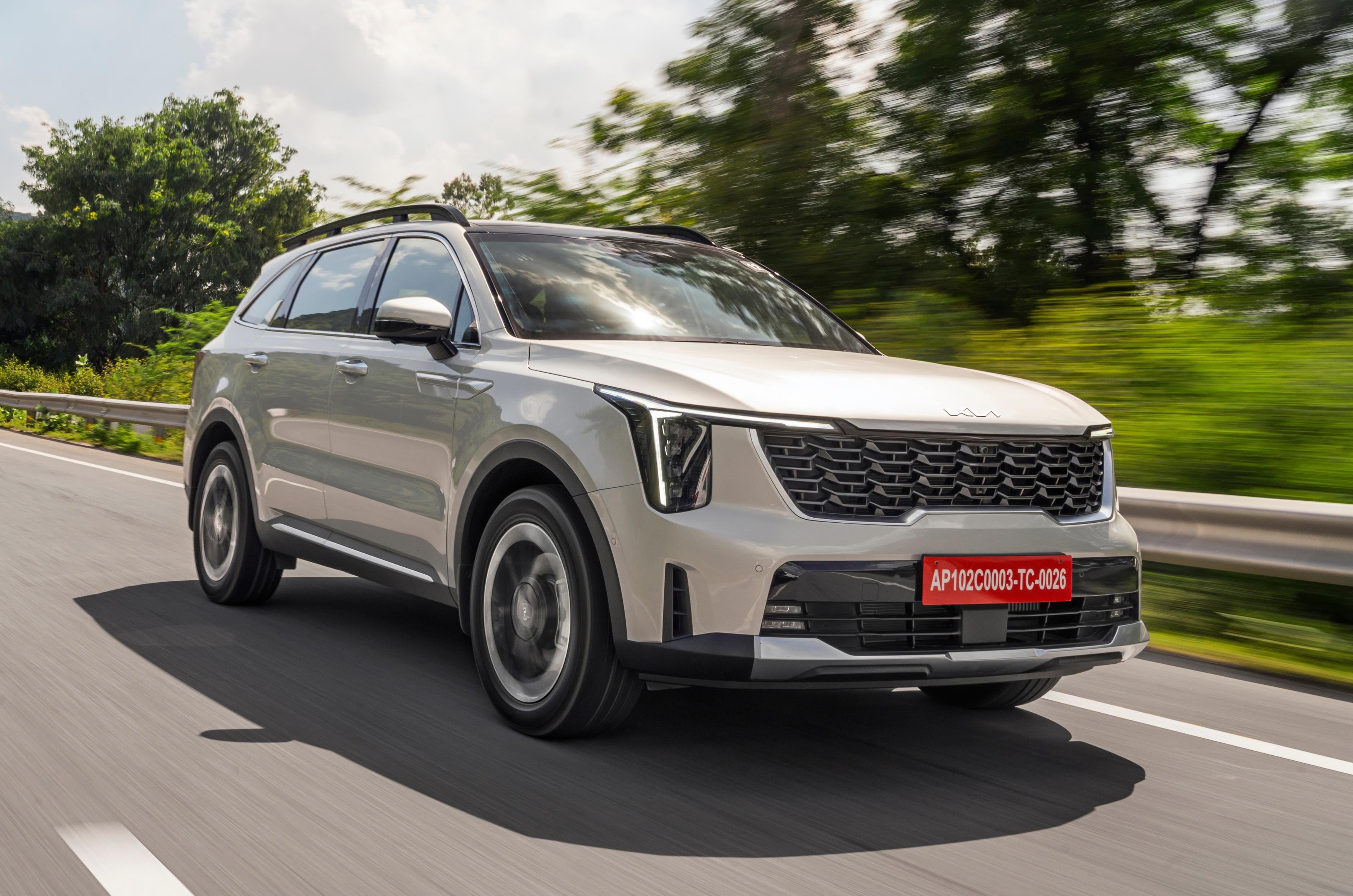
The recently launched Kia Sorento gets benefits of up to Rs 40,000 across its range. The offer comprises a Rs 20,000 loyalty benefit and Rs 20,000 scrappage benefit.
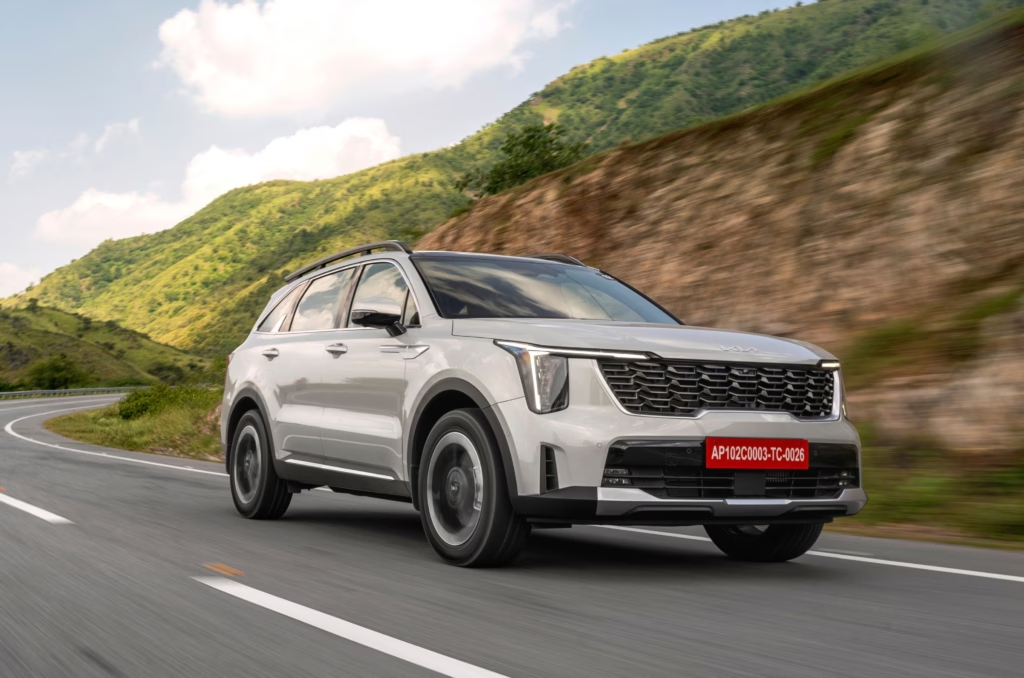
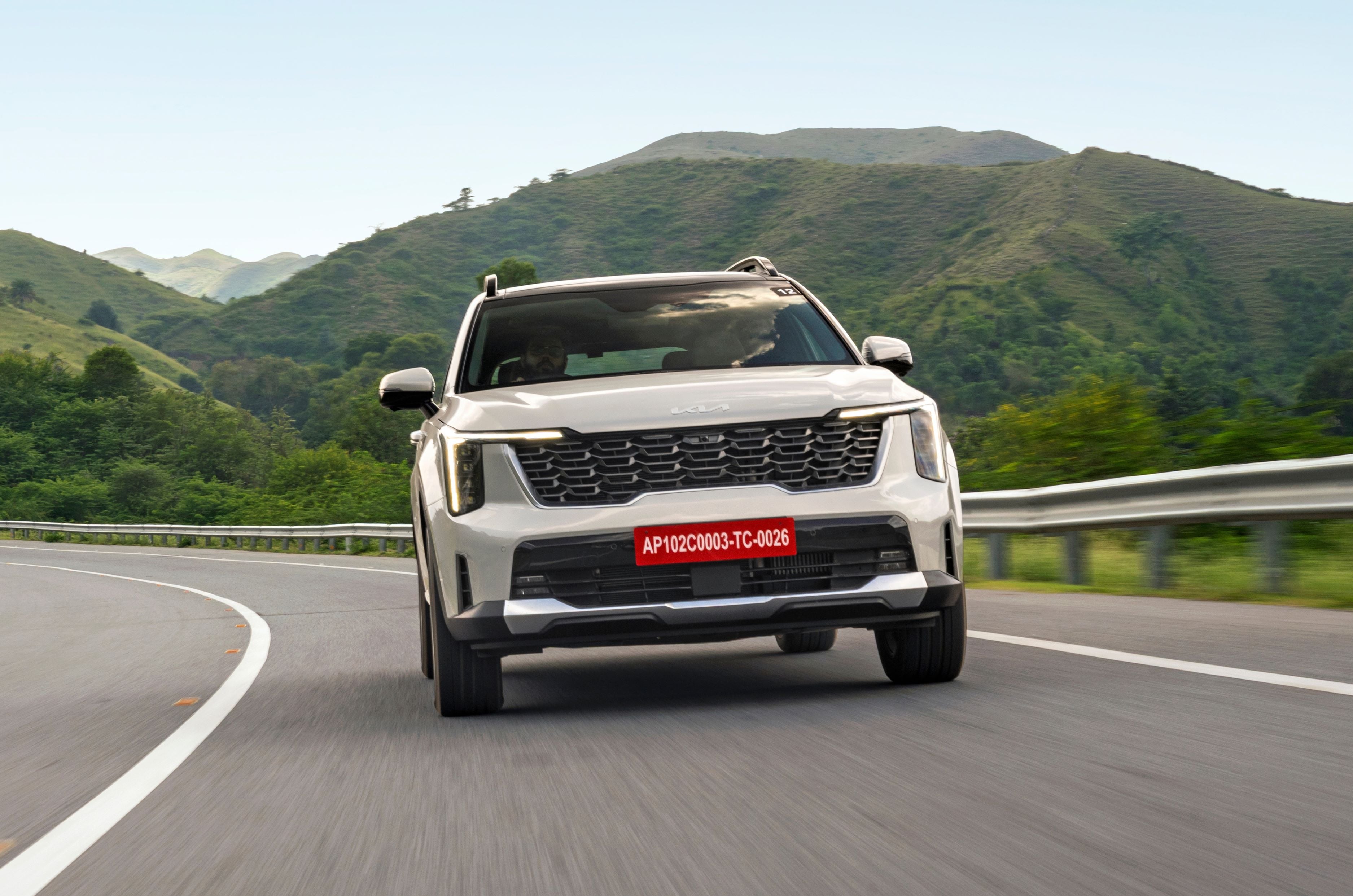
The Sorento is Kia’s flagship three-row SUV in India and is offered with a 2.2-litre diesel engine or a 1.6-litre turbo-petrol strong-hybrid powertrain. Prices range from Rs 27.99 lakh to Rs 40.39 lakh. It competes with SUVs including the Jeep Meridian, Skoda Kodiaq and Volkswagen Tayron.
The Sorento is a big bet for Kia India, and you can tell. Six trims, two powertrains, front- and all-wheel drive, six or seven seats and 32 versions in all. This is not a toe in the water exercise but a full-blooded dive into the deep end of the executive SUV pool. More than that, it is a case study in how to launch a product in India, because Kia has got the basics right before it has even started talking about features.
Start with the powertrains, which for this class of SUV could hardly be better judged. There is a strong 2.2-litre diesel for diesel die-hards and there are still plenty of those. And then there is a 1.6-litre turbo-petrol strong hybrid whose timing couldn’t be more perfect. Petrol prices are climbing, E20 has quietly eaten into real-world efficiency, and buyers want diesel-like running costs from a smooth, quiet powertrain without lying awake worrying about diesel’s long-term future. The Sorento hybrid is pitched squarely at that anxiety.
The strategy behind the car is just as interesting. This fourth-generation (MQ4) Sorento arrives in India towards the end of its global life cycle. It is still a current product, but one due to be replaced internationally next year, while India will carry on with this one. That is actually a very smart move. A car this late in its life has its development costs largely amortised, and Kia India can bring some of the tooling here, which slashes the investment.
And this is a properly localised car, not a screwdriver job. The body is stamped and welded at Kia’s Anantapur plant, and the dashboard and seats are made here too. That is what makes the Rs 27.99 lakh starting price possible. The catch is that localisation on this scale only pays off with volume, and Kia wants to sell around 40,000 Sorentos a year. That is a big number for a Rs 30-40 lakh SUV. Can it get there?
Kia Sorento exterior design and engineering
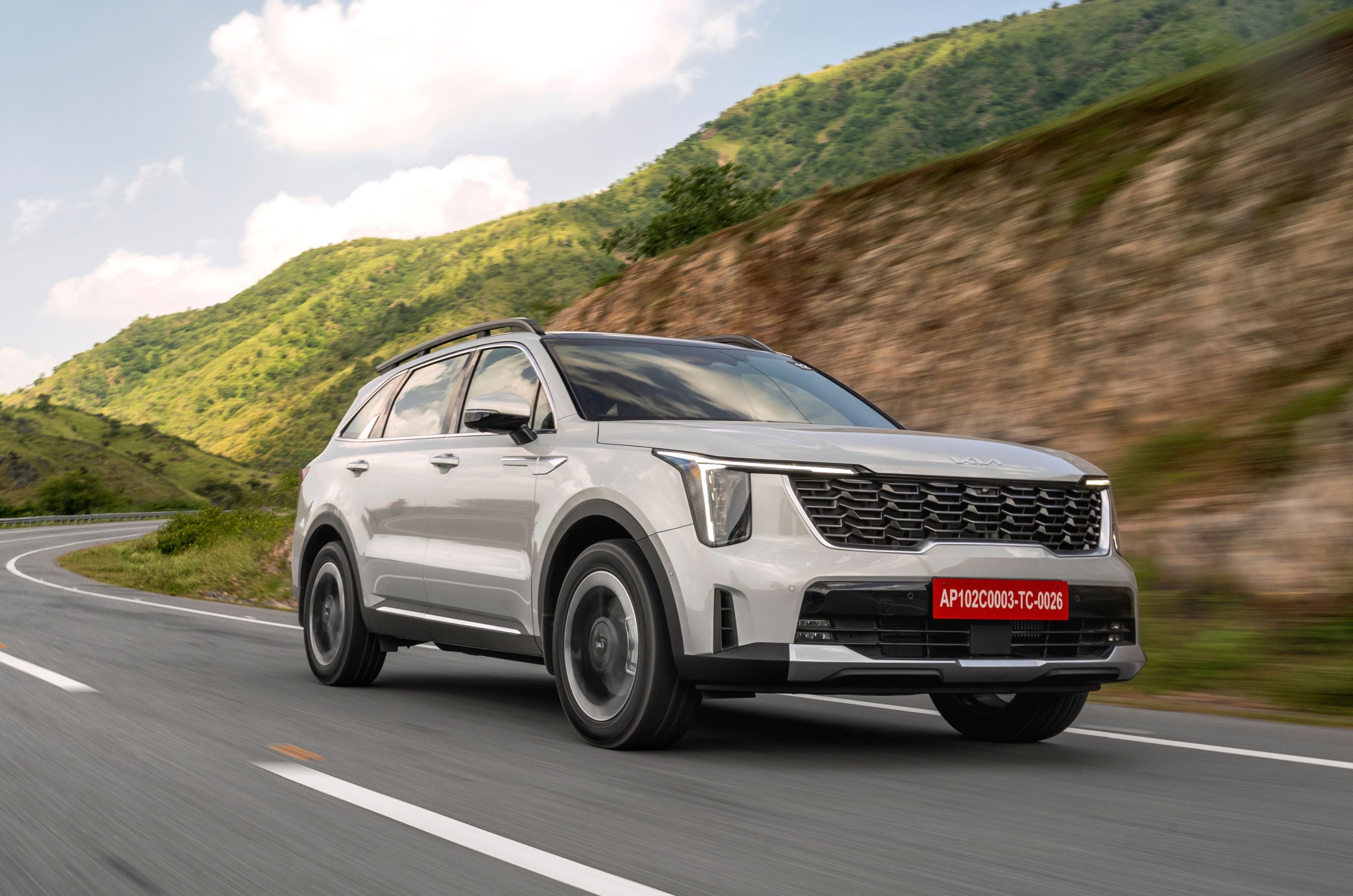
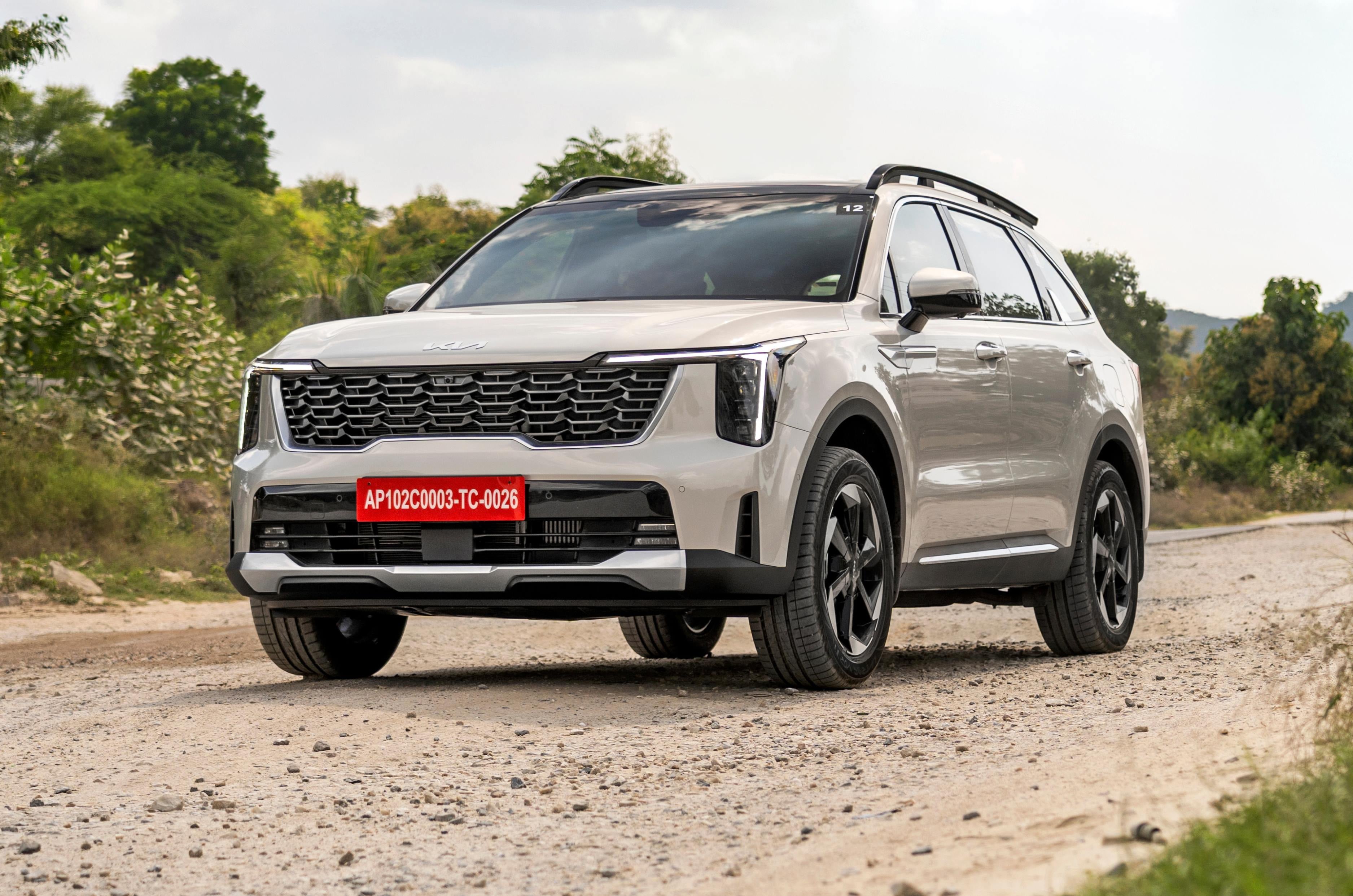
Based on the gen 4 Sorento, it carries over the older and more palatable design language.
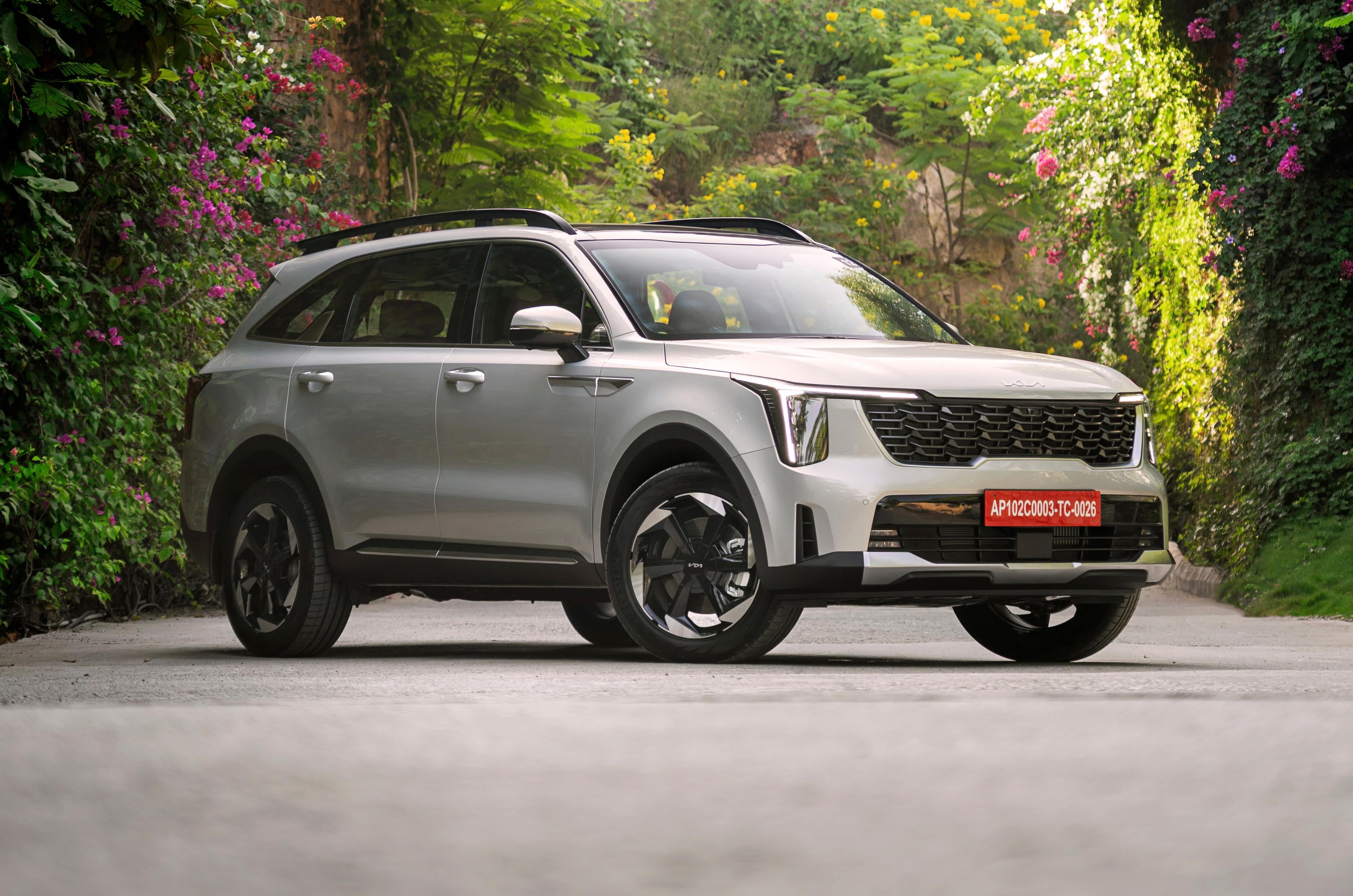
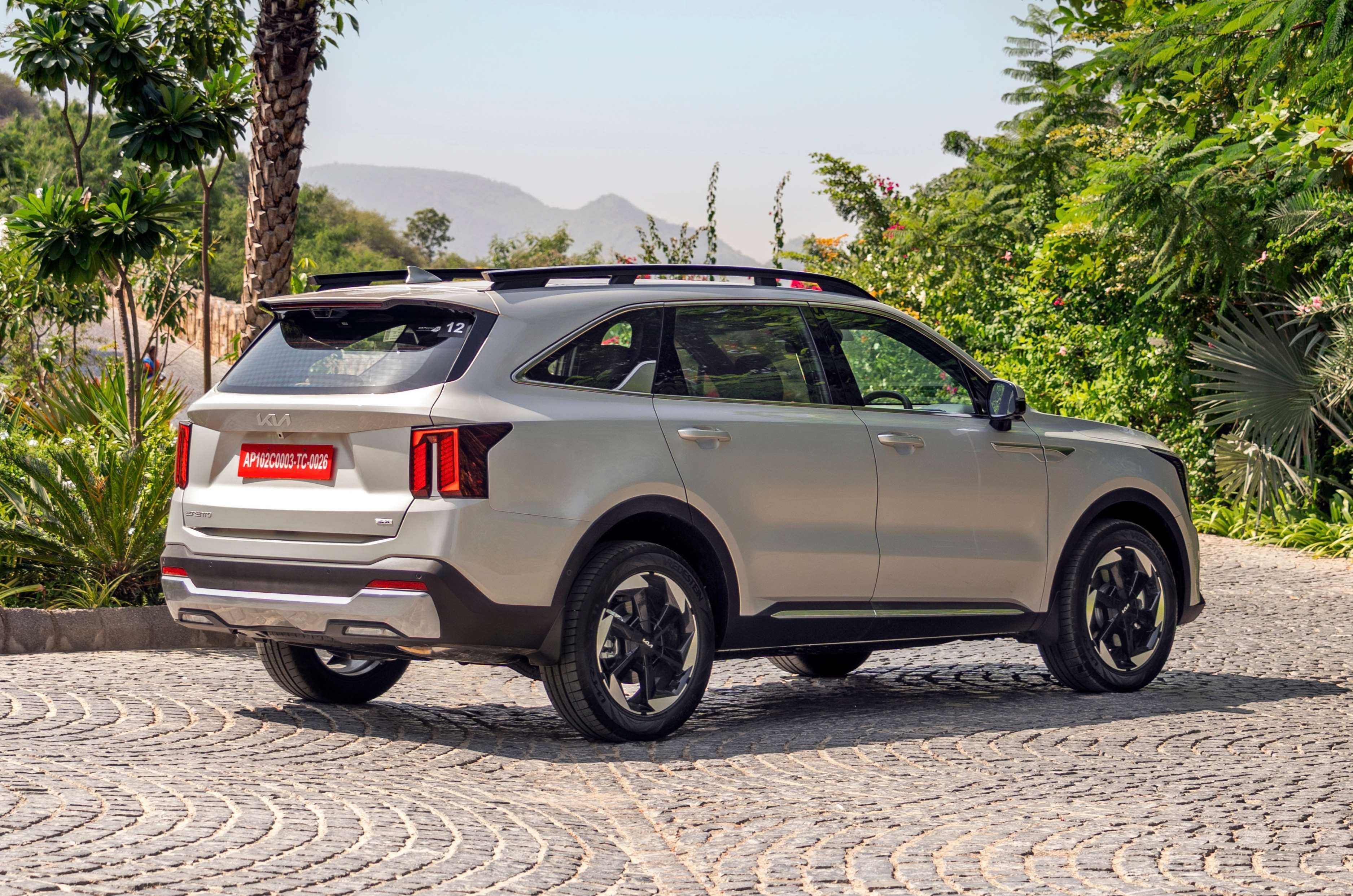
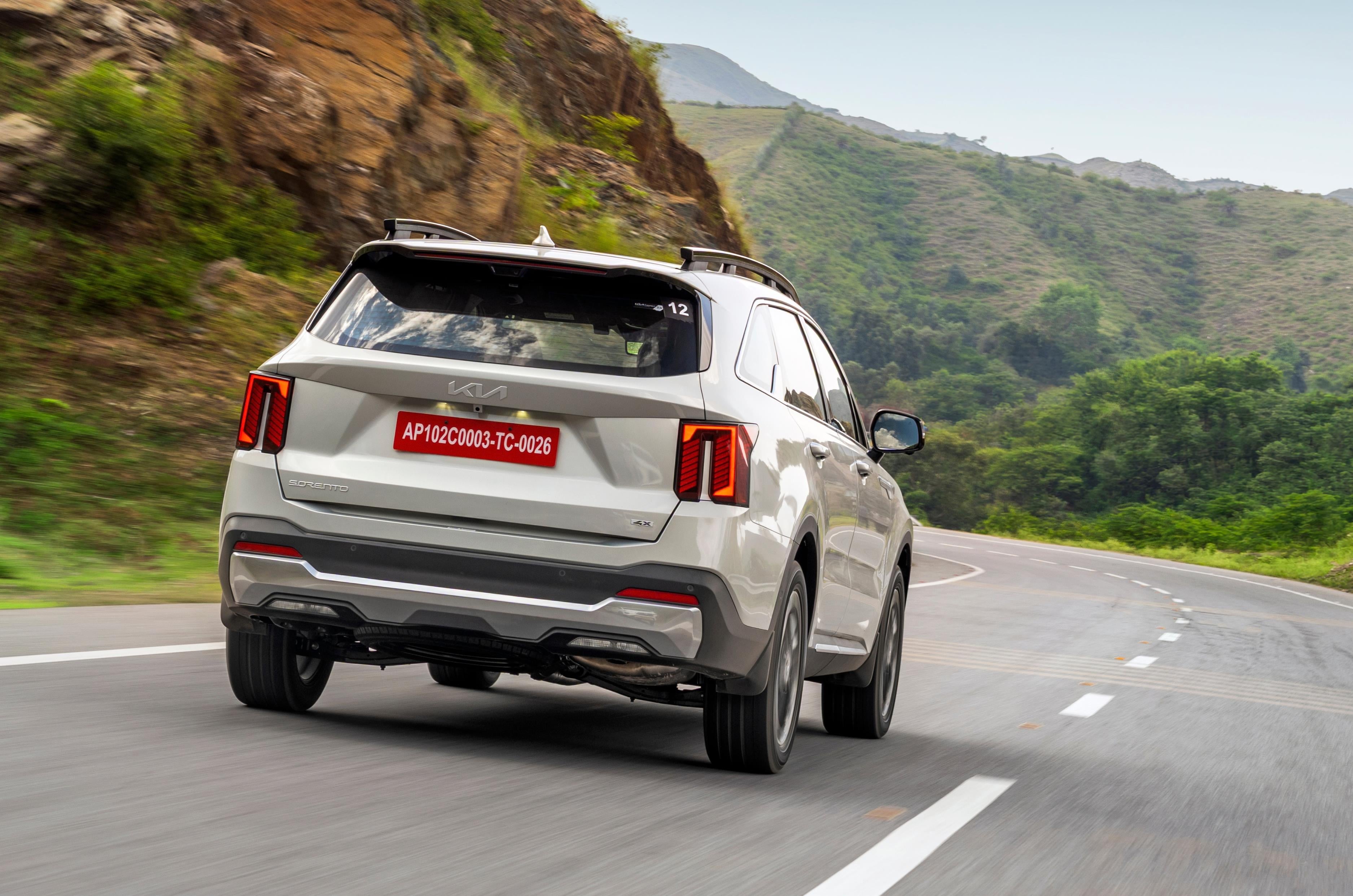
The Sorento sits on Hyundai-Kia’s MQ4 platform, the freshest architecture in its class, and it has already had a mid-life update to keep it looking current. The 2024 facelift brought the nose in line with the design language Kia kicked off with the EV9, so you get vertically stacked LED headlights, Y-shaped daytime running lamps and an aggressive looking bumper with wide intakes. At the back are L-shaped wraparound tail-lamps, and thankfully no light bar stretched across the tailgate.
Beats the rivals in length, width, and wheelbase.
Kia’s stated aim was a more technical, precise look, one meant to signal tight build quality and engineering sophistication. It is a trick the German premium brands have used for years, and Kia has clearly taken a leaf out of their book. The Sorento looks crisp and expensive rather than flashy, and is likely to age well too.
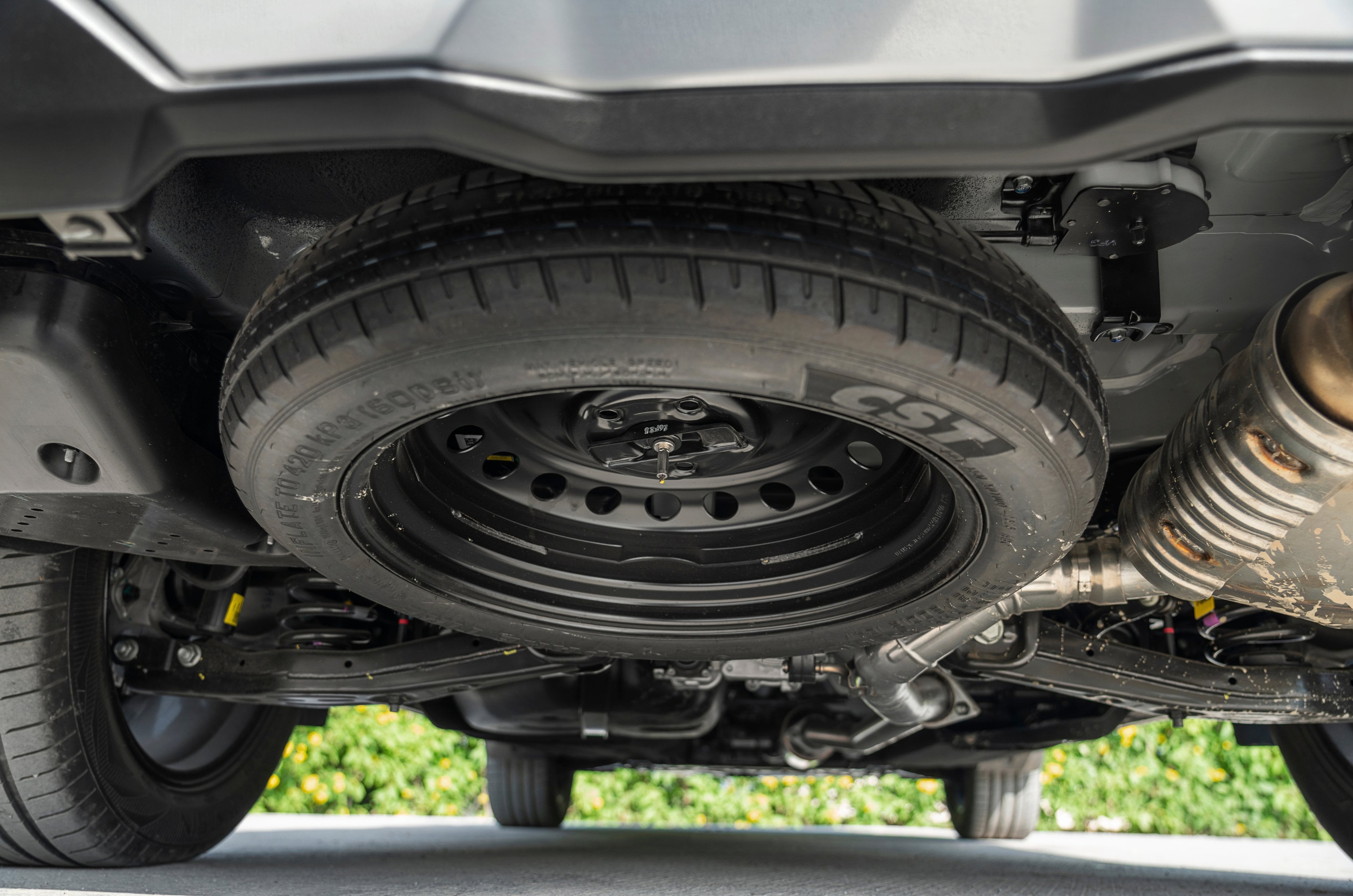
Spare wheel mounted under the floor frees up room in the boot.
What it does not have is brute presence. Despite being the longest, widest and tallest SUV in its segment, at 4,815mm long, 1,900mm wide and 1,785mm tall on a 2,815mm wheelbase, it does not loom in your mirrors the way a Fortuner does. The sloping roofline at the rear softens the silhouette and lends it a hint of crossover, and some will see it as a big Seltos rather than a junior Land Cruiser. Clearly this is not an SUV that looks like it can bully its way through traffic.
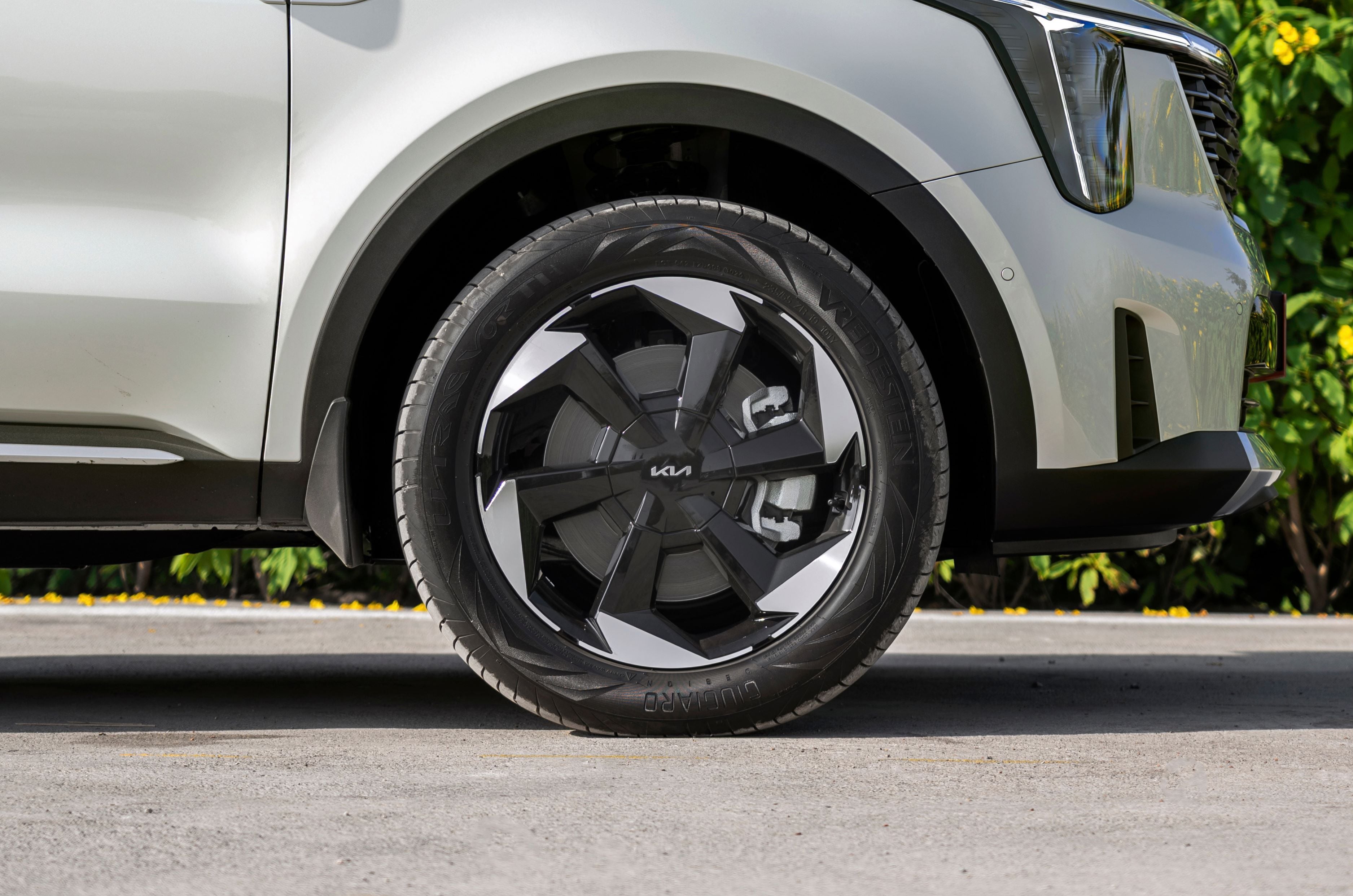
A more unique design could’ve been used for the 19-inch alloys.
The 19-inch dual-tone alloys could have been more distinctive, too an effect exaggerated by the chunky 235/55 R19 tyres. Those tall sidewalls, though, are not a styling misstep so much as an engineering choice, and they play a big part in how this car rides. More on that later.
Kia Sorento interior space and comfort
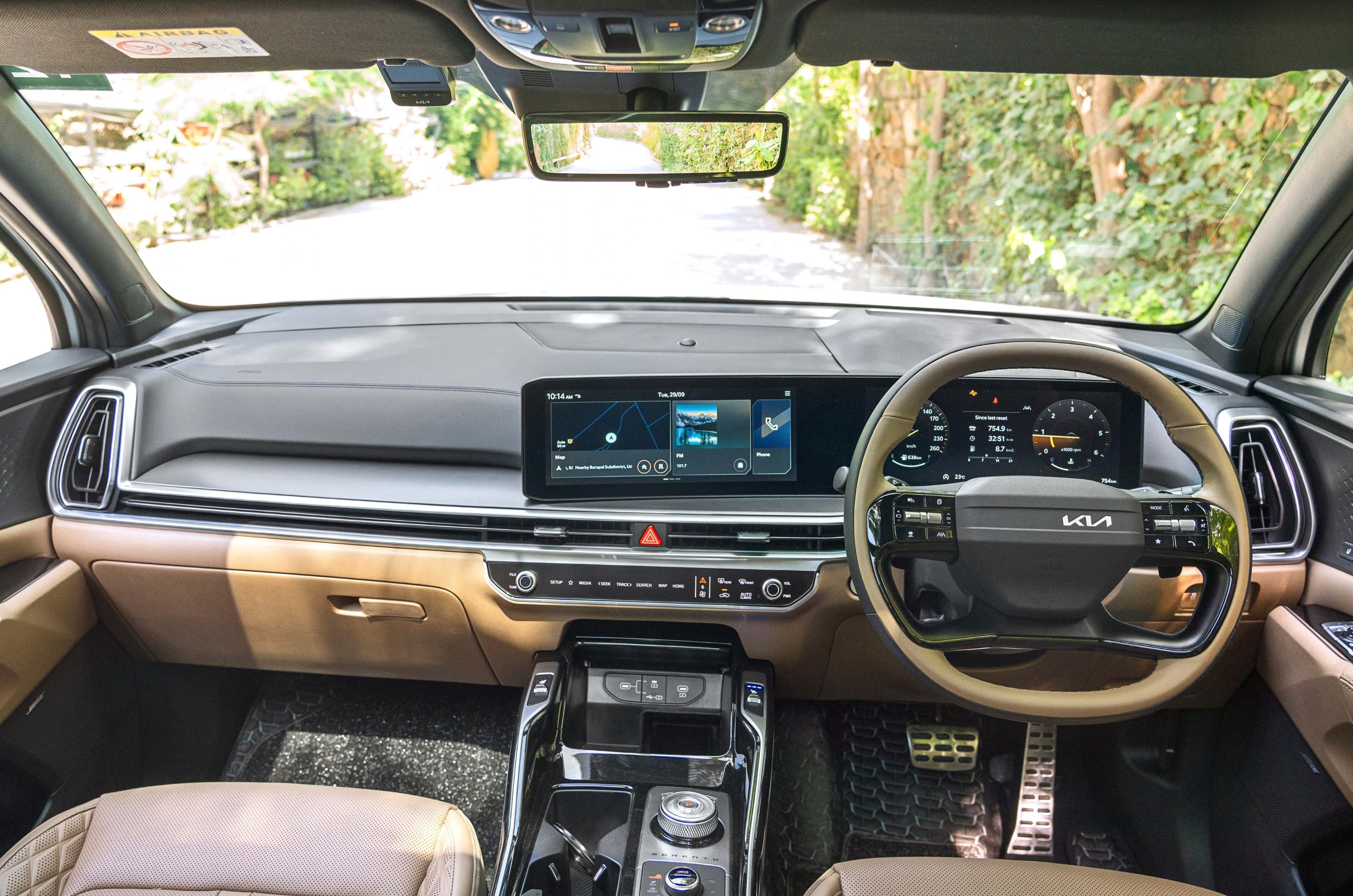
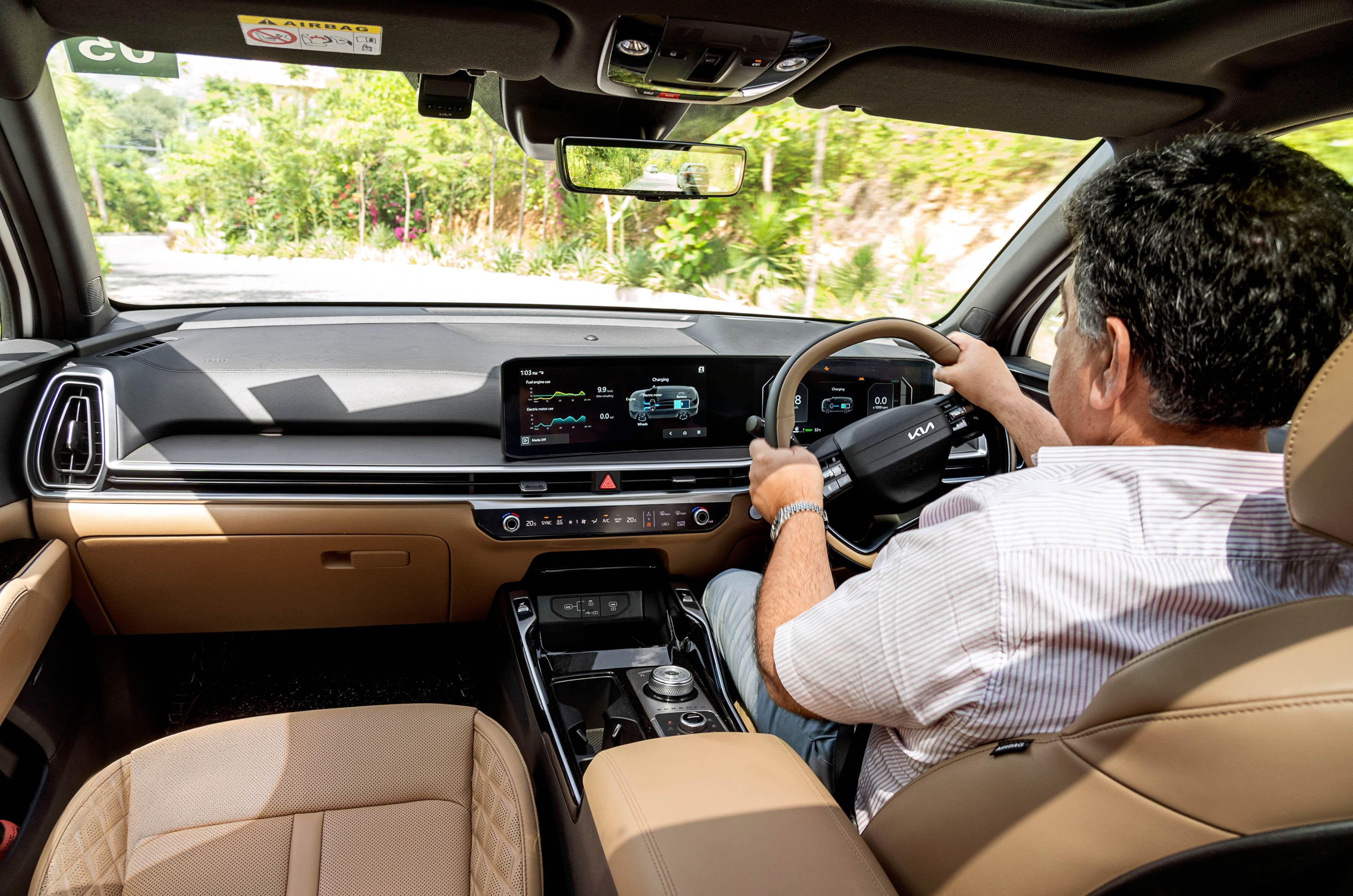
Clutter-free dashboard with solid build and plush feel.
If the exterior is quietly effective, the cabin is where Kia has truly aced it. The Sorento offers a mix of quality, equipment and ergonomics that nothing at this price can match. Soft-touch materials cover everything you are likely to touch, including the spots where your knee rests against the centre console. There is a healthy count of physical buttons, and they click with a precision that feels engineered rather than sourced. The knurled finish on the rotary drive selector and the switchgear adds a tactile richness you normally pay German money for.
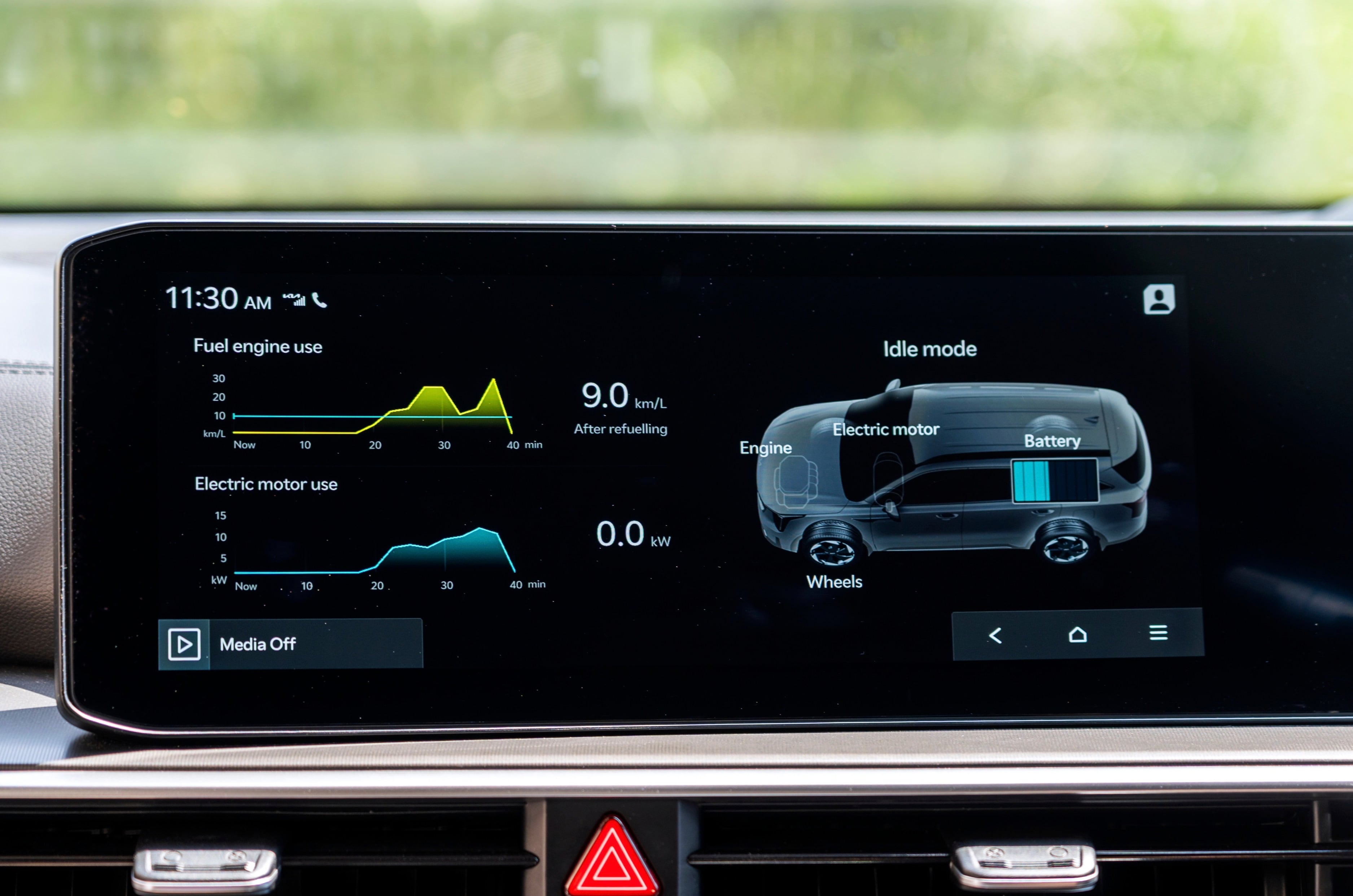
Hybrid variant gets exclusive data for power flow and efficiency.
As with its Hyundai cousins, the real ace is the software. The 12.3-inch infotainment system is logically laid out, menus are where you expect them to be, and getting to a feature takes a tap or two rather than a treasure hunt. Kia has also kept the climate controls off the main screen. They live on a touch-sensitive bar below it, with scrollers and a button that toggles the bar between air-con and infotainment shortcuts. It is a clever, space-saving solution, though you will occasionally find it in the wrong mode just when you need it.
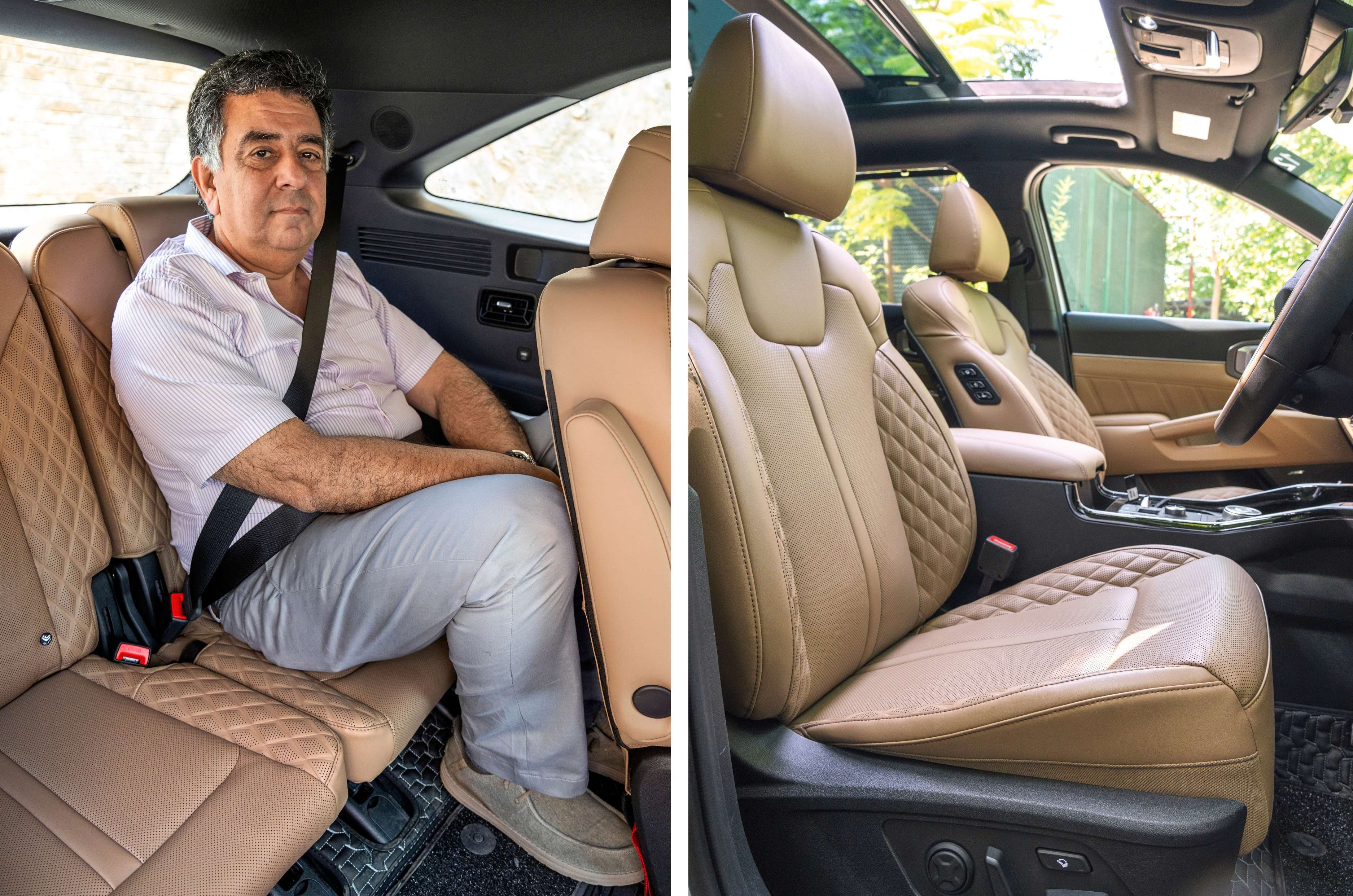
L: Third row seat placed on floor results in knees-up seating; best for children. R: Broad, supportive and well-cushioned front seats are electric and also get ventilation.
The front seats are fully powered, with 10-way adjustment, lumbar support and ventilation, and the passenger seat gets a boss mode so whoever sits behind can push it forward. Coming to the third row, access is easy. You can either walk through the gap between the captain chairs or press a button on the seat, which electrically slides and tilts it forward. Once there, the news is mixed. Legroom is better than you expect, but the seat base is mounted almost flat on the floor, so there is no under-thigh support and your knees point at the roof. Treat it as a space for children or short hops. At least the third row gets its own blower controls and USB ports.
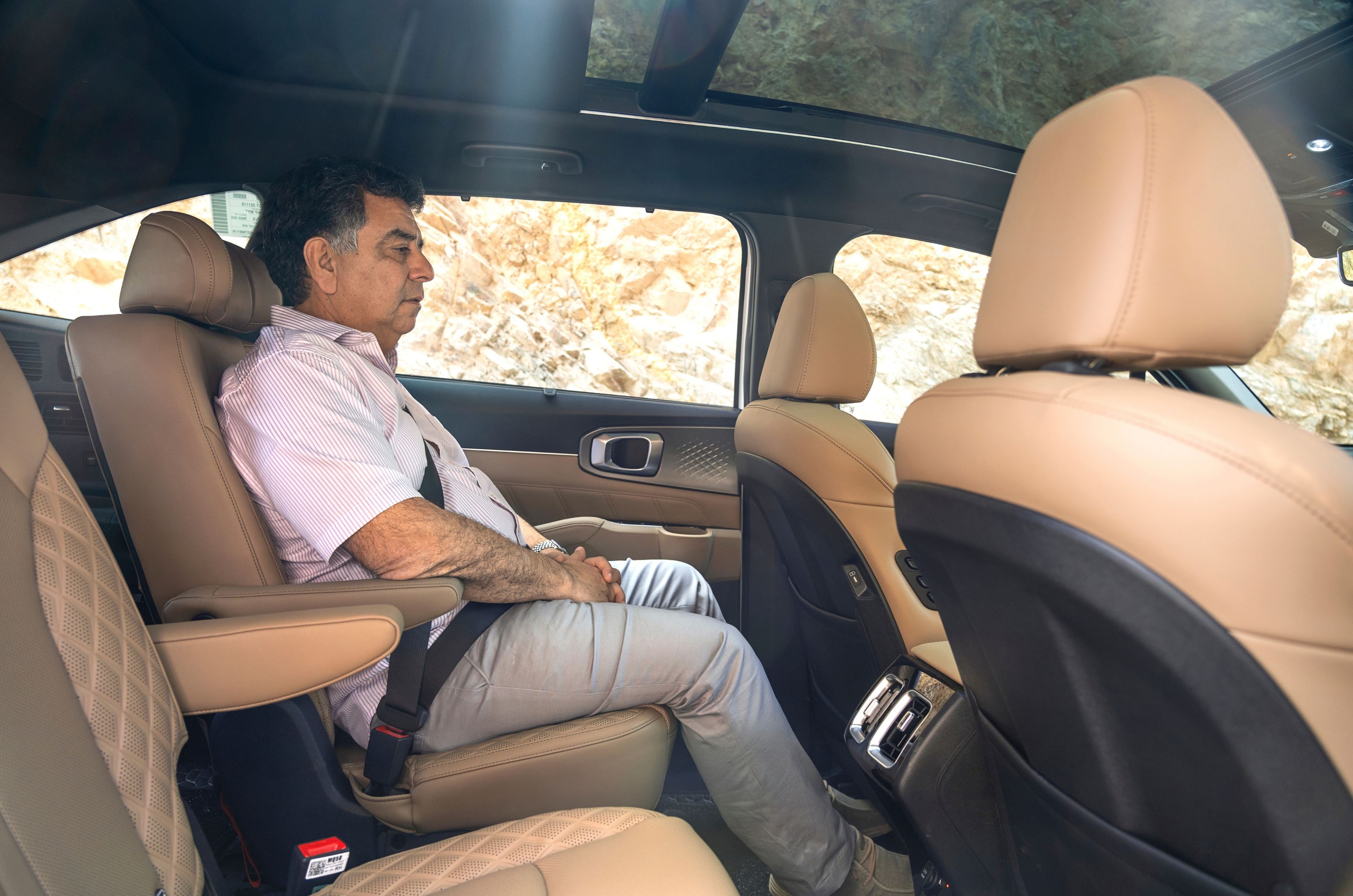
Spacious middle-row with ventilated and adjustable captain chairs; bench seat version also available.
One of the Sorento’s highlights, however, is the second-row experience. Our test car was the top HTX with six seats, and its second-row captain chairs are ventilated too, a rarity in this class. They are the best seats in the house. There is lots of legroom, a commanding view out and good under-thigh support, comparable to the Innova Hycross’s middle-row captain chairs, though the Toyota seats you a touch higher. A neat detail is the cupholder moulded into the door, up near the handle, where it is actually easy to reach.
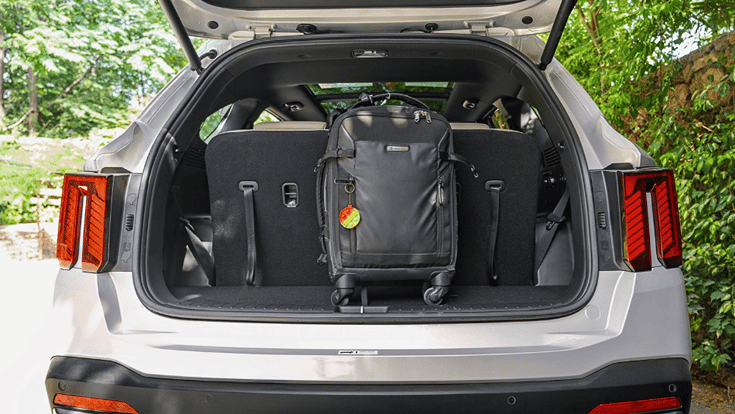
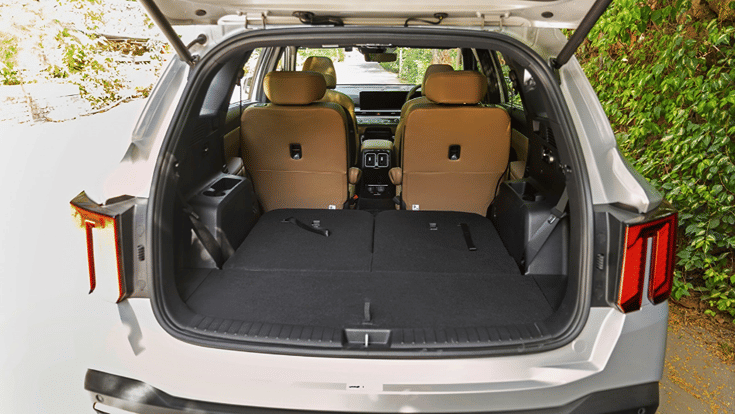
With all three rows up, the boot is a modest 179 litres; fold the third row and that grows to 813 litres. A full-size spare is welcome, but it is slung under the body, which is not the most convenient place to reach. Overhead, the massive panoramic roof floods the cabin with light and adds to the sense of space.
Kia Sorento features and technology
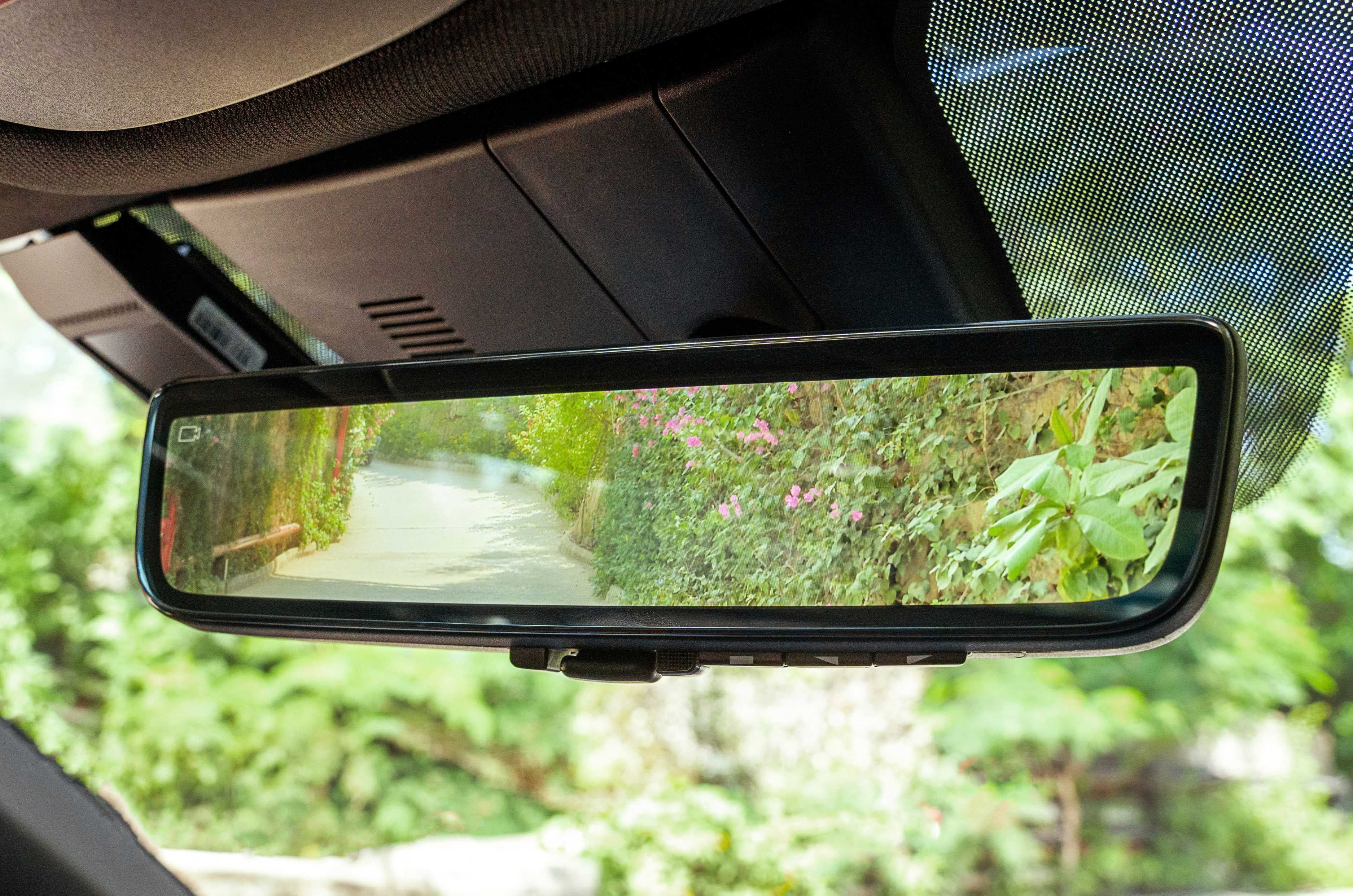
Digital IRVM offers excellent resolution and can be adjusted for level and brightness.
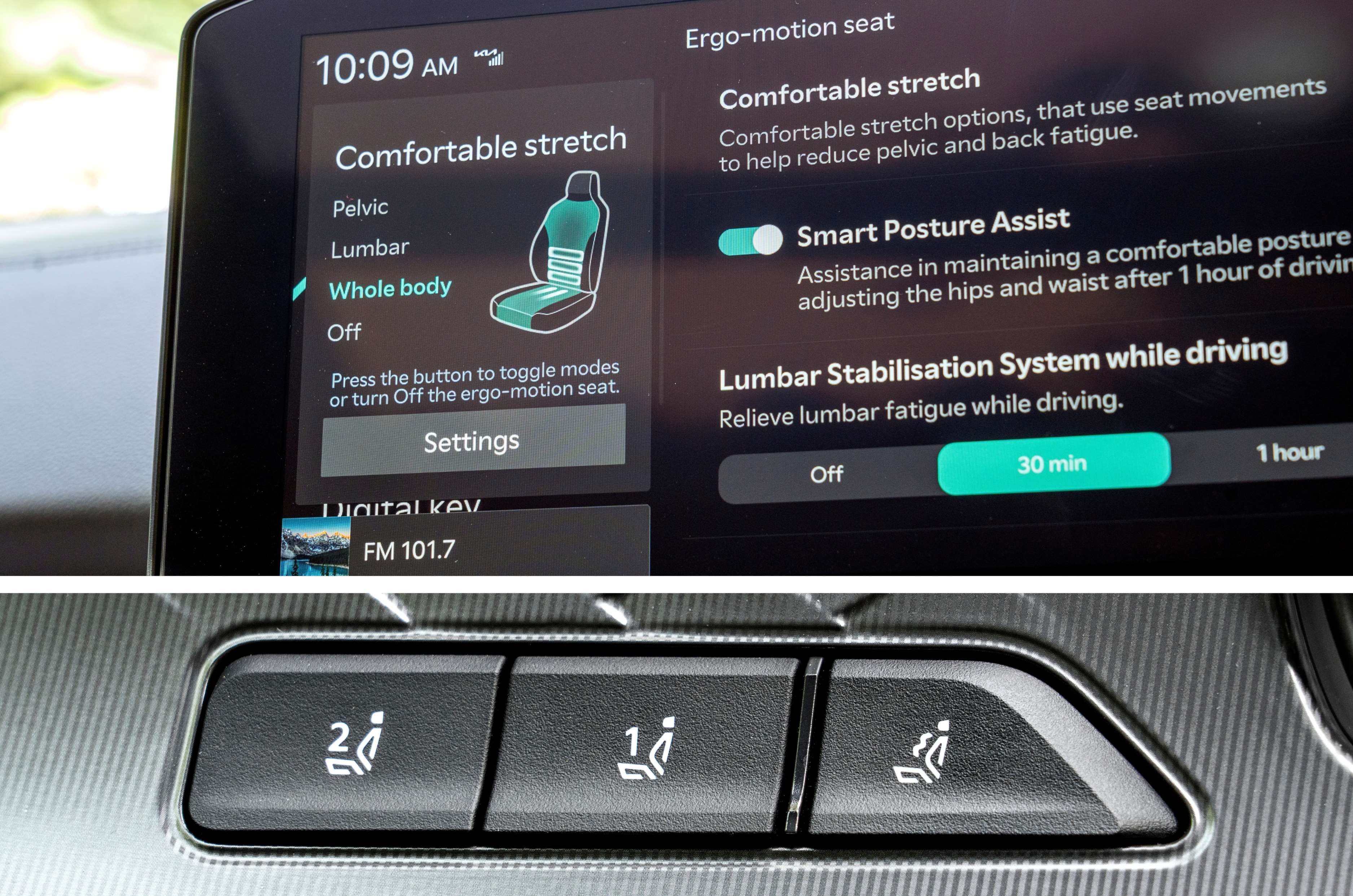
The equipment list is huge. In addition to the aforementioned 12.3-inch touchscreen, powered front seats, ventilated captain’s chairs, and panoramic sunroof, the Sorento comes packed with a 12.3-inch digital driver’s display, a head-up display, a 12-speaker Bose system, dual-zone climate control, a powered tailgate, rear-window sunshades, 64-colour ambient lighting and a digital rear-view mirror that flips back to a conventional one at the turn of a knob. The driver’s seat even gets an ‘ergo-motion’ mode that simulates a massage function by shifting the contours around.
Ergo mode for driver seat acts like a massage by moving the contours to avoid a stiff back on a long trip.
Safety is just as thorough, with 10 airbags, a 360-degree camera, front and rear dashcams, remote parking assist, TPMS and Level 2+ ADAS on the (A) trims. There is even real-time generative AI, a first for any Sorento globally.
Kia Sorento performance and refinement
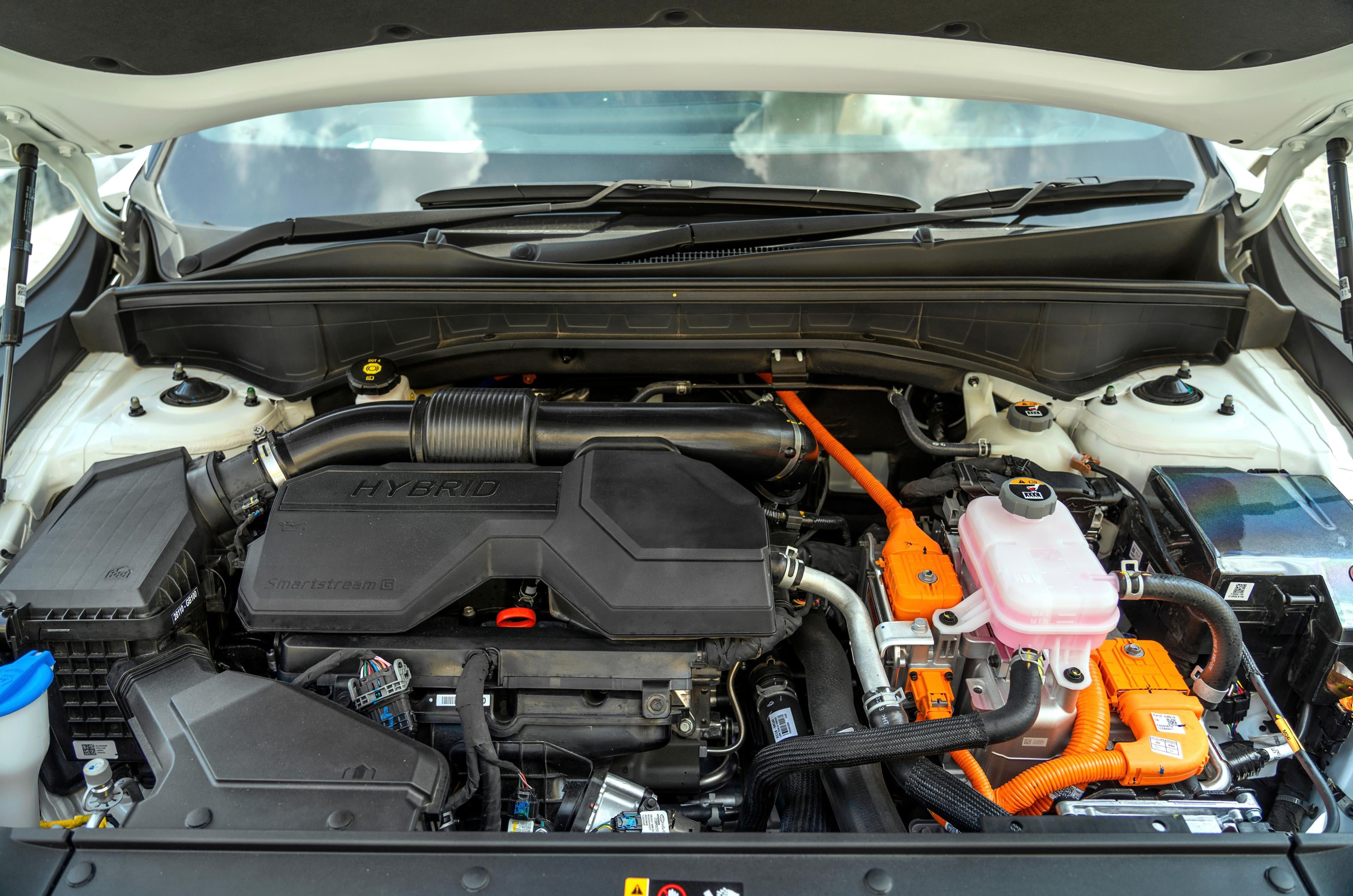
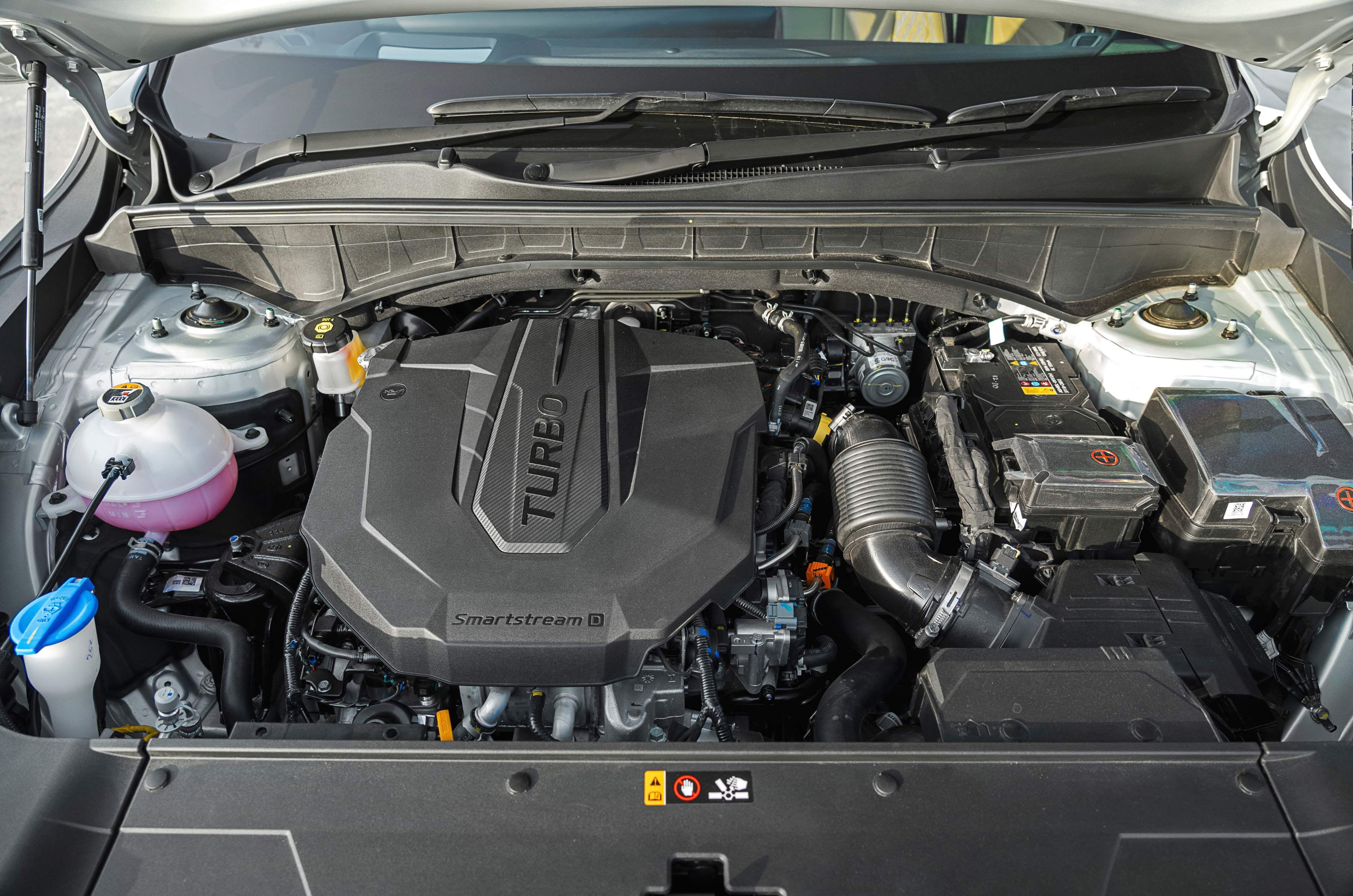
1.6-litre turbo-petrol engine paired with an electric motor and 6-speed torque converter automatic.
First up, the hybrid. Its 1.6-litre turbo-petrol makes 180hp and 265Nm, and the electric motor adds 65hp and 264Nm. The combined figure rating is 230hp and 380Nm of torque You can tell this the hybrid is the one for the city the moment you pull away, because the response is instant. It is well mated to the 6-speed torque-converter automatic, and the handover from electric to petrol power is close to seamless.
Hybrid variant is smooth in the city but gets noisy on the highway especially during overtakes.
The 1.49kWh battery lets it run in EV mode for a decent stretch at crawling speeds, and in stop-go traffic the hybrid makes eminent sense. Power delivery is refined, seamless and relaxing, and efficiency should be strong; The limitation is the motor itself. With only 65hp to shift a car weighing over two tonnes, it cannot do the heavy lifting on its own, so when you want to make quick progress the engine kicks in early. Push hard on the highway and the four-cylinder gets noisy and starts to run out of steam.
2.2-litre diesel engine makes 193hp mated to an 8-speed DCT and is the same unit seen on the Carnival.
Which is where the diesel comes in. The 2.2-litre is familiar from the Carnival, but it feels a lot sprightlier in the lighter Sorento. Its 193hp and 442Nm arrive in a strong, linear surge, and this is a fantastic, long-legged cruiser. Settle into eighth gear on an open highway and it simply lopes along, the engine barely working. It is also more tractable at low speeds than you might expect, pulling cleanly at part throttle from very low revs, so it can double as a city car, although its low-end response does not come close to the hybrid’s. It’s only when you floor it to dart through traffic that you experience a bit of hesitation, and its hear that you can use the paddle shifts to be in the right gear at the right time of the 8-speed DCT which comes as a pleasant surprise.
The diesel‘s strong torque and effortless cruising makes it perfect for long trips.
Rather than the snappy, slightly jerky shifts typical of dual-clutch boxes, this DCT slurs its changes almost like a torque converter, which adds to the smoothness of the whole package. The reason is that it is a wet-clutch unit, which also bodes well for durability in Indian traffic. The diesel is quite refined for the most part and its only when pushed hard that it gets audible and takes on a gruff note.
Both get drive modes; You can play with the Eco, Normal, Sport and Smart (or auto) modes in the diesel which alters the power delivery. In Sport, the throttle response is sharper and the default mode we liked whilst in Eco you can feel the response a bit dulled down. The Sorento Hybrid gets just Eco, Sport and Smart modes and in Eco mode EV running is prioritised. In addition, the AWD versions get Snow, Sand and Mud terrain modes which we didn’t a get chance to fully experience.
Kia Sorento mileage
In terms of fuel efficiency, the hybrid is rated at a highly frugal 19.60kpl with front-wheel drive and 17.70kpl with AWD, while the diesel returns 17.66kpl and 15.79kpl respectively on the Indian test cycle. In real-world city driving the gap between the hybrid and diesel could be bigger, depending on traffic. On long cross-country runs, though, with extended stints of cruising in high gears, the diesel could well be the more frugal of the two.
Kia Sorento ride and handling
The Sorento’s ride comfort is simply outstanding, and it comes as a pleasant surprise. That’s because Kias have traditionally been stiffer sprung than their Hyundai cousins, but here Kia has clearly prioritised comfort over sportiness, and the suspension is on the soft side. The way it smothers bad roads at speed is remarkable. Around Udaipur, where several stretches are properly broken, we never once had to lift off for a bad patch. The car just soaked it up and kept going.
Ride quality is segment best and it is unfazed over broken roads.
The isolation it gives its passengers is shockingly good, and those tall-sidewall tyres deserve part of the credit. They do a fine job of rounding off sharp jolts and filtering out the high-frequency shocks that a suspension alone cannot fully absorb. At highway speeds there is a bit of body movement on the undulating bits but its not disconcerting and both versions feel stable and planted at high speeds, which matters in a car this tall.
Our HTX test cars came with AWD as standard. We did not get a chance to test its off-road ability properly, but on dirt roads it felt sure-footed and secure. A proper off-road test will reveal how capable the all-wheel-drive system, though we doubt owners will really want to test the Sorento’s off-road capability.
Steering is light but lacks consistency and sharpness of European rivals.
The steering is less impressive. There is a dead zone around the straight-ahead position, and it does not feel as fluid or progressive as its European rivals’. The Volkswagen Tayron and Skoda Kodiaq are both dynamically sharper. One reason is because the Sorento rides taller too, as ground clearance has been raised from the global car’s 176mm to 208mm, and there is a touch of body roll when you push hard through corners.
But that misses the point. On balance, the Sorento’s ride and handling are superbly judged for the people who will buy it. Kia has done a fine job of understanding what a premium SUV buyer in India wants, and it has tailored the car accordingly.
Kia Sorento price and verdict
As a package, the Sorento hits it out of the park; rivals have a lot of catching up to do.
If the product does not win you over, the pricing certainly will. A starting price of Rs 27.99 lakh has set the cat amongst the pigeons, putting the Sorento within striking distance of the Mahindra XUV 7XO. And with its size, features and overall polish, the Sorento will not just nibble at the top end of the 7XO’s pie but with the Hybrid could also tempt a few Innova Hycross buyers. As for the Volkswagen Tayron and Skoda Kodiaq, the Sorento makes them look overpriced and underequipped.
The lower and mid variants are exceptional value. The top-end HTX, at Rs 37.49-40.19 lakh depending on fuel and seating, is pricey by comparison, around Rs 5 lakh more than an equivalent HTK, because it comes with AWD as standard. Here Kia has missed a trick. An HTX with two-wheel drive, a few lakh cheaper, would have been a far easier sell to the many buyers who want all the features and ventilated rear seats but will never leave the tarmac. That however is a small quibble that Kia can easily correct.
The lasting impression is that the Sorento feels premium, bordering on luxury. It is fantastically equipped, it rides beautifully, and it offers a choice of two powertrains that are each right for a distinct type of buyer. Most of all, it fits what the Indian SUV buyer actually wants with uncanny precision. Will Kia hit its target of 40,000 sales a year? That could be a tall order. But what there is no doubt about is that Kia has built another winner.