Top 10 bestselling cars in August 2026: Punch back on top spot

Top 10 bestselling cars in August 2026: Punch back on top spot
Bestselling cars in August

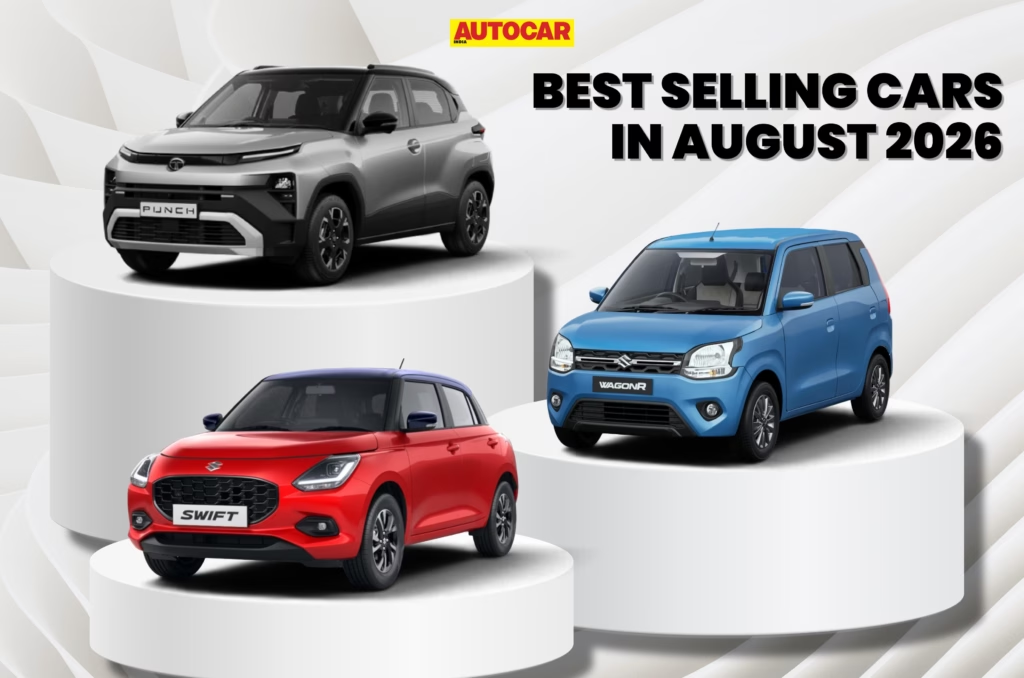
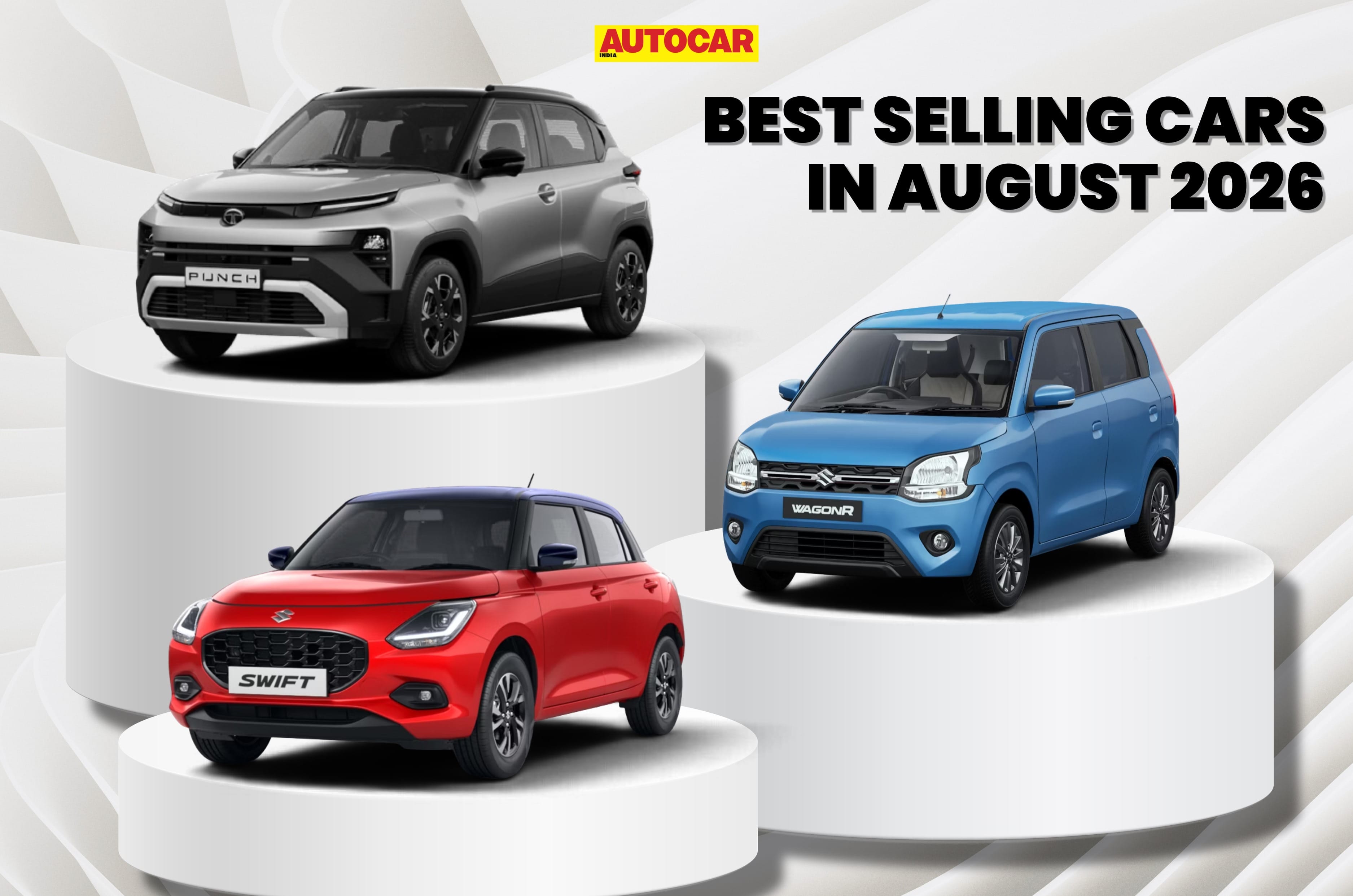
The Tata Punch was India’s best-selling car in August 2026, with 21,320 units sold, ahead of the Maruti Suzuki Wagon R and Swift. The top 10 models together recorded 1,83,037 units, up from 1,37,334 units in August 2025. Nine of the 10 models recorded year-on-year growth, with Maruti Suzuki accounting for six models in the list.

The year-on-year increase came against a lower base in August 2025, when buyers deferred purchases and manufacturers moderated dealer dispatches amid expectations of GST changes announced that month.

RankModelAugust 2026 sales (units)August 2025 sales (units)YoY growth (percent)
1Tata Punch21,32010,70499
2Maruti Suzuki Wagon R20,18014,55239
3Maruti Suzuki Swift19,83212,38560
4Maruti Suzuki Fronx18,73012,42251
5Maruti Suzuki Ertiga18,51618,4450
6Tata Nexon18,43114,00432
7Maruti Suzuki Dzire18,41816,50912
8Hyundai Creta16,28815,9242
9Maruti Suzuki Baleno15,74612,54925
10Mahindra Scorpio

15,576

9,84058
 Total

1,83,037

1,37,334

33

1. Tata Punch

Sales: 21,320 units

The Tata Punch topped the August 2026 sales rankings with 21,320 units, almost double the 10,704 units sold in August 2025. Its sales increased 99 percent year on year, the highest growth among the 10 models.

Tata’s smallest SUV is offered with multiple powertrain options, while its compact dimensions and ride and handling balance remain key strengths. The Punch rivals the Hyundai Exter and Citroen C3 and is priced from Rs 5.75 lakh to Rs 10.77 lakh.

2. Maruti Suzuki Wagon R

Sales: 20,180 units
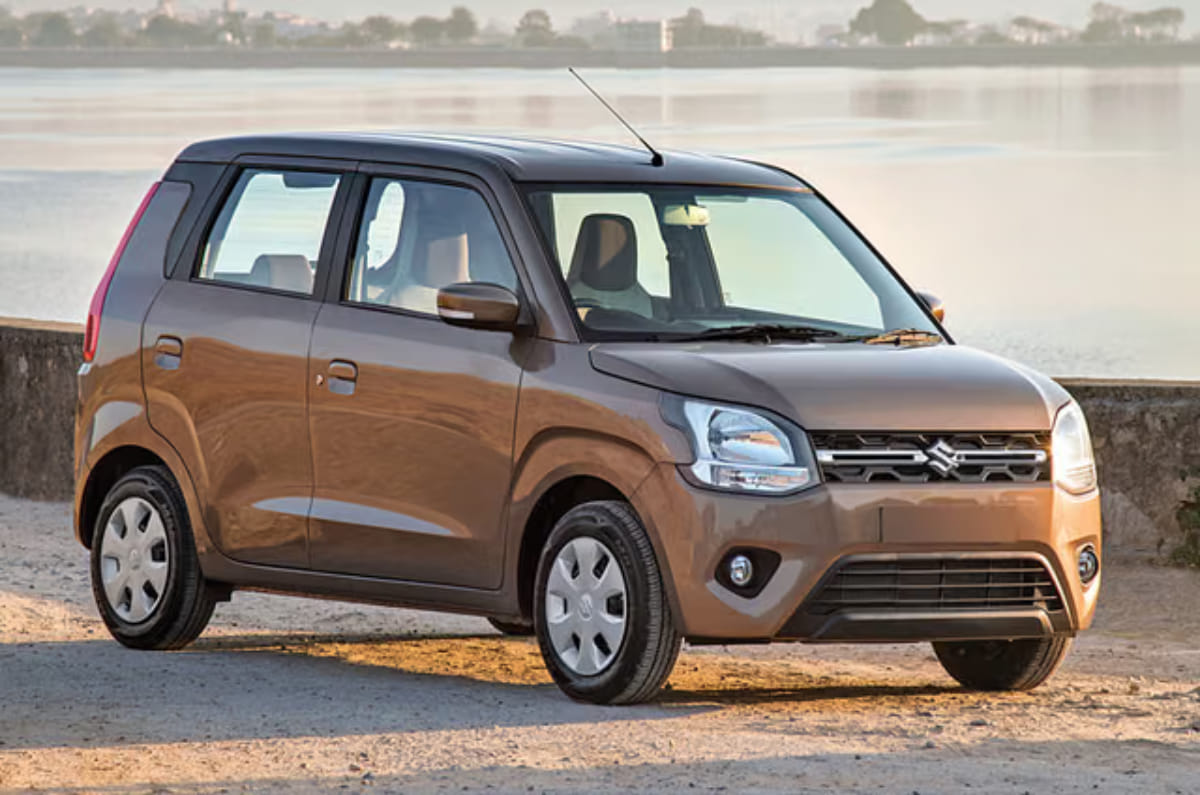
The Maruti Suzuki Wagon R finished second in August 2026 with 20,180 units, up from 14,552 units in August 2025. Its sales increased 39 percent year on year, putting it 1,140 units behind the Tata Punch. 

Its spacious cabin, ease of driving and low running costs remain key strengths, although its light build and limited highway ability are drawbacks. The Wagon R rivals the Tata Tiago and Citroen C3 and is priced between Rs 4.99 lakh and Rs 7.24 lakh.

3. Maruti Suzuki Swift

Sales: 19,832 units

The Maruti Swift ranked third in August 2026 with 19,832 units, compared with 12,385 units in August 2025. Its sales increased 60 percent year on year, leaving it 348 units behind the Wagon R.

Its high fuel efficiency, light controls and easy-to-drive nature continue to support demand, although the top variants are priced close to the more premium Baleno. The Swift rivals the Hyundai Grand i10 Nios and Tata Tiago and is priced between Rs 5.84 lakh and Rs 8.74 lakh.

4. Maruti Suzuki Fronx

Sales: 18,730 units
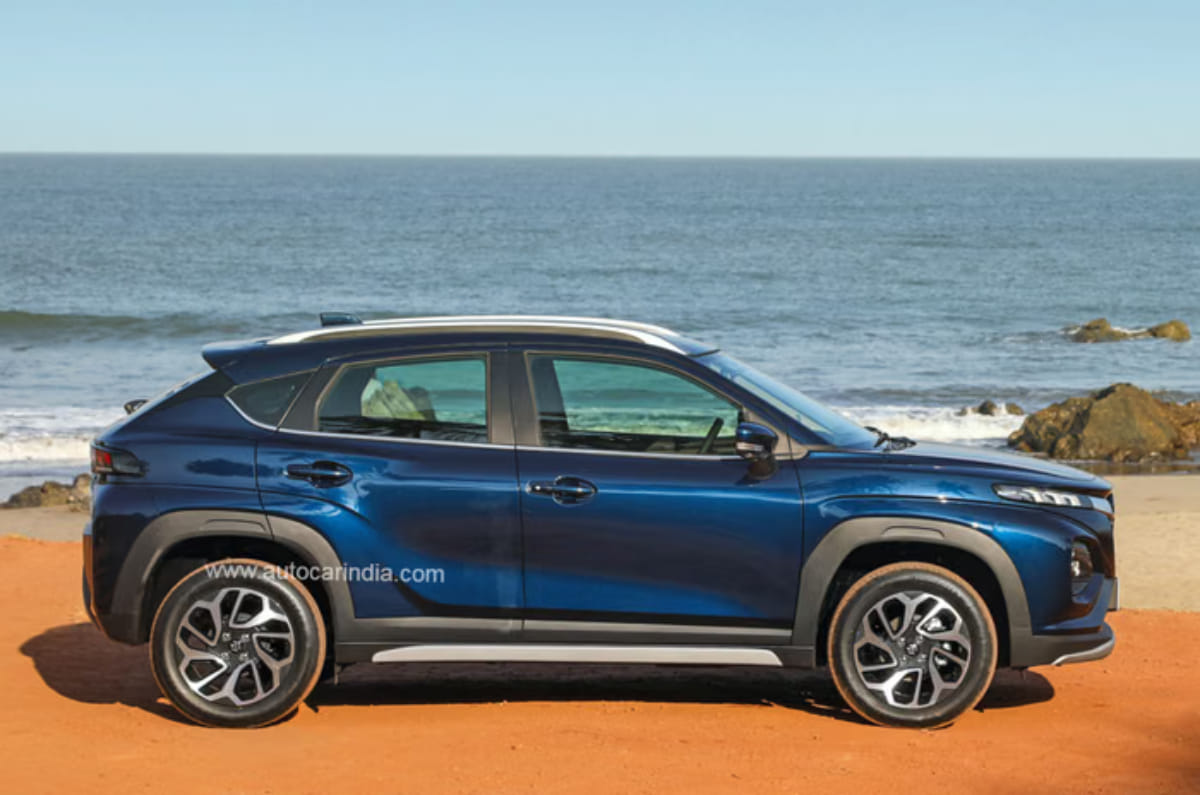
The Maruti Suzuki Fronx was fourth in August 2026 with 18,730 units, compared with 12,422 units in August 2025. Its sales increased 51 percent year on year, leaving it 1,102 units behind the Swift.

The Fronx’s crossover styling, comfortable cabin and fuel-efficient powertrains continue to support demand, although it lacks some popular features. It rivals the Nissan Magnite and Renault Kiger and is priced between Rs 6.85 lakh and Rs 11.84 lakh.

5. Maruti Suzuki Ertiga

Sales: 18,516 units

The Maruti Suzuki Ertiga finished fifth in August 2026 with 18,516 units, almost unchanged from the 18,445 units sold in August 2025. Its sales were effectively flat year on year.

The Ertiga continues to hold the title of India’s highest-selling MPV. Its practical cabin, strong fuel efficiency and value-for-money positioning attract both private and fleet buyers, although it misses out on some features offered by rivals. It is priced from Rs 8.90 lakh to Rs 13.04 lakh and rivals the Kia Carens and Toyota Rumion.

6. Tata Nexon

Sales: 18,431 units
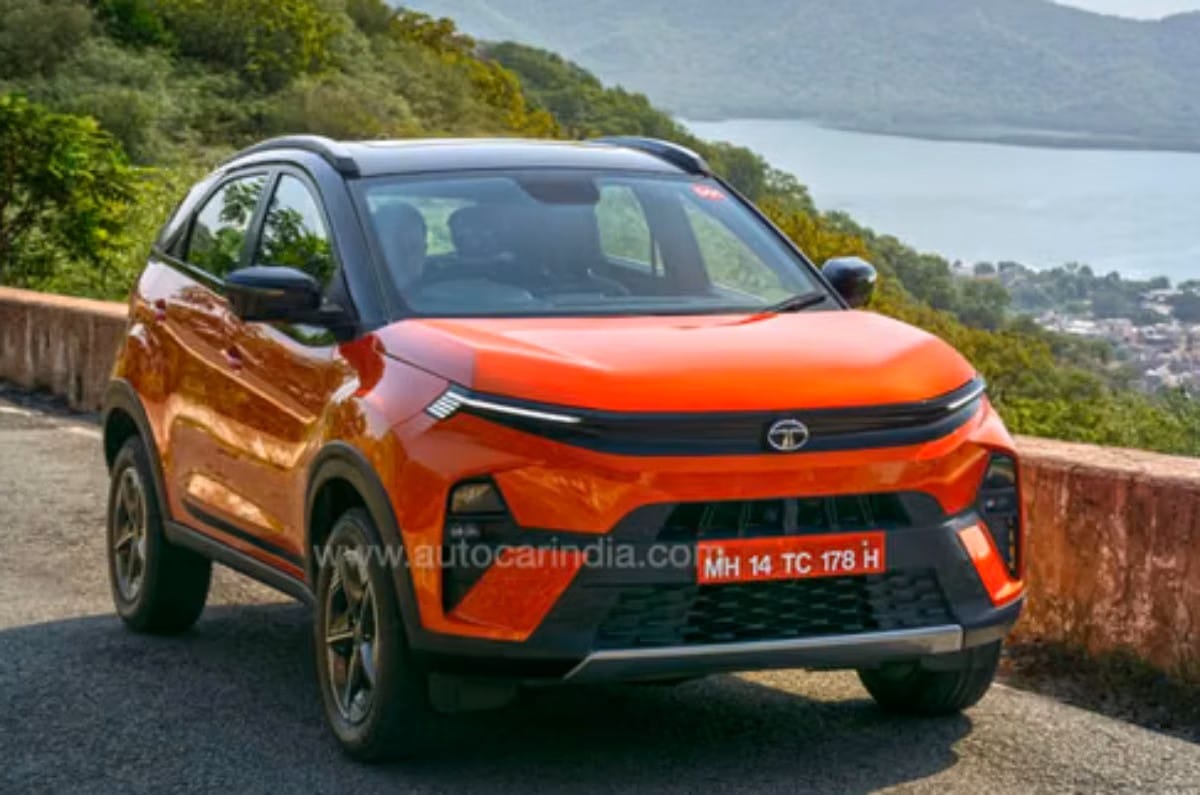
The Tata Nexon, including the ICE and EV versions, recorded 18,431 units in August 2026, up from 14,004 units in August 2025. Its sales increased 32 percent year on year, making it the sixth best-selling model in the month.

The Nexon is offered with petrol, diesel, CNG and EV powertrain options, along with a feature-rich cabin. However, its fit and finish are not as polished as some rivals. It competes with the Maruti Suzuki Brezza, Hyundai Venue, Kia Sonet and Mahindra XUV 3XO and is priced from Rs 7.40 lakh to Rs 14.52 lakh.

7. Maruti Suzuki Dzire

Sales: 18,418 units

The Maruti Dzire was seventh in August 2026 with 18,418 units, compared with 16,509 units in August 2025. Its sales increased 12 percent year on year, with the Dzire being the only sedan in the top 10.

Strong fleet demand, fuel efficiency and a well-balanced ride and handling setup continue to support the compact sedan’s volumes. The Dzire rivals the Hyundai Aura, Honda Amaze and Tata Tigor and is priced between Rs 6.31 lakh and Rs 9.41 lakh.

8. Hyundai Creta

Sales: 16,288 units
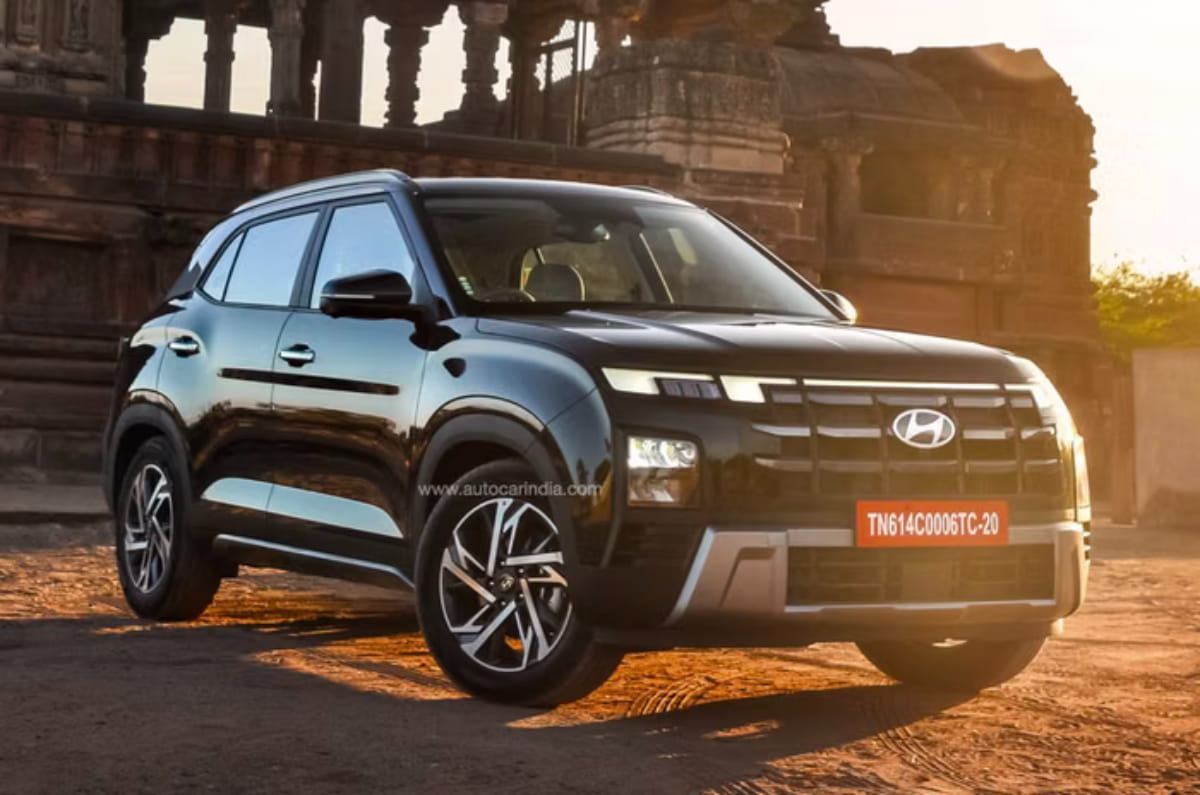
The Hyundai Creta finished eighth in August 2026 with 16,288 units, up from 15,924 units in August 2025. Its sales increased 2 percent year on year, making it the only Hyundai model in the top 10.

A roomy cabin and long feature list continue to attract buyers, although the top variants are expensive and some interior plastics could be better. The Creta rivals the Kia Seltos, Maruti Suzuki Grand Vitara, Toyota Urban Cruiser Hyryder, Honda Elevate and Tata Sierra. It is priced between Rs 10.91 lakh and Rs 20.11 lakh.

9. Maruti Suzuki Baleno

Sales: 15,746 units

The Maruti Suzuki Baleno ranked ninth in August 2026 with 15,746 units, compared with 12,549 units in August 2025. Its sales increased 25 percent year on year, making it the third Maruti Suzuki hatchback in the top 10.

The premium hatchback has recently received a facelift and rivals the Hyundai i20, Tata Altroz and Toyota Glanza. The Baleno is priced between Rs 5.99 lakh and Rs 9.99 lakh.

10. Mahindra Scorpio

Sales: 15,576 units
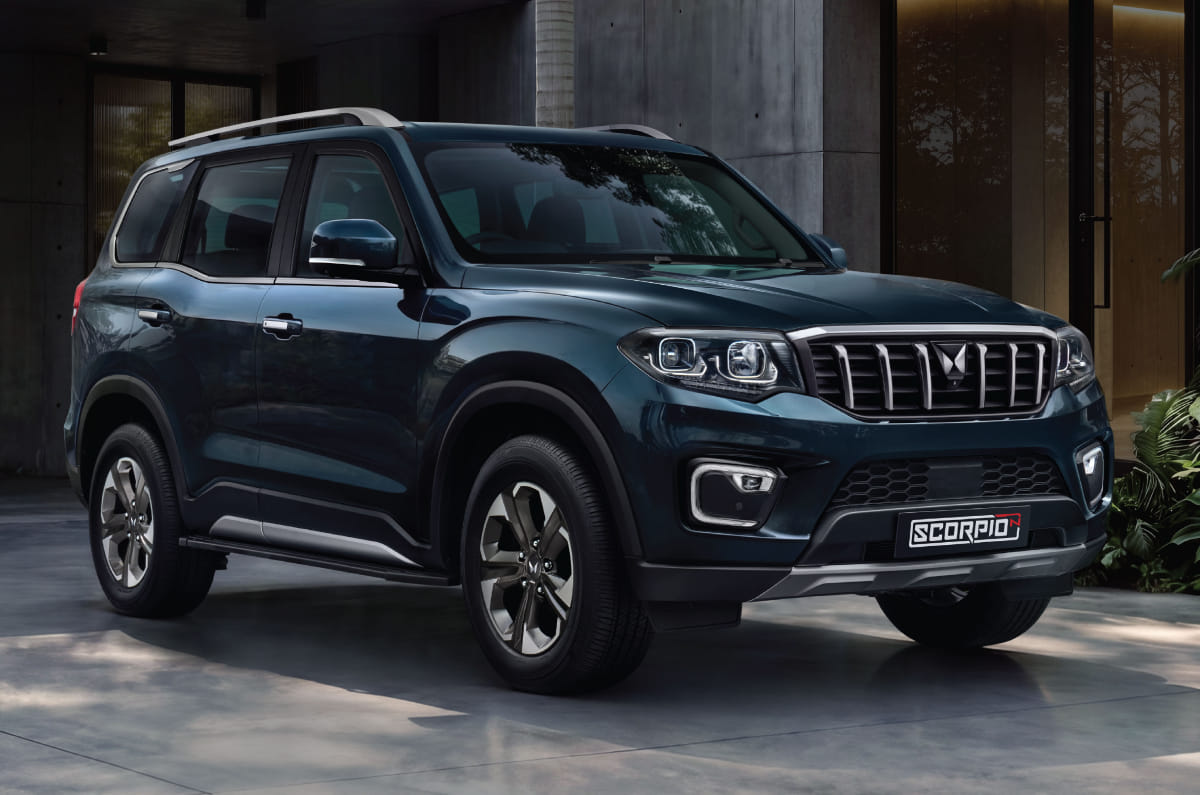
The Mahindra Scorpio, comprising the Scorpio N and Scorpio Classic, completed the August 2026 top 10 with 15,576 units, up from 9,840 units in August 2025. Its sales increased 58 percent year on year, the third-highest growth rate among the top 10 models.

The Scorpio nameplate remains popular for its strong engines, rugged character and off-road ability. However, the third-row seating is cramped and the luggage area is not particularly practical. The Scorpio N rivals the Tata Safari, Hyundai Alcazar and Mahindra XUV 7XO and is priced from Rs 13.69 lakh to Rs 25.49 lakh.

Tenneco Clean Air Share: 75% की तेजी के साथ ये शेयर लगाएगा लंबी छलांग, मोतीलाल ओसवाल ने दे दिया बड़ा टारगेट

Tenneco Clean Air India  Share Price: ऑटोमोटिव पार्ट्स बनाने वाली कंपनी टेनेको क्लीन एयर इंडिया (Tenneco Clean Air India) के शेयर 15 सितंबर को 3 फीसदी की तेजी दिखाते नजर आए। शेयर में यह तेजी ब्रोकरेज फर्म मोतीलाल ओसवाल द्वारा शेयर की कवरेज शुरु करने के बाद आई। मोतीलाल ओसवाल ने शेयर पर Buy रेटिंग दी है और इसके लिए ₹673 का टारगेट प्राइस दिया है।

ब्रोकरेज के ‘बेस केस’ टारगेट का मतलब है कि शुक्रवार को स्टॉक की क्लोजिंग कीमत ₹506.35 से इसमें 33% की बढ़त हो सकती है।

MOFSL को उम्मीद है कि टेनेको क्लीन एयर अपनी ग्रोथ के अगले चरण में प्रवेश करेगी। इसकी वजह क्लीन-एयर और सस्पेंशन प्रोडक्ट्स में कंपनी की लीडरशिप, कड़े एमिशन नियम, गाड़ियों का प्रीमियम होना, नए कस्टमर प्रोग्राम और बढ़ता एक्सपोर्ट है।

ब्रोकरेज का अनुमान है कि FY26 और FY29 के बीच कमाई में 19% की कंपाउंड एनुअल ग्रोथ रेट (CAGR) होगी, जबकि इसी दौरान क्लीन-एयर और पावरट्रेन रेवेन्यू में लगभग 17% CAGR से बढ़ोतरी की उम्मीद है।

MOFSL के अनुसार, 31 मार्च, 2026 तक कंपनी का ऑर्डर बुक ₹12,400 करोड़ था, जो इसके FY28 रेवेन्यू टारगेट का 100% से ज़्यादा कवरेज देता है।

मजबूत मार्केट पोजीशन

टेनेको क्लीन एयर का कमर्शियल व्हीकल OEM को सप्लाई किए जाने वाले क्लीन-एयर प्रोडक्ट्स में लगभग 58% मार्केट शेयर है, ट्रैक्टर को छोड़कर ऑफ-हाईवे एप्लीकेशन में 68% और पैसेंजर व्हीकल्स में 20% शेयर है। पैसेंजर-व्हीकल शॉक एब्जॉर्बर और स्ट्रट्स में भी इसका लगभग 55% शेयर है।

MOFSL ने कहा कि ग्लोबल टेनेको नेटवर्क के साथ कंपनी के जुड़ने से उसे टेक्नोलॉजी, इंटेलेक्चुअल प्रॉपर्टी, ग्लोबल OEM संबंध, रिसर्च और डेवलपमेंट क्षमताएं और मैन्युफैक्चरिंग की विशेषज्ञता मिलती है। ब्रोकरेज ने कहा कि कस्टमर के प्रोडक्ट-डेवलपमेंट साइकिल में शामिल होने से ‘स्विचिंग कॉस्ट’ (दूसरे सप्लायर पर जाने की लागत) भी बढ़ जाती है।

क्या है ग्रोथ के मुख्य कारण

ब्रोकरेज BS-VII, CAFE III और TREM-V को प्रति गाड़ी ज़्यादा कंटेंट (पुर्जों/तकनीक) के महत्वपूर्ण कारण के तौर पर देखती है।

कमर्शियल गाड़ियों के लिए, BS-VII और उससे जुड़े एमिशन नियमों से क्लीन-एयर कंटेंट बढ़ने की उम्मीद है, जबकि लाइट कमर्शियल गाड़ियों में कम पैठ (penetration) के कारण मार्केट-शेयर बढ़ाने की गुंजाइश है। ट्रैक्टर एक बड़ा मौका देते हैं, क्योंकि 30-50 HP वाले सेगमेंट का मार्केट में 90% से ज़्यादा हिस्सा है। MOFSL को उम्मीद है कि जैसे-जैसे आफ्टर-ट्रीटमेंट तकनीक का इस्तेमाल बढ़ेगा, TREM-V से प्रति गाड़ी क्लीन-एयर कंटेंट ₹5,000 – ₹7,000 तक बढ़ सकता है।

पैसेंजर गाड़ियों में, BS-VII और CAFE III से क्लीन-एयर कंटेंट लगभग 1.3 गुना बढ़ सकता है, जिसकी वजह गैसोलीन डायरेक्ट इंजेक्शन और गैसोलीन पार्टिकुलेट फिल्टर का ज़्यादा इस्तेमाल है। उम्मीद है कि 2028 से एक जापानी OEM के GPF प्रोग्राम से टेनेको के हॉट-एंड बिज़नेस में बढ़ोतरी होगी।

कंपनी ने एक बड़े भारतीय CV OEM के साथ एक नया क्लीन-एयर इंजन प्लेटफॉर्म, एक प्रमुख यूरोपीय कमर्शियल व्हीकल OEM के साथ एक प्रोग्राम और एक ग्लोबल OEM के दो मॉडल्स के लिए CNG प्लेटफॉर्म कोल्ड-एंड असेंबली प्रोग्राम भी हासिल किया है।

सस्पेंशन बिजनेस में 20% की बढ़ोतरी

MOFSL को उम्मीद है कि प्रीमियम बनाने, एक्सपोर्ट, बिज़नेस में ज़्यादा हिस्सेदारी और एडवांस्ड सस्पेंशन सिस्टम के बढ़ते इस्तेमाल की वजह से FY26-FY29 के दौरान सस्पेंशन बिज़नेस में लगभग 20% CAGR (कंपाउंड एनुअल ग्रोथ रेट) की बढ़ोतरी होगी।

भारत के पैसेंजर-व्हीकल सस्पेंशन मार्केट में टेनेको की हिस्सेदारी लगभग 55% है। इसका DaVinci DCx, जिसे फरवरी 2026 में महिंद्रा के साथ कमर्शियलाइज़ किया गया था, बहुत कम कीमत पर सेमी-एक्टिव सिस्टम जैसा लगभग 85-90% आराम देता है। MOFSL का मानना ​​है कि यह टेक्नोलॉजी ₹10-35 लाख वाले पैसेंजर-व्हीकल सेगमेंट के लिए काम आ सकती है, जिसका मार्केट में लगभग 70% हिस्सा है।

बढ़ेगा एक्सपोर्ट

टेनेको क्लीन एयर को ग्लोबल टेनेको नेटवर्क में मैन्युफैक्चरिंग और एक्सपोर्ट हब के तौर पर भी तैयार किया जा रहा है, जिसके प्रोडक्ट्स नॉर्थ अमेरिका, यूरोप, एशिया-पैसिफिक और अफ्रीका में सप्लाई किए जाते हैं।

कंपनी अभी लगभग 18-22 देशों में एक्सपोर्ट करती है, जबकि MOFSL को उम्मीद है कि FY29 तक एक्सपोर्ट वैल्यू-एडेड रेवेन्यू का 15% हो जाएगा, जो अभी 7% है। ब्रोकरेज के अनुसार, मौजूदा ऑर्डर बुक में एक्सपोर्ट का हिस्सा लगभग 14% है और आम तौर पर घरेलू बिज़नेस की तुलना में इसमें ज़्यादा मार्जिन मिलता है।

कंपनी के फाइनेंशियल अनुमानों पर ब्रोकरेज की राय

MOFSL को उम्मीद है कि टेनेको का रेवेन्यू FY26 में ₹5,404 करोड़ से बढ़कर FY29 तक ₹8,985 करोड़ हो जाएगा। इसी दौरान EBITDA (ब्याज, टैक्स, डेप्रिसिएशन और अमॉर्टाइजेशन से पहले की कमाई) के ₹925.5 करोड़ से बढ़कर ₹1,560.8 करोड़ होने का अनुमान है, और EBITDA मार्जिन 17.1% से बढ़कर 17.4% हो जाएगा।

टैक्स के बाद एडजस्टेड प्रॉफ़िट के FY26 में ₹630.4 करोड़ से बढ़कर FY29 में ₹1,026 करोड़ होने का अनुमान है, जबकि EPS के ₹15.6 से बढ़कर ₹25.4 होने की उम्मीद है।

ब्रोकरेज को उम्मीद है कि कंपनी की मज़बूत बैलेंस शीट इस ग्रोथ में मदद करेगी। टेनेको क्लीन एयर की नेट कैश पोज़िशन है, वर्किंग कैपिटल नेगेटिव है और कोर RoCE 90% से ज़्यादा है। साथ ही, कैश-फ़्लो कन्वर्ज़न के भी हेल्दी रहने की उम्मीद है, जिसमें CFO/EBITDA 70% से ज़्यादा और FCF/PAT 80% से ज़्यादा रहेगा।

टेनेको क्लीन एयर का वैल्यूएशन

MOFSL के ₹506 के रेफरेंस प्राइस पर, स्टॉक FY28E की कमाई के 26.1 गुना और FY29E की कमाई के 19.9 गुना पर ट्रेड कर रहा था। ब्रोकरेज ने स्टॉक का वैल्यूएशन सितंबर 2028 की कमाई के 30 गुना के आधार पर किया है, जिससे इसका टारगेट प्राइस ₹673 तय हुआ है।

लंबी अवधि में दे सकता है 75% का रिटर्न

मोतीलाल ओसवाल के ‘बुल केस’ (तेजी वाले अनुमान) में FY29 तक 22.7% रेवेन्यू CAGR, BS-VII को पूरी तरह लागू करने, EV को धीरे अपनाने और सस्पेंशन की तेज़ी से बढ़ती मांग को आधार माना गया है। इस स्थिति में टेनेको क्लीन एयर (Tenneco Clean Air) के लिए ₹886 का प्राइस टारगेट तय किया गया है, जिसका मतलब है कि मौजूदा कीमत से इसमें लगभग 75% की बढ़त की संभावना है।

Stock Crash: एक खबर और 20% टूटा PNC Infratech का शेयर, पहुंचा 52-हफ्ते के लो पर, जानें पूरा मामला

Kalyan Jewellers Share Price: 50% अभी ओर चढ़ सकता है शेयर, ब्रोकरेज बुलिश, क्या करेंगे आप निवेश!

(डिस्क्लेमर: मनीकंट्रोल.कॉम पर दिए गए विचार एक्सपर्ट के अपने निजी विचार होते हैं। वेबसाइट या मैनेजमेंट इसके लिए उत्तरदाई नहीं है। यूजर्स को मनी कंट्रोल की सलाह है कि कोई भी निवेश निर्णय लेने से पहले सार्टिफाइड एक्सपर्ट की सलाह लें।

BMW i5 LWB review: The 5 goes electric

BMW i5 LWB review: The 5 goes electric
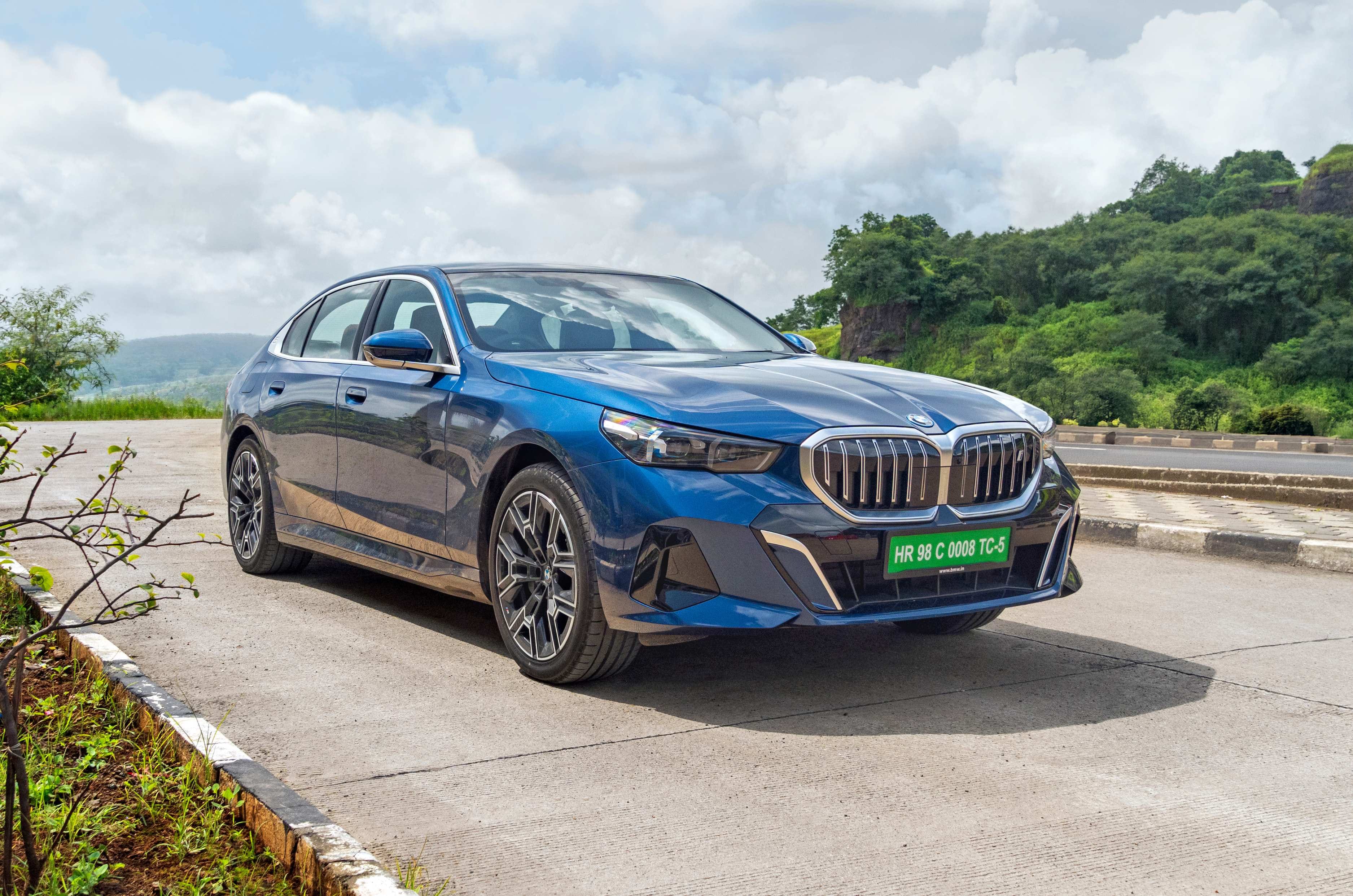
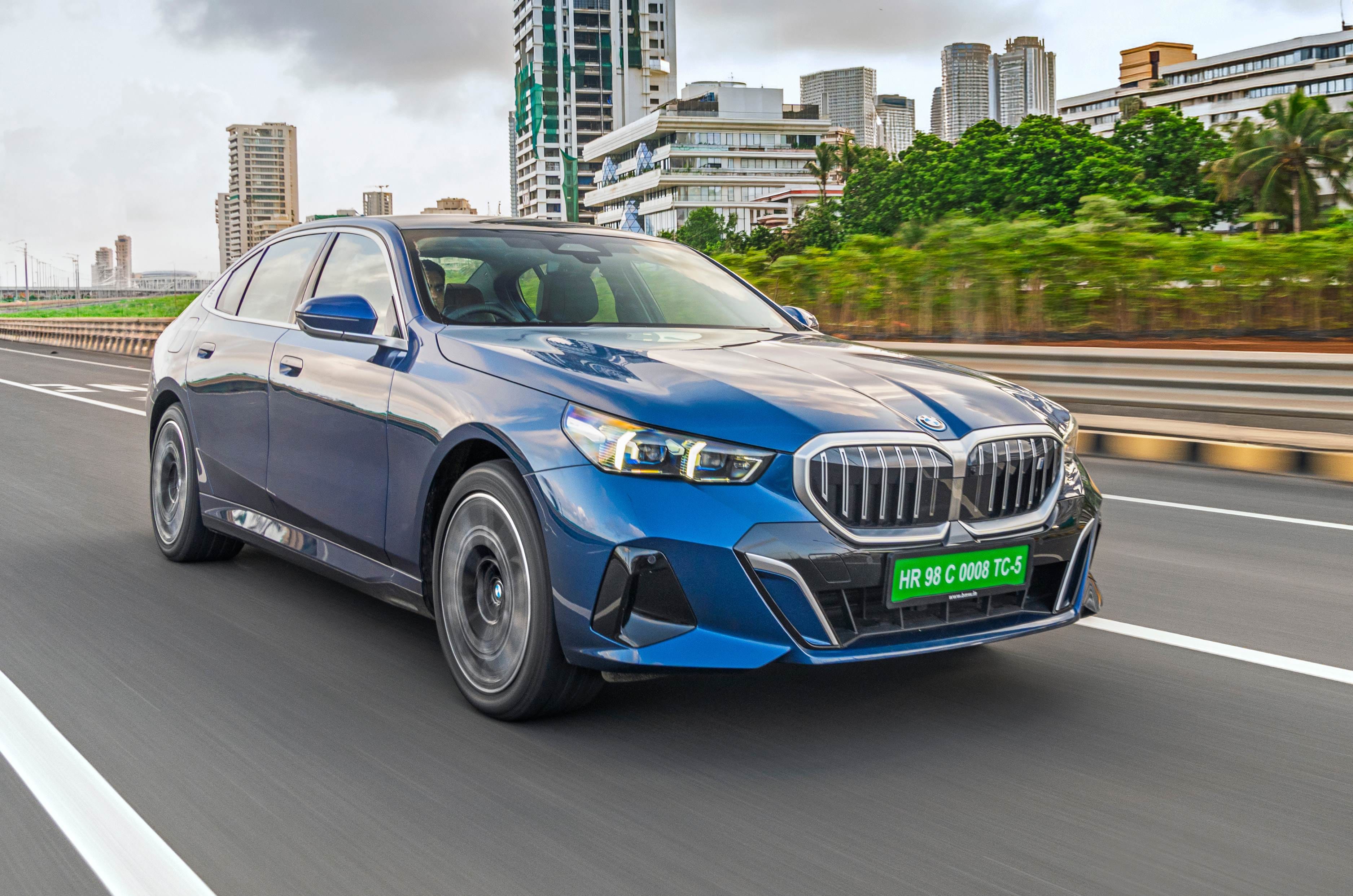
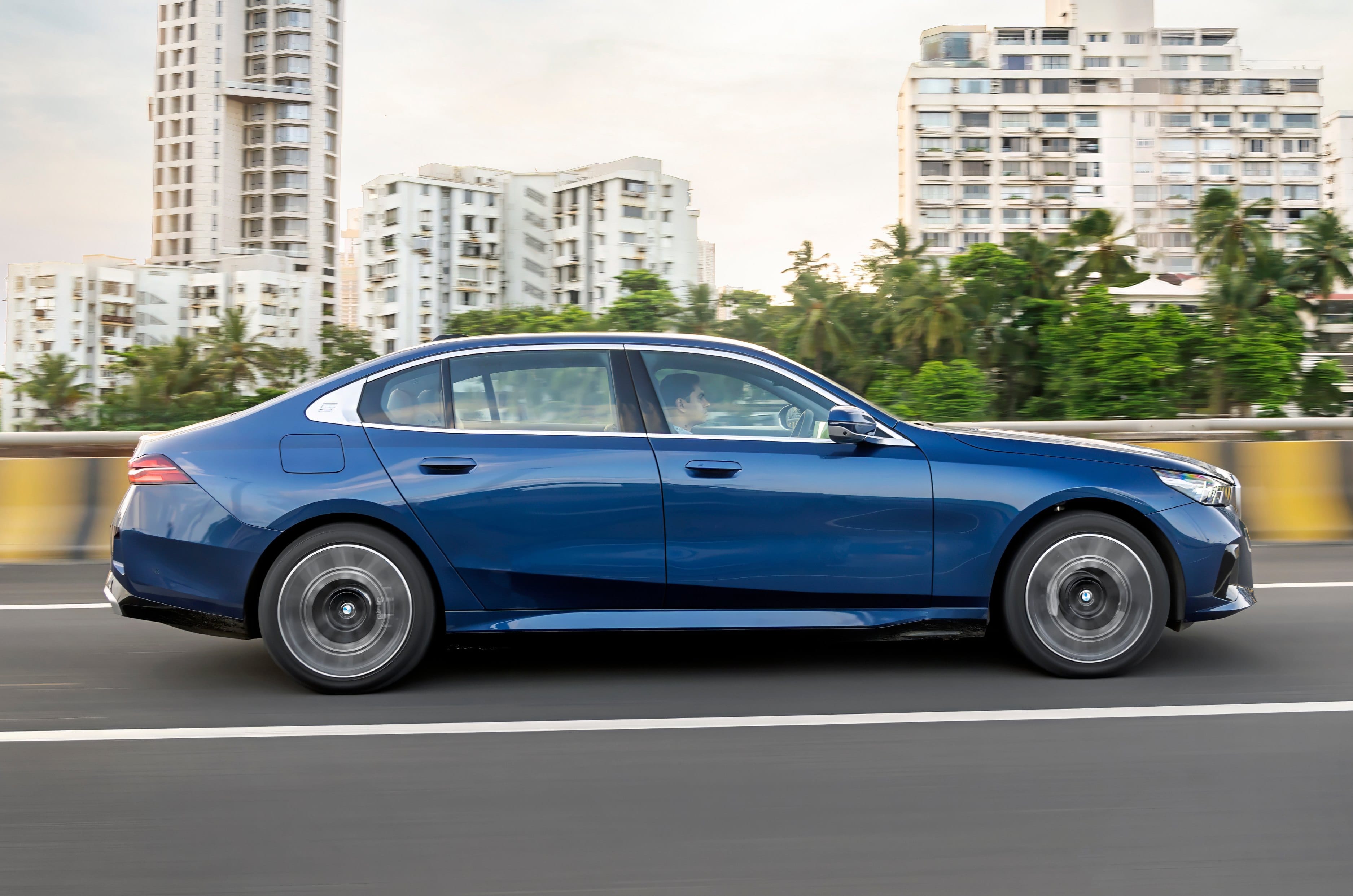
BMW i5 LWB front quarter tracking

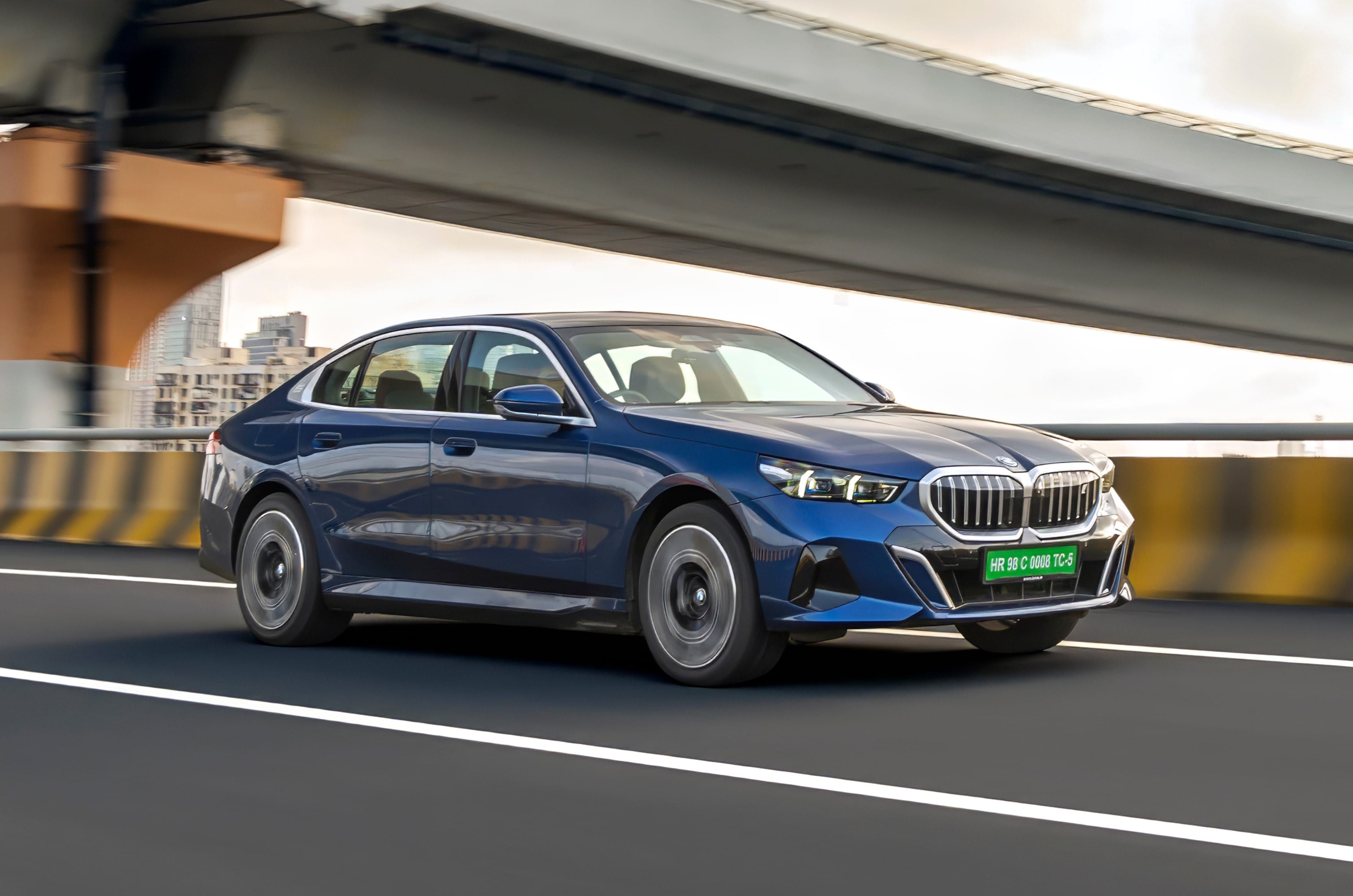
In the first half of 2026, BMW sold nearly 2,400 EVs in India, with the entry-level iX1 and flagship i7 accounting for the bulk of those volumes. Now, BMW has introduced an all-new electric long-wheelbase sedan to bridge the sizable gap between the two. Meet the BMW i5 eDrive35L, the electric counterpart to the 5 Series sedan.

The i5 nameplate isn’t new to India. BMW launched the imported, performance-focused i5 M60 here back in 2024. However, that was a niche offering. This new version is expected to appeal to a much wider audience. Being locally assembled, the i5 eDrive35L is priced at Rs 79.60 lakh, commanding a premium of Rs 3 lakh over its petrol-powered sibling. In this review, we find out what it’s like to live with.

BMW i5 LWB Exterior Design and Engineering – 8/10

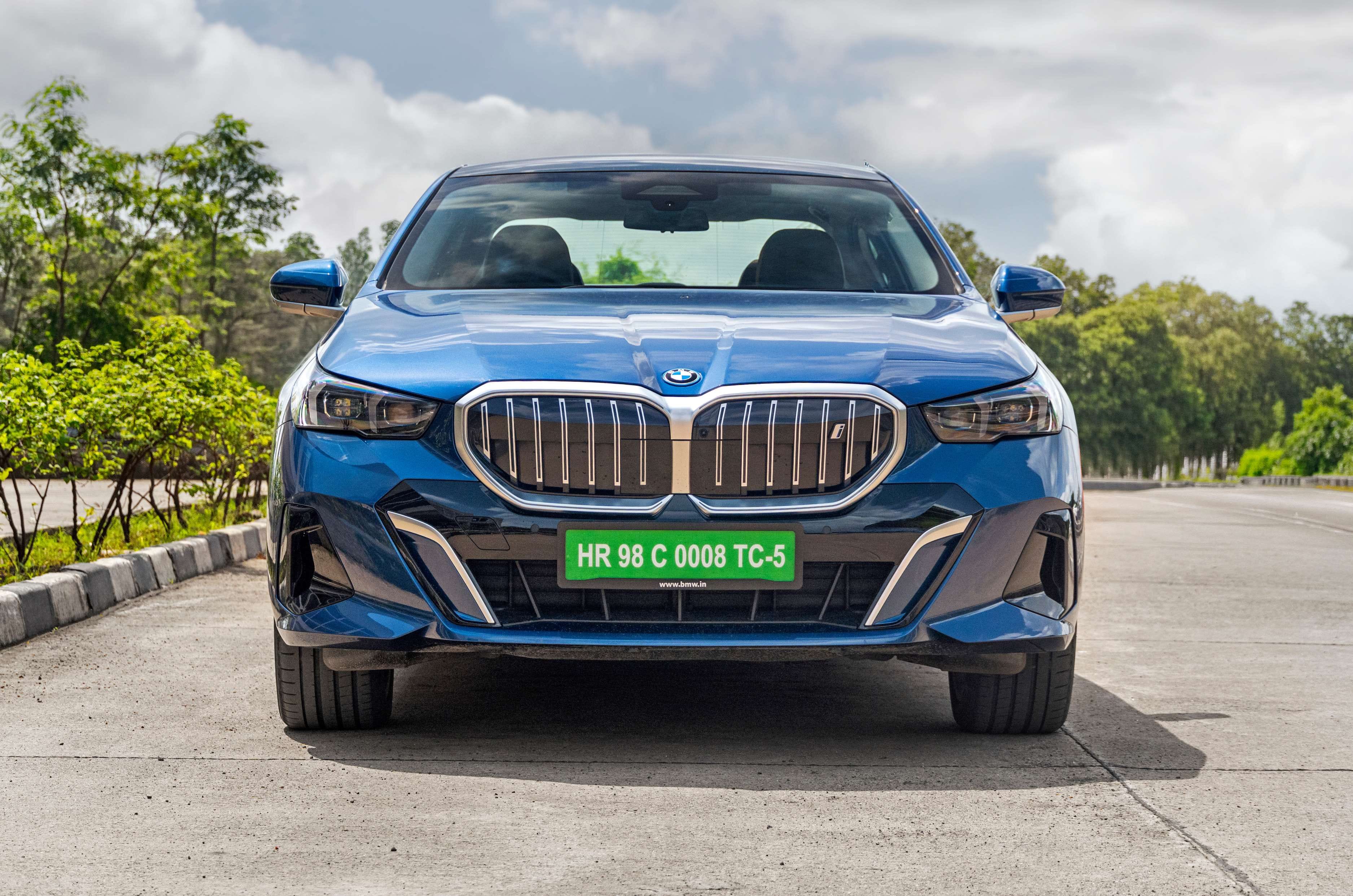
An ‘i’ badge on the grille along with its green number plate differentiate it from its petrol sibling

Compared to the international version, this i5’s wheelbase has been stretched by 110mm to 3,105mm, while overall length now stands at 5,175mm. Interestingly, the 5 Series is larger than its chief rival, the Mercedes-Benz E-Class, in every dimension.

As for styling, this generation of the 5 Series has been around since 2024 and much like most modern BMW designs, it’s something that grows on you with time. That said, there’s no denying that it’s a polarising design. The numerous cuts, heavy surfacing and intricate detailing make it look busy and excessive to some eyes.

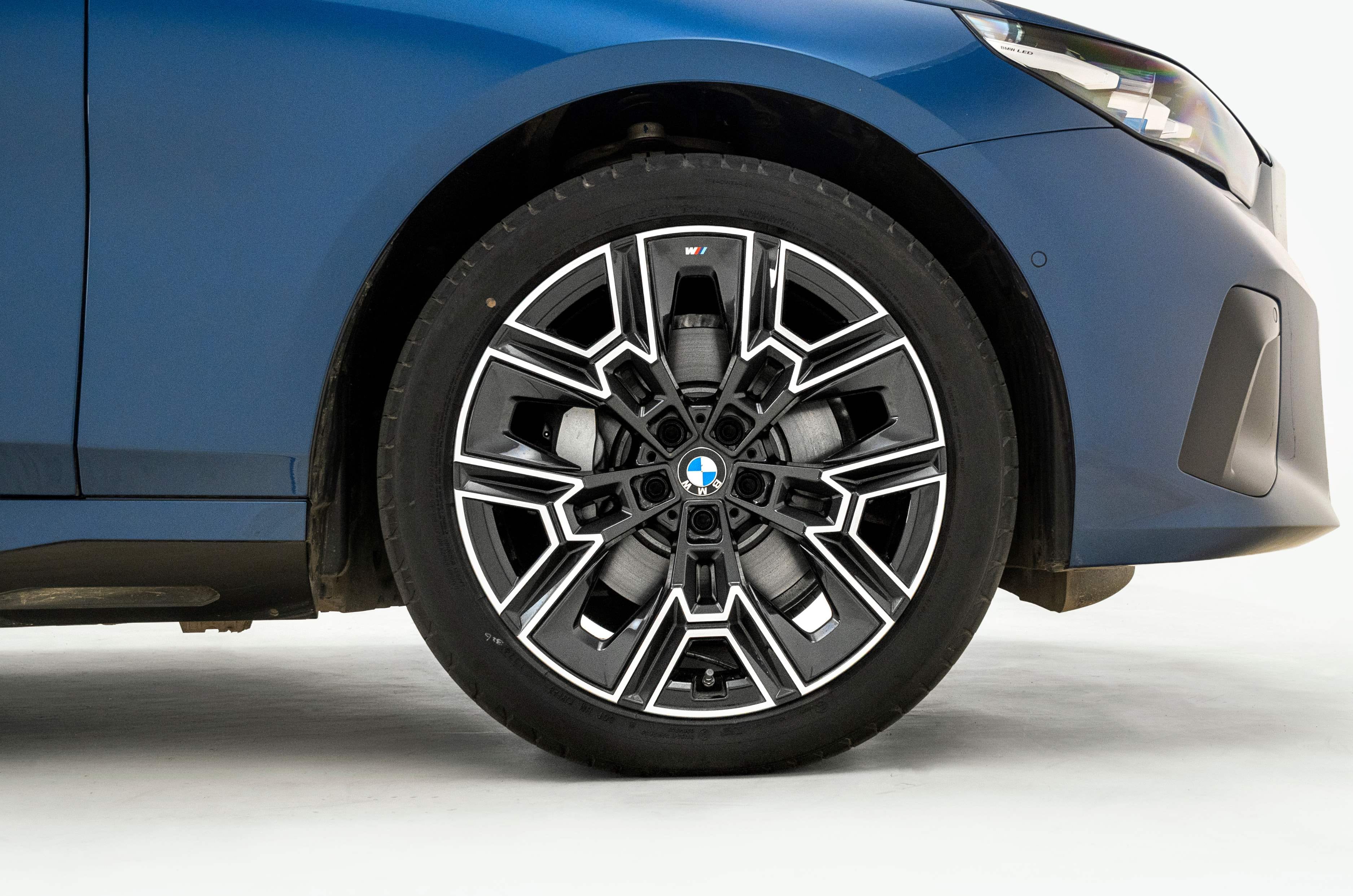
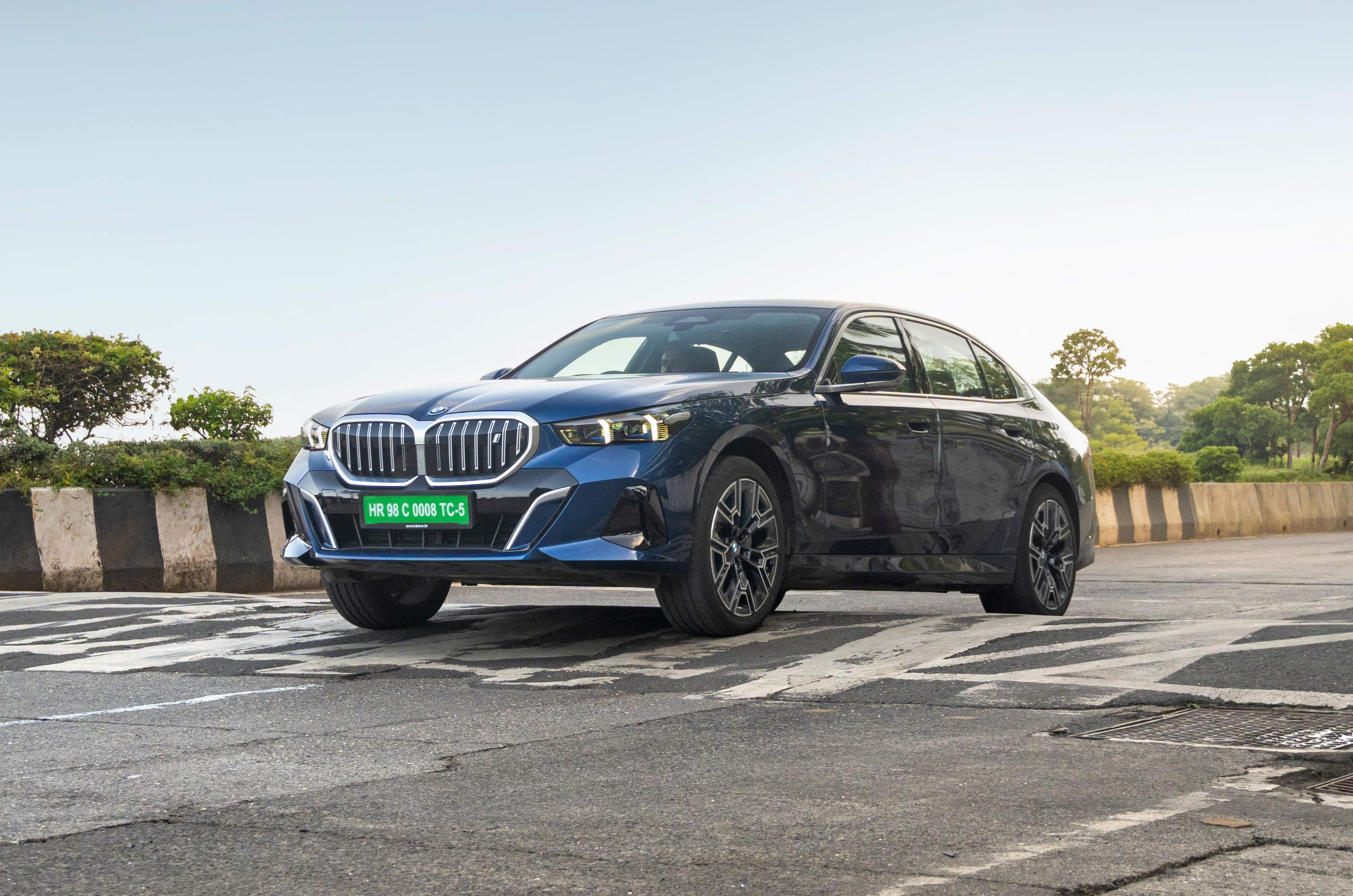
Gets large 20-inch alloys which look far more proportionate than the 18-inch wheels initially available with the 530Li.

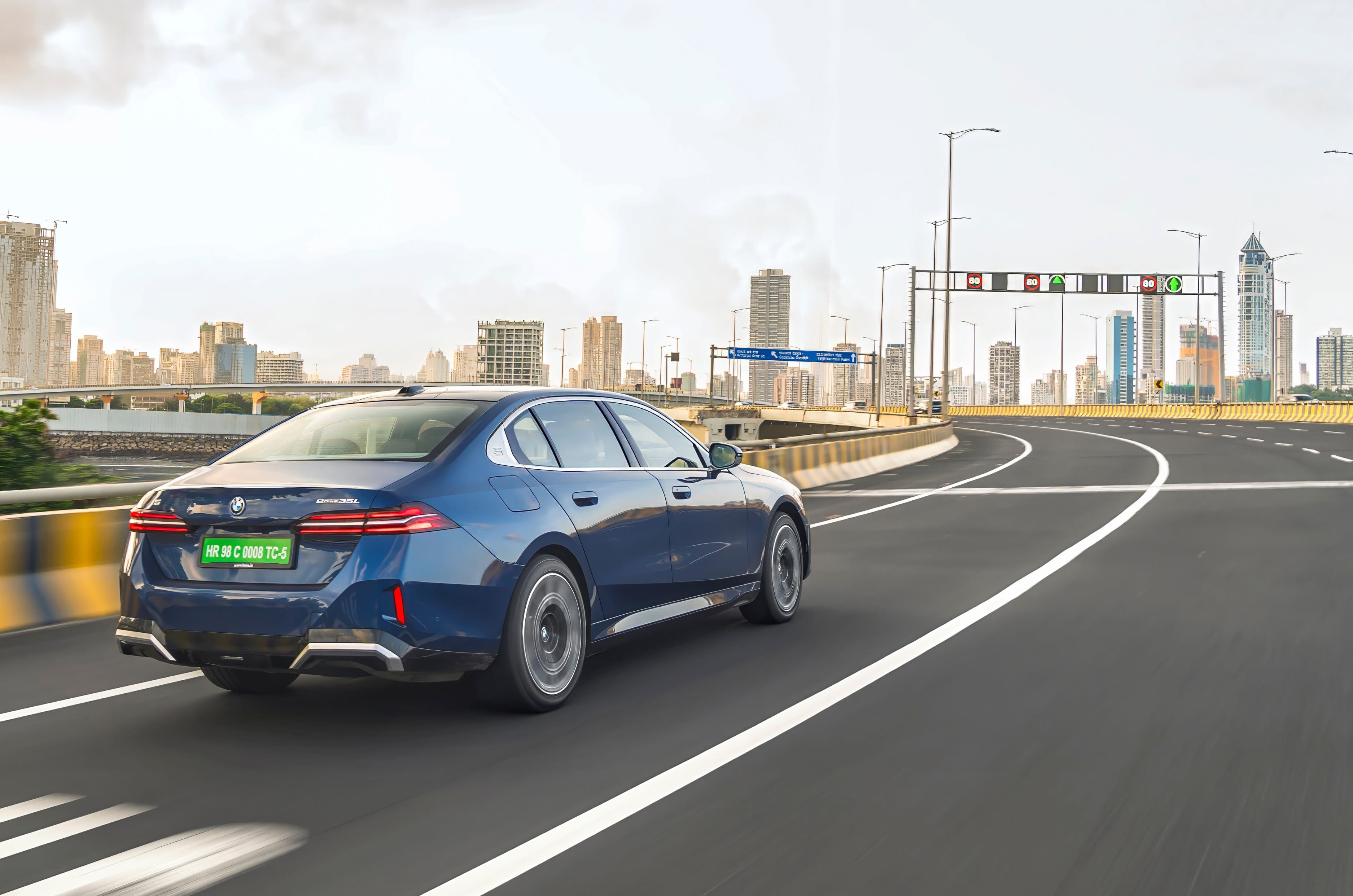
Differentiating the i5 from its petrol-powered counterpart are an ‘i’ logo on the grille and larger 20-inch alloy wheels. The latter look far more proportionate than the 18-inch wheels initially offered on the 530Li. At the rear, the only distinguishing elements are the i5 and eDrive35L badges, apart from the obvious giveaway – the green number plate.

BMW i5 LWB Interior Space and Comfort – 9/10

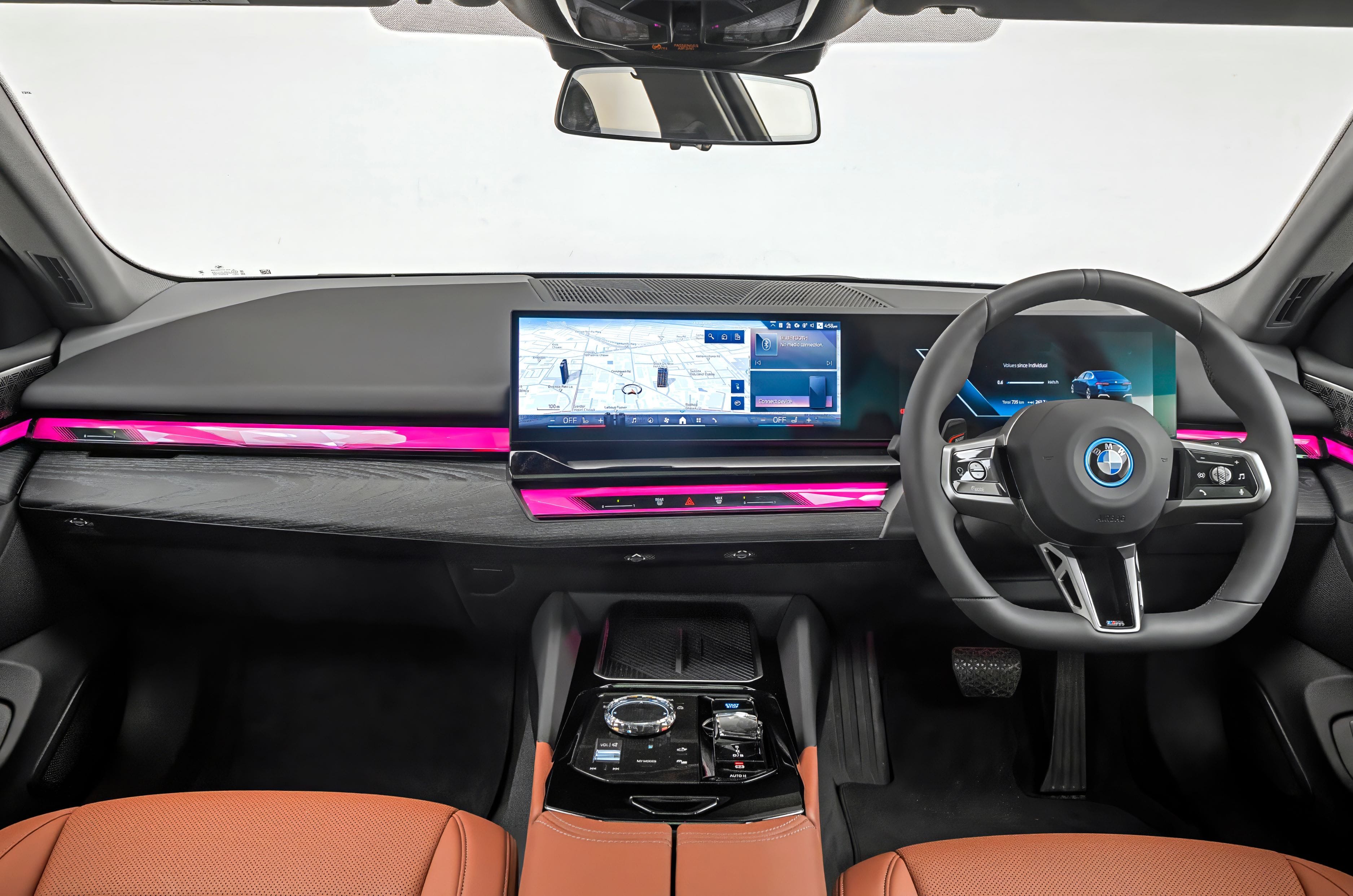
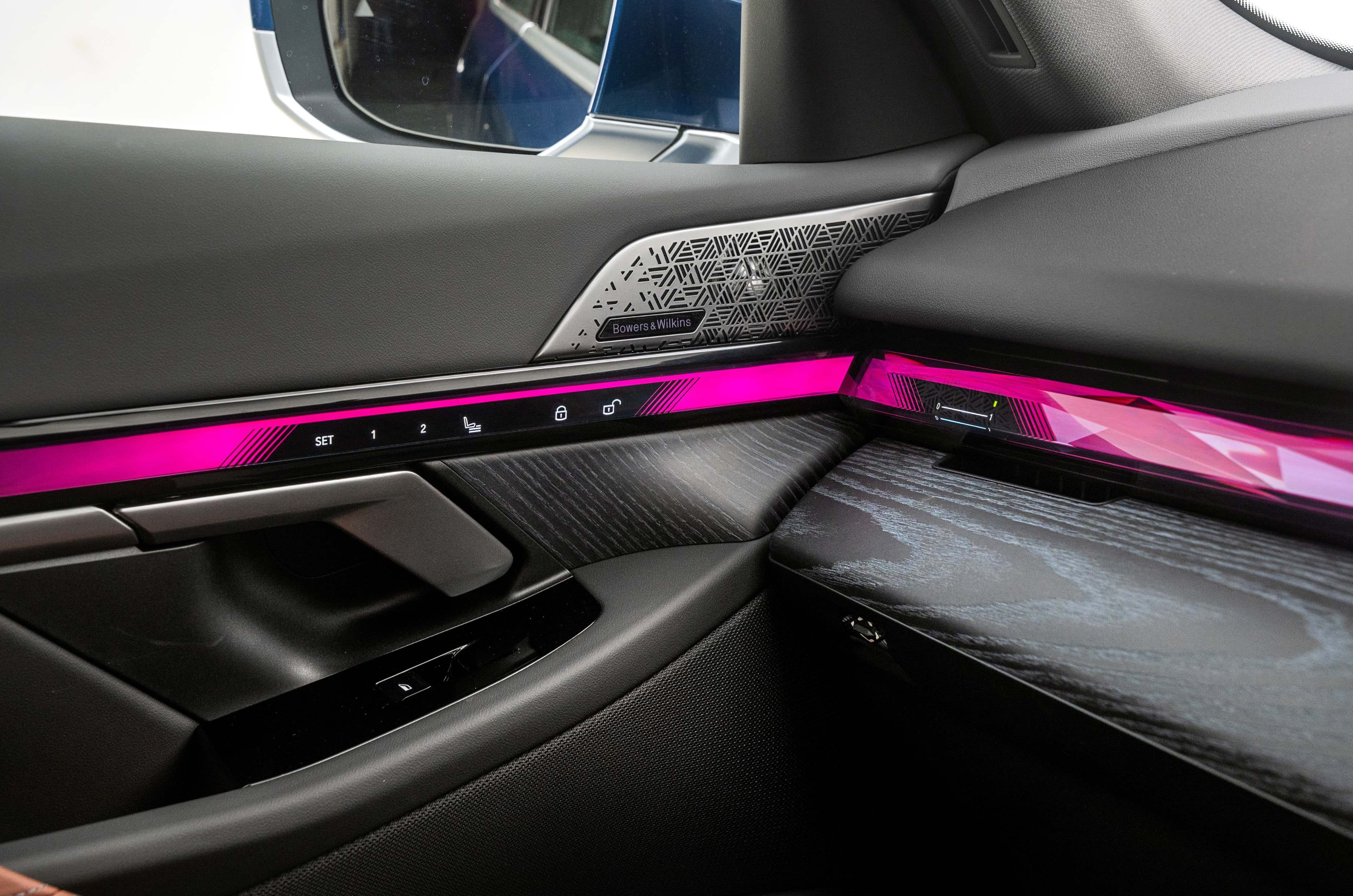
Dash is dominated by BMW’s twin curved screens, a flat-bottomed steering wheel and generous ambient lighting. 

Step inside and the dashboard is dominated by BMW’s twin curved-screen setup, complemented by a flat-bottomed steering wheel, generous ambient lighting, and a tasteful mix of open-pore wood trim and silver inlays. The crystalline drive selector, rotary infotainment controller and volume roller on the centre console add a welcome sense of occasion.

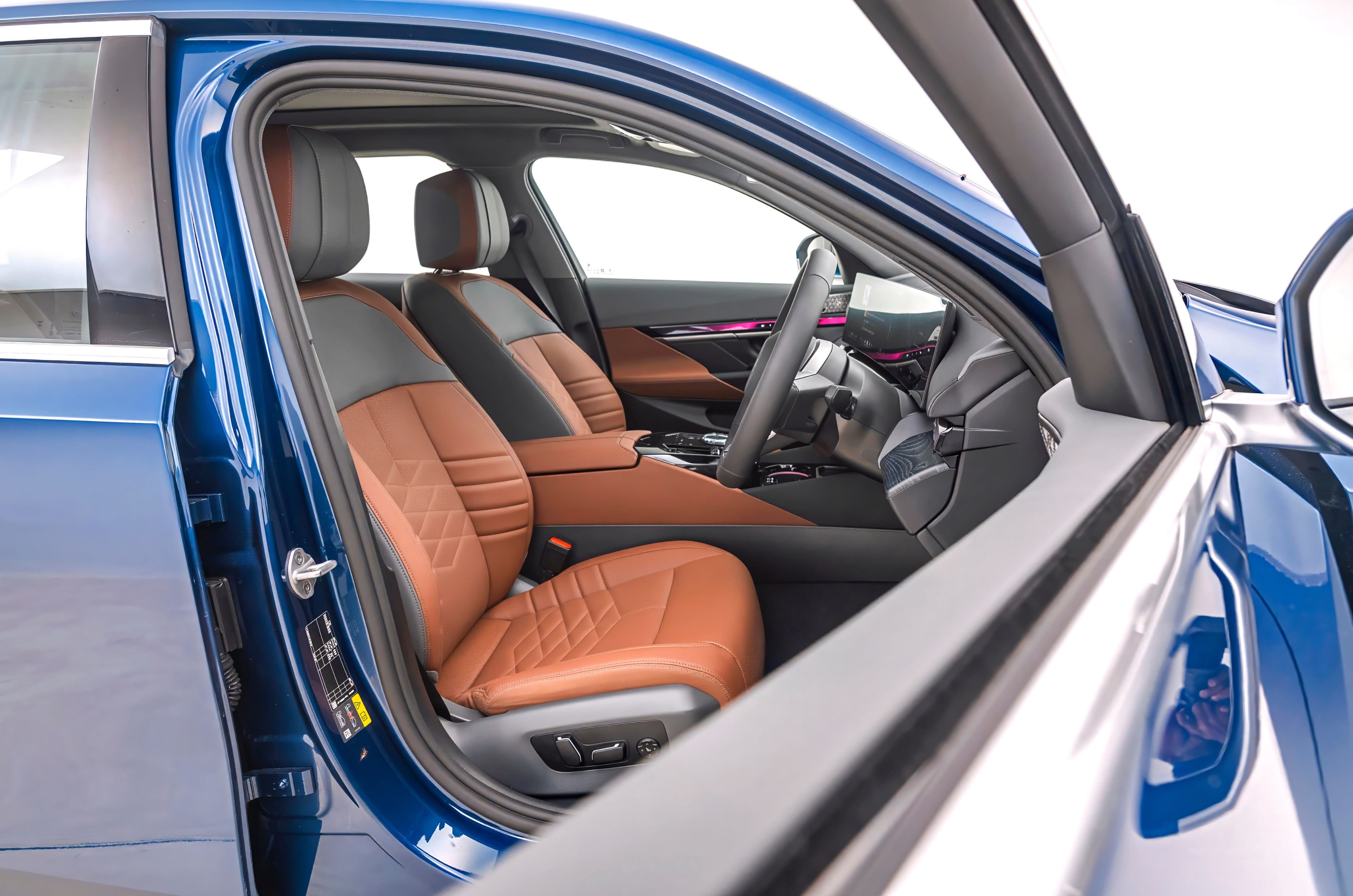
Those familiar with older 5 Series models will quickly notice the absence of the manually adjustable thigh support for the front seats. That aside, the seats themselves are exceptionally comfortable and supportive, and they also feature ventilation.

The seats are exceptionally comfortable and supportive, and they also feature ventilation.

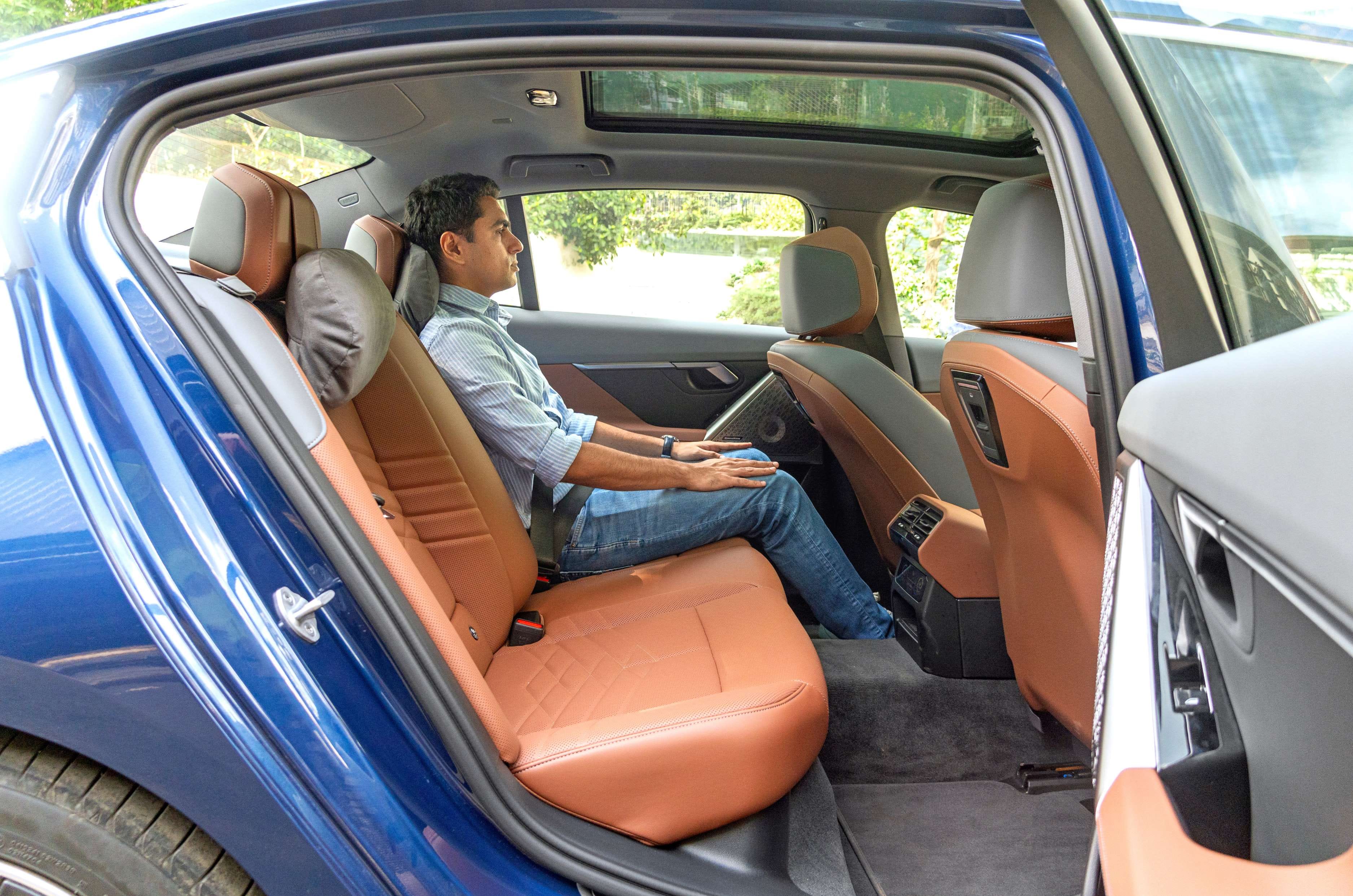
Being the long-wheelbase version, the i5 benefits from an additional 4.3 inches of wheelbase compared to the international model, resulting in noticeably more rear legroom. Sure, the floor sits higher than in the ICE version, but this remains a very comfortable place to be for chauffeur-driven buyers. The rear bench is well contoured and, with just two occupants, delivers a genuinely luxurious experience. Some may find the pillows a little excessive, and they aren’t quite as comfortable as the integrated units in the E-Class. Speaking of which, unlike the Mercedes, the i5’s rear seat doesn’t recline, and there are arguably too few indulgent touches to truly cater to chauffeur-driven buyers.

A bit knees-up, but the rear seat feels luxurious; however, there are too few amenities for chauffeur-driven buyers.

The middle seat is considerably less accommodating. The raised seat base compromises headroom, the backrest is firm, and the tall central tunnel further detracts from comfort for a third passenger.

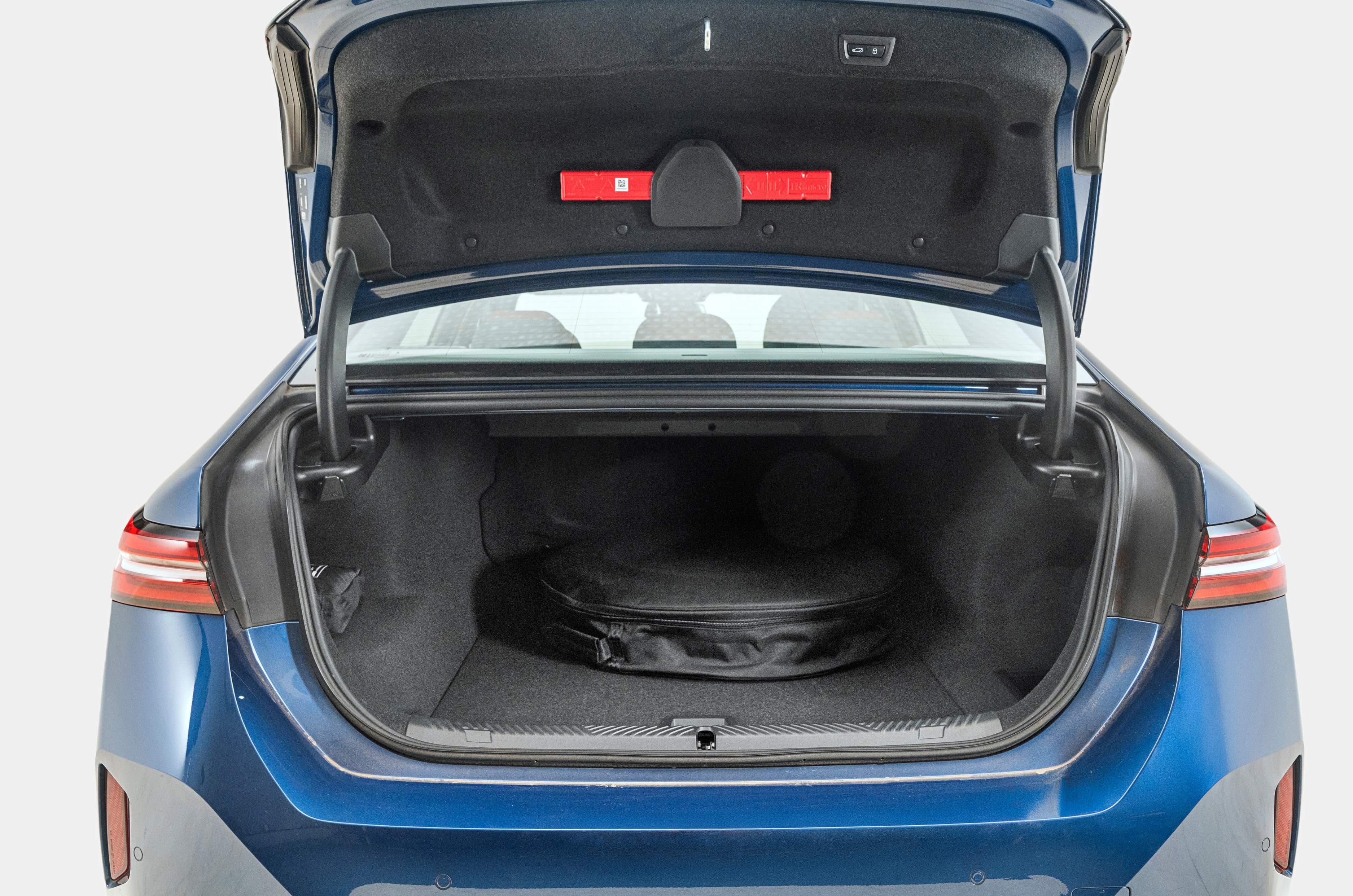
Boot space is rated at 500 litres, which is broadly similar to the ICE 5 Series. However, while the spare wheel is neatly tucked beneath the boot floor in the petrol version, it sits on the boot floor in the i5, significantly compromising usable luggage space.

The spare wheel sits on the boot floor, significantly compromising usable luggage space.

BMW i5 LWB Features and Safety – 8/10

The i5 eDrive35L comes generously equipped. Highlights include 20-inch alloy wheels, adaptive LED headlamps, powered and ventilated front seats, four-zone climate control, wireless charging pads for both front and rear occupants, a panoramic fixed glass roof, ambient lighting and a powered boot lid.

Audiophiles will particularly appreciate the superb 17-speaker, 655W Bowers & Wilkins audio system.

The curved touchscreen and digital instrument cluster look suitably futuristic, although the user experience isn’t the most intuitive due to the number of menus and sub-menus. On the plus side, the 360-degree camera offers excellent clarity. Audiophiles will particularly appreciate the superb 17-speaker, 655W Bowers & Wilkins audio system.

The i5 also gets a comprehensive suite of driver assistance features, including adaptive cruise control, lane-keeping assist and autonomous emergency braking.

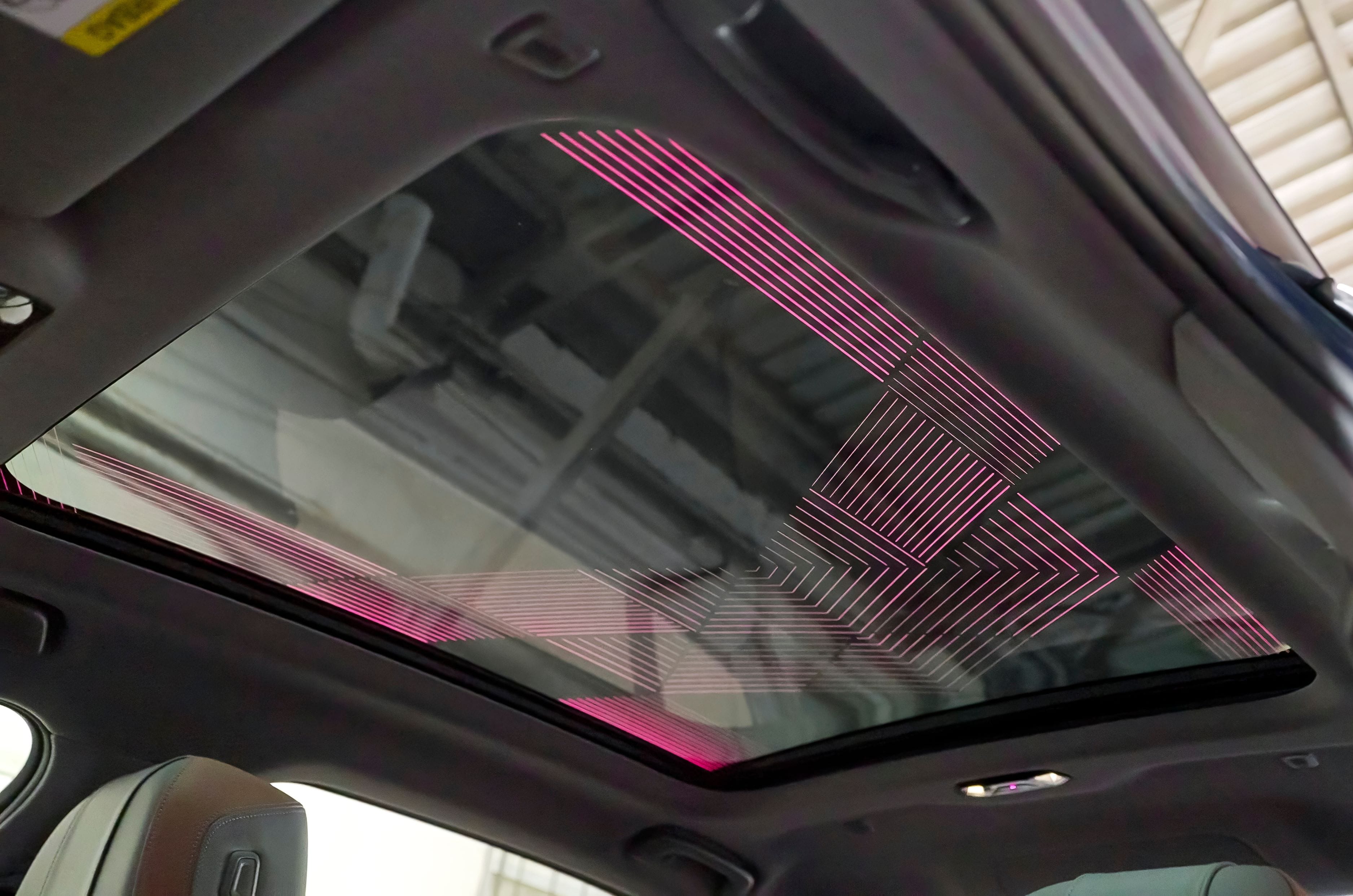
Its fixed panoramic glass roof has unique embedded LED lighting.

However, there are a few omissions that chauffeur-driven buyers may find difficult to overlook. A head-up display is absent, while smaller but genuinely useful features such as rear window sunshades, reclining rear seats, soft-close doors, a boss mode for the front passenger seat and rear-seat audio controls are all missing.

BMW i5 LWB Performance and Refinement – 8/10

The rear-wheel-drive i5 eDrive35L uses a single electric motor producing 272hp and 410Nm, figures that are remarkably similar to the mild-hybrid 530Li. However, the way it delivers its performance is entirely different. With peak torque available instantly, responses are smooth, effortless and distinctly EV-like. There are multiple drive modes on offer, each altering throttle response. Sport sharpens reactions noticeably, while Efficient is the most relaxed and efficiency-focused setting.

Retains a 50:50 weight distribution and RWD layout, but it has lost the sharpness and precision of earlier generations of the 5 Series.

BMW claims a 0-100kph time of 6.7 seconds, although our best run yielded 6.99 seconds. Interestingly, the 530Li is marginally quicker, recording 6.45 seconds for the same sprint, and it is also slightly faster in our 20-80kph and 40-100kph acceleration tests. 

The i5’s top speed is rated at 195kph, although acceleration begins to taper off noticeably beyond 100kph. In short, acceleration isn’t neck-snappingly quick, but there’s more than enough performance to keep things entertaining within legal limits.

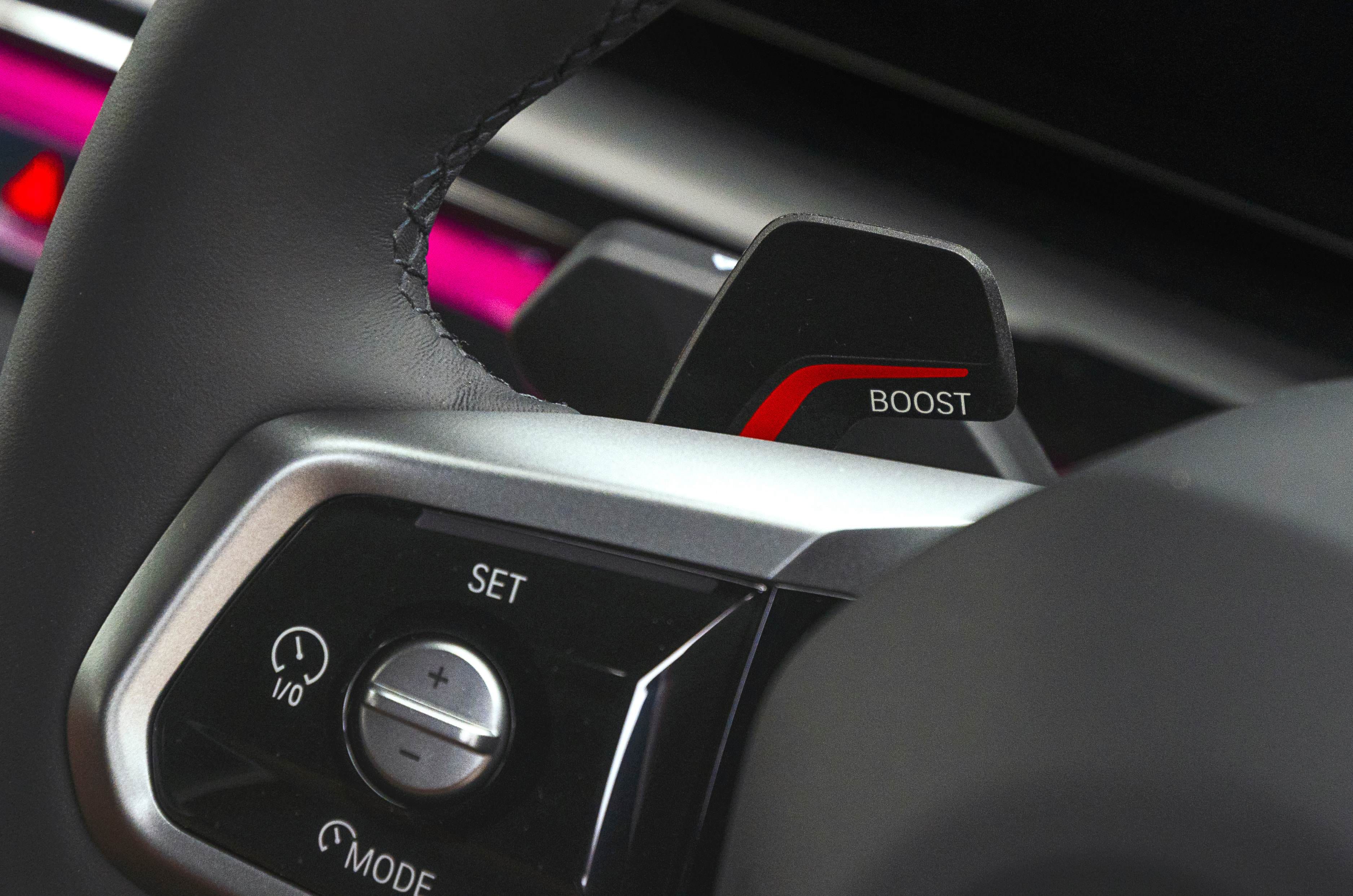
Boost function unlocks the motor’s full potential for 10 seconds. If your’re already in Sport mode, it barely makes any difference.

The i5 also offers multiple regenerative braking settings, including Adaptive, High, Mid and Low. Of these, Adaptive stands out for its excellent calibration, intelligently varying regeneration and coasting based on traffic and road conditions. There’s also a dedicated one-pedal ‘B’ mode, selectable via the drive selector. It delivers regeneration comparable to the High setting but, unlike it, can bring the car to a complete stop without requiring any brake pedal input.

Braking performance itself is strong, although keen drivers may wish for a little more feel from the pedal. The transition between regenerative and mechanical braking leaves it feeling somewhat numb.

BMW i5 LWB Range and Efficiency – 6/10

BMW claims the i5’s 81.6kWh battery (net capacity is 76.3kWh) can deliver a range of up to 669km, a figure that appears rather optimistic. In our real-world range tests, the i5 eDrive35L returned an average efficiency of 5.06km/kWh, translating to an estimated range of 386km. It’s worth noting that the car was driven in its most efficiency-focused ‘Efficient’ mode throughout the test, with regenerative braking set to Adaptive.

We also connected the battery to a 60kW DC fast charger, where it took 47 minutes to charge from 20-80 percent state of charge. BMW additionally supplies a complimentary AC wallbox charger along with installation.

BMW i5 LWB Ride Comfort and Handling – 8/10

Ground clearance has been increased by 18mm compared to the international version; hence, it clears most speedbreakers easily.

With every successive generation, the 5 Series has become softer and more comfort-focused, and the i5 is arguably the most luxurious iteration yet. Despite riding on larger 20-inch wheels with lower-profile tyres than the petrol-powered 530Li, ride quality is seriously impressive. The i5 feels plush and remarkably absorbent over typical urban roads. Notably, it also benefits from rear air suspension, a feature absent on the 530Li.

In addition to the extended wheelbase, BMW has increased ground clearance by 18mm compared to the global standard-wheelbase model. The result is a luxury sedan that’s far better suited to Indian conditions. Even with four occupants on board, the i5 clears most speed breakers without drama. As a luxury car, then, it unquestionably gets the fundamentals right.

With a plush ride and increased ground clearance, the i5 is far better suited to Indian conditions.

However, the softer suspension setup and increased ground clearance have diluted some of the driver-focused character that defined earlier generations of the 5 Series. While it retains a near-perfect 50:50 weight distribution and rear-wheel-drive layout, there’s no escaping the fact that, in prioritising comfort and practicality, BMW has sacrificed a measure of the sharpness and precision that once made the 5 Series a benchmark for driving enthusiasts.

BMW i5 LWB Price and Verdict – 8/10

At Rs 79.60 lakh, the locally assembled i5 LWB has all the ingredients to become BMW India’s next EV success story alongside the iX1. With the i5 eDrive35L, BMW continues its successful long-wheelbase formula, maximising cabin space while building upon the strengths of the petrol-powered 5 Series, with which it shares much of its cabin, equipment and overall character. Buyers can also opt for extended warranty and prepaid maintenance packages of up to 10 years, in addition to the standard eight-year battery warranty.

Generous cabin space, comfy seats, a plush ride, and effortless performance make the i5 eDrive35L a compelling electric luxury sedan

That said, much like its petrol-powered sibling, some of the traditional 5 Series driving feel has been diluted. It also misses a few feel-good features, particularly those aimed at rear-seat occupants. More importantly, the spare wheel’s placement on the boot floor significantly compromises luggage-carrying ability.

So, is it worth paying the Rs 3 lakh premium over the petrol-powered 5 Series? The answer largely depends on your usage. The i5 eDrive35L makes sense for buyers registering it under a company name, thanks to the higher depreciation benefits available for EVs. It also suits those who cover significant distances and can take advantage of lower running costs. Generous cabin space, comfortable seats, a plush ride, respectable range and effortless performance make the i5 eDrive35L a compelling electric luxury sedan for buyers shopping in this segment.

Top 6 Petrol rivals to the Ather Konarc

Top 6 Petrol rivals to the Ather Konarc
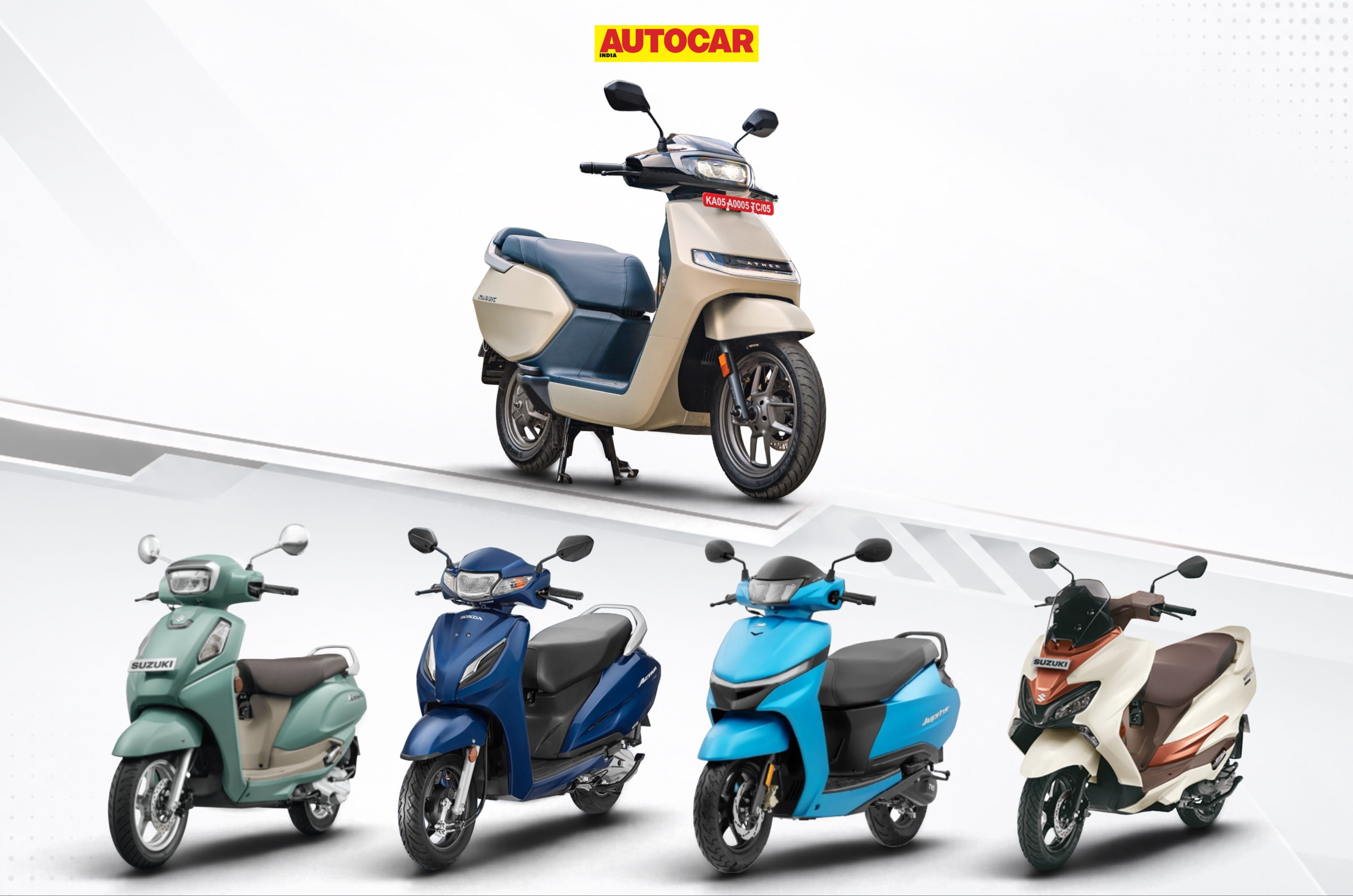
An inside render showing the Ather Konarc at the top; Suzuki Access, Honda Activa 6G, TVS Jupiter, and Suzuki Burgman Street at the bottom.

Family scooter. As soon as you read that, probably one specific scooter comes to your mind, summing up how the scooter industry has functioned the past two decades. However, over the past few years, EVs like the TVS iQube, River Indie, and the Ather Rizta have shown that they can go toe-to-toe with petrol scooters. The brand-new Ather Konarc is poised to add to that arsenal. However, if you aren’t quite convinced yet, here are some internal combustion engine (ICE) scooters you can look at instead.

All scooters are being compared to the Ather Konarc S 100, priced at Rs 99,999 (ex-showroom, Bengaluru). For Konarc, we haven’t considered features that require Ather StackPro subscription. All the other scooter prices mentioned are ex-showroom, Delhi.

Honda Activa

Rs 76,083 onwards

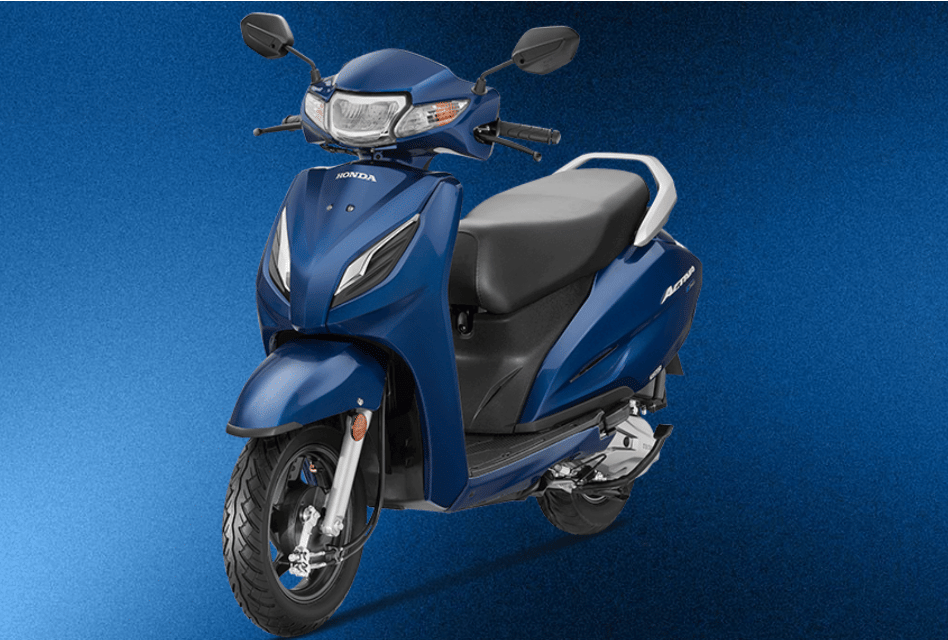
Honda Activa 6G in Decent Blue Metallic colour

The default family scooter and the one your mind reminded you of when you started reading this. You cannot go wrong with the Activa’s reliable 110cc engine and the trust the brand brings you. However, this and the 125 have a lean feature set compared to the other ICE scooters here. The Activa 110 gets a 4-inch TFT instrument cluster with turn-by-turn navigation, smartphone connectivity, a silent start and stop-start system via an Integrated Starter Generator (ISG), and a smart key on the top variant. With the Activa’s 54.4kpl fuel economy, you’re looking at a 270km range before coming to a standstill. The Activa’s prices tops out at Rs 91,082 which makes it close to the entry-level variants of the Ather Konarc and the Simple Wave.

By paying Rs 9,000 more for the Konarc, you’ll get 100km IDC range, 70kph top speed, two ride modes, bigger 14/12-inch front/rear wheels, a bigger 31L under seat storage.

Honda Activa 125

Rs 91,178 onwards

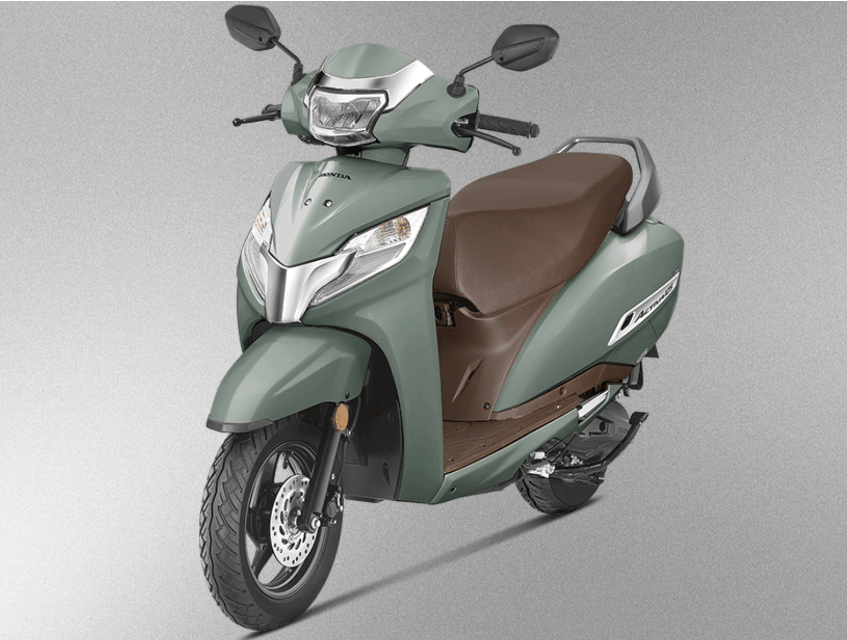
Honda Activa 125 in Pearl Deep Ground Gray colour

The bigger Activa bumps up the cubic capacity to 124cc and increases the power by 0.4hp to 8.3hp and increases the torque by 1.4Nm to 10.5Nm compared to the 110, but is otherwise almost exactly the same as the 110. For that extra power and torque, the Activa 125 bumps up the prices and tops out at Rs 95,622. As such, the extra features you gain by switching to the Konarc also remain the same.

TVS Jupiter (110)

Rs 74,125 onwards

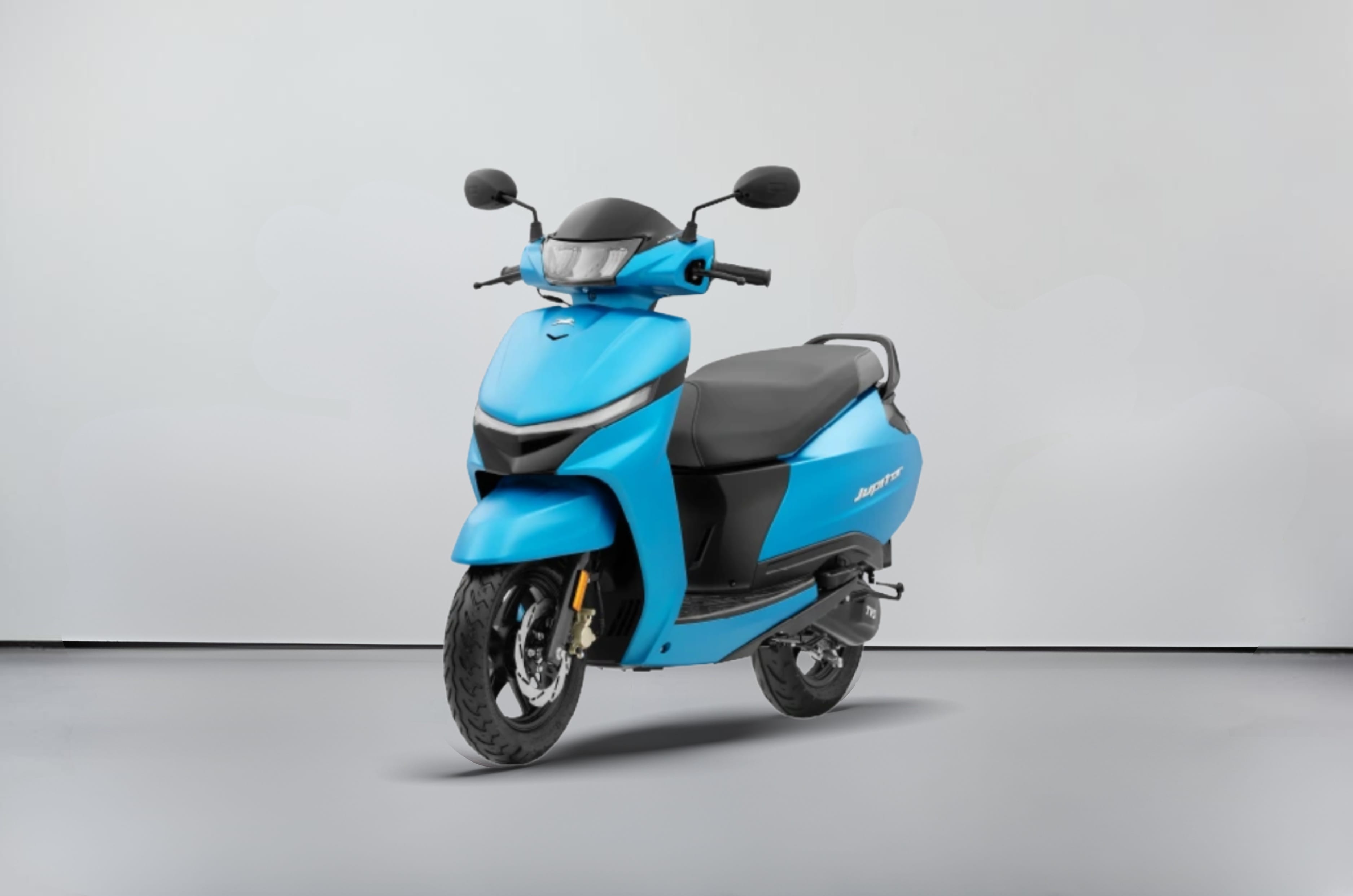
TVS Jupiter 110 in Dawn Matte Blue colour

The Activa’s biggest competitor is the Jupiter which received a comprehensive upgrade in 2024. TVS gave it an all-new 113.3cc engine with 7.9hp and 9.8Nm of torque (with 0.6Nm from the ISG). It also received a much sleekier design over its predecessor. As things stand today, the Jupiter has perhaps the largest feature set of any ICE scooter. Thanks to sharing the platform with its bigger brother, the new Jupiter gets a front fuel tank, 33L under seat storage (that’s still the largest on an ICE scooter). It also gets a wide floorboard, more storage on the front apron storage, an ISG, smartphone connectivity, 12-inch wheels at both ends, a front disc brake on higher variants, and a design that’s much more modern than any of its peers. With its 57kpl fuel economy, the Jupiter also has the Activa beat with a higher 285km range. The Jupiter starts at Rs 74,125 and tops out at Rs 89,825 for the dual-tone variant.

By stepping up to the Konarc by paying an additional Rs 10,174 over the top-most variant, you gain a larger 14-inch front wheel.

TVS Jupiter 125

Rs 81,700 onwards

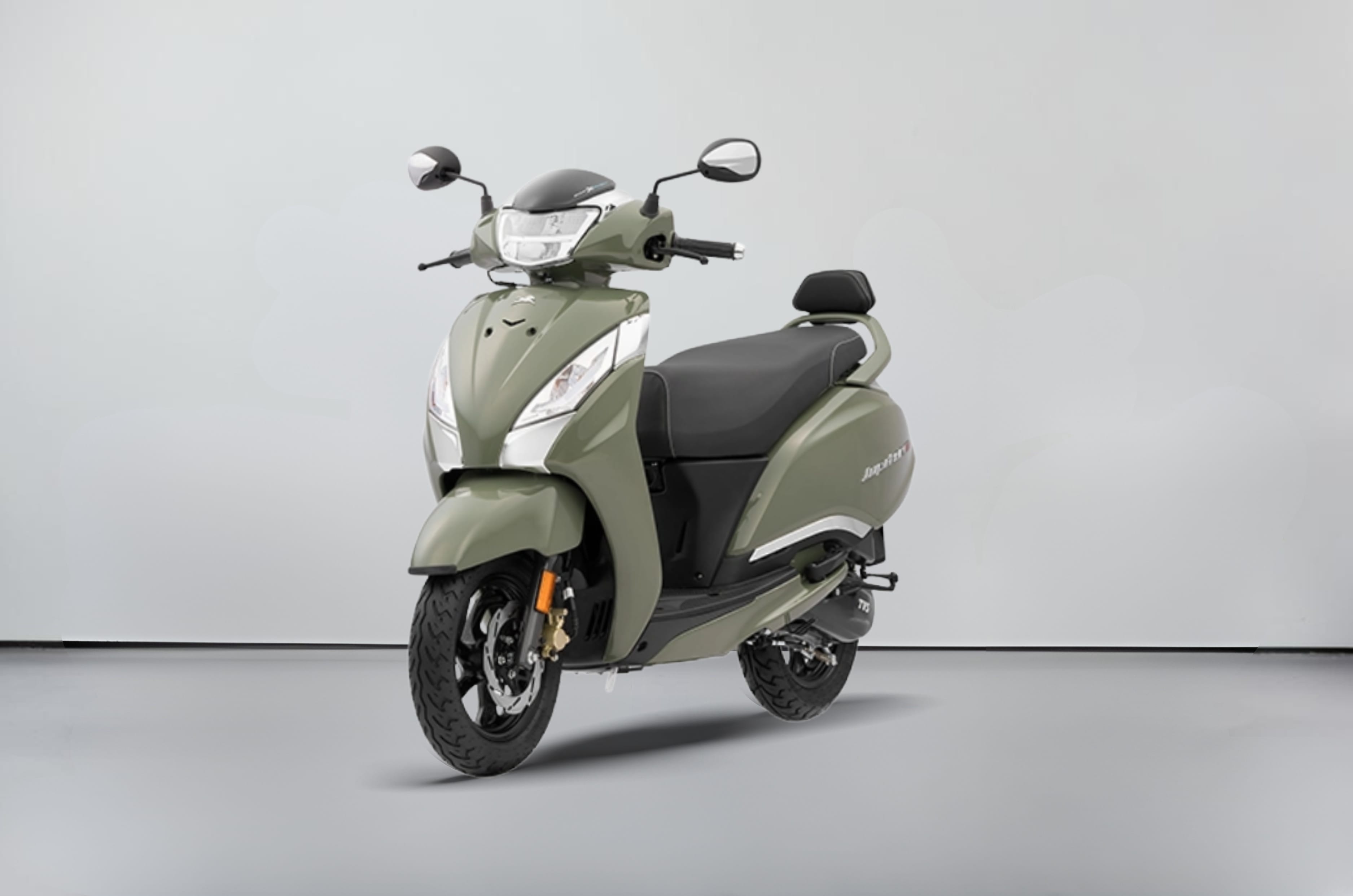
TVS Jupiter 125 in Elite Green colour

The bigger Jupiter unfortunately didn’t quite get the rejuvenation. It’s stuck to essentially the same design from its debut in 2021. With the larger 124.8cc engine, you get 0.5hp extra power and 1.3Nm extra torque over the 110, with the ISG’s assistance; without it, they become 0.1hp and 0.7Nm extra, respectively. Sharing the same platform means that the new 110 has caught up to most of the 125’s features. Though, you do get a TFT display on the 125’s cluster, but it isn’t adding any real value. The Jupiter 125 starts at Rs 81,700 and tops out at Rs 89,935.

By stepping up to the Konarc for approximately Rs 10,000 extra, you gain a larger front tyre.

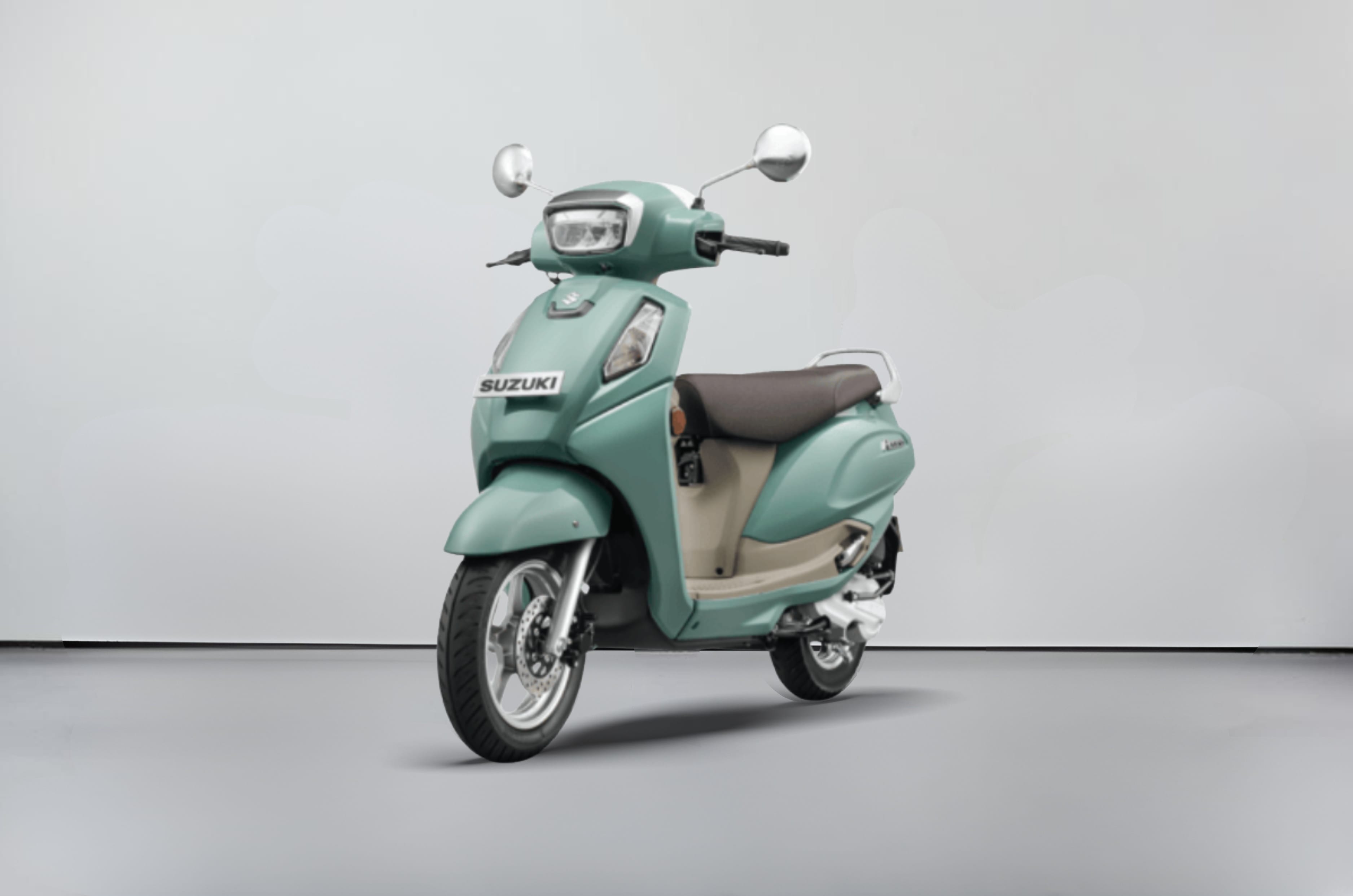
Suzuki Access (125)

Rs 82,185 onwards

Suzuki Access 125 in Solid Ice Green colour

The Suzuki Access has silently been one of the best-selling scooters in the family scooter segment and it received a comprehensive upgrade in early 2025. While there wasn’t a brand-new engine, Suzuki gave it a new frame and made scores of minute improvements to the engine that added up to make it a comprehensively better scooter. However, that also means there aren’t any new features to help the Access’ case. It sticks to a 12/10-inch front and rear wheel setup, a 24.4L under seat storage that now feels measly even for the ICE world. Suzuki did give it a TFT instrument cluster and single-channel ABS on the highest variant, but that’s about it. The Access starts at Rs 82,185 and will set you back by Rs 1.02 lakh for the TFT-ABS variant.

With the Ather Konarc, you will end up paying Rs 3,000 less and gain a larger 14/12-inch front and rear wheels, two ride modes, and a considerably larger 31L under seat storage but the Access is the only scooter here that offers the safety net of an ABS system.

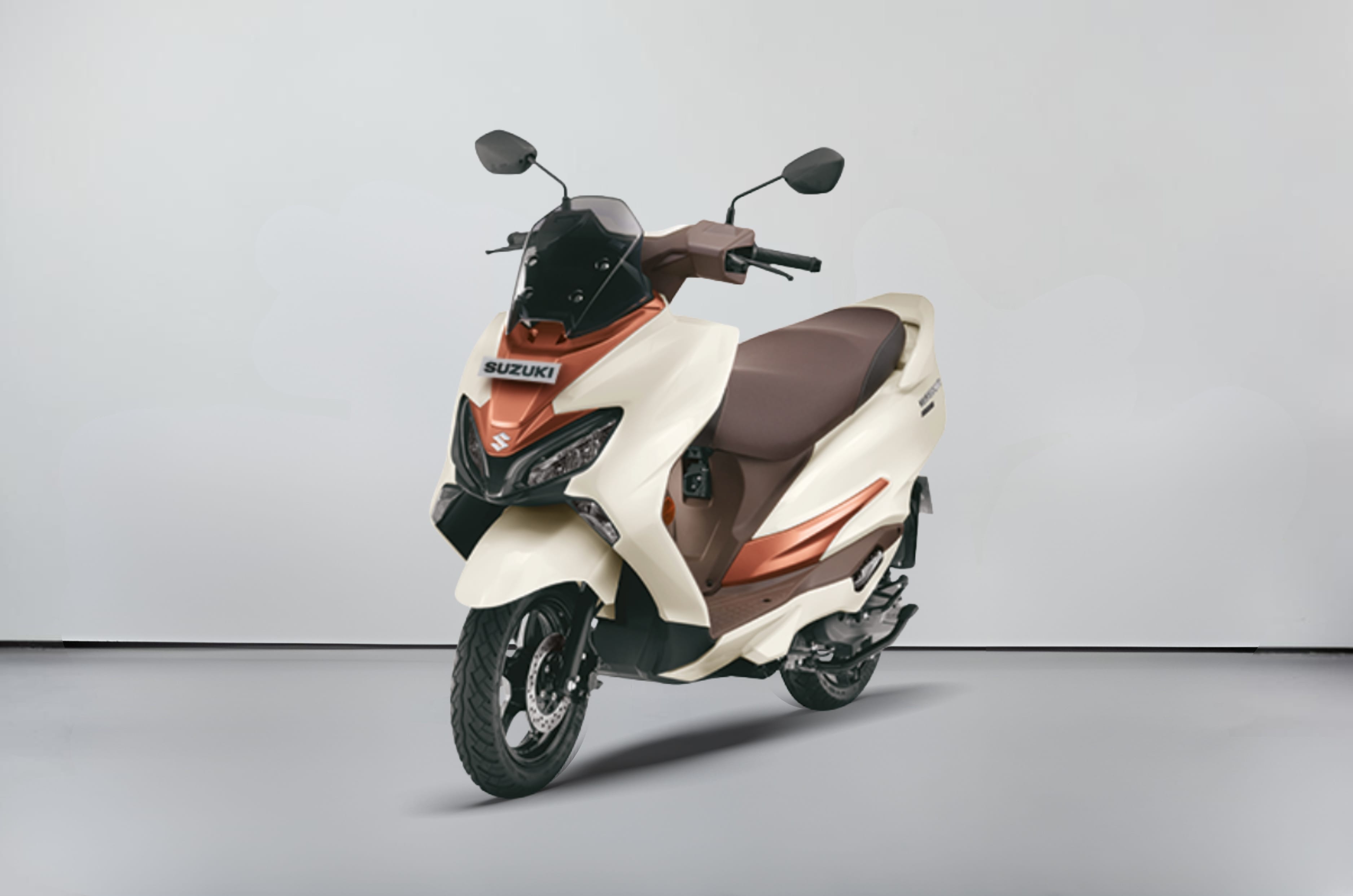
Suzuki Burgman Street

Rs 1.03 lakh onwards

Suzuki Burgman Street in Grace White/Copper colour

The Burgman received most of the same upgrades as the Access in early 2026, with the maxi-scooter stance as its biggest differentiation. The Burgman Street exclusively gets a keyless system on the top-variant, but loses out on the single-channel ABS compared to the Access. On the dimensions front, it gets a 25mm longer wheelbase, 7kg additional weight, and 0.2 litres larger fuel tank compared to the Access. It’s also one of the two Suzuki scooters to have a 12/12-inch front and rear wheel setup in India; the older Burgman Street EX being the other one. Except for these differences and a different design, the Burgman Street shares its mechanicals and convenience features with the Access. The Burgman Street starts at Rs 1.03 lakh and the top TFT variant with the keyless system costs Rs 1.15 lakh.

By getting the Konarc instead, you end up saving about Rs 4,000 (Rs 12,000 compared to the top variant) and you gain a larger 14-inch front wheel, two ride modes, and of course, the larger 31L under seat storage.

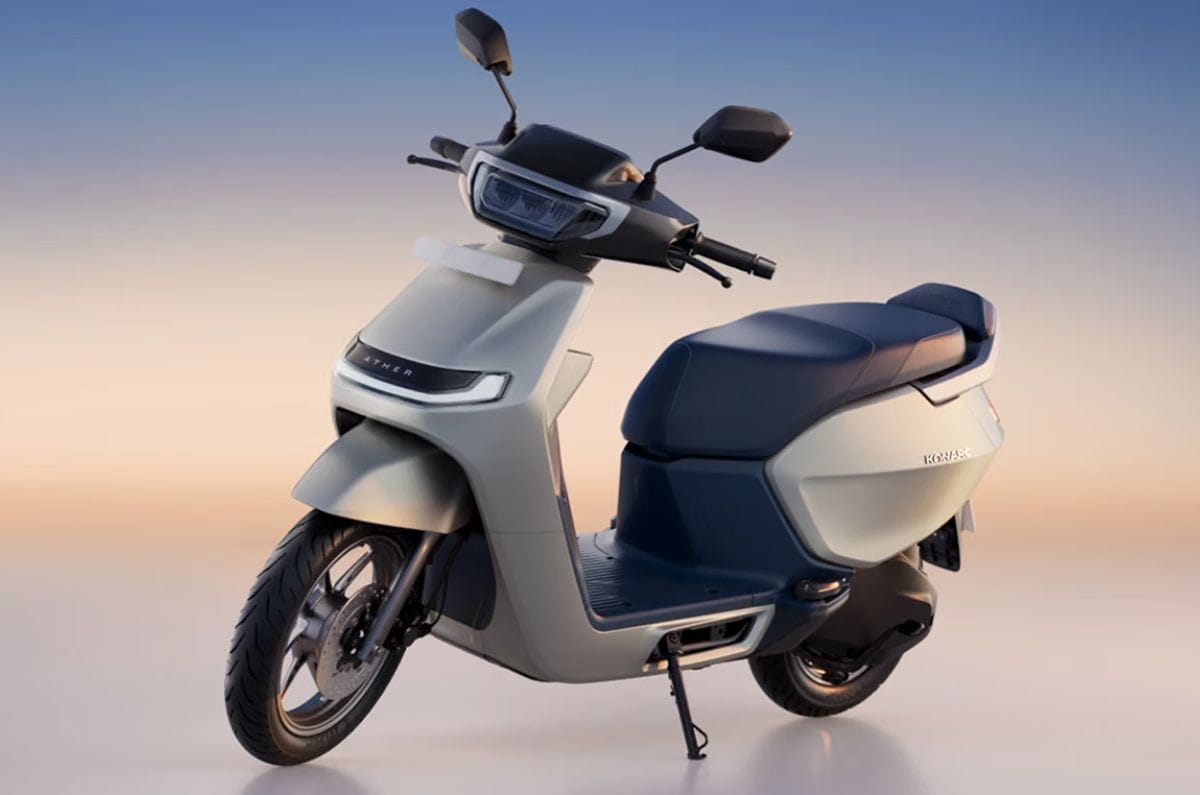
Summary and conclusion

Ather Konarc in Celestial Gold colour

We understand that this article makes it seem like there’s no point in choosing the Ather Konarc in most cases; that’s not quite true. Getting an EV scooter might be the best decision for some people, especially ones with a fixed daily travel distance, living in either their own house, or a housing society that’s generous with setting up a home charger, and all the tech enthusiasts who would like to see how far EVs have come in the past few years. Just the novel riding experience of an EV might be enough to choose the Konarc for you. So, take a test ride of the Konarc S 100 when it becomes available. We’d like you to be aware of the closest ICE options, if you end up deciding the Konarc isn’t for you.

With Ather StackPro and Ather Connect subscription, the Konarc S can offer more smart features that none of the others here can hope to match, but there’s an additional price to be paid for them. Hence, if you’re after the most value for your money, there’s no question that ICE vehicles still offer more for their asking price.

Kia Carens Clavis EV long term review, 11,000km report

Kia Carens Clavis EV long term review, 11,000km report
Kia Carens Clavis EV 11,000km report

A lot of us on the Autocar India review team have been eagerly awaiting the arrival of the Clavis EV. Who knew a bunch of auto enthusiasts would be looking forward to an electric 7-seat MPV. The thing is, though, electric and MPV are two very congruous elements. 

If you’re going to have a large people mover, an electric drivetrain does well by not penalising you on efficiency – like an internal-combustion engine does – and its smooth and silent running keeps everyone happy. And in an MPV, where it’s a relaxed frame of mind you’re often driving in, electric power again suits this character to a T.

So yes, this combination really does make sense, and the electric Clavis really brings out this harmonious pairing superbly. 

The Clavis shares its powertrain with the Hyundai Creta Electric, and we have the larger 51.4kWh battery model, which drives a 171hp motor. Efficiency, while not bad, is lower than the Hyundai’s. So far, in the city, on my home-to-office run, the Clavis manages about 6.8km/kWh, which would equate to a range of 350km, while the Creta averaged 8.1km/kWh.
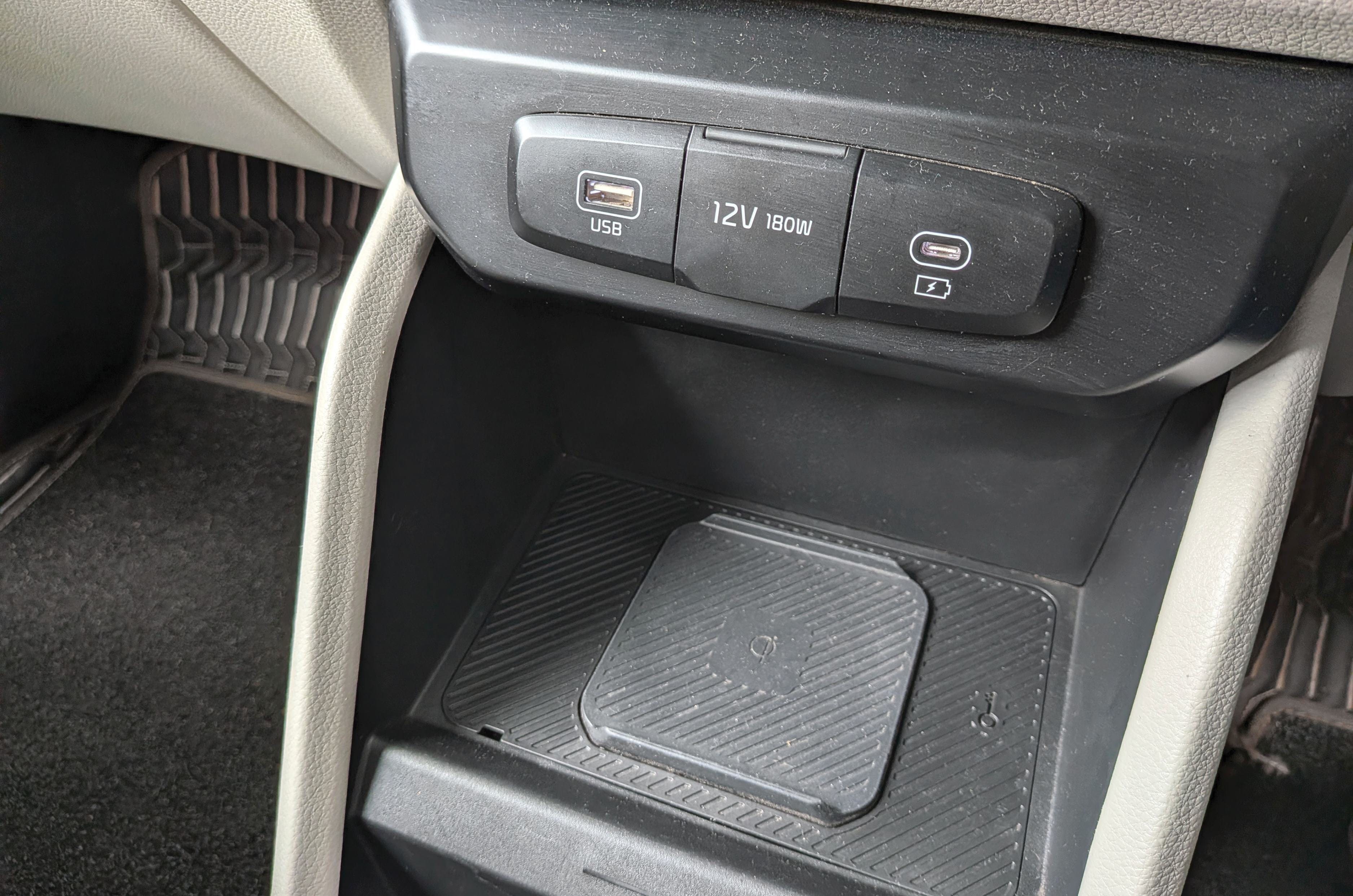
Wireless charger, 12V, Type-A and Type-C at the front and USB sockets in all three rows.
However, the power calibration is spot on for its intended purpose. There’s none of that instant power dump and a hair-trigger torque delivery, making it very easy to modulate if you’re simply out on a relaxed and laid-back drive – a.k.a. MPV mode. But don’t mistake that for a lack of performance. Press down a bit further on the accelerator, and there’s plenty of power for overtaking, even with a full load or on steep inclines. I’ve run it with six onboard, and it really made no difference. This is exactly how you’d want an MPV powertrain to be set up. 

The ride is another bit that’s nice. To tackle the extra weight of the battery, Kia has retuned the suspension and, like in the case of the electric Creta, it does have a firm side. But this has also helped with removing some of that secondary motion after you come off a speed breaker or bump. So, the ride feels settled, and at highway speeds, it is stable and composed. 

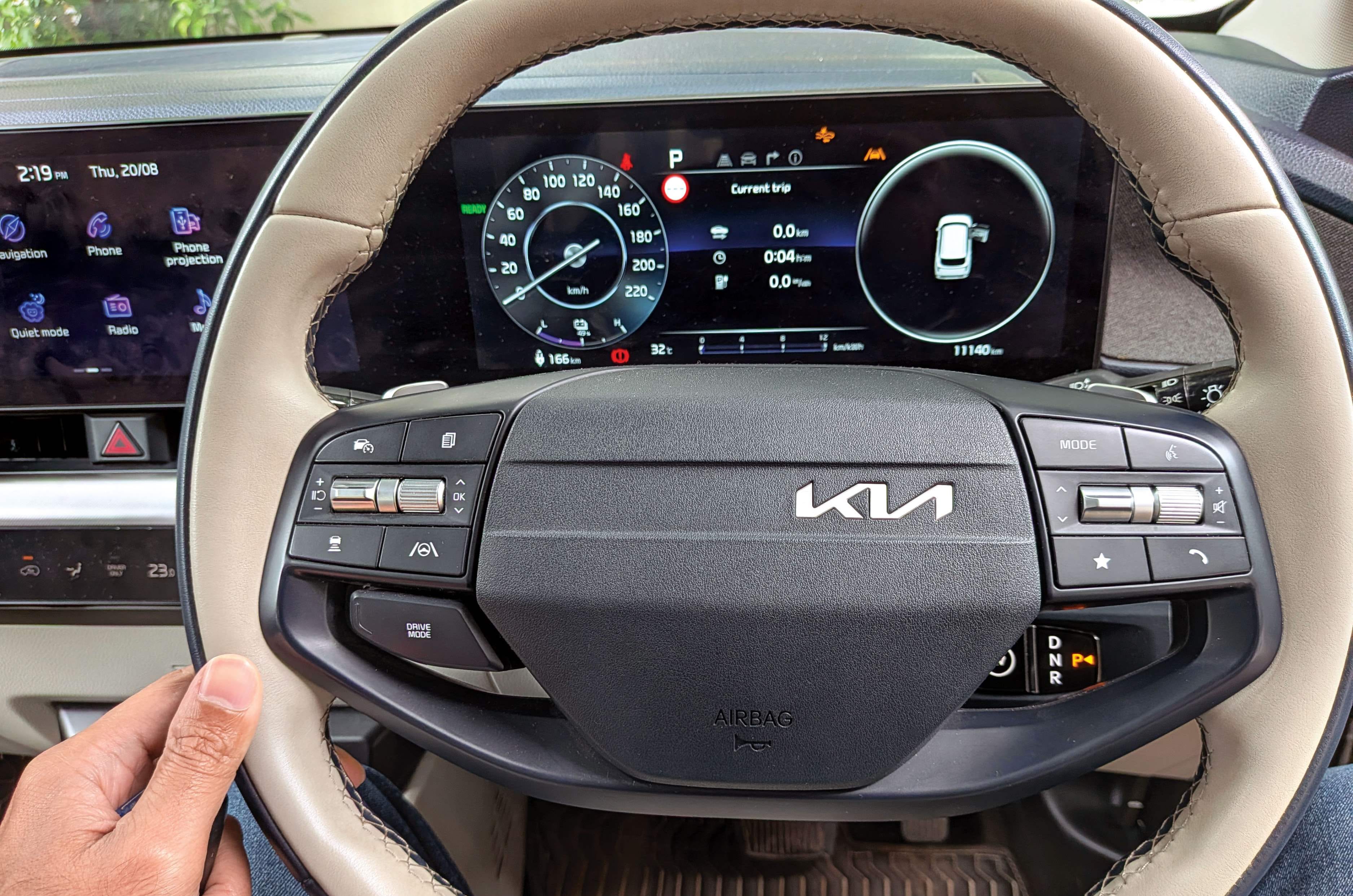
Quirky two-spoke, flat top and bottom steering wheel always looks upside down.

My wife drives it too, and she loves this easy-going nature, as well as the seating position. That is something I don’t really like, though. It feels like sitting at a dinner table, with your knees closer to a 90-degree angle. The seat base is also quite short, adding to that dinner-chair-like posture. It isn’t uncomfortable, though. The seat cushioning is fine, but it’s just the position that’s far from car- or SUV-like. 

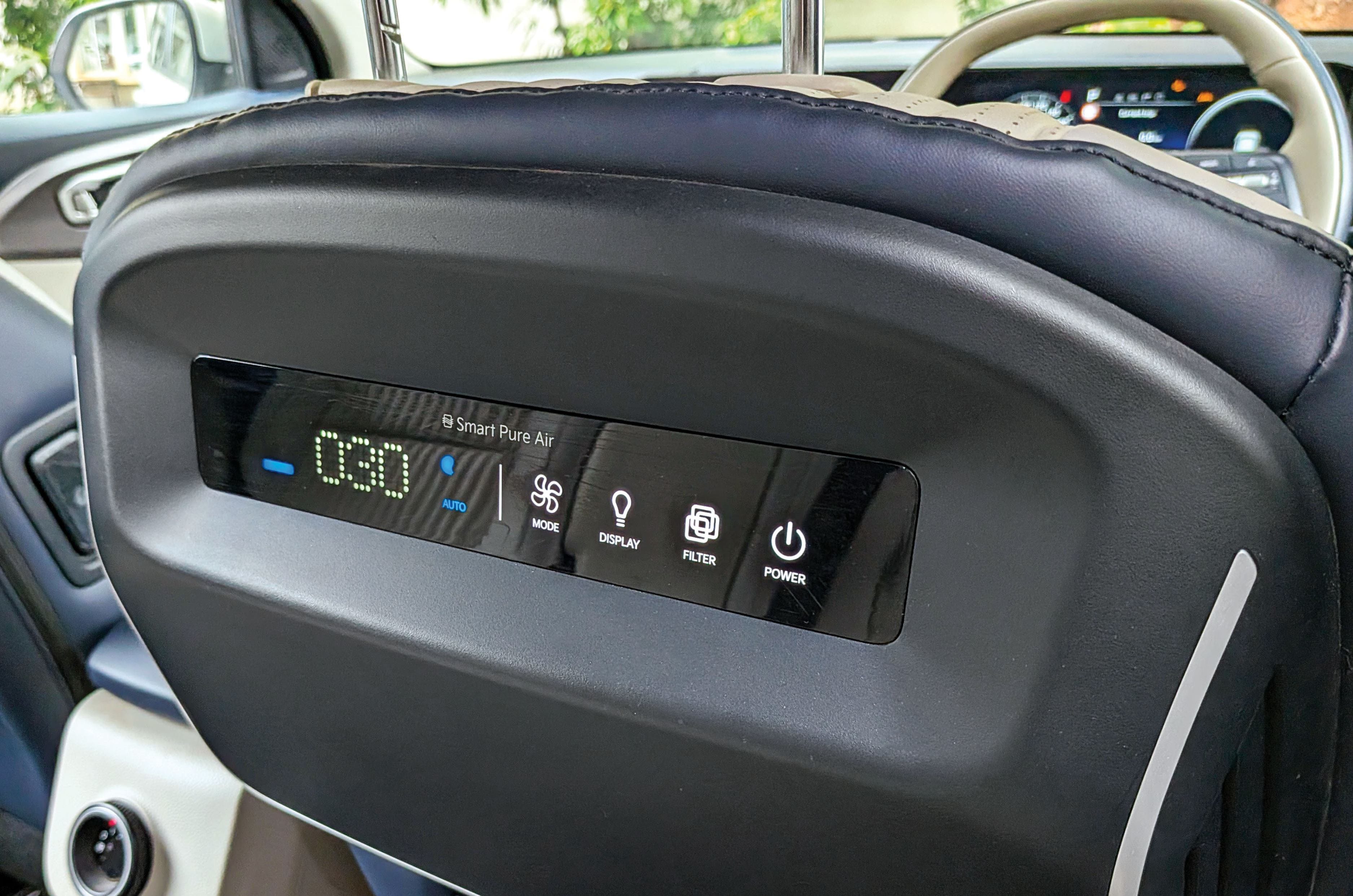
Besides that, there are only small bits I dislike, like the starter button, which is located on the drive selector stalk and hence hidden behind the steering wheel, only visible if the wheel is in the absolute straight-ahead position. The air purifier is also noisy, but that’s more due to its positioning behind the driver’s seat and thus close to your ear. 

Air purifier located right behind the driver makes the air draft easily audible.

Beyond that, the Clavis EV has been remarkable. The kids love the electric seat fold that allows you to tumble the second-row seat at the push of a button, granting easy access to the third row. The space there drew no complaints either. It’s even good enough for average-sized adults and gets dedicated AC vents too. The window size, though, is a bit small, and while my daughter, who is prone to motion sickness, has so far not complained about it, I’m sure on a longer drive she will find this annoying. My son, who is taller than me, complained about this, saying he needs to look down through the glass. Headroom and overall space, though, were just about fine for him. 

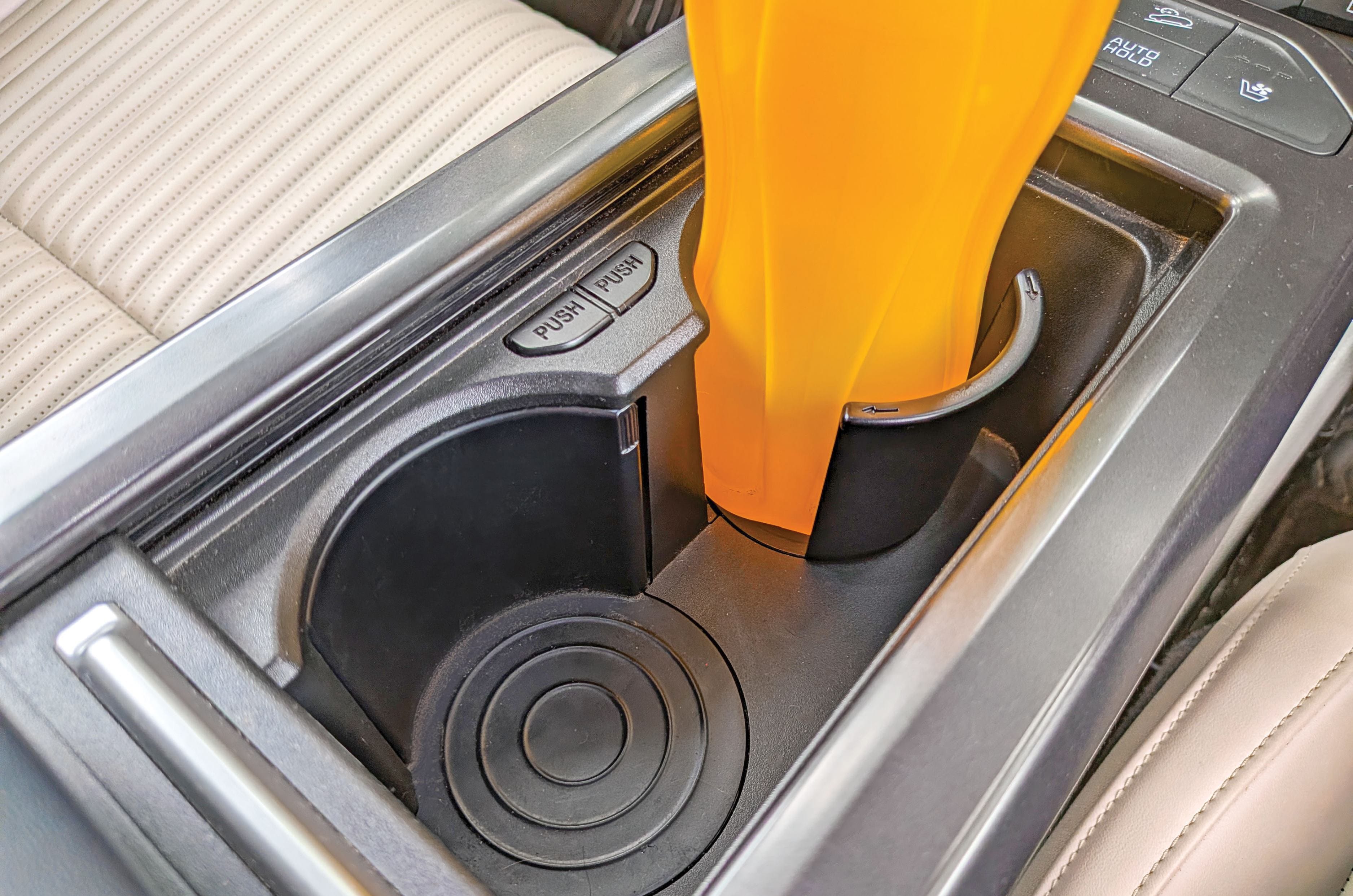
Speaking about space, the centre console drew a lot of praise from everyone who sat at the front. There’s plenty of storage, so no fighting to keep odds and ends. There are places for your phones, wallets, cups and bottles thanks to a cool resizeable tray, and the lower portion of the console can easily contain a medium-sized handbag. I’ve even managed fitting a tablet with its case in there. The premium-looking interior has also impressed everyone, the ambient lighting taking many by surprise. I guess not many expect this level of finish when they see an MPV. 

Resizeable cup/bottle sleeves are handy and pop out at the touch of a button.

So, all in, like I said at the start, the electric Clavis is really a fine example of why electric power and MPVs are such a great mix. I’m sure our resident van man, Nikhil Bhatia, will be relieving me of the keys very soon. He’s already speaking of how his daughter loves to look up through sunroofs from her child seat. Rahul, too, will soon want it for its flexibility in some or the other tracking car duty.

Kia Carens Clavis EV test data

Odometer11,100km
PriceRs 24.53 lakh (ex-showroom, India)
Economy6.8km/kWh
Maintenance costNone
FaultsNone
Previous reportNone

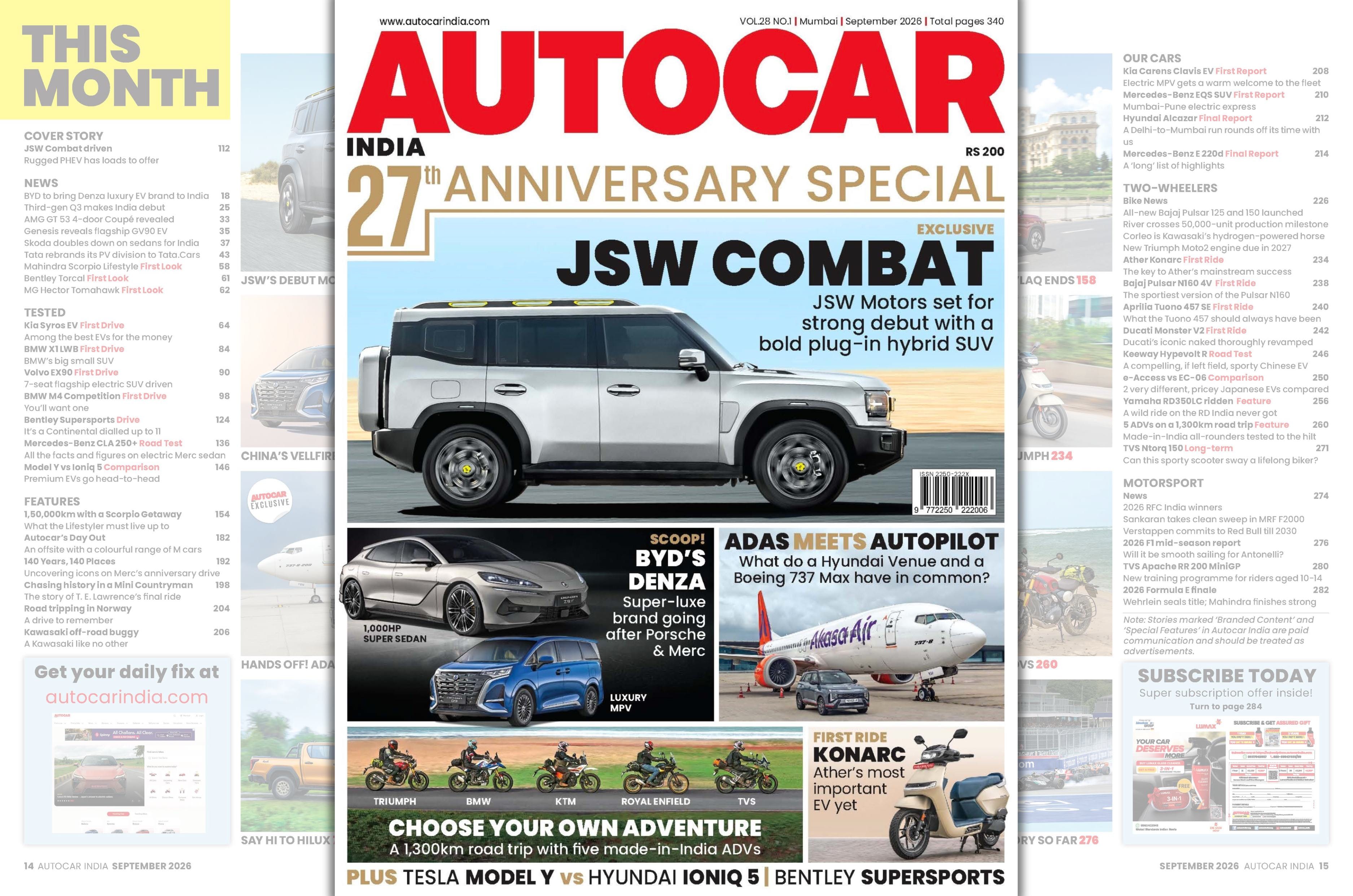
Autocar India September 2026: JSW Combat, Scorpio Lifestyler, BYD Denza and more

Autocar India September 2026: JSW Combat, Scorpio Lifestyler, BYD Denza and more
Autocar India Sept 2026 issue

Autocar India turns 27, and rather than quietly celebrating with a cake, we’ve celebrated the way we know best: with scoops, exclusive drives and a frankly unreasonable amount of driving. In this issue, we bring you an exclusive drive of JSW’s new Combat SUV (you heard the name here first), a scoop on BYD’s Denza luxury push, and the last leg of the 20,000km Pune-to-Prague odyssey, alongside a serious collection of new cars and bikes. Oh, and there’s also a Boeing 737 Max aircraft involved. Because apparently cars weren’t complicated enough.

JSW Combat: Review

JSW’s first SUV is a rugged plug-in hybrid based on the Jetour T2. We get an early exclusive drive of the Combat and examine whether this newcomer really has what it takes to shake up the Rs 30-50 lakh SUV market. 

BYD Denza: China’s Luxury Offensive

BYD is bringing Denza to India, with luxury EVs like the D9 MPV and Z9 GT aimed squarely at the established big boys. Having disrupted the mid-range EV market with BYD, it is now going after the high-end market with Denza. 

ADAS Meets Autopilot: Hands Off!/Look ma, no hands!

What do a Hyundai Venue and a Boeing 737 Max have in common? Quite a lot, apparently. We climb into a full-flight simulator to understand how aircraft autopilot works and what it has in common with the increasingly sophisticated systems in our cars. 

Skoda Kylaq: Pune to Prague, Part 2

The Silk Route may have been built for traders, but we’ve used it to find out just how far you can take a small SUV before it starts asking for a holiday. After 19,000km, 70 days and not a single puncture, our Skoda Kylaq finally reaches Prague. 

Autocar’s Day Out: M-ployees of the Month

Most company off-sites involve a resort, a buffet and someone reluctantly joining a team-building exercise. Ours involved six BMW M cars, more than 3,000hp, a deserted concrete ground and a frankly irresponsible amount of tyre abuse. Four M4s and two M2s went head-to-head in slalom, football and drifting, and what began as a relaxing team outing rapidly descended into a war. 

Tesla Model Y vs Hyundai Ioniq 5: Comparison 

Two premium EVs, two very different ideas about what an electric car should be. The Model Y with its recently revised price, and the updated Ioniq 5 go head-to-head to see which makes the stronger case. 

Bentley Supersports: Drive

Take a Continental GT and turn the dial towards something completely unnecessary. The result is Bentley’s Supersports, a rear-wheel-driven beast with considerably more intent. We drive it around Laguna Seca.

Mini Countryman C: First Drive 

The Countryman has grown into a proper luxury SUV, with generous space, loads of kit and a new 1.5-litre turbo. At Rs 47.5 lakh, it’s the biggest and most grown-up Mini yet, and is ready to lock eyes with real luxury SUVs rather than merely be a fashion statement. But has it done that?

5 Ways to Adventure: Feature

Five made-in-India ADVs, 1,300km and one simple question: which is the best way to go exploring? We put the bikes through highway miles, trail riding and plenty of scenic detours to see how their different approaches to adventure stack up.

Ather Konarc: First Ride

Ather’s new Konarc brings the brand’s blend of quality and comfort to a wider audience, with prices starting at Rs 99,999. A compelling new step into the mainstream.

Suzuki e-Access vs Yamaha EC-06: Comparison

Japan finally answers India’s e-scooter boom, and the two takes couldn’t be more different – one built from scratch, the other born from an Indian startup partnership. Which one takes the crown?

Get the latest issue on Amazon and Flipkart.

SCOOP: BYD’s Denza to launch 1000hp+ Z9 GT in India

SCOOP: BYD's Denza to launch 1000hp+ Z9 GT in India
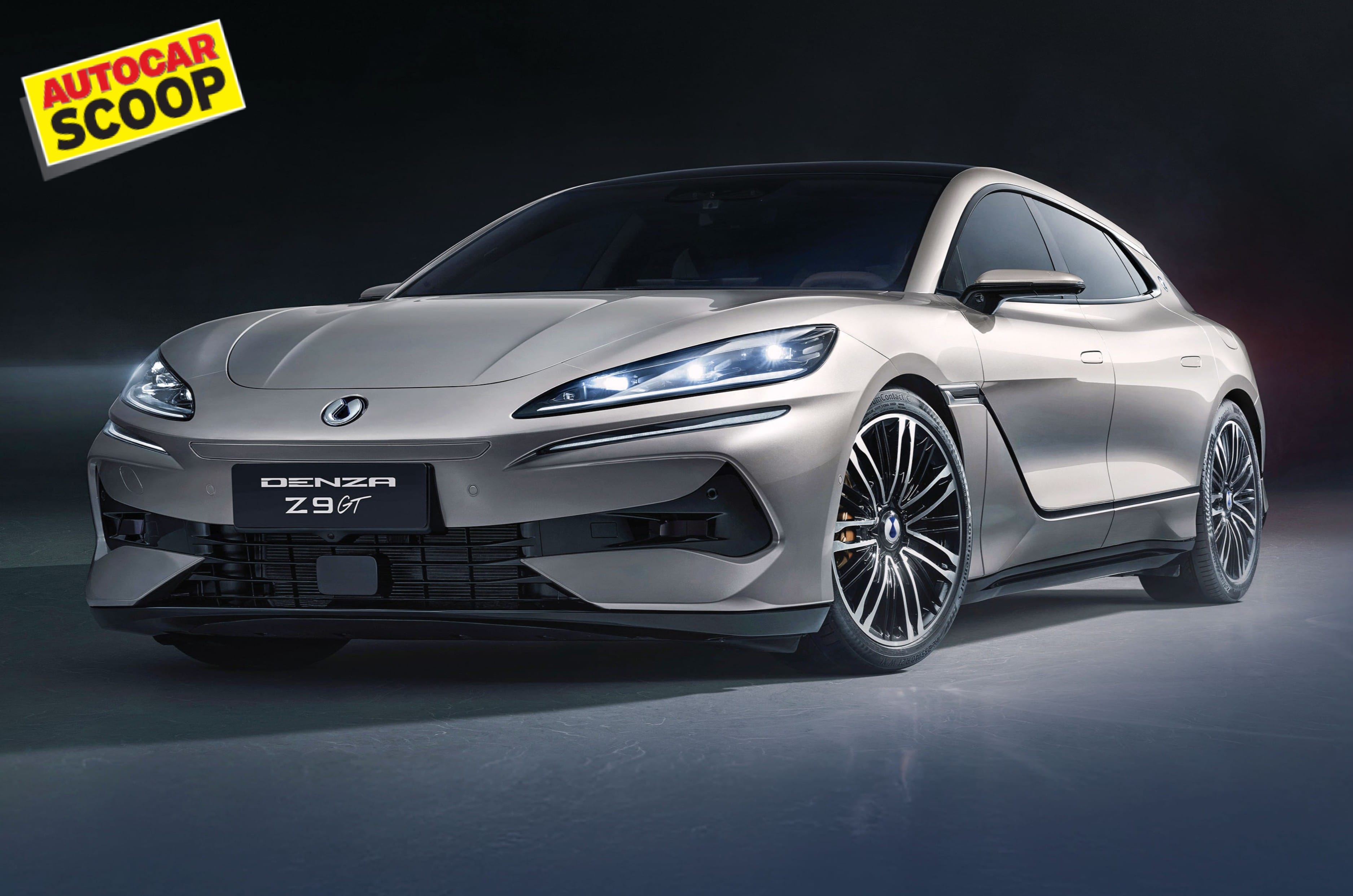
Denza Z9 GT front quarter static

It’s not every day that a new brand enters the Indian market, but by the end of this year, we’ll have two – JSW and Denza. Last month, we exclusively reported on Denza’s intention to enter India, and now we bring you all the additional juicy details.

A little bit about the brand first. Founded in May 2010 as a joint venture between BYD and Daimler AG (now Mercedes-Benz Group AG), the company announced its brand name ‘Denza’ two years later. Mercedes has since exited the partnership, and in 2022, BYD repositioned the brand and is generally concentrating its efforts at the higher end of the market. 

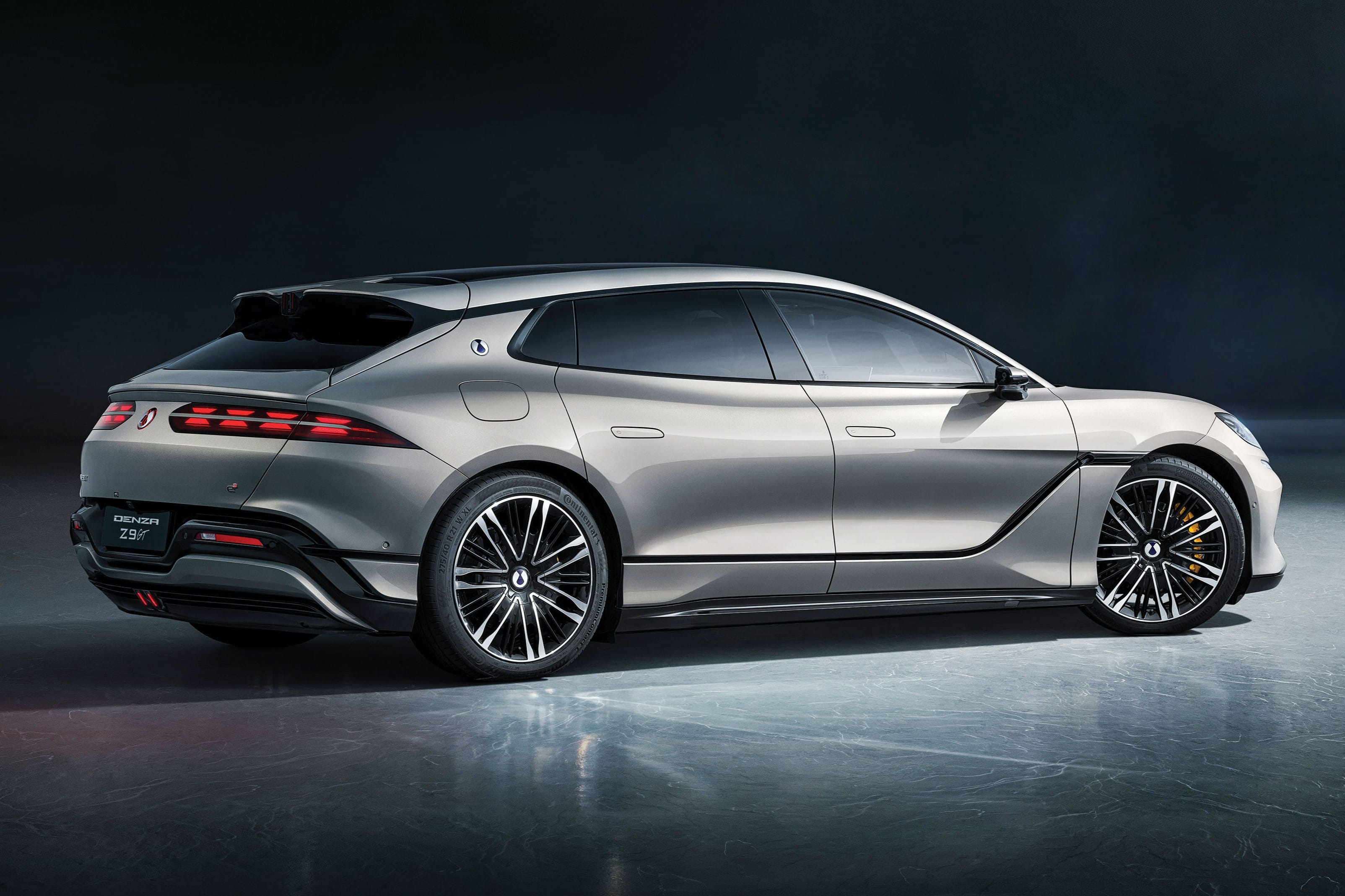
In India, Denza will be positioned above BYD’s existing portfolio, with products at around Rs 80 lakh and above, while BYD will occupy the Rs 20 to Rs 80 lakh space. Leading Denza’s charge will be two models, the  Z9 GT high-performance fastback and the D9 luxury MPV. Both will be brought in as completely built-up units.

Denza Z9 GT: Enormously powerful yet practical fastback

The Z9 GT is Denza’s take on a fastback or, as the company puts it, a shooting brake with four-door practicality. It has both EV and PHEV options globally, but for India, we’ll get just the electric version, and its numbers are staggering. It weighs 2.9 tonnes, puts out a colossal 1,156hp from three electric motors (one at the front and two at the rear),  that propel it from 0-100kph in 2.7sec and on to a top speed of 270kph. The only modest number is the range, which stands at 600km on the combined WLTP cycle. Charging, though, is super quick, with the company’s 1,500kW Flash ultra-fast charging that can take the GT’s 122.5kWh battery from 10 to 97 percent in just nine minutes. It stops at 97 percent to preserve the life of the battery. Expect to pay premium pricing for this level of performance, though; the GT would retail in India somewhere in the Rs 1.2 to 1.5 crore mark.

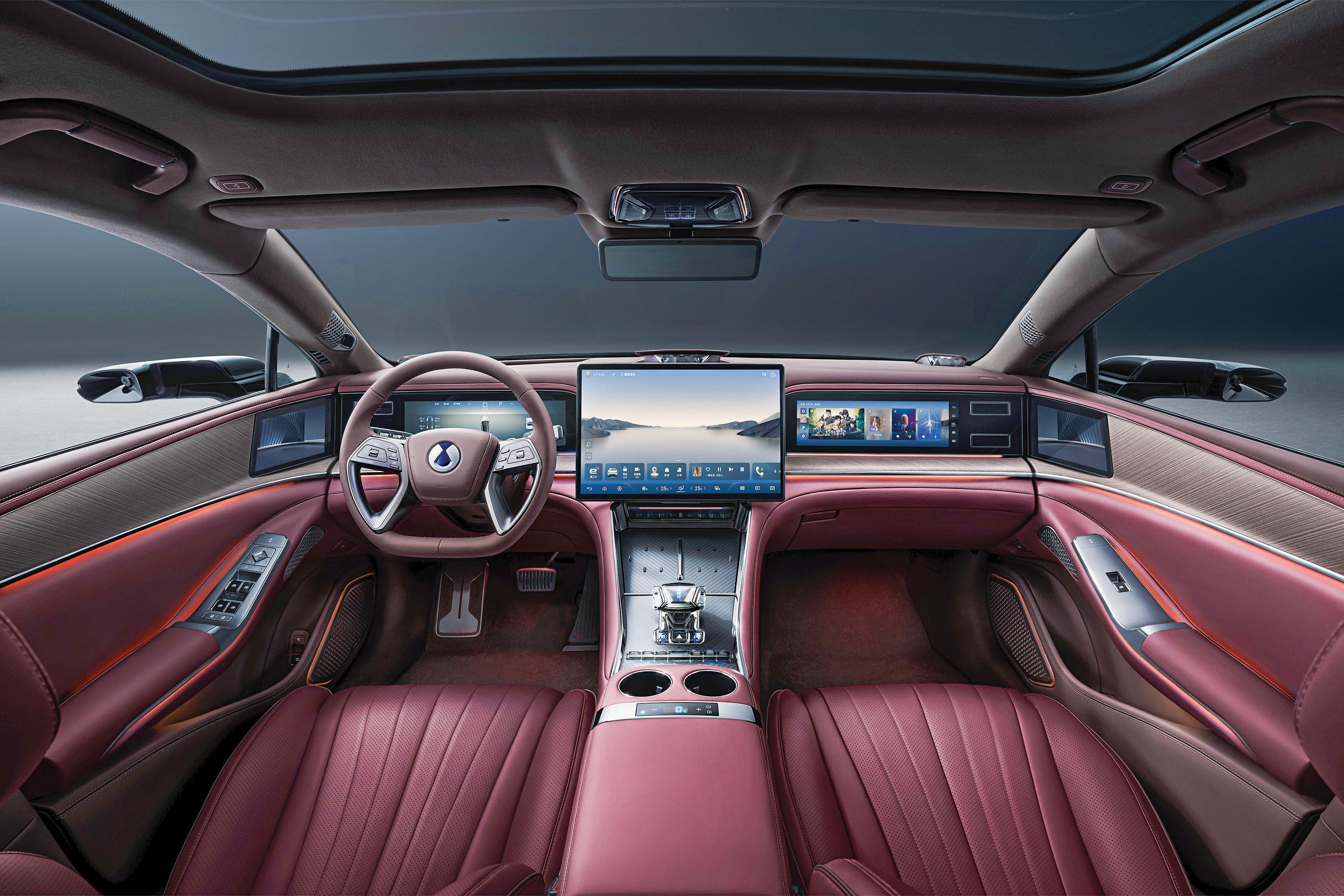
Five screens dominate dash; flank screens are for outside rear-view camera feed.

Here too, there’s a cell-to-body construction that integrates the blade cells directly into the vehicle structure, plus rear-wheel steering with a sideways crab-crawl ability, buttons to open and close power doors and, of course, Level 2+ ADAS. Inside, the GT seats five and pampers the four outer passengers with adjustable under-thigh support, heating, cooling, and massage functions, and the rear seats also recline. As with so many EVs today, the dashboard is dominated by screens, five in total, with two on the flanks for the outside rear-view ‘mirror’ camera feed.

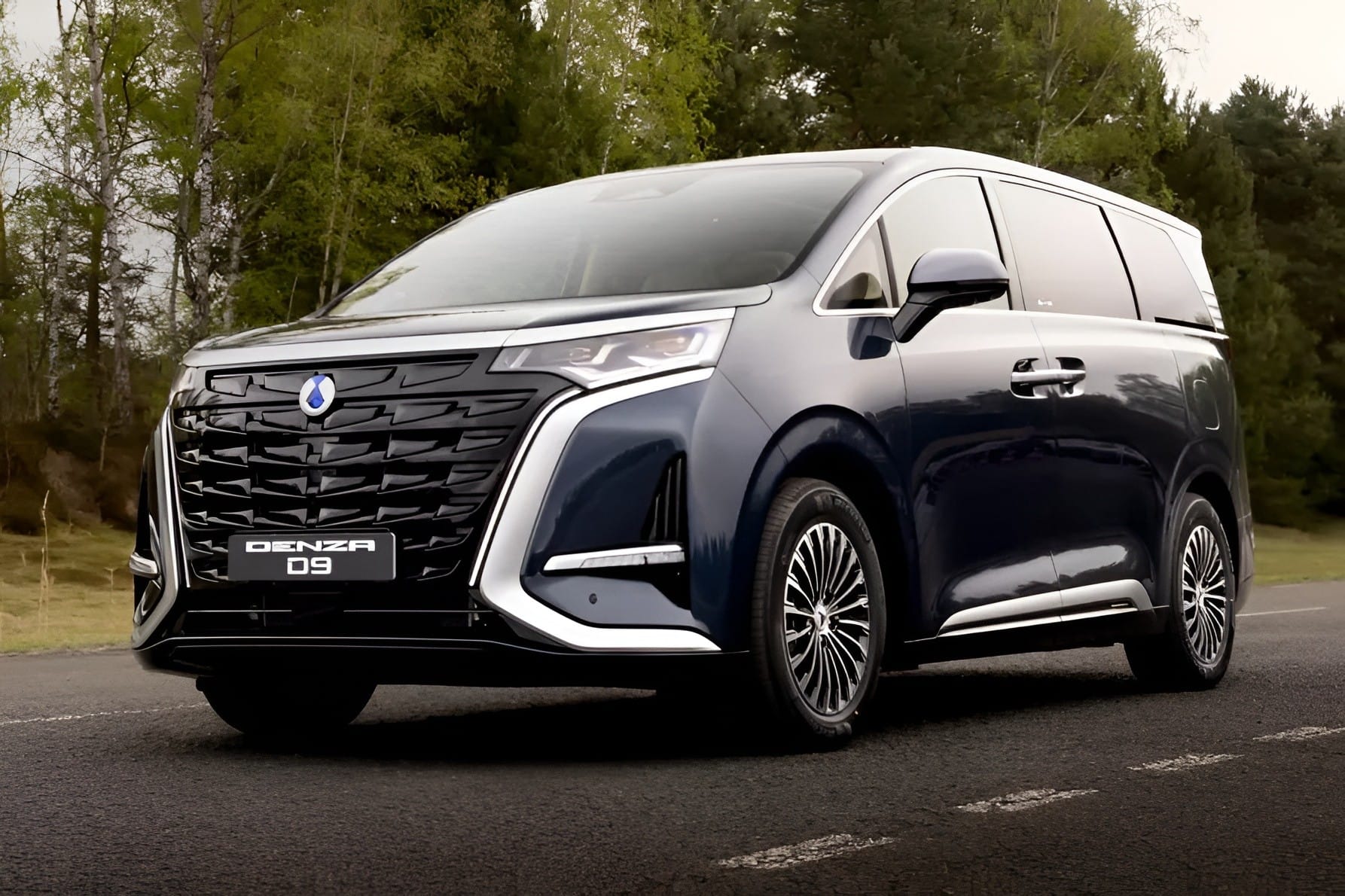
Denza D9: Vellfire Challenger

The D9 MPV is available with electric or plug-in hybrid power globally too. For India, it’s the EV that will arrive, and in front-wheel-drive form. Expect prices at around the Rs 80 lakh mark, positioning the D9 above the MG M9 but below the Toyota Vellfire.

Power stands at 313hp and 360Nm of torque, and it’s fed by a 103kWh blade cell battery. Claimed range is 520km on the combined WLTP cycle, while charging speed peaks at 200kW on a DC fast charger. 

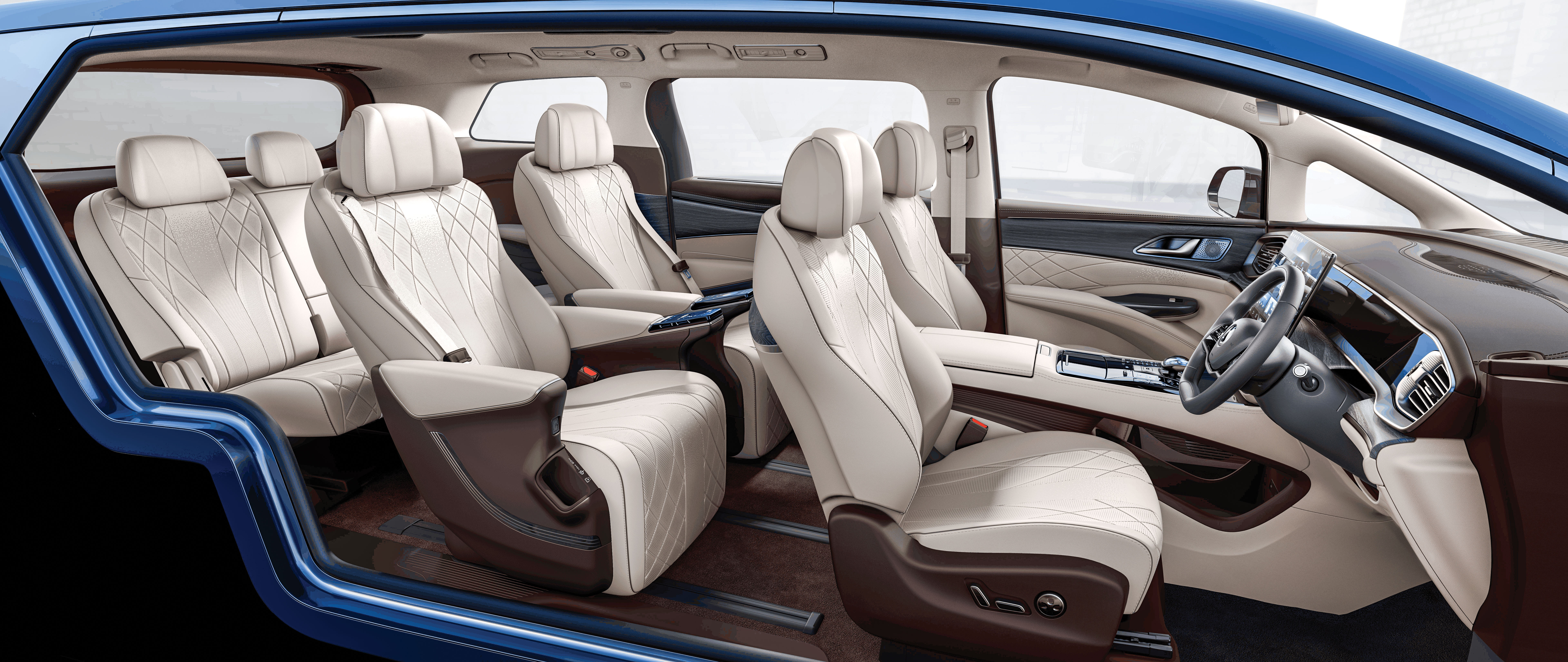
The seating configuration is 2+2+3 with the centre captain seats offering full power adjustment, heating, ventilation and massagers, along with armrest-integrated control pads. Middle-row occupants also enjoy fold-out tables and extendable leg-rests. Other creature comforts include a three-zone climate control, premium Dynaudio sound system and full leather upholstery. 

Middle row the place to be with fully powered individual loungers that feature heating, ventilation, massagers, leg rests, and a fold-out table.

The D9 also features BYD’s cell-to-body construction that helps reduce weight and increase body rigidity. The luxury MPV also comes with an active body control system that, the company says, eliminates fore-aft pitching motion to keep the cabin flat during “nose-up” acceleration and “nose-down” braking forces. 

Where does Denza fit in India’s automotive landscape?

The name Denza is an invented one and loosely translates to ‘rising power’ or ‘gathering momentum’, and that is what BYD will be hoping for in India. Hamstrung by the Indian government’s restrictions around Chinese investments, BYD – the world’s largest EV manufacturer – has not been able to grow. Its proposed $1 billion investment, along with a local partner, to scale up its small semi-knocked-down (SKD) plant in Tamil Nadu has been slowed by Press Note 3 – a 2020 policy that requires foreign investments from countries sharing a land border with India to get prior state approval. 

Thus, given the limited playing field it’s been put into, getting into niches like luxury MPVs is a smart move from BYD. The segment accounts for about 2,000 units a year and is seeing rising customer interest and growth, attracting players like the Toyota Vellfire, the Lexus LM and Mercedes V-Class. The D9, then, has competitors to contend with, while the Z9 GT sits in a smaller niche, with just the Porsche Taycan as a similar rival. It’s likely to sell fewer numbers but will serve as a technology showcase and a brand shaper. 

Interestingly, Denza will be retailed through exclusive showrooms separate from BYD. This may seem odd given the limited volumes, at least in the short term, but our sources tell us the company wants to provide Denza customers with a highly personalised shopping experience. The premium positioning will limit its network to larger cities; launch likely to be in the Delhi-NCR and Mumbai regions only. For BYD, though, it plans to scale up, thus keeping the two brands separated allow each to focus on their distinct goals. 

So far, BYD India has managed a decent start and enjoys an awareness much higher than its actual market volume, enviable for a new brand. That’s all thanks to products that deliver consistently, with innovative tech like the famed blade cells. For Denza, though, the company also needs to build a high level of desirability, because at the upper end of the luxury spectrum, badge value accounts for nearly as much as, if not more than, engineering prowess itself, and that is what the company seems to be setting out to do. 

Autocar India September 2026 issue

Autocar India turns 27, and rather than quietly celebrating with a cake, we’ve celebrated the way we know best: with scoops, exclusive drives and a frankly unreasonable amount of driving. In this issue, we bring you an exclusive drive of JSW’s new Combat SUV (you heard the name here first), a scoop on BYD’s Denza luxury push, and the last leg of the 20,000km Pune-to-Prague odyssey, alongside a serious collection of new cars and bikes. Oh, and there’s also a Boeing 737 Max aircraft involved. Because apparently cars weren’t complicated enough.

JSW Combat: Review

JSW’s first SUV is a rugged plug-in hybrid based on the Jetour T2. We get an early exclusive drive of the Combat and examine whether this newcomer really has what it takes to shake up the Rs 30-50 lakh SUV market. 

BYD Denza: China’s Luxury Offensive

BYD is bringing Denza to India, with luxury EVs like the D9 MPV and Z9 GT aimed squarely at the established big boys. Having disrupted the mid-range EV market with BYD, it is now going after the high-end market with Denza. 

ADAS Meets Autopilot: Hands Off!/Look ma, no hands!

What do a Hyundai Venue and a Boeing 737 Max have in common? Quite a lot, apparently. We climb into a full-flight simulator to understand how aircraft autopilot works and what it has in common with the increasingly sophisticated systems in our cars. 

Skoda Kylaq: Pune to Prague, Part 2

The Silk Route may have been built for traders, but we’ve used it to find out just how far you can take a small SUV before it starts asking for a holiday. After 19,000km, 70 days and not a single puncture, our Skoda Kylaq finally reaches Prague. 

Autocar’s Day Out: M-ployees of the Month

Most company off-sites involve a resort, a buffet and someone reluctantly joining a team-building exercise. Ours involved six BMW M cars, more than 3,000hp, a deserted concrete ground and a frankly irresponsible amount of tyre abuse. Four M4s and two M2s went head-to-head in slalom, football and drifting, and what began as a relaxing team outing rapidly descended into a war. 

Tesla Model Y vs Hyundai Ioniq 5: Comparison 

Two premium EVs, two very different ideas about what an electric car should be. The Model Y with its recently revised price, and the updated Ioniq 5 go head-to-head to see which makes the stronger case. 

Bentley Supersports: Drive

Take a Continental GT and turn the dial towards something completely unnecessary. The result is Bentley’s Supersports, a rear-wheel-driven beast with considerably more intent. We drive it around Laguna Seca.

Mini Countryman C: First Drive 

The Countryman has grown into a proper luxury SUV, with generous space, loads of kit and a new 1.5-litre turbo. At Rs 47.5 lakh, it’s the biggest and most grown-up Mini yet, and is ready to lock eyes with real luxury SUVs rather than merely be a fashion statement. But has it done that?

5 Ways to Adventure: Feature

Five made-in-India ADVs, 1,300km and one simple question: which is the best way to go exploring? We put the bikes through highway miles, trail riding and plenty of scenic detours to see how their different approaches to adventure stack up.

Ather Konarc: First Ride

Ather’s new Konarc brings the brand’s blend of quality and comfort to a wider audience, with prices starting at Rs 99,999. A compelling new step into the mainstream.

Suzuki e-Access vs Yamaha EC-06: Comparison

Japan finally answers India’s e-scooter boom, and the two takes couldn’t be more different – one built from scratch, the other born from an Indian startup partnership. Which one takes the crown?

Get the latest issue on our subscriptions website, Amazon, and Flipkart.

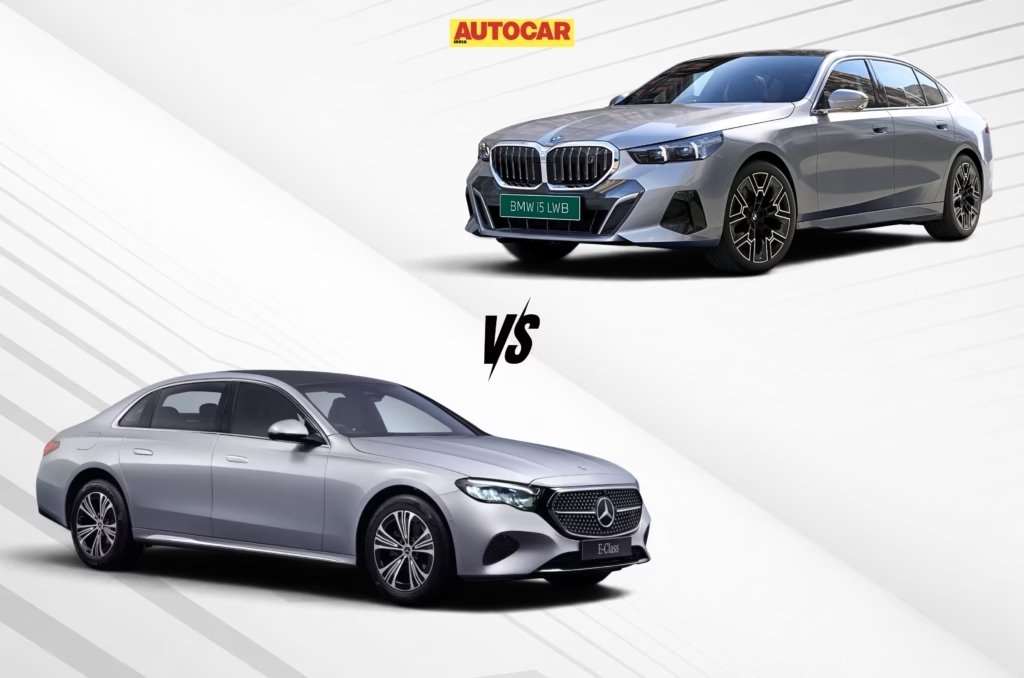
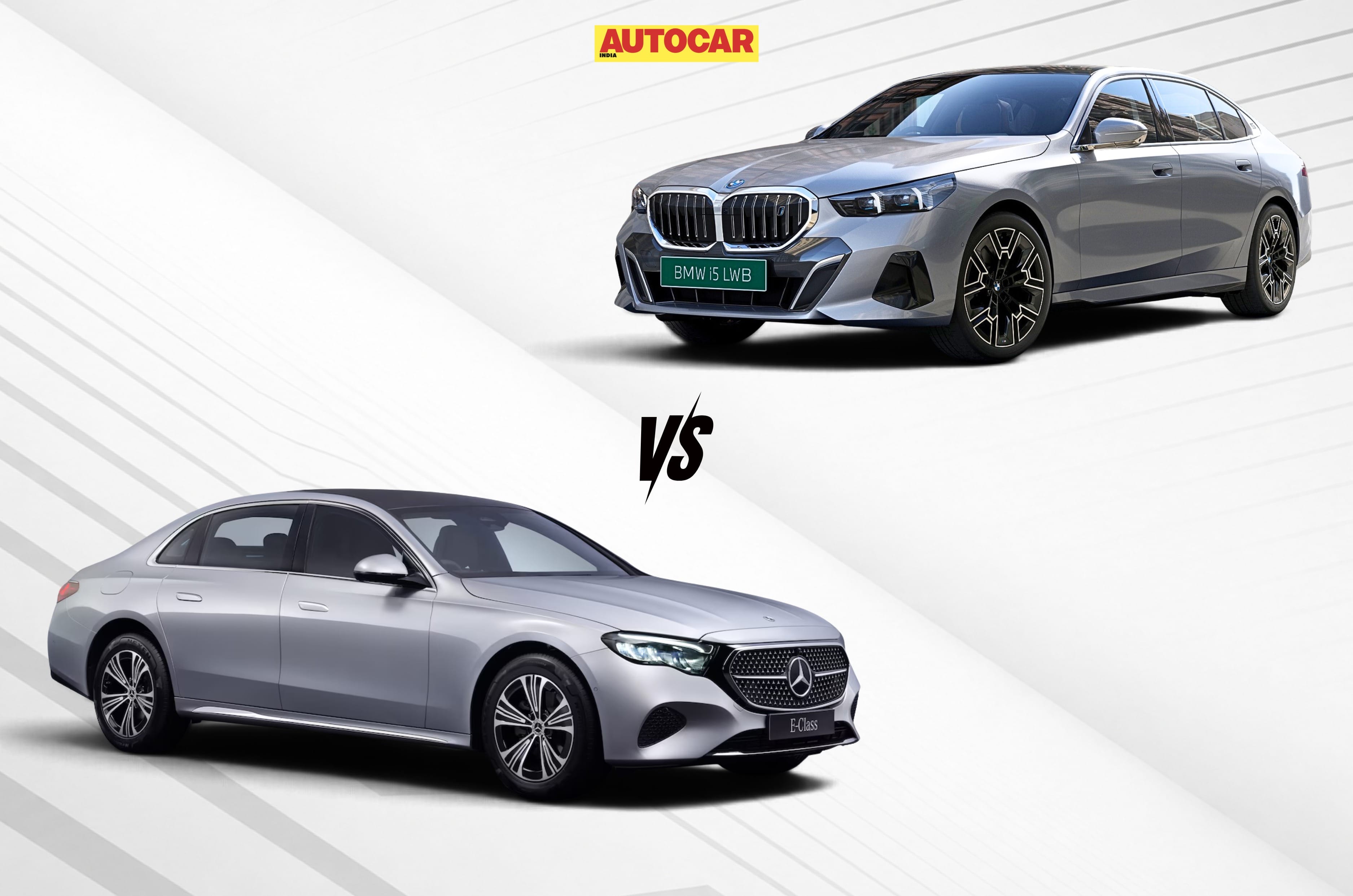
BMW i5 LWB vs Mercedes E-Class diesel: Specs, features and price compared

BMW i5 LWB vs Mercedes E-Class diesel: Specs, features and price compared
BMW i5 LWB vs Mercedes E-Class

The BMW i5 LWB and Mercedes-Benz E 220d take different approaches to the luxury sedan. BMW no longer offers a diesel engine with the 5 Series in India, so for buyers with high annual running who want an efficient 5 Series, the electric i5 is the only option. The E-Class, meanwhile, continues to offer a diesel powertrain in the form of the E 220d, alongside petrol versions. Both are aimed at buyers seeking a spacious, chauffeur-friendly luxury sedan, but their powertrains make for very different ownership propositions. Here’s how they compare.

BMW i5 LWB vs Mercedes E-Class: Dimensions

i5 is wider, while length, height and wheelbase are similar

 BMW i5 LWBMercedes E 220d
Length5,175mm5,092mm
Width2,156mm1,880mm
Height1,520mm1,493mm
Wheelbase3,105mm3,094mm
Wheel size20-inch18-inch

The i5 LWB is significantly wider than the E-Class – by 276mm – while the two are fairly similar in length, height and wheelbase. The BMW also gets larger 20-inch wheels compared with the Mercedes’s 18-inch units.

Another point of difference is the suspension. The i5 LWB gets rear-axle air suspension, which should help with ride comfort, while the E 220d uses a steel setup with selective damping, which also does a great job of blunting sharp bumps and keeping the car as level as possible over cracks and ruts.

BMW i5 LWB vs Mercedes E-Class: Powertrain

i5 is quicker and more powerful; E 220d has more torque

 BMW i5 LWBMercedes E 220d
PowertrainSingle electric motor2.0-litre diesel + 48V mild hybrid
Power268hp197hp
Torque410Nm440Nm
TransmissionSingle-speed automatic9-speed automatic
Drive layoutRear-wheel driveRear-wheel drive
0-100kph6.7sec7.6sec
Battery81.6kWh–
Claimed range669km, MIDC–

The i5 has the clear advantage in power and acceleration, but the E 220d has more torque than its electric rival. The i5 should also be smoother, as expected of an EV, while the E-Class is exceptionally fuel efficient for a luxury sedan and can manage more than 800km on a full tank.

The i5 gets a large 81.6kWh battery pack and has a claimed MIDC range of 669km. Considering this figure, a real-world range of over 500km should be achievable, which is enough for highway runs. Longer journeys will still need to be planned around charging stops, whereas the E-Class does not face this limitation.

On paper, the i5 makes a strong case, particularly for buyers who primarily drive in the city and have access to charging. The E 220d, however, is better suited to those who regularly mix city driving with long highway journeys and want the convenience of quick refuelling.

BMW i5 LWB vs Mercedes E-Class: Exterior features

i5 gets adaptive LEDs; both have electric folding mirrors

 BMW i5 LWBMercedes E 220d
LED headlightsAdaptive LEDLED
LED DRLsYesYes
LED tail-lightsYesYes
Illuminated grilleYesNo
Powered ORVMsYesYes
Powered tail-gateYesYes
Door handles Flap typeFlush-fitting

In terms of exterior features, both sedans are similarly equipped. Both get LED headlights, LED daytime running lamps (DRLs), LED tail-lights, powered outside rearview mirrors (ORVMs) and a powered tailgate. The i5 LWB, however, gets adaptive LED headlights and an illuminated grille. The two also differ in their door-handle designs, with the i5 using flap-type handles and the E-Class getting flush-fitting units.

BMW i5 LWB vs Mercedes E-Class: Interior and features

i5 focuses on front-seat comfort, while the E-Class prioritises the rear

 BMW i5 LWBMercedes E 220d
Digital driver’s display12.3-inch12.3-inch
Central touchscreen14.9-inch14.4-inch
Passenger displayNo12.3-inch
Wireless Apple CarPlay/Android AutoYesYes
Four-zone climate controlYesYes
Front-seat ventilationYesNo
Rear-seat reclineNoUp to 36 degrees
Wireless chargingFront and rearFront and rear
Audio system17-speaker Bowers & Wilkins17-speaker Burmester 
Ambient lightingYesYes
Rear sunblindsNoYes
Panoramic sunroofYesYes
Electric seat adjustment from rearNoYes
Soft-close doors    NoYes

Both offer a similar baseline of luxury equipment, but their priorities differ. The i5 adds ventilated front seats and a larger central display, while the E 220d has a more comprehensive set of rear-seat features, including electric recline, sunblinds, soft-close doors and the ability to adjust the front passenger seat from the rear. For a chauffeur-driven buyer, that gives the Mercedes an advantage in rear-seat functionality.

BMW i5 LWB vs Mercedes E-Class: Safety features

Both get ADAS and 360-degree cameras

 BMW i5 LWBMercedes E 220d
Airbags88
360-degree cameraYesYes
Lane departure warningYesYes
Blind-spot monitoringYesYes
Automatic Emergency BrakingYesYes
Parking assistYesYes
TPMSYesYes
Auto holdYesYes

The two cars are closely matched on safety features, with both offering 8 airbags, lane departure warning, blind-spot monitoring, automatic emergency braking, 360-degree cameras and parking assistance.

BMW i5 LWB vs Mercedes E-Class: Prices

BMW i5 LWB is Rs 3.90 lakh cheaper

Price (ex-showroom)BMW i5 LWBMercedes E 220d
PriceRs 79.60 lakhRs 83.50 lakh

At Rs 79.60 lakh, the i5 LWB is Rs 3.90 lakh more affordable than the E 220d and is also cheaper than the petrol E-Class. Factoring in the lower running costs of an EV, particularly for buyers who can charge at home, the BMW makes a strong financial case.

BMW i5 LWB vs Mercedes E-Class: Verdict

On paper, the BMW i5 LWB is the stronger choice if outright performance, lower running costs and a more front-seat-focused cabin are priorities. It is more powerful, quicker and cheaper to buy, while home charging can make it substantially cheaper to run.

The Mercedes E 220d makes the stronger case for chauffeur-driven use, with a more rear-seat-focused cabin, along with the longer range and quicker refuelling of its diesel powertrain.