Hero is targeting the top position in India’s electric two-wheeler market as it scales up its Vida business and continues to back Ather Energy. “We clearly are focusing on being number one. There we are not shy of that,” Hero MotoCorp CEO Harshavardhan Chitale told Autocar Professional at the SIAM Annual Convention in New Delhi. He added that Vida and Ather sales, taken together, have already occupied the top position during some months. Considering individual sales numbers from January till August this year, Vida is currently fourth, behind Ather.
Hero currently invests in Ather Energy and Euler Motors; recently increased its Ather investment
Vida currently offers scooters with both fixed and removable batteries
Hero CEO says Ather-Hero joint product may happen in future
Vida is Hero’s EV subsidiary
Company is increasing production and exploring different offerings
Hero initially differentiated the brand through removable batteries, targeting, among others, customers living in apartments without convenient access to charging. The company is now pursuing fixed-battery scooters alongside its removable-battery models. Chitale said the two configurations are attracting different sets of buyers. Fixed batteries allow Hero to offer a more competitively priced product, with the difference between the two configurations at around Rs 10,000.
Vida has gained almost 600 basis points (6 percent) of market share over the past year and is seeing year-on-year growth of around 100 percent, according to Chitale. Demand has prompted Hero to increase production. Chitale said EV capacity would rise by almost 50 percent this month compared with the previous month, followed by a further doubling by December. Demand for removable-battery models has remained strong, despite the introduction of fixed-battery alternatives.
Ather-Hero partnership progress
Charging already integrated, joint product might happen in future
Hero’s EV strategy also includes its investment in Ather, which it has continued to support through successive fundraises, including the most recent one of Rs 1758 crore. For now, the two companies will continue pursuing independent product roadmaps rather than integrating their vehicle platforms. However, that could change as the market matures. Chitale said the companies discuss areas including battery-cell sourcing, software, motors and motor components. Joint sourcing could become an option, although no such arrangement is currently underway.
Charging infrastructure is already an area where both the companies are working together. Hero and Ather are part of an interoperable fast-charging initiative which, according to Chitale, now involves close to 20 companies and nearly 6,000 charging points.
Hero also has an interest in electric commercial vehicle maker Euler Motors. Chitale described Euler as potentially the “next Ather in making” and said Hero would continue supporting the company through its fundraises. The combination of Vida, Ather and Euler gives Hero exposure across electric two-wheelers and commercial vehicles as it seeks a larger share of India’s expanding EV market.
With inputs from Mukul Y. Singh, Hormazd Sorabjee, Ketan Thakkar, and Stephen Raj Antony.
Passenger vehicle retail sales rose 16.14 percent year on year (YoY) in August 2026, with 4,02,398 units sold. Sales, however, declined 3.40 percent compared with July. Maruti Suzuki remained the market leader, while Tata Motors, Mahindra and Hyundai retained the next three positions.
Here is a look at the top 10 passenger vehicle manufacturers by retail sales in August 2026, according to data from the Federation of Automobile Dealers Associations (FADA).
Carmaker
August 2026 sales
MoM change
YoY change
Market share
Maruti Suzuki
1,65,200
2.06%
22.83%
41.05%
Tata Motors
57,841
-1.59%
40.49%
14.37%
Mahindra
50,245
-10.63%
6.41%
12.49%
Hyundai
46,987
-1.81%
4.84%
11.68%
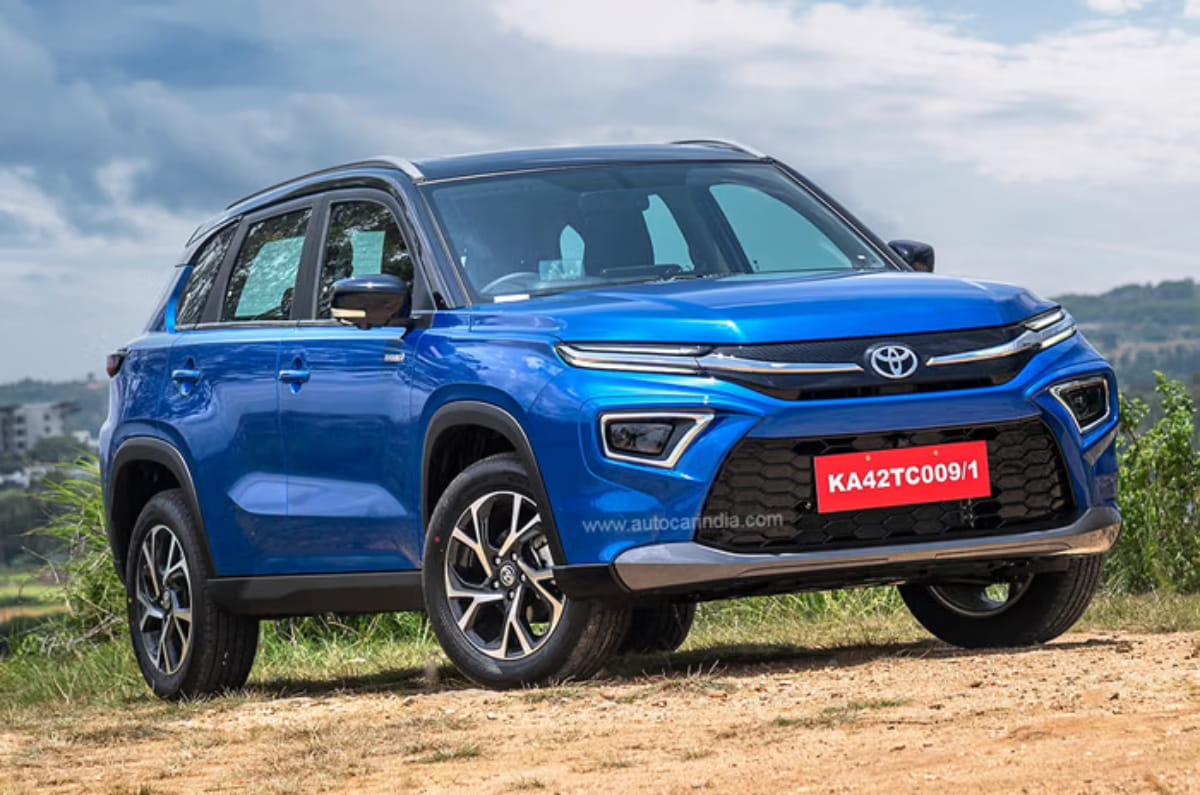
Toyota
24,856
-15.58%
-9.94%
6.18%
Kia
23,371
-8.53%
17.60%
5.81%
Skoda Volkswagen Group
7,469
-9.15%
-17.64%
1.86%
MG
5,784
-17.72%
-13.01%
1.44%
Honda
4,968
-14.67%
12.37%
1.23%
Renault
3,275
-6.56%
25.10%
0.81%
Maruti Suzuki
Sales: 1,65,200 units | Change: up 22.83 percent YoY
Maruti Suzuki continued to lead the passenger vehicle retail market in August 2026, with 1,65,200 units sold, up 22.83 percent from 1,34,494 units in August 2025. Its market share increased to 41.05 percent, from 38.82 percent a year earlier. Maruti remained well ahead of the other carmakers, with its August sales more than twice those of Tata Motors in second place.
Tata Motors
Sales: 57,841 units | Change: up 40.49 percent YoY
Tata Motors retained second place with 57,841 units sold in August 2026, up 40.49 percent from 41,170 units a year earlier. Its market share increased to 14.37 percent, compared with 11.88 percent in August 2025. Tata also recorded the highest year-on-year growth among the top four carmakers.
Mahindra
Sales: 50,245 units | Change: up 6.41 percent YoY
Mahindra remained in third place with 50,245 units, registering a 6.41 percent increase over the 47,220 units sold in August 2025. Its market share stood at 12.49 percent, down from 13.63 percent a year earlier. During the month, Mahindra launched the updated Scorpio N and BE 6 Sporteq and also introduced its Battery-as-a-Service option for the XEV 9e and XEV 9S.
Hyundai
Sales: 46,987 units | Change: up 4.84 percent YoY
Hyundai held fourth place with 46,987 units sold, up 4.84 percent from 44,818 units in August 2025. Its market share stood at 11.68 percent, compared with 12.94 percent a year earlier. Hyundai has also introduced an assured buyback programme for the Creta Electric and announced a price hike of up to 1 percent from September 2026.
Toyota
Sales: 24,856 units | Change: down 9.94 percent YoY
Toyota retained fifth place with 24,856 units, down 9.94 percent from 27,600 units in August 2025. Its market share fell to 6.18 percent, from 7.97 percent a year earlier. Toyota remained ahead of Kia in retail sales, although the gap between the two narrowed to 1,485 units.
Kia
Sales: 23,371 units | Change: up 17.60 percent YoY
Kia recorded 23,371 units in August 2026, an increase of 17.60 percent over the 19,873 units sold in the same month last year. Its market share rose marginally to 5.81 percent, from 5.74 percent in August 2025. The Seltos and Sonet continued to account for a large share of volumes, while the newly launched Syros EV also contributed to the performance.
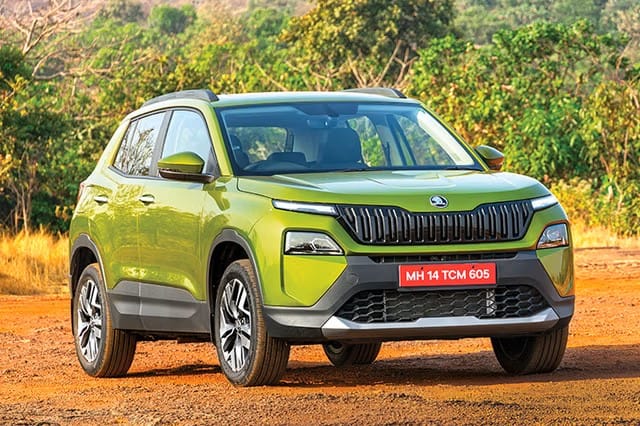
Skoda Volkswagen
Sales: 7,469 units | Change: down 17.64 percent YoY
The Skoda Volkswagen Group ranked seventh with 7,469 units sold in August, down 17.64 percent from 9,069 units a year earlier. Its market share stood at 1.86 percent, compared with 2.62 percent in August 2025. The FADA figure combines the retail sales of the group’s brands, including Skoda, Volkswagen, Audi, Porsche, Lamborghini and Bentley.
MG
Sales: 5,784 units | Change: down 13.01 percent YoY
MG recorded 5,784 units in August 2026, down 13.01 percent from 6,649 units in August 2025. Its market share declined to 1.44 percent, from 1.92 percent a year earlier. The company launched the Hector Tomahawk in both EV and PHEV forms during the month. Bookings for both versions are open, while deliveries of the Tomahawk EV are scheduled to begin in September. Test drives and deliveries for the PHEV are scheduled to start in November.
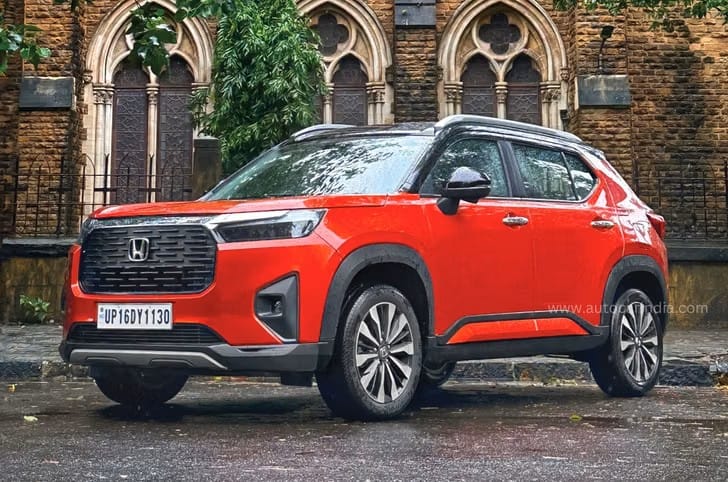
Honda
Sales: 4,968 units | Change: up 12.37 percent YoY
Honda sold 4,968 units in August, up 12.37 percent from 4,421 units in August 2025. Its market share stood at 1.23 percent, compared with 1.28 percent a year earlier. Honda remained ninth among the top 10 carmakers, despite its market share declining slightly year on year. Its retail sales were also down 14.67 percent from July.
Renault
Sales: 3,275 units | Change: up 25.10 percent YoY
Renault completed the top 10 with 3,275 units in August, up 25.10 percent from 2,618 units a year earlier. Its market share increased to 0.81 percent, from 0.76 percent in August 2025. Renault recorded the second-highest YoY growth among the top 10 carmakers, behind Tata Motors. The increase comes as the Duster made its return to Renault’s India line-up, adding a new model to its existing range. Retail sales were down 6.56 percent from July.
CNG, hybrid and EVs overtake petrol in August
The passenger vehicle fuel mix also saw a change in August. CNG, hybrids and EVs together accounted for 41.95 percent of retail sales, exceeding the 40.85 percent share of petrol for the first time. CNG accounted for 25.28 percent of sales, followed by diesel at 17.21 percent, hybrids at 9.04 percent and EVs at 7.63 percent.
In August 2025, petrol accounted for 46.37 percent of PV retail sales, while CNG, hybrid and EV shares stood at 21.47 percent, 7.96 percent and 5.83 percent, respectively.
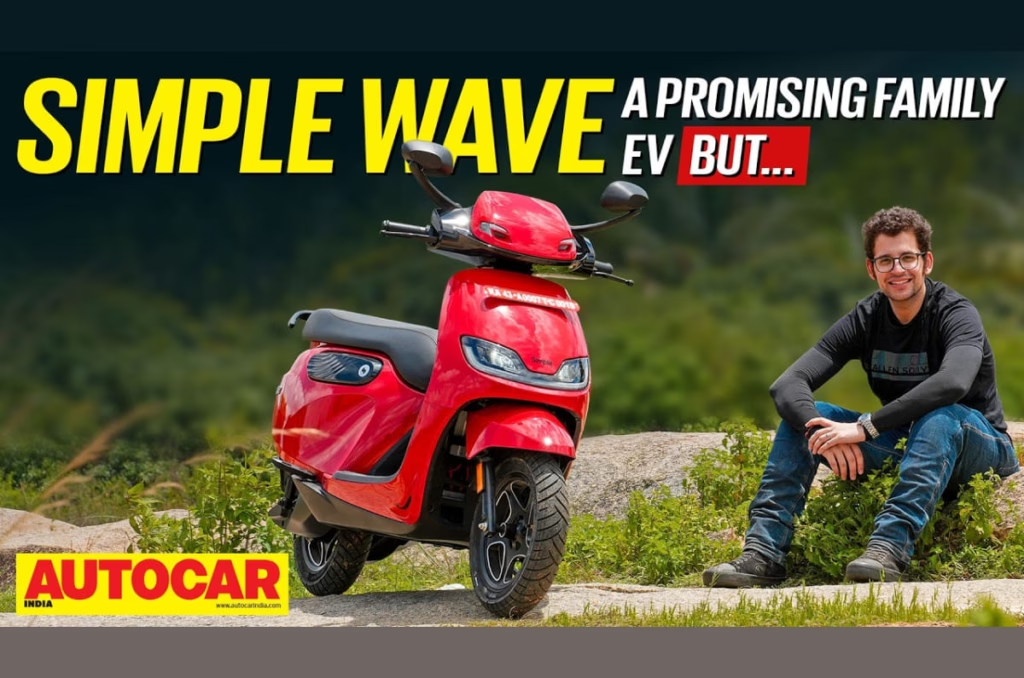
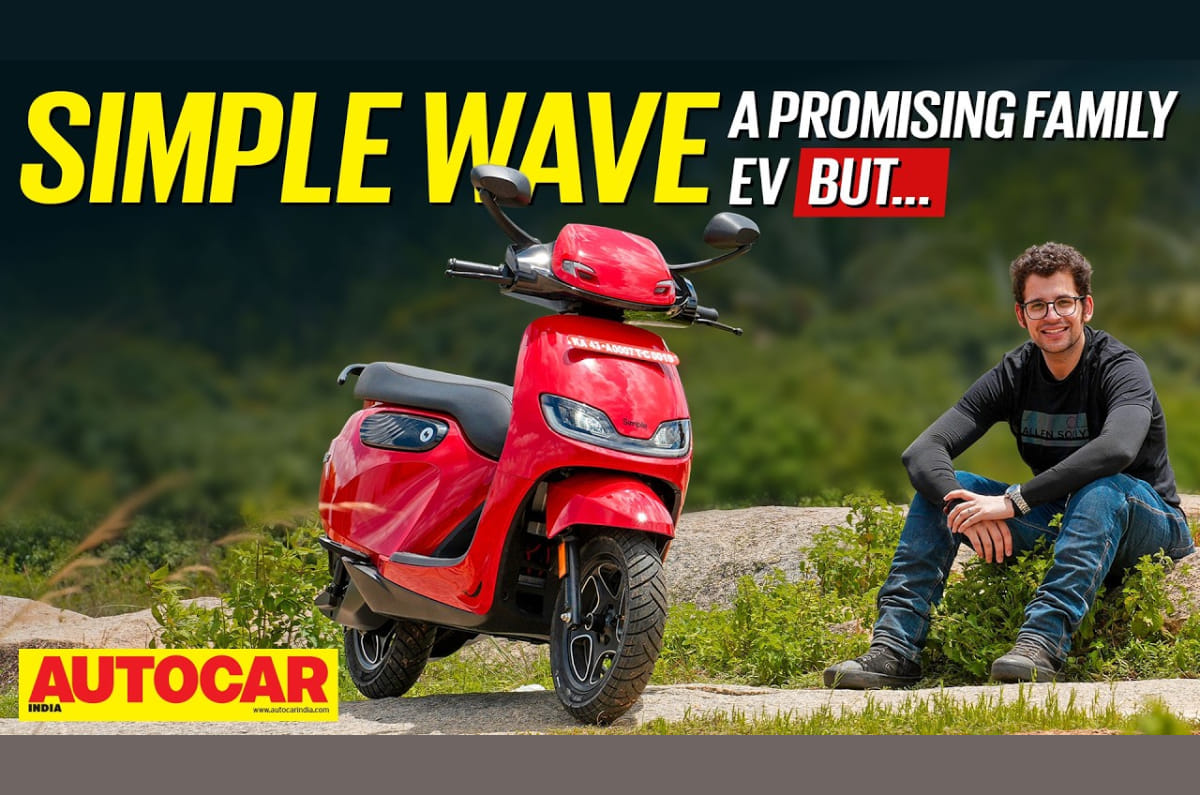
The Wave is the second product from Bengaluru-based EV startup, Simple Energy, and has got most of the fundamentals in place to become a success. Question is, should you opt for the product of a relatively lesser known startup over offerings from more established players?
PVR Inox Share Price: PVR के शेयर में आज तेज गिरावट है। आज यह शेयर करीब 8 फीसदी तक फिसला है। फिलहाल यह शेयर 68.30 रुपए यानी 5.57 फीसदी की कमजोरी के साथ 1157 रुपए के आसपास कारोबार कर रहा है। आज का इसका दिन का हाई 1,199.10 रुपए और दिन का लो 1,125.70 रुपए है। इसका 52 वीक लो 907.40 रुपए और 52 वीक हाई 1,284.50 रुपए है।
PVR INOX में तेज गिरावट की वजह
इस स्टॉक में बायबैक की रिकॉर्ड डेट के बाद तेज गिरावट आई है। शेयर की बायबैक की रिकॉर्ड डेट 4 सितंबर थी। कंपनी के बोर्ड ने 300 करोड़ रुपए के बायबैक मंजूर कर लिया है। बायबैक की प्राइस 1450 रुपए प्रति शेयर तय की गई है। कुल पेड-अप इक्विटी का 4.09% बायबैक होगा।
PVR INOX: 200 Cr फ्रॉड का मामला
कंपनी ने अप्रैल में एक सीनियर एग्जीक्यूटिव को हटाया है। इंटरनल जांच में रिश्वत लेने का आरोप सामने आया था। सिनेमा प्रॉपर्टीज बना रहे डेवलपर्स से रिश्वत का आरोप है। कथित तौर पर यह मामला कई सालों से चल रहा था। ये एक-दो पेमेंट का मामला नहीं। इस घोटाले की कुल रकम 200 करोड़ रुपए तक पहुंचने का अनुमान है।
इकोनॉमिक टाइम्स की एक रिपोर्ट के मुताबिक मल्टीप्लेक्स चलाने वाली PVR INOX ने अप्रैल में एक वरिष्ठ कार्यकारी को अपने सिनेमा भवनों का निर्माण कर रहे डेवलपर्स से कथित रिश्वतखोरी की आंतरिक जांच के बाद पद छोड़ने के लिए कहा था। इस जांच से पता चला है कि कंपनी के ग्रोथ और इन्वेस्टमेंट के चीफ एग्जीक्यूटिव ऑफिसर प्रमोद अरोड़ा ने सिनेमा प्रॉपर्टीज़ के डेवलपर्स से रिश्वत ली थी।
अरोड़ा टियर II और टियर III शहरों में PVR के विस्तार में शामिल थे। इनमें फ्रेंचाइजी-ओन्ड,कंपनी-ऑपरेटेड (FOCO) सिनेमा और SMART/स्मार्ट स्क्रीन पहल शामिल हैं। इन फ़ॉर्मेट्स को कम लागत वाले,डिजिटल-फ़र्स्ट मल्टीप्लेक्स के तौर पर डिज़ाइन किया गया है इसका लक्ष्य छोटे शहरों और कस्बों में विस्तार है।
कंपनी को अप्रैल में इन आरोपों के बारे में पता चला, जिसके बाद अरोड़ा और कुछ अन्य कर्मचारियों को तुरंत नौकरी छोड़ने के लिए कहा गया। अरोड़ा के साइन किए हुए एक डिक्लेरेशन में उन्हें दूसरी सिनेमा चेन में शामिल होने और PVR Inox के मौजूदा वेंडर्स से संपर्क करने से भी रोका गया है। रिपोर्ट में कहा गया है कि अगर इन शर्तों का उल्लंघन किया जाता है,तो इस डॉक्यूमेंट के तहत कानूनी कार्रवाई की जा सकती है।
स्टॉक पर ब्रोकरेज की राय
JM Financial ने इस स्टॉक पर अपनी ‘ADD’ रेटिंग बनाए रखते हुए, 12 महीने के प्राइस टारगेट को ₹1,130 से बढ़ाकर ₹1,270 कर दिया है। ब्रोकरेज ने अपने टारगेट EV/EBITDA मल्टीपल को 8x से बढ़ाकर 9x कर दिया है। इसके पीछे कंपनी के पास मौजूद अच्छे कंटेंट पाइपलाइन और बेहतर नेट कैश पोज़िशन का हवाला दिया गयाहै। जून 2026 के आखिर में कंपनी के पास ₹81 करोड़ का नेट कैश था,जबकि मार्च 2026 के आखिर में ₹162 करोड़ का नेट डेट (कर्ज़) था।
PVR INOX: हनुमान अंश का दम
सिर्फ 2 करोड़ रुपए में बनी फिल्म की कमाई 145 करोड़ रुपए के पार चली गई है। कम बजट में हनुमान अंश का जबरदस्त कलेक्शन देखने को मिला है।
शेयर ने इस साल अब तक 13 फीसदी रिटर्न दिया है। वहीं, 5 साल में इसने 21 फीसदी निगेटिव रिटर्न दिया है। पिछले 1 हफ्ते में इसमें 4.06 फीसदी की गिरावट आई है। 1 महीने में इसमें 0.23 फीसदी की तेजी आई है। 1 साल में यह शेयर 1.08 फीसदी बढ़ा है।
डिस्क्लेमर: मनीकंट्रोल.कॉम पर दिए गए विचार एक्सपर्ट के अपने निजी विचार होते हैं। वेबसाइट या मैनेजमेंट इसके लिए उत्तरदाई नहीं है। यूजर्स को मनी कंट्रोल की सलाह है कि कोई भी निवेश निर्णय लेने से पहले सर्टिफाइड एक्सपर्ट की सलाह लें।
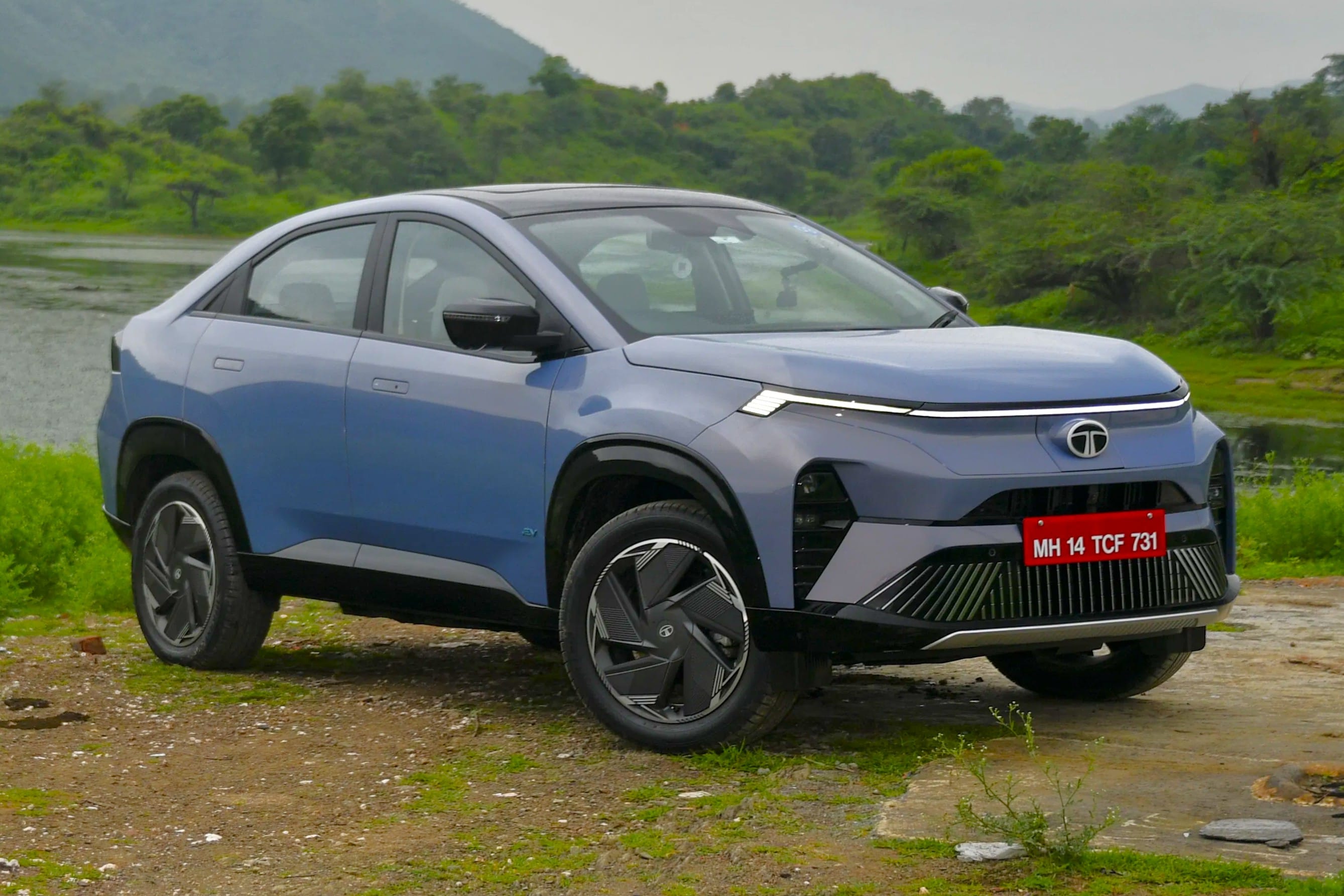
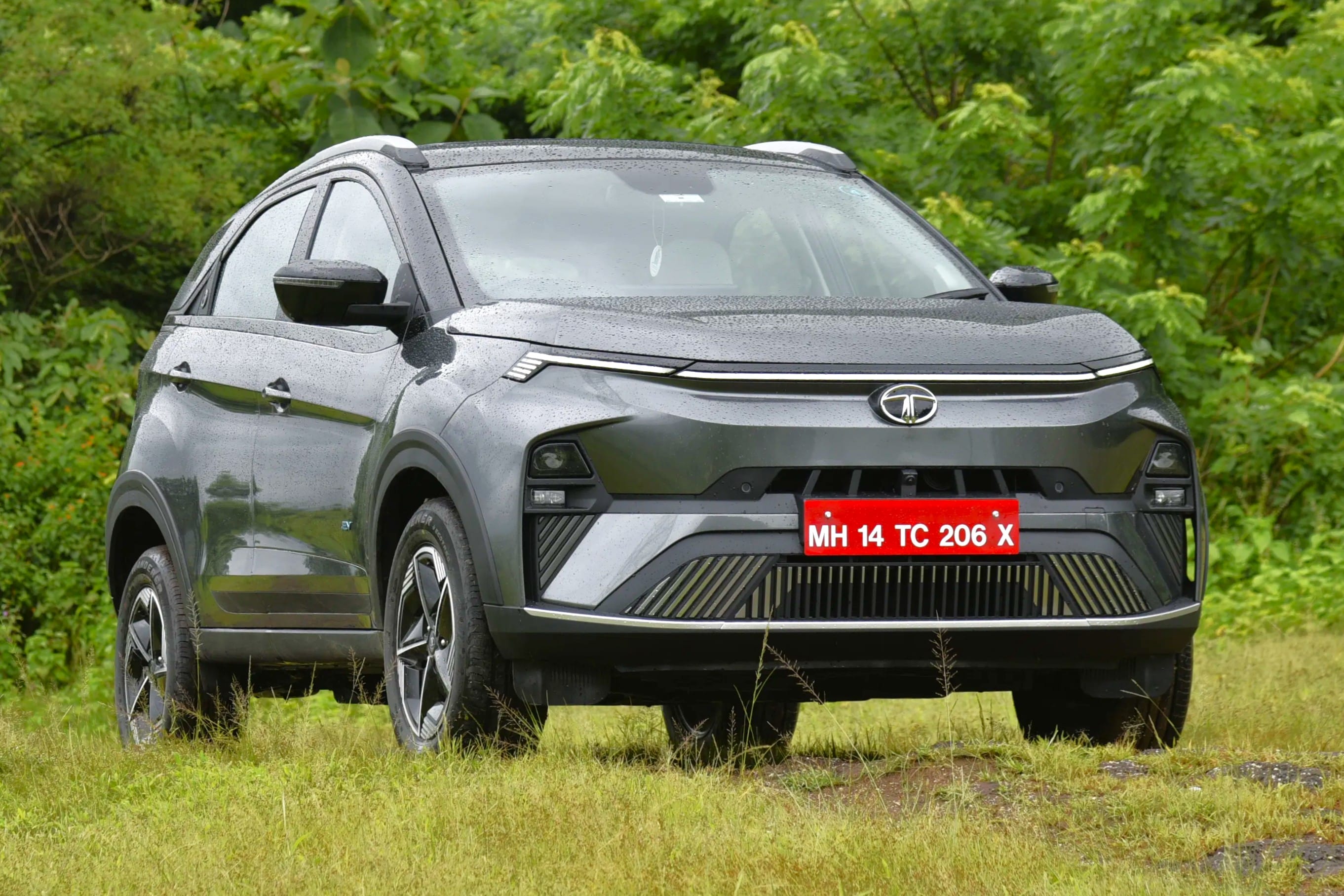
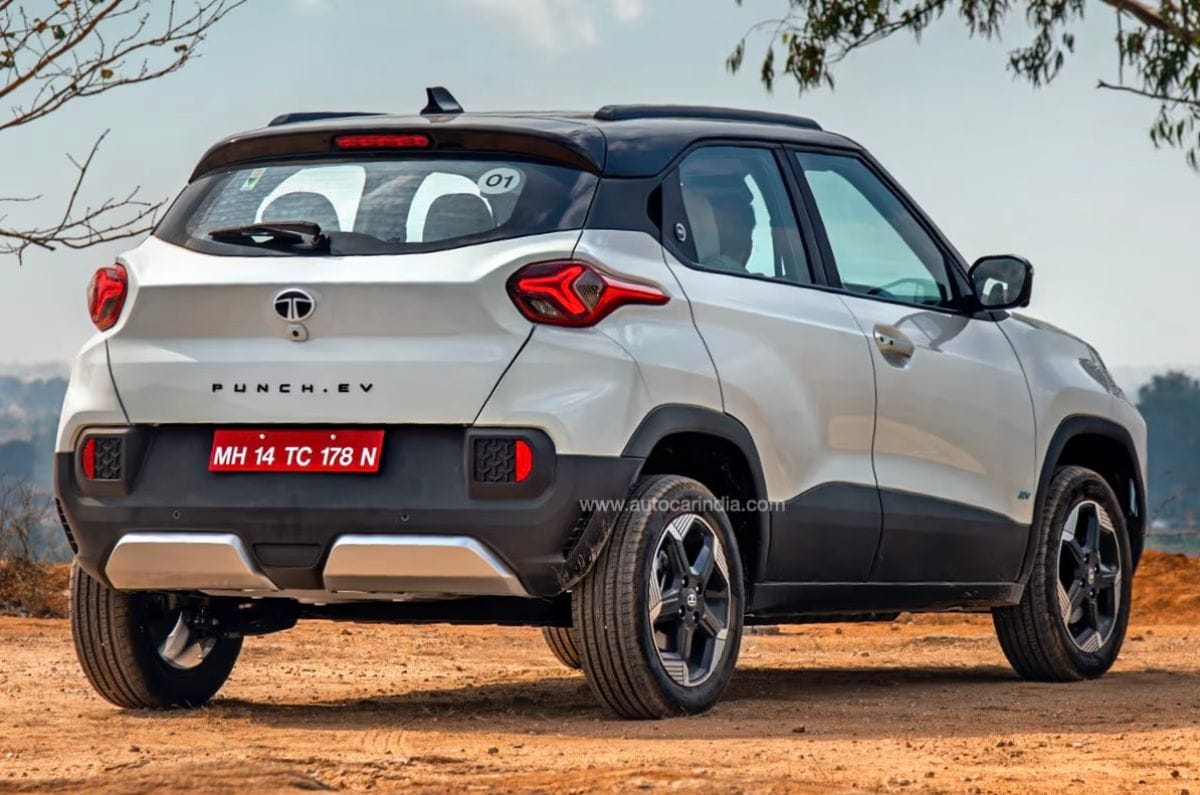
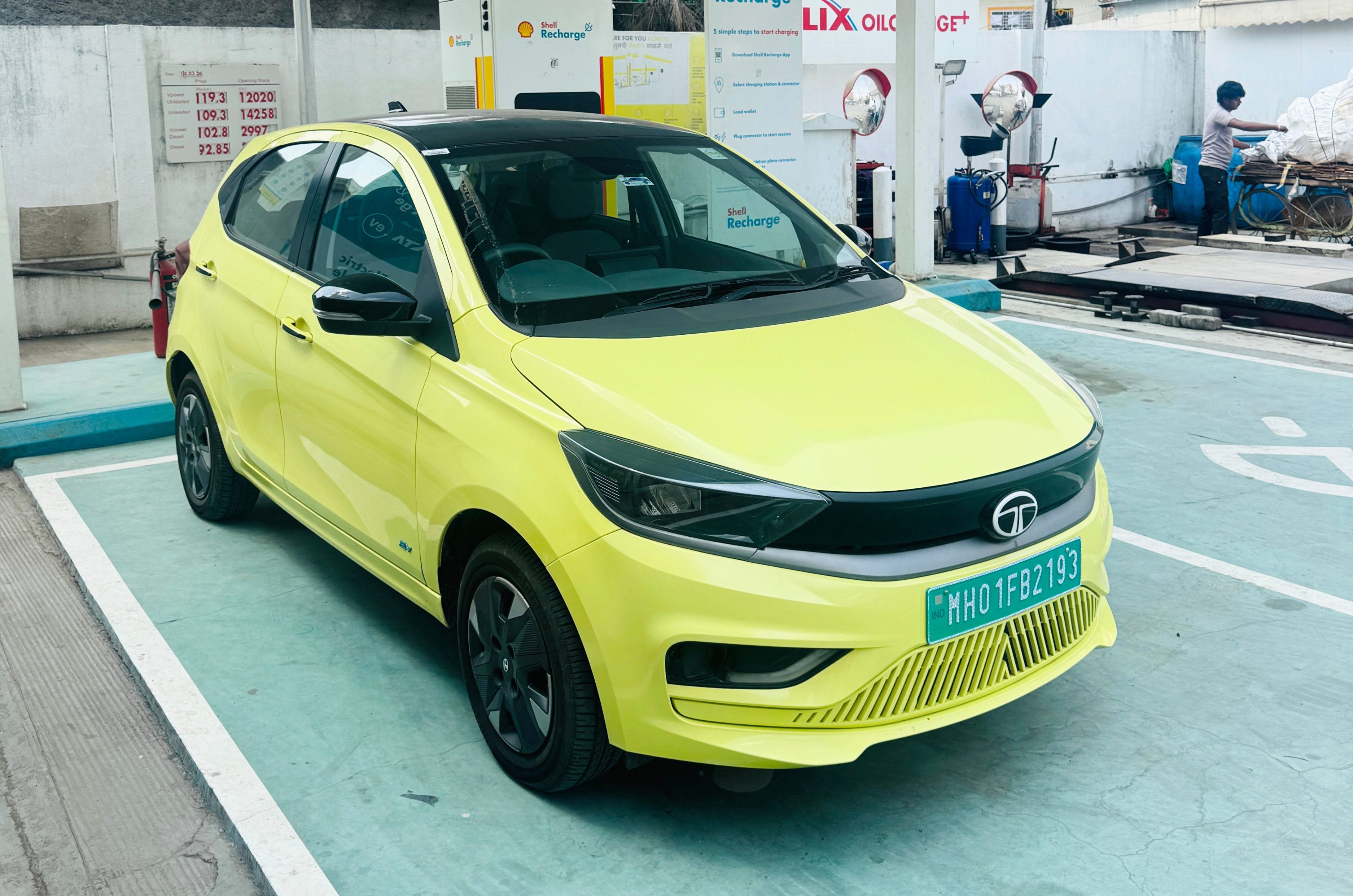
Tata Motors is offering enticing discounts throughout September to those looking to bring home one of its electric models such as the Harrier EV, Curvv EV and Nexon EV, among others. Depending on the model and variant, the available benefits include cash discounts, intervention offers, exchange/scrappage bonuses and loyalty incentives.
Disclaimer: Offers/benefits may vary by city and are subject to stock availability. Buyers are advised to check with their local dealer for exact figures.
Tata Harrier EV offers in September 2026
Benefits of up to Rs 2.75 lakh
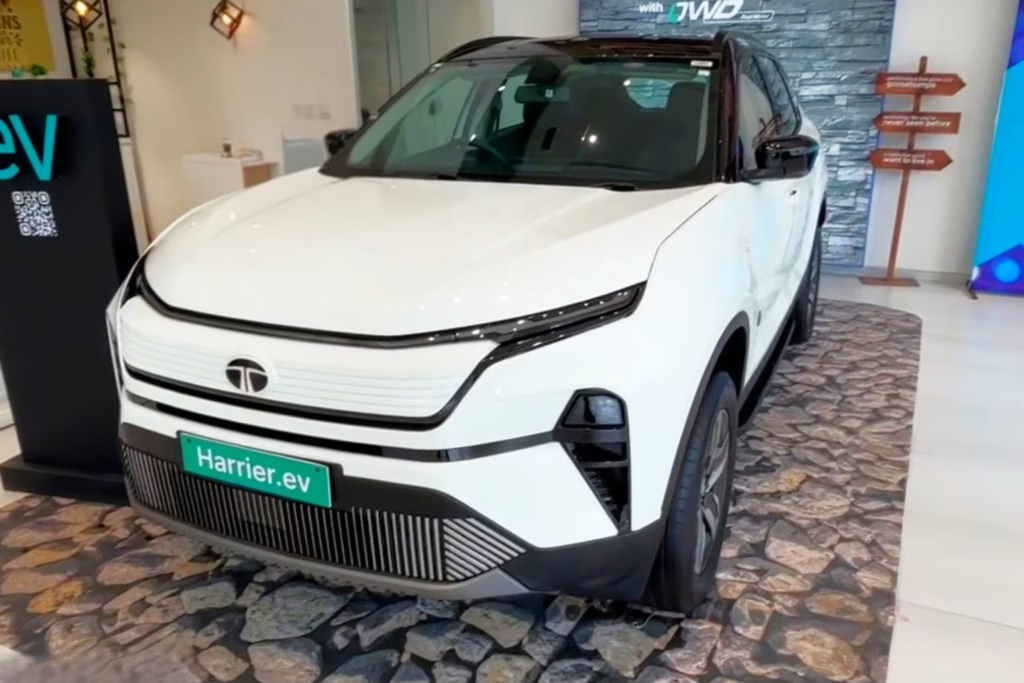
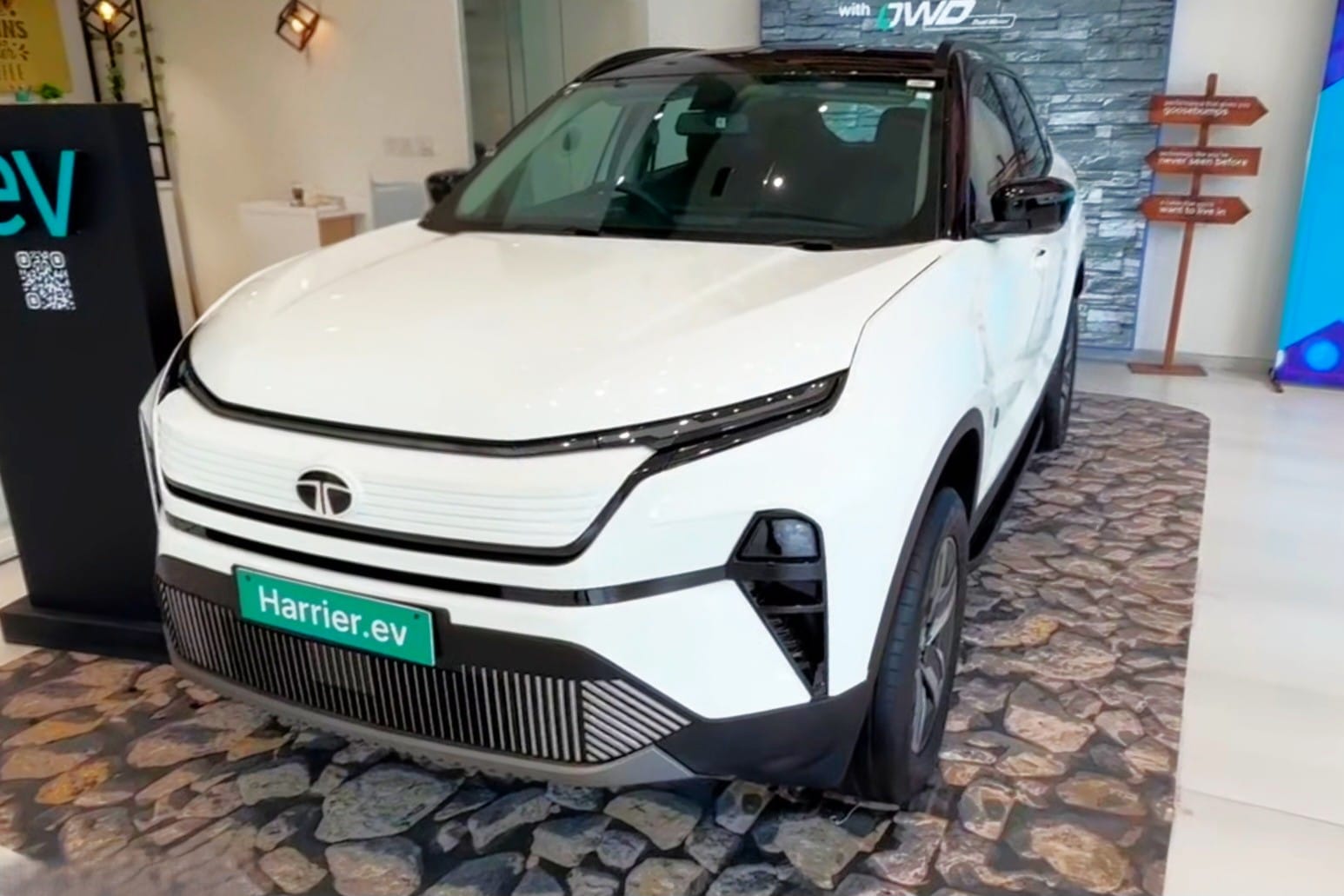
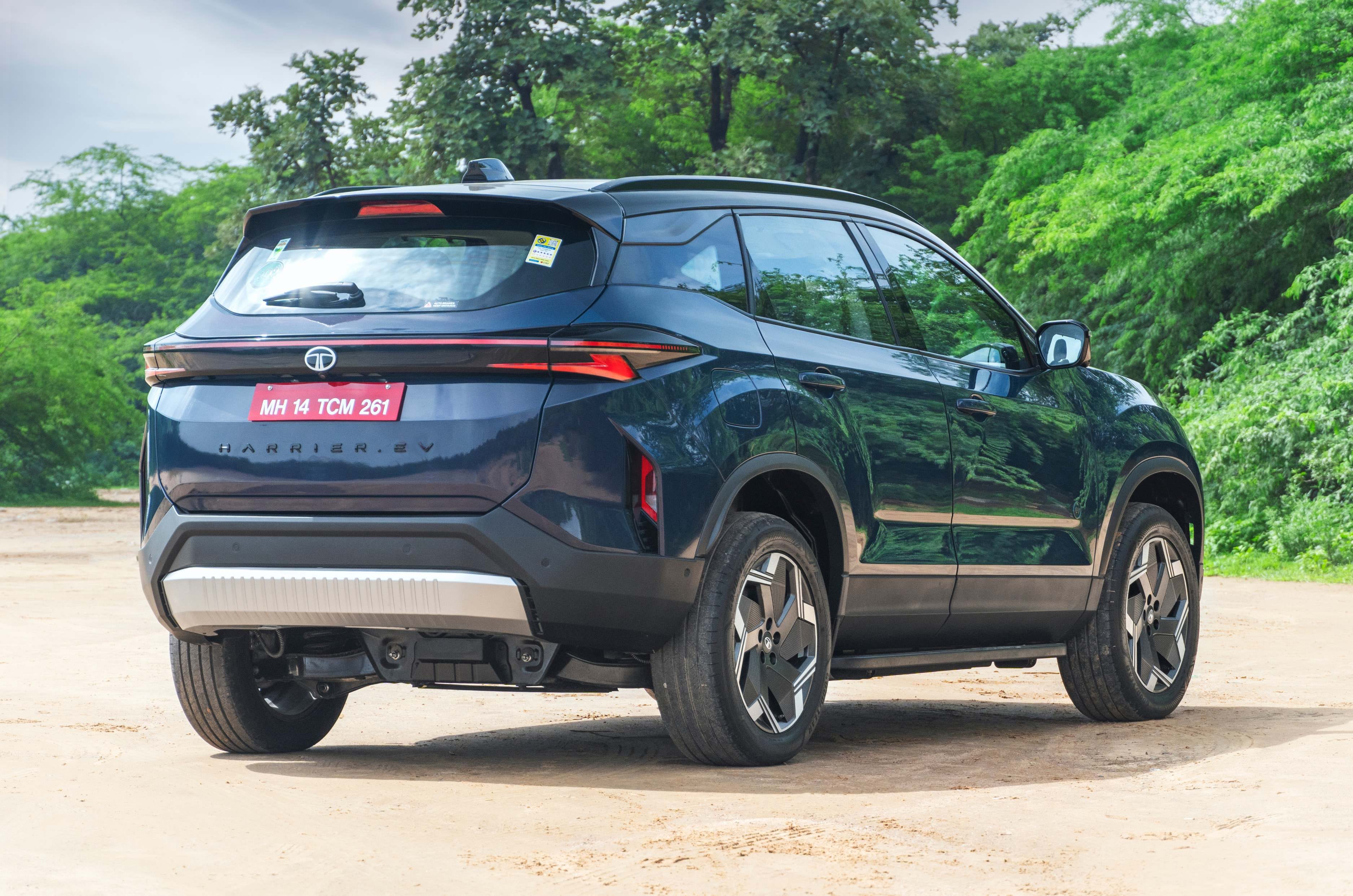
Tata’s current flagship electric car, the Harrier EV, can be purchased with maximum benefits of Rs 2.75 lakh for the mid-spec Fearless and top-spec Empowered trim levels. These include an intervention offer of Rs 1 lakh, an exchange/scrappage bonus of up to Rs 75,000 and a loyalty incentive of up to Rs 1 lakh. Meanwhile, the lower-spec Adventure trim of the Harrier EV is available with a reduced intervention offer of Rs 75,000, bringing its total benefits to Rs 2.5 lakh. The Harrier EV is priced in the Rs 21.79 lakh-29.79 lakh range, excluding premiums for cosmetic packages.
Tata Curvv EV offers in September 2026
Benefits of up to Rs 3.35 lakh
Discounts on the Curvv EV climb to Rs 3.35 lakh for variants available prior to the coupe-SUV’s SeriesX update in May 2026. These comprise a Rs 3 lakh cash discount and an exchange/scrappage bonus of up to Rs 35,000. However, the base Curvv EV Creative variant (pre-SeriesX) gets a lower Rs 2.5 lakh cash discount, lowering the total savings to Rs 2.85 lakh. The Curvv’s current SeriesX variants come with a maximum benefit of Rs 65,000, courtesy of an exchange/scrappage offer of up to Rs 35,000 and a Rs 30,000 loyalty bonus. Prices for the Curvv EV range from Rs 17.19 lakh to Rs 19.39 lakh.
Tata Nexon EV offers in September 2026
Benefits of up to Rs 45,000
All variants of the Nexon EV are available with benefits of up to Rs 45,000 this month. These comprise a cash discount of Rs 10,000 and an exchange/scrappage bonus of up to Rs 35,000. The Nexon EV price starts at Rs 12.49 lakh and tops out at Rs 17.69 lakh, excluding premiums for cosmetic packages.
Tata Punch EV offers in September 2026
Benefits of up to Rs 1.45 lakh
Long Range (35kWh) variants of the pre-facelift Punch EV are being offered with benefits of up to Rs 1.45 lakh, including a Rs 1.1 lakh cash discount and an exchange/scrappage bonus of up to Rs 35,000. Medium Range (25kWh) variants, on the other hand, get a lower cash discount of Rs 90,000, which works out to a benefit of Rs 1.25 lakh. Lastly, the base Smart variant is available with a Rs 60,000 cash discount, so the total benefit for it adds up to Rs 95,000. The facelifted Punch EV is not available with any discounts in September.
Tata Tiago EV offers in September 2026
Benefits of up to Rs 1.45 lakh
Like the Punch EV, the pre-facelift Tiago EV can be purchased with maximum benefits of Rs 1.45 lakh for the mid-spec XT Long Range (24kWh) variant. These comprise a Rs 70,000 cash discount, a Rs 50,000 intervention offer and an exchange/scrappage bonus of up to Rs 25,000. The higher-spec XZ+ Long Range variant instead gets a Rs 1 lakh cash discount but no intervention offer, amounting to total benefits of Rs 1.25 lakh. Lastly, all Medium Range (19kWh) variants are available with a Rs 40,000 cash discount, translating to combined benefits of Rs 65,000.
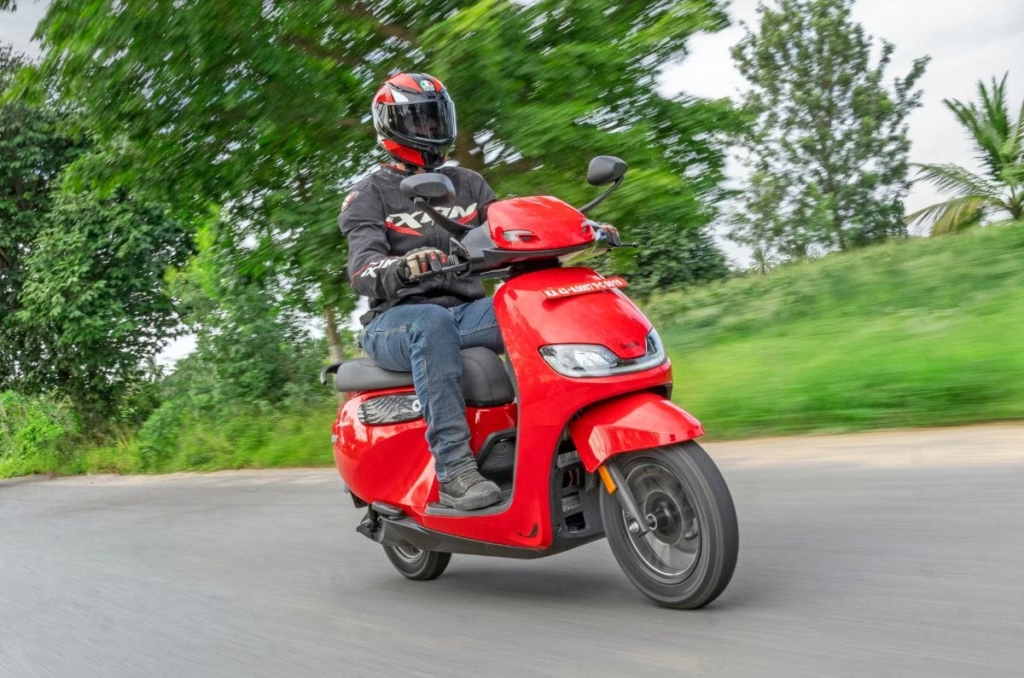
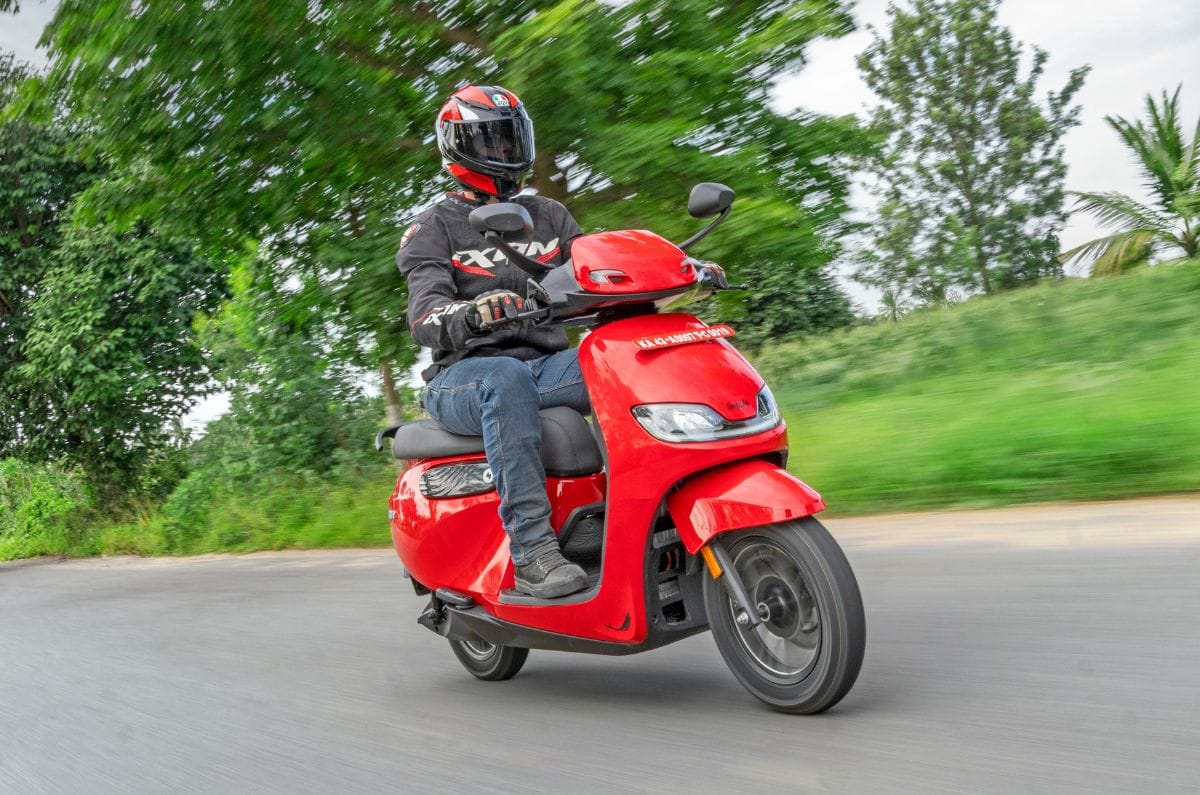
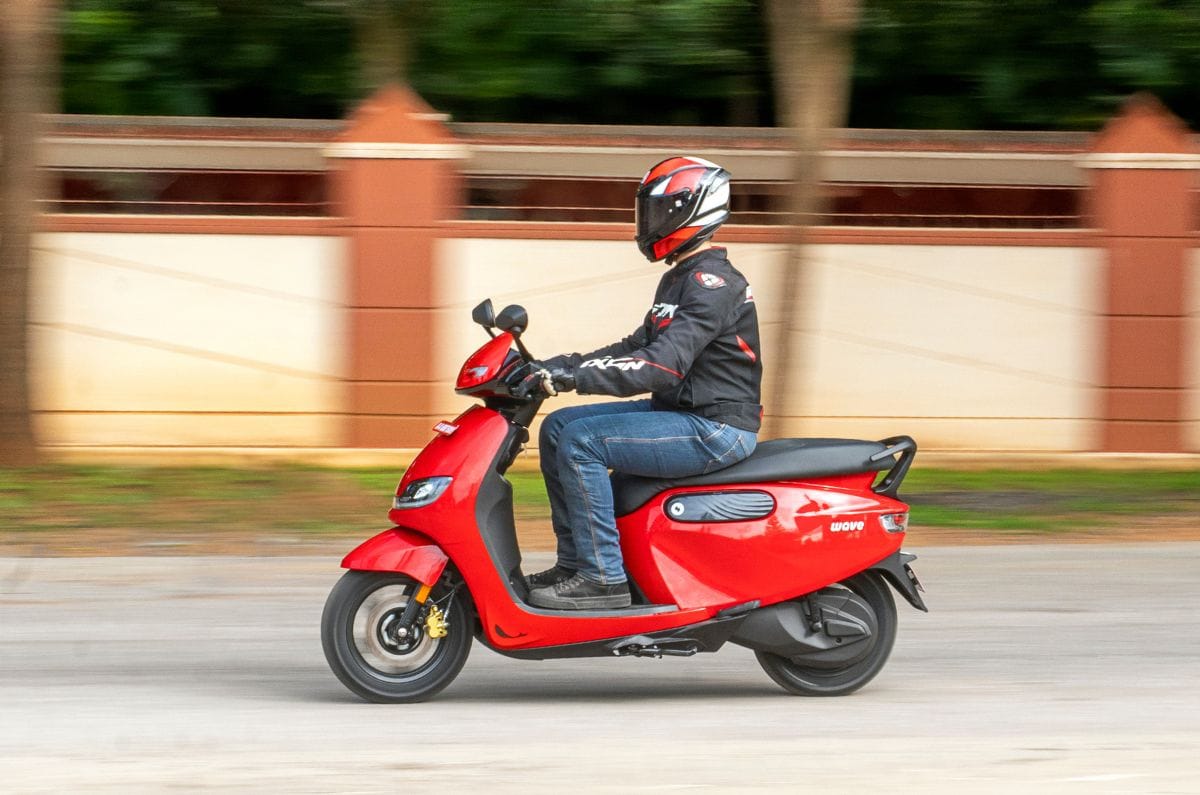
The Simple Wave is an interesting proposition in the increasingly crowded electric scooter space. Its rounded, smooth looks certainly grab attention and, as we found out, it is comfortable, spacious and offers brisk performance. There’s plenty to like here, so let’s dive right in.
Simple Wave Design and quality – 8/10
Looks unique and features many chassis changes over the One
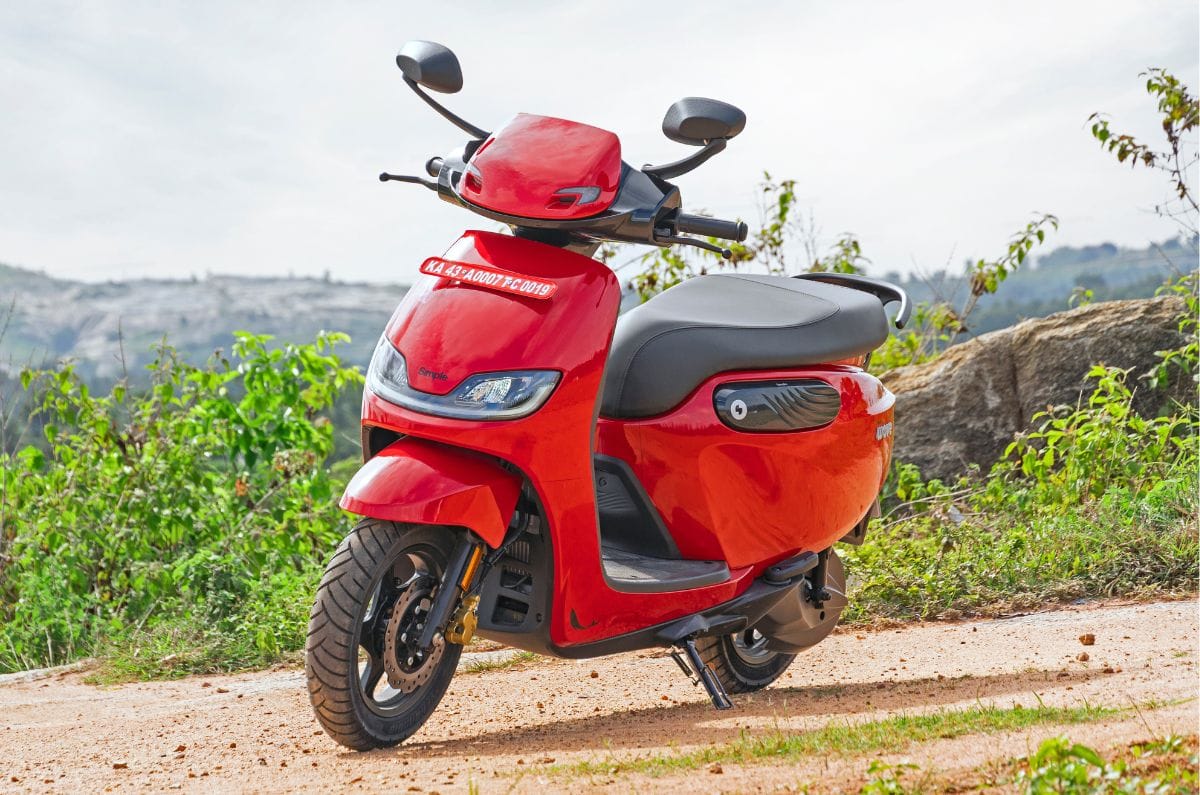
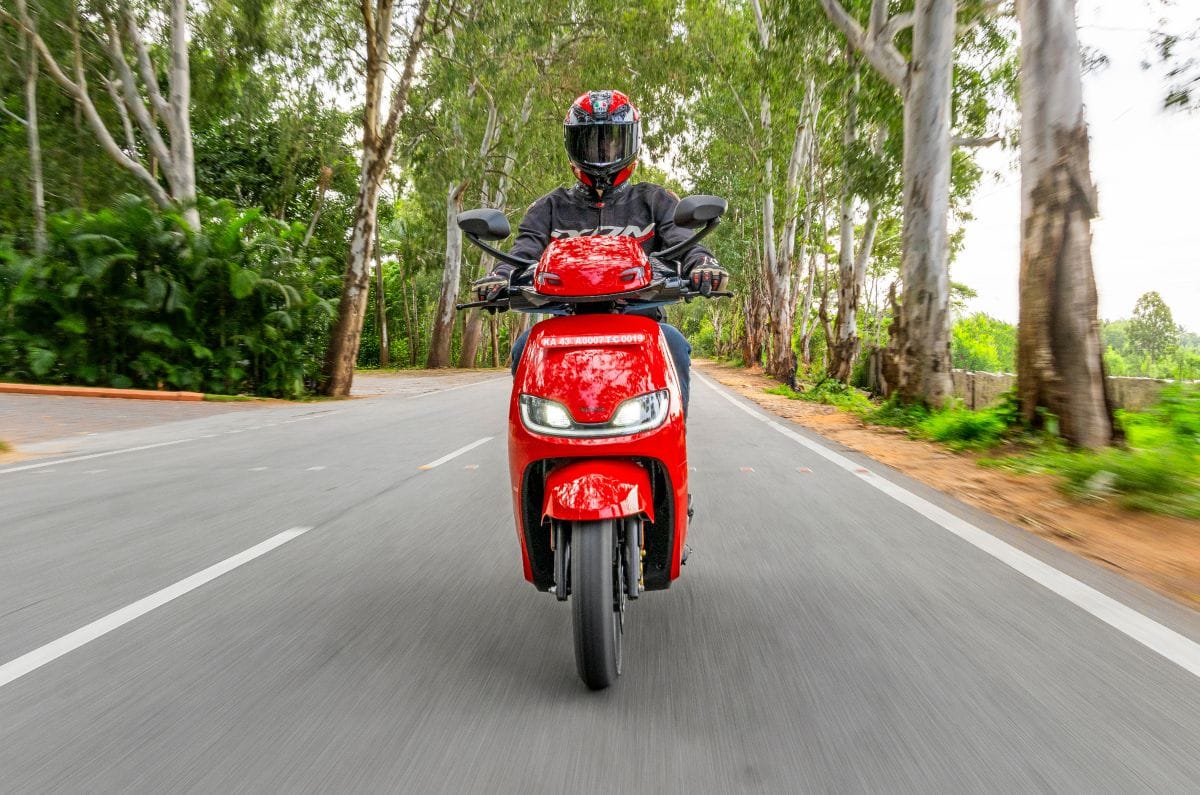
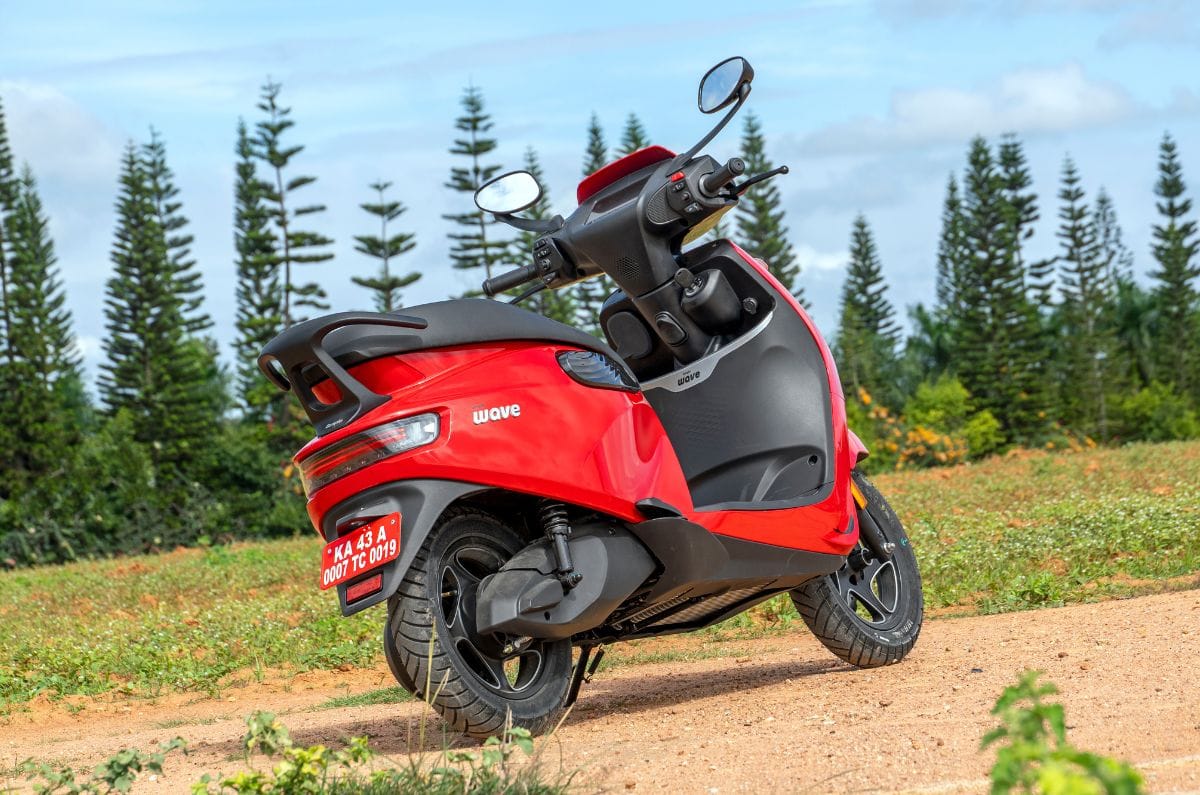
Design is subjective, of course, but the Wave looks good to my eyes with its smooth, rounded edges and distinctive silhouette. It’s got a good level of finish too, and the brighter colour options – red and blue – help it stand out. Simple has designed the Wave as a more accessible, family-oriented scooter, without making it look or feel built down to a cost.
It has a quirky design and surely stands out, especially in the brighter colour options.
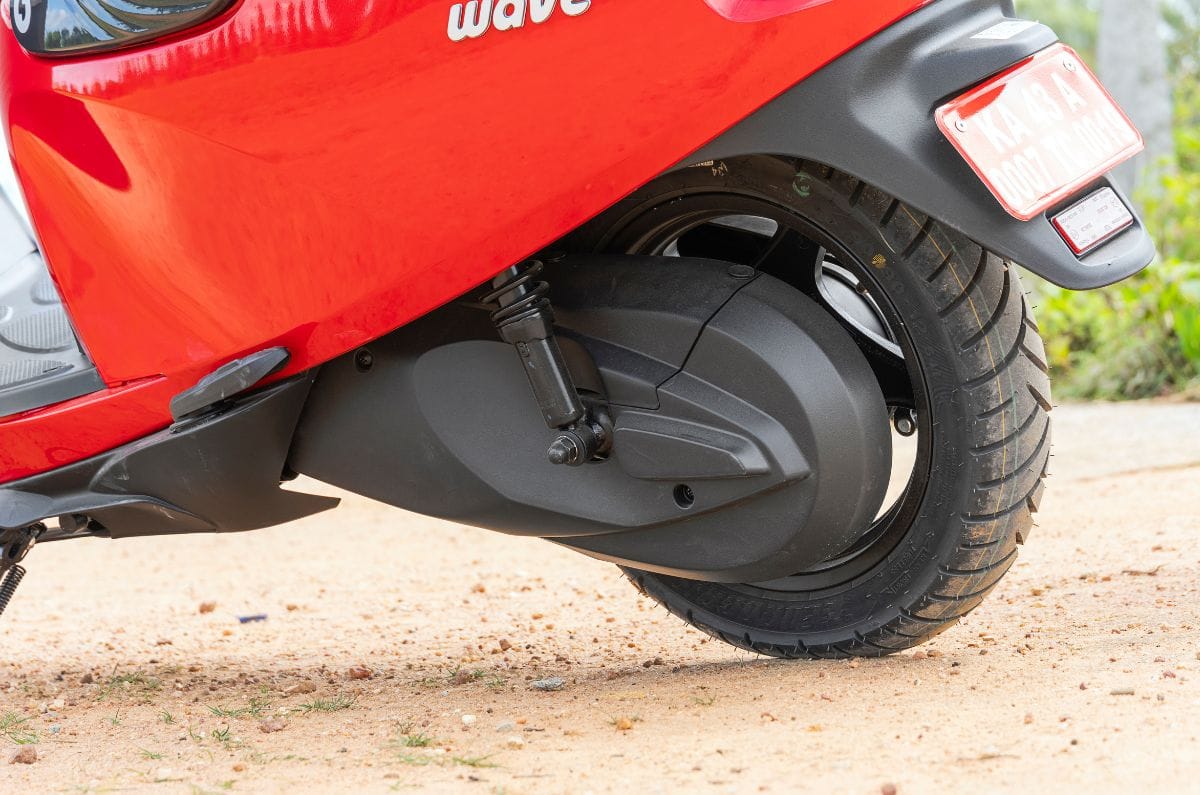
Compared to the sporty Simple One, the Wave’s chassis is quite different. The rear subframe has been reworked to accommodate the bigger boot and twin shocks (which replace the One’s monoshock). The Wave also uses a simpler, more cost-effective tubular swingarm instead of the cast unit on the One.
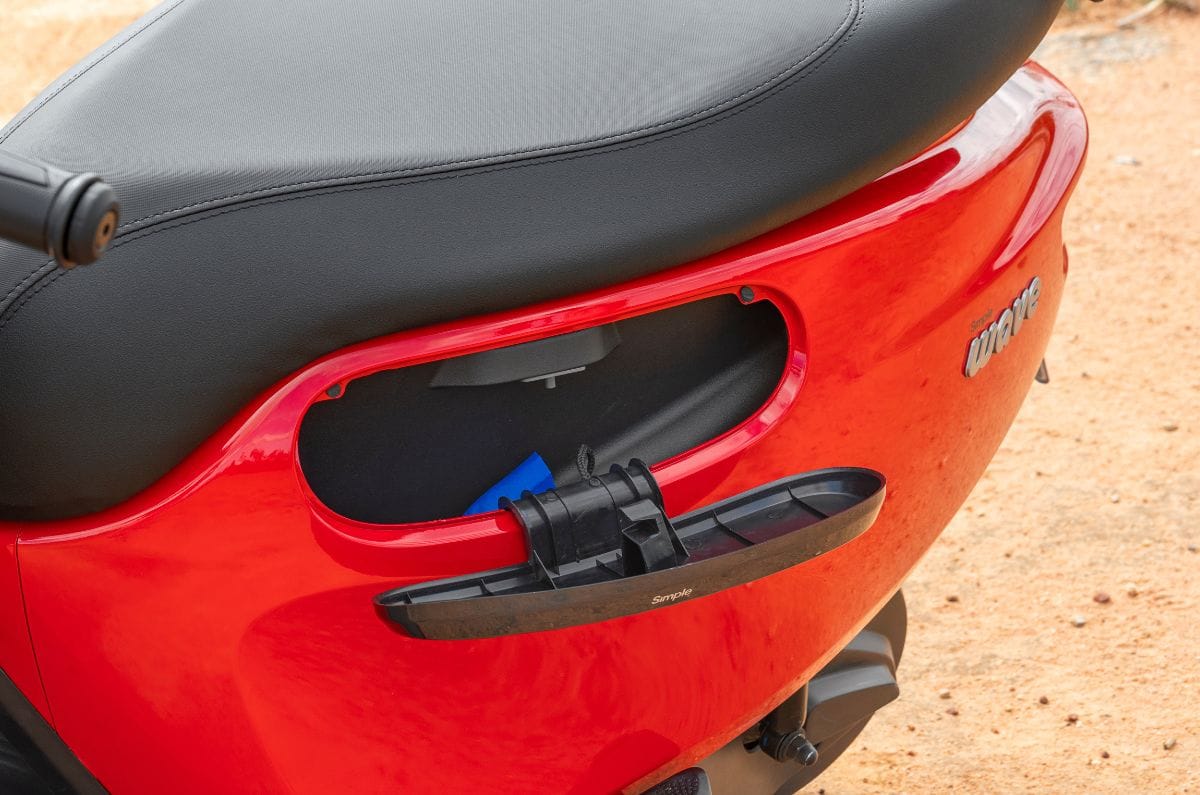
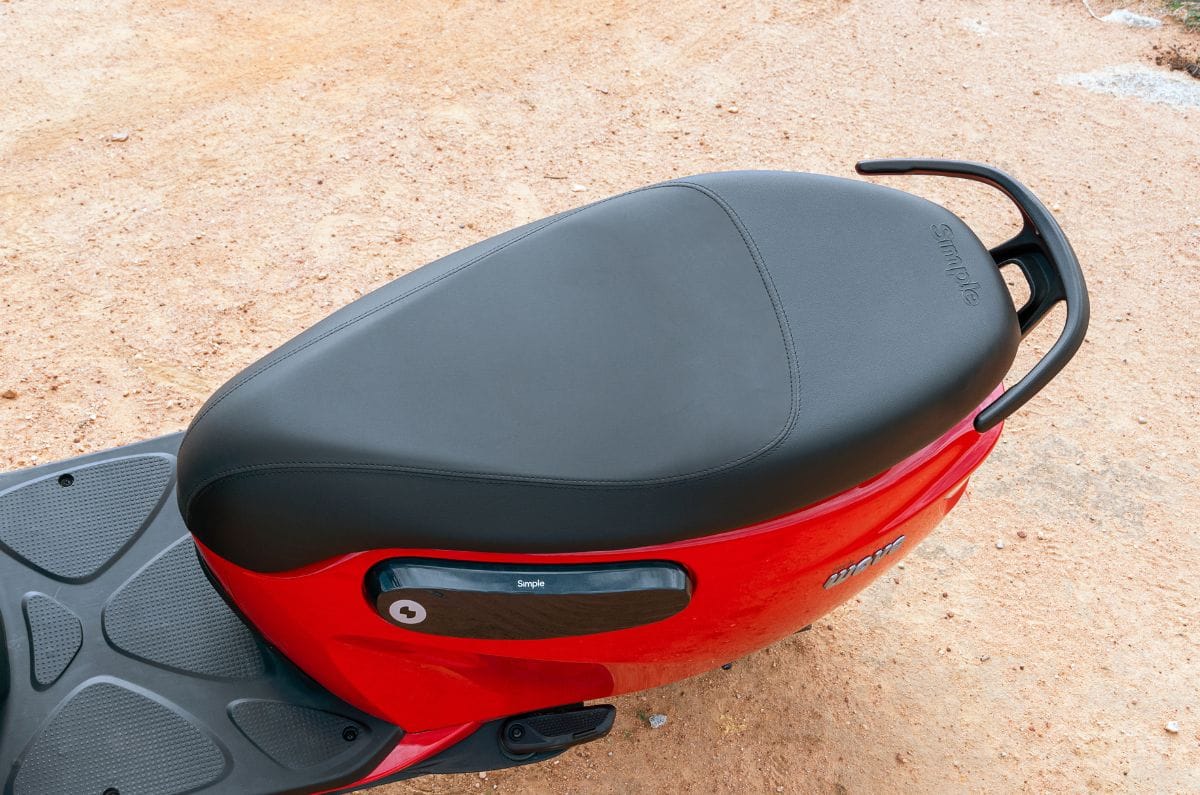
Lockable and weatherproof 4L“Pill” storage cubbies are a thoughtful touch, RH cubby is an accessory.
Simple Wave Ergonomics and comfort – 9/10
Offers a supple ride and ample space for two people
The differences only get more pronounced once you sit on the Wave. Its seat is long, wide and will easily accommodate two full-size adults, while its relatively low 775mm seat height makes it friendly for shorter riders.
That low seat height is no accident either; Simple took feedback from customers who had the One and incorporated it into the Wave. This is why the Wave also has a lower handlebar to make it more approachable for shorter and female riders. This has a trade-off, however. Taller riders will find the handlebar fouls their knees during tight, lock-to-lock U-turns.
Riding position is spot-on and ride comfort too is excellent.
Other than that, the Wave is rather sorted ergonomically. Ride comfort is excellent for a scooter, and that isn’t a surprise given that the Simple One itself was quite comfortable. The Wave builds on that with a composed and plush ride that suits its intended role.
Depending on the variant, the Wave weighs between 121-128kg with the 3.7kWh TFT variant provided to us sitting roughly in the middle of that range (124.5kg). We found the Wave handled predictably, without any unwelcome surprises, feeling stable and sure-footed without compromising agility expected of a scooter.
Spacious, well-paded seat can comfortably seat 2 full-size adults.
Simple Wave Performance and range – 9/10
Performance is more than sufficient, Eco mode truly usable
Like the One, the Wave offers really brisk performance, but still feels approachable enough for everyday use. The 3.7 version gets three riding modes – Eco, Ride and Sport – and both Ride and Sport offer more than enough performance for everyday use, which isn’t really a surprise. In Ride the top speed is 75kph, whereas Sport takes it up to 90kph (speedo-indicated, not actual).
The real surprise, however, is Eco mode. Yes, it feels duller than the other two modes, but it isn’t crippled in the way Eco modes on other EVs. The Wave can still get up to around 50-55kph quite respectably and overtake traffic, making Eco genuinely usable even on faster roads or in a big city.
It handles predictably and surefootedly in all scenarios.
Given that the Wave uses the same motor as the OneS making 6.4kW and 52Nm, this performance is no surprise. However, on the Wave, the motor drives the rear wheel via a chain drive, not a belt as seen on the One models.. While a chain will be more maintenance-intensive than a belt, replacing it should be more affordable. Simple has worked to reduce powertrain noise with measures such as a rubber-damped sprocket, but there is still some motor noise. However, it’s much quieter than an Ather Rizta or 450, although far from dead silent like an Ather Konarc or TVS iQube.
Another welcome change to the One is the throttle response. Unlike the older One models we tested, where the scooter could continue accelerating briefly after the throttle was closed, the Wave’s accelerator behaves much more intuitively. It also gets traction control, although the throttle calibration is so smooth, you’re unlikely to need it in dry conditions but it will be a useful safety net in the wet.
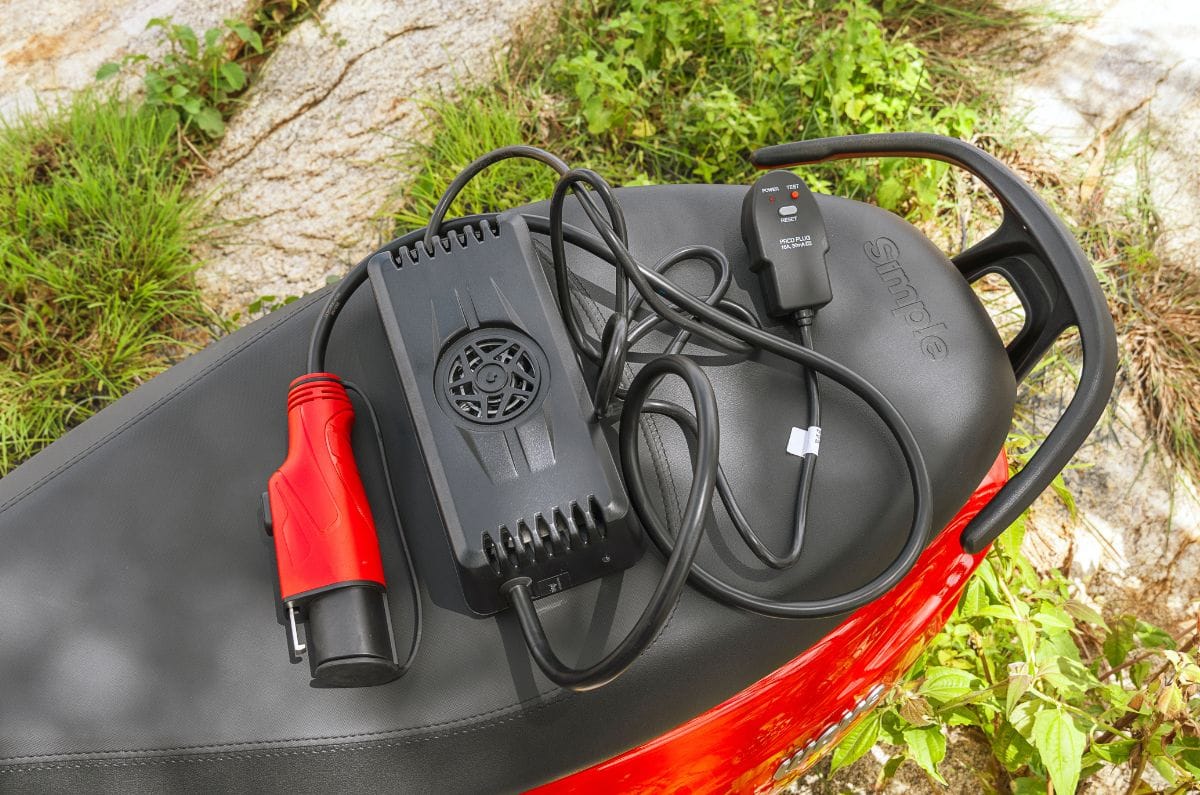
Fast 750W charger is standard on all variants.
Powering the Wave are four battery packs, depending on the variant you choose: 2.2kWh, 2.7kWh, 3.7kWh and 5kWh. The IDC ranges Simple claims are 110km, 132km, 171km and 243km, respectively. The first two use LFP (Lithium Ferrous Phosphate) chemistry, while the larger batteries use NCA (Nickel Cobalt Aluminium) cells.
The range indicator also appears to be quite trustworthy although we’ll reserve final judgement on real-world range until we can conduct a full test back in Mumbai. What is also nice is that all variants of the Wave come with a fast 750W charger which enables a pretty quick 0-80 percent claimed charging time of 3hr30min on the 3.7kWh version we were riding.
The standard warranty on the Wave is three years/30,000km, with five years/50,000km and 15 years/2 lakh km extended options also available. The price of these optional longer warranties has not been shared with us.
The Wave’s motor feeds power to the rear wheel via a chain, not a belt like on the One.
Simple Wave Features – 9/10
Massive 63L boot and Pill storage cubbies are very useful
While range without sacrificing usable performance is surely valuable on an EV, practicality is an important consideration as well. Storage is one of the Wave’s big strengths. There’s a useful front cubby, while the two “Pill” storage boxes on either side of the body panels are particularly nifty allowing you quick access to essentials you may need to reach for without having to get off the scooter. Each offers 4 litres of lockable weatherproof storage; the left one is standard, while the right is an accessory.
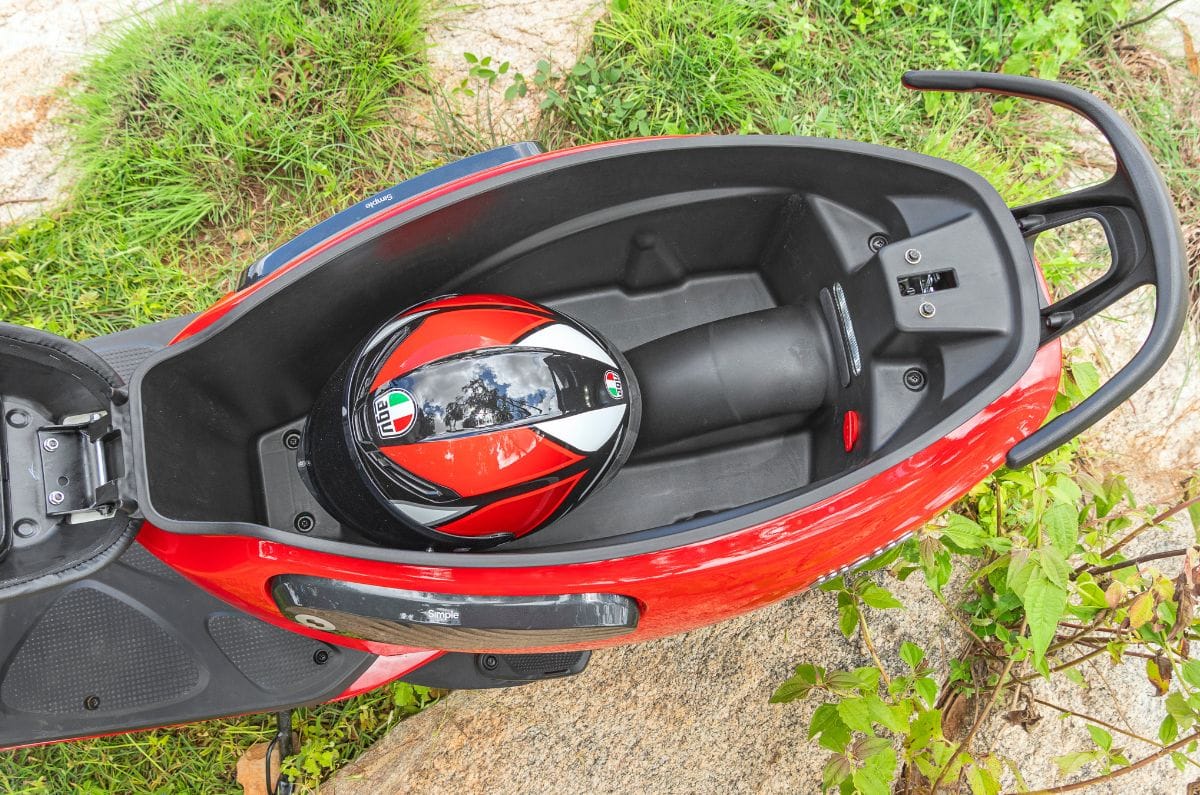
An undoubtedly big USP on the Wave is its cavernous 63L boot, the largest on any Indian scooter to date.
What is also an undoubtedly big USP on the Wave is its cavernous 63 litre boot, which is the largest on any Indian scooter to date. This should prove to be more than enough for everyone in the family! That being said, 63 litres is an enormous number and while this boot is undoubtedly big, I’m do find myself struggling to comprehend how it is nearly 50 percent bigger than the already cavernous 43 litre boot in the River Indie.
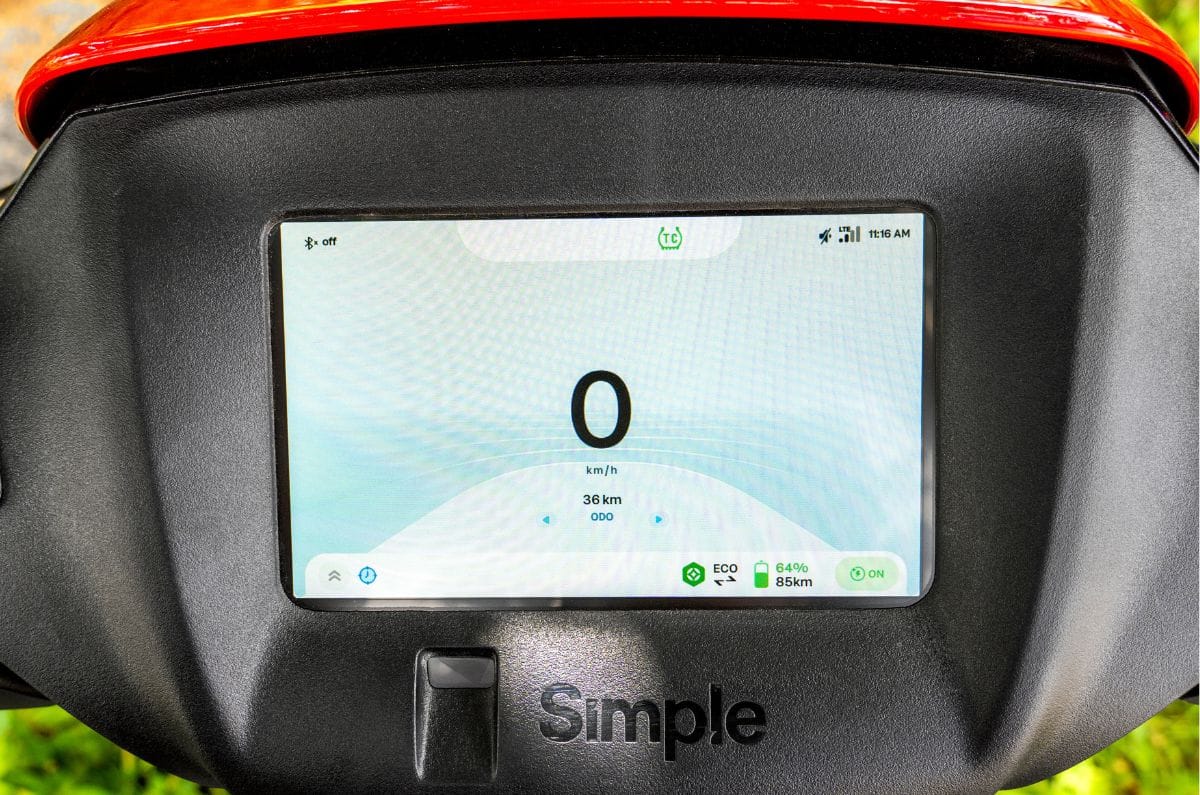
There’s plenty of technology too, including hill hold, drop-safe functionality, theft alerts and Bluetooth connectivity to your phone via the app. The TFT-equipped versions bring even more tech, while the brake-lock clasp is a small but useful touch.
TFT display is well laid-out and has a lot of tech but misses touch functionality.
Simple Wave Price and verdict – 8/10
Scooter has a lot of strengths but is pricey; company yet to prove itself
There isn’t a lot to dislike about the Wave as a scooter. It’s comfortable, spacious, well finished and quick enough to serve its intended purpose very well. However, for all its accomplishments, the Wave doesn’t come cheap. Sure, the Rs 1.10 lakh starting price is tempting, but as you climb the variants ladder, the Wave gets seriously expensive, topping out at Rs 1.90 lakh (ex-showroom, Bengaluru). That said, Simple is one of the few brands offering the option of a 5kWh battery in the family e-scooter space, which is commendable.
However, more than pricing, the bigger issue is that the company is yet to properly scale up its dealer network and establish an aftersales network that delivers the premium experience a buyer will expect after shelling out the money Simple is asking for. The Wave is a good product, but customers paying a premium for an electric scooter will expect not just a solid product but also dependable after-sales support.
The Wave has a lot of strengths but Simple is yet to prove itself in the market.
Ultimately, the Wave’s biggest challenge is that it comes from a start-up that has made plenty of big promises and statements over the past five years but still has a lot to prove. Its dealer network remains minuscule compared with the big players, and long-term reliability still remains unknown.
There’s a lot for Simple to do, but the good news is that the Wave is a genuinely likeable product. If the company can iron out the business side of things, the Wave has the potential to catapult Simple from just another niche start up to a much bigger player. Of course, doing so is a huge challenge and not an overnight process. Simple has a long road ahead of it, but the good news is that it finally has a convincing product to aid in that journey.
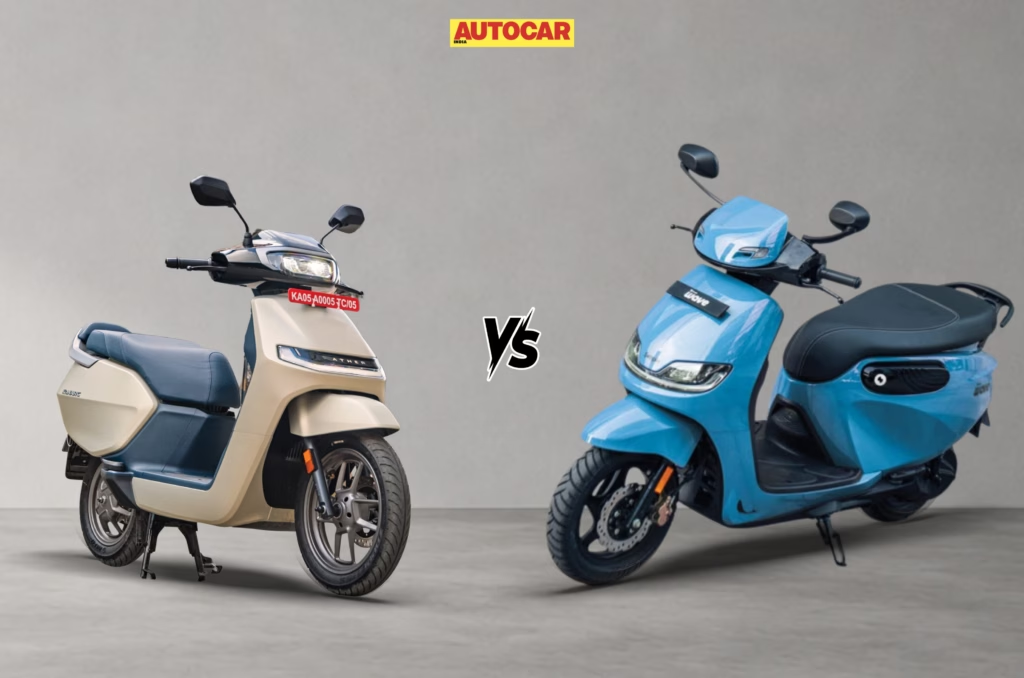
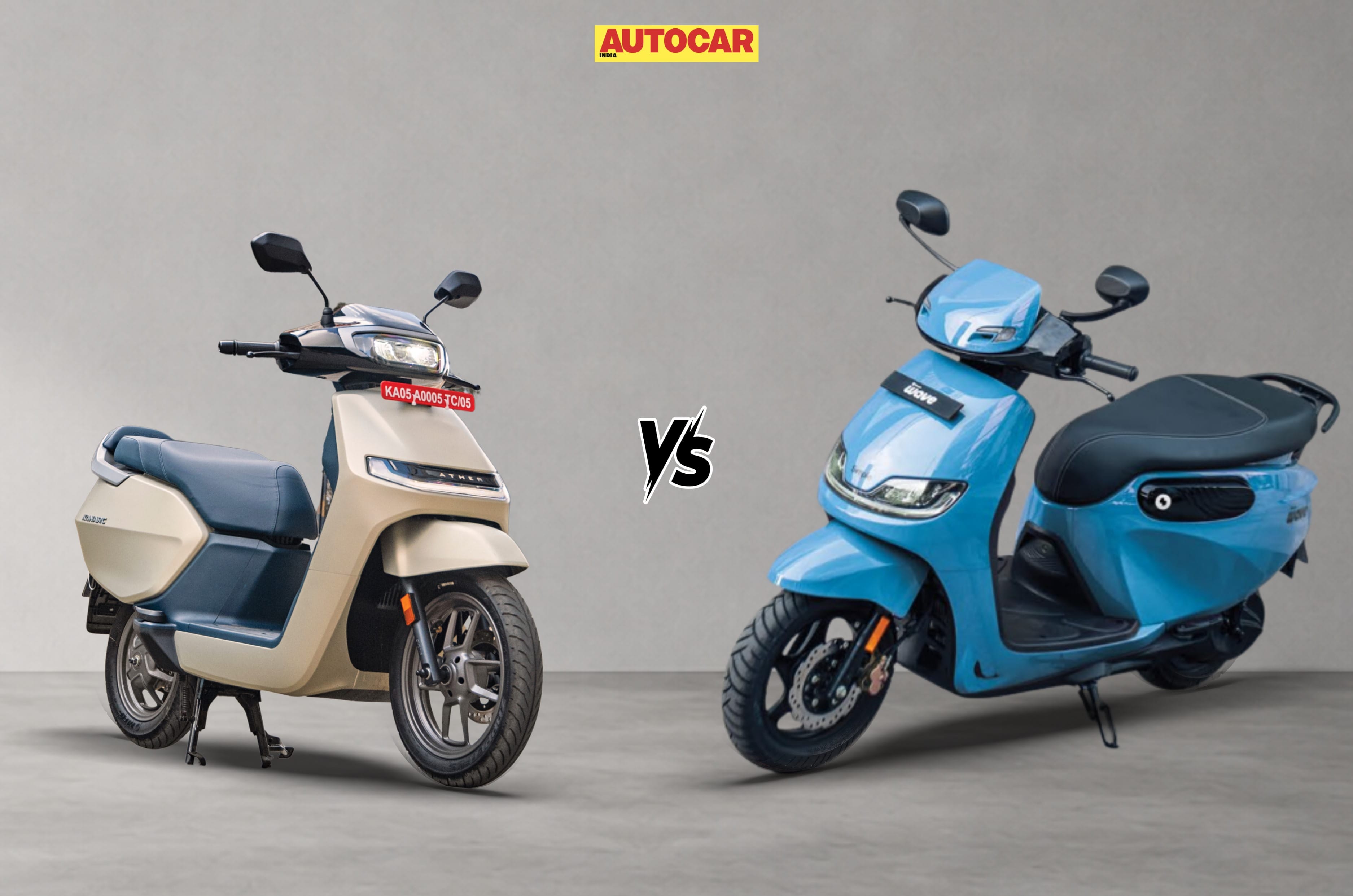
The Indian two-wheeler EV market is gaining momentum with legacy manufacturers expected to sell close to 10 lakh units by the end of the year. But the EV start-ups look to put up a tough fight to the sales numbers with Ather and Simple, both Bengaluru based EV makers, launching new EV family scooters. The Ather Konarc S 161 will be available from later this month and Simple has announced that deliveries for the Wave also start this month. Let’s see how both of them compare on paper.
Simple Wave vs Ather Konarc S 161: Motor, battery, and charging
Simple offers more power, battery, and faster standard charger
Simple Wave
Ather Konarc S 161
Peak motor power
6.4kW
4.7kW
Rated torque
NA
16Nm
Claimed top speed
90kph
70kph
Battery capacity
3.7kWh
3.5kWh
Claimed charging time (0-80 percent)
4hr
5h40m
IDC range
171km
161km
Simple’s scooter brings in a strong first punch with a higher powered motor and a marginally bigger battery than the Ather Konarc S. It also has a notably higher top speed as compared to the Konarc. The Wave comes bundled with a faster 750W off-board charger which enables it to charge to 80 percent almost two hours faster than the Konarc, which gets a 450W on-board charger as standard. However, Ather gives the option to add another 450W off-board charger to enable faster 900W charging. Simple currently doesn’t offer such an option for the Wave.
Simple Wave vs Ather Konarc S 161: Dimensions and underpinnings
Konarc gets a lower seat, but weighs more
Simple Wave
Ather Konarc S 161
Wheelbase
1347mm
1352mm
Seat height
775mm
770mm
Ground clearance
175mm
NA
Kerb weight
124.5kg
129kg
On paper, the Konarc has a marginally longer wheelbase than the Wave, but do note that the Wave boasts the longest seat in the country at 920mm, a title earlier held by Ather’s Rizta. For what it’s worth, we did not face any issues with the Konarc, space-wise or comfort-wise. Ather’s scooter also has a slightly lower seat height but it’s a negligible difference to most users. What’s not negligible is its 4.5kg additional weight over the Simple Wave, but it’s explained by the Konarc using metal body panels.
Simple Wave vs Ather Konarc S 161: Brakes, tyres, and suspension
Konarc gets larger tyres
Simple Wave
Ather Konarc S 161
Tyres (F,R)
90/90-12, 90/90-12
90/90-14, 100/90-12
Brakes (F,R)
220mm disc, drum
220mm disc, 130mm drum
Suspension (F,R)
Telescopic, twin shock
Telescopic, monoshock
The Ather Konarc is the first Ather to get a 14-inch tyre, even if it’s just at the front; and its rear tyre is larger than the Wave, which sticks to a 12-inch at both ends. Both scooters have a front disc brake and a rear drum brake although Simple hasn’t clarified the size of the Wave’s rear drum. On the suspension side of things, the major difference is that the Wave uses a twin shock rear suspension, whereas the Konarc gets a monoshock unit.
Simple Wave vs Ather Konarc S 161: Features
Features filled to the brim, for an added price
Features have been the trump card for almost all EVs from their inception and Ather has led that charge from the front. Simple appears to have caught up to Ather with both the scooters matching each other on features like fall safe, hill-hold, smartphone connectivity, and a TFT cluster on the top variants and a LCD cluster on the lower variants. Simple does offer you a choice between the TFT and the LCD cluster on the Wave (TFT costs Rs 15,000 extra), whereas Ather has reserved the TFT cluster for the Z line, due to launch next year. Features-wise, both companies offer turn-by-turn navigation, call and SMS alerts, GPS tracking, etc., Ather Konarc S’ gets most of those features in its LCD cluster, but Simple has reserved all of these for the TFT cluster variants.
A majority of these features do require additional subscriptions. Ather’s is a one-time cost of Rs 17,000 (Ather StackPro) for the Konarc S 161 variant. Simple, on the other hand, offers two kinds of subscription plans. The first plan is a one-time purchase to add Tyre Pressure Monitoring System (TPMS) and Connectivity modules. The second plan is a yearly subscription that enables all the smart features the company has to offer. At the time of writing, Simple hasn’t revealed the prices for the Wave line-up yet. Just for perspective, for the One scooter with a 5kWh battery, you have to pay a Rs 3,687 one-time payment for the first plan and Rs 2,999 per year for the second plan. To be clear, it’s possible to buy and use either scooter without subscribing to these add-ons, but the experience will feel a lot like a typical ICE scooter.
Simple Wave vs Ather Konarc S 161: Price
Ather gets the better starting price
Simple Wave
Ather Konarc S 161
Price (ex-showroom, Bengaluru)
Rs 1.60-1.75 lakh
Rs 1.45 lakh
For all that it offers and the longest seat in the scooter industry and 63L boot space and and additional 7 litres of cubby storage, spread across the scooter with innovative spots like Pill-storage, the Simple Wave costs Rs 1.60 lakh for the LCD cluster variant and Rs 15,000 extra for the TFT variant. The Ather Konarc without Ather StackPro comes in at Rs 1.45 lakh and with it would go up to Rs 1.60 lakh. While Ather has officially announced that the Konarc S 161 variant will be available from later this month, Simple hasn’t clarified if their “deliveries in September” claim applies to all six of their variants. If you’re interested in either scooter, we’d suggest that you check out and test ride them before deciding.
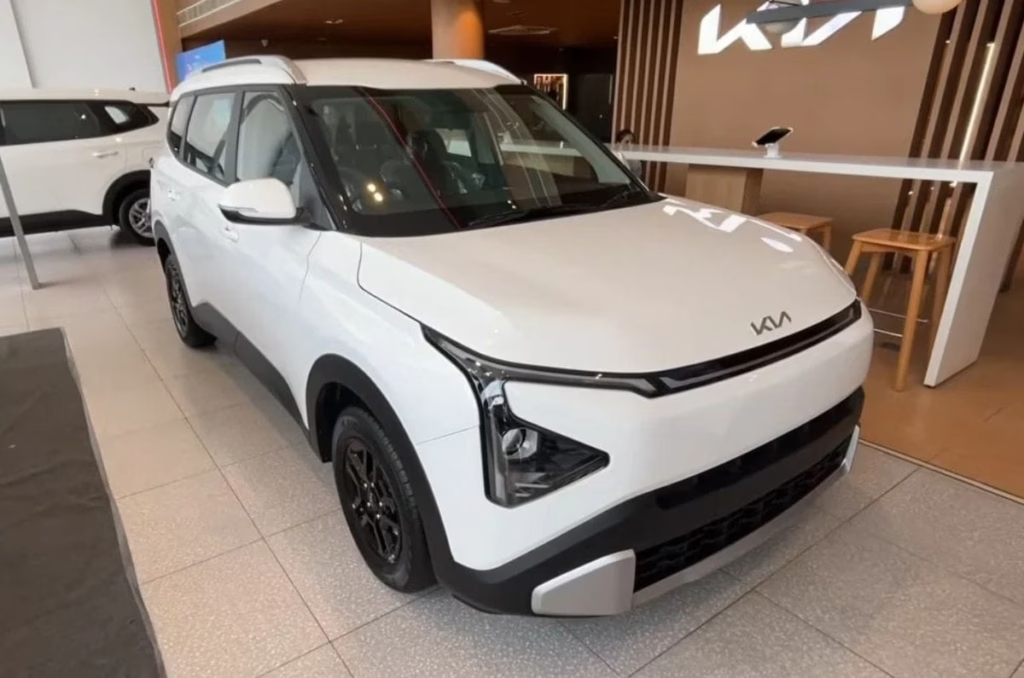
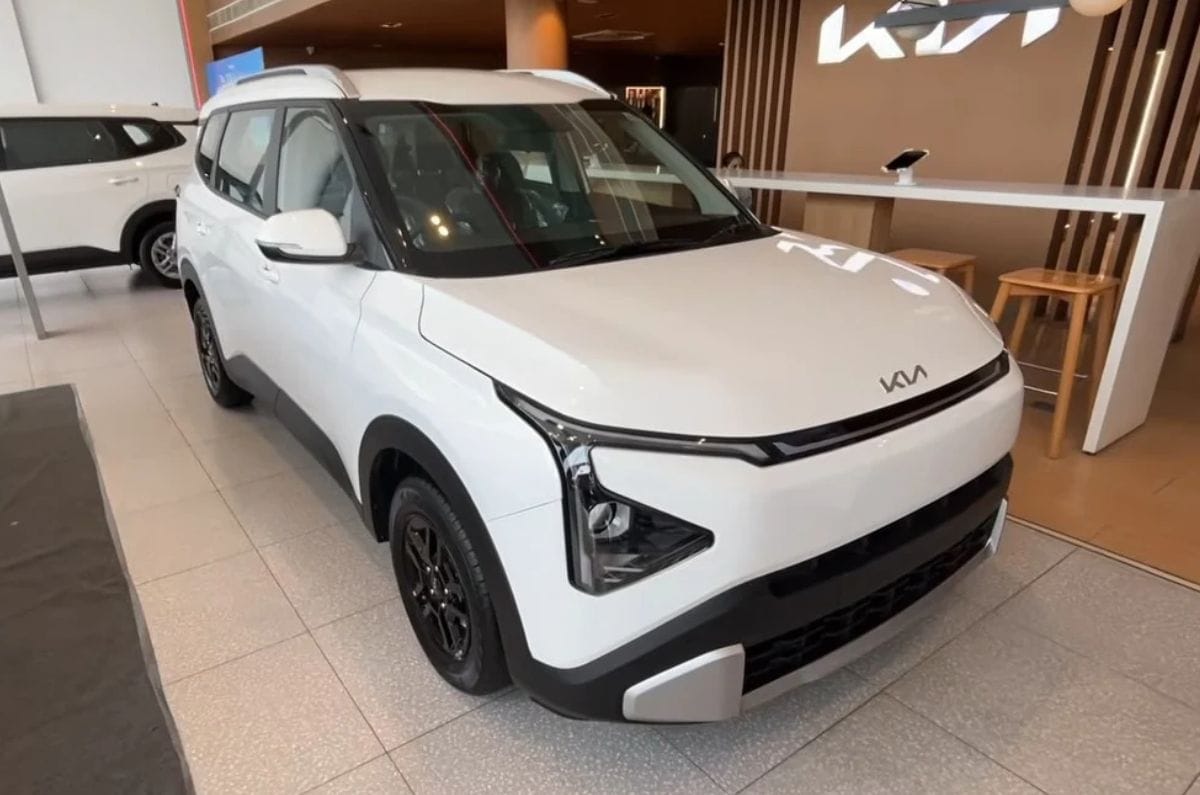
Kia has announced a range of enticing offers for buyers this September. These schemes come in the form of cash offers, exchange or scrappage benefits, loyalty incentives and corporate discounts. The most lucrative of deals are being offered with the Carnival and Carens Clavis MPV range. Kia’s discounts will be valid from September 1 to September 30, 2026.
Disclaimer: Offers/benefits may vary by city and are subject to stock availability. Buyers are advised to check with their local dealer for exact figures.
Kia Carnival offers in September 2026
Benefits up to Rs 1.50 lakh
The Korean brand’s flagship MPV in India, the Carnival, is being offered with benefits amounting to Rs 1.50 lakh this month. This is only applicable on the 2026 model year (MY26) of the Kia Carnival, and it takes into account an exchange offer of Rs 1 lakh and a corporate discount of up to Rs 50,000. There’s only one variant of the Kia Carnival on sale, which is priced at Rs 59.65 lakh.
Kia Carens Clavis offers in September 2026
Benefits up to Rs 1.20 lakh
Select internal-combustion variants of the MY25 Carens Clavis are available this month with cash offers of Rs 70,000 and loyalty benefits of Rs 20,000. Buyers can also avail exchange offers worth Rs 30,000 or scrappage incentives of Rs 20,000. In all, the Carens Clavis (MY25) can be had with benefits amounting to Rs 1.20 lakh.
Meanwhile, select variants of the Carens Clavis (MY26) available with discounts of up to Rs 65,000. This includes a cash offer of Rs 10,000, loyalty incentives of Rs 20,000, an exchange benefit of Rs 30,000 or a scrappage discount of Rs 20,000. The Kia Carens Clavis is priced between Rs 11.39 lakh and Rs 20.00 lakh.
Kia Carens Clavis EV offers in September 2026
Benefits up to Rs 55,000
The Carens Clavis EV is available in September 2026 with a loyalty bonus of Rs 20,000, a corporate discount of up to Rs 15,000, an exchange or scrappage offer worth Rs 20,000. These benefits are only offered with MY26 cars, and their combined value goes up to Rs 55,000. Meanwhile, the Kia Carens Clavis EV is priced from Rs 18.04 lakh to Rs 25.00 lakh.
Kia Sonet offers in September 2026
Benefits up to Rs 50,000
Buyers going for the Kia Sonet (MY26) this month can avail discounts totalling Rs 50,000. Depending on the variant, there’s a cash offer of Rs 15,000 and a corporate scheme worth up to Rs 15,000. Then there’s an exchange discount of Rs 20,000 or a scrappage incentive worth Rs 15,000. The price of the Kia Sonet ranges between Rs 7.41 lakh and Rs 13.80 lakh.
Kia Syros offers in September 2026
Benefits up to Rs 35,000
Those buying an internal-combustion variant of the Syros (MY26) will be offered a corporate discount worth up to Rs 15,000. They can also choose from either an exchange offer or scrappage benefits worth Rs 20,000 – the combined discount on the Syros stands at Rs 35,000. Meanwhile, the Kia Syros ICE line-up starts at Rs 8.42 lakh and goes up to Rs 15.00 lakh.
Kia Carens offers in September 2026
Benefits up to Rs 35,000
The non-CNG variants of the MY26 Kia Carens are being offered with a corporate discount of up to Rs 15,000 and scrappage benefits amounting to Rs 20,000 or an exchange offer worth Rs 10,000. Like with the Syros, customers of the Carens can avail discounts of up to Rs 35,000 this month. There’s only one variant of the Kia Carens, which comes in at Rs 11.12 lakh.
We’ve tested the charging performance of seven EVs so far in 2026, spanning a range of battery capacities and DC fast-charging capabilities. We recorded their 20-80 percent charging times as well as their peak charging speeds. Here’s how they rank from the slowest to the fastest.
7. Tata Punch EV
Prices: Rs 9.79 lakh to Rs 12.99 lakh
Tata updated the Punch EV earlier this year, bringing with it larger battery packs (30kWh and 40kWh), among other updates. Besides being the most affordable EV here, it’s also the slowest-charging car on this list. That said, its performance remains respectable by segment standards.
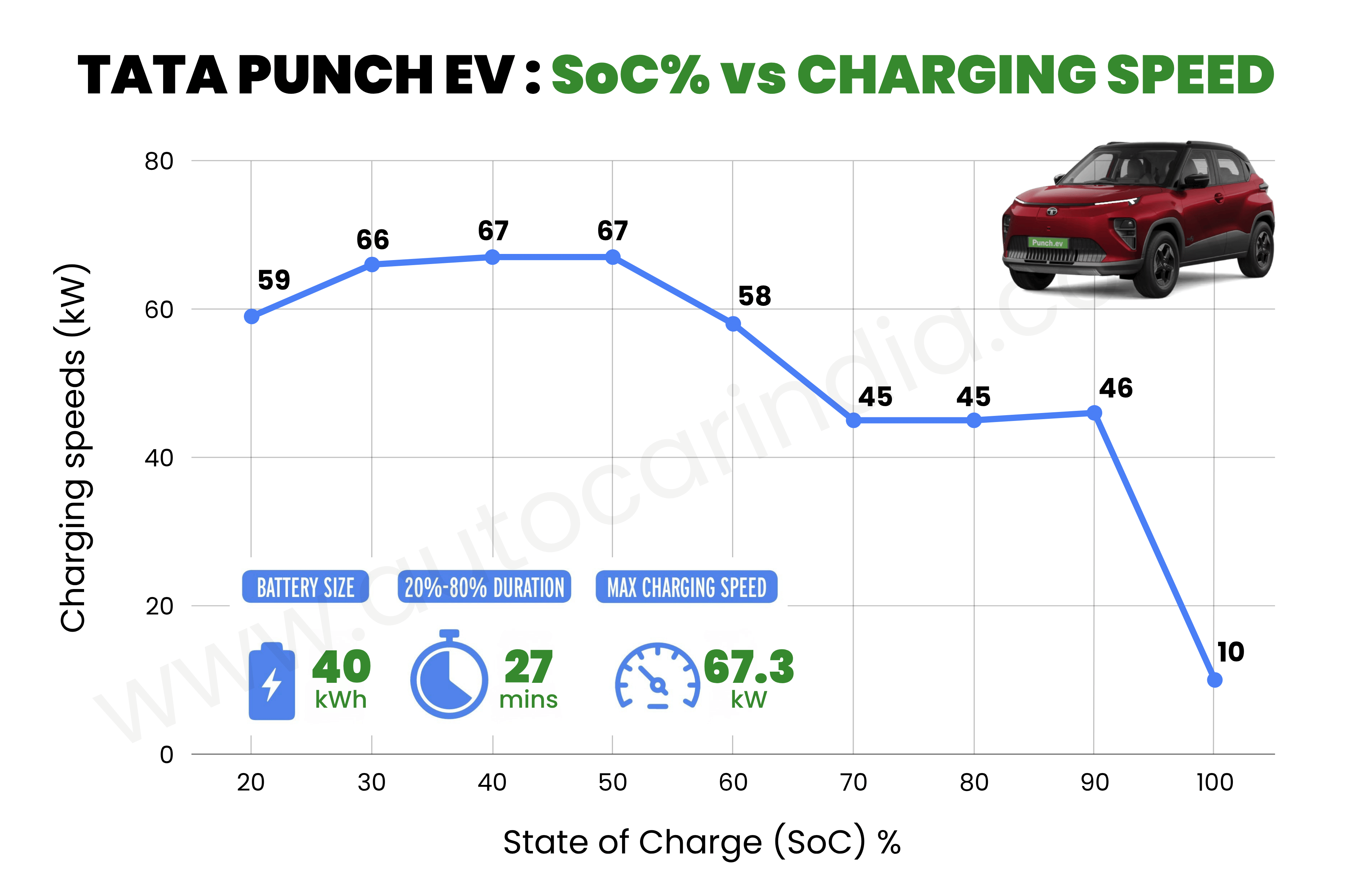
Using a 180kW DC fast charger, charging speeds hovered between 65-67kW from 25-50 percent state of charge, before tapering off beyond 50 percent and dropping sharply after 90 percent. Its 40kWh battery pack took 27 minutes to charge from 20-80 percent, and another 31 minutes to reach 100 percent. We also observed a peak charging speed of 67.3kW, slightly exceeding Tata’s claimed 65kW.
6. Toyota Urban Cruiser Ebella
Price: Rs 23.60 lakh
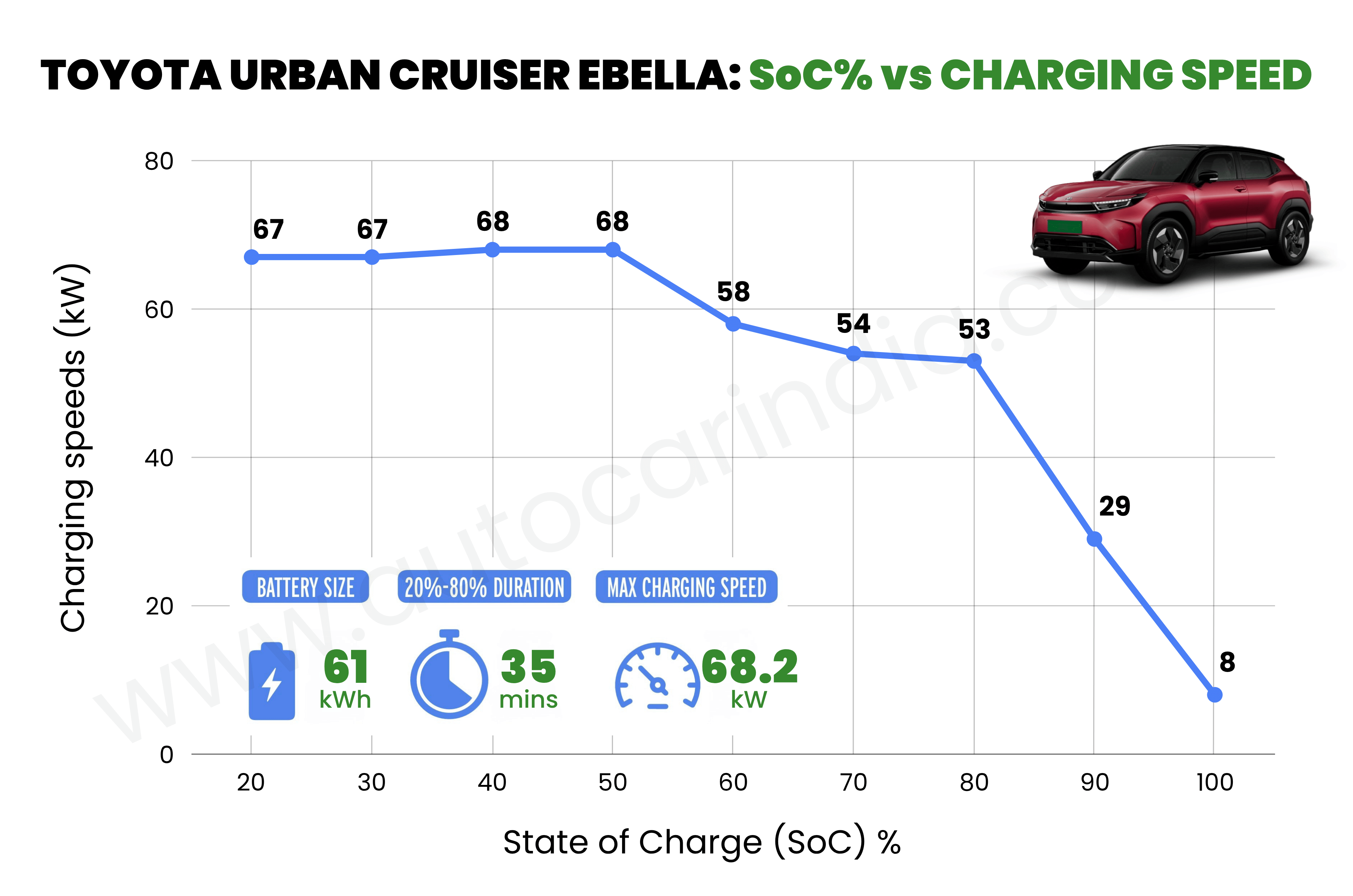
The Urban Cruiser Ebella is Toyota’s only EV on sale in India and is offered in a single variant with a 61kWh battery pack.
Using a 90kW DC fast charger, we recorded a peak charging speed of 68.2kW. Charging the 61kWh battery from 20-80 percent took 35 minutes, while the final 20 percent required another 36 minutes. Impressively, charging speeds remained consistently between 67-68kW from 20-50 percent state of charge.
You can expect similar charging performance from the Maruti Suzuki e Vitara, as the two models are essentially the same vehicle.
5. Mahindra BE 6 Sporteq
Prices: Rs 19.45 lakh to Rs 26.95 lakh
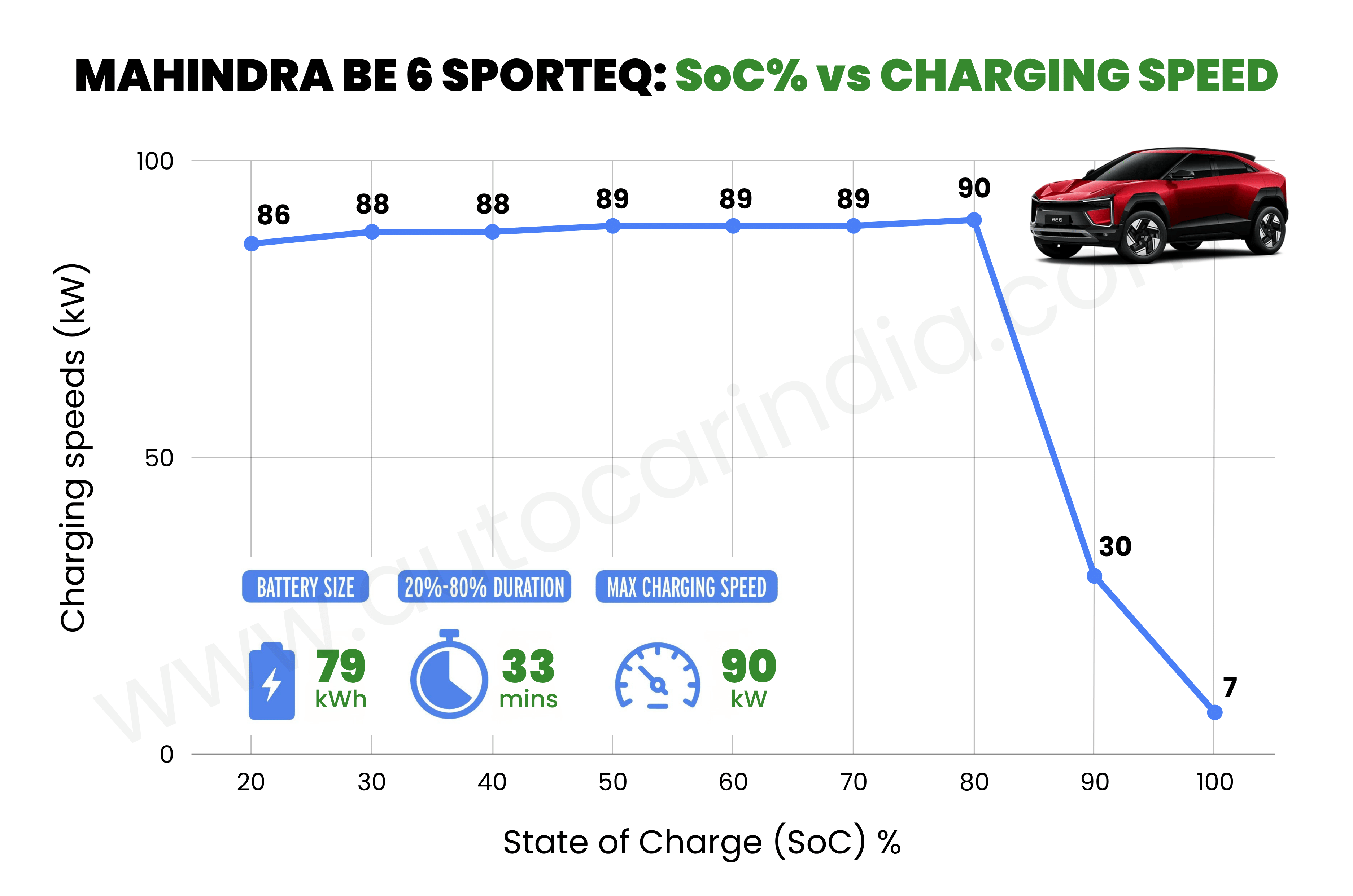
We charged the Mahindra BE 6 Sporteq, equipped with the 79kWh battery pack, using a 150kW DC fast charger. During the test, we recorded a peak charging speed of around 90kW, which is roughly half of Mahindra’s claimed figure. That said, charging speeds remained consistent at around 87-89kW from 20-80 percent state of charge, which is commendable.
The BE 6 took 33 minutes to charge from 20-80 percent and another 35 minutes to go from 80-100 percent.
Notably, owners have reported higher charging speeds, closer to the claimed 180kW, when using Mahindra and Zeon charging stations.
4. Vinfast VF7
Prices: Rs 22.99 lakh to Rs 28.09 lakh
We tested the dual-motor Vinfast VF7, equipped with a 70kWh battery, using a 180kW DC fast charger and observed a peak charging speed of 95.4kW.
Vinfast claims that charging from 10-70 percent takes 28 minutes. In our test, the VF7 required 38 minutes to charge from 20-80 percent using the same 180kW charger.
3. Mercedes-Benz CLA 250+
Price: Rs 60.50 lakh
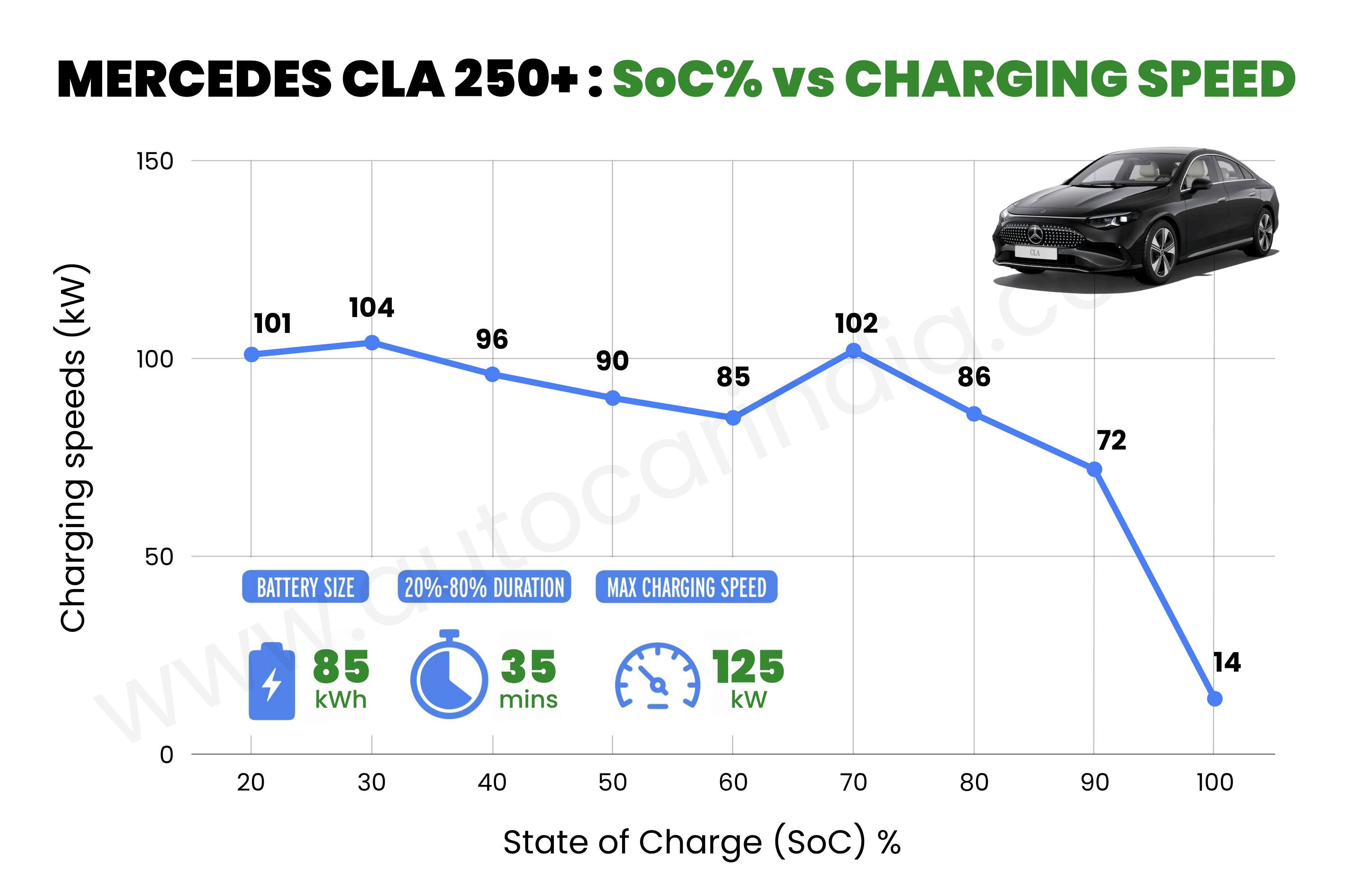
The Mercedes-Benz CLA 250+ is equipped with an 85kWh battery pack and an 800-volt electrical architecture, enabling charging speeds of up to 320kW. Mercedes claims a 10-80 percent charging time of just 22 minutes.
For our test, we used a 150kW DC fast charger, and the CLA’s 85kWh battery charged from 20-80 percent in 35 minutes and reached 100 percent after another 34 minutes. We recorded a peak charging speed of 125kW, with the charging rate averaging 96kW between 20-70 percent state of charge.
2. Tesla Model Y RWD:
Price: Rs 50.89 lakh
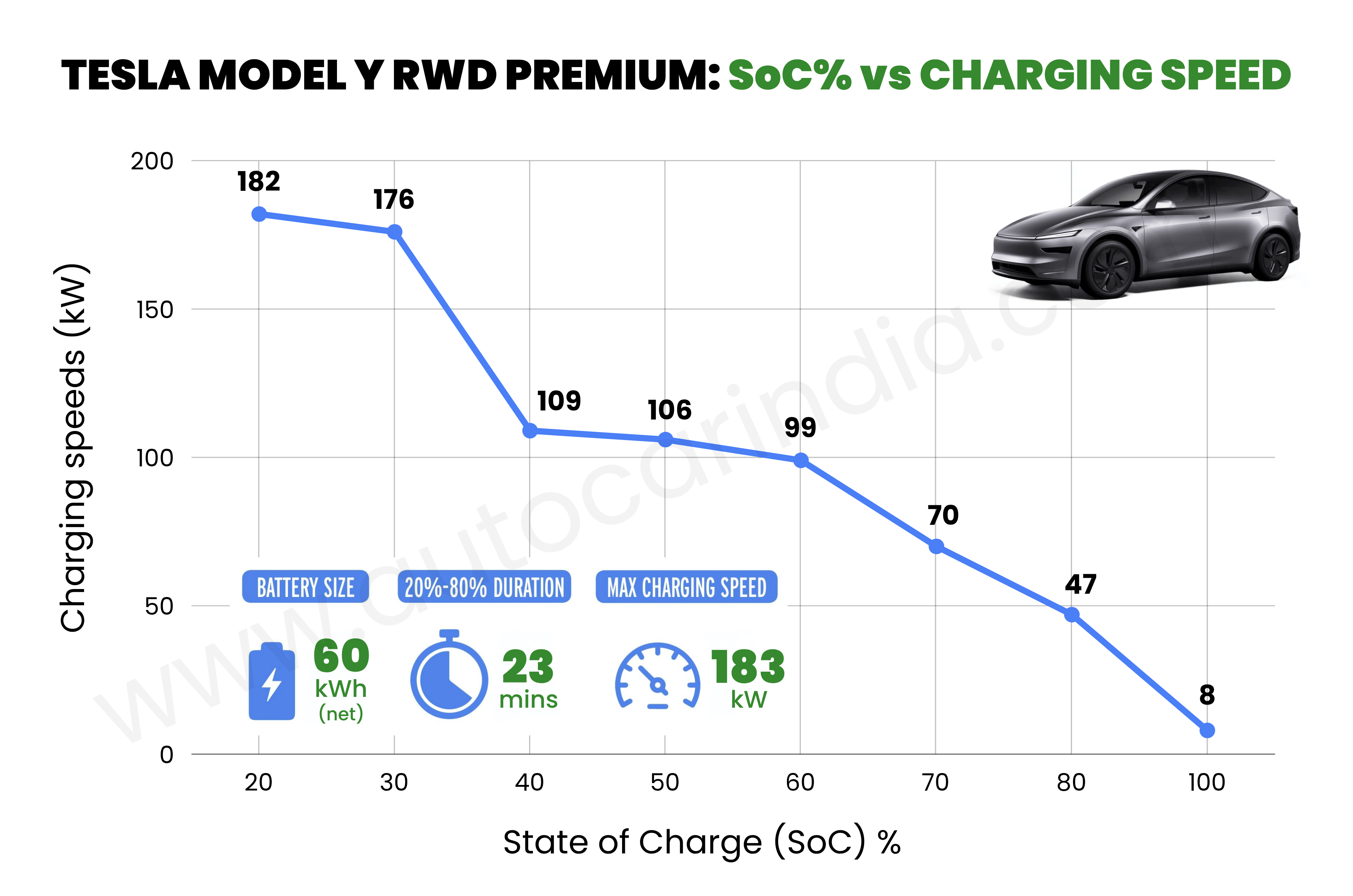
Tesla currently offers the 2026 Model Y in India with a single rear-mounted motor and a 60kWh LFP battery (64kWh gross). Using a 250kW Tesla Supercharger, the battery initially charged at an impressive rate. However, charging speeds dropped rapidly from 176kW at 30 percent state of charge to 109kW at 40 percent, before continuing to taper off thereafter.
In terms of charging times, the Model Y took 23 minutes to charge from 20-80 percent, while the final 20 percent required another 30 minutes.
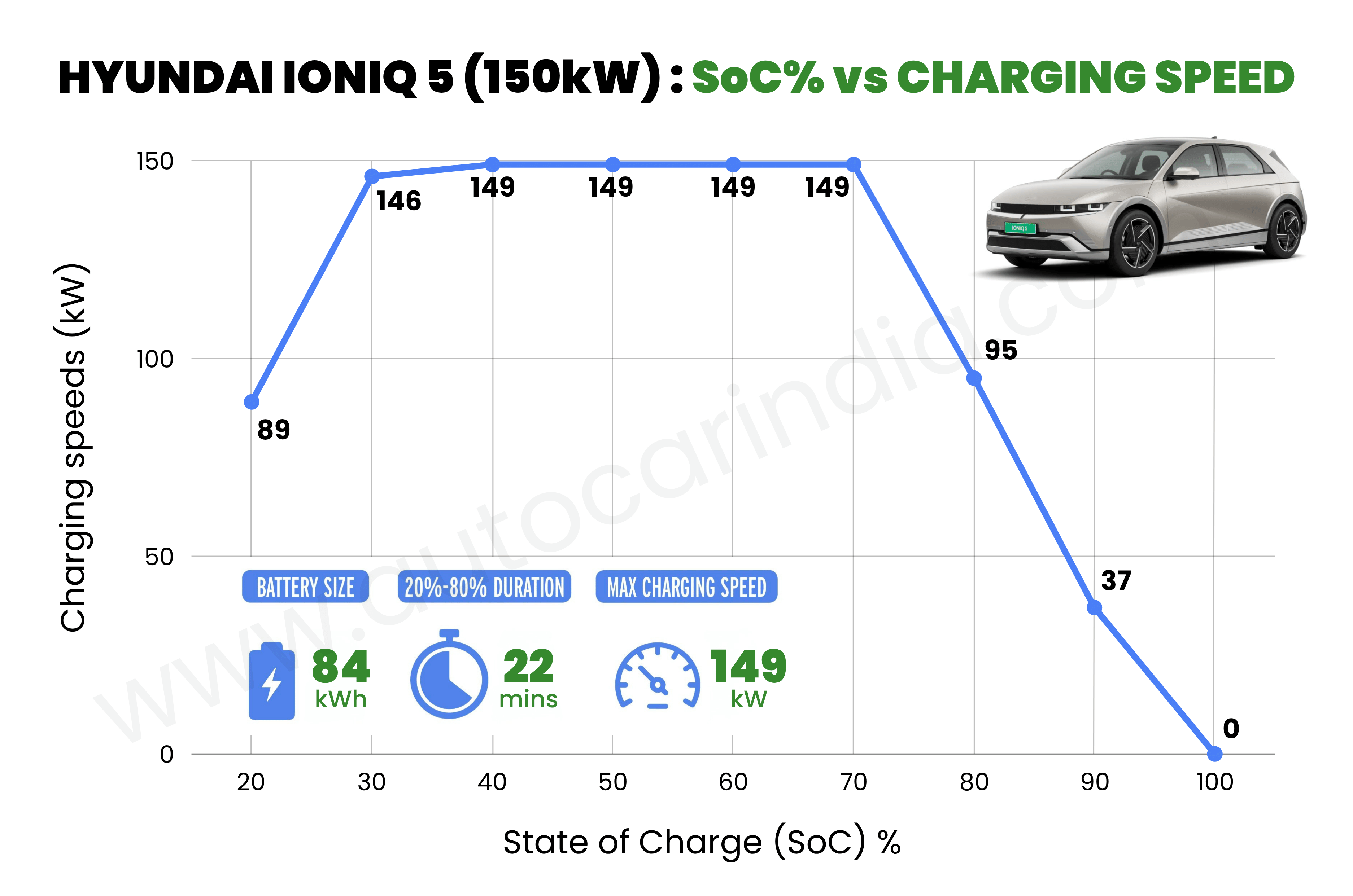
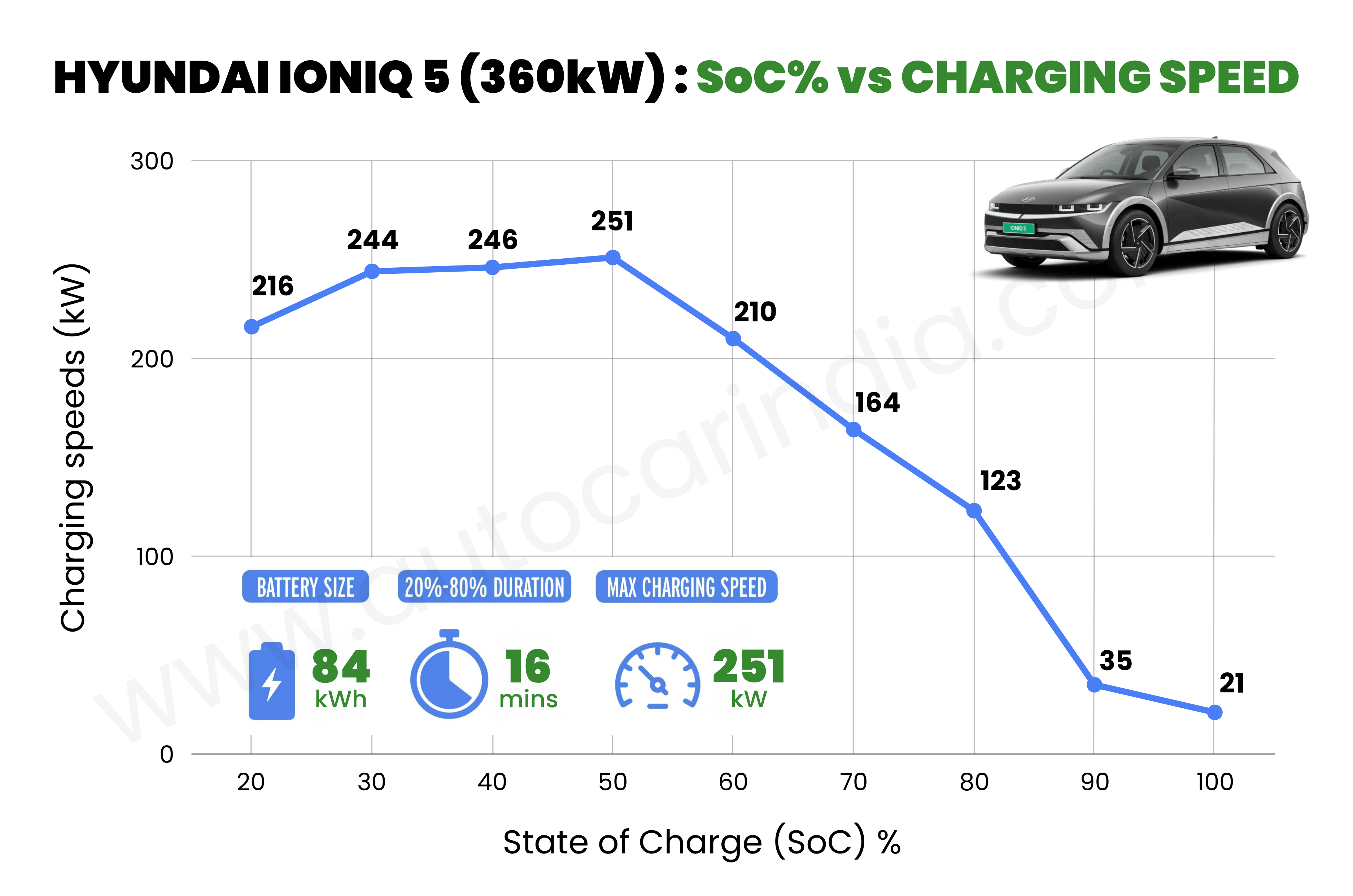
1. Hyundai Ioniq 5:
Price: Rs 55.71 lakh
The Hyundai Ioniq 5 is the fastest-charging EV we’ve tested so far in 2026. The updated model features a larger 84kWh battery pack, up from 72.6kWh in the previous version. Using a 360kW DC fast charger, charging speeds remained between 240-250kW from 30-50 percent state of charge before dropping sharply. We also recorded a peak charging speed of 251kW at around 50 percent state of charge.
As for charging times, the Ioniq 5 took just 16 minutes to charge from 20-80 percent – quickest we’ve seen to date; while reaching 100 percent required another 33 minutes.
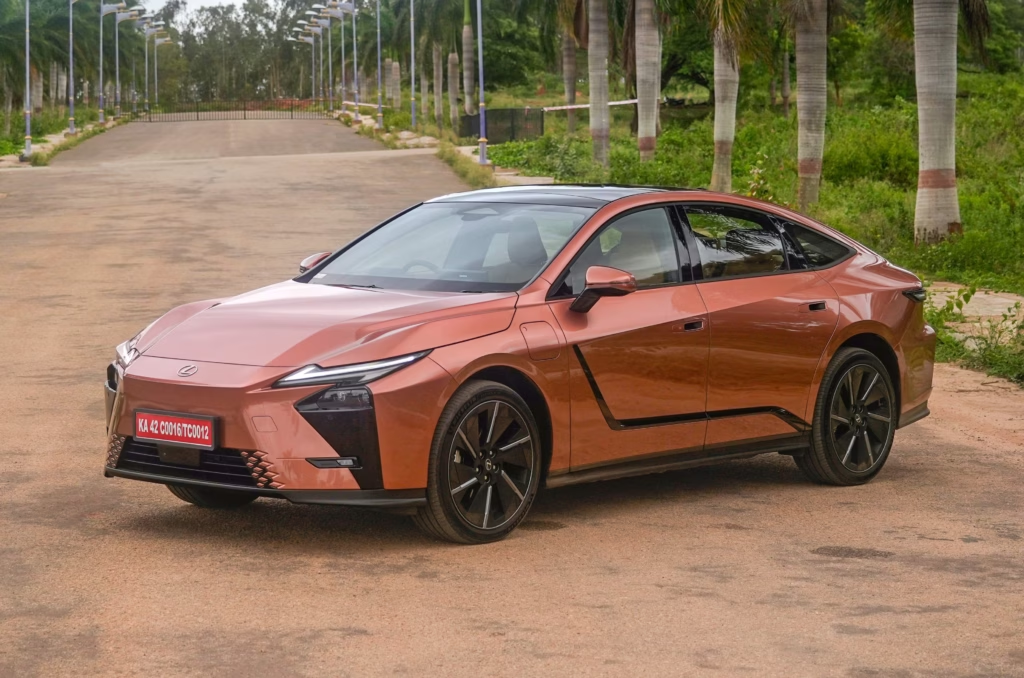
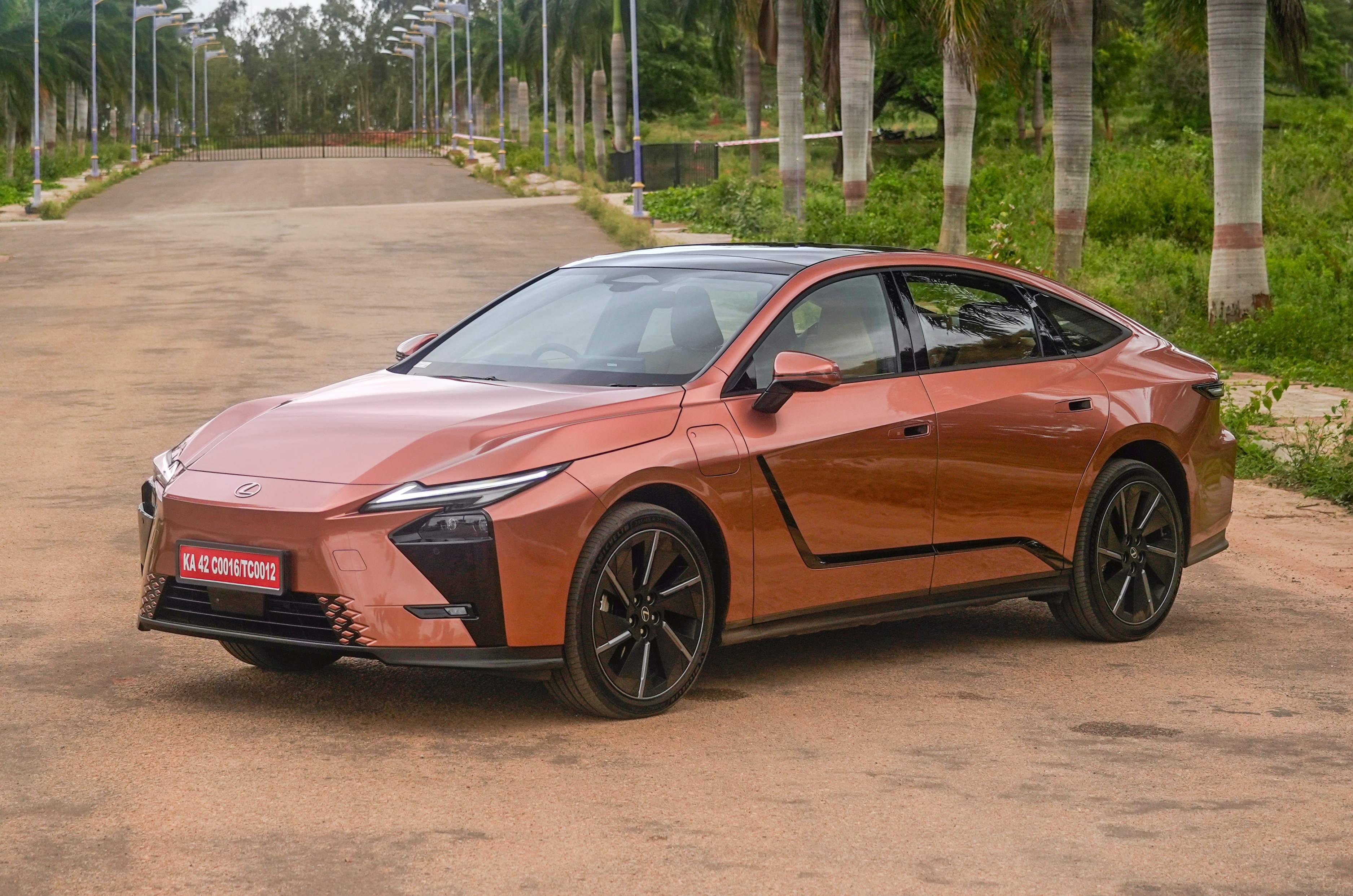
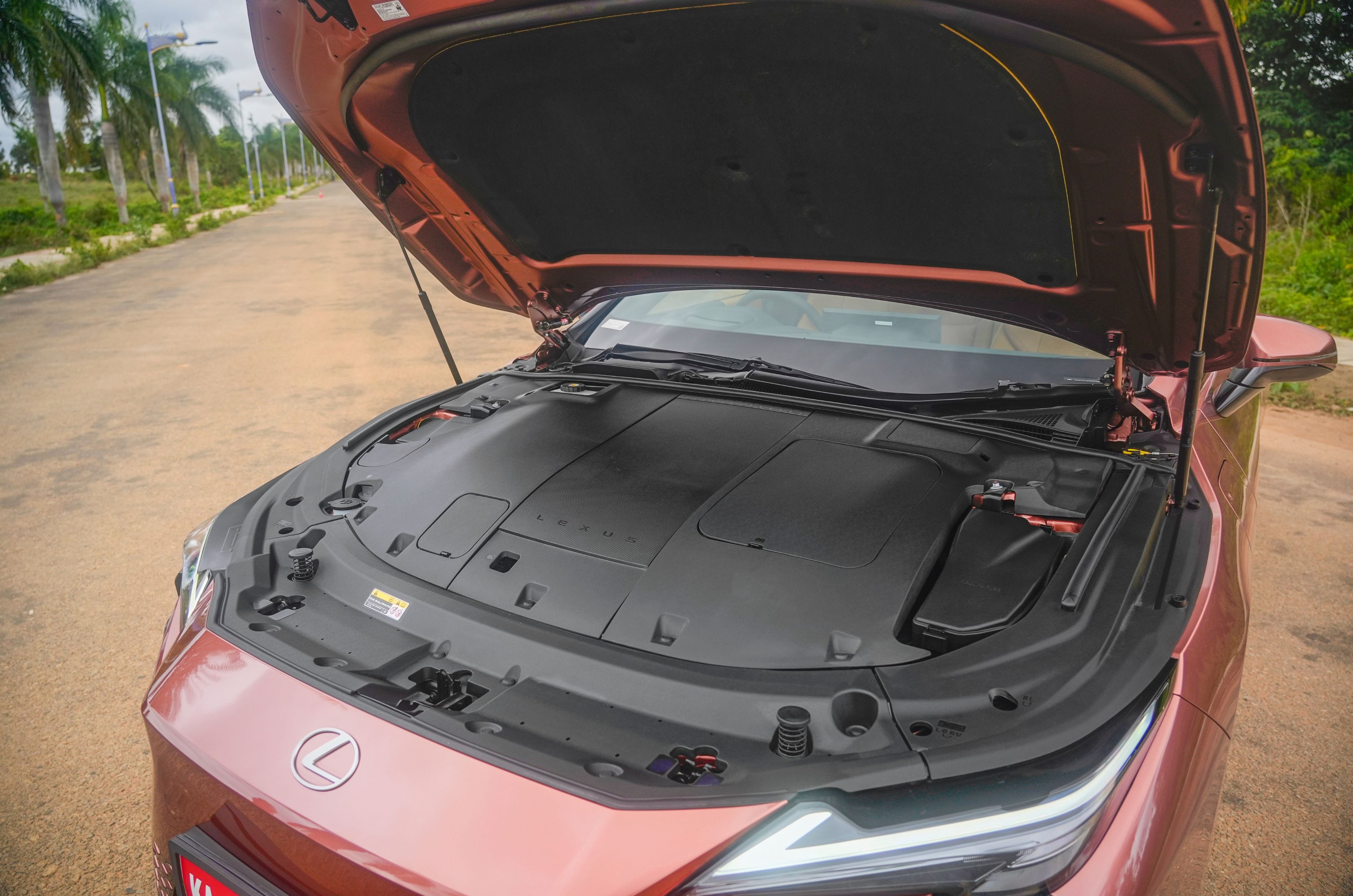
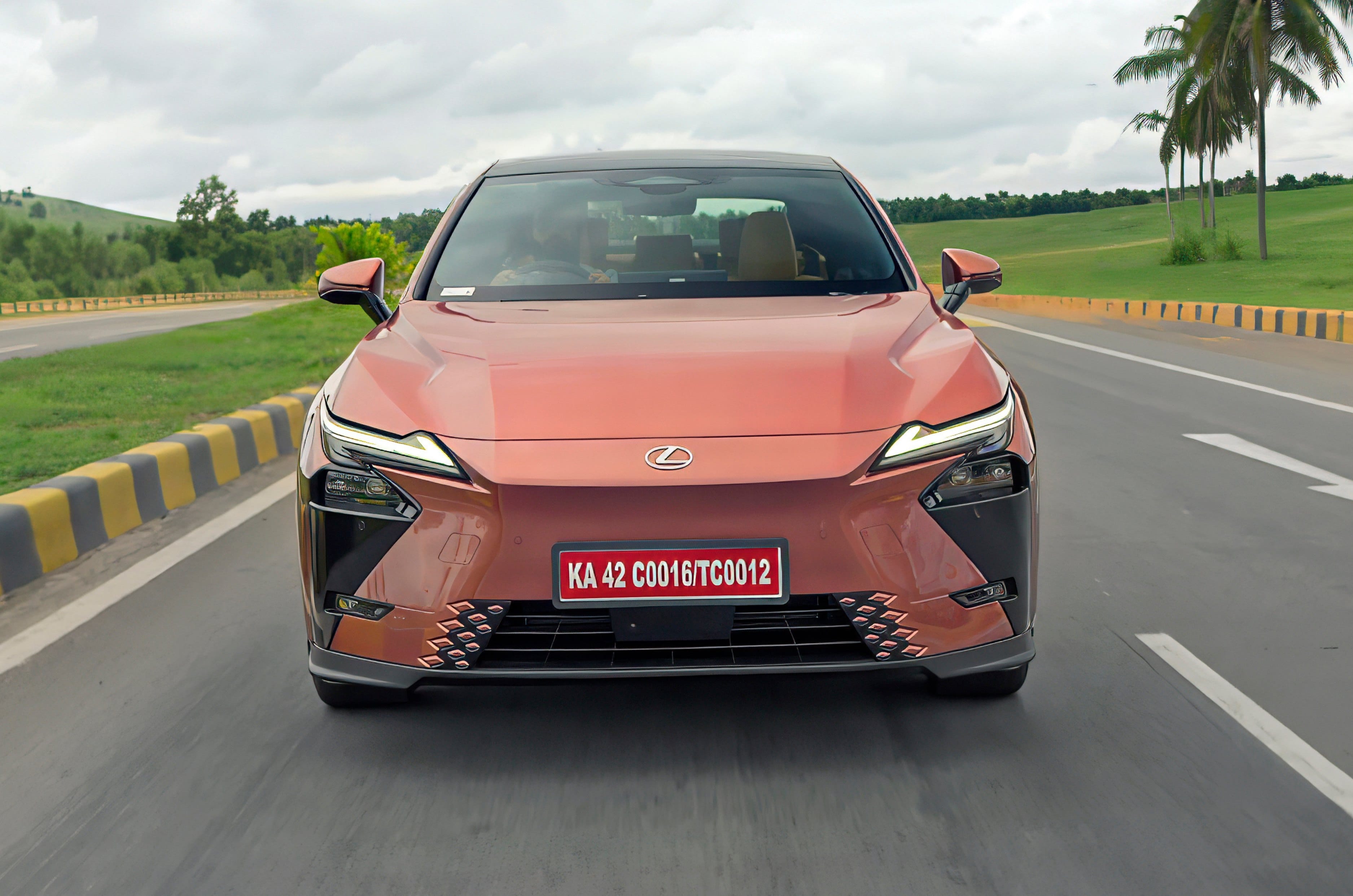
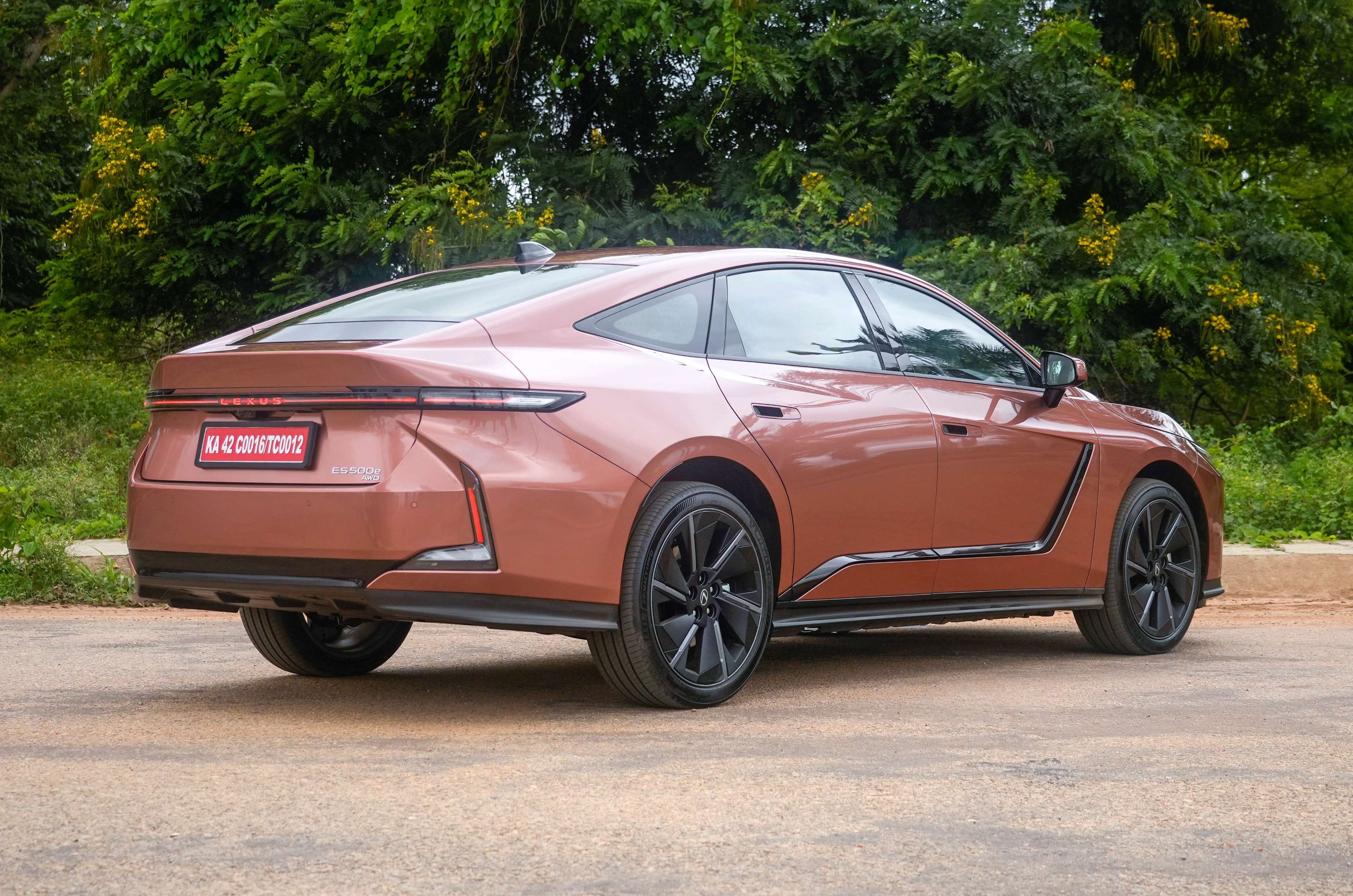
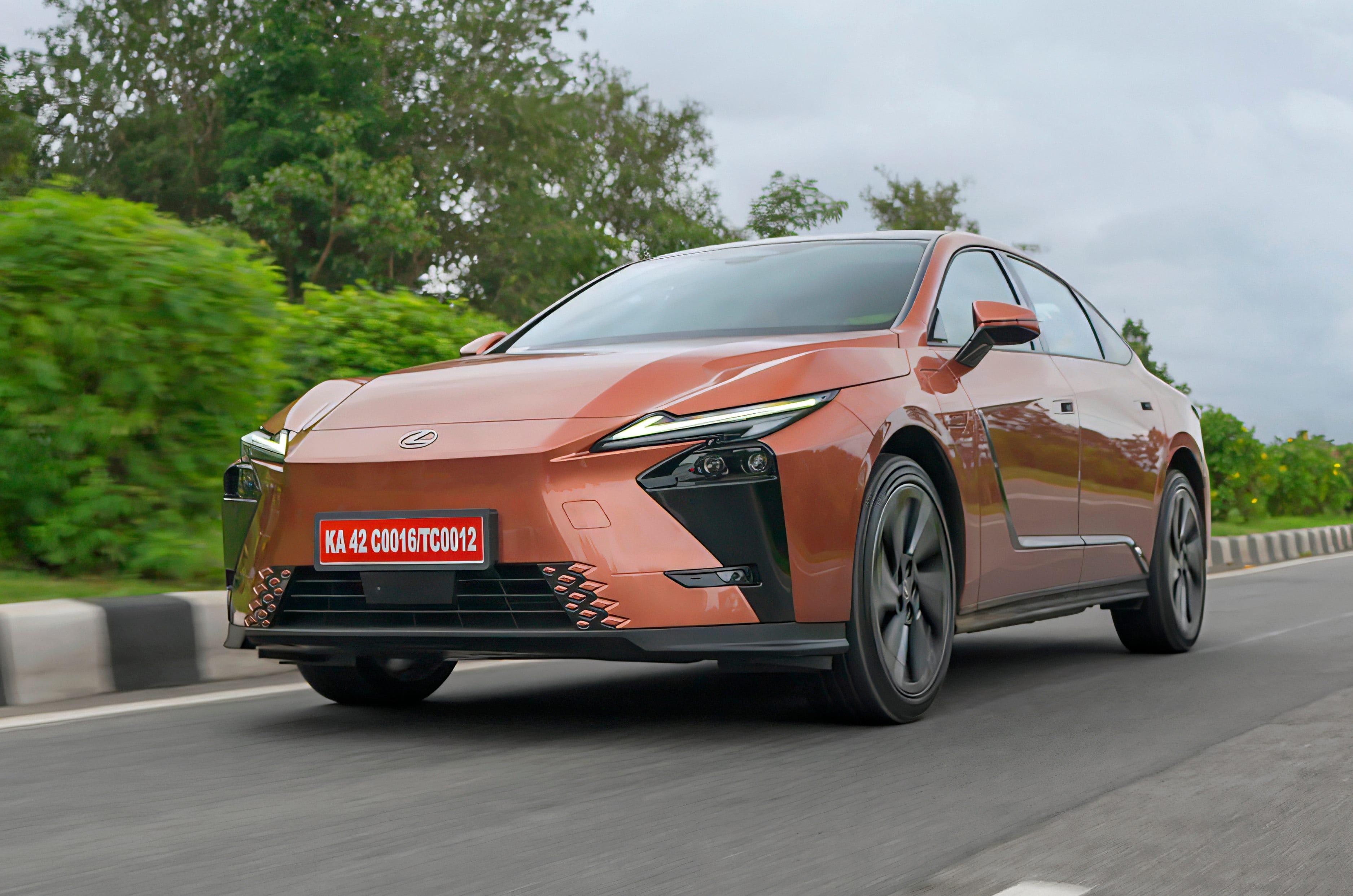
The Lexus ES 500e is the brand’s first all-electric model in India and is priced at Rs 91.20 lakh (ex-showroom). Its 74.68kWh battery powers two electric motors that produce a combined 343hp and 438Nm, with Lexus claiming a range of 580km. We’ve driven the ES 500e to see what works well and what doesn’t.
Pros
1. Smooth, linear power delivery
The ES 500e has 343hp and 438Nm from its dual-motor all-wheel-drive setup, but it doesn’t feel intimidating from behind the wheel. Power builds in one smooth, predictable surge, with a quick response that never feels abrupt. Even in Sport mode, the delivery remains easy to modulate, making the ES 500e feel more relaxed than its performance figures suggest.
2. Excellent refinement
This is one of the ES 500e’s strongest qualities. Lexus has done a good job of keeping wind, road and tyre noise out of the cabin, and even at highway speeds there is little more than a faint whoosh from the ORVMs. Combined with the quietness of the electric powertrain, it makes the ES 500e a particularly calm car to spend time in.
3. Spacious cabin
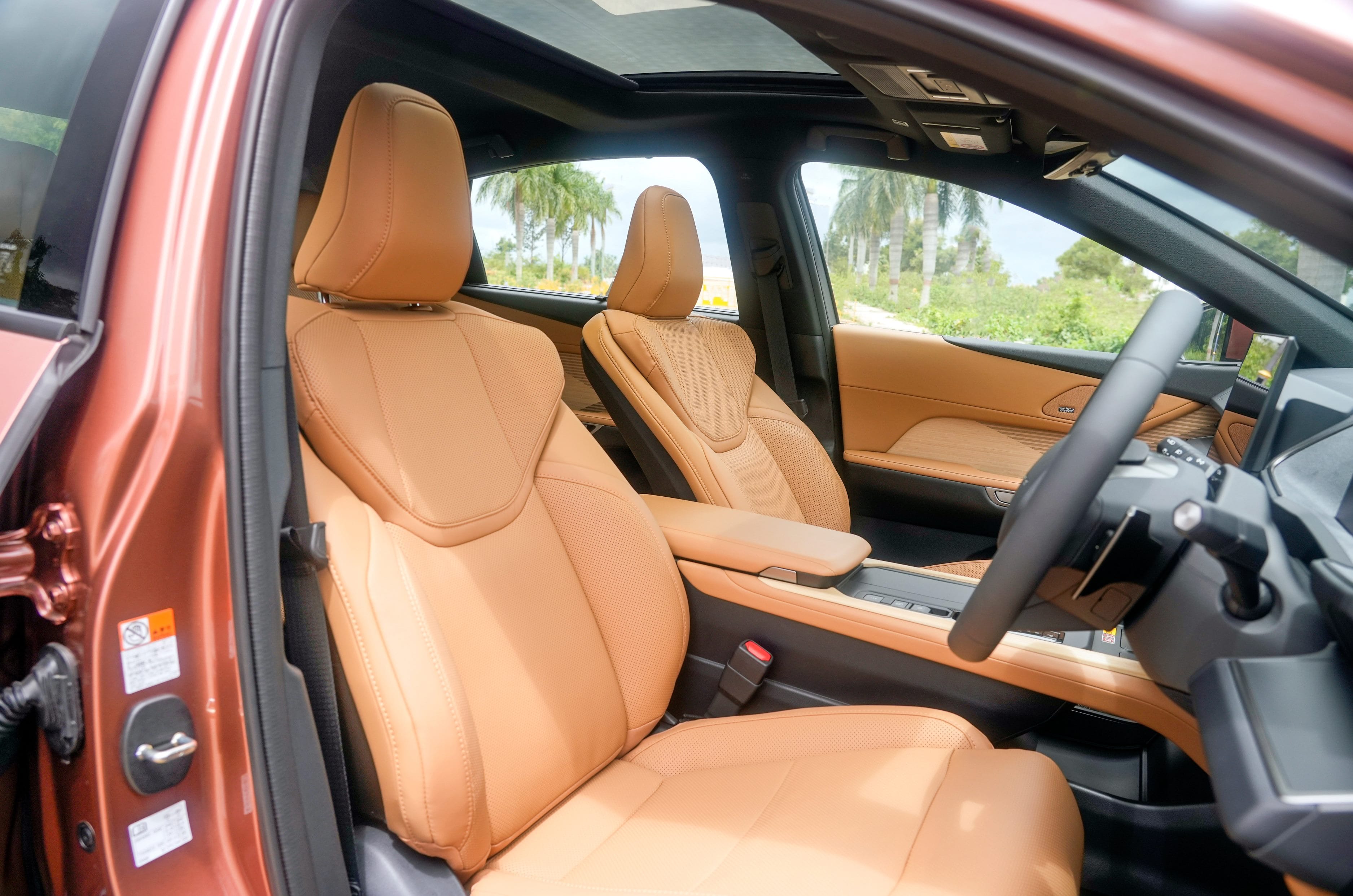
The ES 500e’s 5,145mm length and 2,950mm wheelbase translate into a roomy cabin, particularly for rear passengers. There is plenty of legroom and the seats themselves are well shaped and comfortable. The front seats also get heating and ventilation, adding to the car’s long-distance comfort.
Cons
1. Range
The 74.68kWh battery has a claimed WLTP range of 580km, but real-world numbers hover around the 380km mark. That is a sizeable gap and means long-distance journeys will need more planning, particularly when compared with what you might expect from a large luxury EV with this size of battery.
2. Ride quality
The ES 500e’s ride is firmer than the 350h, partly because of the changes made to handle the EV’s additional weight. The 21-inch wheels and relatively low-profile tyres compound the issue, with low-speed bumps and expansion joints making their presence felt in the cabin. It is more settled at highway speeds, but ride comfort is still not a strong point for a car of this size and price.