

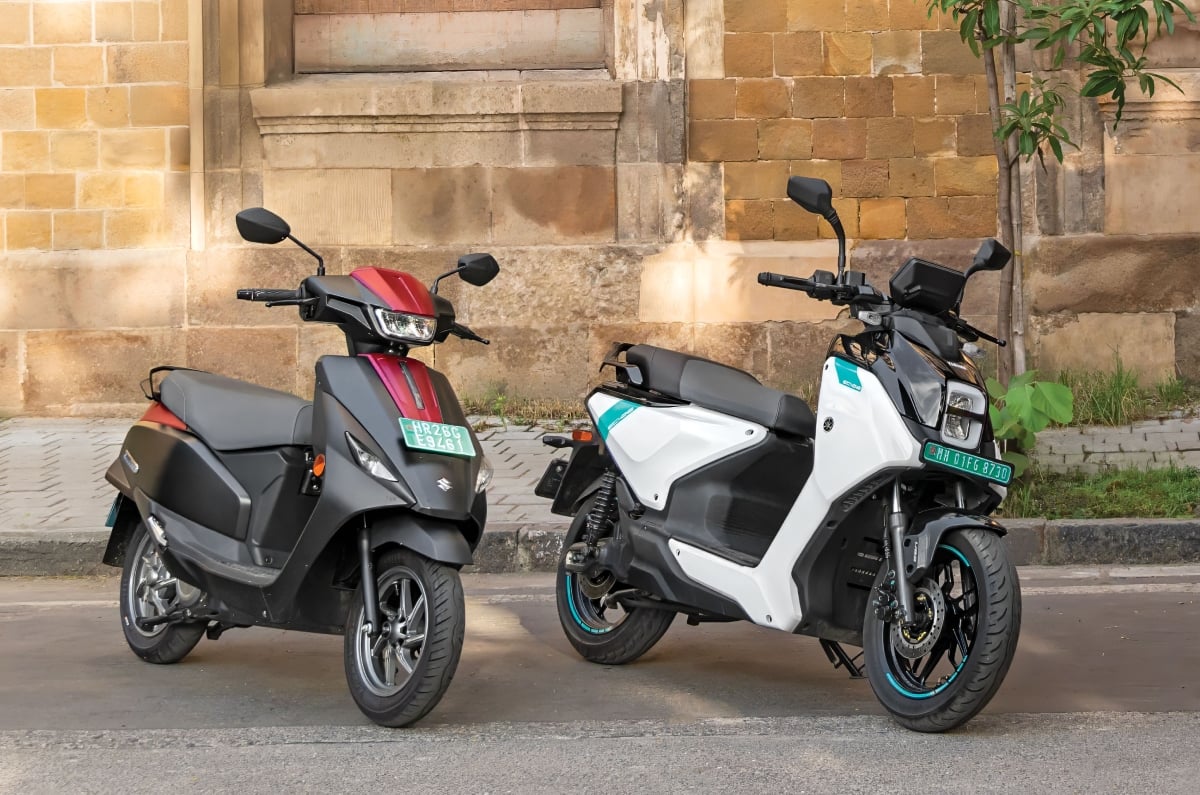
Suzuki e-Access vs Yamaha EC-06 comparison: Night & Day

Suzuki e-Access vs Yamaha EC-06 comparison: Night & Day
Suzuki e-Access vs Yamaha EC-06 comparison

While the Indian manufacturers have been quick to capitalise on the EV boom, the Japanese have been rather more measured in their approach. Honda arrived in 2025 with not one but two in-house electric scooters, though both had unique limitations that prevented them from succeeding.

Suzuki, like Honda, chose to develop its own platform from scratch, but its e-Access appears expensive for what it offers. Yamaha, meanwhile, took a markedly different route for its more affordable offering and partnered with an Indian startup. The EC-06 is, in essence, a more expensive River Indie in sharper clothes. 

So if you’ve been waiting for a Japanese e-scooter, you now have two choices, but like their very different inceptions, both also offer you two very different flavours of electric scooter. The question, then, is which one deserves your money – and whether either deserves it over the competition.

Not hiding in plain sight

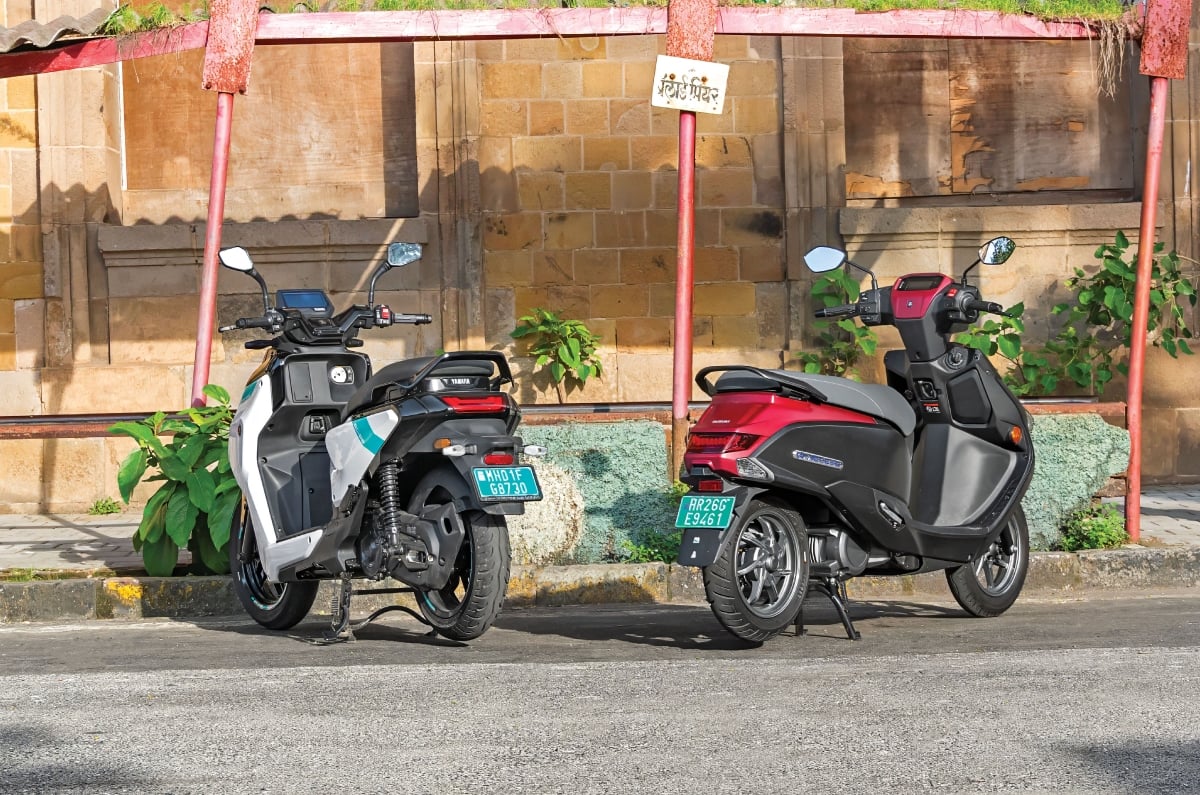
Subtle, these scooters are not. Both take distinctly left-field approaches to styling and will stand out from the crowd. Over the fortnight we spent with them, the EC-06 consistently drew more positive attention thanks to its chunky, squared-off proportions. The e-Access found its niche too, though its double duck-bill nose, flowing front panels with a contrastingly boxy tail make it more of an acquired taste.


Yamaha EC-06

Suzuki e-Access

Kerb weight132kg122kg
Seat height770mm765mm
Underseat storage24.5 litres17 litres
Ground clearance145mm (laden)160mm (unladen)

Climb aboard and their personalities diverge further still. The e-Access feels more like a conventional scooter. Despite its compact dimensions, it never feels cramped, even for taller riders, while its 765mm seat height makes it instantly approachable for shorter ones.

The EC-06, by comparison, feels a size larger. Its riding triangle is noticeably roomier, which taller riders will appreciate in a segment that seldom caters to them. Yet, with a friendly 770mm seat height, it remains fairly unintimidating for shorter riders. In fact, tall riders will want a higher seat.

Different strokes

The riding experience of both also reflects two very different engineering philosophies. The 122kg e-Access feels exceptionally light on its feet; whether wheeling it around a parking space or flicking it into a bend, it responds eagerly – actually, a bit too eagerly. Some of that can be attributed to Suzuki mounting the battery pack vertically beneath the seat, a decision that, as you will read further on, has implications elsewhere too.


Yamaha EC-06

Suzuki e-Access

Battery capacity / chemistry4kWh / NMC3.072kWh / LFP
MotorPermanent Magnet SynchronousPermanent Magnet Synchronous
Power6.7kW4.1kW
Torque26Nm15Nm

Like the latest Burgman, its ride also errs towards the firmer side rather than the plush feel of a TVS iQube. It isn’t uncomfortable by any means, but it is something worth paying attention to on a test ride. Taller riders will also discover the Suzuki’s compactness during full-lock U-turns, where their knees will foul the handlebar.

On the flip side, the EC-06 is relatively heavier and slower to steer, but it’s a small tradeoff. That’s because its larger 14-inch wheels lend it greater stability at faster speeds and also help it dismiss broken roads with admirable composure. Its absorptive suspension also factors in here, though particularly sharp impacts can provoke a slight judder in the fork.
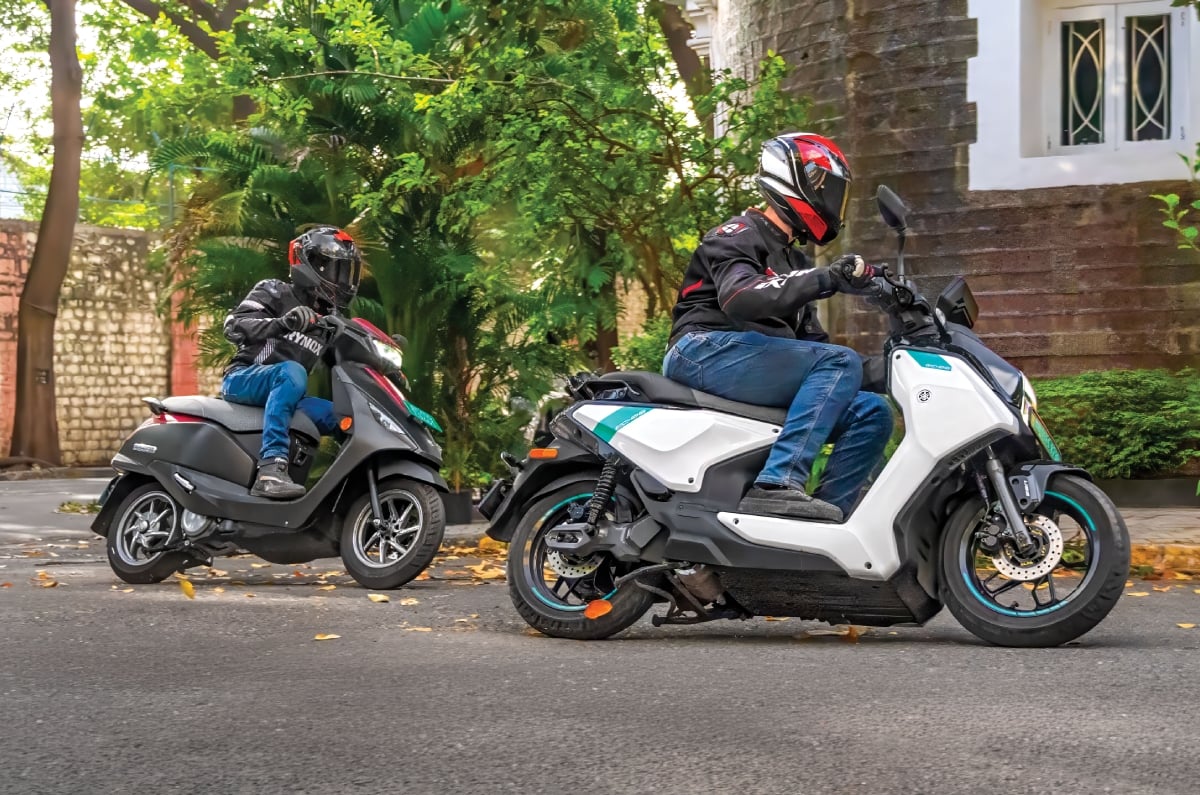
E-Access has the more flighty, energetic demeanour, whereas the EC-06’s handling is more sure-footed.  

The Yamaha’s seat, however, leaves quite some room for improvement. Its forward-sloping shape constantly makes you slide forward, necessitating frequent shuffling about. The padding is also too soft, and after just 30 minutes or so, you find yourself sinking into the seat pan. This results in a gradually more knees-up riding position, which might sound like a trifling problem at first but one that becomes increasingly apparent over longer journeys.

Neither one gets ABS, which feels like quite an egregious oversight considering their price points. Nevertheless, the Yamaha’s brakes inspire greater confidence because they are powerful without being overly aggressive, and its wider tyres also provide better traction. The Suzuki’s brakes, conversely, are almost too sharp. On Mumbai’s slippery concrete roads, they demand a more measured touch when coming to a halt quickly.

Not that you’ll often rely heavily on them. That’s partly down to the well-calibrated regenerative braking system and partly because the e-Access’ performance is quite unremarkable. Not only is it much slower than the EC-06, but it also feels noticeably less eager than the petrol-powered Access. It’s perfectly usable in the city, but on faster roads, overtakes require planning. Unsurprisingly, the Yamaha feels considerably livelier. It accelerates with genuine enthusiasm in its top Power mode, the regenerative braking is seamlessly calibrated in all 3 modes (Standard and Eco being the other two) and, despite using chain drive, its drivetrain is remarkably silent – akin to a hub-mounted motor.

Feel Good (?) Features

Build quality on both is reassuringly solid and exactly what one expects from the Japanese. At these prices, however, there are a few omissions that are difficult to overlook.

The e-Access employs the same TFT display found on the ICE Access 125 and Burgman, both of which cost substantially less. Yamaha, meanwhile, supplies only the slower 480W charger, despite the considerably more affordable River offering a faster 750W unit as a Rs 3,000 option.
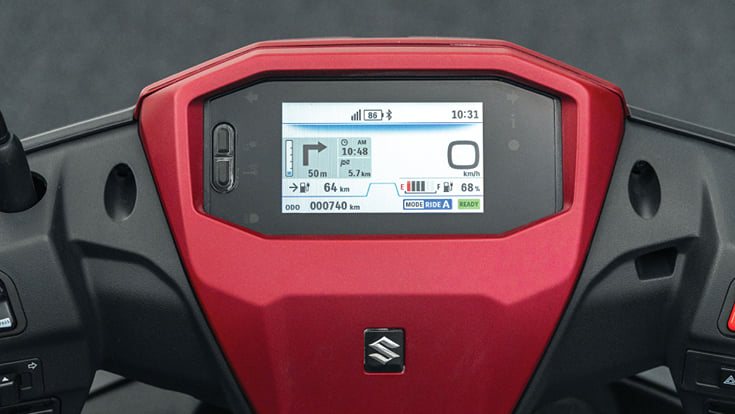
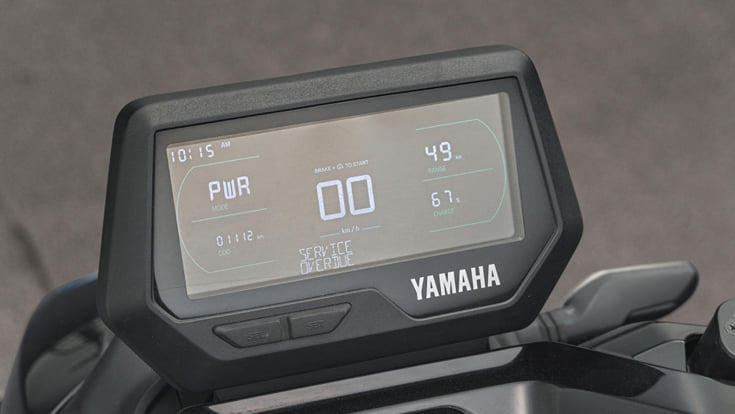
Instrument cluster side by side comparison
 

Same TFT as ICE Access; EC’s negative LCD is simpler but well laid out.


The EC-06 also sacrifices a lot of storage compared to the Indie. Its 24.5-litre under-seat boot is far short of the latter’s enormous 43-litre boot and trails established rivals such as the iQube, Rizta and Chetak. The River’s lockable 12-litre glovebox has been omitted too, though Yamaha has used this to reposition the charging port to a more convenient location.
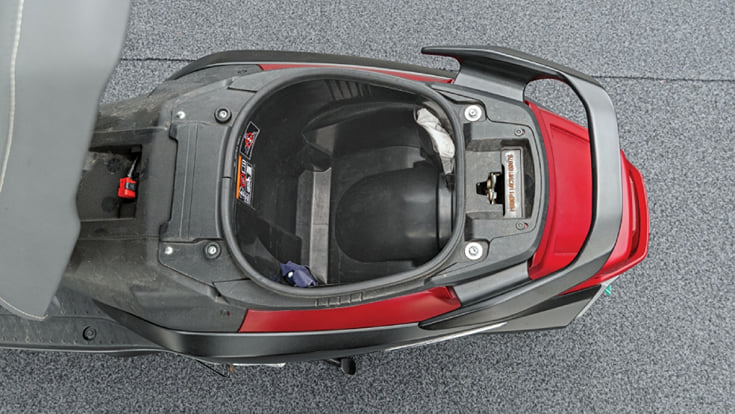
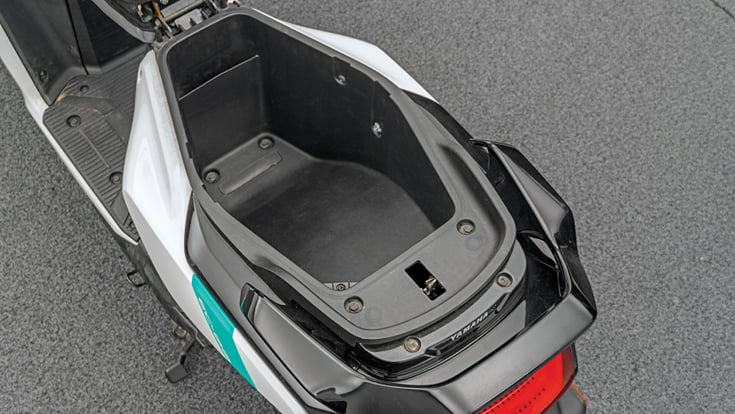
Side by side of EC-06 and e-Access underseat storage
 

e-Access’ 17L boot far too small and oddly shaped; Yamaha’s 24.5L boot is more usable but not segment-leading.


If the Yamaha’s storage is merely average, the Suzuki’s is positively outclassed. The battery’s position beneath the seat results in just 17 litres of bootspace – roughly half what you’ll find on rivals like the Rizta and Chetak. In fact, even the ICE Access 125 offers you quite a bit more storage space. The e-Access’ boot is also shaped quite awkwardly, and unless the charger’s cables are folded with almost Victorian precision, it simply refuses to fit.

Range Rovers?

An electric scooter ultimately needs to deliver one thing above all else – promising range to reduce your running costs. In Ride A mode, which delivers full performance and max regen, the e-Access covered a little over 88km in our range test. Given its smaller 3kWh battery and its use of safer, but less energy-dense, LFP chemistry, the result is respectable in isolation; however, compared to the market’s front-runners, it falls far short.


Yamaha EC-06

Suzuki e-Access

0-40kph

3.46s

4.94s

0-60kph

6.82s

11.93s

Roll-on Acceleration  
20-50kph3.31s5.46s
30-70kph7.34s17.01s
50-80kph10.96s–

Our test on the EC-06 was conducted in its middle Standard mode, which retains full performance but softens throttle response compared to Power mode. It covered 114km, comfortably exceeding the distance initially predicted. Both scooters deserve praise here, as their range indicators proved refreshingly honest, not indulging in optimistic guesswork.


Yamaha EC-06

Suzuki e-Access

60-0kph

22.87m

24.64m

Using Eco mode will naturally extend the range on both, though with reduced acceleration and lower top speeds. Thankfully, neither becomes painfully slow. Even in Eco, both climb flyovers and keep up with city traffic without reducing themselves to rolling roadblocks.
While the Yamaha’s range is undoubtedly more impressive, its charging time is a rather different story. The supplied 480W charger requires a glacial ten hours to replenish a flat battery. Meanwhile, the Suzuki’s 600W unit requires around six hours to do the same, although its battery pack is also smaller.

One thoughtful detail both manufacturers deserve credit for is the inclusion of a dedicated charger bag. It is a small touch, but one that should help protect the charger from spending years rattling around inside the boot.THE BIGGER PICTURE

Judged purely against each other, the result is straightforward – the EC-06 clearly wins. It offers superior performance, greater comfort, longer range and also costs much less than the e-Access.


Yamaha EC-06

Suzuki e-Access

Price (ex-showroom, Bengaluru)Rs 1.71 lakhRs 1.92 lakh

However, if you zoom out and look at the broader market, the context changes. At Rs 1.71 lakh, the Yamaha is hardly inexpensive, and the Suzuki, which is knocking on the door of Rs 2 lakh, is even worse off. When proven alternatives from TVS, Ather, Bajaj, Vida and River offer similar or even superior alternatives for substantially less money, the Japanese appear more like fringe players and less like mainstream contenders.

There will undoubtedly be a small demographic of buyers for whom a Japanese badge carries enough cachet to justify this big premium. However, for the rest of us, the more keenly priced and proven homegrown contenders are the better bet.

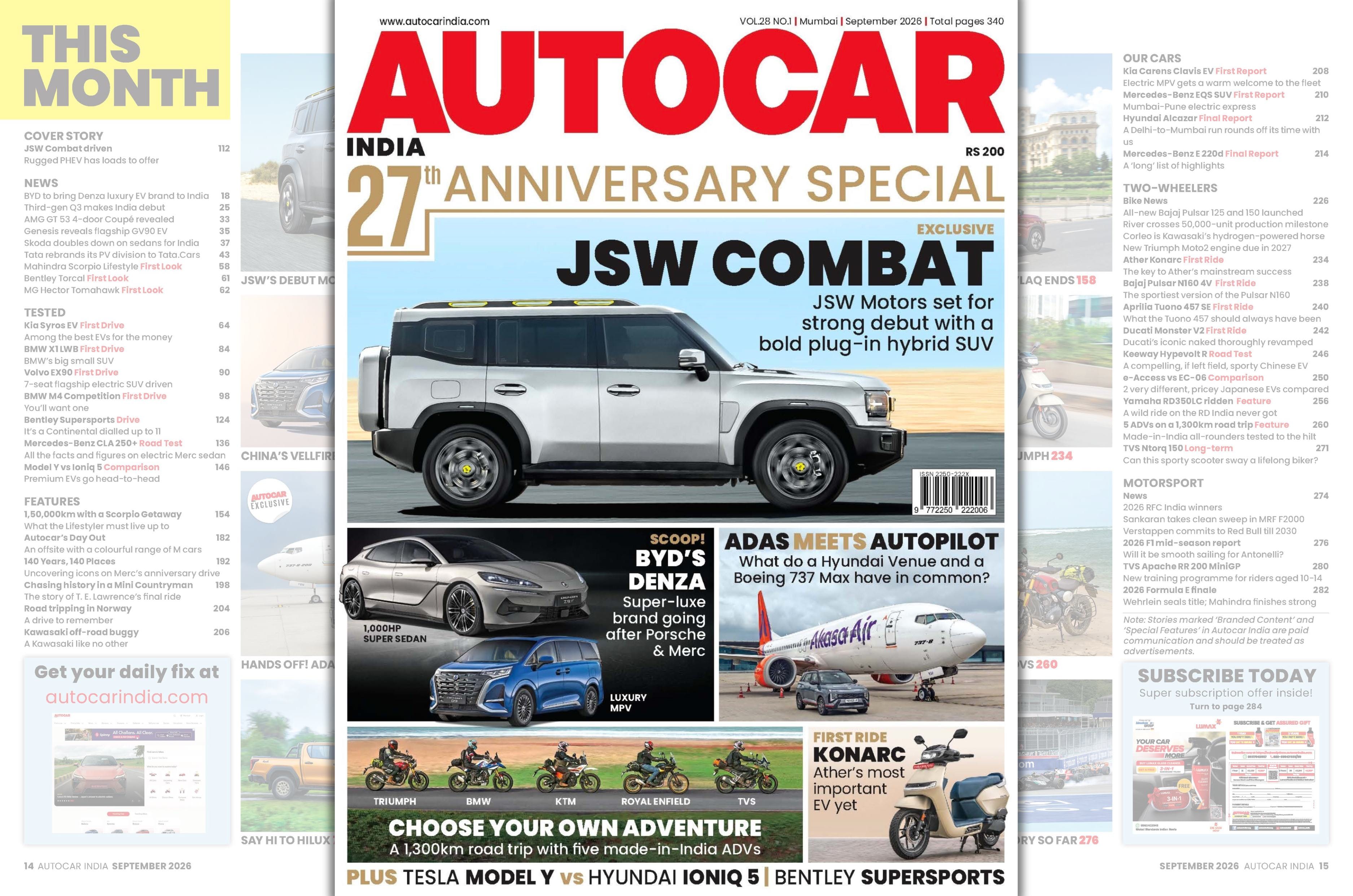
Autocar India September 2026: JSW Combat, Scorpio Lifestyler, BYD Denza and more

Autocar India September 2026: JSW Combat, Scorpio Lifestyler, BYD Denza and more
Autocar India Sept 2026 issue

Autocar India turns 27, and rather than quietly celebrating with a cake, we’ve celebrated the way we know best: with scoops, exclusive drives and a frankly unreasonable amount of driving. In this issue, we bring you an exclusive drive of JSW’s new Combat SUV (you heard the name here first), a scoop on BYD’s Denza luxury push, and the last leg of the 20,000km Pune-to-Prague odyssey, alongside a serious collection of new cars and bikes. Oh, and there’s also a Boeing 737 Max aircraft involved. Because apparently cars weren’t complicated enough.

JSW Combat: Review

JSW’s first SUV is a rugged plug-in hybrid based on the Jetour T2. We get an early exclusive drive of the Combat and examine whether this newcomer really has what it takes to shake up the Rs 30-50 lakh SUV market. 

BYD Denza: China’s Luxury Offensive

BYD is bringing Denza to India, with luxury EVs like the D9 MPV and Z9 GT aimed squarely at the established big boys. Having disrupted the mid-range EV market with BYD, it is now going after the high-end market with Denza. 

ADAS Meets Autopilot: Hands Off!/Look ma, no hands!

What do a Hyundai Venue and a Boeing 737 Max have in common? Quite a lot, apparently. We climb into a full-flight simulator to understand how aircraft autopilot works and what it has in common with the increasingly sophisticated systems in our cars. 

Skoda Kylaq: Pune to Prague, Part 2

The Silk Route may have been built for traders, but we’ve used it to find out just how far you can take a small SUV before it starts asking for a holiday. After 19,000km, 70 days and not a single puncture, our Skoda Kylaq finally reaches Prague. 

Autocar’s Day Out: M-ployees of the Month

Most company off-sites involve a resort, a buffet and someone reluctantly joining a team-building exercise. Ours involved six BMW M cars, more than 3,000hp, a deserted concrete ground and a frankly irresponsible amount of tyre abuse. Four M4s and two M2s went head-to-head in slalom, football and drifting, and what began as a relaxing team outing rapidly descended into a war. 

Tesla Model Y vs Hyundai Ioniq 5: Comparison 

Two premium EVs, two very different ideas about what an electric car should be. The Model Y with its recently revised price, and the updated Ioniq 5 go head-to-head to see which makes the stronger case. 

Bentley Supersports: Drive

Take a Continental GT and turn the dial towards something completely unnecessary. The result is Bentley’s Supersports, a rear-wheel-driven beast with considerably more intent. We drive it around Laguna Seca.

Mini Countryman C: First Drive 

The Countryman has grown into a proper luxury SUV, with generous space, loads of kit and a new 1.5-litre turbo. At Rs 47.5 lakh, it’s the biggest and most grown-up Mini yet, and is ready to lock eyes with real luxury SUVs rather than merely be a fashion statement. But has it done that?

5 Ways to Adventure: Feature

Five made-in-India ADVs, 1,300km and one simple question: which is the best way to go exploring? We put the bikes through highway miles, trail riding and plenty of scenic detours to see how their different approaches to adventure stack up.

Ather Konarc: First Ride

Ather’s new Konarc brings the brand’s blend of quality and comfort to a wider audience, with prices starting at Rs 99,999. A compelling new step into the mainstream.

Suzuki e-Access vs Yamaha EC-06: Comparison

Japan finally answers India’s e-scooter boom, and the two takes couldn’t be more different – one built from scratch, the other born from an Indian startup partnership. Which one takes the crown?

Get the latest issue on Amazon and Flipkart.

Autocar India September 2026 issue

Autocar India turns 27, and rather than quietly celebrating with a cake, we’ve celebrated the way we know best: with scoops, exclusive drives and a frankly unreasonable amount of driving. In this issue, we bring you an exclusive drive of JSW’s new Combat SUV (you heard the name here first), a scoop on BYD’s Denza luxury push, and the last leg of the 20,000km Pune-to-Prague odyssey, alongside a serious collection of new cars and bikes. Oh, and there’s also a Boeing 737 Max aircraft involved. Because apparently cars weren’t complicated enough.

JSW Combat: Review

JSW’s first SUV is a rugged plug-in hybrid based on the Jetour T2. We get an early exclusive drive of the Combat and examine whether this newcomer really has what it takes to shake up the Rs 30-50 lakh SUV market. 

BYD Denza: China’s Luxury Offensive

BYD is bringing Denza to India, with luxury EVs like the D9 MPV and Z9 GT aimed squarely at the established big boys. Having disrupted the mid-range EV market with BYD, it is now going after the high-end market with Denza. 

ADAS Meets Autopilot: Hands Off!/Look ma, no hands!

What do a Hyundai Venue and a Boeing 737 Max have in common? Quite a lot, apparently. We climb into a full-flight simulator to understand how aircraft autopilot works and what it has in common with the increasingly sophisticated systems in our cars. 

Skoda Kylaq: Pune to Prague, Part 2

The Silk Route may have been built for traders, but we’ve used it to find out just how far you can take a small SUV before it starts asking for a holiday. After 19,000km, 70 days and not a single puncture, our Skoda Kylaq finally reaches Prague. 

Autocar’s Day Out: M-ployees of the Month

Most company off-sites involve a resort, a buffet and someone reluctantly joining a team-building exercise. Ours involved six BMW M cars, more than 3,000hp, a deserted concrete ground and a frankly irresponsible amount of tyre abuse. Four M4s and two M2s went head-to-head in slalom, football and drifting, and what began as a relaxing team outing rapidly descended into a war. 

Tesla Model Y vs Hyundai Ioniq 5: Comparison 

Two premium EVs, two very different ideas about what an electric car should be. The Model Y with its recently revised price, and the updated Ioniq 5 go head-to-head to see which makes the stronger case. 

Bentley Supersports: Drive

Take a Continental GT and turn the dial towards something completely unnecessary. The result is Bentley’s Supersports, a rear-wheel-driven beast with considerably more intent. We drive it around Laguna Seca.

Mini Countryman C: First Drive 

The Countryman has grown into a proper luxury SUV, with generous space, loads of kit and a new 1.5-litre turbo. At Rs 47.5 lakh, it’s the biggest and most grown-up Mini yet, and is ready to lock eyes with real luxury SUVs rather than merely be a fashion statement. But has it done that?

5 Ways to Adventure: Feature

Five made-in-India ADVs, 1,300km and one simple question: which is the best way to go exploring? We put the bikes through highway miles, trail riding and plenty of scenic detours to see how their different approaches to adventure stack up.

Ather Konarc: First Ride

Ather’s new Konarc brings the brand’s blend of quality and comfort to a wider audience, with prices starting at Rs 99,999. A compelling new step into the mainstream.

Suzuki e-Access vs Yamaha EC-06: Comparison

Japan finally answers India’s e-scooter boom, and the two takes couldn’t be more different – one built from scratch, the other born from an Indian startup partnership. Which one takes the crown?

Get the latest issue on our subscriptions website, Amazon, and Flipkart.

8000 रुपये की शर्ट का ब्रांड बनाया और खुद ही बेचने निकला ये 16 साल का लड़का बना स्टार! लोग बोले-यही है भारत का असली Gen Z

बिना किसी फैमिली बैकग्राउंड, बिना किसी बड़े सपोर्ट और बिना किसी मार्केटिंग टीम के एक 16 साल के लड़के ने कुछ अपना अलग खड़ा करने का सपना देखा और उसे पूरा कर दिखाया। मध्य प्रदेश के जबलपुर के रहने वाले महेंद्र ने बेलवारो नाम से अपना एक यूनिक शर्ट ब्रांड लॉन्च किया है। सोशल मीडिया पर जब इस युवा एंटरप्रेन्योर का खुद अपनी शर्ट्स बेचने और कॉन्फिडेंस के साथ लोगों से कनेक्ट करने का वीडियो वायरल हुआ तो उसने लाखों लोगों का दिल जीत लिया।

डिजिटल क्रिएटर के पास पहुंचा 16 साल का महेंद्र

हमारी सहयोगी न्यूज 18 की रिपोर्ट के मुताबिक, महेंद्र की कहानी तब सामने आई जब वह एक कपड़े के ब्रांड के मालिक और डिजिटल क्रिएटर शुभम शिवहरे के स्टूडियो के बाहर पहुंचा। महेंद्र ने बेझिझक शुभम से संपर्क किया और सीधे अपनी बात रखी। उसने शुभम से कहा कि उसने अपना खुद का शर्ट ब्रांड बनाया है और वह अपनी शर्ट्स बेचना चाहता है। इसके बाद दोनों के बीच बातचीत शुरू हुई।

8000 रुपये की शर्ट और ब्रांडिंग का अनोखा गणित

बातचीत के दौरान महेंद्र ने शुभम को अपने ब्रांड बेलवारो का प्रमोशन वीडियो दिखाया। खास बात यह है कि इस 16 साल के लड़के ने अपने ब्रांड का लोगो, पैकेजिंग और सोशल मीडिया अकाउंट सब कुछ खुद ही तैयार किया है। जब शुभम ने उससे एक शर्ट की कीमत पूछी तो महेंद्र ने बताया कि वह एक शर्ट 8000 रुपये में बेच रहा है।

शर्ट की इतनी ज्यादा कीमत सुनकर शुभम हैरान रह गए और उन्होंने पूछा कि यह इतनी महंगी क्यों है? इस पर महेंद्र ने बहुत ही आत्मविश्वास से जवाब दिया कि एक शर्ट को बनाने की लागत लगभग 3000 रुपये आती है जबकि बाकी का खर्च ब्रांडिंग का है। महज 16 साल की उम्र में अपने प्रोडक्ट और बिजनेस को खड़ा करने के लिए महेंद्र की लगन और उसका आत्मविश्वास अब चर्चा का विषय बना हुआ है। पर असल कहानी सिर्फ इतनी नहीं है।

पिता का साया नहीं, मां भी नहीं करतीं काम

पहले वीडियो के वायरल होने के बाद शुभम ने दोबारा महेंद्र से मुलाकात की और उसकी निजी जिंदगी की कहानी लोगों के साथ शेयर की। महेंद्र ने बताया कि उसके सिर पर पिता का साया नहीं है। वह अपनी मां, दो छोटे भाइयों और एक बहन के साथ रहता है। उसकी मां फिलहाल कोई काम नहीं करती हैं। बिना किसी आर्थिक मदद और बिना किसी बिजनेस कनेक्शन के वह अकेले ही अपने ब्रांड को प्रमोट करने की कोशिश में जुटा है।

शुभम ने इंस्टाग्राम पर उसकी कहानी शेयर करते हुए लिखा कि 16 साल की उम्र में जब ज्यादातर बच्चे अपने भविष्य के बारे में सोचना शुरू ही करते हैं तब महेंद्र अपना भविष्य खुद बनाने की कोशिश कर रहा है। उसके पास संसाधन भले कम हैं लेकिन सपने बहुत बड़े हैं।

सोशल मीडिया पर मिली तारीफ और लोगों ने बढ़ाए मदद के हाथ

सोशल मीडिया पर महेंद्र के इस जज्बे और हिम्मत की जमकर सराहना हो रही है। इंटरनेट यूज़र्स उसकी कड़ी मेहनत और लगन देखकर काफी प्रभावित है। कई लोग उसके ब्रांड की मदद के लिए भी आगे आए हैं। एक यूजर ने कमेंट करते हुए लिखा कि यही असली Gen Z है जिसका भारत को इंतजार है। वहीं एक दूसरे यूजर ने कहा कि ऐसे ही बच्चे बड़े होकर बिड़ला और टाटा जैसे बड़े ब्रांड बनाते हैं।

शर्ट की क्वॉलिटी पर कमेंट करते हुए एक यूजर ने लिखा कि शर्ट देखने में काफी अच्छी लग रही है, इसकी लाइनिंग, मटीरियल और कॉलर काफी प्रीमियम दिख रहे हैं।

यह भी पढ़ें: मॉस्को में विदेश मंत्री जयशंकर को देखते ही पुतिन ने पीएम मोदी के लिए कही ये बात फिर भारत संग दोस्ती पर दिया बड़ा बयान