Market news : US में बॉन्ड यील्ड बढ़ने और क्रूड में उछाल से भारतीय बाजार के सेंटिमेंट कमजोर दिख रहे हैं। गिफ्ट निफ्टी 100 प्वाइंट से ज्यादा नीचे आ गया है। शुक्रवार को FIIs की कैश और वायदा मिलाकर 5600 करोड़ रुपये से ज्यादा की बिकवाली देखने को मिली। इनके नेट शॉर्ट कॉन्ट्रैक्ट फिर दो लाख के पार चले गए हैं। यहां हम आपके लिए तमाम समाचार प्लेटफॉर्मों पर चल रही आज की ऐसी अहम खबरों की एक सूची जारी कर रहें हैं जो भारतीय और अंतर्राष्ट्रीय बाजारों को प्रभावित कर सकते हैं।
मार्केट ओवरव्यू
28 अगस्त को उतार-चढ़ाव भरे सेशन में भारतीय इक्विटी इंडेक्स बढ़त के साथ बंद हुए और लगातार दो दिनों की गिरावट का सिलसिला खत्म होगा। IT शेयरों में बढ़त की वजह से निफ्टी 24,150 के ऊपर बंद होने में कामयाब रहा था। कारोबार के अंत में सेंसेक्स 330.92 अंक या 0.43 प्रतिशत बढ़कर 77,264.51 पर और निफ्टी 84.80 अंक या 0.35 प्रतिशत बढ़कर 24,175.65 पर बंद हुआ। वीकली बेसिस पर देखें तो मार्केट में लगातार तीसरे हफ्ते गिरावट जारी रही। बीते हफ्ते BSE सेंसेक्स और निफ्टी50 दोनों में 0.3% की गिरावट आई। ब्रॉडर मार्केट का प्रदर्शन बेंचमार्क इंडेक्स के मुकाबले कमजोर रहा और निफ्टी मिडकैप और स्मॉलकैप इंडेक्स में बहुत कम बदलाव के साथ कारोबार खत्म हुआ
एफआईआई और डीआईआई फंड फ्लो
28 अगस्त को विदेशी संस्थागत निवेशकों (FIIs) ने 5,000 करोड़ रुपये से ज़्यादा के शेयर बेचे,लेकिन घरेलू संस्थागत निवेशकों (DIIs) ने 5,183 करोड़ रुपये के शेयर खरीदकर इसकी भरपाई कर दी और लगातार 14वें दिन भी खरीदारी जारी रखी।
अमेरिकी डॉलर के मुकाबले एशियाई करेंसी में मिला-जुला असर दिख रहा है। इंडोनेशियाई रुपिया 0.29% और जापानी येन 0.09% मजबूत हुए हैं। दक्षिण कोरियाई वॉन में 0.04% की गिरावट आई है,जबकि फिलीपींस पेसो 0.10% कमजोर हुआ है। थाई बाहत 0.19% और ताइवान डॉलर 0.17% गिरे हैं। चीनी रेनमिनबी में 0.14% की नरमी आई हैं,जबकि मलेशियाई रिंगित 0.20% टूटा है। सिंगापुर डॉलर भी 0.02% नीचे आया है।
वेस्ट एशिया टेंशन और बढ़ी
वेस्ट एशिया टेंशन और बढ़ गई है। लारक द्वीप पर अमेरिकी हमले के बाद ईरान का पलटवार हुआ है। ईरान ने जॉर्डन में अमेरिकी ठिकानों को निशाना बनाया है। ईरान के सुप्रीम लीडर र्मोजतबा खामेनेई ने कहा है कि डॉलर की भूमिका धीरे-धीरे खत्म करने की जरूरत है। इधर क्रूड 90 डॉलर के पार चला गया है।
US फेड चेयरमैन ने दिए दरें बढ़ाने के संकेत, बॉन्ड यील्ड 4.7 के पार, डॉलर इडेक्स में उछाल
US फेड चेयरमैन केविन वॉर्श ने दरें बढ़ाने के संकेत दिए हैं। उन्होंने कहा है कि महंगाई लक्ष्य से ज्यादा रही तो कदम उठाने पड़ेंगे। इस बयान के बाद बॉन्ड यील्ड 4.7 के पार चली गई है। डॉलर इंडेक्स में भी उछाल आया है। सोना-चांदी ठंडे पड़े हैं। अमेरिकी बाजार भी कमजोरी के साथ बंद हुए। वहीं एशिया भी कमजोर दिख रहा है। निक्केई और कॉस्पी 2% फिसले हैं।
सबसे बड़े IPO का रास्ता हुआ साफ
देश के सबसे बड़े IPO का रास्ता साफ हो गया है। सेबी ने जियो प्लैटफॉर्म्स के IPO को मंजूरी दे दी है। जियो प्लैटफॉर्म्स 27 करोड़ फ्रेश शेयर जारी करेगी। इस रकम का इस्तेमाल कर्ज चुकाने में होगा।
HDFC बैंक से रिटायर होंगे शशिधर जगदीशन
शशिधर जगदीशन दोबारा HDFC बैंक के MD&CEO नहीं बनेंगे। ये 26 अक्टूबर को रिटायर होंगे। उन्होंने कहा है कि वे दोबारा नियुक्ति नहीं चाहते। उन्होंने बैंक के बोर्ड से कहा है कि उत्तराधिकारी तलाश करने का प्रोसेस तेज किया जाए।
सुभाष चंद्रा के रीपेमेंट प्लान का विरोध
ज़ी एंटरटेनमेंट एंटरप्राइजेज की और से बड़ी खबर आई है। सुभाष चंद्रा के रीपेमेंट प्लान का विरोध किया गया है। NCLT के फैसले को कैनरा, HDFC बैंक और LIC हाउसिंग फाइनेंस चुनौती देंगे।
MSCI की आज रीबैलेंसिंग
आखिरी आधे घंटे में आज MSCI की रीबैलेंसिंग होगी। लॉरस लैब्स,लेंसकार्ट,अदाणी एनर्जी सॉल्यूशंस और ग्रो शामिल होंगे। वहीं बालकृष्ण इंडस्ट्रीज, SBI कार्ड्स और एस्ट्रल बाहर होंगे। MSCI में भारत के वेटेज में भी हल्की बढ़त होगी।
August was a busy month for the Indian car market, bringing several new models ajd variants, as well as updates. The BMW X1 LWB and MG Hector Tomahawk EV and PHEV were among the fresh launches, while the Mahindra Scorpio N received a mid-lifecycle update. The Mahindra BE 6 gained the ‘Sporteq’ suffix, while three existing models added new trims: the Range Rover SV Ultra, BYD Sealion 7 Dynamic and Skoda Kylaq Sportline. After such a packed August, September is also set to see more car launches.
Kia Sorento
Launch: September 4
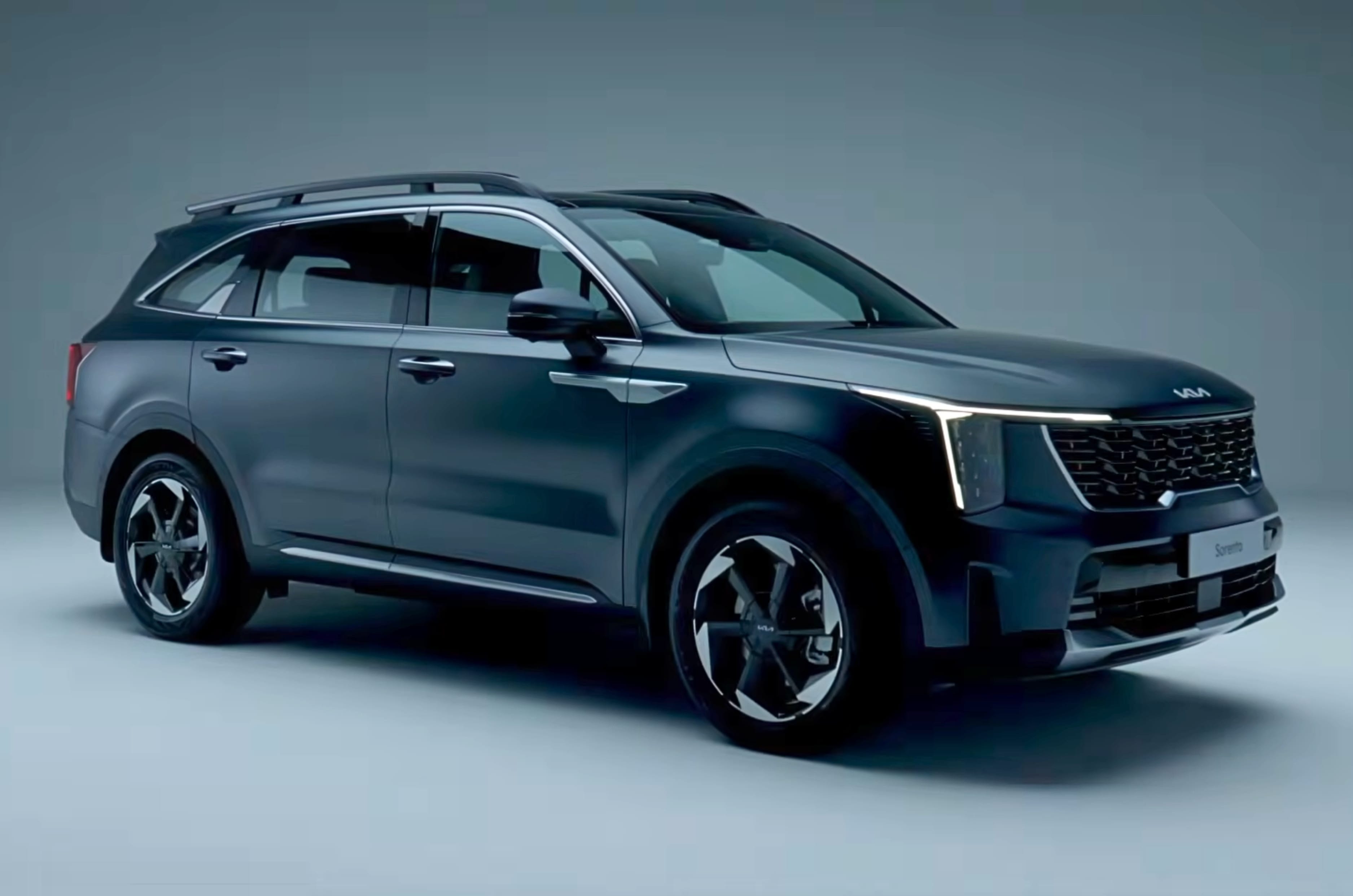
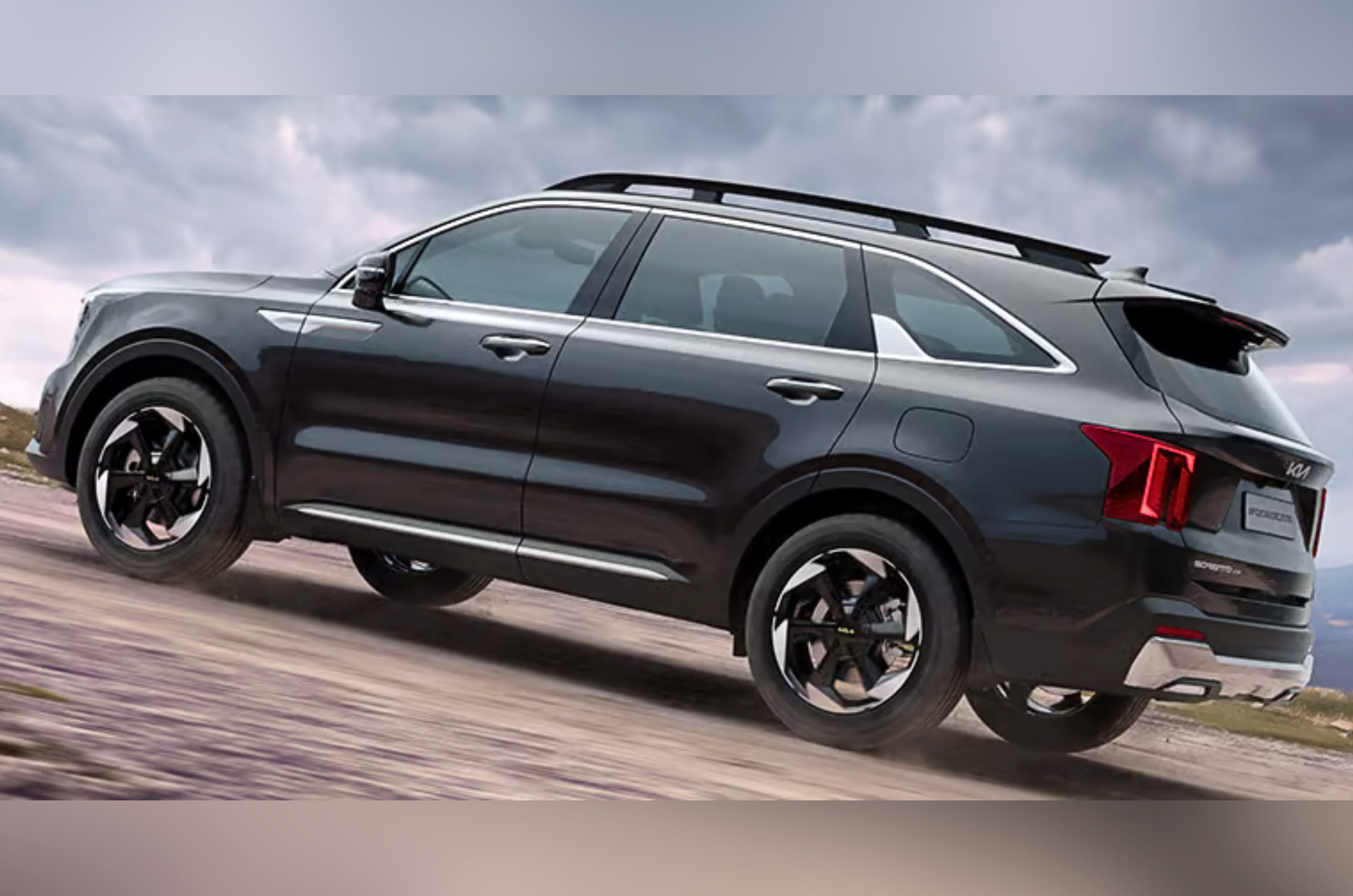
The Kia Sorento will be the brand’s new flagship ICE model in India, and it will be offered with both strong-hybrid and diesel powertrains. The 1.6-litre strong-hybrid version will produce 238hp and 380Nm, while the 2-litre diesel will make 202hp and 441Nm.
The Sorento gets Kia’s signature Tiger Nose grille, large vertical LED headlights with Y-shaped LED daytime running lamps (DRLs), LED fog lamps and vertical aero vents at the edges. Kia has not revealed the alloy wheel size yet, but they are likely to be 19-inch units. At the rear, the Sorento gets squarish tail-lamps with an inverted L-shaped LED signature, a large roof spoiler and a two-tone bumper.
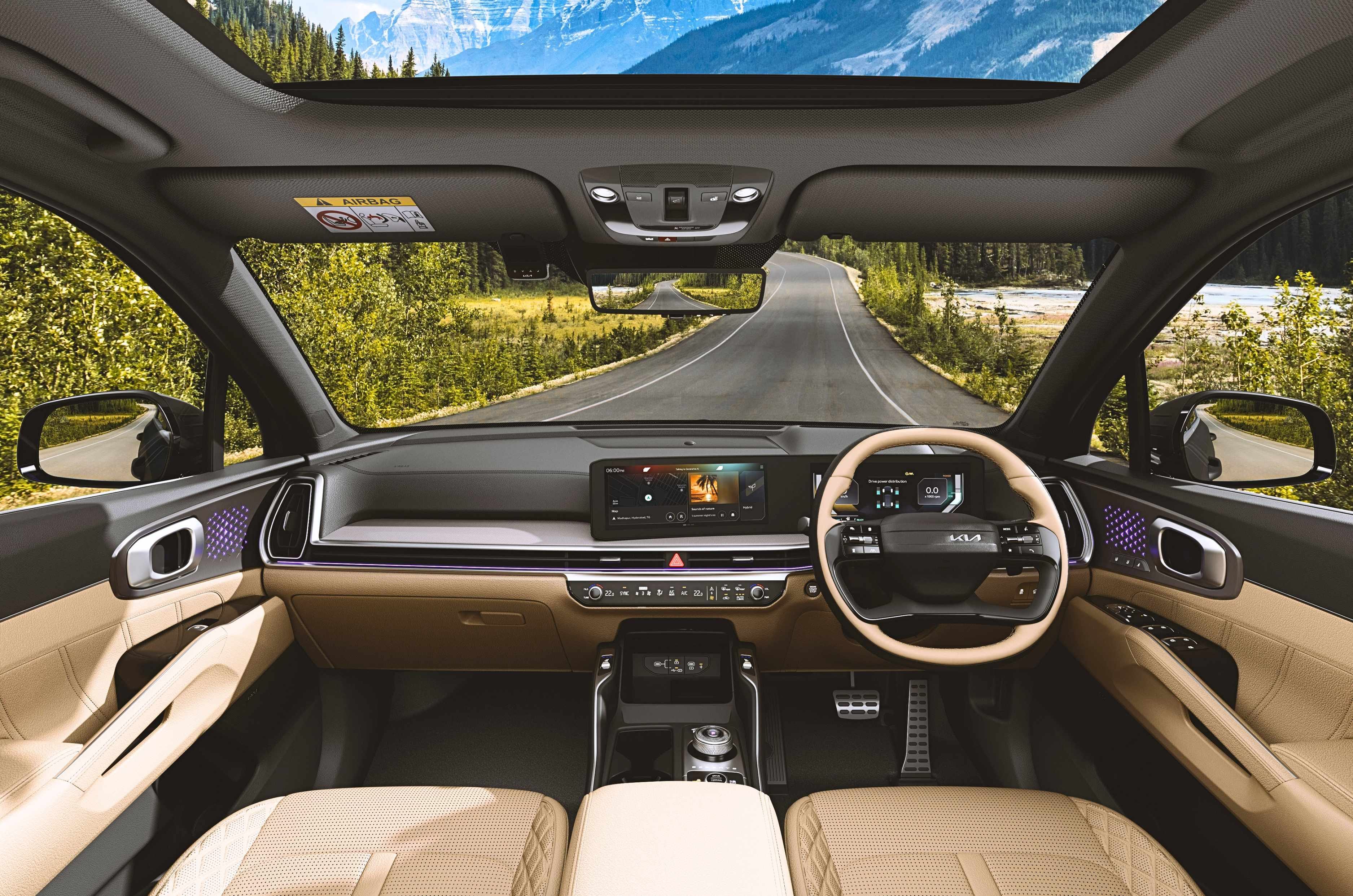
Inside, there is a connected panel housing the infotainment and instrument cluster screens. Kia has not revealed their sizes, but both are likely to be 12.3-inch units. Other features seen in the official images include ADAS, ventilated front seats, a digital interior rearview mirror (IRVM), an electrically operated tailgate, dual-zone climate control, ambient lighting and a panoramic sunroof.
The Sorento is expected to be available in both 6- and 7-seat layouts. Kia has already started accepting bookings for the Sorento and upon launch, it will compete with the Skoda Kodiaq, Volkswagen Tayron and Jeep Meridian.
Maruti Baleno facelift
Launch: September 5
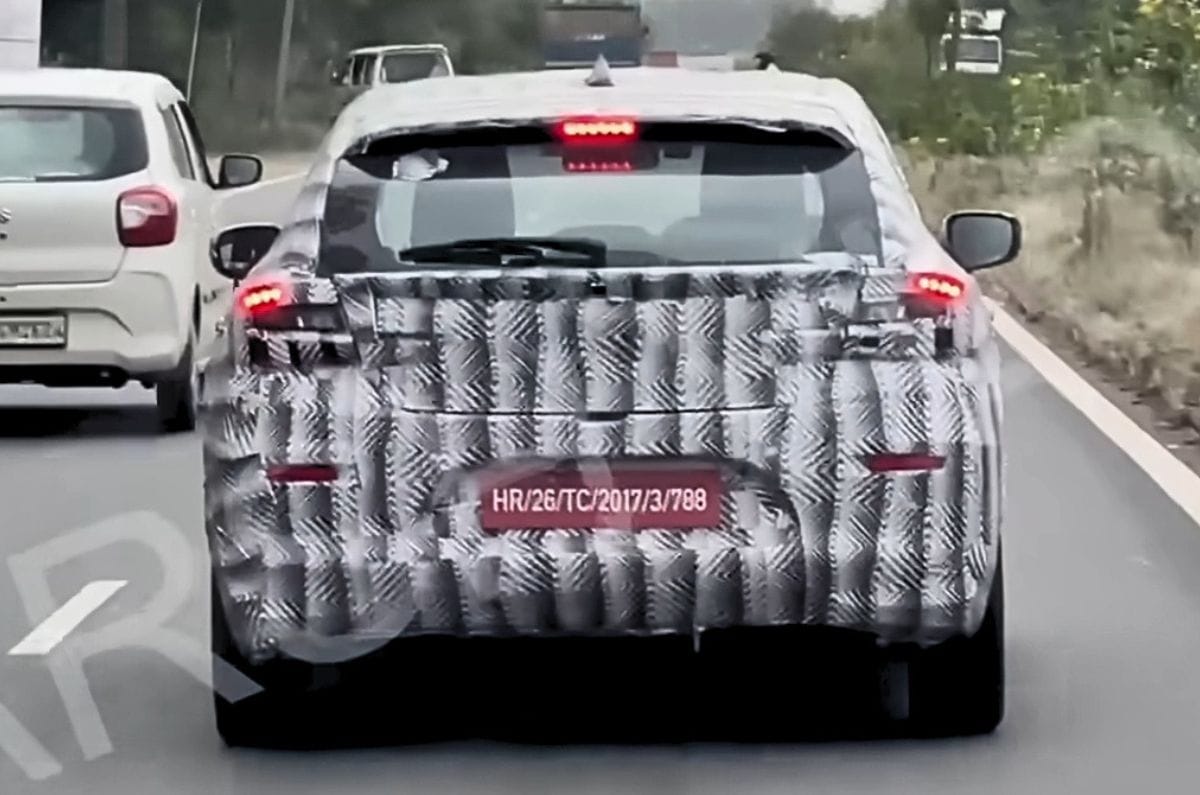
The Maruti Baleno is currently in its second generation, which was launched in 2022, and is due for an update. Previous spy shots of the Baleno facelift have suggested a redesigned front end with a new grille featuring a horizontal bar in the centre connecting the headlights. Test mules have also shown a new bumper without the front fog lamps seen on the current model.
Image credit: Harsh Vlogs via YouTube.
From the side, the only expected change is a new alloy wheel design. At the rear, the facelift could get a redesigned bumper, while the tail-lights are likely to remain unchanged. Inside, the Baleno could retain the current 9-inch touchscreen; however, update the upholstery and add new features.
Image credit: Harsh Vlogs via YouTube.
Under the hood, the facelifted Baleno is expected to continue with the existing powertrain options. These include a 90hp 1.2-litre naturally aspirated petrol engine with 5-speed manual and 5-speed AMT choices, along with a 77.5hp CNG version available only with the manual gearbox. It will continue to rival the Tata Altroz, Hyundai i20 and Toyota Glanza.
BMW 7 Series, i7 facelifts
Launch: September 11
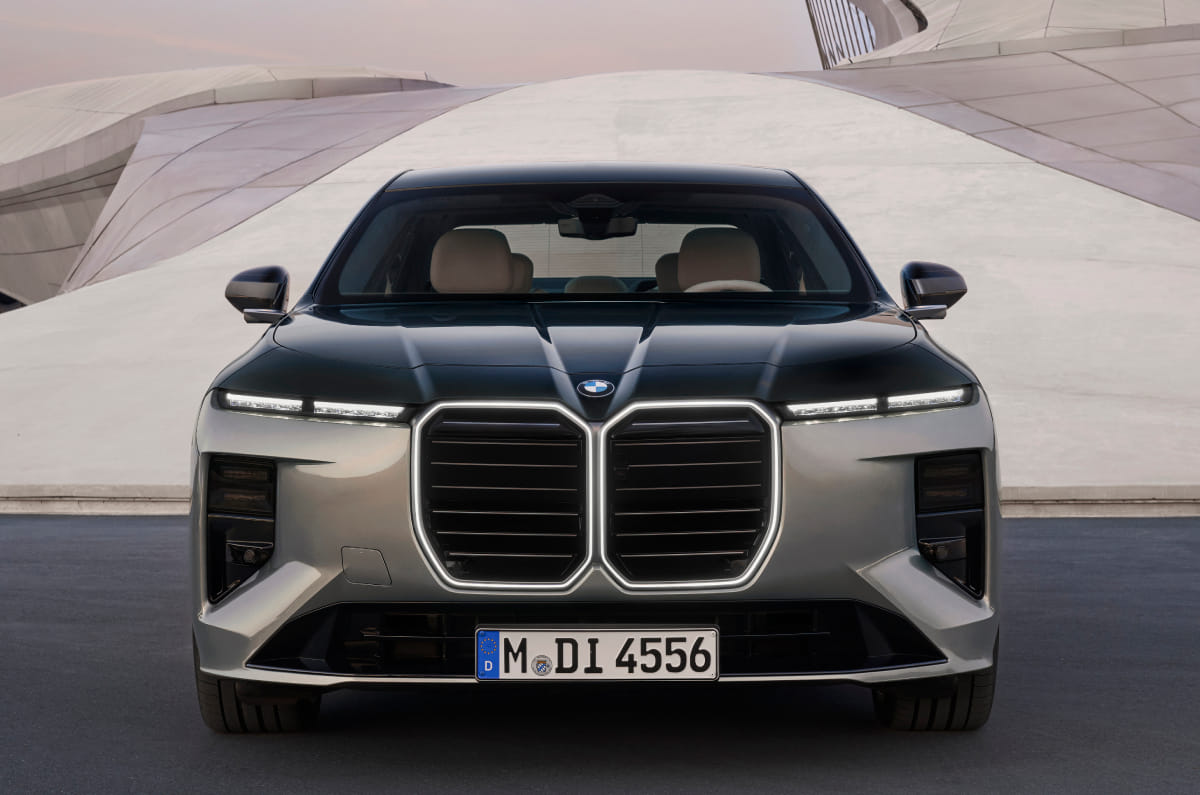
BMW opened bookings for the facelifted 7 Series and i7 flagship sedans on August 1, soon after their global debut earlier this year. In India, the company currently sells the 740i petrol and 740d diesel versions of the 7 Series, along with the eDrive 50 and M70 xDrive variants of the all-electric i7. These versions get several updates with the facelift, although BMW is yet to confirm which variants will be introduced in here.
In international markets, the facelifted 740i and 740d continue with their 3.0-litre straight-six engines, but with uprated outputs. The 740i makes 400hp and 580Nm, up by 19hp and 60Nm, while the 740d develops 313hp and 670Nm, an increase of 27hp and 20Nm. Both continue to use 48V mild-hybrid systems, 8-speed automatic gearboxes and BMW’s xDrive all-wheel-drive system. The i7 also gets a larger 112.4kWh battery in both variants, up from 101.7kWh. The lower 50 trim now comes only with xDrive all-wheel drive instead of rear-wheel drive and produces 455hp and 660Nm, up by 6hp and 10Nm. The M70 xDrive now makes 680hp and 1,100Nm, gaining 30hp and 85Nm. Charging speeds have also improved.
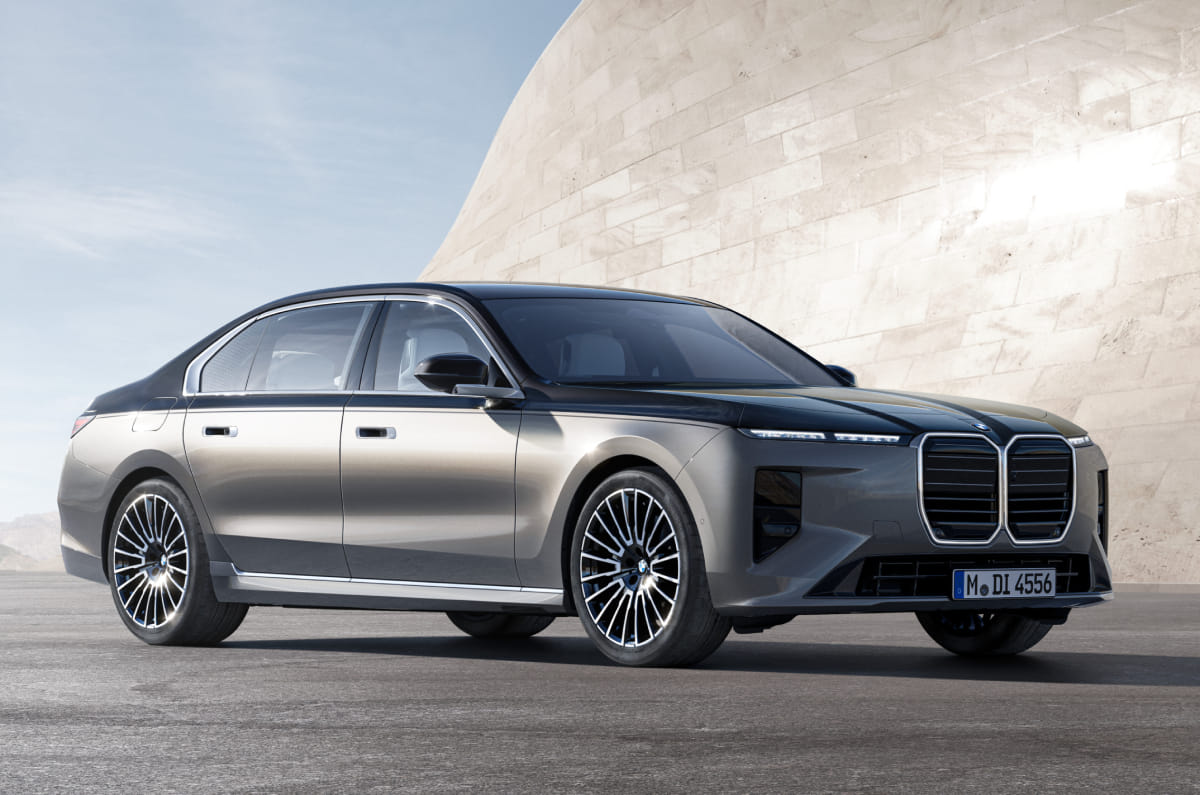
Visually, the updated 7 Series and i7 have a more monolithic look. They get new split LED headlights, slimmer and more upright kidney grilles with an illuminated surround, and larger bumper air intakes. The side profile remains largely unchanged apart from the side skirts and alloy wheels, while the rear gets new wraparound LED tail-lamps, a redesigned tailgate and a revised bumper.
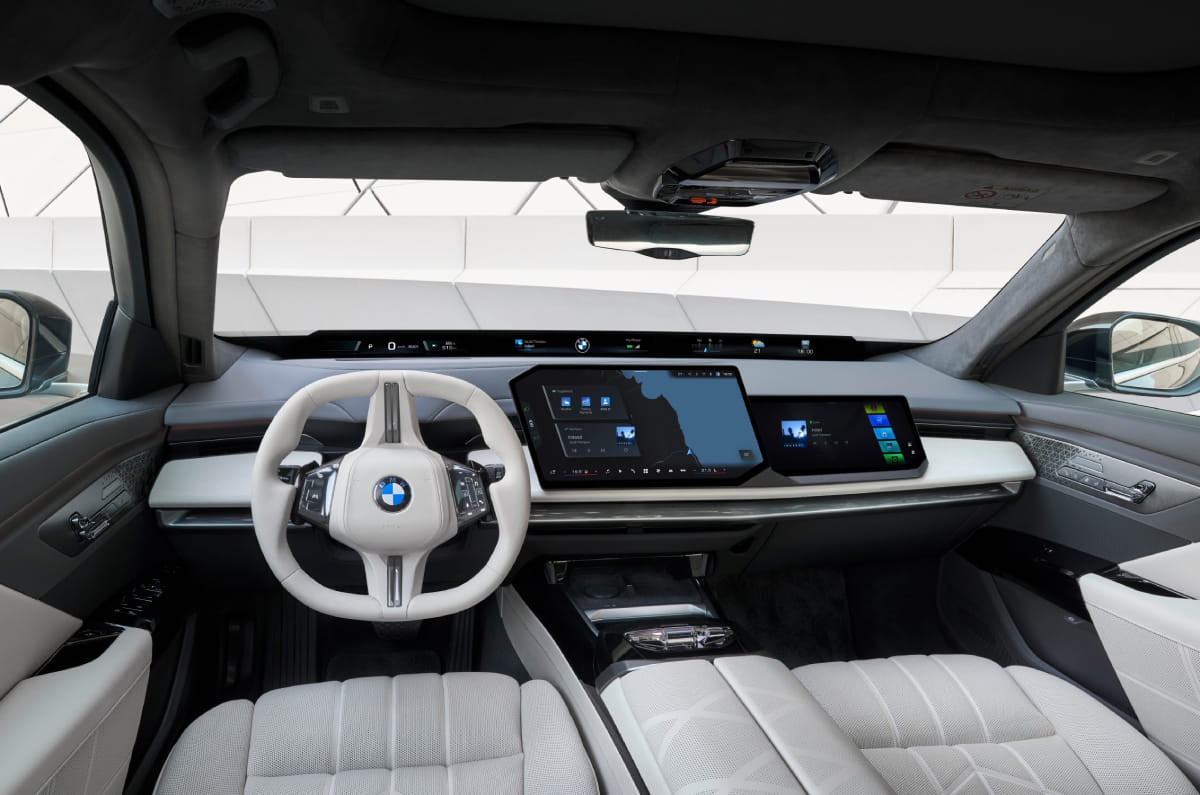
Inside, BMW has redesigned the dashboard around a 17.9-inch infotainment touchscreen, a 14.6-inch passenger display and a pillar-to-pillar Panoramic Vision display at the base of the windscreen. The steering wheel is now a four-spoke unit, similar to those used in BMW’s Neue Klasse models, while the centre console and transmission tunnel have also been updated.
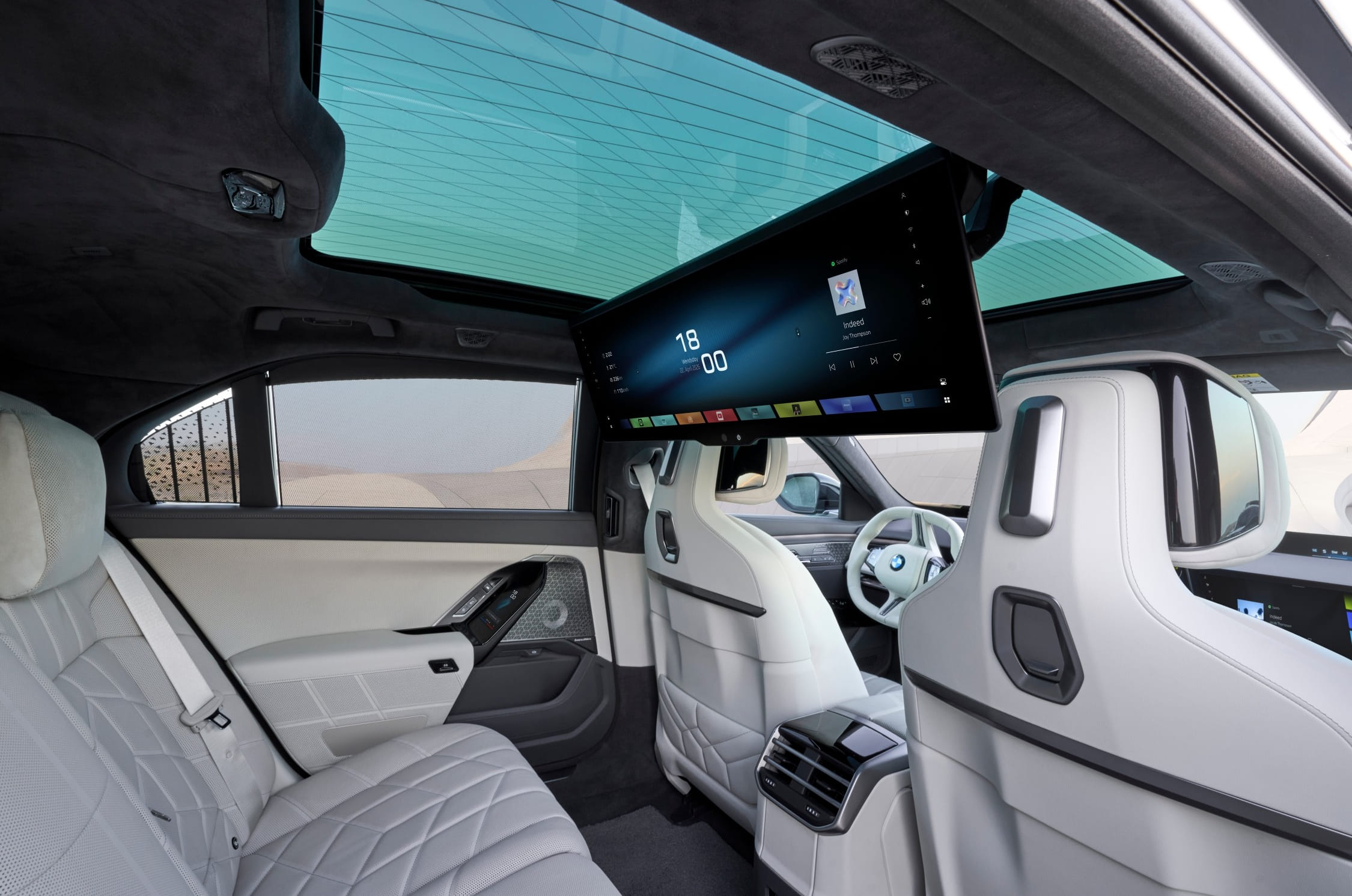
Rear passengers get powered seats with heating, ventilation, massage and lumbar support. The 31.3-inch 8K Theatre Screen can now be operated by touch, while the rear-door displays have also been updated to control the rear-seat experience. Other key features include ambient lighting, a Bowers & Wilkins surround sound system and 4-zone climate control. The BMW luxury sedan competes directly with the Mercedes-Benz S-Class, which also received a facelift this year.
Porsche Cayenne Electric
Debut: September 30
Porsche announced prices for the Cayenne Electric in November last year, and the SUV is now set for its physical showcase. The standard Cayenne Electric is priced at Rs 1.77 crore, while the range-topping Turbo Electric costs Rs 2.27 crore (both ex-showroom).
Both trims of the Porsche Cayenne Electric get a 113kWh battery and a dual-motor all-wheel-drive setup as standard. The more powerful Turbo Electric produces 1,156hp and 1,500Nm with Launch Control, allowing it to sprint from 0-100kph in 2.5 seconds before reaching an electronically limited top speed of 260kph. It has a claimed WLTP range of 537km. Whereas, the standard Cayenne Electric makes 442hp and 835Nm with Launch Control, does 0-100kph in 4.8 seconds and has an electronically limited top speed of 230kph. Its claimed WLTP range stands at 542km.
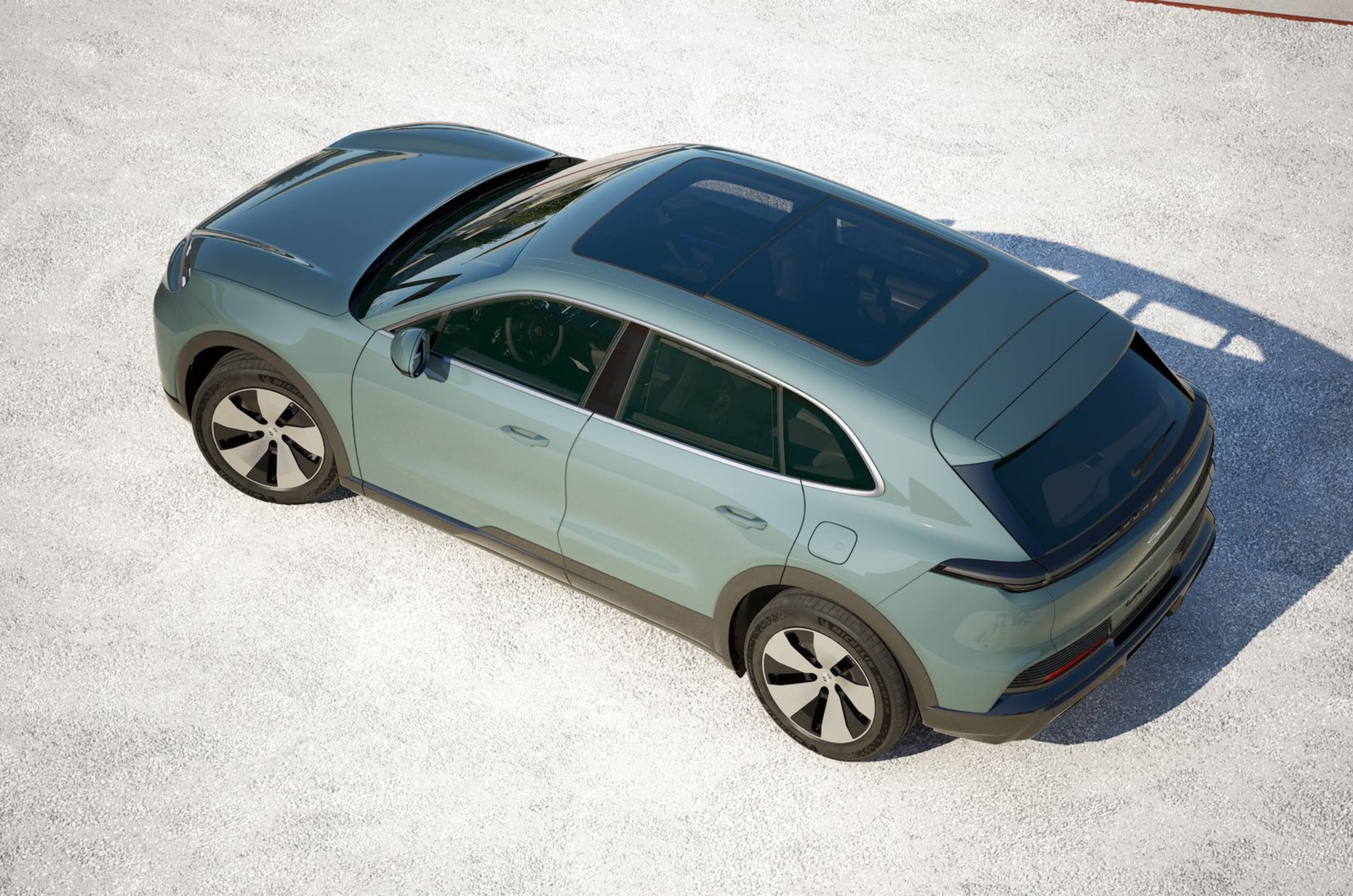
The Cayenne Electric keeps a similar overall shape to the ICE-powered Cayenne. However, the EV gets a closed-off grille, with two air vents on either side of the bumper to cool the battery and electrical components. These vents are larger on the Turbo trim. At the rear, there is a full-width LED light bar with illuminated Porsche lettering. The bumper has also been redesigned with horizontal black elements.
Inside, the Cayenne Electric gets a three-spoke steering wheel and digital driver’s display, similar to the ICE model. Porsche has also added a new 14.5-inch curved touchscreen infotainment system that flows into the centre console. An optional 14.9-inch passenger display is also available at an additional cost. Other features include 8-way electrically adjustable front seats, four-zone automatic climate control, ventilated front seats, a panoramic sunroof and wireless phone charging.
Market next week: 31 अगस्त से शुरू हो रहे अगले कारोबारी हफ्ते मार्केट की चाल मुख्य तौर पर जीडीपी के घरेलू आंकड़ों, कच्चे तेल के भाव और अमेरिका में गैर-कृषि पेरोल रिपोर्ट पर निर्भर करेगा। इसके अलावा एनालिस्ट्स के मुताबिक मैक्रोइकनॉमिक रिलीज, ऑटो सेल्स के आंकड़े और विदेशी निवेशकों की ट्रेडिंग एक्टिविटी भी आने वाले दिनों में बाजार की दिशा तय करेंगे। पिछले कारोबारी हफ्ते यानी 17-21 अगस्त के दौरान घरेलू इक्विटी बेंचमार्क इंडेक्सेज सेंसेक्स (Sensex) 276.32 प्वाइंट्स यानी 0.35% गिरा, तो निफ्टी (Nifty) 76.35 प्वाइंट्स यानी 0.31% नीचे आया। लगातार तीसरे हफ्ते ये लाल हुए।
Market next week: क्या कहना है एक्सपर्ट्स का?
रेलिगेयर ब्रोकिंग के सीनियर वाइस प्रेसिडेंट (रिसर्च) अजीत मिश्र का कहना है कि आने वाला कारोबारी हफ्ता काफी अहम रहने वाला है। जीडीपी के घरेलू आंकड़े और वैश्विक आर्थिक आंकड़े मार्केट की दिशा तय करने में अहम भूमिका निभा सकते हैं। भारतीय अर्थव्यस्था में बात करें तो जून 2026 तिमाही के आंकड़े 31 अगस्त को जारी होंगे। अजीत के मुताबिक निवेशकों की नजर अगस्त महीने के मैन्युफैक्चरिंग और सर्विसेज पीएमआई के आंकड़ों, जीएसटी कलेक्शंस, फॉरेन एक्सचेंज रिजर्व और रुपये की चाल पर भी रहेगी।
अजीत के मुताबिक सबसे बड़ा ट्रिगर तो अमेरिकी रोजगार का आंकड़ा रहेगा। 4 अगस्त को अगस्त के नॉन-फार्म पेरोल्स का आंकड़ा आएगा। अजीत का मानना है कि यग फेडरल रिजर्व के सितंबर महीने की मौद्रिक नीति, अमेरिकी डॉलर, ट्रेजरी यील्ड्स और एमर्जिंग मार्केट्स में फंड्स फ्लो से जुड़ी उम्मीदों पर असर डाल सकता है। विदेशी पोर्टफोलियो निवेशकों (FPIs) ने अगस्त में भारतीय इक्विटीज में अब तक ₹30,919 करोड़ का नेट निवेश किया है और लगातार दूसरे महीने उनकी नेट खरीदारी जारी रही।
ऑनलाइन ट्रेडिंग और वेल्थ-टेक फर्म एनरिच मनी के सीईओ पोनमुडी आर का कहना है कि घरेलू स्तर पर जून तिमाही के जीडीपी आंकड़े ब्रोडर रिस्क सेंटिमेंट के लिए अहम होंगे। इससे यह पता चलेगा कि घरेलू अर्थव्यवस्था किस चाल से बढ़ रही है, खासतौर से ऐसे समय में जब एनर्जी प्राइसेज रॉकेट बने हुए हैं और पश्चिमी एशिया में तनाव अभी भी बना हुआ है।
पोनमुडी का कहना है कि जैक्सन होल में फेड चेयर कैविन वार्श के हॉकिश कमेंट के बाद अब अमेरिकी मौद्रिक नीति वैश्विक बाजारों के लिए सबसे बड़ा कैटेलिस्ट बन गई है। पोनमुडी का कहना है कि मार्केट की नजर अब 4 सितंबर को आने वाले अगस्त की जॉब्स रिपोर्ट के साथ-साथ अगली इनफ्लेशन रीडिंग पर भी नजर रहेगी। इन आंकड़ो से यह तय होगा कि सितंबर में रेट हाइक की हाल में बढ़ी उम्मीदें बनी रहती हैं या कम होती हैं।
रिसर्च एनालिस्ट फर्म एचएसटी वेल्थ के फाउंडर और सीईओ हरिसेल्वन राधाकृष्णन का कहना है कि सोमवार को भारतीय इकॉनमी के लिए जून तिमाही के जीडीपी के आंकड़े के आंकड़े आएंगे, जिससे घरेलू आर्थिक विकास की दिशा पता चलेगी। वहीं शुक्रवार को आने वाला अमेरिकी रोजगार का आंकड़ा वैश्विक बाजारों के सेंटिमेंट पर असर डाल सकता है। उनका कहना है कि इसके बाद निवेशक फिर से फेडरल रिजर्व की सितंबर की मौद्रिक नीतियों को लेकर अपनी उम्मीदों को रिव्यू करेंगे।
डिस्क्लेमर: मनीकंट्रोल.कॉम पर दिए गए सलाह या विचार एक्सपर्ट/ब्रोकरेज फर्म के अपने निजी विचार होते हैं। वेबसाइट या मैनेजमेंट इसके लिए उत्तरदायी नहीं है। यूजर्स को मनीकंट्रोल की सलाह है कि कोई भी निवेश निर्णय लेने से पहले हमेशा सर्टिफाइड एक्सपर्ट की सलाह लें।
Market Trend: भारतीय इक्विटी मार्केट ने 28 अगस्त को खत्म हुए हफ्ते की क्लोजिंग सतर्कता भरे रुख के साथ की। ग्लोबल इंटरेस्ट रेट,जियोपॉलिटिकल रिस्क और क्लोजिंग ऑक्शन सेशन से जुड़ी वोलैटिलिटी के चलते निवेशकों के सेंटिमेंट पर दबाव दिखा,जिससे बाजार में गिरावट का दौर जारी रहा। हालांकि,शुक्रवार को ग्लोबल टेक्नोलॉजी शेयरों से मिले पॉजिटिव संकेतों के बीच IT शेयरों में जबरदस्त खरीदारी आई। इससे बाजार में अच्छी रिकवरी देखने को मिली,फिर भी बेंचमार्क इंडेक्स लगातार तीसरे हफ्ते गिरावट के साथ बंद हुए।
निफ्टी पर एक्सपर्ट की राय
कोटक सिक्योरिटीज के VP टेक्निकल रिसर्च,अमोल अठावले का कहना है कि पिछले हफ्ते बेंचमार्क इंडेक्स में उतार-चढ़ाव के बाद एक सीमित दायरे में कारोबार होता दिखा। निफ्टी 0.31 प्रतिशत गिरकर बंद हुआ,जबकि सेंसेक्स में 310 अंकों की गिरावट आई। सेक्टरों की बात करें तो फार्मा और हेल्थकेयर इंडेक्स में 1.5 प्रतिशत से ज्यादा की बढ़त हुई,जबकि FMCG इंडेक्स में सबसे ज्यादा 1.95 प्रतिशत की गिरावट दर्ज की गई।
टेक्निकल नजरिए से देखें तो डेली चार्ट पर निफ्टी ने एक बेयरिश कैंडल बनाया है और ऊपर की तरफ इसे लगातार 20-डे SMA (सिंपल मूविंग एवरेज) या 24,350/77,900 जोन के पास रेसिस्टेंस का सामना करना पड़ रहा है,जो काफी हद तक नेगेटिव संकेत है।
अमोल अठावले का मानना है कि शॉर्ट-टर्म के लिए मार्केट का मिजाज कमज़ोर है,लेकिन नई बिकवाली तभी हो सकती है जब 24,100/77,100 का लेवल टूटे। अगर ऐसा होता है तो मार्केट 24,000-23,800/76,800-76,200 तक गिर सकता है। दूसरी ओर 50-डे SMA या 24,200/77,500 ट्रेडर्स के लिए तत्काल रेजिस्टेंस ज़ोन का काम करेगा। अगर इंडेक्स इस लेवल के ऊपर ट्रेड करने में कामयाब रहता है तो यह 24,350/77,900 पर स्थित 20डे SMA को फिर से टेस्ट कर सकता है। इसके बाद भी और तेजी आ सकती है,जिससे इंडेक्स 24,500/78,400 तक जा सकता है।
बैंक निफ्टी पर एक्सपर्ट की राय
अमोल अठावले की राय है कि बैंक निफ्टी के लिए 50 और 20 डे के SMA या 57,700 का स्तर ट्रेडर्स के लिए तुरंत ध्यान देने वाले लेवल होंगे। जब तक बैंक निफ्टी इन स्तरों से नीचे रहता है,तब तक सेंटीमेंट कमजोर बने रहने की संभावना है। इसके नीचे जाने पर इंडेक्स के 56,800-56,500 के स्तर तक गिरने की संभावना बढ़ जाएगी। इसके उलट,57,700 के ऊपर जाने पर बैंक निफ्टी 58,000-58,500 की ओर उछाल आ सकता है। बाजार का मौजूदा मिजाज किसी एक दिशा में साफ नहीं है। इसलिए,शॉर्ट-टर्म ट्रेडर्स के लिए लेवल बेस्ड ट्रेडिंग सबसे अच्छी रणनीति होगी।
डिस्क्लेमर: मनीकंट्रोल.कॉम पर दिए गए विचार एक्सपर्ट के अपने निजी विचार होते हैं। वेबसाइट या मैनेजमेंट इसके लिए उत्तरदाई नहीं है। यूजर्स को मनी कंट्रोल की सलाह है कि कोई भी निवेश निर्णय लेने से पहले सर्टिफाइड एक्सपर्ट की सलाह लें।
Market Next week : इस हफ्ते ब्रॉडर मार्केट ने बेंचमार्क इंडेक्स से बेहतर प्रदर्शन किया और नई ऊंचाई को छुआ। निफ्टी मिडकैप और स्मॉलकैप इंडेक्स में लगभग 0.5% की बढ़त हुई,जबकि निफ़्टी 50 और सेंसेक्स में लगातार तीसरे हफ्ते गिरावट का दौर जारी रहा। इस हफ्ते सेंसेक्स 276.32 अंक या 0.35% गिरकर 77,264.51 पर आ गया,जबकि निफ्टी 76.35 अंक या 0.31% गिरकर 24,175.65 पर बंद हुआ।
स्टील अथॉरिटी ऑफ इंडिया,ग्लेनमार्क फ़ार्मा,LIC हाउसिंग फ़ाइनेंस और लॉरस लैब्स में बढ़त के कारण निफ़्टी मिडकैप 100 इंडेक्स 0.5% बढ़कर 64,450.90 के नए ऑल-टाइम हाई पर पहुंच गया। दूसरी ओर रेल विकास निगम,फ़ेडरल बैंक,IDFC फ़र्स्ट बैंक,कोरोमंडल इंटरनेशनल और ICICI प्रूडेंशियल एसेट मैनेजमेंट गिरावट वाले प्रमुख शेयरों में शामिल रहे।
कैपरी ग्लोबल कैपिटल,IDBI बैंक,IFCI और एथर एनर्जी में डबल डिजीट बढ़त के दम पर निफ्टी स्मॉलकैप 100 इंडेक्स भी 0.5% बढ़कर 20,143.55 के रिकॉर्ड हाई पर पहुंच गया। वहीं,इस हफ्ते BLS इंटरनेशनल सर्विसेज,एजिस लॉजिस्टिक्स,क्रॉम्पटन ग्रीव्स कंज्यूमर इलेक्ट्रिकल्स, क्रेडिटएक्सेस ग्रामीण,हिंदुस्तान कॉपर और टेनेको क्लीन एयर इंडिया के शेयरों में 6% से 12% तक की गिरावट आई।
अलग-अलग सेक्टर का प्रदर्शन मिला-जुला रहा। निफ्टी मेटल,IT,फार्मा और हेल्थकेयर इंडेक्स में 2% से ज्यादा की बढ़त हुई,जबकि निफ्टी कैपिटल मार्केट्स इंडेक्स में 1.5% की तेजी आई। दूसरी ओर निफ्टी FMCG, इंफ्रास्ट्रक्चर और ऑयल एंड गैस इंडेक्स में 1% की गिरावट आई। जबकि निफ्टी ऑटो और डिफेंस इंडेक्स भी लगभग 1% नीचे बंद हुए।
विदेशी संस्थागत निवेशकों(FIIs)ने लगातार दूसरे हफ्ते भी बिकवाली जारी रखी और इस हफ्ते ₹20,260 करोड़ के शेयर बेचे। वहीं,घरेलू संस्थागत निवेशकों (DIIs) ने बाजार को सहारा दिया और हफ्ते के दौरान भारतीय इक्विटी में ₹19,309.93 करोड़ का निवेश किया। इस हफ्ते BSE में लिस्टेड कंपनियों के कुल मार्केट कैपिटलाइज़ेशन में ₹1 लाख करोड़ से कुछ ज़्यादा की गिरावट आई।
SBI सिक्योरिटीज के हेड-टेक्निकल और डेरिवेटिव्स रिसर्च सुदीप शाह ने कहा कि निफ्टी के लिए 24000–23970 का जोन एक अहम सपोर्ट एरिया का काम कर सकता है। अगर यह 23970 के नीचे टूटता है,तो और गिरावट आ सकती है और इंडेक्स 23820 की तरफ गिर सकता सकता है। ऊपर की तरफ,24300–24330 का जोन निफ्टी के लिए तत्काल रेजिस्टेंस का काम कर सकता है। नियर टर्म में निफ्टी में तेजी के लिए इस रेजिस्टेंस का पार होना जरूरी है।
HDFC सिक्योरिटीज के सीनियर टेक्निकल रिसर्च एनालिस्ट नागराज शेट्टी का कहना है कि गुरुवार को 24150 के लेवल पर ऊपर की ओर जाने वाली ट्रेंड लाइन के सपोर्ट से नीचे आने के बाद,निफ्टी में शुक्रवार को और ज़्यादा कमज़ोरी नहीं आई। यह एक अच्छा संकेत है और ऐसे फाल्स गिरावट वाले ब्रेकआउट के बाद अक्सर तेजी से बढ़त देखने को मिलती है।
निफ्टी का ट्रेंड पॉजिटिव रुख के साथ एक दायरे (24400-24000) में बना रहने का दिख रहा है। अगर निचले दायरे के पास से कोई टिकाऊ उछाल आता है,तो निकट भविष्य में 24300-24400 के लेवल तक अच्छी-खासी बढ़त देखने को मिल सकती है। ट्रेंड बदलने के लिए अहम सपोर्ट 24000 पर है। अगर यह सपोर्ट टूटता है तो गिरावट आ सकती है।
LKP सिक्योरिटीज के सीनियर टेक्निकल एनालिस्ट रूपक डे का कहना है कि उतार-चढ़ाव भरे सेशन के बाद निफ्टी वापस’राइजिंग चैनल’में आ गया। हालांकि,ट्रेंड अभी भी बुलिश नहीं है,क्योंकि इंडेक्स 50EMA के नीचे ही ट्रेड कर रहा है। कुल मिलाकर,मोमेंटम की कमी रही और इंडेक्स एक सीमित दायरे में ही बना रहा।
ऊपर की तरफ,24,200 का लेवल निफ्टी के लिए तत्काल रेजिस्टेंस का काम कर सकता है। जब तक इंडेक्स 24,200 से नीचे रहता है,तब तक मार्केट का सेंटीमेंट कमजोर रहने की संभावना है और निकट भविष्य में इसके 23,900 तक गिरने की आशंका है।
23,900 के नीचे जाने पर और गिरावट आ सकती है। दूसरी ओर 24,200 के ऊपर मजबूती दिखाने से मार्केट सेंटीमेंट में सुधार हो सकता है और इससे शॉर्ट-टर्म ट्रेंड मजबूत हो सकता है।
डिस्क्लेमर: मनीकंट्रोल.कॉम पर दिए गए विचार एक्सपर्ट के अपने निजी विचार होते हैं। वेबसाइट या मैनेजमेंट इसके लिए उत्तरदाई नहीं है। यूजर्स को मनी कंट्रोल की सलाह है कि कोई भी निवेश निर्णय लेने से पहले सर्टिफाइड एक्सपर्ट की सलाह लें।
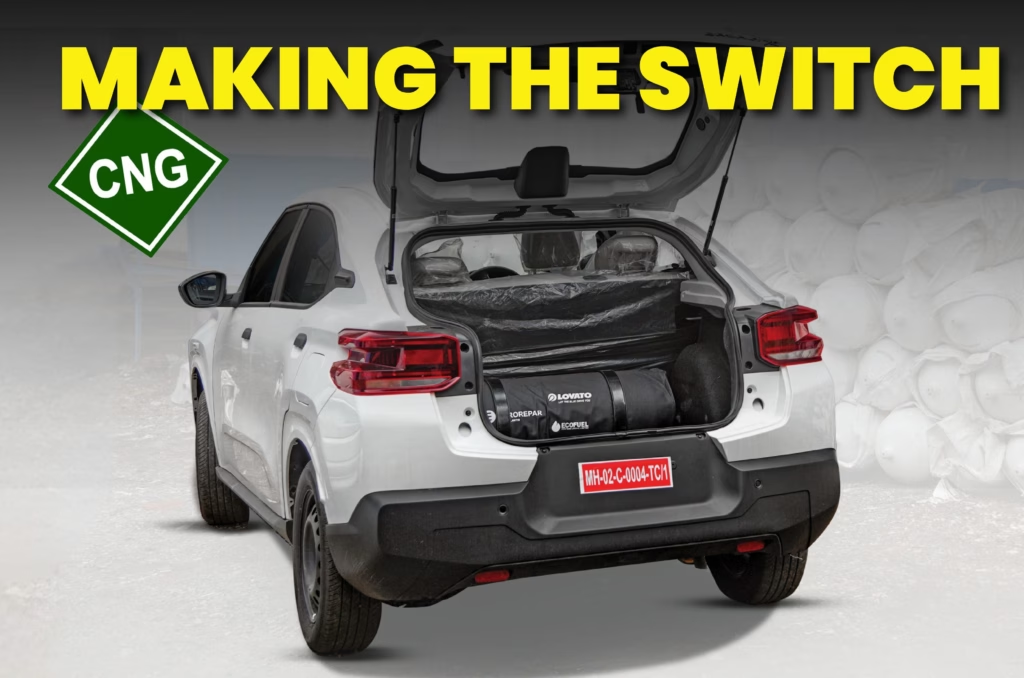
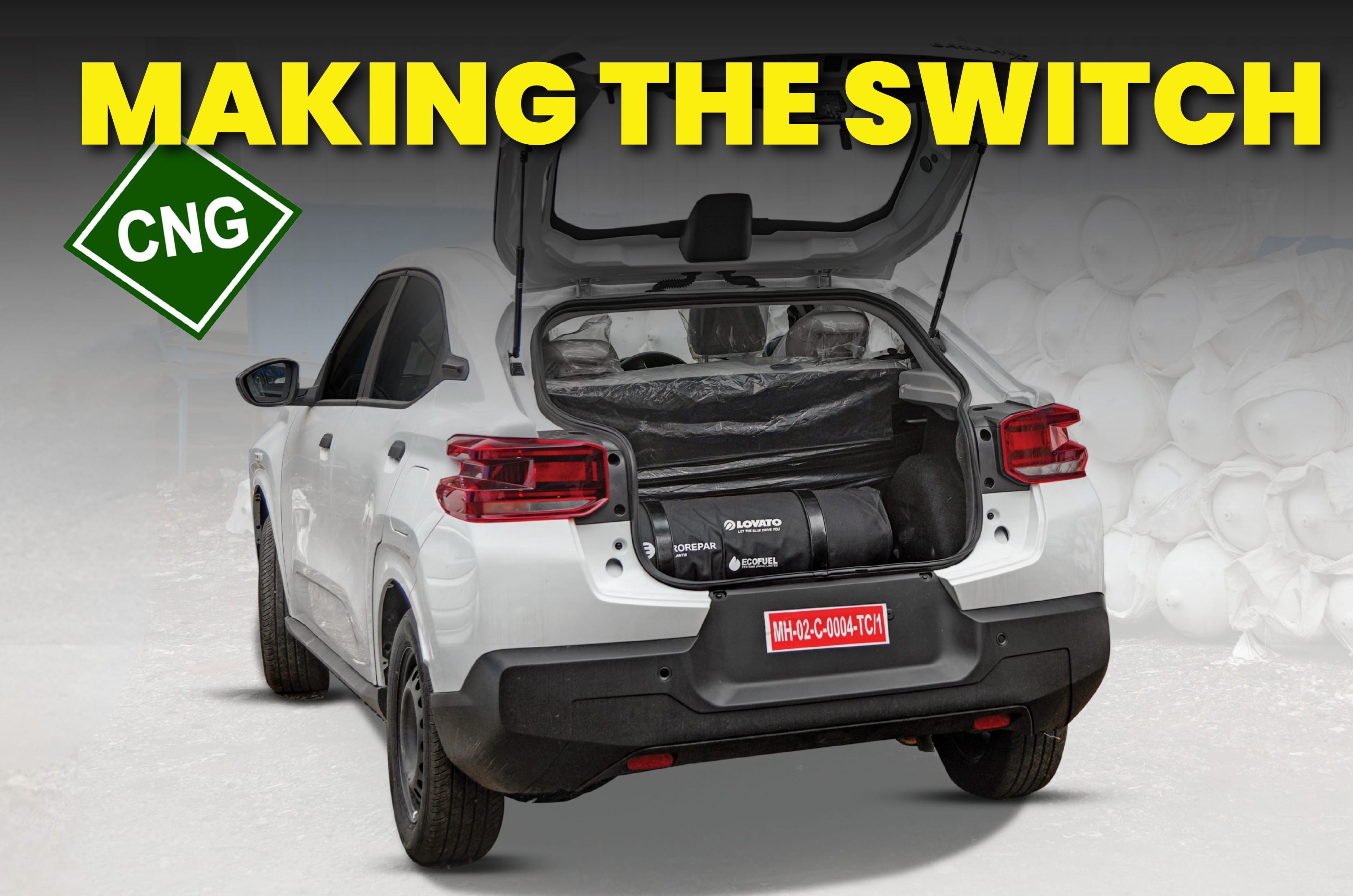
While aftermarket CNG conversions are not new, with the rise in fuel prices, there has been a noticeable spike in interest surrounding them. Although there are more factory-fitted CNG cars on the market than ever before, several models still do not give you the option. Not to mention, existing car owners are increasingly looking to convert their cars to CNG to reduce running costs.
Naturally, this increased interest brings up several questions about the technology, the installation, the legalities and more. We thus teamed up with Lovato CNG’s authorised distributor in Maharashtra, Blue Drive Traders, as well as Lets Go CNG and its authorised installer in Mumbai, M.S Motors, to answer questions about CNG conversions.
Know your CNG kit
There are three broad types of kits available on the market today. The oldest is the Venturi type, typically used for cars that are Bharat Stage 3-compatible and older. These use a Venturi mixer, similar to a carburettor, that mixes CNG with air before it is injected into the intake manifold. They are the most affordable, usually costing between Rs 30,000 and Rs 40,000, including installation and registration, but they are not the most efficient and bring a significant drop in performance. Since the cars they are compatible with are also reaching the end of their lifecycle, these kits are gradually being phased out.
Modern naturally aspirated MPFI cars require a sequential type kit. These use individual injectors that inject CNG directly into the intake manifold and feature their own ECU that controls timing, volume and other parameters based on RPM and driver inputs. These are much more fuel-efficient, and the drop in performance is nominal in everyday driving conditions. Like the older Venturi kits, these too require the car to be started on petrol before switching over to CNG. However, they automate the process by making the switch once a certain engine temperature is reached. Prices vary depending on the manufacturer and the specifications of each kit, ranging from Rs 40,000-Rs 50,000 for older BS4 cars, to Rs 50,000-Rs 65,000 for smaller BS6 cars, stretching to Rs 70,000-Rs 75,000 for larger cars that require an eight-injector kit.
The newest type of kit to hit the market is the direct-injection kit, used for cars with direct petrol injection. Like sequential kits, these too inject CNG into the intake manifold. However, direct-injection engines cannot run purely on CNG. The fuel injectors in a DI engine sit within the combustion chamber, so to prevent them from overheating, a small amount of petrol still needs to be injected through them even when running on CNG. Therefore, a turbocharged direct-injection engine can only run on a maximum 80:20 ratio of CNG and petrol. As a result, fuel efficiency gains are not quite as high as with a naturally aspirated engine, and kit prices range from Rs 1 lakh to Rs 1.5 lakh, thus pushing the breakeven point further away.
What’s in the box?
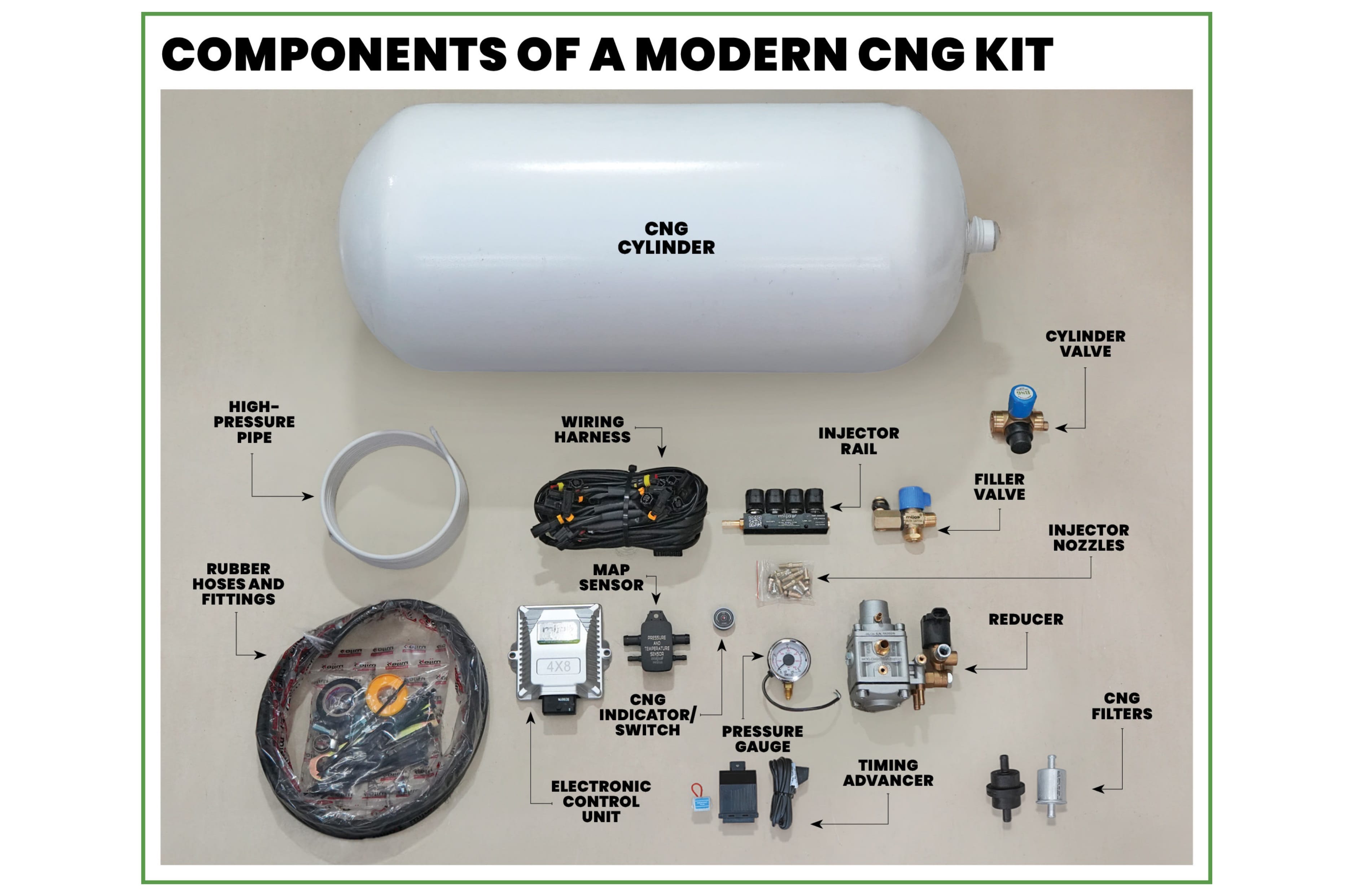
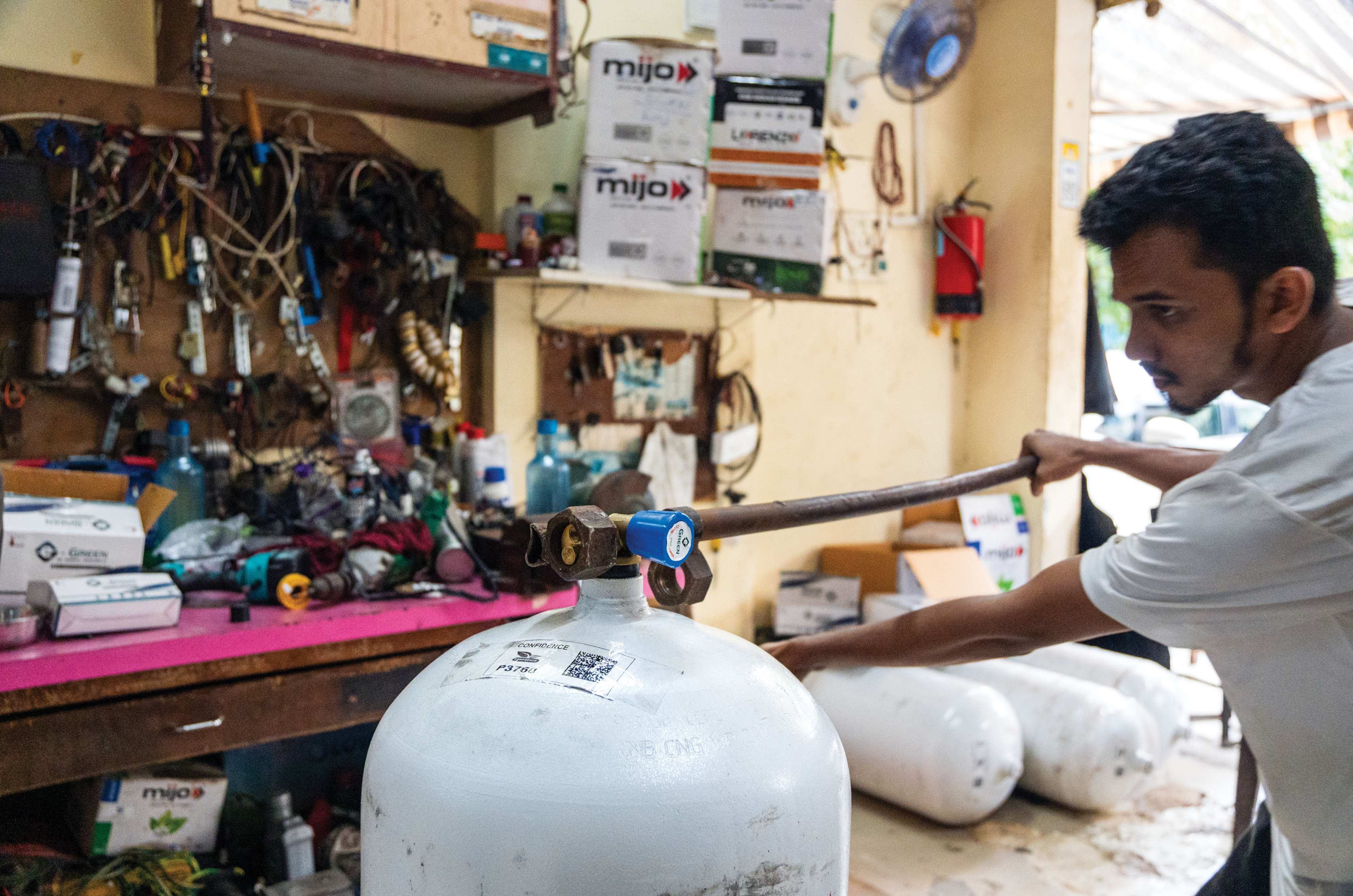
The largest and heaviest component of a typical CNG kit is the tank itself. Made from seamless steel, these can weigh close to 70kg empty, with volumetric capacities ranging from 60 to 65 litres. Metal-lined composite cylinders and carbon fibre-reinforced plastic cylinders are also now available, and while they are significantly lighter, they usually cost two or three times more. Attached to the tank is a valve with a manual shut-off.
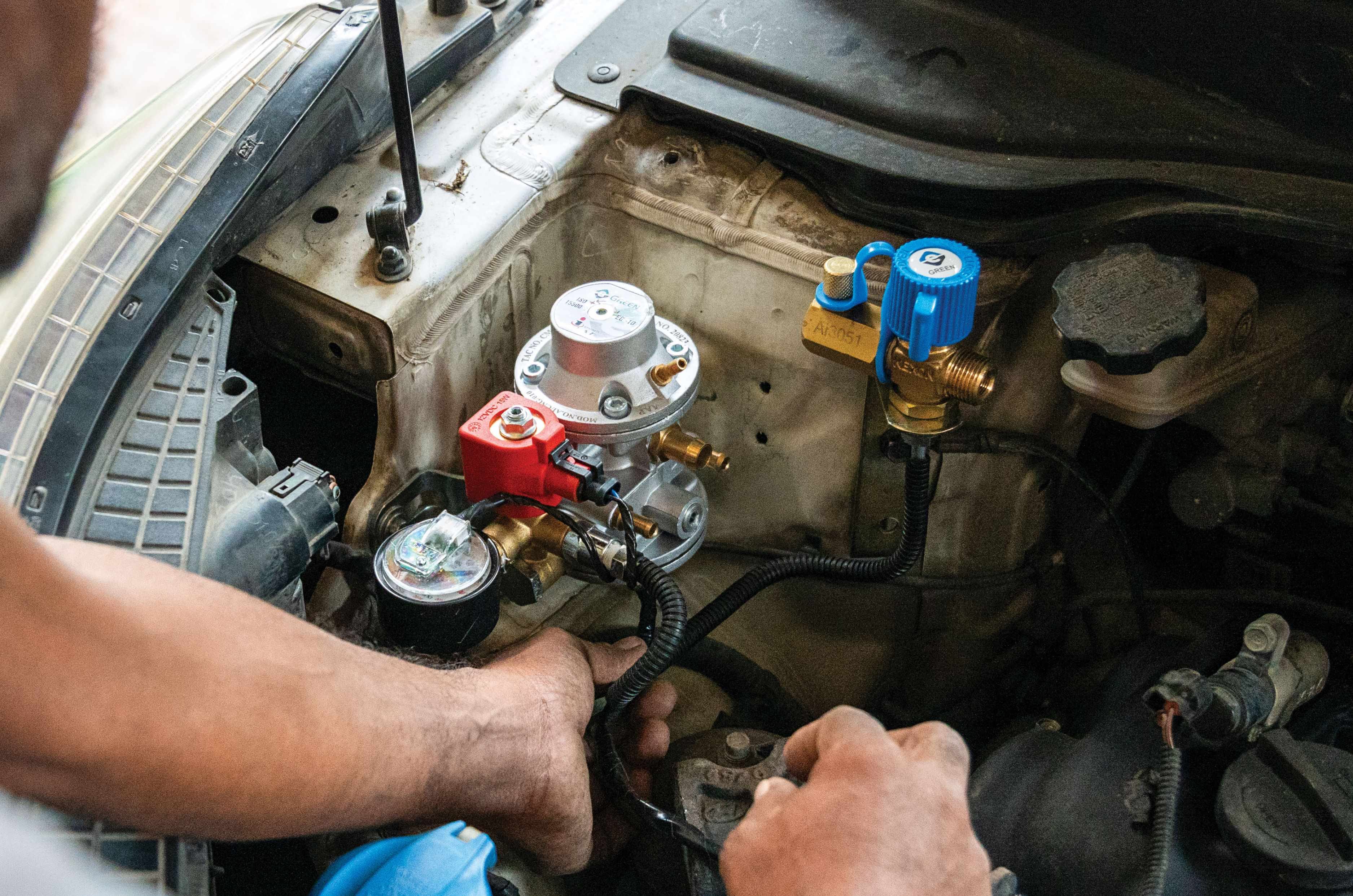
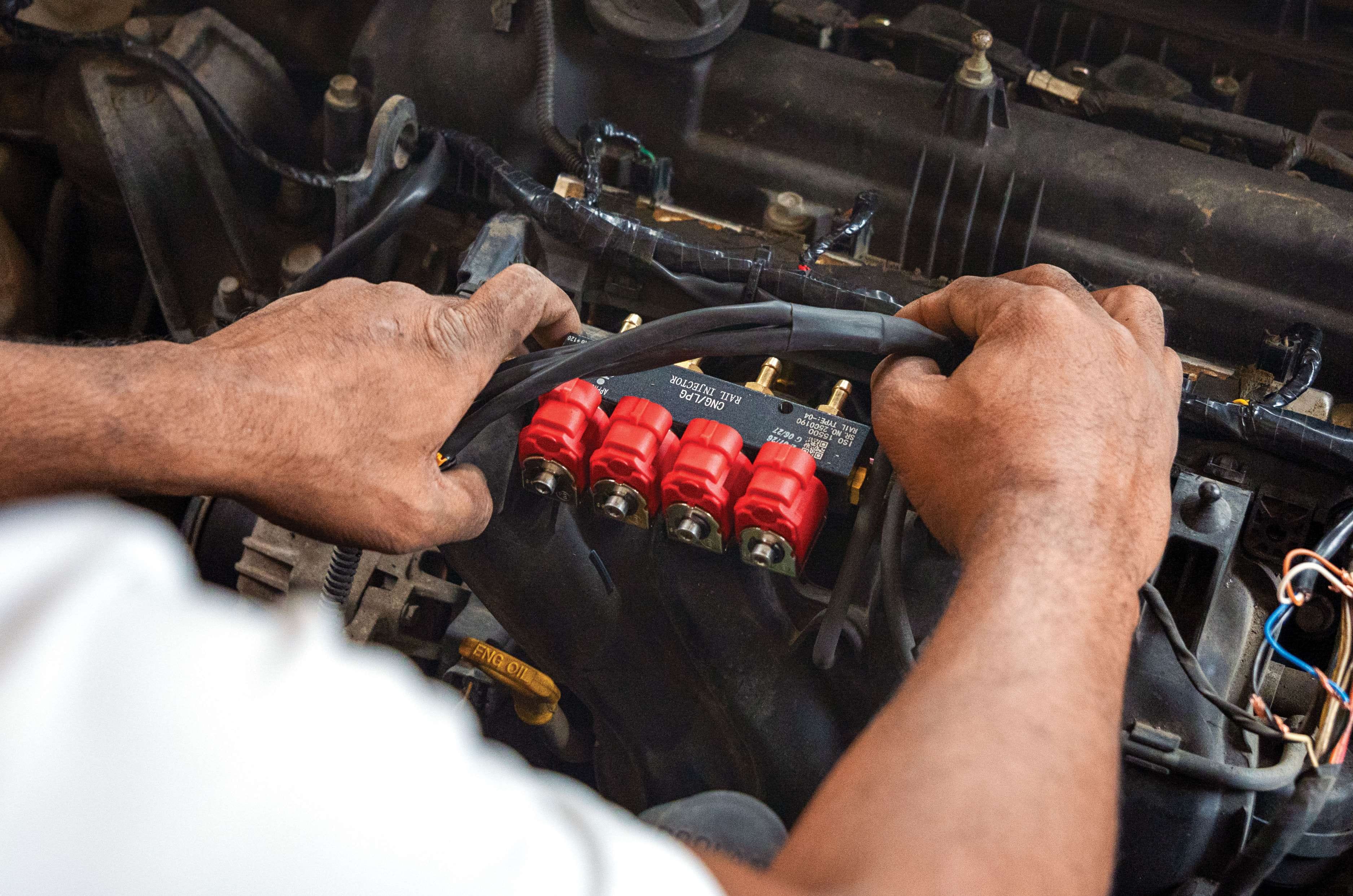
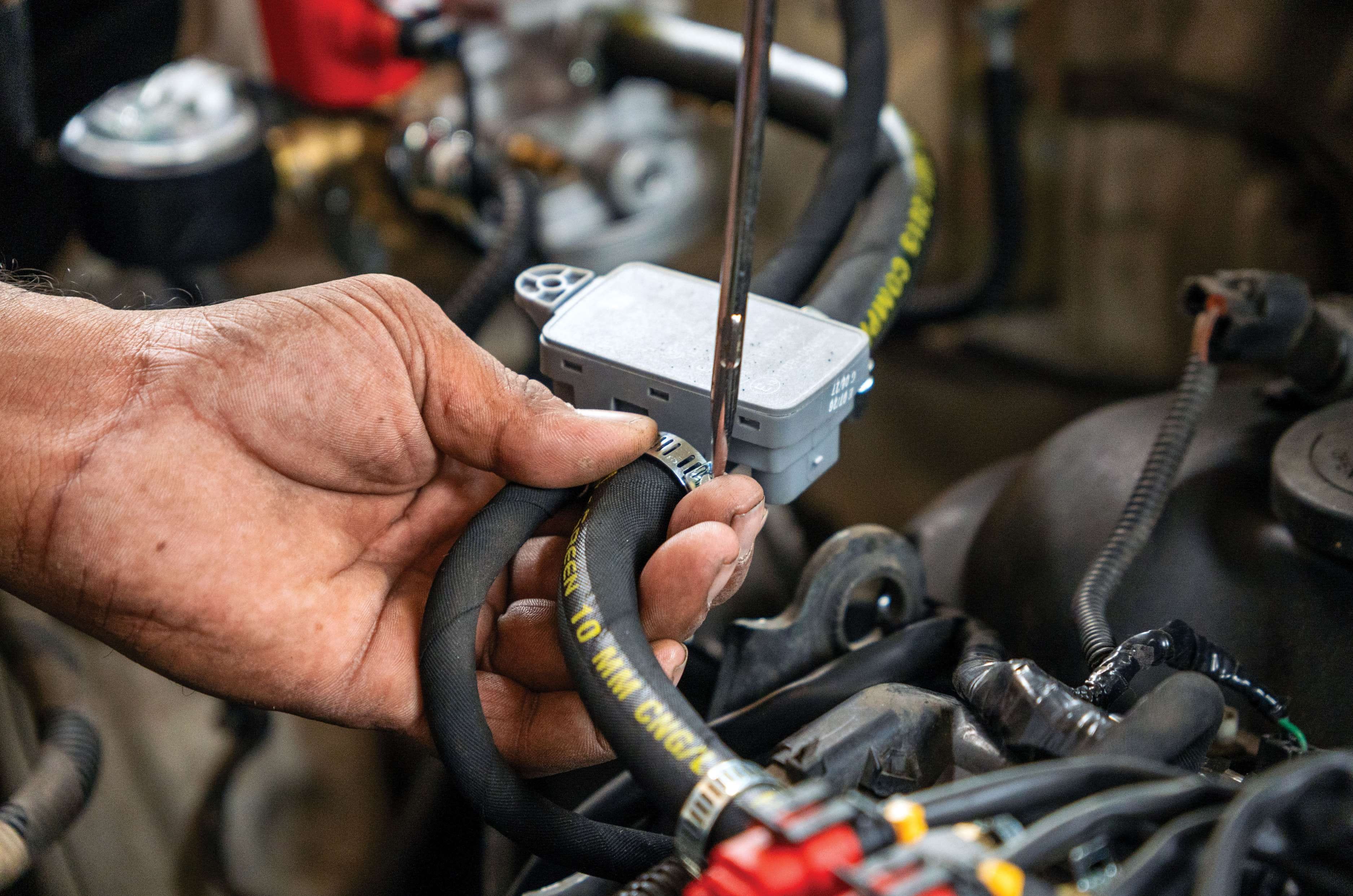
The filling valve, through which CNG is filled, can either be placed under the bonnet or beside the petrol filler cap, depending on the vehicle. Transporting the gas from the tank to the pressure reducer under the bonnet is high-pressure tubing made from carbon steel and coated in polymers. The reducer has a pressure gauge and lowers gas pressure from about 200bar in the tank to a manageable 2-3 bar. From here, the gas is routed to the injector rail that sits atop the engine, which further distributes it to nozzles drilled into the intake manifold via reinforced rubber hoses. Between the reducer and the injector rail sits a Manifold Absolute Pressure (MAP) sensor to measure the pressure as well as the temperature of the gas. There is also an optional filter to remove any impurities in the line.
Controlling the injector rail is an Electronic Control Unit (ECU) that uses signals from the MAP sensor and communicates with the car’s original ECU to dictate the amount of CNG being injected and the timing. Modern kits also come with a comprehensive wiring harness that can plug into the car’s original wiring via OBD connectors. Older pre-BS6 cars, however, may require some wire splicing. Optionally available is an Advancer, which advances ignition timing when running on CNG and negates some of the power loss, particularly on smaller-capacity engines. Some sedans and hatchbacks also require a rear coil spring spacer to compensate for the added weight of the tank in the boot.
How a CNG kit is installed
A professional CNG installation takes around 4 to 5 hours to complete. Here’s what happens behind the workshop doors.
Health check
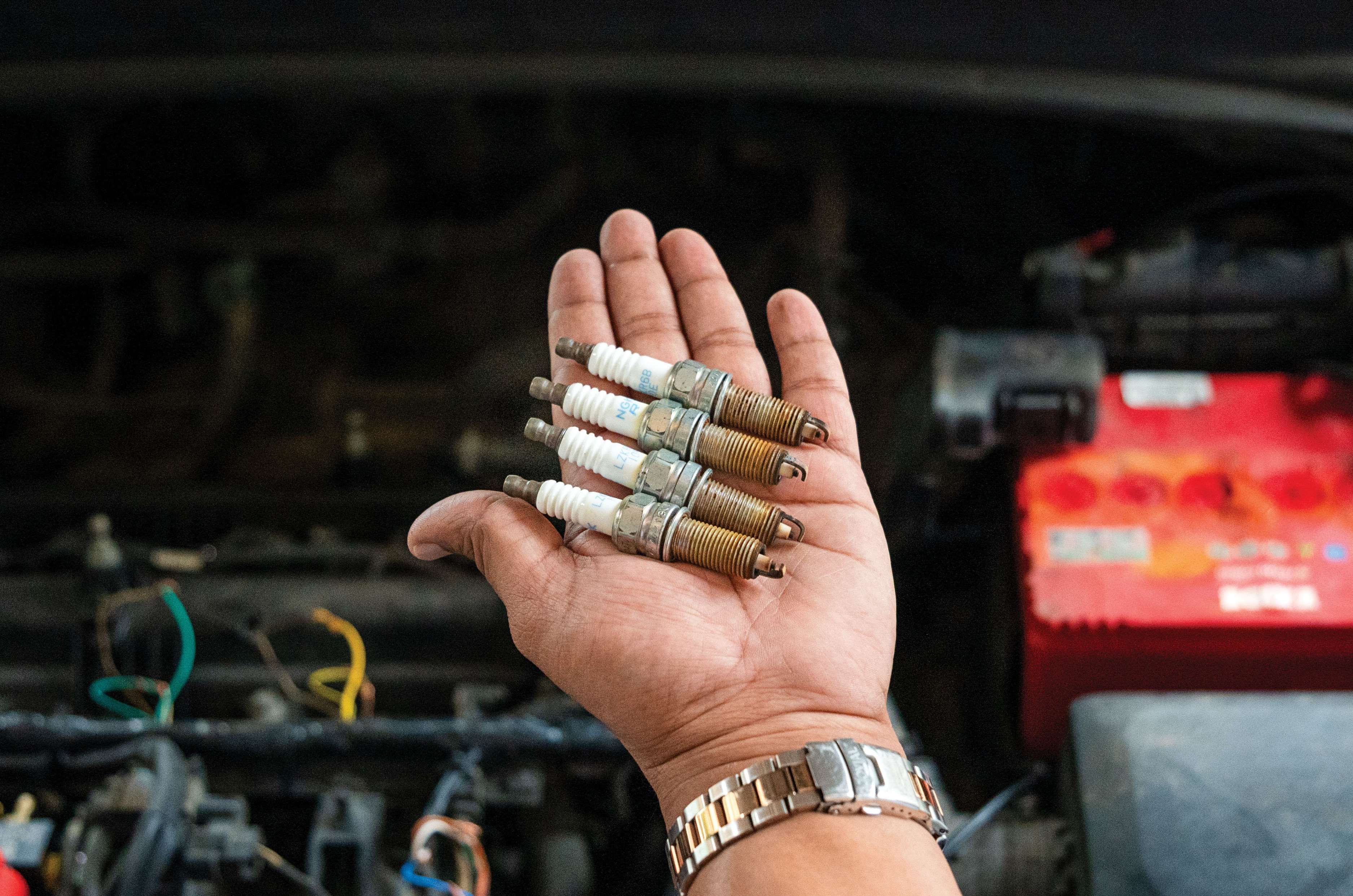
The engine is inspected to ensure it’s suitable for CNG conversion. A basic service is performed if required, with spark plugs and ignition coils replaced as needed and the throttle body cleaned.
Components positioned
The reducer and its pressure gauge are mocked up in the engine bay before mounting points are marked and drilled. The filler valve may be located alongside them or next to the petrol filler cap, depending on the vehicle.
Injectors installed
The CNG injector rail is mounted on its dedicated bracket close to the petrol injectors. This will send CNG to corresponding nozzles that are drilled and fitted into the vehicle’s plastic intake manifold.
ECU wired in
The CNG ECU is mounted alongside the factory ECU and connected to the vehicle’s wiring loom. The harness is neatly routed and secured away from heat and moving parts.
Plumbing completed
Reinforced rubber gas hoses are cut to length and connected between the reducer, injector rail and the intake manifold. A MAP sensor and a filter are also installed as part of the system.
Tank prepared
The CNG tank is temporarily mounted to a rig that holds it in place while the shut-off valve and associated fittings are installed before everything is torqued down.
Tank frame installed
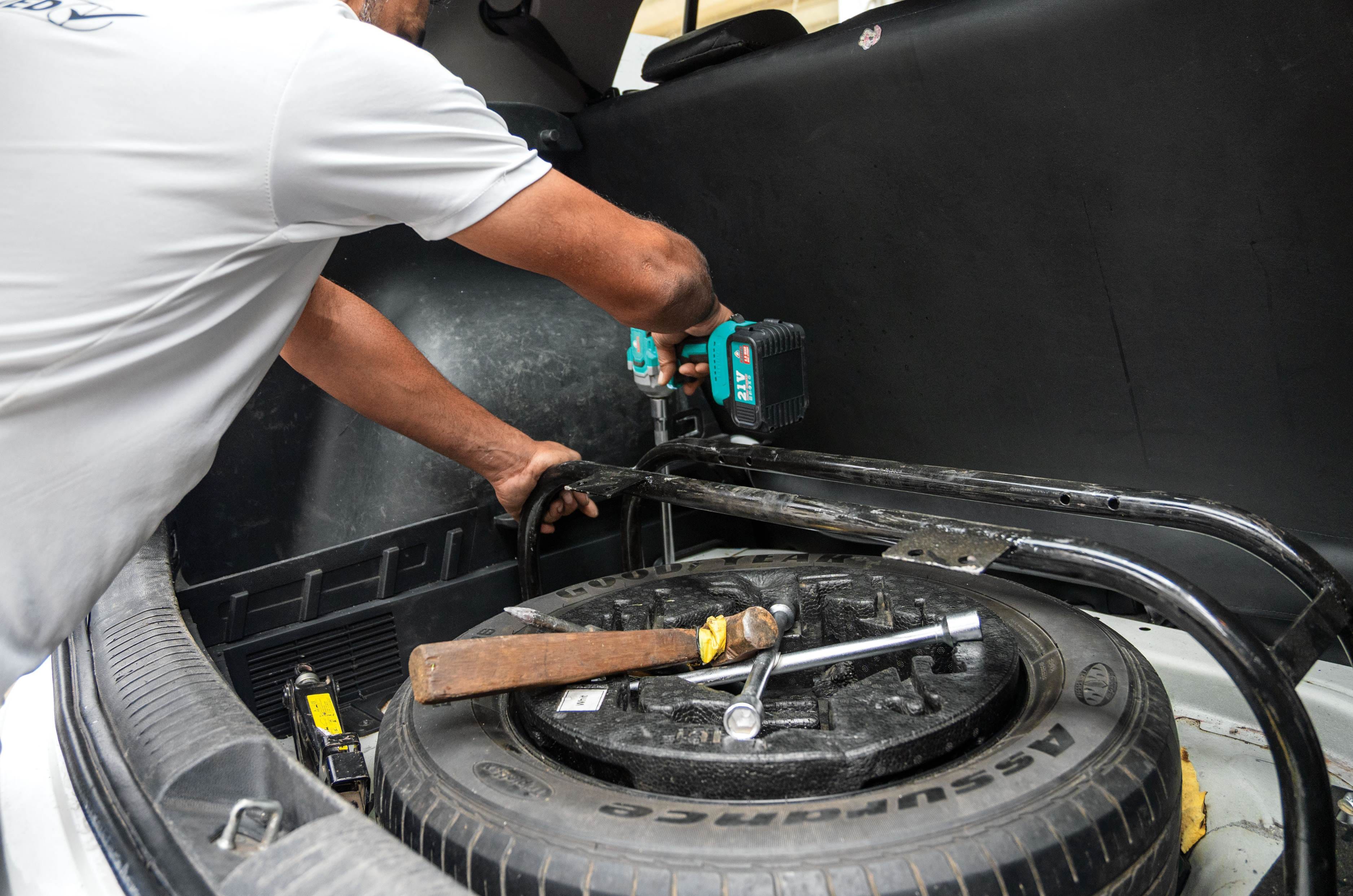
The mounting frame is positioned inside the boot, holes are drilled through the floor, and reinforced brackets securely bolt it to the vehicle’s structure.
Tank fitted
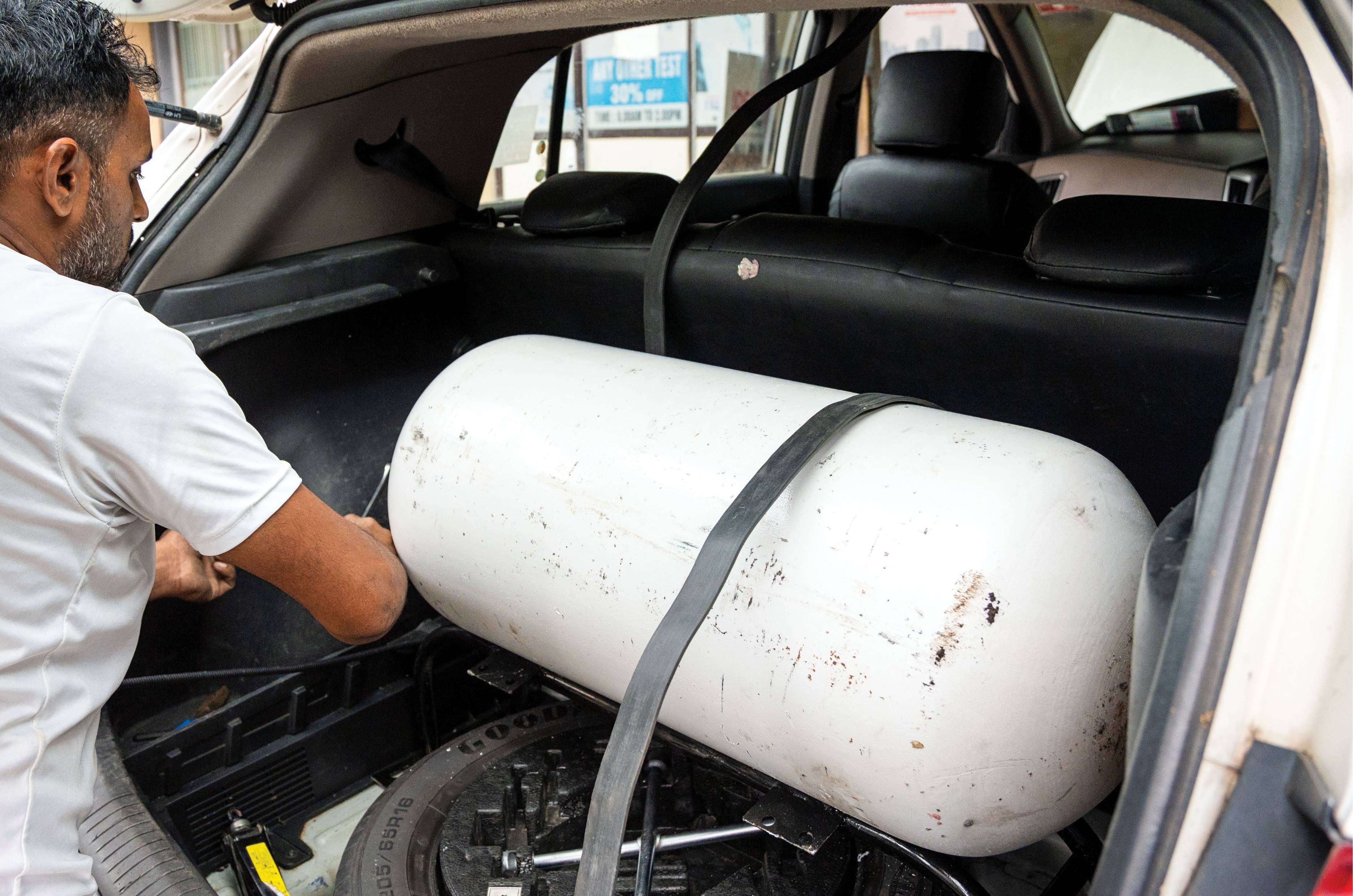
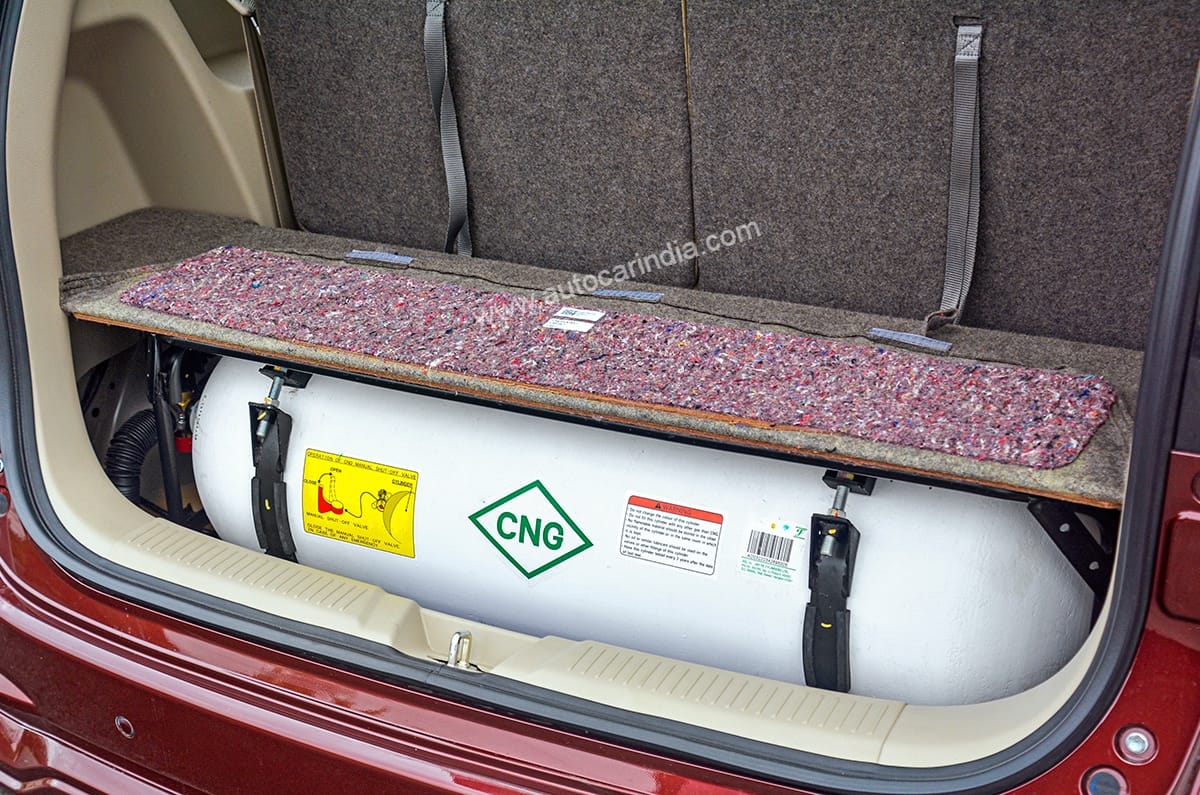
The CNG cylinder is secured to the frame using heavy-duty metal straps and bolts before being covered with a carpeted shroud for a neat factory-like finish.
High-pressure line routed
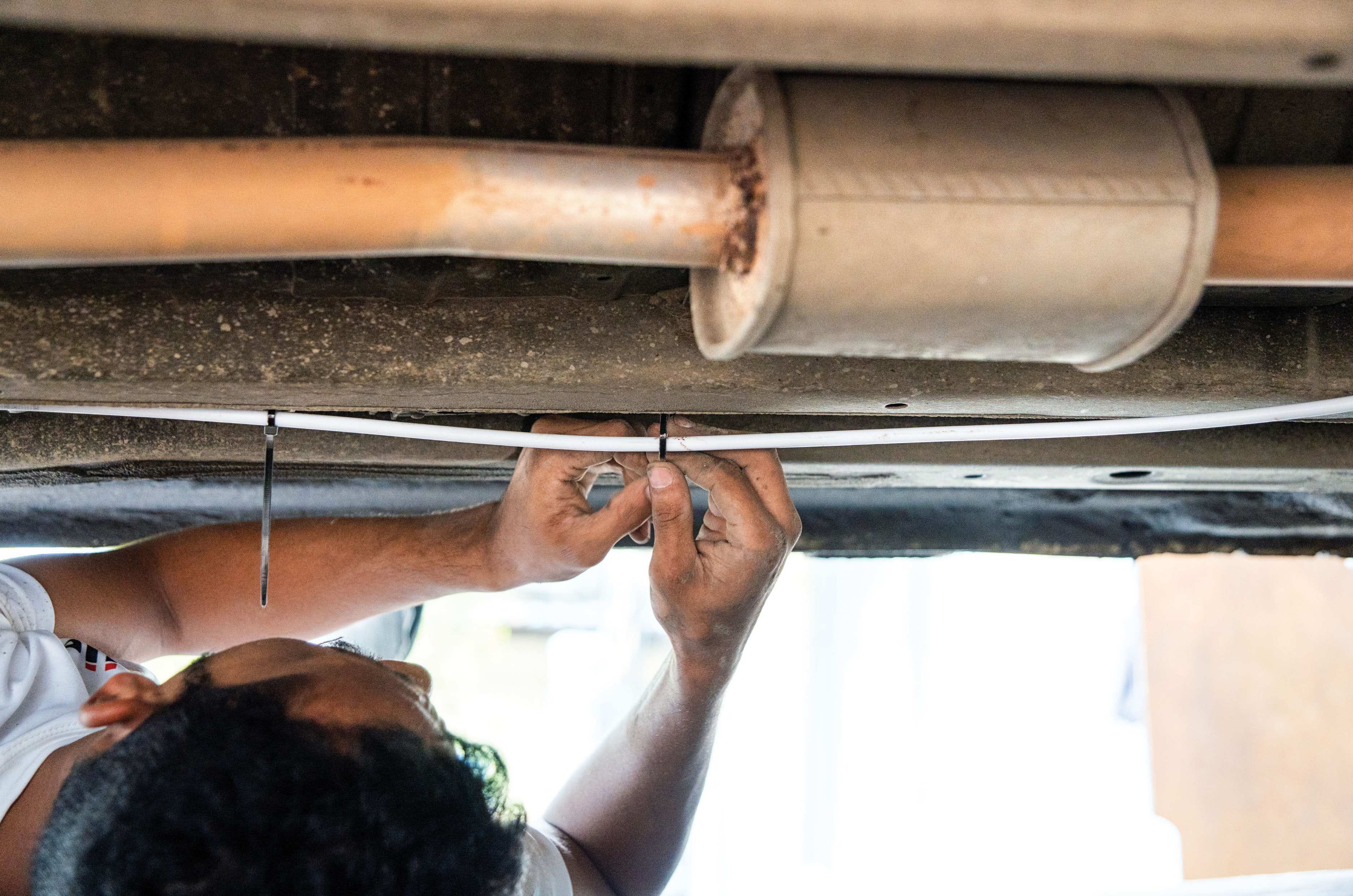
Polymer-coated steel high-pressure pipes are routed beneath the car, connecting the CNG filler valve, the tank and the reducer under the bonnet.
Electrical connections
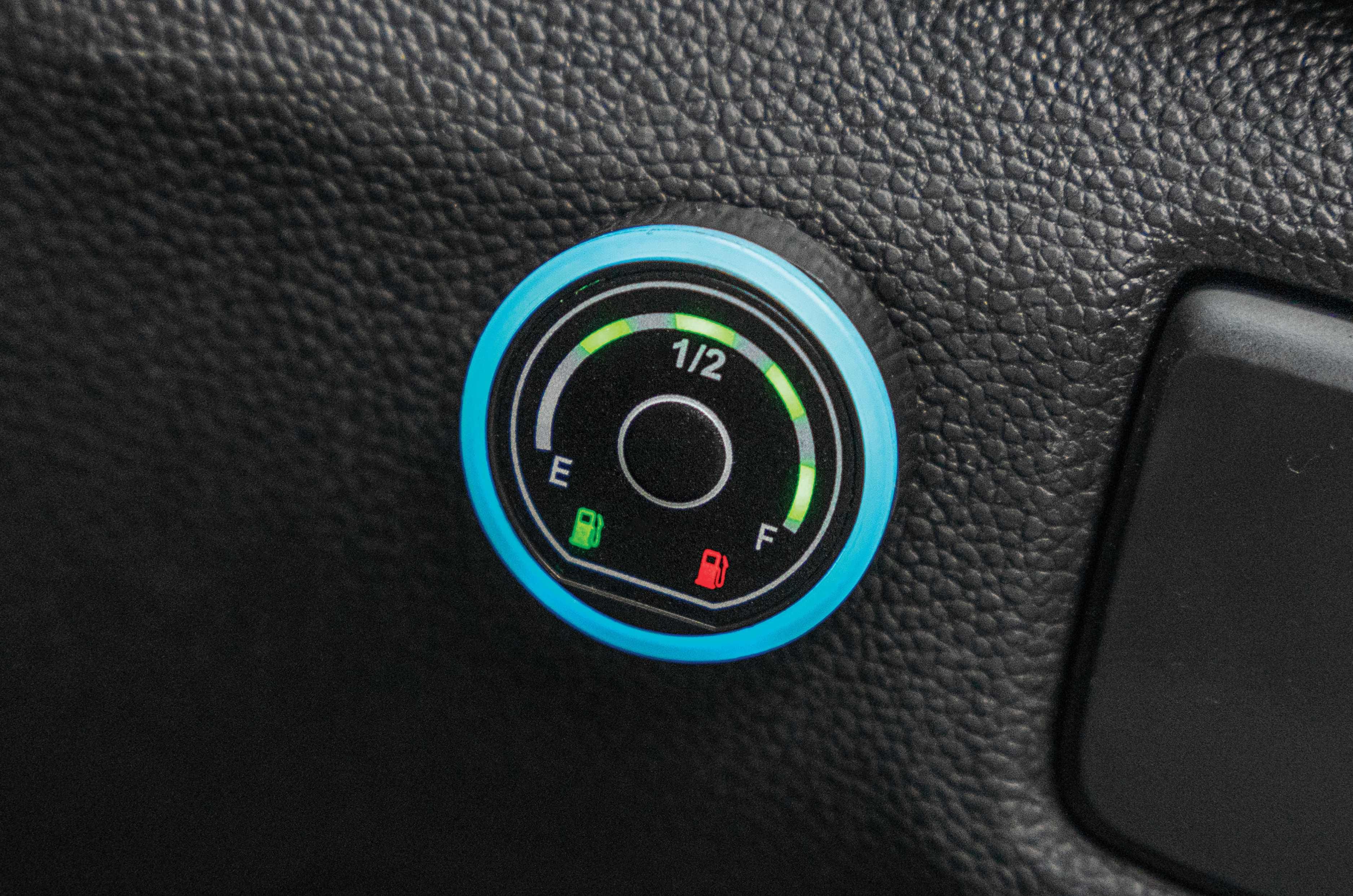
The remaining wiring is completed and a dashboard-mounted CNG switch is installed, allowing the driver to monitor fuel level and switch between petrol and CNG.
Leak test
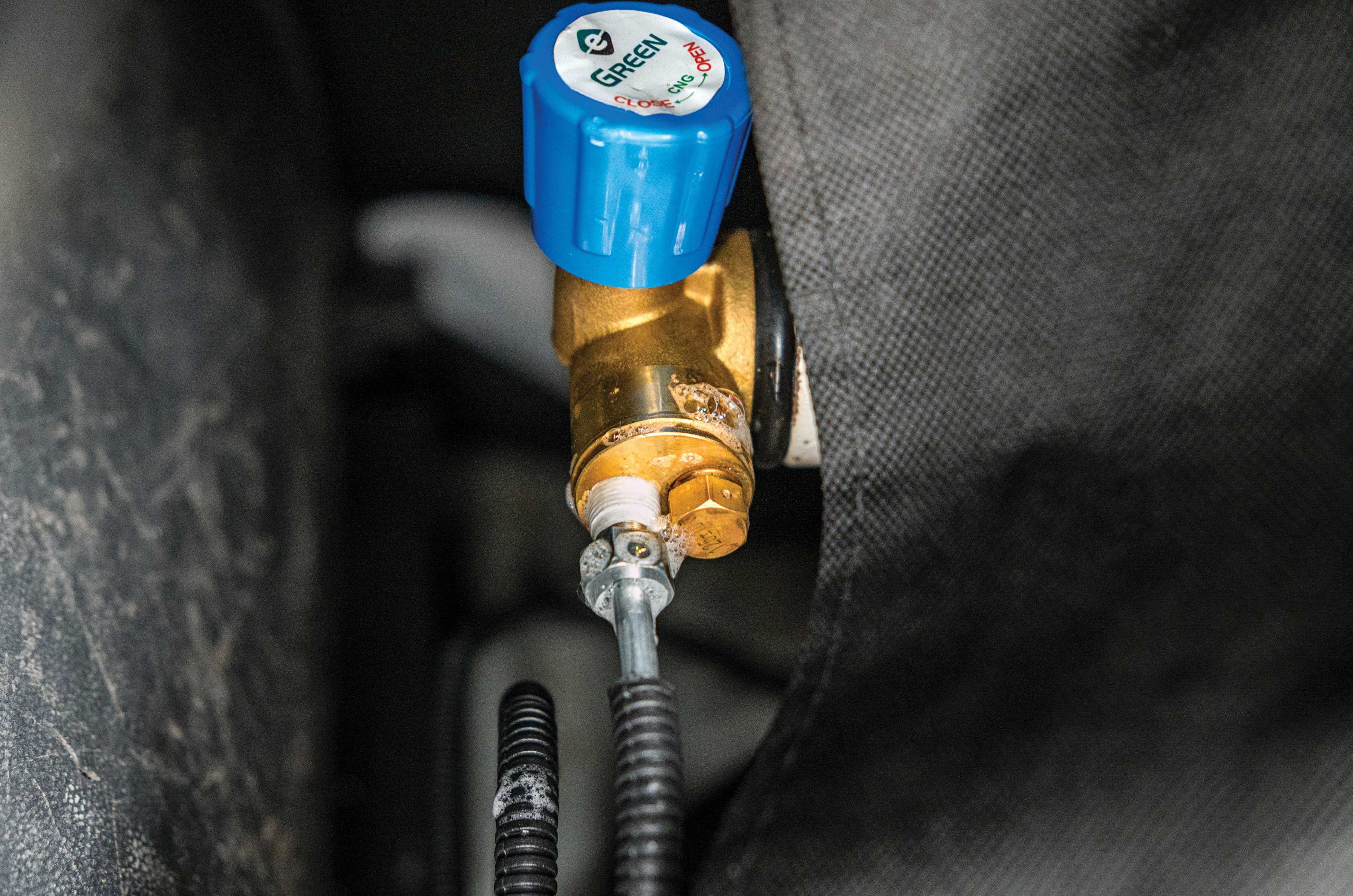
Around 2kg of CNG is added and every connection is checked using an electronic gas detector and good old-fashioned soap solution to ensure the entire system is leak-free.
Calibration and road test
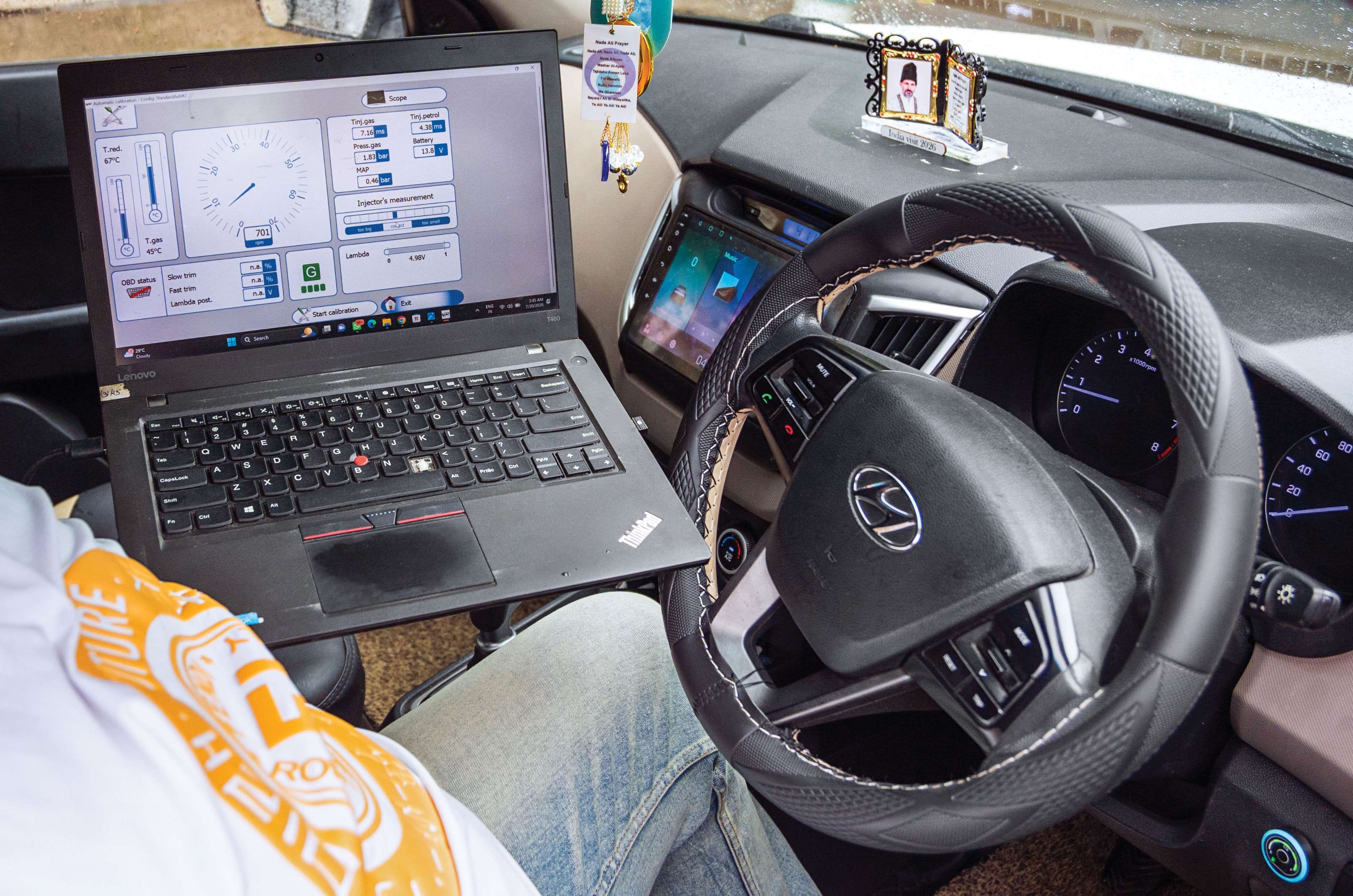
The system is calibrated using dedicated software to optimise fuel delivery and switchover settings. A final road test confirms performance before the vehicle is delivered to the customer.
Why go aftermarket?
On average, an aftermarket CNG installation costs around 25 to 30 percent less than the premium a factory-fitted CNG variant commands over its petrol counterpart. However, this alone is not enough to swing the scales in favour of the aftermarket due to the disadvantages we will get into later. The bigger advantage the aftermarket holds is the ability to convert models or variants that do not come with a CNG option. For instance, Maruti Suzuki only offers its factory-fitted CNG cars with a manual transmission, so if you want one with an automatic, an aftermarket CNG kit is your only option.
Similarly, popular SUVs like the Hyundai Creta and Kia Seltos are not available in CNG guise, which leads many owners to turn to the aftermarket. Owners of older cars, or those buying used cars, can also convert them to CNG for a fairly affordable price and enjoy significantly lower running costs. CNG is spark-ignited, thus only petrol cars can be converted to run on the gas. Since diesel cars use compression-ignition, they would need far too many modifications to make this possible. Strong hybrids are also not recommended for conversions, as here, the engine keeps switching on and off too often, which makes CNG calibration complex. Cars that are not in good mechanical shape should also not be converted to CNG, as the conversion can take a toll on the overall engine health.
For a car in generally good shape, aftermarket kits are proving to be reliable in the long run, provided they are well maintained. Most modern sequential kits from brands like Lovato and Mijo are also comparable in quality to OEM systems, and reputed, authorised installers are able to achieve near-OEM levels of fitment.
The catch
Fitting an aftermarket CNG kit – even if it is government-approved and fitted by an authorised installer – is grounds for the manufacturer warranty to be voided. While some brands may still honour warranty claims that are unrelated to the powertrain, it remains a grey area. Some dealer-fitted CNG kits do retain the factory warranty, while others provide a third-party warranty in its place.
Aftermarket installers have also begun offering third-party warranties in collaboration with insurance companies to provide coverage in place of the factory warranty. This, however, is in addition to the cost of the CNG kit. The kits themselves generally come with a warranty ranging from one to two years.
Packaging is also one area where the aftermarket trails OEMs. While Maruti, Tata and Hyundai are now offering underbody and dual-tank setups to retain a usable boot, the aftermarket still largely uses larger single tanks that take up more space.
Staying fit
As per law, any CNG tank – aftermarket or OEM fit – must be hydrotested every three years. For this, the tank must be removed from the vehicle and sent to a dedicated facility. While the process itself takes only a couple of hours, hydrotesting facilities are usually located outside major cities, adding transport time to the process. A hydrotest typically costs around Rs 3,000 per tank.
The CNG filter should also be replaced at the same three-year or 10,000km interval, whichever comes first. This typically costs under Rs 1,000 and is fairly straightforward. It is also recommended to drive on petrol at least 10 percent of the time to keep the fuel system healthy. Finally, it is important that the engine’s service schedule is strictly followed.
The legal bit
Aftermarket CNG installations are legal as long as the kit is government-approved, fitted by an approved installer and the registration certificate (RC) is updated accordingly. Most approved installers will handle the RC update at the Regional Transport Office (RTO) as part of the service. Once this is complete, the owner must also update the insurance provider.
The verdict
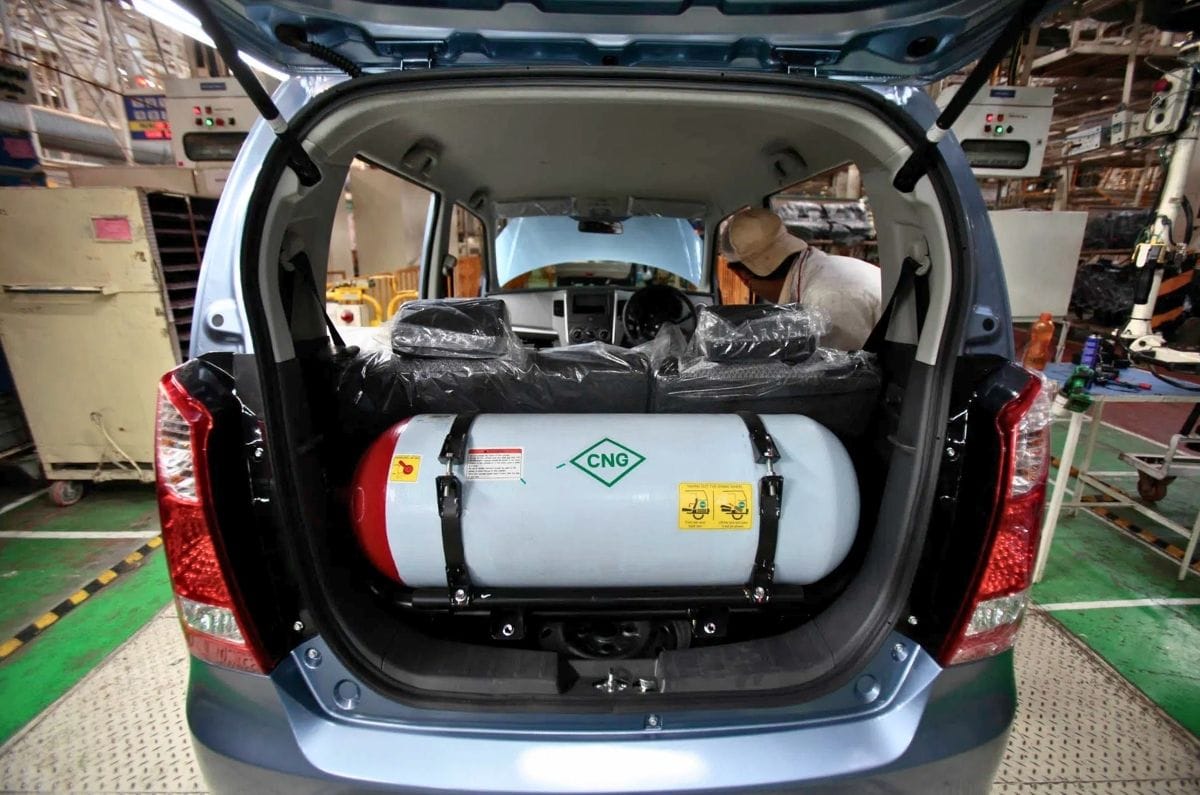
Maruti Ertiga’s factory-fitted CNG tank shown for representative purposes only.
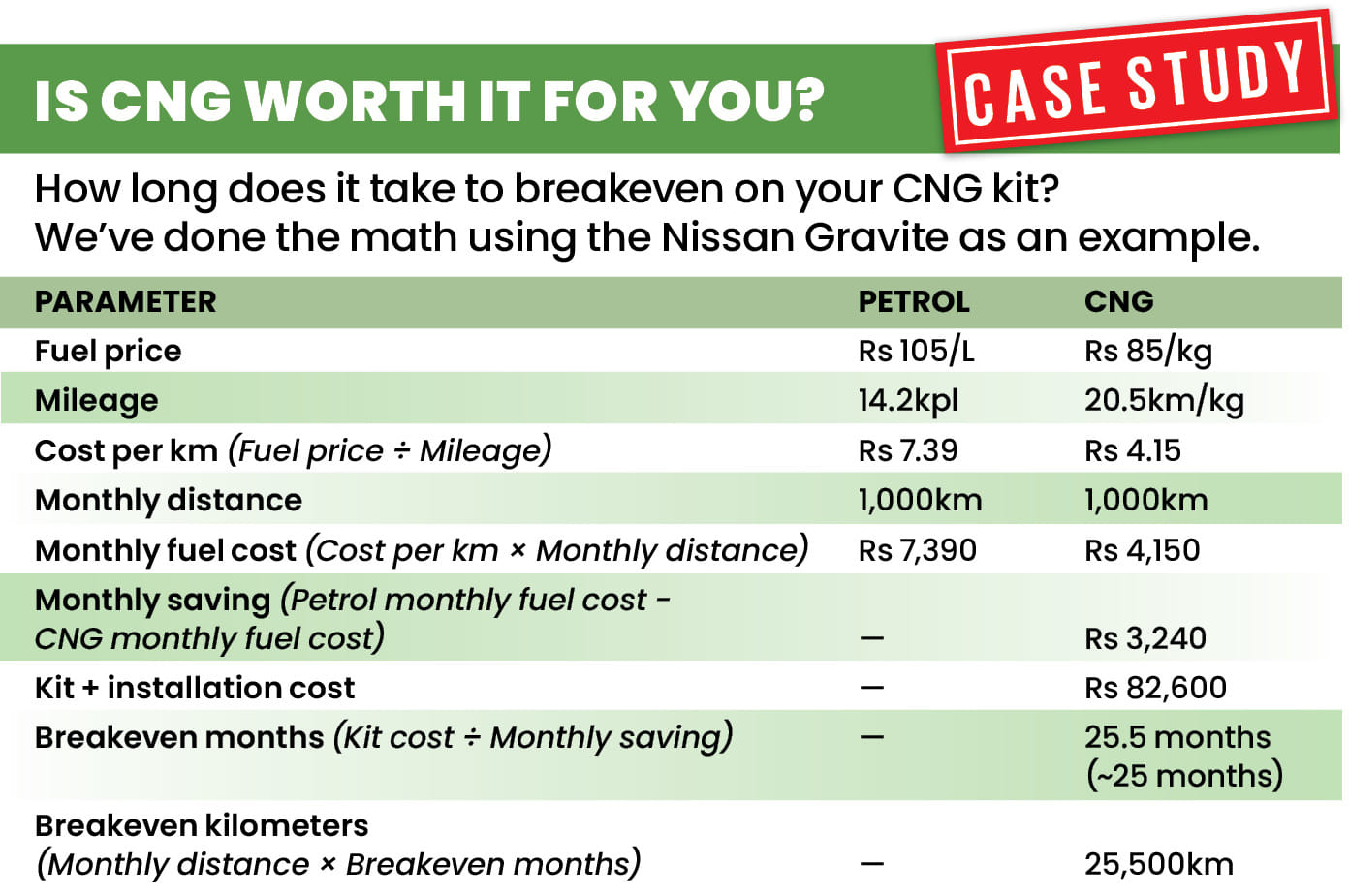
There is no denying the running cost advantage that CNG provides. However, when buying a brand-new car, a factory-fitted CNG version is still preferable to an aftermarket conversion simply because of the peace of mind. Once a car is out of warranty, though, a CNG conversion makes a great deal of sense. In most cases, the cost of the kit can be recouped within a couple of years, even with an average monthly running of around 1,500km.
However, the installer is just as important as the kit. Always opt for government-approved kits installed by approved installers with a strong reputation. Wherever possible, insist the installation is carried out without splicing into the original wiring and follow the recommended service schedule to ensure your car stays reliable.
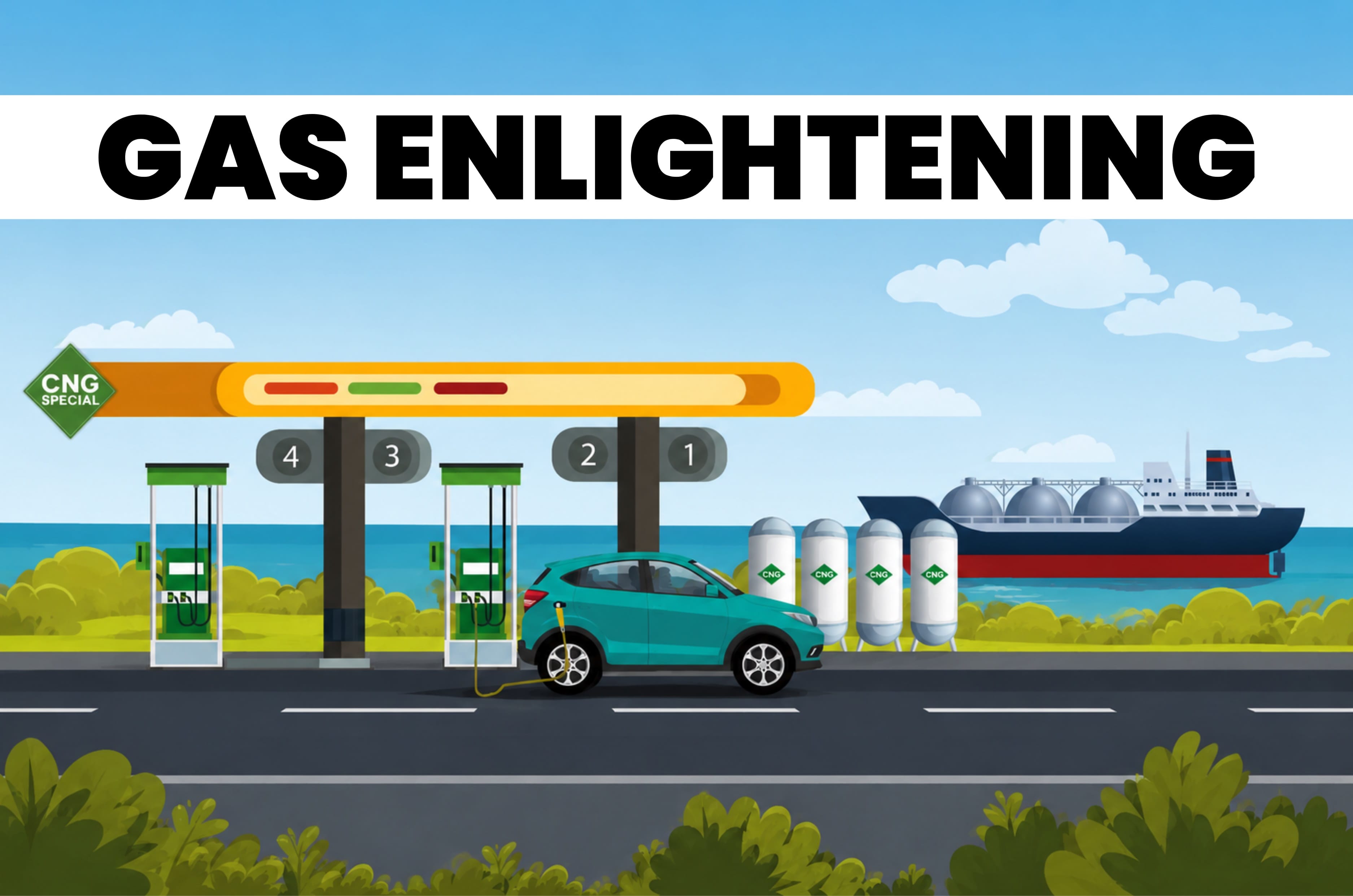
Over the last decade, CNG has gone from being a niche fuel used mainly by taxis to becoming the most popular alternative fuel in the Indian passenger vehicle market. Though driven mainly by rising fuel prices, an increasing choice of models with factory-fitted systems has also made CNG a mainstream choice. But what exactly is CNG?
What is CNG?
CNG, or Compressed Natural Gas, is composed primarily of methane (CH4) – typically between 85 and 98 percent. The rest consists of minor amounts of other hydrocarbons like ethane and butane, as well as trace amounts of nitrogen and carbon dioxide. Instead of being stored as a liquid, CNG is kept in a gaseous state.
Why is CNG compressed?
CNG’s volumetric energy density (energy/litre) is significantly less than petrol’s, so an amount sufficient for a decent driving range would take up way too much space. However, by compressing the gas to around 200 to 250 bar, its volume reduces roughly 250 times, thus enabling a manageable tank size.
Where do we get CNG from?
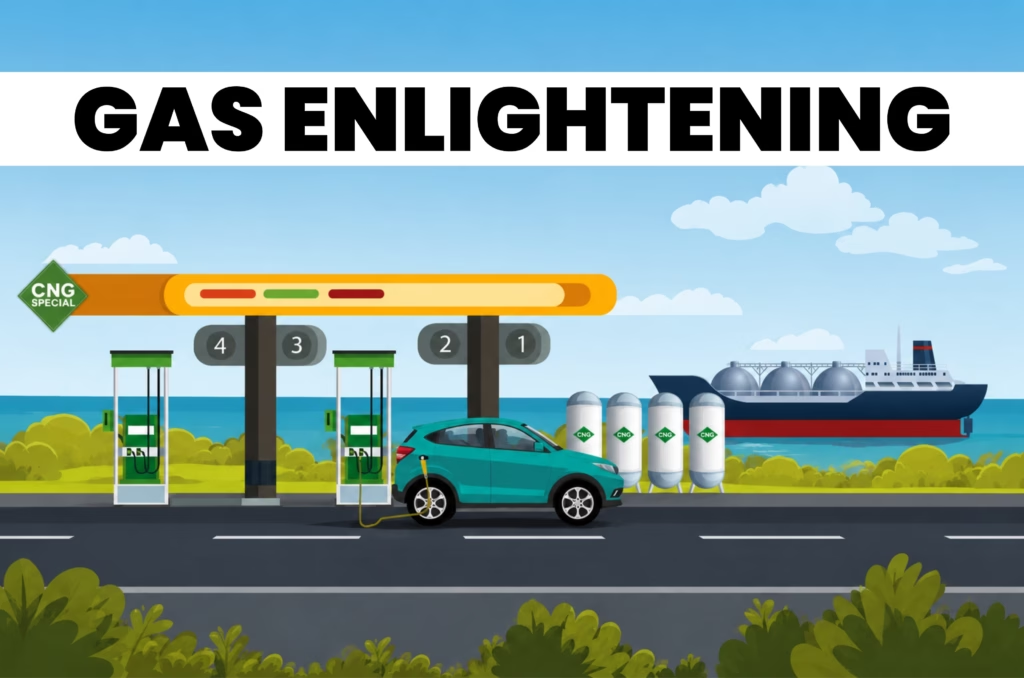
India gets its CNG from a roughly even mix of domestic natural gas production and imported liquefied natural gas (LNG). LNG is essentially CNG super-cooled to -162deg C and stored as a liquid, making it highly dense for easy transportation. Additionally, India also produces CNG from organic matter like food waste, sewage and cattle dung, though for now it is in small amounts. The methane derived from these sources is compressed into Bio-CNG.
How is CNG distributed?
CNG moves through gas distribution pipelines and into refuelling stations. These stations that are connected directly to the pipeline are called online stations and are common in major cities. In areas without a pipeline connection, CNG is supplied via mobile cylinder banks (called cascades) that are filled from a mother station and delivered by truck; the receiving station is referred to as a daughter station.
Is CNG safe?
Modern automotive CNG systems are very safe. The cylinders are designed to withstand pressures well beyond normal operating levels and are equipped with pressure relief and automatic shut-off valves. Methane is lighter than air, thus if a leak occurs, it disperses upward quickly, and while methane is an odourless gas, it is mixed with a chemical to give it a pungent aroma, so you can detect a leak. That said, because CNG is stored at very high pressure, cylinders require periodic inspection and testing as specified by the manufacturer.
What are the advantages of CNG?
1. Lower running costs
CNG’s significantly lower price means the cost per kilometre of running a vehicle on the gas is typically 30-50 percent lower than petrol by today’s fuel prices. The lower cost is, quite simply, the largest contributor to the fuel’s popularity. However, there are other benefits too.
2. Cleaner emissions
CNG burns cleaner with lower CO2 emissions and minimal particulate matter. The formation of sulphur oxides (SOX) and nitrogen oxides (NOX) is also lower with CNG. Thus, it is considered to be a clean or environmentally friendly fuel. When compared to diesel fuel, the reduction in particulate matter is even more significant.
3. Cleaner engine internals
CNG mixes very uniformly with air and leaves almost no carbon deposits when burned. Thus, an engine running CNG generally stays cleaner than when running on petrol. This can be seen on the spark plugs that stay cleaner. However, the higher combustion temperatures that CNG engines typically run at put extra thermal stress on the plugs. On the whole, though, they tend to last a bit longer and stay cleaner too.
What are the disadvantages
1. Lower range
Despite being compressed, CNG still stores much less energy per litre than liquid fuels. Thus, the range-to-volume ratio is lower with CNG than with petrol or diesel fuel.
2.Longer refueling
CNG stations are concentrated around major cities and highways, and given the rising popularity of CNG, there are long queues. Furthermore, filling pressure depends on the pump’s pressure and the number of vehicles, so it can take longer to fill than liquid fuels when the station is full.
3.Reduced power
Petrol enters a cylinder as a fine mist, taking up little space. However, CNG, being a gas, occupies more space, leaving less room for air (oxygen). CNG’s lower volumetric energy density also means the air-CNG mix simply holds less energy than an air-petrol mix. Thus, an engine makes less power when running on CNG. Interestingly, CNG has a higher octane rating than petrol – typically above 120 RON, so a CNG-only engine can run a higher compression ratio to produce more power. But since passenger cars are bi-fuel, a lower ratio that’s suitable for petrol is used.
IT Stocks : बाजार में एक ऐसा भी समय था जब आईटी सेक्टर से हर कोई दूर रहना चाहता था। एआई की सुनामी की वजह से सब डरे हुए थे। लेकिन पिछले कुछ महीनों से या फिर कुछ हफ्ते से आईटी सेक्टर में एक ठहराव सा दिखा है या यह भी कह सकते हैं कि इसमें मजबूती दिख रही है। ऐसे में अब सेक्टर पर क्या रणनीति होनी चाहिए इस पर बात करते हुए सीएनबीसी-आवाज के मैनेजिंग एडिटर अनुज सिंघल ने कहा कि आईटी पर हम तब बुलिश हुए थे जब इंडेक्स 27,000 पर था। वहां से 31,000 तक का मूव आ चुका है। अब आईटी व्यू बहुत क्लियर है। अब आप आईटी में एकतरफा तेजी नहीं देख सकते, जैसा कि पहले हमने 27,000 के स्तर से देखा था।
निफ्टी आईटी अभी भी 200 डे मूविंग एवरेज क्रॉस नहीं कर पाया है। ऐसे में अभी भी यह कहना बहुत मुश्किल है कि ये एक बेयर मार्केट रैली है या एक नई रैली की शुरुआत है। लेकिन एक बड़ा मूव प्ले हो चुका है। ऐसे में अब आईटी में स्पेसिफिक स्टॉक्स पर फोकस करने की जरूरत है। किसी एकतरफा तेजी की उम्मीद न करें। इस समय आईटी के तीन-चार स्टॉक्स, जैसे कि कोफोर्ज, पर्सिस्टेंट सिस्टम्स और ओएफएसएस के शेयर अच्छे लग रहे है। टाटा टेक भी अच्छा लग रहा है।
आईटी में अब इंडेक्स पर फोकस करने के बजाय इंडिविजुअल स्टॉक्स पर फोकस करें,क्योंकि आईटी में जो बड़ी ट्रेड थी वो प्ले आउट हो चुकी है। हालांकि, अगर आईटी इंडेक्स 32500 को क्रॉस करेगे तो शायद आपको आईटी इंडेक्स में बड़ी ट्रेड प्ले आउट होगी।
AnandRathi Wealth के ज्वाइंट CEO फिरोज अजीज ने कहा कि उन्होंने जून महीने में कहा था कि आईटी अपने सबसे बुरे दौर से बाहर आ चुका है। हम अक्सर यही देखते हैं कि निफ्टी को सालाना आधार पर कौन 3-4 फीसदी से आउटपरफार्म कर सकता है। हम शॉर्ट टर्म रैली नहीं देखते है। हमें पहले निफ्टी की तुलना में निफ्टी आईटी में 3-4 फीसदी के आउटपरफार्मेंस का अंदाजा लगाया है। पिछले 1-1.5 महीनों में हमें ऐसा ही देखने को मिला है। अब यहां से हमें निफ्टी आईटी से इतनी ज्यादा उम्मीद नहीं करनी चाहिए। फिर भी हमें इसमें 2-3 फीसदी का एक्सेस रिटर्न देखने को मिल सकता है।
मार्केट एक्सपर्ट सुदीप बंद्दोपाध्याय का कहना है कि आईटी तो एक वैल्यू ट्रैप है। एआई रिलेटेड डिसरप्शन रियल है। इस डिसरप्शन से बाहर कौन आएगा वो तो समय बताएगा। लेकिन इस समय फंडामेंटली मीडियम टर्म के नजरिए से आईटी से दूर रहने की सलाह होगी। लार्ज कैप्स से तो बिल्कुल ही दूर रहने की जरूरत है। हालांकि, एआई पर फोकस करने वाली मिड कैप आईटी की चुनिंदा कंपनियों पर नजर रहनी चाहिए।
SW Capital के डायरेक्टर पंकज जैन ने कहा कि अभी आईटी से रिस्क रिवॉर्ड लार्जकैप आईटी के पक्ष में अच्छे होते दिख रहे हैं। आईटी शेयरों के पिछले 4-5 हफ्तों के मूव से कुछ अच्छे सिगनल मिले हैं। इनके नतीजे भी उम्मीद से अच्छे रहे हैं। साथ ही इनकी मैनेजमेंट कमेंट्री भी अच्छी रही है। लार्जकैप आईटी को लेकर उम्मीदें दिख रही है। लेकिन इस सेक्टर में बहुत स्टॉक स्पेसिफिक रहने की जरूरत है।
डिस्क्लेमर: मनीकंट्रोल.कॉम पर दिए गए विचार एक्सपर्ट के अपने निजी विचार होते हैं। वेबसाइट या मैनेजमेंट इसके लिए उत्तरदाई नहीं है। यूजर्स को मनी कंट्रोल की सलाह है कि कोई भी निवेश निर्णय लेने से पहले सर्टिफाइड एक्सपर्ट की सलाह लें।
Market Mantra :सेलिब्रिटी एस्ट्रोलॉजर चिराग दारूवाला ने सितंबर महीने में सितारों के हिसाब से बाजार की चाल पर बात करते हुए कहा कि ग्रहों की स्थिति पर नजर डालें तो गणेश जी कहते हैं कि महीने की शुरुआत में सूर्य और जो बृहस्पति यानी जो गुरु है वो कर्क राशि में होंगे। मंगल और बुध सिंह राशि में होंगे। शुक्र कन्या राशि में होंगे। जबकि शनि ग्रह मीन राशि में वक्री रहेंगे। 2 सितंबर को शुक्र तुला राशि में प्रवेश करेंगे। शुक्र के अपनी राशि तुला में आने से बाजार में सकारात्मक माहौल और खरीददारी बढ़ सकती है। इस दौरान बैंकिंग सेक्टर,फाइनेंस सेक्टर,एफएमजीसी सेक्टर,ज्वेलरी और लग्जरी सेक्टर को अच्छा लाभ देखने को मिल सकता है।
7 सितंबर को बुध कन्या राशि में प्रवेश करेंगे। यह बाजार में ट्रेडिंग,गतिविधियों और वित्तीय निर्णयों के लिए बहुत अनुकूल रह सकता है। आईटी,टेक्नोलॉजी, टेलीकॉम,बैंकिंग और ब्रोकरेज सेक्टर में तेजी देखने को मिल सकती है। 17 सितंबर को सूर्य कन्या राशि में प्रवेश करेंगे। जबकि 18 सितंबर को मंगल कर्क राशि में प्रवेश करेंगे। जिससे बाजार में अचानक थोड़ा सा उतार-चढ़ाव और अस्थिरता बढ़ सकती है। लेकिन आपको मायूस नहीं होना है। रियलस्टेट, कंस्ट्रक्शन सेक्टर,ऑयल गैस सेक्टर,केमिकल और इंफ्रास्ट्रक्चर सेक्टर में तेज हलचल देखने को मिल सकती है।
26 सितंबर को बुध फिर से अपनी स्थिति बदलेंगे और तुला राशि में प्रवेश करेंगे। इससे विदेशी निवेशकों और पारंपरिक निवेशकों की भागीदारी बढ़ सकती है। बाजार में बुलिश ट्रेंड देखने को मिल सकता है। इस दौरान बैंकिंग सेक्टर,आईटी सेक्टर,फाइनेंस सेक्टर,मीडिया सेक्टर और टेलीकॉम सेक्टर और ग्रीन एनर्जी सेक्टर में अच्छी खरीदारी आ सकती है। कुल मिलाकर हम यह कह सकते हैं कि यह महीना इन सेक्टर्स के लिए बहुत ही बेहतरीन रहने वाला है और ग्रह भी इन सेक्टर्स वालों को अच्छा फेवर करेंगे।
राशियों के अनुसार कैसा रहेगा यह महीना?
मेष राशि
चिराग दारूवाला ने कहा कि गणेश जी कहते हैं कि मेष राशि वालों इस महीने आपके लिए बैंकिंग सेक्टर,फाइनेंस सेक्टर और रिन्यूएबल एनर्जी सेक्टर में निवेश अच्छा रहेगा। इनमें आपको निवेश के लिए काफी अच्छे मौके मिलेंगे। संपत्ति की लेनदेन कर रहे हैं तो सावधानी पूर्वक जांच करें। किसी भी प्रकार का फाइनेंशियल ट्रांजैक्शन कर रहे हैं तो सोच समझकर कीजिए। जल्दबाजी में लिया हुआ फैसला आपके लिए गलत साबित हो सकता है। आपकी इच्छा पूर्ण हो सकती है। आपका सपना पूरा हो सकता है। आपका खुद का घर आप इस महीने बना सकते हैं। खर्चे बहुत अधिक रहने की भी संभावना है।
उपाय
हर शनिवार को नहाने के पानी में एक चुटकी हल्दी अवश्य मिलाएं। यह समझ लीजिए कि मेष राशि वालों यह महीना आपको कुछ ना कुछ अवश्य देगा।
वृषभ राशि
गणेश जी कहते हैं वृषभ राशि वालों रेलवे सेक्टर इंफ्रास्ट्रक्चर सेक्टर में निवेश अच्छा रहेगा। म्यूच्यूल फंड में निवेश किया हुआ है तो आपको अच्छे रिटर्न्स देखने को मिल सकते हैं। संपत्ति में निवेश करना चाहते हैं तो थोड़ा सा धैर्य रखना होगा। यह महीना क्रिएटिविटी का महीना है। यानी कि आपको नए-नए विचार,नए-नए तरीके सोचने होंगे और उसे आप अमल में लेकर आइए। अवश्य आपको लाभ होगा। खर्चों पर भी नियंत्रण रखने की आवश्यकता है।
उपाय
हर मंगलवार को गणेश जी की पूजा अर्चना करें। ओम गण गणपताए नमः 108 बार यह मंत्र का उच्चारण करें। जरूर से आपको लाभ देखने को मिलेगा।
मिथुन राशि
गणेश जी कहते हैं मिथुन राशि वालों इस महीना जो उतार-चढ़ाव चल रहा था,जो इनस्टेबिलिटी चल रही थी,वह इनस्टेबिलिटी दूर होगी। व्यापार में अच्छा मुनाफा देखने को मिल सकता है। आपको नए इन्वेस्टर्स,नए क्लाइंट्स मिल सकते हैं। आपकी आर्थिक स्थिति में सुधार होगा। ऑटोमोबाइल सेक्टर,एनर्जी सेक्टर,स्टील सेक्टर में निवेश आपके लिए बेहतरीन रहेगा। इंश्योरेंस और फाइनेंस सेक्टर में भी निवेश करने का विचार कर रहे हैं तो वह बेहतरीन रहेगा। खर्चे आपके थोड़े कम होंगे और आप यह कह सकते हैं कि आप राहत की सांस लेंगे।
उपाय
जब भी भी संभव हो लाल कपड़ों का लाल चीजों का दान अवश्य करें और मंगलवार के दिन यह अवश्य आप करिए। आपको अवश्य कुछ ना कुछ लाभ देखने को मिलेगा।
कर्क राशि
गणेश जी कहते हैं कर्क राशि वालों अभी नहीं तो कभी नहीं। जो दिमाग में चल रहे हैं जो आपके आइडियाज हैं जो थॉट्स हैं उसे आप इंप्लीमेंट करना शुरू कर दीजिए। आईटी सेक्टर,टेक्नोलॉजी सेक्टर,विज्ञान सेक्टर में निवेश आपके लिए बेहतरीन रहेगा। आपकी आर्थिक स्थिति अच्छी रहेगी। लेकिन पैसों के लेनदेन से आपको बचना है। व्यापार में मेहनत और परिश्रम आपको अच्छी सफलता दिलाएगा। व्यवसाय में कुछ बदलाव नए बदलाव से आपको अच्छा फायदा देखने को मिलेगा। बिजनेस को आगे बढ़ाने में आपको थोड़ा सा सक्रिय रहना होगा।
उपाय
प्रतिदिन सुबह गाय माता को हरा घास,हरा चारा अवश्य खिलाइए।
सिंह राशि
गणेश जी कहते हैं सिंह राशि वालों इस महीने स्टील सेक्टर और सीमेंट सेक्टर में निवेश आपके लिए बेहतरीन रहेगा। अच्छा लाभ मिल सकता है। आर्थिक स्थिति सामान्य रहेगी। लेकिन आपके जो आय के स्त्रोत है वह बढ़ेंगे। करियर के लिहाज से यह महीना काफी अच्छा रहेगा। प्रॉपर्टी खरीदने के लिए समय योग्य नहीं है। थोड़ा सा रुक जाइए। जल्दबाजी मत कीजिएगा।
उपाय
जरूरतमंद लोगों को दूध,दही या फिर घी का दान अवश्य करें।
कन्या राशि
गणेश जी कहते हैं कन्या राशि वालों इस महीने शुक्र आपके जीवन में बहुत कुछ लेकर आए हैं। यानी कि अलग-अलग जगह से आपको पैसे कमाने का मौका मिल सकता है। व्यापार में नई-नई अपॉर्चुनिटीज आपको मिल सकती है। साथ-साथ में आपने जहां-जहां निवेश किया है,जिन शेयर्स में आपको अच्छा रिटर्न नहीं मिल रहा था,शायद इस महीने आपको अच्छा रिटर्न भी मिल सकता है। हालांकि, आपको अपने पोर्टफोलियो में कुछ बदलाव लाने की जरूरत है। अनियंत्रित खर्चों पर भी आपको ध्यान देना होगा। एक बजट बनाएं और उसके अनुसार ही खर्च करें।
उपाय
प्रत्येक गुरुवार को ओम ब्रह्म बृहस्पतिए नमः का जाप करें, यह मंत्र का गुरु का मंत्र है। 108 बार जाप अवश्य करिए। गुरु अगर आपके फेवर में होंगे तो आपको आगे बढ़ने से कोई नहीं रोक सकेगा। यह महीना आपके लिए बेहतरीन रहेगा।
तुला राशि
गणेश जी कहते हैं तुला राशि वालों इस महीने ऑटोमोबाइल सेक्टर,ट्रांसपोर्ट सेक्टर,फाइनेंस सेक्टर में अगर आप निवेश करना चाहते हैं तो आपके लिए बहुत ही बेहतरीन रहेगा। इनमें आपको अच्छे रिजल्ट मिल सकते हैं। सोना चांदी का व्यवसाय कर रहे हैं या करना चाहते हैं तो कीजिए। जरूर से आपको लाभ होगा और आपके किसी भी प्रकार के कुछ काम अटके हुए थे तो आप यह कह सकते हैं 7 सितंबर से लेकर 21 सितंबर का जो समय है वह बहुत ही बेहतरीन है। इंपोर्ट एक्सपोर्ट के व्यवसाय में अच्छा फायदा देखने को मिलेगा। नौकरी कर रहे हैं तो प्रमोशन मिल सकता है और साथ-साथ में नई अपॉर्चुनिटीज भी मिल सकती है।
उपाय
हर शुक्रवार को मां लक्ष्मी जी की पूजा अर्चना करें और माता जी को खीर का भोग लगाएं। यह समझ लीजिए तुला राशि वालों कि इस महीने अनएक्सपेक्टेड मॉनिटरी गेंस यानी ऐसा पैसा जो शायद आपने सोचा भी नहीं हो,अटका हुआ पैसा भी आपको इस महीने मिल सकता है। यह महीना आपके जीवन में खुशियां लेकर आएगा।
वृश्चिक राशि
गणेश जी कहते हैं वृश्चिक राशि वालों अभी नहीं तो कभी नहीं आपको आलस का त्याग करना है। थोड़ा सा आपको एक्टिव हो जाना है। अलर्ट हो जाना है। आप यह समझ लीजिए कि इस महीने आपकी जो आर्थिक स्थिति है वह पहले से बेहतर दिखाई दे रही है। लंबी अवधि के निवेश से अच्छी आय होगी। लॉन्ग टर्म इन्वेस्टमेंट आपके लिए बहुत बेहतरीन है। इस महीने किसी भी प्रकार का आप फैसला लें वह जल्दबाजी में मत लीजिएगा। जल्दबाजी में लिया हुआ फैसला आपके लिए नुकसानकारक साबित हो सकता है। शेयर बाजार में निवेश से पहले विशेषज्ञों की सलाह जरूर से लीजिए। वरना आप फंस सकते हैं। व्यापार में अच्छे ऑर्डर्स आपको मिल सकते हैं। नए क्लाइंट्स मिल सकते हैं। और सबसे बड़ी बात यह है कि इस महीने जो आपका जो नेटवर्किंग है,आपके जो संपर्क है,वह और भी बढ़ेंगे। प्रभावशाली लोगों के साथ आपके संपर्क बढ़ेंगे और कहीं ना कहीं वह आपको मददगार भी साबित होंगे।
उपाय
प्रत्येक शनिवार को हनुमान जी को तेल और सिंदूर अवश्य अर्पण करें और ओम हनुमंताय रामदूताय नमः यह मंत्र का 108 बार जाप करिए। यह महीना आपके लिए बेहतरीन रहेगा।
धनु राशि
गणेश जी कहते हैं धनु राशि वालों बहुत मेहनत करते हैं। बहुत एफर्ट्स देते हैं। पर परिणाम नहीं मिलता। तो आप यह कह सकते हैं कि आपने जो पास्ट में एफर्ट्स किए थे,जो मेहनत की थी,जिसका परिणाम आपको नहीं मिल रहा था,उसका परिणाम इस महीने आपको मिल सकता है। स्टील सेक्टर और पावर सेक्टर में निवेश आपके लिए बेहतरीन रहेगा। स्माल कैप और मिड कैप शेयर्स आपको अच्छा फायदा कराएंगे। निवेश संबंधित योजनाएं भी बहुत सफल रहेंगी। व्यापार में अच्छी तरक्की देखने को मिल सकती है और अगर आप कोई पार्टनर ढूंढ रहे हैं,कोई इन्वेस्टर ढूंढ रहे हैं अपने व्यापार के लिए तो इस महीने आपको वह इन्वेस्टर भी मिल सकते हैं। आपकी आर्थिक स्थिति में अच्छा सुधार देखने को मिलेगा।
उपाय
प्रत्येक गुरुवार को ओम गुरुवे नमः मंत्र का आप जाप करें और गाय माता को गुड़ अवश्य खिलाइए। यह महीना आपके लिए बेहतरीन रहेगा।
मकर राशि
गणेश जी कहते हैं मकर राशि वालों जितना ज्यादा विचार करेंगे उतना आप कंफ्यूजन में रहेंगे, स्ट्रेस में रहेंगे, एंग्जायटी में रहेंगे, कुछ भी नहीं कर पाएंगे, तो इस महीने आपको ज्यादा विचार नहीं करना है। कार्य के ऊपर फोकस करना है। शेयर बाजार में निवेश करने का विचार कर रहे हैं तो जरूर कीजिए आपके लिए फायदेमंद रहेगा पावर सेक्टर, एनर्जी सेक्टर और गैस सेक्टर में निवेश आपके लिए लाभदायक सिद्ध होगा और जिन शेयर्स में आपका आपका पैसा रुका हुआ था उसमें तेजी देखने को मिल सकती है। घर या कोई भी प्रॉपर्टी खरीदने का आपका जो सपना है वह सपना इस महीने अवश्य पूर्ण होगा। आपकी आर्थिक स्थिति में थोड़ा सा उतार-चढ़ाव आ सकता है। पर आपको धैर्य रखना है। उत्तेजित नहीं हो जाना है। मन को शांत रख के कोई भी कार्य करेंगे तो अवश्य आने वाले समय में आपका डंका बजेगा।
उपाय
हर शनिवार शाम को शनिदेव जी को काले तिल और सरसों का तेल अवश्य चढ़ाइए।
कुंभ राशि
गणेश जी कहते हैं कुंभ राशि वालों इस महीने आप कोई भी प्रकार का लेनदेन कर रहे हैं तो सोच समझकर कीजिए। दूसरा शेयर बाजार में निवेश कर रहे हैं तो प्रॉपर रिसर्च करके निवेश करिए। किसी की भी बातों में आकर अगर आपने निवेश किया तो शायद आपका पैसा फंस सकता है। आपको फाइनेंस सेक्टर,इंश्योरेंस सेक्टर में अच्छा मुनाफा मिलेगा। सोने में या फिर प्रॉपर्टी में निवेश के लिए थोड़ा सा इंतजार करिए। व्यापार में अच्छी आमदनी होगी। अपना पैसा सोच समझकर निवेश करना होगा।
उपाय
प्रत्येक शनिवार को कौवों को और काले कुत्तों को भोजन अवश्य खिलाइए। शनिदेव जी की मेहरबानी रहेगी तो आपके कर्मों का फल जो आपने एफर्ट्स दिए थे जो आपकी सोच थी उसका आपको अच्छा परिणाम इस महीने देखने को मिलेगा। यह महीना आपके लिए बेहतरीन रहेगा।
मीन राशि
मीन राशि वालों गणेश जी कहते हैं कि बैंकिंग सेक्टर,आईटी सेक्टर, फाइनेंस सेक्टर और एनर्जी सेक्टर में निवेश आपके लिए अच्छा रहेगा। इनमें आपको अच्छा मुनाफा मिल सकता है। महीने के अंत में यानी कि 27 तारीख से लेकर 30 तारीख के बीच में अगर आप प्रॉफिट बुक करने का विचार कर रहे हैं तो आप कर सकते हैं। नौकरी कर रहे हैं अच्छा इंक्रीमेंट मिल सकता है। म्यूच्यूल फंड में निवेश करने का विचार कर रहे हैं तो उसकी शुरुआत आप इस महीने कर सकते हैं। लोन लेने का विचार कर रहे हैं और नहीं मिल रहा है,कुछ ना कुछ अड़चनें आ रही थी तो वो अड़चनें भी इस महीने दूर होगी। सबसे बड़ी बात यह है कि अगर आप कोई भी स्टार्टअप शुरू करने का विचार कर रहे हैं,नया व्यवसाय शुरू करने का विचार कर रहे हैं तो उसकी शुरुआत कर दीजिए। सब्र मत रखिए। थोड़ा सा एक्टिव हो जाइए। थोड़ा सा अलर्ट हो जाइए और एकदम पीछे पड़ जाइए। आप यह समझ लीजिए कि इस महीने लिए हुए कोई भी फैसले, इस महीने किए हुए कोई भी कार्य आने वाले समय में आपको एक अच्छे मुकाम पर पहुंचा सकते हैं।
उपाय
रोजाना सूर्यदेव को जल चढ़ाएं और 21 बार गायत्री मंत्र का जाप करें।
बाजार में डिस्काउंट पर मिल रहे शेयर, न चूकें मौका
चिराग दारूवाला का कहना है कि इस समय सभी तरह के निवेशकों सबसे पहले धैर्य रखना है। दुनिया में जितने भी वॉर चल रहे हैं उसके बावजूद आने वाले कुछ समय में आप देखेंगे कि हमारा सेंसेक्स और निफ्टी ऑल टाइम हाई लगाता दिखेगा। आपको सिर्फ धैर्य रखना है। अगर आपको लग रहा है कि आपका पोर्टफोलियो 15, 20 या 30 फीसदी माइनस में है तो आप उसे साइड में रख के आराम से चैन की नींद लीजिए। जिन लोगों ने अभी तक निवेश नहीं किया है, सोच रहे हैं कि शायद बाजार और गिरेगा तो वे यह कर सकते हैं कि थोड़ा सा निवेश करे क्योंकि अभी आपको बाजार में डिस्काउंट मिल रहा है। बाजार में वैसा की डिस्काउंट मिल रहा है जैसा Flipkart Flipkart और Amazon पर मिलता है। इस समय आप डिस्काउंट पर शेयर्स ले सकते हैं। आने वाले समय में आपको जरूर अच्छा रिटर्न मिलेगा।
डिस्क्लेमर: मनीकंट्रोल.कॉम पर दिए गए विचार एक्सपर्ट के अपने निजी विचार होते हैं। वेबसाइट या मैनेजमेंट इसके लिए उत्तरदाई नहीं है। यूजर्स को मनी कंट्रोल की सलाह है कि कोई भी निवेश निर्णय लेने से पहले सर्टिफाइड एक्सपर्ट की सलाह लें।
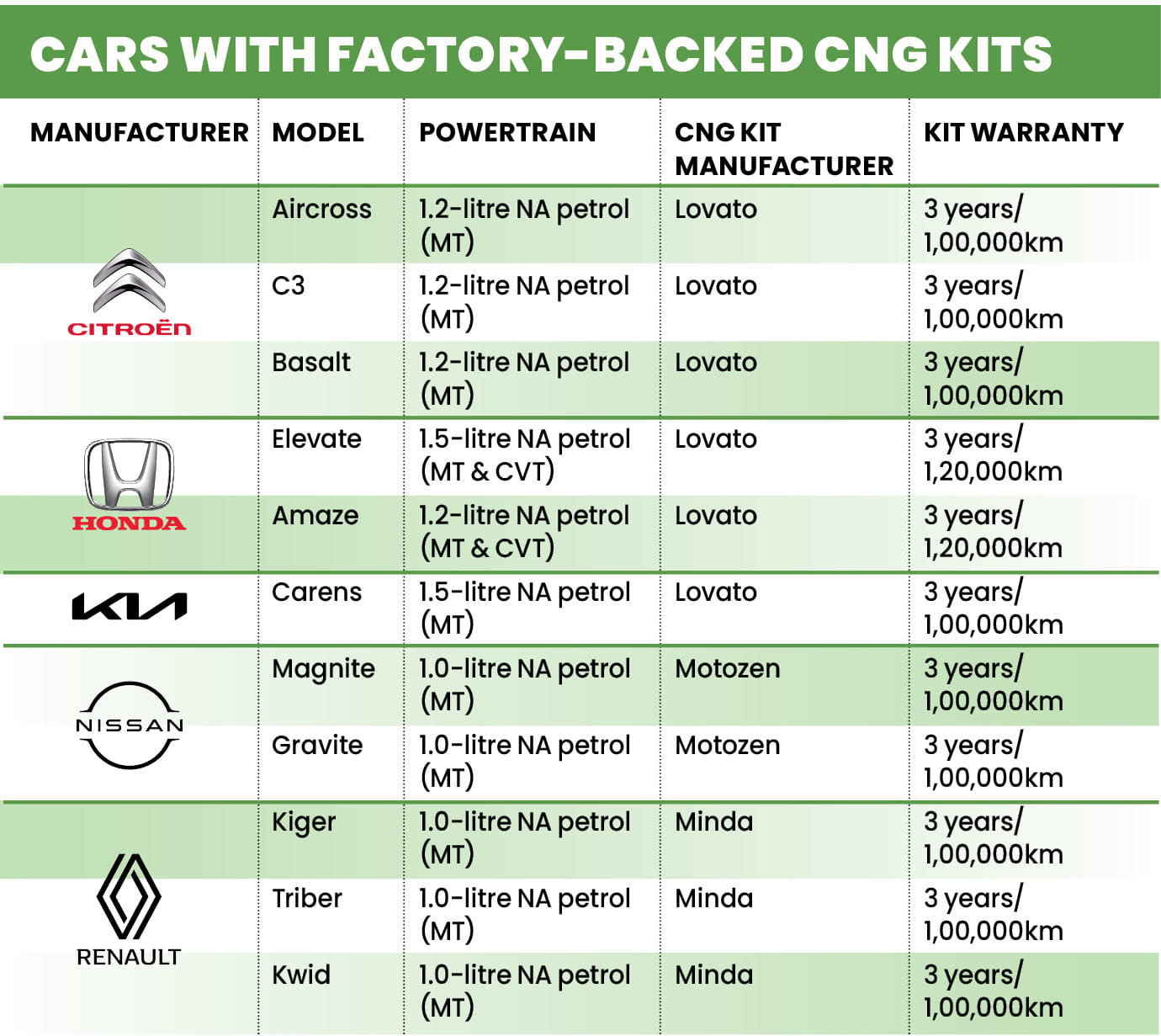
When Maruti Suzuki introduced its first factory-fitted CNG models in 2010, the fuel had little acceptance among private buyers. Availability was largely restricted to Delhi-NCR, Mumbai-Pune and Gujarat, while the filling network was small and uneven. CNG penetration remained at just 1-2 percent until 2016-17, but Maruti continued to improve the technology and expand its range. It began with affordable cars such as the Alto and Eeco before taking CNG to the WagonR, Swift, Baleno, Dzire and Ertiga. Today, its portfolio includes SUVs such as the Brezza, Fronx, Grand Vitara and Victoris.
Fixing what buyers disliked
In the late 1990s, buyers who wanted a CNG car usually had to convert a petrol model using an aftermarket kit. Most kits were imported, often from Italy or Argentina, and a conversion cost around Rs 30,000-32,000.
As demand grew, some dealers began tying up with local retrofitters. But when these cars developed problems, owners often returned to Maruti workshops even though the company had not supplied or installed the kit. Poorly fitted systems raised concerns about gas leaks and vehicle fires. An aftermarket conversion could also invalidate the manufacturer’s warranty, while the engine and fuel system were not always designed to cope with CNG.
Performance was another weakness. Early conversions resulted in a noticeable drop in power. Some owners would switch to petrol before overtaking or climbing steep roads and returned to CNG once the additional performance was no longer needed.
Factory-fitted systems addressed many of these problems. Engines, valve seats, fuel lines and mounting points were designed to work with CNG. Better calibration reduced the performance loss, while the car retained its manufacturer warranty and could be serviced through Maruti’s dealer network.
The financial case was already strong. Around 2010, CNG cost roughly Rs 20-21 per kg, compared with about Rs 48 per litre for petrol and Rs 38 for diesel. A factory-fitted system added around Rs 45,000-54,000 to the price of the car, but offered better engineering, safety and warranty protection than an aftermarket conversion.
Even so, CNG did not take off immediately. Diesel was widely available, delivered better performance and offered low running costs. In 2013, diesel accounted for around 38 percent of India’s passenger vehicle market, making it the easier choice for many high-mileage users.
The network caught up
India had around 1,200 CNG stations in 2016-17. By March 2026, the network had expanded to about 8,900 stations across roughly 350 cities. This made CNG practical beyond its traditional strongholds. Petrol prices also rose sharply after 2020, crossing Rs 100 per litre in several cities and strengthening the case for switching to a cheaper fuel.
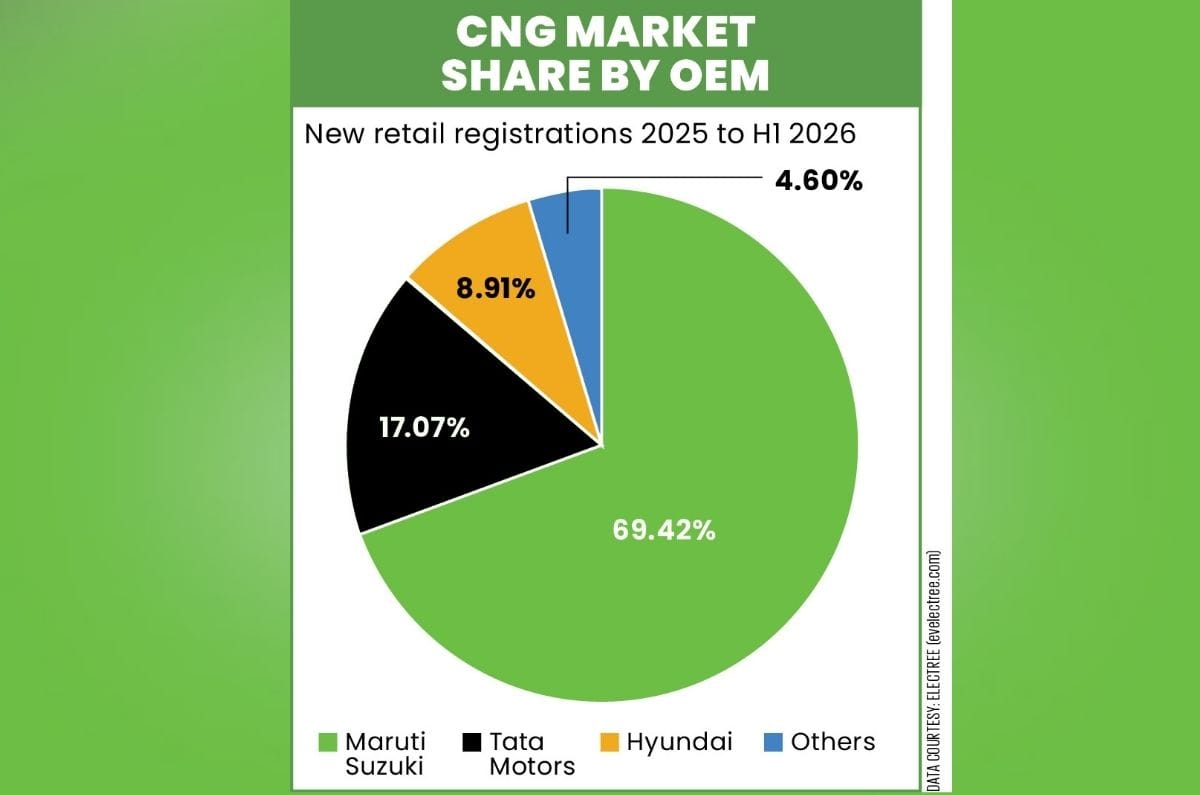
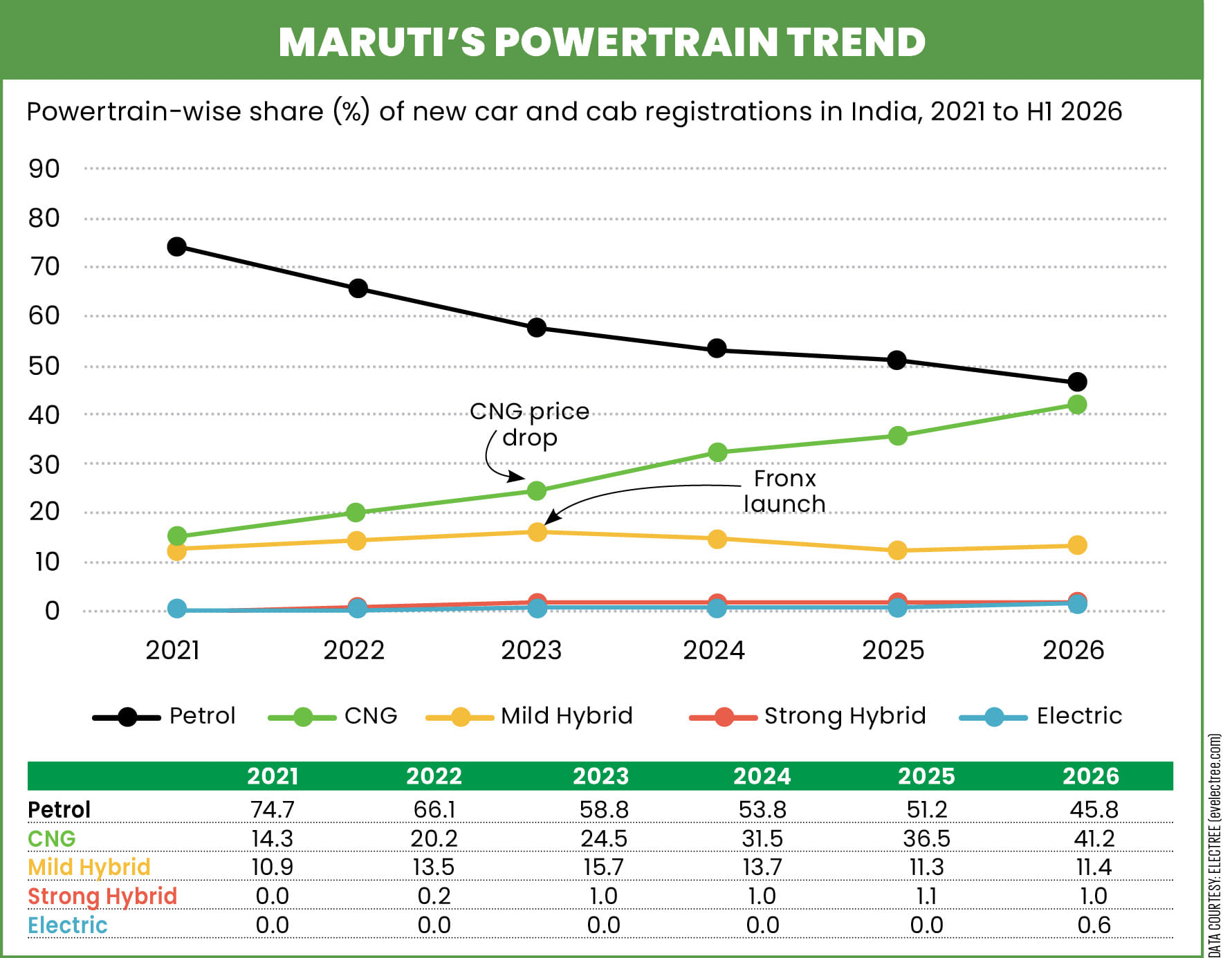
By then, Maruti had already addressed many of the product-related concerns and could respond with a broad factory-fitted portfolio. CNG’s share of Maruti’s new registrations, including private cars and cabs, increased from 14.3 percent in 2021 to 41.2 percent in the first half of 2026. Petrol’s share fell from 76.5 percent to 45.9 percent over the same period. The sharpest jump came between 2023 and 2024, when CNG’s share rose from 24.6 percent to 32 percent.
Commercial vehicles remain important. Cabs account for around 10 percent of Maruti’s cumulative registrations, but contribute more than a quarter of its CNG volumes. However, private buyers now account for the larger part of demand.
“Earlier, if a customer was opting for CNG, the perception was that he was just a very value-conscious customer,” says Maruti Suzuki’s senior executive officer, sales and marketing, Partho Banerjee. “Now, especially with underbody CNG, the profile of customers has changed. They are not only looking for mileage, they also want an aspirational product that feels no different to drive from gasoline.”
CNG moves beyond small cars
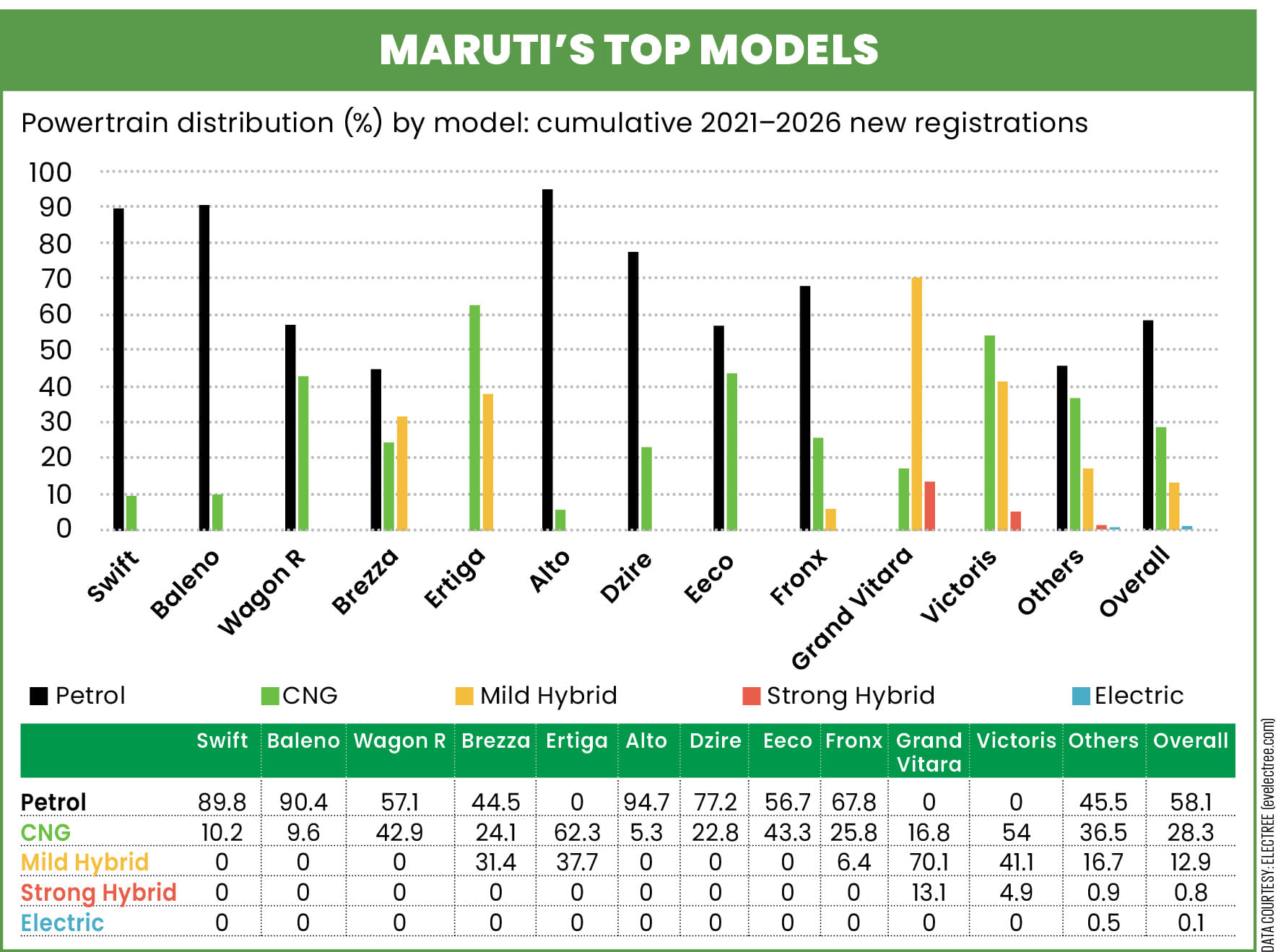
The WagonR remains the quintessential CNG hatchback. Its CNG share has risen from 42.5 percent in 2021 to 49.1 percent in the first half of 2026. Nearly every second WagonR buyer now chooses it. CNG is also gaining ground in models that were once overwhelmingly petrol-powered. Its share in the Swift has increased from 1.9 percent to 18 percent, while the Baleno has moved from 2.1 percent to 14.5 percent.
The Dzire has seen an even sharper change. CNG accounted for just 1.7 percent of its registrations in 2021. Its share reached 33.6 percent in H1 2026.
Adoption is strongest in vehicles that cover longer distances or carry more passengers. CNG’s share of the Ertiga has risen from 39.3 percent to 73.6 percent, while the Eeco has moved from 31 percent to 55.2 percent. Big shifts are now also taking place in the SUV segment, where buyers care as much about design, features and luggage space as they do about mileage.
CNG accounts for 43.4 percent of Brezza registrations, compared with 23.7 percent for its Smart Hybrid powertrain in H1 2026. The Fronx has seen its CNG share rise from 10.9 percent at launch in 2023 to 35.4 percent in the first half of 2026. In the case of the Grand Vitara, it has increased from zero to 23.9 percent.
The Victoris has moved even faster. CNG accounted for 55.2 percent of its registrations in the first half of 2026. Its strong response shows that midsize SUV buyers will accept the fuel when it does not compromise the overall ownership experience.
Better packaging removes a key compromise
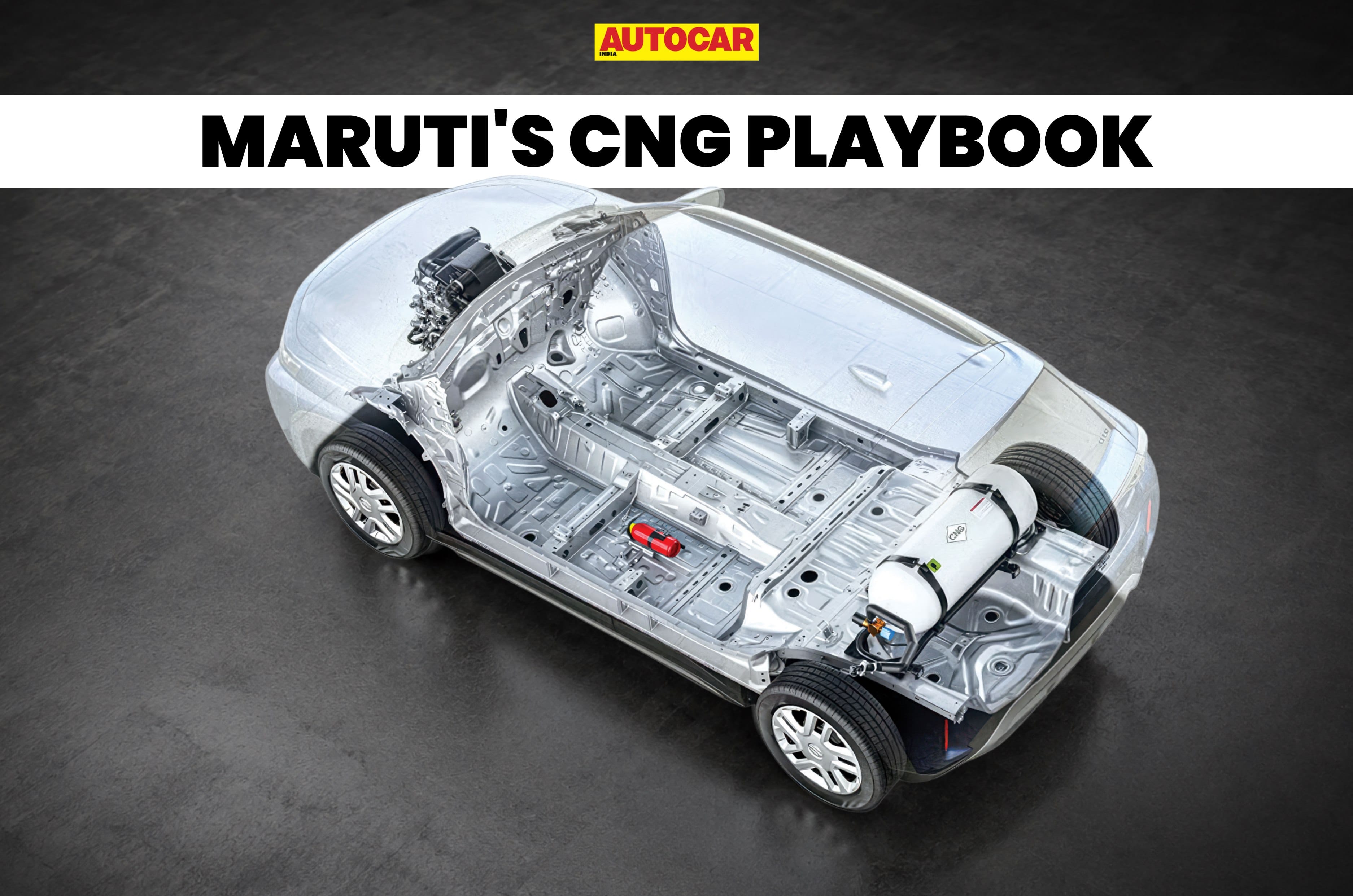
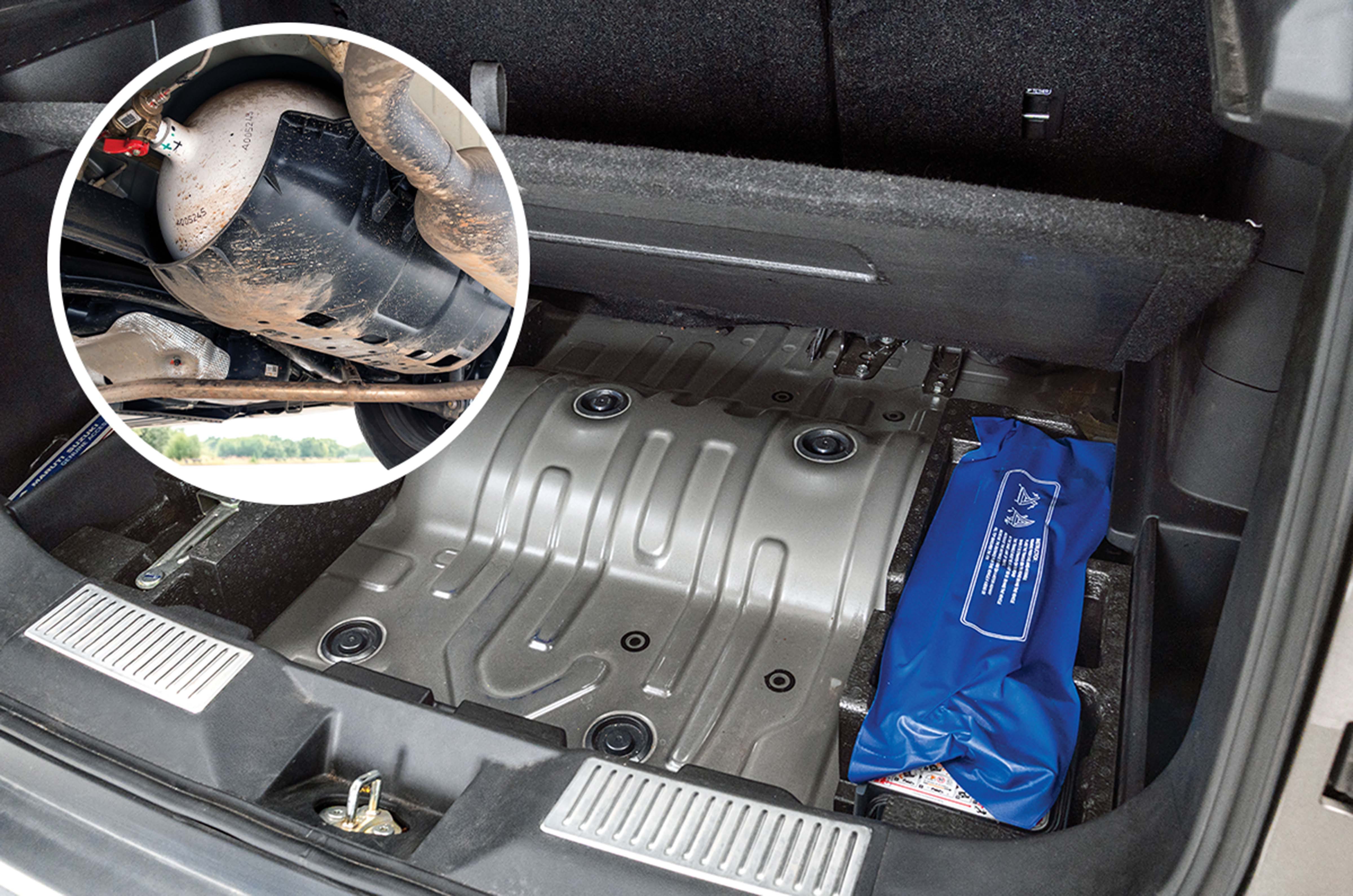
A large cylinder placed across the luggage compartment has long been one of CNG’s biggest drawbacks. Dual-cylinder systems that divide the gas storage between two smaller cylinders positioned lower in the boot, or placing an underbody tank, create a flatter and more usable luggage area.
Maruti’s latest CNG development is the underbody tank on the Victoris and Brezza.
Central to Maruti’s next CNG push is the underbody CNG setup. The newly launched CNG Brezza opts for this setup – just like in the Victoris – where the tank is placed beneath the floor. It does negate the ability to have the spare tyre, but luggage space remains useable with a boot that is pretty much free of intrusions.
“If I don’t compromise on my driving experience, and I don’t lose boot space, and on top of that I reduce my total cost of ownership, then it is ticking all the boxes. Why would I not go for it?” says Banerjee.
Filling the gap left by diesel
Maruti’s exit from diesel in 2020 left a gap for buyers seeking low running costs without moving to an EV. CNG has become the answer. It cannot match a diesel engine’s torque or effortless highway performance, but it can cost substantially less to run than petrol, particularly for buyers covering high monthly distances. The vehicle can also switch to petrol when CNG is unavailable.
CNG will not replace diesel in every situation. Drivers who regularly travel on highways, carry heavy loads or value strong mid-range performance may still prefer diesel where it remains available. But for largely urban use, CNG now delivers much of the economic advantage that once made diesel attractive. The market has moved beyond mileage.
CNG has reached around 20 percent penetration without requiring buyers to completely change the way they use a car. There is no home charger to install, and the vehicle can run on petrol when the gas runs out. But the next stage will require more than savings. Buyers moving onto larger and more expensive vehicles will expect performance, equipment, luggage space and convenience alongside lower running costs.
“Quality, reliability and mileage are now hygiene,” says Banerjee. “You need to give all of that anyway and then still meet their lifestyle expectations.”
With the Victoris establishing CNG in the midsize SUV market and the Brezza addressing the compact SUV space, Maruti is now taking the fuel deeper into India’s largest vehicle segment, and it says there’s more to come.






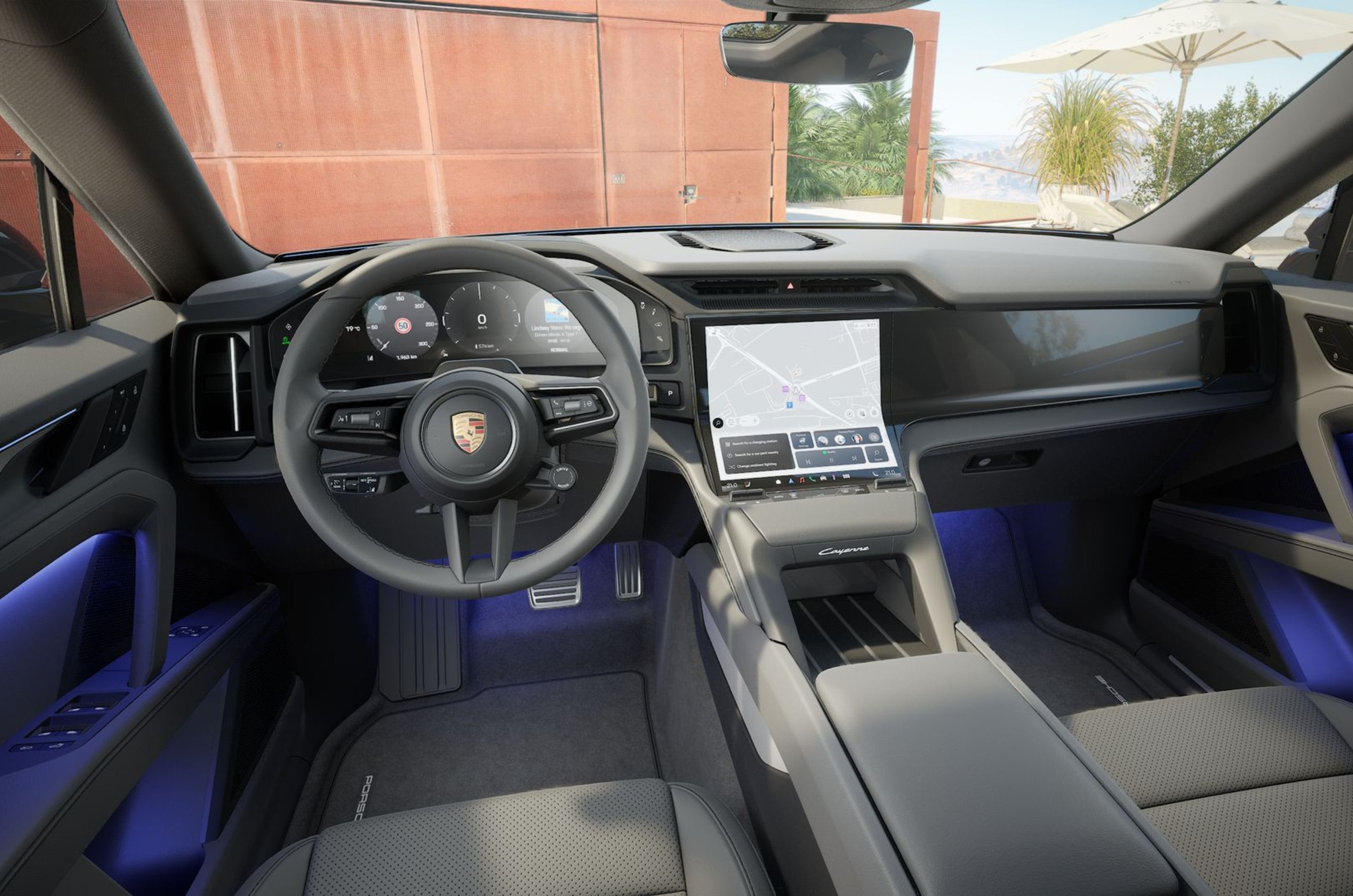 Inside, the Cayenne Electric gets a three-spoke steering wheel and digital driver’s display, similar to the ICE model. Porsche has also added a new 14.5-inch curved touchscreen infotainment system that flows into the centre console. An optional 14.9-inch passenger display is also available at an additional cost. Other features include 8-way electrically adjustable front seats, four-zone automatic climate control, ventilated front seats, a panoramic sunroof and wireless phone charging.