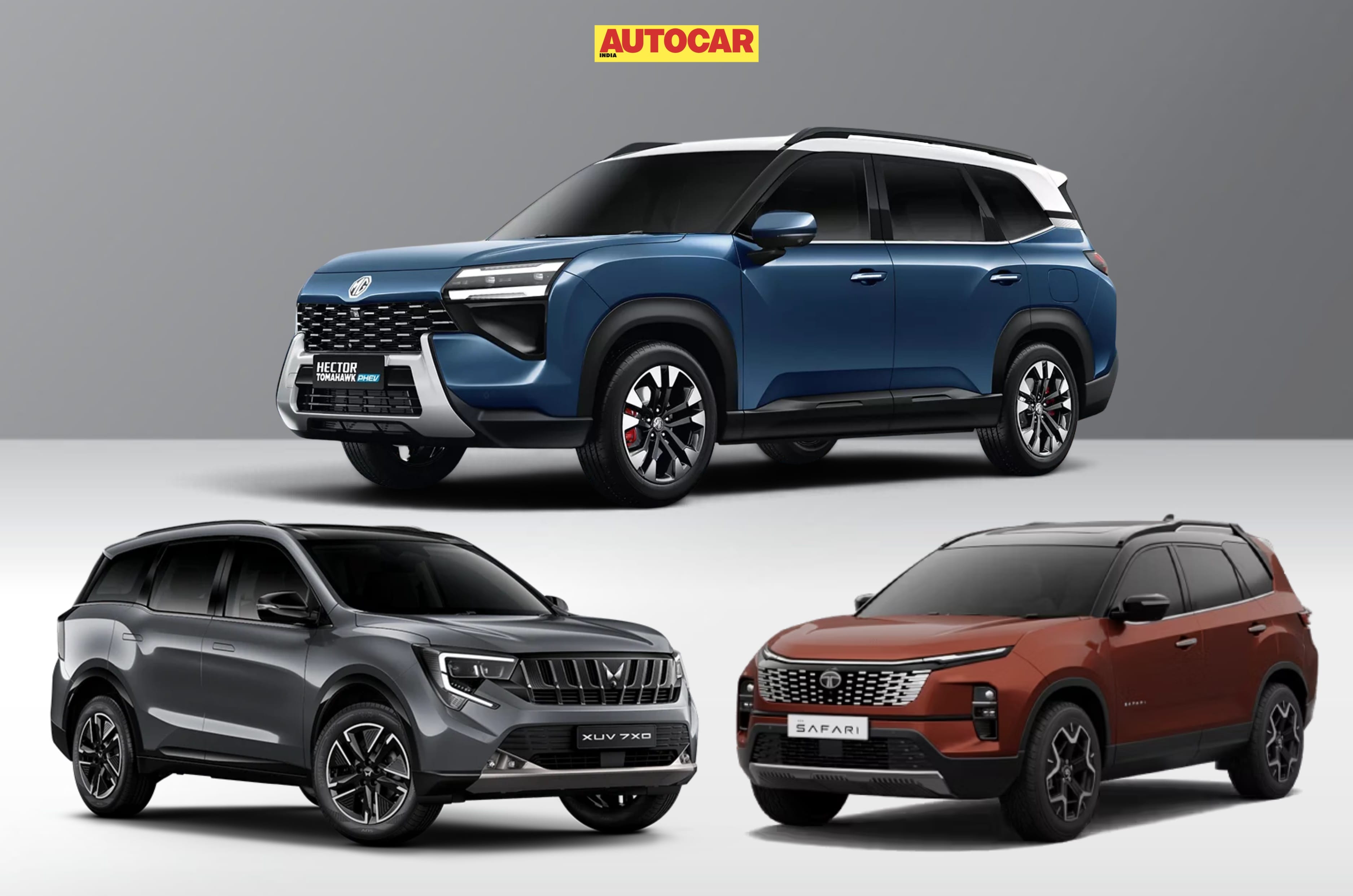
JSW MG bets on PHEVs to challenge diesel models in executive SUV market

JSW MG bets on PHEVs to challenge diesel models in executive SUV market
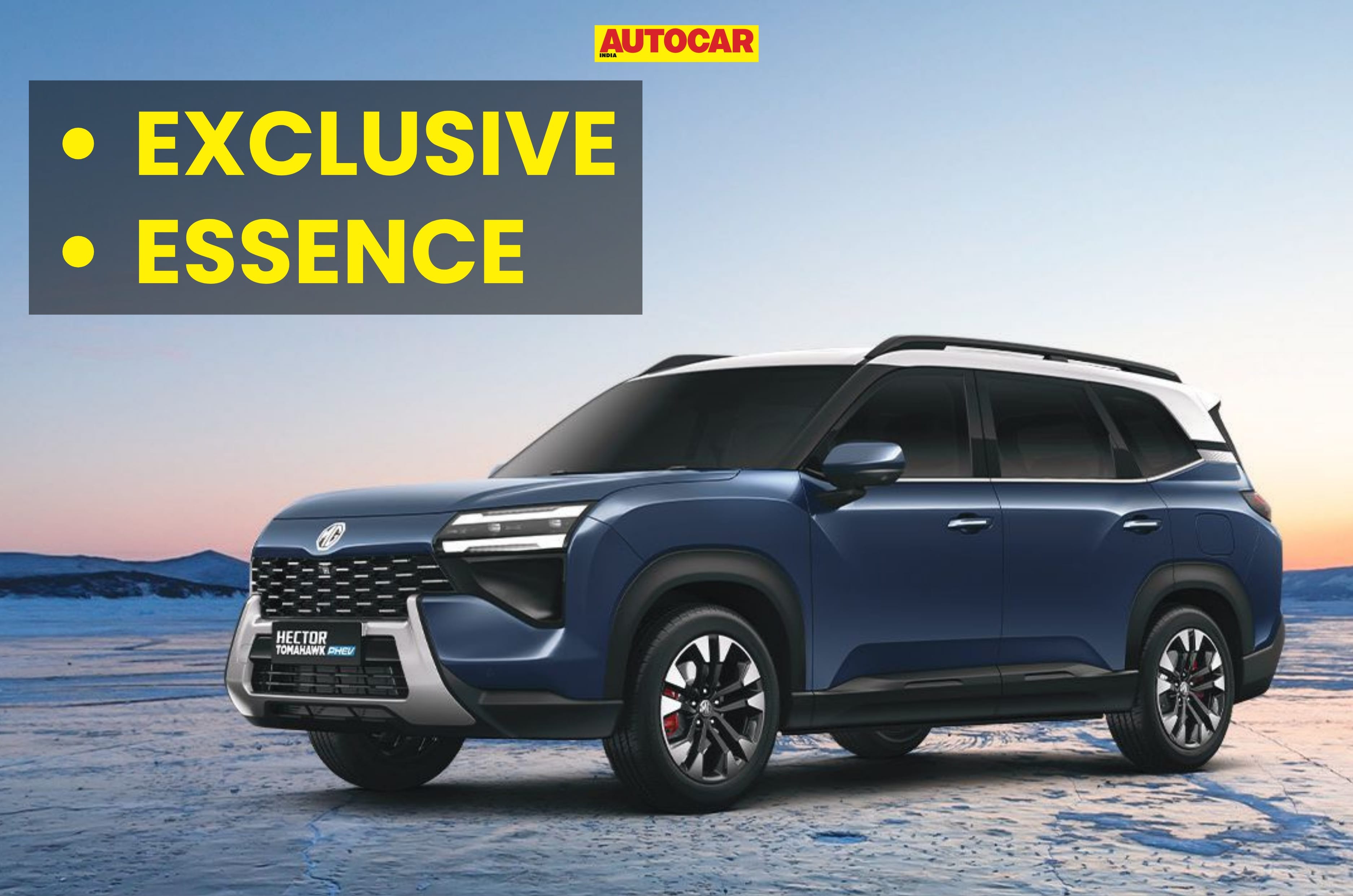
Hector Tomahawk PHEV

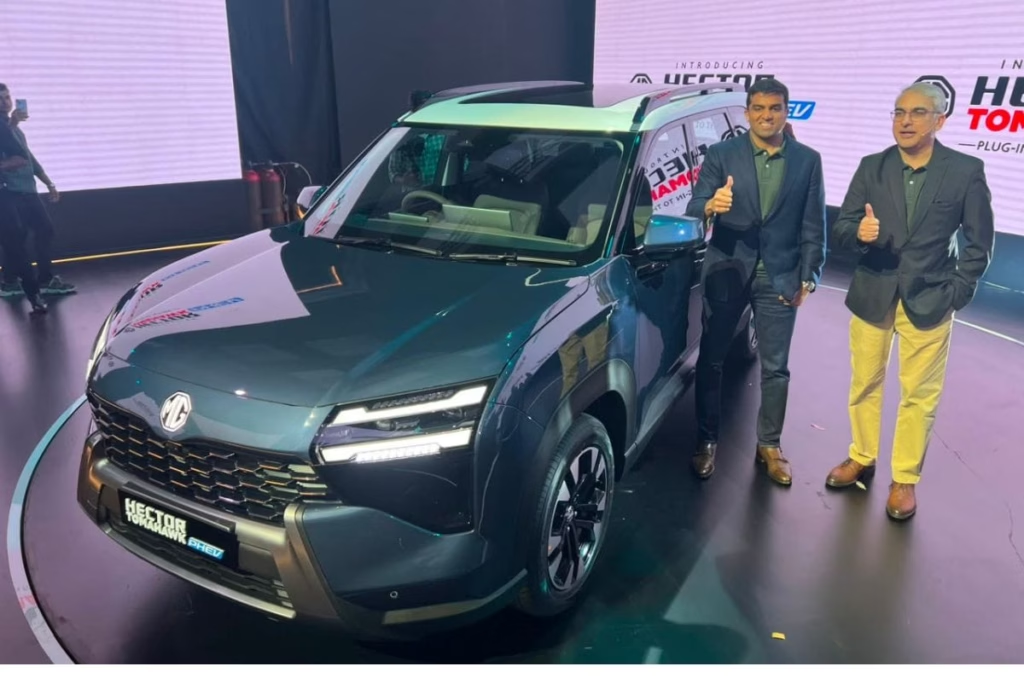
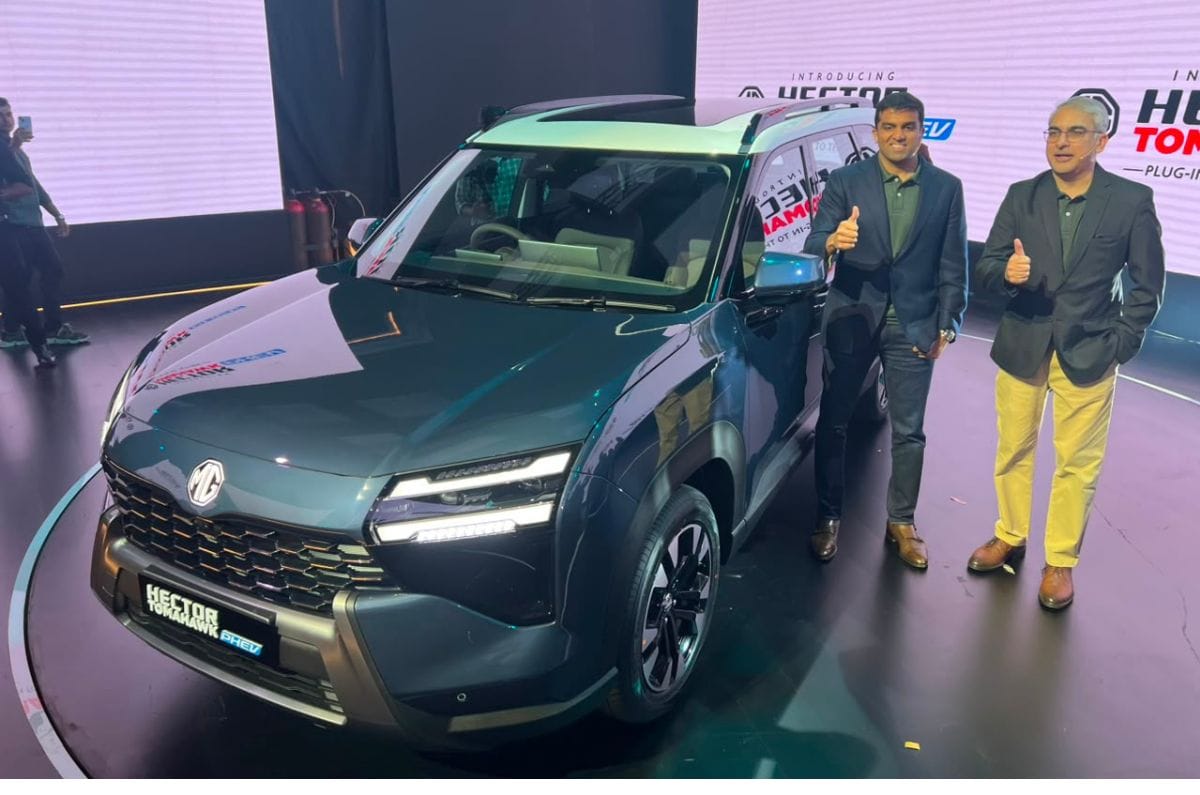
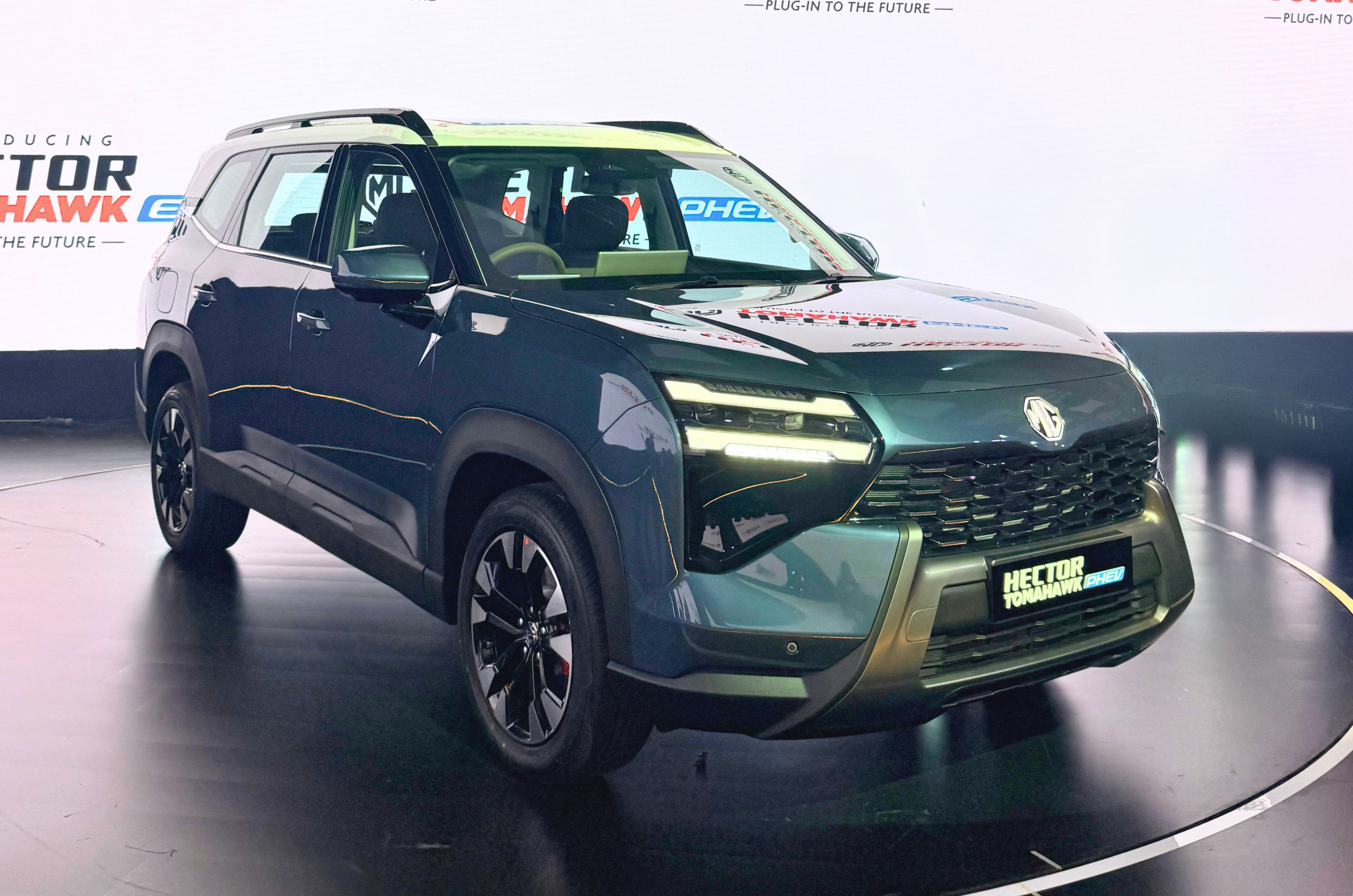
JSW MG Motor is betting on plug-in hybrid technology to attract buyers of executive diesel SUVs, with the Hector Tomahawk PHEV forming the centrepiece of its strategy. The company believes the powertrain can offer the lower running costs of electric driving without the range concerns associated with a pure EV. The seven-seat Tomahawk PHEV offers more than 115km of electric-only driving and a combined range of over 1,100km.

  1. MG claims Rs 3,000-4,000 running cost per 1,000km, versus Rs 10,000-12,000 for diesel
  2. JSW MG targets the executive SUV market that sells 50,000 units a month
  3. Company aims for 5,000-6,000 Tomahawk sales per month

JSW MG eyes executive diesel SUV market
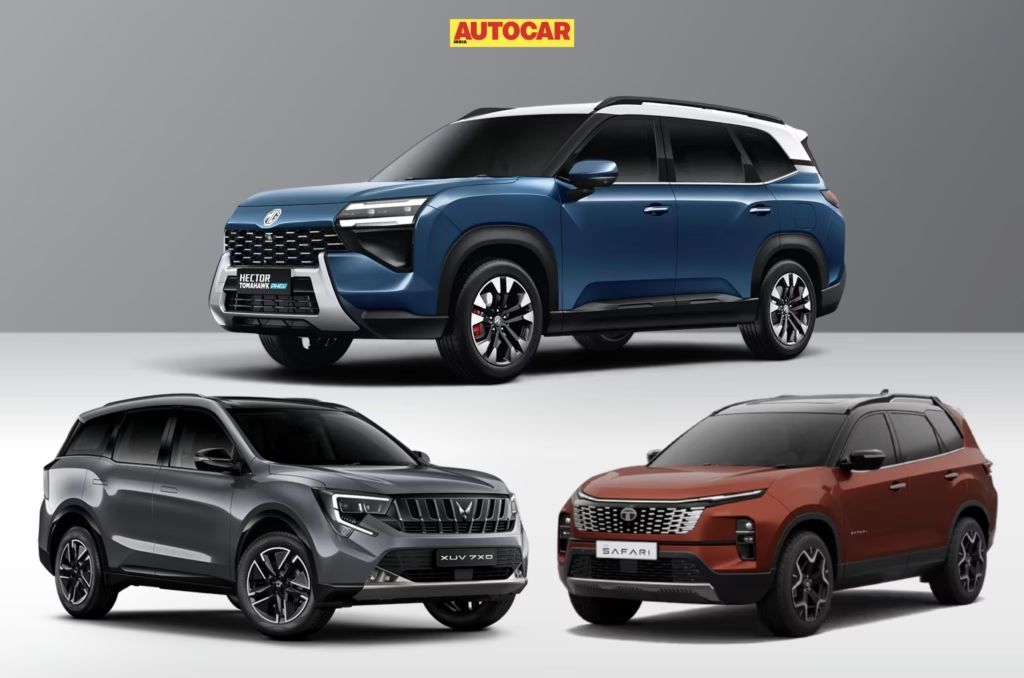
JSW MG says that the executive SUV market in India accounts for around 50,000 units a month, with diesel SUVs contributing about 40,000 units and EVs around 10,000. The diesel segment includes models such as the Mahindra XUV 7XO, Tata Safari and Tata Harrier, while the EV segment includes the Mahindra XEV 9S, Tata Harrier EV and Kia Carens Clavis EV.

“If you look at the diesel C-sized market, that is about 40,000 units. The C-sized EV market is about 10,000. So, the total potential is 50,000,” says Anurag Mehrotra, Managing Director, JSW MG Motor India.

The Hector Tomahawk PHEV is priced Rs 1.5 lakh-2 lakh higher than the top diesel automatic variants of the Mahindra XUV 7XO, Tata Safari and Tata Harrier. JSW MG expects to justify this premium through lower operating costs and the overall product package.
The Tomahawk PHEV has no direct mass-market PHEV rival in India and will instead target diesel SUV buyers. According to surveys cited by Mehrotra, owners in this segment typically cover 18,000-20,000km a year, with many combining daily commutes with regular outstation travel.

“They want the fuel efficiency of a diesel because they are travelling longer distances,” says Mehrotra. “For them, there has not been a new-energy choice. The plug-in hybrid takes away the range issue completely, but still gives you the unit economics of an EV.”

Vinay Raina, Chief Commercial Officer, JSW MG Motor India, says many of these customers choose diesel because it suits their usage rather than because of a fixed preference for the fuel. “The Indian consumer is willing to experiment,” he says.

MG Hector Tomahawk PHEV running costs
JSW MG estimates that covering 1,000km in the PHEV could cost Rs 3,000-4,000, compared with Rs 10,000-12,000 in a diesel SUV. This calculation assumes regular charging and substantial use of the electric mode. “The plug-in hybrid will be close to a third of the cost of running a diesel,” Mehrotra says.

The company says the PHEV can return around 22kpl when used mainly as a hybrid, while its claimed 30-50kpl figure assumes regular charging and that most daily travel is completed using electric power. These figures include kilometres covered on electricity and therefore cannot be directly compared with the fuel economy of a diesel SUV. Charging costs also need to be included when calculating the overall running cost.

This also means the claimed savings will depend on how the vehicle is used. Owners who regularly charge at home and complete much of their daily driving on battery power should use less petrol, while those who rarely charge will rely more on the engine and lose much on the projected savings.

JSW MG targets 5,000-6,000 Tomahawks a month
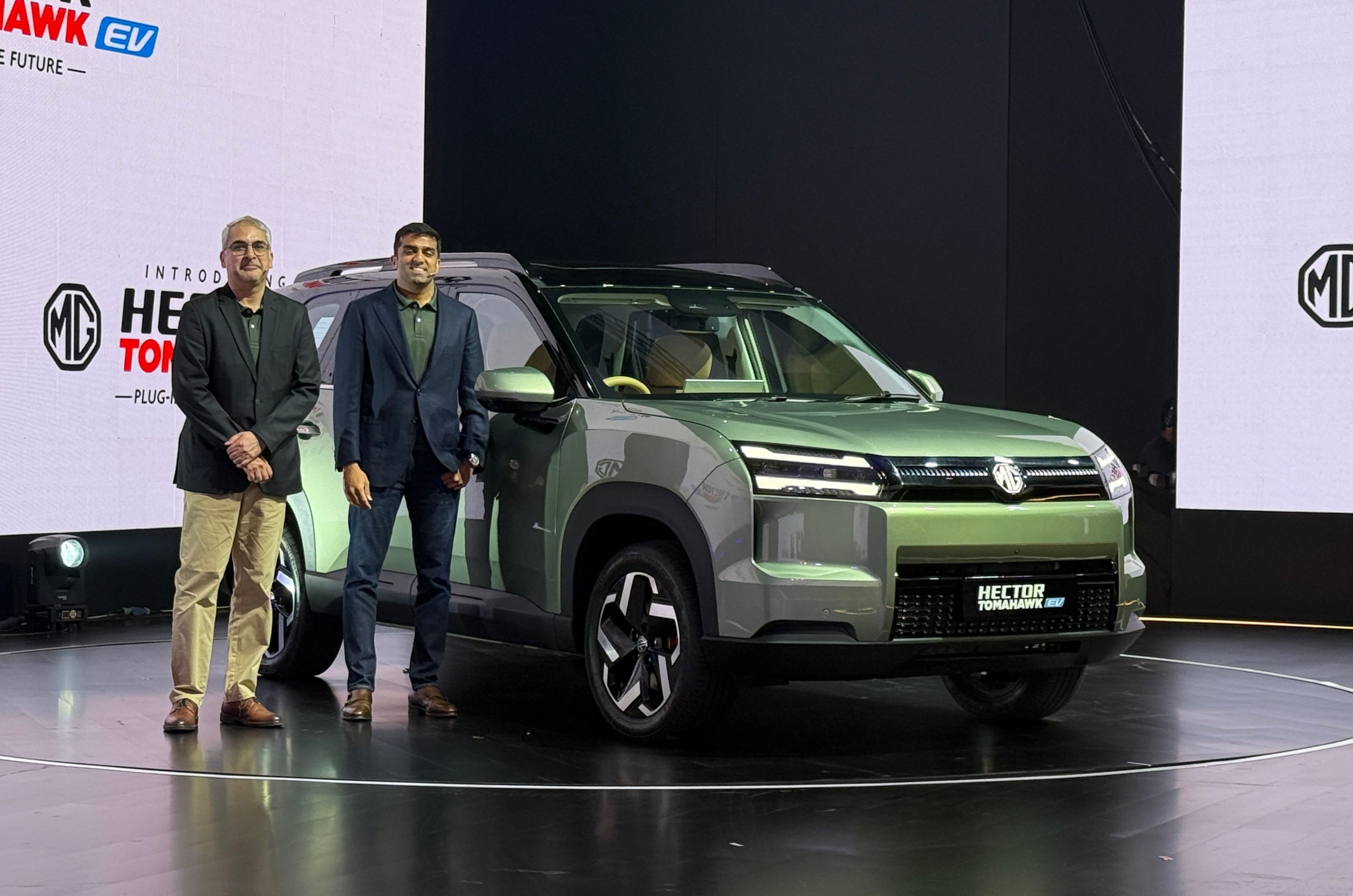
JSW MG is targeting monthly sales of 5,000-6,000 units for the Tomahawk range, which includes the EV and PHEV. The company has not specified how that volume will be split between the two powertrains. At the targeted volume, JSW MG estimates the range would account for around 10-12 percent of the 50,000-unit monthly executive SUV opportunity it has identified. 

The Tomahawk EV and PHEV are based on the company’s ADAPT architecture, which is designed to support multiple powertrain types. JSW MG currently has achieved around 45 percent localization in the Tomahawk and plans to increase this to approximately 70 percent by next year, with the investment already approved by its board.
Ather details Konarc durability tests ahead of August 29 launch

Ather details Konarc durability tests ahead of August 29 launch
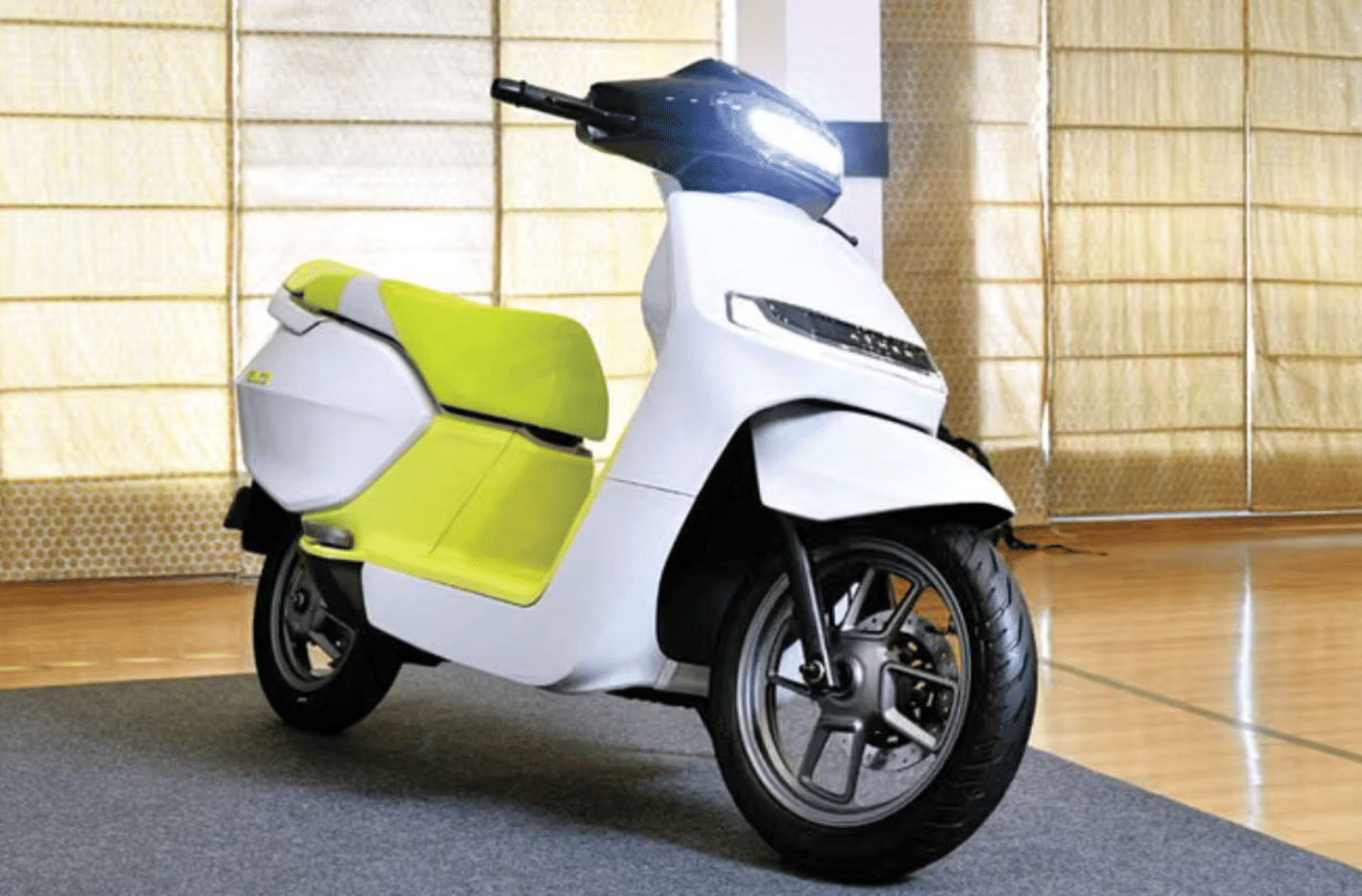
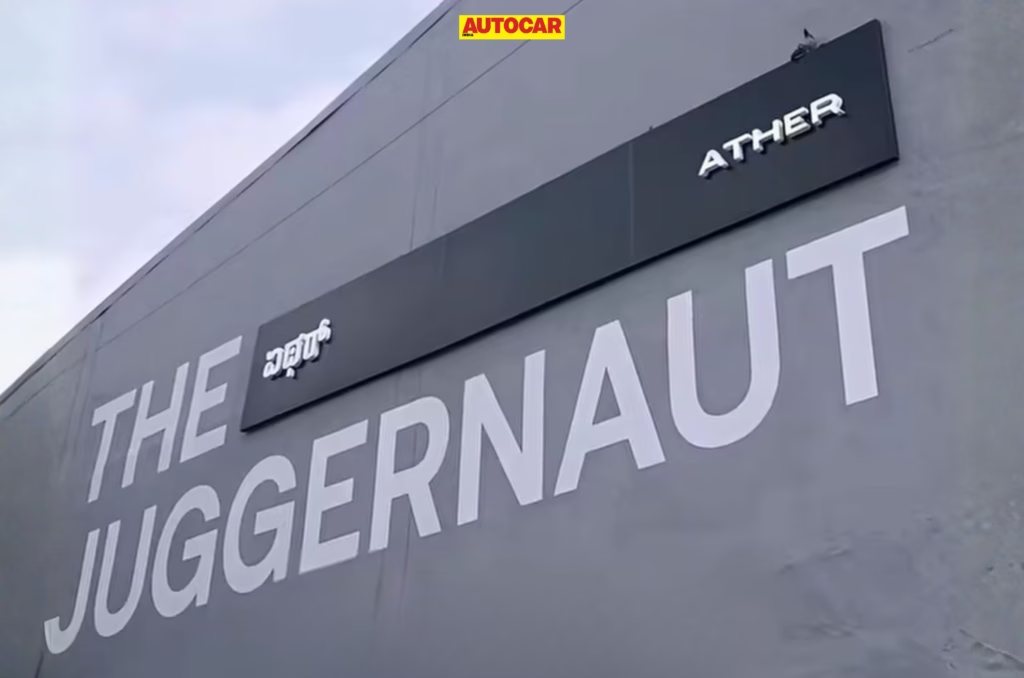
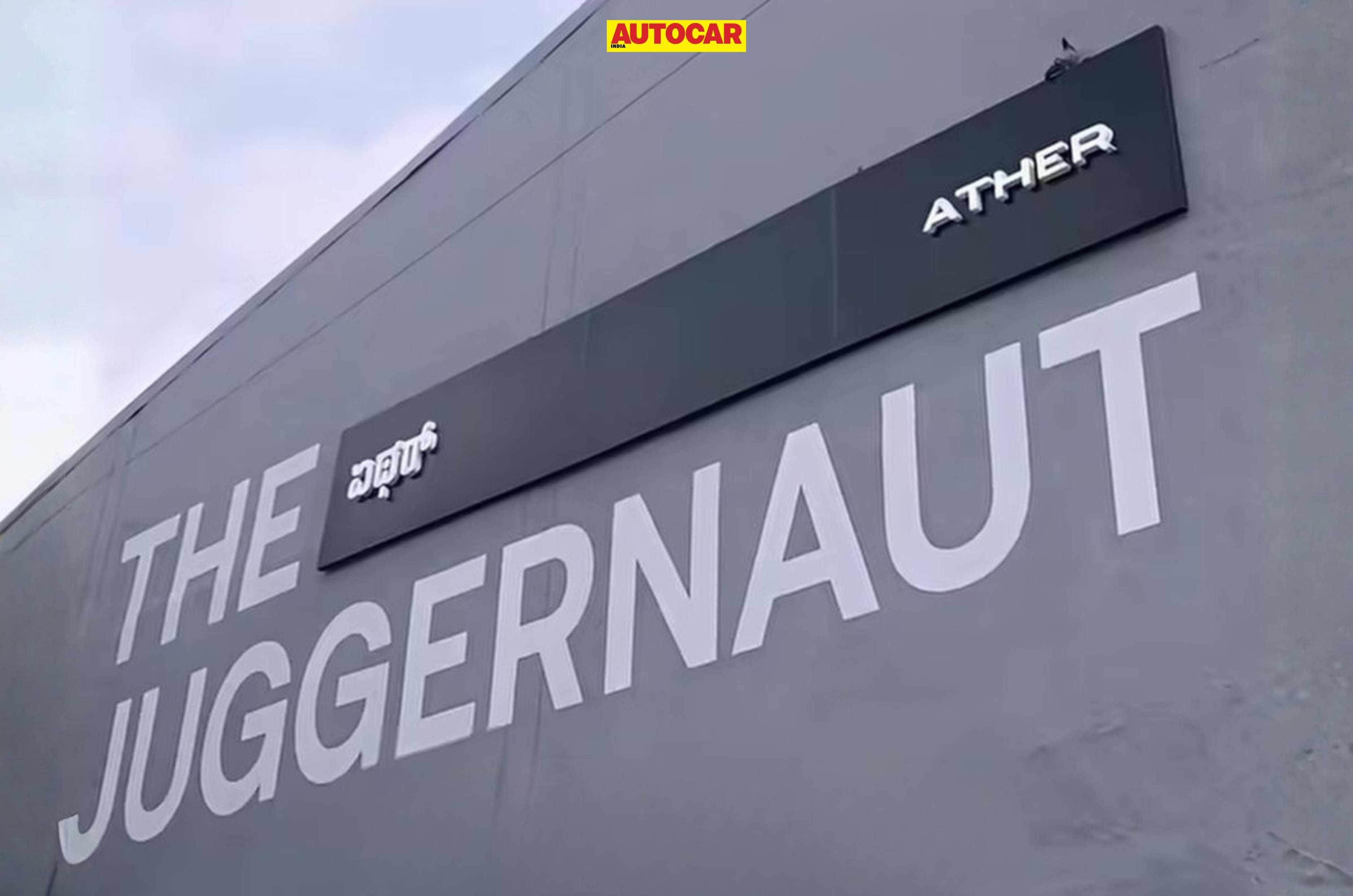
Outside image of Ather's testing facility, the Juggernaut

As we know, Ather’s first scooter based on the EL platform, Konarc, is gearing up to launch on August 29, at their annual community day. We had learned earlier that the Konarc will get metal body panels and few other details about the platform. Now, Ather has detailed the durability tests they’ve conducted on the Konarc to ensure that it’s built robustly.

  1. Tested at The Juggernaut, Ather’s in-house testing ground
  2. Some of the tests include drop tests, flood simulations, and vibration testing

Robust testing in tough conditions

With a 1 lakh km condensed riding cycle

We’re now aware that Ather is looking to position the Konarc as their first mass market EV and as such, they claim to have tested it far beyond what a normal ride would demand at The Juggernaut, the brand’s in-house testing ground. Posted on the brand’s Instagram page, some of the different tests include drop tests, load testing, shaking, vibrating, compressing one lakh kilometres of riding into an accelerated cycle. To take things up a notch, scenarios like heavy rains, deep water wades, floods were also simulated.

Front right quarter image of the Ather EL01 concept
EL01 concept used for representative purpose

Beyond these admittedly robust testing scenarios, the video also shows the Konarc undergoing typical durability tests for parts like the brakes, suspension, stands, and switches. The video also further substantiates previously known information like the steel chassis, metal body panels, a swingarm mounted motor, a 14-inch front wheel and a 12-inch rear wheel. We should get to know exactly what the Konarc can do on August 29 with more insights and information into the scooter.
 

Highest Paying Jobs: सॉफ्टवेयर इंजीनियर नहीं, ये लोग कमा रहे लाखों! PG मालिक से चायवाले तक की लिस्ट वायरल

भारत में अक्सर युवाओं को बताया जाता है कि IIT की पढ़ाई, FAANG जैसी बड़ी टेक कंपनियों में नौकरी या Data Structures and Algorithms (DSA) में महारत हासिल करना अच्छी कमाई का सबसे आसान रास्ता है। लेकिन टेक और AI कमेंटेटर साक्षी ने सोशल मीडिया पर एक मजेदार लिस्ट शेयर कर इस सोच को ही उलट दिया। उन्होंने भारत में इस समय सबसे ज्यादा कमाई करने वाले लोगों की एक मजाकिया रैंकिंग साझा की, जिसमें सॉफ्टवेयर इंजीनियर टॉप पर नहीं, बल्कि काफी पीछे नजर आए। इस लिस्ट में PG मालिक, मकान मालिक, पानी के टैंकर वाले और चाय-सिगरेट की दुकान चलाने वाले शामिल हैं।

नंबर-1 पर PG मालिक, एक कमरे से लाखों की कमाई

साक्षी की इस मजेदार रैंकिंग में सबसे ऊपर PG मालिक को रखा गया। उन्होंने बताया कि शहरों में बढ़ती नौकरी और किराए की मांग का फायदा PG के मालिकों को मिल रहा है। उनके मुताबिक, एक कमरे में तीन लोगों को रखा जाता है और हर व्यक्ति से करीब ₹10,000 से ₹15,000 तक किराया लिया जाता है। इस हिसाब से कुछ PG मालिक किराया और दूसरे खर्च निकालने के बाद भी ₹1 लाख से ₹1.5 लाख महीने तक कमा सकते हैं। यही वजह है कि पोस्ट में PG बिजनेस को आज के दौर के सबसे कमाई वाले कामों में से एक बताया गया।

बेंगलुरु के मकान मालिक भी पीछे नहीं

लिस्ट में तीसरे नंबर पर बेंगलुरु के मकान मालिक का जिक्र किया गया। टेक सिटी में किराए की बढ़ती मांग को लेकर अक्सर सोशल मीडिया पर चर्चाएं होती रहती हैं। पोस्ट में मजाकिया अंदाज में बताया गया कि दो बेडरूम का फ्लैट खरीदकर उसे करीब ₹50,000 महीने के किराए पर देना, हर साल किराया बढ़ाना और WhatsApp पर सिर्फ ‘last price’ लिखकर बातचीत खत्म करना भी कमाई का शानदार तरीका बन गया है।

पानी के टैंकर वाले भी बने ‘बिजनेस किंग’

बेंगलुरु में पानी की समस्या किसी से छिपी नहीं है। इसी को लेकर साक्षी ने पानी के टैंकर संचालकों को भी अपनी लिस्ट में जगह दी। उन्होंने मजाकिया अंदाज में लिखा कि ये लोग बेंगलुरु का ही पानी वापस बेंगलुरु के लोगों को बेचते हैं। पानी की कमी के समय टैंकरों की मांग बढ़ने से इस कारोबार की कमाई भी बढ़ जाती है।

ब्रोकरों की कमाई का भी किया जिक्र

रैंकिंग में प्रॉपर्टी ब्रोकर भी शामिल हैं। पोस्ट के मुताबिक, कुछ ब्रोकर किरायेदारों को कई ऐसे घर दिखाते हैं जो उनकी जरूरत के मुताबिक नहीं होते और आखिर में डील होने पर किरायेदार और मकान मालिक, दोनों से करीब एक महीने के किराए के बराबर कमीशन ले लेते हैं। बेंगलुरु जैसे शहरों में लगातार घर बदलने वाले किरायेदारों की बड़ी संख्या के कारण यह काम भी अच्छी कमाई वाला बताया गया।

टेक पार्क के बाहर चाय-सिगरेट वाला भी हिट

इस लिस्ट में दूसरे नंबर पर जिस शख्स को रखा गया, वह शायद सबसे ज्यादा चौंकाने वाला नाम है टेक पार्क के बाहर चाय, सिगरेट और स्नैक्स बेचने वाला दुकानदार। साक्षी ने उसे टेक इंडस्ट्री का ‘अनसंग हीरो’ बताया। उनके अनुसार, हजारों सॉफ्टवेयर इंजीनियर रोजाना चाय, सिगरेट और स्नैक्स के लिए ऐसी दुकानों पर निर्भर रहते हैं। पोस्ट में अनुमान लगाया गया कि अच्छी लोकेशन वाली ऐसी दुकान से कुछ दुकानदार ₹30,000 से ₹50,000 महीने तक कमा सकते हैं।

न MBA, न फंडिंग, फिर भी कमाई!

इस पूरी पोस्ट का सबसे मजेदार हिस्सा यही था। चाय-सिगरेट की दुकान के लिए न किसी MBA की जरूरत है, न pitch deck की और न ही startup funding की। साक्षी ने इसी अंदाज में टेक इंडस्ट्री पर तंज कसते हुए बताया कि जहां इंजीनियर नौकरी और प्रमोशन के लिए लगातार मेहनत कर रहे हैं, वहीं कुछ छोटे कारोबारी रोजमर्रा की जरूरतों के दम पर अच्छी कमाई कर रहे हैं।

सॉफ्टवेयर इंजीनियरों पर आया सबसे बड़ा तंज

पोस्ट के अंत में सॉफ्टवेयर इंजीनियरों को लेकर सबसे मजेदार टिप्पणी की गई। साक्षी ने लिखा कि जब बाकी लोग अलग-अलग तरीकों से कमाई कर रहे हैं, तब सॉफ्टवेयर इंजीनियर रात 2 बजे तक DSA के सवाल हल कर रहे हैं और उम्मीद कर रहे हैं कि अगली salary hike अच्छी होगी।

सोशल मीडिया यूजर्स ने भी लिए मजे

साक्षी की पोस्ट को सोशल मीडिया पर जबरदस्त प्रतिक्रिया मिली और इसे खबर लिखने तक 1.5 लाख से ज्यादा व्यूज मिले। यूजर्स ने भी अपने-अपने अंदाज में इस रैंकिंग पर मजेदार प्रतिक्रियाएं दीं। एक यूजर ने मजाक करते हुए कहा कि सॉफ्टवेयर इंजीनियरों ने कमाई का सबसे मुश्किल रास्ता चुना है और उन्हें DSA की तैयारी के बजाय पानी का टैंकर खरीद लेना चाहिए था। एक अन्य यूजर ने बेंगलुरु का असली ‘product-market fit’ AI या सॉफ्टवेयर नहीं, बल्कि चाय, प्रॉपर्टी और मेट्रो से दूरी का गणित बताया। एक यूजर ने टैक्स को लेकर भी तंज कसा और कहा कि इन कामों में कमाई करने वालों में शायद सॉफ्टवेयर इंजीनियर ही ऐसा व्यक्ति है जो नियमित रूप से इनकम टैक्स और ITR जैसी चीजों से जूझता है।

डिस्क्लेमर: यह रिपोर्ट सोशल मीडिया पर यूज़र द्वारा शेयर किए गए कंटेंट पर आधारित है। मनीकंट्रोल इन दावों की न तो स्वतंत्र रूप से पुष्टि नहीं करता है और न ही इनका समर्थन करता है।

MPSC Paper Leak: गर्लफ्रेंड को पास कराने के लिए एमपीएससी का पेपर कर दिया लीक! इंस्पेक्टर ने खोला राज, एग्जाम रद्द; 6 गिरफ्तार

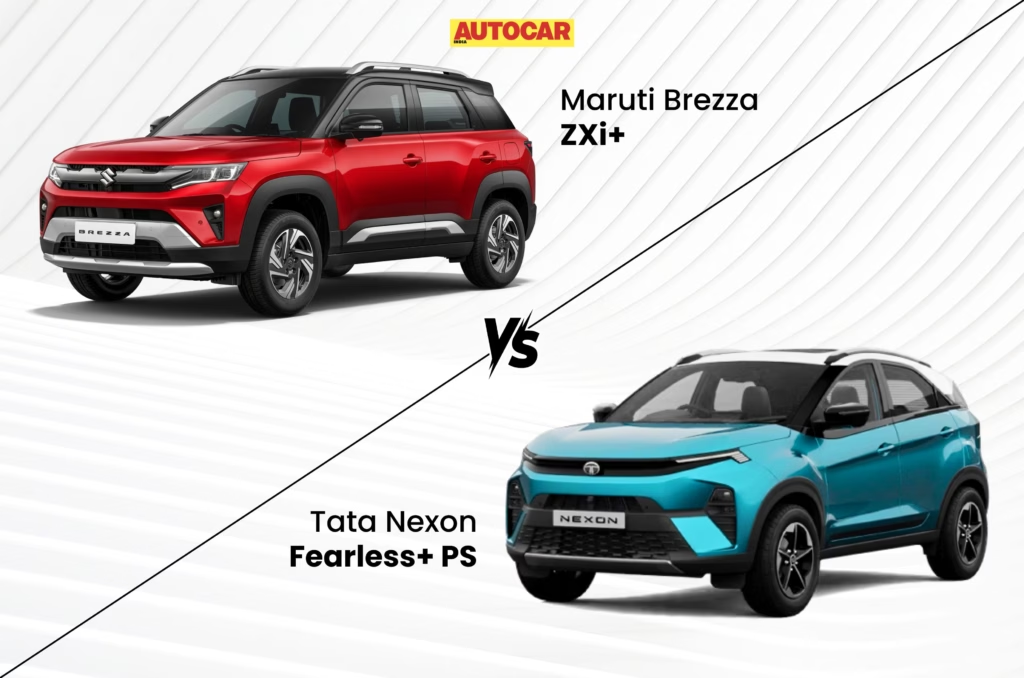
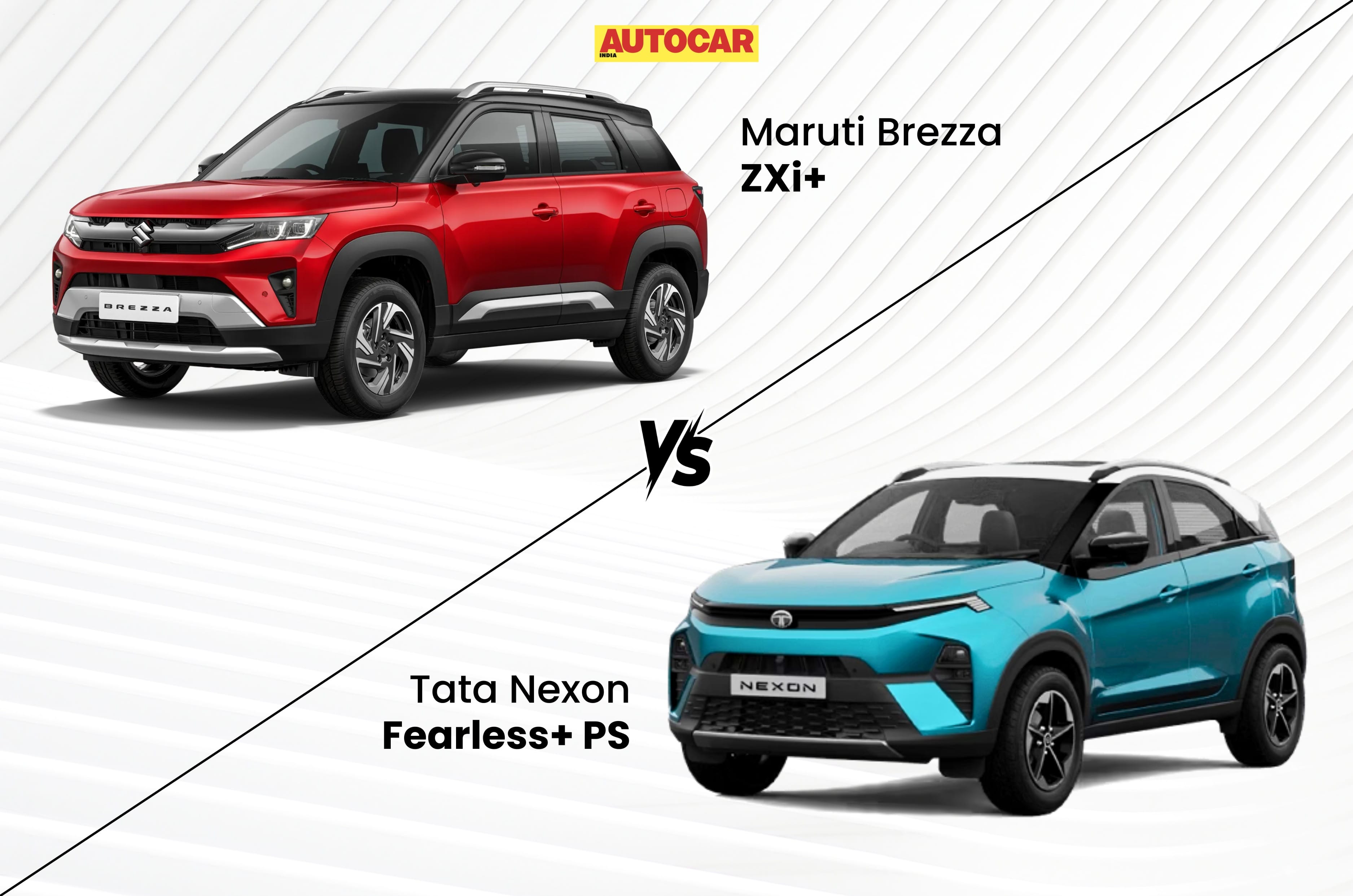
Maruti Brezza ZXi+ vs Tata Nexon Fearless+ PS: Which should you buy?

Maruti Brezza ZXi+ vs Tata Nexon Fearless+ PS: Which should you buy?
Maruti Brezza vs Tata Nexon

The Maruti Brezza and Tata Nexon are among the bestselling compact SUVs in the Indian market. While the former received a comprehensive update that introduced cosmetic changes, more features and a powerful new turbo-petrol engine, the latter continues to attract consumers with a wide choice of powertrains. If you are looking to buy a compact SUV, we compare the Brezza’s top-spec ZXi+ trim and the Nexon Fearless+ PS to find out which offers better value for money.

Explore full specs, features and a price breakdown in our Brezza vs Nexon comparison.

Maruti Brezza vs Tata Nexon: Dimensions

Brezza is taller, while Nexon has a bigger boot

Maruti Brezza vs Tata Nexon: Dimensions


Maruti Brezza

Tata Nexon

Difference

Length (mm)

3,995

3,995

Width (mm)

1,790

1,804

-14

Height (mm)

1,685

1,620

+65

Wheelbase (mm)

2,500

2,498

+2

Ground clearance (mm)

198

208

-10

Boot space (litres)

328

382

-54

Only the length of both models is identical. Beyond that, the Brezza is taller and has a slightly longer wheelbase than the Nexon. On the other hand, the Nexon is wider, rides higher off the ground and has a larger boot.

Maruti Brezza vs Tata Nexon: Powertrain options

Brezza ZXi+ offers limited powertrain options

Maruti Brezza vs Tata Nexon: Powertrain options


Maruti Brezza

Tata Nexon

Powertrain

Naturally aspirated petrol | Turbo-petrol

Turbo-petrol | CNG | Turbo-diesel 

Engine configuration

1.5-litre, 4-cyl | 1.0-litre, 3-cyl

1.2-litre, 3-cyl | 1.2-litre, 3-cyl | 1.5-litre, 4-cyl 

Power (hp)

103 | 110 

120 | 100 |115

Torque (Nm)

139 | 170

170 | 170 | 260

Transmission

6MT | 6AT

6MT / 7DCT | 6MT / 6AMT | 6MT 

The Brezza ZXi+ is available only with the naturally aspirated petrol automatic and turbo-petrol manual powertrains. On the other hand, the Nexon Fearless+ PS offers a wide range of options: a turbo-petrol manual and automatic, a diesel manual and automatic, and a CNG manual. As for their turbo-petrol engines, the torque is identical, but the Nexon’s larger mill delivers more power.

Maruti Brezza vs Tata Nexon: Exterior features 

Nexon offers some feel-good features like welcome/goodbye animations

Maruti Brezza vs Tata Nexon: Exterior features 


Maruti Brezza

Tata Nexon

Headlights 

LED projector

LED projector

Tail-lights

LED

Connected LED

Welcome/goodbye animations

No

Yes

Sequential turn indicators

No

Yes

Daytime running lamps (DRLs)

Yes

Yes

Fog lamps

LED

LED

Wheels

16-inch

16-inch

Outside rearview mirrors (ORVMs)

Electrically adjustable, auto-folding

Electrically adjustable, auto-folding

Roof rails

Yes

Yes

Rear wiper, washer

Yes

Yes

Colour options

Monotone and dual-tone

Dual-tone

Both the Brezza and Nexon are similarly equipped on the exterior, with LED light setups, DRLs, fog lamps, electrically adjustable and auto-folding ORVMs and 16-inch alloy wheels. However, the Nexon gets some fancier features such as welcome/goodbye animations for the light setups, along with sequential turn indicators. As for colour options, the Nexon is limited to dual-tone schemes, whereas the Brezza offers monotone options as well.

Maruti Brezza vs Tata Nexon: Interior features 

Brezza not as well equipped as Nexon

Maruti Brezza vs Tata Nexon: Interior features


Maruti Brezza

Tata Nexon

Instrument cluster

Analogue dials with MID

10.25-inch display

Infotainment screen

10.1-inch

10.25-inch

Head-up display

Yes

No

Android Auto, Apple CarPlay

Wireless

Wireless

Sunroof

Single-pane

Panoramic

Audio system

6-speaker Arkamys Surround Sense

9-speaker JBL

Climate control

Automatic

Automatic

Rear AC vents

Yes

Yes

Driver seat adjustment

Manual

Manual

Front seat ventilation

Yes

Yes

Seat upholstery

Leatherette

Leatherette

Wireless phone charger

Yes

Yes

Air purifier

Yes

Yes

Connected car tech

Yes

Yes

Rear centre armrest

Yes

Yes

Rear sunshade

No

Yes

Ambient lighting

64-colour

No

60:40 split folding seat

Yes

Yes

Apart from multi-colour ambient lighting and a head-up display, the Brezza’s overall interior equipment falls short of the Nexon’s. The latter comes packed with features such as a digital driver’s display as opposed to analogue dials on the former, a panoramic sunroof, a slightly larger infotainment screen, more speakers and rear window sunshades.  

Maruti Brezza vs Tata Nexon: Driving tech

Brezza misses out on drive modes

Maruti Brezza vs Tata Nexon: Driving tech


Maruti Brezza

Tata Nexon

Drive modes

No

Eco, City and Sport

Paddleshifters

Yes

Yes

Cruise control

Yes

Yes

While paddleshifters and cruise control are available on both models, drive modes are offered only with the Nexon.

Maruti Brezza vs Tata Nexon: Safety features

Brezza comes equipped with more advanced safety tech 

Maruti Brezza vs Tata Nexon: Safety features


Maruti Brezza

Tata Nexon

BNCAP rating 

5 stars

5 stars

Blind-spot warning

Yes

No

Safe-exit warning

Yes

No

Rear cross-traffic alert

Yes

No

Airbags

6

6

Camera setup

360-degree

360-degree

Parking sensors

Front and rear

Front and rear

Disc brakes

Front only

Front only

Tyre-pressure monitoring system

Yes

Yes

Interior rearview mirror (IRVM)

Auto-dimming 

Auto-dimming

Hill-hold assist

Yes

Yes

ESC

Yes

Yes

Both the Brezza and Nexon have achieved a 5-star BNCAP crash-safety rating and are equally matched in terms of offering a basic safety kit, along with features such as a 360-degree camera and front parking sensor. But only the former comes with advanced safety systems such as rear cross-traffic alert and blind-spot and safe-exit warnings.

Maruti Brezza vs Tata Nexon: Price and verdict

Brezza’s more affordable, but Nexon’s powertrain range is hard to ignore

Maruti Brezza vs Tata Nexon: Prices


Maruti Brezza

Tata Nexon

NA petrol AT

13.54

Turbo petrol MT

11.16

12.34

Turbo petrol AT

12.55

Turbo diesel MT

13.45

Turbo diesel AMT

14.10

CNG MT

13.30

Comparing only the turbo-petrol manual powertrain, which is common to both, the Brezza is Rs 1.18 lakh more affordable than the Nexon. Notably, the Brezza ZXi+ NA petrol automatic costs almost a lakh rupees more than the Nexon Fearless+ PS turbo-petrol automatic. This is due to the higher tax on the 1.5-litre unit powering the Brezza. Moreover, the Nexon has a Fearless+ A PS trim that sits above the Fearless+ PS trim and brings Level 2 ADAS, but it is limited to the turbo-petrol automatic.

When it comes to choosing between the two, we’d recommend the Tata Nexon. Though the Brezza’s ZXi+ trim starts at a more affordable price point and is backed by Maruti’s widespread and hassle-free service experience, the Nexon’s multiple powertrain options are simply hard to ignore. Additionally, the Tata comes with more bells and whistles than the Maruti, and that’s why it’s our pick.

All prices are ex-showroom, India.

Stock Market Live Update: गिफ्ट निफ्टी दे रहा संकेत, कमजोर खुल सकते है भारतीय बाजार की शुरुआत

Stock Market Live Update: भारतीय बाजार के लिए कमजोर संकेत मिल रहे है। BSE के मंथली कॉन्ट्रैक्ट्स की एक्सपायरी के दिन गिफ्ट निफ्टी में करीब 100 प्वाइंट की गिरावट आई। FIIs की करीब 2300 करोड़ की नेट बिकवाली आई। FIIs के नेट शॉर्ट कॉन्ट्रैक्ट भी बढ़े। इधर jackson hole symposium से पहले अमेरिकी बाजार में भी  दबाव दिखा। डाओ जोंस की तीन दिन की तेजी पर  ब्रेक लगा।  डाओ 100 प्वाइंट से ज्यादा नीचे है। वहीं S&P और नैस्डैक में हल्की नरमी आई।  वहीं एशिया मे मिला-जुला कारोबार हो रहा। निक्केई में हल्की गिरावट, लेकिन कॉस्पी एक परसेंट से ज्यादा ऊपर है।

5 things to know before buying the Honda Rebel 300

5 things to know before buying the Honda Rebel 300
Honda Rebel 300

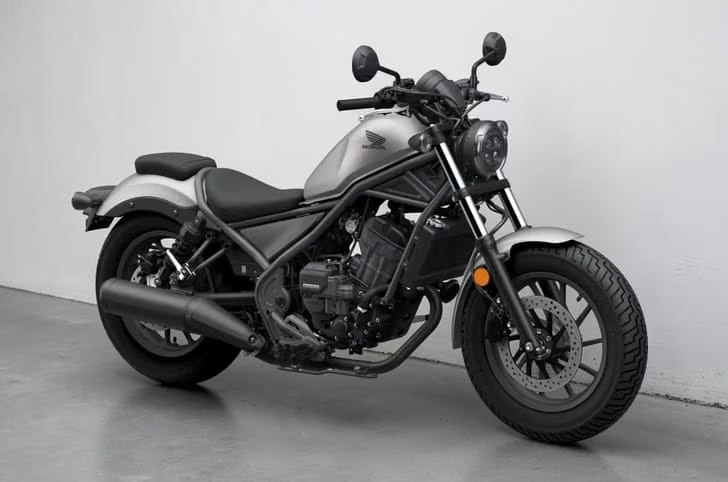
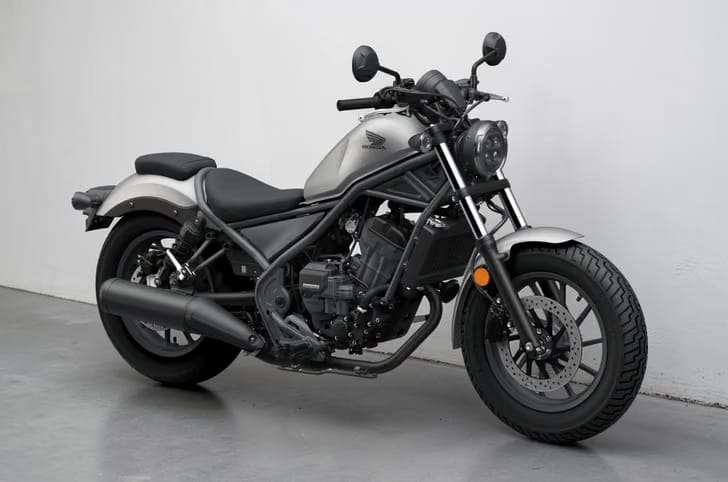
The Honda Rebel 300 is the first model in the Rebel family to be manufactured locally and acts as the brand’s most accessible cruiser motorcycle here. Built around a bobber-style design with a teardrop fuel tank, round LED headlamp and short exhaust, it is sold exclusively through Honda BigWing dealerships. Here are answers to some of the most commonly asked questions about it.

What is the price of the Honda Rebel 300?

The Honda Rebel 300 is available in two variants. The Standard variant is priced at Rs 2.22 lakh and the E-Clutch variant at Rs 2.62 lakh – a Rs 40,000 premium for the automated clutch system. At Rs 2.22 lakh, the Standard variant undercuts the Royal Enfield Goan Classic 350 (Rs 2.25-2.28 lakh, ex-showroom, Chennai), one of the few other bobber-styled motorcycles currently on sale in India.

What engine does the Honda Rebel 300 use?

The Honda Rebel 300 is powered by a 286cc single-cylinder, liquid-cooled engine producing 30hp and 27.5Nm of torque, paired with a 6-speed gearbox. This is the same engine that powered the CB300R previously sold in our market.

What features does the Honda Rebel 300 have?

Both variants of the Rebel 300 get a circular TFT instrument display with Honda RoadSync connectivity and turn-by-turn navigation, full LED lighting and dual-channel ABS. The E-Clutch variant additionally allows the rider to configure the clutch system via the TFT display.

What is the Honda Rebel 300 E-Clutch and how does it work?

Honda’s E-Clutch is an electronically automated clutch system that uses actuators to operate the clutch automatically, allowing the rider to change gears without using the clutch lever. It does not make the Rebel 300 a fully automatic motorcycle, as the rider still selects gears manually using the gear lever. However, the system handles clutch engagement and disengagement on its own.

Importantly, the clutch lever is retained and can be used manually whenever the rider chooses. The system is designed to reduce rider fatigue in stop-and-go traffic while making the bike more accessible for those who find operating a clutch lever demanding.

What is the seat height and weight of the Honda Rebel 300?

The Honda Rebel 300 has a seat height of 690mm, making it one of the lowest motorcycles currently on sale in our market. This uld make it exceptionally accessible for a wide range of riders. The upright handlebar and forward-set footpegs complement the low t to create a relaxed, unhurried riding position. Kerb weight is 172kg and fuel tank capacity is 11 litres.

MG Hector Tomahawk EV 7-seater vs rivals: Price, specs compared

MG Hector Tomahawk EV 7-seater vs rivals: Price, specs compared
MG Hector Tomahawk EV 7-seater vs rivals

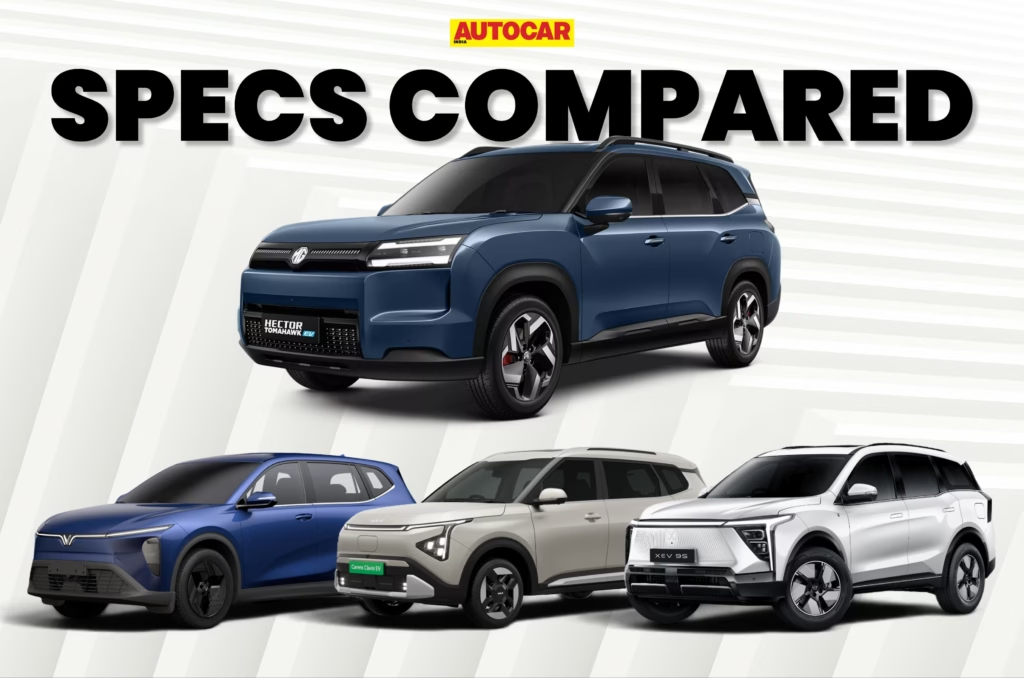
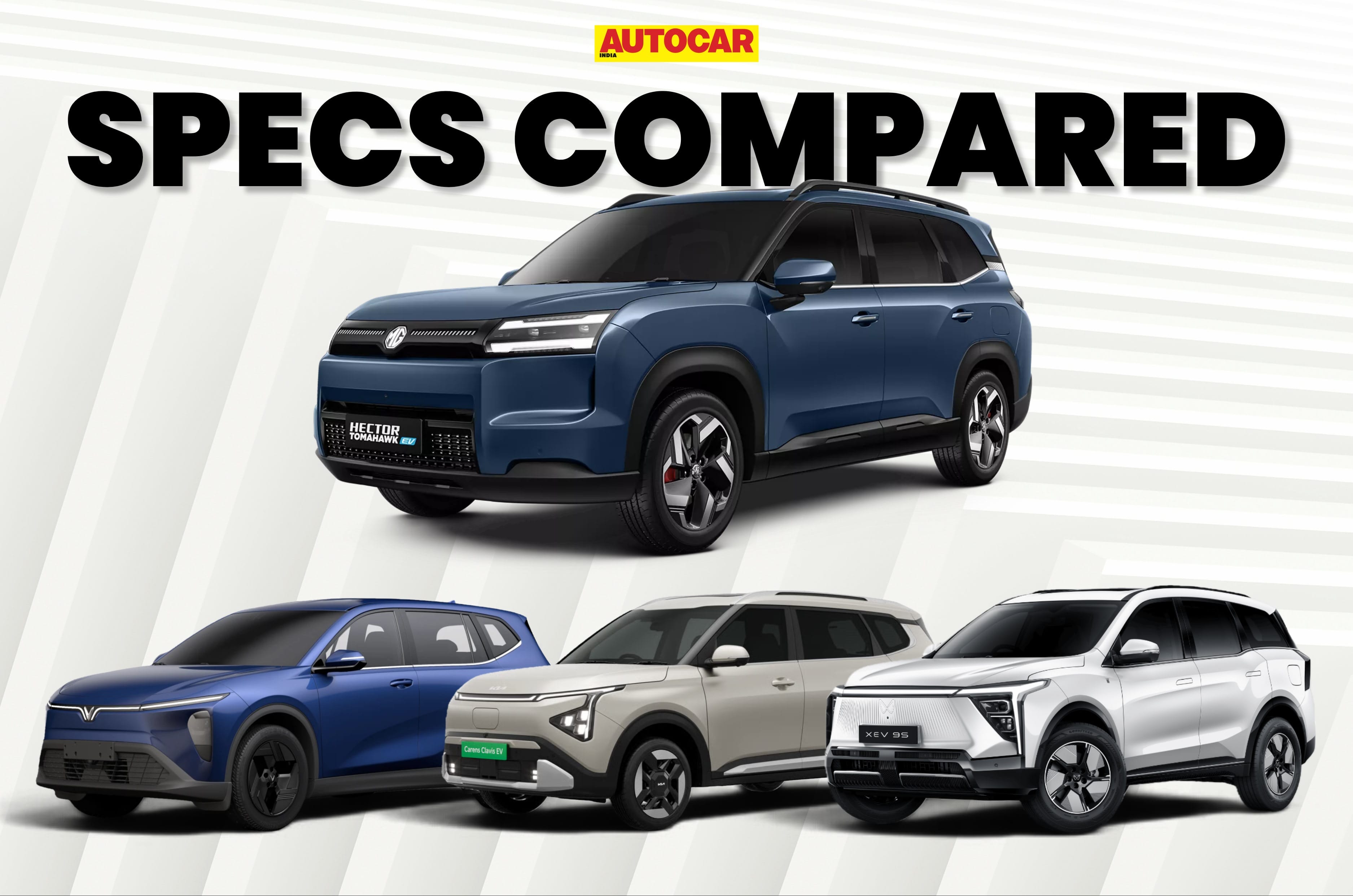
The MG Hector Tomahawk EV is the latest entrant in the mass-market three-row EV segment, going up against the Mahindra XEV 9S, Kia Carens Clavis EV, Vinfast VF MPV 7, and BYD eMax 7. Below, we’ve compared the 7-seat version of the Hector Tomahawk EV to see how it fares against its rivals on paper.

MG Hector Tomahawk EV 7-seater vs rivals: dimensions

 Hector Tomahawk EVXEV 9S

Carens Clavis EV

VF MPV 7

eMax 7

Length (mm)4,7454,737

4,550

4,740

4,710

Width (mm)1,8501,900

1,800

1,872

1,810

Height (mm)1,7701,747

1,730

1,734

1,690

Wheelbase (mm)2,8102,762

2,780

2,840

2,800

Wheel size (inches)1818

17

19

17

Boot space (litres)*192126180
Frunk space (litres)N/A15025N/AN/A

*With all three rows up.

The Hector Tomahawk EV is the longest among its rivals, and wins out in the wheelbase and height departments as well. However, the XEV 9S and VF MPV 7 have the Hector Tomahawk EV beat in terms of width. Its 18-inch wheels are in line with class standards. Coming to boot space, the Hector Tomahawk EV claims the largest volume with all three rows up, though it’s worth noting that neither Mahindra nor Kia disclose similar figures. That said, the XEV 9S and Carens Clavis EV are the only ones here to offer frunks for additional storage.

MG Hector Tomahawk EV 7-seater vs rivals: battery and motor

 Hector Tomahawk EVXEV 9S

Carens Clavis EV

VF MPV 7

eMax 7

Battery size (kWh)69.259 / 70 / 79

42 / 51.4

60.13

71.8

Electric motor setupSingle, frontSingle, rearSingle, frontSingle, frontSingle, front
Power (hp)204231 / 245 / 286

135 / 171

204

163 / 204

Torque (Nm)310380

255

280

310

Gearbox1-speed AT1-speed AT1-speed AT1-speed AT1-speed AT
Drive layoutFWDRWD

FWD

FWD

FWD

The Hector Tomahawk EV does quite well on the battery capacity front, with its 69.2kWh pack falling short of only that of the eMax 7 and the higher versions of the XEV 9S. Power output is a similar story, with the Hector Tomahawk EV matching the e Max 7’s stronger state of tune and beating out the Carens Clavis EV and the VF MPV 7 – the latter by quite a slim margin. The XEV 9S remains the only EV in this space that’s not front-wheel drive.

MG Hector Tomahawk EV 7-seater vs rivals: range and charging

 Hector Tomahawk EVXEV 9SCarens Clavis EVVF MPV 7eMax 7
Battery capacity (kWh)69.259 / 70 / 79

42 / 51.4

60.13

71.8

MIDC range (km)517521 / 600 / 679404 / 490

517

485 / 530 (NEDC)

7.2kW AC charging time (hours)12.58.7 / 10.2 / 11.7
11.2kW AC charging time (hours)6 / 7 / 84 / 4.75
DC charging time (minutes)35 (90kW)20 (140kW) / 20 (160kW) / 20 (180kW)39 (100kW)30 (80kW)37 (80kW)

As far as range goes, the Hector Tomahawk EV surpasses the Carens Clavis EV and the lower-spec version of the eMax 7, matches the VF MPV 7 (even though the Vinfast has a smaller battery), and falls well short of the XEV 9S. Even the base version of the XEV 9S claims a higher range than the Hector Tomahawk EV despite its 10kWh capacity deficit. The Hector Tomahawk EV’s AC charging time is also higher than that of the 79kWh XEV 9S. Unlike the XEV 9S and Carens Clavis EV, the Hector Tomahawk EV does not support 11kW AC charging either.

MG Hector Tomahawk EV 7-seater vs rivals: price

 Price range (in Rs lakh)
Hector Tomahawk EV19.50-23.50 (13.99-17.49 w/ BaaS)
XEV 9S*20.65-29.95
Carens Clavis EV18.04-25.00
VF MPV 724.49
eMax 728.30-29.90

*Prices exclusive of home charger and installation costs.

MG has priced the Hector Tomahawk EV very competitively, with it undercutting the XEV 9S, VF MPV 7, and eMax 7. The Carens Clavis EV is the only one with a lower starting price than the Hector Tomahawk EV, but the Kia’s top-spec variant is Rs 1.5 lakh more expensive than that of the MG SUV. Moreover, MG offers the Hector Tomahawk EV with a battery-as-a-service (BaaS) scheme, which knocks up to Rs 6 lakh off the sticker price and introduces a monthly battery rental fee of Rs 4.9/km.

All prices are ex-showroom, India.

Stock Market Holiday: रक्षाबंधन पर खुलेगा या बंद रहेगा शेयर बाजार? ट्रेडर्स के लिए ये है बड़ा अपडेट

Raksha Bandhan Stock Market Holiday 2026: रक्षाबंधन के पावन पर्व पर अगर आप शेयर बाजार में ट्रेडिंग या निवेश की योजना बना रहे हैं, तो यह खबर आपके काम की है। 28 अगस्त को देशभर में रक्षाबंधन का त्योहार मनाया जाएगा। ऐसे में निवेशकों के मन में सवाल है कि क्या इस दिन बॉम्बे स्टॉक एक्सचेंज (BSE) और नेशनल स्टॉक एक्सचेंज (NSE) में कारोबार होगा या छुट्टी रहेगी।

बीएसई और एनएसई के ऑफिशियल ट्रेडिंग हॉलिडे कैलेंडर के मुताबिक, 28 अगस्त को रक्षाबंधन के दिन शेयर बाजार पूरी तरह खुला रहेगा। इस दिन इक्विटी, इक्विटी डेरिवेटिव्स और करंसी सेगमेंट में सामान्य दिनों की तरह ही ट्रेडिंग होगी।

MCX और कमोडिटी मार्केट का क्या है शेड्यूल?

इक्विटी मार्केट के साथ-साथ मल्टी कमोडिटी एक्सचेंज (MCX) और नेशनल कमोडिटी एंड डेरिवेटिव्स एक्सचेंज (NCDEX) पर भी रक्षाबंधन के दिन काम-काज सामान्य रूप से जारी रहेगा। कमोडिटी एक्सचेंज में सुबह और शाम दोनों सेशंस में रेगुलर ट्रेडिंग होगी। चूंकि यह ट्रेडिंग या रेगुलर सेटलमेंट हॉलिडे नहीं है, इसलिए रोलिंग सेटलमेंट साइकिल पर भी कोई असर नहीं पड़ेगा।

बैंकों की छुट्टी का पड़ सकता है असर

हालांकि शेयर बाजार और कमोडिटी मार्केट खुले रहेंगे, लेकिन भारतीय रिजर्व बैंक (RBI) के हॉलिडे कैलेंडर के अनुसार 28 अगस्त को कई राज्यों और शहरों (जैसे- लखनऊ, कानपुर, अहमदाबाद, जयपुर आदि) में बैंक बंद रहेंगे।

ऐसे में अगर आप इस दिन ट्रेडिंग के लिए बैंक ट्रांसफर या फंड्स ऐड/विड्रॉ करने की योजना बना रहे हैं, तो अपने स्थानीय बैंक की वर्किंग स्थिति और डिजिटल बैंकिंग ऑप्शन्स की जांच पहले से कर लें।

2026 में शेयर बाजार की अगली छुट्टियां कब हैं?

रक्षाबंधन के बाद अब शेयर बाजार में अगली आधिकारिक छुट्टी सितंबर महीने में होगी। आने वाले महीनों की प्रमुख हॉलिडे लिस्ट इस प्रकार है:

  • 14 सितंबर: गणेश चतुर्थी
  • 2 अक्टूबर: महात्मा गांधी जयंती
  • 20 अक्टूबर: दशहरा
  • 10 नवंबर: दिवाली (बलिप्रतिपदा)
  • 24 नवंबर: प्रकाश गुरुपर्व (श्री गुरु नानक देव जयंती)
  • 25 दिसंबर: क्रिसमस

(नोट: दीपावली के दिन 8 नवंबर को शेयर बाजार में एक घंटे के लिए पारंपरिक ‘मुहूर्त ट्रेडिंग’ सेशन का आयोजन किया जाएगा।)

रक्षाबंधन के दिन यानी 28 अगस्त को शेयर बाजार में किसी भी तरह की बंदी नहीं है। निवेशक सुबह 9:15 बजे से शाम 3:30 बजे तक अपनी ट्रेडिंग सामान्य रूप से कर सकते हैं। हालांकि, बैंक हॉलिडे की वजह से फंड ट्रांसफर से जुड़े काम पहले से प्लान कर लें।

Which variant of the MG Hector Tomahawk PHEV should you buy?

Which variant of the MG Hector Tomahawk PHEV should you buy?

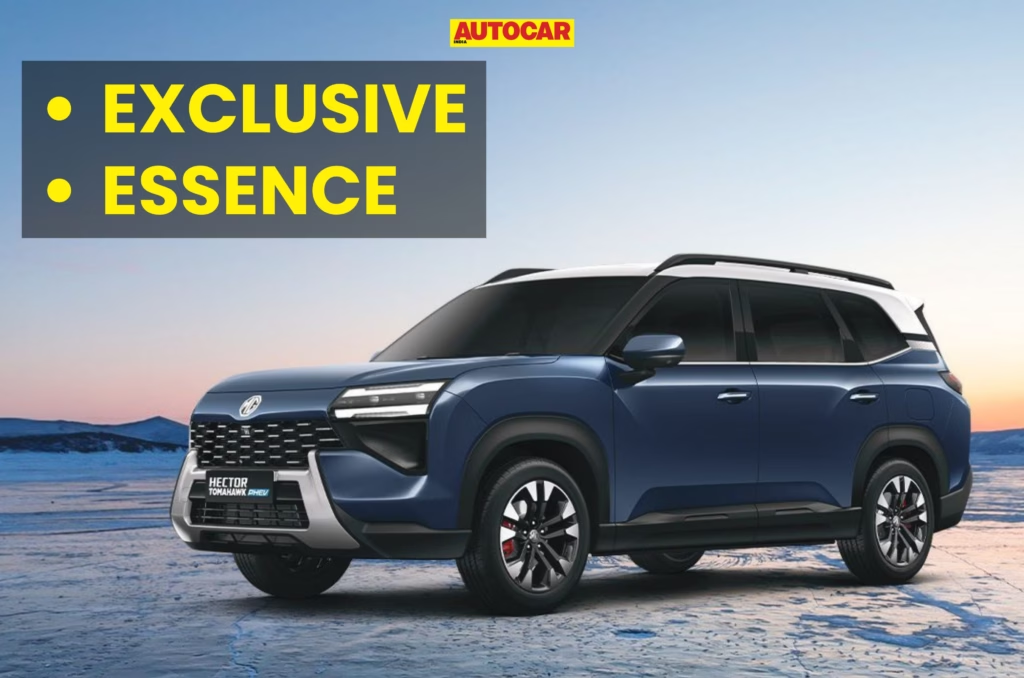
MG has launched the Hector Tomahawk PHEV as the first mass-market plug-in-hybrid (PHEV) car in India, priced from Rs 25.70 lakh (ex-showroom). It is offered in two trims: Exclusive and Essence, and like other MG cars, it is equipped with a plethora of modern-day features. If you are interested in the MG Hector Tomahawk PHEV, which variant should you choose? Let us find out.  

MG Hector Tomahawk PHEV powertrain options and prices

Both Hector Tomahawk PHEV variants get the same 1.5L engine and 20.5kWh battery

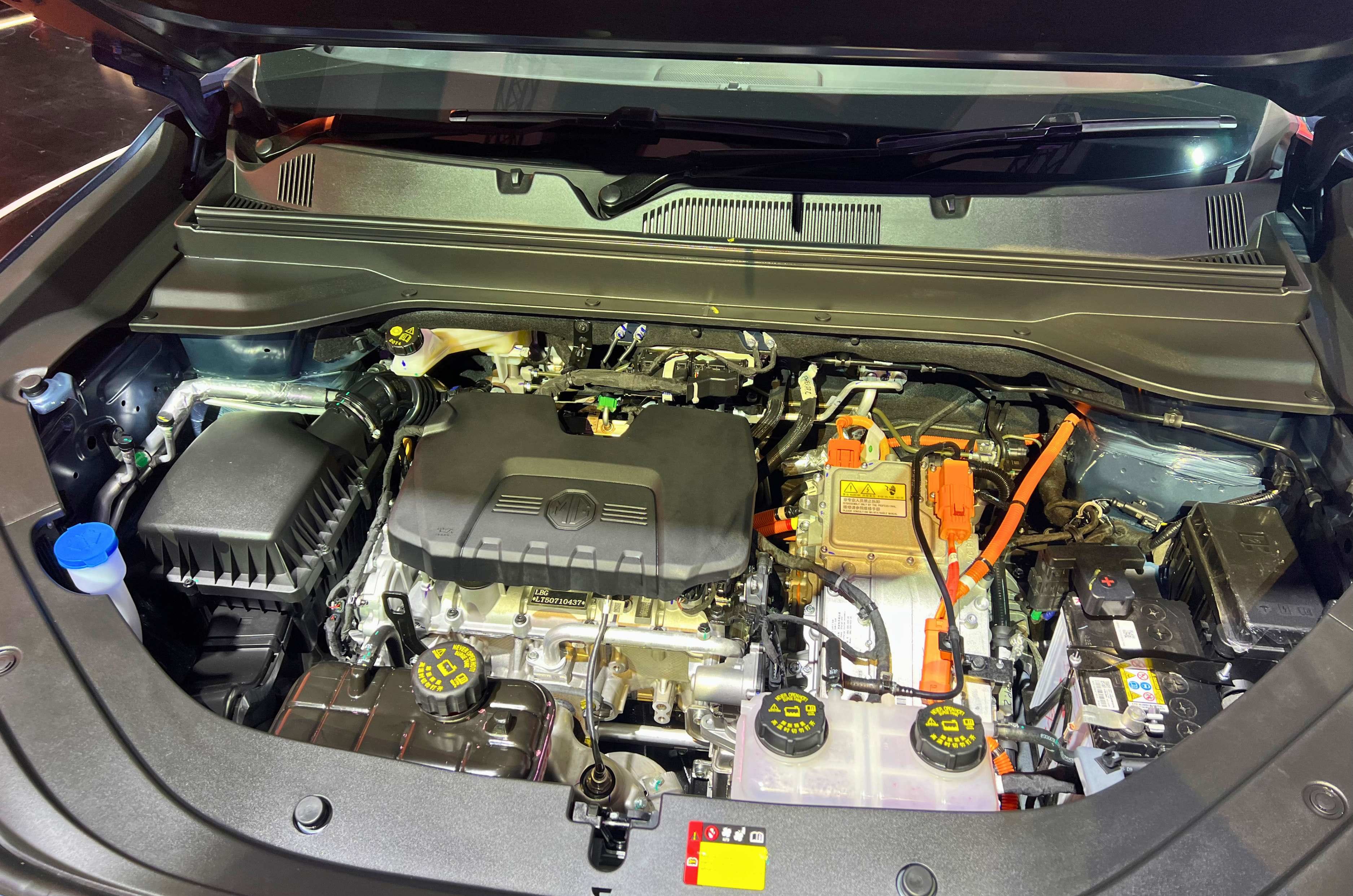
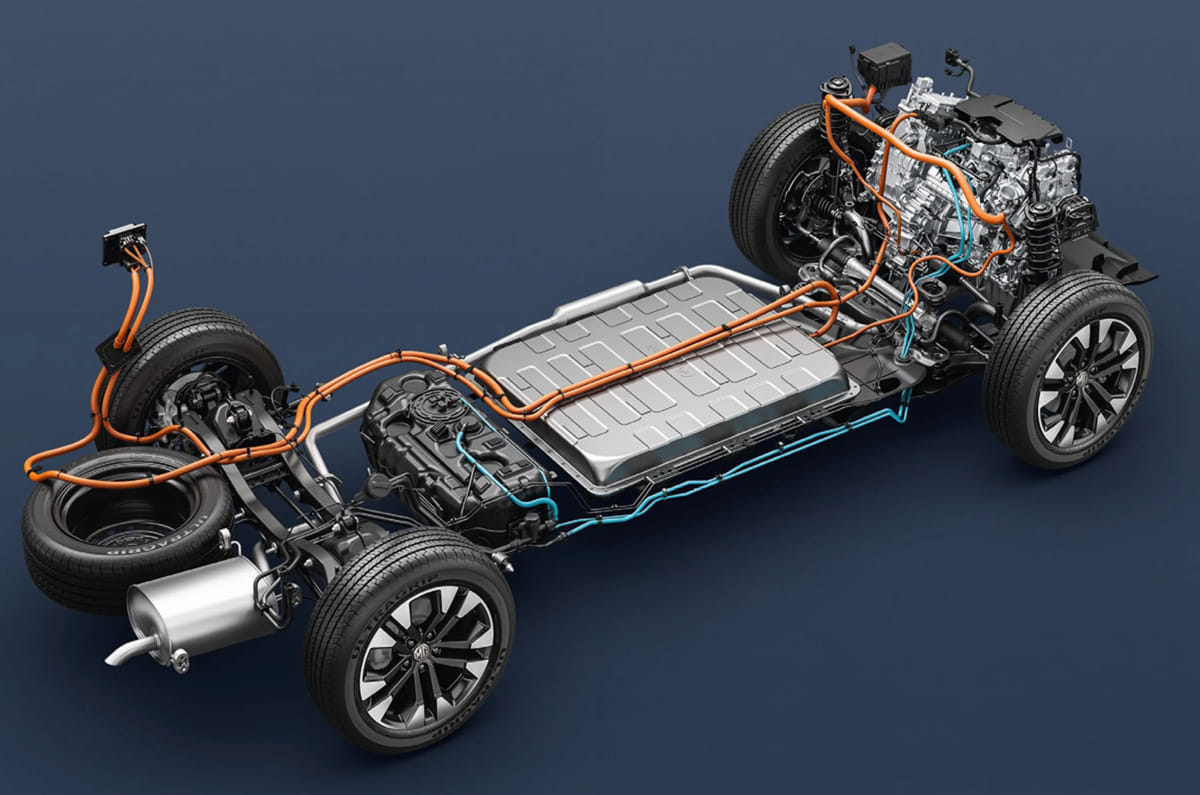
The MG Hector Tomahawk PHEV is offered with a 1.5-litre naturally aspirated petrol engine producing 102hp and 125Nm. It gets a 20.5kWh battery pack powering an electric motor producing 201hp and 237Nm. The battery pack has an indicative claimed range of 115km, and combined with the petrol engine, it could have a total range of around 1,100km. Both the Exclusive and Essence variants are offered with the same powertrain. 

MG Hector Tomahawk PHEV variant-wise BaaS, non-BaaS prices


Hector Tomahawk PHEV Exclusive

Hector Tomahawk PHEV Essence

Non-BaaS price

Rs 25.70 lakh

Rs 27.80 lakh 

BaaS price

Rs 21.79 lakh + Rs 3.2 per km*

Rs 23.89 lakh + Rs 3.2 per km*

*Rs 3.2 per km is charged as the battery rental fee for the battery-as-a-service (BaaS) scheme.

MG Hector Tomahawk PHEV variant-wise features

Exclusive

Price: Rs 25.70 lakh (or Rs 21.79 lakh + Rs 3.2 per km with BaaS)

  • Automatic LED projector headlights
  • LED taillights
  • LED DRLs
  • Rear LED fog lamps
  • Illuminated MG logo at the front
  • 18-inch alloy wheels
  • ORVM-mounted turn indicators
  • Glass antenna
  • Roof rails
  • Rear spoiler
  • Chrome finish on window beltline and door handles
  • Black body cladding on side and wheel arches
  • Brown and grey interior
  • Blue ambient lighting
  • 12.8-inch touchscreen infotainment system
  • 6-speaker sound system
  • Wireless Android Auto and Apple CarPlay support
  • 8.8-inch digital driver’s display
  • Panoramic sunroof
  • 6-way powered driver’s seat
  • 4-way powered co-driver’s seat
  • Ventilated front seats
  • Powered tailgate
  • 50W wireless phone charger
  • Leatherette seat upholstery
  • Leatherette materials on steering wheel and door pads
  • Drive modes: Eco, Normal, Sports, Custom
  • Rain-sensing wipers
  • PM2.5 air filter
  • Push-button start/stop
  • Powered ORVMs
  • Steering-mounted audio controls
  • Tilt and telescopic adjustable steering column
  • Cruise control
  • 2nd row features: 60:40 split, seat recline, one-touch tumble, centre armrest with cupholders
  • 3rd row features: 50:50 split
  • USB Type-A and Type-C chargers in 1st and 2nd rows
  • All four power windows with one-touch up/down and anti-pinch functions
  • Rear wiper and washer
  • Pet mode, Nap mode and Camp mode
  • Connected car technology
  • 6 airbags
  • 360-degree camera with under-bonnet and wheel views
  • Digital rearview monitor
  • Reverse parking sensors
  • All four disc brakes
  • Electronic parking brake with auto hold
  • TPMS
  • Front and rear defogger
  • ISOFIX child seat anchors
  • Hill hold control
  • Traction control
  • ESP
  • ABS+EBD


Essence (features over Exclusive)

Price: Rs 27.80 lakh (or Rs 23.89 lakh + Rs 3.2 per km with BaaS)

  • 15.6-inch touchscreen infotainment system
  • 10-speaker Infinity sound system
  • Rear window sunshades
  • Driver’s seat memory and welcome/exit retract functions
  • V2L, V2V and V2H charging support
  • Level-2 ADAS
  • Auto-dimming IRVM
  • Front parking sensors
  • 256-colour ambient lighting 
  • Red brake callipers
  • Sequential turn indicators

Which MG Hector Tomahawk PHEV variant should you buy?

We recommend the entry-spec Essence variant, as it is offered with a lot of modern-day features like a 12.8-inch touchscreen infotainment system, a panoramic sunroof, a powered tailgate and a 360-degree camera. It also costs Rs 2.10 lakh less than the top-spec Essence, making it the more value-for-money Hector Tomahawk PHEV variant. 

Prices are ex-showroom, India.

MG Hector Tomahawk PHEV launched at Rs 25.69 lakh

MG Hector Tomahawk PHEV launched at Rs 25.69 lakh
MG-Hector-Tomahawk-PHEV

JSW MG Motor India has launched the Hector Tomahawk PHEV at a price of Rs 25.69 lakh (ex-showroom) alongside the all-electric version of this brand-new SUV. This becomes the first mainstream plug-in hybrid SUV in our market. It is powered by a 1.5-litre, naturally aspirated petrol engine paired to a 20.5kWh battery for a claimed fuel economy of around 40kpl and an electric-only range of over 115km. MG claims that the Hector Tomahawk can deliver over 1100km of range with a full tank of fuel and a fully charged battery. Bookings for the Tomahawk PHEV have commenced today and deliveries will begin in November this year. 

Unlike the Hector Tomahawk EV that’s available in both 5- and 7-seater configurations, the PHEV is only available in a 7-seater configuration. MG is also offering the Tomahawk PHEV under the BaaS program, where prices start from Rs 21.79 lakh and Rs 3.20 is charged additionally on the battery rental.