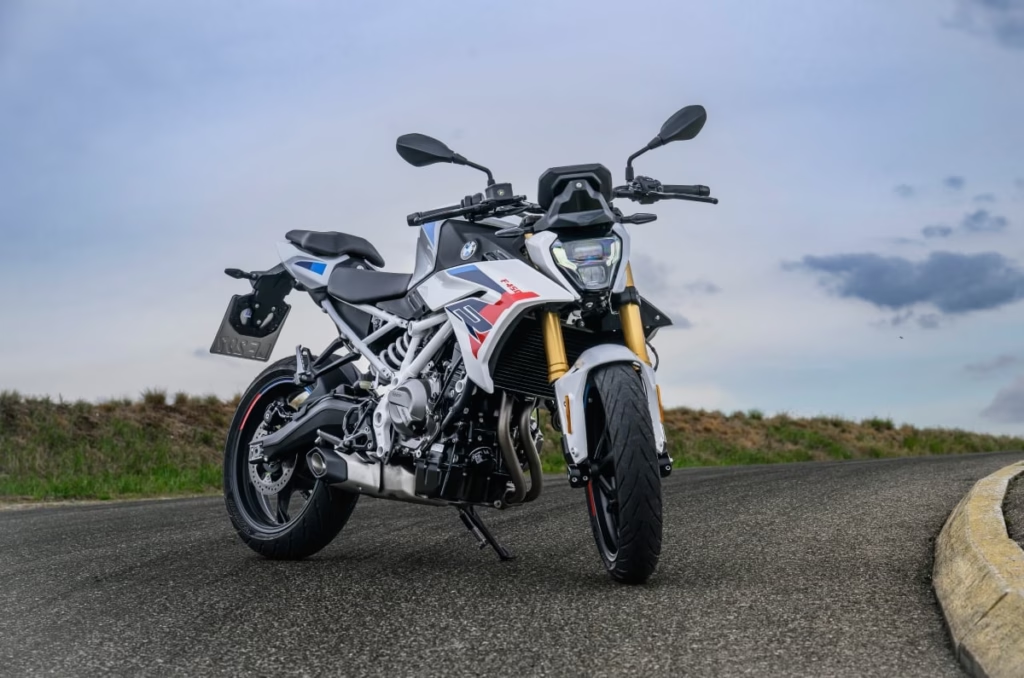
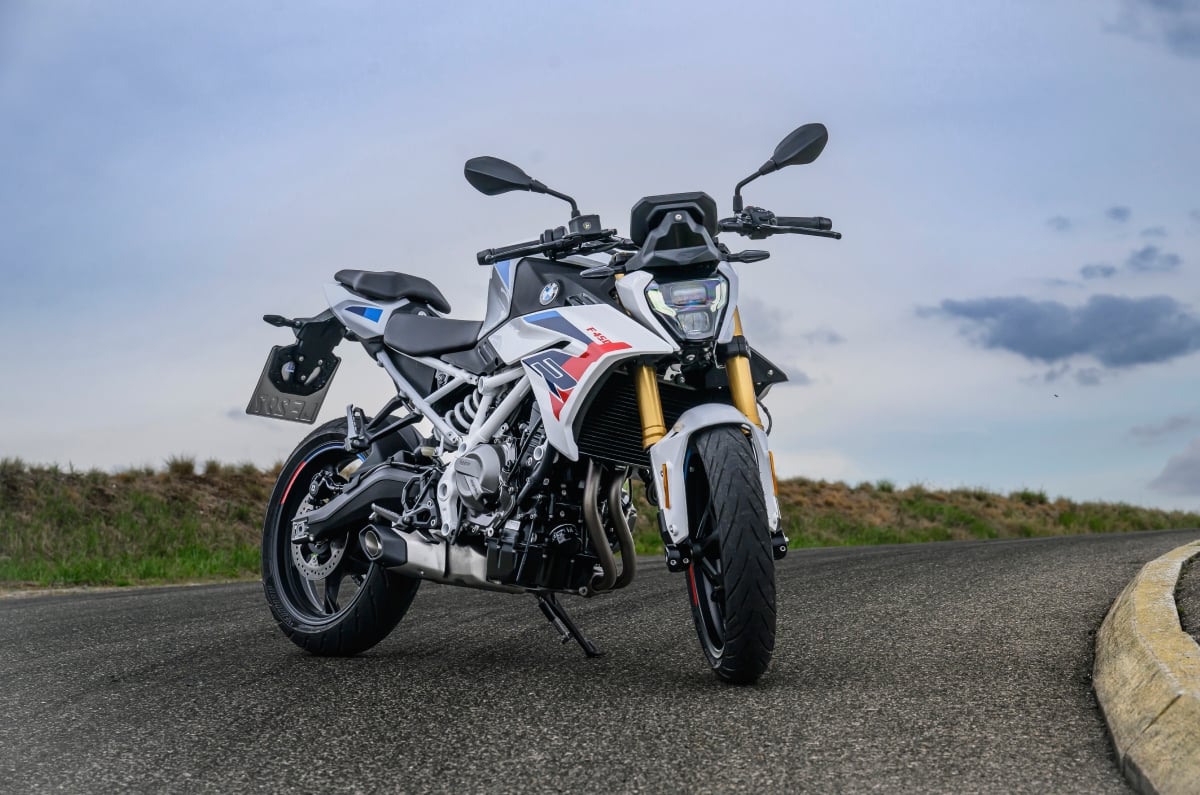
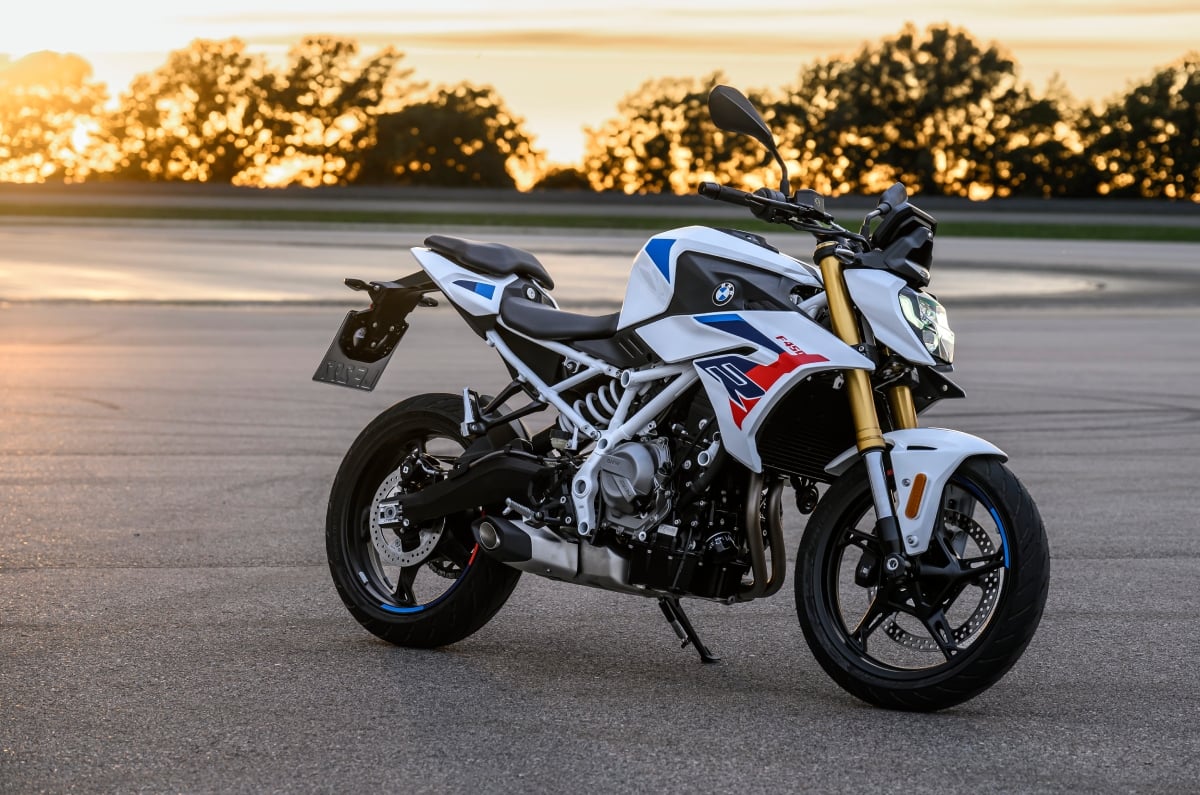
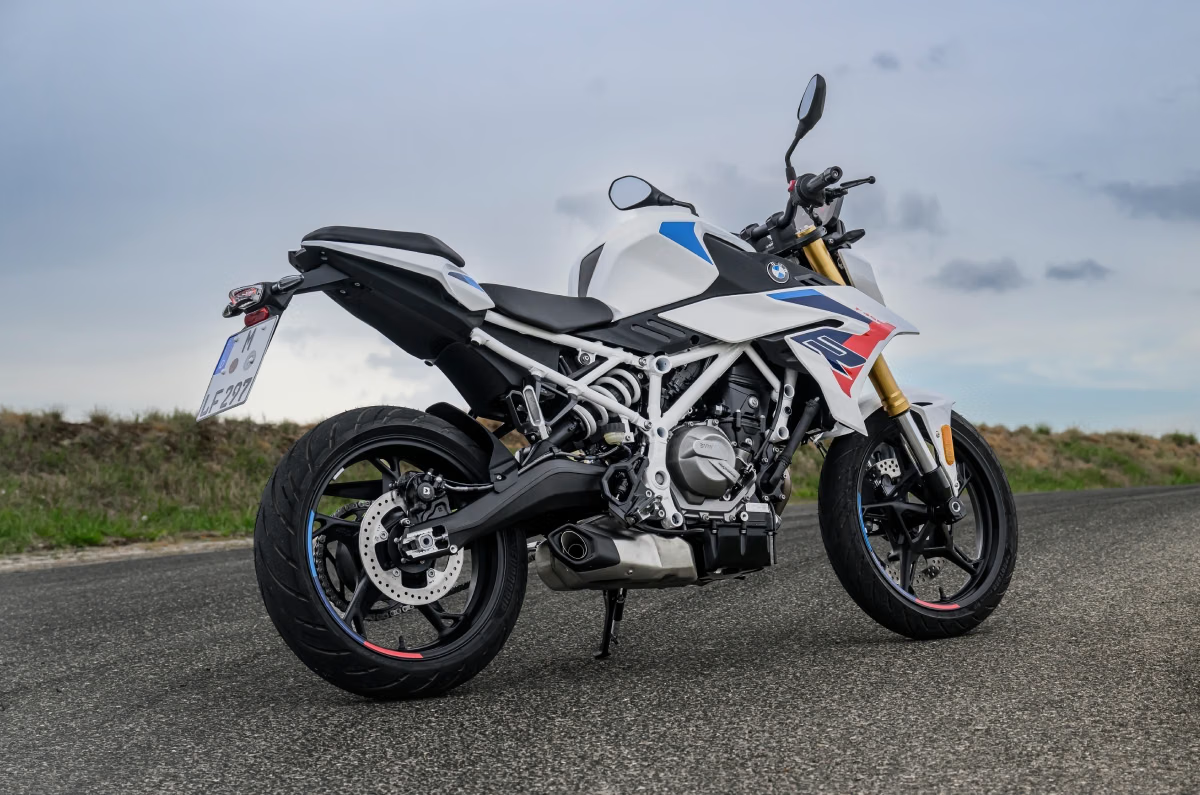
The BMW F 450 R is BMW’s new street-naked that effectively replaces the discontinued G 310 R as the entry point into the brand’s roadster lineup. Built on the same platform as the F 450 GS, it brings that engine and chassis into a road-focused naked format. Here are answers to some of the most commonly asked questions about it.
How much power does the BMW F 450 R make?
The BMW F 450 R is powered by the same 420cc parallel-twin engine as the GS, producing an identical 48hp at 8,750rpm and 43Nm at 6,750rpm. The engine is mated to a six-speed gearbox. BMW has mentioned that fuel consumption is rated at 3.8 litres per 100km (or 26.3kpl) based on the European WLTP test cycle, and we’ll have to wait until we test the bike to see what real-world range in our riding conditions is.
What variants is the BMW F 450 R available in?
The F 450 R is available in four variants – Base, Exclusive, M Sport and M Sport with Innovation Package. The base model comes with the standard feature set. The Exclusive adds a bidirectional quickshifter and Sport suspension with adjustable rebound and compression damping. Both M Sport variants add an individually configurable Dynamic Pro riding mode and an exclusive TFT layout showing traction control, braking force, lean angle and lap timer data. Lastly, the range-topping M Sport with Innovation Package adds the Easy Ride Clutch.
What is the seat height and weight of the BMW F 450 R?
The BMW F 450 R has a standard seat height of 790mm. A low seat accessory brings this down to 775mm, while a high Sport seat raises it to 810mm. BMW also notes that the slim contour below the seat helps most riders reach the ground more easily than the seat height figure alone might suggest. Ready-to-ride weight is 175kg, which is 3kg lighter than the F 450 GS.
What features does the BMW F 450 R have?
All variants of the F 450 R get a 6.5-inch TFT display with Bluetooth connectivity for navigation, music and phone calls, along with a USB-C port, heated grips and full-LED lighting. Three riding modes – Rain, Road and Dynamic – are standard, as are ABS Pro, Dynamic Brake Control, Dynamic Traction Control and engine drag torque control. Shift Assistant Pro (BMW’s bidirectional quickshifter) is also standard on all variants except the base model, where it is available as a retrofit accessory.
What are the differences between the BMW F 450 R and F 450 GS?
Both share the same 420cc parallel-twin engine producing 48hp and 43Nm, the same tubular steel frame and the same KYB suspension hardware. The key differences are in intent and setup. The F 450 GS uses longer-travel suspension with 180mm of travel at both ends, alongside a 19-inch front and 17-inch rear wheel. The F 450 R features road-specific suspension tuning with 140mm of travel and rides on 17-inch wheels at both ends. The F 450 R also uses an underbelly exhaust instead of the GS’s high-mounted unit.
BMW Motorrad has revealed the F 450 R, a new street-naked bike built on the same platform as the F 450 GS. The model effectively takes the place of the discontinued G 310 R as the entry-level model in the brand’s ‘Roadster’ lineup.
Uses the same 420cc parallel-twin and chassis as the F 450 GS
Weighs 175kg – 3kg less than the GS
Will be available in four variants
BMW F 450 R details
Engine tuned for road use from the same 420cc parallel-twin as the F 450 GS
On paper, the 420cc parallel-twin produces identical output figures as the GS, with 48hp at 8,750rpm and 43Nm at 6,750rpm. That said, BMW says it has tuned the engine such that 80 percent of peak torque is available from 3,000rpm.
The chassis has been carried over from the GS as well, with a tubular steel frame that uses the engine as a stressed member, a 43mm KYB USD fork and a KYB monoshock. Braking is handled by a 310mm front disc with a Brembo four-piston monobloc caliper and a 240mm rear disc. The bike has a standard seat height of 790mm, but you can get a 775mm low seat and 810mm high seat as accessories. Like the GS, the F 450 R gets heated grips and a 6.5-inch TFT display with Bluetooth connectivity, navigation and music control as standard across the range.
Speaking of which, the bike will be available in four variants – Base, Exclusive, M Sport and M Sport with Innovation Package. The base F 450 R comes in Cosmic Black with the standard feature set. The Exclusive adds a bidirectional quickshifter and ‘Sport suspension’ with adjustable rebound and compression damping. Both M Sport variants add an individually configurable Dynamic Pro ride mode and an exclusive layout on the TFT that adds traction control, braking force, lean angle and lap timer data. Lastly, the range-topping M Sport with Innovation Package adds the Easy Ride Clutch system, which we’ve experienced on the F 450 GS.
BMW has not disclosed India pricing or a launch timeline, but given that the GS made its way to our market shortly after its global reveal, we can expect the F 450 R to launch here over the next few months. For reference, prices for the F 450 GS start at Rs 4.95 lakh, and the F 450 R will likely slot in below that in the lineup.
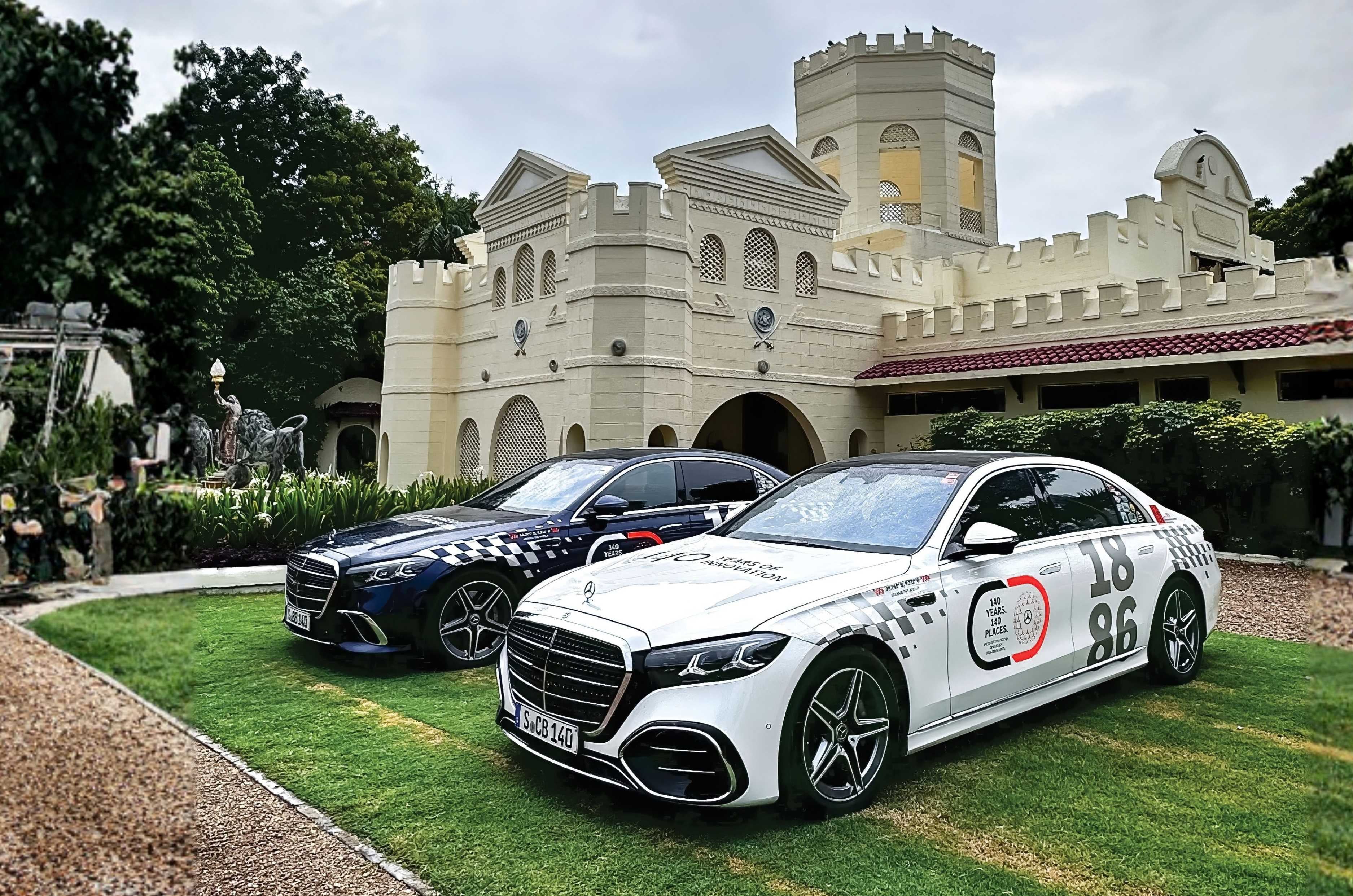
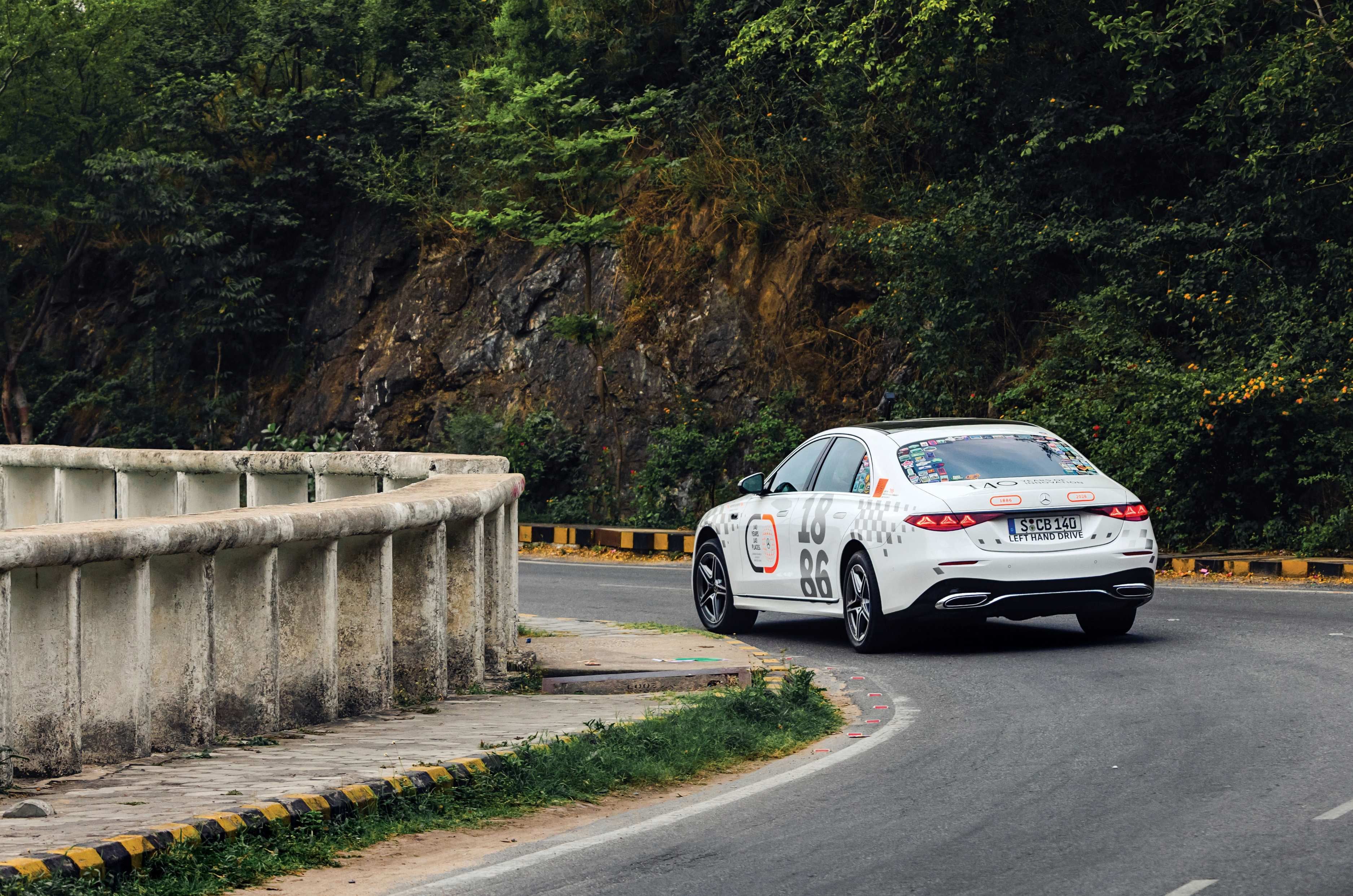
Mercedes-Benz’s 140 Years, 140 Places odyssey is a celebration of the carmaker’s origins in 1886. Spanning six continents, covering over 60,000 kilometres, it is as massive in significance as it is in scale. The tour kicked off at the Mercedes-Benz Museum in Stuttgart on the 29th of January, the same day Carl Benz received the patent for his first car 140 years ago! The cars then went to the Daimler house in Bad Cannstatt, they tracked the original route of Bertha Benz’s historic 1888 drive and drove the iconic Spa-Francorchamps racetrack in Belgium in wheel tracks of the W109 ‘Red Pig’ that made such a splash in 1971. The cars then went to the US, visiting the first plant in the US started by William Steinway (of Steinway & Sons, the famous German Piano makers), South America, Australia, Japan, Korea and Japan.
Legacy and history
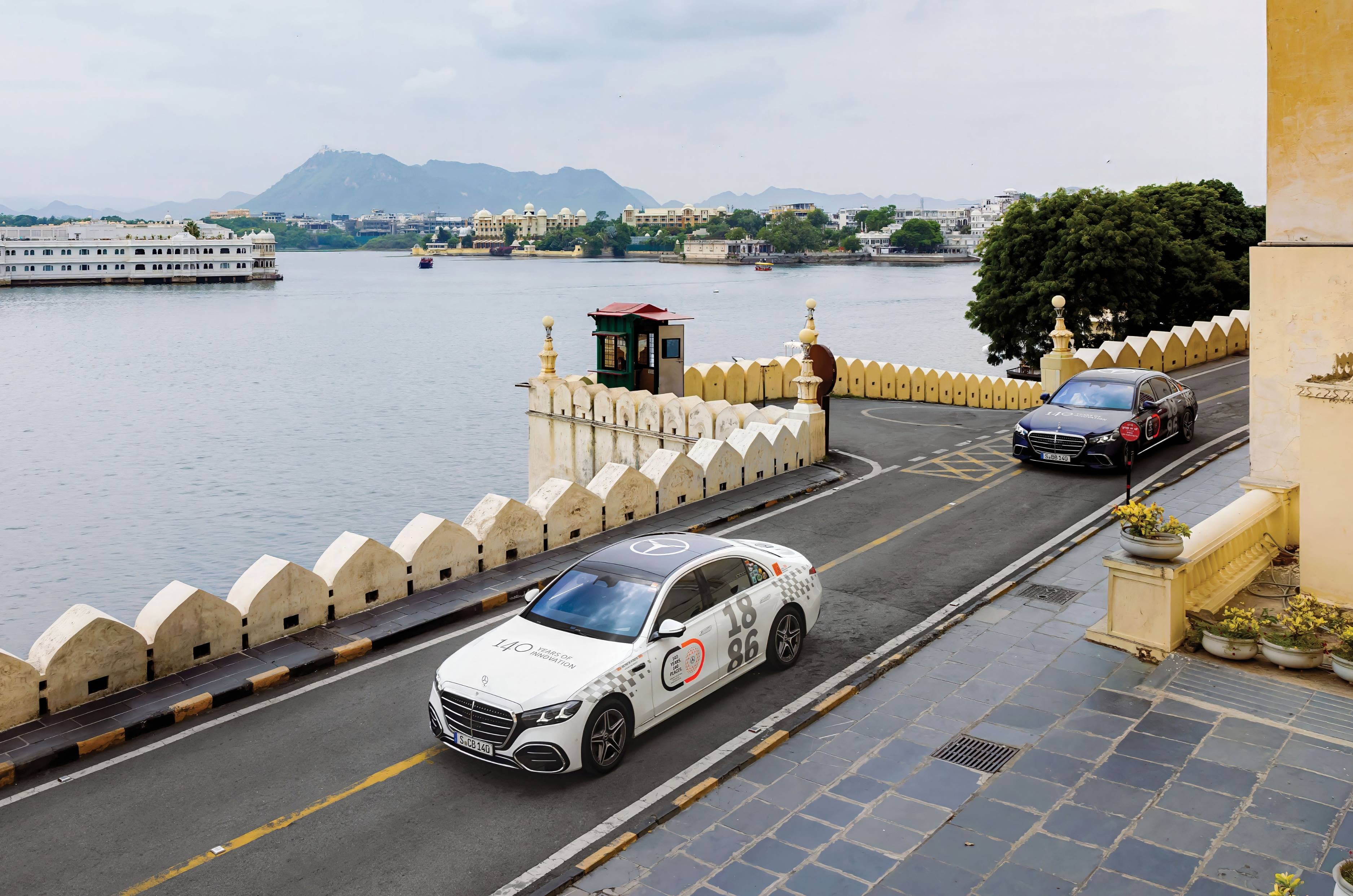
With their royal and regal air, the S-Classes feel right at home in Udaipur.
Part of the 140 Years, 140 Places expedition, Udaipur is one of the more stunning locations the Mercedes drive will visit on this India leg, and what’s incredible is that we have been chosen to be a part of it. What a privilege. The lake city of Udaipur also has tremendous historical significance. Home to one of the longest-serving dynasties, one that spans 1,500 years, this leg sees a coming together of the world’s oldest carmaker and one of the oldest dynasties. And while this trans-continental excursion is called 140 Years, 140 Places, it could also easily have been called 140 Years of Automotive Technology. With these S-Class pre-production cars dripping with both mechanical and electronic tech, what we are also celebrating is the journey of the car from a three-wheeler with a single-cylinder engine to this technological marvel. The company that invented the motorcar is still widely regarded as the one that makes ‘the best car in the world’.
Luxe Supreme
Everything is perfectly still. Not a gauge in the car is moving, and there’s no real sensation of speed. I must have dozed off. Blame it on the incredibly comfortable back seats and the sensory isolation. This car just shuts you off from the rest of the world. Then I discover we are cruising at 100kph, and not just 30 or 40. Up ahead is the lake city of Udaipur. Ahh.
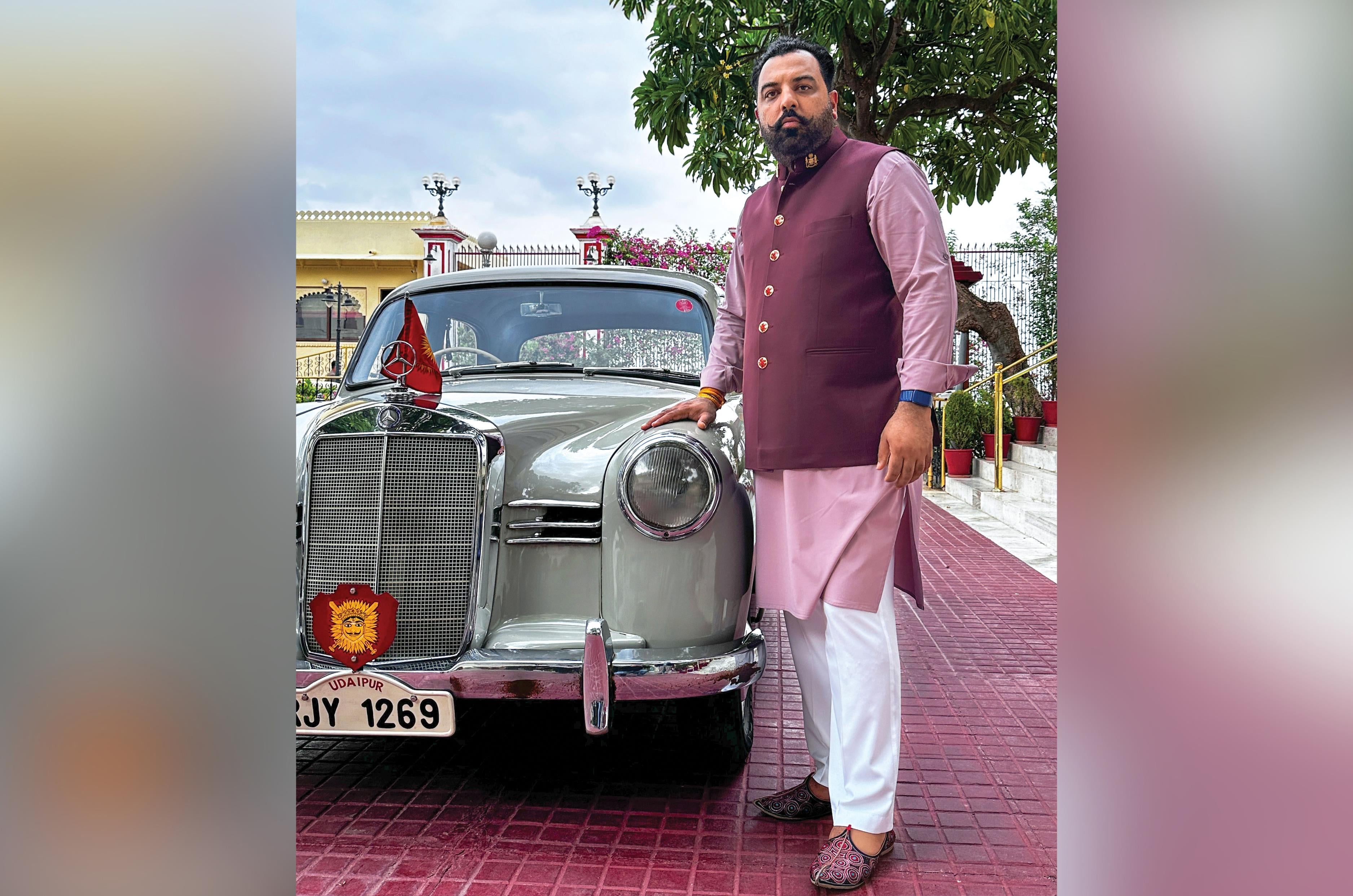
The Maharana of Udaipur with a car that has been in his family for three generations.
We start our journey on this leg from a very significant place, the palace situated on the lakeside at Udaipur. And not only does Lakhsyaraj, the 77th Custodian of the House of Mewar (formally Shriji Huzoor Dr Lakshyaraj Singh of Udaipur), play the perfect host, but he also parks an olive-green 180D in the foyer, a car that has been used by three generations of his family. The symbolism is rich; two legacies converging in a place that embodies the spirit of grandeur and continuity.
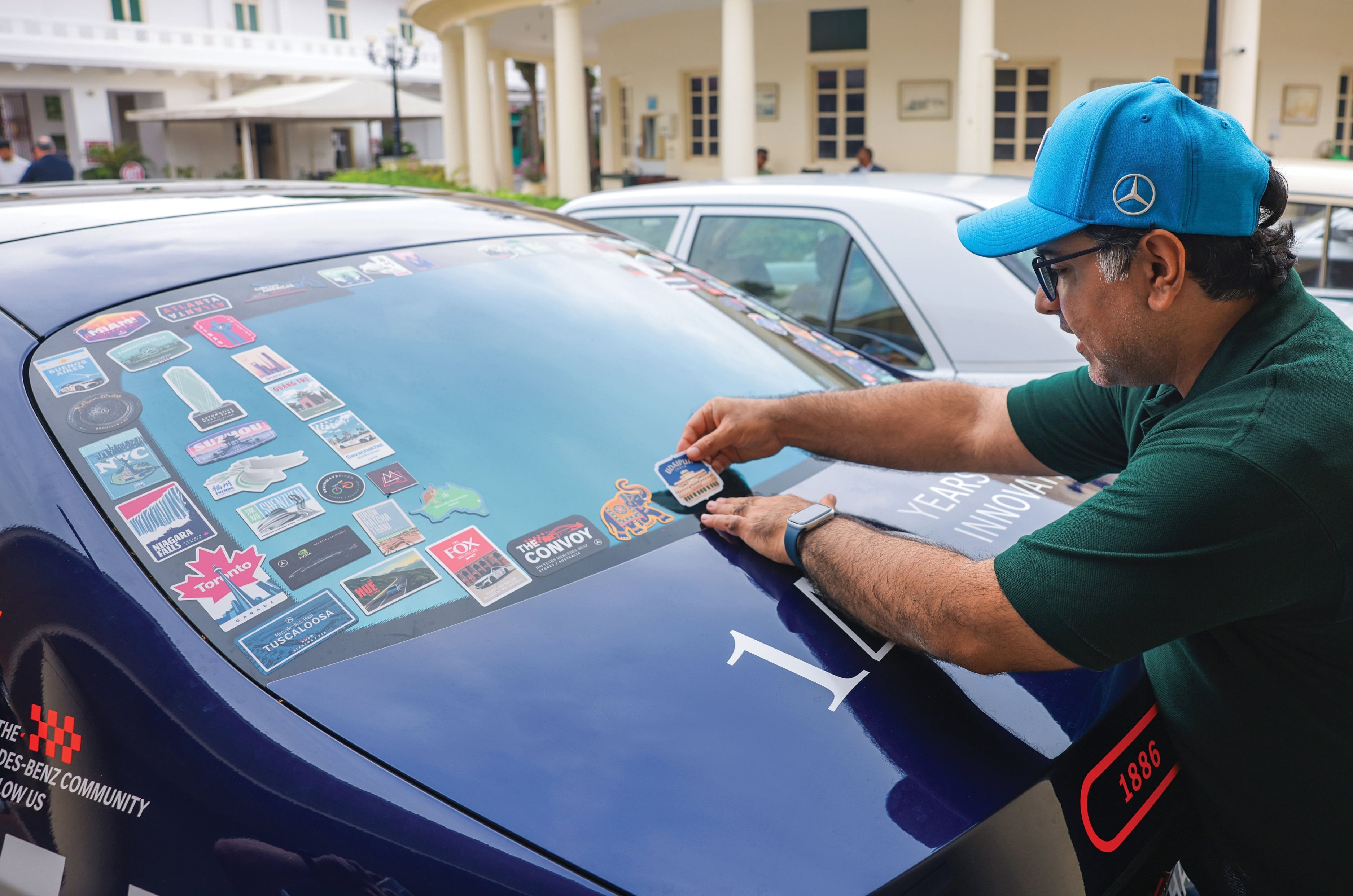
Perseus places the sticker on ‘Bertha’ in Udaipur.
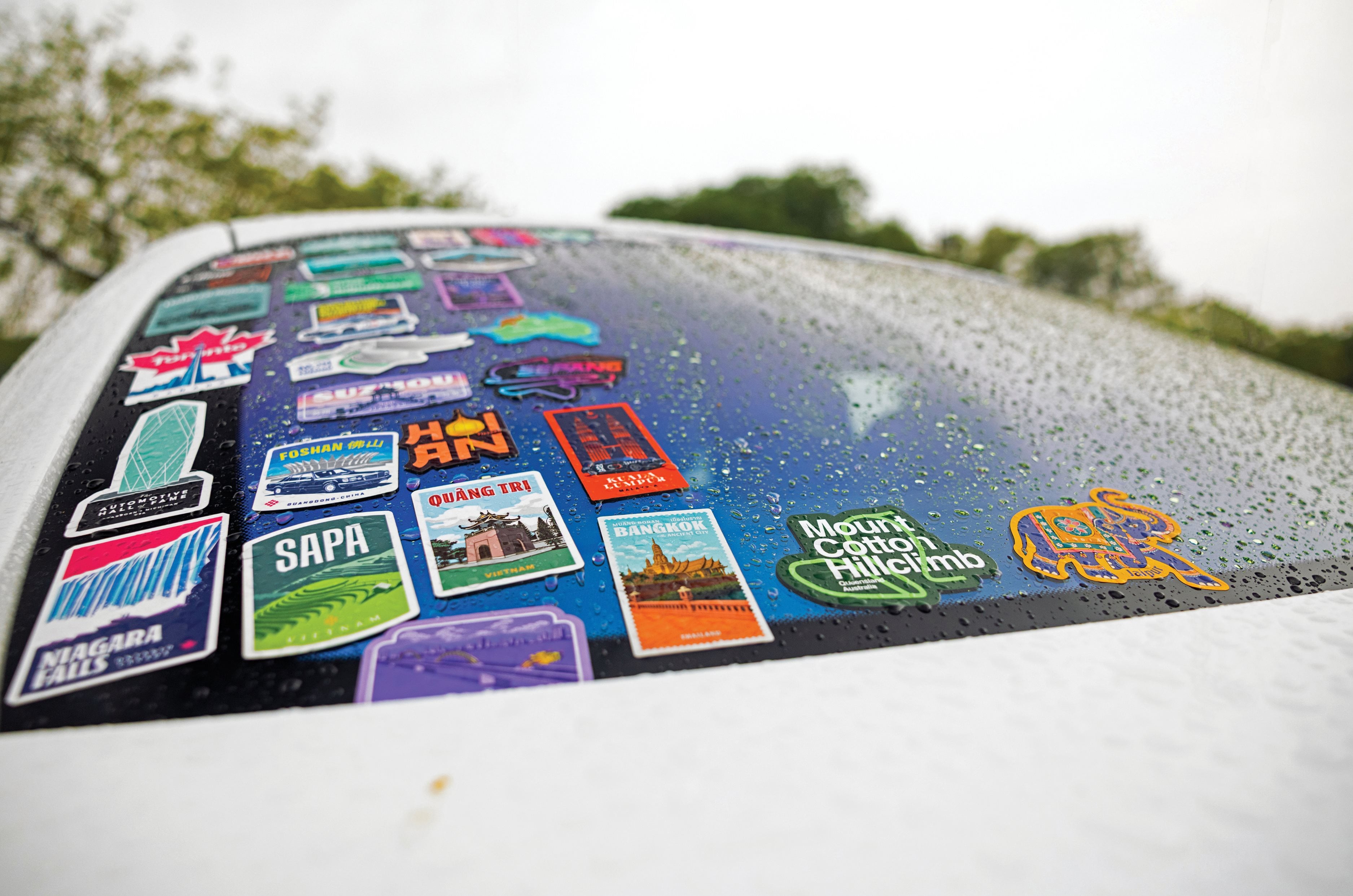
Since Udaipur is one of the 140 iconic destinations on the drive, Mercedes asks him to place an Udaipur sticker on the rear of the car; fitting. These cars, all three (the third is on another leg elsewhere in India), will eventually be housed in the Mercedes museum in Stuttgart, and what’s cool is that you can trace their journey via the stickers. Lakshyaraj then takes one of the cars for a brief drive. He wants to see just how much better this new version, with all its 2,700 new bits, is over his pre-facelifted car. And yes, he loves driving. I’d bumped into him earlier in the day at the airport, where his S-Class had come to pick him up, flags flying and uniformed driver and assistant in tow. But instead of climbing into the rear, he’d gotten straight behind the wheel. Tells you a lot.
Still at the top
Late prototypes of the New S-Class made the journey.
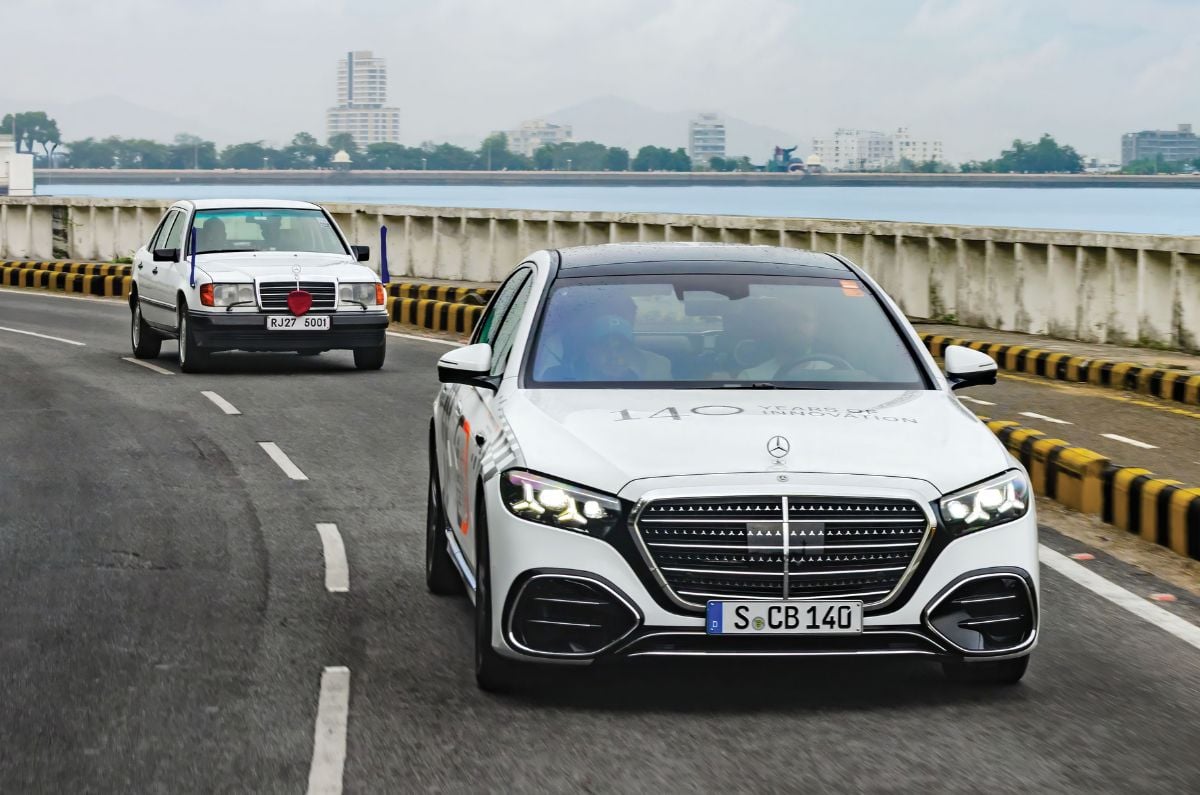
Later in the day, I get another demonstration of why the S-Class is so special. We decide to drive around the lake for the cameras, the orange glow of the setting sun adding to the drama of this once James Bond film set. Sitting in the back feels almost magical, as the S-Class slips forward effortlessly, the sun glistening off the lake. It skips over cratered roads, glides silently through noisy bazaars and intersections and then, as the road around the lake opens out, I barely hear it even though Mercedes’ test driver is pulling the torque-y straight-six hard. This car is named Bertha, after Carl Benz’s wife, the one who undertook the world’s first long-distance drive; quite a story that. And the other, the white one, is Carl; BB and CB, both on Stuttgart number plates.
Hello Grandpa
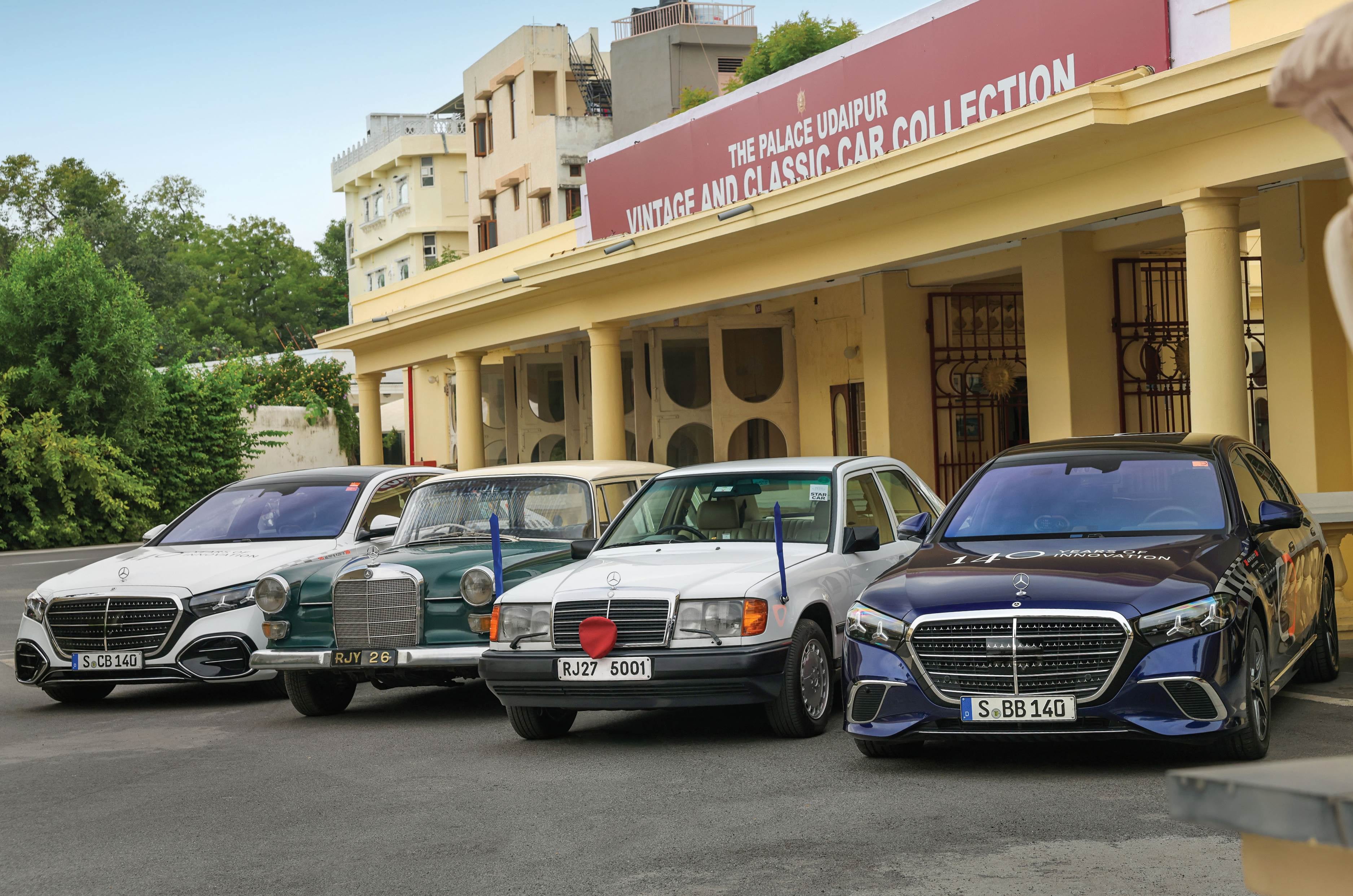
The S-Classes, along with the fin-tail and the 300D.
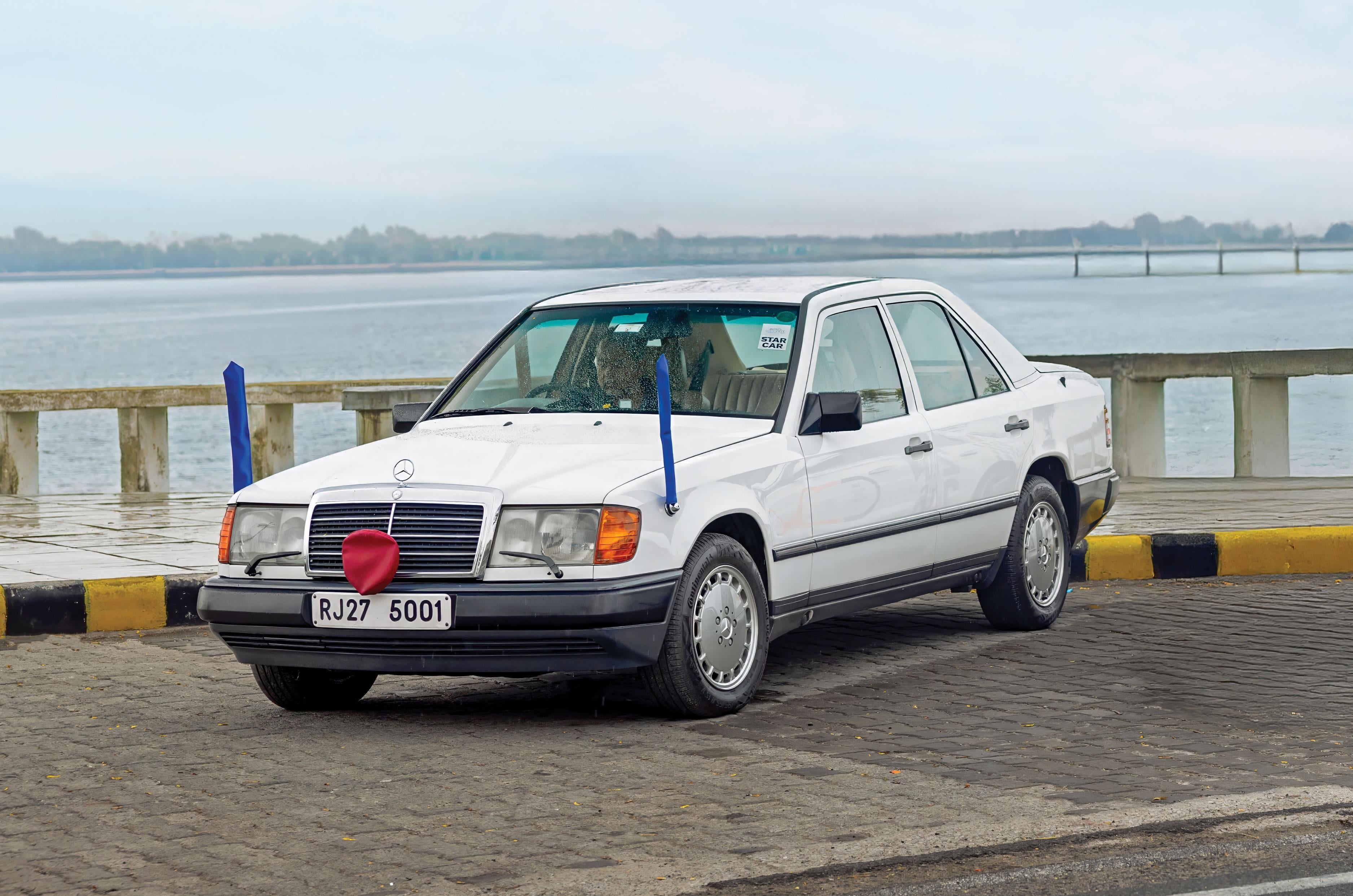
The next day, we set off to see the Udaipur Royal Garage, where we are met by other Mercedes cars. There’s a fin-tail that was used to pick up and drop off guests of the Royal family from neighbouring ‘states’ and a very special W124 300D. The latter, an import rather than a locally assembled W124, stands out from Indian-assembled cars with its black bumpers, headlamp wipers and amber indicators. This six-cylinder diesel with more than 2,00,000km on the clock was used by Shri Arvind Singh Mewar, the earlier Maharana, to cover long distances like Ahmedabad or Jodhpur. Recently restored, it was presented at the Mercedes-Benz Classic Car Rally in Mumbai. The 300D is in such fine nick, I can’t resist a quick spin around another of Udaipur’s stunning lakes, Fateh Sagar.
Why the 300D is such a legend
The W124 300D is an import.
On the outside, the 300D looks sort of underwhelming. Starting up the straight-six diesel is relatively straightforward, although I have to wait for the glow plug to heat up (remember those?). While the roughly 110hp engine doesn’t feel responsive, it feels smooth and refined for a diesel, especially after 2,500rpm. And though it is slow by today’s standards, it doesn’t feel like you’re dragging anchor either. The chunky 300D also feels as tough as a Godrej safe.
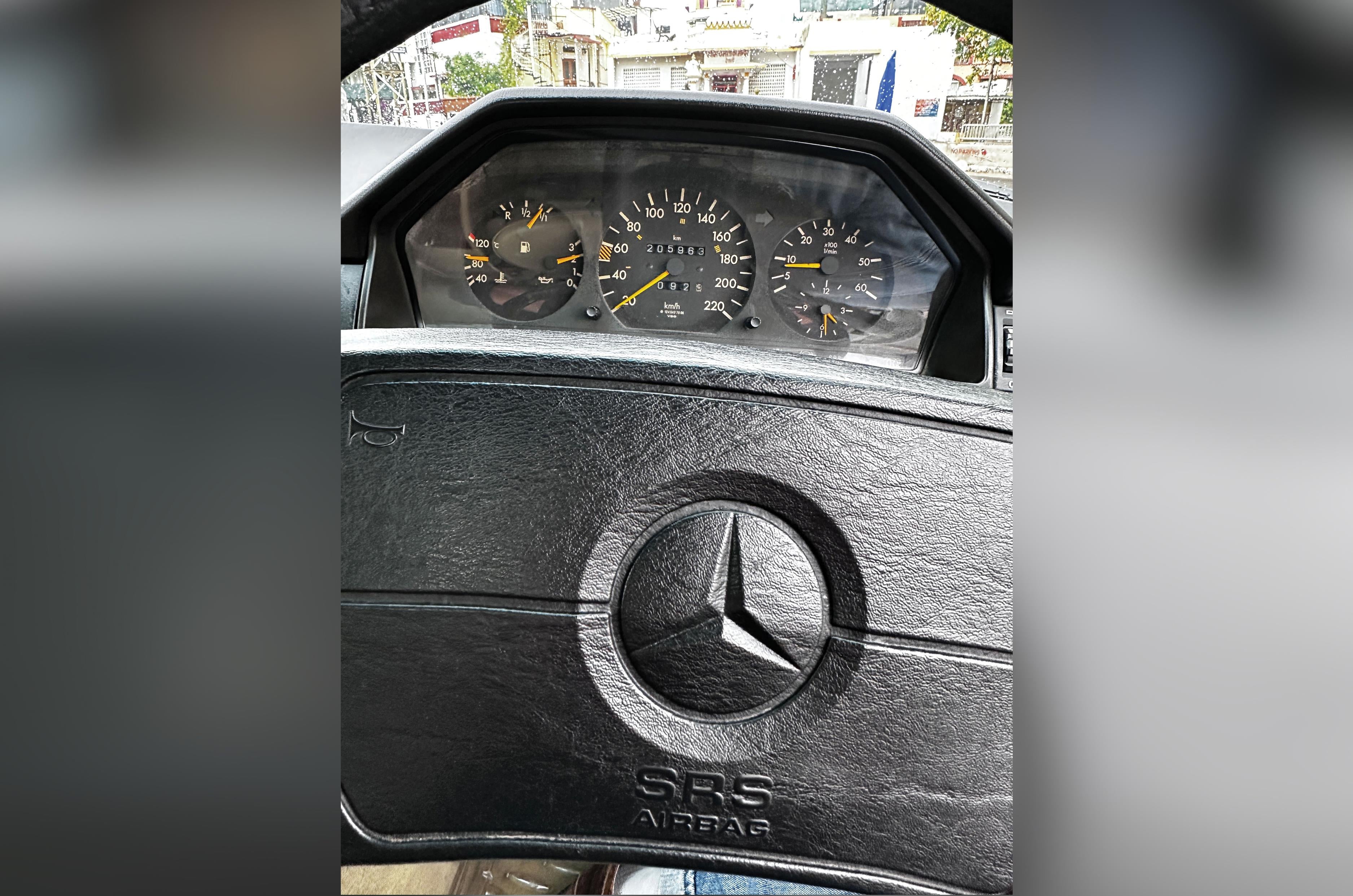
It has 2,00,000km on the odo, but hardly feels like it.
Then I catch a glimpse of the odometer; it reads in excess of 2,00,000 kilometres! Surely my eyes are playing tricks on me. Yes, this car has been recently refurbished, and the suspension has been tightened up, but this thing feels like it has just rolled out of the showroom only recently. It tracks straight, the steering is well weighted and, when I plonk my foot down, it even generates a reasonable amount of torque. This ‘OM603’ straight-six uses indirect injection and a pre-chamber, and has a simple two-valve-per-cylinder setup. Legend has it, it can do a million miles with only basic care. And what of turbo lag, you ask? It doesn’t have one.
Performance tech
The next morning, I get straight behind the wheel of CB or Carl Benz. I’m particularly excited because Carl has a V8 under the hood. What makes this V8 different is that it has some unique tech. This new S-Class is fitted with the ‘M177 Evo’ V8 engine that uses a flat-plane crankshaft! Made popular by Ferrari, a flat-plane crank is used on sportscars to help bunch up the firing order of the cylinders, so you get more of a kick from overlapping strokes. These engines, however, are not as smooth. So why has Mercedes used it in the S-Class, an out-and-out luxury car? Simple: it delivers better efficiency and lower emissions, as the crankshaft is lighter and there’s less reciprocating mass. And what of the vibrations? Mercedes says it has thrown tech at the problem.
V8-equipped S-Class feels effortlessly quick.
Initially, the going is slow as we exit the city. But once we get onto the wide highway, a small tap on the throttle releases a swell of torque just off 2,000rpm. And with 537hp propelling the limousine forward, it just shrinks the long straights on the highway. What’s cool is that the engine never feels brutish or AMG-like; the V8 soundtrack and rumble are superbly muted. The tech works. The new engine, in fact, is so well behaved that I have to check if it is indeed the one with the flat plane crank. At the next stop, I turn around and ask Mario Schneider, head of development for all Mercedes-Benz sedans, who just happens to be in the rear seat.
Also along for the drive is Perseus Bandrawalla, Autocar India’s curator of classic and modern classic events. Five minutes behind the wheel and he is waxing lyrical about the Mercedes V8 engines of days gone past – the M100, the M119 that powered the SL and others. It brings into perspective just how many great V8s Mercedes has had over the years, the 6.3 AMG V8, of course, included.
Cruise control
The three screens and updated cabin created a futuristic setup in a traditional environment.
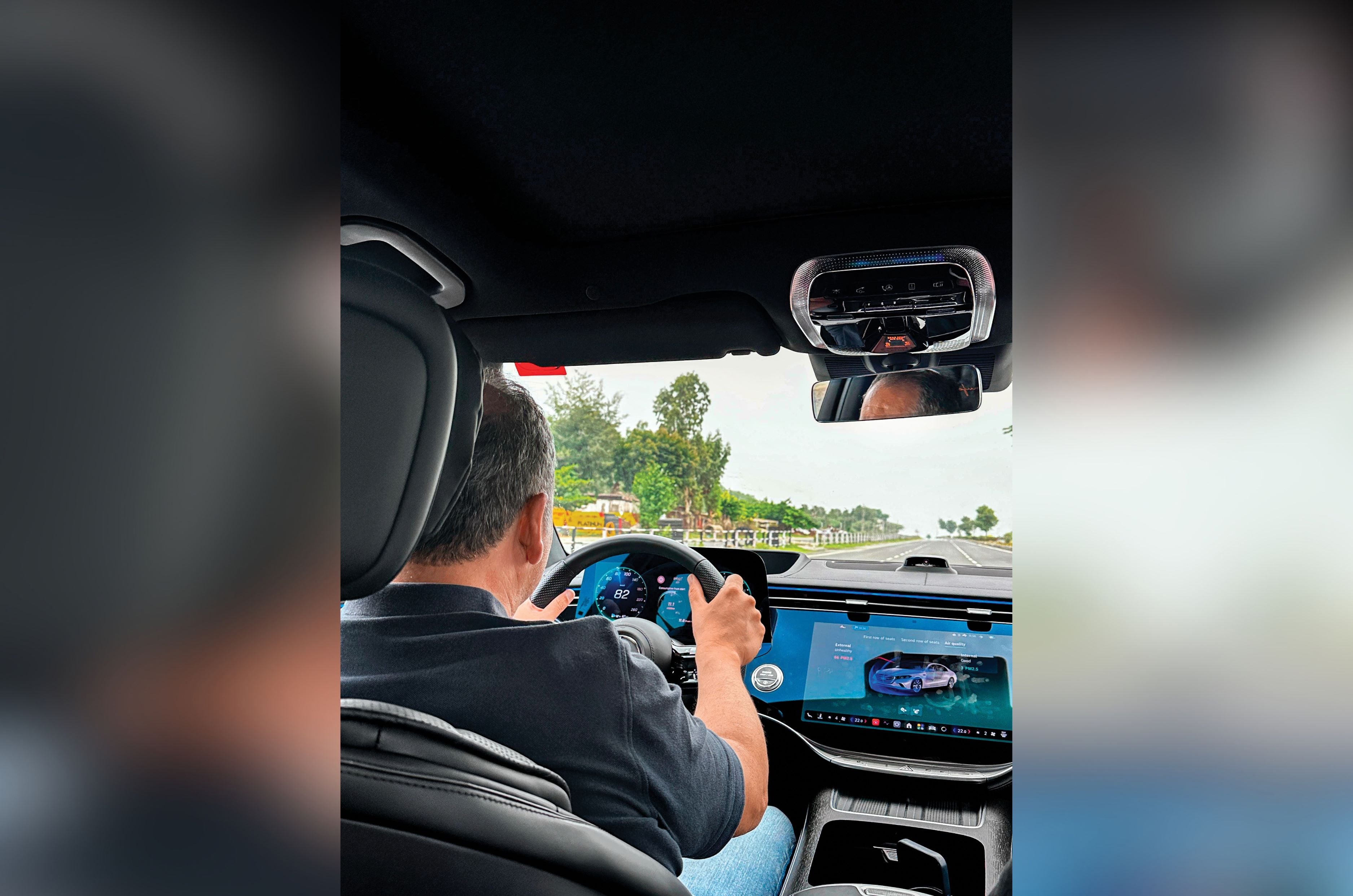
Further up, we get to a ghat section. Not only does the ride on this updated air suspension and adaptive dampers feel a bit more supple, it also feels at home on the winding road, the rear-wheel steering helps it into corners neatly. Even cooler, despite all the tech, it retains a natural fluidity and a sense of mechanical harmony, which make long drives feel just effortless. Are city-bound S-Class owners missing what’s best about this car? Absolutely! Talking about tech, this car also gets Level 3 autonomous driving (in places where it’s allowed), where the driver can be hands off, and even eyes off, with Mercedes Drive Pilot taking responsibility for safety. It is only one of two cars to get this globally.
As we get into traffic, what I notice is that the updated cabin, with its three screens and ambient lighting, creates an environment that is both futuristic and traditional. The seats, with massage and cooling functions, are thrones in their own right. And it’s not just the size, specifications and features it has; it’s how well everything is executed, from the solid build of the cabin to the new phone-like remote controls in the rear.
Collector’s edition
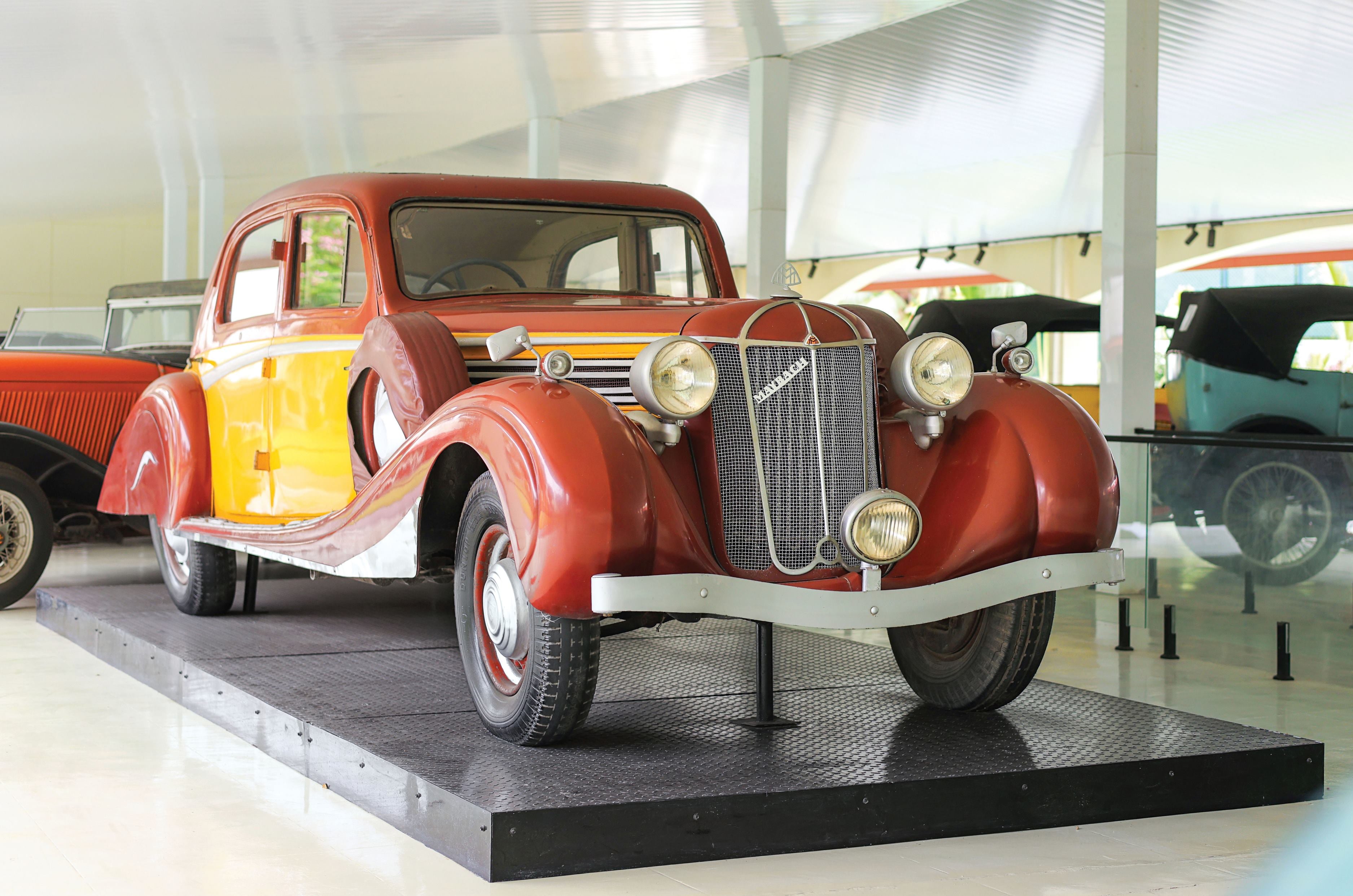
Streamlined Maybach SW38 four door could do 160kph
As we get to Ahmedabad, we turn into another historical location, Dastan Auto World – collector extraordinaire Pranlal Bhogilal’s collection, where the modern S-Classes met some more of their ancestors. A Maybach SW38, ordered by Maharaja Umaid Singh of Kota, draws admiring stares from the German members of the Mercedes crew, especially its aerodynamic profile. Capable of nearly 160kph, it was one of the fastest four-doors of its time. Equally captivating are Mercedes’ post-war comeback cars – the 300S ‘Adenauers’. Named after Germany’s first Chancellor, who famously rode in one with his hat on, this limousine is what eventually evolved into the S-Class.
Heritage and high tech
You can trace the journey via the stickers on the cars.
The 140 Years, 140 Places drive captured the duality of Mercedes perfectly; the brand embodies both heritage and innovation in equal measure, both streams converging seamlessly. As the convoy continues its odyssey, what’s clear is that this is a celebration not only of Mercedes’ past, but also the brand’s ability to connect eras, cultures and people through the universal language of the automobile.
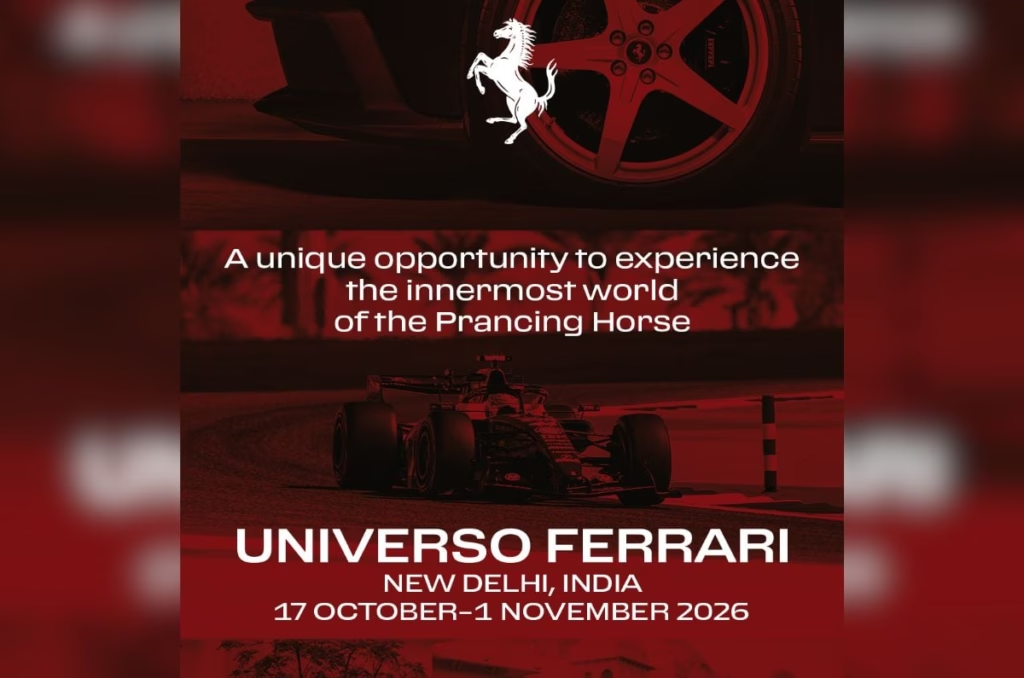
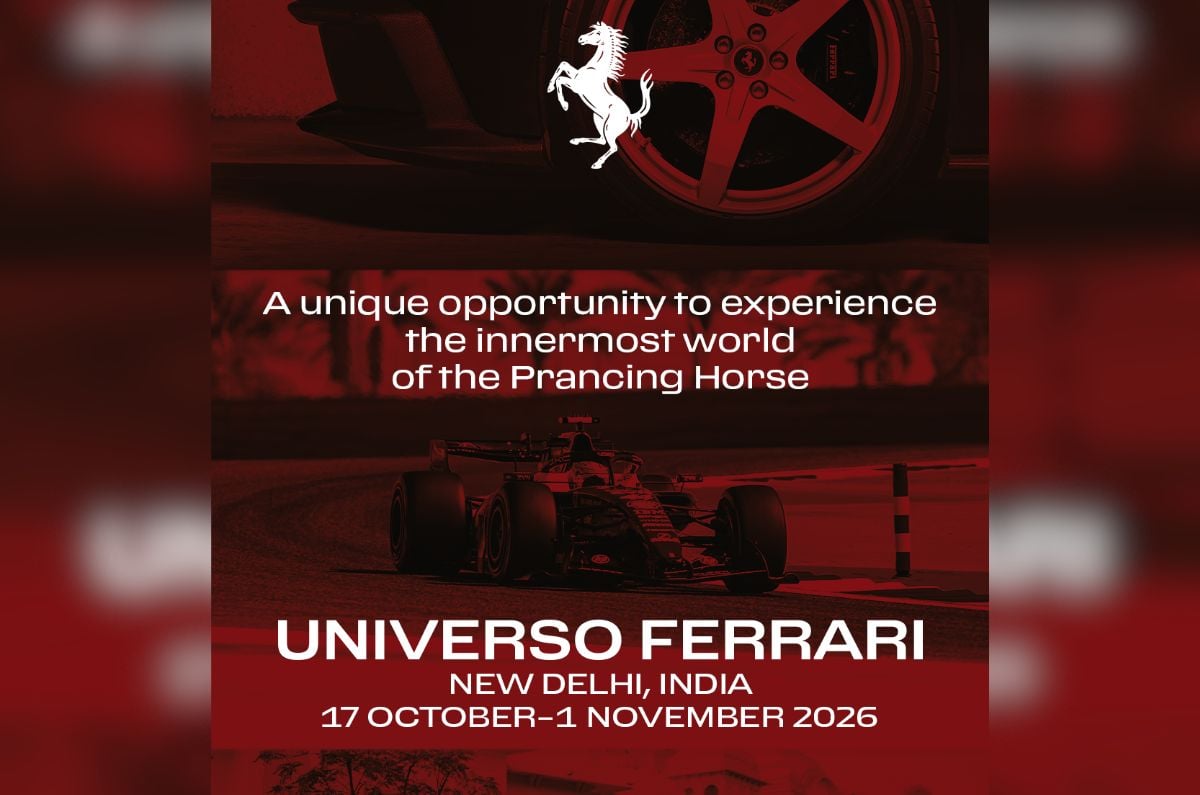
Ferrari is bringing its Universo Ferrari exhibition to India for the first time. The Italian carmaker describes it as the brand’s “immersive 360-degree exhibition experience that lets enthusiasts and the public alike discover the passion, innovation, and relentless pursuit of excellence that define the world of the Prancing Horse.” The experience has taken place previously in Italy, Australia, South Korea, and Thailand.
For its fifth edition, the Universo Ferrari experience will be held at Yashobhoomi India International Convention and Expo Centre in New Delhi from October 17 to November 1, 2026. Invite-only guests will be welcomed on October 17 and 18, while doors open to the public from October 19.
Italian automaker to showcase models from its past and current lineup.
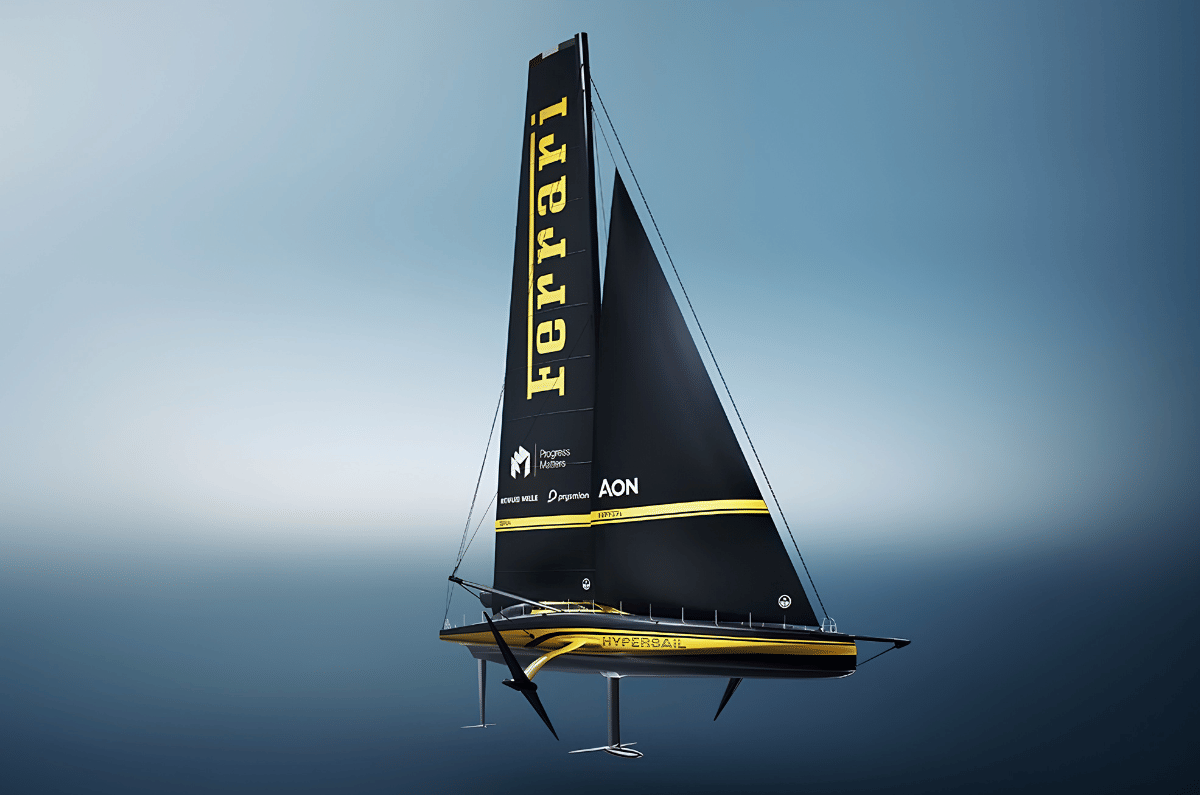
Ferrari Hypersail boat to be displayed for the first time in Asia
Universo Ferrari: What does the exhibition offer?
With Universo Ferrari, the automaker aims to offer visitors an opportunity to explore the Ferrari universe. This will be done through a display of models spanning the brand’s history, from iconic classics to its latest and upcoming cars.
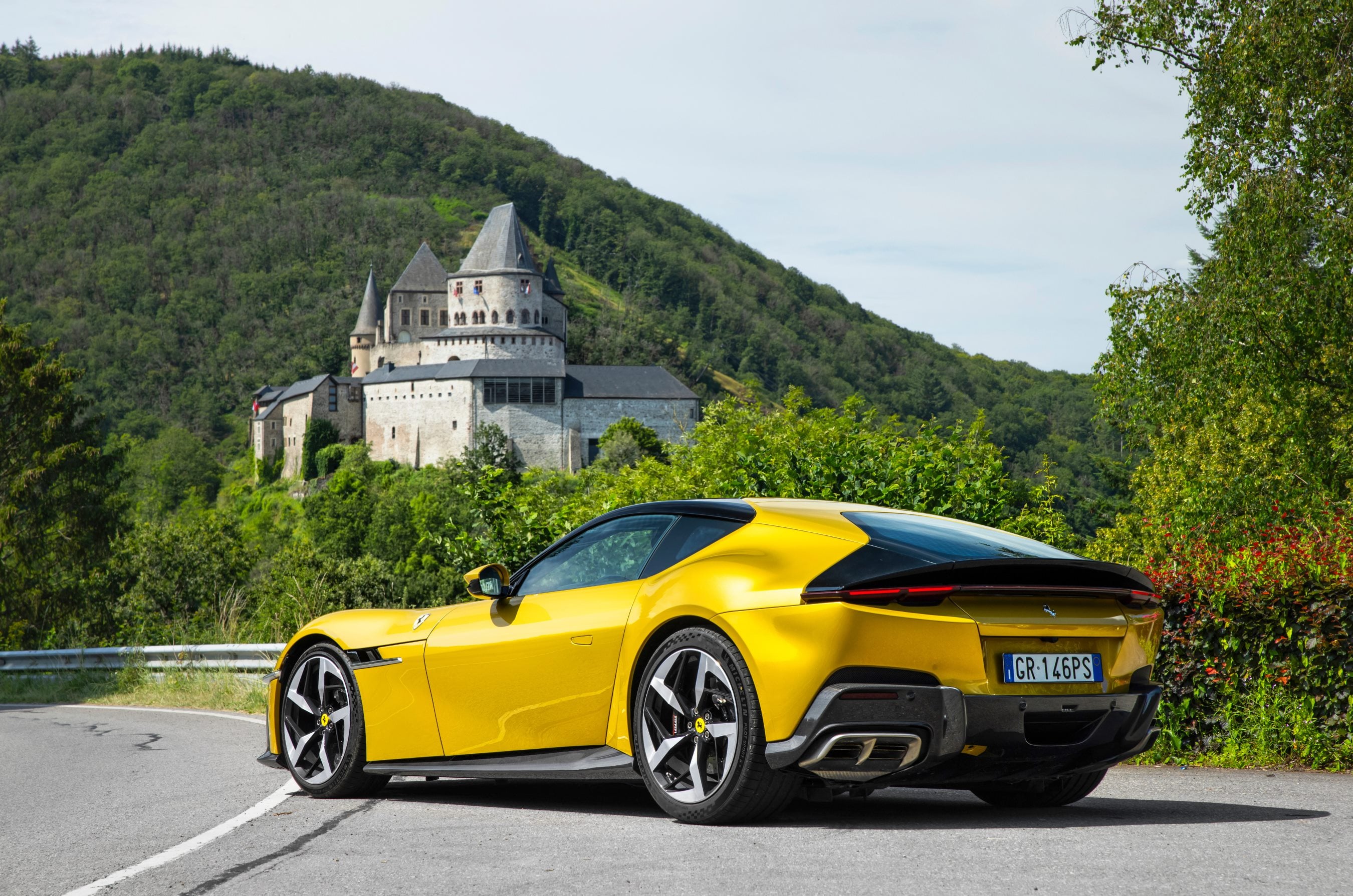
The ‘Classiche’ area, Ferrari says, is a tribute to its rich history, featuring a display of iconic models that helped shape its legacy. The brand will also showcase models from its current lineup, including the 849 Testarossa, 12Cilindri, Purosangue, Amalfi Spider, the latest F80 supercar, and its first-ever EV, the Luce.
The exhibition will also include a ‘Racing Area’ that will showcase the brand’s motorsport heritage, achievements, and race-spec cars over the years. Additionally, for the first time in Asia, Ferrari will display the Hypersail, its first attempt at a sailing project developed for an attempt at a non-stop, round-the-world sailing speed record.
McLaren has confirmed plans to build its first SUV in the UK as part of a GBP 500 million investment in its manufacturing and engineering operations. The unnamed performance SUV is in the early stages of development and is planned to launch before 2030.
The investment will also fund a second vehicle assembly facility in the UK, expand McLaren’s existing facilities and bring engine development and production in-house for the first time. The programme is expected to create at least 1,000 jobs within and around McLaren, with a further 3,000 jobs expected across its supply chain.
Speaking to Autocar UK, McLaren COO Michael Straughan said “there’s a roadmap for about the next 10 years that gives us real confidence. We’ve got a growth plan and a delivery perspective on how we can get to where we want to get to.”
McLaren SUV confirmed
McLaren had previously ruled out an SUV, with former CEO Mike Flewitt saying the company could not afford to develop one and that it “just doesn’t fit the brand”. The company is one the last supercar makers to add an SUV to its range, following rivals including Ferrari, Lamborghini and Aston Martin.
The SUV will use one of the company’s new hybrid powertrains. Straughan said the SUV remains in the early stages of development, although McLaren is targeting a launch before 2030. The company has not yet announced its name, technical details or exact launch date.
The SUV will be the first McLaren road car to move beyond the mid-engined supercar format that has defined the brand since its road-car business was established. “No longer will we be only rear-engined, rear-wheel-drive cars. There’s going to be front-engined, and either four-wheel drive or perhaps rear-wheel drive in the future. It’s very difficult off one assembly line, so we need another assembly line – wherever we decide to put that”, Straughan said.
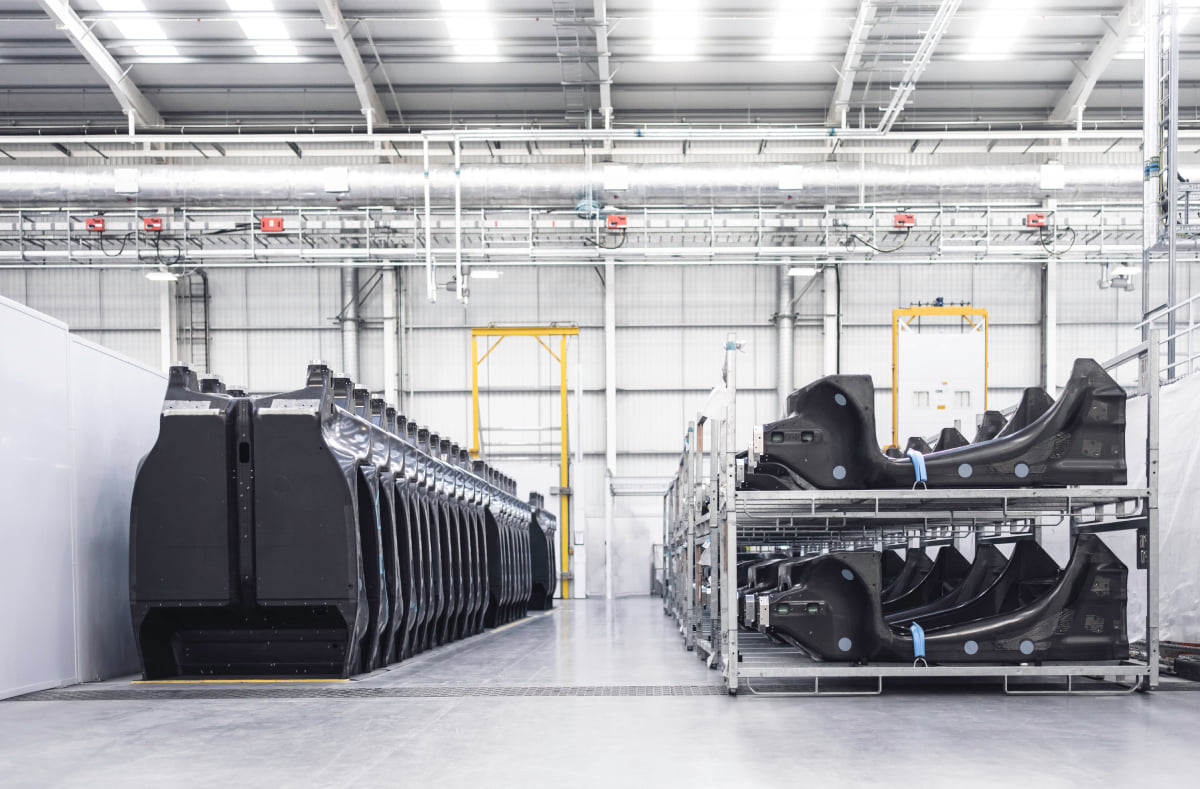
The SUV’s body structure is still being decided. McLaren is considering several options, including carbonfibre, drawing on its expertise in lightweight composite construction. “It’s one of the discussions we’re having at the moment, because nobody has ever done this before,” he said. “Every other SUV [of this type] has been aluminium, and we’ve got a number of options at the moment for what the body structure will be in the future. If we went that way, it would be the first. It would be incredibly special.” he added.
The SUV is the only new model McLaren has confirmed. However, the front-engined layout could support other models in future. Straughan said there are no firm plans for additional models, but that the layout “opens up other opportunities”. McLaren has not confirmed any further derivatives or changes to its existing supercar range.
New engines and gearboxes
McLaren will develop and manufacture future engines and gearboxes in-house for the first time. Its current V6 and V8 engines are supplied by Ricardo, which has powered all of McLaren’s core models since the company’s relaunch with the 12C in 2011. The engines are exclusive to McLaren.
McLaren hasn’t alluded to their technical specifications, but says they will support “the company’s hybrid engine strategy”. The company says they will be developed and tuned to maximise driver engagement. Asked about the technical make-up of these new engines, Straughan said: “Obviously it’s going to start with the current V8 products or the future generation of that, but once you start building engines there are lots of opportunities”.
Confirmation of plans for two distinct engine programmes suggests McLaren will offer different cylinder counts and capacities across its line-up going forward. McLaren’s partnership with Ricardo will continue for other engineering work, but future engines will be built by McLaren rather than shipped to Woking by Ricardo.
No immediate McLaren EV
McLaren has no immediate plans for a fully electric road car. COO Michael Straughan said the company will wait until customer demand is strong enough, although its integration with Forseven has provided experience in electric-vehicle development. Straughan said it was important that McLaren launched an EV “at the right time”.
“It’s inevitable – it will come, and we’ve got to be ready for when it does come. But the market reception to EVs in this space is not fantastic at the moment, so we can’t afford to make a mistake with the product, and therefore we will hold off until we’re certain that the customer demand is there”, he added.
Second UK factory planned
The new facility will supplement the McLaren Production Centre in Woking, although its location has not yet been confirmed. “We can’t build a front-engined car on the same line as a rear-engined car,” Straughan said. “We’re not going to use somebody else’s production line,” Straughan said. “We’ll build our own”, he added.
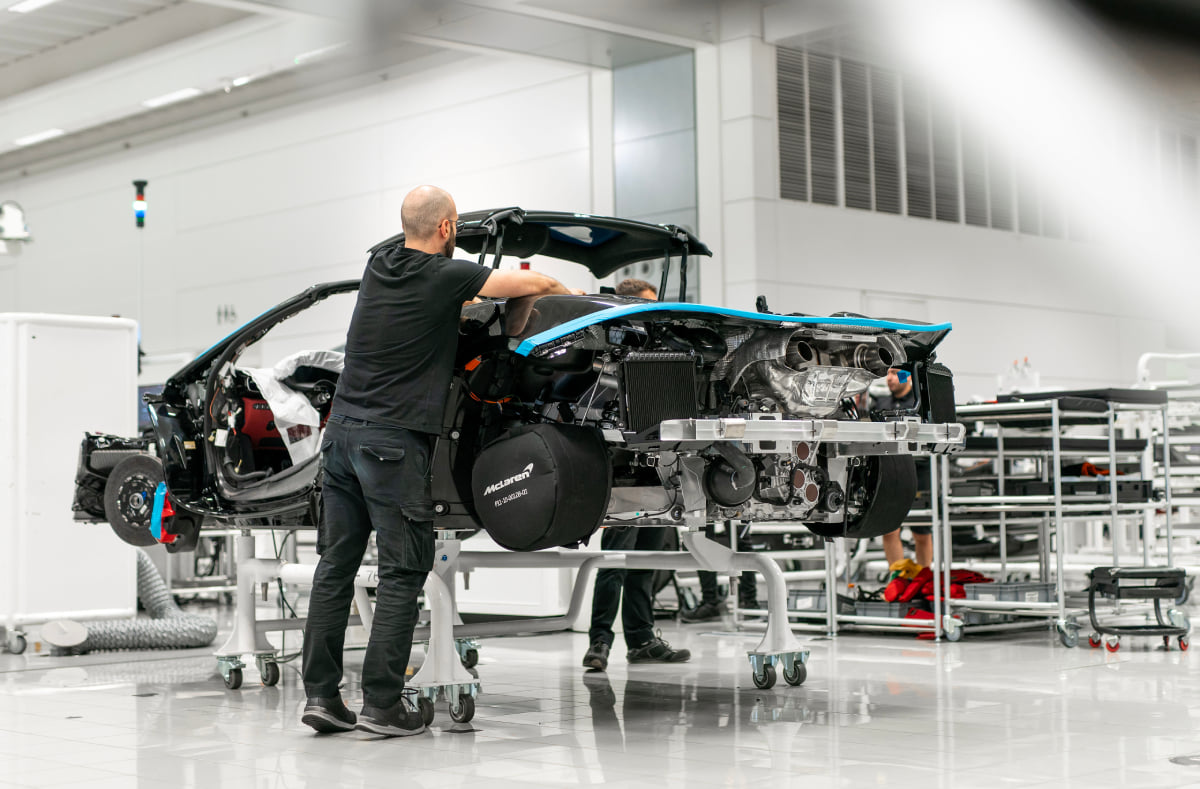
McLaren will also expand its existing production facility in Woking, which built around 2,000 cars in 2025, as well as its carbonfibre manufacturing and research centre in South Yorkshire. The company has recently opened a design and innovation centre in Bicester and a testing and vehicle development facility in the Midlands.
Together, these sites will support McLaren’s UK operations across design, engineering, vehicle development and manufacturing, increasing production capacity for its next generation of models. “We can’t stop making the cars we make today,” Straughan said. “We have to introduce the new products alongside them”, Straughan said.
BRICS Summit 2026: दिल्ली में आज से 18वें BRICS समिट की शुरुआत हो गई है। ऐसे में आज प्रधानमंत्री नरेंद्र मोदी ने ब्रिक्स (BRICS) बिजनेस फोरम के लीडर्स सेशन में विदेशों से आएं प्रतिनिधियों को संबोधित किया। पीएम मोदी ने कहा, “ब्रिक्स बिजनेस फोरम में आप सभी का बहुत-बहुत स्वागत है। इस साल हम ब्रिक्स के 20 साल मना रहे हैं। जब 2006 में यह ग्रुप शुरू हुआ था, तब इसमें सिर्फ चार देश थे। आज, ब्रिक्स के सदस्यों और पार्टनर देशों को मिलाकर हमारा परिवार 21 देशों का है।”
प्रधानमंत्री मोदी ने कहा, आज BRICS के देश दुनिया की 50 प्रतिशत जनसंख्या, 40 प्रतिशत GDP और 25 प्रतिशत से अधिक ट्रेड को प्रदर्शित करते हैं। इतना ही नहीं, इन वर्षों में जहां ग्लोबल GDP करीब ढाई गुना हुई है, वहीं BRICS देशों की कंबाइन GDP करीब साढ़े चार गुना हुई है।
Addressing the BRICS Business Forum. Strong business partnerships can open new avenues for growth, innovation and shared prosperity.@BricsIndia2026https://t.co/EUIH6agfI2
BRICS देश ग्लोबल इनोवेशन और सॉल्यूशन का अहम केंद्र बन रहे
उन्होंने कहा, BRICS देश ग्लोबल इनोवेशन और सॉल्यूशन के लिए अहम केंद्र के तौर पर भी बन रहे हैं। हमारे देशों में इनोवेशन के लिए नई संभावनाएं आकार ले रही हैं, जिनमें जमीनी स्तर की पहलों से लेकर अत्याधुनिक तकनीकें तक शामिल हैं। ब्रिक्स का बढ़ता दायरा, रफ्तार और उम्मीदें हम सबके बीच साफ तौर पर दिखाई देती हैं। पीएम मोदी ने कहा कि भारत में आयोजित यह फोरम अब तक का सबसे बड़ा ब्रिक्स बिजनेस फोरम है।
BRICS की थीम पर PM मोदी का जोर
अपने संबोधन में पीएम मोदी ने आगे कहा कि “भारत की ब्रिक्स अध्यक्षता का विषय ‘मजबूती, इनोवेशन, सहयोग और सस्टेनेबिलिटी के लिए निर्माण’ है। पिछले 12 वर्षों में, भारत ने इस मंत्र को अपनी आर्थिक और व्यापारिक नीतियों का आधार बनाया है। उन्होंने कहा, मजबूती (resilience) के मामले में, भारत ने ऊर्जा से लेकर टेक्नोलॉजी तक के क्षेत्रों में सप्लाई चेन को अधिक विविध और भरोसेमंद बनाया है। इसी मजबूती का नतीजा है कि आज वैश्विक अनिश्चितताओं के बीच भी भारत विकास और स्थिरता का भरोसा देता है।
इंफ्रास्ट्रक्चर और टेक्नोलॉजी पर जोर
प्रधानमंत्री ने ब्रिक्स (BRICS) बिजनेस फोरम में इंफ्रास्ट्रक्चर पर भी जोर दिया। उन्होंने कहा, हम तेजी से अपनी सड़कों, रेलवे, बंदरगाहों और हवाई अड्डों का विस्तार कर रहे हैं। साथ ही, हम जहाज निर्माण, सेमीकंडक्टर, क्वांटम टेक्नोलॉजी, महत्वपूर्ण खनिजों और बायोटेक्नोलॉजी जैसे रणनीतिक क्षेत्रों में नई क्षमताएं विकसित कर रहे हैं।”
BRICS updates: भारत की अध्यक्षता में आयोजित हो रहे 18वें ब्रिक्स (BRICS) शिखर सम्मेलन में हिस्सा लेने के लिए रूस के राष्ट्रपति व्लादिमीर पुतिन शुक्रवार तड़के दिल्ली पहुंच गए हैं। दिल्ली के भारत मंडपम में 12 और 13 सितंबर को होने वाले इस दो दिवसीय सम्मेलन के लिए ग्लोबल लीडर्स का आना शुरू हो चुका है। इस हाई प्रोफाइल आयोजन को देखते हुए दिल्ली पुलिस और ट्रैफिक पुलिस ने शहर भर में कड़े सुरक्षा इंतजाम और व्यापक ट्रैफिक डायवर्जन लागू किए हैं।
राष्ट्रपति पुतिन का तीन दिवसीय भारत दौरा और सम्मेलन का शेड्यूल
विदेश मंत्रालय के प्रवक्ता रणधीर जायसवाल ने सोशल मीडिया प्लेटफॉर्म X पर जानकारी दी कि विदेश राज्य मंत्री कीर्तिवर्धन सिंह ने हवाई अड्डे पर राष्ट्रपति पुतिन का गर्मजोशी से स्वागत किया। फरवरी 2022 में यूक्रेन युद्ध शुरू होने के बाद रूस से बाहर किसी ब्रिक्स सम्मेलन में पुतिन की यह पहली व्यक्तिगत उपस्थिति है।
आइए अब आपको ब्रिक्स सम्मेलन के तहत 11 से 13 सितंबर तक का पूरा शेड्यूल बताते हैं।
11 सितंबर (शुक्रवार): राष्ट्रपति पुतिन और प्रधानमंत्री नरेंद्र मोदी के बीच द्विपक्षीय वार्ता होगी। इसमें रक्षा, ऊर्जा, व्यापार, प्रौद्योगिकी और फार्मास्यूटिकल्स पर चर्चा होने की उम्मीद है। दोनों नेता ‘इनोप्रोम’ (INNOPROM) प्रदर्शनी में भाग लेंगे। इसके अलावा पुतिन ब्रिक्स बिजनेस फोरम के पूर्ण सत्र को संबोधित करेंगे।
12 सितंबर (शनिवार): दोपहर 2:35 बजे से ‘समावेशी वैश्विक शासन और मल्टीलैटरिज्म को मजबूत करने’ पर क्लोज डोर सेशन के साथ मुख्य सम्मेलन की शुरुआत होगी। इसके बाद भारत इनोवेट्स प्रदर्शनी, फैमिली फोटो, वृक्षारोपण और रात 7:30 बजे पीएम मोदी द्वारा आयोजित गाला डिनर होगा।
13 सितंबर (रविवार): सुबह 10:50 बजे से उद्घाटन सत्र शुरू होगा। इसका विषय Building for Resilience, Innovation, Cooperation and Sustainability रखा गया है। सम्मेलन का समापन ‘नई दिल्ली घोषणापत्र’ (New Delhi Declaration) के साथ होगा।
इस सम्मेलन में चीन के राष्ट्रपति शी जिनपिंग, ईरान के राष्ट्रपति मसूद पेजेशकियान, दक्षिण अफ्रीका के राष्ट्रपति सिरिल रामाफोसा, इंडोनेशिया के राष्ट्रपति प्रबोवो सुबियांतो, मिस्र के राष्ट्रपति अब्देल फत्ताह अल-सिसी, मलेशिया के प्रधानमंत्री अनवर इब्राहिम, यूएई (अबू धाबी) के क्राउन प्रिंस मोहम्मद बिन जायद अल नहयान, इथियोपिया के प्रधानमंत्री अबी अहमद और वियतनाम के प्रधानमंत्री ले मिन्ह हंग समेत कई देशों के राष्ट्रप्रमुख और संयुक्त राष्ट्र महासचिव एंटोनियो गुटेरस भाग ले रहे हैं।
ट्रैफिक एडवाइजरी: किन रास्तों पर रहेगा असर और कौन सी सड़कें रहेंगी बंद?
दिल्ली ट्रैफिक पुलिस ने स्पष्ट किया है कि सम्मेलन के दौरान पूरी दिल्ली बंद नहीं रहेगी, लेकिन वीवीआईपी काफिले की आवाजाही के समय अस्थायी रूप से यातायात रोका जा सकता है। शहर में 35 से अधिक प्रमुख सड़कों और 22 डायवर्जन पॉइंट्स पर पाबंदियां लागू की गई हैं। मथुरा रोड, सरदार पटेल मार्ग, शांति पथ, जनपथ, अशोका रोड, बाराखंबा रोड, टॉलस्टॉय मार्ग, अफ्रीका एवेन्यू रोड, नीति मार्ग, पंचशील मार्ग और एपीजे अब्दुल कलाम रोड पर ट्रैफिक रेगुलेशन की पाबंदियां देखने को मिलेंगी। नोएडा से मध्य दिल्ली, पूर्वी दिल्ली से मध्य दिल्ली, तथा द्वारका व पश्चिमी दिल्ली से धौला कुआं, हवाई अड्डे व दक्षिणी दिल्ली की ओर जाने वाले यात्रियों को अधिक समय लग सकता है।
दिल्ली में क्या खुला रहेगा और क्या रहेगा बंद?
न्यू दिल्ली ट्रेडर्स एसोसिएशन (NDTA) ने स्पष्ट किया है कि कनॉट प्लेस मार्केट 11 से 13 सितंबर के दौरान पूरी तरह खुला रहेगा। लोग नियमित समय पर खरीदारी और खान-पान के लिए जा सकते हैं, हालांकि उन्हें ट्रैफिक एडवाइजरी का पालन करना होगा। सुप्रीम कोर्ट मेट्रो स्टेशन पर स्थित दिल्ली मेट्रो म्यूजियम 11 से 13 सितंबर तक बंद रहेगा। 14 सितंबर को सोमवार की साप्ताहिक छुट्टी होने के कारण यह अब 15 सितंबर को खुलेगा। मेट्रो सेवाएं सामान्य रूप से चलती रहेंगी। हालांकि, सुरक्षा कारणों से कुछ स्टेशनों या प्रवेश-निकास द्वारों पर अस्थायी पाबंदियां लगाई जा सकती हैं।
डीटीसी और सिटी बसें चलती रहेंगी, लेकिन प्रभावित इलाकों से गुजरने वाले रूटों में बदलाव किया जा सकता है। ऑटो, टैक्सी और ऐप-आधारित कैब सेवाएं चालू रहेंगी, लेकिन प्रतिबंधित या नियंत्रित क्षेत्रों में पिक-अप और ड्रॉप-ऑफ पॉइंट बनाने की अनुमति नहीं होगी। दूध, दवाइयों और अन्य जरूरी वस्तुओं की आपूर्ति को छूट दी जाएगी। हालांकि, भारी वाहनों और ट्रकों के प्रवेश के समय और रास्तों पर विशेष प्रतिबंध लागू रहेंगे।
छात्रों, मरीजों और आम यात्रियों के लिए सलाह
ट्रैफिक पुलिस ने यूपीएससी (UPSC), एनडीए (NDA), सीडीएस (CDS) और अन्य परीक्षाओं में शामिल होने वाले अभ्यर्थियों को अपने परीक्षा केंद्रों के रास्ते पहले से जांचने, एडमिट कार्ड और पहचान पत्र साथ रखने तथा पर्याप्त समय पहले घर से निकलने की सलाह दी है। अस्पताल जाने वाले मरीजों को भी अतिरिक्त समय लेकर चलने की सलाह दी गई है। किसी भी गंभीर मेडिकल इमरजेंसी की स्थिति में तुरंत नजदीकी ट्रैफिक पुलिसकर्मी से संपर्क करने को कहा गया है। पुलिस ने सोशल मीडिया पर ‘दिल्ली बंद’ से जुड़ी फर्जी अफवाहों पर ध्यान न देने और केवल आधिकारिक अपडेट पर भरोसा करने की अपील की है।
Electric vehicles have skyrocketed in significance over the past decade, particularly in light of global issues like climate change and pollution. EVs require no fossil fuels to run, and therefore emit zero harmful pollutants into the atmosphere. To promote the adoption of EVs, September 9 was designated ‘World EV Day’ six years ago by sustainability-focused companies Green.TV and ABB Group, and is recognised worldwide.
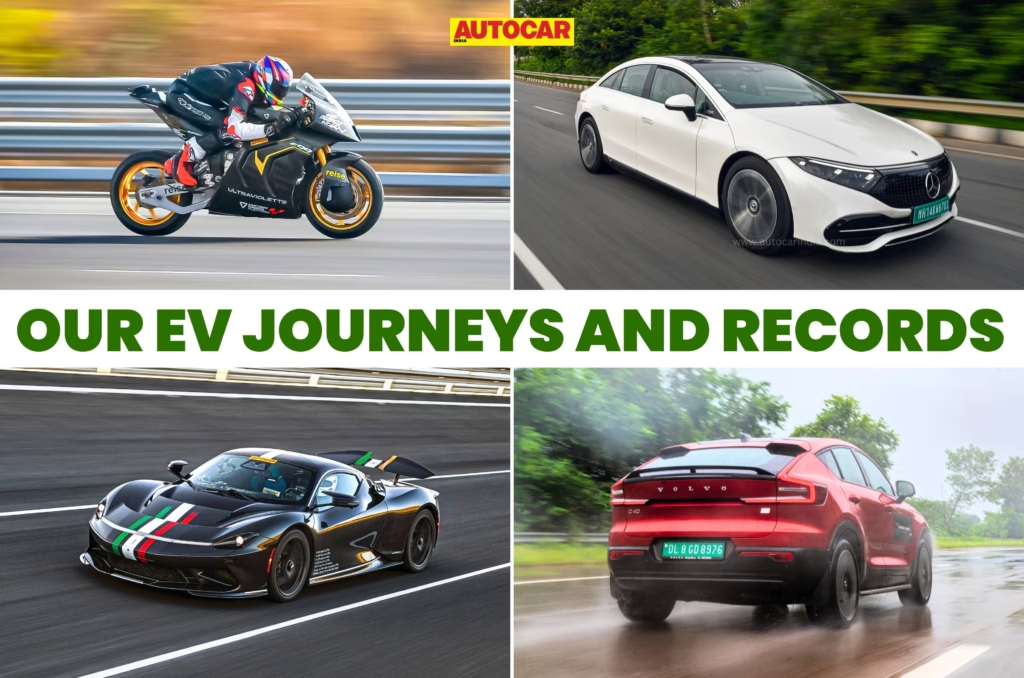
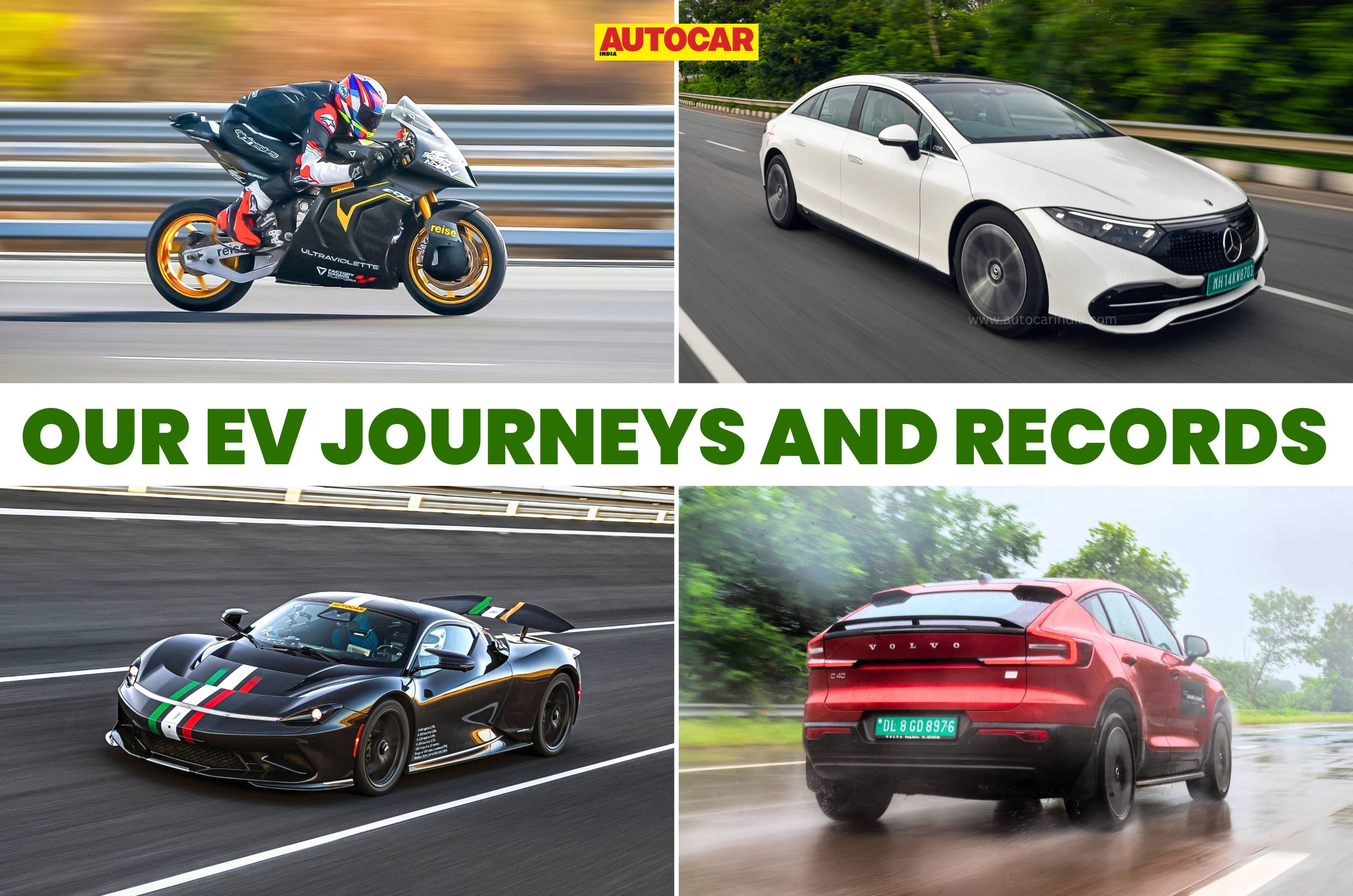
On the sixth iteration of World EV Day, let’s take a look at some of Autocar India’s most notable achievements in the all-electric mobility space.
1. Mercedes Benz EQC clean energy charging
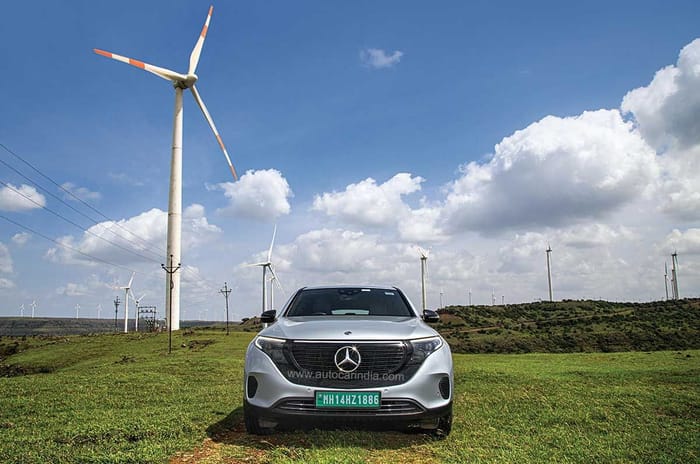
Hydro, wind and solar energy were the only means of charging we used
In 2021, we set out on a journey in the Mercedes-Benz EQC to explore how truly “green” EVs can be when powered by renewable energy only; at present, coal is the primary source of energy production. We departed from the Mercedes-Benz facility in Chakan with a full charge, heading to Tata Power’s Khopoli hydroelectric plant, Agaswadi wind farm and Mulshi solar farm.
Along the way, we investigated clean power sources – hydro, wind and solar – that could sustainably fuel EVs in India. While the EQC couldn’t be charged directly from the hydro grid since it mixes with the main grid, we were able to charge the SUV via a 15A plug at Tata Power. However, we did tap charging power directly from wind turbines and solar panels for the EQC. Ultimately, this trip showed us that our EVs could soon be truly emissions-free – not just at the tailpipe, but across the entire power chain.
2. Green Mumbai Drive 2021
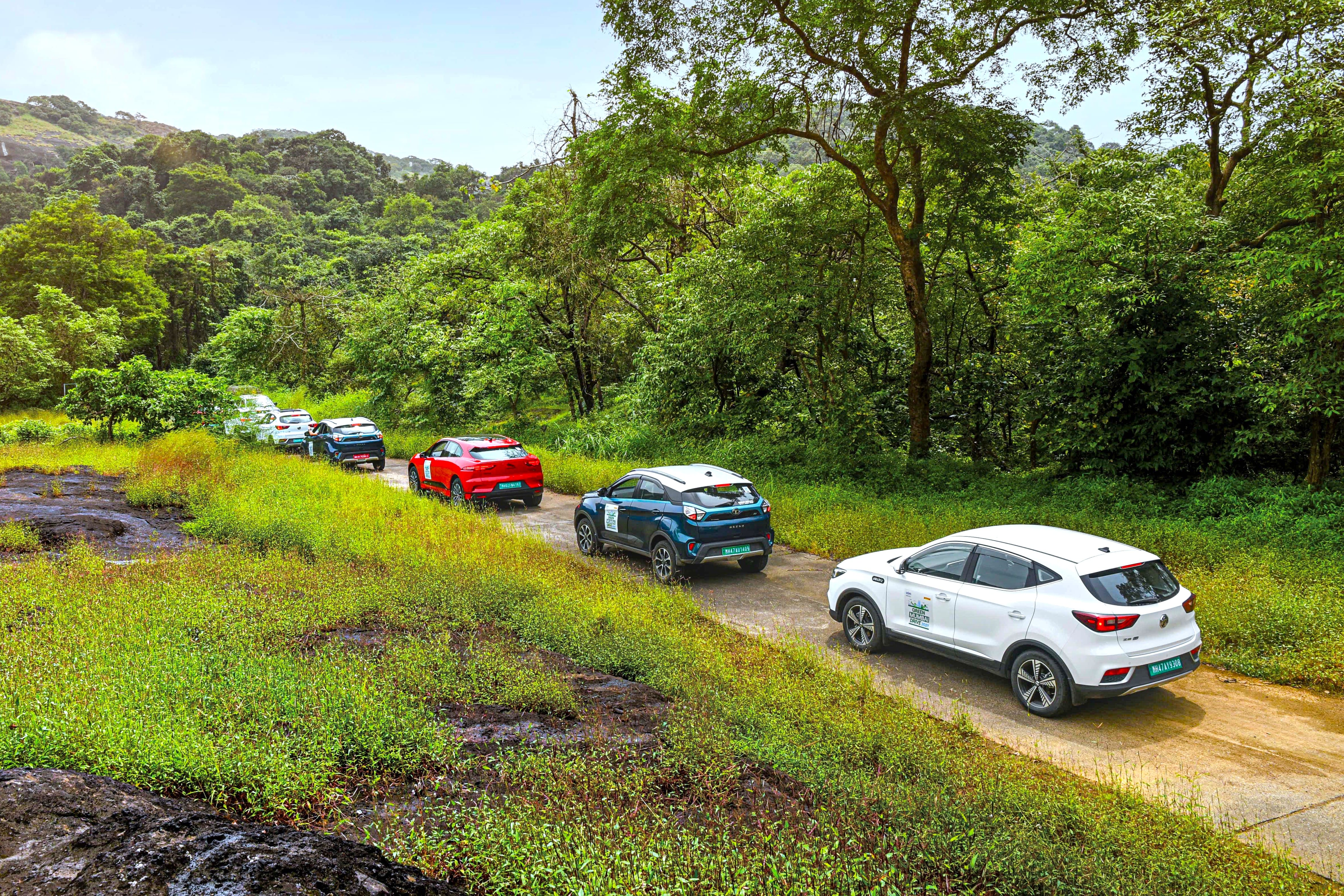
30 EVs quietly trundling through the Sanjay Gandhi National Park
We achieved a rare feat by bringing together every EV that was on sale in India at the time and driving them across Mumbai and through the protected Sanjay Gandhi National Park in Borivali. 30 EVs were part of the drive, including the Hyundai Kona, Tata Nexon EV, MG ZS EV, Mercedes-Benz EQC, Jaguar i-Pace, Audi e-tron GT, and even a Tesla Model X.
The Green Mumbai Drive was flagged off from the Mahalakshmi Racecourse by Aditya Thackeray, MoS for Tourism, Environment and Protocol, and Jeet Adani, director of Adani Electricity. Notable auto industry executives like Santosh Iyer (Mercedes-Benz India), Balbir Singh Dhillon (Audi India), Rohit Suri (JLR India), and Amit Suri (Volvo India) were also part of the event.
3. Debuting EVs in two different national parks
Tata Nexon EV in Satpura Tiger Reserve, Audi e-tron in Gir National Park
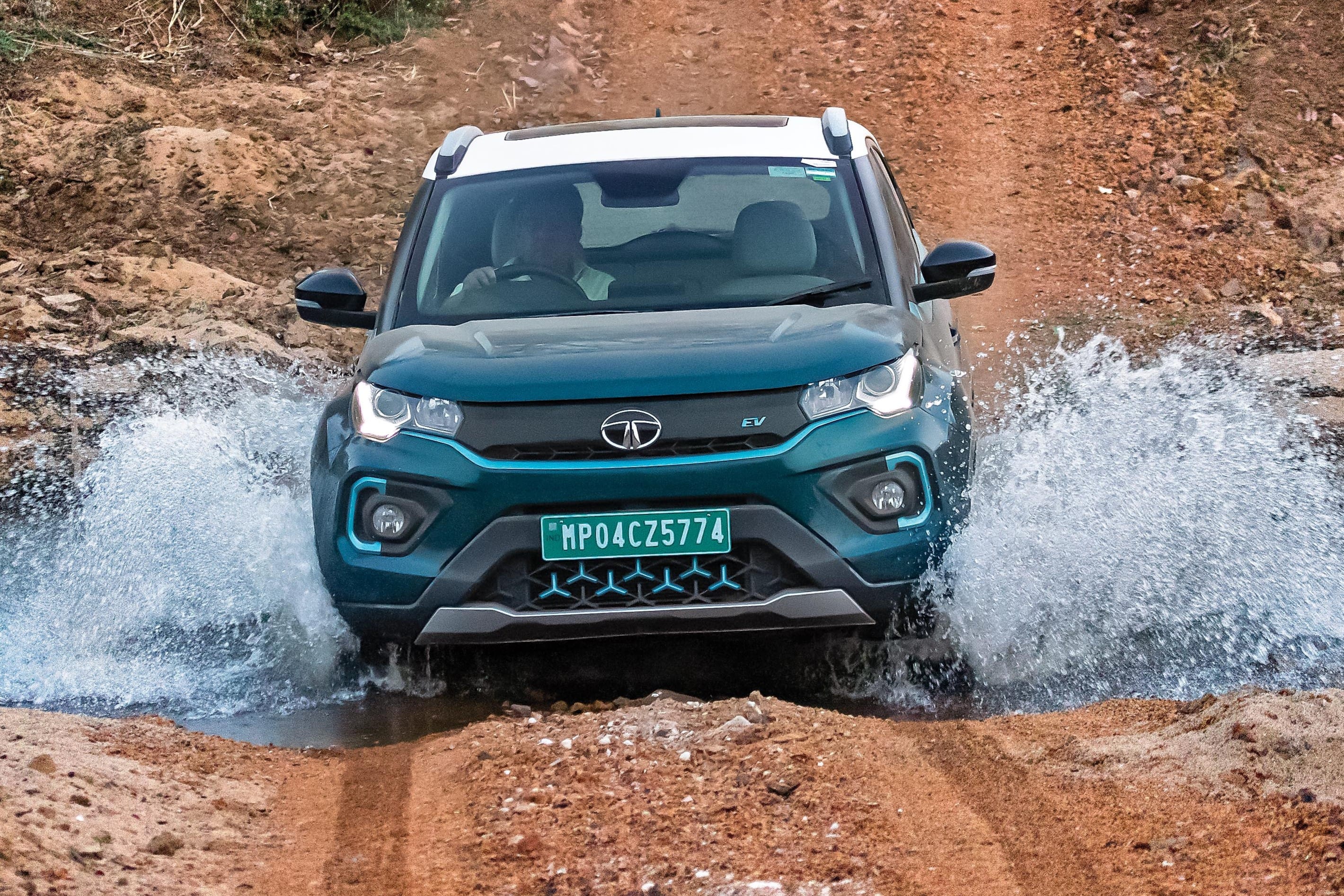
In 2021, we were the first to drive an electric car (specifically, the Tata Nexon EV) into Madhya Pradesh’s Satpura Tiger Reserve. The roughly 140km drive from Bhopal to Forsyth Lodge was completed with around 30km of range remaining, despite starting with the battery at 92 percent. With no fast-charging infrastructure nearby, the Nexon EV had to be charged overnight using a 15A socket. During the safari, the torquey and compact EV performed well on steep inclines and narrow forest trails, and its silent operation allowed it to approach wildlife like sambars, gaurs, wild pigs, and even a leopard without the noise of an idling engine – no tiger, though.
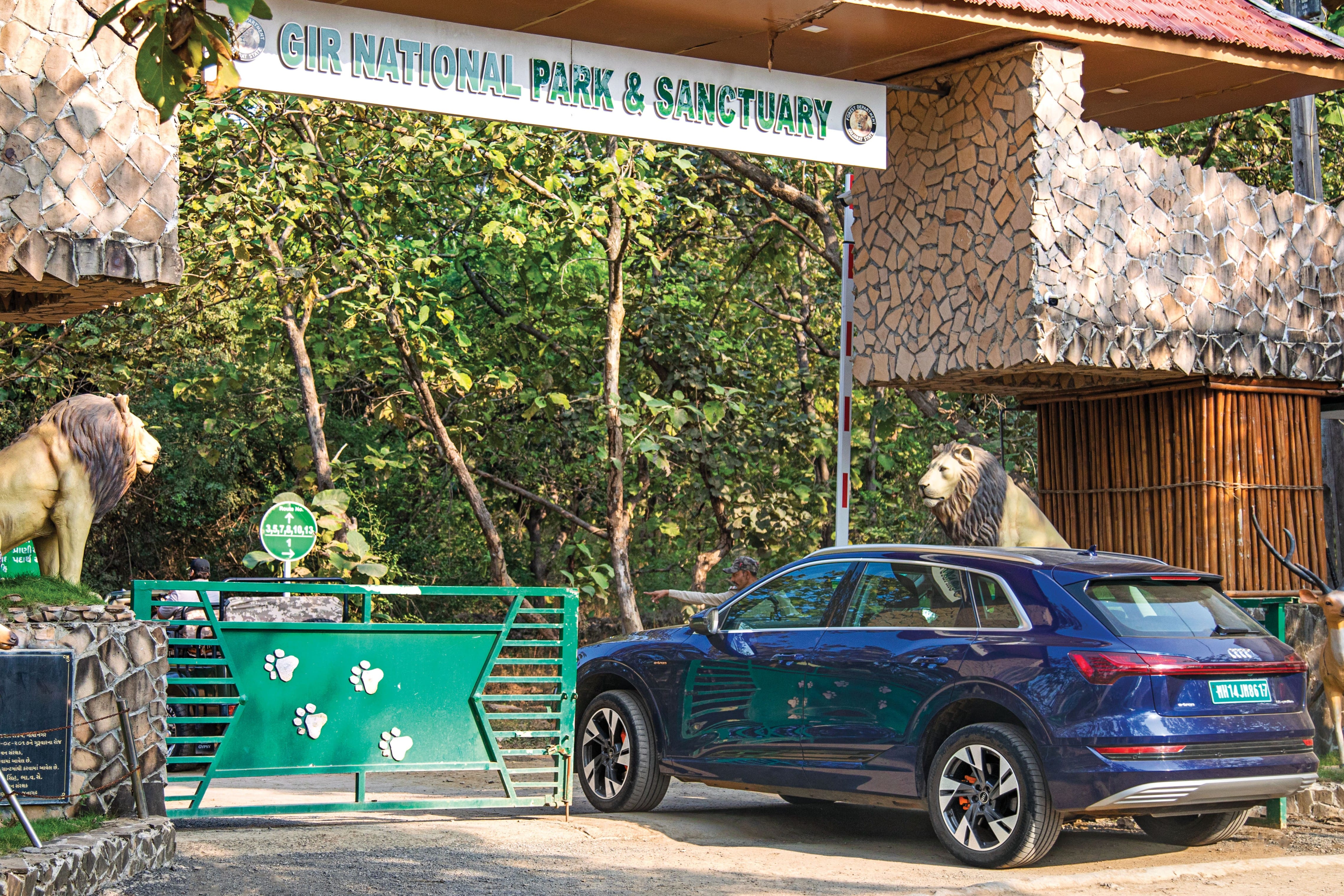
Then, in 2022, we were yet again the first to drive an EV into Gujarat’s Gir National Park, this time in an Audi e-tron. Reaching our accommodation induced a great deal of range anxiety due to faulty chargers along the way, but we managed to get there with around 20 percent of charge remaining. Once we reached, the e-tron was an excellent companion to tour the park with, helping us spot wildlife like chital, crocodiles, lions, and more.
4. Porsche Taycan Kashmir to Kanyakumari road trip
Nearly 4,500km in a performance EV
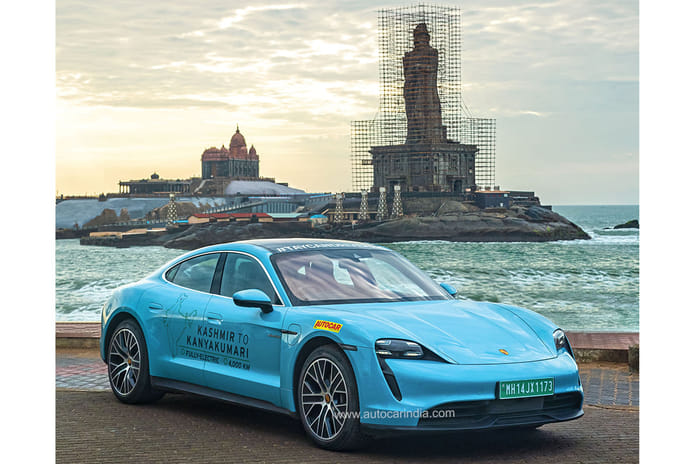
2022 saw us take one of our most ambitious roadtrips to date: 4,467km from Kashmir to Kanyakumari in a Porsche Taycan. Despite challenges like landslides in Jammu, flooded roads in Punjab, and power outages at certain charging spots, the Taycan handled the journey with ease. On one of the most efficient legs, the Porsche EV delivered 7.1km/kWh, working out to an indicated range of 475km.
Comfort mode was the default setting, but we did have lots of fun in some stretches courtesy of the Taycan’s Sport Plus drive mode. Up to 225kW of fast charging bolstered convenience, and total charging expenses tallied up to just Rs 15,422 – cheaper than fuel for an equivalent petrol car. More than just distance, the trip proved that combining sports car-like performance with electric efficiency works perfectly in real-world conditions, and that the Taycan is more durable than you may think.
5. Pininfarina Battista India top speed record
1900hp, quad-motor hypercar achieved a 358.03kph top speed
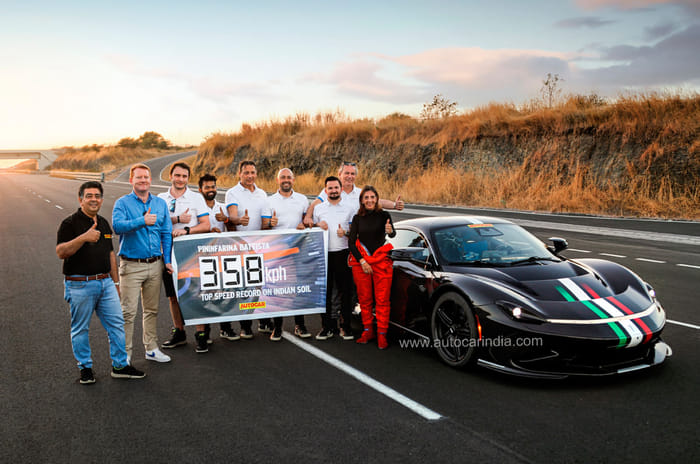
Back in early 2023, we set a new Indian top-speed record with the 1,900hp Pininfarina Battista electric hypercar at the NATRAX high-speed oval near Indore. Achieving an impressive v-max of 358.03kph, the Battista blitzed past the previous record of 332.20kph, which was also set by us in 2016 in an Audi R8 V10 Plus.
The Battista top-speed run also ended up establishing new world records for a production car: 0-300kph in 10.49 seconds and a quarter-mile time of 8.55 seconds, all verified by the Federation of Motor Sports Clubs of India (FMSCI).
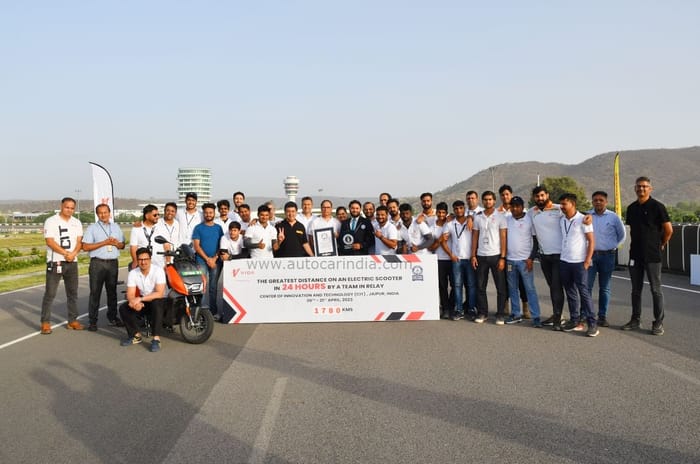
6. Hero Vida V1 Pro longest distance in 24 hours record
The e-scooter travelled just shy of a whopping 1,800km
The endurance challenge relied on swift battery swaps and flawless coordination, with the pit crew achieving 38 battery changes in under 20 seconds – quite impressive considering the extreme heat, rider fatigue, and complexity involved. Moreover, the Vida V1 Pro ran flawlessly throughout, handling the gruelling conditions with ease and maintaining performance consistently.
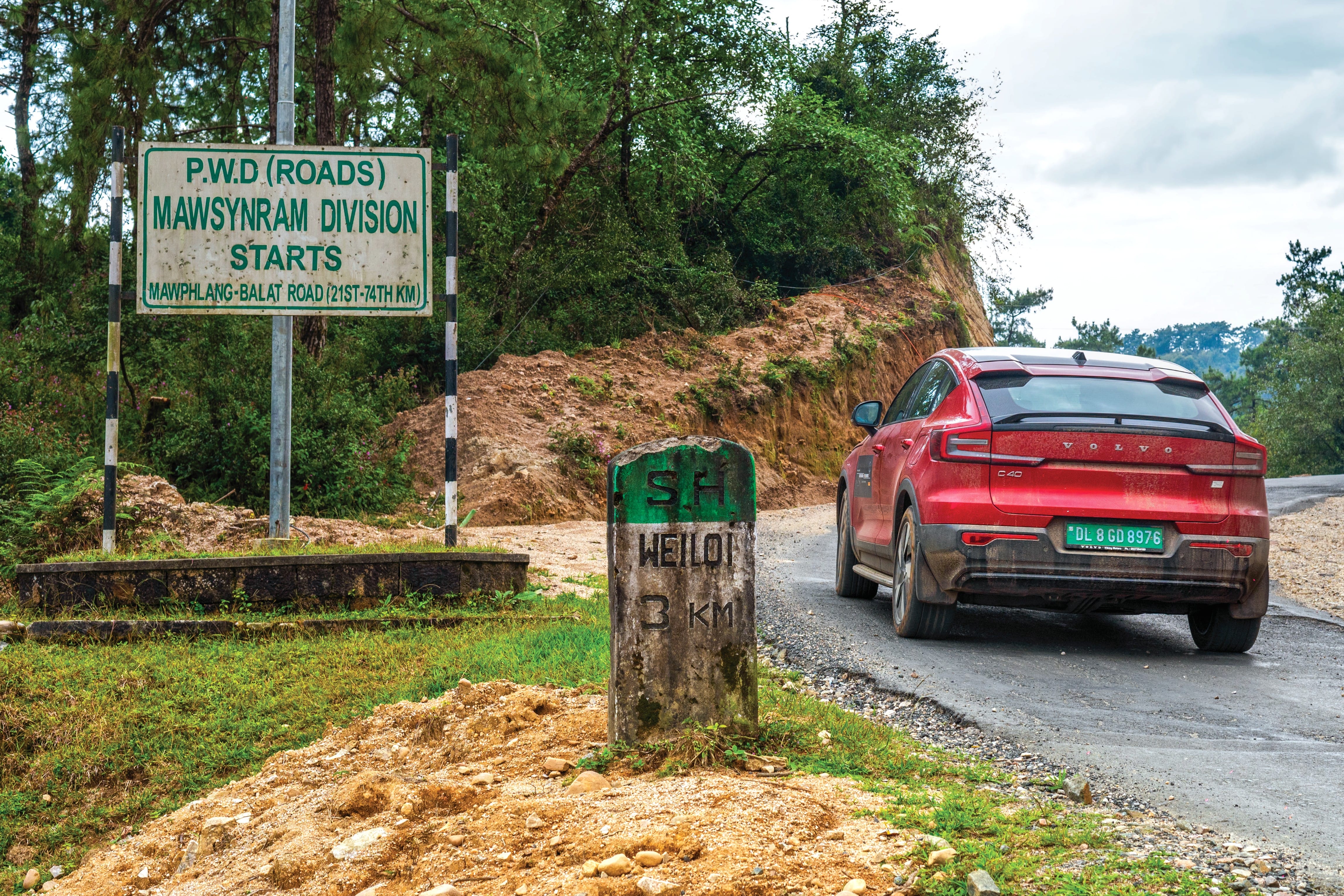
7. Volvo EC40 Jaisalmer to Mawsynram road trip
From India’s driest region to its wettest
In 2024, we took the Volvo EC40 (formerly known as the C40 Recharge) on a roughly 3,000km road trip from Jaisalmer in Rajasthan – one of India’s driest locations – to Mawsynram in Meghalaya, widely recognised as the country’s wettest. The route included a detour to Ghaziabad’s Volvo Reverse Project, a former dumping ground where around 10,000 trees had been planted as part of the company’s reforestation initiative.
Charging was carried out mainly overnight with DC fast chargers also used along the route, and the EC40 posed no issues during the journey. Ironically, we encountered heavy rain and waterlogging in Jaisalmer but surprisingly little rainfall in Mawsynram.
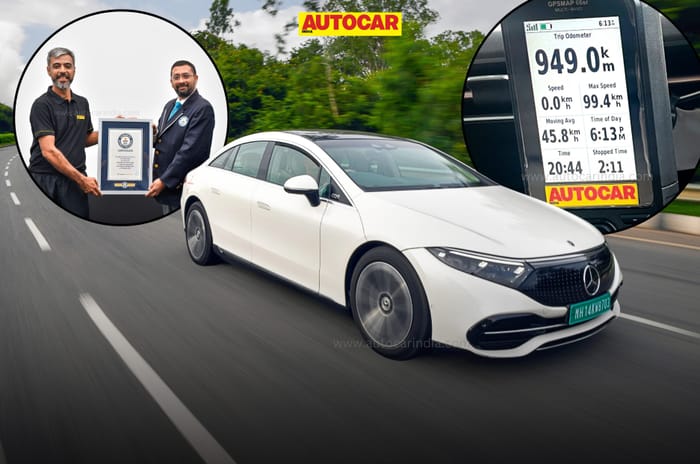
8. Mercedes Benz EQS sedan longest distance world record
Setting off from Bangalore on a full charge, the EQS 580 covered a distance of 949km when it reached its destination in Navi Mumbai, beating the previous Guinness World Record for the same by 32.26km. Impressively, the 949km real-world range exceeds EQS 580’s claimed range of 817km by just over 16 percent. It’s also worth mentioning that the two-day journey was completed under arduous conditions like heavy rainfall, lots of traffic, broken roads, and even a flat tyre.
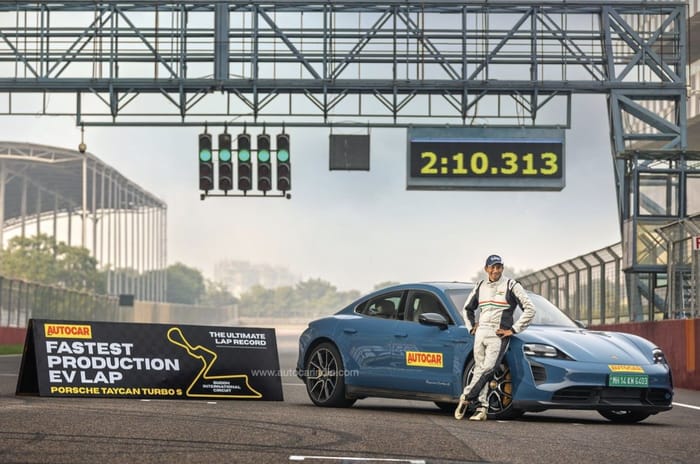
9. Porsche Taycan BIC EV lap record
2:10.313 lap time makes the Taycan the fastest EV around BIC so far
At the Buddh International Circuit in Greater Noida, we lapped a Porsche Taycan Turbo S and clocked a time of 2:10.313 minutes – the first-ever EV lap record around the 5.125km track. Despite its rather portly kerb weight of 2,370kg, the Taycan delivered unexpectedly sharp performance at BIC thanks to 761hp and 1,050Nm, a low centre of gravity (aided by the heavy 93.4 kWh battery), precise steering, and superb balance.
Upon hitting the apex and pinning the throttle, the Taycan belied physics the way it propelled out of corners with explosive speed, and despite weighing 845kg more, the EV achieved nearly the same top speed as the 911 GT3 RS at the end of BIC’s main straight.
10. Ultraviolette F99 India top speed record
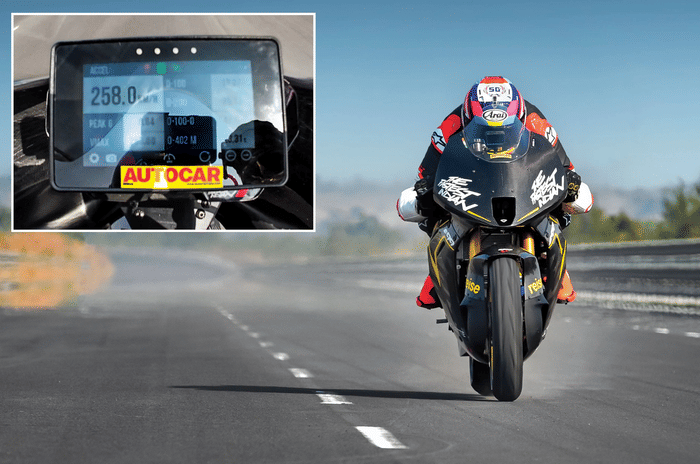
258kph around NATRAX and a 100-200kph run of 6.2 seconds
One of our more recent records entailed setting a new benchmark for made-in-India two-wheelers by hitting a top speed of 258kph on the Ultraviolette F99 at the NATRAX oval. Designed around a 400V architecture with a liquid-cooled powertrain, the purpose-built F99 packs 120hp and an astounding 972Nm (measured at the rear wheel).
The F99’s custom trellis frame, forged carbon-fibre bodywork, Brembo brakes, and Ohlins suspension helped the bike remain stable at high speeds, culminating in a clean record run captured via precision V-Box data. It also achieved a blistering 0-200kph run in under 10 seconds and 100-200kph in just 6.2 seconds, smashing previous Indian motorcycle speed records.
11. Mercedes Benz EQS SUV temperature change record
From the sweltering heat of Rajasthan to the sub-zero chill of Ladakh
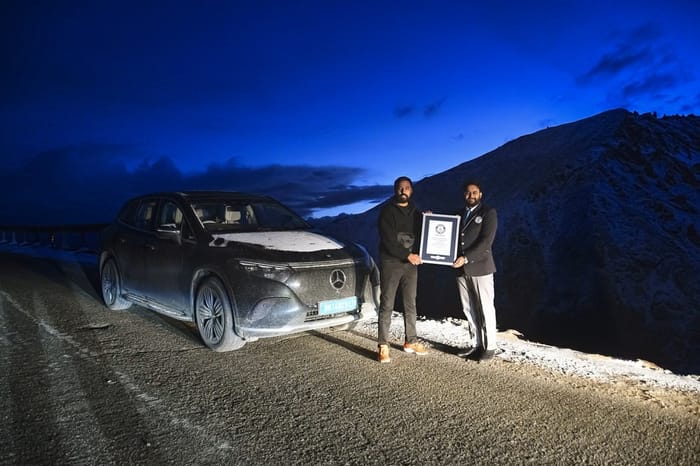
Our 2025 Guinness World Record saw us achieving the greatest temperature change endured by a production EV. We accomplished this using the Mercedes-Benz EQS 450 SUV, driving from the scorching heat of 47.5 deg-C in Rajasthan to the below-freezing chill of -3.7 deg-C in Ladakh, for an impressive overall temperature swing of 51.2 deg-C.
The journey tested the limits of the EQS 450 SUV, especially its 122kWh battery’s thermal management system. Despite extreme variations in temperature, the climate control and battery systems kept the EQS 450 SUV performing smoothly and safely.
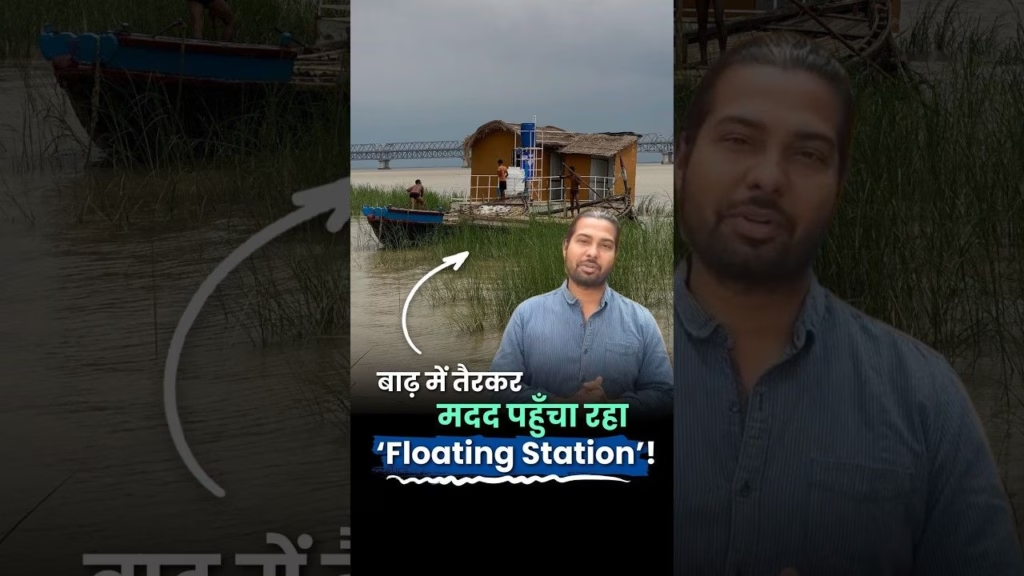
बिहार की बाढ़ में जब रास्ते डूब गए, तब प्रशांत कुमार ने मदद का रास्ता तैरता बना दिया।
उनका Floating Water Station बाढ़ प्रभावित इलाकों में सैकड़ों लोगों तक पानी, दवाइयाँ और ज़रूरी सामान पहुँचा रहा है, इसमें लगा Water Purification System हर दिन 4,000 लीटर साफ़ और सुरक्षित पानी उपलब्ध करा सकता है।
एक Engineer की सोच, जो बाढ़ के बीच सैकड़ों लोगों के लिए उम्मीद बन गई।
आइए, प्रशांत की इस सोच का साथ दें, ताकि ऐसे innovative solutions और ज्यादा लोगों तक मदद पहुँचा सकें और बाढ़ के बीच किसी जरूरतमंद तक ज़रूरी सुविधाएँ पहुँचने से न रुकें।
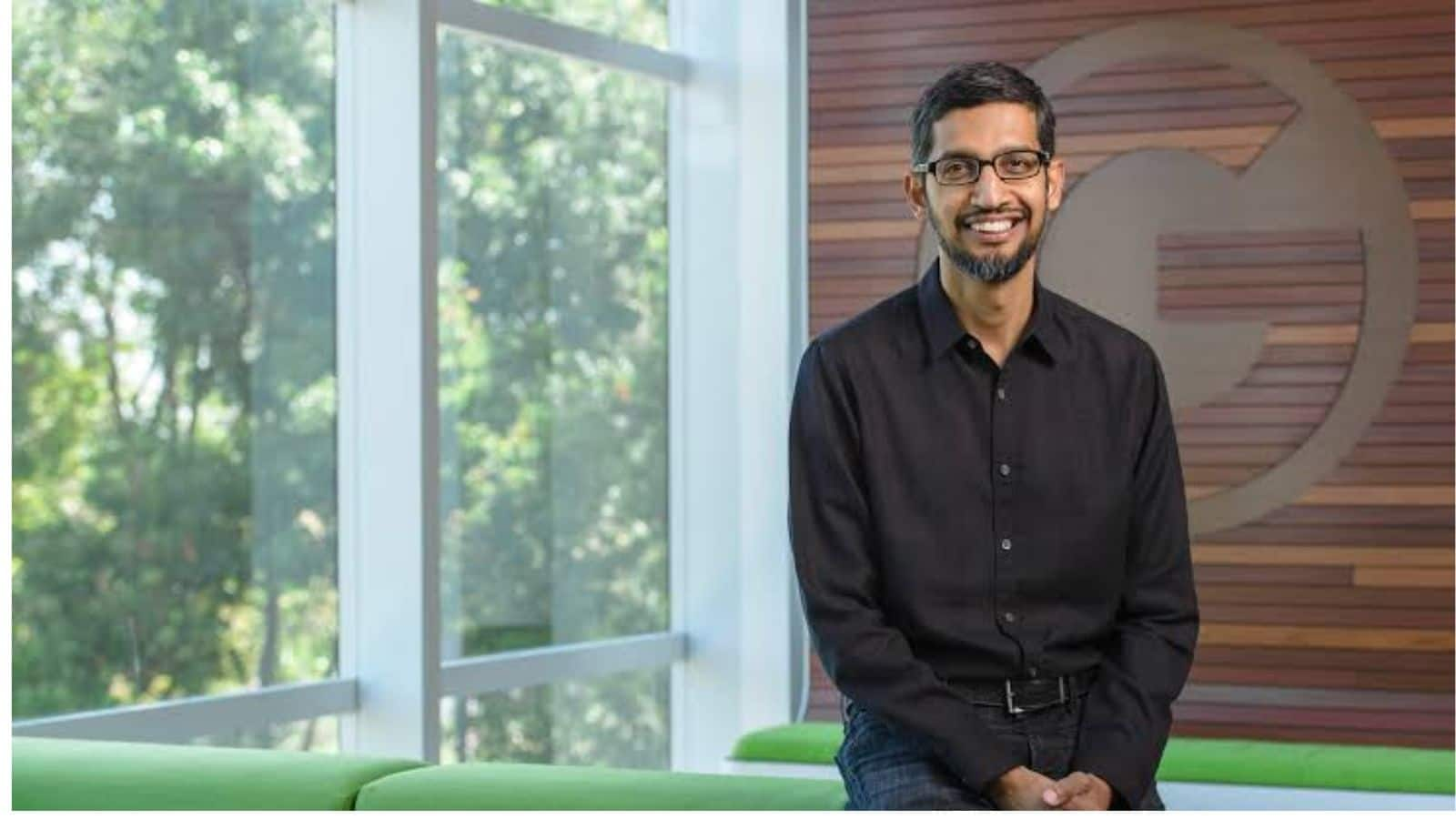
टेक्नोलॉजी की दुनिया में हर दिन कुछ नया आता रहता है। कभी नया फोन लॉन्च होता है, तो कभी किसी ऐप या सॉफ्टवेयर में नया फीचर जुड़ जाता है। ऐसे बदलाव हमारी रोजमर्रा की जिंदगी को आसान बनाते हैं। लेकिन इनके पीछे सिर्फ मशीनों का कमाल नहीं होता, बल्कि इन्हें बनाने और इस्तेमाल करने वाले लोगों की सोच भी बहुत मायने रखती है। सुंदर पिचाई टेक्नोलॉजी के फ्यूचर को लेकर काफी पॉजिटिव सोच रखते हैं। उनका मानना है कि टेक्निक हमारी जिंदगी को बेहतर बना सकती है, लेकिन इसके लिए लोगों की सोच और सही फैसले भी जरूरी हैं। यानी उनका भरोसा सिर्फ टेक्नोलॉजी पर नहीं, बल्कि उन लोगों पर भी है जो इसे बनाते हैं और सही तरीके से इस्तेमाल करते हैं।
सुंदर पिचाई का आज का विचार-
मैं आशावादी हूं, इसलिए नहीं कि मुझे टेक्नोलॉजी पर भरोसा है, बल्कि इसलिए कि मुझे लोगों पर भरोसा है।
लोगों पर भरोसा करें
सुंदर पिचाई के इस विचार का मतलब है कि फ्यूचर को लेकर उनका भरोसा सिर्फ टेक्नोलॉजी पर नहीं है। मशीनें काम को तेज कर सकती हैं, सॉफ्टवेयर कई चीजों को अपने आप कर सकता है और AI कुछ ही सेकंड में जवाब दे सकता है। लेकिन सही फैसला लेना अभी भी इंसान के हाथ में है। कौन-सी परेशानी हल करनी है, किसी जवाब पर भरोसा करना है या नहीं और टेक्नोलॉजी का इस्तेमाल किस तरह करना है, यह इंसान ही तय करता है।
अपने फैसले खुद लें
नई टेक्नोलॉजी आने के बाद हर कोई उसे एक ही तरीके से इस्तेमाल नहीं करता। कंपनियां तय करती हैं कि उन्हें कौन-सा सिस्टम अपनाना है, एम्पलॉई देखते हैं कि वह उनके काम को कैसे आसान बना सकता है और कस्टमर तय करते हैं कि कौन-सा प्रोडक्ट लंबे समय तक चलेगा। वहीं गवर्नमेंट और दूसरी ऑर्गेनाइजेशन यह तय करती हैं कि किसी टेक्निक के इस्तेमाल के लिए कौन से नियम होने चाहिए।
टेक्नोलॉजी कई ऐसे काम कर सकती है, जिनमें पहले काफी समय और मेहनत लगती थी। इससे काम करने का तरीका जरूर बदल रहा है, लेकिन इसका मतलब यह नहीं है कि इंसानों की जरूरत खत्म हो जाएगी। किसी को यह तय करना होगा कि काम कैसे किया जाए, नतीजा सही है या नहीं और गलती होने पर क्या कदम उठाना है। बातचीत करना, परेशानी को समझना, सही फैसला लेना और दूसरों के साथ मिलकर काम करना जैसी खूबियां आज भी जरूरी हैं।
नई चीजें सीखते रहे
टेक्नोलॉजी लगातार बदल रही है, इसलिए एक ही सिस्टम या टूल को हमेशा के लिए सीख लेना काफी नहीं है। आज जो सॉफ्टवेयर काम का है, हो सकता है कुछ समय बाद उसकी जगह कोई नया टूल ले ले। ऐसे में नई चीजों को सीखने और जरूरत के हिसाब से खुद को बदलने की आदत काफी काम आती है। शुरुआत में किसी नई टेक्नोलॉजी को समझने में परेशानी हो सकती है, लेकिन गलतियों से सीखकर धीरे-धीरे बेहतर हुआ जा सकता है।
AI इनफार्मेशन सोच-समझकर अपनाएं
पिचाई की बात का मतलब यह नहीं है कि टेक्नोलॉजी से जुड़ी हर चीज अच्छी ही होगी। AI गलत जानकारी दे सकता है, ऑटोमेशन से कुछ नौकरियों पर असर पड़ सकता है और डिजिटल टेक्नोलॉजी से प्राइवेसी जैसे सवाल भी खड़े हो सकते हैं। इसलिए नई टेक्निक को अपनाते समय सिर्फ उसके फायदे देखना सही नहीं है। यह भी समझना जरूरी है कि इसे किसने बनाया, इसका इस्तेमाल कौन कर रहा है, इससे किसे फायदा हो रहा है और इसकी वजह से किन लोगों को परेशानी हो सकती है।
टेक्नोलॉजी लगातार बदल रही है, इसलिए जरूरी है कि हम भी नई चीजों के साथ खुद को बदलते रहें। हर नई टेक्निक को बिना सोचे अपनाने के बजाय यह समझना बेहतर है कि वह हमारे लिए कितनी काम की है। खुली सोच और सीखने की आदत के साथ हम आने वाले बदलावों को आसानी से अपना सकते हैं।