BMW i5 LWB review: The 5 goes electric

BMW i5 LWB review: The 5 goes electric
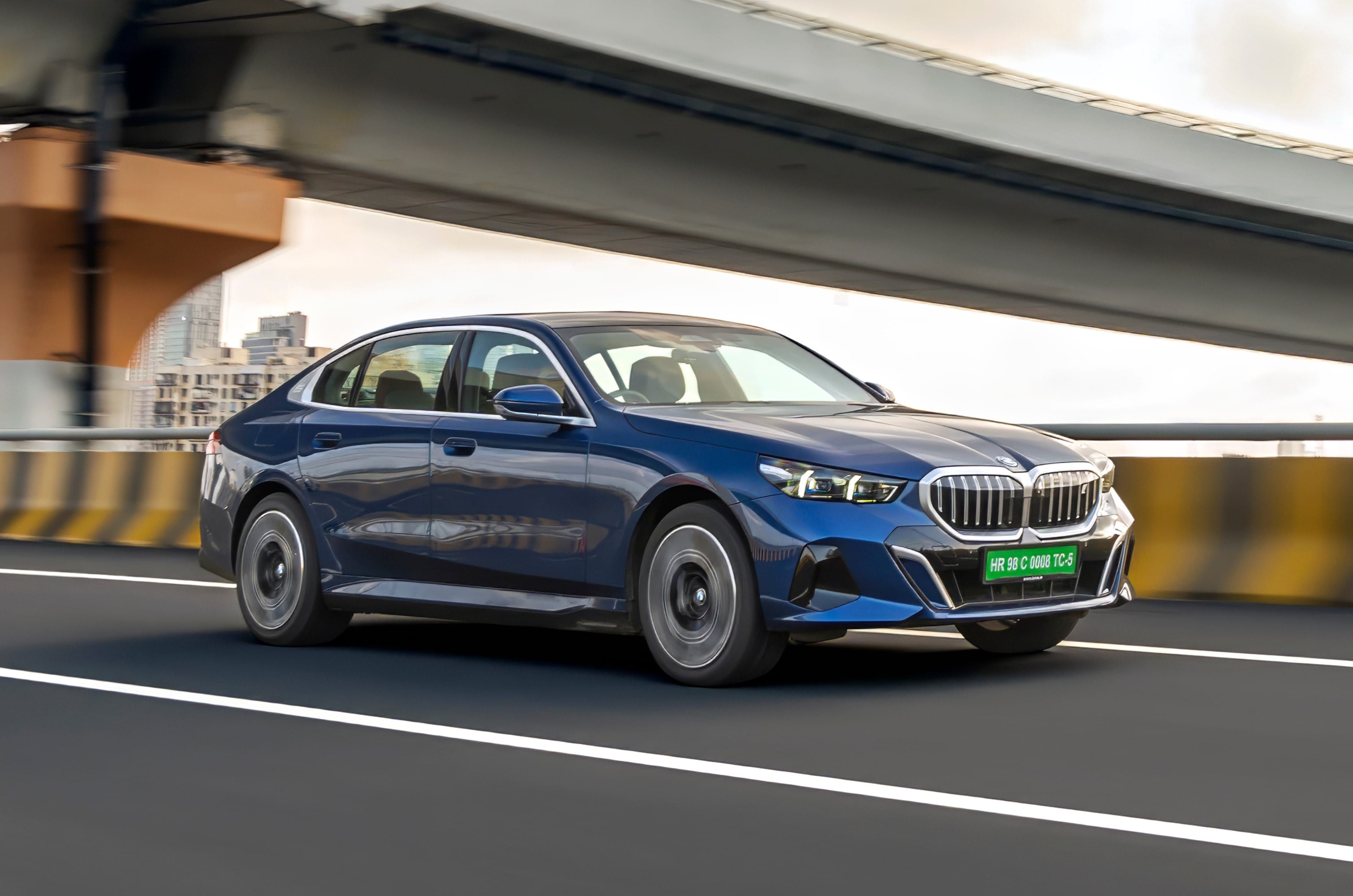
BMW i5 LWB front quarter tracking

In the first half of 2026, BMW sold nearly 2,400 EVs in India, with the entry-level iX1 and flagship i7 accounting for the bulk of those volumes. Now, BMW has introduced an all-new electric long-wheelbase sedan to bridge the sizable gap between the two. Meet the BMW i5 eDrive35L, the electric counterpart to the 5 Series sedan.

The i5 nameplate isn’t new to India. BMW launched the imported, performance-focused i5 M60 here back in 2024. However, that was a niche offering. This new version is expected to appeal to a much wider audience. Being locally assembled, the i5 eDrive35L is priced at Rs 79.60 lakh, commanding a premium of Rs 3 lakh over its petrol-powered sibling. In this review, we find out what it’s like to live with.

BMW i5 LWB Exterior Design and Engineering – 8/10
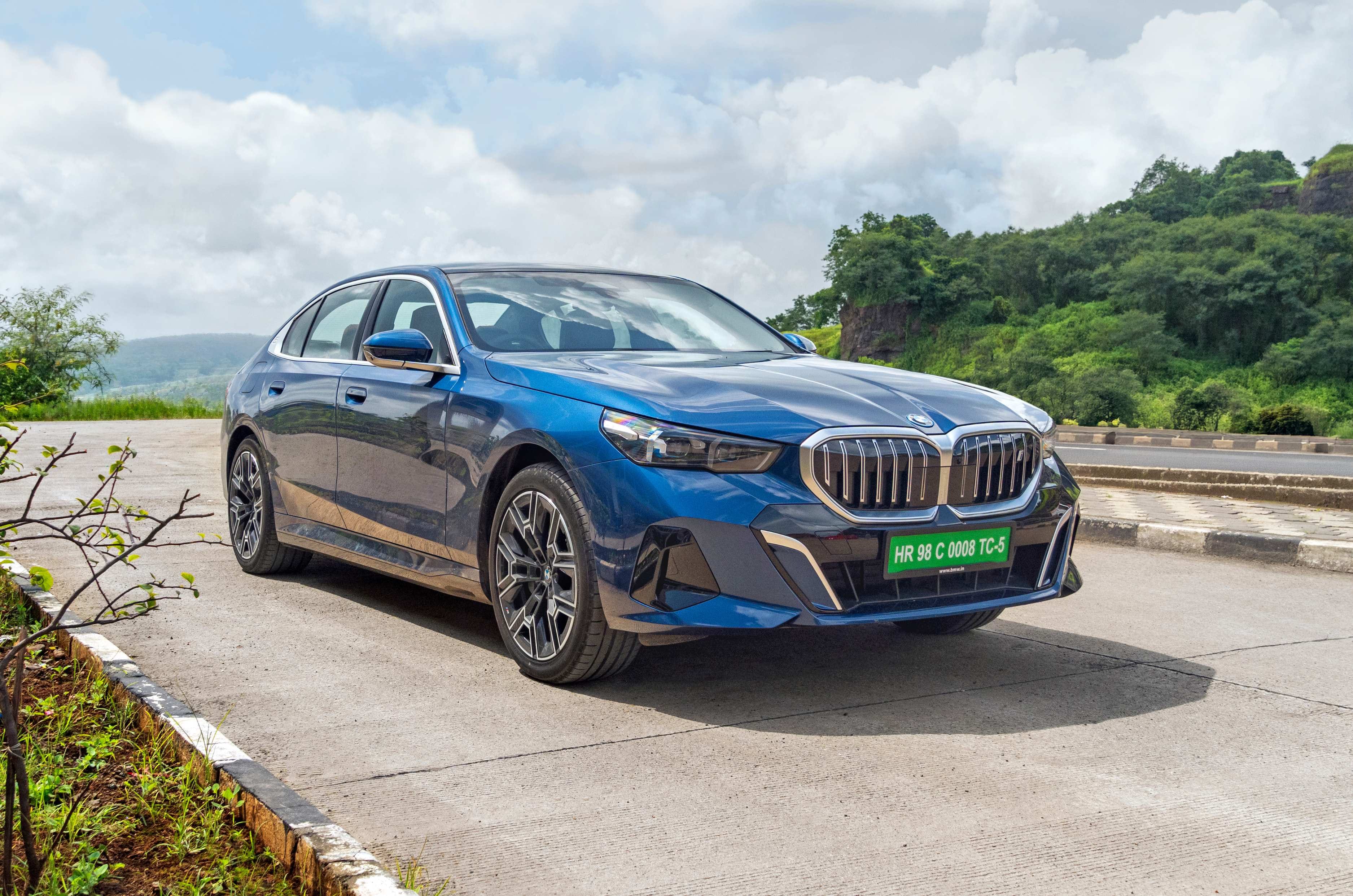
An ‘i’ badge on the grille along with its green number plate differentiate it from its petrol sibling

Compared to the international version, this i5’s wheelbase has been stretched by 110mm to 3,105mm, while overall length now stands at 5,175mm. Interestingly, the 5 Series is larger than its chief rival, the Mercedes-Benz E-Class, in every dimension.

As for styling, this generation of the 5 Series has been around since 2024 and much like most modern BMW designs, it’s something that grows on you with time. That said, there’s no denying that it’s a polarising design. The numerous cuts, heavy surfacing and intricate detailing make it look busy and excessive to some eyes.
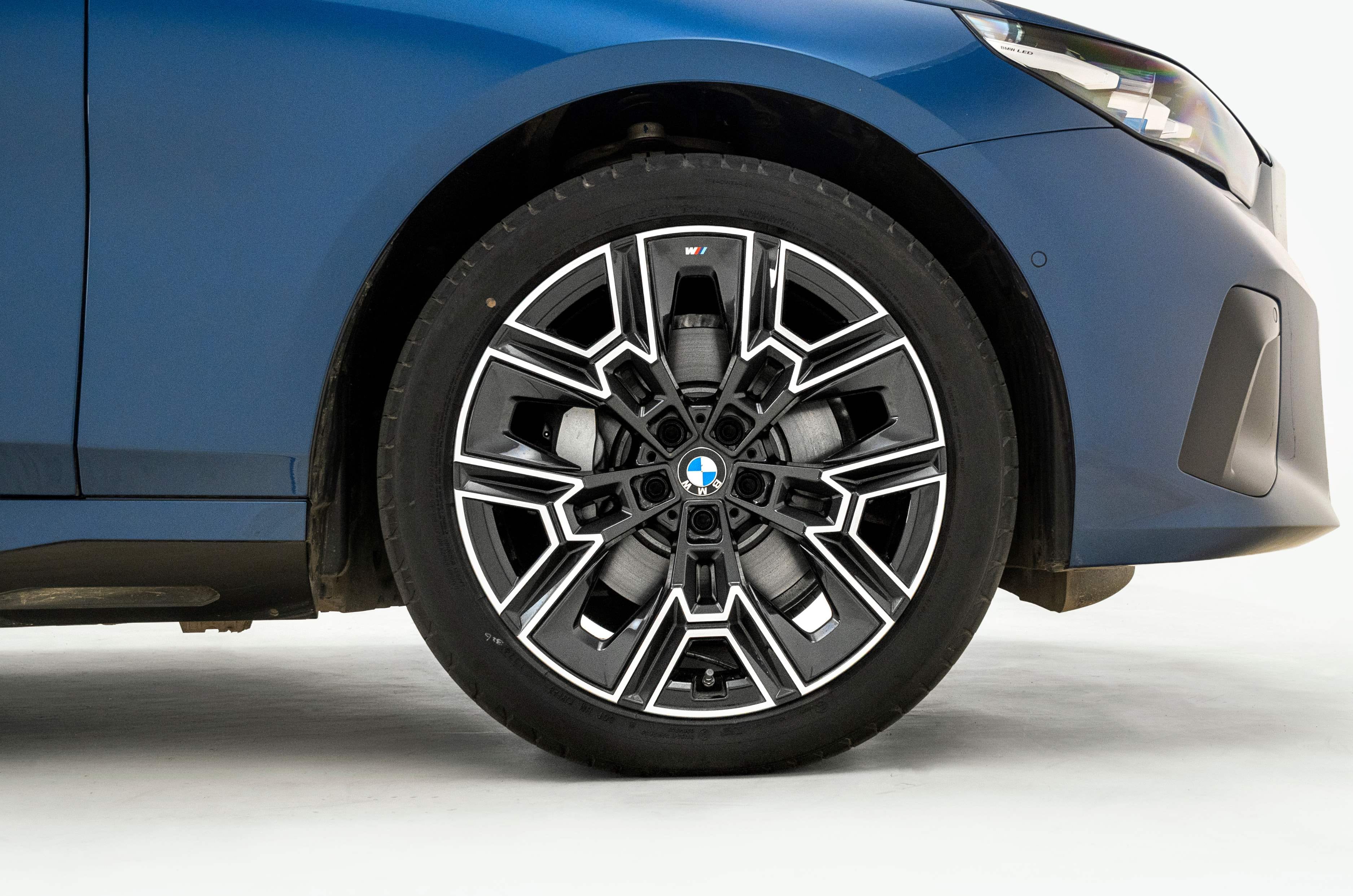
Gets large 20-inch alloys which look far more proportionate than the 18-inch wheels initially available with the 530Li.

Differentiating the i5 from its petrol-powered counterpart are an ‘i’ logo on the grille and larger 20-inch alloy wheels. The latter look far more proportionate than the 18-inch wheels initially offered on the 530Li. At the rear, the only distinguishing elements are the i5 and eDrive35L badges, apart from the obvious giveaway – the green number plate.

BMW i5 LWB Interior Space and Comfort – 9/10
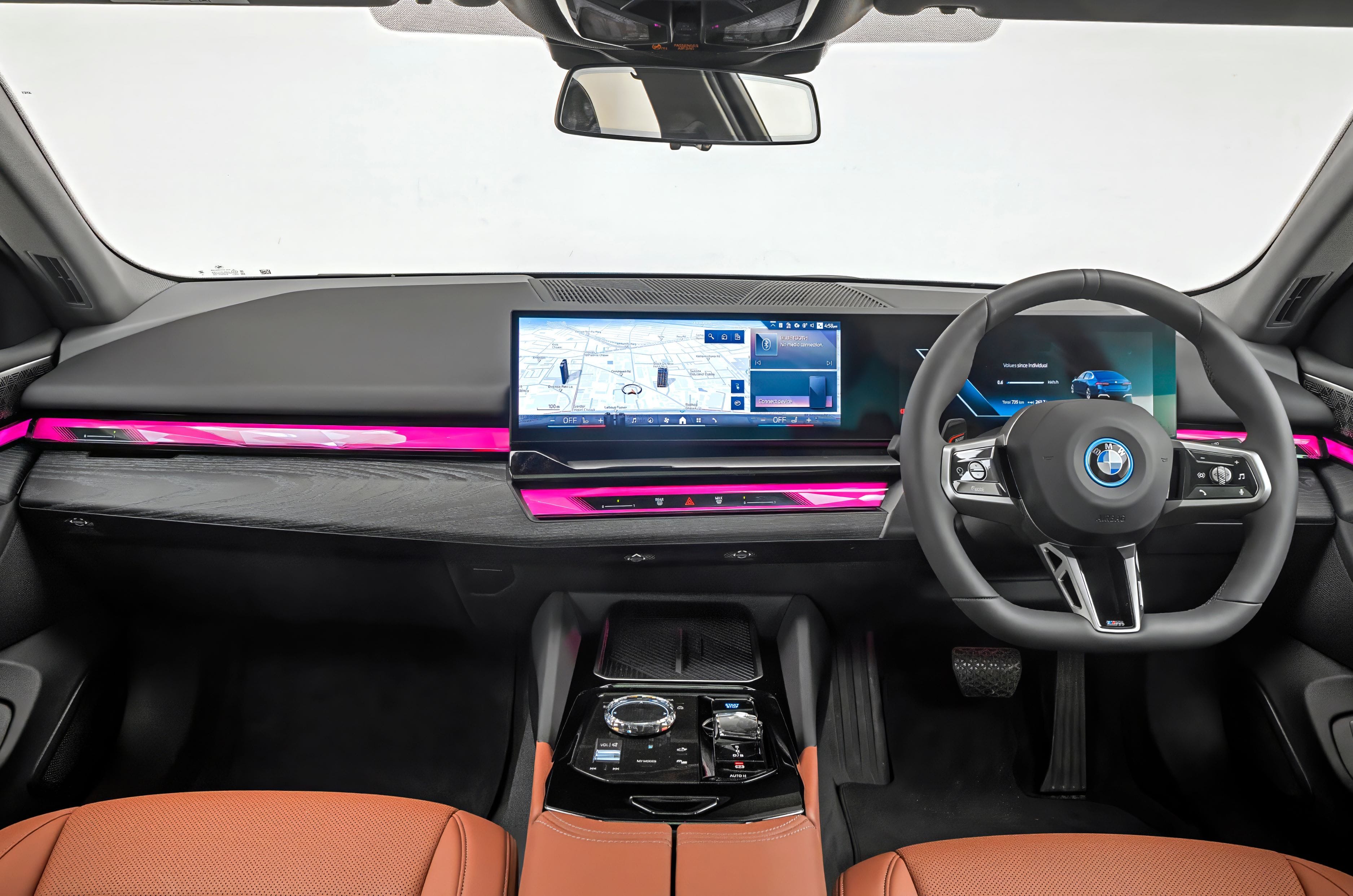
Dash is dominated by BMW’s twin curved screens, a flat-bottomed steering wheel and generous ambient lighting. 

Step inside and the dashboard is dominated by BMW’s twin curved-screen setup, complemented by a flat-bottomed steering wheel, generous ambient lighting, and a tasteful mix of open-pore wood trim and silver inlays. The crystalline drive selector, rotary infotainment controller and volume roller on the centre console add a welcome sense of occasion.

Those familiar with older 5 Series models will quickly notice the absence of the manually adjustable thigh support for the front seats. That aside, the seats themselves are exceptionally comfortable and supportive, and they also feature ventilation.
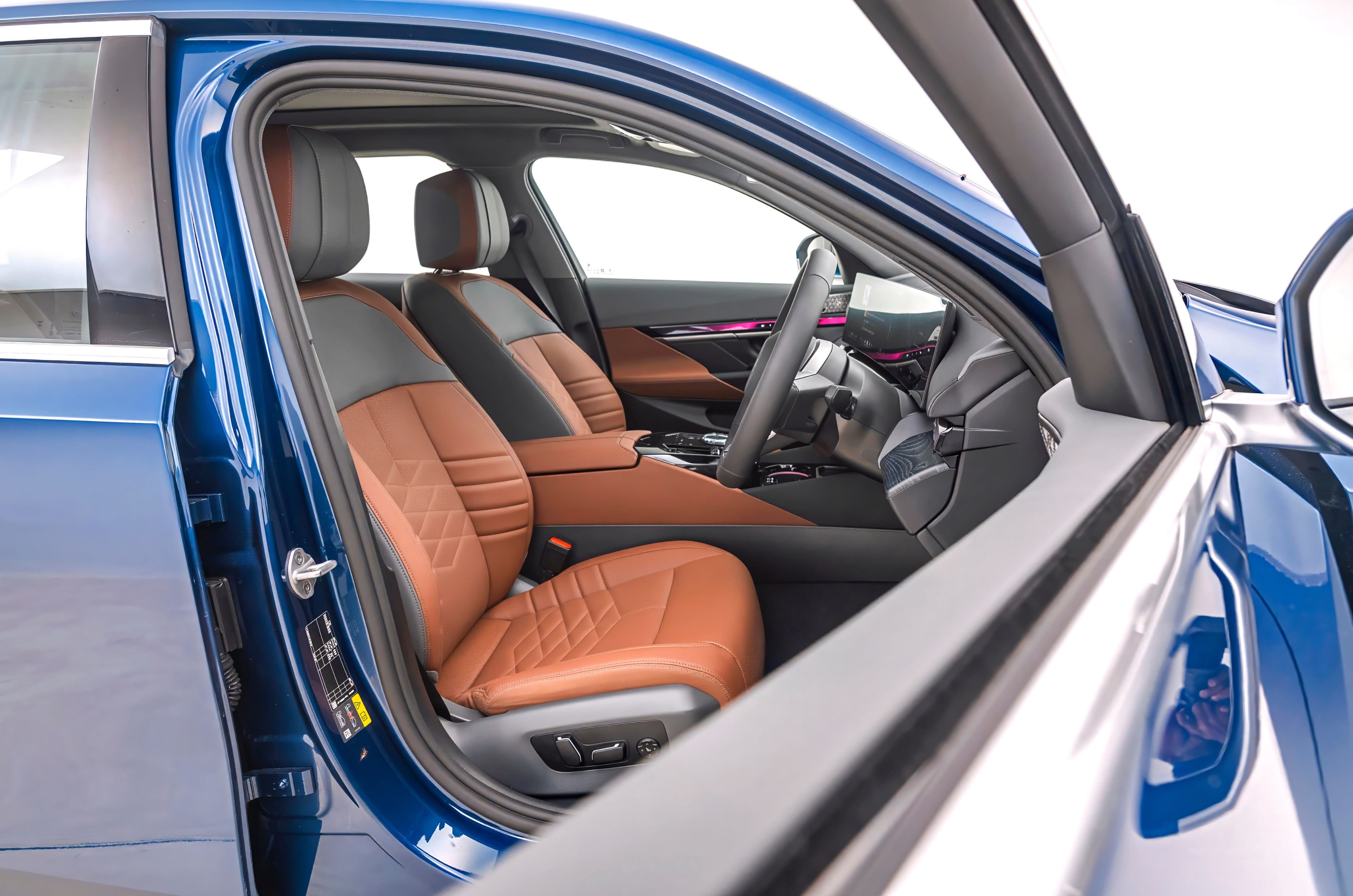
The seats are exceptionally comfortable and supportive, and they also feature ventilation.

Being the long-wheelbase version, the i5 benefits from an additional 4.3 inches of wheelbase compared to the international model, resulting in noticeably more rear legroom. Sure, the floor sits higher than in the ICE version, but this remains a very comfortable place to be for chauffeur-driven buyers. The rear bench is well contoured and, with just two occupants, delivers a genuinely luxurious experience. Some may find the pillows a little excessive, and they aren’t quite as comfortable as the integrated units in the E-Class. Speaking of which, unlike the Mercedes, the i5’s rear seat doesn’t recline, and there are arguably too few indulgent touches to truly cater to chauffeur-driven buyers.
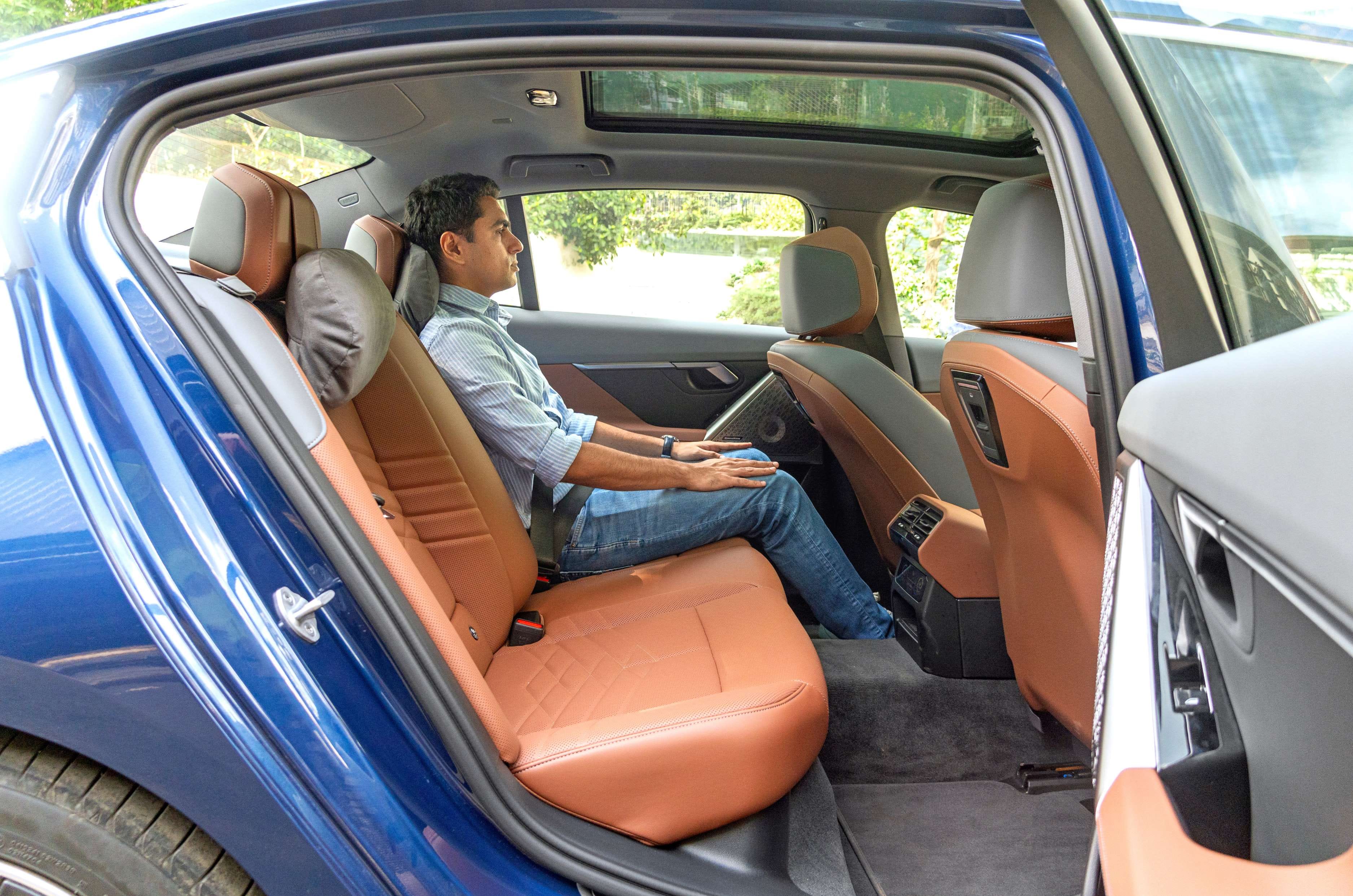
A bit knees-up, but the rear seat feels luxurious; however, there are too few amenities for chauffeur-driven buyers.

The middle seat is considerably less accommodating. The raised seat base compromises headroom, the backrest is firm, and the tall central tunnel further detracts from comfort for a third passenger.

Boot space is rated at 500 litres, which is broadly similar to the ICE 5 Series. However, while the spare wheel is neatly tucked beneath the boot floor in the petrol version, it sits on the boot floor in the i5, significantly compromising usable luggage space.
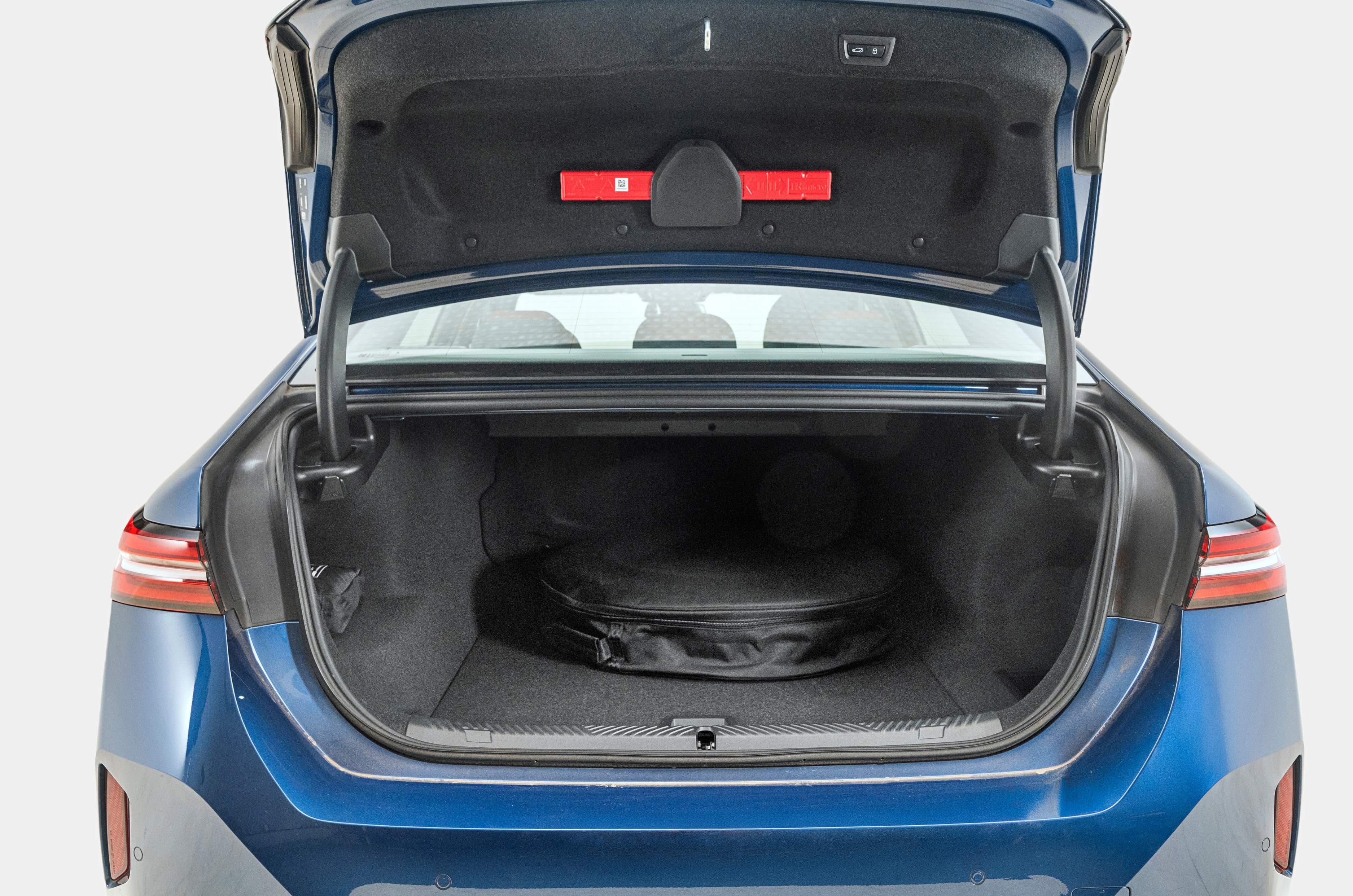
The spare wheel sits on the boot floor, significantly compromising usable luggage space.

BMW i5 LWB Features and Safety – 8/10

The i5 eDrive35L comes generously equipped. Highlights include 20-inch alloy wheels, adaptive LED headlamps, powered and ventilated front seats, four-zone climate control, wireless charging pads for both front and rear occupants, a panoramic fixed glass roof, ambient lighting and a powered boot lid.
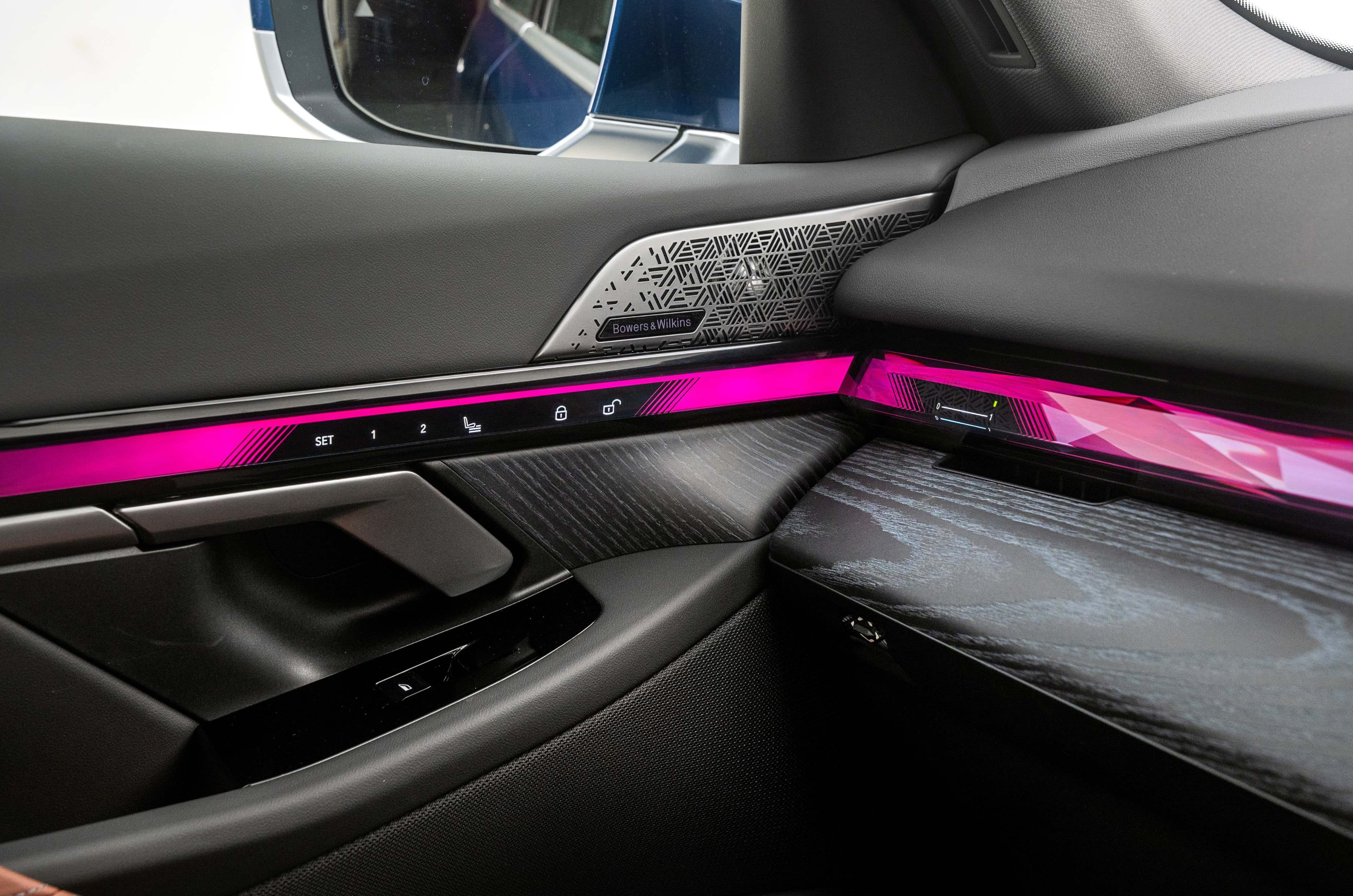
Audiophiles will particularly appreciate the superb 17-speaker, 655W Bowers & Wilkins audio system.

The curved touchscreen and digital instrument cluster look suitably futuristic, although the user experience isn’t the most intuitive due to the number of menus and sub-menus. On the plus side, the 360-degree camera offers excellent clarity. Audiophiles will particularly appreciate the superb 17-speaker, 655W Bowers & Wilkins audio system.

The i5 also gets a comprehensive suite of driver assistance features, including adaptive cruise control, lane-keeping assist and autonomous emergency braking.
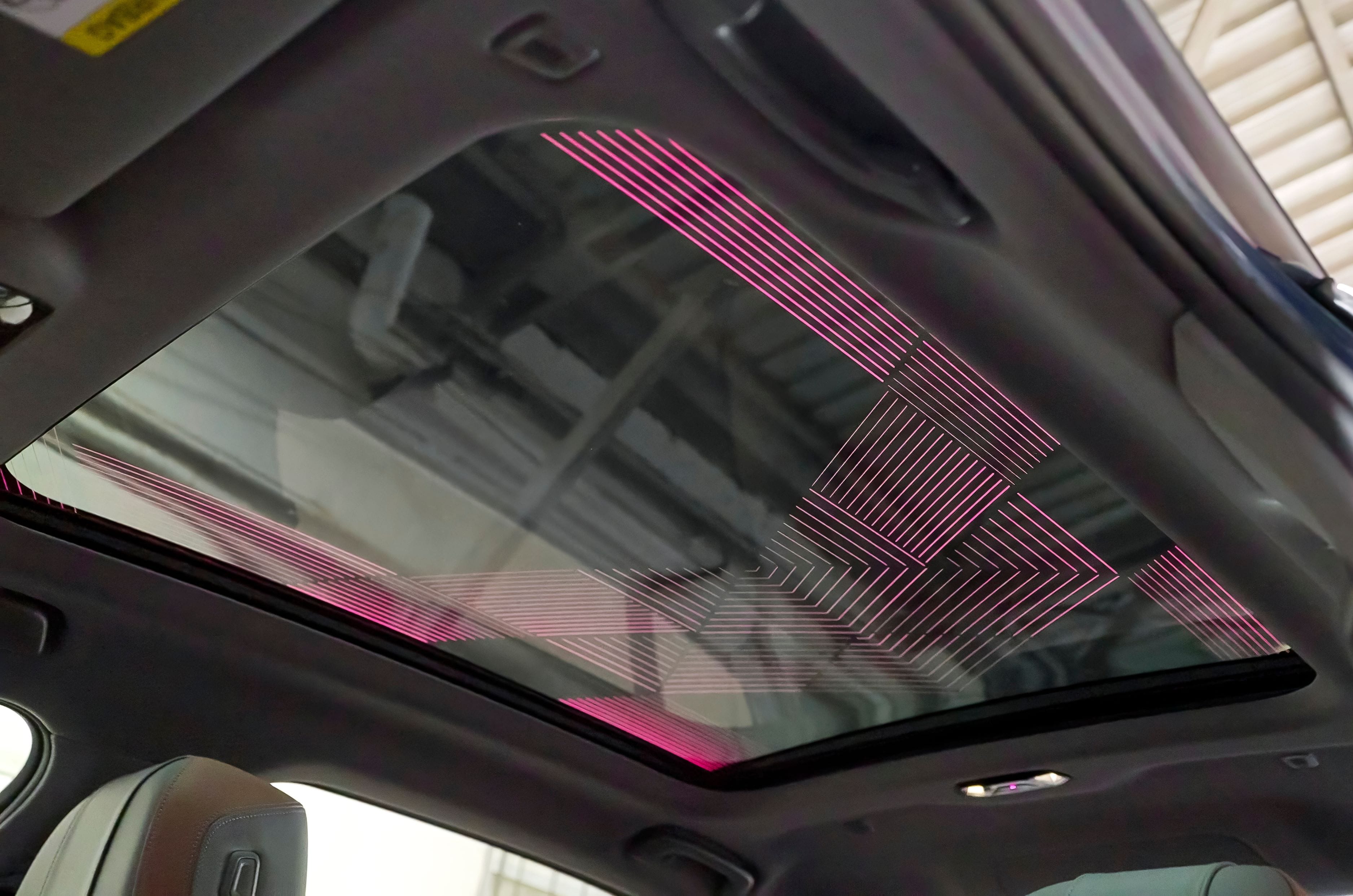
Its fixed panoramic glass roof has unique embedded LED lighting.

However, there are a few omissions that chauffeur-driven buyers may find difficult to overlook. A head-up display is absent, while smaller but genuinely useful features such as rear window sunshades, reclining rear seats, soft-close doors, a boss mode for the front passenger seat and rear-seat audio controls are all missing.

BMW i5 LWB Performance and Refinement – 8/10

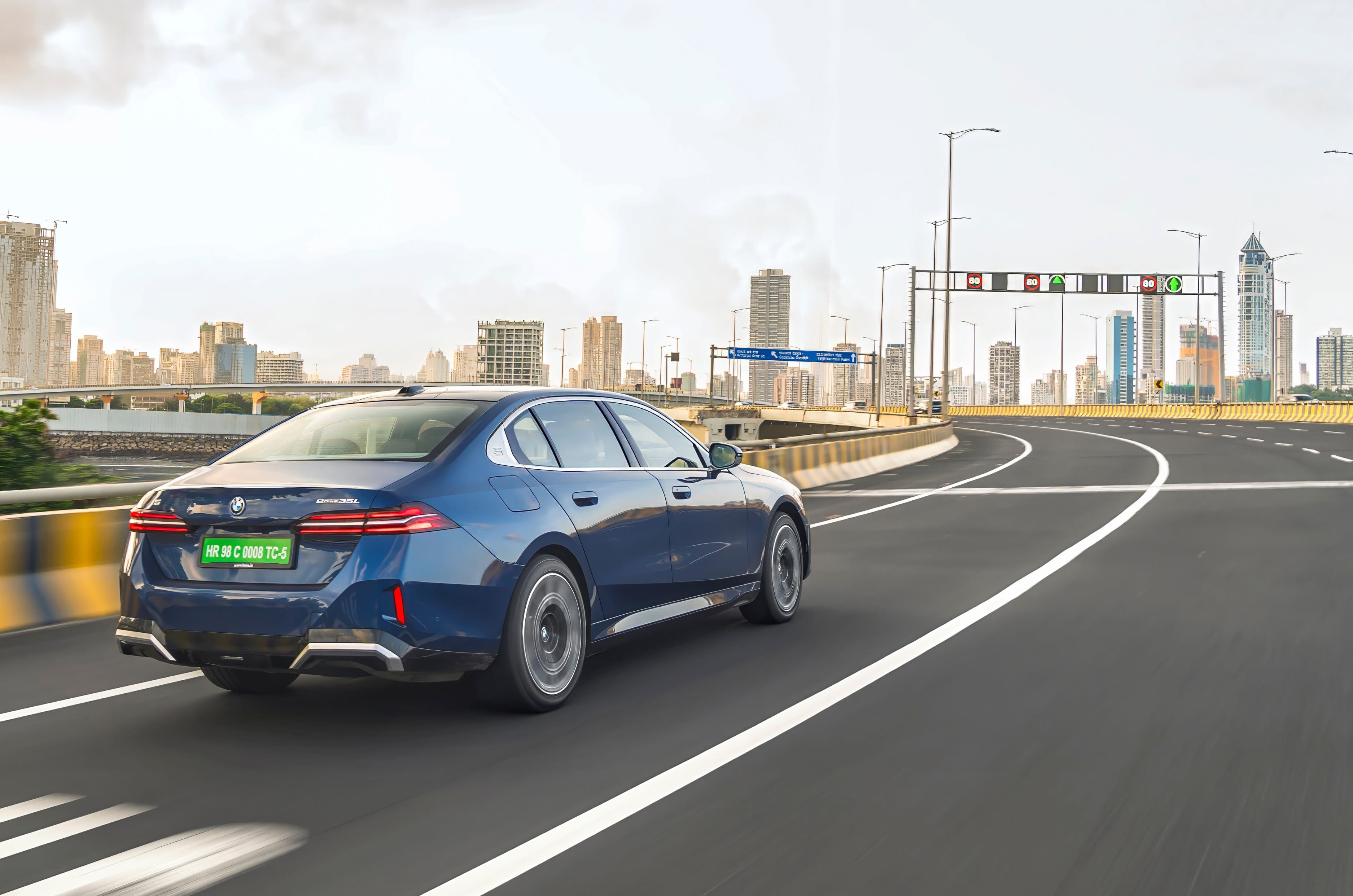
The rear-wheel-drive i5 eDrive35L uses a single electric motor producing 272hp and 410Nm, figures that are remarkably similar to the mild-hybrid 530Li. However, the way it delivers its performance is entirely different. With peak torque available instantly, responses are smooth, effortless and distinctly EV-like. There are multiple drive modes on offer, each altering throttle response. Sport sharpens reactions noticeably, while Efficient is the most relaxed and efficiency-focused setting.
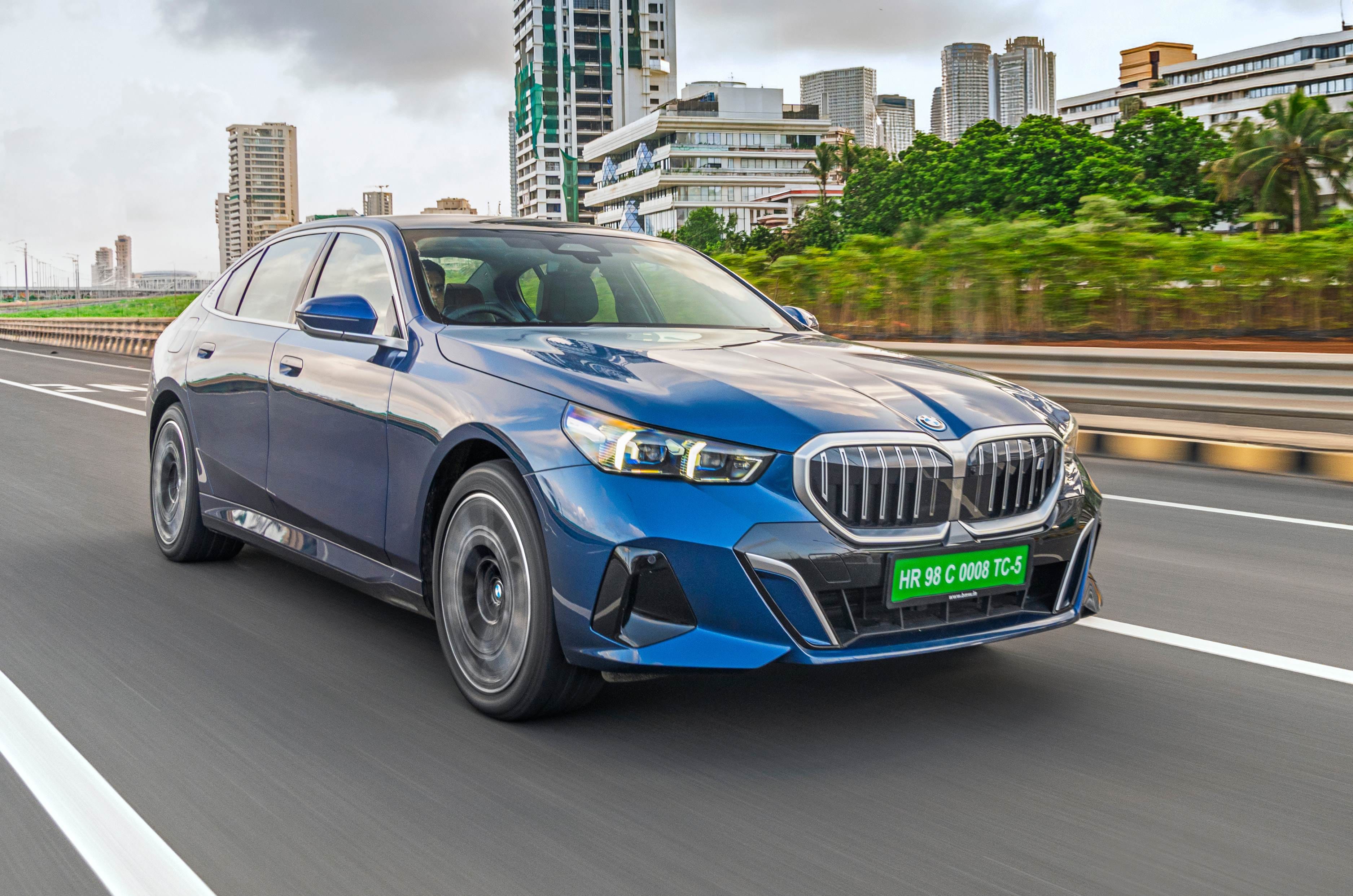
Retains a 50:50 weight distribution and RWD layout, but it has lost the sharpness and precision of earlier generations of the 5 Series.

BMW claims a 0-100kph time of 6.7 seconds, although our best run yielded 6.99 seconds. Interestingly, the 530Li is marginally quicker, recording 6.45 seconds for the same sprint, and it is also slightly faster in our 20-80kph and 40-100kph acceleration tests. 

The i5’s top speed is rated at 195kph, although acceleration begins to taper off noticeably beyond 100kph. In short, acceleration isn’t neck-snappingly quick, but there’s more than enough performance to keep things entertaining within legal limits.
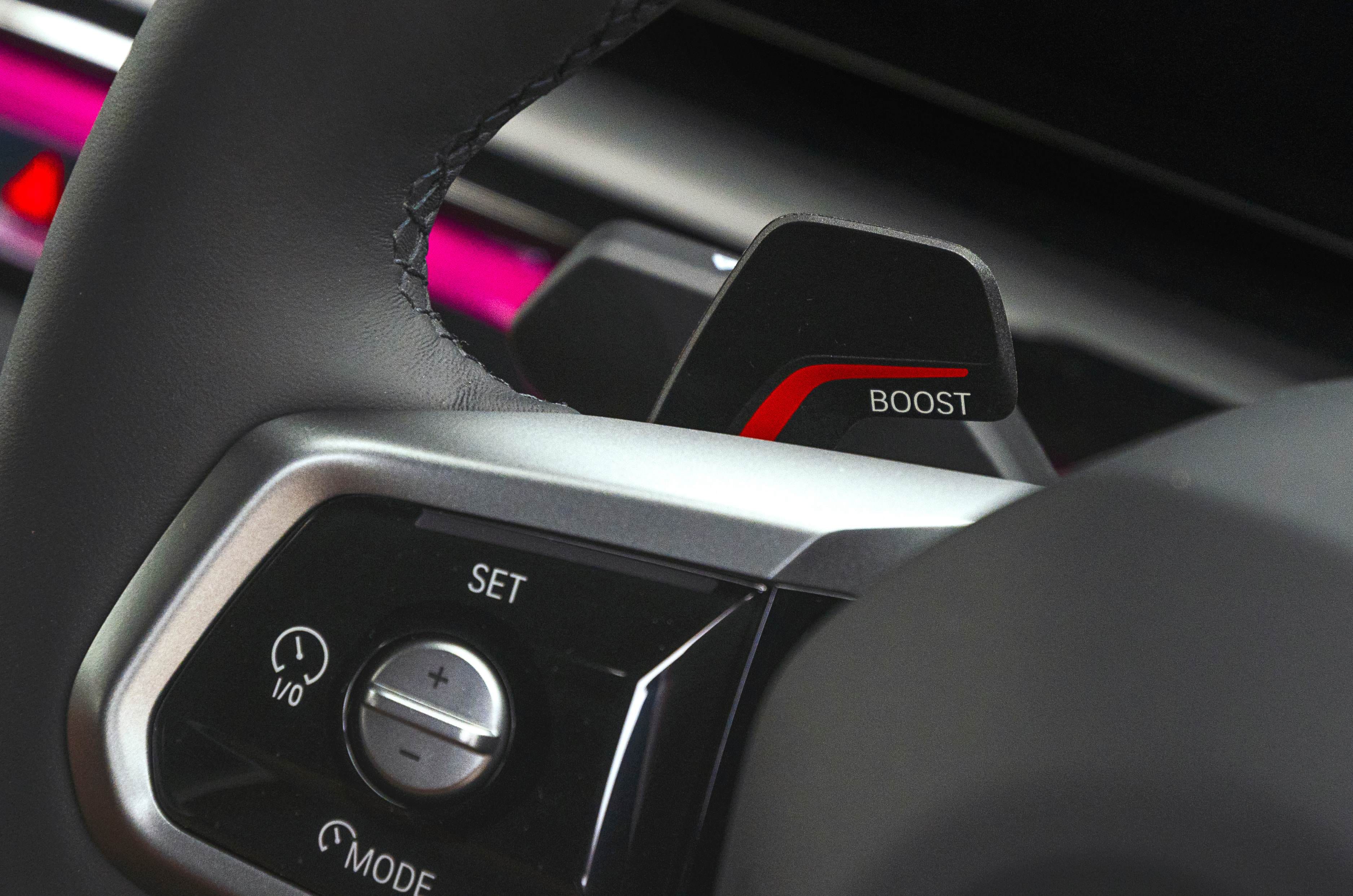
Boost function unlocks the motor’s full potential for 10 seconds. If your’re already in Sport mode, it barely makes any difference.

The i5 also offers multiple regenerative braking settings, including Adaptive, High, Mid and Low. Of these, Adaptive stands out for its excellent calibration, intelligently varying regeneration and coasting based on traffic and road conditions. There’s also a dedicated one-pedal ‘B’ mode, selectable via the drive selector. It delivers regeneration comparable to the High setting but, unlike it, can bring the car to a complete stop without requiring any brake pedal input.

Braking performance itself is strong, although keen drivers may wish for a little more feel from the pedal. The transition between regenerative and mechanical braking leaves it feeling somewhat numb.
BMW i5 LWB Range and Efficiency – 6/10

BMW claims the i5’s 81.6kWh battery (net capacity is 76.3kWh) can deliver a range of up to 669km, a figure that appears rather optimistic. In our real-world range tests, the i5 eDrive35L returned an average efficiency of 5.06km/kWh, translating to an estimated range of 386km. It’s worth noting that the car was driven in its most efficiency-focused ‘Efficient’ mode throughout the test, with regenerative braking set to Adaptive.

We also connected the battery to a 60kW DC fast charger, where it took 47 minutes to charge from 20-80 percent state of charge. BMW additionally supplies a complimentary AC wallbox charger along with installation.

BMW i5 LWB Ride Comfort and Handling – 8/10
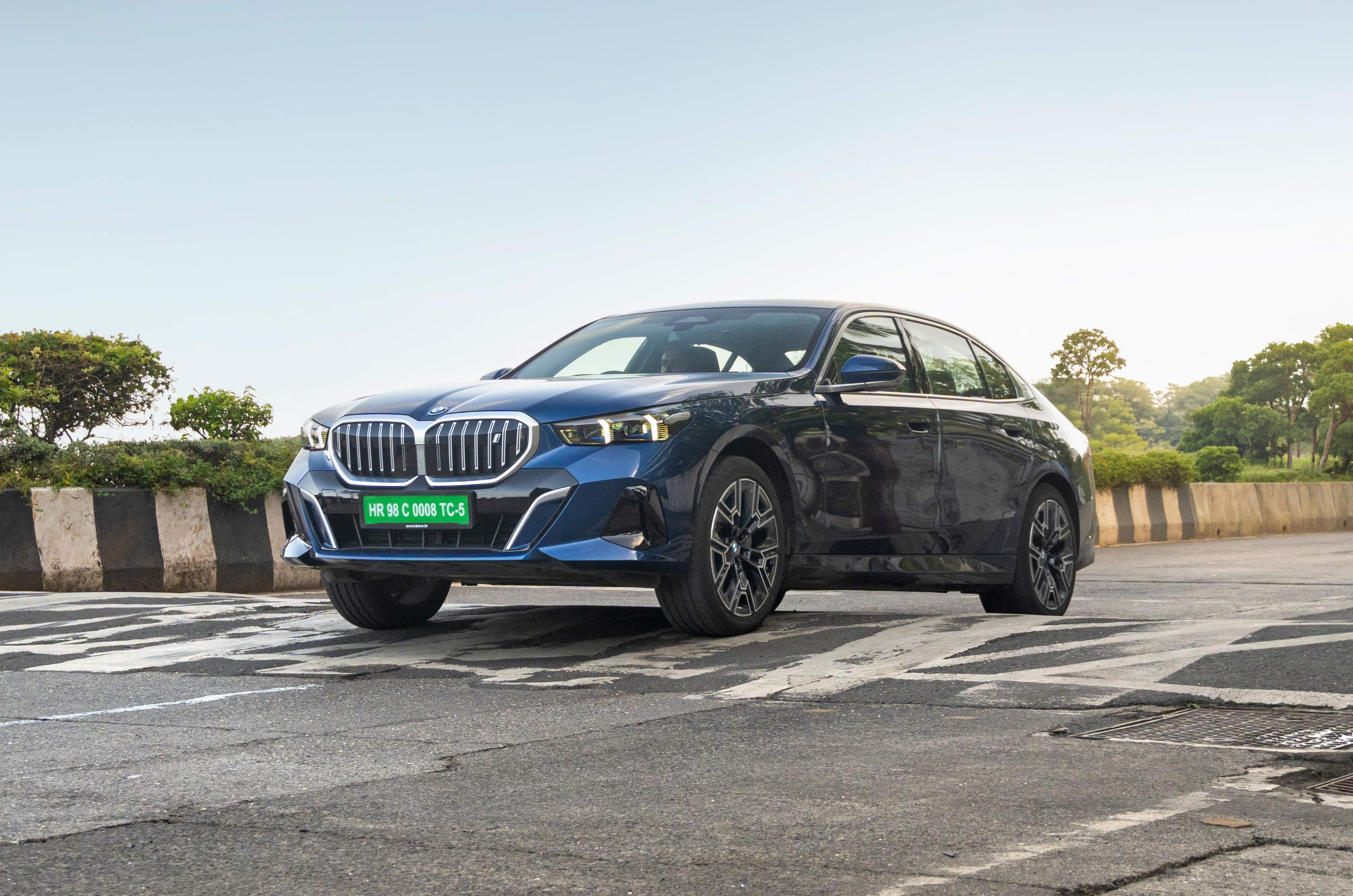
Ground clearance has been increased by 18mm compared to the international version; hence, it clears most speedbreakers easily.

With every successive generation, the 5 Series has become softer and more comfort-focused, and the i5 is arguably the most luxurious iteration yet. Despite riding on larger 20-inch wheels with lower-profile tyres than the petrol-powered 530Li, ride quality is seriously impressive. The i5 feels plush and remarkably absorbent over typical urban roads. Notably, it also benefits from rear air suspension, a feature absent on the 530Li.

In addition to the extended wheelbase, BMW has increased ground clearance by 18mm compared to the global standard-wheelbase model. The result is a luxury sedan that’s far better suited to Indian conditions. Even with four occupants on board, the i5 clears most speed breakers without drama. As a luxury car, then, it unquestionably gets the fundamentals right.
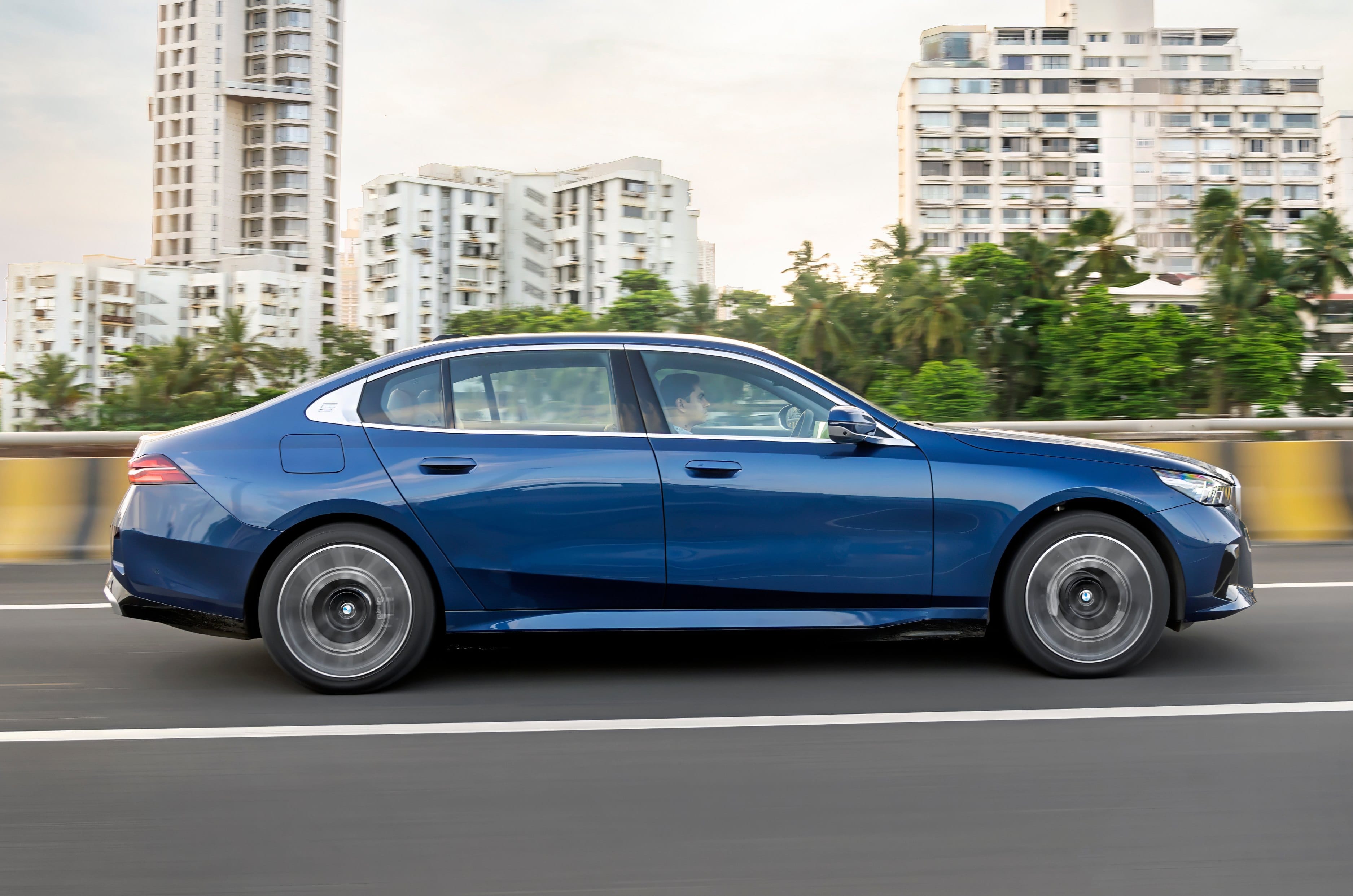
With a plush ride and increased ground clearance, the i5 is far better suited to Indian conditions.

However, the softer suspension setup and increased ground clearance have diluted some of the driver-focused character that defined earlier generations of the 5 Series. While it retains a near-perfect 50:50 weight distribution and rear-wheel-drive layout, there’s no escaping the fact that, in prioritising comfort and practicality, BMW has sacrificed a measure of the sharpness and precision that once made the 5 Series a benchmark for driving enthusiasts.

BMW i5 LWB Price and Verdict – 8/10

At Rs 79.60 lakh, the locally assembled i5 LWB has all the ingredients to become BMW India’s next EV success story alongside the iX1. With the i5 eDrive35L, BMW continues its successful long-wheelbase formula, maximising cabin space while building upon the strengths of the petrol-powered 5 Series, with which it shares much of its cabin, equipment and overall character. Buyers can also opt for extended warranty and prepaid maintenance packages of up to 10 years, in addition to the standard eight-year battery warranty.
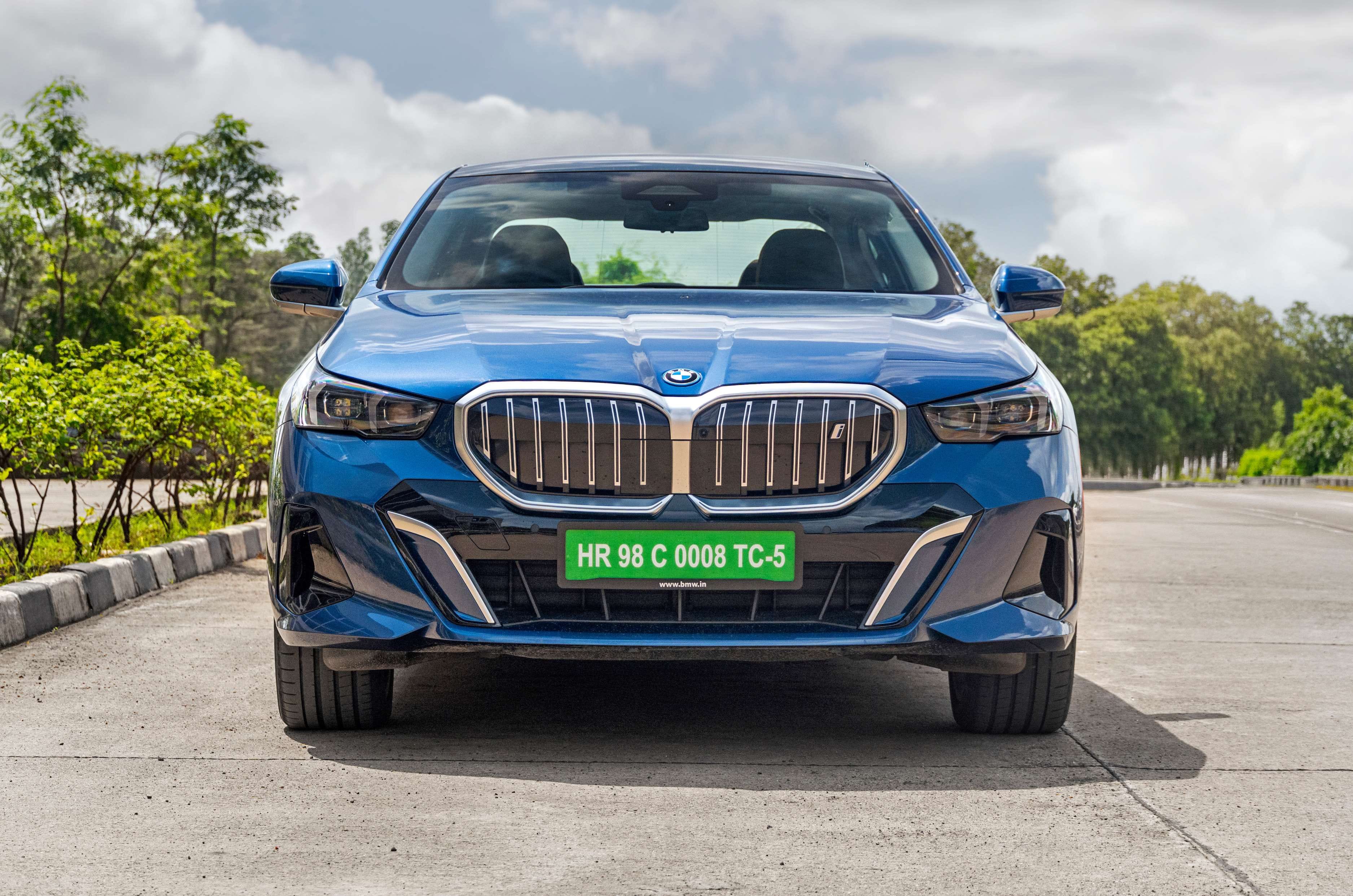
Generous cabin space, comfy seats, a plush ride, and effortless performance make the i5 eDrive35L a compelling electric luxury sedan

That said, much like its petrol-powered sibling, some of the traditional 5 Series driving feel has been diluted. It also misses a few feel-good features, particularly those aimed at rear-seat occupants. More importantly, the spare wheel’s placement on the boot floor significantly compromises luggage-carrying ability.

So, is it worth paying the Rs 3 lakh premium over the petrol-powered 5 Series? The answer largely depends on your usage. The i5 eDrive35L makes sense for buyers registering it under a company name, thanks to the higher depreciation benefits available for EVs. It also suits those who cover significant distances and can take advantage of lower running costs. Generous cabin space, comfortable seats, a plush ride, respectable range and effortless performance make the i5 eDrive35L a compelling electric luxury sedan for buyers shopping in this segment.

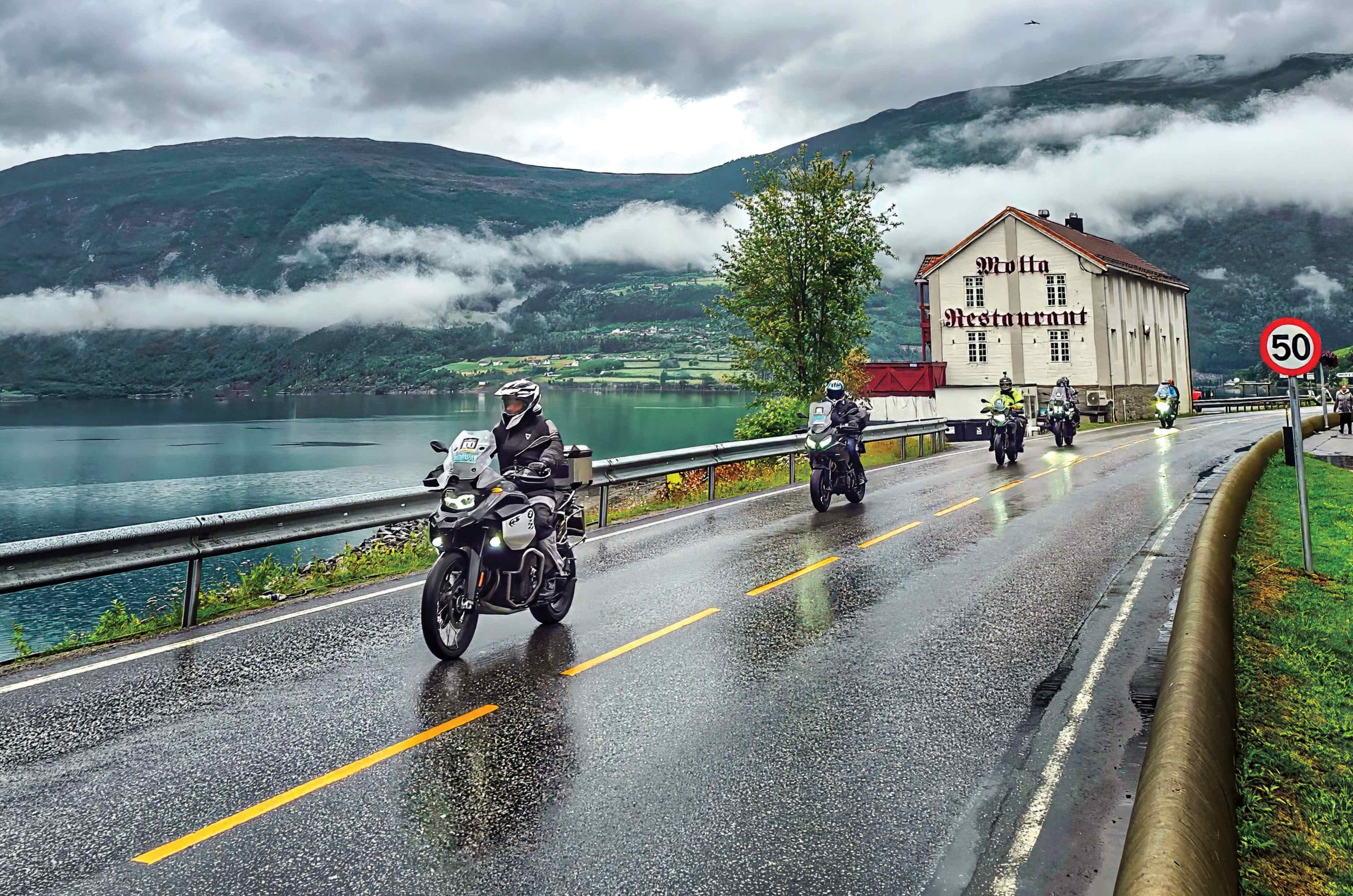
Exploring Norway on two wheels and four: Norway, our way

Exploring Norway on two wheels and four: Norway, our way
100th MotoRover drive

There is something intimate about exploring unknown land from behind a steering wheel or through the visor of a motorcycle helmet. You feel the landscape change. You smell the forests. You stop when the view demands it, and you break bread with the locals. Road-tripping lets you capture the essence of a place in a way typical tourist attractions just cannot. However, it also requires a fair bit more planning than just opening Google Maps and clicking on ‘attractions’.

That’s where MotoRover comes in. They’ve been curating driving and riding tours since 2017, taking travellers across international borders and letting them experience countries without having to worry about the route, vehicles, hotels or logistical support. As Satish and Sudha Darbha – who travelled with MotoRover on their first drive through Scotland nearly 10 years ago – put it: “We just pack our bags and enjoy the drive.”

For their 100th road trip, MotoRover picked an appropriately special destination – Norway. Few places have been so thoroughly sculpted by nature and then gifted with roads that seem designed specifically for people who enjoy driving. Towering mountains, enormous fjords, glassy lakes, glaciers, waterfalls and dramatic coastal roads create a landscape that changes around almost every bend. As Dr CA Sangeeta Shankaran Sumesh put it, “every turn of the road is a visual treat”.

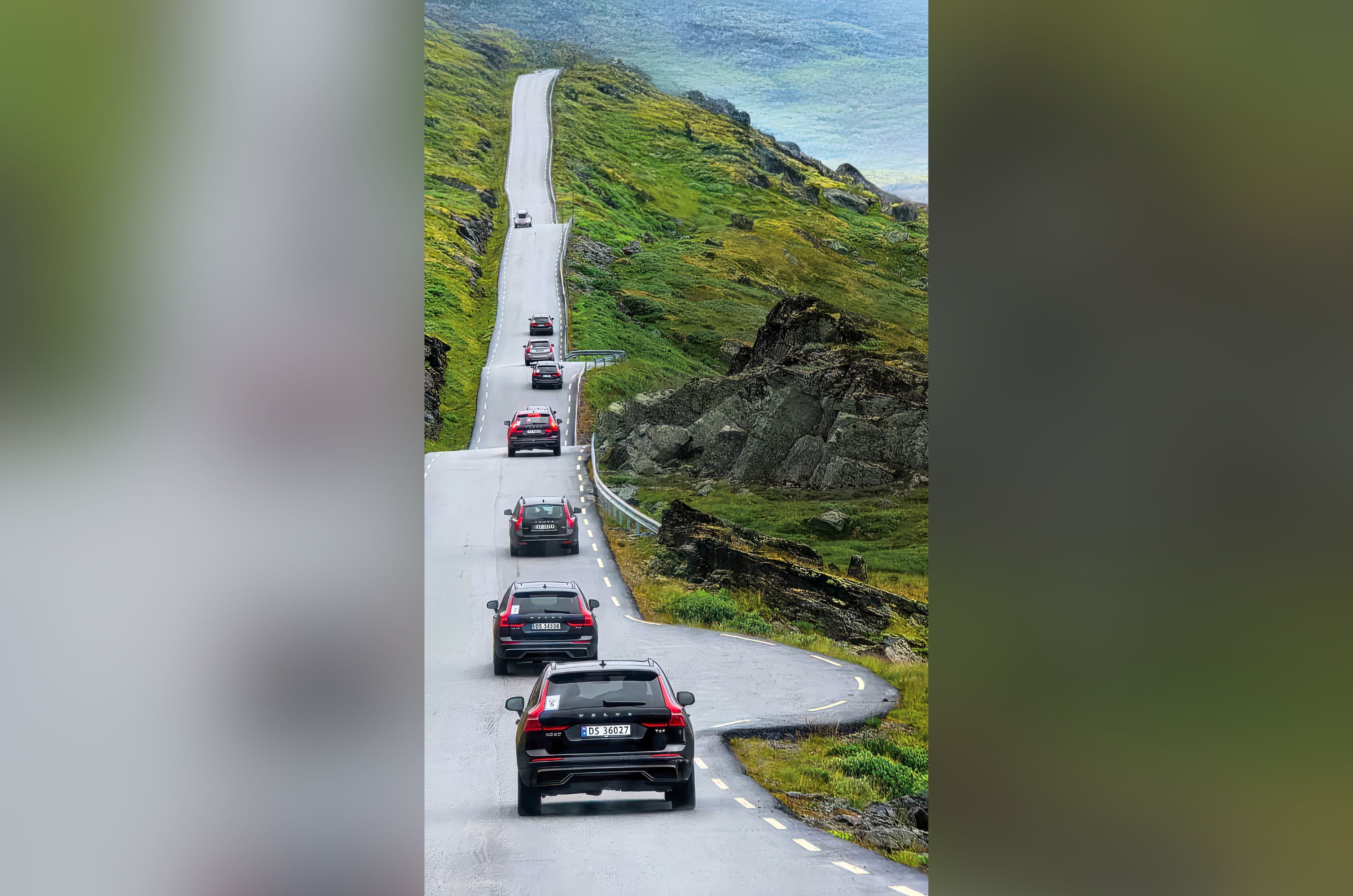
MotoRover usually conducts their motorcycle and self-drive car tours separately. However, on this journey, they combined the two formats into a single expedition, bringing together a convoy of nine Volvo SUVs and a mix of BMW motorcycles, along with a group of 26 travellers. Each convoy had its own guides and support vehicles, but both followed the same route, stopped at the same places and finished each day at the same hotel. 

The Indian Ambassador to Norway flags off the journey in Oslo.

“At first, I was contemplating whether we would want to do this with a totally unknown group,” said traveller Avinash Bajaj. Any initial apprehension, however, soon faded, with Sridhar Balaram and Prafullata adding, “We started as strangers and ended as one big family!”

The road trip was flagged off in Oslo, the capital, from a beautiful location overlooking the Oslofjord by India’s Ambassador to Norway, HE Gloria Gangte.

Over the next 10 days, the convoy traced a route through Norway, starting by heading west to the Lærdal Tunnel – a 24.5km engineering marvel and the world’s longest road tunnel. From here, the convoy crossed the Aurlandsfjellet and Sognefjellet mountain passes, explored the popular Sognefjord and Geirangerfjord, and tackled the zigzagging mountain roads of Trollstigen and the Eagle Road. Another highlight was the rather dramatic-looking sea bridges of the Atlantic Ocean Road, which hop between tiny islands. These are all roads that enthusiasts dream of.

Bridges on the Atlantic Ocean Road rise and fall quite dramatically.

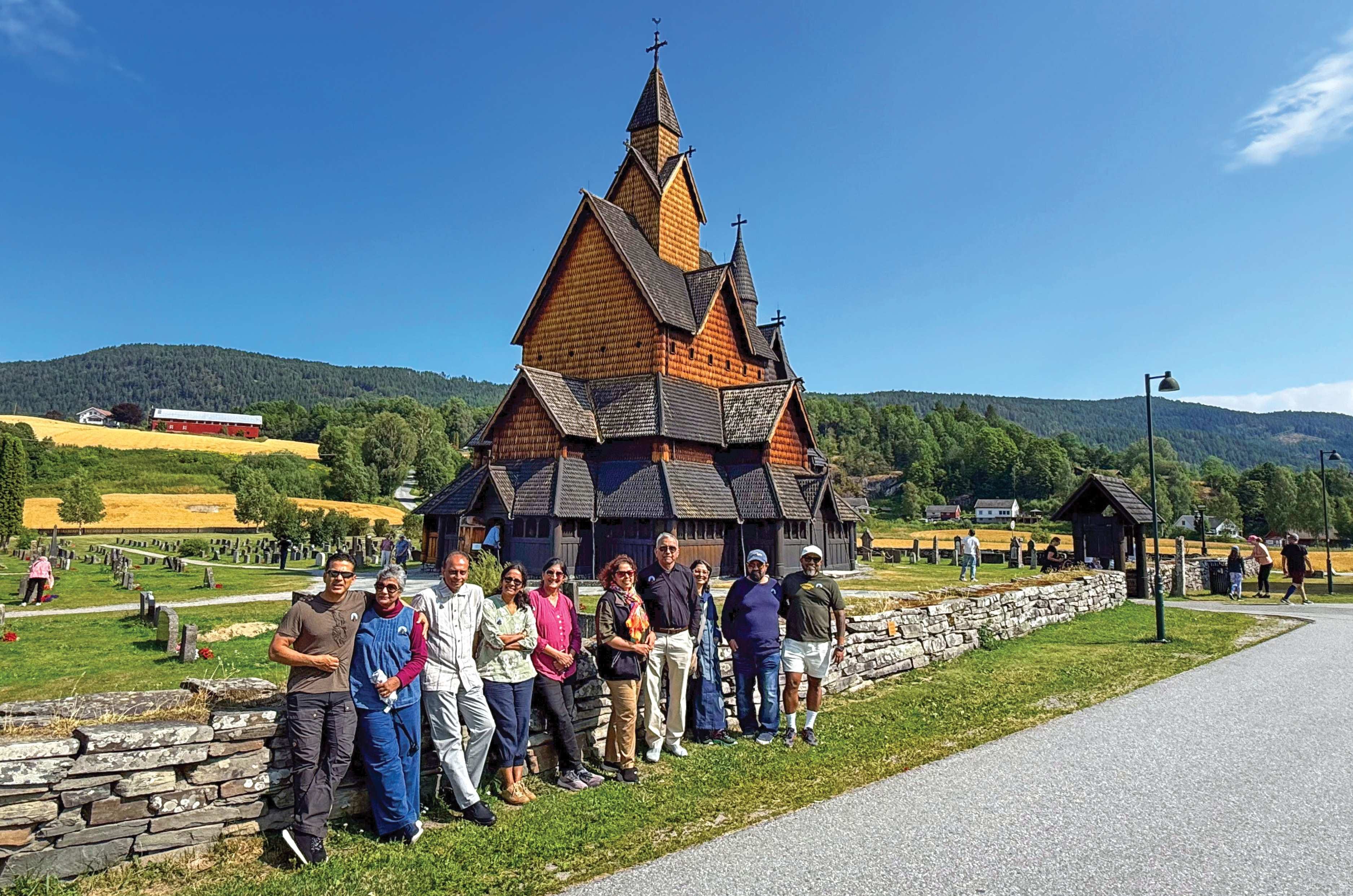
Participants also got aboard one of the largest Viking ships in Norway and drove to the edge of Jostedalsbreen, the largest glacier in continental Europe. A rest day in Bergen presented a chance to unwind and explore the beautiful city via an evening boat cruise through the surrounding fjords. For the return journey to Oslo, the convoy took the Hardanger Scenic Route that hugs the edge of the fjord it is named after. Along the way, the group visited a couple of medieval wooden stave churches and even took a ride on one of the steepest cable cars for panoramic views of Loenfjord. Every pit stop offered stunning viewpoints like the Stegastein and Geiranger Skywalks, as well as several breathtaking waterfalls.

All smiles outside the 800-year-old Heddal Stave Church.

While we tend to fixate on the cars and motorcycles that take us there, a whole lot more goes into making a journey truly memorable. Through 100 international drives, MotoRover has nailed the art of the “relaxing adventure” as orthopaedic spine surgeon Milind Gandhi describes it. Because ultimately, the best road trips aren’t only about where you go, but also everything you experience getting there. 

With inputs from Piyush Sonsale.

Top 6 Petrol rivals to the Ather Konarc

Top 6 Petrol rivals to the Ather Konarc
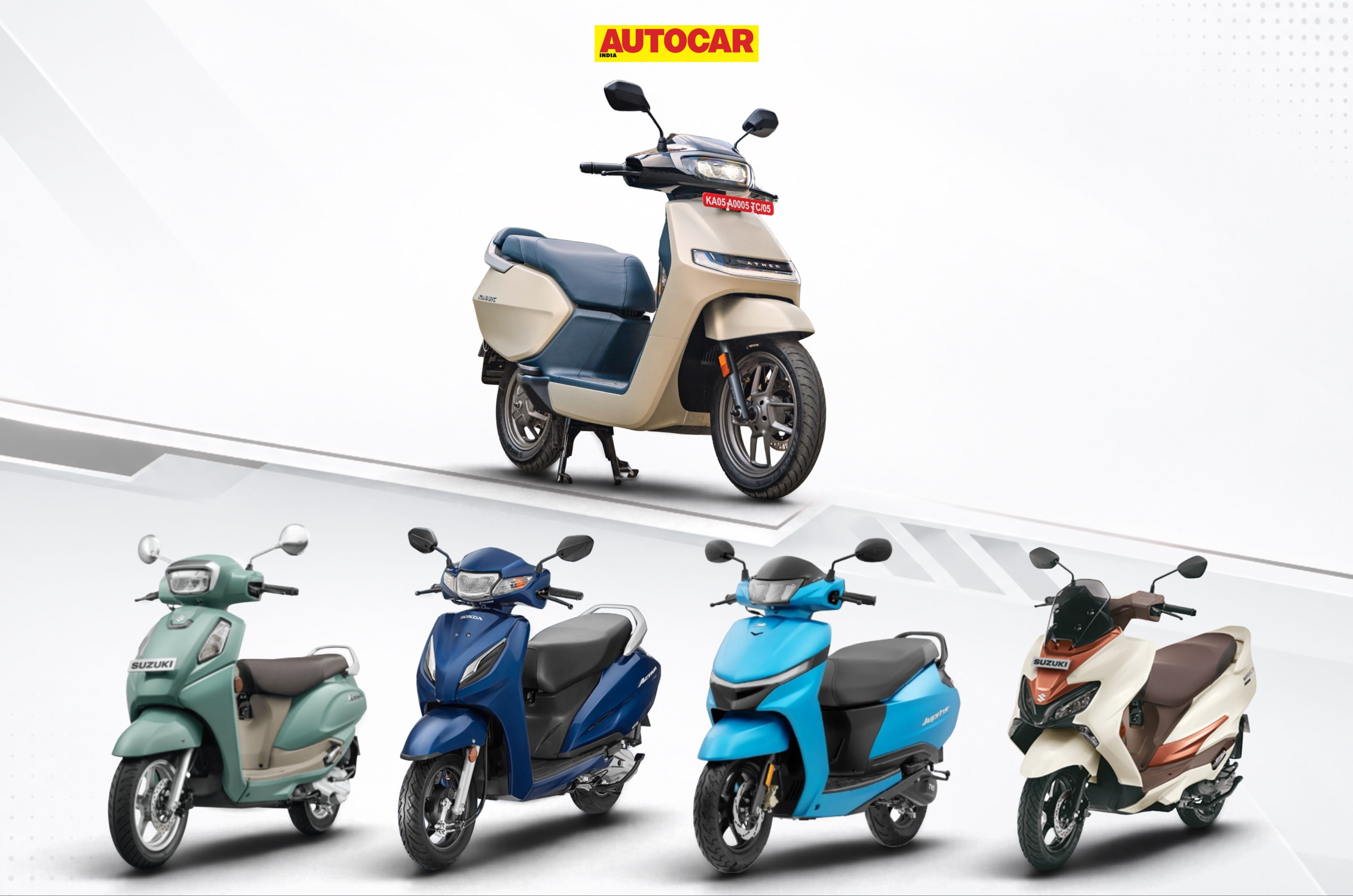
An inside render showing the Ather Konarc at the top; Suzuki Access, Honda Activa 6G, TVS Jupiter, and Suzuki Burgman Street at the bottom.

Family scooter. As soon as you read that, probably one specific scooter comes to your mind, summing up how the scooter industry has functioned the past two decades. However, over the past few years, EVs like the TVS iQube, River Indie, and the Ather Rizta have shown that they can go toe-to-toe with petrol scooters. The brand-new Ather Konarc is poised to add to that arsenal. However, if you aren’t quite convinced yet, here are some internal combustion engine (ICE) scooters you can look at instead.

All scooters are being compared to the Ather Konarc S 100, priced at Rs 99,999 (ex-showroom, Bengaluru). For Konarc, we haven’t considered features that require Ather StackPro subscription. All the other scooter prices mentioned are ex-showroom, Delhi.

Honda Activa

Rs 76,083 onwards

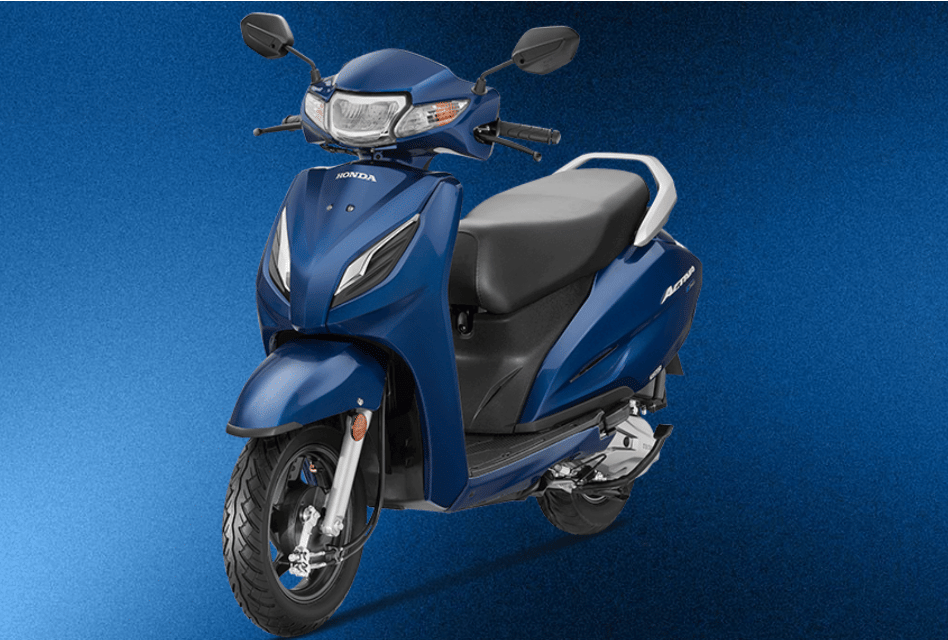
Honda Activa 6G in Decent Blue Metallic colour

The default family scooter and the one your mind reminded you of when you started reading this. You cannot go wrong with the Activa’s reliable 110cc engine and the trust the brand brings you. However, this and the 125 have a lean feature set compared to the other ICE scooters here. The Activa 110 gets a 4-inch TFT instrument cluster with turn-by-turn navigation, smartphone connectivity, a silent start and stop-start system via an Integrated Starter Generator (ISG), and a smart key on the top variant. With the Activa’s 54.4kpl fuel economy, you’re looking at a 270km range before coming to a standstill. The Activa’s prices tops out at Rs 91,082 which makes it close to the entry-level variants of the Ather Konarc and the Simple Wave.

By paying Rs 9,000 more for the Konarc, you’ll get 100km IDC range, 70kph top speed, two ride modes, bigger 14/12-inch front/rear wheels, a bigger 31L under seat storage.

Honda Activa 125

Rs 91,178 onwards

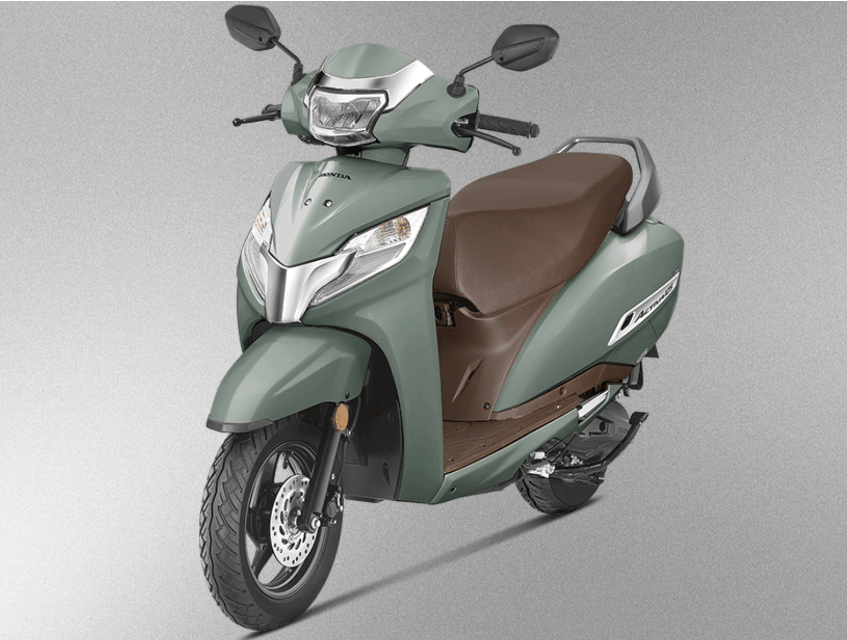
Honda Activa 125 in Pearl Deep Ground Gray colour

The bigger Activa bumps up the cubic capacity to 124cc and increases the power by 0.4hp to 8.3hp and increases the torque by 1.4Nm to 10.5Nm compared to the 110, but is otherwise almost exactly the same as the 110. For that extra power and torque, the Activa 125 bumps up the prices and tops out at Rs 95,622. As such, the extra features you gain by switching to the Konarc also remain the same.

TVS Jupiter (110)

Rs 74,125 onwards

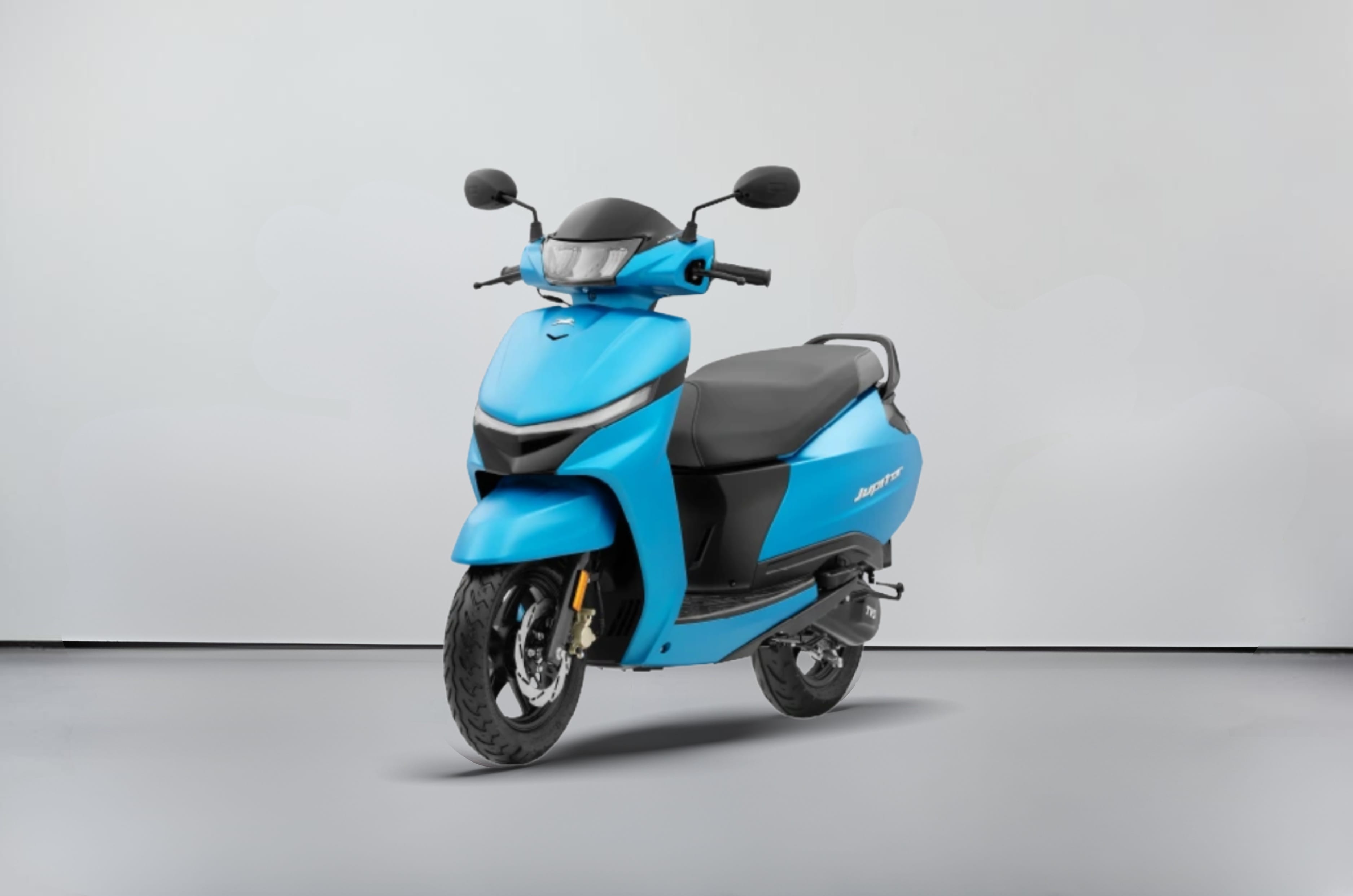
TVS Jupiter 110 in Dawn Matte Blue colour

The Activa’s biggest competitor is the Jupiter which received a comprehensive upgrade in 2024. TVS gave it an all-new 113.3cc engine with 7.9hp and 9.8Nm of torque (with 0.6Nm from the ISG). It also received a much sleekier design over its predecessor. As things stand today, the Jupiter has perhaps the largest feature set of any ICE scooter. Thanks to sharing the platform with its bigger brother, the new Jupiter gets a front fuel tank, 33L under seat storage (that’s still the largest on an ICE scooter). It also gets a wide floorboard, more storage on the front apron storage, an ISG, smartphone connectivity, 12-inch wheels at both ends, a front disc brake on higher variants, and a design that’s much more modern than any of its peers. With its 57kpl fuel economy, the Jupiter also has the Activa beat with a higher 285km range. The Jupiter starts at Rs 74,125 and tops out at Rs 89,825 for the dual-tone variant.

By stepping up to the Konarc by paying an additional Rs 10,174 over the top-most variant, you gain a larger 14-inch front wheel.

TVS Jupiter 125

Rs 81,700 onwards

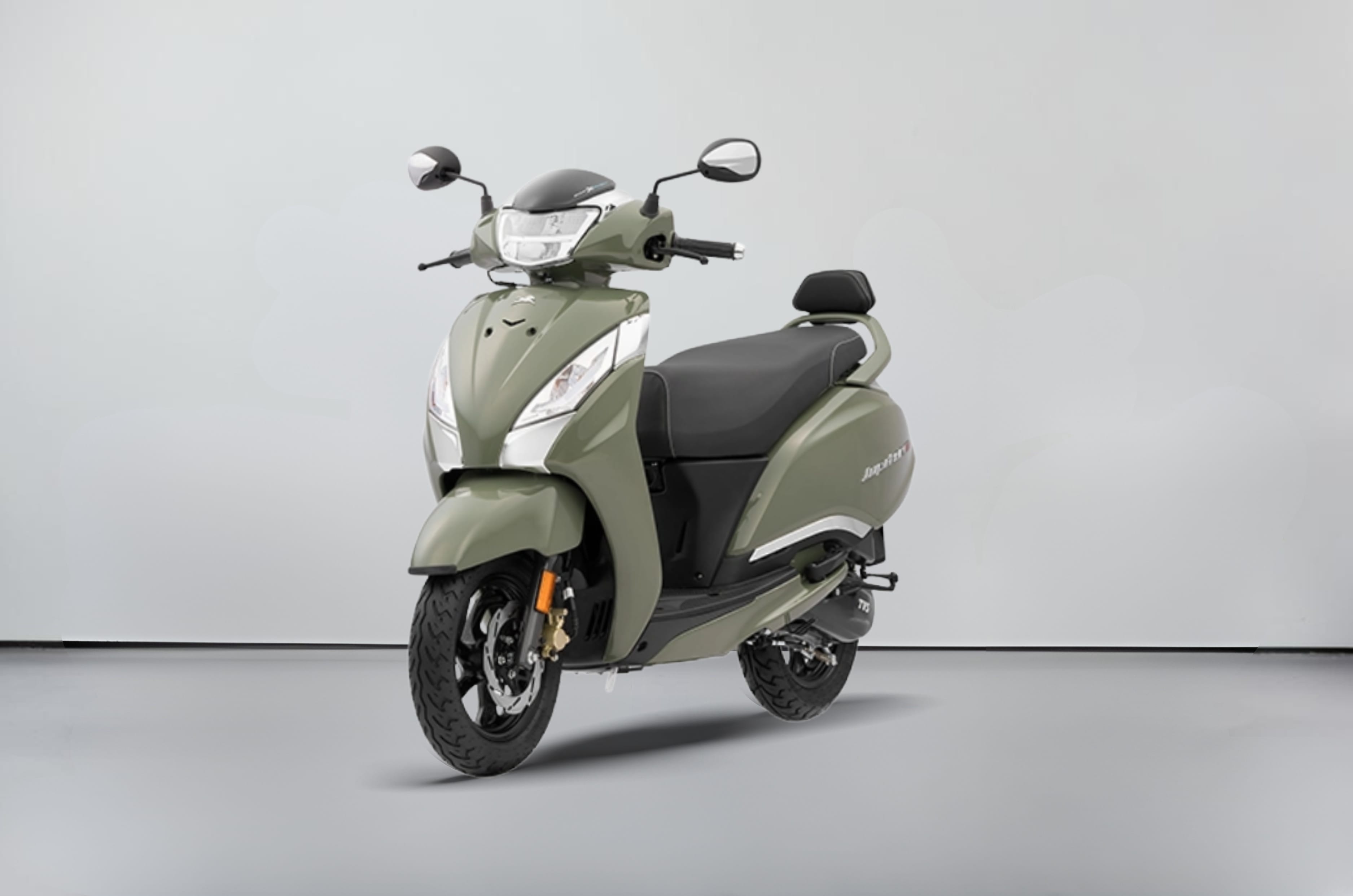
TVS Jupiter 125 in Elite Green colour

The bigger Jupiter unfortunately didn’t quite get the rejuvenation. It’s stuck to essentially the same design from its debut in 2021. With the larger 124.8cc engine, you get 0.5hp extra power and 1.3Nm extra torque over the 110, with the ISG’s assistance; without it, they become 0.1hp and 0.7Nm extra, respectively. Sharing the same platform means that the new 110 has caught up to most of the 125’s features. Though, you do get a TFT display on the 125’s cluster, but it isn’t adding any real value. The Jupiter 125 starts at Rs 81,700 and tops out at Rs 89,935.

By stepping up to the Konarc for approximately Rs 10,000 extra, you gain a larger front tyre.

Suzuki Access (125)

Rs 82,185 onwards

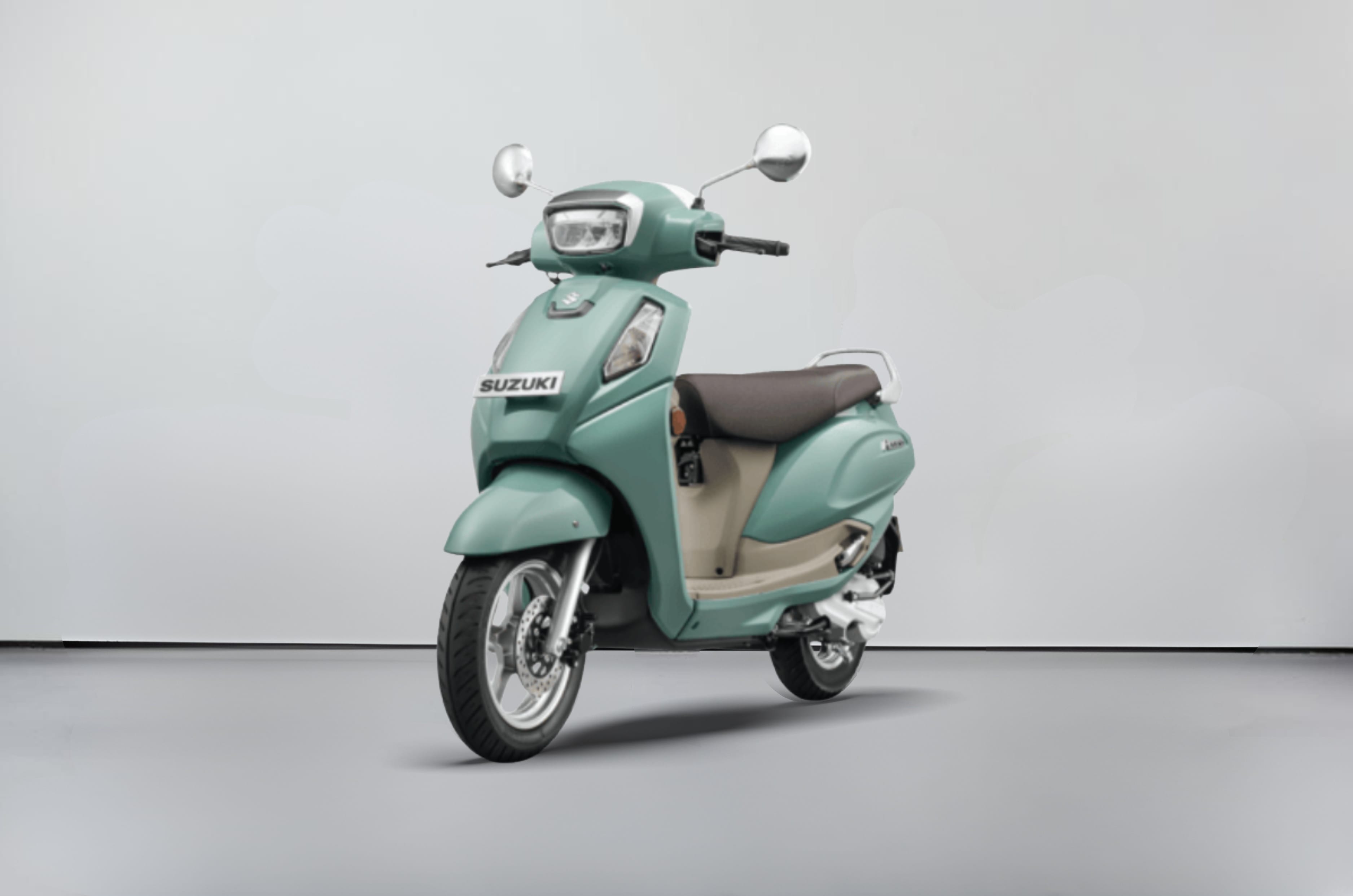
Suzuki Access 125 in Solid Ice Green colour

The Suzuki Access has silently been one of the best-selling scooters in the family scooter segment and it received a comprehensive upgrade in early 2025. While there wasn’t a brand-new engine, Suzuki gave it a new frame and made scores of minute improvements to the engine that added up to make it a comprehensively better scooter. However, that also means there aren’t any new features to help the Access’ case. It sticks to a 12/10-inch front and rear wheel setup, a 24.4L under seat storage that now feels measly even for the ICE world. Suzuki did give it a TFT instrument cluster and single-channel ABS on the highest variant, but that’s about it. The Access starts at Rs 82,185 and will set you back by Rs 1.02 lakh for the TFT-ABS variant.

With the Ather Konarc, you will end up paying Rs 3,000 less and gain a larger 14/12-inch front and rear wheels, two ride modes, and a considerably larger 31L under seat storage but the Access is the only scooter here that offers the safety net of an ABS system.

Suzuki Burgman Street

Rs 1.03 lakh onwards

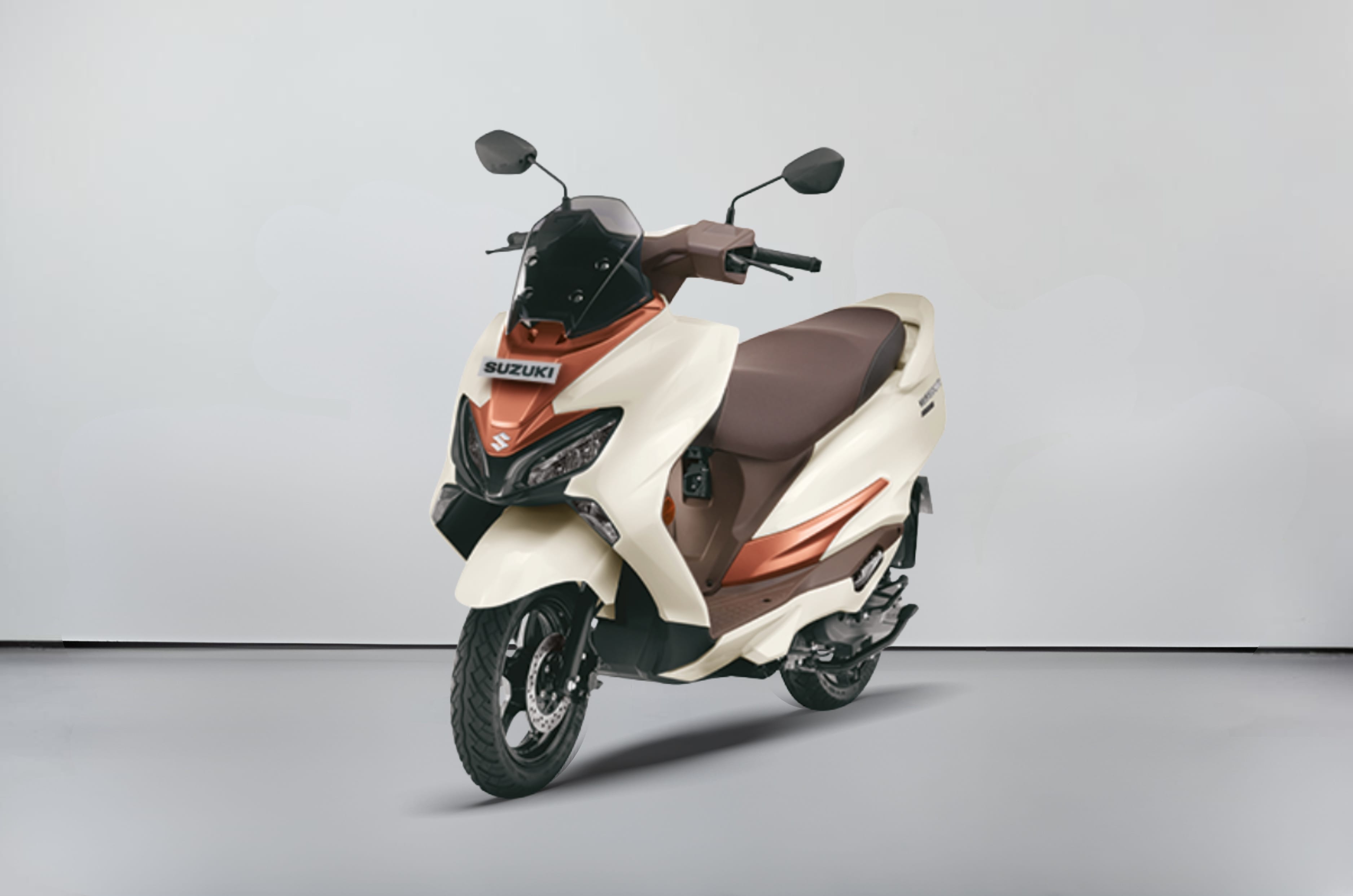
Suzuki Burgman Street in Grace White/Copper colour

The Burgman received most of the same upgrades as the Access in early 2026, with the maxi-scooter stance as its biggest differentiation. The Burgman Street exclusively gets a keyless system on the top-variant, but loses out on the single-channel ABS compared to the Access. On the dimensions front, it gets a 25mm longer wheelbase, 7kg additional weight, and 0.2 litres larger fuel tank compared to the Access. It’s also one of the two Suzuki scooters to have a 12/12-inch front and rear wheel setup in India; the older Burgman Street EX being the other one. Except for these differences and a different design, the Burgman Street shares its mechanicals and convenience features with the Access. The Burgman Street starts at Rs 1.03 lakh and the top TFT variant with the keyless system costs Rs 1.15 lakh.

By getting the Konarc instead, you end up saving about Rs 4,000 (Rs 12,000 compared to the top variant) and you gain a larger 14-inch front wheel, two ride modes, and of course, the larger 31L under seat storage.

Summary and conclusion

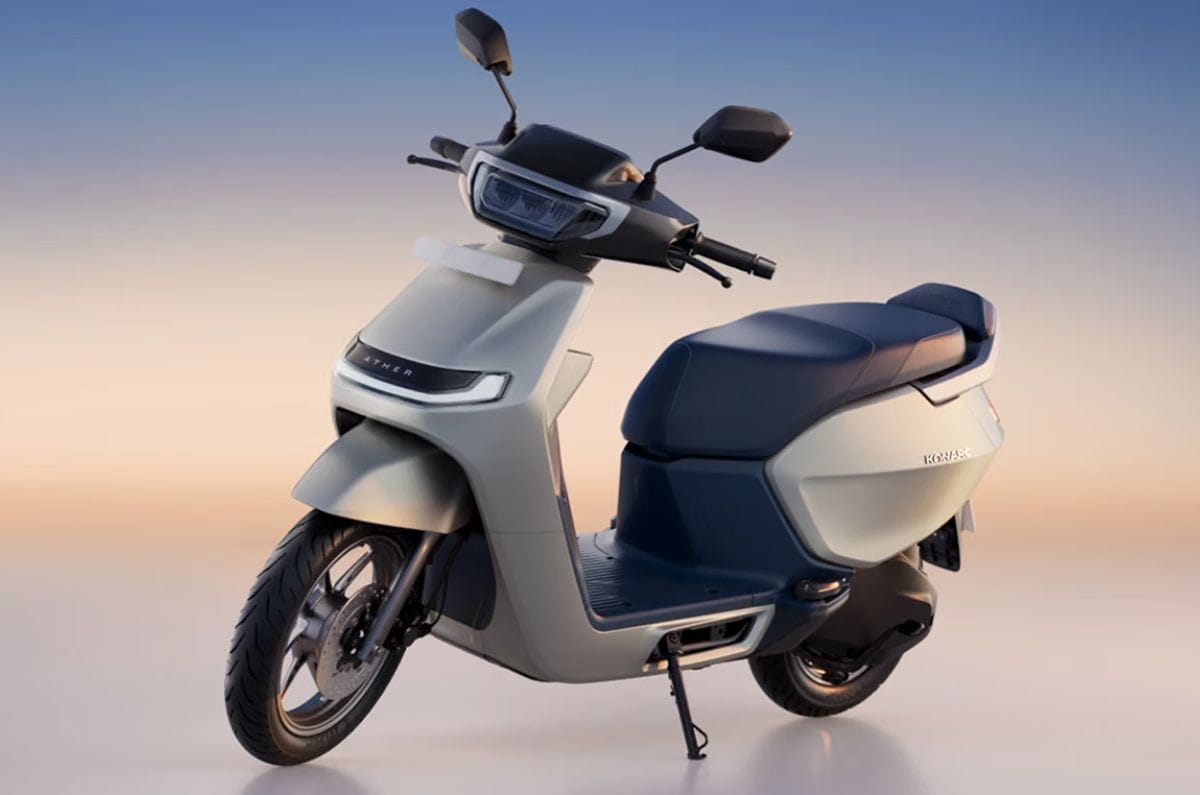
Ather Konarc in Celestial Gold colour

We understand that this article makes it seem like there’s no point in choosing the Ather Konarc in most cases; that’s not quite true. Getting an EV scooter might be the best decision for some people, especially ones with a fixed daily travel distance, living in either their own house, or a housing society that’s generous with setting up a home charger, and all the tech enthusiasts who would like to see how far EVs have come in the past few years. Just the novel riding experience of an EV might be enough to choose the Konarc for you. So, take a test ride of the Konarc S 100 when it becomes available. We’d like you to be aware of the closest ICE options, if you end up deciding the Konarc isn’t for you.

With Ather StackPro and Ather Connect subscription, the Konarc S can offer more smart features that none of the others here can hope to match, but there’s an additional price to be paid for them. Hence, if you’re after the most value for your money, there’s no question that ICE vehicles still offer more for their asking price.

Mahindra Scorpio Getaway: Lifestyler, I am your father

Mahindra Scorpio Getaway: Lifestyler, I am your father
Mahindra Scorpio Getaway

This is the story of a 1,50,000km-old Mahindra Scorpio Getaway that has lived the life it was designed for.

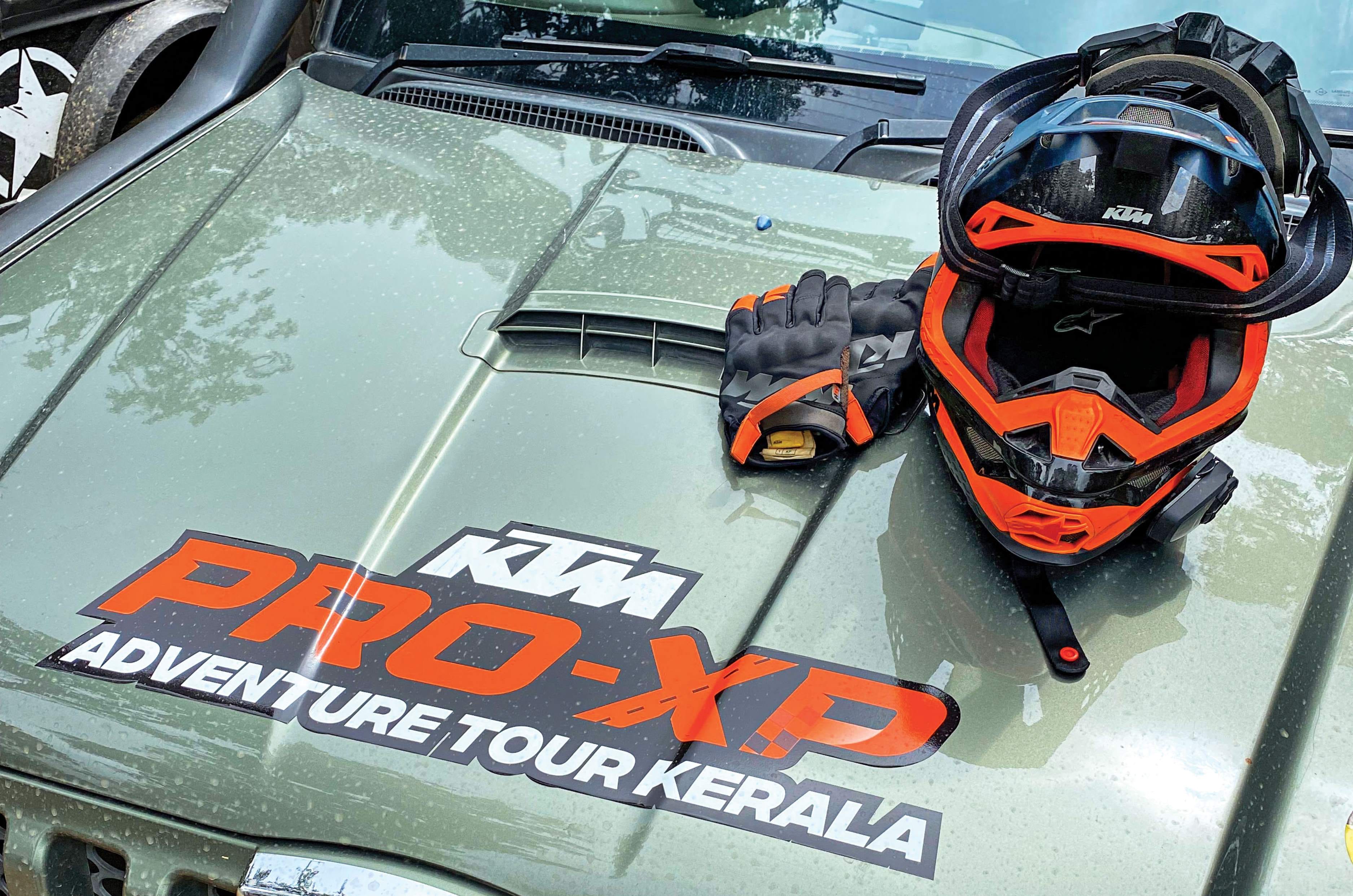
My name is Ouseph Chacko, and I am part-owner of this Getaway because it is my company car. As a partner of an off-road motorcycle school and adventure touring company, I can tell you that if we didn’t have the Getaway from when we started out, it would have taken us a lot longer to get here. We would have been a fair bit lighter of wallet too.

To tell this story properly, I need to rewind a bit – pickup trucks by their very nature are designed to be versatile, and that’s the story of this Getaway. Back in 2016, my business partner Rish was big into long-distance cycling, kayaking and camping tours and needed a vehicle that could accommodate his expensive cycles, carry a couple of kayaks and have the ability to lug around enough gear to make camping, glamping.

The Getaway offered power steering, power windows, power mirrors, air conditioning, front seat armrests and a rear defogger! It also had the electronic shift-on-the-fly four-wheel-drive system and was the most powerful pickup truck on offer.

First things first

While the Getaway looked as lifestyle as could be for pickup trucks back then, it still looked more BRO than Special Forces (no disrespect to the BRO but you get the picture), it needed upgrades.

Who needs drones when you have a roof carrier?

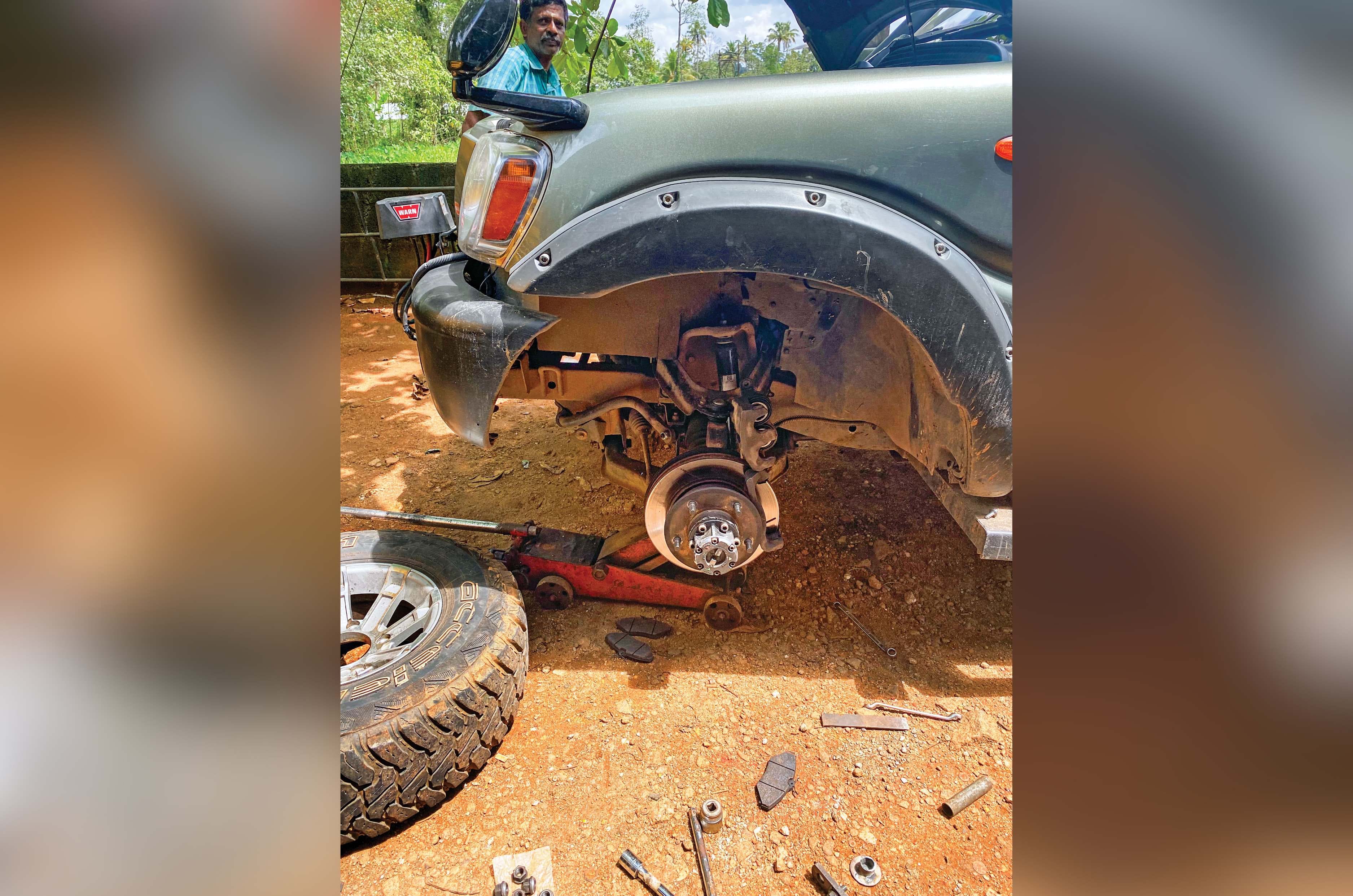
To ensure Rish got stuck further down the trail, a Lamda cable-operated locking differential found its way into the rear axle, while the front axle got manual locking hubs (the factory-fitted auto-locking hubs were prone to breaking under heavy load). The engine was left untouched, but to allow adequate wheel arch clearance for the planned high-profile fat tyres, a two-inch body-lift kit was installed. When you lift it, you need to stance it, and so, the vanilla factory wheels made way for off-road -30 off-set steel wheels and faux wheel arch extensions that muscled up the looks but also let us squeeze in fatter tyres without alerting the RTO.

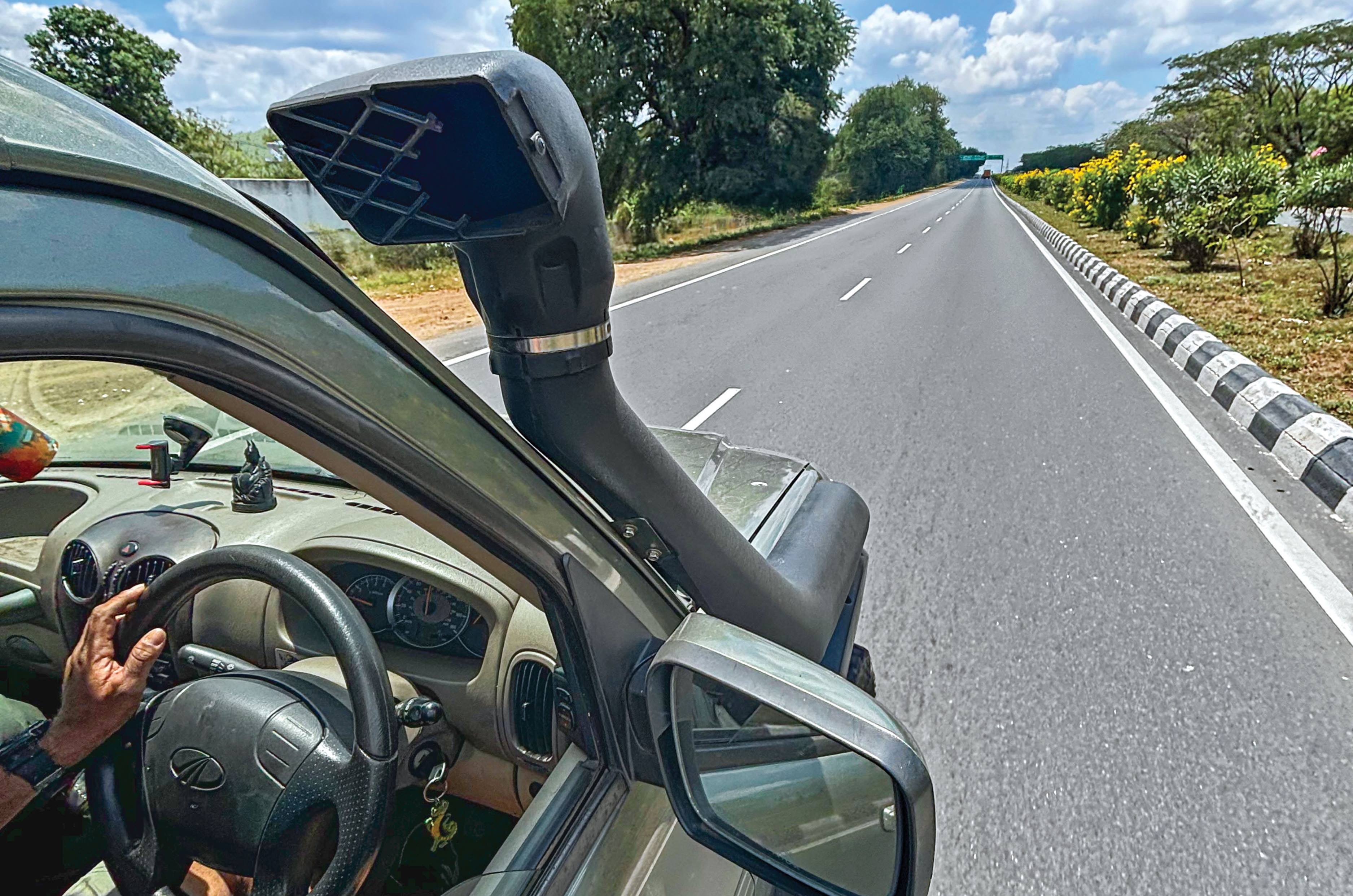
A canopy was added to cover the pickup bed, custom bicycle mounts were welded onto the floor of the bed, a roof-mounted tent, a side awning, solar panels on the roof, an AC-to-DC converter to run devices off the solar panels, a roof carrier, a snorkel, the legendary Warn M8000 winch, metal off-road bumpers, nine auxiliary lamps. Kitchen sink? Pah! There was no space left!

Life has other plans

The snorkel allows some river crossing, but the Brahmaputra had to be crossed on this raft.

For reasons beyond the scope of this story, the Getaway spent most of its first two years parked up with no place to go. It preened, posed, went for the occasional camping trip and lent itself to all the mall crawler memes you can think of.

Then came August 2018. The skies over Kerala opened up. Rivers breached banks, houses were flooded up to the first floor in some places, and parts of middle Kerala were unreachable unless you had a boat or a vehicle with a snorkel. The official rescue teams quickly found themselves overwhelmed, so the Getaway, along with all of Kerala’s 4×4 community, stepped in to assist. The need of the hour was clean bedsheets, towels, underwear, drinking water, easy-to-reheat food and a way to get these supplies to people stranded in homes surrounded by flood waters or cut off by landslides. We loaded the Getaway’s pickup bed to the sky and drove through bonnet-deep water for about three days, handing out generously donated essentials. We stopped only when the rains subsided and when one of the people we thought needed help asked if we were carrying blue underwear. His favourite colour apparently!

Extremely useful as a backup car for our business because it can carry a mechanic, medic, tools, medical kit and motorcycles, with room to spare.

Soon after the rains subsided, the Motor Vehicles Department in Kerala started a serious clampdown run on modified vehicles, and we figured it was time to strip the Getaway of everything but the essentials. The School Of Dirt  – our off-road motorcycling school – was in full swing by then, and the Getaway was the backup car because it could carry a mechanic, medic and two broken motorcycles at a go. We kept the winch, the snorkel and the mud-terrain tyres. We added new features like the comprehensive tool kit for off-road trail fixes and an exhaustive medical kit for when things go wrong far from a hospital. This thing can carry a lot!

We’ve had a few heart-in-mouth moments, but the Getaway always got us home safe.

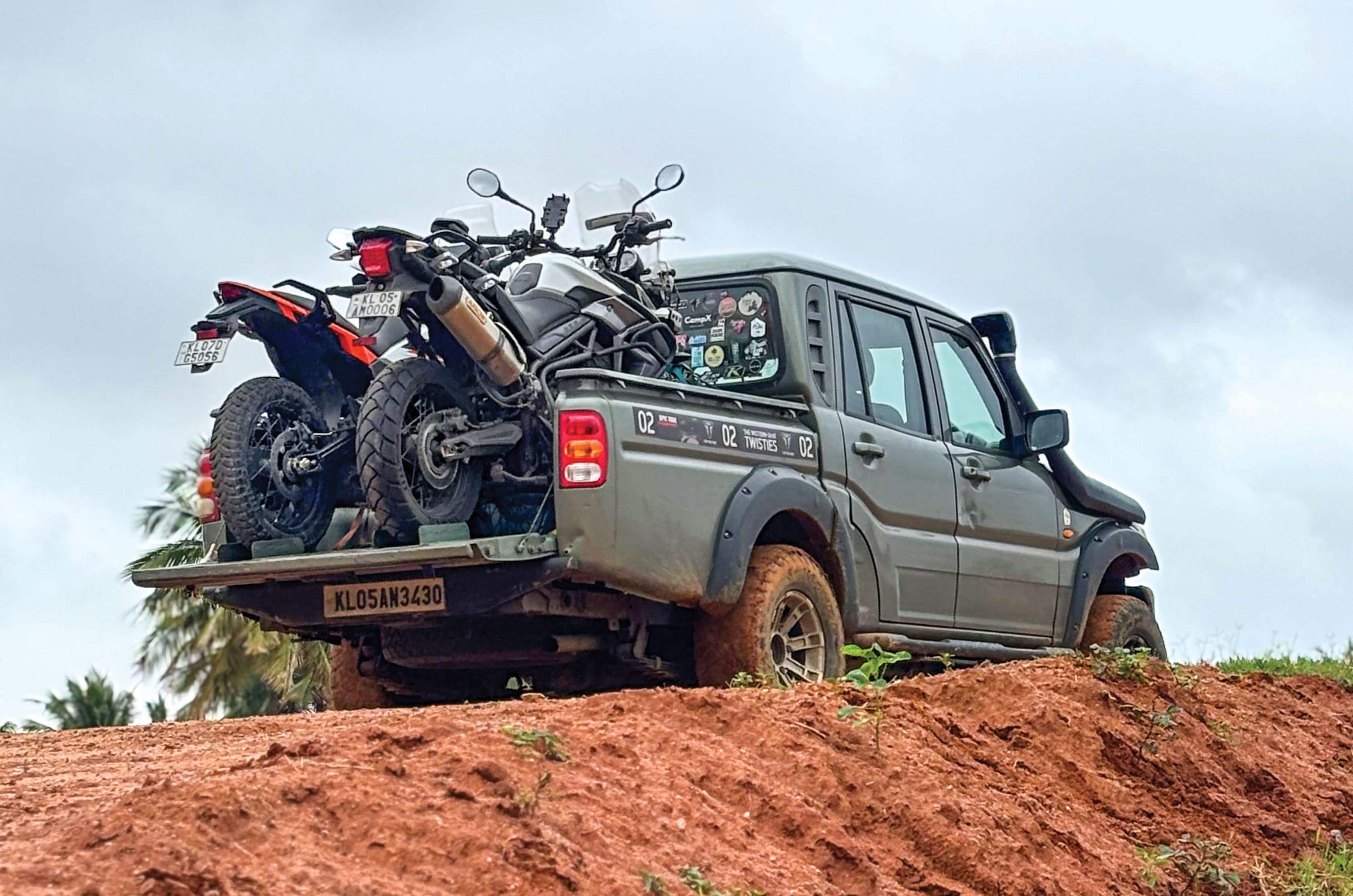
The next eight years were when the Getaway really pulled its own weight in gold. Most notably, the two 8,000km Kottayam-to-Kohima round trips, mostly with a 250kg Tiger 1200 strapped to its back, and about 1,10,000km criss-crossing South India with us and paraphernalia in it. It has been our hotel room and our home away from home when the adventure motorcycle thrill started booming. More than anything, it has been as reliable as a hammer and didn’t need much more than a full tank of diesel and some duct tape to get to the next destination.

Wear and tear on big bikes is expensive. Getaway helps mitigate that expense.

We figured a long time ago that using its ‘certified’ 600kg payload capacity to carry a motorcycle is a huge cost saving for a startup business. Ever since all nice and fast things became sin goods in the eyes of the government, carrying the bike to the start of the trip and using it only at the event became a much more economical proposition than riding it all the way. An example? A proper load- and speed-rated rear tyre on the Tiger 1200 costs Rs 25,000, and with the way I ride the bike, I obliterate that poor tyre in just 3,500km. That and the expensive mechanical wear and tear on these big bikes ultimately meant it was cheaper to load the bike on the back of the Getaway and transport it to the event.

Spare a thought

This being a Mahindra and based largely on the Scorpio, parts are available everywhere in India, and mechanics know their way around the Getaway’s Scorpio bloodline despite the pickup’s rarity. We run the car on a preventive maintenance schedule because we really work it hard, and no matter what, it gets fresh air, oil and diesel filters every 5,000km. The engine and transmission oil get changed at the same time, the leaf springs at the back are realigned and reshaped every 15,000km and the torsion bar front suspension gets re-adjusted every time we notice it starting to sag. We don’t have a bed liner for the pickup bed, so once a year, we check it in to a paint spa for a fresh coat to prevent rusting from all the scratches. That’s it.

Easily repaired because it shares a lot of parts with the Scorpio.

The engine has never needed an overhaul, and it is helpful that the bomb-proof 2.6 CRDe engine will run on anything that resembles diesel. The weak link in the mechanical package is the clutch – if you’re not reasonably careful every time you start off on a slope, it’ll vaporise fast. Still, the clutch pack along with the clutch release bearing works out to something like Rs 6,000, so apart from the inconvenience of being stranded, it really doesn’t hurt the wallet.

Also, because of our carelessness, we’ve chewed through three rear differentials in the course of the last decade (sometimes the cable-operated Lamda differential doesn’t fully disengage thanks to a corroded cable, and if you are not careful, you end up driving with a partially locked differential on the road). The rear differential turned out to be one of the most expensive spares on the Getaway, working out to around Rs 40,000 a pop, and even that is not too bad considering a broken tail-lamp on a Hilux will set you back Rs 30,000. We’ve since discarded the locking differential and keep fingers crossed that the winch will yank us out when the time comes. Also, don’t break the rear windshield – it is harder to source than a Ferrari 250 GTO!

With a full load, the Getaway still runs around 10 kilometres for every litre of diesel consumed, and that, along with its 60-litre fuel tank, gives it a useful range of 600km.

1,50,000km of highways and trails, and it is still going strong!

The Getaway doesn’t seem to lose much on resale value either. Back in 2016, Rish bought it for Rs 11 lakh and some spare change (on road!). Because every other new lifestyle pickup truck in the market is considerably more expensive, I think people are coming around to the sweet spot of utility, value and comfort that the Getaway hits. It is a reasonably simple vehicle with zero electronics (no ABS even!) and so lends itself to hard work and easy fixes happily. Still, well-maintained Getaways are few and far between and their owners (like us) are loathe to let them go. The ones you find on used-car portals are bad. Trust me, I’ve looked.

What next?

No one is more excited about the launch of the Getaway’s replacement than I am. The new Lifestyler (weird name) looks very cool, and the more powerful engines will definitely make fully loaded cross-country trips effortless. The expected base price is positively tasty, and I hope it will come with maintenance costs to match.

It does seem a bit too fancy, though, and I worry about the interiors that are no longer the hose-down kind. I hope Mahindra will offer a more pared-down version that will allow people like me to use it with dirty boots and greasy gloves guilt-free. 
In the mountaineering world, when someone successfully summits a peak, you ask, “Who’s your sherpa” The Getaway has been The School Of Dirt’s unfailing sherpa. The Lifestyler has its work cut out.

Kia Carens Clavis EV long term review, 11,000km report

Kia Carens Clavis EV long term review, 11,000km report
Kia Carens Clavis EV 11,000km report

A lot of us on the Autocar India review team have been eagerly awaiting the arrival of the Clavis EV. Who knew a bunch of auto enthusiasts would be looking forward to an electric 7-seat MPV. The thing is, though, electric and MPV are two very congruous elements. 

If you’re going to have a large people mover, an electric drivetrain does well by not penalising you on efficiency – like an internal-combustion engine does – and its smooth and silent running keeps everyone happy. And in an MPV, where it’s a relaxed frame of mind you’re often driving in, electric power again suits this character to a T.

So yes, this combination really does make sense, and the electric Clavis really brings out this harmonious pairing superbly. 

The Clavis shares its powertrain with the Hyundai Creta Electric, and we have the larger 51.4kWh battery model, which drives a 171hp motor. Efficiency, while not bad, is lower than the Hyundai’s. So far, in the city, on my home-to-office run, the Clavis manages about 6.8km/kWh, which would equate to a range of 350km, while the Creta averaged 8.1km/kWh.

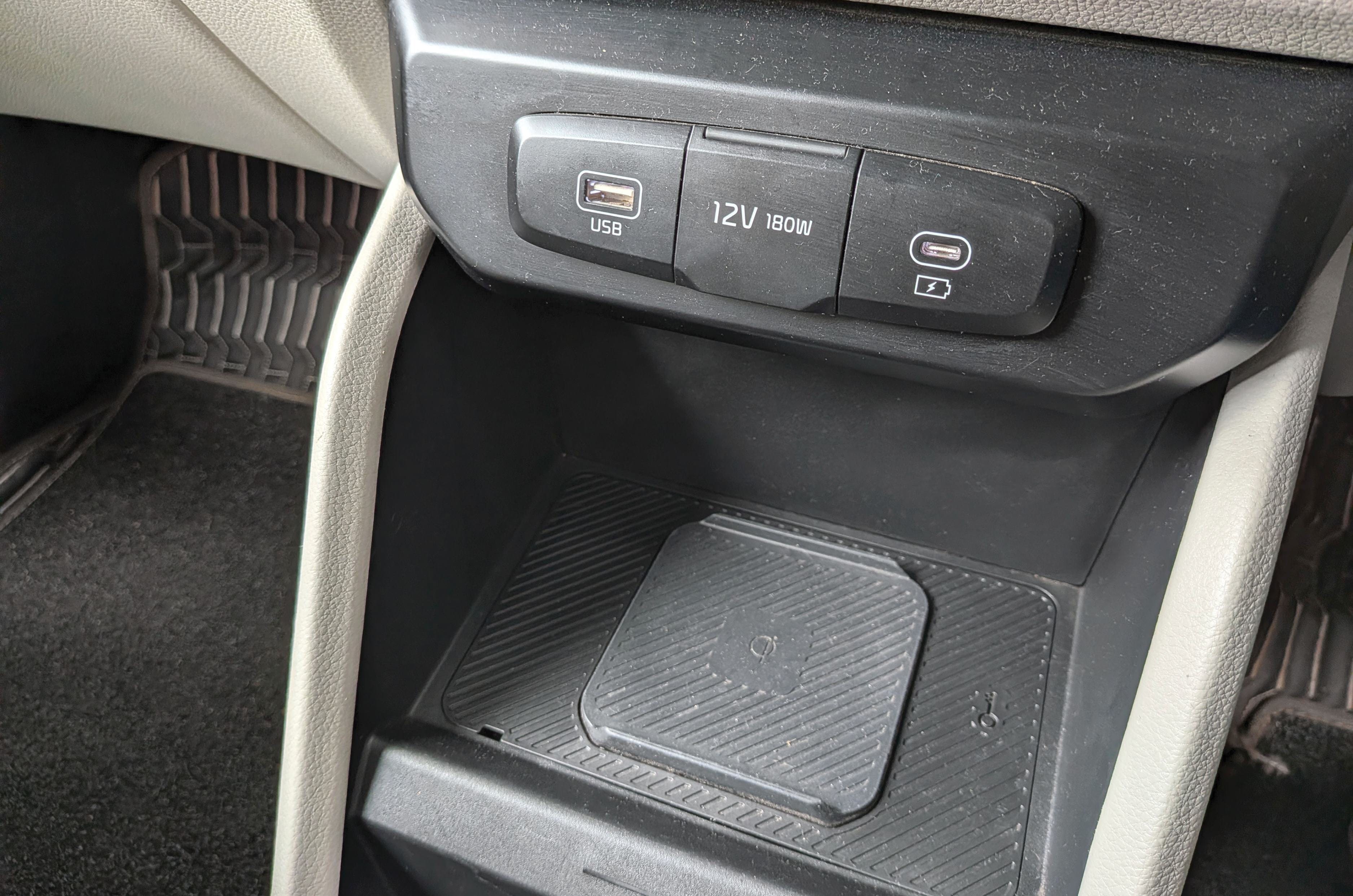
Wireless charger, 12V, Type-A and Type-C at the front and USB sockets in all three rows.

However, the power calibration is spot on for its intended purpose. There’s none of that instant power dump and a hair-trigger torque delivery, making it very easy to modulate if you’re simply out on a relaxed and laid-back drive – a.k.a. MPV mode. But don’t mistake that for a lack of performance. Press down a bit further on the accelerator, and there’s plenty of power for overtaking, even with a full load or on steep inclines. I’ve run it with six onboard, and it really made no difference. This is exactly how you’d want an MPV powertrain to be set up. 

The ride is another bit that’s nice. To tackle the extra weight of the battery, Kia has retuned the suspension and, like in the case of the electric Creta, it does have a firm side. But this has also helped with removing some of that secondary motion after you come off a speed breaker or bump. So, the ride feels settled, and at highway speeds, it is stable and composed. 

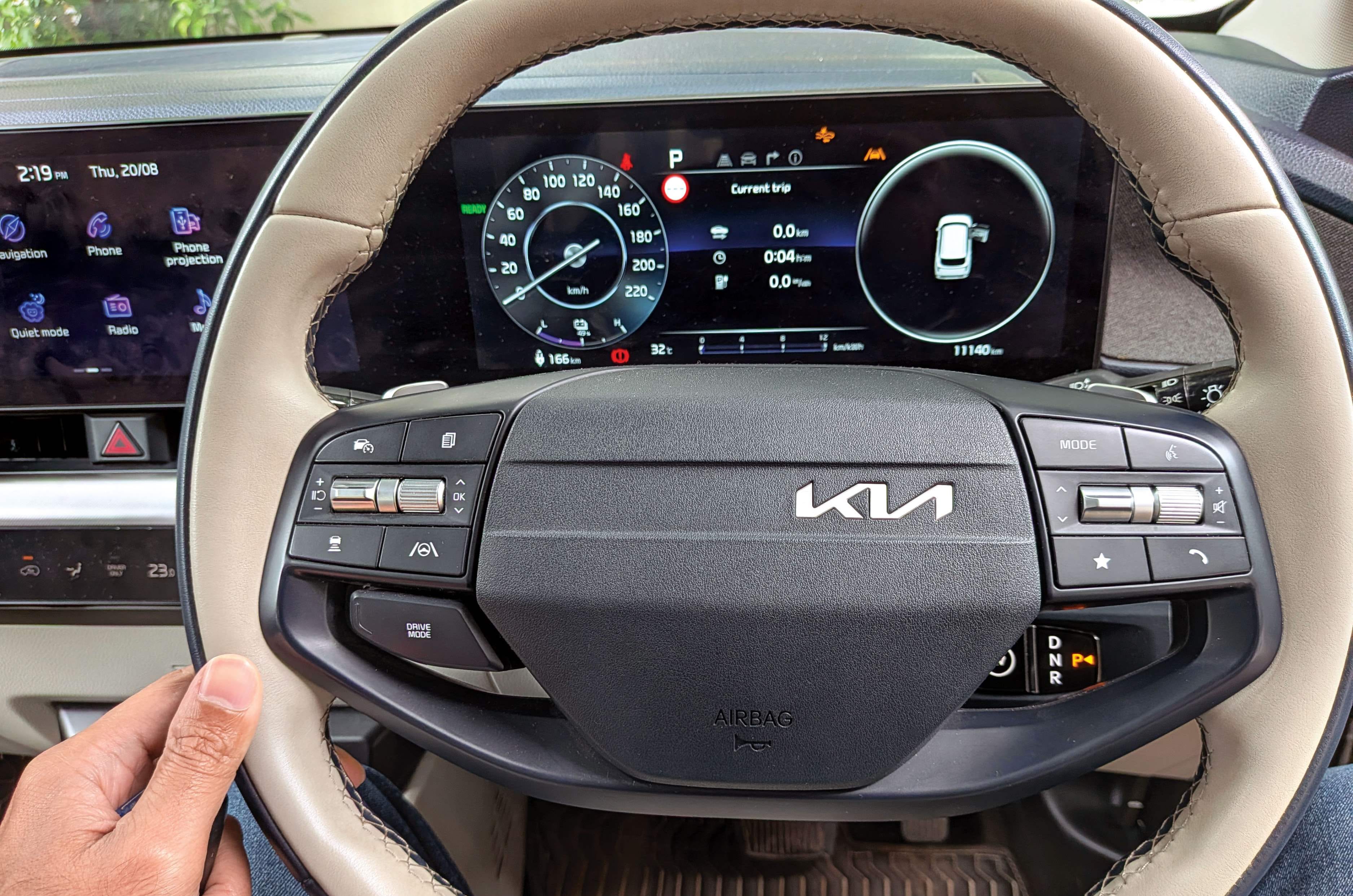
Quirky two-spoke, flat top and bottom steering wheel always looks upside down.

My wife drives it too, and she loves this easy-going nature, as well as the seating position. That is something I don’t really like, though. It feels like sitting at a dinner table, with your knees closer to a 90-degree angle. The seat base is also quite short, adding to that dinner-chair-like posture. It isn’t uncomfortable, though. The seat cushioning is fine, but it’s just the position that’s far from car- or SUV-like. 

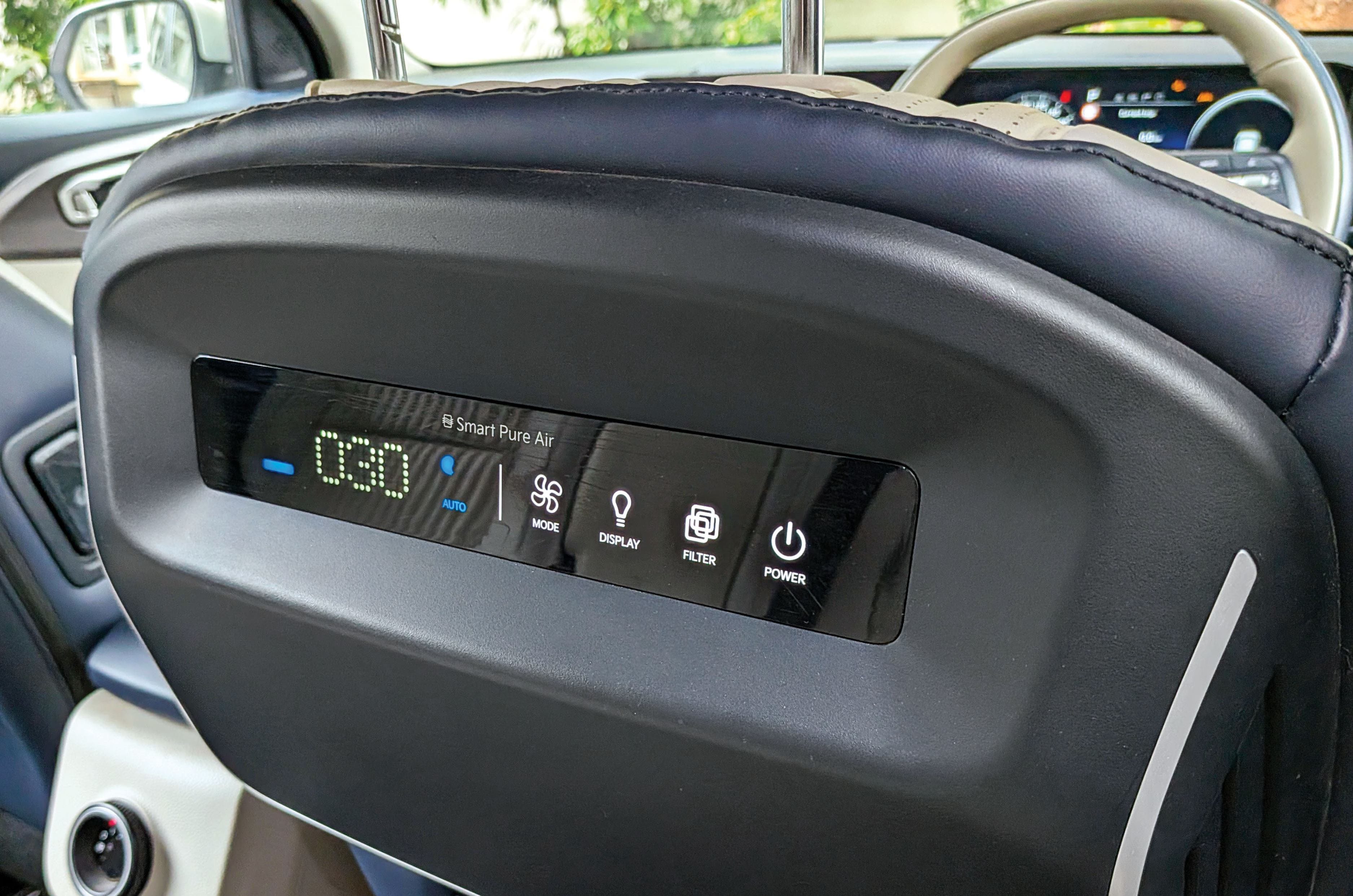
Besides that, there are only small bits I dislike, like the starter button, which is located on the drive selector stalk and hence hidden behind the steering wheel, only visible if the wheel is in the absolute straight-ahead position. The air purifier is also noisy, but that’s more due to its positioning behind the driver’s seat and thus close to your ear. 

Air purifier located right behind the driver makes the air draft easily audible.

Beyond that, the Clavis EV has been remarkable. The kids love the electric seat fold that allows you to tumble the second-row seat at the push of a button, granting easy access to the third row. The space there drew no complaints either. It’s even good enough for average-sized adults and gets dedicated AC vents too. The window size, though, is a bit small, and while my daughter, who is prone to motion sickness, has so far not complained about it, I’m sure on a longer drive she will find this annoying. My son, who is taller than me, complained about this, saying he needs to look down through the glass. Headroom and overall space, though, were just about fine for him. 

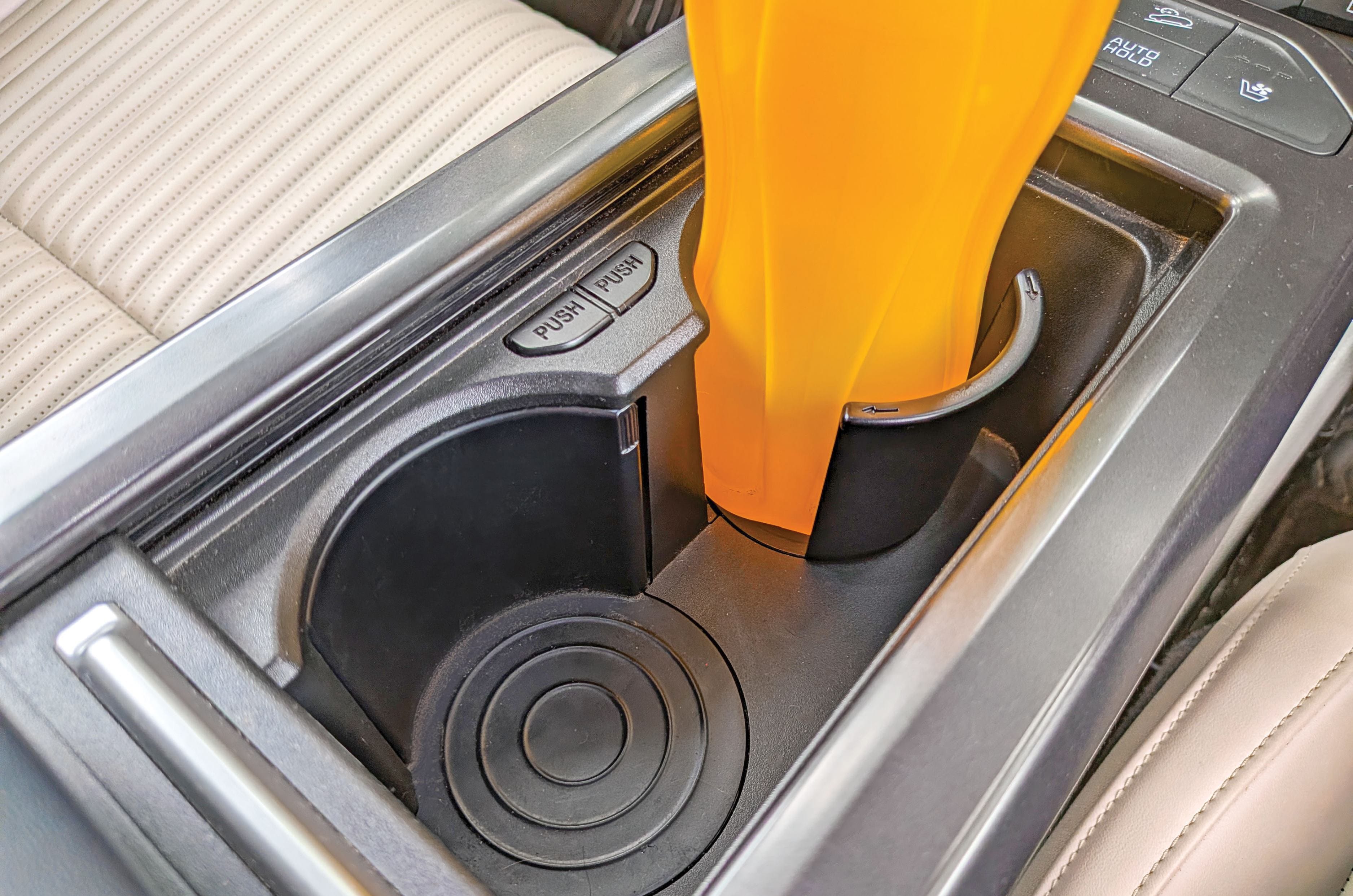
Speaking about space, the centre console drew a lot of praise from everyone who sat at the front. There’s plenty of storage, so no fighting to keep odds and ends. There are places for your phones, wallets, cups and bottles thanks to a cool resizeable tray, and the lower portion of the console can easily contain a medium-sized handbag. I’ve even managed fitting a tablet with its case in there. The premium-looking interior has also impressed everyone, the ambient lighting taking many by surprise. I guess not many expect this level of finish when they see an MPV. 

Resizeable cup/bottle sleeves are handy and pop out at the touch of a button.

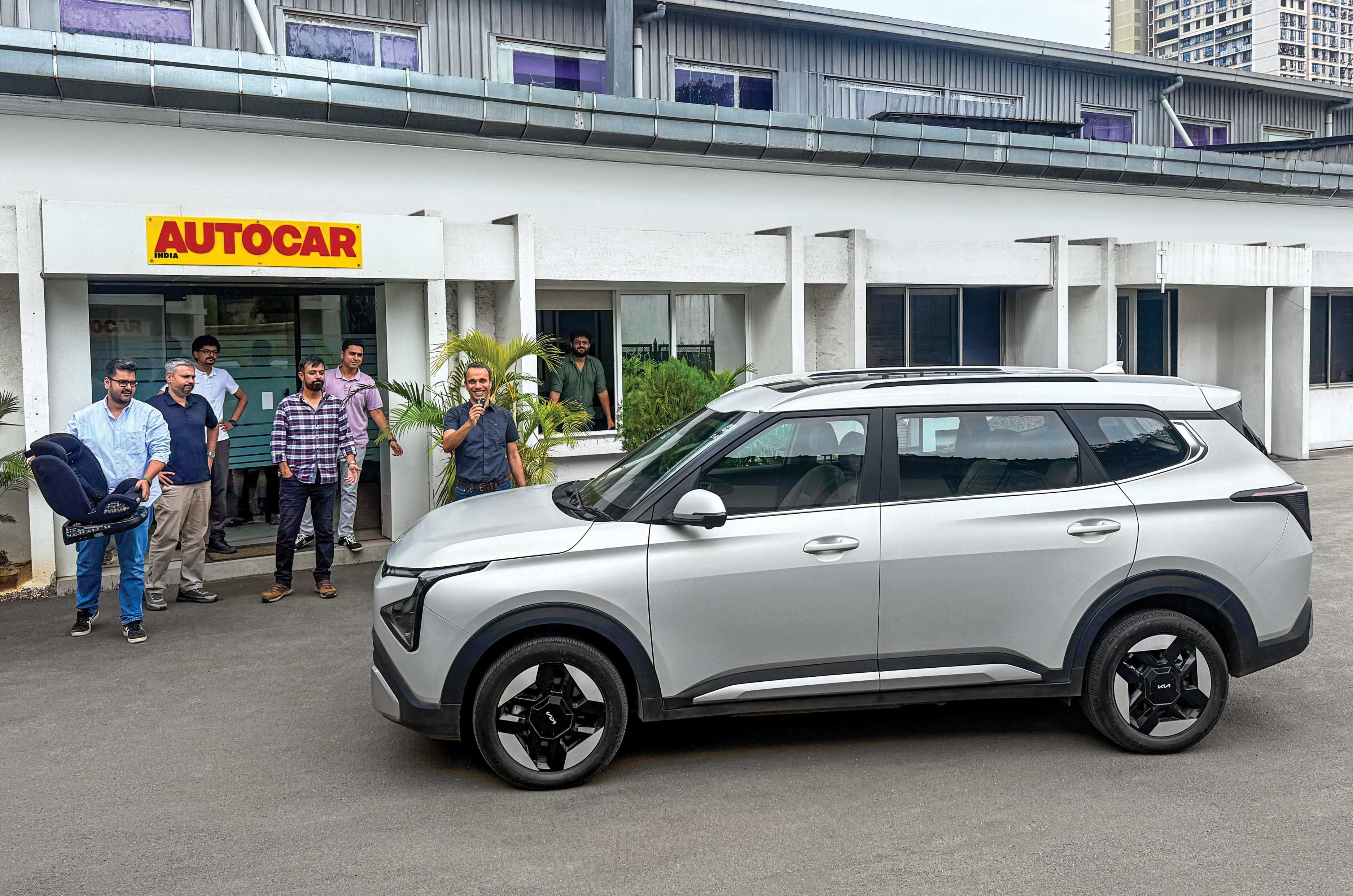
So, all in, like I said at the start, the electric Clavis is really a fine example of why electric power and MPVs are such a great mix. I’m sure our resident van man, Nikhil Bhatia, will be relieving me of the keys very soon. He’s already speaking of how his daughter loves to look up through sunroofs from her child seat. Rahul, too, will soon want it for its flexibility in some or the other tracking car duty.

Kia Carens Clavis EV test data

Odometer11,100km
PriceRs 24.53 lakh (ex-showroom, India)
Economy6.8km/kWh
Maintenance costNone
FaultsNone
Previous reportNone

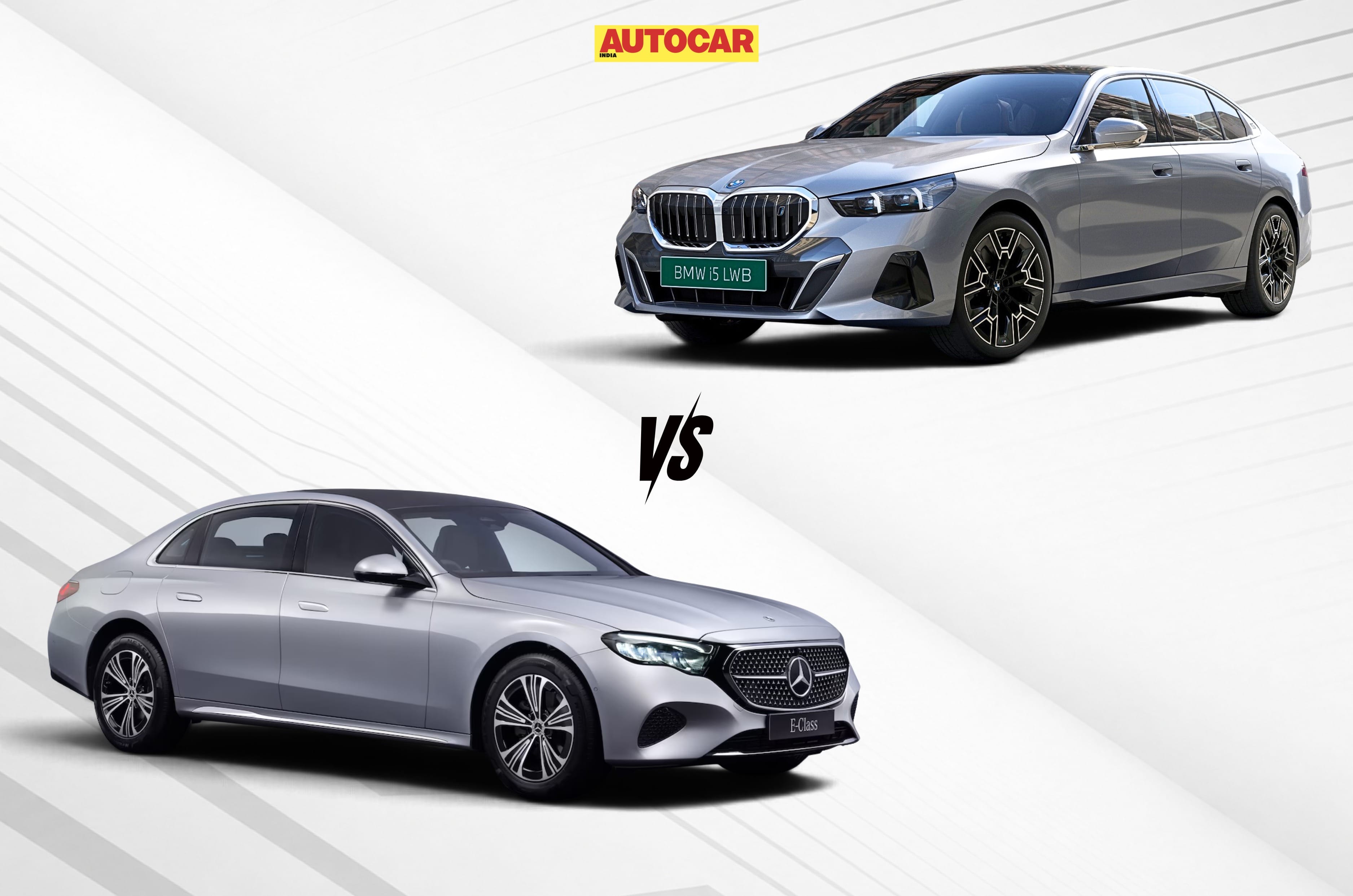
BMW i5 LWB vs Mercedes E-Class diesel: Specs, features and price compared

BMW i5 LWB vs Mercedes E-Class diesel: Specs, features and price compared
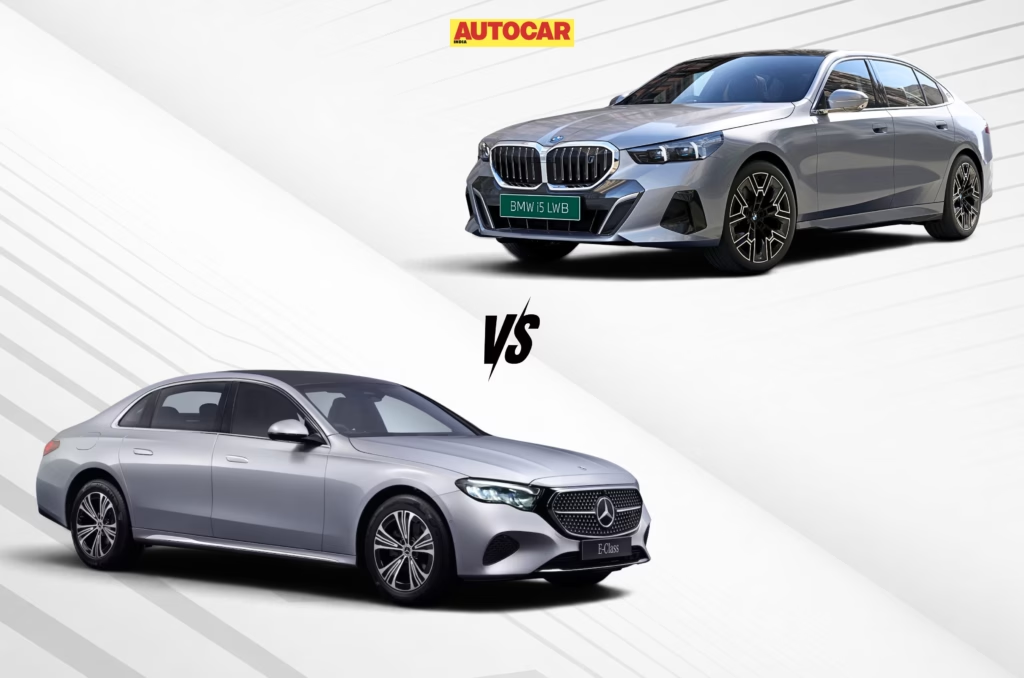
BMW i5 LWB vs Mercedes E-Class

The BMW i5 LWB and Mercedes-Benz E 220d take different approaches to the luxury sedan. BMW no longer offers a diesel engine with the 5 Series in India, so for buyers with high annual running who want an efficient 5 Series, the electric i5 is the only option. The E-Class, meanwhile, continues to offer a diesel powertrain in the form of the E 220d, alongside petrol versions. Both are aimed at buyers seeking a spacious, chauffeur-friendly luxury sedan, but their powertrains make for very different ownership propositions. Here’s how they compare.

BMW i5 LWB vs Mercedes E-Class: Dimensions

i5 is wider, while length, height and wheelbase are similar

 BMW i5 LWBMercedes E 220d
Length5,175mm5,092mm
Width2,156mm1,880mm
Height1,520mm1,493mm
Wheelbase3,105mm3,094mm
Wheel size20-inch18-inch

The i5 LWB is significantly wider than the E-Class – by 276mm – while the two are fairly similar in length, height and wheelbase. The BMW also gets larger 20-inch wheels compared with the Mercedes’s 18-inch units.

Another point of difference is the suspension. The i5 LWB gets rear-axle air suspension, which should help with ride comfort, while the E 220d uses a steel setup with selective damping, which also does a great job of blunting sharp bumps and keeping the car as level as possible over cracks and ruts.

BMW i5 LWB vs Mercedes E-Class: Powertrain

i5 is quicker and more powerful; E 220d has more torque

 BMW i5 LWBMercedes E 220d
PowertrainSingle electric motor2.0-litre diesel + 48V mild hybrid
Power268hp197hp
Torque410Nm440Nm
TransmissionSingle-speed automatic9-speed automatic
Drive layoutRear-wheel driveRear-wheel drive
0-100kph6.7sec7.6sec
Battery81.6kWh–
Claimed range669km, MIDC–

The i5 has the clear advantage in power and acceleration, but the E 220d has more torque than its electric rival. The i5 should also be smoother, as expected of an EV, while the E-Class is exceptionally fuel efficient for a luxury sedan and can manage more than 800km on a full tank.

The i5 gets a large 81.6kWh battery pack and has a claimed MIDC range of 669km. Considering this figure, a real-world range of over 500km should be achievable, which is enough for highway runs. Longer journeys will still need to be planned around charging stops, whereas the E-Class does not face this limitation.

On paper, the i5 makes a strong case, particularly for buyers who primarily drive in the city and have access to charging. The E 220d, however, is better suited to those who regularly mix city driving with long highway journeys and want the convenience of quick refuelling.

BMW i5 LWB vs Mercedes E-Class: Exterior features

i5 gets adaptive LEDs; both have electric folding mirrors

 BMW i5 LWBMercedes E 220d
LED headlightsAdaptive LEDLED
LED DRLsYesYes
LED tail-lightsYesYes
Illuminated grilleYesNo
Powered ORVMsYesYes
Powered tail-gateYesYes
Door handles Flap typeFlush-fitting

In terms of exterior features, both sedans are similarly equipped. Both get LED headlights, LED daytime running lamps (DRLs), LED tail-lights, powered outside rearview mirrors (ORVMs) and a powered tailgate. The i5 LWB, however, gets adaptive LED headlights and an illuminated grille. The two also differ in their door-handle designs, with the i5 using flap-type handles and the E-Class getting flush-fitting units.

BMW i5 LWB vs Mercedes E-Class: Interior and features

i5 focuses on front-seat comfort, while the E-Class prioritises the rear

 BMW i5 LWBMercedes E 220d
Digital driver’s display12.3-inch12.3-inch
Central touchscreen14.9-inch14.4-inch
Passenger displayNo12.3-inch
Wireless Apple CarPlay/Android AutoYesYes
Four-zone climate controlYesYes
Front-seat ventilationYesNo
Rear-seat reclineNoUp to 36 degrees
Wireless chargingFront and rearFront and rear
Audio system17-speaker Bowers & Wilkins17-speaker Burmester 
Ambient lightingYesYes
Rear sunblindsNoYes
Panoramic sunroofYesYes
Electric seat adjustment from rearNoYes
Soft-close doors    NoYes

Both offer a similar baseline of luxury equipment, but their priorities differ. The i5 adds ventilated front seats and a larger central display, while the E 220d has a more comprehensive set of rear-seat features, including electric recline, sunblinds, soft-close doors and the ability to adjust the front passenger seat from the rear. For a chauffeur-driven buyer, that gives the Mercedes an advantage in rear-seat functionality.

BMW i5 LWB vs Mercedes E-Class: Safety features

Both get ADAS and 360-degree cameras

 BMW i5 LWBMercedes E 220d
Airbags88
360-degree cameraYesYes
Lane departure warningYesYes
Blind-spot monitoringYesYes
Automatic Emergency BrakingYesYes
Parking assistYesYes
TPMSYesYes
Auto holdYesYes

The two cars are closely matched on safety features, with both offering 8 airbags, lane departure warning, blind-spot monitoring, automatic emergency braking, 360-degree cameras and parking assistance.

BMW i5 LWB vs Mercedes E-Class: Prices

BMW i5 LWB is Rs 3.90 lakh cheaper

Price (ex-showroom)BMW i5 LWBMercedes E 220d
PriceRs 79.60 lakhRs 83.50 lakh

At Rs 79.60 lakh, the i5 LWB is Rs 3.90 lakh more affordable than the E 220d and is also cheaper than the petrol E-Class. Factoring in the lower running costs of an EV, particularly for buyers who can charge at home, the BMW makes a strong financial case.

BMW i5 LWB vs Mercedes E-Class: Verdict

On paper, the BMW i5 LWB is the stronger choice if outright performance, lower running costs and a more front-seat-focused cabin are priorities. It is more powerful, quicker and cheaper to buy, while home charging can make it substantially cheaper to run.

The Mercedes E 220d makes the stronger case for chauffeur-driven use, with a more rear-seat-focused cabin, along with the longer range and quicker refuelling of its diesel powertrain.

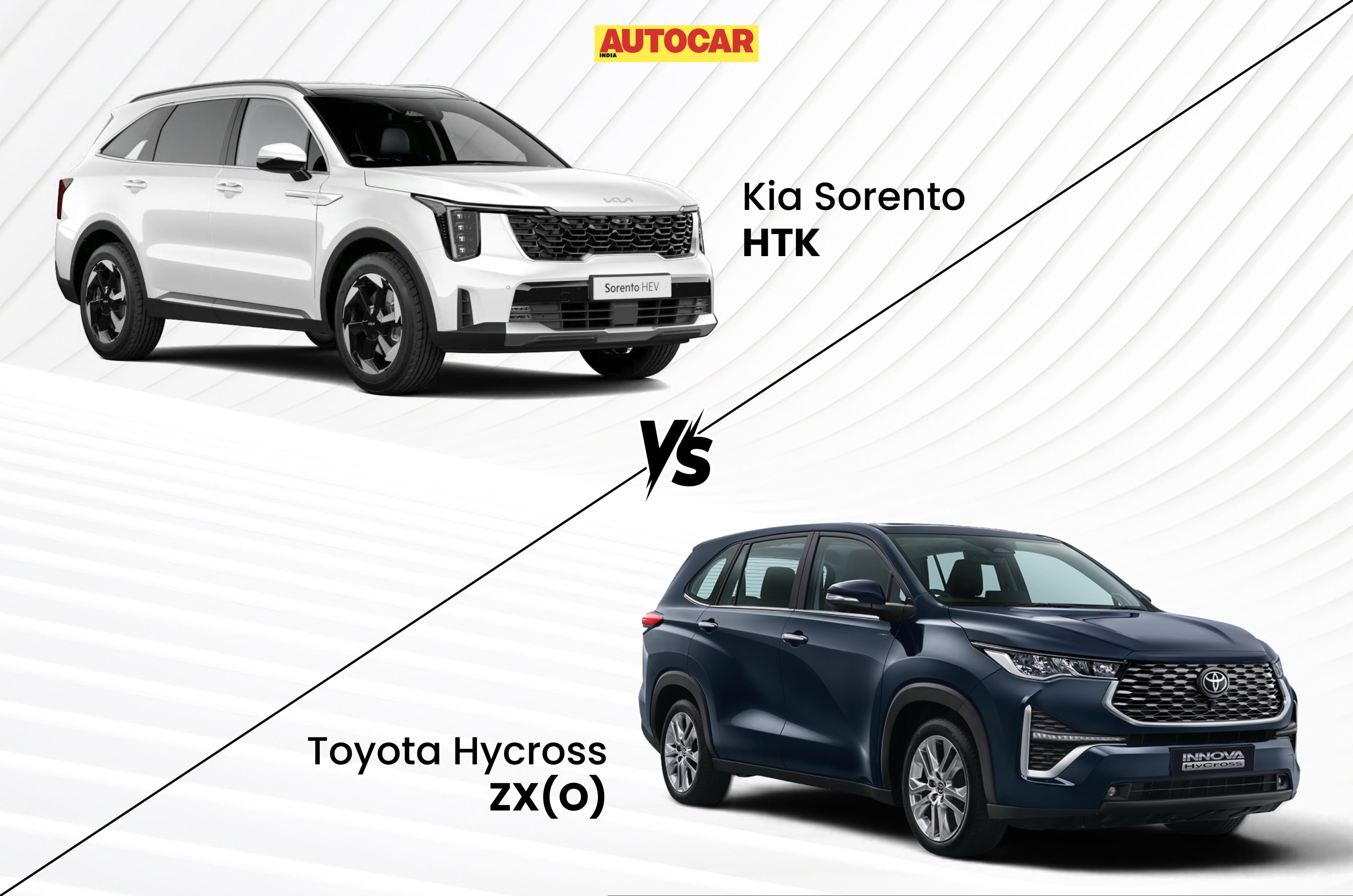
Kia Sorento HTK vs Toyota Innova Hycross ZX(O): Which one offers better value?

Kia Sorento HTK vs Toyota Innova Hycross ZX(O): Which one offers better value?
Kia Sorento HTK vs Toyota Innova Hycross ZX(O) specs and features compared

While the Kia Sorento is a direct rival to premium three-row SUVs such as the Volkswagen Tayron and Skoda Kodiaq, it can also be viewed as an indirect competitor to the Toyota Innova Hycross – both are three-row strong hybrids that somewhat overlap in price. Specifically, if you are looking to buy the top-spec Innova Hycross ZX(O) Hybrid, a relatively small budget extension will also put the mid-spec Sorento HTK Hybrid within your reach. Below, we’ve compared everything these Sorento and Innova Hycross variants offer to help you decide which one you should pull the trigger on.

Kia Sorento HTK vs Toyota Innova Hycross ZX(O): Dimensions

Sorento is longer overall and wider, Hycross offers longer wheelbase


Sorento HTK Hybrid

Innova Hycross ZX(O) Hybrid

Length (mm)

4,815

4,755

Width (mm)

1,900

1,850

Height (mm)

1,785

1,790

Wheelbase (mm)

2,815

2,850

Seating capacity

6/7

7

Wheel size (inches)

19

18

Among the key exterior distinctions between these two is that the Sorento is an SUV, and the Innova Hycross is an MPV. The Sorento is a good 60mm longer than the Innova Hycross overall, but the latter interestingly has a 35mm advantage on the wheelbase front. Height is also a narrow victory for the Innova Hycross, but the Sorento wins when it comes to width and alloy wheel size. The Kia SUV even offers a 6-seat layout but for a premium of Rs 20,000.

Kia Sorento HTK vs Toyota Innova Hycross ZX(O): Powertrains

Sorento has a smaller engine but makes much more torque


Sorento HTK Hybrid

Innova Hycross ZX(O) Hybrid

Engine

1.6-litre turbo-petrol

2.0-litre petrol

Cylinder count

4

4

Engine power (hp)

180

–

Engine torque (Nm)

265

191

Motor power (hp)

65

–

Motor torque (Nm)

264

206

Combined power (hp)

–

184

Gearbox

6-speed AT

e-CVT

Fuel tank capacity

67

52

As noted previously, both the Sorento and Innova Hycross are powered by strong hybrid setups. However, the Sorento gets a smaller direct-injection turbo-petrol engine, while the Innova Hycross gets a larger naturally aspirated mill. The Sorento’s torque figures are higher than those of the Innova Hycross, and the Toyota MPV’s combined power output is also not much higher than the Kia SUV’s engine output. Their gearboxes are quite different too, with the Sorento using a 6-speed torque converter, and the Innova Hycross an e-CVT. Lastly, the Sorento has a substantially larger fuel tank as well.

Kia Sorento HTK vs Toyota Innova Hycross ZX(O): Exterior features

Sorento gets sequential indicators and roof rails over Hycross


Sorento HTK Hybrid

Innova Hycross ZX(O) Hybrid

Auto LED headlamps

Yes

Yes

LED DRLs

Yes

Yes

Front fog lamps

Yes

Yes

LED tail-lamps

Yes

Yes

Sequential indicators

Yes

No

Roof rails

Yes

No

Powered ORVMs

Yes

Yes

Powered tailgate

Yes

Yes

Shark-fin antenna

Yes

Yes

Rear spoiler

Yes

Yes

Colour options

7, monotone

6, monotone

The Sorento and Innova Hycross are quite evenly matched in terms of functional features, with the Toyota missing out only on roof rails and sequential indicators. Exterior colours are again a win for the Sorento, as it offers one extra option over the Innova Hycross.

Kia Sorento HTK vs Toyota Innova Hycross ZX(O): Interior features

Sorento fares better on tech, but Hycross has a few aces up its sleeve


Sorento HTK Hybrid

Innova Hycross ZX(O) Hybrid

Infotainment screen

12.3-inch

10.1-inch

Instrument cluster

12.3-inch

Analogue with MID

Panoramic sunroof

Yes

Yes

Wireless charger

Yes

Yes

Powered front seats

Yes

Driver only

Ventilated front seats

Yes

Yes

Dual-zone climate control

Yes

Yes

Ambient lighting

64-colour

Blue only

Sound system

12-speaker Bose

9-speaker JBL

Apple CarPlay and Android Auto

Wireless

Wireless

Cabin air purifier

No

Yes

Connected car tech

Yes

Yes

Rear window sunshade

No

Yes

Rear centre armrest

Yes

Yes

Sliding, reclining rear seats

Yes

Yes

Rear-seat leg rests

No

Yes, powered

The Sorento is a step above the Innova Hycross when looking at nice-to-have features, such as a bigger touchscreen, a digital driver’s display, configurable ambient lighting, more speakers, a powered co-driver’s seat and more. However, the Innova Hycross holds its own on the comfort and convenience front, courtesy of goodies such as a rear window sunshade, a cabin air purifier, and powered leg rests for the second row.

Kia Sorento HTK vs Toyota Innova Hycross ZX(O): Driving features

Hycross offers adaptive cruise control


Sorento HTK Hybrid

Innova Hycross ZX(O) Hybrid

Drive modes

3

3

Acoustic vehicle alert system

Yes

Yes

Paddleshifters

Yes

Yes

Cruise control

Yes

Adaptive

Both hybrids are almost identical when it comes to driving features, but the Innova Hycross edges ahead thanks to adaptive cruise control, which can automatically adjust the car’s speed based on its proximity to the vehicle in front, making it superior to the Sorento’s standard cruise control system.

Kia Sorento HTK vs Toyota Innova Hycross ZX(O): Safety features

Sorento has 7 airbags and side sensors, while Hycross gets Level 2 ADAS


Sorento HTK Hybrid

Innova Hycross ZX(O) Hybrid

Level 2 ADAS

No

Yes

Airbags

7

6

ABS with EBD

Yes

Yes

ESC

Yes

Yes

Hill-hold control

Yes

Yes

TPMS

Yes

Yes

360-degree camera

Yes

Yes

Parking sensors

Front, rear, side

Front, rear

Electronic parking brake

Yes

Yes

Rain-sensing wipers

Yes

No

Rear wiper, defogger

Yes

Yes

Isofix child-seat anchors

Yes

Yes

Disc brakes

Front, rear

Front, rear

In its top-spec form, the Innova Hycross offers Level 2 ADAS, which the mid-spec Sorento lacks. ADAS can make highway cruising much easier, so buyers who frequently head out of the city will likely appreciate the Toyota more in this regard. The Sorento, on the other hand, offers a driver knee airbag and side parking sensors; the latter can make manoeuvrability much easier in the city.

Kia Sorento HTK vs Toyota Innova Hycross ZX(O): Prices

Hycross is Rs 2.15 lakh more affordable


Sorento HTK Hybrid 7S

Innova Hycross ZX(O) Hybrid 7S

Price (in Rs lakh)

33.99

31.84

The Sorento HTK Hybrid 7-seater commands a premium of Rs 2.15 lakh over the Innova Hycross ZX(O) Hybrid 7-seater. Some prospective buyers may find the price difference steep, but the Sorento makes it worthwhile if you want a more tech-laden and premium-looking cabin, as well as better performance. The Innova Hycross, on the other hand, packs a lot of comfort and convenience features that may interest buyers who are chauffeur-driven or frequently ferry around their families.

All prices are ex-showroom, India.

Bajaj Pulsar 150 review: Familiar yet very different

 Bajaj Pulsar 150 review: Familiar yet very different

When the first Bajaj Pulsar 150 broke onto the scene in 2001, it shattered the mould of what was expected of an accessible yet sporty commuter motorcycle. This recipe saw such widespread success that nothing Bajaj brought out since has been able to replace it. Therefore, the company went back to the drawing board and has now brought out a new generation of Classic Pulsars, spearheaded by the 125 and 150. In this review, we’ll share what the larger one was like to ride. 

Bajaj Pulsar 150: What’s changed compared to before?

From the mechanicals to the tech, it is all-new

To start with, gone are the double-cradle frame and twin shock absorbers, replaced by a lighter and stiffer diamond frame and monoshock, respectively. Complementing the new chassis is a brand new motor. This engine started life as an engine from a similar displacement N model, but Bajaj has made certain changes to suit this application. The state of tune, various internals and the exhaust system are all different over here. 

The Pulsar 150, understandably, has the sprightlier performance of the two.

Unlike before, the motor is now used as a stressed member of the chassis, and Bajaj has also peppered in the learnings it has made from the N range. For starters, the gearbox now has shorter, more tractable ratios, and there’s also a low rpm assist function, which raises engine rpm slightly to reduce stalling when you’re crawling at a higher gear at low speeds. Furthermore, higher variants of the 150 also come equipped with an Integrated Starter Generator (ISG), which brings in silent start and a reasonably quick start/stop system. 

Pulsar 150 design and quality – 8/10

Looks uncannily similar to the older bike; feels very similar to sit on, too

Considering how much has changed underneath, it’s especially commendable that the Pulsar 150 looks this similar to before. Bajaj’s design team has deliberately gone to great lengths to package everything neatly and retain the bike’s instantly recognisable silhouette. Pulsar hallmarks that people appreciate, like a ‘wolf eye’ headlight, a chunky tank, sharp tank extensions and a pointy tail, all continue, and you won’t be mistaking it for anything other than a classic Pulsar. There are no complaints when it comes to quality, and it’s as well-finished as you’d expect from a commuter bike today. 

Top variants come with a split seat.

Just like the near-unchanged design, the Pulsar 150’s ergonomics are almost the same as before – but that’s a good thing. You’re sat very neutrally, and the riding position is that of a textbook commuter with only slightly rearward pegs for the sporty touch that a Pulsar is known for. With a perch that’s just 795mm off the ground, the 150 strikes a nice chord by being friendly and approachable for both shorter folks and 6’1 Rishaad. To cater to the wants of different riders, Bajaj will sell you a Pulsar equipped with either a single piece seat or split seats. Both options are spacious – the single piece seat understandably more so – and decently padded, capable of accommodating two full-size people without them getting acquainted with each other too intimately. 

Pulsar 150 performance – 8/10

Has enough pep for city and highway duties, engine stalls a little too easily, though 

City traffic is where most Pulsar riders spend most of their time, so we did the same and found that the bike behaves exactly as you’d expect from a commuter. The motor has good low- and mid-range torque, and paired with the super light clutch, wading through the drudgery of traffic doesn’t feel too taxing. 

The new engine is also super smooth, and should you choose to venture out onto the highway, the Pulsar can do that as well. The upper limit of the 150’s comfortable cruising speed is 90-95kph in its top 5th gear, which is par for the course in this class. 

Engine

149.5cc, single-cylinder, air-oil cooled

Power

14hp at 8,000rpm

Torque

14.1Nm at 6,500rpm

Gearbox

5-speed

However, for all its strengths, the engine in the Pulsar 150 unit we were allotted displayed a tendency to stall a little too easily, and this happened on multiple occasions to both myself and Rishaad, who rode the bike. 

Pulsar 150 ride and handling – 8/10

Behaves predictably and handles all situations well

While the chassis is largely the same between the 125 and 150, one noteworthy difference is that the bigger one uses a fatter 33mm fork, compared to the 31mm unit on the smaller bike. Also, unlike the 125, the Pulsar 150 comes with the government-mandated safety net of single-channel ABS. All variants come with a 260mm disc brake at the front, paired with either a 230mm drum brake on the lowest variant or a 230mm disc on the higher two variants. 

Pulsar 150 behaves neutrally and predictably when subjected to a variety of riding conditions.

The best way to describe the new Pulsar 150’s handling is neutral and predictable. Neither does it feel as vague as the previous-gen model, nor does it feel as responsive as the N / NS models. The Classic Pulsar 150 retains its surefootedness in a straight line while introducing a newfound taut feeling when taking a corner. Its demeanour is predictable at all times, which is sure to inspire confidence in the varied sort of riders it will cater to. The brakes work well and bring the Pulsar to a stop in a quick fashion without much drama, although overenthusiastic usage will result in the rear locking up.

Fuel tank

14 litres

Seat height

785mm

Ground clearance

165mm

Kerb weight

141kg

Wheelbase

1,320mm

However, for all its strengths, the Pulsar 150 is not perfect, and there are some areas of improvement. The rear suspension feels slightly underdamped and springy, throwing you off the seat over larger road imperfections. The gearshifts, too, felt a little rubbery and vague, lacking a snick feel. 

Pulsar 150 features and safety – 8/10

Comes with a lot of tech-y features on the top two variants

Following today’s market trends, even a humble commuter like this one now packs a dollop of tech. This includes a USB-C charging port, 4 riding modes (Sport, Tour, Road and Rain), Bluetooth connectivity for the dash via Bajaj’s app, which brings in a host of functions, and you can even cast your phone’s screen onto the TFT display, although some of these functions are still not available yet and will be rolled out at a later date. 

Top variants also come with a colour TFT display and riding modes

To control the TFT display’s functions and switch between the riding modes on the top variants, you also have more comprehensive switchgear whereas the colour LCD dash on the lower variants is paired with a simpler switch cluster. Both displays are informative and well laid-out and bring an air of premiumness from the rider’s POV. Admittedly, most of these features aren’t going to add much value for most everyday riders but for the few that want their motorcycle to double up as a gadget, they’re there. 

Pulsar 150 price and verdict – 8/10

It suits its intended purpose quite well

Aside from a few small misses, the new Pulsar 150 is a lovely commuter, which comes in at a price point that is more or less in line with the competition today. Prices start at Rs 1.15 lakh and go up to Rs 1.23 lakh (ex-showroom, Delhi). Compared to the last-gen 150, this latest-gen Pulsar’s prices have gone up by Rs 4,000-Rs 6,000, which is a digestible amount considering the sheer scale of new components in use here. 

Given the huge demand for a bike that looks like a Classic Pulsar and the fact that this new-gen model is such a quantum leap ahead compared to the old ones while costing just a few thousand rupees more, Bajaj seems to have a winner on its hands.  

Tata Nexon petrol vs diesel vs CNG vs EV: Different strokes

Tata Nexon petrol vs diesel vs CNG vs EV: Different strokes
So Tata Nexon petrol vs diesel vs CNG vs EV: Different strokes

Car buyers today are pretty spoilt for choice. Beyond a multitude of brands, body styles and variants, there are now more fuel options than ever before. Petrol, diesel, CNG, hybrid, electric, and soon even ethanol-powered vehicles are all vying for attention, making the decision increasingly complicated. So, which powertrain makes the most sense for you?

Tata Nexon models
Tata Nexon models (left to right): Petrol, diesel, petrol-CNG and EV.

To answer that question, we turned to one of the most versatile models on sale in India – the Tata Nexon. Few vehicles offer such a broad range of powertrain choices, and with design, space, practicality, safety and features remaining largely consistent across the range, the Nexon provides the perfect platform to isolate the one key variable – the fuel itself. So, we got together the turbo-petrol, CNG, diesel, as well as the EV to find out each fuel’s pros and cons, and thus, which would best fit your needs. 

Disclaimer: Fuel prices vary from state to state.

Tata Nexon turbo-petrol: Fuss free

Tata’s 1.2-litre, three-cylinder ‘Revotron’ turbo-petrol engine debuted with the Nexon in 2017 and received a power bump in 2020, taking outputs to 120hp and 170Nm. Today, it is offered with an unusually wide range of transmission choices – a 5-speed manual, 6-speed manual, 6-speed AMT and a 7-speed dual-clutch automatic.

Prices start at Rs 7.40 lakh and extend up to Rs 13.90 lakh, ex-showroom (excluding dual-tone, Dark and Red Dark editions). Its broad variant spread and attractive pricing are key reasons why the turbo-petrol accounts for 42 percent of all Nexon sales. 

The engine offers decent driveability and benefits from selectable Eco, City and Sport drive modes. But outright performance, refinement and smoothness aren’t class-leading and not what you get from other turbo-petrols.

Within the range, the 7-speed DCA stands out as the most desirable option. Despite accounting for less than 4 percent of total Nexon sales, it is arguably the nicest ICE-powered Nexon on sale. The wet-clutch dual-clutch transmission prioritises smoothness over sportiness and suits the engine’s character well. While downshifts can occasionally feel a touch hesitant, the overall experience is noticeably more polished than the manual and AMT alternatives. Notably, the top-spec Turbo DCA is the best-equipped ICE version and is also the only version to offer ADAS.

Fuel efficiency, however, remains this powertrain’s weakest area. In our tests, the turbo-petrol DCA returned 7.7kpl in the city and 13.9kpl on the highway, translating to an average running cost of Rs 9.46 per kilometre – the highest among all Nexon powertrains.

To put that into perspective, even though a fully loaded Fearless + A PS DCA is Rs 2.65 lakh more affordable than a top-spec Empowered + A 45 EV, the EV’s significantly lower running costs (of Rs 1.03 per km using home charging) allow owners to recover that initial price difference in roughly 32,000km.

Tata Nexon diesel: Highway star

The diesel range starts at Rs 9.15 lakh and extends up to Rs 14.40 lakh for the top-spec AMT. Interestingly, while the diesel once outsold the petrol version in the Nexon’s early years, buyer preferences shifted following the BS6 transition, causing diesel sales to gradually decline to 13 percent. Despite this, Tata has persisted with the fuel, and today remains one of the few carmakers still offering diesel engines in its portfolio.

Instead of adopting a conventional SCR setup with a urea tank, AdBlue injection system and additional electronic controls, Tata developed a Lean NOx Trap system for the 1.5-litre, four-cylinder turbo-diesel engine. Despite this relatively low-cost passive emissions-control system, the price premium over an equivalent turbo-petrol variant remains around Rs 1 lakh – broadly in line with what rivals charge. The only tangible benefit for buyers is that, unlike many competitors, there is no urea tank requiring periodic top-ups, resulting in marginal savings over time and a bit less hassle.

Like the turbo-petrol, refinement isn’t this diesel’s strongest suit. And even though turbo lag is more perceptible than in the petrol iteration, performance flows in a rather strong manner, making it well-suited for highway drives. Its tall fuel efficiency also makes it ideal for those who cover long distances frequently. In our tests, the diesel-manual delivered an impressive average of 17.95kpl, resulting in a running cost of just Rs 5.30 per kilometre – significantly lower than the turbo-petrol.

Tata Nexon EV: Smooth operator

As India’s first widely accessible electric SUV from a domestic manufacturer, the Nexon EV played a pivotal role in democratising EV ownership. Combining brisk performance, usable real-world range and a relatively accessible price point, it opened up the Tata brand to an entirely new set of buyers. For a long time, it was India’s bestselling EV. Within the Nexon range, it accounts for 14 percent of total sales.

Today, the Nexon EV range spans Rs 12.49 lakh to Rs 17.49 lakh, with buyers able to choose between two battery packs – 30kWh and 45kWh. The line-up itself is relatively straightforward, with three trims available for each battery option.

In the real world, the 30kWh version can deliver a little over 200km on a charge, while the larger 45kWh battery can comfortably manage around 350km. For buyers seeking the smoothest and most refined driving experience, nothing quite matches the seamlessness of an EV. Acceleration feels brisk, and its zippy yet seamless performance makes for a hushed, enjoyable drive experience.

The two battery versions differ in more ways than just capacity. The 45kWh version uses Tata’s newer Gen 2 motor, which is lighter, more compact and more efficient than the Gen 1 unit used in the 30kWh variant. The long-range version’s more modern architecture also enables significantly faster DC charging. To put it into perspective, the 30kWh version takes about an hour to charge from 20-80 percent using a DC fast charger, whereas the 45kWh variant achieves the same in just 29 minutes. Not only does the larger battery offer greater range, but it is also quicker to recharge despite its higher capacity, making it the more suitable choice for longer highway journeys.

Interestingly, the EV also enjoys a feature advantage over the best-equipped turbo-petrol DCA, gaining a larger 12.3-inch touchscreen, rear disc brakes, and an electronic parking brake with auto-hold functionality.

Coming to the 45kWh version’s running cost, using a home charger (at an average cost of Rs 8 per unit of electricity), buyers can enjoy driving around at just Rs 1.03 per km. Even if users opt for public DC fast-charging, the rates of which range between Rs 24 and Rs 28 per unit, still, average running costs work out to merely Rs 3.34 per km, which is almost a third of the petrol-automatic’s number and about sixty percent of a diesel-manual’s cost per km.

Tata Nexon CNG: Jack of all trades

There’s a lot Tata has got right with the Nexon CNG. For starters, prices range from Rs 8.35 lakh to Rs 13.60 lakh, positioning it neatly between the petrol and diesel alternatives.

Under the bonnet is the same 1.2-litre, three-cylinder turbocharged engine found in the petrol Nexon. Not only is it India’s first turbo-petrol CNG SUV, but it is also the most powerful, producing 100hp and 170Nm when running on CNG. Impressively, peak torque remains identical to the petrol version, although it is available across a narrower band. As a result, driveability feels remarkably similar to the turbo-petrol, and users are unlikely to find themselves wanting for performance, whether in urban conditions or on the highway.

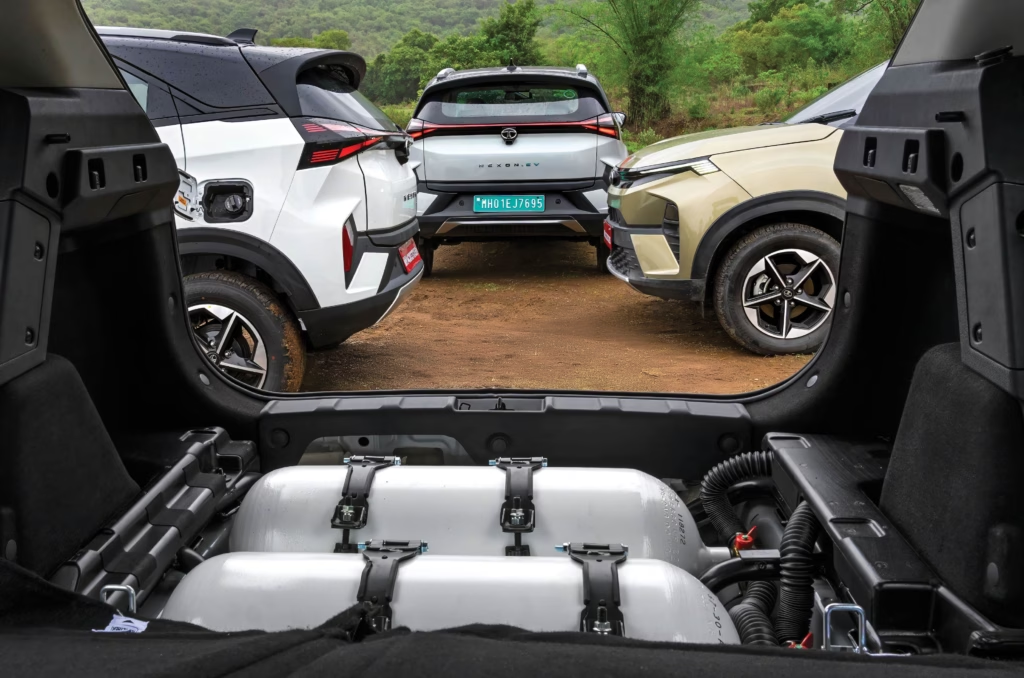
Being a turbocharged CNG engine, efficiency in city driving can take a hit. In our real-world city test involving frequent stop-start traffic, the Nexon CNG returned 15.1km/kg. Out on the highway, however, flowing traffic and the presence of a sixth gear helped it achieve close to 24km/kg. The end result is an average running cost of just Rs 4.28 per kilometre, making it the most economical option in the ICE line-up.

With driveability that’s remarkably close to the turbo-petrol, lower purchase and running costs than the diesel, and very few compromises in practicality or equipment, the Nexon CNG presents perhaps the strongest all-round case in the range. Its only notable drawback is the limited CNG infrastructure. While station availability continues to improve, rising CNG adoption often leads to longer queues and wait times at many outlets.

Unlike many CNG vehicles, the Nexon CNG doesn’t feel like a stripped-down, budget-focused alternative. It remains spacious, practical and generously equipped while delivering the lowest running costs of any ICE Nexon. Small omissions, such as cruise control, connected-car technology and JBL-branded speakers, are unlikely to be deal-breakers for most buyers.

Viewed through the lens of value, usability and cost of ownership, the Nexon CNG strikes perhaps the most convincing balance of the lot. Which perhaps explains why, despite being offered with just one engine and a manual gearbox, it now contributes more than a third of all Nexon sales.

Tata Nexon petrol vs diesel vs CNG vs EV: Verdict

The turbo-petrol’s lowest starting price, as well as the widest choice for buyers, is the reason behind its popularity. Our pick of the range, however, is the priciest 7-speed DCA, which delivers the smoothest and most polished Nexon ICE driving experience. That said, performance and efficiency aren’t exactly class-best. 

The diesel’s impressive fuel efficiency and thus low running costs make it an ideal choice for those who rack up high annual mileages. Performance is the strongest among all ICE versions, and its torquey nature makes it an excellent highway companion, perfect for those who regularly cover long distances.

For buyers with reliable home charging, a predominantly urban usage pattern and high annual running, the EV is the one to pick. The 45kWh model has a genuinely usable real-world range and is also the most advanced version with a rich feature list, making it a very well-rounded option.

The Nexon CNG retains the petrol’s drivability, offers low running costs, a long range, and buyers aren’t forced to compromise features or practicality either. It thus strikes a convincing balance between price, performance and real-world usability, emerging as the sweet spot of the line-up.

2026 F1 Madrid schedule, India timings

2026 F1 Madrid schedule, India timings
F1 Madrid schedule

F1 heads to a brand new venue this weekend, with Madrid hosting the Spanish GP. The 5.414 km Madring will be a very different challenge compared to Monza just a week ago, and drivers will need to get to grips with the new track quickly. In addition to F1, the venue will also be hosting F2 and even the F3 championship finale.

MotoGP, meanwhile, heads to Misano for the San Marino GP, while DTM will race at Sachsenring. Here is your complete guide on when and where to tune in from India:

F1 Spanish GP schedule

F1 Spanish GP schedule IST

The new Madrid track features everything from tight and twisty corners to flowing sections and even the La Monumental banked curve (with a 24 percent gradient). While it will certainly be a challenge for the drivers, this will also make it tricky for teams to find the right set-up.

“It’s a crazy circuit,” Esteban Ocon said during the Thursday press conference. “There’s a lot of risk-reward on when to go fast, getting close to the walls. Yes, that’s going to reward the people that take the most risk. But [there are] a lot of unknowns and that’s very good because hopefully it will bring opportunities for the cars in the midfield.”

Kimi Antonelli extended his F1 championship lead to 66 points after winning his home race at Monza. However, as Ocon pointed out, a new track like Madring can throw up some unexpected results. McLaren is also expected to be stronger here, given that the team has been the most competitive at high downforce circuits like the Hungaroring and Zandvoort. 

F1 Spanish GP: Where to watch?

All F1 Spanish GP sessions will be streamed live on FanCode and the F1 TV apps.

2026 F1 Madrid IST schedule

Date          

Day

Session

Time

September 11

Friday

FP1

5pm

September 11

Friday

FP2

8:30pm

September 12

Saturday

FP3

4pm

September 12

Saturday

Qualifying

7:30pm

September 13

Sunday

Race

6:30pm

F2 Spanish GP schedule

F2 Spanish GP schedule IST

Madring will also host F2 this weekend, with the championship nearing its tail end. With six wins so far, Nikola Tsolov continues to lead the standings. However, Rafael Camara has now closed the gap to just 11 points after his Monza podium.

After a difficult Italian GP, Kush Maini will be looking to bounce back at Madrid. He’s currently P6 overall in the drivers’ championship, 26 points behind Noel Leon.

F2 Spanish GP: Where to watch?

All F2 Spanish GP sessions will be streamed live on FanCode and the F1 TV apps.

2026 F2 Madrid IST schedule

Date          

Day

Session

Time

September 11

Friday

Practice

2:35pm

September 11

Friday

Qualifying

6:30pm

September 12

Saturday

Sprint Race

5:45 pm

September 13

Sunday

Feature Race

2:55pm

MotoGP San Marino GP schedule

MotoGP San Marino GP schedule IST

Just 24 points separate the top three in the MotoGP championship heading into the San Marino GP. 

Aragon was expected to be a strong venue for Marc Marquez and the reigning world champion delivered, winning both the sprint and feature races. This moved him up to second place in the standings, 19 points behind Jorge Martin. Bezzecchi (who is still recovering from injuries sustained at Sachsenring) is third overall, five points behind Marquez.

MotoGP San Marino GP: where to watch?

All MotoGP San Marino GP sessions will be streamed live on FanCode. Fans in India can also catch the live TV broadcast on Eurosport.

2026 MotoGP Misano IST schedule

Date          

Day

Session

Time

September 11

Friday

FP1

2:15pm

September 11

Friday

Practice

6:30pm

September 12

Saturday

FP2

1:40pm

September 12

Saturday

Qualifying

2:20pm

September 12

Saturday

Sprint

6:30pm

September 13

Sunday

Race

5:30pm

DTM Sachsenring schedule

DTM Sachsenring schedule IST

Just one point separates Maro Engel and Thomas Preining at the top of the 2026 DTM standings. With just two rounds left, the upcoming round at Sachsenring could have big implications on the title. Nicki Thiim, Lucas Auer and Marco Wittmann remain in contention as well.

India’s Arjun Maini, racing for Ford HRT this year, is seventh in the standings, 19 points behind Matteo Cairoli.

DTM Sachsenring: Where to watch?

All DTM Sachsenring sessions will be streamed live on FanCode.

2026 MotoGP San Marino GP IST schedule

Date          

Day

Session

Time

September 11

Friday

FP1

3pm

September 11

Friday

FP2

7:20pm

September 12

Saturday

Qualifying 1

1:25pm

September 12

Saturday

Race 1

5pm

September 13

Sunday

Qualifying 2

12:30pm

September 13

Sunday

Race 2

5pm