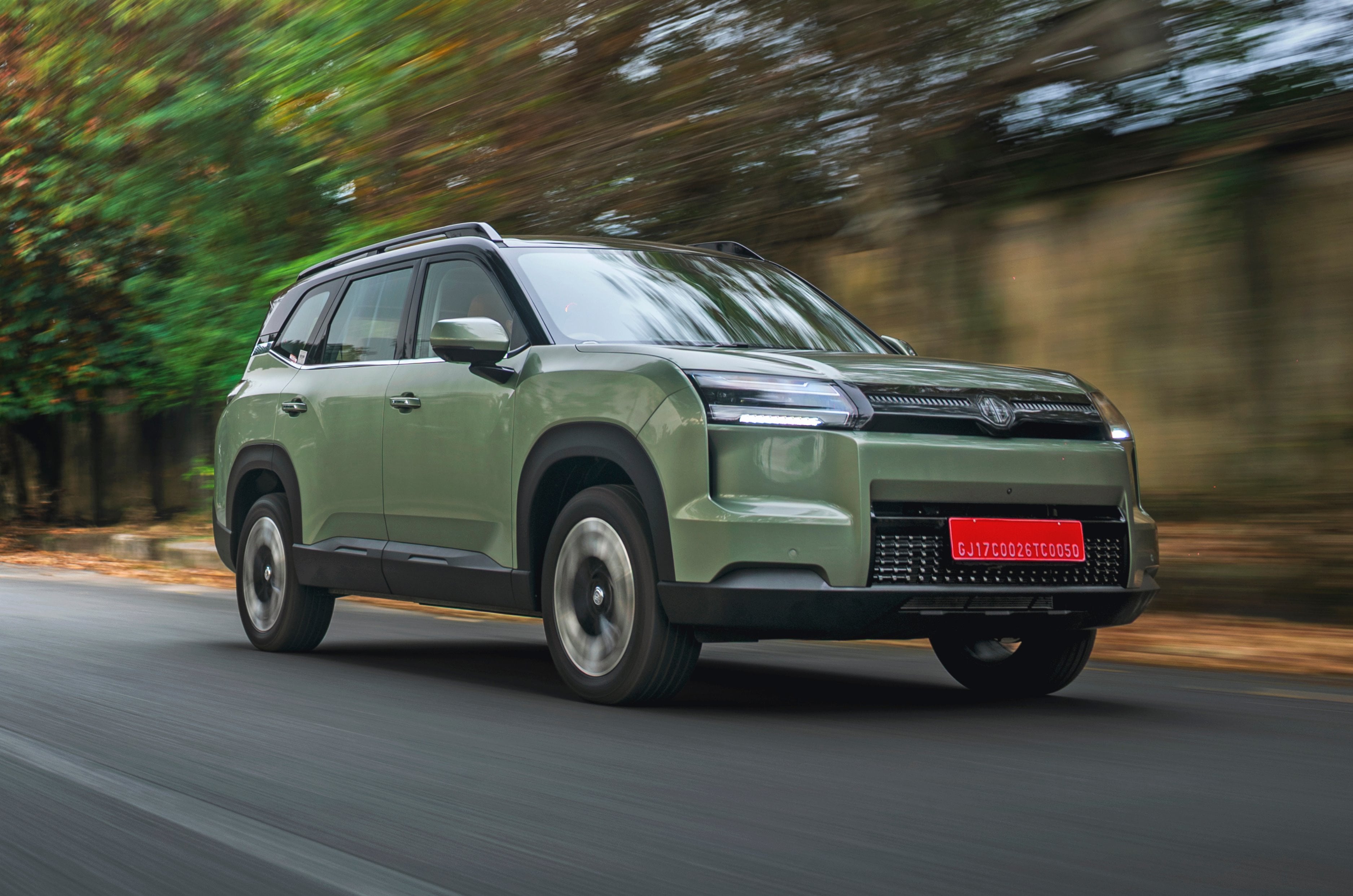
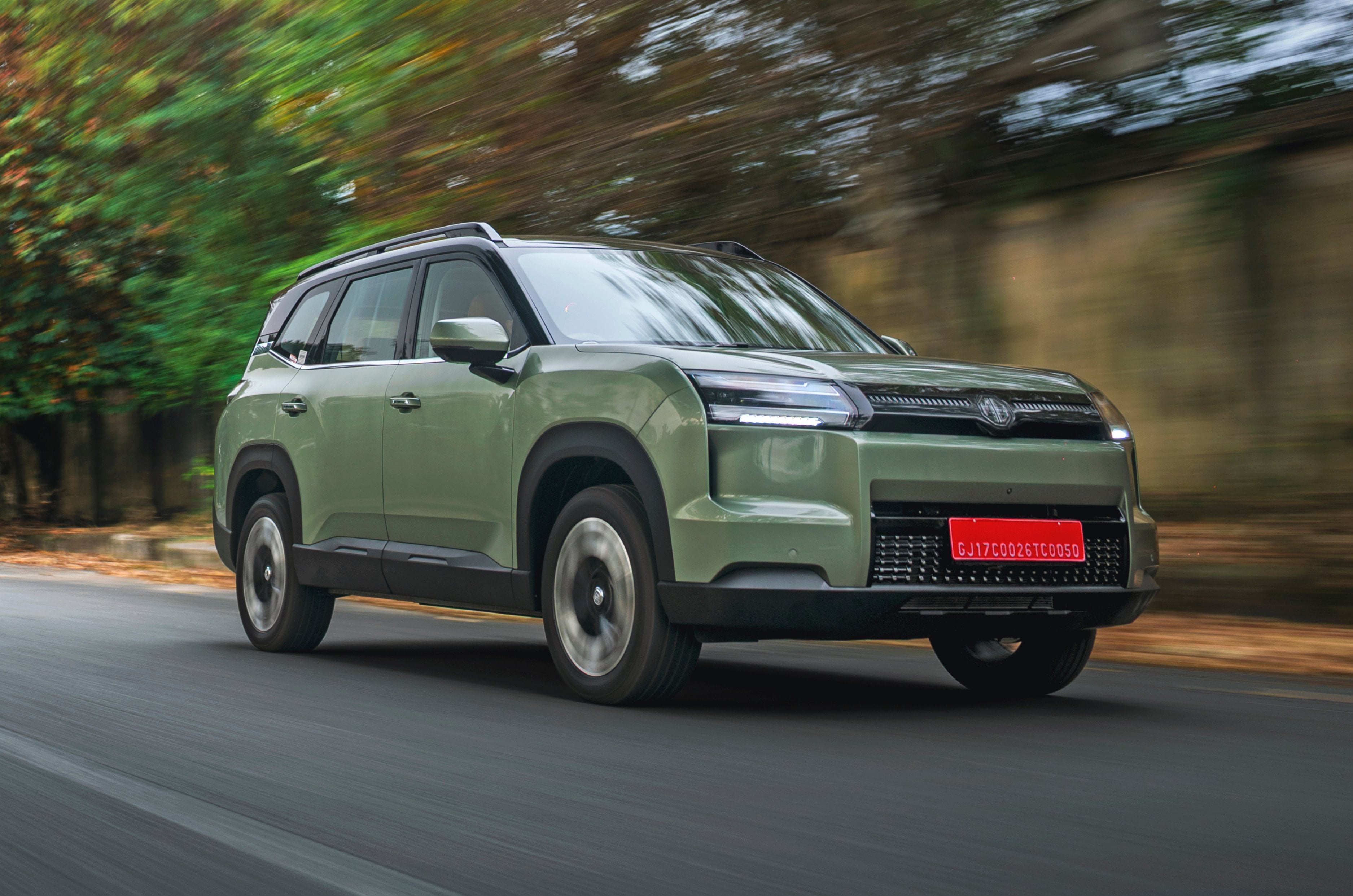
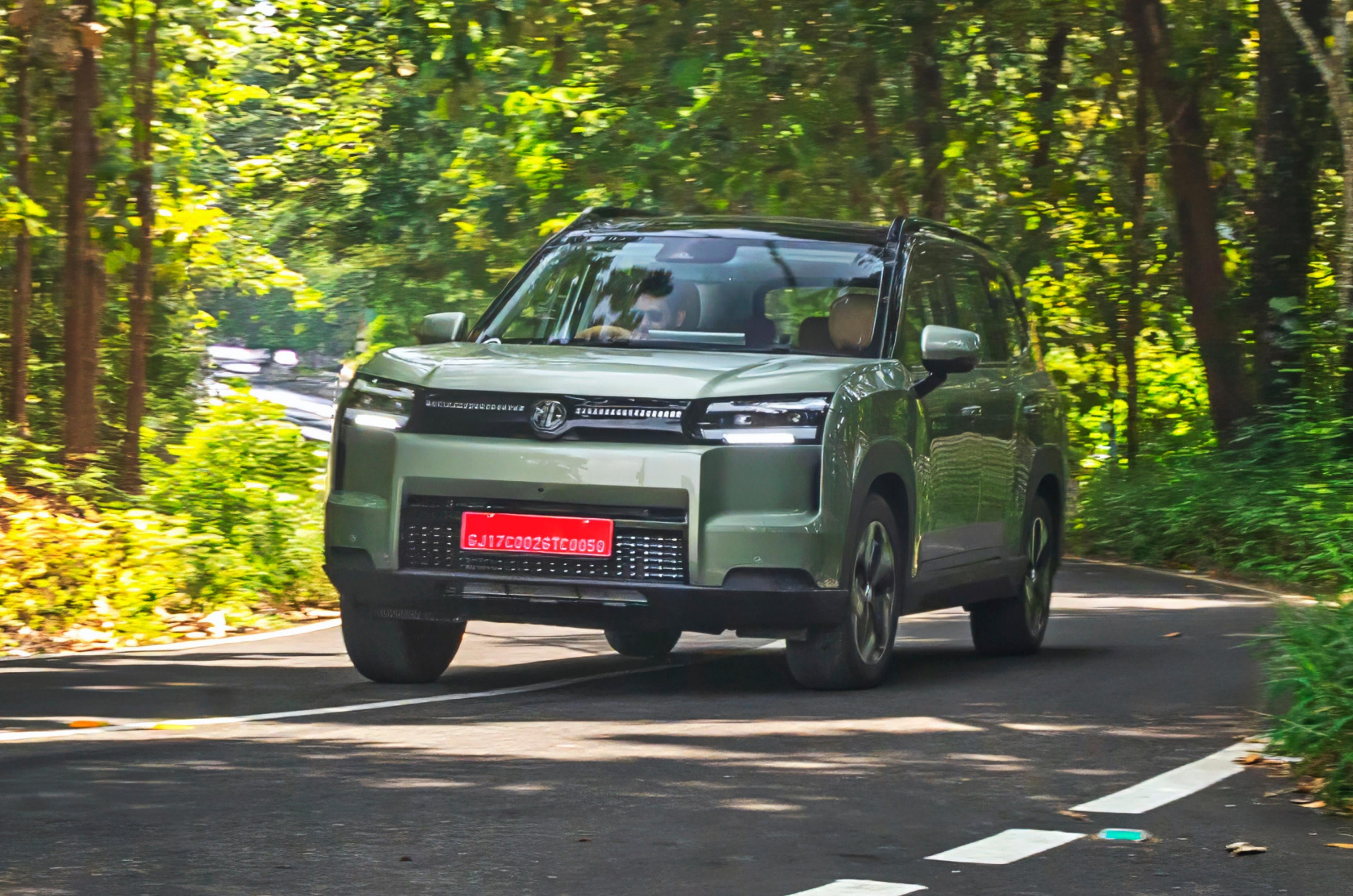
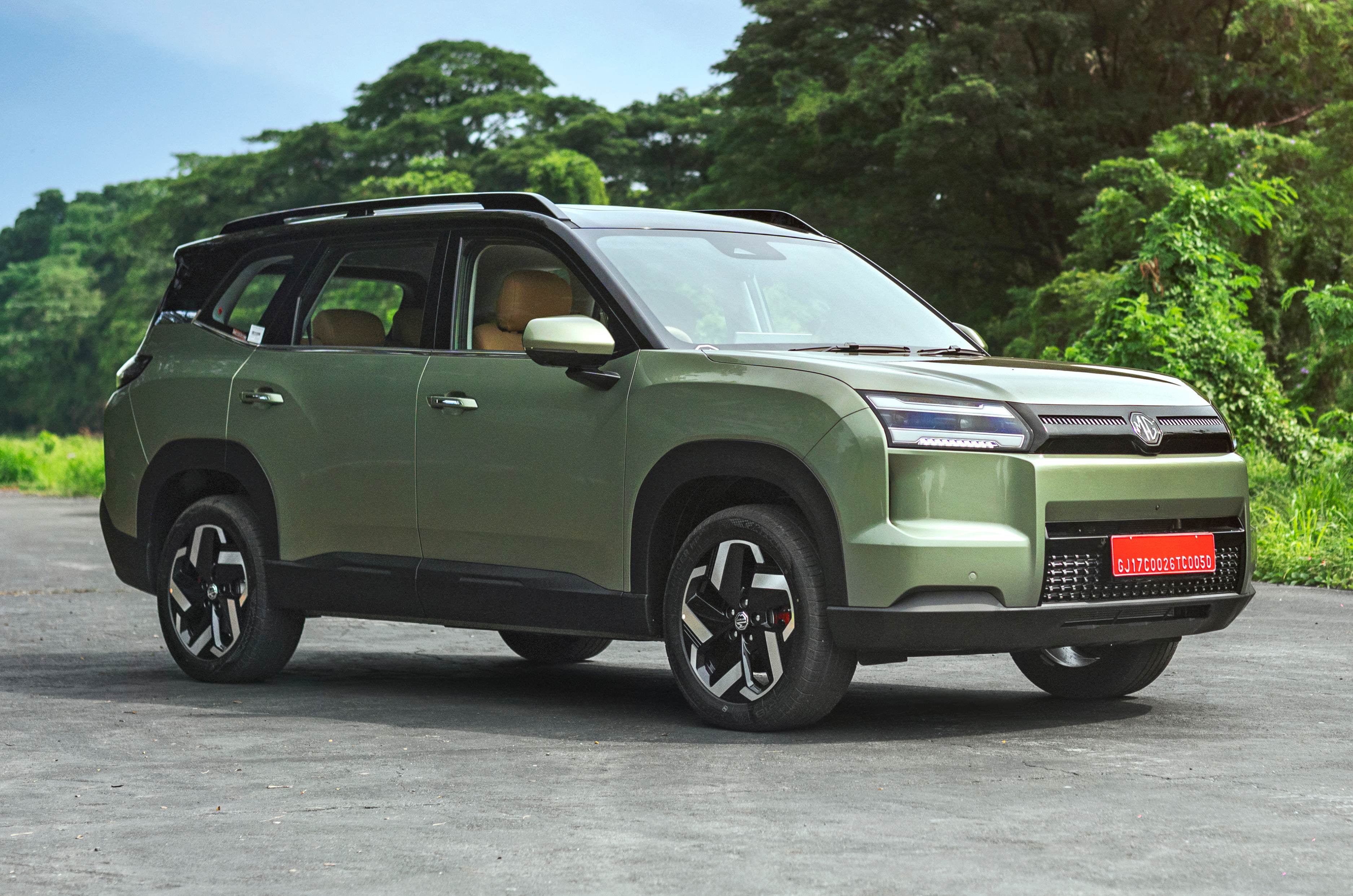
The Hector Tomahawk EV (alongside the PHEV) is the first MG model based on the brand’s new ADAPT platform, and costs from Rs 19.49 lakh to Rs 22.99 lakh (ex-showroom). The MG Hector Tomahawk EV is priced more competitively than the Hyundai Creta Electric while also seating up to seven occupants. There’s also the Kia Clavis EV, which costs about the same as the Tomahawk, but that’s an MPV. All that said, let’s start with the positives of this MG SUV first.
Reasons to buy the MG Hector Tomahawk EV
Spacious and premium interiors
Three rows of seats and an accommodating boot make this a practical family hauler
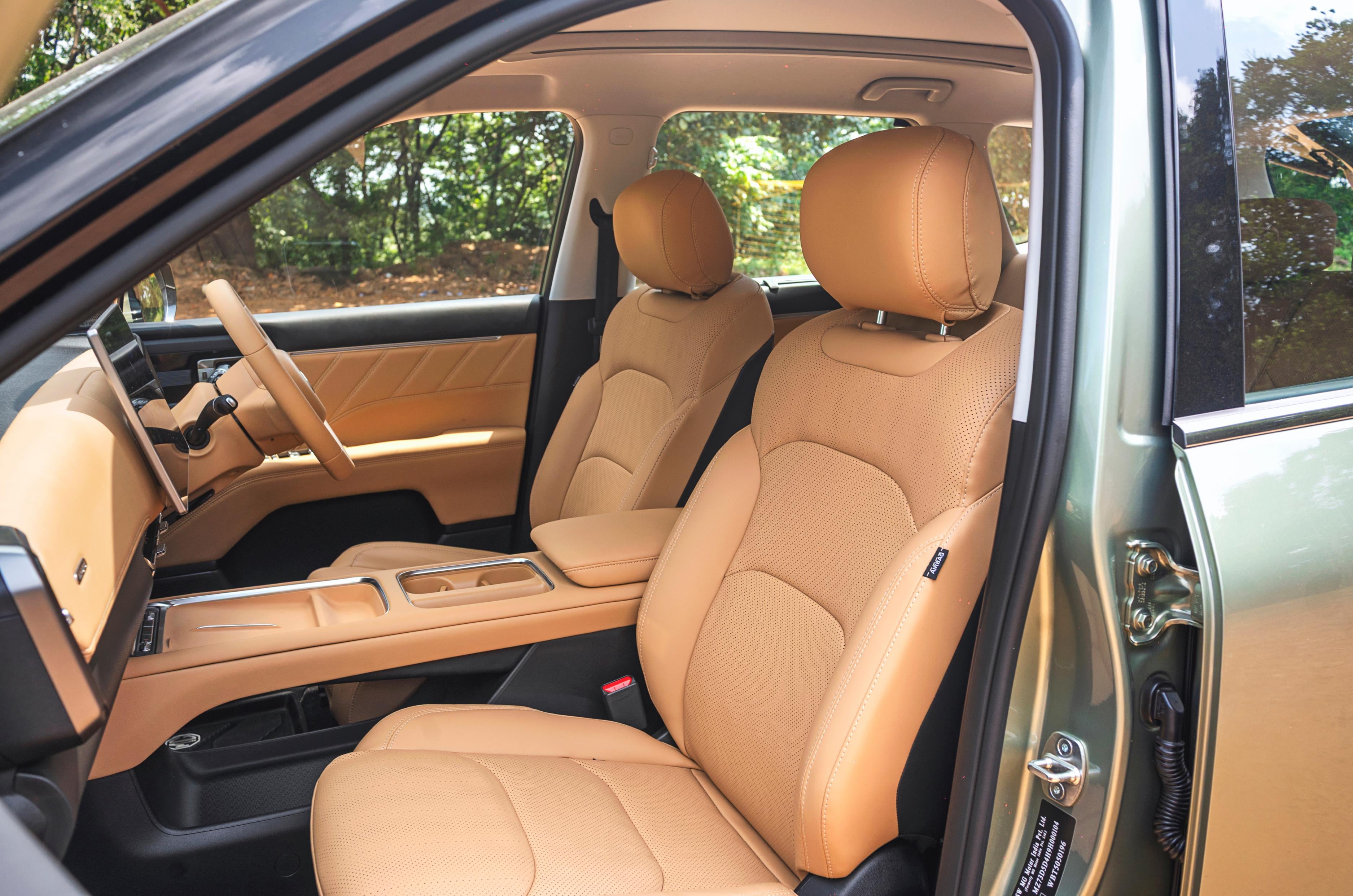
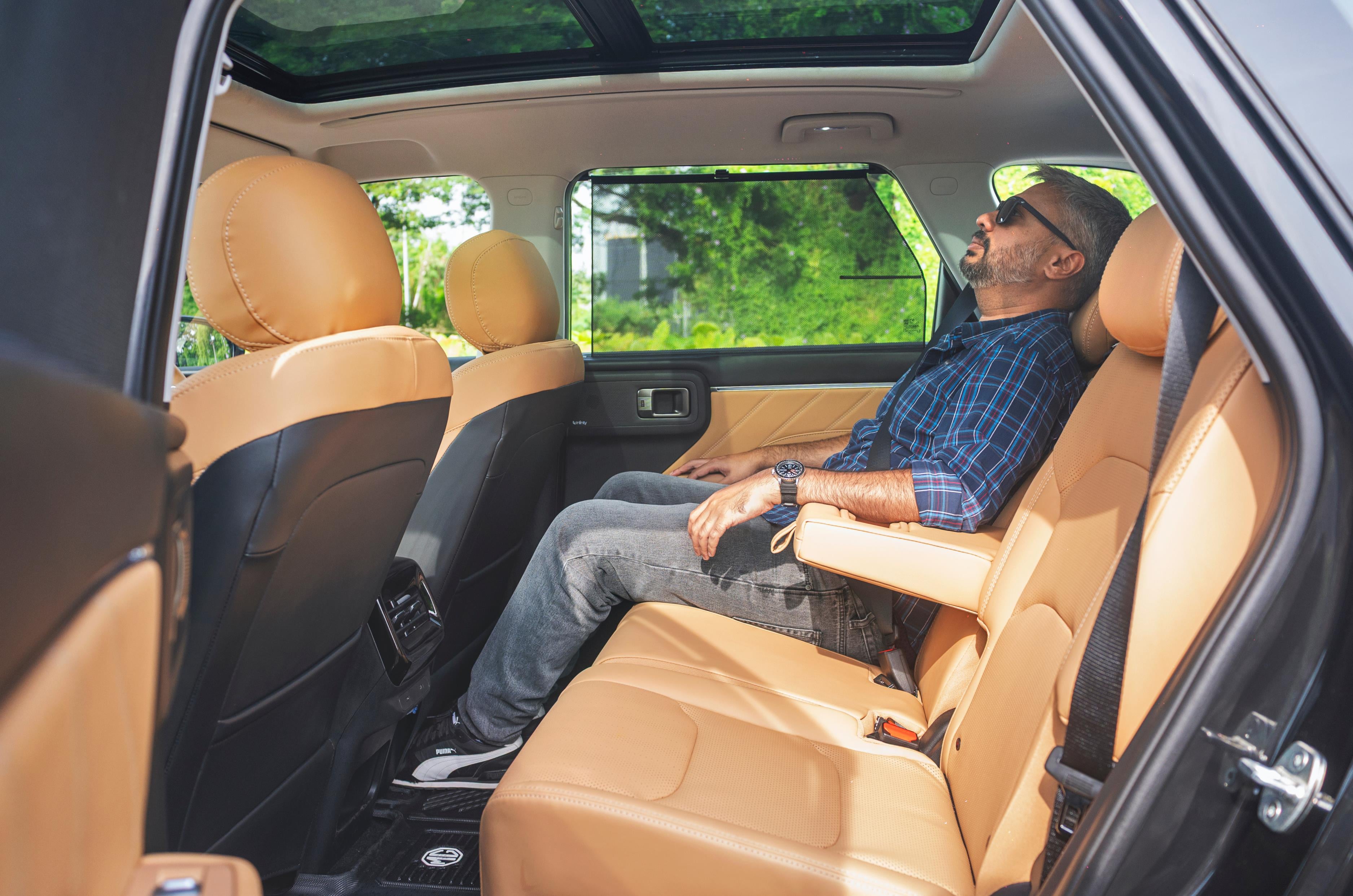
The cushioning of the wide front seats of the Hector Tomahawk EV feels comfortable even on long journeys. These seats are ventilated for added comfort, while the driver’s seat also gets a memory function for added convenience. In-cabin storage comes in the form of large door pockets and plenty of cubbies in the centre console. The Hector Tomahawk’s long wheelbase means there’s more than enough legroom for second-row passengers – these seats also recline for added comfort.
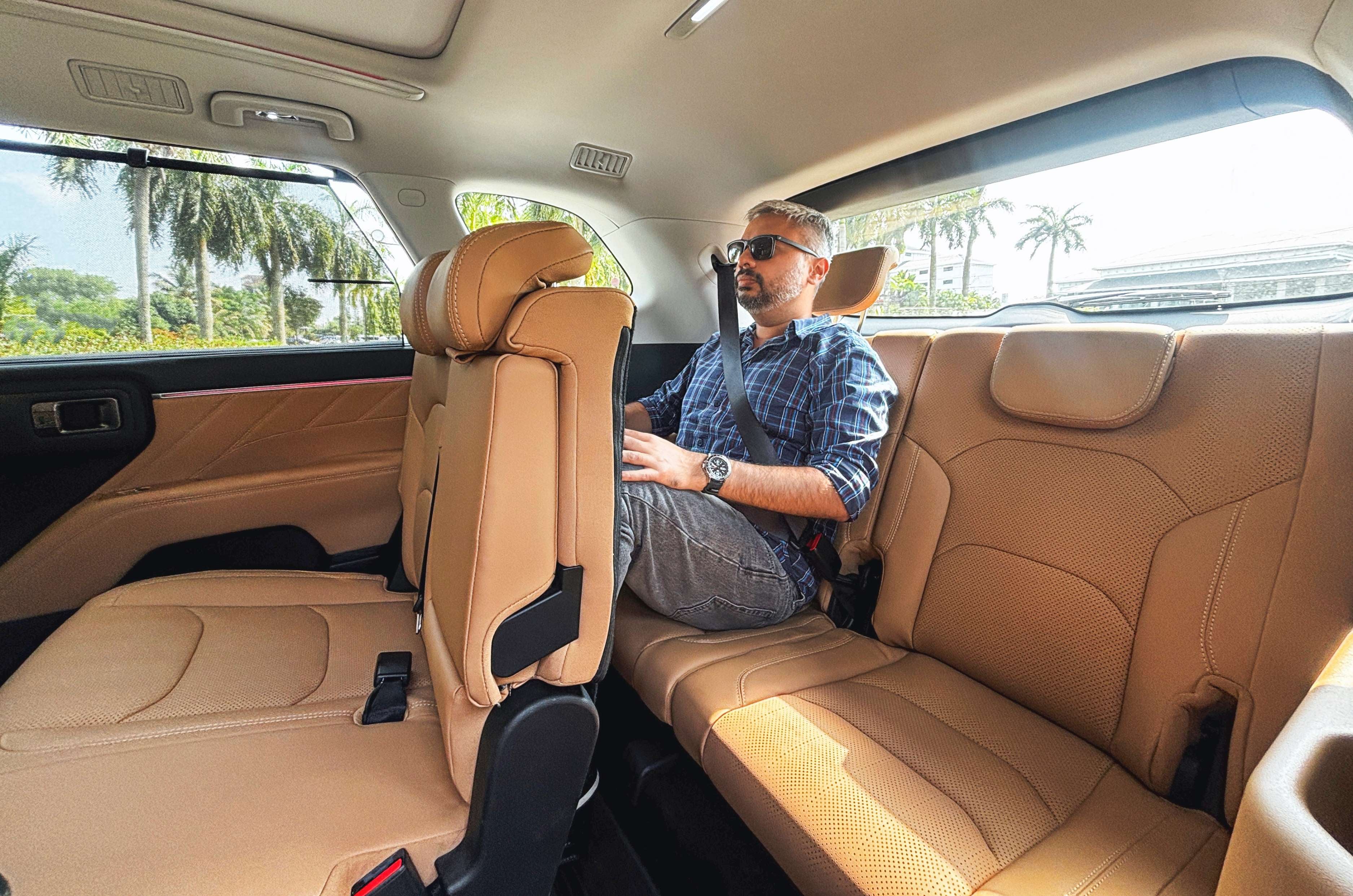
The inclusion of a centre armrest with cupholders, sunblinds, AC vents, USB ports and adjustable headrests make this a nice place to be. Accessing the third row from here is easy and fairly straightforward, courtesy of the sliding second row with its ‘one-touch tumble’ function and a large walk-through gap in the middle. While not the roomiest, last-minute jaunts won’t be an issue as there’s plenty of headroom on offer, and this third row is not devoid of AC vents or LED roof lights.
Even with the third row up, the Hector Tomahawk EV’s boot stands at 192 litres. This is enough to accommodate a couple of carry-on bags without much fuss. If you’re serious about carrying cargo, folding down those last seats will liberate 528 litres worth of space. The two-tone beige-and-black interior’s minimalistic design gets a generous splattering of soft-touch materials, and the good fit-and-finish further extends the premium appeal of this cabin.
Brimming with modern features
This MG SUV offers more than enough equipment to keep everyone on-board entertained
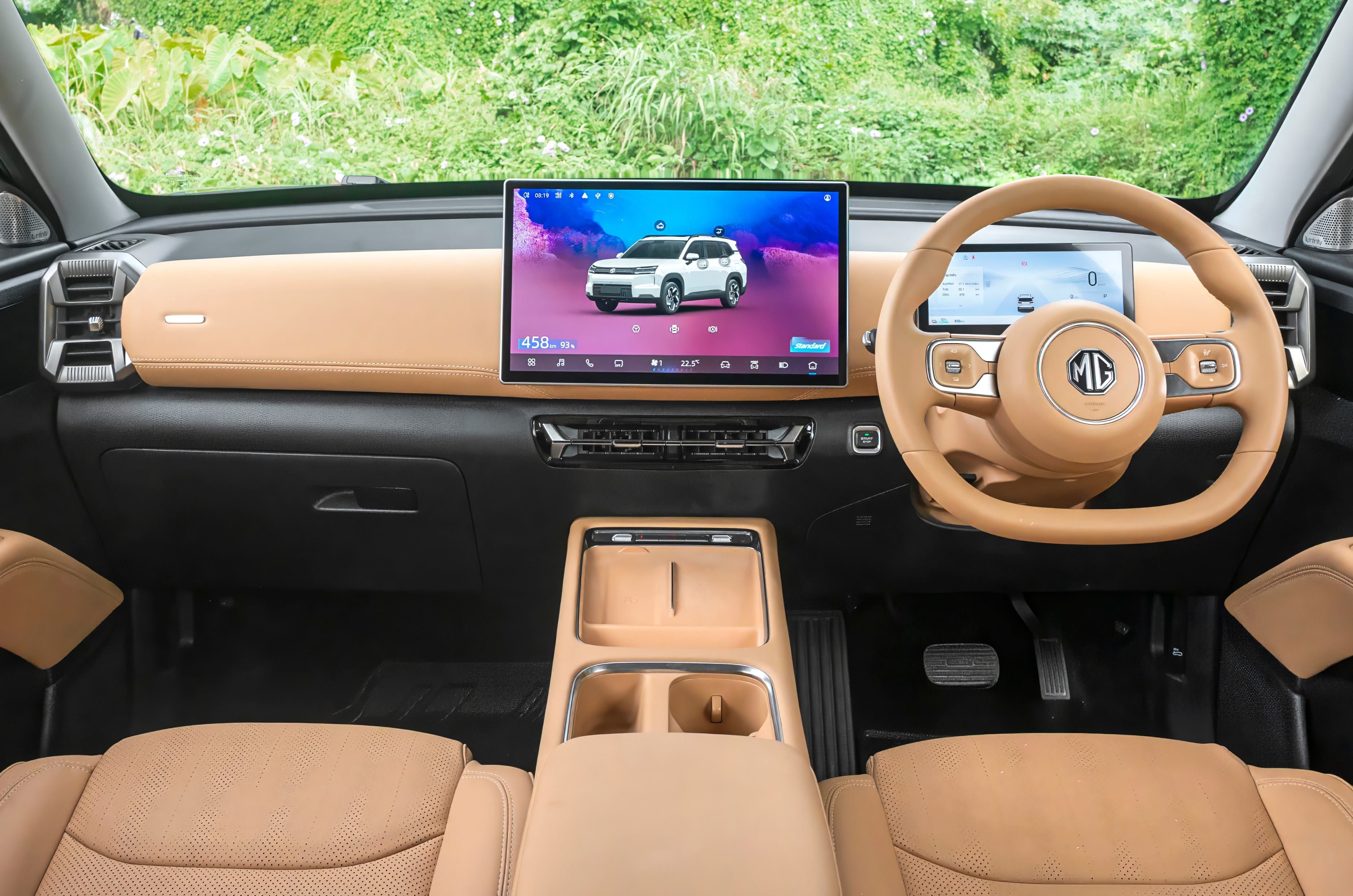
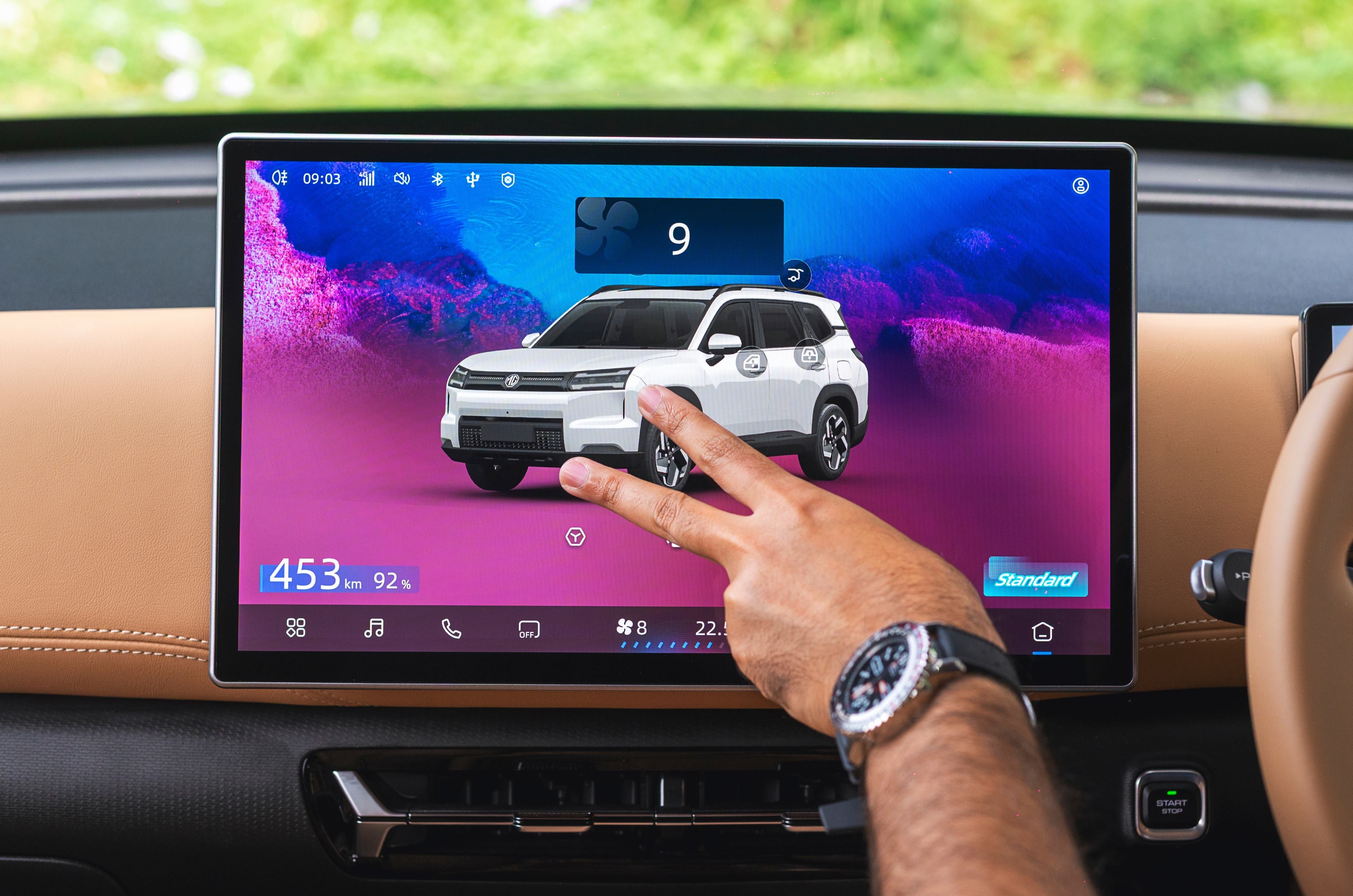
Taking centre stage on the dashboard is a 15.6-inch infotainment touchscreen, the user interface of which looks clean at first glance. The graphics are crisp and performance is snappy, too. MG has also added swipe-based gesture controls to make it easier to manipulate everyday functions such as adjusting the climate control system or the audio settings. The infotainment system comes with 6 mood-based ambient settings, wireless Apple CarPlay and Android Auto, AI-powered karaoke and multi-lingual voice commands.
Furthering the on-board experience is the well-integrated 256-colour ambient lighting system, a 10-speaker Infinity audio system (which sounds great), and crisp-looking 360-degree cameras. There’s also a ‘Custom’ mode for those who wish to tweak the power output and regen braking in 10-percent increments. The Level-2 ADAS suite of the MG Hector Tomahawk EV is comprehensive enough, while the regenerative braking system uses one of its sensors to automatically adjust regen levels in real-time based on traffic conditions.
Easy to drive
The large size of the Hector Tomahawk EV doesn’t make it a handful in the city
A commanding seating position, combined with the light steering and excellent all-around visibility, makes driving the MG Hector Tomahawk EV around town a manageable affair. Finding a suitable driving position is fairly easy too, thanks to the adjustable steering (for reach and rake) and the electrically adjustable driver’s seat. The Tomahawk EV also controls its body movements decently, feeling more mature than any MG EV before it. Finally, the brakes are good, too.
Reasons to not buy the MG Hector Tomahawk EV
Noisy suspension
The Tomahawk’s suspension can get audible over bad patches
While noises from the powertrain, tyres and wind are barely noticeable in this cabin, the same cannot be said about the Hector Tomahawk EV’s suspension. Going over bad roads, you will hear it working fairly easily, which takes away some of the premium feel of the cabin.
Non-linear power delivery
The Tomahawk EV’s powertrain lacks the linearity offered by rivals
The poor calibration of the electric powertrain of the MG Hector Tomahawk EV means that it may not be ideal for new drivers. ‘Standard’ drive mode dulls the response to prods from your right foot ever so slightly, with firmer throttle application resulting in torque steer due to a sudden surge in power reaching the front wheels. Trying to accelerate hard in ‘Sport’ mode will easily overwhelm the tyres up front – linearity in power delivery is missing.
Too much reliance on the touchscreen
Almost everything is routed through the massive infotainment screen
It might be sharp and responsive, but burying almost every major function and feature in the infotainment head unit gets distracting. The labyrinth of menus and sub-menus means that you will have to take your eyes off the road for using any of this SUV’s comprehensive feature set. Its sheer size also results in the touchscreen catching reflections, causing further distractions while driving.
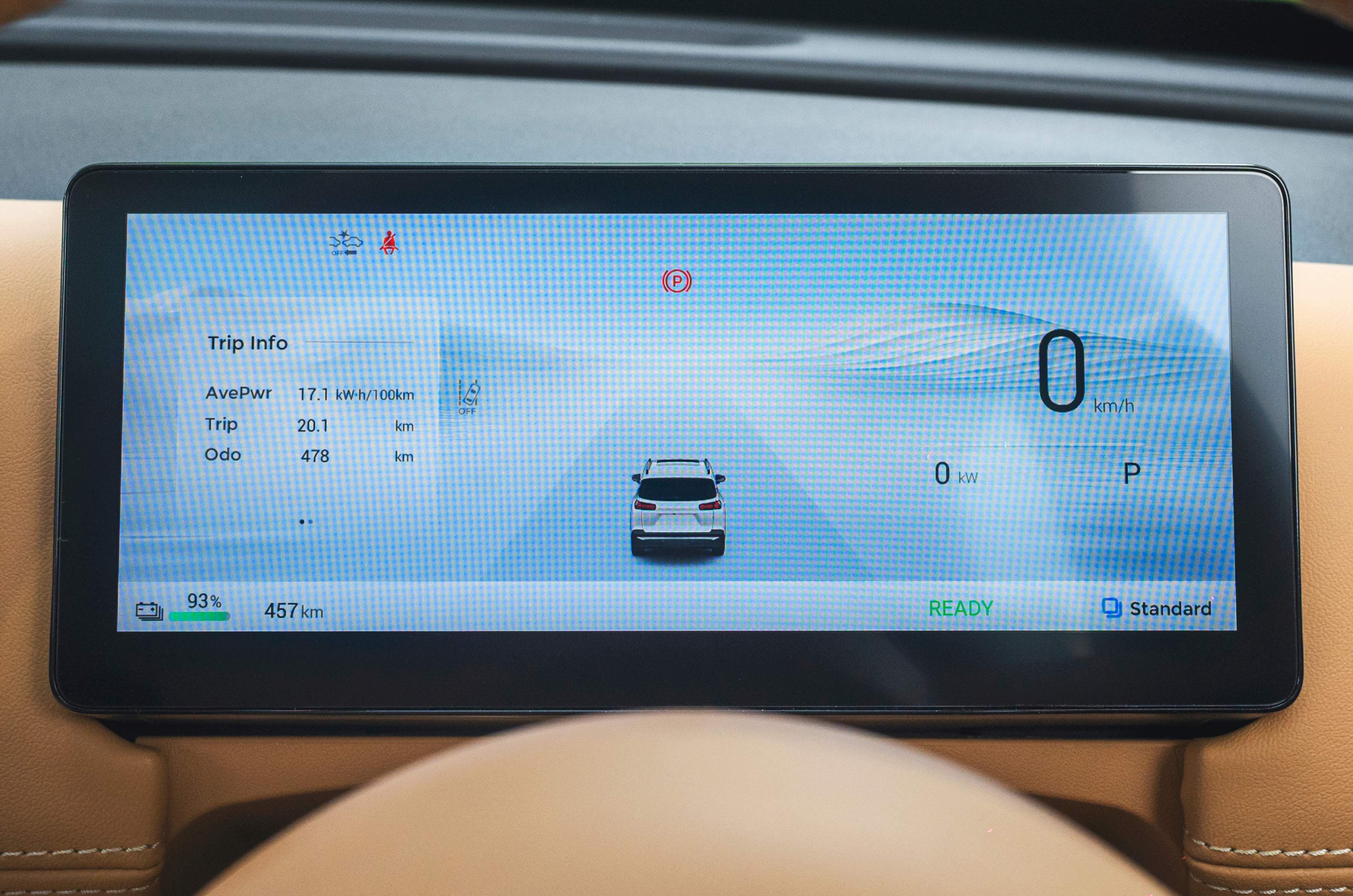
As for the 8.8-inch digital driver’s display, its real-estate could have been used better. While sharpness isn’t a problem, but that positive is overshadowed by the small fonts used for information read-outs. This can make reading most details on this display difficult.
एफएमसीजी कंपनी नेस्ले (Nestle) एक बार फिर विवादों में है। ताजा मामला इसकी भारतीय यूनिट नेस्ले इंडिया से जुड़ा है। भारतीय खाद्य सुरक्षा एवं मानक प्राधिकरण (FSSAI) ने पाया है कि शिशु पोषण (Infant Nutrition) के 3 उत्पादों में खाद्य सुरक्षा मानकों का कथित रूप से पालन नहीं किया गया। इसे लेकर FSSAI ने नेस्ले इंडिया लिमिटेड के खिलाफ कानूनी कार्रवाई शुरू की है। हालांकि कंपनी का कहना है कि वह लागू नियमों का पूरी तरह पालन कर रही है। FSSAI का कहना है कि उसने ई-कॉमर्स प्लेटफॉर्म्स पर उपलब्ध NAN एक्सेला प्रो स्टेज 1, लैक्टोजेन प्रो 1 और एक फॉलो-अप फॉर्मूला की जांच शुरू की है।
नियामक ने NAN एक्सेला प्रो स्टेज-1 में ‘5HMOs’ और ‘व्हे प्रोटीन’ से जुड़े दावों पर आपत्ति जताई है। वहीं, लैक्टोजेन प्रो 1 में ‘व्हे प्रोटीन’ को आसानी से पचने वाला बताने के दावे पर सवाल उठाया है। इसके अलावा नेस्ले इंडिया के एक फॉलो-अप फॉर्मूला का सैंपल लैब टेस्ट में बायोटिन की मात्रा के मामले में स्टैंडर्ड्स के मुताबिक नहीं पाया गया। नेस्ले इंडिया के ये तीनों प्रोडक्ट प्रावधानों का उल्लंघन करते हैं। इसलिए FSSAI ने कंपनी के खिलाफ 3 अलग-अलग मामले दर्ज किए हैं। हालांकि नेस्ले इंडिया का कहना कि उसके बच्चों के पोषण वाले प्रोडक्ट सभी लागू नियमों का पूरी तरह से पालन करते हैं।
नेस्ले और विवादों का नाता नया नहीं है। कंपनी भारत के साथ-साथ वैश्विक स्तर पर भी पहले भी कई बार विवादों के साए में रह चुकी है। कभी गलत मार्केटिंग प्रैक्टिसेज, कभी प्रोडक्ट की प्राइस फिक्सिंग तो कभी अनहेल्दी प्रोडक्ट्स को लेकर कंपनी आलोचनाएं झेल चुकी है। आइए डालते हैं एक नजर नेस्ले से जुड़े प्रमुख विवादों पर…
बेबी फॉर्मूला मार्केटिंग विवाद
साल 1977 में अमेरिका में नेस्ले को जबरदस्त बॉयकॉट झेलना पड़ा था। वजह थी नेस्ले के ब्रेस्ट मिल्क सब्सटिट्यूट की एग्रेसिव मार्केटिंग। यह मार्केटिंग कुछ इस तरह की गई कि कंपनी पर मांओं को स्तनपान कराने से हतोत्साहित करने और अपने बेबी फॉर्मूले को मां के दूध से ज्यादा स्वास्थ्यवर्धक यानि हेल्दी बताने का आरोप लग गया। कैंपेनिंग में इस तरह का संकेत दिया गया कि इस फॉर्मूले का इस्तेमाल हेल्थ प्रोफेशनल्स करते हैं। नेस्ले ने मैटरनिटी यूनिट्स में अपने फॉर्मूले के फ्री सैंपल बांटना शुरू किया और सेल्सपर्सन को नर्स के जैसे तैयार करके पेश करने लगी।
हालांकि नेस्ले का बेबी फॉर्मूला, मां के दूध से ज्यादा पौष्टिक है, इस बात का कोई सबूत नहीं था। लेकिन विवाद तो खड़ा हो गया था और 1977 में अमेरिका में नेस्ले का बहिष्कार शुरू हो गया। फिर यह धीरे-धीरे यूरोप में भी फैल गया। बहिष्कार आधिकारिक तौर पर 1984 में बंद हुआ, वह भी तब जब नेस्ले, WHO द्वारा समर्थित इंटरनेशनल मार्केटिंग कोड का पालन करने पर राजी हुई। लेकिन 1989 में बॉयकॉट फिर शुरू हो गया। इसके बाद नेस्ले पर 1990 के दशक में भी पाकिस्तान जैसे विकासशील देशों में इसी तरह की मार्केटिंग प्रैक्टिसेज अपनाने के आरोप लगते रहे।
KitKat: चॉकलेट या वेफर
बात 1998 की है। नेस्ले इंडिया अपनी किटकैट को भारत में वेफर की कैटेगरी में रखना चाहती थी और इसी के हिसाब से 10 प्रतिशत सेंट्रल एक्साइज ड्यूटी भरना चाहती थी। लेकिन टैक्स अथॉरिटीज को यह मंजूर न था। उनका मानना था कि किटकैट एक चॉकलेट है और इसलिए इस पर 20 प्रतिशत ड्यूटी लगनी चाहिए। उनका यह भी कहना था कि नेस्ले इंडिया, किटकैट का विज्ञापन तो चॉकलेट के तौर पर कर रही है, लेकिन ड्यूटी वेफर वाली भरना चाहती है। लेकिन नेस्ले भी कहां कम थी। उसने सफाई दी कि वह किटकैट को चॉकलेट बताकर नहीं बेचती, लोग इसे वेफर और चॉकलेट का कॉम्बिनेशन समझकर खरीदते हैं।
टैक्स अथॉरिटी का कहना था कि किटकैट में 68-70 प्रतिशत चॉकलेट मिल्क है, इसलिए इसे चॉकलेट माना जाना चाहिए। उस वक्त सेंट्रल एक्साइज डिपार्टमेंट ने नेस्ले इंडिया पर 24 करोड़ रुपये की ड्यूटी लगाई थी। इसमें किटकैट के कथित मिसक्लासिफिकेशन के लिए 100 प्रतिशत अनिवार्य जुर्माना शामिल था। नेस्ले इंडिया को सेंट्रल एक्साइज एक्ट के सेक्शन 11 AB के प्रावधानों के मुताबिक ब्याज भरने का भी निर्देश दिया गया था।
मामला बढ़ते-बढ़ते ‘कस्टम्स, एक्साइज एंड गोल्ड ट्राइब्यूनल, मुंबई’ में पहुंचा- ‘नेस्ले इंडिया वर्सेज कमिश्नर ऑफ सेंट्रल एक्साइज (एड्ज्यूडिकेशन), मुंबई’। ट्राइब्यूनल को तय करना था कि किटकैट में वेफर पर चॉकलेट की कोटिंग है या चॉकलेट के अंदर वेफर। फैसला नेस्ले के पक्ष में आया, किटकैट को वेफर माना गया और इसे 10 प्रतिशत सेंट्रल एक्साइज ड्यूटी की कैटेगरी में ही रखा गया।
चॉकलेट प्राइस फिक्सिंग
कनाडा में प्रतिस्पर्धा ब्यूरो ने चॉकलेट की प्राइसिंग के मामले की जांच के लिए 2007 में नेस्ले कनाडा के ऑफिसेज में छापा मारा था। हर्शी कनाडा और मार्स कनाडा के ऑफिस में भी छापे मारे गए थे। आरोप था कि कीमतों को बढ़ाने के लिए नेस्ले के अधिकारियों ने कनाडा में अपने कॉम्पिटीटर्स के साथ मिलीभगत की। कॉम्पिटीटर्स के अधिकारियों ने रेस्टोरेंट, कॉफी की दुकानों और सम्मेलनों में मुलाकात की। यह आरोप भी था कि नेस्ले कनाडा के तत्कालीन सीईओ रॉबर्ट लियोनिडास ने एक बार एक कॉम्पिटीटर को अपनी कंपनी की प्राइसिंग की जानकारी वाला एक लिफाफा दिया था।
2007 में छापेमारी के सार्वजनिक होने के बाद नेस्ले और अन्य कंपनियों के खिलाफ प्राइसिंग के लिए क्लास एक्शन मुकदमे दायर किए गए। नेस्ले ने किसी भी तरह की जिम्मेदारी माने बिना, 90 लाख डॉलर का समझौता किया। इसके बाद भी संयुक्त राज्य अमेरिका में बड़े पैमाने पर क्लास एक्शन मुकदमे चले।
मिल्क प्रोडक्ट विवाद
सितंबर 2008 के आखिर में, हांगकांग सरकार को चीन में बने नेस्ले के दूध के एक प्रोडक्ट में मेलामाइन मिला। किडनी खराब होने से 6 बच्चों की मौत हो गई और 860 अन्य बच्चों को अस्पताल में भर्ती कराना पड़ा। हालांकि नेस्ले ने कहा कि उसके सभी प्रोडक्ट सुरक्षित हैं और उन्हें मेलामाइन-मिलावटी दूध से नहीं बनाया गया है। अक्टूबर 2008 में ताइवान के स्वास्थ्य मंत्रालय ने घोषणा की कि चीन में नेस्ले द्वारा बनाए गए 6 तरह के मिल्क पाउडर में मेलामाइन की थोड़ी मात्रा पाई गई है, और उन्हें बाजार से हटा दिया गया।
जब मैगी पर हुआ बड़ा बवाल, हो गई थी बैन
सितंबर 2026 में सामने आया नया वाकया FSSAI और नेस्ले इंडिया के बीच दूसरा बड़ा रेगुलेटरी विवाद है। इससे पहले 2015 में भारत में नेस्ले की मैगी को लेकर एक बड़ा बवाल हुआ था। लेड की ज्यादा मात्रा और लेबलिंग से जुड़ी चिंताओं के कारण नेस्ले इंडिया अपने इंस्टेंट नूडल्स लिए घिरी थी। मई 2015 में बाराबंकी, उत्तर प्रदेश के फूड सेफ्टी रेगुलेटर्स ने रिपोर्ट दी कि मैगी नूडल्स में मोनोसोडियम ग्लूटामेट (MSG) का लेवल बहुत ही हाई है। साथ ही लेड का स्तर, जितनी मात्रा की इजाजत है उससे 17 गुना ज्यादा है। बस फिर क्या था। मैगी के सेहत के लिए हानिकारक होने, खासकर बच्चों की सेहत के लिए हानिकारक होने को लेकर वाद-विवाद होने लगे। देश में और विदेश में कई जांच हुईं। मामले ने इतना तूल पकड़ा कि भारत सरकार ने जून 2015 में मैगी नूडल्स को पूरे देश में बैन कर दिया।
हालांकि नेस्ले हमेशा से यही कहती आई है कि उसके नूडल प्रोडक्ट सुरक्षित हैं। भारत में जब बैन लगा तो मैगी को लगभग 320 करोड़ रुपये का स्टॉक रिकॉल करना पड़ा यानि कि बाजार से वापस मंगाना पड़ा। इतना ही नहीं ऐसी भी खबर आई कि उसने एक सीमेंट फैक्ट्री को स्टॉक जलाने के लिए 20 करोड़ रुपये दिए। मैगी में MSG और लेड, उचित मात्रा से अधिक होने के चलते भारत के कॉरपोरेट मामलों के मंत्रालय ने नेस्ले इंडिया पर 640 करोड़ रुपये का जुर्माना लगाया था।
अगस्त 2015 में यूएस हेल्थ रेगुलेटर एफडीए ने टेस्ट किए, जिनमें सामने आया कि मैगी में लेड की मात्रा खतरनाक स्तर पर नहीं है। 13 अगस्त 2015 को बॉम्बे हाईकोर्ट ने देश में मैगी पर लगे बैन को हटा दिया। कोर्ट का कहना था कि बैन लगाते हुए प्रॉपर प्रोसिजर फॉलो नहीं किया गया। इसके अलावा कोर्ट ने भारत में हुए टेस्ट के नतीजों पर भी सवाल खड़े किए, जिसकी वजह थी कि टेस्ट नेशनल एक्रेडिएशन बोर्ड फॉर टेस्टिंग एंड कैलिब्रेशन लेबोरेटरीज की अधिकृत लैब्स में नहीं हुए थे। नवंबर 2015 में मैगी की भारतीय बाजारों में फिर वापसी हो गई।
2021 में जब फूड प्रॉडक्ट्स और ड्रिंक्स अनहेल्दी होने पर घिरी
जून 2021 में नेस्ले के फूड प्रोडक्ट्स पर एक बड़ा खुलासा हुआ। कंपनी के एक इंटर्नल डॉक्युमेंट में माना गया कि उसके 60 प्रतिशत से ज्यादा फूड प्रोडक्ट और ड्रिंक्स अनहेल्दी हैं। कंपनी ने यह भी माना है कि इसके कुछ फूड प्रोडक्ट कभी भी हेल्दी नहीं होंगे, फिर चाहे वह कितना भी सुधार क्यों न कर ले। यह बात सामने आते ही नेस्ले की फिर से आलोचना होने लगी। एक प्रेजेंटेशन में कहा गया था कि ऑस्ट्रेलिया के हेल्थ स्टार रेटिंग सिस्टम के तहत कंपनी के 37 प्रतिशत प्रोडक्ट्स को ही 3.5 स्टार या इससे ज्यादा की रेटिंग मिली। 3.5 स्टार की रेटिंग ‘रिकग्नाइज्ड डेफिनेशन ऑफ हेल्थ’ मानी जाती है। सामने आया था कि नेस्ले के 60 प्रतिशत फूड प्रोडक्ट इस मानक पर खरे नहीं उतरे।
भगवान जगन्नाथ की तस्वीर वाली पैकेजिंग पर विवाद
जनवरी 2022 में नेस्ले इंडिया को सोशल मीडिया पर ग्राहकों की पुरजोर नाराजगी का सामना करना पड़ा था। कारण था किटकैट के रैपर पर भगवान जगन्नाथ, बलभद्र और माता सुभद्रा की तस्वीरें। यह नया स्टॉक आते ही विवादों में घिर गया। कंपनी पर धार्मिक भावनाओं को आहत करने का आरोप लगा। नेस्ले इंडिया की सफाई थी कि उसके इस कदम का उद्देश्य केवल भारत के खूबसूरत और दर्शनीय स्थलों को उकेरना था। किटकैट के डिब्बे पर पट्टचित्र के जरिए ओडिशा की संस्कृति को उकेरा गया था।
लेकिन तगड़ी आलोचना को देखते हुए कंपनी ने अपने कदम पर खेद जताया। कहा कि उसने साल 2021 में ही विवादास्पद पैकेजिंग वाली किटकैट के डिब्बों को बाजार से वापस ले लिया था। बाकी बचा हुआ माल भी जल्द ही बाजार से गायब हो गया। इससे पहले अप्रैल 2021 में नेस्ले इंडिया ने किटकैट चॉकलेट के पैकेट पर मणिपुर के कीबुल लामजाओ राष्ट्रीय उद्यान को मेघालय में दिखाए जाने के लिए माफी मांगी थी। राज्य सरकार के अधिकारियों की आपत्ति के बाद कंपनी ने यह कदम उठाया था।
बेबी फूड में चीनी
अप्रैल 2024 में स्विस NGO ‘पब्लिक आई’ और ‘इंटरनेशनल बेबी फूड एक्शन नेटवर्क’ (IBFAN) की एक जांच से पता चला कि कम और मध्यम आय वाले देशों में बेचे जाने वाले नेस्ले के लोकप्रिय बेबी सीरियल प्रोडक्ट्स और फॉर्मूलाज में यूरोप और अन्य विकसित देशों में बेचे जाने वाले उत्पादों की तुलना में काफी ज्यादा मात्रा में एडेड शुगर है। एक रिपोर्ट में कहा गया कि भारत में जांचे गए सभी सेरेलक बेबी सीरियल प्रोडक्ट्स में एडेड शुगर थी और मात्रा औसतन प्रति सर्विंग लगभग 3 ग्राम थी। वहीं नेस्ले के यूरोपीय बाजार में बिना चीनी वाले शिशु पोषण उत्पाद उपलब्ध थे। विकासशील देशों में नेस्ले के सबसे ज्यादा बिकने वाले बेबी-फूड ब्रांड्स में काफी ज्यादा मात्रा में एडेड शुगर पाई गई, जबकि स्विट्जरलैंड में इसके प्रोडक्ट शुगर-फ्री थे।
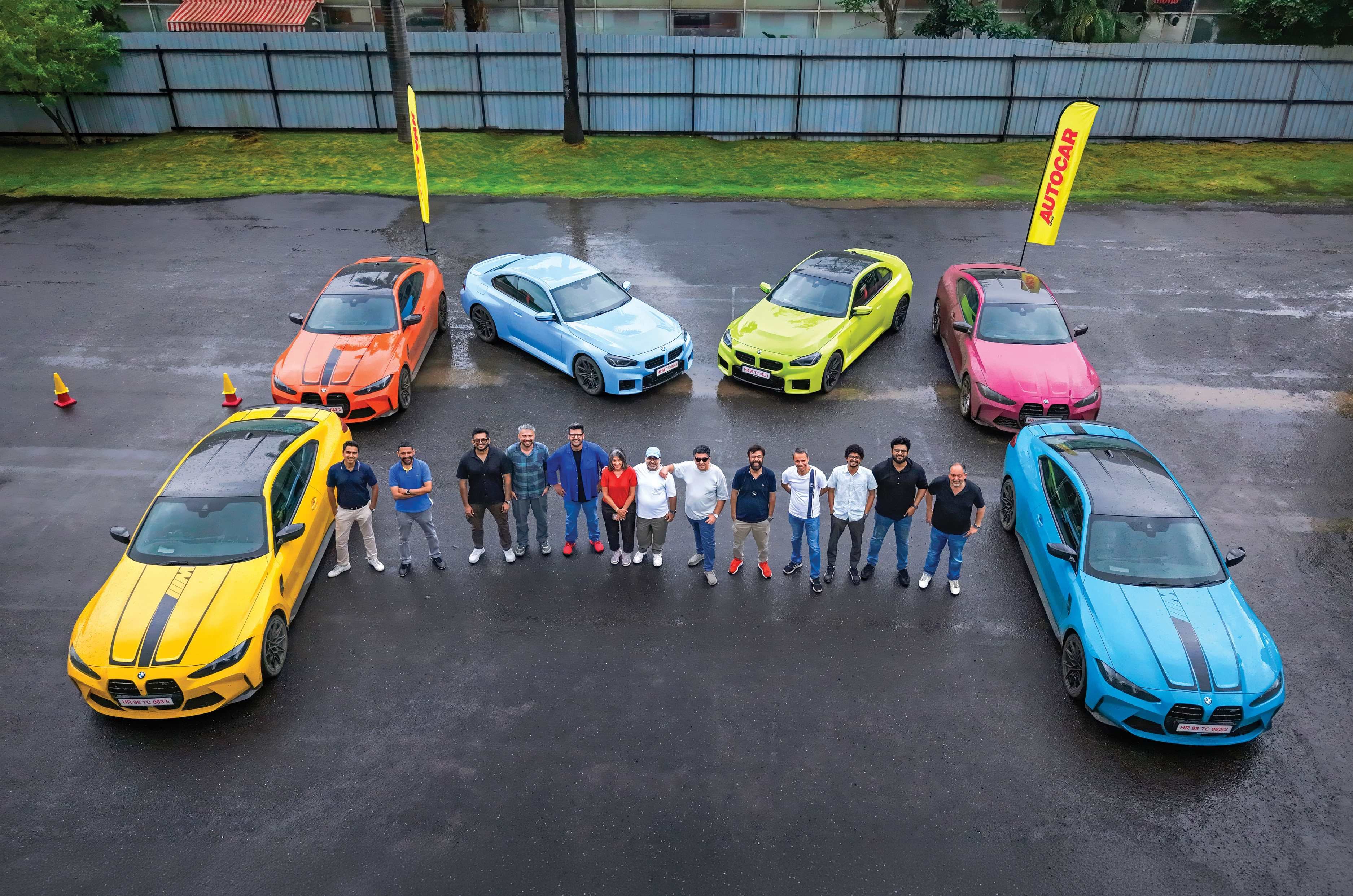
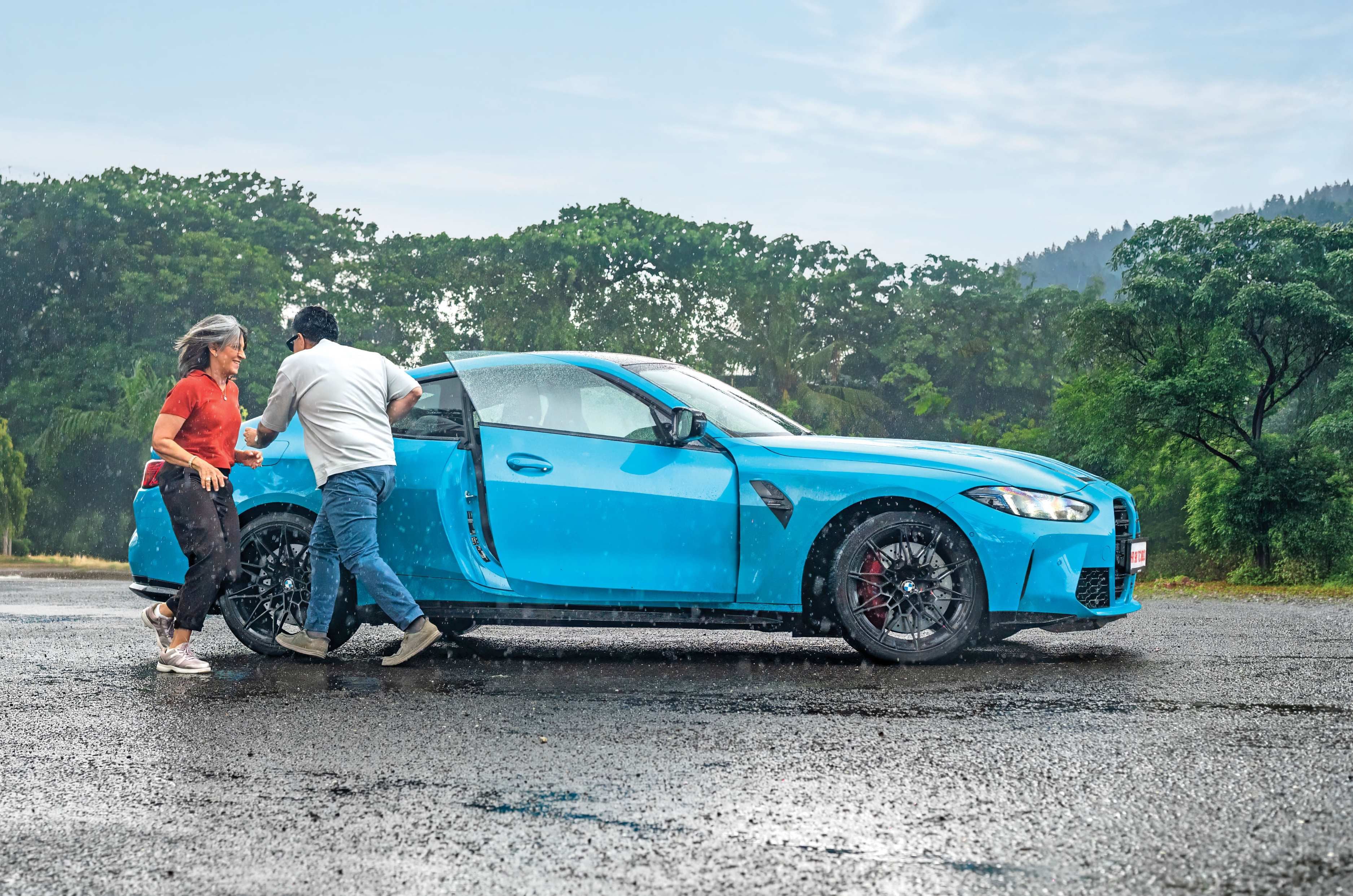
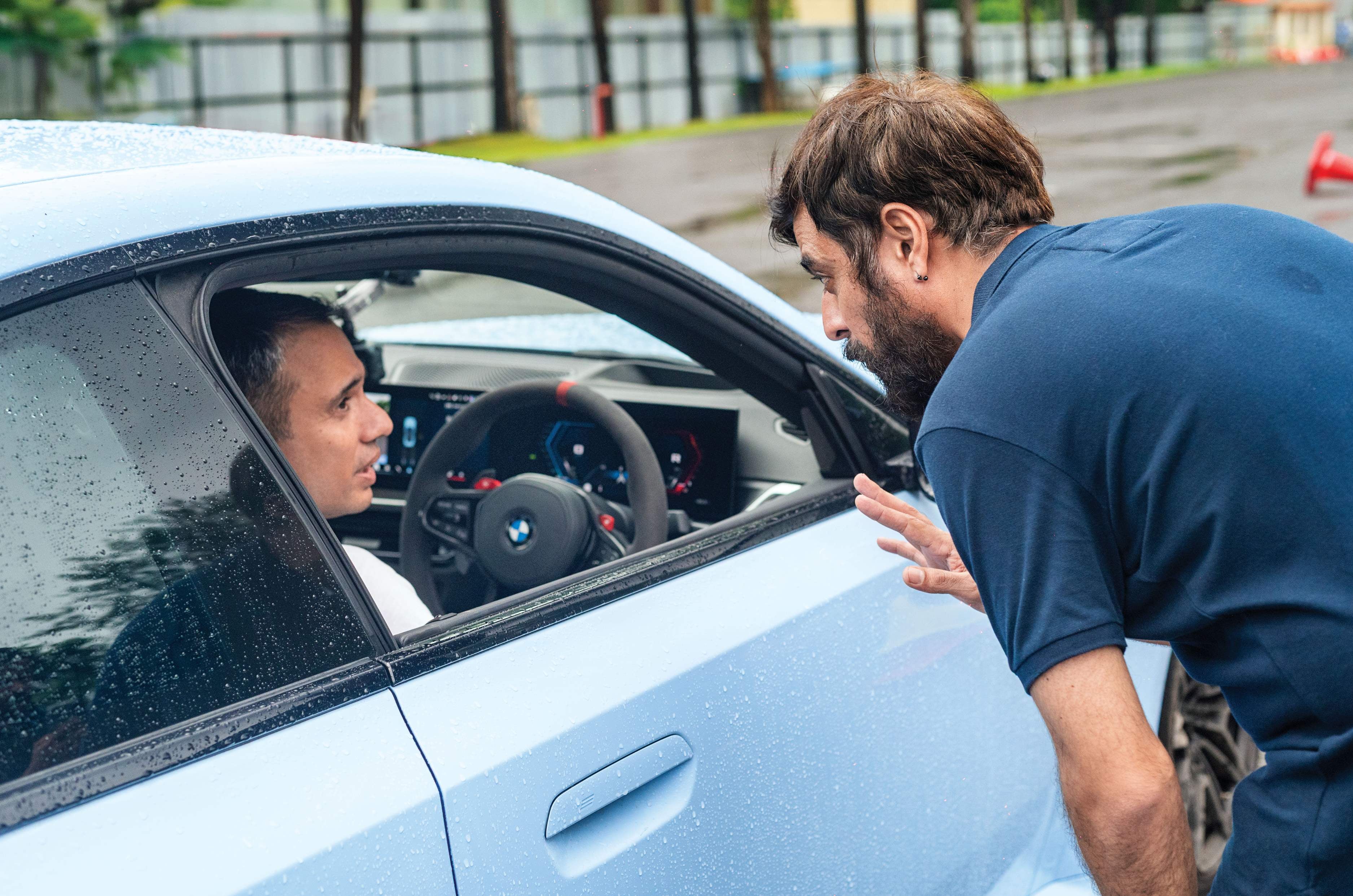
Company off-sites are designed to take employees away from the chaos and stress of everyday work for a few moments of relaxation. At Autocar India, things are a bit different. No cocktails by the pool or playing Housie before dinner. Instead, what we got were six BMW M cars (four M4s and two M2s) and a deserted concrete ground thanks to our friends at Raymond Realty. The day brought pouring rain, wet socks and no breakfast. Sounds like punishment, but not to us.
The objective was simple: pick a car, do your best in the three challenges and earn bragging rights for the rest of the year.
We rarely get to compete against each other, and with equal machinery, there could be no excuses. This was going to be intense.
Challenge 1: The Slalom Switch
Partners picked by (un)lucky draw from a bag of M&M’s as colourful as our Ms, each pair then picks a BMW and makes their way through the cones to the other side. Switch drivers and race back through the cones, then stop within the start box. Hit a cone or fail to stop within the box and you earn a penalty.
The M4 might be tail-happy, but it can also dance its way through cones with precision.
Gavin and Ameya chose an M2 for its compact size. However, the drivers’ wildly different body sizes would play spoilsport here, as finding a seat position that suited both was an issue. A clean run with decent athleticism resulted in a time of 35.93sec.
Soham and Sergius followed in the other M2, with a bit of wheelspin off the line. A rapid driver change, thanks to their slender builds, meant a quick 34.36sec. The time to beat.
Lenny and I went against conventional wisdom and picked the bigger, more powerful M4 over the compact and nimble M2. It might be heavier, but we wanted the power advantage for off-the-line speed, given that each run had, in reality, two launches. We went through the cones super-quick, but we bungled the driver swap, nearly running into each other, and with Soham slamming the door shut and me spending precious seconds opening it, the time, then, was simply thrown away and, well, not worthy of printing.
What was meant to be a relaxing team outing turned into a war.
The chaos subsided as Hormazd arrived with Renuka. Ready to prove that experience counts more than anything else, they put in an honest effort with the M4, which was commendable. But on the way back, Renuka clipped a few cones, which added big chunks to their time.
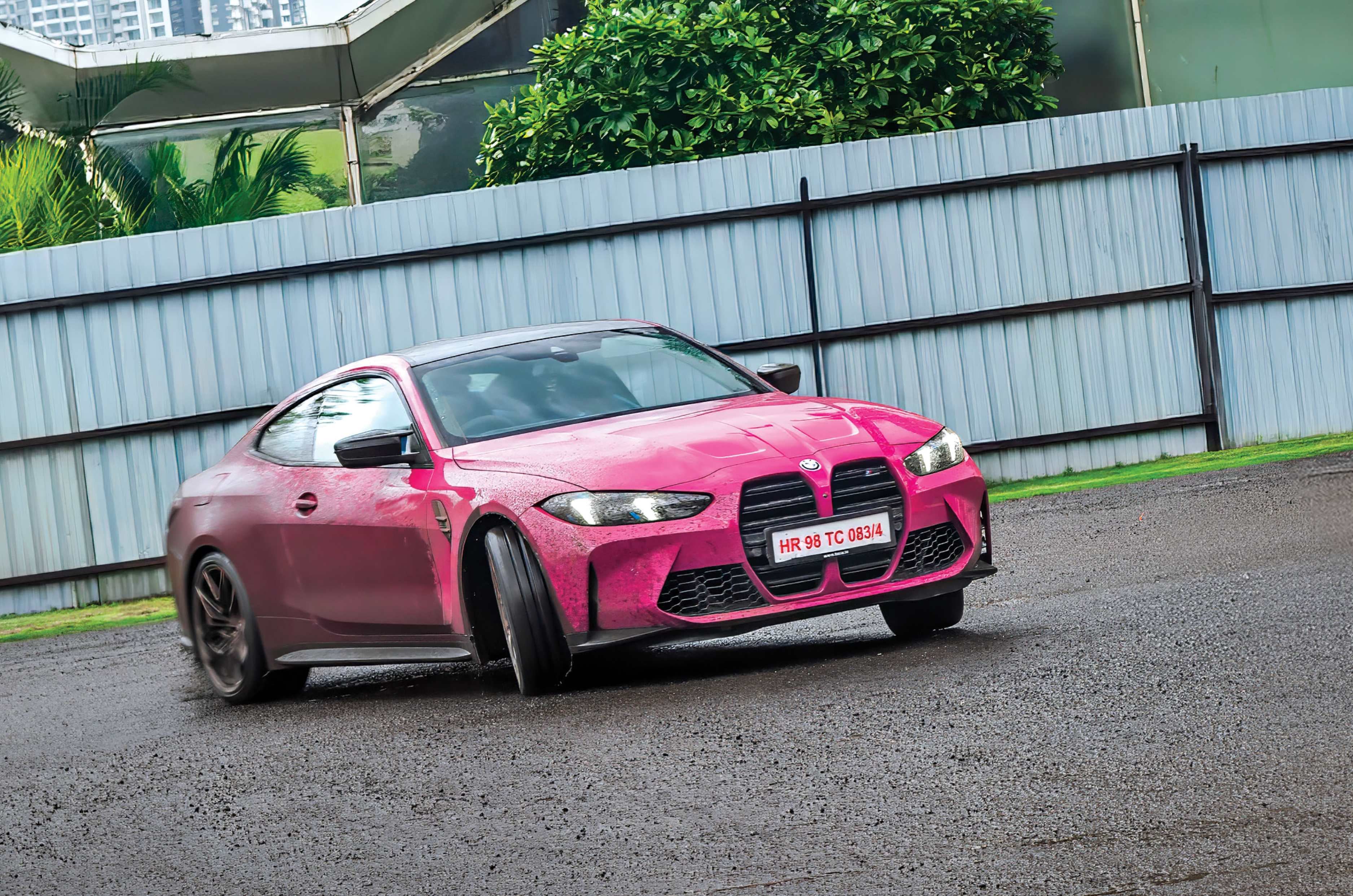
Self-proclaimed racers Saumil and Rahul were confident as they snuck into the fuchsia M4, certain they could put down the power best. A clean run and swap, but a controversial on-the-line stop caused a ruckus. Penalty given; the time was 36.23sec.
Rahul advising us all before each run, and we dutifully didn’t follow a word of what he said.
Next, Shapur and Nikhil. Power over light weight here, as the pair went for another 530hp M4. The speed gained at launch was soon lost at the driver swap – they both literally ran into each other – and for good measure, hit a cone on the way back, resulting in a penalty and a time of 42.24sec. A new low.
In the end, seeing how incompetent we were at working together, we abandoned teamwork and did the runs by ourselves and agreed the following challenges should be run solo.
Challenge 2: The Free Kick
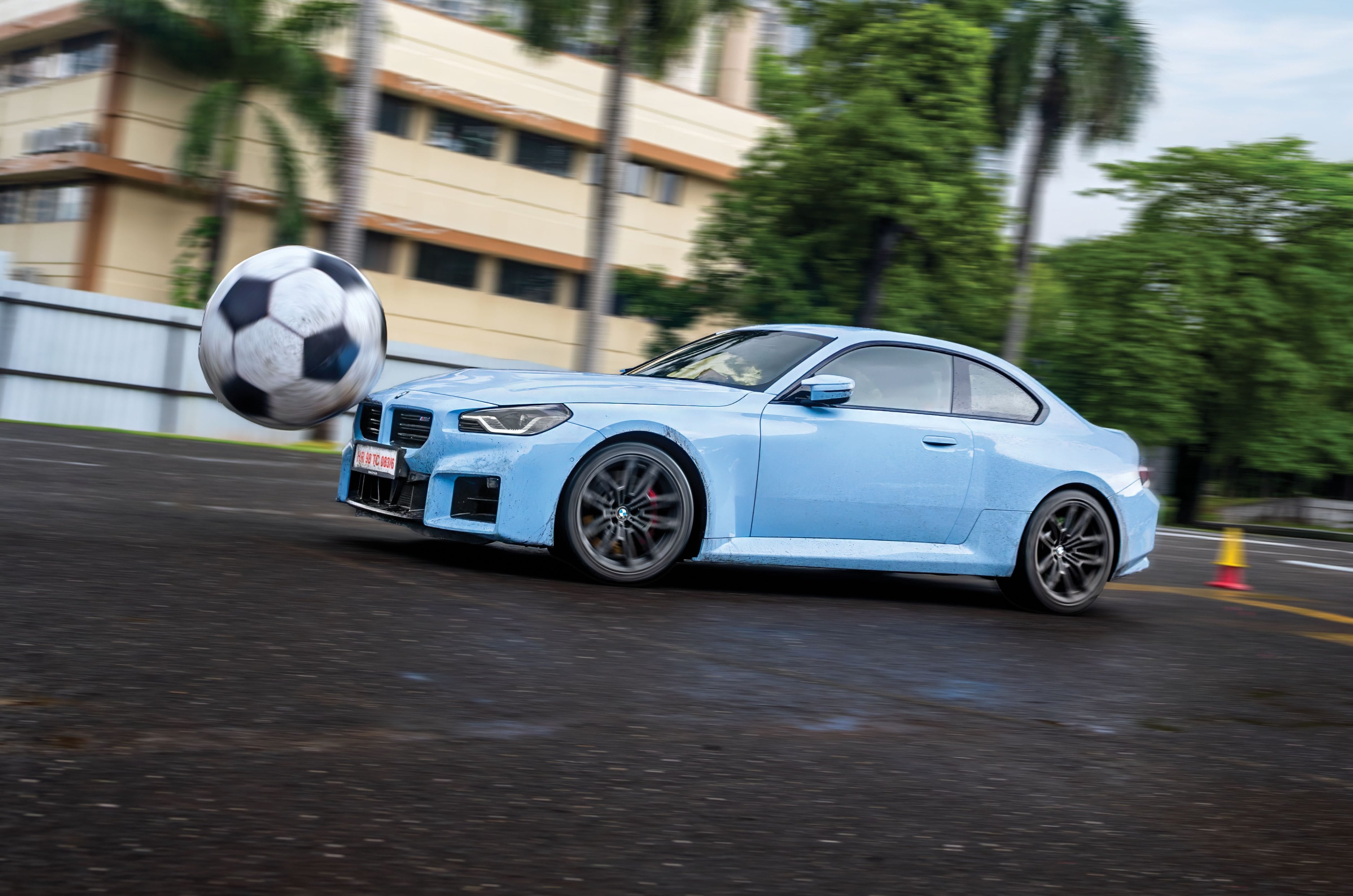
Hop into an M2, line up behind the large inflatable football and race to the finish line, ensuring the ball goes past the flag poles. The fastest to score a goal wins. The M2 was the car of choice, thanks to its upright front-end, which would be a safe bet for pushing a giant football.
The M2 is agile, surefooted and has massive grip.
With the pressure of being from football-crazy Goa, Sergius had his work cut out. But he did Goans proud, guiding the ball with swift, deft steering corrections, and in 9.9sec, we had our first goal and the time to beat. A run-up-style start with a hard launch turned out to be the fastest way, though, as Rahul scored the goal in just over seven seconds. Talk about choosing the wrong career.
A Zidane-style Panenka was Ameya’s strategy as the ball flicked up with none of Zidane’s flair. A poor 16.64sec, but he managed to score. After watching the slow approach fail, Soham powered through the first half, only to lose the ball and have to reverse to get it in. Way off the times set so far. With a smooth start, Gavin lost the ball towards the end and had to waste time getting around it, which took over 18 seconds. At least the goal counts.
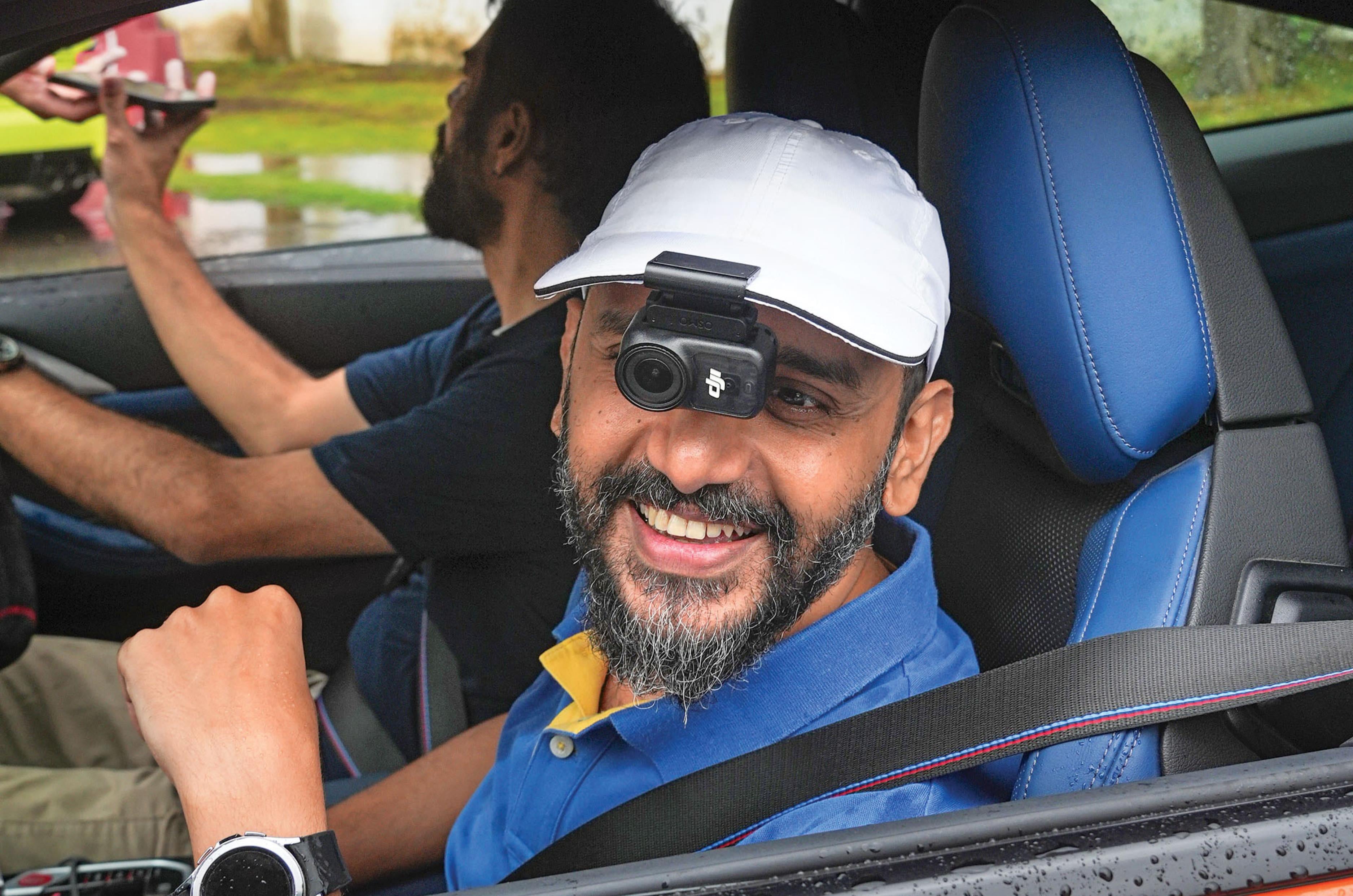
Content is king, and the more angles we have, the more the evidence.
Since the company had paid for the ball (and would also likely have to cover any damage to the car), Hormazd chose the slow-and-steady way. He eased the ball very slowly into the goal, but we cheered louder than we ever had. Appraisals are around the corner. An overly cautious approach, using 4 of the 460hp available, still resulted in Nikhil missing the ball and failing to get it through the posts. Second attempt made it through at a glacial pace.
With enough evidence of how to go about it, I had to choose between rough and smooth, and the former was more enticing. It looked dramatic as the ball flung high, but pushing it through the goal wasted time.
Finally, in an attempt to beat Rahul, using his style, Shapur hit the ball so far off that, by the time it bounced once, he had already reached ahead. He managed to get it in after much effort, but by his next attempt, the ball had deflated. Good riddance.
Challenge 3:The Drift King
Engage ‘Drift Mode’ in the M4 and achieve the best possible score on the Drift Meter.
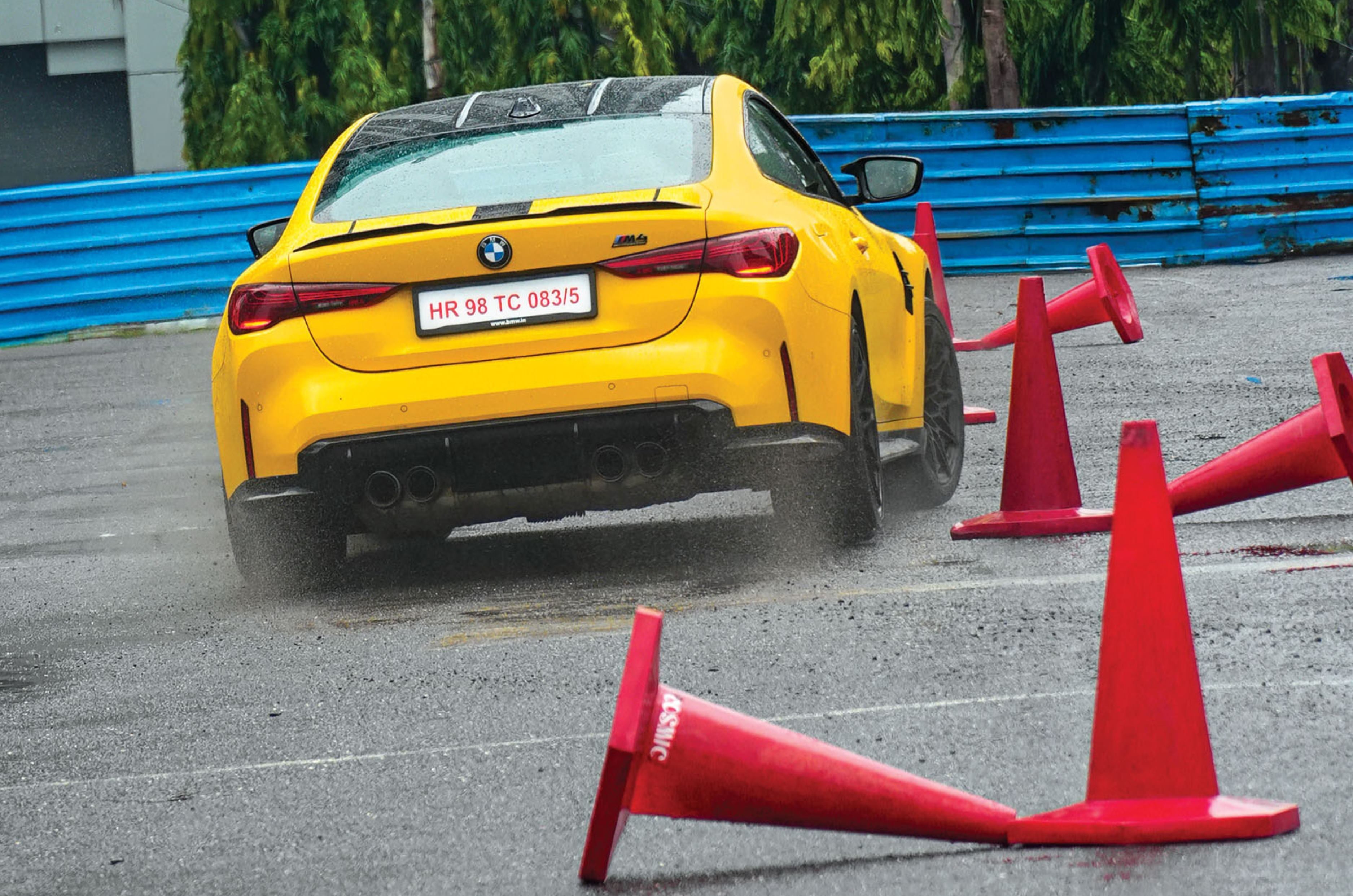
Rear wheel drive mode and adjustable traction settings allow for some proper tail-out fun on the M4.
Before we got to sideways action, we stopped for some grub. As ridiculous as it sounded to have lunch right before drifting in circles, who can get between a bunch of car journos and brown bags of greasy food? After washing down carbs with sugar, we hopped into the M4s for the ultimate bragging rights. The M4 and M2 are both exceptionally playful, and it doesn’t take a lot to get them to break traction. However, the Drift Meter and the extra power of the M4 made it the default choice for drifting.
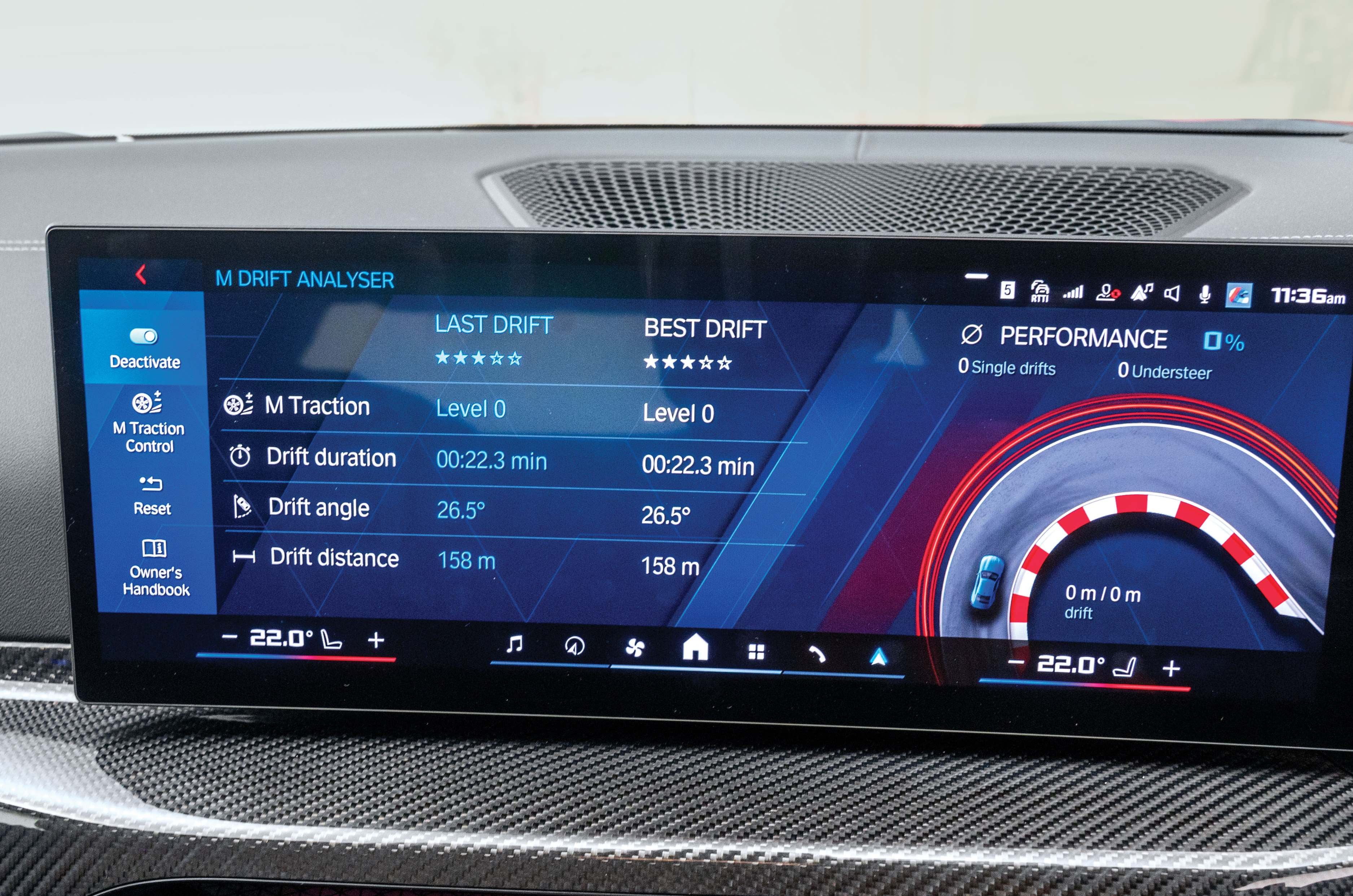
The drift analyser on the M4 gives you a detailed report of your work with no place to hide.
To begin with, we were all pretty rubbish, but the levels of traction control and the incredible steering feel meant it wasn’t long before everyone got meaningful slides in. Holding it and making circles was something only a few of us managed, with the Drift Meter further confusing us all. Still, the table alongside tells the story, and while it will start a new war in the office, it was surely worth it.
Off-sites like these might seem like another day at work, but if the point is to relax and rejuvenate, no beach resort will ever come close to smoking some tyres.
MG’s newest SUV has been christened the Hector Tomahawk, but despite the name, it shares nothing with the ICE-powered Hector we’ve known since 2019. The Hector Tomahawk EV and PHEV are the first models on MG’s ADAPT architecture, which will eventually spawn strong hybrids and range-extender hybrids. We drove the Tomahawk EV in sunny Kochi to see how it stacks up in the ever-growing segment.
MG Hector Tomahawk EV Exterior Design and Engineering – 6/10
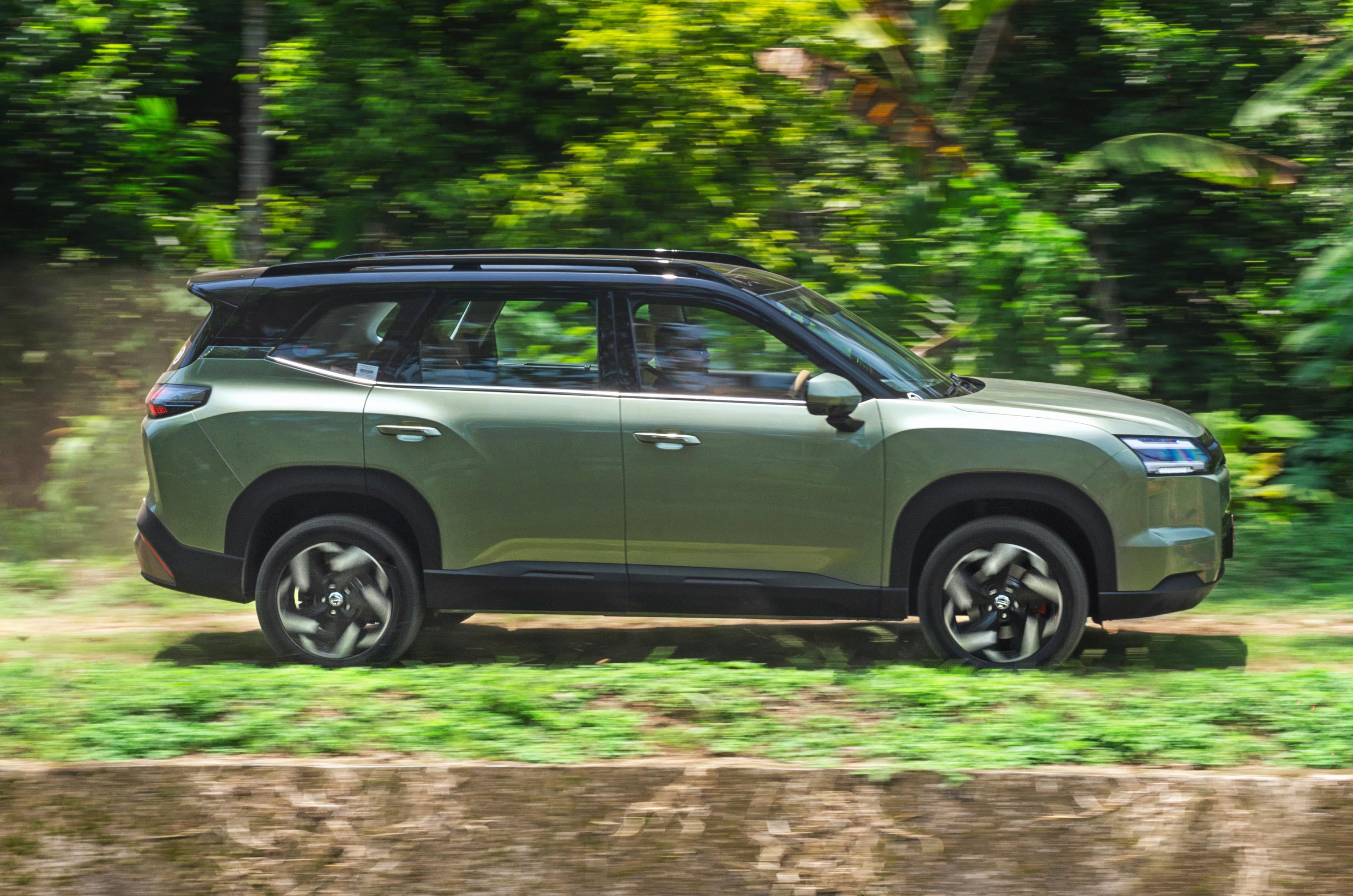
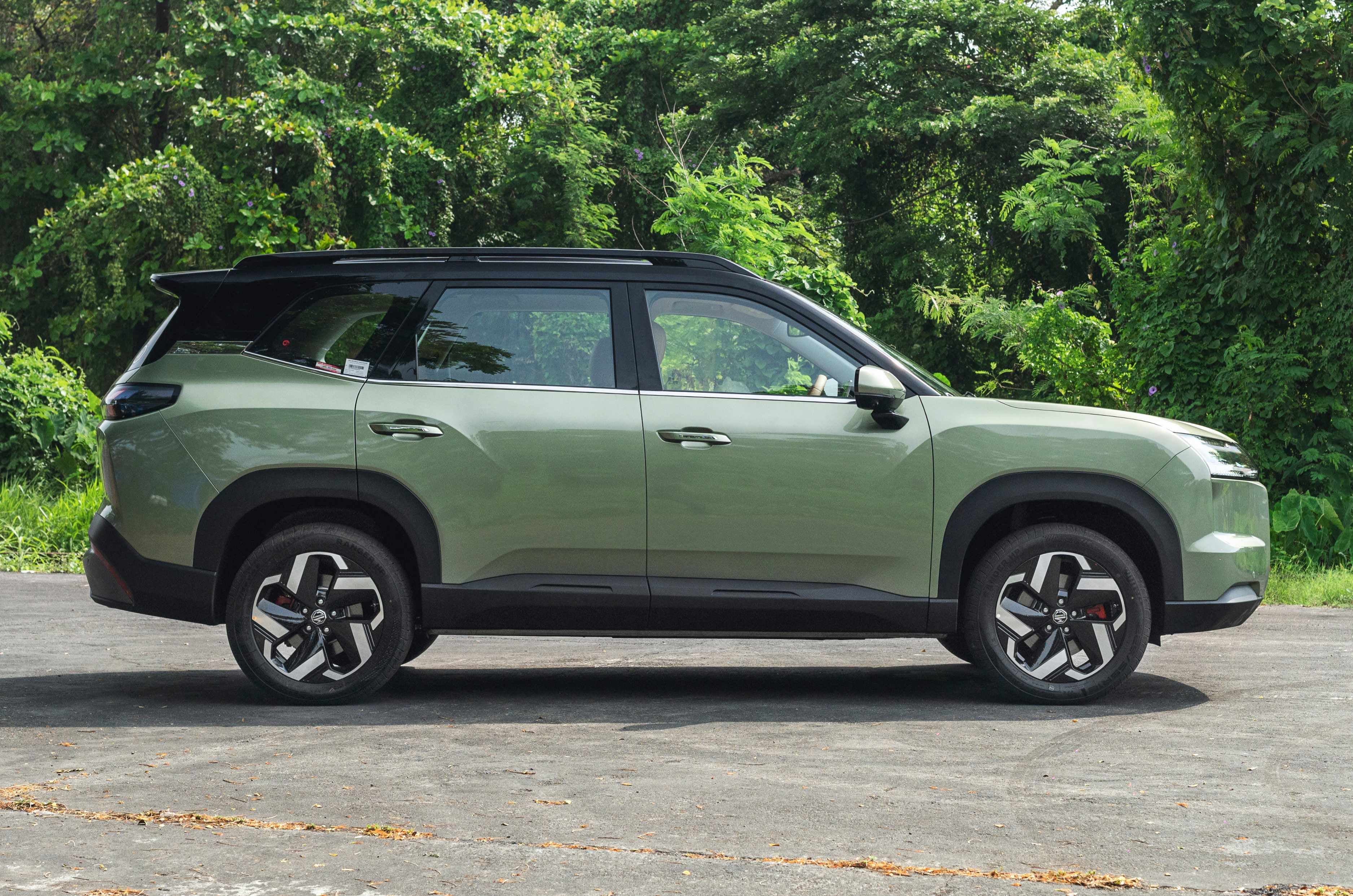
Let’s talk dimensions first. At 4,745mm long, 1,850mm wide, 1,770mm tall and with a 2,810mm wheelbase, the Tomahawk is larger than the Mahindra XEV 9S in all areas except width. Ground clearance, at 230mm (measured to battery), is also class-best. However, these numbers don’t translate to a particularly imposing stance. Instead, it straddles the line between an MPV and SUV.
Size doesn’t translate to an imposing stance; it straddles the line between an MPV and an SUV.
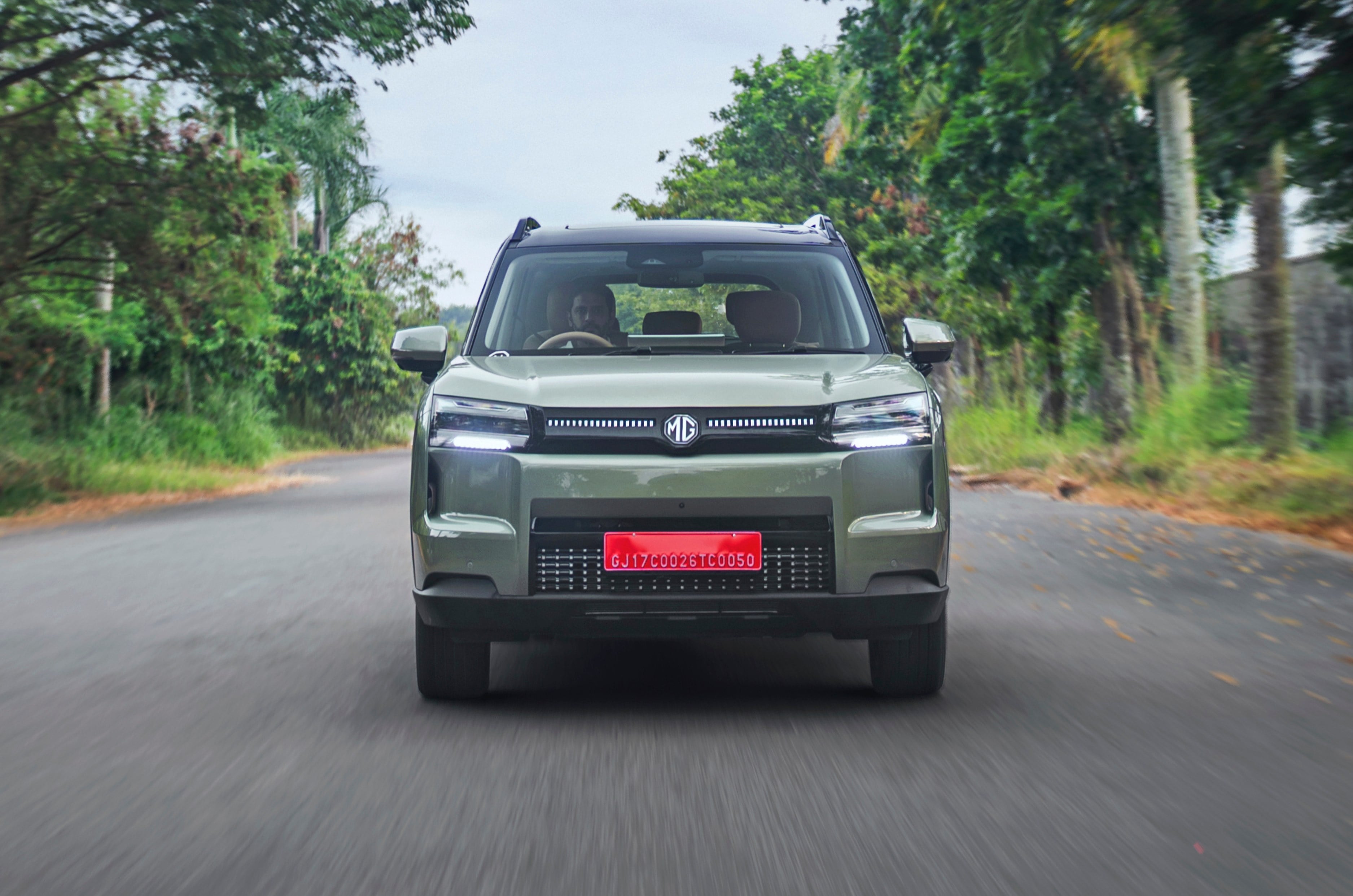
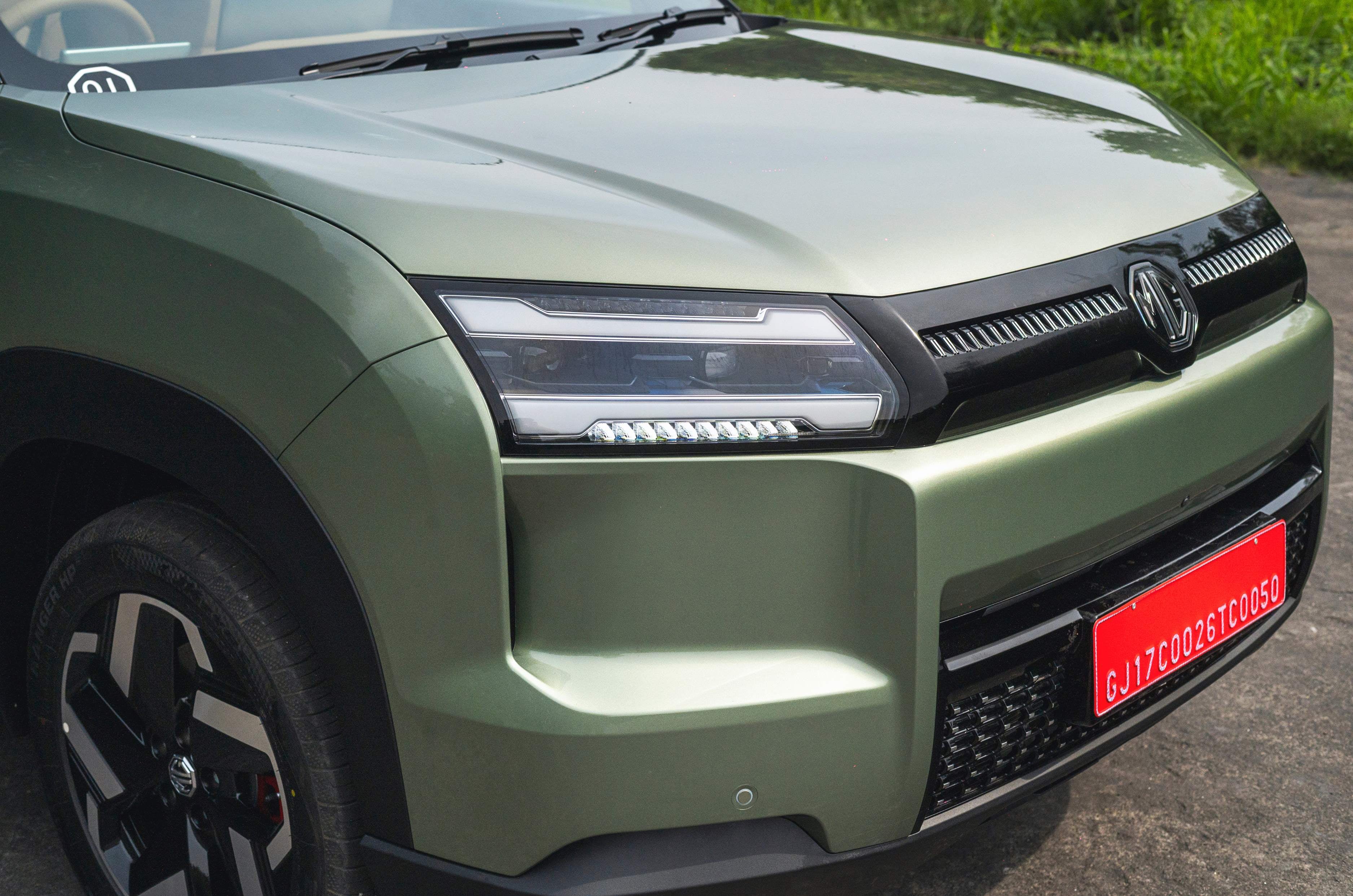
The design is clean and quite handsome, if a bit uninspiring. The front bumper is squared off with pass-through aero vents on the edges and chunky cladding lower down. Cooling requirements are met by slim slots in the centre section with some chrome detailing, while the conventional grille is blanked off and finished in gloss black. No light bar here, thankfully, but the MG logo does glow and is flanked by rectangular LED headlights with a subtle H-shaped light signature.
Large rectangular LED headlights have a subtle H in them; no light bar, but the MG logo glows.
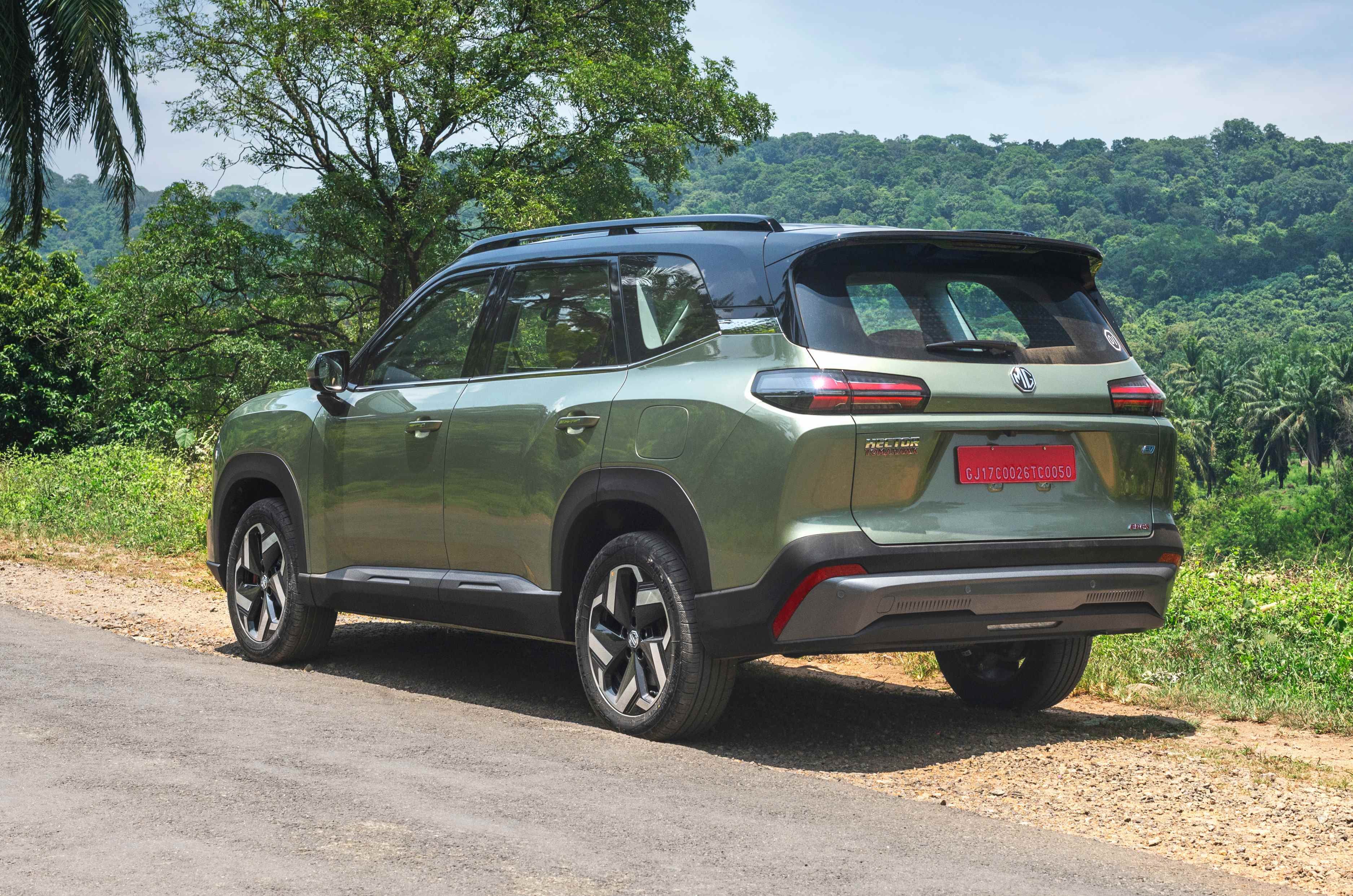
In profile, it looks quite slab-sided, with sharp creases along the fenders and plastic wheel-arch cladding adding some definition. These, along with the chunky door cladding, attempt to give it a rugged appearance but are let down by 18-inch wheels that look a tad too small. No electric door handles here, just good old-fashioned pull types.
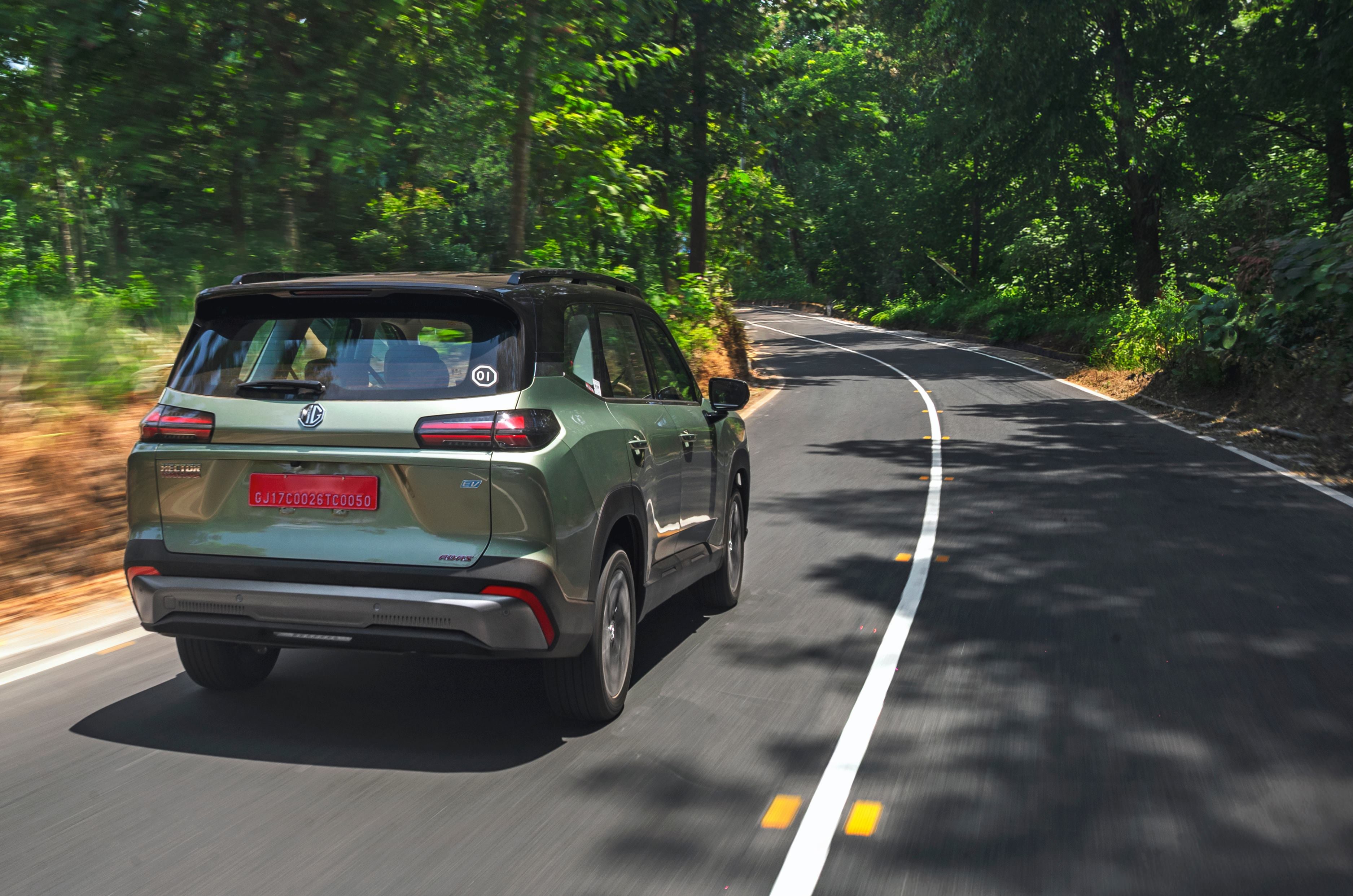
Further back are a set of intricate LED tail-lights that again resist the connected trend. MG’s love for badging is clear though, with four on the powered tailgate. Finishing things off nicely is a sculpted bumper with a grey trim piece and a centre-mounted reverse lamp. Overall, it’s a reasonably pleasing design, but it looks a tad dated and lacks the butch appeal of some rivals.
Overall styling is neatly done but somewhat uninspiring.
MG Hector Tomahawk EV Interior Space and Comfort – 8/10
Inside, the dash features a familiar minimalistic layout with a large touchscreen front and centre. It looks premium and features soft-touch materials on the dash and doors, but lacks a certain wow factor, and the light tan colour palette might not be to all tastes. That said, the light tone and large windows do give it an airy ambience. Look hard, and you will find areas where fit and finish could be improved. The centre console in particular feels poorly textured and finished, which we were told is down to a supplier issue. Speaking of the centre console, the column-mounted drive selector frees up space here for a wireless charger, cupholders, multiple bins as well as a large pass-through cubby lower down, and the door bins are enormous too.
Minimalistic interior looks premium, but the light tan colour palette might not be to all tastes.
It’s easy to get into a comfortable and commanding driving position using the power-operated seats and reach-and-rake adjustment for the steering wheel. The seats themselves are wide, and despite the firm cushioning, they felt comfortable on our full day of driving. They are ventilated too, and the driver’s seat also gets a memory function.
Powered and ventilated front seats are wide and comfortable; driver’s seat gets a memory function.
The Tomahawk has the second-longest wheelbase in class (next only to the Vinfast MPV 7), and it shows in the second row. Legroom is excellent, and while you do sit slightly knees-up, thigh support is adequate too. The seatback reclines pretty far back and features an armrest and three adjustable headrests. Window sunshades, AC vents and Type-C USB ports add to the rear-seat comfort and convenience.
The chauffeur-driven are well taken care of, with a comfy reclining bench, plenty of room all around and sunblinds.
The Tomahawk EV is available in both 5- and 7-seater guises. The latter adds a sliding second row with one-touch tumble to access the third row, as well as more AC vents on the roof and a dedicated fan-speed control. Getting into the last row is surprisingly dignified thanks to a large aperture, but kneeroom depends largely on the middle-row passengers’ generosity, and the low seat means thigh support is non-existent. Headroom is good, though, and for short journeys, adults will be fine back there.
Third row will fit adults but with a slight compromise to the middle-row space.
With the third row up, boot space stands at 192 litres – enough for a couple of carry-on bags – expanding to a generous 528 litres with it stowed. Under the boot floor are a few more storage cubbies, which are handy since there is no frunk – a miss considering there appears to be enough space under the bonnet. A space-saver spare is mounted underneath the car.
MG Hector Tomahawk EV Features and Safety – 8/10
The minimalist interior layout means you reach for the 15.6-inch infotainment screen for most functions. While this can get distracting, physical and swipe-gesture controls together handle most basic HVAC and audio functions with surprising ease. Anything beyond basic, though, will require a deep dive into the screen. While the screen is sharp and snappy and the UI is clean, it can take a while to find your way through the maze of sub-menus. Wireless Android Auto and Apple CarPlay are also present, but using either hides the row of shortcuts at the bottom of the screen. Hardcoding these buttons to always stay on top would improve usability. The screen also often catches glare, which takes away from the otherwise sharp 360-degree camera.
Several functions are baked into the 15.6-inch touchscreen, but gesture controls for essential functions are quite intuitive.
Instrumentation is handled by an 8.8-inch display directly in front of the driver. The screen itself is sharp, but some smaller fonts might have you reaching for your reading glasses. Its real estate could also be better utilised by displaying the blind-view camera feed rather than the current pop-up on the centre screen. Other feature highlights include a sweet-sounding 10-speaker Infinity audio system, a panoramic sunroof that stretches over the second row, 256-colour ambient lighting, connected car tech, an AI assistant and more. It’s worth mentioning that the Tomahawk EV also gets a physical start/stop button, which is absent on the brand’s other EVs.
8.8-inch driver’s display is sharp, but some smaller fonts might have you reaching for your reading glasses.
A Level 2 ADAS suite is also available on the top Essence trim, with functions such as adaptive cruise control, lane keep assist and auto emergency braking. While there isn’t an official crash-test rating yet, the robust standard safety kit, including six airbags, ESP, all-wheel disc brakes and Isofix mounts, provides some confidence.
MG Hector Tomahawk EV Performance and Refinement – 7/10
The Tomahawk EV offers just one powertrain configuration – a 69.2kWh LFP battery pack powering a single motor on the front axle, producing 204hp and 310Nm, good for a claimed 0-100kph time of 8.2 seconds. Its front-wheel-drive layout puts it at a disadvantage against rivals from Tata and Mahindra, who offer either rear- or all-wheel drive and higher power outputs. The front-driven Hyundai Creta Electric or Kia Carens Clavis EV are closer matches, and the Tomahawk EV betters them on power and torque.
First EV on MG’s ADAPT architecture pairs a 69.2kWh battery with a front-mounted motor producing 204hp and 310Nm.
Initial throttle response is mild, making it quite easy to amble around town, but push harder, and you get a power spike resulting in torque steer. In Sport mode, you’ll hear the front tyres protest when made to put all that torque down on a less-than-perfect road. Standard mode dulls response slightly, but it can still catch new drivers off guard. With time, it is possible to drive around this, but the latest crop of rival EVs has mastered a more linear delivery. Eco mode feels a bit tepid and is best saved to counter range anxiety, while a Custom mode lets you customise power output and regen braking in increments of 10 percent. There are also three preset regen modes – Standard, Comfort and Strong – but no paddles to control them or one-pedal mode. Instead, you get an Intelligent setting that uses the ADAS sensors to adjust regen in real time based on the traffic in front of you.
Grip levels and body control are good, but FWD layout struggles to put power down.
Refinement is a bit of a mixed bag. While the motor is fairly muted and there is little wind or tyre noise coming through, you hear the suspension at work on rough patches.
MG Hector Tomahawk EV Range and Efficiency – 7/10
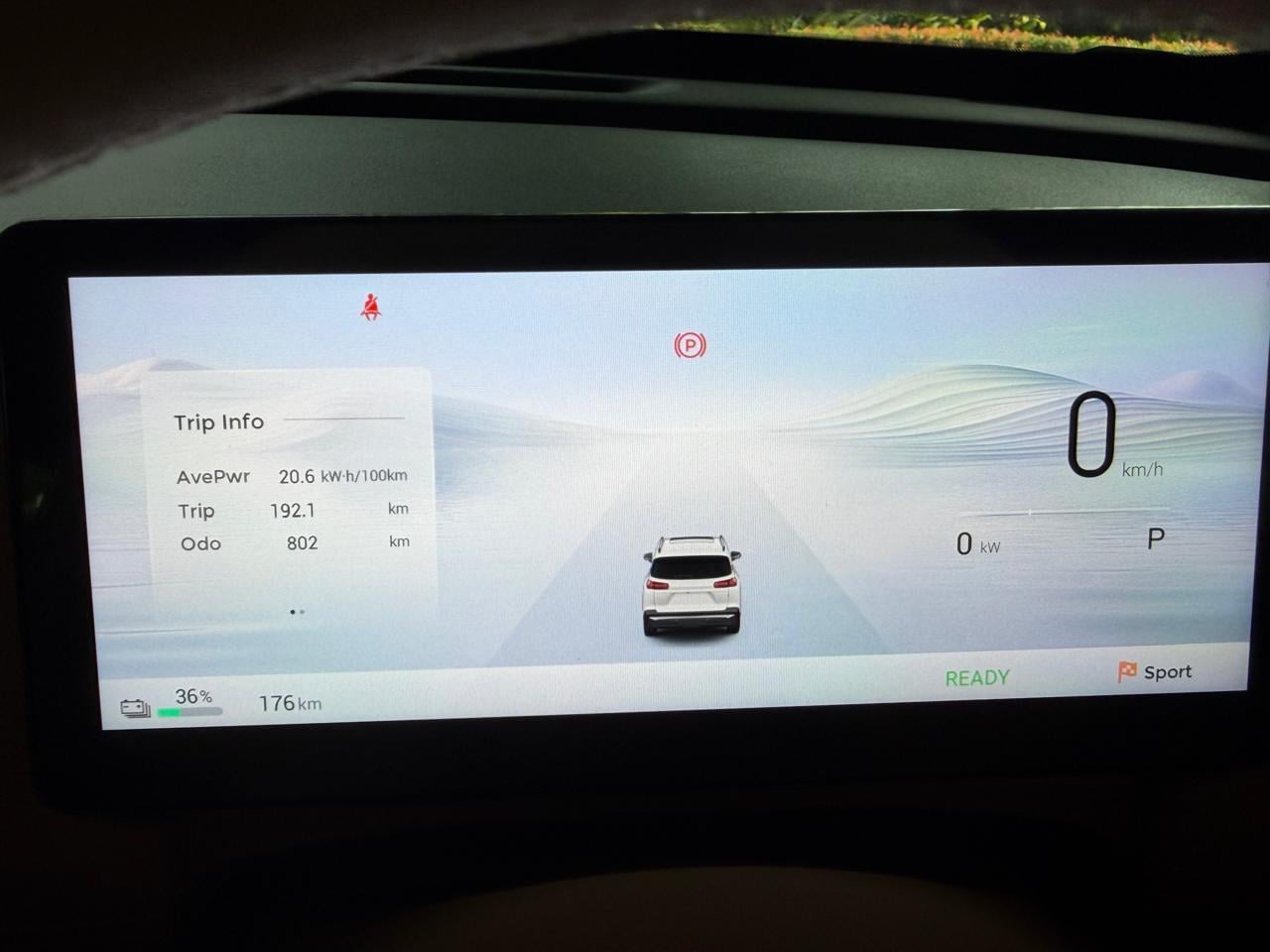
A spirited highway drive from Kochi to Kozhikode covering 192km, resulted in an overall efficiency of 4.85km/kWh.
While the Hector name is often associated with poor fuel efficiency, the new EV and PHEV hope to change that. MG claims an MIDC range of 517km from its 69.2kWh battery pack. On a spirited drive from Kochi to Kozhikode covering 192km, we recorded an overall efficiency of 4.85km/kWh, translating to a real-world range of 336km. This was on a fast highway run, where the Tomahawk’s tall shape won’t do its efficiency any favours. We’ll put it through our standard real-world efficiency test when we have the car for longer.
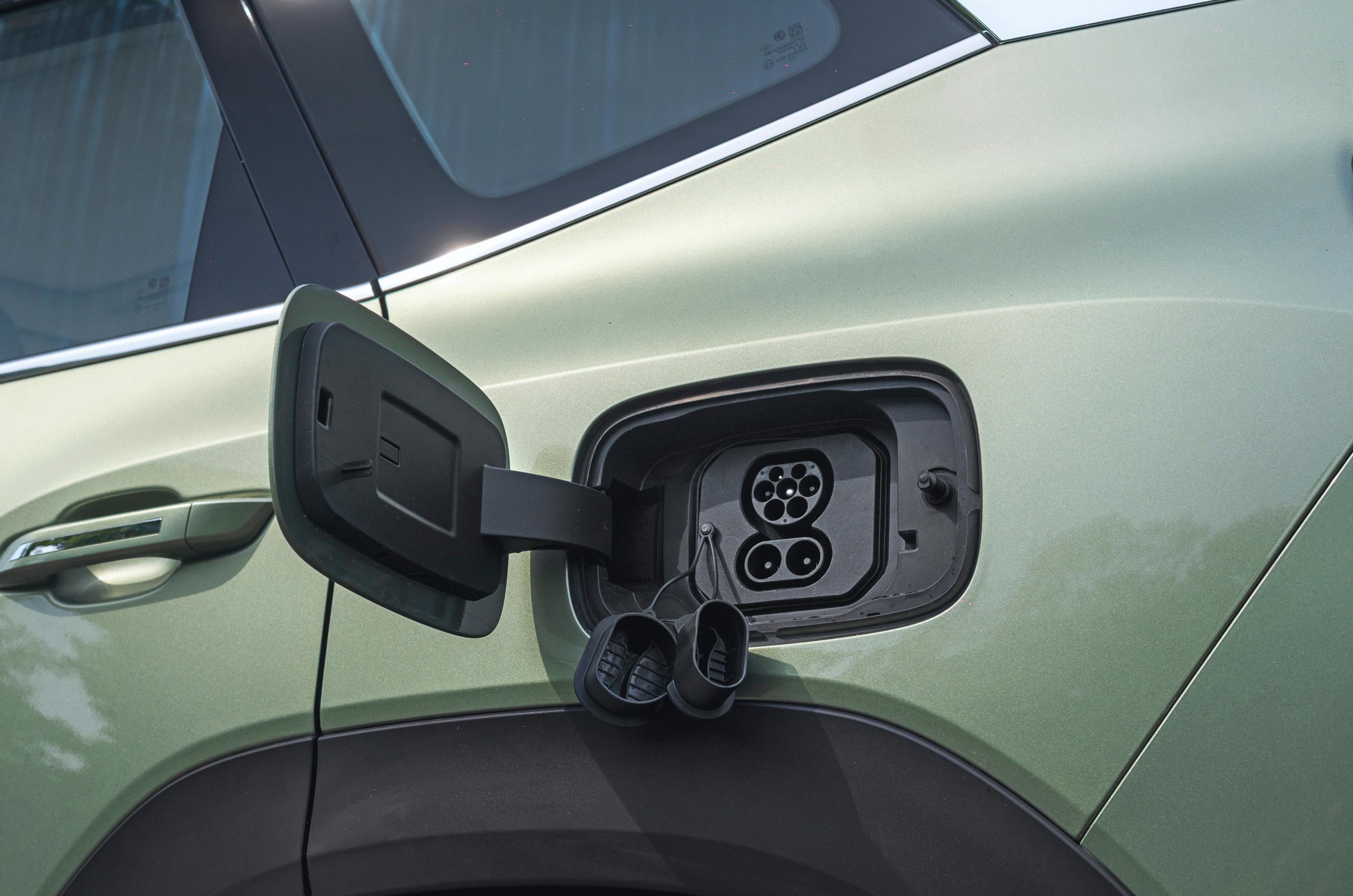
DC fast charges at 90kW – slower than rivals but enough for a 30 to 80 percent top-up in a claimed 35 minutes.
Topping up the battery from 10 to 100 percent using the 7.4kW charger is said to take around 12.5 hours. It can also DC fast charge at speeds of up to 90kW, which is lower than its immediate rivals but still enough to take the battery from 30 to 80 percent in about 35 minutes.
MG Hector Tomahawk EV Ride Comfort and Handling – 7/10
Rides with more maturity than previous MG EVs, but suspension can be heard working.
The Hector Tomahawk EV makes a big step up in ride and handling compared to the ICE Hector, but there is still some room for improvement. It rides with more maturity than previous MG EVs, comfortably absorbing most of what we threw at it. However, you do hear the suspension working. Sharper bumps reveal an underlying firmness that occasionally comes through to the cabin. Most roads around Kochi were relatively smooth, and we weren’t able to experience it on rippled concrete, so we will reserve full judgement until we have the car for longer.
A big positive is how easy the Tomahawk is to drive for something this large. Visibility all around is excellent, and you can see the bonnet’s edges from the driver’s seat. A light steering also helps, and overall, it feels less intimidating to drive through tight traffic than, say, the XEV 9S.
230mm claimed ground clearance is best in class; wheelbase second only to VF MPV 7.
The steering also weighs up as speeds rise and feels reasonably direct, though the sheer amount of torque going to just the front wheels corrupts the feel. At a quick pace through the twisties, you feel the wheel tugging at your hands as you apply power. Body control is good, and it stays composed through quick direction changes, but a sedate pace is more its element. Braking is strong, with four-wheel discs bringing the heavy SUV to a confident halt.
MGHector Tomahawk EV Value for Money – 7/10
Introductory pricing for the Hector Tomahawk EV starts at Rs 19.49 lakh and tops out at Rs 23.49 lakh. The Battery-as-a-Service (BaaS) scheme lowers the entry barrier to Rs 13.99 lakh, with battery rental set at Rs 4.90 per km. While all these prices are applicable to limited units only, this is quite aggressive pricing from MG.
Practical, comfortable and no-nonsense SUV will appeal to the chauffeur-driven but lacks the dynamic polish of its rivals.
When compared spec-for-spec, it undercuts the competition from Tata and Mahindra while offering a bigger battery and more performance than its Korean rivals. It has a spacious and comfortable cabin, a comprehensive feature set and is surprisingly easy to drive for its size. However, it lacks the dynamic polish of its rivals and therefore doesn’t feel like a latest-generation EV. As such, its Hector name starts to make more sense. It is a practical, comfortable, no-nonsense SUV that will appeal to the chauffeur-driven just like its forebear. Those looking to do the driving, though, are better off looking elsewhere.
Volkswagen India has launched Track Day Experiences, also known as VWe (or Volkswagen Experiences). The German automaker is calling this an experiential platform aimed at bringing owners and enthusiasts closer to VW by way of structured driving programmes, driver development activities and community events. The inaugural edition will be held at Coimbatore’s CoASTT facility over a period of two days (October 10-11, 2026).
First edition will be held on October 10-11 at Coimbator’s CoASTT facility.
Open to owners of the Golf GTI, Tiguan R-Line, Tayron R-Line, Virtus GT and Taigun GT.
Cost of registration is Rs 2,500 per participant.
What will the Volkswagen Track Day Experiences offer?
Attendees can participate in autocross, slalom, off-roading and go-karting sessions
The two days will see participants being able to partake in a mix of on-track and off-track activities, designed for drivers of varying skill levels. The Volkswagen Track Day Experiences will include lead-and-follow sessions, autocross challenges, slalom exercises, a dedicated off-road obstacle course, go-karting and also vehicle handling demonstrations – all carefully under instructions from experts. The main circuit measures 3.8km and has 14 turns, while the registration cost per participant is Rs 2,500.
More than a showcase of performance, Volkswagen says that the format is designed to let owners build confidence and get an in-depth understanding of their car’s dynamics. VWe will also have owners participating in technical masterclasses, networking sessions with other participants and various lifestyle activities. The event will offer attendees dedicated hospitality areas and family-friendly experiences, apart from interactive brand engagement zones and a recognition segment celebrating individual owner stories and achievements.
Who can participate for the Volkswagen Track Day Experiences?
The inaugural event will welcome multiple VW models and will be open to owners and media
The inaugural edition of the Volkswagen Track Day Experiences is meant to bring together owners of the brand’s performance-focused models sold in India. This not includes everyday performance variants such as the Virtus GT and Taigun GT, but also the more serious performance offerings like the Tiguan R-Line, Tayron R-Line and Golf GTI.
This event is meant to act as an opening chapter for Volkswagen’s larger experiential strategy in India. According to VW India, this exercise is intended to keep customers engaged with the brand beyond the point of purchase by way of curated driving programmes and various other ownership experiences.
In what’s set to be the largest and most ambitious product offensive in its 99-year history, Volvo announced that it’ll launch 13 new cars by the end of 2030. The line-up will consist of 7 models for Western markets and 6 models for China, spread across pure-electric (EV) and hybrid powertrains. Volvo is also aiming to make a few design changes while reducing the over-reliance on touchscreens, with Head of Design Thomas Ingenlath saying, “we have to aim for a better harmony, a better balance between the interactions we have with our digital device and the physical interaction.”
New models to include sedans and estates.
China-only cars will share platforms, tech and supply chain with Geely.
Western-market models will use existing SPA2 and SPA3 platforms.
Volvo also plans to rework the on-board user interface.
New Volvo models to include sedans and estates
Chinese models will be co-developed with Geely; US market to get a new electric SUV
Volvo’s new 13-car product offensive was revealed at the brand’s ‘Strategy Update’ event in Stockholm, where it was announced that there will be separate models to suit different market requirements. Cars bound for Western markets such as the EU, UK and US will be based on the existing SPA2 and SPA3 platforms, running the HuginCore computing architecture.
Volvo will be introducing new sedans and estates to its European portfolio, while a new full-size electric SUV is planned for the American market. The Swedish brand also said that it will be collaborating with parent company Geely for its China-specific models. The exercise will see the two automakers sharing platforms, a dedicated tech stack and a shared parts and supply-chain ecosystem.
Reworking design cues and the user interface
Upcoming models to integrate updated design elements and a more user-friendly interface
Coinciding with the Swedish brand’s 100th anniversary in 2027, Volvo is expected to introduce a new design language through a concept. While no details have been put forth, Ingenlath stated that the brand’s signature ‘Ironmark’ badge and diagonal grille slash will see a reiteration. Meanwhile, drawing parallels with Leica cameras, Ingenlath said that the aim is to strike a better balance between touchscreens and physical switchgear.
“The touchscreen is about flexibility and displaying what you don’t need to display all the time. So, use the touchscreen for what it’s good for and reintroduce a couple more buttons than what’s offered in today’s cars,” highlighted Ingenlath. “A function shouldn’t live permanently on a screen just because it can,” he continued. However, the design chief was quick to note that this approach could vary based on market preferences. Since digital interactions are more popular in China compared to most other markets, the models that will be sold there could sport a screen-heavy design.
Volvo’s regionalised approach to boost profitability
The brand aims to take advantage of increasing regionalisation to better match customer preferences
Volvo hasn’t disclosed model-wise details based on their target markets yet. However, it said that the plan is to double the brand’s market share in the pure-electric (BEV) segment while also offering the new third-generation hybrid powertrains for buyers who are reluctant to go fully electric. “Our showrooms will look very different in 2030. This is our strongest product pipeline ever, tailored to regional needs, and emphasises our ambition to be the leading premium car brand,” Volvo President and CEO Hakan Samuelsson said.
By developing regionally specific models through its ‘Strategy Update’ initiative, Volvo aims to tackle technology restrictions and trade tariffs alongside changing customer preferences. “The challenges for the car industry are immense, but our strategy gives a clear answer to how we adapt to these and our ambition is to be the leading premium car brand,” Samuelsson said.
Volvo expects to increase the commonality in parts shared with Geely to reach 30 percent, while the savings on material costs (apart from additional indirect savings) to hit 5 percent by 2030. Utilisation of existing SPA or shared hybrid platforms means lower investment per car when compared to the previous ‘first-car-on-platform’ launches such as the EX60. The company said that it will also be working on internal efficiency improvements to curb corporate overheads and increase productivity across the value chain. Combined, Volvo aims to push operating profit margins to go beyond 8 percent.
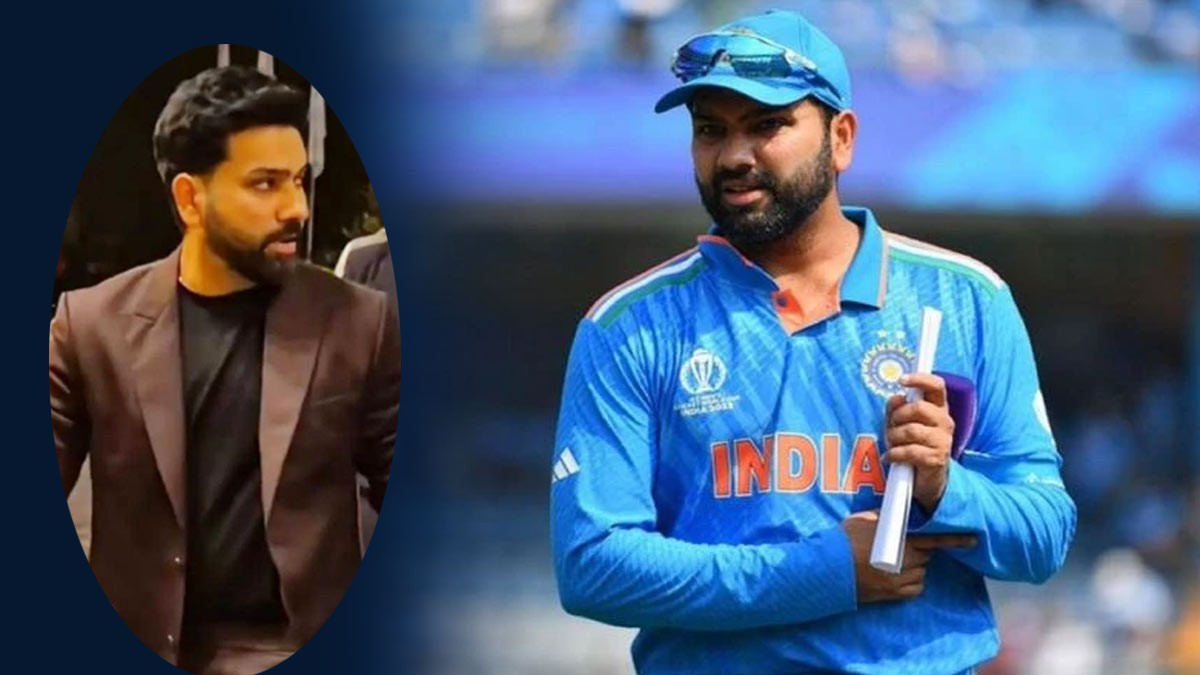
रोहित शर्मा को आगामी वेस्टइंडीज सीरीज के लिए एकदिवसीय टीम में शामिल कर लिया गया है। इसका मतलब यह है कि एक तरफ उनका फैमिली गेम शो का प्रसारण होगा और दूसरी ओर वह क्रिकेट खेलेंगे। ऐसी सुविधा भारतीय क्रिकेट कंट्रोल बोर्ड ने किसी भी क्रिकेटर को नहीं दी जो रोहित शर्मा को मिल रही है वह भी बिना खास फॉर्म के।
भारतीय पूर्व कप्तान रोहित शर्मा जल्द ही अपना फैमिली शो Family Full House with Rohit Sharma.में बतौर होस्ट शिरकत करते हुए नजर आएंगे।मीडिया सूत्रों के मुताबिक यह मशूहर अमेरिकी शो द फैमिली फ्यूड(The Family Feud) का भारतीय संस्करण होगा और इसके 40 एपिसोड रोहित शर्मा को शूट करने होंगे।इस अमेरिकी शो में मशहूर होस्ट स्टीव हार्वे की भूमिका रोहित शर्मा निभाएंगे।
Not having guts to drop Rohit Sharma gonna destroy, India’s 2027 ODI WC Journey.
Kumar Sangakkar after scoring 4 back to back 100s in ODI WC 2015 gracefully announced his retirement at 37, when his game was not declined at all.
– 95% of former cricketers want to become the chief selector who will simply be a ‘yes-man.
-BCCI brought in Ajit Agarkar specifically so he could make some tough calls. However, once he started making those decisions, BCCI… pic.twitter.com/Pp7uKe9fOS
We’ll try our best to show you Rohit Sharma’s show coming tomorrow for free. Join the Telegram channel now; the link is in the bio.???? pic.twitter.com/Hp1UPxvedA
गौरतलब है कि रोहित शर्मा खराब फॉर्म से जूझ रहे थे और इंग्लैंड के पहले दो एकदिवसीय मैच में फ्लॉप रहे थे। जिसके बाद उनकी संन्यास की अटकलें लगनी शुरु हो गई थी। हालांकि उन्होंने बेहतरीन पारी खेली। रोहित शर्मा ने 110 गेंदो में 138 रन बनाए। उन्हें जैकब बैथल ने बोल्ड किया।
रोहित शर्मा ने इंग्लैंड के खिलाफ पहले एकदविसीय मैच में 21 गेंदो में 11 रन बनाए थे। दूसरे एकदिवसीय मैच में 47 गेंद में 1 चौका और छक्का मारने के बाद 26 रन बनाकर आउट हुए। उनका 5 रनों पर गस एटिंकसन ने कैच छोड़ा था।
अफगानिस्तान के खिलाफ तीसरे एकदिवसीय मैच को छोड़ दे तो इस साल रोहित का प्रदर्शन औसत से नीचे रहा है।पहले मैच में वह 16 रन बनाकर रनआउट हो गए और दूसरे मैच में वह 39 गेंदों में 48 रन बनाकर बोल्ड हो गए।
इससे पहले न्यूजीलैंड के खिलाफ पहली एकदिवसीय सीरीज में रोहित शर्मा फ्लॉप रहे और टीम को शुरुआत में बड़ा स्कोर नहीं दे सके। रोहित शर्मा 3 मैचों में 20 की औसत से 61 रन बना पाए। पूरी सीरीज में उन्होंने 9 चौके और 2 छक्के लगाए।पहले मैच में उन्होंने 29 गेंदो पर 26 रन, दूसरे मैच में उन्होंने 38 गेंदो में 24 रन और तीसरे मैच में 13 गेंदो में 11 रन बनाए।
2027 एकदिवसीय विश्व कप का सवाल टाल गए रोहित शर्मा
भारत के स्टार क्रिकेटर रोहित शर्मा ने अगले साल होने वाले वनडे विश्व कप में खेलने की संभावना के बारे में पूछे जाने पर गुरुवार को कहा कि अक्टूबर 2027 अभी बहुत दूर है। एक कार्यक्रम के दौरान पूर्व कप्तान ने एक पंक्ति में जवाब दिया। टी20 अंतरराष्ट्रीय और टेस्ट क्रिकेट में नहीं खेलने के कारण रोहित के वनडे प्रारूप में भविष्य को लेकर अटकलें लगाई जा रहे हैं।
रोहित ने कार्यक्रम के दौरान एक सवाल के जवाब में कहा, ‘‘ अक्टूबर 2027 अभी बहुत दूर है, तब देखेंगे।’’वनडे विश्व कप 2027 की सह-मेजबानी दक्षिण अफ्रीका, जिम्बाब्वे और नामीबिया करेंगे।’भारतीय क्रिकेट बोर्ड (बीसीसीआई) के सचिव देवजीत सैकिया ने कुछ दिन पहले स्पष्ट कर दिया था कि रोहित को लेकर अटकलों की कोई गुंजाइश नहीं है क्योंकि वह अच्छा प्रदर्शन कर रहे हैं।
ऐसे शब्दों के साथ बड़ी हुई सोनिया चाहती तो अपने सपने छोड़ सकती थी, एक अकेले कमरे में। छुप कर बैठ सकती थी
लेकिन उसने डांस को अपना जवाब बनाया।
जब स्कूल ने मंच देने से मना किया, तो उसने दोस्त अपना मंच खुद बनाया।
आज वो सिर्फ अपने लिए नहीं डांस नहीं करती, वो उन बच्चों के लिए डांस करती है, जिन्हें कभी उनके अलग दिखने की वजह से अपने सपने छोटे करने पड़े।
क्योंकि अलग दिखना कभी भी सपने देखने की वजह नहीं छीन सकता।
@sonibabugupta27
Self Acceptance Inspirational Story, Overcoming Bullying and Achieving Your Dreams, Faced Rejection but Followed her dreams, Girl who was called an Alien
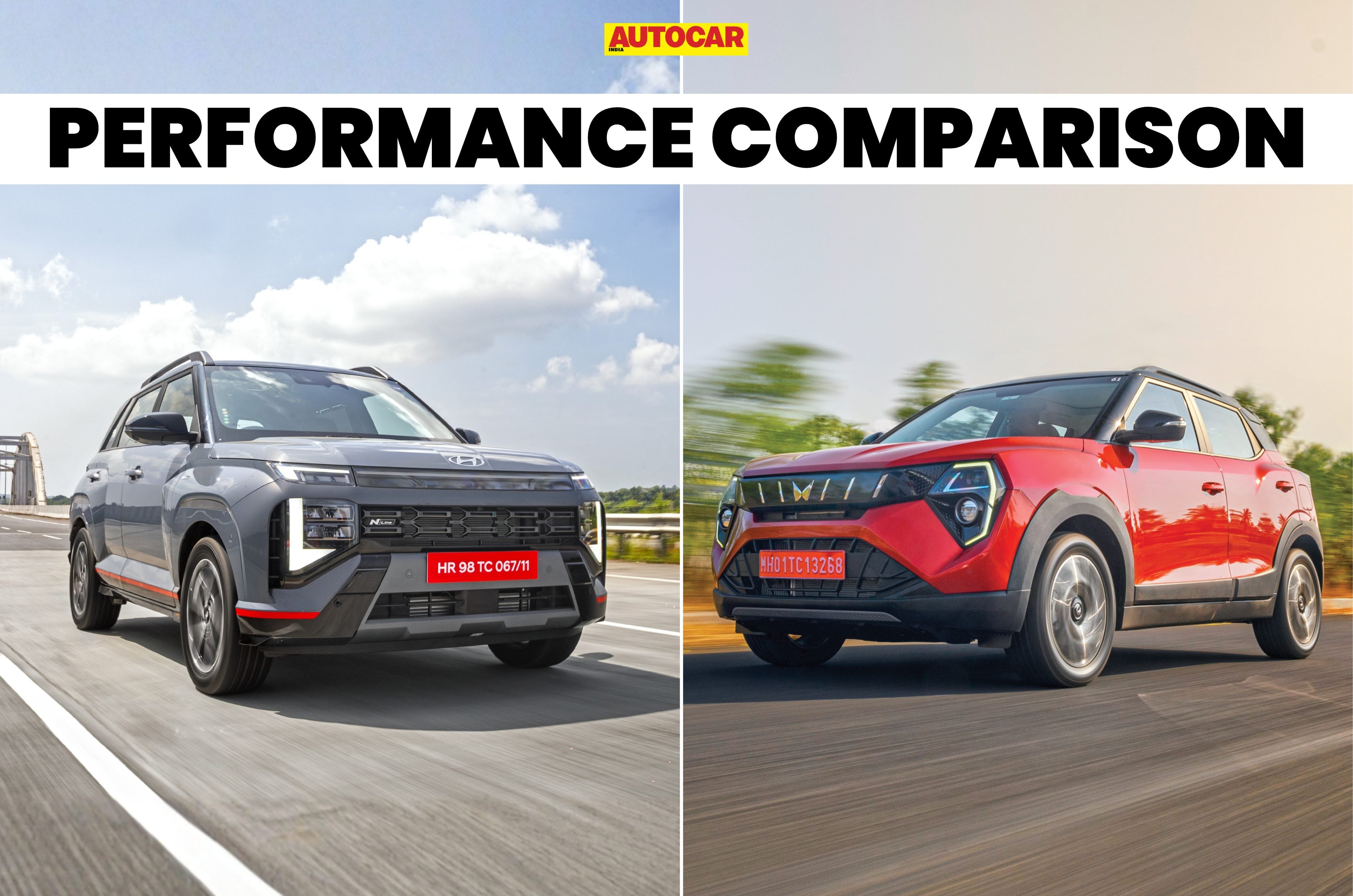
Hyundai offers the Venue N Line with a turbocharged direct-injection petrol engine and a dual-clutch transmission (DCT). And while there are two turbo-petrol engines available with the Mahindra XUV 3XO, it’s the one with direct injection that we’ll be looking at. Regardless, the type of automatic transmission on offer remains the same Aisin-sourced torque converter. The question now is, which SUV offers superior performance out in the real world?
Hyundai Venue N Line DCT vs Mahindra XUV 3XO AT: Specifications
The XUV 3XO offers more power but is also much heavier than the Venue
Hyundai Venue N Line DCT vs Mahindra XUV 3XO AT: Engine specifications
Hyundai Venue N Line 1.0T DCT
Mahindra XUV 3XO 1.2T AT
Engine
3 cyls, turbocharged petrol
3 cyls, turbocharged petrol
Displacement (cc)
998
1,197
Power (hp)
120 (at 6,000rpm)
131 (at 5,000rpm)
Torque (Nm)
172 (at 1,500-4,000rpm)
230 (at 1,500-3,750rpm)
Gearbox
7-speed dual-clutch transmission
6-speed automatic transmission
Weight (kg)
1,258
1,411
Power-to-weight ratio (hp/tonne)
95.40
92.80
Torque-to-weight ratio (Nm/tonne)
136.7
163
Both engines here are direct-injection three-cylinder units. However, the XUV 3XO’s mill is larger by 199cc and delivers an additional 11hp and 58Nm. The Mahindra also achieves its peak power output lower down the rev range, though its 153kg heavier kerb weight means that its power-to-weight ratio is lower than that of the Venue N Line. Where the XUV 3XO fares better is in terms of its torque-to-weight ratio, with its higher torque figure making a marked difference.
Hyundai Venue N Line DCT vs Mahindra XUV 3XO AT: 0-100kph acceleration test
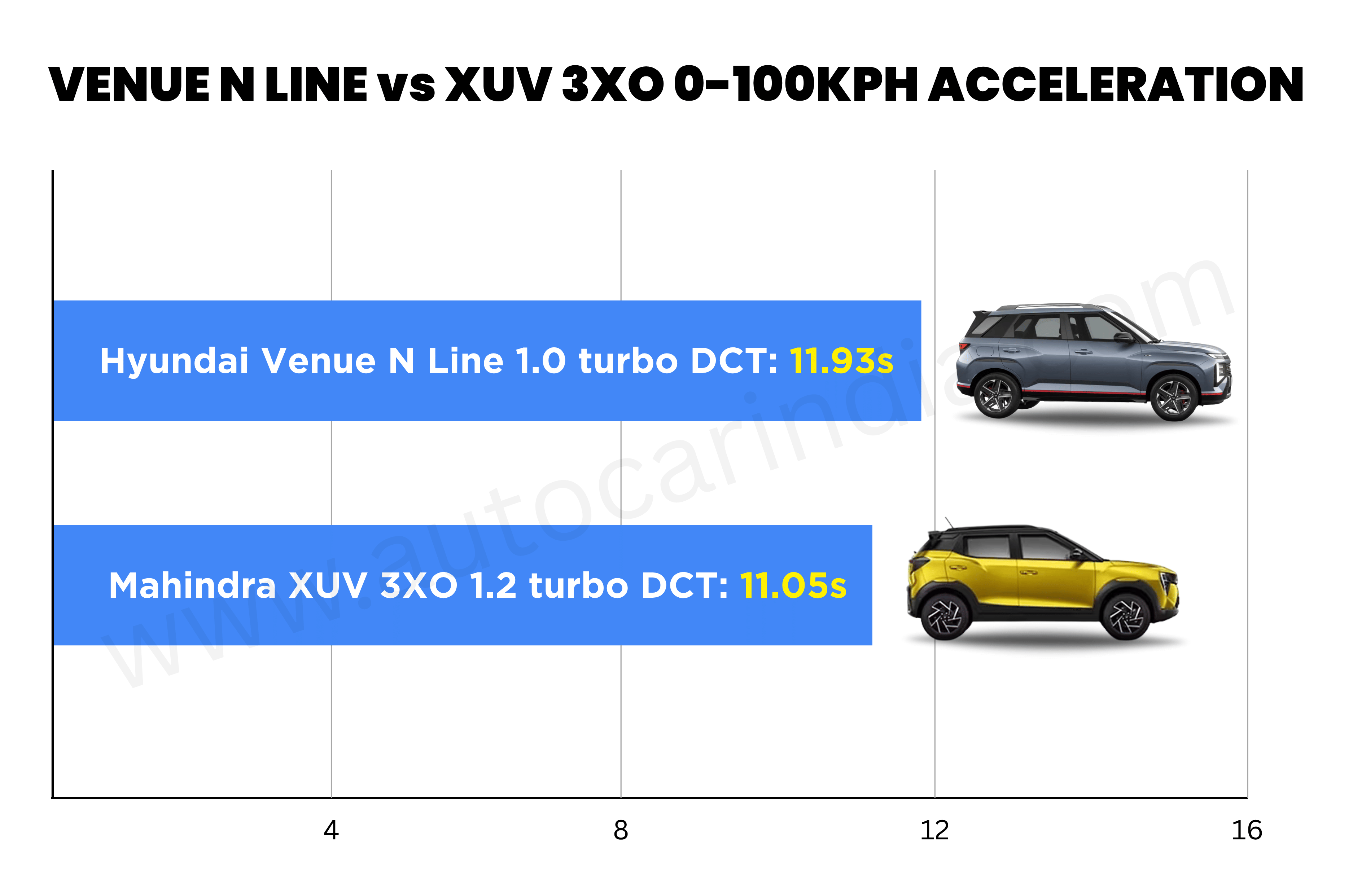
Outright acceleration from a standstill sees the XUV 3XO leaving the Venue N Line behind
Hyundai Venue N Line DCT vs Mahindra XUV 3XO AT: Acceleration from rest (in seconds)
Hyundai Venue N Line 1.0T DCT
Mahindra XUV 3XO 1.2T AT
20kph
1.69
1.37
40kph
3.35
2.78
60kph
5.50
4.72
80kph
8.18
7.61
100kph
11.93
11.05
120kph
17.78
15.74
The punchier engine of the XUV 3XO is one reason behind its quicker times off the line. The other is its torque-converter automatic gearbox, which allows the driver to mash the throttle pedal while standing on the brakes. It’s also smoother around town at slower speeds, especially in bumper-to-bumper traffic conditions. The Venue N Line’s dual-clutch transmission is reasonably quick to shift as speeds rise, but it can feel jerky at crawling speeds or while downshifting.
The Venue N Line’s DCT also doesn’t allow aggressive launches, which, along with its engine’s lower output, dulls outright performance. Both cars come with drive modes, but it’s the Venue N Line that features multiple traction modes and steering-mounted shifters to manually change the gears. The latter feels more intuitive and sporty when compared to the gear-lever-controlled shift function of the XUV 3XO.
Hyundai Venue N Line DCT vs Mahindra XUV 3XO AT: Rolling acceleration tests
The Venue is marginally quicker between 20-80kph; 40-100kph is where the XUV 3XO takes the lead
Hyundai Venue N Line DCT vs Mahindra XUV 3XO AT: Rolling acceleration (in seconds)
Hyundai Venue N Line 1.0T DCT
Mahindra XUV 3XO 1.2T AT
20-80kph
6.21
6.38
40-100kph
8.34
8.11
Between 20-80kph, the Venue N Line’s sharper throttle response means that it closes this 60kph gap 0.17 seconds quicker than the XUV 3XO. However, the additional grunt offered by the Mahindra’s engine allows it to accelerate harder at higher speeds. This is evident in its 40-100kph rolling acceleration time of 8.11 seconds – that’s 0.24 seconds faster than the Venue N Line.
Hyundai Venue N Line DCT vs Mahindra XUV 3XO AT: Braking test
It’s the heavier XUV 3XO that remains calmer under heavy braking
Hyundai Venue N Line DCT vs Mahindra XUV 3XO AT: Braking test
Hyundai Venue N Line 1.0T DCT
Mahindra XUV 3XO 1.2T AT
80-0kph distance (in metres)
–
31.36
80-0kph time (in seconds)
–
3.0
The Hyundai Venue N Line is yet to be put through the Autocar braking test. However, what we can confirm is that it had no trouble dropping its anchors. Where the heavier XUV 3XO really stood out is in the manner it shed speed upon slamming the brakes, remaining calmer than the Venue N Line. Both models feature disc brakes all around and similar tyre sizes.
Hyundai Venue N Line DCT vs Mahindra XUV 3XO AT: Prices
The XUV 3XO is pricier at the bottom end but better value at the top end for performance-oriented buyers
Hyundai Venue N Line DCT vs Mahindra XUV 3XO AT turbo-petrol prices
Hyundai Venue N Line 1.0T DCT
Mahindra XUV 3XO 1.2T AT
Price range (in Rs, lakh)
11.56-15.49
13.27-15.03
The entry-level Mahindra XUV 3XO with the direct-injection turbo-petrol engine and automatic gearbox costs Rs 1.71 lakh more than the equivalent Hyundai Venue N Line DCT. At the top end, it’s the Venue N Line that’s dearer by Rs 46,000. For those who want to satiate their performance appetite, the Mahindra XUV 3XO will be the more rewarding pick of the two.
Autocar India’s testing standards
Before we conduct our performance tests, we check and maintain tyre pressures based on the manufacturer’s recommendation and ensure the car has a full tank of fuel. The car is then tested in a controlled environment with two people on board, and the data is collected via highly accurate GPS-based timing equipment.