The CB500 was one of the hot-ticket reveals from Honda Motorcycle and Scooter India (HMSI) recently and it enters a segment of the market where it will sit virtually in a class of its own. The CB500 is based on the same platform as the CB350 line of bikes but with nuanced differences.
Powered by a 501cc, long-stroke thumper
Launch likely to happen around October-November
Likely to slot in between Harley-Davidson X440 and RE Interceptor 650
Powered by a 501cc, air/oil-cooled, single-cylinder engine making 28hp and 43.3Nm of torque, the CB500 sits virtually in a league of its own, occupying the space vacated by the erstwhile Royal Enfield 500cc models. While the CB350 models have competitive pricing, sitting around the Rs 2 lakh ballpark (ex-showroom, Delhi), the CB500 will be considerably more expensive.
This is partly due to the larger engine and additional features but a large contributing factor is the higher GST rate. The new regime taxes two-wheelers above 350cc at 40 percent, which is more than double the 18 percent tax levied on machines below that mark.
As a result, it is likely that the CB500 will slot into the market between Rs 2.80 lakh – Rs 3.00 lakh (ex-showroom) upon its launch, which is likely to take place in October-November 2026. While this is sure to relegate it to a niche audience, the CB500 – on paper, at least – promises a unique riding experience in today’s marketplace.
Upon launch, there will be three variants on offer. The base CB500 will come with simple colours and alloy wheels, the mid-spec variant will have metallic finish solid paint and cross-spoke rims permitting tubeless tyres and the top model will have exclusive colours and graphics as well as those aforementioned laced rims.
The nearest challengers to the CB500 are the Hero-built Harley-DavidsonX440 models (Rs 2.35 lakh – Rs 2.85 lakh), although the X440s use a smaller engine with lesser torque. At its price point, the CB500 will slot in below the Royal Enfield 650s, which start at Rs 3.39 lakh (ex-showroom, Chennai) with the Interceptor 650.
Back in 2004, Toyota debuted its ‘Innovative International Multi-purpose Vehicle’ platform (or IMV for short), which spawned the 7th generation Hilux and the 1st generation of the Fortuner and Innova. As for the Hilux, it moved on to the 8th generation in 2015 and we now have this, the new 9th generation model, still underpinned by the IMV platform, albeit with major modifications and updates.
2026 Toyota Hilux Exterior Design and Engineering – 7/10
IMV platform sees massive update; front styling goes all angular
The front end is now all very edgy and sharp. Cyber-Sumo is how Toyota describes the styling.
As with its predecessors the ladder-frame construction remains, but plate thickness in the frame side rails has been increased to enhance rigidity and better resist torsional forces. The body too has seen an increase in rigidity with the floor featuring an additional 36 spot welds, this also helps decrease vibrations.
Interestingly, the platform is now fully electrified. Impressive given that installing a battery pack with a ladder frame is tricky given the narrower – than the body – width and the presence of cross members too. It shows, the all-electric Hilux features a rather modest 59.2kWh battery pack, it’s unlikely to make its way here though.
17-inch rims provide for taller sidewalls, handy off-road.
Other changes to the platform include a switch from hydraulic to an all-electric power steering system and spring and damper tweaks to improve ride comfort. As with the previous two generations, wheelbase remains the same at 3,085mm and the length is identical to its predecessor at just over 5.3 meters.
Front styling sees the biggest difference from the earlier car, its now all very edgy and sharp. Cyber-Sumo is how Toyota describes it, a cyborg Sumo wrestler if you will. The headlights feature sharp DRLs, are much slimmer and flow into a black panel emblazoned with the Toyota lettering. Below is a honeycomb grille flanked by triangular stylistic insets and the lower end of the bumper carries on with the angular treatment with sharp cuts to define its shape.
Taillights now more angular; bumper features integrated footsteps on the rear as well as on the sides.

The side however is more curved with the doors gently profiled and resembling the previous car, the cladding however is a bit angular and runs the length of the car. At the rear end there is now a side step to make loading and unloading cargo easier. Rear taillights are sharply outlined and flow more into the side profile and of course, the rear sees the now iconic large Toyota lettering across the tailgate, which has a damped release.
2026 Toyota Hilux Interior Space and Comfort – 7/10
Adequate cabin space, but not what you might expect given the overall size.
Dashboard get a retro-modern style, very similar to the Land Cruiser Prado.
Like the front-end styling, the new dashboard sees a big departure is styling too, very retro-modern with straight lines and chunky elements, similar to the Land Cruiser Prado. It houses rectangular AC vents and a pop-up center touchscreen with chamfered lower edges. The steering wheel looks like a straight lift from the Prado with the same three spoke design, rectangular center boss and chunky rectangular buttons.
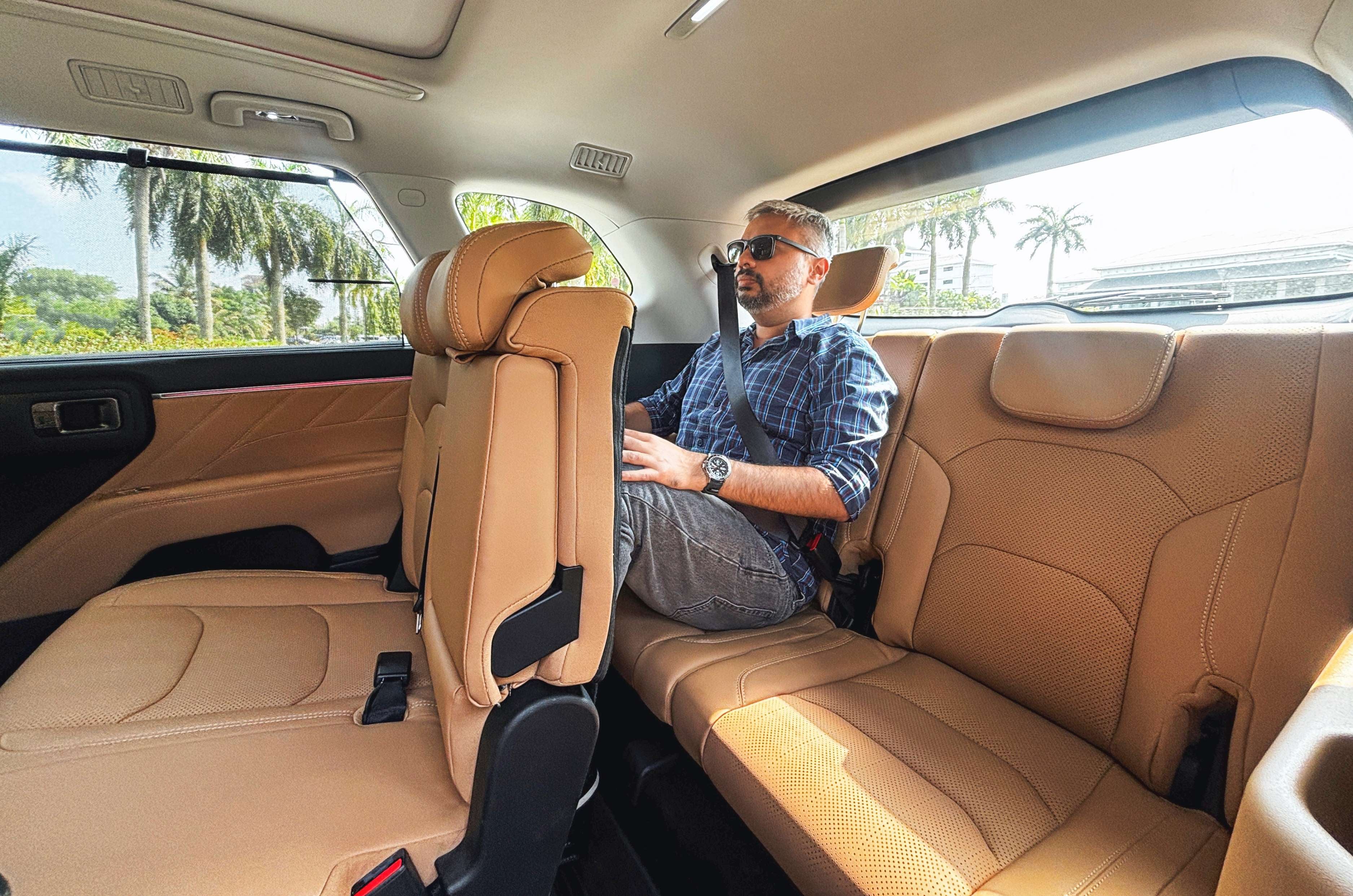
Cabin dimensions remain the same, but reprofiled seat gives the backrest a tad bit more recline.
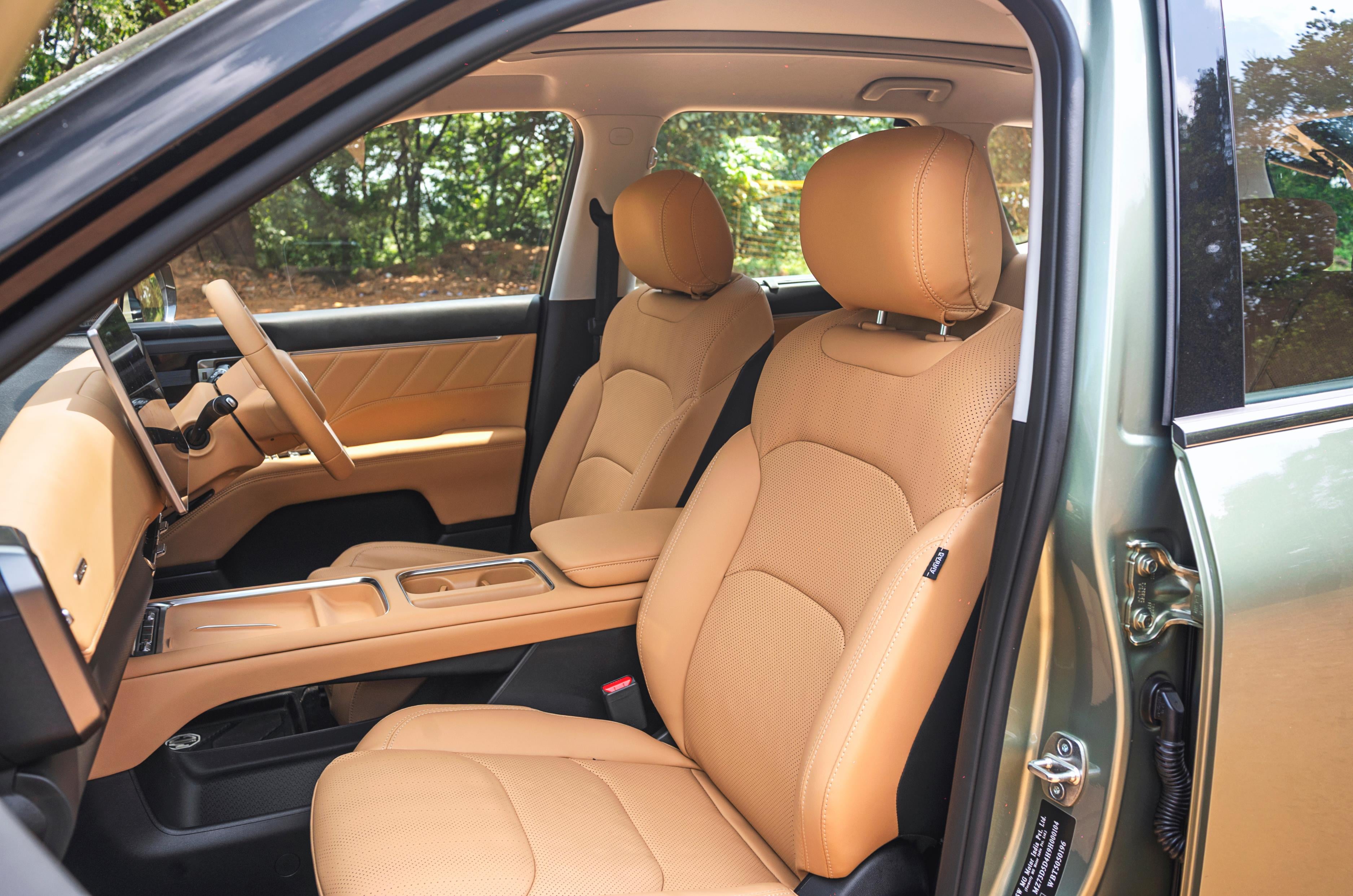
The 8th gen Hilux received a larger interior cabin volume and this cabin carries over to the new 9th gen car, space inside is thus decent but going by the large vehicle footprint you’d be forgiven if you expected more. At the rear, legroom is adequate even with a taller adult seated front, the seat backrest is still upright when seen against regular SUV but the seats themselves have been reprofiled and that makes it feel just a bit more reclined than before. Headroom is good and seating three adults at the rear is possible but will feel sung. At the front, the seats feel nice and supportive and are well profiled with prominent side bolstering that should suit a wide body frame well. They are also upholstered in a fabric that feels nice to the touch.
Tailgate features damped release; payload is around 500kgs.
The load bed is large enough for stuff like camping gear but it’s quite high off the ground so you’ll have to haul stuff in and out. The bumper has an integrated step at the rear and on either side as well, to make this easier. Toyota has not yet disclosed payload capacity but expect it to remain the same as before at 470kgs.
2026 Toyota Hilux Features and Safety – 7/10
High on safety kit, but many comfort and convenience features missing
360-degree camera handy, but of poor resolution.
The new Hilux comes in three grades with the top spec car featuring kit like a 360-degree camera view – though resolution is poor – an 8-inch digital instrument panel and a 12.3-inch central touchscreen with wireless phone connectivity. The native OS styling appears quite outdated but the screen resolution is good. There’s a wireless phone charging slot but quite deep and retrieving you phone needs slim hands.
Besides these and basic bits like power windows and ORVMs, there’s not much else on the new Hilux. Features like auto HVAC, powered or ventilated seats, rear defogger are all missing even at the top spec car.
Misses key equipment like automatic climate control; has drive as well as terrain modes.
Safety kit is good, with 7 airbags standard on all variants as is also ESP, a tyre pressure monitoring system however is only present on the top variant. As for a crash rating the new Hilux does not come with a Bharat or Global NCAP rating but the Australia spec scores 5-stars under the ANCAP protocol.
2026 Toyota Hilux Performance and Refinement – 9/10
Good pulling power with a very refined engine and a vibe free interior
The new Hilux carries on with the same 2.8 liter 4-cylinder diesel. It makes an identical 204 hp and 500Nm of torque. A 6-speed torque convertor automatic is now the only gearbox option and for the first time Toyota India is offering the Hilux with a 4X2 drivetrain too.
2.8 litre diesel engine has new mounts and is extremely refined, with low noise and vibration levels.
There are three drive modes – Eco, Normal and Sport, all feel quite useable. Performance is strong and even when pushed hard it never feels like its out of breath. There’s a good amount of power to be had low down in the rev range and through a forest trail with stones and muck it was easy modulating power to keep momentum.
Shifts are expectedly smooth from the 6-speed autobox and in Sport mode the downshifts are quick enough both when left to its own system or via inputs from the gear lever.
Performance is quite potent and it never feels out of breath.
At high revs the engine does get vocal, but for what is a workhorse its quite acceptable. In fact, at every day motoring speeds sound levels are low and refinement is excellent, with minimal to no vibrations around the cabin. Toyota says they have worked on improving this aspect with both hydraulic and shear type engine mounts, a stiffened body frame and better cabin insulation.
2026 Toyota Hilux Mileage and Efficiency – 8/10
With a kerb weight of over two tonnes, expect single digit real world efficiency figures
Toyota have yet to disclose ARAI rated fuel efficiency figures but given the carry over powertrain expect a similar figure of around 12kpl on the standard test cycle. In real world usage figures will hover in the single digit zone and only relaxed highway cruising would see you get double digits.
2026 Toyota Hilux Ride Comfort and Handling – 7/10
Comfy and unfazed over the big stuff but skittish and firm on smaller ruts and bumps
Off road is where the Hilux excels, 4X4 model has low ratio as well as rear locking differential.
Suspension architecture carries over with an independent double wishbone coil spring setup at the front and a rigid axle with leaf springs at the rear. Toyota says they have reworked it to bring in a bit more comfort, it’s hard to say in isolation and perhaps a back-to-back drive would indicate this. On its own, it can soak up the tough bits like large rocks and deep potholes, sharp edges too are well smoothened. Through a forest trail strewn with loose rocks it felt confident and sure footed. Much of the trail was manageable in 4X2 mode, but some bits required 4X4 which was all too easy for the Hilux. There’s also a 4-Low ratio as well as terrain modes that help traction over loose surfaces.
Ride is jittery at speed and with rear cargo bed unloaded.
Where is gets unsettled is over the smaller ruts and bumps that really shake up the cabin. The main reason here is the rigid rear-axle which with the load bed empty simply skips over these imperfections resulting in a skittish and bouncy ride. Rear passengers in particular will feel this more. A weighed down rear will improve things but will not bring this to passenger SUV comfort levels.
As for handling, high-speed stability is good but you know it’s a heavy car and you can feel its weight through corners. The switch to electric power steering hasn’t changed effort which remains heavy at low speeds, and with the cars massive length it feels quite ponderous.
2026 Toyota Hilux Value for Money – 7/10
4X2 makes it affordable than before, but there’s lots of features missing
Toyota has launched the new Hilux with the top variant priced the same as before; Rs 36.69 lakh ex-showroom India while the entry 4X2 variant starts lower than any previous variant coming in at Rs 31.99 lakh ex-showroom. But in doing so there’s a lot of features missing even going by its predecessors list. Its appeal then depends on which aspect of its ‘lifestyle pickup’ description you value more.
It’s sharp styling and sheer size give it that lifestyle vehicle presence, however inside it feels utilitarian, the cabin isn’t premium with regards to materials and its very under equipped. The heavy steering and bouncy ride also mean a workhorse like experience rather than luxury SUV.
But that workhorse bit is exactly where the Toyota Hilux excels. The load bed is handy and can haul odd bits of gear, the engine it torquey and powerful and what’s nice is that its refined too. The 4X4 system is very capable and it’s got tough bones that will outlast pretty much anything you can throw at it. If a luxury SUV is what you’re after, you’ll be better off elsewhere, but if you’re looking for a rough and tough, go anywhere, do anything, outdoors kind of vehicle that looks the part and plays it too, then in all probability your search will end right here.
The Hyundai i20 has long been one of the benchmarks in the premium hatchback segment. Along with a spacious cabin, comfortable ride and a feature-rich interior, it offers buyers a choice of manual and automatic transmissions, while those seeking more performance can opt for the sportier i20 N Line. However, its premium pricing (Rs 6 lakh to Rs 11.59 lakh) means it faces stiff competition from both premium hatchbacks and similarly priced compact SUVs. Here’s a look at the Hyundai i20’s biggest strengths and weaknesses.
Pros
1. Spacious and comfortable cabin
One of the i20’s biggest strengths is its cabin. It offers generous rear-seat space for a premium hatchback, with enough legroom and headroom to comfortably accommodate taller passengers. The front seats are supportive, the dashboard layout is intuitive, and the cabin feels airy thanks to its low-set dashboard. Practicality is another strong point, with a 311-litre boot that’s well suited to everyday use and weekend trips.
2. Well-equipped across the range
The i20 continues to offer one of the strongest feature lists in its class. Higher variants come with a 10.25-inch touchscreen infotainment system, a digital instrument cluster, connected car technology, a Bose sound system, wireless phone charging, automatic climate control, a sunroof and ambient lighting. Safety equipment is equally comprehensive, with six airbags, electronic stability control (ESC), a tyre-pressure monitoring system (TPMS) and Isofix child-seat mounts available on higher trims.
3. Comfortable ride and refined road manners
The i20 is tuned with comfort in mind. Its suspension absorbs broken roads well without feeling unsettled, while the light steering makes it easy to manoeuvre in the city. On the highway, the hatchback feels stable and composed, giving it a more mature driving experience than many of its rivals. Overall, it strikes a good balance between everyday comfort and confident handling.
Cons
1. Expensive for its segment
The i20 is among the most expensive premium hatchbacks on sale. While its cabin quality, comfort and equipment help justify the asking price, buyers shopping in this price bracket also have the option of several compact SUVs, which offer greater ground clearance and a stronger road presence for similar money.
2. The 1.2-litre petrol engine isn’t particularly peppy
Hyundai 1.2 Kappa engine.
The naturally aspirated 1.2-litre petrol engine is smooth and refined, but it isn’t particularly strong at lower engine speeds. It often requires downshifts to gather pace in stop-start traffic or during overtaking manoeuvres, making it feel less effortless than some turbo-petrol rivals. Buyers looking for stronger performance may find the standard i20’s engine lacking. The i20 does come with a punchier 1.0-litre turbo-petrol engine on the N Line variants but for a much higher asking price.
Tarun Garg, MD and CEO of Hyundai India, confirmed on the company’s Q1 FY27 earnings call that the brand will launch a new mid-size SUV during the festive season. Following this, the brand will also launch a new compact electric SUV within this fiscal year.
New mid-size SUV likely to offer an underbody-mounted CNG kit.
Compact electric SUV to sit on a new architecture and utilise Exide batteries.
New Hyundai mid-size SUV: What do we know so far?
To sit below the Creta and likely offer petrol and CNG powertrains
Before the next-generation Creta debuts in 2027, Hyundai will introduce another product in the mid-size SUV space during the festive season to strengthen its presence. This SUV (codename: Bc4i) will utilise the Bayon crossover’s platform that’s sold abroad. It will measure around 4.18 metres in length, suggesting that it would be positioned below the Creta.
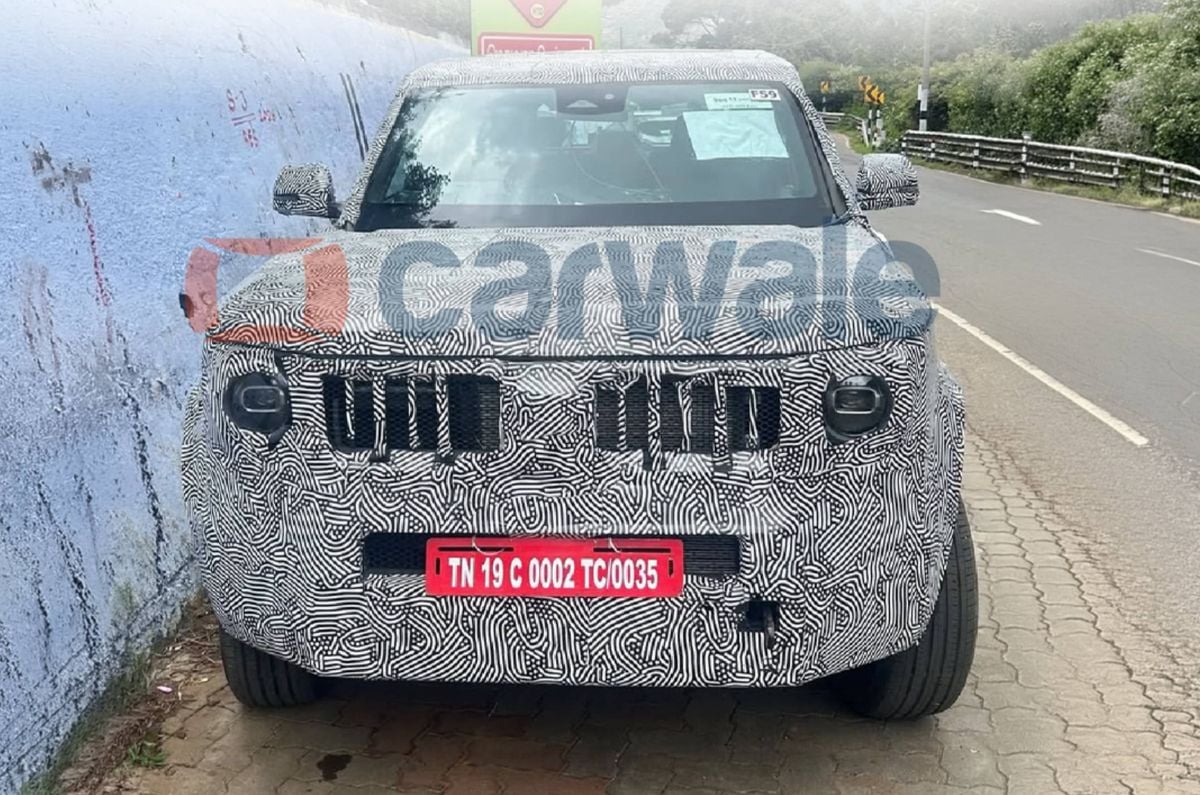
Heavily camouflaged mules of this mid-size SUV have been spied abroad and on our roads, giving a glimpse of what it could look like. Prototypes were spotted with a crossover-esque design, roof rails, dual-tone alloys, split lamp design, rising windowline and all-wheel disc brakes. While the interior has not been spied yet, Hyundai is likely to load it up with features and advanced driver assistance systems (ADAS).
The model will be powered by a 1.5-litre naturally aspirated engine, our sources indicate. This engine already powers the Creta and can be paired with either a manual or CVT gearbox. Additionally, Hyundai is expected to pair a CNG kit with this engine, making it the first CNG-powered model above 4 metres in its lineup. The kit would be fitted to its underbody, like the Maruti Victoris, but also have a spare wheel, unlike the Maruti.
With a second contender in the mid-size SUV segment, Hyundai is taking a similar approach to Maruti Suzuki, which has the Victoris and Grand Vitara in this space. While this SUV will come with economical powertrains and occupy the lower rung, the new-gen Creta sitting above it will come with wider powertrain options, including a hybrid.
New Hyundai compact electric SUV: What to expect?
Expected to rival the likes of the Kia Syros EV, Tata Nexon EV, and Mahindra XUV 3XO EV
Hyundai Inster used for representation
Following the mid-size SUVs’ launch, Hyundai will also introduce a challenger in the growing compact electric SUV space. The arrival of this SUV was first announced back in 2025, when the carmaker stated that it would be localised and “designed, engineered and built in India for Indian customers.”
During the earnings call, the brand confirmed that the EV would be built on a new architecture rather than being an EV counterpart of the Venue. Codenamed HE1i, it is expected to sit on the E-GMP (K) platform, which is also utilised by the Inster sold abroad. It will be produced at the carmaker’s Sriperumbudur facility in Tamil Nadu and use localised batteries from Exide. The eSUV will be offered in standard range and long range versions. While specifications are yet to be confirmed for this model, for reference, the Euro-spec Inster is offered with 42kWh (standard range) and 49kWh (long range) battery packs with WLTP ranges of 300km and 355km respectively.
After the Carens Clavis EV, the Kia Syros EV is the carmaker’s second mass-market zero-emission vehicle in India. The electric Syros rivals the Mahindra XUV 3XO EV and the Tata Nexon EV, and we recently got behind the wheel to find out what it does well and where it falls short. If you are planning to bring this Kia EV home, here are three reasons to consider it and two reasons why you may want to think again.
Pros
Impressive performance and range
First, let’s discuss some numbers. The Kia Syros EV is offered with two battery pack options: 42kWh and 51.4kWh. Both power a front axle-mounted electric motor, producing 135hp with the smaller battery and 171hp with the larger unit. Torque remains the same at 255Nm for both versions.
We drove the 51.4kWh version, which Kia claims can sprint from 0-100kph in 8.1 seconds. In our experience, performance was brisk. The EV comes with Eco, Normal and Sport drive modes, and throttle response becomes a little sharper as you move through them. Initial response across modes is linear, though there is a strong shove as you press the throttle further. Even in Eco and Normal, overtaking is effortless, and there is rarely a need to switch to Sport for a quick pass.
The MIDC range is 526km for the 51.4kWh battery pack and 443km for the 42kWh unit. While our short drive wasn’t enough to verify these figures, the larger battery should comfortably deliver around 400km of real-world range on a single charge.
Spacious and practical cabin
Like the ICE version, the Syros EV offers plenty of space for passengers. Since the drive selector is placed on the steering column, Kia has redesigned the centre console to create more storage space. Its upper section gets a small storage area below the armrest and two cup holders with a sliding cover. The console’s lower section offers a larger storage space for a bag, another cup holder and a wireless phone charger. Also, the front door pockets are large enough to hold a couple of bottles and an umbrella.
The front seats are comfortable and supportive, and the rear-seat space continues to be one of the compact SUV’s biggest strengths, with plenty of room all around. The battery pack raises the floor slightly, but sliding the rear bench backwards makes it much more comfortable. The EV’s flat floor is another advantage, and rear-seat ventilation (for the base) has been carried over from the ICE version.
The boot space remains unchanged at 390 litres with the rear seat pushed back and 465 litres with it slid forward. Rear seats can also be folded to carry larger items, and being an EV, it also offers a 16-litre frunk (front boot).
Feature-packed
The EV gets Kia’s Trinity Panoramic Display, which includes two 12.3-inch screens for infotainment and the driver’s display, along with a 5-inch screen for the climate control. Wireless Android Auto and Apple CarPlay are offered, while the top trims also feature an eight-speaker Harman Kardon sound system. To pamper occupants at the back, AC vents and sunblinds are standard across the range. The household-style three-pin socket in the back seat is exclusive to the top-spec X-Line trim.
As for safety, the Syros EV comes with six airbags, all-wheel disc brakes, tyre-pressure monitoring and Isofix child-seat mounts as standard. The X-Line trim also gets a 360-degree camera and an ADAS (advanced driver assistance systems) suite with features such as adaptive cruise control with stop-and-go, lane-keep assist, forward and rear collision avoidance and a blind-spot camera. Notably, the ICE version no longer gets ADAS.
At the time of writing, the Syros EV has not yet received an official crash-safety rating. However, since the ICE version has already earned a 5-star Bharat NCAP crash-safety rating, the EV is expected to achieve a similar result.
Cons
Body roll through the corners
The ride on the Syros EV is slightly more absorbent than the ICE version, although there is still an underlying firmness. This helps keep the car stable, but because it is tall and narrow, there is noticeable body roll around the corners.
Pricey at the top end
The Kia Syros EV is priced from Rs 13.5 lakh for the 42kWh version, while the 51.4kWh Extended Range starts at Rs 17 lakh. The fully loaded X-Line trim is priced at Rs 20 lakh. At this price, it competes with the Tata Nexon EV (Rs 12.49 lakh-17.49 lakh) and Mahindra XUV 3XO EV (Rs 13.89 lakh-14.69 lakh) compact SUVs, as well as larger EVs such as the MG Windsor EV (Rs 14.7 lakh-19 lakh) and Maruti e Vitara (Rs 15.99 lakh-19.99 lakh).
Top-spec Kia Syros X-Line.
The 42kWh version does offer strong value for money, but the larger 51.4kWh Extended Range version is a tougher sell. It costs noticeably more than its direct rivals and even overlaps with higher-battery versions of the MG Windsor EV and Maruti e Vitara. While the Syros EV has several strengths, many buyers may want a bigger SUV for similar money. Kia’s Battery-as-a-Service (BaaS) scheme lowers the upfront purchase cost, but similar plans are also available with the MG and Maruti EVs.
Ex-showroom prices mentioned above are as of July 30, 2026.
Basically a badge-engineered version of the Chinese Wuling Cloud EV, the MG Windsor is a midsize EV that sits between the brand’s Comet and ZS EV models. On the other hand, the Kia Syros EV is the Korean automaker’s most affordable electric car in India and is based on the Hyundai Motor Group’s K1 platform. Compared to the Windsor, the Syros EV is a compact (sub-4-metre) model. However, not only are the top-spec variants of these cars priced really close to each other, their battery sizes are quite comparable too.
Explore full specs, features and a price breakdown in our Syros EV and Windsor EV comparison.
Kia Syros EV X-Line ER vs MG Windsor EV Essence Pro: Dimensions
The Windsor EV undeniably has the size advantage over the smaller Syros EV
Kia Syros EV X-Line ER vs MG Windsor EV Essence Pro dimensions
Kia Syros EV
MG Windsor EV
Length (mm)
3,995
4,295
Width (mm)
1,805
1,850
Height (mm)
1,670
1,677
Wheelbase (mm)
2,550
2,700
Boot space (litres)
390
579
Frunk (litres)
16
–
Wheel size (inches)
17
18
The Windsor EV is 300mm longer and 45mm wider than the Syros EV – the MG offers 150mm more wheelbase than the Kia, too. While there isn’t much between them in terms of height, the Windsor EV’s boot is 189 litres larger than that of the Syros EV. The latter’s wheels are also an inch smaller. Interestingly though, the Kia EV offers a 16-litre frunk (front trunk) – the MG has no frunk at all.
Kia Syros EV X-Line ER vs MG Windsor EV Essence Pro: Powertrain
The top-spec Syros EV offers more range and a punchier electric motor setup
Kia Syros EV X-Line ER vs MG Windsor EV Essence Pro powertrain options
Kia Syros EV
MG Windsor EV
Battery size (kWh)
51.4
52.9
Electric motor setup
Single, front (FWD)
Single, front (FWD)
Power (hp)
171
136
Torque (Nm)
255
200
Claimed 0-100kph
8.1 seconds
–
Claimed range (km)
526
449
AC charging
7.25 hrs at 7.4kW (10-100%)
9.5 hrs at 7.4kW (10-100%)
DC fast charging
39 mins at 100kW (10-80%)
50 mins at 60kW (20-80%)
The X-Line ER (Extended Range) variant of the Kia Syros EV gets a 51.4kWh lithium-ion battery pack, which is just 1.5kWh smaller than the unit powering the top-spec MG Windsor. Despite this capacity disadvantage, the Syros EV’s claimed range is actually higher, by 77km higher.
Compared to the top-spec MG Windsor’s 60kW DC fast-charging capability, the Syros EV’s DC fast-charging limit is 40kW higher. Unlike MG, Kia’s claimed DC fast-charging time accounts for a SoC (state of charge) of 10-80 percent and not 20-80 percent. Taking all this into account, the Syros EV can be unplugged from a DC fast charger 11 minutes sooner, which would benefit regular long-distance users.
While neither automaker has listed the kerb weight of their cars, the smaller Syros EV is likely to be lighter than the Windsor EV. The former’s front-mounted electric motor also offers 35hp and 55Nm more. These two factors combine to give the Syros EV a claimed naught to 100kph sprint time of 8.1 seconds.
Kia Syros EV X-Line ER vs MG Windsor EV Essence Pro: Exterior features
The Windsor gets a couple more useful features here; the Syros has some ‘feel-good’ ones
Kia Syros EV X-Line ER vs MG Windsor EV Essence Pro exterior features
Kia Syros EV
MG Windsor EV
LED headlamps
Yes (auto)
Yes (auto projectors)
Connected light bar
No
Yes
Front fog lamps
Yes
No
Rear fog lamps
No
Yes
Cornering lights
No
Yes
Welcome lights
Yes
No
Puddle lamps
Yes
No
Powered ORVMs
Yes (with auto-fold function)
Flush door handles
Yes
Yes
Body cladding
Yes
No
Roof rails
Yes
Yes
Rear spoiler
Yes
Yes
Powered tailgate
No
Yes
Colours
Mono-tone
Mono-tone
Both these cars are reasonably well-equipped in their respective top-spec variants. However, there are some distinct differences between the features that are offered in each. The Syros EV comes with front fog lamps plus fancier ‘welcome’ lighting functions as well as puddle lamps that project the ‘Kia’ logo – these make for a more premium experience when approaching the car. The Syros EV also goes for a rugged look, featuring black plastic cladding on the wheel arches and bumpers.
Compared to the Syros EV’s stylish multi-reflector LED headlamps, the Windsor EV uses projector LED units. While it doesn’t get front fog lamps, the MG features cornering lamps that can prove useful when driving in the dark. At the back, the top-spec Windsor EV gains a powered tailgate – another handy feature especially when your hands are occupied.
Kia Syros EV X-Line ER vs MG Windsor EV Essence Pro: Interior features
If you like a minimalistic interior that’s also feature-packed, the MG Windsor won’t disappoint
Kia Syros EV X-Line ER vs MG Windsor EV Essence Pro interior features
Kia Syros EV
MG Windsor EV
Infotainment screen
12.3-inch
15.6-inch
Digital driver’s display
12.3-inch
8.8-inch
HVAC screen
5.0-inch
No
Panoramic sunroof
Yes
Yes (fixed)
Wireless charger
Yes
Yes
Driver’s seat adjustment
4-way powered
6-way powered
Co-driver’s seat adjustment
4-way manual
4-way manual
Ventilated seats
Yes (front & rear)
Yes (front only)
Leatherette upholstery
Yes
Yes
Split rear seats
Yes
Yes
Automatic climate control
Yes (single-zone)
Yes (single-zone)
Ambient lighting
Yes (64 colours)
Yes (256 colours)
Audio system
8-speaker Harman Kardon
9-speaker Infinity
Apple CarPlay & Android Auto
Yes (wireless)
Yes (wireless)
USB Type-C ports
Yes (5 ports)
Yes (5 ports)
Connected car tech
Yes
Yes
Voice assistant
Yes
Yes
OTA updates
Yes
Yes
Gaming
No
Yes
Rear sunblinds
Yes
No
Rear armrest
Yes (with cupholders)
Both cars come with wireless charging, leatherette seats, connected-car tech, and multiple USB ports for added convenience. However, in its top-spec X-Line ER avatar, the Kia Syros EV offers a third screen specifically to control the HVAC (heating, ventilation and air-conditioning) system. That said, there are physical buttons to operate this system, too. The Kia EV also gets a larger driver’s display, a panoramic sunroof that opens, ventilation function for the front & rear seats, plus rear sunblinds. Furthermore, the Syros EV’s interior design, quality and layout of its switchgear, plus the overall usability remain easily sufficient.
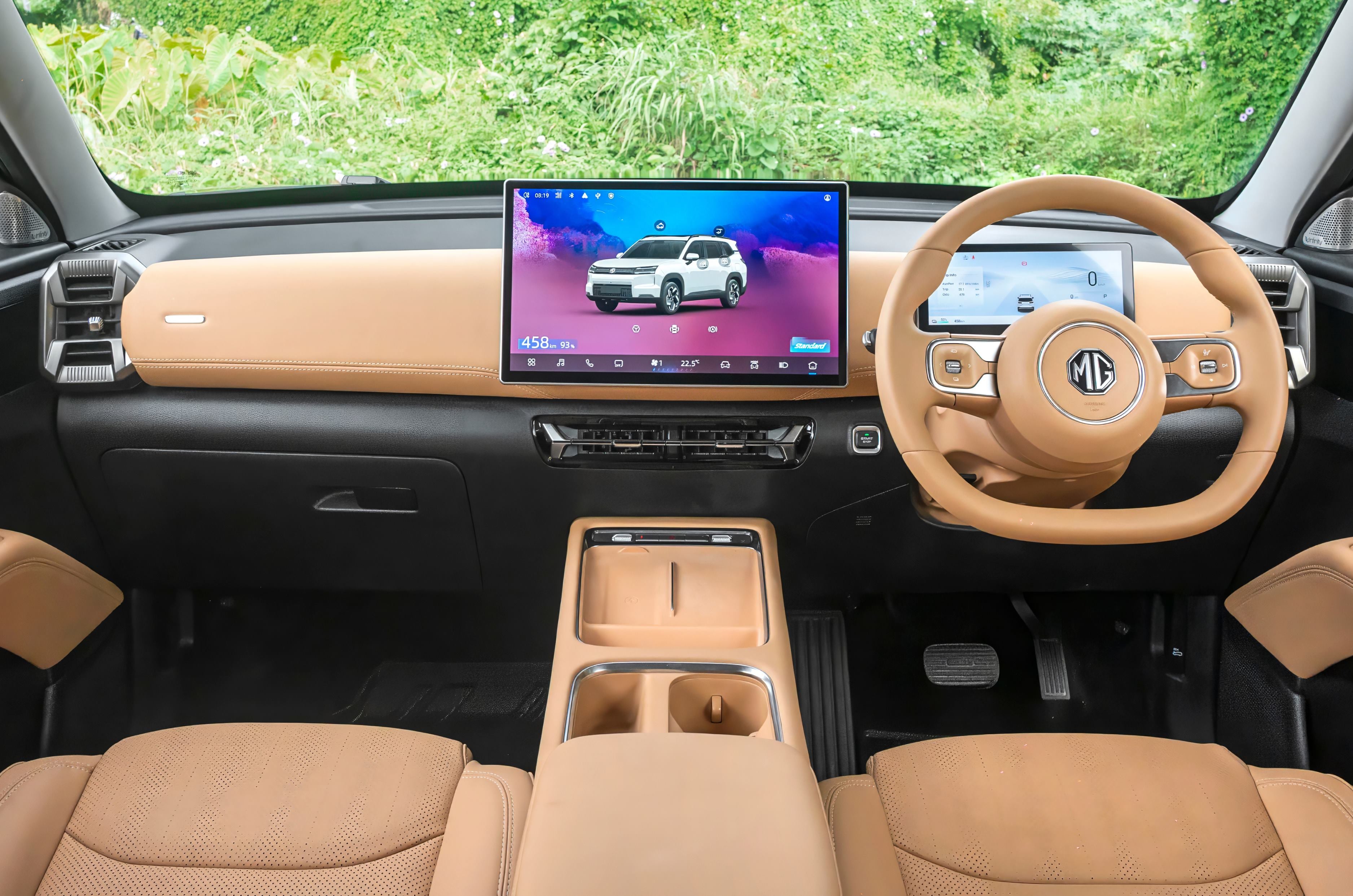
As for the fully loaded Essence Pro variant of the MG Windsor EV, its pièce de résistance is the massive 15.6-inch infotainment screen. Given its minimalistic interior layout, almost every control or feature is integrated into this main display. While this screen can be distracting, it comes with multiple customisation options and integrates various games and streaming services. Compared to the Syros EV’s 64-colour ambient lighting system, the Windsor’s supports 256 colours. Its driver’s seat also gets 6-way power adjustment, while the Inifinity premium audio rig features 9 speakers instead of the Kia’s 8-speaker setup.
Kia Syros EV X-Line ER vs MG Windsor EV Essence Pro: Safety features
Neither car is missing out on much when it comes to their respective safety tech
Kia Syros EV X-Line ER vs MG Windsor EV Essence Pro safety features
Kia Syros EV
MG Windsor EV
Airbags
6
6
ABS with EBD
Yes
Yes
Electronic stability program
Yes
Yes
Hill-hold assist
Yes
Yes
Hill-descent control
No
Yes
TPMS
Yes
Yes
Parking sensors
Yes (front & rear)
Yes (front & rear)
360-degree camera
Yes
Yes
Dashcam
Yes
No
Electronic parking brake
Yes (with auto-hold function)
Auto-dimming IRVM
Yes
Yes
Rain-sensing wipers
Yes
Yes
ISOFIX
Yes
Yes
Rear wiper and defogger
Yes
Yes (defogger only)
All-wheel disc brakes
Yes
Yes
Level 2 ADAS
Yes
Yes
Only the top-spec variants of these EVs get Level 2 ADAS (Advanced Driver Assistance Systems). Some of the ADAS features shared between the two include adaptive cruise control, forward collision warning, lane-departure alert with lane-keeping assistance, and automatic emergency braking. Where the Windsor EV gets hill-descent control, the Syros EV comes with a dashcam and a rear wiper.
Kia Syros EV X-Line ER vs MG Windsor EV Essence Pro: Other features
Neither car is missing out on much when it comes to their respective safety tech
Kia Syros EV X-Line ER vs MG Windsor EV Essence Pro other features
Kia Syros EV
MG Windsor EV
Drive modes
Yes (3)
Yes (4)
Terrain modes
No
No
Single-pedal driving
Yes
No
V2V and V2L
Yes
Yes
AVAS
Yes
No
The Windsor EV comes with Eco+, Eco, Normal and Sport drive modes, while the Syros EV only gets Eco, Normal and Sport. Neither car features variable terrain modes, but both support vehicle-to-load (V2L) and vehicle-to-vehicle (V2V) functions for better practicality during regular family outings, such as picnics and long-distance trips. The Syros EV also comes with a dedicated Virtual Engine Sound System (VESS) to caution other motorists and pedestrians of the vehicle’s presence.
Conclusion
Kia Syros EV X-Line ER vs MG Windsor EV Essence Pro prices
Kia Syros EV
MG Windsor EV
Prices (In Rs, lakh)
20.00
19.00
Apart from being less expensive, the Windsor EV is a larger car with plenty of room on the inside and in the boot, compared to the compact Syros EV. However, the Kia makes a solid case for itself by offering good interior space and build quality, better overall performance, plenty of features, plus a good blend of digital real-estate and intuitive physical controls. If you need the added perks that a bigger car offers without having to spend the ‘big car’ money, the MG Windsor EV will suit your needs just fine. Picking the top-spec Kia Syros EV won’t be a disappointment either as long as you can justify its bloated price tag.
Kia has chosen the Syros to be its second mass market EV for the Indian market. Despite its superb packaging, oddball styling and high initial prices held back the original ICE version against traditional compact SUV rivals. However, EV customers are generally more accepting of avant-garde design, so can the Syros EV find success where the ICE version couldn’t? We drove it in Bengaluru to find out.
Kia Syros EV Exterior Design and Engineering – 7/10
EV has a slimmer intake above the number plate and slightly different lower bumper
A game of spot the difference between the Syros EV and the ICE version would prove challenging for the casual observer, so here is the cheatsheet. Up front, the bumper is ever so slightly different, with a slimmer cooling slot above the number plate and minor tweaks to the body-coloured triangular pods that house the LED fog lamps. Apart from the charging port on the front left fender and the shorter roof rails, the profile is unchanged. Crouch down, though, and you’ll notice the battery pack is visible, like it is on the Hyundai Creta Electric. Kia claims ground clearance is 197mm which is 7mm more than the ICE version. The tri-spoke 17-inch alloys are the same ones that debuted on the ICE car but were discontinued with the facelift. No differences round the back either, save for an EV badge on the tailgate.
Split lighting lifts the otherwise bland rear
If you didn’t like the way the Syros looked, the EV isn’t going to change your mind. It is distinctive, though – like a Japanese kei car only larger, and Korean. Its blanked-off fascia looks appropriate on an EV, and the vertically oriented headlights give it a unique look. The cladding lower down on the bumper carries on to the wheel arches, doors and the rear, adding some muscle. Breaking up the large greenhouse are the pronounced B-pillar and the upward kink in the C-pillar, both of which are neatly done. And while the tailgate looks a bit blank, the split lighting – with L-shaped elements framing the rear windscreen and larger units at the edge of the bumper – looks great when lit up.
Syros EV Interior Space and Comfort – 10/10
Dash layout is identical to the ICE version, but it gets the 3-spoke ‘wheel from the Seltos
Step inside and you start to understand why the Syros EV looks the way it does. Space for passengers, their knick-knacks and luggage is in abundance. With the EV’s drive selector positioned on the steering column, Kia has re-engineered the centre console to liberate a lot more storage. It now has two levels: the top floating portion has a small cubby under the armrest, along with two cupholders with their own sliding cover, while the lower level has a large storage area for a bag or such, another cupholder and a wireless charger. The front door pockets are just as accommodating, with room for a couple of bottles and an umbrella.
New center console has a lot of storage spaces
The front seats are supportive and comfortable, with heating and ventilation along with 4-way power adjustment for the driver. While the dash layout is unchanged, the EV gets the Seltos’ three-spoke steering wheel, but adjustment is still limited to rake and not reach. The EV uses a slightly different colour palette inside: our HTX+ test car gets a smart-looking black-and-off-white theme, the X-Line features a darker black-and-green ambience, while all other trims get an airy light grey and pastel blue theme. While most surfaces are hard plastic, the quality of the materials, fit and finish is top notch.
Front seats are comfy with heating, ventilation for both and power adjustment for the driver
The back seat remains a highlight, with plenty of room all around. The floor is slightly higher because of the battery pack, which means thigh support isn’t as good as in the ICE version. However, if you slide the bench back and stretch out, this isn’t much of an issue. A benefit of the raised floor is that it is now completely flat. Ventilation for the seat base carries over, but the backrest still misses out, as Kia says it would restrict its recline angle.
Higher floor slightly affects thigh support, but there’s ample room to stretch out
Boot space is identical to the ICE Syros at 390 litres with the seat all the way back, and 465 litres with it slid forward. The rear seats also split-fold – though not completely flat – to carry longer items. There is a 16-litre frunk too, though it is rather narrow.
Kia Syros EV Features and Safety – 9/10
Sitting proud on the dash is what Kia calls the Trinity Panoramic Display, comprising two 12.3-inch screens for the infotainment and driver’s display, with a 5-inch screen in between for the HVAC controls. The driver’s display is logically laid out, easy to read and offers some customisation, while the infotainment is sharp, snappy and has a clean UI. The EV gets a dedicated tab that shows several parameters related to the battery, range and energy consumption. It can also help find the nearest charger, condition the battery before charging, as well as set up charging schedules.
Handy drive mode button to cycle between Eco, Normal and Sport modes
The infotainment also offers wireless Android Auto and Apple CarPlay and, on the top trims, powers a superb Harman Kardon audio system with eight speakers, including one on the dash and a subwoofer in the boot. Sunblinds and rear AC vents are standard, while the massive panoramic sunroof features on all but the bottom two trims. Our second-from-top HTX+ also gets an integrated dashcam.
360-degree camera is sharp, but only available on top X-Line trim
Overall, the Syros EV is very well equipped, but some features are available only on the top X-Line variant, including Level 2 ADAS, ambient lighting, a 360-degree camera and a household-style three-pin socket in the back seat. Restricting features to the top trim isn’t unusual; however, the X-Line can only be had in Aurora Black Pearl or Matte Graphite, which might not be to all tastes.
V2L power outlet under the rear seat
The standard safety suite is robust, including six airbags, all-wheel disc brakes, tyre pressure monitoring and ISOFIX mounts. The ADAS suite is also comprehensive, including adaptive cruise control with stop-and-go, lane keep assist, forward and rear collision avoidance, and a blind-spot camera. At the time of writing, the Syros EV does not yet have an official crash safety rating, but considering the ICE version has a five-star BNCAP rating, a similar result for the EV can be expected.
Kia Syros EV Performance and Refinement – 9/10
The Syros EV is available with the same 42kWh and 51.4kWh NMC battery packs as the Carens Clavis EV and the Hyundai Creta Electric. Here too, they power a single motor on the front axle producing 135hp with the smaller battery and 171hp with the extended-range version. Torque is identical on both at 255Nm.
Borrows the 42 and 51.4kWh battery packs from the Carens Clavis EV
Performance was brisk on our 51.4kWh test car, with the 0-100kph sprint claimed to take 8.1 seconds. There are three drive modes to choose from – Eco, Normal and Sport – with each sharpening throttle response a little more than the last. Initial response in all modes is linear so as not to overwhelm those who aren’t used to the instant torque, but there is a strong shove as you get further into the throttle. Overtaking, then, is quite effortless, even in Eco and Normal, almost never needing a switch to Sport for a quick pass.
Initial acceleration is linear, but there is plenty of shove for quick overtakes
The regen braking modes – selected via the paddle shifters – are also very well calibrated, with a noticeable increase in resistance in each mode and the ability to turn it off completely. Holding the left paddle engages one-pedal driving, which uses regen to bring the car to a full stop. It works quite seamlessly and can be very convenient once you get used to it.
Regen modes are well calibrated and the i-Pedal function is handy in the city
Refinement is good too, with no noticeable motor whine making its way into the cabin. It’s so quiet, in fact, that Kia has added a virtual humming sound to warn pedestrians. Since there is no engine note inside the cabin, you do hear a bit more road noise, but at no point does it become intrusive.
Kia Syros EV Range and Efficiency – 8/10
Claimed MIDC range for the 51.4kWh battery is 526km, while the 42kWh unit claims 443km. Our short drive didn’t allow us to test these claims, but if the real-world range we achieved in the Clavis EV and Creta Electric is anything to go by, the Syros EV Extended Range should comfortably manage around 400km on a single charge. We will verify this when we have the car for longer.
Capable of DC fast charging at up to 100kW
Topping up a depleted battery from 10 to 80 percent is said to take 39 minutes on a 100kW DC fast charger. The same charge using the optional 11kW wallbox charger, is said to take almost five hours for the Extended Range and four hours for the Standard Range.
Kia Syros EV Ride Comfort and Handling – 8/10
The ride on the Syros EV is a touch more absorbent than on its ICE counterpart. Sharp bumps don’t come through to the cabin as abruptly, but there is still an underlying firmness to it. This firmness is there to help body control, but being a tall, narrow car, there is still a fair bit of body roll through the corners. It does feel stable though, and overall grip is strong.
There’s plenty of body roll, but it remains stable through the bends
Steering feel is also good, and it weighs up as speeds rise, which helps with high-speed stability. The four-wheel disc brakes are strong too, bringing the Syros to a confident halt when you drop the anchors. Overall, it isn’t the most entertaining car to drive, but it feels stable and secure at speed while being easy to manoeuvre in tight spaces.
Kia Syros EV Value for Money – 7/10
Introductory prices for the Syros EV start at Rs 13.5 lakh for the 42kWh version and Rs 17 lakh for the 51.4kWh Extended Range. If you want the fully loaded X-Line, that’ll be a cool Rs 20 lakh. To reduce the upfront purchase cost, a BaaS scheme is available with prices starting at Rs 7.99 lakh, and battery rental costing Rs 3.3 per kilometre. To sweeten the deal, Kia is offering a 15-year/unlimited-kilometre HV battery warranty for the first owner, along with an assured buyback value of up to 80 percent after three years.
Its pricing means the Syros EV rivals the Tata Nexon EV and Mahindra XUV 3XO EV, as well as larger EVs like the MG Windsor and Maruti e Vitara. As such, the 42kWh Syros EV makes for a very compelling option, undercutting its rivals in the sub-four-metre EV space. It is easily the most spacious in this segment and is very well equipped even in the lower trims. However, its case weakens with the 51.4kWh Extended Range. It is significantly pricier than its immediate rivals, overlapping with the larger-battery versions of the Windsor and e Vitara. While the Syros EV has its merits and even outdoes them in some areas, buyers might find the allure of a bigger car for the same money too hard to resist.
Mercedes-Benz has bolstered the E-Class range in India with the performance-focused AMG E 53 plug-in hybrid, which is priced at Rs 1.45 crore (ex-showroom). Unlike the regular India-spec E-Class, which is an LWB (long-wheelbase) model, the AMG E 53 PHEV is a shorter SWB (standard-wheelbase) version. It’s also the only AMG version of the current-gen E-Class on sale worldwide. If you’re interested in bringing home the AMG E 53 PHEV, we’ve listed the performance sedan’s most prominent strengths and weaknesses below.
Pros
Exciting powertrain
The E 53 comes with a plug-in hybrid setup that marries a 449hp 3.0-litre turbo-petrol straight-six, a 28.6kWh battery pack and an electric motor housed within the 9-speed automatic gearbox. The combined output is 585hp and 750Nm (612hp when using launch control), which is routed to all four wheels via Mercedes’s 4Matic+ AWD system.
As we noted in our Mercedes-AMG E 53 PHEV review, it’s a blast to drive in its most aggressive Sport+ drive mode. Both the engine and electric motor operate at maximum capacity, providing rapid but smooth acceleration and strong power delivery. The gearbox also feels well-suited to the powertrain, with quick shifts and an ‘M’ mode that gives you full control and doesn’t intervene even if you hit the redline. That said, the gearbox can feel clunky and too eager at crawling city speeds, as it tends to constantly shuffle through the lower gears.
For the E 53, Mercedes-AMG claims a 0-100kph time of 4 seconds with launch control and an electronically limited top speed of 250kph, which rises to 280kph with the optional AMG Driver’s Package.
Usable electric range
Thanks to its 28.6kWh battery, the E 53 claims a 100km all-electric range, which, in the real world, will likely hover in the 75-90km ballpark. This is more than enough to complete daily urban commutes without burning a drop of petrol, making the E 53 surprisingly affordable to run, at least in the city.
Once the battery begins to deplete, the straight-6 engine fires up and drives the wheels, but even then, the hybrid system pitches in via constant regenerative braking and electric assistance, ensuring the E 53 feels responsive while delivering better fuel efficiency than an equivalent pure-petrol performance sedan. As for charging, an 11kW AC wallbox takes 2.25 hours for a 0-100 percent charge, while a 60kW DC fast charger takes 20 minutes for a 10-80 percent top-up.
Fantastic handling
Around the bends, the E 53 feels remarkably composed, even though it lugs around a fairly substantial battery pack – its low placement helps keep the centre of gravity down. Body roll is kept in check. The Sport and Sport+ drive modes noticeably tighten up the car; the dampers become more responsive, and the steering gains heft.
The AWD system is rear-biased, and the Michelin Pilot Sport 4S tyres confidently deploy all that power to the road. Rear-wheel steering of up to 2.5 degrees is also included, aiding stability through high-speed corners.
Cons
Unnatural brake feel
Despite being fitted with massive 390mm discs up front and regenerative braking, the E 53 doesn’t deliver a natural or consistent pedal feel. Stopping power is strong, but the spongy, inconsistent brake pedal puts a damper on an otherwise fun driving experience.
Poor in-cabin ergonomics
While the interior layout of the E 53 looks and feels very upmarket, its ergonomics suffer due to a glaring absence of physical controls. Much of the in-cabin functionality is folded into the large 14.4-inch central touchscreen, which isn’t all that intuitive to use while on the move. The touch-capacitive controls on the steering wheel further add to the frustration.
Compromised boot space
While the battery pack helps enhance the E 53’s performance and daily usability, its placement beneath the boot floor significantly eats into luggage capacity. At 370 litres, the E 53’s boot is 170 litres smaller than that of the standard E-Class. There’s no spare wheel either, with its space instead occupied by the charging cable and puncture repair kit.
The Mahindra BE 6 is set to receive a passenger screen, a redesigned dashboard and a new upholstery colour, we can exclusively report. Since the Mahindra electric SUV was launched only in November 2024, a mid-lifecycle update is still some time away, and these changes could instead arrive with a model year update.
Updated Mahindra BE 6 interior details
New BE 6 dashboard (left), current BE 6 dashboard (right).
Mahindra already offers a three-screen setup in the XEV 9e and XEV 9S, and the same unit is expected to make its way to the BE 6. It’s not yet clear whether Mahindra will offer the three-screen setup across the line-up or limit it to the top-spec trims. Triple screens are becoming increasingly common, with even Tata Motors now offering them on some of its models. Adding the feature should help Mahindra keep the BE 6 competitive in the segment.
Mahindra XEV 9e’s interior shown here for representation.
The carmaker is also readying a version with a more conventional dashboard layout, devoid of the halo-like loop around the driver’s area offered in the current EV. The loop doesn’t leave enough space for a second cupholder and also makes the wireless charger and USB Type-C ports difficult to access from the passenger side, issues we had pointed out in our BE 6 review. Whether this becomes the standard design or is offered alongside the current layout remains to be seen.
Instead of the current black-and-grey theme for the upholstery, the BE 6 is going to get a new black-and-tan colour combination. The BE 6 already offers an extensive feature list, and these updates should further strengthen its appeal against midsize SUV rivals like the Tata Sierra EV and Hyundai Creta Electric.
The Mahindra BE 6 is priced between Rs 18.90 lakh and Rs 26.90 lakh and a small price hike is likely once these updates are introduced. For reference, the Sierra EV is priced between Rs 18.79 lakh and Rs 25.99 lakh, while the Creta Electric costs between Rs 18.03 lakh and Rs 23.67 lakh. Mahindra is yet to announce a launch timeline for the updated BE 6.
Ex-showroom prices mentioned above are as of July 29, 2026.
The Mercedes-AMG E53 Hybrid 4MATIC+ arrives at a time when performance cars are being asked to do more than simply go fast. It has to deliver the pace and character expected of an AMG while embracing electrification to meet increasingly stringent emissions norms and changing buyer expectations. The result is a plug-in hybrid performance sedan that combines a 3.0-litre turbo-petrol inline-six engine with an electric motor for a formidable system output of 585hp, while also offering enough electric-only range for mundane daily drives.
But this isn’t just an E-Class with a bigger battery and more power. The E53 gets AMG-specific chassis hardware, all-wheel drive, rear-wheel steering and a suite of performance-focused electronics designed to counter the added weight. Can this electrified AMG still deliver the thrills enthusiasts expect while remaining a genuinely usable luxury sedan every day?
Mercedes-AMG E53 Exterior Design and Engineering
Expectedly, the E 53 has put on quite a bit of muscle. The front bumper is sportier, with large air dams. The Panamericana grille gets illuminated surrounds and is wide enough to gulp massive amounts of air to cool the engine, while the power lines on the bonnet add more intent to its character.
The E53 has good amount of muscle with aggressive bumpers, big grille and power lines
The profile flaunts flared wheel arches, larger 20-inch wheels (the last-gen E 53 featured 19-inchers) and, like before, a standard wheelbase, giving it sportier proportions than the long-wheelbase E-Class.
At the rear, there’s an E 53 badge with red highlights, a quad-exhaust setup that isn’t actually connected to the exhaust pipes, a diffuser and a ducktail spoiler that’s large enough to be noticed but won’t do much for downforce.
Not being a long wheelbase gives it perfect proportions
Overall, it’s a handsome-looking car with just the right amount of restraint. However, if you’re looking for a bit more visual drama, you’ll have to pay extra for the MANUFAKTUR paint finishes, as the standard colour palette is more E-Class than AMG.
Mercedes-AMG E53 Interior Space and Comfort
Inside, the E 53 strikes an appealing balance between luxury and sportiness. Instead of carbon-fibre or piano-black trim, Mercedes has used open-pore wood that feels rich and tactile. A large central MBUX touchscreen dominates the dashboard, while the passenger display found on the standard E is absent – not particularly bothersome given how good the main screen is.
Red and black upholstery looks racy while open pore wood adds luxe factor
The AMG sports seats offer plenty of support and adjustment, although ventilated and massage functions are missing. Likewise, the chunky AMG steering wheel feels superb in hand but is cluttered with touch-sensitive controls that remain frustrating to use.
Rear-seat space is naturally tighter than the long-wheelbase E-Class, but there’s still enough room for two adults to travel comfortably. Manual sunblinds and a panoramic sunroof add to the ambience, although the large transmission tunnel makes this a strict four-seater.
There’s good space in the rear despite this not being a long wheelbase
The boot, however, sees the biggest compromise. At 370 litres, it’s 170 litres smaller than the standard E-Class because the battery sits beneath the floor. There’s no spare wheel either, with its space instead occupied by the charging cable and puncture repair kit.
Mercedes-AMG E53 Features and Safety
The E 53 is a well-equipped sedan despite missing features such as ventilated seats. The centre screen is the brains of the operation and, unfortunately, many of the controls are routed through it, making them difficult to operate on the move.
We’ve praised the MBUX infotainment system for its clear interface and high-resolution display, but usability isn’t its strongest suit. The large screen makes it difficult to accurately select the desired function while driving.
Too many controls on the steering is distracting
The E 53 gets a comprehensive suite of driver assistance systems, including Lane Keep Assist, Automatic Emergency Braking, Rear Cross Traffic Alert and Blind Spot Monitoring. Thankfully, these systems can also be switched off manually if required.
The 360-degree camera is crisp and high-resolution, while the 17-speaker Burmester 4D audio system delivers an exceptional listening experience. As impressive as the sound system is, however, it ultimately plays second fiddle to the performance on offer.
Mercedes-AMG E53 Performance and Refinement
Like before, the new E 53 is powered by a 3.0-litre turbo-petrol straight-six engine. This time, however, it gets support from a 28.6kWh battery pack and an electric motor, taking the combined output to 585hp and 750Nm.
585hp six-cylinder engine makes 150hp more than before
Unlike the bigger PHEV AMGs, the E 53 isn’t an ‘E PERFORMANCE’ model, which means the electric motor is mounted within the gearbox housing rather than integrated into the rear axle. Power is sent to all four wheels via the familiar 9-speed automatic transmission, and the E 53 gets a host of drive modes that are noticeably different from one another.
‘Individual’ lets you tailor the engine, gearbox and suspension to your liking. ‘Battery Hold’ prevents the car from using the battery charge, saving it for when you truly need it. ‘EL’ is the full-electric mode, provided there’s sufficient charge in the battery. ‘Comfort’ offers a more relaxed setup, ‘Sport’ sharpens the responses, and ‘Sport+’ is the most aggressive setting.
Naturally, Sport+ is the mode you’ll spend most of your time in if you want the E 53 to feel like a proper AMG. The exhaust note, the urgency of the power delivery and the firmer suspension all come together beautifully. With the engine and electric motor working at full tilt, straight-line performance is genuinely rapid. Acceleration is smooth yet thrilling, as the engine piles on speed rapidly without the neck-snapping brutality of a powerful EV. Power delivery is strong and linear across the rev range, and the gearbox complements the aggressive character of Sport+ perfectly. 0-100kph takes just 4 secs with the ‘Race Start’ which is essentially launch control included in the AMG Dynamic Plus package as power jumps up to 612hp.
For greater driver involvement, you can also engage ‘M’ mode, which gives you full manual control of the gearbox. It will happily bounce off the limiter without automatically upshifting until you pull a paddle.
The exhaust note is a bit of a mixed bag. It’s genuine, but it’s also channelled into the cabin through the speakers and a subwoofer in the boot. It’s not the ideal solution because, outside the car, the engine and exhaust produce a genuinely enjoyable snarl. Still, in an era of synthesised, computer-generated soundtracks, a real exhaust note—even if it’s amplified through the speakers—is worth appreciation.
Switch to Comfort mode and the E 53 adopts an entirely different character. It’s calm, refined and smooth, with gentler power delivery that’s well suited to long-distance cruising.
Where the powertrain disappoints is in city traffic and slow stop-start driving. The gearbox is simply too eager and, even in Comfort mode, it feels a bit like walking an overexcited Rottweiler. It’s constantly trying to surge forward and grab the next gear before you’ve asked it to. The constant shuffling through the lower gears results in unnecessary jerks that spoil the experience.
The solution is to engage EL mode. It’s almost as if it was designed specifically for this scenario. In EL, the E 53 feels smooth and effortless. There’s very little noise apart from the drone generated by the Michelin Pilot Sport 4S tyres, which can be quite rumbly, especially on concrete surfaces.
Braking is less convincing, however. Despite massive 390mm front discs and regenerative braking, the pedal never delivers a natural or consistent feel. Stopping power is strong, but the spongy, inconsistent pedal detracts from an otherwise polished driving experience.
Mercedes-AMG E53 Mileage and Efficiency
One of the biggest talking points of the new E 53 isn’t its staggering performance, but the fact that it can deliver it without constantly visiting a fuel station. This plug-in hybrid marks a significant shift in AMG’s philosophy, combining electrification with a silky-smooth six-cylinder engine to create a performance sedan that’s as comfortable commuting as it is attacking a mountain road.
Charging via an 11kW AC charger will replenish the battery in 2.25 hrs; No DC charging option
The headline figure is a claimed electric-only range of up to 100km, courtesy a 28.6kWh battery pack. You can expect 75-90km on electric power alone making it entirely possible to complete daily urban commutes without firing up the engine.
Once the battery begins to deplete, the turbocharged 3.0-litre inline-six takes centre stage. Even then, the hybrid system continues to contribute through regenerative braking and electric assistance, ensuring the E 53 feels responsive while reducing fuel consumption compared to a conventional performance sedan. Mercedes has also equipped the car with four regenerative braking modes, allowing drivers to maximise energy recovery or opt for a more natural driving experience. For owners with access to home or workplace charging, fuel stops could become surprisingly infrequent. Charging is equally convenient, with the 11kW AC onboard charger replenishing the battery in around three hours.
28.6kWh battery allows for an electric-only range of 100km
Mercedes-AMG E53 Ride Comfort and Handling
For those who enjoy being behind the wheel, the E 53 delivers in abundance. Despite carrying the additional weight of a sizable battery pack, it feels remarkably composed. In Sport and Sport+, the car tightens up noticeably. Body roll is kept firmly in check, the dampers become more alert, and the steering gains welcome heft. What impresses most is how well the chassis disguises its mass. The battery may add considerable weight, but it’s mounted low in the car, lowering the centre of gravity and lending the E 53 impressive stability through fast corners.
The rear-biased 4MATIC+ all-wheel-drive system plays a major role here. The rear wheels can turn up to 2.5 degrees, which isn’t a huge amount, as you’ll still find yourself making the occasional three-point turn. Above 60kph, however, they turn in the same direction as the front wheels, adding another layer of stability through corners.
It is over 400kg heavier than the last-gen model but you just can’t feel it from behind the wheel
The Michelin Pilot Sport 4S tyres aren’t the quietest, but they allow the driver to deploy the combined output with confidence, even when exiting slower bends. Turn-in is crisp, and while the steering isn’t overflowing with feedback, it’s accurate enough to place the car confidently on a winding road.
At low speeds, the adaptive AMG Ride Control suspension does an admirable job of filtering out broken tarmac, expansion joints and sharp-edged potholes. It isn’t perfect, though. Compared with the last-generation E 53, which rode on smaller 19-inch wheels with taller-profile tyres, the new car’s 20-inch wheels have sacrificed a degree of ride compliance. As a result, the low-profile tyres transmit the occasional thud over particularly nasty potholes.
The adaptive dampers mated with the active engine mounts offer terrific stability
Ultimately, the Mercedes-AMG E 53 Hybrid 4MATIC+ isn’t as razor-sharp as a dedicated sports sedan, nor is it as pillowy as the standard E-Class. Instead, it strikes an impressive middle ground, blending everyday comfort with genuine driver engagement. It’s a car that feels just as at home soaking up kilometres on the expressway as it does carving through a series of fast, flowing corners.
Mercedes-AMG E53 Value for Money
Prices start at Rs 1.45 crore for the Performance Edition and Rs 1.48 crore for the Racing Edition. In this price range, there isn’t a direct rival to the E 53. The BMW M5 is both more powerful and considerably more expensive, while the BMW M4 is effectively rivalled by the Mercedes-AMG CLE 53 as a two-door coupe. The Audi RS5, meanwhile, hasn’t been launched in India yet.
The E 53 succeeds because it doesn’t try to be everything at once. It delivers the pace, handling and character expected of an AMG while introducing meaningful electric-only capability that genuinely enhances everyday usability. The brakes may lack the natural feel you’d expect from a performance sedan, and the gearbox can feel over-eager in slow-moving traffic, but these shortcomings do little to overshadow what is otherwise a remarkably accomplished package.
Fast, engaging and surprisingly efficient, the new E53 Hybrid is one of the most complete performance sedans on sale today. More importantly, it proves that electrification doesn’t have to dilute the AMG experience—it can make it even more usable.