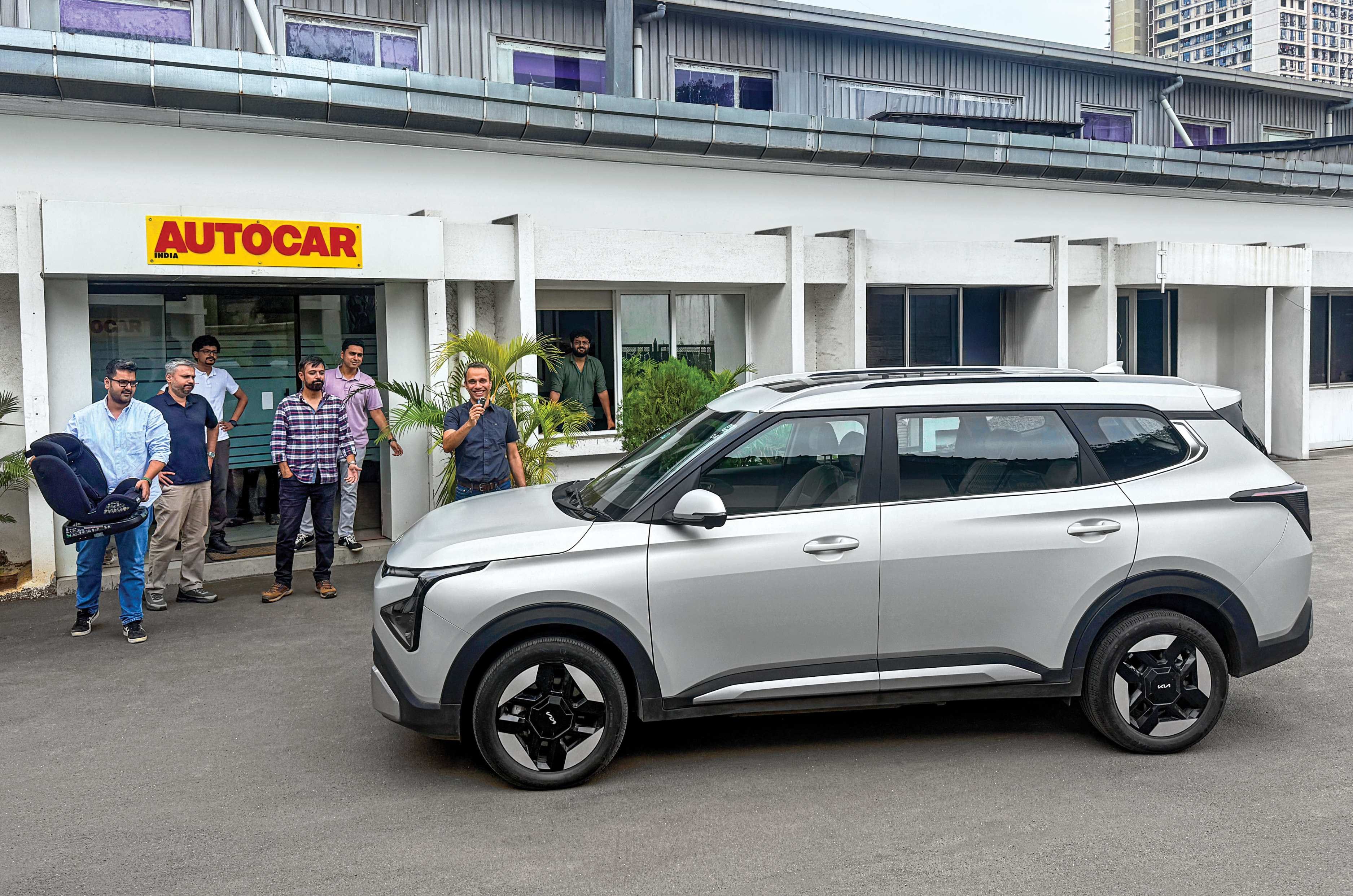
A lot of us on the Autocar India review team have been eagerly awaiting the arrival of the Clavis EV. Who knew a bunch of auto enthusiasts would be looking forward to an electric 7-seat MPV. The thing is, though, electric and MPV are two very congruous elements.
If you’re going to have a large people mover, an electric drivetrain does well by not penalising you on efficiency – like an internal-combustion engine does – and its smooth and silent running keeps everyone happy. And in an MPV, where it’s a relaxed frame of mind you’re often driving in, electric power again suits this character to a T.
So yes, this combination really does make sense, and the electric Clavis really brings out this harmonious pairing superbly.
The Clavis shares its powertrain with the Hyundai Creta Electric, and we have the larger 51.4kWh battery model, which drives a 171hp motor. Efficiency, while not bad, is lower than the Hyundai’s. So far, in the city, on my home-to-office run, the Clavis manages about 6.8km/kWh, which would equate to a range of 350km, while the Creta averaged 8.1km/kWh.
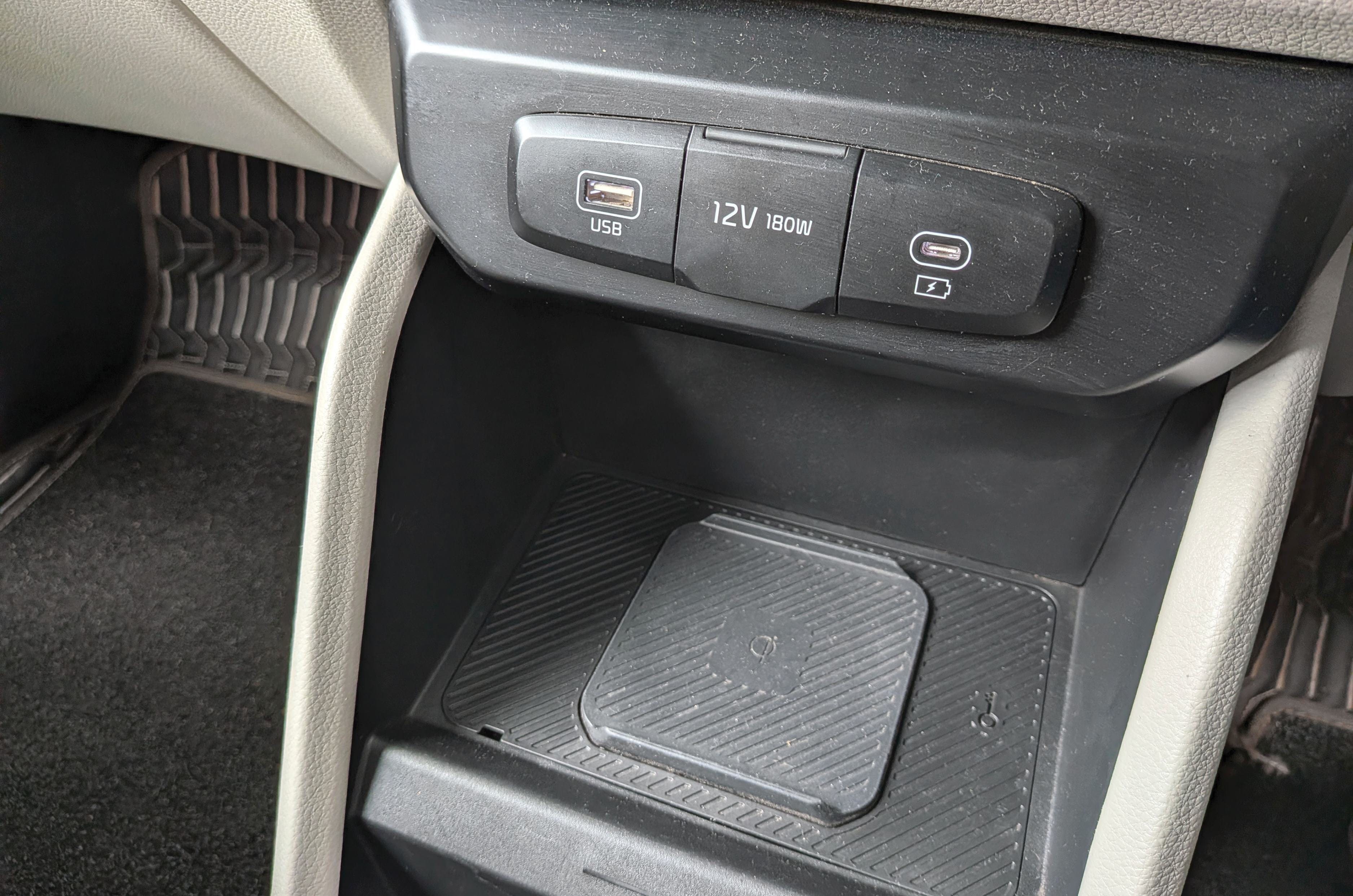
Wireless charger, 12V, Type-A and Type-C at the front and USB sockets in all three rows.
However, the power calibration is spot on for its intended purpose. There’s none of that instant power dump and a hair-trigger torque delivery, making it very easy to modulate if you’re simply out on a relaxed and laid-back drive – a.k.a. MPV mode. But don’t mistake that for a lack of performance. Press down a bit further on the accelerator, and there’s plenty of power for overtaking, even with a full load or on steep inclines. I’ve run it with six onboard, and it really made no difference. This is exactly how you’d want an MPV powertrain to be set up.
The ride is another bit that’s nice. To tackle the extra weight of the battery, Kia has retuned the suspension and, like in the case of the electric Creta, it does have a firm side. But this has also helped with removing some of that secondary motion after you come off a speed breaker or bump. So, the ride feels settled, and at highway speeds, it is stable and composed.
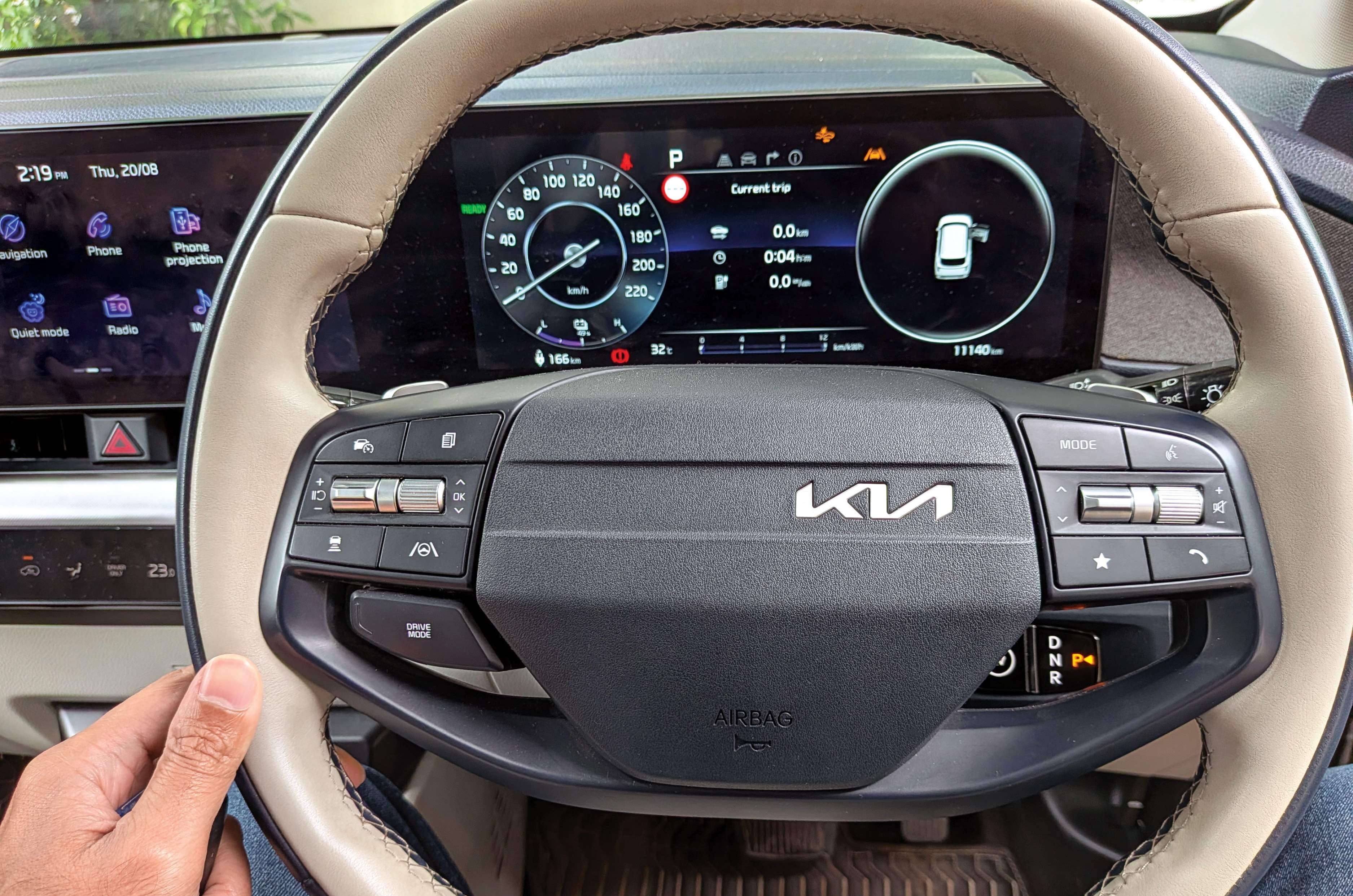
Quirky two-spoke, flat top and bottom steering wheel always looks upside down.
My wife drives it too, and she loves this easy-going nature, as well as the seating position. That is something I don’t really like, though. It feels like sitting at a dinner table, with your knees closer to a 90-degree angle. The seat base is also quite short, adding to that dinner-chair-like posture. It isn’t uncomfortable, though. The seat cushioning is fine, but it’s just the position that’s far from car- or SUV-like.
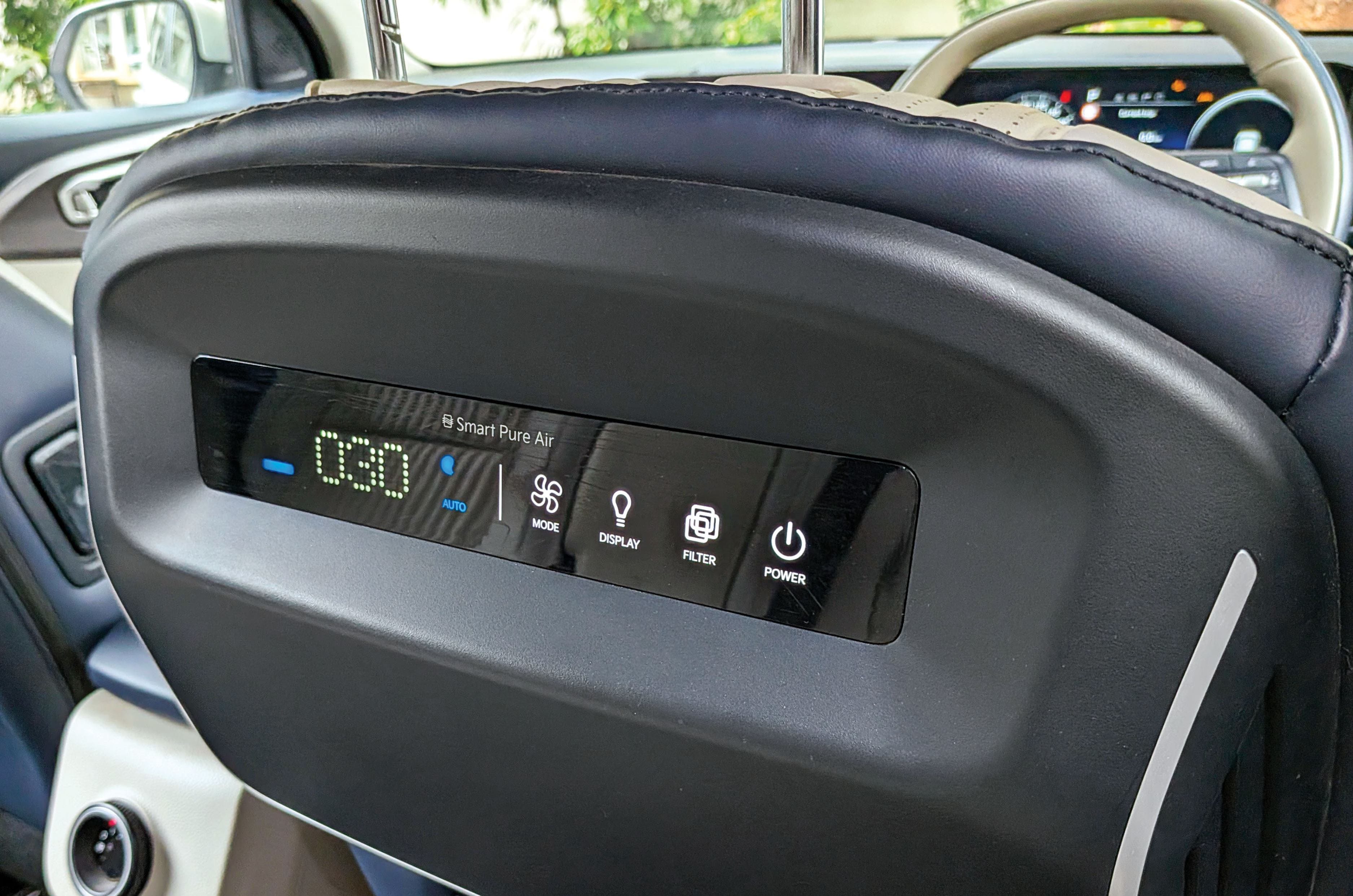
Besides that, there are only small bits I dislike, like the starter button, which is located on the drive selector stalk and hence hidden behind the steering wheel, only visible if the wheel is in the absolute straight-ahead position. The air purifier is also noisy, but that’s more due to its positioning behind the driver’s seat and thus close to your ear.
Air purifier located right behind the driver makes the air draft easily audible.
Beyond that, the Clavis EV has been remarkable. The kids love the electric seat fold that allows you to tumble the second-row seat at the push of a button, granting easy access to the third row. The space there drew no complaints either. It’s even good enough for average-sized adults and gets dedicated AC vents too. The window size, though, is a bit small, and while my daughter, who is prone to motion sickness, has so far not complained about it, I’m sure on a longer drive she will find this annoying. My son, who is taller than me, complained about this, saying he needs to look down through the glass. Headroom and overall space, though, were just about fine for him.
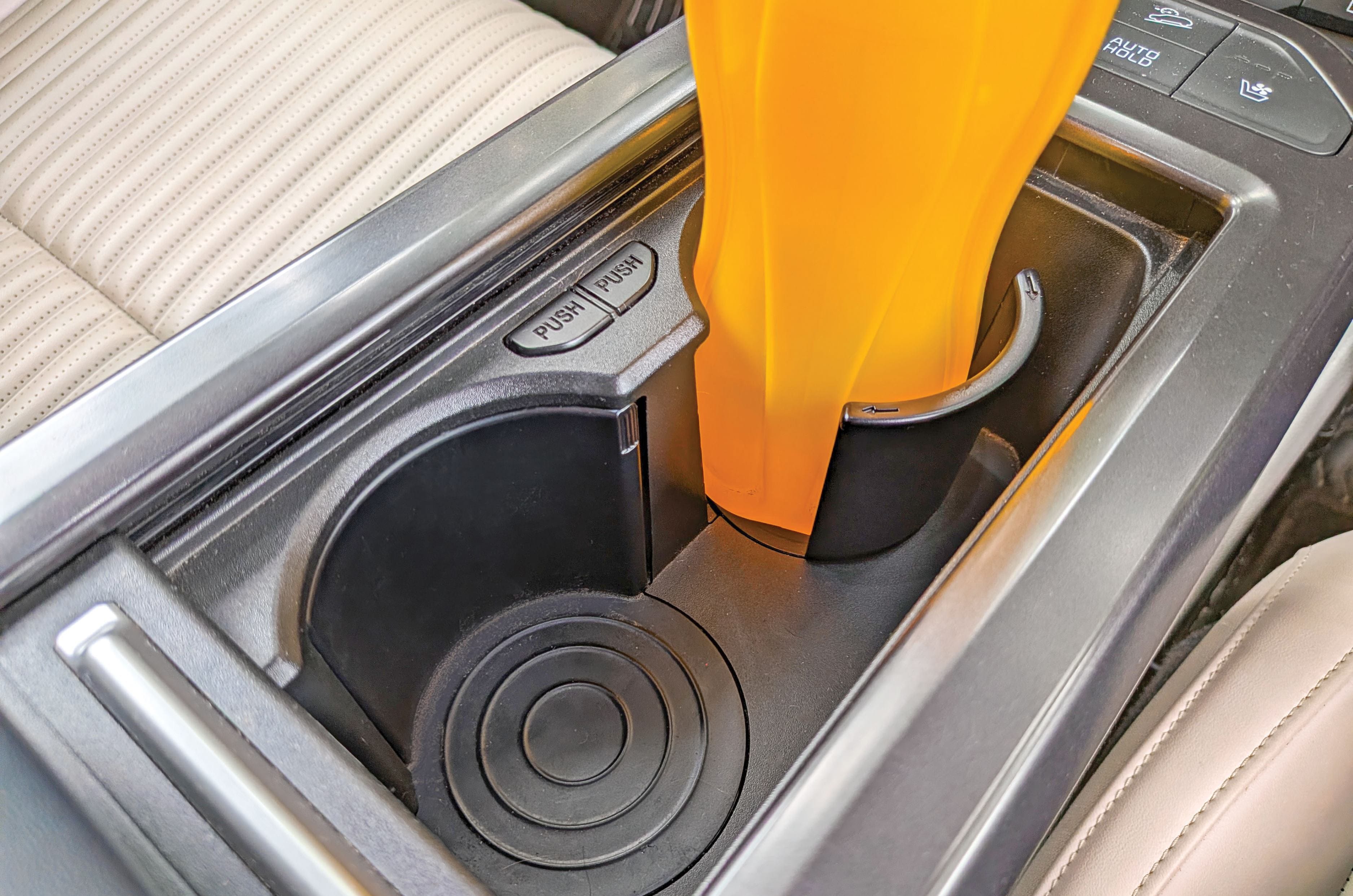
Speaking about space, the centre console drew a lot of praise from everyone who sat at the front. There’s plenty of storage, so no fighting to keep odds and ends. There are places for your phones, wallets, cups and bottles thanks to a cool resizeable tray, and the lower portion of the console can easily contain a medium-sized handbag. I’ve even managed fitting a tablet with its case in there. The premium-looking interior has also impressed everyone, the ambient lighting taking many by surprise. I guess not many expect this level of finish when they see an MPV.
Resizeable cup/bottle sleeves are handy and pop out at the touch of a button.
So, all in, like I said at the start, the electric Clavis is really a fine example of why electric power and MPVs are such a great mix. I’m sure our resident van man, Nikhil Bhatia, will be relieving me of the keys very soon. He’s already speaking of how his daughter loves to look up through sunroofs from her child seat. Rahul, too, will soon want it for its flexibility in some or the other tracking car duty.
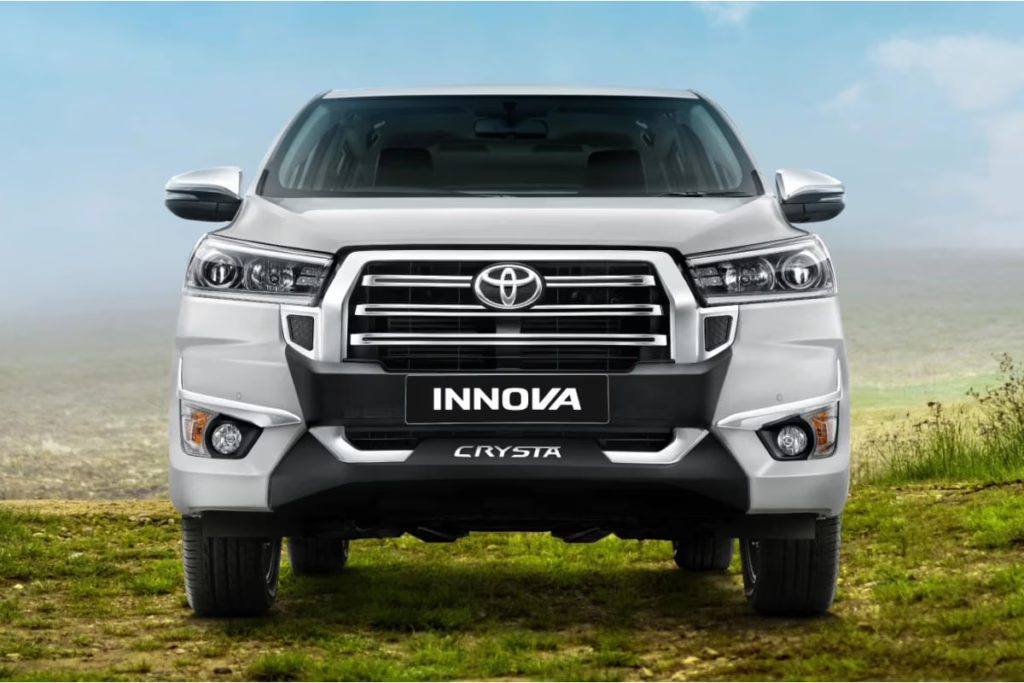
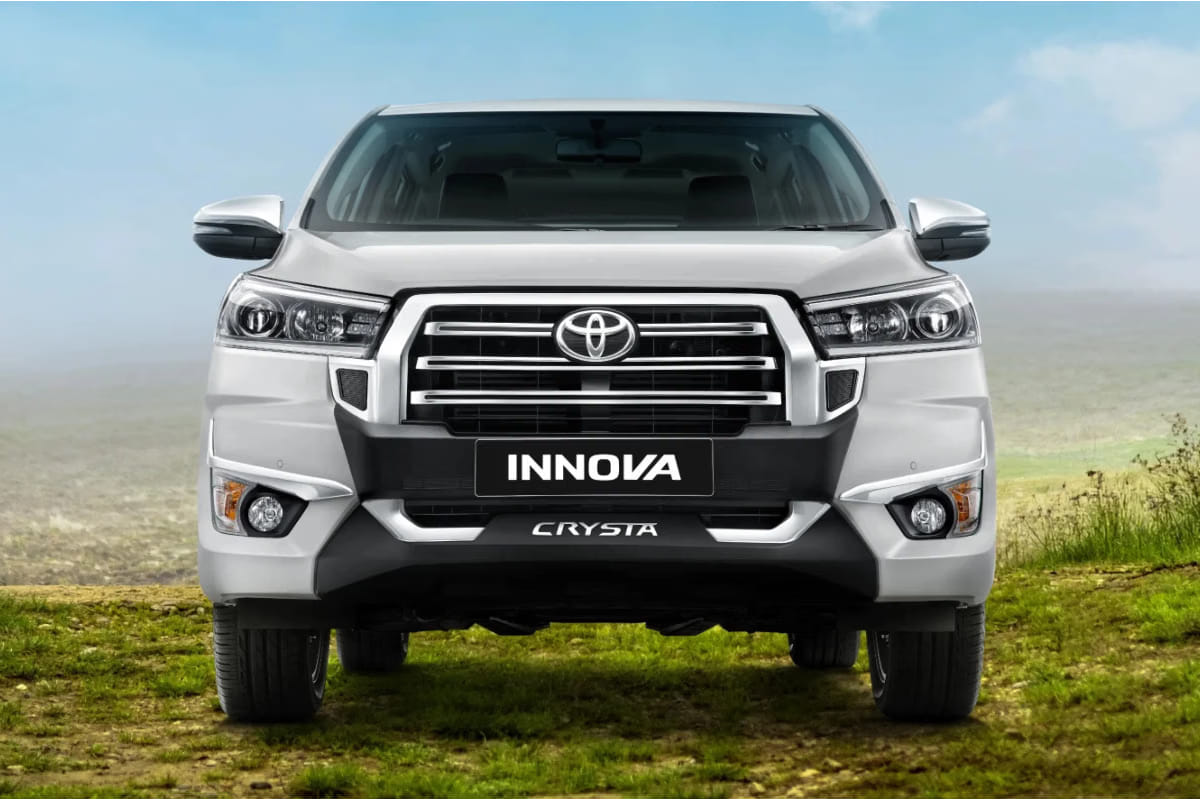
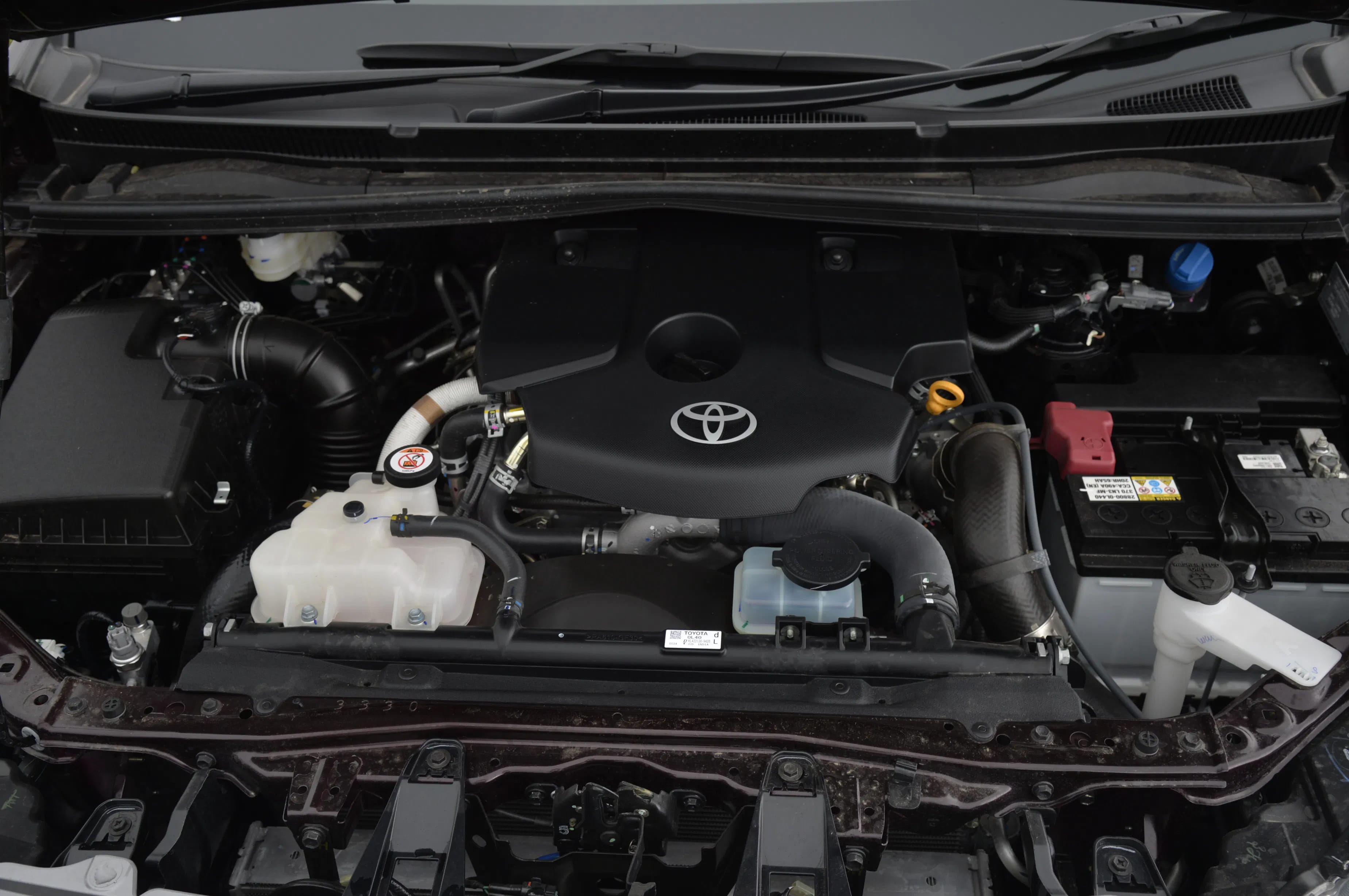
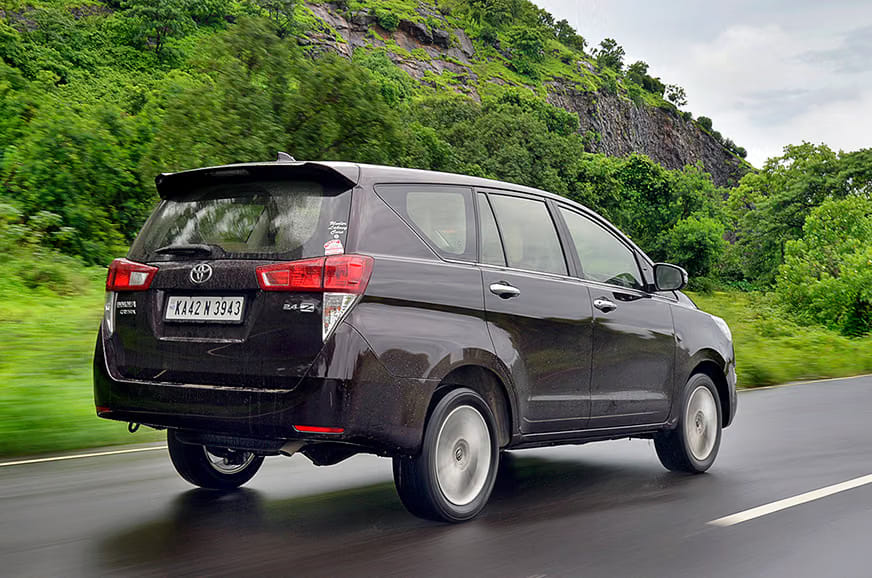
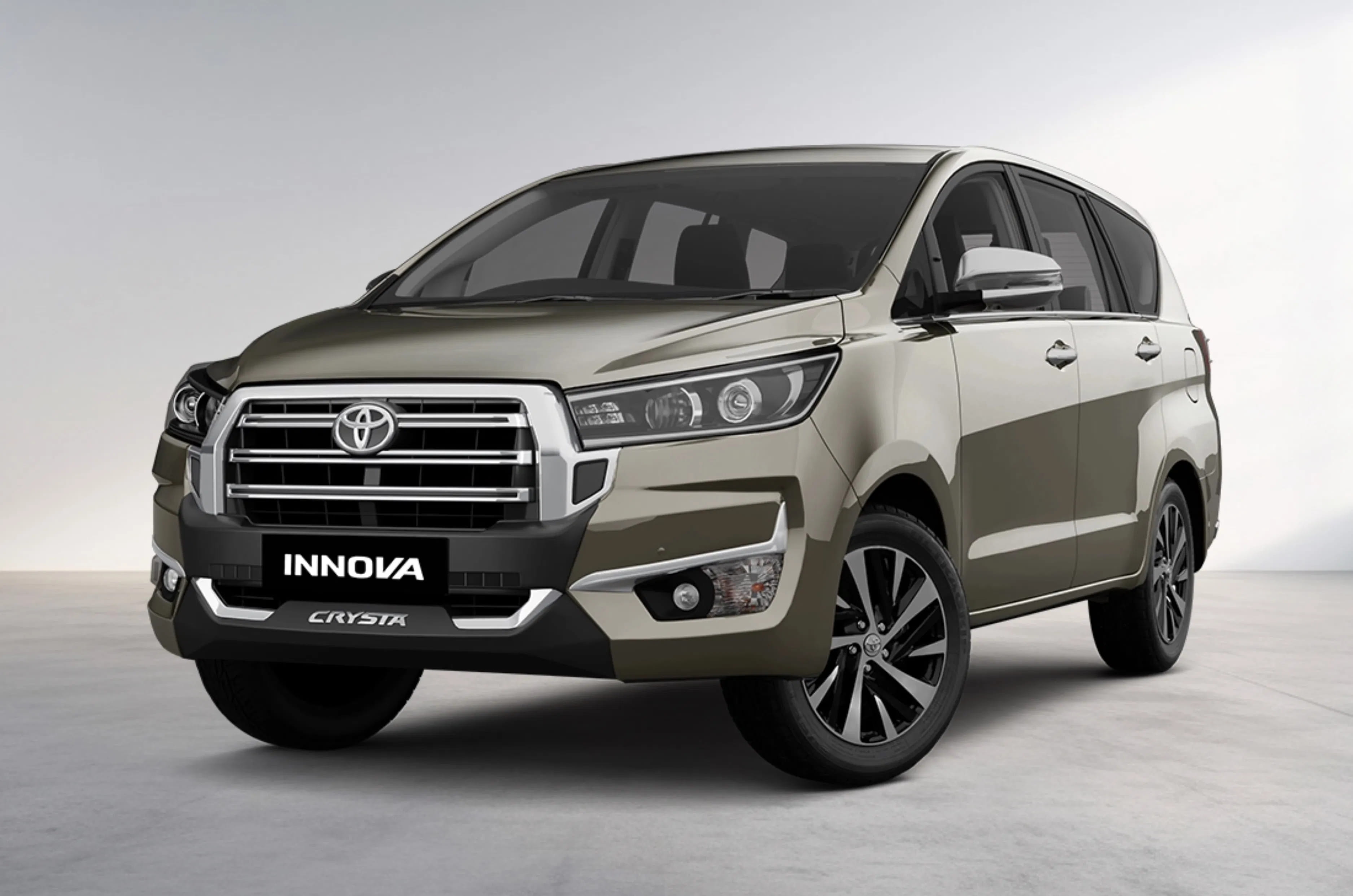
The Toyota Innova Crysta has been a mainstay in the Indian MPV market for years, building a reputation for longevity, reliability and practicality. It is powered by a 2.4-litre diesel engine paired with a 5-speed manual gearbox and is available in seven- and eight-seat configurations. Here are three reasons to consider the Innova Crysta and two reasons why it may not be for you.
Pros
Peace of mind ownership
The Innova has a long-standing reputation for mechanical robustness and reliability, which remains a major reason for its appeal. The 2.4-litre diesel makes 150hp and 343Nm, and is known for its refined and dependable nature. Toyota also offers warranty coverage of up to three years or 1,00,000km, with an extended warranty available up to five years or 2,20,000km.
Space and practicality
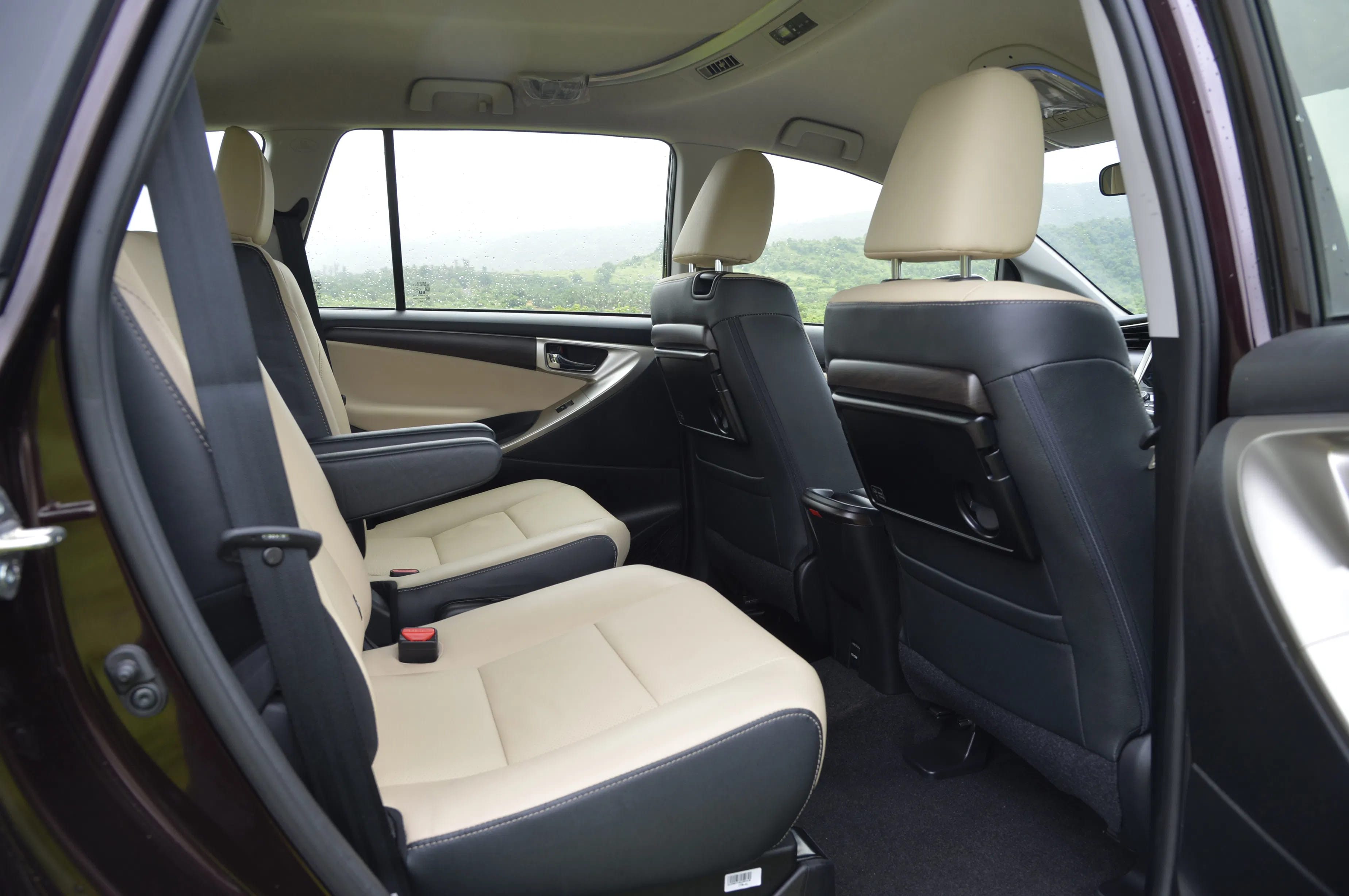
The Innova is available in seven- and eight-seat configurations, with the former getting captain’s chairs in the second row and the latter a bench seat. The seven-seat layout offers a more comfortable second row, while the eight-seat version prioritises seating capacity and practicality.
The third row is reasonably spacious for average-sized adults, while all three rows get AC vents and the second row gets separate blower controls. Fold-out tray tables also add to the practicality for passengers on longer journeys. The Innova also benefits from Toyota’s established service and after-sales network.
Good highway manners
The 2.4-litre diesel has enough performance for highway driving, with a good reserve of power for overtaking at higher speeds. It remains comfortable while cruising and doesn’t feel out of breath on faster expressways. The ride is generally comfortable, but the Innova can feel unsettled over sharp-edged and rutted surfaces, while its body-on-frame construction also results in some lumpiness at low speeds.
Cons
Heavy steering
The Crysta uses hydraulic power steering, which makes the steering feel heavy, particularly at low speeds. It can also give some kickback through the wheel when driving over potholes, which is more noticeable on broken roads. This makes manoeuvring the large MPV in tight spaces more cumbersome than it could be.
Priced on the expensive side
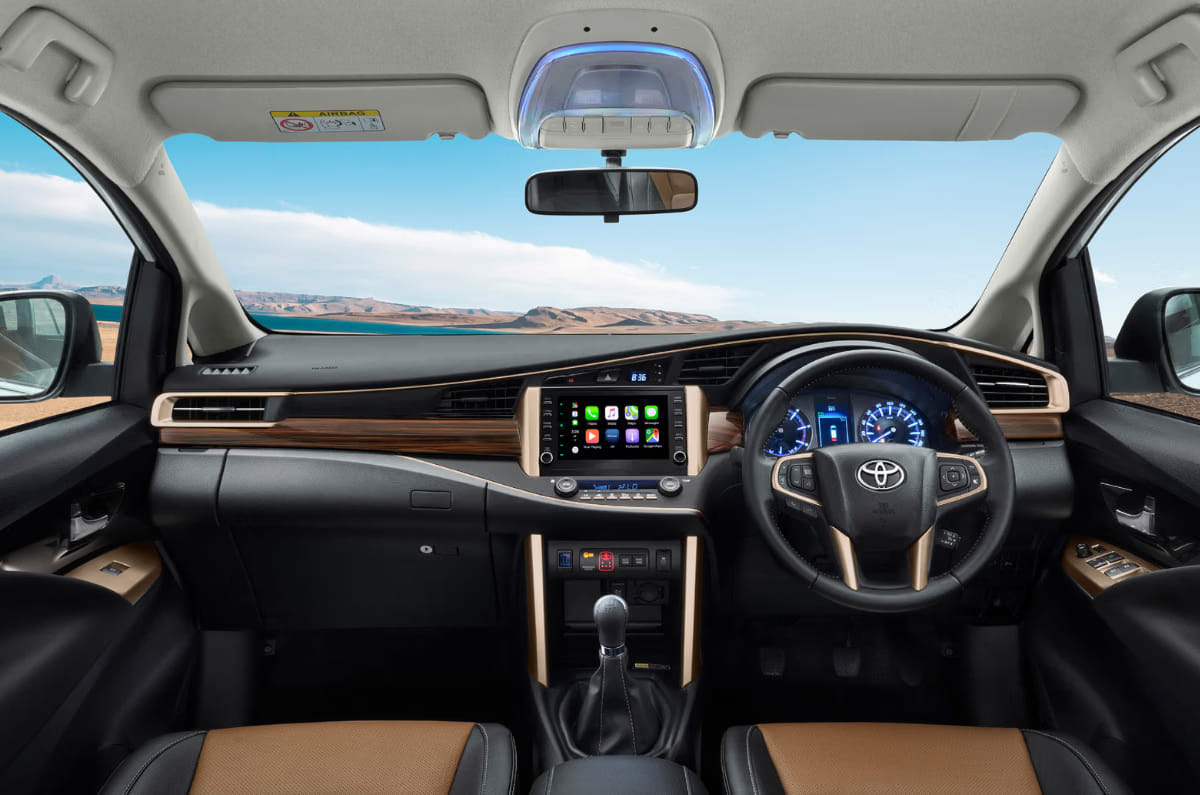
The Innova Crysta was launched in 2016, and its age is now evident in the cabin. It remains spacious and comfortable, but the interior has plenty of hard plastics and the infotainment system feels dated compared with newer MPVs. The Kia Carens Clavis, for instance, offers a similarly practical three-row layout with a more modern and premium cabin. At Rs 19.72 lakh to Rs 26.77 lakh (ex-showroom), the Crysta’s pricing makes its ageing interior harder to overlook.
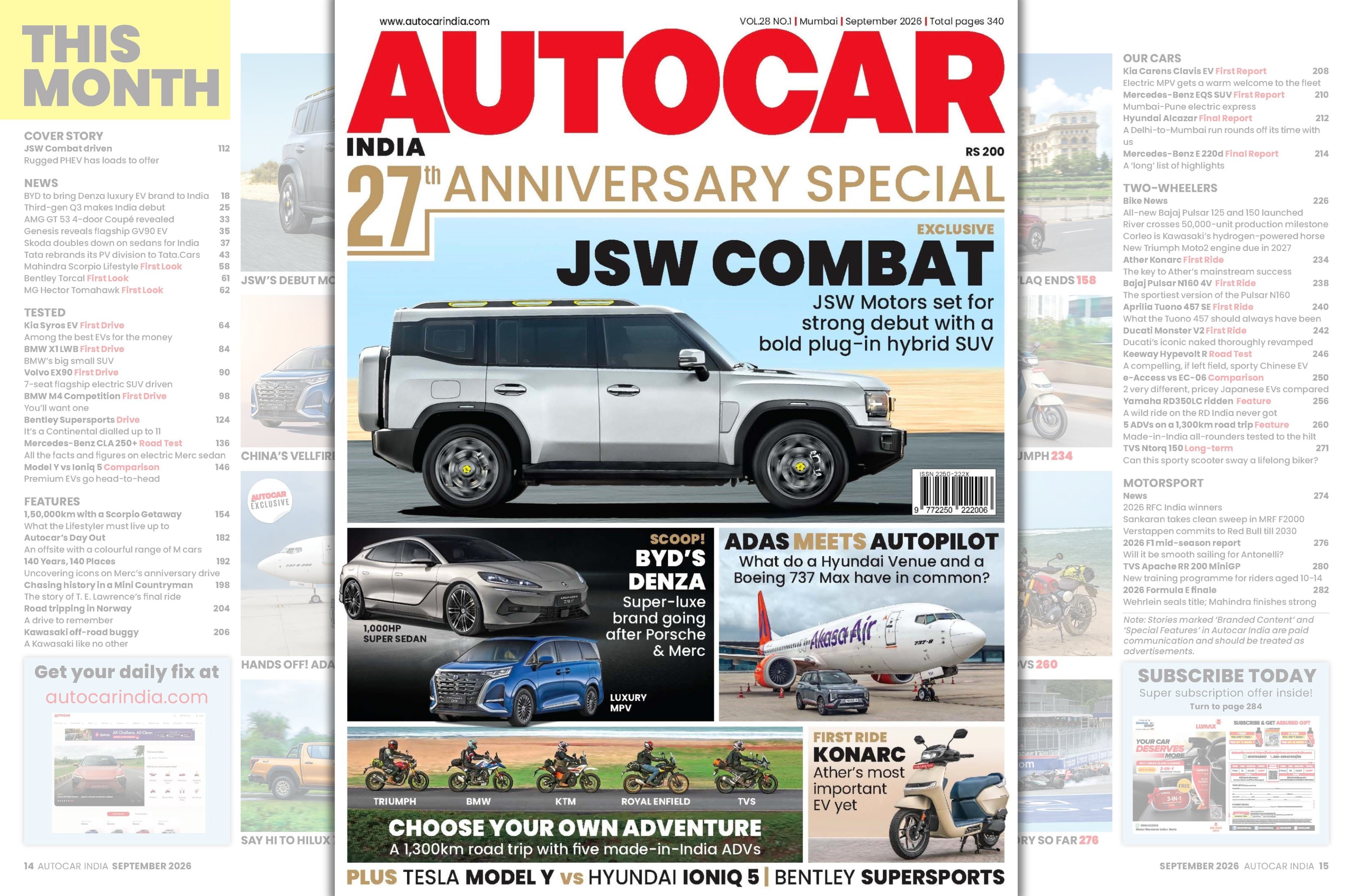
Autocar India turns 27, and rather than quietly celebrating with a cake, we’ve celebrated the way we know best: with scoops, exclusive drives and a frankly unreasonable amount of driving. In this issue, we bring you an exclusive drive of JSW’s new Combat SUV (you heard the name here first), a scoop on BYD’s Denza luxury push, and the last leg of the 20,000km Pune-to-Prague odyssey, alongside a serious collection of new cars and bikes. Oh, and there’s also a Boeing 737 Max aircraft involved. Because apparently cars weren’t complicated enough.
JSW Combat: Review
JSW’s first SUV is a rugged plug-in hybrid based on the Jetour T2. We get an early exclusive drive of the Combat and examine whether this newcomer really has what it takes to shake up the Rs 30-50 lakh SUV market.
BYD Denza: China’s Luxury Offensive
BYD is bringing Denza to India, with luxury EVs like the D9 MPV and Z9 GT aimed squarely at the established big boys. Having disrupted the mid-range EV market with BYD, it is now going after the high-end market with Denza.
ADAS Meets Autopilot: Hands Off!/Look ma, no hands!
What do a Hyundai Venue and a Boeing 737 Max have in common? Quite a lot, apparently. We climb into a full-flight simulator to understand how aircraft autopilot works and what it has in common with the increasingly sophisticated systems in our cars.
Skoda Kylaq: Pune to Prague, Part 2
The Silk Route may have been built for traders, but we’ve used it to find out just how far you can take a small SUV before it starts asking for a holiday. After 19,000km, 70 days and not a single puncture, our Skoda Kylaq finally reaches Prague.
Autocar’s Day Out: M-ployees of the Month
Most company off-sites involve a resort, a buffet and someone reluctantly joining a team-building exercise. Ours involved six BMW M cars, more than 3,000hp, a deserted concrete ground and a frankly irresponsible amount of tyre abuse. Four M4s and two M2s went head-to-head in slalom, football and drifting, and what began as a relaxing team outing rapidly descended into a war.
Tesla Model Y vs Hyundai Ioniq 5: Comparison
Two premium EVs, two very different ideas about what an electric car should be. The Model Y with its recently revised price, and the updated Ioniq 5 go head-to-head to see which makes the stronger case.
Bentley Supersports: Drive
Take a Continental GT and turn the dial towards something completely unnecessary. The result is Bentley’s Supersports, a rear-wheel-driven beast with considerably more intent. We drive it around Laguna Seca.
Mini Countryman C: First Drive
The Countryman has grown into a proper luxury SUV, with generous space, loads of kit and a new 1.5-litre turbo. At Rs 47.5 lakh, it’s the biggest and most grown-up Mini yet, and is ready to lock eyes with real luxury SUVs rather than merely be a fashion statement. But has it done that?
5 Ways to Adventure: Feature
Five made-in-India ADVs, 1,300km and one simple question: which is the best way to go exploring? We put the bikes through highway miles, trail riding and plenty of scenic detours to see how their different approaches to adventure stack up.
Ather Konarc: First Ride
Ather’s new Konarc brings the brand’s blend of quality and comfort to a wider audience, with prices starting at Rs 99,999. A compelling new step into the mainstream.
Suzuki e-Access vs Yamaha EC-06: Comparison
Japan finally answers India’s e-scooter boom, and the two takes couldn’t be more different – one built from scratch, the other born from an Indian startup partnership. Which one takes the crown?
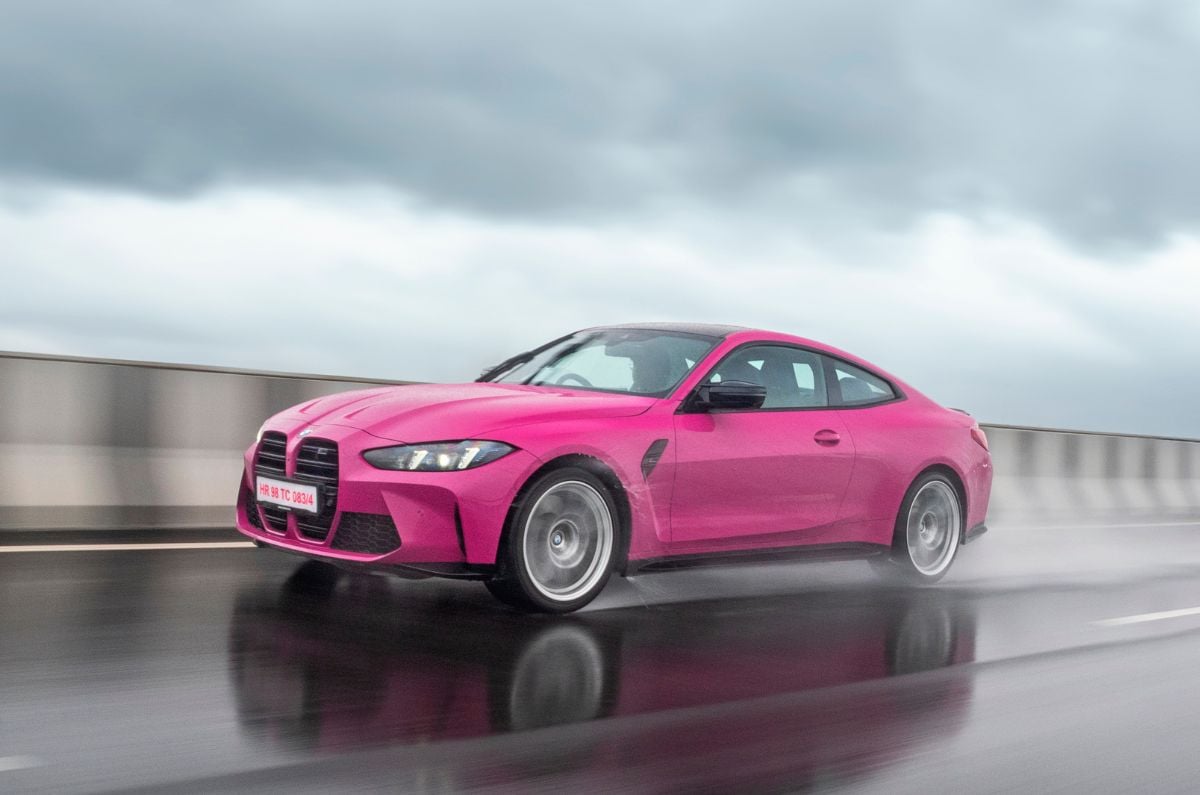
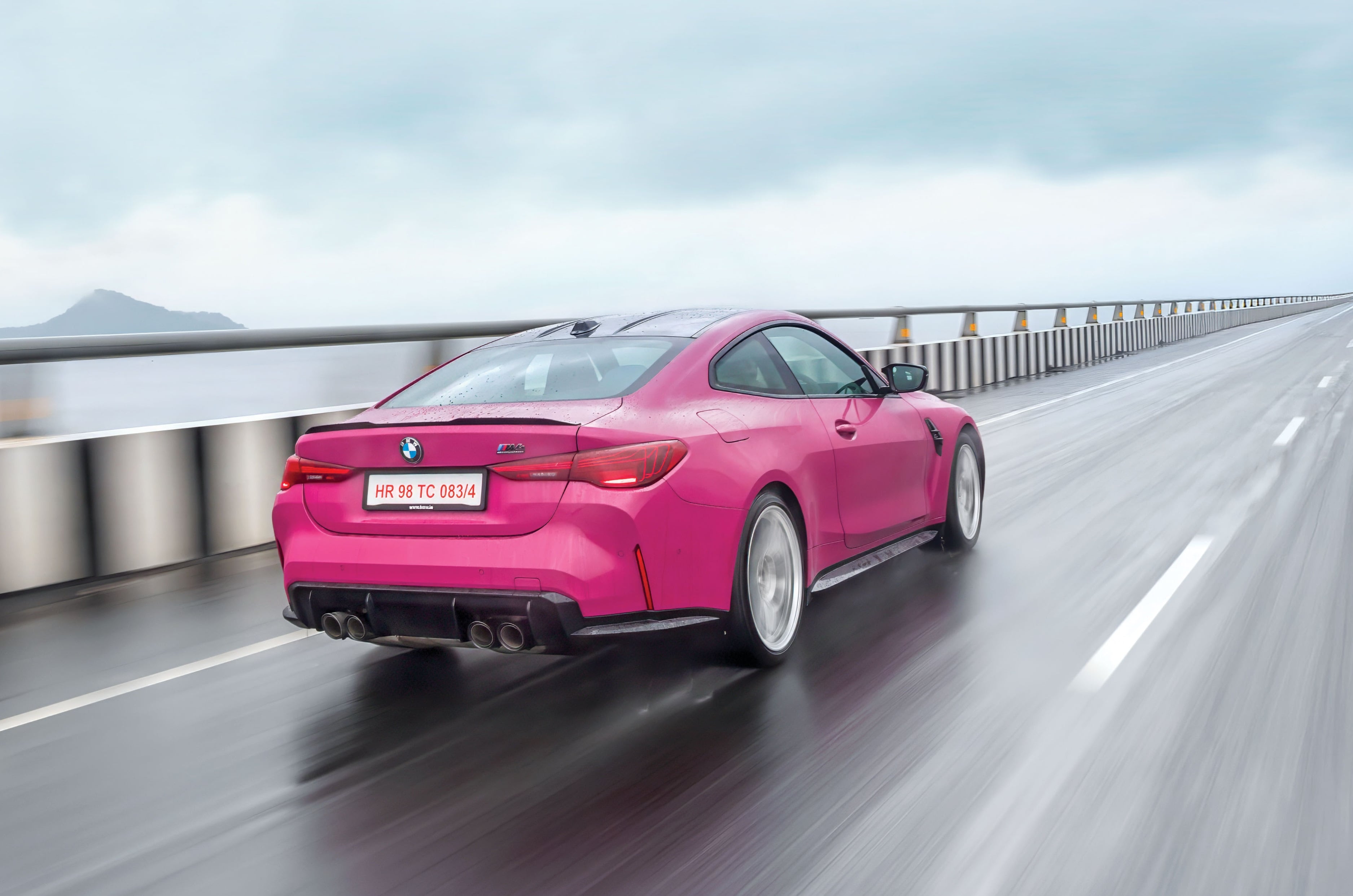
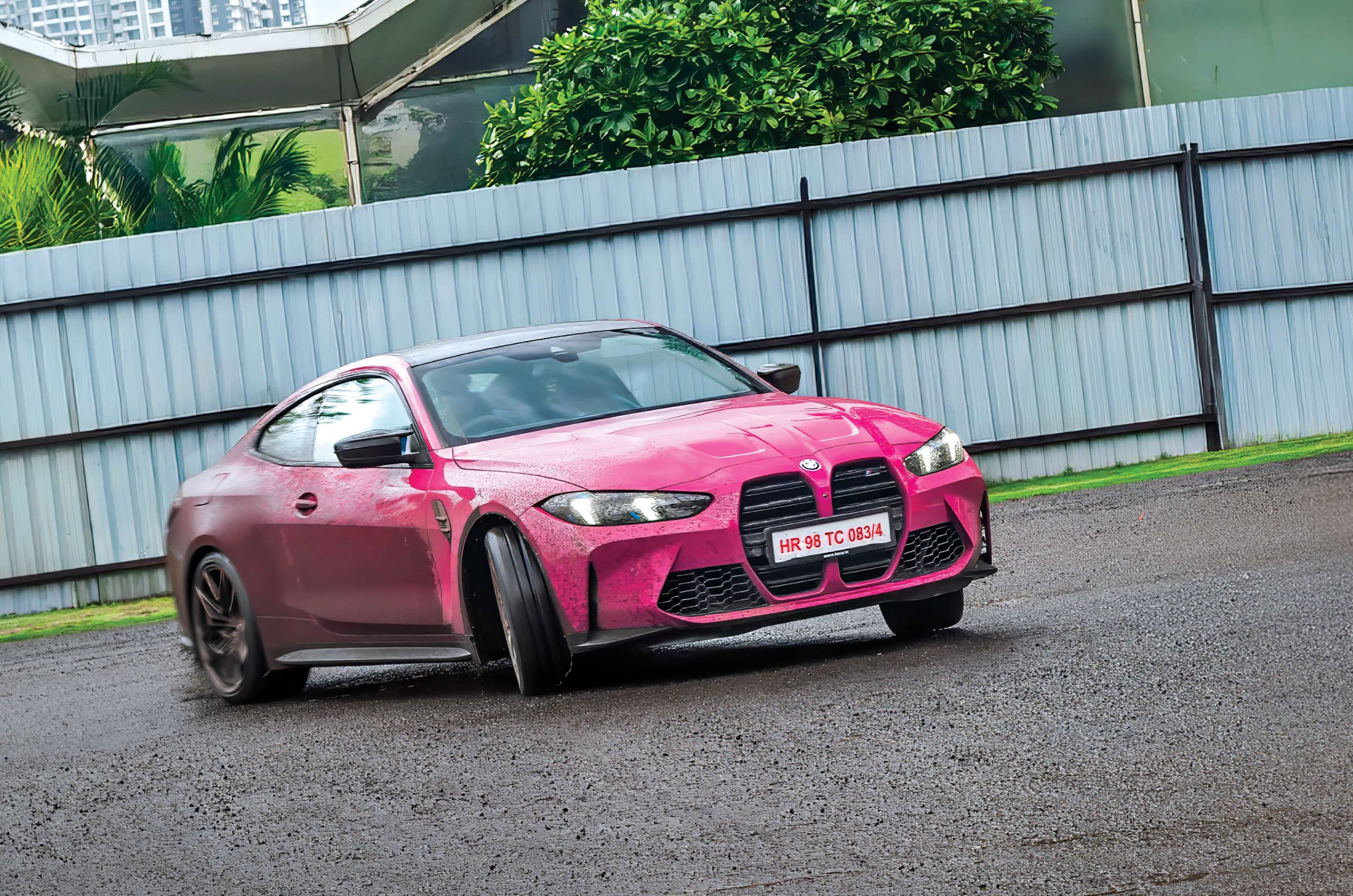
This G82-gen BMW M4 that you see has been on sale internationally since 2020, it came to India in 2022, and it even received a facelift (LCI or Life Cycle Impulse in BMW speak) a few years back. Yet, somehow, we never got a chance to drive it on Indian tarmac all these years. Now, however, we’ve finally spent some meaningful time with the BMW M4 Competition on home turf to see what it’s like.
BMW M4 Competition exterior design and engineering – 8/10
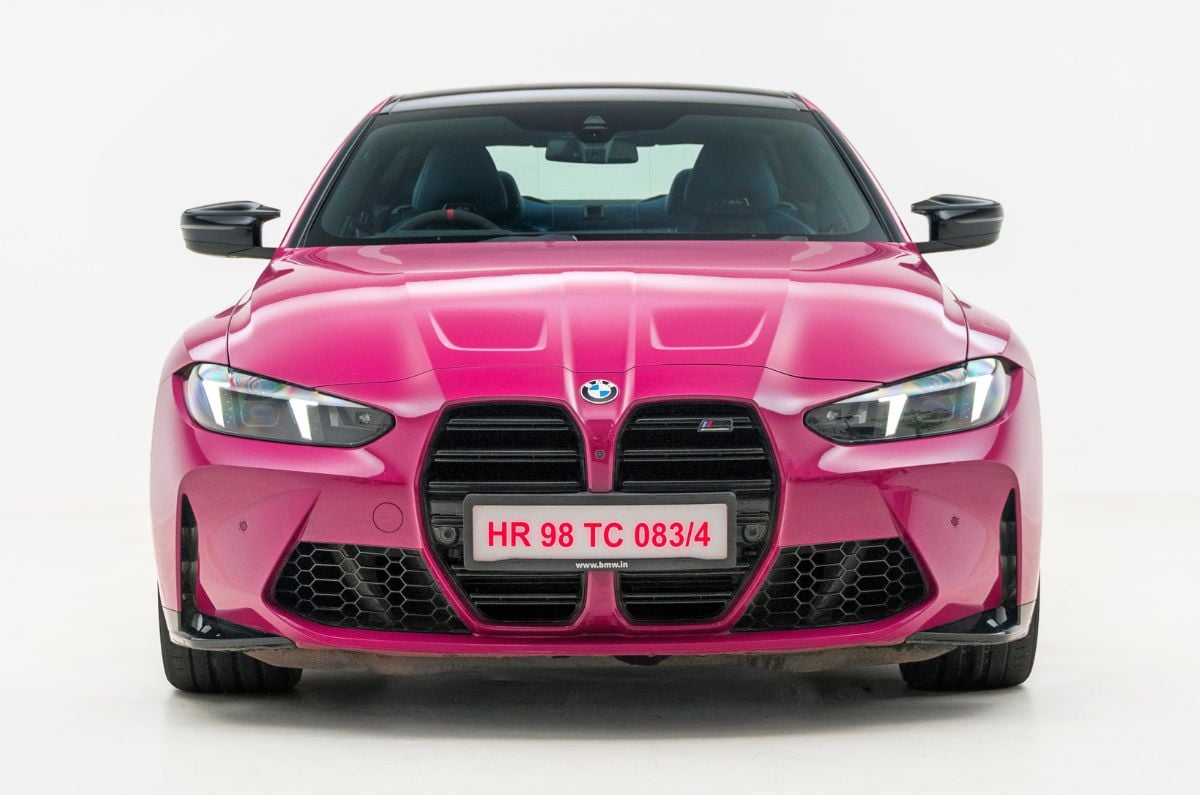
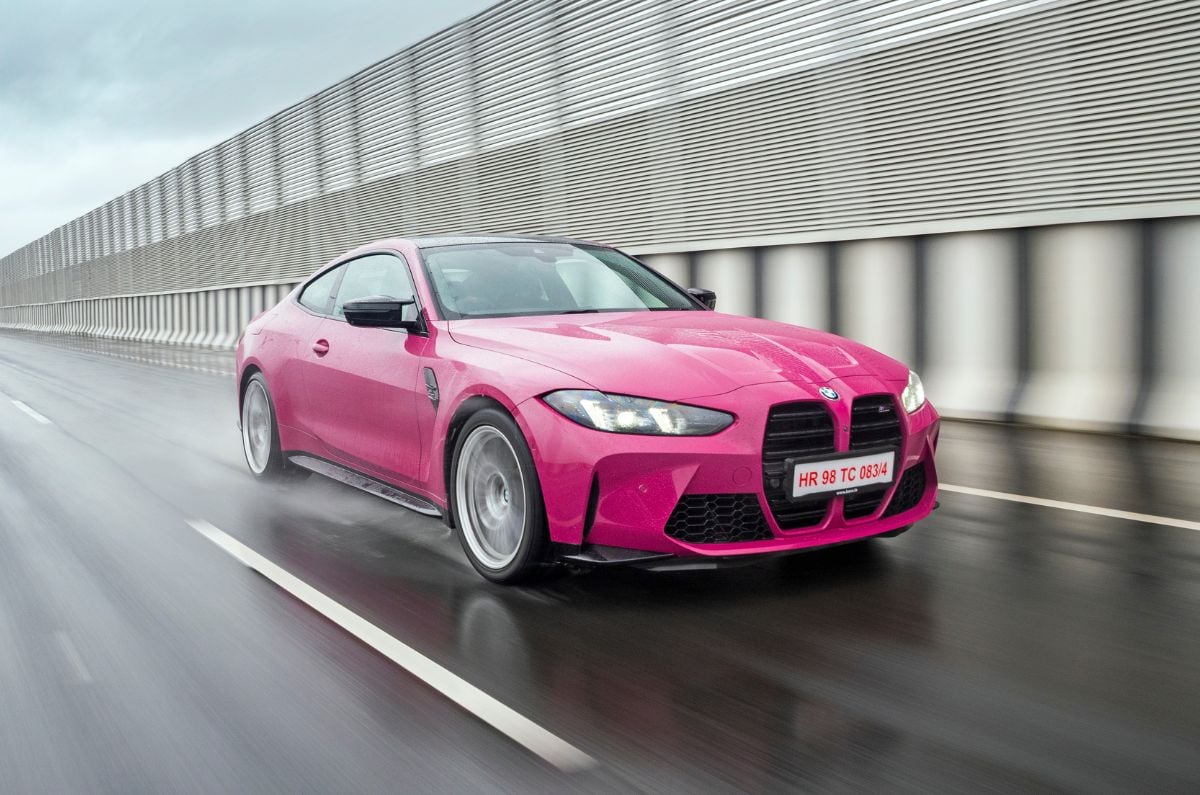
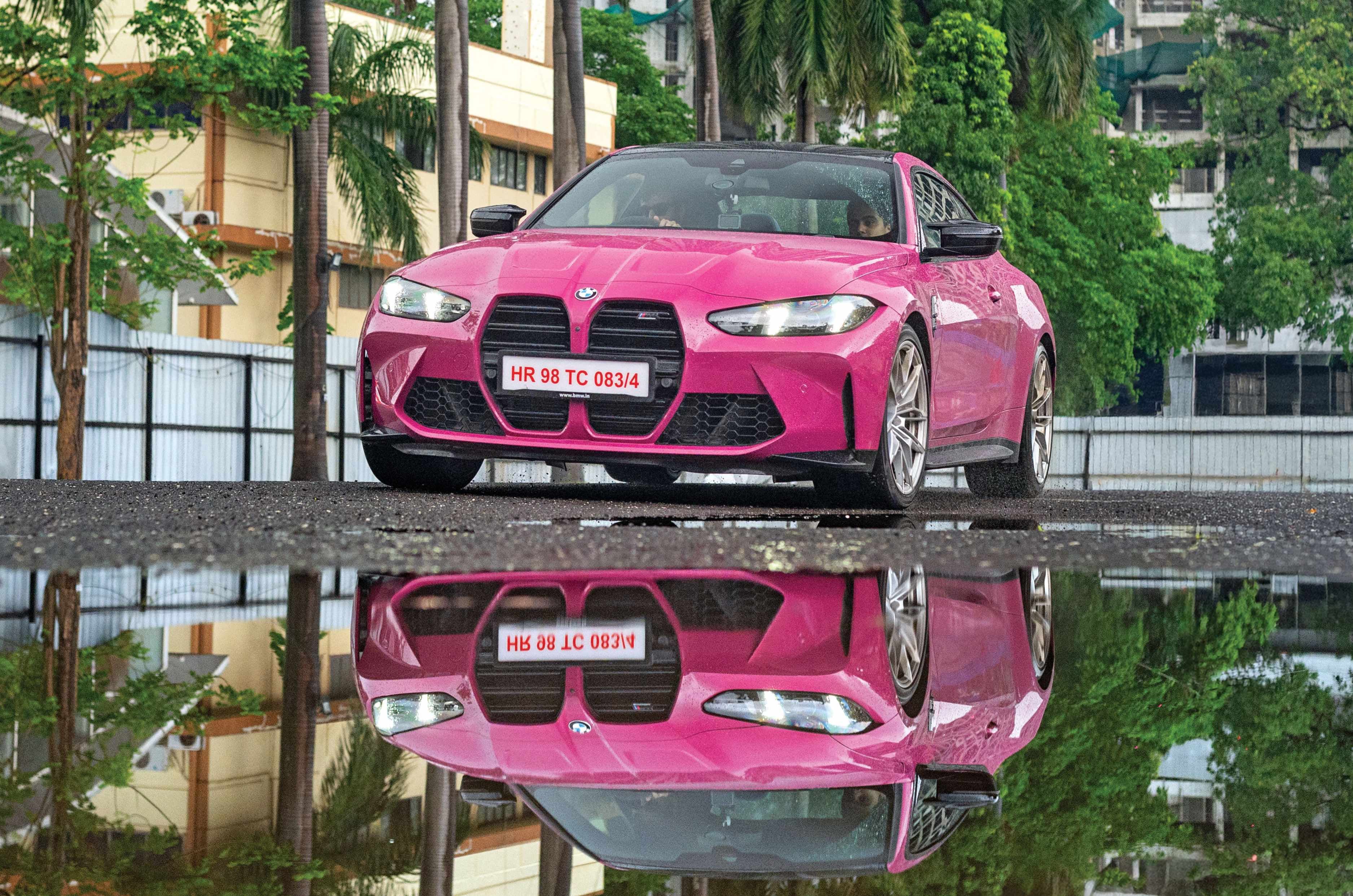
Whether you like it or not, the huge kidney grille gives it an imposing road presence.
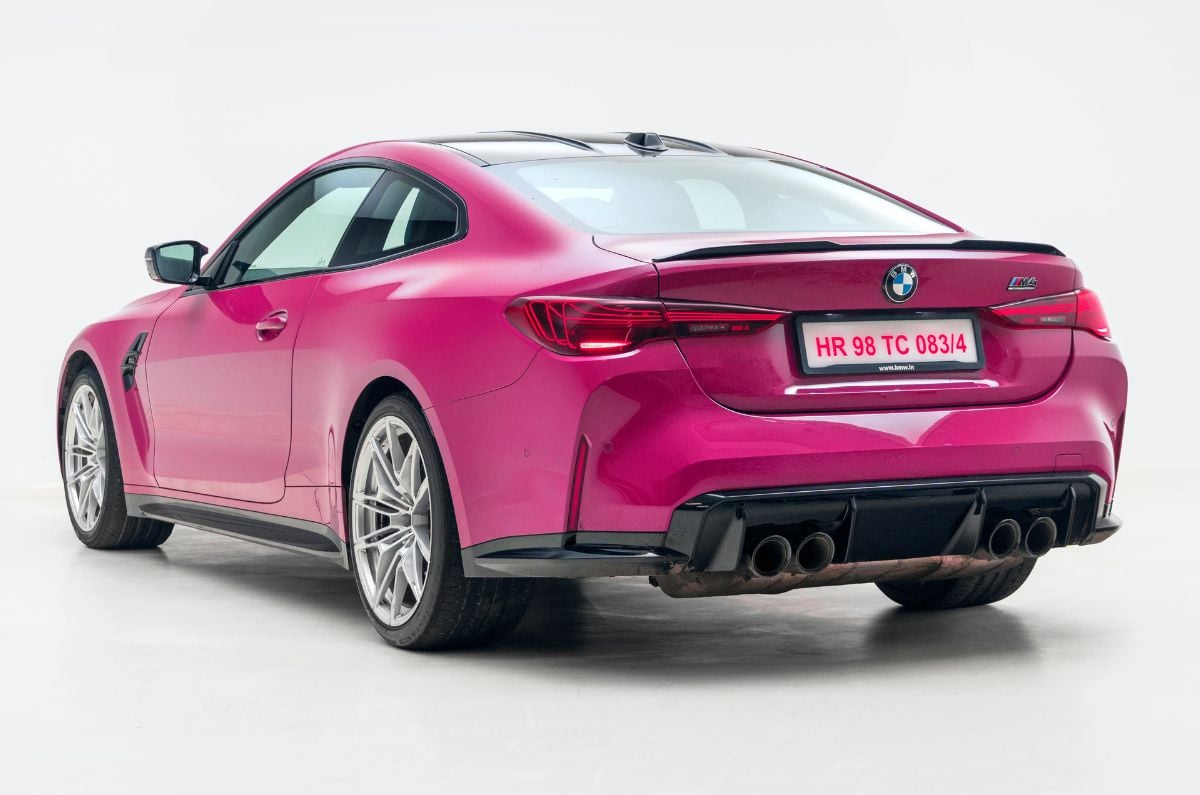
The BMW M4 Competition remains one of those cars that gets people talking before they’ve even heard it start. The enormous kidney grille is still the defining feature, and whether you like it or not, it gives the M4 a face that is impossible to mistake for anything else. The rest of the design is far more cohesive, with a long bonnet, heavily sculpted surfaces, flared wheel arches and a low, wide stance. At the rear, the quad exhausts, bootlip spoiler and prominent diffuser just add more drama to the design.
There’s serious engineering behind the visual drama, too. The M4 gets M-specific suspension hardware and aluminium suspension components, while the near-50:50 weight distribution helps give it the balance expected of an M car. And unlike all previous M3s and M4s, this one gets BMW’s M xDrive all-wheel-drive system, and it rides on staggered 19-inch front and 20-inch rear wheels.
Quad exhausts is an M signature and this LCI also gets beautifully detailed Laser LED taillights.
At 4,801mm long and 1,887mm wide, it’s a substantial car, and at 1,850kg, it’s certainly not light. But BMW has worked hard to keep the mass low and central, like with the use of a carbon-fibre roof, for example.
BMW M4 Competition interior space and comfort – 8/10
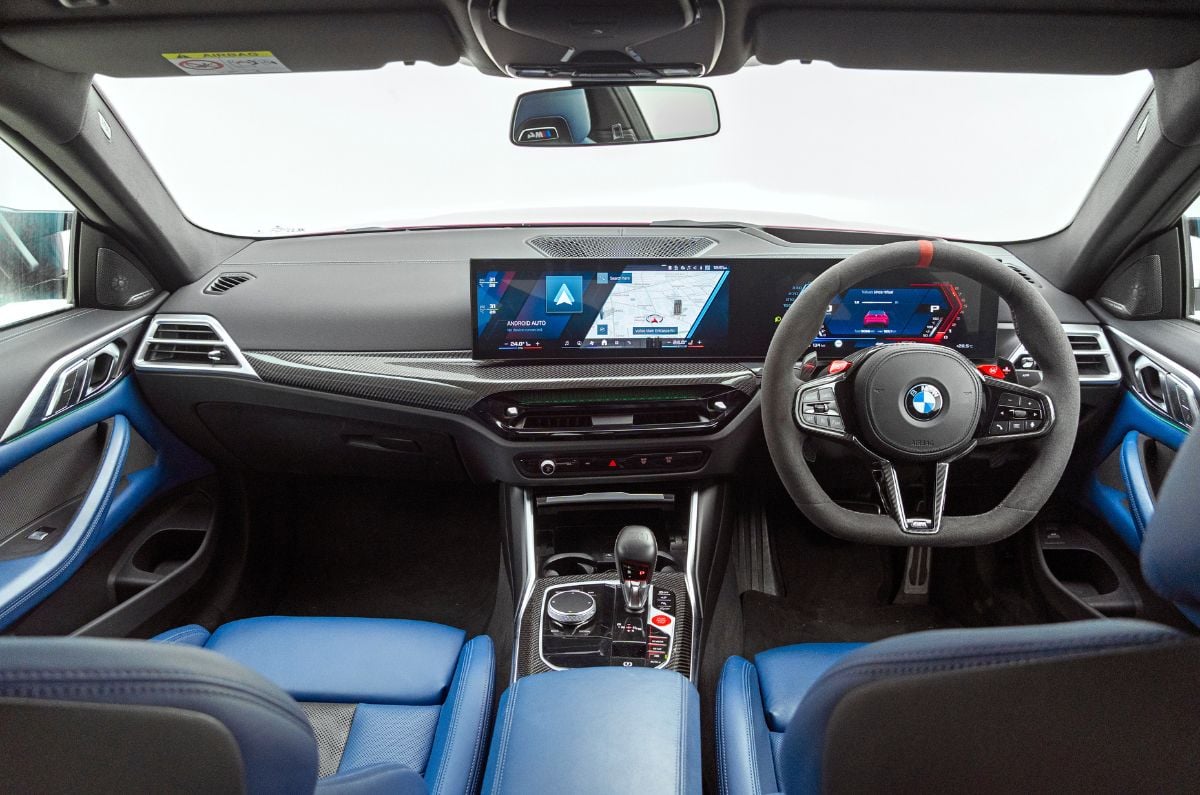
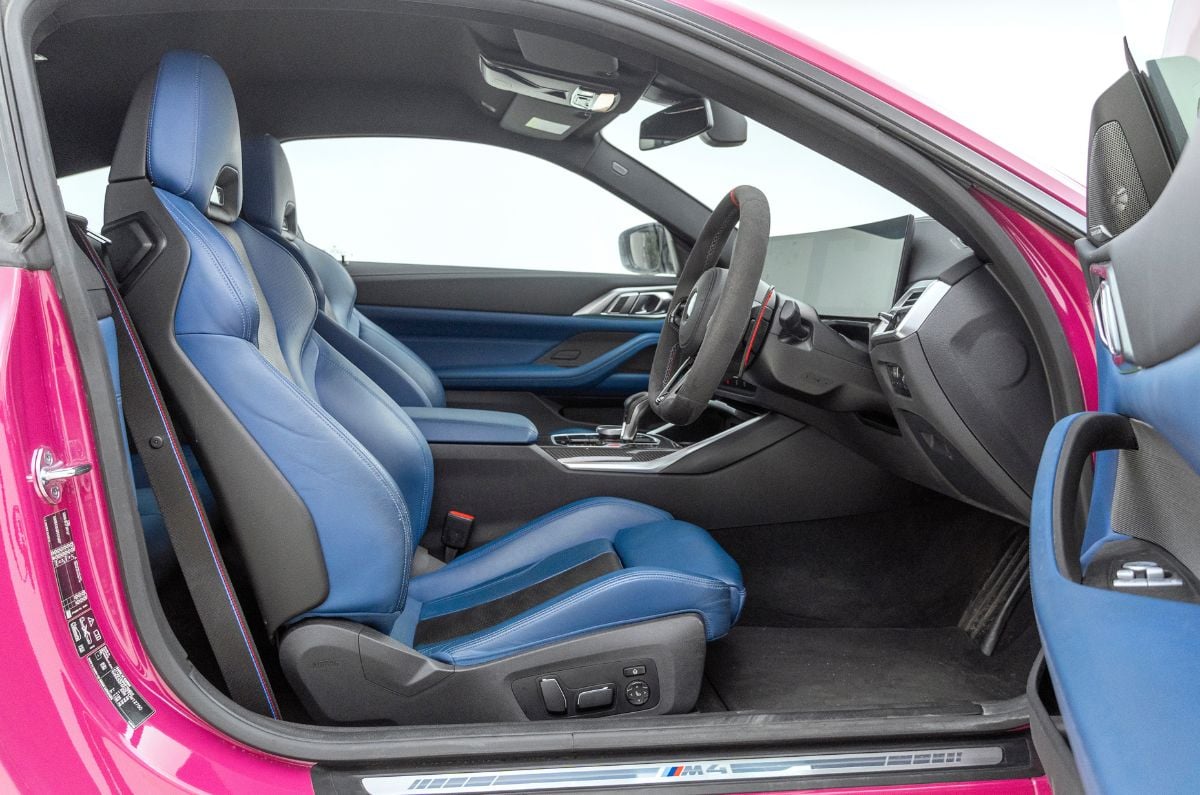
High-quality, driver-focused cabin is a mix of leather, carbon fibre and Alcantara.
The M4’s cabin is a good example of how far modern M cars have moved from being purely performance machines. There’s plenty of everyday usability here, but the driving position still feels special. You sit low, the steering wheel is perfectly positioned, and the large front seats are supportive and comfortable, and hold you securely when you start driving enthusiastically.
The dashboard follows BMW’s familiar layout, dominated by the curved display, while M-specific details like carbon-fibre trim throughout, M colours on the seatbelts and the red M1 and M2 buttons give the cabin enough visual distinction.
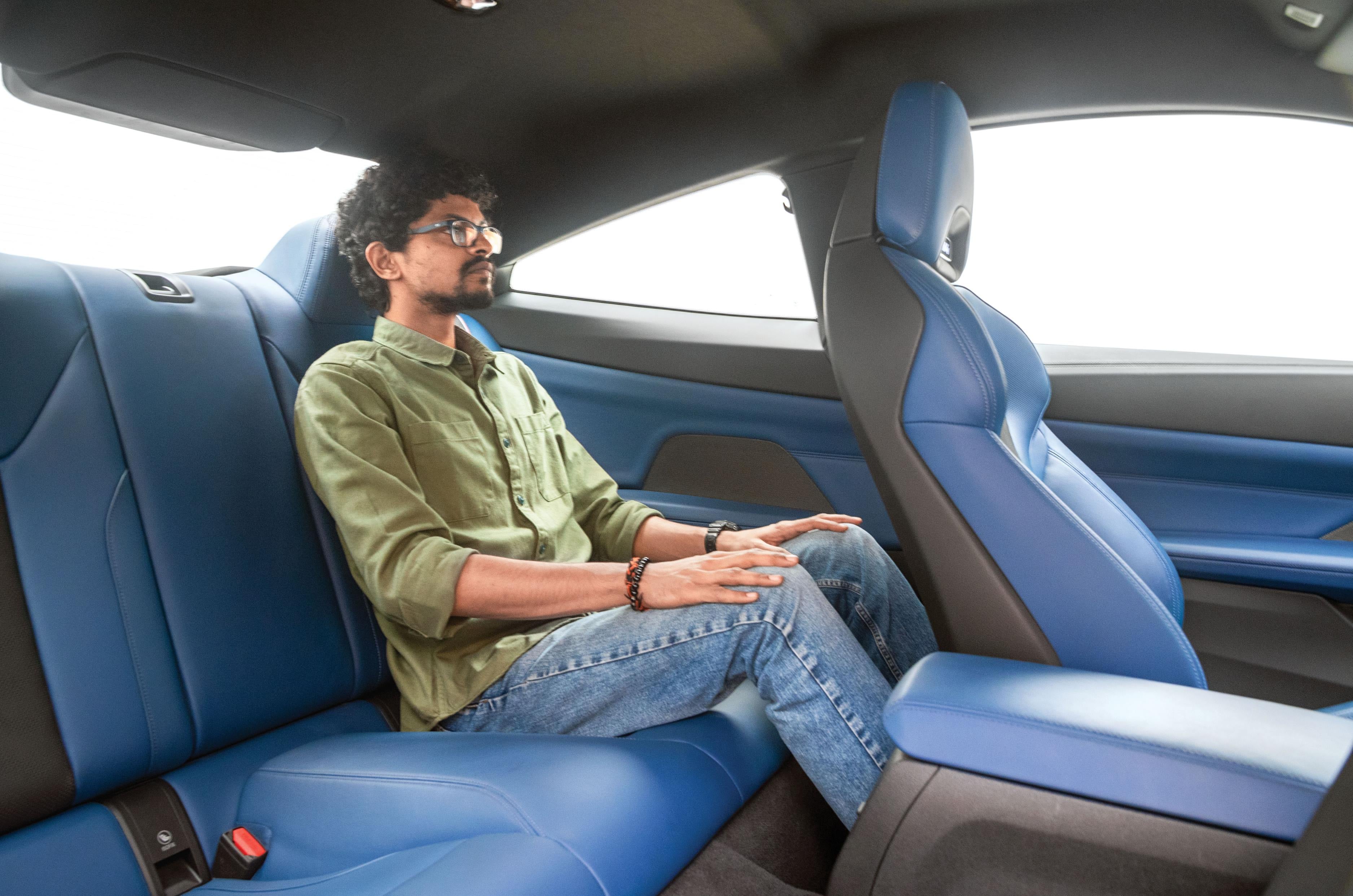
Access to the rear is tricky, though it’s a reasonably spacious place to be.
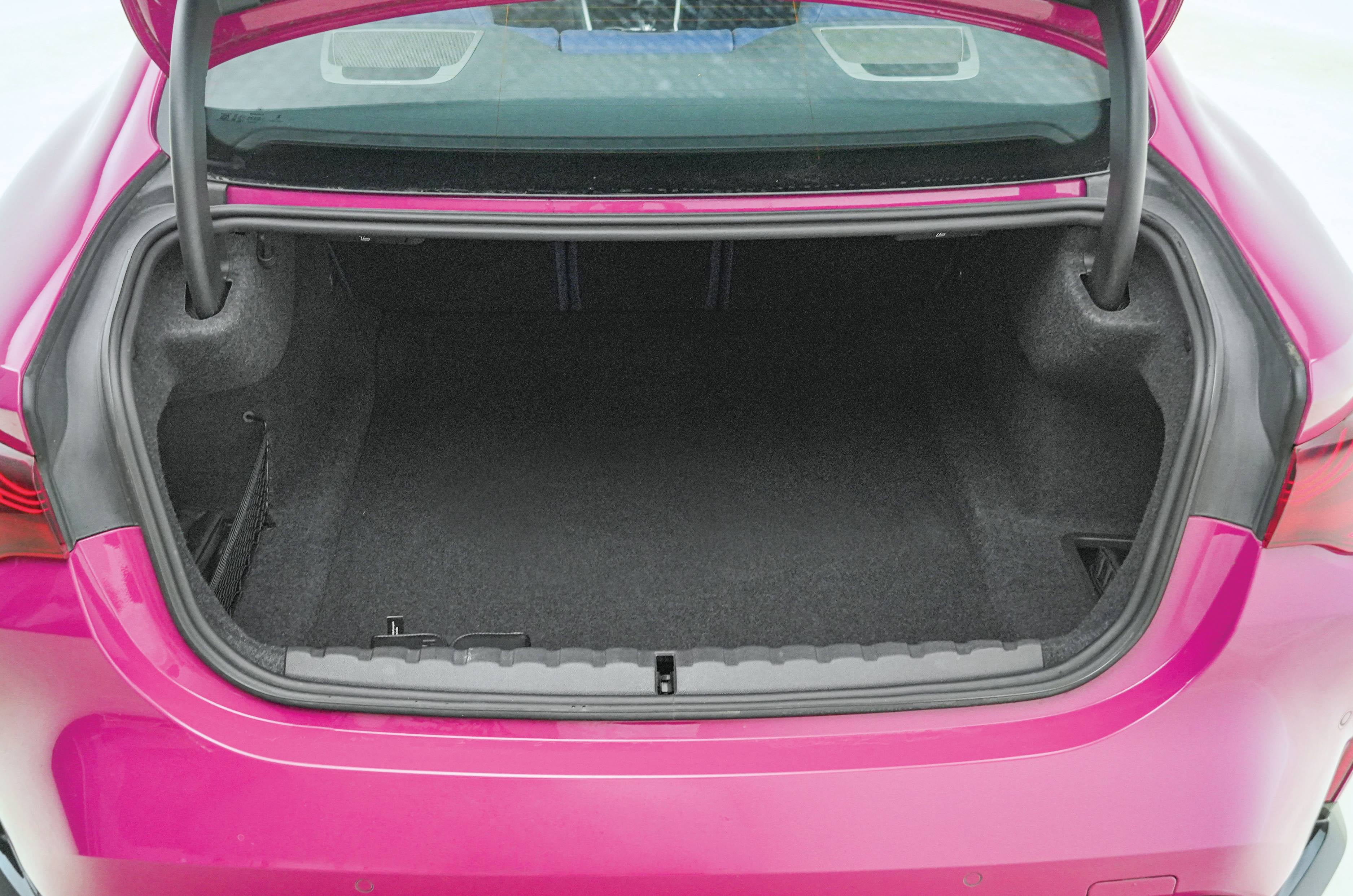
The coupe body does limit rear-seat access and space, but the back seats are still surprisingly usable, and not merely for show. There’s also a 440-litre boot, which means the M4 can manage luggage for a weekend away without too much hassle. That combination of usable cabin room and decent boot space is one of the car’s biggest strengths; very few cars with this level of performance are this practical.
440-litre boot can easily swallow up your luggage for the weekend.
It’s also relatively easy to live with in everyday conditions. The visibility is manageable, the controls are familiar and, at low speeds, the M4 is far more relaxed than its appearance suggests.
BMW M4 Competition features and safety – 8/10
The M4 Competition gets the technology expected of a modern BMW, but the really interesting equipment is the hardware and software designed to make its performance accessible.
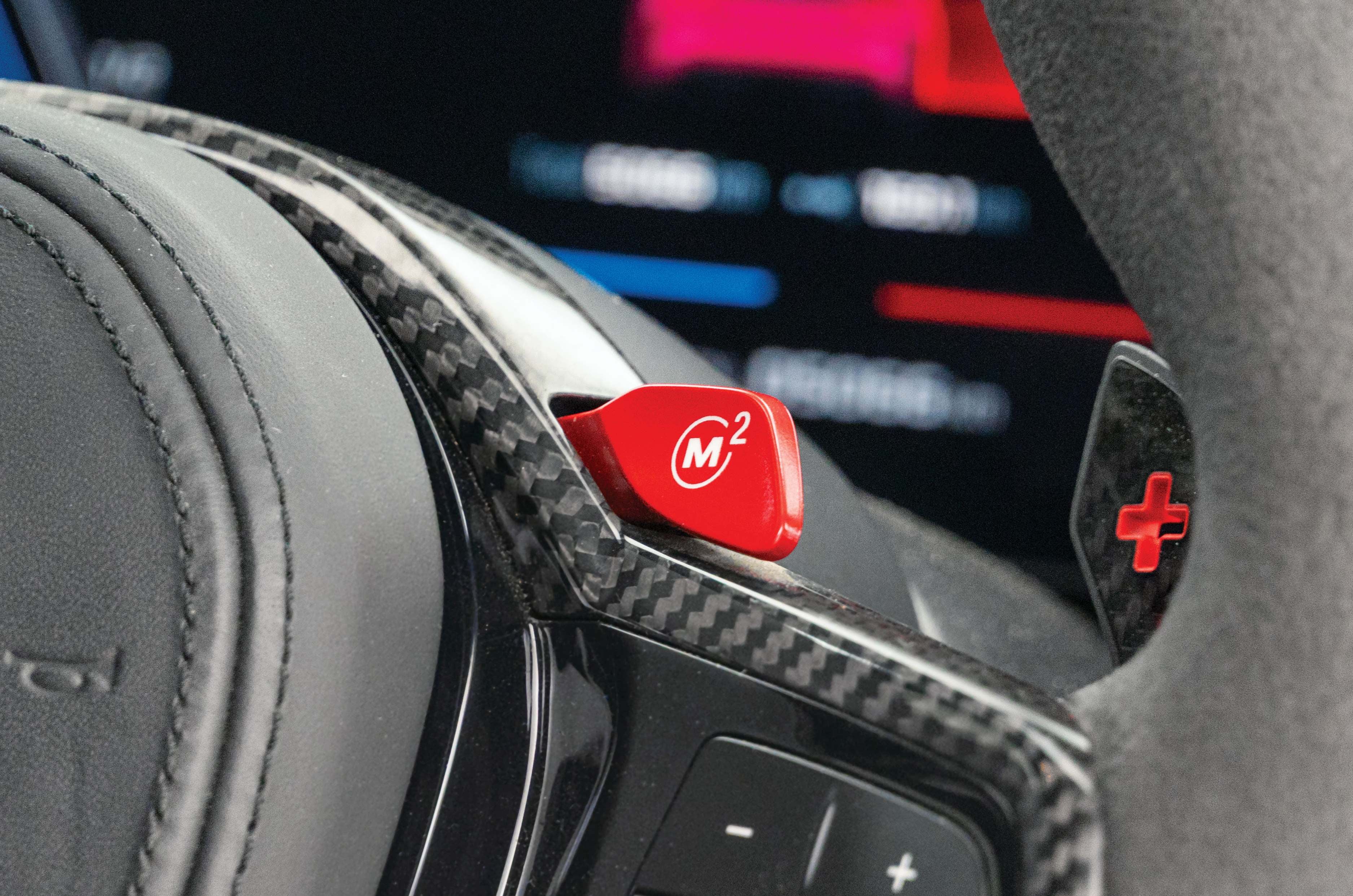
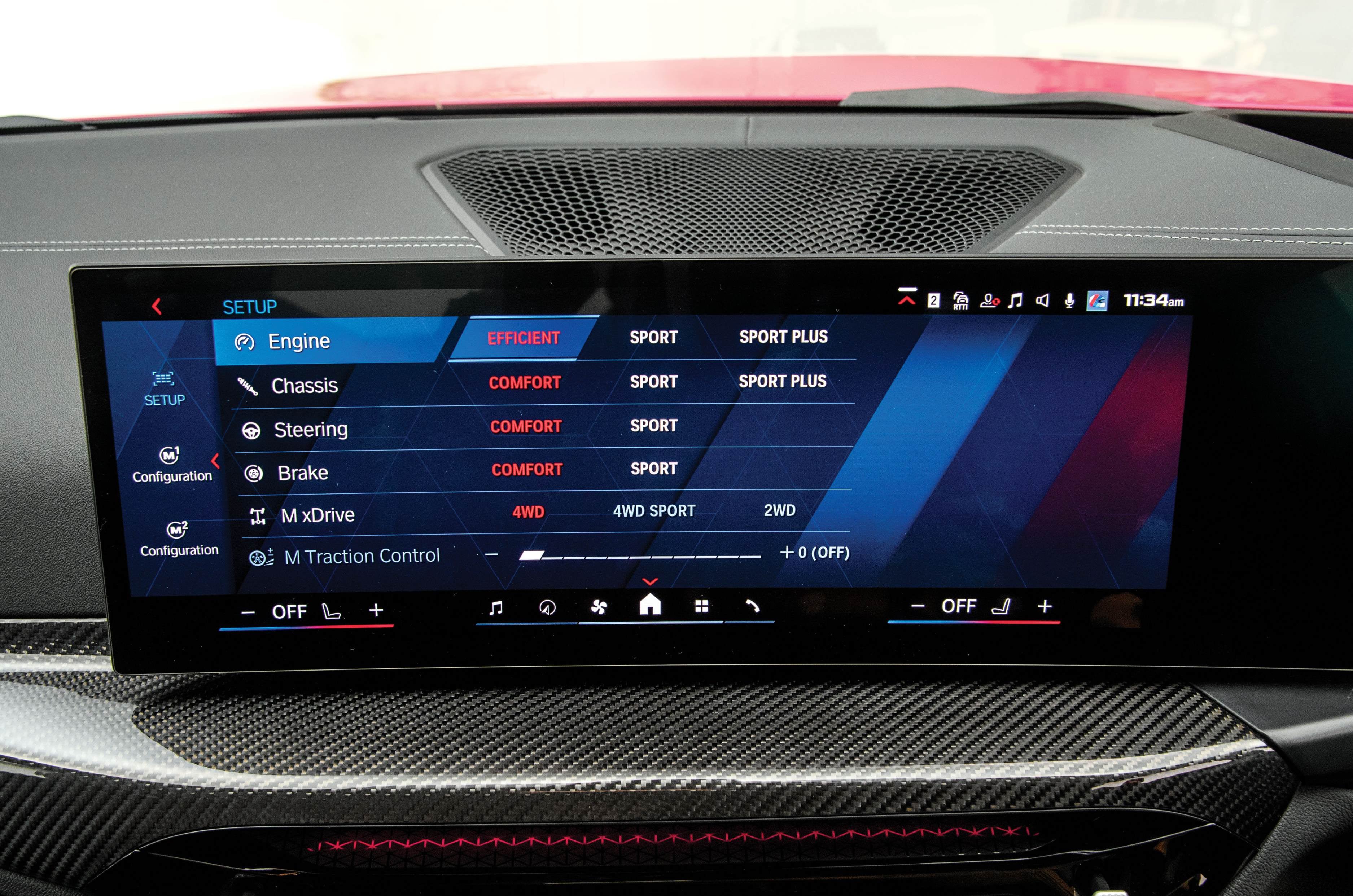
M1 and M2 buttons are shortcuts for your preferred, pre-selected drive settings.
The adaptive M suspension can be adjusted through Comfort, Sport and Sport Plus settings, allowing the car to switch between everyday usability and sharper responses. M Drive lets you save preferred combinations of chassis, steering, engine and transmission settings, and these preferred settings can be designated to the M1 and M2 buttons on the chunky steering wheel.
Then there’s the more serious performance tech. The M4 gets a selectable rear-wheel-drive mode, which essentially allows you to turn the all-wheel-drive M4 into a rear-driven machine, while the M Drift Analyser adds another layer of entertainment for those inclined to explore the car’s limits in a controlled environment. While it’s nice to have this level of customisation, some may find configuring it a bit too confusing and overwhelming.
The screen is crisp, but navigating through the sub-menus gets confusing.
And that’s the case with the touchscreen as well. It’s super-crisp, slick to the touch and has M-coloured themes, which look quite cool, but the myriad apps and sub-menus are confusing to operate, to say the least. And that problem is amplified when you’re trying to make adjustments on the move.
Front seats are large, supportive and feature ventilation too.
There’s a three-zone climate control, powered and ventilated front seats, a HUD, a Harman/Kardon sound system, wireless smartphone integration, a wireless charger, a curved display, and so much more. So, the M4 isn’t lacking in the areas that matter for everyday use.
As for safety, there are multiple airbags, ADAS tech, stability and braking systems and electronic assistance systems working in the background, although in a car like this, it’s the multiple drive modes and traction systems that are arguably the more important features.
BMW M4 Competition powertrain and performance – 9/10
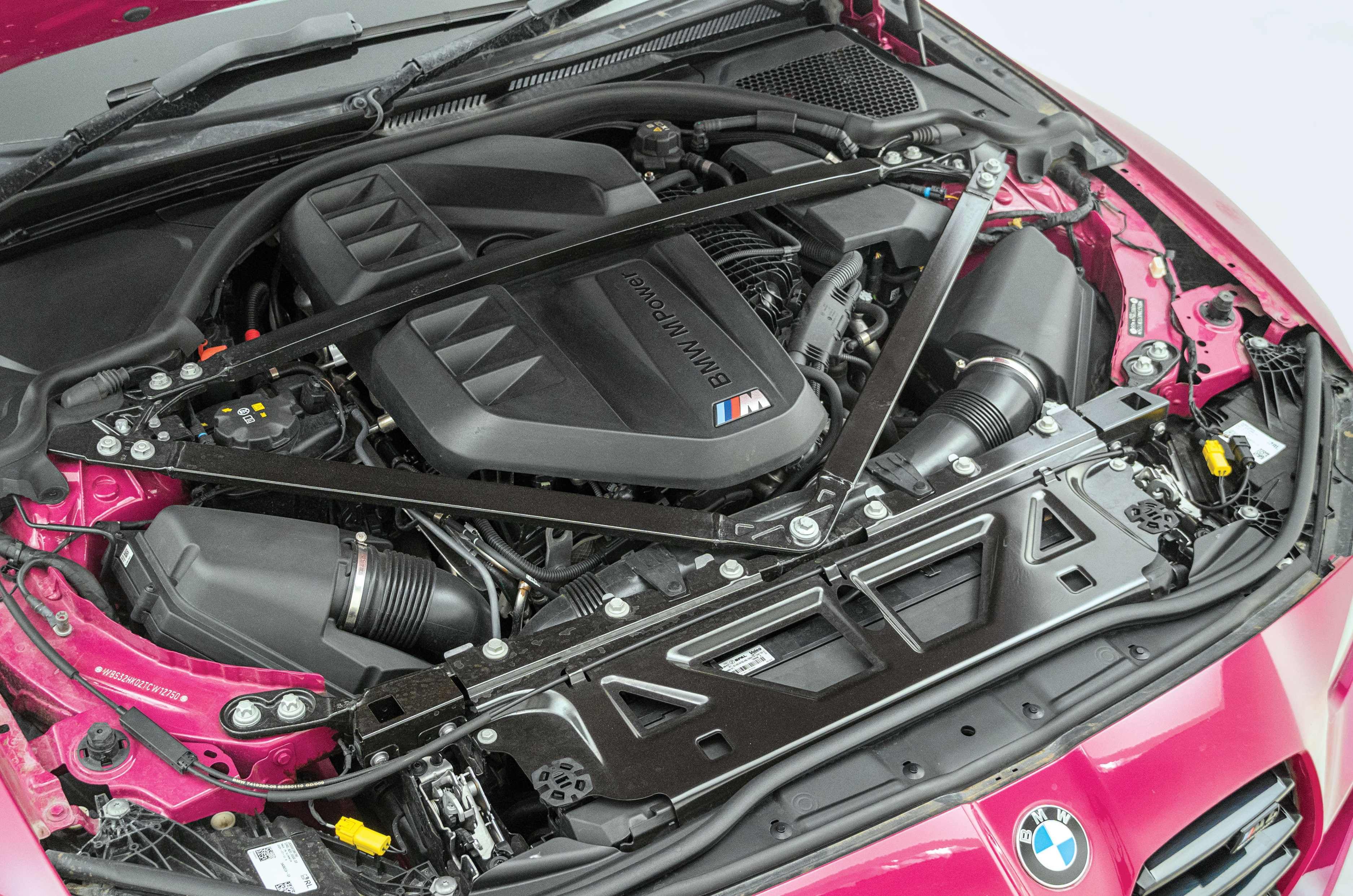
530hp, twin-turbo, straight-six pulls relentlessly and sounds good too.
The M4 Competition’s 3.0-litre twin-turbocharged S58 straight-six is the real star of the show, however. In this form, it develops 530hp and 650Nm and sends power through an 8-speed torque converter automatic to all four wheels, and BMW claims 0-100kph in 3.5sec.
What makes the engine so impressive isn’t just the numbers, but the way it delivers them. There’s almost none of the old-fashioned turbo lag here. Instead, power builds in an almost naturally aspirated fashion, with the engine pulling strongly through the rev range. It’s linear, responsive and keeps pulling hard all the way till the redline.
Be it drifting or touring, the M4 is up for both.
The gearbox is smooth when left to its own devices and can be calibrated to shift much more aggressively when you start driving harder. It can occasionally feel less urgent than you might expect, especially in comparison to the last-gen M4’s DCT, but the sheer performance of the engine means there’s never any shortage of pulling power.
The all-wheel-drive setup also makes it devastatingly effective when you have the space to exploit it, and it doesn’t scare you like the older rear-wheel-drive M4. The best part is that it doesn’t feel like a car that needs to be driven at ten-tenths to be entertaining. More importantly, the M4 doesn’t compromise everyday usability simply because it is so performance-focused. Driven gently, the drivetrain can be remarkably civilised.
The ride is compliant enough to make long distance travel feasible.
There’s also a pleasing authenticity to the engine note. It may not have the theatrical soundtrack of some older M cars, but the straight-six’s sound is sufficiently characterful without relying heavily on artificial enhancement.
BMW M4 Competition fuel efficiency – 6/10
Fuel economy, expectedly, isn’t the M4’s strongest suit, but the 59-litre fuel tank gives it enough range to be usable as a long-distance car, although enthusiastic driving will inevitably bring that figure down considerably.
BMW M4 Competition ride comfort and handling – 8/10
At city speeds, the M4 can be surprisingly subdued. The steering is light, and there’s little indication of the aggression that lies underneath. The ride, though, even with the adaptive dampers set to Comfort, is firm, and sharp bumps do filter through to the cabin.
What’s impressive is how effectively BMW disguises the M4’s 1,850kg mass. It is a heavy car, but it rarely feels unwieldy when you’re attacking a sequence of corners. There is a bit of understeer, but there’s virtually no body roll, making it feel agile. The M4’s grip is immense, and the xDrive system allows you to put down its considerable power remarkably effectively. Yet, it isn’t simply a point-and-shoot machine. The adjustable traction control and rear-wheel-drive mode (or even the semi-lenient ‘AWD Sport’ mode) allow considerably more freedom, revealing the car’s playful side that isn’t immediately apparent in normal driving.
Rear wheel drive mode and adjustable traction settings allow for some proper tail out fun.
The electric power steering isn’t as feelsome as the hydraulic-steering M cars of old, but the accuracy is excellent. The M4 goes precisely where you point it, and the chassis remains composed even when you begin to carry serious speed. It’s decently capable at dealing with speed breakers too, as long as you take them slow and the large ones at an angle. Road noise, however, does become apparent at higher speeds over concrete surfaces.
The M4 really has a dual personality. Around town, it can be relaxed and relatively easy to live with; on an open road, it becomes seriously fast and agile. The ride is not plush or comfy, but it is compliant enough to make long-distance driving feasible.
BMW M4 Competition value for money and verdict – 8/10
As far as fast, versatile coupes go, there’s few better than the M4 Competition.
At Rs 1.60 crore (ex-showroom, before options), the M4 Competition is a difficult car to categorise, with no real direct rivals, and that is precisely why it works so well. It has the performance to keep up with exotic sports cars, yet it retains usable rear seats, a decent boot, and it is easy enough to be driven every day.
The polarising styling remains subjective, the ride quality is stiff and the infotainment interface is unintuitive. But once you find an open road, those shortcomings simply melt away. What you’re left with is a very capable all-rounder. The 530hp straight-six provides devastating performance without being difficult to manage, the all-wheel-drive system provides great traction and a useful safety net, and it has enough adjustability to keep even the most experienced driver entertained. Fast, practical, hugely capable and remarkably usable, that versatility is ultimately what makes the M4 Competition such a compelling performance car.
It’s not every day that a new brand enters the Indian market, but by the end of this year, we’ll have two – JSW and Denza. Last month, we exclusively reported on Denza’s intention to enter India, and now we bring you all the additional juicy details.
A little bit about the brand first. Founded in May 2010 as a joint venture between BYD and Daimler AG (now Mercedes-Benz Group AG), the company announced its brand name ‘Denza’ two years later. Mercedes has since exited the partnership, and in 2022, BYD repositioned the brand and is generally concentrating its efforts at the higher end of the market.
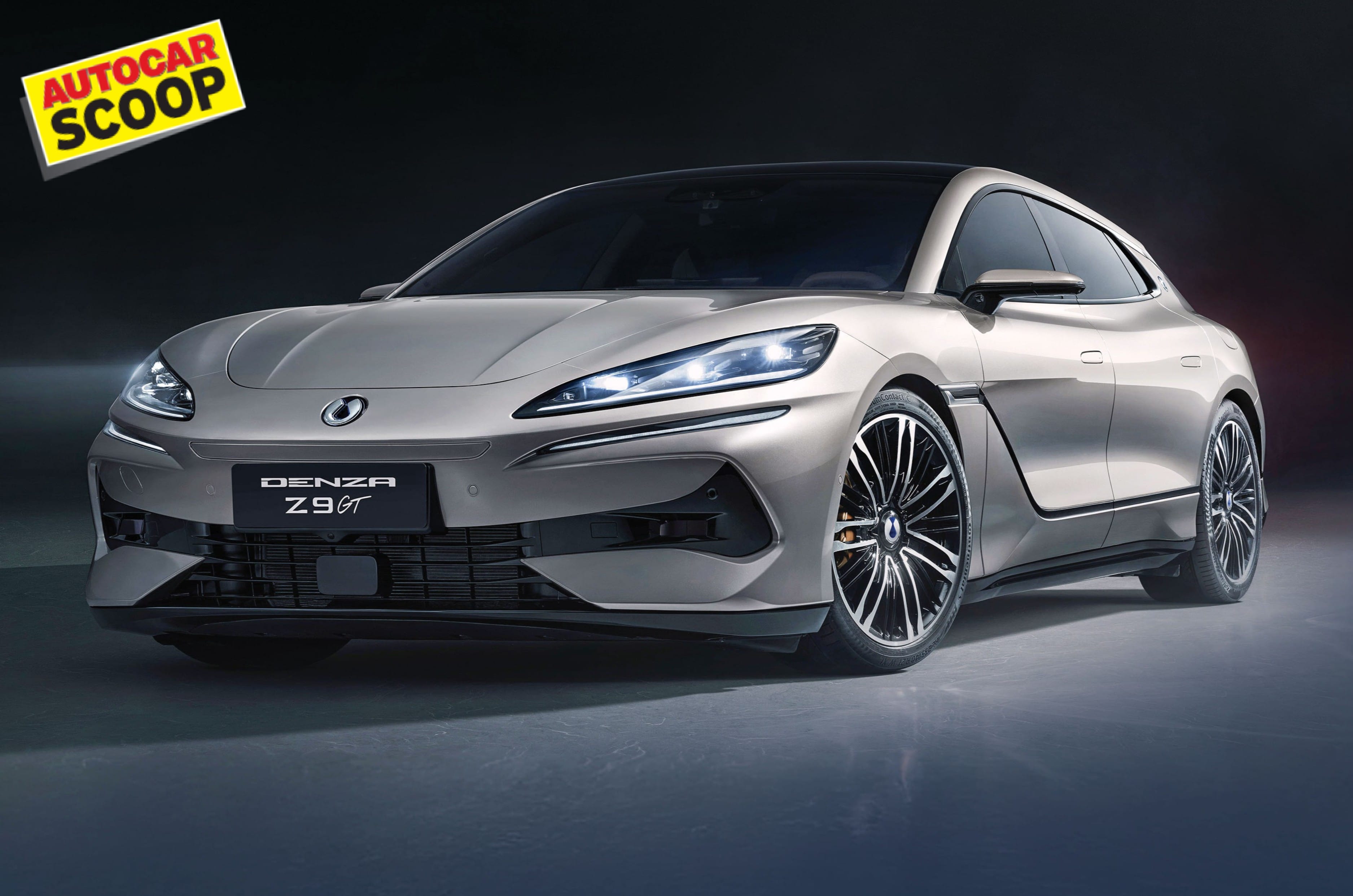
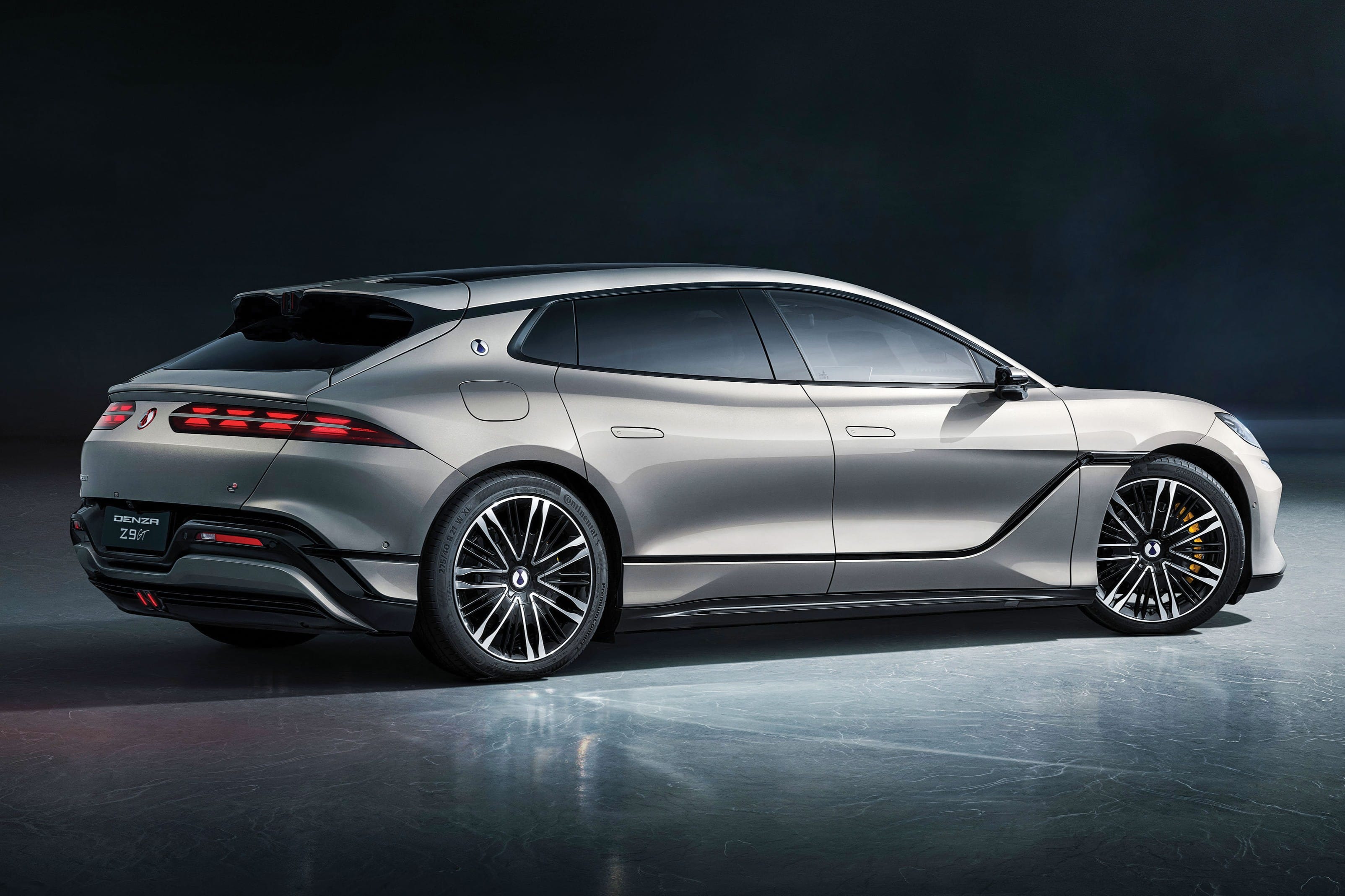
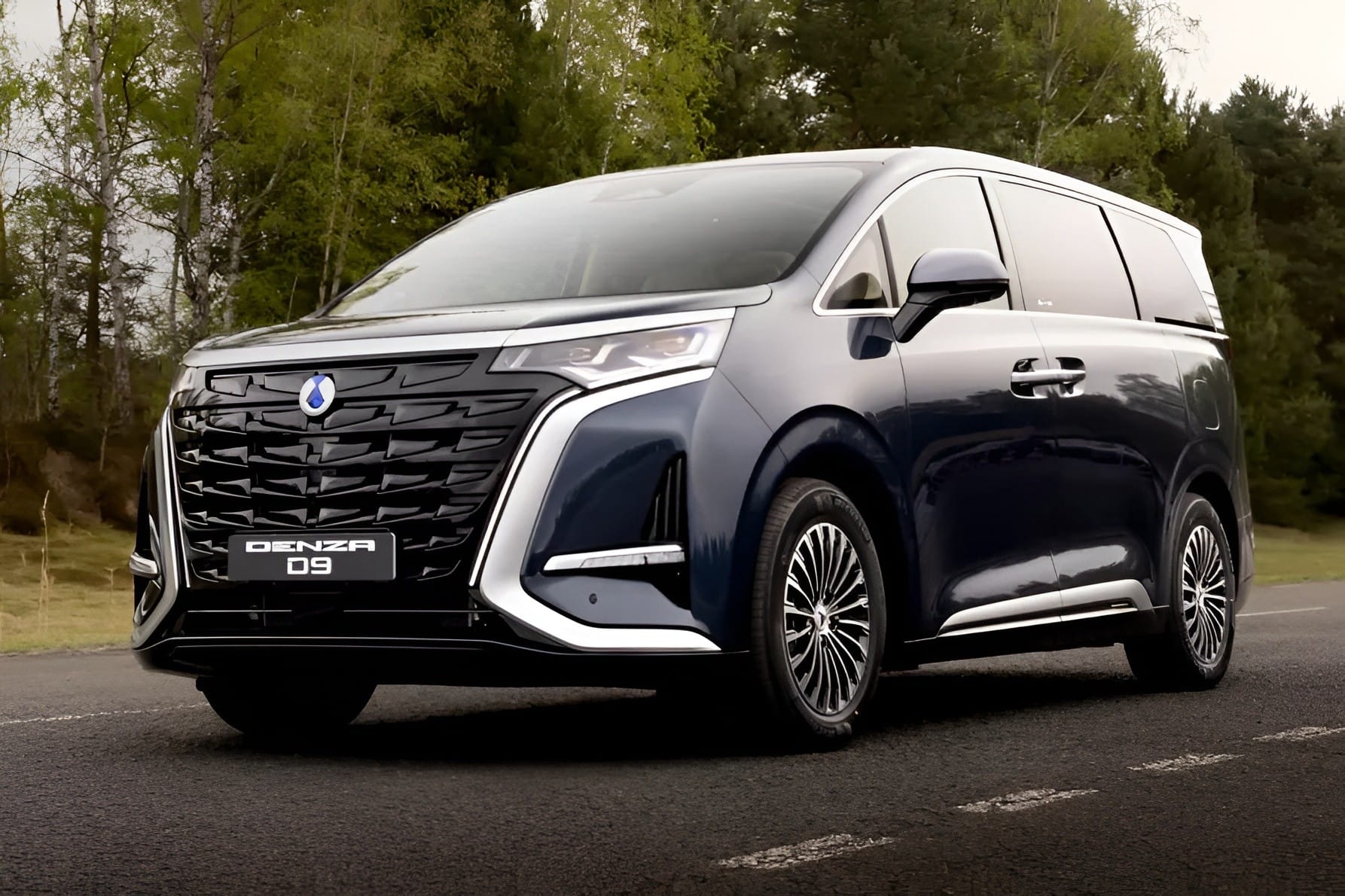
In India, Denza will be positioned above BYD’s existing portfolio, with products at around Rs 80 lakh and above, while BYD will occupy the Rs 20 to Rs 80 lakh space. Leading Denza’s charge will be two models, the Z9 GT high-performance fastback and the D9 luxury MPV. Both will be brought in as completely built-up units.
The Z9 GT is Denza’s take on a fastback or, as the company puts it, a shooting brake with four-door practicality. It has both EV and PHEV options globally, but for India, we’ll get just the electric version, and its numbers are staggering. It weighs 2.9 tonnes, puts out a colossal 1,156hp from three electric motors (one at the front and two at the rear), that propel it from 0-100kph in 2.7sec and on to a top speed of 270kph. The only modest number is the range, which stands at 600km on the combined WLTP cycle. Charging, though, is super quick, with the company’s 1,500kW Flash ultra-fast charging that can take the GT’s 122.5kWh battery from 10 to 97 percent in just nine minutes. It stops at 97 percent to preserve the life of the battery. Expect to pay premium pricing for this level of performance, though; the GT would retail in India somewhere in the Rs 1.2 to 1.5 crore mark.
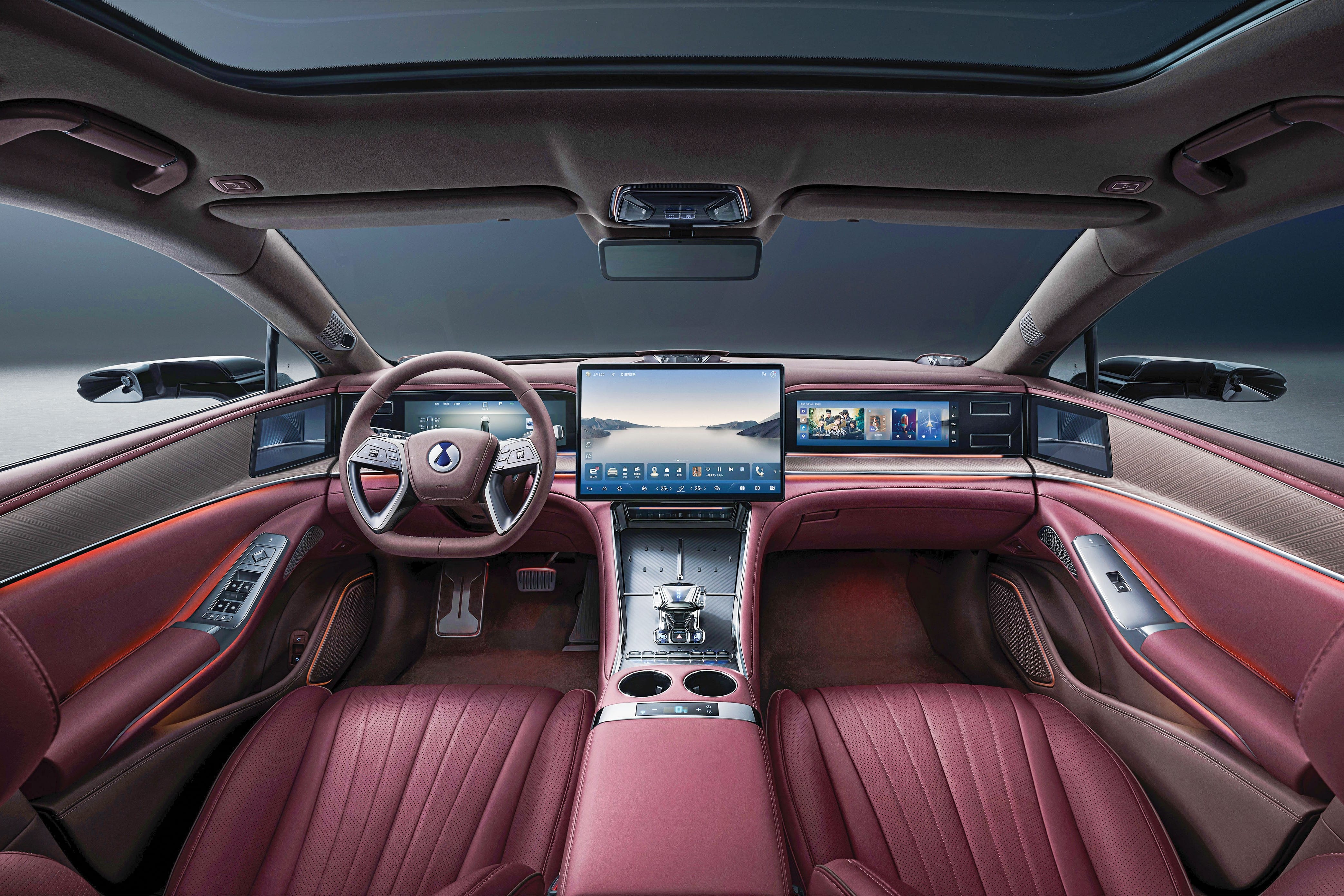
Five screens dominate dash; flank screens are for outside rear-view camera feed.
Here too, there’s a cell-to-body construction that integrates the blade cells directly into the vehicle structure, plus rear-wheel steering with a sideways crab-crawl ability, buttons to open and close power doors and, of course, Level 2+ ADAS. Inside, the GT seats five and pampers the four outer passengers with adjustable under-thigh support, heating, cooling, and massage functions, and the rear seats also recline. As with so many EVs today, the dashboard is dominated by screens, five in total, with two on the flanks for the outside rear-view ‘mirror’ camera feed.
Denza D9: Vellfire Challenger
The D9 MPV is available with electric or plug-in hybrid power globally too. For India, it’s the EV that will arrive, and in front-wheel-drive form. Expect prices at around the Rs 80 lakh mark, positioning the D9 above the MG M9 but below the Toyota Vellfire.
Power stands at 313hp and 360Nm of torque, and it’s fed by a 103kWh blade cell battery. Claimed range is 520km on the combined WLTP cycle, while charging speed peaks at 200kW on a DC fast charger.
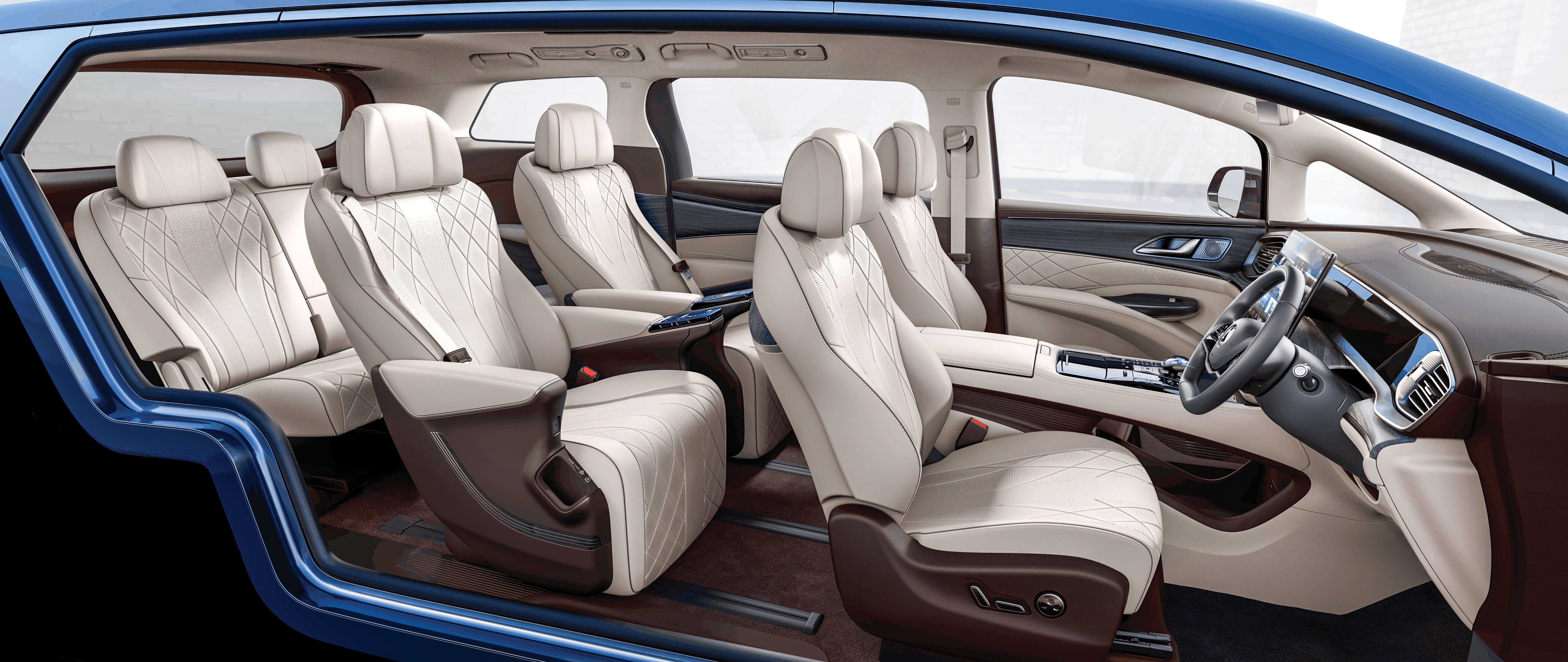
The seating configuration is 2+2+3 with the centre captain seats offering full power adjustment, heating, ventilation and massagers, along with armrest-integrated control pads. Middle-row occupants also enjoy fold-out tables and extendable leg-rests. Other creature comforts include a three-zone climate control, premium Dynaudio sound system and full leather upholstery.
Middle row the place to be with fully powered individual loungers that feature heating, ventilation, massagers, leg rests, and a fold-out table.
The D9 also features BYD’s cell-to-body construction that helps reduce weight and increase body rigidity. The luxury MPV also comes with an active body control system that, the company says, eliminates fore-aft pitching motion to keep the cabin flat during “nose-up” acceleration and “nose-down” braking forces.
Where does Denza fit in India’s automotive landscape?
The name Denza is an invented one and loosely translates to ‘rising power’ or ‘gathering momentum’, and that is what BYD will be hoping for in India. Hamstrung by the Indian government’s restrictions around Chinese investments, BYD – the world’s largest EV manufacturer – has not been able to grow. Its proposed $1 billion investment, along with a local partner, to scale up its small semi-knocked-down (SKD) plant in Tamil Nadu has been slowed by Press Note 3 – a 2020 policy that requires foreign investments from countries sharing a land border with India to get prior state approval.
Thus, given the limited playing field it’s been put into, getting into niches like luxury MPVs is a smart move from BYD. The segment accounts for about 2,000 units a year and is seeing rising customer interest and growth, attracting players like the Toyota Vellfire, the Lexus LM and Mercedes V-Class. The D9, then, has competitors to contend with, while the Z9 GT sits in a smaller niche, with just the Porsche Taycan as a similar rival. It’s likely to sell fewer numbers but will serve as a technology showcase and a brand shaper.
Interestingly, Denza will be retailed through exclusive showrooms separate from BYD. This may seem odd given the limited volumes, at least in the short term, but our sources tell us the company wants to provide Denza customers with a highly personalised shopping experience. The premium positioning will limit its network to larger cities; launch likely to be in the Delhi-NCR and Mumbai regions only. For BYD, though, it plans to scale up, thus keeping the two brands separated allow each to focus on their distinct goals.
So far, BYD India has managed a decent start and enjoys an awareness much higher than its actual market volume, enviable for a new brand. That’s all thanks to products that deliver consistently, with innovative tech like the famed blade cells. For Denza, though, the company also needs to build a high level of desirability, because at the upper end of the luxury spectrum, badge value accounts for nearly as much as, if not more than, engineering prowess itself, and that is what the company seems to be setting out to do.
Autocar India turns 27, and rather than quietly celebrating with a cake, we’ve celebrated the way we know best: with scoops, exclusive drives and a frankly unreasonable amount of driving. In this issue, we bring you an exclusive drive of JSW’s new Combat SUV (you heard the name here first), a scoop on BYD’s Denza luxury push, and the last leg of the 20,000km Pune-to-Prague odyssey, alongside a serious collection of new cars and bikes. Oh, and there’s also a Boeing 737 Max aircraft involved. Because apparently cars weren’t complicated enough.
JSW Combat: Review
JSW’s first SUV is a rugged plug-in hybrid based on the Jetour T2. We get an early exclusive drive of the Combat and examine whether this newcomer really has what it takes to shake up the Rs 30-50 lakh SUV market.
BYD Denza: China’s Luxury Offensive
BYD is bringing Denza to India, with luxury EVs like the D9 MPV and Z9 GT aimed squarely at the established big boys. Having disrupted the mid-range EV market with BYD, it is now going after the high-end market with Denza.
ADAS Meets Autopilot: Hands Off!/Look ma, no hands!
What do a Hyundai Venue and a Boeing 737 Max have in common? Quite a lot, apparently. We climb into a full-flight simulator to understand how aircraft autopilot works and what it has in common with the increasingly sophisticated systems in our cars.
Skoda Kylaq: Pune to Prague, Part 2
The Silk Route may have been built for traders, but we’ve used it to find out just how far you can take a small SUV before it starts asking for a holiday. After 19,000km, 70 days and not a single puncture, our Skoda Kylaq finally reaches Prague.
Autocar’s Day Out: M-ployees of the Month
Most company off-sites involve a resort, a buffet and someone reluctantly joining a team-building exercise. Ours involved six BMW M cars, more than 3,000hp, a deserted concrete ground and a frankly irresponsible amount of tyre abuse. Four M4s and two M2s went head-to-head in slalom, football and drifting, and what began as a relaxing team outing rapidly descended into a war.
Tesla Model Y vs Hyundai Ioniq 5: Comparison
Two premium EVs, two very different ideas about what an electric car should be. The Model Y with its recently revised price, and the updated Ioniq 5 go head-to-head to see which makes the stronger case.
Bentley Supersports: Drive
Take a Continental GT and turn the dial towards something completely unnecessary. The result is Bentley’s Supersports, a rear-wheel-driven beast with considerably more intent. We drive it around Laguna Seca.
Mini Countryman C: First Drive
The Countryman has grown into a proper luxury SUV, with generous space, loads of kit and a new 1.5-litre turbo. At Rs 47.5 lakh, it’s the biggest and most grown-up Mini yet, and is ready to lock eyes with real luxury SUVs rather than merely be a fashion statement. But has it done that?
5 Ways to Adventure: Feature
Five made-in-India ADVs, 1,300km and one simple question: which is the best way to go exploring? We put the bikes through highway miles, trail riding and plenty of scenic detours to see how their different approaches to adventure stack up.
Ather Konarc: First Ride
Ather’s new Konarc brings the brand’s blend of quality and comfort to a wider audience, with prices starting at Rs 99,999. A compelling new step into the mainstream.
Suzuki e-Access vs Yamaha EC-06: Comparison
Japan finally answers India’s e-scooter boom, and the two takes couldn’t be more different – one built from scratch, the other born from an Indian startup partnership. Which one takes the crown?
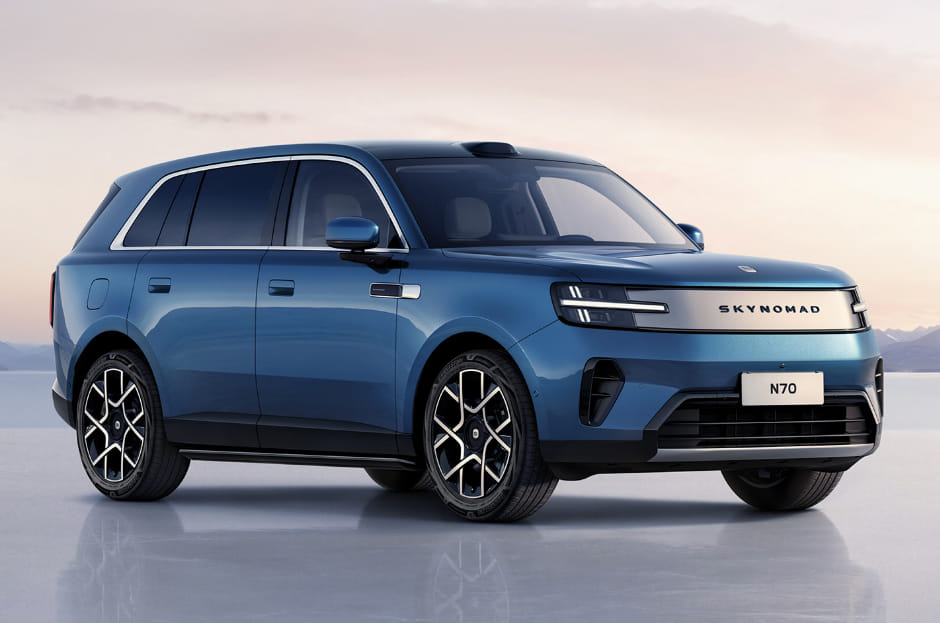
Xiaomi has launched the SkyNomad SUV range in China, comprising the five-seat N70 and seven-seat N90. Both are range extender SUVs built on the company’s Kunlun platform, with electric motors driving the wheels and a 1.5-litre turbocharged petrol engine acting as a range extender.
The N70 gets a flat floor, sliding second-row seats and between 1,203 and 2,425 litres of cargo space. The N70 Pro uses a 52kWh LFP battery and has a claimed 351km electric range and 1,351km combined range on the CLTC cycle. The N70 Max gets a 76kWh battery, with a claimed 505km electric range and 1,461km combined range.
The larger N90 Max is a seven-seat SUV with a 2+2+3 layout, air suspension, an 8.88-inch instrument display, 16.1-inch central touchscreen and 21.4-inch rear entertainment screen. It uses a 76kWh battery, with a claimed 464km electric range and 1,705km combined range on the CLTC cycle.
Car buyers today are pretty spoilt for choice. Beyond a multitude of brands, body styles and variants, there are now more fuel options than ever before. Petrol, diesel, CNG, hybrid, electric, and soon even ethanol-powered vehicles are all vying for attention, making the decision increasingly complicated. So, which powertrain makes the most sense for you?
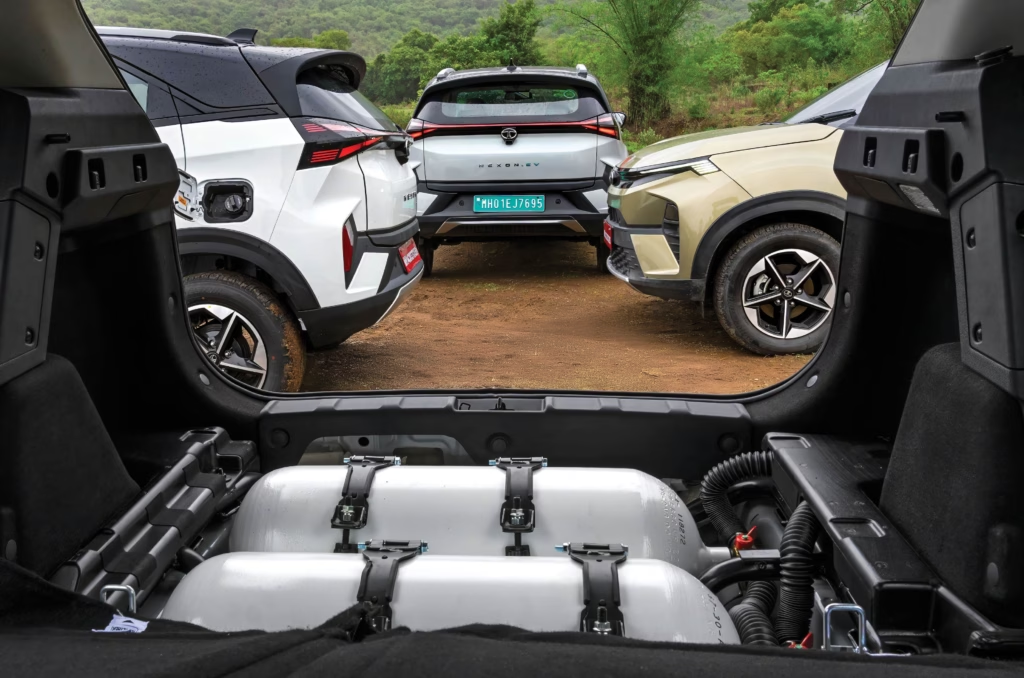
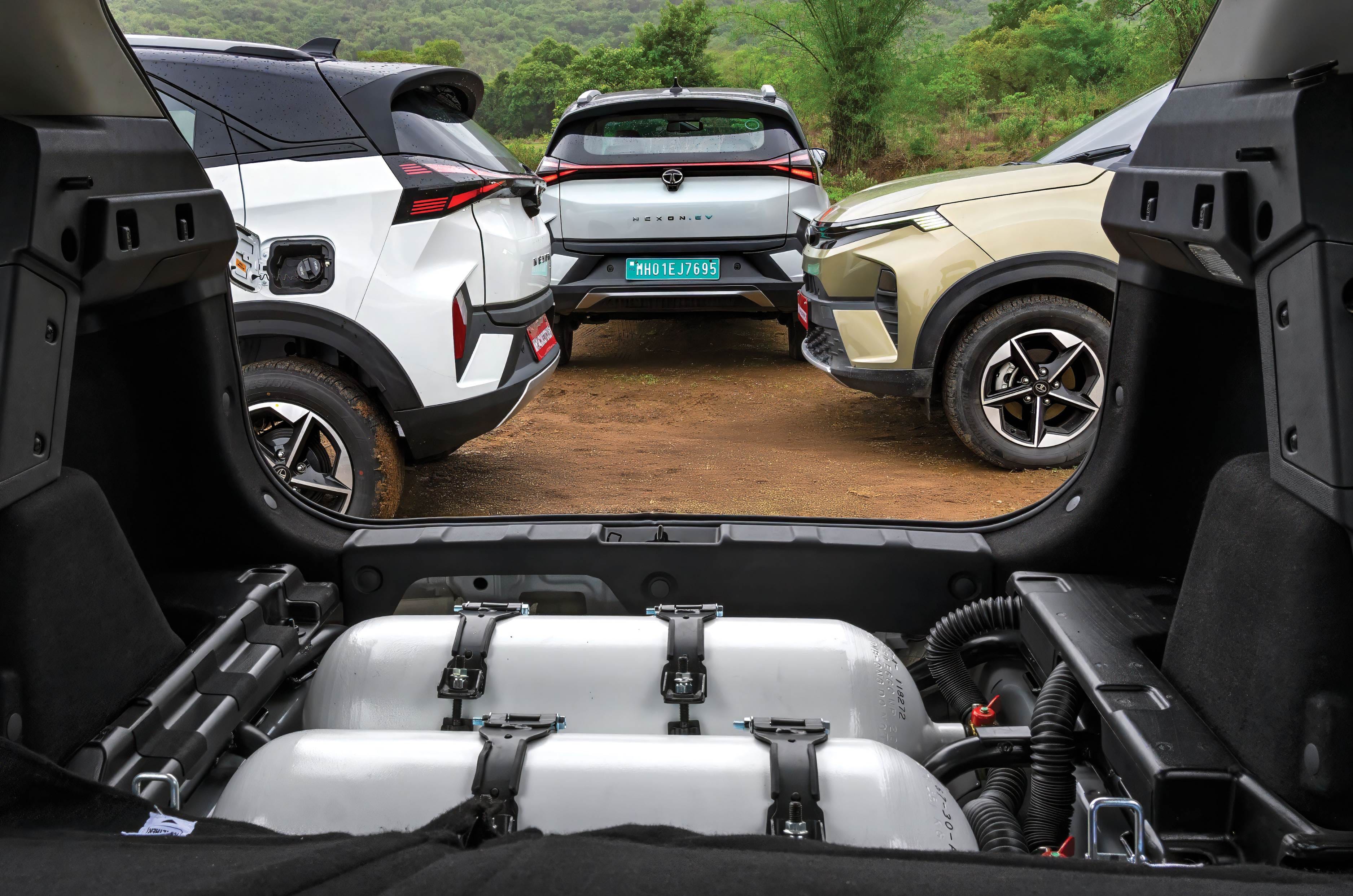
Tata Nexon models (left to right): Petrol, diesel, petrol-CNG and EV.
To answer that question, we turned to one of the most versatile models on sale in India – the Tata Nexon. Few vehicles offer such a broad range of powertrain choices, and with design, space, practicality, safety and features remaining largely consistent across the range, the Nexon provides the perfect platform to isolate the one key variable – the fuel itself. So, we got together the turbo-petrol, CNG, diesel, as well as the EV to find out each fuel’s pros and cons, and thus, which would best fit your needs.
Disclaimer: Fuel prices vary from state to state.
Tata Nexon turbo-petrol: Fuss free
Tata’s 1.2-litre, three-cylinder ‘Revotron’ turbo-petrol engine debuted with the Nexon in 2017 and received a power bump in 2020, taking outputs to 120hp and 170Nm. Today, it is offered with an unusually wide range of transmission choices – a 5-speed manual, 6-speed manual, 6-speed AMT and a 7-speed dual-clutch automatic.
Prices start at Rs 7.40 lakh and extend up to Rs 13.90 lakh, ex-showroom (excluding dual-tone, Dark and Red Dark editions). Its broad variant spread and attractive pricing are key reasons why the turbo-petrol accounts for 42 percent of all Nexon sales.
The engine offers decent driveability and benefits from selectable Eco, City and Sport drive modes. But outright performance, refinement and smoothness aren’t class-leading and not what you get from other turbo-petrols.
Within the range, the 7-speed DCA stands out as the most desirable option. Despite accounting for less than 4 percent of total Nexon sales, it is arguably the nicest ICE-powered Nexon on sale. The wet-clutch dual-clutch transmission prioritises smoothness over sportiness and suits the engine’s character well. While downshifts can occasionally feel a touch hesitant, the overall experience is noticeably more polished than the manual and AMT alternatives. Notably, the top-spec Turbo DCA is the best-equipped ICE version and is also the only version to offer ADAS.
Fuel efficiency, however, remains this powertrain’s weakest area. In our tests, the turbo-petrol DCA returned 7.7kpl in the city and 13.9kpl on the highway, translating to an average running cost of Rs 9.46 per kilometre – the highest among all Nexon powertrains.
To put that into perspective, even though a fully loaded Fearless + A PS DCA is Rs 2.65 lakh more affordable than a top-spec Empowered + A 45 EV, the EV’s significantly lower running costs (of Rs 1.03 per km using home charging) allow owners to recover that initial price difference in roughly 32,000km.
Tata Nexon diesel: Highway star
The diesel range starts at Rs 9.15 lakh and extends up to Rs 14.40 lakh for the top-spec AMT. Interestingly, while the diesel once outsold the petrol version in the Nexon’s early years, buyer preferences shifted following the BS6 transition, causing diesel sales to gradually decline to 13 percent. Despite this, Tata has persisted with the fuel, and today remains one of the few carmakers still offering diesel engines in its portfolio.
Instead of adopting a conventional SCR setup with a urea tank, AdBlue injection system and additional electronic controls, Tata developed a Lean NOx Trap system for the 1.5-litre, four-cylinder turbo-diesel engine. Despite this relatively low-cost passive emissions-control system, the price premium over an equivalent turbo-petrol variant remains around Rs 1 lakh – broadly in line with what rivals charge. The only tangible benefit for buyers is that, unlike many competitors, there is no urea tank requiring periodic top-ups, resulting in marginal savings over time and a bit less hassle.
Like the turbo-petrol, refinement isn’t this diesel’s strongest suit. And even though turbo lag is more perceptible than in the petrol iteration, performance flows in a rather strong manner, making it well-suited for highway drives. Its tall fuel efficiency also makes it ideal for those who cover long distances frequently. In our tests, the diesel-manual delivered an impressive average of 17.95kpl, resulting in a running cost of just Rs 5.30 per kilometre – significantly lower than the turbo-petrol.
Tata Nexon EV: Smooth operator
As India’s first widely accessible electric SUV from a domestic manufacturer, the Nexon EV played a pivotal role in democratising EV ownership. Combining brisk performance, usable real-world range and a relatively accessible price point, it opened up the Tata brand to an entirely new set of buyers. For a long time, it was India’s bestselling EV. Within the Nexon range, it accounts for 14 percent of total sales.
Today, the Nexon EV range spans Rs 12.49 lakh to Rs 17.49 lakh, with buyers able to choose between two battery packs – 30kWh and 45kWh. The line-up itself is relatively straightforward, with three trims available for each battery option.
In the real world, the 30kWh version can deliver a little over 200km on a charge, while the larger 45kWh battery can comfortably manage around 350km. For buyers seeking the smoothest and most refined driving experience, nothing quite matches the seamlessness of an EV. Acceleration feels brisk, and its zippy yet seamless performance makes for a hushed, enjoyable drive experience.
The two battery versions differ in more ways than just capacity. The 45kWh version uses Tata’s newer Gen 2 motor, which is lighter, more compact and more efficient than the Gen 1 unit used in the 30kWh variant. The long-range version’s more modern architecture also enables significantly faster DC charging. To put it into perspective, the 30kWh version takes about an hour to charge from 20-80 percent using a DC fast charger, whereas the 45kWh variant achieves the same in just 29 minutes. Not only does the larger battery offer greater range, but it is also quicker to recharge despite its higher capacity, making it the more suitable choice for longer highway journeys.
Interestingly, the EV also enjoys a feature advantage over the best-equipped turbo-petrol DCA, gaining a larger 12.3-inch touchscreen, rear disc brakes, and an electronic parking brake with auto-hold functionality.
Coming to the 45kWh version’s running cost, using a home charger (at an average cost of Rs 8 per unit of electricity), buyers can enjoy driving around at just Rs 1.03 per km. Even if users opt for public DC fast-charging, the rates of which range between Rs 24 and Rs 28 per unit, still, average running costs work out to merely Rs 3.34 per km, which is almost a third of the petrol-automatic’s number and about sixty percent of a diesel-manual’s cost per km.
Tata Nexon CNG: Jack of all trades
There’s a lot Tata has got right with the Nexon CNG. For starters, prices range from Rs 8.35 lakh to Rs 13.60 lakh, positioning it neatly between the petrol and diesel alternatives.
Under the bonnet is the same 1.2-litre, three-cylinder turbocharged engine found in the petrol Nexon. Not only is it India’s first turbo-petrol CNG SUV, but it is also the most powerful, producing 100hp and 170Nm when running on CNG. Impressively, peak torque remains identical to the petrol version, although it is available across a narrower band. As a result, driveability feels remarkably similar to the turbo-petrol, and users are unlikely to find themselves wanting for performance, whether in urban conditions or on the highway.
Being a turbocharged CNG engine, efficiency in city driving can take a hit. In our real-world city test involving frequent stop-start traffic, the Nexon CNG returned 15.1km/kg. Out on the highway, however, flowing traffic and the presence of a sixth gear helped it achieve close to 24km/kg. The end result is an average running cost of just Rs 4.28 per kilometre, making it the most economical option in the ICE line-up.
With driveability that’s remarkably close to the turbo-petrol, lower purchase and running costs than the diesel, and very few compromises in practicality or equipment, the Nexon CNG presents perhaps the strongest all-round case in the range. Its only notable drawback is the limited CNG infrastructure. While station availability continues to improve, rising CNG adoption often leads to longer queues and wait times at many outlets.
Unlike many CNG vehicles, the Nexon CNG doesn’t feel like a stripped-down, budget-focused alternative. It remains spacious, practical and generously equipped while delivering the lowest running costs of any ICE Nexon. Small omissions, such as cruise control, connected-car technology and JBL-branded speakers, are unlikely to be deal-breakers for most buyers.
Viewed through the lens of value, usability and cost of ownership, the Nexon CNG strikes perhaps the most convincing balance of the lot. Which perhaps explains why, despite being offered with just one engine and a manual gearbox, it now contributes more than a third of all Nexon sales.
Tata Nexon petrol vs diesel vs CNG vs EV: Verdict
The turbo-petrol’s lowest starting price, as well as the widest choice for buyers, is the reason behind its popularity. Our pick of the range, however, is the priciest 7-speed DCA, which delivers the smoothest and most polished Nexon ICE driving experience. That said, performance and efficiency aren’t exactly class-best.
The diesel’s impressive fuel efficiency and thus low running costs make it an ideal choice for those who rack up high annual mileages. Performance is the strongest among all ICE versions, and its torquey nature makes it an excellent highway companion, perfect for those who regularly cover long distances.
For buyers with reliable home charging, a predominantly urban usage pattern and high annual running, the EV is the one to pick. The 45kWh model has a genuinely usable real-world range and is also the most advanced version with a rich feature list, making it a very well-rounded option.
The Nexon CNG retains the petrol’s drivability, offers low running costs, a long range, and buyers aren’t forced to compromise features or practicality either. It thus strikes a convincing balance between price, performance and real-world usability, emerging as the sweet spot of the line-up.
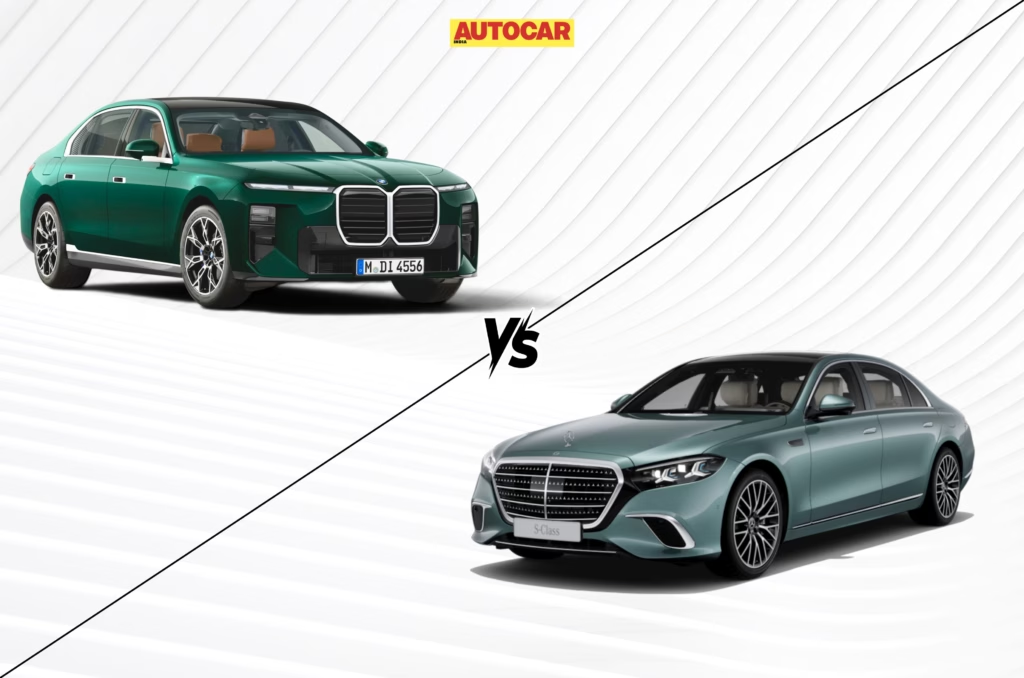
BMW has launched the facelifted 7 Series in India, bringing a redesigned exterior and interior, more features, and a more powerful powertrain. Its arch-rival, the Mercedes-Benz S-Class, also received a facelift earlier this year. The two have been fierce competitors in the luxury sedan segment since their respective introductions. Now that the updated versions are on sale, which one makes the better buy? Let’s find out.
2026 BMW 7 Series vs Mercedes S-Class: Dimensions
The 7 Series has a slightly larger wheelbase and is overall a bit longer than the S-Class
2026 BMW 7 Series vs Mercedes S-Class: Dimensions and other specifications
BMW 7 Series
Mercedes S-Class
Difference
Length (mm)
5,395
5,304
+91
Width (mm)
1,950
1,921
+29
Height (mm)
1,550
1,503
+47
Wheelbase (mm)
3,215
3,216
-1
Boot space (litres)
540
345
+195
The 2026 BMW 7 Series is longer and slightly taller than the S-Class, while the two sedans have a similar wheelbase and width. The BMW also offers a 195-litre larger boot, giving it a clear advantage in terms of luggage capacity. The 7 Series is also expected to offer more cabin space, as the S-Class’ underbody battery pack for its plug-in-hybrid (PHEV) powertrain takes up some of the available space.
2026 BMW 7 Series vs Mercedes S-Class: Powertrain specs
Both sedans get similar engines, but the S-Class has a PHEV powertrain
2026 BMW 7 Series vs Mercedes S-Class: Engine specifications and driving tech
BMW 7 Series
Mercedes S-Class
Engine
3.0-litre 6-cyl petrol
3.0-litre 6-cyl petrol
Hybrid type
Mild hybrid
Plug-in hybrid
Power (hp)
400
435
Torque (Nm)
540
680
Transmission
8-speed AT
9-speed AT
Drivetrain
RWD
RWD
Fuel efficiency
NA
32.3kpl (WLTP)
0-100kph
5.4 seconds
5.7 seconds
Top speed
250kph
250kph
All-electric range
NA
115km (WLTP)
Both the BMW 7 Series and Mercedes-Benz S-Class are powered by 3.0-litre six-cylinder petrol engines. However, the S-Class gets a plug-in hybrid (PHEV) powertrain, while the 7 Series is offered with a mild-hybrid setup. As a result, the S-Class has a claimed all-electric range of 115km, a feature the 7 Series does not offer. BMW is yet to reveal the 7 Series’ claimed fuel efficiency, but the S-Class PHEV will be the more efficient of the two.
The S-Class is also more powerful, producing 35hp and 140Nm more than the 7 Series. Despite this, it is 0.3 seconds slower from 0-100kph, with the added weight of the PHEV components likely contributing to the difference.
Both sedans are rear-wheel-drive (RWD) models and come equipped with air suspension and rear-axle steering.
2026 BMW 7 Series vs Mercedes S-Class: Exterior
Exterior features are similar on both luxury sedans
2026 BMW 7 Series vs Mercedes S-Class: Exterior
BMW 7 Series
Mercedes-Benz S-Class
Headlights
Auto LED
Auto LED
DRLs
LED
LED
Taillights
LED
LED
Carpet lights
Yes
Yes
Other illumination
Grille surrounds
Grille surrounds
Alloy wheels
20-inch
20-inch
On the exterior front, the features are similar, with both sedans getting an all-LED lighting system, including illuminated grille surrounds and carpet lights. The alloy wheel sizes are also similar at 20 inches.
2026 BMW 7 Series vs Mercedes S-Class: Interior, features
The 7 Series offers larger screens
2026 BMW 7 Series vs Mercedes S-Class: Interior and features
BMW 7 Series
Mercedes-Benz S-Class
Instrumentation screen
Panoramic iDrive display
12.3-inch display
Infotainment screen
17.9-inch
14.4-inch
Front passenger display
14.6-inch
12.3-inch
Android Auto, Apple CarPlay
Wireless
Wireless
Head-up display
Coloured, 3D
Coloured, AR-based
Audio system
35-speaker Bowers & Wilkins
31-speaker Burmester
Rear screen
Yes, one 31.3-inch display
Yes, two 13.1-inch displays
Roof
Panoramic glass roof
Panoramic sunroof
Climate control
4-zone
4-zone
Seat upholstery
Leather
Leather
Wireless phone charger
Both rows
Both rows
1st row seat heating, ventilation, massage
Yes
Yes
2nd row seat heating, ventilation, massage
Yes
Yes
Window sunshades
Yes, powered
Yes, powered
Rear windshield sunshade
Yes, powered
Yes, powered
Powered doors
Yes
Yes
Powered tailgate
Yes
Yes
Ambient lighting
Yes
64 colours
USB ports
Type-A and C
Type-A and C
Connected car tech
Yes
Yes
While both sedans are loaded with features, the 7 Series emerges as the more tech-laden of the two. It gets a larger infotainment and passenger display, along with BMW’s Panoramic iDrive display, which shows key instrumentation across the lower portion of the windscreen. Its rear-seat entertainment display is also larger than the two rear entertainment screens offered in the S-Class.
While this is unlikely to influence a buying decision, one notable distinction is the roof design. The 7 Series gets a panoramic glass roof, whereas the S-Class is equipped with a panoramic sunroof.
2026 BMW 7 Series vs Mercedes S-Class: Safety
S-Class offers more airbags
2026 BMW 7 Series vs Mercedes S-Class: Safety features
BMW 7 Series
Mercedes-Benz S-Class
Airbags
7
15
ADAS
Level-2
Level-2
Camera setup
360-degree
360-degree
Driver monitor camera
Yes
Yes
Parking sensors
Front and rear
Front and rear
Auto park assist
Yes
Yes
Parking brake
Electronic
Electronic
Disc brakes
Front and rear
Front and rear
TPMS
Yes
Yes
IRVM
Auto-dimming
Auto-dimming
Hill start assist
Yes
Yes
Hill descent control
Yes
Yes
ESC
Yes
Yes
The Mercedes-Benz S-Class gets 15 airbags, eight more than the BMW 7 Series. However, both sedans offer a similar suite of safety features, including Level 2 advanced driver assistance systems (ADAS), a 360-degree camera, and auto-parking assistance.
2026 BMW 7 Series vs Mercedes S-Class: What to choose?
7 Series is slightly more affordable than the S-Class
2026 BMW 7 Series vs Mercedes S-Class: Prices (ex-showroom)
Model
Price range (in Rs, crore)
BMW 7 Series
1.95
Mercedes-Benz S-Class
2.20-2.38
The BMW 7 Series is Rs 25 lakh more affordable than the S-Class, yet it offers more technology, a larger boot, and quicker 0-100kph acceleration. With all these advantages at a significantly lower price, the 7 Series makes a stronger case for itself and is the more recommendable choice over the S-Class.
BMW has launched the 2026 7 Series facelift in India at a starting price of Rs 1.95 crore. Globally unveiled earlier this year, the 7 Series facelift brings a slew of changes to the flagship sedan’s exterior and interior, along with some powertrain upgrades. The 7 Series continues to rival the Mercedes-Benz S-Class, a facelift of which also went on sale in India a few months ago.
In addition to the ICE-powered 7 Series, BMW launched the luxury sedan’s updated all-electric counterpart, the i7, in eDrive50 and M70 guises. The 7 Series and i7 eDrive50 will be locally assembled at BMW’s Chennai plant.
2026 BMW 7 Series facelift price list
Variant
Price (Rs, crore)
740
1.95
The ICE-powered 7 Series facelift is available in only one variant in India: the petrol-powered ‘740’. BMW has dropped the prior model’s ‘740d’ diesel version. Compared to the outgoing 7 Series, which was priced at Rs 1.85 crore, the facelift is pricier by Rs 10 lakh. Compared to the S-Class, which costs Rs 2.20 crore-2.38 crore, the 2026 7 Series is up to Rs 43 lakh more affordable.
2026 BMW 7 Series facelift exterior changes
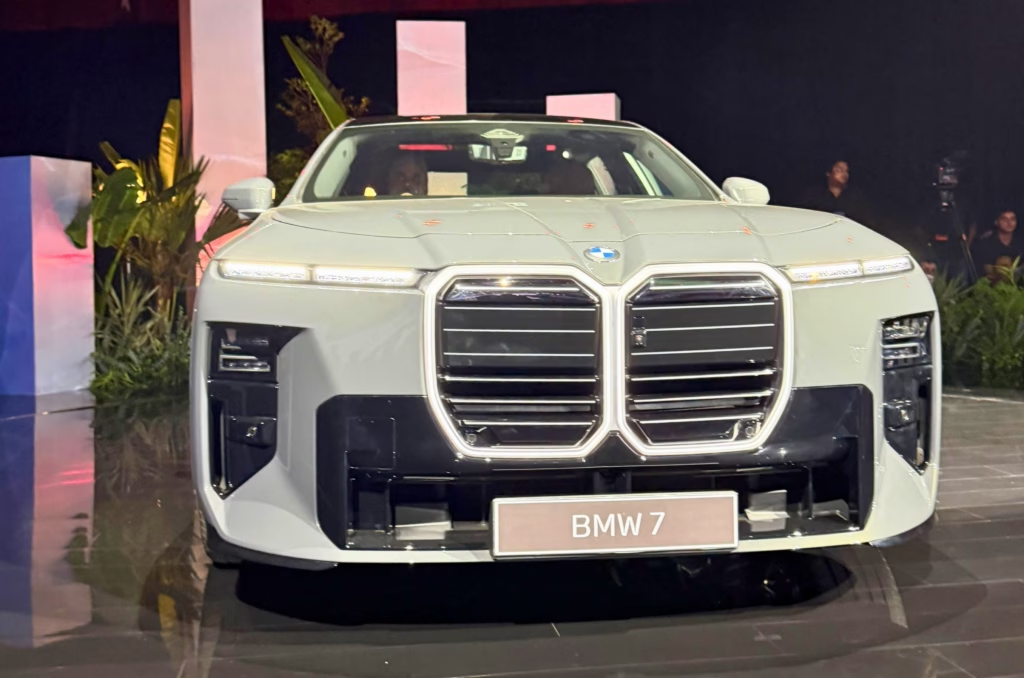
The front end of the 7 Series facelift sees the most drastic changes, with a more slab-sided and imposing look. BMW has revised the split headlamps, with a slim pair of DRLs extending outwards from the top of the grille, and the main LED units relocated right above the redesigned vertical air intakes. The kidney grilles are now more squared-off and have horizontal slats, and continue to get an illuminated surround. Lastly, the air dam below the grille is much wider.
Over to the side, the 7 Series facelift gets updated side skirts and new alloy wheel designs – 20-inchers are fitted as standard, which can be optioned up to 22 inches. The rear end, meanwhile, features a pair of new wide LED tail-lamps and a smoother-looking bumper.
2026 BMW 7 Series facelift interior changes
On the inside, the 7 Series facelift has been updated to resemble BMW’s newer Neue Klasse models. The dashboard notably features a rhomboidal 17.9-inch infotainment touchscreen, a 14.6-inch passenger screen, a pillar-to-pillar Panoramic Vision display, and a four-spoke steering wheel. Lower down, the centre console has been redesigned with a larger storage space, fewer buttons, and a new cylindrical rotary drive selector.
As for features, the facelifted 7 Series packs an 18-speaker Bowers & Wilkins surround sound system, ambient lighting, powered doors, wireless Apple CarPlay and Android Auto, over-the-air updates, a fixed panoramic glass roof, Boss mode, powered leg rests, connected car tech, Level 2 ADAS, and powered, heated, ventilated, and massaging seats. Buyers can also opt for a 31.3-inch 8K rear entertainment screen and embedded LEDs for the fixed panoramic glass roof that sync up with the ambient lighting.
2026 BMW 7 Series facelift engine and gearbox
The 7 Series facelift carries forward the outgoing model’s 3.0-litre direct-injection turbo-petrol straight-six, which is mated to a 48-volt mild hybrid system. Thanks to internal upgrades, the 740 now produces up to 400hp and 540Nm – up 19hp and 20Nm over its predecessor. As noted previously, the 2026 7 Series facelift is not available with a diesel engine in India, even though the option is offered in some global markets.
An 8-speed torque converter automatic sends power to the rear wheels, enabling a claimed 0-100kph time of 5.4 seconds for the 740. Top speed is electronically limited to 250kph. Additionally, the 7 Series facelift packs rear-wheel steering and adaptive suspension.