भोपाल में एमबीबीएस इंटर्न डॉक्टरों का आंदोलन सोमवार को उग्र हो गया। अपनी विभिन्न मांगों को लेकर प्रदर्शन कर रहे इंटर्न डॉक्टर हमीदिया अस्पताल से मुख्यमंत्री निवास का घेराव करने के लिए निकले थे। इस दौरान पुलिस ने उन्हें आगे बढ़ने से रोकने के लिए वॉटर कैनन का इस्तेमाल किया। प्रदर्शनकारियों को रोकने के दौरान पुलिस कार्रवाई और लाठीचार्ज के आरोप के बाद मामला और गरमा गया।
जानकारी के अनुसार, बड़ी संख्या में इंटर्न डॉक्टर अपनी मांगों को लेकर प्रदर्शन कर रहे थे। जब प्रदर्शनकारी हमीदिया अस्पताल से सीएम हाउस की ओर बढ़ने लगे तो पुलिस ने उन्हें रोकने की कोशिश की। इसके बाद मौके पर तनावपूर्ण स्थिति बन गई और प्रदर्शनकारियों को नियंत्रित करने के लिए वॉटर कैनन चलाया गया।
पुलिस पर लाठीचार्ज का आरोप
इंटर्न डॉक्टरों ने आरोप लगाया कि वे शांतिपूर्ण तरीके से आंदोलन कर रहे थे, लेकिन पुलिस ने उनके साथ मारपीट की और लाठीचार्ज किया। पुलिस कार्रवाई के विरोध में कई इंटर्न डॉक्टर मौके पर ही धरने पर बैठ गए।
प्रदर्शनकारी इंटर्न डॉक्टरों ने सवाल उठाया कि शांतिपूर्ण आंदोलन के दौरान पुलिस ने लाठीचार्ज क्यों किया। उन्होंने इस कार्रवाई के लिए जिम्मेदार पुलिस अधिकारियों के खिलाफ कार्रवाई की मांग की है।
इंटर्न डॉक्टरों की प्रमुख मांगों में उनका प्रतिमाह स्टाइपेंड बढ़ाकर 30 हजार रुपये किए जाने की मांग शामिल है। प्रदर्शनकारियों का कहना है कि उनकी मांग राज्य स्तर से जुड़ी हुई है और सरकार को इस पर जल्द फैसला लेना चाहिए।
मौके पर पहुंचे भोपाल कलेक्टर
स्थिति को संभालने के लिए भोपाल कलेक्टर प्रियंक मिश्रा भी मौके पर पहुंचे। उन्होंने आंदोलन कर रहे इंटर्न डॉक्टरों से बातचीत की और उनकी मांगों को सुना। कलेक्टर ने कहा कि इंटर्न डॉक्टरों की मांग राज्य स्तरीय है और उनकी बात हेल्थ कमिश्नर तक पहुंचा दी गई है।
उन्होंने यह भी कहा कि शहर की कानून-व्यवस्था को बिगड़ने नहीं दिया जाएगा और जरूरत पड़ने पर प्रशासन सख्त कदम उठाने के लिए तैयार है। हालांकि, मौके पर मौजूद अधिकारियों की समझाइश के बावजूद इंटर्न डॉक्टरों का विरोध जारी रहा और पुलिस कार्रवाई के विरोध में वे धरने पर बैठे रहे। अब इस पूरे मामले में सरकार की ओर से इंटर्न डॉक्टरों की स्टाइपेंड बढ़ाने की मांग पर क्या फैसला लिया जाता है और पुलिस कार्रवाई को लेकर क्या कदम उठाए जाते हैं, इस पर सभी की नजर बनी हुई है।
iQOO ने भारत में अपना नया 5G स्मार्टफोन iQOO Z11x 5G लॉन्च कर दिया है। कंपनी ने इस फोन को खास तौर पर लंबी बैटरी लाइफ, दमदार परफॉर्मेंस, गेमिंग, मजबूत बिल्ड और AI फीचर्स को ध्यान में रखकर पेश किया है। फोन की शुरुआती कीमत ₹28,999 है, जबकि लॉन्च ऑफर के तहत इसे प्रभावी तौर पर ₹27,499 में खरीदा जा सकता है।
फोन में 7200mAh की बड़ी बैटरी, MediaTek Dimensity 7400-Turbo प्रोसेसर, 8GB RAM, 120Hz FHD+ डिस्प्ले और 50MP Sony का मुख्य कैमरा दिया गया है। इसके अलावा फोन Android 16 आधारित OriginOS 6 पर चलता है और इसे IP68/IP69 रेटिंग मिली है।
iQOO Z11x 5G का 8GB RAM + 128GB स्टोरेज मॉडल ₹28,999 में लॉन्च किया गया है। चुनिंदा लॉन्च ऑफर्स के तहत ग्राहक इसे ₹27,499 की प्रभावी कीमत पर खरीद सकते हैं। ICICI Bank और HDFC Bank के चुनिंदा क्रेडिट कार्ड से भुगतान करने पर ₹1,500 तक का इंस्टेंट डिस्काउंट मिलेगा। इसके साथ ही 6 महीने तक नो-कॉस्ट EMI का विकल्प भी दिया जा रहा है। फोन की बिक्री 14 सितंबर दोपहर 12 बजे से शुरू होगी। इसे Amazon India, iQOO के ऑनलाइन स्टोर, चुनिंदा Vivo एक्सक्लूसिव स्टोर्स और अन्य रिटेल आउटलेट्स से खरीदा जा सकेगा। फोन को Titan Black और Prismatic Green कलर में पेश किया गया है।
इन स्मार्टफोन्स से होगी टक्कर
भारत के ₹25,000 से ₹30,000 वाले सेगमेंट में iQOO Z11x 5G को कई मजबूत विकल्पों से मुकाबला करना होगा। इनमें Motorola Edge 70 Fusion, vivo V60e, OnePlus Nord CE 6 Lite 5G, Tecno Pova Curve 2 और Redmi Note 17 5G जैसे मॉडल शामिल हैं। कुछ प्रतिद्वंद्वी फोन में AMOLED डिस्प्ले, ज्यादा तेज चार्जिंग या बड़ी बैटरी मिलती है। वहीं iQOO Z11x का फोकस परफॉर्मेंस, बैटरी, गेमिंग, ड्यूरेबिलिटी और AI फीचर्स के संतुलन पर है।
Dimensity 7400-Turbo प्रोसेसर और 8GB RAM
iQOO Z11x 5G में MediaTek Dimensity 7400-Turbo प्रोसेसर दिया गया है, जिसे 4nm प्रोसेस पर तैयार किया गया है। इसमें चार Cortex-A78 परफॉर्मेंस कोर और चार Cortex-A55 एफिशिएंसी कोर हैं। कंपनी के मुताबिक, फोन ने AnTuTu बेंचमार्क पर 8.90 लाख से ज्यादा स्कोर हासिल किया है। ऐसे में रोजमर्रा के भारी काम, मल्टीटास्किंग और मोबाइल गेमिंग के लिए फोन को दमदार विकल्प माना जा सकता है। फोन में 8GB LPDDR4X RAM और 128GB UFS 2.2 स्टोरेज है। Extended RAM फीचर के जरिए अतिरिक्त 8GB तक वर्चुअल RAM का इस्तेमाल किया जा सकता है।
गेमिंग के लिए खास फीचर्स
गेमिंग के दौरान बेहतर अनुभव के लिए फोन में Dual 10x Super Touch Control, Monster Mode, Gaming HyperSense Audio, Game Timer, गेम वाइब्रेशन, इन-गेम नोटिफिकेशन ओवरले और Game Voice Changer जैसे फीचर्स दिए गए हैं। इसके अलावा AI SuperLink बेहतर नेटवर्क कनेक्टिविटी के लिए काम करता है। फोन में Bluetooth 5.4 और डुअल स्टीरियो स्पीकर भी हैं, जो कंपनी के मुताबिक 400 प्रतिशत तक वॉल्यूम सपोर्ट करते हैं।
7200mAh बैटरी बनी सबसे बड़ी खासियत
iQOO Z11x 5G की सबसे बड़ी खासियत इसकी 7200mAh बैटरी है। कंपनी का दावा है कि निर्धारित टेस्टिंग परिस्थितियों में यह बैटरी:
40 घंटे तक वीडियो प्लेबैक
15.4 घंटे तक गेमिंग
10.7 घंटे तक लगातार लाइव स्ट्रीमिंग
51 घंटे तक 4G वॉयस कॉल
13.9 दिन तक स्टैंडबाय
का बैकअप दे सकती है।
फोन में 44W FlashCharge सपोर्ट दिया गया है। कंपनी के अनुसार सिर्फ 10 मिनट चार्ज करने पर करीब 6 घंटे तक का टॉकटाइम मिल सकता है। बैटरी को 1 से 50 प्रतिशत तक चार्ज होने में करीब 43 मिनट और 1 से 100 प्रतिशत तक चार्ज होने में लगभग 91 मिनट लगते हैं।
Bypass Charging से गेमिंग के दौरान गर्मी कम करने की कोशिश
फोन में Bypass Charging फीचर भी है। भारी इस्तेमाल के दौरान यह बैटरी को लगातार चार्ज करने के बजाय सीधे फोन को पावर देने में मदद करता है, जिससे गेमिंग जैसे कामों के दौरान गर्मी को नियंत्रित करने में मदद मिल सकती है। Overnight Charging Protection फीचर रात में चार्जिंग को 80 प्रतिशत पर रोक सकता है और यूजर के जागने के समय के अनुसार दोबारा चार्जिंग शुरू कर सकता है।
6.76 इंच का 120Hz डिस्प्ले
iQOO Z11x 5G में 6.76 इंच का FHD+ LCD डिस्प्ले दिया गया है। इसका रेजोल्यूशन 2344×1080 पिक्सल और रिफ्रेश रेट 120Hz तक है। 120Hz रिफ्रेश रेट की वजह से स्क्रॉलिंग, एनिमेशन, सोशल मीडिया और गेमिंग का अनुभव ज्यादा स्मूद रहने की उम्मीद है। आउटडोर विजिबिलिटी के लिए इसमें 1200 निट्स तक High Brightness Mode दिया गया है।
लंबे समय तक फोन इस्तेमाल करने वाले यूजर्स के लिए TÜV Rheinland Low Blue Light सर्टिफिकेशन और Eye Comfort सिस्टम भी दिया गया है। Sleep Comfort Mode सोने से पहले स्क्रीन के कलर टेम्परेचर को धीरे-धीरे बदलता है। वहीं Anti-Motion Sickness Mode यात्रा के दौरान फोन देखने से होने वाली परेशानी को कम करने के लिए विजुअल संकेतों का इस्तेमाल करता है।
50MP Sony कैमरा और 32MP सेल्फी कैमरा
फोटोग्राफी के लिए फोन में 50MP Sony IMX852 AI मेन कैमरा दिया गया है। इसके साथ 2MP बोकेह सेंसर मिलता है। सेल्फी और वीडियो कॉल के लिए फोन में 32MP फ्रंट कैमरा है। फोन की खास बात यह है कि फ्रंट और रियर दोनों कैमरों से 4K वीडियो रिकॉर्डिंग 30fps पर की जा सकती है। Video Electronic Image Stabilisation वीडियो को ज्यादा स्थिर बनाने में मदद करता है।
कैमरा सॉफ्टवेयर में Dual-View Video, रिकॉर्डिंग के दौरान फ्रंट और रियर कैमरा स्विच करने की सुविधा, 4K वीडियो को Live Photo में बदलने और वीडियो फ्रेम क्रॉप करने जैसे विकल्प हैं। AI फीचर्स में AI Erase, AI UHD, Ultra HD Document और Smart Editing शामिल हैं। फोन Live Photo और Underwater Photography को भी सपोर्ट करता है।
IP68 और IP69 रेटिंग से मजबूत हुई सुरक्षा
iQOO Z11x 5G में IP68 और IP69 डस्ट वॉटर रेजिस्टेंस दिया गया है। कंपनी के मुताबिक फोन को मिलिट्री-ग्रेड ड्यूरेबिलिटी भी दी गई है। फोन गीले और तैलीय हाथों से टच इनपुट को भी सपोर्ट करता है। पानी और धूल के संपर्क में आने के बाद One-Tap Water and Dust Ejection फीचर अतिरिक्त सुरक्षा में मदद करता है।
Android 16 और AI फीचर्स
iQOO Z11x 5G Android 16 आधारित OriginOS 6 पर चलता है। कंपनी फोन के लिए 2 साल तक ऑपरेटिंग सिस्टम अपग्रेड और 4 साल तक सिक्योरिटी अपडेट देने का वादा कर रही है। फोन में कई AI आधारित फीचर्स दिए गए हैं। Circle to Search की मदद से स्क्रीन पर किसी वस्तु या टेक्स्ट को सर्कल करके उसके बारे में जानकारी खोजी जा सकती है। AI Captions रियल टाइम ट्रांसक्रिप्शन और ट्रांसलेशन में मदद करता है। AI Creation टेक्स्ट को बेहतर बनाने, जानकारी का सारांश तैयार करने, अनुवाद और आइडिया ब्रेनस्टॉर्मिंग में मदद करता है।
छात्रों के लिए खास AI फीचर
स्टूडेंट्स के लिए AI Transcript Assist उपयोगी हो सकता है। यह रिकॉर्ड किए गए ऑडियो को टेक्स्ट में बदल सकता है और लंबे ट्रांसक्रिप्ट को छोटे नोट्स में बदलने में मदद करता है। इसके अलावा Screen Translation, Free Transfer, Private Space, Origin Island, Drag & Go और Copy & Go जैसे फीचर्स भी मिलते हैं।
₹30,000 से कम कीमत में कितना मजबूत है iQOO Z11x 5G?
₹28,999 की कीमत पर iQOO ने सिर्फ एक फीचर के बजाय कई खूबियों का कॉम्बिनेशन देने की कोशिश की है। इसमें 7200mAh बैटरी, Dimensity 7400-Turbo, 120Hz डिस्प्ले, 50MP Sony कैमरा, 32MP सेल्फी कैमरा, 4K वीडियो रिकॉर्डिंग और IP68/IP69 रेटिंग मिलती है।
हालांकि, इसकी 44W चार्जिंग स्पीड कुछ प्रतिस्पर्धी फोन से कम है। इतनी बड़ी बैटरी को फुल चार्ज होने में कंपनी के अनुसार करीब 91 मिनट लगते हैं। इसके अलावा फोन में LPDDR4X RAM और UFS 2.2 स्टोरेज का इस्तेमाल किया गया है। एक और कमी यह है कि इस कीमत के आसपास कुछ प्रतिस्पर्धी स्मार्टफोन AMOLED डिस्प्ले देते हैं, जबकि iQOO Z11x में LCD पैनल है।
भारत में बनेगा iQOO Z11x 5G
iQOO Z11x 5G का निर्माण भारत में vivo की ग्रेटर नोएडा फैसिलिटी में किया जाएगा। कंपनी के मुताबिक iQOO ग्राहकों को देशभर में 700 से ज्यादा कंपनी-ओन्ड सर्विस सेंटर की सुविधा भी मिलेगी।
किसके लिए बेहतर विकल्प?
अगर आपकी प्राथमिकता लंबी बैटरी लाइफ, गेमिंग, दमदार प्रोसेसर, मजबूत बॉडी और AI फीचर्स हैं, तो iQOO Z11x 5G ₹30,000 से कम कीमत वाले सेगमेंट में एक दिलचस्प विकल्प हो सकता है। वहीं अगर आपकी पहली प्राथमिकता AMOLED डिस्प्ले या बेहद तेज चार्जिंग है, तो खरीदने से पहले दूसरे विकल्पों की तुलना करना बेहतर रहेगा।
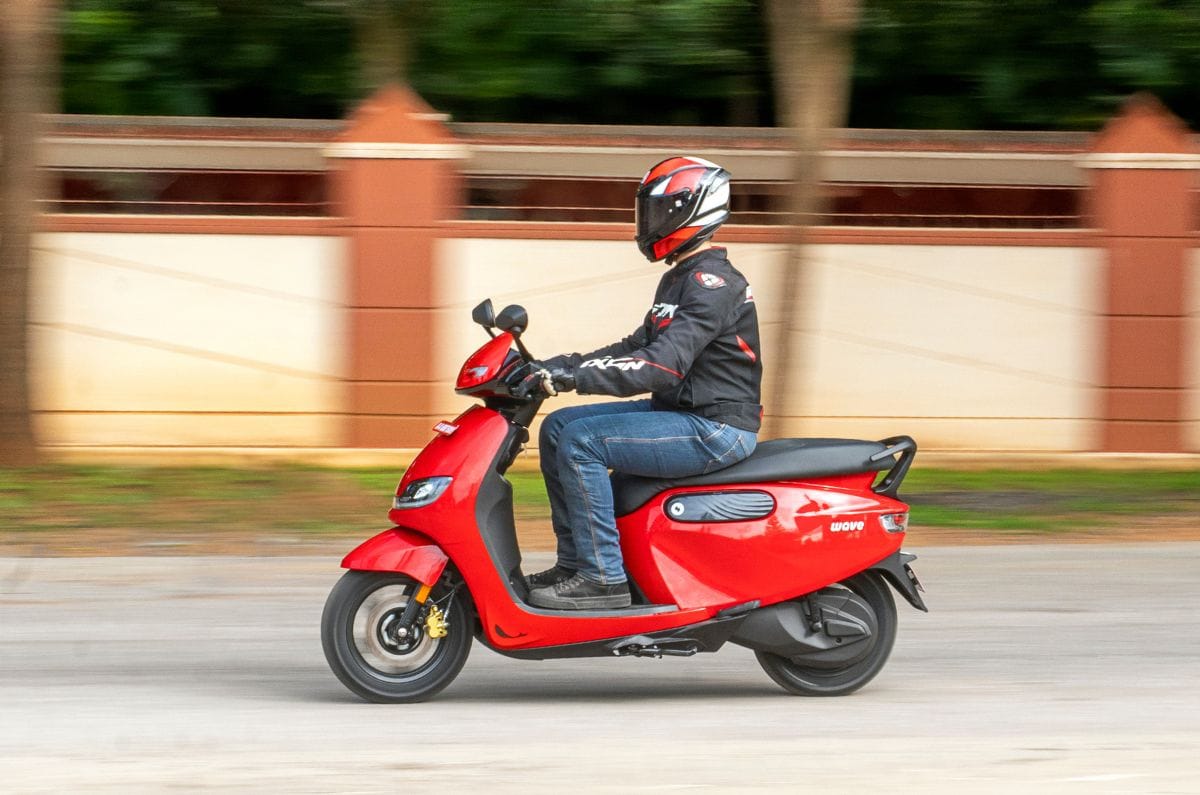
The Simple Wave is an interesting proposition in the increasingly crowded electric scooter space. Its rounded, smooth looks certainly grab attention and, as we found out, it is comfortable, spacious and offers brisk performance. There’s plenty to like here, so let’s dive right in.
Simple Wave Design and quality – 8/10
Looks unique and features many chassis changes over the One
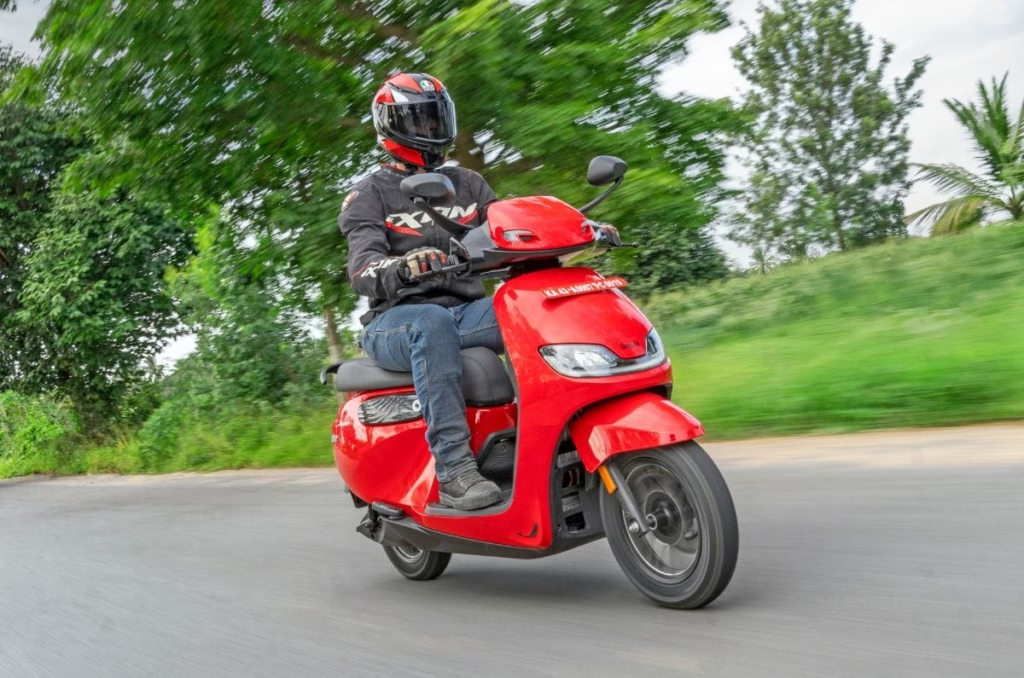
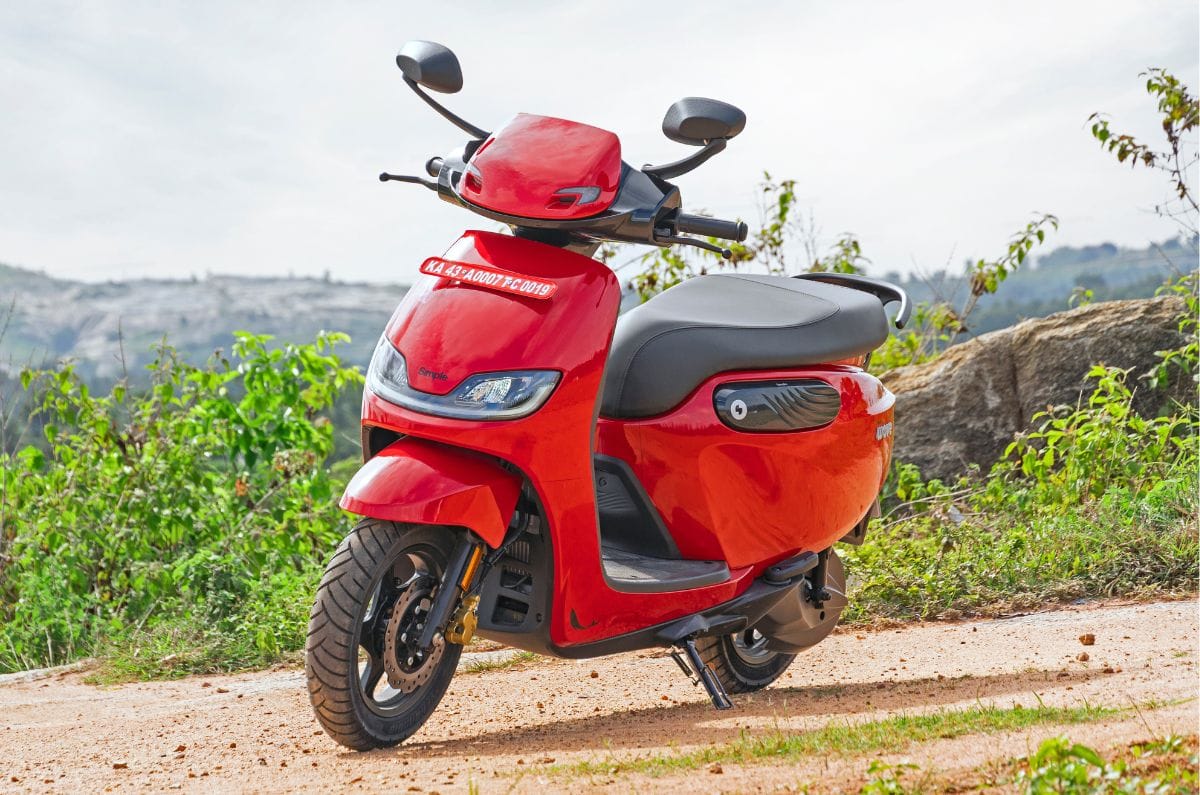
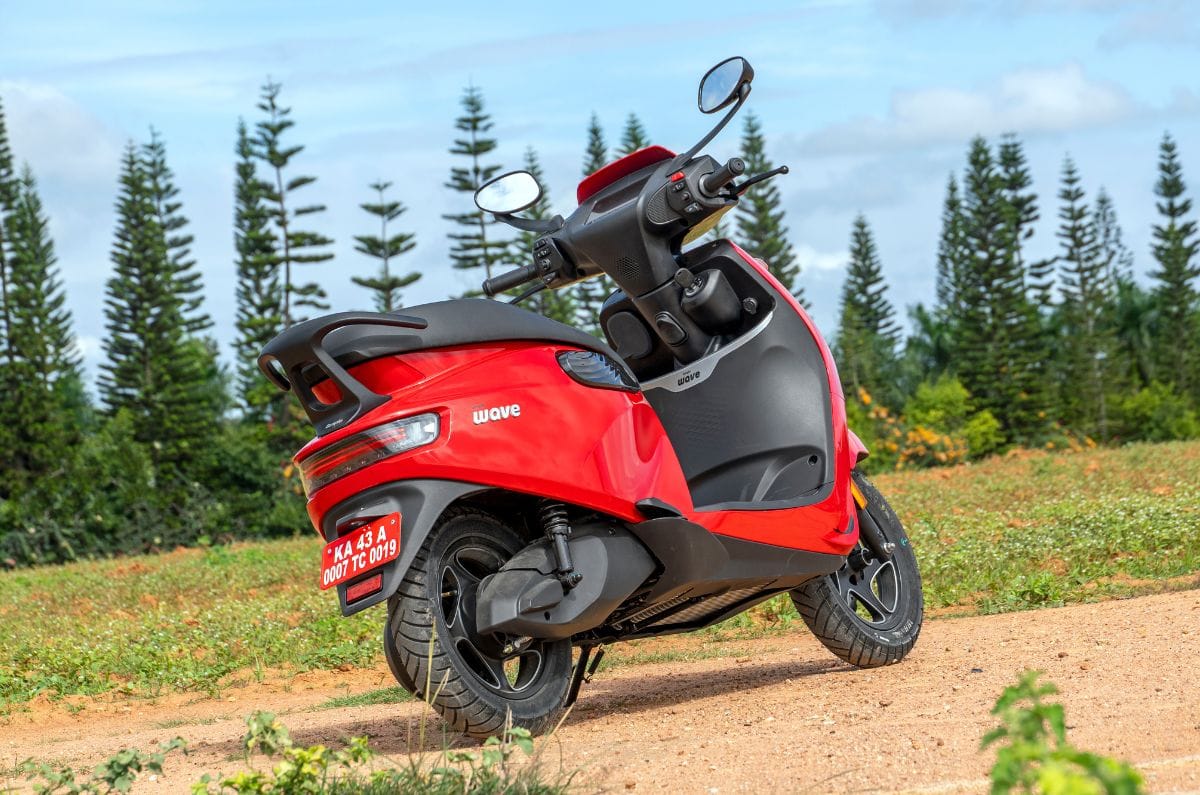
Design is subjective, of course, but the Wave looks good to my eyes with its smooth, rounded edges and distinctive silhouette. It’s got a good level of finish too, and the brighter colour options – red and blue – help it stand out. Simple has designed the Wave as a more accessible, family-oriented scooter, without making it look or feel built down to a cost.
It has a quirky design and surely stands out, especially in the brighter colour options.
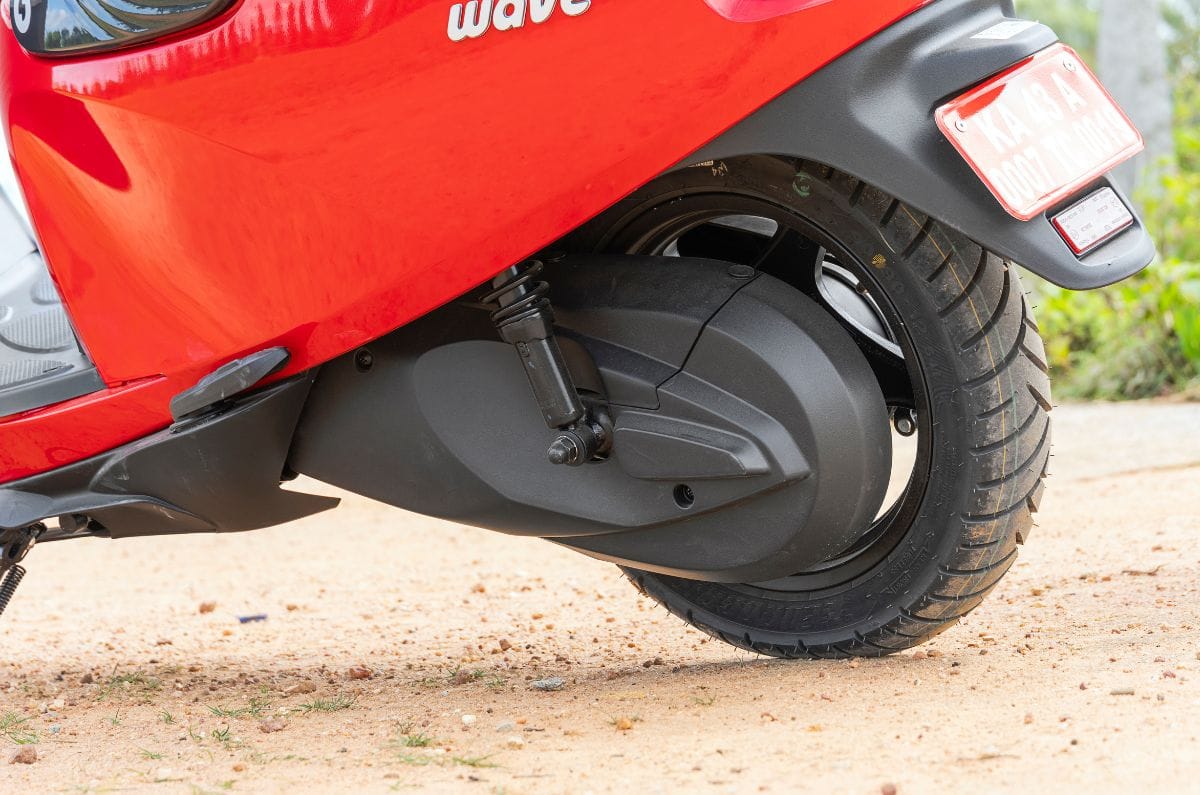
Compared to the sporty Simple One, the Wave’s chassis is quite different. The rear subframe has been reworked to accommodate the bigger boot and twin shocks (which replace the One’s monoshock). The Wave also uses a simpler, more cost-effective tubular swingarm instead of the cast unit on the One.
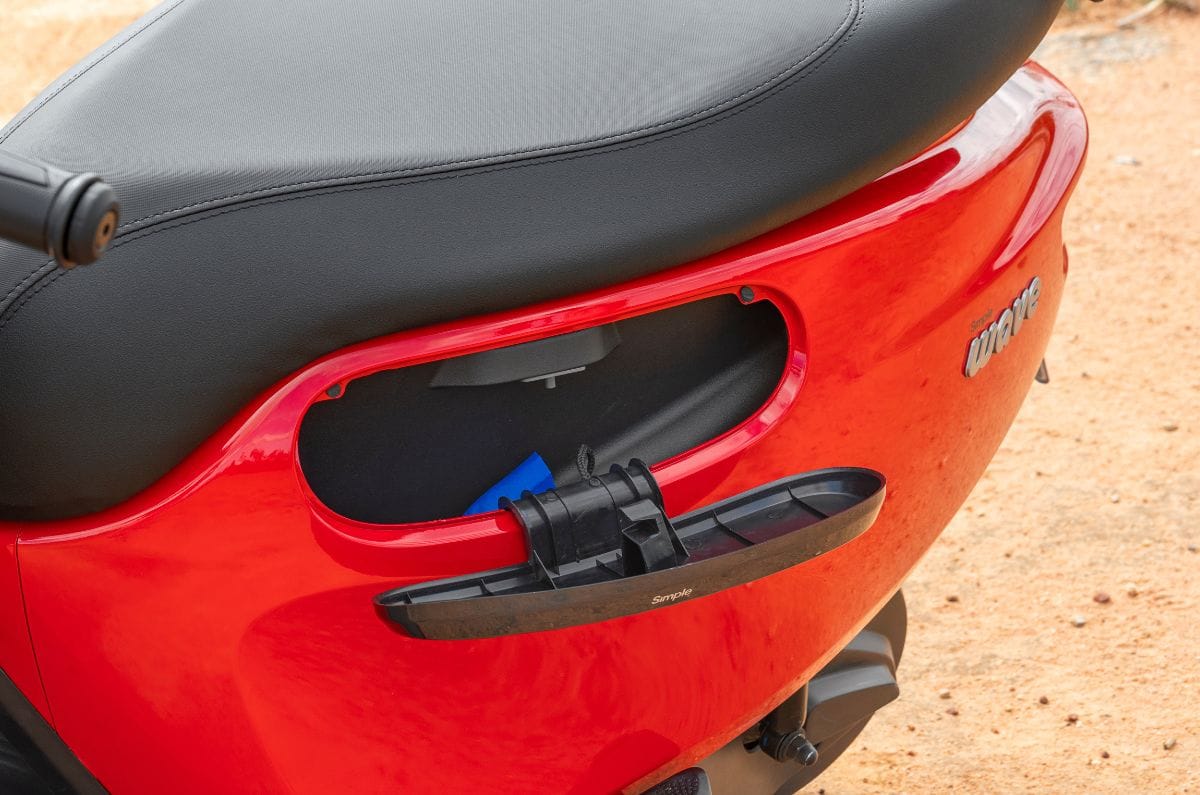
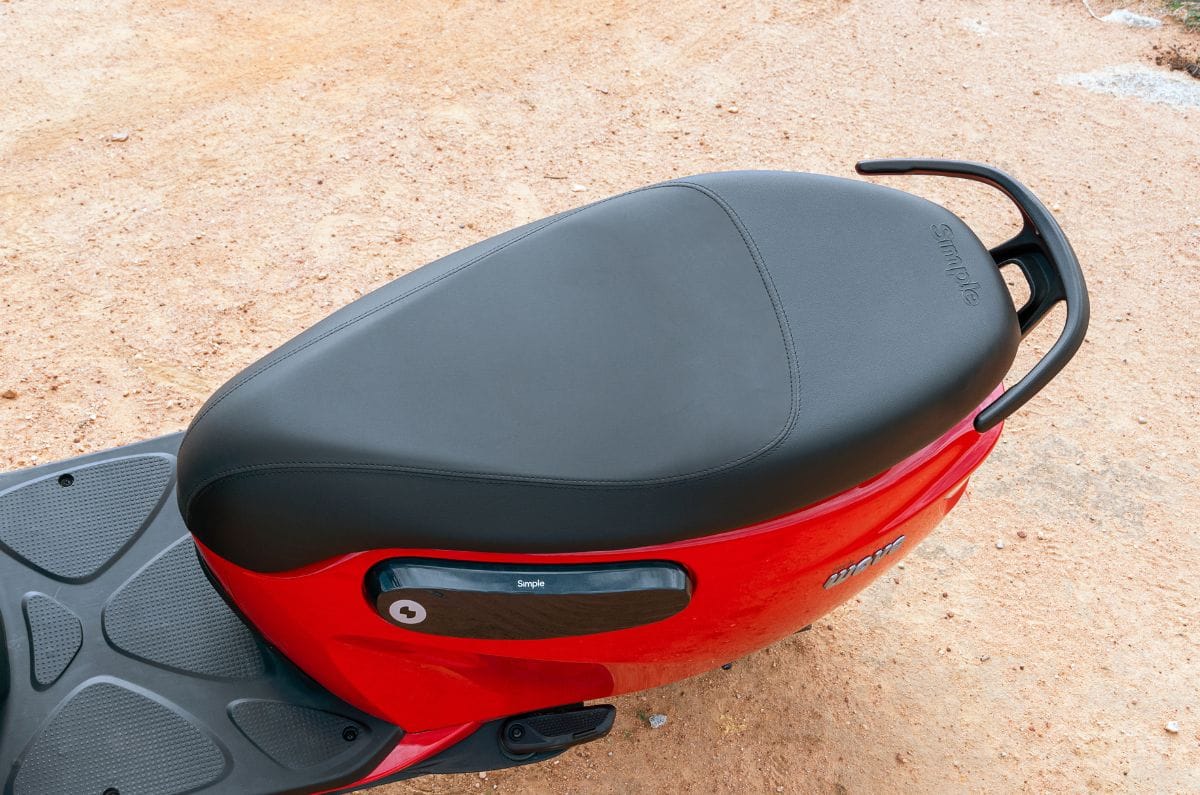
Lockable and weatherproof 4L“Pill” storage cubbies are a thoughtful touch, RH cubby is an accessory.
Simple Wave Ergonomics and comfort – 9/10
Offers a supple ride and ample space for two people
The differences only get more pronounced once you sit on the Wave. Its seat is long, wide and will easily accommodate two full-size adults, while its relatively low 775mm seat height makes it friendly for shorter riders.
That low seat height is no accident either; Simple took feedback from customers who had the One and incorporated it into the Wave. This is why the Wave also has a lower handlebar to make it more approachable for shorter and female riders. This has a trade-off, however. Taller riders will find the handlebar fouls their knees during tight, lock-to-lock U-turns.
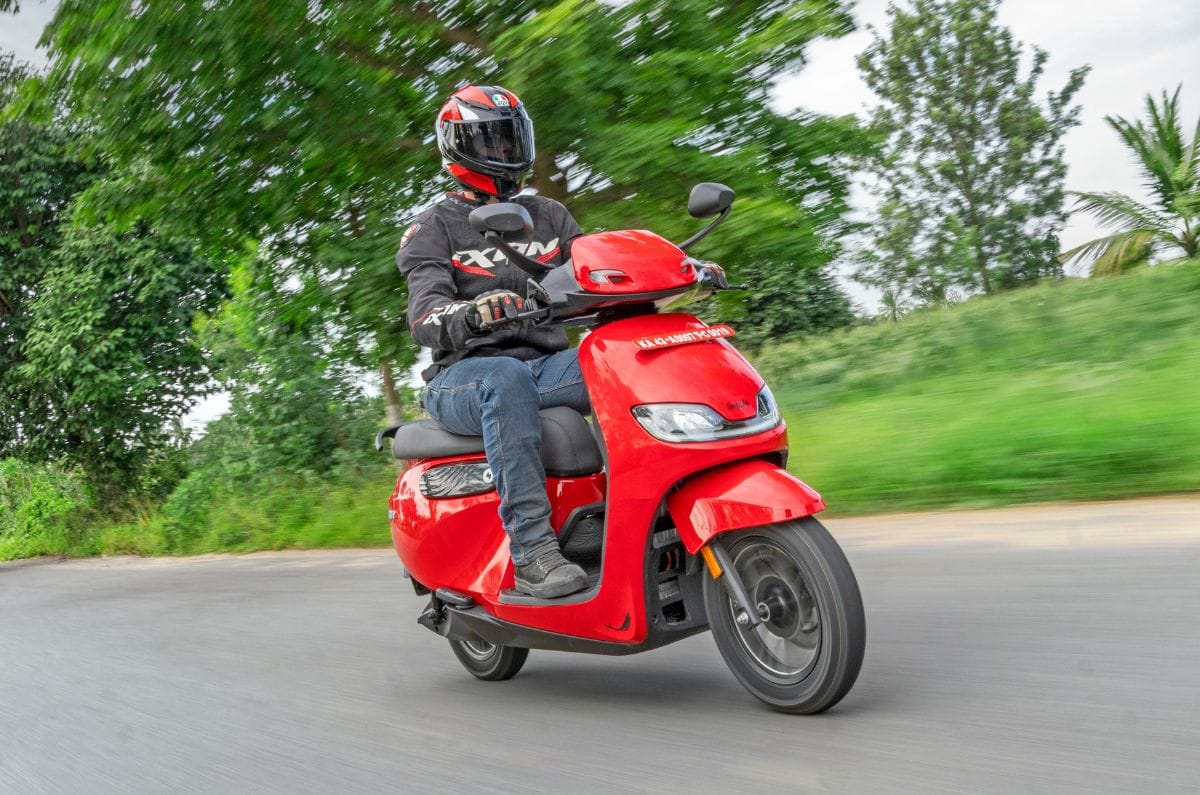
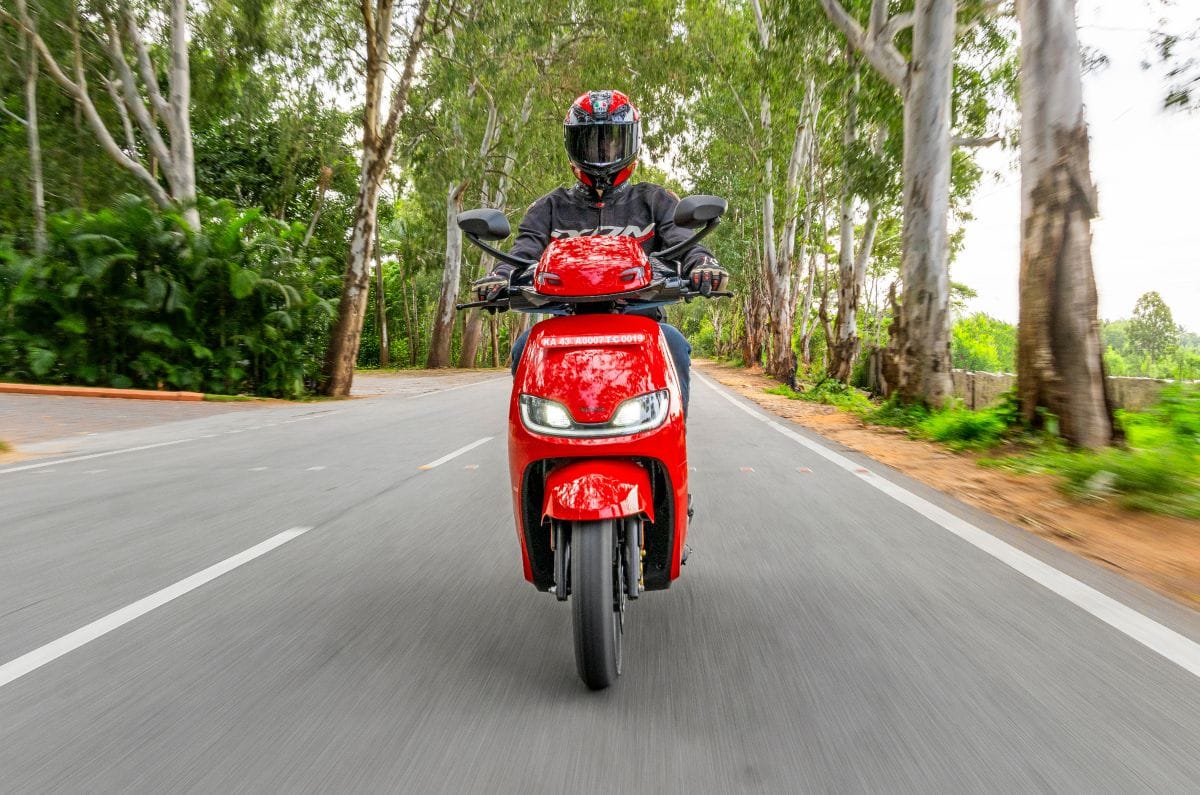
Riding position is spot-on and ride comfort too is excellent.
Other than that, the Wave is rather sorted ergonomically. Ride comfort is excellent for a scooter, and that isn’t a surprise given that the Simple One itself was quite comfortable. The Wave builds on that with a composed and plush ride that suits its intended role.
Depending on the variant, the Wave weighs between 121-128kg with the 3.7kWh TFT variant provided to us sitting roughly in the middle of that range (124.5kg). We found the Wave handled predictably, without any unwelcome surprises, feeling stable and sure-footed without compromising agility expected of a scooter.
Spacious, well-paded seat can comfortably seat 2 full-size adults.
Simple Wave Performance and range – 9/10
Performance is more than sufficient, Eco mode truly usable
Like the One, the Wave offers really brisk performance, but still feels approachable enough for everyday use. The 3.7 version gets three riding modes – Eco, Ride and Sport – and both Ride and Sport offer more than enough performance for everyday use, which isn’t really a surprise. In Ride the top speed is 75kph, whereas Sport takes it up to 90kph (speedo-indicated, not actual).
The real surprise, however, is Eco mode. Yes, it feels duller than the other two modes, but it isn’t crippled in the way Eco modes on other EVs. The Wave can still get up to around 50-55kph quite respectably and overtake traffic, making Eco genuinely usable even on faster roads or in a big city.
It handles predictably and surefootedly in all scenarios.
Given that the Wave uses the same motor as the OneS making 6.4kW and 52Nm, this performance is no surprise. However, on the Wave, the motor drives the rear wheel via a chain drive, not a belt as seen on the One models.. While a chain will be more maintenance-intensive than a belt, replacing it should be more affordable. Simple has worked to reduce powertrain noise with measures such as a rubber-damped sprocket, but there is still some motor noise. However, it’s much quieter than an Ather Rizta or 450, although far from dead silent like an Ather Konarc or TVS iQube.
Another welcome change to the One is the throttle response. Unlike the older One models we tested, where the scooter could continue accelerating briefly after the throttle was closed, the Wave’s accelerator behaves much more intuitively. It also gets traction control, although the throttle calibration is so smooth, you’re unlikely to need it in dry conditions but it will be a useful safety net in the wet.
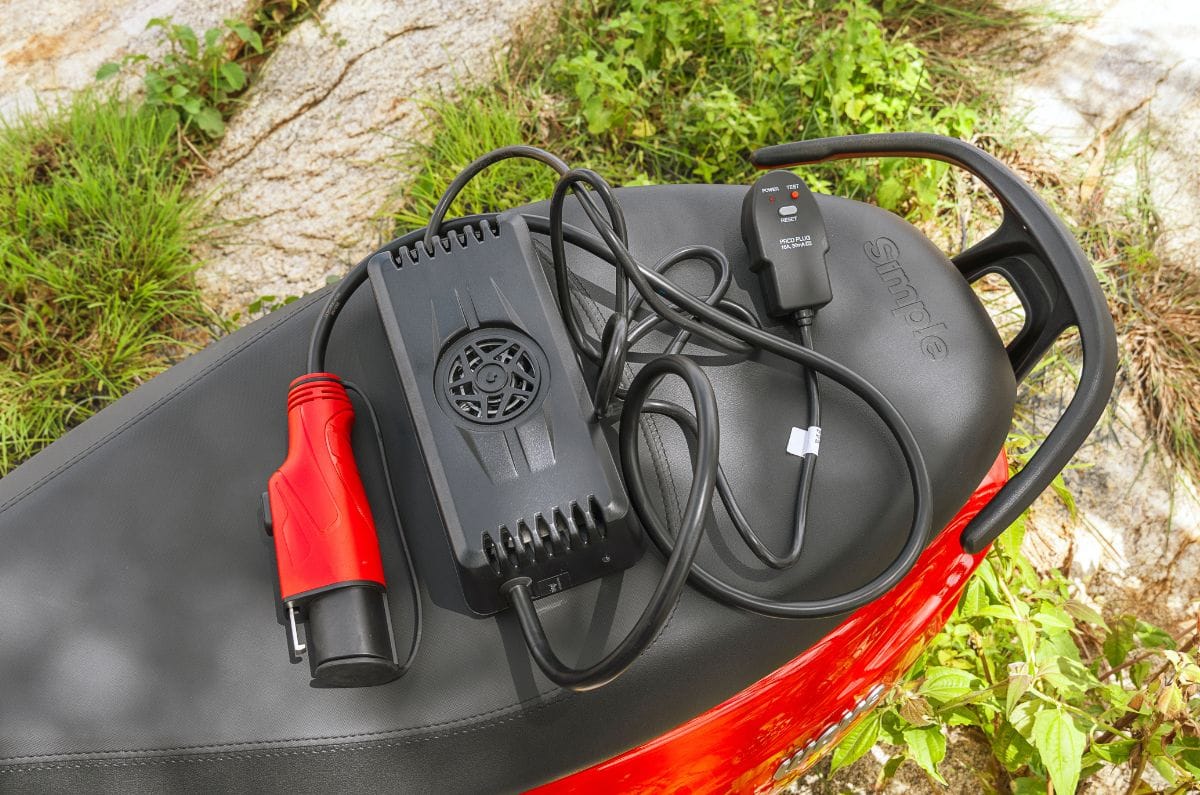
Fast 750W charger is standard on all variants.
Powering the Wave are four battery packs, depending on the variant you choose: 2.2kWh, 2.7kWh, 3.7kWh and 5kWh. The IDC ranges Simple claims are 110km, 132km, 171km and 243km, respectively. The first two use LFP (Lithium Ferrous Phosphate) chemistry, while the larger batteries use NCA (Nickel Cobalt Aluminium) cells.
The range indicator also appears to be quite trustworthy although we’ll reserve final judgement on real-world range until we can conduct a full test back in Mumbai. What is also nice is that all variants of the Wave come with a fast 750W charger which enables a pretty quick 0-80 percent claimed charging time of 3hr30min on the 3.7kWh version we were riding.
The standard warranty on the Wave is three years/30,000km, with five years/50,000km and 15 years/2 lakh km extended options also available. The price of these optional longer warranties has not been shared with us.
The Wave’s motor feeds power to the rear wheel via a chain, not a belt like on the One.
Simple Wave Features – 9/10
Massive 63L boot and Pill storage cubbies are very useful
While range without sacrificing usable performance is surely valuable on an EV, practicality is an important consideration as well. Storage is one of the Wave’s big strengths. There’s a useful front cubby, while the two “Pill” storage boxes on either side of the body panels are particularly nifty allowing you quick access to essentials you may need to reach for without having to get off the scooter. Each offers 4 litres of lockable weatherproof storage; the left one is standard, while the right is an accessory.
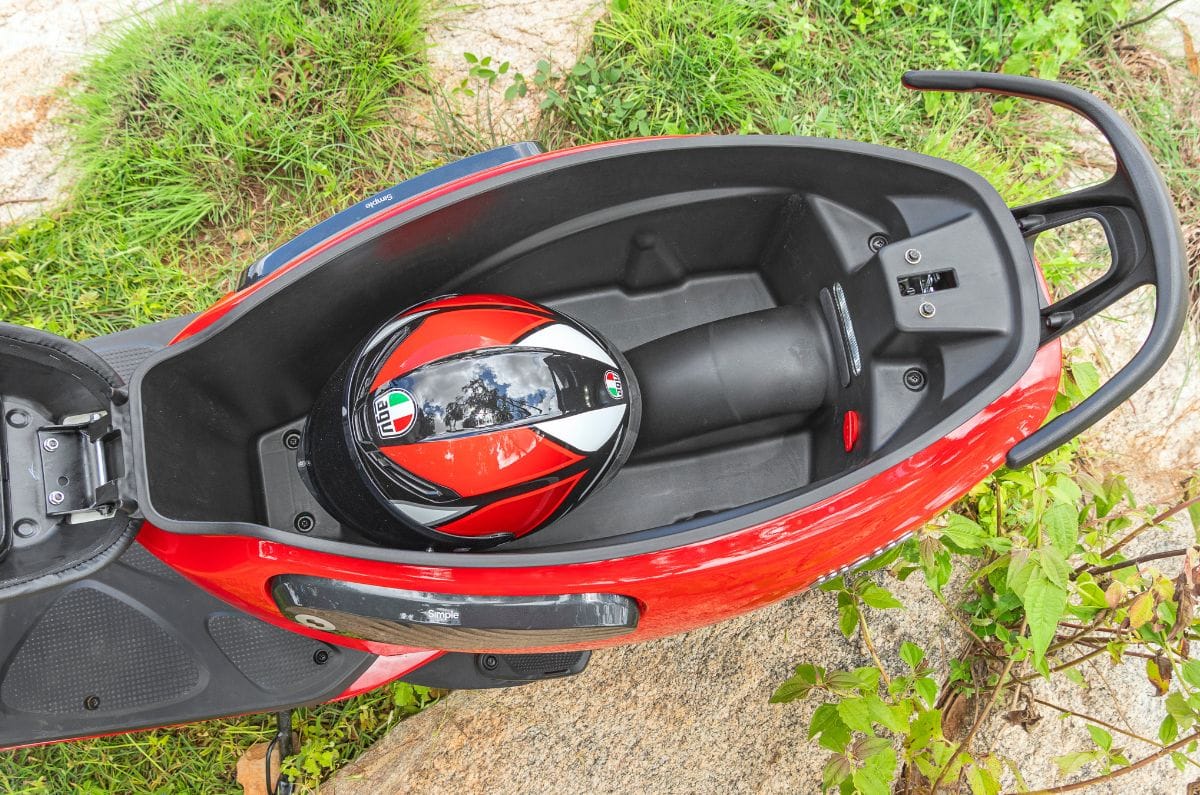
An undoubtedly big USP on the Wave is its cavernous 63L boot, the largest on any Indian scooter to date.
What is also an undoubtedly big USP on the Wave is its cavernous 63 litre boot, which is the largest on any Indian scooter to date. This should prove to be more than enough for everyone in the family! That being said, 63 litres is an enormous number and while this boot is undoubtedly big, I’m do find myself struggling to comprehend how it is nearly 50 percent bigger than the already cavernous 43 litre boot in the River Indie.
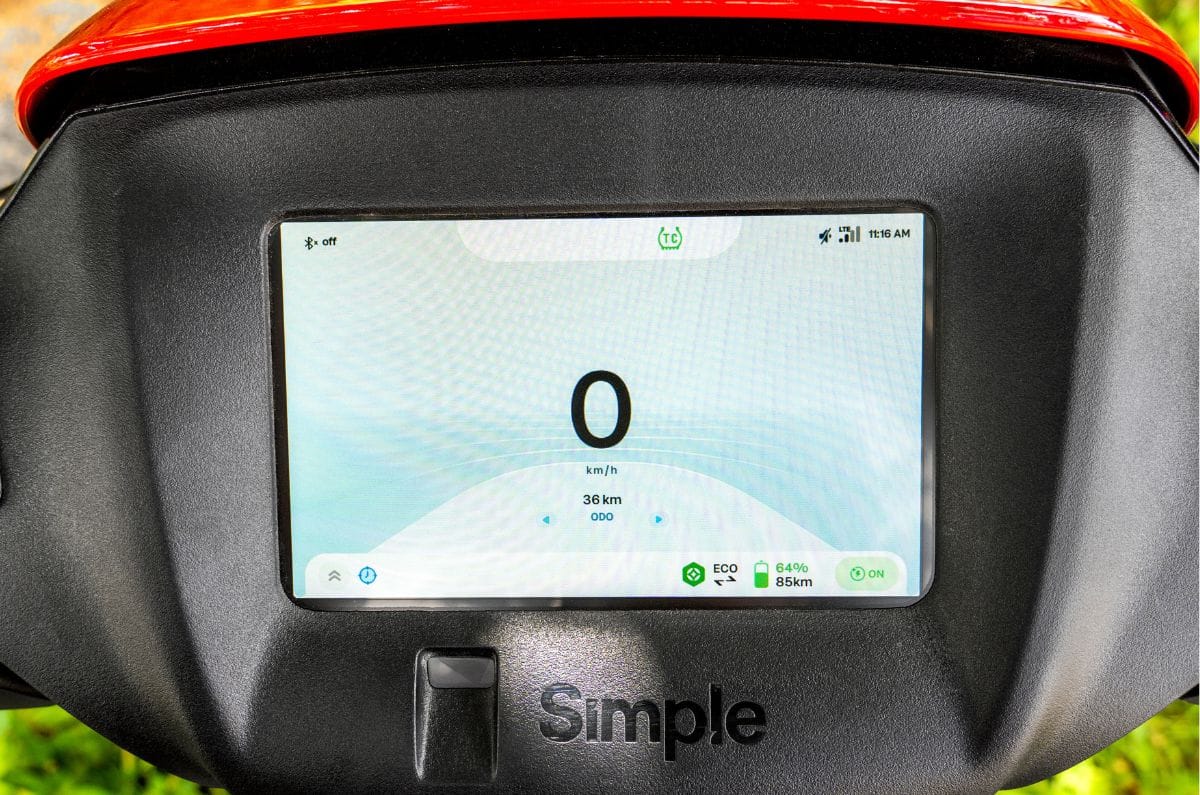
There’s plenty of technology too, including hill hold, drop-safe functionality, theft alerts and Bluetooth connectivity to your phone via the app. The TFT-equipped versions bring even more tech, while the brake-lock clasp is a small but useful touch.
TFT display is well laid-out and has a lot of tech but misses touch functionality.
Simple Wave Price and verdict – 8/10
Scooter has a lot of strengths but is pricey; company yet to prove itself
There isn’t a lot to dislike about the Wave as a scooter. It’s comfortable, spacious, well finished and quick enough to serve its intended purpose very well. However, for all its accomplishments, the Wave doesn’t come cheap. Sure, the Rs 1.10 lakh starting price is tempting, but as you climb the variants ladder, the Wave gets seriously expensive, topping out at Rs 1.90 lakh (ex-showroom, Bengaluru). That said, Simple is one of the few brands offering the option of a 5kWh battery in the family e-scooter space, which is commendable.
However, more than pricing, the bigger issue is that the company is yet to properly scale up its dealer network and establish an aftersales network that delivers the premium experience a buyer will expect after shelling out the money Simple is asking for. The Wave is a good product, but customers paying a premium for an electric scooter will expect not just a solid product but also dependable after-sales support.
The Wave has a lot of strengths but Simple is yet to prove itself in the market.
Ultimately, the Wave’s biggest challenge is that it comes from a start-up that has made plenty of big promises and statements over the past five years but still has a lot to prove. Its dealer network remains minuscule compared with the big players, and long-term reliability still remains unknown.
There’s a lot for Simple to do, but the good news is that the Wave is a genuinely likeable product. If the company can iron out the business side of things, the Wave has the potential to catapult Simple from just another niche start up to a much bigger player. Of course, doing so is a huge challenge and not an overnight process. Simple has a long road ahead of it, but the good news is that it finally has a convincing product to aid in that journey.
ISRO Privatisation: भारतीय अंतरिक्ष अनुसंधान संगठन (ISRO) ने अपने निजीकरण की खबरों को खारिज किया है। एजेंसी ने ऐसी अटकलों को ‘बेबुनियाद और गलत’ बताया। ISRO ने कहा कि स्पेस सेक्टर में निजी कंपनियों की भागीदारी बढ़ रही है। लेकिन इससे उसकी भूमिका कम नहीं होगी।
ISRO देश में एडवांस्ड स्पेस रिसर्च और टेक्नोलॉजी डेवलपमेंट का मुख्य संस्थान बना रहेगा। राष्ट्रीय और रणनीतिक मिशन भी उसके पास रहेंगे। अंतरिक्ष विज्ञान, खोज और महत्वपूर्ण स्पेस टेक्नोलॉजी पर भी ISRO काम करता रहेगा।
निजी कंपनियों की एंट्री क्यों बढ़ रही है?
भारत अपने स्पेस सेक्टर में ज्यादा कंपनियों को जोड़ रहा है। इसमें प्राइवेट कंपनियां, स्टार्टअप, शिक्षण संस्थान और सरकारी कंपनियां शामिल हैं।
ISRO के मुताबिक, इसका मतलब यह नहीं है कि एजेंसी की अहमियत घट रही है। मकसद पूरे स्पेस इकोसिस्टम को बड़ा बनाना है। इससे ISRO को ज्यादा जटिल और नई तकनीकों पर ध्यान देने का मौका मिलेगा। ISRO ने कहा कि बदलाव उसकी भूमिका में नहीं, बल्कि पूरे स्पेस सेक्टर के आकार और काम करने के तरीके में है।
ISRO अब किन कामों पर ज्यादा ध्यान देगा?
ISRO का फोकस अब अगली पीढ़ी की तकनीकों पर और बढ़ेगा। इसमें अत्याधुनिक रिसर्च, मानव अंतरिक्ष उड़ान और नए लॉन्च सिस्टम शामिल हैं। डीप स्पेस और दूसरे ग्रहों से जुड़े मिशन भी अहम रहेंगे। रणनीतिक तकनीकों पर भी ISRO काम करता रहेगा।
इसके अलावा कम्युनिकेशन, नेविगेशन और अर्थ ऑब्जर्वेशन के लिए एडवांस्ड पेलोड बनाए जाएंगे। सेंसर और प्रोपल्शन सिस्टम जैसी महत्वपूर्ण तकनीकों पर भी काम जारी रहेगा।
मच्योर टेक्नोलॉजी बनाएगा प्राइवेट सेक्टर
जो तकनीक पूरी तरह तैयार हो चुकी है, उसका बड़े स्तर पर उत्पादन निजी कंपनियां और सरकारी कंपनियां कर सकती हैं। इसमें मच्योर लॉन्च व्हीकल, नियमित तौर पर बनने वाले सैटेलाइट और दूसरे स्थापित सिस्टम शामिल हैं।
ISRO पहले ही कई तकनीकों को इंडस्ट्री को ट्रांसफर कर चुका है। एजेंसी ने साफ किया कि टेक्नोलॉजी ट्रांसफर का मतलब यह नहीं है कि वह उस क्षेत्र से हट रही है।
इसका मकसद बड़े स्तर पर उत्पादन बढ़ाना है। इससे कमर्शियलाइजेशन और इनोवेशन को भी बढ़ावा मिलेगा। कंपनियों को ग्लोबल मार्केट तक पहुंचने का मौका मिलेगा।
ISRO की भूमिका क्या रहेगी?
ISRO के पास मुख्य वैज्ञानिक और रणनीतिक जिम्मेदारियां रहेंगी। वहीं, इंडस्ट्री को तैयार तकनीकों को बड़े स्तर पर बनाने की जिम्मेदारी ज्यादा मिल सकती है। इससे ISRO अपने वैज्ञानिकों और संसाधनों को एडवांस्ड रिसर्च पर लगा सकेगा। दूसरी तरफ, निजी कंपनियां निवेश और मैन्युफैक्चरिंग क्षमता बढ़ाएंगी।
ISRO ने इस मॉडल को ‘ISRO-led national space ecosystem’ बताया है। यानी ISRO की भूमिका खत्म नहीं हो रही है। बल्कि स्पेस सेक्टर में ज्यादा कंपनियों के आने के साथ उसका फोकस और ज्यादा एडवांस्ड मिशन पर होगा।
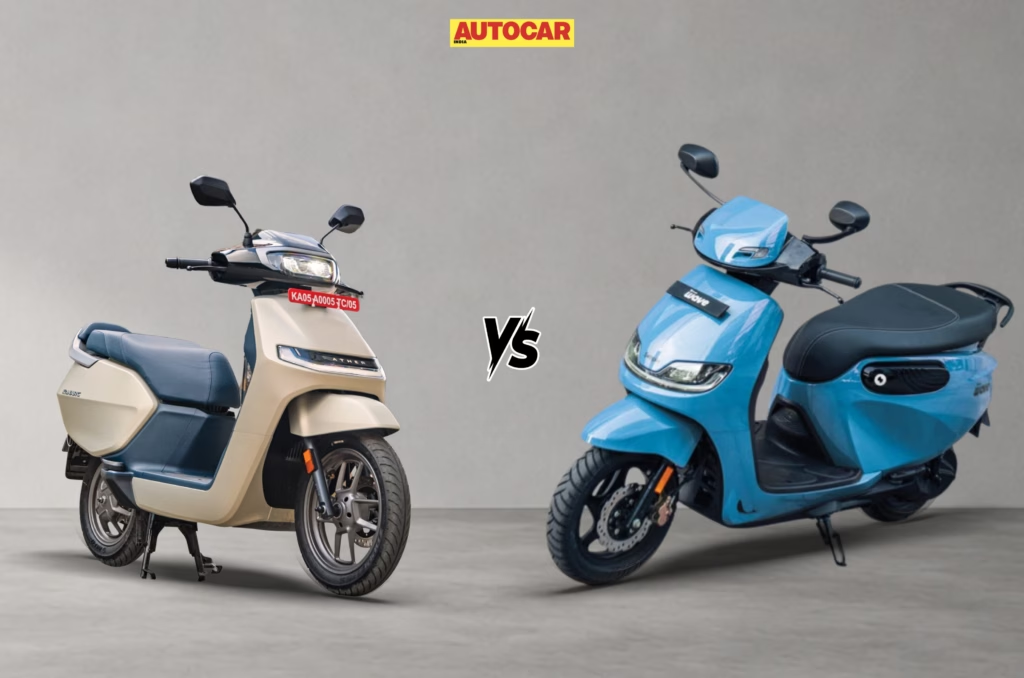
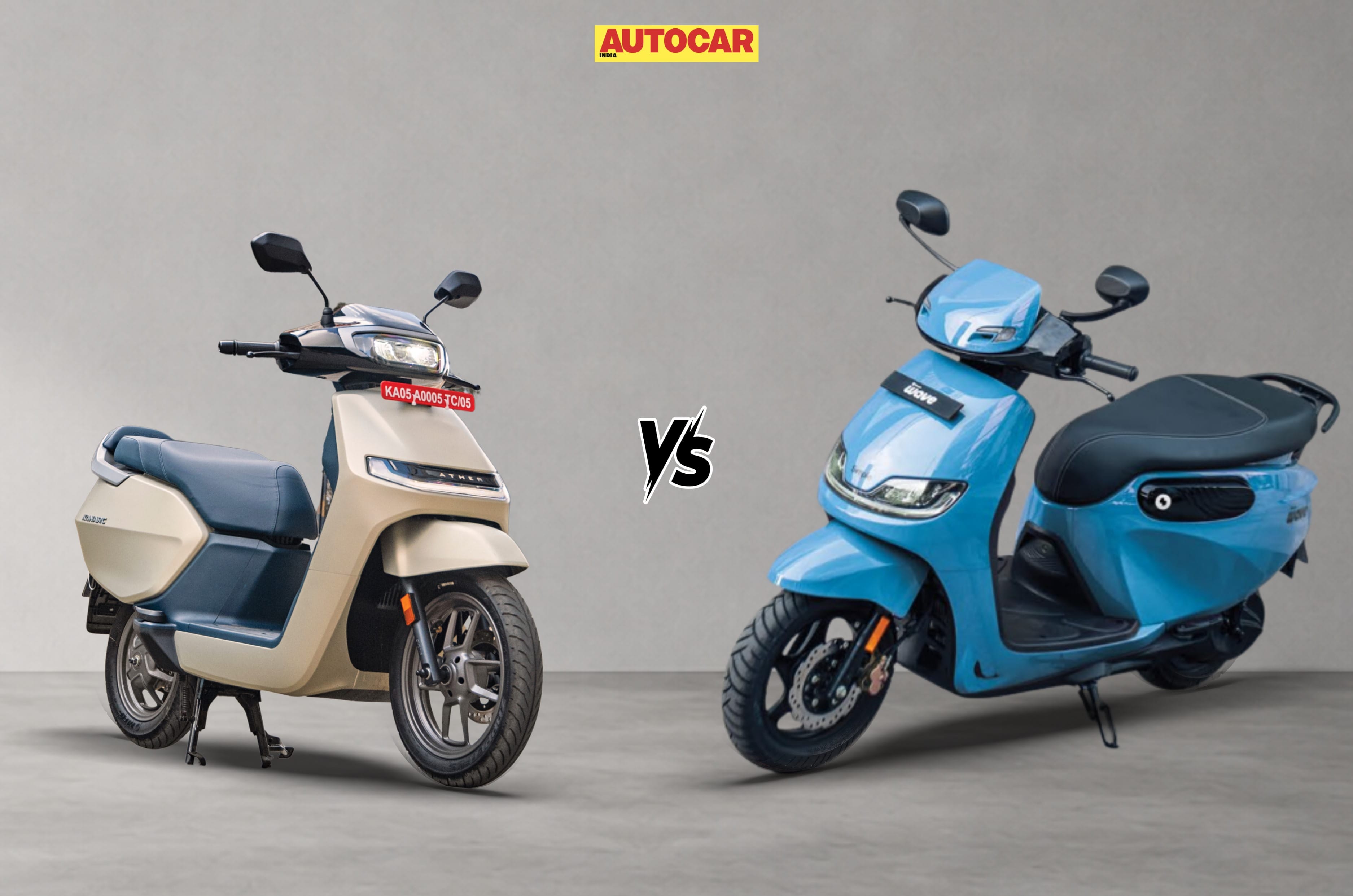
The Indian two-wheeler EV market is gaining momentum with legacy manufacturers expected to sell close to 10 lakh units by the end of the year. But the EV start-ups look to put up a tough fight to the sales numbers with Ather and Simple, both Bengaluru based EV makers, launching new EV family scooters. The Ather Konarc S 161 will be available from later this month and Simple has announced that deliveries for the Wave also start this month. Let’s see how both of them compare on paper.
Simple Wave vs Ather Konarc S 161: Motor, battery, and charging
Simple offers more power, battery, and faster standard charger
Simple Wave
Ather Konarc S 161
Peak motor power
6.4kW
4.7kW
Rated torque
NA
16Nm
Claimed top speed
90kph
70kph
Battery capacity
3.7kWh
3.5kWh
Claimed charging time (0-80 percent)
4hr
5h40m
IDC range
171km
161km
Simple’s scooter brings in a strong first punch with a higher powered motor and a marginally bigger battery than the Ather Konarc S. It also has a notably higher top speed as compared to the Konarc. The Wave comes bundled with a faster 750W off-board charger which enables it to charge to 80 percent almost two hours faster than the Konarc, which gets a 450W on-board charger as standard. However, Ather gives the option to add another 450W off-board charger to enable faster 900W charging. Simple currently doesn’t offer such an option for the Wave.
Simple Wave vs Ather Konarc S 161: Dimensions and underpinnings
Konarc gets a lower seat, but weighs more
Simple Wave
Ather Konarc S 161
Wheelbase
1347mm
1352mm
Seat height
775mm
770mm
Ground clearance
175mm
NA
Kerb weight
124.5kg
129kg
On paper, the Konarc has a marginally longer wheelbase than the Wave, but do note that the Wave boasts the longest seat in the country at 920mm, a title earlier held by Ather’s Rizta. For what it’s worth, we did not face any issues with the Konarc, space-wise or comfort-wise. Ather’s scooter also has a slightly lower seat height but it’s a negligible difference to most users. What’s not negligible is its 4.5kg additional weight over the Simple Wave, but it’s explained by the Konarc using metal body panels.
Simple Wave vs Ather Konarc S 161: Brakes, tyres, and suspension
Konarc gets larger tyres
Simple Wave
Ather Konarc S 161
Tyres (F,R)
90/90-12, 90/90-12
90/90-14, 100/90-12
Brakes (F,R)
220mm disc, drum
220mm disc, 130mm drum
Suspension (F,R)
Telescopic, twin shock
Telescopic, monoshock
The Ather Konarc is the first Ather to get a 14-inch tyre, even if it’s just at the front; and its rear tyre is larger than the Wave, which sticks to a 12-inch at both ends. Both scooters have a front disc brake and a rear drum brake although Simple hasn’t clarified the size of the Wave’s rear drum. On the suspension side of things, the major difference is that the Wave uses a twin shock rear suspension, whereas the Konarc gets a monoshock unit.
Simple Wave vs Ather Konarc S 161: Features
Features filled to the brim, for an added price
Features have been the trump card for almost all EVs from their inception and Ather has led that charge from the front. Simple appears to have caught up to Ather with both the scooters matching each other on features like fall safe, hill-hold, smartphone connectivity, and a TFT cluster on the top variants and a LCD cluster on the lower variants. Simple does offer you a choice between the TFT and the LCD cluster on the Wave (TFT costs Rs 15,000 extra), whereas Ather has reserved the TFT cluster for the Z line, due to launch next year. Features-wise, both companies offer turn-by-turn navigation, call and SMS alerts, GPS tracking, etc., Ather Konarc S’ gets most of those features in its LCD cluster, but Simple has reserved all of these for the TFT cluster variants.
A majority of these features do require additional subscriptions. Ather’s is a one-time cost of Rs 17,000 (Ather StackPro) for the Konarc S 161 variant. Simple, on the other hand, offers two kinds of subscription plans. The first plan is a one-time purchase to add Tyre Pressure Monitoring System (TPMS) and Connectivity modules. The second plan is a yearly subscription that enables all the smart features the company has to offer. At the time of writing, Simple hasn’t revealed the prices for the Wave line-up yet. Just for perspective, for the One scooter with a 5kWh battery, you have to pay a Rs 3,687 one-time payment for the first plan and Rs 2,999 per year for the second plan. To be clear, it’s possible to buy and use either scooter without subscribing to these add-ons, but the experience will feel a lot like a typical ICE scooter.
Simple Wave vs Ather Konarc S 161: Price
Ather gets the better starting price
Simple Wave
Ather Konarc S 161
Price (ex-showroom, Bengaluru)
Rs 1.60-1.75 lakh
Rs 1.45 lakh
For all that it offers and the longest seat in the scooter industry and 63L boot space and and additional 7 litres of cubby storage, spread across the scooter with innovative spots like Pill-storage, the Simple Wave costs Rs 1.60 lakh for the LCD cluster variant and Rs 15,000 extra for the TFT variant. The Ather Konarc without Ather StackPro comes in at Rs 1.45 lakh and with it would go up to Rs 1.60 lakh. While Ather has officially announced that the Konarc S 161 variant will be available from later this month, Simple hasn’t clarified if their “deliveries in September” claim applies to all six of their variants. If you’re interested in either scooter, we’d suggest that you check out and test ride them before deciding.
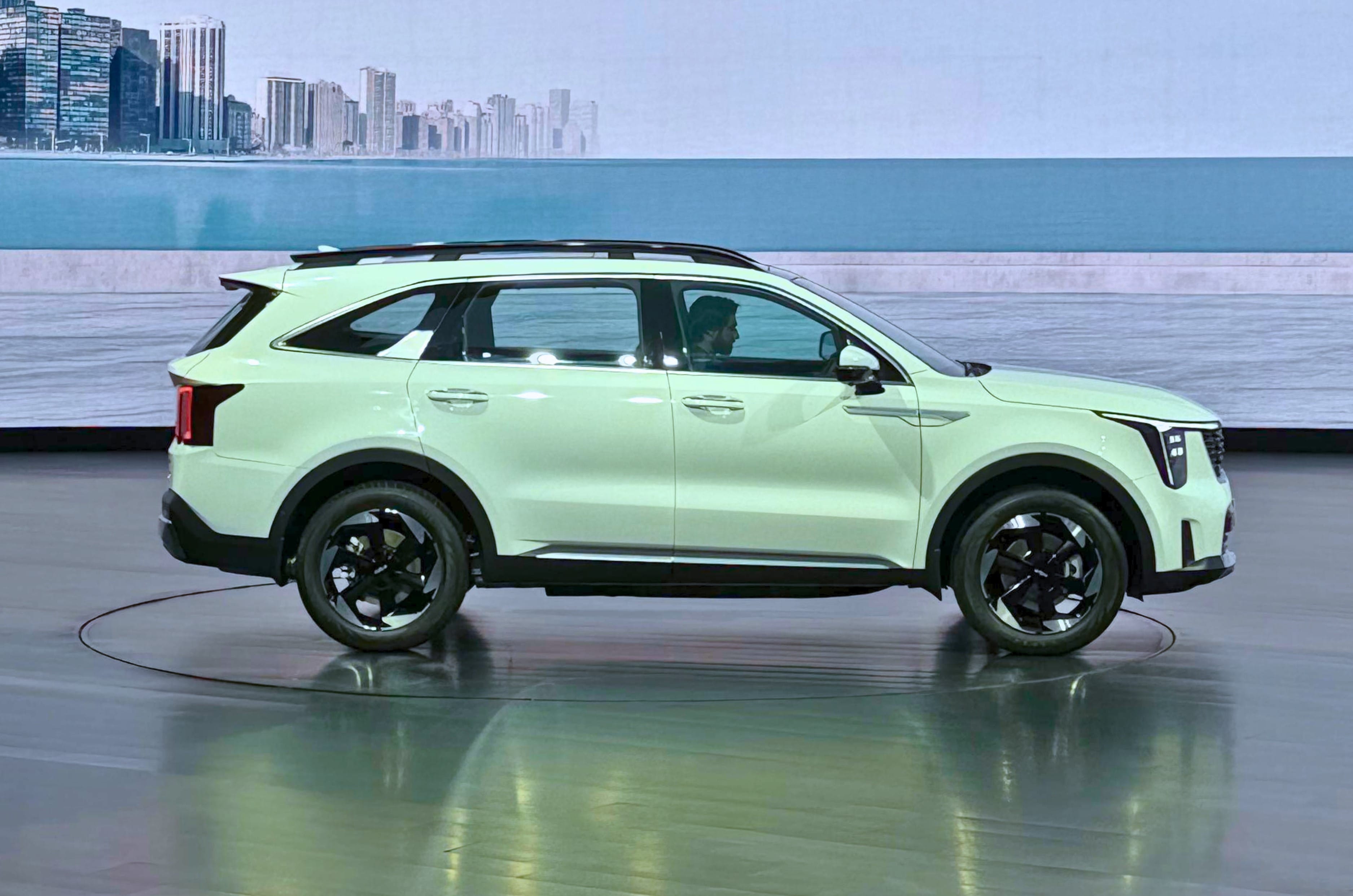
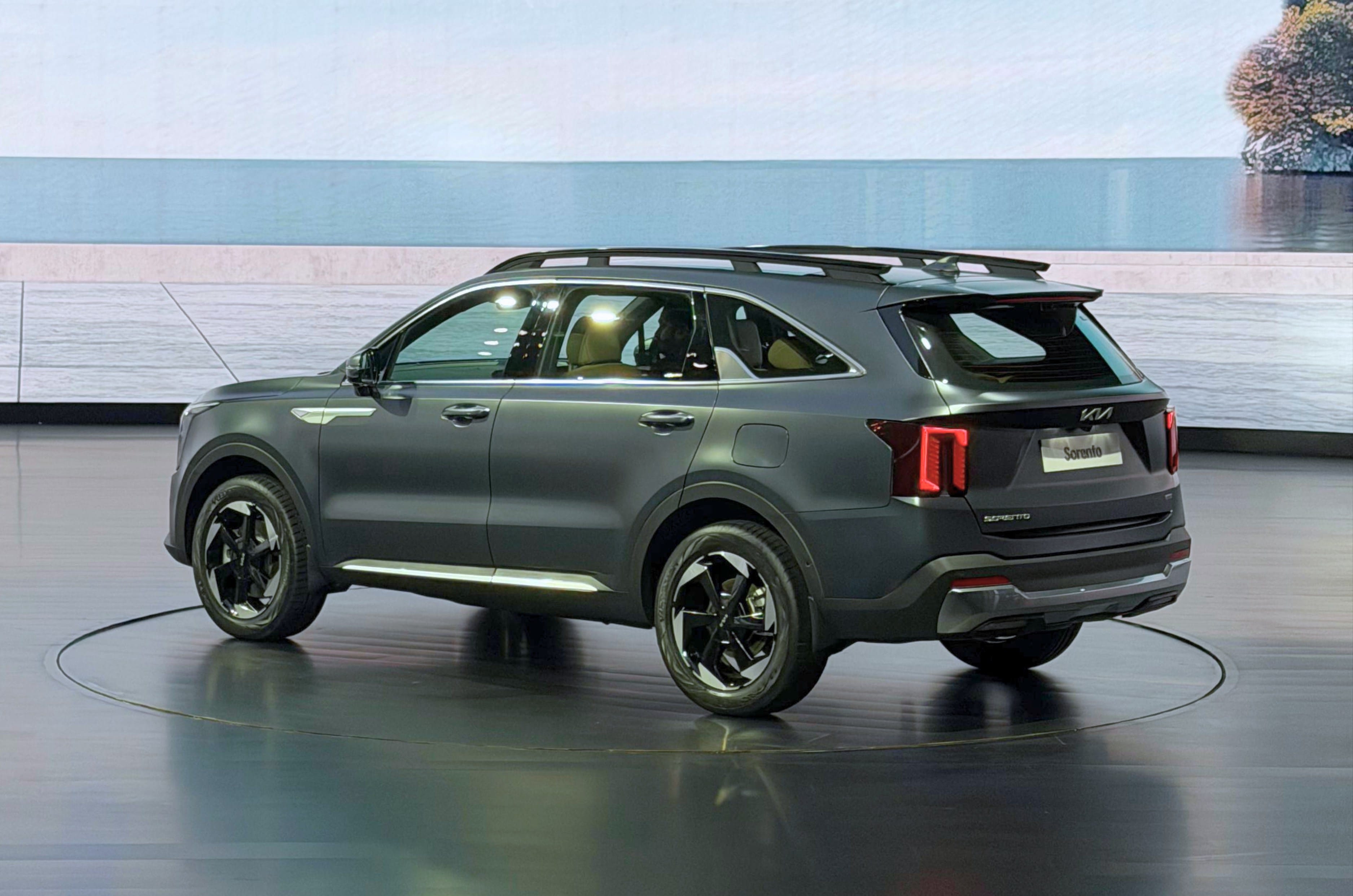
Kia has a new flagship ICE SUV in India in the form of the Sorento. The Korean carmaker has thrown quite a lot at it, offering it with a wide variant lineup with strong-hybrid and diesel engines, front wheel drive and all-wheel drive configurations, and both 6- and 7-seater configurations. In the executive SUV space, the Sorento finds itself in the company of the Skoda Kodiaq, Volkswagen Tayron and Jeep Meridian, and uniquely, it’s the only one to come with a strong-hybrid powertrain. If you have your eyes set on the Sorento, here’s everything you need to know about Kia’s latest three-row SUV.
1. What’s the price range of the Kia Sorento?
2026 Kia Sorento variant-wise prices (in Rs lakh, introductory, ex-showroom)
Diesel 7-str
Diesel 6-str
Strong-hybrid 7-str
Strong-hybrid 6-str
HTE
27.99
–
29.49
–
HTE(O)
29.49
–
30.99
–
HTK
32.49
32.69
33.99
34.19
HTK(A)
33.49
33.69
34.99
35.19
HTX (AWD)
37.49
37.69
38.99
39.19
HTX(A) (AWD)
38.49
38.69
39.99
40.19
The Kia Sorento is priced between Rs 27.99 lakh and Rs 40.19 lakh (ex-showroom), and is available in as many as 20 different variants. More specifically speaking, the diesel range starts at Rs 27.99 lakh and goes up to Rs 38.69 lakh for the top-spec AWD variant. Meanwhile, the strong-hybrid range is priced from Rs 29.49 lakh and Rs 40.19 lakh (ex-showroom).
On-road prices for the Sorento hybrid range between Rs 37.68 lakh and Rs 51.30 lakh in Delhi. Meanwhile, the diesel’s on-road price in Delhi ranges between Rs 35.81 lakh and Rs 49.42 lakh (ex-showroom). Do note on-road prices can vary depending on the city.
2. What powertrains are available with the Kia Sorento?
The Sorento is available with two powertrain options – a 1.6-litre turbo-petrol strong hybrid and a 2.2-litre diesel engine. In the turbo-petrol strong hybrid version, the combustion engine produces 180hp and 265Nm while an electric motor produces an additional 65hp and 264Nm. Kia has, however, not revealed the battery size or the combined total output for this powertrain. The diesel, meanwhile, produces 193hp and 442Nm. The Sorento is, in fact, just one of two SUVs in this segment to offer a diesel engine, while the strong-hybrid is its novelty.
Both powertrains are offered only with an automatic gearbox – 6-speed AT for the strong-hybrid and 8-speed DCT for the diesel. Both also get the option of front-wheel drive and all-wheel drive. Kia has, however, not revealed specific fuel efficiency figures for either powertrain yet.
3. How big is the Kia Sorento
Kia Sorento vs rivals: Powertrain options
Kia Sorento
Volkswagen Tayron
Skoda Kodiaq
Jeep Meridian
Length (mm)
4,815
4,792
4,758
4,769
Width (mm)
1,900
1,866
1,864
1,859
Height (mm)
1,785
1,665
1,679
1,698
Wheelbase (mm)
2,815
2,789
2,791
2,782
Ground clearance (mm)
TBC
TBC
192
214
Wheel size (inch)
18-19
19
18
18
The Sorento is the largest SUV in its segment in every parameter, which lends it quite an imposing stance on the road. It also has the longest wheelbase in its class, and offers the option 18-inch and 19-inch alloy wheels, depending on the trim. For
4. What are the exterior and interior colour options available on the Sorento?
The Kia Sorento is offered with eight exterior colour options, including Aurora Black Pearl, Glacier White Pearl, Magma Red, Ivory Silver, Gravity Grey, Imperial Blue, Pewter Olive, and Dark Gun Metal. Among these, the Dark Gun Metal colour is offered on the top-spec HTX and HTX(A) trims, while all other options are available across the range.
On the inside, Kia is offering two colour schemes: Smoky Black and Grey, and Premium Black and Olive Brown. The former is offered with the lower-spec HTE, HTK, HTE (O), HTK(A) trims, while the latter is available with the higher-spec HTX and HTX(A) trims.
5. What are some of the standout features on the Sorento?
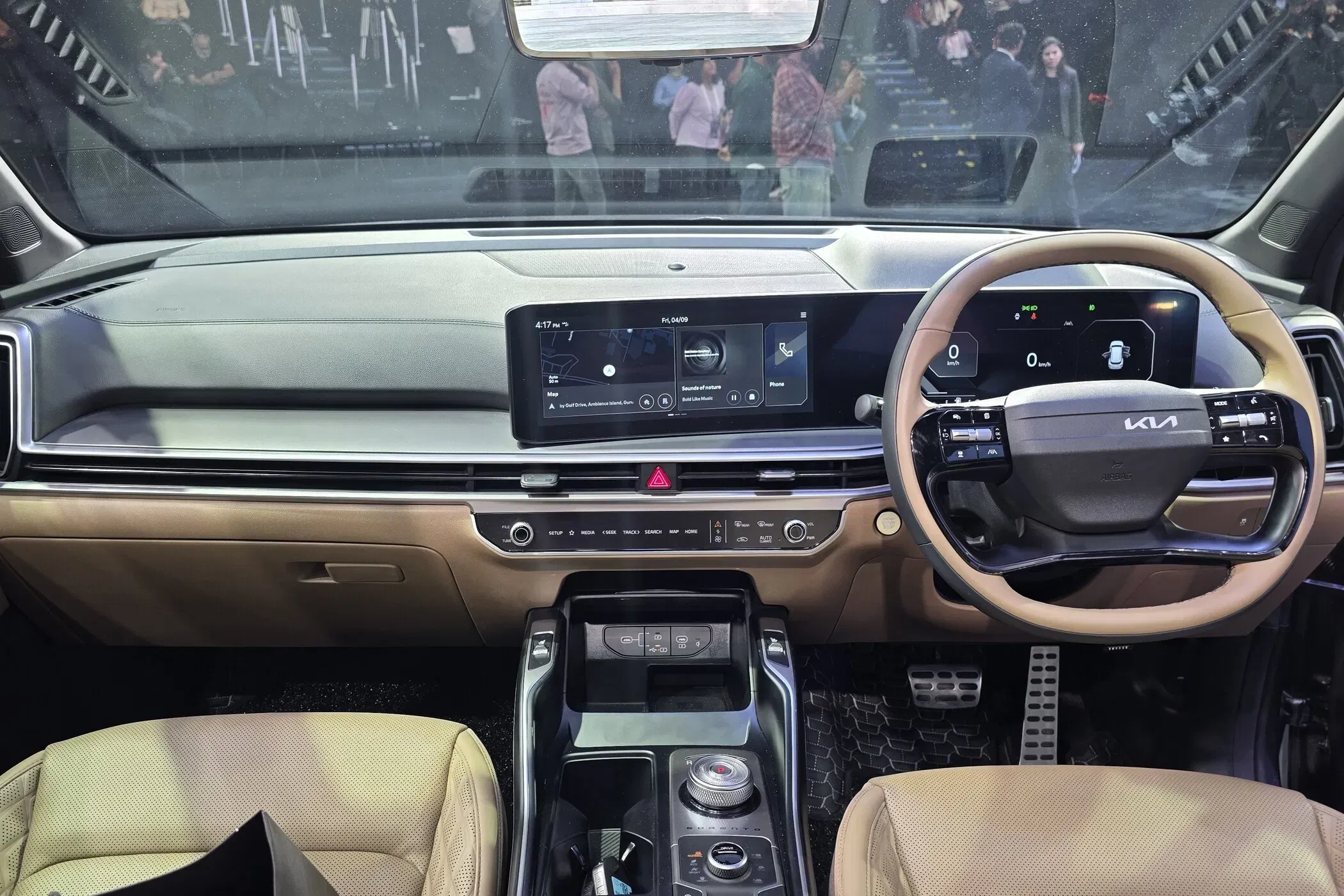
Like most Kia, the Sorento is absolutely loaded to gills, with the India-spec model even debut some features for the Sorento nameplate globally. There are two 12.3-inch screens for instrumentation and infotainment, the front seats are ventilated, have 10-way power adjustability and offer adjustable lumbar support. The co-driver’s seat has a boss mode to extend the middle-row space. The middle-row seats can be electronically folded, and the 6-seater version further offers middle-row seat ventilation.
Other features include a 12-speaker Bose sound system, a panoramic sunroof, dual-zone climate control, a head-up display (HUD) and a powered tailgate. Real-time generative AI is a first for any Sorento available globally. Safety features include 10 airbags, a digital inside rearview mirror (IRVM), a 360-degree camera, auto parking assistance, front and rear dashcams, a tyre-pressure monitoring system (TPMS) and Level 2+ advanced driver assistance systems (ADAS).
6. Which variant of the Kia Sorento should you buy?
With over 20 variants to choose from, the Sorento stretches a very wide price band across both its powertrain options. However, we’d recommend the mid-spec HTK variant which offers the most for your money. It misses out on the AWD system, but packs all the niceties such as the dual 12.3-inch screens, 12-speaker Bose sound system, 360-degree camera with blind-spot monitor, 64-colour ambient lighting, 19-inch alloys, leatherette upholstery, panoramic sunroof, powered tail gate, ventilated front seats and more.
It does miss out on a digital IRVM, HUD, more electronic adjustment levels for the front seats, ventilated second-row seats and boss mode but none of these is a deal breaker. However, if you are on a budget, the one-over-base HTE(O) is the best value-for-money variant, offering a decently equipped feature suite for its price.
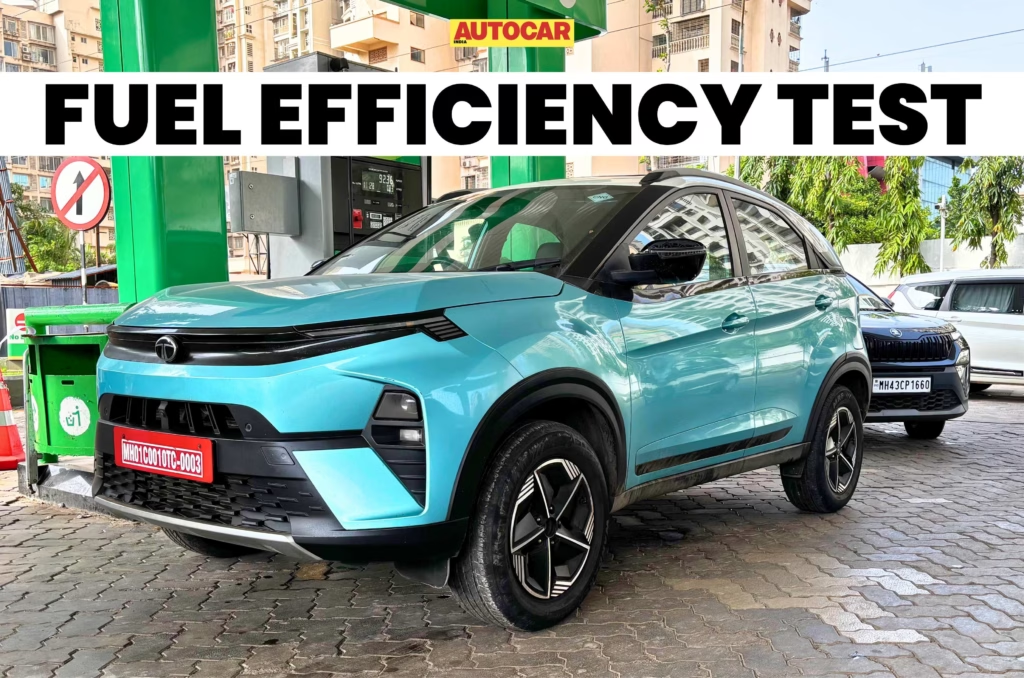
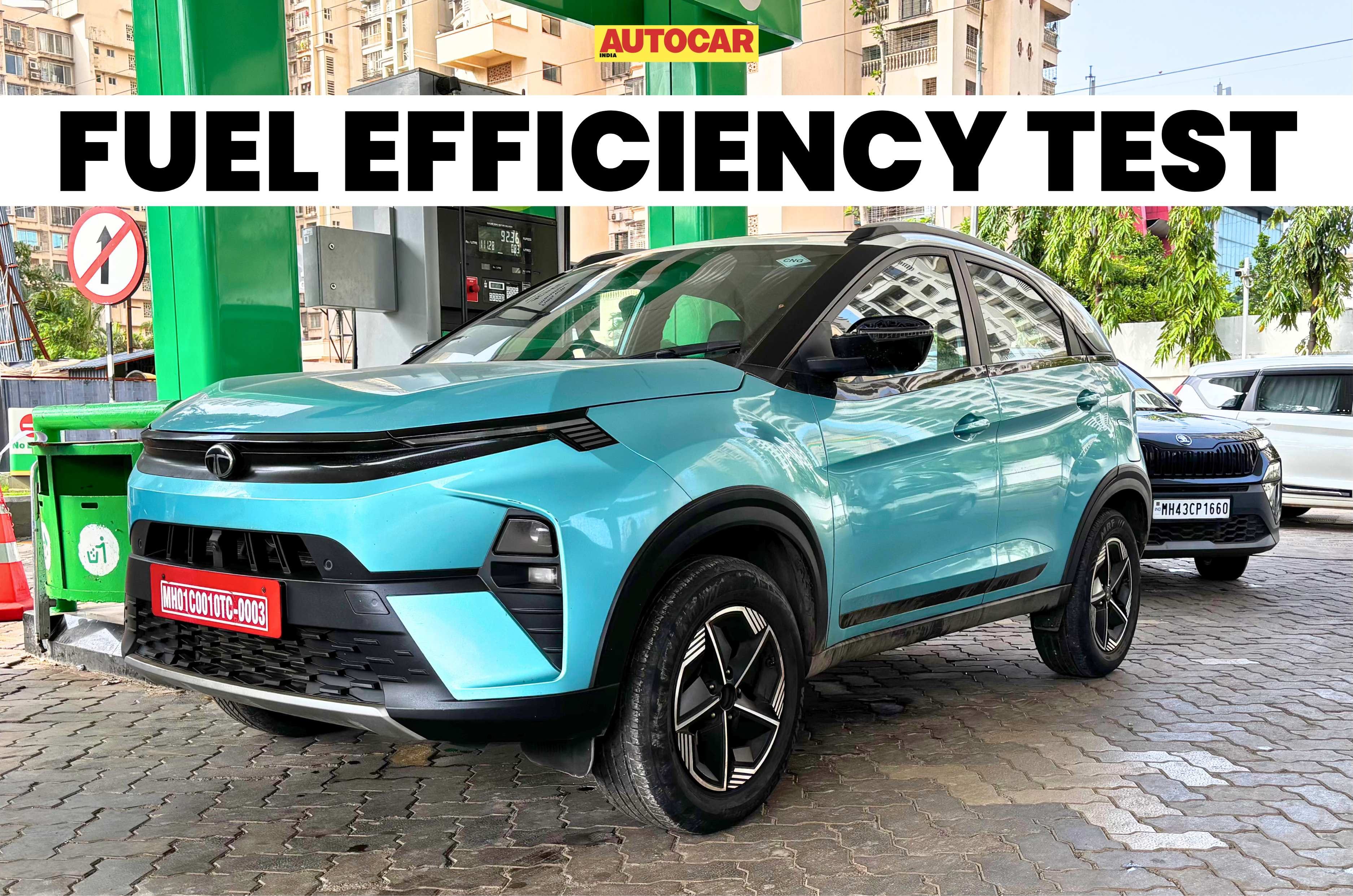
The Tata Nexon iCNG is the first turbocharged CNG vehicle sold in India with a factory-fitted CNG kit. Available in all variants, the CNG range is priced between Rs. 8,34,990 for the base trim and Rs. 13,29,990 for the top-spec Fearless+PS trim, priced at a premium of between Rs. 70,000 and Rs. 1,15,000 over comparable petrol variants.
We’ve now put the Tata Nexon iCNG to the test to see how it fares.
Powering the Nexon iCNG is a 1.2-litre, three-cylinder turbo-petrol engine as seen in the regular Nexon and is paired to a six-speed manual transmission. While the torque remains the same as the petrol unit at 170Nm, power is down by 20hp in the CNG version, now producing 100hp. It features a twin-tank CNG system with a capacity of 60 litres or 9kg, smartly placed below the boot floor to free up a respectable 321 litres of luggage space.
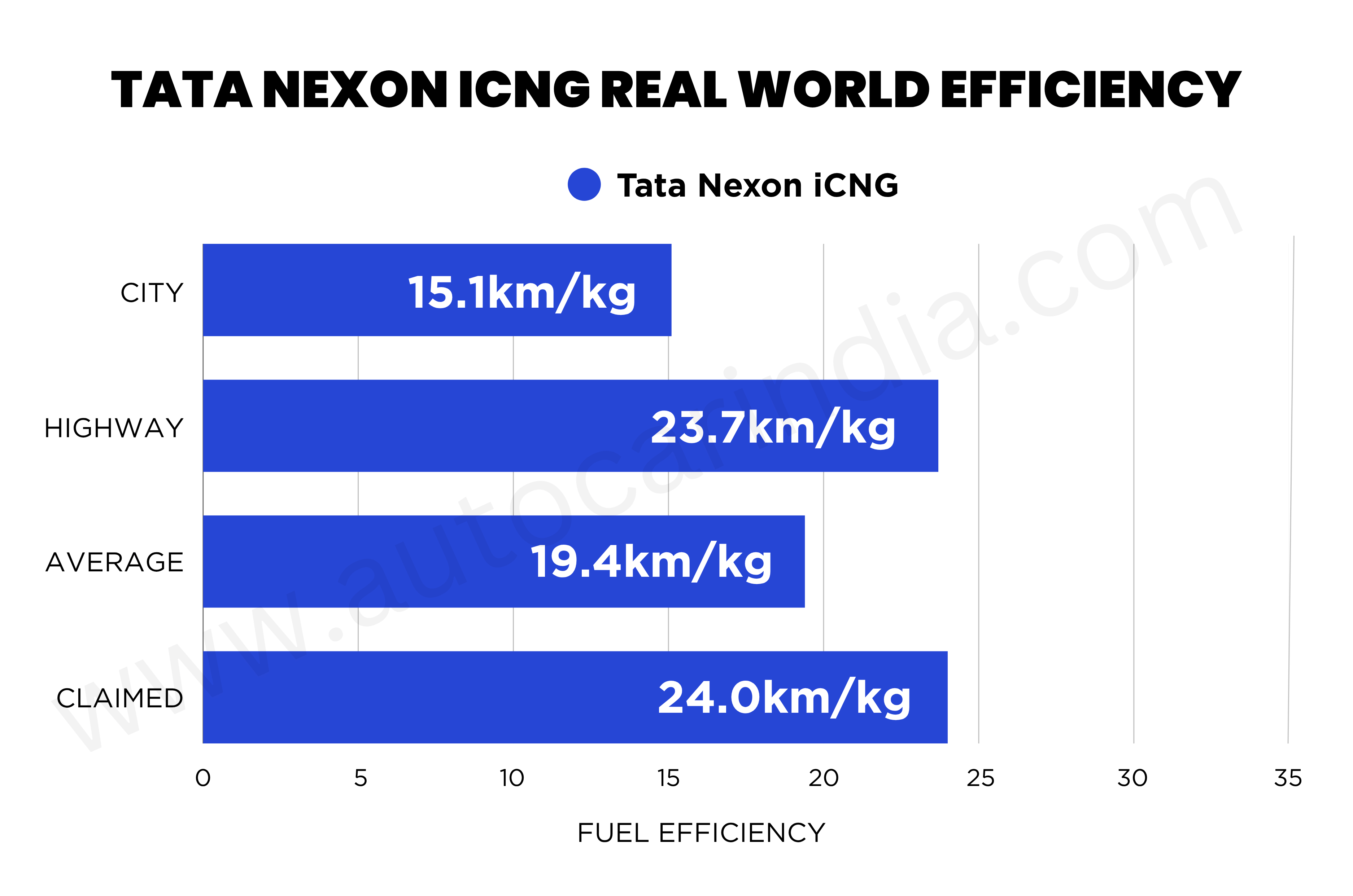
In our tests, the Nexon iCNG delivered 15.1km/kg in the city and 23.7km/kg on the highway, for an average overall real-world efficiency of 19.4km/kg. What’s commendable is that its highway efficiency is close to its ARAI-claimed efficiency of 24km/kg.
When refilled from empty, we managed to fill 7.5kg of CNG as opposed to Tata’s claim of 9kg. CNG filling depends on ambient temperature and pump pressure, so under optimal conditions, achieving 8.5-9kg should be possible.
With the overall average fuel efficiency of 19.4km/kg, you can expect a real-world range of 145-160km on a full tank of CNG.
Autocar India’s fuel-efficiency testing
Since CNG tanks are more difficult to fill consistently due to variables such as ambient temperature and pump pressure, we did not use our standard tankful-to-tankful methodology. Instead, for our real-world tests, we emptied the CNG tank and refilled it with 2kg of CNG. We then drove the vehicle in city conditions until the gas was exhausted. The same process was repeated for the highway run. Throughout both tests, the Nexon iCNG was driven exclusively in CNG mode.
Before our real-world fuel efficiency tests, we maintain tyre pressures based on the manufacturer’s recommendations. These cars are driven in fixed city and highway loops in and around Navi Mumbai, and we maintain certain average speeds. Throughout the tests, there is only one person in each car, and the aircon is set to 22deg C in full-auto mode. We operate other electricals, such as the audio system, indicators and wipers, just like a regular user would. Periodic driver swaps further neutralise variations in driver patterns.
Ather has a wonderful problem on its hands. The company says that it is now raking in a monthly demand of around 50,000 units from its dealer base, but is struggling to supply much more than half that figure. Fortunately, the solution is just a few months away, and the upcoming manufacturing facility in Chhatrapati Sambhajinagar will begin to scale up in the first half of next year.
The Konarc plays a key role in Ather’s growth ambitions. This scooter is based on a new steel platform that’s designed to be cheaper and faster – not only to build, but also to service. With this cost-effective new platform in place, the expectation was that the Konarc would occupy a new space for Ather, one that slots in comfortably below the Rizta and 450 models. As it turns out, that is not entirely the case.
The base Konarc is priced at Rs 99,999, which is a good Rs 22,000 less than the base Rizta. Ather is excited about the new market space that this scooter will unlock for them, and it surely will bring in a new client base. However, a closer examination of the spec sheet suggests that the base Konarc variant is a bit too stripped down, and we’d suggest you pick from the next variant onwards.
When you do that, you’ll realise that the Konarc is effectively priced on par with the Rizta for a similar battery pack size, and this took me by surprise. Conversations with company officials unearthed the very sound rationale that manufacturing input costs have risen by a massive 30-40 percent over the past year. However, I still can’t shake the feeling that the Konarc is not as affordable as expected.
To be fair, most EVs have gotten quite a bit more expensive in the recent past, and the iQube range is priced at a similar level to the Konarc. However, that’s before you pay the extra amount for Ather’s optional StackPro features, which is something you’d want to do because they add valuable appeal and functionality. What I find disappointing is that none of the Konarc S models come with a full colour TFT display, and that means it’s not compatible with a lot of Ather’s more uniquely clever features like pothole alerts, WhatsApp alerts, voice control and more.
While the Konarc is not as affordable as expected, there is no doubt that it lives up to Ather’s premium image. Quality and finish are excellent, and more importantly, it is genuinely comfortable to ride, which isn’t something you could say about previous Athers. The fundamentals are in place with this scooter, and that is a solid win for the company.
The fact remains that Ather is already experiencing such big demand for its existing scooters, which don’t come cheap. The customer’s appetite to spend appears to be in place, and the new Konarc will certainly widen it, although I’m sure it will also eat into the Rizta’s market share. With its superior comfort, practical on-board charger and promise of lower running costs, I’m convinced it’s a better scooter than the more flashy looking Rizta. Whether customers feel the same way remains to be seen, but Ather appears well on course to reach new heights in 2027.
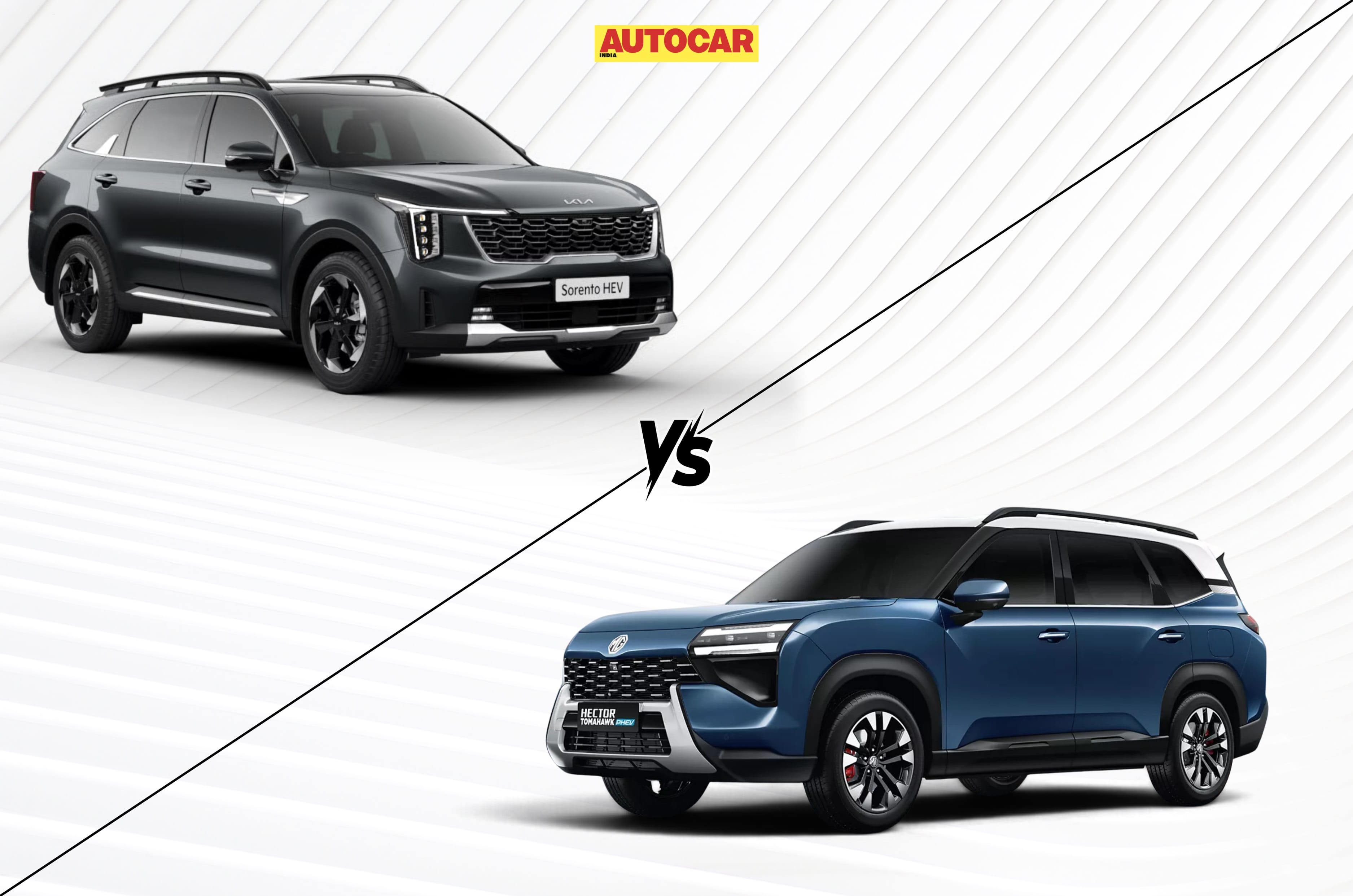
Kia’s ICE (internal combustion engine) flagship SUV offering in India, the Sorento, is based on the Hyundai Motor Group’s N3 platform. While the Kia SUV is also available with a diesel powertrain, our focus will be on the strong hybrid version for this comparison. As its segment rival, the MG Hector Tomahawk PHEV (plug-in hybrid) is also a three-row SUV, and is built around the brand’s new ADAPT platform. Let’s have a quick look on how these SUVs compare in terms of their dimensions, powertrain specifications and prices.
Kia Sorento hybrid vs MG Hector Tomahawk PHEV: Dimensions
The Sorento has the overall size advantage over the Hector Tomahawk
Kia Sorento hybrid vs MG Hector Tomahawk PHEV dimensions
Kia Sorento hybrid
MG Hector Tomahawk PHEV
Length (mm)
4,815
4,745
Width (mm)
1,900
1,850
Height (mm)
1,785
1,770
Wheelbase (mm)
2,815
2,810
Boot space (litres)
179
192
Wheel size (inches)
18-19
18
Neither of these are small SUVs. However, the Kia Sorento hybrid is longer, wider and taller (and has a larger wheelbase) than the MG Hector Tomahawk PHEV. The Sorento hybrid can be had with 19-inch alloy wheels at the top end, while the Hector Tomahawk PHEV only gets 18-inch wheels. However, the MG SUV’s boot can accommodate an additional 13 litres worth of cargo behind its third row of seats.
Kia Sorento hybrid vs MG Hector Tomahawk PHEV: Powertrain
The MG comes with a plug-in hybrid system compared to the Kia’s strong-hybrid setup
Kia Sorento hybrid vs MG Hector Tomahawk PHEV powertrain options
Kia Sorento hybrid
MG Hector Tomahawk PHEV
Engine
1.6-litre turbocharged petrol
1.5-litre naturally aspirated petrol
Battery size
TBA
20.5kWh
Electric motor type
Permanent magnet synchronous motor
Permanent magnet synchronous motor
Drive configuration
FWD / AWD
FWD
Total system output
TBA
198hp, 230Nm
Transmission
6AT
DHT
0-100kph
TBA
9.0 seconds
Claimed mileage
TBA
50kpl
Fuel tank
67 litres
52 litres
AC charging
–
7.5 hrs at 3.3kW (10-100%)
DC fast charging
–
35 mins at 25kW (30-80%)
Unlike the Sorento’s strong-hybrid setup, where the battery can only be charged by the internal combustion engine, the battery pack of the Hector Tomahawk PHEV can also be topped up by plugging it into either a DC fast charger or a slower AC charger. The Hector Tomahawk’s plug-in hybrid system allows the car to be driven in pure-electric mode over a distance of up to 115km (claimed), with Kia yet to disclose the Sorento hybrid’s EV-only range. Depending on the state of charge (SoC) of its battery pack, the MG SUV can also be driven using different powertrain modes.
In series-hybrid mode, the engine charges the battery while the electric motor drives the wheels. Then there’s the parallel-hybrid mode, where the engine and electric motor both power the driven wheels. Finally, the Hector Tomahawk PHEV can also be driven in engine-only mode with no assistance from the electric motor. The Hector Tomahawk PHEV employs a naturally aspirated petrol engine running the Atkinson cycle, plus a relatively high-capacity battery pack and a single electric motor.
Under the bonnet of the India-spec Kia Sorento hybrid sits a punchier 1.6-litre four-cylinder turbo-petrol engine with direct injection, developing 180hp and 265Nm. There’s a compact battery pack and an electric motor whose output is rated at 65hp and 264Nm. Kia is yet to specify the combined output of this hybrid powertrain, alongside its mileage and performance figures. The Hector Tomahawk PHEV gets what MG calls a “Dedicated Hybrid Transmission (DHT)”, while the Sorento hybrid is equipped with a conventional 6-speed automatic gearbox (AT). Furthermore, the Kia’s fuel tank can carry an additional 13 litres of petrol. The Kia Sorento hybrid gets Eco, Sport and Smart drive modes, along with Snow, Mud and Sand terrain modes. While the Sorento hybrid is available in both front-wheel drive (FWD) and all-wheel drive (AWD) configurations, the Hector Tomahawk PHEV is exclusively FWD.
Kia Sorento hybrid vs MG Hector Tomahawk PHEV: Prices
Where the pricier Sorento is available in four different trims, the MG is limited to just two
Kia Sorento hybrid vs MG Hector Tomahawk PHEV prices
Kia Sorento hybrid
MG Hector Tomahawk PHEV
Price range (In Rs, lakh)
29.49-40.19
25.70-27.79
Even the base-spec trim of the Kia Sorento hybrid costs Rs 3.79 lakh more than the entry-level MG Hector Tomahawk PHEV. On the higher end of the line-up, the Sorento hybrid with all-wheel drive costs a staggering Rs 12.40 lakh more than the fully loaded Hector Tomahawk PHEV (which is front-wheel drive only). While the Hector Tomahawk PHEV has a 7-seat configuration, the Sorento hybrid is also available in a 6-seat format with individual captain seats in the second row. The Kia also offers more power and also has a larger physical footprint. However, if you want the flexibility offered by a plug-in hybrid system and a long list of standard equipment at a lower asking price, then the MG Hector Tomahawk PHEV could be the right three-row mass-market hybrid SUV for you.
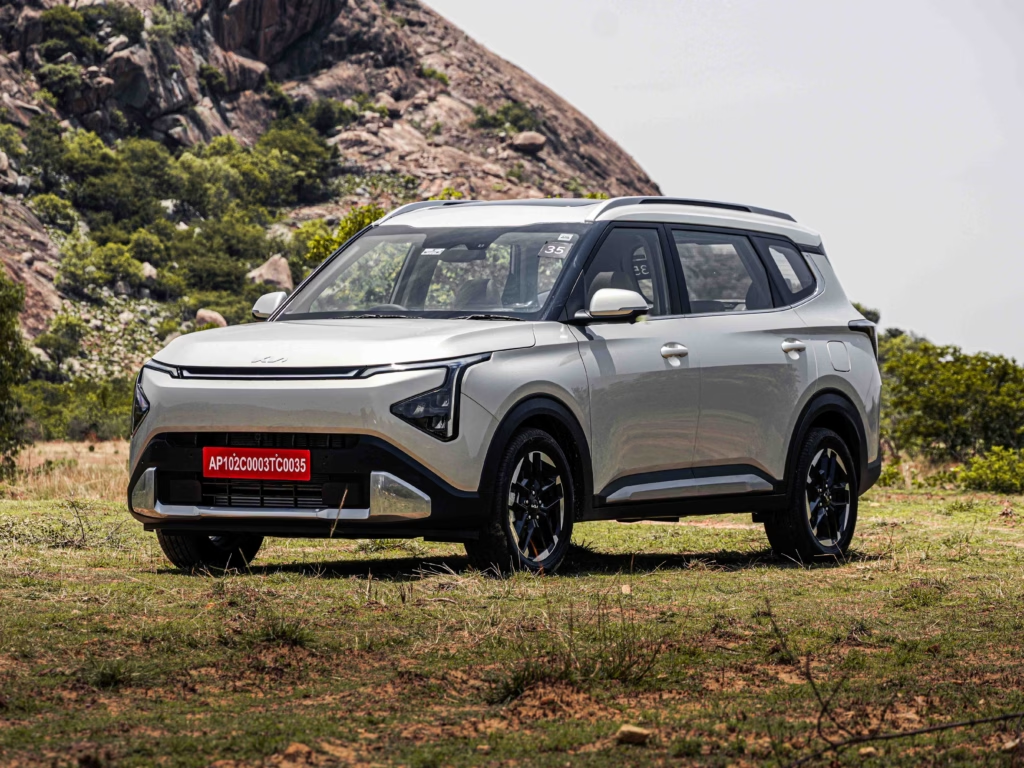
Kia has officially announced specifications for the CNG-powered Carens and Carens Clavis MPVs on the sidelines of the Sorento launch. Both MPVs will be available with a factory-fitted CNG kit with the 1.5-litre, naturally aspirated engine, and will be offered with a 60-litre CNG tank positioned in the boot. Kia has long expressed its intent to enter India’s growing CNG segment, and this officially marks their entry into this space. So far, the Carens was offered with a CNG kit, but as a dealer-level fitment. Prices for the Carens and Carens Clavis with factory-fitted CNG kit can be expected to be announced in the coming weeks.
In CNG spec, the 1.5-litre, four-cylinder engine will produce 93hp and 123Nm of torque – that’s 22hp and 21Nm less than the petrol-powered counterpart. Kia hasn’t revealed a fuel-efficiency figure yet, but says the engine has been calibrated to not compromise on performance. Kia has also retuned the suspension and upgraded the front disc brakes to account for the additional tank weight. Kia has also managed to retain the spare wheel positioned under the car.