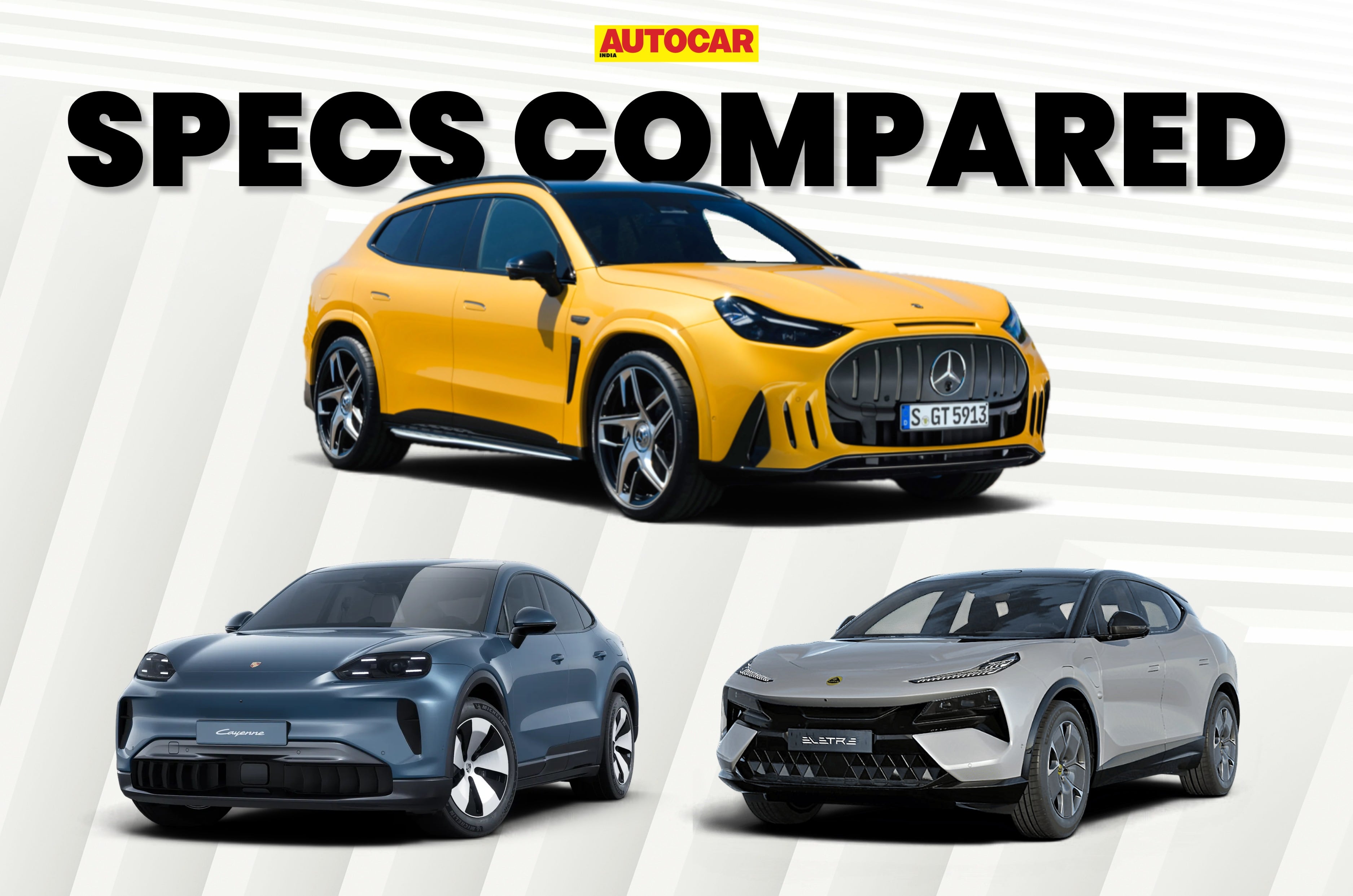
Mercedes-Benz recently unveiled its latest performance SUV, the all-electric AMG GT SUV. As the second model based on the 800-volt AMG.EA platform, the AMG GT SUV touts some serious numbers, particularly when it comes to power and performance. We take a look at how the AMG GT SUV stacks up on paper against its key rivals: the Porsche Cayenne Electric and Lotus Eletre. For this comparison, we’ve selected the top-spec, most potent versions of each electric performance SUV, specifically the AMG GT 63 SUV, Cayenne Turbo Electric, and Eletre 900 Sport.
Mercedes-AMG GT SUV vs rivals: Powertrain and performance
AMG GT 63 SUV
Cayenne Turbo Electric
Eletre 900 Sport
Battery capacity (kWh)
106 / 128
113
112
Motor layout
Triple
Dual
Dual
Power (hp)
721 (up to 1,169)
857 (up to 1,156)
905
Torque (Nm)
2,000
1,360 (up to 1,500)
985
Gearbox
2-speed automatic
1-speed automatic
2-speed automatic
Drive layout
AWD
AWD
AWD
Claimed 0-100kph time (sec)
2.7
2.5
2.95
Claimed top speed (kph)
270*
260
258
Both the AMG GT SUV and Cayenne Electric have boost functions to significantly raise the power output when launch control is engaged, during which the Merc is a touch more powerful. However, when comparing constant, non-launch-control outputs, it’s the Eletre that ranks as the most powerful one here, followed by the Cayenne Electric and then the AMG GT SUV. In terms of torque output, though, the AMG GT SUV’s 2,000Nm figure far outclasses its rivals.
The standard 106kWh battery pack of the AMG GT SUV is the smallest here, but the optional 128kWh unit turns the hierarchy around. The AMG GT SUV also has a triple-motor layout, while the Porsche and the Lotus SUVs have dual-motor setups – all three are all-wheel drive, however. An interesting aspect of the AMG GT SUV’s motors is that they feature an axial-flux design, which makes them more compact and energy-dense than the radial-flux motors used in the Cayenne Electric and Eletre.
Much like the Eletre, the AMG GT SUV comes fitted with a 2-speed gearbox, whereas the Cayenne Electric makes do with a single-speed transmission. Coming to performance, the Cayenne Electric boasts the lowest 0-100kph time in this company, coming in at 0.2sec quicker than the AMG GT SUV and 0.45sec quicker than the Eletre. The AMG GT SUV, however, carries the highest top speed (albeit only with the optional Driver’s Package), followed by the Cayenne Electric and the Eletre.
Mercedes-AMG GT SUV vs rivals: Range and charging
AMG GT 63 SUV
Cayenne Turbo Electric
Eletre 900 Sport
Battery capacity (kWh)
106 / 128
113
112
Max WLTP range (km)
585 / 700
623
500
Max AC charging wattage (kW)
11
22
22
Max DC charging wattage (kW)
600 / 710
400
350
10-80 percent DC charging speed (minutes)
11 / 12
16
20
The Eletre carries the lowest range figure, outpaced even by the 106kWh spec of the AMG GT SUV. Expectedly, the 128kWh version of the Merc sports the highest range among its rivals, coming in at 77km over the Cayenne Electric and a full 200km over the Eletre. Even DC charging speeds are a sweep for the AMG GT SUV. When it comes to AC charging, though, the AMG GT SUV can only accept a maximum of 11kW, which is half the wattage that the Cayenne Electric and Eletre are capable of charging at.
Mercedes-AMG GT SUV vs rivals: Dimensions
AMG GT 63 SUV
Cayenne Turbo Electric
Eletre 900 Sport
Length (mm)
5,084
4,985
5,103
Width (mm)
2,001
1,980
2,019
Height (mm)
1,656
1,674
1,636
Wheelbase (mm)
3,040
3,023
3,019
Kerb weight (kg)
2,585 / 2,695
2,645
2,640
Boot space (litres)
670
747
688
Frunk space (litres)
111
90
46
The Eletre is the longest and widest SUV here, but the AMG GT SUV edges ahead of both its rivals on the wheelbase front. Height is a win for the Cayenne Electric, followed closely by the AMG GT SUV and then the Eletre. Interestingly, the AMG GT SUV is the lightest one here in its 106kWh guise, and the heaviest in its 128kWh spec. Boot space, however, is where the AMG GT SUV trails its rivals – the Cayenne Electric offers 77 litres more space. Looking at frunk space, though, the AMG GT SUV sports the largest capacity, while the Eletre has the smallest one.
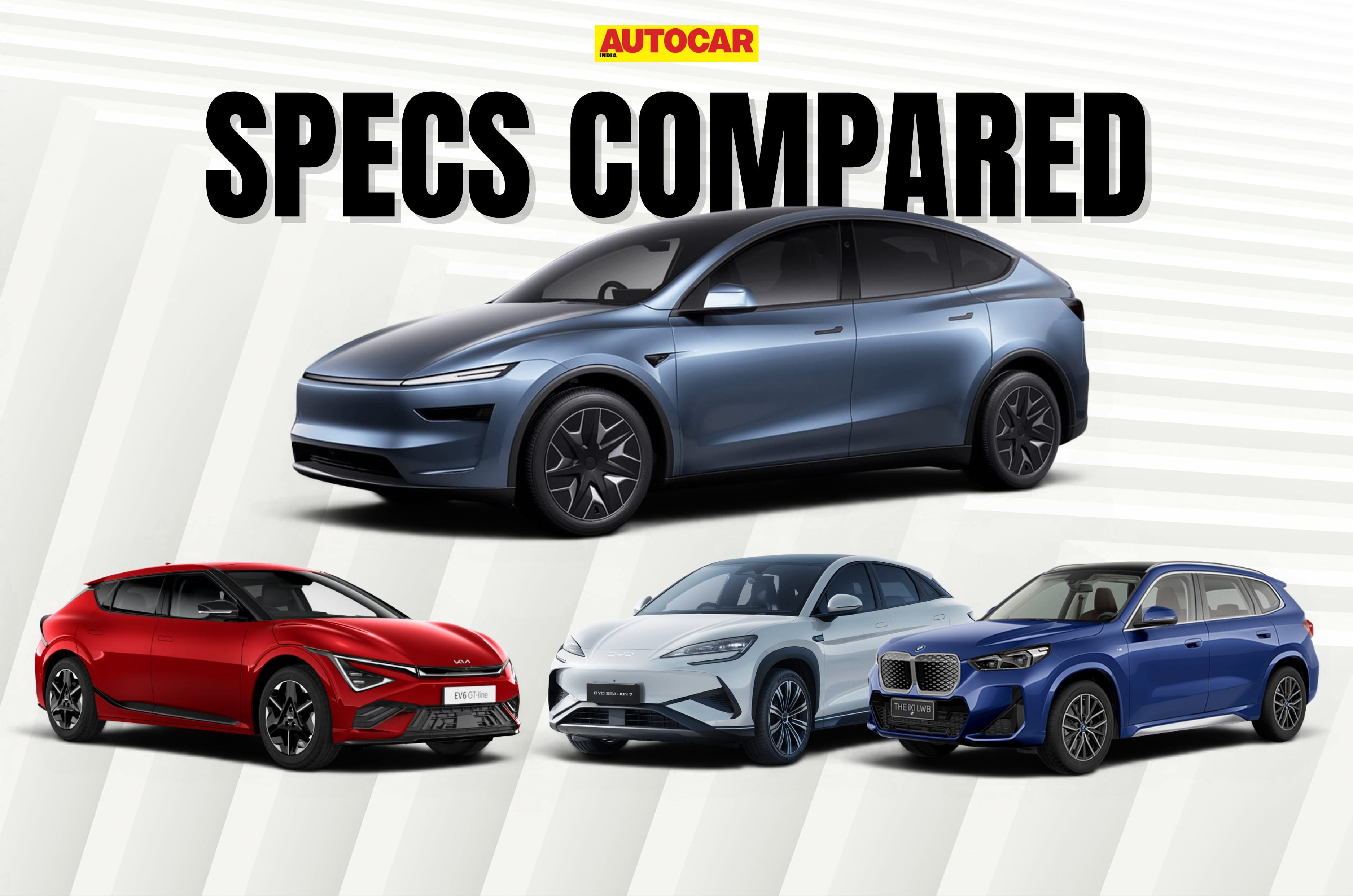
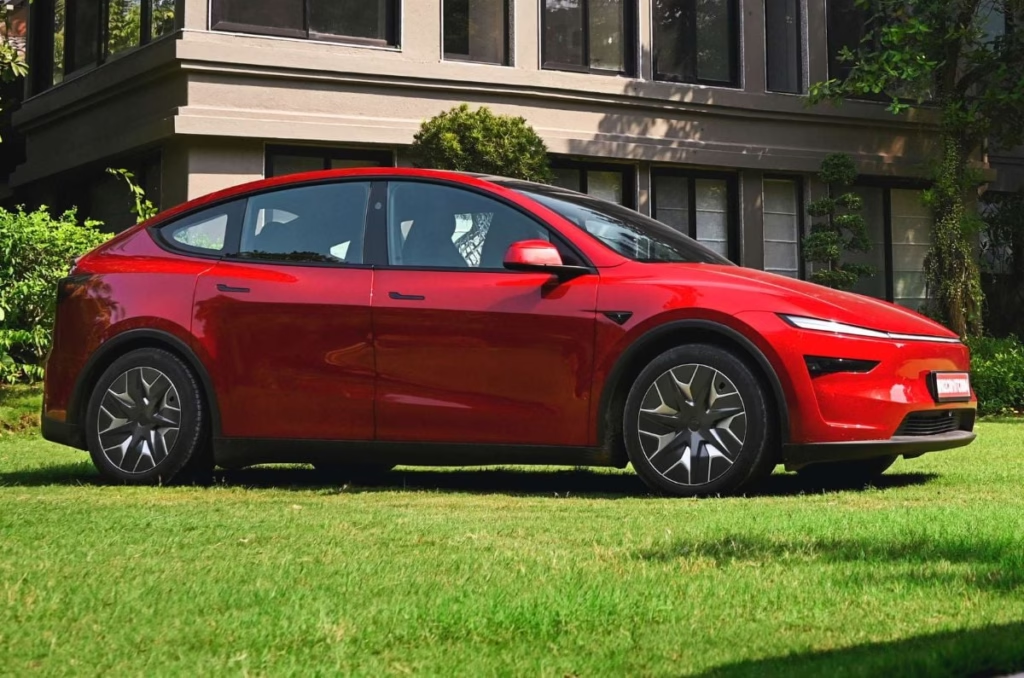
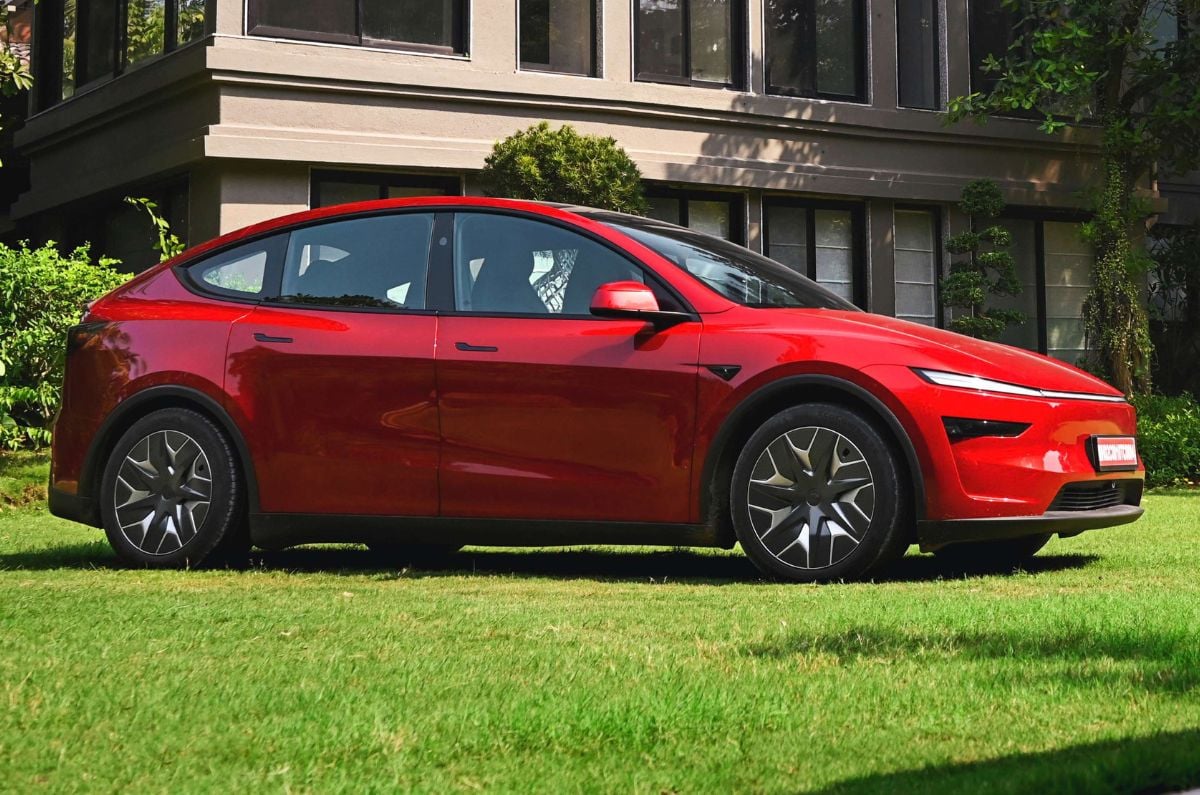
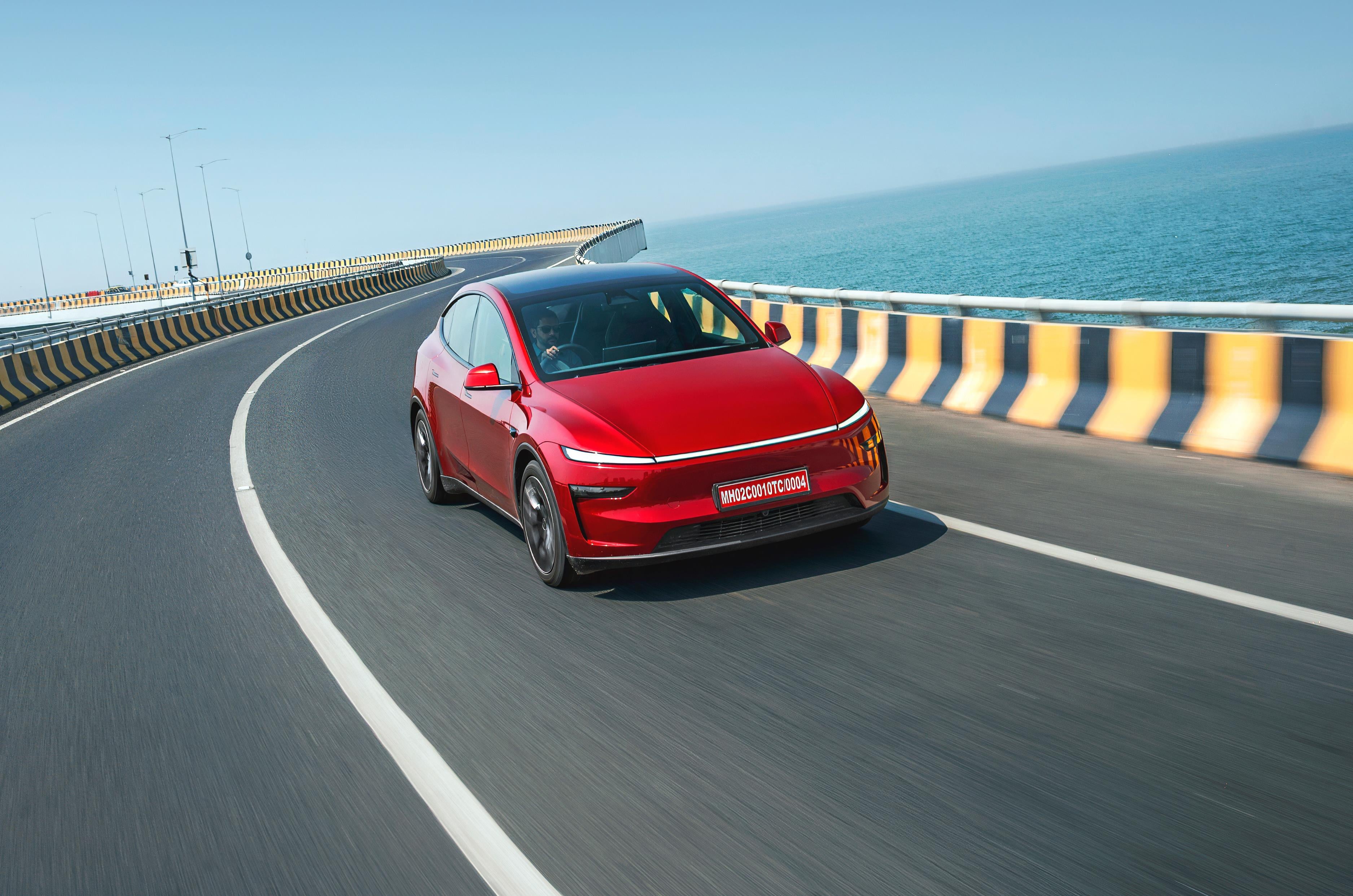
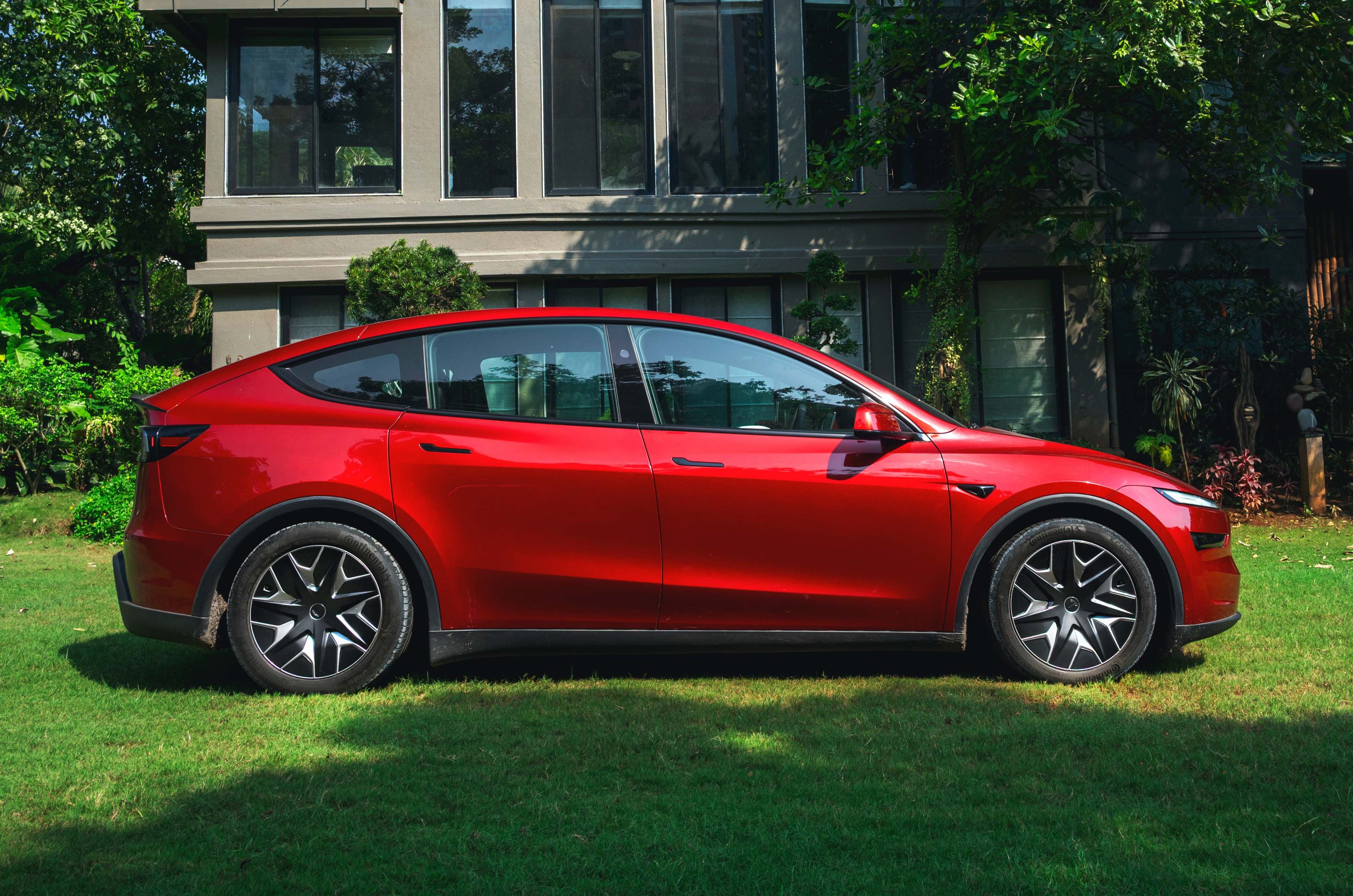
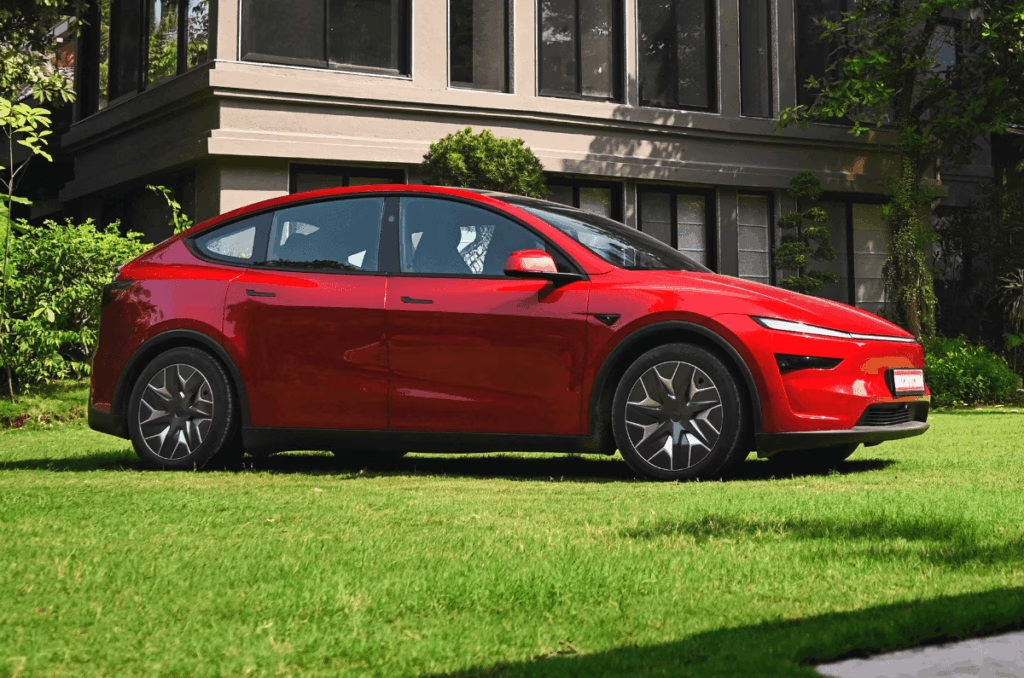
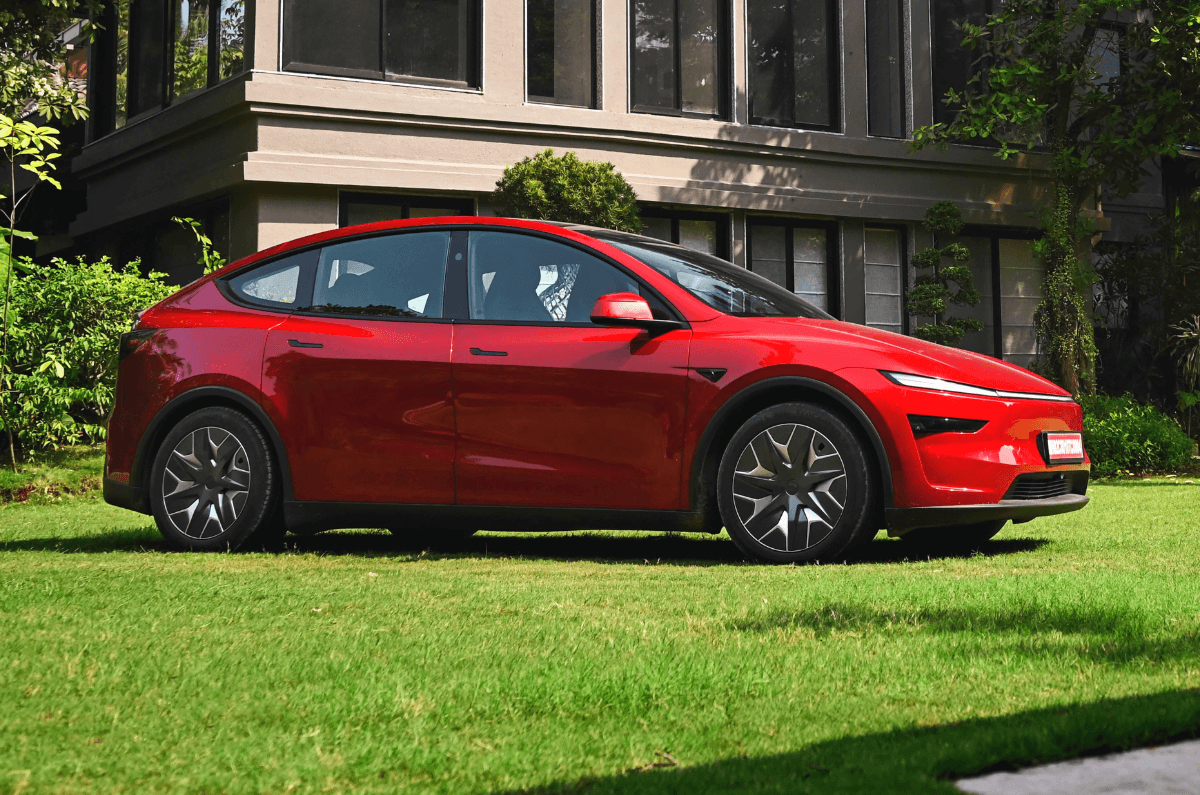
Tesla has launched a three-row long-wheelbase variant of the Model Y electric crossover in India. Christened the Model Y L, this new variant notably offers seating for up to six occupants, captain seats in the middle row and a stronger powertrain with a higher claimed range. Below, we lay out how the new Tesla Model Y L fares against its entry-level luxury EV rivals, namely the BYD Sealion 7, Kia EV6, BMW iX1 LWB, Volvo EC40 and Mini Countryman Electric on paper.
Tesla Model Y L vs rivals: Dimensions
Larger than rivals in every sense
Tesla Model Y L vs rivals: Dimensions compared
L / W / H (mm)
Wheelbase (mm)
Ground clearance (mm)
Frunk / Boot (litres)
Wheel size (inches)
Model Y L
4,976 / 1,982 / 1,668
3,040
169
116 / 420 (all seats up)
19
Sealion 7
4,830 / 1,925 / 1,620
2,930
170
58 / 500
19 / 20
iX1 LWB
4,616 / 1,845 / 1,627
2,800
190 (estimated)
– / 490
18
Countryman Electric
4,445 / 1,843 / 1,635
2,692
165
– / 460
19
EC40
4,440 / 1,873 / 1,591
2,702
171
31 / 404
19
EV6
4,695 / 1,890 / 1,570
2,900
–
20 / 490
19
The Model Y L beats its rivals in every dimension, and the Sealion 7 emerges as the second-biggest EV here overall. Tesla has slightly increased the Model Y L’s ground clearance vis-a-vis the standard wheelbase (SWB) version, though the iX1 LWB still rides the highest in this company. While the alloy wheel size remains unchanged for the Model Y L, it is mostly at par with rivals on this front.
Coming to boot space, Tesla claims a cavernous 2,539-litre cargo capacity for the Model Y L with the second and third rows folded. With all three rows of seating up, the Model Y L has an estimated boot space of 420 litres, which grows to around 1,076 litres with the third row folded, and there’s a 116-litre frunk too. All told, the Model Y L offers significantly higher total cargo capacity than the 5-seater EVs it rivals.
Tesla Model Y L vs rivals: Powertrain and performance
Sealion 7 AWD is the strongest and quickest to 100kph
Tesla Model Y L vs rivals: Battery, power, performance compared
Model
Battery capacity (kWh)
Motor setup
Power (hp)
Drive layout
0-100kph (seconds)
Model Y L
88.2*
Dual
514*
AWD
4.5
Sealion 7
82.56
Single / Dual
313 / 530
RWD / AWD
6.7 / 4.5
iX1 LWB
66.5
Single
204
FWD
8.6
Countryman Electric
66.5
Single
204
FWD
8.6
EC40
78
Dual
408
AWD
4.7
EV6
84
Dual
325
AWD
5.3
*Estimated figures
In addition to the longer body, Tesla has fitted the Model Y L with an 88.2kWh battery pack (85kWh net), which is larger than that of the standard model. It also gets a more powerful dual-motor powertrain, making the Model Y L the first Tesla car to offer AWD in India. While the Model Y L has the biggest battery pack among its rivals, its power output falls a bit short of that of the Sealion 7 AWD.
Regardless, the Model Y L is the second-most powerful EV here by a considerable margin. As for claimed 0-100kph times, the Model Y L matches the Sealion 7 AWD, ranking above the EC40, iX1 LWB, and Countryman Electric.
Tesla Model Y L vs rivals: Range and charging speeds
Model Y L features the highest WLTP-tested range
Tesla Model Y L vs rivals: Range and charging speeds compared
Model
Battery capacity (kWh)
Claimed range (km)
DC fast charging time^
Model Y L
88.2*
681 (WLTP)
288km in 15 min
Sealion 7
82.56
480 / 460 (WLTP)
45 min
iX1 LWB
66.5
531 (MIDC)
32 min
Countryman Electric
66.5
462 (WLTP)
29 min
EC40
78
530 (WLTP)
27 min
EV6
84
581 (WLTP)
18 min
^10-80 percent state of charge (SOC)
*Estimated
Thanks to its larger battery pack, the Model Y L widens the WLTP range lead that the standard model already holds over its rivals. The Model Y L’s range is 100km ahead of the EV6’s, which ranks second, and a whopping 221km more than that of the Sealion 7 AWD, which has the lowest WLTP range of 460km here.
Charging speeds are difficult to compare head-to-head, as Tesla has only confirmed that the Model Y L’s battery can be charged at up to 250kW DC and that it can add 288km of range in just 15 minutes. Keeping the Model Y L aside, the EV6 has the lowest 10-80 percent DC charging time, followed by the EC40, Countryman Electric, iX1 LWB and Sealion 7.
Tesla Model Y L vs rivals: Price
Model Y L is more affordable than the top-spec SWB version
Tesla Model Y L vs rivals: Prices compared
Price range (Rs lakh)
Model Y L
61.99
Sealion 7
49.40-54.90
iX1 LWB
51.40
Countryman Electric
55.65-60.70
EC40
59.00
EV6
65.96
Even though the Model Y L is larger, can accommodate more occupants and offers a stronger powertrain with a higher claimed range, it’s impressively priced at around Rs 6 lakh less than the top-spec Model Y Long Range RWD. That makes the Model Y L more affordable than the EV6, the priciest EV here, but costlier than the Sealion 7, Countryman Electric, iX1 LWB and EC40.
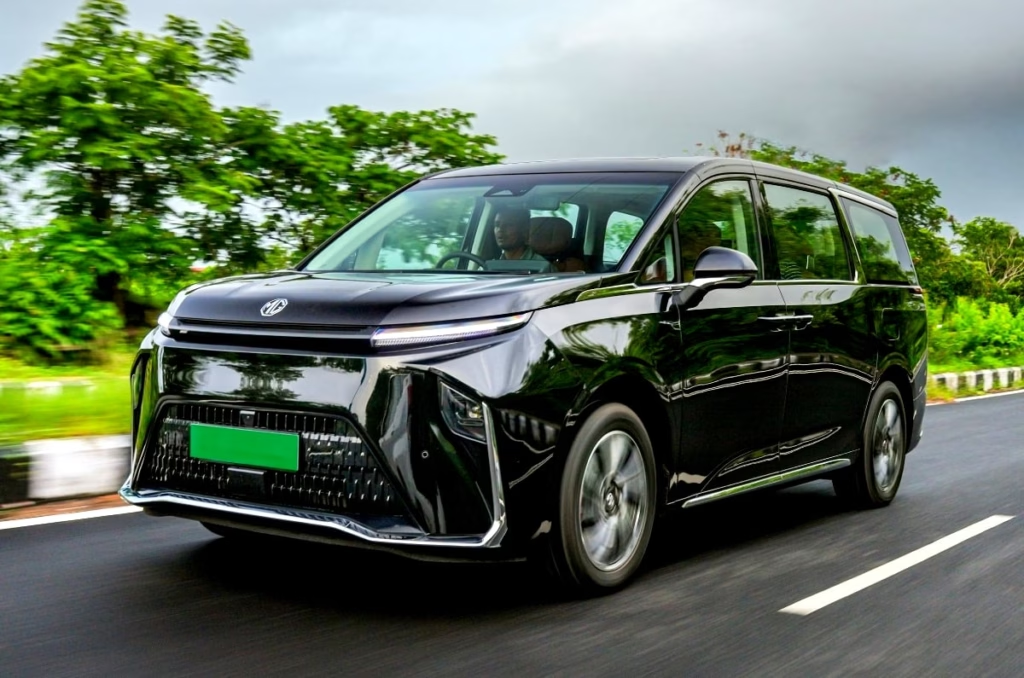
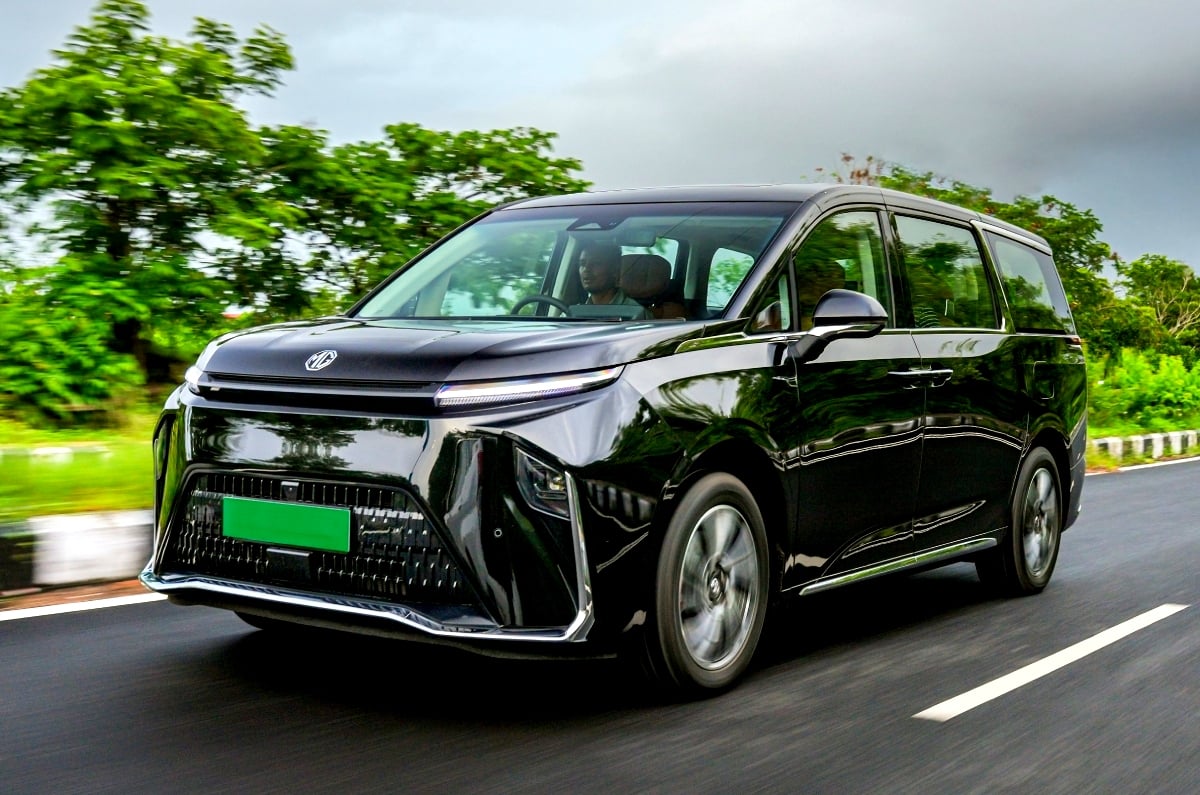
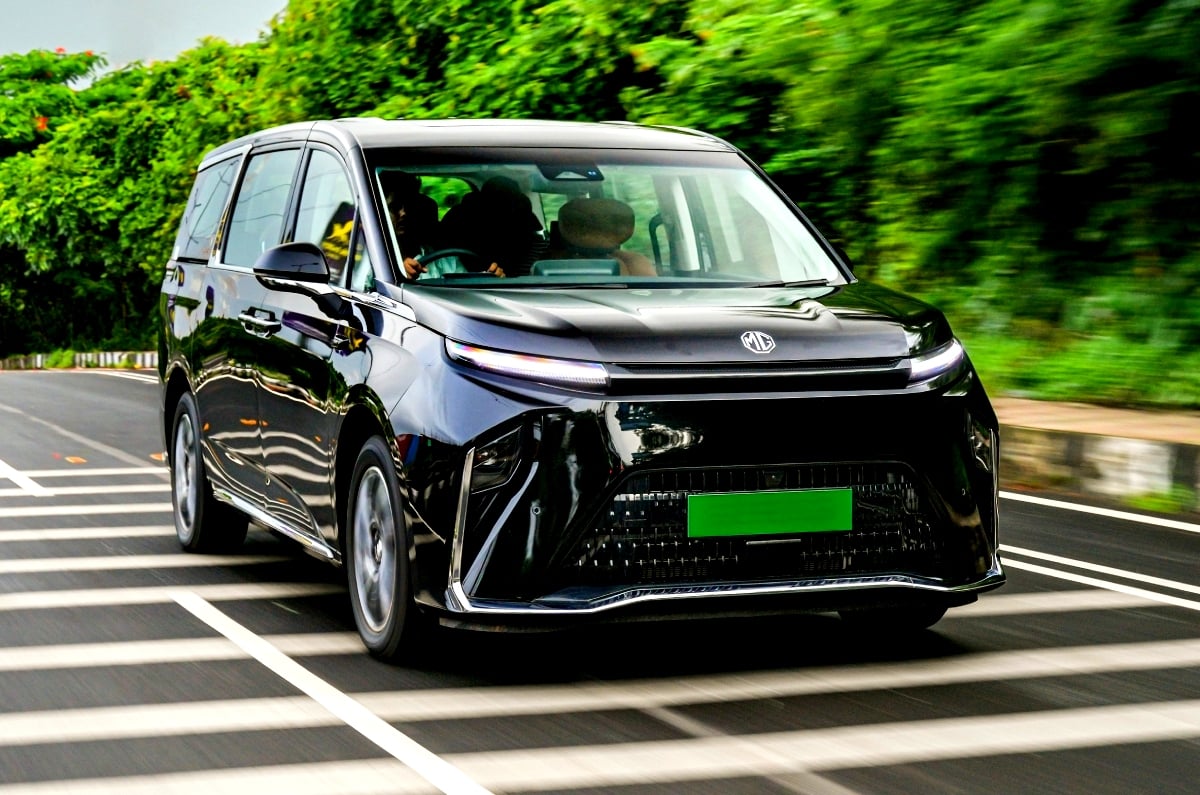
Luxury in an MPV is about more than having room for seven. It is about how that space is used, how effortlessly the occupants can settle in, and how much the car does to make every journey comfortable. The MG M9 brings together the practicality of a three-row MPV and the refinement of an electric powertrain, with a host of features that make time spent on the move feel a little more indulgent. Here are six highlights that make it stand out.
Lounge On Wheels
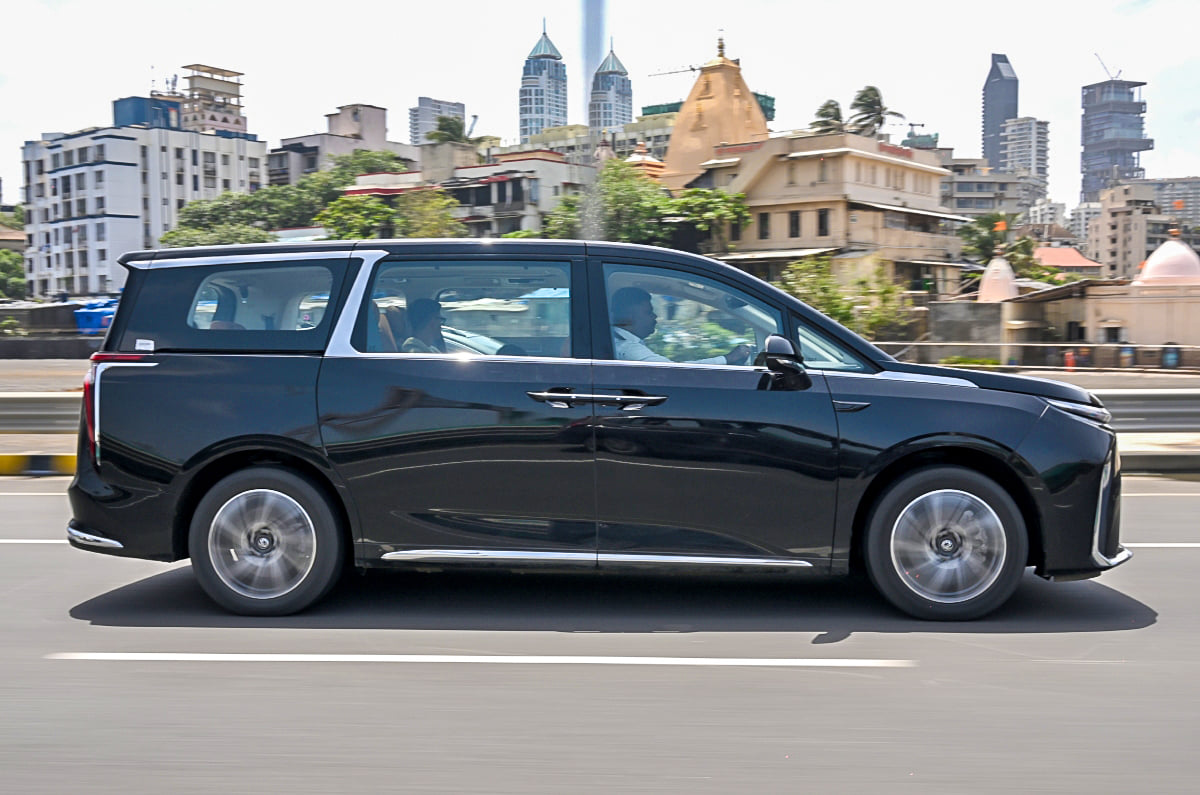
Massive wheelbase gives the M9 an imposing presence and liberates room in the cabin.
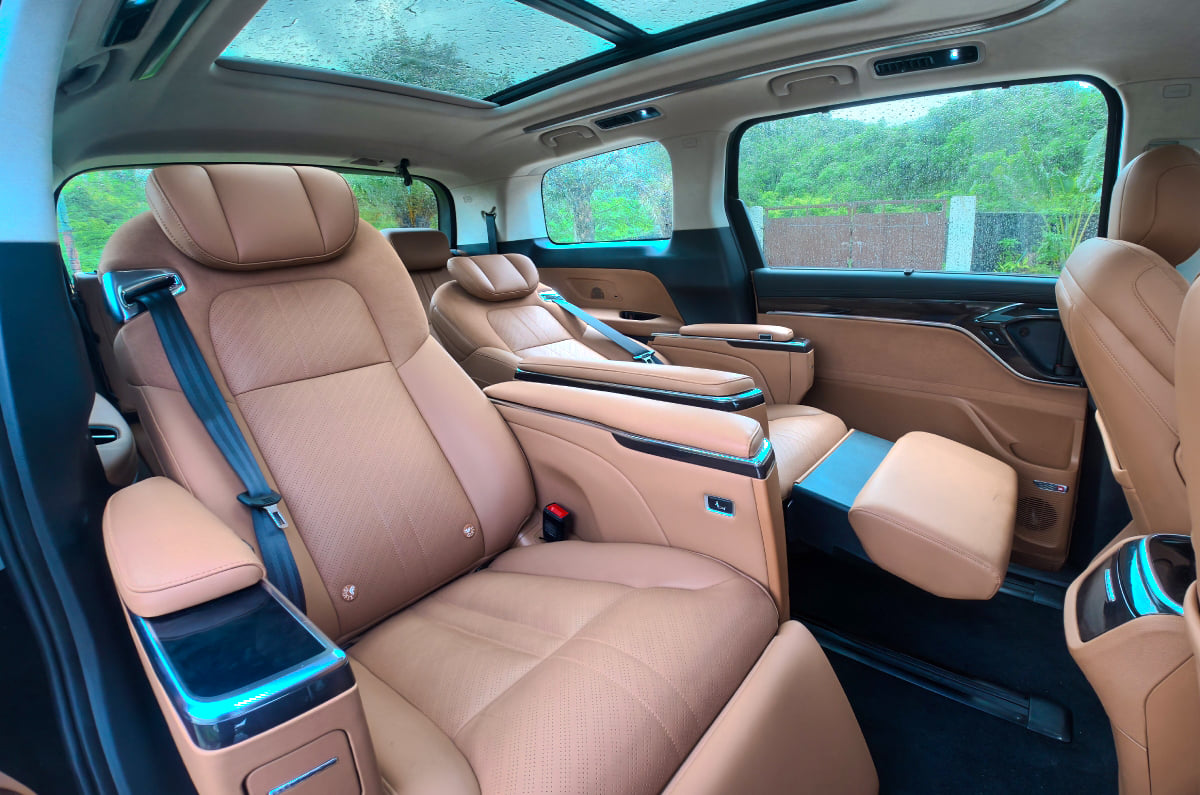
The M9’s 5.2-metre length, 2-metre width and 3.2-metre wheelbase give it the proportions to create a spacious, airy cabin. But it is the second row that makes the biggest impression. Two individual Presidential captain’s chairs offer 16-way electric adjustment, heating, ventilation, massage functions and extendable leg rests. The Boss Mode function moves the front passenger seat forward to create additional legroom, letting rear occupants stretch out and recline. It is a space designed for unwinding, not just getting from one place to another.
Space For Everyone
The aptly called Presidential captain’s chairs are even fit for a king.
While the second row gets the headline features, the M9 is designed to make all three rows usable. Its long wheelbase allows generous room for occupants, while second-row climate control, rear window sunshades and a panoramic dual sunroof enhance the feeling of comfort. The third row gets dedicated AC vents and USB connectivity, too. A premium Cognac Brown interior and 64-colour ambient lighting add to the cabin’s upmarket appeal, with the latter allowing occupants to tailor the atmosphere to their mood.
Electric Serenity
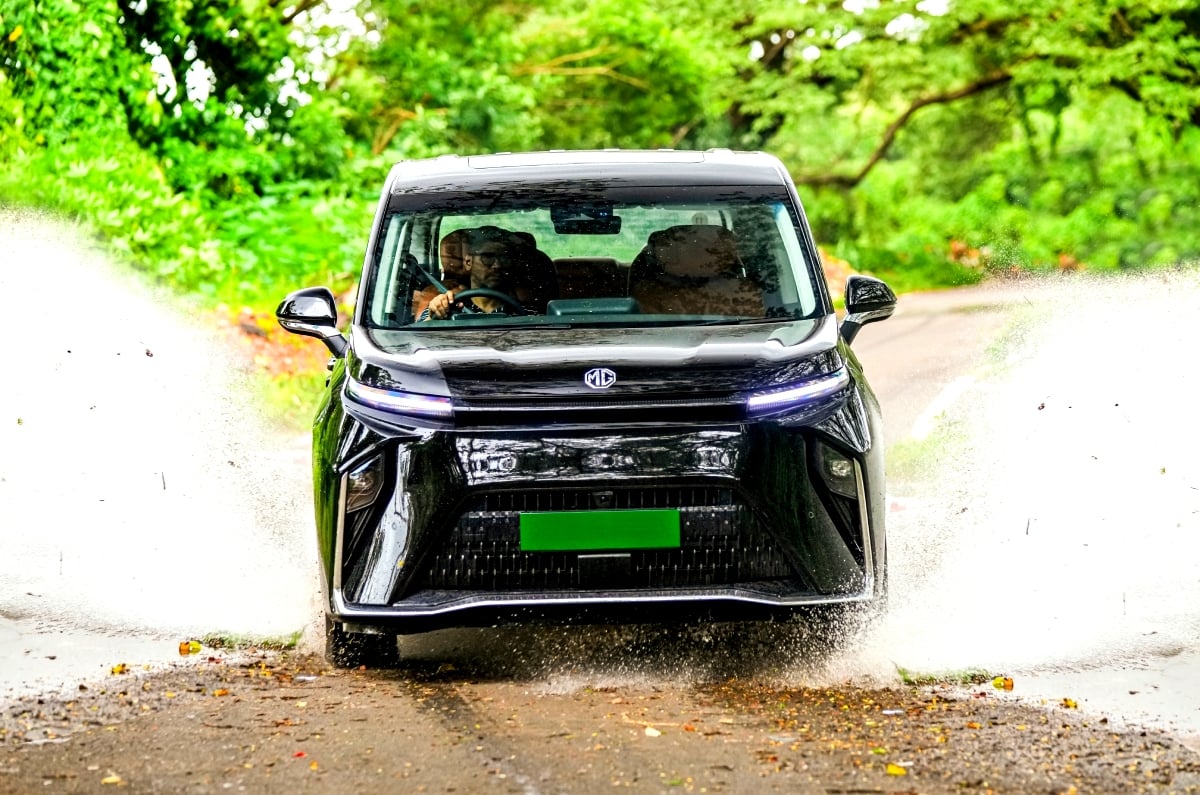
No matter the road surface, the M9 insulates its passengers from the outside world.
The M9’s 90kWh battery powers a front-mounted electric motor, producing 245hp and 350Nm, with an ARAI-claimed range of 548km. Beyond the performance and range figures, the electric powertrain brings a quality that matters particularly in a luxury MPV: refinement. With no engine noise and smooth, linear power delivery, the M9 makes for a more relaxed experience on the move. An acoustic windshield further helps keep the outside world at bay.
Quality Entertainment
Superb 13-speaker JBL system enhances the cabin’s ambience.
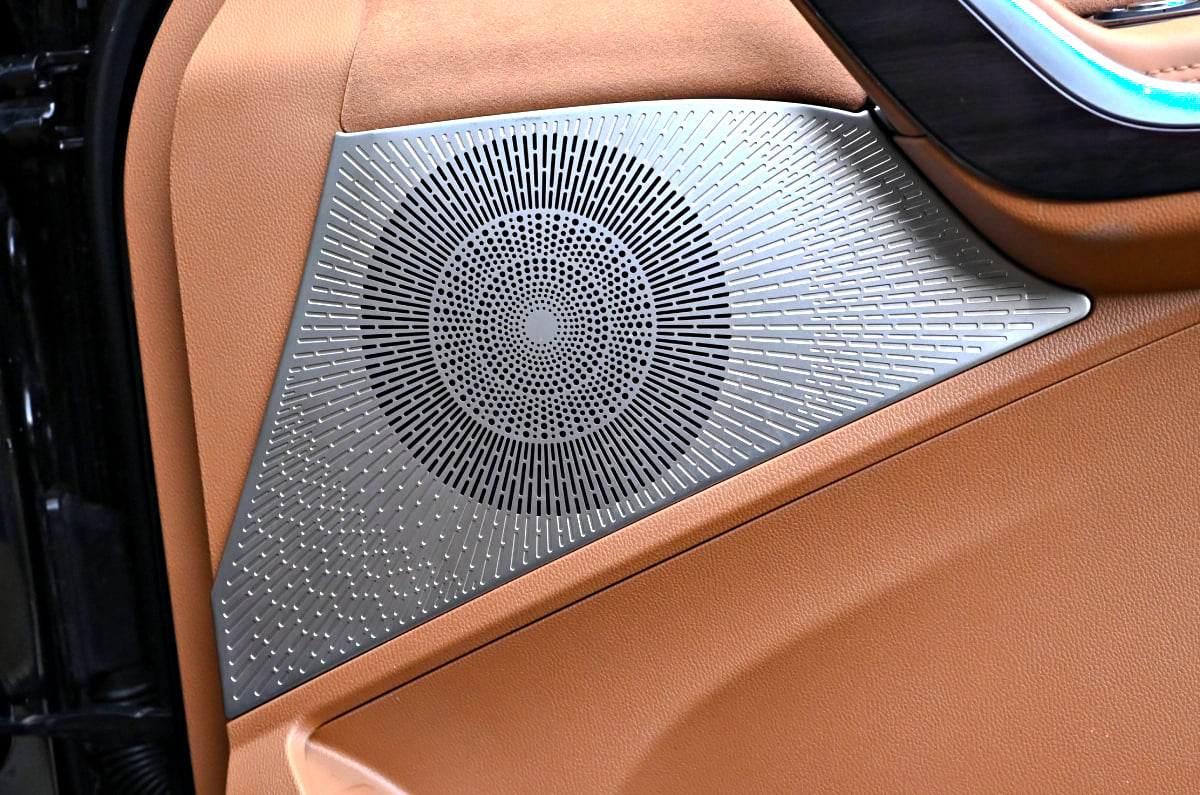
A quiet cabin makes for a better listening environment, and the M9 builds on this with a 13-speaker JBL sound system, complete with an amplifier and subwoofer. Whether it is music on a long drive or a podcast during the daily commute, the system makes entertainment an integral part of the experience. The panoramic sunroof and ambient lighting add to the sense of being in a space designed around the occupants.
Tech-Suave
12.3-inch central touchscreen has all the controls you’ll need within easy access.
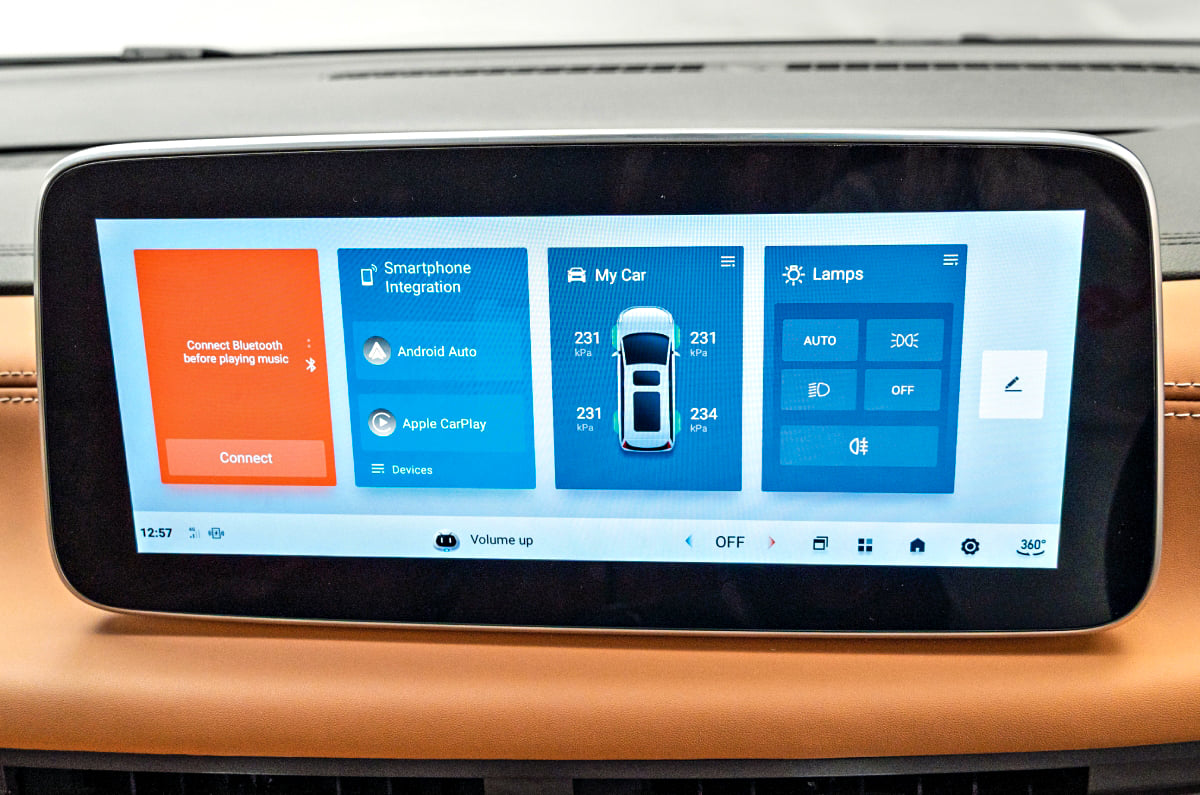
A 12.3-inch central touchscreen, digital instrument cluster, wireless smartphone connectivity and wireless charging bring everyday convenience within easy reach. The 360-degree camera is particularly useful when manoeuvring a vehicle of the M9’s size, helping the driver negotiate tight spaces with greater confidence. These features complement the M9’s focus on passenger comfort with technology that makes the car easier to live with.
Safety Assured
The M9 has received a 5-star Euro NCAP rating.
Luxury also means being able to travel with peace of mind. The M9 gets seven airbags and Level 2 advanced driver assistance systems, adding an extra layer of protection and driver support. Its five-star Euro NCAP safety rating provides further reassurance.
The MG M9’s appeal lies in how these elements come together. Generous space, thoughtful comfort features, electric refinement and modern safety technology give it a distinct identity in the luxury MPV segment. It’s no wonder that the M9 is the best-selling MPV in its class, with over 3,000 units sold since its launch last year. This is a vehicle that makes the journey itself something to look forward to, and that is what being on Cloud M9 is all about.
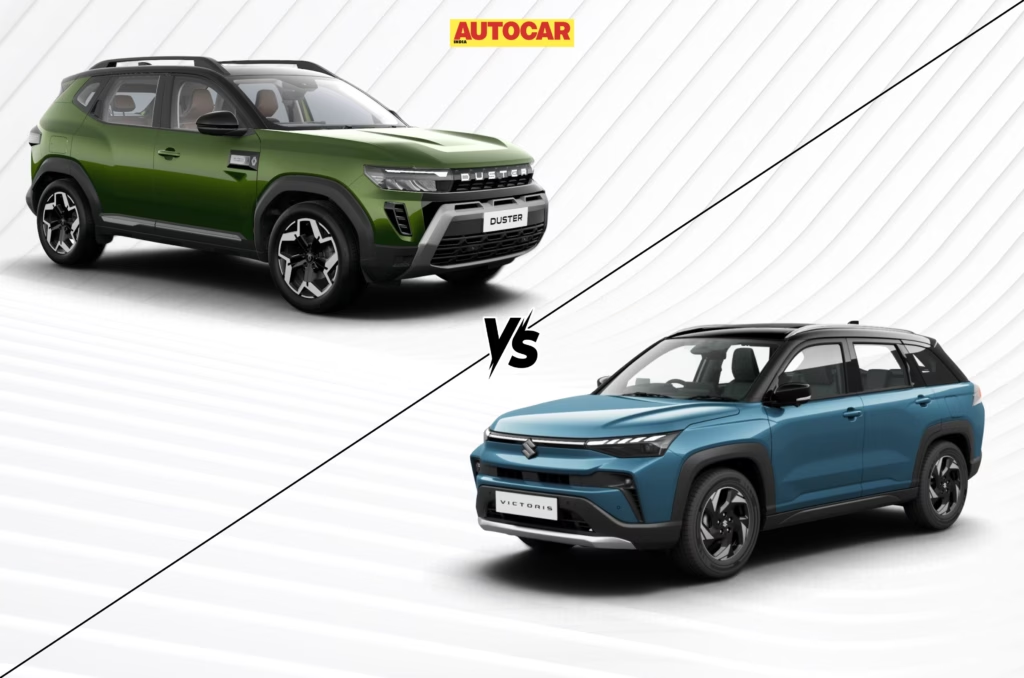
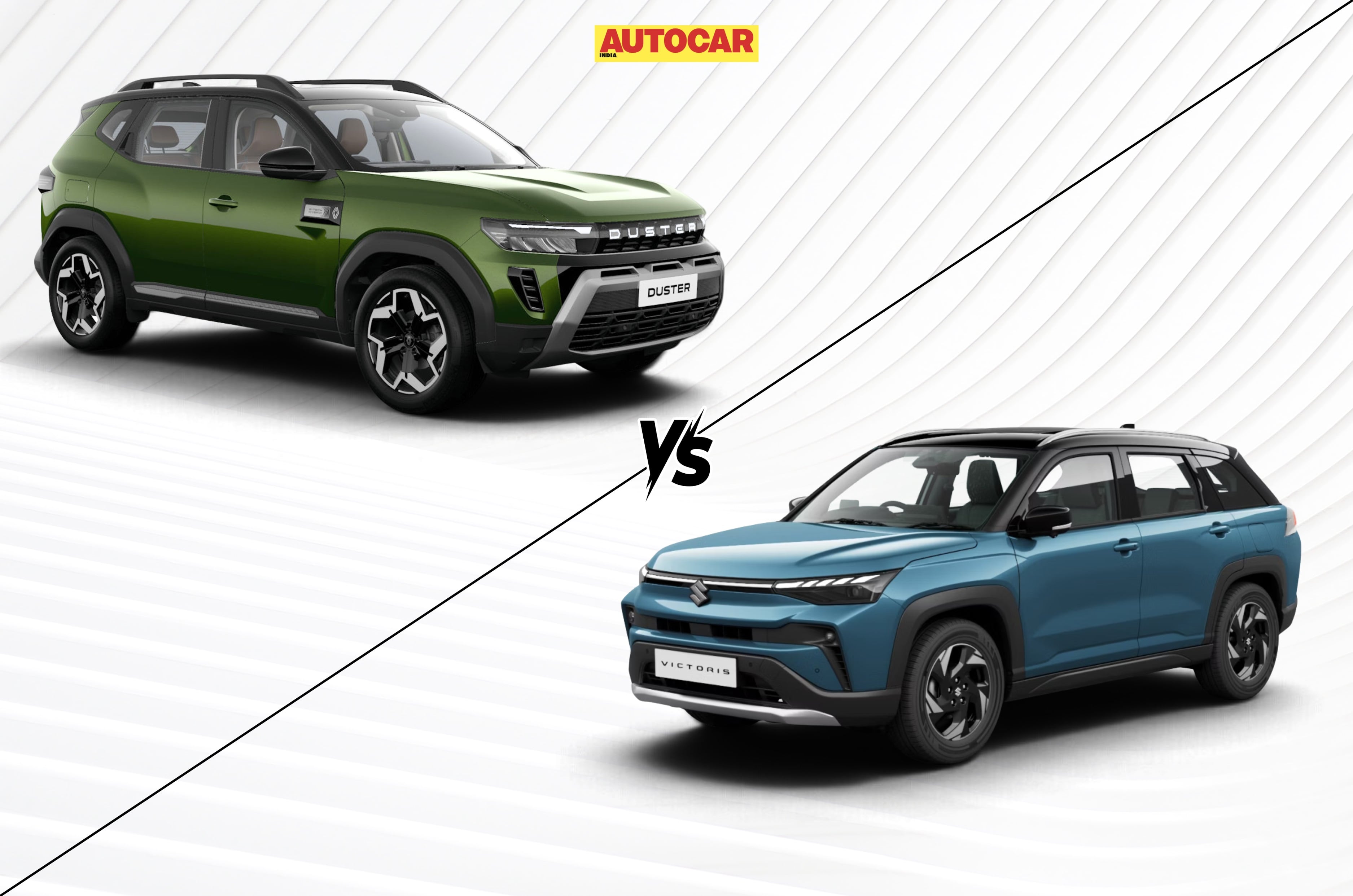
With the Duster strong-hybrid E-Tech 160, Renault is the latest brand to jump on the strong-hybrid bandwagon. The Duster strong-hybrid is positioned as an economical alternative powertrain and adds to its existing turbo-petrol options. On the other hand, the Maruti Victoris has been in the market for a year, offering a strong-hybrid powertrain since launch. But which strong-hybrid mid–size SUV in top-spec guise offers more bang for buck? We compare their respective on-paper specifications to find out. For this comparison, we’ve chosen the top-spec Emotion and ZXi+ (O) versions of the strong-hybrid Renault Duster and Maruti Victoris, respectively.
Renault Duster vs Maruti Victoris: Dimensions
Renault Duster vs Maruti Victoris: Dimensions
Renault Duster
Maruti Victoris
Difference
Length (mm)
4,346
4,360
-14
Width (mm)
1,815
1,795
+20
Height (mm)
1,694
1,655
+39
Wheelbase (mm)
2,657
2,600
+57
Ground clearance (mm)
212
210
+2
Boot space (litres)
372
Under 300 (est.)
–
Est. – Estimated
Apart from length, the Duster outranks the Victoris in every other dimension. It is 20mm wider, 39mm taller, has a 57mm longer wheelbase, and rides 2mm higher off the ground.
Renault Duster vs Maruti Victoris: Powertrain specifications
Renault Duster vs Maruti Victoris: Powertrain specifications
Renault Duster
Maruti Victoris
Engine
Naturally aspirated petrol, Atkinson cycle
Naturally aspirated petrol, Atkinson cycle
Displacement (cc)
1,789
1,490
Power (hp)
110
92
Torque (Nm)
175
122
Transmission
multi-mode automatic gearbox with 2 electric gears & 4 petrol gears
e-CVT
Battery capacity (kWh)
1.4
0.76
E-motor power (hp)
50
80
E-motor torque (Nm)
208
141
Maximum power output (hp)
160
116
Maximum torque output (Nm)
NA
NA
Claimed efficiency (kpl)
29
28.65
In strong-hybrid guise, both SUVs utilise a naturally aspirated petrol engine running on the more efficient Atkinson cycle. However, the Duster’s larger unit delivers more power and torque figures. The Duster also uses a larger battery pack. Both SUVs also use e-motors, wherein the one on the Maruti produces more power, but the Duster’s e-motor outputs more torque. With a combined power output of 160hp, the Duster strong-hybrid is much more powerful than the Victoris strong-hybrid.
Both SUVs also differ in the gearboxes utilised here. The Duster uses a multi-mode automatic gearbox with 2 electric and 4 petrol gears, whereas the Victoris uses an e-CVT. Renault says that the Duster drives 80 percent on EV power in the city, which likely contributes to its higher claimed mileage. But real-world tests are awaited for the Renault.
Renault Duster vs Maruti Victoris: Exterior features
Renault Duster vs Maruti Victoris: Exterior features
Renault Duster
Maruti Victoris
Headlamps
LED
LED projector
LED DRLs
Yes
Connected
Puddle lamps
Yes
No
Tail lamps
Connected LED
Connected LED
Fog lamps
Optional
Yes
Welcome/goodbye animation
Yes
No
Wheel sizes
18-inch
17-inch
Rear spoiler
Yes
Yes
Electric adjust/fold ORVMs
Yes
Yes
Sharkfin antenna
Yes
Yes
Roof rails
Yes
Yes
Powered tailgate
Yes
Yes
Colour
Monotone and dual-tone
Monotone and dual-tone
On the outside, LED light setups, DRLs, roof rails, a shark fin antenna, and a powered tailgate are found on both SUVs. However, larger 18-inch alloy wheels, puddle lamps, and welcome/goodbye animations for the light setups are unique to the Duster.
Renault Duster vs Maruti Victoris: Interior features
Renault Duster vs Maruti Victoris: Interior features
Renault Duster
Maruti Victoris
Ventilated seats
Yes
Yes
Sunroof
Panoramic
Panoramic
Infotainment screen size
10.1-inch
10.1-inch
Digital driver’s display
10.25-inch
10.25-inch
Head-up display
Optional
Yes
Wireless Apple CarPlay, Android Auto
Yes
Yes
On-board navigation
No
Yes
Powered driver seat
6-way
8-way
Powered co-driver seat
6-way
No
Reclining rear seats
No
No
Air Purifier
Optional
Yes
Auto AC
Dual-zone
Single zone
Rear AC vents
Yes
Yes
Seat upholstery
Leatherette
Leatherette
Wireless phone charger
Yes
Yes
Audio system
6-speaker Arkamys
8-speaker Infinity
60:40 split rear seat folding
Yes
Yes
USB Type-C ports
2x front, 2x rear
2x front, 2x rear
Rear armrest
No
Yes
Connected car tech
Yes
Yes
Rear window sunshade
No
No
Ambient lighting
Optional
Yes
Leatherette inserts on the dashboard
Yes
Yes
Push-button start
Yes
Yes
Keyless entry
Yes
Yes
Steering adjust
Tilt and Telescopic
Tilt and Telescopic
The Renault offers features such as a powered co-driver seat and dual-zone automatic climate control that the Maruti lacks. In contrast, the latter gets further adjustment for the driver seat, two additional speakers, and on-board navigation, while features like a head-up display and ambient lighting are factory-fitted on the former.
Renault Duster vs Maruti Victoris: Driving features
Renault Duster vs Maruti Victoris: Driving features
Renault Duster
Maruti Victoris
Drive modes
No
Eco, Normal, Sport
Cruise control
Regular
Regular
As far as driving features are concerned, both models come with regular cruise control, but drive modes are found only on the Victoris.
Renault Duster vs Maruti Victoris: Safety features
Renault Duster vs Maruti Victoris: Safety features
Safety features
Renault Duster
Maruti Victoris
Airbags
Six
Sx
Parking sensors
Rear
Front and rear
Camera setup
Rear view
360-degree
Dash cam
Optional
Optional
Electronic parking brake with auto hold
Yes
Yes
ADAS
No
No
TPMS
Yes
Yes
Hill start assist
Yes
Yes
Disc brakes (Front/Rear)
Yes
Yes
ESC
Yes
Yes
Auto-dimming IRVM
Yes
Yes
On the safety front, both SUVs are well-equipped with features such as 6 airbags, rear parking sensors, auto-dimming IRVM, electronic parking brake with auto-hold, all-wheel disc brakes, and TPMS. However, the Victoris pips the Duster here by offering a 360-degree camera and front parking sensors. Notably, both miss out on a Level 2 ADAS suite.
Renault Duster vs Maruti Victoris: Prices and verdict
Renault Duster vs Maruti Victoris: Prices (Rs lakh)
Renault Duster
Maruti Victoris
Price
19.49
19.98
Comparing top-spec versions side by side, the Duster strong-hybrid is more affordable by Rs 41,000. Between the two, it’s the Duster we’d recommend. Apart from being the more affordable option, it offers slightly more kit and delivers more power without sacrificing much in terms of efficiency.
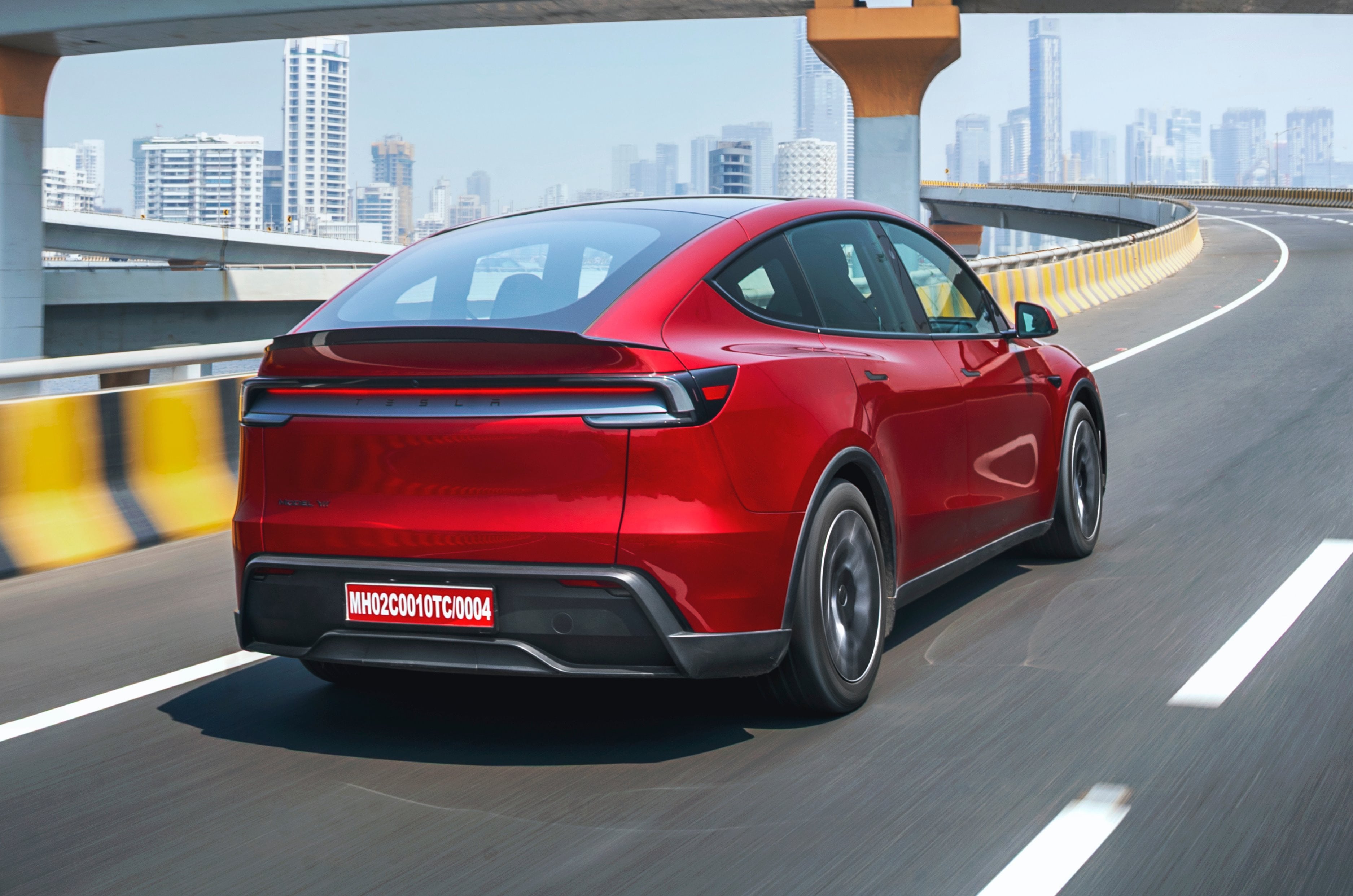
The Model Y L is the long-wheelbase, 6-seat version of Tesla‘s Model Y SUV. Priced at Rs 61.99 lakh (ex-showroom), it costs Rs 11.10 lakh more than the rear-wheel-drive Model Y. It is also pricier than rivals such as the BMW iX1 LWB and BYD Sealion 7. But does the Y L justify that premium? Here’s how it stacks up.
Reasons to buy the Tesla Model Y L
Spacious and quiet
Extra length frees up more room, while its cabin is remarkably hushed
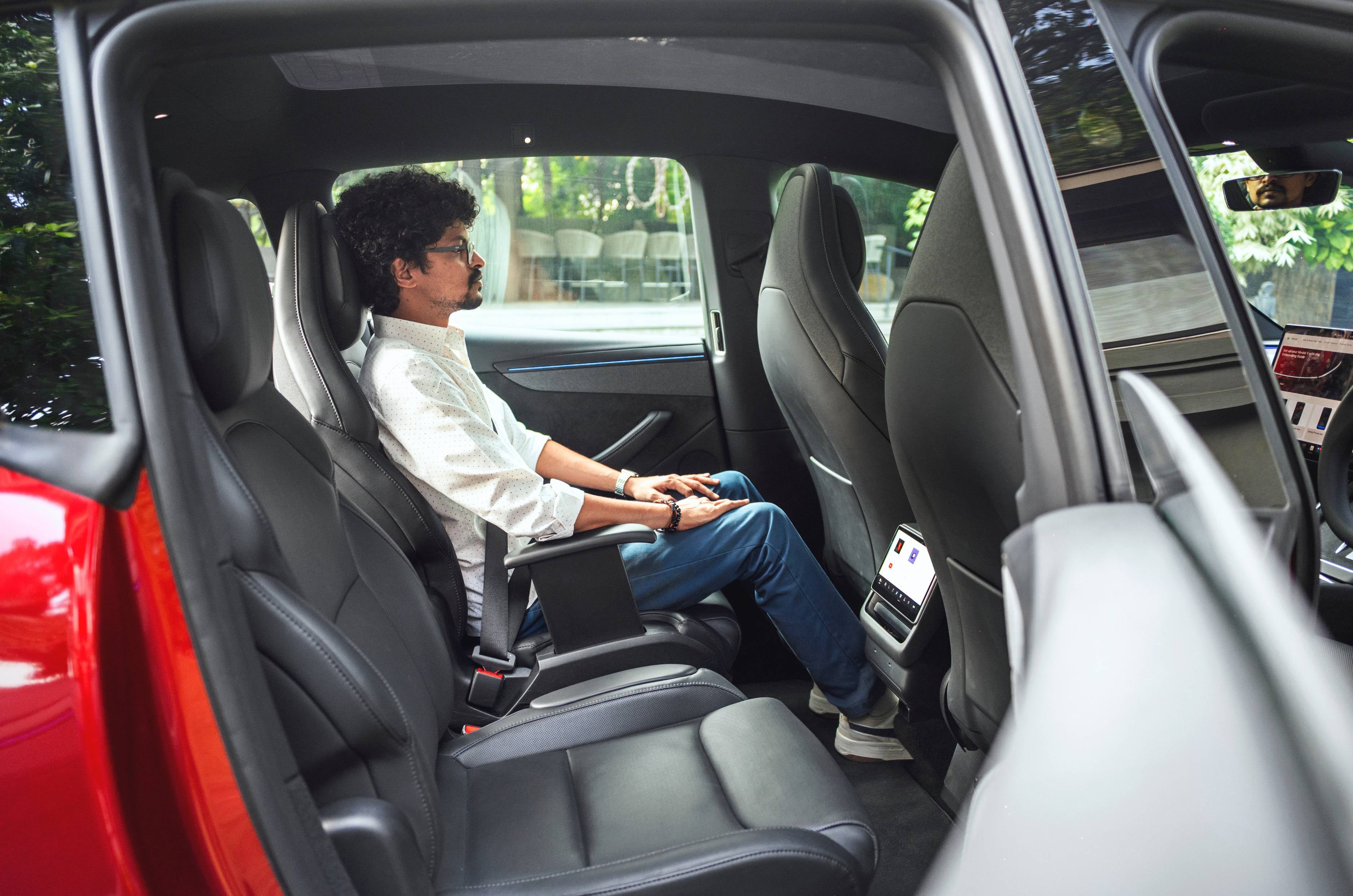
With a 3,040mm wheelbase, the Model Y L is 150mm longer between the axles than the standard Model Y. It’s also 40mm taller, freeing up noticeably more space on the inside. The Y L is a 6-seater with front seats that are comfy and get extended under-thigh support. The individual captain’s chairs in the middle row are very comfortable and feature powered armrests, plus heating and cooling functions. Passengers seated here won’t complain about legroom or headroom.
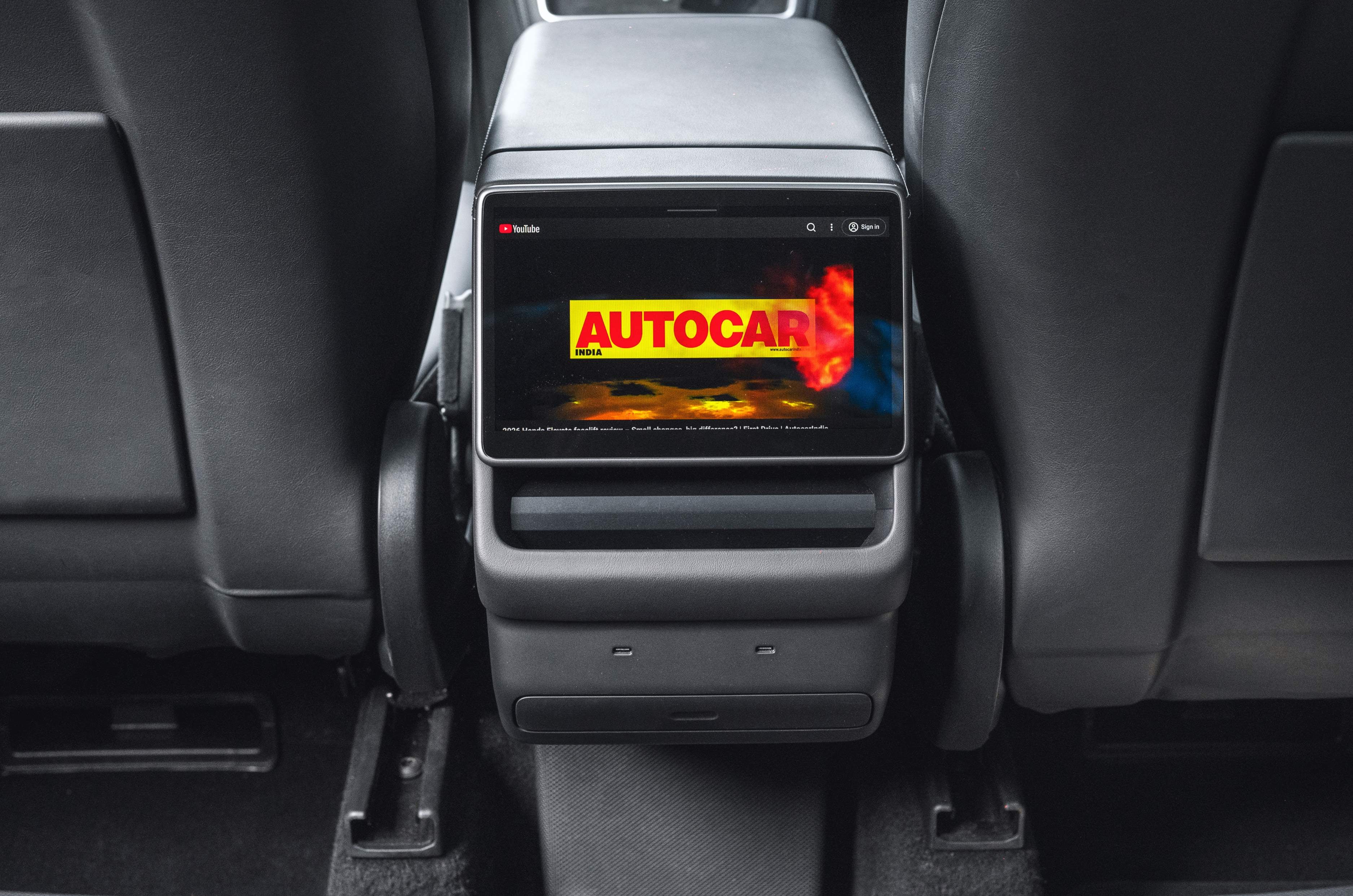
Adding to their convenience is an 8-inch touchscreen capable of playing videos, plus cupholders and charging ports. Unlike many three-row offerings, the third row of the Model Y L has enough space for adults to sit in reasonable comfort. The inclusion of dedicated AC vents, cupholders and Type-C ports comes in handy as well.
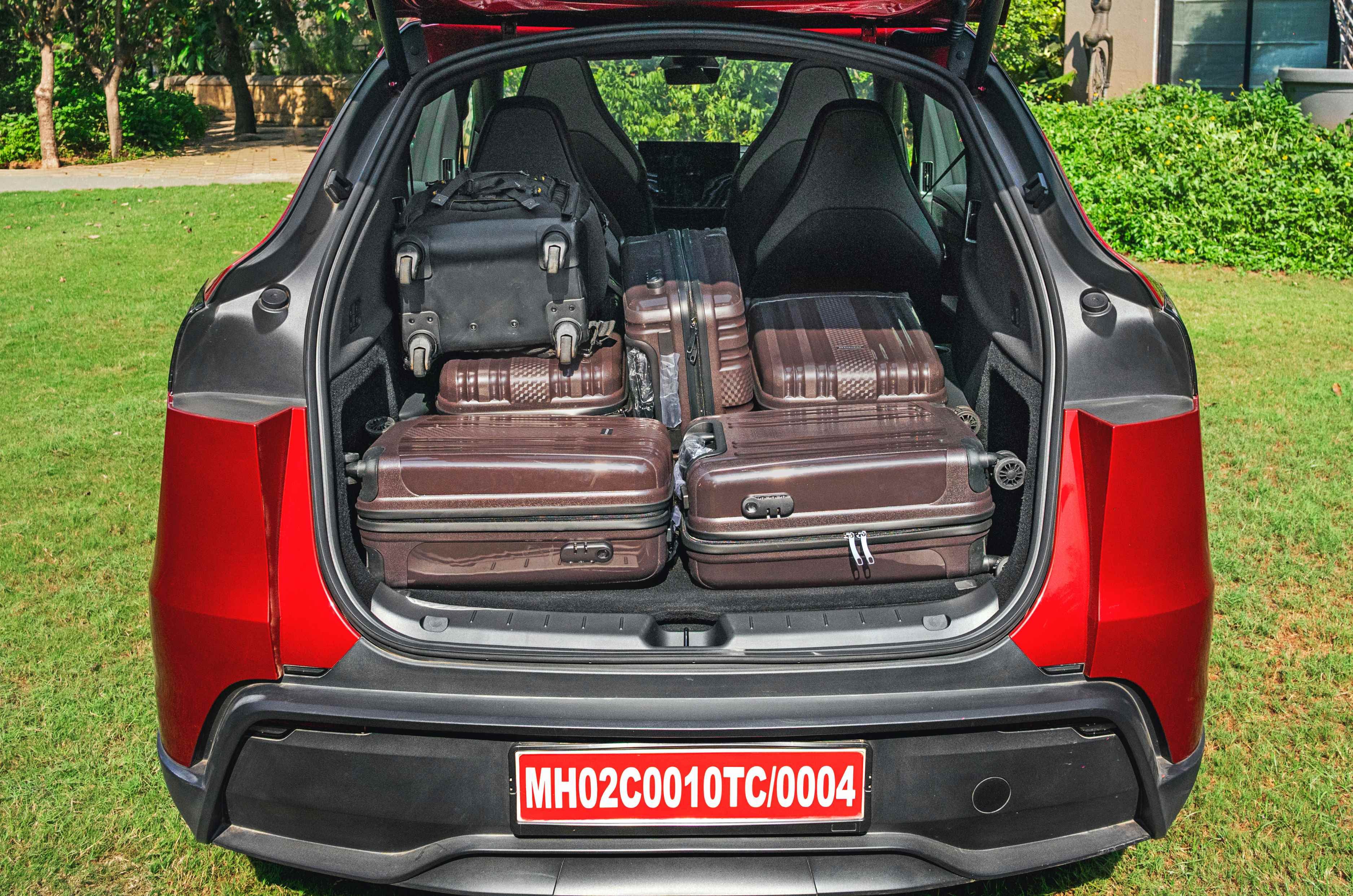
Another pro here is the Model Y L’s boot, which is rated at 420 litres with all seats up – this grows to a capacious 1,076 litres with the third row folded. Then there’s some more space under the boot floor, and a 117-litre frunk, should you need even more luggage space. Refinement is another strong point of this cabin. It’s remarkably quiet, thanks to the double-glazed windows that shut out most of the wind, tyre and road noise.
Loaded with tech
Long list of features will keep tech-savvy folks entertained
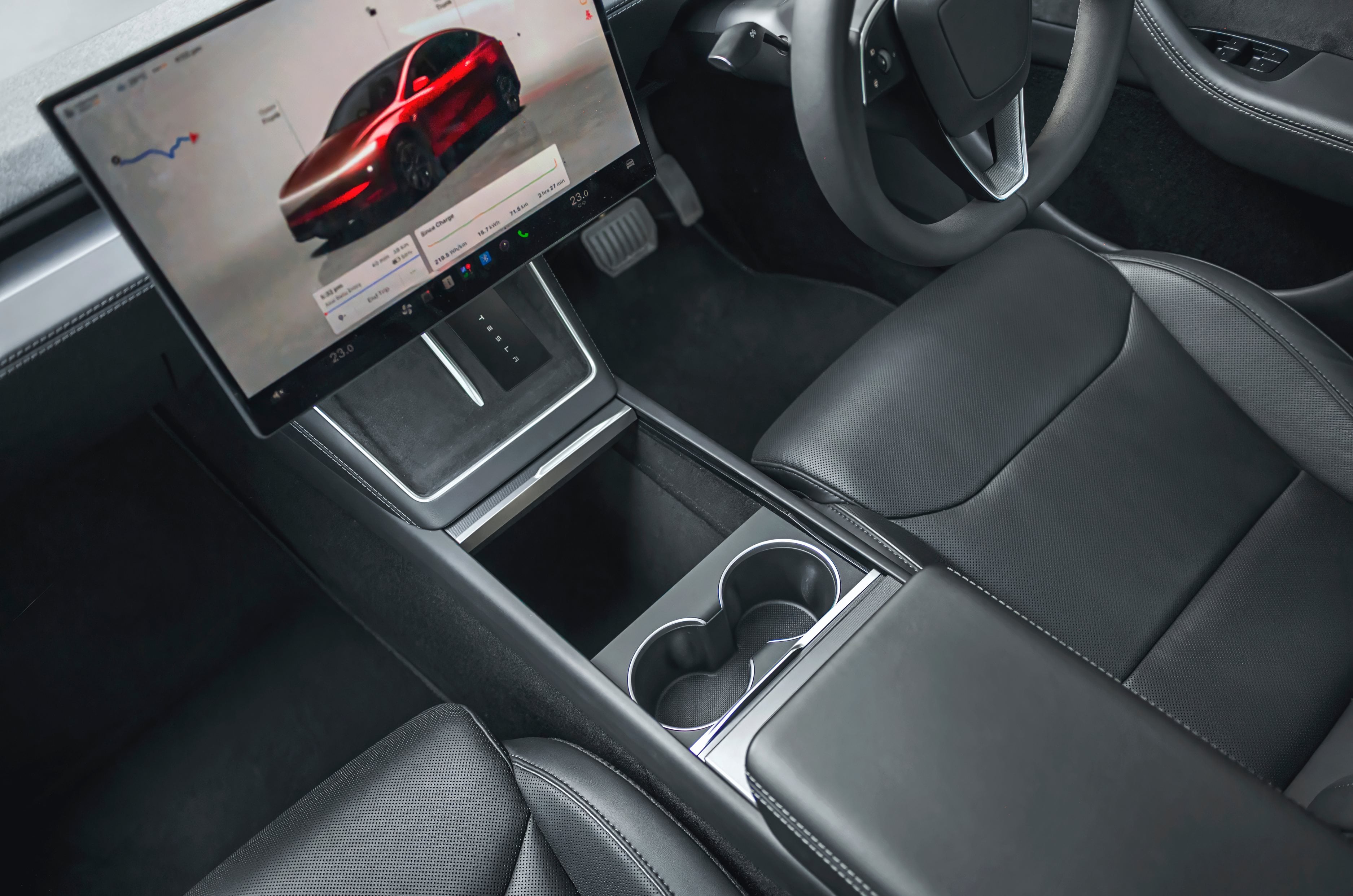
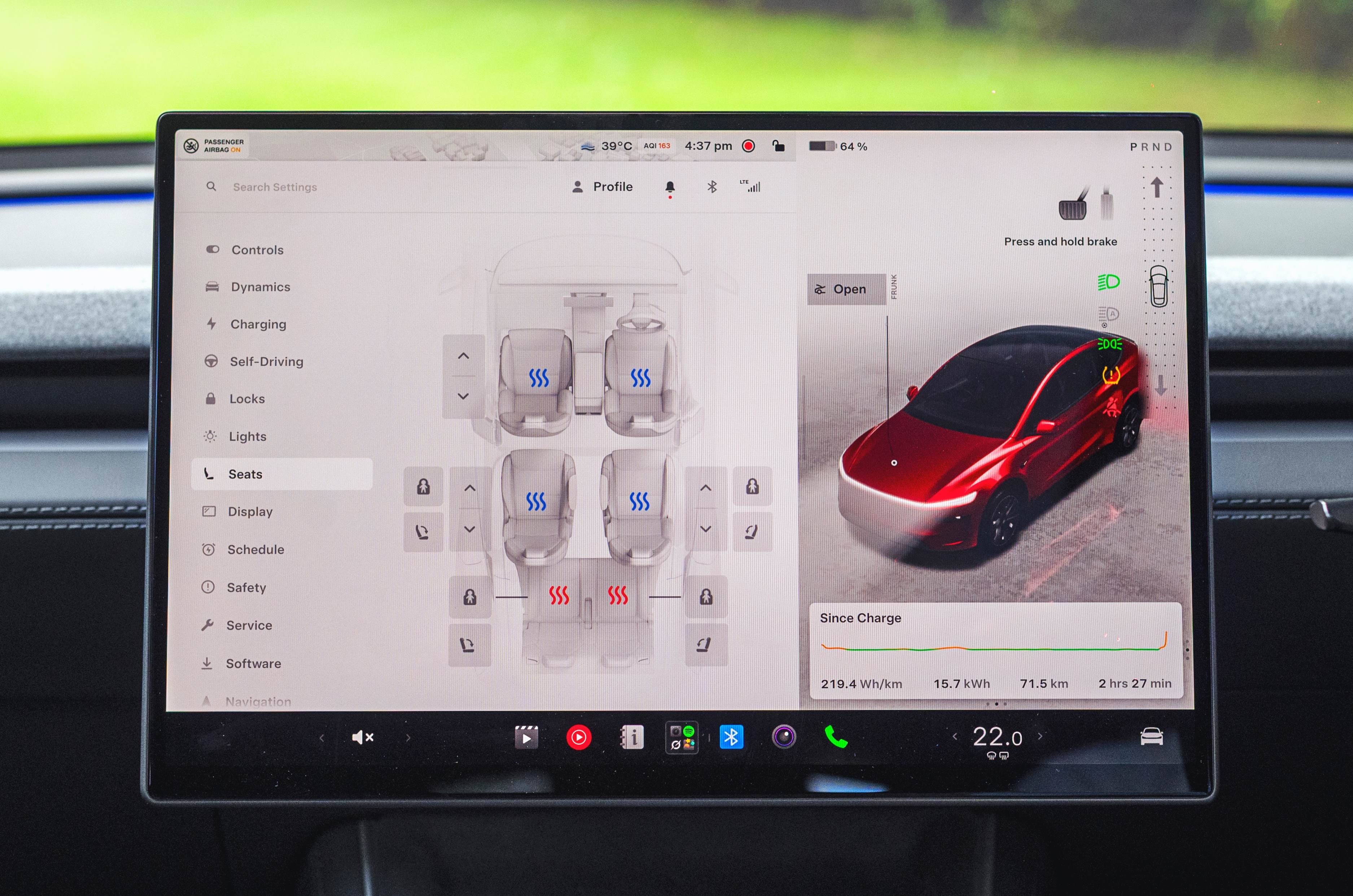
Taking centre stage on the otherwise minimalistic dashboard is the massive 16-inch touchscreen, which is easily among the sharpest and most responsive units around. Its integrated Grok AI assistant is capable of handling tasks such as setting the climate control, along with plotting routes on the navigation system and of course, finding suitable chargers. The assistant understands multiple languages and also learns the user’s preferences over time.
The Tesla Model Y L’s feature highlights include an 18-speaker audio system with a subwoofer, dual wireless chargers, multi-colour ambient lighting and a panoramic glass roof. The front and middle-row seats are heated, ventilated and powered, while the third-row seats get a heated function too. Safety kit includes 9 airbags, lane-keeping assist, blind-spot monitoring, and high-definition surround-view cameras. As with every Tesla, the Model Y L can also receive over-the-air (OTA) updates.
Brisk performance, composed ride
Dual-motor Model Y L is seriously quick for a family car
Where the standard Model Y is rear-wheel drive only, the Y L uses two motors and all-wheel drive (AWD). While Tesla hasn’t released official power figures, it’s estimated to output 514hp and 590Nm of torque. Tesla also claims a 0-100kph time of 4.5 seconds, which is quick for a two-tonne SUV. The Model Y L doesn’t feel intimidating to drive, with power building smoothly and the AWD system providing plenty of grip. In addition to the ‘Chill’ drive mode, the Y L also gets a ‘Sport’ mode.
There are no issues overtaking slower-moving traffic, as the Model Y L gets past them effortlessly. The regenerative braking is smooth as well. When you’re ambling around town, the ‘Standard’ regen setting is more than adequate and progressive, so you can drive without stepping on the brake pedal most of the time. The revised suspension of the Model Y L also gets adaptive dampers for better control over body movements and a more composed ride over the standard model.
Long range
Y L has the legs over the standard Model Y
The Model Y L uses an NMC battery pack estimated to be rated at 88kWh, as Tesla doesn’t usually publish the official battery capacity. The American brand does claim a WLTP range of 681km for the Model Y L, which is more than that of the rear-wheel-drive Model Y. DC fast charging of up to 250kW is supported, while AC charging is rated at 11kW. Plug it into a Tesla Supercharger, and the Model Y L can gain up to 288km of range in 15 minutes.
Reasons not to buy the Tesla Model Y L
Big footprint, low clearance
Large dimensions and low ground clearance call for extra care in town
The Model Y L’s large dimensions make driving it in tight spaces a bit of a chore. Despite the light steering, its large turning circle makes parking this Tesla quite a tricky affair. Another issue is the ground clearance, or lack thereof. At just 166mm (unladen), large speed breakers need to be tackled carefully to avoid scraping the underbody.
Over-reliance on the touchscreen
Even basic functions are buried in menus
Unless you’re tech-savvy, the lack of physical buttons or shortcuts will get on your nerves. Almost every function on the Model Y L is controlled through the touchscreen. Simple tasks like changing the climate settings, adjusting the mirrors or opening the frunk all require you to dig through menus. Getting used to this setup will take time, and it can easily become distracting while driving.
Hot cabin, awkward third-row access
Large glass area and third-row access come with their own cons
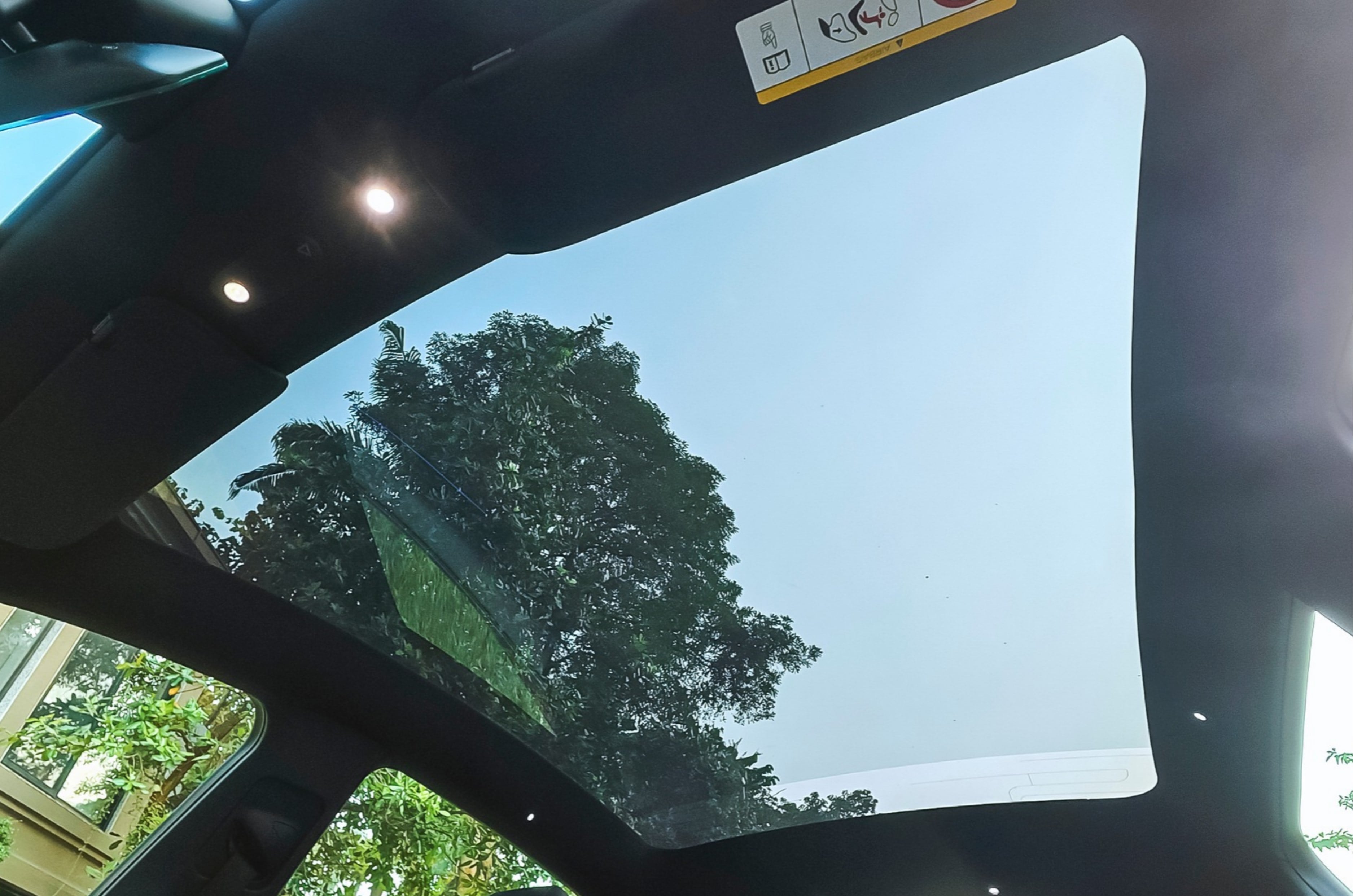
The Tesla Model Y L doesn’t get any blinds for its windows or a cover for its massive glass roof – instead making do with a tint. Considering the expansive glass area, this cabin heats up quickly on sunny days. The rear windscreen does without any tints, which only adds to the problem for third-row passengers.
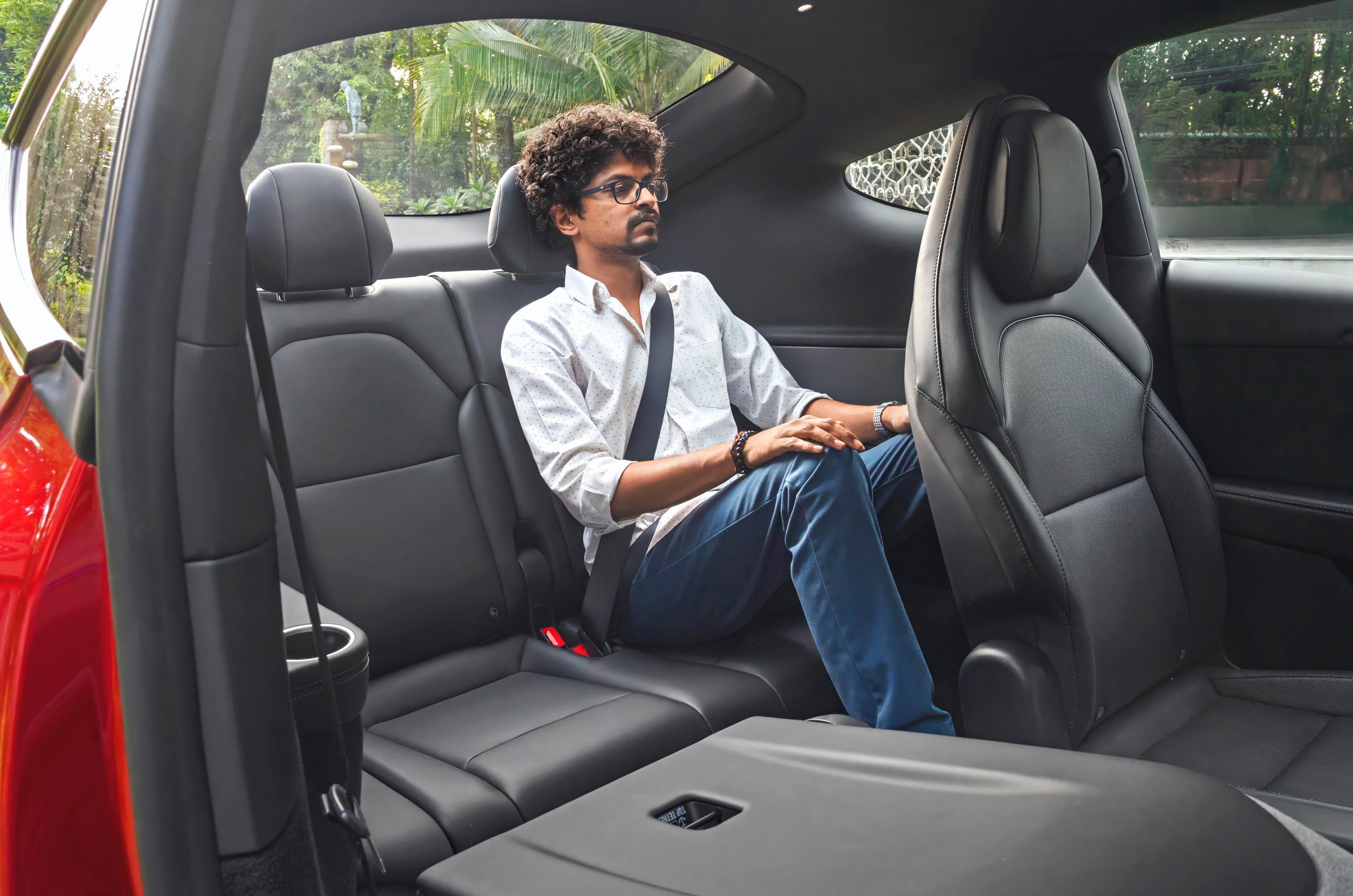
Getting to this last row is a cumbersome task, requiring you to squeeze in between the narrow gap of the middle-row seats. The seats are also slow to fold out of the way. Once you’re sat in the third row, you’ll have to assume a knees-up position.
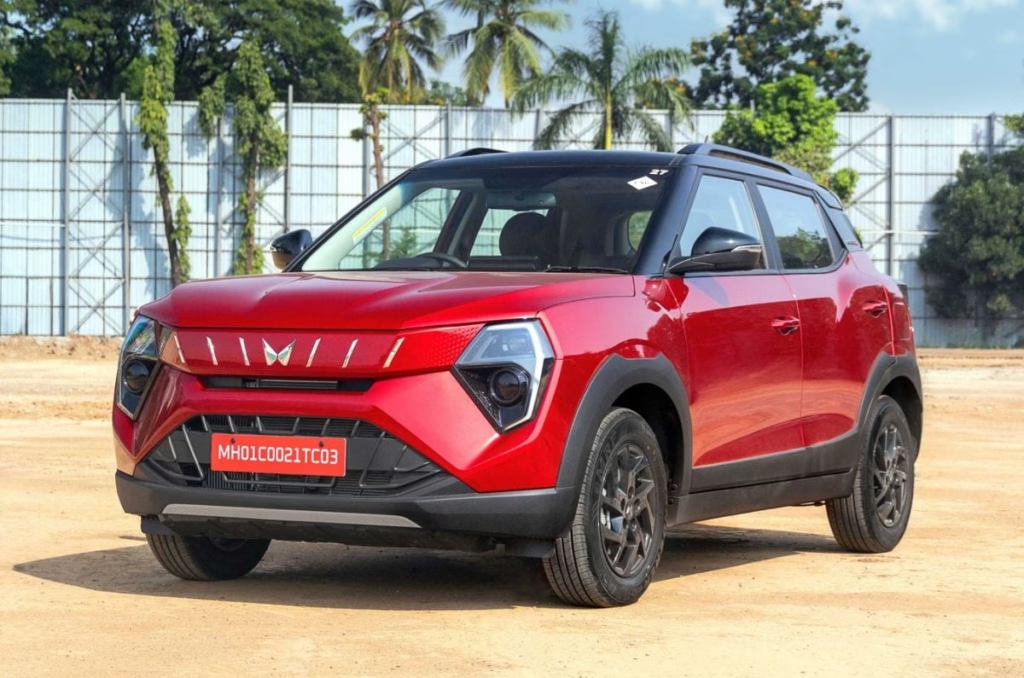
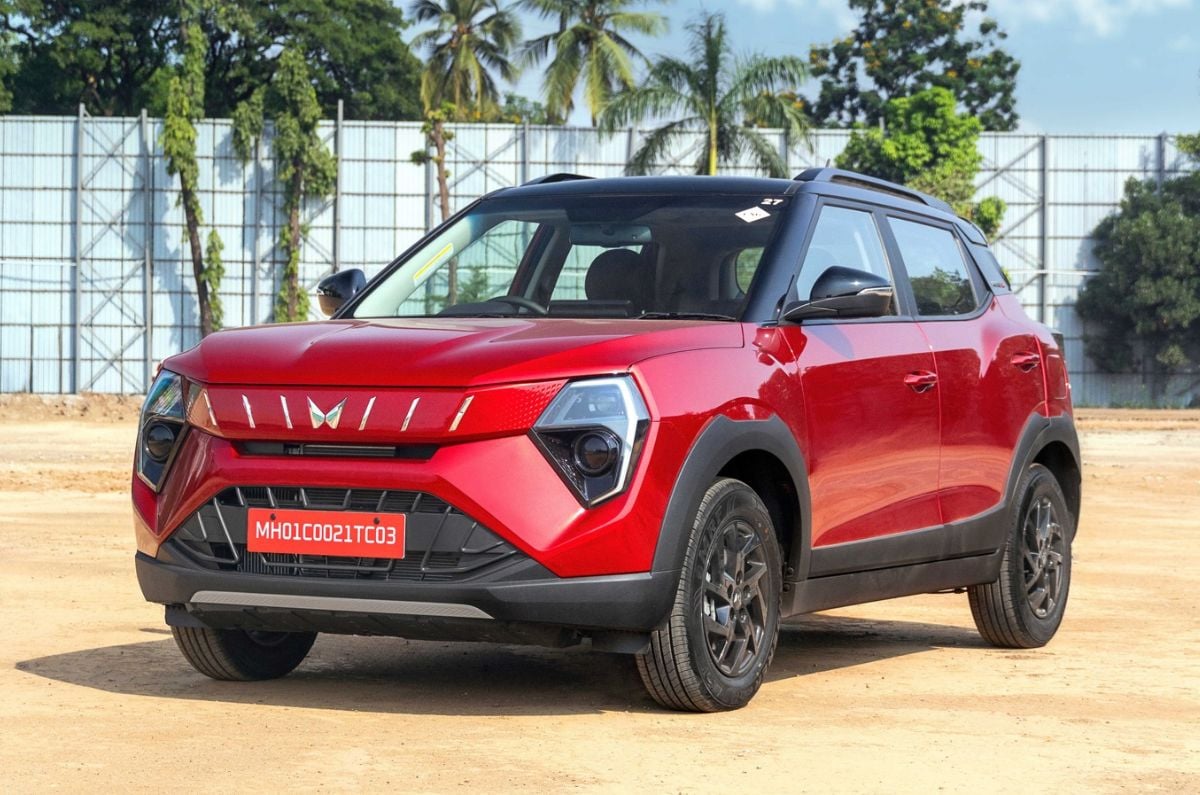
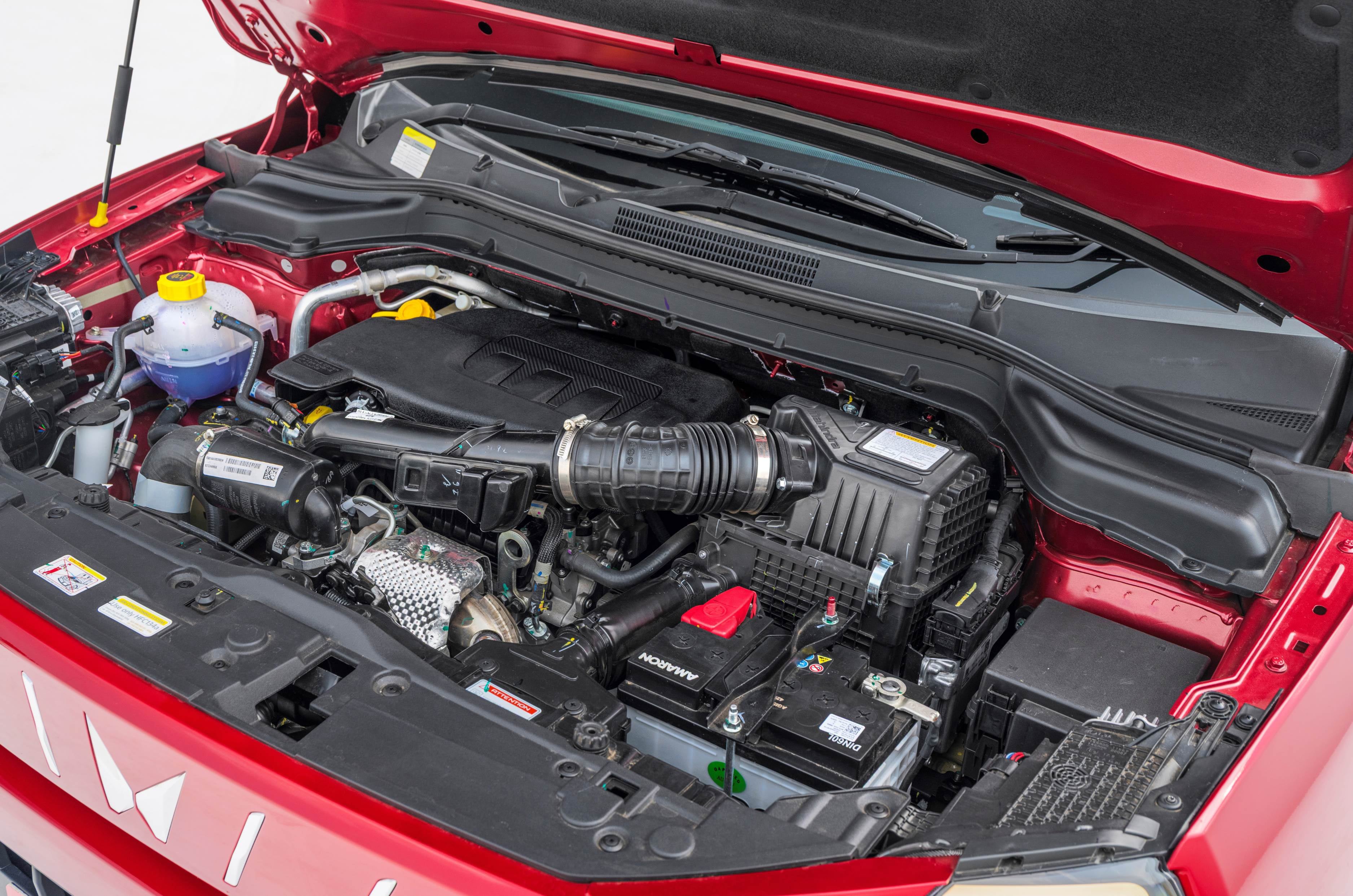
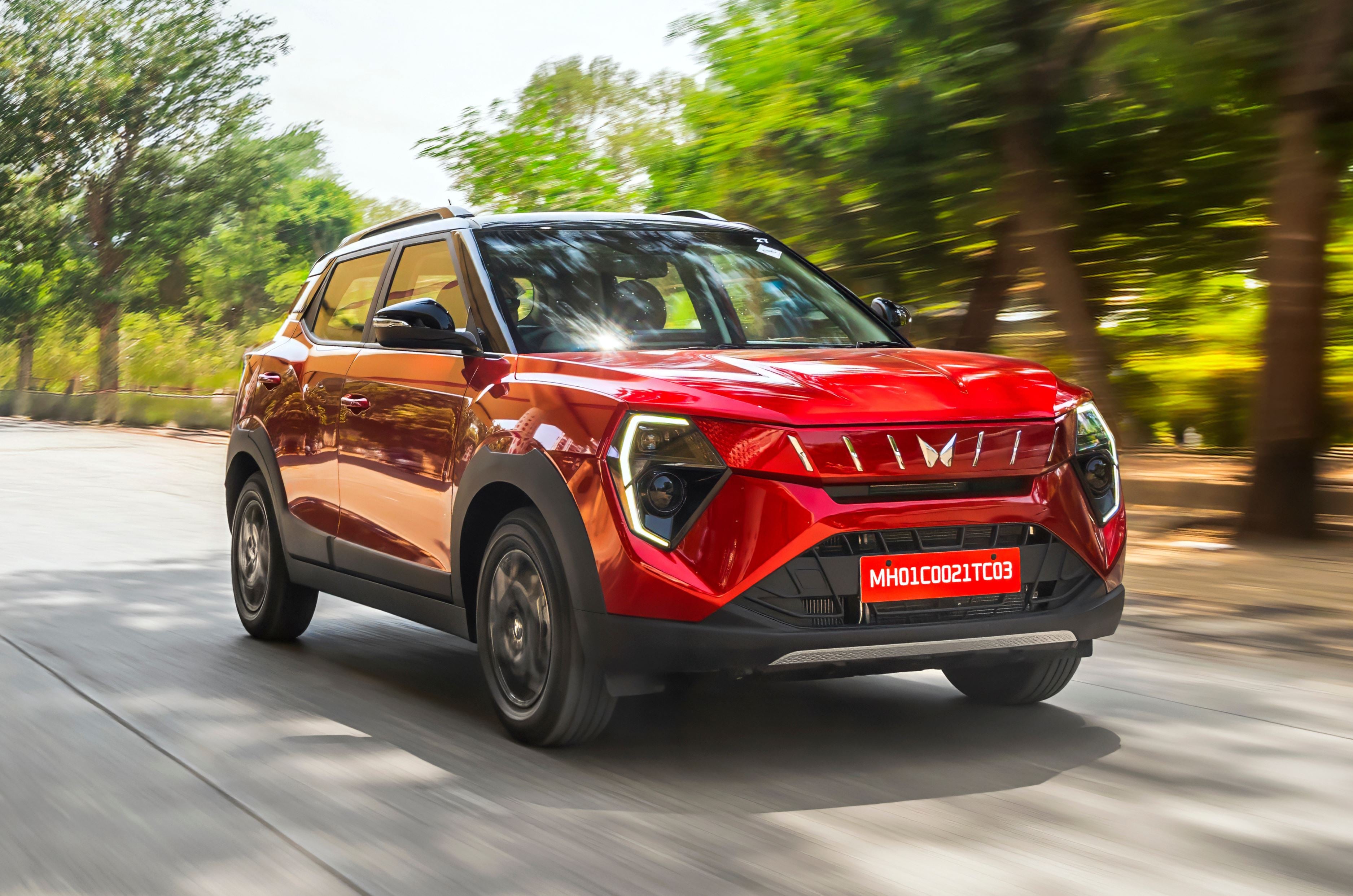
The Mahindra XUV 3XO ZNG takes on the Tata Nexon iCNG and the Maruti Brezza CNG in the CNG compact SUV space. Priced from Rs 9.99 lakh to Rs 12.27 lakh (ex-showroom), it carries a premium of Rs 1 lakh to Rs 1.2 lakh over the corresponding petrol versions. Before signing on the dotted line, here are the key strengths and weaknesses of this Mahindra SUV.
Reasons to buy the Mahindra XUV 3XO CNG
Strong performance on CNG
The XUV 3XO CNG loses none of its power when running on gas
The 1.2-litre MPFI (multi-point fuel-injected) turbo-petrol engine of the XUV 3XO CNG is the same unit found in the lower and mid-spec petrol trims. Here it develops 111hp and 200Nm in both petrol and CNG modes. While there’s some turbo lag below 2,000rpm, the engine pulls eagerly once it crosses that mark. This unit is also notable for its refinement and tractability, rarely requiring one to drop down to first gear, for going over speed breakers, for example.
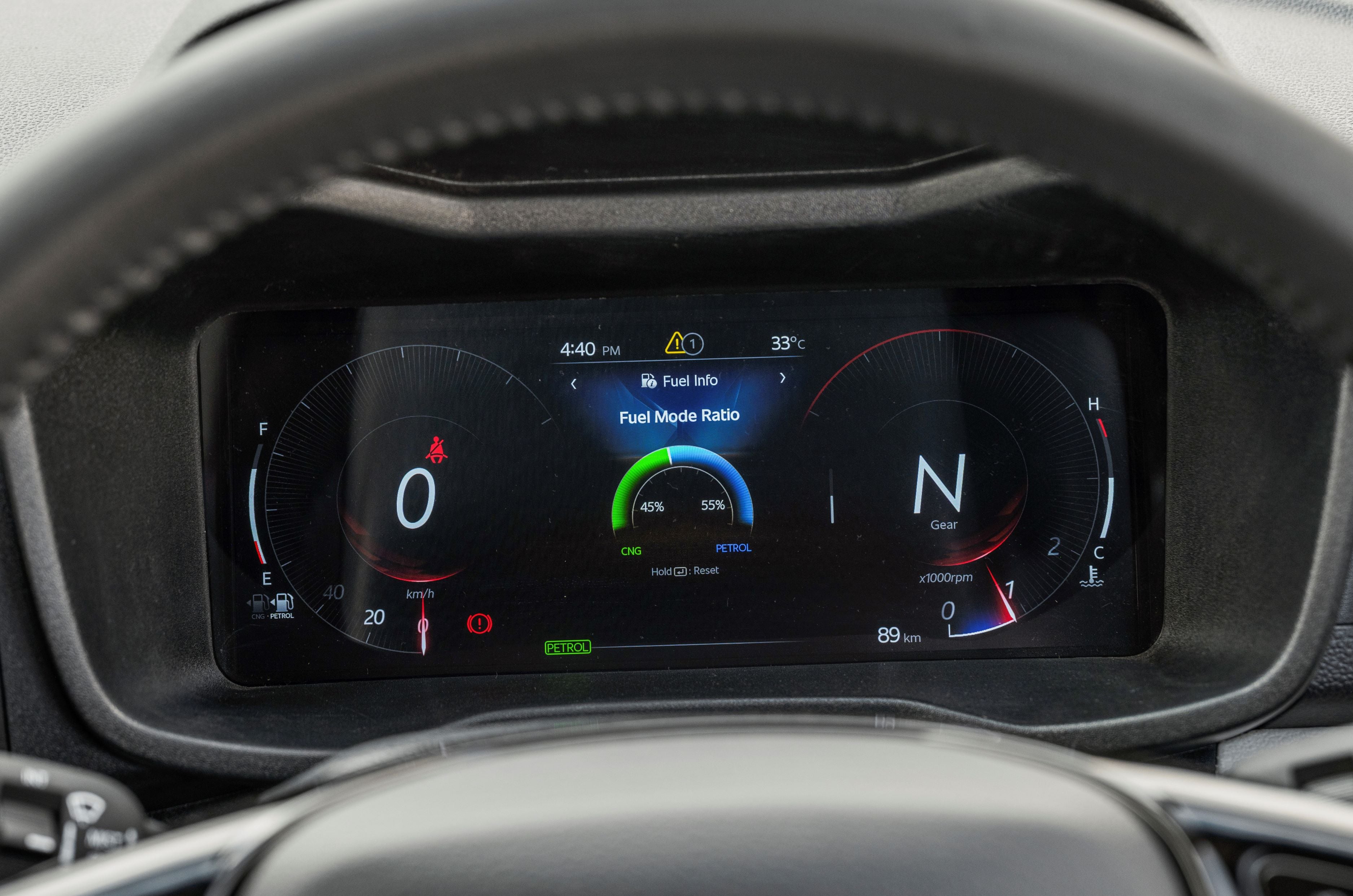
Switching between petrol and CNG is seamless as well, and few would be able to tell which fuel the XUV 3XO ZNG is running on. While we’re yet to test it, Mahindra claims a mileage of 24.7km/kg for this compact SUV, translating to a theoretical range of 247km on CNG.
Comfy ride and tidy handling
Mahindra has retuned the suspension to accommodate the extra heft of the CNG kit
The CNG hardware adds around 100kg to the XUV 3XO’s kerb weight, with the majority of it being over the rear axle. Mahindra has reworked the suspension to compensate for this heft. The result is a slightly firm ride but one that deals with bad roads quite well.
Adding to the overall comfort here are the 16-inch wheels wrapped with high-profile tyres. These manage to cushion the cabin from sharp bumps. The XUV 3XO CNG rides better than most cars in its segment. What’s good is that this ride comfort doesn’t come at the cost of sloppy handling. In fact, this Mahindra SUV feels tight and planted around corners. The steering is direct and doesn’t require much effort, with drivers being offered three steering modes for flexibility.
Upmarket cabin
This cabin is just as plush as that of the petrol and diesel versions
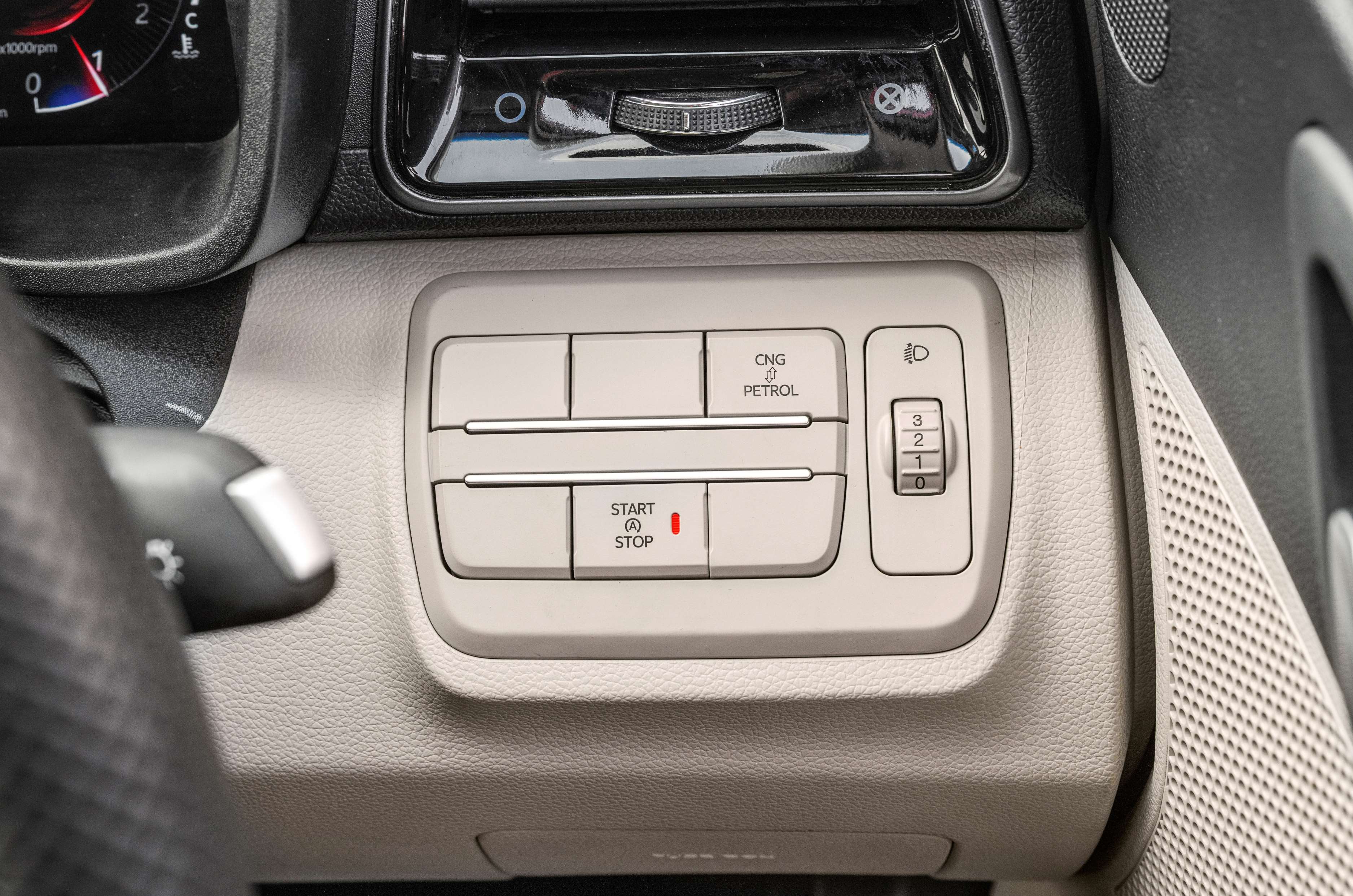
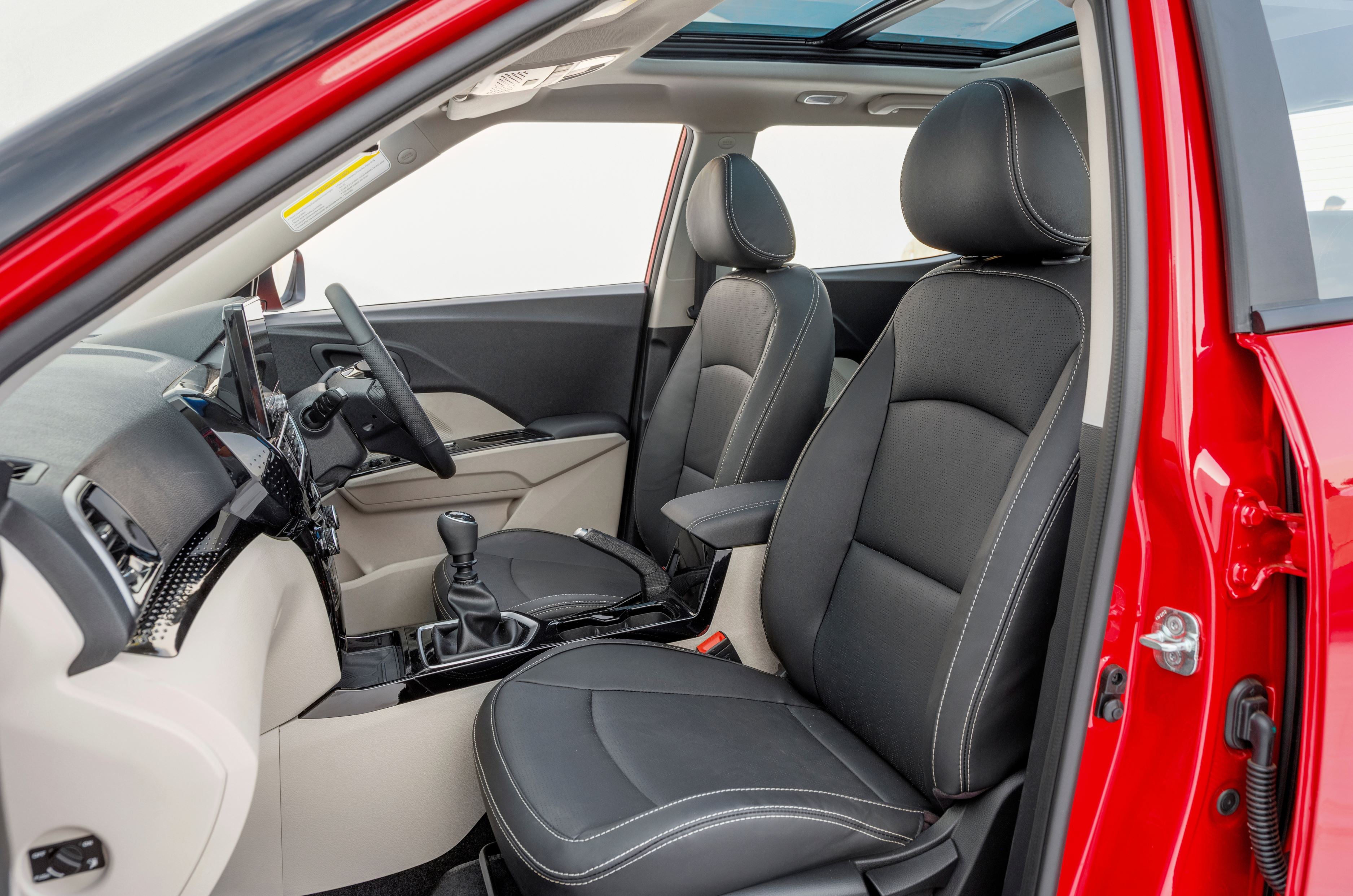
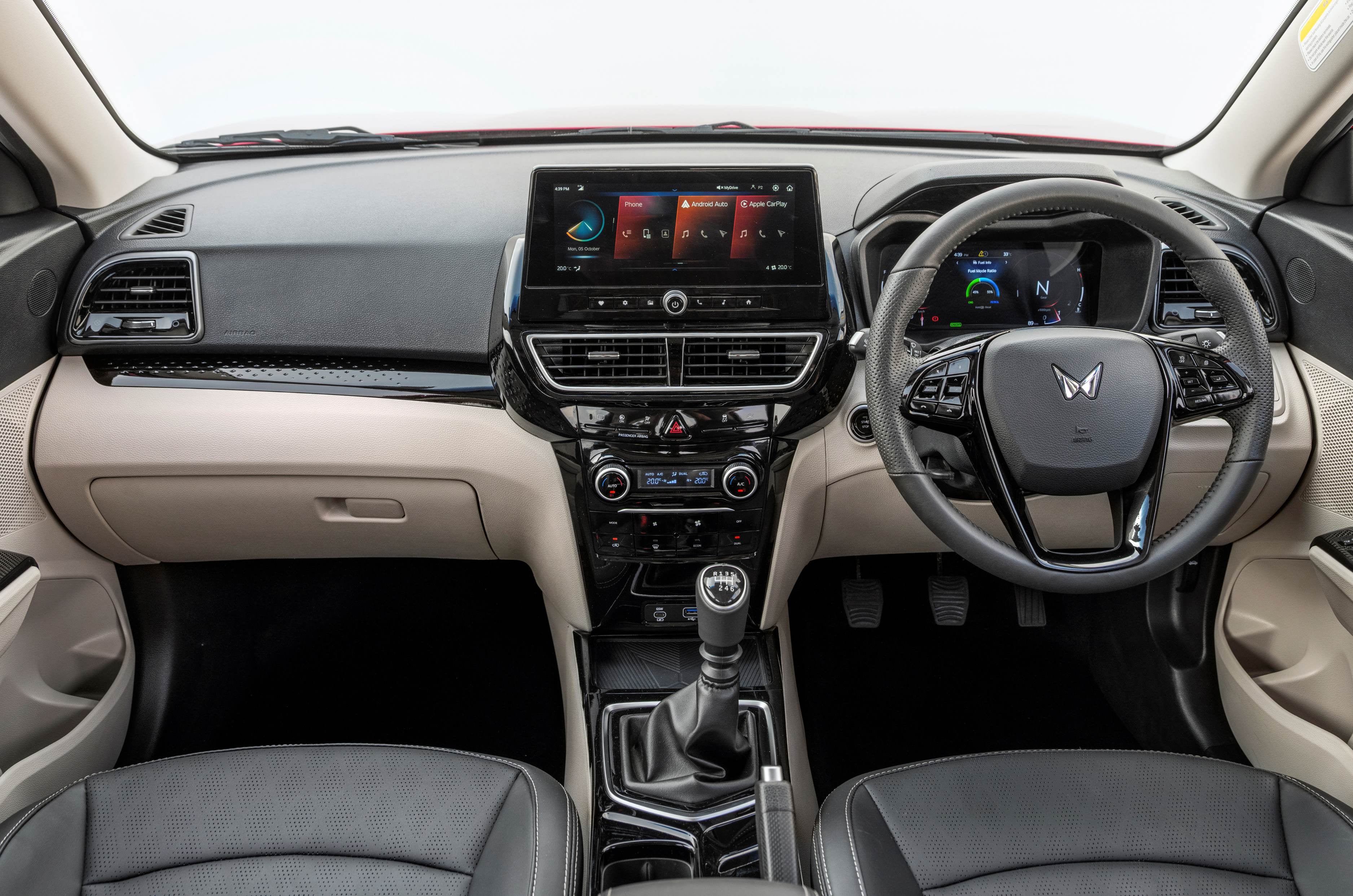
A CNG switch next to the steering wheel aside, the cabin of the XUV 3XO CNG is identical to that of non-CNG versions. While it can’t be had in equally top-end trim levels, the CNG version is available with a dual-tone dashboard, gloss black accents and leatherette upholstery. Overall, there’s a feeling of good build that’s backed by a sense of premiumness. Meanwhile, the rear seat is quite roomy for the class and can accommodate three adults without much fuss.
The top-spec RevX A trim gets twin 10.25-inch screens, a panoramic sunroof and a 6-speaker audio system with Dolby Atmos. Mahindra says the CNG version is engineered to match the five-star Bharat NCAP safety rating of other combustion-powered XUV 3XO versions. Standard safety features here include 6 airbags, stability control, ISOFIX anchors and a reversing camera.
Reasons not to buy the Mahindra XUV 3XO CNG
Small boot
The twin-tank setup eats into what was already a small boot
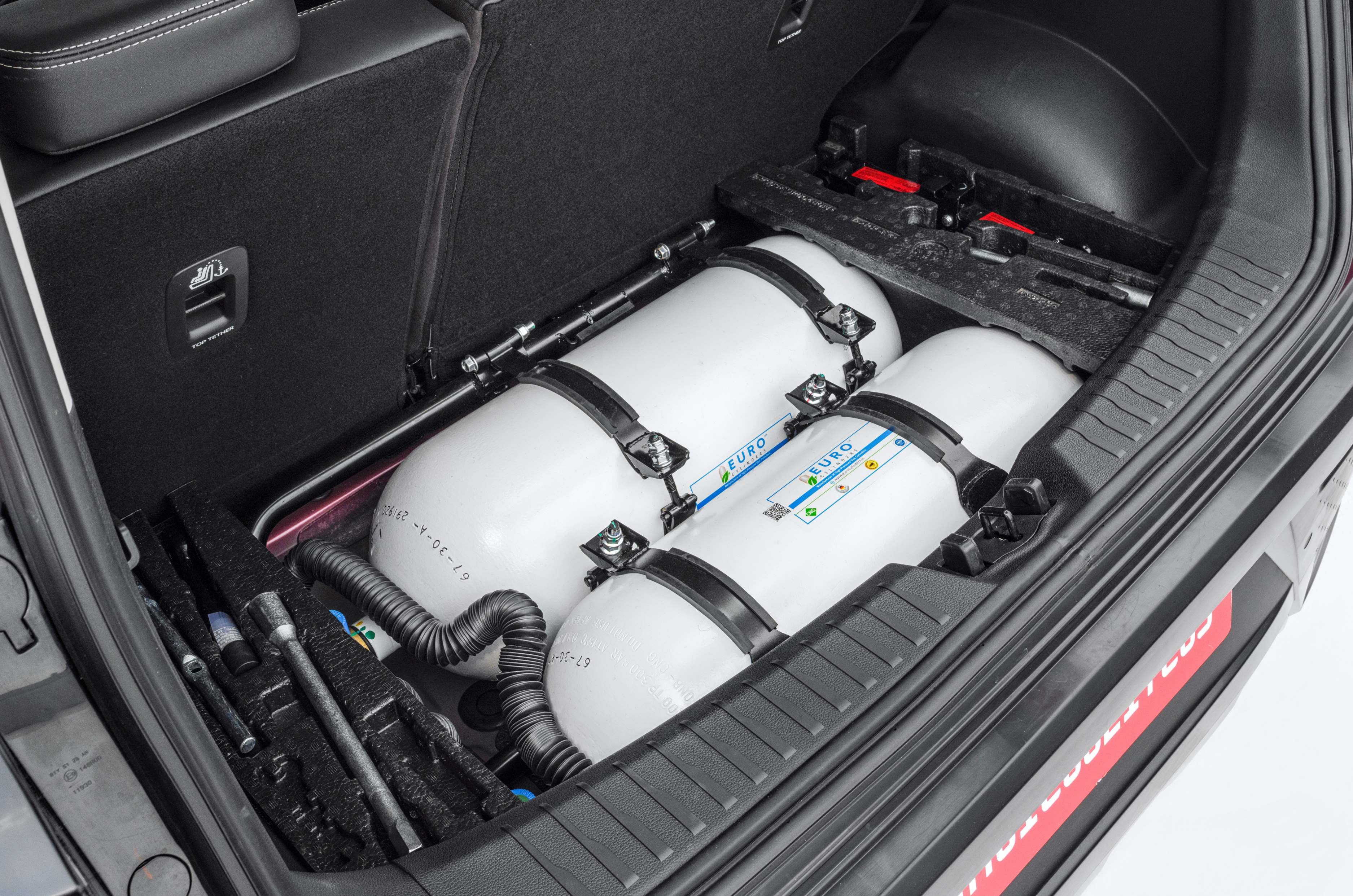
The 295-litre boot of the XUV 3XO was already the most compact in the segment. Despite moving the spare wheel under the car’s body and fitting the twin cylinders beneath the boot floor, the XUV 3XO CNG’s boot is even more compromised – offering just 270 litres of cargo space. It’s only its width that allows up to four cabin-sized bags to be stored.
Cabin niggles
The XUV 3XO CNG’s interior isn’t devoid of ergonomic flaws
While the black leatherette seats look sporty, they don’t get a ventilation function. This means that, on a bright sunny day, they will heat up quite quickly. If you’ve a larger build, the front seats of the XUV 3XO CNG will feel lacking in space. Adding to the ergonomic niggles is the steering wheel, which cannot be adjusted for reach, making it harder to find a comfortable driving position. Lastly, not only is the XUV 3XO CNG’s driver footwell cramped, there’s also no dead pedal.
Limited options
Customers get only mid-spec trim levels with the CNG version
The CNG version of the Mahindra XUV 3XO is sold in just four trim levels, all of which are mid-spec options within the broader line-up. This limitation becomes obvious given the lack of a 360-degree camera, ventilated front seats, or a wireless charging pad – these are available in the Nexon iCNG. There are no fog lamps, either. Another limitation is that the CNG version only comes with a 6-speed manual, which has long throws and a fair amount of clutch pedal travel.
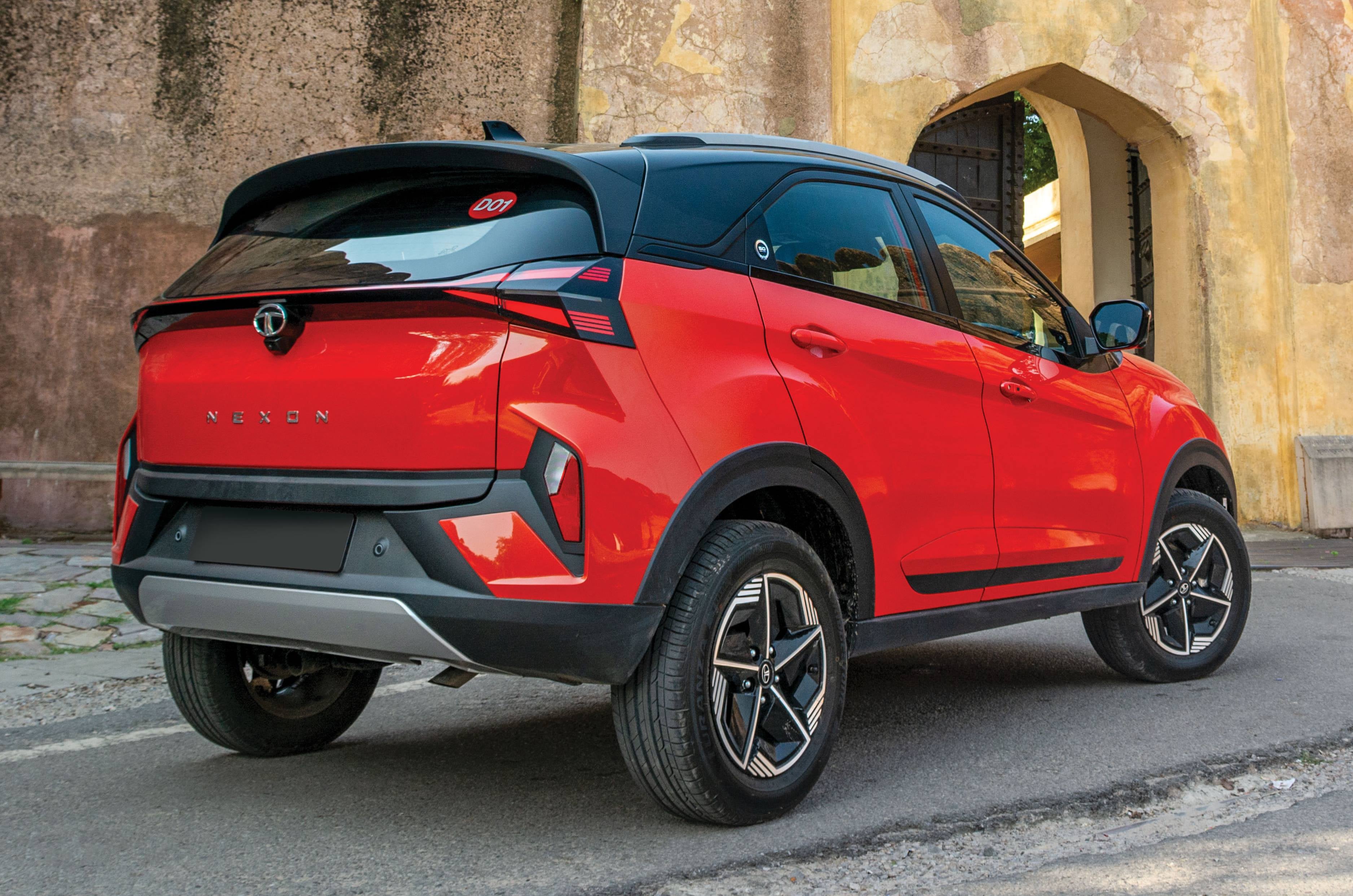
The Tata Nexon received a comprehensive facelift in September 2023, bringing a sharper exterior, a redesigned interior and more technology. It retained its compact SUV dimensions while offering a wide powertrain choice, along with manual and automatic gearbox options for both petrol and diesel. With its generous equipment, practical cabin and SUV-like stance, the facelifted Nexon makes a compelling case as a used buy.
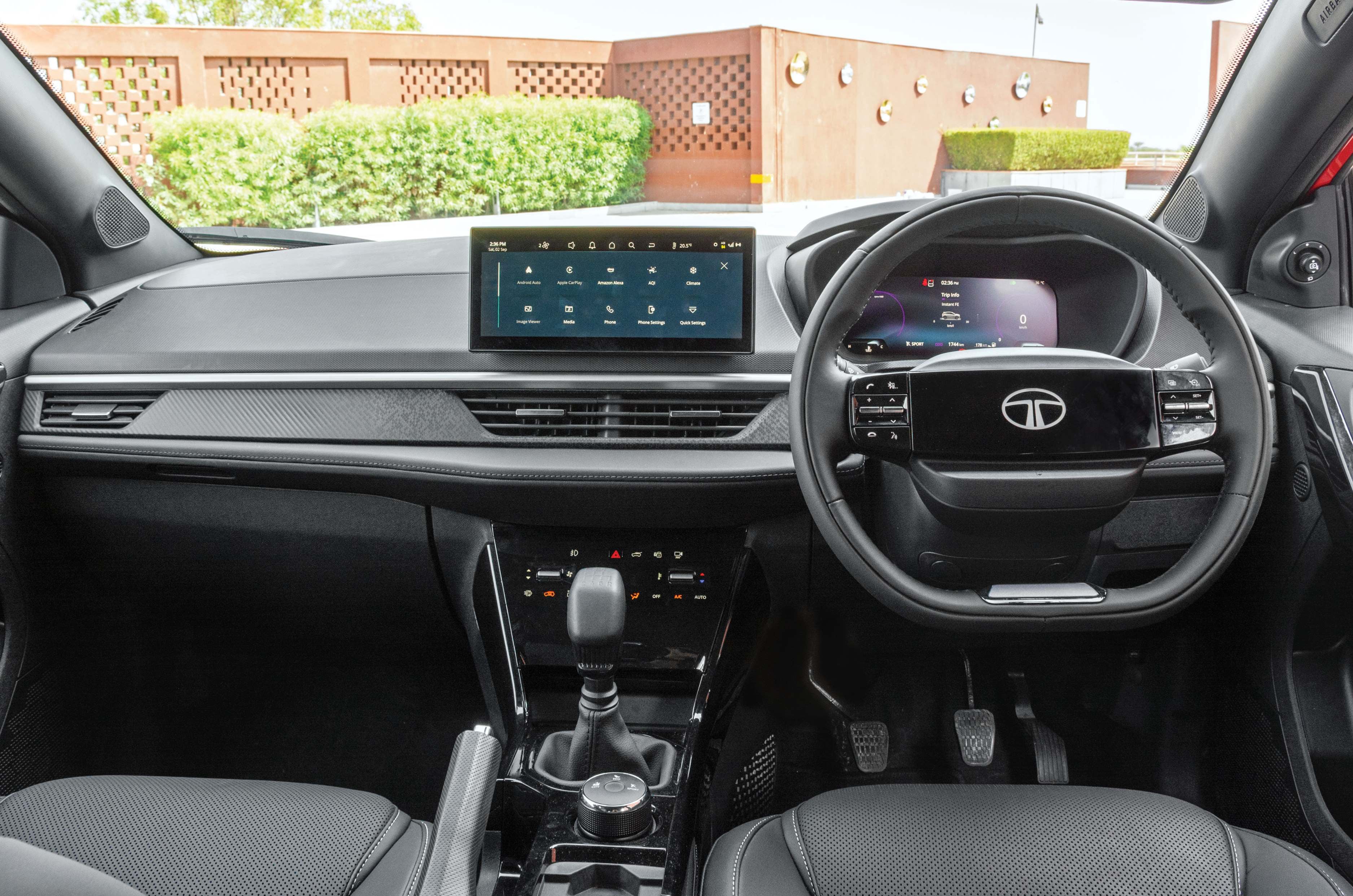
The 2023 Nexon was a significant styling departure from its predecessor, featuring slim sequential LED DRLs and headlamps positioned lower in the bumper. Revised bumpers, a new grille, connected LED tail-lights and redesigned alloy wheels gave it a more modern appearance. The cabin also received a thorough redesign, including a two-spoke steering wheel, a digital instrument cluster and a new touch panel for the HVAC controls. But, it retained its strengths of a spacious and practical cabin, a solid feature set and well-sorted ride and handling.
Petrol, diesel and CNG options; MT, AMT and DCT gearboxes
Under the bonnet, the Nexon continued with its 1.2-litre turbo-petrol and 1.5-litre diesel engines. The petrol engine produces 120hp and 170Nm, while the diesel makes 115hp and 260Nm. Gearbox options included a 5-speed manual, 6-speed manual, 6-speed AMT and 7-speed dual-clutch automatic, depending on the engine and variant. A CNG version was added to the line-up later, which featured the same 1.2-litre petrol engine and came with a 6-speed manual only. The CNG came with Tata’s innovative twin tank setup under the boot floor, which meant a usable cargo space and spare tyre were retained.
The petrol engine is suitable for everyday urban driving, while the diesel’s higher torque makes it better suited to buyers for highway use. The automatics, of course, are the choice for someone looking for an easier driving experience. The CNG makes sense for high running.
Tata Nexon variants and features
10.25-inch touchscreen, 360-degree camera, ventilated seats and more
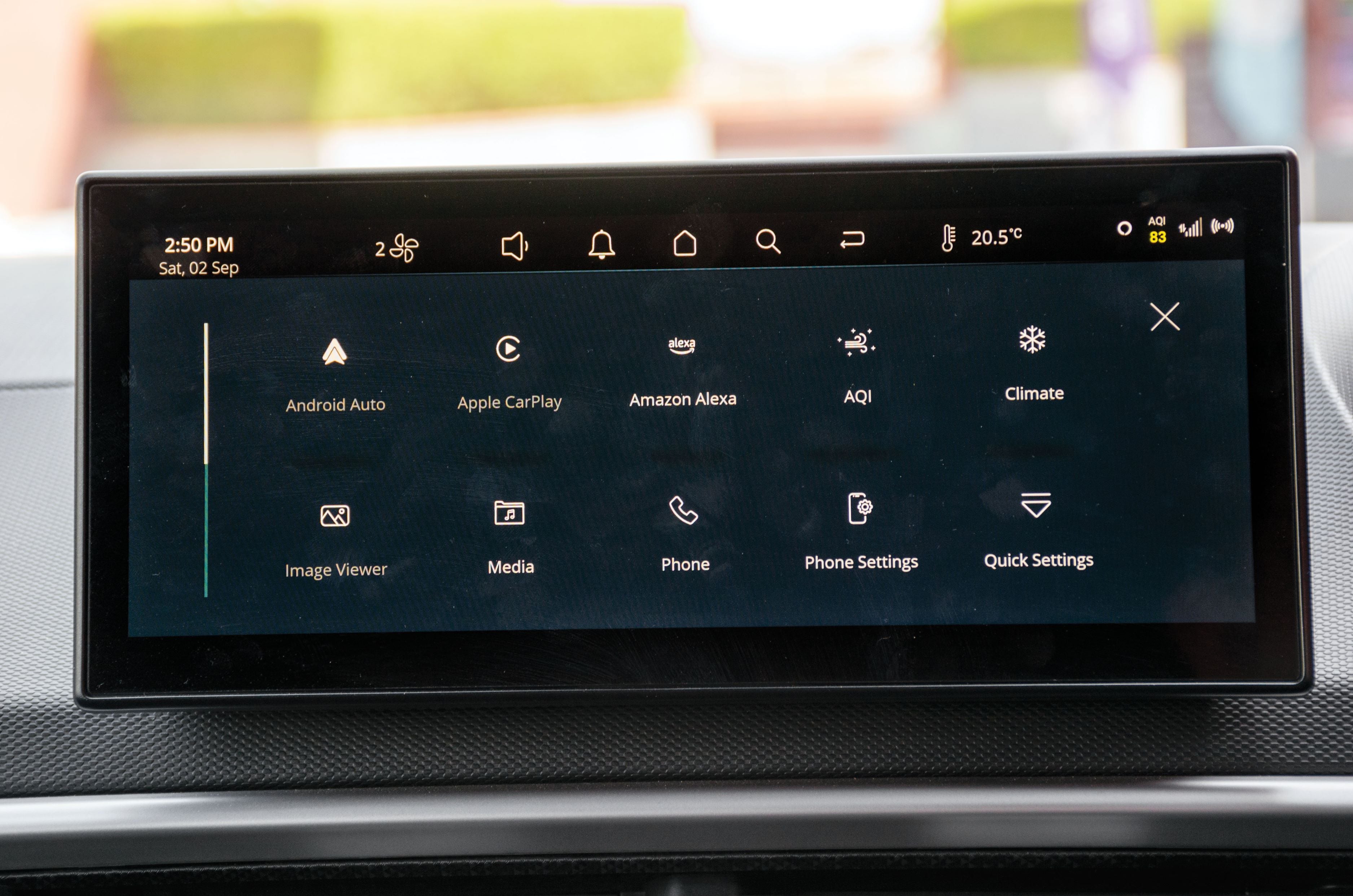
The 2023 Nexon was offered in Smart, Pure, Creative and Fearless trim levels at launch, with equipment varying by variant. Top-spec versions featured a 10.25-inch touchscreen infotainment, a 10.25-inch digital cluster, wireless Android Auto and Apple CarPlay, connected-car tech, a 360-degree parking camera, ventilated front seats, cruise control, leatherette upholstery and a sunroof. Safety equipment included six airbags, electronic stability control and ISOFIX child-seat mounts. The Nexon has also received a five-star Global NCAP crash safety rating under the enhanced 2022 protocol.
As is always the case with Tata products, the Nexon line-up has been regularly updated with the addition/deletion of certain variants, special editions and new features like a panoramic sunroof and Level 2 ADAS tech. With such a widespread line-up, choosing the right one can be tricky. Pick based on your budget and the non-negotiable features you’d want. As it is, even the mid-spec trims come well equipped and have more than the basics covered.
Tata Nexon reliability and aftersales
Tatas are not known to be very reliable, but with the Nexon’s long run, bugs have been ironed out, and these Nexons have proven to be a generally reliable package. Spare parts are easily available, and you’re backed up by Tata’s wide service network throughout the country, though their service quality varies.
What to look out for in a used Tata Nexon
Electronic glitches
The 2023 Nexon introduced a larger touchscreen, a digital cluster, a 360-degree camera and LED lights. Before buying, test the touchscreen thoroughly, connect your phone and check that the 360-degree camera works as intended. Make sure the cluster has no warning messages or glitches and that the LED lights work correctly. Some owners have faced issues with these.
Suspension wear
Nexons that have spent considerable time on poor roads can develop wear in suspension components. Drive it over speed breakers and uneven surfaces, listening for knocking sounds or excessive crashing, as these are signs of worn-out suspension components.
Auto gearbox health
During a test drive, check for excessive juddering, hesitation, delayed engagement or unusual noises, particularly in slow-moving traffic, as these could be signs of potential trouble with the auto gearboxes.
Used Tata Nexon service history and warranty check
Look for a Nexon that comes with a detailed service history or one that has an extended warranty package, as that will give you additional peace of mind since you are buying a pre-owned example.
Second-hand Tata Nexon price and resale value
Rs 7 lakh-11 lakh
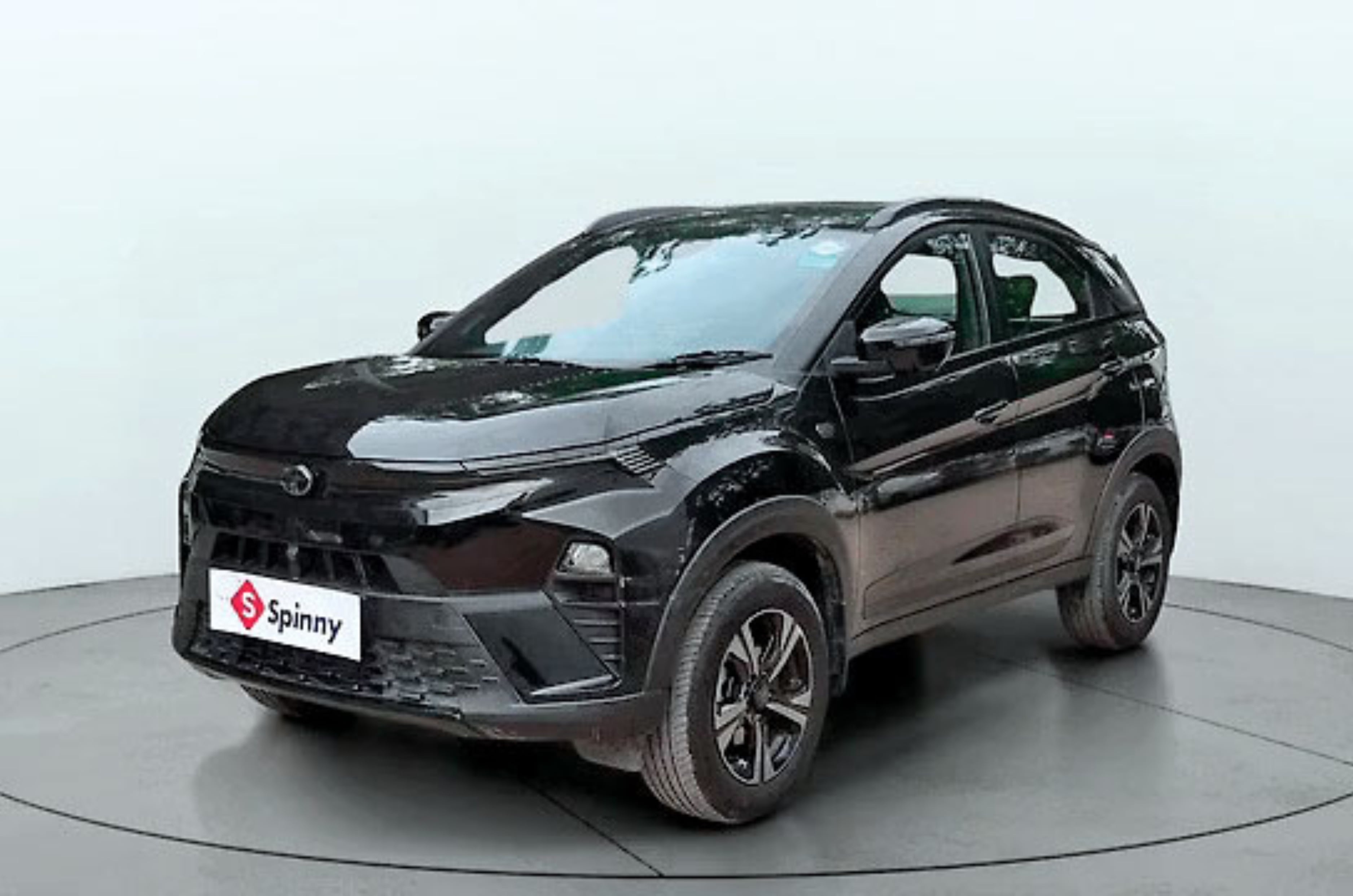
The price of a used 2023 Tata Nexon will depend on its engine, gearbox, variant, kilometres driven, ownership history and condition. Petrol manual examples will be the most affordable, while the diesel and CNG versions tend to be the more expensive ones. However, refrain from spending too much more than Rs 11 lakh, as you’d rather be better off buying a brand-new one.
The Tesla Model Y L has received powertrain upgrades, improving its claimed 0-100kph sprint time. The Tesla EV now does the sprint in a claimed 4.5 seconds, an improvement of 0.5 seconds than before. Note that this is applicable to Model Y Ls purchased on or after October 1, 2026, in India. In terms of exterior design and interior features, no changes have been made. The Model Y L is priced at Rs 61.99 lakh, ex-showroom.
Tesla Model Y L powertrain details
Despite the improvement in acceleration, Tesla claims the same 681km (WLTP) range figure for the Model Y L as before; real-world range will vary depending on driving conditions, speed, weather and other factors. It has an 88kWh (estimated) NMC battery pack, powering a dual-motor all-wheel-drive setup. Tesla has not not officially disclosed powertrain specifications, but it has an estimated combined system output of 514hp and 590Nm. The claimed top speed is 201kph.
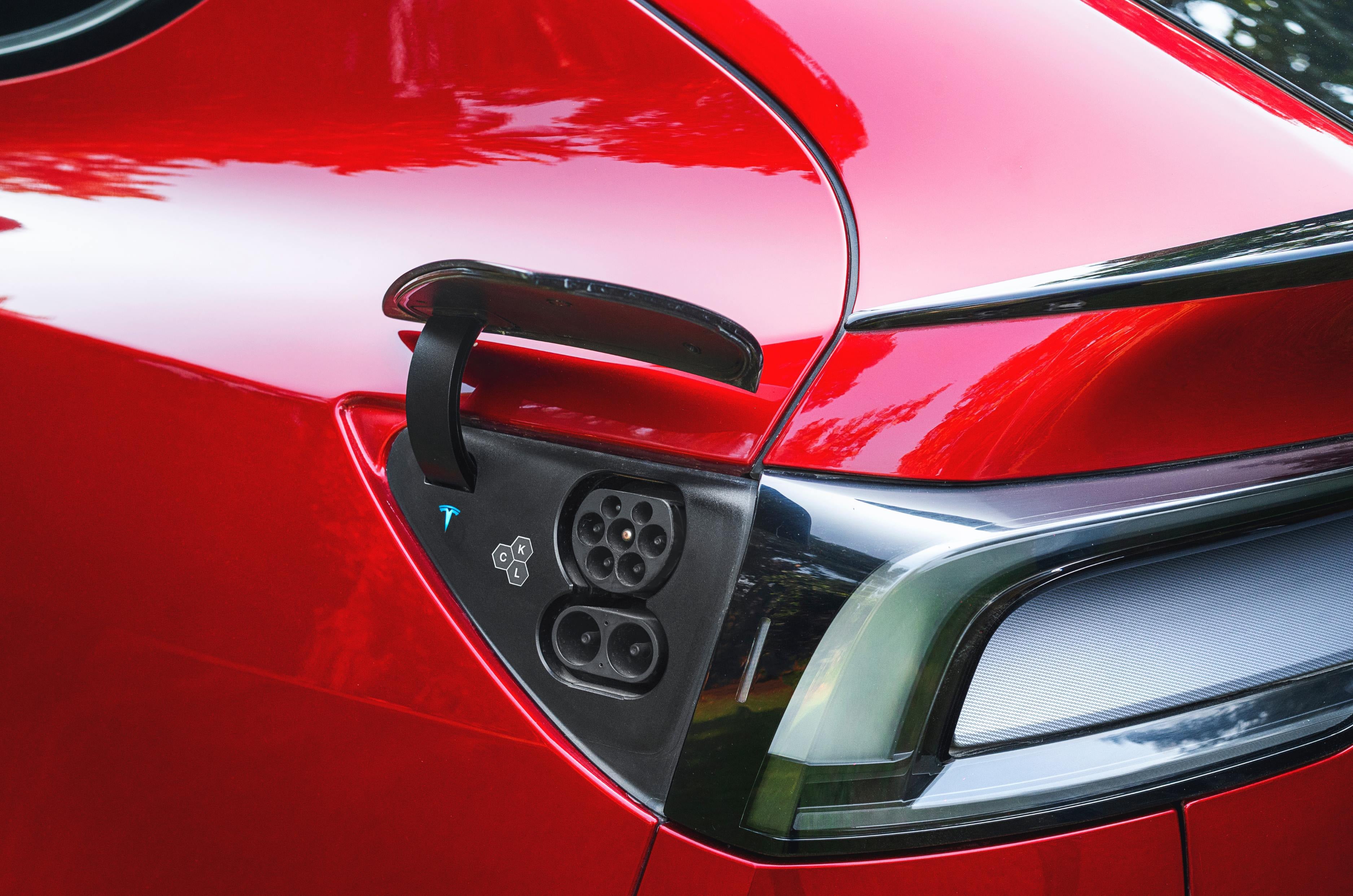
As per the carmaker, the Model Y L can add up to 288km of range in 15 minutes when using a Tesla Supercharger. It supports DC fast charging speeds of up to 250kW and AC charging of up to 11kW.
Tesla is expanding its charging network in India, with 20 Superchargers and 28 Destination Chargers. Three more sites are planned by the end of 2026.
In the premium EV space, the Tesla Model Y L rivals the BMW iX1 LWB and BYD Sealion 7.
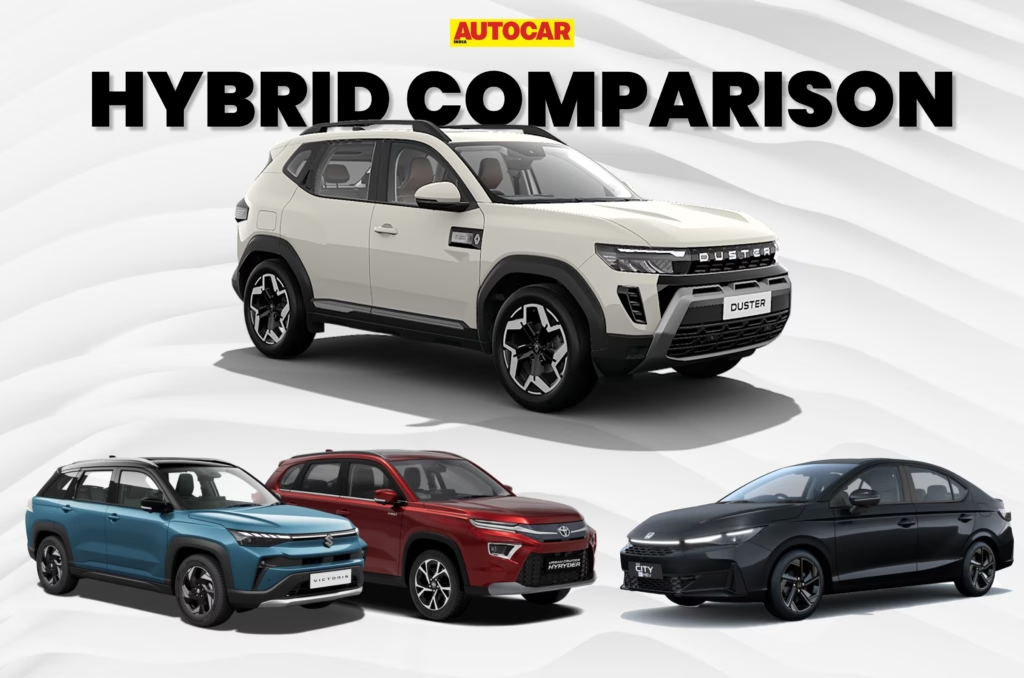
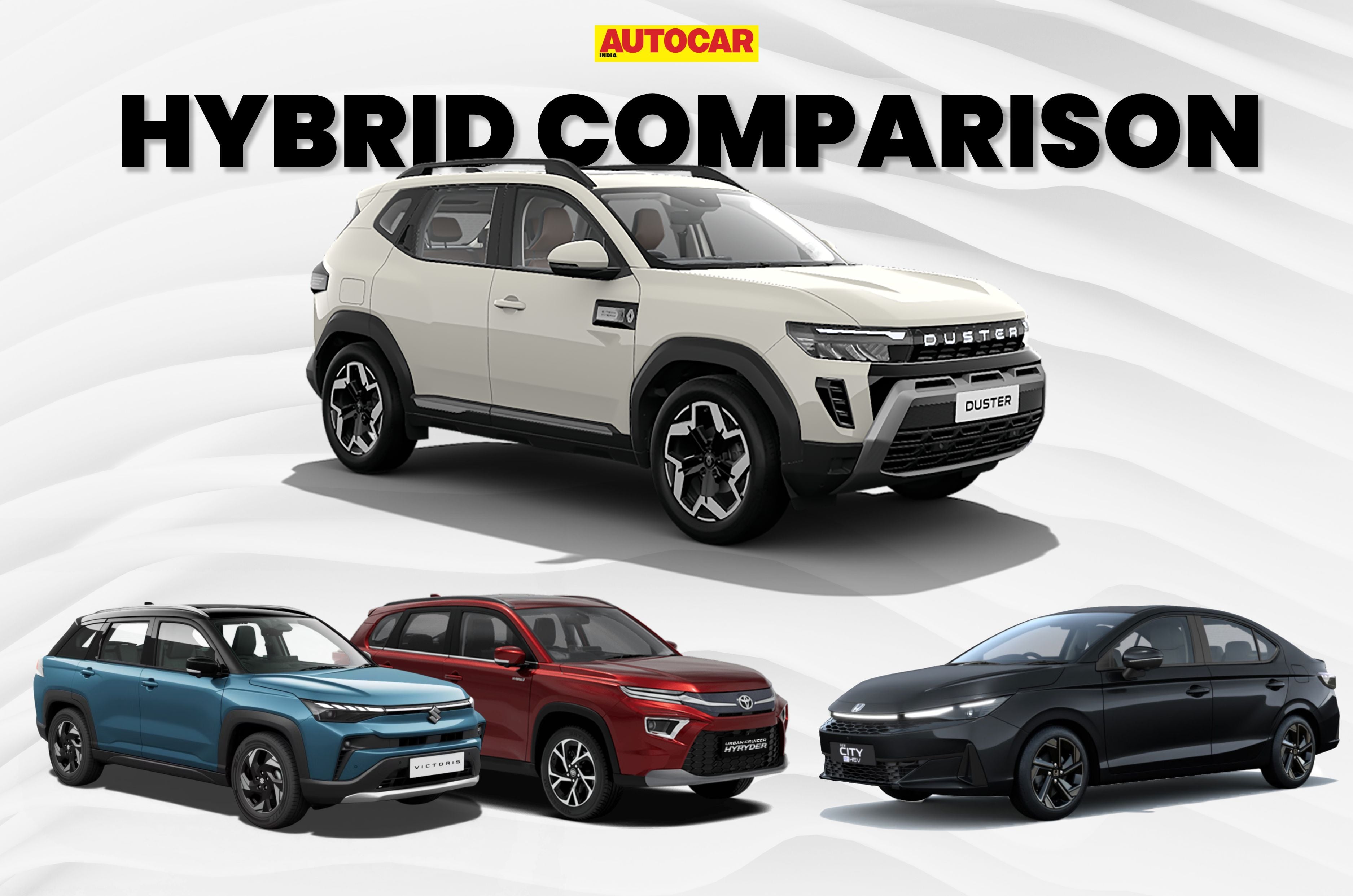
The new Renault Duster has been launched with a strong hybrid powertrain option, a first for the nameplate in India. The latest from Renault competes in the midsize SUV space, where only the Maruti Grand Vitara, Maruti Victoris and Toyota Hyryder currently offer a hybrid choice. Honda does not offer a hybrid setup with the Elevate at the moment, though the City midsize sedan has been equipped with one. But how do these vehicles stack up on paper when it comes to specifications? Let’s find out.
Renault Duster hybrid spec comparison
Duster has the highest power output
Renault Duster hybrid specs vs Grand Vitara, Victoris, Hyryder and City e:HEV
Hybrid system
Combined power
Combined torque
Transmission
Mileage
Battery size | Voltage
Duster
1.8L 4cyl + 2 e-motors
160hp
–
Multi-mode automatic
29kpl
1.4kWh | 247V
Grand Vitara
1.5L 3cyl + e-motor
116hp
141Nm
eCVT
27.97kpl
0.60kWh | 177.6V
Victoris
1.5L 3cyl + e-motor
116hp
141Nm
eCVT
28.65kpl
0.60kWh | 177.6V
Hyryder
1.5L 3cyl + e-motor
116hp
141Nm
eCVT
27.97kpl
0.60kWh | 177.6V
City e:HEV
1.5L 4cyl + e-motor
126hp
253Nm
eCVT
27.13kpl
Not available | 172.8V
While we are yet to sample the Duster hybrid in real-world conditions, the above specs table suggests it takes a more performance-led approach than the rest. Its four-cylinder naturally aspirated petrol engine is the largest by cubic capacity here, and paired with two electric motors, this hybrid setup delivers the highest peak power output. Renault claims a 0-100kph time of 9.61 seconds, which it says makes the Duster hybrid the quickest in the segment. The brand has not revealed a combined torque figure yet, though the Duster’s traction motor produces 208Nm on its own.
Renault SUV’s multi-mode gearbox stands out
The Duster’s multi-mode automatic gearbox has two gears for the motor and four gears for the engine. Renault claims that this setup creates an 8-speed combination in hybrid mode, and it stands out as the others use an eCVT unit, which is known for a smooth driving experience. Moreover, the Duster hybrid’s larger, higher-voltage battery further points to more electric assistance than the rest. The French brand claims that 80 percent of city drives are possible in EV mode alone, while the Duster hybrid’s ARAI-certified mileage of 29kpl is the highest of all the cars here.
Midsize SUVs offer most powertrains
Only PHEV is missing
Save for plug-in hybrid, midsize SUVs offer almost every major powertrain choice, including petrol, CNG, diesel and electric. Hyundai Creta is expected to adopt a hybrid powertrain in its next generation, due in 2027, and its Kia Seltos sibling is also set to follow suit. The new Tata Sierra’s ARGOS platform is hybrid-ready, giving the homegrown carmaker the flexibility to introduce a hybrid version in the future. Volkswagen and Skoda are also working on hybrid midsize SUVs for the Indian market.
Aprilia may not be the biggest player in the Indian scooter market but it is certainly one of the most radical. It was the first to give us a taste of a true-blue affordable performance scooter with the SR 150 in 2015 and in 2020 the company then upped the ante and introduced India to a premium, yet attainable maxi-style scooter with the SXR 160.
However, six years is a long time and in this interim, the niche that Aprilia was the sole occupant of has now been infringed upon by TVS, Hero, Yamaha and more recently, even Honda! To counter, Aprilia has now taken the next step in the SXR’s evolution and has introduced two models with new engines (125cc and 175cc), more features and a GT suffix. We were given a chance to sample the larger 175cc version and here are our initial impressions.
Aprilia SXR GT 175 Design and features – 7/10
It’s an old design but still looks good; has received a good features upgrade
This design may be 6 years old, but it still manages to look good and turn heads
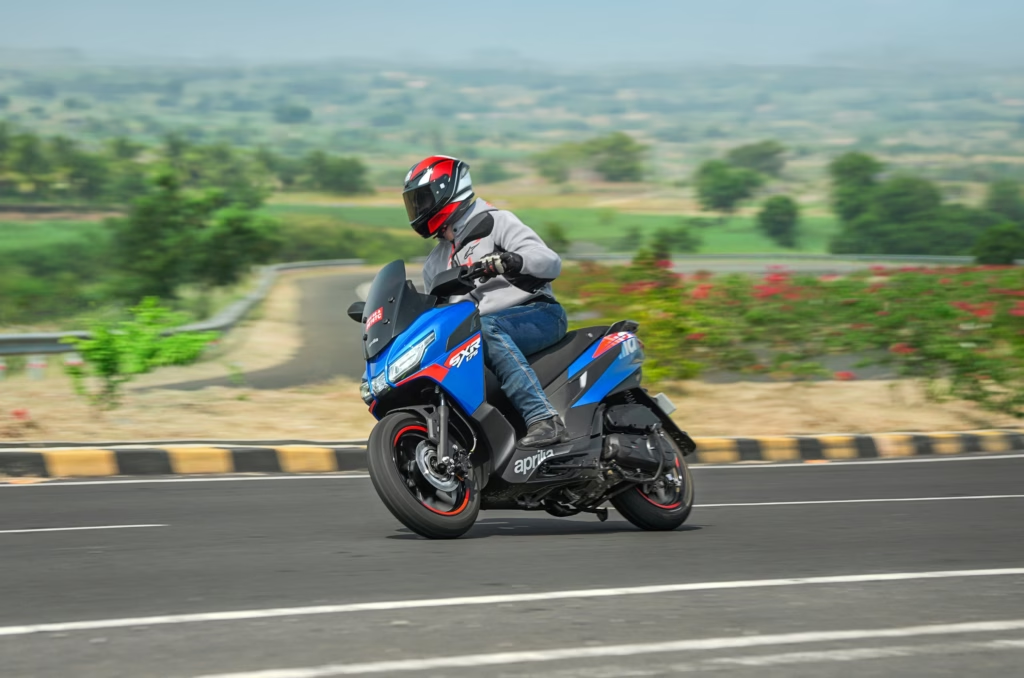
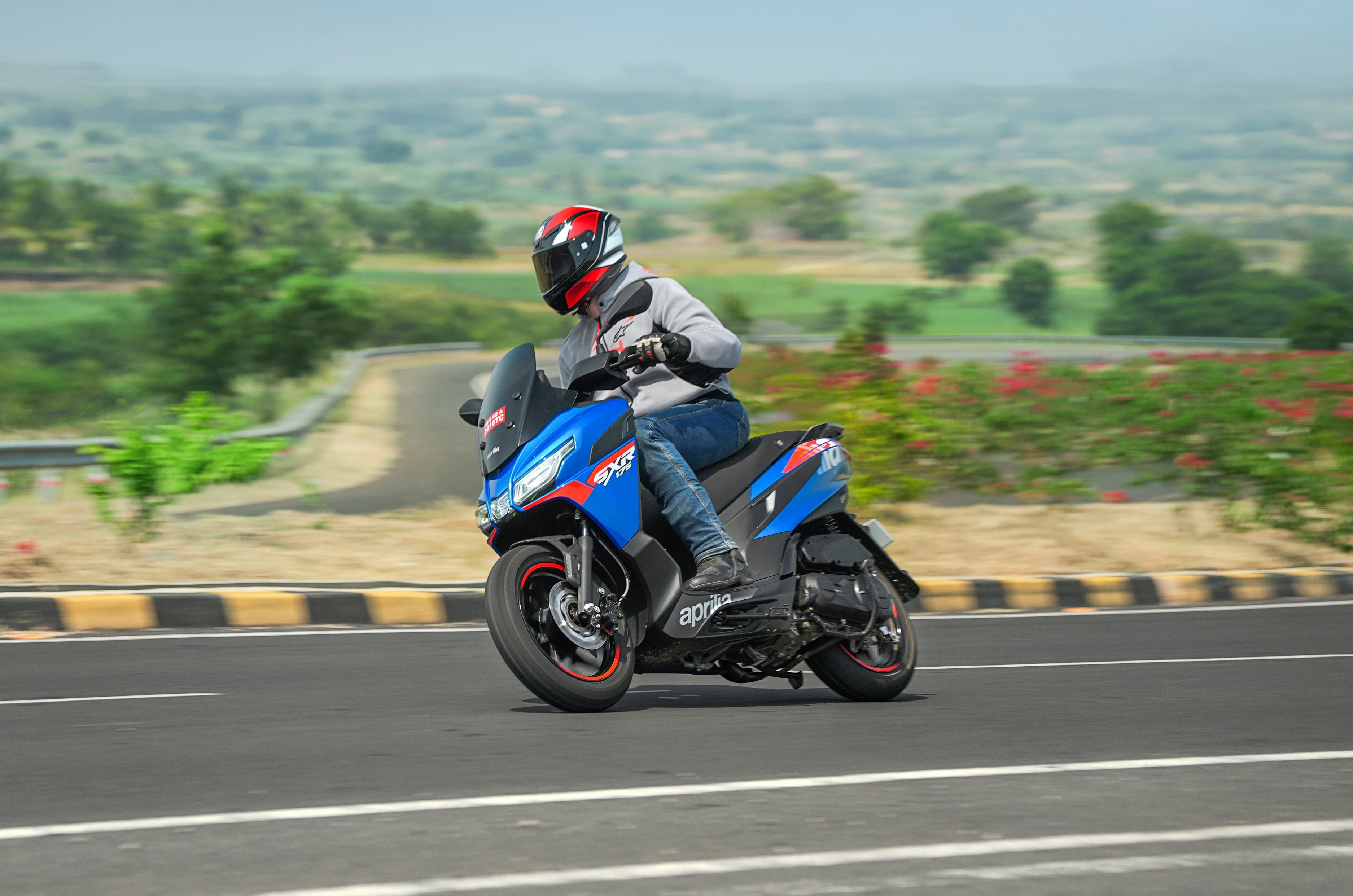
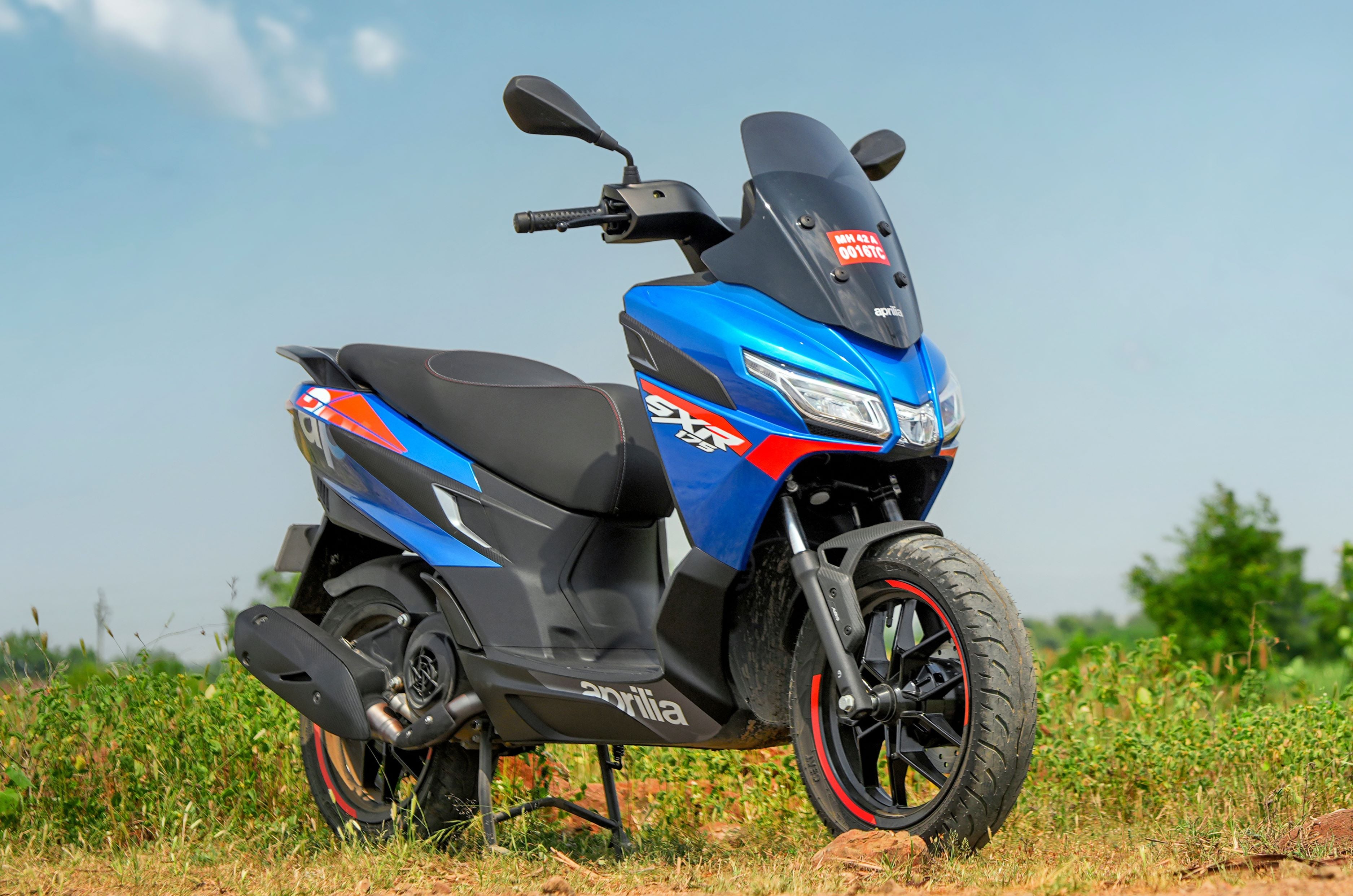
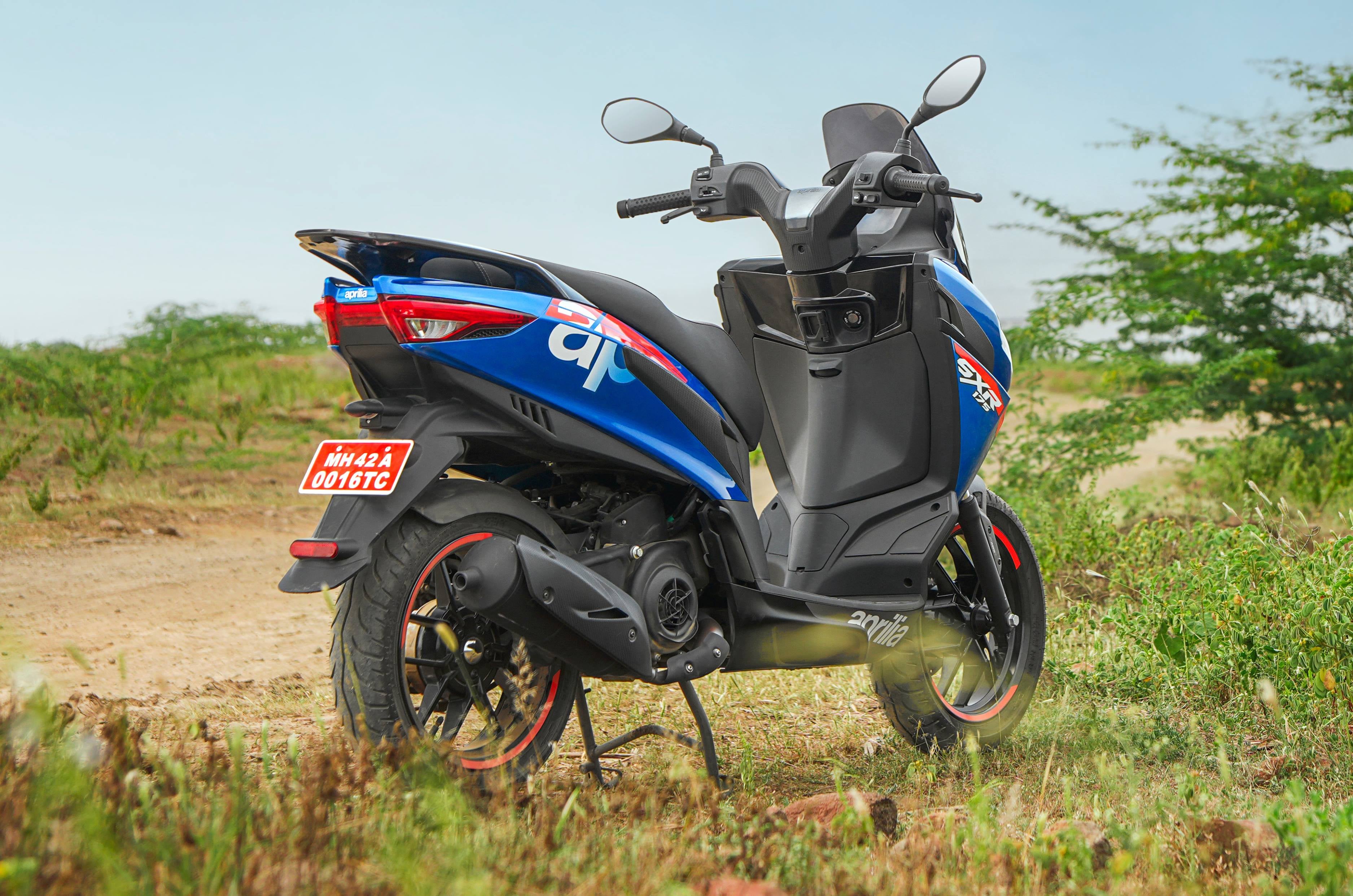
At this juncture, you’re probably wondering aside from the new colours and graphics, how different is the SXR GT 175 to the erstwhile SXR 160 it replaces? The answer to that question is, not very much. Aside from larger 14-in wheels, the SXR GTs look identical to the models they replace and you can certainly feel like it wouldn’t be unreasonable to expect more from the company. However, what you can’t deny is that the scooters still look handsome and striking without going over the top, despite looking nearly the same as they did 6 years ago – that’s Italian design brilliance for you! There are three new colours on offer – the vibrant blue you see here accompanied by a stealthy black and a camo army green scheme.
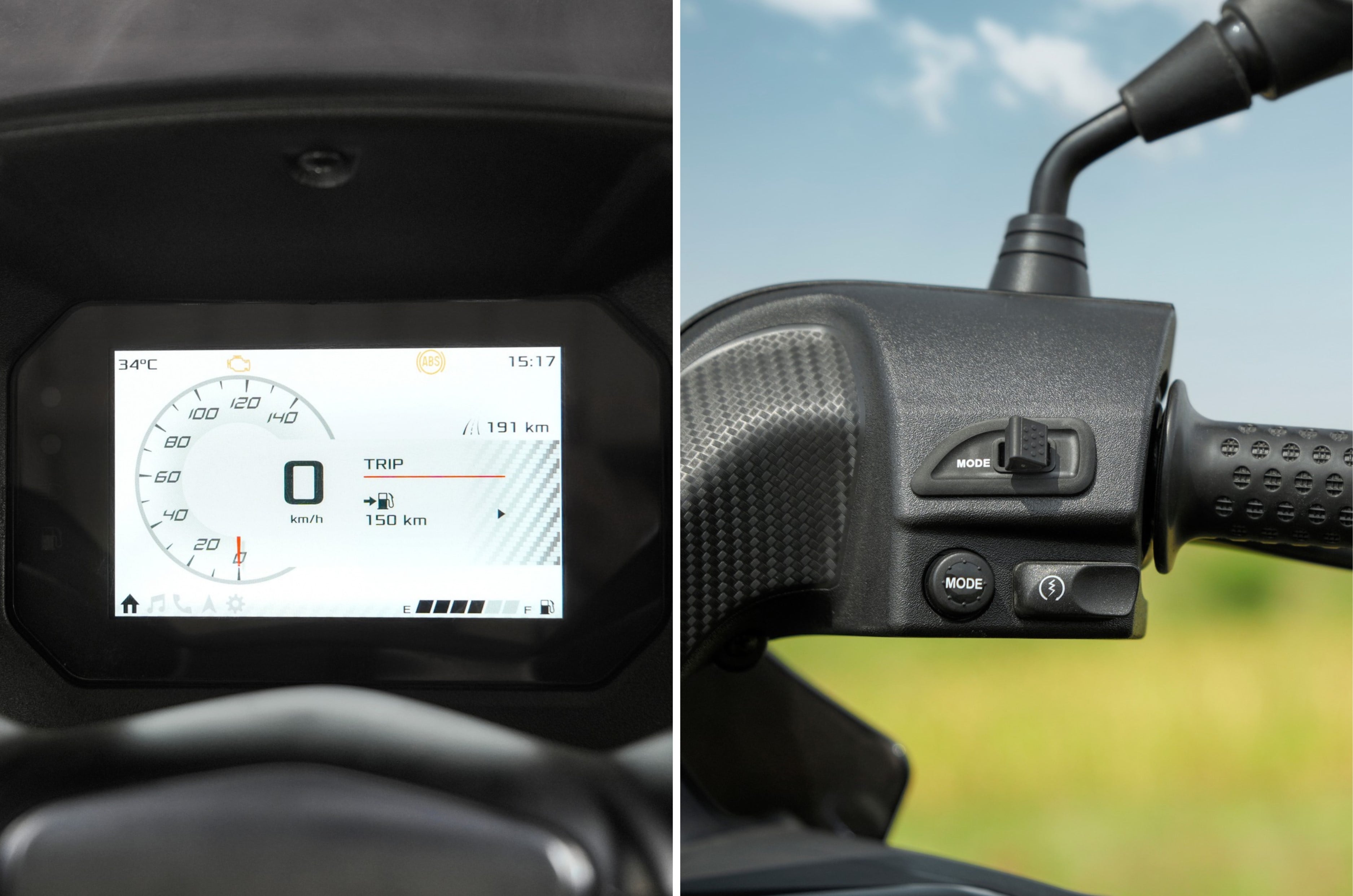
5-in TFT also shared with SR 175, is well laid out but UI isn’t entirely straightforward
However, once you get astride, you’ll realise that there are a fair few changes going on. For starters, the SXR GT 175 uses the same bright and well laid-out colour TFT display as the SR 175 and this dash is replete with Bluetooth functionality which brings in call/notification alerts & navigation prompts. Like that scooter, the overall user interface is a bit complicated and you will need to learn some of the secret handshakes necessary to fully utilise it. Another gripe I have with this dash is that while it has a lot of tech, you have to make do with a single trip meter, which seems like a small but unnecessary omission.
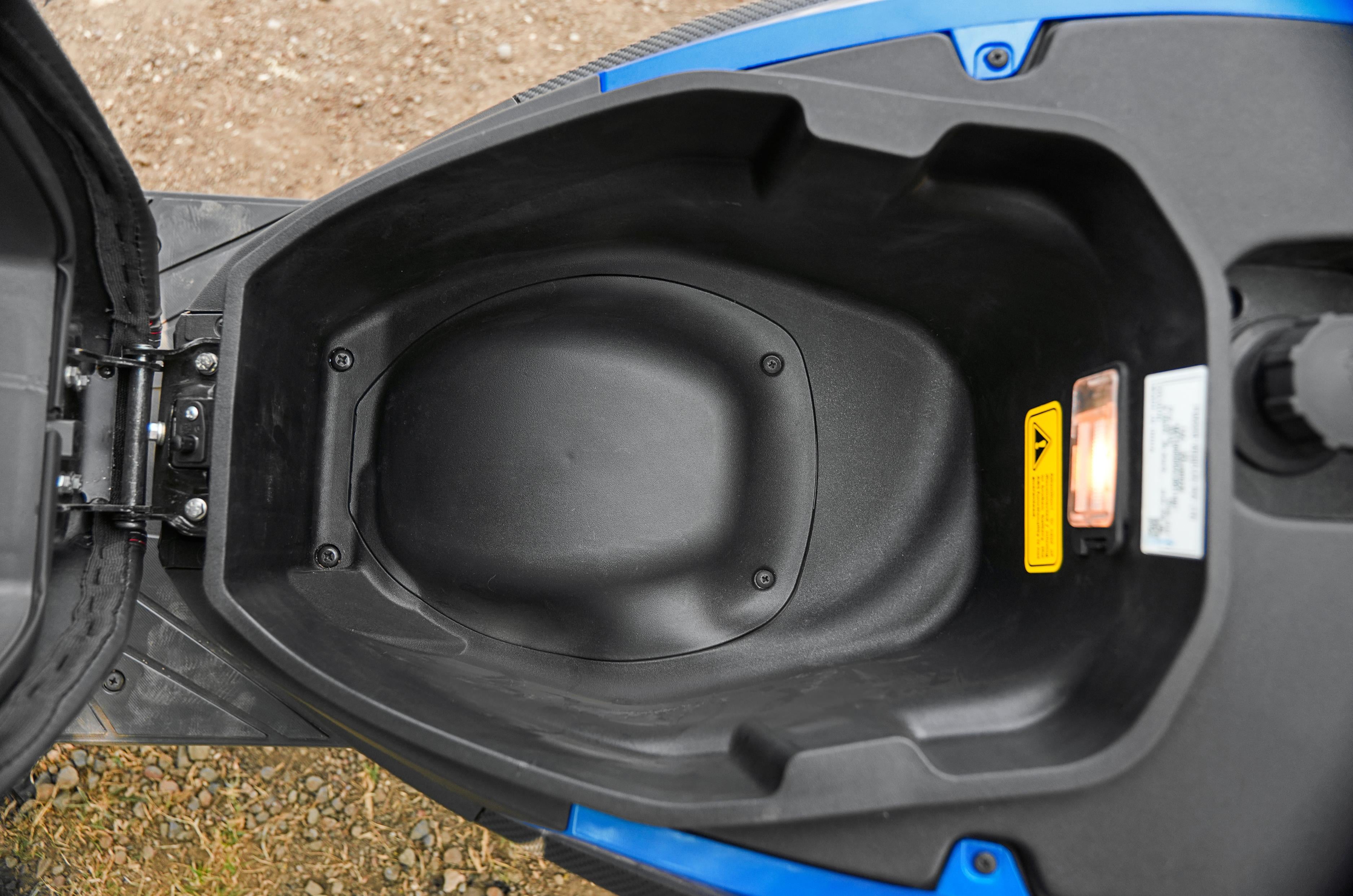
Bootspace is nothing to write home about
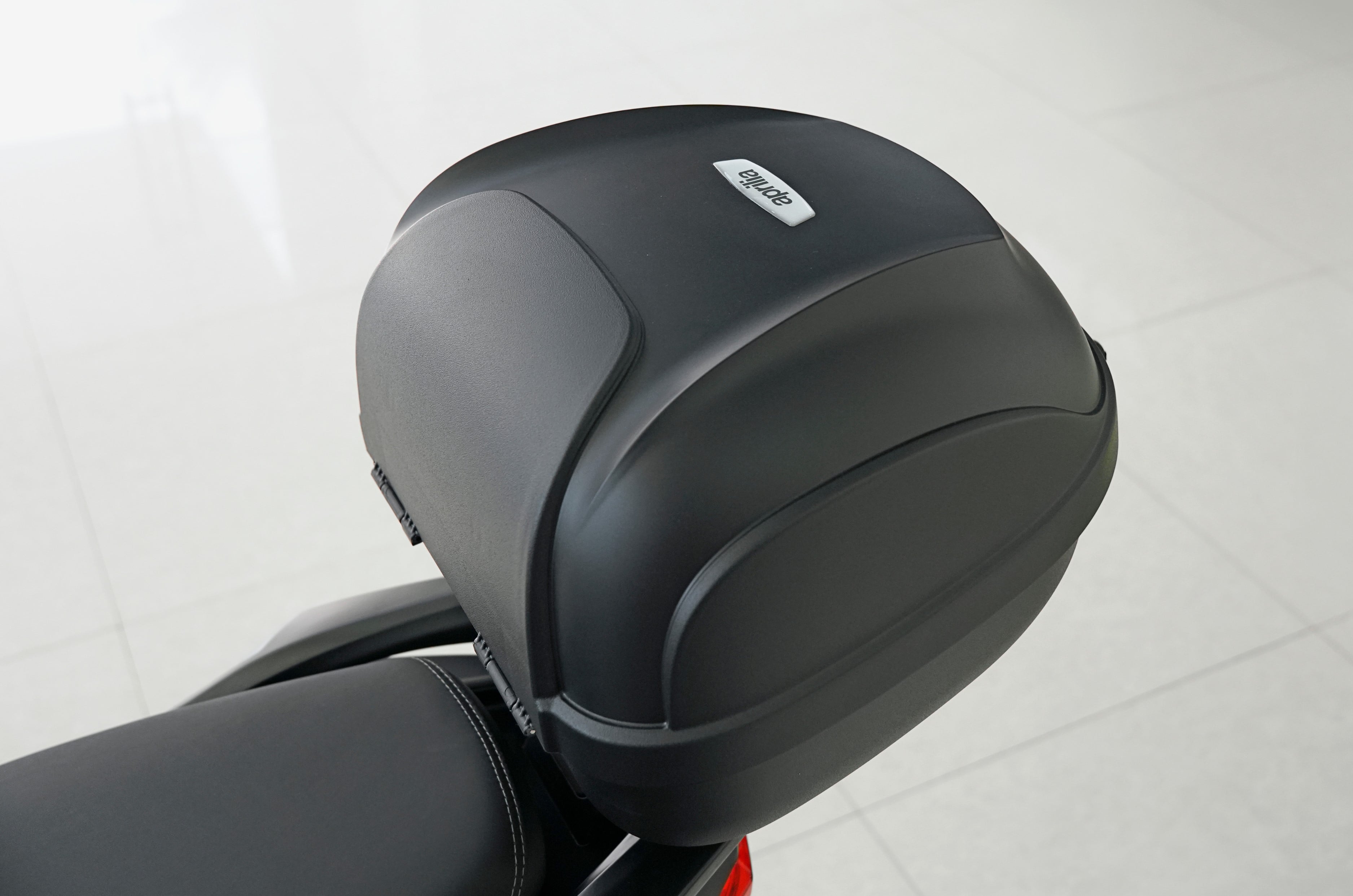
Another small omission is the absence of a multi-function ignition key slot, which means you need to remove the key and put it in its dedicated slot to open the seat and access the boot – something most smaller and cheaper scooters have long moved past. The underseat storage space here isn’t anything to write home about either. However, Aprilia will sell you a pretty spacious 32 litre accessory top box to alleviate that issue, although we don’t have a price for that yet.
But Aprilia will sell you an accessory 32L top box to alleviate that issue
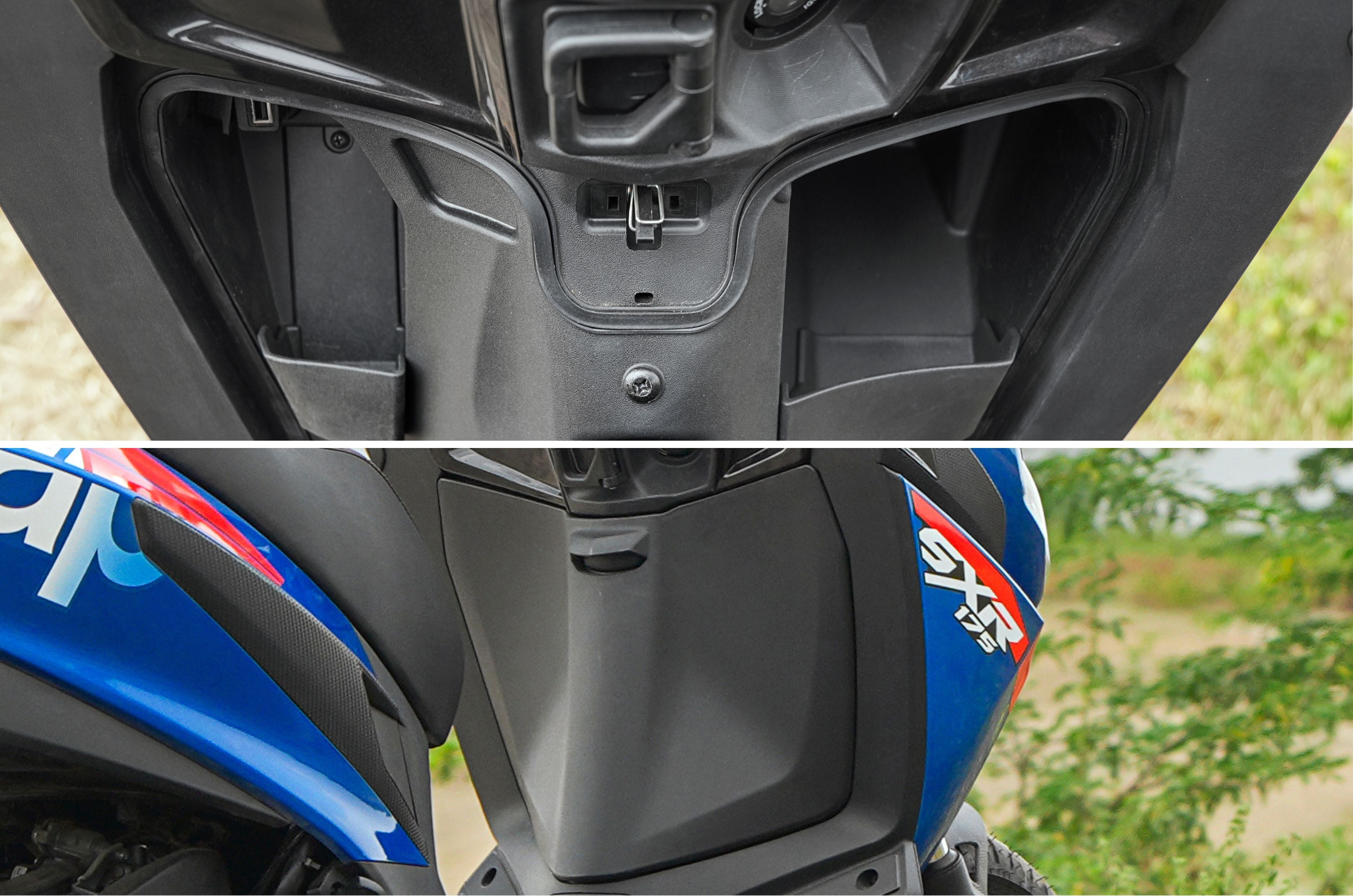
What is a nifty storage solution that comes as standard – carried over from the SXR 160 – are the fully enclosed cubbies on the front apron, and one of them even has a USB-A charging port. While this is surely a safe and practical storage area for your knick-knacks, it’s not the most convenient solution to access when on the move. That’s because you first need to come to a stop, then twist the key to its off position and press it inwards to unlock the cubby.
Enclosed, lockable area opens up to reveal 2 small cubbies; one of them has a USB Type-A charger
Aprilia SXR GT 175 Ergonomic – 7/10
Has one of the tallest seat heights in the scooter space; rider’s triangle is neutral
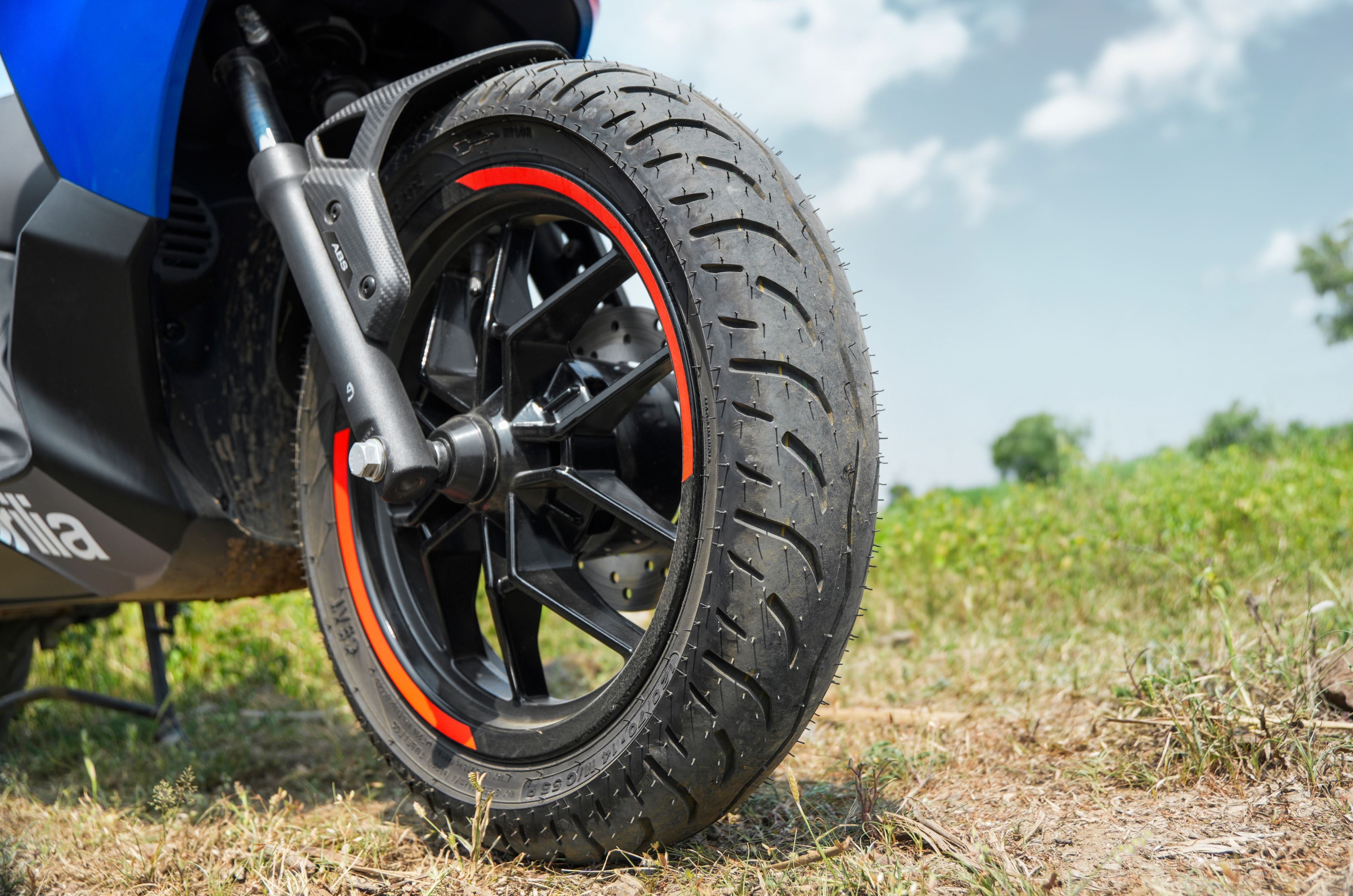
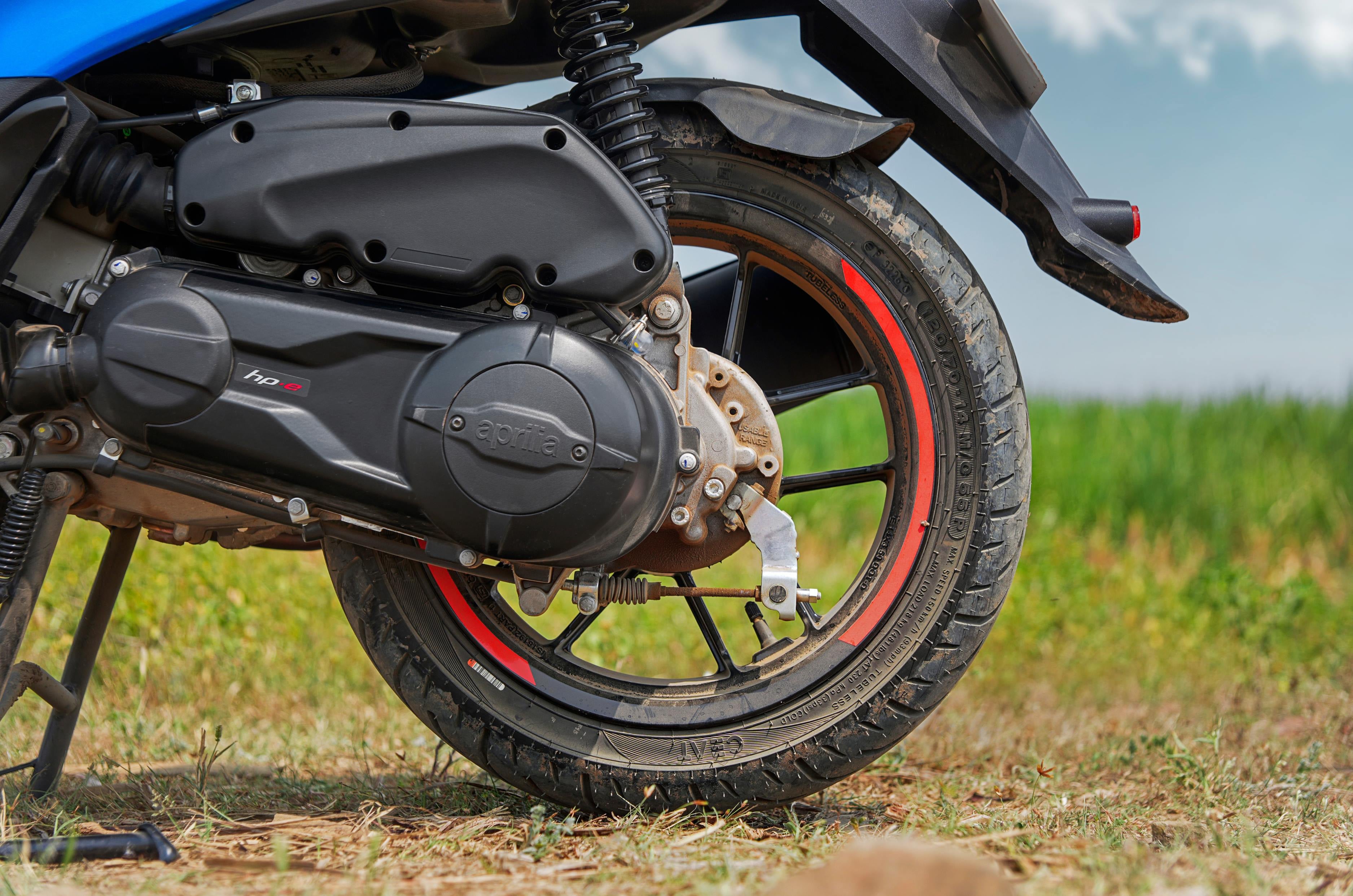
Of course, the new feature that is visible most prominently on the SXR GT is its new 14-inch wheel setup, which has its set of pros and cons. On the plus side, the proportions of the scooter are now better than ever before and its ground clearance has also now risen to 170mm – always a good thing on our unpredictable roads. However, because of the larger wheels, the SXR’s seat height has now risen to 800mm, which makes it the tallest seat height on any made-in-India petrol scooter.
14-inch wheels bring in surefooted handling and high-speed stability but the trade-off is heavier steering at slower speeds demanding more effort
Credit where it’s due, this number may seem big on paper but in the real world its not an unapproachable machine. Our photographer Omkar (who’s 5’2) could move the scooter around at our shoot location while seated without too much trouble. However, for someone that wants a friendly and approachable machine, the 132kg SXR is not where you should be looking.
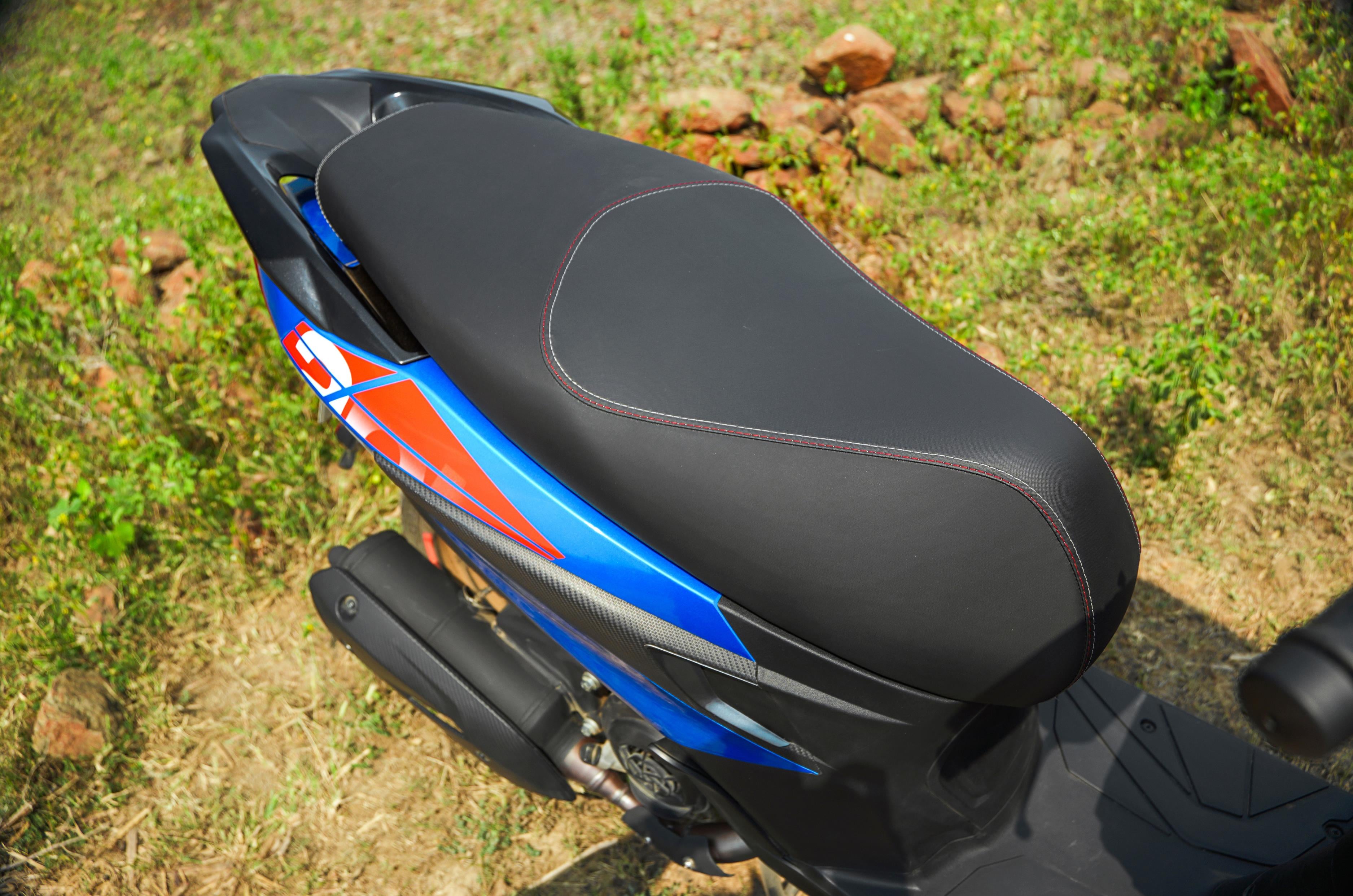
Aside from that, the SXR’s ergonomics haven’t changed and it retains the neutral and upright riding position from before. The seat’s padding is on the stiffer side, which will be especially noticeable on shorter trips but it works well for longer durations and for a person like myself that’s on the heavier side of the scale (80kg without gear). What, however, doesn’t work for a taller person like me (5’11) is that the handlebar is placed a tad low and fouls my knees when making lock-to-lock u-turns.
Neutral and upright ergonomics are unchanged from before; spacious seat’s padding is on the stiffer side
Aprilia SXR GT 175 Performance – 8/10
Engine provides sprightly performance, is smooth at high speeds
While practicality and convenience are one half of the story when it comes to a scooter like this, what plays an equally important role is how the scooter rides and handles. It will probably not come as any surprise to you when I say that this is surely a fun scooter.
From the moment you thumb the starter and the motor settles into its gruff idle, the 174.4cc, 3-valve motor makes its intentions quite clear – it wants to be ridden quickly. While the vibrations do subside once you get going, the engine clearly rewards energetic riding because the faster you go, the smoother it seems to get! Not just 80kph, even at a speedo-indicated 100kph, it remains absolutely smooth at all the touch points with no signs of protest. For all you top speed nuts, we were able to see an indicated 110kph on the display before the rev limiter kicked in.
Sprightly 174.4cc engine shared with SR 175 has enough performance to placidly sustain 80-100kph
While the SXR is a quick scooter, from what I remember, it doesn’t feel as quick as the lighter and sportier SR. The 0-50kph dash is quite energetic but after that, acceleration becomes more measured. Nevertheless, this level of performance is more than acceptable for our environs and you’ll rarely wish for more power.
Aprilia SXR GT 175 Ride and Handling – 7/10
Planted and surefooted handler, but not the easiest to manage at slower speeds
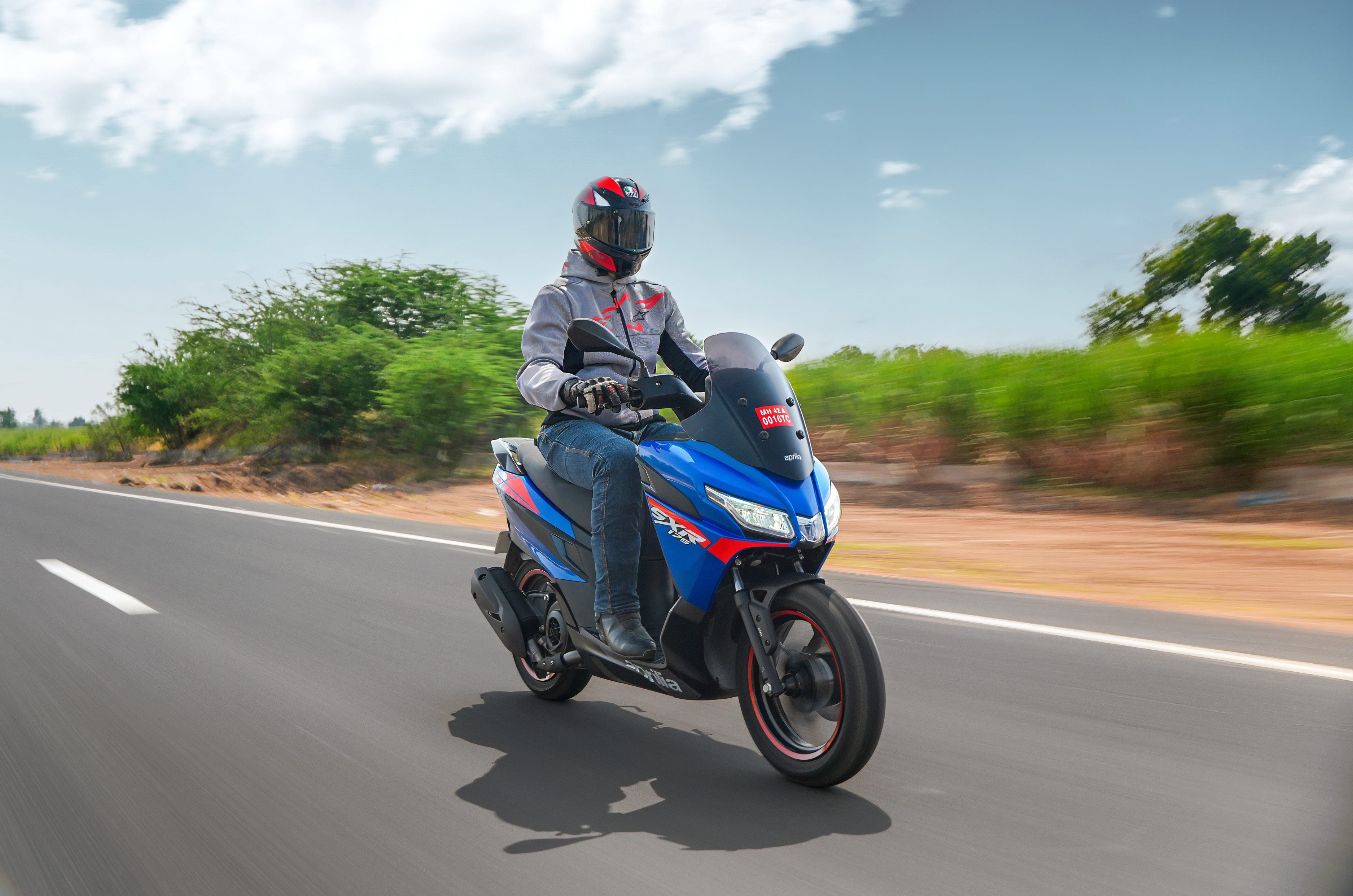
Equally as enticing as its performance is the SXR GT 175’s handling. The new and bigger 14 inch wheels lend it a newfound sense of stability around corners and at higher speeds. To ride, this feels like a proper maxi scooter experience rather than just a styling exercise. However, the tradeoff is noticeably heavier steering at slower speeds which demands quite a bit more effort. If you’re going to spend a lot of time in dense stop and go traffic that you constantly need to manoeuvre around, the SXR GT is not the ideal machine for that task.
To account for these larger wheels, Aprilia has also tuned the SXR’s suspension differently to before. The damping and shock absorption are really quite composed at the rear but the fork feels stiff and jarring over rough roads and does bottom out over larger, sharper-edged bumps. Since Mumbai’s roads are dominated by these conditions, we’re not sure how comfortable the SXR GT will be there, but hope to find out soon.
It sticks to the Aprilia SXR formula of giving you a decently-priced, good-looking scooter with both functional practicality and zippy performance
Well-priced and stands out but its not for everyone
In the scooter segment, Aprilia operates in its own niche where people that really value style and performance continue to choose its offerings over mainstream options. We don’t see that changing with the SXR GT because even though it is more well-rounded than its sporty SR sibling, it still has some hurdles to overcome both on the product’s as well as the after-sales side and fresh styling would have helped increase the appeal after all these years. Nevertheless, the company assures us it is working on the after sales front and it aims to have 250 showrooms in India before the year ends, up from the current 230. Still, that’s vastly lower than the sales reach of Aprilia’s rivals.
To sum up, this latest iteration hasn’t really diverged from what has been the cornerstone of the Aprilia SXR formula – to give you a decently-priced, good-looking scooter with both functional practicality and zippy performance. Speaking of price, the SXR GT 175 is priced at Rs 1.30 lakh (introductory, ex-showroom, Maharashtra) which is a pretty decent price considering what it brings to the table. If you must have a stylish and fun scooter that stands out of the crowd without breaking the bank, the Aprilia SXR GT should be on your radar.