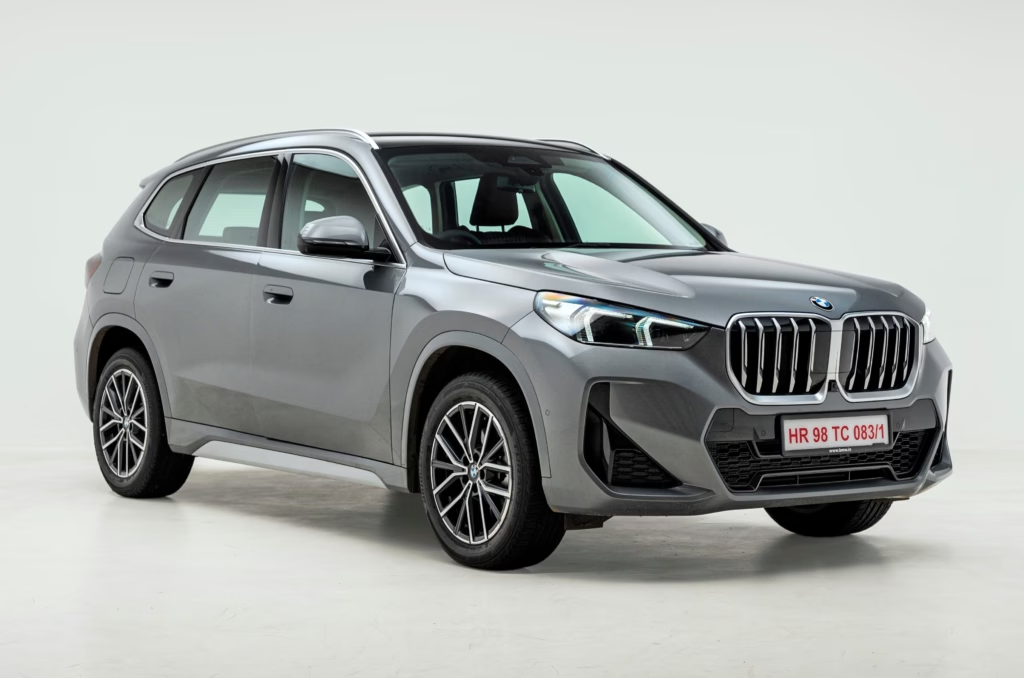
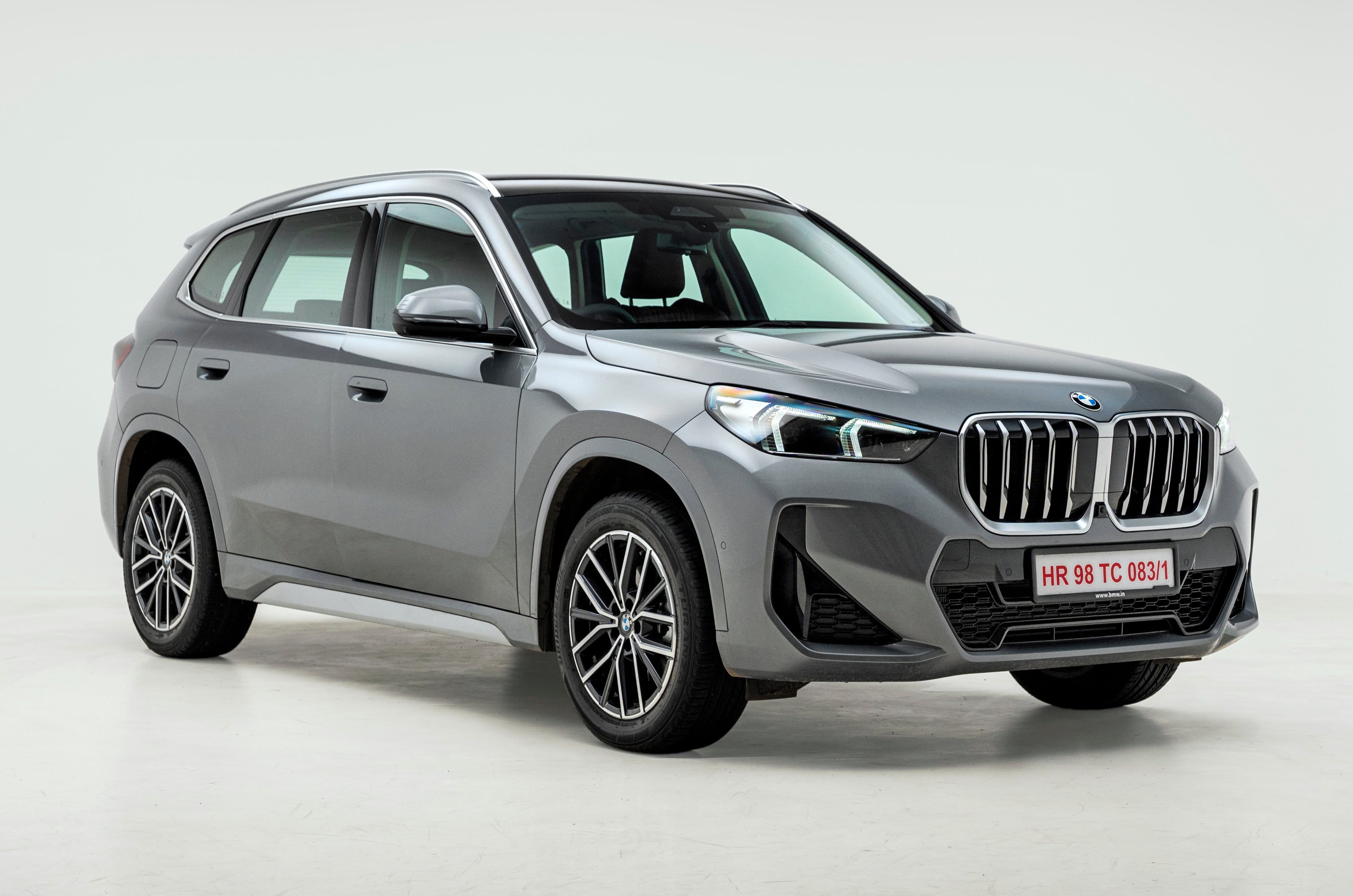
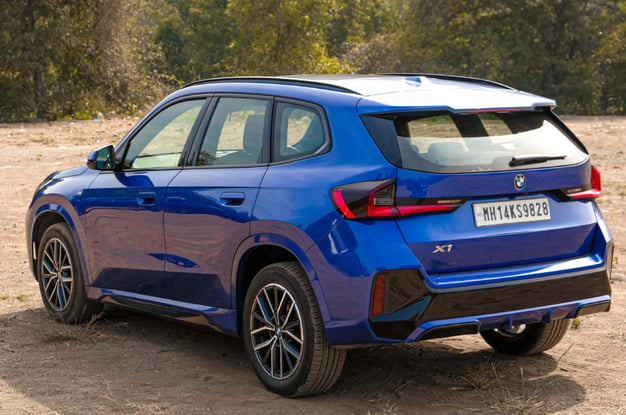
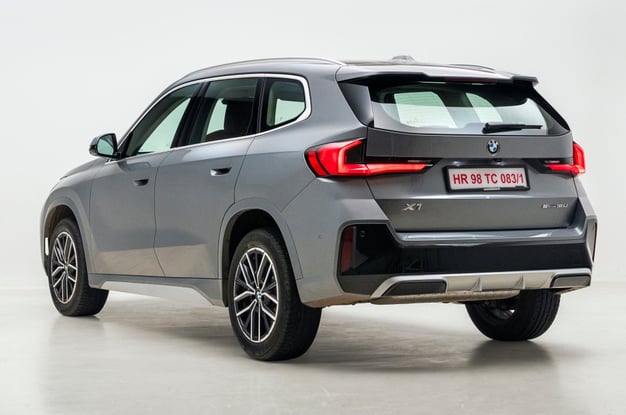
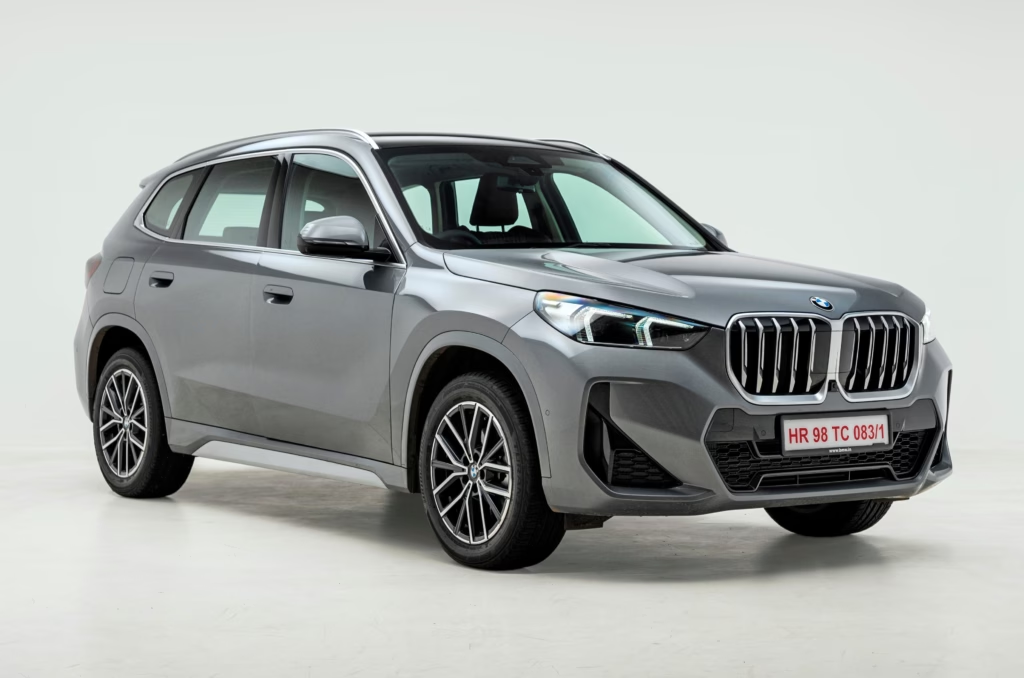
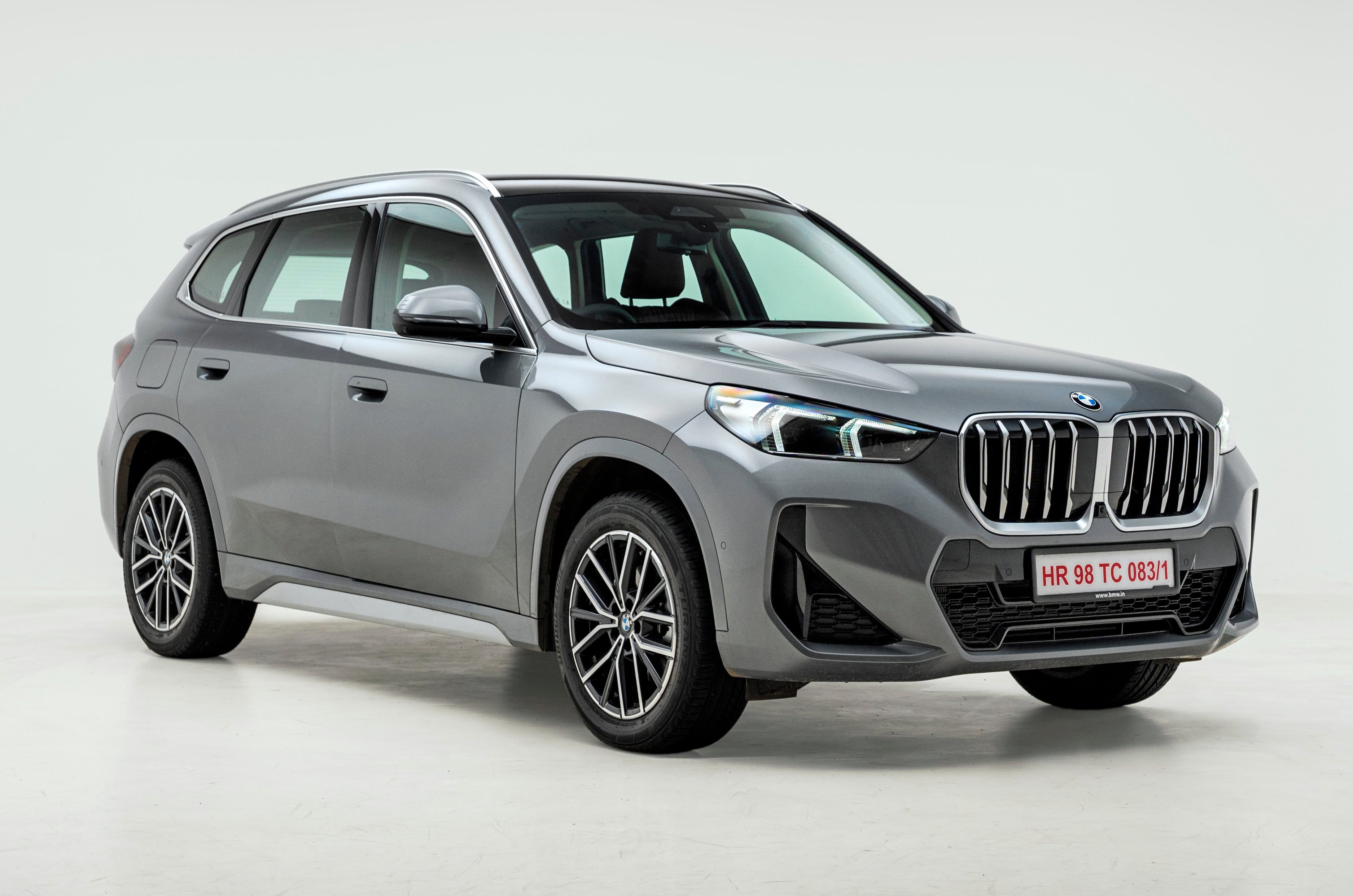
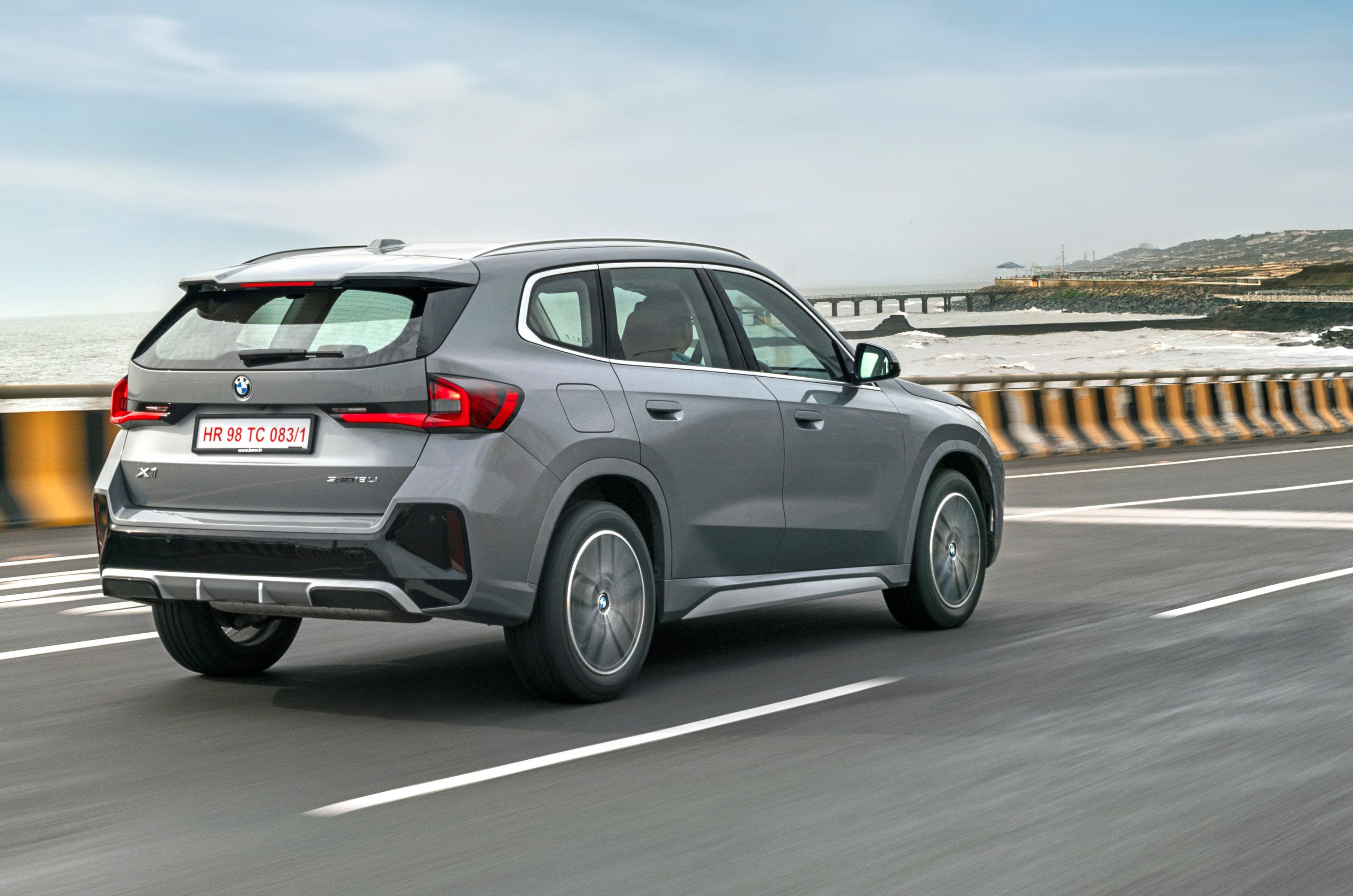
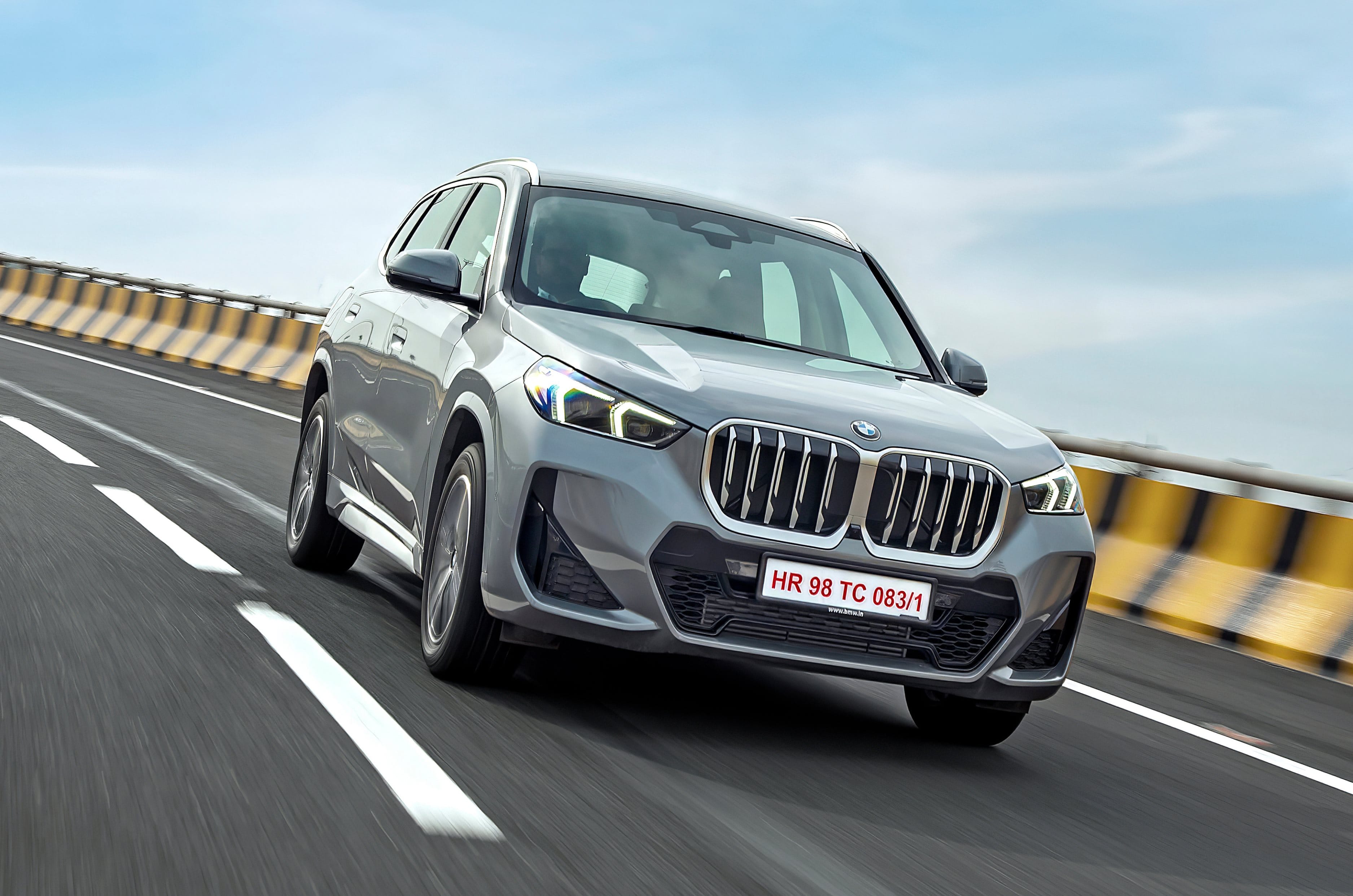
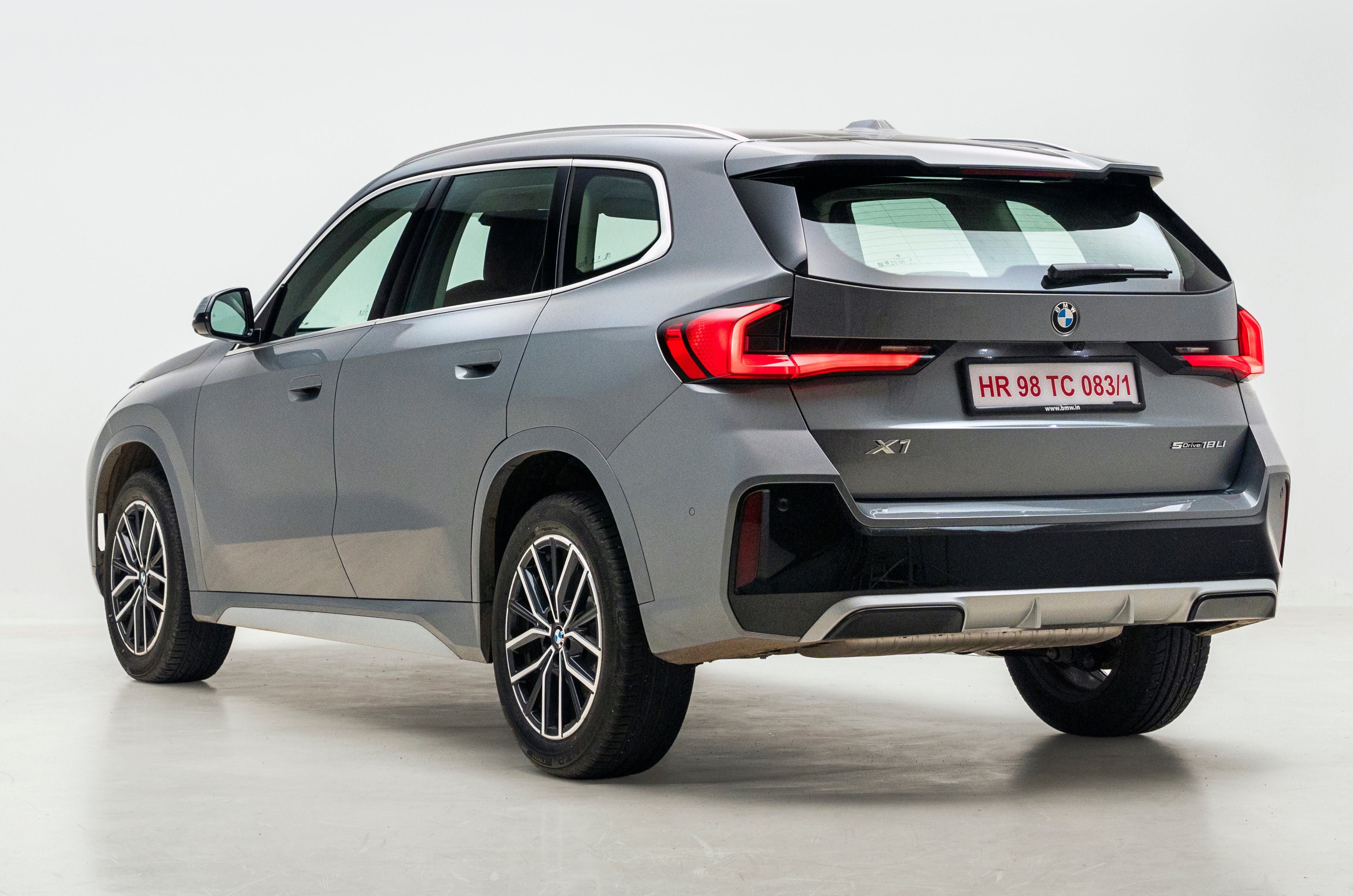
BMW has expanded its X1 range in India with the new long-wheelbase X1 LWB. Priced at Rs 49.90 lakh (ex-showroom), it sits alongside the regular X1 and is Rs 1 lakh cheaper than the standard-wheelbase X1 petrol. While both SUVs share much of their styling and cabin design, the X1 LWB brings a longer body, more rear-seat space and a different powertrain. Here’s how the two versions differ.
BMW X1 vs X1 LWB: Dimensions
Dimensions
X1
X1 LWB
Difference
Length
4500 mm
4616 mm
116 mm
Width
1845 mm
1842 mm
3 mm
Height
1630 mm
1641 mm
11 mm
Wheelbase
2692 mm
2800 mm
108 mm
Boot Capacity
476 litres
540 litres
64 litres
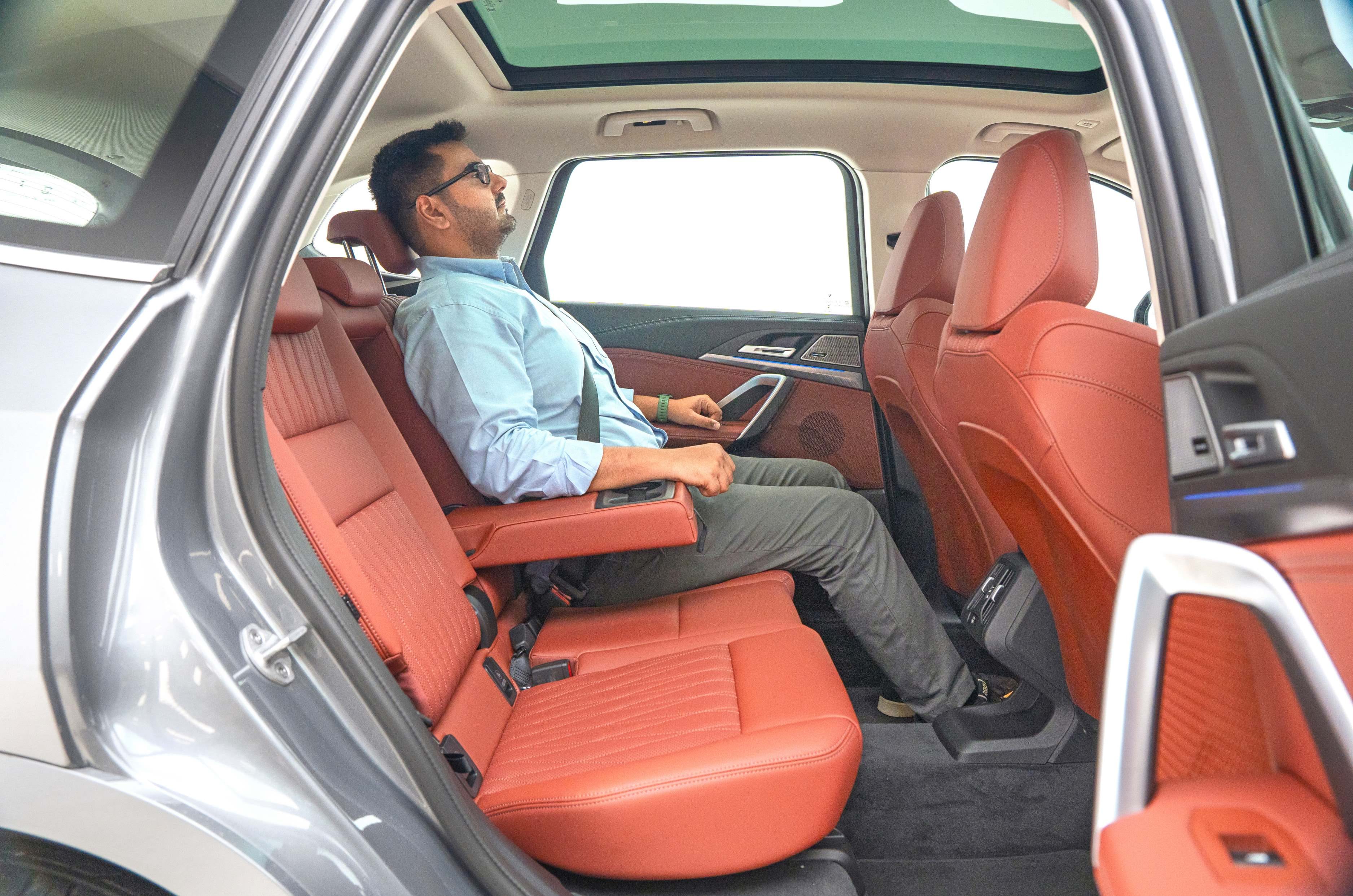
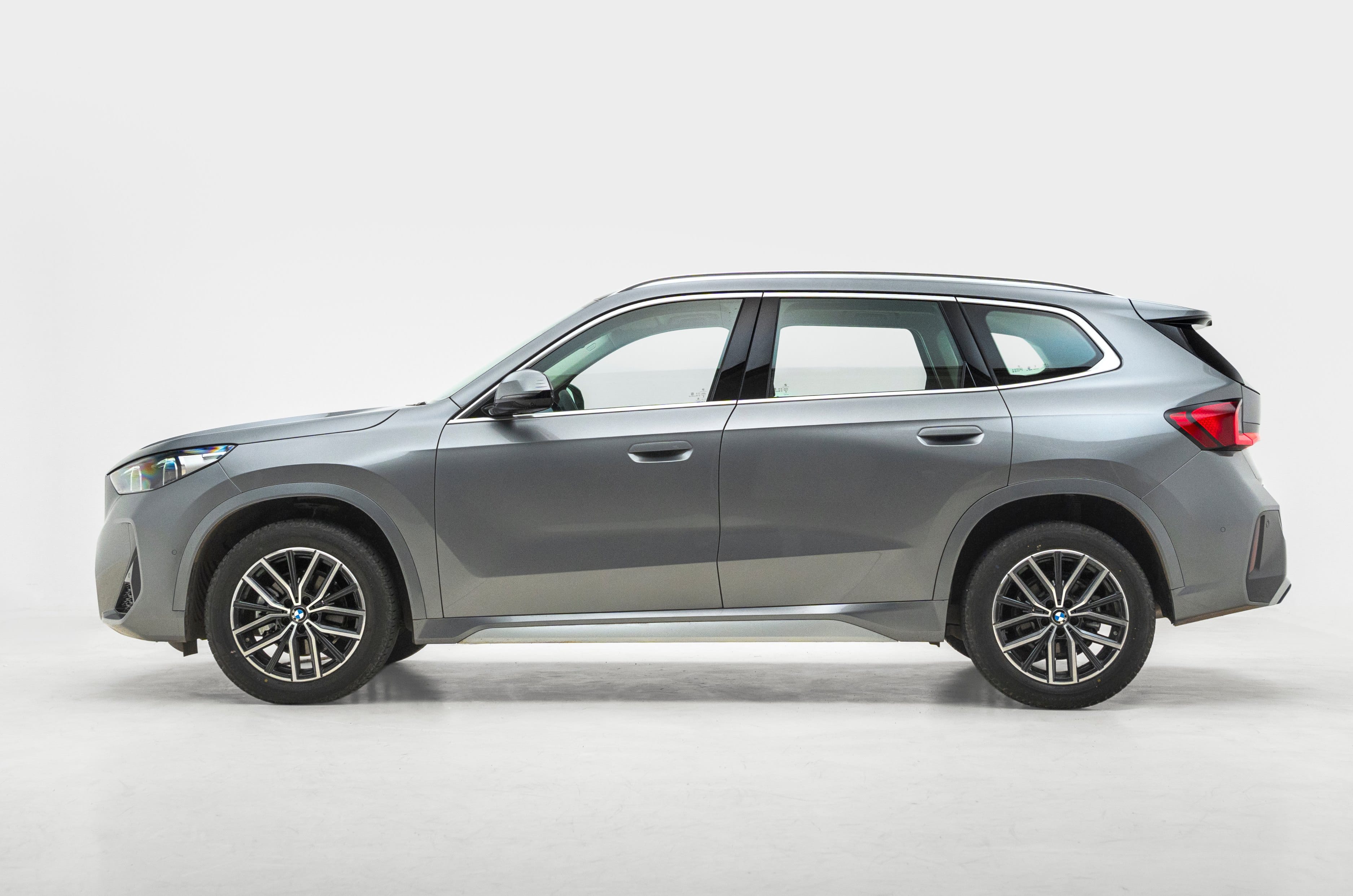
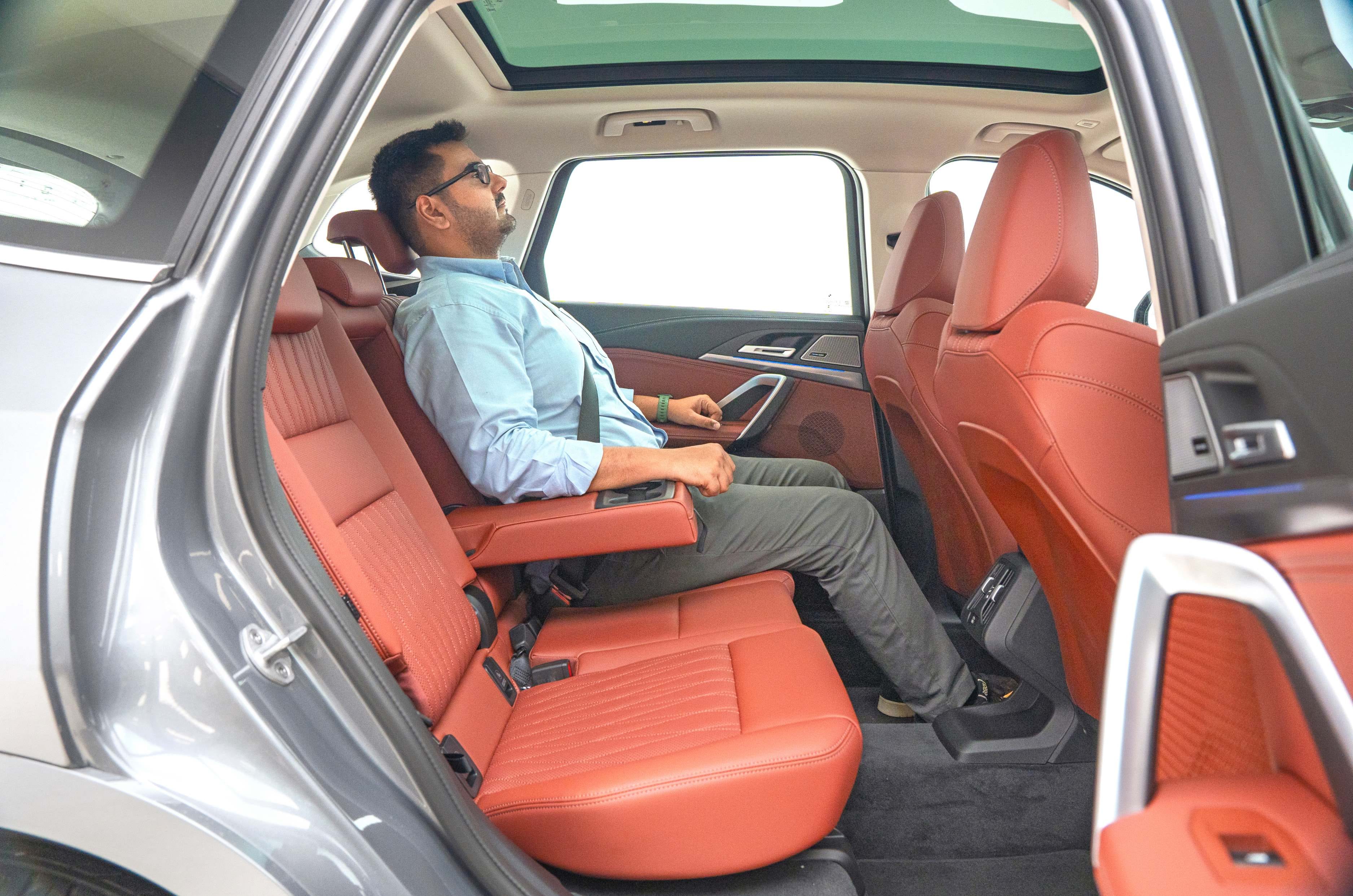
The biggest difference is the X1 LWB’s size. It is 116mm longer overall than the standard X1, with 108mm of the additional length going into the wheelbase. This extra wheelbase is primarily used to increase rear-seat legroom. The X1 LWB also gets a redesigned rear seat with enhanced cushioning, a 15mm longer seat base for additional thigh support and a backrest that can be reclined by a couple of degrees. The X1 LWB is also 3mm narrower and 11mm taller than the standard X1. Boot space is also larger on the X1 LWB, at 540 litres compared with 476 litres in the standard X1.
BMW X1 vs X1 LWB: Exterior
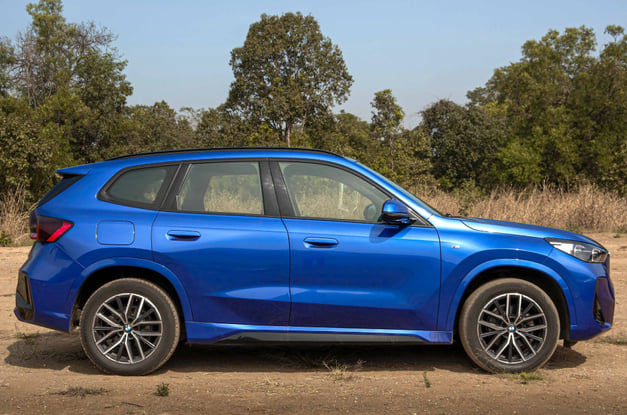
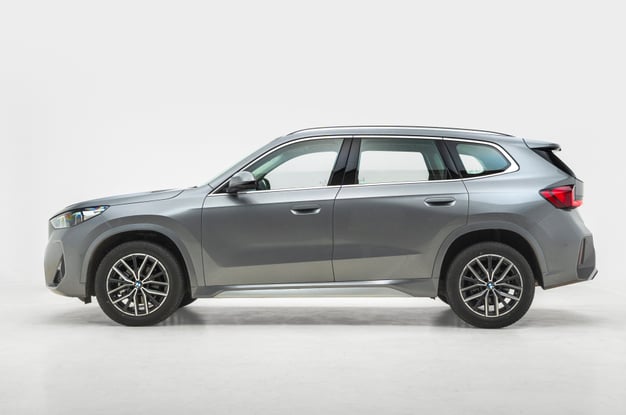
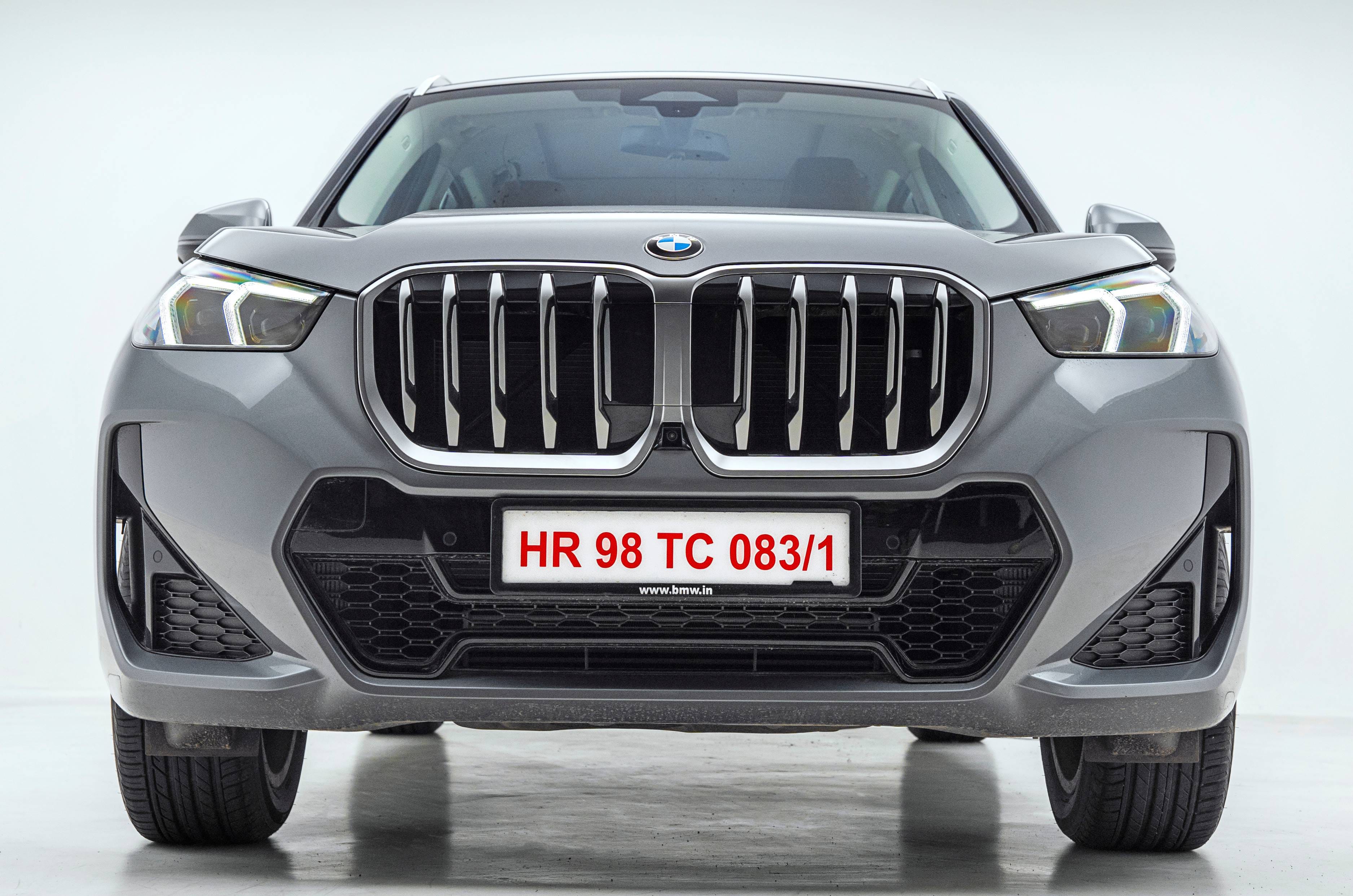
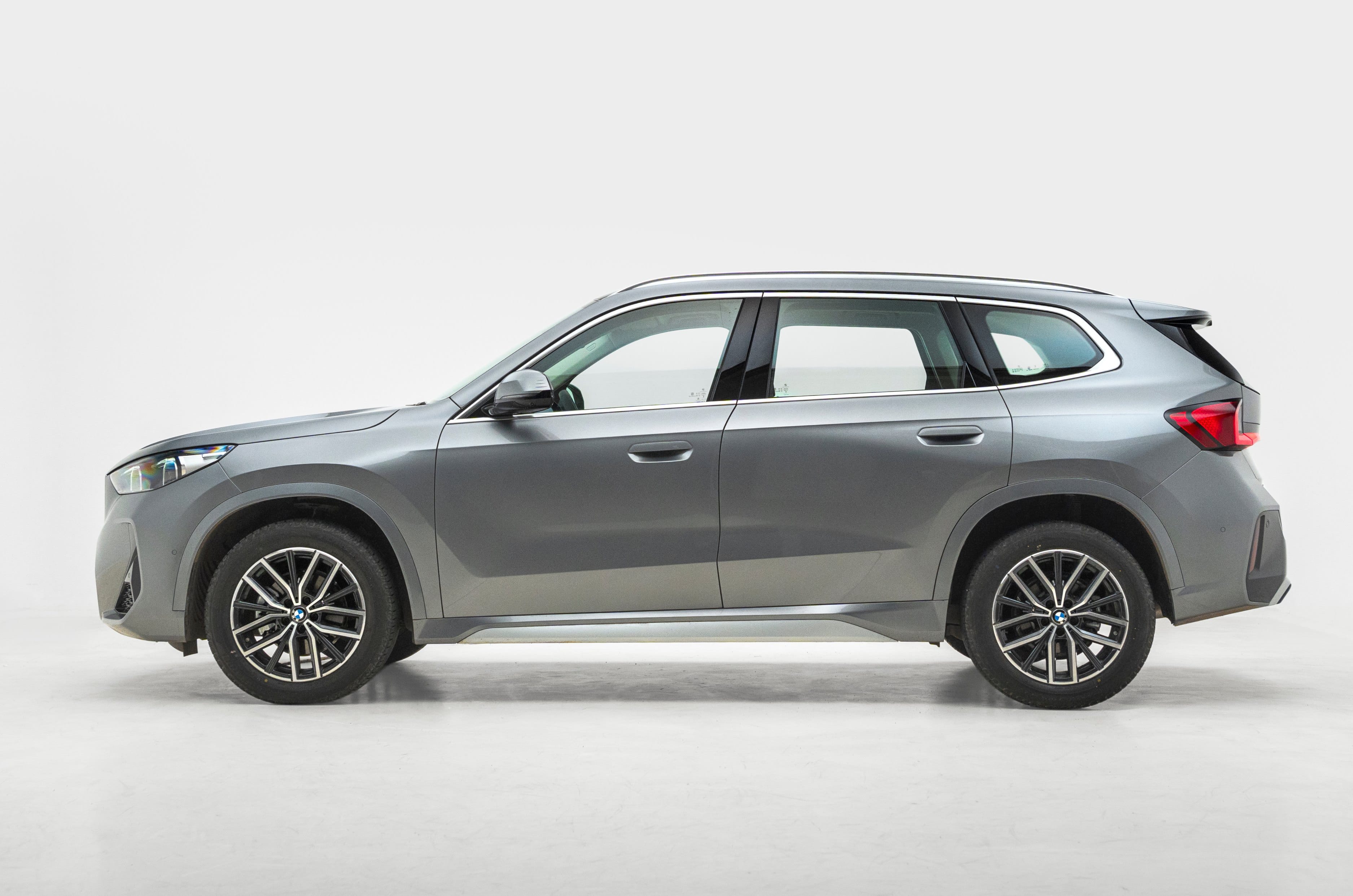
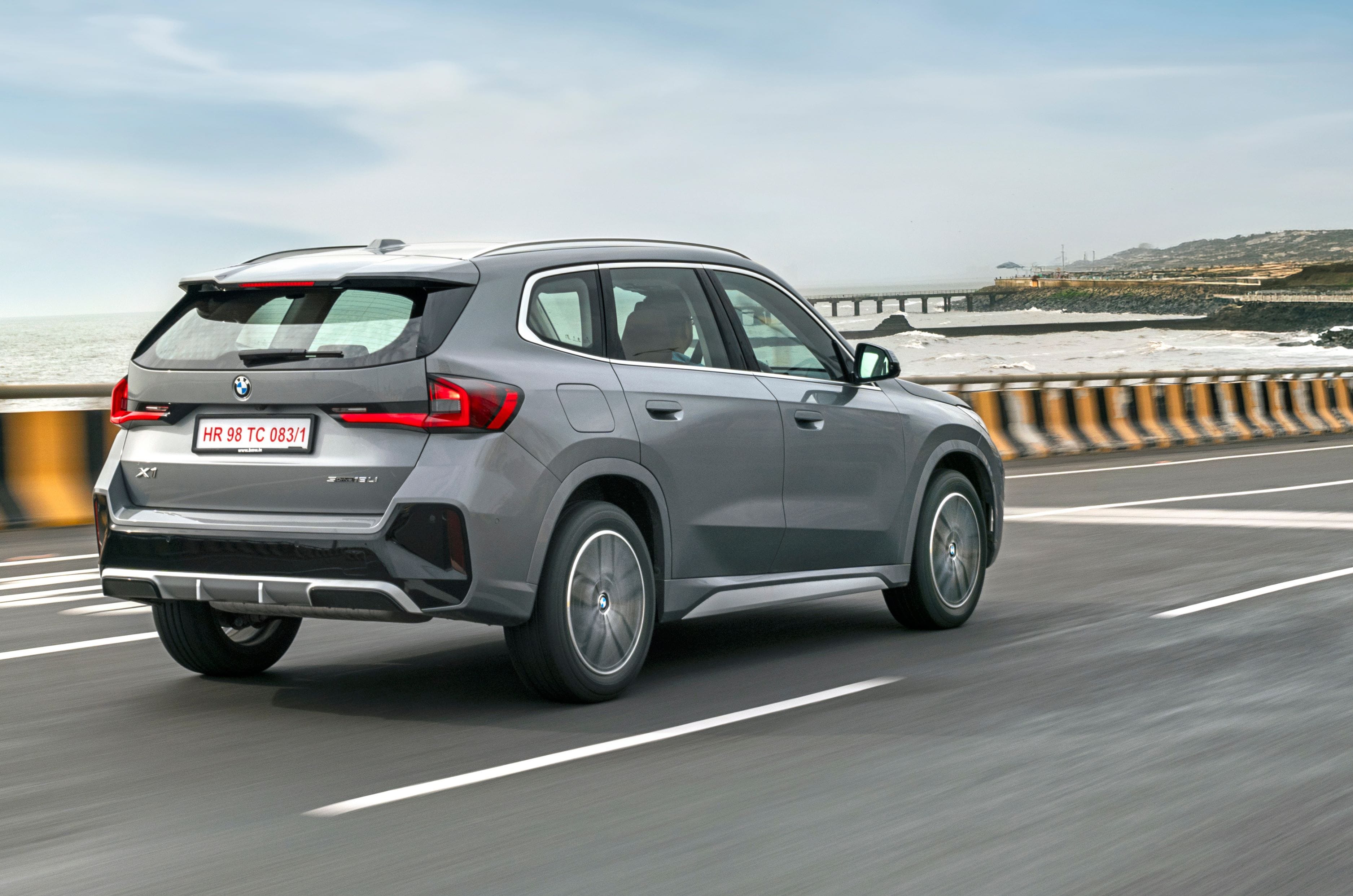
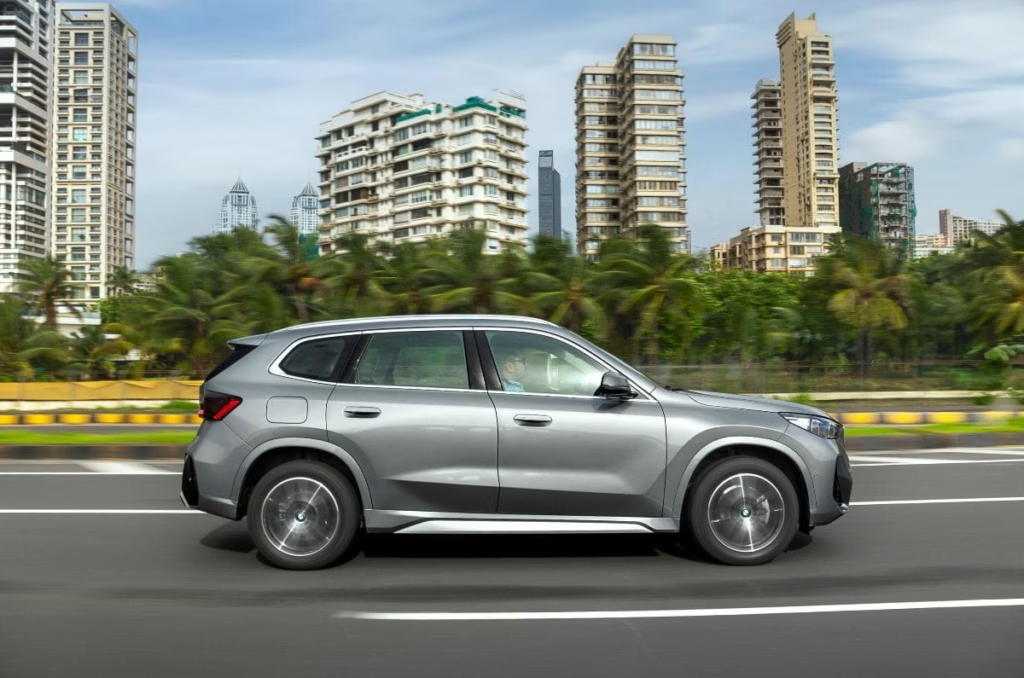
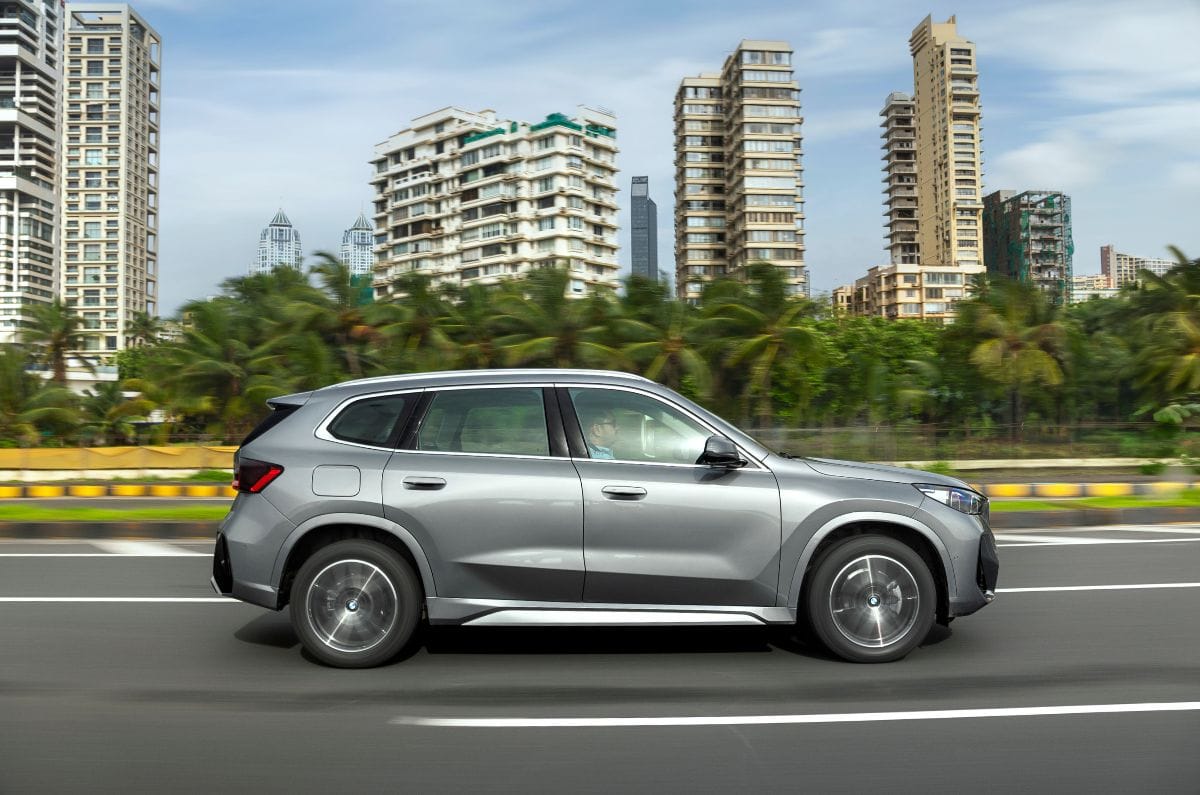
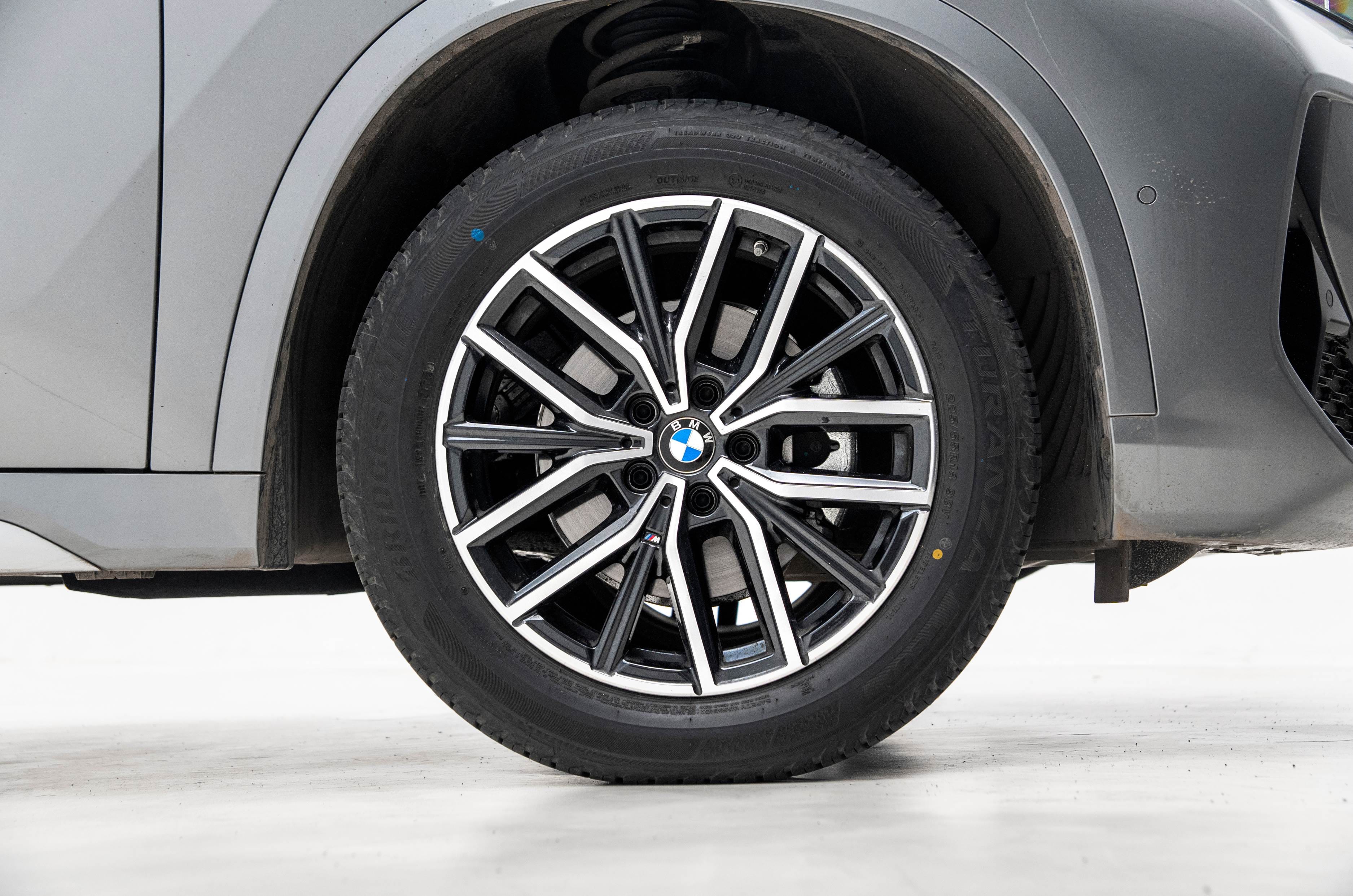
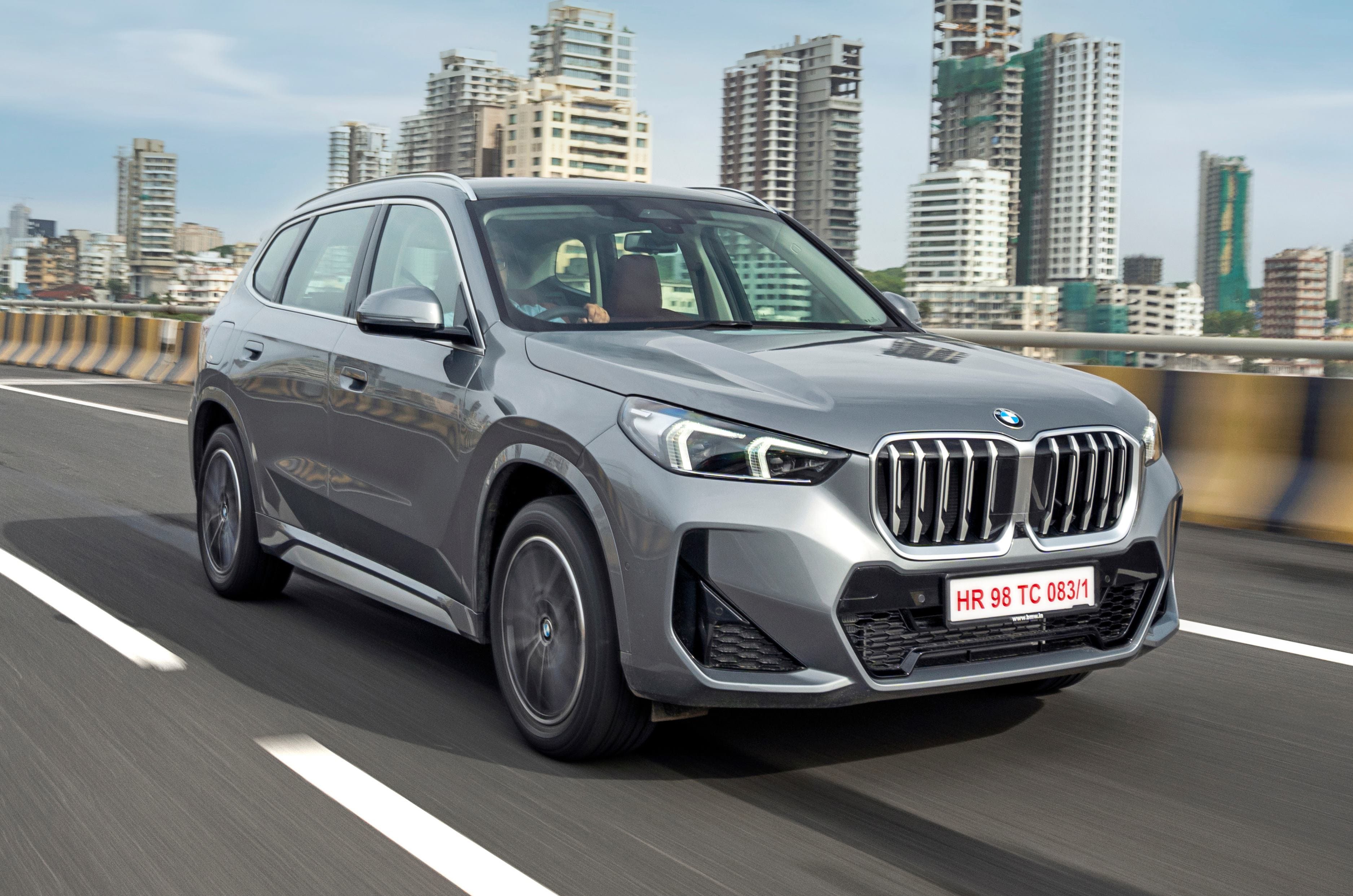
The two versions look largely alike. Both get the same headlamps, M Sport styling package, tail-lamps and 18-inch alloy wheels. The X1 LWB can be identified by its chrome window surrounds, whereas the standard X1 gets a black finish in this area. A Shadow package is available as an option on the LWB.
BMW X1 vs X1 LWB: Interior
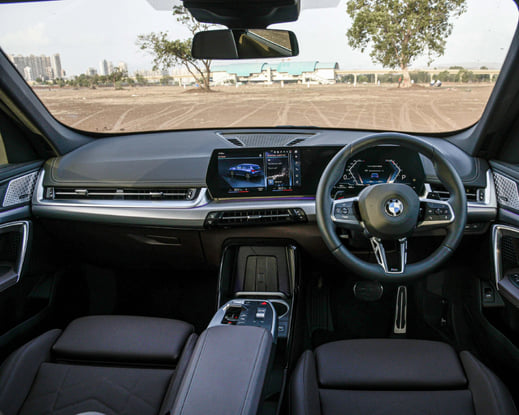
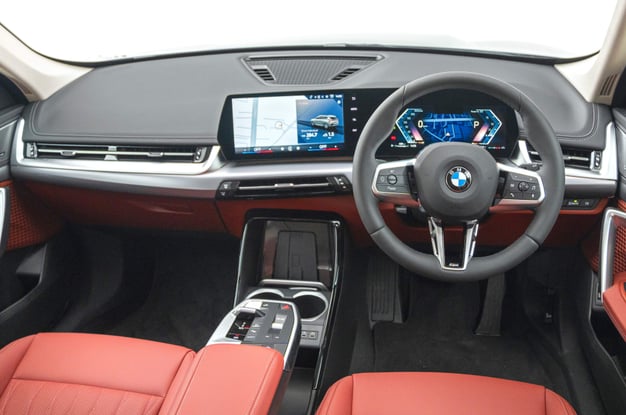
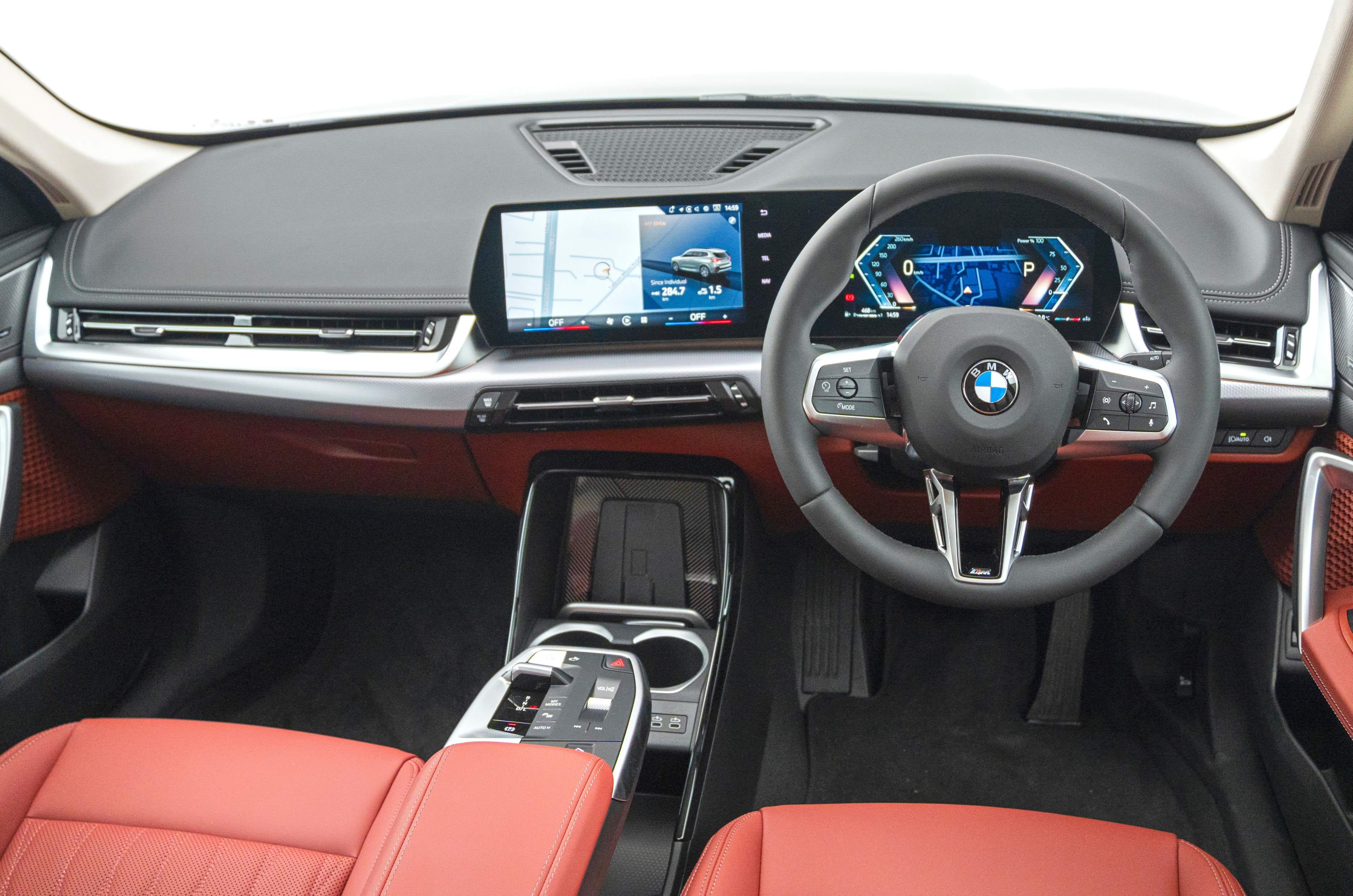
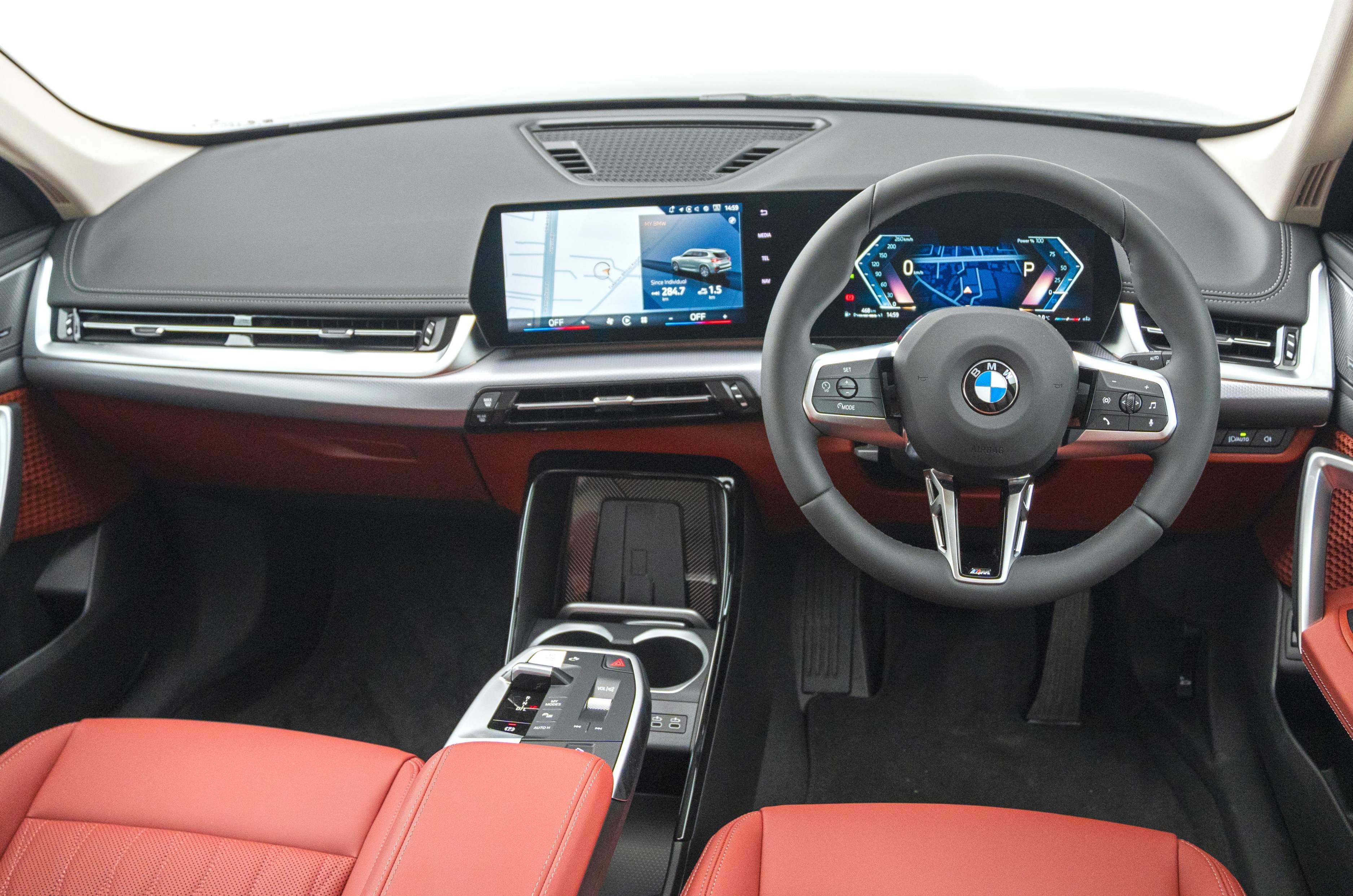
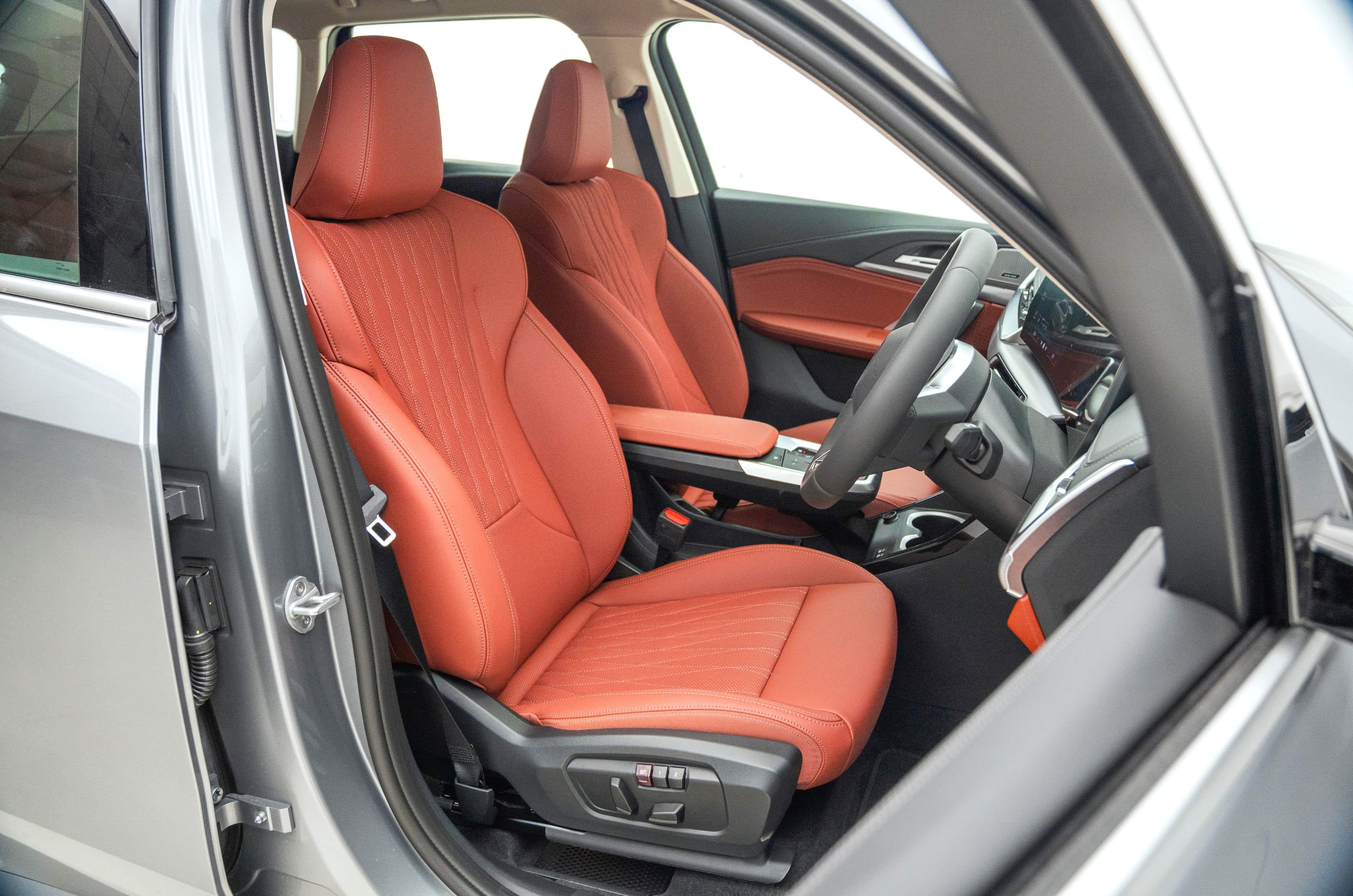
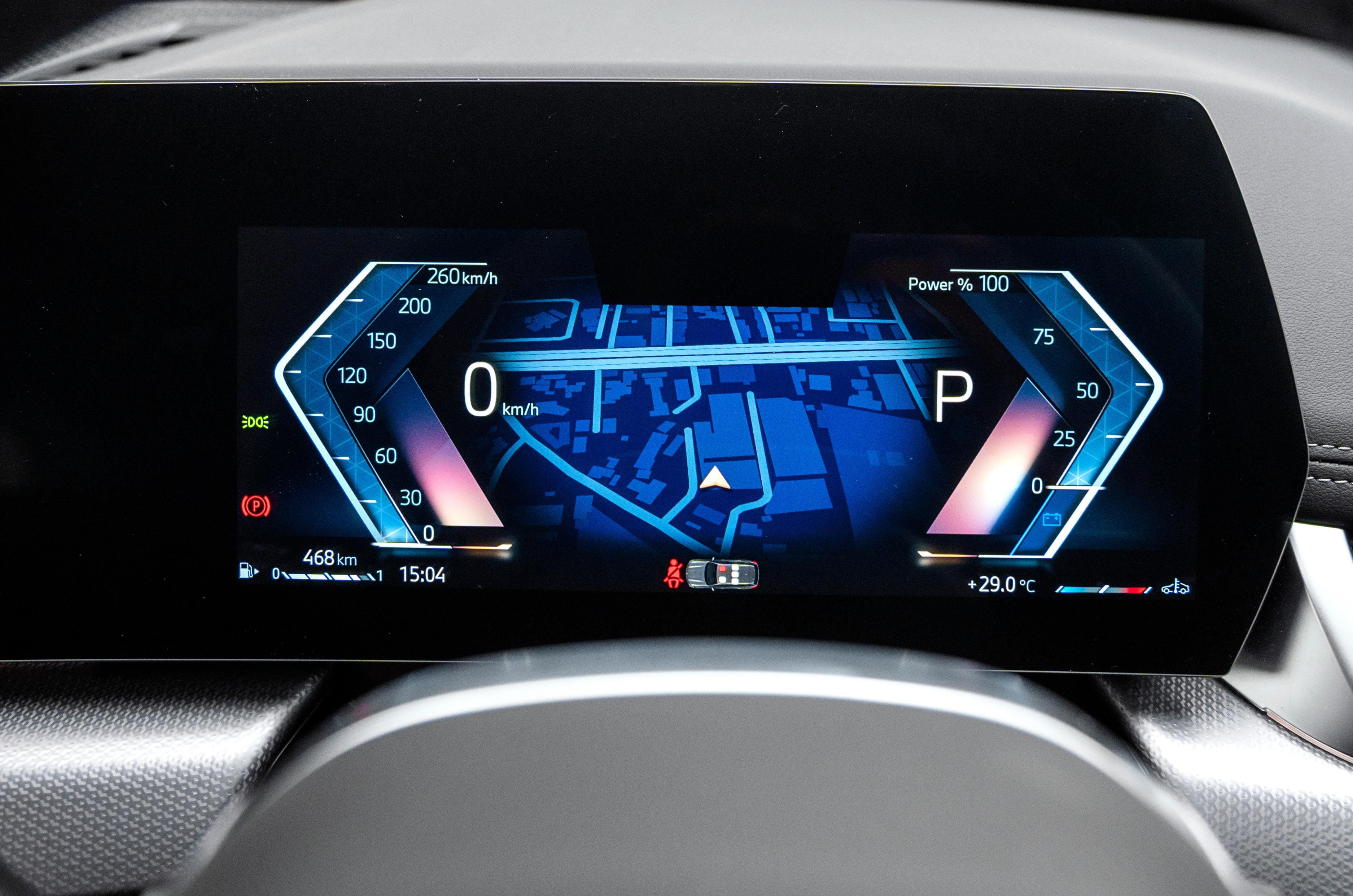
The dashboard and front section of the cabin are unchanged. Both get a 10.25-inch digital instrument cluster, 10.7-inch touchscreen, asymmetric AC vents and the floating centre console. The key difference is at the back. Besides the additional legroom, the X1 LWB gets the revised rear seat described above. BMW has also tuned its suspension for improved ride comfort. The X1 LWB also gets red seat upholstery, while the standard X1 gets black upholstery.
The X1 LWB, however, misses out on front-seat ventilation and massage functions, as well as a dedicated climate-control zone for the rear seats.
BMW X1 vs X1 LWB: Powertrain
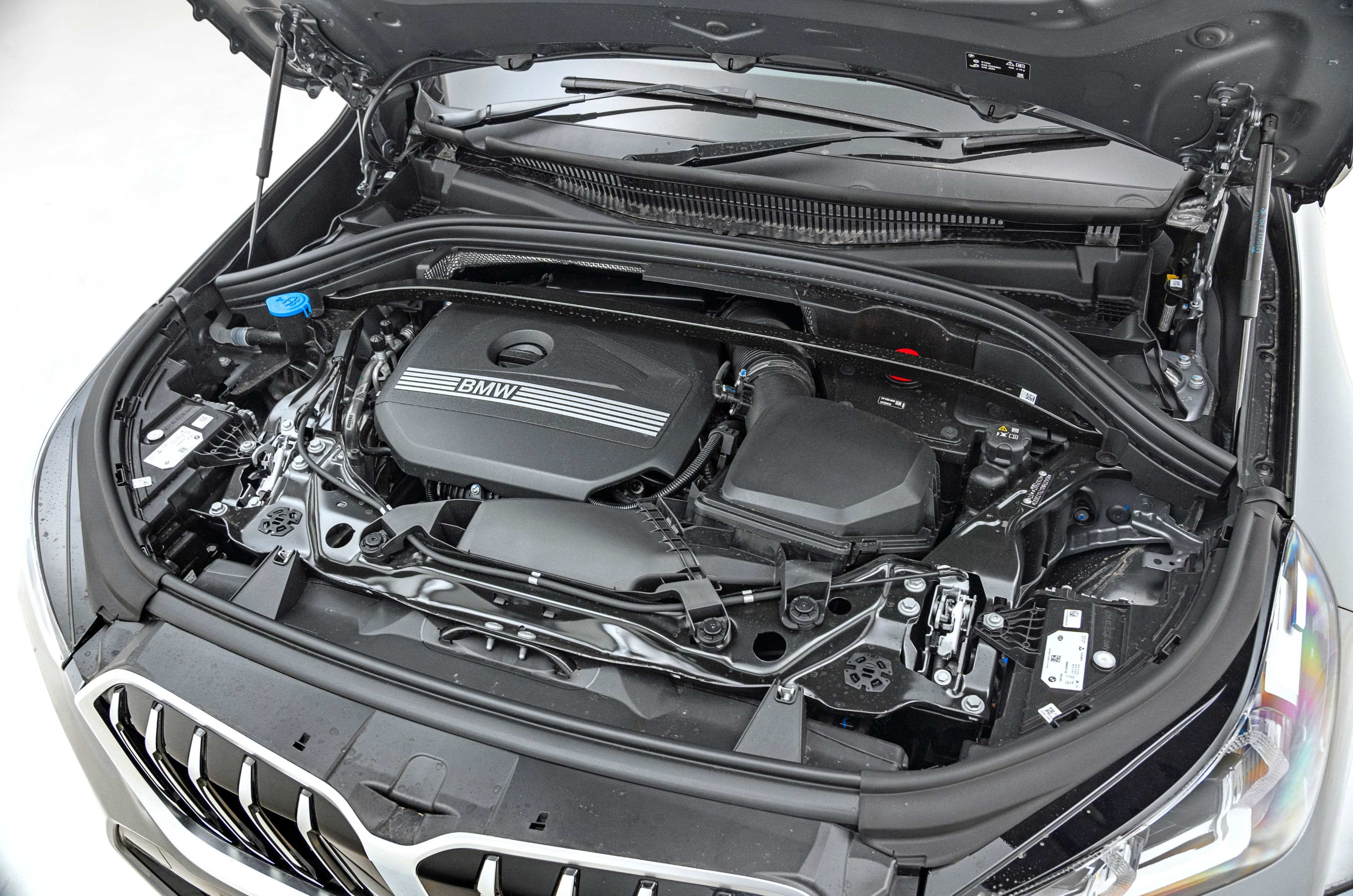
The standard X1 continues to be offered with both petrol and diesel engines, while the X1 LWB is available only with a 1.5-litre three-cylinder turbo-petrol engine. Both SUVs are front-wheel drive only.
In the X1 LWB, this engine produces 156hp and 230Nm and sends power to the front wheels through a seven-speed dual-clutch automatic gearbox. This is 20hp more than the 136hp version of the 1.5-litre petrol engine used in the standard-wheelbase X1.
BMW X1 vs X1 LWB: Price
The X1 LWB is priced at Rs 49.90 lakh, making it Rs 1 lakh cheaper than the standard-wheelbase X1 petrol, which costs Rs 50.90 lakh. Both the X1 and X1 LWB are locally assembled in India. The X1 LWB is primarily aimed at buyers who prioritise rear-seat space, while the standard X1 offers a wider powertrain choice.
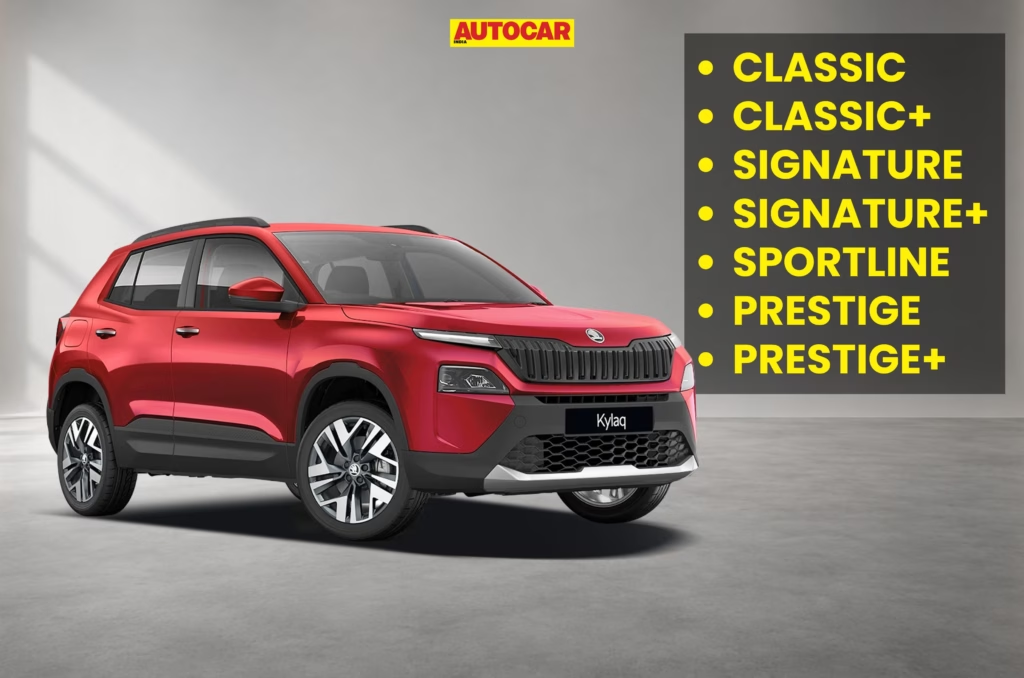
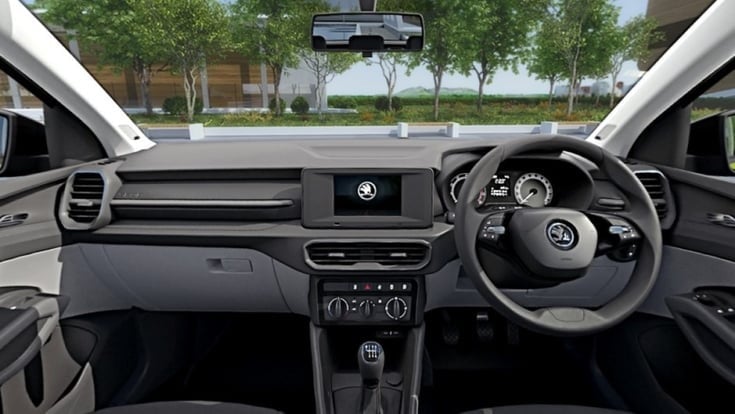
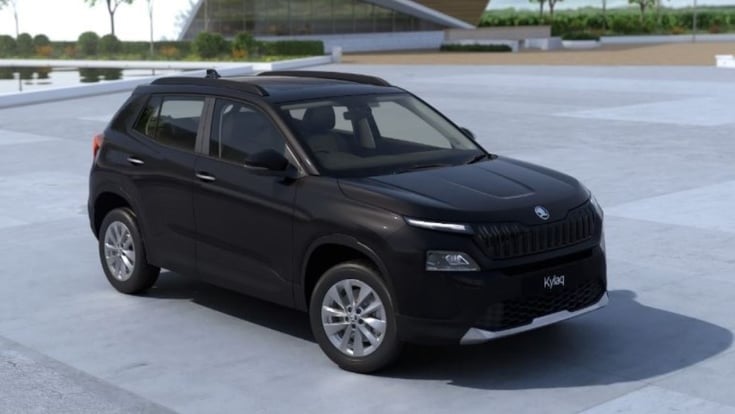
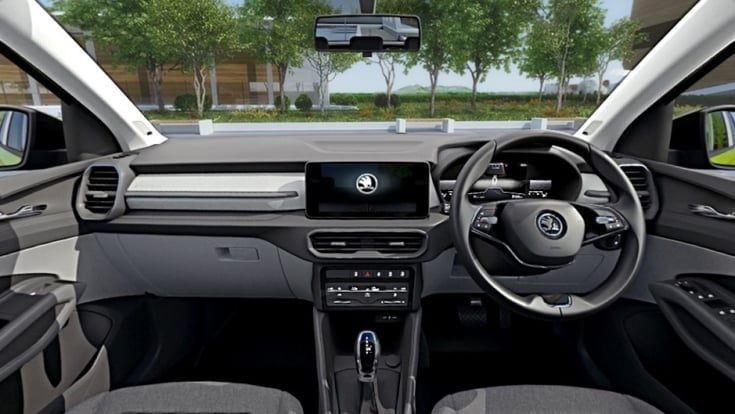
The Kylaq, Skoda’s most affordable offering in India, was introduced in 2024 and marked the brand’s return to the sub-4m space after years. Currently, the Kylaq is Skoda’s best-selling model in our market and has sold over 50,000 units since its launch as of February 2026. Here’s a breakdown of the powertrain options, comfort and convenience features, safety kit and exterior colours available on each trim of the Skoda SUV.
Skoda Kylaq variant-wise price and powertrain options
The base Classic trim misses out on an automatic transmission option
Skoda Kylaq ex-showroom price as of August 21, 2026 (Rs lakh)
Trim
MT
AT
Classic
7.59
–
Classic+
8.25
9.25
Signature
9.43
10.43
Signature+
10.77
11.77
Sportline
11.32
12.32
Prestige
11.75
12.75
Prestige+
11.99
12.99
The Skoda Kylaq has an ex-showroom price ranging from Rs 7.59 lakh to Rs 12.99 lakh. Except for the base Classic trim, the remaining trim levels offer both manual and automatic gearboxes. Powering the Kylaq is a 115hp, 178Nm, 1.0-litre direct-injection turbo-petrol engine that also does duty in the Kushaq and the Slavia. Transmission duties are handled by either a -speed manual or a 6-speed automatic gearbox. Notably, in Classic+ guise, the Kylaq is the most accessible car with a torque converter gearbox.
Skoda claims a top speed of 188kph and that the manual version is capable of a 0-100kph sprint in 10.5 seconds. In our Kylaq real-world performance tests, the automatic version achieved a 0-100kph time of 11.69 seconds. Skoda also claims an ARAI-rated fuel economy of 19.68kpl for the manual and 19.05kpl for the automatic; our Kylaq real-world mileage tests saw the manual average 12.86kpl, while the automatic went 11.03km on a litre of petrol.
Skoda Kylaq variant-wise colour options
Offered in seven colours on the outside, two on the inside
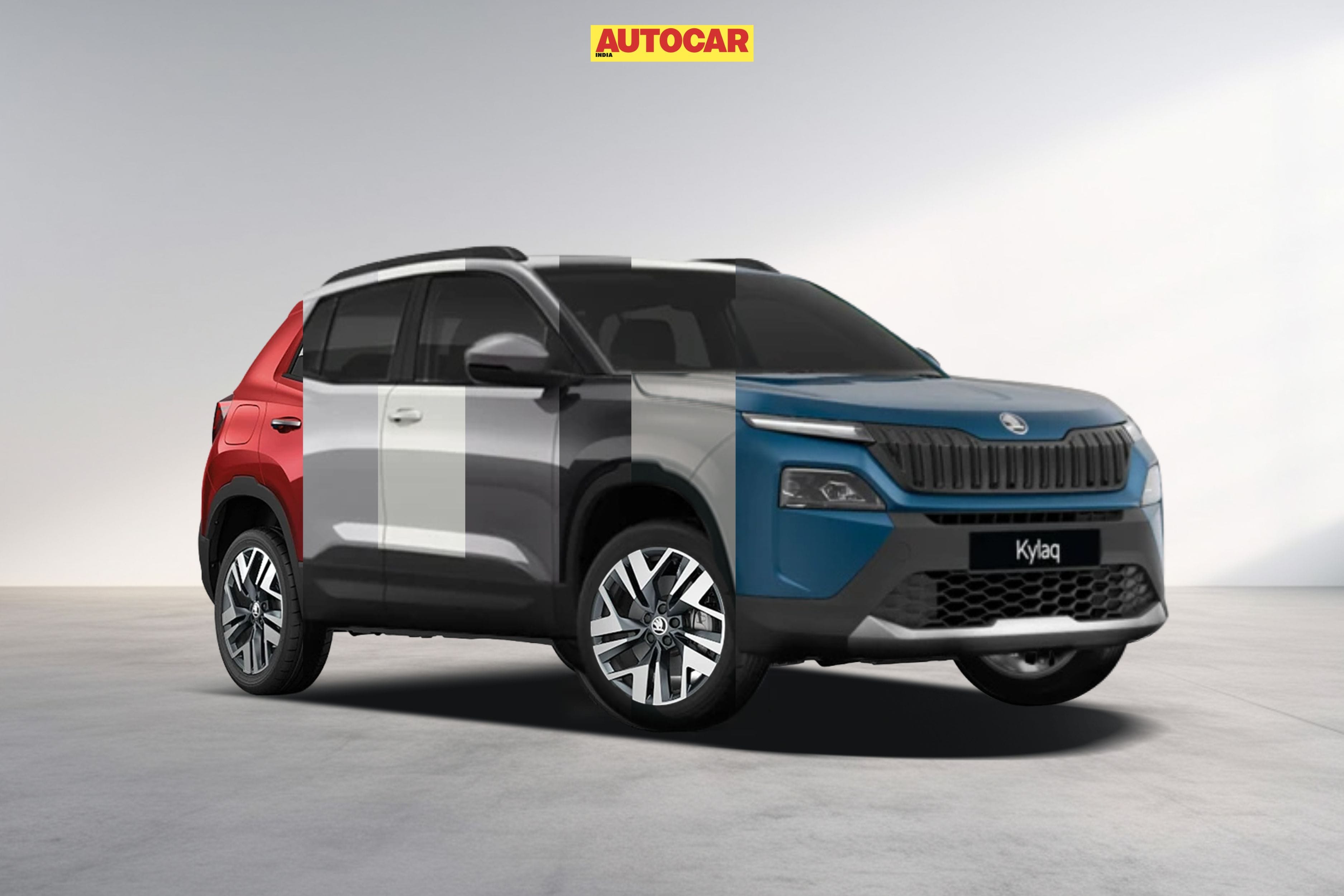
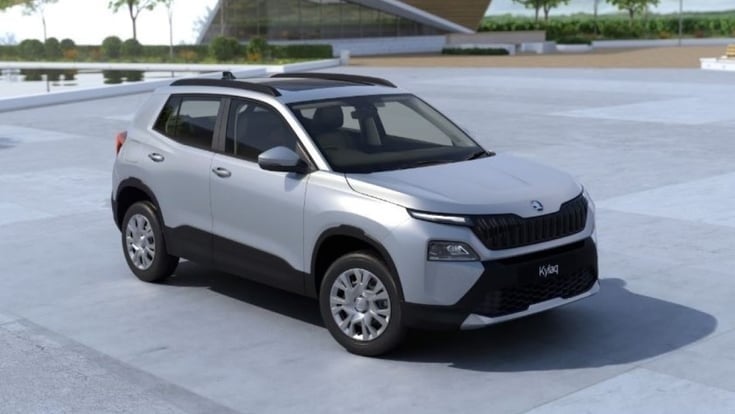
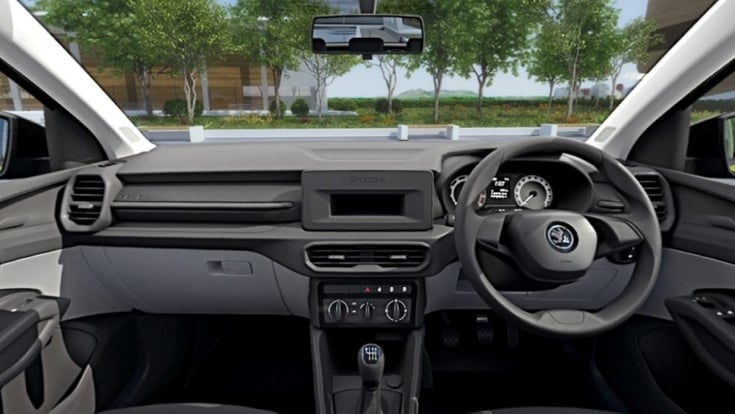
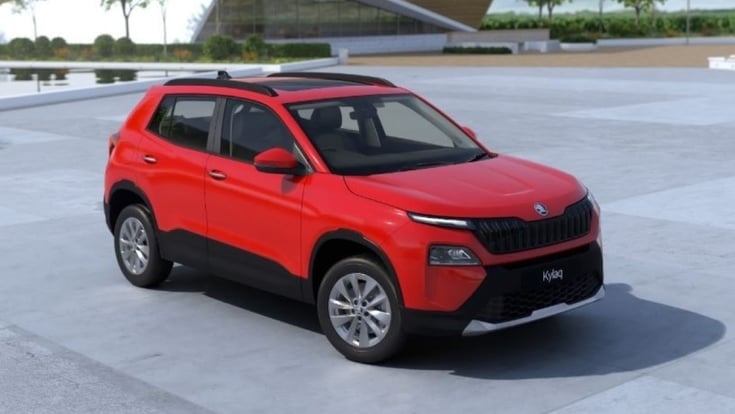
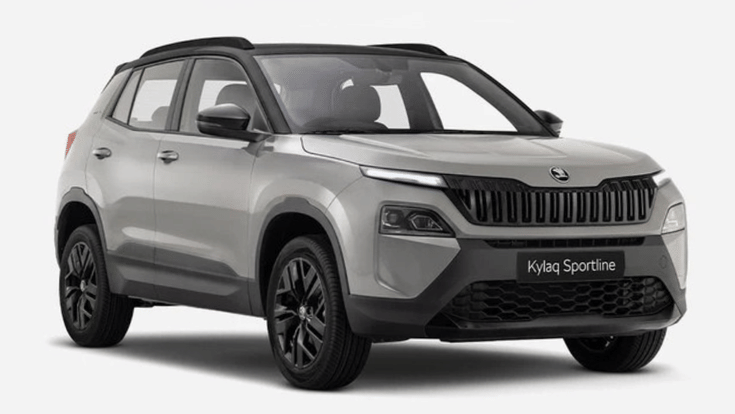
The compact SUV is offered in seven colours, namely, Candy White, Brilliant Silver, Cherry Red, Carbon Steel, Deep Black, Lava Blue, and Steel Grey. While all trims come in a monotone finish, select paint jobs on the Sportline come with a black roof. Additionally, the Sportline trim exclusively gets the Steel Grey colour option. The interior of the Skoda Kylaq gets a black and grey colour scheme as standard, but the Sportline has an all-black theme. Here’s a table comprising the available exterior colours on the Skoda Kylaq depending on the trim level chosen:
Colour
Classic
Classic+
Signature
Signature+
Sportline
Prestige
Prestige+
Candy White
Yes
Yes
Yes
Yes
Dual-tone
Yes
Yes
Brilliant Silver
Yes
Yes
Yes
Yes
Dual-tone
Yes
Yes
Cherry Red
Yes
Yes
Yes
Yes
Dual-tone
Yes
Yes
Carbon Steel
Yes
Yes
Yes
Yes
–
Yes
Yes
Deep Black
–
Yes
Yes
Yes
Yes
Yes
Yes
Lava Blue
–
Yes
Yes
Yes
Yes
Yes
Yes
Steel Grey
–
–
–
–
Dual-tone
–
–
Skoda Kylaq standard safety kit
Gets six airbags, ABS, EBD, traction control and more.
As standard, the Skoda Kylaq comes equipped with six airbags, ABS, EBD, ESC, traction control, brake disc wiping, roll-over protection, central locking, rear parking sensor, and ISOFIX mounts.
Skoda Kylaqvariant-wise features
Skoda Kylaq Classic: Rs 7.59 lakh
Gearbox option – 6MT
Skoda Kylaq Classic trim
LED headlights with LED daytime running lamps (DRLs)
Leatherette seat upholstery with Sportline inscription
LED projector headlamps
LED fog lamps with cornering function
Wireless phone charger
Skoda Kylaq Prestige – Rs 11.75 lakh-12.75 lakh
Gearbox options – 6MT, 6AT
Skoda Kylaq Prestige trim
Features over Signature+
Dual-tone 17-inch alloys
LED projector headlights
LED rear turn indicator and reverse lamp
Front LED fog lamps with static bending function
White ambient lighting
Leatherette upholstery on seats, front armrest and doors
Chrome parking brake tip
Ventilated front seats
Wireless phone charger
Anti-theft alarm
Skoda Kylaq Prestige+ – Rs 11.99 lakh-12.99 lakh
Gearbox options – 6MT, 6AT
Feature over Prestige
6-way powered front seats
Which Skoda Kylaq variant should you consider?
The mid-spec Signature+ trim offers good value for money
Starting at Rs 10.77 lakh, the mid-spec Signature+ trim offers dual digital screens, a single-pane sunroof, a rear parking camera with sensors, auto AC with rear vents, all-LED lighting and 16-inch silver alloy wheels, making it a value-for-money offering. While you do miss out on features such as a wireless phone charger and powered and ventilated front seats, the premium you have to pay for these is not justifiable. Moreover, this trim is available with both manual and automatic gearbox options.
However, if you are on a budget, you can consider the lower Signature trim, which offers a smaller touchscreen with wired Android Auto and Apple CarPlay, rear wiper and washer, rear AC vents and a sunroof. This trim also comes in both manual and automatic variants, and priced at Rs 9.43 lakh and Rs 10.43 lakh, respectively, they still offer a lot of value.
Although the Classic+ trim is also well-equipped for its price, the lack of an infotainment system makes recommending it a bit more challenging. However, the 7-inch OEM infotainment system with wired smartphone connectivity, offered with the higher Signature trim, is available in the online classifieds marketplace under Rs 10,000. If you are open to retrofitting it at your authorised dealership, the Classic+ trim becomes the most value-for-money option on a strict budget.
After introducing the iX1 in long-wheelbase (LWB) guise, BMW India has given the same treatment to its ICE-powered X1. With a focus on chauffeur-driven customers who prioritise rear seat space and comfort, the German carmaker has been bringing certain models to India in LWB versions. In this article, we compare the specifications of the X1 LWB against other entry-level luxury SUVs.
BMW X1 LWB vs rivals: Dimensions
X1 LWB has the longest length and wheelbase
BMW X1 LWB vs rivals: Dimensions
BMW X1 LWB
Mini Countryman C
Mercedes-Benz GLA
Audi Q3
Length (mm)
4,616
4,447
4,412
4,482
Width (mm)
1,845
1,843
1,834
1,849
Height (mm)
1,641
1,661
1,616
1,607
Wheelbase (mm)
2,800
2,692
2,729
2,680
Ground clearance (mm)
190
190
183
170
Boot space (litres)
540
505
425
530
Wheel size (inches)
18
19
18 – 19
18
When we previously compared the standard X1 against its rivals, it had the longest length, but fell short of having the longest wheelbase. The new X1 LWB not only extends its lead in the length department, but also has the longest wheelbase in the segment. Additionally, it has the largest boot among the models here and rides highest off the ground along with the Countryman C. Meanwhile, the Countryman C is tallest, while the Audi Q3 is widest. Only the Mercedes-Benz GLA offers both 18-inch and 19-inch wheels depending on the variant.
BMW X1 LWB vs rivals: Powertrain options
X1 LWB has the least powerful petrol engine
BMW X1 LWB vs rivals: Powertrain options
BMW X1 LWB
Mini Countryman C
Mercedes-Benz GLA
Audi Q3
Engine
1.5 turbo-petrol
1.5 turbo-petrol
1.3 turbo-petrol | 2.0 turbo-diesel
2.0 turbo-petrol
Power (hp)
156
156
163 | 190
190
Torque (Nm)
230
240
270 | 400
320
Drive layout
FWD
FWD
FWD
AWD
Transmission
7DCT
7DCT
7DCT | 8DCT
7DCT
The X1 LWB and all its rivals come powered by turbo-petrol engines. However, only the Mercedes GLA offers a diesel engine as well. Comparing all petrol engines side by side, the Audi Q3 develops the most power and torque figures, while the X1 delivers the lowest numbers. Interestingly, despite the X1 LWB and Countryman C having the same engine, the latter develops more torque. Meanwhile, only the Audi Q3 comes with an AWD setup as standard, while the rest are FWD models only. The only commonality among all SUVs here is a 7-speed DCT for their petrol-powered versions.
BMW X1 LWB vs rivals: Price
X1 LWB is the third most expensive petrol-powered SUV here
BMW X1 LWB vs rivals: Price (Rs lakh)
BMW X1 LWB
Mini Countryman C
Mercedes-Benz GLA
Audi Q3
Petrol
49.90
47.5
51.8
43.67 – 53
Diesel
–
–
53 – 55
–
BMW has priced the iX1 LWB at Rs 49.9 lakh ex-showroom. Notably, it’s more affordable than the regular X1 by 1 lakh. Compared to petrol-powered models, it is the third most expensive here. Interestingly, the Q3 is the most affordable here with petrol power, while its high-end variant is also the most expensive. Meanwhile, the diesel-powered GLA is the priciest in this comparison.
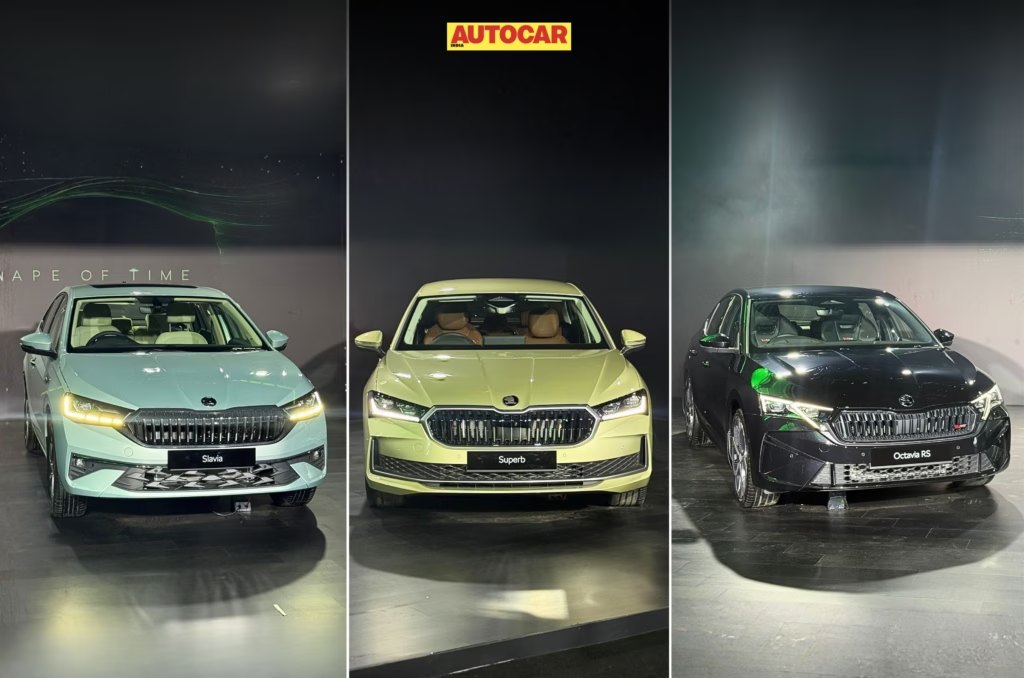
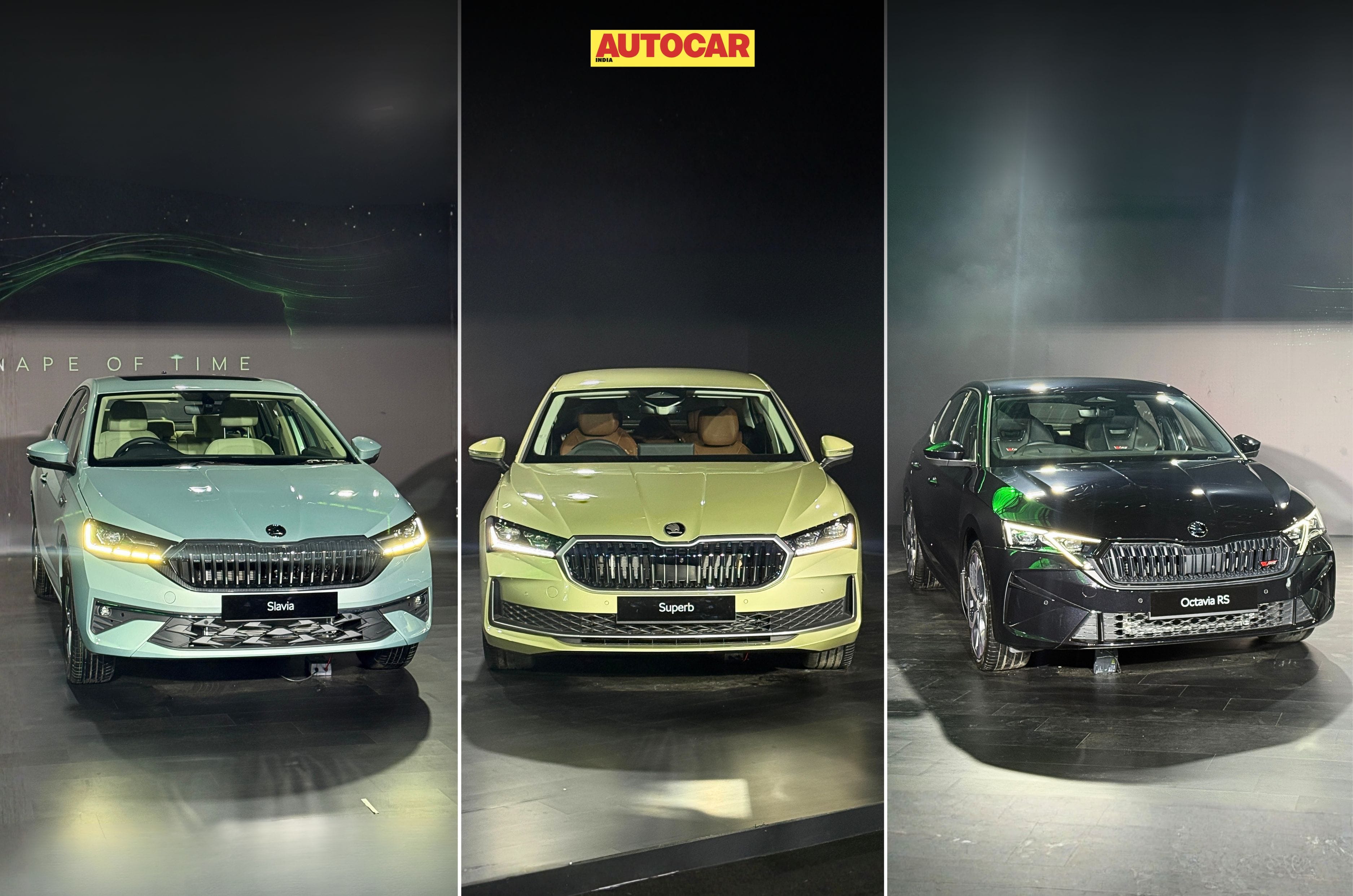
While it sells multiple SUV models, Skoda is the only mass-market automaker that has also remained steadfastly committed to the sedan body type. The Czech brand recently introduced three sedans all at the same event – something of a rarity in an otherwise SUV-dominated market. Skoda’s latest entrants in India include the Slavia facelift, the Superb diesel and the Octavia RS. While admitting to the market’s preference for SUVs over the last decade or so, Ashish Gupta, brand director at Skoda Auto India, also said, “If you look at it, sedans continue to be the quintessential car.”
Gupta says the charm of sedans hasn’t gone away
He cites a lack of focus in the segment by manufacturers
SUV saturation expected to work in favour of sedans
The Czech automaker thinks sedans are here to stay
Gupta believes the sedan body type will continue to make sense for the brand
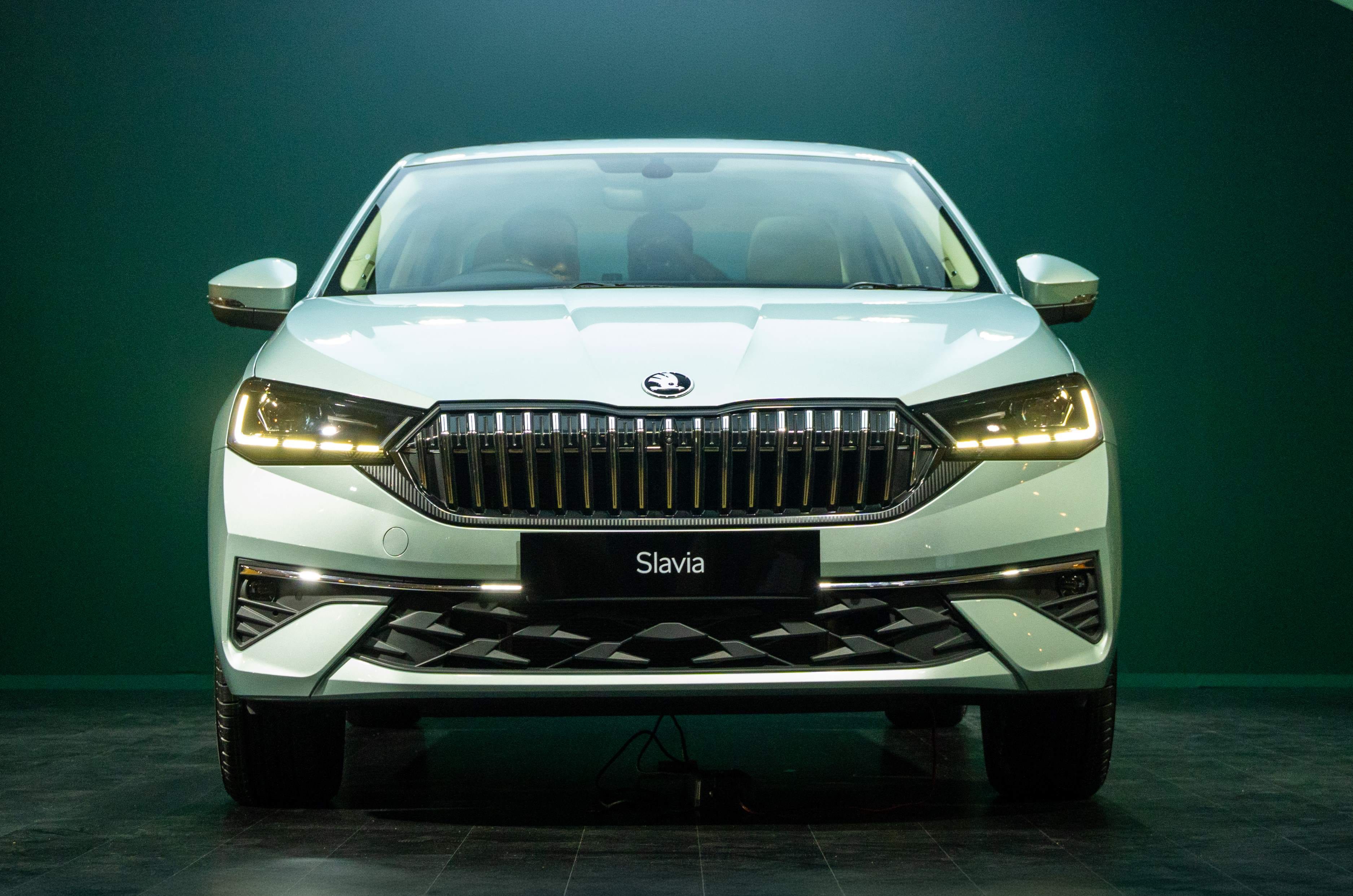
The Superb nameplate arrived 90 years ago, with the line-up eventually including models such as the Octavia, Rapid and Slavia. “It’s been a long legacy of sedans for Skoda, with the sedan body style defining our brand not only globally but also in India,” said Gupta. The Slavia has been a successful model for the Czech brand in India. “The premium sedan segment in India right now is at around 4,000 to 4,500 units per month, with the Slavia making up nearly 30 percent of all sales in the segment. We are the torchbearers of that segment, and the Slavia facelift will have its role in the company’s India portfolio while also appealing to a wider customer set,” he added.
The Slavia occupies the mass-market sedan segment in India.
According to Gupta, the Slavia offers buyers a blend of performance and understated elegance. “There are good reasons the charm of a sedan hasn’t gone away. There’s the superior driving dynamics and pure elegance that sedans exude. One would love to arrive at an event in a sedan, or go for a fun drive during the weekend. So I think sedans will continue to have their fans and people who would still want to own one.”
However, the brand director isn’t expecting the segment to make a strong comeback in the near future. “I think the sedan segment will continue to remain a smaller part of the market – that much is very clear,” he remarked while citing the current trend in the industry. “Most of the new product launches and introductions are happening in the SUV segment and other body styles.” He thinks the growth potential is primarily hindered by automakers ignoring sedans and instead doubling down on SUVs. “We, as manufacturers, should take the responsibility for this, as we have not focused on the sedan segment.”
Gupta was quick to point out that Skoda is one of the few automakers worldwide that maintains a focus on the sedan space as well. “Perhaps we are among the few brands who still have a large sedan portfolio, which continues to do well.”
SUV saturation to help revive the sedan
Gupta expects the market to eventually reach a saturation point when it comes to SUVs
According to Gupta, the market will eventually grow tired of the SUV body type, making the case for sedans even stronger. He added that first-time buyers have been contributing to the sales numbers of sedans, while more demand is expected to come from families who want to own more than one car. “Sooner or later, families wanting to have multiple cars would like to have differentiated kind of cars. So that is an opportunity for the sedan and one which will continue to evolve in India as the market matures,” he explained.
Skoda sedans in India
The brand’s sedan line-up in India includes three models
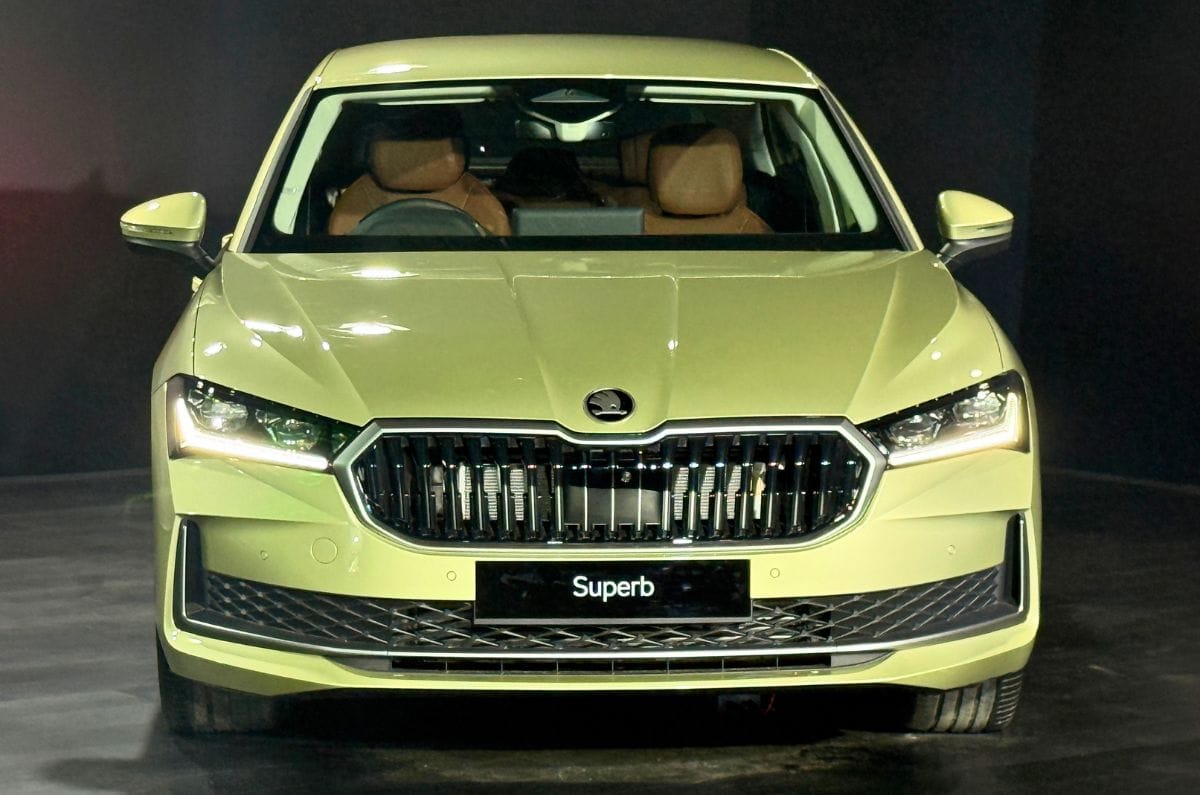
The Superb is targeted at buyers who prioritise luxury over outright performance.
The Slavia remains the entry point into Skoda’s sedan portfolio in India and is the Volkswagen Virtus’s chief rival. However, VW only has this one sedan in its entire India portfolio. Meanwhile, Skoda is also planning to introduce a CNG option for the Slavia, which could interest buyers seeking premium features and lower running costs. Joining the line-up in 2027 will be the Superb diesel in its top-spec Laurin & Klement (L&K) trim – this will be Skoda’s first new diesel car in India since abandoning the powertrain type in 2020. The Superb occupies a space beneath the likes of the Mercedes-Benz C-Class and BMW 5 Series in India.
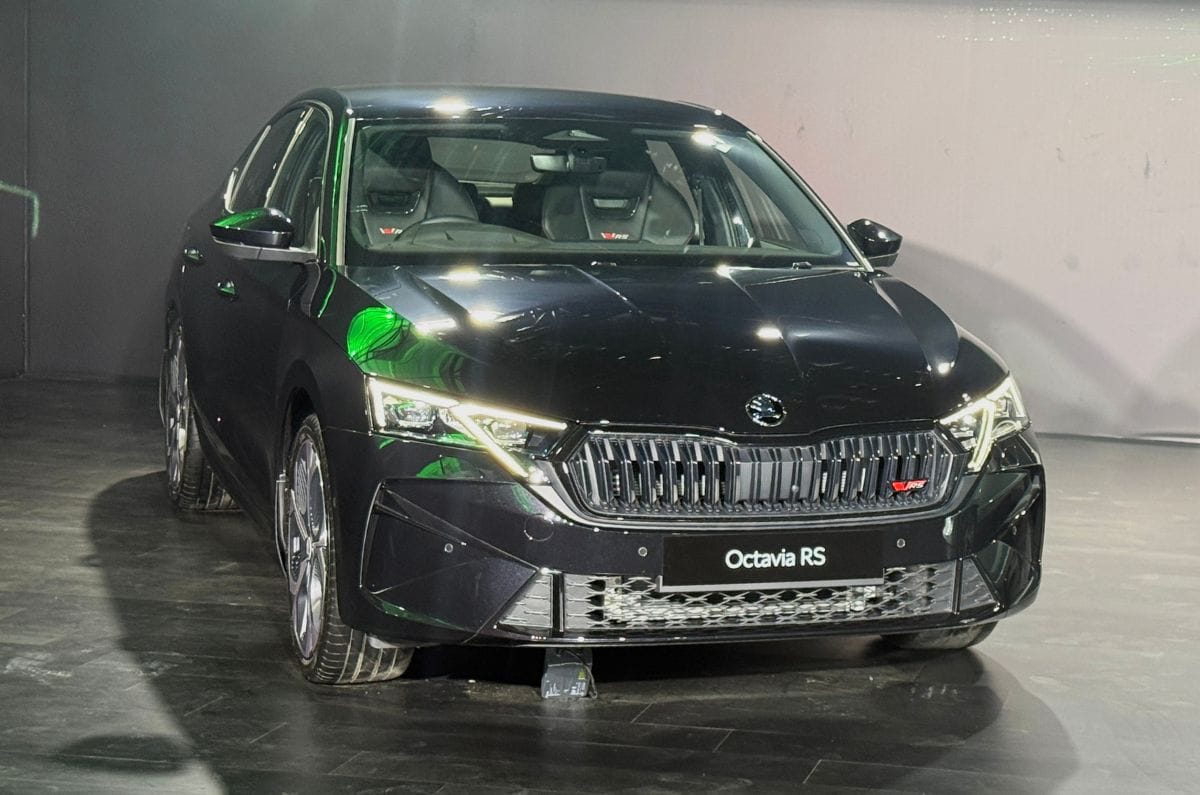
The sportier Octavia RS will continue to be for the enthusiast.
The Octavia RS is also returning to India, with deliveries expected around the upcoming festive season. It’ll once again arrive as a full import and will be limited to just 50 units this time. With the previous 100 units allocated for India reportedly selling out in 20 minutes, the second batch is likely to find takers just as easily. Gupta said customers who had shown genuine interest in the Octavia RS will be given early access. In all, Skoda will be able to cater to mass-market sedan buyers with the Slavia, premium sedan buyers with the Superb and driving enthusiasts with the Octavia RS.
Skoda and the upcoming India-EU FTA
Then there’s the upcoming India-EU Free Trade Agreement (FTA), which will have an impact on fully imported models such as the Superb. “The FTA has kind of given us a good choice between what makes better sense for us and for the market as well. The whole idea is to start deliveries towards Q2 of next year. We are hopeful that by that time, the contours of the FTA will be decided, and we will have clarity on what kind of duty structure to apply to our imported models,” said Gupta. The proposed reduction in import duties could make bringing in more batches from Skoda’s global portfolio to India easier, though Gupta expects currency fluctuations to have an impact on the final price.
BMW India is set to expand its entry-level SUV range with the X1 Long Wheelbase (LWB) on Friday, August 21. As the name suggests, the X1 LWB is an elongated version of the X1 and the ICE-powered equivalent to the iX1 LWB, which has been a hot seller for BMW here. Ahead of the X1 LWB’s India launch, here’s all you can expect from the stretched SUV.
What is the estimated price of the BMW X1 LWB?
The X1 LWB is anticipated to command a slight premium over the vanilla X1, which is priced in the Rs 50.9 lakh-52.9 lakh range. We expect pricing for the X1 LWB to land under Rs 55 lakh, which would represent good value considering the SUV has no direct rivals in the Indian market at the moment.
How much longer is the BMW X1 LWB over the standard X1?
Measuring 4,616mm long, the X1 LWB sees a 116mm bump in overall length compared to the regular X1 – 108mm of that added length has gone into the wheelbase. The X1 LWB is also 11mm taller at 1,641mm, while width remains identical to the X1. Elsewhere, the X1 LWB looks exactly the same as its shorter counterpart, with swept-back LED headlamps, large kidney grilles, 18-inch alloy wheels, a dual-ridge roof spoiler, sharp-looking LED tail-lamps, and an M Sport cosmetic package fitted as standard.
How is the rear seat comfort of the BMW X1 LWB?
Expectedly, the increased wheelbase of the X1 LWB yields significantly more horizontal space for rear-seat occupants – BMW claims 109mm of extra knee room. The rear seat base has also been extended by 15mm, and cushioning has been enhanced too. In our X1 LWB review, we noted that the lengthened seat base improves thigh support, and the seating position is very good as well.
You can recline the backrest by a couple of degrees for an even more relaxed angle. However, while the added legroom frees up a bit more space for the middle passenger, the high centre tunnel makes the X1 LWB’s rear bench best suited for two occupants only. Boot space is rated at 540 litres, which is larger than X1’s 476-litre bay.
Which features does the BMW X1 LWB get?
Aside from the bump in rear space, the X1 LWB’s interior is no different to that of the standard X1. This means you get features like a 10.7-inch infotainment touchscreen, a 10.25-inch digital driver’s display, a 12-speaker Harman Kardon sound system, wireless Apple CarPlay and Android Auto, powered front seats, a fixed panoramic glass roof, ambient lighting, a 360-degree camera, auto park assist, connected car tech, a digital key, ADAS, a wireless charging pad, and more.
Which engine options does the BMW X1 LWB offer?
The X1 LWB will launch solely in sDrive18Li guise, which refers to a 1.5-litre 3-cylinder direct-injection turbo-petrol engine developing 156hp (up 20hp over the X1) and 230Nm. This is routed to the front wheels via a 7-speed dual-clutch automatic, and in our testing, the X1 LWB achieved a 0-100kph time of 9.58 seconds. Unlike the standard X1, the LWB will not be offered with a diesel engine.
BMW has also tweaked the X1 LWB’s suspension to deliver better ride comfort. The setup is quiet in operation and feels absorbent, with a hint of firmness coming through only when you’re keenly paying attention.
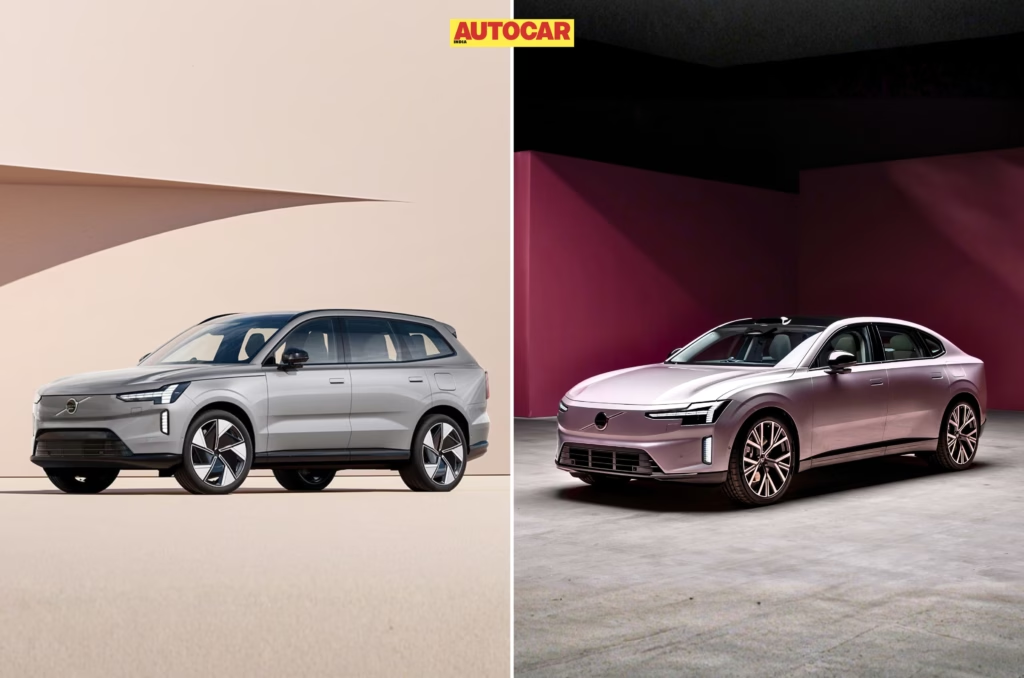
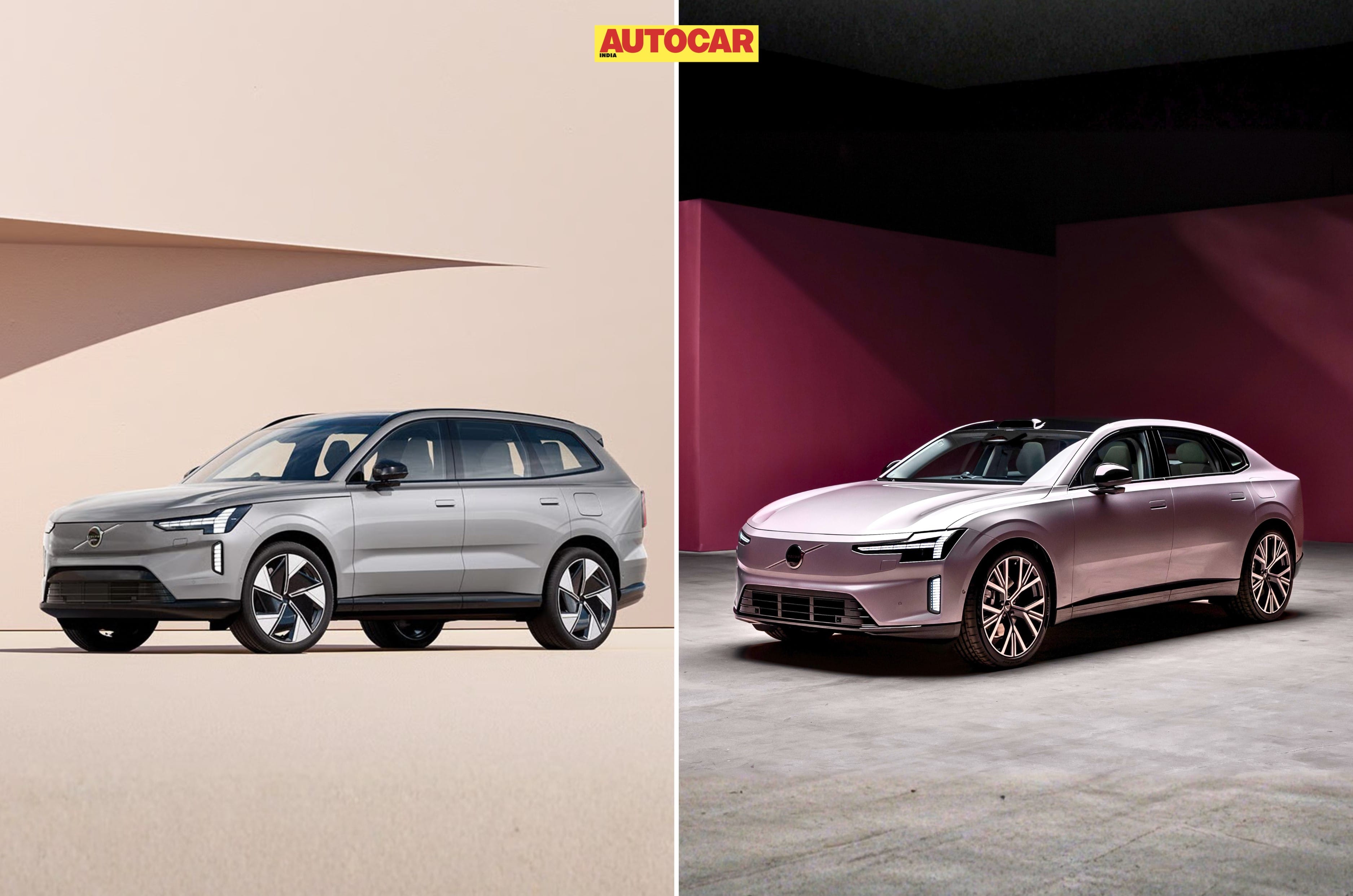
Volvo has confirmed that it will launch two new EVs, the EX90 SUV and the ES90 sedan, in India on October 12, 2026. The EX90 and ES90 will serve as Volvo’s flagship electric offerings for the Indian market. Notably, the ES90 will mark Volvo India’s return to the luxury sedan space, following the discontinuation of the S90 in June 2025. The EX90 is expected to rival the likes of the Mercedes-Benz EQS and Kia EV9, while the ES90 is likely to go up against the BMW i5.
Volvo EX90, ES90 battery and range
Identical 92kWh RWD and 106kWh AWD powertrains
The EX90 and ES90 are both underpinned by Volvo’s SPA2 platform, which features as 800V electrical architecture. In global markets, both EVs can be had in 92kWh (Single Motor) and 106kWh (Twin Motor) guises. In 92kWh spec, the EX90 and ES90 get a single rear-mounted motor (RWD) outputting 333hp and 480Nm. Meanwhile, the 106kWh battery option is split into Twin Motor and Twin Motor Performance variants, developing 456hp/670Nm and 680hp/870Nm, respectively.
For the EX90, 0-100kph comes up in a claimed 6.6 seconds for the 92kWh, 5.3 seconds for the 106kWh Twin Motor, and 4 seconds for the Twin Motor Performance. The ES90 Twin Motor is slightly slower from 0-100kph at 5.4 seconds, but mirrors the EX90 for the other variants.
As for WLTP range, the EX90 92kWh is rated at 565km, while the Twin Motor and Twin Motor Performance trims manage 608km and 602km, respectively. Meanwhile, the ES90’s WLTP range is certified at 664km for the 92kWh variant and 696km for the 106kWh versions.
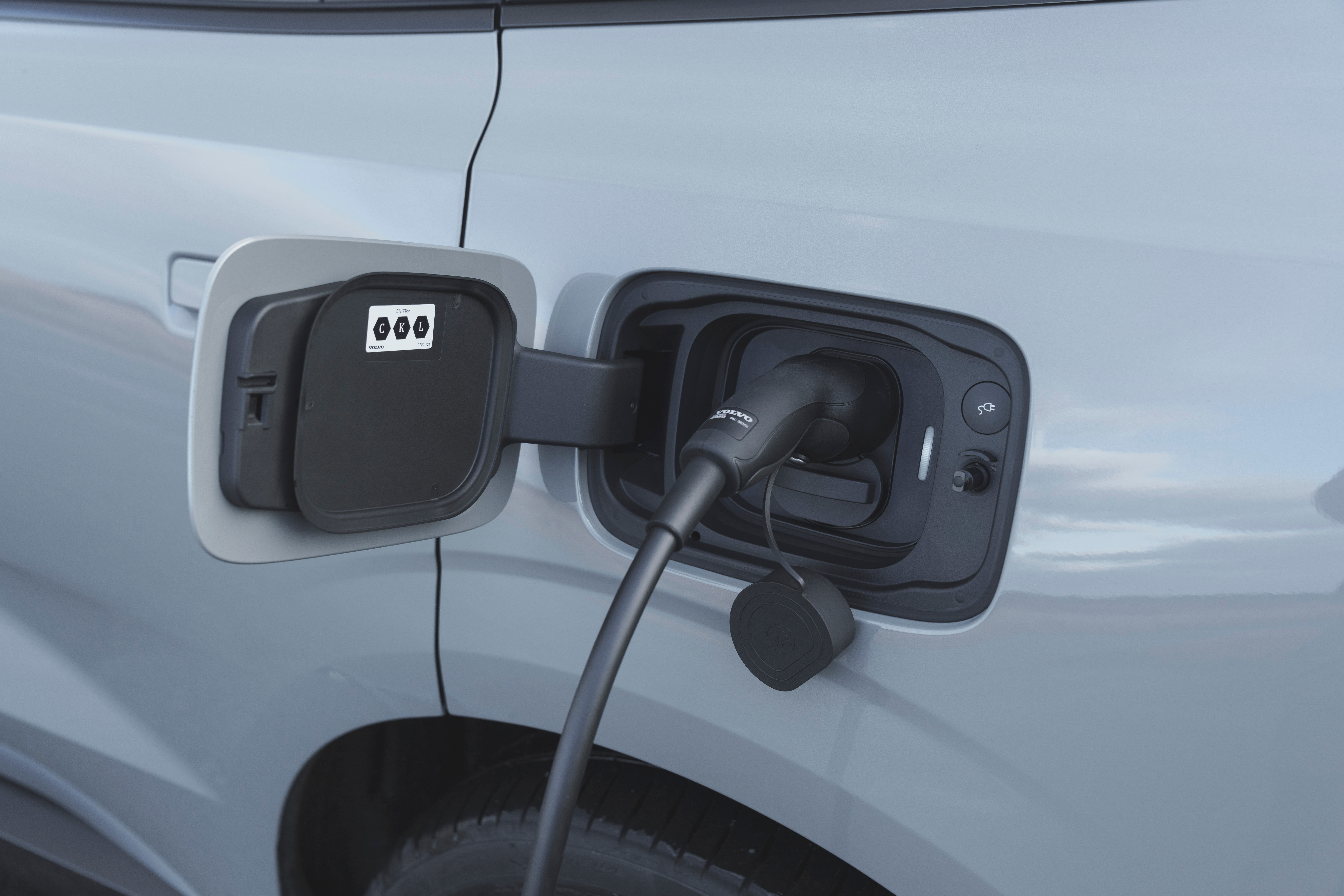
Coming to charging speeds, both the EX90 and ES90 can utilise up to 350kW DC charging, and take 22 minutes for a 10-80 percent charge across all variants.
Volvo EX90, ES90 exterior design
Look quite different compared to the XC90 and S90
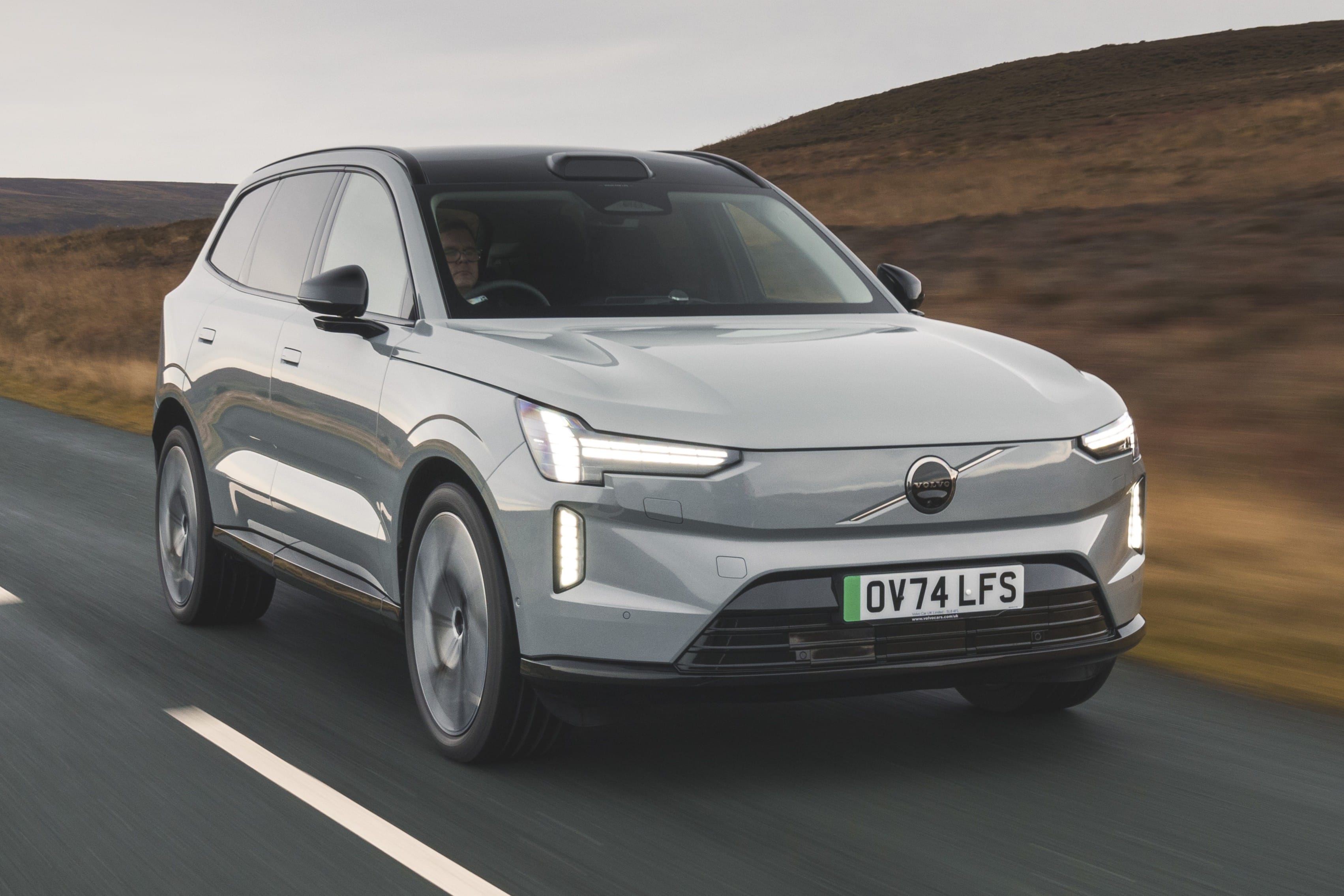
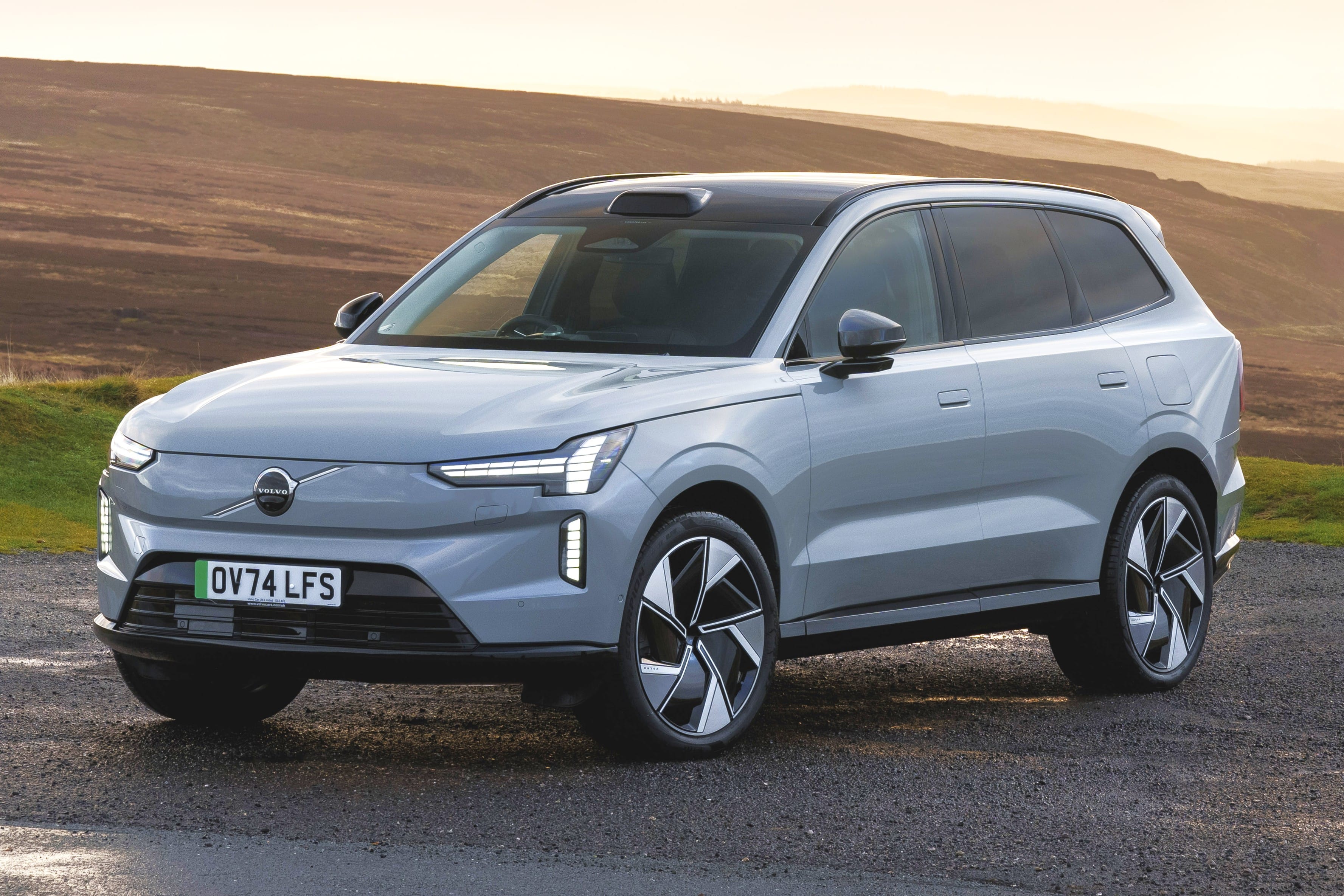
Measuring 5,037mm in length, 1,964mm in width, 1,744mm in height, and 2,985mm in wheelbase, the EX90 is dimensionally similar to the XC90, but sports a distinct design. Up front, the EX90 has sleeker T-shaped headlamps with pixel-like ‘Thor’s Hammer’ DRL signatures, below which sits a pair of slim vertically-arranged fog lamps. The Volvo badge is placed front and centre on the grille-less fascia, with a discreet air dam underneath. A LiDAR sensor can also be spotted on the leading edge of the roof.
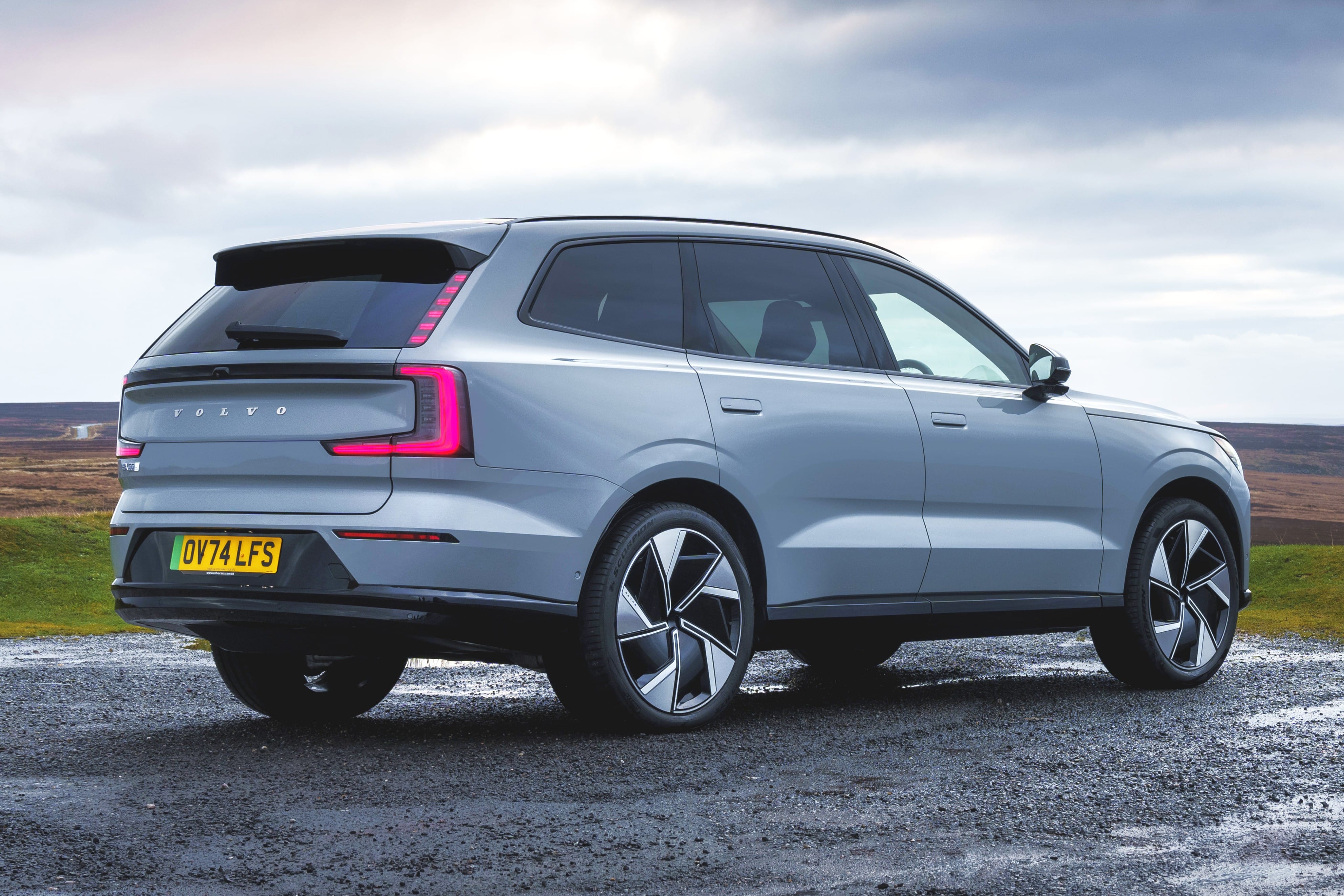
The side profile of the EX90 is cleanly-styled, with a prominent shoulder line and gently rising glass area, and there’s not much in the way of body cladding– Volvo claims a drag coefficient of 0.29Cd. 20-inch alloy wheels are fitted as standard, with 21- and 22-inchers optionally available. Over to the rear, the EX90 gets C-shaped LED tail-lamps with an additional vertical row of brake lights flanking the rear windscreen. Other styling elements of note include a sizable roof spoiler and a Volvo wordmark on the bootlid.
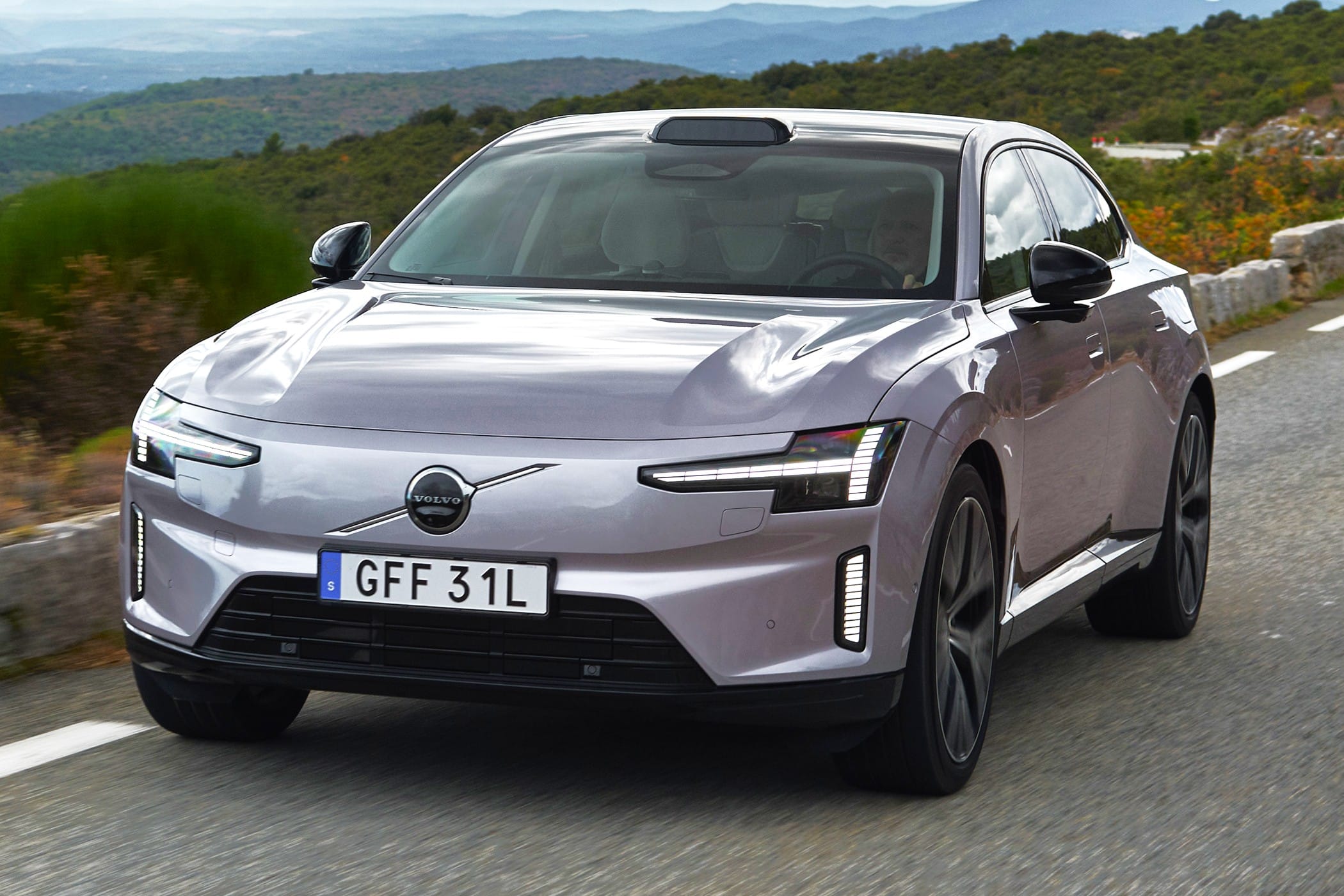
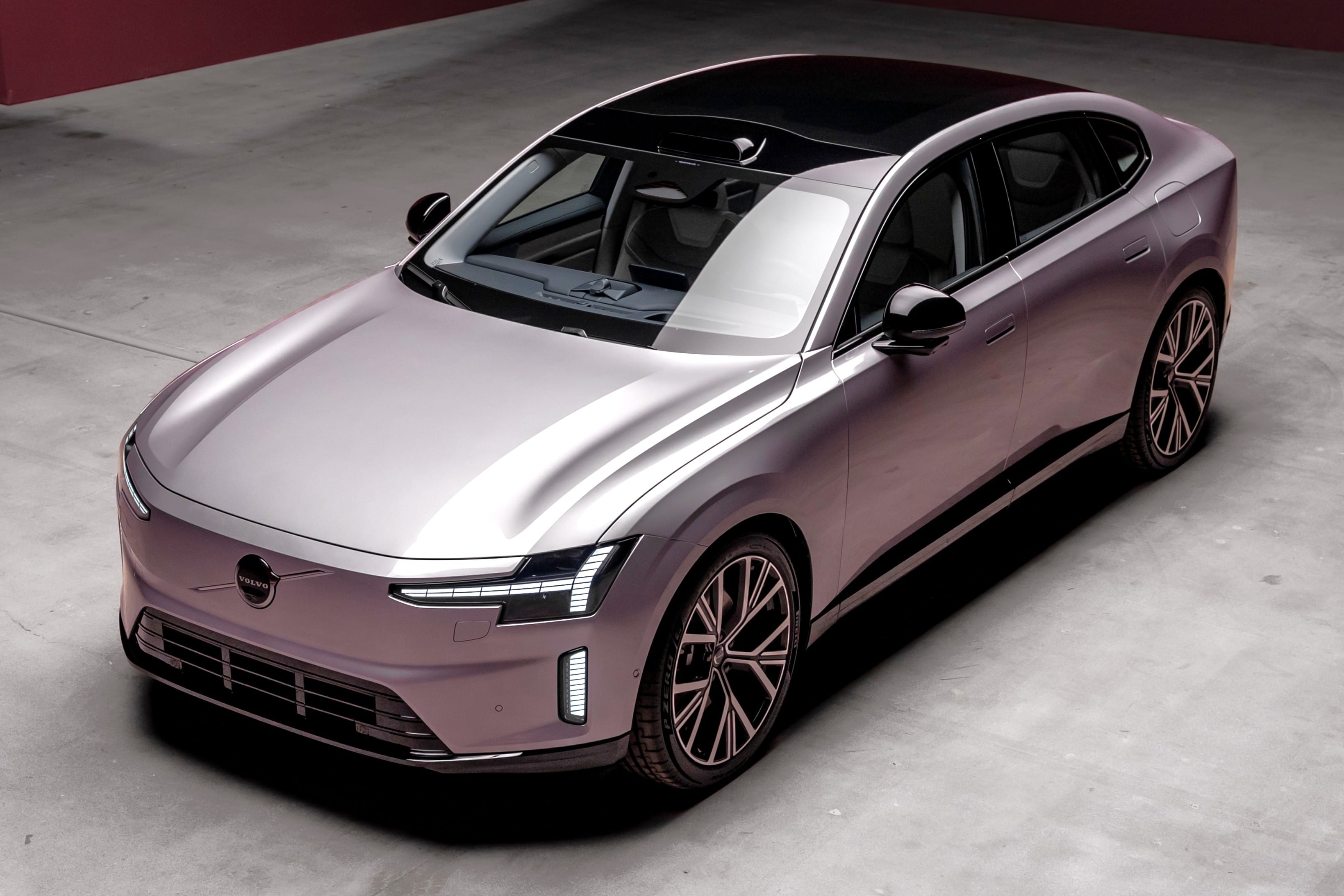
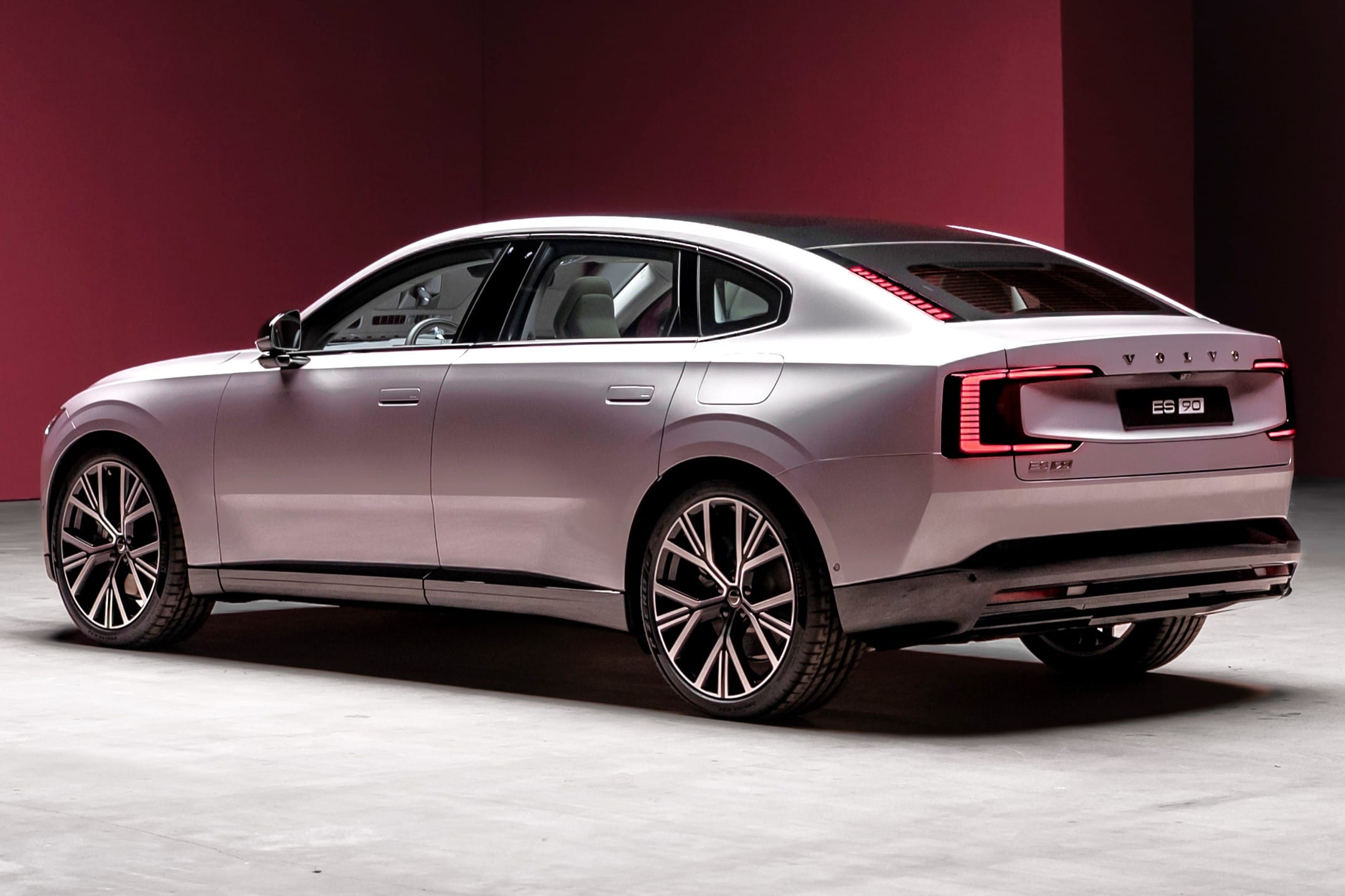
Coming to the ES90, it adopts very similar styling cues to the EX90, like the Thor’s Hammer DRLs, vertical fog lamps, grille-less fascia, brake lights around the rear windshield, Volvo wordmark on the bootlid, gloss black bumpers and skirts, and more. However, the ES90 sets itself apart with slightly reshaped headlamps and tail-lamps, different alloy wheel designs (sizes range from 20 to 22 inches), and of course, its sedan form factor.
Thanks to its more low-slung proportions, the ES90 sports a drag coefficient of 0.25, which makes it the most aerodynamic Volvo car to date.
Volvo EX90, ES90 interior and features
14.5-inch infotainment touchscreen sits front and centre on the dash
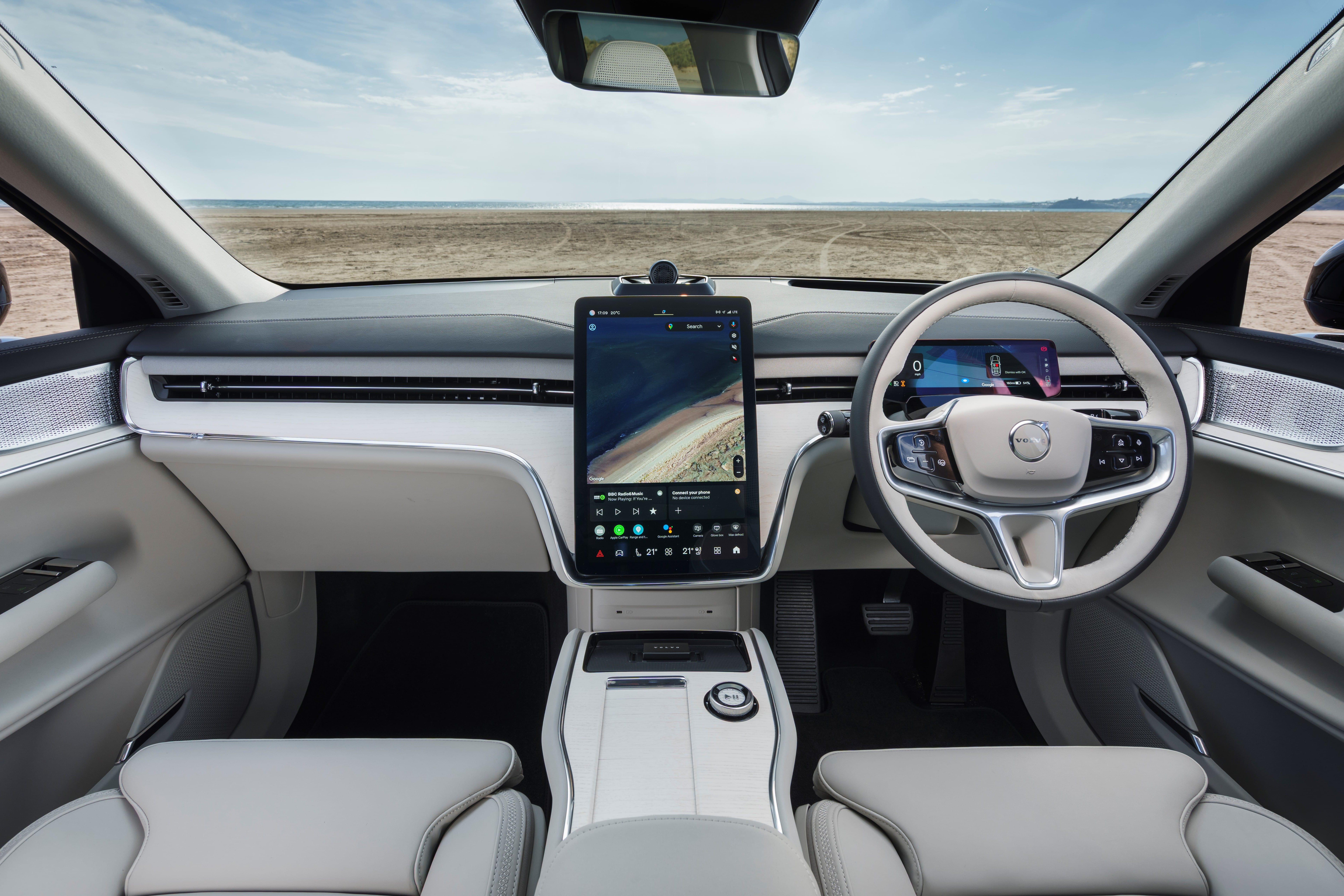
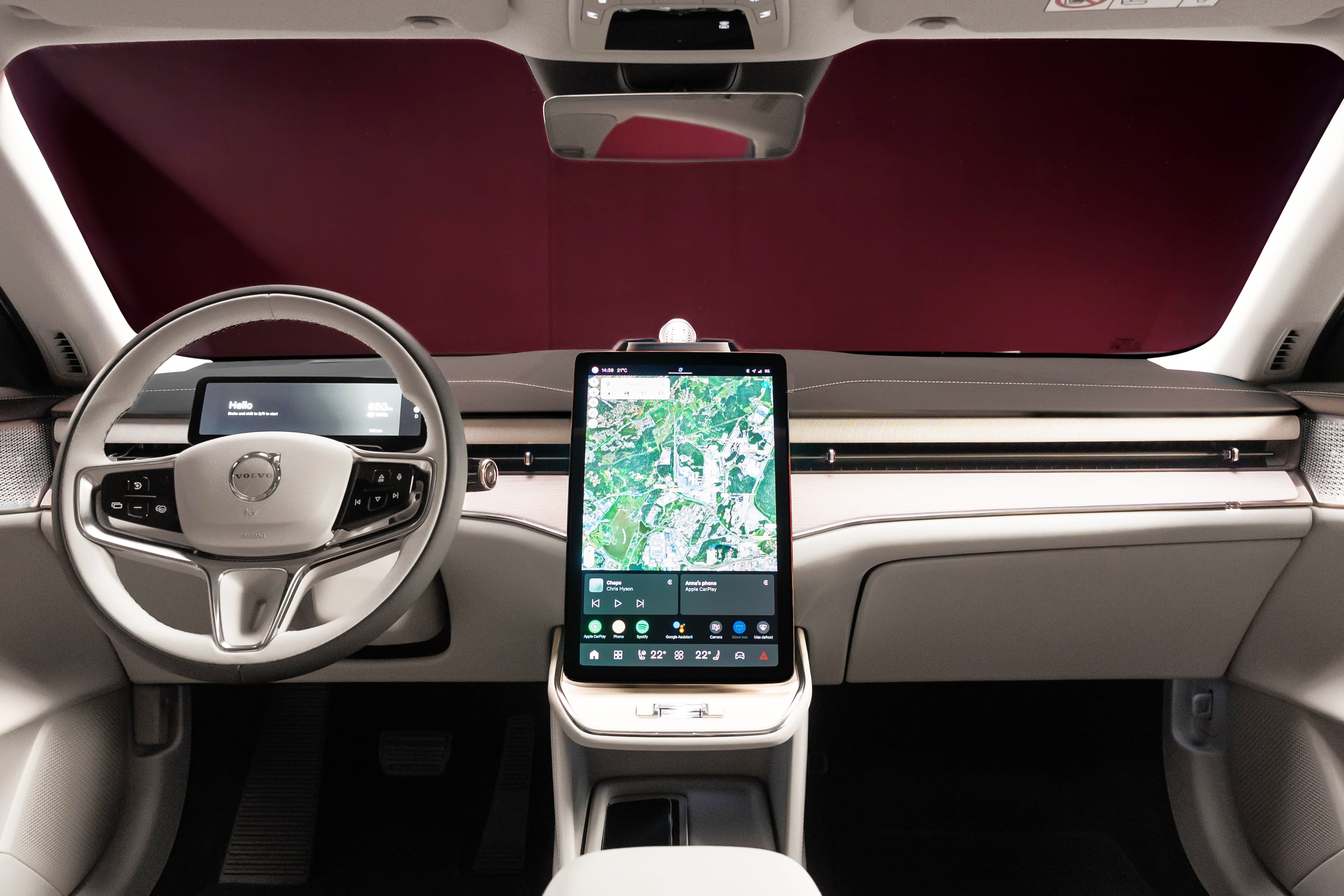
Inside, the EX90 and ES90 are very similar in terms of dashboard layout. Both get a minimalistic dashboard dominated by a 14.5-inch Google-based portrait touchscreen that incorporates much of the in-car functionality– physical controls are few and far between. There’s also a floating centre console, a three-spoke steering wheel with a neat layered design, a slim 9-inch digital driver’s display, and a 13.2-inch heads-up display.
The area between the portrait screen and centre console, however, differs between the two. The EX90 has a split design with a more open cubby, whereas the ES90 has a more enclosed storage space with two buttons underneath the touchscreen.
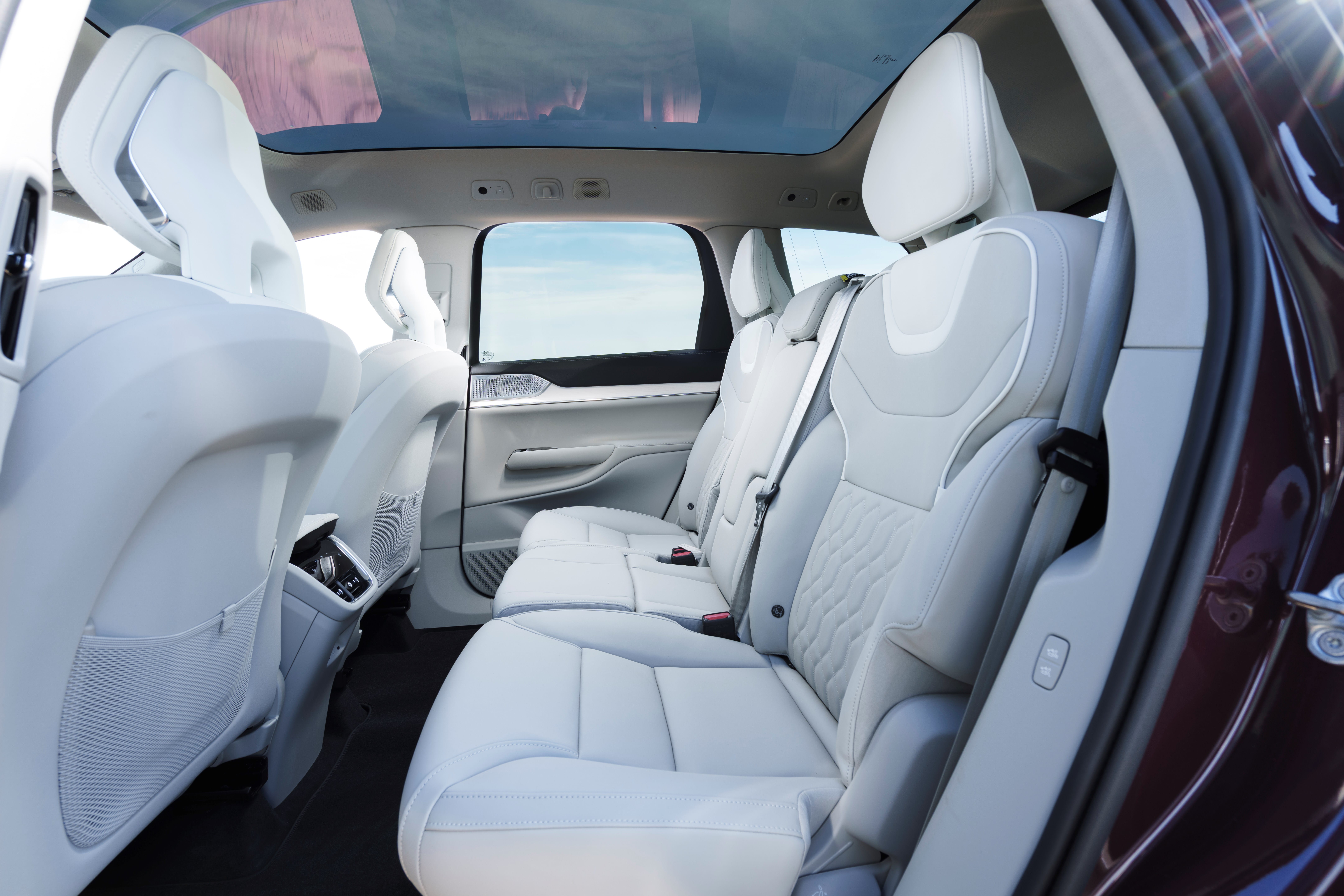
While the ES90 is a 5-seater, the EX90 is a 7-seater as standard, with certain variants offering a 6-seat configuration with captain’s chairs for the second row. In some markets, Volvo even offers a 4-seater version of the EX90 with a rear centre console that integrates a refrigerator, rivalling the likes of the Mercedes Maybach EQS SUV. Boot space is pegged at up to 384 litres with all three rows up for the EX90 and 424 litres for the ES90. The EX90 additionally gets a 45-litre frunk, while the ES90 features a 27-litre space.
As for creature comforts, both EVs pack a 5G connection to aid OTA updates, a digital key, ambient lighting, four-zone climate control, a cabin air purifier, a wireless charging pad, a 360-degree camera, powered front seats, a panoramic glass roof, a Bose sound system, connected car tech, auto park assist, Level-3 ADAS, V2L functionality, and lots more. The EX90 is touted to be Volvo’s safest car to date, holding 5-star crash safety ratings from Euro NCAP and NCAP. The ES90, however, is yet to be crash-tested by an NCAP agency.
The third-generation Mini Countryman C is the most accessible version of the entry-level luxury SUV sold here, positioned below the JCW All4. Like any car, the Countryman C has its share of strengths and weaknesses. Here are three reasons to consider the Mini SUV, along with two reasons why you might want to look at the Mercedes-Benz GLA, Audi Q3 or BMW X1.
Funky yet premium look
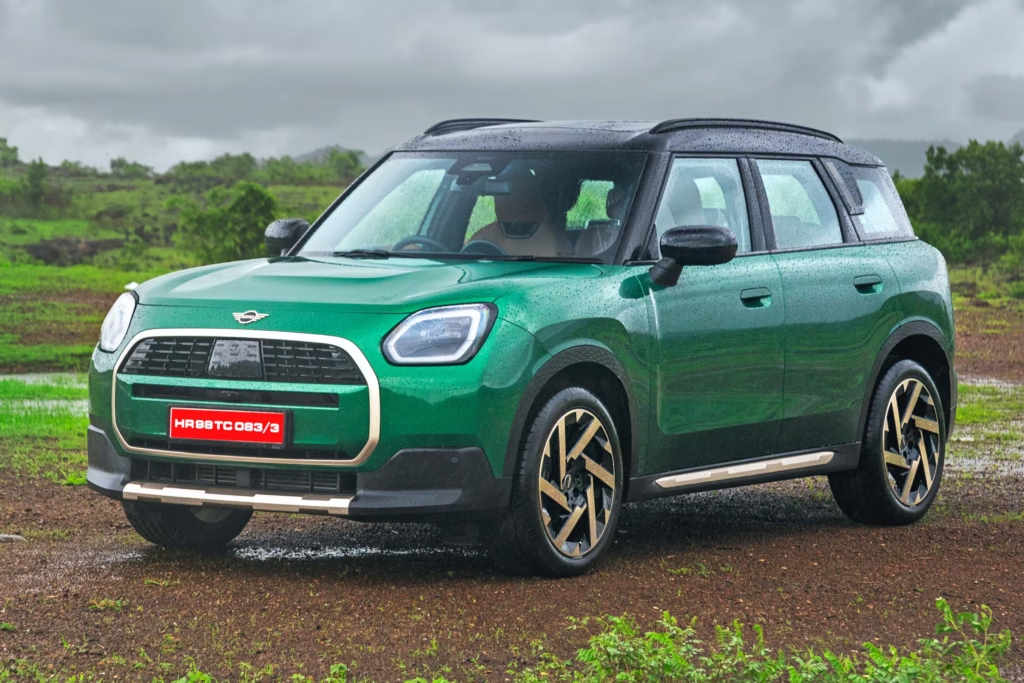
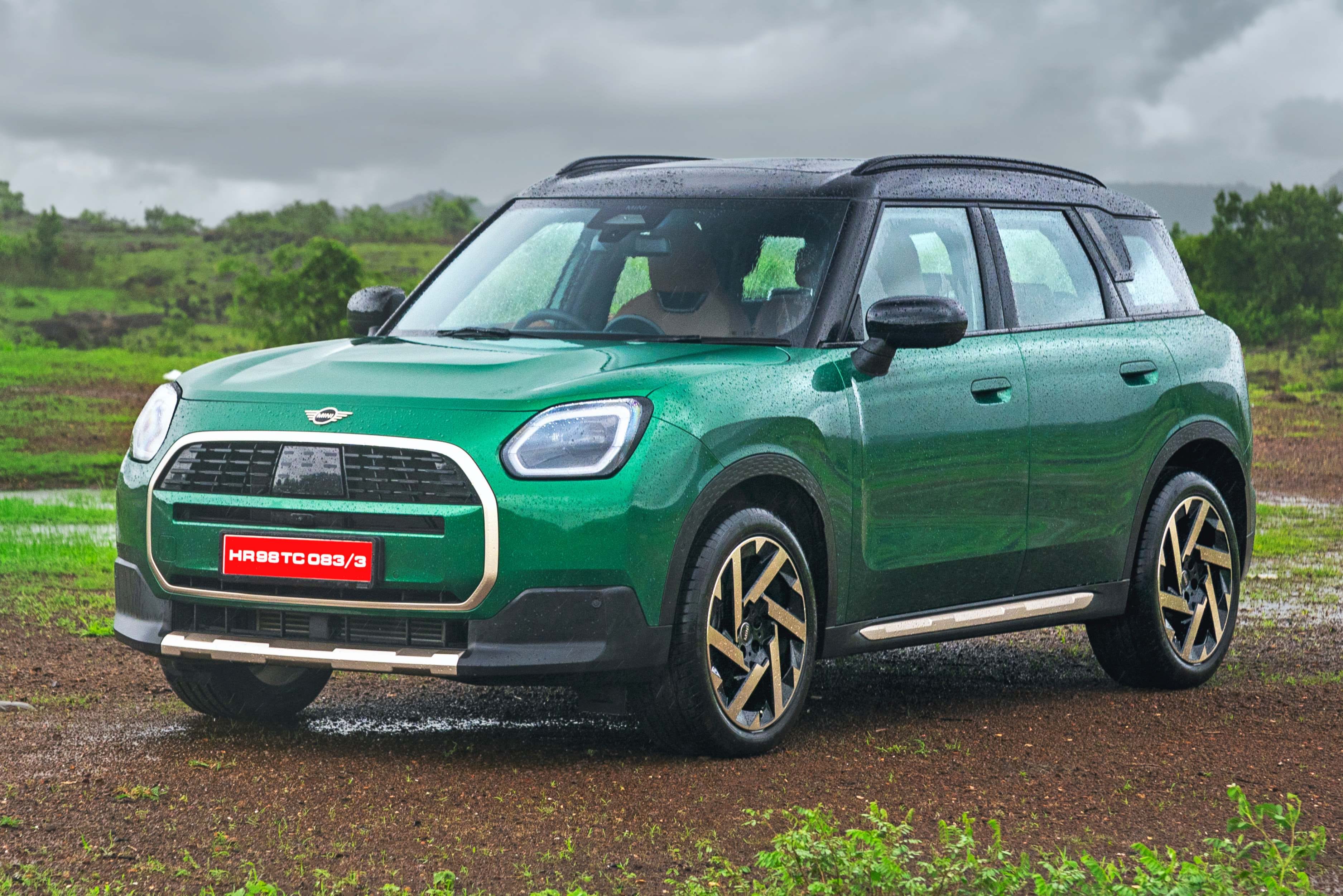
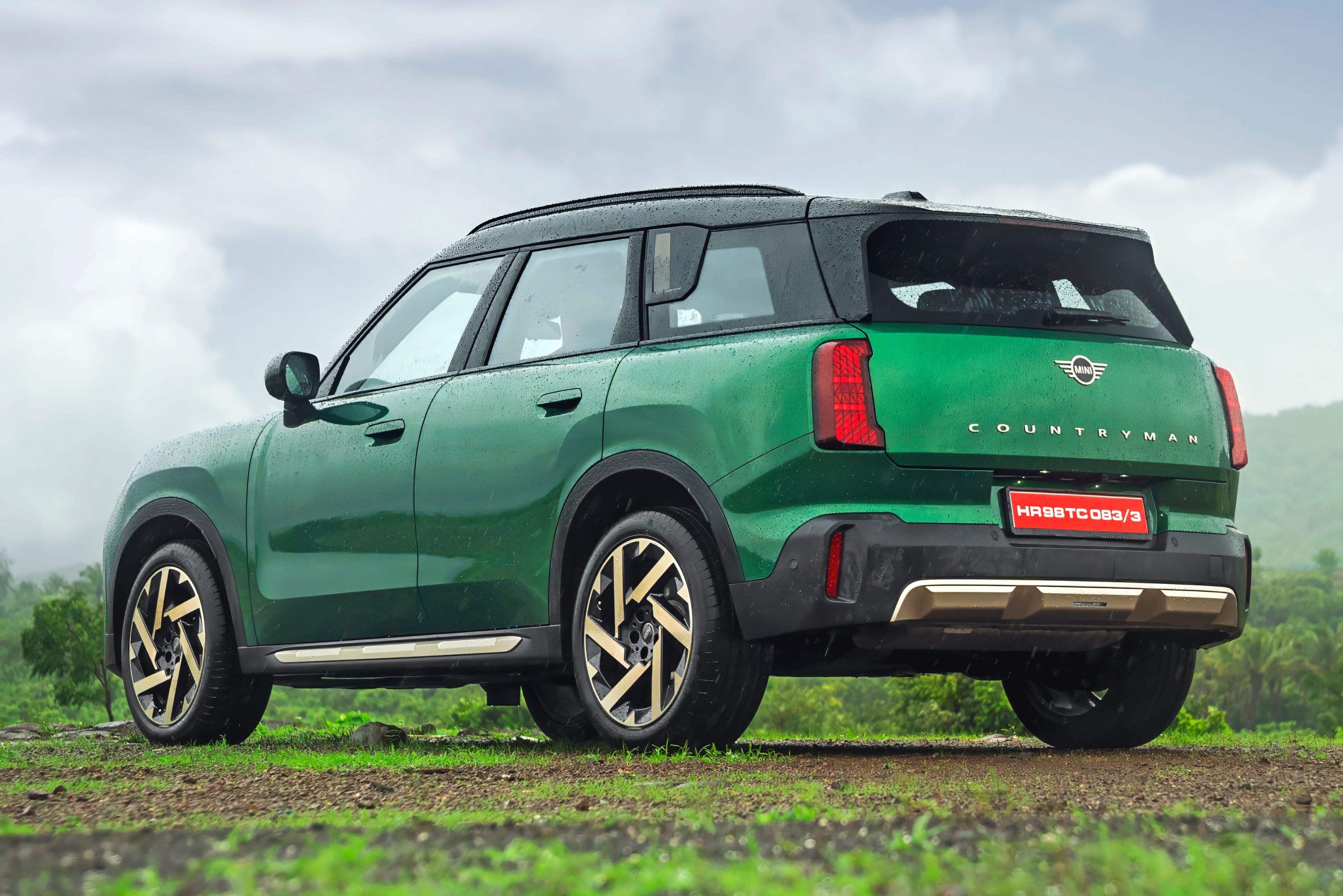
The new Countryman looks sharper, boxier and larger than before. It has grown in size and is now the tallest SUV in the segment while also offering the highest ground clearance. However, Mini has also made it look large, replacing the rounder styling of the earlier model with smaller, sharper and more angular details.
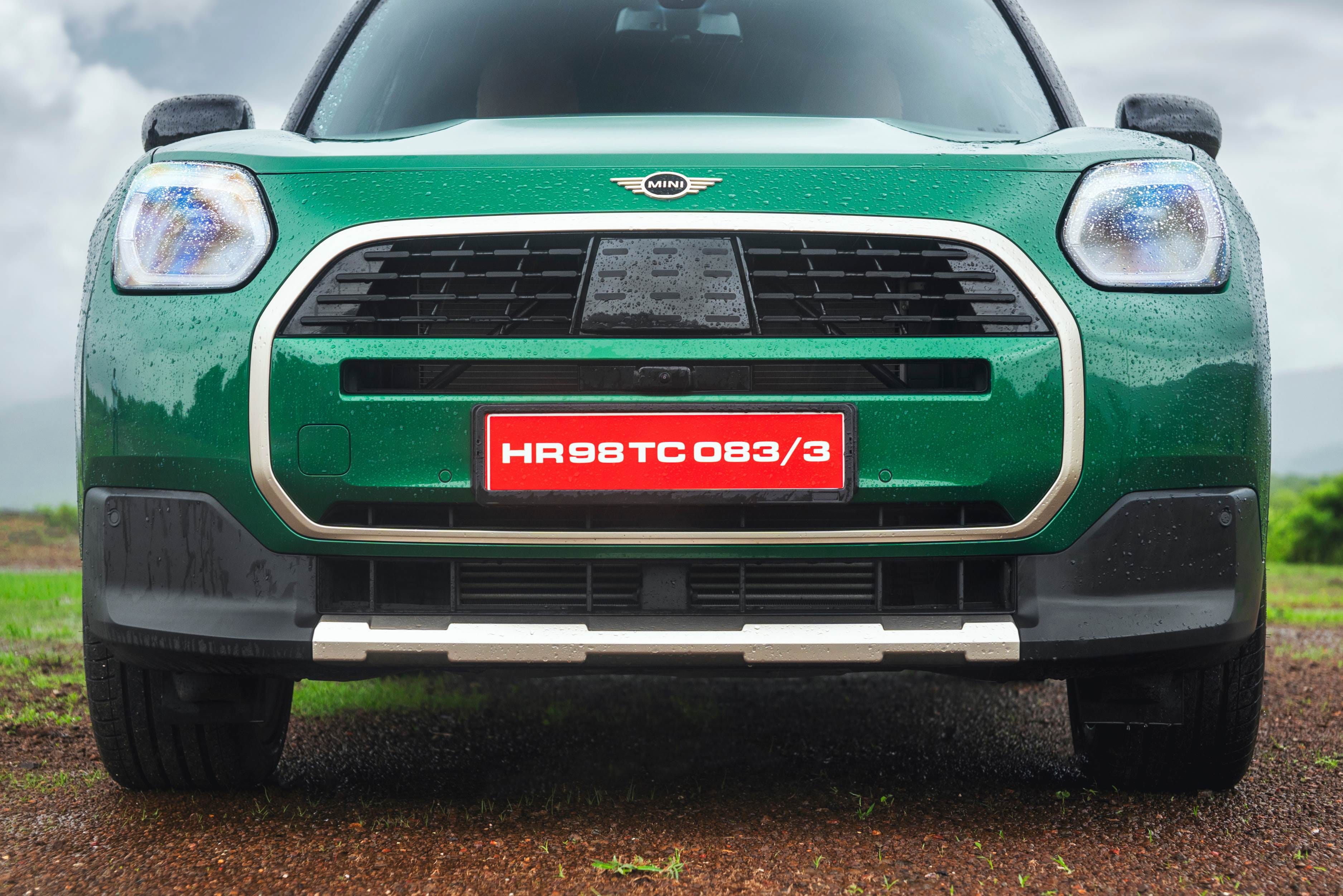
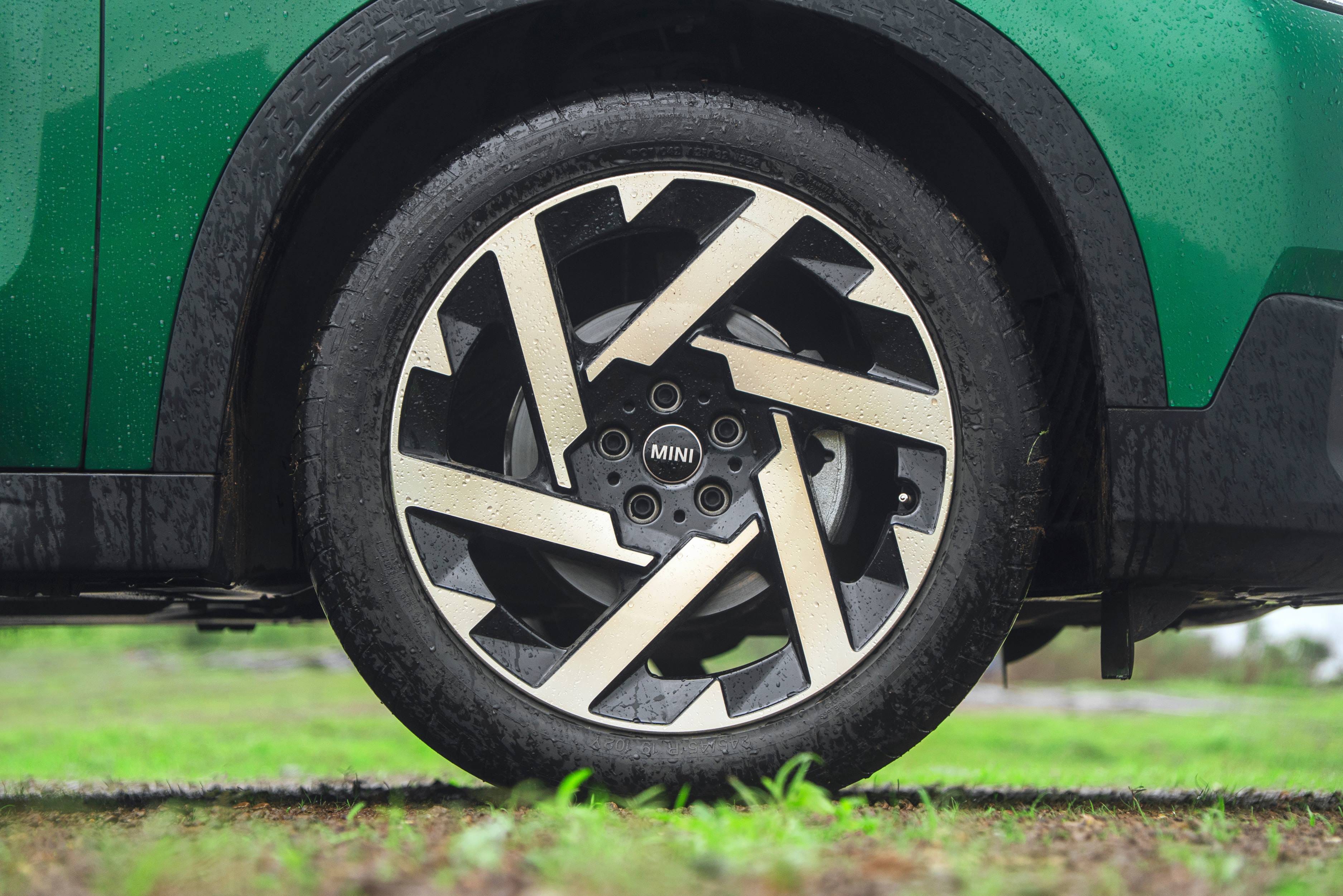
Even the headlights, grille and roofline now have a boxier design. From the rear, it is easily identifiable as a Mini, thanks to the contrast roof, ‘Countryman’ lettering on the tailgate and Union Jack-style tail-lamps. It also gets champagne-coloured accents, a contrast roof and large 19-inch dual-tone alloy wheels. There are five exterior colours to choose from, with more expressive shades than those usually seen on conventional luxury SUVs.
Loaded with features
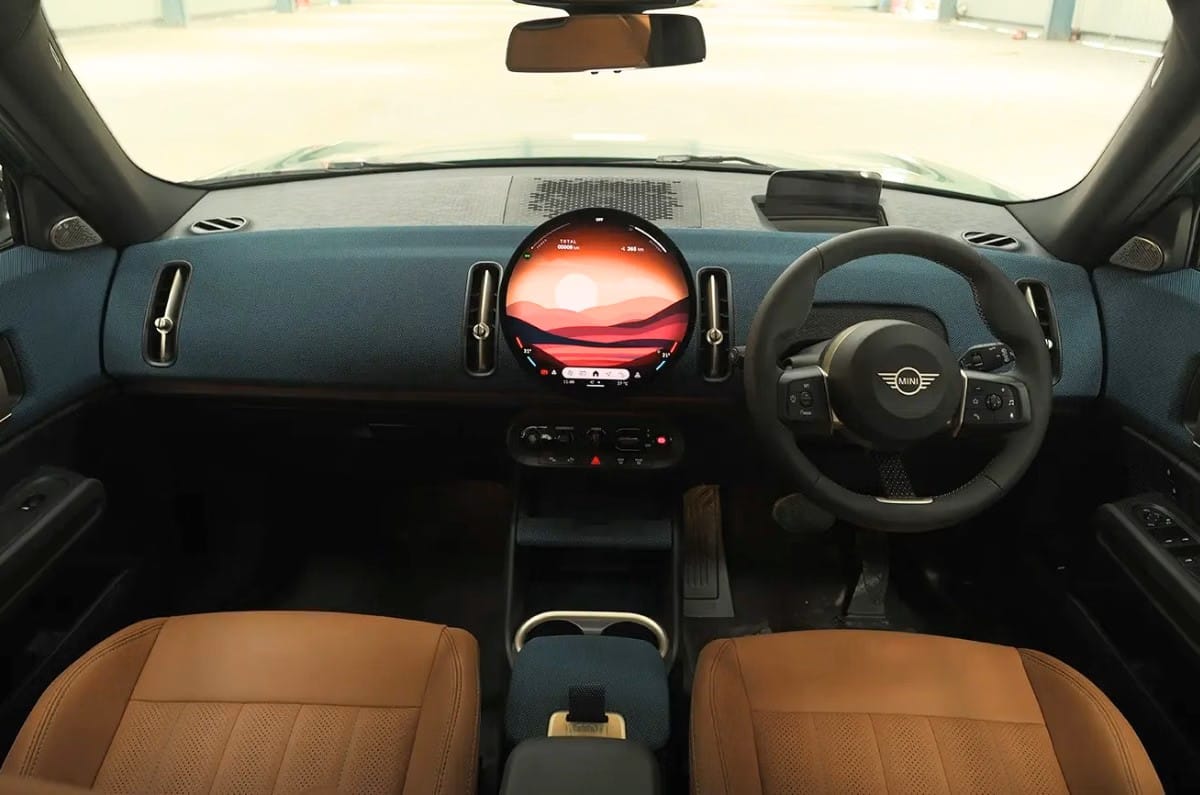
The Countryman C comes with a generous list of features, including wireless Apple CarPlay and Android Auto, powered front seats with memory and a massage function for the driver, a surround-view camera with auto park, a Harman Kardon sound system, a heated steering wheel, a panoramic sunroof, a head-up display, a voice assistant, wireless phone charging and a digital key.
Good space and practicality
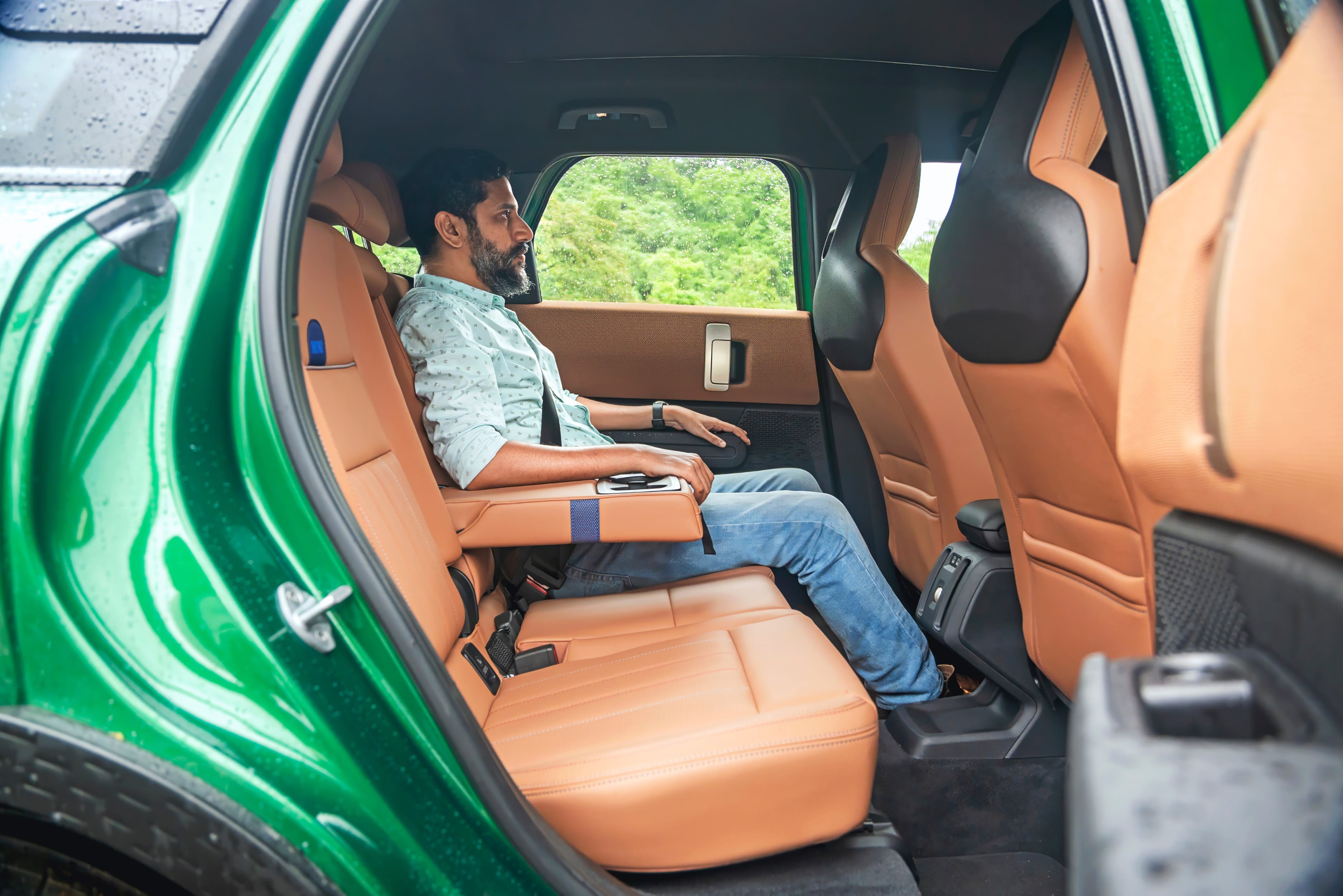
It feels roomier and more open than any previous Countryman, and it also has an advantage over some rivals in this area. Compared to the Countryman Electric, the Countryman C’s floor sits lower, making the seating position more comfortable. The large panoramic sunroof also makes the cabin feel brighter.
Boot space is another area where the Countryman C has an edge over the EV. Capacity has increased by 50 litres to 505 litres, and sliding the rear seats forward can free up even more space. It also comes with a space-saver spare wheel, which the EV does not get.
Practicality has also been well thought out, with an open centre console, a covered storage box and a sliding armrest. The front seats are large and comfortable, while the high seating position gives a good view outside.
Reasons to avoid the 2026 Mini Countryman C
Engine, gearbox clunky at low speeds
The Experience Modes are also mostly cosmetic. Only Green (Eco) and Go Kart (Sport) modes change drive performance. Eco makes the powertrain calmer, while Go Kart makes it more responsive. There is no option to adjust individual settings, and ESC is switched off by default in Go Kart mode, with no option to turn it back on.
There are no paddleshifters either or any other way to change gears manually. The gearbox is generally quick and easy to work with, but at very low speeds, the powertrain suffers from turbo lag and gearbox hesitation.
Large wheels hurt ride quality
Yes, the 19-inch wheels look great, but they do affect the ride. They crash hard through potholes and even over some steeper speed breakers. That said, the suspension keeps the SUV controlled around corners with limited body roll despite being tuned to be more comfortable and compliant than the previous Countryman.
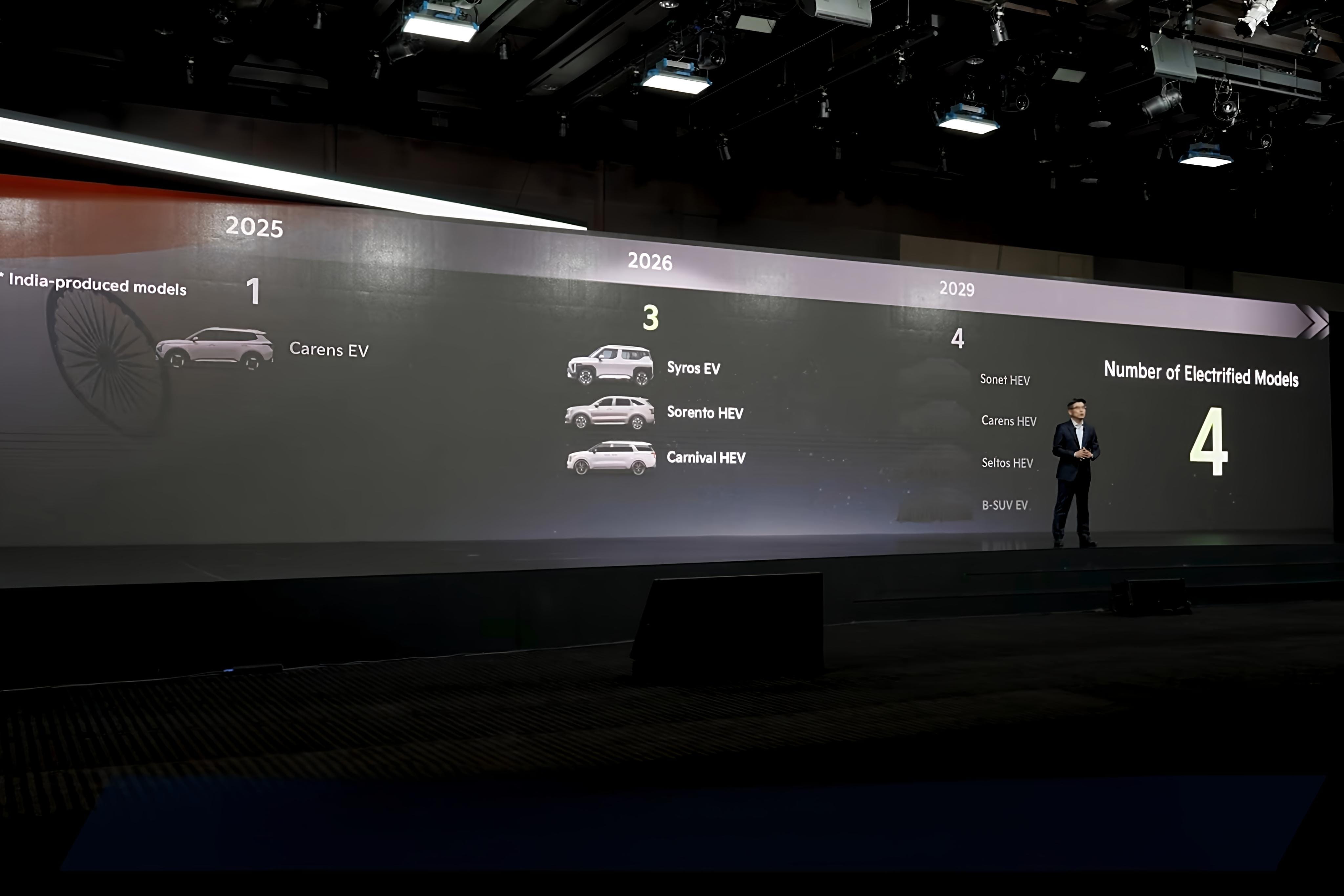
At its 2026 CEO Investor Day event, Kia President and CEO Ho Sung Song confirmed that the Sonet and Carens Clavis will have hybrid powertrains in India by 2029. Additionally, the Korean carmaker also announced that it will introduce a locally developed B-segment electric SUV. “From 2027 onward, we will extend hybrid electric vehicle (HEV) offerings to key local models such as the Sonet, Carens and Seltos, while introducing a locally developed B-SUV EV,” said Song.
Sonet and Carens Clavis hybrids to arrive on next-gen versions.
Locally developed and made B-segment SUV to be all-electric.
Carnival and Sorento hybrids to arrive this year.
Kia Sonet, Carens Clavis hybrid: Additional details
Kia’s most affordable model, the Sonet, is due for a next-generation update in 2027, and it will receive a hybrid powertrain by 2028 or 2029. Exact technical details are unknown at the moment, but the carmaker has been working on a strong-hybrid powertrain for the Sonet, as we previously reported.
The second-generation Sonet will move to the K1 platform, which underpins the Venue and Syros currently. This platform will not only be hybrid-compatible but also support the latest electrical and electronics (E&E) architecture, enabling over-the-air updates and remote diagnostics, while also addressing the lack of rear seat space in the current version.
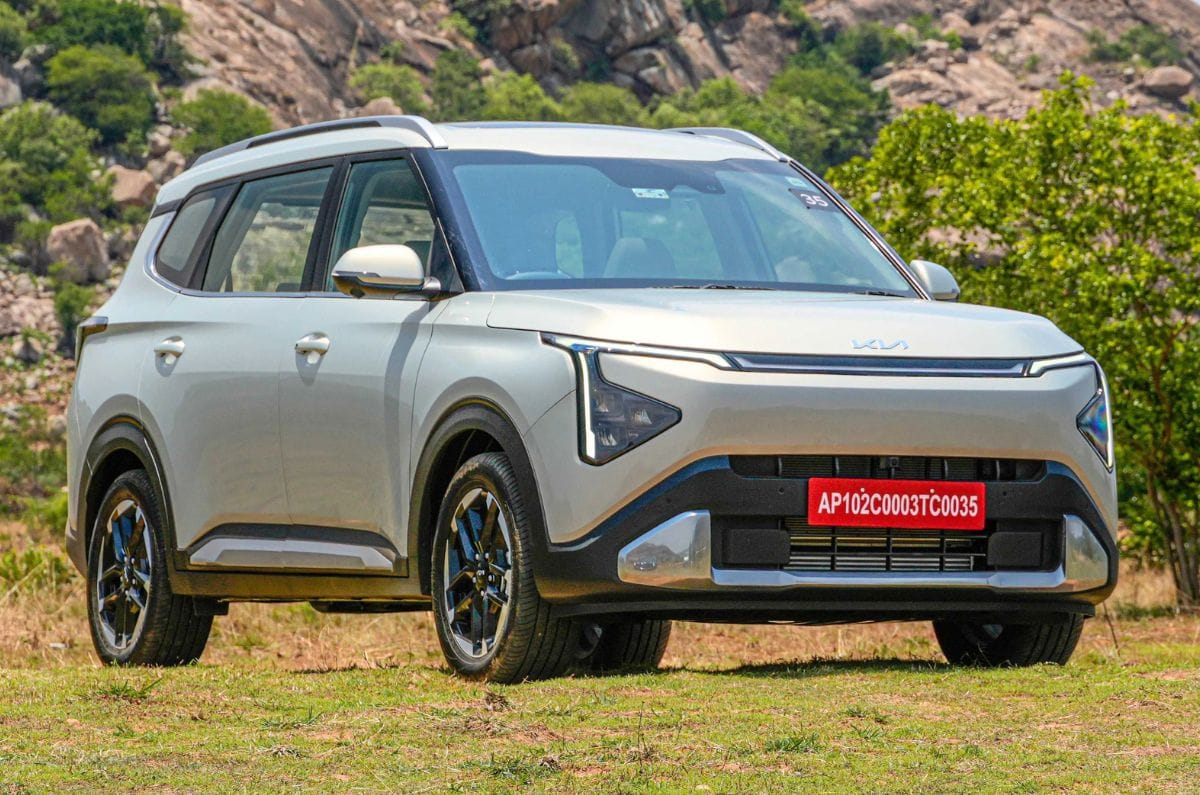
Current Kia Carens Clavis used for representation.
The Kia Carens Clavis MPV will also get a hybrid powertrain in its next-generation version by 2029. Currently, the MPV is offered in naturally aspirated petrol, turbo-petrol, diesel, and all-electric powertrains. However, it is expected to utilise the Seltos’ hybrid setup, which is due in 2027. Our sources suggest that the Seltos hybrid is expected to be based on the existing 115hp, 1.5-litre naturally aspirated engine.
Kia B-segment electric SUV: Additional details
Previously, we reported that Kia has been evaluating a B-segment SUV, and we have now learnt that it will be electric. Secondly, the SUV will be developed and made locally. Specifications of this model are yet to be finalised. We expect this model to slot in between the Syros and Seltos, likely measuring around 4.2 metres in length. It will be Kia’s contender in the growing midsize electric SUV space.
Kia Carnival hybrid: Additional details
Global-spec Carnival hybrid used for representation
Kia has also confirmed that the Carnival hybrid is set for a launch sometime this year. While exact technical details remain unknown, the global-spec Carnival strong-hybrid is powered by a 1.6-litre turbo-petrol engine paired with a hybrid system. It develops a combined output of 242hp and 367Nm, while power is sent to the front wheels via a 6-speed automatic gearbox.
By 2030, the Korean carmaker plans to expand its lineup to ten models comprising ICE, hybrid and EV-powered models. Out of these, eight models will be electrified, Song stated.
A long-wheelbase BMW X1 isn’t a new idea. China has had an extended-length X1 for years, and we got it in India last year in the form of the all-electric iX1 LWB. The X1 LWB brings the formula to the ICE X1 range. BMW says the standard-wheelbase X1 will continue to sell, though we assume the LWB will be the only X1 down the road.
BMW X1 LWB Exterior Design and Engineering – 7/10
The X1 might be BMW’s smallest SUV, but it’s not particularly small anymore. It’s 116mm longer overall with 108mm of that added length at the wheelbase alone. Importantly, the longer wheelbase doesn’t look unusually long, and so the proportions work.
Lengthened body but well-proportioned design
In person, the X1 LWB doesn’t look vastly different to the standard wheelbase model. It’s got the same peeled back headlamps, same M Sport styling pack and same edgy tail lights. The 18-inch rims are shared with the other X1s, but a more exciting design and or a larger size would have done much for the look. A chrome surround for the large windows is a small detail distinction to the standard X1 that uses a black effect, while the conventional grille here serves as a distinguishing element to the iX1 that sports a closed-off grille.
18-inch wheels shared with regular X1; larger wheels would have done much for the look.
BMW X1 LWB Interior Space and Comfort – 8/10
Long wheelbase opens up huge space at the back
Thanks to wide opening rear doors and a large door aperture, getting into the back of the X1 LWB is very convenient. And once you’re inside, you’ll be amazed by the sense of space that you get there.
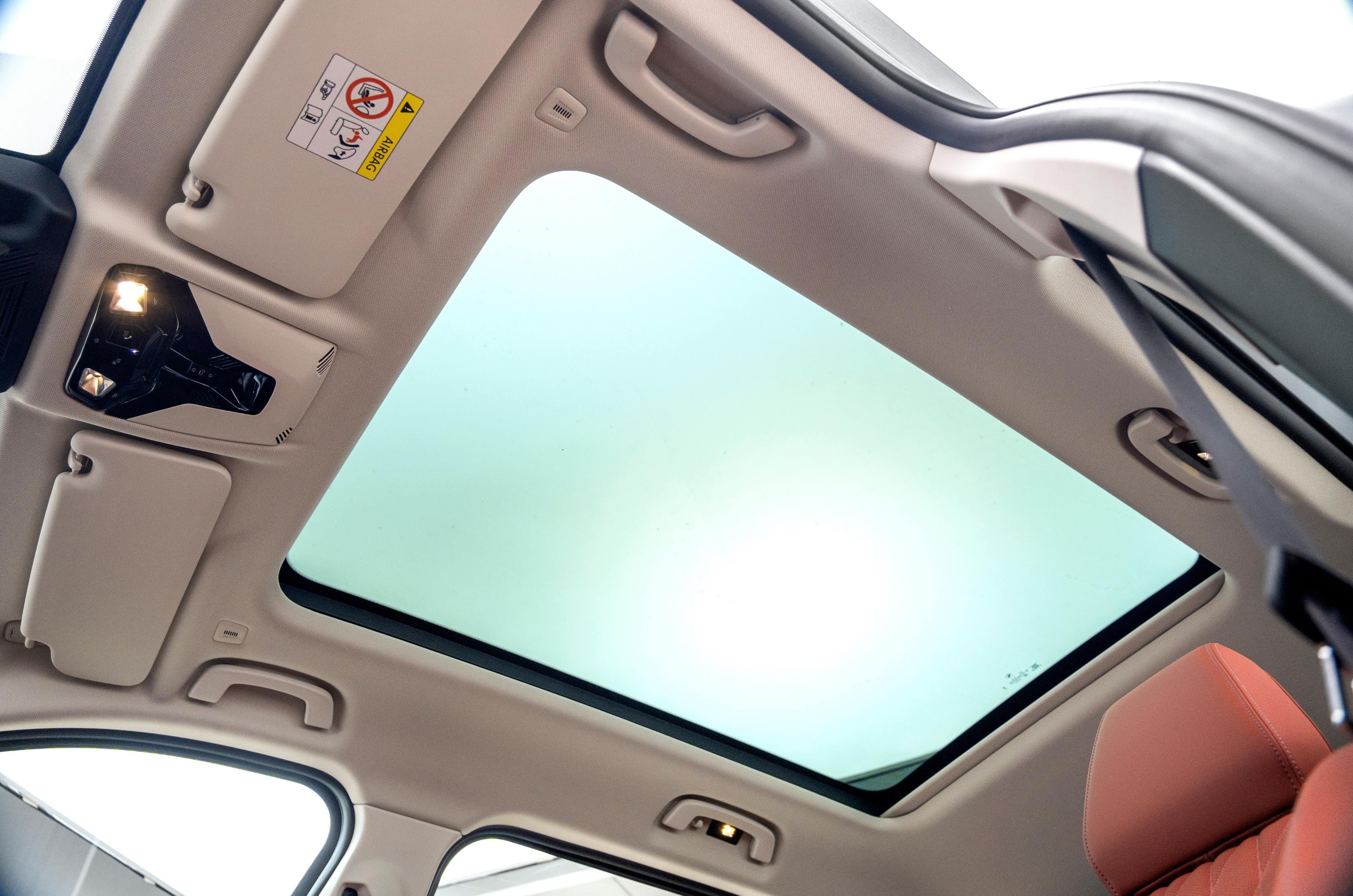
Even six footers will find legroom generous and helping the feeling of space is the large glasshouse. The panoramic glass roof (it doesn’t open) lets in lots of light and the rear windows are also large. Pity, they don’t get adjustable sunshades.
Rear seat gets a longer base and enhanced cushioning for better comfort.
Like the iX1 LWB, the X1 LWB also benefits from a redone rear seat. There’s enhanced cushioning while a 15mm longer seat base adds a bit more by way of thigh support. The seating position itself is very good, and if you want a more relaxed setting, you also have the option to recline the backrest by a couple of degrees. The extra leg room also makes the X1 LWB that little bit comfier for a middle passenger who will have more space to keep his or her feet on either side of the high centre tunnel. Still, the rear seat is best for two.
Dashboard is identical to the standard wheelbase X1.
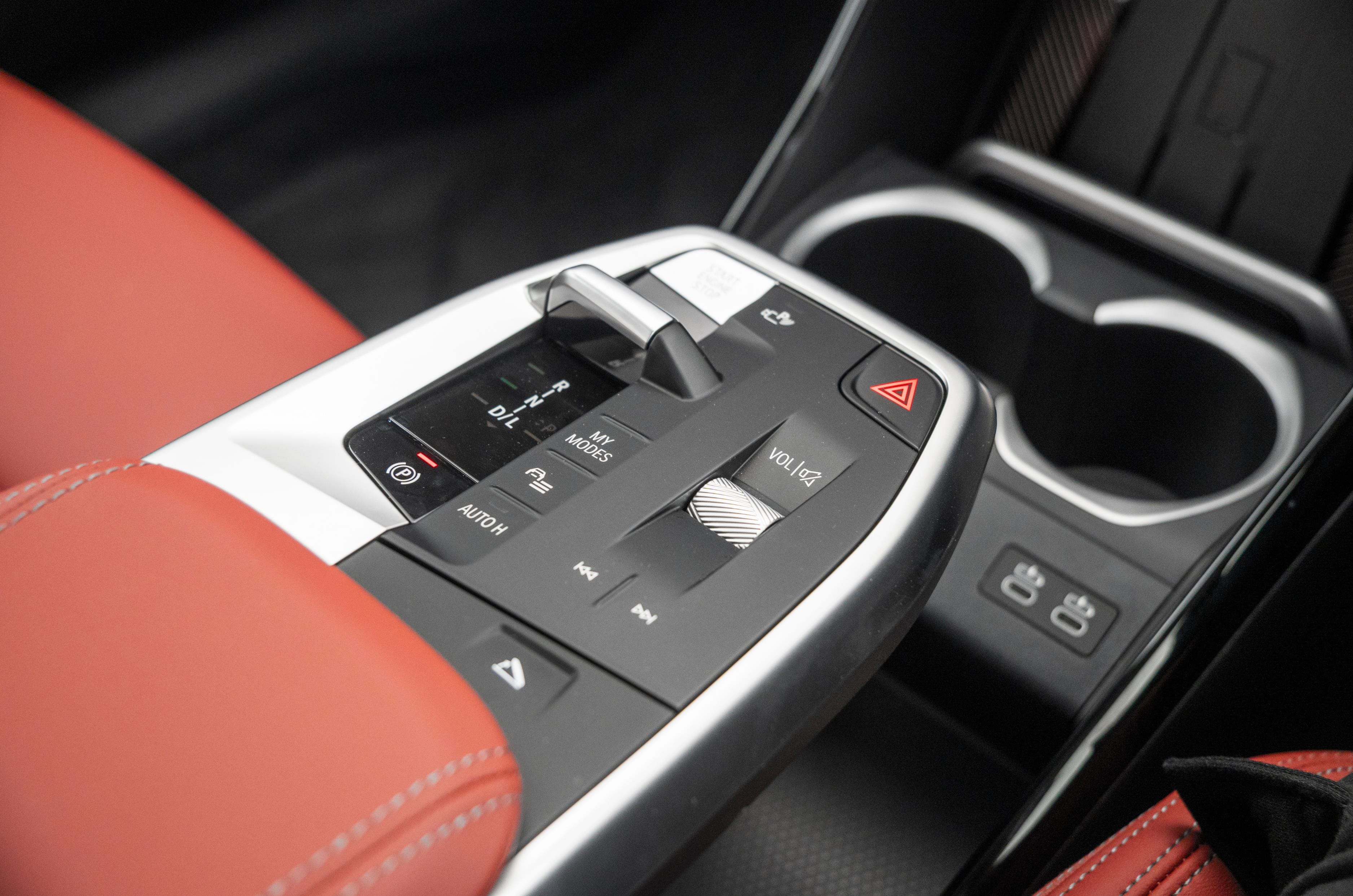
Up front, the X1 LWB is no different to the standard wheelbase X1. The dash with its asymmetric AC vents looks youthful and what also adds some flavour to the X1’s cabin is the upright wireless phone charging pad at the base of the dash. There’s also a floating centre console, which houses a few key buttons, such as for the gear selector, volume control and driving modes. There’s some storage under the front centre armrest but oddly, the lid opens towards the passenger side.
Floating centre console gets a few physical controls and some storage underneath.
Upholstery choices include the brown you see here as well as a white on black theme which we suspect would be a pain to keep clean. The front seats themselves look sporty and also hold you really well, but unfortunately, the X1’s seat massage function has been dropped on the long wheelbase model. There’s also no seat ventilation function. An M Sport steering is standard but feels a bit too chunky in most hands, and also misses on paddleshifters.
Front seats are sporty, but they miss out on ventilation and massage functions.
In terms of quality, key touch points look and feel good. There are padded materials on the dash and the textured metal-like effect is nicely done. However, it’s not quite got the same attention to detail as pricier BMWs. The USB slots on the dash, for one, aren’t backlit, so you’ll fumble with wires in the dark. The ambient lighting, too, isn’t as vibrant as, say, in a Mercedes GLA. BMW says boot capacity stands at 540 litres and there is plenty of space for large bags. Packaged under the boot floor is a space-saver spare tyre.
BMW X1 LWB Features and Safety – 7/10
X1 LWB is available in a single M Sport trim
The X1 LWB sports BMW’s twin screen Curved Display. The 10.25-inch digital instrument cluster does give all the info you need, but the presentation with hexagonal themes isn’t appealing even after all these years. The 10.7-inch touchscreen has its highs and lows, too. It’s crisp and responsive, but packs in way too much, including the climate control settings. The menus, frankly, can feel overwhelming on the go. The crisp 360-degree camera does get our vote. A Reversing Assistant that retraces the path in and automatically backs out (up to 50m) is a handy function to get you out of tricky situations.
Instrument cluster offers lots of information, but the presentation with hexagonal themes isn’t appealing.
Interestingly, BMW offers a subscription service to unlock more advanced maps, customizable icons, and more screen themes and modes. Other features include a digital key, allowing you to share access with up to 18 friends and family members, while the 12-speaker Harman Kardon sound system is rather nice, too.
Headlining the list of comfort features is the panoramic glass roof, and there’s power adjust for both front seats. Rear seat passengers get dedicated rear AC vents but there’s no dedicated zone for the rear section of the cabin. A fold-down armrest and USB type C charging port are other functions at the back.
Panoramic glass roof lets in lots of light, but isn’t openable.
Safety kit includes 8 airbags, ABS, ESC and Isofix child seat mounts among other features. The X1 LWB also packs in a few ADAS functions such as auto emergency braking and lane departure warning and assist. Adaptive cruise control, however, is missed.
BMW X1 LWB Performance and Refinement – 7/10
1.5-litre, three-cylinder turbo-petrol is only engine on X1 LWB
BMW is launching the X1 LWB in S-Drive 18 Li form, which is a complicated way of saying that it’s powered by a 1.5-litre three-cylinder turbo petrol engine. Yes, you read that right. The engine is E25 compliant, but there’s no diesel option for the moment, and buzz is there won’t be one in the future either.
Performance is adequate but unexciting
The X1 LWB’s petrol engine makes 156hp and 230Nm and all the power goes to the front wheels only, via a seven-speed dual-clutch transmission. A fact to note, 156hp is the upgraded power figure. On the standard wheelbase X1, the engine makes 136 horsepower.
Unfortunately, the power bump doesn’t magically transform the X1 LWB into something sporty. In ordinary city driving, you really won’t have a problem with the performance on hand. There’s enough power for the urban grind. It’s just that when you pick up the pace, you’ll miss that reserve of power that you just expect in a luxury car.
Refinement is good but the engine thrums when extended
Sport mode does make the engine feel a bit more urgent, but it’s also in Sport mode that the engine can’t hide its three-cylinder-ness. When it’s time to overtake, for instance, and you press down on the accelerator pedal, there is a bit of a delay, then you hear the engine thrum, and that’s not a very BMW sound. Performance is also not very BMW. We managed a 0-100 kph time of 9.58 seconds.
Then again, the X1 LWB’s USP is the rear seat, and there will be buyers who rarely, if ever, take the wheel. If you’ve instructed your chauffeur to drive in an easygoing manner, you will note that engine noise is actually pretty well-contained.
BMW X1 LWB Mileage and Efficiency – 8/10
While we haven’t put the X1 LWB to the full test it should prove to be more efficient than rivals’ four-cylinder turbo-petrol units. Of course, it won’t be outright frugal because the X1 LWB is a substantial vehicle. We expect real-world fuel economy in the 7-10kpl band with the figure rising to 9-12kpl over highway drives.
BMW X1 LWB Ride Comfort and Handling – 8/10
Suspension has been tweaked for better comfort on the X1 LWB
The X1 LWB might be front-wheel drive only but there is a crispness to the way it changes direction. You will like the feel at the steering wheel and you get a good sense of connect too. Unfortunately, the handling isn’t supported by the engine. Long story short, this is not the BMW for keen drivers.
As for ride comfort, BMW has tweaked the suspension for the X1 LWB, and they’ve done a pretty good job of things. The suspension works quiet, it feels absorbent, and it’s only when you’re really paying attention that you’ll notice a distant firmness to the setup.
BMW X1 LWB price and verdict – 8/10
X1 LWB makes for a great backseat SUV
Prices for the X1 LWB will be announced on August 21. We expect BMW to keep pricing within the Rs 50-55 lakh (estimated, ex-showroom) band, which would make the X1 LWB a very enticing proposition.
Rear seat space is the highlight and immediately gives the BMW bragging rights over the Mercedes GLA and Audi Q3. Thing is, the X1 LWB’s appeal is almost too tied to the rear seat experience. The drive experience is just so-so. Performance is fine for the daily grind but the three cylinder unit does little to excite. If that’s not a deal breaker for you, the BMW X1 LWB is sure worth a long, hard look.
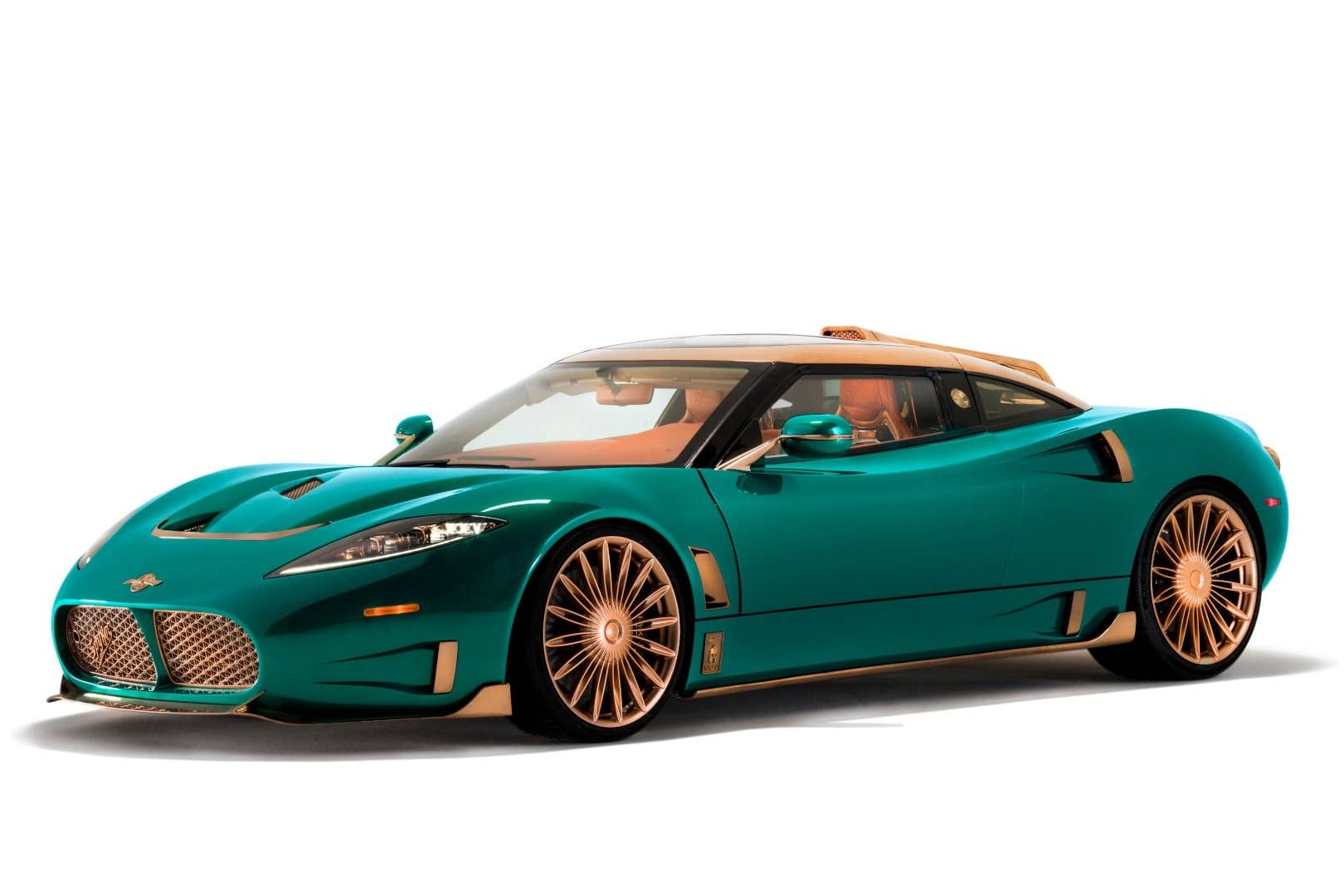
Dutch carmaker Spyker has resurfaced with the C8 Preliator XXV Coupe, a limited-run mid-engined supercar that marks the start of a new chapter for the troubled brand. Unveiled at The Quail during Monterey Car Week, the XXV is based on the C8 Preliator that debuted in 2016 and will be limited to just 25 examples. Pricing has not been disclosed for the C8 Preliator XXV.
Spyker’s return follows its 2021 bankruptcy and a subsequent years-long legal dispute over the brand. In October 2025, co-founder Victor Muller finally reacquired the rights to the Spyker name, and Ukrainian-born cryptocurrency entrepreneur Volodymyr Nosov acquired a significant stake in the company in June 2026 to facilitate its return.
Spyker C8 Preliator XXV powertrain and performance
Built on an aluminium space frame chassis with hand-formed exterior panels, the C8 Preliator XXV is powered by an Audi-sourced 4.0-litre twin-turbo petrol V8 that belts out 800hp and 1,000Nm of torque, and revs to 8,000rpm. Power is sent to the rear wheels via a 6-speed manual gearbox, 0-100kph comes up in a claimed 2.7 seconds, and the top speed is rated in excess of 349kph.
Spyker C8 Preliator XXV exterior design
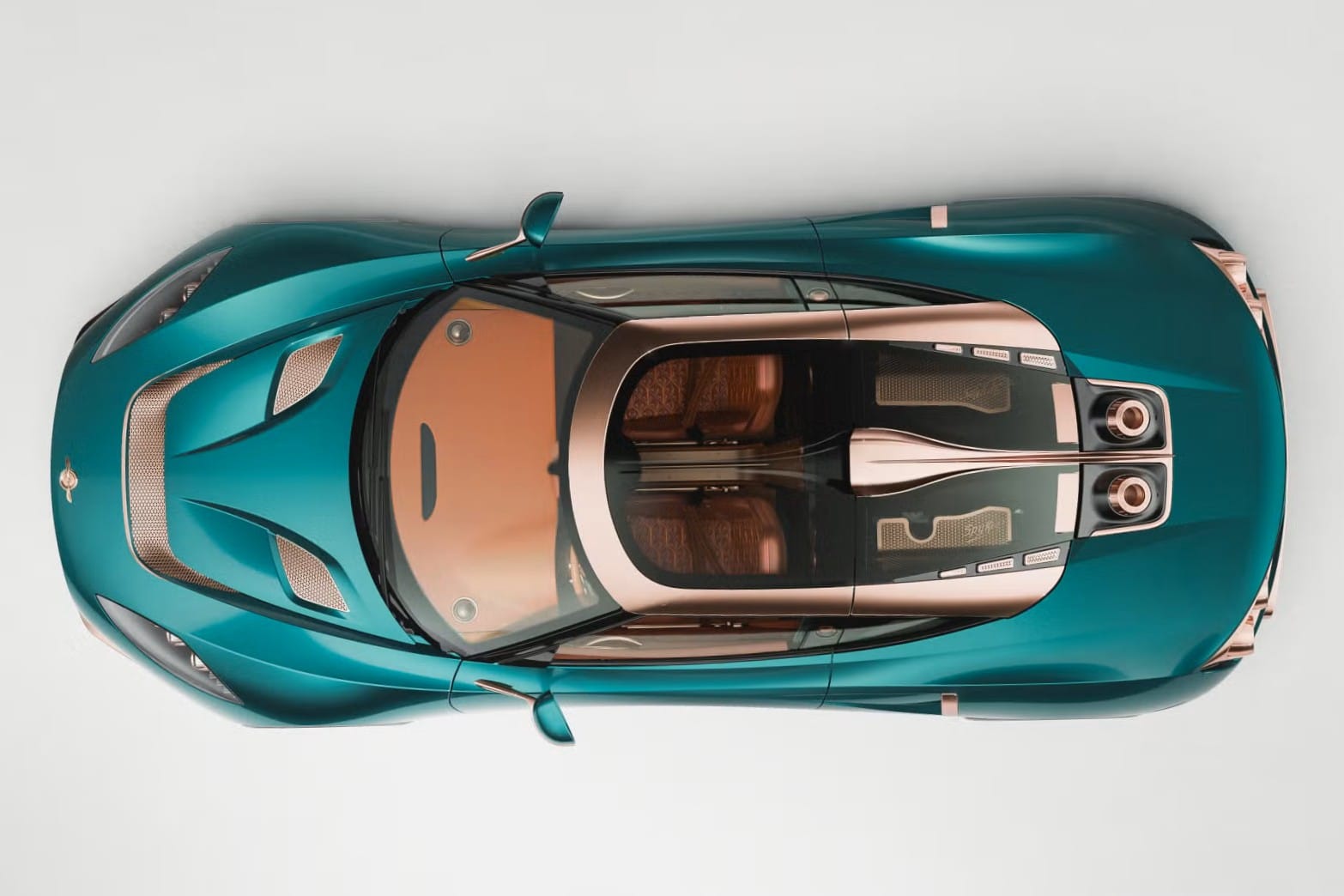
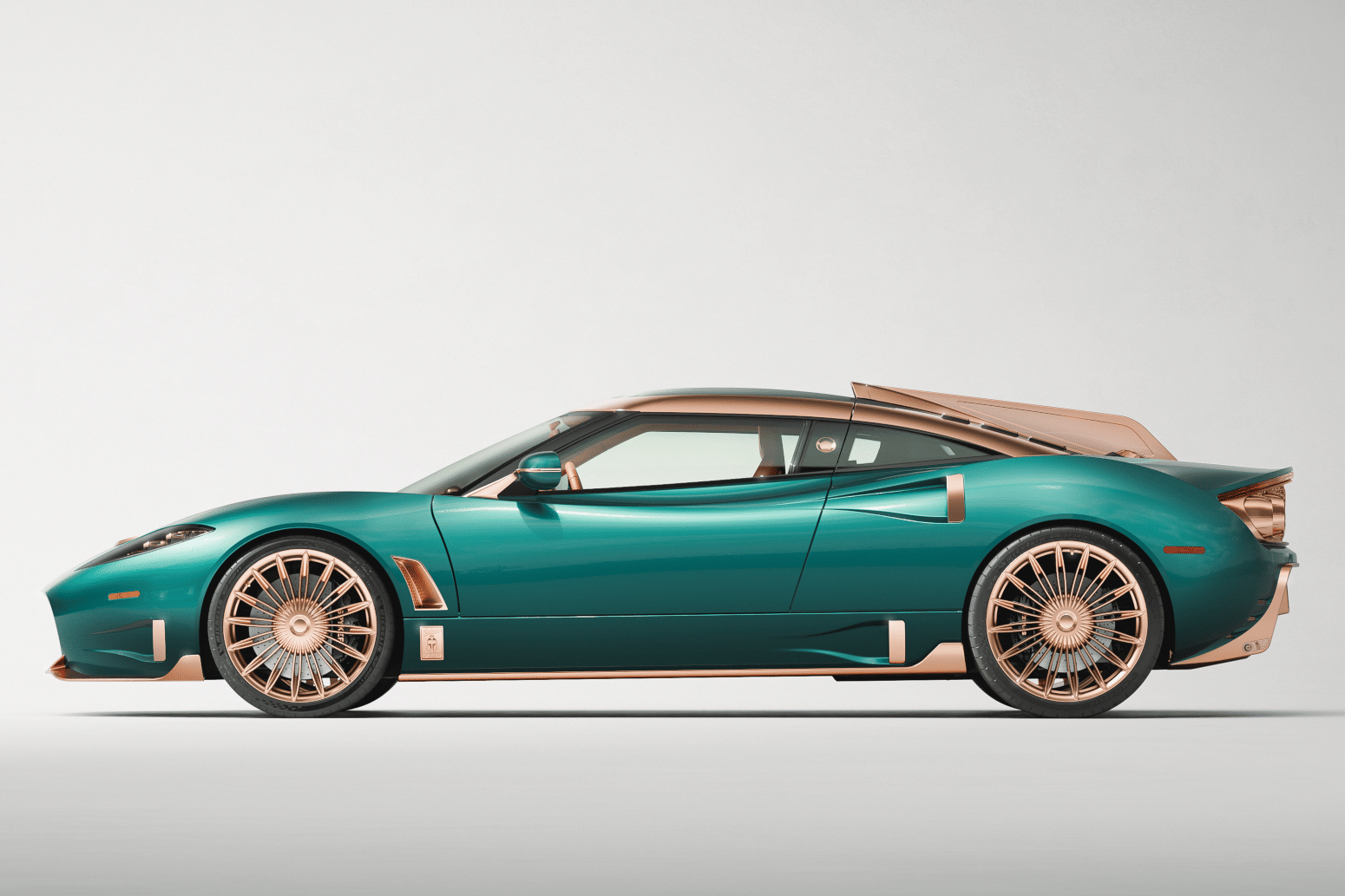
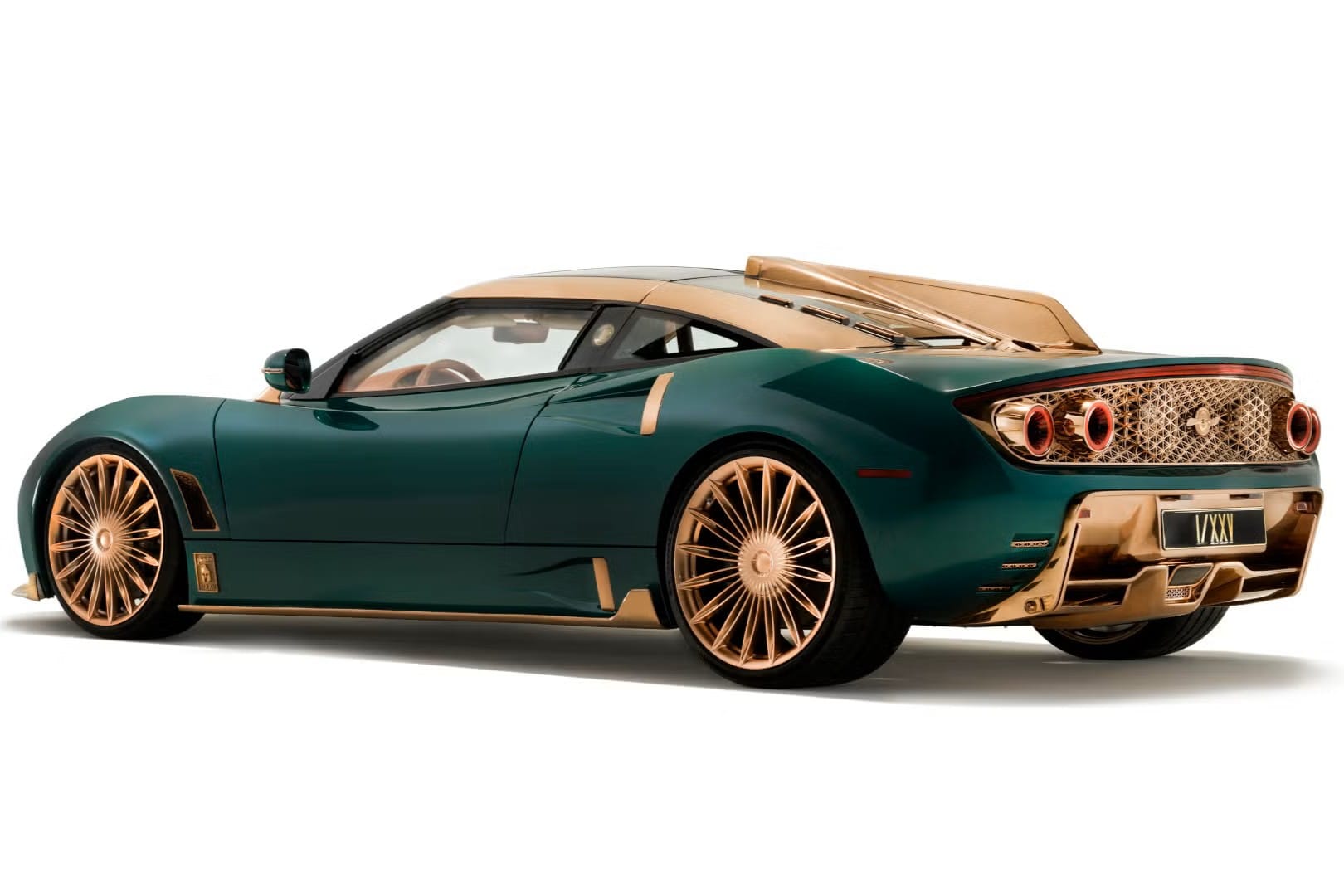
The C8 Preliator XXV’s design continues Spyker’s long-running aviation aesthetic, with propeller-inspired alloy wheels, air ducts, flowing lines, fighter-jet-esque afterburner tail-lamps, and a central roof intake. Other notable styling cues include sleek headlamps with ‘XXV’ DRL signatures, a split grille, a sizable front splitter, a panoramic glass roof, and badging behind the front wheel arches that displays the production number.
The example displayed at The Quail was finished in Quail Green with rose gold accenting on the grille, front splitter, ORVM stalks, air intakes, wheels, rear diffuser, roof, and more.
Spyker C8 Preliator XXV interior
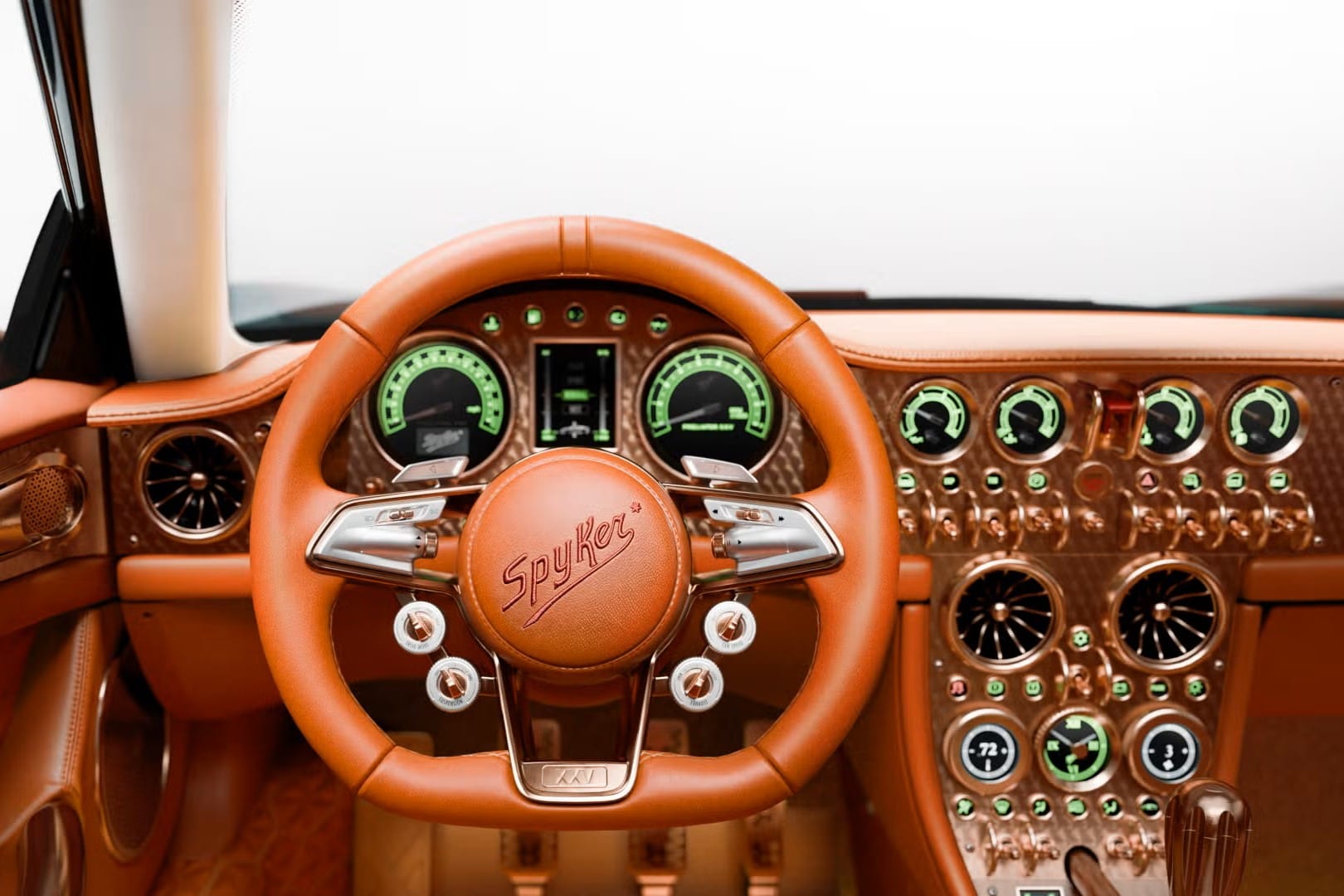
Inside, the C8 Preliator XXV features a refreshingly analogue milled dashboard beset with gauges and physical controls, instead of a barrage of screens. The turbine-like AC vents further the aviation inspiration, and the entire interior is trimmed in an orange-brown leather Spyker calls Tuscan Saddle. In fact, such is the attention to detail in the C8 Preliator XXV, that all the screw heads in the cabin are aligned by hand to face the same direction, and the chassis number is stamped into the space frame.
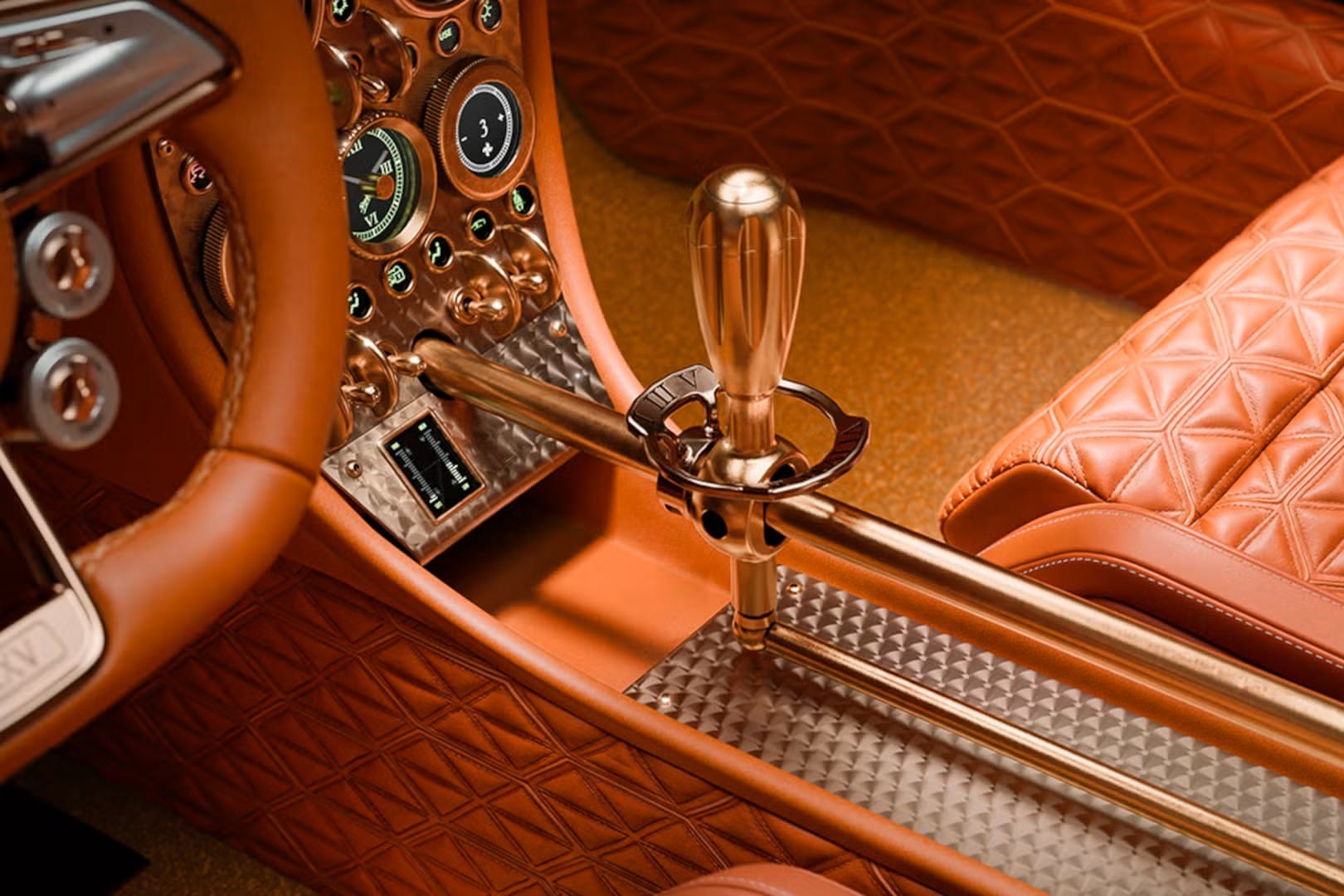
Ahead of the driver sits a three-spoke flat-bottomed steering wheel, which houses lots of dials, rocker switches, and buttons, along with individual stalks for the left and right indicators. The green-accented instrument cluster is very traditional in look too, though it’s worth noting that Spyker has included a heads-up display as the only digital interface in the C8 Preliator XXV. At the bottom of the dashboard lies a gear lever with an exposed shift linkage, which looks very cool.
What’s next for Spyker?
The revived Spyker says the C8 Preliator XXV is the first step in a larger comeback for the carmaker. Spyker is currently mulling a return to motorsport, specifically GT3-level endurance racing, and is also expected to resume the long-delayed development (owing to financial hardships) of the D8 Peking-to-Paris, a super SUV first previewed at the 2006 Geneva Motor Show.