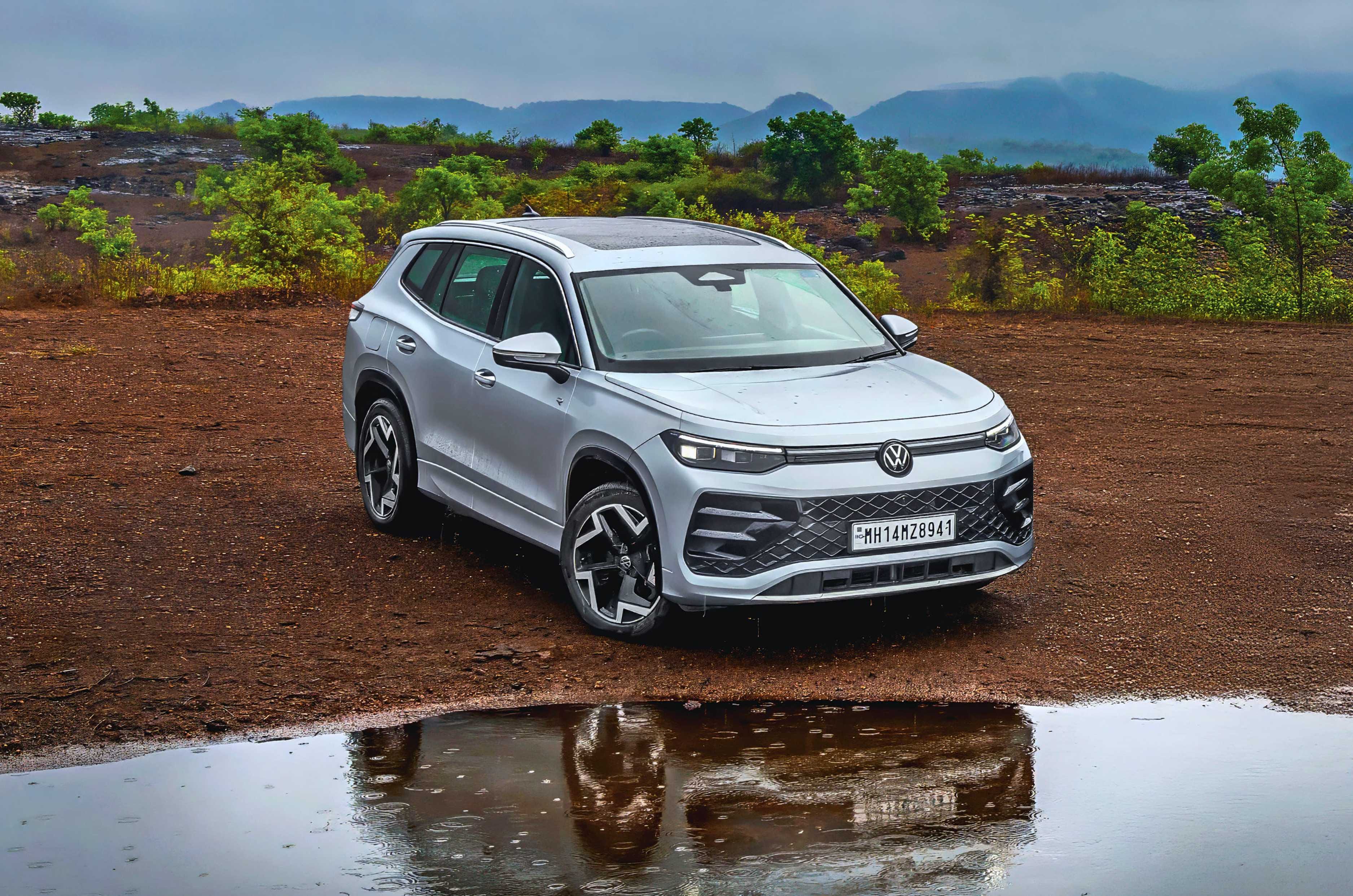
MG Hector Tomahawk EV 5-seater vs rivals: Price, specs compared

MG Hector Tomahawk EV 5-seater vs rivals: Price, specs compared
MG Hector Tomahawk EV 5-seater vs rivals

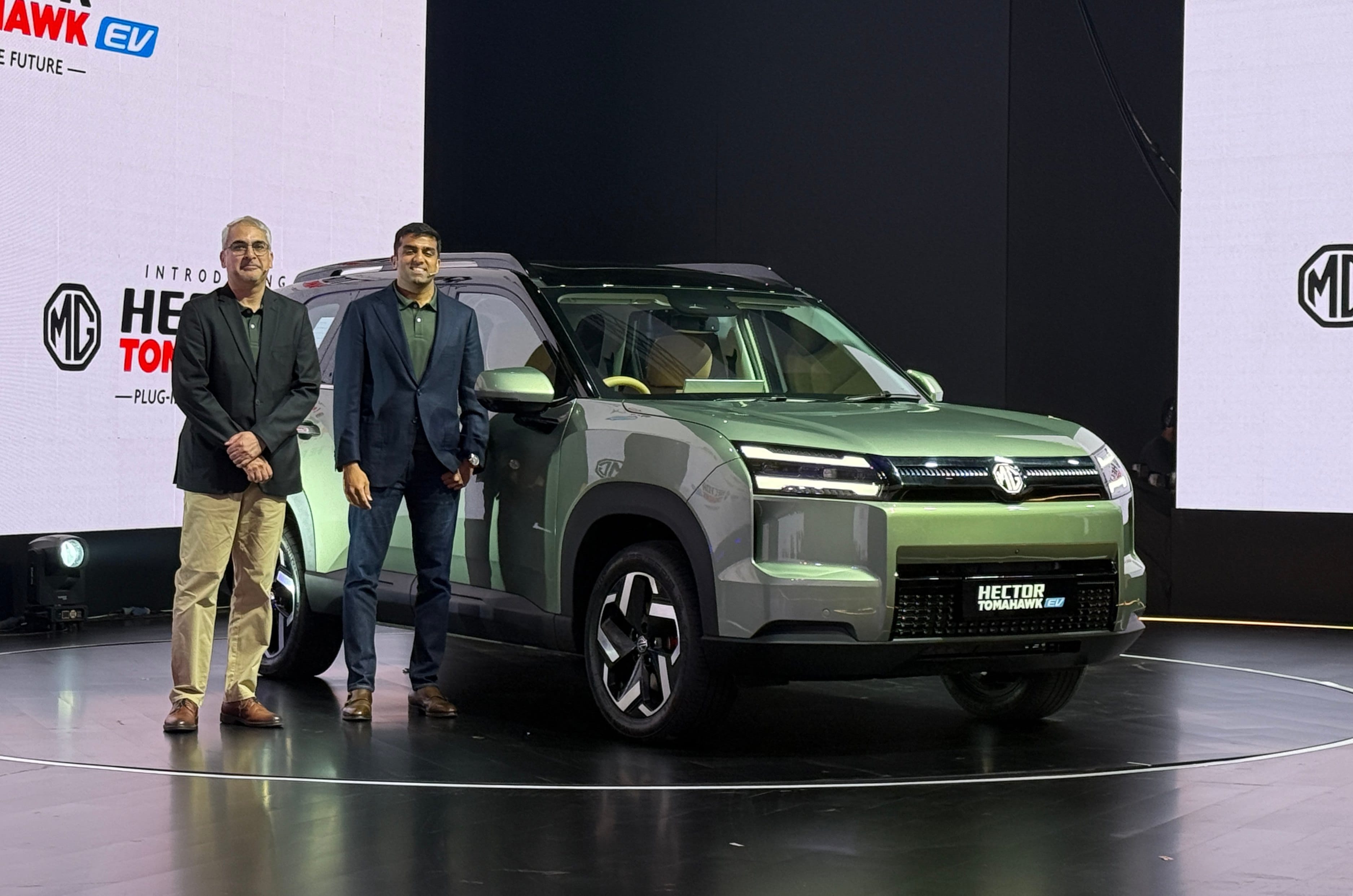
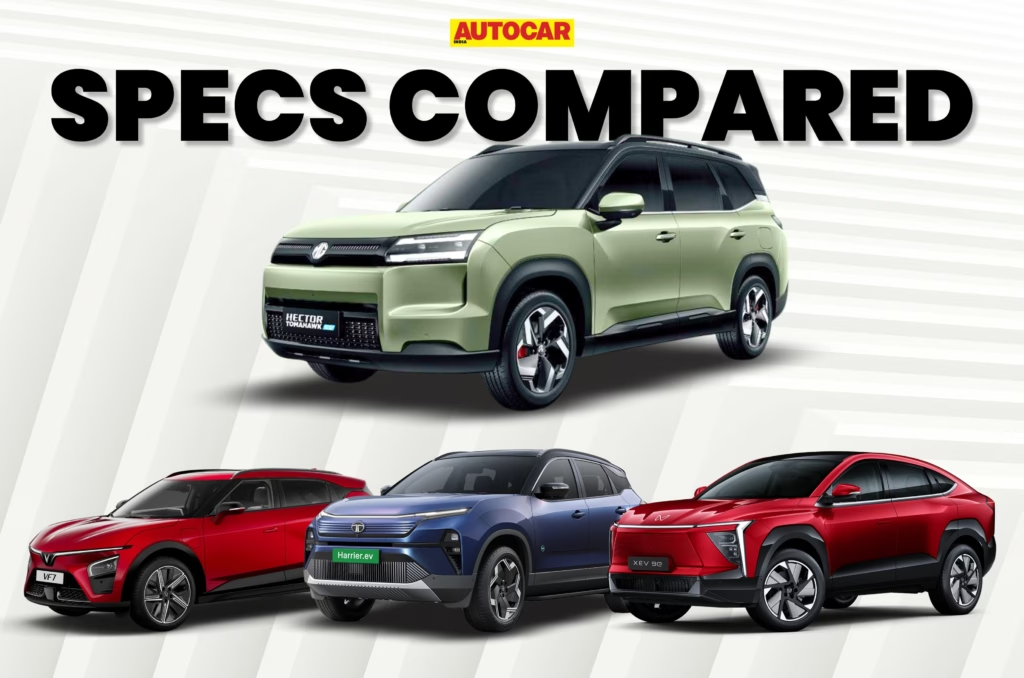
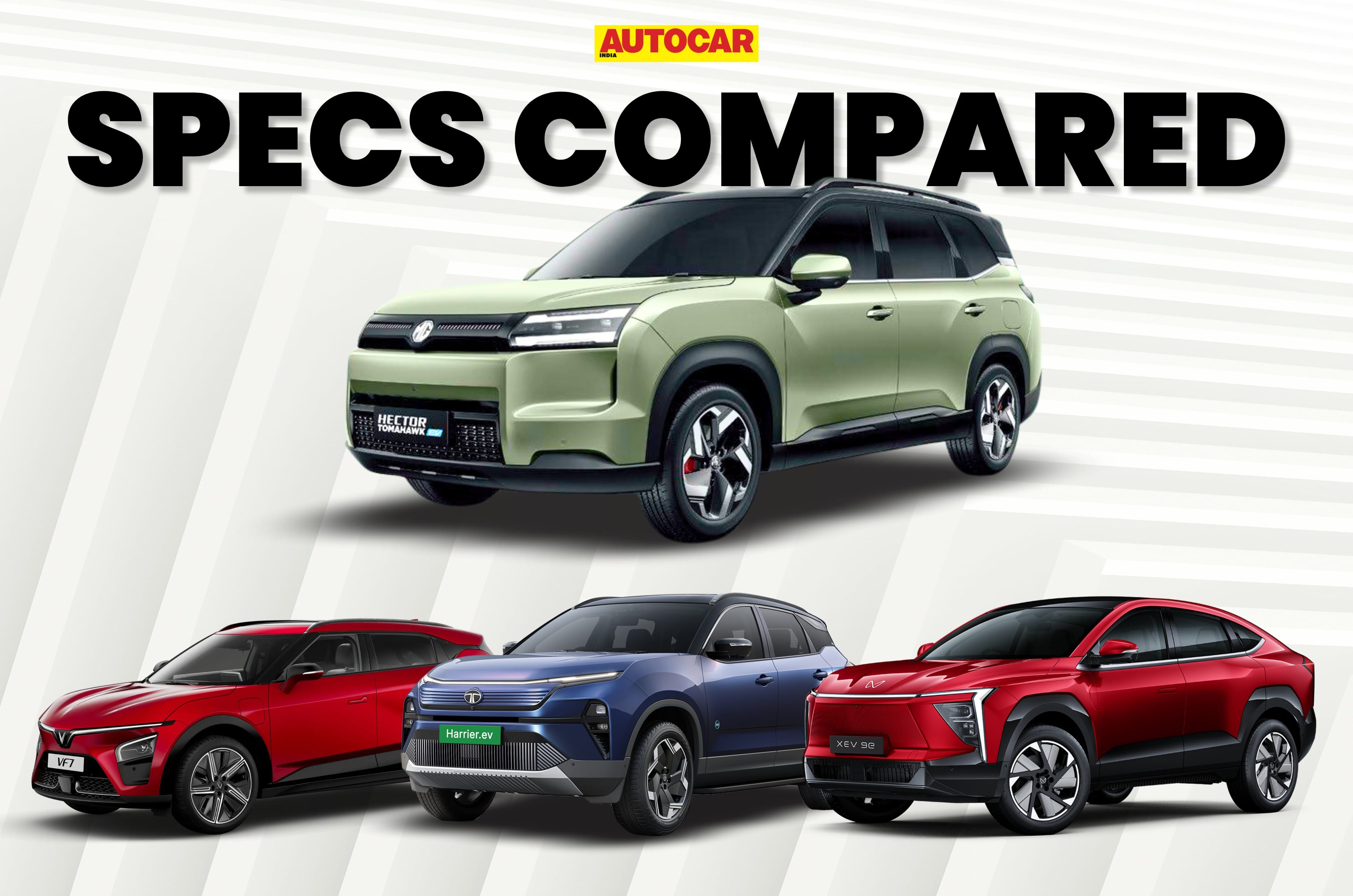
MG Motor India has launched the Hector Tomahawk EV in India as the brand’s contender for the electric midsize SUV segment. In this space, the 5-seat version of the Hector Tomahawk EV rivals the Tata Harrier EV, Mahindra XEV 9e, Vinfast VF7, and BYD Atto 3. Let’s have a look at how MG’s latest SUV stacks up against its peers on paper.

MG Hector Tomahawk EV 5-seater vs rivals: dimensions

Tallest in its segment, and one of the longest

 Hector Tomahawk EVHarrier EVXEV 9eVF7Atto 3
Length (mm)4,7454,6074,7894,5504,455
Width (mm)1,8501,9221,9071,8931,875
Height (mm)1,7701,7401,6941,5961,615
Wheelbase (mm)2,8102,7412,7752,8402,720
Wheel size (inches)1818-19191917-18
Boot space (litres)610502*663537440
Frunk space (litres)N/A35-67150N/AN/A

*Measured till roof instead of parcel tray.

The Hector Tomahawk EV is the second-longest SUV in its segment, falling behind the XEV 9e by only 44mm. That said, the Hector Tomahawk EV extracts a longer wheelbase from its length than the XEV 9e does, but even so, it’s behind the VF7 by a margin of 30mm. The MG electric SUV is the narrowest among its rivals, but edges past all of them on height front. It also claims a 230mm ground clearance, but this is measured at the battery.

Coming to luggage space, the Hector Tomahawk EV has the second-largest boot here, though it doesn’t get a frunk like the Harrier EV and XEV 9e do. At 18 inches, the Hector Tomahawk EV’s alloy wheel sizes are also competitive by segment standards, though the XEV 9e and VF7 offer 19-inchers.

MG Hector Tomahawk EV 5-seater vs rivals: battery and motor

Battery size fits right between those of Harrier EV and XEV 9e

 Hector Tomahawk EVHarrier EVXEV 9eVF7Atto 3
Battery size (kWh)69.265 / 7559 / 7959.6 / 7049.92 / 60.48
Electric motor setupSingle, frontSingle, rear / Dual, front and rearSingle, rearSingle, front / Dual, front and rearSingle, front
Power (hp)204238 / 313231 / 286177 / 204, 353204
Torque (Nm)310315 / 504380250 / 310, 500310
Gearbox1-speed AT1-speed AT1-speed AT1-speed AT1-speed AT
Drive layoutFWDRWD / RWD, AWDRWDFWD / FWD, AWDFWD
Claimed 0-100kph time (seconds)8.26.3 (AWD)6.8 (79kWh)9.1 / 8.5 (FWD), 5.8 (AWD)7.9 / 7.3

Under the skin, the Hector Tomahawk EV comes fitted with a sole 69.2kWh battery pack. At that capacity, it fits quite well between the ones offered by the Harrier EV and XEV 9e, comes very close to the top-spec unit of the VF7, and outsizes both of the Atto 3’s battery options. The Hector Tomahawk EV’s battery powers a sole front-mounted electric motor, making for a front-wheel drive layout. Rivals like the Harrier EV and VF7 can be had with all-wheel drive, and the XEV 9e is purely rear-wheel drive.

In terms of output, the Hector Tomahawk EV perfectly matches the Atto 3 and the 70kWh FWD version of the VF7, but significantly behind the XEV 9e and Harrier EV. Higher-powered versions of the Mahindra and Tata SUVs claim sub-7-second 0-100kph times, while the Hector Tomahawk EV’s acceleration figure slots between those of the Atto 3 and VF7.

MG Hector Tomahawk EV 5-seater vs rivals: range and charging

Range is on the lower end of the segment, and charging times are the highest

 Hector Tomahawk EVHarrier EVXEV 9eVF7Atto 3
Battery capacity (kWh)69.265 / 7559 / 7959.6 / 7049.92 / 60.48
Drive layoutFWDRWD / RWD, AWDRWDFWD / FWD, AWDFWD
MIDC range (km)517538 / 627 (RWD), 622 (AWD)542 / 656438 / 532 (FWD), 510 (AWD)468 / 521
7.2kW AC charging time (hours)12.59.3 / 10.78.7 / 11.78.0 / 9.5-10
11.2kW AC charging time (hours)6 / 8
DC charging time (minutes)35 (90kW)25 (100kW) / 25 (120kW)20 (140kW) / 20 (180kW)24 (100kW) / 28 (110kW)50 (88kW)

Coming to range, the Hector Tomahawk EV carries the lowest MIDC figure when compared with similarly-sized batteries offered by rivals. In fact, even the 60.48kWh Atto 3 and the smaller-battery versions of the Harrier EV and XEV 9e boast higher range figures than that of the Hector Tomahawk EV. The MG SUV also claims the longest AC charging time, more than even the 75kWh and 79kWh variants of the Harrier EV and XEV 9e, respectively.

MG Hector Tomahawk EV 5-seater vs rivals: price

Substantially cheaper than top-spec variants of competitors

 Price range (Rs, lakh)
Hector Tomahawk EV23.00 (16.99 w/ BaaS)
Harrier EV*21.69-29.19
XEV 9e*21.90-29.35
VF722.99-28.09
Atto 324.99-34.49

*Prices exclusive of home charger and installation costs.

The 5-seat configuration for the Hector Tomahawk EV is available only in the top-spec Essence variant, and is priced at Rs 23 lakh. This makes the Hector Tomahawk EV much more affordable than the equivalent top-spec versions of its rivals, with the Atto 3 commanding the highest premium at over Rs 11 lakh – the BYD SUV is retailed via the CKD route in India and thereby attracts higher taxation.

It’s also worth noting that MG offers the Hector Tomahawk EV with a segment-first battery-as-a-service (BaaS) scheme. This knocks off an additional Rs 6 lakh from the sticker price, and introduces a battery rental fee of Rs 4.9/km that is to be paid on a monthly basis. At the BaaS price, the Hector Tomahawk EV competes with electric SUVs of a segment below and even undercuts a lot of them, making for stellar value.

All prices are ex-showroom, India.
MG Hector Tomahawk EV launched at Rs 19.49 lakh

MG Hector Tomahawk EV launched at Rs 19.49 lakh
MG Hector Tomahawk EV

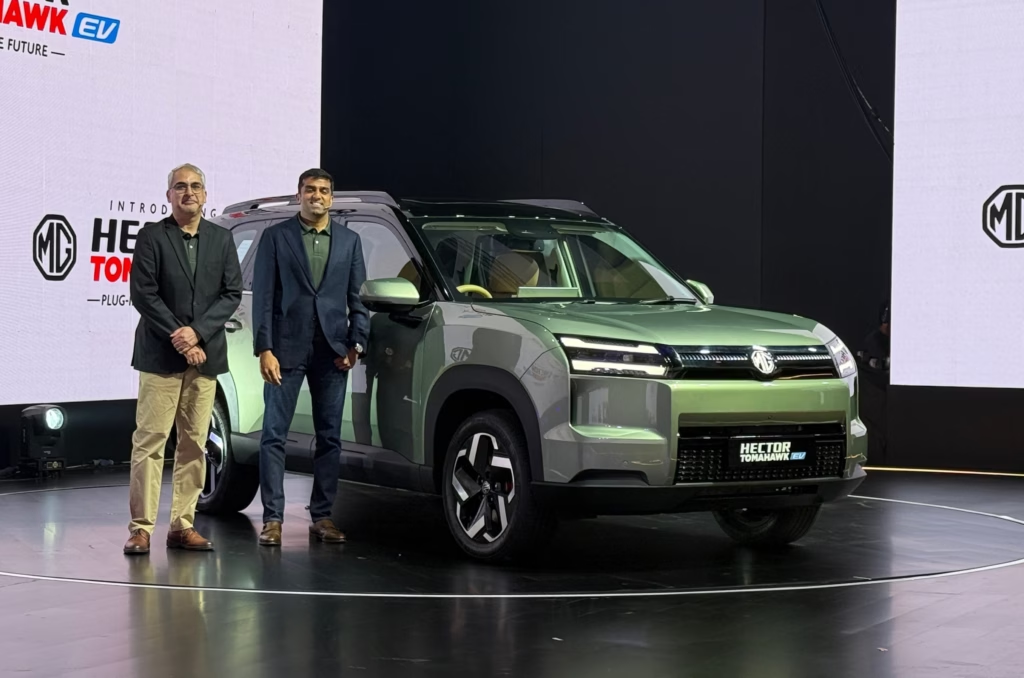
JSW MG Motor India has launched the Hector Tomahawk EV at a starting price of Rs 19.49 lakh (ex-showroom), while prices under its Battery-as-a-Service (BaaS) programme start at Rs 13.99 lakh. The electric SUV gets a 69.2kWh battery and is available in five and seven-seat configurations. The Tomahawk EV is the first MG model in India based on the brand’s ADAPT architecture. 

  1. Deliveries to commence in September
  2. Gets a 15.6-inch touchscreen and 8.8-inch digital driver’s display
  3. 204hp electric motor develops 310Nm
  4. 90kW DC charging; 30-80 percent in 35 minutes

MG Hector Tomahawk EV: price and variants

VariantSeatingEx-showroom price
Excite7-seatRs 19.49 lakh
Exclusive7-seatRs 21.99 lakh
Essence7-seatRs 23.49 lakh
Essence5-seatRs 22.99 lakh

The Hector Tomahawk EV is priced from Rs 19.49 lakh to Rs 23.49 lakh (ex-showroom). The five-seat version is offered only in the Essence variant and is priced at Rs 22.99 lakh, while the seven-seat version is available in Excite, Exclusive and Essence trims. 

MG is also offering the Hector Tomahawk EV under its Battery-as-a-Service (BaaS) programme, with prices starting at Rs 13.99 lakh. Buyers opting for BaaS pay a separate battery rental of Rs 4.90 per km. MG has not disclosed variant-wise BaaS prices.

The prices are introductory and applicable to limited units only.

In terms of rivals, the Hector Tomahawk EV will primarily face the Mahindra XEV 9S and Kia Carens Clavis EV, both of which are available with three-row seating. The Tomahawk EV’s five-seat version also broadens its competition to other electric SUVs in this price range.

MG Hector Tomahawk EV: exterior

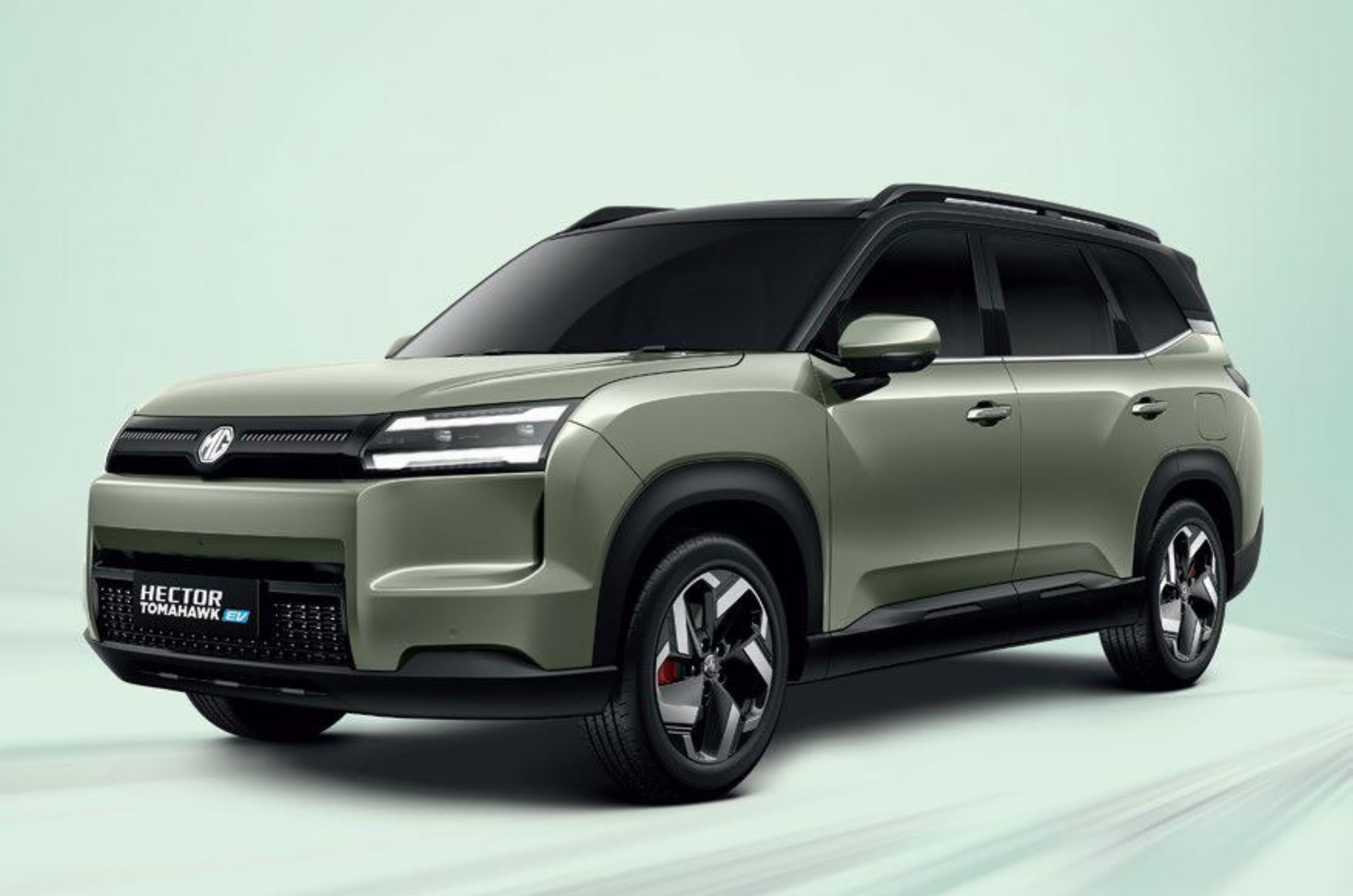
The Hector Tomahawk EV gets LED projector headlamps with LED daytime running lights with an illuminated MG logo positioned between them. The front bumper has a blacked out, closed-off lower front fascia, while the SUV rides on 18-inch dual-tone alloy wheels. It also gets roof rails, black cladding around the wheel arches and lower doors and an automatic powered tailgate.

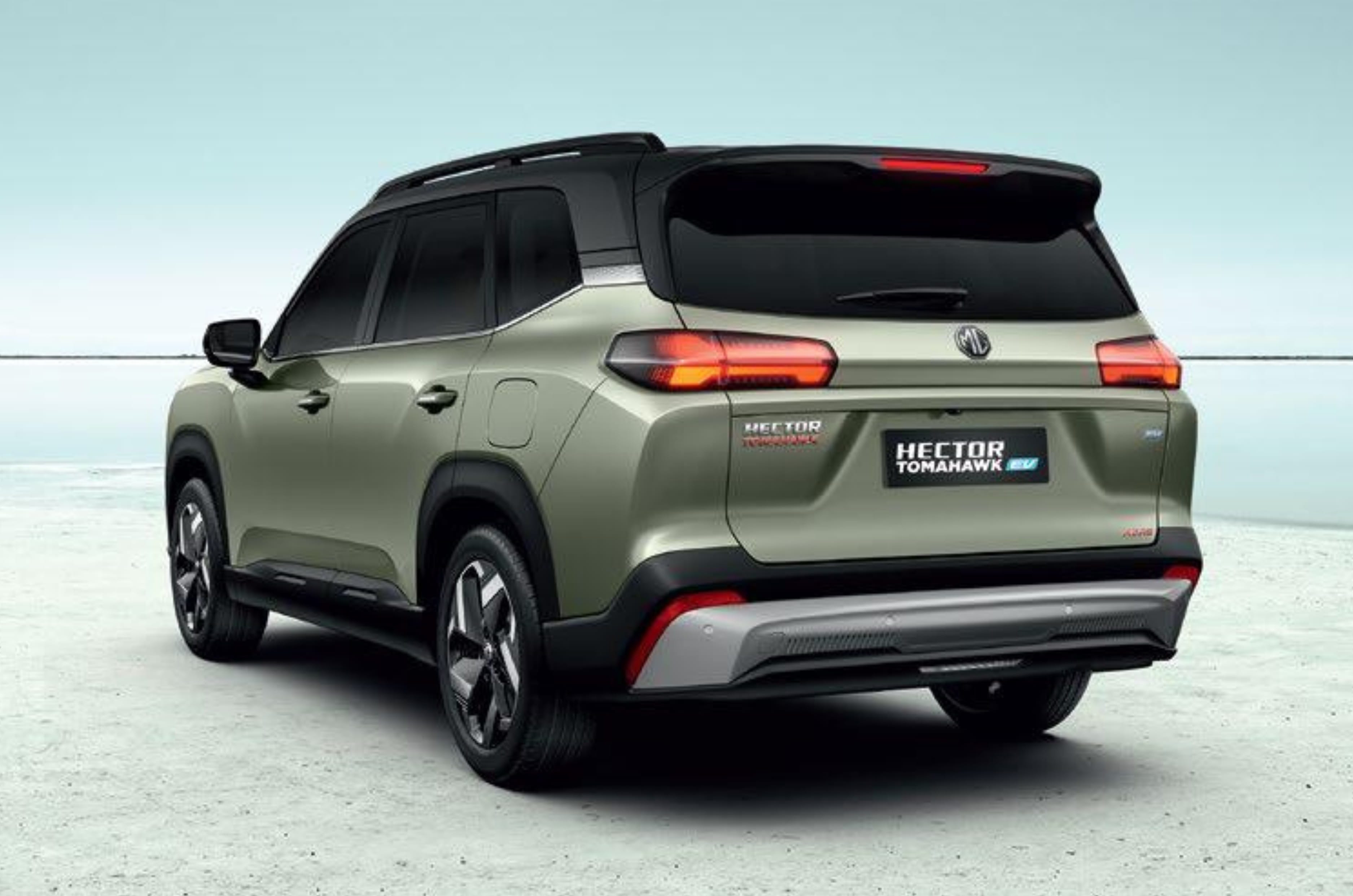
At the rear, the Tomahawk EV features wraparound LED tail-lamps and a sculpted rear bumper. The SUV measures 4,745mm long, 1,850mm wide and 1,770mm tall, with a 2,810mm wheelbase and 230mm ground clearance. The Hector Tomahawk EV gets a 610-litre boot for the five-seat version, while the seven-seat version offers 192 litres with all three rows in use and 528 litres with the third row folded.

MG Hector Tomahawk EV: interior and features

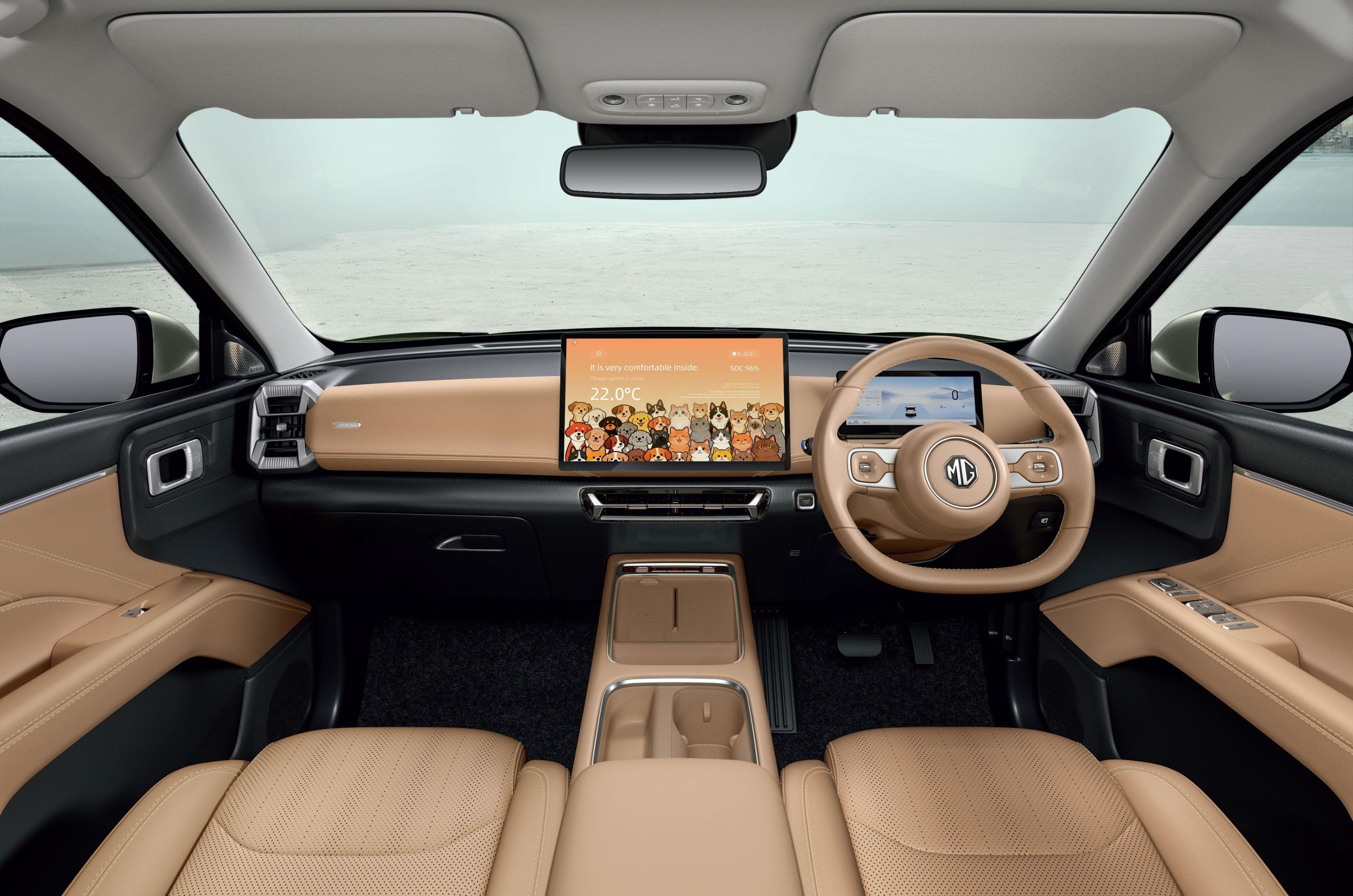
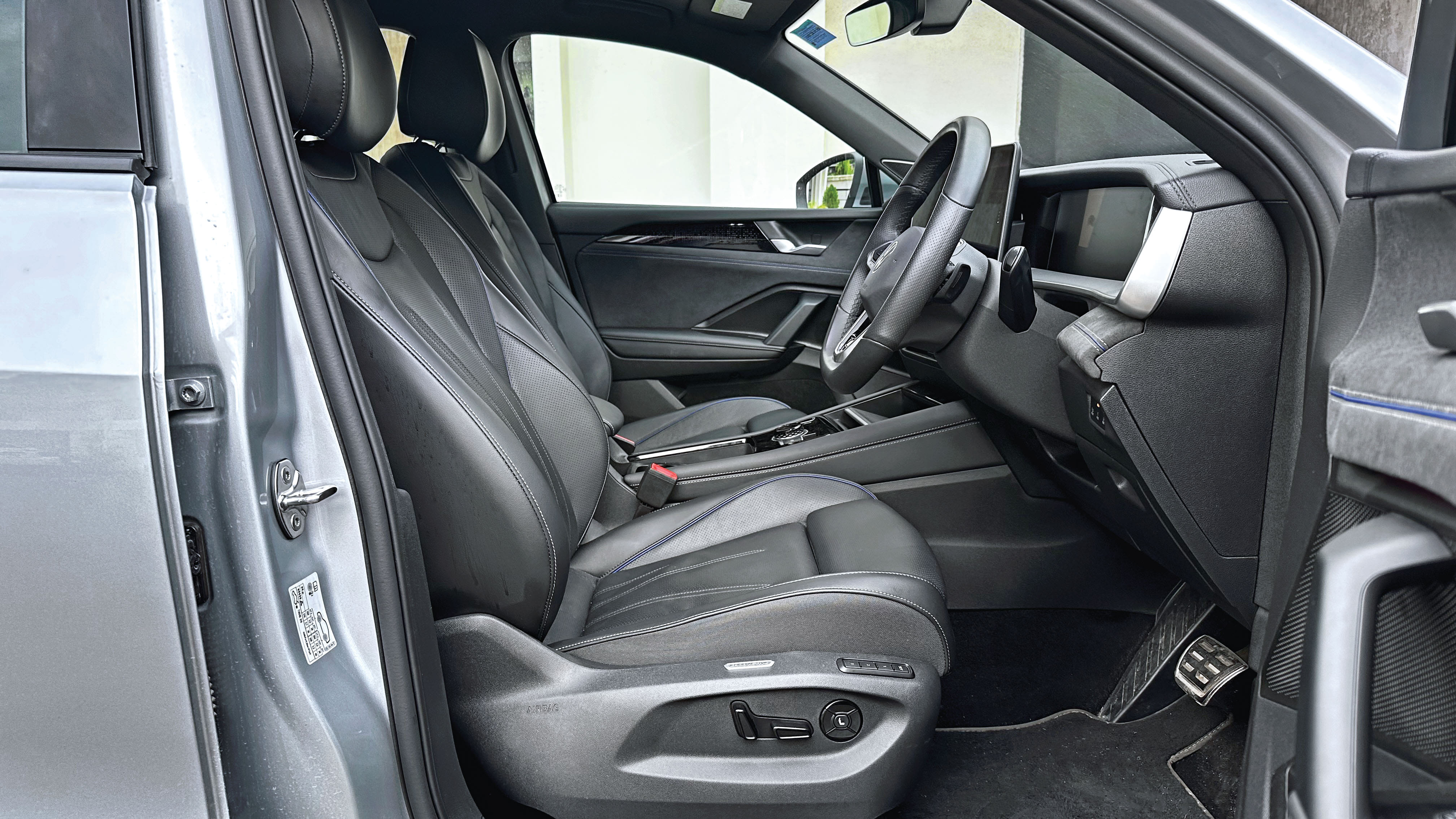
The Hector Tomahawk EV gets a 15.6-inch infotainment touchscreen, a 8.8-inch digital drivers display, wireless Apple CarPlay and Android Auto, wireless phone charging and gesture controls for functions such as the air-conditioning and audio system. 

Other features include a panoramic sunroof, ventilated front seats, 256-colour ambient lighting, a 10-speaker Infinity sound system, a powered tailgate, connected car tech, rear window sunshades and a driver’s seat with memory and auto-retract functionality. The SUV also gets several cabin modes, including Nap, Camp, Energise, Pro Pet, Valet and Quiet modes.

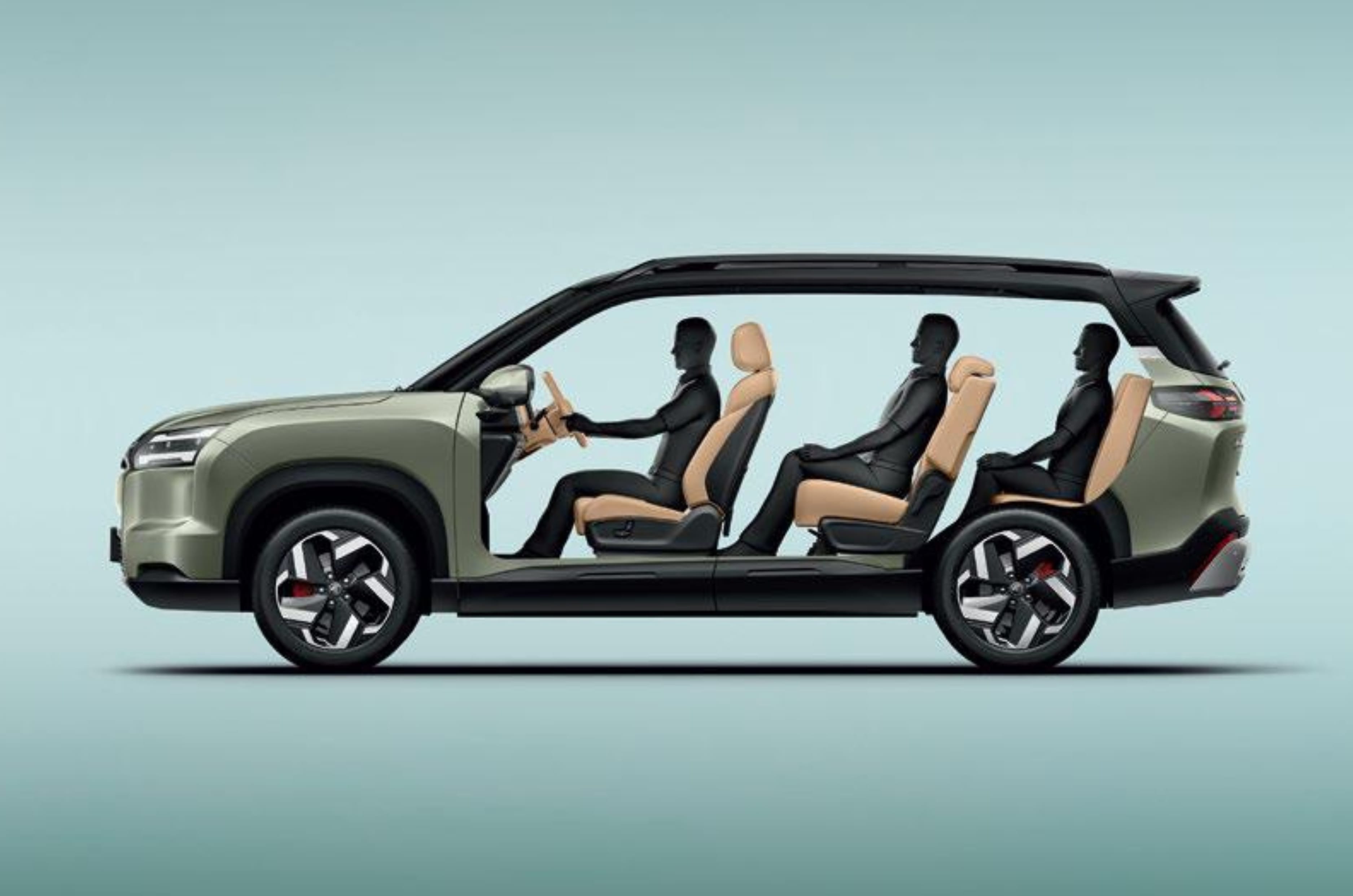
The Hector Tomahawk EV is available with five or seven seats. The five-seat version has 610 litres of boot space, which increases to 1,053 litres with the second row folded. The seven-seat version offers 192 litres with all three rows in use and 528 litres with the third row folded.

MG Hector Tomahawk EV: battery and range

The Tomahawk EV gets a 69.2kWh battery paired with a permanent-magnet synchronous motor producing 204hp and 310Nm. MG claims a 517km MIDC range and a 0-100kph time of 8.2sec.

The EV uses a CCS2 charging connection and supports DC fast charging at up to 90kW. MG claims a 30-80 percent charge in around 35 minutes using a 90kW DC charger. With a 7.4kW AC charger, a 10-100 percent charge takes around 12.5 hours. A portable charger that plugs into a 15A socket is also offered.

The Tomahawk EV also supports vehicle-to-load (V2L) and vehicle-to-vehicle (V2V) functions. MG says V2L can power compatible external devices and appliances, while V2V allows the SUV to charge another electric vehicle. It also claims the Tomahawk EV is India’s first vehicle-to-home (V2H) vehicle, allowing its battery to supply power to household appliances through two-way charging.

Top five CNG cars under Rs 10 lakh

Top five CNG cars under Rs 10 lakh
Best CNG SUVs under Rs 10 lakh

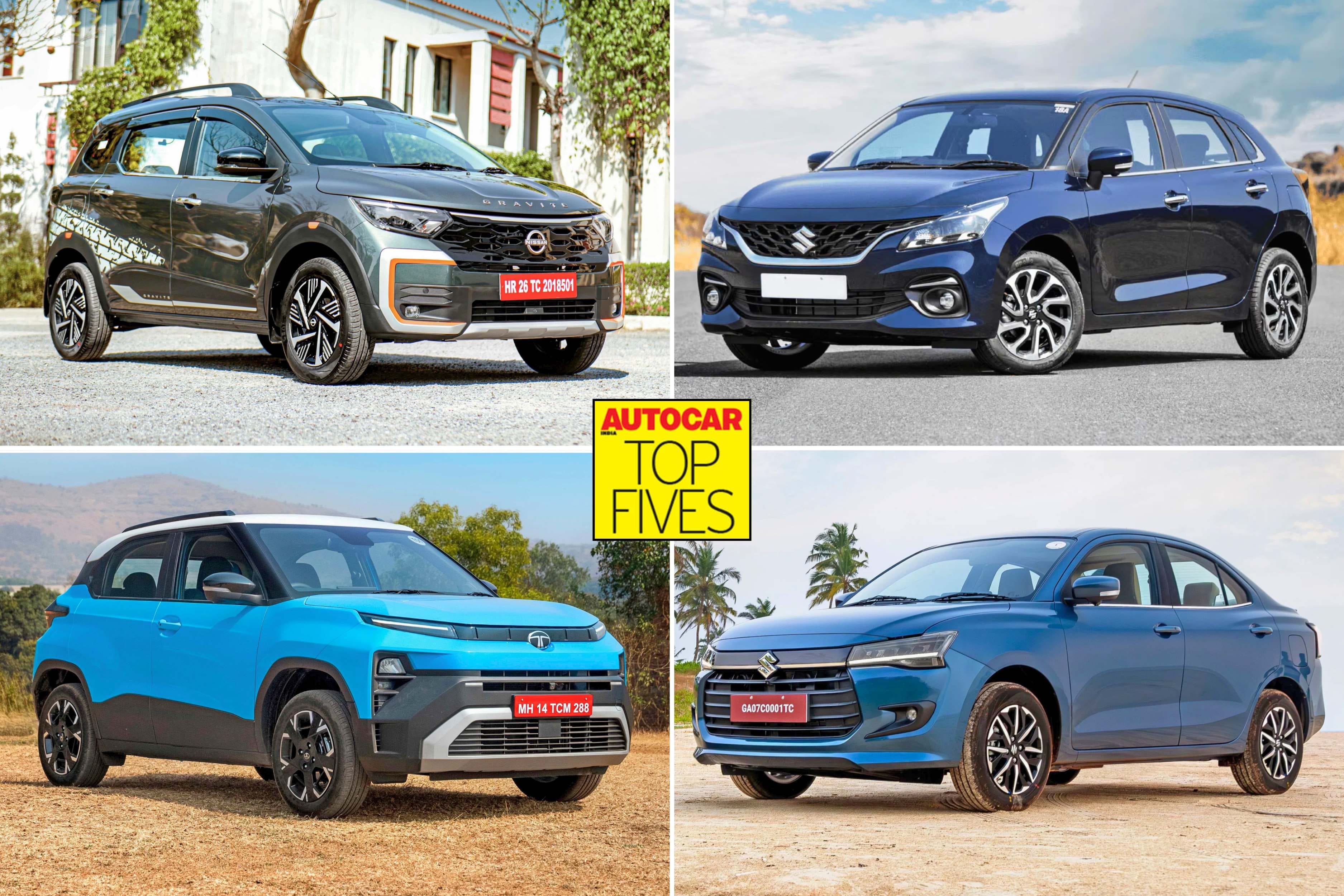
CNG cars are no longer considered budget options like before. Today, they are offered across multiple body styles and price points and even with automatic gearboxes. Moreover, with manufacturers now offering good features across the line-up, along with dual-tank or underbody CNG tank setups that free up boot space, these cars now don’t feel like a compromise made for lower running costs. Here, we have listed the best CNG cars under Rs 10 lakh that you can buy.

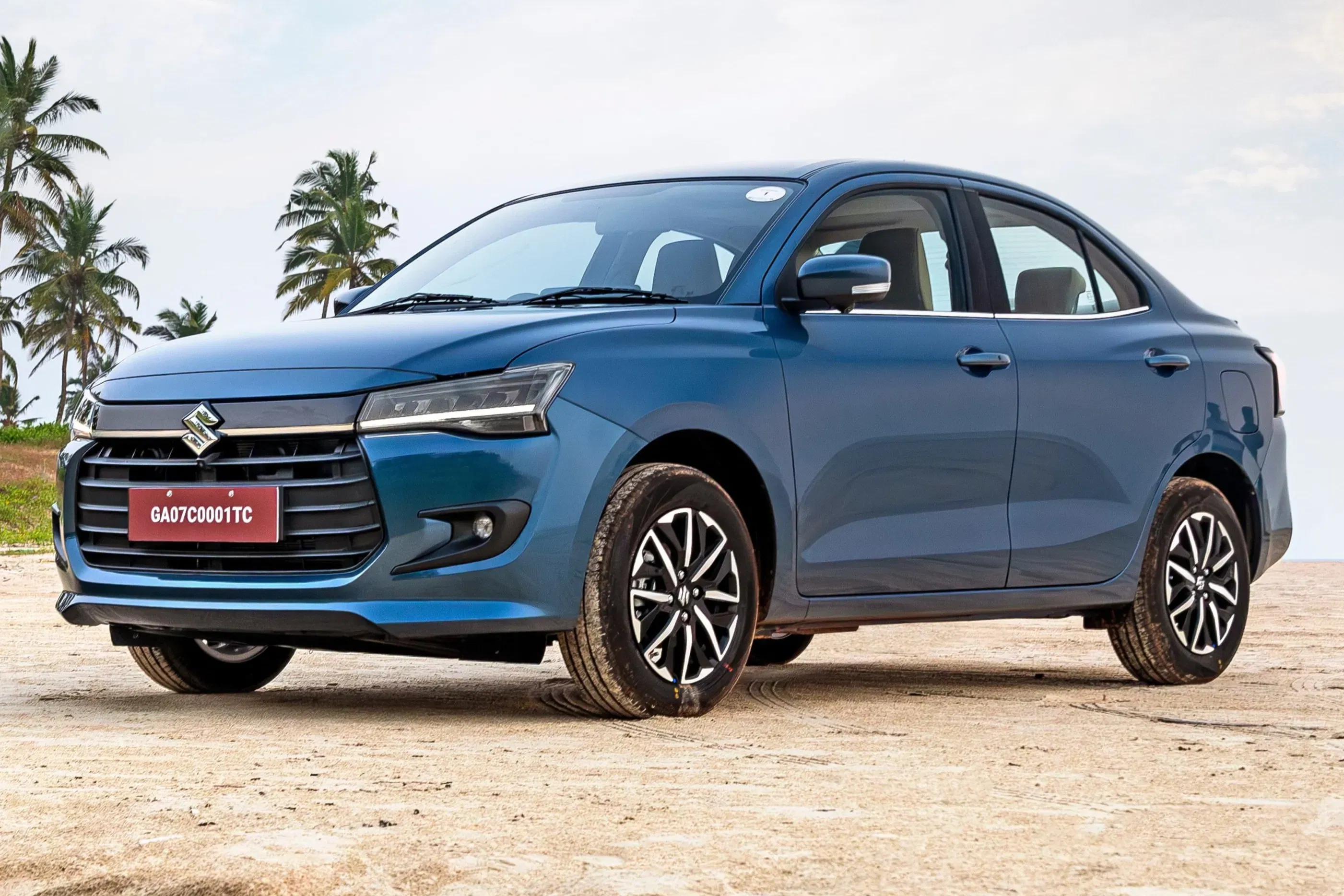
1. Maruti Suzuki Dzire CNG 

Price: Rs 8.11 lakh-Rs 9.11 lakh 

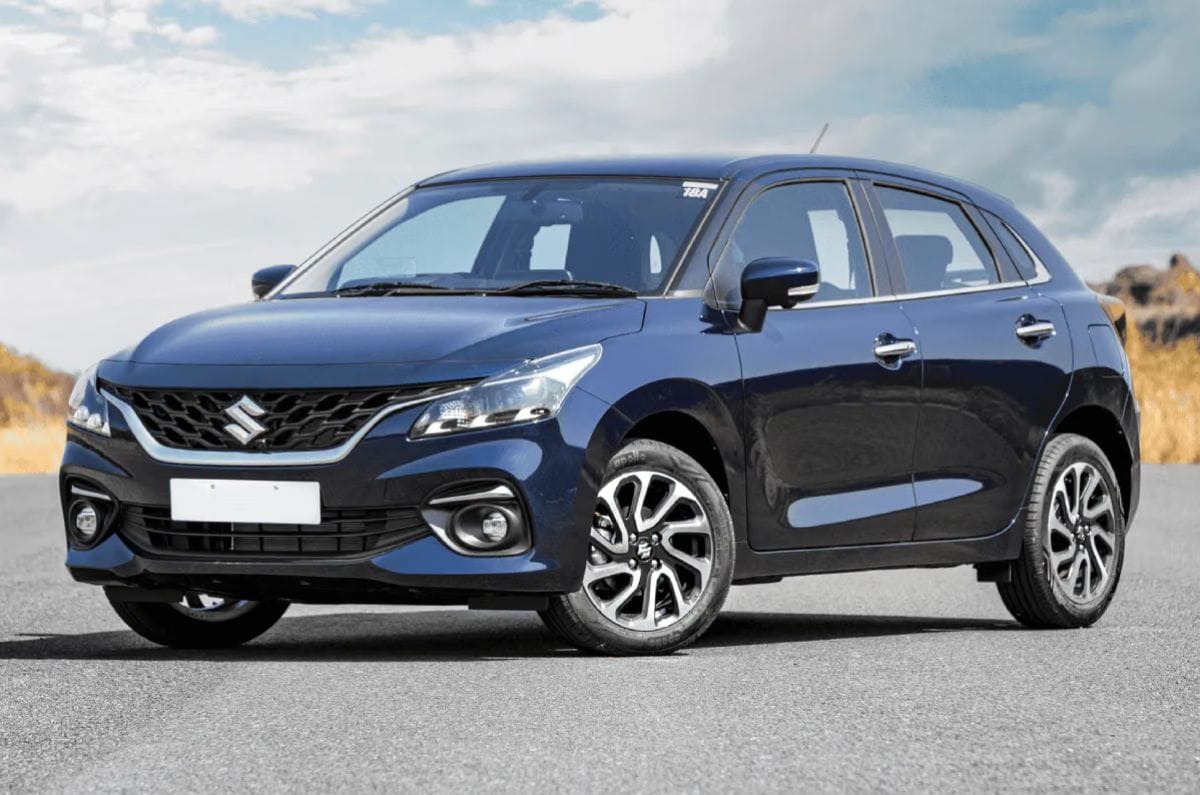
The Maruti Dzire is powered by a 1.2-litre 3-cylinder engine that produces 70hp and 102Nm of torque in the CNG spec. While performance is adequate for everyday driving, the Dzire really impresses with its great ride quality and tidy handling manners. The cabin is spacious, and with CNG available on the mid-spec VXi and ZXi trims, most features are covered, too. The Dzire gets a single large CNG tank in the boot but still offers some usable space.   

2. Maruti Suzuki Baleno CNG

Price: Rs 7.77 lakh-Rs 8.67 lakh

The Maruti Baleno uses a 1.2-litre 4-cylinder engine that develops 78hp and 98Nm of torque in the CNG spec. It’s a smooth, refined and efficient CNG powertrain. Like on the Dzire, CNG is available on the mid-spec Delta and Zeta trims that come reasonably well equipped. This car, too, has a very spacious cabin, although its boot space is compromised by a single large CNG tank. One can also consider its Toyota twin, the Glanza, which, too, is available with CNG on the equivalent mid-spec S and G trims. 

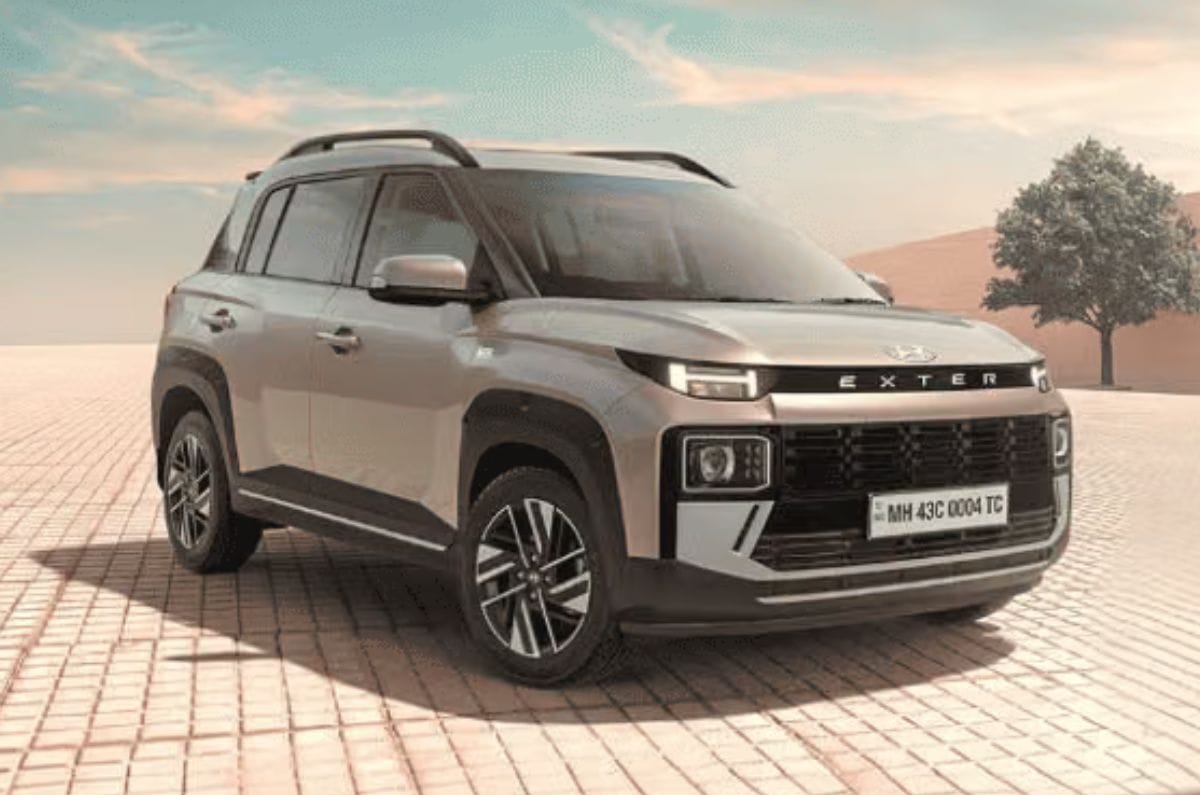
3. Hyundai Exter CNG

Price: Rs 6.99 lakh-Rs 9.42 lakh 

The Hyundai Exter has a 1.2-litre 4-cylinder engine that produces 69hp and 95Nm of peak torque. It has a wide spread of CNG variants, with top trims being particularly well equipped. The Exter also gets twin CNG tanks that don’t take up too much boot space, and its smooth engine and compact dimensions make it very user-friendly. However, interior space isn’t as good as some other cars here.

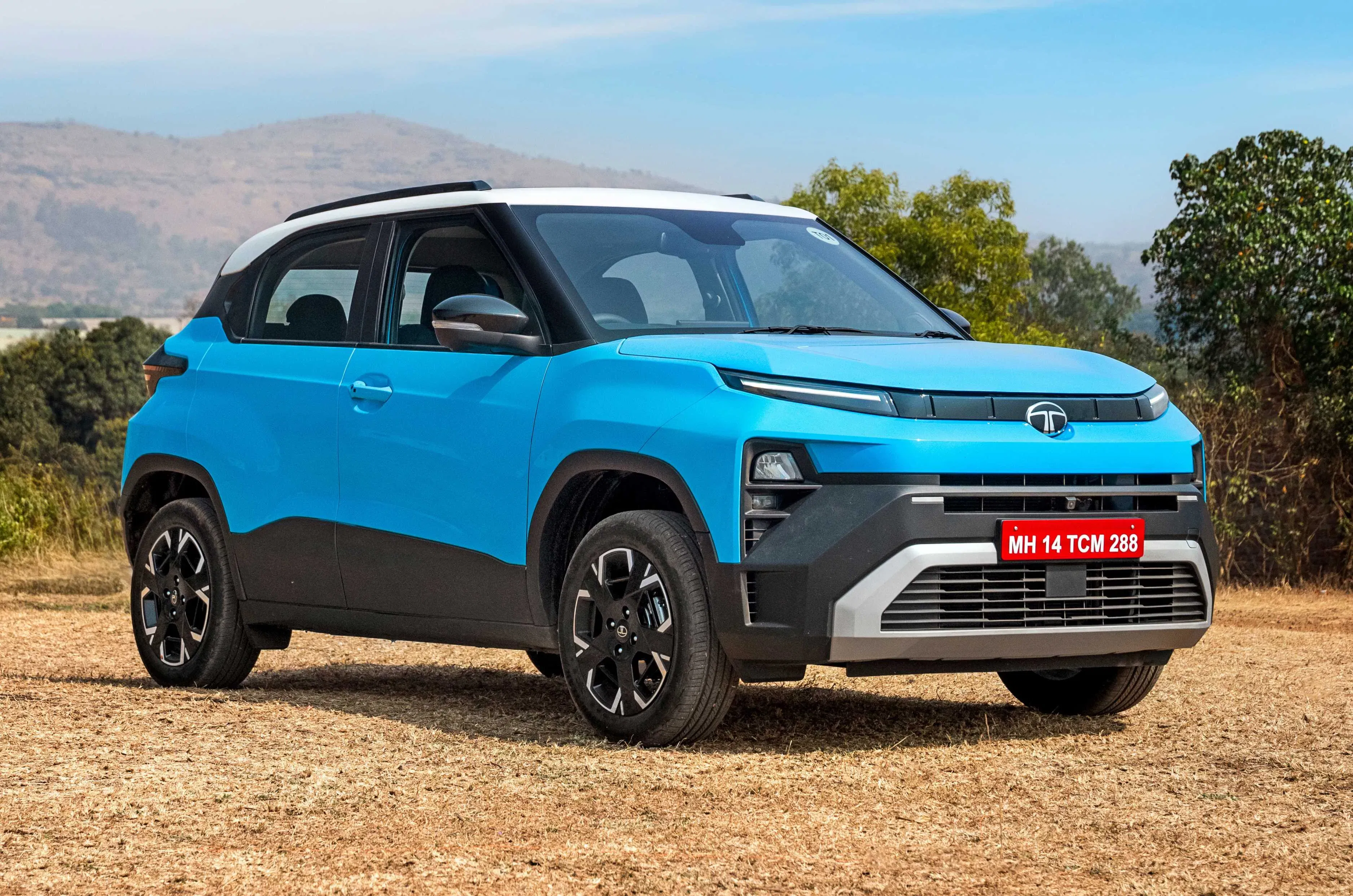
4. Tata Punch CNG

Price: Rs 6.80 lakh-Rs 10.67 lakh 

The Tata Punch uses a 1.2-litre 3-cylinder engine that produces 73hp and 103Nm of torque in CNG mode. The Punch CNG is the only one on this list to offer an AMT gearbox. It’s also the best-equipped CNG model here, with a wide spread of variants, but the top ones are quite expensive. Performance is just about adequate, but ride and handling are good, and twin CNG tanks leave usable boot space. 

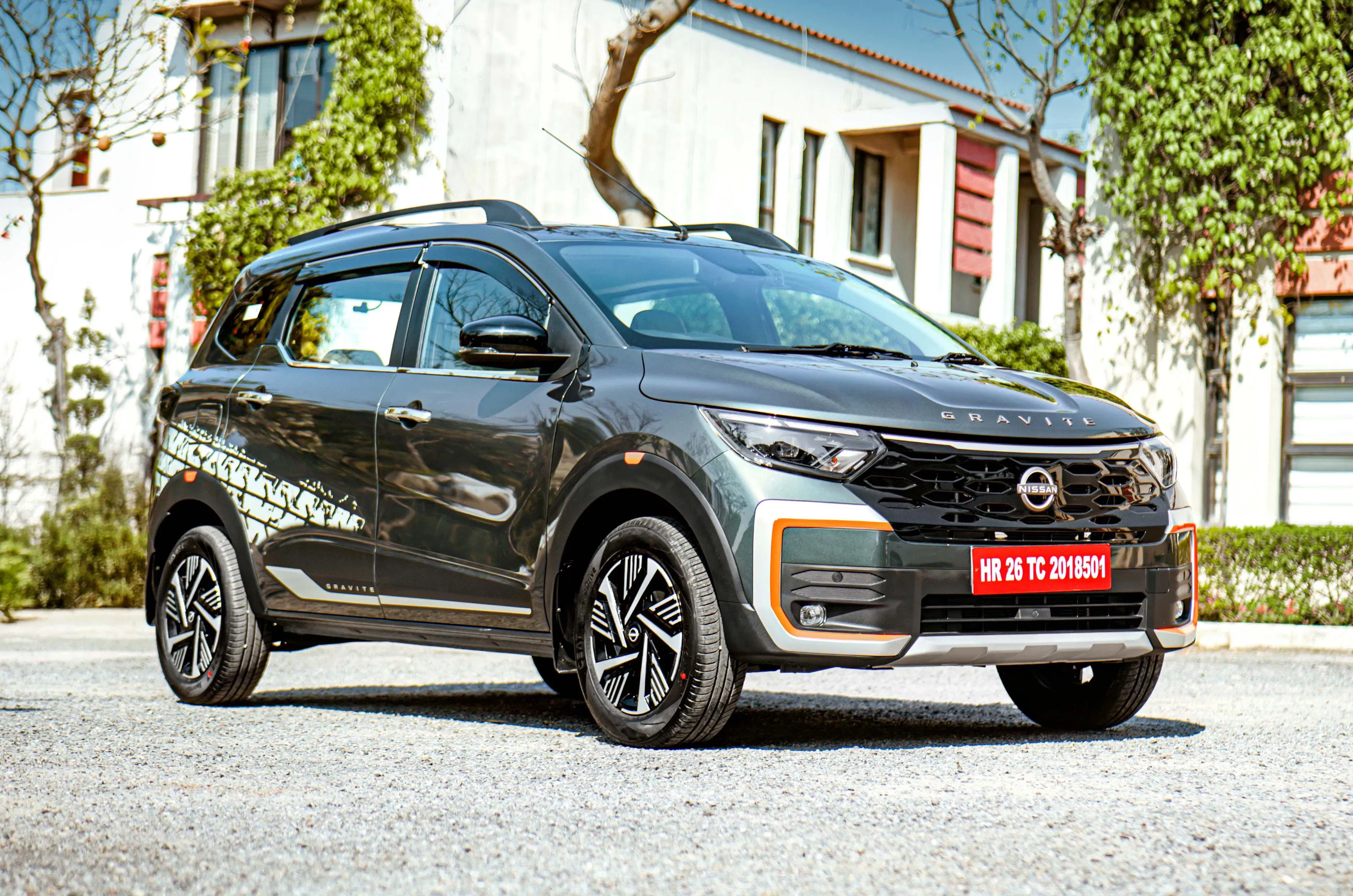
5. Nissan Gravite CNG

Price: Rs 6.59 lakh-Rs 8.94 lakh 

The Nissan Gravite is powered by a 1.0-litre 3-cylinder engine. However, since the CNG kit on the Gravite is a dealer-level fitment and has not been homologated, specific power and torque figures aren’t available. The Gravite’s real USP is its excellent packaging and flexible 7-seat configuration. As the CNG kit comes as a dealer fitment, it can be had on all trims. The Gravite is, however, not as well equipped as some other models here; the performance is quite dull, and the twin CNG tanks in the boot leave no usable space.

All you need to know about the 2027 Skoda Superb diesel

All you need to know about the 2027 Skoda Superb diesel
2027 Skoda Superb diesel front quarter

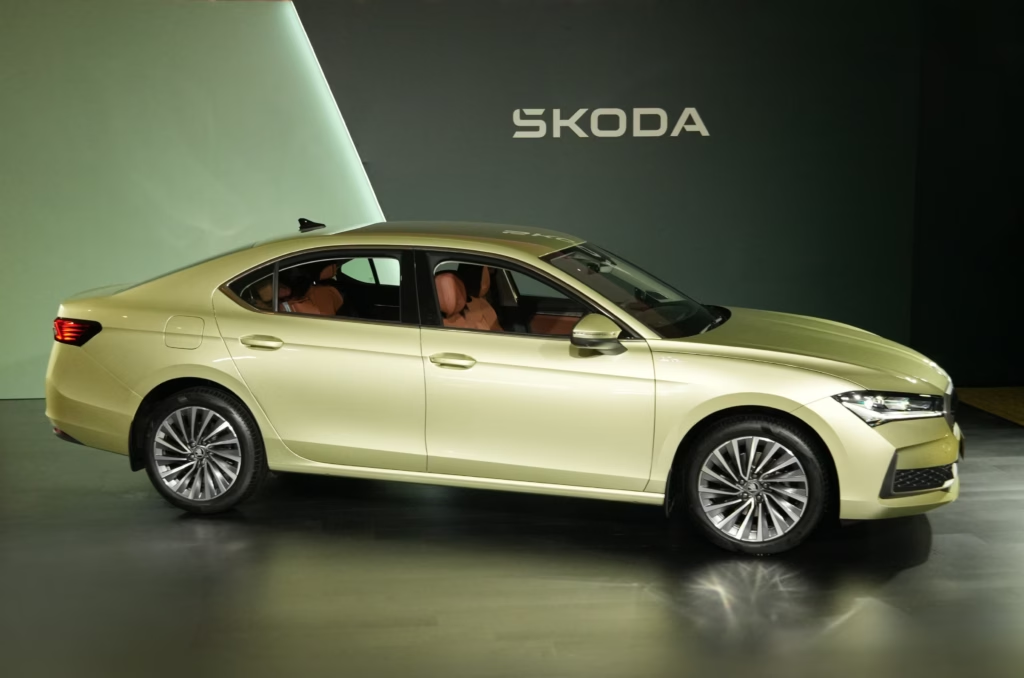
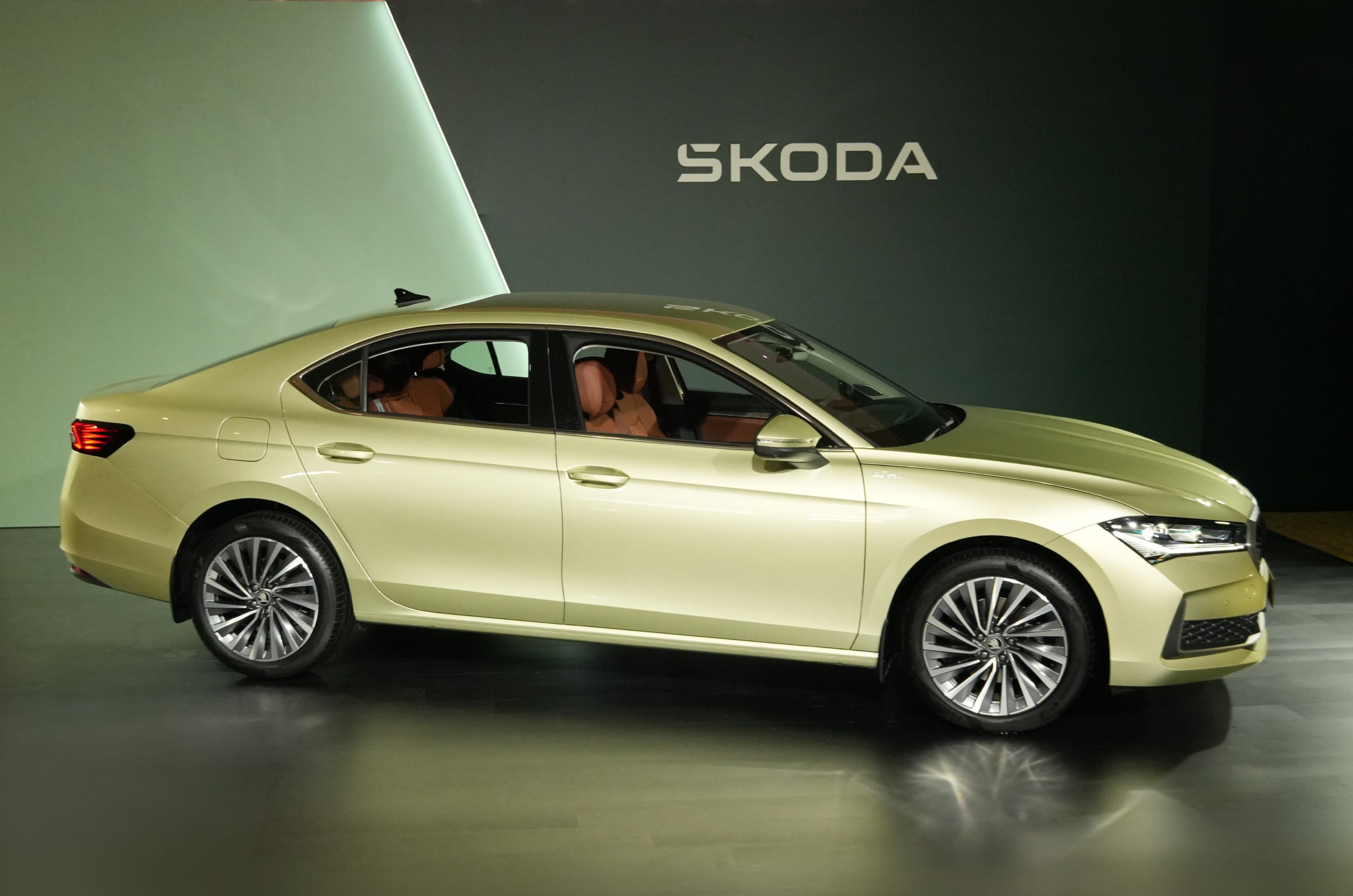
Skoda will be bringing the fourth-generation Superb to India in 2027 in its top-spec Laurin & Klement (L&K) trim, no less. However, this time around, the premium sedan will be offered in diesel guise – a first for the brand since it discontinued diesel models in India when BS6 emission norms took effect in 2020. Without further ado, here’s all you need to know about the upcoming 2027 Skoda Superb diesel.

1. How much will the 2027 Skoda Superb diesel cost?

2027 Skoda Superb diesel L&K

Skoda will bring the 2027 Superb diesel to India in limited numbers via the CBU (completely built units) route, with the expected starting price to be around Rs 50 lakh (ex-showroom). This means that the fully imported fourth-gen Superb diesel could be priced along the same lines as the Toyota Camry, which also has the price benefit of being a CKD (completely knocked down) model.

2. When will deliveries of the 2027 Skoda Superb diesel start in India

The reason why Skoda is yet to finalise on the price of the India-spec Superb diesel has to do with the upcoming India-EU Free Trade Agreement (FTA), which is set to come into effect by early 2027. While the FTA’s lower import duties will benefit fully imported modes like the Skoda Superb, the brand is awaiting further clarity before announcing its price. We know that the premium sedan will reach our shores in Q1 or Q2 of 2027 and will only be available in limited numbers.

3. What engine and gearbox will the 2027 Skoda Superb diesel get?

2027 Skoda Superb diesel engine

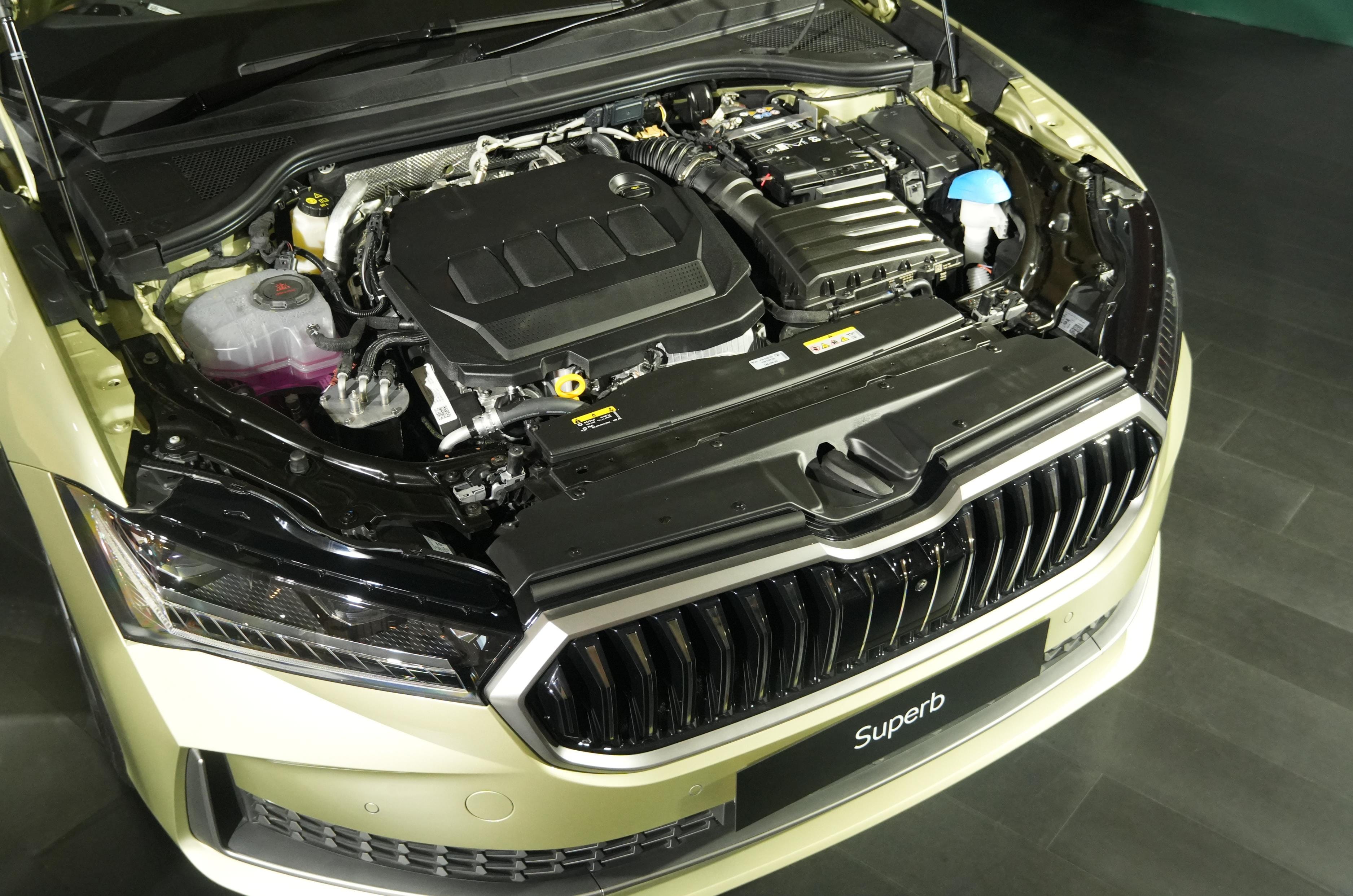
Under the bonnet of the 2027 Skoda Superb sits a 2.0-litre four-cylinder turbocharged diesel (TDI) engine rated at 150hp and 360Nm of torque. This transverse-mounted engine comes mated to a 7-speed dual-clutch automatic transmission (DCT) and drives the front wheels. Drive modes aside, the 2027 Skoda Superb for India will get the brand’s Progressive Dynamic Steering and Dynamic Chassis Control (DCC) systems. Skoda says that these automatically adjust the car’s ride and handling balance depending on the drive mode, road conditions and vehicle speed.

4. What are the exterior highlights of the 2027 Skoda Superb diesel?

2027 Skoda Superb diesel front quarter

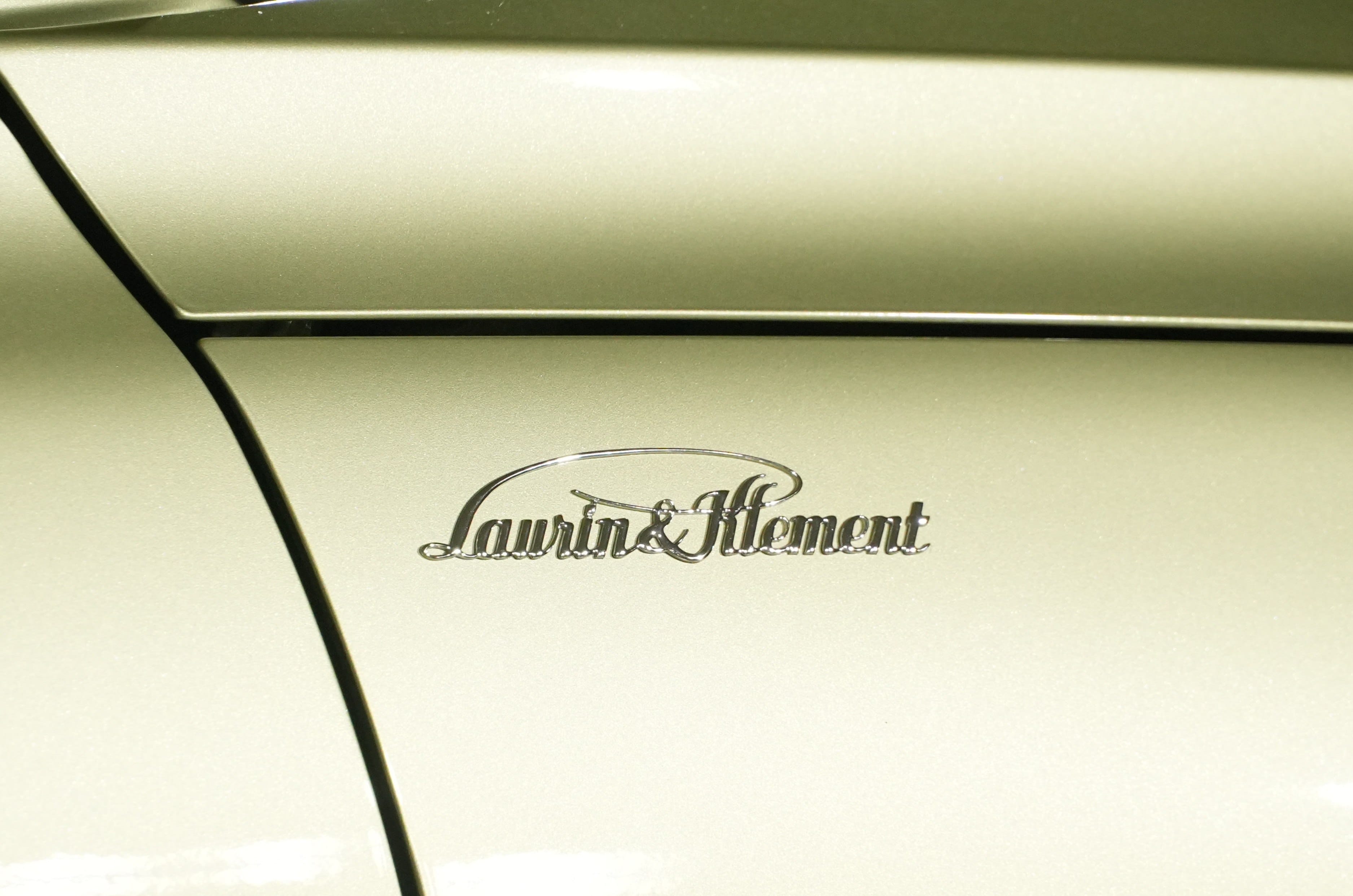
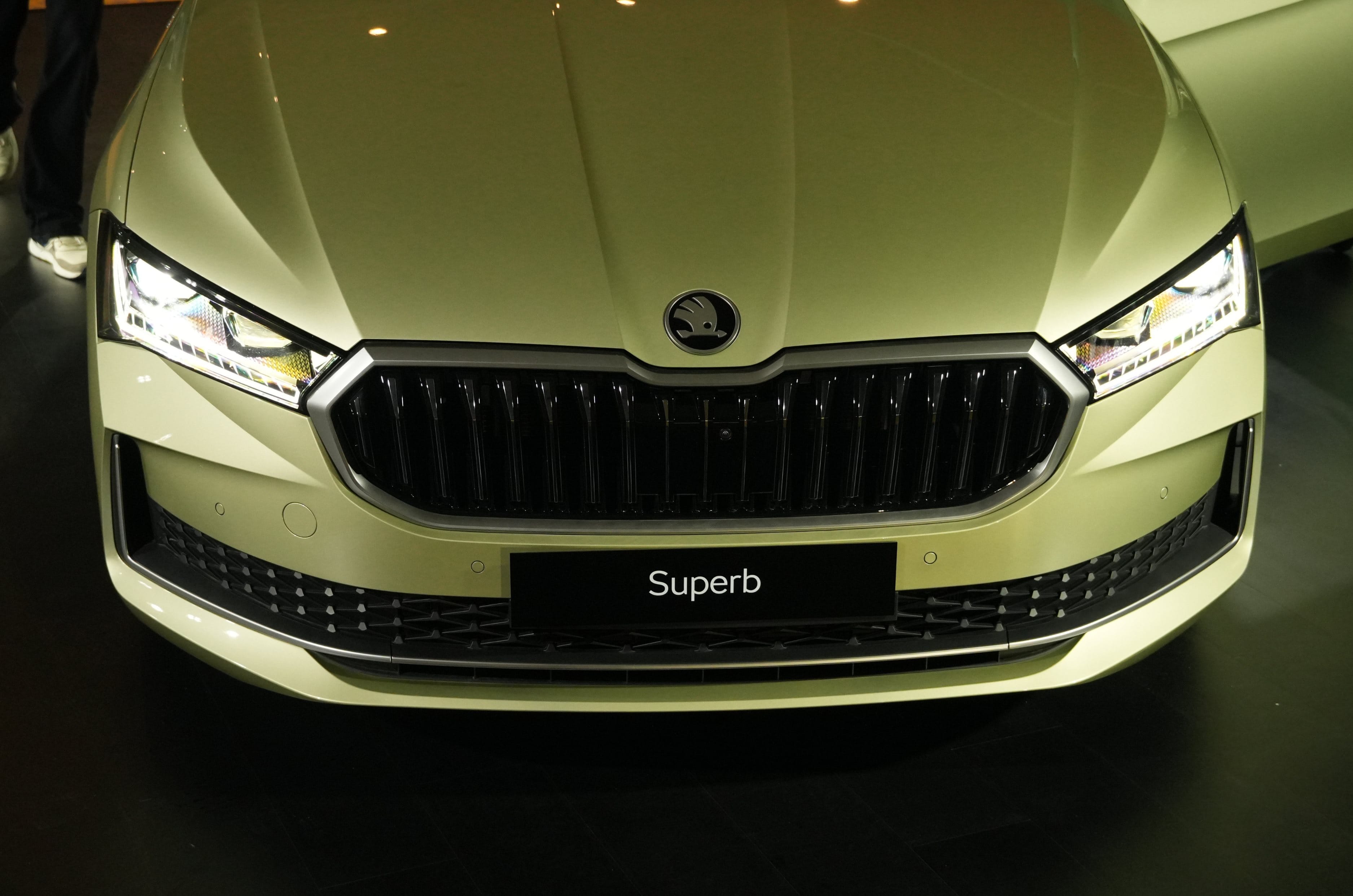
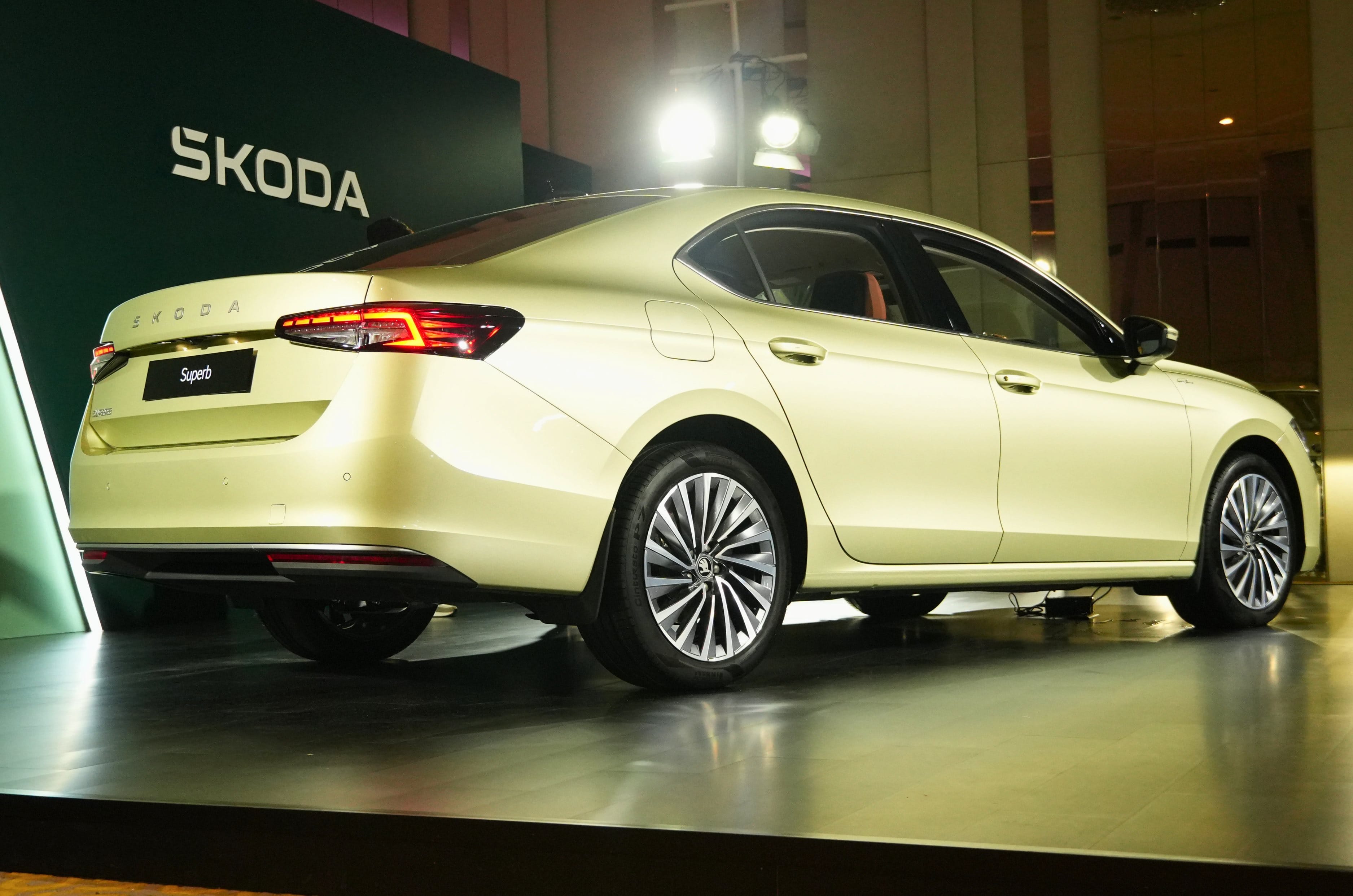
The top-spec L&K trim of the Skoda Superb diesel comes with Matrix LED headlamps with ‘Skoda Crystal Lighting’ branding, a large black grille with shiny surrounds, full-LED tail lamps with sequential turn indicators, 18-inch alloy wheels with turbine-like detailing, ‘Laurin & Klement’ badging on the front fenders, chrome garnish for the windowline, and a simplistic bootlid with large ‘SKODA’ lettering.

2027 Skoda Superb diesel rear quarter

Opening the power-operated bootlid reveals the Superb’s familiar liftback design and a 645-litre luggage space. There are storage cubbies here too, along with bag hooks, an extendable cargo cover, a space-saver spare wheel, flip-down rear seat releases and through-loading for carrying longer items. Overall, the 2027 Skoda Superb looks elegant and premium, while its liftback design offers more practicality than a typical three-box sedan.

5. Does the interior of the 2027 Skoda Superb diesel feel premium enough?

2027 Skoda Superb diesel rear seats

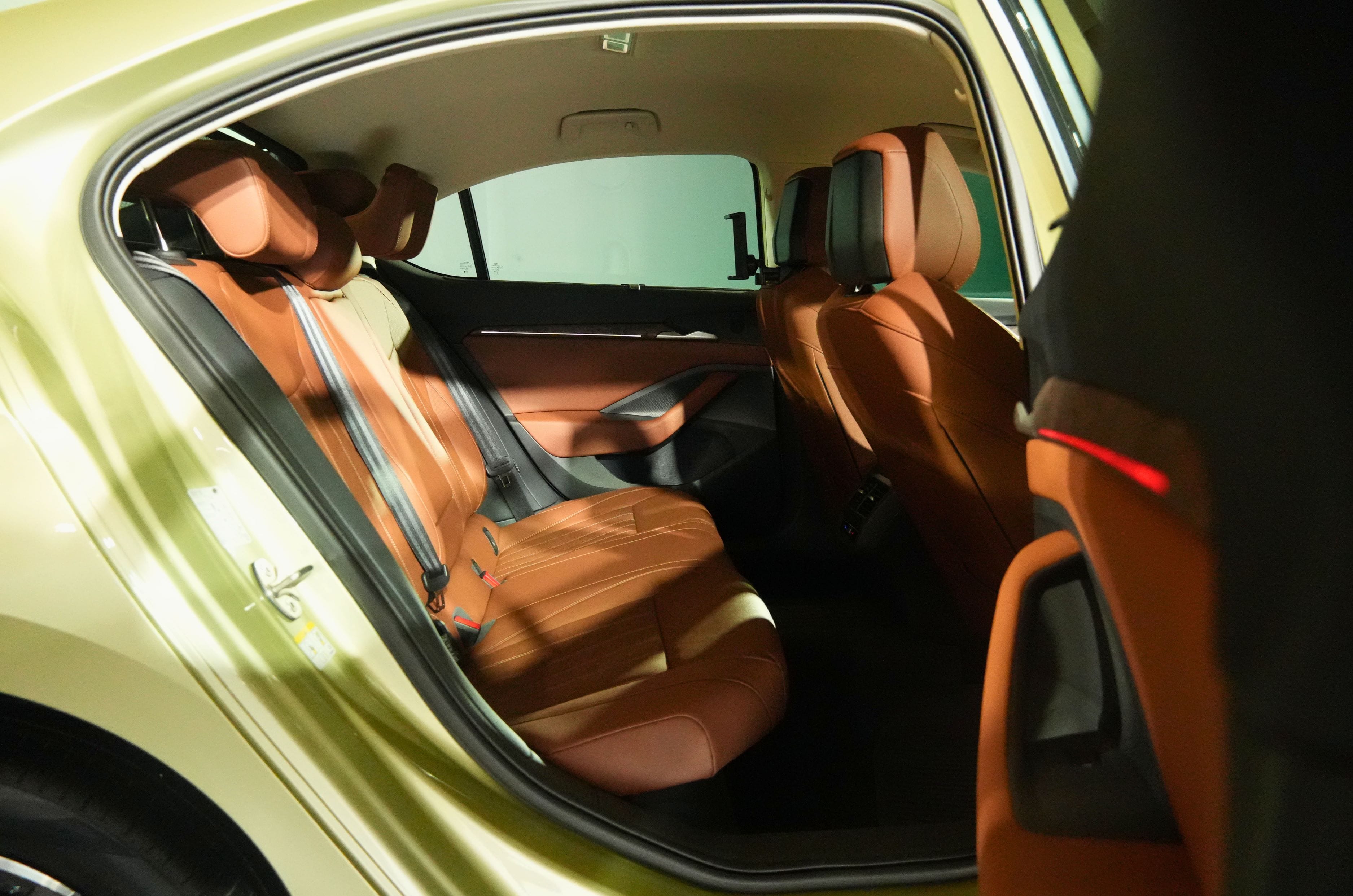
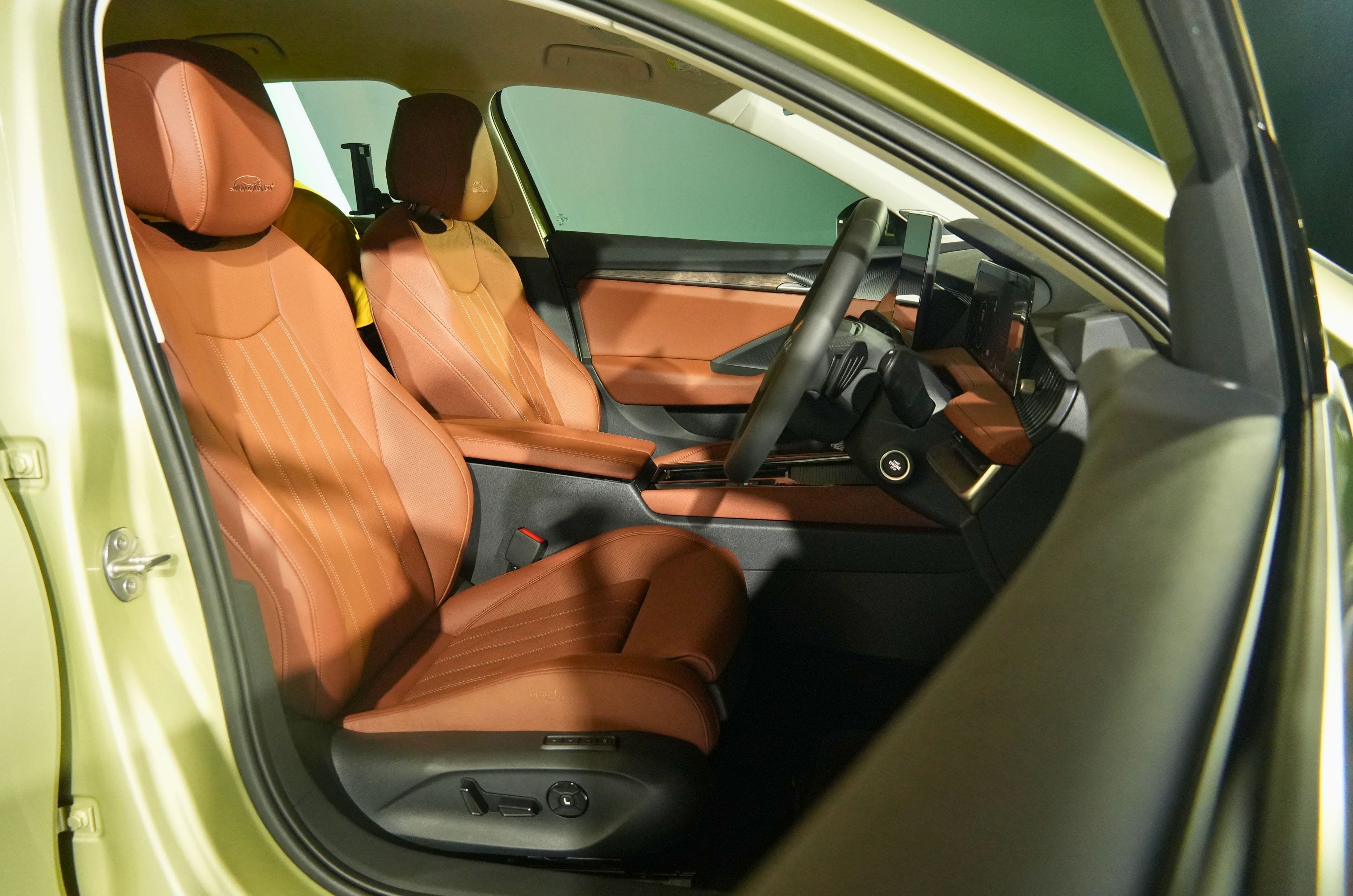
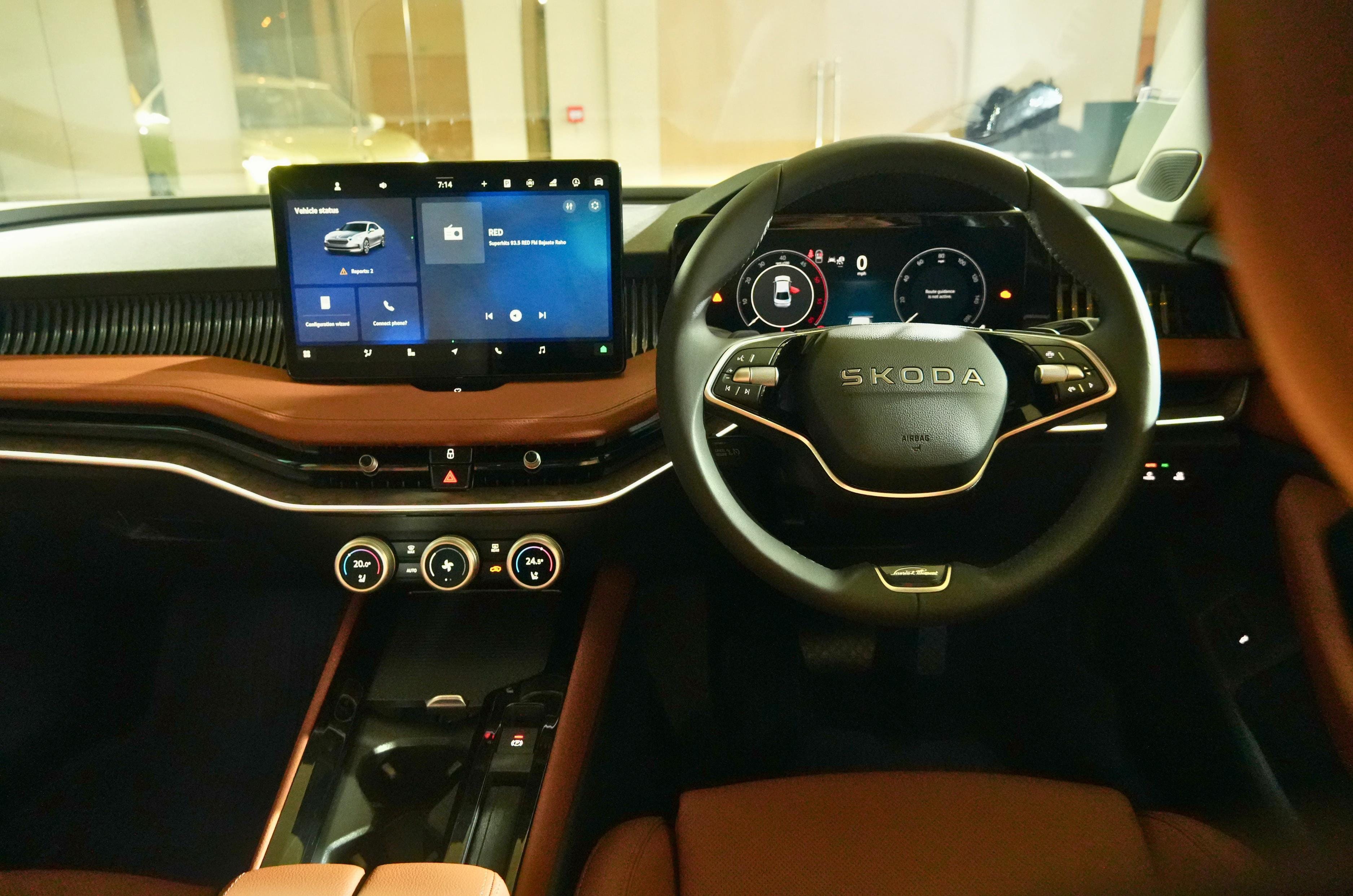
The 2027 Skoda Superb, like its predecessors, is aimed at buyers who prefer to be seated at the back. There’s plenty of space for rear-seat occupants – no shortage of legroom or kneeroom – even taller folks shouldn’t have trouble stretching out. The interior is upholstered in what Skoda calls “Cognac leather”, which looks premium.

2027 Skoda Superb diesel front seats

The quality and tactility of the physical dials up front feel good, too. These dials integrate multiple functions and users can cycle through the climate control and seat ventilation & heating settings easily. There’s a covered storage tray beneath these dials and another even deeper storage cubby under the front-centre armrest. The front seats look nice and are multi-way powered and have a memory feature, of course.

6. What are some of the feature highlights of the 2027 Skoda Superb diesel?

Enhancing comfort further is a ‘Rear Sleep Packagage, which bring sunblinds for the rear-side windows as well as for the rear windscreen, and specially designed ‘wings’ on the headrests to help support your head should you fall asleep. There’s a fold-down armrest with cupholders and also a slot for holding a smartphone – the backrest of the front seats also get such device holders.

2027 Skoda Superb diesel interior

Other highlights inside the 2027 Skoda Superb diesel include roof-mounted LED reading lights, a dedicated climate control zone for the rear seats (it’s a three-zone system), backlit USB charging ports, a 14-speaker Canton audio system, multi-colour LED ambient lighting, a wireless charging slot at the front, a 12.9-inch touch-infotainment system, 360-degree cameras, Level 2 ADAS and 10 airbags. However, the 2027 Superb misses out on a sunroof and recline-adjustable rear seats, among a few other features.

Also read

All you need to know about the Mahindra Scorpio Lifestyler

Kia Sonet vs Toyota Taisor turbo-petrol automatic performance compared

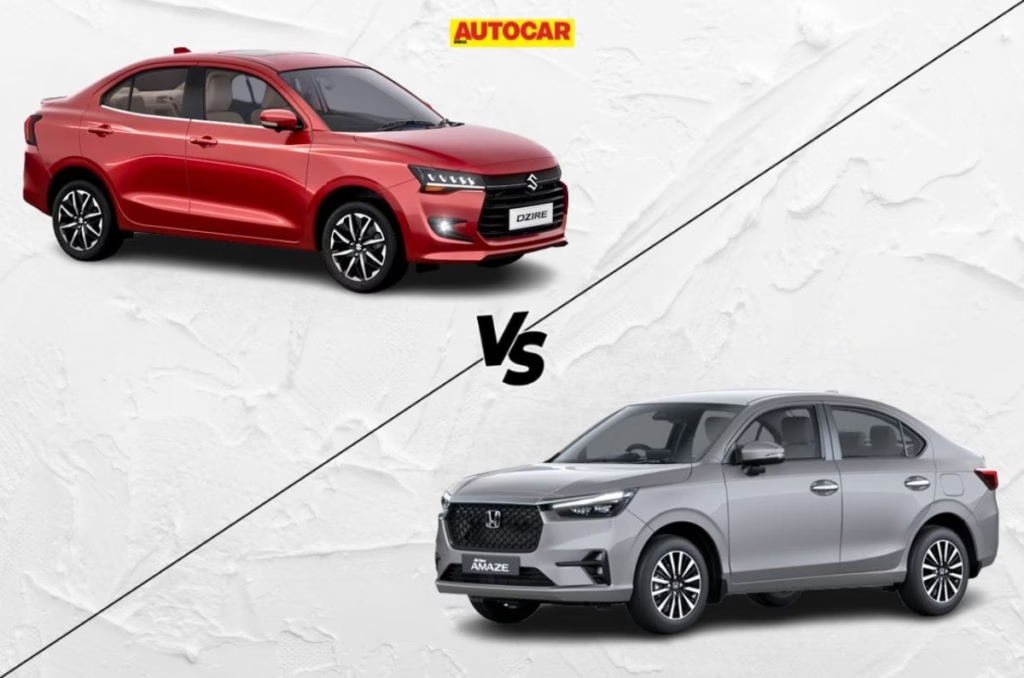
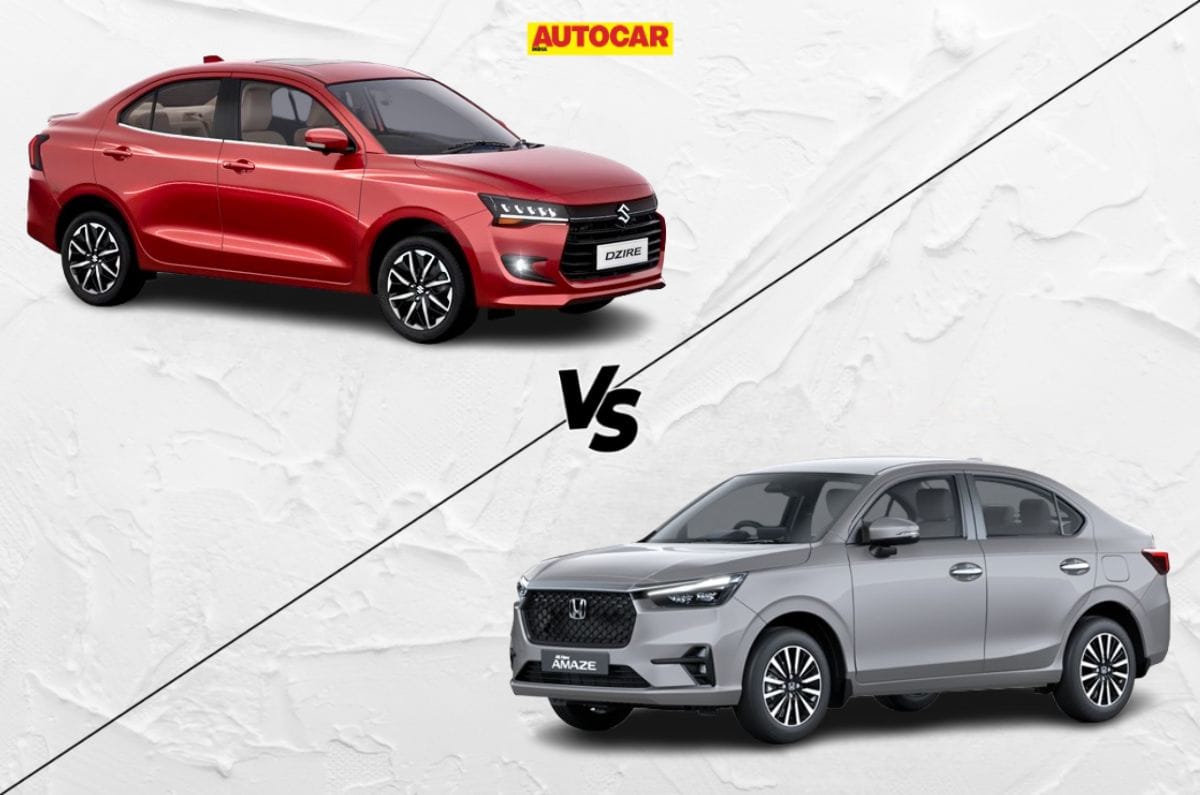
Maruti Dzire vs Honda Amaze: Top variants compared

Maruti Dzire vs Honda Amaze: Top variants compared

The Maruti Suzuki Dzire and Honda Amaze are two of the most affordable sedans in India, priced at around Rs 10 lakh (ex-showroom). Both the top-spec Dzire ZXi+ and Amaze ZX offer a 1.2-litre engine with similar specifications and a similar feature suite, albeit with a couple of segment-only amenities. But what should you choose? We find out. 

Maruti Dzire vs Honda Amaze: Dimensions

Sizes are almost similar, but the Amaze offers a slightly larger boot

Maruti Dzire vs Honda Amaze: Dimensions and other specifications


Maruti Dzire

Honda Amaze

Difference

Length (mm)

3,995

3,995

Width (mm)

1,735

1,733

+2

Height (mm)

1,525

1,500

+25

Wheelbase (mm)

2,450

2,470

-20

Ground clearance (mm)

163

172

-9

Boot space (litres)

382

416

-34

The Maruti Suzuki Dzire and Honda Amaze have similar dimensions, but the Amaze has a 34-litre larger boot space, which enables it to carry a backpack more than the Dzire. Moreover, unlike the Dzire, which gets a fixed rear seatback, the Amaze’s rear seat can be folded to accommodate more luggage if needed.

Maruti Dzire vs Honda Amaze: Powertrain

Dzire’s 3-cylinder engine offers higher fuel economy than the Amaze’s 4-cylinder unit

Maruti Dzire ZXi+ vs Honda Amaze ZX: Powertrain options


Dzire ZXi+

Amaze ZX

Engine

1.2-litre 3-cyl petrol

1.2-litre 4-cyl petrol

Power (hp)

82

90

Torque (Nm)

112

110

Transmission

5MT | 5AMT

5MT | CVT

Claimed mileage (kpl)

24.79 | 25.71

18.65 | 19.46

The major difference in the powertrains of the two compact sedans is the number of cylinders: 3 in the Dzire’s naturally aspirated engine and 4 in the Amaze’s. The Honda Amaze produces 8hp more than the Dzire, but 2Nm less. In our real-world experience, we found that the Amaze’s engine loves to be revved. It has weak low-end performance, especially under 2,000rpm, but offers a strong mid-range. The Dzire’s engine, on the other hand, has a crisp throttle response and offers strong low-end torque.

Both sedans get a 5-speed manual transmission, but the Dzire offers a 5-speed AMT while the Amaze has a CVT. The Dzire’s AMT, in our real-world experience, has a prominent lag while shifting gears, which hampers the overall drive experience. The Amaze’s CVT is better in this regard and offers smoother shifts, but has a rubberband effect, something that is generally associated with CVTs.

It is the fuel efficiency where the Dzire really shines, offering an additional 6.14kpl and 6.25kpl claimed fuel efficiency over the Amaze’s manual and automatic transmission options, respectively. 

Maruti Dzire vs Honda Amaze: Exterior

Both compact sedans get all-LED lighting, powered ORVMs, and 15-inch wheels

Maruti Dzire ZXi+ vs Honda Amaze ZX: Exterior


Dzire ZXi+

Amaze ZX 

Headlights

LED

Projector LED

Taillights

LED

LED

DRLs

LED

LED

Front fog lamps

LED

Projector LED

Wheels

15-inch

15-inch

Powered ORVMs

Yes

Yes

Sharkfin antenna

Yes

Yes

Both the top-spec Maruti Dzire ZXi+ and Amaze ZX are offered with all-LED lighting, 15-inch dual-tone alloy wheels, and powered outside rearview mirrors (ORVMs). 

Maruti Dzire vs Honda Amaze: Interior, features

Dzire has a sunroof and a larger infotainment system, but Amaze offers paddle shifters

Maruti Dzire ZXi+ vs Honda Amaze ZX: Interior and features


Dzire ZXi+

Amaze ZX 

Instrument cluster

Analogue dials with MID

Part-digital with 7-inch MID

Infotainment screen

9-inch

8-inch

Android Auto, Apple CarPlay

Wireless

Wireless

Audio system

6-speaker

6-speaker

On-board navigation

Yes

No

Sunroof

Single-pane

No

Wireless phone charger

Yes

Yes

Climate control

Automatic with rear vents

Automatic with rear vents

Paddle shifters

No

CVT only

Cruise control

Yes

Yes

Seat upholstery

Fabric

Fabric

Steering wheel adjustment

Tilt, telescopic

Tilt

Driver seat adjustment

Manual

Manual

Co-driver’s seat adjustment

Manual

Manual

Rear window sunshade

No

No

The top-spec Maruti Dzire is offered with a single-pane sunroof, a segment-only feature, and a larger 9-inch touchscreen infotainment system compared to the 8-inch unit on the Honda Amaze. The Dzire’s steering column also allows for telescopic adjustments. However, the Amaze offers paddle shifters with the CVT, which is missing on the Dzire AMT, and gets a larger multi-information display (MID) on the instrument cluster than the Dzire. 

Maruti Dzire vs Honda Amaze: Safety

Dzire offers a 360-degree camera, while Amaze offers Level-1 ADAS

Maruti Dzire ZXi+ vs Honda Amaze ZX: Safety features


Dzire ZXi+

Amaze ZX 

BNCAP rating

5 stars

5 stars

Airbags

6

6

ADAS

No

Level-1

Camera setup

360-degree

Rear, LaneWatch

Parking sensors

Rear

Rear

Electronic parking brake

No

No

Disc brakes

Front wheels only

Front wheels only

TPMS

Yes

Yes

IRVM

Day/night adjustable 

Day/night adjustable 

Rear wiper, washer

No

No

Hill hold assist

Yes

Yes

ESC

Yes

Yes

While both the Maruti Dzire and Honda Amaze have a 5-star Bharat NCAP crash safety rating, there are a couple of changes in the safety suite of both sedans. The Amaze ZX offers Level-1 advanced driver assistance systems (ADAS), a segment-only feature, while the Dzire offers a 360-degree camera system. The Amaze gets a traditional rear camera and a LaneWatch camera mounted on the left ORVM. Other safety features are the same on both sedans.

Maruti Dzire vs Honda Amaze: Prices

The top-spec Dzire is more affordable than the Amaze

Maruti Dzire ZXi+ vs Honda Amaze ZX: Variant-wise ex-showroom price 


Dzire ZXi+

Amaze ZX

Difference

Petrol MT

Rs 8.96 lakh

Rs 9.39 lakh

– Rs 43,000

Petrol AMT

Rs 9.41 lakh

Rs 10 lakh

– Rs 59,000

Both manual and automatic versions of the top-spec Maruti Dzire ZXi+ are more affordable than the fully-loaded Honda Amaze ZX. At a lower price point, the Dzire offers a fuel-efficient engine that also offers good low-end torque, it offers a customer-favourite sunroof and a 360-degree camera, making it feel more complete than the top-spec Amaze. 

JLR MD Rawdon Glover on Jaguar’s repositioning and working with Tata Motors

JLR MD Rawdon Glover on Jaguar's repositioning and working with Tata Motors
Rawdon Glover MD, JLR

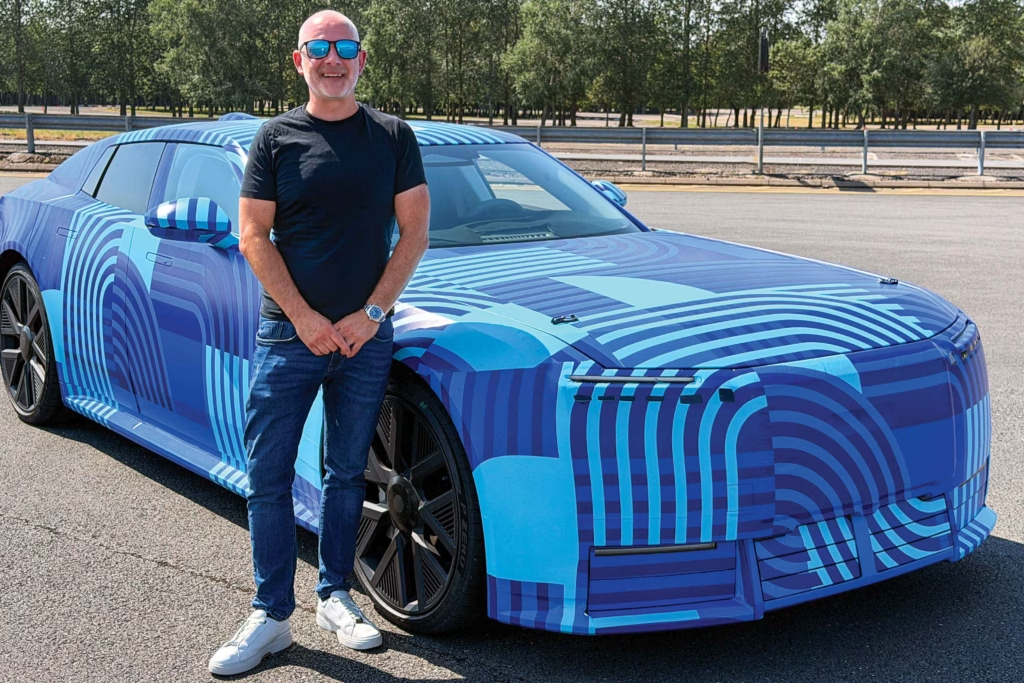
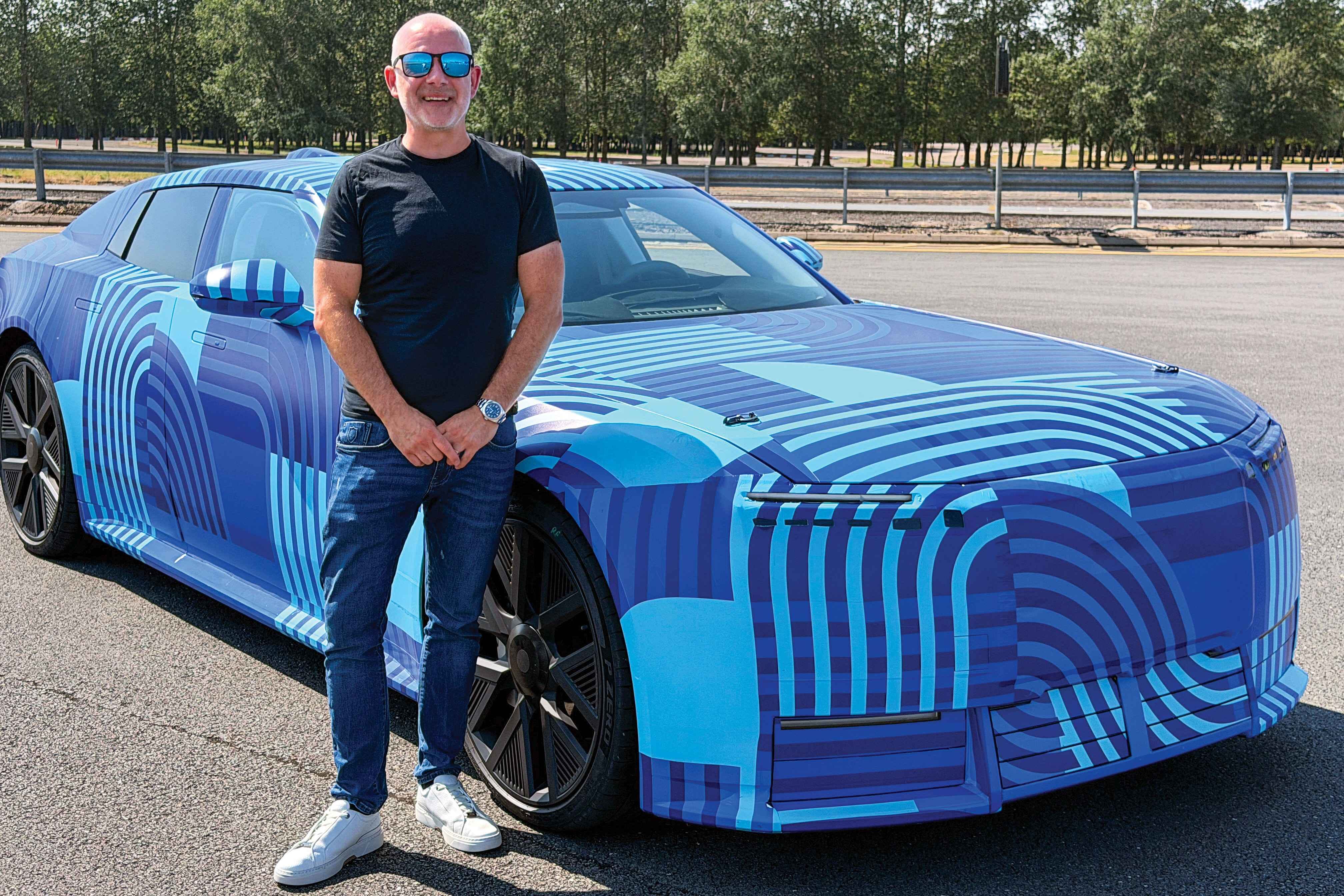
Rawdon Glover has worked with the JLR group for over thirteen years and took charge as Managing Director three years ago. From the sidelines of our first drive with the Jaguar Type 01, we speak to Glover, who tells us about Jaguar’s new direction, taking risky decisions, core markets and upcoming products. 

Why the major shift in the positioning of Jaguar?

Putting Jaguar back on a firm footing for the next 90 years is the main job. And if you look at the task, it’s brand management where sometimes you need small incremental changes. But if you look at today’s technical changes, competitive context, how the brand was performing globally and a host of factors, what was called for was a big shift. That requires you to be bold and confident.

Why go for a radical and polarising design?

We’re ok with polarising. If you look at our history, it was bold evolutions, for example the XJS, the spiritual successor to the E-Type. It would have been easy to say let’s just make a modern example of the E-Type, but that’s not what we did, and if you look back at reviews, it was applauded for its dynamics and refinement, but the design was seen as polarising. Now it’s a design icon. So, I’d rather have four out of ten absolutely love the car, rather than have everyone go – yeah, it’s ok.

Isn’t going all-electric a massively risky move?

The EV landscape is evolving rapidly, many new brands are coming in, and I believe one will crack the EV glass ceiling, so why not Jaguar? So we ripped up the EV rulebook because, in the luxury space, it wasn’t working. So it’s not designed as an EV without an engine and a really cab-forward layout. But it’s about presence and performance, and to deliver the level of performance and refinement, electric is best.

Would the car sit above the XJ in terms of price?
All of the vehicles coming off this platform would be between GBP 1,20,000 and GBP 1,50,000. We see a white space at the top end of the premium segment, but underneath established luxury players. That’s where we want to be, and with this vehicle what you get is the stature, the presence, the drama of those uber-luxury brands at the top end of the premium price point.

What are the core markets, and how does India figure in the plan?

We used to sell in 130 markets, but we’ll narrow this to just eight or nine, with 85 percent of the volume. North America will remain a large part, China will become important, and the UK, Germany and some Nordics, where they have really embraced EVs, will be the mainstay. Then in markets like the Middle East and India, which have been small, we think we can really break into them now. The retail would, of course, still be through the existing JLR network.

FTAs do not favour EVs, so is the 01 capable of being locally assembled?

Manufacturing this outside of the UK is not currently in the plan. All production will be built out of Solihull, so all exports to other markets will be CBUs, but that doesn’t rule out local production outside UK. As you know, the geopolitical situation is so fluid at the moment, but in time we could consider production elsewhere.

Is there a more chauffeur-driven offering from Jaguar coming?

The 01 is unashamedly driver-focussed, it has four comfortable seats, but it’s a four-door GT, not a four-door sedan designed as a luxury chauffeur-driven car. There will be other vehicles off this platform that will share the same design language, but will have a distinct personality and target different groups, and they would be accessible to a wider audience. So, yes absolutely, there will be a chauffeur-driven-focused model from Jaguar.

Would an SUV body style be part of the portfolio?

What you shouldn’t expect from us is a high-sided Jaguar that is a Range Rover competitor. We already have the best SUV on the planet, and part of the house of brand’s strategy is to differentiate the brands. All I can say, for now, is that you can expect a variety of vehicles from us, and there will be vehicles slightly higher positioned, but all will drive like a Jaguar.

How has it been working with Tata Motors?

Unwavering is the word. There is nobody more dedicated and passionate about our success than the shareholders, and that’s an incredibly privileged position to be in. It puts a little pressure, but having somebody like PB Balaji come onto our board is great. He’s been on the journey with us, he understands it inside and out, and for him, Jaguar is personal. It’s important to our chairman and even was to Ratan Tata. I was reading stories about Ratan Tata driving about in his father’s XK120, so it’s really important to Tata that Jaguar wins. In all my interactions with the board, there is never talk of tempering ambitions, it’s always, just go for it.
Volkswagen Tayron R-Line long term review, 4420km report

Volkswagen Tayron R-Line long term review, 4420km report
VW Tayron R Line front quarter static

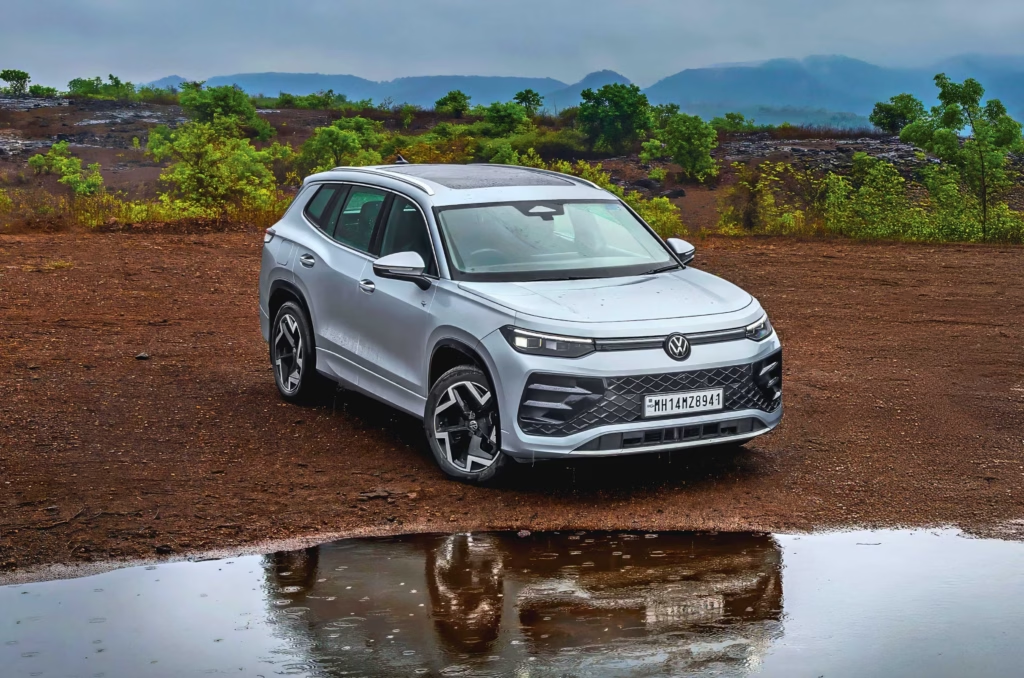
The VW Tayron R-Line is back in the Autocar India garage, and we’ve been running it for some weeks now. First things first, I switch off the Automatic Emergency Braking (AEB) as a matter of habit. The thing is, every time you turn on the car, the system defaults to AEB being active; it doesn’t remember that you last turned it off. This can be rather annoying, but like with most CBUs, which this VW Tayron R-Line is, it follows the homologation requirements of Europe, or what is called GSR 870. That means, for safety reasons, it is mandated to have the AEB on by default every time you begin driving the car. 

AEB triggers inadvertently in traffic.

Now, in Europe and other parts of the world where traffic is predictable and sane, it makes sense, but on our chaotic streets, pedestrians, cyclists, bikes and three-wheelers can trigger the AEB into a heart-stopping slam on the brakes, with the risk of being rear-ended by someone who is two inches away from your bumper. Every run to work, the proximity sensors go berserk tackling Mahalaxmi’s infamous Saat Rasta roundabout in Mumbai. It’s also a reminder that the Tayron is a long car, but the good thing is that outside visibility is pretty good, so you can judge the edges quite easily, which is essential when threading through traffic. 

2.0-litre TSI feels refined at all speeds.

The Tayron got a chance to stretch its legs on a run to the Nanoli track. The ‘EA888 Evo’ 2.0-litre TSI engine is the epitome of refinement and possibly the smoothest turbo-petrol in the premium segment. It lacks a bit of low-end punch, but likes to be revved and encourages visits to the 6,000rpm redline. The Tayron is a happy cruiser too, and feels nice and planted at expressway speeds in a VW sort of way. 

Peeling off the expressway onto the poorly paved, single-lane roads leading to Nanoli exposes a weak chink in the Tayron R-Line – a crashy ride that makes the body jar. The true culprit is the low 45-profile tyres the R-Line comes with, and their short sidewalls simply can’t cushion sharp edges, ruts and jagged tarmac well enough. I suspect the lower-spec Tayron Life, recently launched at Rs 41.99 lakh, is a cheaper and more practical option with the less sporty spec and taller 55-profile tyres. 

Low-profile tyres impact ride comfort.

Living with the Tayron R-Line, you discover the smaller details that go some way in justifying the hefty Rs 46.99 lakh price. Cabin materials feel genuinely plush – the stitching, fit and finish and tasteful use of ambient lighting – though I have to say some of the trim did creak on bad roads. There’s good storage space too, which makes long-distance driving with your family a pleasant affair. What stood out for me was the clarity and ease of use of the infotainment system. Large fonts, smooth and slick operation and a nicely intuitive menu make it easy to operate on the go. 

Seats comfy for long hours behind the wheel.

Other things that stood out after a long drive were the seats – supremely comfortable and not too hard and stiff like those in Volkswagens of the past. These seats have well-judged cushioning, and what makes them special is that they also give your upper body good and even support. 

Fuel efficiency is not the strength of a turbo-petrol, and E20 now being the only choice doesn’t help matters. In the city, we could only muster up 6.2kpl, whilst on the sole highway run to Nanoli, we averaged 11.2kpl.

Volkswagen Tayron R-Line test data

Odometer4,421km
PriceRs 47.74 lakh (ex-showroom, India)
Economy8.7kpl (this month)
Maintenance costNone
FaultsNone
Previous reportNone

JLR MD Rawdon Glover on Jaguar’s repositioning and working with Tata Motors

JLR MD Rawdon Glover on Jaguar's repositioning and working with Tata Motors
Raqdon Glover JLR MD

Rawdon Glover has worked with the JLR group for over 13 years and took charge as Managing Director 3 years ago. From the sidelines of our first drive with the Jaguar Type 01, we speak to Glover, who tells us about Jaguar’s new direction, taking risky decisions, core markets and upcoming products. 

Why the major shift in the positioning of Jaguar?

Putting Jaguar back on a firm footing for the next 90 years is the main job. And if you look at the task, it’s brand management where sometimes you need small incremental changes. But if you look at today’s technical changes, competitive context, how the brand was performing globally and a host of factors, what was called for was a big shift. That requires you to be bold and confident.

Why go for a radical and polarising design?

We’re ok with polarising. If you look at our history, it was bold evolutions, for example the XJS, the spiritual successor to the E-Type. It would have been easy to say let’s just make a modern example of the E-Type, but that’s not what we did, and if you look back at reviews, it was applauded for its dynamics and refinement, but the design was seen as polarising. Now it’s a design icon. So, I’d rather have four out of ten absolutely love the car, rather than have everyone go – yeah, it’s ok.

Isn’t going all-electric a massively risky move?

The EV landscape is evolving rapidly, many new brands are coming in, and I believe one will crack the EV glass ceiling, so why not Jaguar? So we ripped up the EV rulebook because, in the luxury space, it wasn’t working. So it’s not designed as an EV without an engine and a really cab-forward layout. But it’s about presence and performance, and to deliver the level of performance and refinement, electric is best.

Would the car sit above the XJ in terms of price?
All of the vehicles coming off this platform would be between GBP 1,20,000 and GBP 1,50,000. We see a white space at the top end of the premium segment, but underneath established luxury players. That’s where we want to be, and with this vehicle what you get is the stature, the presence, the drama of those uber-luxury brands at the top end of the premium price point.

What are the core markets, and how does India figure in the plan?

We used to sell in 130 markets, but we’ll narrow this to just eight or nine, with 85 percent of the volume. North America will remain a large part, China will become important, and the UK, Germany and some Nordics, where they have really embraced EVs, will be the mainstay. Then in markets like the Middle East and India, which have been small, we think we can really break into them now. The retail would, of course, still be through the existing JLR network.

FTAs do not favour EVs, so is the 01 capable of being locally assembled?

Manufacturing this outside of the UK is not currently in the plan. All production will be built out of Solihull, so all exports to other markets will be CBUs, but that doesn’t rule out local production outside UK. As you know, the geopolitical situation is so fluid at the moment, but in time we could consider production elsewhere.

Is there a more chauffeur-driven offering from Jaguar coming?

The 01 is unashamedly driver-focussed, it has four comfortable seats, but it’s a four-door GT, not a four-door sedan designed as a luxury chauffeur-driven car. There will be other vehicles off this platform that will share the same design language, but will have a distinct personality and target different groups, and they would be accessible to a wider audience. So, yes absolutely, there will be a chauffeur-driven-focused model from Jaguar.

Would an SUV body style be part of the portfolio?

What you shouldn’t expect from us is a high-sided Jaguar that is a Range Rover competitor. We already have the best SUV on the planet, and part of the house of brand’s strategy is to differentiate the brands. All I can say, for now, is that you can expect a variety of vehicles from us, and there will be vehicles slightly higher positioned, but all will drive like a Jaguar.

How has it been working with Tata Motors?

Unwavering is the word. There is nobody more dedicated and passionate about our success than the shareholders, and that’s an incredibly privileged position to be in. It puts a little pressure, but having somebody like PB Balaji come onto our board is great. He’s been on the journey with us, he understands it inside and out, and for him, Jaguar is personal. It’s important to our chairman and even was to Ratan Tata. I was reading stories about Ratan Tata driving about in his father’s XK120, so it’s really important to Tata that Jaguar wins. In all my interactions with the board, there is never talk of tempering ambitions, it’s always, just go for it.

Suzuki e-Access road test, review

Suzuki e-Access road test, review
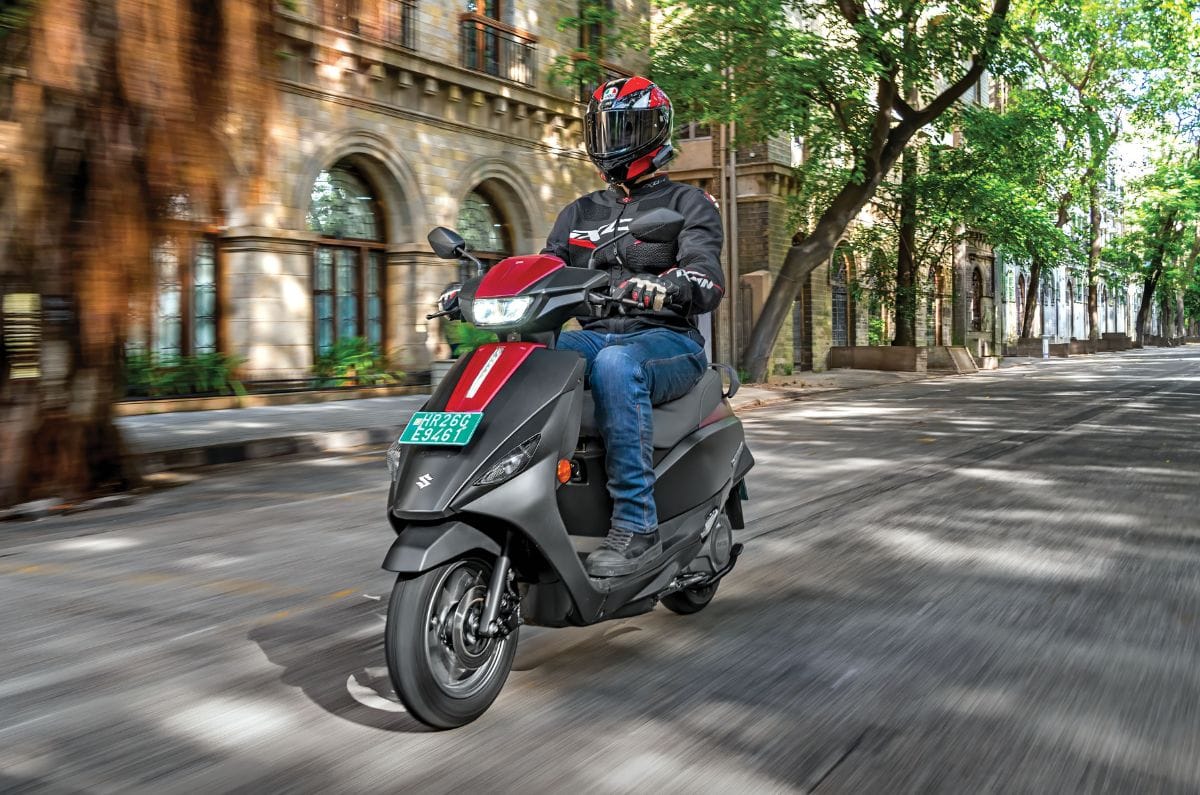
Suzuki e-Access front left side riding shot on road

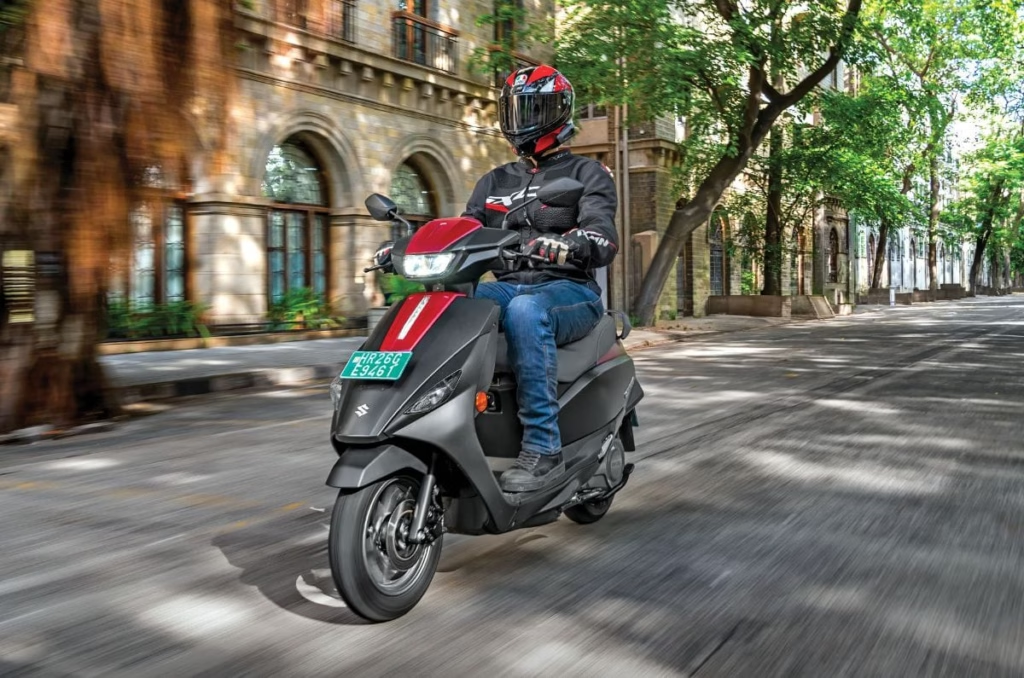
Suzuki first showed the e-Access back in January 2025, but it was actually launched only a year later, in January 2026. While the e-Access has definitely lost the first mover advantage in the burgeoning EV market, has it at least come prepared? 

e-Access Design and Features – 6/10

Unusual design won’t be to everyone’s tastes, features aren’t ground-breaking.

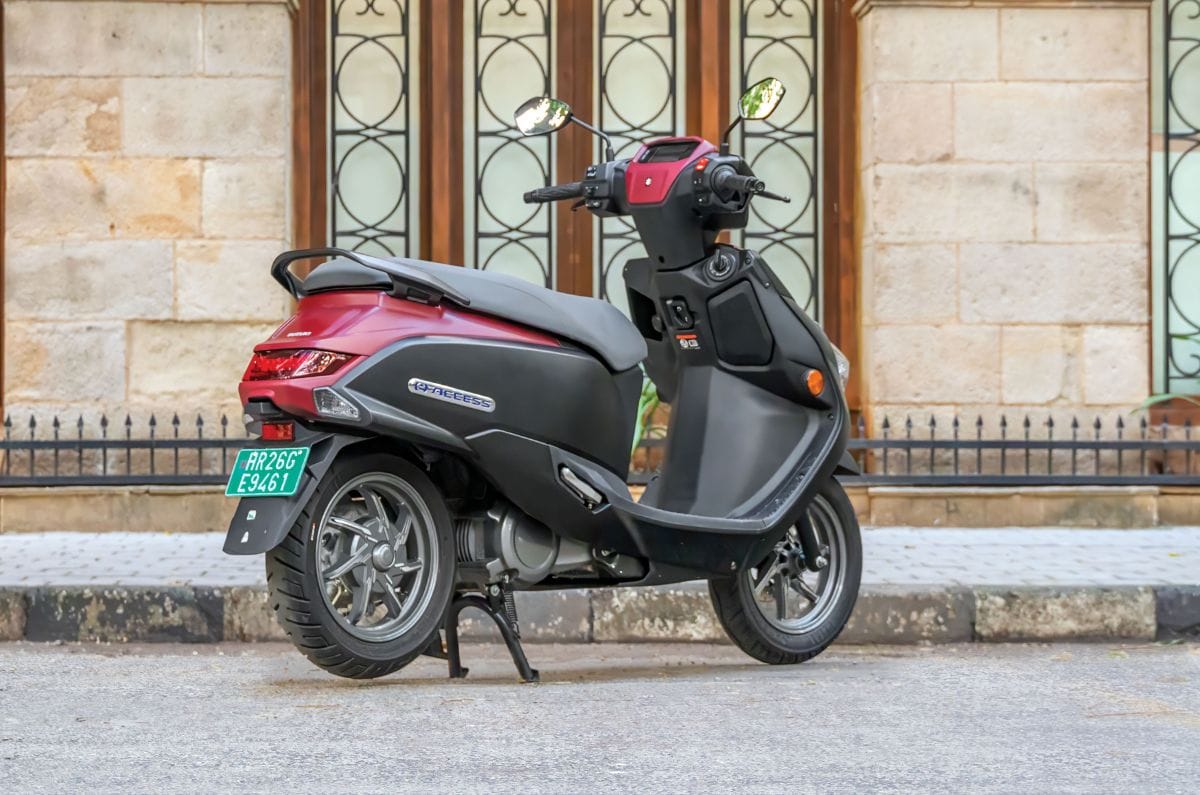
The e-Access is a ground-up new product, which has very little shared with its massively popular petrol-powered namesake. Its design is a clean-sheet one, and most people found it quite polarising. The swooping, double ‘duck-bill’ front end, mated to a contrasting, boxy rear section, doesn’t really gel well cohesively. Like all Suzuki two-wheelers, the e-Access feels solidly built, and the quality is quite decent too. 

Decent is also a good way to describe its feature set, which includes the same bright and logically laid-out 4.2-inch TFT display as the 125cc Access and Burgman Street. In terms of riding modes, there are 3 in total – Eco, Ride B and Ride A – but on the move, you can only switch between Eco and either of the Ride modes. Both Ride A and Ride B give you full power, and the only difference is in the levels of regenerative braking. A has stronger regen, while in B, it is more gentle. To toggle between A and B, you have to be at a standstill, and this is a needless hoop to jump through.  

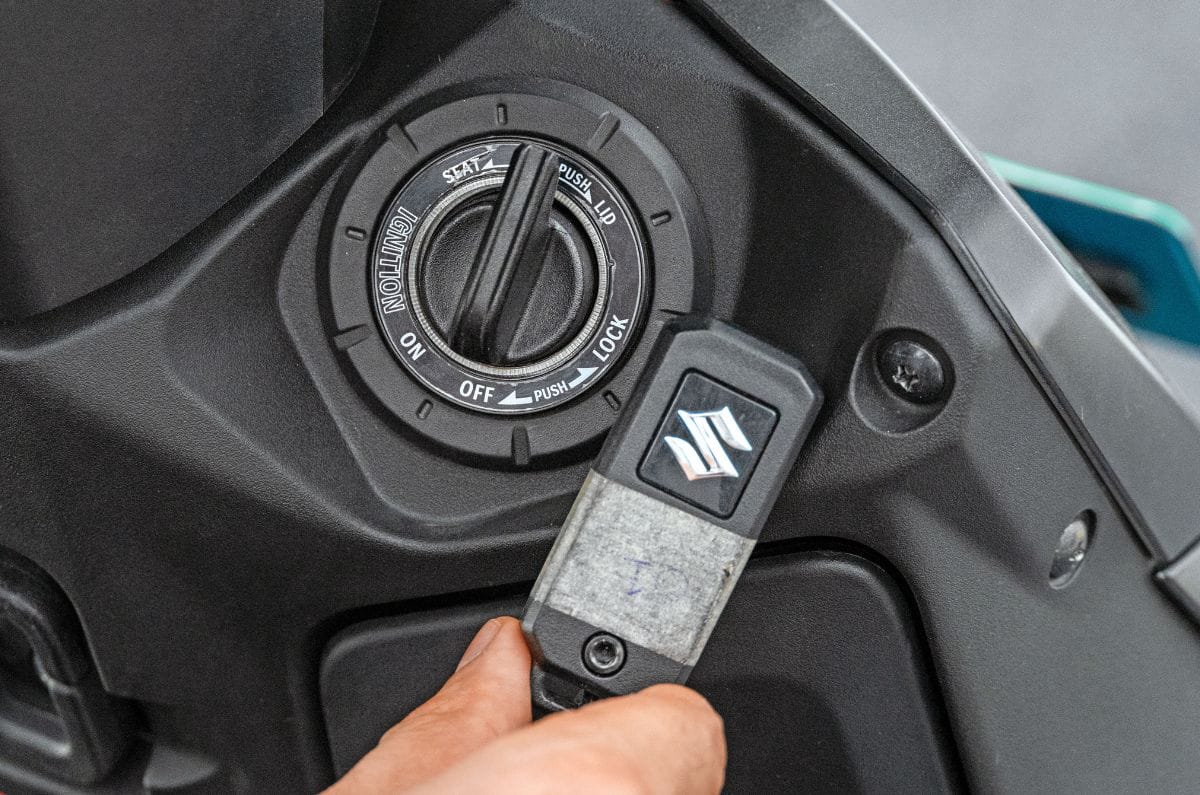
Suzuki e-Access key fob
Keyless ignition convenient to have, and very few e-scooters offer it today.

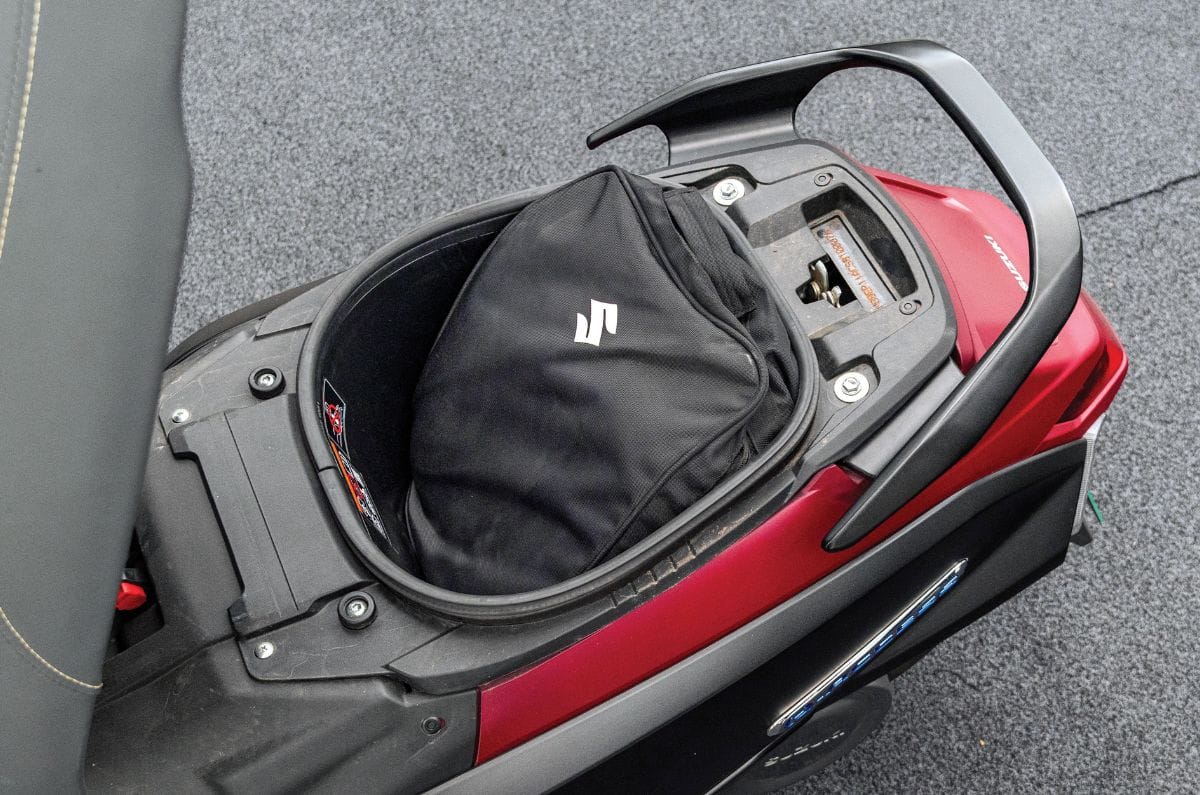
The feature set also includes a very convenient keyless ignition system, a spacious, open cubby on the front apron with a USB-A charger and an oddly-shaped, very small 17-litre underseat boot. In an age where most rivals routinely offer 30-35 litres of boot space, the e-Access falls woefully short, and in fact, even the latest-gen ICE Access gives you more. 

Suzuki e-Access boot
17L boot feels archaic today, charger cables need to be folded just right to fit inside.

It comes with a reasonably sized 600W charger, which took 6 hours flat to top up a flat battery to full. Suzuki also provides a well-thought-out bag in which you can store the charger, which is another neat touch. However, if you don’t pack the charger’s cables just right and place the bag inside the boot, it won’t close. Moreover, once the charger is in the boot, there’s very little free space available. This is a consequence of Suzuki positioning the batteries under the seat, which also has some ramifications on the scooter’s handling, but more on that later. 

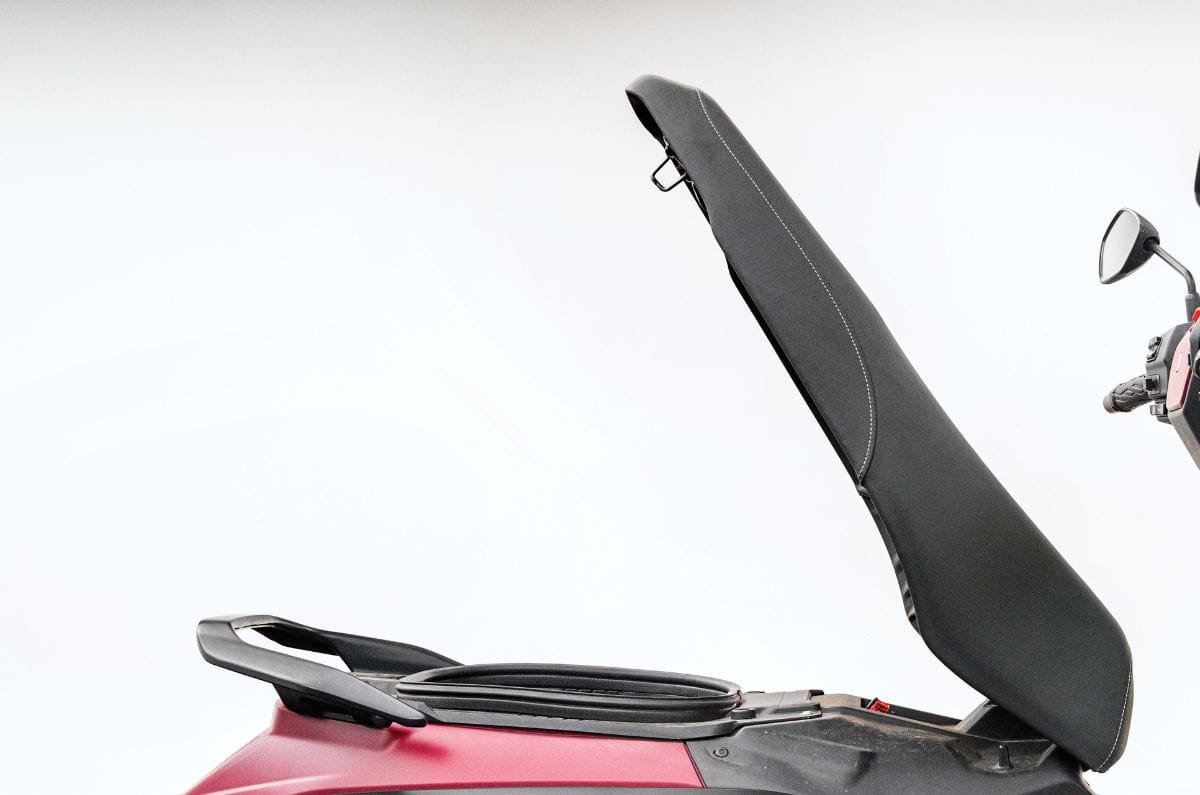
One silver lining is that the e-Access’ seat stays in the position you leave it in once you open it, courtesy of a small spring-loaded mechanism at the hinge, which is quite a neat touch. 

Suzuki e-Access seat open
Seat stays open on its own without needing to keep it manually propped open.

e-Access Performance and Range – 6/10

Range and performance are just about adequate.

Every EV has shortcomings, but the important question is, can they be overlooked in the interest of the savings it brings via lower running costs? Unlike most mainstream manufacturers, which use NMC (Nickel Manganese Cobalt) batteries, Suzuki has chosen LFP (Lithium Ferrous Phosphate) chemistry for the e-Access. LFP cells typically have a longer life and lower risk of thermal runaway incidents, but the trade-off is lower energy density, and ergo, lower range.

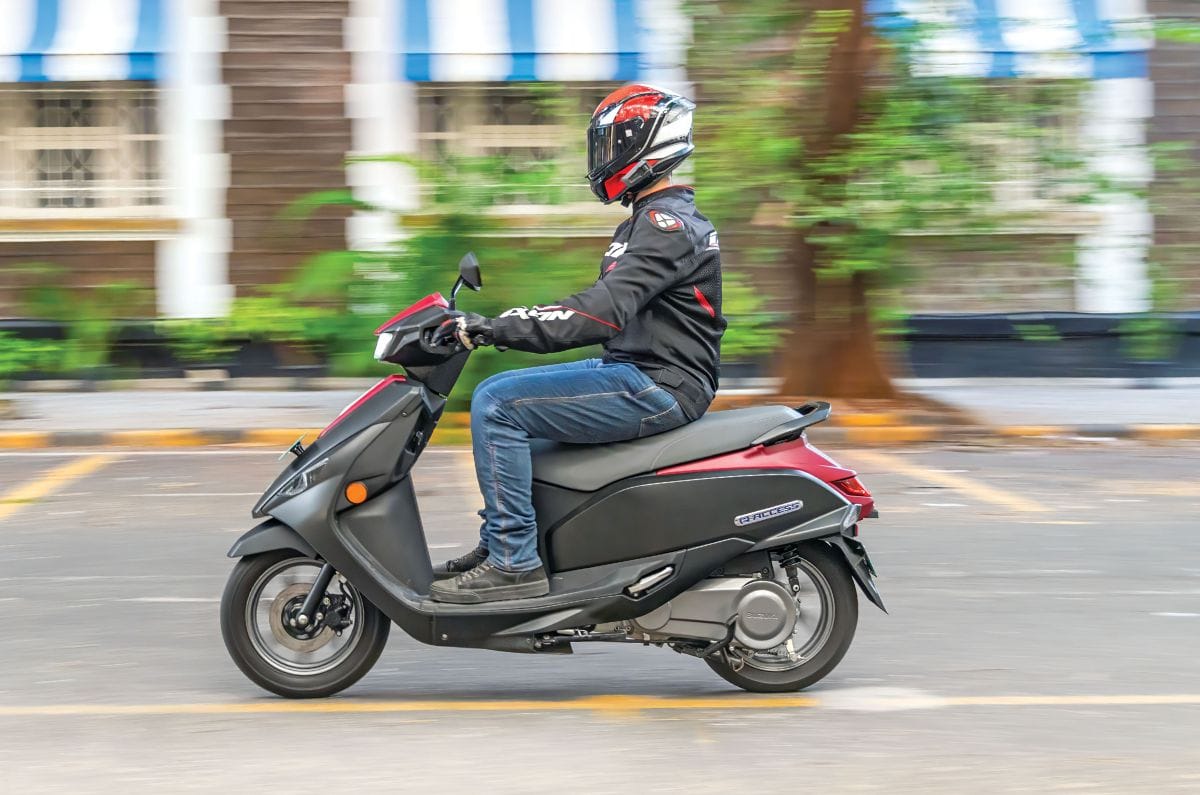
Suzuki e-Access left side profile riding shot on road
Neutral ergonomics and well-judged suspension help keep you comfortable.

With a 3.072kWh LFP battery pack and a claimed 95km IDC range, range was never going to be the e-Access’ USP. In our tests, using Ride A mode (maximum power, maximum regenerative braking), we managed to cover a little over 88km on a single charge. This is a decent number in isolation, but quite a bit lower compared to rivals with similarly sized batteries, which can cover upwards of 100km. 

One positive is that, once the range indicator had calibrated to our riding style, its predictions proved to be accurate, and the number shown on screen could be relied upon as the actual distance you’d go. Using Eco mode will obviously increase range on a single charge, but performance will be much gentler. What is nice is that even in Eco, the e-Access can maintain pace with big-city traffic as well as climb flyovers.

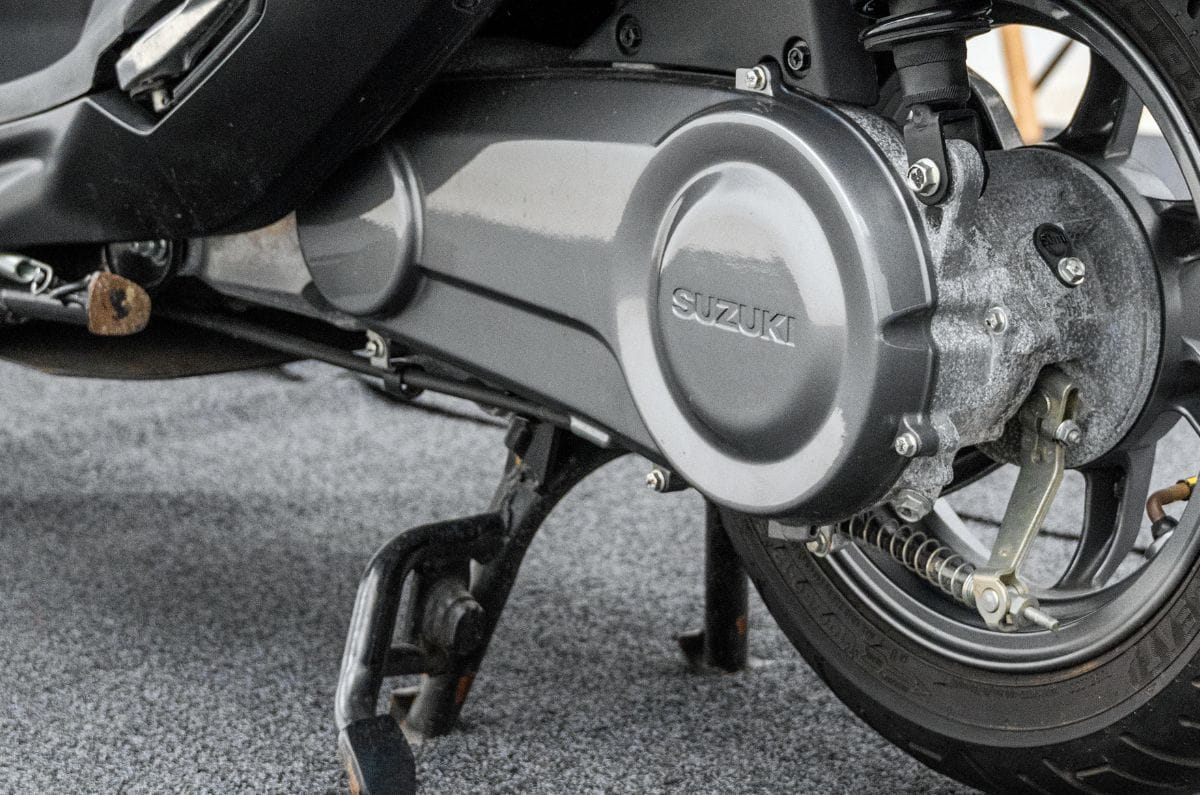
Suzuki e-Access motor
Motor delivers power in a predictable, unhurried manner, but the powertrain is quite noisy.

While the performance never feels inadequate, it is definitely a letdown on a machine bearing the ‘Access’ badge. In our tests, the e-Access took nearly 12 seconds to complete the 0-60kph sprint, which not only makes it slower than most other well-known e-scooters, but also much slower than the Access 125 that takes 7.68s for the same test. In fact, its performance, even in the most powerful Ride A mode, is so mellow that even the gentle Honda Activa 110 would leave it in the dust in a traffic-light grand prix. Another bug bear we have with the e-Access’ powertrain is that the powertrain is on the noisier side among all the reputed EVs on sale today.

e-Access Ride and Handling – 7/10

It’s light, easy and intuitive to ride, but over-eager handling is a mismatch.

To sit on, the e-Access feels pleasantly ‘normal’, and while this is certainly a compact machine, taller riders will be reasonably accommodated. However, while its low 765mm perch will be welcoming for shorter folks, riders over 6 feet will find it a bit too low. With a flat seat, spacious floorboard and well-tuned suspension, the e-Access is quite a comfortable machine and will isolate you to a great degree from all but the worst of bumps on our roads. 

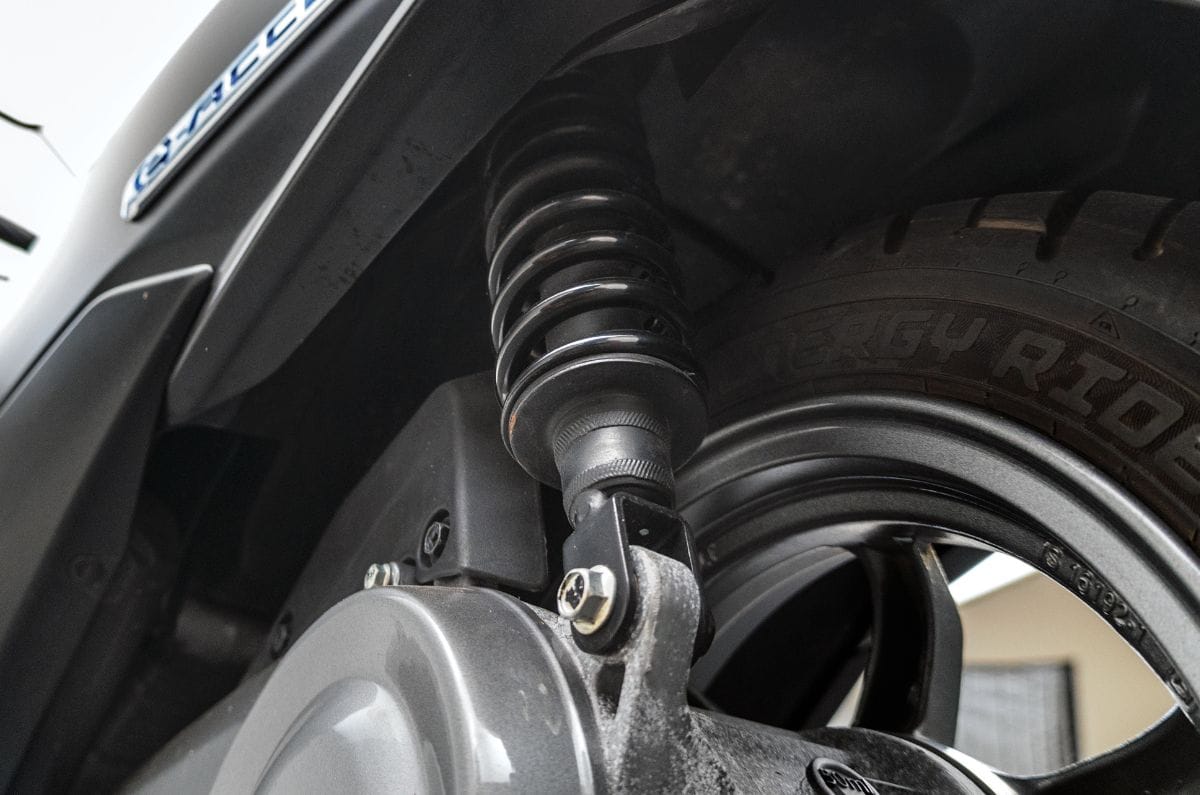
Suzuki e-Access monoshock
Suspension is well set up and shields you from bumps, but is more taut than floaty.

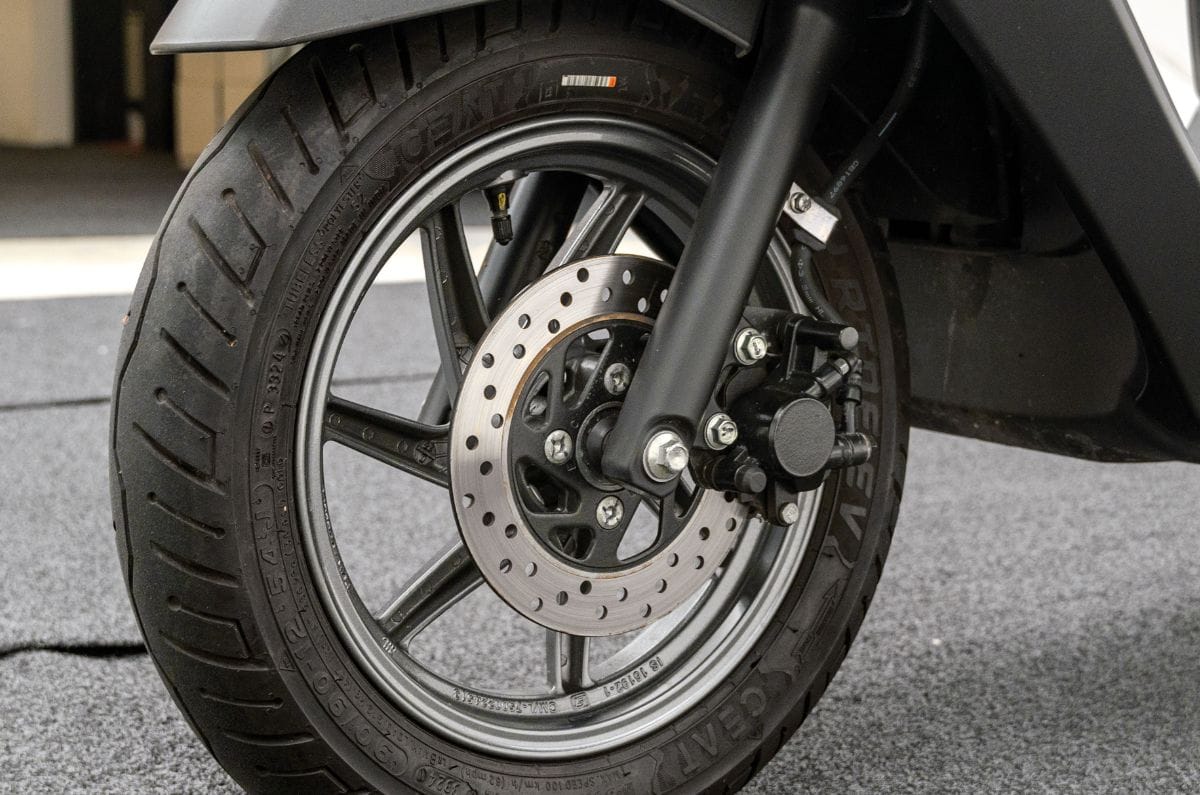
Like the new Burgman, its suspension is not overtly soft and feels quite taut, which isn’t necessarily a deal breaker, but something to watch out for. Braking power is quite good, although the lack of ABS and a sharp bite mean you have to be mindful when slowing down. 

Suzuki e-Access front brake
Brakes work well, but are quite sharp and bitey. Lack of ABS is a downer at this price.

At 122kg, it is fairly light, and slicing through traffic is a breeze. In fact, the scooter displays a tendency to lean over onto its side quicker than you’d expect, which is partly down to its smaller 12-in wheels and thinner tyres. It is also another consequence of Suzuki mounting the battery pack vertically under the seat. As a result of the centre of gravity being fairly high, the e-Access almost ‘falls’ into a corner, and this behaviour won’t be to everyone’s liking.

e-Access Price and Verdict – 6/10

All said and done, it’s not the average features, tiny storage area, mellow performance or lacklustre range which will dissuade you from buying it. These are all things that buyers could overlook in exchange for the quality assurance that comes with the Suzuki Access name. However, the deal breaker here is the super-steep Rs 1.92 lakh asking price, which is very difficult to justify when similarly specced, proven options from reputed Indian brands like TVS, Bajaj, Vida (Hero) and Ather cost up to Rs 60,000 less. 

Suzuki e-Access rear right side static on road
Gets some things right, but it’s far too expensive.

The e-Access gets some things right, like good comfort, and has typical Japanese strengths, like the promise of reliability, longevity and good quality. However, today’s market values a good price point without compromising on range, storage and quick charging times. For the e-Access to follow in the successful footsteps of its ICE namesake, simply leveraging an established name and charging an unreasonably stiff premium for it is unlikely to pay off.

4 reasons to buy the BMW X1 LWB and 3 reasons to avoid it

4 reasons to buy the BMW X1 LWB and 3 reasons to avoid it
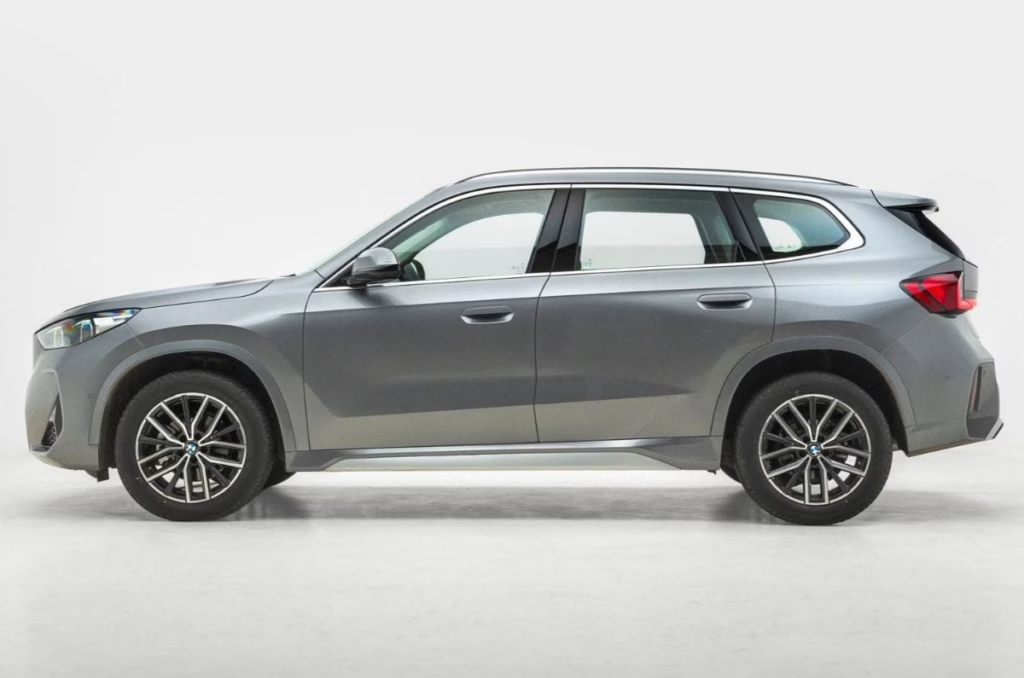
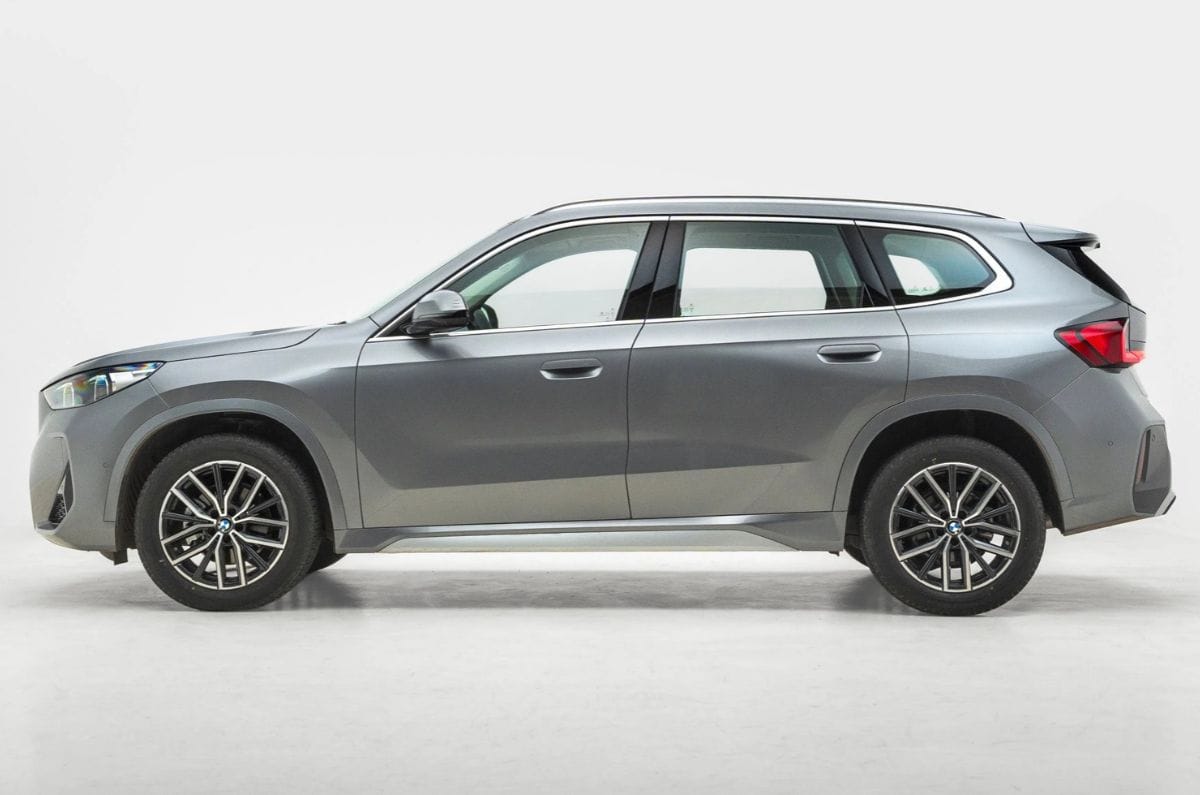
BMW X1 LWB side

Unlike the standard X1, the Long Wheelbase (LWB) version primarily targets buyers for whom rear-seat space is the top priority. The BMW X1 LWB competes with the likes of the Audi Q3 and Mercedes-Benz GLA in India and is the only one to be offered in a long-wheelbase guise. All that said, here are some pointers to keep in mind before signing on the dotted line.

Reasons to buy the BMW X1 LWB

Space is aplenty

The Long Wheelbase version’s rear seats and boot are easily better than rivals’

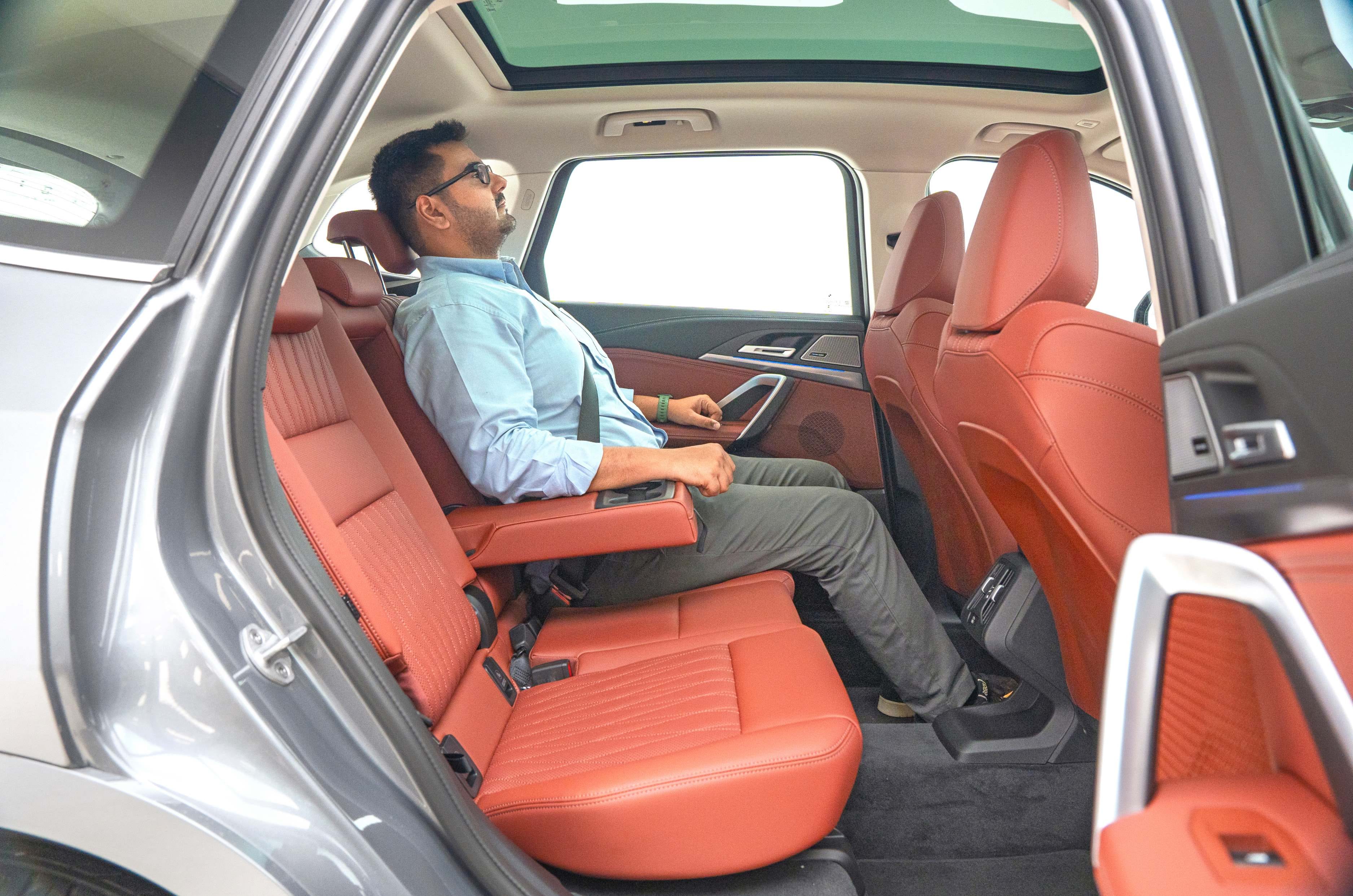
A wheelbase that’s grown by 108mm over the standard X1 means that the LWB benefits from a roomy cabin. This is noticeable upon stepping into the rear of the X1 LWB, where there’s plenty of space even for six-footers to stretch out. A centre armrest with cup holders, dedicated rear AC vents and USB Type-C charging ports aside, BMW has redesigned the rear seats.

BMW X1 LWB rear seats

Catering to the occupants in the outer units are better cushioning plus a 15mm longer seat base for added under-thigh support. Not only is the general seating position good, but the reclining backrests further elevate comfort. The expansive glasshouse, including the fixed panoramic sunroof, makes for a light and airy cabin. Furthermore, the 540-litre boot is bigger than those of the GLA and Q3.

Convincingly pliant

BMW has revised the suspension for a more comfortable ride

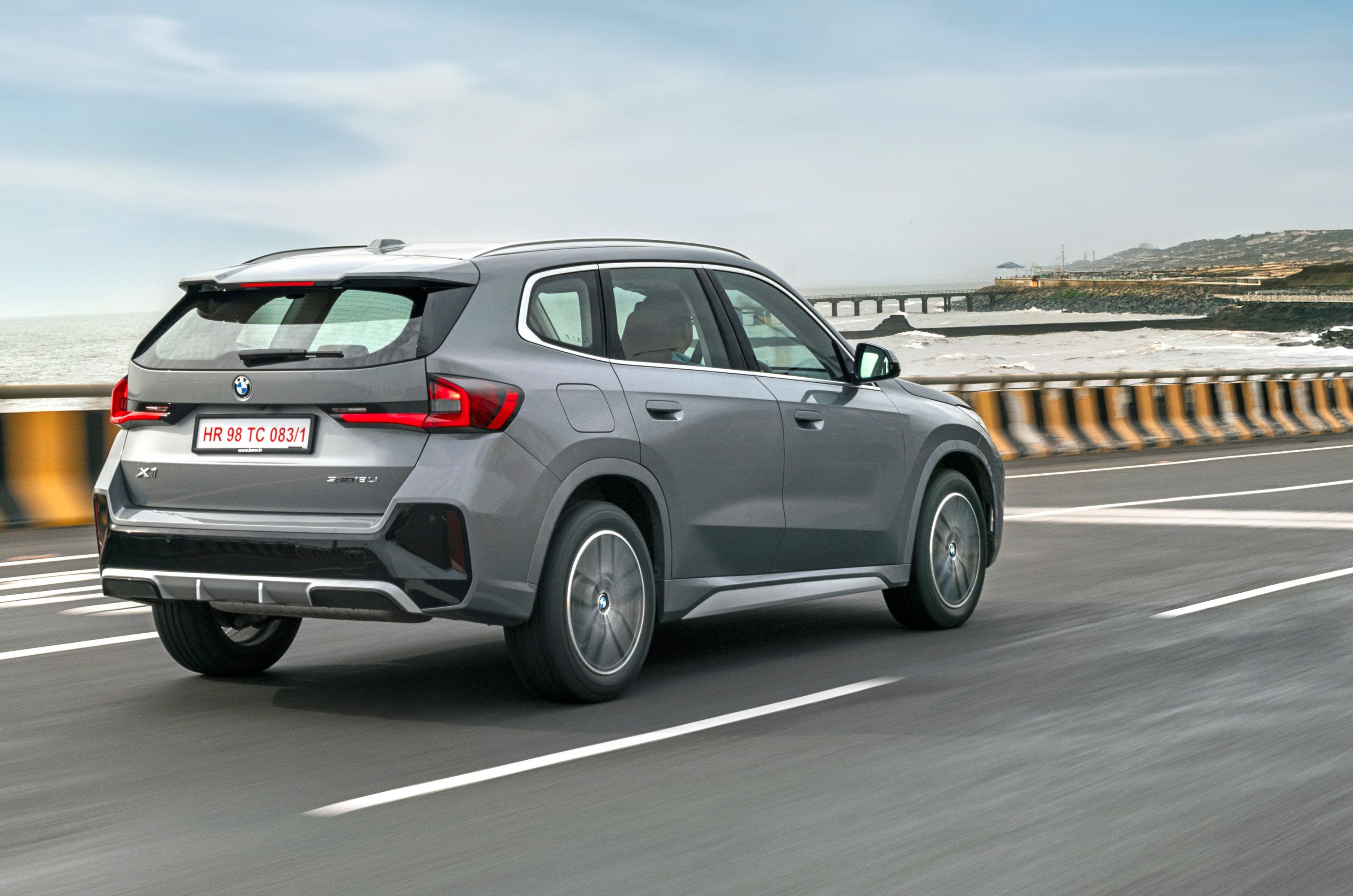
BMW X1 LWB rear quarter tracking

Compared to the standard-wheelbase model, the X1 LWB offers a more pliant ride that errs towards comfort rather than corner-carving sportiness. It works quietly in the background and absorbs bad patches well. Under most driving scenarios, the underlying firmness of this suspension setup will go unnoticed. The steering wheel provides a good sense of connection to the road, and the X1 LWB changes direction confidently and swiftly.

Useful parking aids

Quality assistance tech means parking the X1 LWB is a surprisingly convenient affair

The BMW X1 LWB is equipped with a 360-degree camera system, whose quality is really good. This will help one park the luxury SUV without major issues. Should you find yourself in a tricky situation or be confused about getting out of a dead end, the Reversing Assistant is a feature that could be a great help. This system is designed to automatically back up the car by retracing the path taken to reach its current spot and can work up to a distance of 50 metres.

Competitive pricing

The X1 LWB is priced rather well

At Rs 49.90 lakh (ex-showroom), the BMW X1 LWB costs Rs 1 lakh less than the standard-wheelbase model. When compared to its Mercedes-Benz GLA rival, the X1 LWB is up to Rs 5.1 lakh more affordable.

Reasons not to buy the BMW X1 LWB

Missing equipment

The long-wheelbase version has fewer features than the regular X1

For reasons known only to BMW, the X1 LWB doesn’t come with adjustable rear sunshades, ventilated or massaging seats, and even the USB slots up front aren’t backlit. This makes finding them in the dark a chore. The LWB version also lacks a dedicated climate-control zone for the rear passengers, while the advanced driver assistance systems (ADAS) package doesn’t include adaptive cruise control.

Uninspiring performance

This three-cylinder engine isn’t a punchy enough unit 

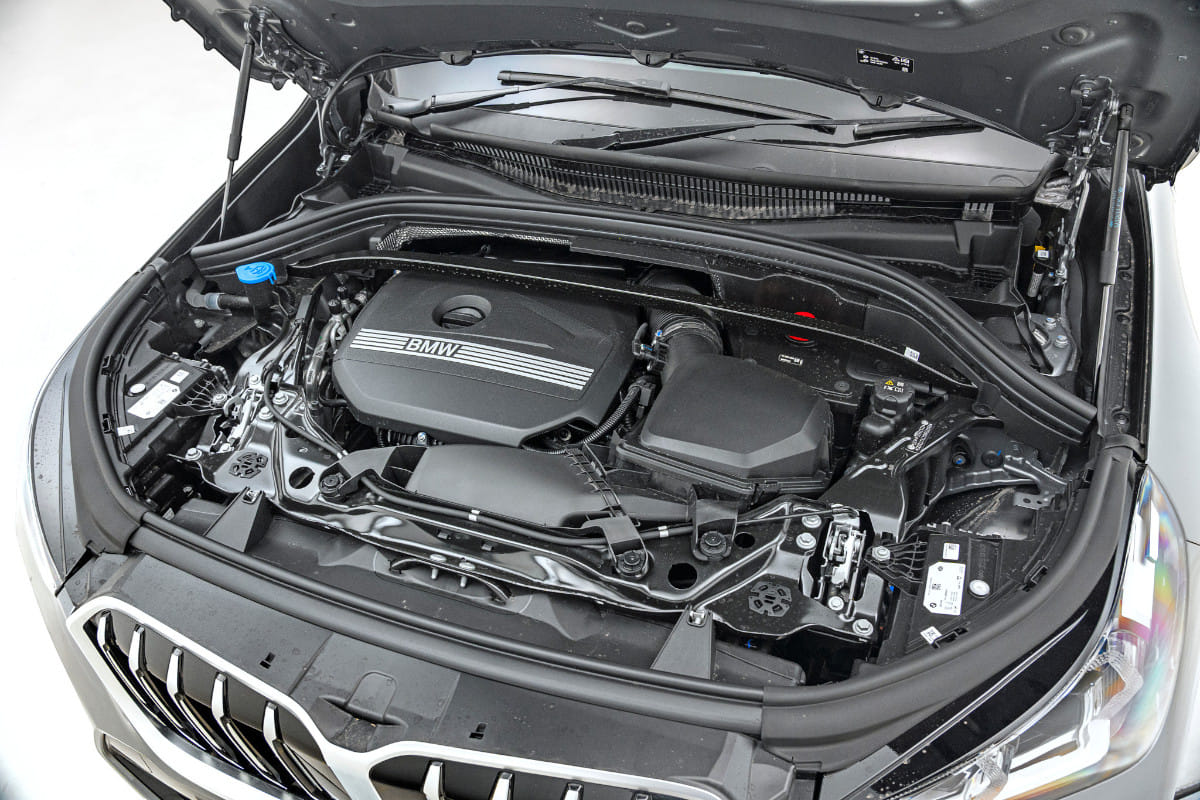
The 1.5-litre three-cylinder turbo-petrol fuel-injected engine produces 156hp and 230Nm of torque, which is 20hp more than the unit powering the standard-wheelbase X1. This E25-compliant engine comes mated to a 7-speed dual-clutch transmission (DCT) and feels more than sufficient when driving in the city.

BMW X1 LWB engine

However, when you want to overtake in a hurry or bury the accelerator pedal, there’s some delay before the X1 LWB builds speed. Push it hard, and this three-cylinder mill will make itself heard, and it isn’t a particularly sporty note either. Even in Sport mode, 0-100kph took 9.58 seconds when we tested this SUV’s acceleration.

Complicated infotainment

The system is modern but can be confusing for users

BMW X1 LWB infotainment touchscreen

The 10.7-inch touchscreen of the BMW X1 LWB looks crisp and is very responsive to inputs as well. However, its information-dense design means users will find themselves facing a plethora of menus, and finding what you need will require some patience. Even the climate-control system is managed via the touchscreen, meaning eyes off the road. All of it feels more challenging than it needs to be.

Also read

3 reasons to buy the Honda Amaze and 3 reasons to avoid it

3 reasons to buy the 2026 Mini Countryman C and 2 reasons not to