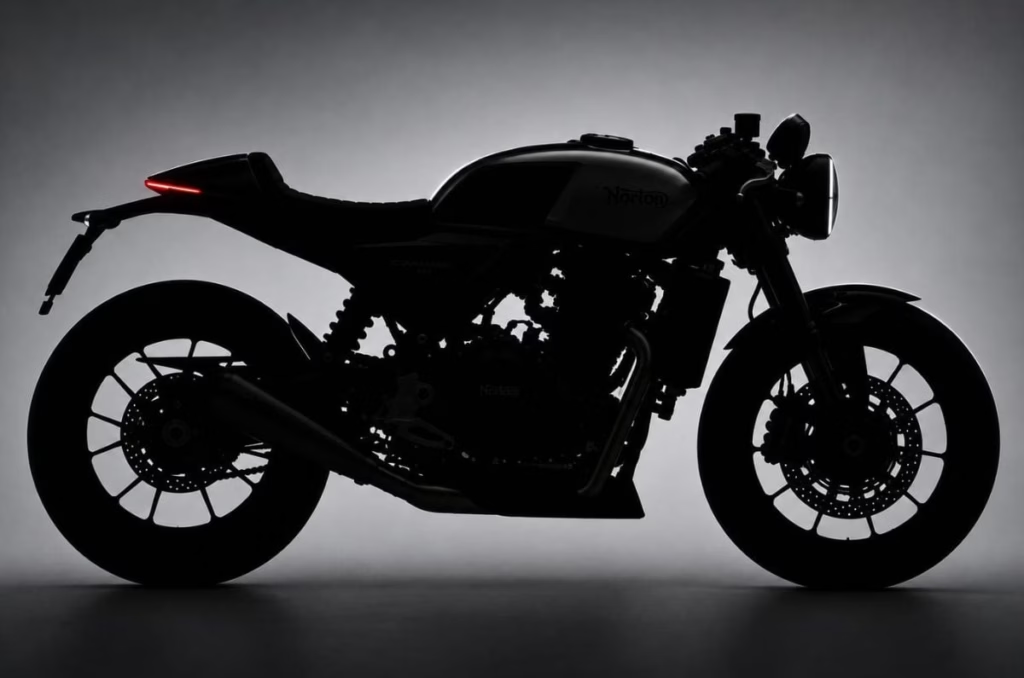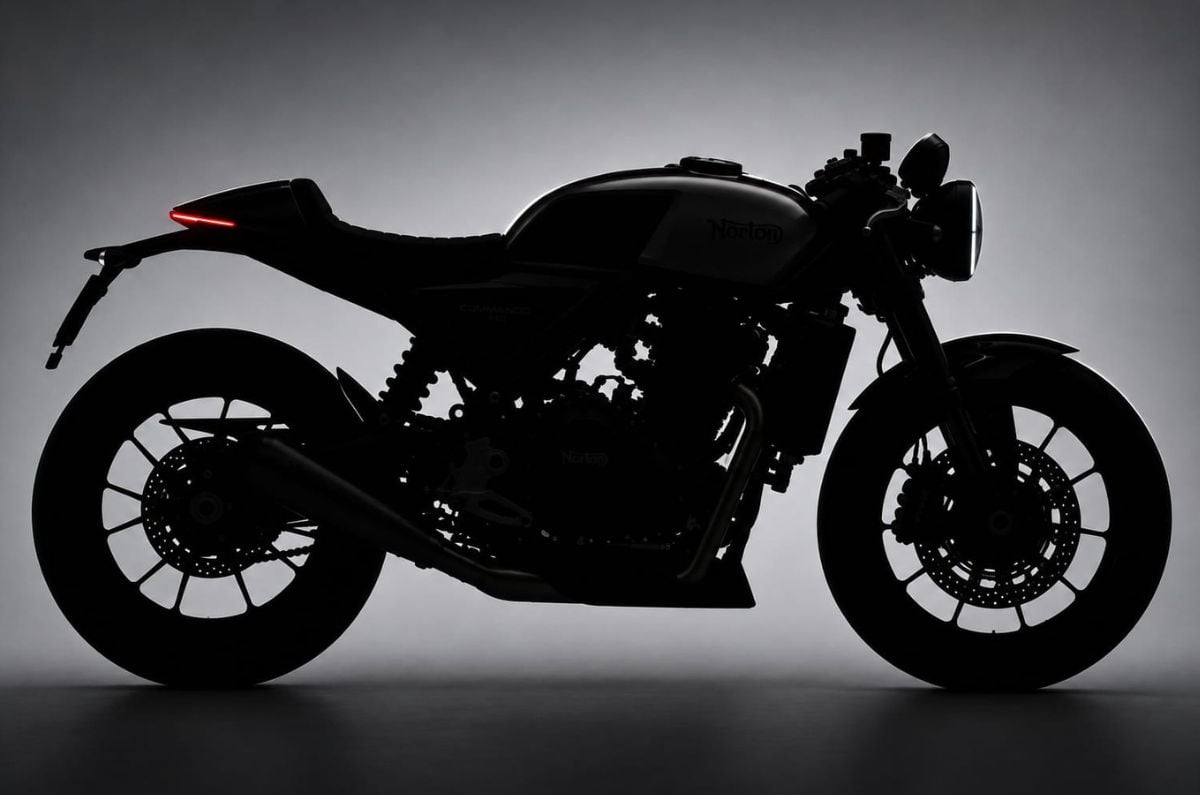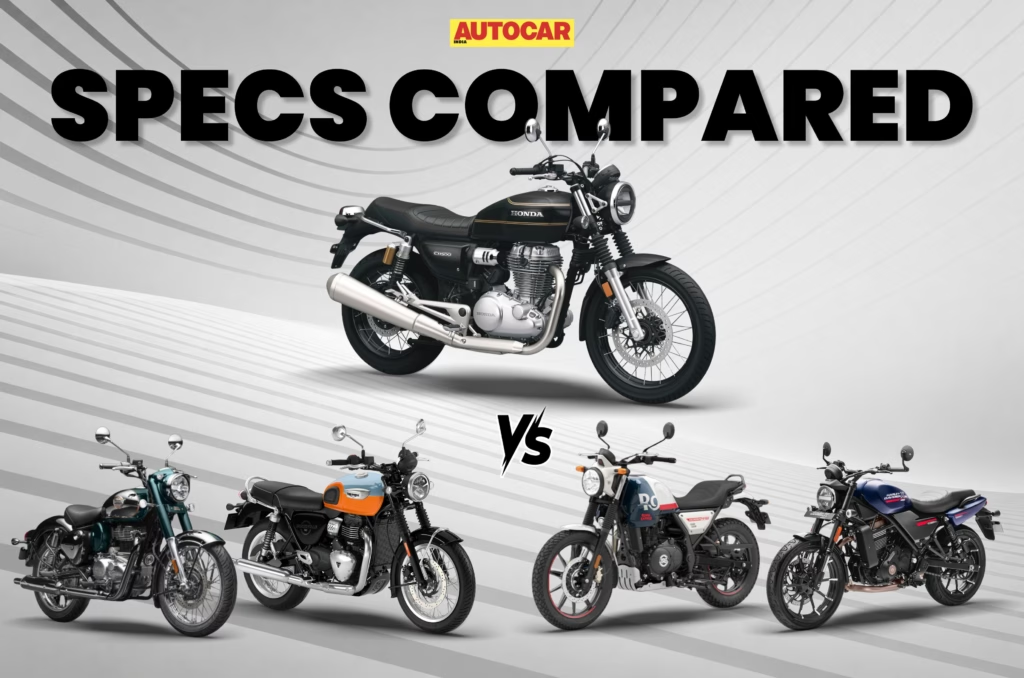
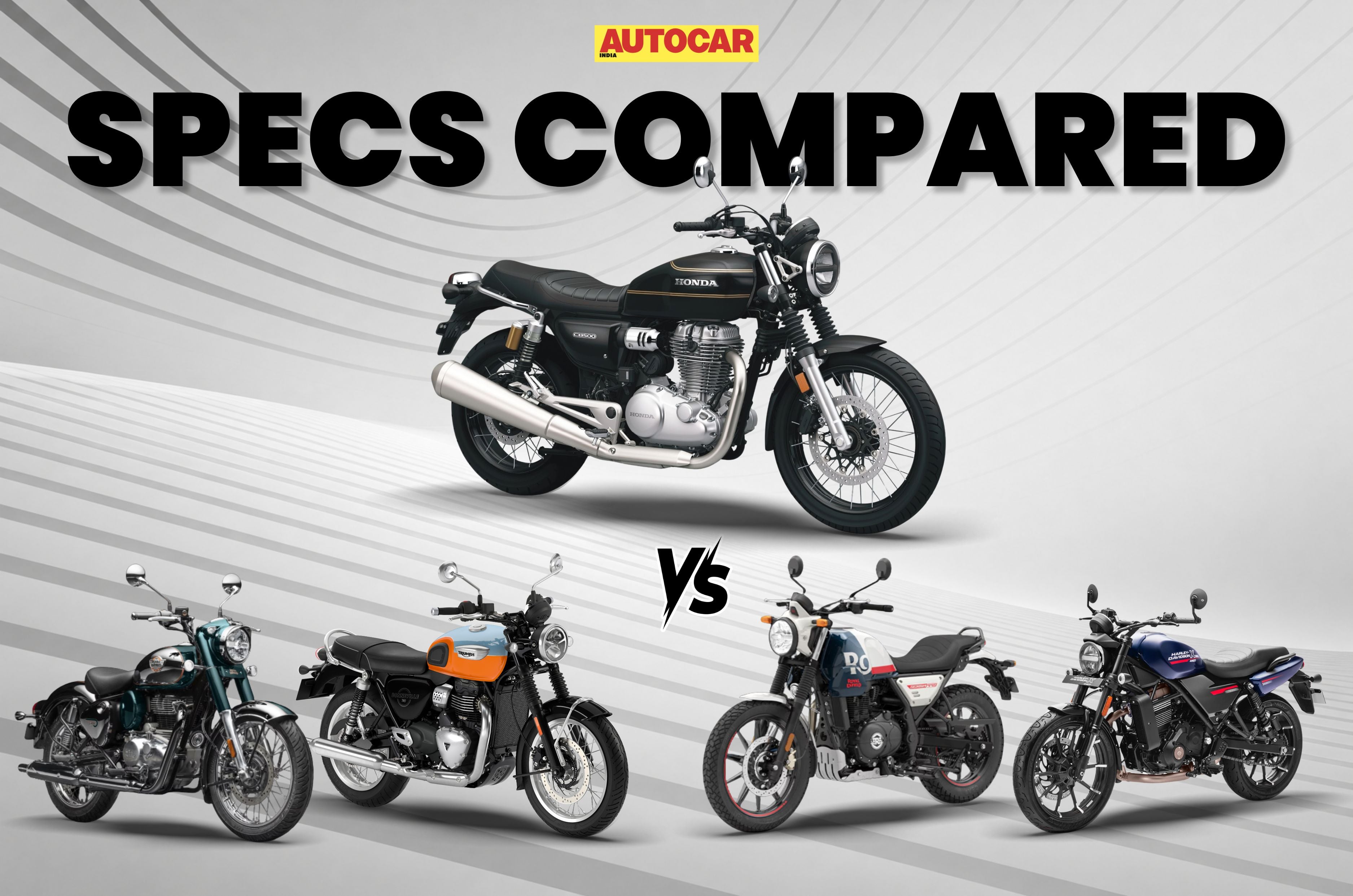
Honda has revealed the specifications for the CB500, so it’s only natural that we see how it stacks up against its main rivals such as the Harley-Davidson X440 T and Triumph Bonneville T40. For good measure, we’ve even thrown in other lower-priced and lower-spec but far more popular alternatives like the Royal Enfield Scram 440 and the king of this class, the Classic 350. Here is how these stack up against each other on paper.
Honda CB500 vs Rivals: Engine and output
The Honda CB500 shines with plenty of low-to-mid range torque
With its large 501.7cc mill, the Honda offers more low-to-mid-range torque than the others, and it arrives the earliest too, at 3,750rpm. The torque outputs in this comparison are largely dictated by the engine’s displacement. In the modern retro segment where riders want an effortless riding experience, a healthy torque output delivered without too much effort is almost a necessity. The only anomaly here is the Bonneville T40, with its short stroke and liquid-cooled engine, making the most peak horsepower, although its torque output can’t match the larger bikes’ figures.
Honda CB500 vs Rivals: Dimension and weight
The CB 500 is the lightest in its segment
The Honda CB500 immediately stands out because of its kerb weight. It is the lightest motorcycle in this comparison, despite having the largest motor. Of all the bikes here, the T40 offers the most accessible saddle height, and you can further drop it down to 770mm with the accessory low seat. No bike here is a corner carver and all of them prioritize a laidback and stable demeanour on the side of their tyres. Given that we are yet to ride 2 of the most recent entrants yet, any comment on a comparison of their ride and handling will have to wait until a later date.
If you want your neo retro machine to be able to tackle bad roads, all of them should be up for the job but it’s the Scram that is the most apt for it with its Himalayan-derived suspension and chassis.
Honda CB500 vs Rivals: Tyres, brakes and suspension
The X440 T is the only motorcycle that features a USD fork
While the Harley-Davidson features a USD front fork, the other motorcycles rely on right way up telescopic forks and twin rear shocks with the exception of the Scram, which uses a link-type monoshock. Again, in keeping with their more relaxed nature, the simple spec on offer here is more than sufficient for these bikes’ intended roles. Of them all, the H-D X440 T is likely to be the most agile owing to its more sophisticated front suspension and smaller wheel sizes, which are almost akin to a traditional roadster.
More pertinent here is that the Classic 350 (except for the alloy wheel ‘Dark’ variant) and Bonneville T40 come only with tubed tyres. The Honda comes with tubeless tyres on all variants and save for the base one, the other two come with neat-looking side-laced rims permitting the aforementioned feature.
Honda CB500 vs Rivals: Features
Triumph takes the lead in the features department
The Bonneville T40 offers more features than any bike in the neo-retro segment (even more than its much more expensive twin-cylinder brethren!). Its electronic throttle body permits five ride modes (Eco, Road, Rain and customizable Rider A and B) as well as cruise control. A handsome full colour, 4-in TFT dash further brings in turn-by-turn navigation and cornering ABS as well as traction control complete its electronic arsenal.
The X440 T also has a TFT display, but it’s neither as sophisticated nor as pleasing to look at as the one on the ‘Bonnie’. It brings in 2 riding modes (Road and Rain) and has the safety net of switchable dual channel ABS and traction control. While the Honda has the same riding aids as the Harley, it displays information to the rider via a simple and easy-on-the-eyes digi-analogue display which has basic Bluetooth connectivity.
The Scram and Classic -in true RE fashion – are simple, but not spartan machines. The Classic offers you a slip-and-assist clutch, type-C charger and dual-channel ABS, whereas the Scram misses out the slip-and-assist clutch and further offers you the ability to disable ABS at the rear.
Honda CB500 vs Rivals: Price
The CB500 is priced competitively
Honda has priced the CB500 rather well considering its capacity, what it brings to the table and despite the higher 40 percent GST working against it. In fact, its starting price undercuts both the smaller Harley and Triumph, and not by an unsubstantial amount.
However, in comparison to the slower and smaller REs, the Honda’s price is a segment higher and rightly so, because the CB500 is, for all intents and purposes, a machine from a segment above. Deliveries for the Alloy variants are expected later this year, and for the spoke and tubeless spoked variants in the first quarter of 2027.
Given what the latest offerings bring to the segment and their differing price strategies, the neo retro segment is now larger and more diverse than ever before with an option to suit just about every need. Choosing between these bikes is more than a simple comparison on paper and will need a more nuanced understanding of what they offer the rider.