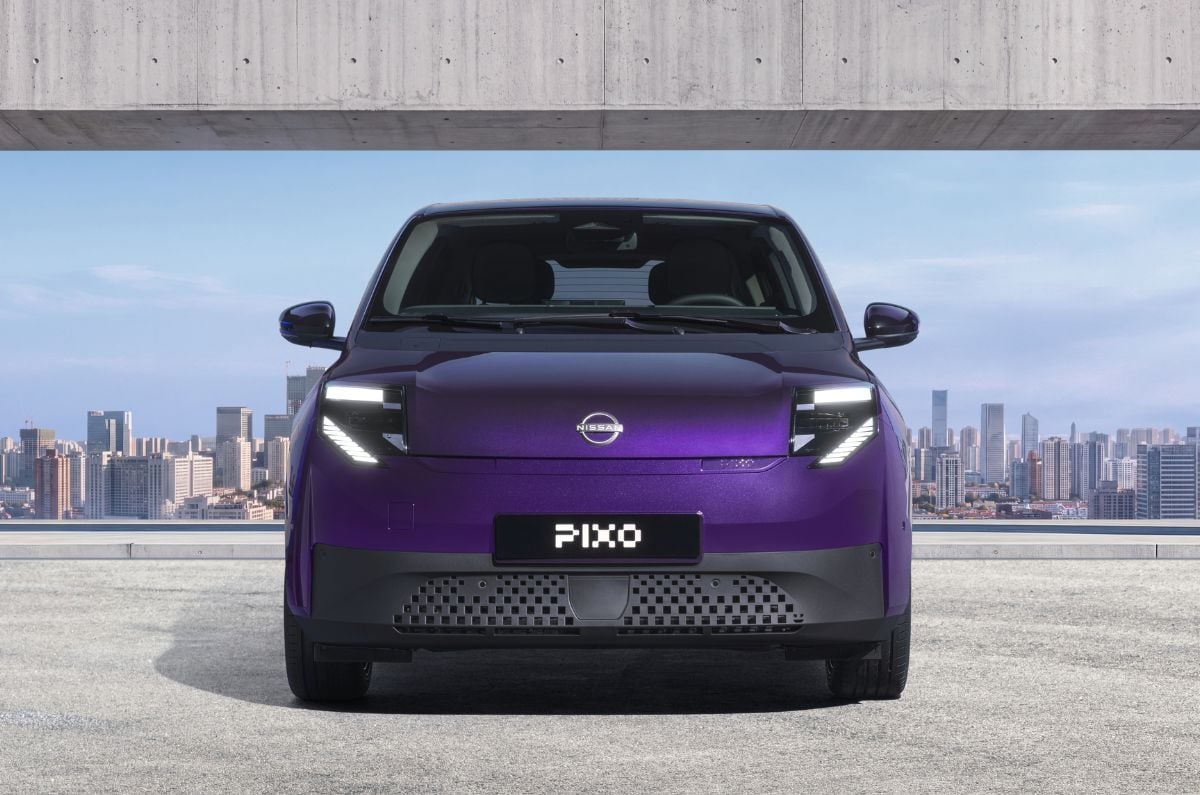
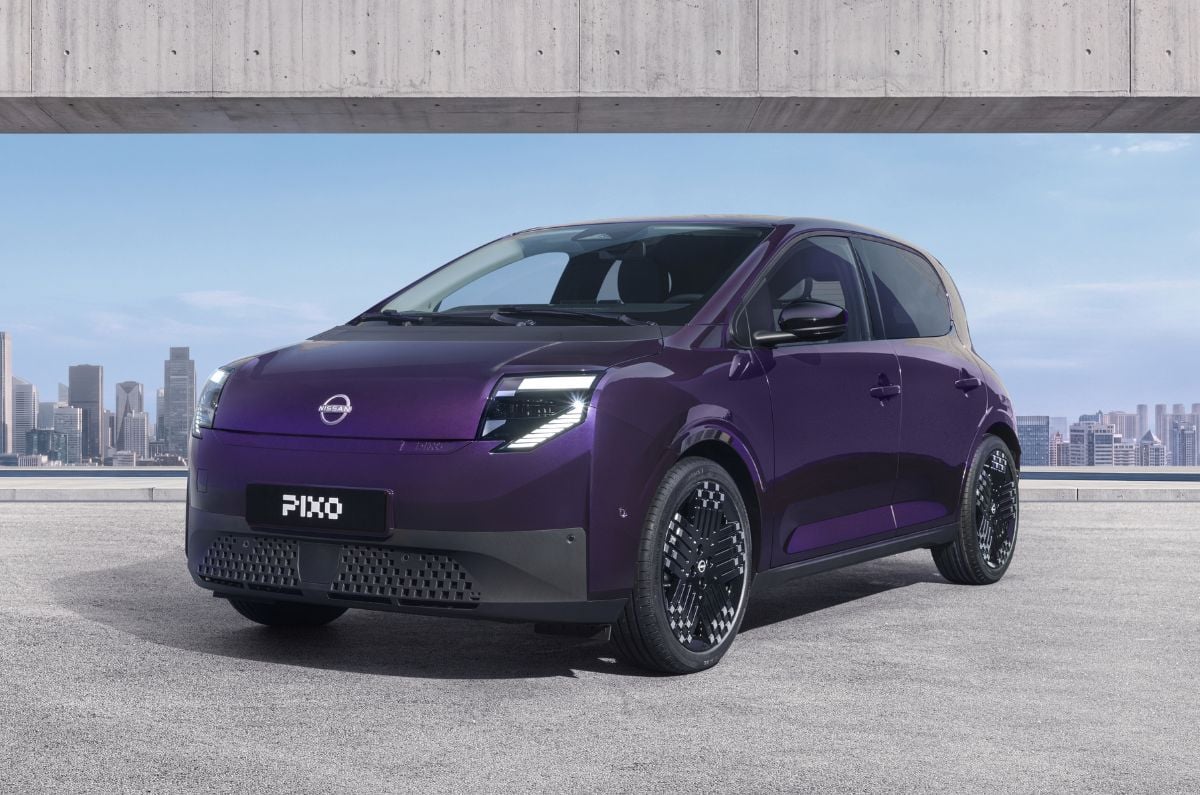
Nissan has pulled the covers off the Pixo, which is an A-segment EV specifically meant to cater to the urban buyer in Europe, according to the automaker. The Pixo is the result of a collaboration between NDE (Nissan Design Europe) and alliance partner Renault, and is manufactured at the latter’s Novo Mesto facility in Slovenia.
Design highlights include pixel-inspired lighting and “robot face” front bumper.
3,796mm long, 1,790mm wide and seats up to four adults.
Sliding rear seats, 10-inch touchscreen, Google built-in, ADAS and more.
27.5kWh battery, 82hp motor and up to 259km WLTP range.
Nissan Pixo exterior and dimensions
The Pixo features striking colour options and cube-inspired proportions
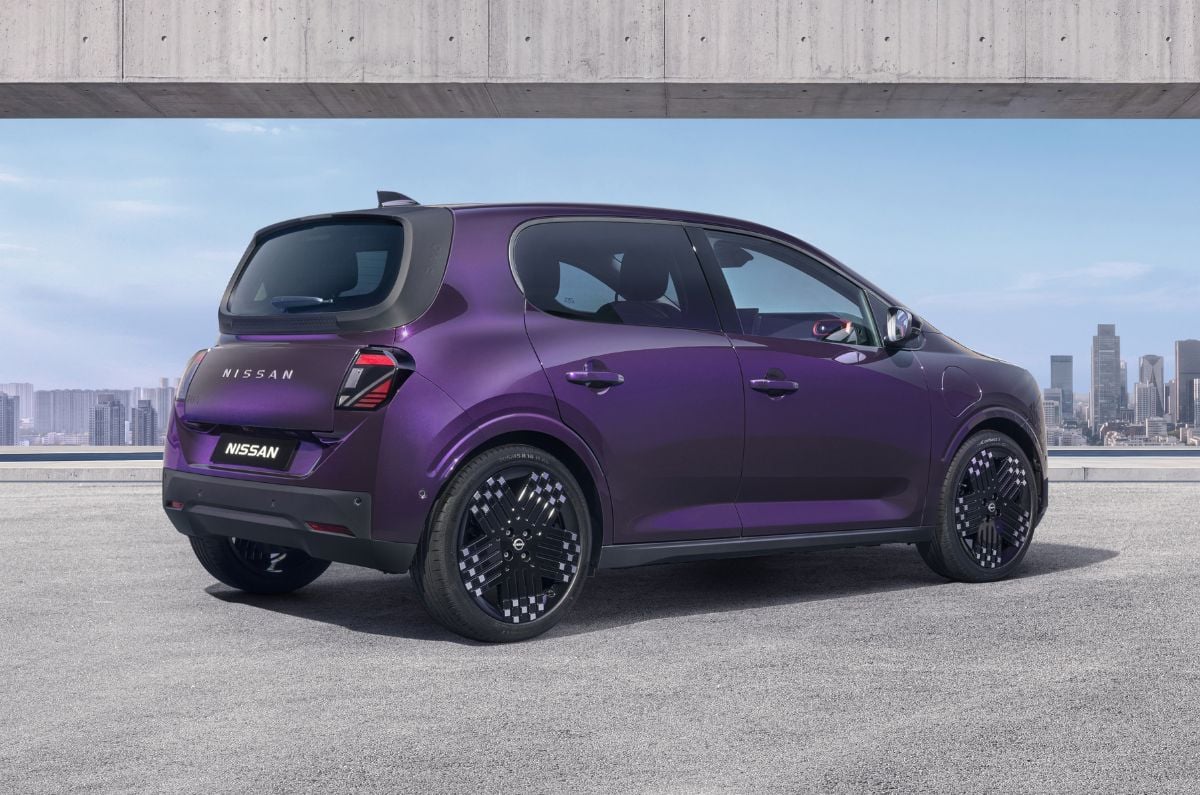
The Nissan Pixo features the Japanese brand’s latest design language meant specifically for EVs. The cube-inspired proportions of the Pixo are accompanied by what the brand says are pixel-inspired lighting and a “robot face” front bumper. ‘Pixo’ lettering aside, there are also ‘2-3’ markings to denote ‘Ni-San’ in Japanese. There are pixel-like highlights on the 18-inch wheels, while ‘Nissan’ is spelled out on the tailgate.
Nissan says that the Wonder Purple and Gear Blue paint options are meant to reinforce the Pixo’s youthful urban character, and these striking colours are contrasted by black trim bits on select surfaces. At 3,796mm long and 1,790mm wide, Nissan claims that the Pixo’s dimensions are specifically meant to fit European cities without compromising space on the inside. Meanwhile, it has a 9.9-meter turning circle.
Nissan Pixo interior design and features
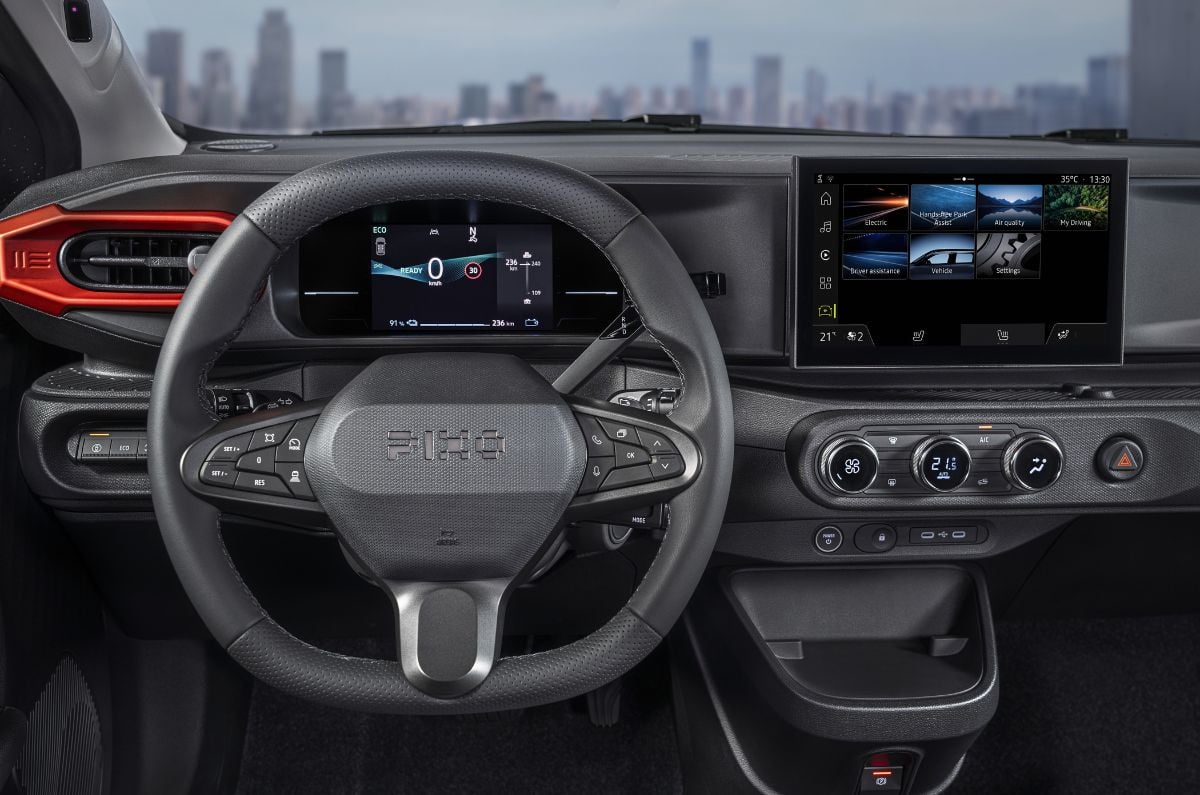
This EV has been designed to carry up to four adults and sports a vertically stacked dashboard
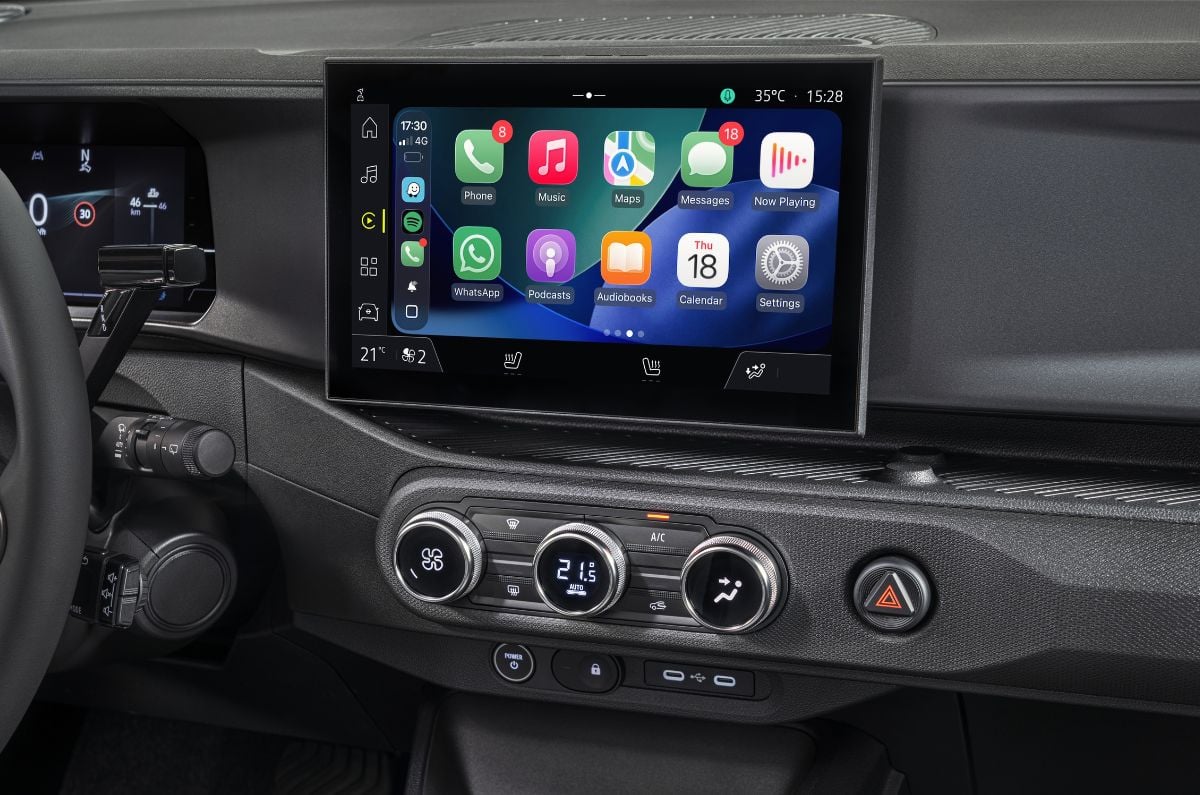
The Nissan Pixo has a relatively modern but simple-looking interior. However, it does get a vertically stacked dashboard with a textured finish and orange accents around the AC vents. There are physical buttons and dials to control the automatic climate control system, with a large drive-selector stalk behind the steering wheel. The dash also integrates a 7-inch digital driver’s display and a tablet-style 10-inch touch-infotainment screen.
Equipment highlights of the Nissan Pixo include Google Gemini, which the brand claims is ‘first-in-segment’ and that it will be offered in 16 languages and dialects. Adding to this list will be Google built-in features, MyNissan app and Face ID with the capability of recognising different drivers and remembering their personalised settings. The Nissan Pixo will be available with ADAS (advanced driver assistance systems), integrating adaptive cruise control, lane-departure warning and ‘Hands-Free Parking’.
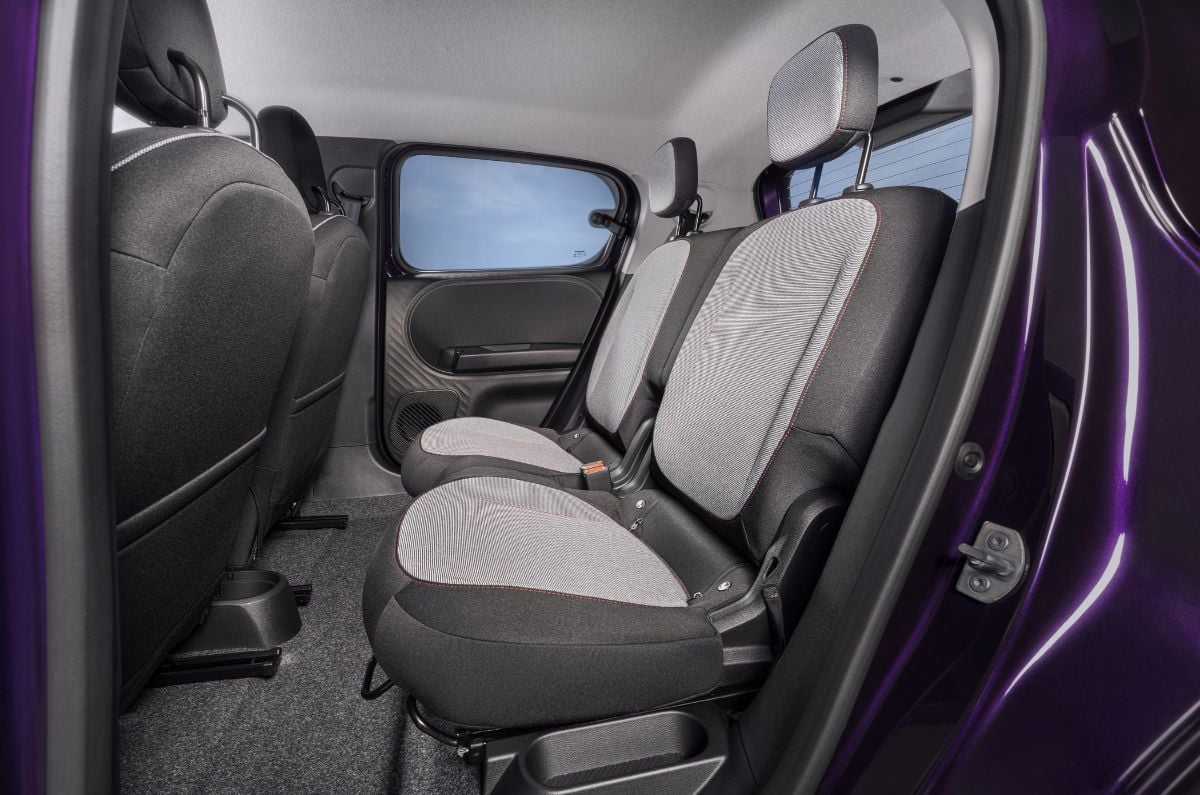
There are dual-tone fabric seats that look simple, and there’s enough space to carry four adults, with the rear units capable of being individually slid forward or backward based on cargo-space requirements. Nissan says that the Pixo can accommodate up to 356 litres of cargo in the boot – out of which 50 litres is taken up by the charging cable. “We’ve worked hard to maximise the space within the Pixo’s compact dimensions, creating a cabin that feels open, practical and surprisingly roomy,” said Masato Koyama, Lead Exterior Designer at Nissan Global Design.
Nissan Pixo powertrain and charging
This electric powertrain comprises a lithium iron phosphate battery and a single electric motor
The Nissan Pixo is equipped with a 27.5kWh lithium iron phosphate (LFP) battery pack, which energises a single electric motor capable of producing 82hp. While Nissan hasn’t released torque or performance figures of the Pixo yet, it does claim a WLTP range of 259km on a full charge.
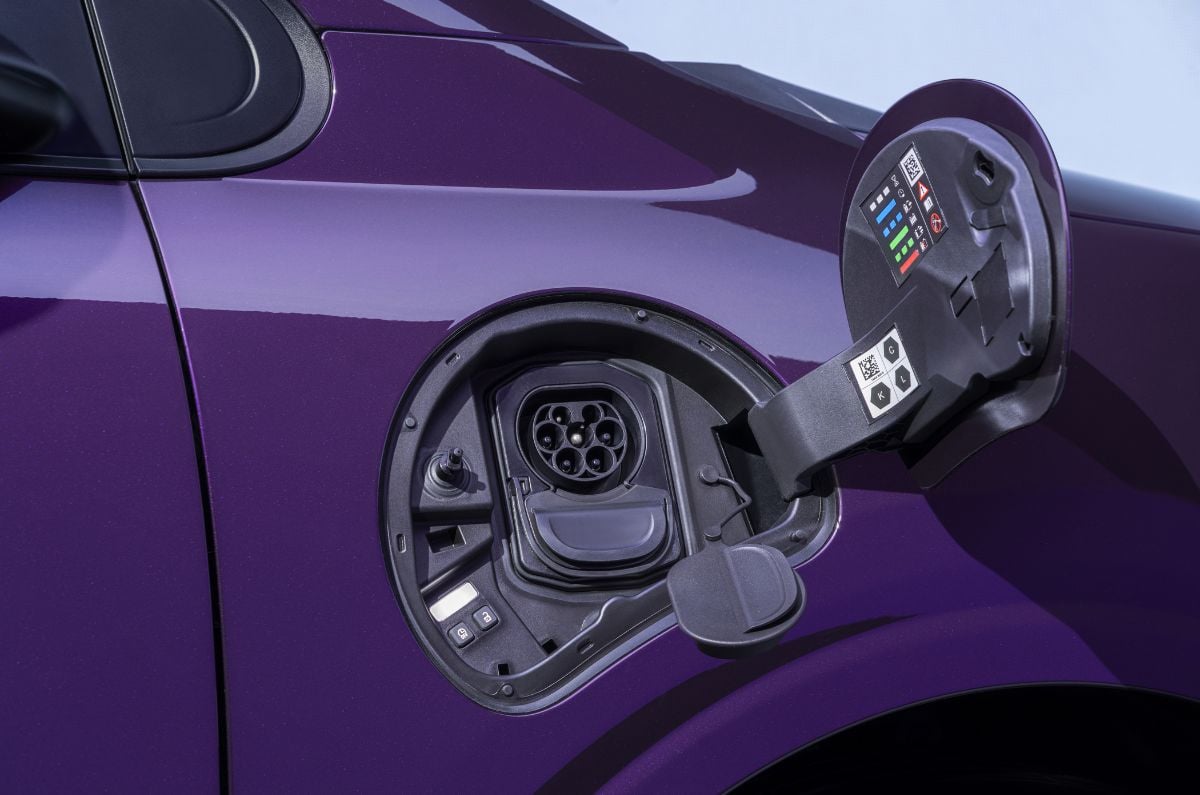
The Pixo supports DC fast-charging at up to 50kW, which the brand says can take the state of charge from 15-80 percent in around 28 minutes. The Nissan Pixo also supports bi-directional AC charging of 11kW. Nissan is yet to announce the price of the Pixo, though customer deliveries in Europe are scheduled start in early 2027.
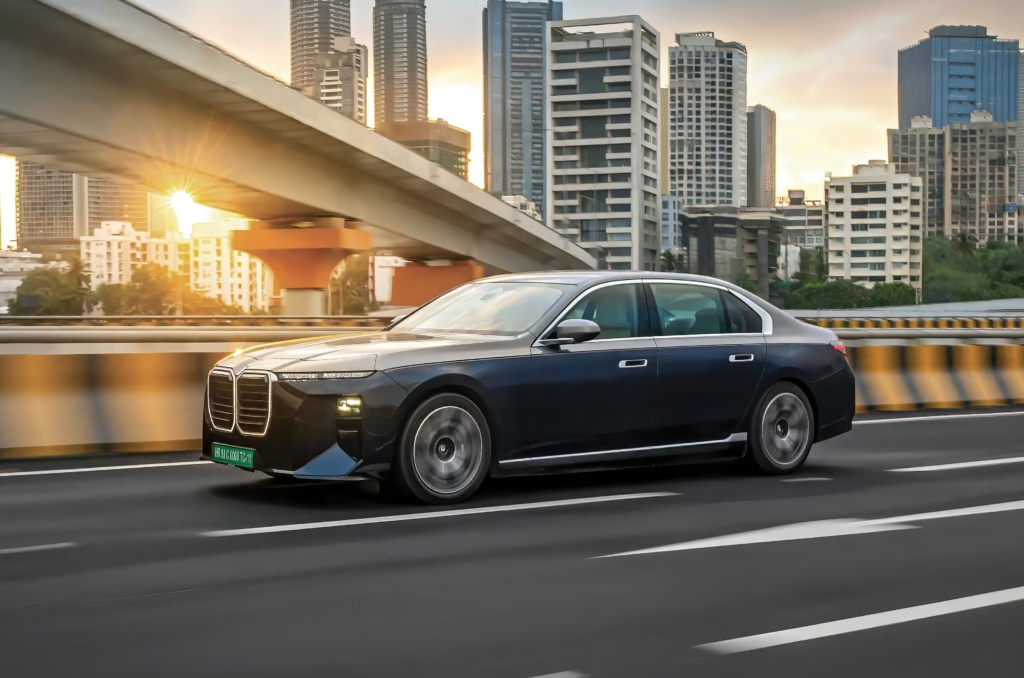
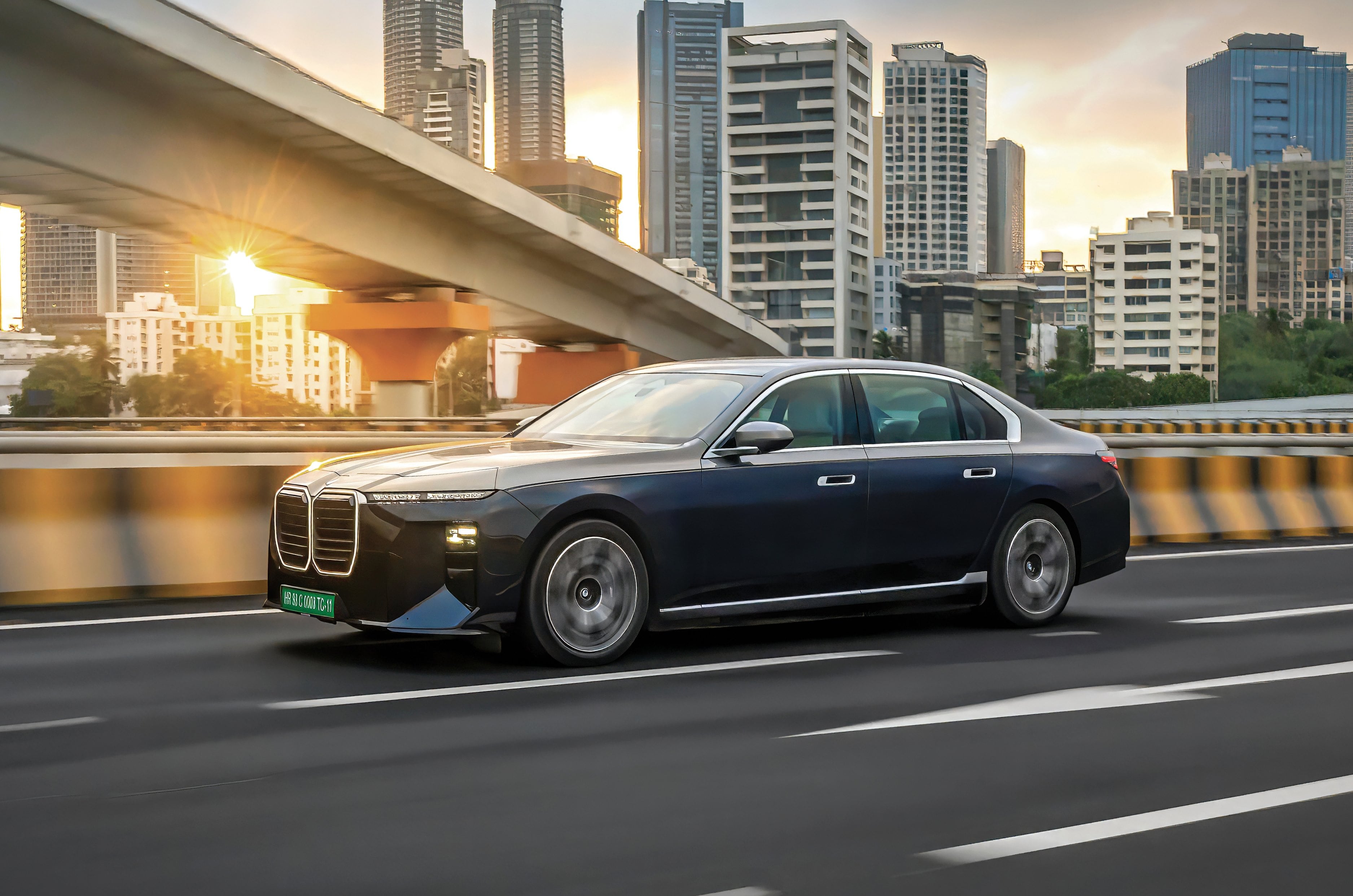
The BMW i7 has been embraced wholeheartedly by India’s ultra-high-net-worth buyers. Since its launch in 2023, it has dominated the high-end luxury sedan space, and interestingly, has consistently outsold its own petrol sibling. In fact, around 60 percent of 7 Series buyers have opted for the EV. With the 2026 i7 now being locally assembled in India and the i7 50 xDrive priced at Rs 1.95 crore, exactly at par with the petrol 740, BMW expects the scales to tilt even further in favour of the electric version.
BMW has also introduced the significantly more powerful i7 M70 xDrive. However, as a full import priced at Rs 2.65 crore, it commands a substantial Rs 70 lakh premium, which is likely to limit its appeal. For most buyers then, the locally assembled i7 50 xDrive is expected to remain the sweet spot of the range.
BMW i7 50 xDrive Exterior Design and Engineering – 8/10
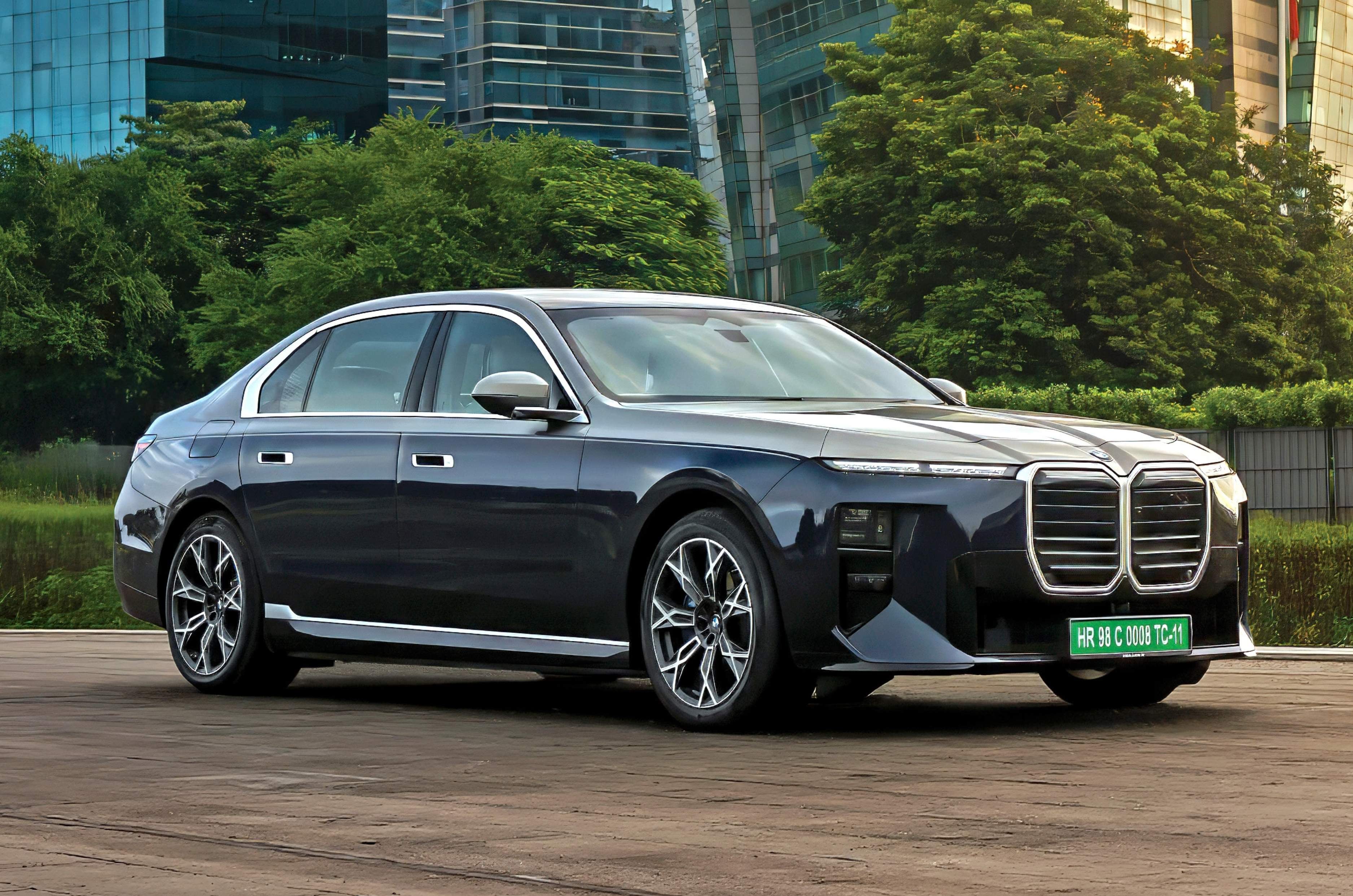
The cleaned-up styling looks significantly more palatable than its predecessor.
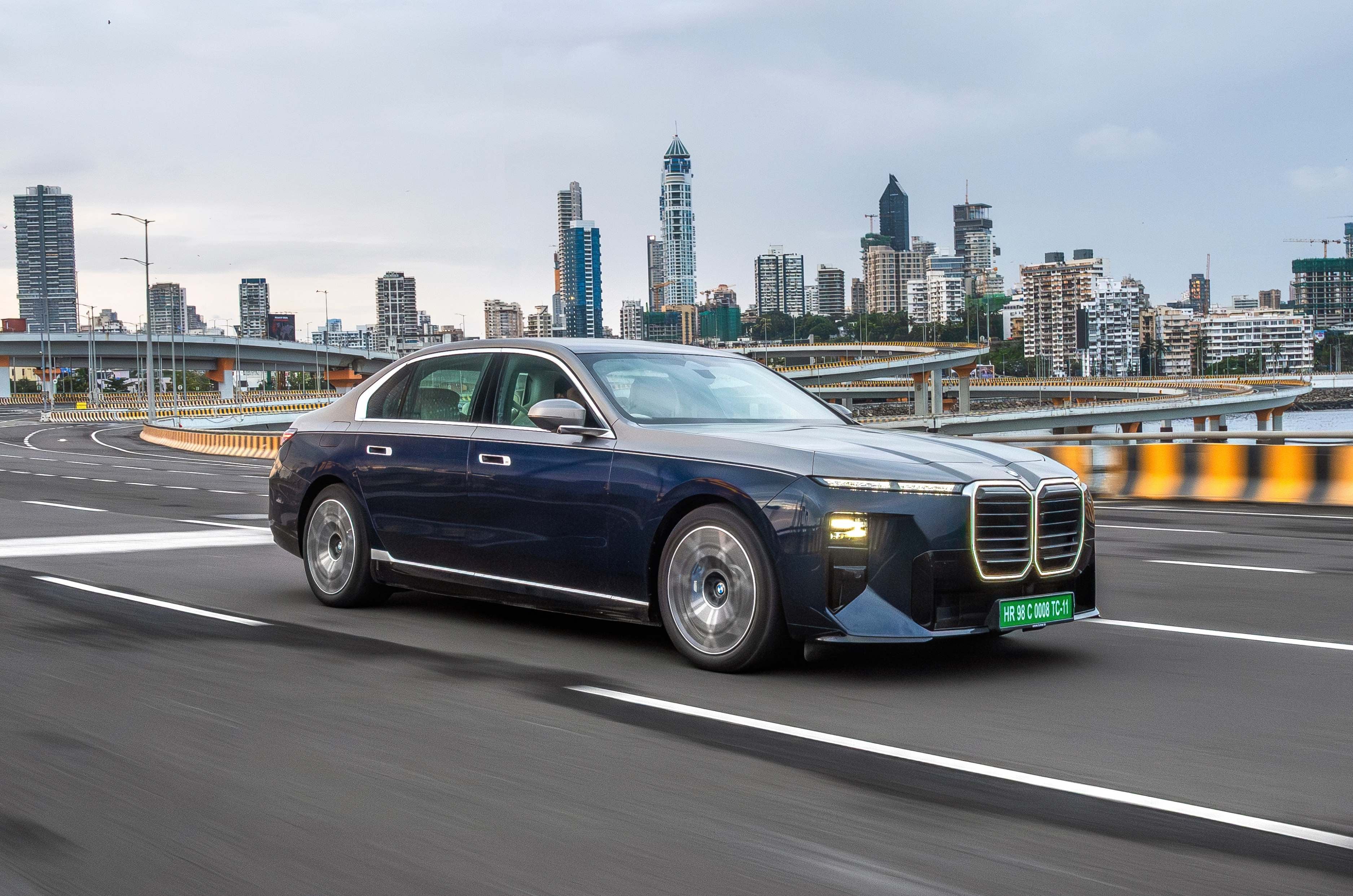
BMW has made substantial changes to the i7’s styling. The DRLs are now longer and slimmer, and feature a crystalline effect that looks absolutely stunning up close. The oversized kidney grille has also been redesigned and, like before, remains illuminated. The air dam adopts a more rectangular design, the headlamps are vertically oriented, and the excessive black treatment has been done away with completely.
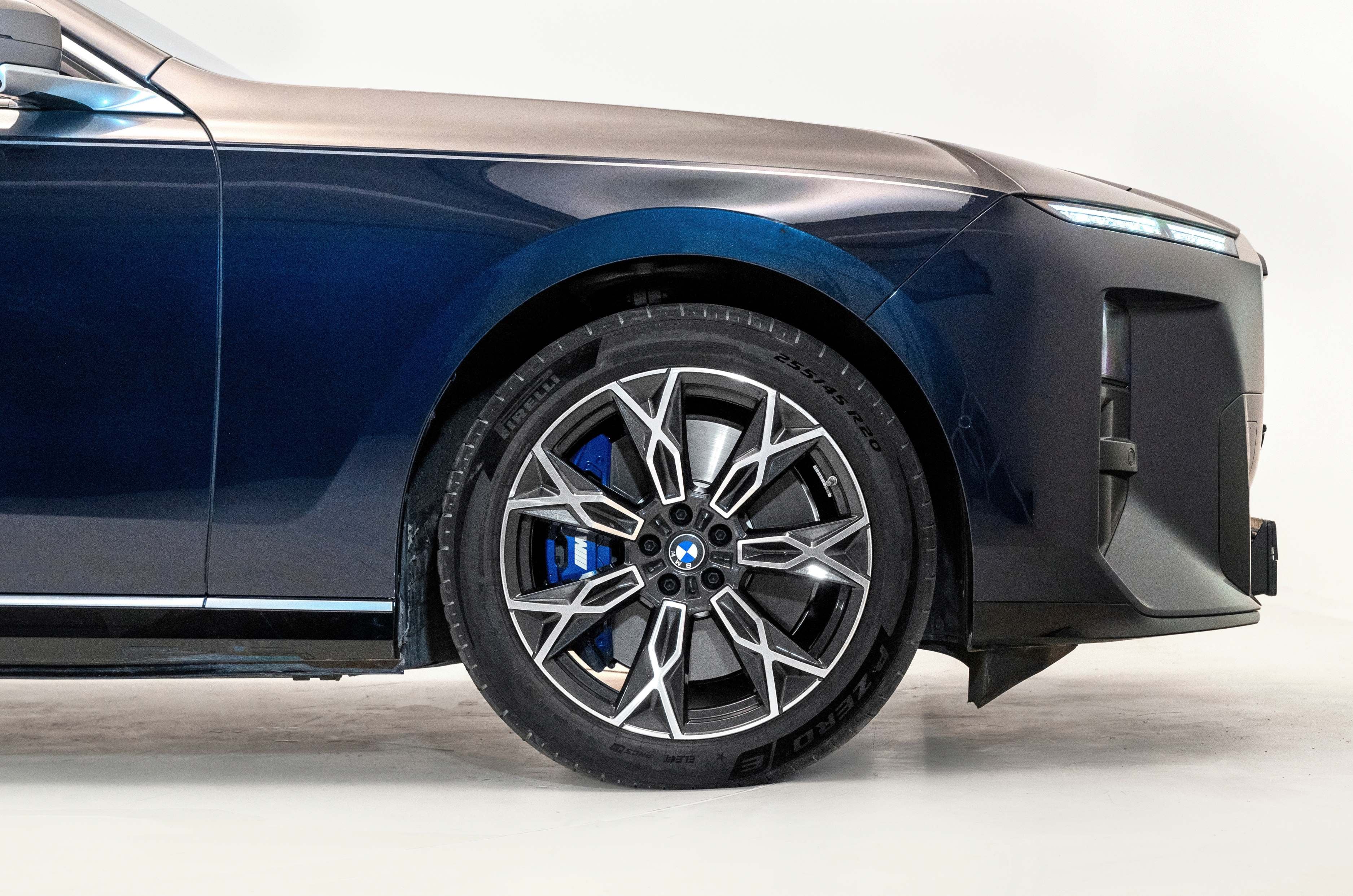
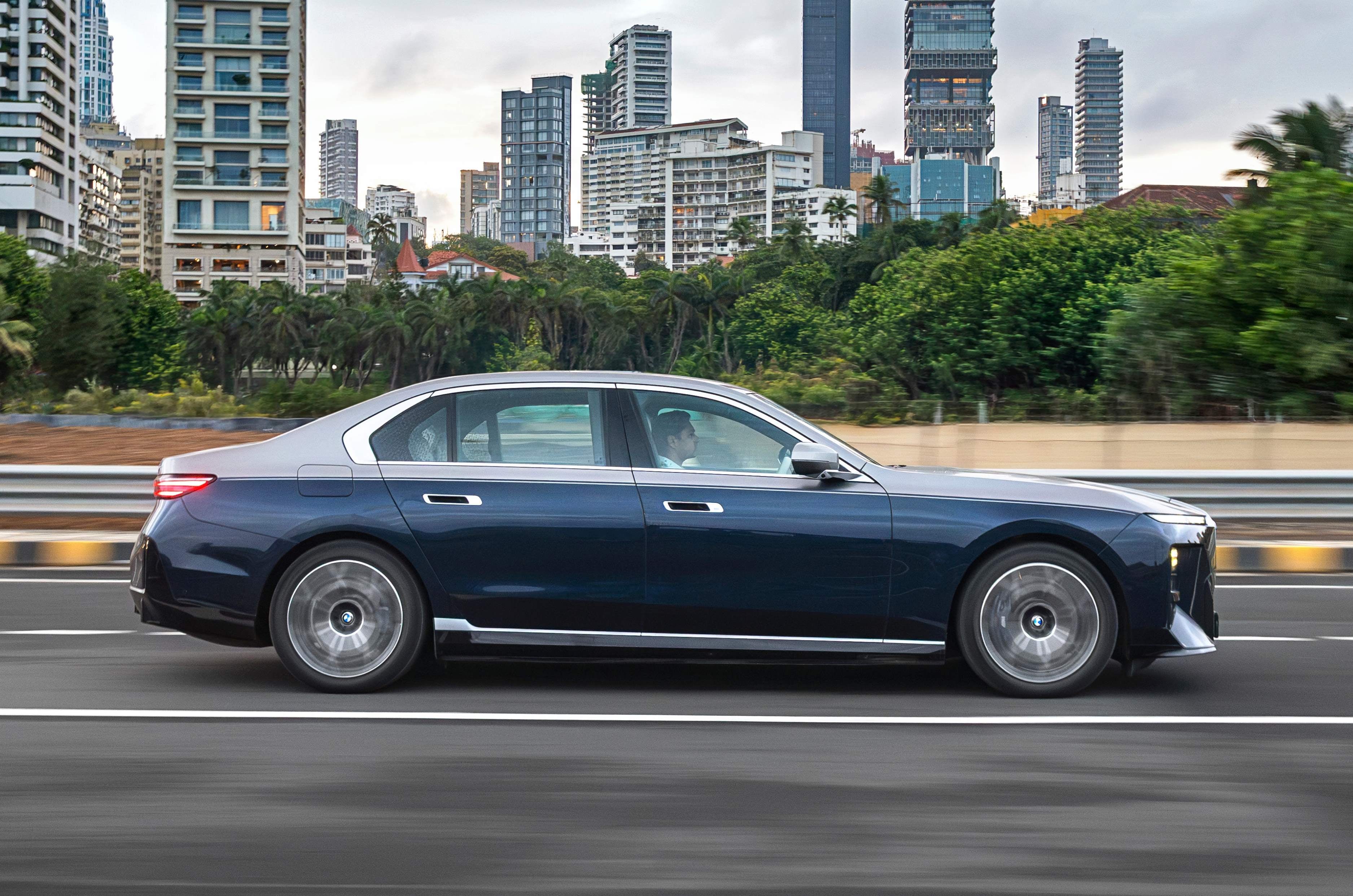
The tyres appear undersized but owners are unlikely to complain given the ride comfort benefits that come with the higher-profile tyres.
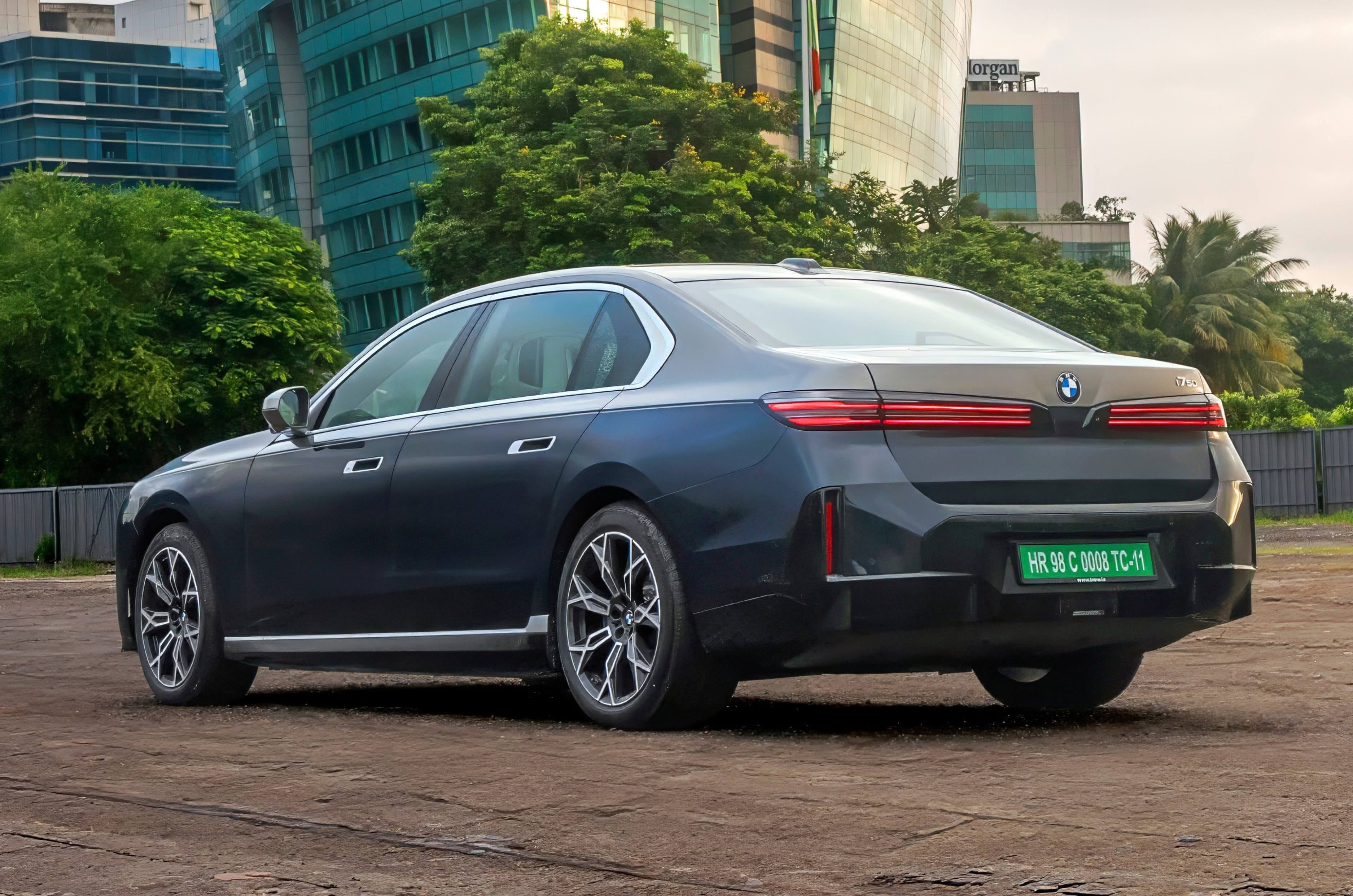
New 20-inch alloy wheels replace the outgoing version’s 21-inch units. While some might argue they appear slightly undersized, owners are unlikely to complain given the ride comfort benefits that come with the higher-profile tyres.
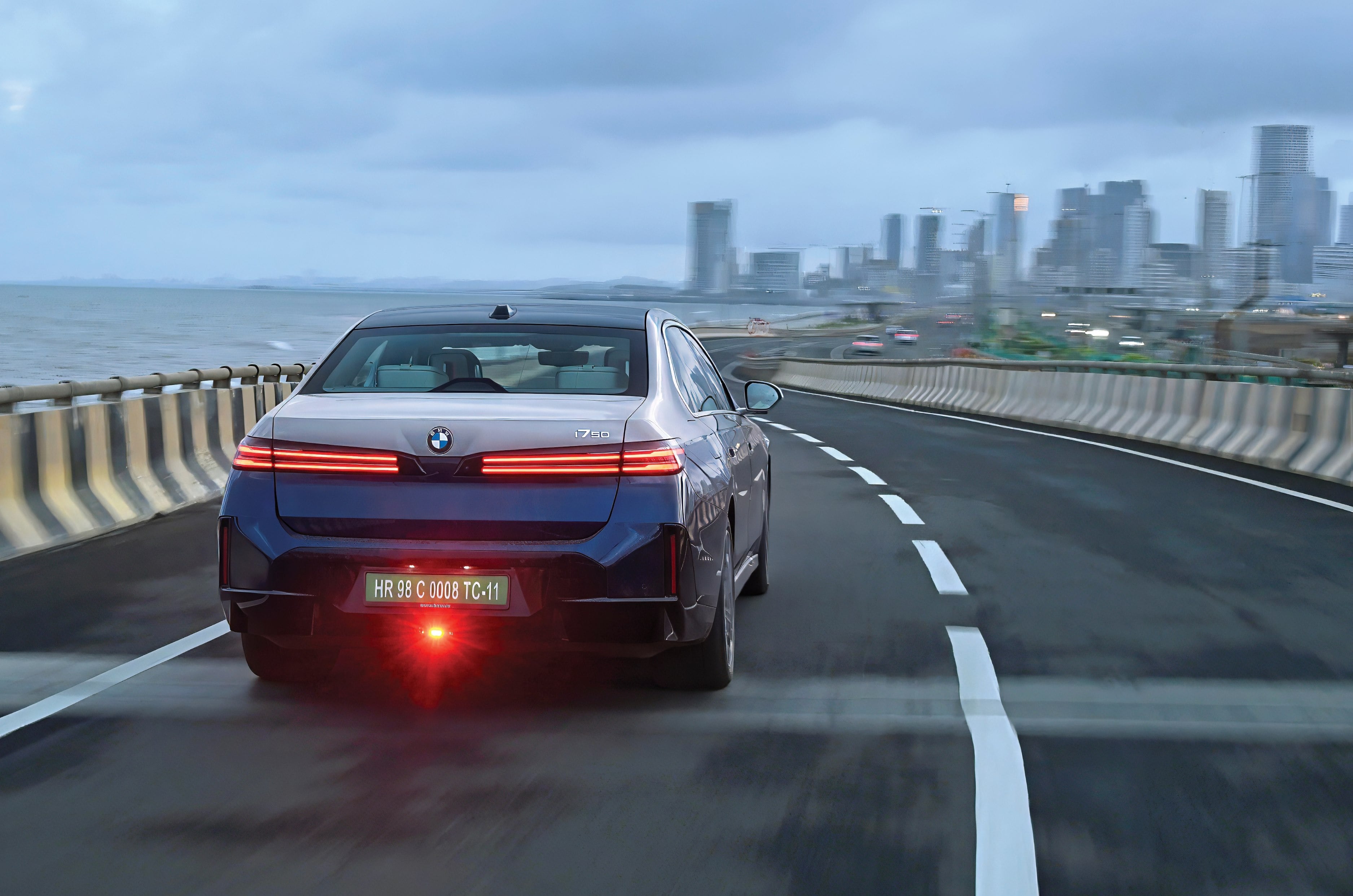
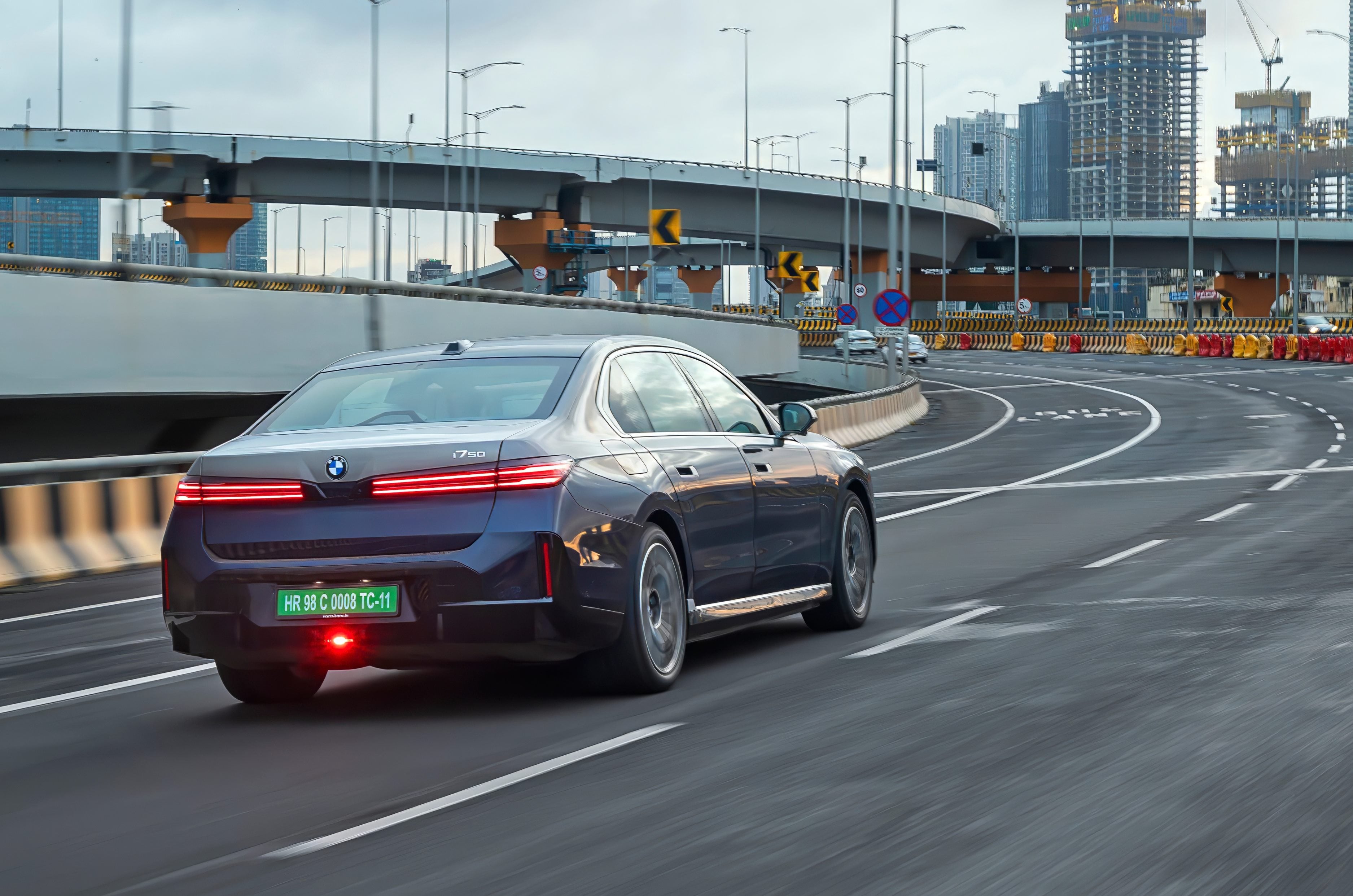
Like the front, the rear has also been cleaned up. There’s a new diffuser, broader tail-lamps, and a neater bumper design. Overall, this iteration looks significantly more palatable than its predecessor, and in the optional two-tone paint finish of our test car, road presence was immense.
BMW i7 50 xDrive Interior Space and Comfort – 9/10
The redesigned dashboard adds freshness and previews the direction BMW’s future interiors are expected to take.
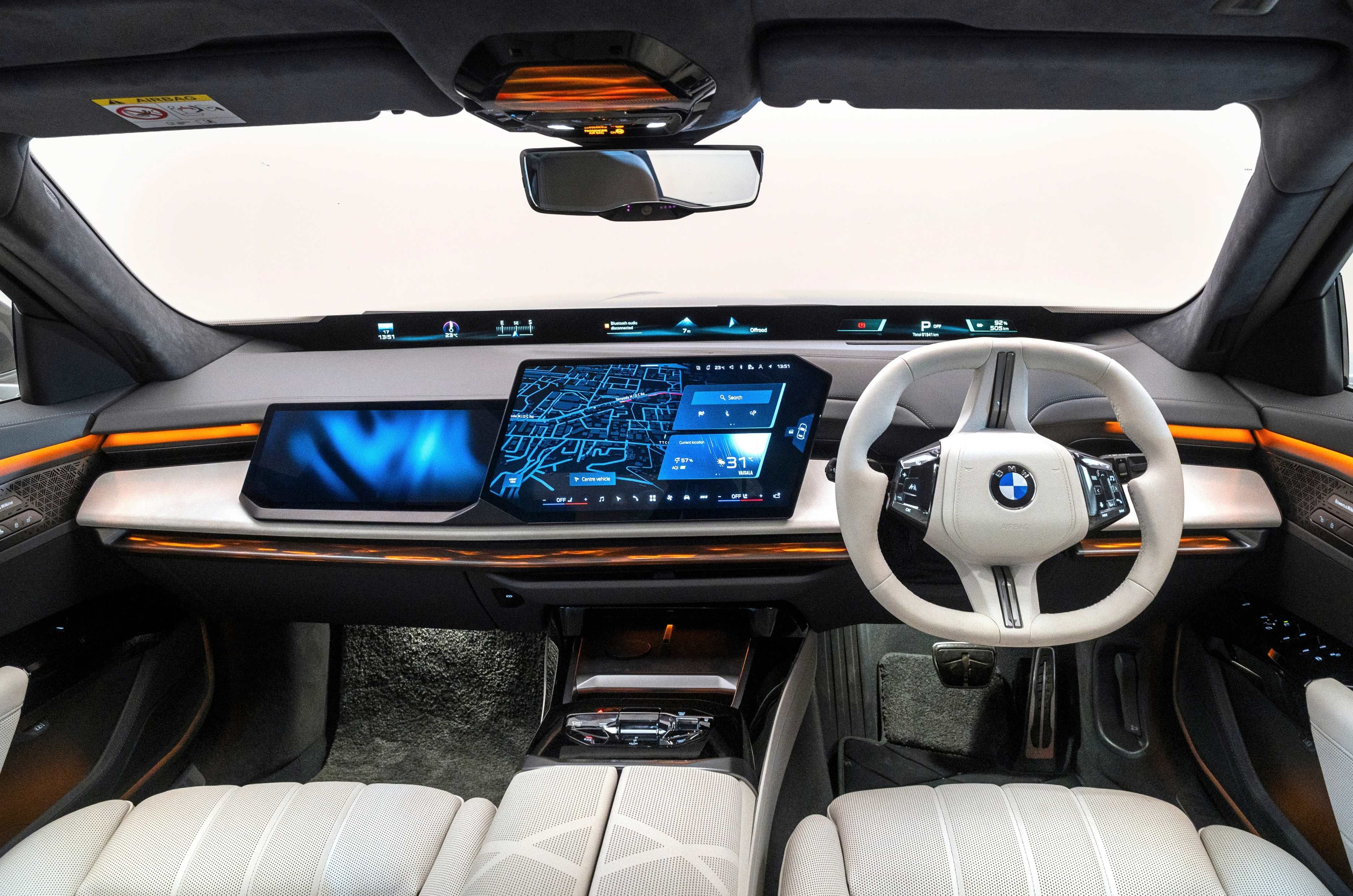
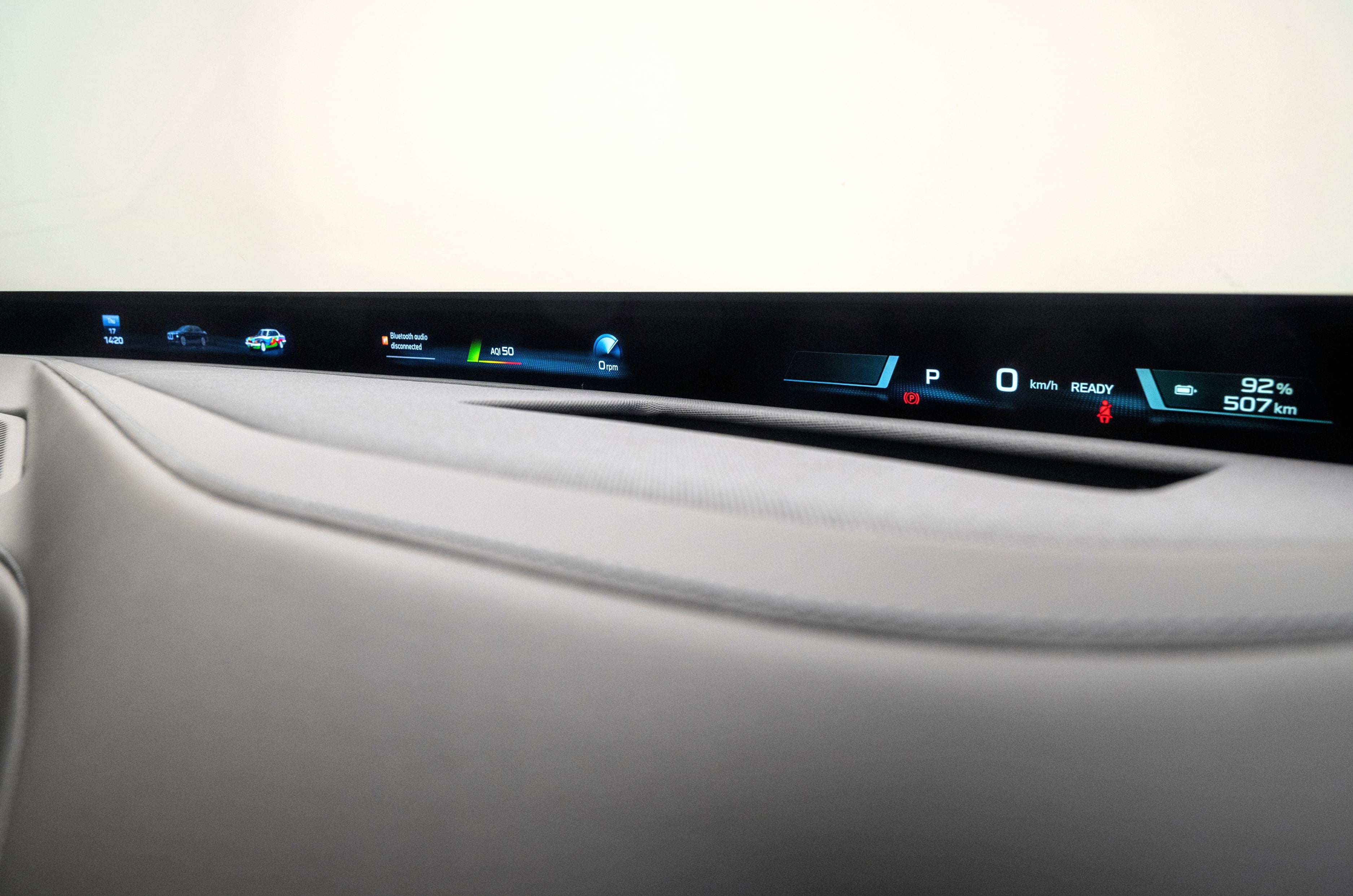
The i7’s dashboard has been completely redesigned, adding much-needed freshness while also previewing the direction BMW’s future interiors are expected to take. The biggest talking point is the deletion of the conventional instrument cluster. In its place sits a new panoramic head-up display positioned right at the base of the windscreen, projecting a wealth of information. It is highly customisable and, besides essentials like speed, charge status and warnings, can display motor speed, navigation, compass information, audio details, date and time, outside temperature, air quality, or even one of BMW’s Art Cars as a decorative element in the remaining six slots. The display is sharp, brilliantly executed, and sits naturally within your field of vision without becoming distracting.
A panoramic head-up display projects a wealth of information, it’s highly customisable and the display is sharp and brilliantly executed.
As for design, the new steering wheel is far more divisive. Its octagonal shape, combined with spokes extending from the horn boss at the 12 and 6 o’clock positions, makes it look unconventional. The light-coloured finish is also likely to be difficult to keep clean — you may even find yourself asking your chauffeur to wear gloves. On the plus side, it feels pleasant to hold, and the controls, though limited in number and not individual buttons, are satisfying to use.
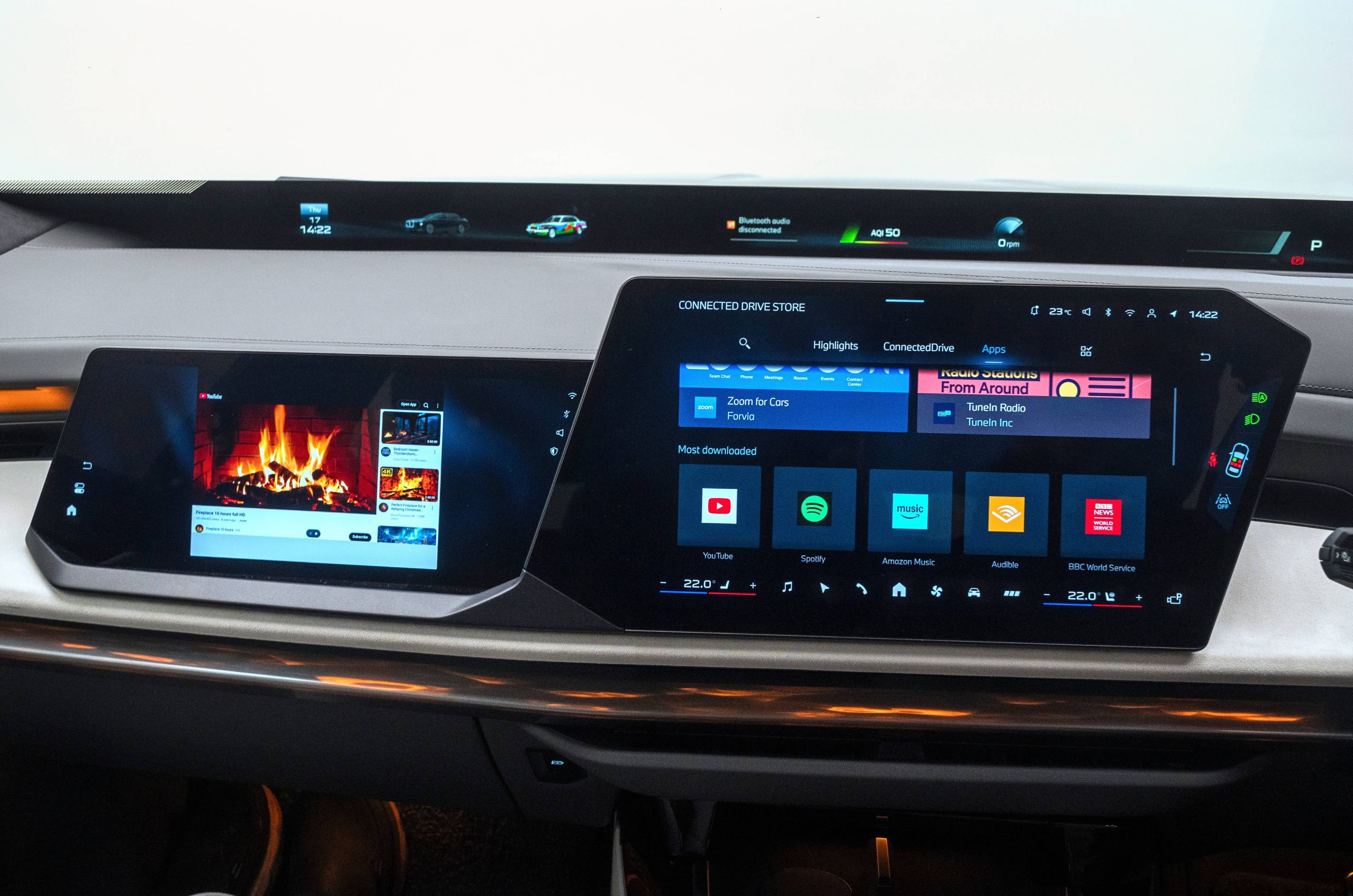
There’s also a new 17.9-inch free-standing touchscreen along with a smaller passenger display, both adopting a parallelogram shape. Curiously, the top-right corner of the central screen appears as though it has been chipped off, although that isn’t actually the case. Generous ambient lighting, crystalline detailing for the drive selector, volume controller and start-stop button, silver speaker grilles, and an overall light-coloured cabin theme further elevate the sense of luxury.
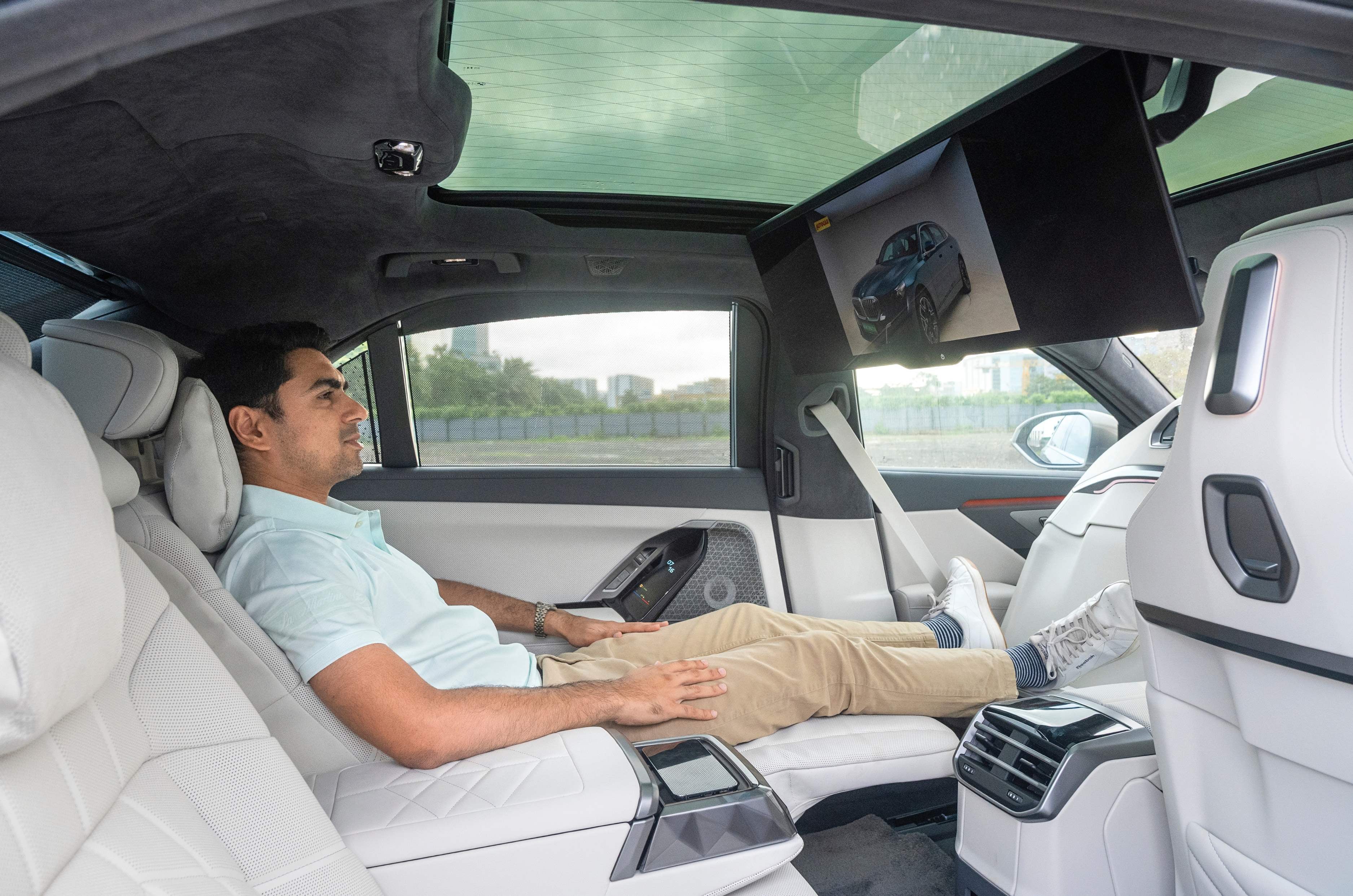
A one-touch relaxation mode transforms the rear seat into a lounge-like position. Updated 8K theatre screen is still part of the package.
Expectedly, the seats are supremely comfortable. All four seats get heating, ventilation and massage functions. Additionally, the rear-left seat features a one-touch relaxation mode that transforms it into a lounge-like position, complete with a raised ottoman, a fully-forward front passenger seat, and a fold-down footrest. Sadly, like the outgoing model, the spare wheel remains mounted on the boot floor, significantly compromising luggage capacity.
BMW i7 50 xDrive Features and Safety – 10/10
The i7 50 M Sport comes loaded with virtually every feature luxury sedan buyers could ask for. The new panoramic end-to-end head-up display replaces the conventional instrument cluster and is not only unique and highly customisable, but also exceptionally well executed. The 17.9-inch touchscreen is new too, and now benefits from additional shortcut keys in addition to permanently displayed climate-control functions, making it marginally easier to operate than before. However, the user interface still feels somewhat overwhelming, with an abundance of functions buried within multiple sub-menus.
The central screen is marginally easier to operate than before. The new front passenger entertainment display is likely to be of limited relevance to most owners.
Also new is a front passenger entertainment display, though we suspect it will be of limited relevance to most owners. The new 31.3-inch 8K rear theatre screen, on the other hand, is likely to see much greater use, particularly on longer journeys.
Carried over from the outgoing version and continuing to add a sense of occasion are the powered doors, which open and close at the touch of a button.
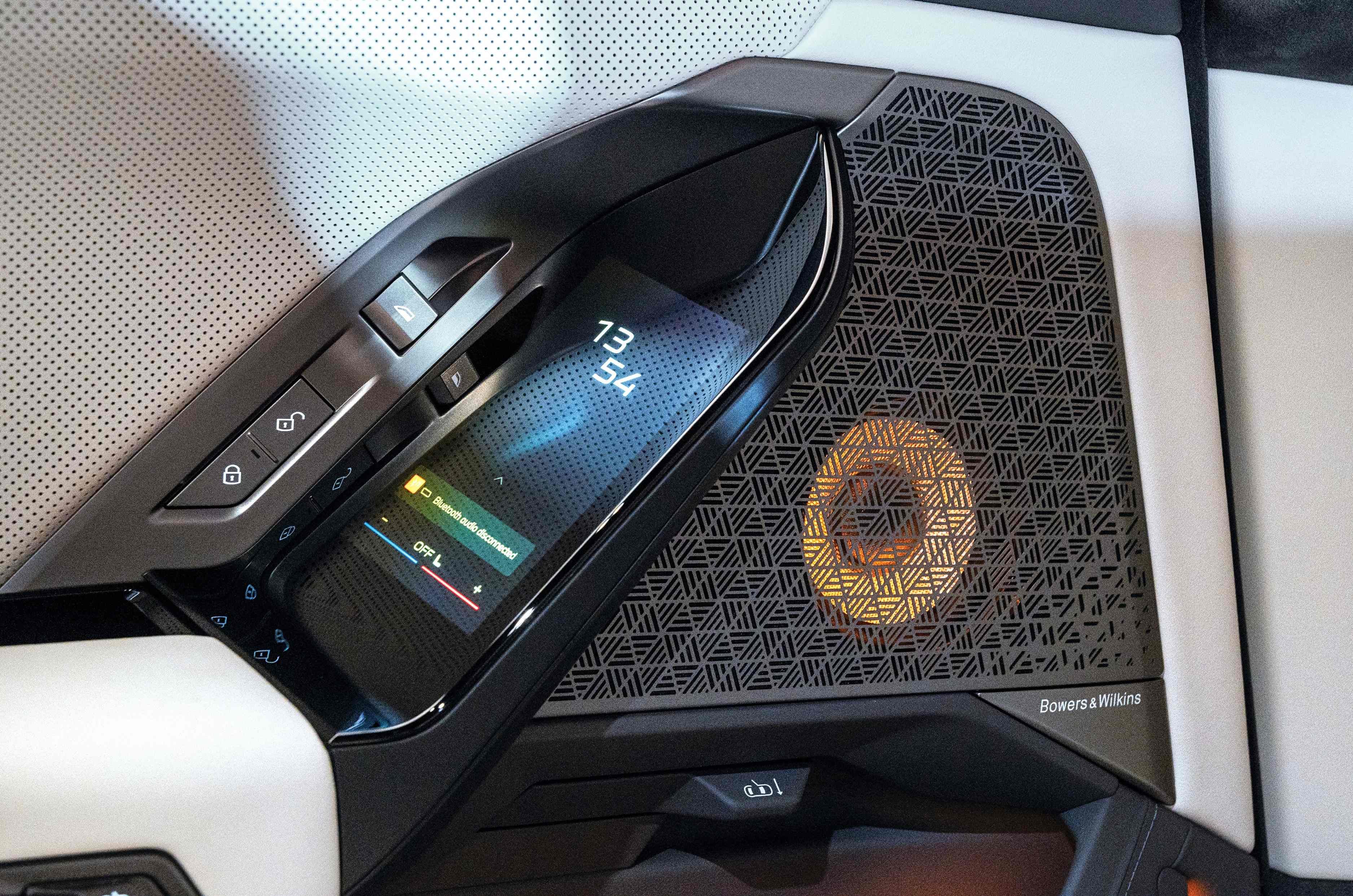
Its Bowers & Wilkins Diamond Surround Sound System with Dolby Atmos delivers an incredibly immersive audio experience.
The highlight, however, is the outstanding Bowers & Wilkins Diamond Surround Sound System with Dolby Atmos and a whopping 35 speakers. It even delivers a 4D experience, with a pronounced thump felt through all four seats. The result is an incredibly immersive audio experience that is sure to impress even the most discerning audiophile.
BMW i7 50 xDrive Performance and Refinement – 9/10
Its performance feels effortless and reassuring, while the accelerator calibration is smooth and progressive for everyday driving.
The i7 50 xDrive uses a dual-motor setup producing a combined 483hp and 660Nm, which is more than adequate for a luxury sedan of this nature. There’s rarely any need to switch out of Efficient mode because there is always a vast reserve of torque available. The effortless performance feels reassuring, while the accelerator calibration is smooth and progressive during everyday driving.
Press the accelerator beyond the halfway mark and the i7 takes off like a scalded cat. Acceleration is rapid, with this 2.8-tonne luxury sedan sprinting from 0-100kph in just 5.5 seconds and reaching 200kph in a shade under 19 seconds. Owners can also choose to activate synthetic motor sounds that play through the speakers, adding a dramatic, sci-fi soundtrack to acceleration. These can be switched off entirely for a completely silent experience.
There are multiple regenerative braking settings, including Adaptive, High, Mid and Low. Of these, Adaptive stands out for its excellent calibration, intelligently varying regeneration and coasting based on traffic and road conditions. There’s also a dedicated one-pedal ‘B’ mode selectable via the drive selector. It delivers regeneration similar to the High setting but, unlike it, can bring the car to a complete stop without any brake pedal input.
BMW i7 50 xDrive Range and Efficiency – 9/10
The i7 50 xDrive gets a larger 112.5kWh battery pack with NMC cell chemistry, replacing the outgoing version’s 101.7kWh unit. As a result, this version claims a WLTP range of up to 728km. Although we haven’t yet subjected it to our range tests, we expect it to comfortably deliver over 500km in real-world conditions, which is more than sufficient for most users. BMW claims the battery can charge from 10-80 percent in 28 minutes using a 250kW (or higher) DC fast charger. On a 22kW AC charger, a full charge takes approximately six hours.
BMW i7 50 xDrive Ride Comfort and Handling – 10/10
What’s truly impressive is the pillowy ride quality. It shrugs off badly broken roads with ease, and maintains excellent body control.
Piloting the i7 may initially seem intimidating given its considerable dimensions, but its light steering and rear-axle steering significantly aid manoeuvrability. The latter allows the rear wheels to turn either with or against the fronts by up to 3.5 degrees, helping the car feel remarkably agile for its size.
What’s truly impressive is the pillowy ride quality. The thick, high-profile tyres add another layer of cushioning, allowing the i7 to shrug off even badly broken roads with ease. It absorbs potholes effortlessly, keeps road shocks well isolated, and maintains excellent body control. Passengers are also spared the uncomfortable side-to-side movements over unusually rough patches.
Selecting Sport mode does firm things up slightly, but while the air suspension becomes tauter and body control improves further, ride comfort never suffers. Handling feels predictable and, thanks to xDrive all-wheel drive, the i7 feels exceptionally planted and offers impressive grip when tackling corners. Rear-wheel steering also does a remarkable job of disguising its size.
In short, the i7 can be driven surprisingly enthusiastically, and for a luxo-barge, it drives exceptionally well. We would, however, recommend leaving the steering in Comfort mode, as it feels unnecessarily heavy in Sport.
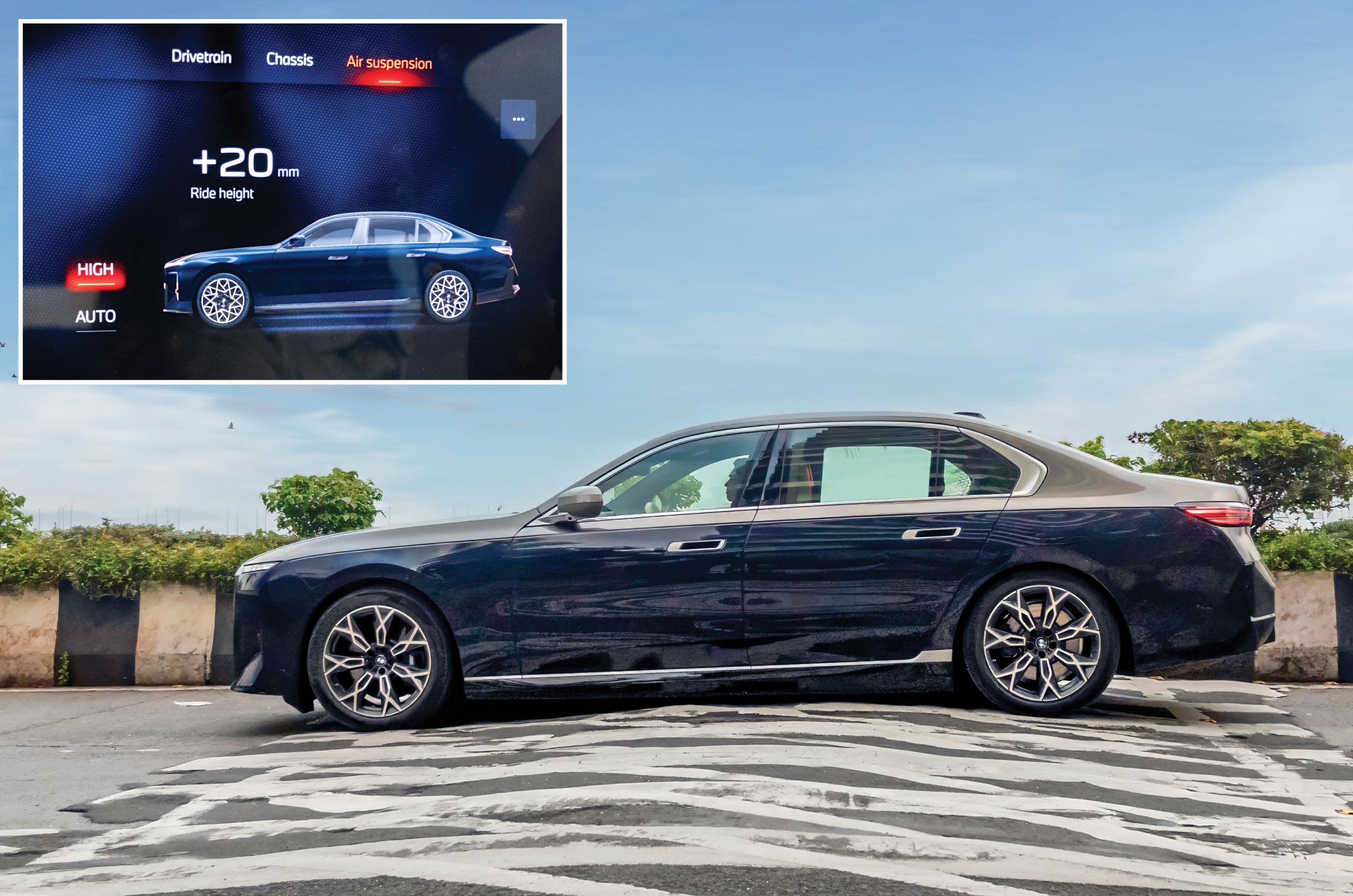
The suspension raises by 20mm over the 136mm standard setting, allowing it to clear all but the most poorly designed obstacles.
Sport mode also lowers the ride height by 10mm from the standard 136mm setting. While beneficial for dynamics, it makes the underbody vulnerable even on relatively small speed breakers. Thankfully, two taps on the touchscreen raise the suspension by 20mm over the standard setting, allowing it to clear all but the most poorly designed obstacles. Cabin insulation is outstanding too, keeping road, wind and ambient noise effectively isolated from occupants.
BMW i7 50 xDrive Price and Verdict – 9/10
At Rs 1.95 crore, the locally assembled i7 50 xDrive is priced exactly at par with the petrol-powered 740 and is even a few lakhs more affordable than its chief rival, the Mercedes-Benz S-Class. Yet pricing alone isn’t what makes the i7 such a compelling proposition.
What truly sets it apart is the sheer sense of occasion it delivers. Its styling is bold, the cabin feels genuinely special, ride comfort is exceptional, and the level of technology on offer significantly elevates its desirability. Add to that an extraordinary audio system and the effortless refinement that only a luxury EV can deliver, and the i7 feels every bit the flagship it is.
Yes, luggage space remains compromised by the spare wheel placement, and the touchscreen interface isn’t quite as intuitive as that of its chief rival. But in this segment, neither is likely to be a deal-breaker.
The bigger takeaway is that BMW has successfully made the electric version of its flagship sedan the more desirable one. For buyers seeking luxury, comfort and technology, the i7 50 xDrive isn’t merely an excellent EV, it’s quite simply all the luxury car you’ll ever need.
For 107 years, Bentley has been defined by what sits under the bonnet: supercharged Blowers, mighty W12s and thundering V8s. The Torcal has none of that. It’s Bentley’s fourth model line and its first electric car. It slots in below the Bentayga, and it will never get a petrol engine. Bentley also calls it the template for every Bentley that follows, whatever the powertrain.
Like many modern Bentleys, the Torcal is named after a natural wonder. El Torcal de Antequera is a dramatic landscape of weathered limestone in southern Spain. The car is also the first Bentley to wear the brand’s redesigned, modernised emblem, which was revealed last year. That leaves one question that matters. Take away the engine, and is it still a Bentley? We haven’t driven it yet, so the full answer will have to wait. After a close look at the First Edition, the fully loaded launch car, there’s plenty to go on.
Bentley Torcal exterior design: light is the new chrome
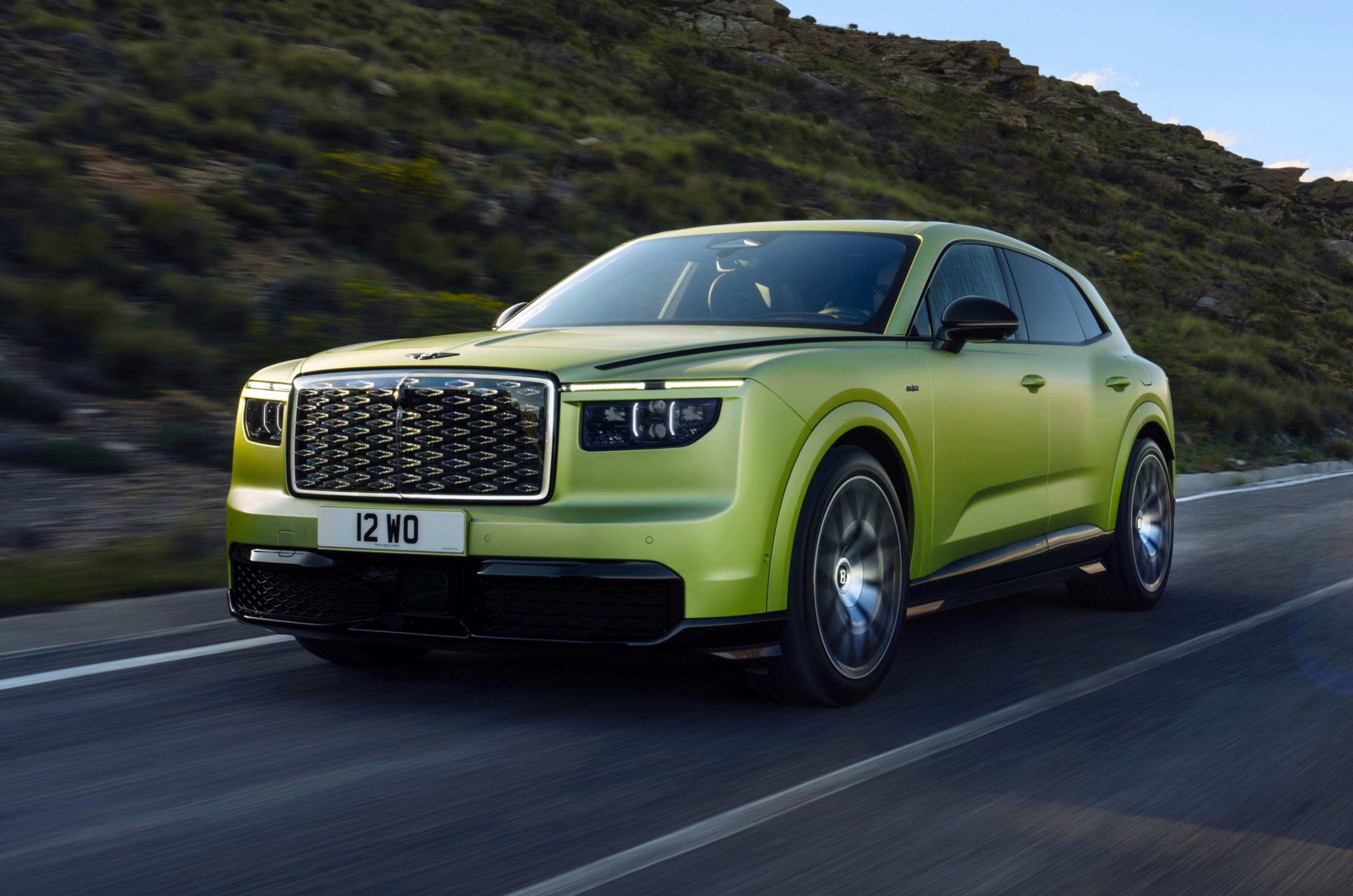
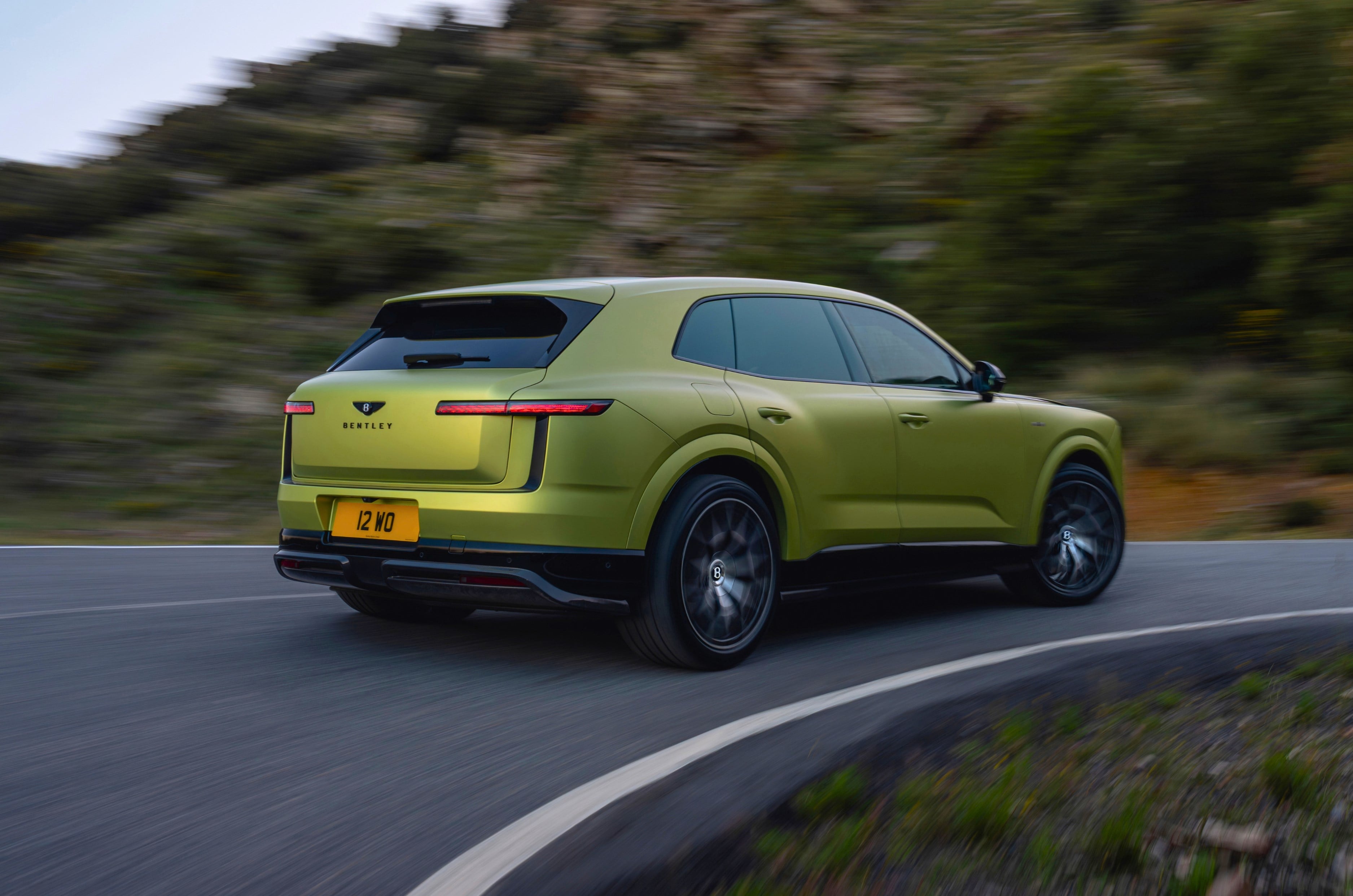
Designing an EV for a brand with this much pedigree was never going to be easy, but Robin Page’s in-house team at Crewe has done a fine job. The Torcal sits 50mm lower and is 120mm shorter than a standard-wheelbase Bentayga, yet it looks the better proportioned of the two. The wheelbase is just over three metres, the car is about five metres long, and the overhangs are short. Bentley’s signature ‘endless bonnet’ does much of the visual heavy lifting.
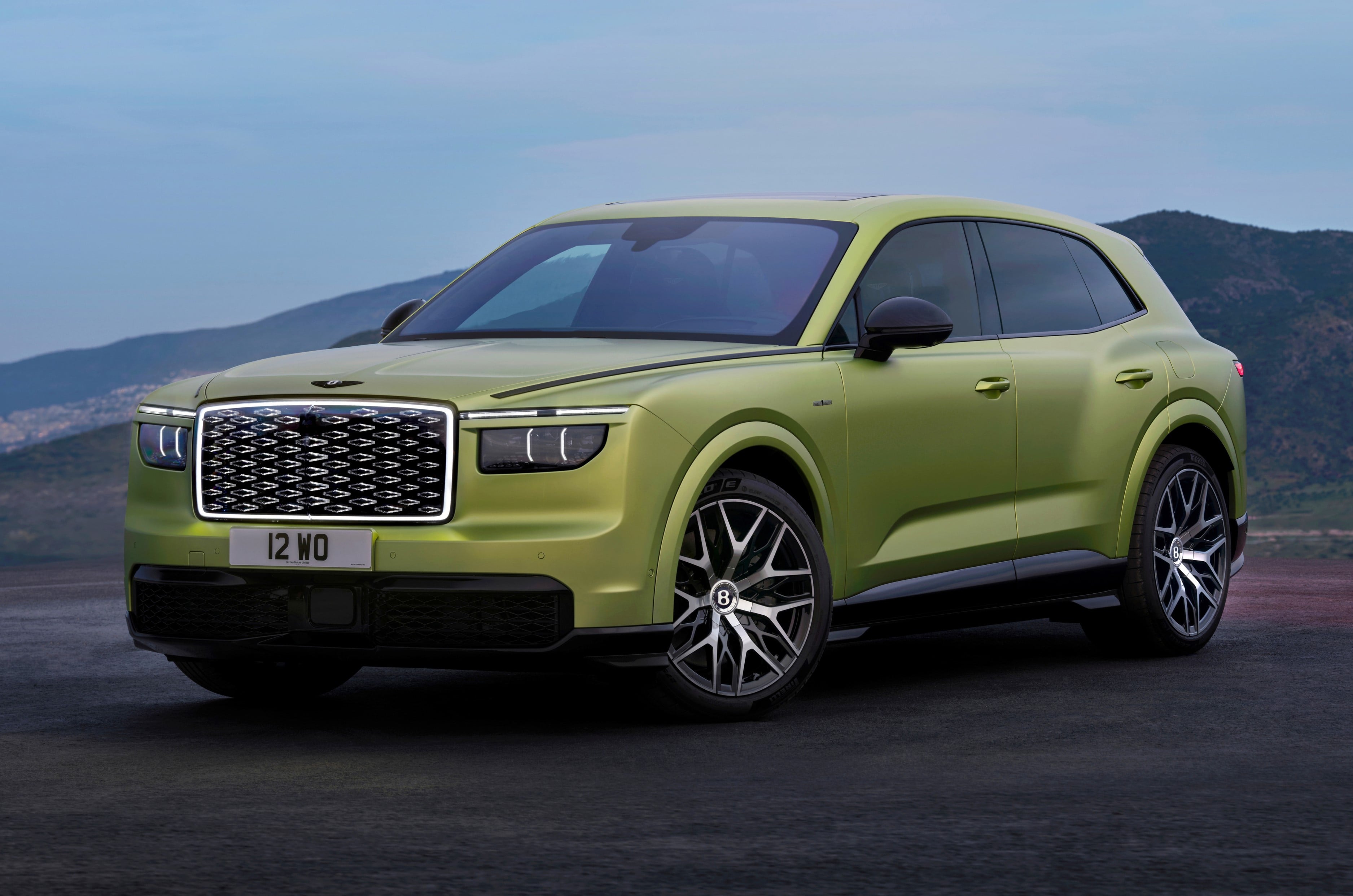
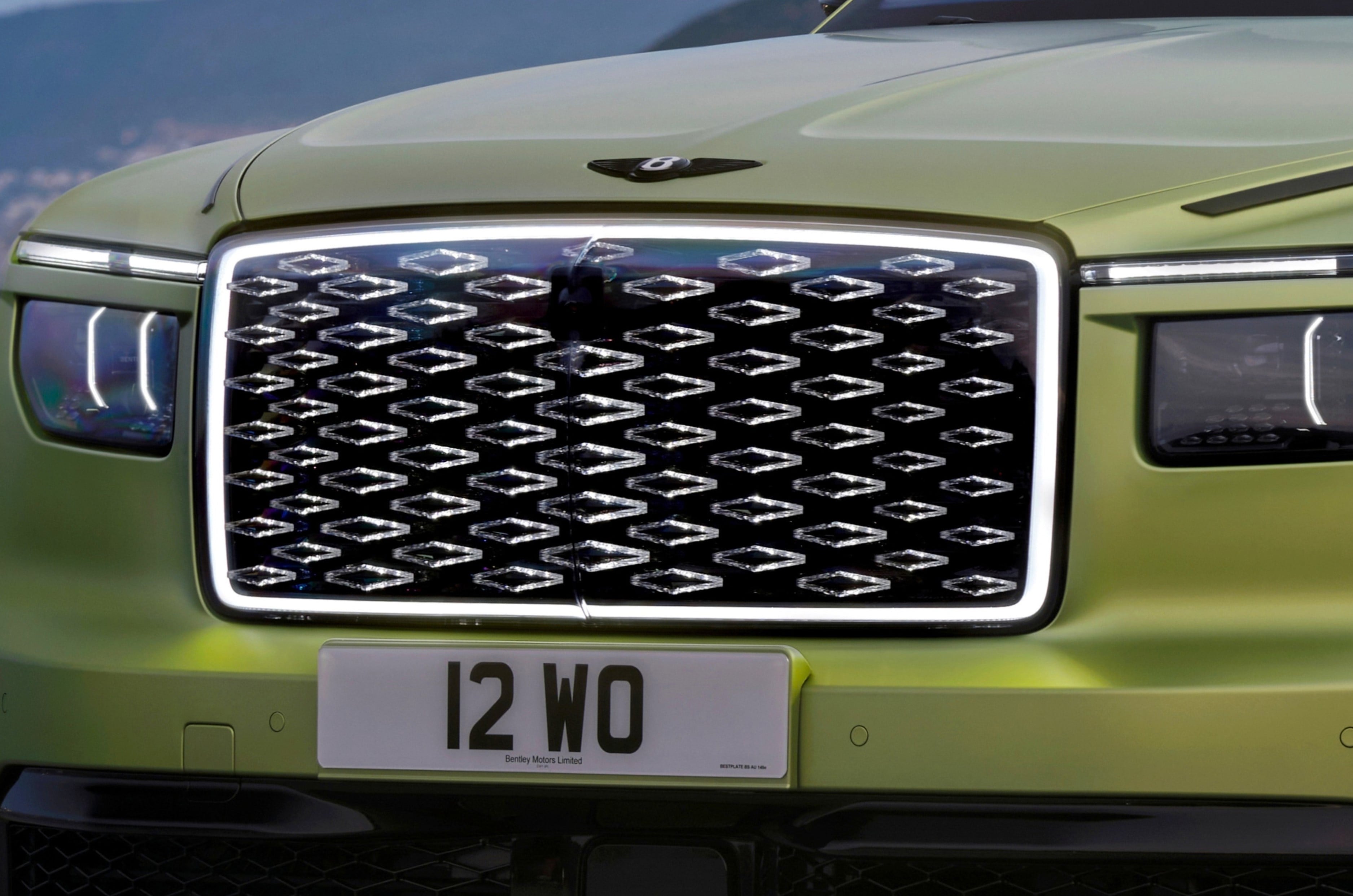
The Torcal gets a clear polycarbonate panel with diamond-like elements for a grille.
An EV doesn’t need a grille for cooling, but Bentley argues that a car without one is faceless. The Torcal’s solution is an illuminated one with crystal-effect, diamond-like elements set behind a clear polycarbonate panel. It’s the car’s signature piece, and it will look spectacular filling someone’s rear-view mirror. The face echoes the Continental T, reinterpreted through slim, high-tech lighting.
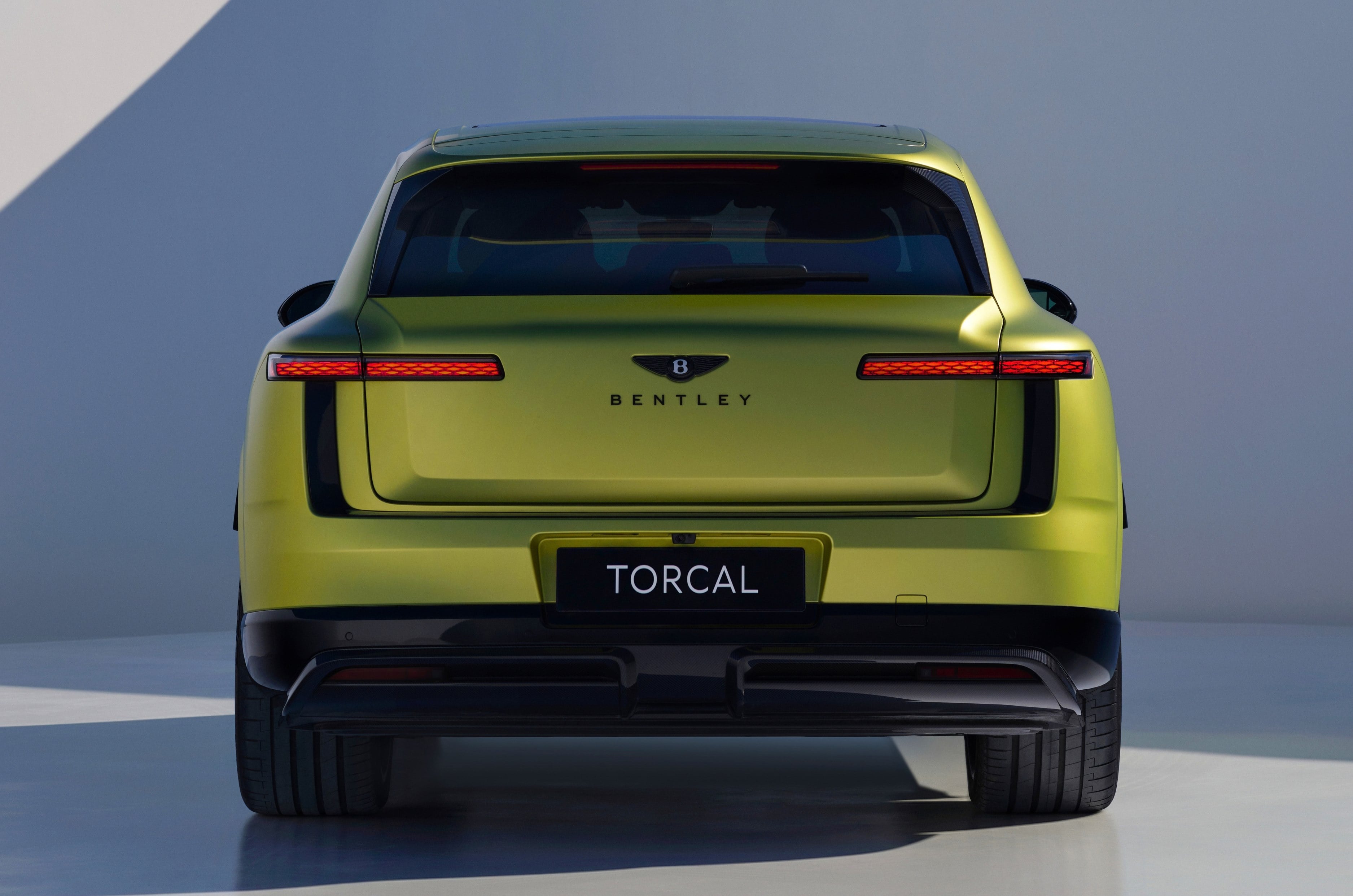
The flanks are deliberately free of fussy creases. The cabin tapers towards the rear so the body can swell over the back wheels, a look the designers call the ‘resting beast’. At the back, Bentley claims are some of the slimmest tail-lamps in the industry. A U-shaped motif ties them together and emphasises the car’s width.
U-shaped motif at the rear ties the tail lamps together.
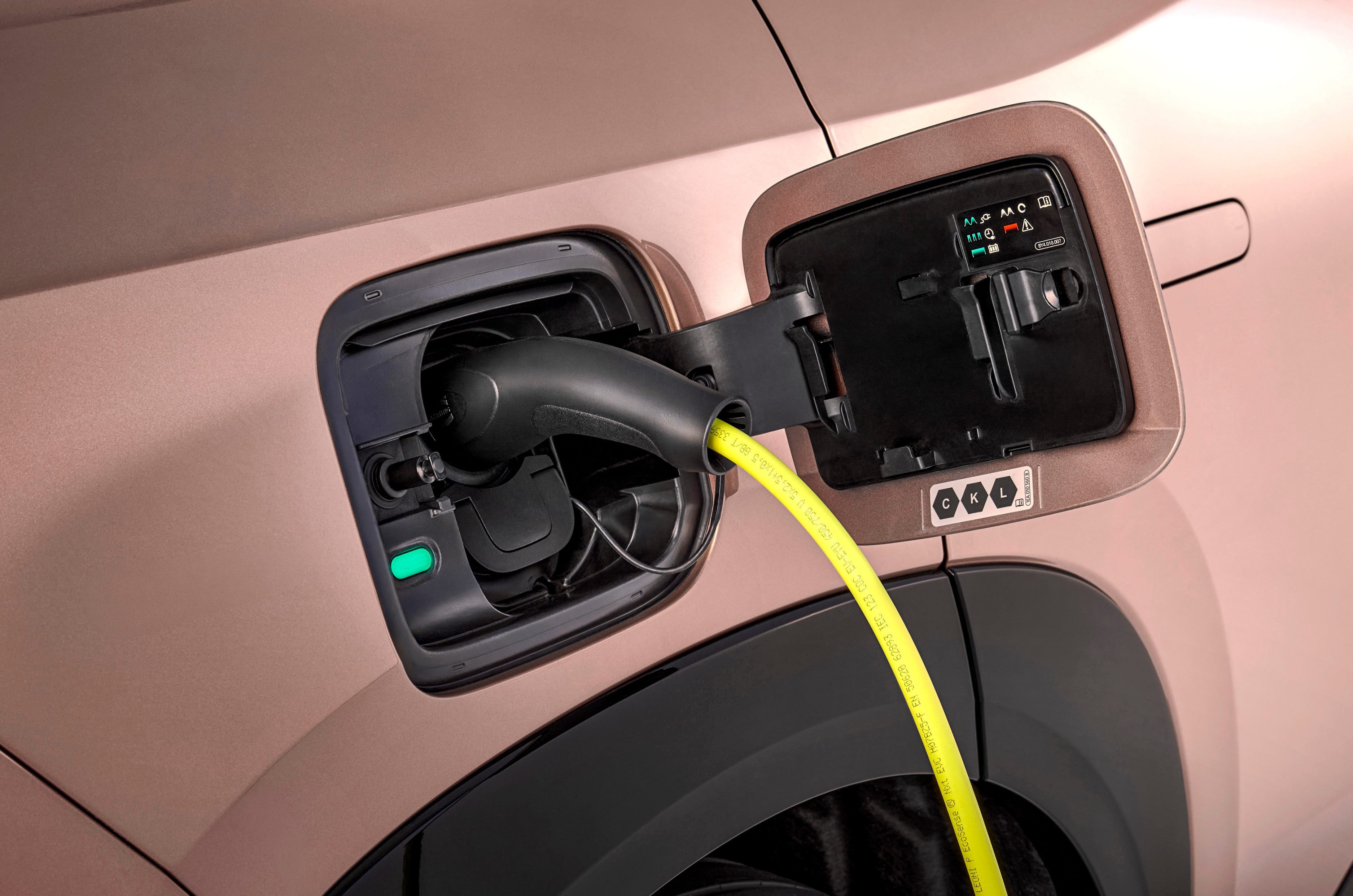
Our car rode on 22-inch wheels. The core car gets 21s as standard, and India-spec cars may well get the smaller, higher-profile rim. Other neat touches include a charging flap that slides open when you wave a hand over it, and a 90-litre frunk under that long bonnet. The 460-litre boot isn’t especially generous, and there’s no spare wheel, only a puncture repair kit. On Indian roads that could be an issue, though most owners will simply leave a flat to the chauffeur to fix
Bentley Torcal interior: Screens, with restraint
The cabin is completely new, and the tricks start before you’re inside. All four doors are powered and radar-controlled. The driver shuts theirs by pressing the brake pedal, and passengers can close theirs simply by buckling up.
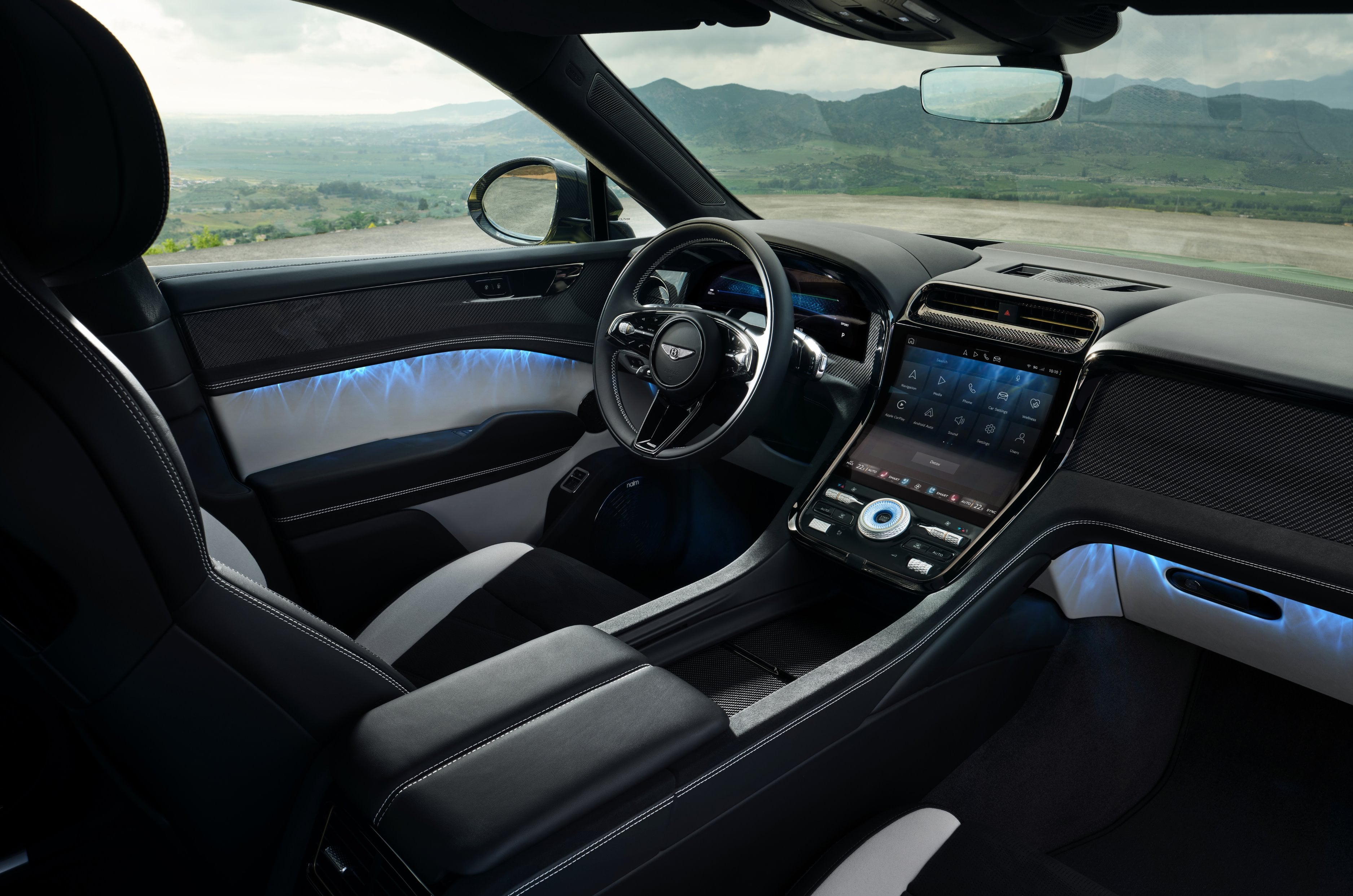
The first thing you notice is that Bentley hasn’t turned the Torcal into an iPad showroom. The centrepiece is the curved OLED centre screen. It doesn’t perch on the dash like a tablet; it sweeps down and flows into the centre console as one continuous form, and nothing else in the class looks quite like it. The OLED panel gives deep blacks and rich colours, and the curve brings every corner of the display within easier reach. Crucially, physical controls haven’t been binned. The switches have a beautiful knurled finish and satisfying, precise clicks, and purists will love them.
A curved OLED touchscreen infotainment is the centrepiece of the interior.
There’s one gripe. The direction of the front air vents is set through the touchscreen, a trend creeping into many luxury cars, and a physical slider would have been far nicer. Otherwise, we haven’t seen any car balance digital and physical controls better.
The tech runs deep. A facial-recognition camera in the rear-view mirror identifies the driver and loads their seat, steering and ADAS settings. An augmented-reality head-up display projects navigation arrows and hazard markers into the driver’s line of sight.
Curated experience
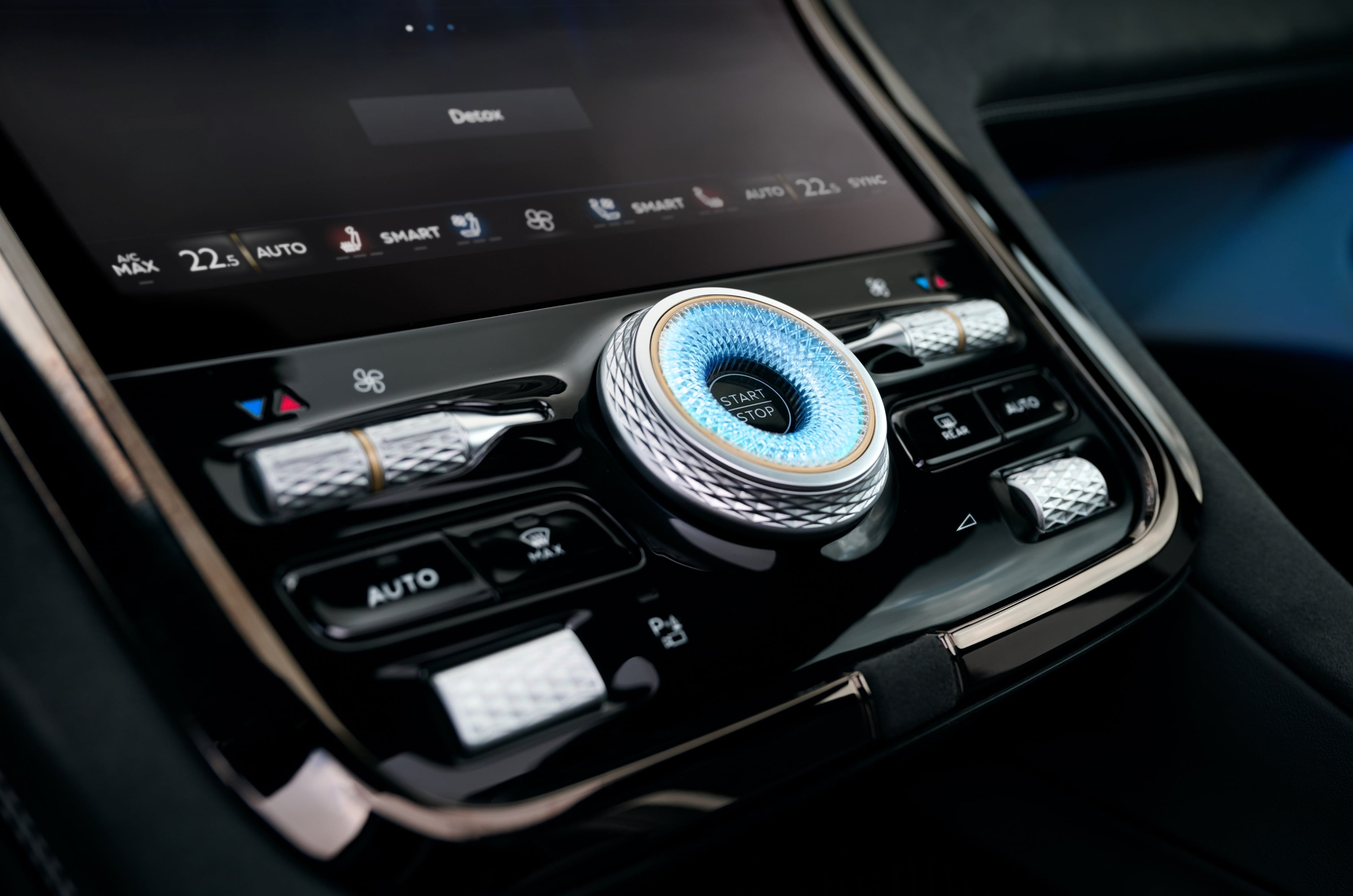
Twist the rotary collar around the starter button and you cycle through four Experience Modes. Each one changes the cabin’s lighting, sound, climate and displays as well as the car’s dynamics.
Rotary dial around the starter button can be used to cycle through four Experience modes.
Sport bathes the cabin in blue rather than the expected red. Bentley’s reasoning is that red signals anger while blue signals focus, which makes it a better colour for driving fast. Bentley mode balances performance and comfort. Comfort mode calms things down and offers a ‘digital detox’ that hides all but essential information. Refresh ups the fresh-air flow and brightens the lighting.
Drumming up character
The hardest thing about an electric Bentley is making it feel like a Bentley. For traditional owners, that means sound. The 6¾-litre V8 is iconic, but it was never a perfect engine. Bentley’s view is that its flaws, like in humans, give it emotion and character. So rather than synthesising a flawless digital imitation, Bentley recorded real musicians on drums, viola and bass guitar. The result is the ‘Dynamic Symphony’, complete with tiny imperfections. It responds to torque demand and speed, grows louder in Sport, and can be switched off entirely.
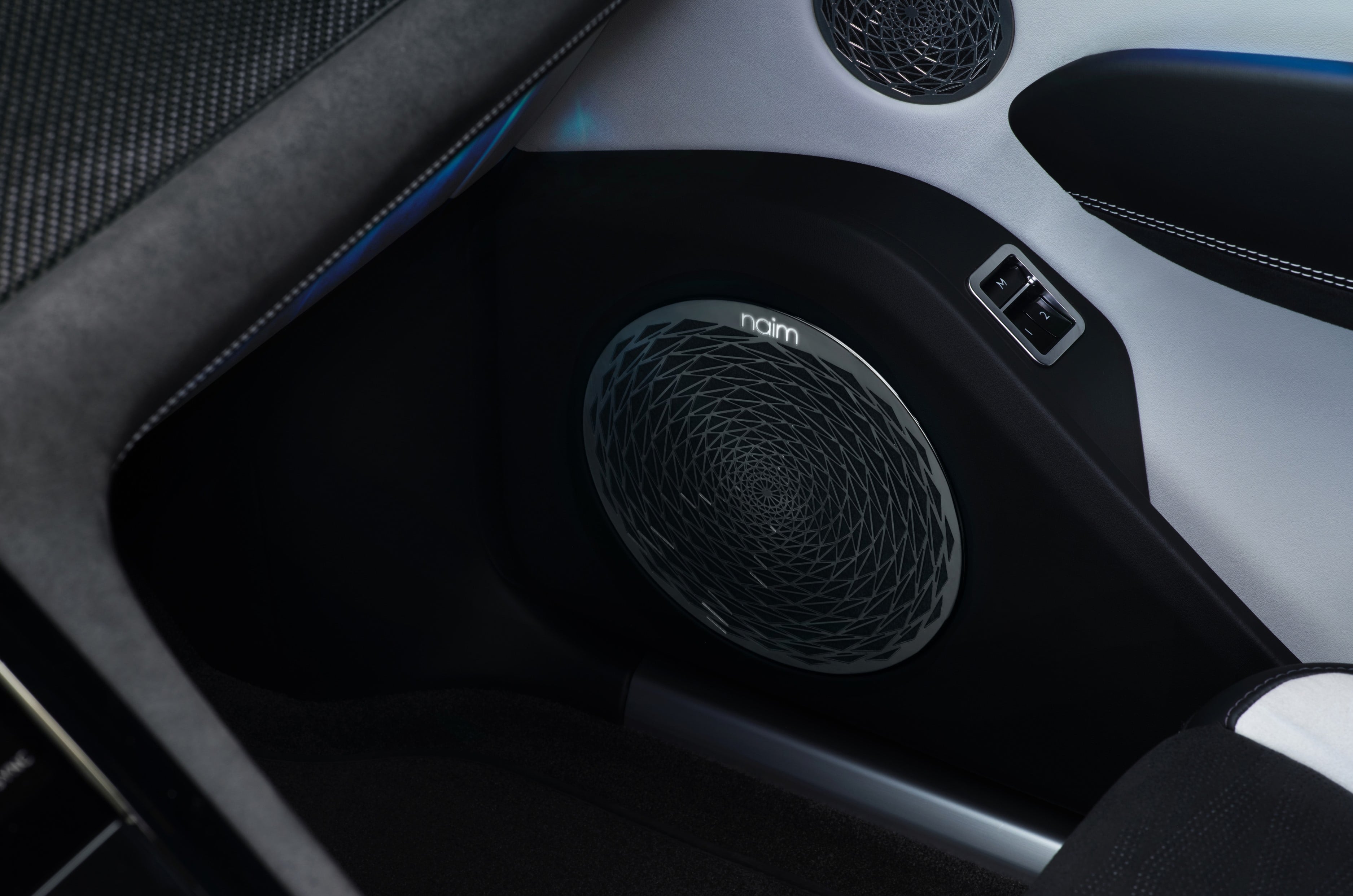
Optional Naim audio brings 28 speakers with Dolby Atmos 7.1
The attention to sound goes further. The indicator tick is a recording of a hammer striking leather in Bentley’s upholstery workshop, and the touchscreen chime comes from a crystal glass. Standard audio is a 620W, 16-speaker system. The Naim option runs to 1,780W and 28 speakers, with headrest speakers, seat shakers and Dolby Atmos 7.1
Material world
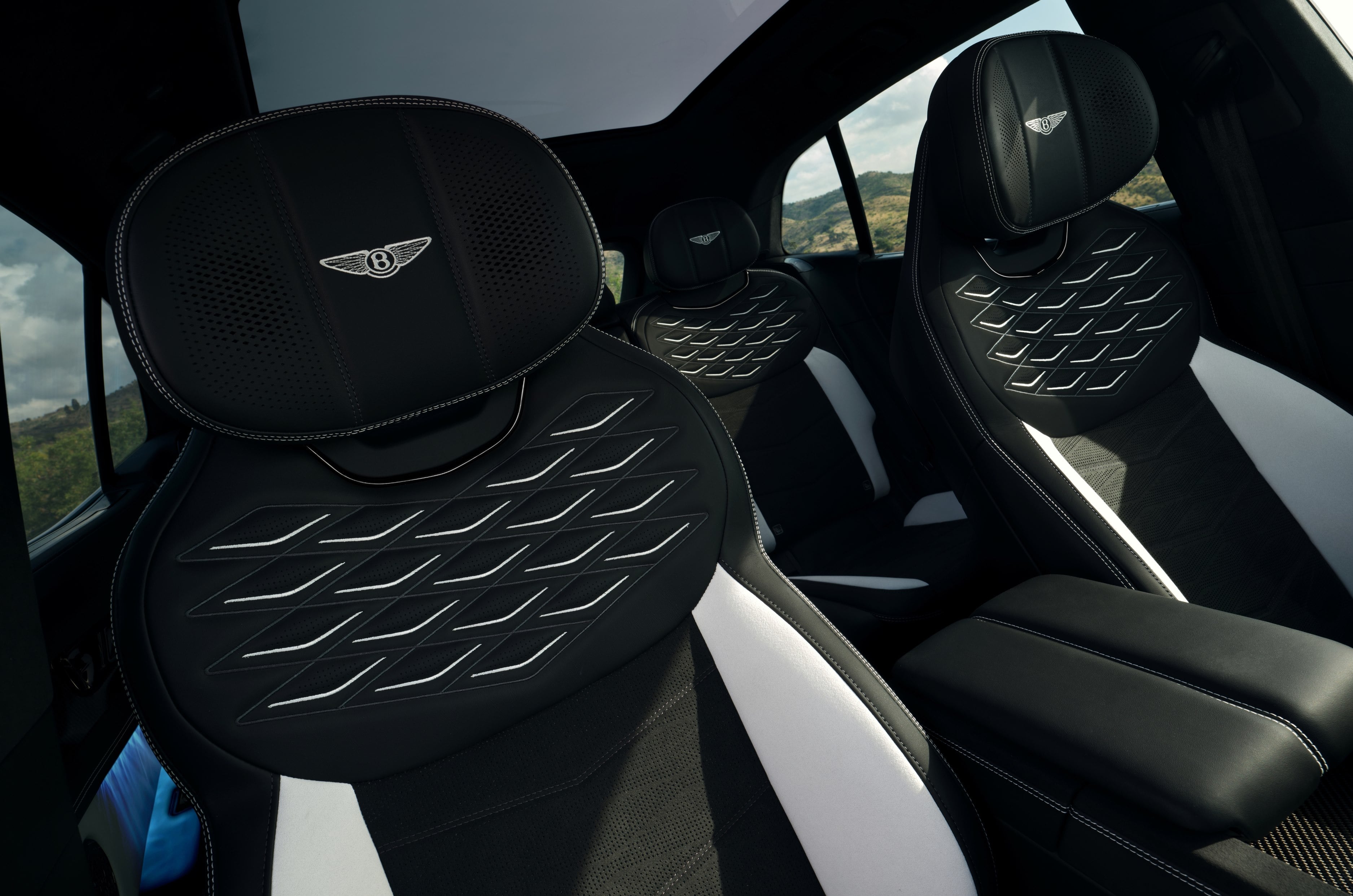
Materials are traditional Bentley, pushed further. There are wood veneers less than a millimetre thick, crisp aluminium and a deep piano black. Leather comes in 15 shades. The real headline is the world’s first 100 per cent Merino wool automotive fabric, developed with Somerset weavers Fox Brothers.
Scope for personalisation is vast, with 15 different shades just for the leather.
New Mulliner finishes include Ombré Walnut, which presses up to 1,000 layers of walnut off-cuts and recycled paper into a veneer that fades from black to smoke. Sunburst Aluminium reinterprets the engine-turned dashboards of old Bentleys. Overhead, the Frosted Diamond sunroof uses switchable glass, so you decide how much light floods in. The scope for personalisation is vast. A second car we saw, trimmed in lighter upholstery with far more brushed aluminium, felt like a different interior altogether.
Bentley Trocal back seat experience
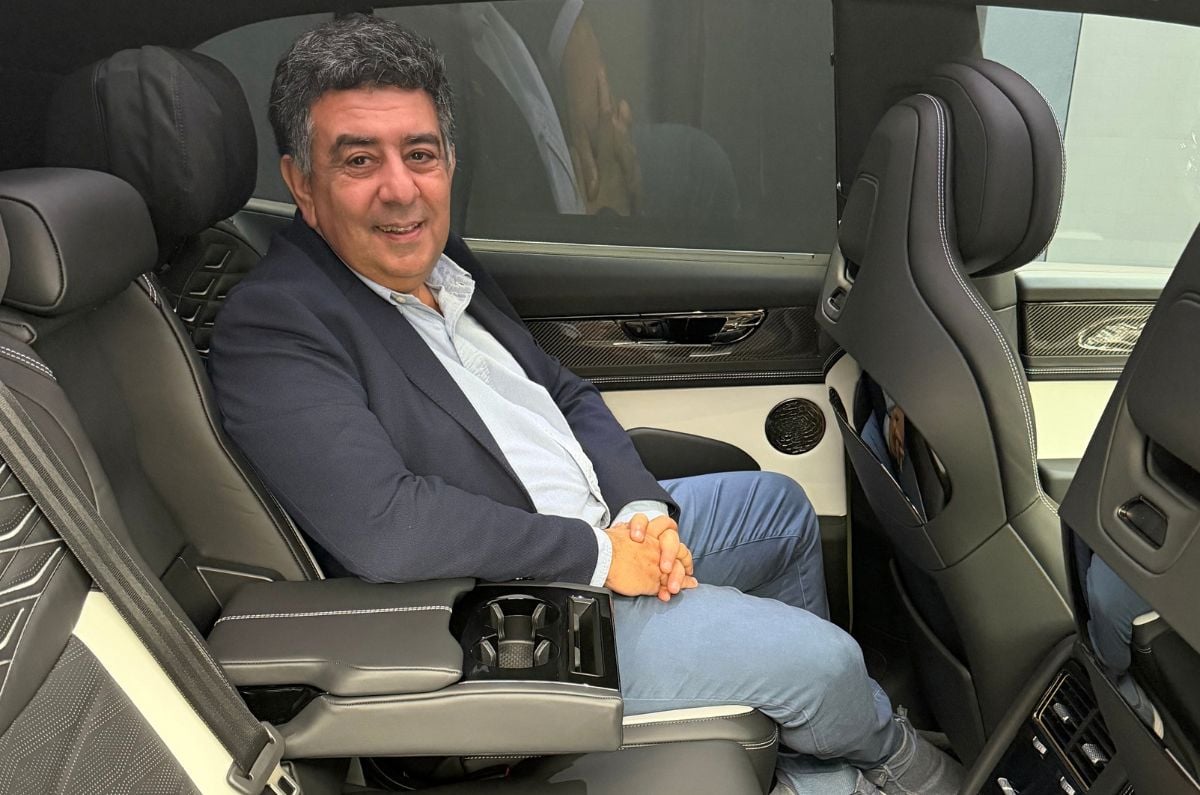
Legroom and headroom at the back are quite decent.
The rear seat matters most for Indian buyers, many of whom will be chauffeured. It’s impressive for a car smaller than a Bentayga. Under-thigh support is genuinely good, which is rare in an EV, where the battery usually pushes the floor up. Legroom and headroom are decent, though this is ultimately a car to be driven.
The rear climate vents get the physical controls the front vents lack. There are heated and cooled seats, and three USB-C ports, one of them rated at 100W for charging a laptop. The rear bench is also the first in a Bentley to power-fold.
Bentley Torcal specs, battery and range
The Torcal gets a 113kWh battery for a claimed WLTP range of 600km.
The Torcal rides on the PPE platform that underpins Porsche’s Cayenne Electric. The Cayenne tops 1,100hp in its most potent form, but Bentley has deliberately stopped short. The flagship makes 888hp and 1,350Nm, the most torque of any Bentley ever and has launch control which I doubt will ever be used!That’s enough to take a roughly 2.7-tonne SUV from 0-100kph in 2.9 seconds. Bentley’s research found that most customers find anything more violent uncomfortable.
Two permanent-magnet motors draw from a 113kWh (net), 800V battery, which carries a 10-year, 100,000-mile warranty. Claimed range is 600km WLTP. This is a continent-crosser, so charging speed was a priority. On a 400kW charger, a 10-80 per cent top-up takes 16 minutes, and around 160km of range goes in during a seven-minute coffee stop. India currently has no such high-speed chargers, yet.
It also gets fully active suspension and rear-wheel steering.
The chassis is Bentley’s most advanced yet. Fully active suspension replaces anti-roll bars altogether, and five degrees of rear-wheel steer shrink the turning circle to 11.1m. Carbon-ceramic brakes with 440mm front discs are optional. The ADAS suite uses 25 radars, sensors and cameras. It can reverse the car along the last 50 metres of its route, and it can park itself in a designated space up to 200 metres away.
Bentley Torcal India launch plans
The Torcal arrives in India in the second half of 2027. It’s a smidgen smaller than the Bentayga but will be substantially pricier, because EVs don’t get the same customs-duty benefit under the new UK-India FTA. Expect around Rs 4.5 crore, ex-showroom. Is it worth it? We’ll tell you once we’ve driven it. Standing still, at least, the Torcal makes a convincing case that a Bentley without an engine is still a Bentley.
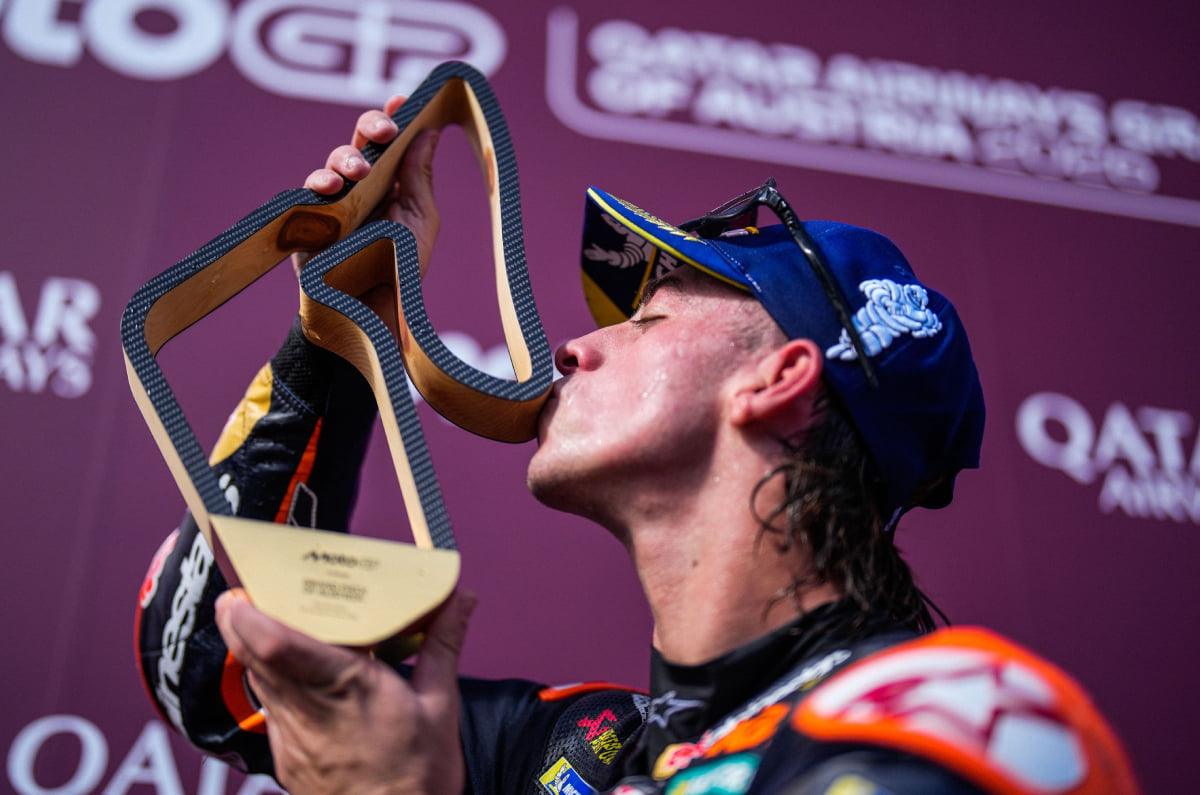
In what many will say has been a long time coming, Pedro Acosta has finally claimed his first MotoGP race victory with an impressive performance at the Red Bull Ring. He delivers a home win for KTM a day after crashing out of Saturday’s sprint, holding off Jorge Martin by just over a second, with Martin’s Aprilia teammate Marco Bezzecchi completing the podium in third.
Acosta ends a 15-podium wait for his first MotoGP win
First KTM victory after 1,449 days
Marc Marquez finishes fifth as Martin extends championship lead
Acosta bounces back after Saturday DNF for maiden victory
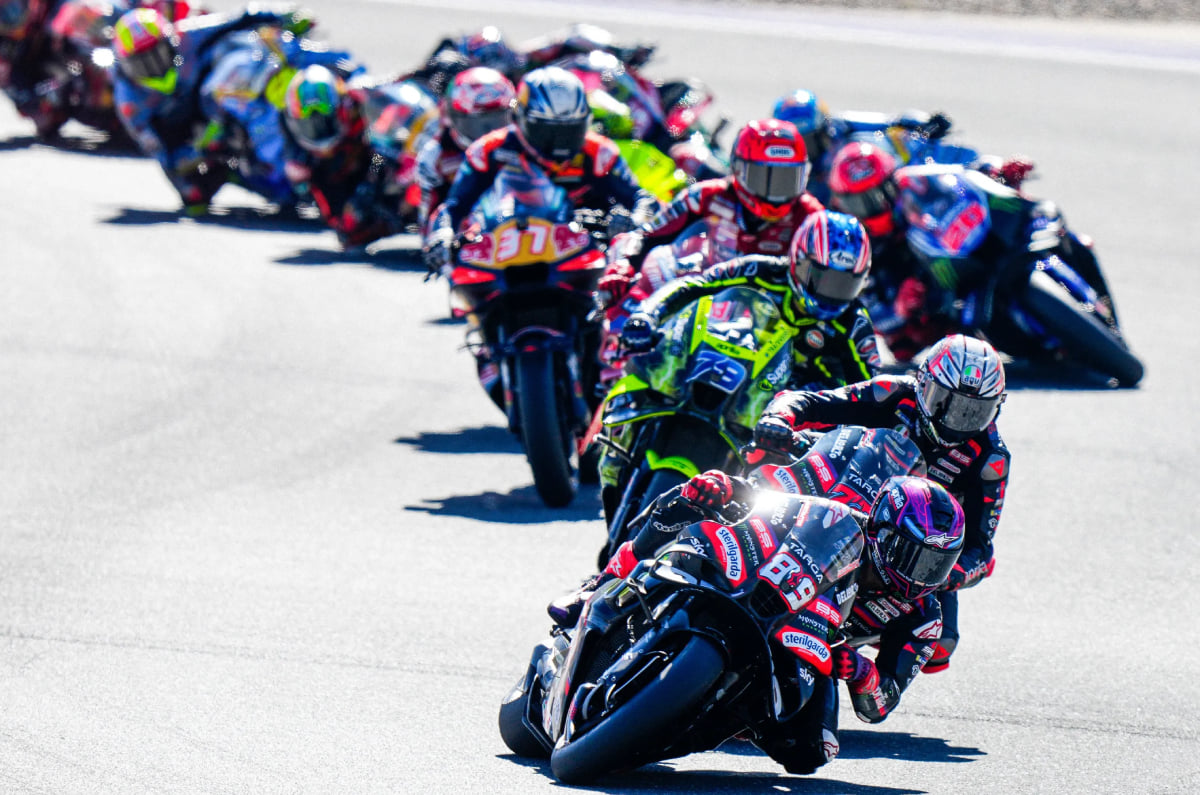
Martin made the best of his pole position to lead into Turn 1, with Bezzecchi passing Marc Marquez to slot into second. Ai Ogura also made a fast start from the second row, working his way past Marquez a few corners in to complete an Aprilia 1-2-3 on the opening lap. Acosta dropped back to fifth in the first few corners, but recovered quickly to move past Marquez and Ogura into third, with his sights set on the two factory Aprilias ahead of him.
By Lap 4, Acosta made a move past Bezzecchi to claim P2, and a couple of laps later he’d increased the gap to 1.5 seconds while closing in on race leader Martin. Then, on Lap 9, he made his decisive move on Martin, who, despite keeping pace with him for most of the remaining stages, was unable to reclaim the top spot. Acosta held firm to take the chequered flag 1.017 seconds clear, with Bezzecchi a further two-tenths back in third.
A tough day for Marc Marquez
Ogura crossed the line fourth, just over a second behind Bezzecchi, while Marc Marquez brought his Ducati home fifth after battling brake issues through the race. Brad Binder brought home sixth for KTM with his best finish of the season, ahead of Francesco Bagnaia, with Fermin Aldeguer’s eighth-place finish coming after a 3-second penalty. Fabio Di Giannantonio and Johann Zarco rounded out the top ten.
Championship standings
Martin’s second-place finish extends his championship lead to 12 points over Marquez, as the two riders entered the race weekend tied on points. Aprilia also left Austria leading the constructors’ standings by 10 points over Ducati. For KTM, the win comes with a bittersweet edge as Acosta is set to leave the factory team at the end of the season to join Marquez aboard the factory Ducati, in what promises to be one of the most exciting team dynamics in recent history.
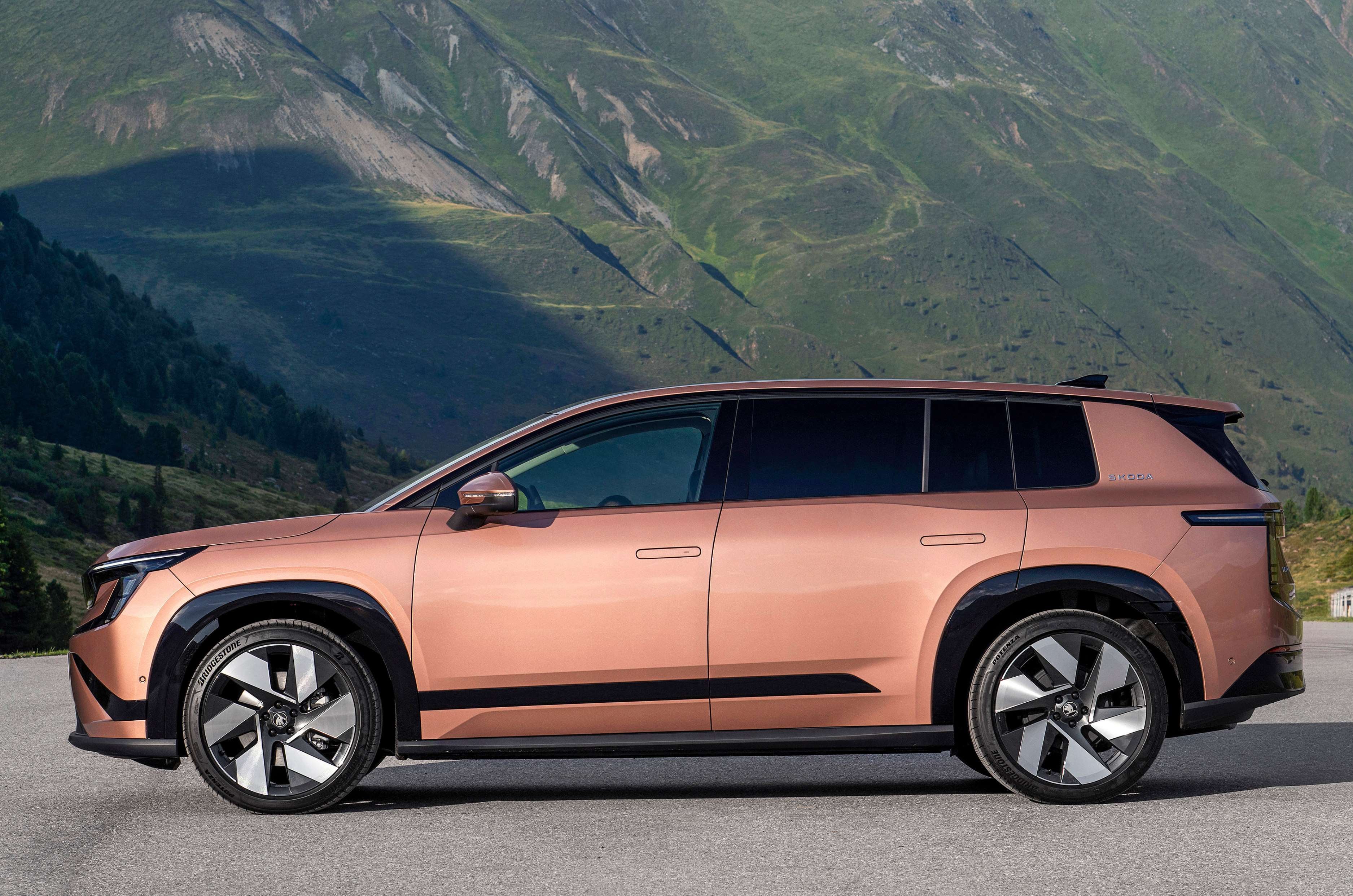
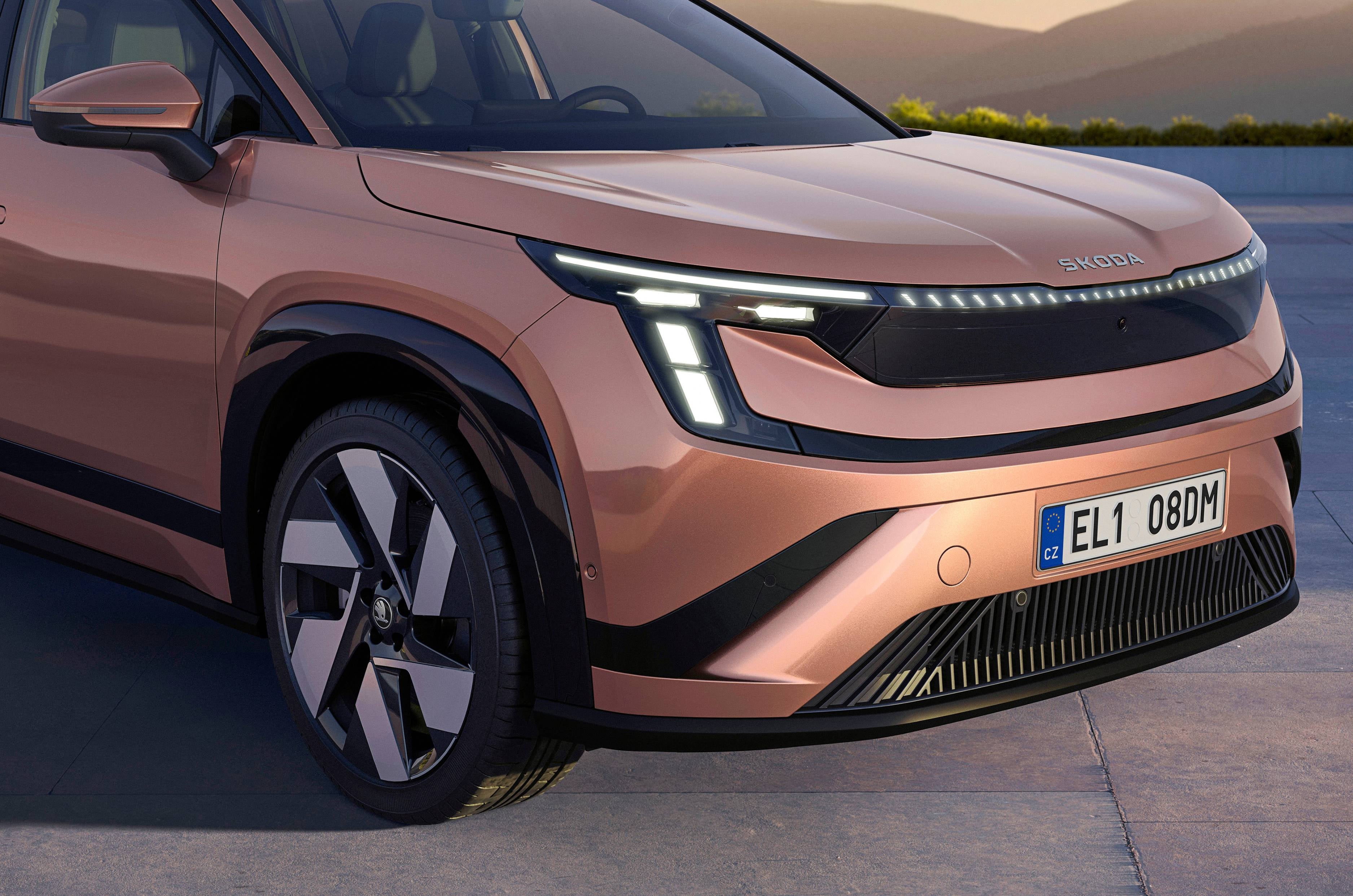
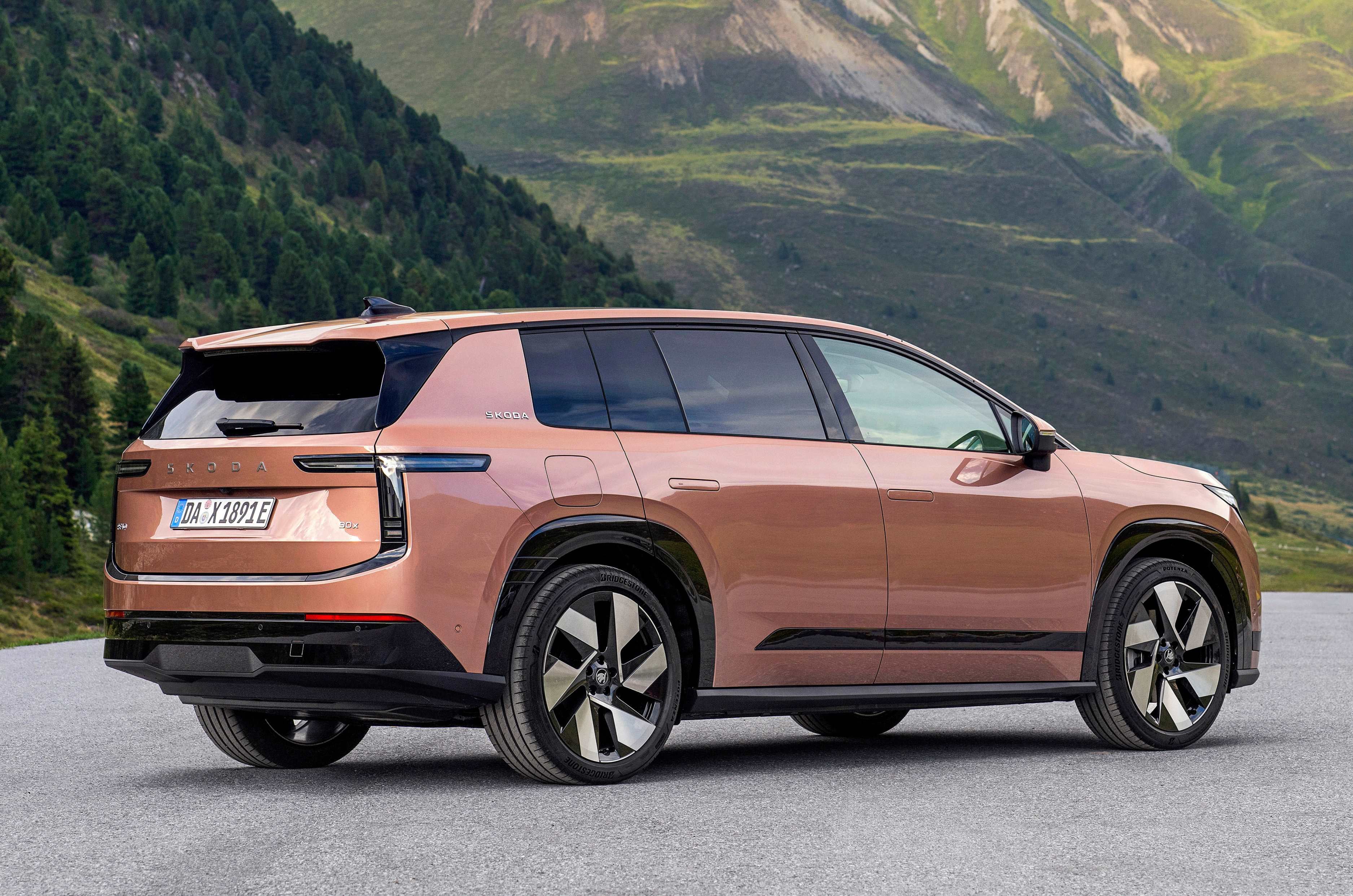
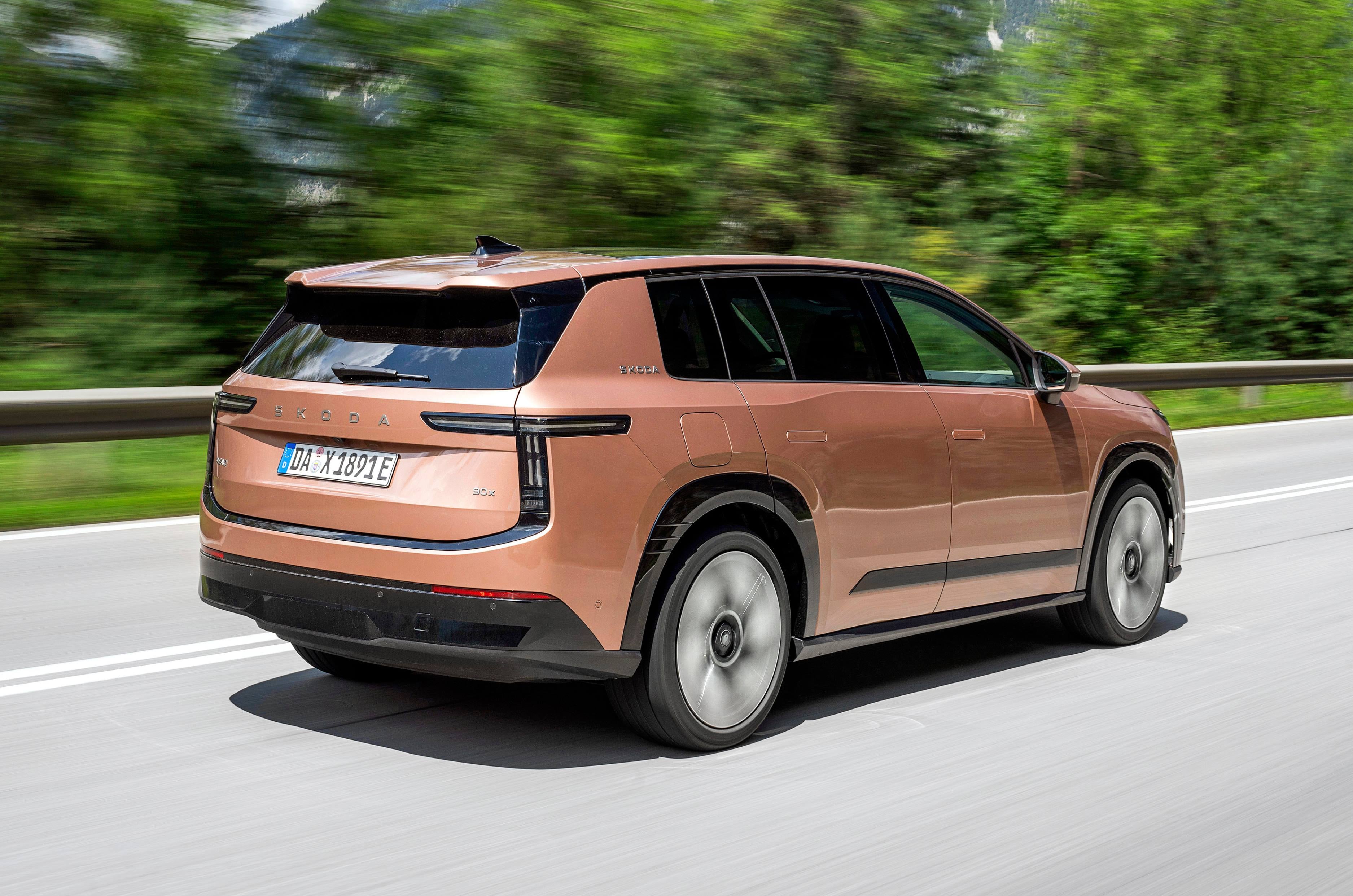
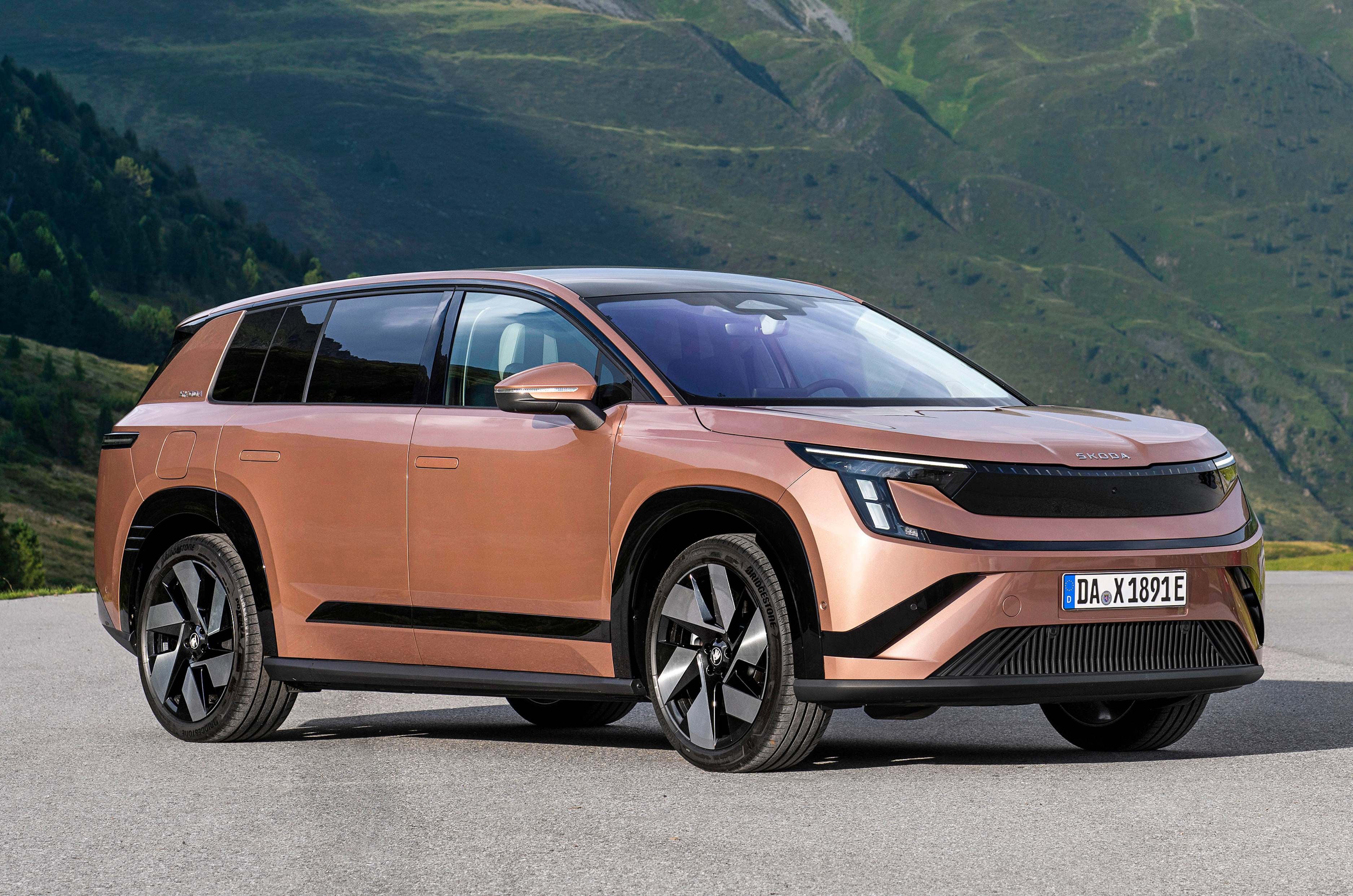
Epiq, Elroq, Enyaq, it’s pretty clear to see the nomenclature every electric Skoda SUVs follows, not so here though. You see this is Skoda’s new flagship or its peak as the company says, ergo we have the Peaq.
Skoda Peaq Exterior Design and Engineering – 9/10
Doubles down on minimalist style but looks premium, classy and has good presence.
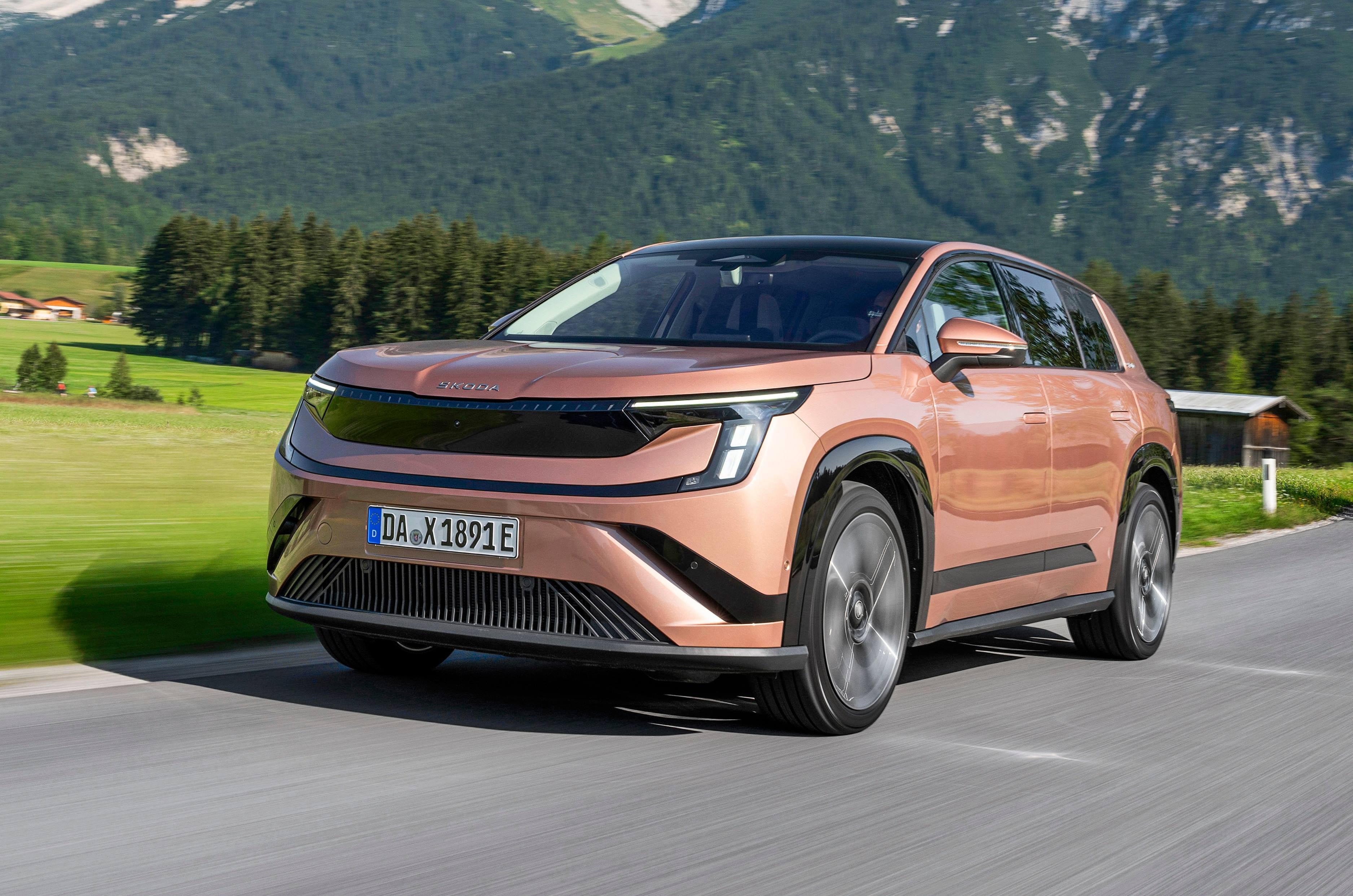
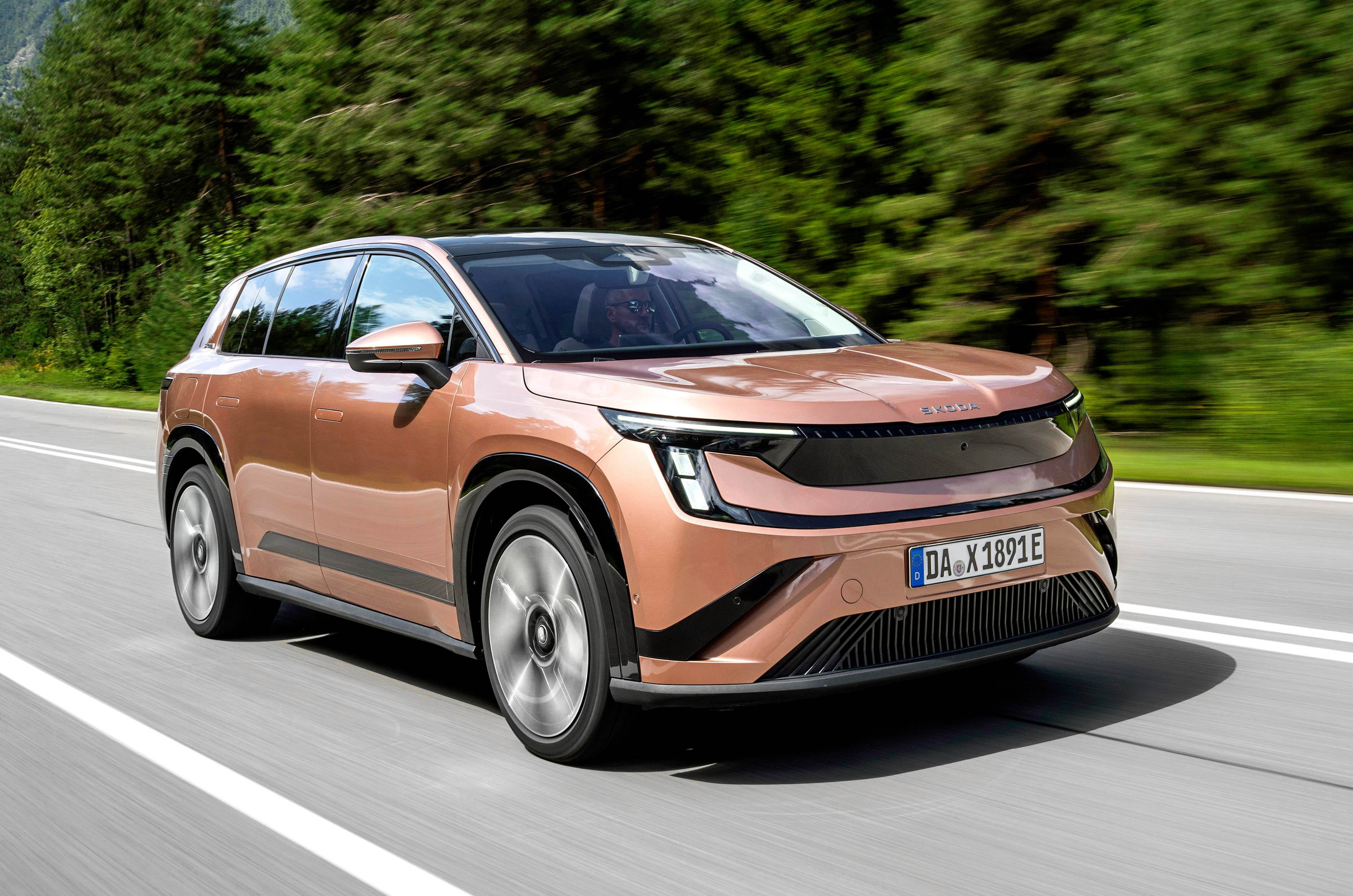
At 4.87 meters, the Peaq is the largest Skoda SUV yet.
While the entry level model, the Epiq, utilizes the front wheel driven MEB+ platform, the Elroq, Enyaq and the Peaq are all built on the MEB platform which is primarily rear wheel driven with the option of AWD, which the Peaq does offer. At 4.87 meters the Peaq is the largest Skoda SUV and sports Skoda’s largest boot, battery and sunroof, too.
Despite its size it doesn’t look brutish like most large SUVs seem to be leaning towards these days. Thanks to Skoda’s new ‘Modern Solid’ design language, which is all about minimalism the Peaq looks premium and classy and the bodywork is quite aero efficient too with a 0.249 drag coefficient.
The black panel houses all the tech bits like the cameras, radars and lidar.
At the front the lines are simple and clean. The fascia sports the company’s T-shaped DRL and headlight signature and the rather clever Tech Deck; the black panel which hides all the tech bits like the cameras, radars and lidar and mimics a grille thus avoiding that faceless look many EVs sport. Skoda has even hidden LED lights behind it that – to a small extent – mimic grille slots. Notably the Skoda emblem is missing, the company is in the process of moving away from it and the Peaq carries the new Skoda letter mark instead.
Over at the sides the clean lines continue with flush door handles, these can also be pressed in at the edge to manually operate them. The alloy wheels on our car were the 21 inchers and have a neatly balanced sporty and classy look. A defining styling element in profile is the C pillar which is body coloured and looks like a reversed fin and carries the Skoda lettering.
T-shaped tail lights are connected by a stylistic loop running at the bottom of the tail gate.
Like the headlights, the taillights too are T-shaped and are connected to each other via a stylistic loop running at the bottom of the tailgate. A roof integrated spoiler and a shark fin antenna complete the rear look and here too it’s just the Skoda lettering spelled out across the boot lid.
Skoda Peaq Interior Space and Comfort – 7/10
Minimalism carries on inside but cabin could do with a dash of flair.
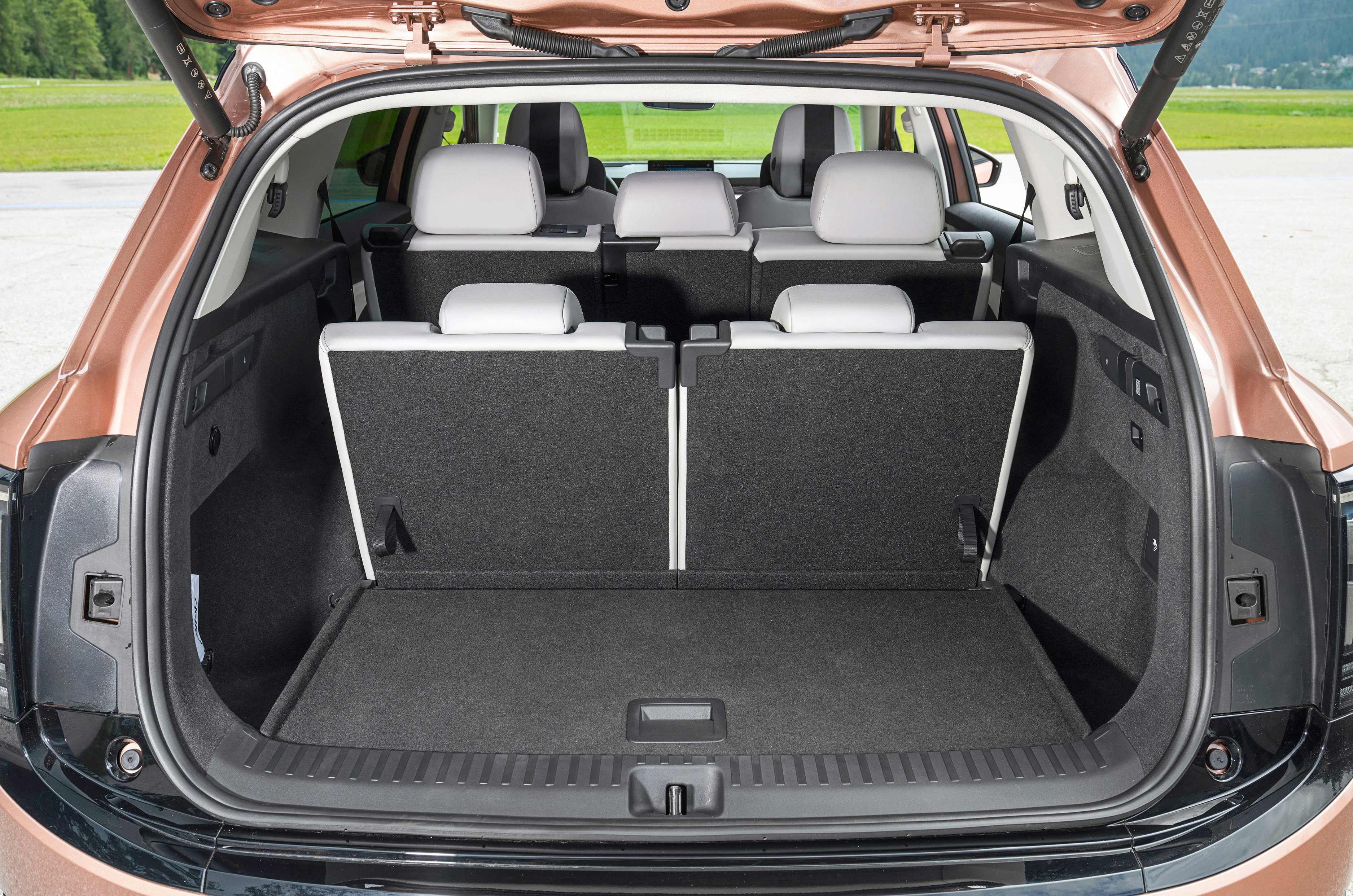
Peaq’s boot is the largest on a Skoda so far; offers 299-litres of space with all rows up.
With a near three-meter wheelbase there’s plenty of space inside, beginning with the boot which is the largest on a Skoda so far; 935 litres without the third row, but even in the 3-row version and with the third-row seats in place, there’s 299 litres which is more than enough for a few small bags. A handy little bit is a motorised cargo cover that rolls open or close with the boot opening and closing. At the front there’s also a 37-litre frunk.
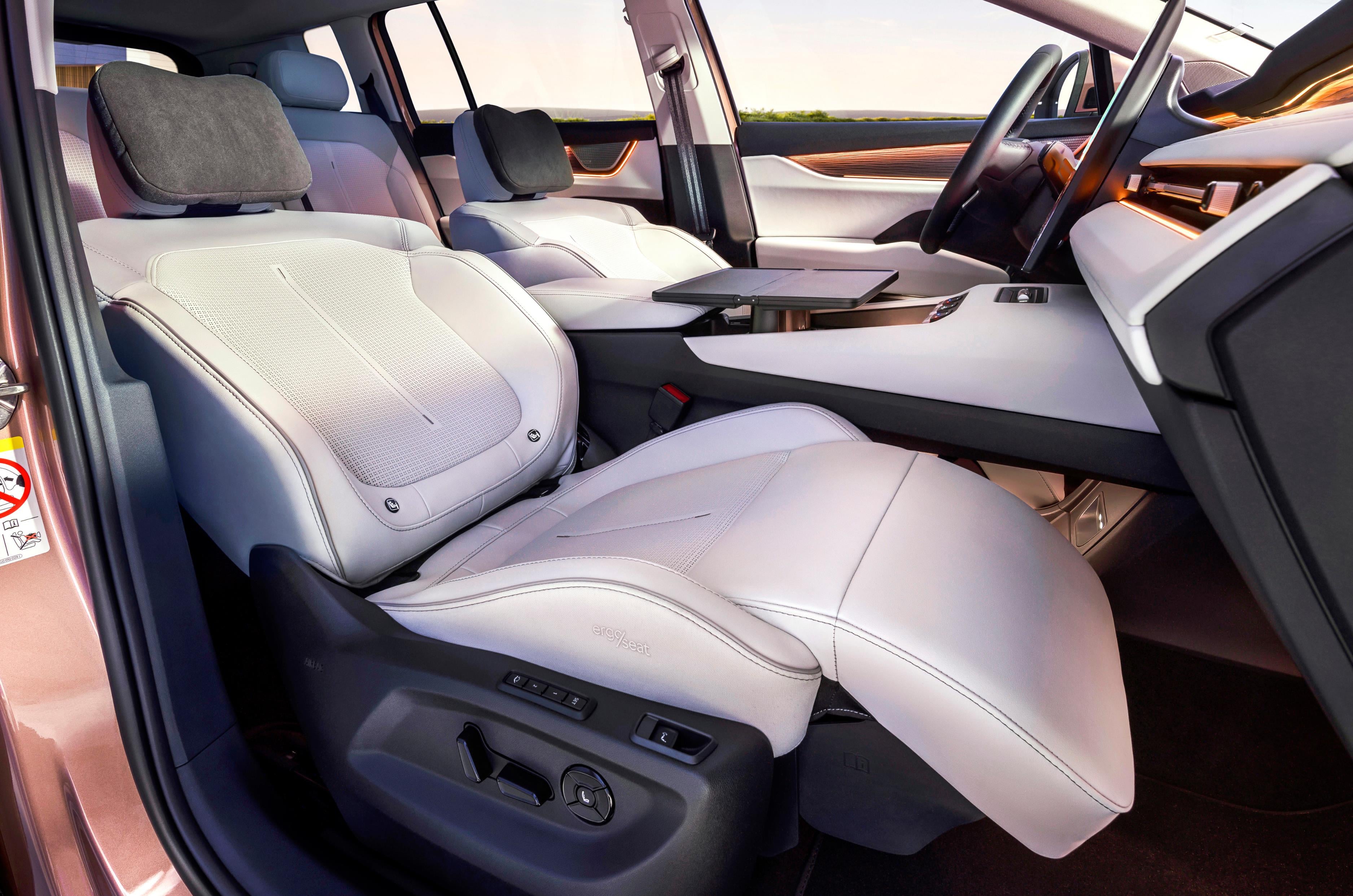
Front seats feature a ‘zero-gravity’ position allowing one to fully stretch out.
Passengers are well catered too, especially at the front two rows. The front seats offer plenty of space and will suit broader frames quite nicely. They also offer a ‘zero-gravity’ position wherein at the touch of a button the seat base dips, the seat back reclines and an ottoman style leg rest extends upward. They also offer heating, ventilation and a massage function. There’s an app too – which new EV does not have one these days – and that can configure the cabin lighting, seats, climate and other elements in six modes from a relaxing to an energizing ambience. On our drive in the cold Austrian mountains, we had a lot of rain and the ‘warm feet’ HVAC setting proved to be very handy and welcome.
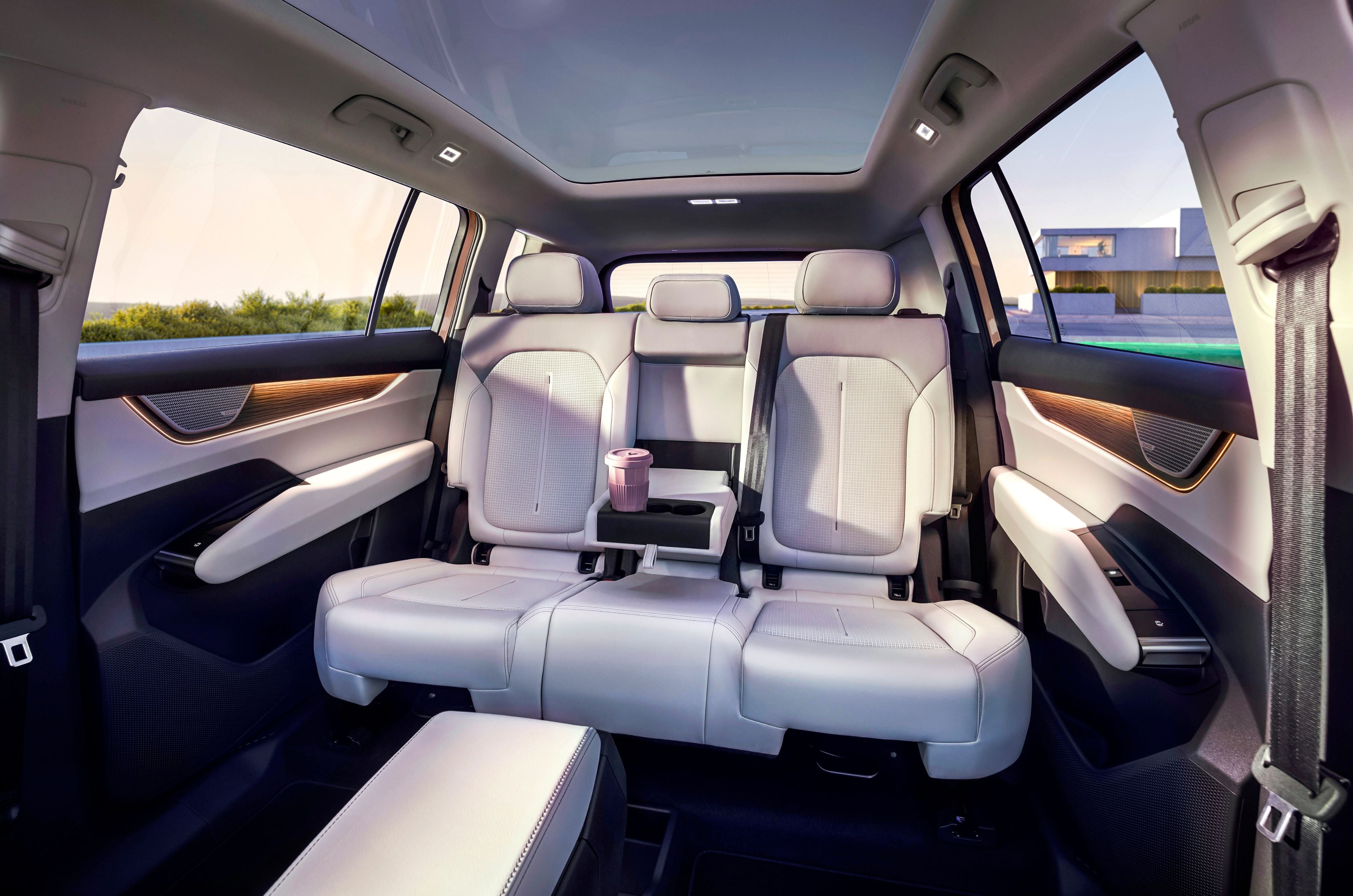
Three people can sit abreast in the second row; one doesn’t sit in a knees-up position like in most EVs.
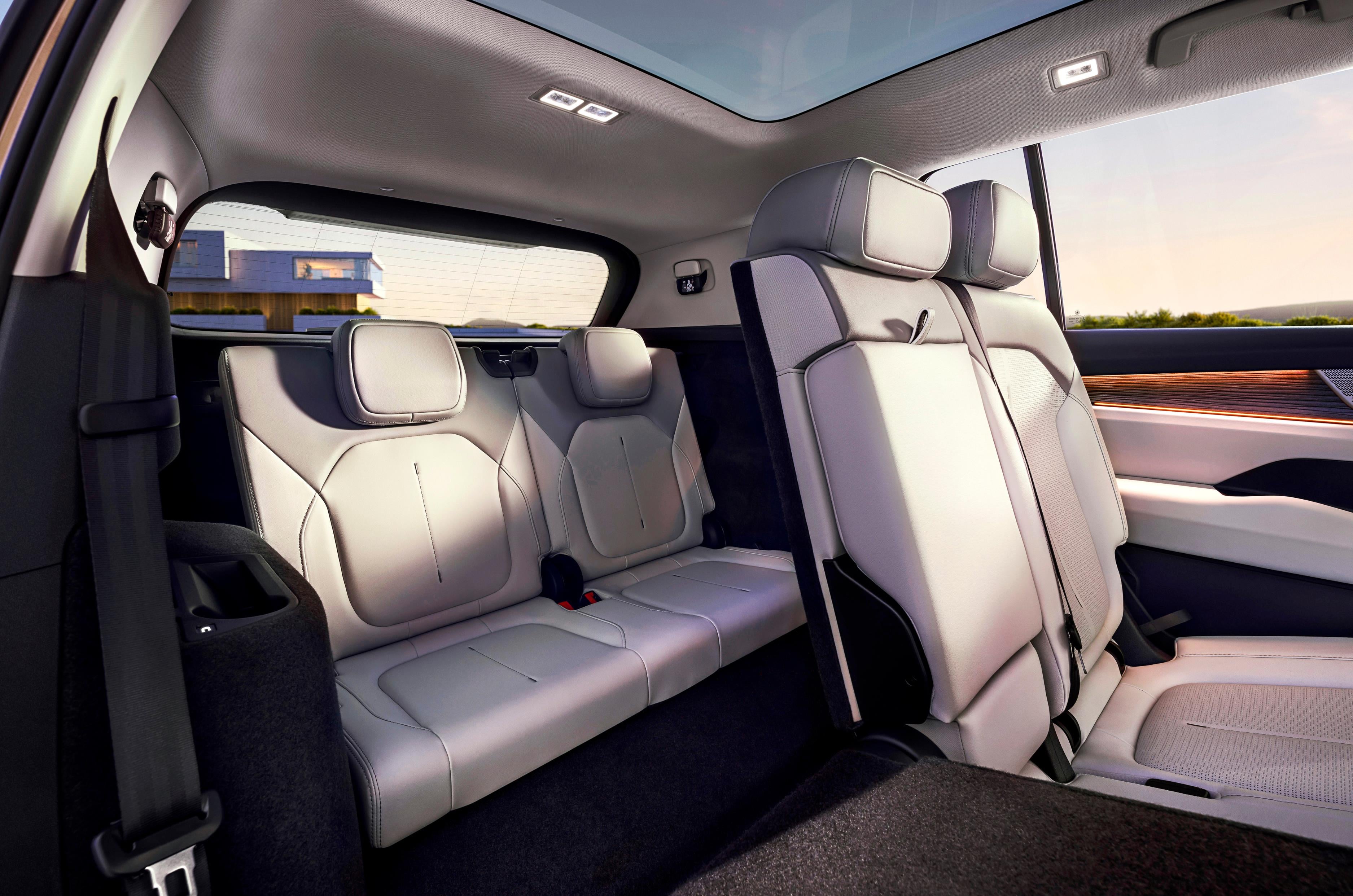
There’s plenty of space in the second row, legroom is good as is shoulder room. We did sit three abreast and didn’t have too much of shoulder overlap. Headroom is very generous and what’s nice is that you don’t sit in a knees-up position as is the case in some EVs. The third row is decent, there should have been more room given the length of the car, but on its own its quite useable and more than enough for kids or short journeys. Like the second row, headroom here is also good.
In terms of styling the cabin follows on with the exterior minimalist theme and all the lines are simple and clean, with very little flair about. A bit of panache would have been nice and in keeping with the flagship positioning of the Peaq.
Third row is decent enough for kids or for short journeys.
Skoda Peaq Features and Safety – 8/10
Well equipped and with a healthy does of Skoda’s ‘Simply Clever’ details.
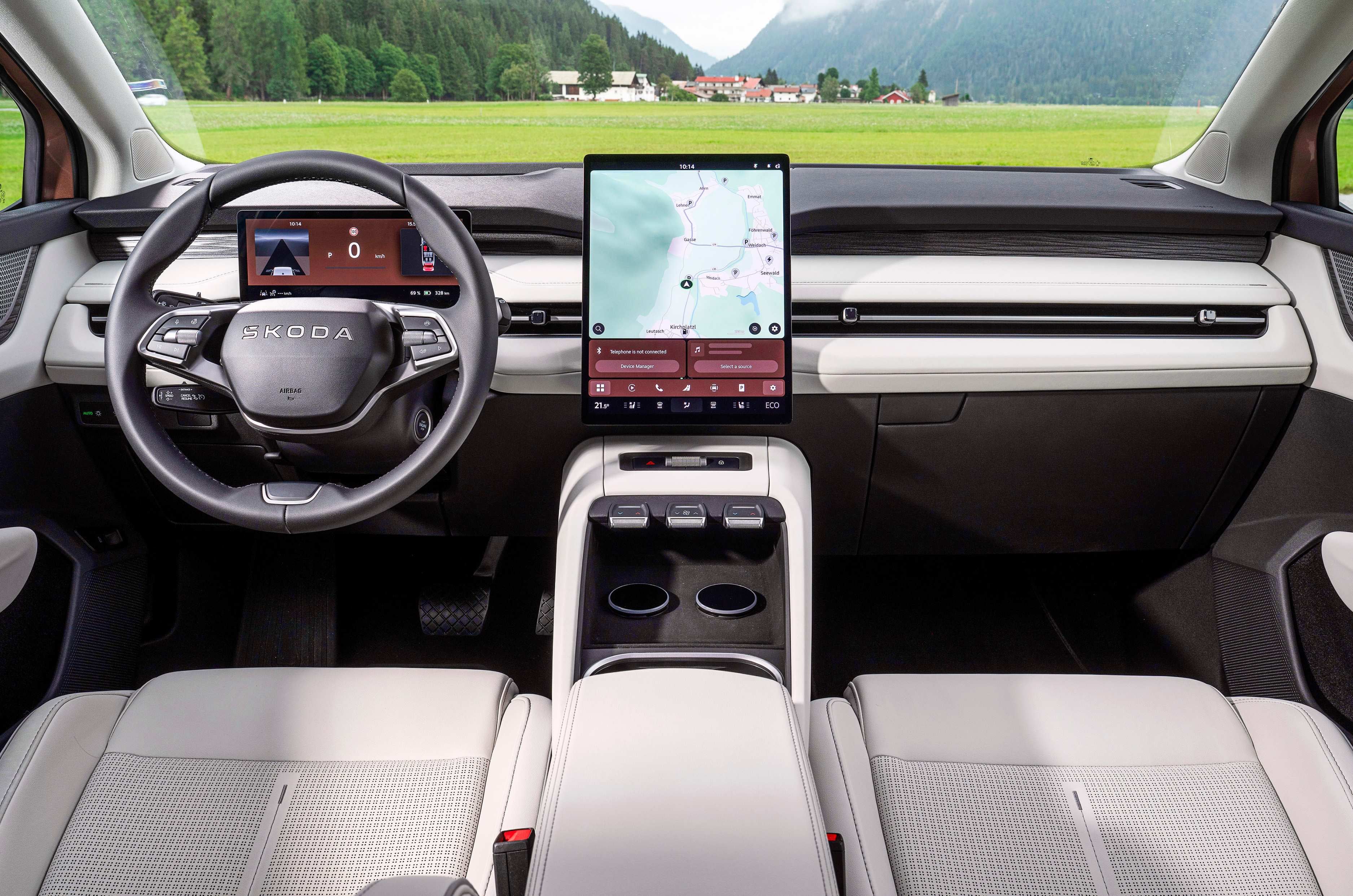
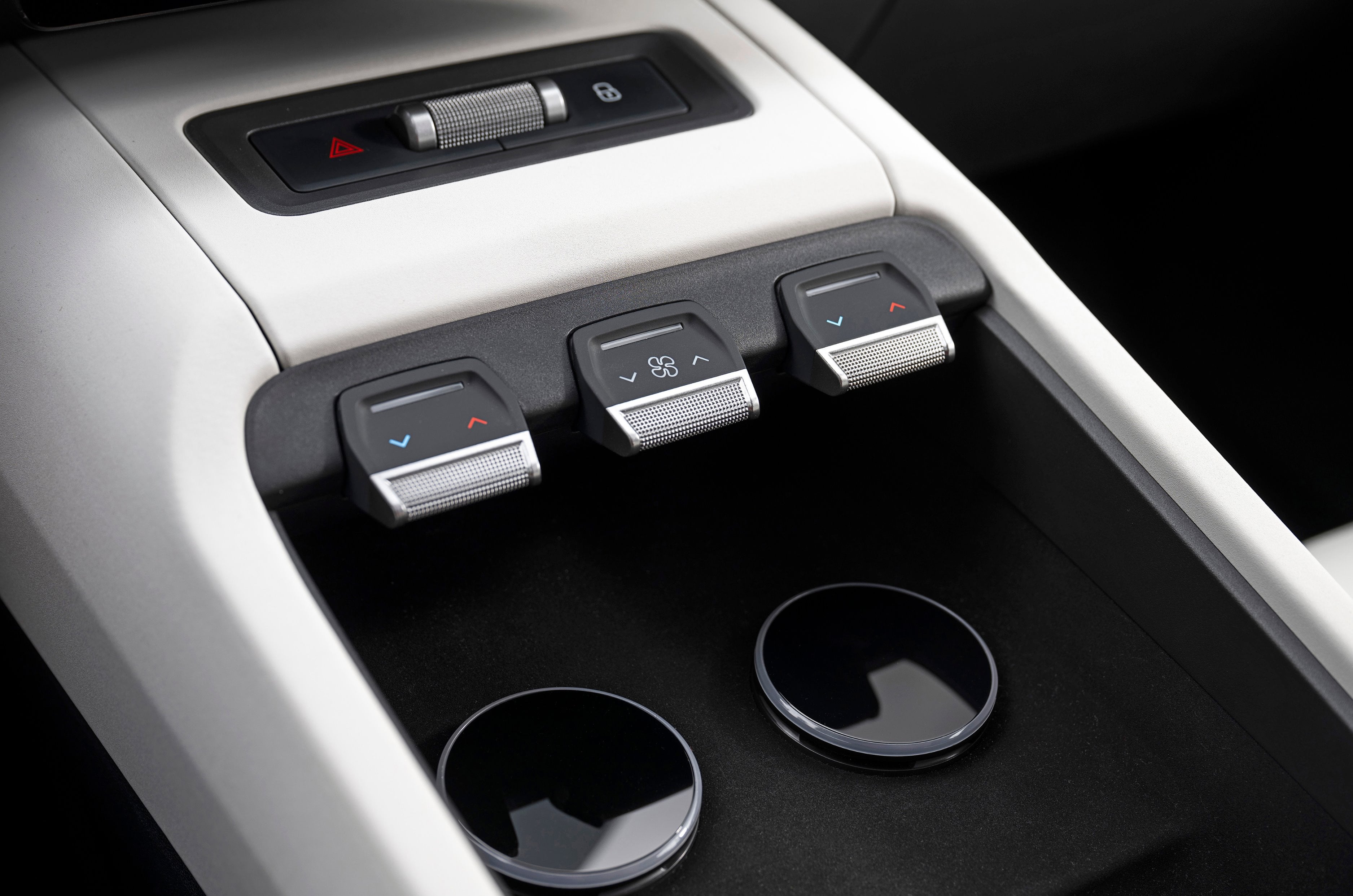
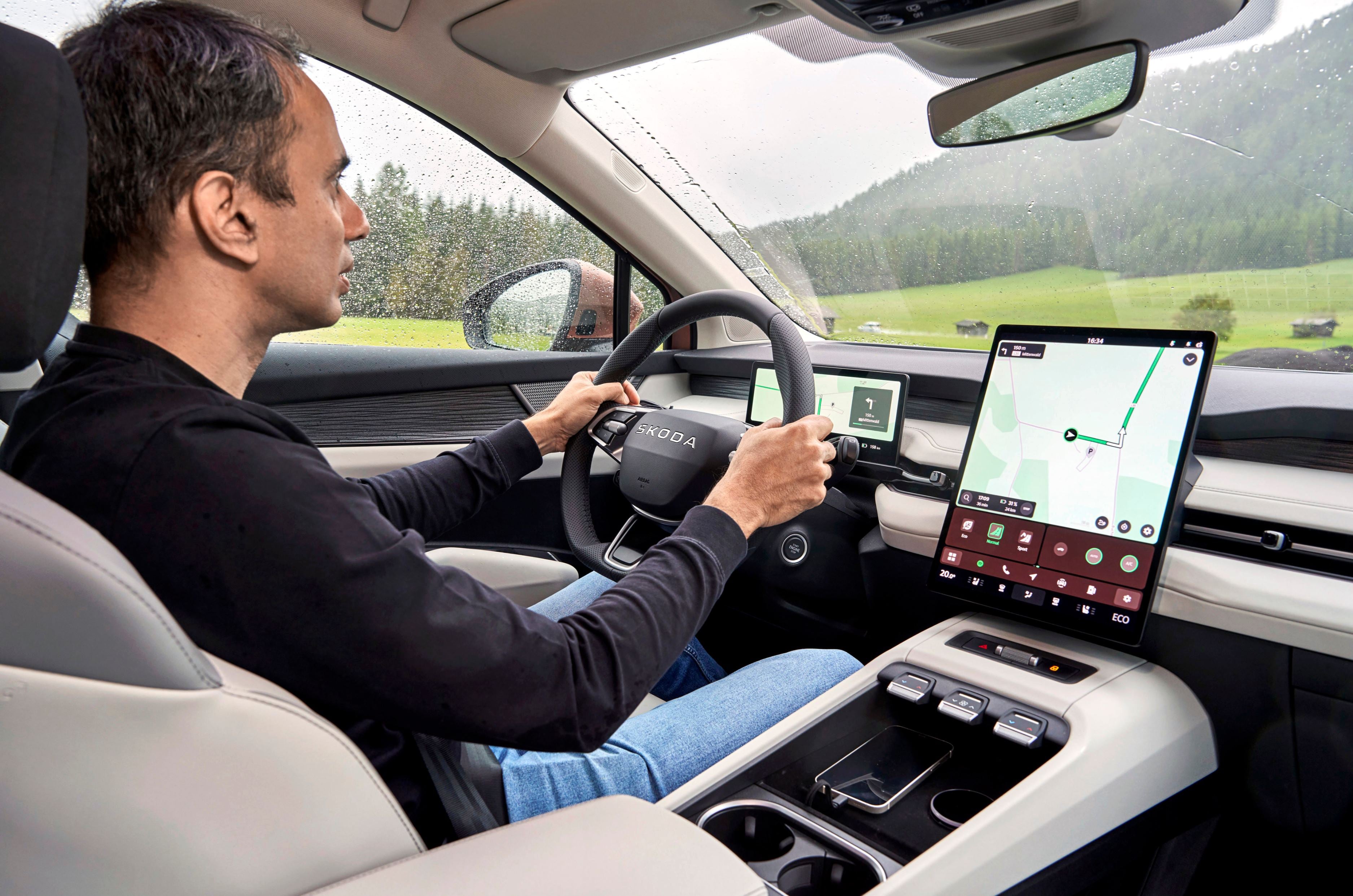
Sitting at the very top of the Skoda range the Peaq is well equipped. The dash carries a 13.6-inch, portrait-oriented touch screen – a first for Skoda – which runs a new UI. There’s a hard baked area for certain controls and thankfully physical controls are retained for main entertainment and HVAC functions, the latter being large toggle switches that are easy to use. These sit on top of an open charging box that has two illuminated magnetic Qi2 wireless charging disc with active cooling, and have a max speed of 25W. The rest of the center console is made up of many storage spaces and cubbies with a neat pass-through slot for charging cables from the lower to the upper console.
A portrait-oriented touchscreen is a first for a Skoda, and runs a brand-new UI.
Ahead of the driver is a 10-inch digital instrument panel which sounds large but has a slim aspect ratio, and there’s also an HUD. The steering wheel is the familiar Skoda unit with the letter mark on the boss and the buttons and scroll wheels on the two wings and as expected the operate with a satisfying click feel.
Thankfully, there are large toggle switches for HVAC controls which are easy to use.
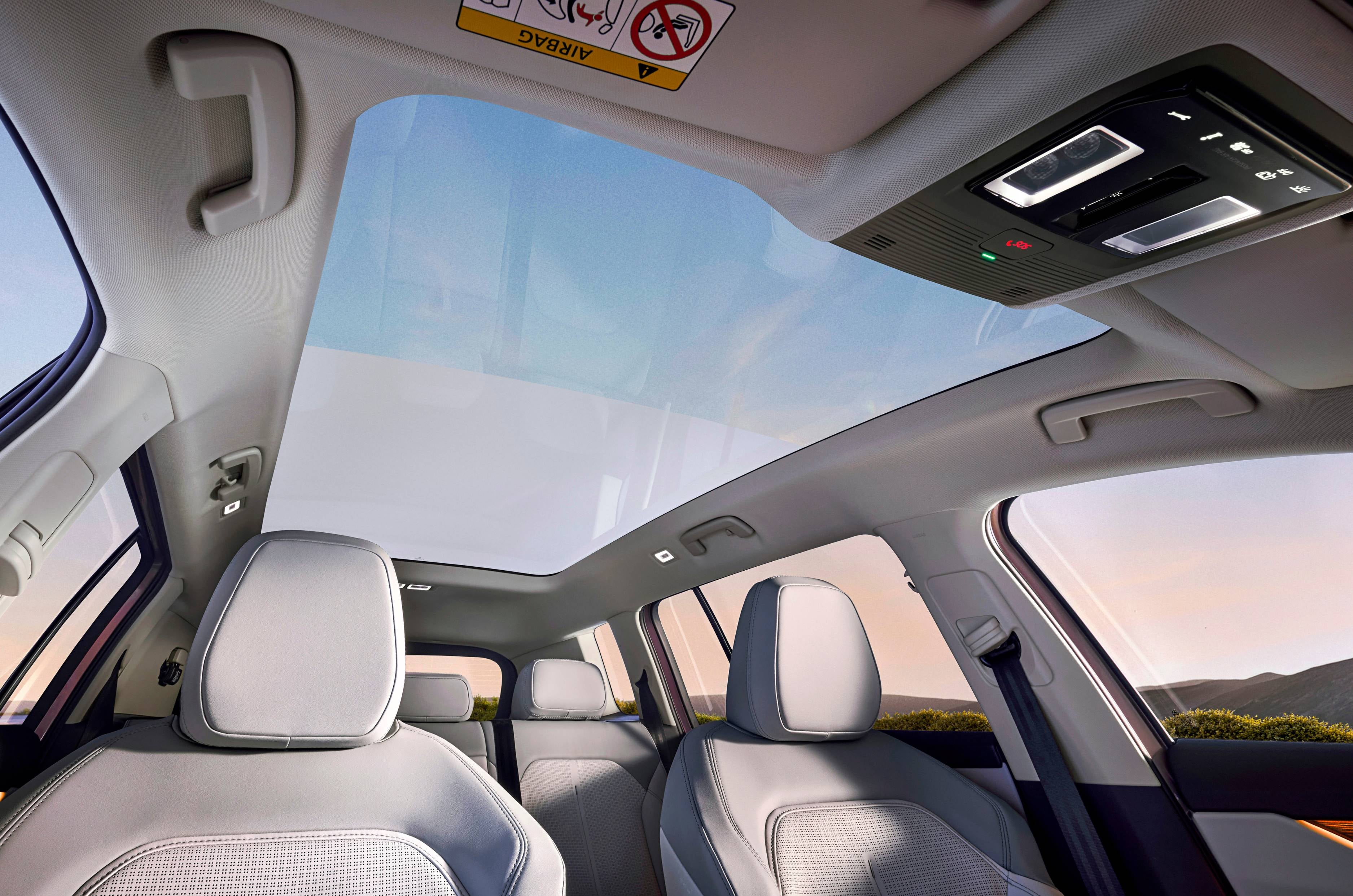
Other features include a 360-degree camera with a transparent 3D body on the display that helps in positioning the car, a 16-speaker SONOS sound system, park assist, a full connectivity suite, 10-airbags and ADAS and of course a healthy dose of Skoda’s ‘Simply Clever’ details like a fold out table for the front passengers that’s tucked away in the center console and umbrella holders in the doors. And topping things off is a large panoramic glass roof, which does not have a sunscreen, instead there’s 9 electrochromic panels that can be darkened to keep out the light and heat says Skoda. We’ll reserve that judgement for when we test it here in our hot climate though.
Panoramic glass roof doesn’t have a sunscreen but features 9 electrochromic panels to keep sun and heat out.
Skoda Peaq Performance and Refinement – 8/10
Strong performance that does not feel characterless like most EVs
There are three powertrain versions on offer starting with the 60-variant, power for which comes from a 63kWH (gross) NMC battery that drives a 204 hp rear motor. Next is the 90 trim which has a 91kWh (gross) NMC battery – the largest on a Skoda –power is courtesy a 286hp rear motor, and the range topper is the 90X which is also powered by the same battery as the 90 but driving a dual motor AWD set up that puts out a combined 300hp. Either of the 90 series cars is what Skoda will bring to India and for our drive today we had the 90X version.
Throtlle response feels quite ICE-like, building speed progressively.
As expected, power delivery is strong and acceleration is brisk, the claimed 0 – 100kph time stands at 6.7 seconds which is plenty quick for a large seven seat family SUV. What’s nice though is that the delivery isn’t typically EV like, which is to say power dumped in an instant and then linear all through. On the Peaq, throttle response feels quite ICE like, it’s fed in progressively and build nicely as you explore deeper regions of the throttle pedal. Top speed is limited to 180kph which is very easy to get too, on the unrestricted section of the German autobahns we hit an indicated 185kph. Wind and tyre noise is well controlled especially over the smooth tarmac sections and even at high triple digit speeds the cabin was silent enough.
Wind and tyre noise are well contained even at triple digit speeds.
Skoda Peaq Ride Comfort and Handling – 7/10
Very stable at speeds, but Normal mode sees some body float over undulations.
The 90X comes with Skoda’s dynamic chassis control and the adjustable dampers do alter the ride character noticeably. In Normal mode is very comfy and could do well over potholes and ruts, however at highway speeds and over undulations that we did see on some section there is some body float. A switch to the Sport setting however tides this up quite nicely and was the default setting I used for most of the drive. Being an AWD, there’s also a few off-road modes though we didn’t get to try these out and I suspect most owners won’t either.
Depending on the mode, adjustable dampers noticeably alter the ride quality.
In terms of handling this isn’t what you would call light on its feet, you do know you are driving a large SUV but its never cumbersome and through the mountain passes we did have a bit of fun, not sporty then but enjoyable enough if how I’d describe the handling character.
Skoda Peaq Range and Efficiency – 7/10
Charging speeds and range are par for course
The Peaq 60 battery capacity stands at 63kWh (59kWh net) and that’s good for a range of 450kms says Skoda. Max charging speed is 160kW on a DC fast charger and that can take the battery from 10 to 80 percent in 27 minutes.
A 160kW DC fast charger can top up the battery from 10 to 80 percent in 27 minutes (claimed).
The 90 cars are powered by a larger 91kWh (86kWh net) battery, max charging speed stands at 199kW and a 10 to 80 percent charge on a DC fast charger takes 28 mins. On the 90X range stands at 610kms while the two wheel drive 90 version sees a slightly longer range at 640 kms. We’ll know the real-world range once we put it through our standard test cycle back home.
Skoda Peaq Expected price and Verdict – 8/10
Priced at Rs 60 lakh it would be a tempting option and it does more than enough to call this peak Skoda.
Skoda is really doing a fine job with its EVs, we liked the Enyaq, were superbly impressed with the Elroq and the flagship Peaq does not disappoint too. Yes, the ride does feel soft and the interiors do lack flair, something you would expect on a flagship and we’ll of course have to wait and see how Skoda price this when it comes to India some time mid next year. Skoda says it will arrive as a CBU and we expect it to be priced at around Rs 60 lakh ex-showroom where it will be able to compete with rivals like the Tesla Model Y L, above that though and Skoda will face some heat from premium brands like BMW and Mercedes that are also expanding their electric SUV portfolio.
The Peaq will arrive in India as a CBU and is expected to be priced around the Rs 60 lakh mark.
The Peaq though does provide a very well-turned-out product, it looks classy and premium and that’s important at this price point, there’s a good amount of space inside, especially for the front two rows, it’s well equipped with typically Skoda clever bits and the drive experience is mature and enjoyable. All typical highlights that we’ve come to expect of the brand. All in all, then, the Skoda Peaq does more than enough to safely call this, peak Skoda.
JSW Group, one of India’s largest conglomerates, is preparing to significantly expand its automotive ambitions. Having already established a presence through JSW-MG Motor India, its joint venture with China’s SAIC, the company is now gearing up to enter the market with an all-new brand of its own, JSW Motor.
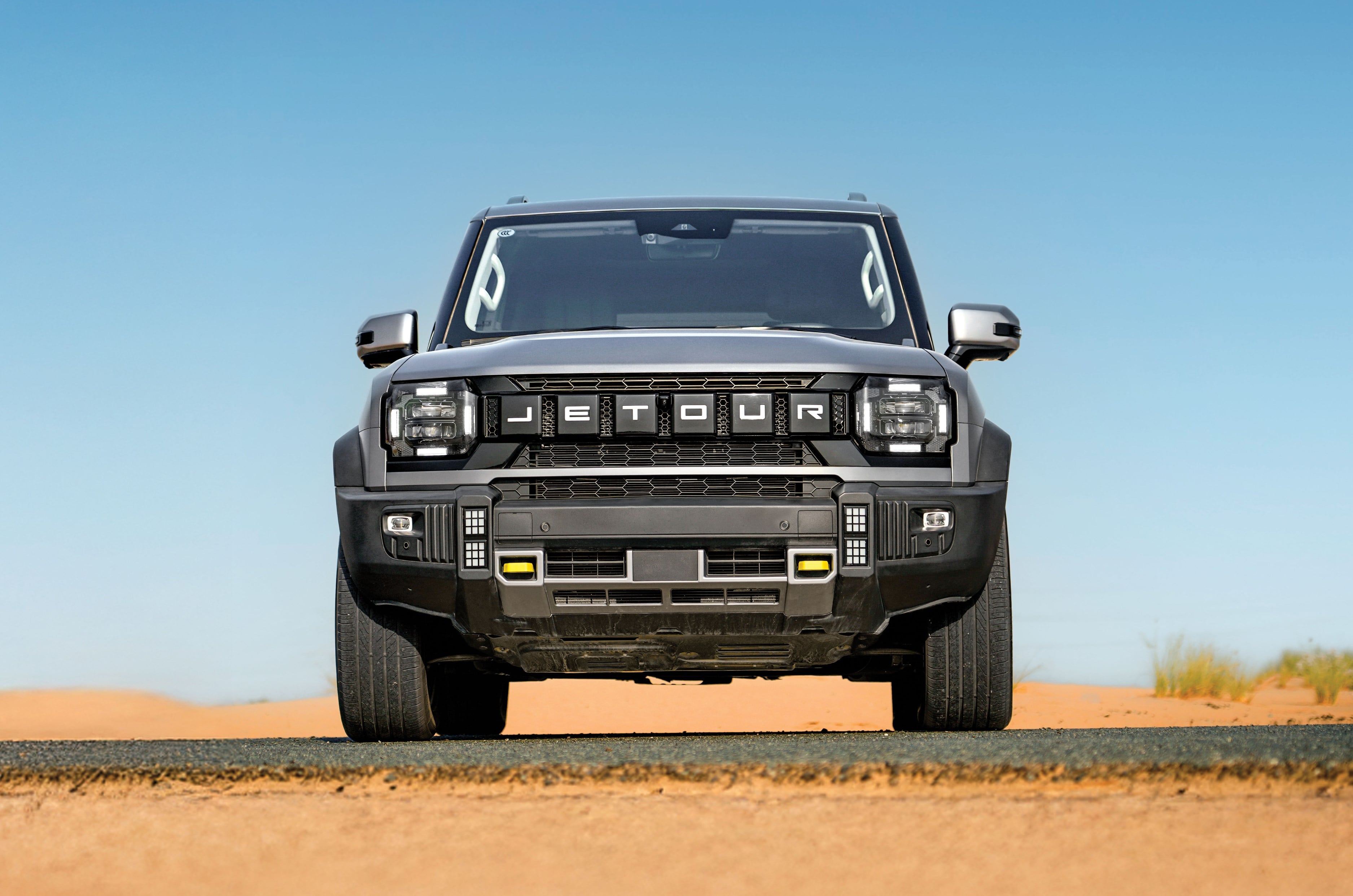
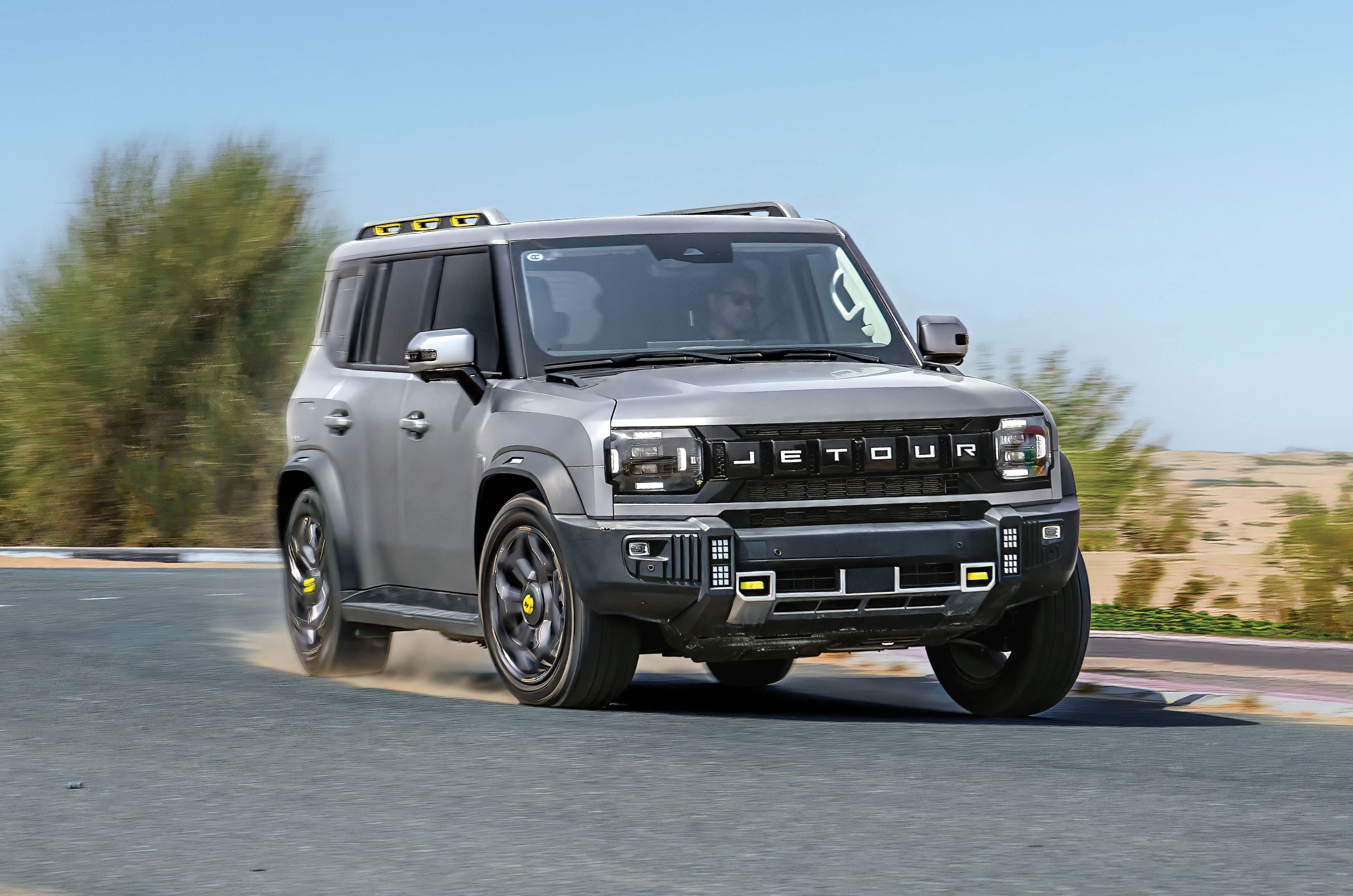
Rather than taking the conventional route of developing products from the ground up, JSW is leveraging global partnerships to fast-track its entry into the industry. Its first product for India will be a large plug-in hybrid SUV based on the Chery Jetour T2, which is expected to be assembled at JSW’s upcoming facility in Chhatrapati Sambhajinagar, and we hear it will be called the Combat.
With its rugged styling, imposing road presence and the promise of combining EV-like efficiency and long-distance touring ability, the SUV is expected to be positioned in the Rs 30-50 lakh segment and take on established players head-on.
Ahead of its India launch later this year, we got an early drive of the SUV to find out whether JSW Motor’s debut offering is ready for combat.
Jetour T2 Exterior Design and Engineering – 8/10
A handsome SUV that oozes character and rugged appeal.
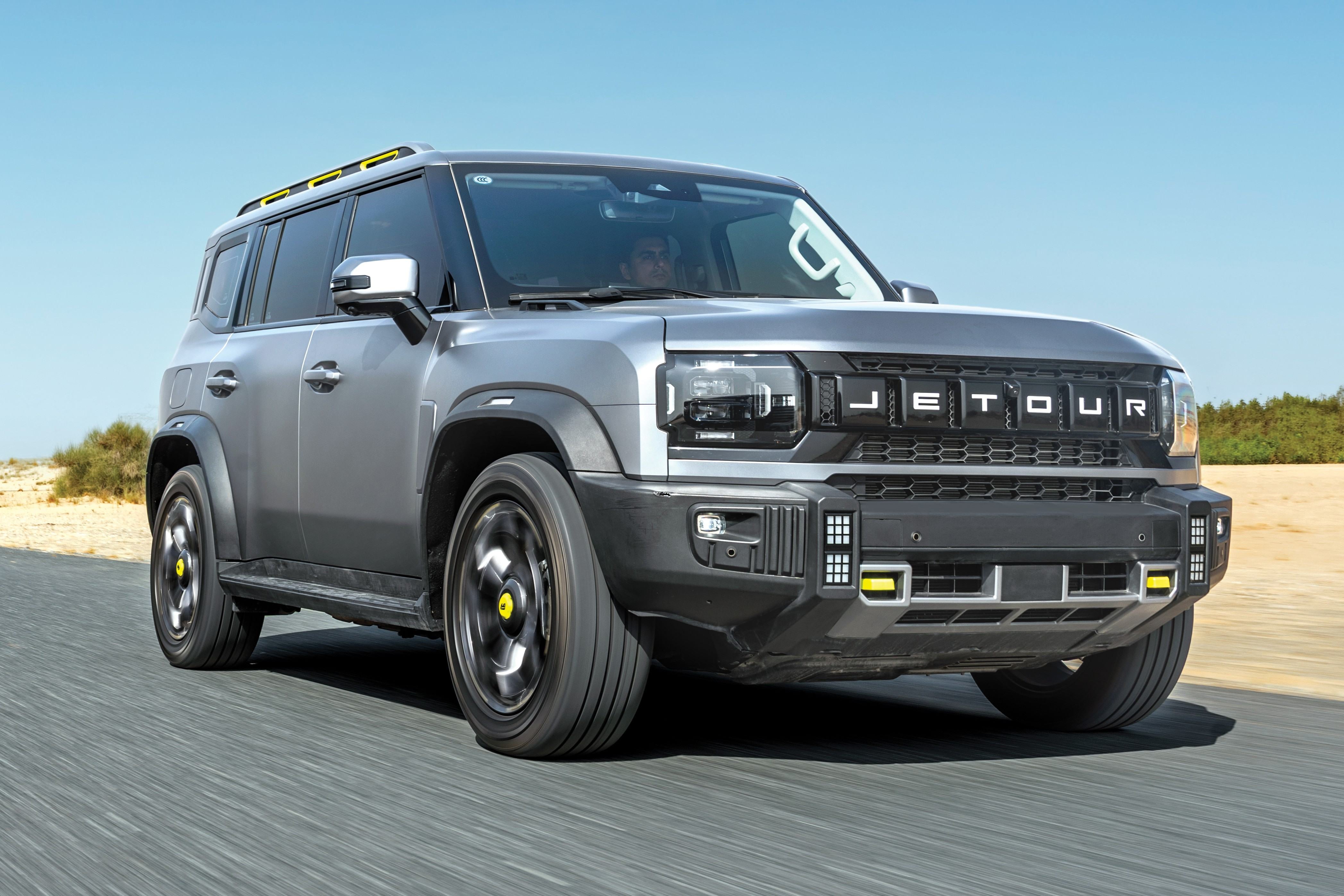
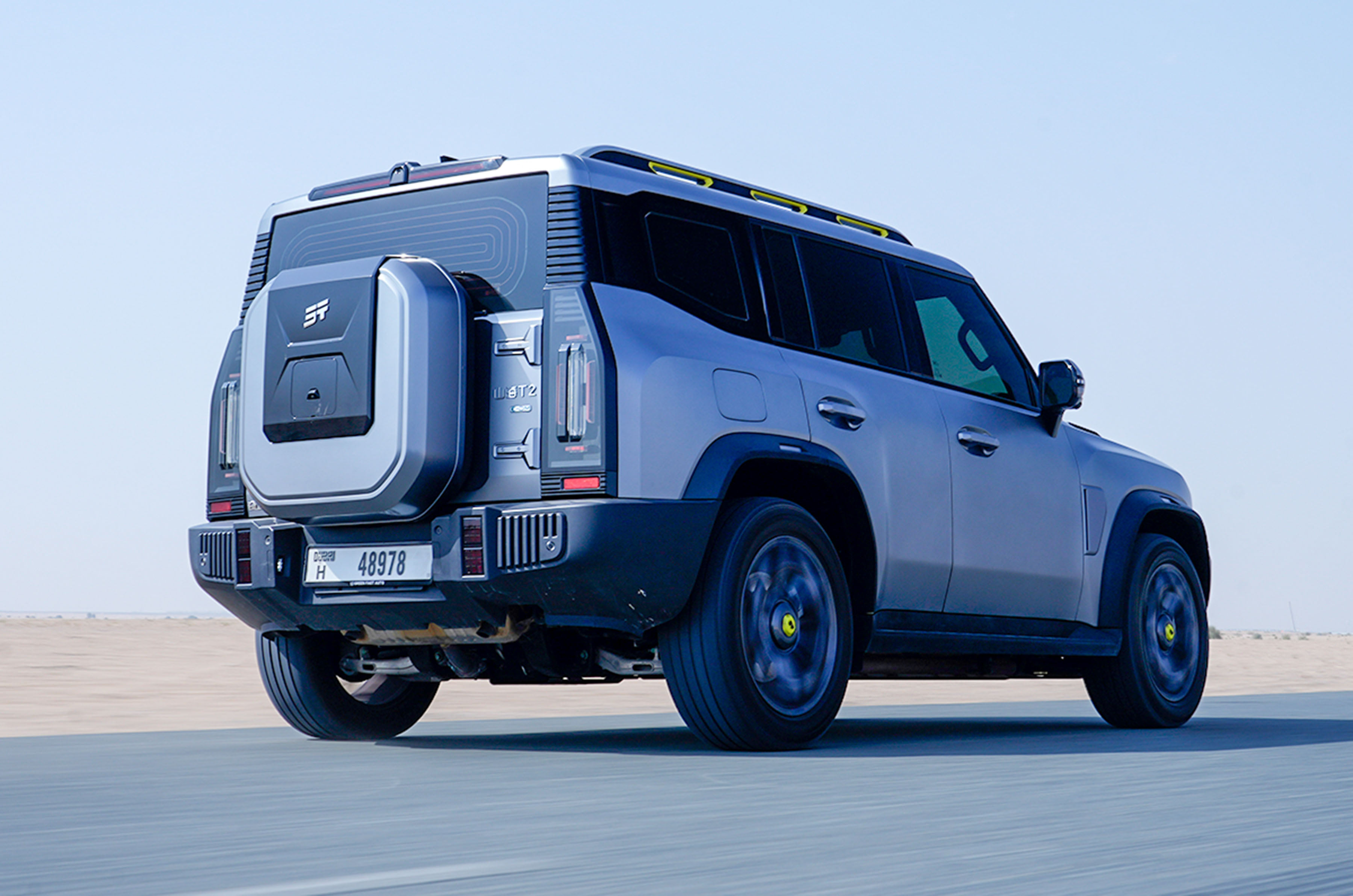
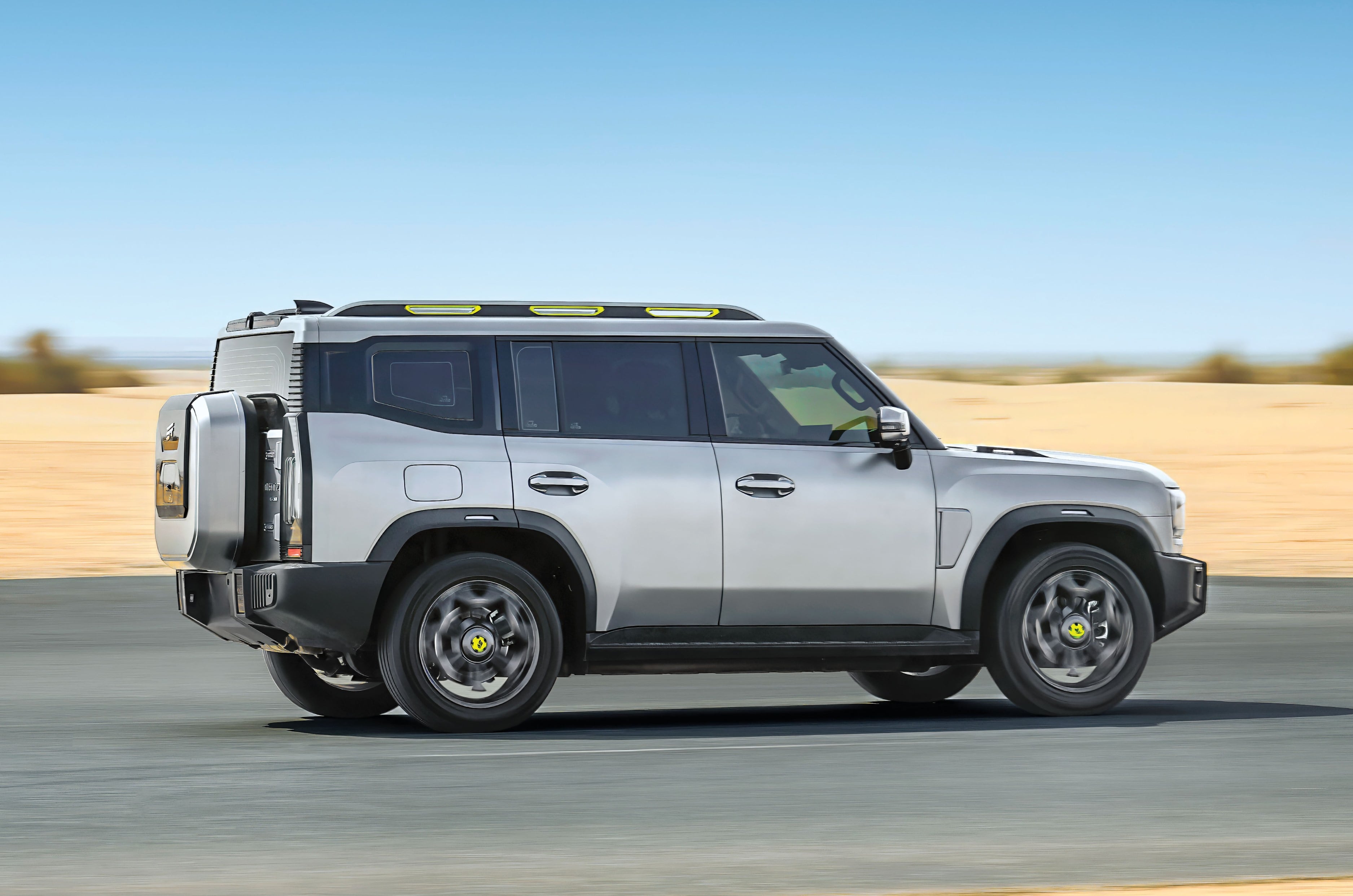
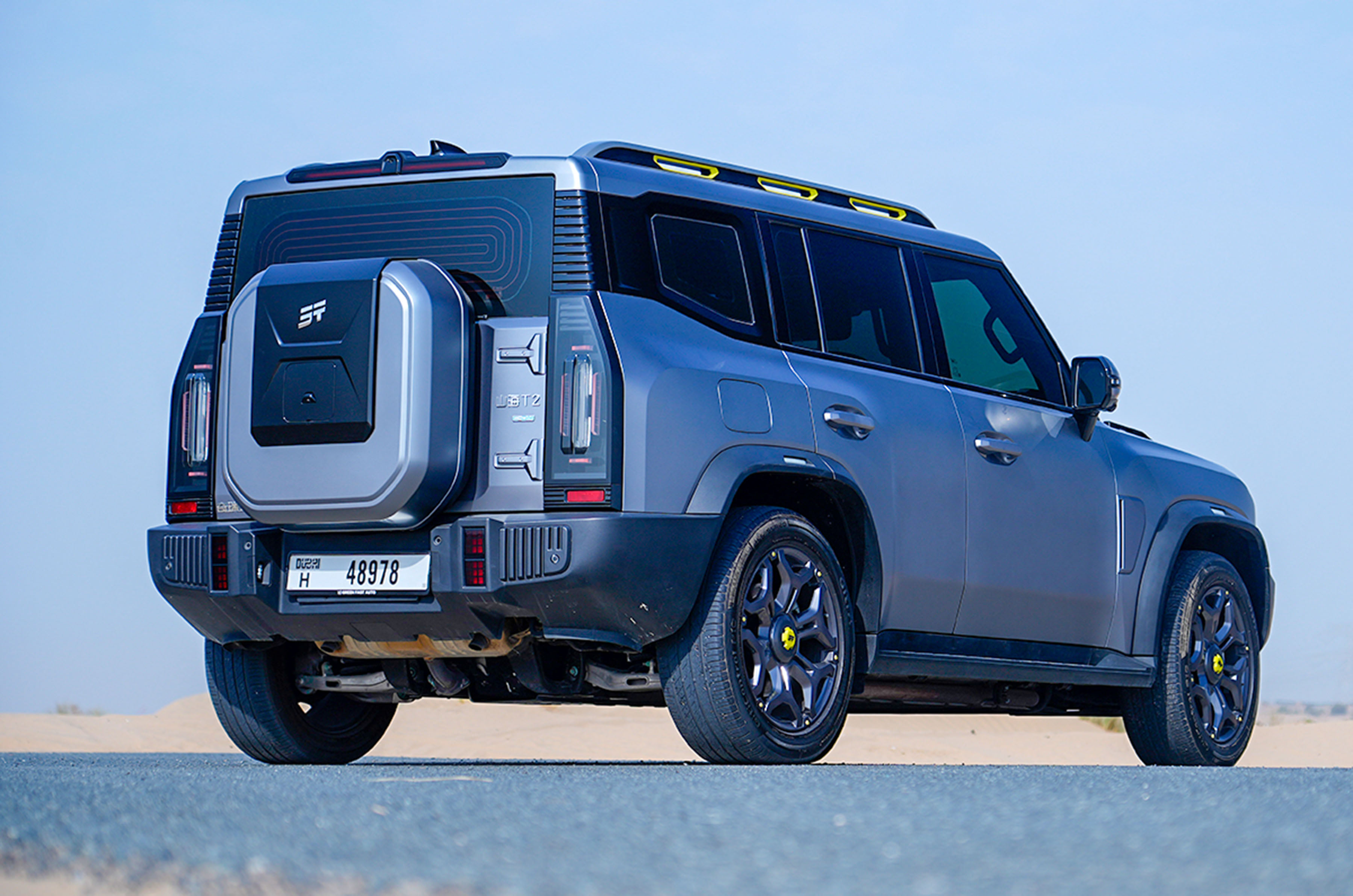
The Jetour T2 delivers on the SUV template to the T – flat bonnet, upright stance, raised ride height, chunky tyres, rugged body cladding, and, as the icing on the cake, a spare wheel mounted on the tailgate. It looks imposing and highly desirable, and while its silhouette bears a resemblance to the Defender, the T2 still manages to carve out a distinctive identity. JSW is likely to make a few changes to the headlamps, grille and bumpers to further differentiate the Combat, but the overall shape, clean surfacing and most of its defining design elements are expected to remain unchanged.
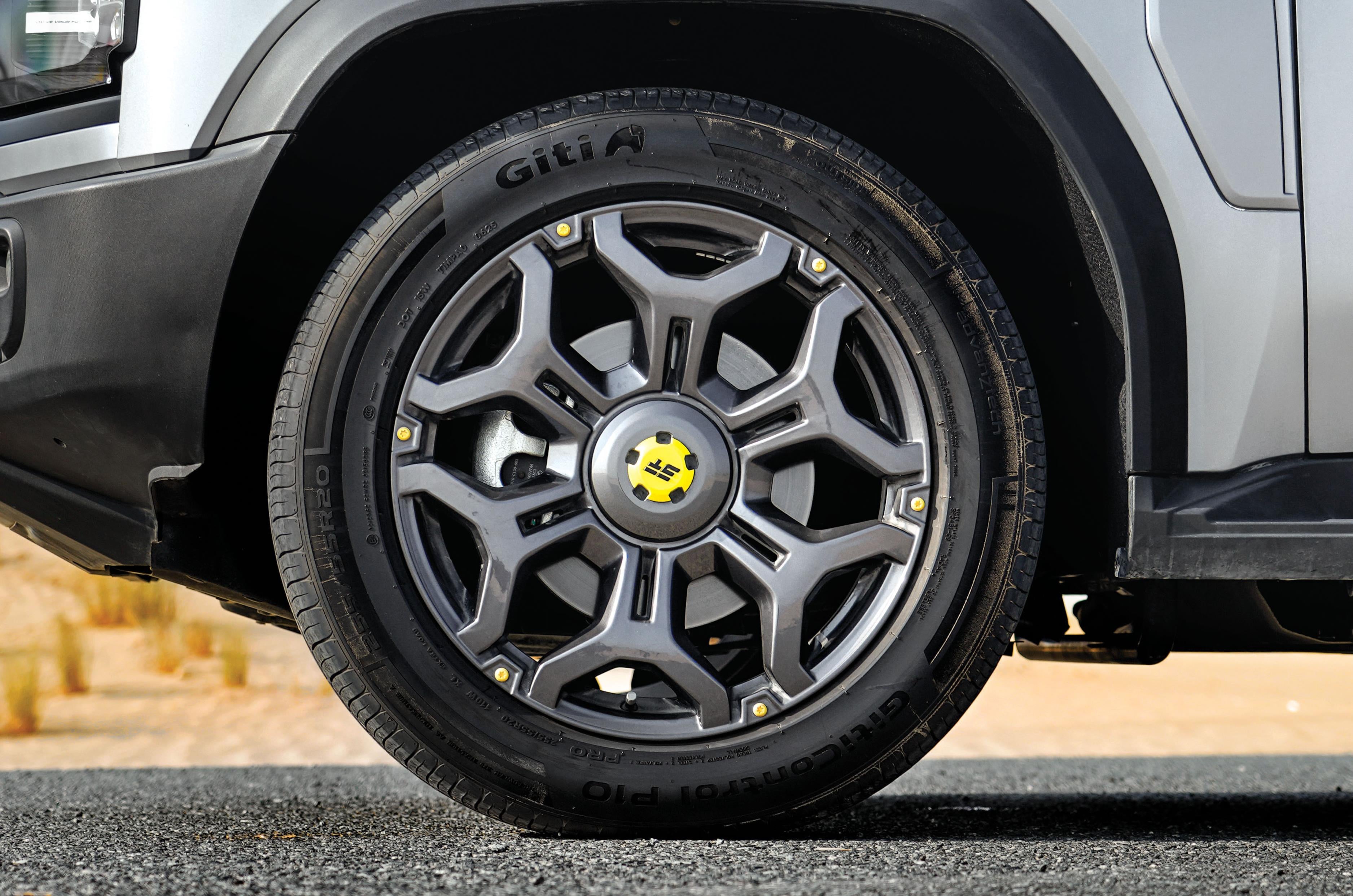
Attractive 20-inch wheels; 201mm of laden clearance.
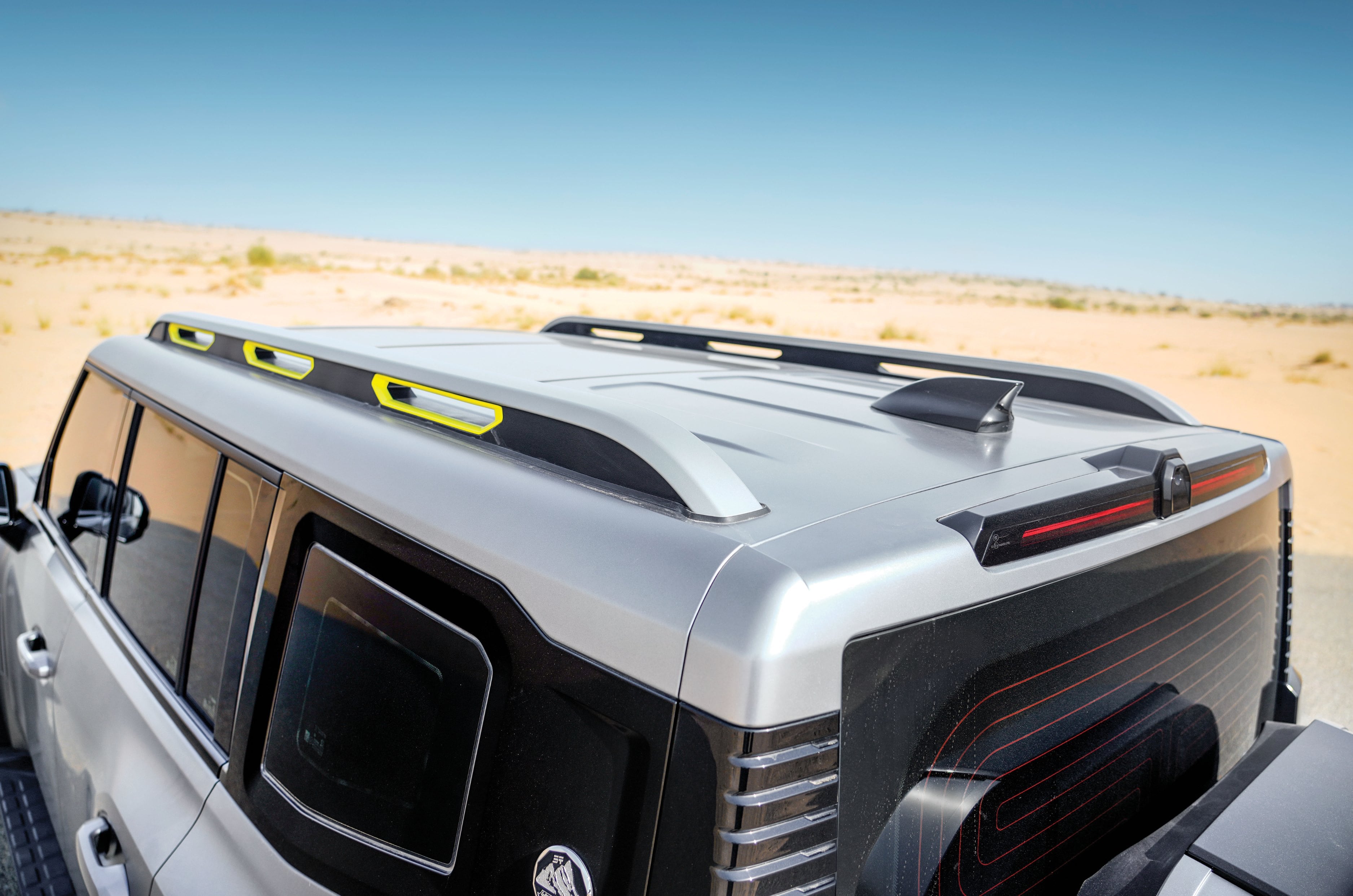
The massive 20-inch wheels suit the T2’s stance perfectly, and the clean bodywork, free of unnecessary cuts and creases, is particularly appealing. It also gets functional roof rails capable of carrying up to 100kg of luggage, while the side steps feel reassuringly sturdy and genuinely useful.
The T2’s space-saver spare wheel sits within a squircle-shaped cover, although accessing it involves a multi-step process that could prove frustrating if you ever need to change a tyre on a deserted road late at night.
Functional roof rails can take up to 100kg of load.
In terms of dimensions, it is longer (including the spare wheel), wider and taller than the Toyota Fortuner. Ground clearance, too, is an impressive 190mm in laden condition. However, don’t let its rugged appearance fool you – the version destined for India will remain front-wheel drive.
Jetour T2 Interior Space, Comfort, and Features – 8/10
Solidly built, well-designed cabin with some clever detailing and plenty of storage areas.
Climb aboard using the sturdy side step and handy grab handles, and the T2 immediately impresses with its sense of solidity. The cabin feels built to last, with numerous thoughtful design details lending it plenty of character. Nearly upright windows, a steeply raked windscreen and a dashboard pushed far forward create a tremendous sense of space, further amplified by the panoramic sunroof.
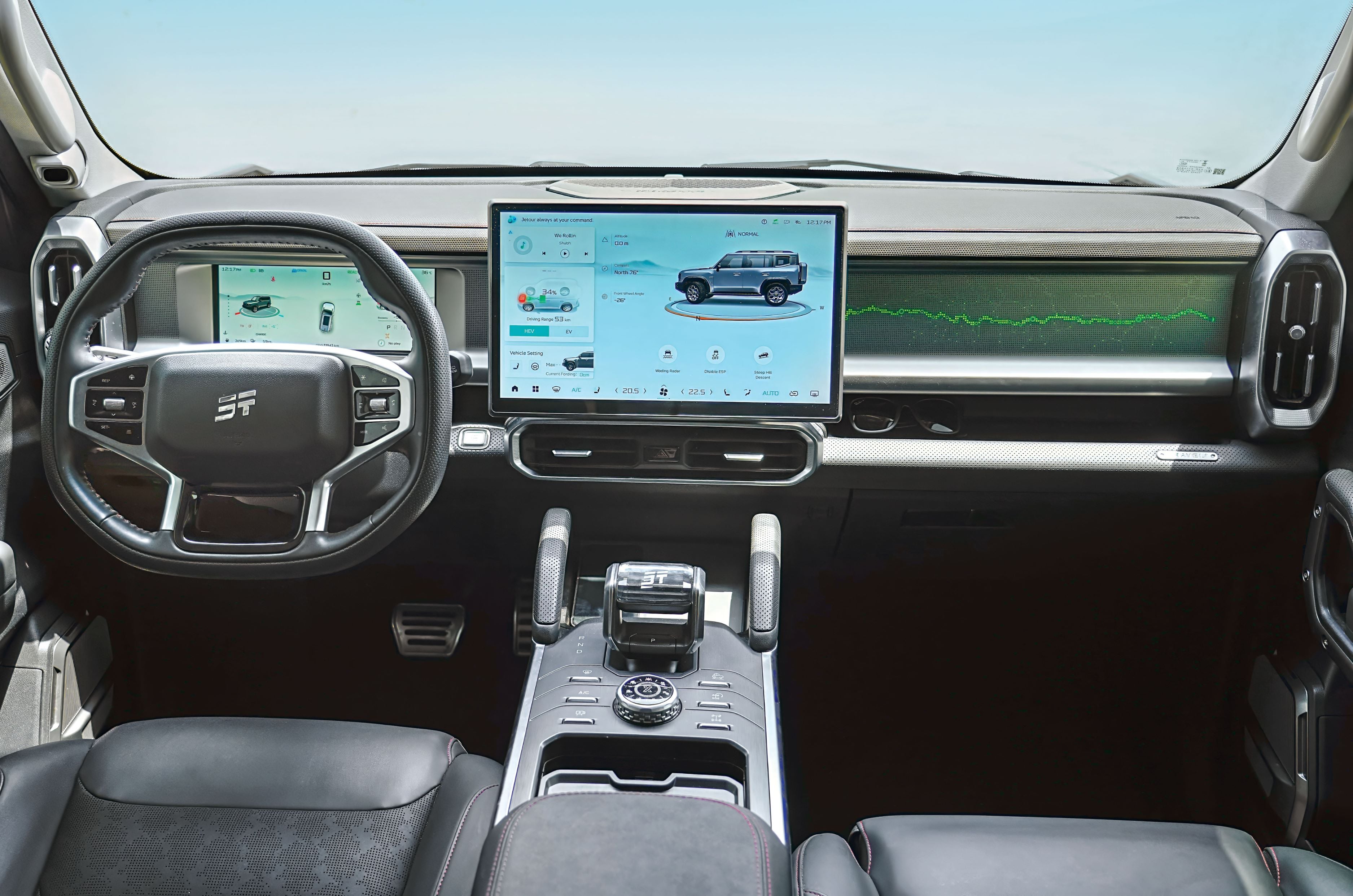
The dashboard itself has a distinctive design, with an illuminated pattern across the fascia adding a unique touch. Several layers are wrapped in dimpled leatherette padding, a theme that extends to the steering wheel and centre console.
Dominating the cabin is a massive 15.6-inch touchscreen that houses numerous vehicle functions, including mirror adjustment, climate control and seat ventilation/heating settings. Wireless Android Auto and Apple CarPlay are included, while the 12-speaker Sony audio system delivers impressive sound quality. Even the 540-degree camera system offers excellent image clarity. The downside is that the interface isn’t slick or responsive.
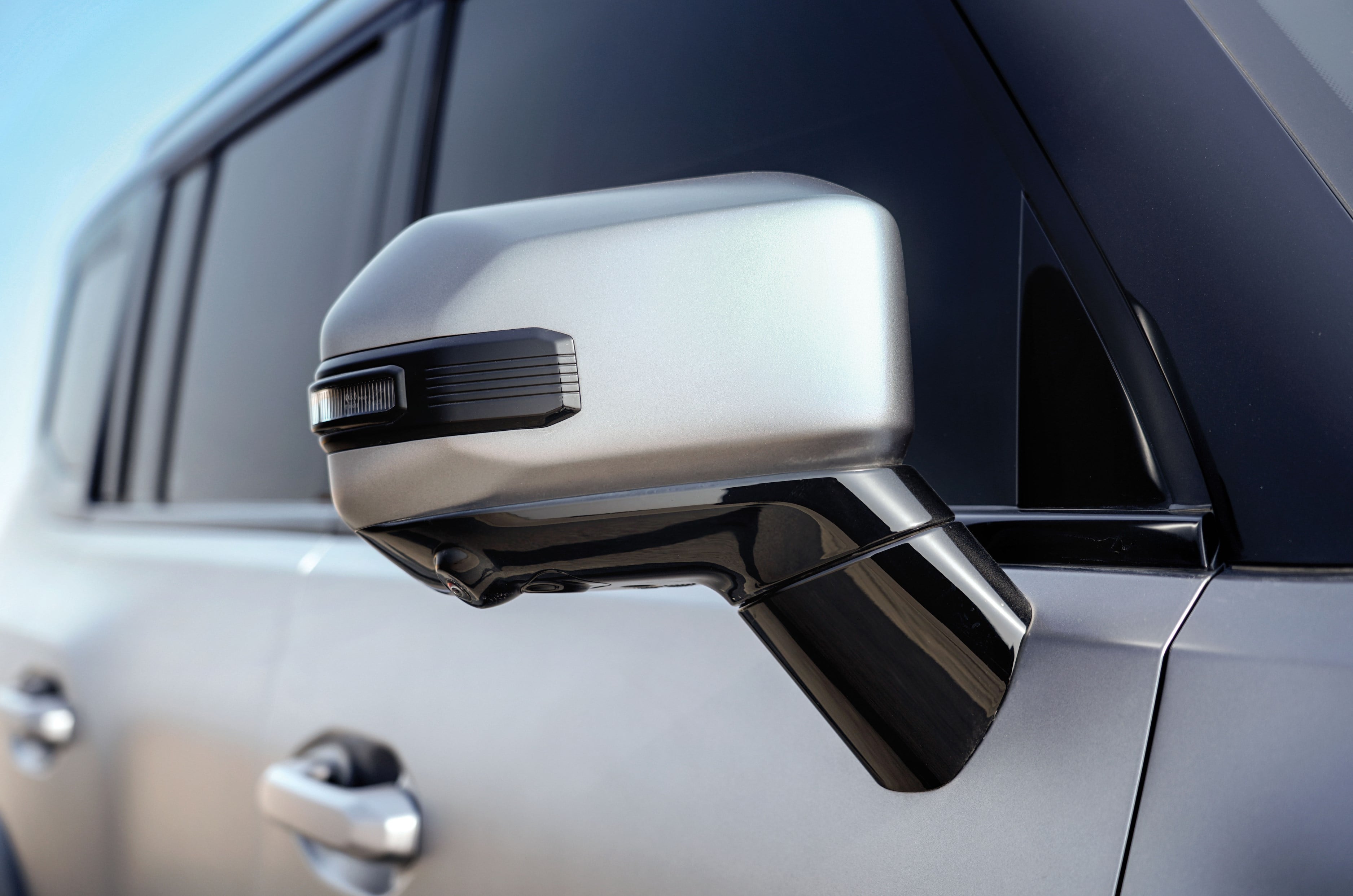
Chunky, door-mounted mirrors. Sadly, controls via touchscreen.
Ahead of the driver sits a 10.6-inch digital instrument cluster, a unit we’ve previously seen in some MG and BYD models. While it displays a wealth of information, the fonts and icons are rather small, making them difficult to read at a glance.
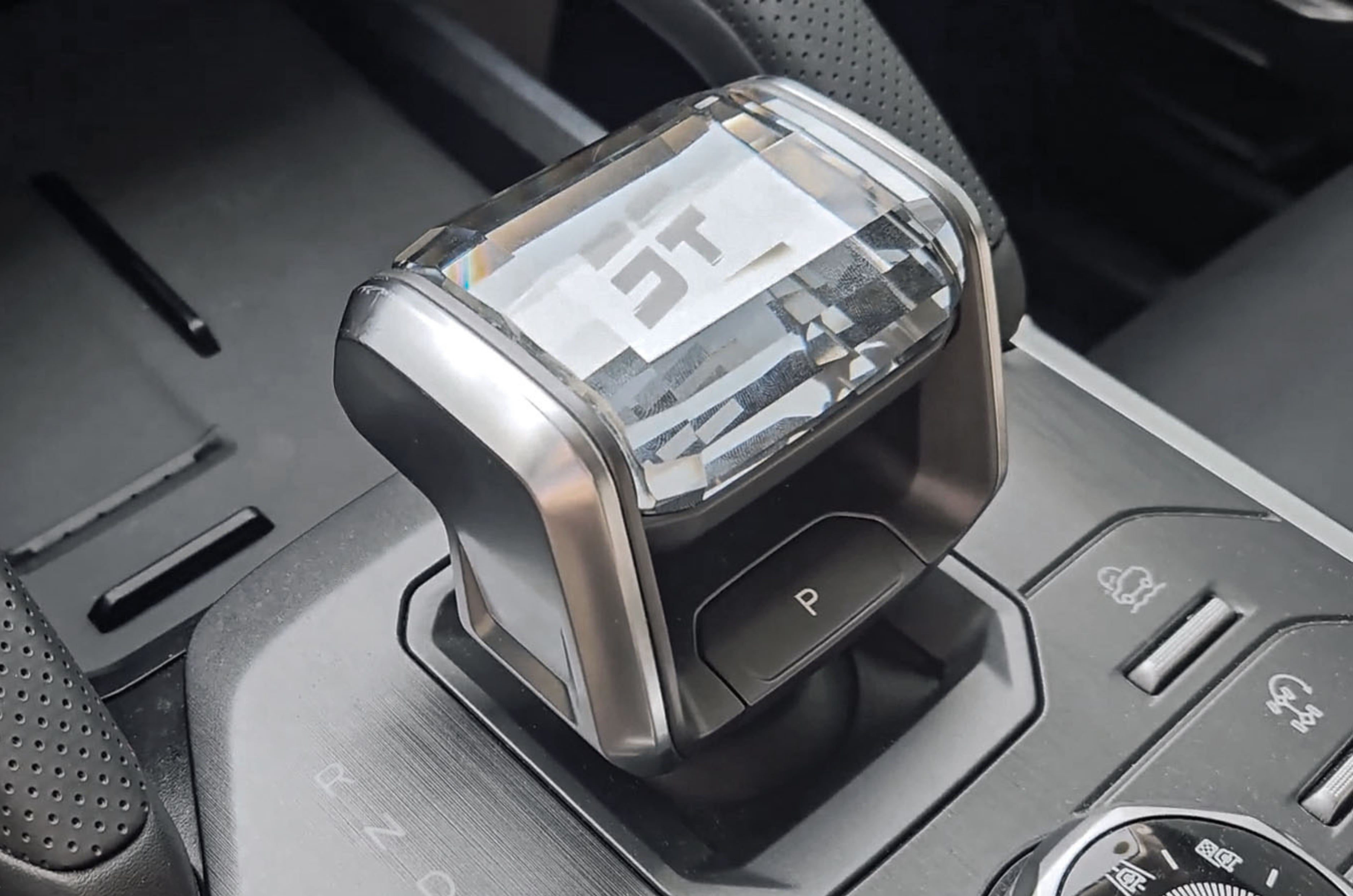
Material quality is generally impressive. The stalks and window switches feel robust and premium, while the jewel-like gear selector features an attractive diamond-cut effect. However, under harsh sunlight, it becomes highly reflective and can prove distracting. Reflections from the dashboard on the front windows are also noticeable.
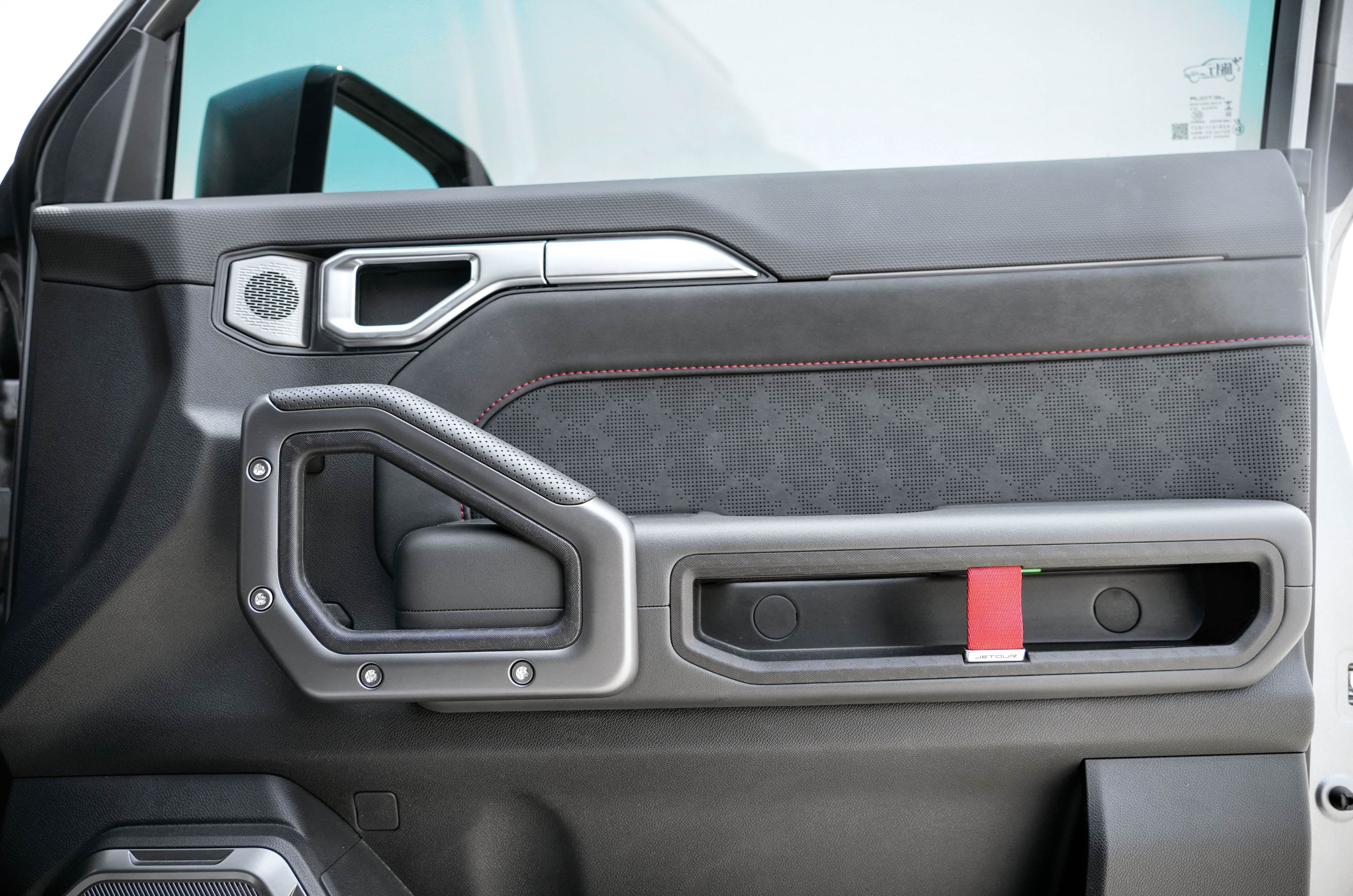
Rugged-looking door pads with nice detailing.
Notably, its dual-zone climate control struggled to cool its large cabin quickly despite the heavily tinted windows. While our test vehicle was a China-specific version, we hope the version we’re going to get in India has an upgraded air-con compressor. Its seat ventilation didn’t seem very effective either, even at its maximum setting.
Diamond-like chunky gear selector is illuminated.
The sculpted front seats, finished in black leatherette with contrasting red stitching, look suitably sporty. They provide excellent support, though the cushioning feels slightly overstuffed, and the absence of lumbar adjustment is disappointing.
Practicality is a strong point. There are large door bins, two phone storage areas (one incorporating a wireless charger), cupholders, a deep-cooled centre console, a large glovebox and even a hidden storage tray beneath the front seat.
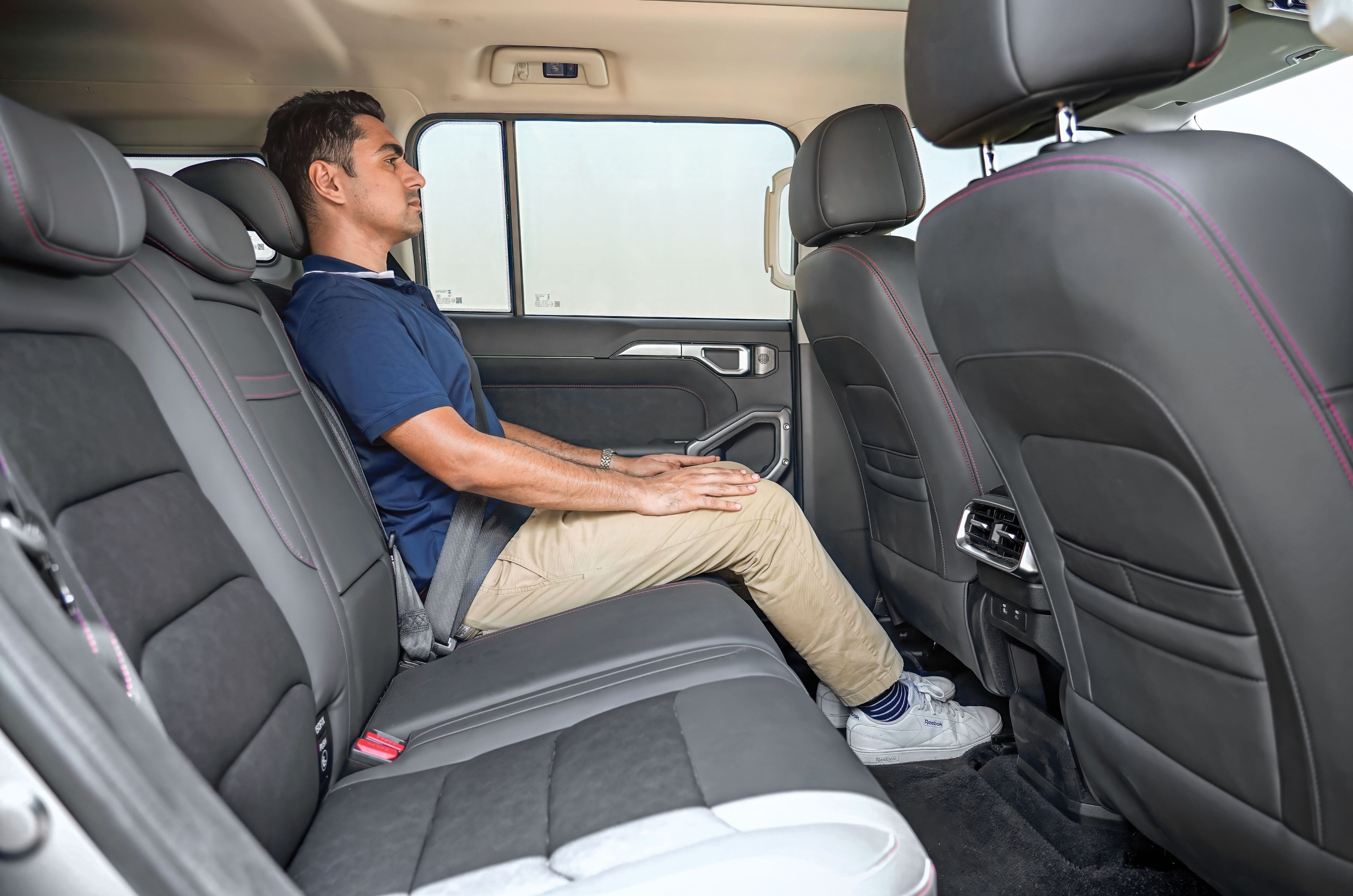
Albeit a bit low-set, rear seat is spacious. Flat floor, wide bench make it comfy for three adults.
The rear seat is equally spacious. A wide bench and completely flat floor make it comfortable for three adults, while the boxy cabin ensures generous headroom and overall space. The seat base is positioned slightly low, but comfort levels remain good.
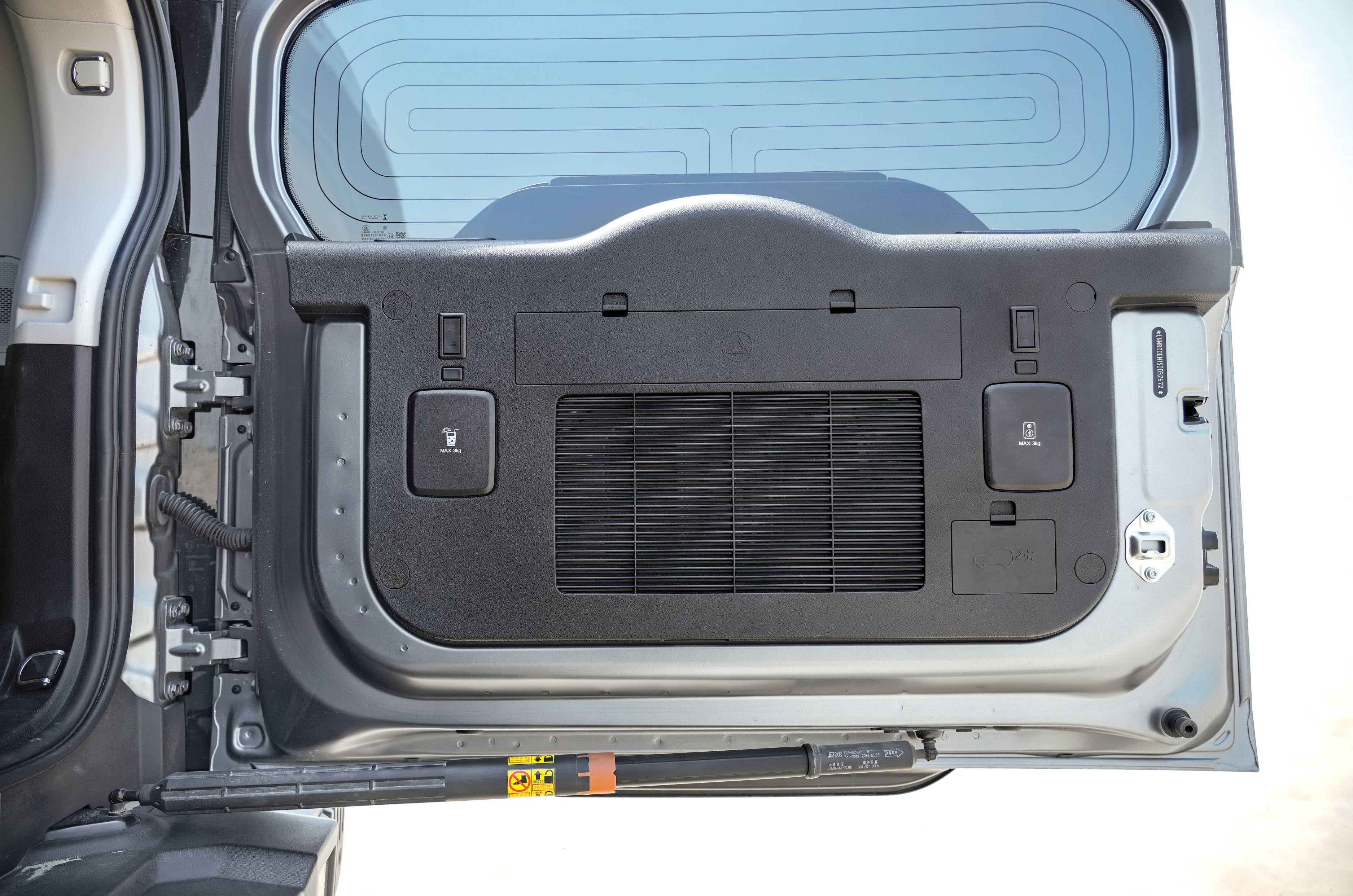
Cupholders, luggage hooks, bottle opener on its tailgate.
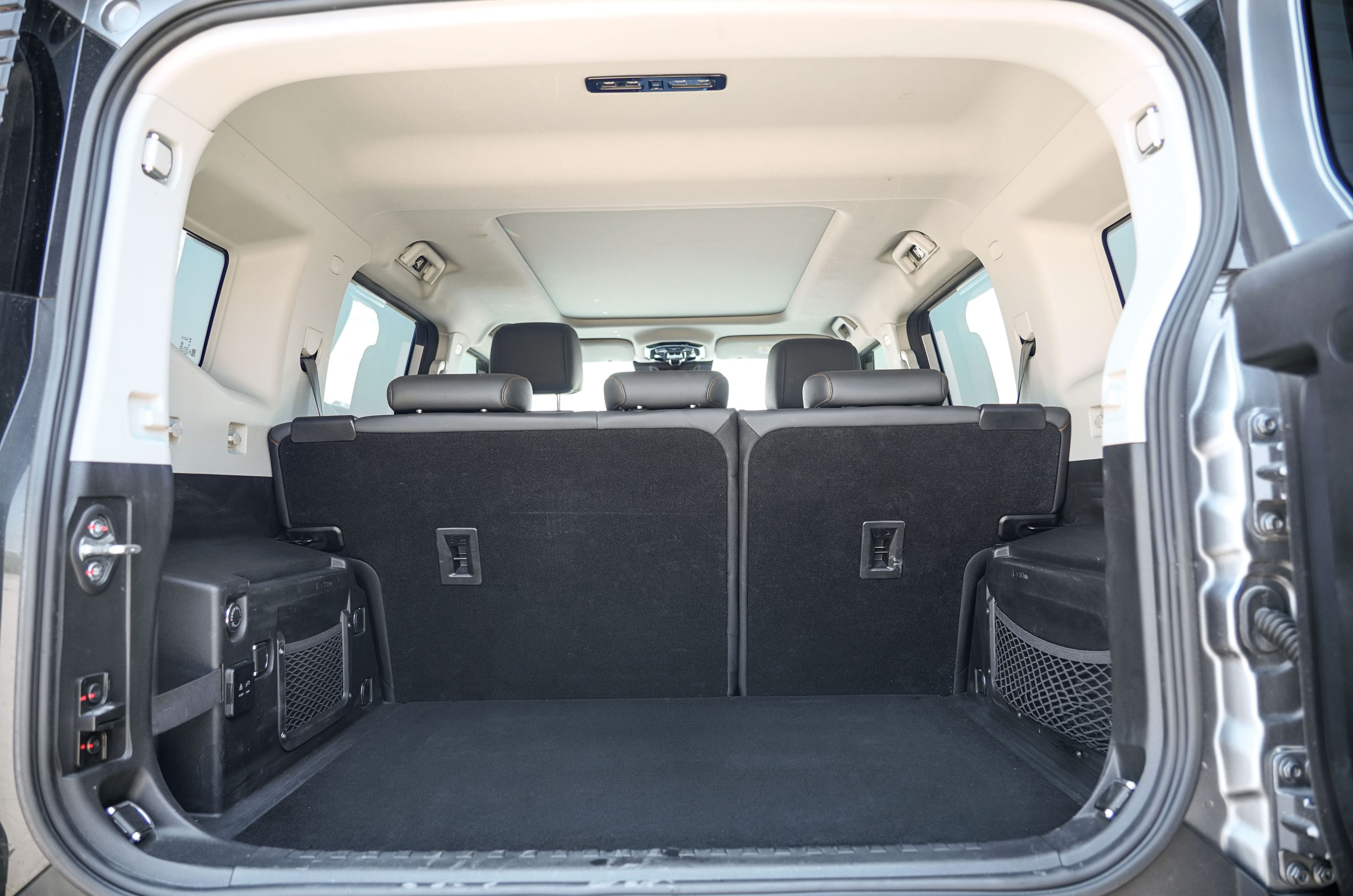
The side-hinged tailgate opens to reveal a cavernous 580-litre boot. Despite carrying the spare wheel, the tailgate itself requires surprisingly little effort to open. Thoughtful touches include a locking mechanism that prevents it from swinging shut unexpectedly, and there are cupholders, luggage hooks and even a bottle opener integrated into the inner panel. The boot area also features clever luggage nets and charging provisions, while a soft-close function further enhances convenience.
Humongous 580L boot. 60:40 rear seat split for added flexibility.
Besides the features already mentioned, it gets one-touch-down power windows, powered front seats with memory, LED lights all around, ambient lighting, a frameless inside mirror, autonomous emergency braking, lane-assist, adaptive cruise control, blind-spot monitoring, front and rear cross-traffic alert, six airbags, hill-start assist, hill descent control and ESP, to name a few more.
Jetour T2 Performance, Refinement and Efficiency- 8/10
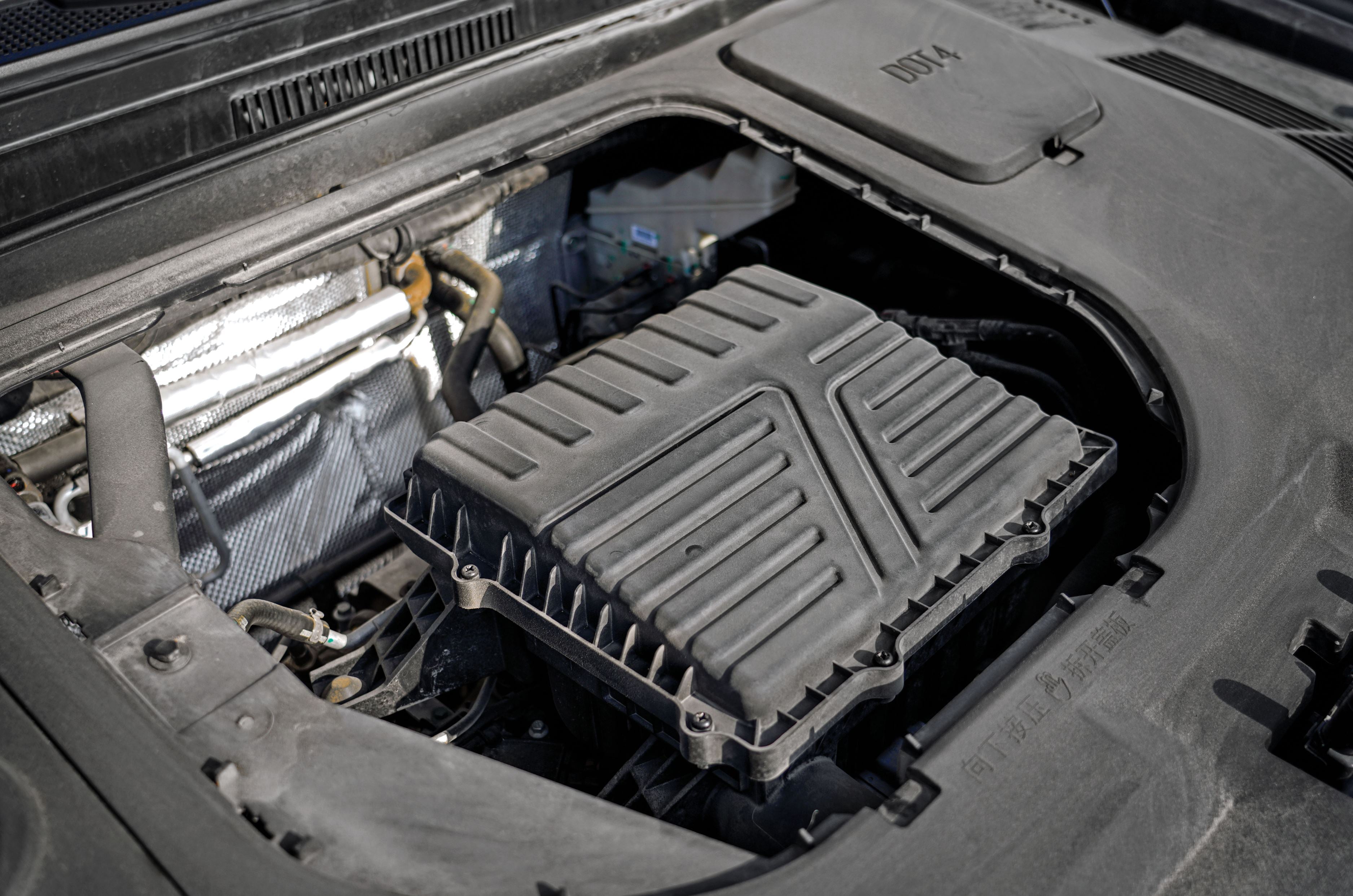
The T2 version we’re driving today is a plug-in hybrid, which combines a 156hp/220Nm 1.5-litre direct-injection turbo-petrol engine, a 43.24kWh LFP battery pack, and three electric motors. Together, the three motors produce 462hp and 700Nm of torque, with power sent to all four wheels. India will also see the plug-in tech, but in front-wheel-drive guise only, with two electric motors instead of three and a smaller 18.4kWh battery.
Powered by a 1.5 turbo along with 3 electric motors.
While the engineering sounds complex, the driving experience is refreshingly straightforward. The four-cylinder engine is refined, although when it operates primarily as a generator to charge the battery, a faint and distant hum does filter into the cabin.
The SUV can be driven either in pure EV mode or in hybrid mode. In EV mode, Jetour claims a range of up to 211km, and performance feels smooth and relaxed rather than outright brisk. Switch to hybrid mode, and the system automatically alternates between EV operation and combined petrol-electric drive, depending on throttle inputs, road conditions and battery charge levels, among other factors.
In this mode, performance feels remarkably effortless, with the T2 gathering speed with surprising urgency as speeds rise. Under full throttle, acceleration is initially measured up to around 40kph, after which there is a noticeable surge in performance as the powertrain delivers a much stronger pull.
Multiple drive modes are available, including Eco, Normal and Sport. In both Normal and Sport, we noticed the vehicle continuing to accelerate momentarily even after lifting off the throttle, which can feel unnerving. Throttle response in these modes is also a touch too aggressive. Eco mode offers a more natural and polished throttle calibration.
In our testing conducted in 40-degree heat, the T2 accelerated from 0-100kph in just 6.35 seconds in its sportiest setting – quick for its size. Flat out, it will reach a claimed top speed of 200kph.
The T2 also offers three levels of regenerative braking. Impressively, all three feel natural in operation, bringing the SUV down to a crawl smoothly and predictably. The brake pedal itself inspires confidence, with the transition between regenerative and friction braking being almost imperceptible.
Jetour T2 Ride Comfort and Handling – 6/10
Soft suspension and tall ride height mean driving dynamics aren’t anything to write home about.
The T2 rides on MacPherson struts at the front and a multi-link independent rear suspension setup. Its suspension tuning leans towards comfort, but this results in a degree of bounce over speed breakers and undulating surfaces.
The chunky, high-profile tyres do an excellent job of smothering smaller imperfections, while the 201mm laden ground clearance provides ample confidence over rough roads. At higher speeds, however, the ride never feels quite as settled or composed. One positive is that it remains well controlled under heavy braking, resisting excessive pitch.
Dynamic prowess is clearly not the priority here. The tall body exhibits a fair amount of roll, noticeable during quick lane changes. Push harder through a series of bends, and this two-tonner T2 understeers quite readily. Combined with its light and somewhat disconnected steering, it is clear that this SUV prefers a more relaxed driving style.
A light steering, smooth hybrid and excellent visibility make it surprisingly easy to drive.
Driven at a gentler pace, the T2 proves extremely easy to live with. The steering offers three weight settings, though it feels best in its lightest mode. Combined with excellent visibility and a smooth, responsive hybrid powertrain, it makes piloting this large SUV remarkably effortless.
Jetour T2 Should You Buy Now or Wait – 8/10
The Jetour T2 plug-in hybrid appears to have all the ingredients needed to establish the JSW brand in India and perhaps even challenge the Toyota Fortuner, despite offering only five seats. It is spacious and practical, it is expected to come loaded with technology and features, and its rugged styling gives it immense road presence and desirability.
The plug-in hybrid powertrain adds further unique appeal, offering the flexibility of pure EV driving and an impressive mileage figure with the hybrid tech. Better still, the system is smooth, refined and delivers strong performance.
It’s larger than a Fortuner, looks imposing, and stays true to the SUV formula.
Yes, it is not without flaws. The touchscreen experience and throttle calibration need refinement, the air-conditioning needs to be more effective, and the ride and handling would benefit from further fine-tuning for Indian conditions. These are areas we hope JSW addresses before launch.
On the whole then, the T2 is certainly ready for combat. Will it win, though, will also depend on JSW pulling off an aggressive pricing strategy and, importantly, backing it up with a reliable ownership and service experience too. That latter is why Toyota rules the roost. The battle lines, then, are drawn.
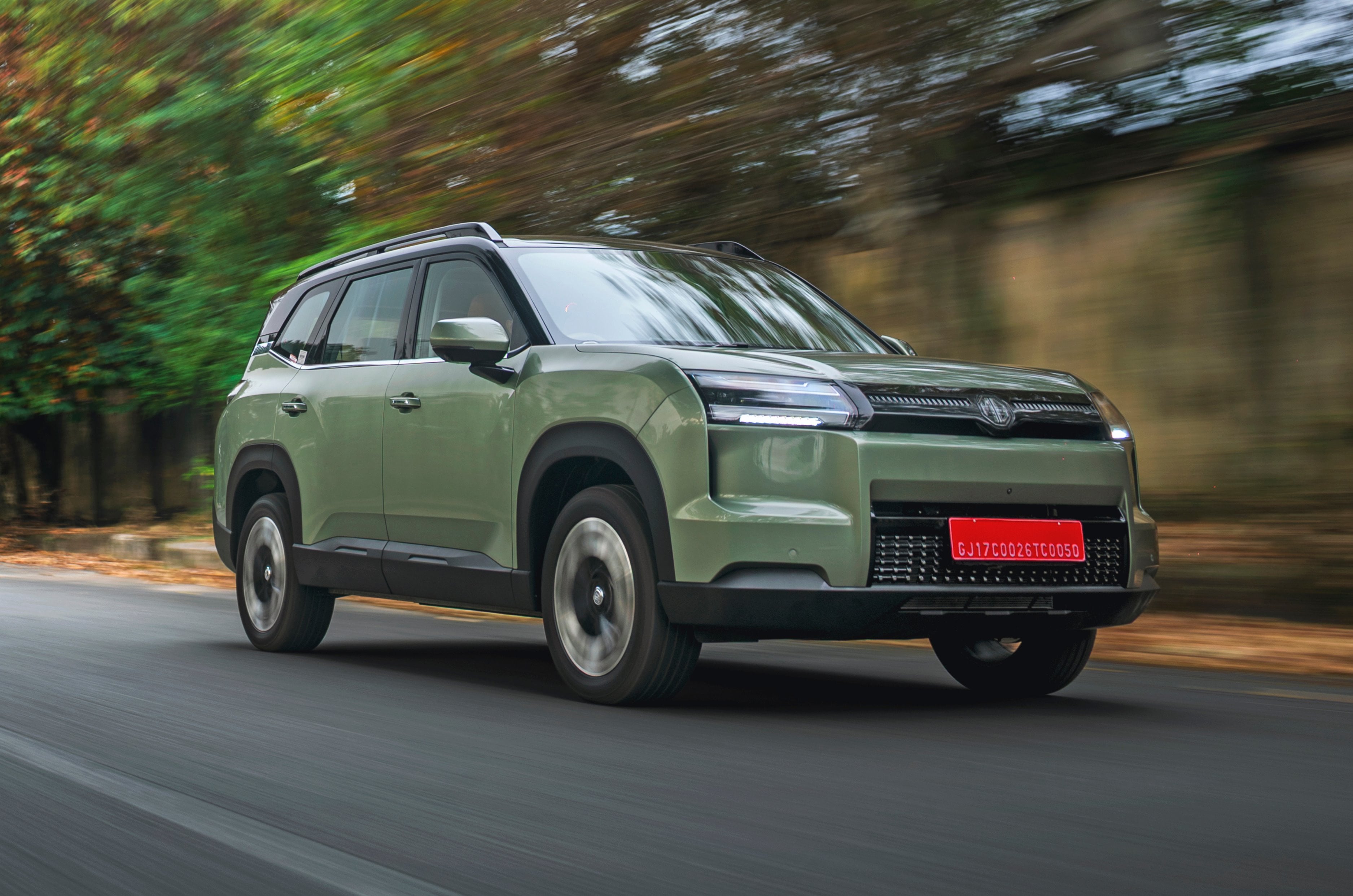
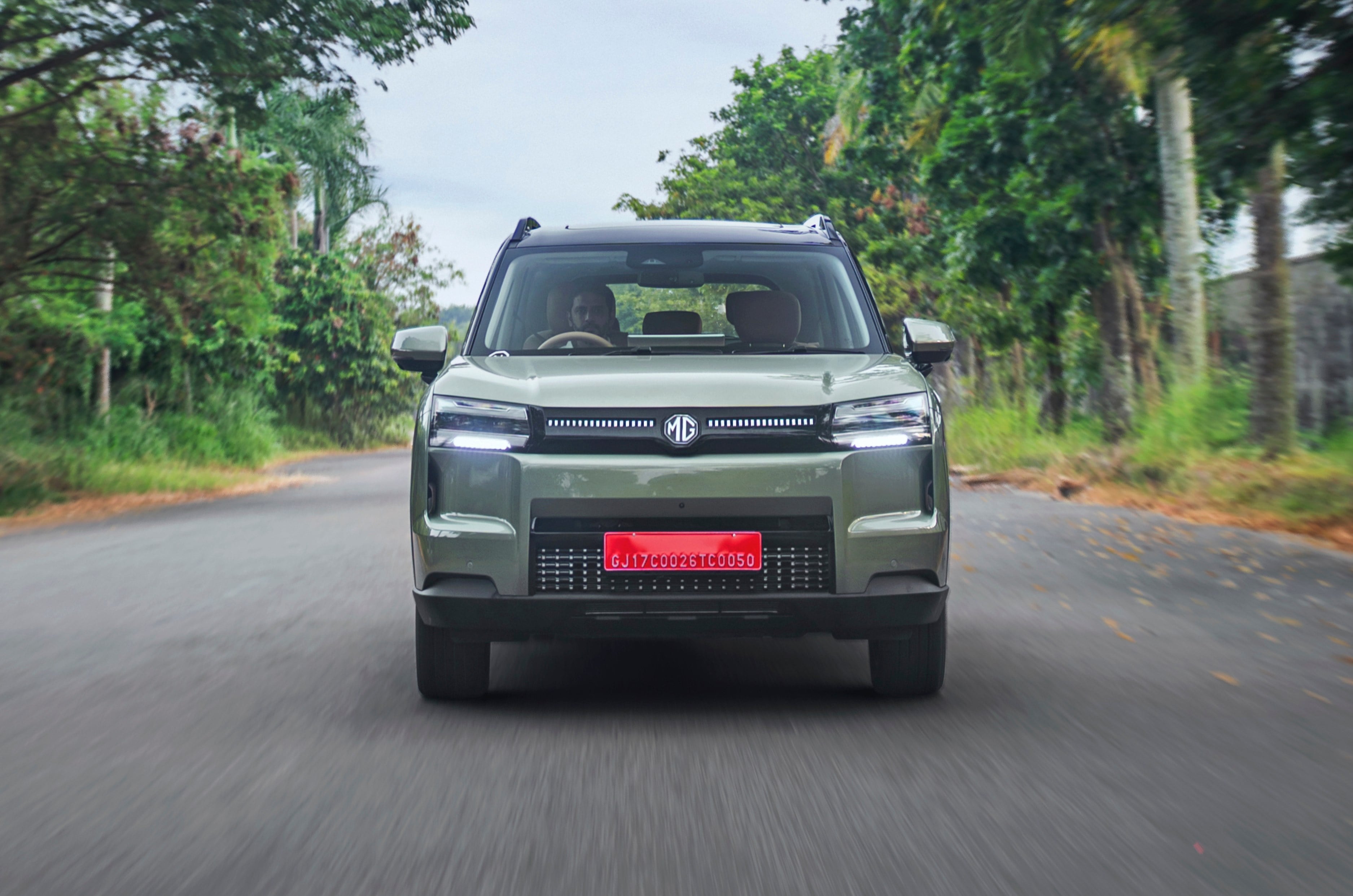
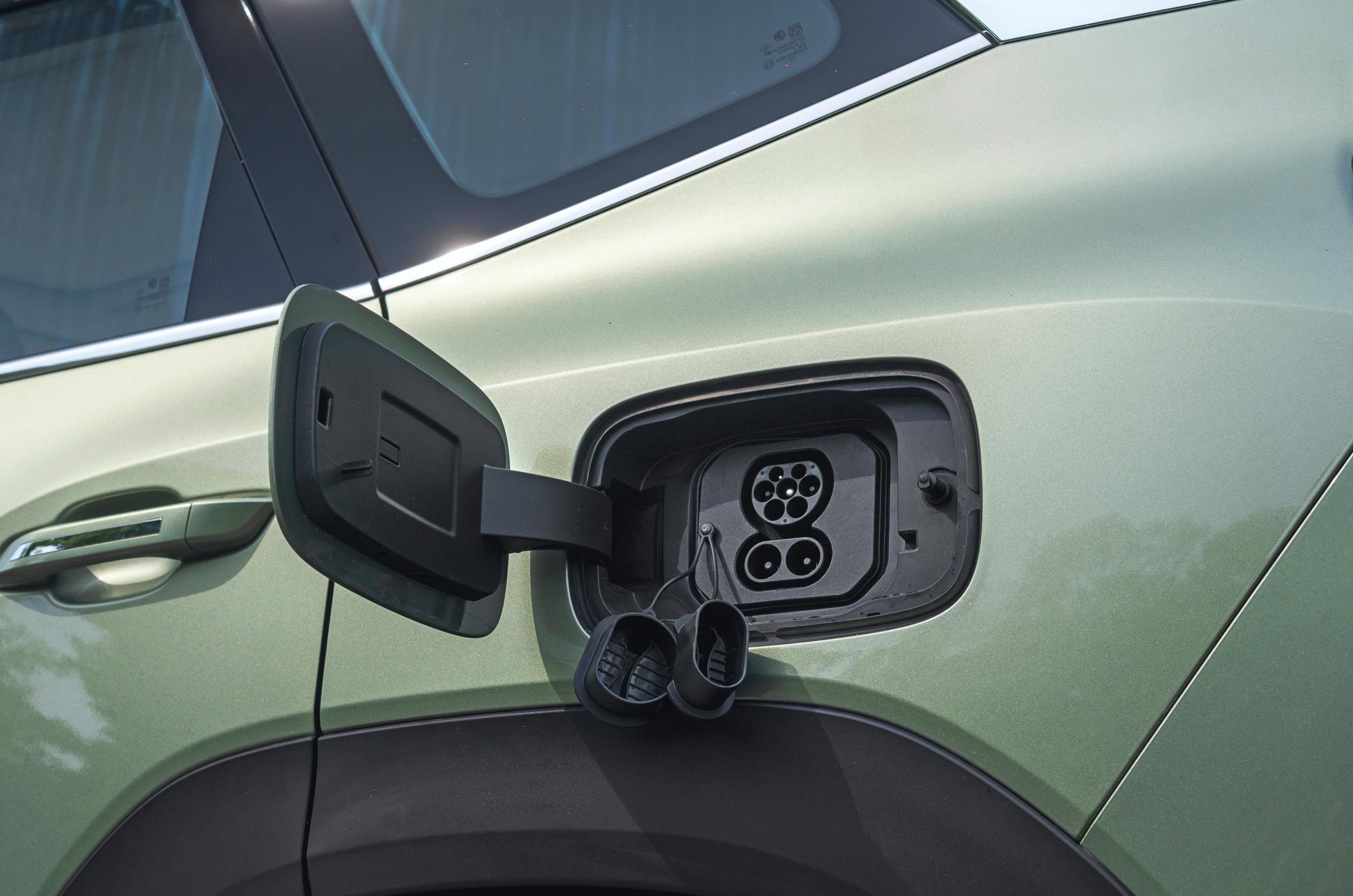
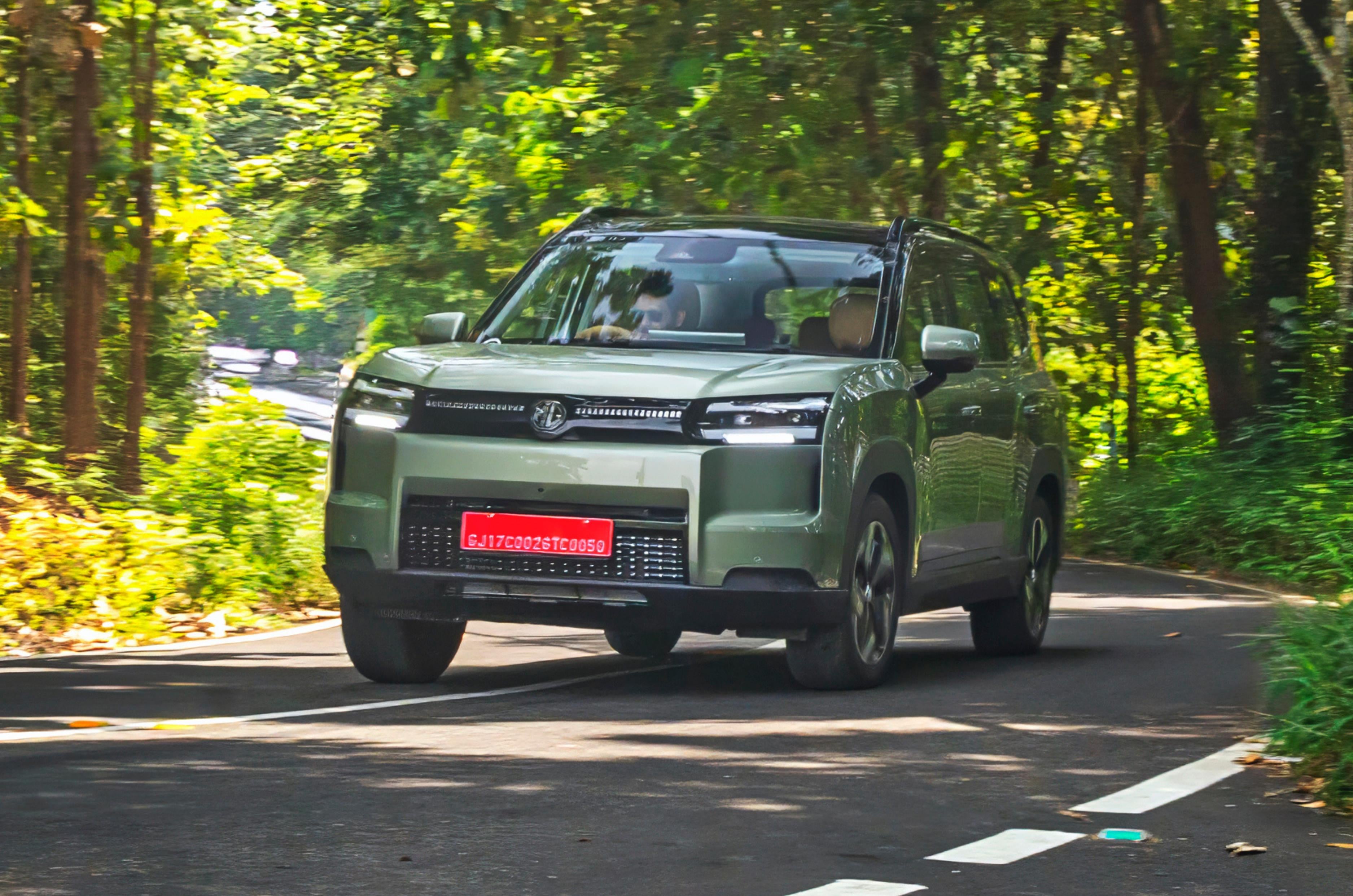
MG’s newest SUV has been christened the Hector Tomahawk, but despite the name, it shares nothing with the ICE-powered Hector we’ve known since 2019. The Hector Tomahawk EV and PHEV are the first models on MG’s ADAPT architecture, which will eventually spawn strong hybrids and range-extender hybrids. We drove the Tomahawk EV in sunny Kochi to see how it stacks up in the ever-growing segment.
MG Hector Tomahawk EV Exterior Design and Engineering – 6/10
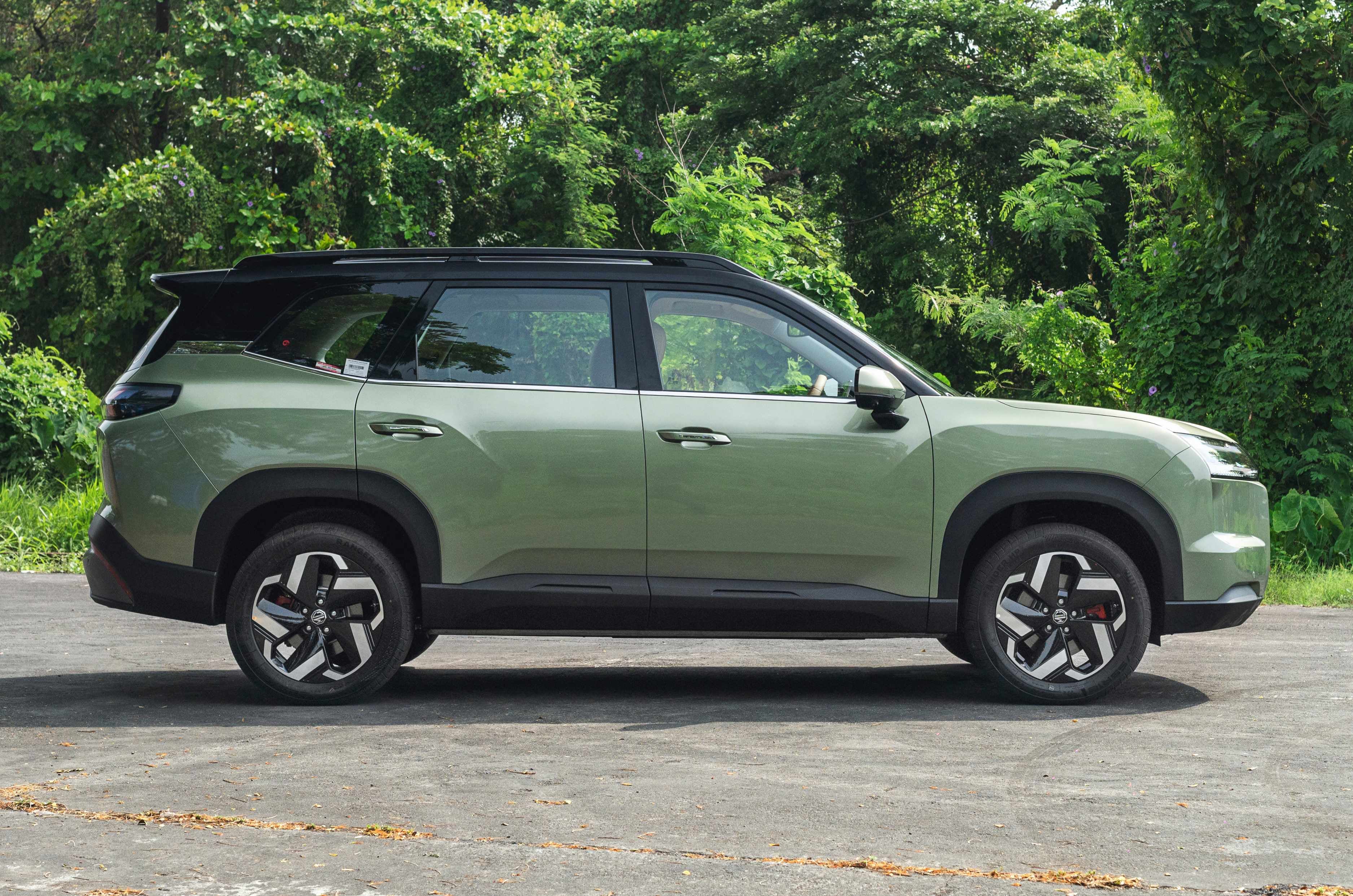
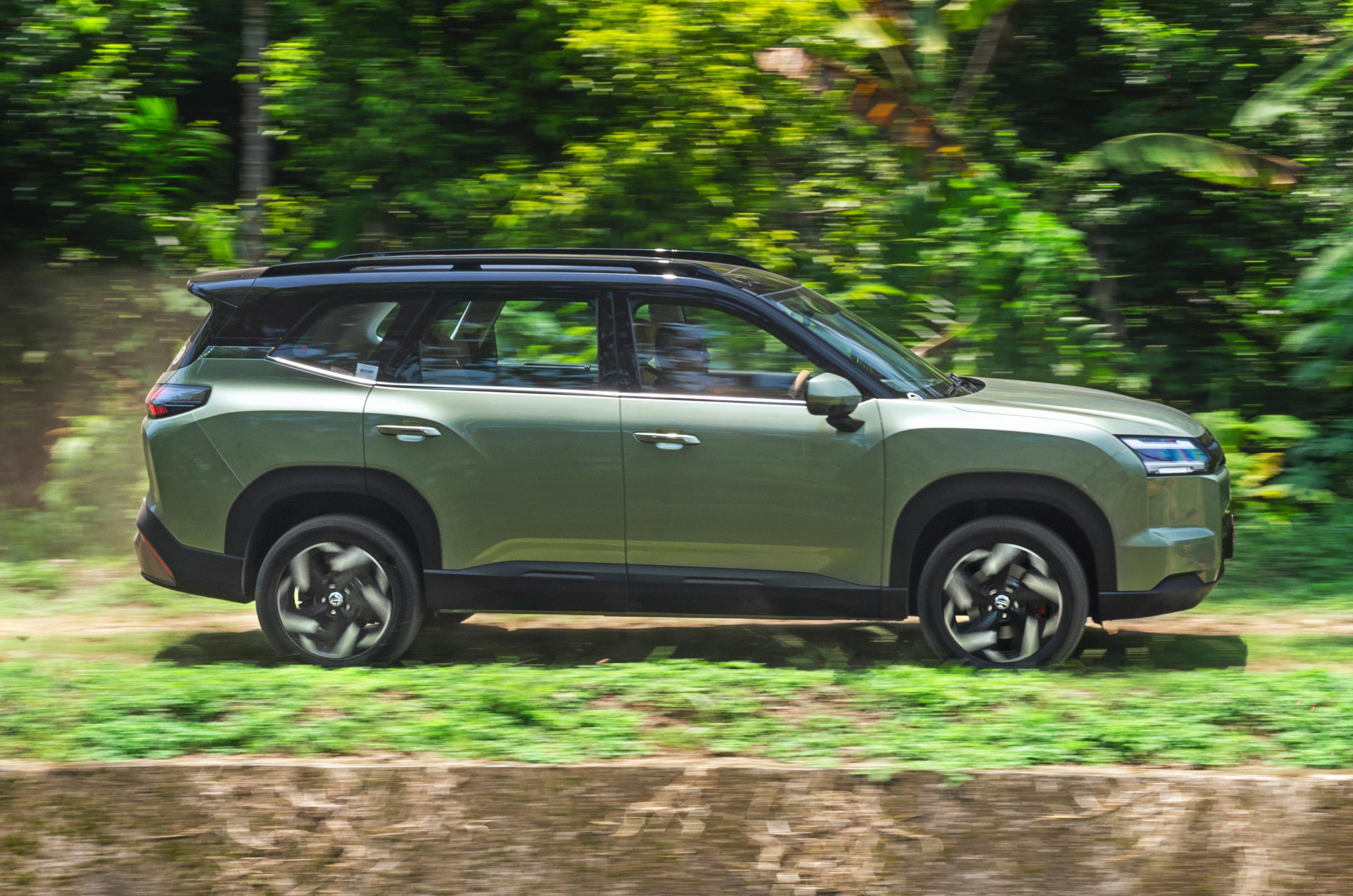
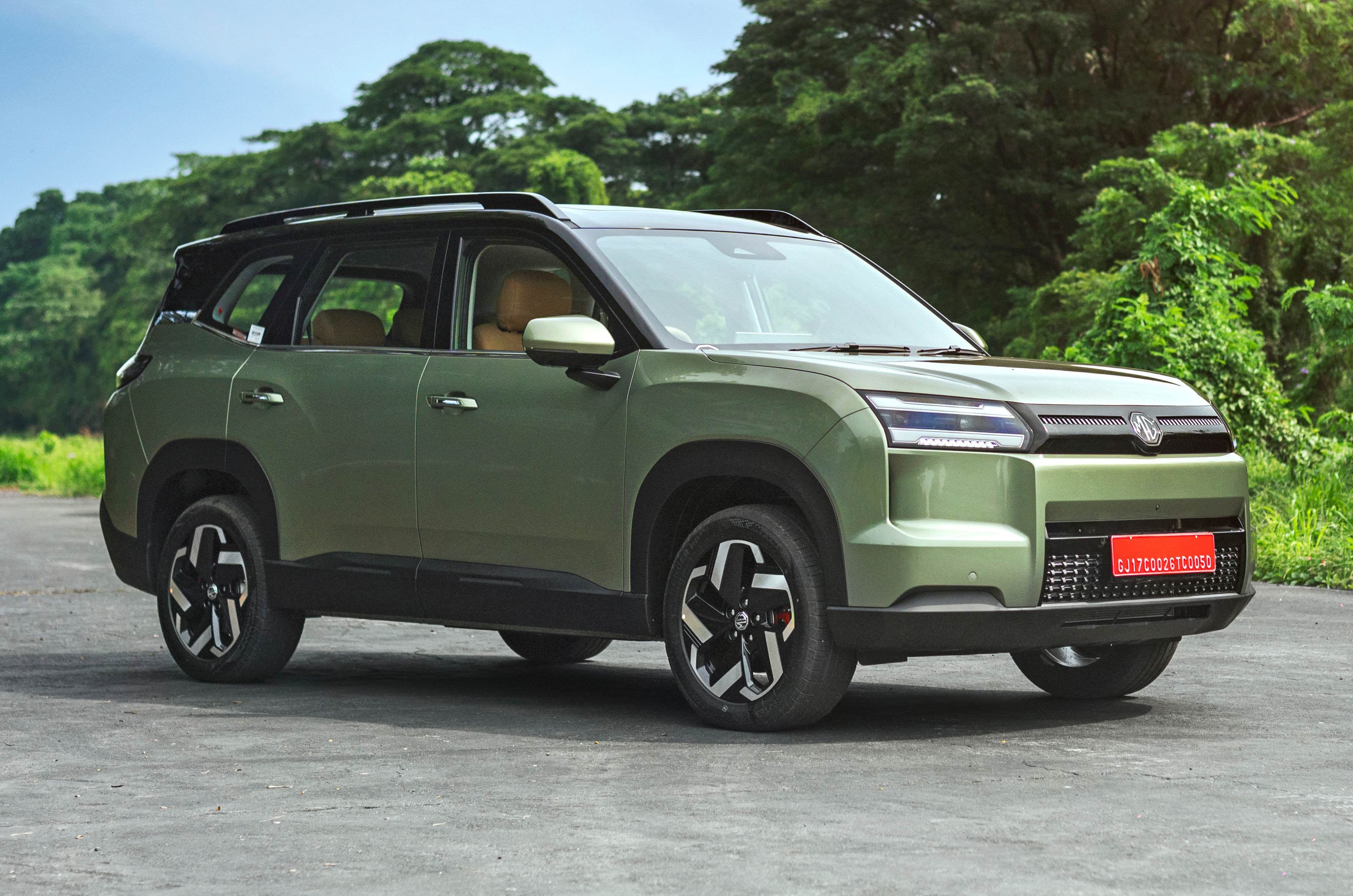
Let’s talk dimensions first. At 4,745mm long, 1,850mm wide, 1,770mm tall and with a 2,810mm wheelbase, the Tomahawk is larger than the Mahindra XEV 9S in all areas except width. Ground clearance, at 230mm (measured to battery), is also class-best. However, these numbers don’t translate to a particularly imposing stance. Instead, it straddles the line between an MPV and SUV.
Size doesn’t translate to an imposing stance; it straddles the line between an MPV and an SUV.
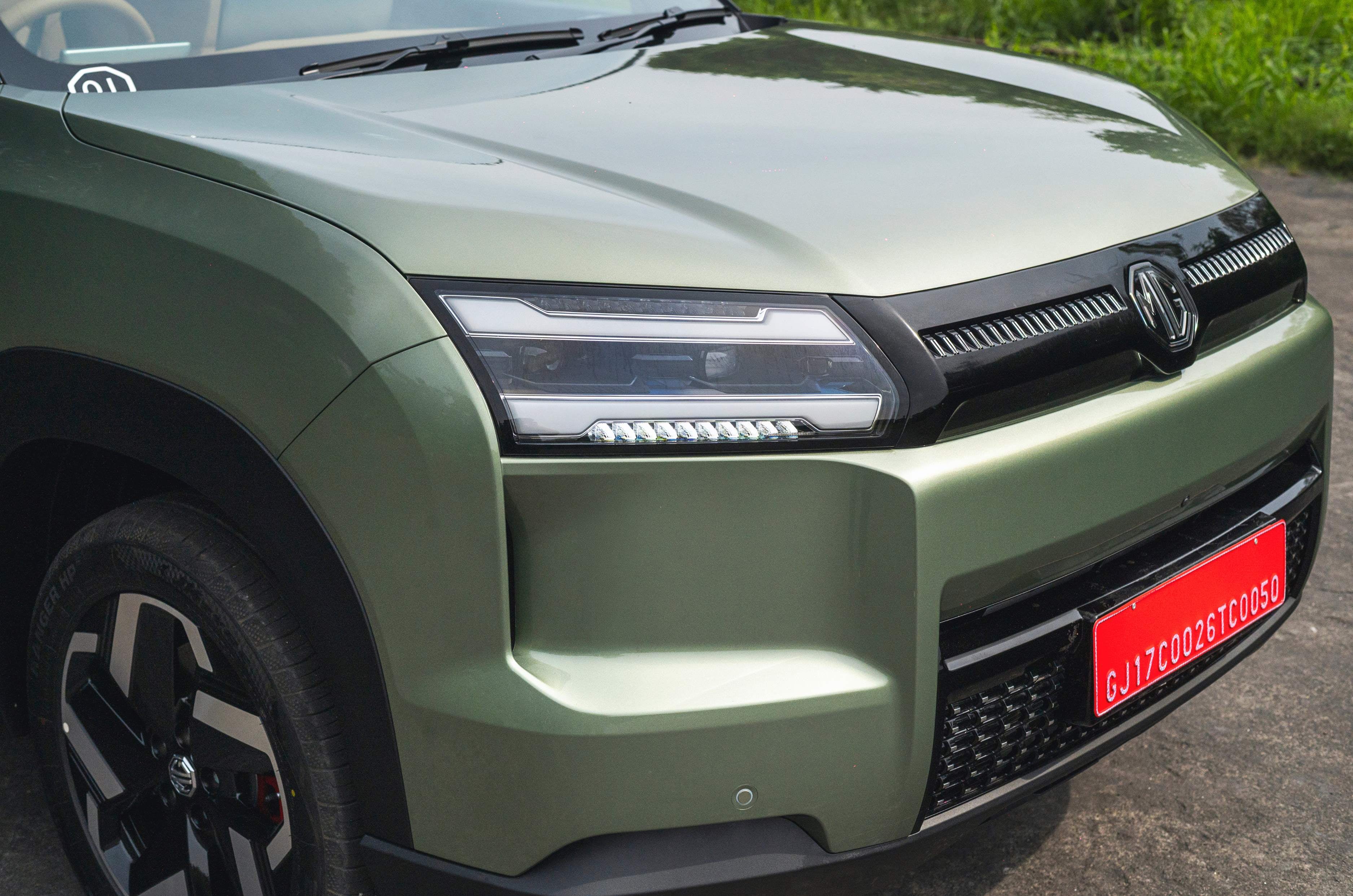
The design is clean and quite handsome, if a bit uninspiring. The front bumper is squared off with pass-through aero vents on the edges and chunky cladding lower down. Cooling requirements are met by slim slots in the centre section with some chrome detailing, while the conventional grille is blanked off and finished in gloss black. No light bar here, thankfully, but the MG logo does glow and is flanked by rectangular LED headlights with a subtle H-shaped light signature.
Large rectangular LED headlights have a subtle H in them; no light bar, but the MG logo glows.
In profile, it looks quite slab-sided, with sharp creases along the fenders and plastic wheel-arch cladding adding some definition. These, along with the chunky door cladding, attempt to give it a rugged appearance but are let down by 18-inch wheels that look a tad too small. No electric door handles here, just good old-fashioned pull types.
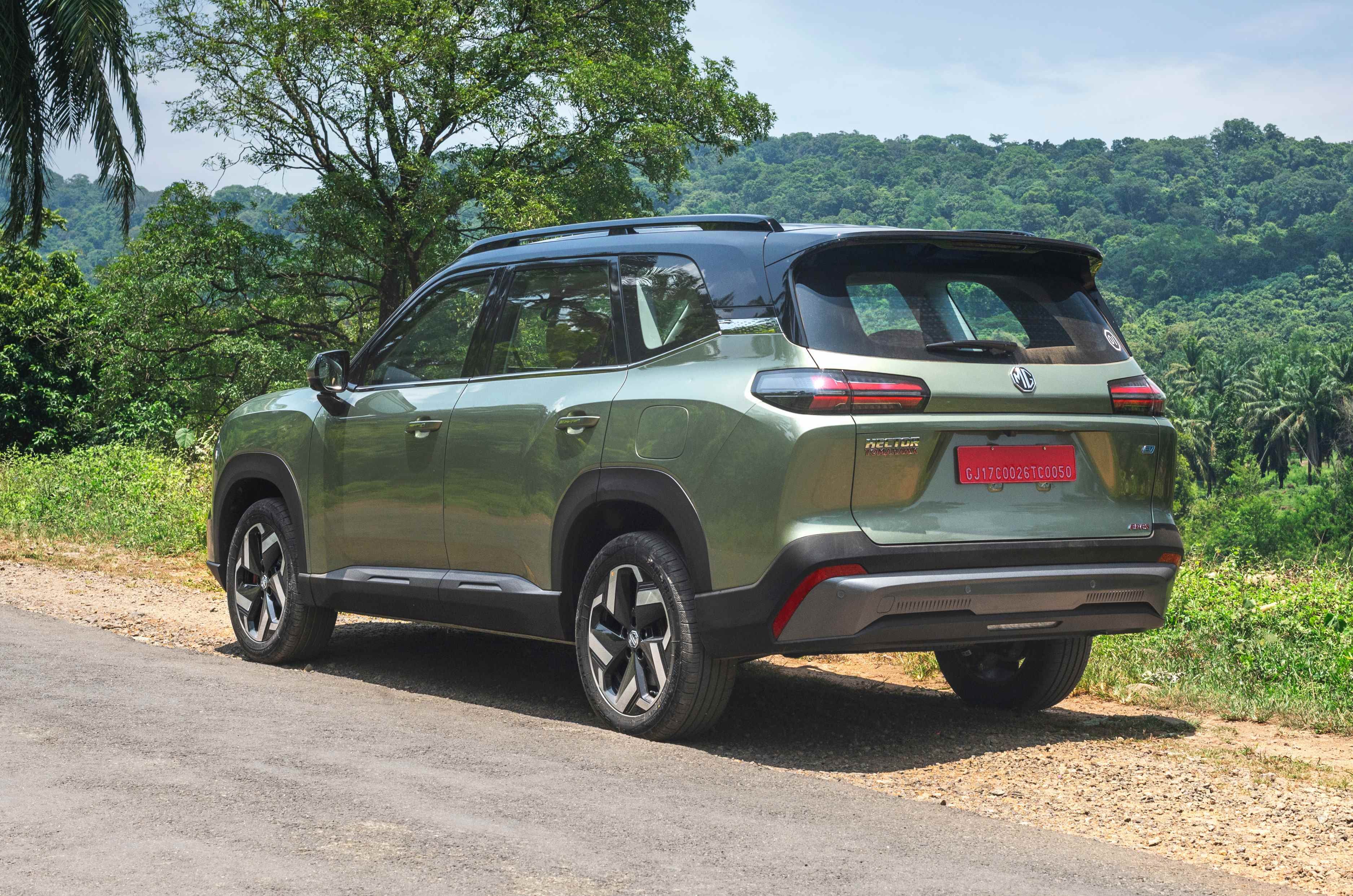
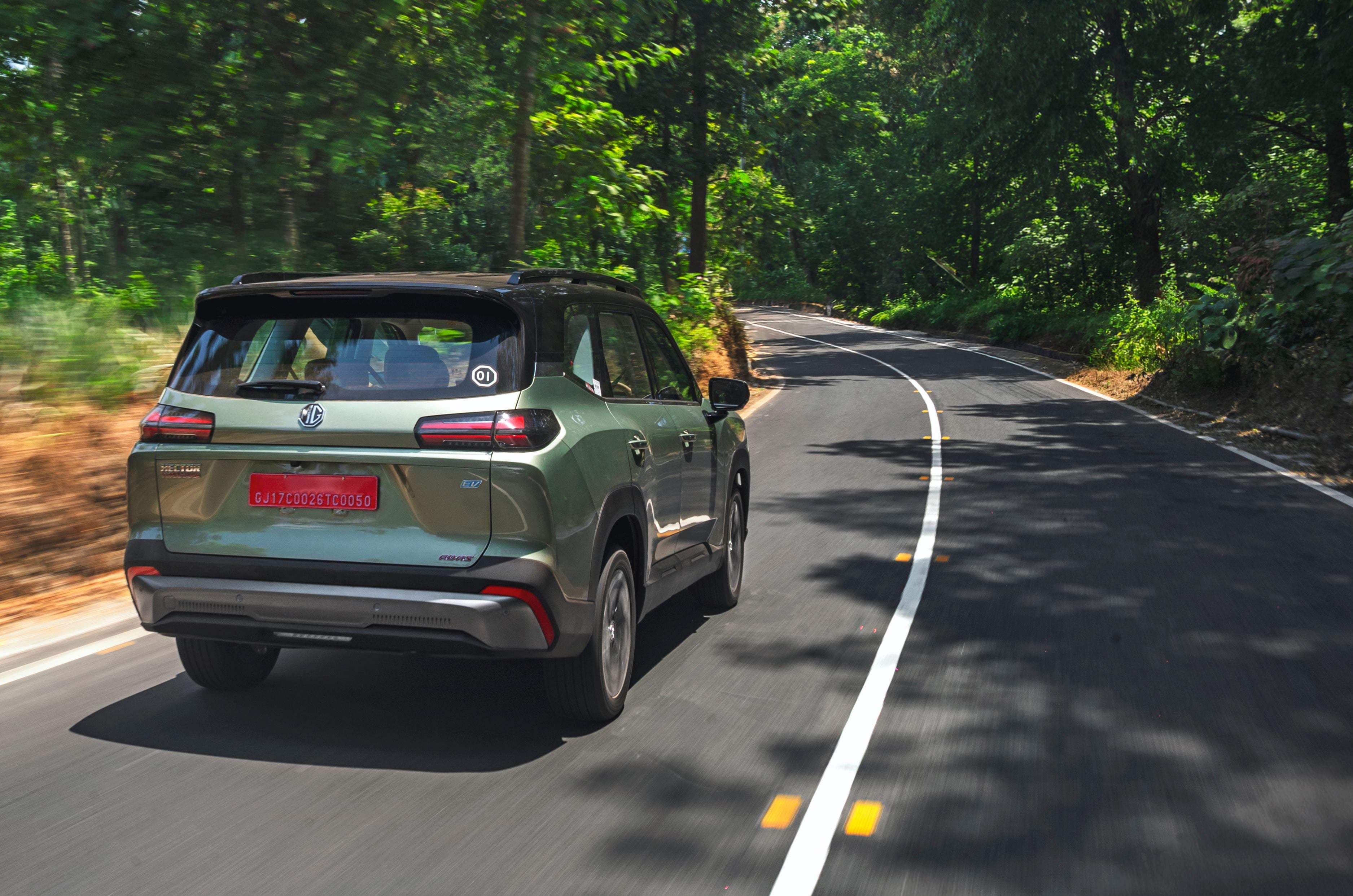
Further back are a set of intricate LED tail-lights that again resist the connected trend. MG’s love for badging is clear though, with four on the powered tailgate. Finishing things off nicely is a sculpted bumper with a grey trim piece and a centre-mounted reverse lamp. Overall, it’s a reasonably pleasing design, but it looks a tad dated and lacks the butch appeal of some rivals.
Overall styling is neatly done but somewhat uninspiring.
MG Hector Tomahawk EV Interior Space and Comfort – 8/10
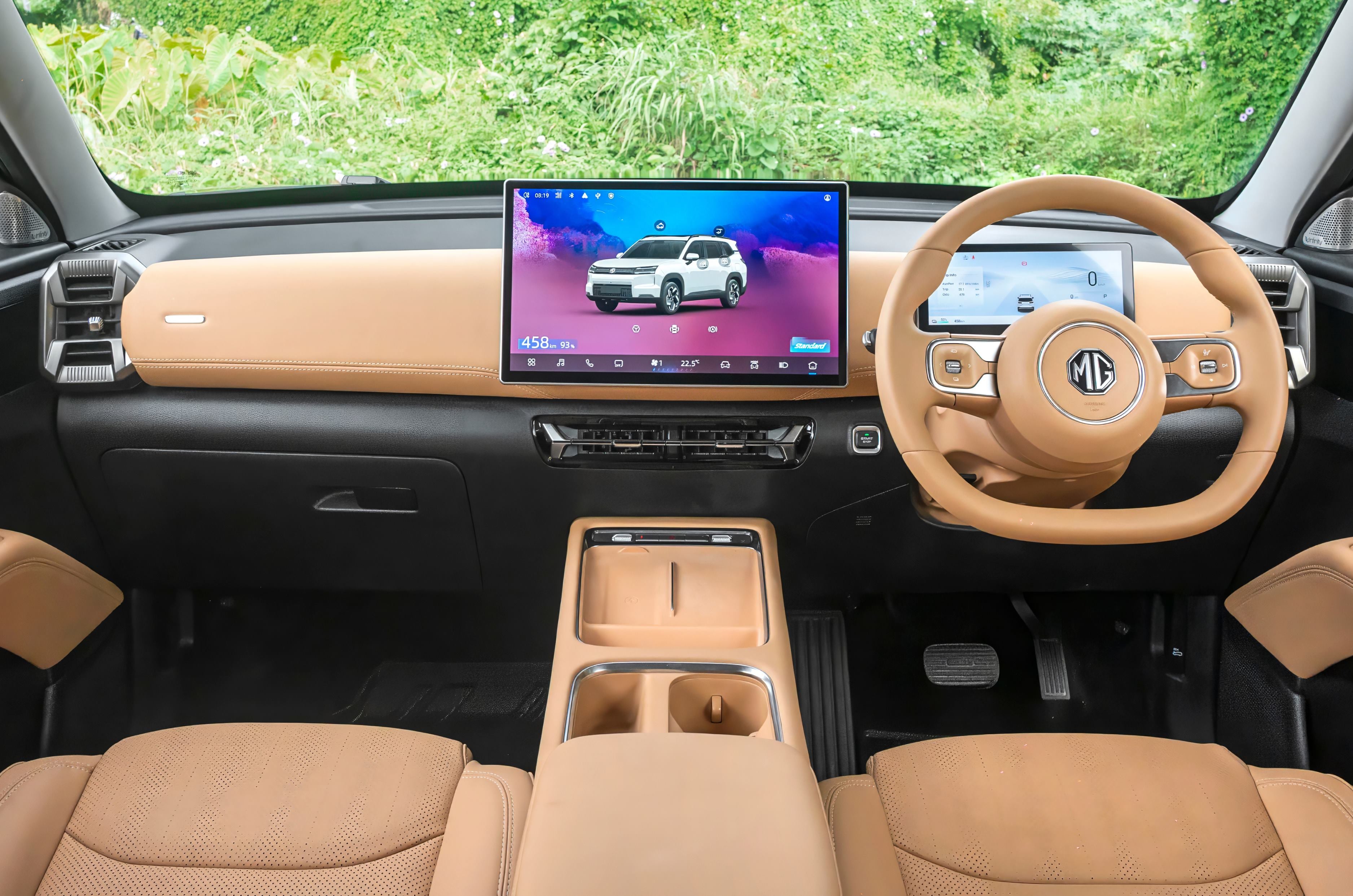
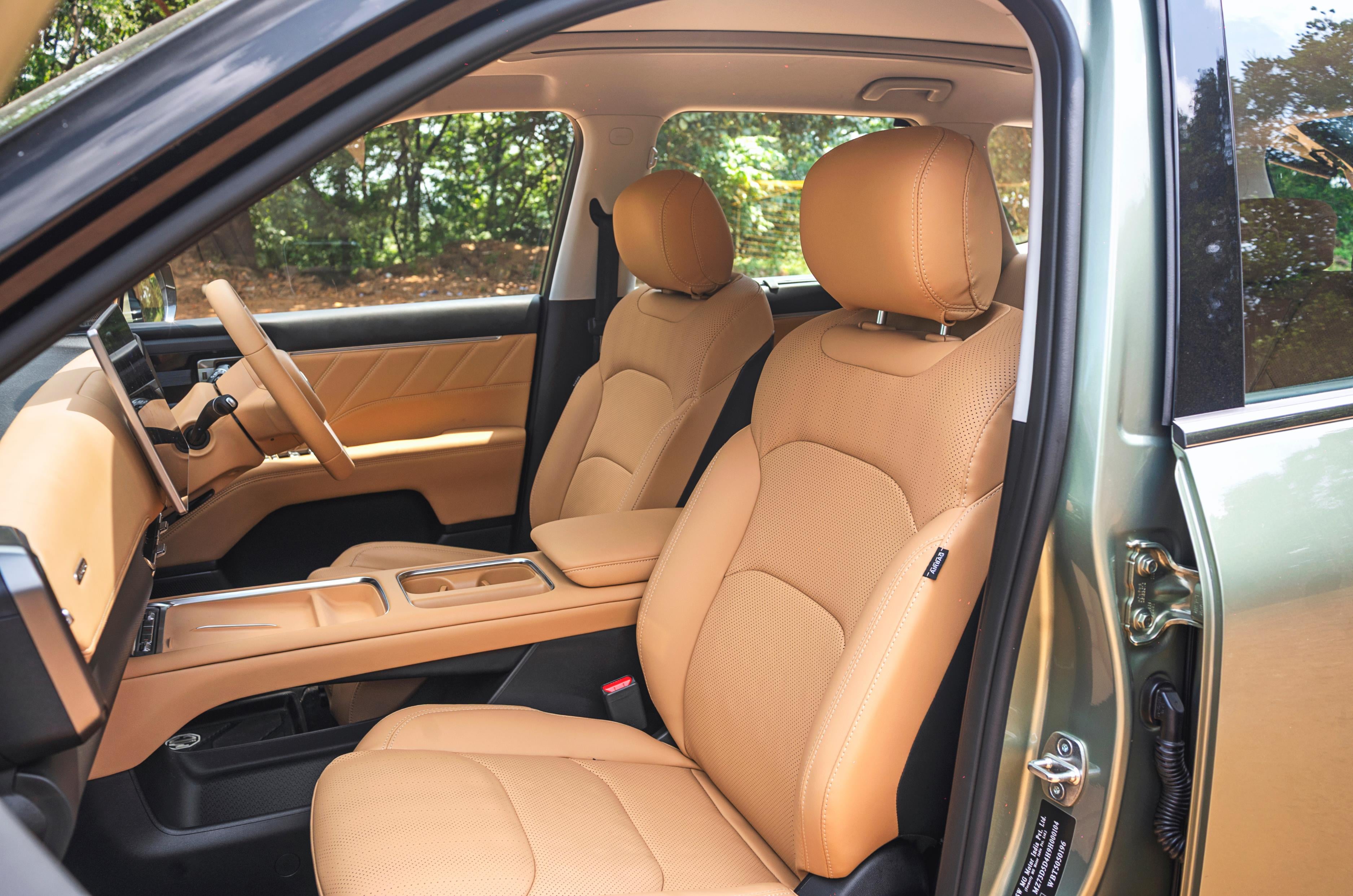
Inside, the dash features a familiar minimalistic layout with a large touchscreen front and centre. It looks premium and features soft-touch materials on the dash and doors, but lacks a certain wow factor, and the light tan colour palette might not be to all tastes. That said, the light tone and large windows do give it an airy ambience. Look hard, and you will find areas where fit and finish could be improved. The centre console in particular feels poorly textured and finished, which we were told is down to a supplier issue. Speaking of the centre console, the column-mounted drive selector frees up space here for a wireless charger, cupholders, multiple bins as well as a large pass-through cubby lower down, and the door bins are enormous too.
Minimalistic interior looks premium, but the light tan colour palette might not be to all tastes.
It’s easy to get into a comfortable and commanding driving position using the power-operated seats and reach-and-rake adjustment for the steering wheel. The seats themselves are wide, and despite the firm cushioning, they felt comfortable on our full day of driving. They are ventilated too, and the driver’s seat also gets a memory function.
Powered and ventilated front seats are wide and comfortable; driver’s seat gets a memory function.
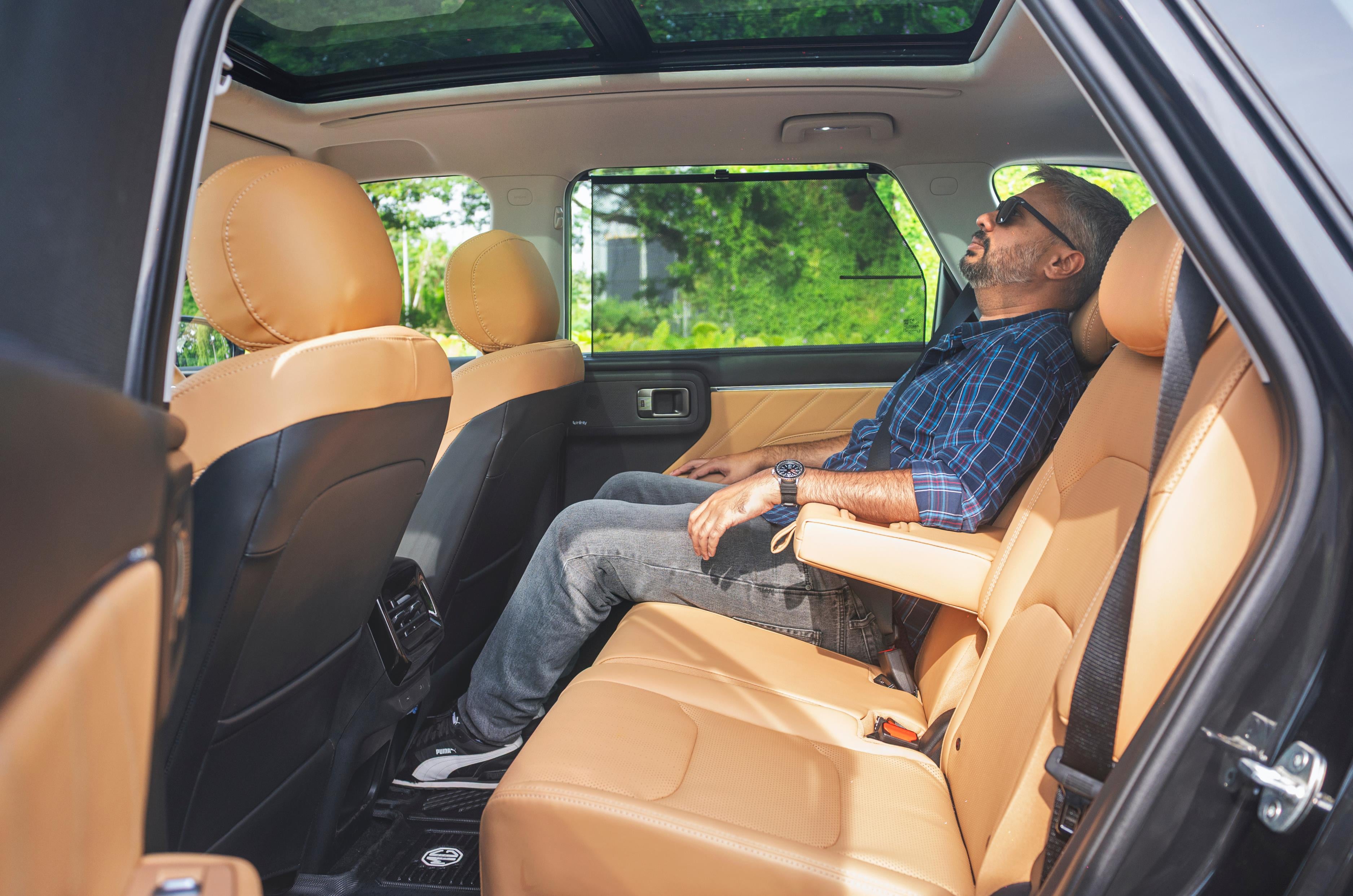
The Tomahawk has the second-longest wheelbase in class (next only to the Vinfast MPV 7), and it shows in the second row. Legroom is excellent, and while you do sit slightly knees-up, thigh support is adequate too. The seatback reclines pretty far back and features an armrest and three adjustable headrests. Window sunshades, AC vents and Type-C USB ports add to the rear-seat comfort and convenience.
The chauffeur-driven are well taken care of, with a comfy reclining bench, plenty of room all around and sunblinds.
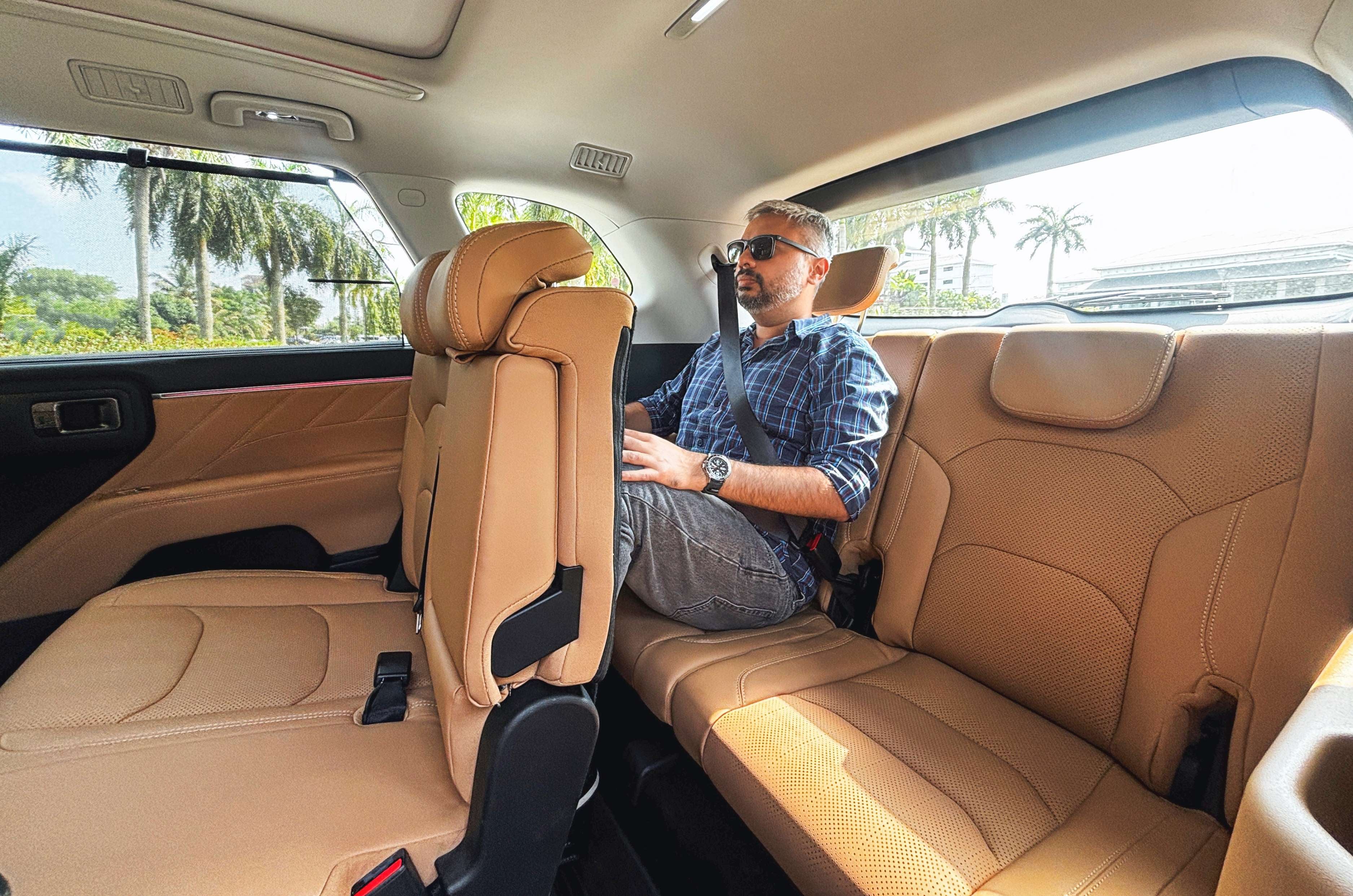
The Tomahawk EV is available in both 5- and 7-seater guises. The latter adds a sliding second row with one-touch tumble to access the third row, as well as more AC vents on the roof and a dedicated fan-speed control. Getting into the last row is surprisingly dignified thanks to a large aperture, but kneeroom depends largely on the middle-row passengers’ generosity, and the low seat means thigh support is non-existent. Headroom is good, though, and for short journeys, adults will be fine back there.
Third row will fit adults but with a slight compromise to the middle-row space.
With the third row up, boot space stands at 192 litres – enough for a couple of carry-on bags – expanding to a generous 528 litres with it stowed. Under the boot floor are a few more storage cubbies, which are handy since there is no frunk – a miss considering there appears to be enough space under the bonnet. A space-saver spare is mounted underneath the car.
MG Hector Tomahawk EV Features and Safety – 8/10
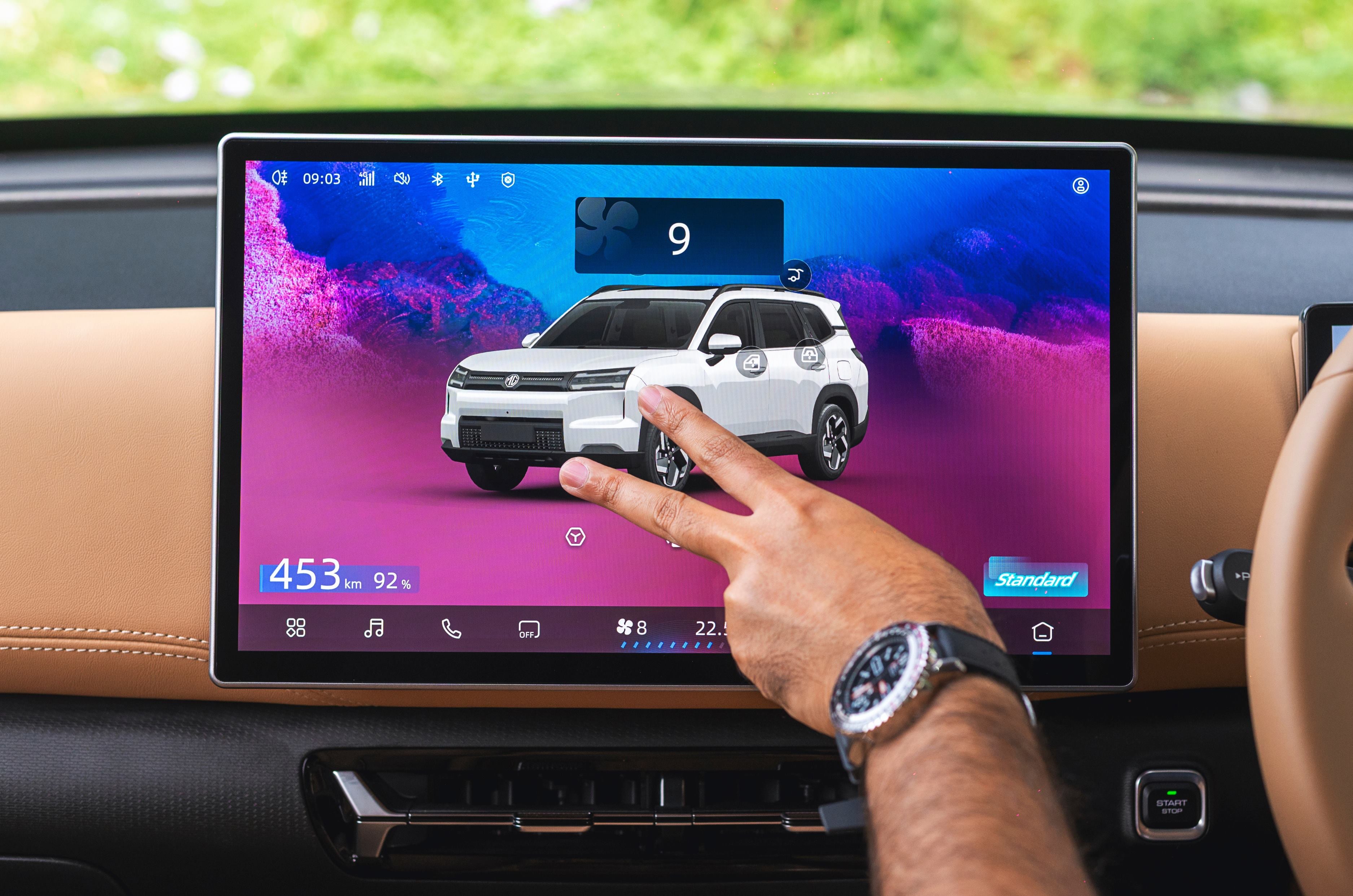
The minimalist interior layout means you reach for the 15.6-inch infotainment screen for most functions. While this can get distracting, physical and swipe-gesture controls together handle most basic HVAC and audio functions with surprising ease. Anything beyond basic, though, will require a deep dive into the screen. While the screen is sharp and snappy and the UI is clean, it can take a while to find your way through the maze of sub-menus. Wireless Android Auto and Apple CarPlay are also present, but using either hides the row of shortcuts at the bottom of the screen. Hardcoding these buttons to always stay on top would improve usability. The screen also often catches glare, which takes away from the otherwise sharp 360-degree camera.
Several functions are baked into the 15.6-inch touchscreen, but gesture controls for essential functions are quite intuitive.
Instrumentation is handled by an 8.8-inch display directly in front of the driver. The screen itself is sharp, but some smaller fonts might have you reaching for your reading glasses. Its real estate could also be better utilised by displaying the blind-view camera feed rather than the current pop-up on the centre screen. Other feature highlights include a sweet-sounding 10-speaker Infinity audio system, a panoramic sunroof that stretches over the second row, 256-colour ambient lighting, connected car tech, an AI assistant and more. It’s worth mentioning that the Tomahawk EV also gets a physical start/stop button, which is absent on the brand’s other EVs.
8.8-inch driver’s display is sharp, but some smaller fonts might have you reaching for your reading glasses.
A Level 2 ADAS suite is also available on the top Essence trim, with functions such as adaptive cruise control, lane keep assist and auto emergency braking. While there isn’t an official crash-test rating yet, the robust standard safety kit, including six airbags, ESP, all-wheel disc brakes and Isofix mounts, provides some confidence.
MG Hector Tomahawk EV Performance and Refinement – 7/10
The Tomahawk EV offers just one powertrain configuration – a 69.2kWh LFP battery pack powering a single motor on the front axle, producing 204hp and 310Nm, good for a claimed 0-100kph time of 8.2 seconds. Its front-wheel-drive layout puts it at a disadvantage against rivals from Tata and Mahindra, who offer either rear- or all-wheel drive and higher power outputs. The front-driven Hyundai Creta Electric or Kia Carens Clavis EV are closer matches, and the Tomahawk EV betters them on power and torque.
First EV on MG’s ADAPT architecture pairs a 69.2kWh battery with a front-mounted motor producing 204hp and 310Nm.
Initial throttle response is mild, making it quite easy to amble around town, but push harder, and you get a power spike resulting in torque steer. In Sport mode, you’ll hear the front tyres protest when made to put all that torque down on a less-than-perfect road. Standard mode dulls response slightly, but it can still catch new drivers off guard. With time, it is possible to drive around this, but the latest crop of rival EVs has mastered a more linear delivery. Eco mode feels a bit tepid and is best saved to counter range anxiety, while a Custom mode lets you customise power output and regen braking in increments of 10 percent. There are also three preset regen modes – Standard, Comfort and Strong – but no paddles to control them or one-pedal mode. Instead, you get an Intelligent setting that uses the ADAS sensors to adjust regen in real time based on the traffic in front of you.
Grip levels and body control are good, but FWD layout struggles to put power down.
Refinement is a bit of a mixed bag. While the motor is fairly muted and there is little wind or tyre noise coming through, you hear the suspension at work on rough patches.
MG Hector Tomahawk EV Range and Efficiency – 7/10
A spirited highway drive from Kochi to Kozhikode covering 192km, resulted in an overall efficiency of 4.85km/kWh.
While the Hector name is often associated with poor fuel efficiency, the new EV and PHEV hope to change that. MG claims an MIDC range of 517km from its 69.2kWh battery pack. On a spirited drive from Kochi to Kozhikode covering 192km, we recorded an overall efficiency of 4.85km/kWh, translating to a real-world range of 336km. This was on a fast highway run, where the Tomahawk’s tall shape won’t do its efficiency any favours. We’ll put it through our standard real-world efficiency test when we have the car for longer.
DC fast charges at 90kW – slower than rivals but enough for a 30 to 80 percent top-up in a claimed 35 minutes.
Topping up the battery from 10 to 100 percent using the 7.4kW charger is said to take around 12.5 hours. It can also DC fast charge at speeds of up to 90kW, which is lower than its immediate rivals but still enough to take the battery from 30 to 80 percent in about 35 minutes.
MG Hector Tomahawk EV Ride Comfort and Handling – 7/10
Rides with more maturity than previous MG EVs, but suspension can be heard working.
The Hector Tomahawk EV makes a big step up in ride and handling compared to the ICE Hector, but there is still some room for improvement. It rides with more maturity than previous MG EVs, comfortably absorbing most of what we threw at it. However, you do hear the suspension working. Sharper bumps reveal an underlying firmness that occasionally comes through to the cabin. Most roads around Kochi were relatively smooth, and we weren’t able to experience it on rippled concrete, so we will reserve full judgement until we have the car for longer.
A big positive is how easy the Tomahawk is to drive for something this large. Visibility all around is excellent, and you can see the bonnet’s edges from the driver’s seat. A light steering also helps, and overall, it feels less intimidating to drive through tight traffic than, say, the XEV 9S.
230mm claimed ground clearance is best in class; wheelbase second only to VF MPV 7.
The steering also weighs up as speeds rise and feels reasonably direct, though the sheer amount of torque going to just the front wheels corrupts the feel. At a quick pace through the twisties, you feel the wheel tugging at your hands as you apply power. Body control is good, and it stays composed through quick direction changes, but a sedate pace is more its element. Braking is strong, with four-wheel discs bringing the heavy SUV to a confident halt.
MGHector Tomahawk EV Value for Money – 7/10
Introductory pricing for the Hector Tomahawk EV starts at Rs 19.49 lakh and tops out at Rs 23.49 lakh. The Battery-as-a-Service (BaaS) scheme lowers the entry barrier to Rs 13.99 lakh, with battery rental set at Rs 4.90 per km. While all these prices are applicable to limited units only, this is quite aggressive pricing from MG.
Practical, comfortable and no-nonsense SUV will appeal to the chauffeur-driven but lacks the dynamic polish of its rivals.
When compared spec-for-spec, it undercuts the competition from Tata and Mahindra while offering a bigger battery and more performance than its Korean rivals. It has a spacious and comfortable cabin, a comprehensive feature set and is surprisingly easy to drive for its size. However, it lacks the dynamic polish of its rivals and therefore doesn’t feel like a latest-generation EV. As such, its Hector name starts to make more sense. It is a practical, comfortable, no-nonsense SUV that will appeal to the chauffeur-driven just like its forebear. Those looking to do the driving, though, are better off looking elsewhere.
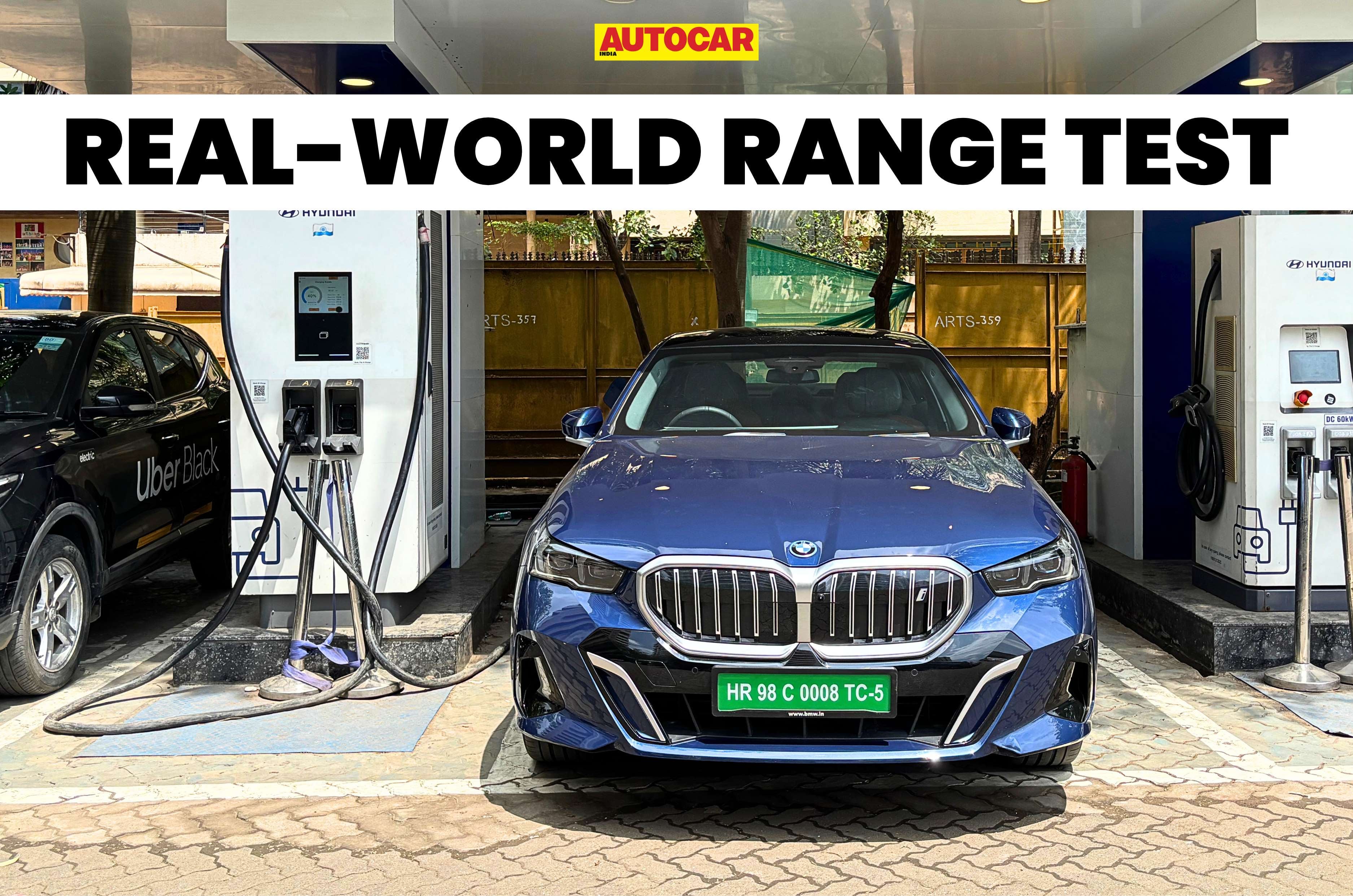
BMW has launched the BMW i5 eDrive35L, the electric version of the long wheelbase 5 series sedan. Compared to the international spec, this India-spec version’s wheelbase has been extended by 110mm. Priced at Rs. 79.60 lakh (ex-showroom), it commands a Rs. 3 lakh premium over its petrol counterpart, the 530Li. We put the BMW i5 LWB through our real-world tests to find out how efficient it really is
Claimed range is 669km
Gets five regen modes – High, Medium, Low, B Mode and Adaptive
Net battery capacity is 76.3kWh
BMW i5 LWB real-world range and charging explained
This BMW i5 LWB is powered by a single motor mounted on the rear-axle, and produces 272hp and 410Nm. It is equipped with a 81.6kWh (gross capacity) battery pack that uses NMC (Nickel Manganese Cobalt) cell chemistry. For this test, we drove the BMW i5 LWB in ‘Efficient’ mode with the regen set to ‘Adaptive’. In Adaptive mode, the regenerative braking is automatically adjusted depending on the road and traffic conditions, and it works as intended.
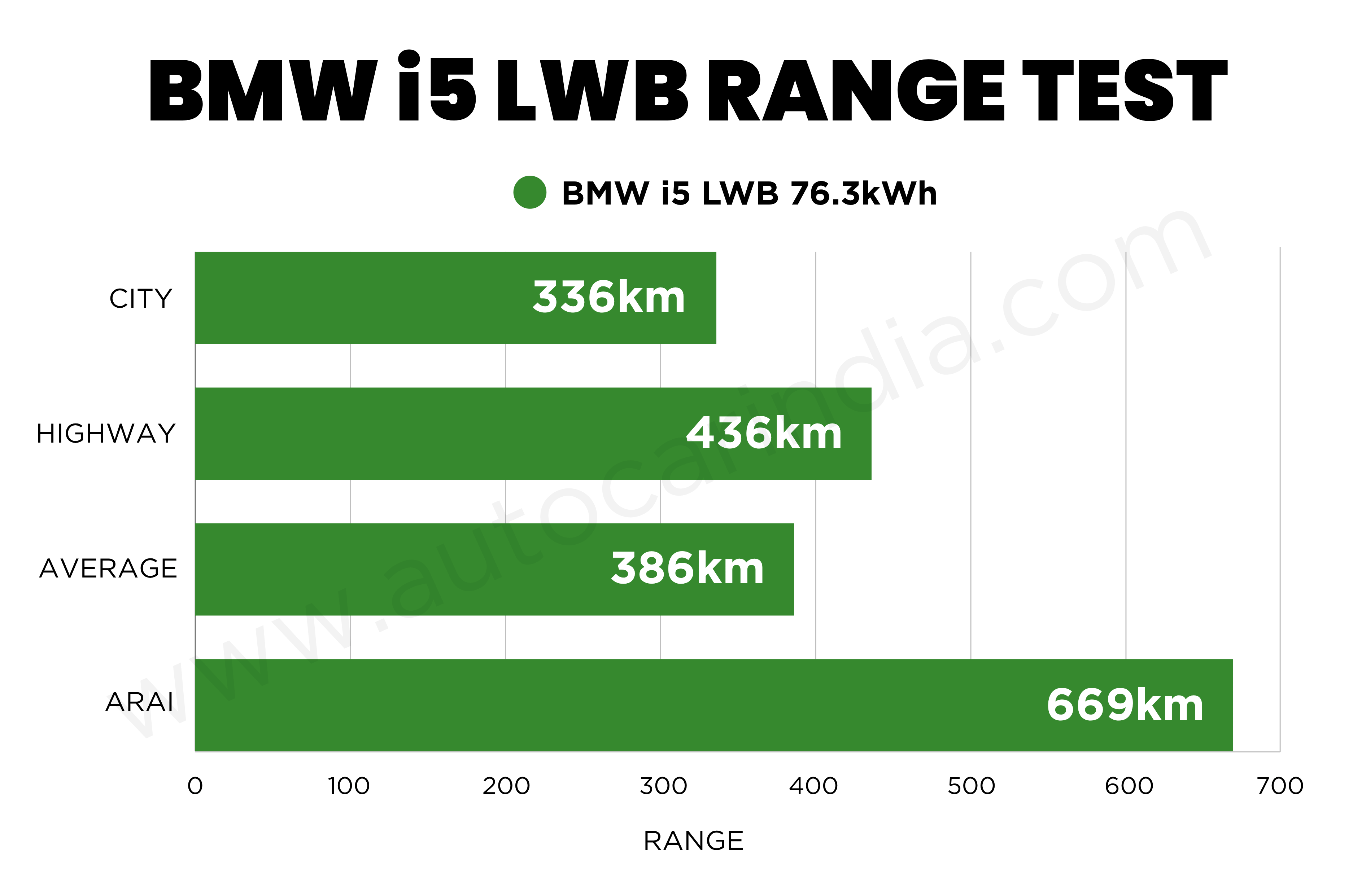
In the city, the i5 delivered an efficiency of 4.4km/kWh, whereas on the highway, it delivered 5.71km/kWh. This extrapolates to a range of 336km and 436km in the city and on the highway, respectively. With an overall average efficiency of 5.06km/kWh, you can expect a real world range of 386km on a full charge.
BMW claims that the i5 can charge from 10-80 percent in 33 minutes using a 160kW DC fast charger. We recharged its battery using a 60kW DC fast charger, and it took 47 minutes to charge the battery from 20-80 percent.
Autocar India’s range testing
Before our real-world range tests, the battery of our test car was fully charged, and we maintained tyre pressures in accordance with the manufacturer’s recommendations. The car was driven on a weekday in Mumbai city and on the adjoining state highway in a fixed loop, and we maintained the set average speeds. At the end of each cycle, we calculated the range based on the percentage charge consumed.
Throughout our tests, the climate control was set to 22deg C in a full-auto setting, and other electricals, such as the audio system, indicators and ventilated front seats, were used when required, just as a regular user would. We take pride in our testing data, which isn’t merely consistent but also gives users an accurate indication of what they can expect in the real world.
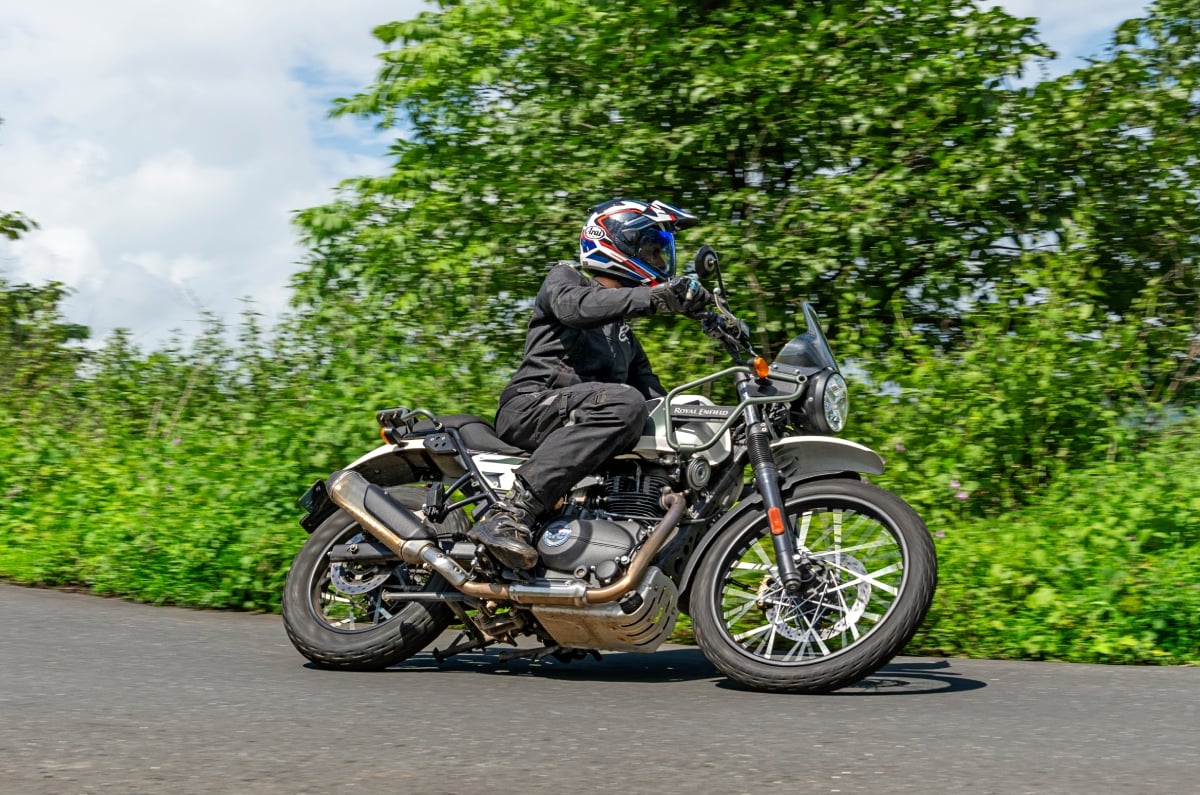
A lot can change in three years, as it turns out. Back in October 2023 at the Himalayan 450 launch, I would have confidently told you that the older Himalayan’s 411 time was up and that the 450 served as a fitting replacement. Fast forward to 2026 and I will now willingly concede that there is very much a place for the new Himalayan 440 in this market.
What’s new and why is it back?
A tempting price as well as meaningful improvements
Price plays a big role behind this change in reasoning. 3 years ago, the entry level 450 was about Rs 40,000 more than the top 411 – a not insignificant, but justifiable increase . Today that gap has nearly doubled thanks to the agonizingly short-sighted new GST policy that levies a brutal 40 percent tax rate on motorcycles that use engines bigger than 350cc. RE is clearly feeling the heat from the new wave of sub 350cc competition because the reborn 440 is priced super aggressively. In fact, at 2.29 lakh ex-showroom Chennai, it costs exactly the same as the top 411 did in 2023, despite packing significant improvements. Beyond the price, it’s those very improvements that have convinced me that this bike has earned its return in 2026.
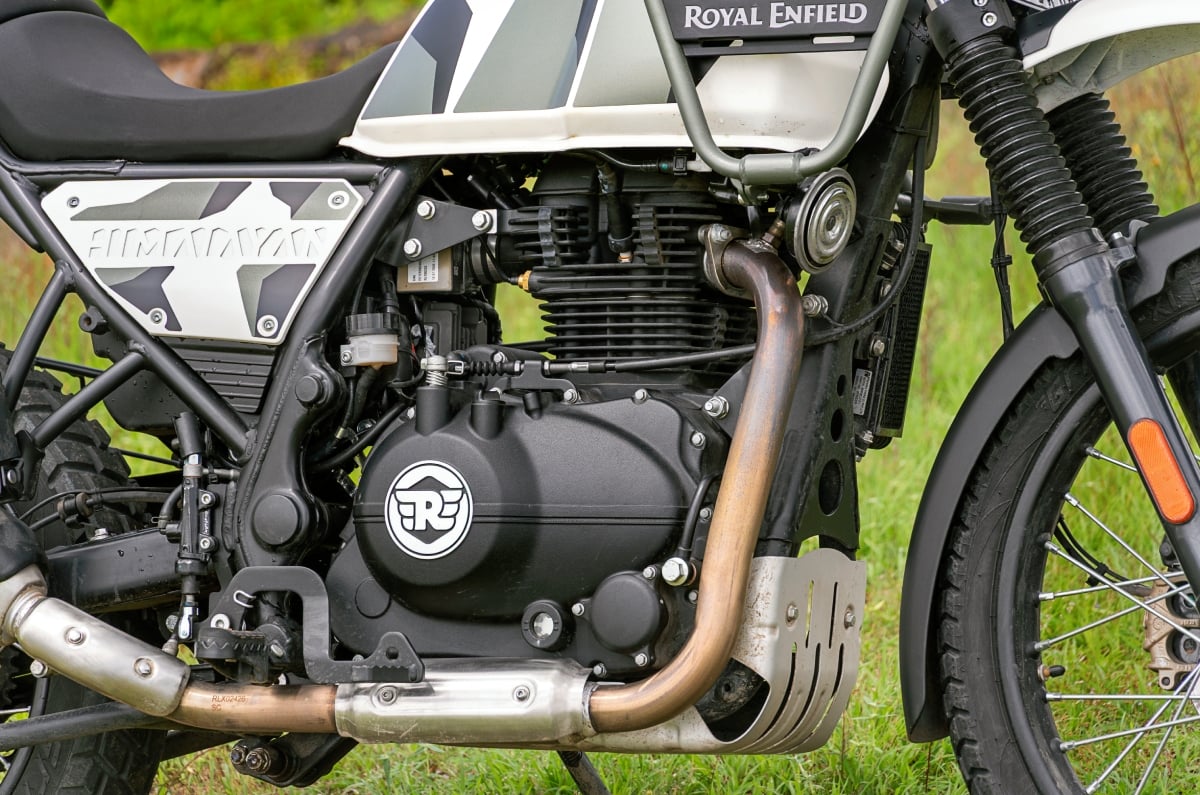
The Himalayan 440 is based on the Scram 440 and it brings in the same improvements we saw there last year. The oil-cooled single has been bumped up to 443cc and RE has also strived towards increasing the refinement. An added 6th gear and as well a lighter clutch lever increase the bike’s appeal on the highway and in the city. Work has also been put into improving braking performance and feel.
Himalayan 440 Design and Style – 7/10
New colours, but familiar design
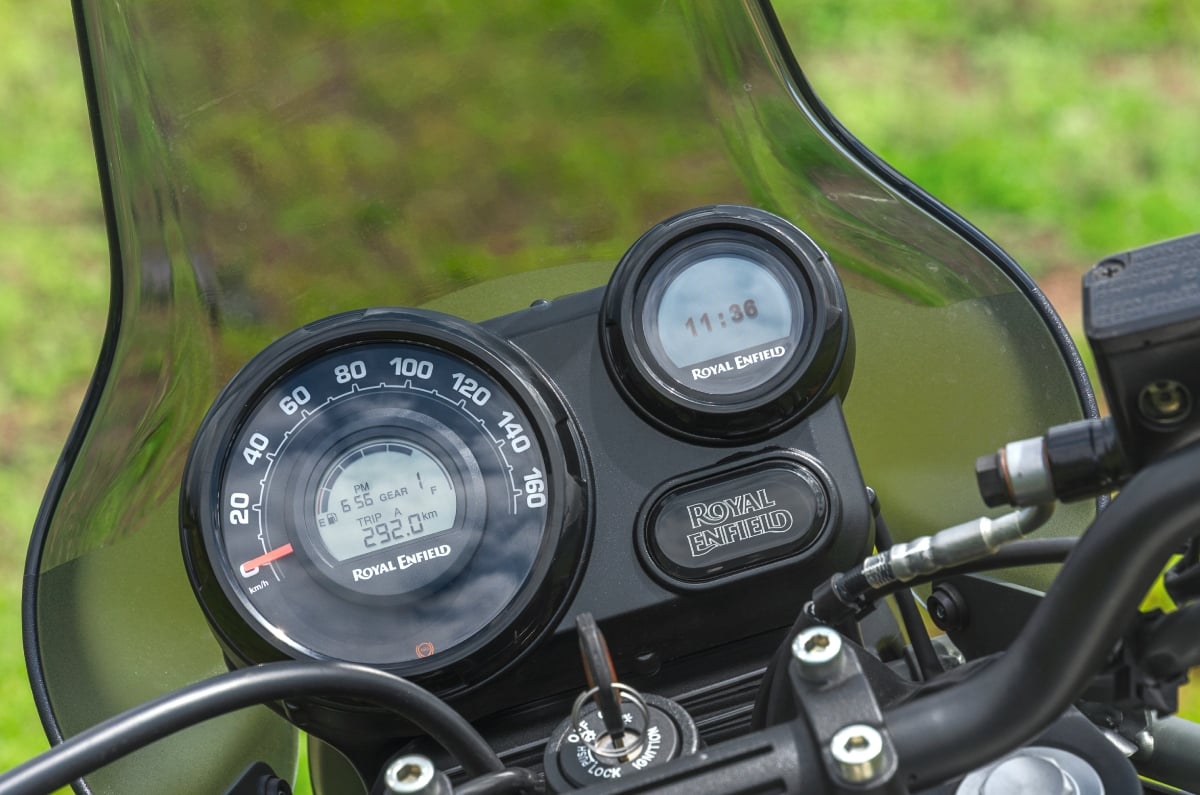
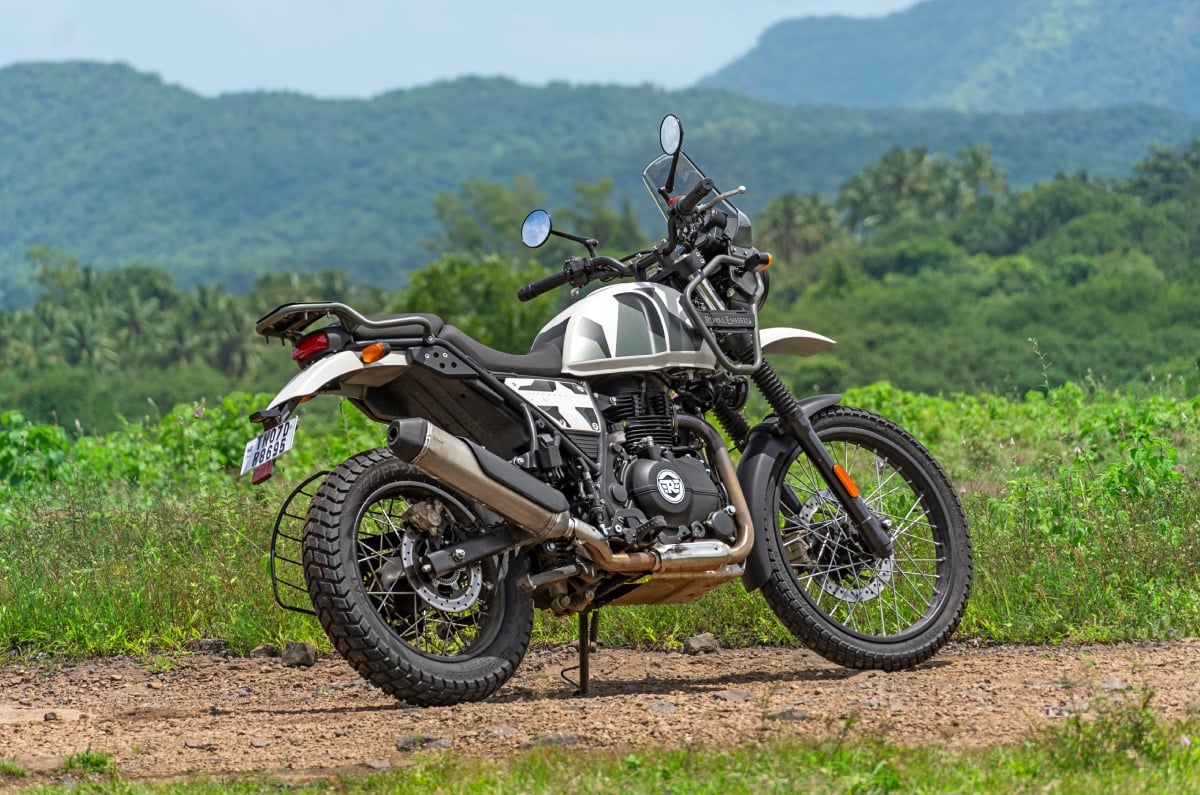
There are three new colour schemes as well, but beyond that, the bike retains its quirky oddball styling, although it does gain a new (average at best) LED headlamp and an updated instrument cluster based on the Scram 440.
Gets an updated instrument cluster based on the Scram 440.
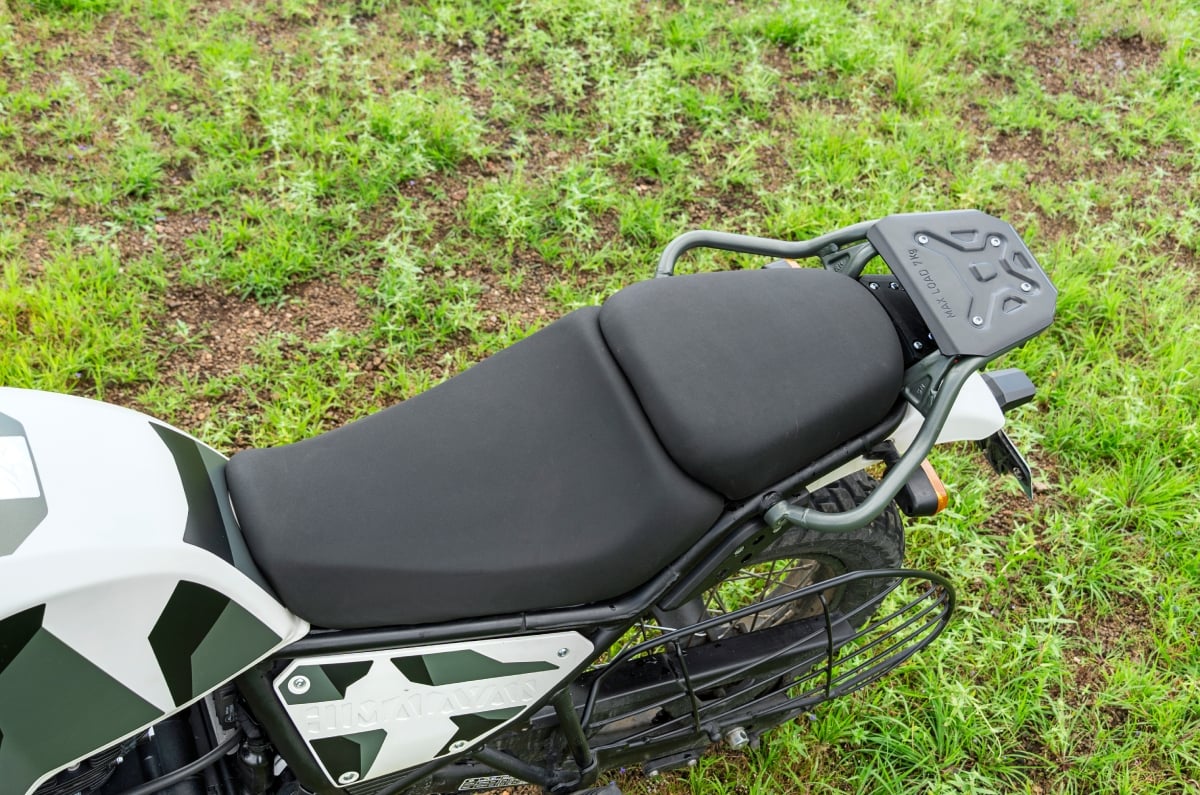
Hopping onto the Himalayan 440 after all these years is like being re-acquainted with an old friend. It more or less looks the same and also feels the same to sit on. The low 800mm seat height in particular is one of the biggest appeals with this bike and it brings back some of the short rider accessibility that was sacrificed by the Himalayan 450.
Himalayan 440 Engine and performance – 8/10
A smooth and characterful engine brimming with torque, but it’s not about speed
The engine retains that same relatively slow thump as its predecessor, but there is certainly an improvement in refinement. You can very much hear and feel the engine through the entire bike, but there are no intrusive vibrations until you build the revs quite high. Unfortunately, the Himalayan no longer has a rev counter so I can’t tell what rpm it starts to feel stressed at, but peak power comes in at just 6250rpm, so the number isn’t that high.
Nevertheless, with this improved vibration control as well as the added 6th gear, a 100kph cruise is now a smooth and stressfree affair. You can stretch that up to about 110kph before the engine’s discomfort starts to become apparent. Top speed is around an indicated 130kph, but this is not the bike’s happy place.
Our performance and efficiency test revealed numbers that you would expect and while this Himalayan is certainly not a fast bike, it’s not slow either. That being said, the 440 is an absolute joy when ridden at a sedate pace. The new-found smoothness, dialed-in throttle connection and oodles of torque make it one of the nicest bikes at this price point to calmly explore the great outdoors. Its 25.4hp power figure is on par with many rivals in the class, but the 34Nm of torque is what makes the difference to the riding experience – as well as the pleasing exhaust sound that occasionally includes loud pops on deceleration. Then again, its 199kg kerb weight is an equally big differentiator to the rest of the segment.
Himalayan 440 comfort, handling and off road – 7/10
Welcoming to short riders and decently capable, but feels its age
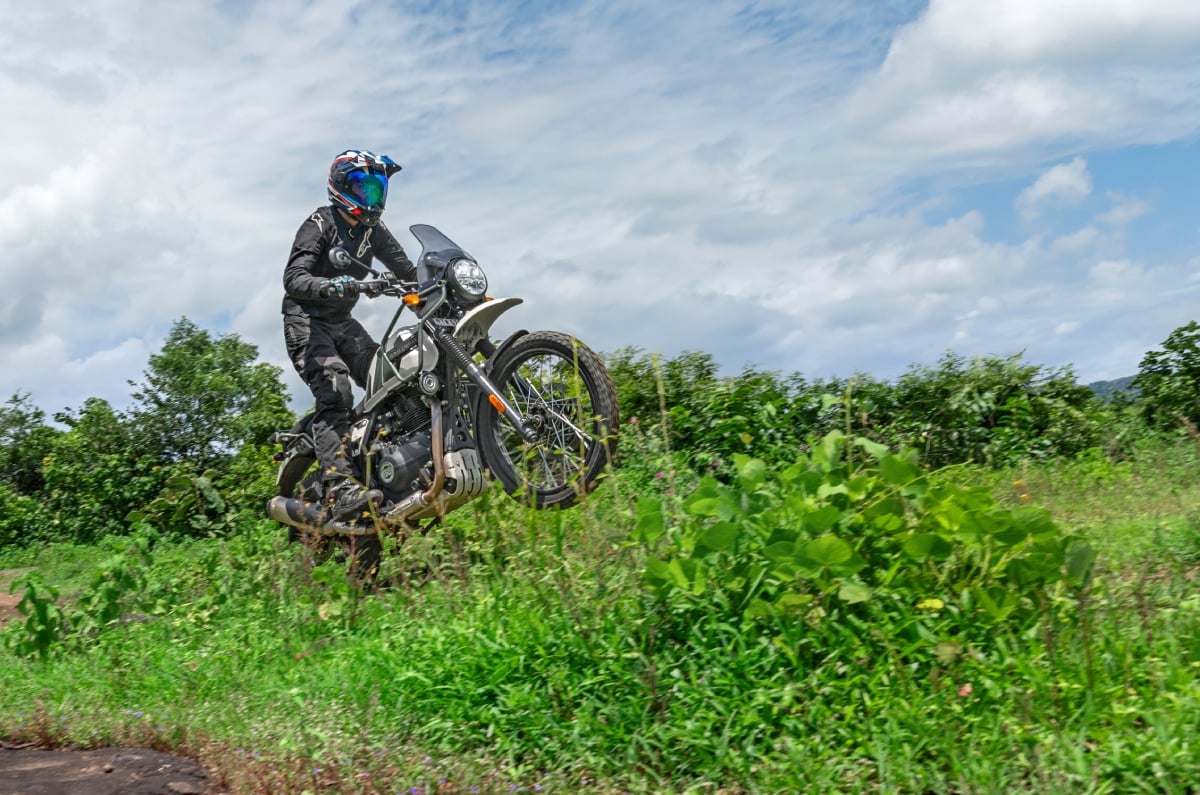
The chassis is pretty much unchanged and that means that the Himalayan 440 is very similar to the 411 in terms of dynamics. This is where you become aware that the 440 feels more like a refined version of an old motorcycle, rather than an all new one. It can carry a decent pace on or off road, but it doesn’t appreciate being ridden fast. The main stand starts to scrape at lean on road – or when you land it with some conviction off road – which serves as a reminder to ease off. Keep pushing and you’ll realise that the chassis doesn’t have the same composure as more modern rivals and the suspension certainly doesn’t come anywhere close to the lofty standards set by the 450.
Over normal roads, suspension comfort is good. However, the 440 did not isolate me as well as I’d have liked from the incessantly bumpy concrete surfaces that now sadly snake across large parts of Maharashtra. After an 8-hour ride over mostly concrete roads at highway speeds, I returned home with a slightly sore back. If absolute comfort is a priority, bikes like the Xpulse 210 or Himalayan 450 are where you want to look. As for braking, it is by no means outstanding, but the 440 gets the job done and there is switchable ABS, which is nice.
Himalayan 440 Features and Safety – 7/10
It’s a simple bike but provides most of the essentials
The Himalayan 440 retains its original identity as a rugged, go anywhere, yet simple and basic motorcycle. In terms of features, you get a USB C port, RE’s Tripper navigation display and the aforementioned switchable ABS. Compared with most rivals, it does have fewer frills, but the only real ‘luxury’ that I miss is tubeless tyres. It would be nice to have the option of paying extra for them like you can on the Himalayan 450.
Himalayan 440 Price and verdict – 8/10
Well priced and a unique riding experience
Essentially, this is a back to basics motorcycle and it feels that way in person. If maximum bang for your buck is what you’re after, then the TVS Apache RTX will completely outdo the 440 in nearly all parameters for similar, if not less money. The same goes for speed and aggression – there are better options at this price point. However, if you want a gentle, well-mannered and characterful motorcycle that makes for a convincing travel partner at a reasonable price, then the new 440 definitely packs genuine appeal.
At Autocar India, we spend a lot of time talking about great driving roads. Smooth tarmac, flowing corners and fast highways are all very well, but some of the most memorable drives begin when the good roads run out. That’s the idea behind Terrible Roads to Terrific Places, a series in which we take the new Renault Duster to some of India’s most spectacular destinations, using the roads, and sometimes what passes for roads, to get there.
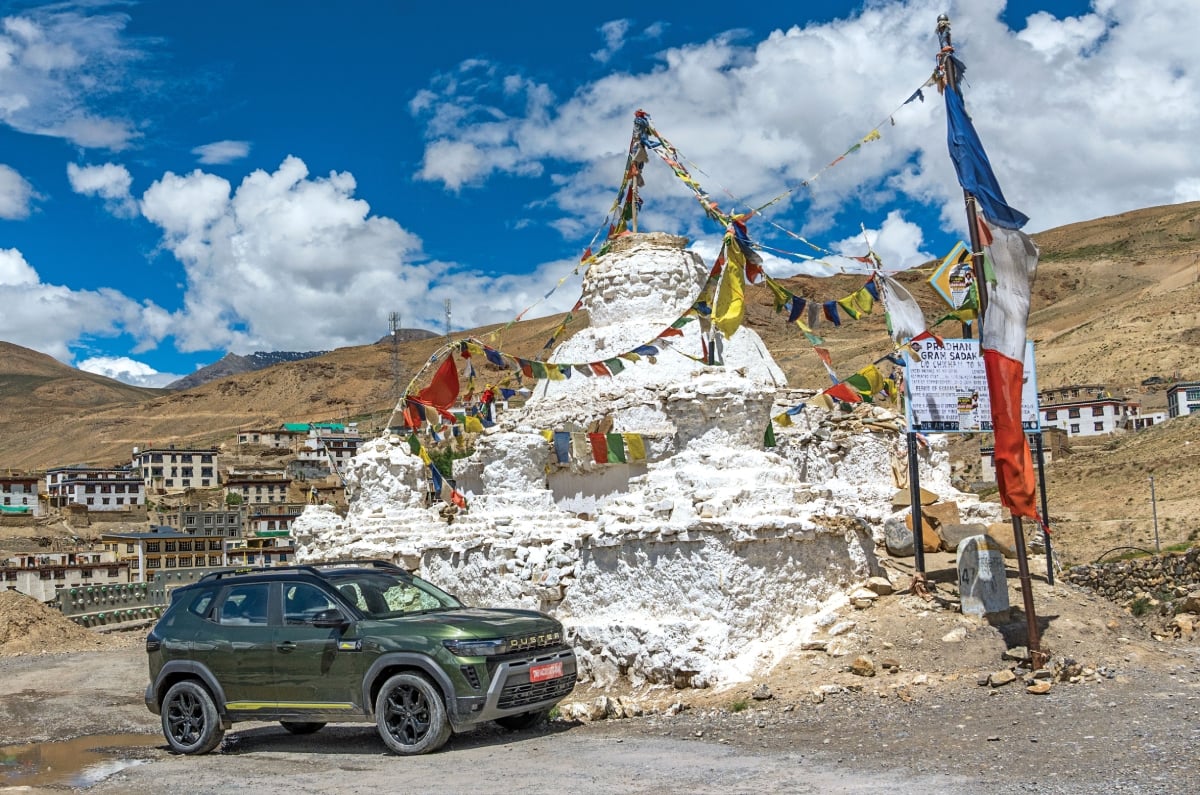
For the first drive, we picked Kibber, more than 4,200 metres above sea level in Himachal Pradesh’s Spiti Valley. Surrounded by enormous mountains and vast, stark landscapes, it’s the sort of place that looks almost too remote to be real. Getting there, however, is the tricky bit.
THE EASY PART
Our journey began in Chandigarh, with roughly 400km between us and Kibber. That might not sound like much, but distances on mountain roads aren’t like those on an expressway.
There was also the small matter of all the camera equipment and luggage that comes with a road-trip shoot. Thankfully, the Duster’s 700-litre boot (incidentally, that’s the largest in its segment) swallowed it all without complaint. With Kibber set in the navigation and Manali marked as our overnight stop, we headed out.
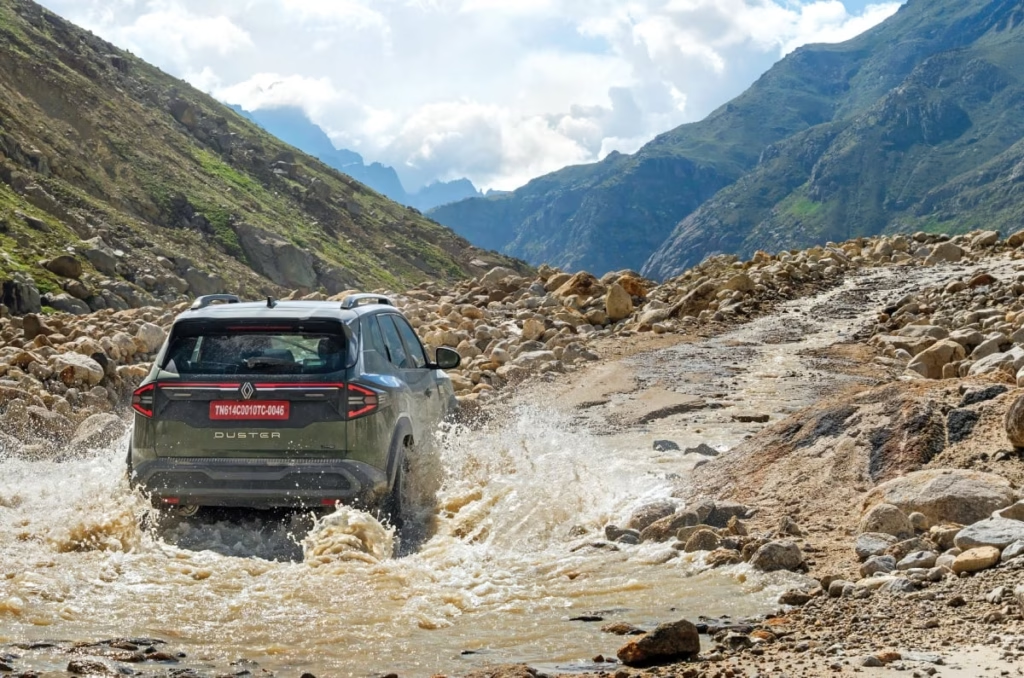
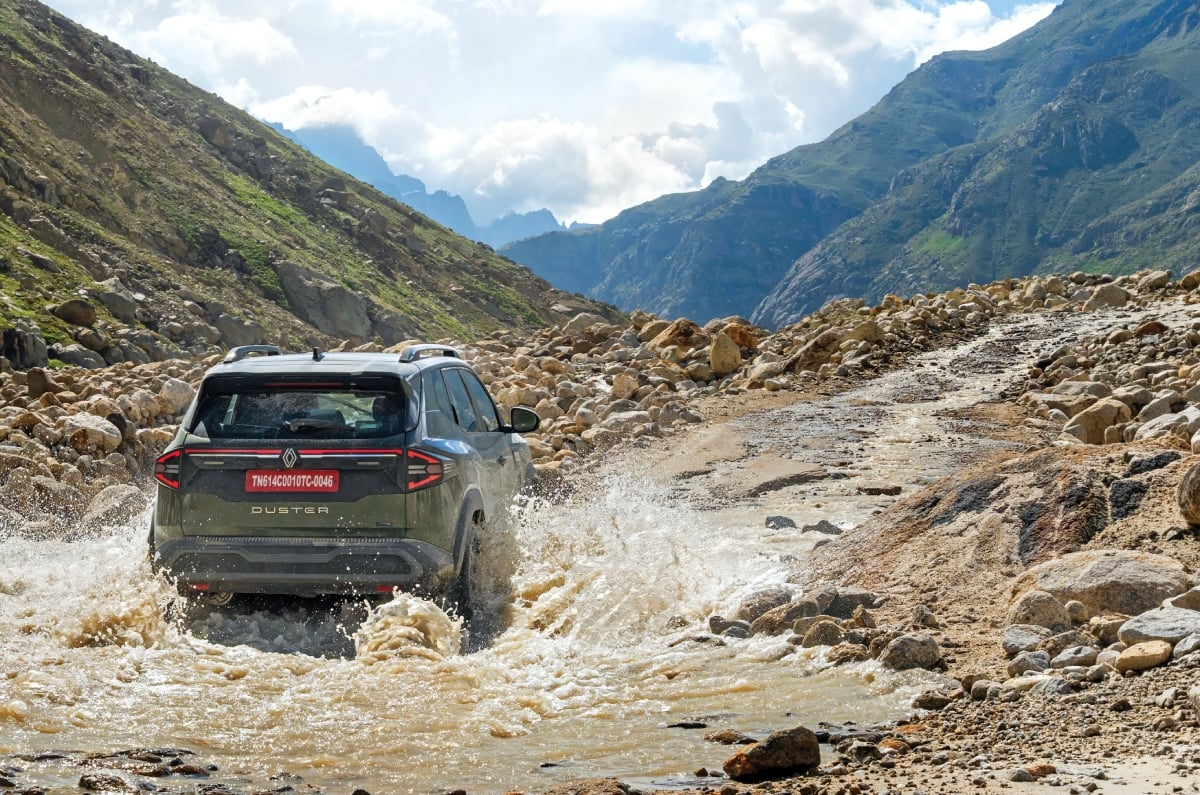
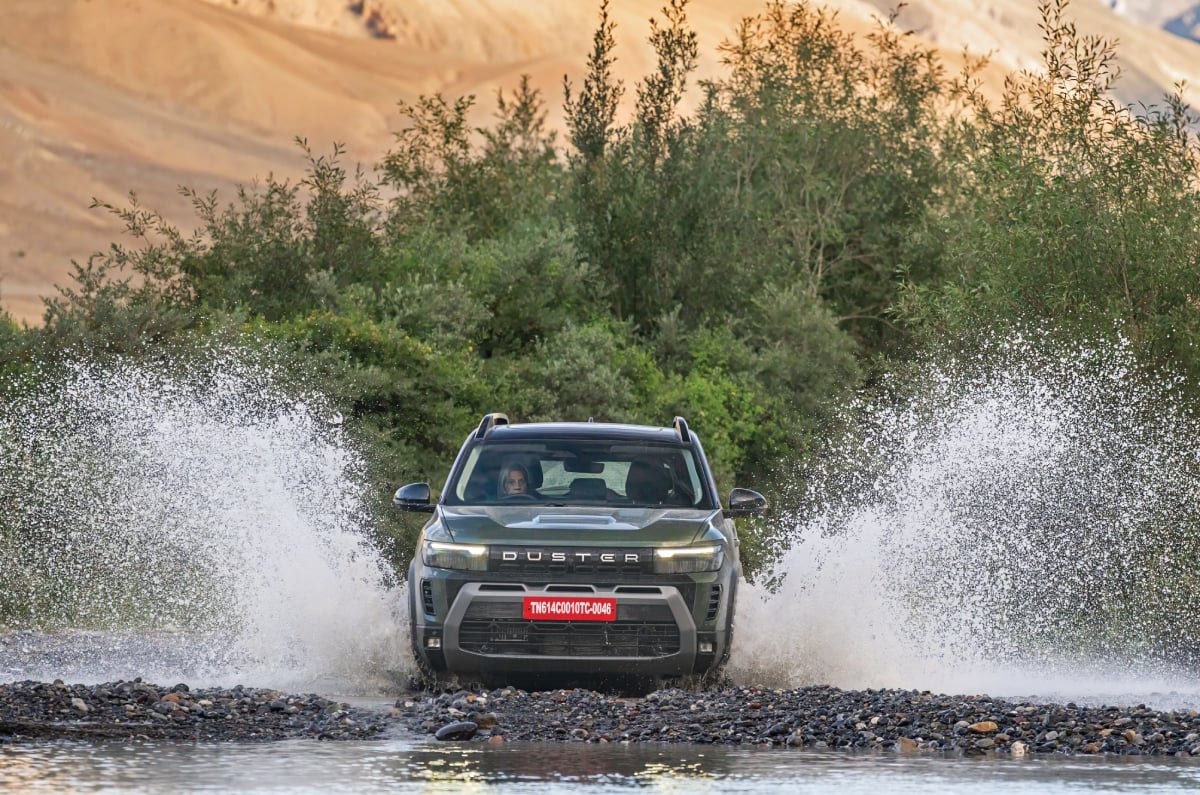
With 163hp on tap, making a splash is mandatory.
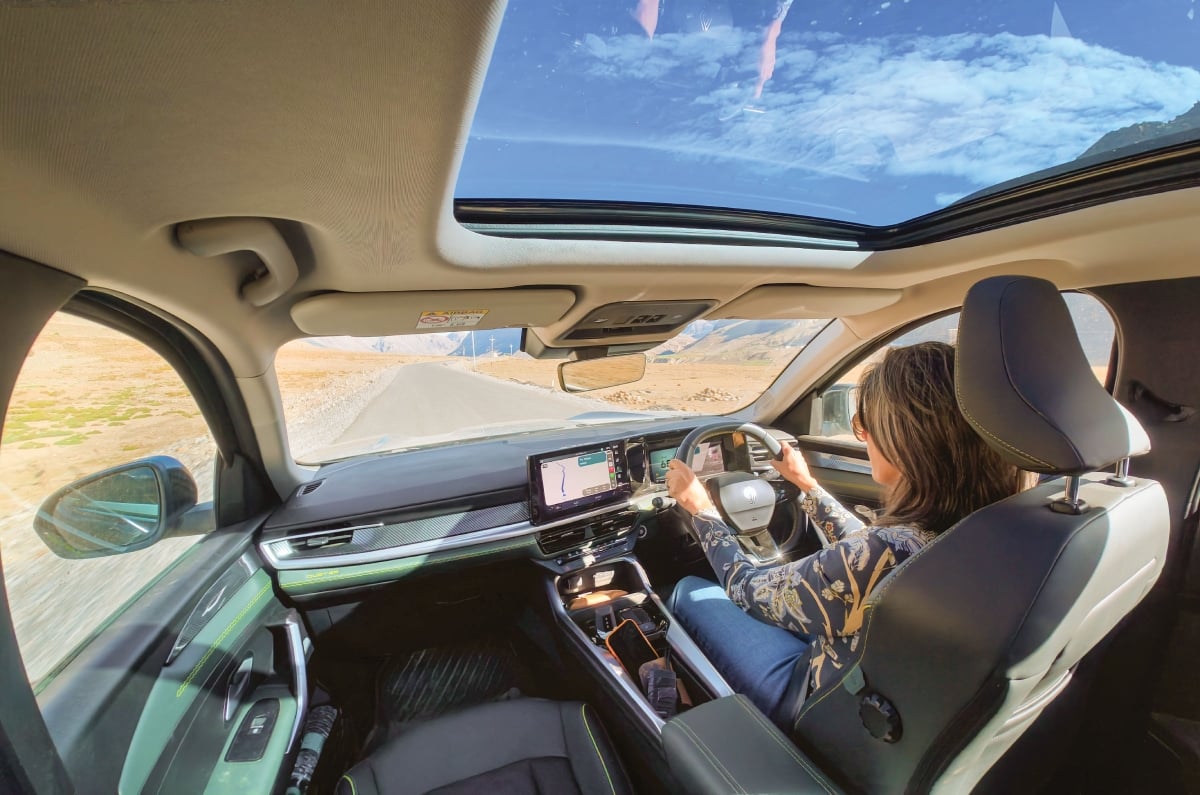
The first part of the drive was almost civilised. Chandigarh’s wide roads and smooth surfaces gave me time to settle into the Duster. The 10.1-inch infotainment screen, with Google services integration, handled navigation, calls and music, while directions also appeared on the 10.25-inch digital driver’s display, lowering the risk of distraction.
Once we left the city, the turbo-petrol engine had some room to stretch its legs. Paired with the six-speed dual-clutch automatic, it made light work of the highway, and then the foothills arrived; corners tightening, and I found myself reaching for the paddles. The scenery was getting better, and the driving was getting more interesting.
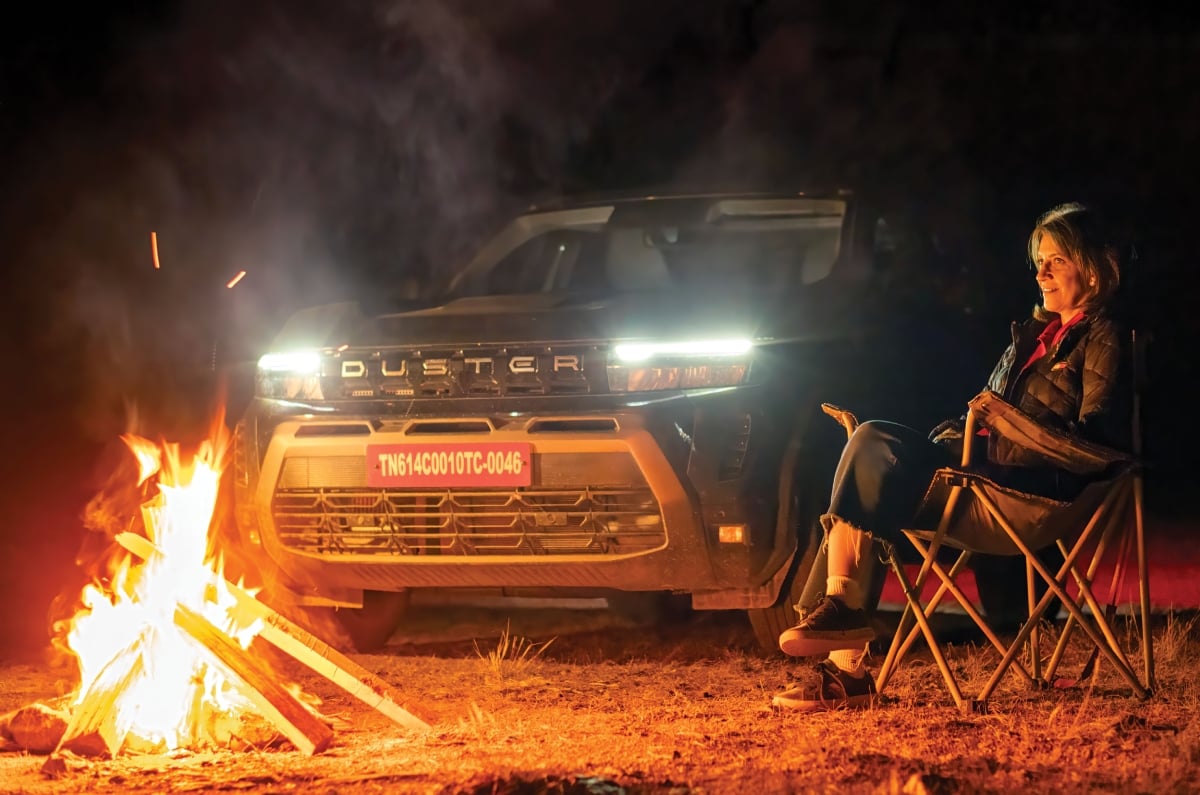
The Duster was ready for more, but we had earned a warm break.
By evening, we were in Manali. The Duster felt ready to carry on, but we weren’t. The real test was still ahead.
ROADWORKS AHEAD
The next morning was rainy and quiet, and for a moment, staying put seemed like a very good idea. Everyone we’d spoken to, though, had offered the same warning: enjoy the tarmac while it lasts. They were right.
The transition is gradual with smooth tarmac giving way to broken tarmac, then gravel, and eventually sections where you have to wonder if the road was ever there in the first place. Corners tighten even more, roadworks appear and the surface becomes increasingly unpredictable.
Not every delay is unwelcome, especially with a view like this.
This is where the Duster started showing a different side. With 212mm of ground clearance, negotiating rocks and broken surfaces wasn’t especially worrying. More impressive was the suspension. On narrow sections with no guardrails, deep ruts and rough surfaces, remarkably little of the punishment made its way into the cabin. It’s the kind of terrain where you quickly appreciate a car that can take a beating without making every bump your problem.
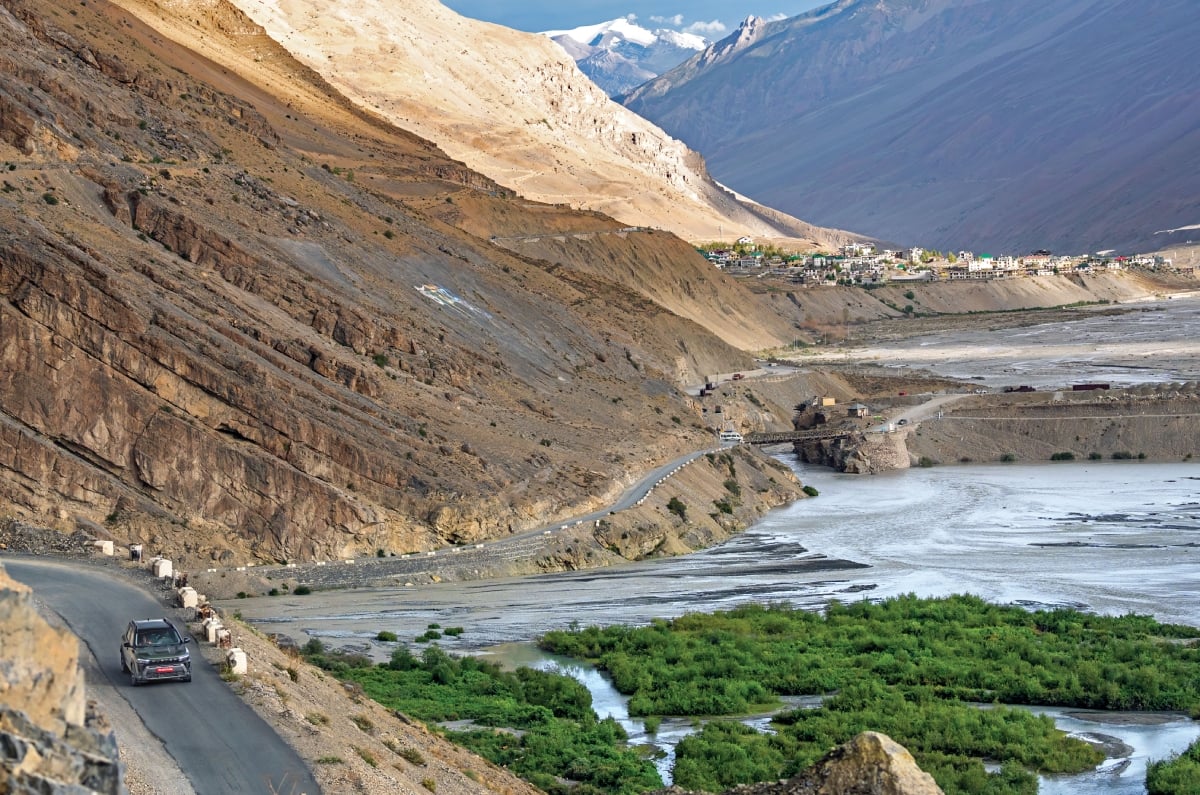
As we climbed higher, the landscape changed dramatically. The forests disappeared, villages became smaller and the gaps between them longer. Spiti is enormous, empty and almost surreal. Here, a kilometre can feel like five, especially when you’re picking your way through dirt, potholes, loose rocks, washed-away sections and water crossings.
Spiti is best explored from behind the Duster’s wheel.
Then we hit a landslide.
An enormous pile of debris had blocked the road, so we joined the queue and waited while excavators cleared a path. That’s where we met two cyclists heading towards Kaza, one of whom happened to own a Duster back home in France. It was incredible that they were tackling these mountains on two wheels! Suddenly, our journey seemed rather comfortable. Two and a half hours later, we were moving again.
By now, dusk was setting in. The road continued to throw everything at us, from deep ruts and gravel to broken sections and water crossings. These are the moments when you want to have confidence in your car. Ground clearance helps, suspension strength matters and you need enough performance to keep moving when the going gets tough. Oncoming traffic and narrow sections also meant there was often no avoiding the worst of the potholes.
Thankfully, the final stretch to Kibber is paved to perfection.
Despite it all, I never really found myself wishing for all-wheel drive. The Duster just kept going.
PEAKING AT THE SUMMIT
The landslide had delayed our arrival, and we eventually reached Kibber late at night, tired and with no idea what the place looked like. In hindsight, that may have made the next morning even better.
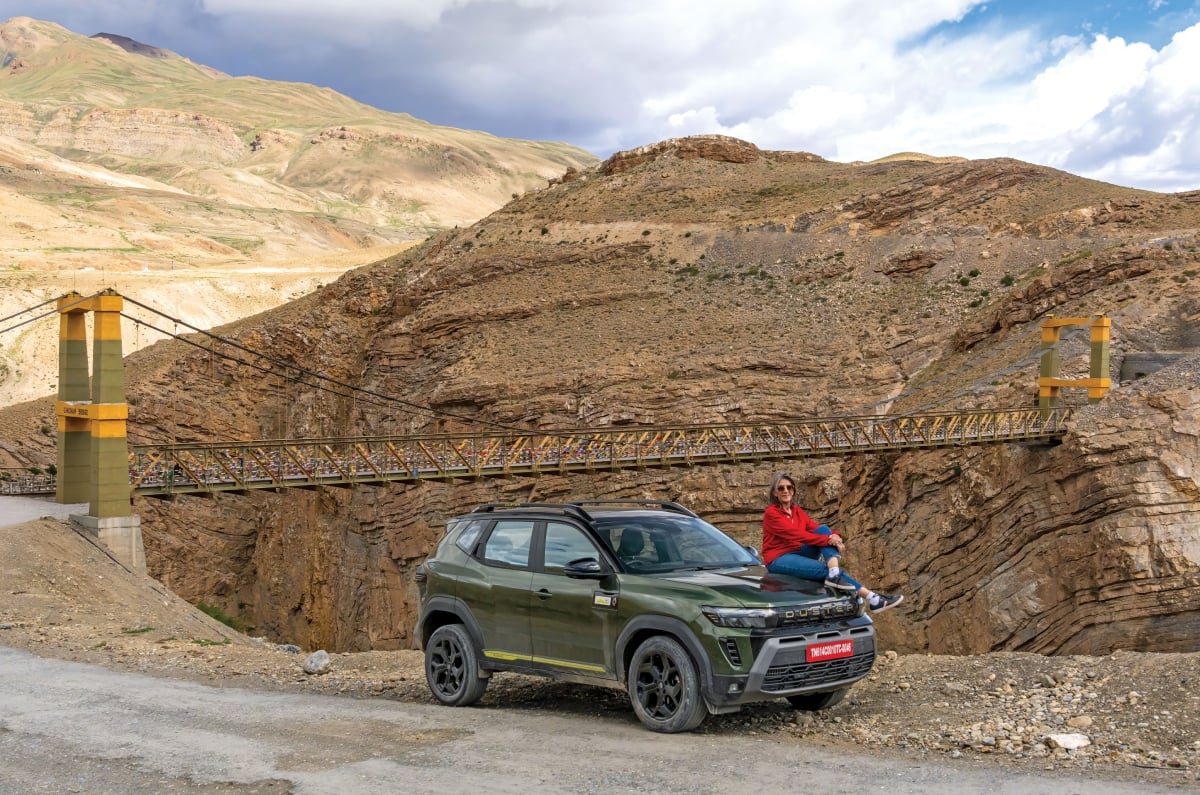
At 4,145m above sea level, Chicham Bridge is Asia’s highest suspension bridge and a sight to behold.
The first thing that struck me when I stepped outside wasn’t the view. It was the silence. There was no traffic, no rush and none of the constant background noise we’re so used to. Just a tiny village surrounded by mountains.
A short drive away, Chicham Bridge hangs dramatically over a vast gorge. Photos don’t quite prepare you for the scale of it. Standing there and looking down, you finally understand the landscape you’ve spent the past couple of days driving through.
No trip to the mountains is complete without a steaming hot plate of momos.
Looking back, the difficult bits quickly become part of the story rather than something to complain about. The landslide, the weather, the slow progress and the hours behind the wheel all fade away, leaving the views, the unexpected encounters and the satisfaction of having made it.
You don’t simply arrive at Kibber. You earn it. And that is exactly what Terrible Roads to Terrific Places is about. Some of India’s most unforgettable destinations aren’t easy to reach, and the road is as much a part of the experience as the destination itself. It helps, of course, to have a capable companion along the way. On this journey, the Renault Duster proved to be exactly that.
Kibber is only the beginning, so imagine where the road, or lack of one, will take us next. In fact, if you stay tuned to this series, you’ll find out soon. But for now, I’ll leave you with a little hint: it’s a lot closer to Autocar India’s home than you think.