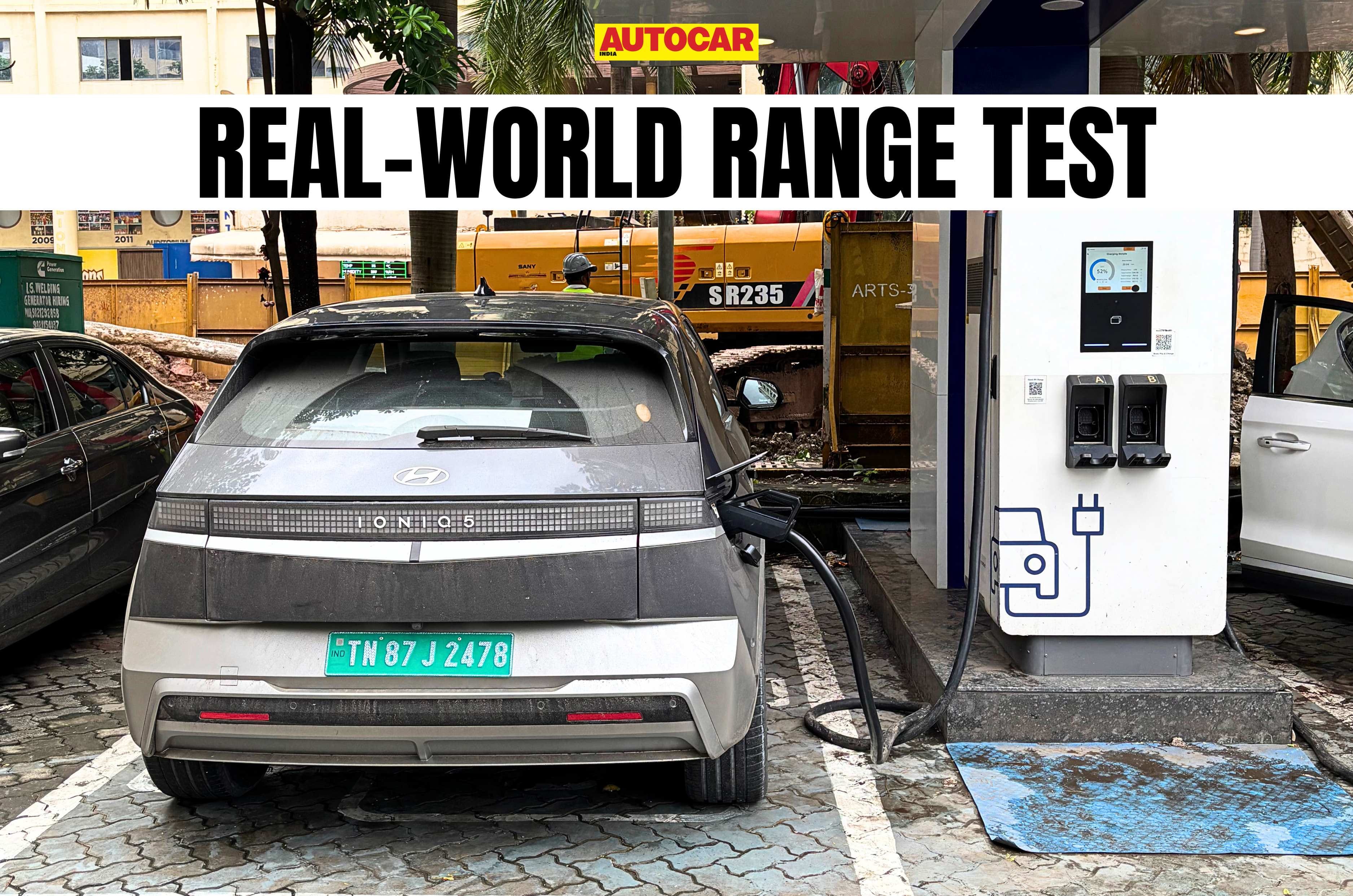
The 2026 update for the Hyundai Ioniq 5 brought with it some cosmetic updates and a larger 84kWh battery. More significantly, its pricing and positioning have changed. While the previous model, with its 72.6kWh battery, was priced at Rs 45 lakh and was considered the value king of its segment, that claim is harder to justify for the new model, which now costs Rs 55.7 lakh.
Hyundai says the larger battery helps the 2026 Ioniq 5 deliver an ARAI-certified range of 690km. We put that claim to the test to determine its real-world efficiency.
Weighs 2,165kg; 150kg more than before
0-80 percent took 22 minutes on a 150kW DC fast charger
Max charging speed of 350kW
Hyundai Ioniq 5 real-world range and charging tested
The 2026 Hyundai Ioniq 5 is powered by a rear-mounted PMSM motor producing 229hp and 350Nm. Paired with a larger 84kWh lithium-ion battery pack using Nickel Manganese Cobalt (NMC) cell chemistry, it now boasts a claimed ARAI range of 690km, up from 631km in the previous 72.6kWh version. The Ioniq 5 offers four drive modes — Eco, Normal, Sport and Snow. For our tests, we used Eco mode, with regenerative braking set to Level 2 in the city and Level 1 on the highway.
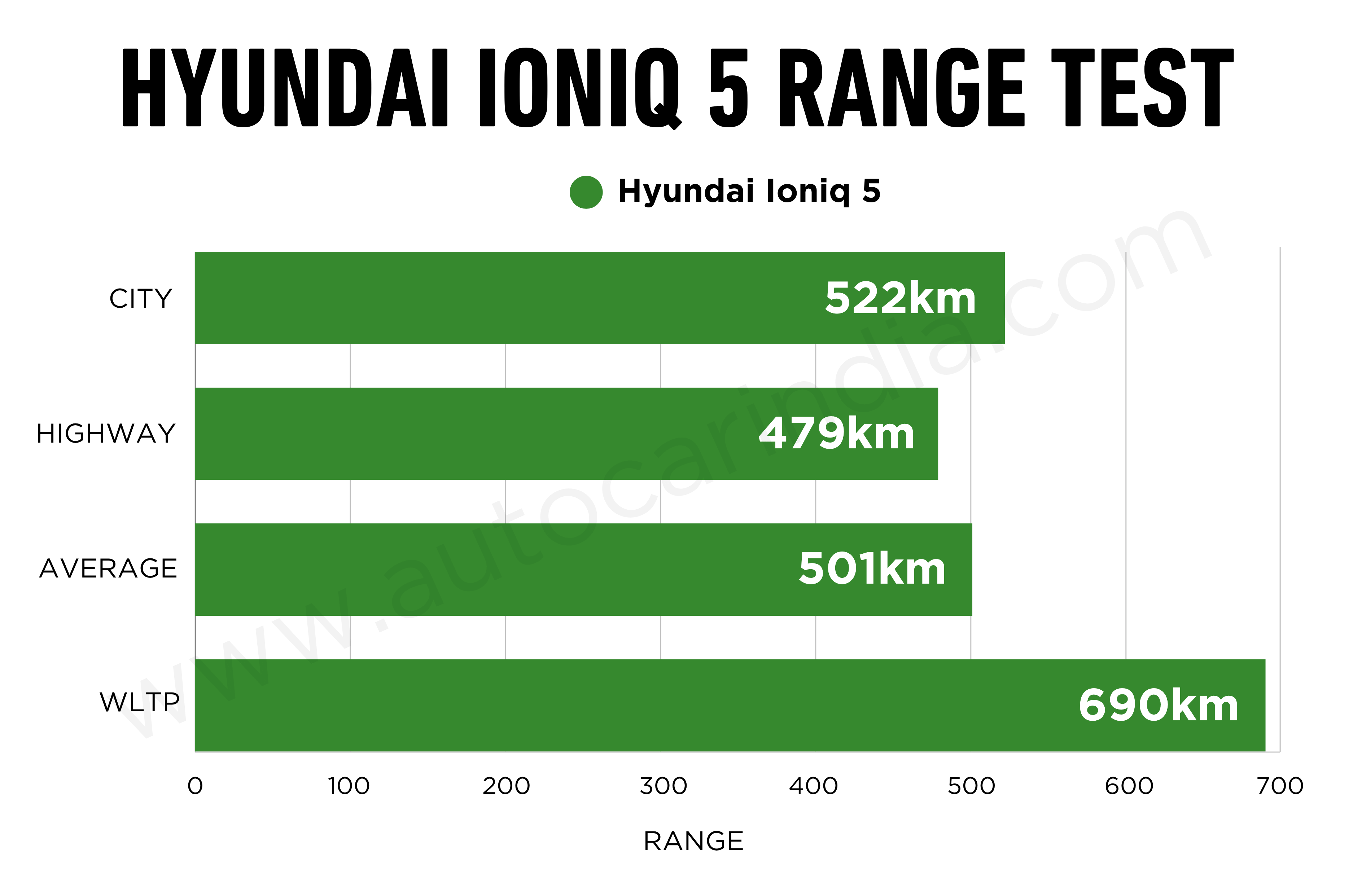
In city conditions, the Ioniq 5 returned an efficiency of 6.22km/kWh, translating to an estimated range of around 523km. On the highway, efficiency dropped slightly to 5.71km/kWh, resulting in an extrapolated range of 479km. With an overall efficiency of 5.96km/kWh, the Ioniq 5 can realistically deliver about 501km on a full charge.
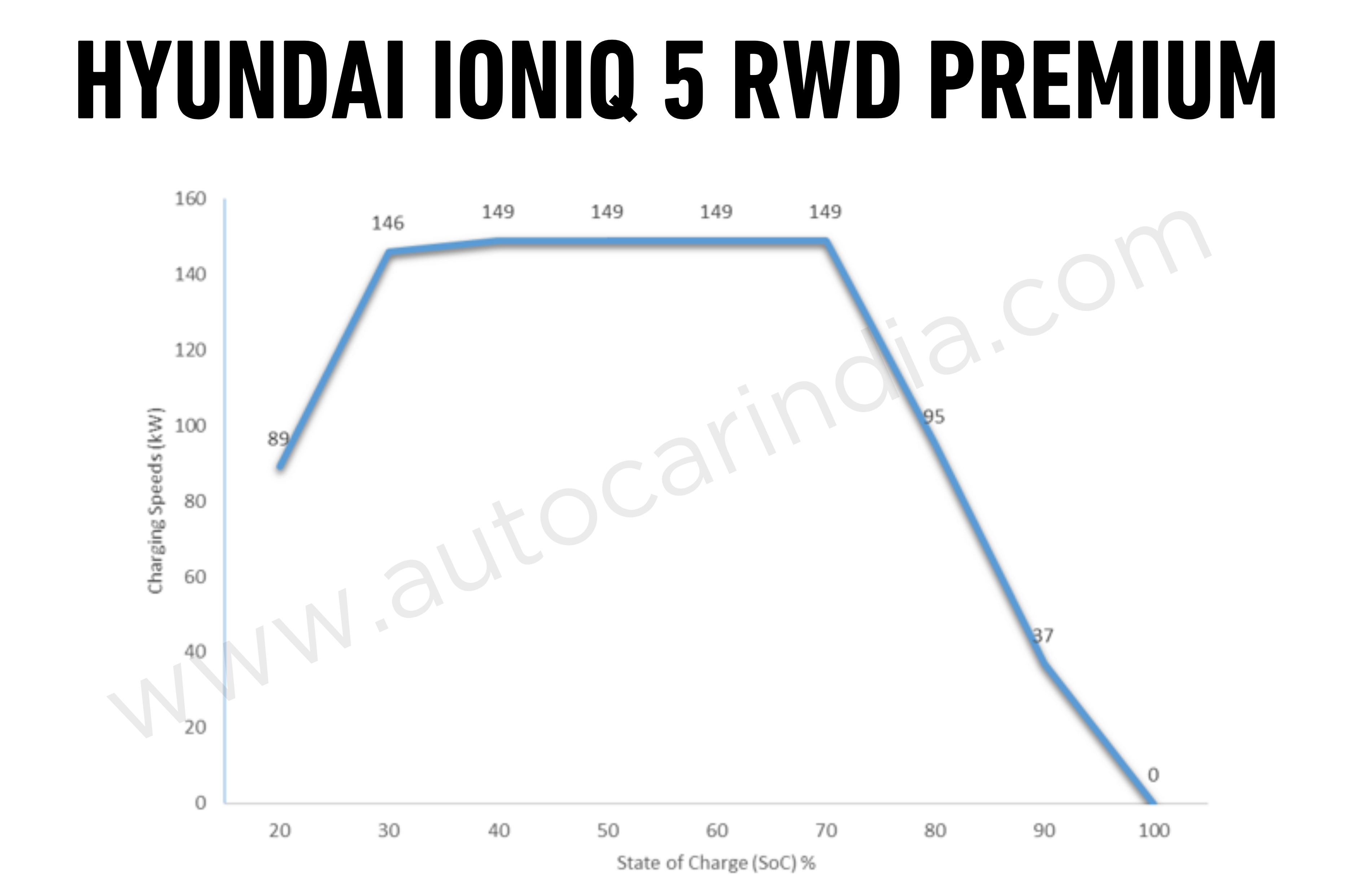
Hyundai claims the Ioniq 5 can support DC fast-charging speeds of up to 350kW. We charged it using a 150kW DC fast charger and recorded a peak charging rate of 149kW. Impressively, the charging speed remained close to its peak from 30 percent to 70 percent state of charge, before tapering off rapidly. In terms of charging times, the Ioniq 5 took 22 minutes to charge from 20 to 80 percent, and a further 32 minutes to reach 100 percent.
Autocar India’s range testing
Before our real-world range tests, the battery of our test car was fully charged, and we maintained tyre pressures in accordance with the manufacturer’s recommendations. The car was driven on a weekday in Navi Mumbai city and on the adjoining state highway in a fixed loop, and we maintained the set average speeds. At the end of each cycle, we calculated the range based on the percentage charge consumed.
Throughout our tests, the climate control was set to 22deg C in a full-auto setting, and other electricals, such as the audio system, indicators and ventilated front seats, were used when required, just as a regular user would. We take pride in our testing data, which isn’t merely consistent but also gives users an accurate indication of what they can expect in the real world.
दिल्ली मेट्रो में जब भारत के पूर्व तेज गेंदबाज जवागल श्रीनाथ खड़े दिखे तो उन्हें मैट्रो में सफर करते देश कई लोग आशचर्यचकित हो गए। 90 के दशक में भारत के प्रमुख गेंदबाज एक सूटकेस लेकर कहीं जा रहे थे। उनका यह फोटो सोशल मीडिया पर खासा वायरल हुआ।
जवागल श्रीनाथ जब 90 के दशक में टीम इंडिया से जुड़े तो भारतीय टीम में तेज तर्रार गेंदबाज की कमी थी।उनकी तेज गेंदो के कारण उनको मैसूर एक्सप्रेस कहा जाने लगा। उनका गेंदबाजी एक्शन एक दम किताबी था। कर्नाटक के गेंदबाज श्रीनाथ ने 4 विश्वकप खेले।
Meet Javagal Srinath
He is the only Indian fast bowler to capture over 300 wickets in One Day Internationals (finishing with 315 ODI wickets).
Test Record: He was the second Indian pace bowler (after Kapil Dev) to reach 200 Test wickets, concluding his Test career with 236… pic.twitter.com/rQqu1SMim8
पोलॉक ने वेस्टइंडीज के पूर्व तेज गेंदबाज माइकल होल्डिंग और इंग्लैंड के स्टुअर्ट ब्रॉड के साथ एक कार्यक्रम पर कहा था, ‘मुझे लगता है कि भारत के जवागल श्रीनाथ को वह श्रेय नहीं मिला जिसके वह हकदार थे।’
पोलॉक की बात से कई लोग इत्तेफाक रखते हैं। हालांकि इसका एक कारण प्रतियोगिता भी हो सकता है। श्रीनाथ के दौर में अंतरराष्ट्रीय क्रिकेट में तेज गेंदबाजों की शानदार जोड़िया थी। पाकिस्तान के वसीम अकरम और वकार यूनुस, वेस्टइंडीज के लिए कर्टली एम्ब्रोस और कर्टनी वाल्श, ऑस्ट्रेलिया के ग्लेन मैक्ग्रा और ब्रेट ली शामिल थे। न्यूजीलैंड की ओर से डियोन नैश और क्रिस क्रेन्स की जोड़ी थी। दक्षिण अफ्रीका टीम में खुद शॉन पॉलोक और एलेन डॉनाल्ड बहुत घातक थे।
इस कारण जवगल श्रीनाथ भारतीय फैंस के बीच तुलना के शिकार हो गए। उनकी वेंकटेश प्रसाद के साथ जोड़ी थी, इस जोड़ी ने भारत को बीच बीच में सफलता तो दिलाई लेकिन विदेशी गेंदबाजों जितनी प्रभावी यह जोड़ी नहीं थी।
ऐसा रहा करियर
जवागल श्रीनाथ 90 के दशक में भारतीय तेज गेंदबाजी आक्रमण के अगुवा रहे। श्रीनाथ ने 1991 से 2003 के बीच 67 टेस्ट और 229 एकदिवसीय खेले है, जिसमें उन्होंने क्रमशः 236 और 315 विकेट लिए हैं।
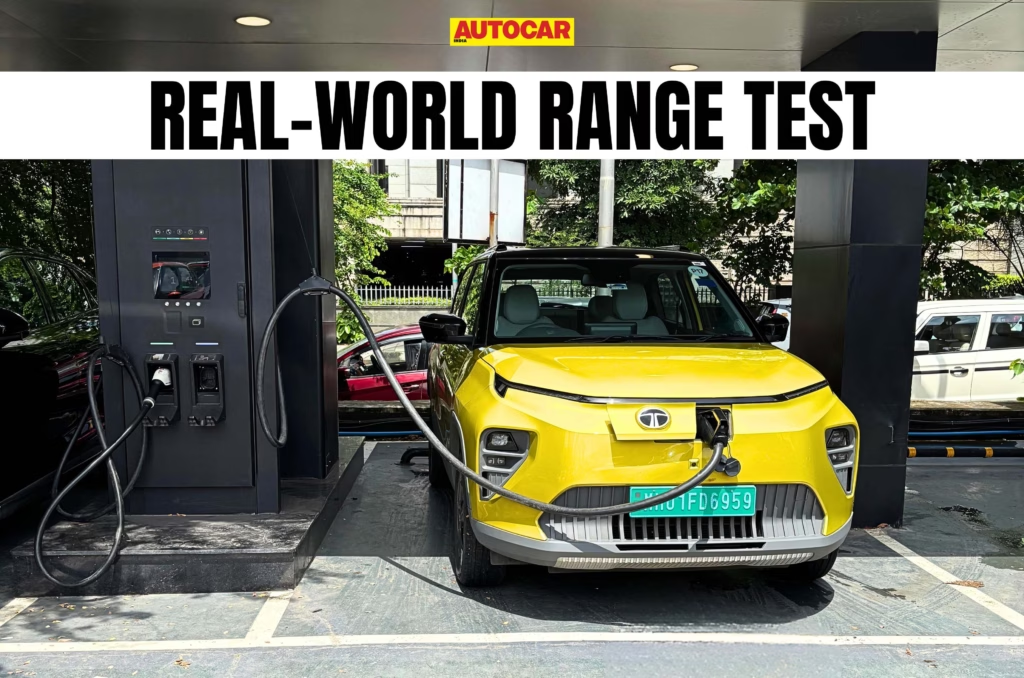
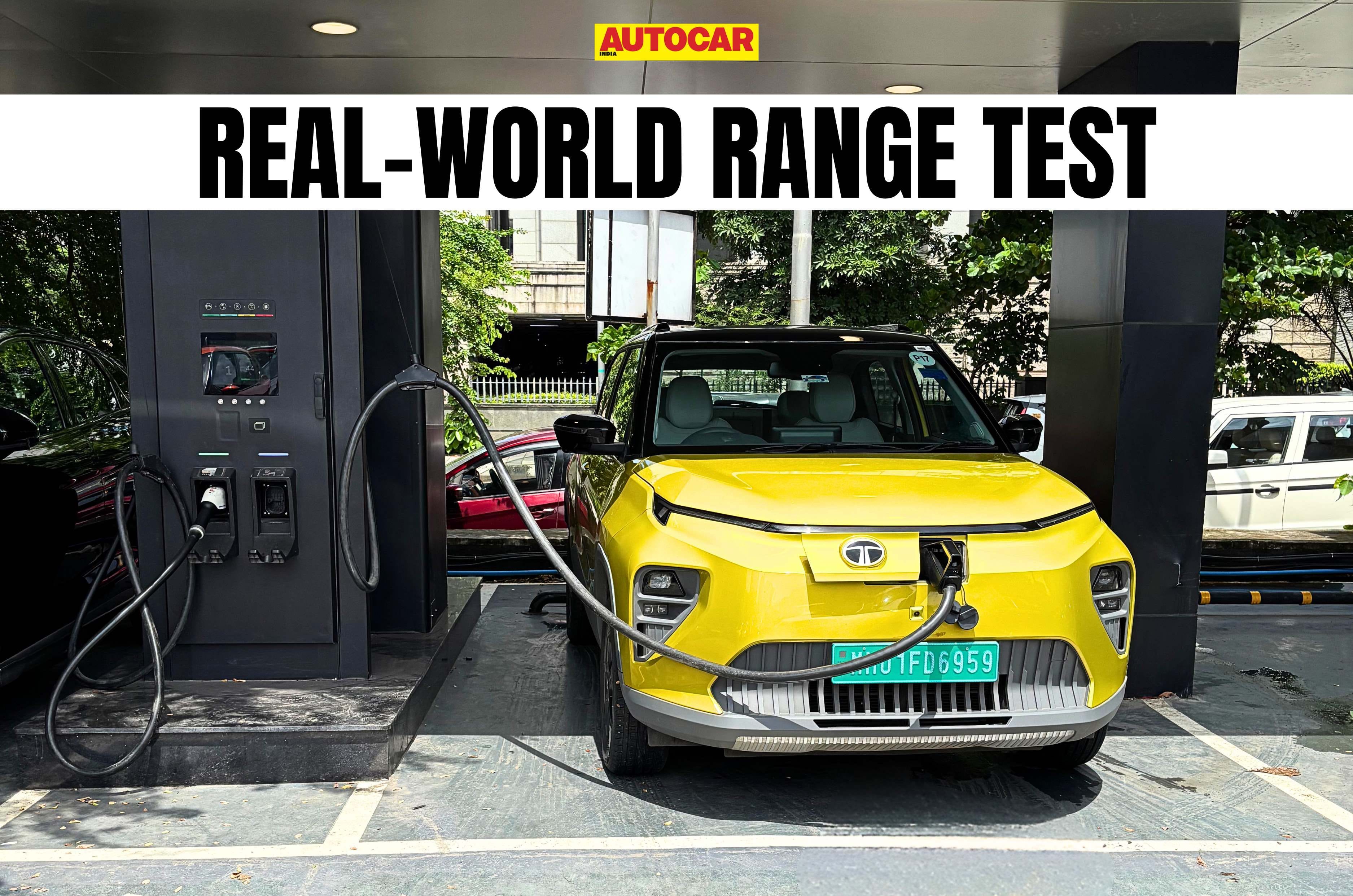
The 2026 Tata Punch EV gets changes to its styling, tweaks to the powertrain and bigger battery options. Interestingly, its starting price is now Rs. 1.65 lakh lower than before and the price range spans Rs. 9.7 lakh and Rs. 12.8 lakh (ex-showroom). We put the Tata Punch EV with the 40kWh battery through our real-world efficiency test to see how it performs.
80 percent recharge takes 27 minutes on a 180kW DC fast charger
Punch EV 40kWh variant weighs 1,365kg
Gets four regen modes; no single pedal driving
Tata Punch EV real-world range and charging explained
The Punch EV currently is available with either a 30kWh or a 40kWh battery pack, up from 25kWh and 35kWh, respectively. We tested the Punch EV with the 40kWh battery pack, which is powered by a PMSM motor producing 129hp and 154Nm. The Punch EV offers three driving modes – Eco, City and Sport. For our tests, we used the Eco driving mode with the regen level set to L3 in the city and L1 on the highway.
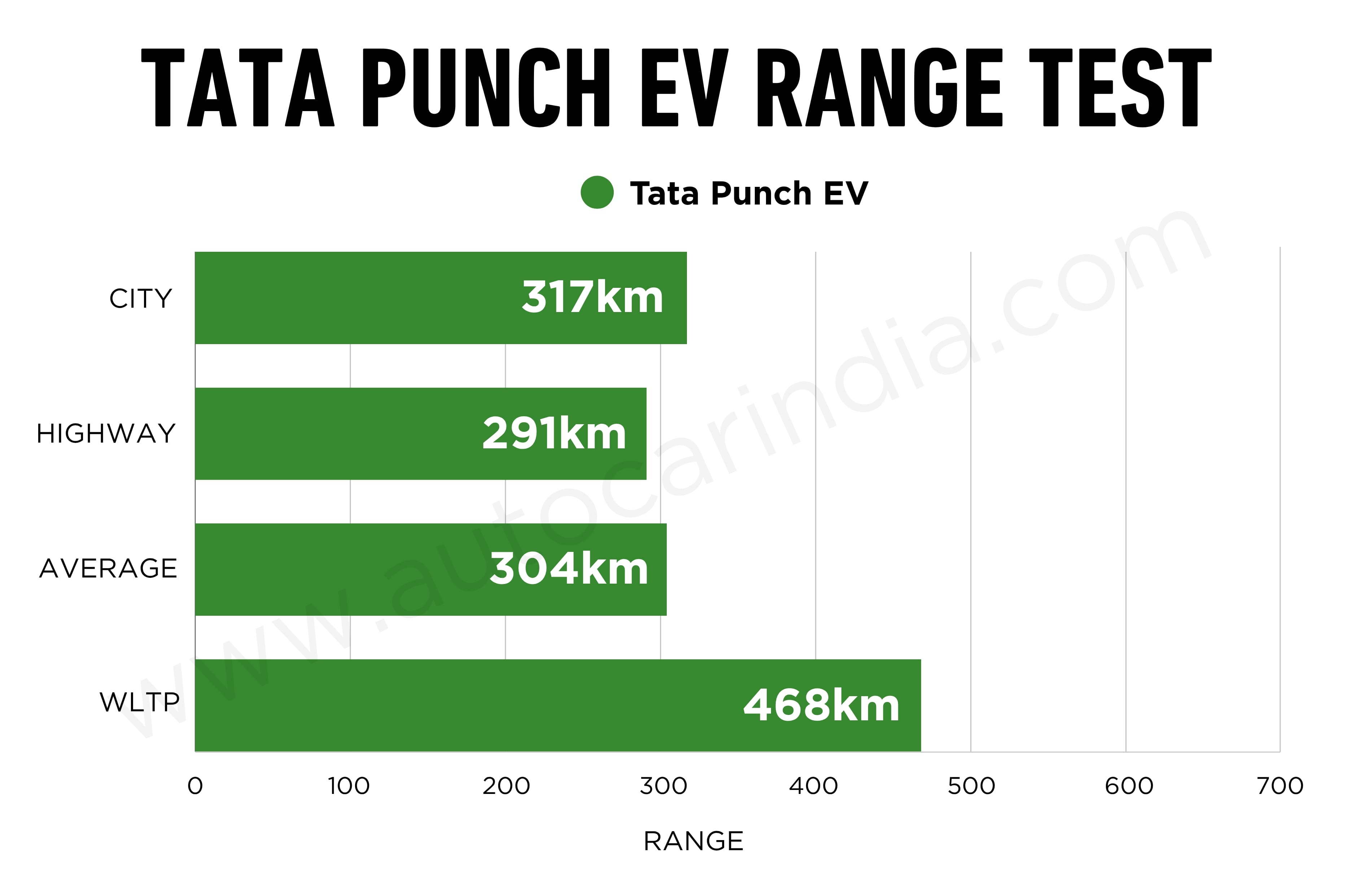
In the city, the Tata Punch EV returned an efficiency of 7.92km/kWh extrapolating to a range of 317km. On the highway, the efficiency dropped to 7.29km/kWh translating to a range of 291km. With an overall efficiency of 7.61km/kWh, the Tata Punch EV can deliver a real-world range of 304km on a full charge.
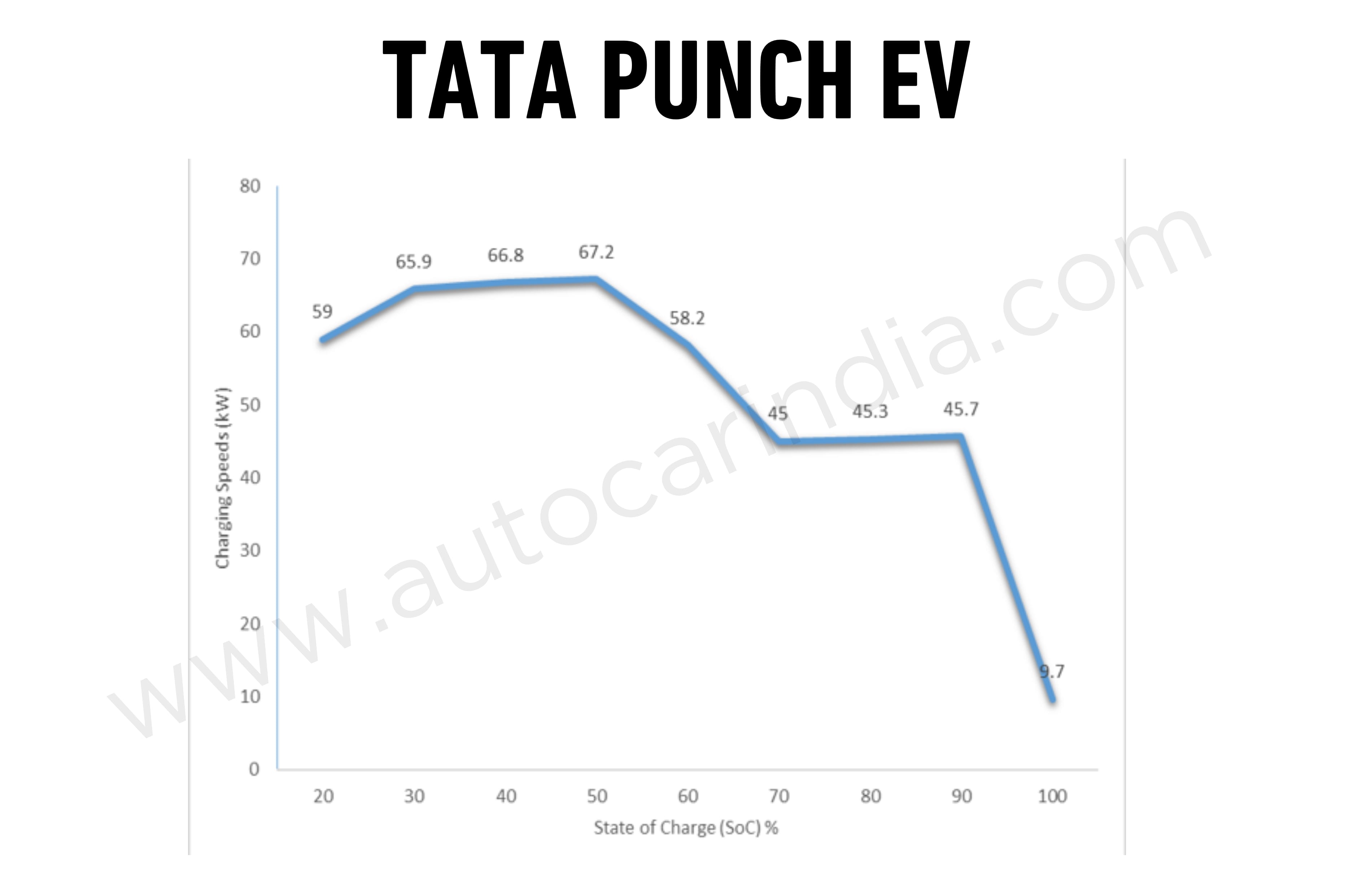
Tata claims that the DC fast capability of the Punch EV has gone up to 65kW from 50kW in the previous model. That said, we charged the car using a 180kW DC fast charger and noted peak charging speeds around 67.3kW. However, the charging speed dropped after 50 percent state of charge, before rapidly dropping after 90 percent. In terms of charging times, the Punch EV took 27 minutes to charge from 20-80 percent, and took another 31 minutes to reach 100 percent.
Autocar India’s range testing
Before our real-world range tests, the battery of our test car was fully charged, and we maintained tyre pressures in accordance with the manufacturer’s recommendations. The car was driven on a weekday in Mumbai city and on the adjoining state highway in a fixed loop, and we maintained the set average speeds. At the end of each cycle, we calculated the range based on the percentage charge consumed.
Throughout our tests, the climate control was set to 22deg C in a full-auto setting, and other electricals, such as the audio system, indicators and ventilated front seats, were used when required, just as a regular user would. We take pride in our testing data, which isn’t merely consistent but also gives users an accurate indication of what they can expect in the real world.
MG launched the Hector Tomahawk in India in both all-electric (EV) and plug-in hybrid (PHEV) versions, with prices starting from Rs 19.50 lakh and Rs 25.70 lakh, respectively. Both models are offered with a lot of new-age technology and have piqued the interest of enthusiasts. Here’s everything you need to know about the MG Hector Tomahawk EV and Hector Tomahawk PHEV.
1. What are the exterior differences between the EV and PHEV?
Both versions get different grilles, front bumpers, and alloy wheels
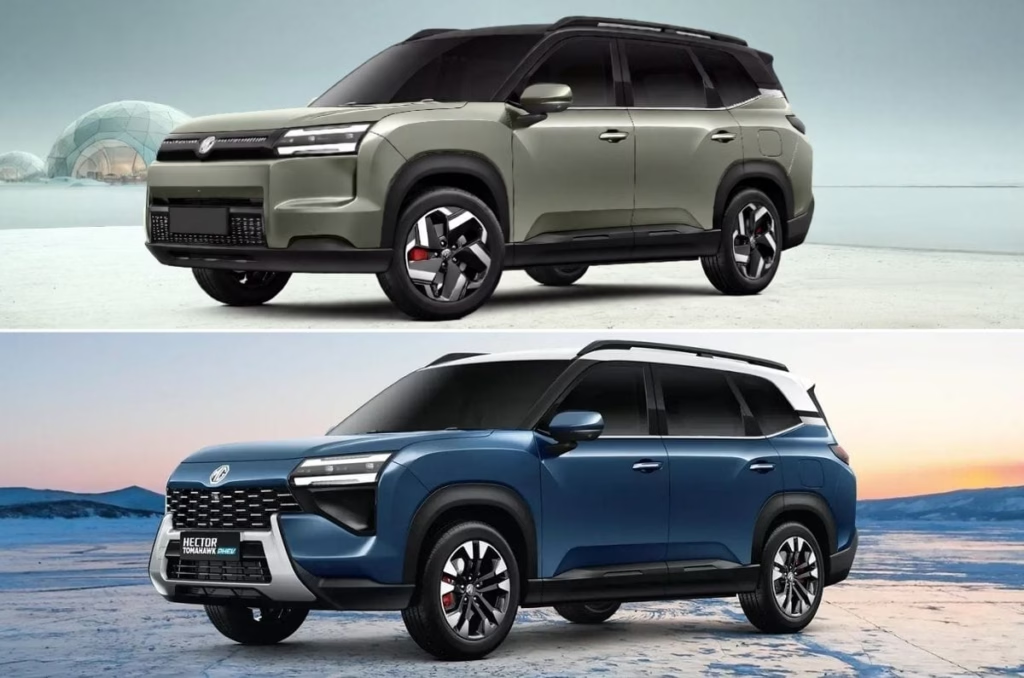
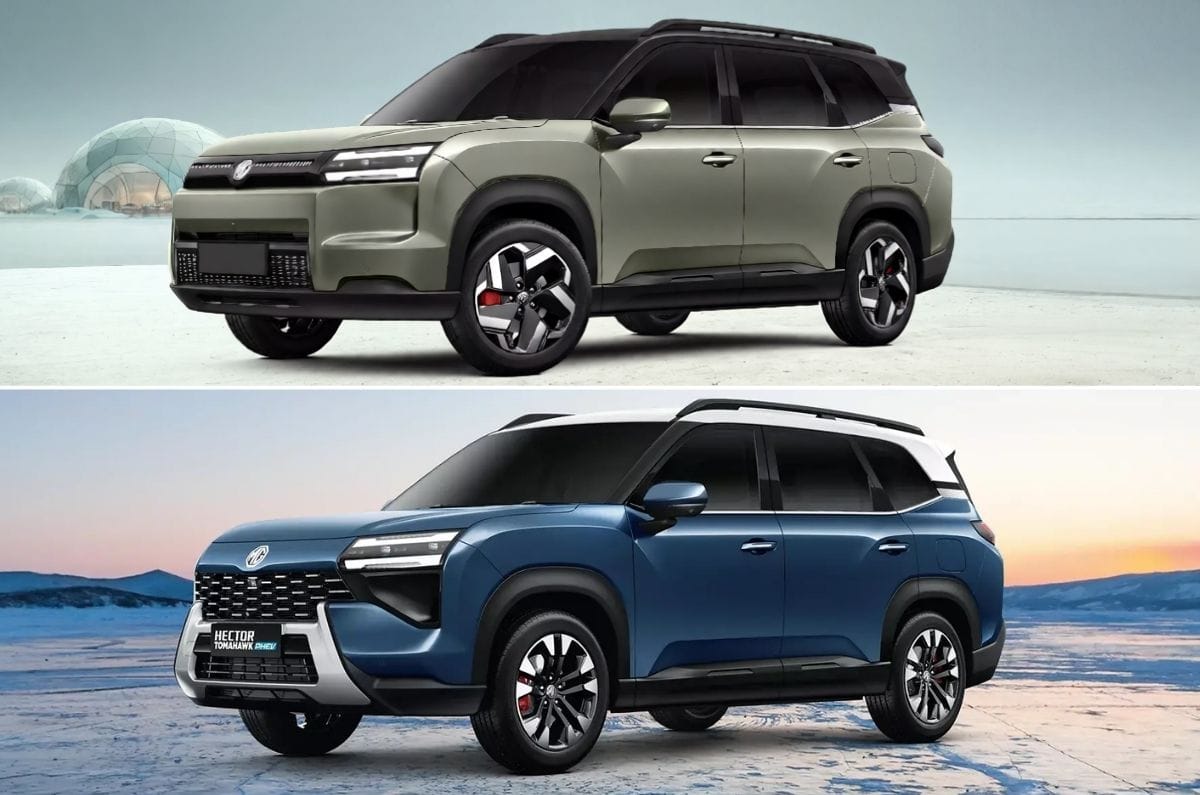
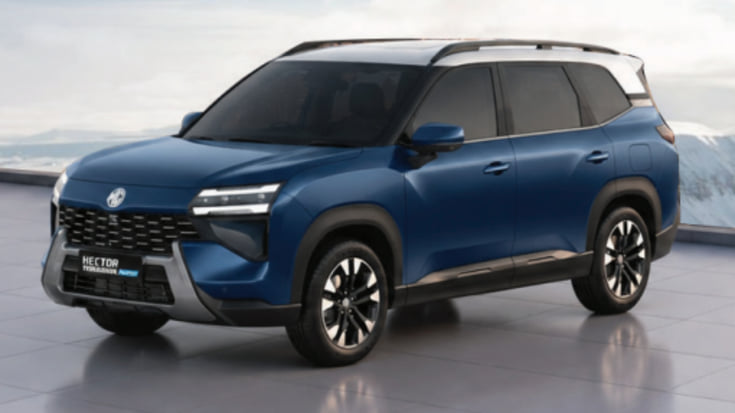
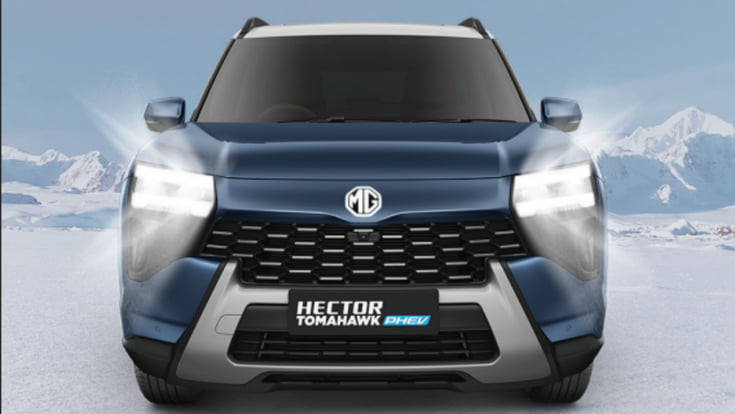
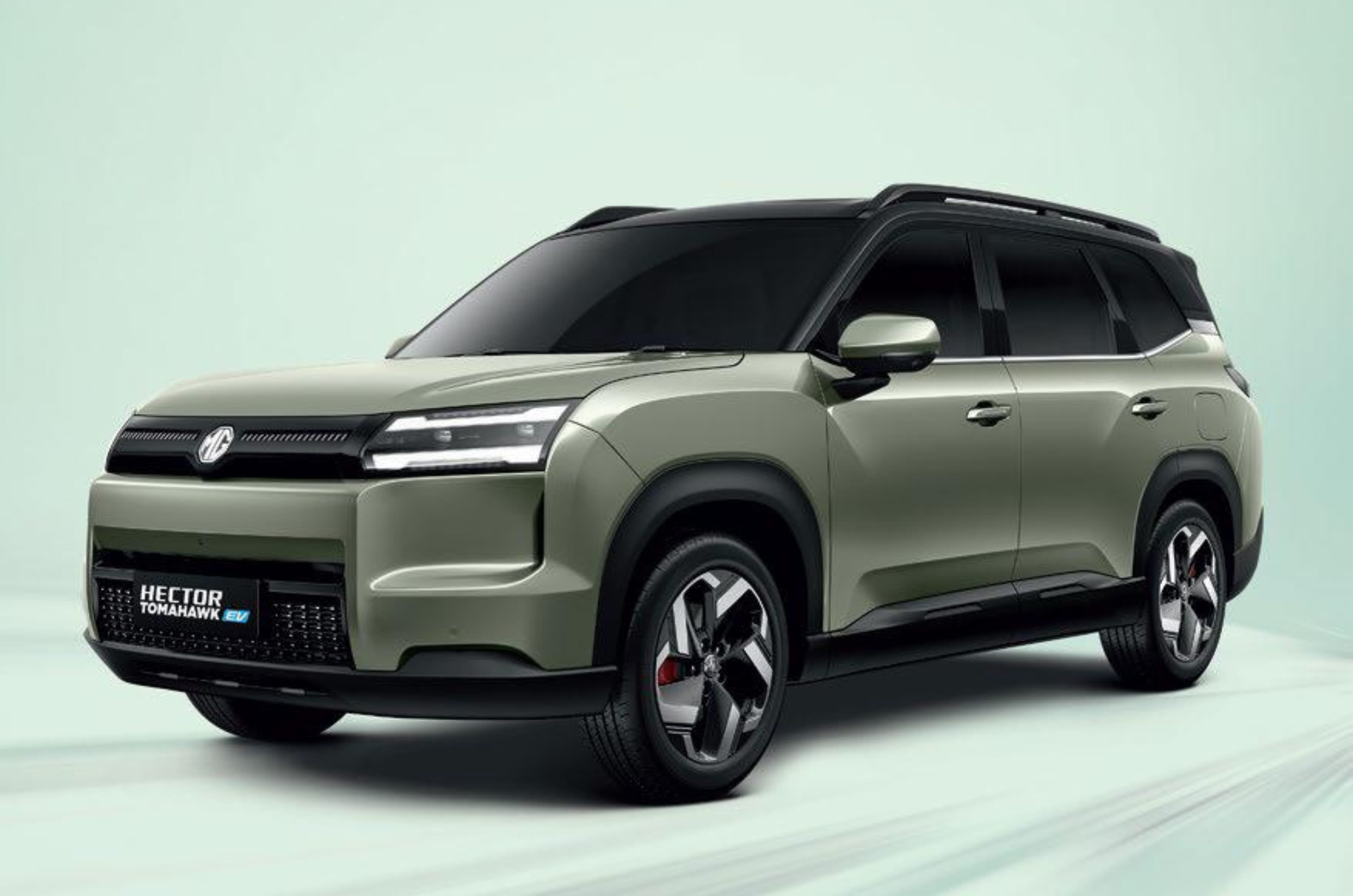
Both the Hector Tomahawk’s EV and PHEV versions have some design differences. While the EV gets a blanked-off gloss-black grille, the PHEV gets a functional grille with chrome inserts and black trims underneath the headlights. The front bumper design is also different, with the PHEV getting a silver bullbar-like element in the centre that the EV misses. The headlights and illuminated MG logo are, however, shared.
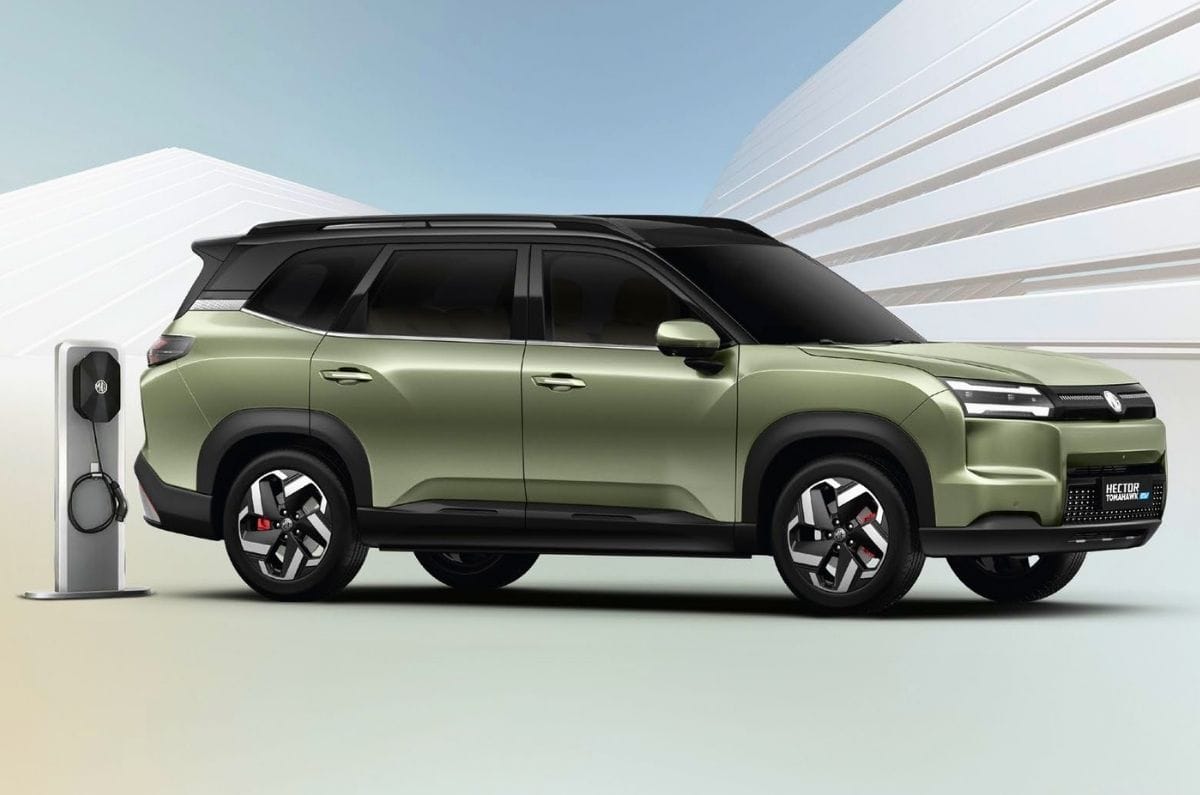
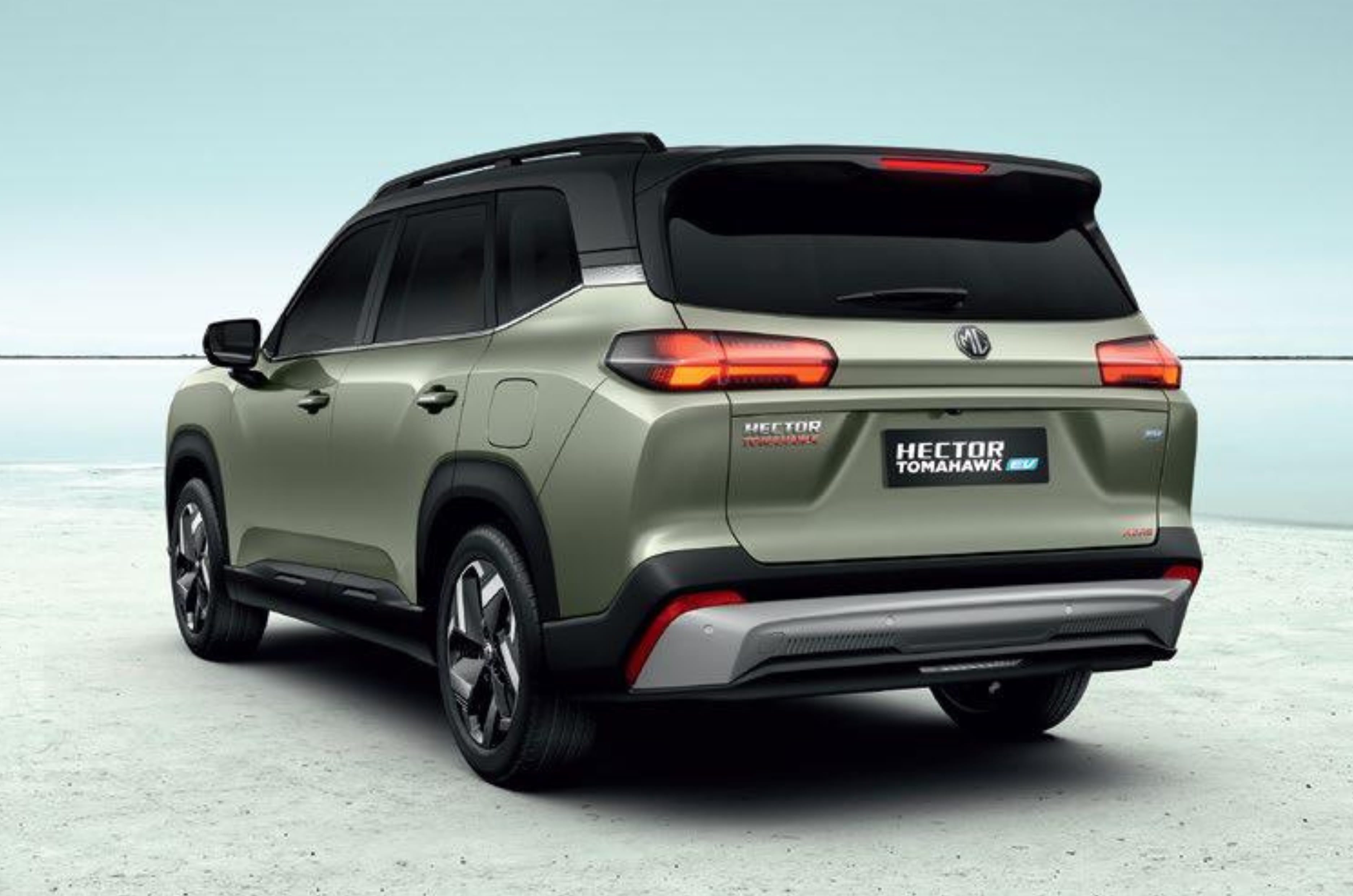
Not much is different in the side profile, except for the 18-inch alloy designs and red callipers on the top-spec Hector Tomahawk PHEV. If you opt for a dual-tone shade, the EV will have a black roof, while the PHEV will have a white roof. The rear design, however, is identical for both versions of the SUV.
2. What are the interior differences between the EV and PHEV?
Save for a luggage cover and different cabin themes, everything else is the same
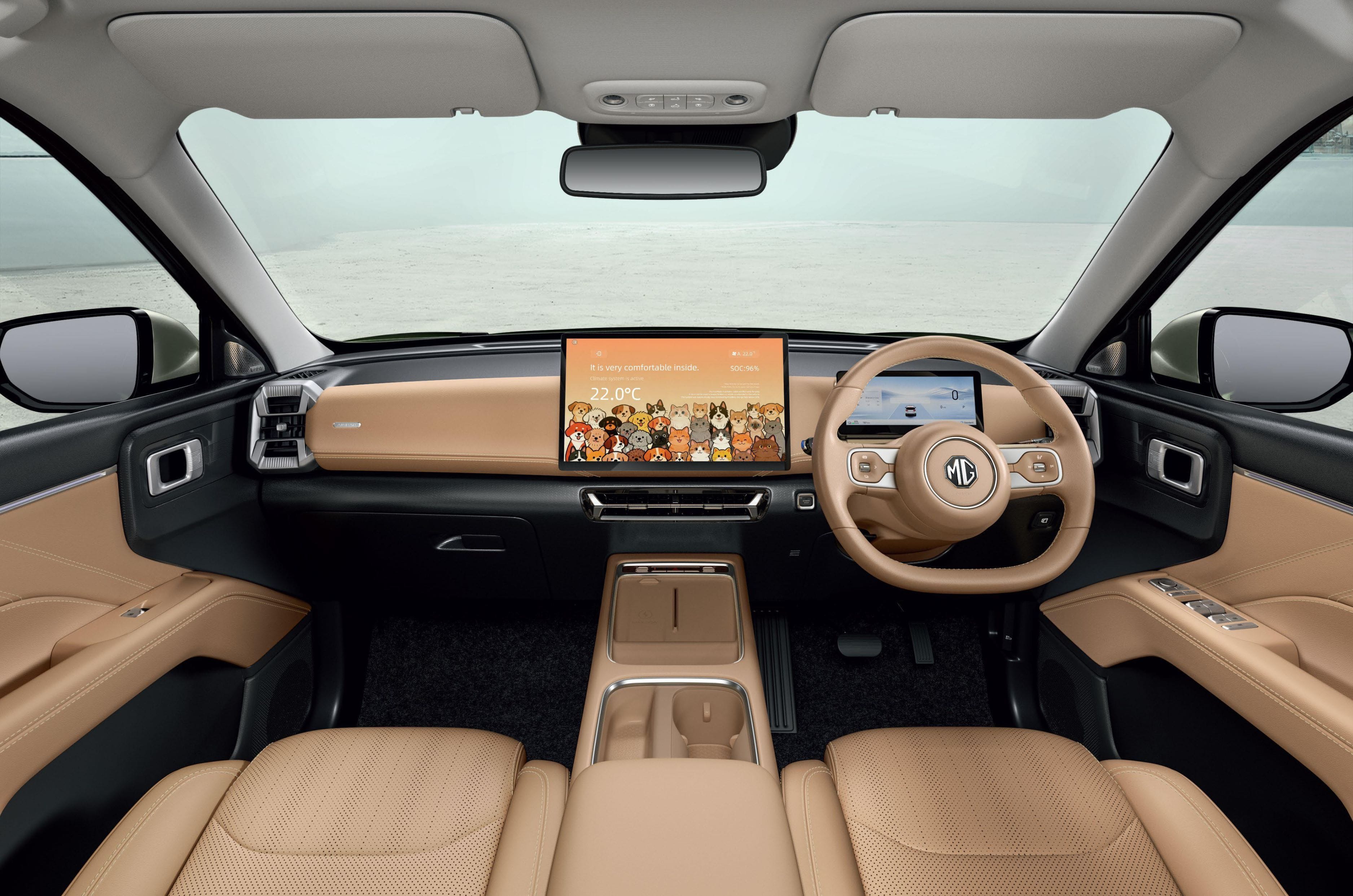
MG Hector Tomahawk EV gets a beige and black cabin theme.
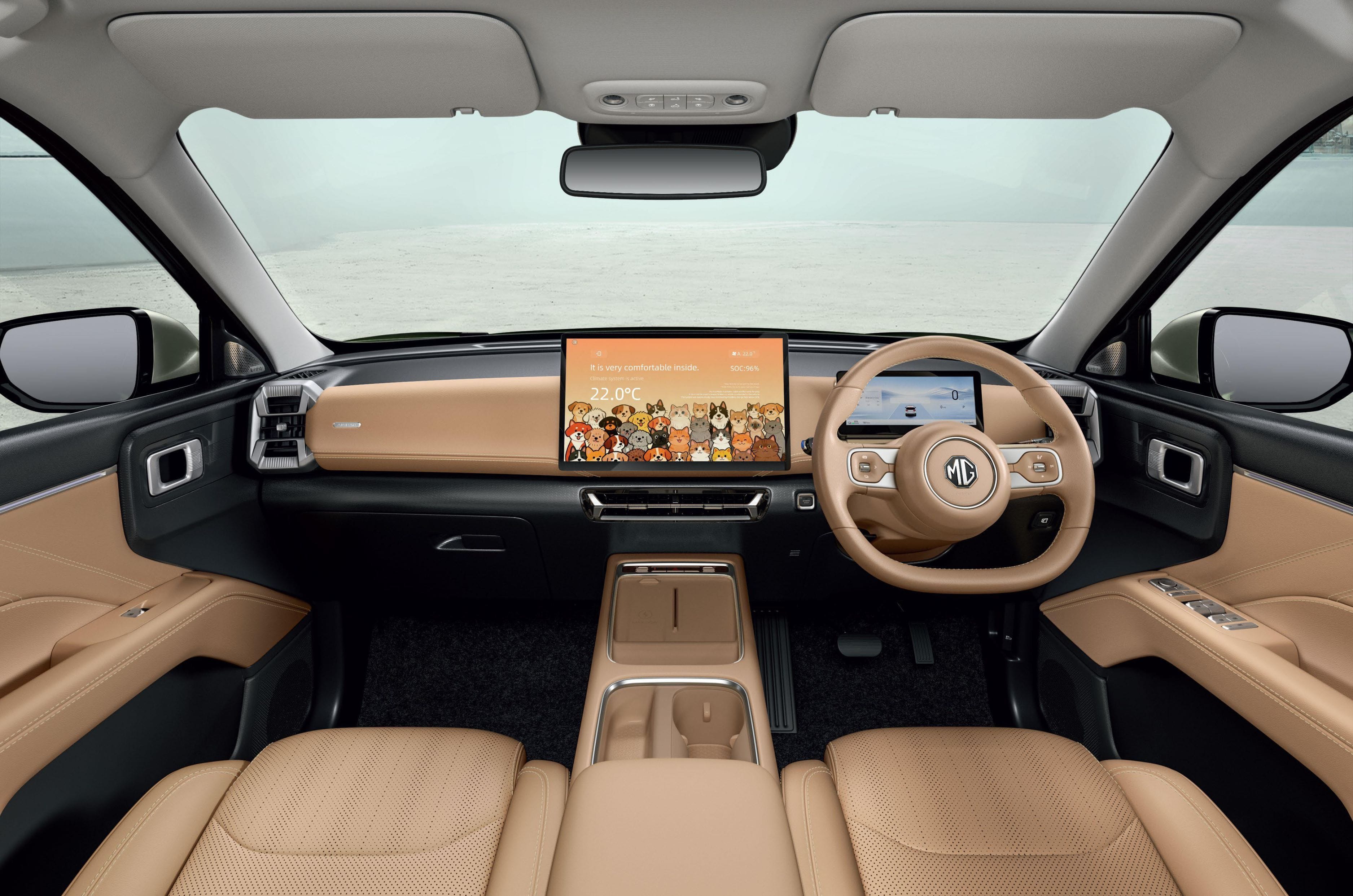
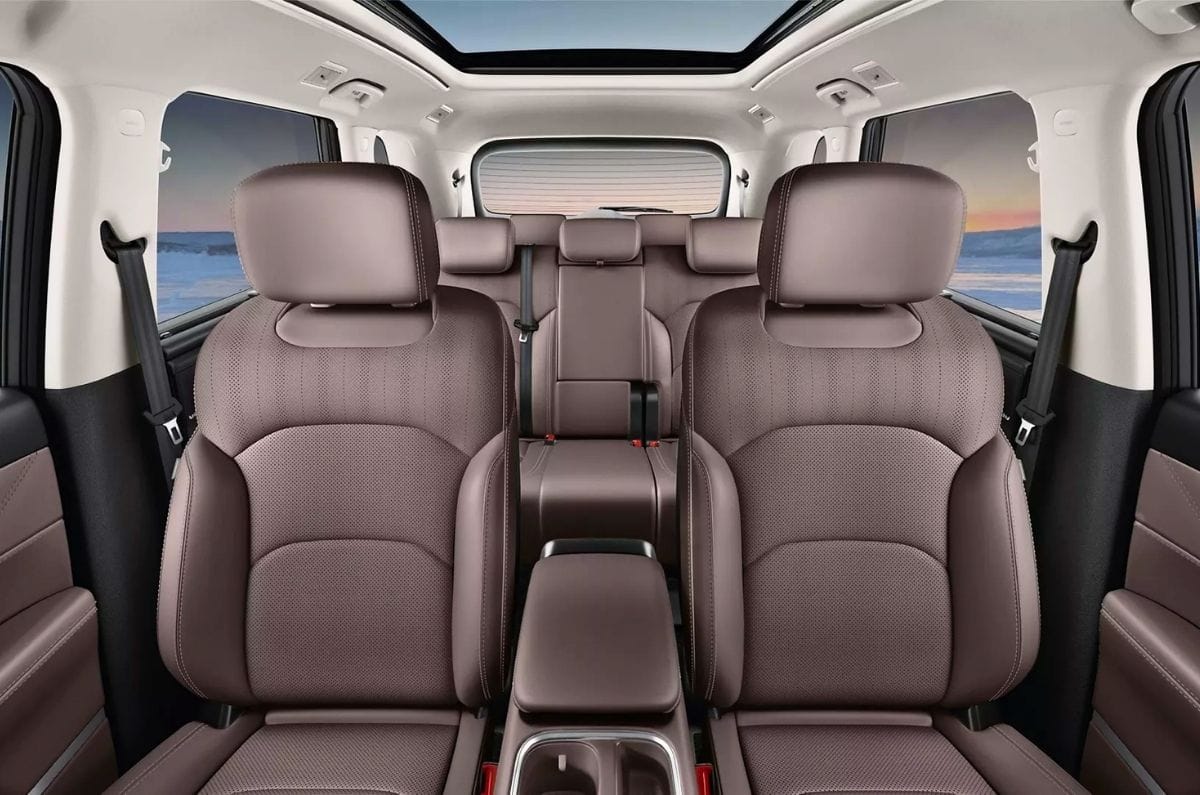
Save for a rolling luggage shade on the 5-seater variants of the EV, and a different cabin theme – brown and black on the EV and a darker brown and black on the PHEV – there is no visible difference. Everything else is the same, including the feature suite: a 15.6-inch touchscreen infotainment system, an 8.8-inch digital driver’s display, a 10-speaker Infinity sound system, a panoramic sunroof, powered and ventilated front seats with memory function for the driver’s seat, and a 50W fast wireless charger.
MG Hector Tomahawk PHEV gets a brown and black cabin theme.
The safety suite is also identical in both Hector Tomahawk versions, which includes 6 airbags, a 360-degree camera with an under-bonnet view, Level 2 advanced driver assistance systems (ADAS) and a tyre pressure monitoring system (TPMS).
3. What is the boot space on the MG Hector Tomahawk EV and PHEV?
EV and PHEV versions offer up to 610 litres and 192 litres of boot space, respectively
5-seater MG Hector Tomahawk EV’s boot space.
The MG Hector Tomahawk EV is offered in either a 5-seater or a 7-seater version. The 5-seater offers 610-litre boot space, with all rows up, which can be expanded to 1,053 litres by folding down the rear row. The 7-seater version offers a 192-litre boot space with all rows up, and 528 litres when the third row is folded.
The PHEV, offered only as a 7-seater, offers 192-litre boot space like the EV’s 7-seater version, expandable to 528 litres by folding the third row. Neither the EV nor the PHEV version of the Hector Tomahawk are offered with a frunk (storage space under the bonnet).
4. What are the powertrain specifications of the MG Hector Tomahawk PHEV and EV?
PHEV gets a 1.5L engine and 20.5kWh battery; EV offers a 69.2kWh battery pack
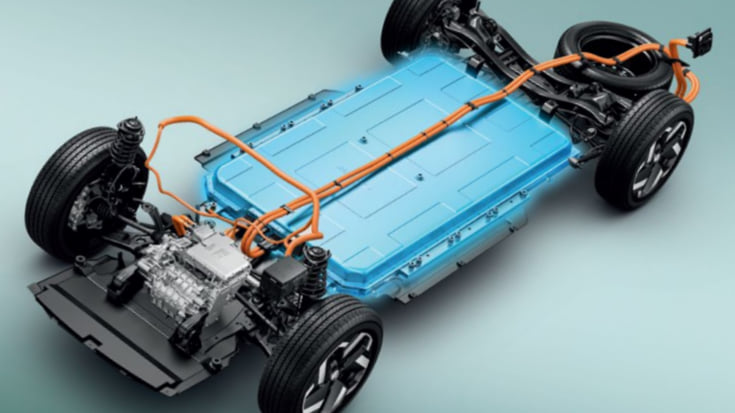
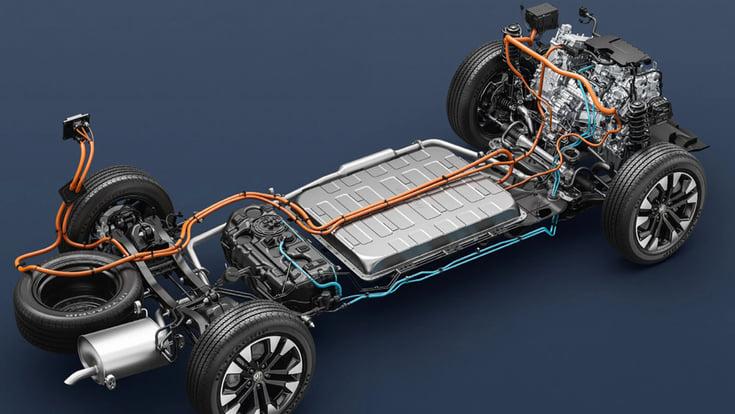
The MG Hector Tomahawk PHEV gets a 1.5-litre naturally aspirated petrol engine and a 20.5kWh battery pack, offering a combined output of 198hp and 230Nm. The front-wheel-drive (FWD) SUV has an all-electric range of around 115km and a total range including the petrol engine of around 1,100km.
The MG Hector Tomahawk EV, on the other hand, gets a 69.2kWh battery pack, mated to a front-axle-mounted electric motor producing 204hp and 310Nm. It has a claimed range of 517km.
5. Can the Hector Tomahawk PHEV be charged at a public EV charging station?
It supports 25kW DC fast charging
Yes, being a plug-in hybrid (PHEV), the MG Hector Tomahawk PHEV supports 25kW DC fast charging. This can replenish the battery from 30 to 80 percent in 35 minutes, like a typical EV. MG is also offering it with a 3.3kW home charger, which can recharge the battery pack from 10 to 100 percent in 7.5 hours.
6. Are the MG Tomahawk EV and PHEV more affordable with BaaS?
BaaS reduces the EV’s and PHEV’s initial prices by up to Rs 6.01 lakh and 3.91 lakh, respectively
MG Hector Tomahawk EV, PHEV BaaS vs non-BaaS prices (in Rs, lakh)
Without BaaS
With BaaS
Initial cost difference
EV
19.50 to 23.50
13.99 to 17.49*
Up to 6.01
PHEV
25.70 to 27.80
21.79 to 23.89^
3.91
*Battery subscription fee is Rs 4.9 per km per month
^Asks for a battery subscription fee of Rs 3.2 per km per month
The BaaS (Battery-as-a-Service) option reduces the upfront price of the MG Hector Tomahawk EV by Rs 6.01 lakh and the PHEV by Rs 3.91 lakh. However, you then pay a battery rental fee for every kilometre you drive: Rs 4.90 per km for the EV and Rs 3.20 per km for the PHEV. At these rates, the upfront savings from BaaS are effectively used up after around 1.22 lakh km. The break-even point is 1,22,653 km for the EV and 1,22,187 km for the PHEV.
In simple terms, if you expect to drive less than 1.22 lakh km over the entire ownership period, BaaS could be the more affordable option because of its lower initial cost. However, if you plan to drive more than 1.22 lakh km, buying the Hector Tomahawk with the battery included is likely to save you more money in the long run.
There is also another factor to consider. Under the BaaS plan, you do not own the battery, so your long-term costs depend on the rental agreement. If MG increases the per-kilometre fee or changes the contract in the future, your running costs could also increase. So, while BaaS would be more affordable for most buyers, purchasing the vehicle with the battery included may offer greater certainty in running cost calculations.
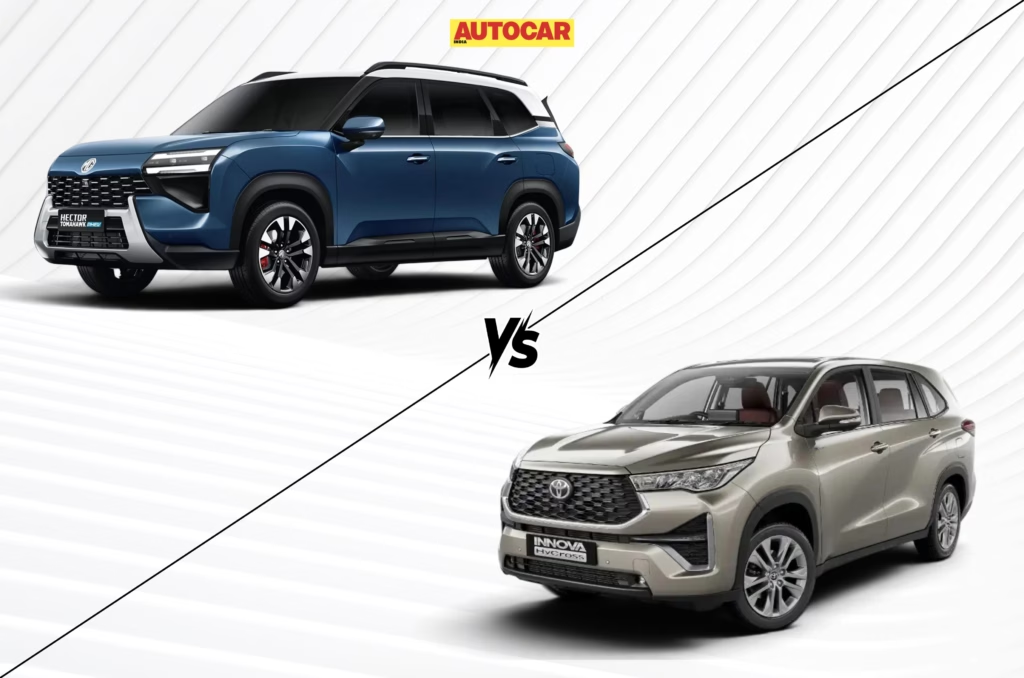
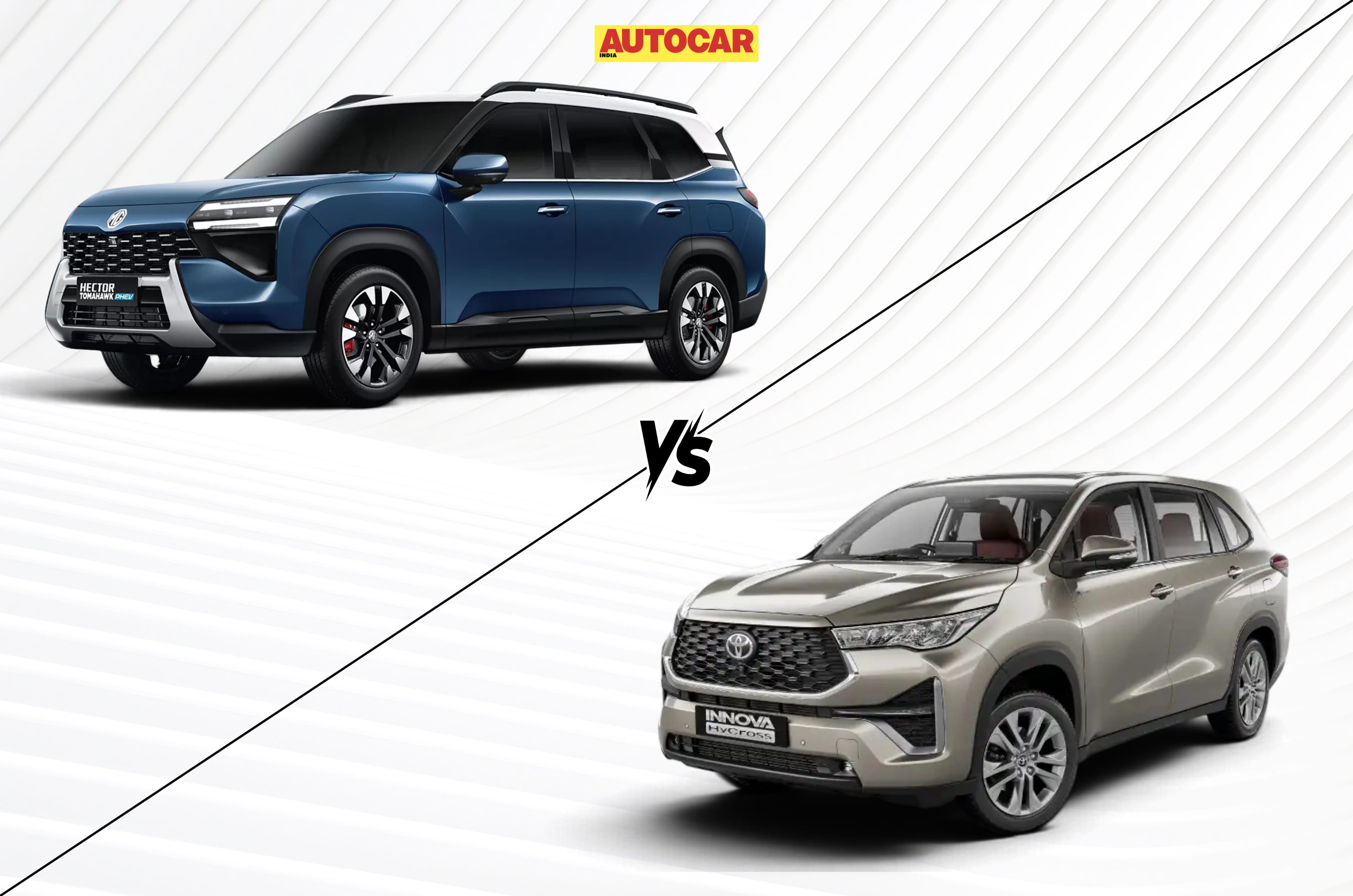
While both models here are hybrids and have 7 seats across three rows, they offer different hybrid technologies. With the ADAPT platform-based JSW MG Hector Tomahawk PHEV, India has its first-ever mass-market plug-in hybrid vehicle making its entry in the hugely popular SUV segment. On the other hand, the TNGA-C platform-based Toyota Innova Hycross is an MPV and offers a strong-hybrid powertrain. Here’s how they stack up in their fully loaded trims.
MG Hector Tomahawk PHEV Essence vs Toyota Innova Hycross Hybrid ZX (O): Dimensions
The Innova Hycross is larger and offers a slightly bigger boot with all seats in place
MG Hector Tomahawk PHEV Essence vs Toyota Innova Hycross Hybrid ZX (O) dimensions
MG Hector Tomahawk PHEV
Toyota Innova Hycross Hybrid
Length (mm)
4,745
4,755
Width (mm)
1,850
1,850
Height (mm)
1,770
1,790
Wheelbase (mm)
2,810
2,850
Boot space (litres)
192
239
Wheel size (inches)
18
18
The Innova Hycross Hybrid is 10mm longer and 20mm taller than the Hector Tomahawk PHEV. The Toyota MPV also has a wheelbase that’s longer by 40mm, while both cars have identical width figures and sport 18-inch alloy wheels in their top-spec trims. The Innova Hycross Hybrid’s luggage capacity with the third row in place is greater by 47 litres. One of the factors limiting the outright cargo volume of the Hector Tomahawk PHEV is its more space-consuming plug-in hybrid tech.
MG Hector Tomahawk PHEV Essence vs Toyota Innova Hycross Hybrid ZX (O): Powertrain
The plug-in hybrid powertrain of the MG SUV is more fuel-efficient and offers more power
MG Hector Tomahawk PHEV Essence vs Toyota Innova Hycross Hybrid ZX (O) powertrain options
MG Hector Tomahawk PHEV
Toyota Innova Hycross Hybrid
Engine
1.5-litre naturally aspirated petrol
2.0-litre naturally aspirated petrol
Battery size
20.5kWh
1.6kWh
Electric motor type
Permanent magnet synchronous motor
Permanent magnet synchronous motor
Drive configuration
FWD
FWD
Total system output
198hp, 230Nm
184hp, 188Nm
Transmission
DHT
eCVT
0-100kph
9.0 seconds
10.69 seconds*
Claimed mileage
50kpl
22.16kpl
Fuel tank
52 litres
52 litres
AC charging
7.5 hrs at 3.3kW (10-100%)
–
DC fast charging
35 mins at 25kW (30-80%)
–
*Autocar India-tested 0-100kph time.
The strong hybrid powertrain of the Toyota Innova Hycross offers a couple of drive modes – including pure-electric and engine + electric. However, its compact nickel metal hydride (NiMH) battery means that the EV mode of the Innova Hycross Hybrid is understandably more limited than the MG Hector Tomahawk PHEV’s, requiring the 2.0-litre petrol engine to step in more often.
The claimed mileage figure of the Innova Hycross Hybrid is 27.84kpl worse than the MG plug-in hybrid SUV, and despite the same fuel tank size, the former’s combined range tops out at around 800km, as per our real-world test of the Toyota MPV. Meanwhile, the plug-in hybrid system of the MG Hector Tomahawk PHEV offers more flexibility and comes with four main drive modes. The larger 20.5kWh battery pack and 1.5-litre engine allow for a combined claimed range of over 1,100km.
The Hector Tomahawk PHEV not only offers a claimed pure-electric range of over 115km, but it can also have the engine charging the battery pack while the electric motor drives the front wheels. This is a drive mode that isn’t offered with the Toyota Innova Hycross Hybrid. To extract the highest possible efficiency from its hybrid system, the Hector Tomahawk PHEV needs to be plugged in to an AC or a DC charger in order to fully top up its battery pack.
Depending on the battery’s SoC, both cars can rely entirely on their petrol engine to drive the wheels. Compared to the Innova Hycross Hybrid’s e-CVT (electronically controlled continuously variable transmission), the Hector Tomahawk PHEV gets a DHT (Dedicated Hybrid Transmission) with an e-clutch. The combined output of the MG Hector Tomahawk PHEV is 14hp and 42Nm more than what the Toyota Innova Hycross Hybrid offers.
MG Hector Tomahawk PHEV Essence vs Toyota Innova Hycross Hybrid ZX (O): Exterior features
Different body styles aside, both cars are similarly equipped on the outside
MG Hector Tomahawk PHEV Essence vs Toyota Innova Hycross Hybrid ZX (O) exterior features
MG Hector Tomahawk PHEV
Toyota Innova Hycross Hybrid
Auto LED headlamps
Yes
Yes
LED DRLs
Yes
Yes
Backlit logo
Yes
No
Sequential turn signals
Yes
Yes
Front fog lamps
No
Yes (LED)
Rear fog lamps
Yes (LED)
No
Welcome lights
No
Yes
Powered ORVMs
Yes (with auto-fold function)
Yes (with auto-fold function)
Body cladding
Yes
No
Roof rails
Yes
No
Rear spoiler
Yes
Yes
Powered tailgate
Yes
Yes
Radio antenna
Windscreen-integrated
Sharkfin
Colours
Mono-tone and dual-tone
Mono-tone
The MG Hector Tomahawk PHEV is offered in two dual-tone colour options and six mono-tone shades, including a couple of bolder choices. The Toyota Innova Hycross Hybrid is restricted to six simpler-looking colours. The SUV body style aside, the Hector Tomahawk PHEV also sports a backlit ‘MG’ logo up front plus prominent roof rails and body cladding.
Where the Innova Hycross Hybrid gets the traditional sharkfin radio antenna, the Hector Tomahawk PHEV has its antenna embedded in the windscreen. The Toyota Innova Hycross Hybrid gets front LED fog lamps, whilst the MG Hector Tomahawk PHEV features rear LED fog lamps. While the top-spec trims of both cars get automatic LED headlamps and sequential turn indicators, it’s only the Toyota that offers ‘welcome’ lights.
MG Hector Tomahawk PHEV Essence vs Toyota Innova Hycross Hybrid ZX (O): Interior features
The Hector Tomahawk PHEV offers even more modern on-board tech than the Hycross
MG Hector Tomahawk PHEV Essence vs Toyota Innova Hycross Hybrid ZX (O) interior features
MG Hector Tomahawk PHEV
Toyota Innova Hycross Hybrid
Infotainment screen
15.6-inch (with swipe gestures)
10.1-inch
Digital driver’s display
8.8-inch
7.0-inch MID
Panoramic sunroof
Yes (dual-pane)
Yes (dual-pane)
Steering adjustment
Tilt & telescopic
Tilt & telescopic
Driver’s seat adjustment
6-way powered
8-way powered
Memory powered
Yes (with ‘retreat’ function)
Yes
Co-driver’s seat adjustment
4-way powered
4-way manual
Sliding & reclining second row
Yes
Yes (powered ottoman seats)
Split rear seats
Yes (second & third rows)
Yes (second & third rows)
Ventilated front seats
Yes
Yes
Leatherette upholstery
Yes
Yes
Rear sunblinds
Yes
Yes
Rear armrest
Yes (with cupholders)
Yes (individual armrests)
Wireless charger
Yes (50W)
No
Automatic climate control
Yes (dual-zone)
Yes (single-zone)
Ambient lighting
Yes (256 colours)
Yes (single-colour)
Audio system
10-speaker Infinity
9-speaker JBL
Wireless Apple CarPlay & Android Auto
Yes
Yes (CarPlay only)
USB ports
Yes (5 ports)
Yes (4 ports)
Connected car tech
Yes
Yes
Voice assistant
Yes (AI-powered & multilingual)
Yes
OTA updates
Yes
No
Multi-app support
Yes
No
The infotainment features of the top-spec MG Hector Tomahawk PHEV are more comprehensive. It comes with a larger touchscreen that supports swipe-gesture functionalities, along with an AI-powered voice assistant with six languages supported. MG’s tie-up with Jio means that there are plenty of apps offered – including gaming, streaming and more. The Hector Tomahawk PHEV also offers OTA software updates, wireless connectivity for both Apple CarPlay and Android Auto and a built-in 50-watt wireless charger.
The MG SUV’s convenience features further include a more comprehensive 256-colour ambient lighting system, a fully digital instrument panel, dual-zone AC, a powered front passenger seat, a ‘retreat’ function for the driver’s seat when the door is opened, armrest-integrated cupholders for the second row, and an additional USB port over the top-spec Toyota Innova Hycross Hybrid.
However, the latter offers individual & powered captain chairs for the second row with a fold-away ottoman function. The 7-seat capability of the Innova Hycross comes by way of a three-seat third bench. The minimalist interior of the Hector Tomahawk PHEV looks modern but the increased reliance on the touchscreen can come in the way of everyday usability, especially while on the move. The Innova Hycross Hybrid’s interior, meanwhile, offers plenty of physical switchgear that are much easier to use.
MG Hector Tomahawk PHEV Essence vs Toyota Innova Hycross Hybrid ZX (O): Safety features
Both cars are relatively well-equipped on the safety front
MG Hector Tomahawk PHEV Essence vs Toyota Innova Hycross Hybrid ZX (O) safety features
MG Hector Tomahawk PHEV
Toyota Innova Hycross Hybrid
Airbags
6
6
ABS with EBD
Yes
Yes
Electronic stability program
Yes
Yes
Traction control system
Yes
No
Hill-hold assist
Yes
Yes
TPMS
Yes
Yes
Parking sensors
Yes (front & rear)
Yes (front & rear)
360-degree camera
Yes
Yes
Electronic parking brake
Yes (with auto-hold function)
Yes (with auto-hold function)
Auto-dimming IRVM
Yes
Yes
Rain-sensing wipers
Yes
No
ISOFIX
Yes
Yes
Rear wiper and defogger
Yes
Yes
All-wheel disc brakes
Yes
Yes
ADAS
Yes
Yes
The fully loaded trims of both these cars offer all the basic passive and active safety aids that buyers at this price bracket expect. While both come with ADAS (Advanced Driver Assistance Systems), it’s the MG Hector Tomahawk PHEV that packs in more features within its ADAS suite. Its adaptive cruise control aid integrates Bend Cruise Assistance (BCA), which slows down the vehicle when approaching corners. There’s also Traffic Jam Assist, which works alongside other active lane-keeping measures.
MG Hector Tomahawk PHEV Essence vs Toyota Innova Hycross Hybrid ZX (O): Other features
The MG SUV adds a few nice-to-have features over the equivalent Innova Hycross
MG Hector Tomahawk PHEV Essence vs Toyota Innova Hycross Hybrid ZX (O) other features
MG Hector Tomahawk PHEV
Toyota Innova Hycross Hybrid
Drive modes
Yes (4)
Yes (3)
Paddle shifters
No
Yes
V2V and V2L
Yes
No
The MG Hector Tomahawk PHEV offers Eco, Normal, Sports and Custom drive modes, whereas the Toyota Innova Hycross Hybrid gets Eco, Normal and Power – one less than the MG. The latter also lacks Vehicle to Vehicle (V2V) and Vehicle to Load (V2L) functionalities that are available with the Hector Tomahawk PHEV.
Conclusion
MG Hector Tomahawk PHEV Essence vs Toyota Innova Hycross Hybrid ZX (O) prices
MG Hector Tomahawk PHEV
Toyota Innova Hycross Hybrid
Prices (In Rs, lakh)
27.79
31.84
While the prices of the MG Hector Tomahawk PHEV are currently introductory, the delta between the two cars here is steep. The top-spec Toyota Innova Hycross Hybrid ZX (O) is priced Rs 4.05 lakh more than fully loaded Essence trim of the MG plug-in hybrid SUV. Its affordability factor notwithstanding, the Hector Tomahawk PHEV Essence trim gets a more comprehensive & punchier hybrid powertrain that offers better mileage, along with a better-finished and more premium-looking interior. Moreover, if you prefer an SUV body style, the MG Hector Tomahawk PHEV would be worth a serious look.
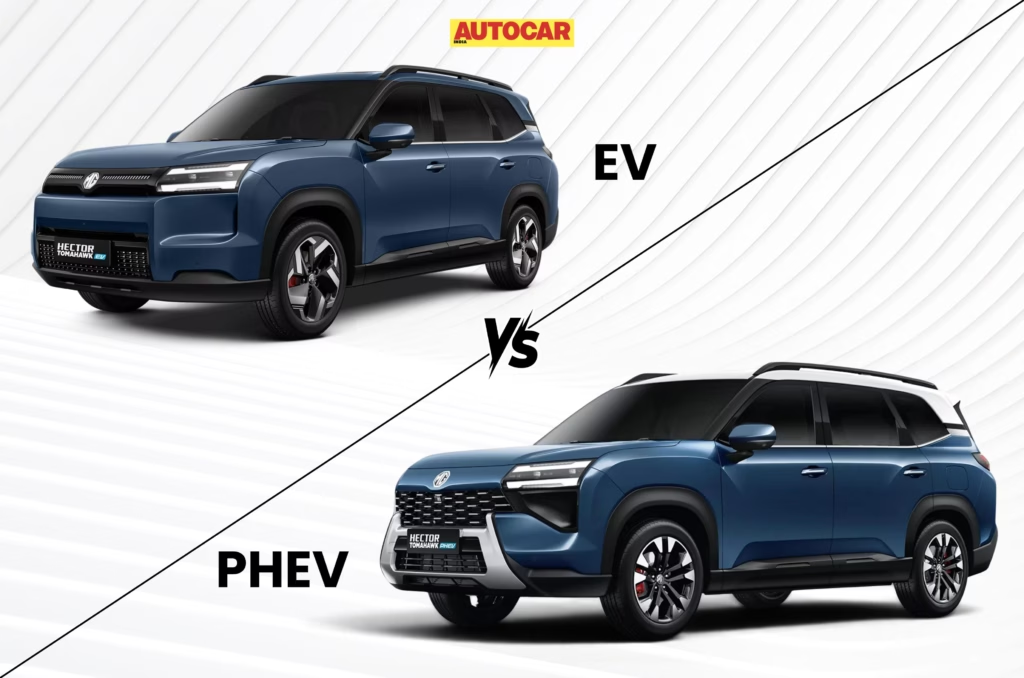
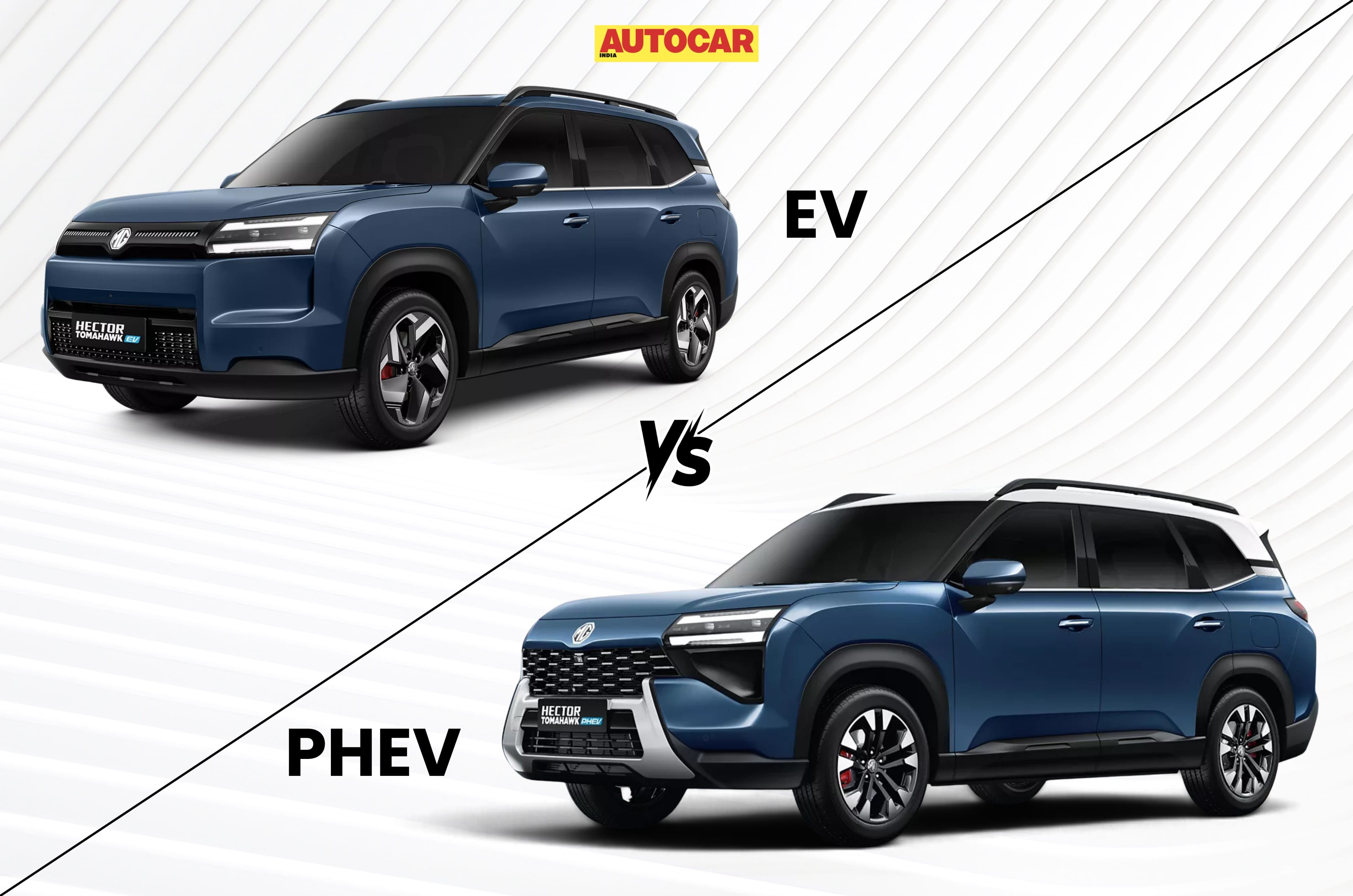
JSW MG Motor has launched the Hector Tomahawk with two electrified powertrains: a fully electric version and a plug-in hybrid. Although the two share the same basic dimensions and cabin design, there are several differences in their exterior detailing, equipment, seating configuration, battery and charging systems. Here’s how the two versions compare.
MG Hector Tomahawk EV vs PHEV: Price and variants
Variant
Seating
EV price (ex-showroom)
EV BaaS*
PHEV price (ex-showroom)
PHEV BaaS*
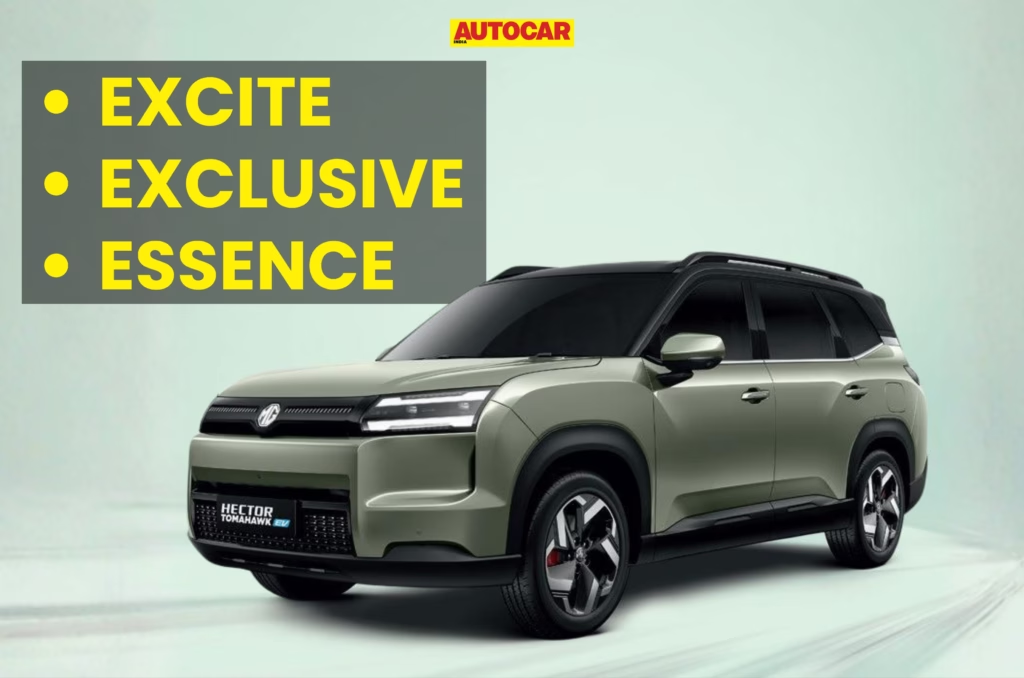
Excite
7-seat
Rs 19.49 lakh
Rs 13.99 lakh
–
–
Exclusive
7-seat
Rs 21.99 lakh
Rs 15.99 lakh
Rs 25.70 lakh
Rs 21.79 lakh
Essence
7-seat
Rs 23.49 lakh
Rs 17.49 lakh
Rs 27.80 lakh
Rs 23.89 lakh
Essence
5-seat
Rs 22.99 lakh
Rs 16.99 lakh
–
–
*For the EV, the battery rental is Rs 4.90 per km, while for the PHEV it is Rs 3.20 per km.
The Hector Tomahawk EV is priced from Rs 19.49 lakh to Rs 23.49 lakh (ex-showroom). It is available in Excite, Exclusive and Essence trims in the seven-seat configuration, while the five-seat version is offered only in the Essence trim at Rs 22.99 lakh.
The PHEV is positioned higher in the range, with prices starting at Rs 25.70 lakh for the Exclusive seven-seater and going up to Rs 27.80 lakh for the Essence seven-seater. Unlike the EV, however, a 5-seat configuration is not available here.
MG Hector Tomahawk EV vs PHEV: Exterior
Both versions measure 4,745mm in length, 1,850mm in width and 1,770mm in height, with a 2,810mm wheelbase. They share the rectangular LED projector headlamps with LED DRLs and an illuminated MG logo, but the front-end treatment is completely different.
The PHEV versions gets a conventional three-dimensional grille with chrome inserts, gloss-black elements below the headlamps and a chunky bull bar-like silver trim piece on the lower bumper. Meanwhile, the EV gets a closed-off fascia, lending it a more minimalistic look than the PHEV version. The PHEV also gets red brake callipers on the higher-spec version.
The two versions use different wheel designs for the 18-inch dual-tone alloys. There is also a difference in the dual-tone treatment. The EV gets a black roof, while the PHEV gets a white roof. Both, however, get roof rails, a powered tailgate and wraparound LED tail-lamps.
MG Hector Tomahawk EV vs PHEV: Interior
The two versions have the same basic cabin layout, but differ in colour. The EV gets a beige interior, while the PHEV gets a brown interior. Both get a panoramic sunroof, ventilated front seats, 256-color ambient lighting, wireless charging and an 8.8-inch digital driver’s display. The top versions of both get the 15.6-inch infotainment screen. Both versions also use a stalk-type drive selector, positioned behind the steering wheel.
The more significant difference is the seating configuration. The EV is available as a five- or seven-seater, while the PHEV is offered only as a seven-seater. The five-seat EV has 610 litres of boot space, expanding to 1,053 litres with the second row folded. The seven-seat EV offers 192 litres with all three rows in use and 528 litres with the third row folded. The PHEV, being seven-seat only, has 604 litres of boot space in the Exclusive and 579 litres in the Essence with the third row folded.
The EV also has a slightly different seating position because of its battery packaging, with occupants sitting in a more knees-up position than in the PHEV.
MG Hector Tomahawk EV vs PHEV: Powertrain
The Hector Tomahawk EV uses a 204hp electric motor that produces 310Nm. It is powered by a 69.2kWh battery and has a claimed MIDC range of 517km. The EV supports up to 90kW DC fast charging, with MG claiming a 30-80 percent charge time of around 35 minutes.
The PHEV combines a 1.5-litre naturally aspirated petrol engine, electric motor and 20.5kWh battery, with a dedicated hybrid transmission with an e-clutch. The powertrain produces a combined 198hp and 230Nm. MG claims an electric-only range of over 115km and around 40kpl combined fuel efficiency. A full tank of fuel and a fully charged battery can take it more than 1100km.
The PHEV supports up to 25kW DC charging and is claimed to take around 35 minutes to charge from 30-80 percent. It can also be charged using a 3.3kW AC charger, which takes around 7.5 hours for a 10-100 percent charge.
The key difference is that the EV is powered solely by its battery and electric motor, while the PHEV combines a smaller battery and electric motor with a petrol engine, allowing it to operate on electric power or use the engine when required.
The MG Hector Tomahawk EV is a three-row SUV available in Excite, Exclusive and Essence trims. All three use the same battery pack and electric motor, with the main differences being the features and seating layouts on offer. If you’re considering the Hector Tomahawk EV, here’s a detailed look at which variant makes the most sense.
MG Hector Tomahawk EV: Prices, powertrain specs
Trim
BaaS price (Rs)
Non-BaaS price (Rs)
Difference (Rs)
Excite 7 seater
13.99 lakh + 4.9 per km*
19.5 lakh
5.51 lakh
Exclusive 7 seater
15.99 lakh + 4.9 per km*
22 lakh
6.01 lakh
Essence 5 seater
16.99 lakh + 4.9 per km*
23 lakh
6.01 lakh
Essence 7 seater
17.49 lakh + 4.9 per km*
23.5 lakh
6.01 lakh
*Battery rental fee.
The MG Hector Tomahawk EV, like all MG EVs sold in India (excluding the M9 and the Cyberster), is available with a Battery-as-a-Service (BaaS) scheme that lowers the upfront cost. Notably, buyers opting for BaaS have to pay a battery rental fee of Rs 4.9 per kilometre. For the Hector Tomahawk EV, the scheme reduces the upfront price by up to Rs 6.01 lakh.
All trims feature a 69.2kWh battery pack, which powers a 204hp, 310Nm electric motor mounted on the front axle. The sprint from 0-100kph takes 8.2 seconds. On the Modified Indian Driving Cycle (MIDC), the SUV can go up to 517km on a single charge. As per MG, it takes about 35 minutes to charge the battery from 30 percent to 80 percent with a 90kW DC fast charger. With a 7.4kW AC unit, the carmaker claims a charging time of about 12.5 hours for a 10 percent to 100 percent top-up.
MG Hector Tomahawk EV: Features
Excite
Rs 19.5 lakh
Six airbags
Electronic stability program (ESP)
Traction control system (TCS)
Hill hold control
ABS and EBD
All four disc brakes
Electronic parking brake with auto hold
TPMS
Front and rear defogger
Rear wiper and washer
Three-point seatbelts for all seats
Reverse parking camera
8.8-inch driver’s display
12.8-inch touchscreen
Wireless Android Auto, Apple CarPlay
AI voice assistant
OTA updates
Six speakers
Steering-mounted controls
Leatherette seat upholstery
Pro Pet mode
Eco, Normal, Sports, Custom drive modes
Powered adjustment for front seats
Push button start/stop system
Powered ORVMs with auto fold and integrated turn indicators
Tilt and telescopic adjustment for steering wheel
Cruise control
Slide function for second-row seats (7-seater version)
Second and third row AC vents
60:40 split seats in the second row with recline function
50:50 split seats in the third row (7-seater version)
Front armrest with storage for the driver
Type-A and fast charging Type-C ports at the front
Fast charging Type-C, Type-A ports in the second row
Height-adjustable headrests
LED projector headlights, LED tail lamps
LED daytime running lights (DRLs)
Illuminated MG logo at the front
18-inch alloy wheels
Roof rails
Exclusive
Rs 22 lakh
In addition to Excite
360-degree camera with Transparent Chassis view
Rain-sensing wipers
Ambient lighting (blue colour only)
Panoramic sunroof
Ventilated seats at the front
50W wireless charger with cooling
Chrome-finish on select exterior trims
Automatic headlights
Powered tailgate
Essence
Rs 23 lakh-23.5 lakh
In addition to Exclusive
Level 2 ADAS
Adaptive cruise control
Front parking sensors
Auto-dimming IRVM
Memory function for the driver’s seat
Rear window sunshade
15.6-inch touchscreen
10-speaker Infinity sound system
Multi-colour ambient lights (256 colours)
Rear parcel tray (5-seater version only)
Vehicle to load (V2L), vehicle to vehicle (V2V) charging support
Vehicle to home (V2H) charging support
Red-coloured brake callipers
Which variant of the MG Hector Tomahawk EV should you buy?
The mid-spec Exclusive trim, priced at Rs 22 lakh, ex-showroom, is the one we recommend for the MG Hector Tomahawk EV. Compared to the base Excite, it adds front ventilated seats, a 50W wireless charger with cooling and a powered tailgate, features that should appeal to buyers of such an EV. With the BaaS option, the upfront cost can be reduced by Rs 6.1 lakh (as on August 26, 2026), making for a significant initial saving. Buyers who want the five-seat version will have to choose the top-spec Essence trim, as it is the only one available with this seating configuration.
What’s good is that there is no difference in performance or range across the lineup. All trims use the same 69.2kWh battery pack and 204hp electric motor, while the MIDC-rated range remains identical at 517km.
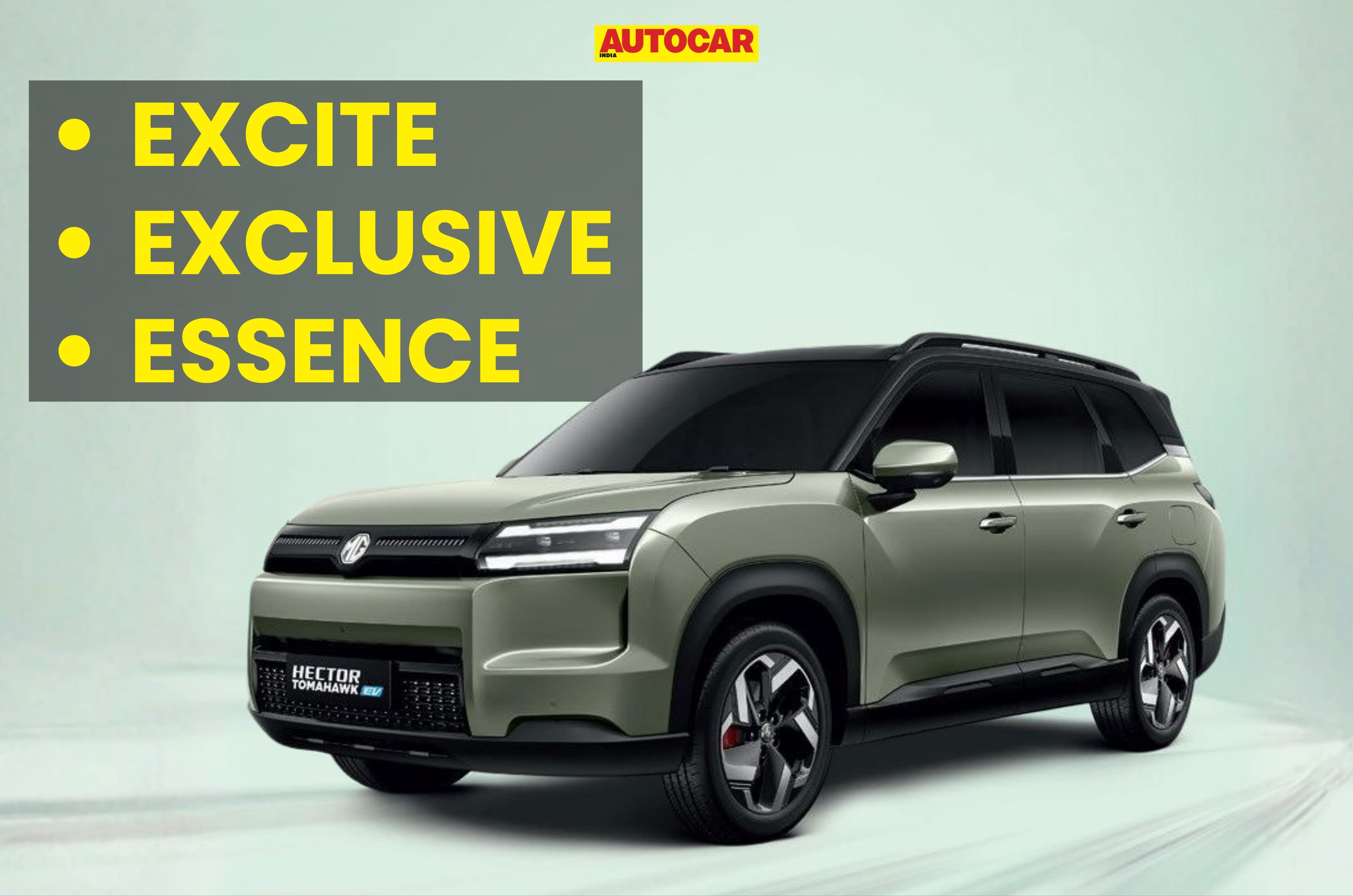
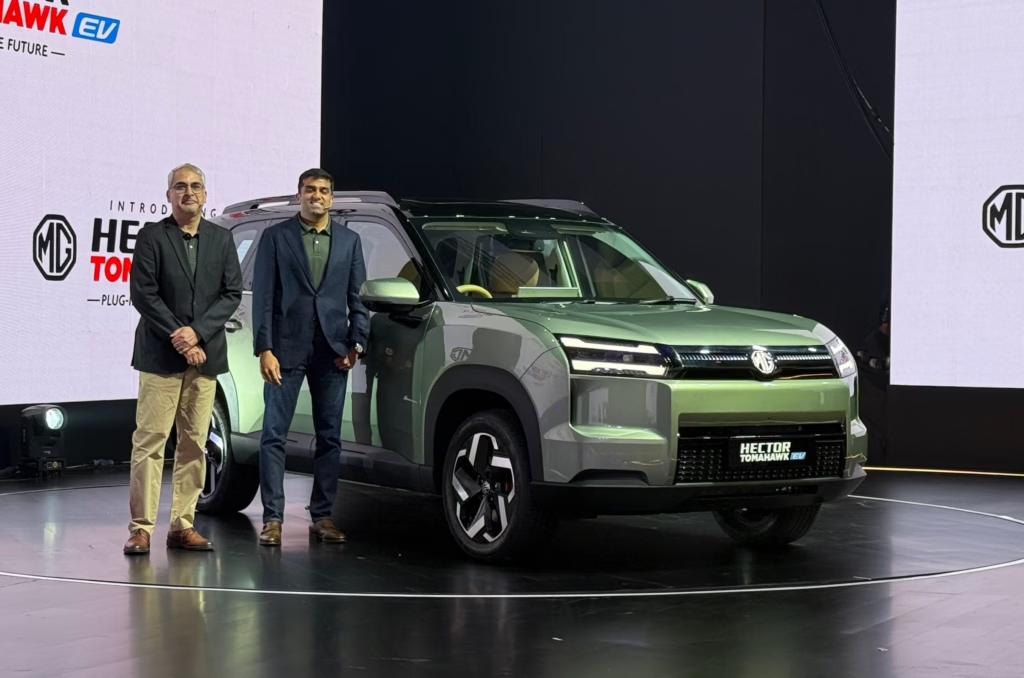
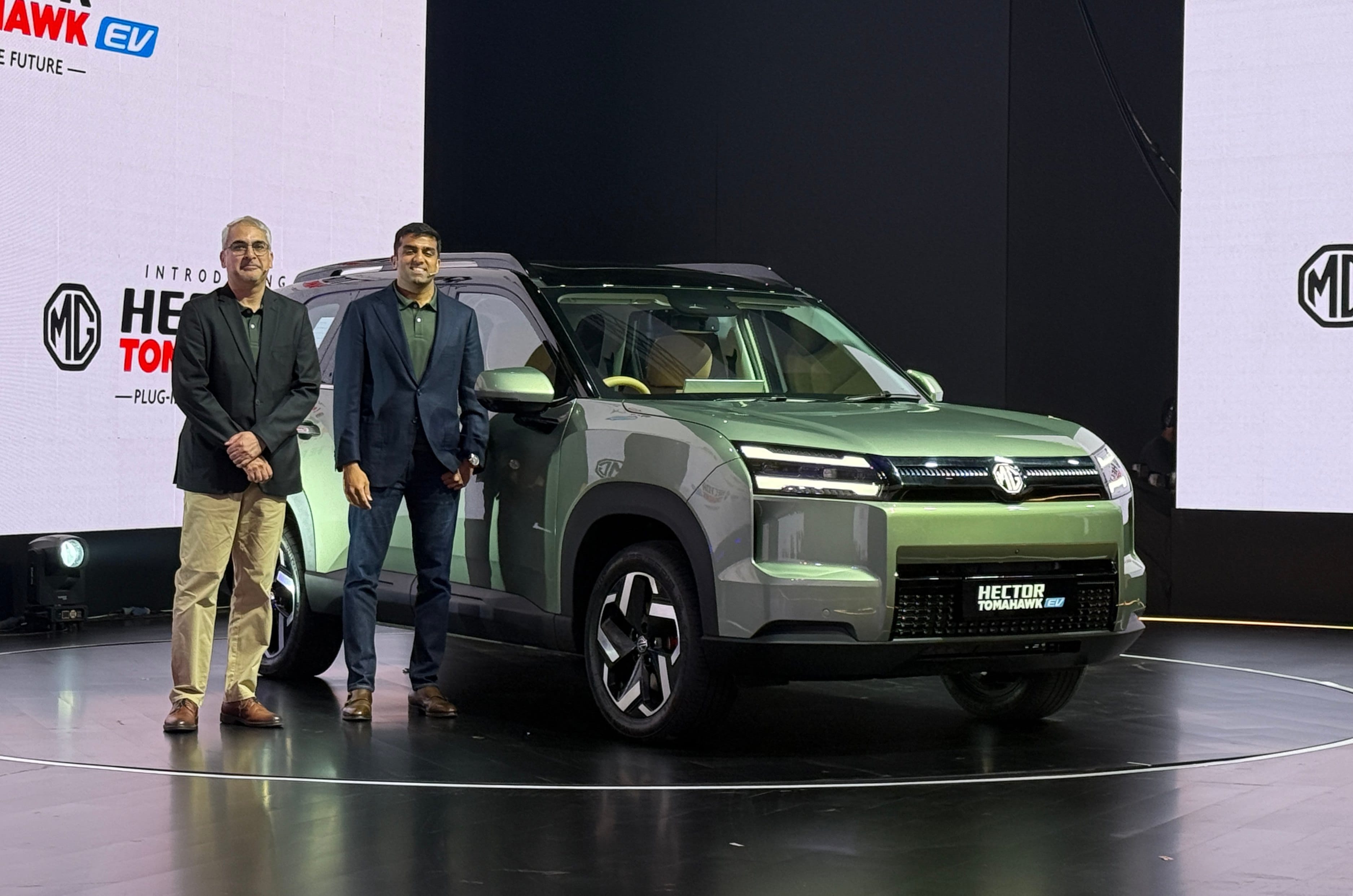
JSW MG Motor India has launched the Hector Tomahawk EV at a starting price of Rs 19.49 lakh (ex-showroom), while prices under its Battery-as-a-Service (BaaS) programme start at Rs 13.99 lakh. The electric SUV gets a 69.2kWh battery and is available in five and seven-seat configurations. The Tomahawk EV is the first MG model in India based on the brand’s ADAPT architecture.
Deliveries to commence in September
Gets a 15.6-inch touchscreen and 8.8-inch digital driver’s display
204hp electric motor develops 310Nm
90kW DC charging; 30-80 percent in 35 minutes
MG Hector Tomahawk EV: price and variants
Variant
Seating
Ex-showroom price
Excite
7-seat
Rs 19.49 lakh
Exclusive
7-seat
Rs 21.99 lakh
Essence
7-seat
Rs 23.49 lakh
Essence
5-seat
Rs 22.99 lakh
The Hector Tomahawk EV is priced from Rs 19.49 lakh to Rs 23.49 lakh (ex-showroom). The five-seat version is offered only in the Essence variant and is priced at Rs 22.99 lakh, while the seven-seat version is available in Excite, Exclusive and Essence trims.
MG is also offering the Hector Tomahawk EV under its Battery-as-a-Service (BaaS) programme, with prices starting at Rs 13.99 lakh. Buyers opting for BaaS pay a separate battery rental of Rs 4.90 per km. MG has not disclosed variant-wise BaaS prices.
The prices are introductory and applicable to limited units only.
In terms of rivals, the Hector Tomahawk EV will primarily face the Mahindra XEV 9S and Kia Carens Clavis EV, both of which are available with three-row seating. The Tomahawk EV’s five-seat version also broadens its competition to other electric SUVs in this price range.
MG Hector Tomahawk EV: exterior
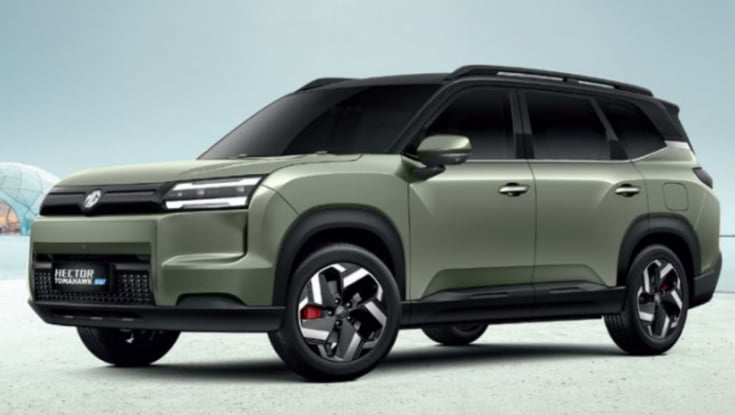
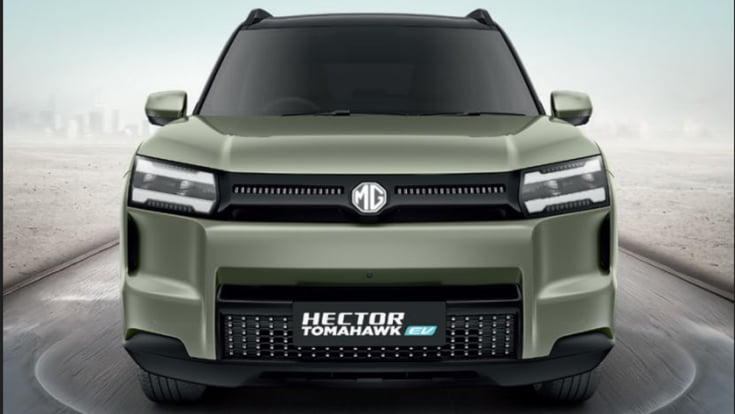
The Hector Tomahawk EV gets LED projector headlamps with LED daytime running lights with an illuminated MG logo positioned between them. The front bumper has a blacked out, closed-off lower front fascia, while the SUV rides on 18-inch dual-tone alloy wheels. It also gets roof rails, black cladding around the wheel arches and lower doors and an automatic powered tailgate.
At the rear, the Tomahawk EV features wraparound LED tail-lamps and a sculpted rear bumper. The SUV measures 4,745mm long, 1,850mm wide and 1,770mm tall, with a 2,810mm wheelbase and 230mm ground clearance. The Hector Tomahawk EV gets a 610-litre boot for the five-seat version, while the seven-seat version offers 192 litres with all three rows in use and 528 litres with the third row folded.
MG Hector Tomahawk EV: interior and features
The Hector Tomahawk EV gets a 15.6-inch infotainment touchscreen, a 8.8-inch digital drivers display, wireless Apple CarPlay and Android Auto, wireless phone charging and gesture controls for functions such as the air-conditioning and audio system.
Other features include a panoramic sunroof, ventilated front seats, 256-colour ambient lighting, a 10-speaker Infinity sound system, a powered tailgate, connected car tech, rear window sunshades and a driver’s seat with memory and auto-retract functionality. The SUV also gets several cabin modes, including Nap, Camp, Energise, Pro Pet, Valet and Quiet modes.
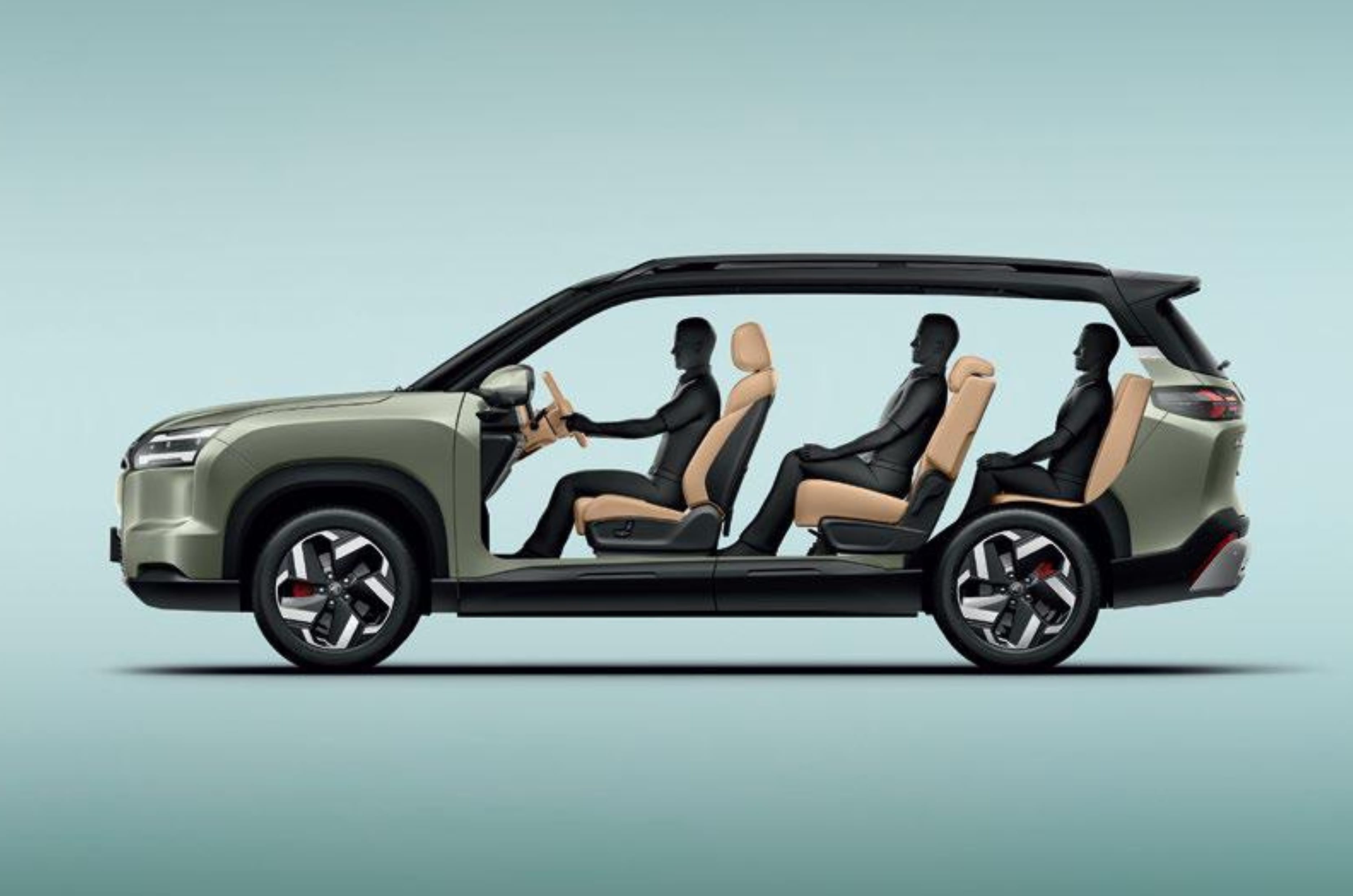
The Hector Tomahawk EV is available with five or seven seats. The five-seat version has 610 litres of boot space, which increases to 1,053 litres with the second row folded. The seven-seat version offers 192 litres with all three rows in use and 528 litres with the third row folded.
MG Hector Tomahawk EV: battery and range
The Tomahawk EV gets a 69.2kWh battery paired with a permanent-magnet synchronous motor producing 204hp and 310Nm. MG claims a 517km MIDC range and a 0-100kph time of 8.2sec.
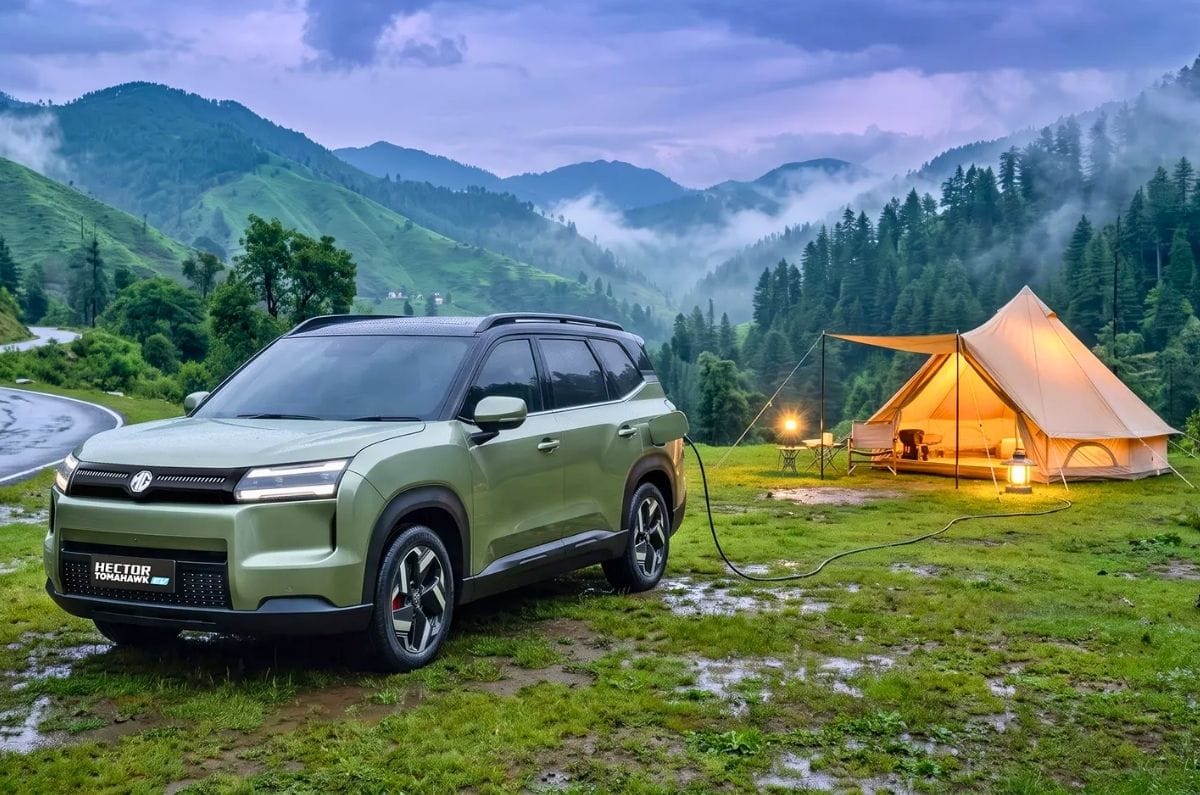
The EV uses a CCS2 charging connection and supports DC fast charging at up to 90kW. MG claims a 30-80 percent charge in around 35 minutes using a 90kW DC charger. With a 7.4kW AC charger, a 10-100 percent charge takes around 12.5 hours. A portable charger that plugs into a 15A socket is also offered.
The Tomahawk EV also supports vehicle-to-load (V2L) and vehicle-to-vehicle (V2V) functions. MG says V2L can power compatible external devices and appliances, while V2V allows the SUV to charge another electric vehicle. It also claims the Tomahawk EV is India’s first vehicle-to-home (V2H) vehicle, allowing its battery to supply power to household appliances through two-way charging.
CMF Buds Neo: अगर आप गाना सुनने के शौकीन हैं, या फिर आप अपने ऑफिस मीटिंग को अटेंड करने के लिए नए ईयरबड्स की तलाश में हैं, जो आपको क्लीन वॉइस के साथ बेहतर साउंड क्वालिटी दे, तो यह खबर आपके लिए फायदेमंद हो सकती है। दरअसल, Nothing के CMF ने गुरुवार को भारत में अपने CMF Buds Neo TWS ईयरबड्स लॉन्च किए हैं। ये ईयरबड्स ₹2,000 से कम कीमत वाले कॉम्पिटिटिव सेगमेंट में एक नया कॉम्पिटिटर बनकर आए हैं। इनमें 12.4mm के डायनामिक ड्राइवर दिए गए हैं और ये बैकग्राउंड नॉइज़ को कम करने के लिए 35dB तक अडैप्टिव एक्टिव नॉइज़ कैंसिलेशन को सपोर्ट करते हैं। कॉलिंग के लिए इस डिवाइस में ‘क्लियर वॉयस टेक्नोलॉजी’ वाले चार माइक्रोफ़ोन भी दिए गए हैं। कीमत से लेकर फीचर्स तक, CMF के इन TWS ईयरबड्स के बारे में आपको जो कुछ भी जानना चाहिए, वह यहां बताया गया है।
भारत में CMF Buds Neo की कीमत
CMF Buds Neo की लॉन्च के समय कीमत ₹1,999 रखी गई है। इच्छुक खरीदार इसे Dark Blue, White, और Black कलर ऑप्शन में खरीद सकते हैं। ये TWS ईयरबड्स 26 अगस्त, 2026 से Flipkart और अन्य ऑथराइज्ड रिटेल आउटलेट्स पर खरीदने के लिए उपलब्ध होंगे।
CMF Buds Neo के स्पेसिफिकेशन्स और फीचर्स
CMF Buds Neo में 12.4mm के डायनामिक ड्राइवर दिए गए हैं, जिनमें टाइटेनियम-बेस्ड PET डोम और PEEK + PU सराउंड है। इस डिवाइस में 20Hz-20kHz का फ्रीक्वेंसी रिस्पॉन्स, SBC कोडेक्स, AAC, स्टैटिक स्पेशल ऑडियो और छह EQ प्रीसेट (Pop, Electronic, Immersion Boost, Enhance Vocals और Classical) जैसे फीचर्स हैं। इसके अलावा, यूजर्स को EQ प्रोफाइल कस्टमाइज करने का ऑप्शन भी मिलता है और वे कंपनी के ऑफिशियल ‘Nothing X’ ऐप के जरिए Bass Enhancement को भी एडजस्ट कर सकते हैं।
कनेक्टिविटी के मामले में, CMF Buds Neo में Bluetooth 6.0 है और यह डिवाइस डुअल-डिवाइस कनेक्शन, Microsoft Swift Pair और Google Fast Pair को सपोर्ट करता है। CMF Buds Neo, Nothing X ऐप के जरिए Android 6.0 और iOS 13 के साथ काम कर सकते हैं। इसके अलावा, गेमिंग के लिए, ये TWS बड्स 120ms लो लेटेंसी मोड को भी सपोर्ट करते हैं।
बैटरी की बात करें तो CMF Buds Neo के हर ईयरबड में 45mAh की बैटरी दी गई है, जबकि इसके चार्जिंग केस में 460mAh की बैटरी मिलती है। कंपनी के मुताबिक, ANC बंद रखने पर ईयरबड्स 11 घंटे तक का प्लेबैक टाइम दे सकते हैं।
वहीं, चार्जिंग केस के साथ इनका कुल बैटरी बैकअप 52 घंटे तक बताया गया है। यानी बार-बार चार्ज करने की चिंता किए बिना इन्हें लंबे समय तक इस्तेमाल किया जा सकता है।
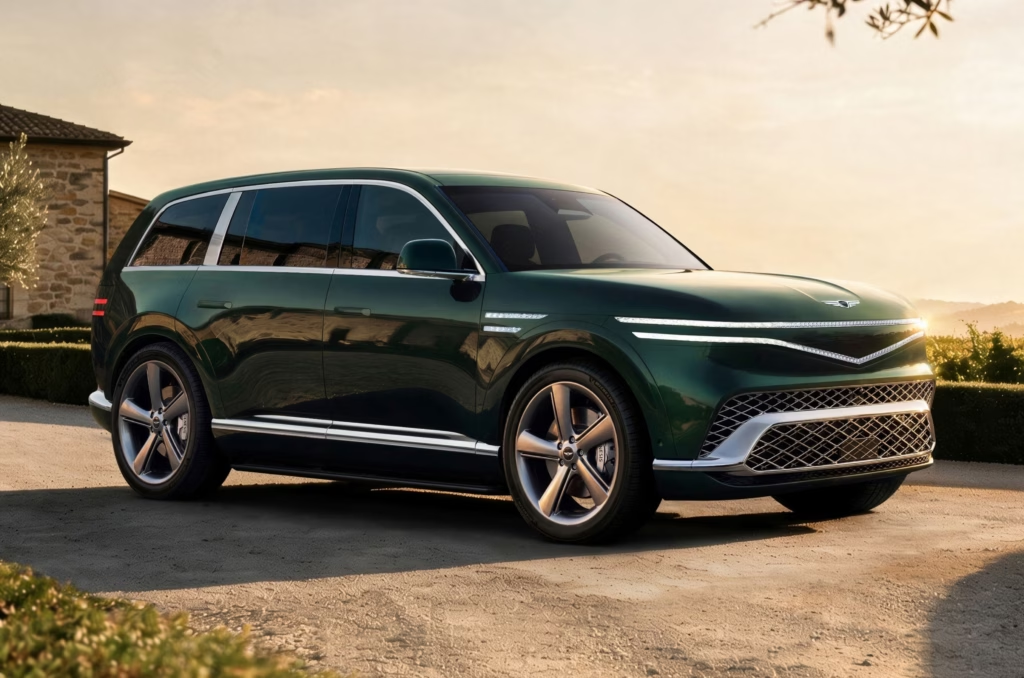
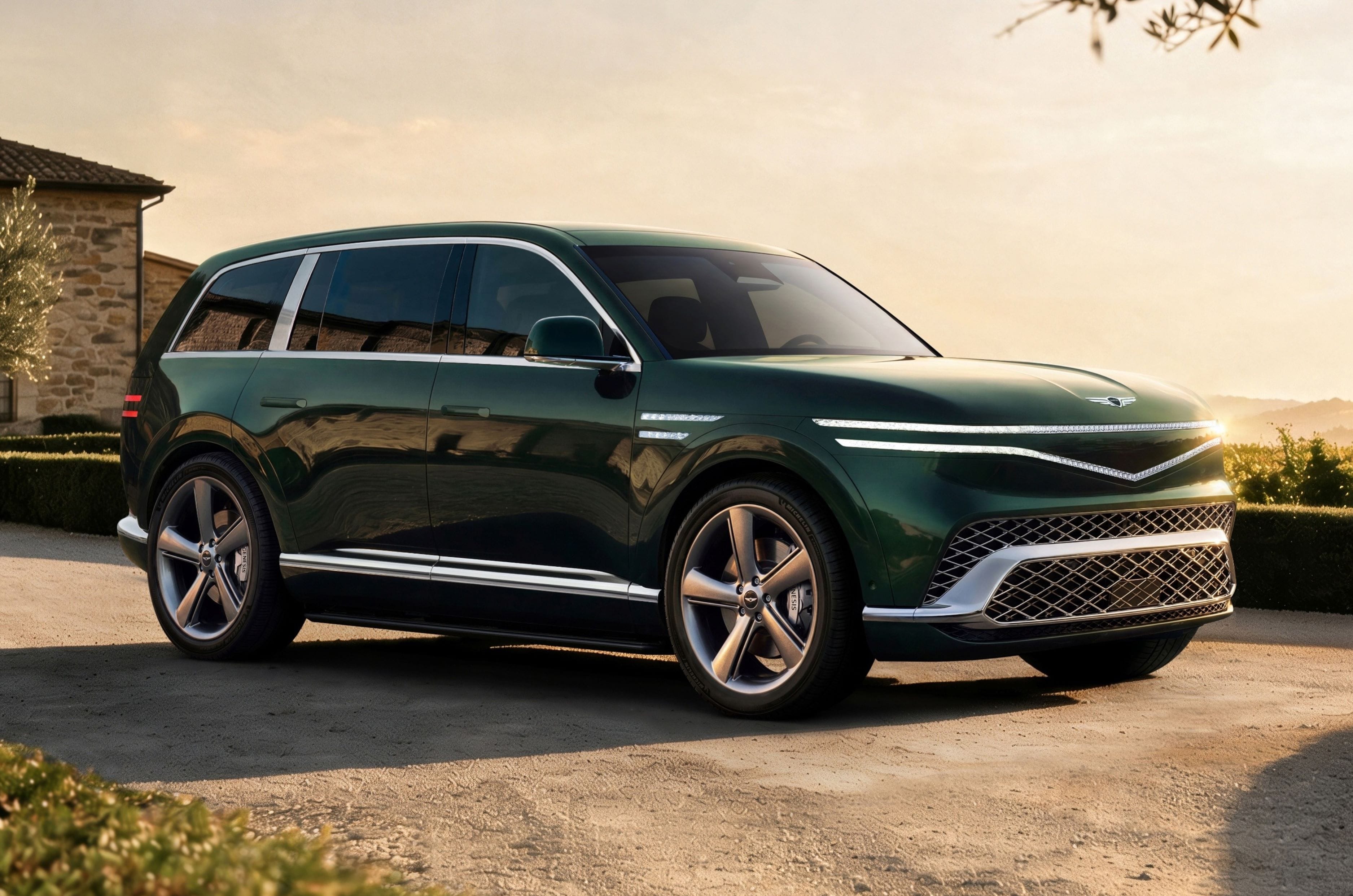
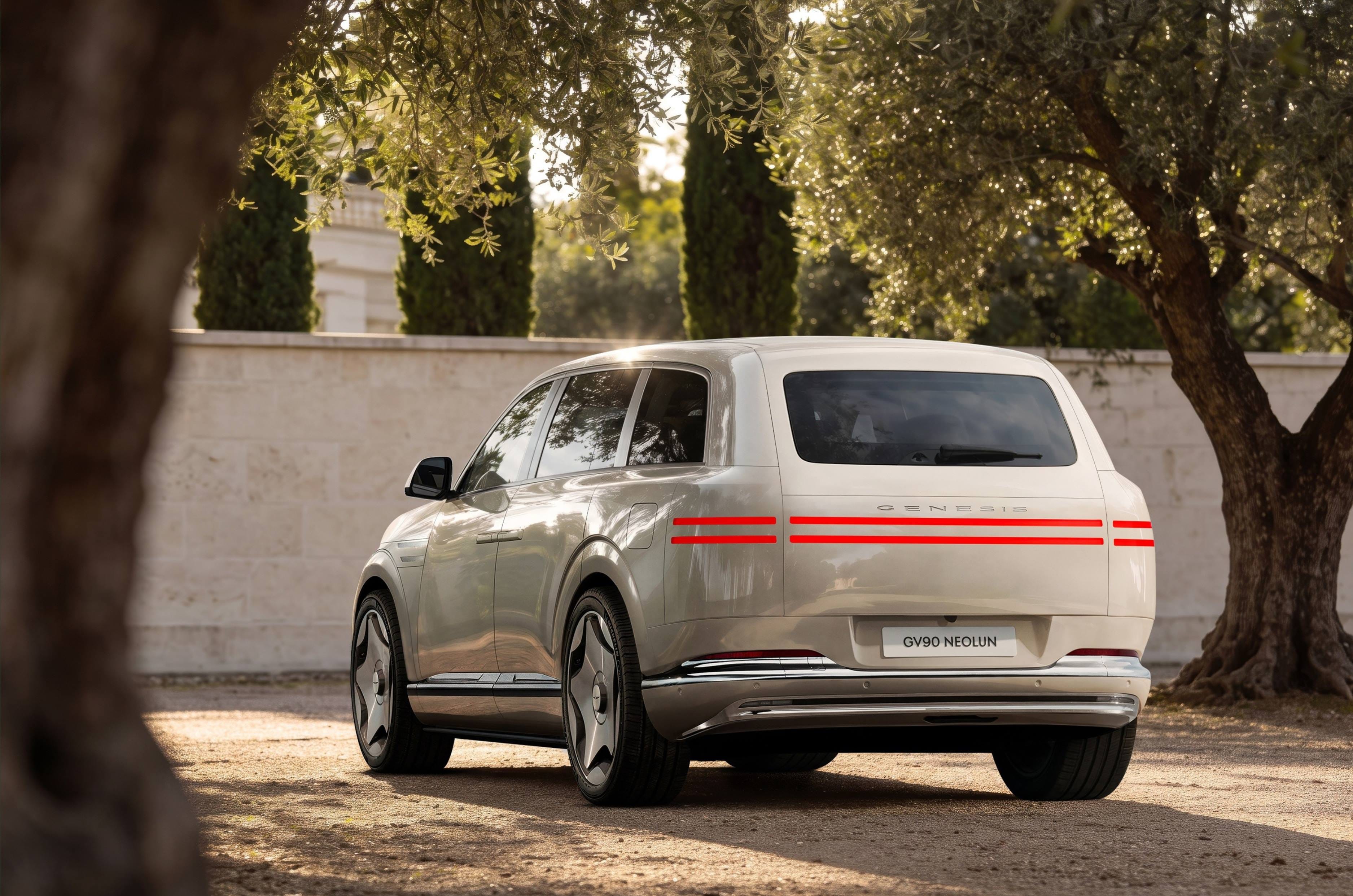
Genesis has revealed the GV90 EV as its new flagship SUV. Showcased in its production-ready avatar, the GV90 is the largest and most luxurious Genesis model to date. It is based on the 2024 Neolun Concept (Neolun translates to ‘New Moon’) and retains most of the concept’s exterior design, but sports a more polished cabin. It gets the largest-ever battery on any Hyundai model yet, and a dual-motor AWD setup.
5.3-metre length is closer to the Rolls-Royce Cullinan
Genesis is offering the GV90 globally in two versions: the standard GV90 and the GV90 Neolun, with 7- and 4-seater layouts, respectively.
Genesis GV90 powertrain details
Producing 544hp and 800Nm, it is the most-powerful EV for the Hyundai group yet
The Genesis GV90 eSUV is offered with a 123.5kWh battery, the biggest ever for the larger Hyundai group, which offers around 500km range (as per the manufacturer’s internal testing). The battery powers dual electric motors, which deliver a combined output of 544hp and 800Nm, the most of any EV in the larger Hyundai group. The battery pack can be charged from 10-80 percent in 22 minutes using a 350kW DC fast charger.
Each motor of the GV90 gets its own e-LSD (limited-slip differential), another first for the Hyundai group, through which “power is efficiently supplied to all four wheels during high-speed cornering for agile handling”. It also enhances the EV’s grip on snowy, rainy or uneven roads. The GV90 also gets multi-chamber air suspension that adjusts ride height to road conditions, and dual-valve adaptive dampers that soften or stiffen for a pliant ride in all situations. The EV gets rear-axle steering, enabling the rear wheels to turn up to five degrees.