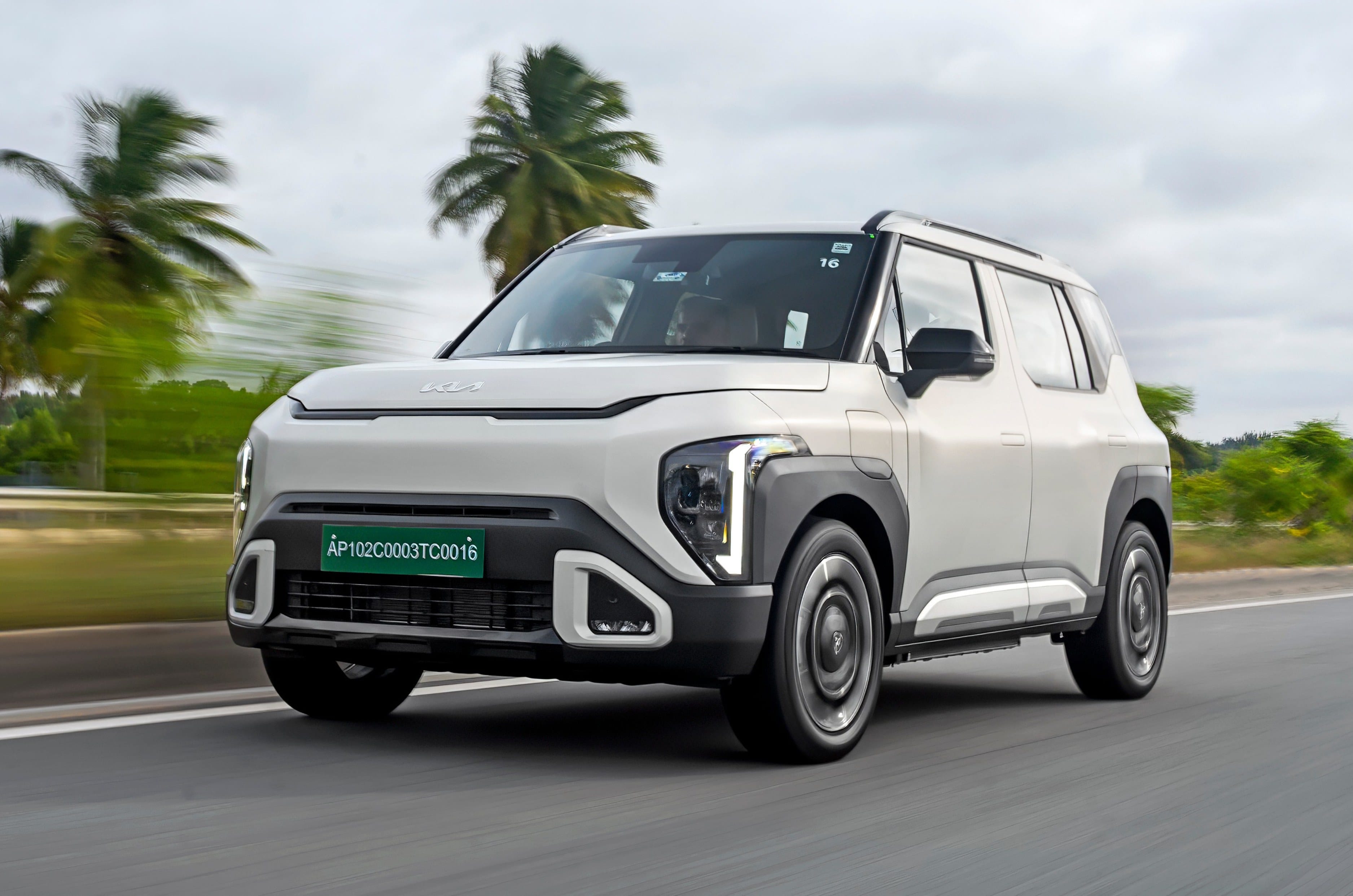
Kia Syros EV: Born to be electric

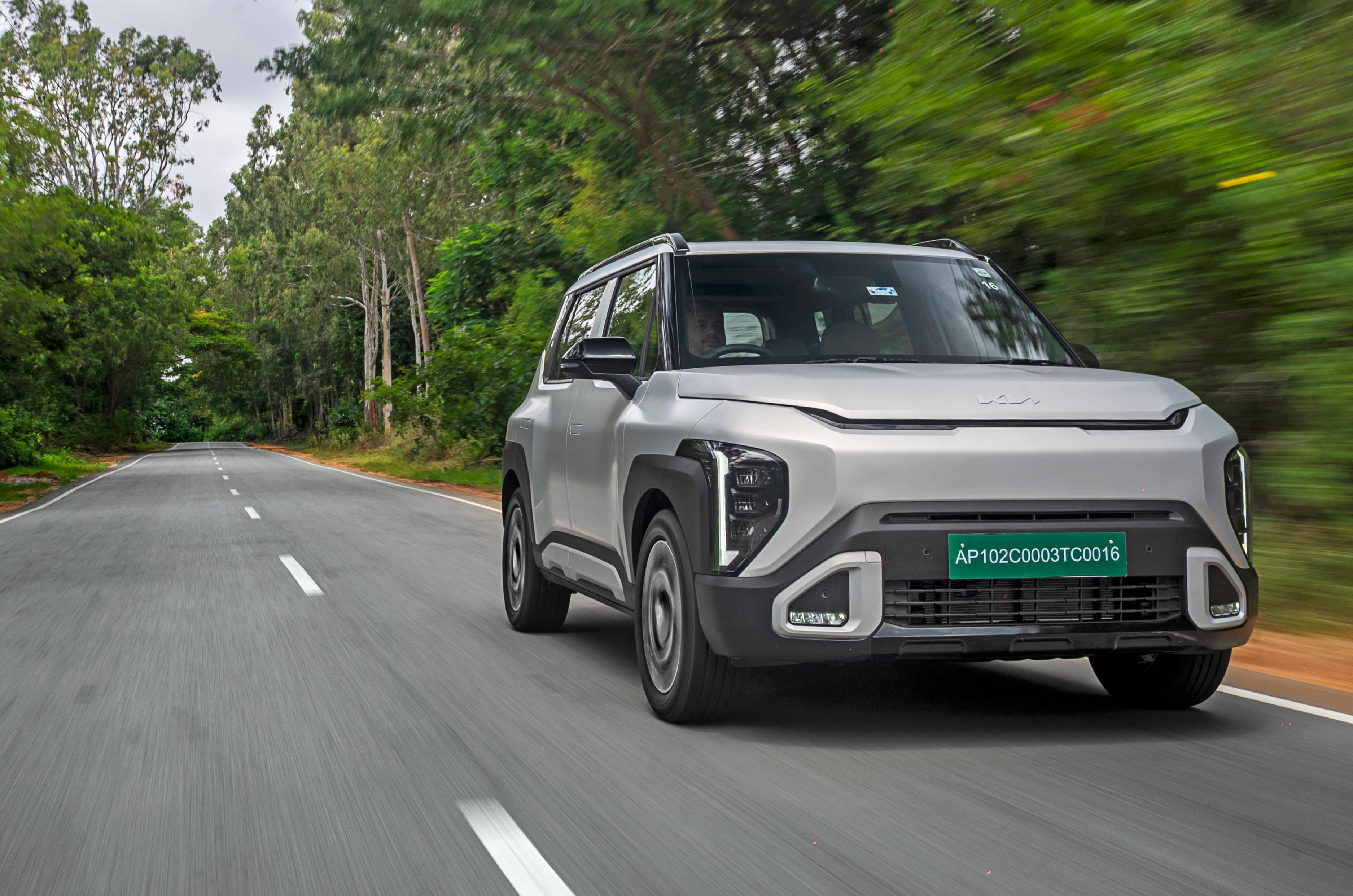
Kia Syros EV front quarter tracking

Kia has chosen the Syros to be its second mass market EV for the Indian market. Despite its superb packaging, oddball styling and high initial prices held back the original ICE version against traditional compact SUV rivals. However, EV customers are generally more accepting of avant-garde design, so can the Syros EV find success where the ICE version couldn’t? We drove it in Bengaluru to find out.

Kia Syros EV Exterior Design and Engineering – 7/10
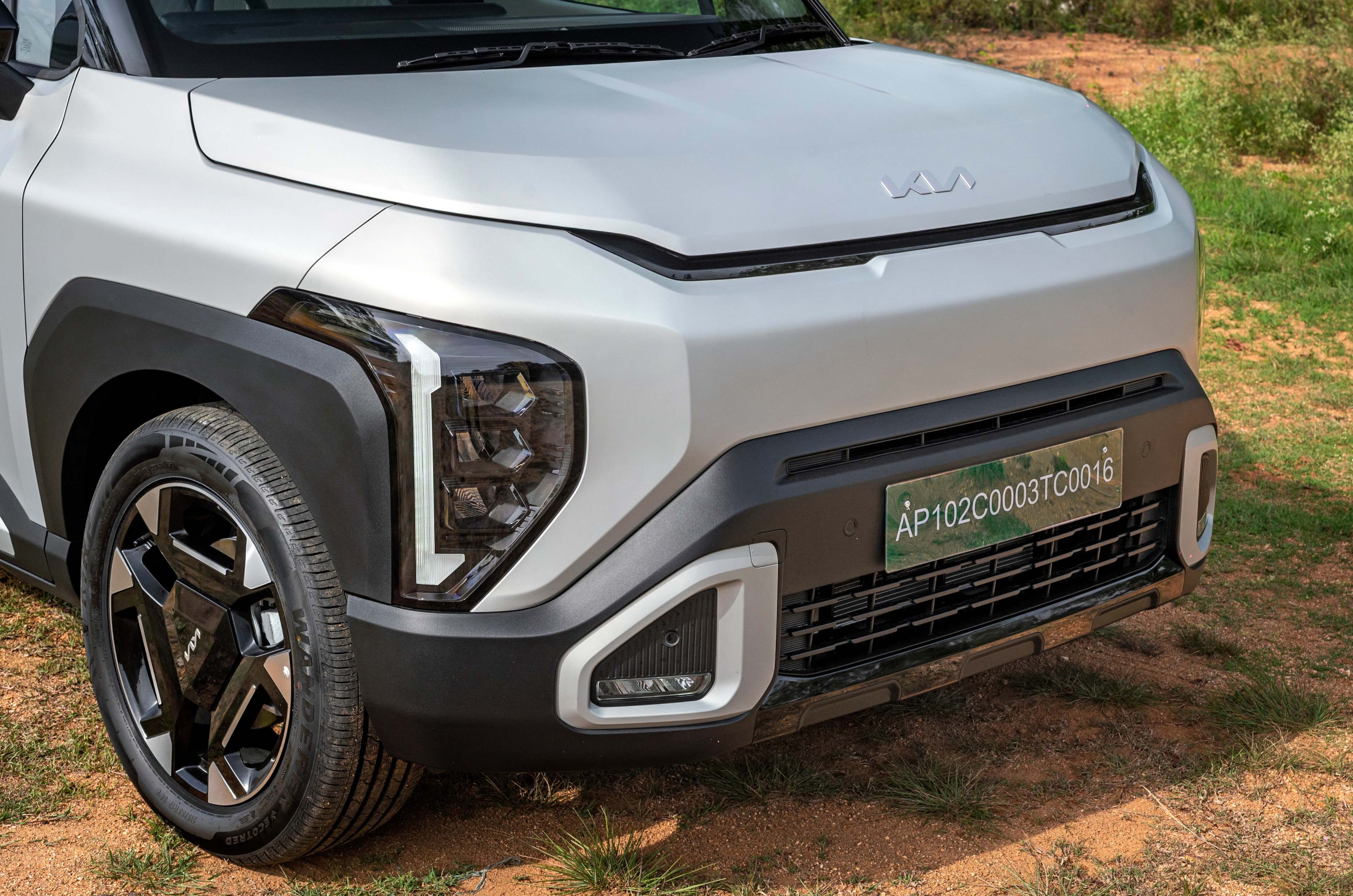
EV has a slimmer intake above the number plate and slightly different lower bumper

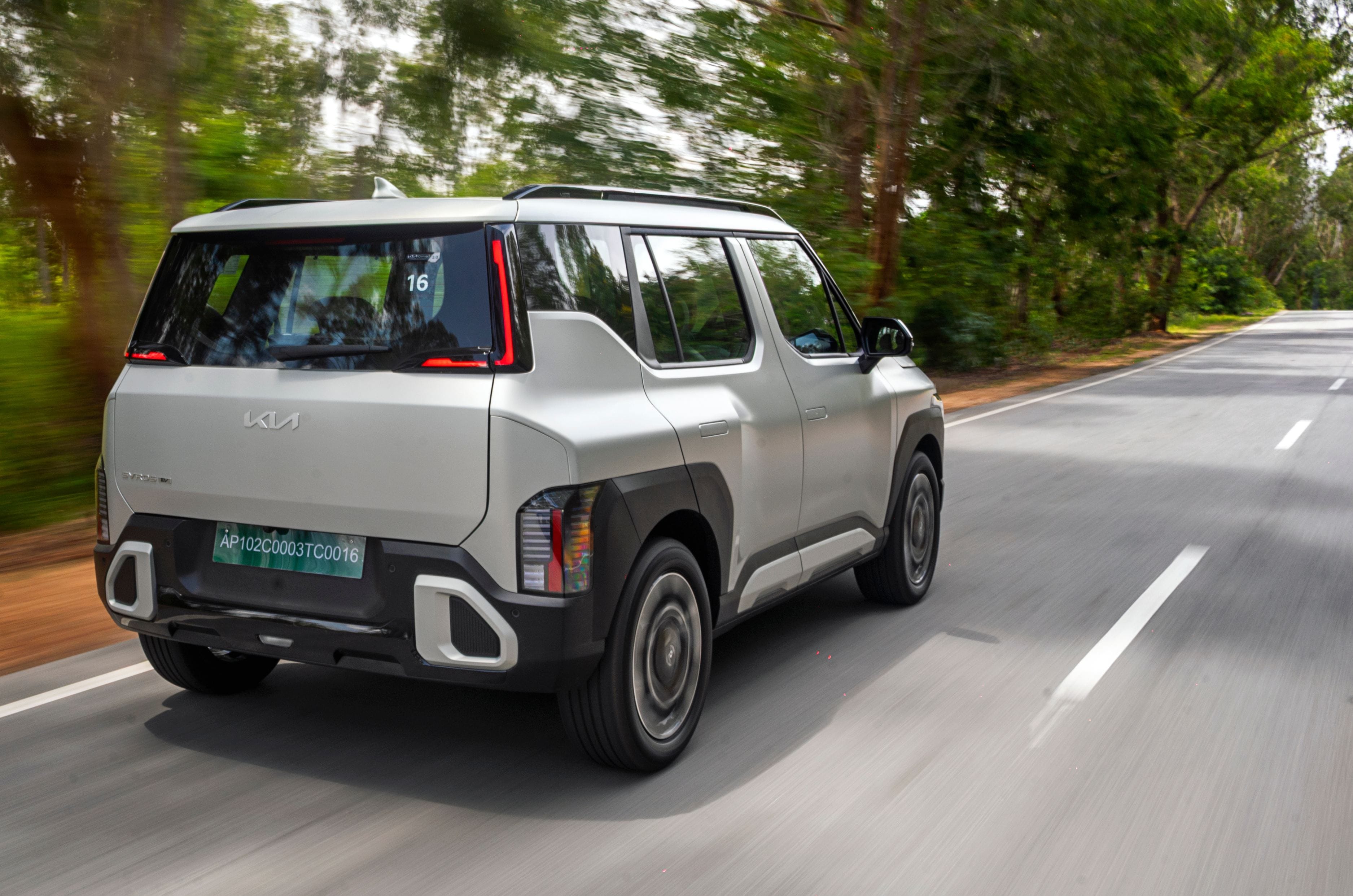
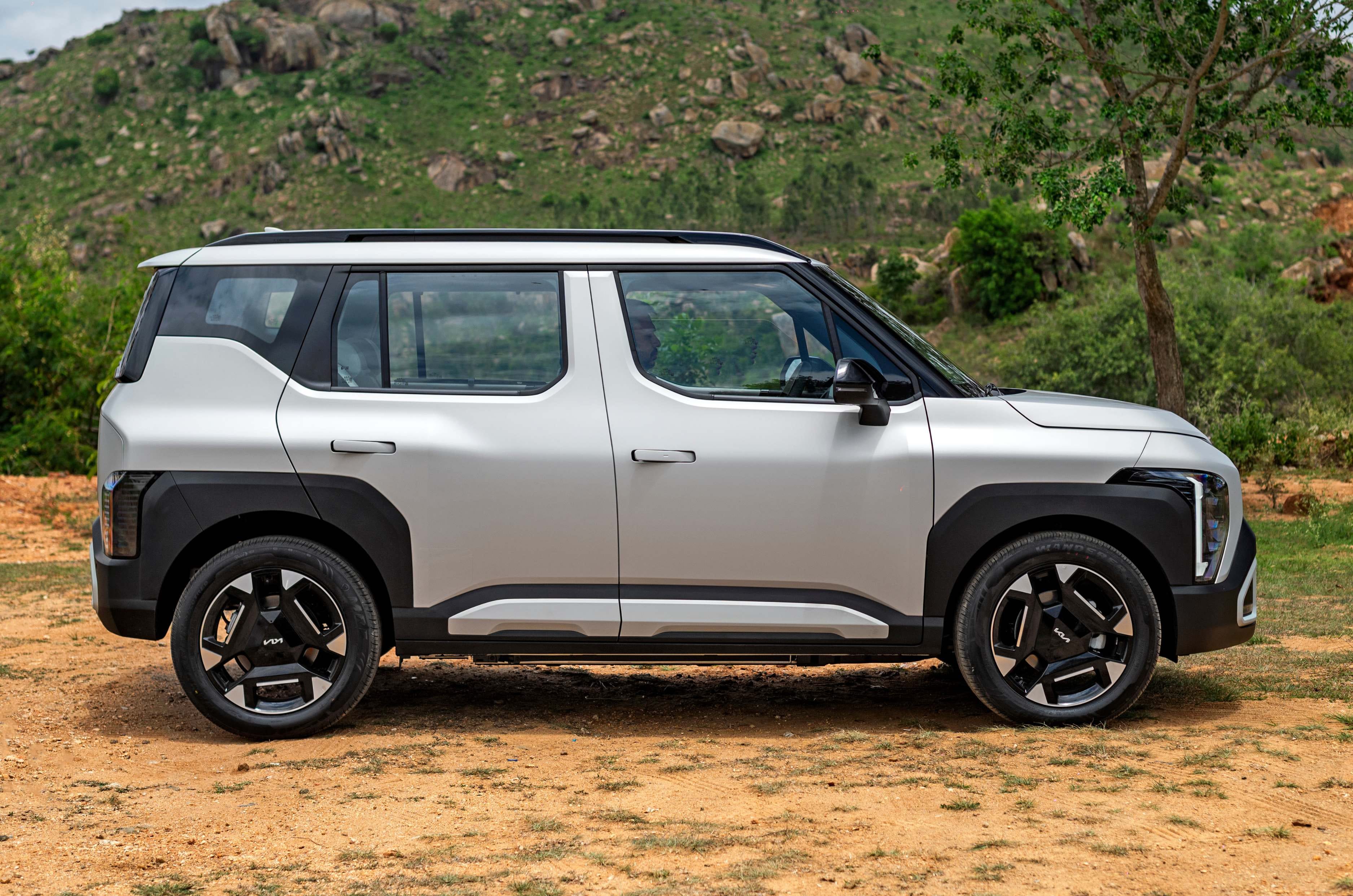
A game of spot the difference between the Syros EV and the ICE version would prove challenging for the casual observer, so here is the cheatsheet. Up front, the bumper is ever so slightly different, with a slimmer cooling slot above the number plate and minor tweaks to the body-coloured triangular pods that house the LED fog lamps. Apart from the charging port on the front left fender and the shorter roof rails, the profile is unchanged. Crouch down, though, and you’ll notice the battery pack is visible, like it is on the Hyundai Creta Electric. Kia claims ground clearance is 197mm which is 7mm more than the ICE version. The tri-spoke 17-inch alloys are the same ones that debuted on the ICE car but were discontinued with the facelift. No differences round the back either, save for an EV badge on the tailgate.
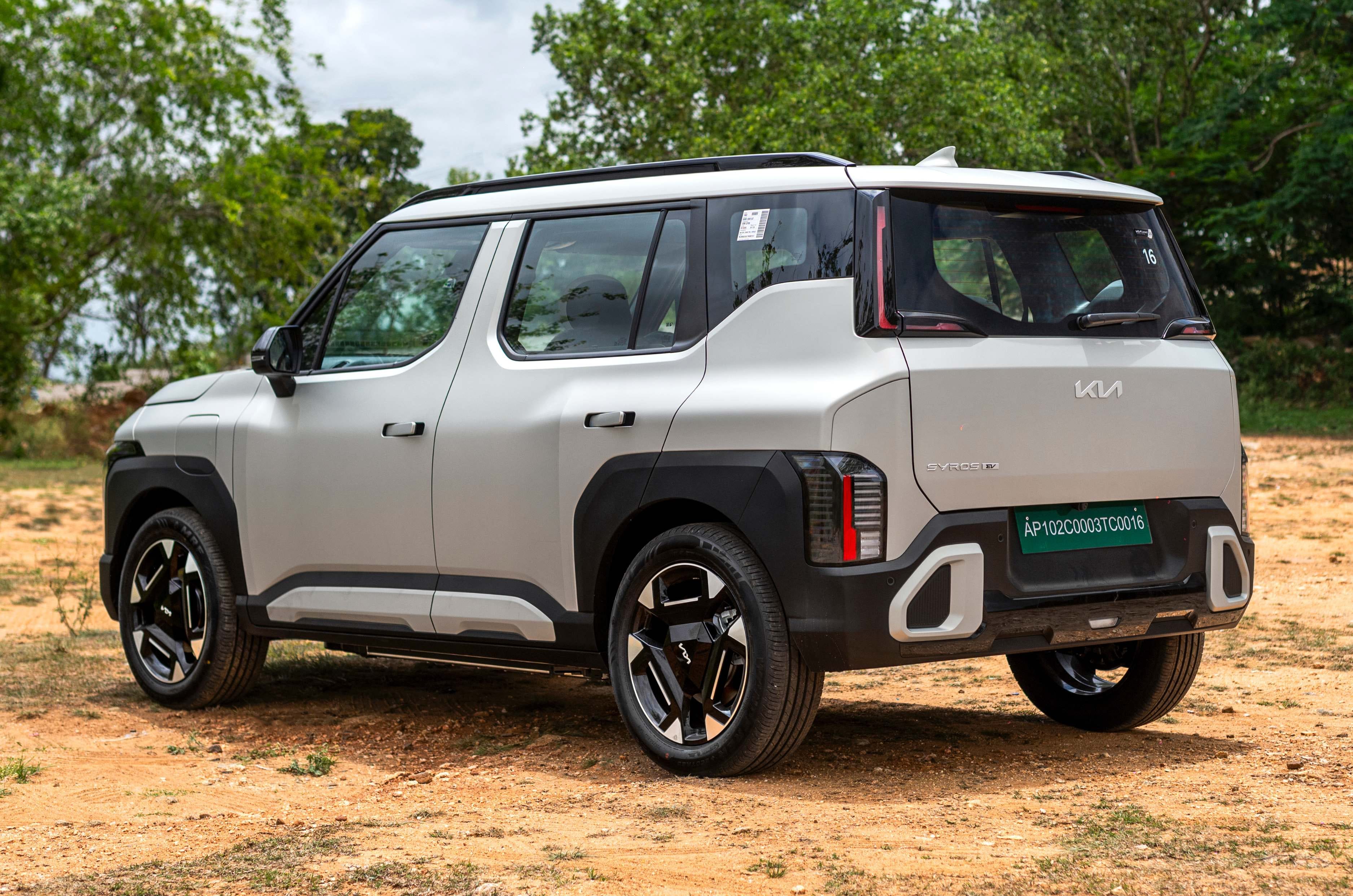
Split lighting lifts the otherwise bland rear

If you didn’t like the way the Syros looked, the EV isn’t going to change your mind. It is distinctive, though – like a Japanese kei car only larger, and Korean. Its blanked-off fascia looks appropriate on an EV, and the vertically oriented headlights give it a unique look. The cladding lower down on the bumper carries on to the wheel arches, doors and the rear, adding some muscle. Breaking up the large greenhouse are the pronounced B-pillar and the upward kink in the C-pillar, both of which are neatly done. And while the tailgate looks a bit blank, the split lighting – with L-shaped elements framing the rear windscreen and larger units at the edge of the bumper – looks great when lit up.

Syros EV Interior Space and Comfort – 10/10
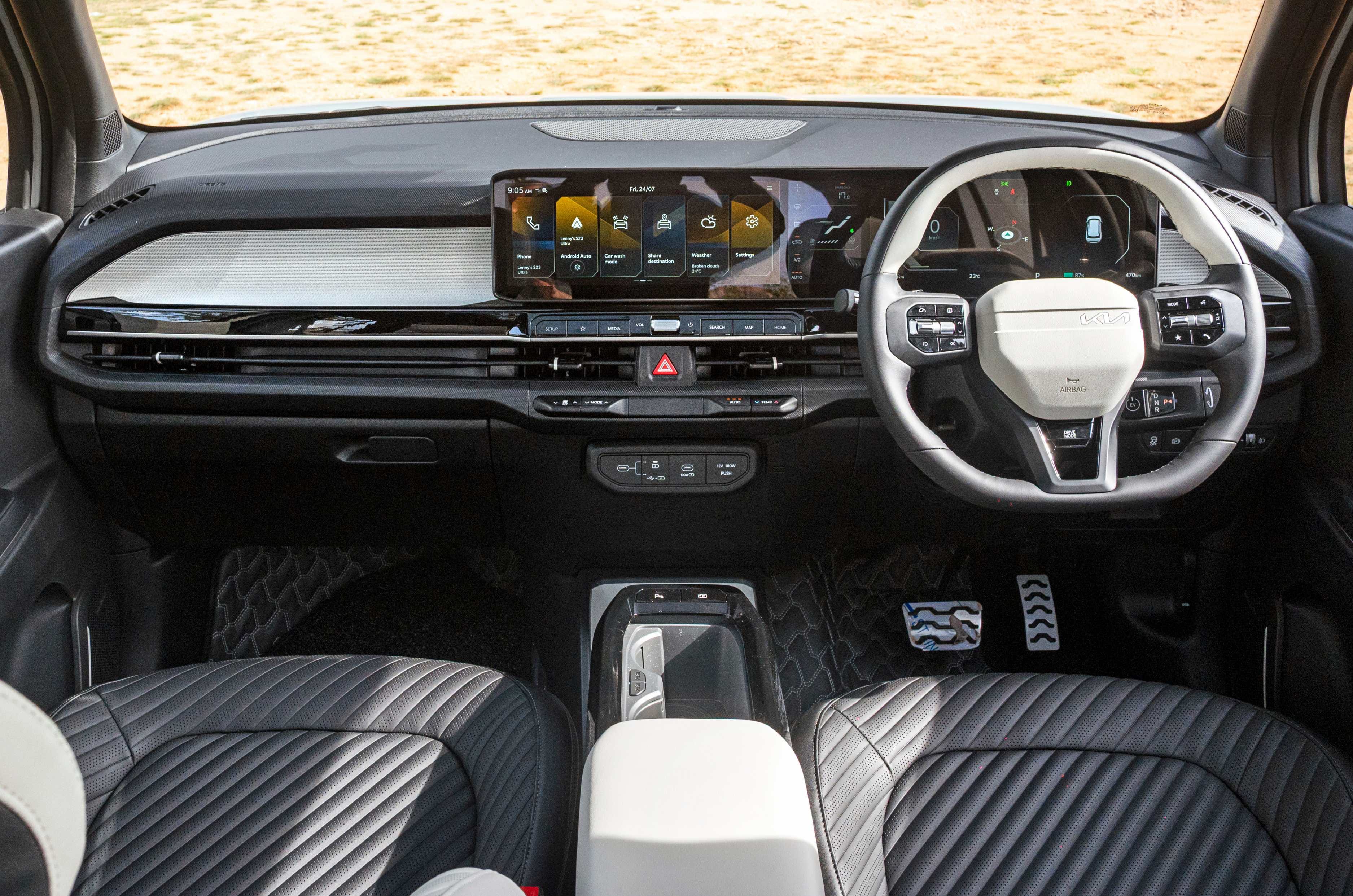
Dash layout is identical to the ICE version, but it gets the 3-spoke ‘wheel from the Seltos

Step inside and you start to understand why the Syros EV looks the way it does. Space for passengers, their knick-knacks and luggage is in abundance. With the EV’s drive selector positioned on the steering column, Kia has re-engineered the centre console to liberate a lot more storage. It now has two levels: the top floating portion has a small cubby under the armrest, along with two cupholders with their own sliding cover, while the lower level has a large storage area for a bag or such, another cupholder and a wireless charger. The front door pockets are just as accommodating, with room for a couple of bottles and an umbrella.
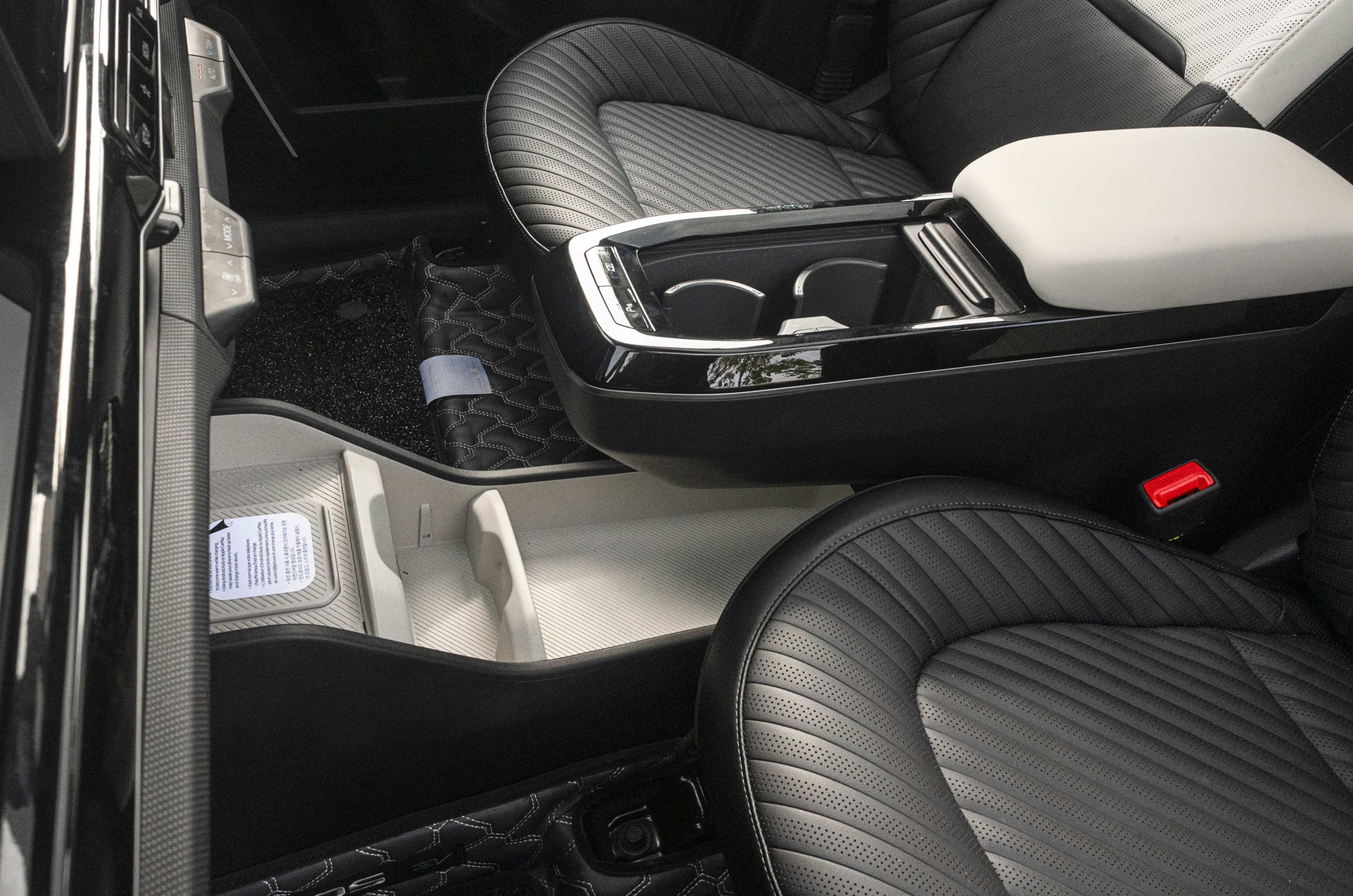
New center console has a lot of storage spaces

The front seats are supportive and comfortable, with heating and ventilation along with 4-way power adjustment for the driver. While the dash layout is unchanged, the EV gets the Seltos’ three-spoke steering wheel, but adjustment is still limited to rake and not reach. The EV uses a slightly different colour palette inside: our HTX+ test car gets a smart-looking black-and-off-white theme, the X-Line features a darker black-and-green ambience, while all other trims get an airy light grey and pastel blue theme. While most surfaces are hard plastic, the quality of the materials, fit and finish is top notch.
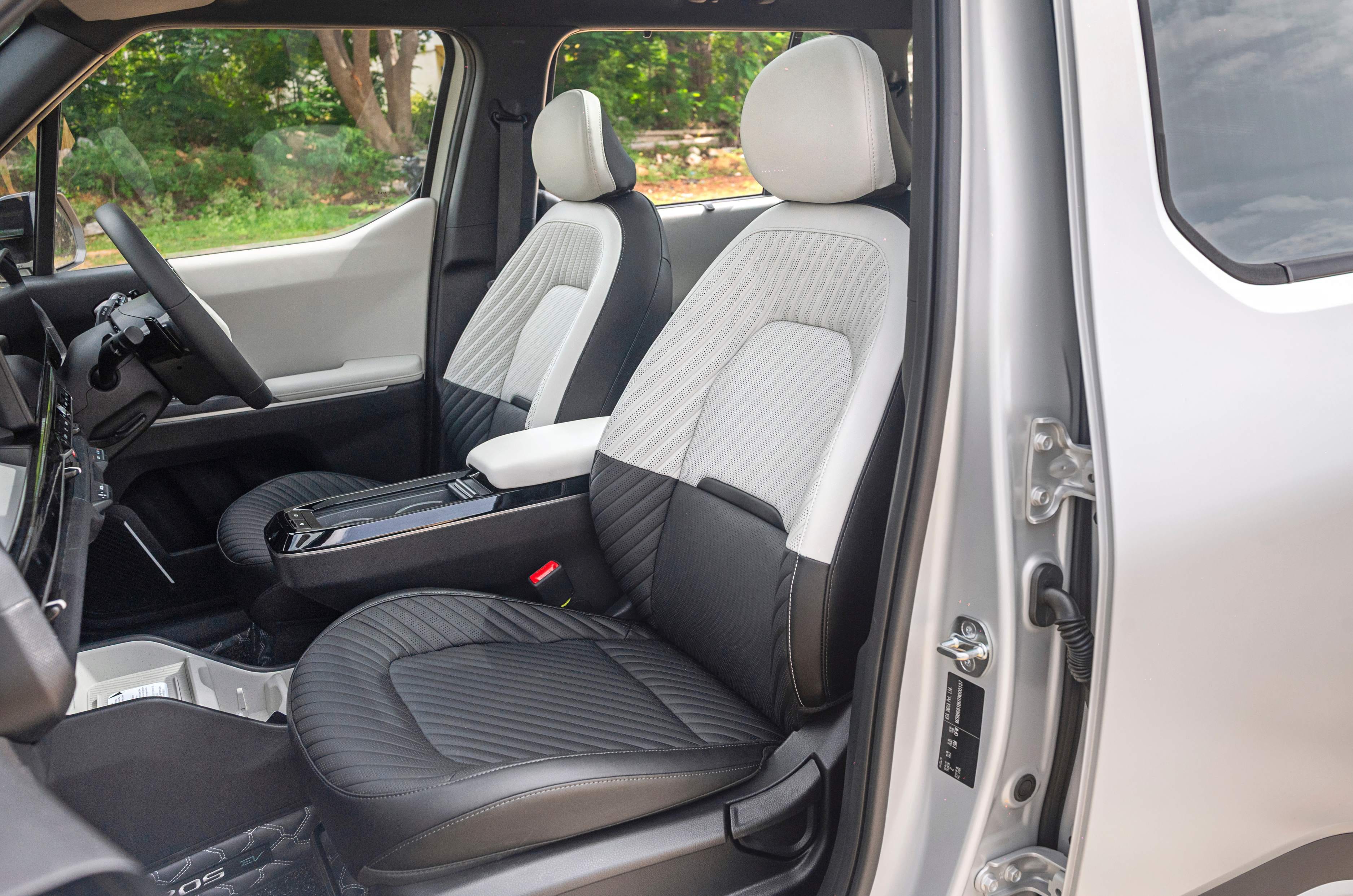
Front seats are comfy with heating, ventilation for both and power adjustment for the driver

The back seat remains a highlight, with plenty of room all around. The floor is slightly higher because of the battery pack, which means thigh support isn’t as good as in the ICE version. However, if you slide the bench back and stretch out, this isn’t much of an issue. A benefit of the raised floor is that it is now completely flat. Ventilation for the seat base carries over, but the backrest still misses out, as Kia says it would restrict its recline angle.
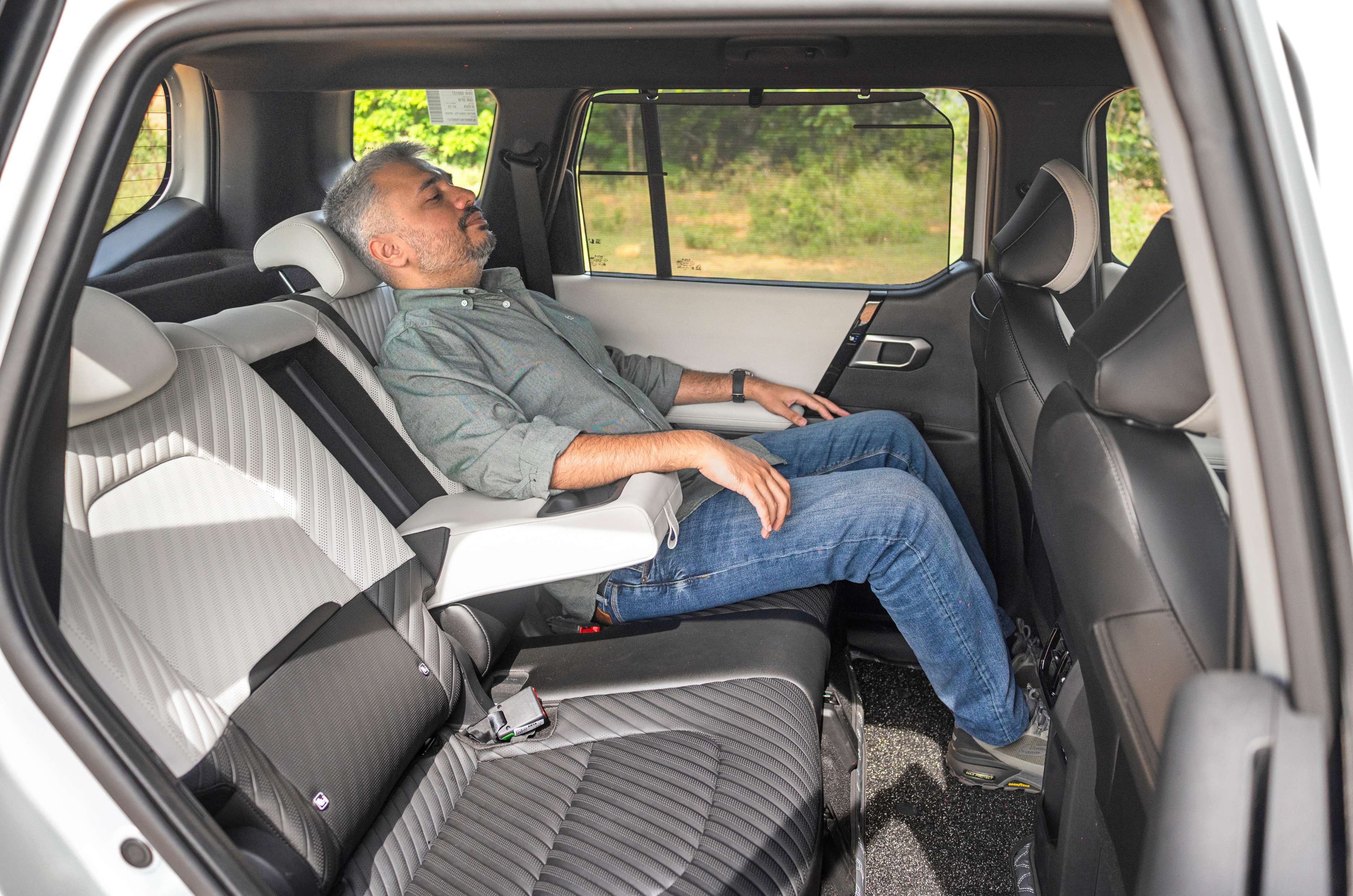
Higher floor slightly affects thigh support, but there’s ample room to stretch out

Boot space is identical to the ICE Syros at 390 litres with the seat all the way back, and 465 litres with it slid forward. The rear seats also split-fold – though not completely flat – to carry longer items. There is a 16-litre frunk too, though it is rather narrow.

Kia Syros EV Features and Safety – 9/10

Sitting proud on the dash is what Kia calls the Trinity Panoramic Display, comprising two 12.3-inch screens for the infotainment and driver’s display, with a 5-inch screen in between for the HVAC controls. The driver’s display is logically laid out, easy to read and offers some customisation, while the infotainment is sharp, snappy and has a clean UI. The EV gets a dedicated tab that shows several parameters related to the battery, range and energy consumption. It can also help find the nearest charger, condition the battery before charging, as well as set up charging schedules.
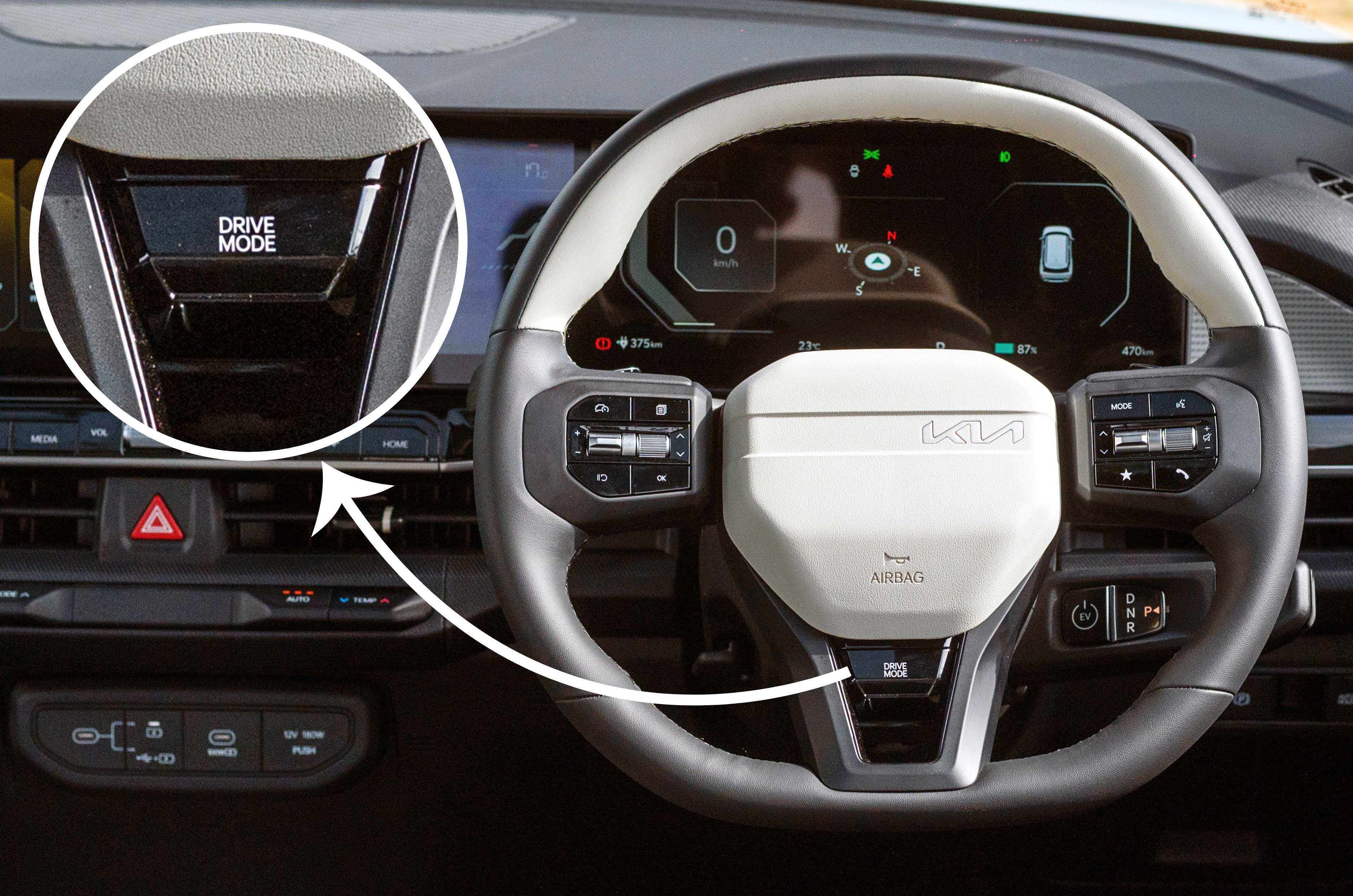
Handy drive mode button to cycle between Eco, Normal and Sport modes

The infotainment also offers wireless Android Auto and Apple CarPlay and, on the top trims, powers a superb Harman Kardon audio system with eight speakers, including one on the dash and a subwoofer in the boot. Sunblinds and rear AC vents are standard, while the massive panoramic sunroof features on all but the bottom two trims. Our second-from-top HTX+ also gets an integrated dashcam.
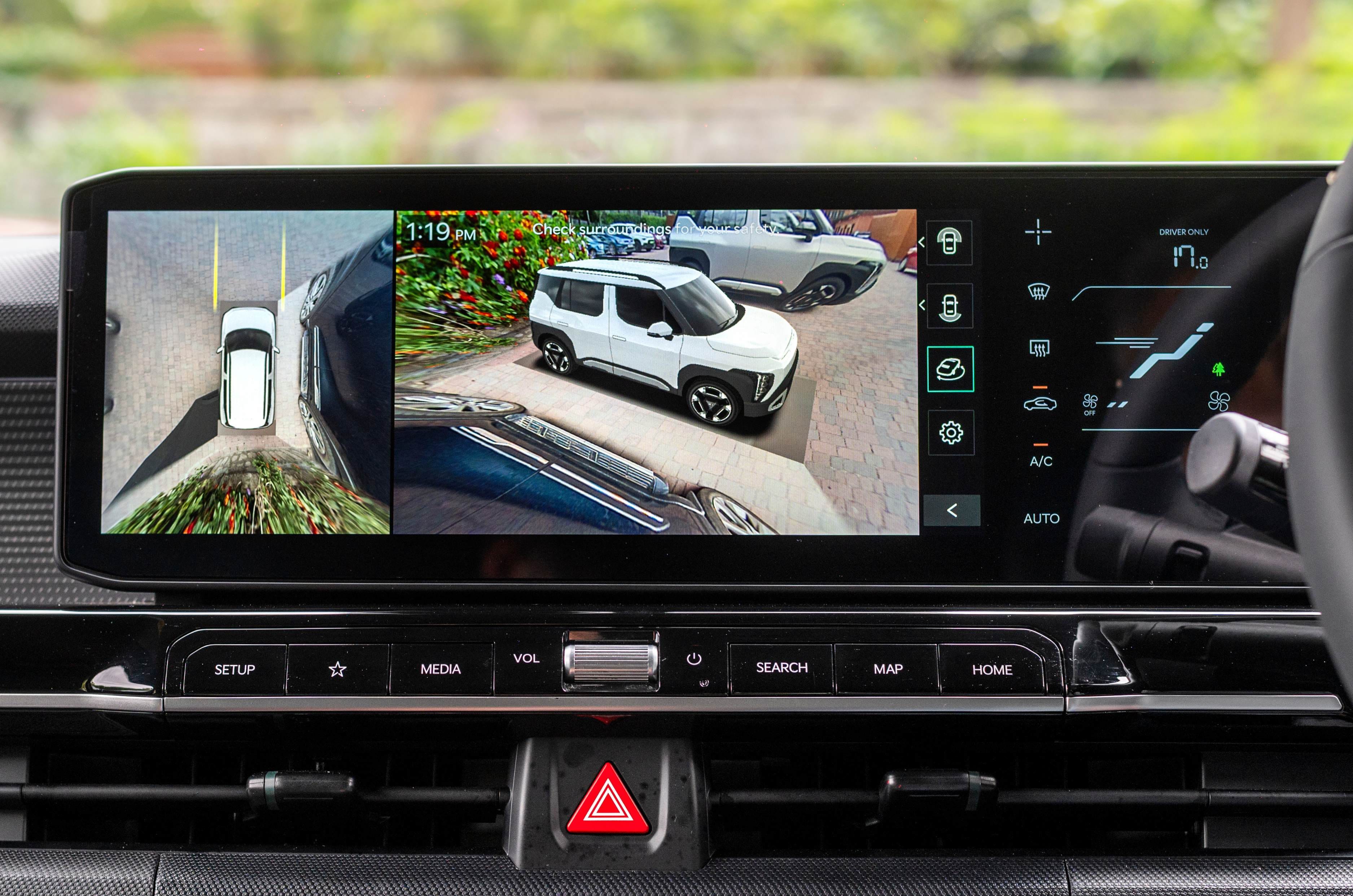
360-degree camera is sharp, but only available on top X-Line trim

Overall, the Syros EV is very well equipped, but some features are available only on the top X-Line variant, including Level 2 ADAS, ambient lighting, a 360-degree camera and a household-style three-pin socket in the back seat. Restricting features to the top trim isn’t unusual; however, the X-Line can only be had in Aurora Black Pearl or Matte Graphite, which might not be to all tastes.
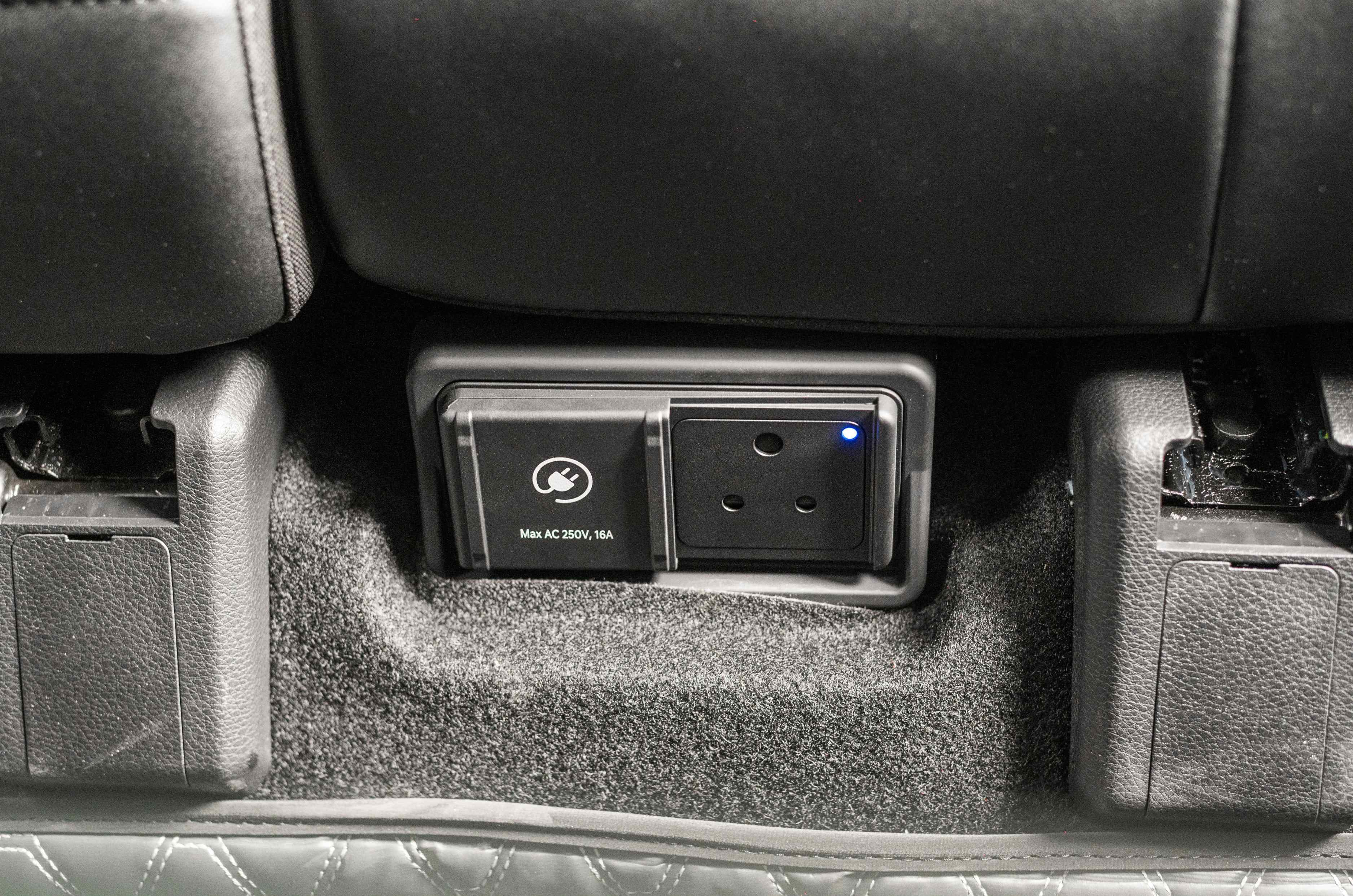
V2L power outlet under the rear seat

The standard safety suite is robust, including six airbags, all-wheel disc brakes, tyre pressure monitoring and ISOFIX mounts. The ADAS suite is also comprehensive, including adaptive cruise control with stop-and-go, lane keep assist, forward and rear collision avoidance, and a blind-spot camera. At the time of writing, the Syros EV does not yet have an official crash safety rating, but considering the ICE version has a five-star BNCAP rating, a similar result for the EV can be expected.

Kia Syros EV Performance and Refinement – 9/10

The Syros EV is available with the same 42kWh and 51.4kWh NMC battery packs as the Carens Clavis EV and the Hyundai Creta Electric. Here too, they power a single motor on the front axle producing 135hp with the smaller battery and 171hp with the extended-range version. Torque is identical on both at 255Nm.
Borrows the 42 and 51.4kWh battery packs from the Carens Clavis EV

Performance was brisk on our 51.4kWh test car, with the 0-100kph sprint claimed to take 8.1 seconds. There are three drive modes to choose from – Eco, Normal and Sport – with each sharpening throttle response a little more than the last. Initial response in all modes is linear so as not to overwhelm those who aren’t used to the instant torque, but there is a strong shove as you get further into the throttle. Overtaking, then, is quite effortless, even in Eco and Normal, almost never needing a switch to Sport for a quick pass.
Initial acceleration is linear, but there is plenty of shove for quick overtakes

The regen braking modes – selected via the paddle shifters – are also very well calibrated, with a noticeable increase in resistance in each mode and the ability to turn it off completely. Holding the left paddle engages one-pedal driving, which uses regen to bring the car to a full stop. It works quite seamlessly and can be very convenient once you get used to it.
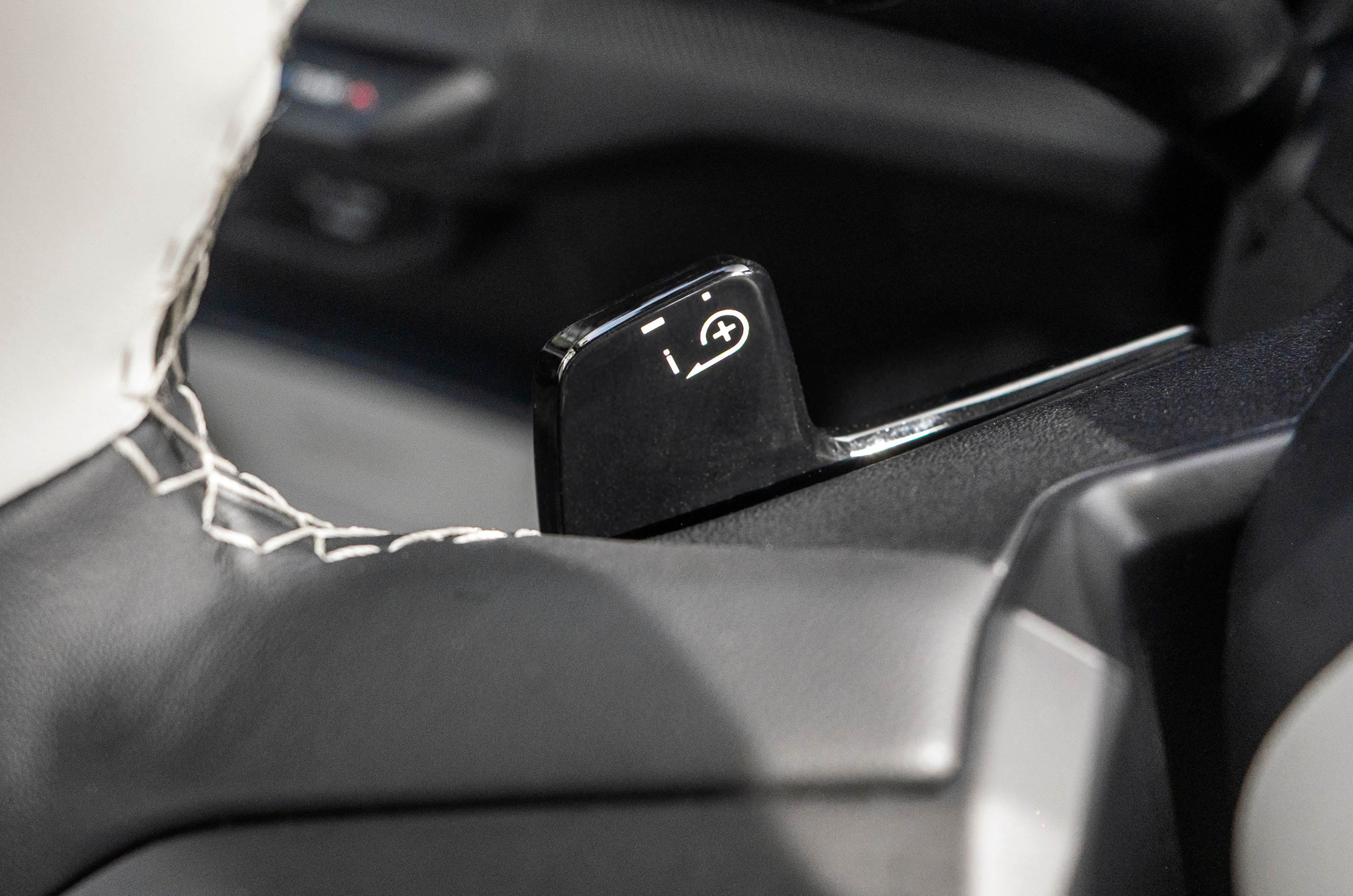
Regen modes are well calibrated and the i-Pedal function is handy in the city

Refinement is good too, with no noticeable motor whine making its way into the cabin. It’s so quiet, in fact, that Kia has added a virtual humming sound to warn pedestrians. Since there is no engine note inside the cabin, you do hear a bit more road noise, but at no point does it become intrusive.

Kia Syros EV Range and Efficiency – 8/10

Claimed MIDC range for the 51.4kWh battery is 526km, while the 42kWh unit claims 443km. Our short drive didn’t allow us to test these claims, but if the real-world range we achieved in the Clavis EV and Creta Electric is anything to go by, the Syros EV Extended Range should comfortably manage around 400km on a single charge. We will verify this when we have the car for longer.
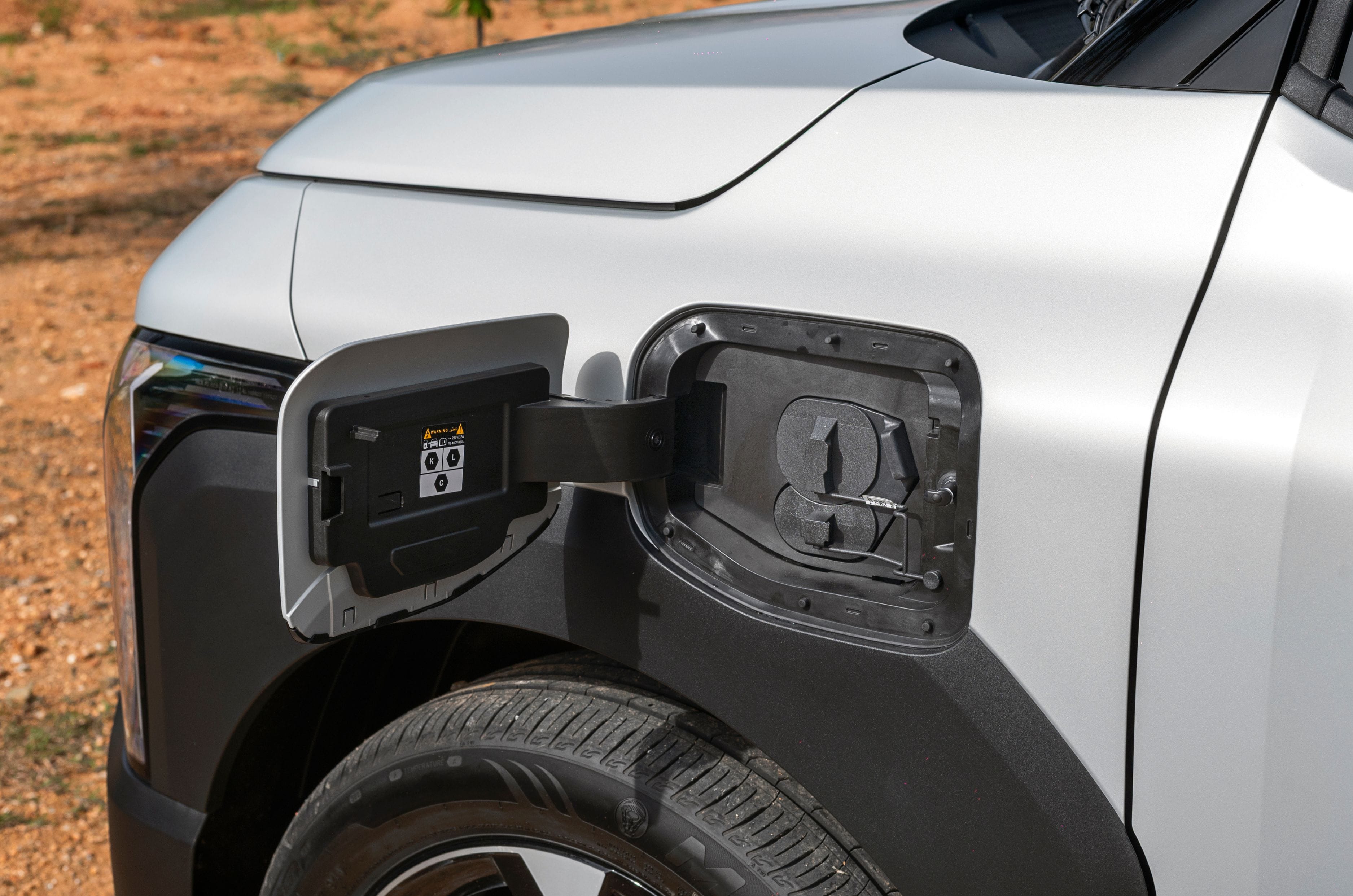
Capable of DC fast charging at up to 100kW

Topping up a depleted battery from 10 to 80 percent is said to take 39 minutes on a 100kW DC fast charger. The same charge using the optional 11kW wallbox charger, is said to take almost five hours for the Extended Range and four hours for the Standard Range.

Kia Syros EV Ride Comfort and Handling – 8/10

The ride on the Syros EV is a touch more absorbent than on its ICE counterpart. Sharp bumps don’t come through to the cabin as abruptly, but there is still an underlying firmness to it. This firmness is there to help body control, but being a tall, narrow car, there is still a fair bit of body roll through the corners. It does feel stable though, and overall grip is strong.
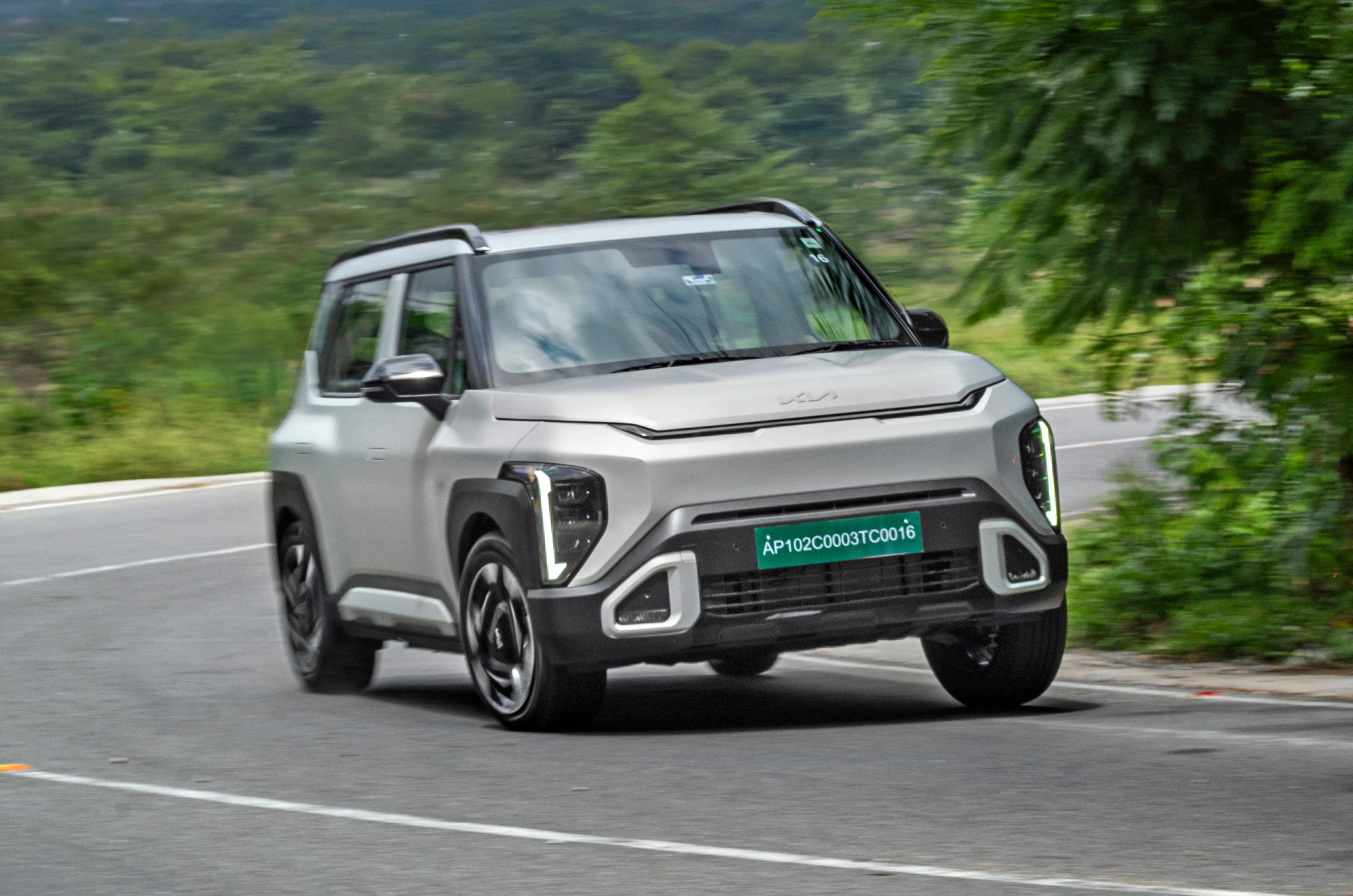
There’s plenty of body roll, but it remains stable through the bends

Steering feel is also good, and it weighs up as speeds rise, which helps with high-speed stability. The four-wheel disc brakes are strong too, bringing the Syros to a confident halt when you drop the anchors. Overall, it isn’t the most entertaining car to drive, but it feels stable and secure at speed while being easy to manoeuvre in tight spaces.

Kia Syros EV Value for Money – 7/10

Introductory prices for the Syros EV start at Rs 13.5 lakh for the 42kWh version and Rs 17 lakh for the 51.4kWh Extended Range. If you want the fully loaded X-Line, that’ll be a cool Rs 20 lakh. To reduce the upfront purchase cost, a BaaS scheme is available with prices starting at Rs 7.99 lakh, and battery rental costing Rs 3.3 per kilometre. To sweeten the deal, Kia is offering a 15-year/unlimited-kilometre HV battery warranty for the first owner, along with an assured buyback value of up to 80 percent after three years.
Its pricing means the Syros EV rivals the Tata Nexon EV and Mahindra XUV 3XO EV, as well as larger EVs like the MG Windsor and Maruti e Vitara. As such, the 42kWh Syros EV makes for a very compelling option, undercutting its rivals in the sub-four-metre EV space. It is easily the most spacious in this segment and is very well equipped even in the lower trims. However, its case weakens with the 51.4kWh Extended Range. It is significantly pricier than its immediate rivals, overlapping with the larger-battery versions of the Windsor and e Vitara. While the Syros EV has its merits and even outdoes them in some areas, buyers might find the allure of a bigger car for the same money too hard to resist.

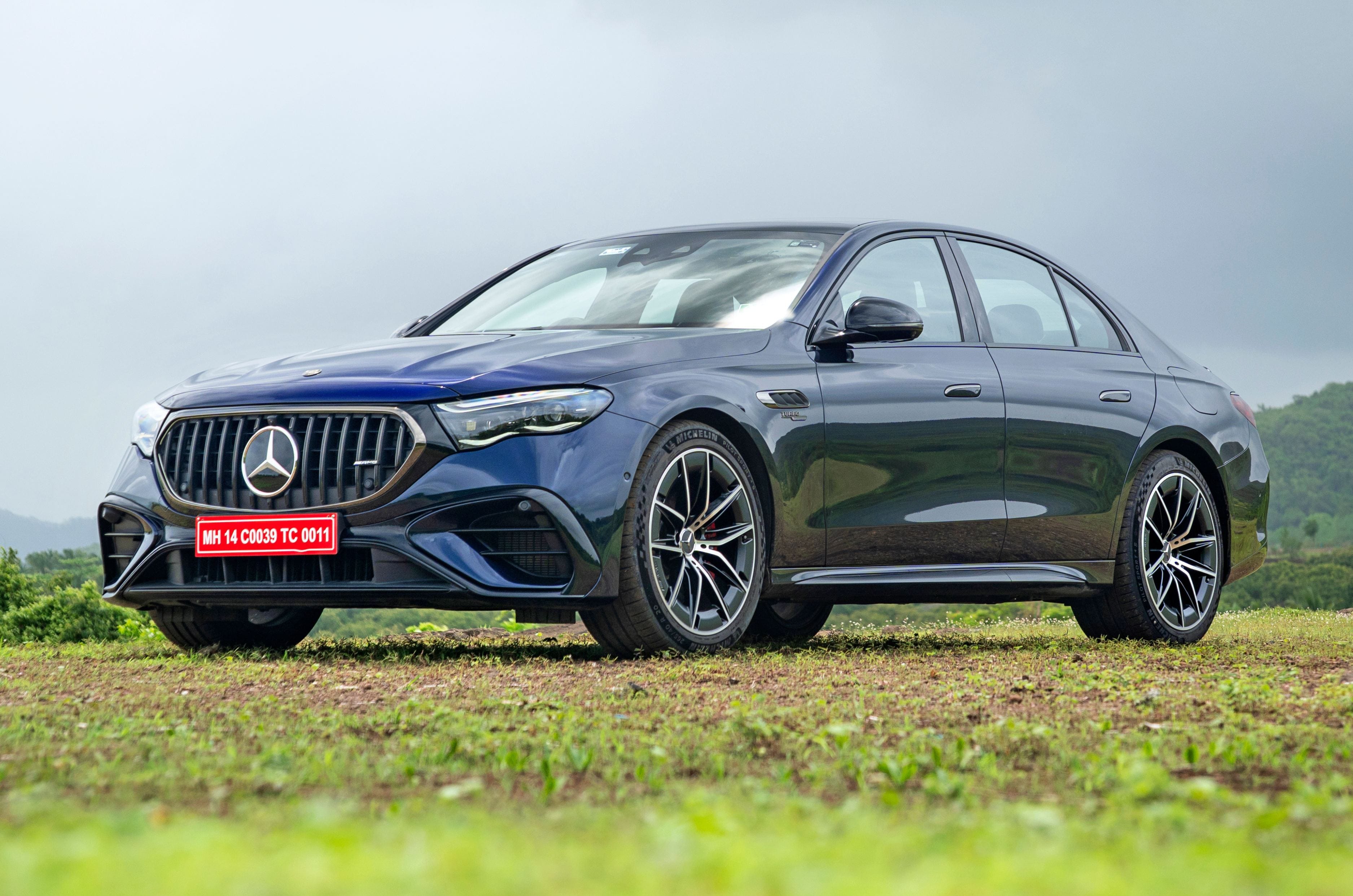
3 reasons to buy the Mercedes-AMG E 53 PHEV and 3 reasons not to

Mercedes-AMG E 53 PHEV

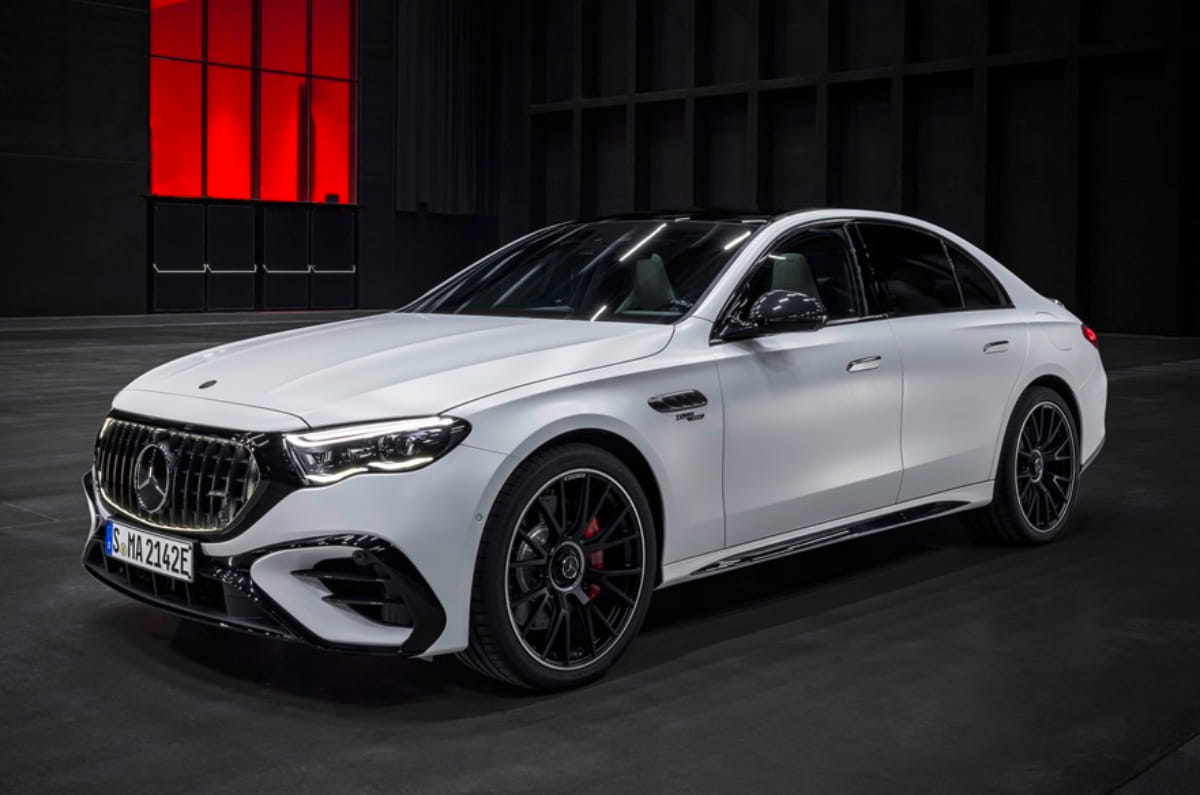
Mercedes-Benz has bolstered the E-Class range in India with the performance-focused AMG E 53 plug-in hybrid, which is priced at Rs 1.45 crore (ex-showroom). Unlike the regular India-spec E-Class, which is an LWB (long-wheelbase) model, the AMG E 53 PHEV is a shorter SWB (standard-wheelbase) version. It’s also the only AMG version of the current-gen E-Class on sale worldwide. If you’re interested in bringing home the AMG E 53 PHEV, we’ve listed the performance sedan’s most prominent strengths and weaknesses below.

Pros

Exciting powertrain

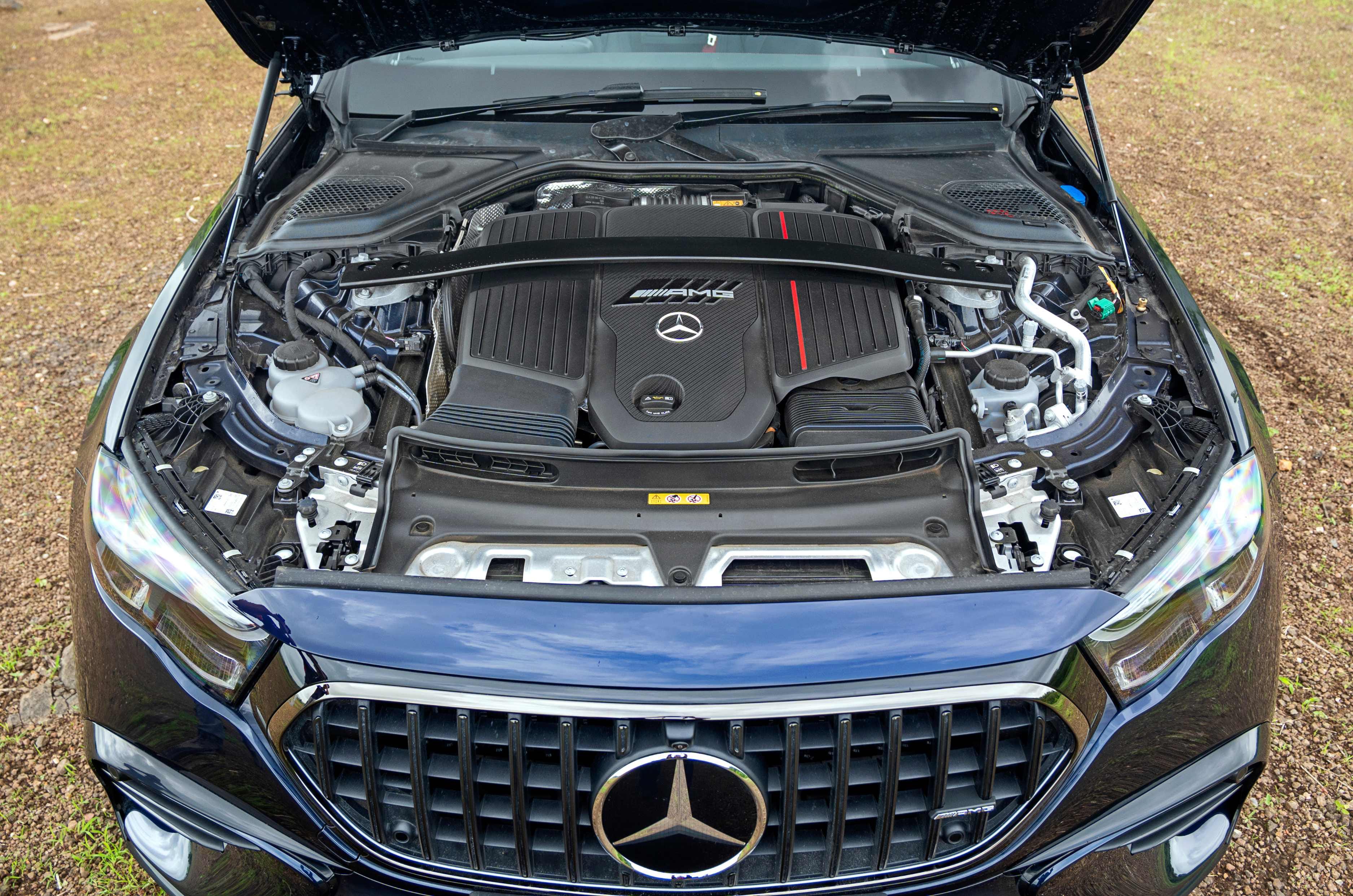
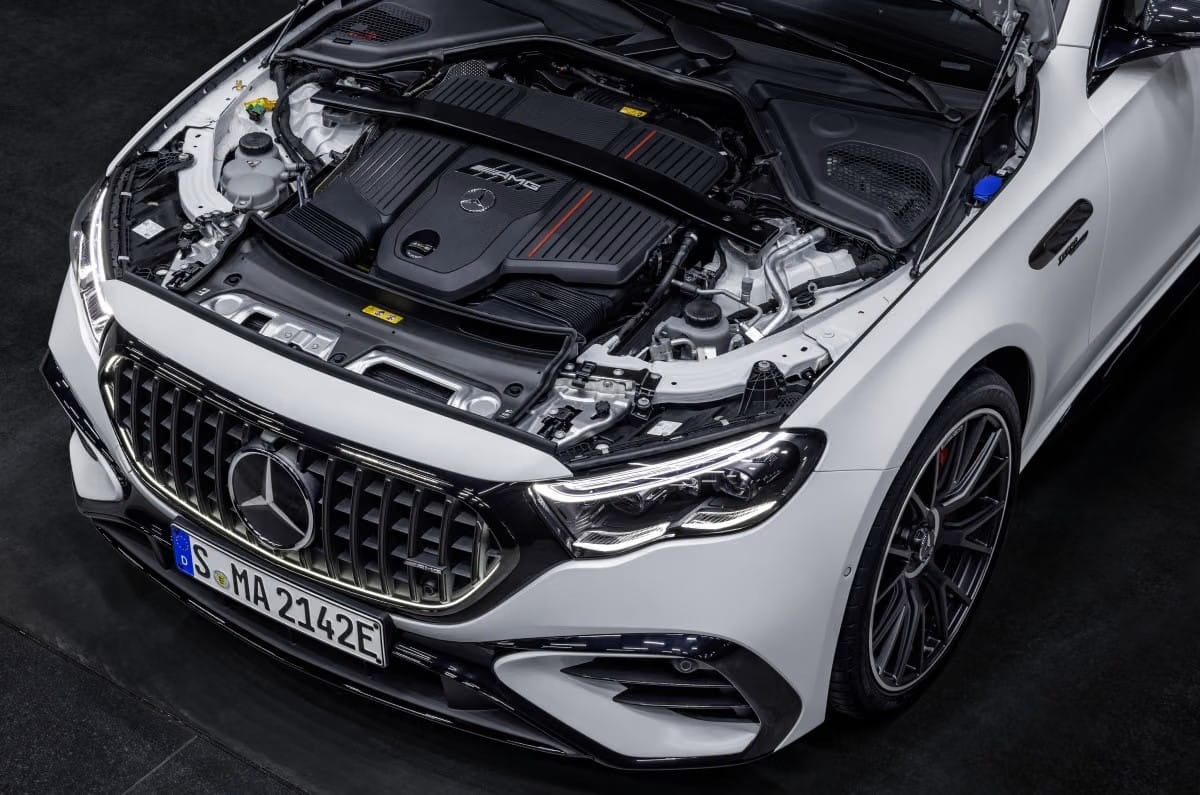
The E 53 comes with a plug-in hybrid setup that marries a 449hp 3.0-litre turbo-petrol straight-six, a 28.6kWh battery pack and an electric motor housed within the 9-speed automatic gearbox. The combined output is 585hp and 750Nm (612hp when using launch control), which is routed to all four wheels via Mercedes’s 4Matic+ AWD system.

As we noted in our Mercedes-AMG E 53 PHEV review, it’s a blast to drive in its most aggressive Sport+ drive mode. Both the engine and electric motor operate at maximum capacity, providing rapid but smooth acceleration and strong power delivery. The gearbox also feels well-suited to the powertrain, with quick shifts and an ‘M’ mode that gives you full control and doesn’t intervene even if you hit the redline. That said, the gearbox can feel clunky and too eager at crawling city speeds, as it tends to constantly shuffle through the lower gears.

For the E 53, Mercedes-AMG claims a 0-100kph time of 4 seconds with launch control and an electronically limited top speed of 250kph, which rises to 280kph with the optional AMG Driver’s Package.

Usable electric range

Thanks to its 28.6kWh battery, the E 53 claims a 100km all-electric range, which, in the real world, will likely hover in the 75-90km ballpark. This is more than enough to complete daily urban commutes without burning a drop of petrol, making the E 53 surprisingly affordable to run, at least in the city.

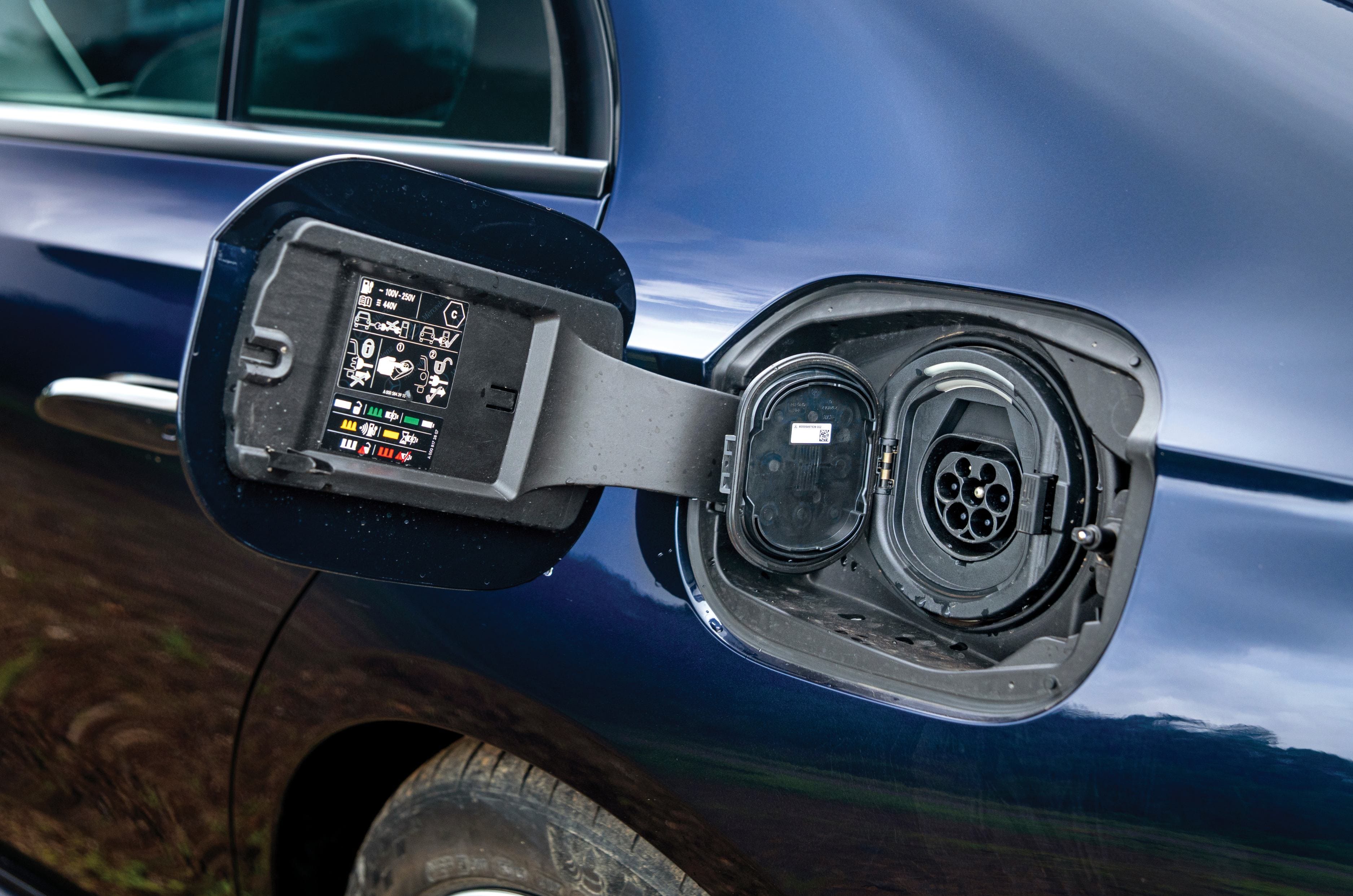
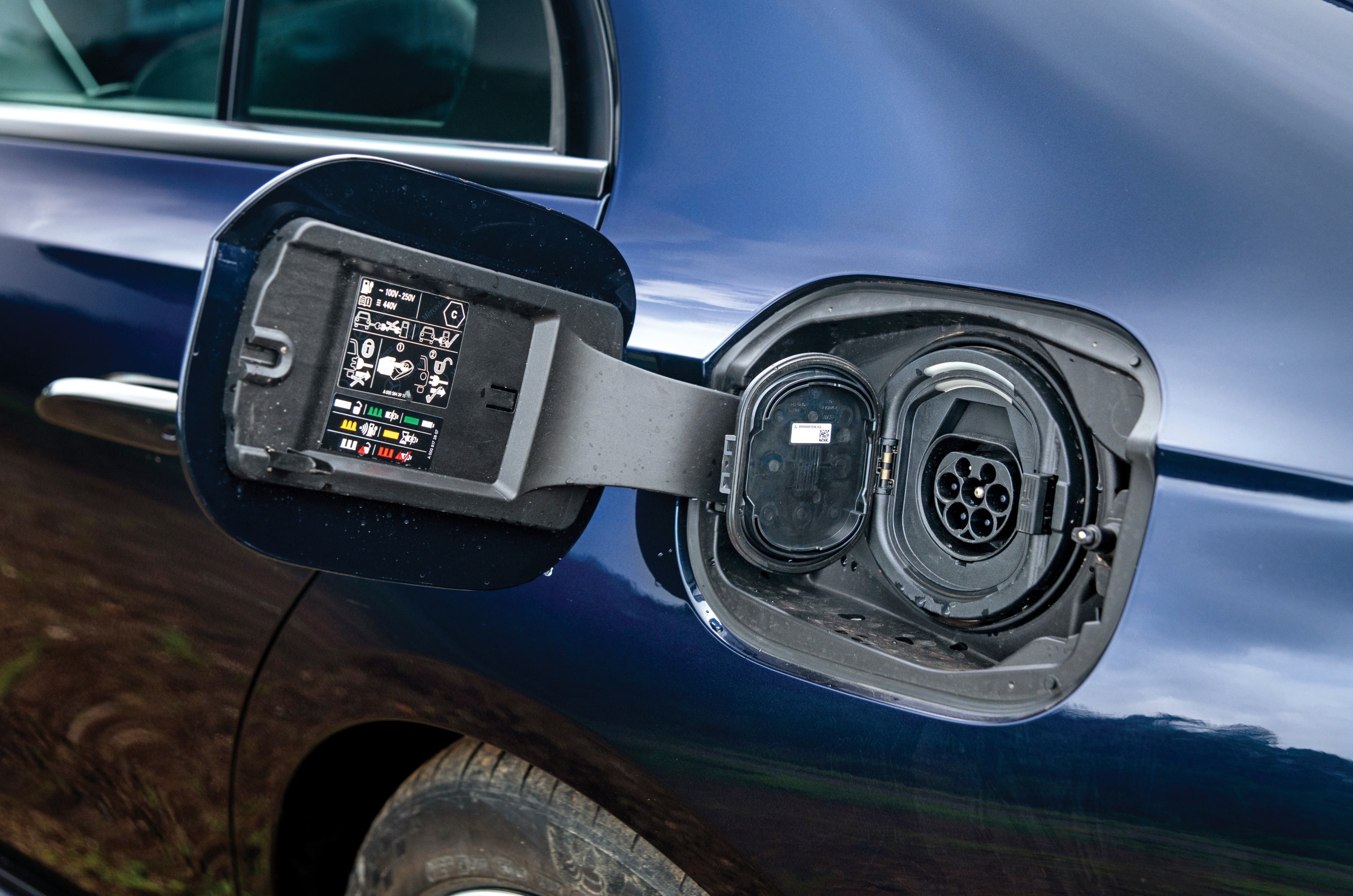
Once the battery begins to deplete, the straight-6 engine fires up and drives the wheels, but even then, the hybrid system pitches in via constant regenerative braking and electric assistance, ensuring the E 53 feels responsive while delivering better fuel efficiency than an equivalent pure-petrol performance sedan. As for charging, an 11kW AC wallbox takes 2.25 hours for a 0-100 percent charge, while a 60kW DC fast charger takes 20 minutes for a 10-80 percent top-up.

Fantastic handling

Around the bends, the E 53 feels remarkably composed, even though it lugs around a fairly substantial battery pack – its low placement helps keep the centre of gravity down. Body roll is kept in check. The Sport and Sport+ drive modes noticeably tighten up the car; the dampers become more responsive, and the steering gains heft.

The AWD system is rear-biased, and the Michelin Pilot Sport 4S tyres confidently deploy all that power to the road. Rear-wheel steering of up to 2.5 degrees is also included, aiding stability through high-speed corners.

Cons

Unnatural brake feel

Despite being fitted with massive 390mm discs up front and regenerative braking, the E 53 doesn’t deliver a natural or consistent pedal feel. Stopping power is strong, but the spongy, inconsistent brake pedal puts a damper on an otherwise fun driving experience.

Poor in-cabin ergonomics

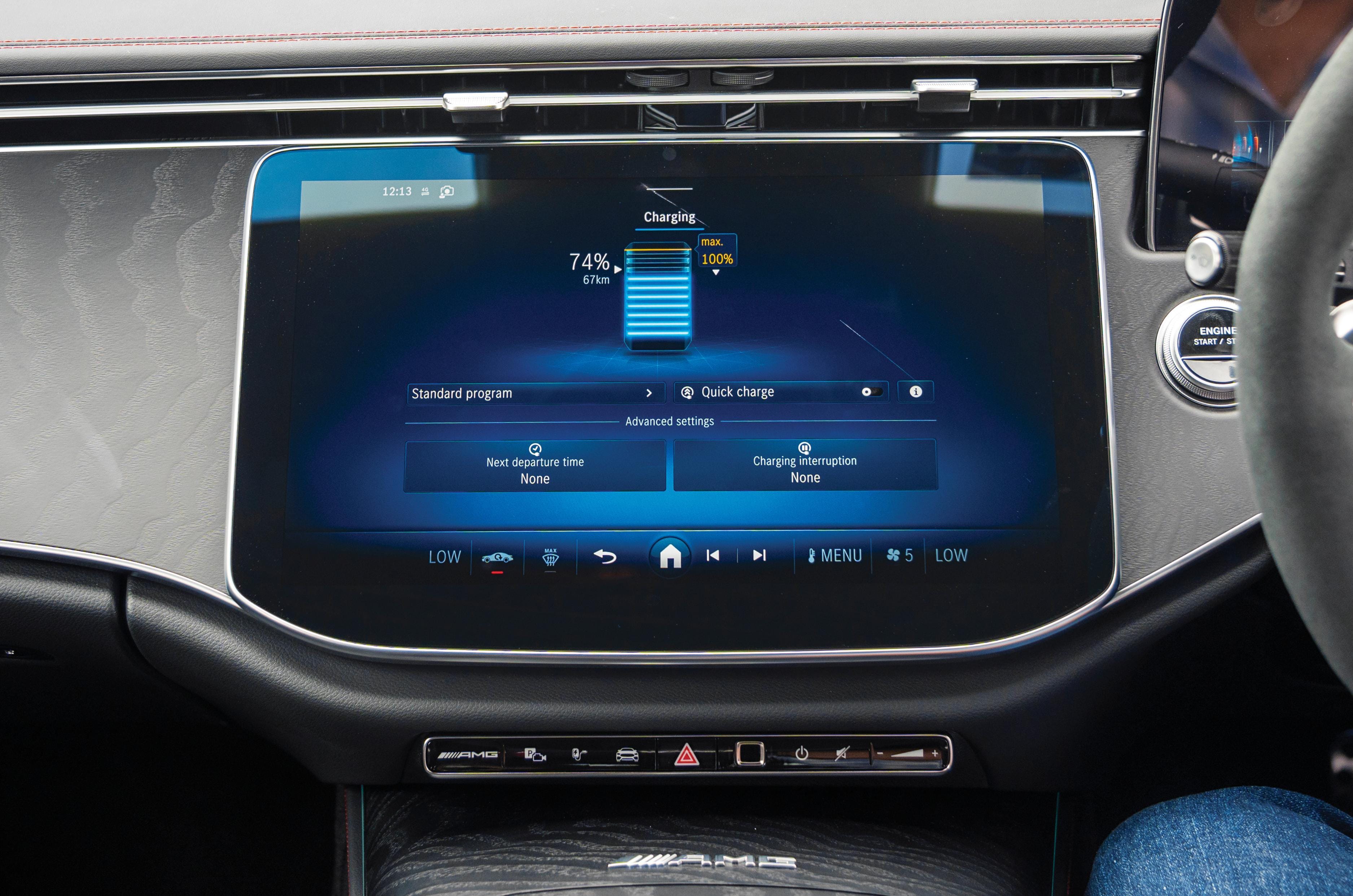
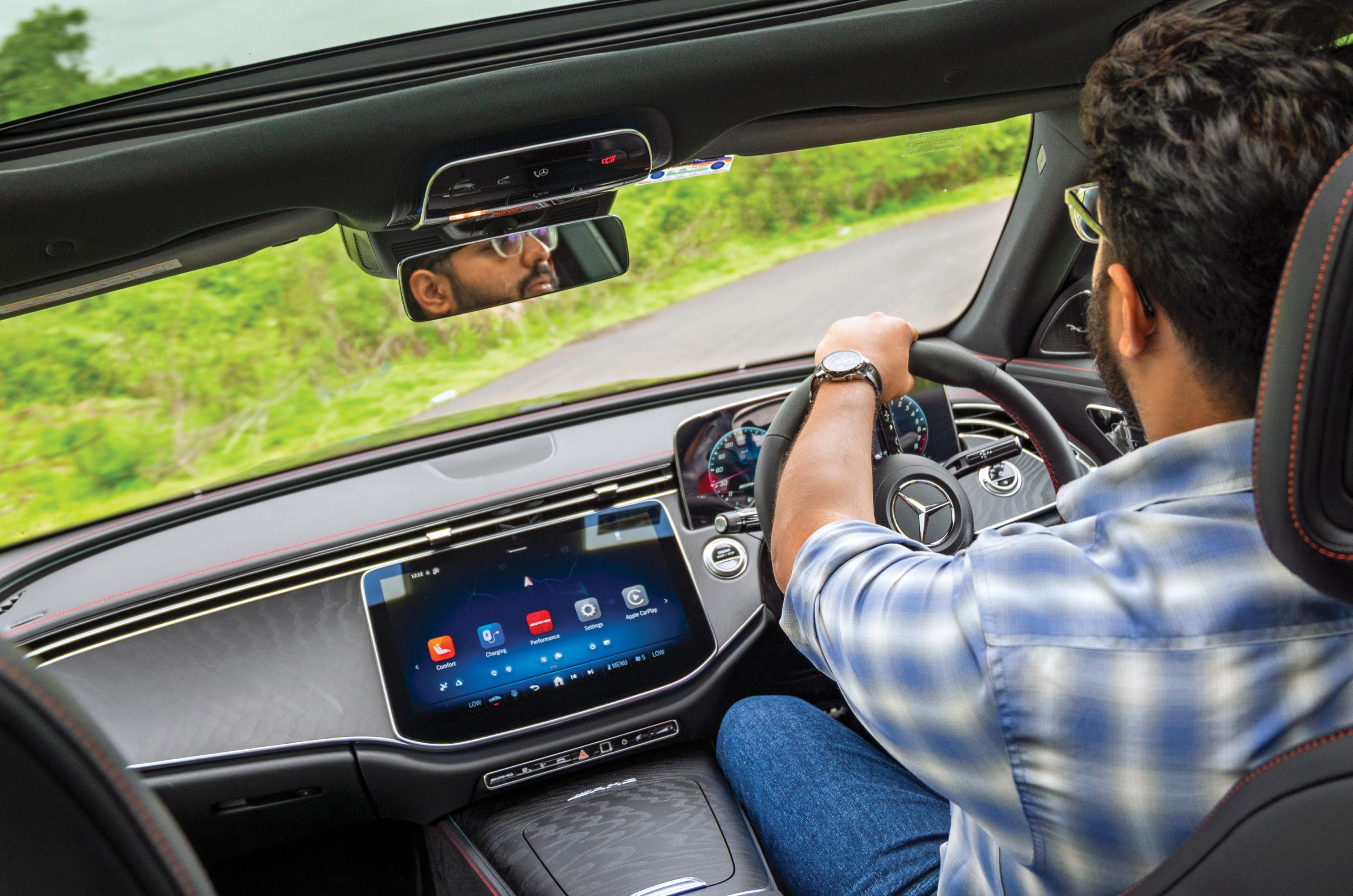
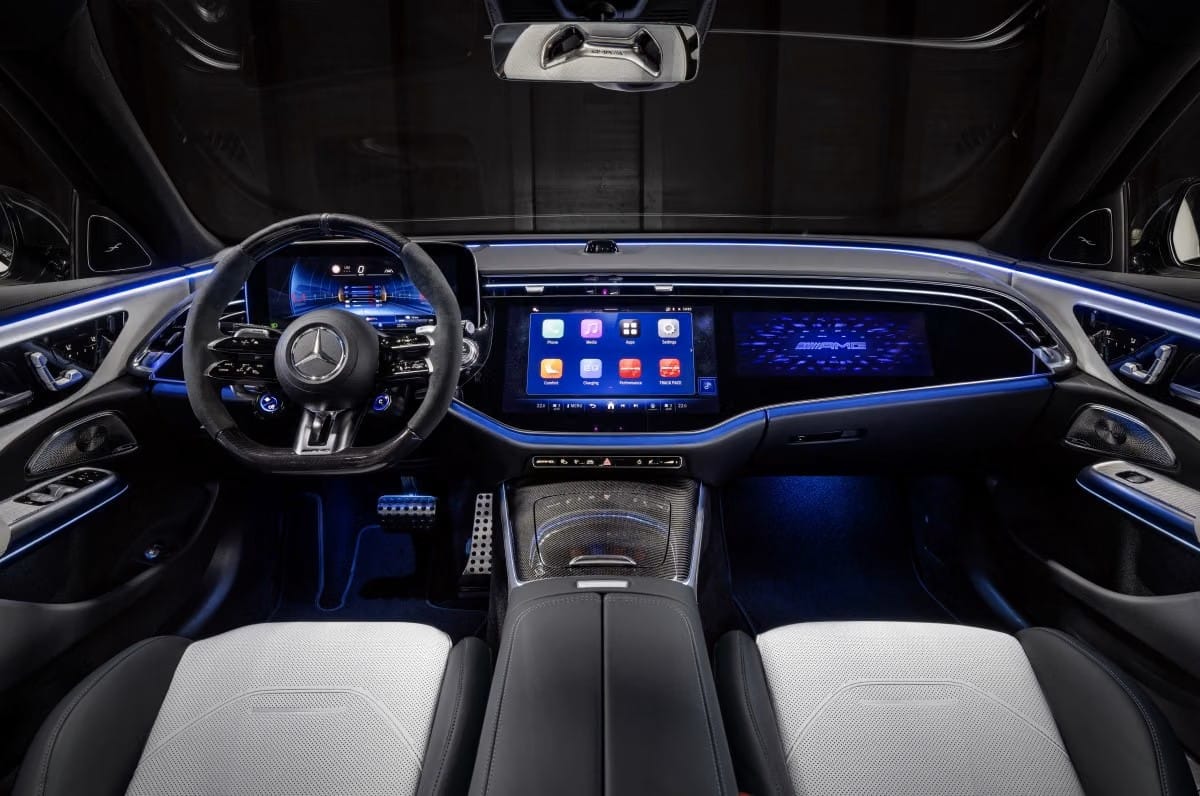
While the interior layout of the E 53 looks and feels very upmarket, its ergonomics suffer due to a glaring absence of physical controls. Much of the in-cabin functionality is folded into the large 14.4-inch central touchscreen, which isn’t all that intuitive to use while on the move. The touch-capacitive controls on the steering wheel further add to the frustration.

Compromised boot space

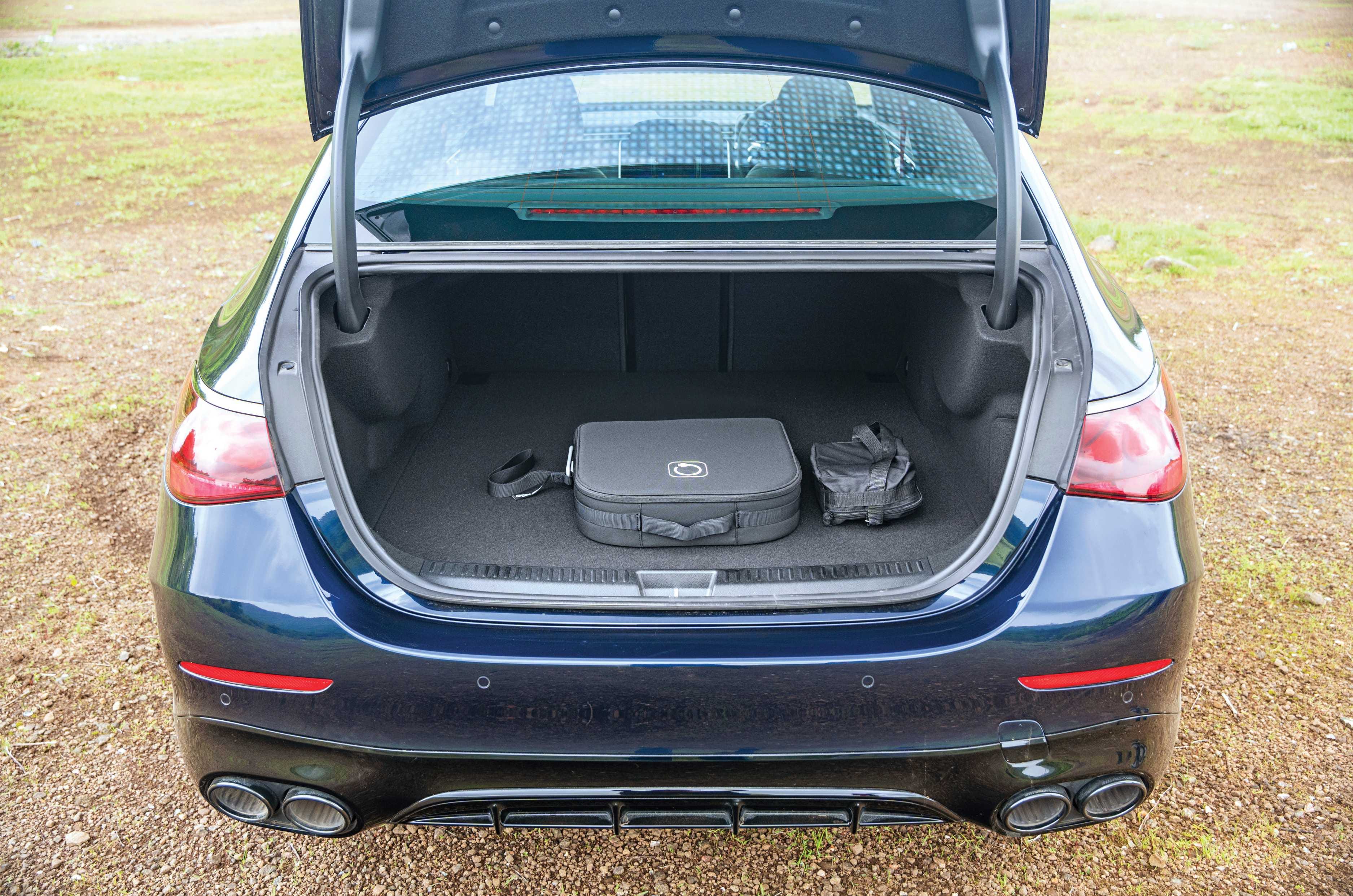
While the battery pack helps enhance the E 53’s performance and daily usability, its placement beneath the boot floor significantly eats into luggage capacity. At 370 litres, the E 53’s boot is 170 litres smaller than that of the standard E-Class. There’s no spare wheel either, with its space instead occupied by the charging cable and puncture repair kit.

Mercedes-AMG E53 Hybrid 4MATIC+ review: Current Affair

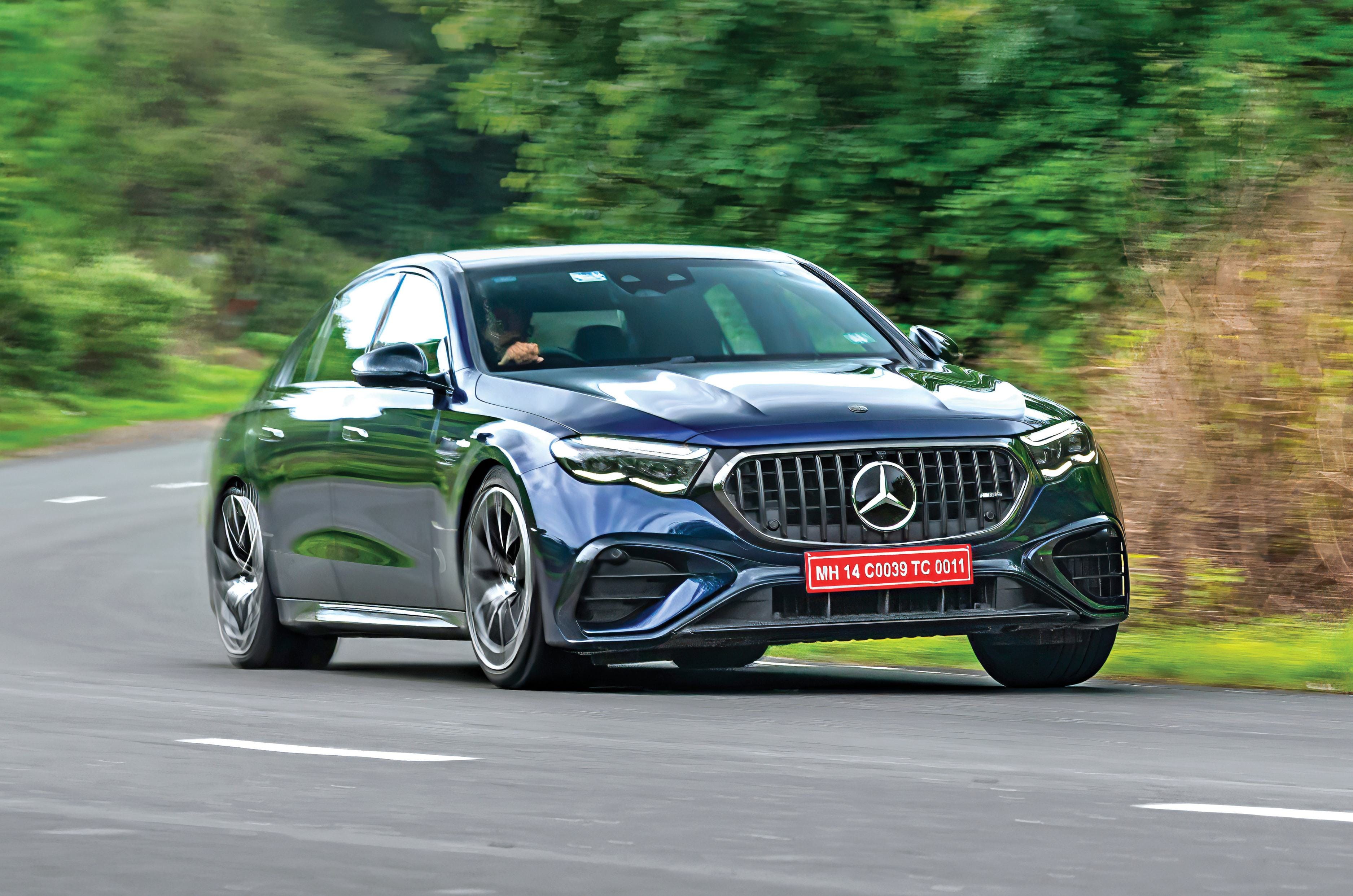
Mercedes-AMG E53 front quarter tracking

The Mercedes-AMG E53 Hybrid 4MATIC+ arrives at a time when performance cars are being asked to do more than simply go fast. It has to deliver the pace and character expected of an AMG while embracing electrification to meet increasingly stringent emissions norms and changing buyer expectations. The result is a plug-in hybrid performance sedan that combines a 3.0-litre turbo-petrol inline-six engine with an electric motor for a formidable system output of 585hp, while also offering enough electric-only range for mundane daily drives.

But this isn’t just an E-Class with a bigger battery and more power. The E53 gets AMG-specific chassis hardware, all-wheel drive, rear-wheel steering and a suite of performance-focused electronics designed to counter the added weight. Can this electrified AMG still deliver the thrills enthusiasts expect while remaining a genuinely usable luxury sedan every day?
Mercedes-AMG E53 Exterior Design and Engineering

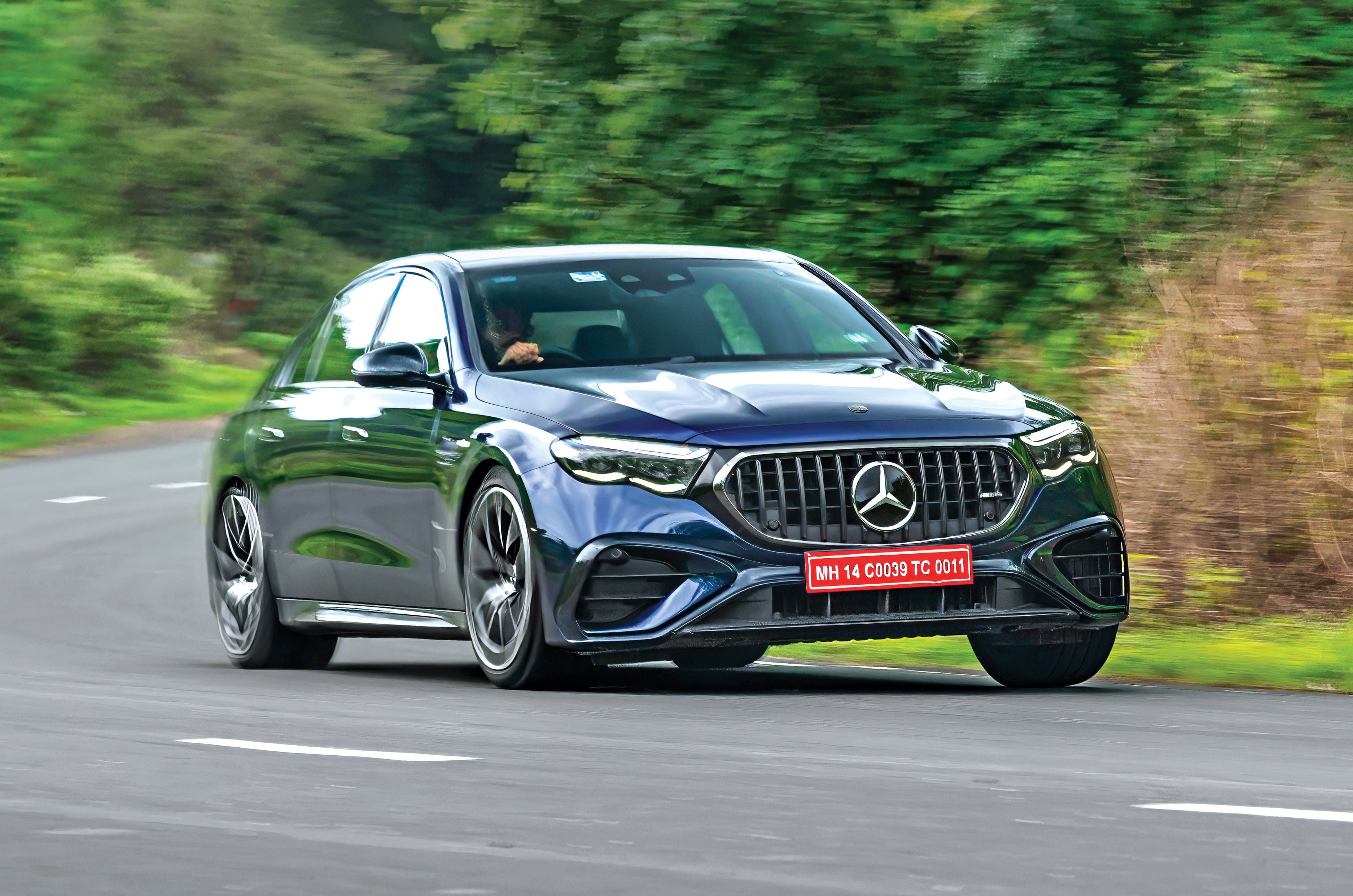
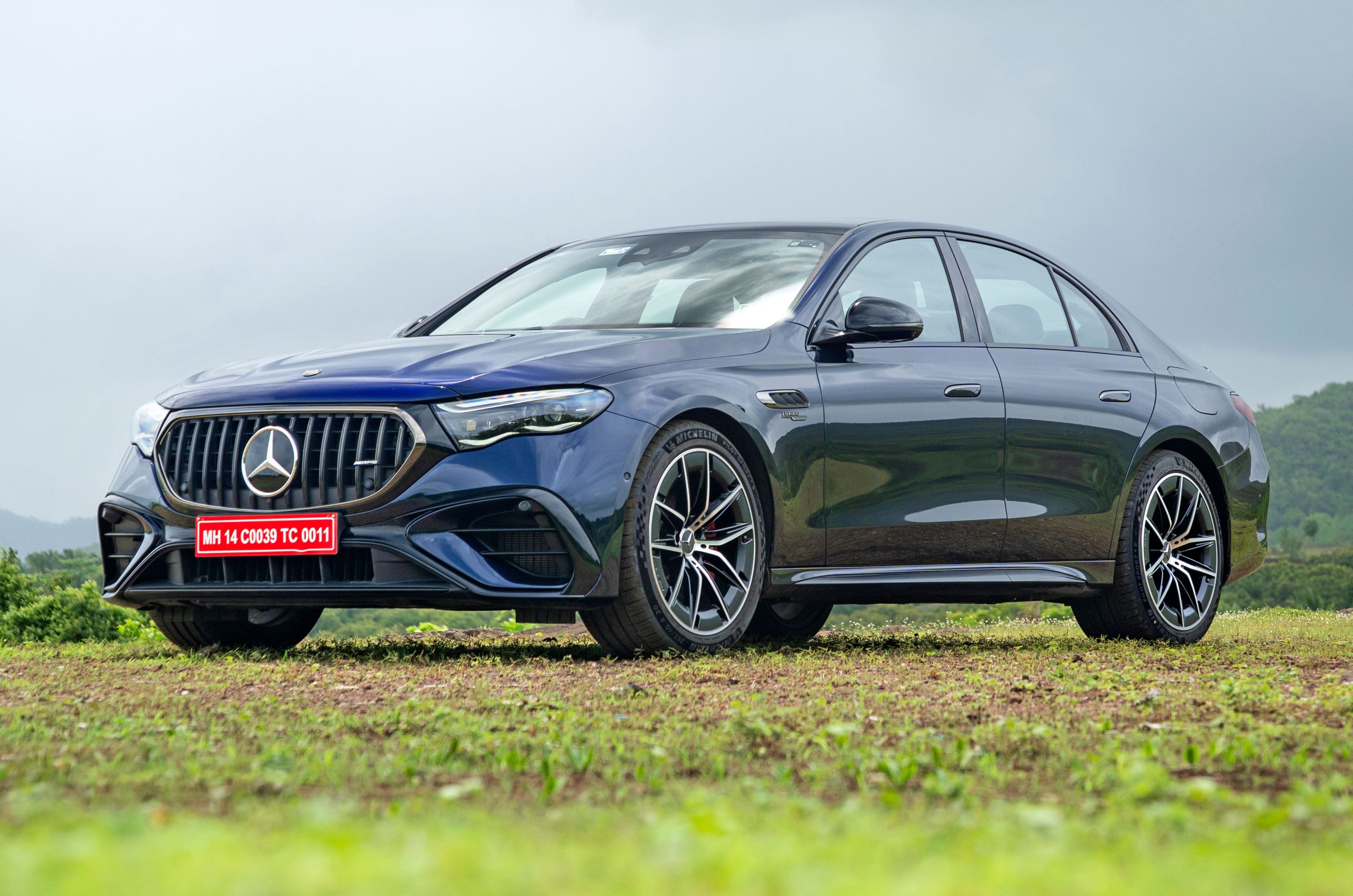
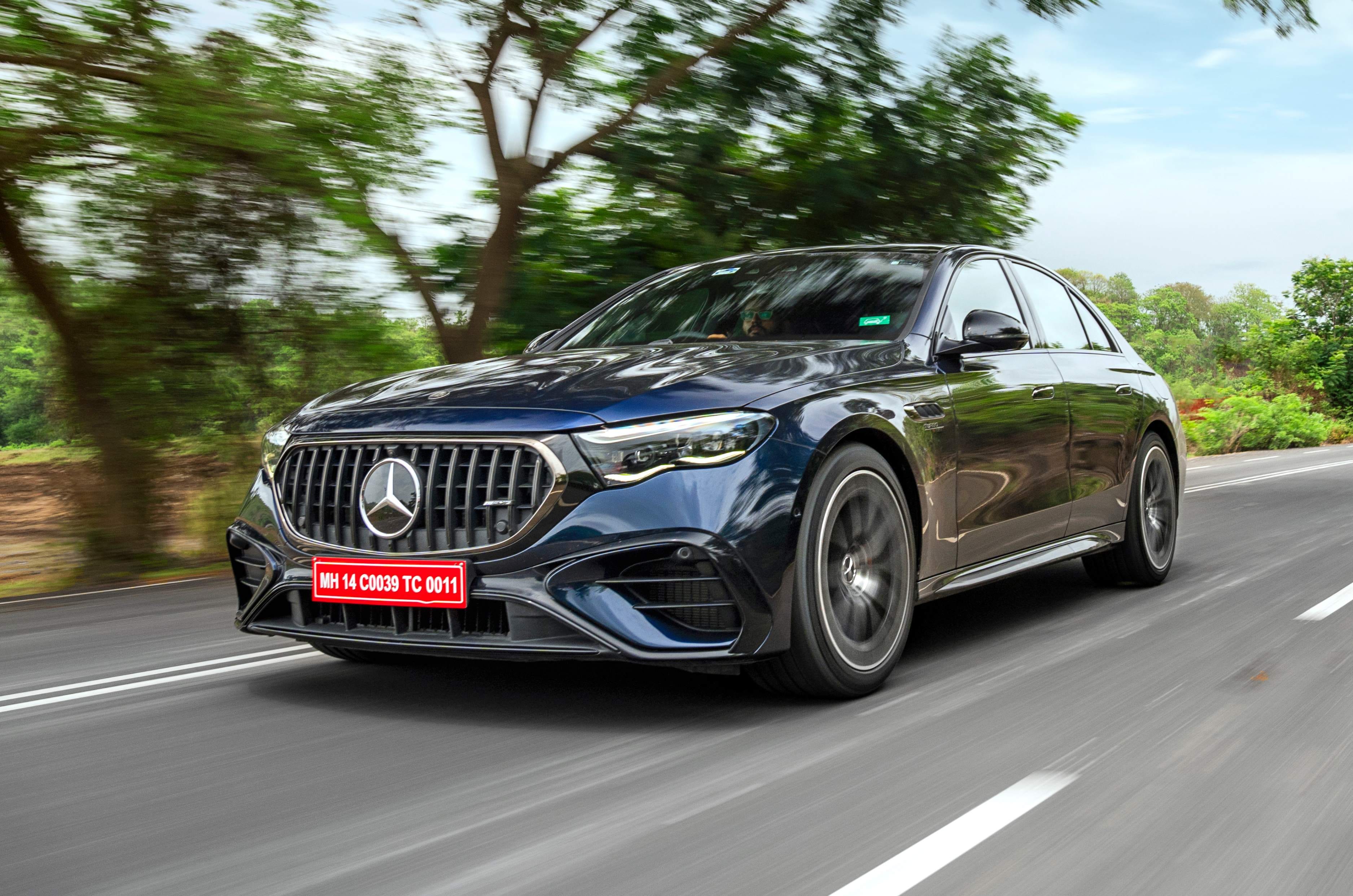
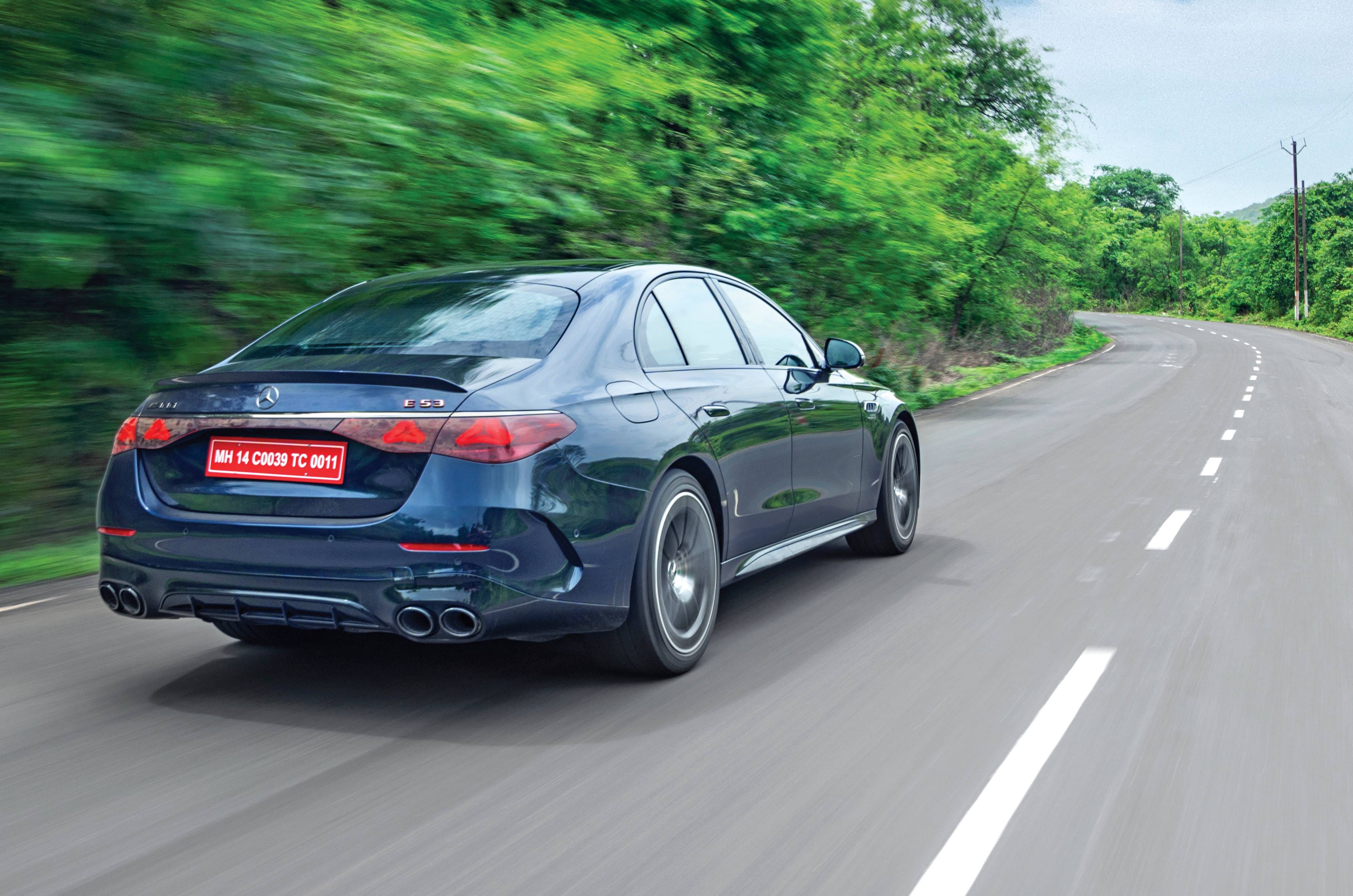
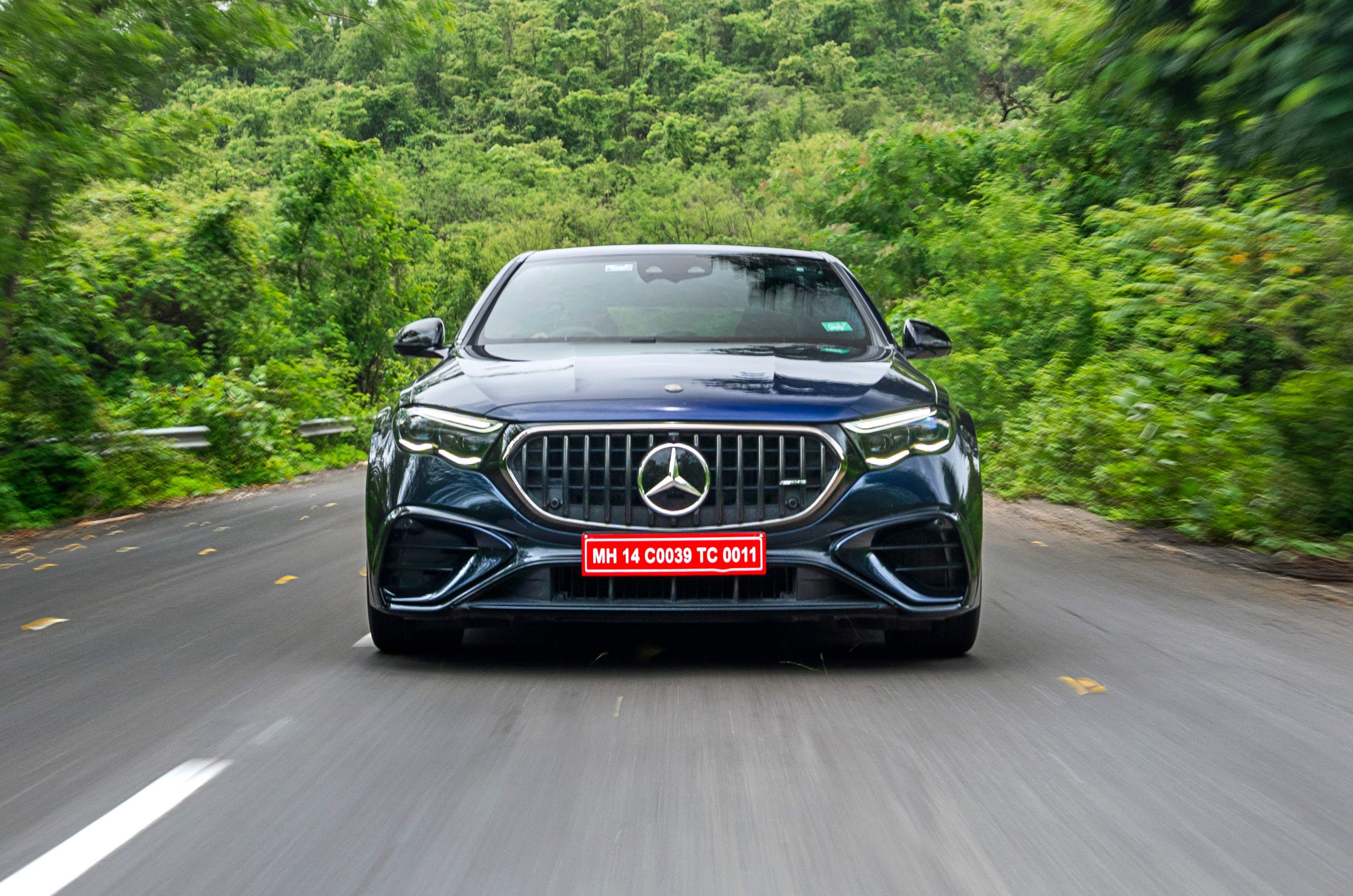
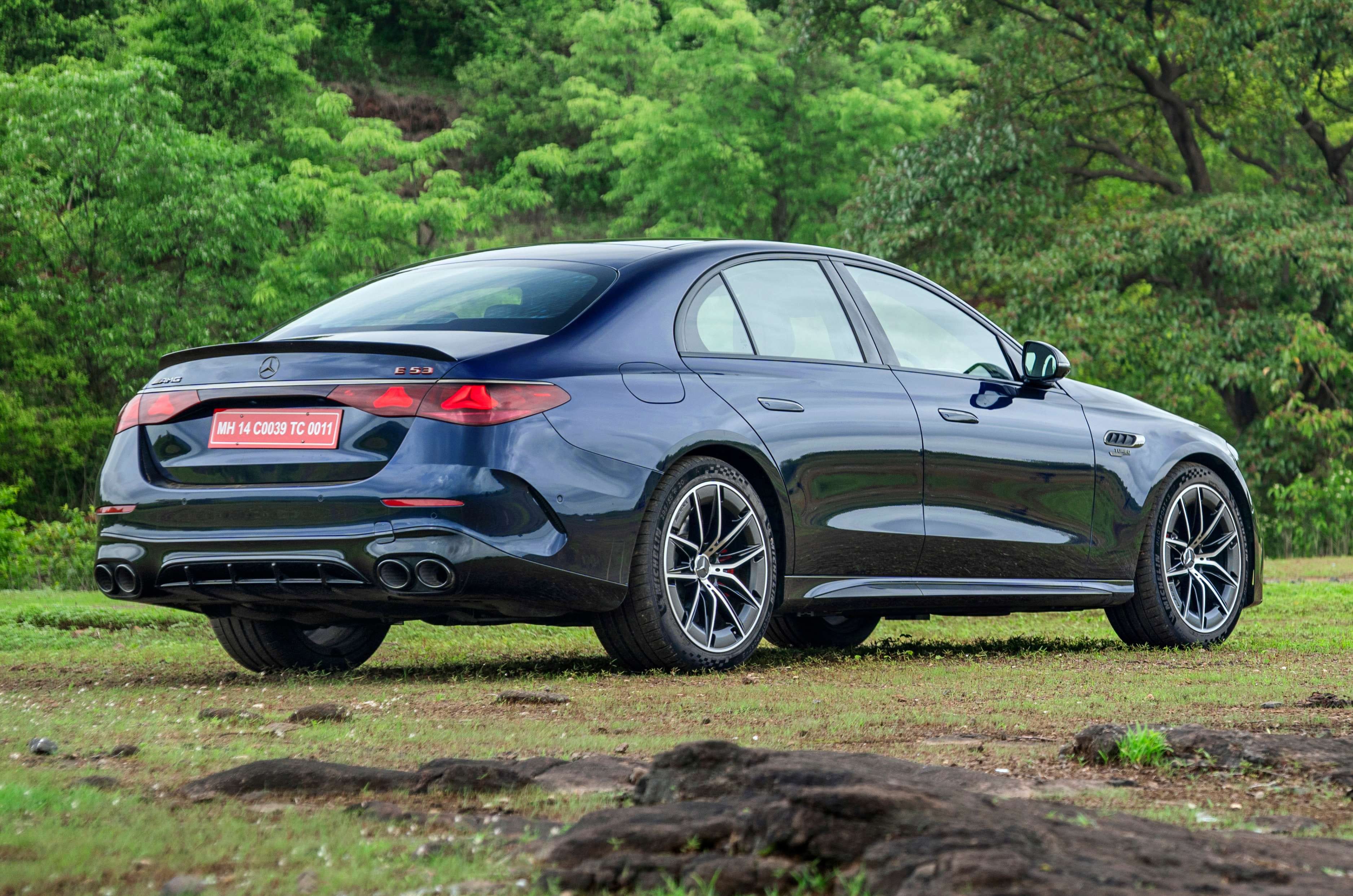
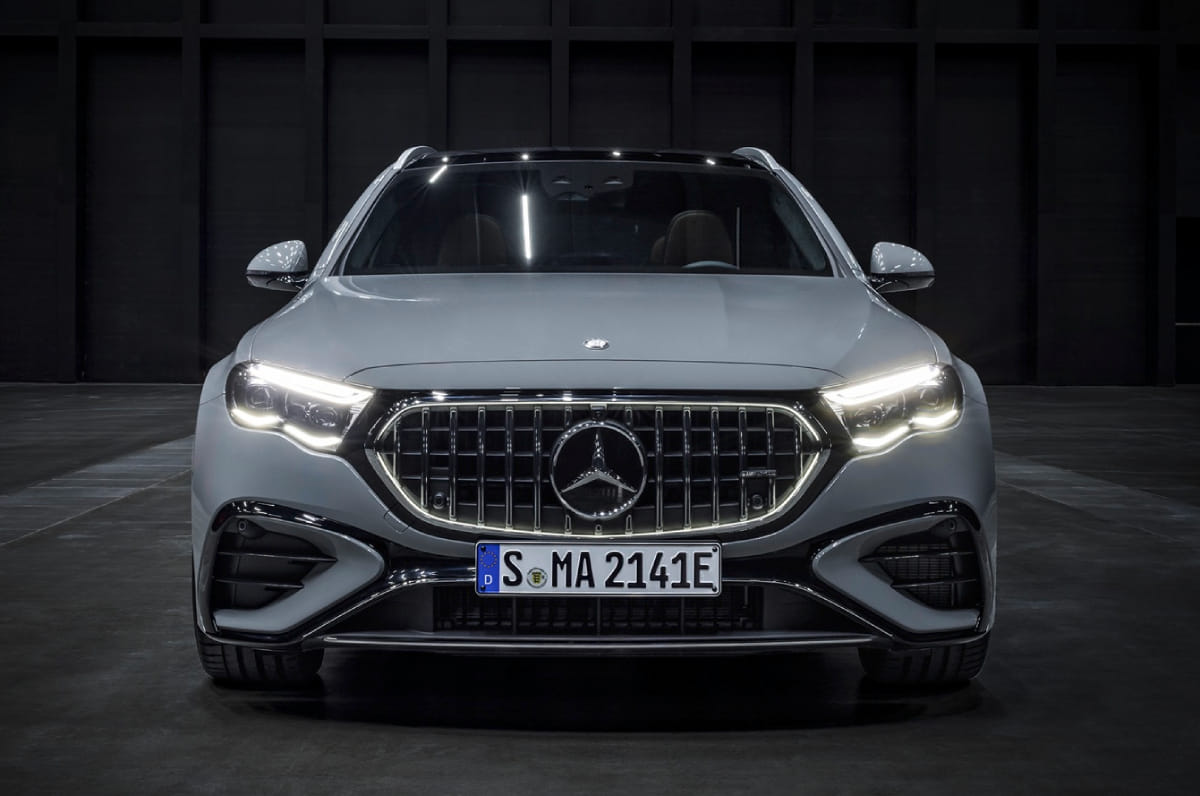
Expectedly, the E 53 has put on quite a bit of muscle. The front bumper is sportier, with large air dams. The Panamericana grille gets illuminated surrounds and is wide enough to gulp massive amounts of air to cool the engine, while the power lines on the bonnet add more intent to its character.

The E53 has good amount of muscle with aggressive bumpers, big grille and power lines

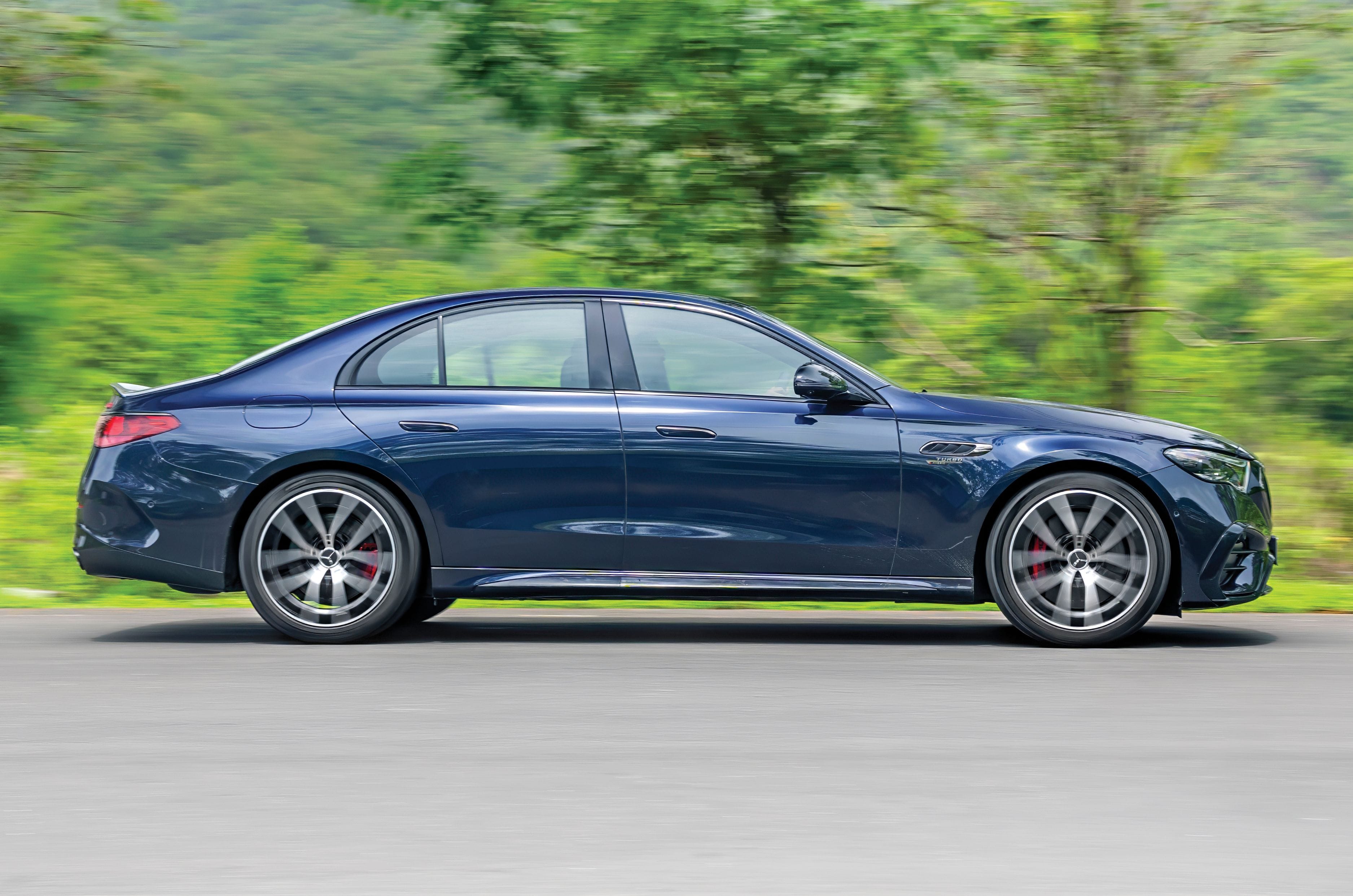
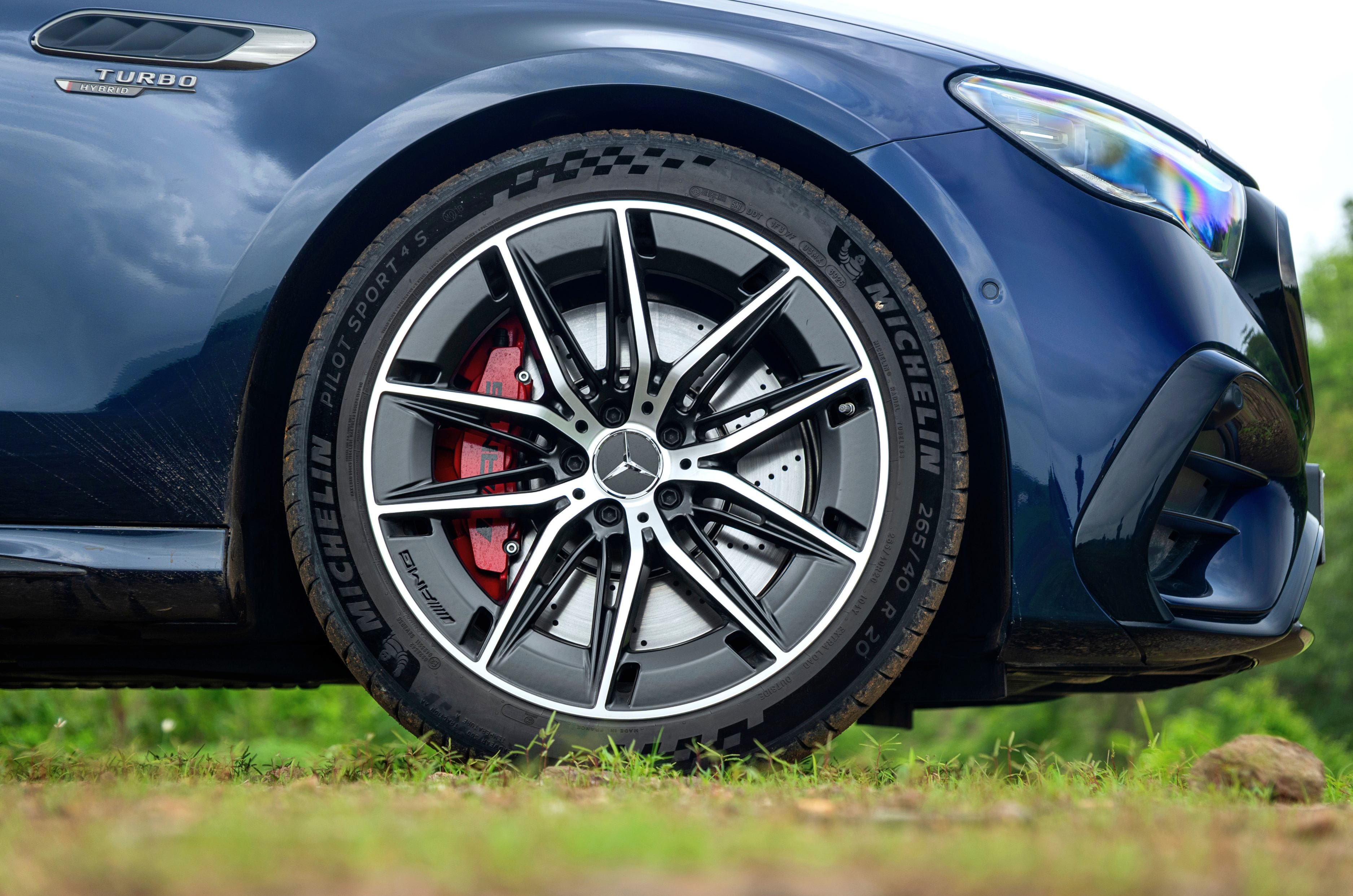
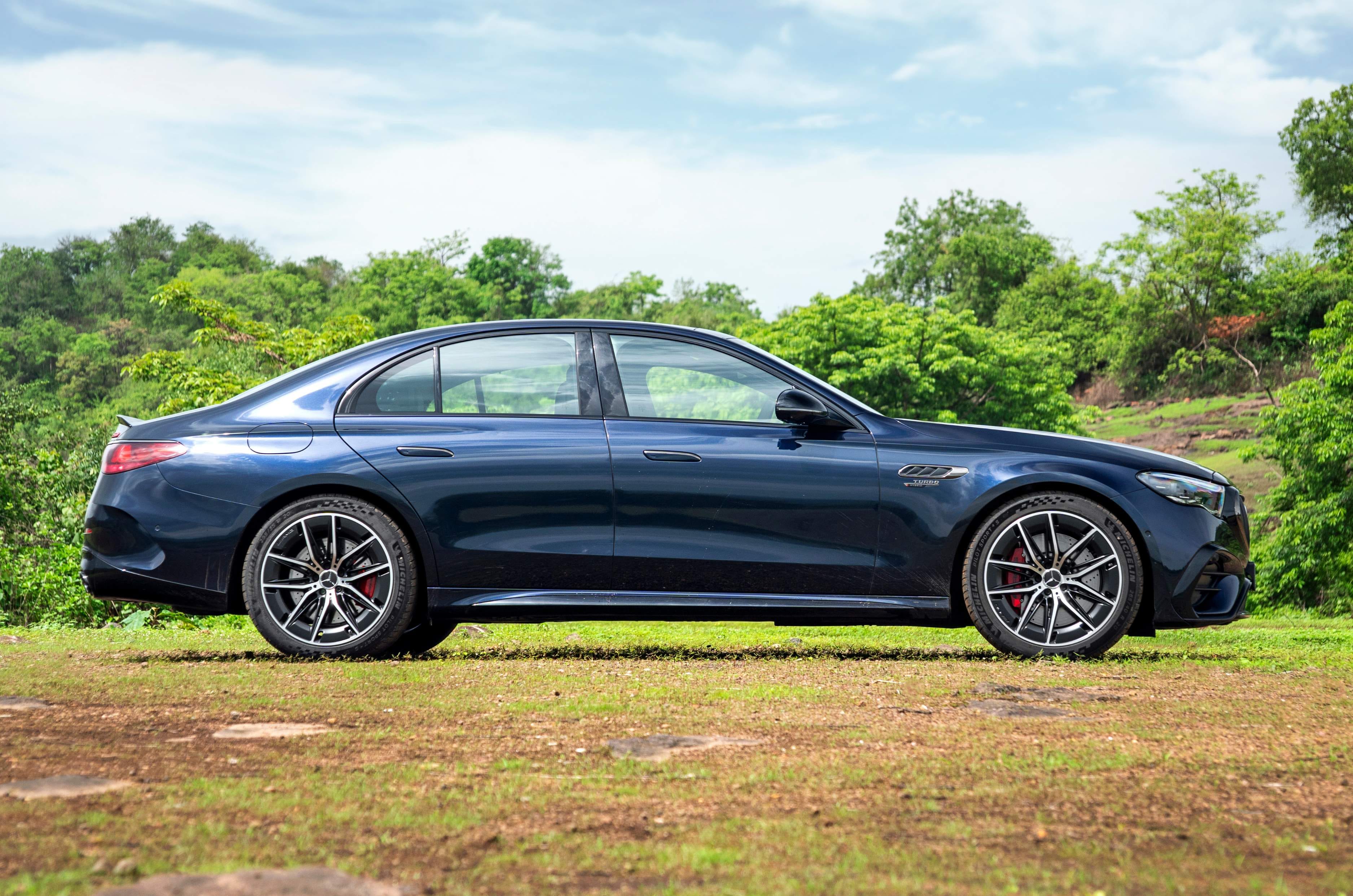
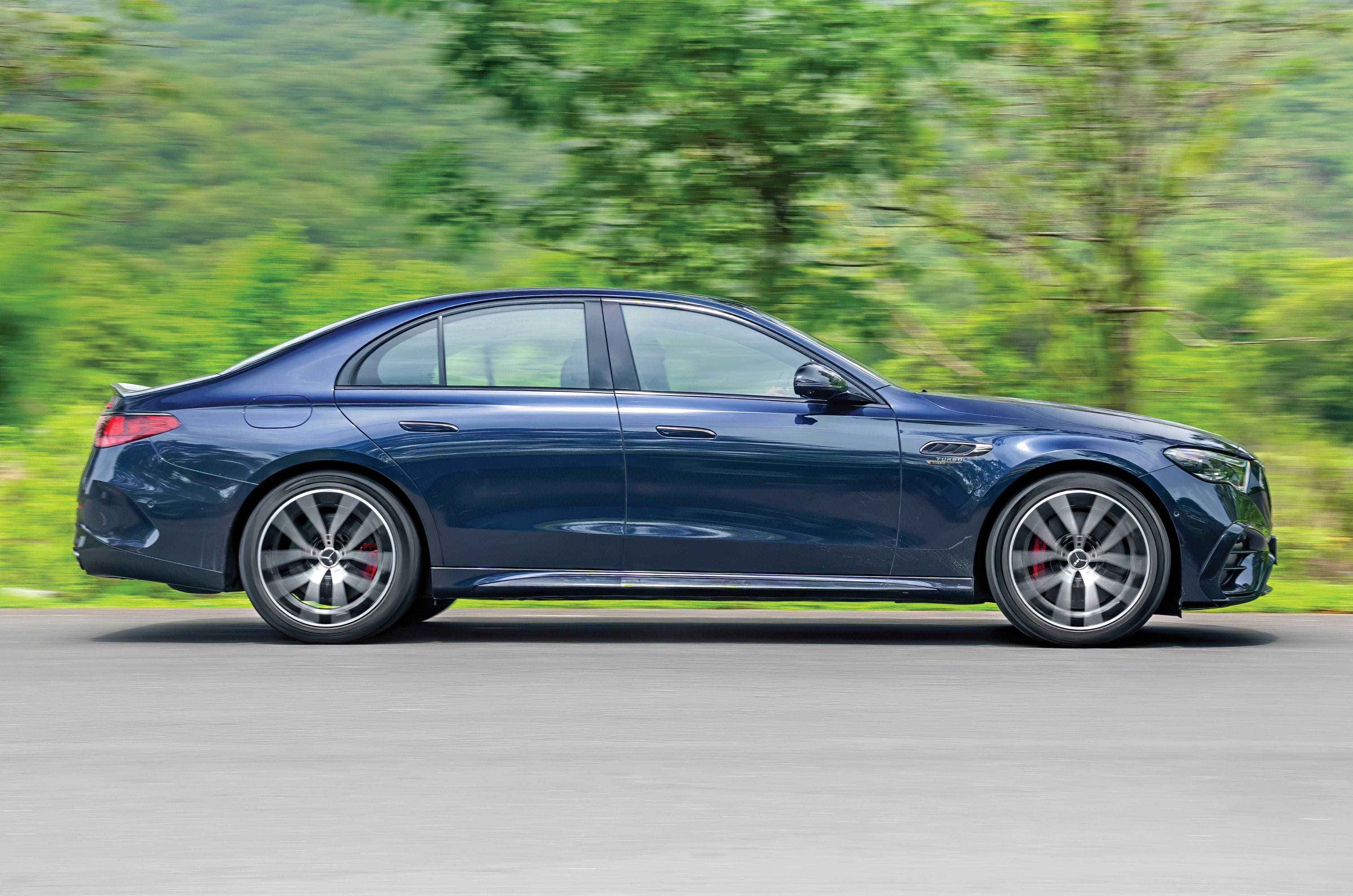
The profile flaunts flared wheel arches, larger 20-inch wheels (the last-gen E 53 featured 19-inchers) and, like before, a standard wheelbase, giving it sportier proportions than the long-wheelbase E-Class.

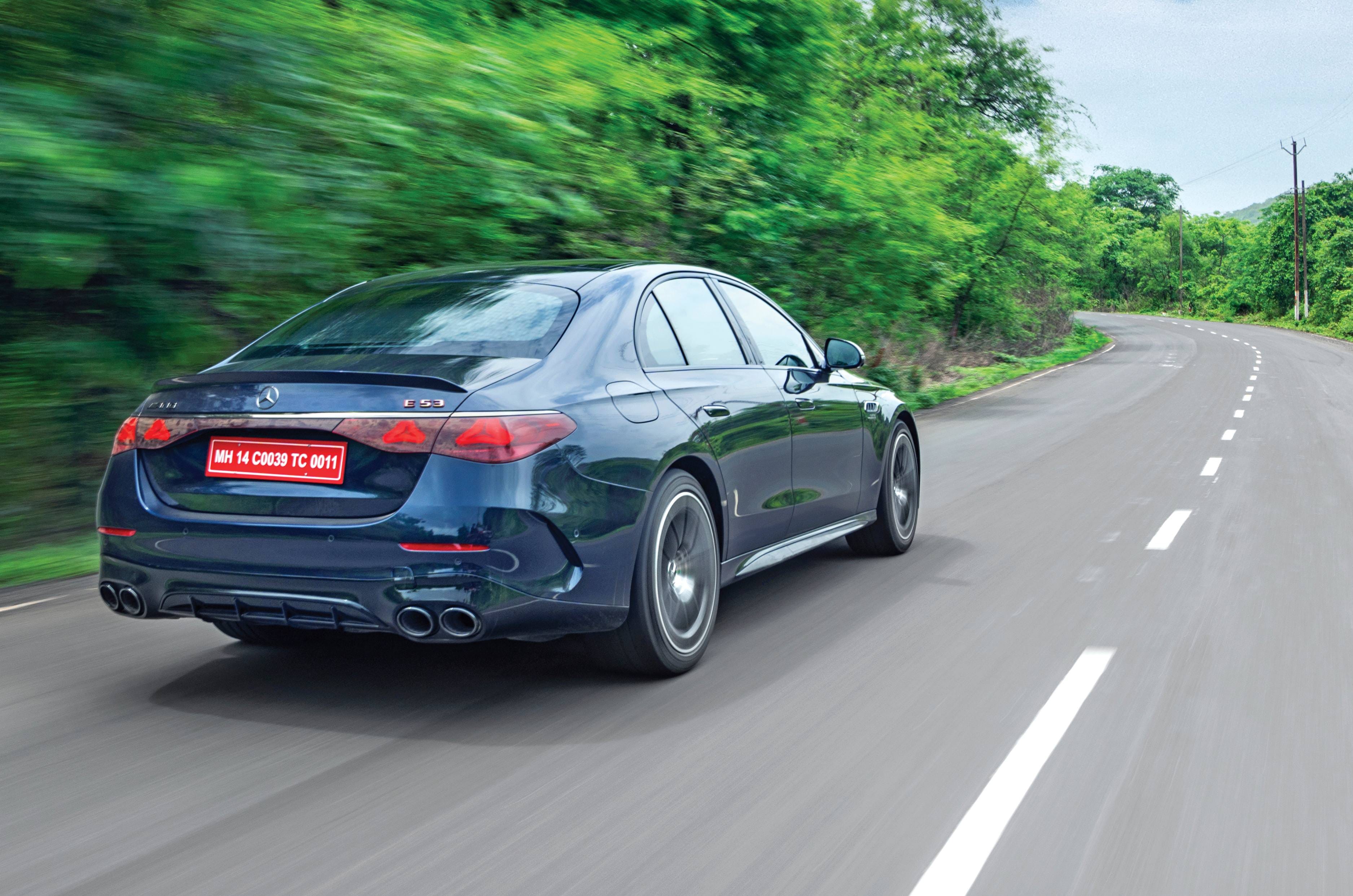
At the rear, there’s an E 53 badge with red highlights, a quad-exhaust setup that isn’t actually connected to the exhaust pipes, a diffuser and a ducktail spoiler that’s large enough to be noticed but won’t do much for downforce.

Not being a long wheelbase gives it perfect proportions

Overall, it’s a handsome-looking car with just the right amount of restraint. However, if you’re looking for a bit more visual drama, you’ll have to pay extra for the MANUFAKTUR paint finishes, as the standard colour palette is more E-Class than AMG.

Mercedes-AMG E53 Interior Space and Comfort 

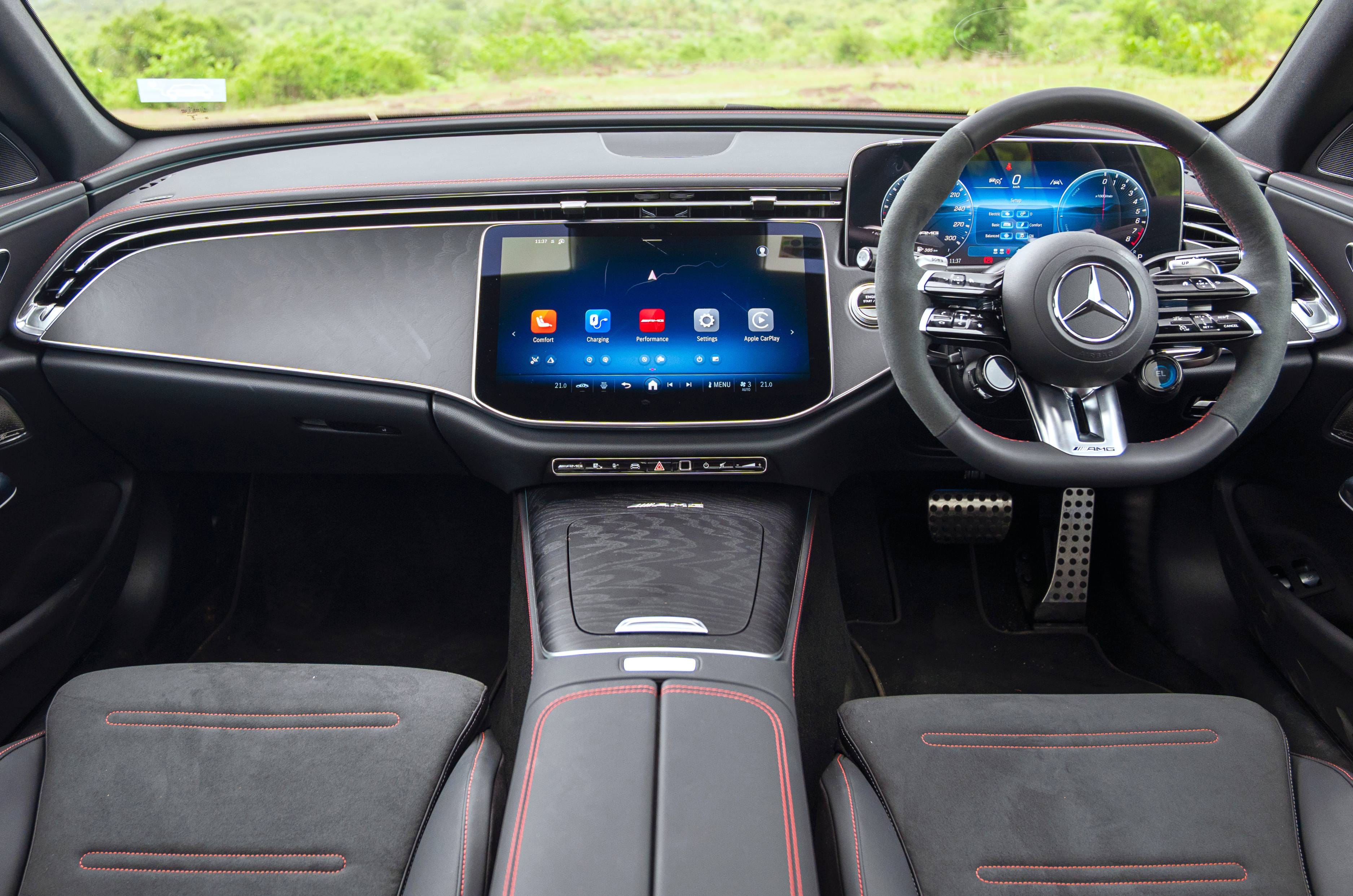
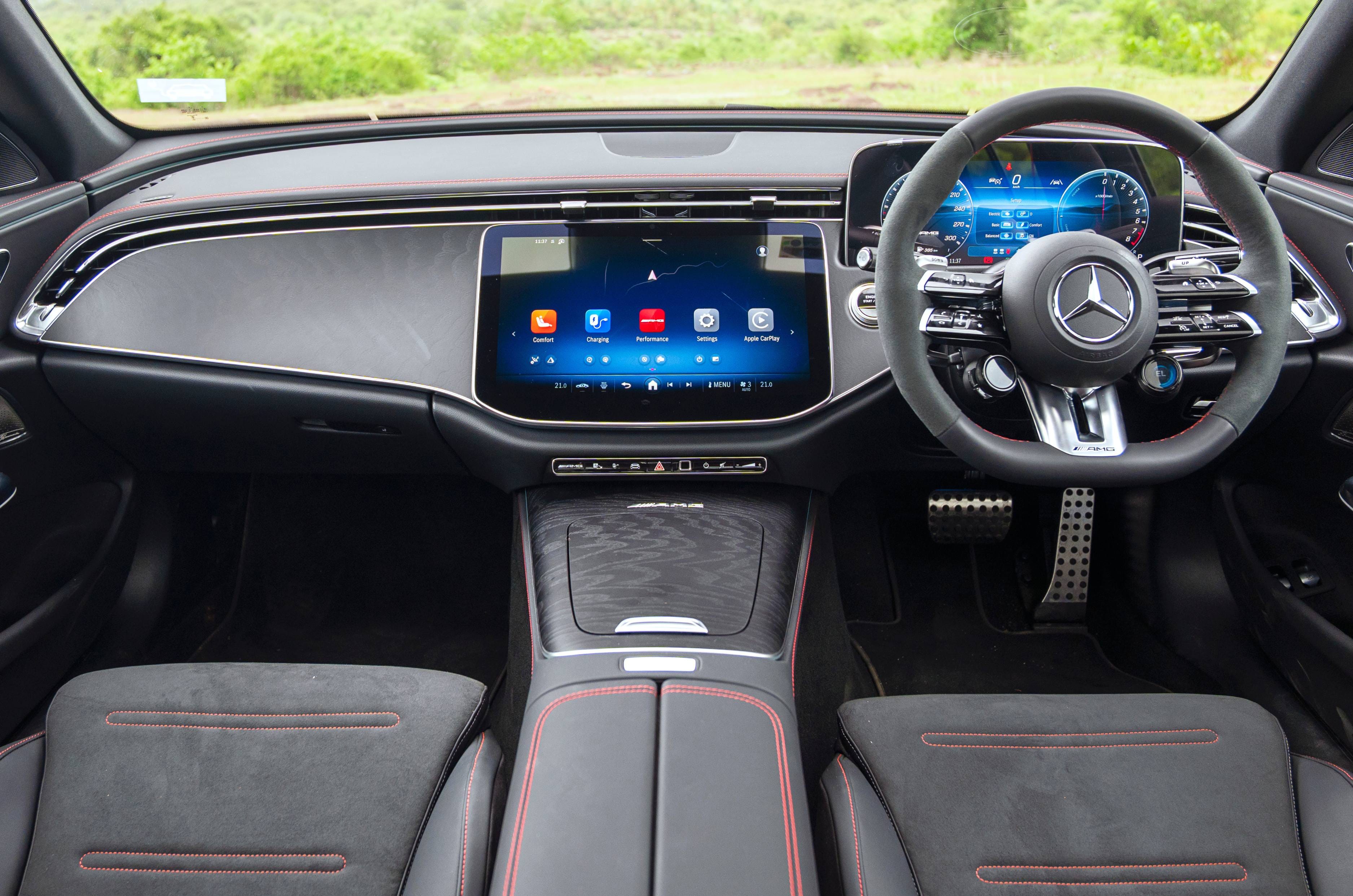
Inside, the E 53 strikes an appealing balance between luxury and sportiness. Instead of carbon-fibre or piano-black trim, Mercedes has used open-pore wood that feels rich and tactile. A large central MBUX touchscreen dominates the dashboard, while the passenger display found on the standard E is absent – not particularly bothersome given how good the main screen is.

Red and black upholstery looks racy while open pore wood adds luxe factor

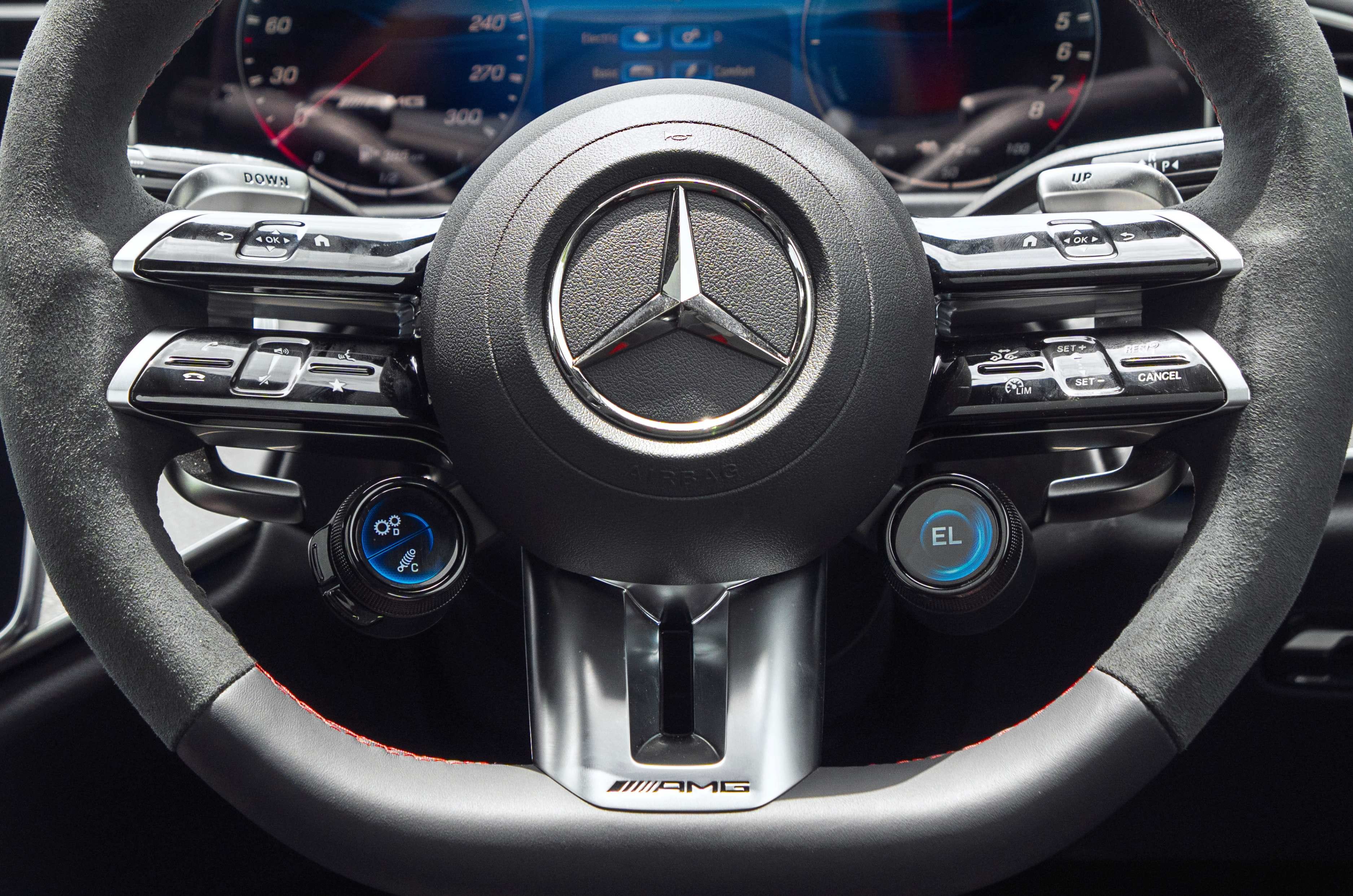
The AMG sports seats offer plenty of support and adjustment, although ventilated and massage functions are missing. Likewise, the chunky AMG steering wheel feels superb in hand but is cluttered with touch-sensitive controls that remain frustrating to use.

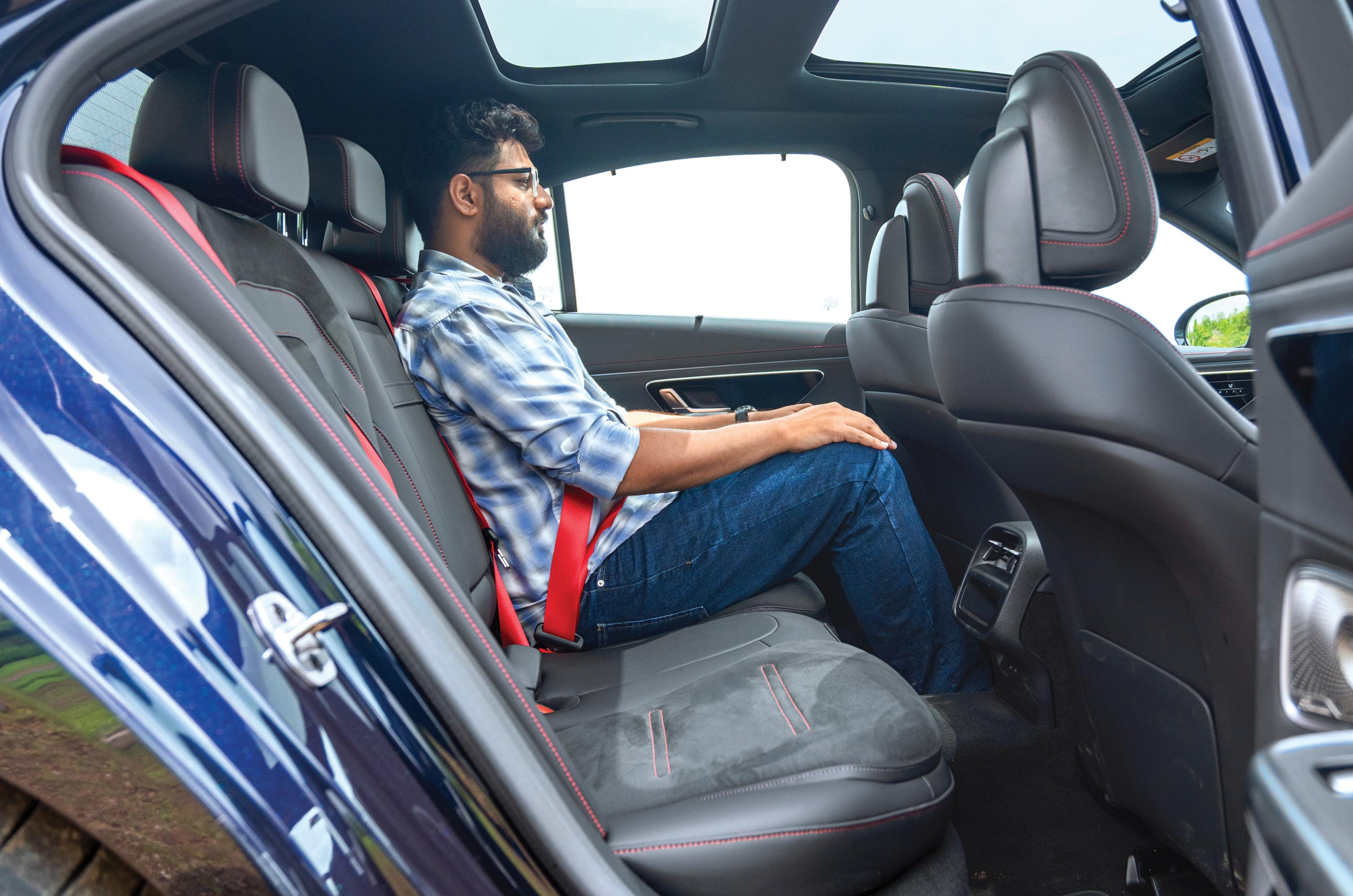
Rear-seat space is naturally tighter than the long-wheelbase E-Class, but there’s still enough room for two adults to travel comfortably. Manual sunblinds and a panoramic sunroof add to the ambience, although the large transmission tunnel makes this a strict four-seater.

There’s good space in the rear despite this not being a long wheelbase

The boot, however, sees the biggest compromise. At 370 litres, it’s 170 litres smaller than the standard E-Class because the battery sits beneath the floor. There’s no spare wheel either, with its space instead occupied by the charging cable and puncture repair kit.

Mercedes-AMG E53 Features and Safety

The E 53 is a well-equipped sedan despite missing features such as ventilated seats. The centre screen is the brains of the operation and, unfortunately, many of the controls are routed through it, making them difficult to operate on the move.

We’ve praised the MBUX infotainment system for its clear interface and high-resolution display, but usability isn’t its strongest suit. The large screen makes it difficult to accurately select the desired function while driving.

Too many controls on the steering is distracting

The E 53 gets a comprehensive suite of driver assistance systems, including Lane Keep Assist, Automatic Emergency Braking, Rear Cross Traffic Alert and Blind Spot Monitoring. Thankfully, these systems can also be switched off manually if required.

The 360-degree camera is crisp and high-resolution, while the 17-speaker Burmester 4D audio system delivers an exceptional listening experience. As impressive as the sound system is, however, it ultimately plays second fiddle to the performance on offer.

Mercedes-AMG E53 Performance and Refinement

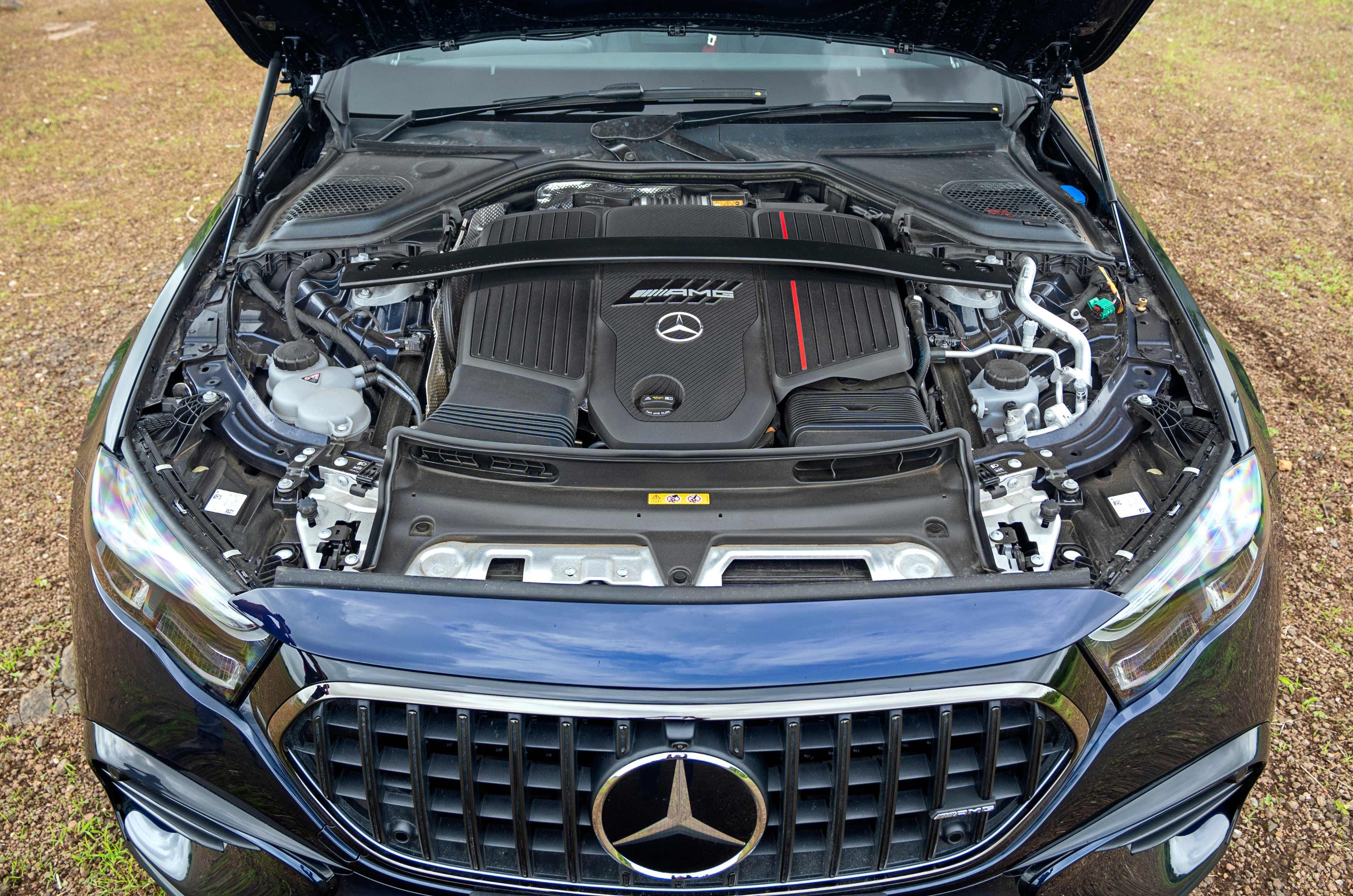
Like before, the new E 53 is powered by a 3.0-litre turbo-petrol straight-six engine. This time, however, it gets support from a 28.6kWh battery pack and an electric motor, taking the combined output to 585hp and 750Nm.

585hp six-cylinder engine makes 150hp more than before

Unlike the bigger PHEV AMGs, the E 53 isn’t an ‘E PERFORMANCE’ model, which means the electric motor is mounted within the gearbox housing rather than integrated into the rear axle. Power is sent to all four wheels via the familiar 9-speed automatic transmission, and the E 53 gets a host of drive modes that are noticeably different from one another.

‘Individual’ lets you tailor the engine, gearbox and suspension to your liking. ‘Battery Hold’ prevents the car from using the battery charge, saving it for when you truly need it. ‘EL’ is the full-electric mode, provided there’s sufficient charge in the battery. ‘Comfort’ offers a more relaxed setup, ‘Sport’ sharpens the responses, and ‘Sport+’ is the most aggressive setting.

Naturally, Sport+ is the mode you’ll spend most of your time in if you want the E 53 to feel like a proper AMG. The exhaust note, the urgency of the power delivery and the firmer suspension all come together beautifully. With the engine and electric motor working at full tilt, straight-line performance is genuinely rapid. Acceleration is smooth yet thrilling, as the engine piles on speed rapidly without the neck-snapping brutality of a powerful EV. Power delivery is strong and linear across the rev range, and the gearbox complements the aggressive character of Sport+ perfectly. 0-100kph takes just 4 secs with the ‘Race Start’ which is essentially launch control included in the AMG Dynamic Plus package as power jumps up to 612hp.

For greater driver involvement, you can also engage ‘M’ mode, which gives you full manual control of the gearbox. It will happily bounce off the limiter without automatically upshifting until you pull a paddle.

The exhaust note is a bit of a mixed bag. It’s genuine, but it’s also channelled into the cabin through the speakers and a subwoofer in the boot. It’s not the ideal solution because, outside the car, the engine and exhaust produce a genuinely enjoyable snarl. Still, in an era of synthesised, computer-generated soundtracks, a real exhaust note—even if it’s amplified through the speakers—is worth appreciation.

Switch to Comfort mode and the E 53 adopts an entirely different character. It’s calm, refined and smooth, with gentler power delivery that’s well suited to long-distance cruising.

Where the powertrain disappoints is in city traffic and slow stop-start driving. The gearbox is simply too eager and, even in Comfort mode, it feels a bit like walking an overexcited Rottweiler. It’s constantly trying to surge forward and grab the next gear before you’ve asked it to. The constant shuffling through the lower gears results in unnecessary jerks that spoil the experience.

The solution is to engage EL mode. It’s almost as if it was designed specifically for this scenario. In EL, the E 53 feels smooth and effortless. There’s very little noise apart from the drone generated by the Michelin Pilot Sport 4S tyres, which can be quite rumbly, especially on concrete surfaces.

Braking is less convincing, however. Despite massive 390mm front discs and regenerative braking, the pedal never delivers a natural or consistent feel. Stopping power is strong, but the spongy, inconsistent pedal detracts from an otherwise polished driving experience.

Mercedes-AMG E53 Mileage and Efficiency

One of the biggest talking points of the new E 53 isn’t its staggering performance, but the fact that it can deliver it without constantly visiting a fuel station. This plug-in hybrid marks a significant shift in AMG’s philosophy, combining electrification with a silky-smooth six-cylinder engine to create a performance sedan that’s as comfortable commuting as it is attacking a mountain road.

Charging via an 11kW AC charger will replenish the battery in 2.25 hrs; No DC charging option

The headline figure is a claimed electric-only range of up to 100km, courtesy a 28.6kWh battery pack. You can expect 75-90km on electric power alone making it entirely possible to complete daily urban commutes without firing up the engine. 

Once the battery begins to deplete, the turbocharged 3.0-litre inline-six takes centre stage. Even then, the hybrid system continues to contribute through regenerative braking and electric assistance, ensuring the E 53 feels responsive while reducing fuel consumption compared to a conventional performance sedan. Mercedes has also equipped the car with four regenerative braking modes, allowing drivers to maximise energy recovery or opt for a more natural driving experience. For owners with access to home or workplace charging, fuel stops could become surprisingly infrequent. Charging is equally convenient, with the 11kW AC onboard charger replenishing the battery in around three hours.

28.6kWh battery allows for an electric-only range of 100km

Mercedes-AMG E53 Ride Comfort and Handling

For those who enjoy being behind the wheel, the E 53 delivers in abundance. Despite carrying the additional weight of a sizable battery pack, it feels remarkably composed. In Sport and Sport+, the car tightens up noticeably. Body roll is kept firmly in check, the dampers become more alert, and the steering gains welcome heft. What impresses most is how well the chassis disguises its mass. The battery may add considerable weight, but it’s mounted low in the car, lowering the centre of gravity and lending the E 53 impressive stability through fast corners.

The rear-biased 4MATIC+ all-wheel-drive system plays a major role here. The rear wheels can turn up to 2.5 degrees, which isn’t a huge amount, as you’ll still find yourself making the occasional three-point turn. Above 60kph, however, they turn in the same direction as the front wheels, adding another layer of stability through corners.

It is over 400kg heavier than the last-gen model but you just can’t feel it from behind the wheel

The Michelin Pilot Sport 4S tyres aren’t the quietest, but they allow the driver to deploy the combined output with confidence, even when exiting slower bends. Turn-in is crisp, and while the steering isn’t overflowing with feedback, it’s accurate enough to place the car confidently on a winding road. 

At low speeds, the adaptive AMG Ride Control suspension does an admirable job of filtering out broken tarmac, expansion joints and sharp-edged potholes. It isn’t perfect, though. Compared with the last-generation E 53, which rode on smaller 19-inch wheels with taller-profile tyres, the new car’s 20-inch wheels have sacrificed a degree of ride compliance. As a result, the low-profile tyres transmit the occasional thud over particularly nasty potholes.

The adaptive dampers mated with the active engine mounts offer terrific stability

Ultimately, the Mercedes-AMG E 53 Hybrid 4MATIC+ isn’t as razor-sharp as a dedicated sports sedan, nor is it as pillowy as the standard E-Class. Instead, it strikes an impressive middle ground, blending everyday comfort with genuine driver engagement. It’s a car that feels just as at home soaking up kilometres on the expressway as it does carving through a series of fast, flowing corners.

Mercedes-AMG E53 Value for Money

Prices start at Rs 1.45 crore for the Performance Edition and Rs 1.48 crore for the Racing Edition. In this price range, there isn’t a direct rival to the E 53. The BMW M5 is both more powerful and considerably more expensive, while the BMW M4 is effectively rivalled by the Mercedes-AMG CLE 53 as a two-door coupe. The Audi RS5, meanwhile, hasn’t been launched in India yet.

The E 53 succeeds because it doesn’t try to be everything at once. It delivers the pace, handling and character expected of an AMG while introducing meaningful electric-only capability that genuinely enhances everyday usability. The brakes may lack the natural feel you’d expect from a performance sedan, and the gearbox can feel over-eager in slow-moving traffic, but these shortcomings do little to overshadow what is otherwise a remarkably accomplished package.

Fast, engaging and surprisingly efficient, the new E53 Hybrid is one of the most complete performance sedans on sale today. More importantly, it proves that electrification doesn’t have to dilute the AMG experience—it can make it even more usable.

व्रत और मानसून का डबल असर! सावन में फिट रहने के लिए अपनाएं ये 7 आदतें

सावन (Sawan) हिंदू धर्म का सबसे पवित्र महीना माना जाता है, जिसमें भगवान शिव की पूजा, व्रत और धार्मिक अनुष्ठानों का विशेष महत्व होता है। यह महीना मानसून (monsoon) के बीच आता है, जब मौसम सुहावना तो होता है, लेकिन इंफेक्शन, वायरल फीवर और पेट संबंधी बीमारियों का खतरा भी बढ़ जाता है। कई लोग इस दौरान व्रत रखते हैं और डाइट में बदलाव करते हैं, इसलिए शरीर की सही देखभाल करना बेहद जरूरी हो जाता है। अगर कुछ आसान आदतों को अपनाया जाए, तो आप पूरे सावन भर खुद को फिट और एनर्जेटिक रख सकते हैं। आइए जानते हैं ऐसे जरूरी हेल्थ टिप्स:

Drink clean and boiled water (साफ और उबला हुआ पानी ही पिएं)

This may contain: several jars filled with different types of fruit and vegetables

सावन (Saawan)और बारिश के मौसम (monsoon season) में दूषित पानी से टाइफाइड (typhoid), डायरिया (diarrhea) और पेट के इंफेक्शन का खतरा बढ़ जाता है। इसलिए हमेशा फिल्टर या उबला (boiled water) हुआ पानी ही पिएं। घर से बाहर निकलते समय अपनी पानी की बोतल साथ रखें और रोड साइड मिलने वाले खुले हुए खाने से बचें।

Eat fresh, light, and balanced meals (ताजा, हल्का और संतुलित भोजन)

Story pin image

बारिश के मौसम में डाइजेस्टिव सिस्टम (digestive system) थोड़ा कमजोर हो सकता है। ऐसे में बासी, तला-भुना और ज्यादा मसालेदार भोजन खाने से बचें। घर का ताजा खाना, मौसमी फल, दाल, हरी सब्जियां और हल्का भोजन शरीर को जरूरी पोषण देने के साथ इम्यूनिटी (immunity) भी मजबूत रखने में मदद करता है।

Prevent nutritional deficiencies (व्रत में शरीर में पोषण की कमी न होने दें)

सावन (Saawan) में कई लोग सोमवार का व्रत (fast) रखते हैं। ऐसे में सिर्फ भूखे रहने के बजाय फल, दूध, दही, मखाना, मेवे, नारियल पानी और पर्याप्त मात्रा में तरल पदार्थ (adequate fluid) लें। इससे शरीर में एनर्जी बनी रहती है और कमजोरी, चक्कर या डिहाइड्रेशन जैसी प्रॉब्लम से बचाव होता है।

Yoga, Pranayama or light exercise (रोज योग, प्राणायाम या हल्की एक्सरसाइज)

बारिश के कारण बाहर टहलना संभव न हो, तब भी घर पर 20–30 मिनट योग, स्ट्रेचिंग (stretching) या प्राणायाम जरूर करें। इससे शरीर एक्टिव रहता है, ब्लड सर्कुलेशन (blood circulation) बेहतर होता है और इम्यूनिटी (immunity) मजबूत होती है। रेगुलर एक्सरसाइज मेंटल स्ट्रेस कम करने में भी मदद करता है।

Adequate Sleep and Rest (पर्याप्त नींद और शरीर का आराम)

Story pin image

हेल्दी रहने के लिए अच्छी नींद उतनी ही जरूरी है जितना अच्छा खानपान (nutritious diet)। रोज 7–8 घंटे की नींद लेने से शरीर खुद को रिपेयर करता है और इम्यून सिस्टम मजबूत होती है। अगर आप व्रत रख रहे हैं या एक्टिविटीज में बिजी हैं, तो बीच-बीच में आराम करना भी जरूरी है, ताकि शरीर पर अधिक थकान न पड़े।

cleanliness and personal hygiene (साफ-सफाई और पर्सनल हाइजीन का ध्यान)

This may contain: a woman washing tomatoes in a kitchen sink next to a window with potted plants

बारिश के मौसम में बैक्टीरिया (Bacteria) और वायरस (viruses) तेजी से फैलते हैं। इसलिए खाना खाने से पहले और बाहर से आने के बाद हाथों को साबुन से अच्छी तरह धोएं। गीले कपड़े ज्यादा देर तक न पहनें और पैरों को साफ व सूखा रखें, ताकि फंगल इंफेक्शन का खतरा कम हो।

Protect mosquitoes and infections (मच्छरों और इंफेक्शन से बचे)

This may contain: a blue vase sitting on top of a tile floor next to a potted plant

मानसून (monsoon) में जगह-जगह पानी जमा होने से मच्छरों की संख्या बढ़ जाती है, जिससे डेंगू, मलेरिया और चिकनगुनिया जैसी बीमारियों का खतरा रहता है। घर के आसपास पानी जमा न होने दें, पूरी बाजू के कपड़े पहनें और जरूरत पड़ने पर मच्छर भगाने वाली क्रीम या रिपेलेंट का इस्तेमाल करें।

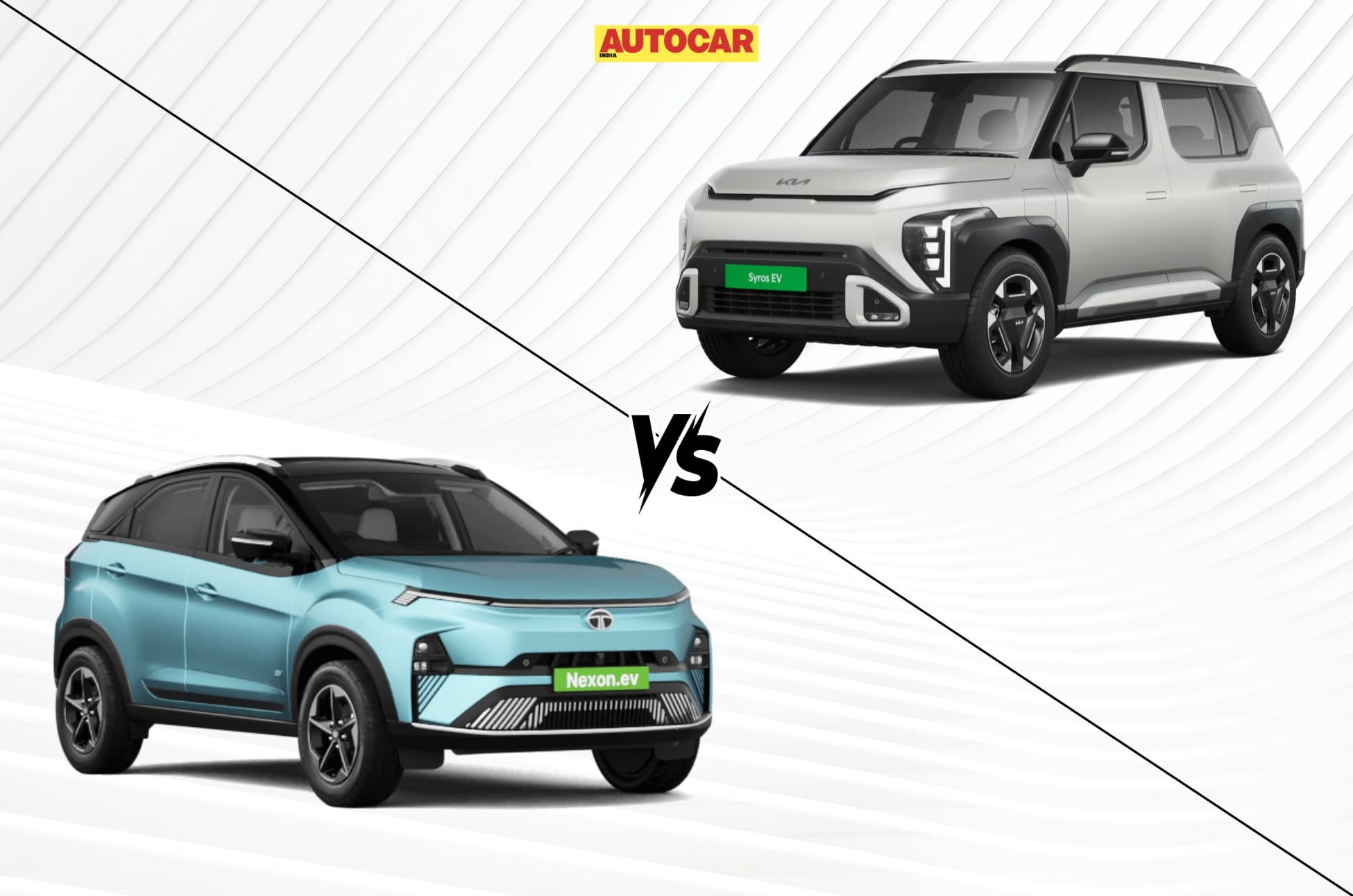
Kia Syros EV vs Tata Nexon EV: Whose top spec trim offers better value?

Kia Syros EV vs Tata Nexon EV

Kia has taken its first aim to crack the compact electric SUV space with the Syros EV. On the other hand, Tata has been dominating this very segment with the Nexon EV that’s been on the market for quite some time. But how do both SUVs fare when comparing specifications and features of their respective top-spec versions? For this comparison, we’ve chosen the Kia Syros EV’s X-Line variant and the Nexon EV’s Empowered+ A 45 variant.

Explore full specs, features, and a price breakdown in our Syros EV vs Nexon EV comparison.

Kia Syros EV vs Tata Nexon EV: Dimensions

Syros EV is comparatively the larger vehicle here

Kia Syros EV vs Tata Nexon EV: Dimensions


Kia Syros EV

Tata Nexon EV

Length (mm)

3,995

3,995

Width (mm)

1,805

1,802

Height (mm)

1,670

1,625

Wheelbase (mm)

2,550

2,498

Frunk (litres)

16

11.6

Boot space (litres)

390

350

Wheel size (inches)

17

16

While both SUVs have identical length, the Syros EV is 3mm wider, 45mm taller, and gets a 52mm longer wheelbase than the Nexon. Additionally, the former gets a 40-litre larger boot, a 4.4-litre larger frunk, and rides on wheels an inch bigger than the Nexon EV.

Kia Syros EV vs Tata Nexon EV: Powertrains 

Syros EV gets the larger battery pack, more powerful motor, and higher claimed range figure

Kia Syros EV vs Tata Nexon EV top-spec: Powertrains 


Kia Syros EV

Tata Nexon EV

Battery size (kWh)

51.4

45

Electric motor setup

Single motor

Single motor

Drive layout

FWD

FWD

Power (hp)

171

144

Torque (Nm)

255

215

Claimed 0-100kph time (seconds)

8.1

8.9

ARAI range (km)

526

489

The Syros EV features the largest battery pack in its segment with a 51.4kWh battery pack. Not only is its battery pack larger than the Nexon’s, but it also has a more powerful motor, leading to a quicker claimed 0-100kph time and a segment-best ARAI range that’s 37km higher than the Nexon’s.

Kia Syros EV vs Tata Nexon EV top-spec: Charging speeds and times 

Syros EV supports faster charging speeds

Kia Syros EV vs Tata Nexon EV top-spec: Charging speeds and times 


Kia Syros EV

Tata Nexon EV

Battery size (kWh)

51.4

45

7.2kW AC charging (10-100 percent)

–

6 hours 36 minutes

11kW AC charging (10-100 percent)

8.9 hrs


DC fast charging (10-80 percent)

39 minutes at 100kW

40 minutes at 60kW

The Syros EV supports higher charging output than the Nexon EV, be it at AC or DC speeds. But despite this, the Nexon EV’s smaller battery helps it juice up quicker at AC speeds, while DC fast charging times are almost similar to the Syros EV’s. 

Kia Syros EV vs Tata Nexon EV: Exterior features

Syros EV top-spec limited to one colour 

Kia Syros EV vs Tata Nexon EV top-spec: Exterior features


Kia Syros EV

Tata Nexon EV

LED headlamps

Automatic

Automatic

LED tail-lamps

Yes

Connected

DRLs

Yes

Connected

Front fog lamps

LED

LED

Puddle lamps w/ logo projection

Yes

No

Powered and foldable ORVMS

Yes

Yes

Flush door handles

Yes

No

Rear spoiler

Yes

Yes

Colour options

2, monotone and matte

5, dual tone 

On the outside, the Syros EV gets goodies such as flush door handles with motorised opening for the front handles, and puddle lamps with logo projection, which the Nexon EV skips. But with the Syros EV in top-spec guise, you’re limited to only black exterior paint in either matte or gloss finish. On the other hand, the Nexon offers five dual tone paint choices with a black roof as standard at the top-end.

Kia Syros EV vs Tata Nexon EV: Interior features 

Sliding and reclining rear seats with seat base ventilation found only on the Syros EV

Kia Syros EV vs Tata Nexon EV: Interior features 


Kia Syros EV

Tata Nexon EV

Infotainment screen

12.3-inch

12.3-inch

Digital driver’s display

12.3-inch

10.25-inch

HVAC display

5-inch

No

Apple CarPlay & Android Auto

Wireless

Wireless

Connected car tech

Yes

Yes

Sunroof

Panoramic

Panoramic

Sound system

8-speaker Harmon Kardon

9-speaker JBL

Automatic climate control

Yes

Yes

Wireless charger

Yes

Yes

Driver’s seat adjustment

4-way powered

No

Ventilated front seats

Yes

Yes

Rear seat base ventilation

Yes

No

Rear sunshades

Yes

Yes

Rear centre armrest

Yes

Yes

Sliding, reclining rear seats

Yes

No

OTA updates

Yes

Yes

Ambient lighting 

Yes

Yes

Air purifier

No

Yes

Rear AC vents

Yes

Yes

While Kia and Tata have packed a lot of features for their respective models, the former has the edge here. The Syros EV gets a larger digital driver’s display, powered driver seat, rear seat base ventilation, and sliding and reclining rear seats. But it misses out on an additional speaker and an air purifier, which the Nexon EV gets.

Kia Syros EV vs Tata Nexon EV: Driving features

Both models are on par with driving features

Kia Syros EV vs Tata Nexon EV: Driving features


Kia Syros EV

Tata Nexon EV

Drive modes

Eco, Normal, Sport

Eco, City, Sport

V2L function

Yes

Yes

Multi-level regen braking

Yes

Yes

Paddleshifters for regen

Yes

Yes

Cruise control

Adaptive

Adaptive

In the driving features department, the Syros EV and Nexon EV are equally equipped with drive modes, regen paddle shifters, adaptive cruise control, and V2L functionality.

Kia Syros EV vs Tata Nexon EV: Safety features

Syros EV yet to achieve BNCAP certification

Kia Syros EV vs Tata Nexon EV: Safety features


Kia Syros EV

Tata Nexon EV

Bharat NCAP rating

Yet to be tested

5 stars

Airbags

6

6 

ABS with EBD

Yes

Yes

Electronic stability program

Yes

Yes

Follow-me-home headlamps

Yes

No

Hill hold control

Yes

Yes

Hill descent control

No

Yes

TPMS

Yes

Yes

360-degree camera

Yes

Yes

Parking sensors

Front, rear, side

Front and rear 

Electronic parking brake

Yes (w/ auto-hold)

Yes (w/ auto-hold)

Rain-sensing wipers

No

Yes

Auto-dimming IRVM

Yes

Yes

ISOFIX child seat anchors

Yes

Yes

Rear wiper, defogger

Yes

Yes

Disc brakes

All wheel

All wheel

Level 2 ADAS

Yes

Yes

While the Tata Nexon EV has already scored a 5-star rating in BNCAP tests, the Syros EV is yet to be tested. But for the latter, a similar rating can be expected considering its ICE version has already attained a 5-star rating. 

Both the Syros EV and Nexon EV come well equipped with basic and advanced safety features, including a Level 2 ADAS suite and a 360-degree camera. Here, the Kia gets follow-me-home headlamps and additional parking sensors on the side over the Tata. However, hill descent control and rain-sensing wipers are found only on the latter.

Kia Syros EV vs Tata Nexon EV: Prices and Verdict 

Syros EV X-Line pricier by Rs 3.5 lakh

Kia Syros EV vs Tata Nexon EV: Price 


Kia Syros EV

Tata Nexon EV

Price (Rs lakh)

20.00

17.49

In top-specification guise, the Syros EV is Rs 3.5 lakh pricier than the Nexon EV. Between the two, it’s the Nexon EV we find as the better value proposition. While the Syros EV is the larger vehicle dimensionally, has the larger battery pack, more powerful motor, and the higher claimed range, it doesn’t justify the extra premium that it commands over the Nexon EV. The Nexon EV may not have as much claimed range or features as the Syros EV, but it isn’t bad by segment standards. 

All prices are ex-showroom, India. 

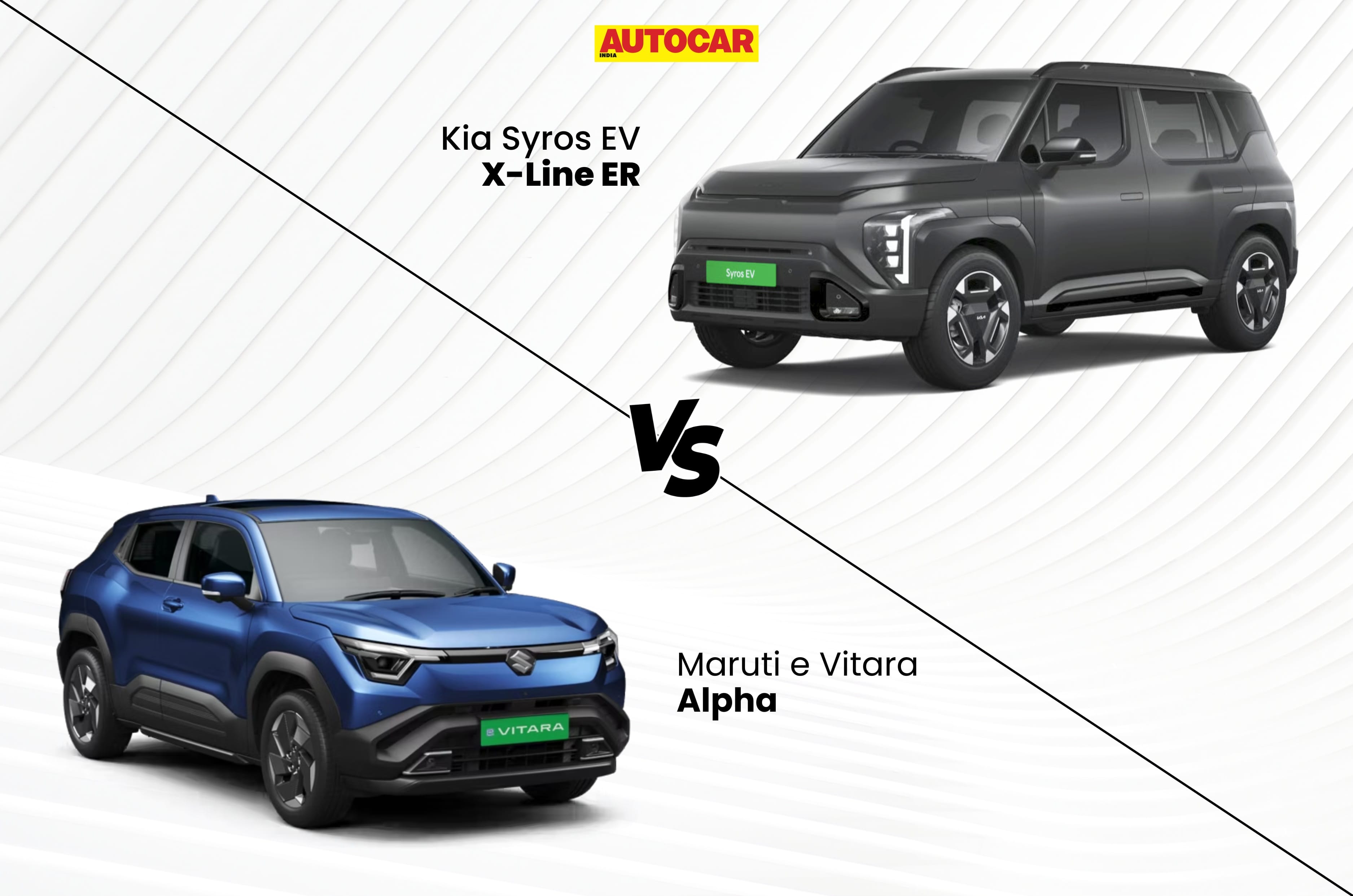
Kia Syros EV vs Maruti e Vitara: Whose top-spec trim offers more value?

Kia Syros EV vs Maruti e Vitara top trim

Kia India has officially launched its second mass-market electric car, the Syros EV. While the sub-4m Syros EV directly rivals the Tata Nexon EV and Mahindra XUV 3XO, the Kia’s pricing sees quite a bit of overlap with that of the Maruti Suzuki e Vitara, which is of a segment above. In fact, the top-spec trims of both electric SUVs are identically priced. Therefore, we compared the top-spec versions of the Syros EV and e Vitara on paper to determine which electric SUV offers more bang for your buck.

Kia Syros EV vs Maruti Suzuki e Vitara: Top trim dimensions

e Vitara is longer, but Syros EV is wider and taller

Kia Syros EV X-Line ER vs Maruti e Vitara Alpha dimensions


Syros EV

e Vitara

Length (mm)

3,995

4,275

Width (mm)

1,805

1,800

Height (mm)

1,670

1,640

Wheelbase (mm)

2,550

2,700

Frunk (litres)

16

–

Wheel size (inches)

17

18

Expectedly, the Syros EV is 280mm shorter overall (150mm shorter wheelbase) than the e Vitara, but interestingly, the Kia compact SUV is 5mm wider and 30mm taller. Neither Kia nor Maruti Suzuki quote precise boot space figures for their respective electric SUVs, but it’s worth noting that the Syros EV comes with a 16-litre frunk, while the e Vitara completely lacks storage space up front. However, the top-spec e Vitara does get larger alloy wheels than the equivalent Syros EV.

Kia Syros EV vs Maruti Suzuki e Vitara: Top trim powertrains

Syros EV is quicker, e Vitara claims higher range and has a bigger battery

Kia Syros EV X-Line ER vs Maruti e Vitara Alpha battery and range


Syros EV

e Vitara

Battery size (kWh)

51.4

61

Electric motor setup

Single motor, front

Single motor, front

Drive layout

FWD

FWD

Power (hp)

171

174

Torque (Nm)

255

193

Claimed 0-100kph time (seconds)

8.1

8.7

ARAI range (km)

526

543

The Syros EV’s battery pack is almost 10kWh smaller than that of the e Vitara, but the Kia is only 17km behind in terms of ARAI-claimed range. Both electric SUVs are front-wheel drive and make similar amounts of power, but the Syros EV edges ahead by a significant 62Nm in terms of torque output. This is partly why the Syros EV claims a 0.6sec quicker 0-100kph time than that of the e Vitara.

Kia Syros EV vs Maruti Suzuki e Vitara: Top trim charging speeds

Syros EV supports higher DC wattages

Kia Syros EV X-Line ER vs Maruti e Vitara Alpha charging times


Syros EV

e Vitara

Battery size (kWh)

51.4

61

7.4kW AC charging (10-100 percent)

–

9 hrs

11kW AC charging (10-100 percent)

8.9 hrs

–

DC fast charging (10-80 percent)

39 mins at 100kW

45 mins at 70kW

Kia and Maruti Suzuki quote AC charging speeds at different wattages, so the Syros EV and e Vitara can’t be directly compared on this front. However, it’s noteworthy that though the e Vitara has a larger battery than the Syros EV, the former takes roughly the same amount of time for a 10-100 percent charge at 7.4kW as the latter does at 11kW. Coming to DC charging, the Syros EV supports up to 100kW, while the e Vitara tops out at 70kW.

Kia Syros EV vs Maruti Suzuki e Vitara: Top trim exterior features

Syros EV gets puddle lamps, but e Vitara offers much greater choice in colours

Kia Syros EV X-Line ER vs Maruti e Vitara Alpha exterior features


Syros EV

e Vitara

LED projector headlamps

Yes (auto)

Yes (auto)

Front fog lamps

Yes

Yes

LED tail-lamps

Yes

Yes

Puddle lamps w/ logo projection

Yes

No

Roof rails

Yes

No

Powered ORVMs

Yes

Yes

Auto-folding ORVMs

Yes

Yes

Flush door handles

Yes

No

Body cladding

Yes

Yes

Rear spoiler

Yes

Yes

Colour options

2, monotone

10, monotone + dual-tone

Both electric SUVs are quite evenly matched in terms of exterior features, but the Syros EV takes the lead by way of roof rails and door-mounted puddle lamps that project the Kia logo. The Syros EV has flush door handles too, but some may appreciate the e Vitara’s conventional door handles more. Colours are a square win for the e Vitara, as it offers six monotone options and four dual-tone finishes. The Syros X-Line ER can be had in either Aurora Black Pearl or Matte Graphite, both of which are difficult to maintain. Buyers who want other colours have no option but to consider lower-spec Syros EV variants.

Kia Syros EV vs Maruti Suzuki e Vitara: Top trim interior features

Syros EV beats e Vitara with panoramic sunroof, cooled rear seat bases, and more

Kia Syros EV X-Line ER vs Maruti e Vitara Alpha interior features


Syros EV

e Vitara

Infotainment screen

12.3-inch

10.1-inch

Digital driver’s display

12.3-inch

10.25-inch

Climate control display

5-inch

–

Sunroof

Panoramic

Fixed single-pane

Wireless charger

Yes

Yes

Driver’s seat adjustment

4-way powered

10-way powered

Ventilated front seats

Yes

Yes

Rear seat base ventilation

Yes

No

Automatic climate control

Yes

Yes

Ambient lighting

Yes

Yes

Sound system

8-speaker Harmon Kardon

8-speaker Infinity

Apple CarPlay & Android Auto

Wireless

Wireless

Connected car tech

Yes

Yes

OTA updates

Yes

Yes

Rear sunshades

Yes

No

Rear centre armrest

Yes

Yes

Sliding, reclining rear seats

Yes

Yes

Even on the inside, the Syros EV’s feature set comes out on top. Over the e Vitara, the Syros EV packs larger infotainment and instrument displays, an additional screen for climate control settings, a panoramic sunroof, rear sunshades, and ventilation for the rear seat bases – this feature is not available even in electric SUVs a segment above the Syros EV. The e Vitara’s only advantage over the Syros EV is a greater gamut of electrical adjustment for the driver’s seat.

Kia Syros EV vs Maruti Suzuki e Vitara: Top trim driving features

Syros EV scores big on convenience by way of paddle shifters for regen modes

Kia Syros EV X-Line ER vs Maruti e Vitara Alpha driving features


Syros EV

e Vitara

Drive modes

Eco, Normal, Sport

Eco, Normal, Sport

Terrain modes

No

Snow

V2L function

Yes

No

Multi-level regen braking

Yes

Yes

Paddle shifters for regen

Yes

No

Cruise control

Adaptive

Adaptive

Both the Syros EV and e Vitara come with three drive modes and adaptive cruise control, but the Kia SUV inches forward thanks to vehicle-to-load (V2L) functionality, which lets you power external devices from the battery pack. The Syros EV also offers paddle shifters to cycle through the regenerative braking levels, while the e Vitara makes do with just a knob on the centre console. However, the e Vitara does offer a Snow terrain mode over the Syros EV.

Kia Syros EV vs Maruti Suzuki e Vitara: Top trim safety features

e Vitara wins thanks to an extra airbag, rain-sensing wipers, and 5-star BNCAP score

Kia Syros EV X-Line ER vs Maruti e Vitara Alpha safety features


Syros EV

e Vitara

Bharat NCAP rating

Yet to be tested

5 stars

Airbags

6

7

ABS with EBD

Yes

Yes

Electronic stability program

Yes

Yes

Follow-me-home headlamps

Yes

Yes

Hill hold control

Yes

Yes

TPMS

Yes

Yes

360-degree camera

Yes

Yes

Parking sensors

Front, rear, side

Front, rear

Electronic parking brake

Yes (w/ auto-hold)

Yes (w/ auto-hold)

Rain-sensing wipers

No

Yes

Auto-dimming IRVM

Yes

Yes

ISOFIX child seat anchors

Yes

Yes

Rear wiper, defogger

Yes

Yes

Disc brakes

Front, rear

Front, rear

Level 2 ADAS

Yes

Yes

Acoustic vehicle alert system

Yes

Yes

Coming to safety, the e Vitara finally scores a win. It’s the only one here to come with seven airbags and rain-sensing wipers, whereas the Syros EV sets itself apart with side parking sensors. The e Vitara also holds a 5-star crash safety rating from Bharat NCAP, while the Syros EV has not been tested yet. It’s worth noting, though, that the ICE-powered Syros was awarded 5 stars by Bharat NCAP, so a similar rating for the compact SUV’s electric derivative is very possible.

Kia Syros EV vs Maruti Suzuki e Vitara: Top trim prices

Syros EV for buyers seeking features, e Vitara for those who want a bigger car

Kia Syros EV X-Line ER vs Maruti e Vitara Alpha price comparison


Syros EV

e Vitara

Price (Rs, lakh)20.0019.99

As noted previously, there is next to no difference in the pricing of the Syros EV X-Line ER and e Vitara Alpha, which means the final decision comes down to your needs and preferences. If you want as many features as possible, are fine with a dark colour, and don’t mind smaller dimensions and funkier styling, the Syros EV X-Line ER is the one to go for. On the other hand, if you want the price you pay to be reflected in the size of the car, more choice in colours, more conventional looks, and are happy to forgo some features, you can consider the e Vitara.

It’s also worth noting that both the Syros EV and e Vitara can be purchased with battery-as-a-service (BaaS), which converts the cost of the battery into separate usage-based EMIs, thereby lowering the upfront cost. Kia has yet to reveal the BaaS price of the Syros EV X-Line ER, but the e Vitara Alpha costs Rs 14.49 lakh – Rs 5.5 lakh off the sticker price – with a Rs 4.39/km battery usage fee.

All prices are ex-showroom, India.

आखिर किन 3 शर्तों पर मान गए सोनम वांगचुक? 26 दिन बाद अनशन खत्म करने की असल वजह तो अब सामने आई

CJP Protest update: NEET-UG 2026 परीक्षा में कथित धांधली और पेपर लीक के विरोध में 26 दिनों से अनशन पर बैठे मशहूर सामाजिक कार्यकर्ता सोनम वांगचुक ने 24 जुलाई की आधी रात के बाद अपना अनशन समाप्त कर दिया है। अनशन खत्म करने के बाद वांगचुक ने अपने एक्स हैंडल पर एक वीडियो जारी कर उन तीन प्रमुख शर्तों और वजहों का खुलासा किया है जिनके आधार पर उन्होंने अपना 26 दिनों का उपवास तोड़ा है। अस्पताल के बेड से जारी 3 मिनट के इस वीडियो में वांगचुक ने बताया कि केंद्रीय मंत्रियों जेपी नड्डा और जितेंद्र सिंह के साथ हुई मुलाकात के बाद उन्होंने अनशन खत्म करने का फैसला लिया।

किन 3 शर्तों पर खत्म हुआ 26 दिन लंबा अनशन?

सोनम वांगचुक के मुताबिक सरकार की ओर से मिली तीन मुख्य गारंटियों के बाद ही उन्होंने अपना अनशन वापस लिया है। पहला है परीक्षा प्रणाली में जवाबदेही पर संसद में चर्चा। केंद्रीय मंत्रियों ने वांगचुक को आश्वासन दिया है कि सरकार और सभी राजनीतिक दलों के सांसद संसद में असफल हो रही परीक्षा प्रणाली और जवाबदेही के मुद्दे पर विस्तृत चर्चा करेंगे। दूसरा पीड़ित परिवारों को मुआवजा। वांगचुक के मुताबिक सरकार ने NEET परीक्षा पेपर लीक के बाद आत्महत्या करने वाले अभ्यर्थियों के पीड़ित परिवारों को पर्याप्त मुआवजा देने का आश्वासन दिया है। तीसरा शांतिपूर्ण प्रदर्शनकारियों पर केस दर्ज न करना। सरकार ने वादा किया है कि जंतर-मंतर पर शांतिपूर्ण ढंग से विरोध प्रदर्शन कर रहे छात्रों और लोगों के खिलाफ कोई भी कानूनी मामला या केस दर्ज नहीं किया जाएगा।

पीएम मोदी ने रात में वीडियो जारी कर किया कड़े कानून का ऐलान

सोनम वांगचुक के अनशन समाप्त करने और नीट-यूजी 2026 परीक्षा में कथित अनियमितताओं को लेकर कॉकरोच जनता पार्टी और युवाओं के विरोध प्रदर्शन के बीच प्रधानमंत्री नरेंद्र मोदी ने भी गुरुवार देर रात एक सेल्फ-रिकॉर्डेड वीडियो संदेश जारी किया। पीएम मोदी ने एक्स पर वीडियो शेयर करते हुए लिखा कि पेपर लीक करने वालों के खिलाफ 24 जुलाई की कैबिनेट बैठक में और सख्त कार्रवाई आएगी। प्रधानमंत्री ने कहा कि केंद्रीय मंत्रिमंडल एक ड्राफ्ट बिल लाएगा जिसमें दोषियों के लिए सख्त सजा और मामलों के त्वरित निपटारे के लिए फास्ट-ट्रैक कोर्ट गठित करने का प्रावधान होगा। इसके लिए संबंधित विभागों को निर्देश जारी कर दिए गए हैं। दूसरी ओर विपक्ष संसद के जारी मानसून सत्र के भीतर और बाहर लगातार विरोध प्रदर्शन कर रहा है और केंद्रीय शिक्षा मंत्री धर्मेंद्र प्रधान के इस्तीफे तथा नीट पेपर लीक मामले पर विस्तृत चर्चा की मांग पर अड़ा हुआ है।

कॉन्स्टिट्यूशन क्लब में आज सरकार और CJP के बीच वार्ता

पीटीआई की रिपोर्ट के मुताबिक केंद्र सरकार द्वारा तटस्थ स्थल की मांग स्वीकार किए जाने के बाद शुक्रवार को दोपहर करीब 12:30 बजे दिल्ली के कॉन्स्टिट्यूशन क्लब ऑफ इंडिया में सरकार और CJP के बीच बातचीत तय हुई है। सीजेपी के राष्ट्रीय प्रवक्ता सौरभ दास ने बताया कि वे सरकार द्वारा न्यूट्रल वेन्यू की मांग मानने के फैसले का स्वागत करते हैं। इससे पहले 20 जुलाई को सीजेपी प्रवक्ताओं (सौरभ दास और आशुतोष रंका) की केंद्रीय स्वास्थ्य मंत्री जेपी नड्डा के आवास पर मुलाकात हुई थी। इसके बाद सीजेपी नेताओं ने आरोप लगाया था कि उन्हें वर्चुअल डिटेंशन में रखा गया था। इसके बाद से ही सीजेपी किसी मंत्री के घर या दफ्तर के बजाय केवल न्यूट्रल वेन्यू पर ही वार्ता करने की शर्त पर अड़ी थी। सीजेपी ने स्पष्ट किया है कि जब तक केंद्रीय शिक्षा मंत्री धर्मेंद्र प्रधान अपना इस्तीफा नहीं दे देते, तब तक जंतर-मंतर पर उनका प्रदर्शन जारी रहेगा।

CJP की मुख्य मांगें

केंद्रीय शिक्षा मंत्री धर्मेंद्र प्रधान का इस्तीफा।

प्रतियोगी परीक्षाओं में कथित गड़बड़ी पर जवाबदेही तय करना और शिक्षा प्रणाली में सुधार।

नीट पेपर लीक के बाद आत्महत्या करने वाले छात्रों के परिवारों को ₹1 करोड़ का मुआवजा।

आंदोलन में शामिल शांतिपूर्ण प्रदर्शनकारियों के खिलाफ दर्ज सभी एफआईआर (FIR) और कानूनी कार्रवाई को वापस लेना।

F1 Sim Racing India Open format explained

F1 Sim Racing India Open

India’s first official F1-sanctioned sim racing competition is currently underway. Run by Mumbai Falcons, F1 Sim Racing India Open offers Indian fans and budding racers a different, and far more accessible entry point to motorsport. In fact, Mumbai Falcons already has plans in place to bridge the gap between sim and real-world racing, giving the best performing participants the chance to join its driver development programme.

  1. Two categories: Junior and Senior
  2. Finale to be held in Mumbai in November 2026 

From sim racing to single seaters

Mumbai Falcons

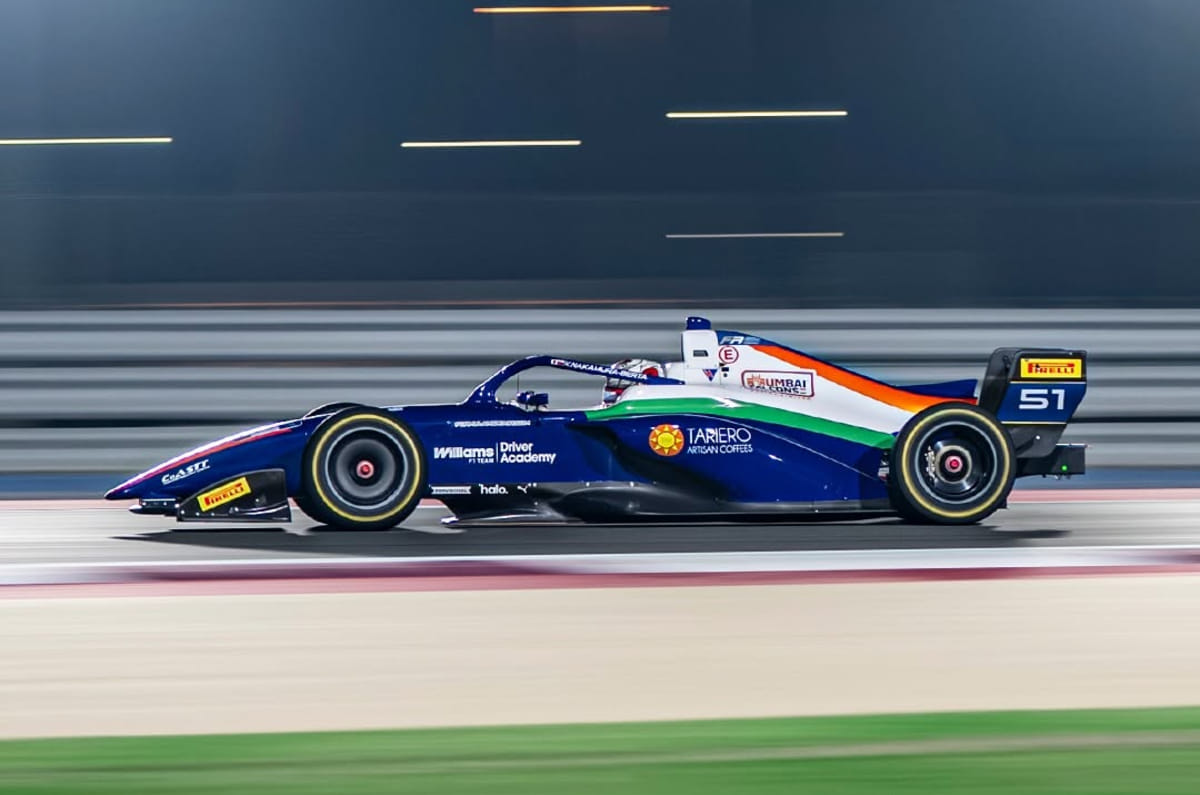
Over the years, Mumbai Falcons has fielded teams in several international karting and Formula Regional championships. The team has played a crucial role in the junior careers of prominent drivers, including Kimi Antonelli, Oliver Bearman, Arvid Lindblad and Kush Maini. 

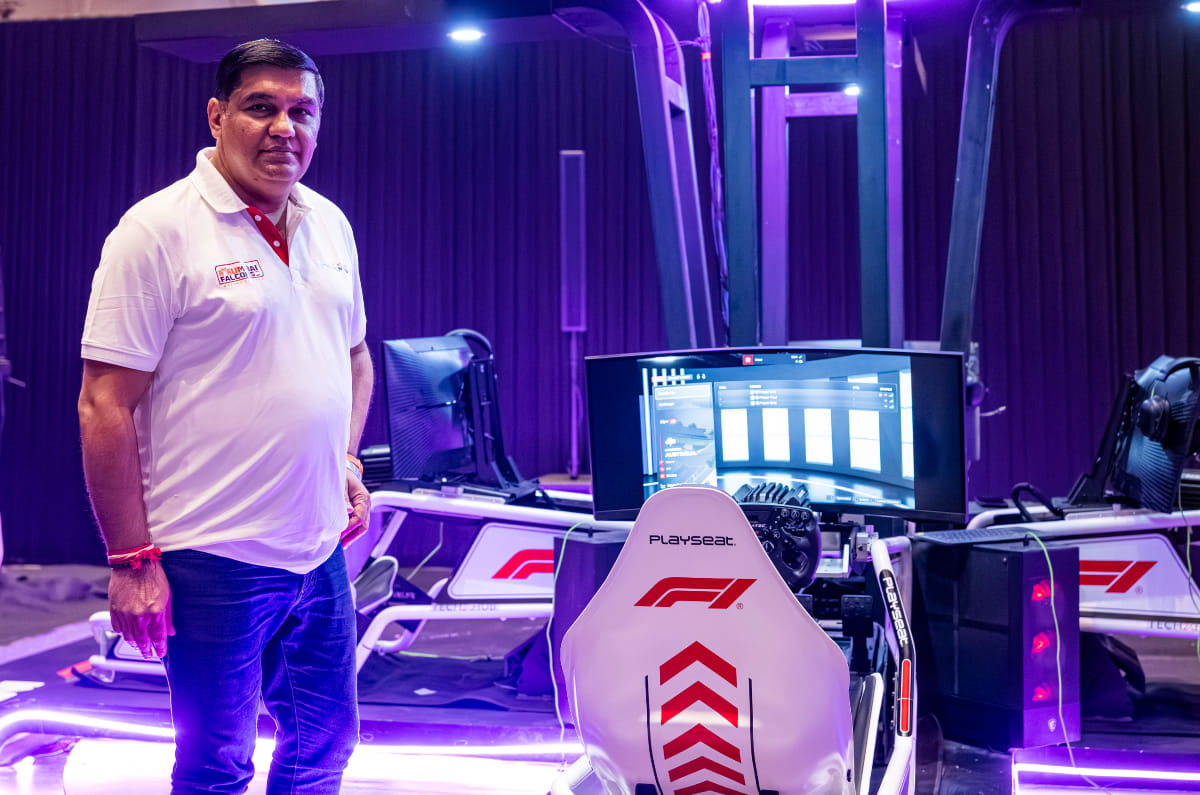
Speaking to Autocar India, Mumbai Falcons Racing Limited’s Managing Director Ameet Gadhoke explained that the idea for the F1 Sim Racing India Open stemmed from the team’s experience in single-seater racing. “I’ve seen how important sim racing was for [our drivers] before they went onto the track,” he stated. 

The team isn’t treating sim racing as a separate category; instead, it forms a key part of Mumbai Falcons’ driver development pathway. The best performers in the F1 Sim Racing India Open will join the team’s ‘Agla Star’ programme, with the top 1,000 players earning the chance to train with 4-stroke karts. The top 100 from here will then move up to 2-stroke karts, and those who impress the most will then be trained to step up to single-seater racing.

“The idea is to find the Agla Star. We want a guy or girl to come from here and go into single seaters as fast as possible. We’re doing a talent hunt programme, we’re not [just] doing sim racing,” Gadhoke explained. “So for those who actually understand motorsport, but cannot afford it, this is the pathway. The idea is if this person is good, then we take him out of the group, put him in real karts and then go into single seaters.”

Mumbai Falcons Racing Limited Managing Director Ameet Gadhoke
Mumbai Falcons Racing Limited’s Managing Director Ameet Gadhoke

Mumbai Falcons has also teamed up with several schools across India for this. As the team explained, the goal with this is “to introduce students to sim racing, motorsport technology and structured talent development opportunities at an early age”. As part of this initiative, partner schools will receive simulator infrastructure, training support and structured learning modules. Gadhoke says he’s targeting partnering with around 1,000 schools across 20 cities in India.

F1 also runs its own global sim racing championship, which often acts as a launchpad for wider opportunities in both sim racing, as well as motorsport in general. Gadhoke shared that Mumbai Falcons is also exploring representing India in this F1 Sim Racing World Championship.

F1 Sim Racing India entry fees, format

F1 Sim Racing India open format

Open to both newcomers and experiences players, the F1 Sim Racing India open is divided into two categories – Junior (ages 10-14) and Senior (above 14 years old). Registrations are currently underway, with the F1 Standard package costing Rs 3,499, and the F1 Elite package costing Rs 4,999. While the former simply gives access to competition entry, the more expensive F1 Elite package also includes priority slot for the zonal qualifiers, a 30-minute tutorial, telemetry data, 10 percent discount for online coaching and 10 percent discount on merchandise.

The competition is divided into 10 zones across the country. Phase 1 includes online laps as well as Mumbai Falcons’ school programme. For this, all those who have registered can compete on the F1 25 game through rough Steam, PlayStation Network, Xbox Live or via an EA Play membership. 

Participants can set their fastest lap times on one selected circuit within a 60-day window. Ranking is based on lap time, so the faster your lap, the higher your position. Participants can also continue trying to improve their lap times during the 60-day window.
The top 5,000 juniors and 5,000 seniors from each zone will then make it to the Zonal stage. The 50 fastest juniors and 50 fastest seniors from each zone qualify for the national finals.

F1 Sim Racing India Open: Finals

F1 Sim Racing India finals

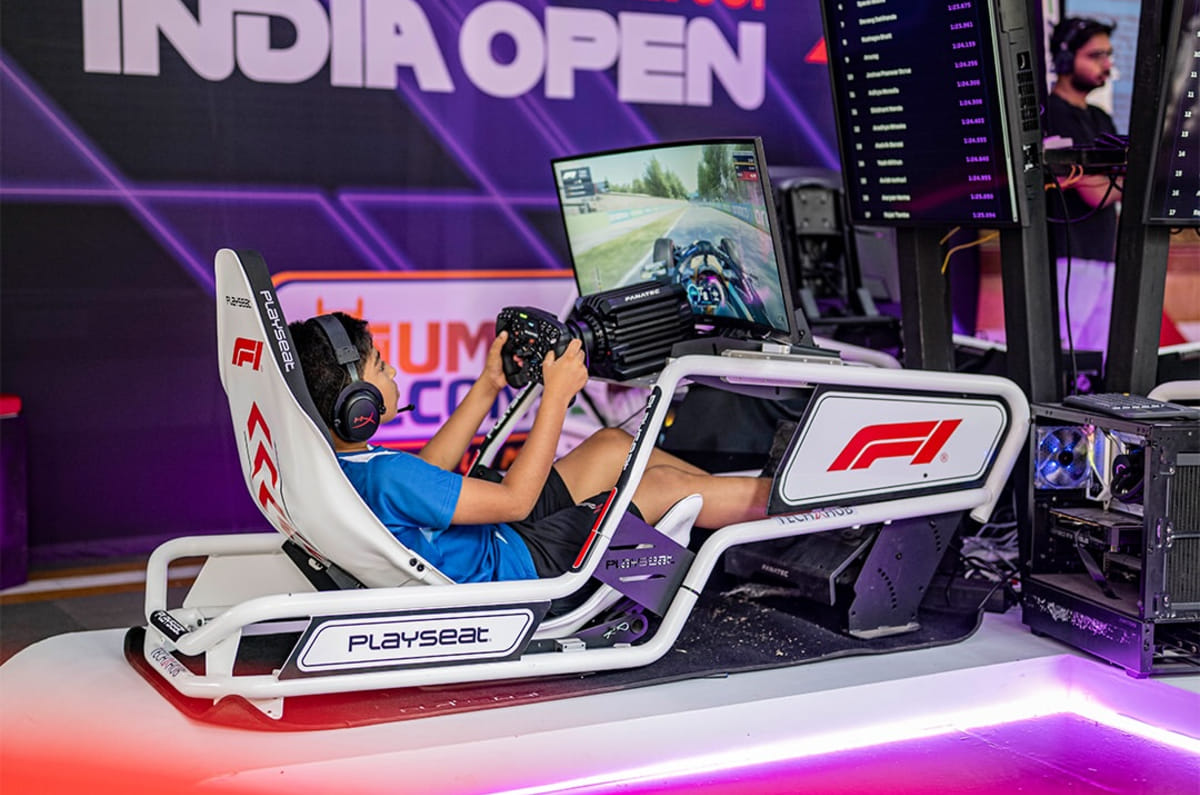
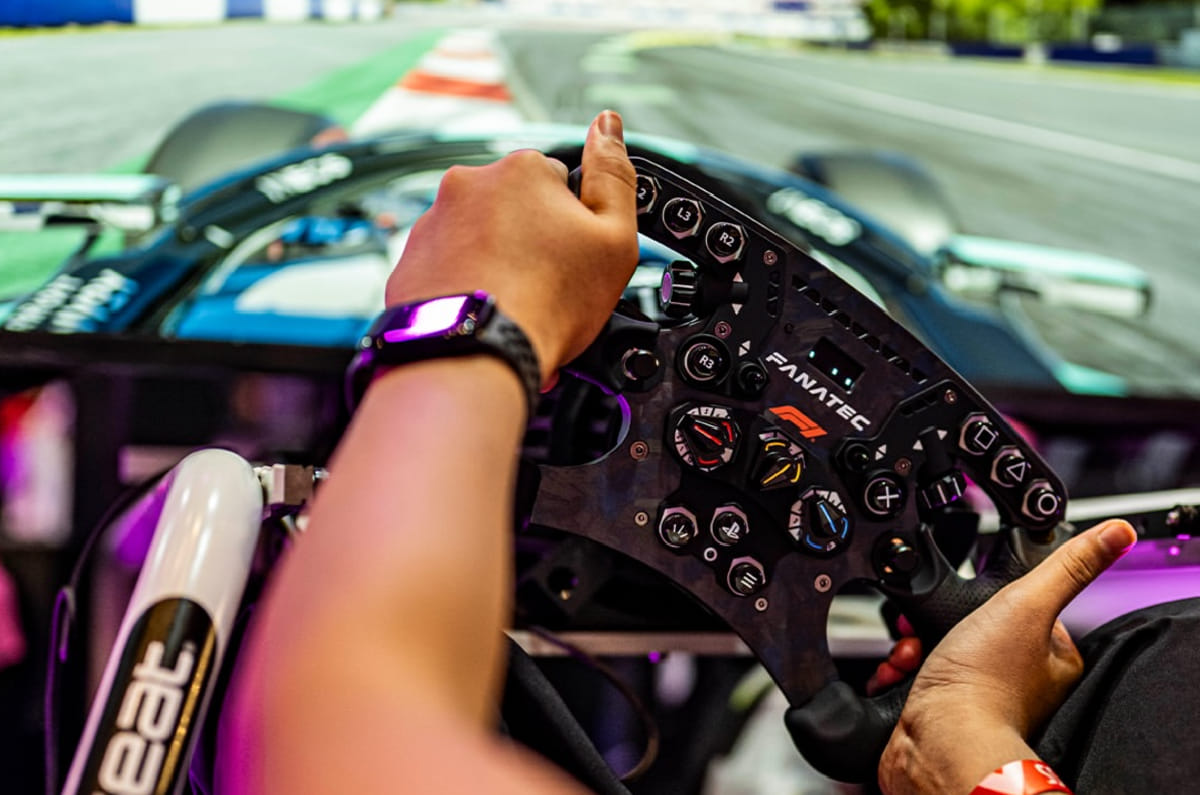
The national finals is slated to be held in Mumbai’s NSCI Dome in November 2026. Here, participants will compete in the Playseat Formula Intelligence F1 Edition cockpit, along with the Fanatec ClubSport Racing Wheel F1 system. 

The top 30 from each category will progress to the last stage. The junior finalists will then compete across nine races, while the senior finalists will compete across 12 races. The Junior and Senior champion will each win Rs 1 crore. 
 

Nissan Tekton first drive review: Tough yet classy

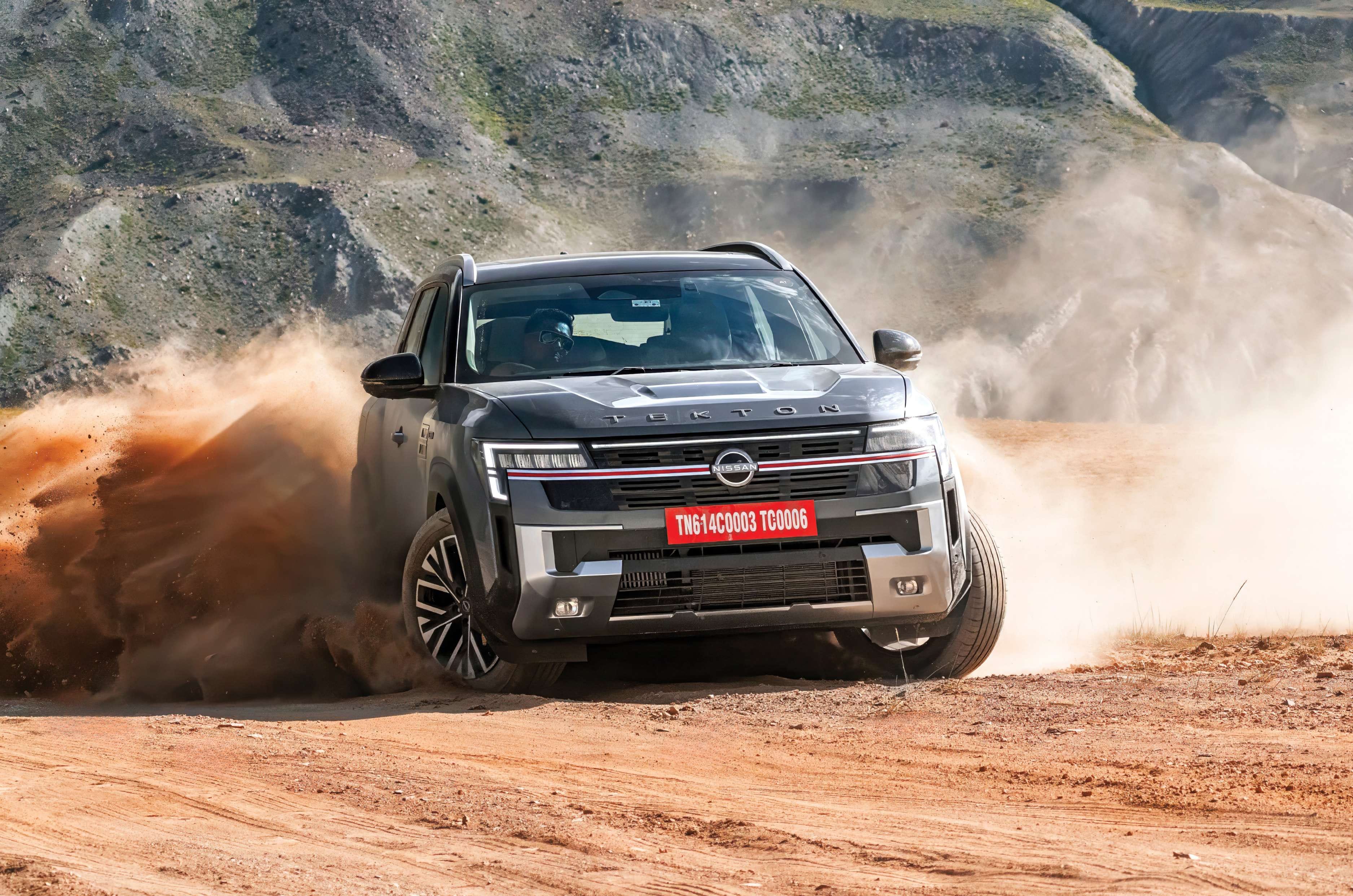
Nissan Tekton dirt cornering

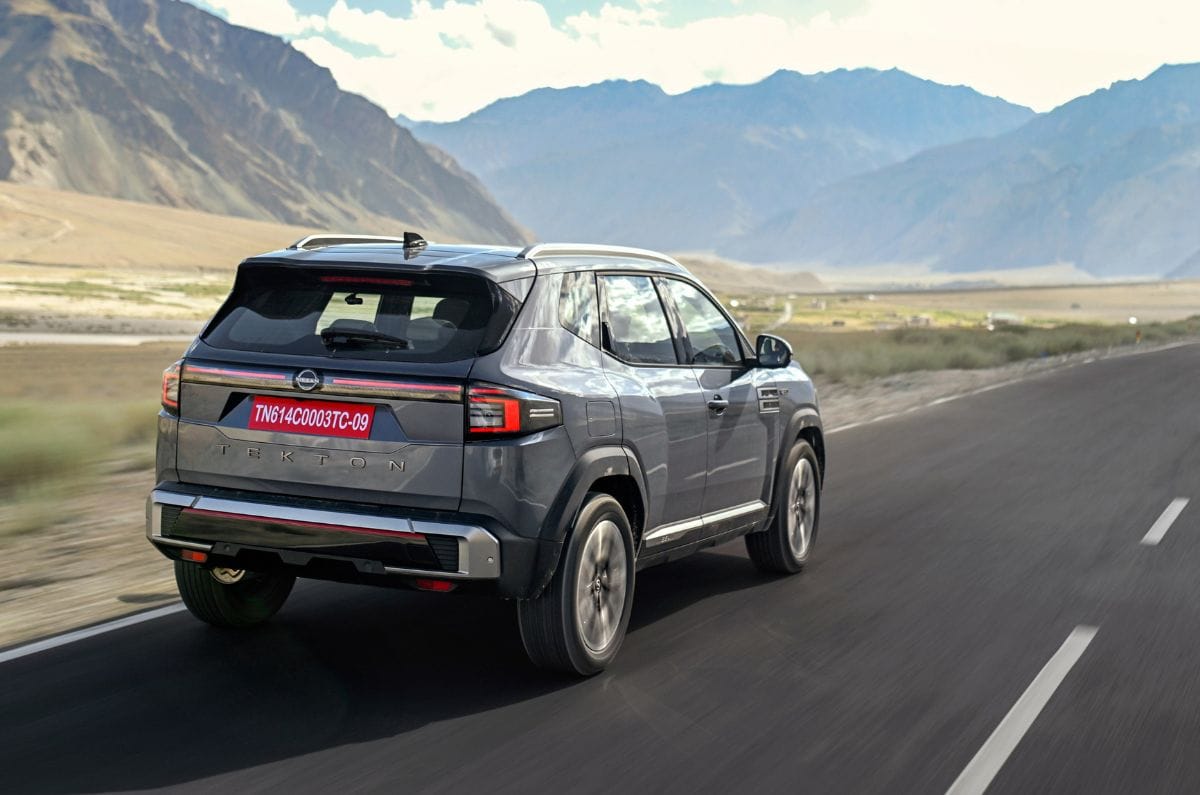
For our first drive of the all-new Tekton, Nissan organized an elaborate 700km plus test drive from Chandigarh to Leh, tackling everything from crowded city traffic and fast highways to mountain passes and broken roads. The aim was to find out whether Nissan’s new midsize SUV has what it takes to take on the Hyundai Creta, Kia Seltos and Maruti Victoris in the real world.

Nissan Tekton Exterior Design and Engineering – 9/10

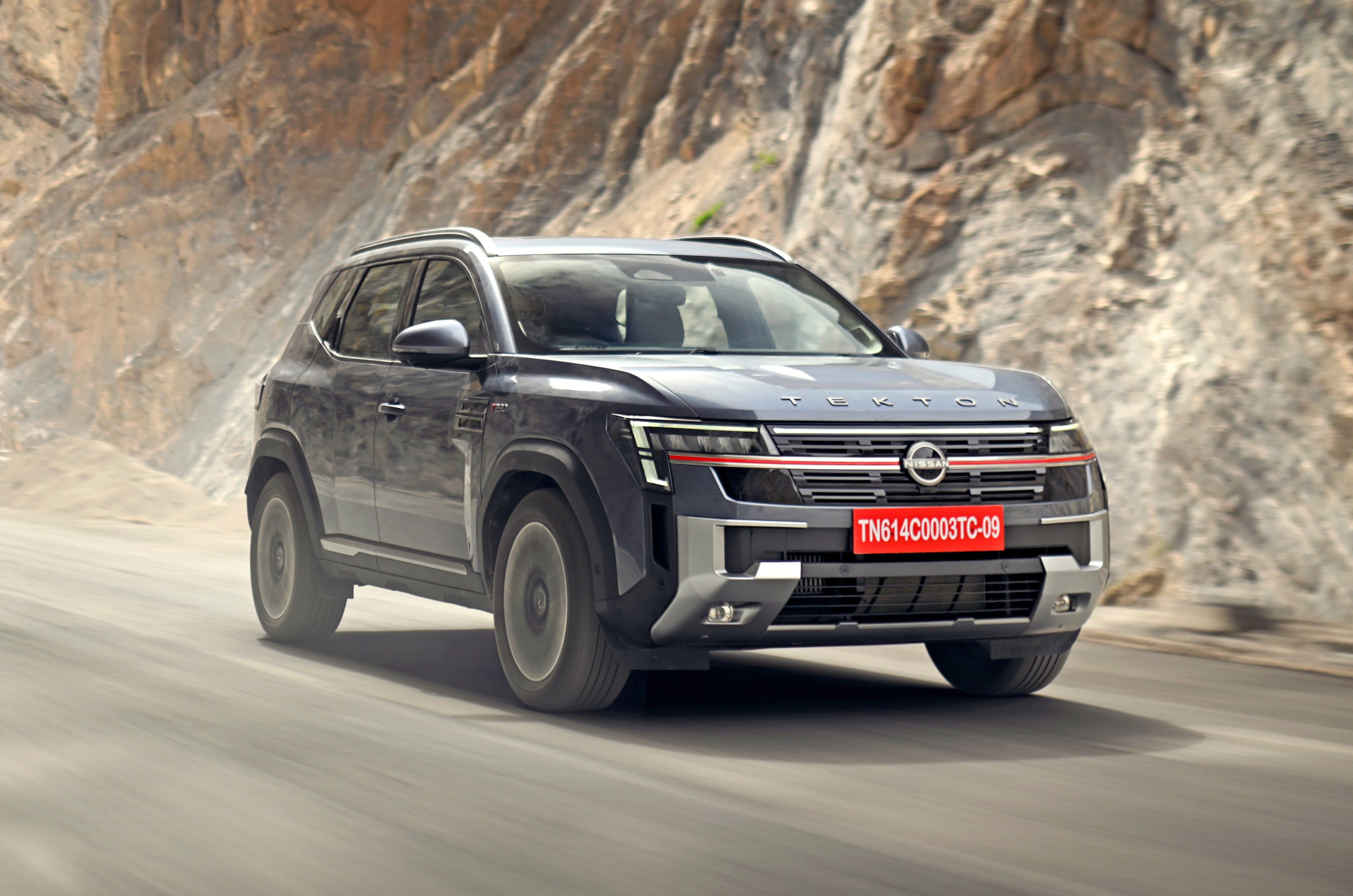
The Tekton is, in essence, a badge-engineered Renault Duster. It is built at the same plant, on the same assembly line, and shares its platform, powertrains and several components with its French sibling. Nissan, however, has worked hard to give it a distinct identity, drawing inspiration from its flagship Patrol SUV.

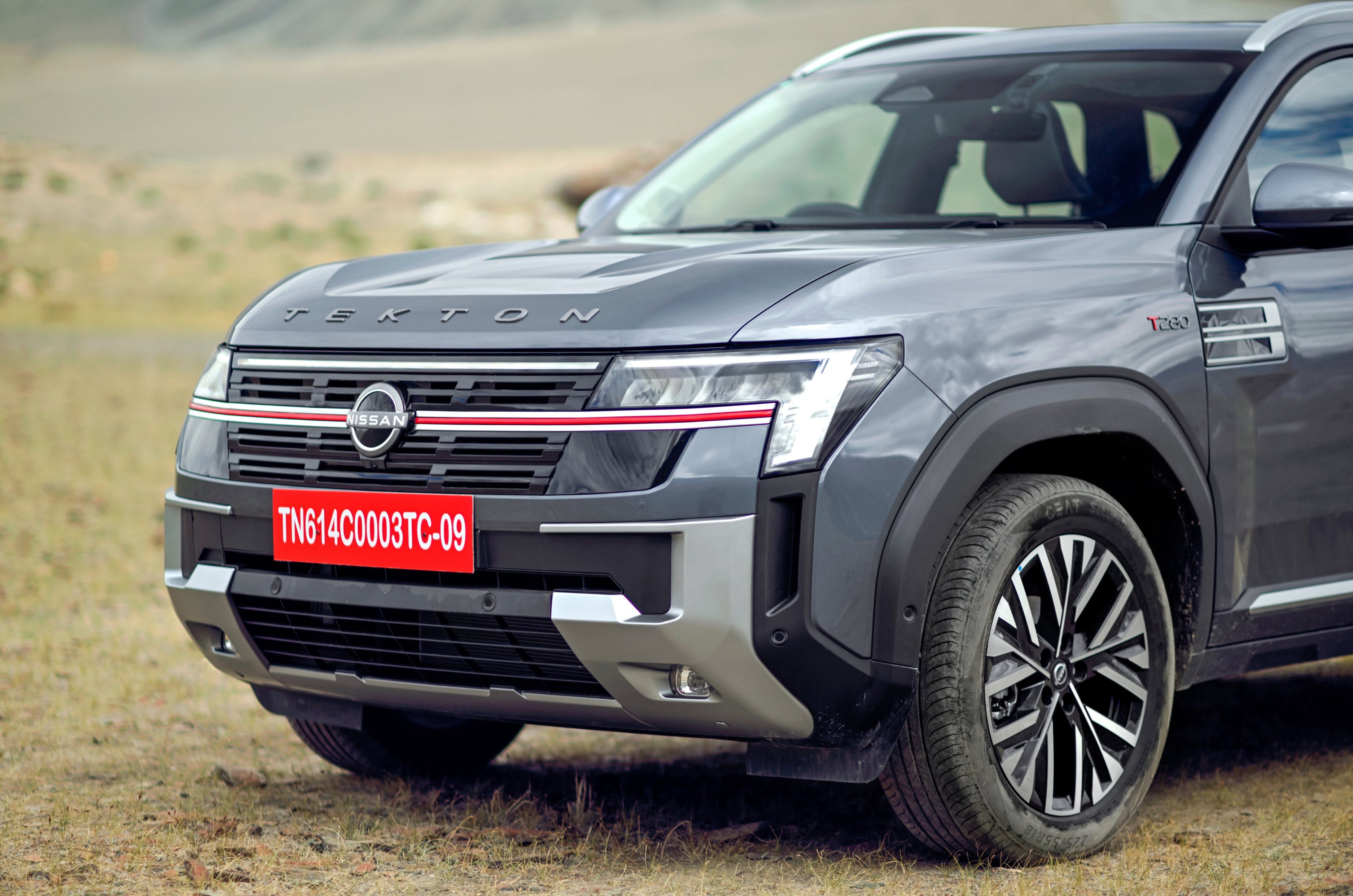
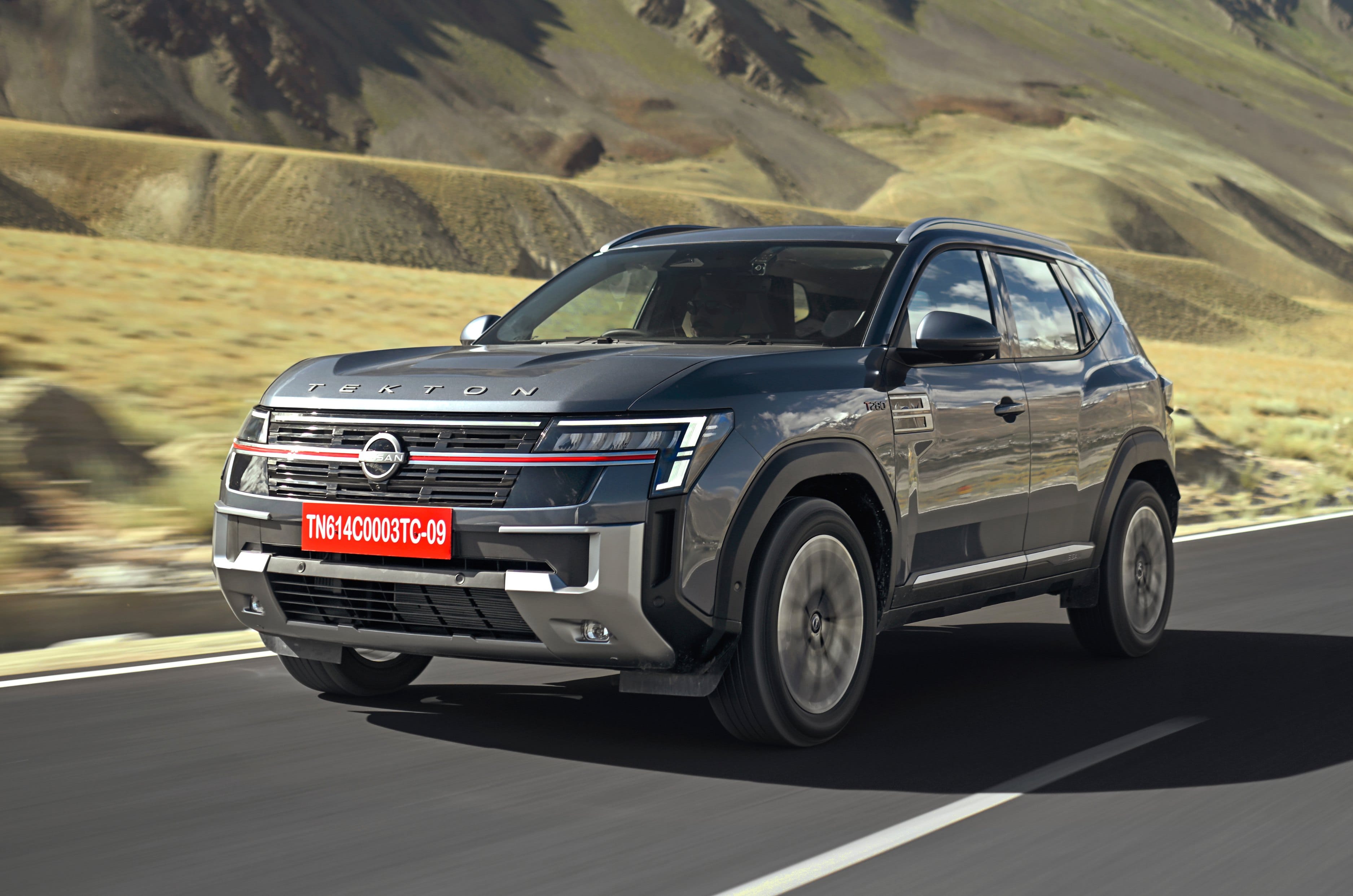
1.3 turbo variants can be identified by the red strip on the grille and T280 badge. 

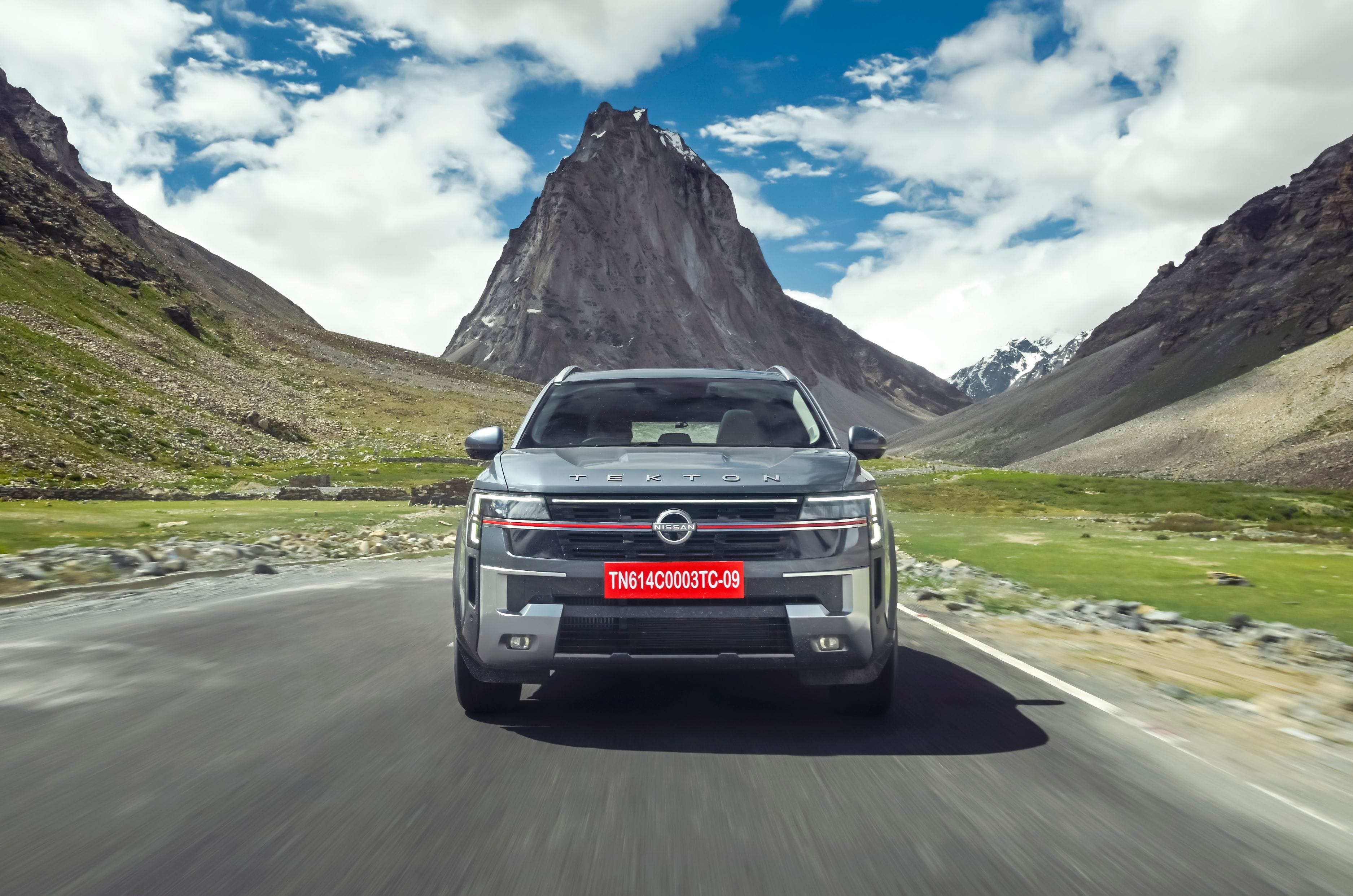
The front end is undoubtedly the highlight. The grille, connected light bar and red accents on the 1.3-litre turbo variants lend it a bold and distinctive look. It even gets functional bumper air scoops and fog lamps, the latter being an increasingly rare feature in this segment. The sculpted bonnet adds plenty of visual muscle, while the side profile is enhanced by attractive 18-inch alloy wheels wrapped in chunky, high-profile tyres. 

Practicality extends beyond appearances. Ground clearance stands at an impressive 212mm, making the Tekton well suited to rough terrain. The T280 badge on the front fender denotes the 280Nm produced by the 1.3-litre turbo-petrol engine, while a unique applique depicting the Himalayas adds a touch of character. Its pillar-mounted rear door handles link ties to Nissan SUVs of yore like the Pathfinder and X-Terra. 

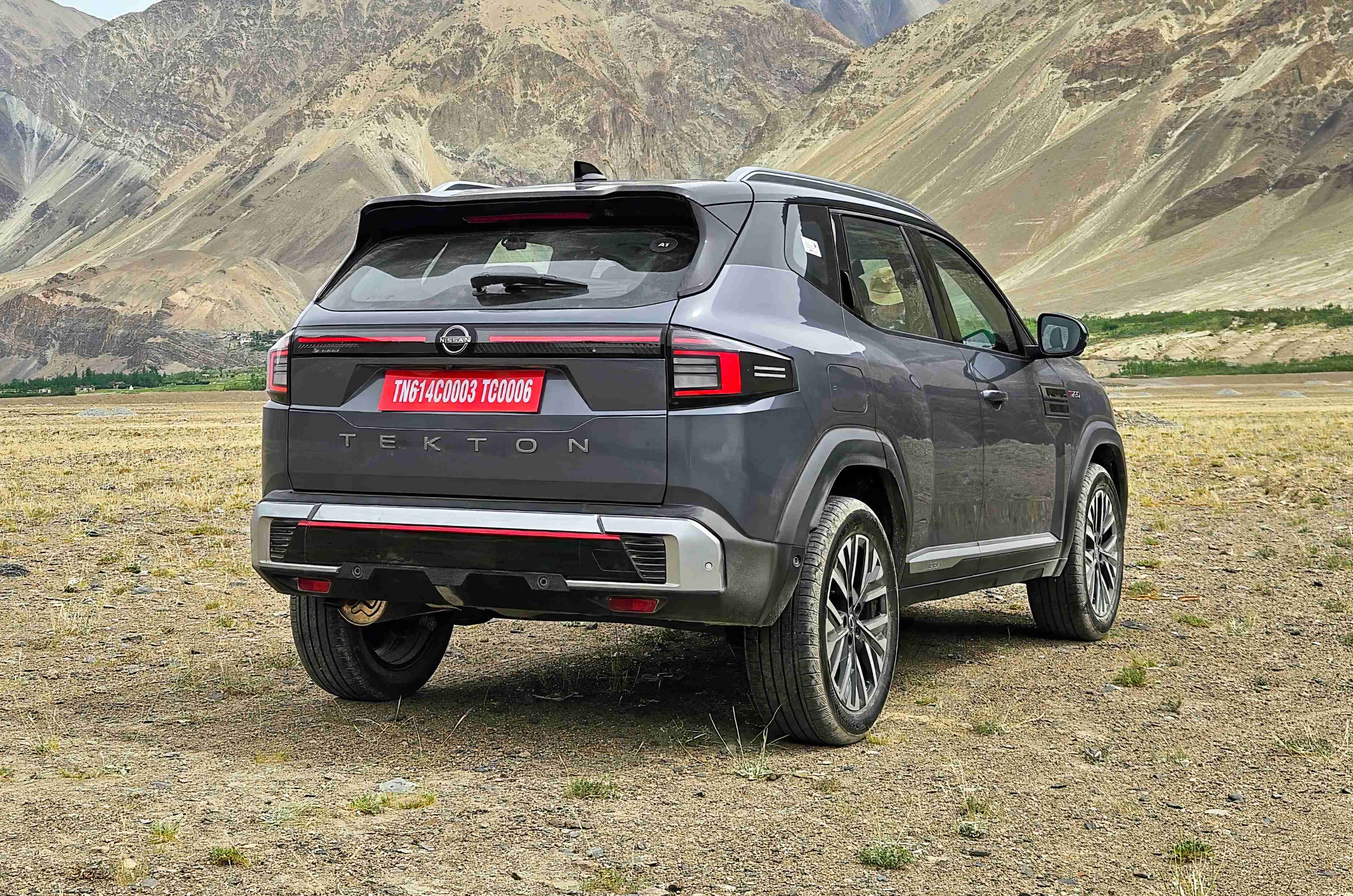
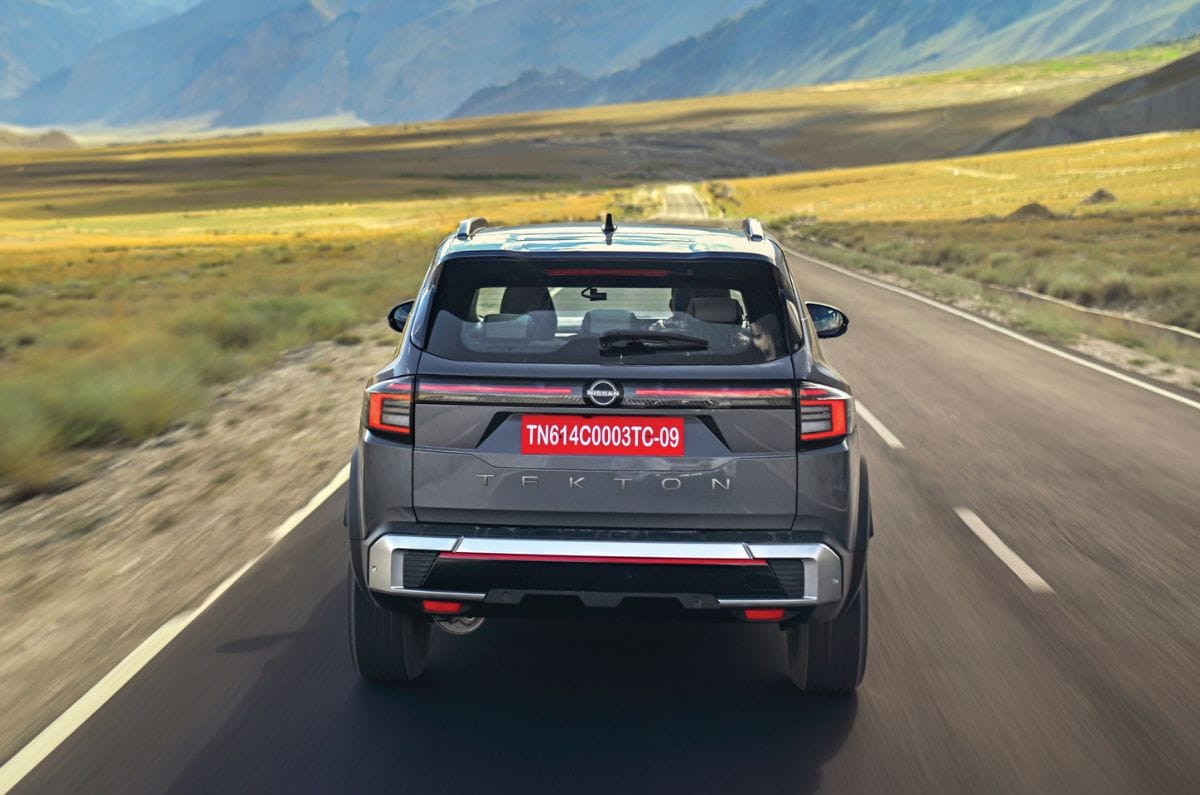
The execution of its tail-lamp design is spot on, looking most similar to the Patrol.

At the rear, the tail-lamp design bears the strongest resemblance to the Patrol and is executed rather well. While the Tekton isn’t the largest SUV in its class, it strikes a pleasing balance between road presence and urban friendliness. We suspect its styling is likely to be one of its biggest selling points.

Nissan Tekton Interior Space and Comfort – 8/10

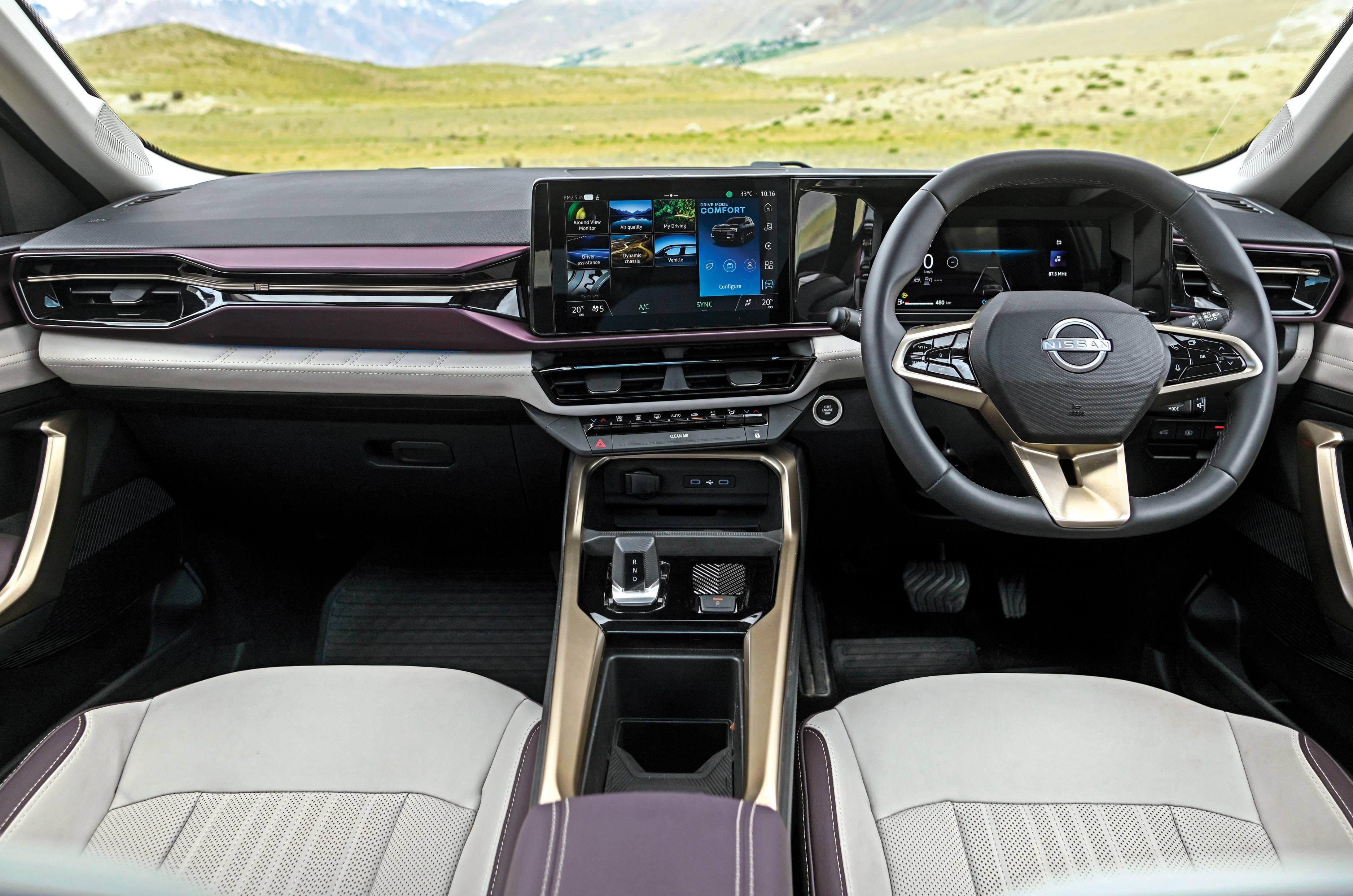
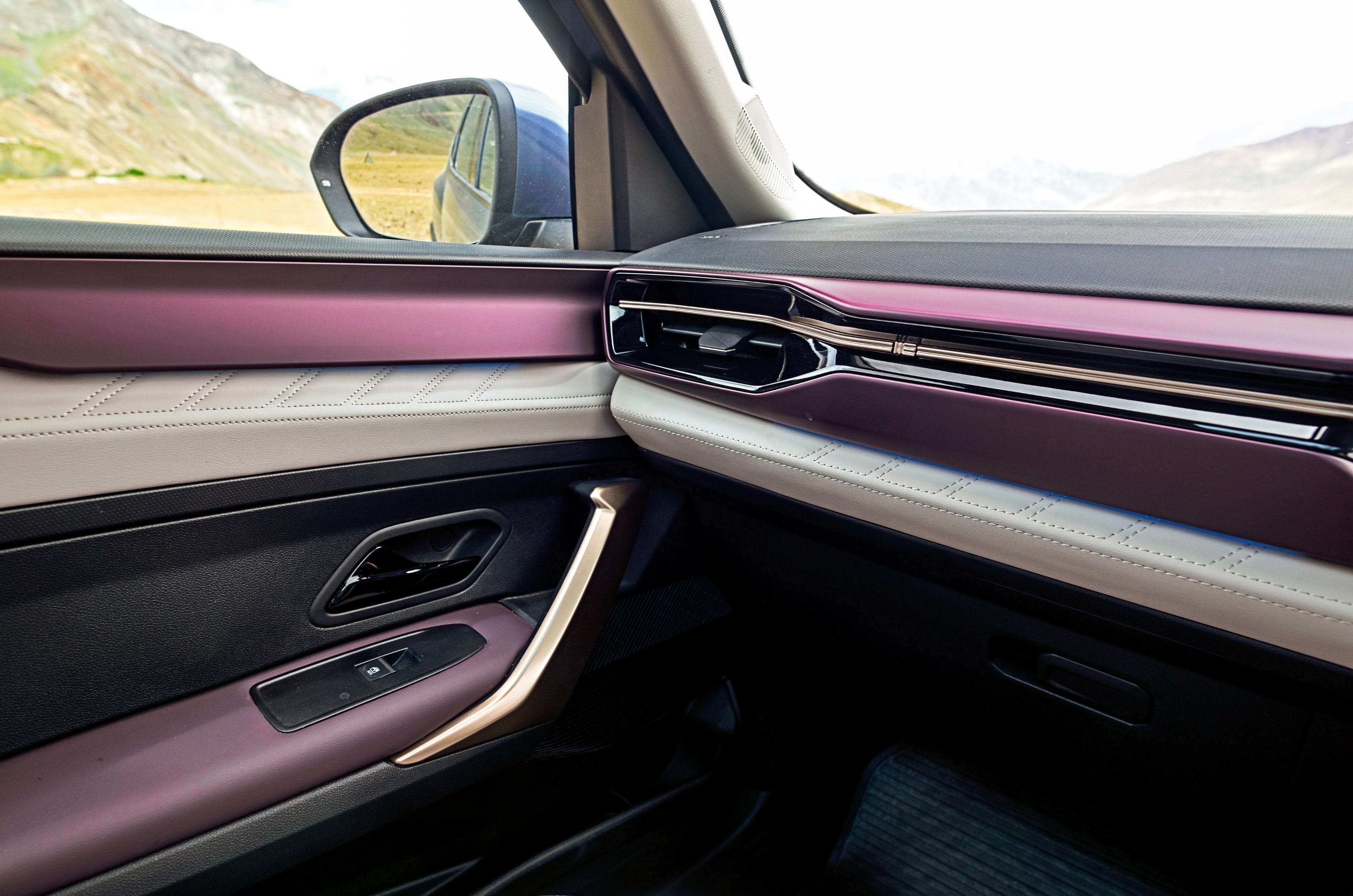
Inside, Nissan has done a commendable job differentiating the cabin from the Renault Duster. The layout remains familiar, but the padded leatherette on the dash and doorpads look classy and along with the burgundy, gold and light cream colour scheme lends the interior a more premium ambience. There are also subtle Nissan-specific touches on the dash fascia, including an Easter egg inspired by Japanese numerals represented by 2 vertical lines (Ni) and three horizontal lines (san). 

Neatly dressed-up interior look and feel quite upmarket.

The driving position is excellent. Visibility is strong, the bonnet is clearly visible from the driver’s seat, and most controls fall easily to hand. Ergonomics are largely spot-on, though taller drivers who prefer a high seating position may find the large plastic panel near the A-pillar slightly intrusive. 

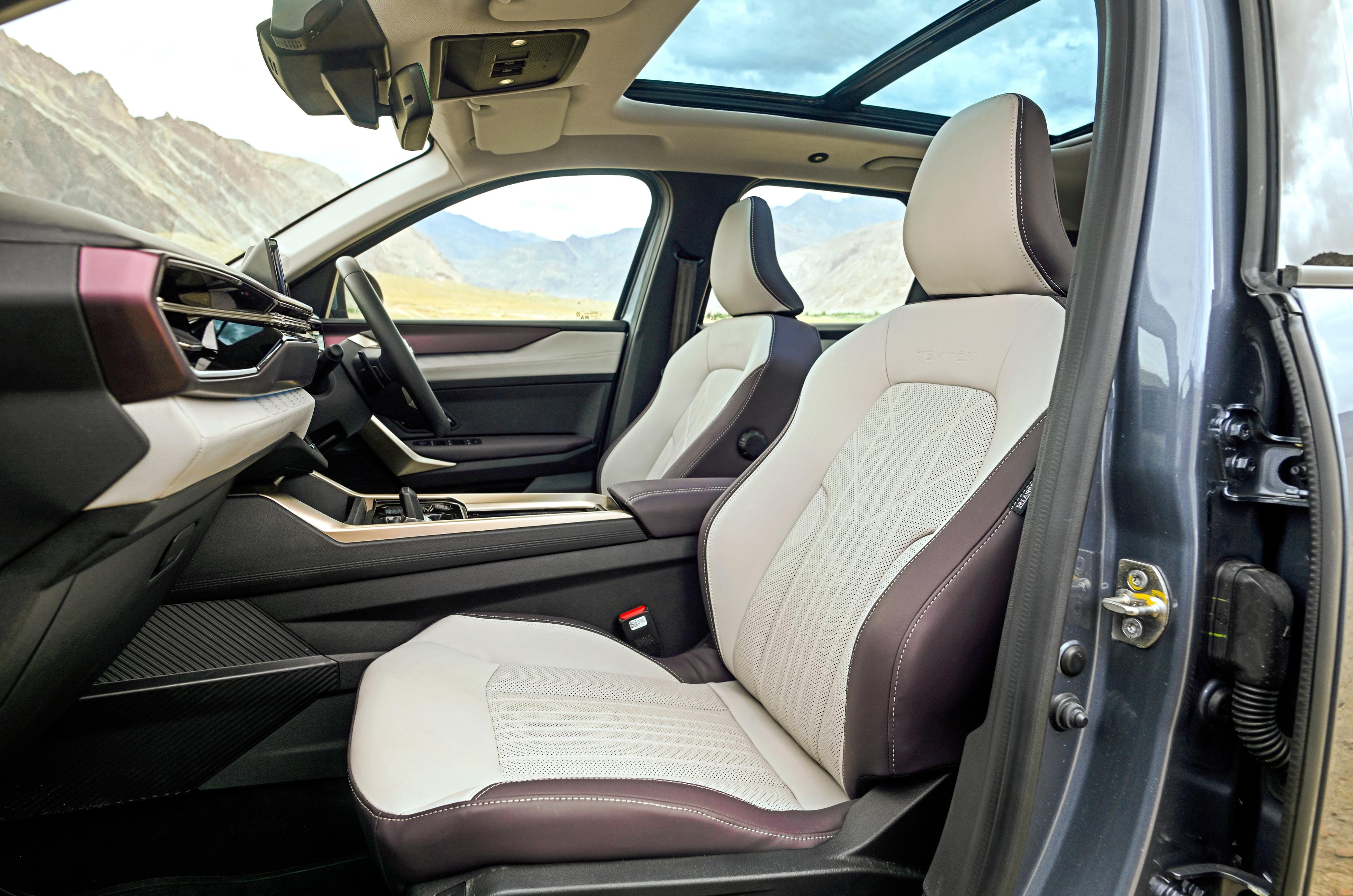
Burgandy, gold and light cream colour scheme, along with the soft leatherette paddings enhance the cabin’s premium feel.

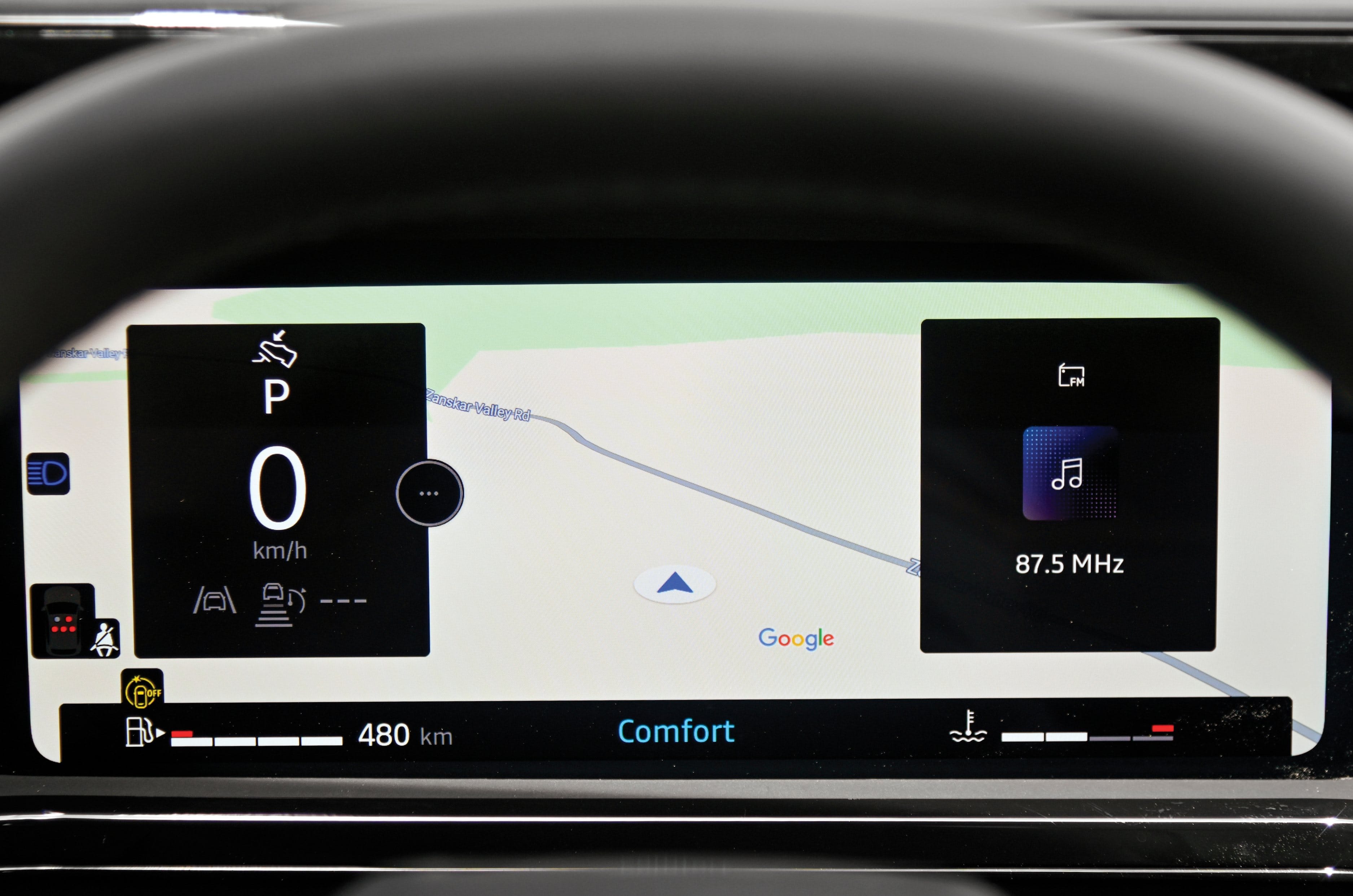
One area where the Tekton needs improvement is air conditioning performance. Even at the lowest temperature setting, the cabin takes time to cool down. Thankfully, the ventilated front seats are highly effective and help offset this weakness. The seats themselves deserve praise for their excellent support and long-distance comfort. The digital instrument cluster is clear and easy to read, offering multiple display layouts, including a full-map view. Unlike the Duster’s less intuitive tachometer display, the Nissan gets a more conventional and user-friendly setup. Physical controls for climate functions, audio settings and ADAS shortcuts are particularly welcome in an era increasingly dominated by fiddly touch panels. 

Powered front seats are supportive and have a very effective ventilation function.

Storage solutions are generally well thought out. The cooled wireless charging pad prevents phones from overheating, while USB-C ports and a 12V socket are provided. However, 1-litre bottles cannot be stored vertically in the front door bins; although they can be placed vertically in the rear door bins. Useful storage spaces include deep cupholders and a large central armrest console. The glovebox is generous, though part of it is compromised by the fuse box, just as in the older-gen Duster. 

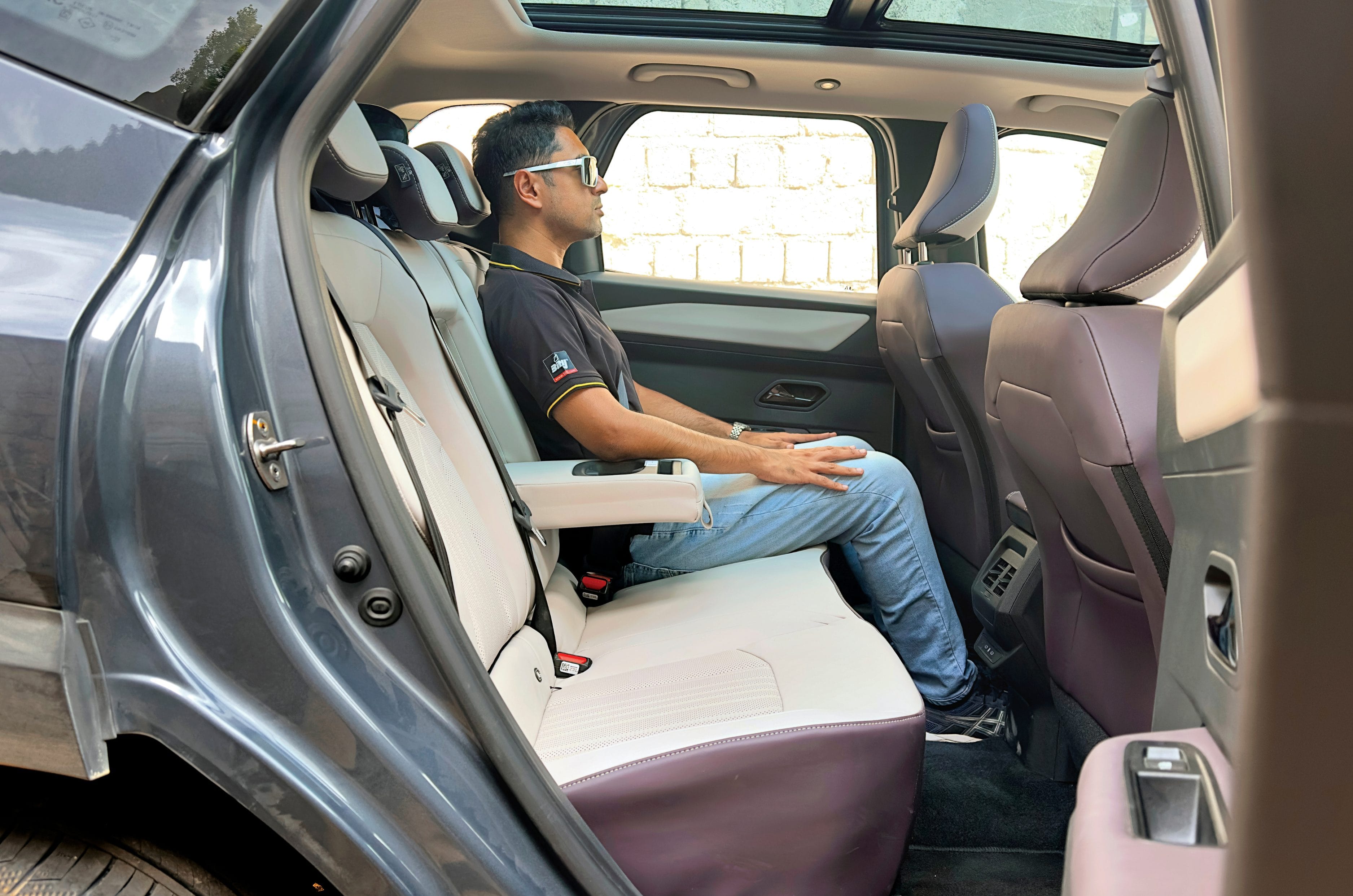
Cabin space is adequate for four adults; seats are very comfy. 

Accessing the rear seat requires a bit of effort due to the high step-in and narrow opening, but once seated, comfort levels are impressive. The seat backrest is well angled, under-thigh support is good, and there’s plenty of room beneath the front seats to stretch out. The rear bench is best suited to two adults rather than three, although all occupants get individual headrests and three point seatbelts. 

Rear-seat amenities include seatback pockets, rear AC vents, two USB charging ports, a centre armrest and a phone holder. The panoramic sunroof adds a real sense of occasion, especially on scenic drives through the mountains. That said a boss mode for the electrically adjustable front passenger seat and rear sunshades aren’t available. 

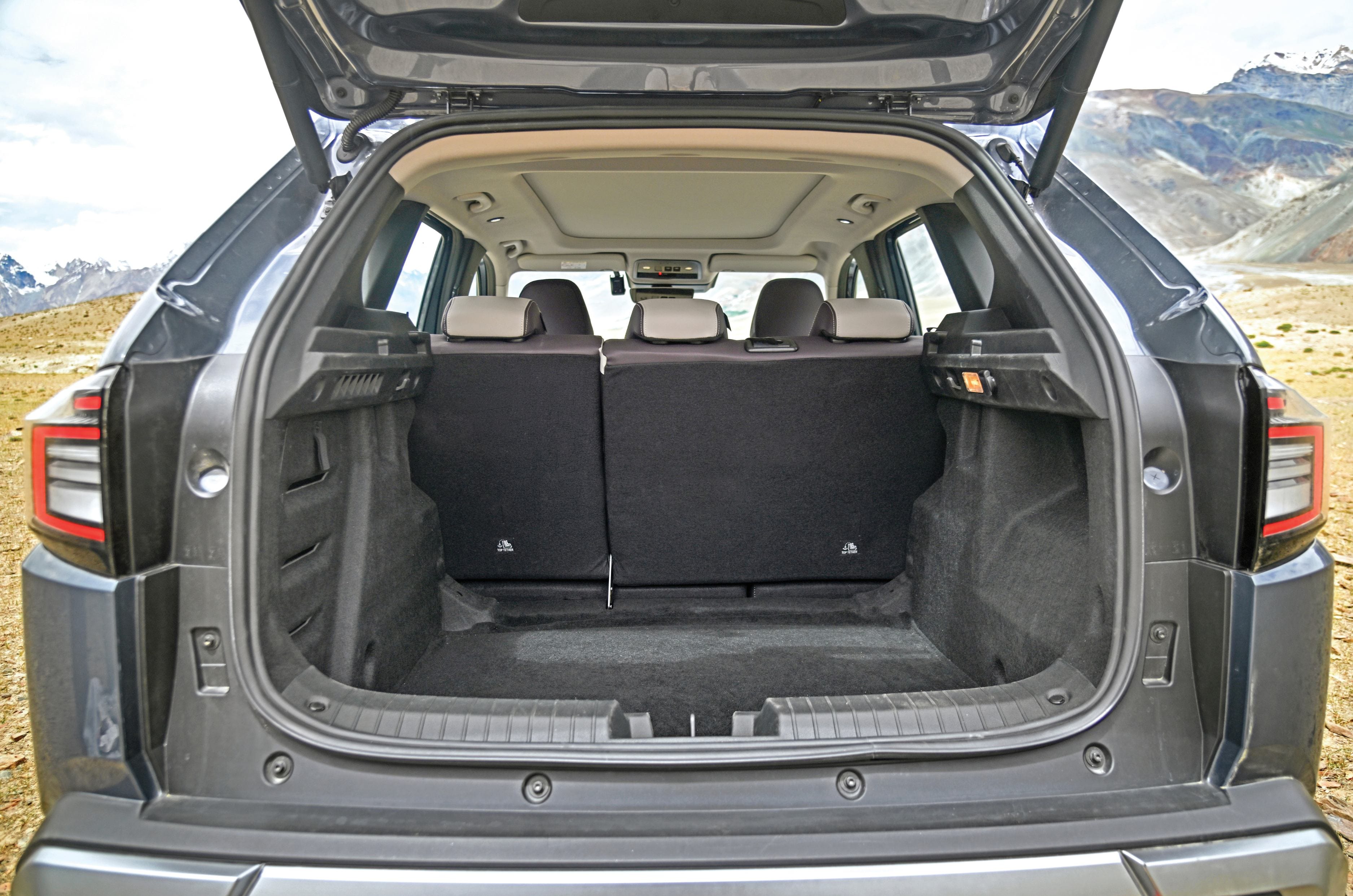
Cavernous 518-litre boot is ideal for road trips; gets a spare wheel too. 

Open the electrically operated tailgate and you’re greeted by a massive 518-litre boot. It comfortably swallows luggage and is the largest in its class, making it ideal for long-distance touring. There’s a full-size spare tyre too.

Nissan Tekton Features and Safety – 9/10

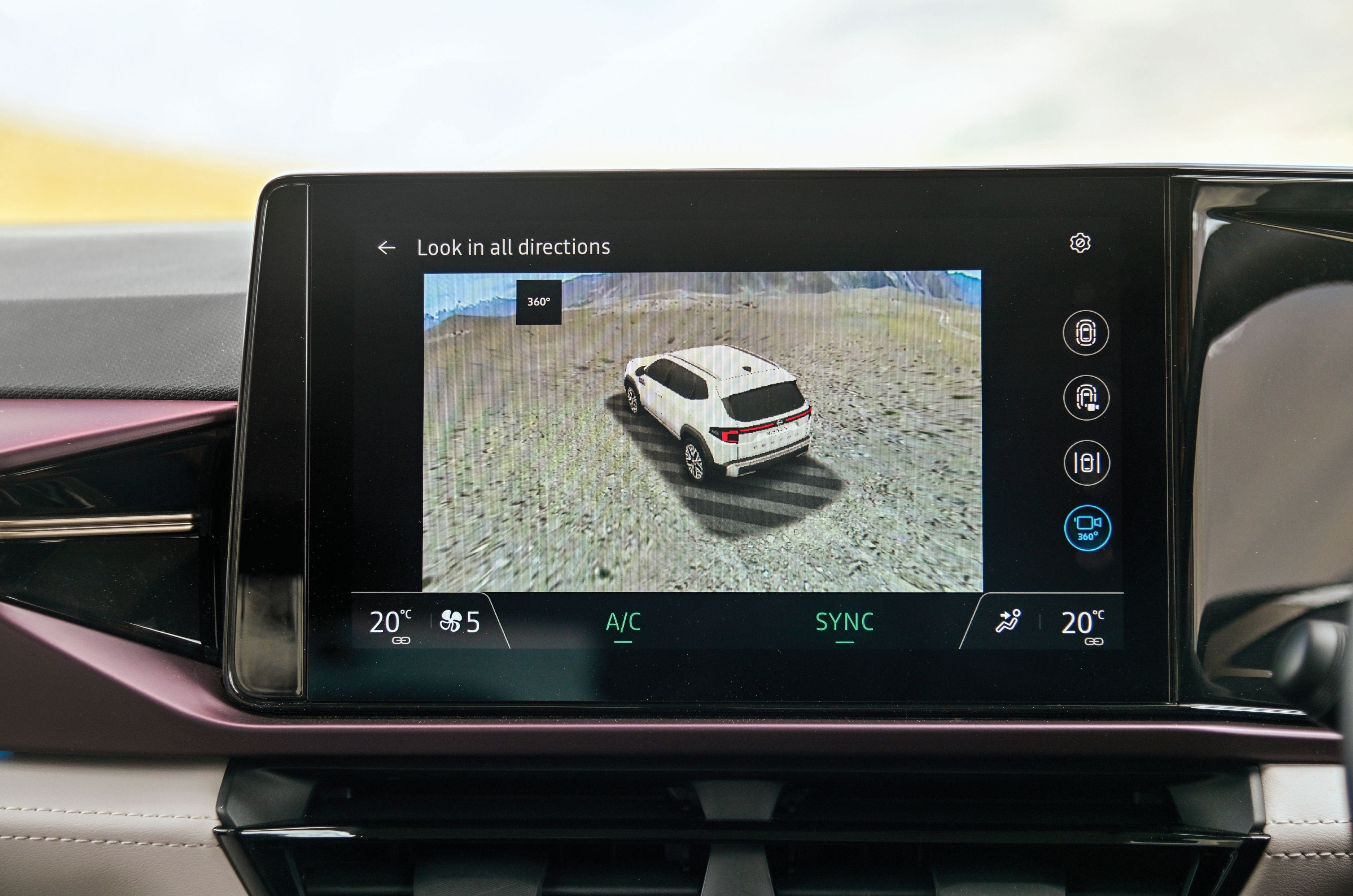
The Tekton is otherwise generously equipped with kit like panoramic sunroof, powered and ventilated front seats, 10.25-inch instrument cluster, 10.1-inch touchscreen which not only gets wireless Android Auto and Apple CarPlay, but it also gets native Google integration including Gemini voice assistant, among other notable features. The only real disappointment is the below par quality of the 360-degree camera system. 

With in-built Google, screen works well; 360-degree camera quality is below par. 

Safety credentials are strong. Along with a comprehensive ADAS suite, the Tekton has secured a five-star Bharat NCAP rating, just like its Renault sibling. The lane-keep assist didn’t seem to keep the vehicle properly centred within the lane, and it tended to weave between the lane markings. 

The adaptive cruise control system also performed well, maintaining safe distances and slowing progressively with traffic. Its acceleration back to the set speed, however, feels somewhat slow regardless of drive mode. 

10.25-inch instrument cluster is well executed; gets a full map view too. 

Nissan Tekton Performance and Refinement – 7/10

The entry-level powertrain is a 1.0-litre turbo-petrol shared with the Magnite. With some updates though that has taken torque higher to 166Nm – up from 160Nm, while power remains the same at 100hp. It is paired exclusively with a six-speed manual gearbox. 

To compensate for the Tekton’s weight and performance demands, Nissan has equipped this version with shorter gearing than the 1.3-litre variants. Around town, it feels perfectly adequate, but the small-capacity turbo engine suffers from noticeable turbo lag. Steep inclines often require clutch slip to get moving, and enthusiastic driving demands frequent gear changes to keep the engine in its power band. Peak boost arrives beyond 3,000rpm, while the gearbox itself lacks the slickness of some Korean and Japanese rivals. 

If you love to drive, this is one of those cars that you’re surely going to like.

The 1.3-litre turbo-petrol is significantly more appealing. Refinement levels are better, performance is considerably stronger, and overtaking requires much less planning. Turbo lag is reduced compared to the 1.0-litre, though it hasn’t been eliminated entirely. On steep gradients and under stop-start conditions, the engine occasionally struggles to build revs quickly enough, exposing a weak bottom-end response. 

Once past 2,500rpm, however, the turbo wakes up and the Tekton gathers speed with enthusiasm. The engine also produces an appealing turbo whoosh at higher revs, though some may find it intrusive. 

Enthusiasts are likely to yearn for a bit more responsiveness from both the engines.

This engine comes with a manual as well as a six-speed wet-clutch dual-clutch automatic transmission, which is the one we drove. Shifts are impressively smooth and seamless, but responses are slower than expected. The gearbox’s tendency to upshift early can make the Tekton feel less responsive than it actually is, often prompting the use of the paddle shifters for quick overtakes. 

There are two drive modes – Comfort and Eco – though enthusiasts will miss the absence of a Sport mode. Fortunately, manual mode allows greater control over the transmission and proved particularly enjoyable on mountain roads. In city traffic, however, the combination works well, with smooth low-speed behaviour and a well-calibrated creep function. 

Even though we didn’t get a chance to test the Tekton for outright performance and fuel efficiency, we have extensively tested its Renault sibling, and the numbers aren’t particularly impressive. Expectedly, the Duster’s performance testing revealed that the 1.3-litre manual is the quickest variant to 100kph (10.32 sec), , while the 1.3 DCT’s reluctance to allow aggressive launches affects its outright acceleration times  (11.33 sec). The 1.0-litre (13.26 sec) delivers acceleration comparable to the naturally aspirated 1.5-litre engines found in the Creta and Seltos.

Nissan Tekton Mileage and Efficiency – 6/10

Once again, taking the Duster’s figures for refence, average real-world fuel efficiency is quite weak too with the 1.0 version (10.98kpl) faring only slightly better than the 1.3 versions (10.47kpl for DCT, 10.64kpl for MT). Like the Duster, all variants of the Tekton get an Eco mode as well as an auto engine stop-start function to keep a check on fuel consumption.

Nissan Tekton Ride Comfort and Handling – 9/10

As with the Renault Duster, Nissan has absolutely nailed the ride-and-handling balance. Unlike many European cars, the Tekton does not feel overly firm at low speeds. Instead, it delivers a supple, absorbent ride that shrugs off poor road surfaces with ease. Even sharp potholes generate more noise than impact inside the cabin.

Unlike some rivals, its low speed ride doesn’t have the typical underlying firmness. 

Handling is equally impressive. The Tekton changes direction eagerly and inspires confidence, making it genuinely enjoyable to drive. Its electronic power steering offers Light and Heavy modes, though the lighter setting strikes the better balance between ease and precision. The steering feel is among the best in the segment. 

Braking performance is another strong point. Throughout our drive to Leh, the brakes consistently inspired confidence, delivering strong stopping power and natural pedal feel.

Nissan Tekton Value for Money – 8/10

Priced between Rs 10.50 lakh and Rs 18.5 lakh, the Tekton commands a premium of Rs 10,000-50,000 over an equivalent Renault Duster. The range consists of 12 variants: six powered by the 1.0-litre turbo petrol, two by the 1.3-litre manual and four by the 1.3-litre auto, indicating Nissan’s focus on the smaller engine.

The biggest drawbacks of the powertrains though are the lack of outright punch and responsiveness, as well as fuel efficiency that may not satisfy high-mileage users. Neither Renault nor Nissan offers a diesel option, and while the Duster is expected to receive a hybrid powertrain, Nissan has ruled out one for now. 

However after 700km behind the wheel, the Nissan Tekton leaves an overall positive impression. It is handsome, well equipped and comfortable, with a premium-feeling cabin and class leading 518-litre boot. The rear seat may not be the most spacious in the segment, but it comfortably accommodates four adults, while its ride-and-handling balance ranks among the very best in class. The Tekton then is a thoroughly competent midsize SUV. And in a segment packed with strong contenders, this one too deserves serious consideration.

All you need to know about Mercedes-AMG E 53 before India launch

Mercedes-AMG E 53

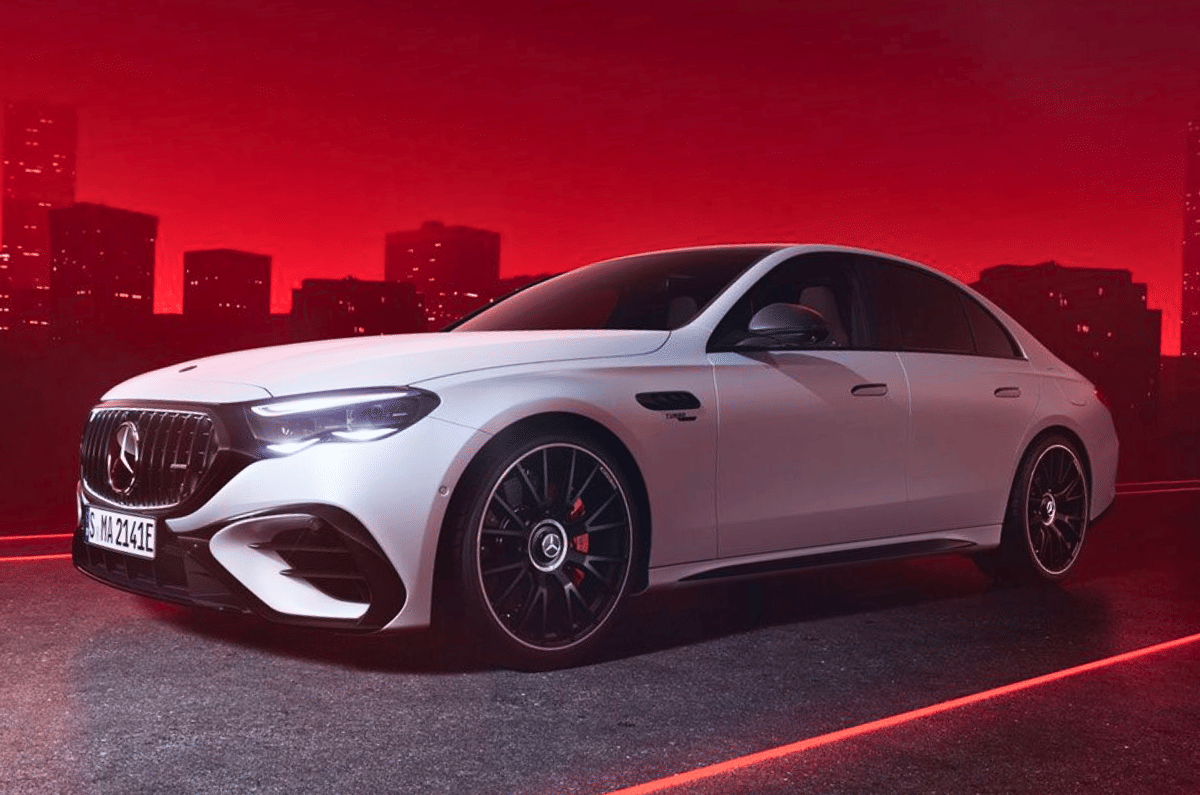
Mercedes-Benz is set to expand its India line-up with the launch of the new AMG E 53 performance sedan on July 23. This AMG version of the Mercedes E-Class was unveiled globally in March 2024 and is now finally headed to India, more than two years later. Here’s everything you need to know about the new Mercedes-AMG E 53.

What is the expected price of the new Mercedes-AMG E 53?

Mercedes-AMG E 53

The 2026 Mercedes-AMG E53 price is expected to be around the Rs 2.2 crore (ex-showroom) mark. If that holds, the E 53 will carry a premium of about Rs 29 lakh over the AMG C 63 S E sedan, which costs Rs 1.91 crore.

Is the new Mercedes-AMG E 53 a PHEV?

While the previous E 53 that was on sale in the country came with a 48V mild-hybrid system, the new version is a plug-in hybrid electric vehicle (PHEV). The 2026 performance sedan continues to use a 3.0-litre turbo-petrol straight-six engine, but pairs it with an electric motor integrated into the 9-speed automatic gearbox. Combined, this setup produces 585hp and 750Nm. Drive is sent to all four wheels via the brand’s 4Matic+ AWD system.

Mercedes-AMG E 53 engine

With the optional AMG Dynamic Plus package, power increases to 612hp (when Race Start is activated). In this mode, the E 53 can sprint from 0-100kph in 3.8 seconds and reach a top speed of 280kph. It also gets a 21.2kWh lithium-ion battery, offering a claimed electric-only range of over 100km. The 400V battery supports AC charging speeds of up to 11kW. In some markets, an optional 60kW DC fast charger is also on offer, which can charge the battery from 10 to 80 percent in about 20 minutes.

How is the Mercedes-AMG E 53 mechanically different to the regular E-Class?

The E 53 gets several AMG-specific chassis upgrades, including extra bracing at the front and rear axles, an 11mm wider front track, and adaptive suspension with Comfort, Sport, and Sport+ mode settings. Its braking system has also been tuned to work better with the hybrid system’s energy recuperation.

Does the new Mercedes-AMG E 53 look any different from the regular E-Class inside and out?

Mercedes-AMG E 53

The Mercedes-AMG E 53 gets a sportier look than the standard E-Class. Up front, it features an AMG-spec grille with illumination, a redesigned bumper with larger air intakes, and front fenders widened by 11mm on each side. Even the design for the wheels stands out. At the rear, it gets a boot-lid spoiler, and a redesigned bumper with a blacked-out diffuser and four round exhaust tips. Inside, the E 53 gets AMG-spec seats (with powered adjustment at the front) and AMG steering wheel.

What features will the new Mercedes-AMG E 53 offer?

Mercedes-AMG E 53

It gets a 12.3-inch digital driver’s display and a 14.4-inch touchscreen. In international markets, buyers can also opt for the brand’s Superscreen, which adds a separate display for the front passenger. It remains to be seen if Mercedes offers the Superscreen with the E 53 in India. Other features include Burmester sound system, panoramic sunroof, ambient lights, wireless charger, wireless Android Auto and Apple CarPlay, drive modes, 360-degree camera, multiple airbags and more.

Whom will the new Mercedes-AMG E 53 rival in India

Upon launch, the new Mercedes-AMG E 53 will see competition from models like the BMW M5 and the Porsche Panamera. The M5 is priced at Rs 2.11 crore, ex-showroom, while the Panamera starts at Rs 1.79 crore before options.