6 updates Mahindra BE 6 Sporteq gets over its predecessor

6 updates Mahindra BE 6 Sporteq gets over its predecessor
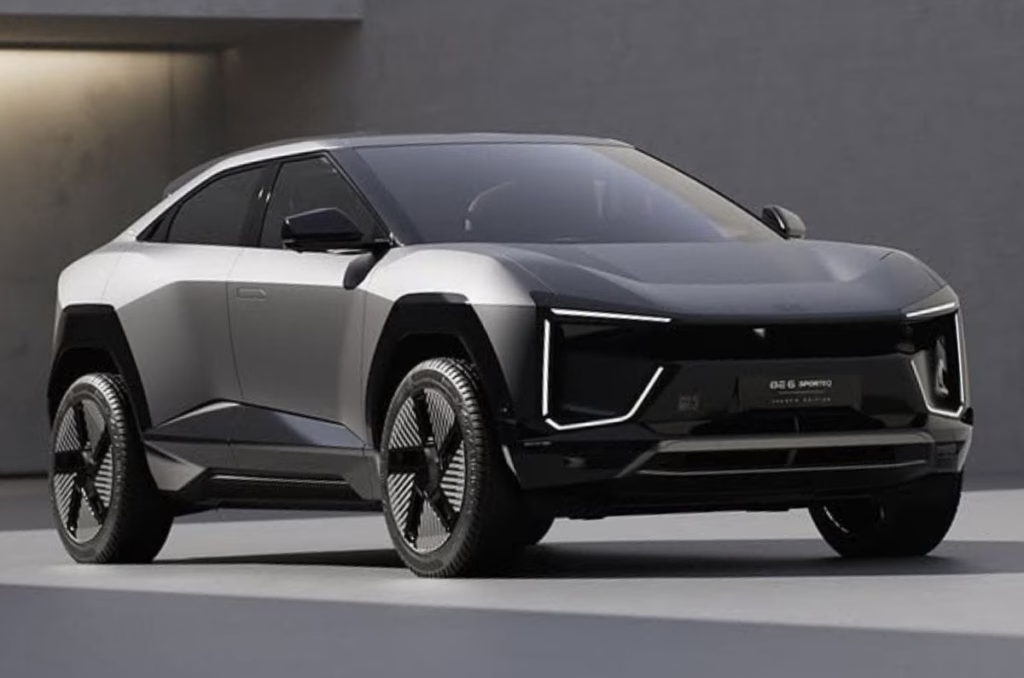
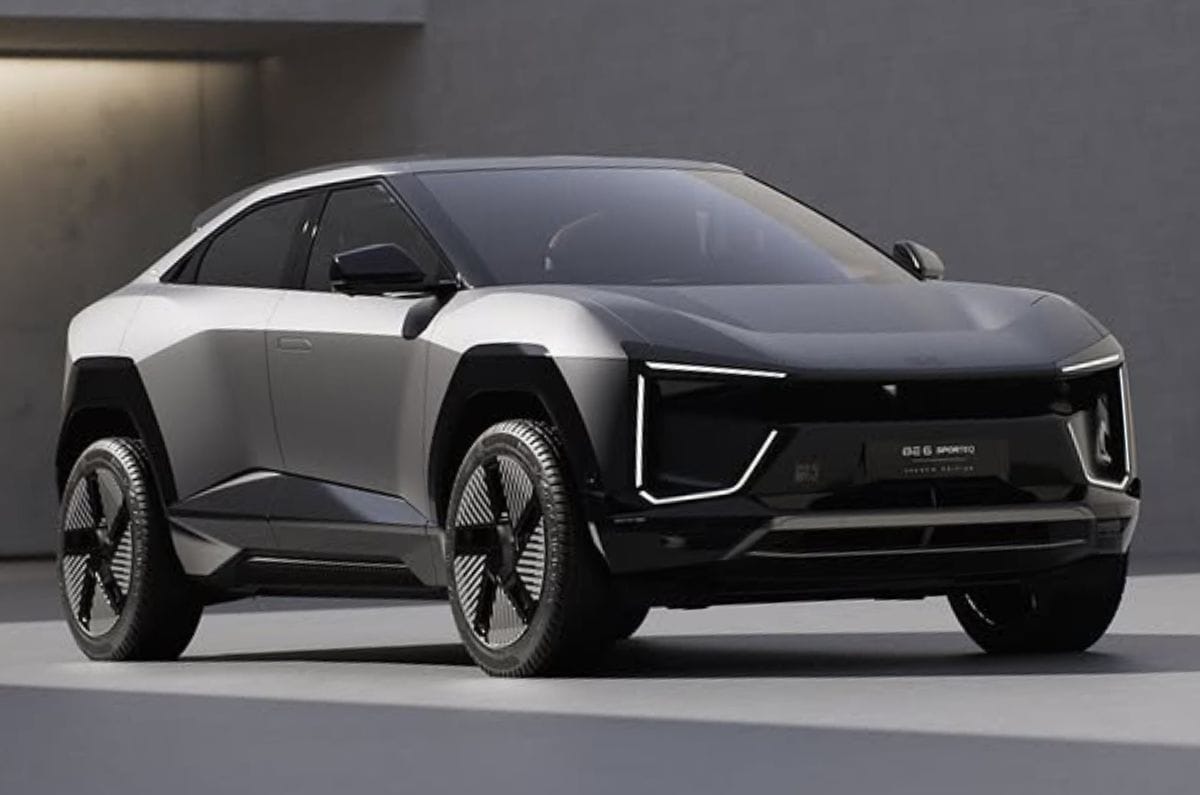
2026 Mahindra BE 6 Sporteq front quarter static

Mahindra launched the 2026 BE 6 recently, adding the ‘Sporteq’ moniker and pricing it from Rs 19.45 lakh to Rs 26.95 lakh (ex-showroom). Along with a new name, Mahindra has also introduced some updates to the midsize electric SUV to keep it modern in the segment. Here’s a detailed list of these updates:

New 70kWh battery pack

New battery pack offers 651km range and is mated to a 241hp rear motor
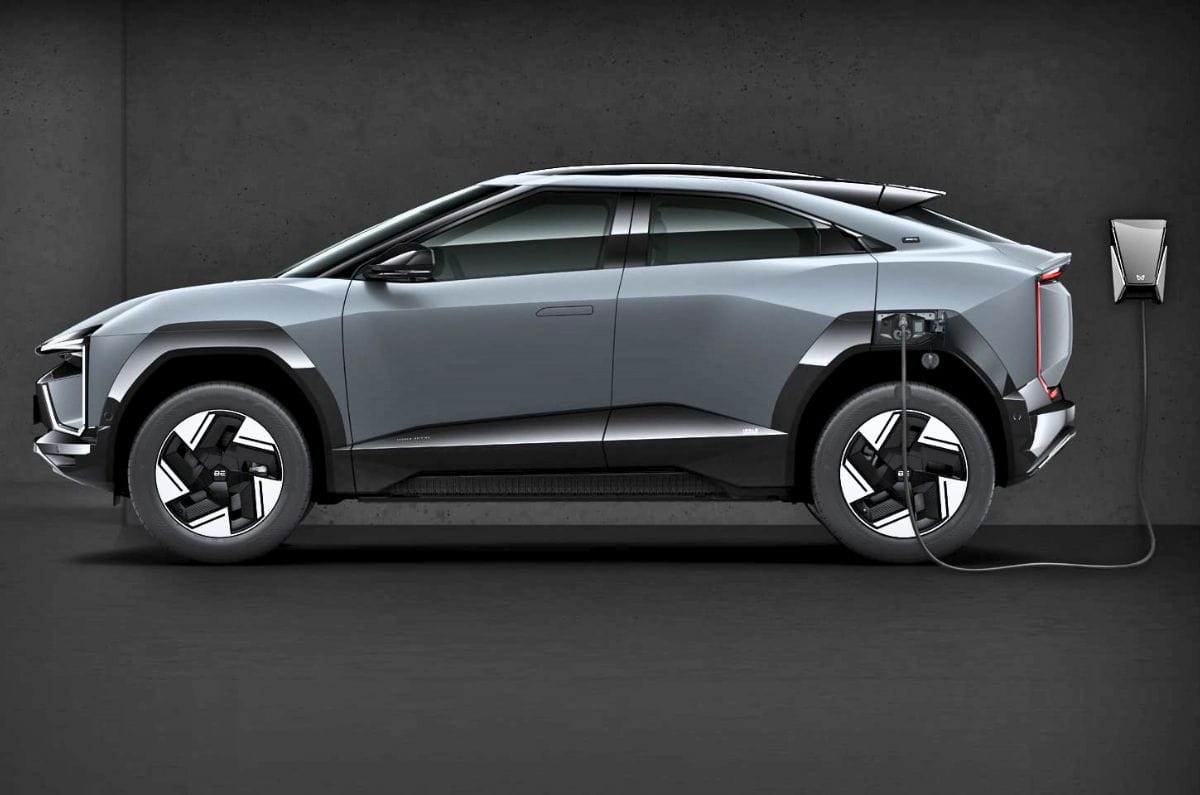
The 2026 Mahindra BE 6 Sporteq gets a new 70kWh battery pack in addition to the previously available 59kWh and 79kWh batteries. This new 70kWh battery offers an ARAI-claimed range of 651km and a rear-axle-mounted (RWD) electric motor that produces 241hp and 360Nm. It supports a 7.2kW AC, a 11.2kW AC and a 160kW DC charger. The DC fast charger recharges the battery pack from 20-80 percent in a claimed 20 minutes.

Mahindra is offering the 70kWh battery with the Three and Three+ trims, priced at Rs 22.95 lakh and Rs 23.95 lakh, respectively (ex-showroom). 

Battery-as-a-Service (BaaS) scheme

Battery rental scheme makes the 59kWh battery variants Rs 8 lakh more affordable

Along with a new battery, Mahindra is also offering the BE 6 with a battery-as-a-service (BaaS) scheme, which is also a first for the brand. However, the BaaS scheme is offered only with the 59kWh battery pack available in the One and Two trims. The battery rental scheme essentially lowers the BE 6’s initial price by Rs 8 lakh, but requires a monthly subscription fee for the battery. Here are the details:

Mahindra BE 6 battery-as-a-service (BaaS) price vs standard price


Standard price

BaaS price*

Difference^

One

Rs 19.45 lakh

Rs 11.45 lakh + Rs 3.75/km

– Rs 8 lakh

Two

Rs 20.95 lakh

Rs 12.95 lakh + Rs 3.75/km

– Rs 8 lakh

Notes: BaaS scheme requires a minimum monthly payment of Rs 6,750, calculated assuming usage of 60km per day and an 8-year battery loan, as per Mahindra’s terms and conditions. The price difference calculated above is on the initial price and does not include the BaaS scheme’s battery subscription charges.

Triple-screen setup on dashboard

Offers an additional third screen for the front passenger now
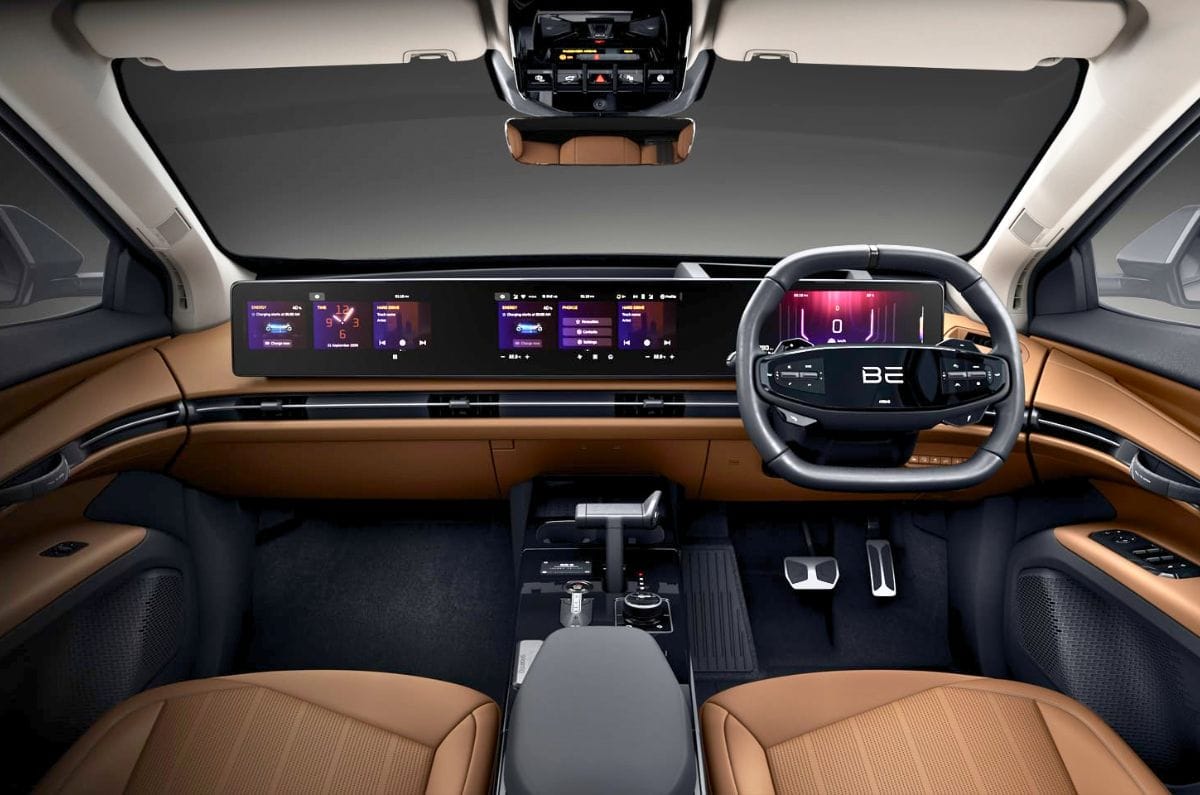
The 2026 update also brought a major redesign to the BE 6’s dashboard, now offered with an additional 12.30-inch screen for the front passenger, in addition to the similarly sized digital driver’s display and touchscreen infotainment system. The new front passenger display also removed the halo-like design element connecting the dashboard to the centre console, allowing the addition of two cupholders on the centre console, something that was sorely missing on the older model.

Mahindra is offering a triple-screen setup on all trims of the BE 6 Sporteq except the base-spec One and the sportier Formula E editions. 

Redesigned Formula E edition

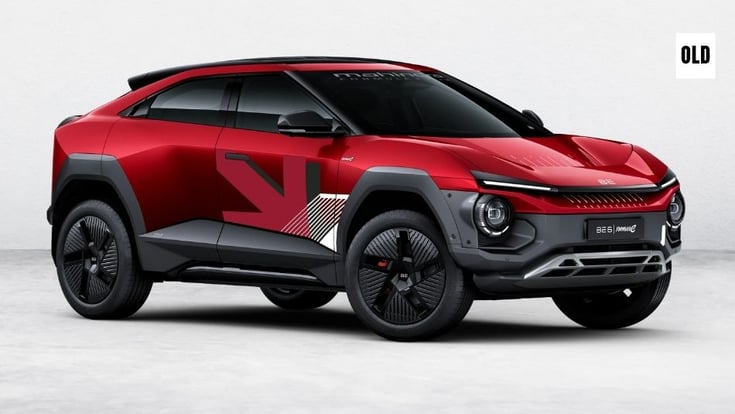
The 2026 Formula E Freedom looks nothing like the older Formula E edition
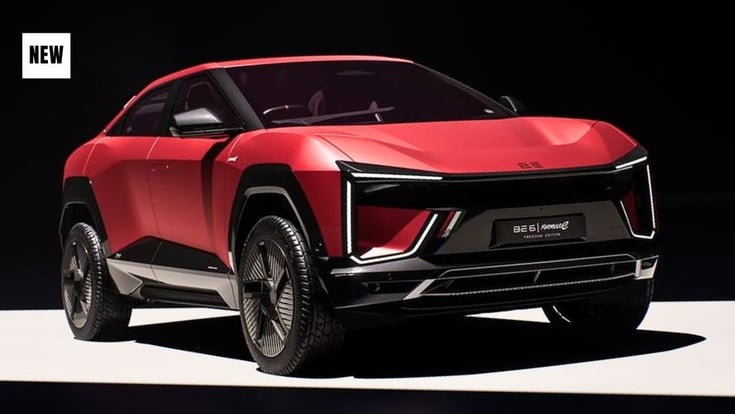
2026 Mahindra BE 6 Formula E Freedom Edition
2026 Mahindra BE 6 Formula E Edition
 

With the 2026 update, Mahindra has also rejigged the exterior design of the Formula E edition. Unlike the previous model, which had a different fascia from the standard model with circular-shaped LED headlights and a revised bumper, the 2026 Formula E Freedom edition gets the same design as the standard BE 6 Sporteq, with some Formula E badges and FIA decals. Moreover, the Formula E edition is only offered with the older model’s dual-screen dashboard and a halo design element for a sporty appeal.
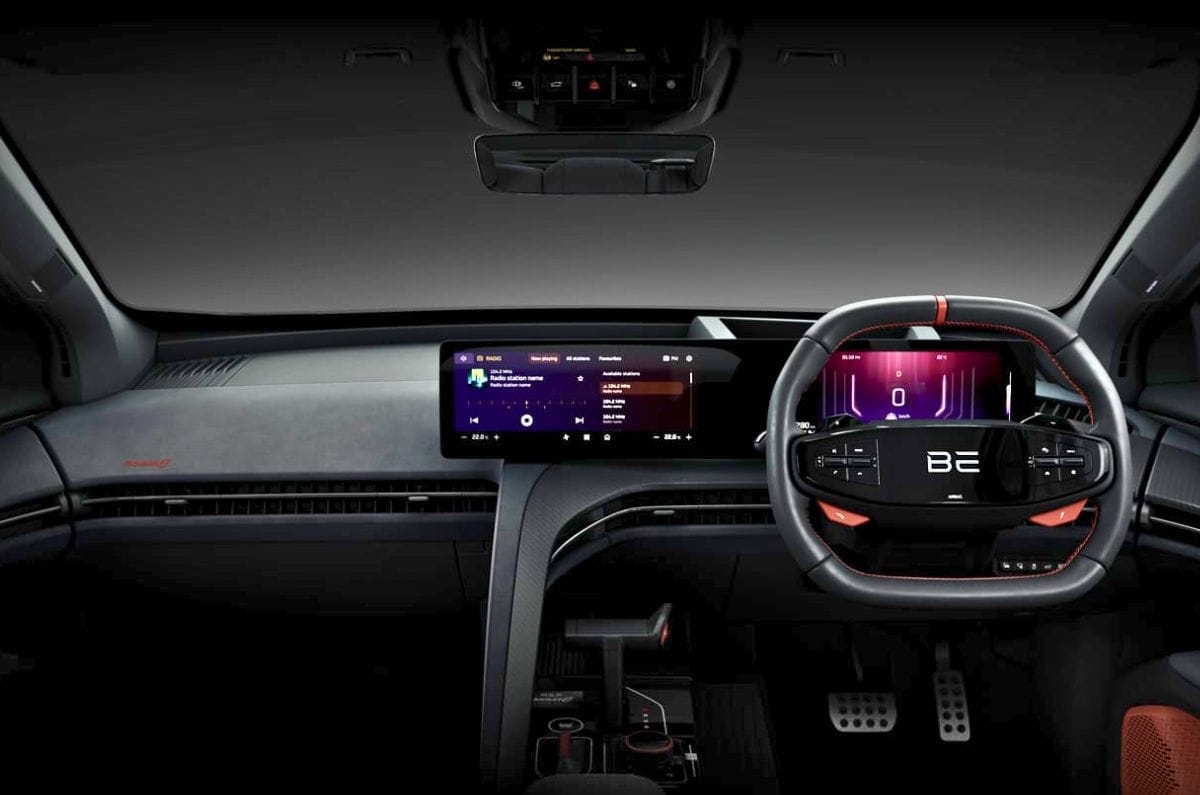
Mahindra is offering the 2026 Formula E edition at the Three and Four trim levels, priced at Rs 24.45 lakh and Rs 26.95 lakh, respectively (ex-showroom).

Fresh exterior and interior colours

Both the BE 6 Sporteq and Formula E edition get new colour themes
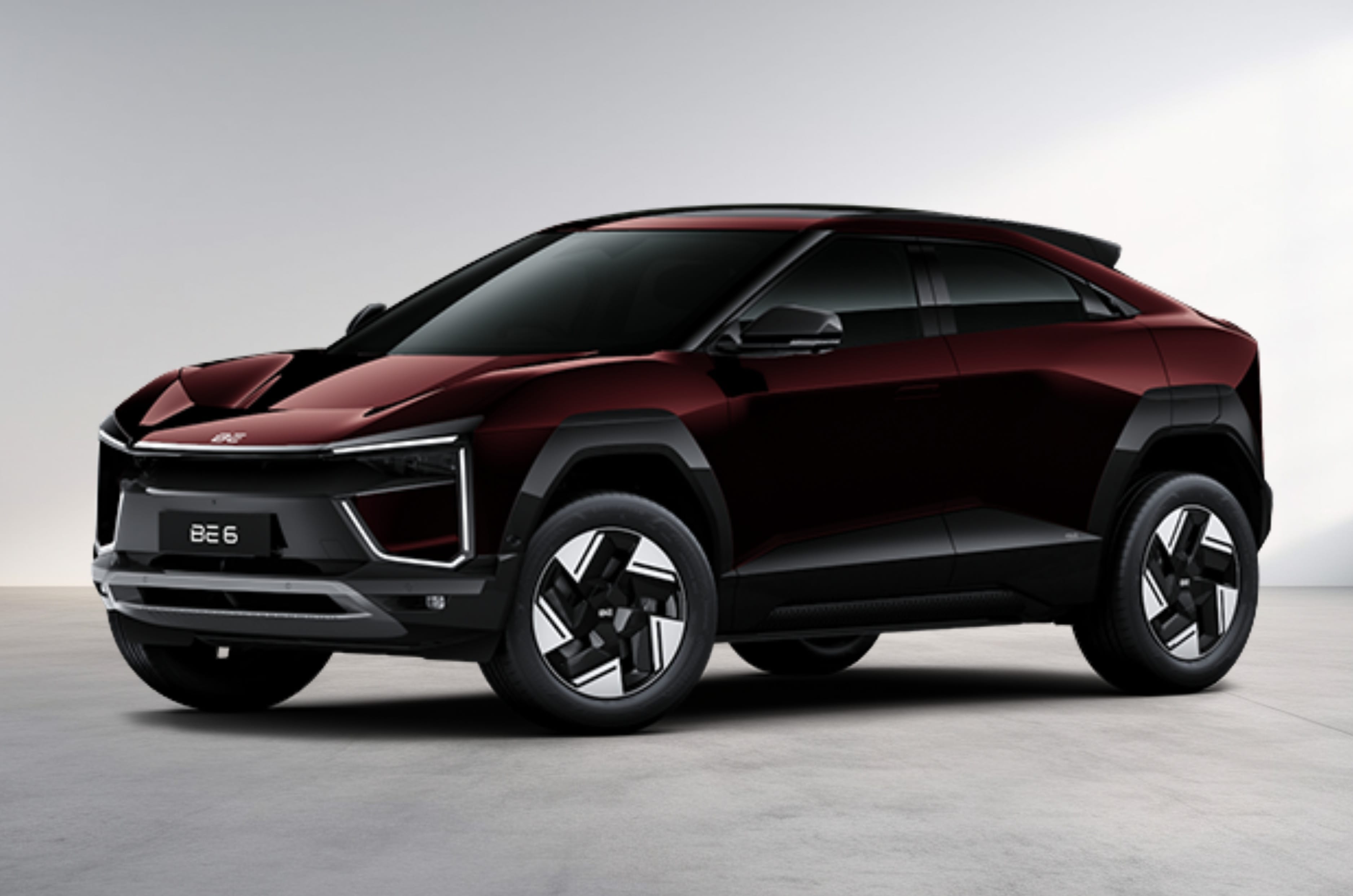
Mahindra BE 6 Sporteq Ruby Velvet exterior colour.

The 2026 Mahindra BE 6 Sporteq is being offered with fresh exterior and interior colour options. It is available in a new ‘Ruby Red’ exterior theme and new Racing Tan and Black interior hues for the Two, Three, Three+ and Four trims. The base-spec One is offered with the same Sage Green and Grey theme as before. A Sporteq Launch Edition, based on the fully loaded Four trim, is also available, which offers a new Graphite Storm exterior paint and Racing Tan interior theme. 
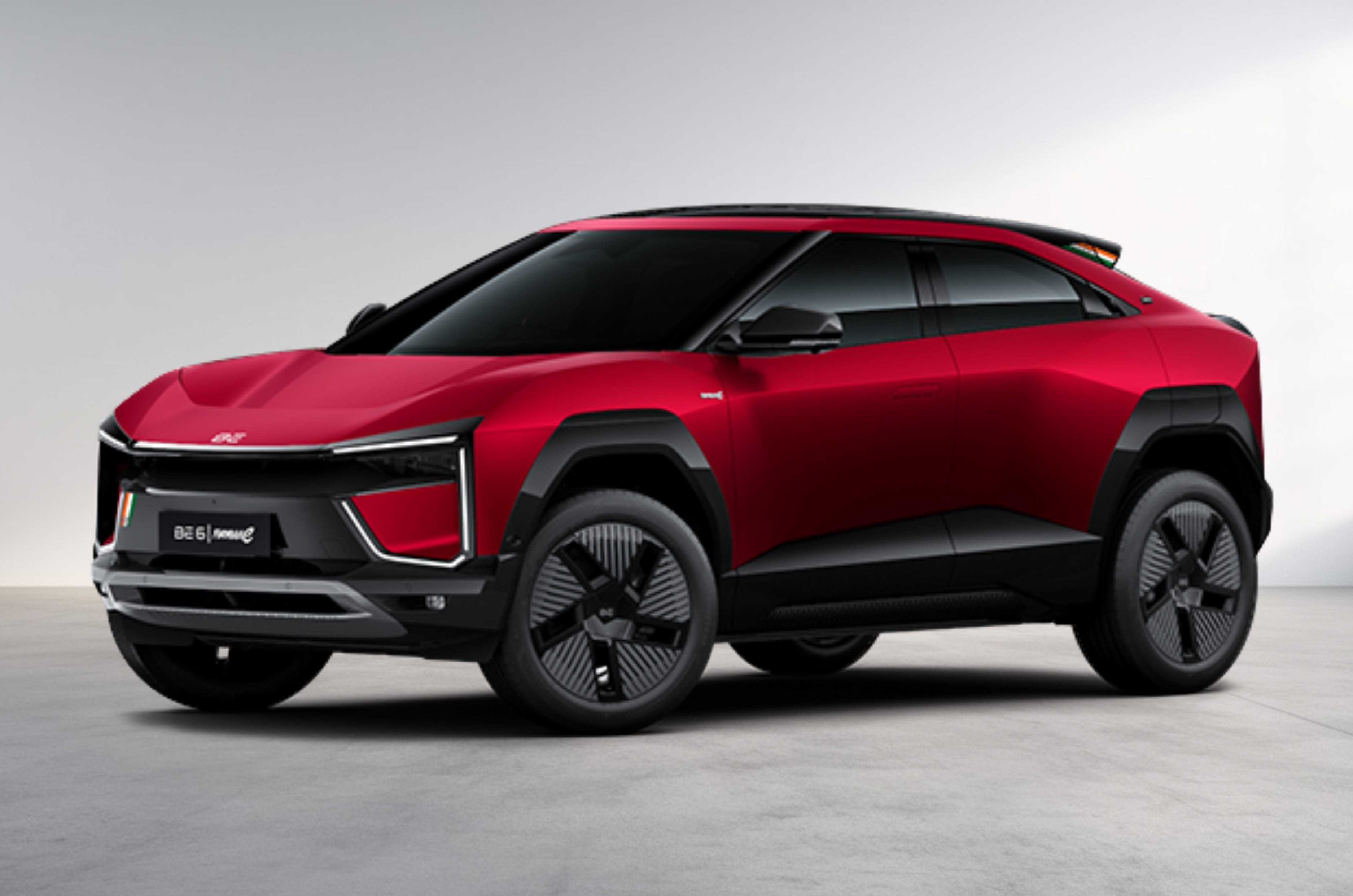
Mahindra BE 6 Formula E Freedom edition Rosso Impulso exterior colour.

While the 2026 BE 6 Formula E edition is offered with a new Rosso Impulso exterior hue, the all-black interior with orange elements for contrast is the same as the outgoing model.

New ‘TEQ’ suite

The suite enables Gemini-based interactions, unlocks additional drive modes and Revive functionalities

Another addition to the BE 6 Sporteq is the new ‘TEQ’ suite, which Mahindra says is designed to make the vehicle more intuitive, engaging, secure and responsive to individual customer needs. At its core is a Gemini-based AI conversation assistant that allows natural voice interactions for functions such as vehicle controls, navigation and music. The suite also introduces a Karaoke mode, along with support for Dolby Vision and Dolby Audio.
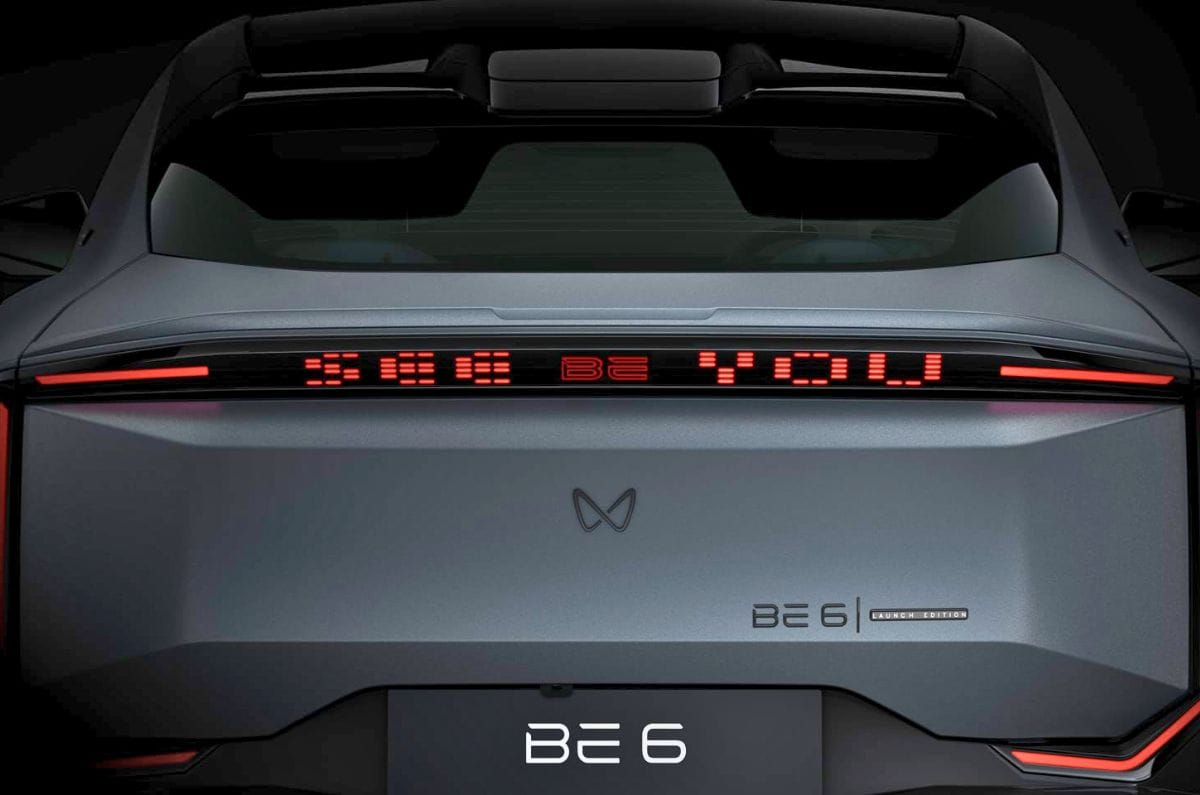
The TEQ suite also adds several performance and convenience features, including Custom Drive Mode, Drift Mode and an acceleration boost mode for the Formula E Freedom Edition, which enables a claimed 0-100 kph time of 6.44 seconds. It also includes Revive and Revive SOS, which can provide additional range even after the battery has run out. Another new feature is ‘TEQ_xting’, which lets owners display personalised messages on the vehicle’s tailgate.

The Mahindra BE 6 Sporteq is priced from Rs 19.45 lakh to Rs 26.95 lakh (ex-showroom), and it rivals the Hyundai Creta Electric, Tata Sierra EV, Tata Curvv EV, MG ZS EV, Maruti Suzuki e Vitara and Toyota Ebella.

Prices are ex-showroom, India, and do not include a wall charger or its installation cost.
Updated Royal Enfield Continental GT 650 launched at Rs 3.58 lakh

Updated Royal Enfield Continental GT 650 launched at Rs 3.58 lakh
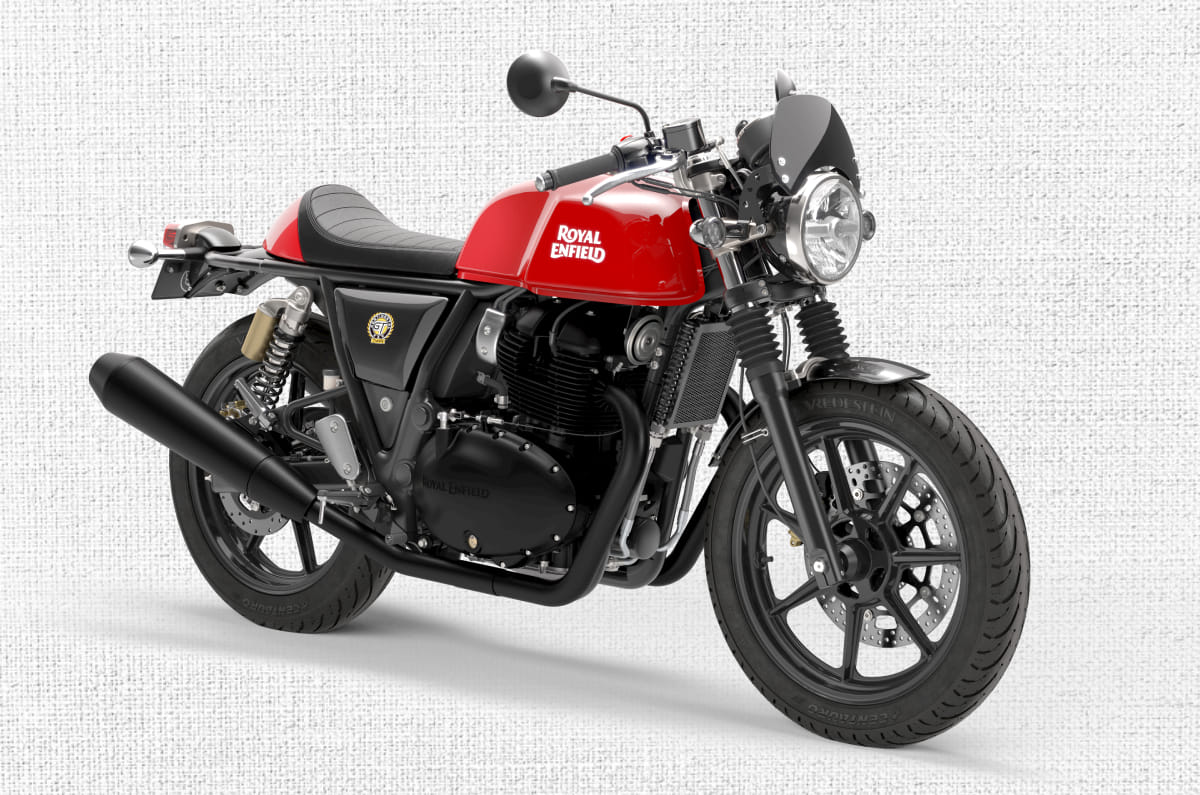
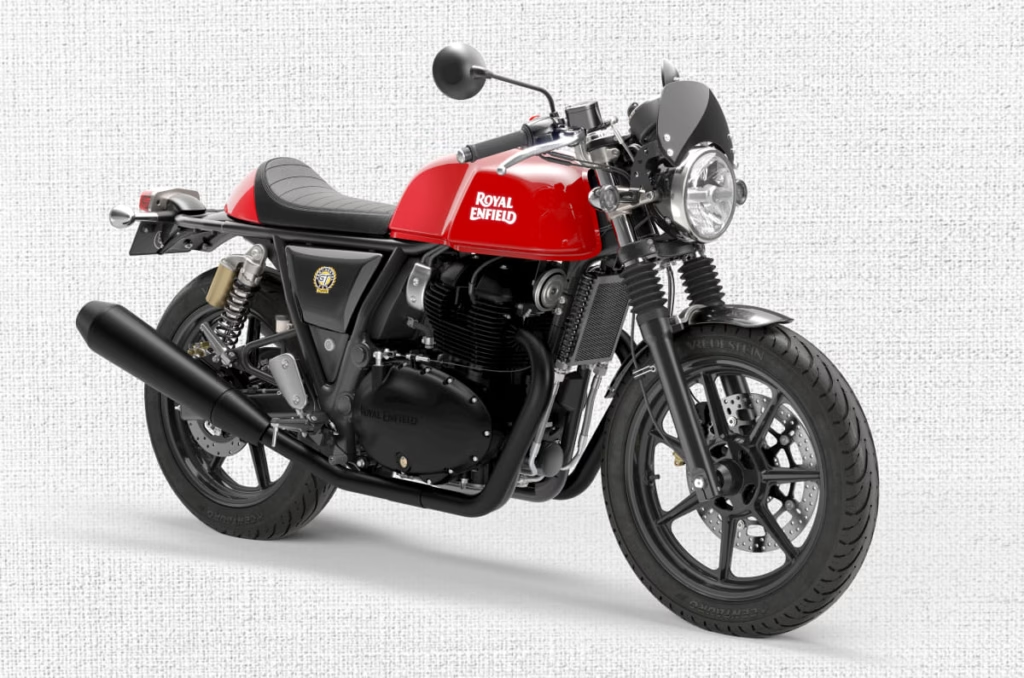
Updated Red RE Continental GT 650 studio image

Royal Enfield has launched an updated Continental GT 650 with some styling and feature additions. Prices start at Rs 3.58 lakh and go up to Rs 3.88 lakh (ex-showroom, India).

  1. Rocker Red variant gets blacked-out engine, exhaust and cast-alloy wheels
  2. USB Type-C fast-charging port and LED indicators added across all variants

Updated RE Continental GT 650 prices and variants

Four colour options across two specifications

The updates include a black-painted instrument cowl, new LED indicators and the addition of a USB Type-C fast-charging port. Lastly, the Rocker Red variant now gets a blacked-out engine, exhaust and cast-alloy wheels, a specification previously exclusive to the Apex Grey.

The mechanical package remains unchanged. The Continental GT 650 continues to be powered by the 648cc air- and oil-cooled parallel-twin producing 47hp and 52.3Nm, paired with a 6-speed gearbox.

Variant

Price (ex-showroom)

Rocker Red (blacked-out engine, cast-alloy wheels)

Rs 3.58 lakh

British Racing Green (polished engine, spoke wheels)

Rs 3.58 lakh

Apex Grey (blacked-out engine, cast-alloy wheels)

Rs 3.81 lakh

Mr Clean (polished engine, spoke wheels)

Rs 3.88 lakh

Ducati Multistrada V4 Pikes Peak Review: Shapeshifter!

Ducati Multistrada V4 Pikes Peak Review: Shapeshifter!

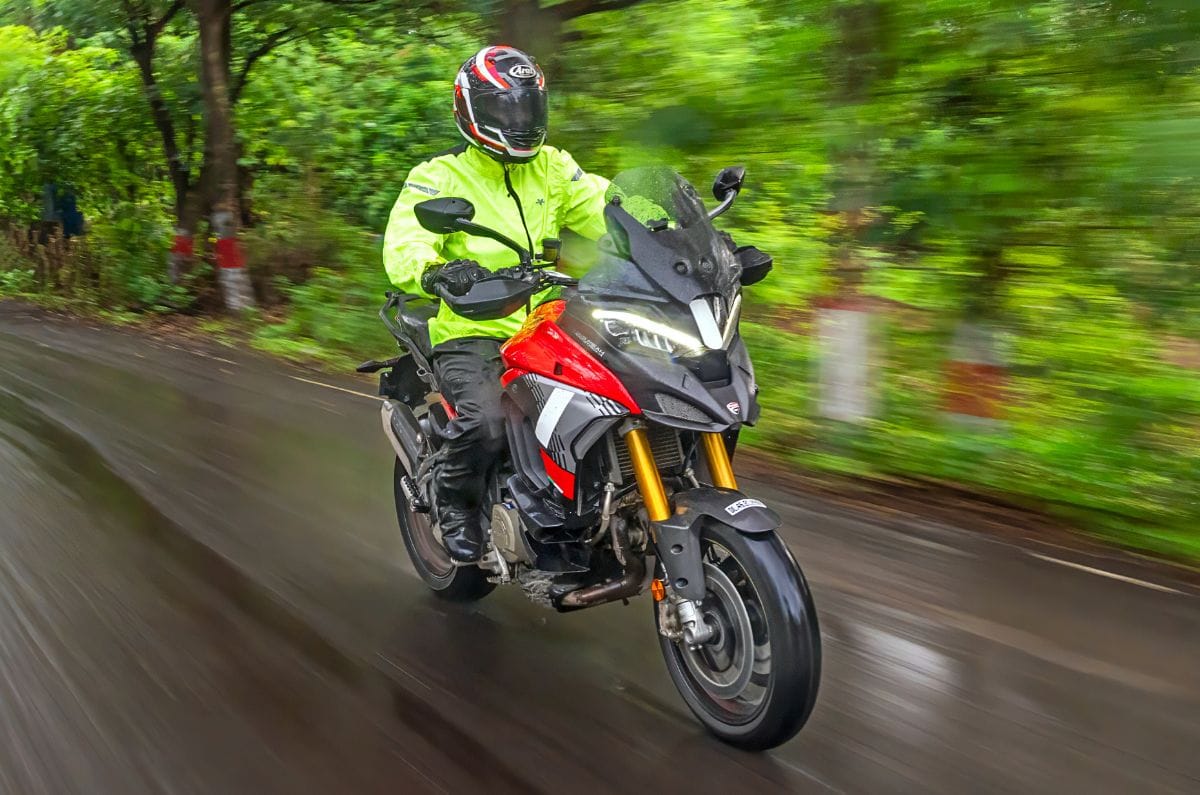
The Ducati Multistrada is one of the most successful modern motorcycles to have raced up the famed Pikes Peak hill climb, having taken 7 wins over the years. Motorcycle racing was banned at the Peak after Ducati star Carlin Dunne tragically lost his life in a crash just metres before the finish line in 2019, but Ducati still has a tribute to this race in the form of the Multistrada V4 Pikes Peak.

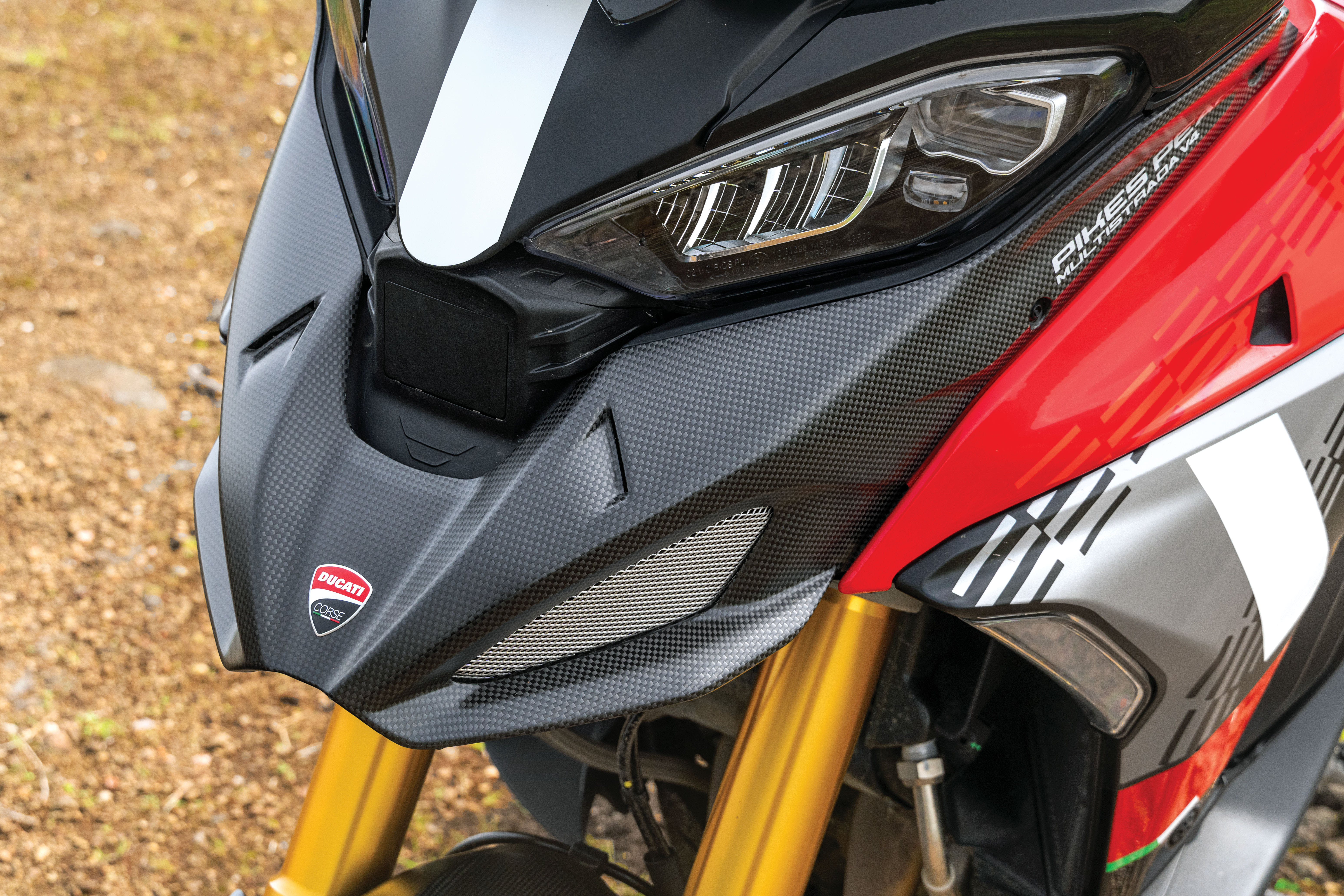
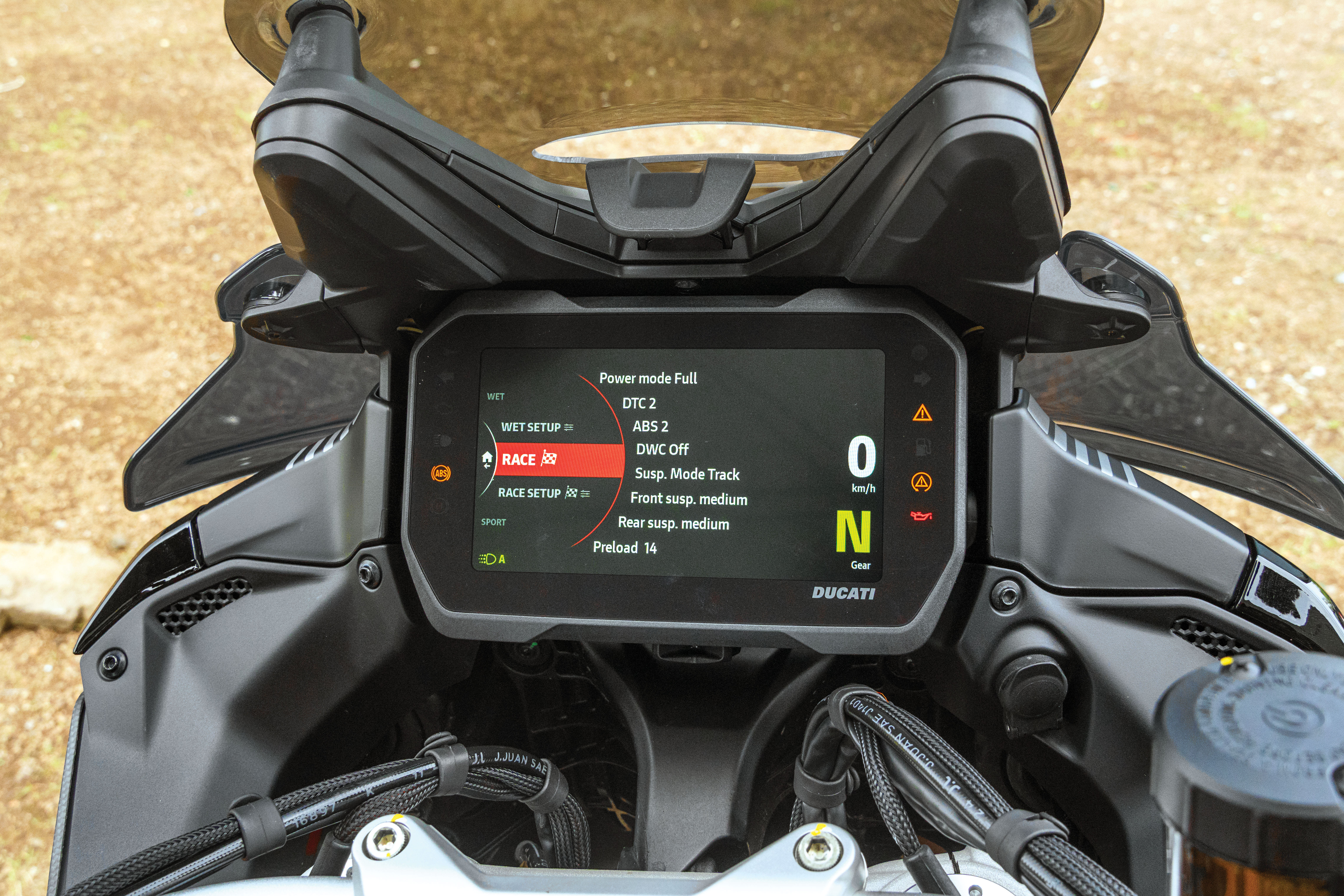
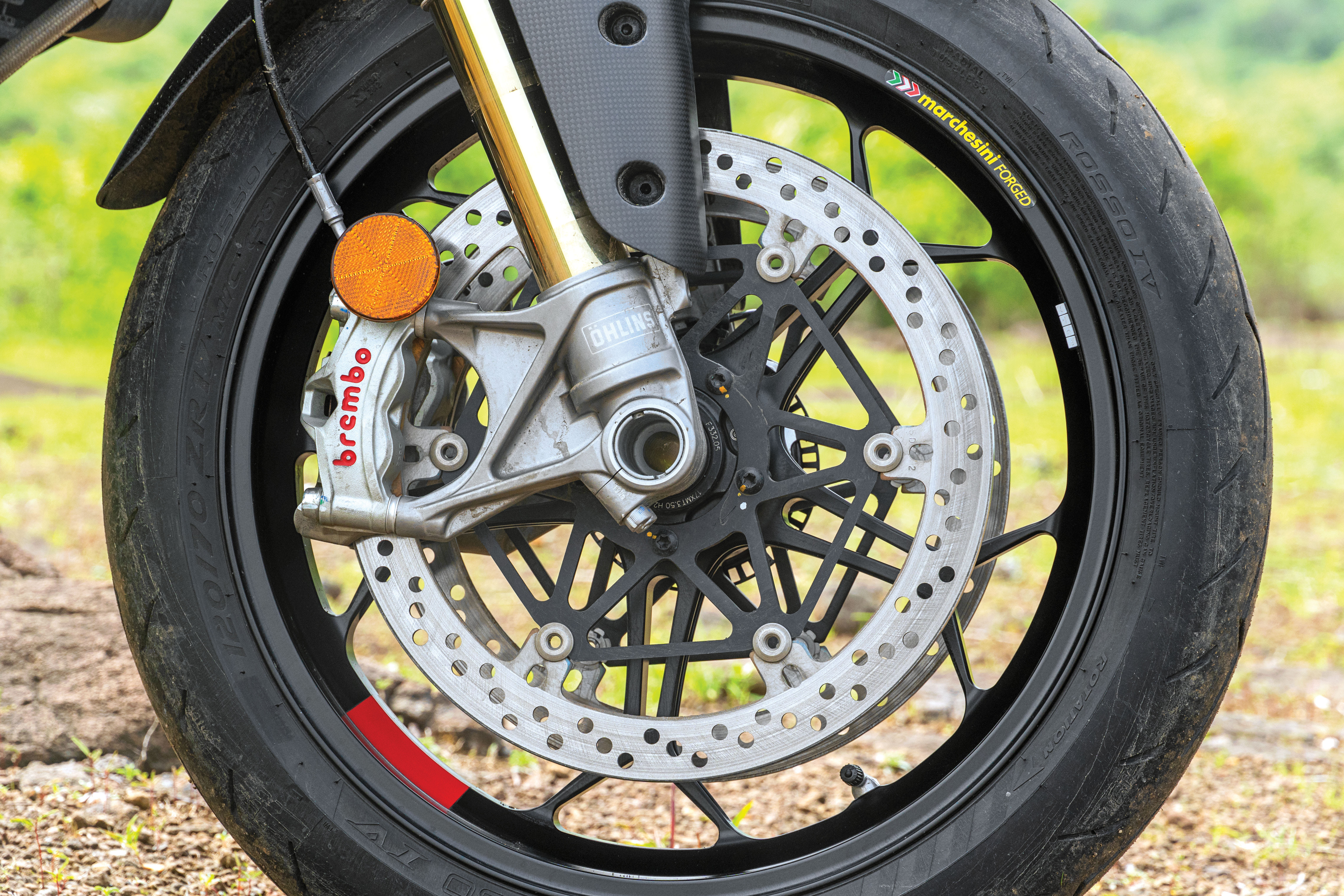
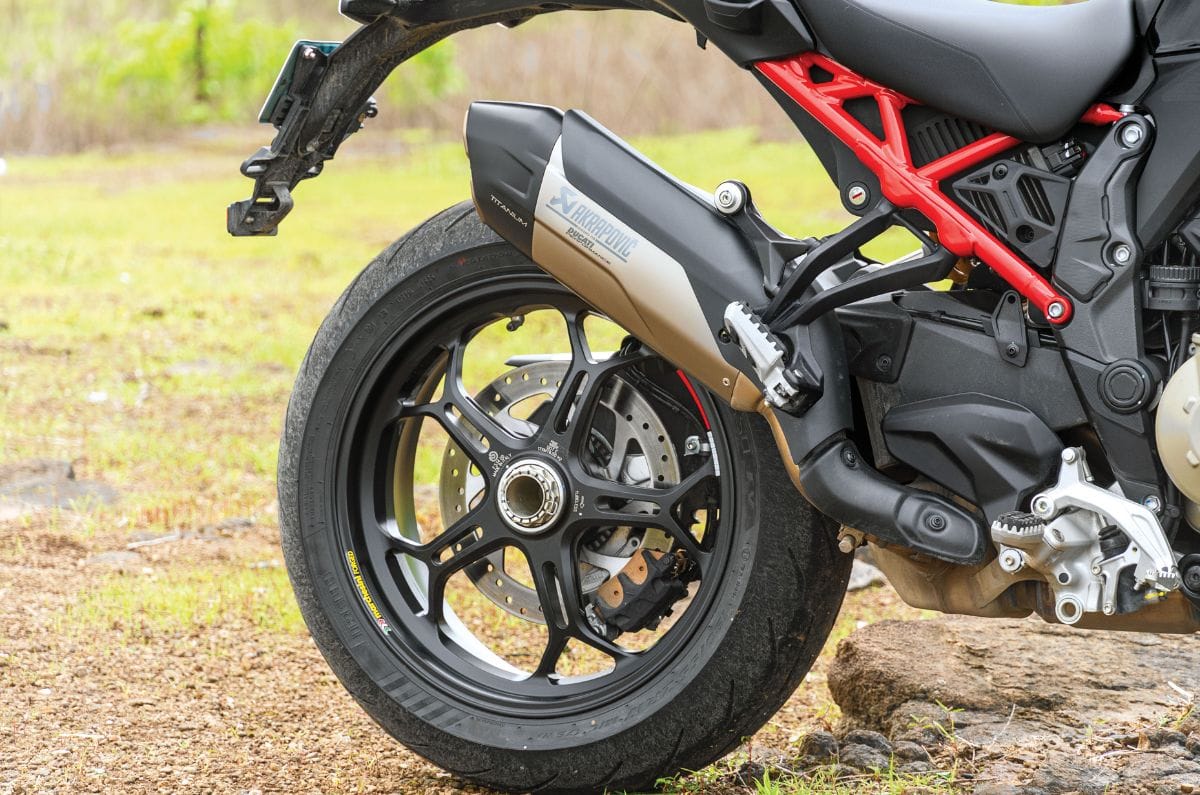
Effectively, this motorcycle goes back to the Multistrada’s roots of being a tall, sporty road-biased motorcycle. The primary sporty element comes in the shift from a 19-inch front on the standard Multistrada V4 to a 17-inch unit here. But there’s a whole lot more that you get for the (considerable) extra cash over the Multi V4 S than just a smaller front wheel. That includes a new Race Mode and Öhlins EC 2.0 semi-active suspension, just like you would have found on the previous-gen Panigale V4 S. It even gets a single-sided swingarm, forged aluminium wheels and a road-legal titanium Akrapovič end-can.

Multistrada V4 Comfort – 8/10

All of these changes are aimed at sharpening the Multi’s handling capabilities, which leaves the question – how much of an adventure bike is still in there? To find an answer, I pulled out Google Maps and picked a few random roads that I’d been eyeing over the years, but never had the opportunity to explore. The idea was to end up at the fabulous roads around Tahmini ghat, which is closer to Pune, and I’d chalked out a round-trip that came up to about 350km.

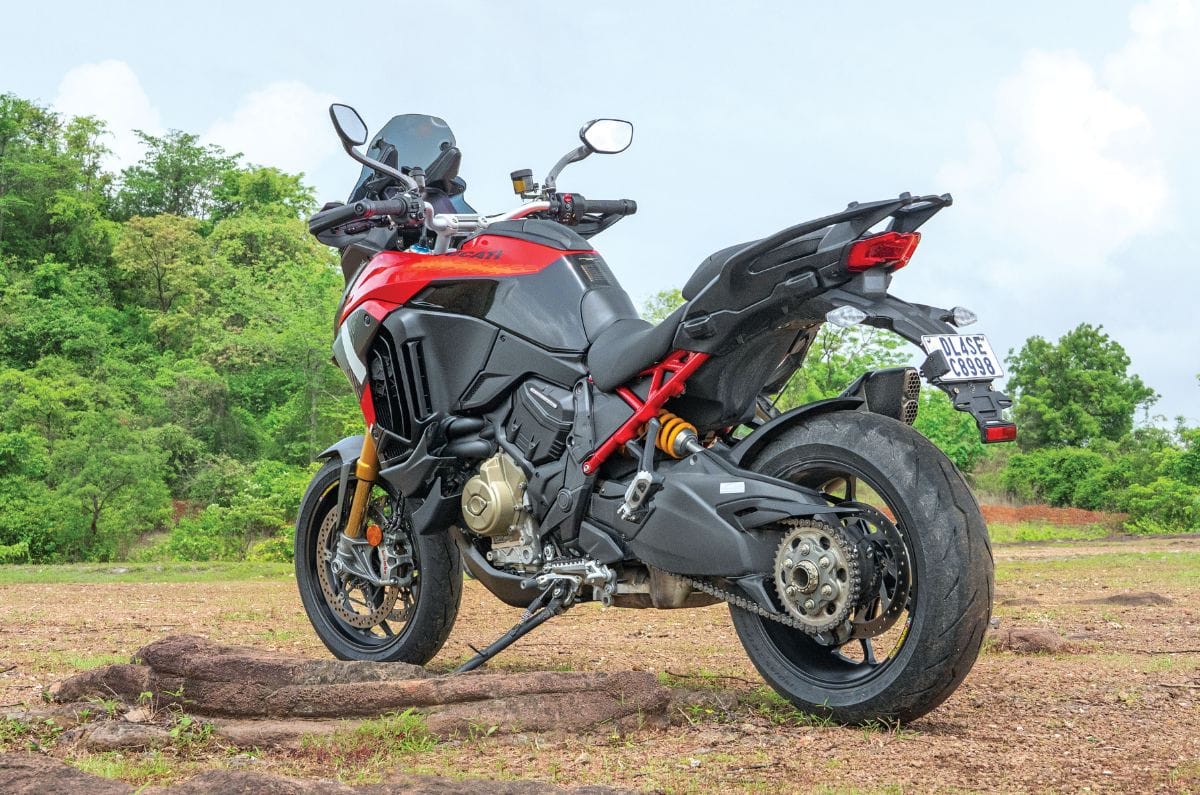
The Pikes Peak gets carbon parts, different ergos and reduced wind protection

The first quest would be the hour-long escape from the mayhem of Monday morning Mumbai. Ducatis are usually the worst bikes for being stuck in jammed traffic, but the V4-engined Multi is different. As with its lesser V4 siblings, the Pikes Peak uses twin radiators that are housed on the sides, and the bodywork neatly ducts the hot air blast away from the rider. Also, as with all Ducatis, the cooling system does a remarkable job of keeping the operating temperature below 106 degrees even when stationary.

SpecificationsValues
Engine Displacement1158 cc
Max Engine Power170 hp @ 10,750 rpm
Max Engine Torque124 Nm @ 9000 rpm
Number of Gears6

So, unless you’re stuck in a nasty bad jam where the clutch can get painful, this bike is surprisingly pleasant to manage in traffic. Of course, that’s a fairly relative statement, considering that this is a big, tall, 240-plus-kilo motorcycle.

However, after an hour or so, there’s no escaping the heat radiating off the rear cylinder bank that’s right under your thighs. I noticed that this was an issue in 36-degree afternoon heat on the highway, but not so much when the temperatures dropped in the hilly regions around Lonavala. Despite this, the Multi was far happier when it broke free from the clutches of the city.

Multistrada V4 Performance and suspension setup – 9/10

What truly blew me away on the Pikes Peak was the sheer range of its ability to change character. Like with the other V4 models, this one also has many different riding modes, a boat-load of electronic assists and minutely adjustable electronic suspension modes. However, the difference between ‘full chill’ and ‘full attack’ mode on this bike is truly breathtaking. After a couple of hours of quick and perfectly pleasant highway riding, the Multi and I soon found ourselves staring at miles of completely broken rural roads without a soul on them.

There’s no way I’d ever want to bring a sporty Italian exotic to a place like this, but putting the engine into Low Power mode (115hp instead of 170hp) and diving deep into the suspension setting menus to slack off the damping and preload completely changed the bike.

SpecificationsValues
Wheelbase1595 mm
Seat height840-860 mm
Kerb Weight227 kg
Fuel Tank Size22 L

With ADV seating comfort and the 170mm of suspension travel soaking in the terrain quite well, I had no concerns with simply riding through these non-stop broken road conditions. The bike was unbothered to the point that I could ride it at a gentle pace and enjoy the spectacular beauty of rural Maharashtra in the monsoon. However, I must also make it clear that while the Pikes Peak can tolerate this sort of punishment, it doesn’t thrive on it. Think of this as a surprisingly comfortable road-tourer rather than a true ADV.

Race-bred electronics and superbike-spec suspension are what make the Pikes Peak experience unique.

Multistrada V4 Ride and Handling – 10/10

A big Tiger or GS would have surely been more capable in these conditions, but the Pikes Peak would have simply blown away any ADV on the roads that came next. After ages of enduring gravel and shattered tarmac, we finally arrived at Tahmini to be greeted by some of the finest riding roads in the country.

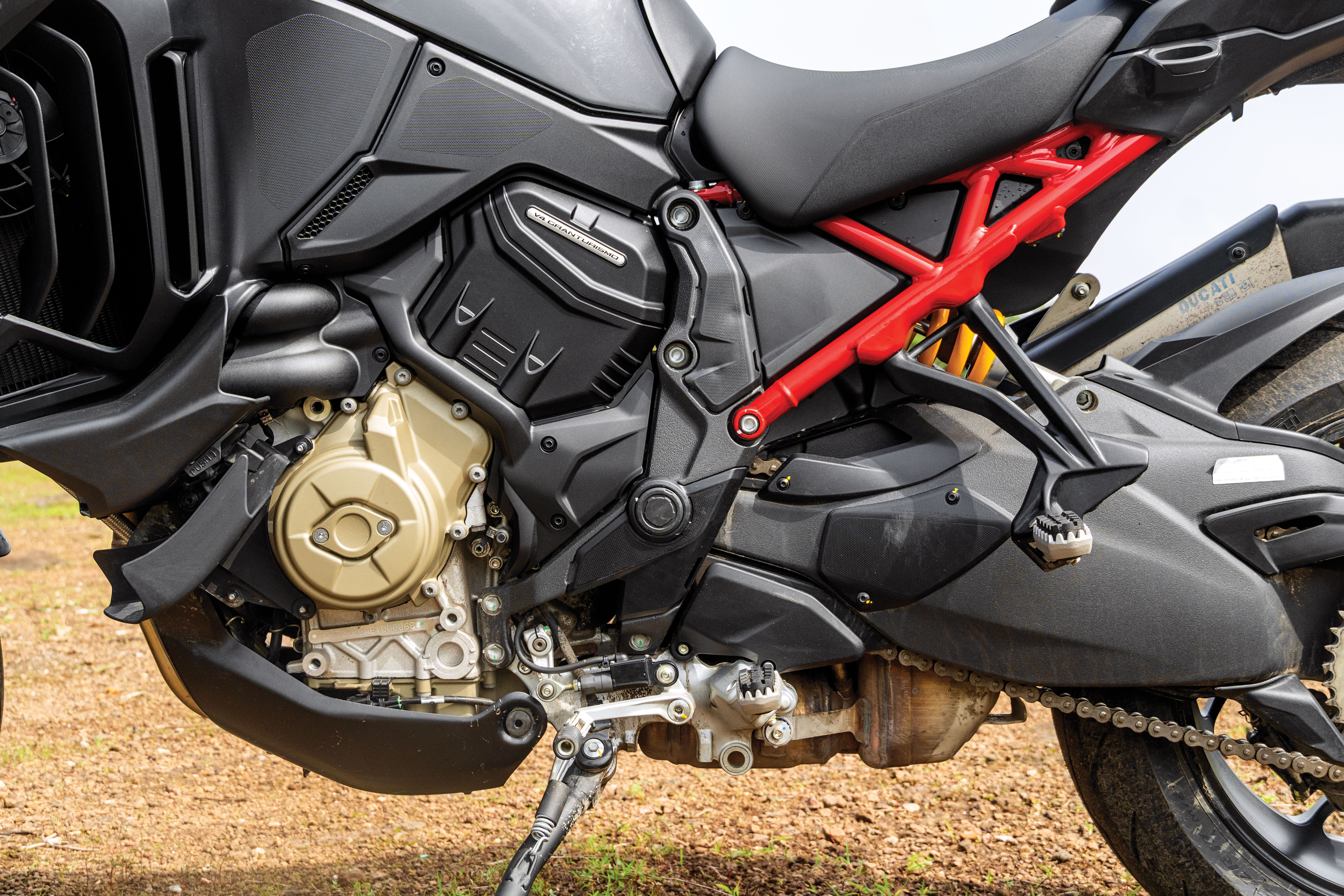
It uses the standard V4 engine with conventional spring valves

A few button presses later, the Multi was now in Race mode, and the difference was startling. The bike suddenly felt tight, taut and taller, thanks to increased preload at the rear. This was no longer a cushy tourer and had suddenly turned into quite a fearsome beast that demanded respect. The raucous intake bark as the V4 engine snarled past 6,000rpm was almost as intoxicating as the way it built speed. While you could get the same sort of performance on a ‘normal’ Multi V4 that uses the same engine, the immense braking and incredible suspension composure of the Pikes Peak was something else.

Pikes Peak gets a single-sided swingarm, forged wheels and an Akrapovič end-can

I was now riding a sport bike, and it cornered and braked with such ferocity that it was easy to get carried away. I had to remind myself that this was a public road and we were going far too fast for good health! Slap on a sticky set of tyres, and this bike could genuinely embarrass a swarm of sport bike riders on the racetrack. After an awesomely exhilarating time on the ghat, there was no doubt that the Pikes Peak spirit is truly alive in this bike, and it most certainly isn’t just a branding exercise to charge a heap of money.

Multistrada V4 Price and Verdict – 8/10

Nevertheless, a heap of money is exactly what you have to pay to own this motorcycle. At Rs 36.9 lakh (ex-showroom), the Pikes Peak is exorbitantly expensive, and you still have to pay more for extras like heated grips, tyre pressure monitoring and keyless functionality for the fuel tank. At the end of the day, this is the connoisseur’s version of what is already a connoisseur’s adventure motorcycle. You’ve got to really want this particularly unique combination of all-road sport bike skills. After all, you can get either phenomenally capable super ADVs or proper super bikes for far less money.

The sheer range of its ability to change character is what is truly incredible.

I struggle to convince myself that it’s worth the price, but I’m also infinitely grateful that such a thing even exists and that we have the option to own one in India. If you’re among the precious few with the desire and funds to own such a bike, all I’d like to say is go for it!

Audi global CEO backs broader powertrain mix as regional strategy takes shape

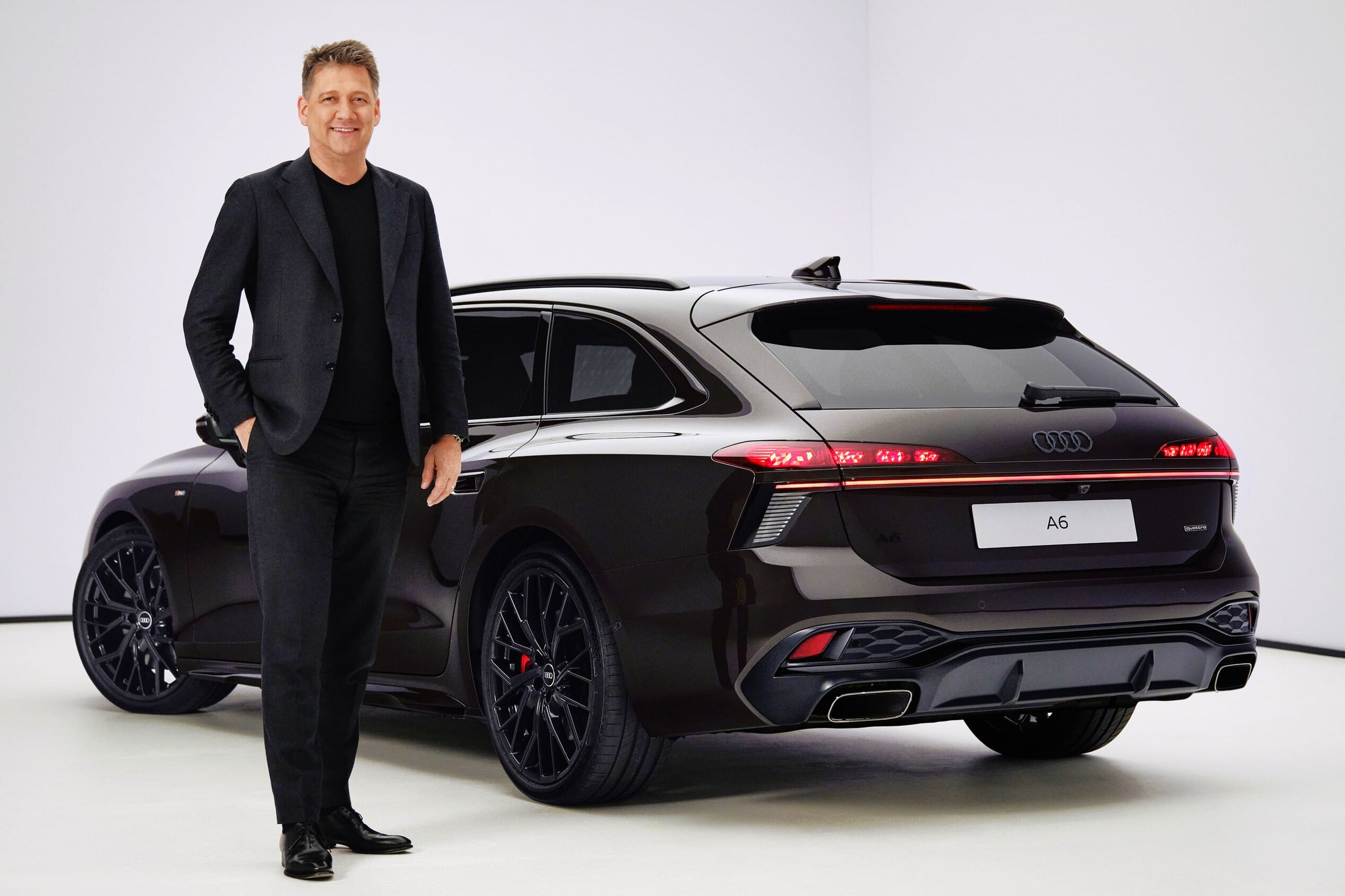
Audi CEO Gernot Dollner next to an A6 Avant

Audi will pursue a broader powertrain strategy spanning battery-electric vehicles, plug-in hybrids and combustion engines, stepping away from its earlier plan to become an all-electric carmaker. Global CEO Gernot Döllner said he reviewed Audi’s all-electric strategy after taking charge and decided that the company needed a more balanced product and powertrain mix to address the varying pace of EV adoption across markets.

“When I joined Audi, there was an all-electric strategy in place, which was one of the first things I reviewed,” Döllner told Autocar India in an exclusive interview. “We found a more balanced strategy between plug-in hybrids, especially important for Europe, combustion engine and electric.”

Global EV sales downturn lent ICE powertrains more time

The slower-than-expected pace of EV adoption in several global markets has extended the relevance of combustion engines and plug-in hybrids. Audi expects to retain a focused combustion-engine and plug-in-hybrid portfolio, particularly for SUVs.

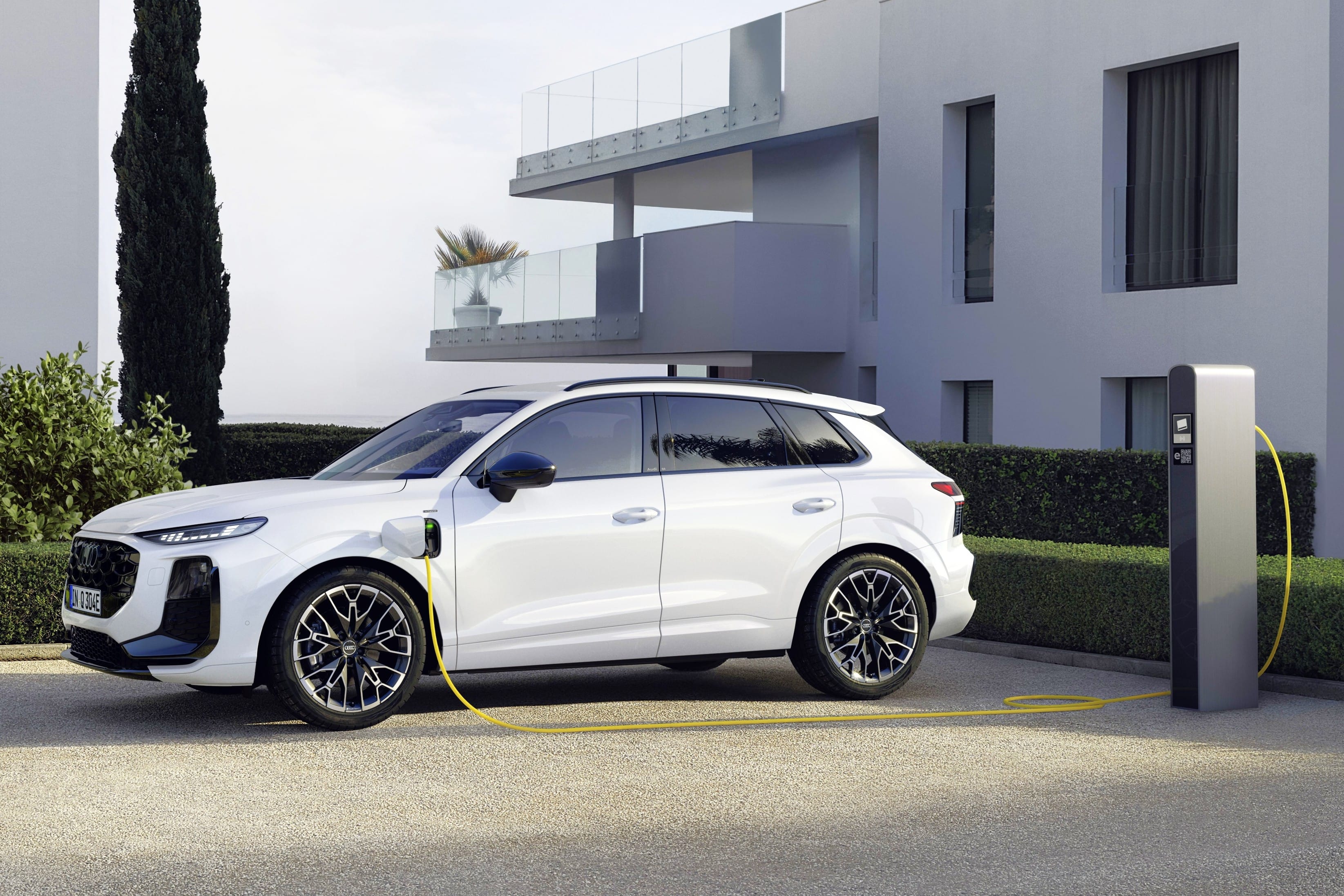
Audi Q3 PHEV

The company has recently completed a major investment cycle covering new petrol and diesel engines, plug-in hybrids and battery-electric vehicles designed to meet Euro 7 and other global regulations.

“For sure, the majority of our investment will be in battery electric. That’s a given,” Döllner said.

Audi will continue to invest selectively in combustion engines, including efficiency improvements and transmission technology, but Döllner expects the pace of innovation to be much faster in EVs.

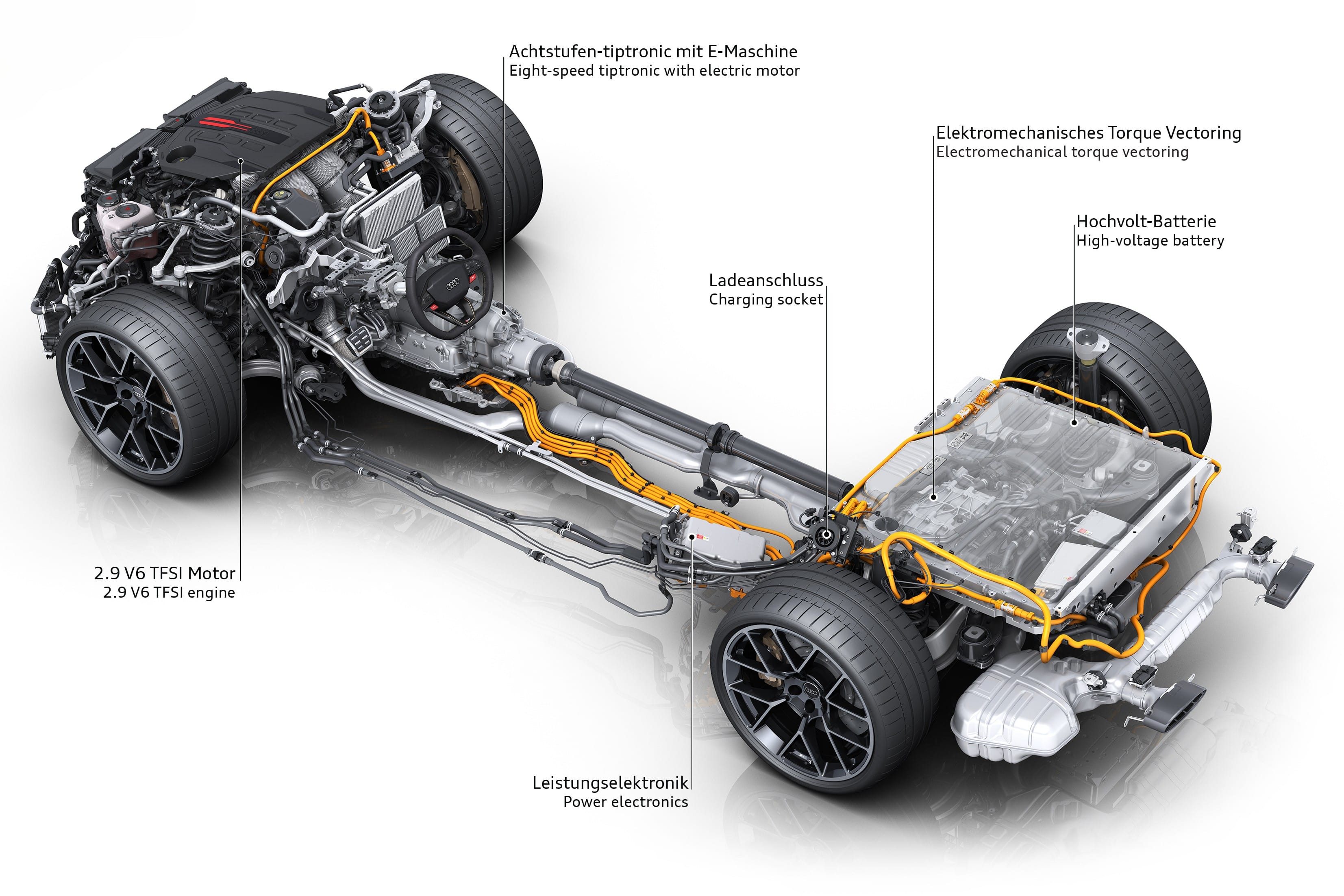
Audi RS5 plug-in hybrid powertrain

“The combustion engine is fairly mature. It’s at the very end of a 100-year innovation cycle, and battery electric is still at the very beginning, to be honest,” he said. “The dominant part of our investment will definitely be on the battery-electric side.”

Electric remains Audi’s leading technology

Audi’s decision to retain combustion engines and plug-in hybrids does not alter its long-term direction towards electric vehicles.

“Electric is, for Audi, still the leading technology,” Döllner said. “It’s our main priority to step by step become more electric.”

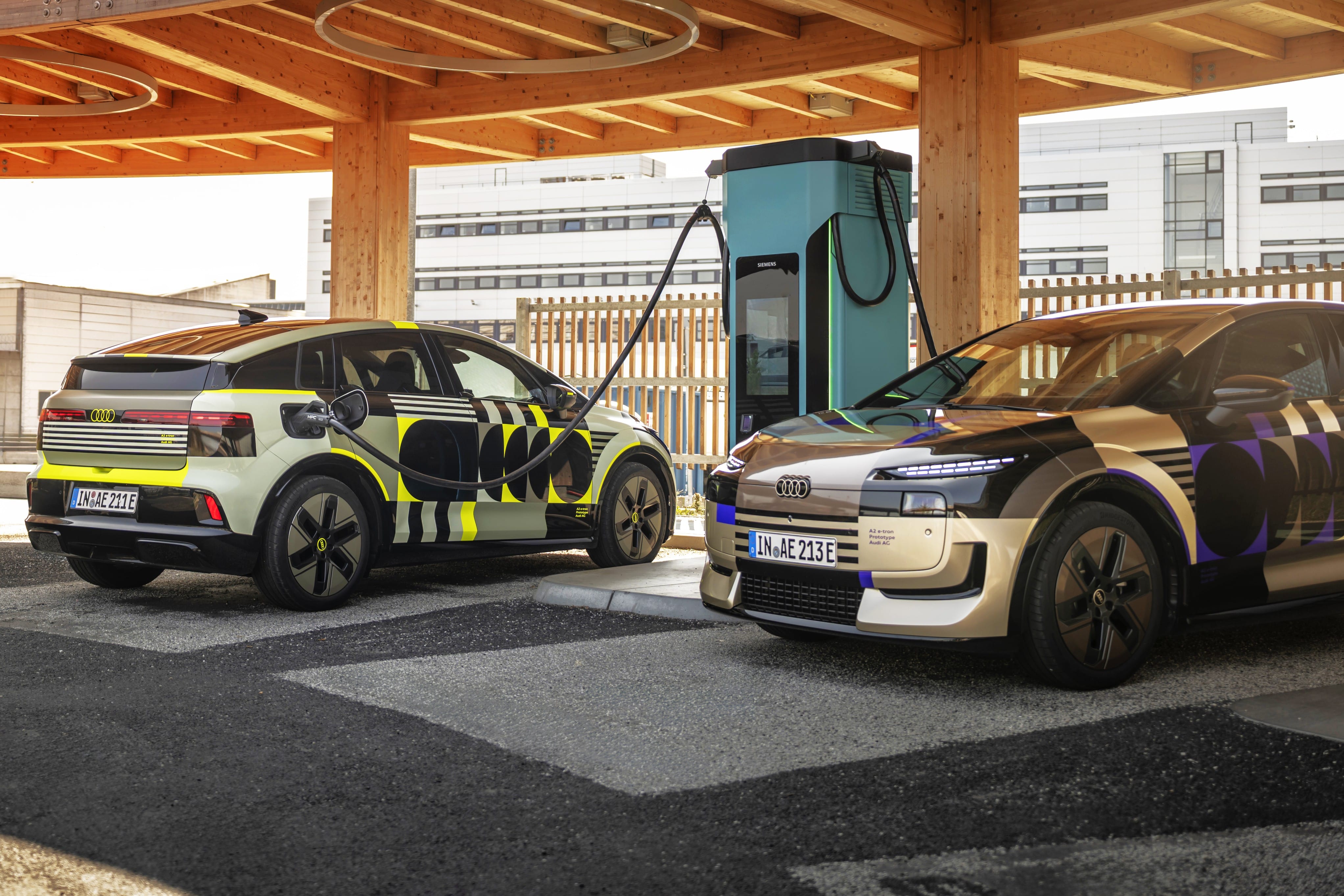
Prototypes of upcoming Audi A2 e-tron

Audi currently has four battery-electric model lines globally and expects to increase this to five by the end of the year, with some available in more than one body style. The company will, however, tailor the powertrain mix to individual regions. Plug-in hybrids will be particularly important in Europe, while the requirements of the US market will influence Audi’s future combustion-engine and PHEV portfolio, especially for SUVs.

In India, Audi’s immediate focus remains on petrol and electric vehicles. Diesel is not part of its current plan. The case for plug-in hybrids will depend partly on whether they receive any benefit under the India-EU FTA. New electric products are also planned for India.

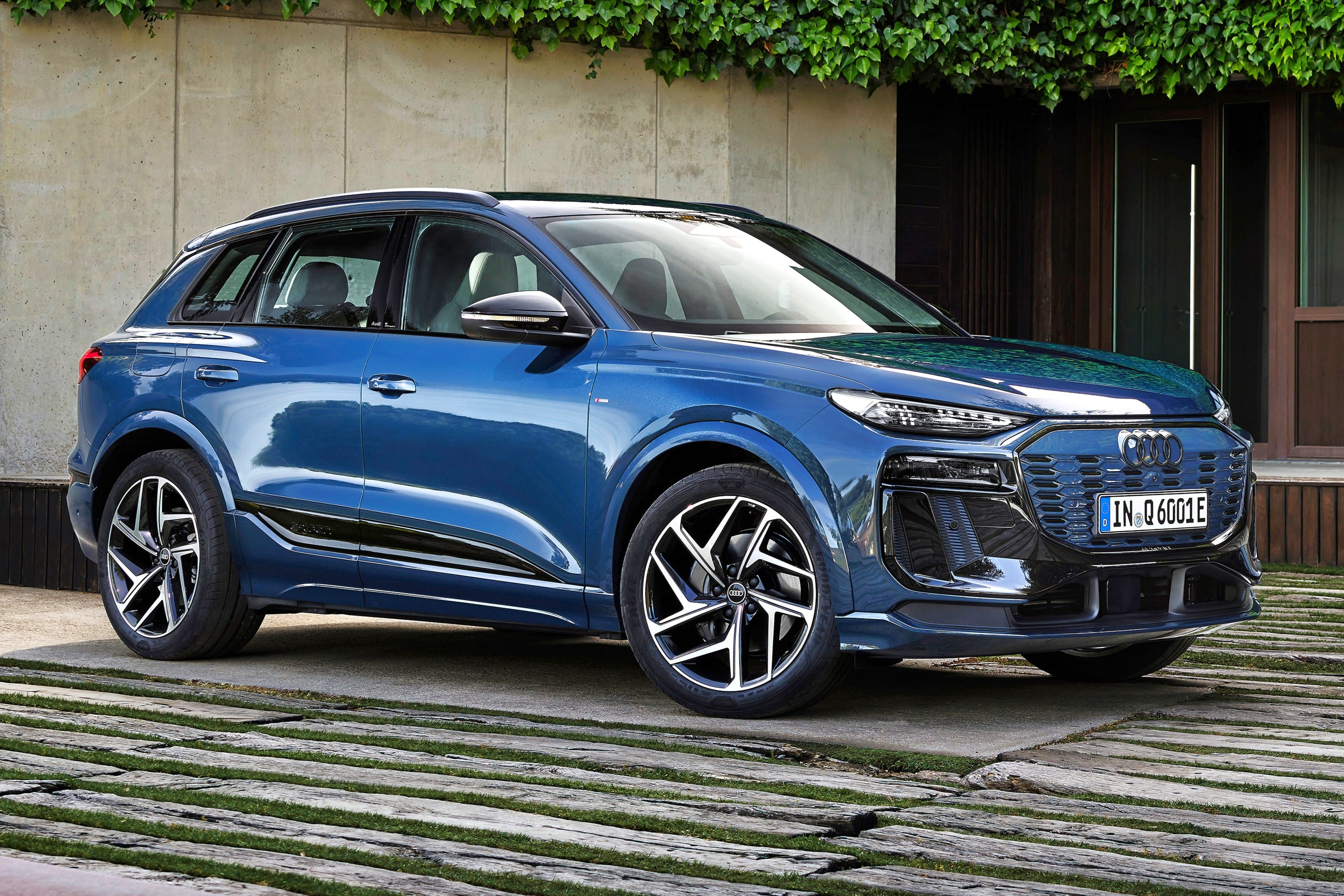
Audi Q6 e-tron

“From what I know, we also have decided to enter with new products in the electric segment in India,” Döllner said.

Audi has decided to assemble an electric vehicle in India, Autocar India learns, although the model and launch timing are still being worked out. The move from fully imported EVs to local assembly is now a question of when, rather than if.

The company was among the first luxury carmakers to enter India’s EV market with models such as the e-tron, e-tron Sportback, e-tron GT and Q8 e-tron. High import duties, however, restricted their reach and affected their resale-value proposition.

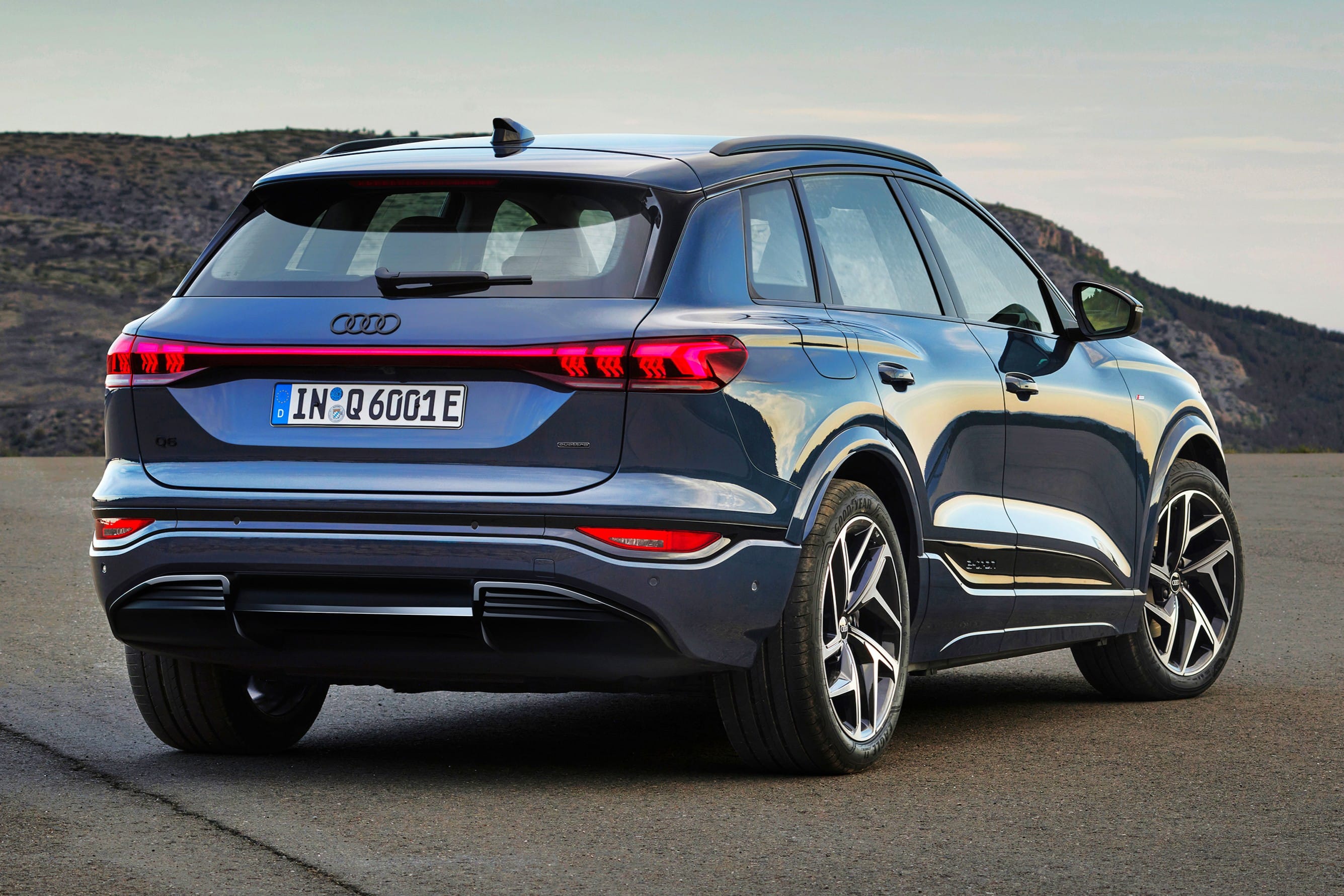
Audi Q6 e-tron

The Q6 e-tron is among the products being studied, but Audi has not decided which EV will be assembled in India. The selected model will need to offer the right combination of volume, pricing and suitability for local conditions.

Audi believes electric SUVs make more practical sense in India because their ground clearance is better suited to local road conditions. Sedans have not been ruled out, but SUVs offer a more practical proposition for battery-electric vehicles in the country.

Regional focus to shape future products

The broader powertrain approach is part of Döllner’s effort to make Audi more responsive to the requirements of individual regions.

“Audi has to act much more regional,” he said. “The times where we had a one size fits all, and we then bring it to China, just extend the wheelbase and do the same car, that doesn’t work anymore. We have to listen carefully to the markets.”

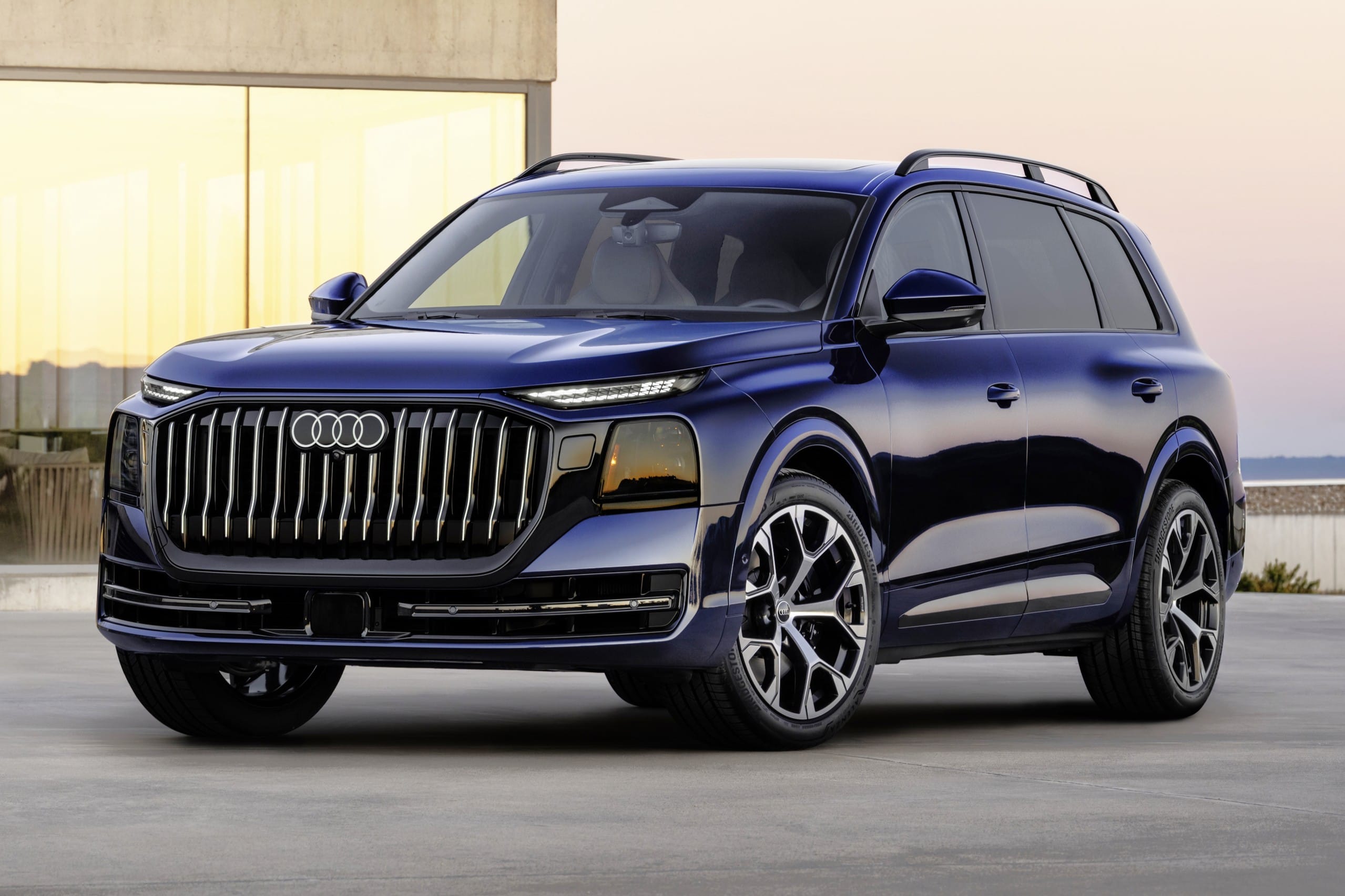
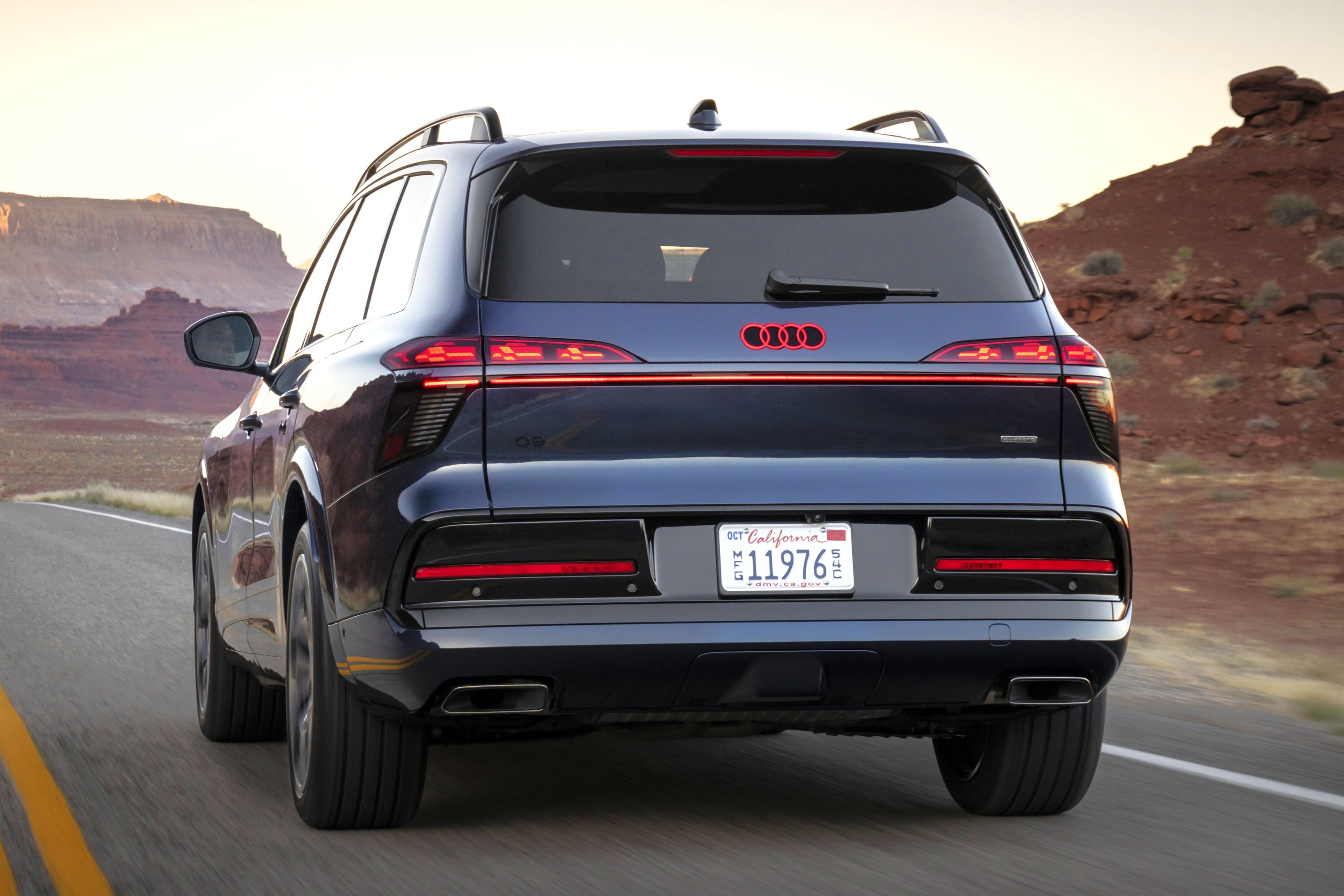
The Q9 is the first clear example of that approach. Conceived around the requirements of American customers, it will be the first Audi to make its market debut in the US.

Audi Q9

“The Q9 is a perfect proof point of a car. The biggest Audi we’ve ever built,” Döllner said. “That car would not be there without the American market.”

India does not yet generate the volumes required for Audi to develop country-specific models. Local requirements covering ground clearance, suspension, tyres, weather, dust and fuel quality are, however, fed into its global development process. The introduction of new models in India is also expected to move closer to their global launches, helping Audi benefit from the interest created when a vehicle is revealed internationally.

Döllner said the improvement in India’s manufacturing and automotive technology has changed how the country is viewed within the global industry.

Audi Q9

“India is also an excellent proof point. It’s really unbelievable what the car industry has developed in India and what level of perfection and technology products are delivered,” he said.

“In the past, there has been this strong European automotive industry, and the world has turned around. Now we have a very dynamic Chinese market, a growing and rising Indian automotive industry. The US is a story of its own.”

“What keeps me awake at night is if we are able to change fast enough,” Döllner said. “We have to speed up.”

Bentley Torcal EV interior teased ahead of September 23 reveal

Bentley Torcal EV interior teased ahead of September 23 reveal

The upcoming Bentley Torcal’s interior design has been teased ahead of its global debut on September 23. The Torcal is Bentley’s first take on an all-electric car, whose pre-production began in November 2025 at the manufacturer’s Crewe facility in England. 

  1. The teaser shows physical buttons for dual-zone AC and volume controls
  2. A rotary dial on the centre console is used to select between 4 drive modes
  3. Drive modes alter mechanical settings and the in-cabin environment

Originally slated to debut in 2025, the Torcal has been delayed as Bentley revised its electric plans in response to weakening global demand for luxury EVs.

Bentley Torcal EV interior teased: What was spotted?

Bentley will offer a lot of physical buttons with the Torcal EV

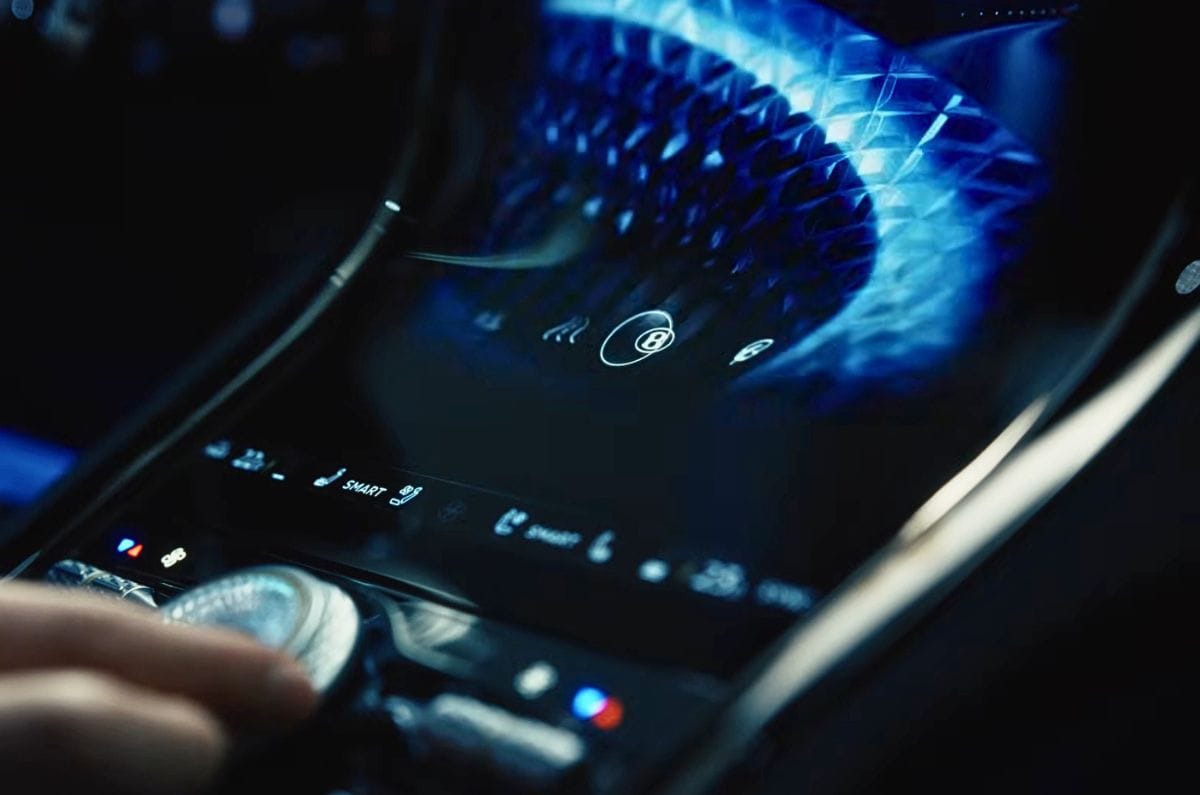
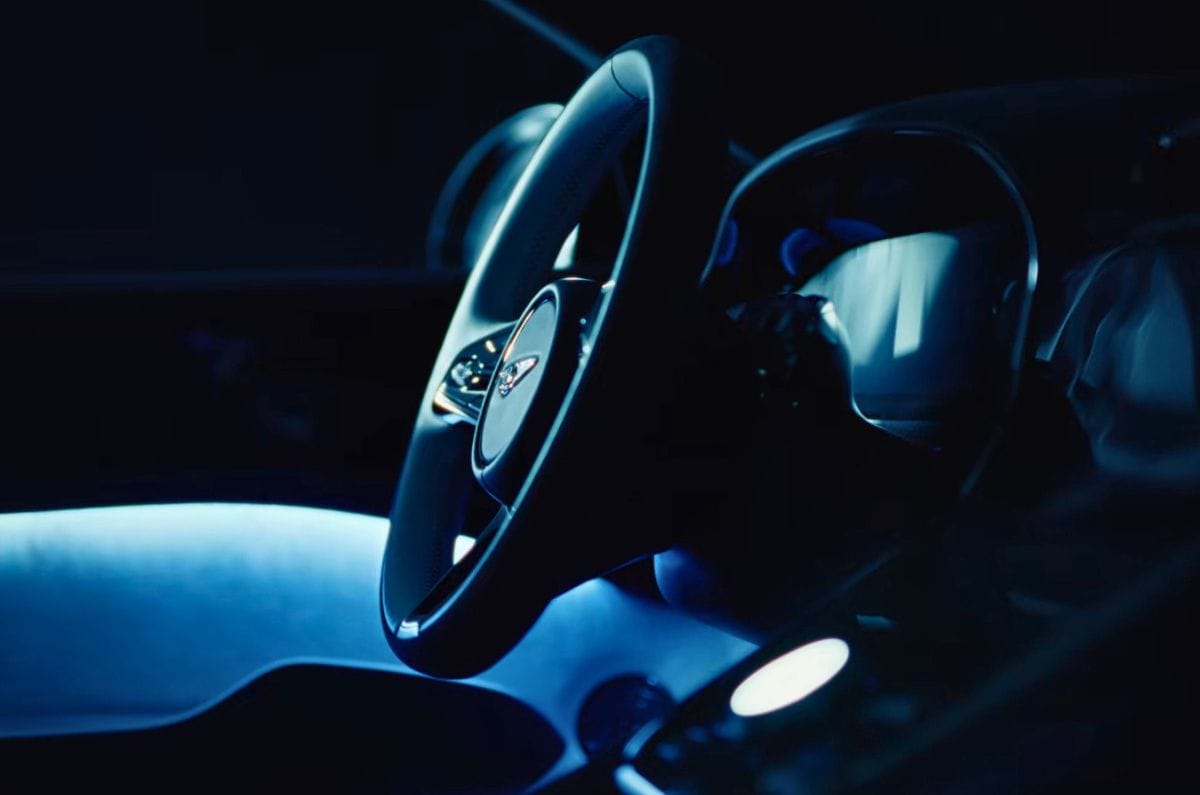
While the full interior will be seen on September 23, the teaser reveals that Bentley, always known for its tactile interior controls, is not doing away with physical buttons on the Torcal. The Torcal will get these physical controls on the steering wheel and the centre console. 

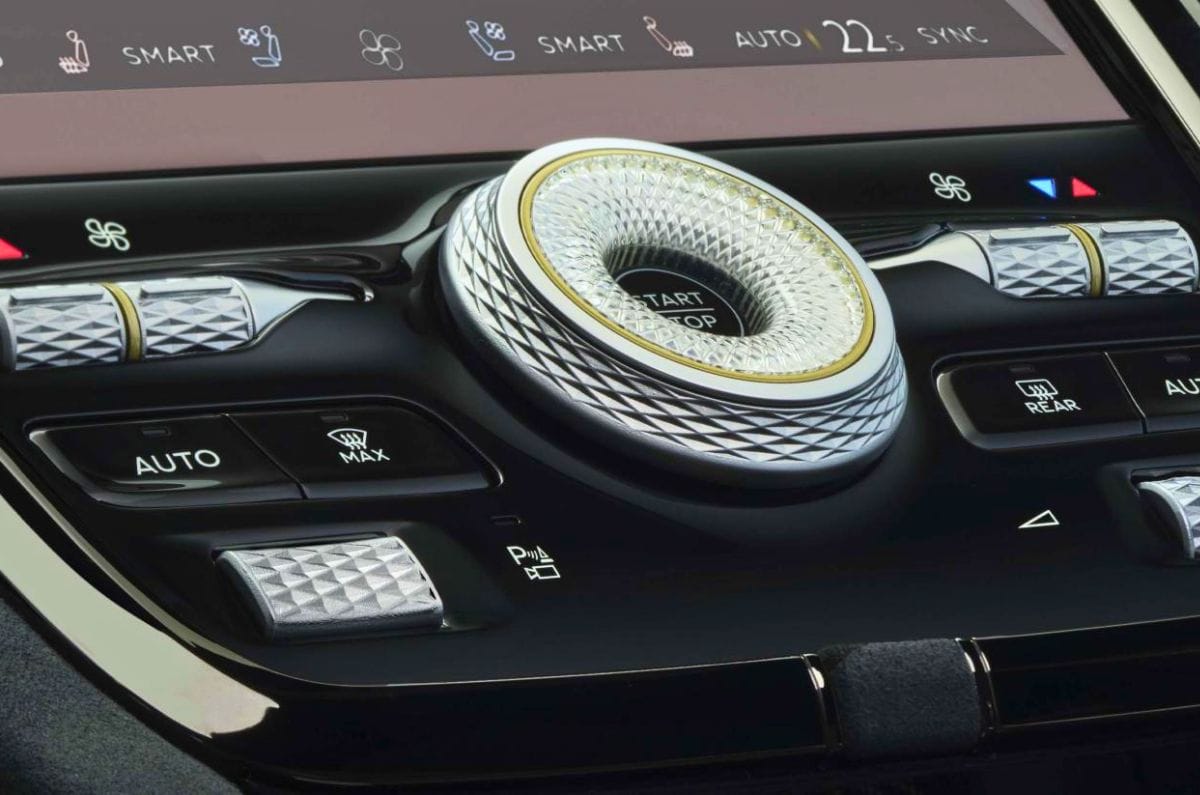
The teaser video also reveals a curved climate control panel on the centre console, which could be integrated with the infotainment system, like on the Porsche Cayenne Electric. Beneath the screen are a slew of physical controls for AC, volume and starting/stopping the EV. In fact, the temperature, blower control buttons and volume scroller are not only finished in silver for added contrast but also textured.

Another standout feature is the illuminated rotary dial surrounding the push-button start/stop. This control operates the ‘Curation Engine’, tailoring the EV’s character through four drive modes: Bentley, Comfort, Sport, and Refresh. Each mode goes beyond adjusting the vehicle’s driving dynamics, also transforming the cabin atmosphere by altering the lighting, soundscape, and even air quality for a distinct sensory experience for the user.

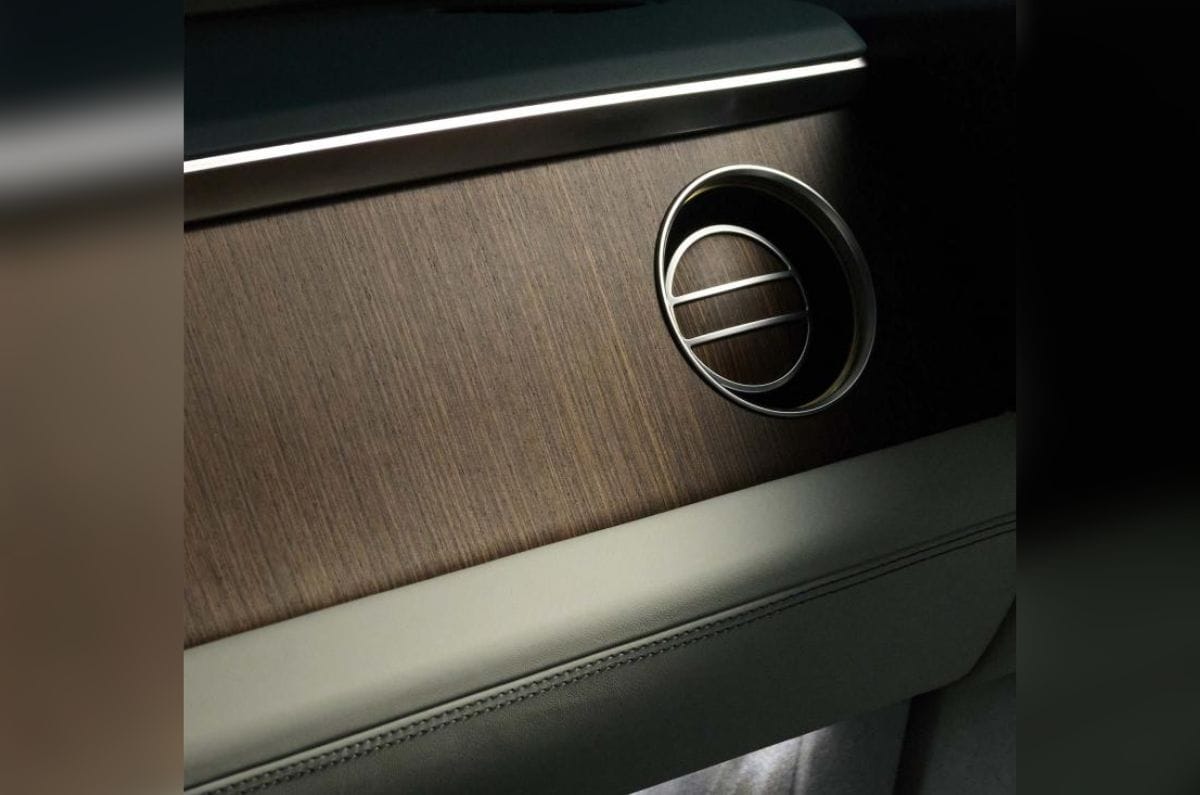
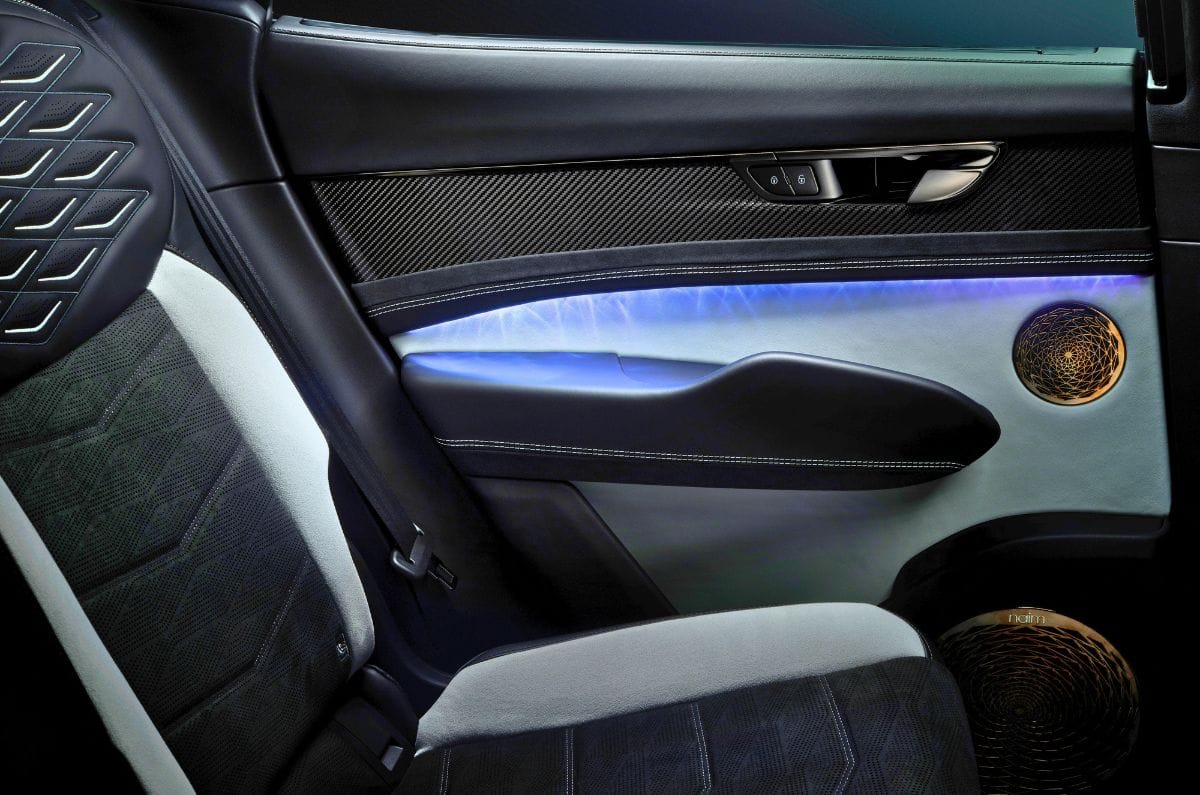
Other bits seen on the teaser include winged seat headrests, light-coloured seat upholstery with embroidered Bentley logos, a mix of fabric, carbon-fibre and leather materials on the door pads with ambient lighting, and carbon-fibre and wooden trims on the dashboard. Physical buttons for locking and unlocking the doors, circular speakers and circular AC vents can also be spotted. 

Bentley Torcal EV: Other details

Built on the PPE platform; will get a 113kWh battery pack with around 500km range

The Bentley Torcal EV shares its underpinnings with the Volkswagen Group’s PPE platform. The Bentley EV will not only share the platform with the Porsche Cayenne Electric, but will also use its 113kWh battery supporting up to 390kW DC fast-charging speeds. Commenting on the Torcal’s range, Bentley’s director of design, Robin Page, previously told our sister publication Autocar UK that “customers are basically telling us that 300-350 miles (483-563km) is that sweet spot”. 

The Bentley Torcal is expected to be offered with a dual-motor all-wheel-drive setup as standard. However, it will be interesting to see whether it matches the Cayenne Electric Turbo’s total output of 1,156hp and 1,500Nm. 

Ather’s Phase 2 expansion could happen sooner if EV demand persists: Tarun Mehta

Ather EL scooter being assembled on production line in factory

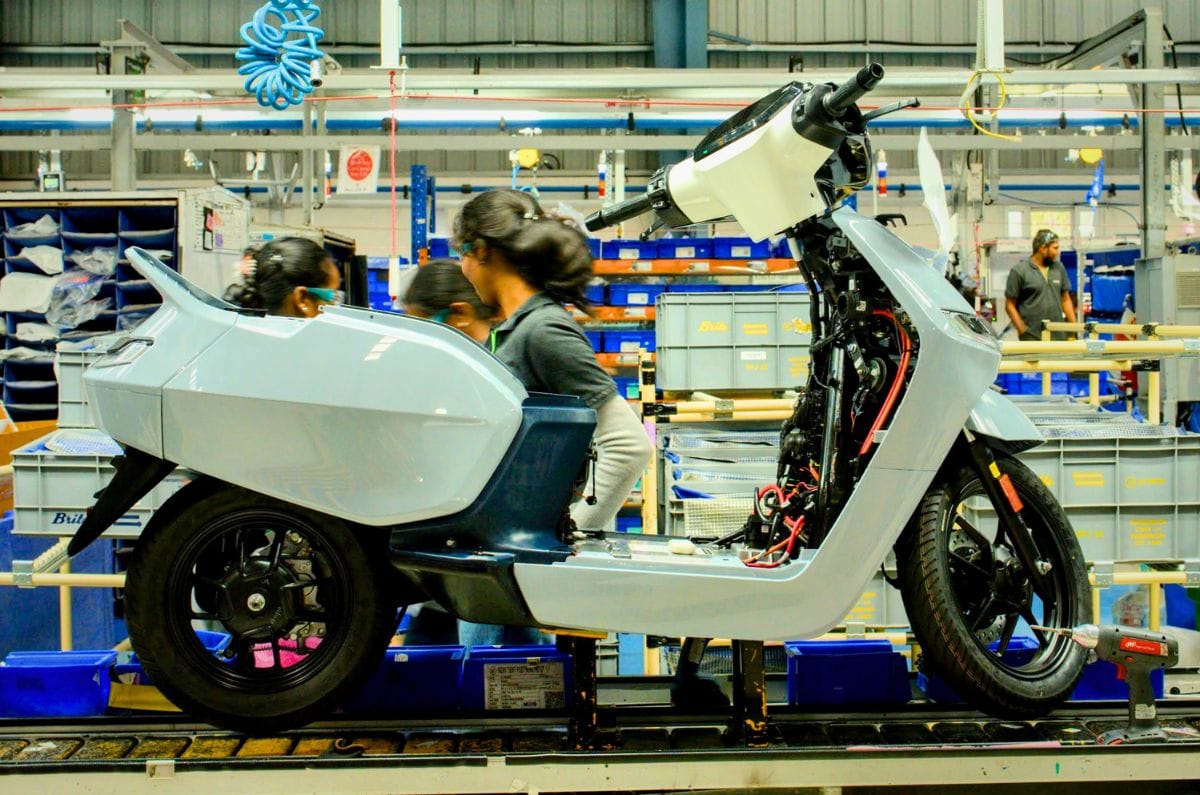
Ather Energy is exploring whether to accelerate the second phase of its upcoming Aurangabad manufacturing facility as demand for electric scooters continues to outpace expectations, with the company saying its planned capacity could come under pressure if current growth trends persist.
The company’s co-founder and CEO, Tarun Mehta, said the company has begun considering an earlier rollout of Phase 2 after a sharp rise in demand in recent months. He added that the recently completed Rs 2,500-crore fund raise gives the company the flexibility to move ahead with the expansion without waiting for Phase 1 to mature.

  1. EL platform based family scooter to launch on August 29
  2. EL production to initially begin from Hosur, before shifting to Aurangabad
  3. Ather’s electric bike still quite a ways away

Aurangabad Plant to Add 5 Lakh Units Annual Capacity

The comments come as Ather prepares to commission the first phase of its Aurangabad, or AURIC, manufacturing facility in a couple of months.  The company currently manufactures electric scooters from its Hosur plant, which has an annual production capacity of 4.2 lakh units. Mehta said the facility is now operating at almost full utilisation following steady production ramp-up during the first quarter.

Once the Aurangabad plant comes live, it will add another 5 lakh units of annual capacity, taking Ather’s total manufacturing capacity to 9.2 lakh units a year. He added that the Aurangabad facility is progressing as planned, with the assembly line already installed, the paint shop under trial and warehouse and utility work nearing completion ahead of commercial operations later this year. However, Mehta said even that may prove insufficient if the current pace of demand continues.

“GoLive of Auric will take our total capacity up from 4.2 lakh units to 9.2 lakh units later this calendar year. But we believe demand is ramping up very fast. 9.2 lakh units per annum is only 77,000 units a month. We believe on current demand trajectories, even this may be tight in the coming quarters. Which is why I think we were lucky here when we took Aurangabad land. We took a larger land capacity and we had always planned for Auric phase two,” he said.
EV Demand Outpaces Supply

Demand has risen sharply over the past few months, according to the company, resulting in supply constraints across several markets. Mehta said dealer inventories have fallen from 14 days to just three days, while some dealerships have temporarily stopped accepting fresh pre-orders because waiting periods have stretched to around two months or more. The company estimates it could have retailed another 13,000 to 15,000 scooters every month if sufficient production capacity had been available.

“There are 50,000 pre-orders, despite the fact that in many states now, our dealers are no longer even accepting new pre-orders, because the waiting times are now hitting two months or even higher. The underlying demand we strongly believe is very, very high,” Mehta said. “We believe today that of the 30,000 units that we retail average in Q1, we could have probably sold an incremental 13,000 to 15,000 units extra every month.”

New EL Scooter Platform Set to Launch on August 29

Ather expects demand to receive another boost with the launch of its first new scooter based on its brand-new EL platform on August 29. Production of the vehicle has already begun at the Hosur plant, homologation has been completed and high-volume trials are underway.

Initially, production will continue from Hosur before gradually shifting to Aurangabad as the new facility ramps up. The company plans to scale manufacturing capacity for the EL platform to about 60,000 units a month across the two plants. The EL platform will underpin multiple future scooter models and forms part of Ather’s strategy to expand production and meet rising demand for electric scooters.

Ather electric bike still at least 2 years away

Even as it prepares to debut a fresh onslaught of new products based on its EL platform, Ather Energy has no plans to enter the electric motorcycle segment in the near term. According to Ather Energy co-founder and Chief Executive Officer Tarun Mehta, the company’s strategy is to first concentrate on rolling out products based on its new EL platform before entering the electric motorcycle space.

“At this point, we are focused on the EL platform and getting at least the first, maybe two products, maybe another product out on it in the next year,” Mehta said to investors. Ather had earlier said it is developing a dedicated motorcycle platform, codenamed Zenith, alongside its EL scooter architecture. The comments indicate that Ather is now taking a measured approach towards a segment that is still at an early stage of adoption.

“Motorcycles are starting to look interesting. But Ather may not be the pioneer this time. We may watch the market. We want to see how consumers respond, which segments show a willingness and an interest towards the segment before we make our maiden launch here,” Mehta said.

He added that an electric motorcycle from Ather is not expected anytime soon. “So this, I would say, more than a year away, for sure. Probably two years plus.” he said. The company’s strategy comes at a time when India’s electric two-wheeler market continues to be led by scooters, while electric motorcycles account for only a miniscule share of overall EV sales.

Royal Enfield has begun sales of its Flying Flea C6 electric motorcycle on a small scale, while startups including Ultraviolette, Revolt and Oben are expanding their presence. Other legacy players like Bajaj Auto and Hero MotoCorp are also developing their own electric motorcycle platforms, although a debut from either brand is still some time away. Ather, however, plans to observe how the market evolves before committing resources to the category.

Top 10 cars with front parking sensors under Rs 20 lakh

Top 10 cars with front parking sensors under Rs 20 lakh

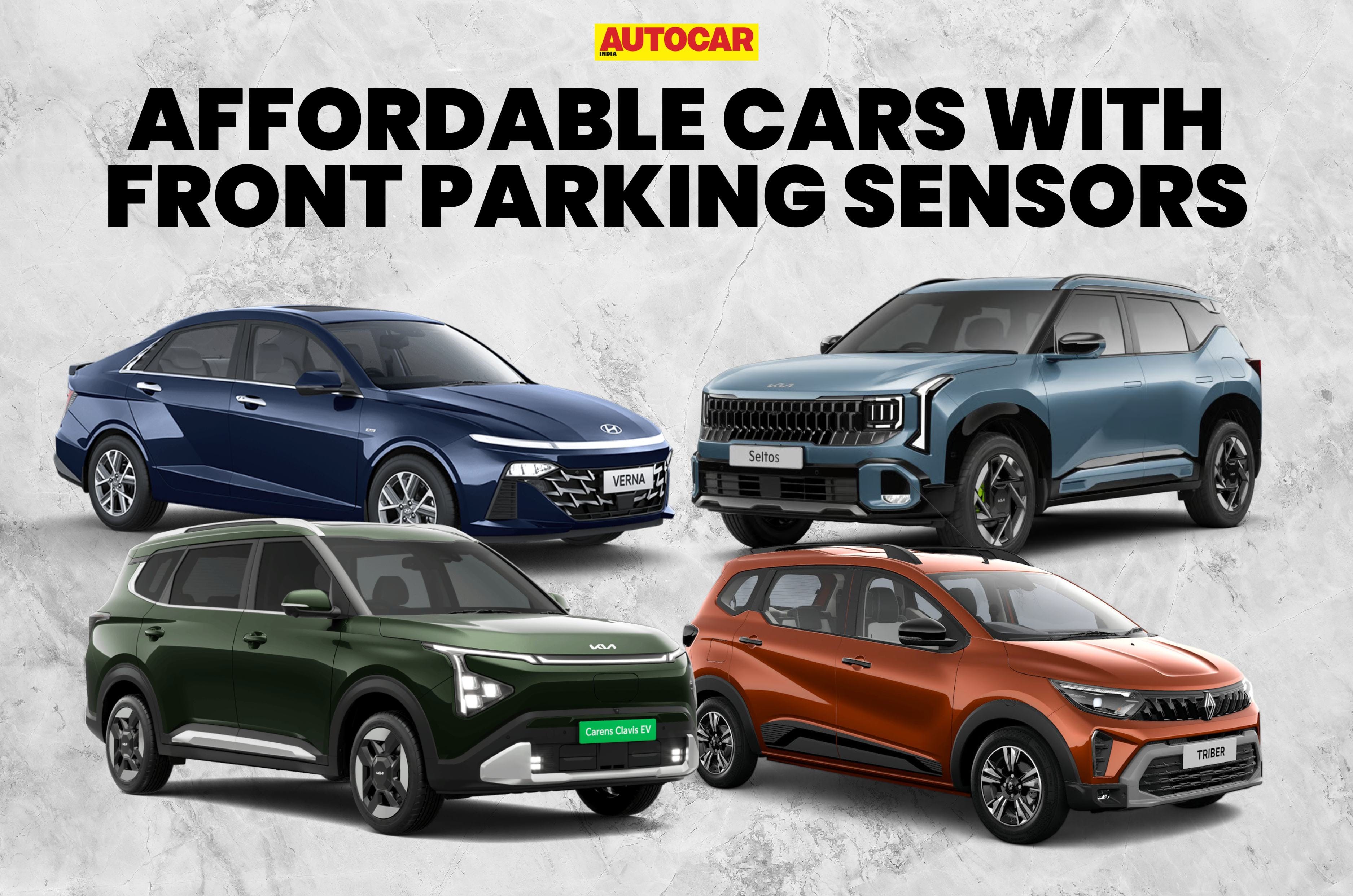
While pretty basic in their operation, parking sensors alleviate the strain involved when space is at a premium. Once the dominion of premium models, front parking sensors have now found their way into more affordable ones. We have listed the top 10 cars that get parking sensors at the front as well, and that too at an ex-showroom price of under Rs 20 lakh.

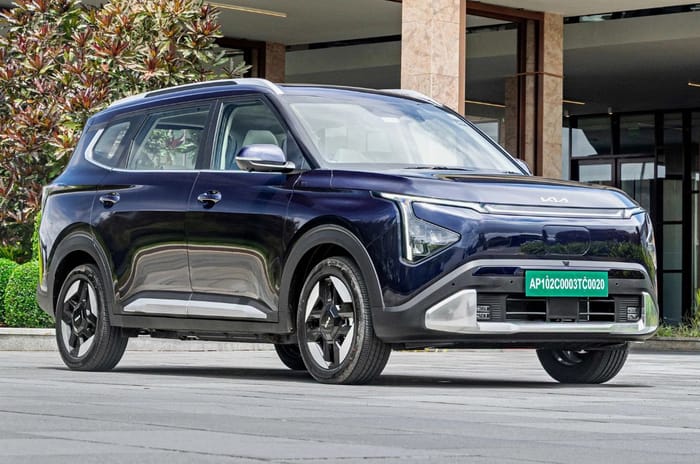
10. Kia Carens Clavis EV

Prices start at Rs 18.04 lakh

Kia Carens Clavis EV front

All variants of the 7-seat Kia Carens Clavis EV get front parking sensors. However, we are only considering the HTK+ and HTX E, since the rest are priced above Rs 20 lakh. These trims are offered with a 42kWh battery pack with an MIDC-claimed range of 404km. The single electric motor of the Clavis EV generates 133hp, while charging the battery from 10-80 percent takes 39 minutes when plugged into a 100kWh DC fast-charger.

Variants

Prices (Rs, lakh)

HTK+

18.04

HTX E

20.00

9. Maruti Suzuki Victoris

Prices start at Rs 15.39 lakh

Maruti Suzuki Victoris front

The Maruti Suzuki Victoris gets front parking sensors, but only on the ZXI Plus and the top-spec ZXI Plus (O), priced at Rs 19.99 lakh. These are available with manual and automatic transmissions, petrol and strong-hybrid options, and in front-wheel drive or all-wheel drive configurations. The naturally aspirated (NA) 1.5-litre engine of the Victoris manages 103hp, whereas the strong-hybrid’s powertrain achieves a combined output of 116hp.

Variant range

Price range (Rs, lakh)

ZXI Plus – ZXI Plus (O)

15.39 – 19.99

*Dual-tone options cost around Rs 14,500 more

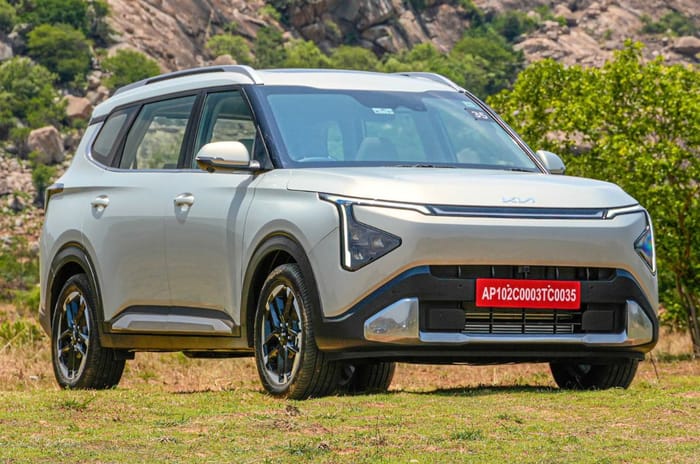
8. Kia Carens Clavis

Prices start at Rs 15.28 lakh

Kia Carens Clavis front

Front parking sensors are on the equipment list for the HTK+, HTK+ (O), HTX, GTX, and HTX (O) trims. The latter costs Rs 19.96 lakh, with higher trims breaching our stipulated Rs 20 lakh price cut-off. Like its EV sibling, the Carens Clavis is also a 7-seater. Kia is offering three 1.5-litre engines: a 115hp petrol, a 160hp turbo-petrol with direct injection, and a 116hp turbo-diesel. Transmissions include a 6-speed manual, a 6-speed torque converter automatic (AT) and a 7-speed dual-clutch automatic (DCT).

Variant range

Price range (Rs, lakh)

HTK+ – HTX (O)

15.28 – 19.96

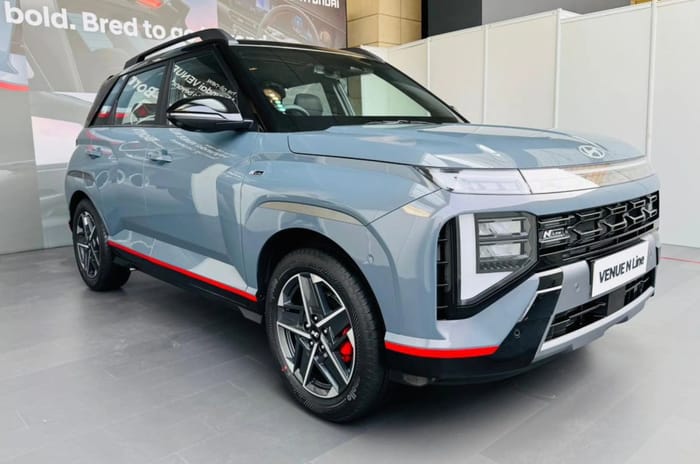
7. Hyundai Venue

Prices start at Rs 14.65 lakh

New Hyundai Venue N Line front

The second-gen Hyundai Venue adds front parking sensors to its already lengthy list of features. However, it is only the range-topping Venue HX10 and Venue N Line N10 variants of Hyundai’s compact SUV that get this nifty addition. The top-spec trim has a 1.5-litre turbo-diesel engine with 116hp, and costs Rs 15.65 lakh.

The HX10 also gets a 1.0-litre direct injection turbo-petrol with 120hp, which is shared with the N Line’s N10 trim. The diesel mill’s gearbox options are a 6-speed manual and a 6-speed torque converter automatic, whilst the petrol engine gets the manual and 7-speed DCT options.

Variants

Prices (Rs, lakh)

HX10 Turbo-Petrol (DCT)

14.65

HX10 Diesel (AT)

15.65

N Line N10 (DCT)

15.49

*Dual-tone options cost an additional Rs 18,000

6. Kia Seltos

Prices start at Rs 14.52 lakh

Kia Seltos front quarter

The entry-level HTE, HTE (O) and HTK trims of the Kia Seltos come equipped only with rear parking sensors. To get them on the front as well, you’ll need to step up to the HTK (O) at the bare minimum. Keeping our sub-20-lakh budget, the most expensive Seltos trims with front parking sensors are the GTX (A) and X-Line. Depending on the trim level, the Seltos can be had with one of three 1.5-litre engines and one of five gearboxes. For an in-depth look at those, click here.

Variant range

Price range (Rs, lakh)

HTK (O) – X-Line

14.52 – 20.00

5. Kia Sonet

Prices start at Rs 13.76 lakh

Only the top-two trims of the Kia Sonet get front parking sensors, and these are the GTX+ and X-Line. These trims are only available with the 120hp, 1.0-litre direct injection turbo-petrol engine and 116hp, 1.5-litre turbo-diesel mill. Transmission choices with these trims are a 7-speed DCT and 6-speed AT, respectively. For more information on the Kia Sonet, check out our detailed review.

Variant range

Price range (Rs, lakh)

GTX+ – X-Line

13.76 – 14.37

4. Hyundai Verna

Prices start at Rs 13.20 lakh

Hyundai Verna front quarter

Buyers of the HX6, HX6+, HX8 and HX10 trims of the Hyundai Verna will benefit from having front parking sensors. The midsize sedan’s range-topping HX10 trim is priced at Rs 18.26 lakh. There are two 1.5-litre petrol mills; the naturally aspirated unit produces 115hp, with the direct injection turbo-petrol motor making 160hp. While both engines get a 6-speed manual as standard, the NA can be had with an IVT (Intelligent Variable Transmission). However, only the turbo-petrol variants get the 7-speed DCT.

Variant range

Price range (Rs, lakh)

HX6 – HX10

13.20 – 18.26

3. Mahindra XUV 3XO

Prices start at Rs 12.20 lakh

Only the AX7 and AX7 Luxury variants of the Mahindra XUV 3XO get front parking sensors, with the latter costing Rs 15.04 lakh. The sub-4-metre SUV gets a 1.2-litre MPFI (multi-point fuel injection) and 1.2-litre direct injection turbo-petrol engines producing 111hp and 131hp. A 1.5-litre turbo-diesel engine with 117hp is also available, mated to a 6-speed manual or a 6-speed AMT (automated manual transmission). The petrol versions get a 6-speed manual and a 6-speed torque converter automatic.

Variants

Prices (Rs, lakh)

AX7

12.20

AX7 Luxury

15.04

2. Tata Nexon

Prices start at Rs 11.40 lakh

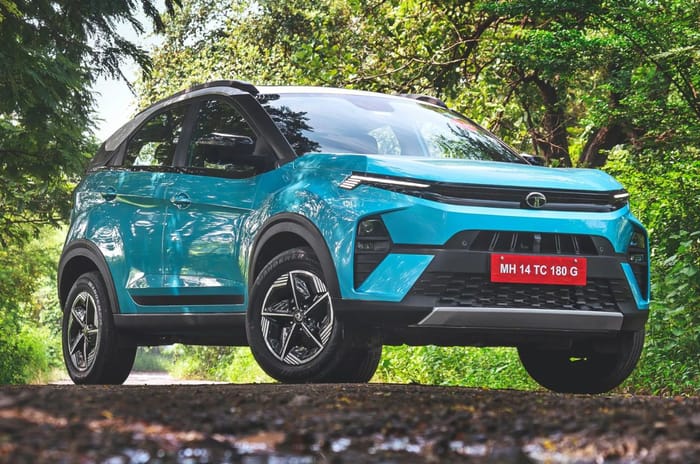
The most affordable Tata Nexon variant with front parking sensors is the Creative + PS. Meanwhile, the most expensive Fearless + A PS costs Rs 13.70 lakh. Tata’s popular compact SUV is available with petrol, diesel and CNG options.

The petrol and CNG versions use a 1.2-litre turbocharged engine with up to 120hp, while the 1.5-litre diesel mill produces 115hp. The transmission choices encompass a 6-speed manual, a 6-speed AMT and a 7-speed DCT.

Variant range

Price range (Rs, lakh)

Creative + PS – Fearless + A PS

11.40 – 13.70

*Dark Edition costs around Rs 18,300 on top of the Dual Tone option

1. Renault Triber

Prices start at Rs 8.05 lakh

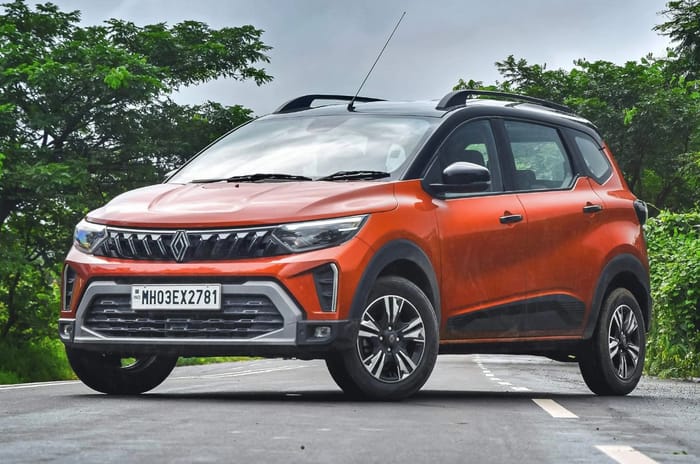
The most affordable car with front parking sensors is the Renault Triber. Only the top-end Emotion trim of this three-row MPV gets this feature, and the range tops out at Rs 8.53 lakh. The Triber is powered by a 1.0-litre three-cylinder petrol engine that produces 72hp and 96Nm. While there is only one engine option, buyers can choose between a 5-speed manual or a 5-speed AMT.

Variant

Price (Rs, lakh)

Emotion

8.05-8.53

*Dual-tone options cost an additional Rs 21,000

All prices are ex-showroom.

Also read

Top 5 most affordable cars with hill hold feature

Top 10 most affordable ADAS cars in India

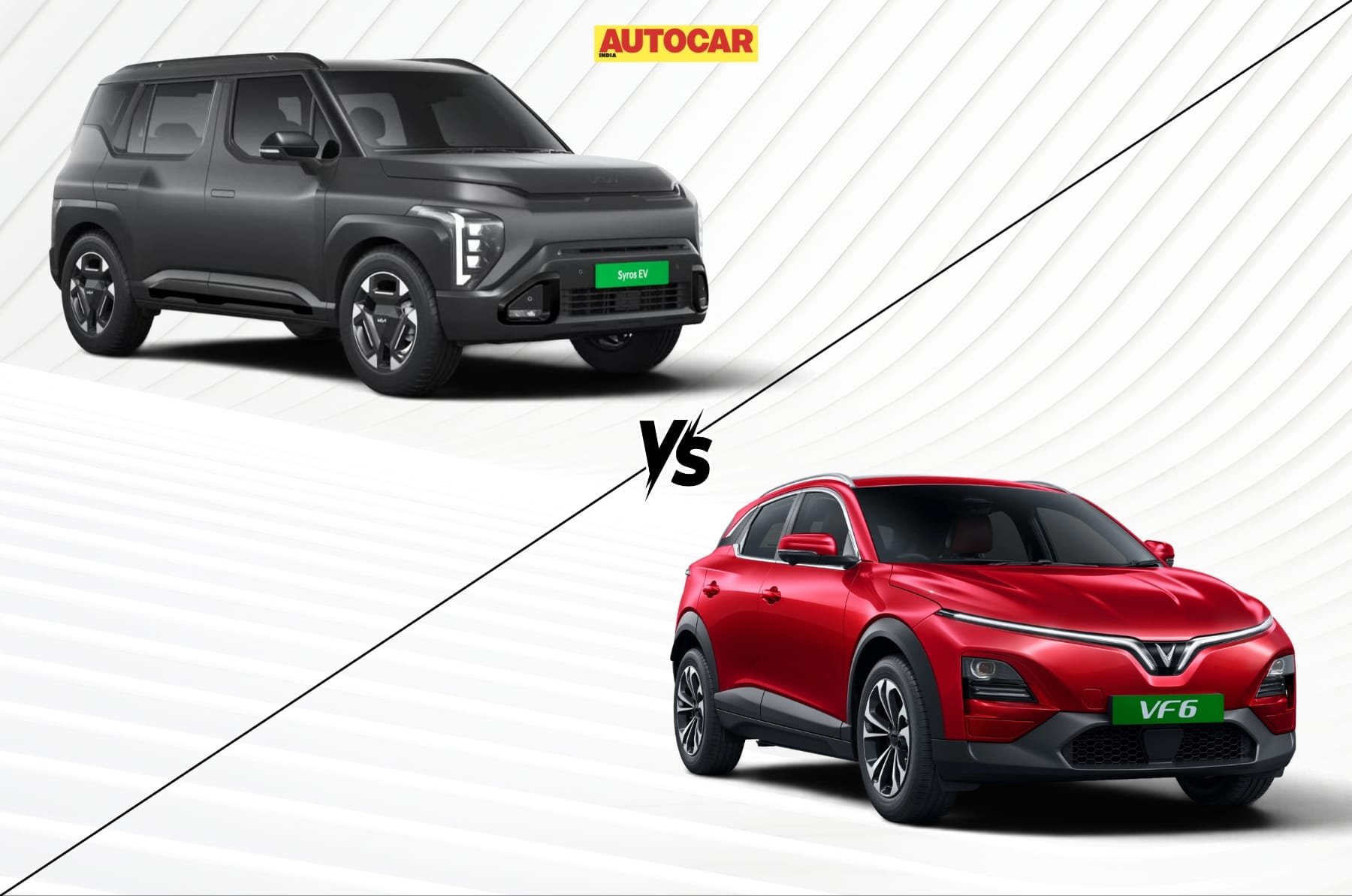
Kia Syros EV vs Vinfast VF6: Whose top trim offers more value?

Kia Syros EV vs Vinfast VF6

The Kia Syros EV and Vinfast VF6 are the most affordable electric vehicles from their respective brands. The premium Kia offering is sold in the compact SUV space, one below the VF6’s midsize SUV segment. So, can it match or even outdo the larger VF6 when it comes to specifications and features? We compare the Kia Syros EV X-Line ER and Vinfast VF6 Wind Infinity top-spec variants to find out.

Kia Syros EV X-Line ER vs Vinfast VF6 Wind Infinity: Dimensions


Syros EV

VF6

Length (mm)

3,995

4,241

Width (mm)

1,805

1,834

Height (mm)

1,670

1,615

Wheelbase (mm)

2,550

2,730

Ground clearance (mm)

197

190

Frunk (L)

16

No

Boot space (L)

390-465

423

Wheel size (in)

17

18

Clearly, the Vinfast VF6 is the larger SUV between the two. It is 246mm longer, 29mm wider and has a 180mm longer wheelbase than the Kia Syros EV. However, the Syros is 55mm taller and offers a 7mm higher ground clearance. It also gets a 16-litre frunk, a feature missing on the VF6. In terms of luggage space, the VF6 offers 423 litres of boot space, but the Syros EV can hold up to 465 litres when its sliding rear seats are pushed forward, although capacity drops to 390 litres with the seats in their rearmost position. The VF6 also rides on larger 18-inch alloy wheels, compared to the 17-inch units on the Syros EV.

Kia Syros EV X-Line ER vs Vinfast VF6 Wind Infinity: Powertrains


Syros EV

VF6

Battery size (kWh)

51.4

59.6

Electric motor setup

Single motor

Single motor

Drive layout

FWD

FWD

Power (hp)

171

204

Torque (Nm)

255

310

Claimed 0-100kph time (s)

8.1

8.9

ARAI range (km)

526

463

The two SUVs use a single-motor, front-wheel-drive setup, but the VF6 has the bigger 59.6kWh battery pack, compared to the Syros EV’s 51.4kWh unit. It also produces 33hp more power and 55Nm more torque. Despite this, the Syros EV is quicker, with a claimed 0-100kph time of 8.1 seconds, compared to the VF6’s 8.9 seconds. It also has a clear advantage in terms of claimed driving range, offering 526km on a single charge, which is 63km more than the VF6’s 463km, despite having a smaller battery pack.

Kia Syros EV X-Line ER vs Vinfast VF6 Wind Infinity: Charging speeds


Syros EV

VF6

AC charging (10-100 percent)

4.5 hrs (11kW unit)

Time not specified (7.2kW unit) 

DC fast charging (10-70 percent)

–

25 mins (100kW unit)

DC fast charging (10-80 percent)

39 mins (100kW unit)

–

Both the Syros EV and VF6 support 100kW DC fast charging. However, Kia claims a 39-minute charging time for a 10-80 percent top-up, while Vinfast’s claimed 25-minute figure is for the slightly lower 10-70 percent charging window. On the AC charging front, the Syros EV supports charging speeds of up to 11kW, taking 4.5 hours to charge from 10 to 100 percent. The VF6, meanwhile, supports up to a 7.2kW AC charger, although Vinfast has not yet revealed its charging time.

Kia Syros EV X-Line ER vs Vinfast VF6 Wind Infinity: Exterior features


Syros EV

VF6

Headlamps

LED

LED projector

Front fog lamps

LED

No

LED tail-lamps

Yes

Yes

Powered ORVMs

Yes

Yes

Alloy wheels

Yes

Yes

Flush door handles

Yes

No

Body cladding

Yes

Yes

Rear spoiler

Yes

Yes

Not a lot separates them when it comes to exterior features, with both offering LED tail-lamps, powered ORVMs, alloy wheels, body cladding and a rear spoiler. However, the VF6 comes with LED projector headlamps, while the Syros EV gets LEDs with reflectors. Another differentiation is that the Syros EV gets flush-fitting door handles, whereas the VF6 is equipped with conventional pull-type door handles.

Kia Syros EV X-Line ER vs Vinfast VF6 Wind Infinity: Interior features


Syros EV

VF6

Infotainment screen (in)

12.3

12.9

Digital driver’s display (in)

12.3

No

Climate control display (in)

5

No

Sunroof

Panoramic, openable

Panoramic, fixed

Wireless charger

Yes

Yes

Driver’s seat powered adjustment

4-way

8-way

Ventilated front seats

Yes

Yes

USB ports

2 Type C (f/r), including 1 100W (f)

2 Type A (f/r), 1 90W Type C (r)

Rear AC vents

Yes

Yes

Rear seat base ventilation

Yes

No

Climate control

Single zone

Dual zone

All window one touch up/down

Yes

Yes

Ambient lighting

Yes

Footwell only

Sound system

8-speaker Harmon Kardon

8 speakers

Apple CarPlay and Android Auto

Wireless

Wireless

Connected car tech

Yes

Yes

Rear sunshades

Yes

No

Rear centre armrest

Yes

Yes

Sliding, reclining rear seats

Yes

No

Speaking of interior features, both are well equipped and offer a wireless phone charger, ventilated front seats, connected car technology, one-touch up/down function for all windows, wireless Apple CarPlay and Android Auto and an 8-speaker sound system. The VF6 gets a slightly larger 12.9-inch infotainment screen, an 8-way power-adjustable driver’s seat and dual-zone climate control.

The Syros EV, meanwhile, stands out with a 12.3-inch digital driver’s display, a 5-inch climate control display, an openable panoramic sunroof, rear sunshades, rear seat base ventilation, and sliding and reclining rear seats. It also gets USB Type-C ports throughout the cabin, while the VF6 has Type-A ports at the front and rear, and only a single 90W Type-C port for rear passengers. Additionally, the Syros EV features a premium Harman Kardon sound system and more comprehensive ambient lighting (dashboard, doors and footwell area), whereas the VF6 offers just footwell lighting.

Kia Syros EV X-Line ER vs Vinfast VF6 Wind Infinity: Driving features


Syros EV

VF6

Drive modes

Eco, Normal, Sport

Eco, Normal, Sport

Household-style interior 3-pin socket

Yes

No

Regen braking

Yes

Yes

Paddleshifters for regen

Yes

No

Adaptive cruise control

Yes

Yes

Differences here are less, save for the Syros EV’s household-style 3-pin power socket to power certain electrical devices, along with steering-mounted paddle shifters to adjust the level of regenerative braking. Regen levels can be adjusted via the touchscreen on the VF6, but an internal V2L charging socket is absent here. Drive modes and adaptive cruise control are offered by both models.

Kia Syros EV X-Line ER vs Vinfast VF6 Wind Infinity: Safety features


Syros EV

VF6

Bharat NCAP rating

Yet to be tested

5 stars

Airbags

6

7

ABS with EBD

Yes

Yes

Electronic stability program

Yes

Yes

Hill-start assist

Yes

Yes

Tyre pressure monitoring system

Yes

Yes

360-degree camera

Yes

Yes

Front parking sensors

Yes

Yes

Electronic parking brake

Yes

Yes

Rain-sensing wipers

No

Yes

Auto-dimming IRVM

Yes

Yes

Isofix child seat anchors

Yes

Yes

Rear wiper, defogger

Yes

Yes

Disc brakes

Front, rear

Front, rear

Level 2 ADAS

Yes

Yes

Again, not much separates the them when it comes to safety kit. Both offer ABS with EBD, electronic stability control, hill-start assist, TPMS, a 360-degree camera, front parking sensors, an electronic parking brake, an auto-dimming IRVM, ISOFIX child seat anchors, front and rear disc brakes, and Level 2 ADAS. 

The VF6, however, gets seven airbags, one more than the Syros EV’s six, along with rain-sensing wipers. It has also secured a full 5-star Bharat NCAP safety rating. The Syros EV’s Bharat NCAP crash test rating, meanwhile, is yet to be revealed at the time of writing, but it is likely to score a 5-star rating like its ICE counterpart.

Kia Syros EV X-Line ER vs Vinfast VF6 Wind Infinity: Prices and verdict


Syros EV

VF6

Price (in Rs lakh)

20

19.99

There’s no doubt that both the Kia Syros EV and Vinfast VF6 are feature-rich electric SUVs. However, despite being positioned a segment below the VF6, the Syros EV makes a strong case for itself with its overall package. It offers several features aimed at pampering the rear seat passengers, including sliding and reclining seats with ventilation (seat base only), sunshades and an openable panoramic sunroof. While it has a smaller footprint than the VF6, we found in our review that the Syros EV still offers a spacious cabin, helped by its boxy design and good interior packaging.

The Syros EV also has an advantage when it comes to claimed driving range. Despite using a smaller battery pack, it offers a higher single charge range, an important factor for most EV buyers. While both SUVs are priced very close to each other at the top-end, the Syros EV is clearly on the expensive side for its segment. However, the overall package goes a long way towards justifying its price. Buyers can also reduce the upfront cost by quite a lot by opting for the battery as a service (BaaS) scheme with the electric Syros, though this option is not available with the VF6.

Another advantage for the Syros EV is Kia’s wider sales and service network across the country, along with its stronger brand recognition among buyers. Vinfast, on the other hand, is still new to the market, with a relatively limited sales and service network. This could also play an important role in the overall ownership experience.

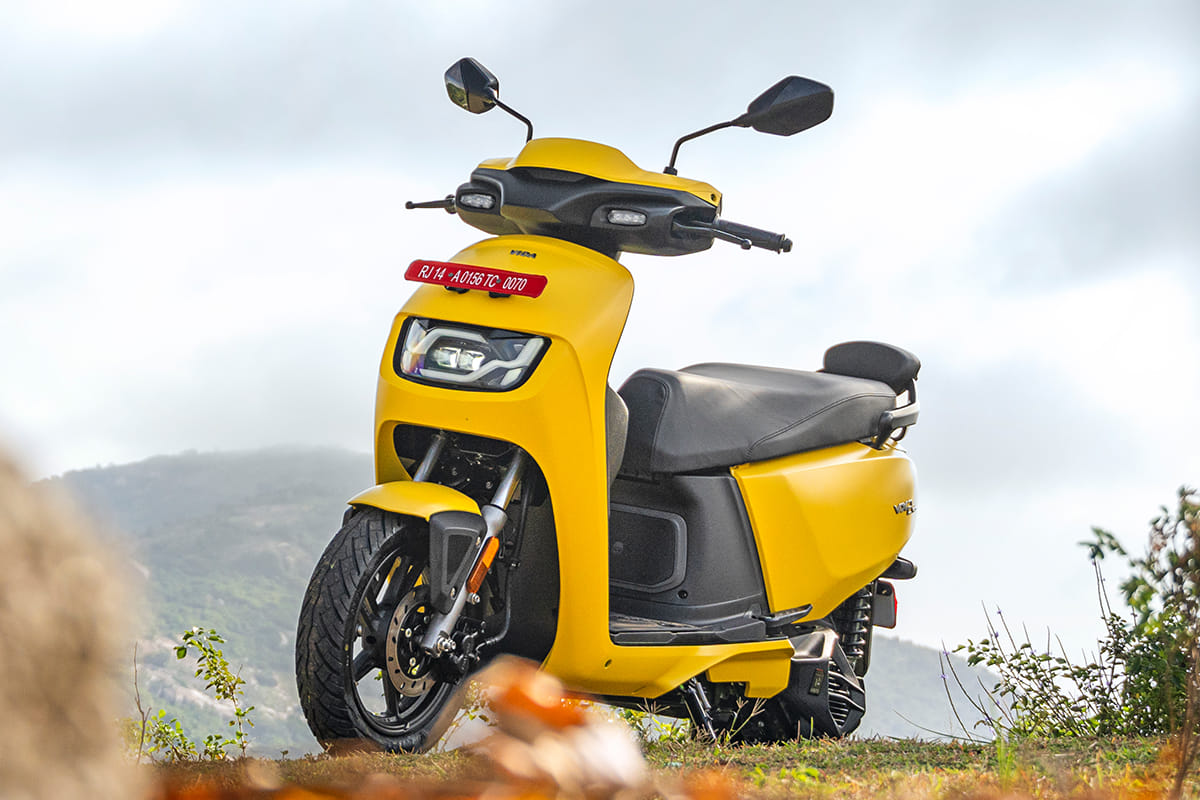
Vida VX2 Go with 3.1kWh fixed battery launched at Rs 1.13 lakh

Vida VX2 Go with 3.1kWh fixed battery launched at Rs 1.13 lakh

Hero MotoCorp’s electric mobility brand Vida has expanded its VX2 electric scooter range with the launch of the new Vida VX2 Go FB. Priced at Rs 1.13 lakh (ex-showroom, Delhi), the new variant sits alongside the existing removable-battery versions but instead uses a 3.1kWh fixed battery with direct-plug charging.

  1. Vida VX2 range now comprises of five battery pack options
  2. Comes with a 3.1kWh fixed battery pack
  3. Features a swingarm mounted motor with 6kW of peak output

Vida VX2 Go 3.1 FB : What’s new?

It has a claimed top-speed of 70kph

According to Vida, the addition is aimed at offering buyers more flexibility by allowing them to choose between fixed-battery and removable-battery charging solutions depending on their usage and home charging requirements.

The VX2 Go FB is powered by a 3.1kWh fixed battery that delivers an IDC-certified range of 128km. It uses the same 6kW swingarm-mounted electric motor, which gives the scooter a claimed top speed of 70kph. The scooter also supports DC fast charging, with Hero claiming a 0-80 percent charge time of 65 minutes.

Feature highlights include a 4.3-inch LCD instrument cluster with smartphone connectivity and turn-by-turn navigation, 27.2 litres of under-seat storage, and a long single-piece seat. 

With the introduction of this fixed-battery variant at a price of Rs 1.13 lakh, the VX2 now spans across five variants with four battery pack options. The smallest battery is the 2.2kWh pack that has an IDC range of 93km, whereas the largest battery pack is the 4.4kWh one that delivers a claimed IDC range of 187km.

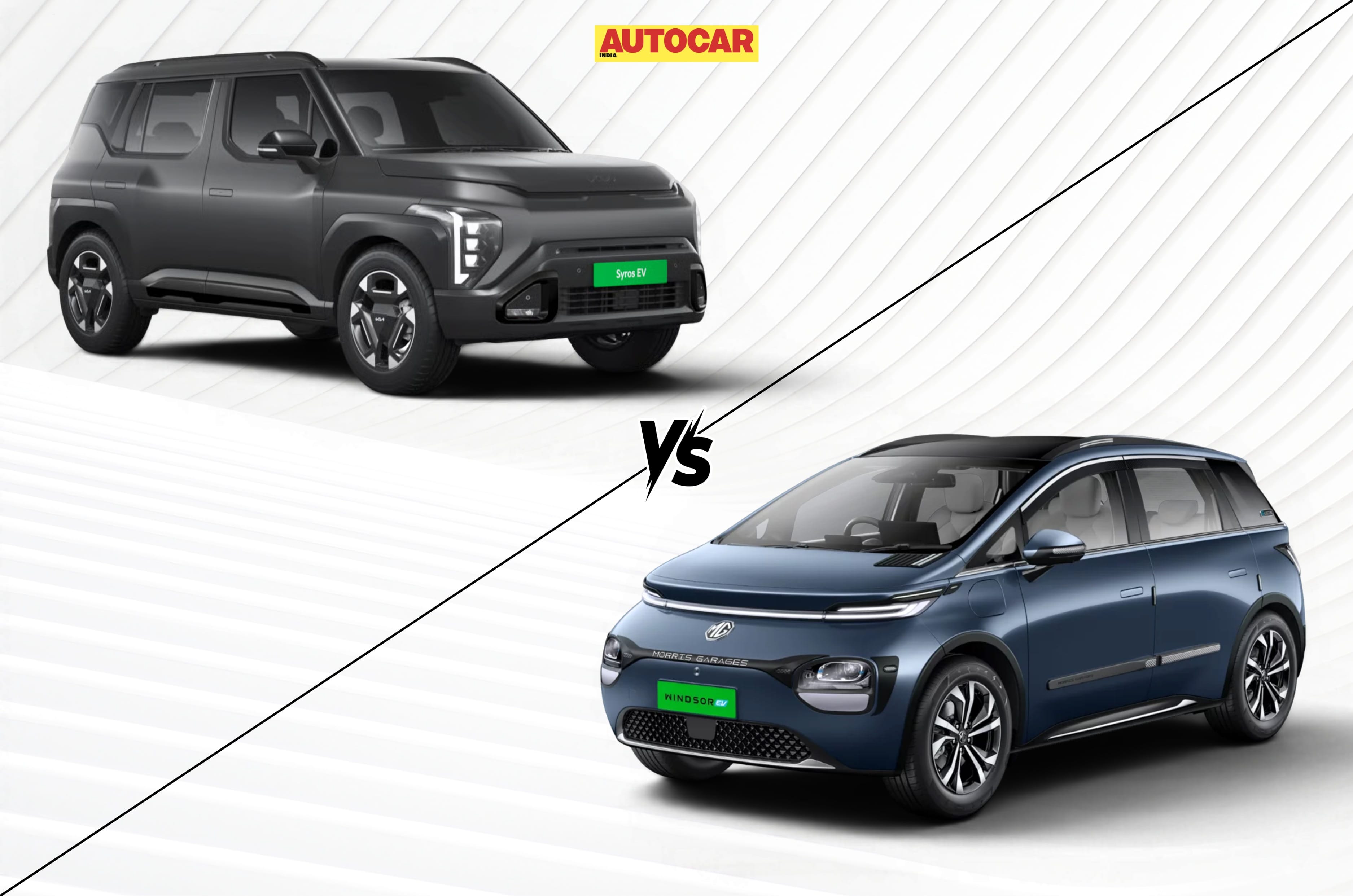
Kia Syros EV vs MG Windsor EV top-spec: Specs, features and price compared

Kia Syros EV vs MG Windsor EV comparison

Basically a badge-engineered version of the Chinese Wuling Cloud EV, the MG Windsor is a midsize EV that sits between the brand’s Comet and ZS EV models. On the other hand, the Kia Syros EV is the Korean automaker’s most affordable electric car in India and is based on the Hyundai Motor Group’s K1 platform. Compared to the Windsor, the Syros EV is a compact (sub-4-metre) model. However, not only are the top-spec variants of these cars priced really close to each other, their battery sizes are quite comparable too.

Explore full specs, features and a price breakdown in our Syros EV and Windsor EV comparison.

Kia Syros EV X-Line ER vs MG Windsor EV Essence Pro: Dimensions

The Windsor EV undeniably has the size advantage over the smaller Syros EV

Kia Syros EV X-Line ER vs MG Windsor EV Essence Pro dimensions


Kia Syros EV

MG Windsor EV

Length (mm)

3,995

4,295

Width (mm)

1,805

1,850

Height (mm)

1,670

1,677

Wheelbase (mm)

2,550

2,700

Boot space (litres)

390

579

Frunk (litres)

16

–

Wheel size (inches)

17

18

The Windsor EV is 300mm longer and 45mm wider than the Syros EV – the MG offers 150mm more wheelbase than the Kia, too. While there isn’t much between them in terms of height, the Windsor EV’s boot is 189 litres larger than that of the Syros EV. The latter’s wheels are also an inch smaller. Interestingly though, the Kia EV offers a 16-litre frunk (front trunk) – the MG has no frunk at all.

Kia Syros EV X-Line ER vs MG Windsor EV Essence Pro: Powertrain

The top-spec Syros EV offers more range and a punchier electric motor setup 

Kia Syros EV X-Line ER vs MG Windsor EV Essence Pro powertrain options


Kia Syros EV

MG Windsor EV

Battery size (kWh)

51.4

52.9

Electric motor setup

Single, front (FWD)

Single, front (FWD)

Power (hp)

171

136

Torque (Nm)

255

200

Claimed 0-100kph

8.1 seconds

–

Claimed range (km)

526

449

AC charging

7.25 hrs at 7.4kW (10-100%)

9.5 hrs at 7.4kW (10-100%)

DC fast charging

39 mins at 100kW (10-80%)

50 mins at 60kW (20-80%)

The X-Line ER (Extended Range) variant of the Kia Syros EV gets a 51.4kWh lithium-ion battery pack, which is just 1.5kWh smaller than the unit powering the top-spec MG Windsor. Despite this capacity disadvantage, the Syros EV’s claimed range is actually higher, by 77km higher.

Compared to the top-spec MG Windsor’s 60kW DC fast-charging capability, the Syros EV’s DC fast-charging limit is 40kW higher. Unlike MG, Kia’s claimed DC fast-charging time accounts for a SoC (state of charge) of 10-80 percent and not 20-80 percent. Taking all this into account, the Syros EV can be unplugged from a DC fast charger 11 minutes sooner, which would benefit regular long-distance users.

While neither automaker has listed the kerb weight of their cars, the smaller Syros EV is likely to be lighter than the Windsor EV. The former’s front-mounted electric motor also offers 35hp and 55Nm more. These two factors combine to give the Syros EV a claimed naught to 100kph sprint time of 8.1 seconds.

Kia Syros EV X-Line ER vs MG Windsor EV Essence Pro: Exterior features

The Windsor gets a couple more useful features here; the Syros has some ‘feel-good’ ones

Kia Syros EV X-Line ER vs MG Windsor EV Essence Pro exterior features


Kia Syros EV

MG Windsor EV

LED headlamps

Yes (auto)

Yes (auto projectors)

Connected light bar

No

Yes

Front fog lamps

Yes

No

Rear fog lamps

No

Yes

Cornering lights

No

Yes

Welcome lights

Yes

No

Puddle lamps

Yes

No

Powered ORVMs

Yes (with auto-fold function)

Yes (with auto-fold function)

Flush door handles

Yes

Yes

Body cladding

Yes

No

Roof rails

Yes

Yes

Rear spoiler

Yes

Yes

Powered tailgate

No

Yes

Colours

Mono-tone

Mono-tone

Both these cars are reasonably well-equipped in their respective top-spec variants. However, there are some distinct differences between the features that are offered in each. The Syros EV comes with front fog lamps plus fancier ‘welcome’ lighting functions as well as puddle lamps that project the ‘Kia’ logo – these make for a more premium experience when approaching the car. The Syros EV also goes for a rugged look, featuring black plastic cladding on the wheel arches and bumpers.

Compared to the Syros EV’s stylish multi-reflector LED headlamps, the Windsor EV uses projector LED units. While it doesn’t get front fog lamps, the MG features cornering lamps that can prove useful when driving in the dark. At the back, the top-spec Windsor EV gains a powered tailgate – another handy feature especially when your hands are occupied.

Kia Syros EV X-Line ER vs MG Windsor EV Essence Pro: Interior features

If you like a minimalistic interior that’s also feature-packed, the MG Windsor won’t disappoint

Kia Syros EV X-Line ER vs MG Windsor EV Essence Pro interior features


Kia Syros EV

MG Windsor EV

Infotainment screen

12.3-inch

15.6-inch

Digital driver’s display

12.3-inch

8.8-inch

HVAC screen

5.0-inch

No

Panoramic sunroof

Yes

Yes (fixed)

Wireless charger

Yes

Yes

Driver’s seat adjustment

4-way powered

6-way powered

Co-driver’s seat adjustment

4-way manual

4-way manual

Ventilated seats

Yes (front & rear)

Yes (front only)

Leatherette upholstery

Yes

Yes

Split rear seats

Yes

Yes

Automatic climate control

Yes (single-zone)

Yes (single-zone)

Ambient lighting

Yes (64 colours)

Yes (256 colours)

Audio system

8-speaker Harman Kardon

9-speaker Infinity

Apple CarPlay & Android Auto

Yes (wireless)

Yes (wireless)

USB Type-C ports

Yes (5 ports)

Yes (5 ports)

Connected car tech

Yes

Yes

Voice assistant

Yes

Yes

OTA updates

Yes

Yes

Gaming

No

Yes

Rear sunblinds

Yes

No

Rear armrest

Yes (with cupholders)

Yes (with cupholders)

Both cars come with wireless charging, leatherette seats, connected-car tech, and multiple USB ports for added convenience. However, in its top-spec X-Line ER avatar, the Kia Syros EV offers a third screen specifically to control the HVAC (heating, ventilation and air-conditioning) system. That said, there are physical buttons to operate this system, too. The Kia EV also gets a larger driver’s display, a panoramic sunroof that opens, ventilation function for the front & rear seats, plus rear sunblinds. Furthermore, the Syros EV’s interior design, quality and layout of its switchgear, plus the overall usability remain easily sufficient.

As for the fully loaded Essence Pro variant of the MG Windsor EV, its pièce de résistance is the massive 15.6-inch infotainment screen. Given its minimalistic interior layout, almost every control or feature is integrated into this main display. While this screen can be distracting, it comes with multiple customisation options and integrates various games and streaming services. Compared to the Syros EV’s 64-colour ambient lighting system, the Windsor’s supports 256 colours. Its driver’s seat also gets 6-way power adjustment, while the Inifinity premium audio rig features 9 speakers instead of the Kia’s 8-speaker setup.

Kia Syros EV X-Line ER vs MG Windsor EV Essence Pro: Safety features

Neither car is missing out on much when it comes to their respective safety tech

Kia Syros EV X-Line ER vs MG Windsor EV Essence Pro safety features


Kia Syros EV

MG Windsor EV

Airbags

6

6

ABS with EBD

Yes

Yes

Electronic stability program

Yes

Yes

Hill-hold assist

Yes

Yes

Hill-descent control

No

Yes

TPMS

Yes

Yes

Parking sensors

Yes (front & rear)

Yes (front & rear)

360-degree camera

Yes

Yes

Dashcam

Yes

No

Electronic parking brake

Yes (with auto-hold function)

Yes (with auto-hold function)

Auto-dimming IRVM

Yes

Yes

Rain-sensing wipers

Yes

Yes

ISOFIX

Yes

Yes

Rear wiper and defogger

Yes

Yes (defogger only)

All-wheel disc brakes

Yes

Yes

Level 2 ADAS

Yes

Yes

Only the top-spec variants of these EVs get Level 2 ADAS (Advanced Driver Assistance Systems). Some of the ADAS features shared between the two include adaptive cruise control, forward collision warning, lane-departure alert with lane-keeping assistance, and automatic emergency braking. Where the Windsor EV gets hill-descent control, the Syros EV comes with a dashcam and a rear wiper.

Kia Syros EV X-Line ER vs MG Windsor EV Essence Pro: Other features

Neither car is missing out on much when it comes to their respective safety tech

Kia Syros EV X-Line ER vs MG Windsor EV Essence Pro other features


Kia Syros EV

MG Windsor EV

Drive modes

Yes (3)

Yes (4)

Terrain modes

No

No

Single-pedal driving

Yes

No

V2V and V2L

Yes

Yes

AVAS

Yes

No

The Windsor EV comes with Eco+, Eco, Normal and Sport drive modes, while the Syros EV only gets Eco, Normal and Sport. Neither car features variable terrain modes, but both support vehicle-to-load (V2L) and vehicle-to-vehicle (V2V) functions for better practicality during regular family outings, such as picnics and long-distance trips. The Syros EV also comes with a dedicated Virtual Engine Sound System (VESS) to caution other motorists and pedestrians of the vehicle’s presence.

Conclusion

Kia Syros EV X-Line ER vs MG Windsor EV Essence Pro prices


Kia Syros EV

MG Windsor EV

Prices (In Rs, lakh)

20.00

19.00

Apart from being less expensive, the Windsor EV is a larger car with plenty of room on the inside and in the boot, compared to the compact Syros EV. However, the Kia makes a solid case for itself by offering good interior space and build quality, better overall performance, plenty of features, plus a good blend of digital real-estate and intuitive physical controls. If you need the added perks that a bigger car offers without having to spend the ‘big car’ money, the MG Windsor EV will suit your needs just fine. Picking the top-spec Kia Syros EV won’t be a disappointment either as long as you can justify its bloated price tag.

Also read

Tata Sierra EV Empowered vs Hyundai Creta Electric Excellence LR: Which to buy?

Kia Syros EV vs Tata Nexon EV: Whose top trim offers better value?