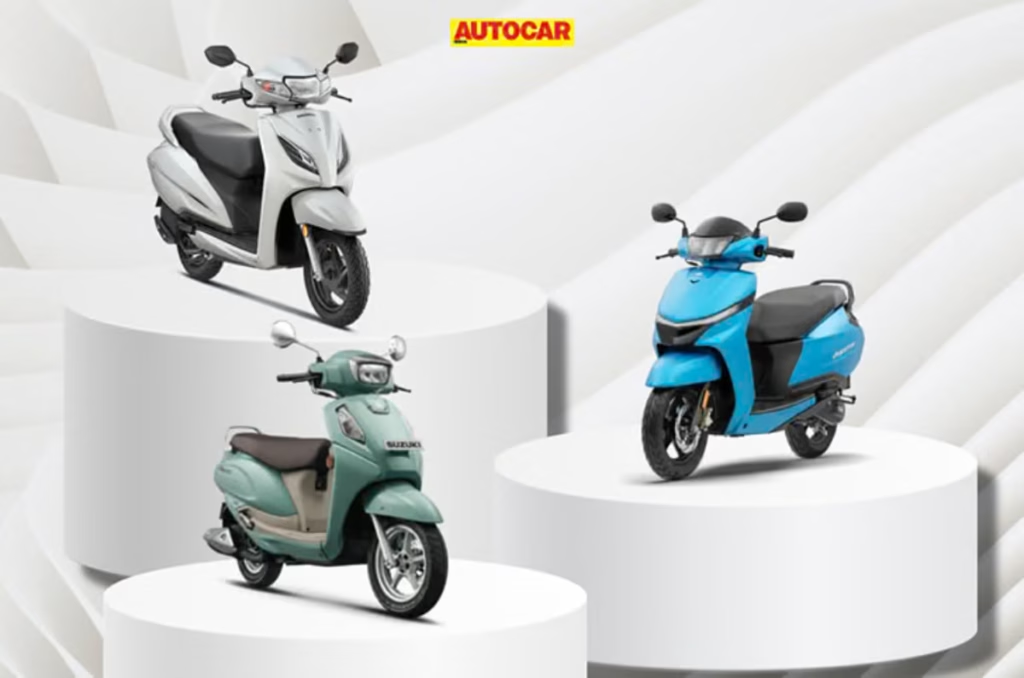
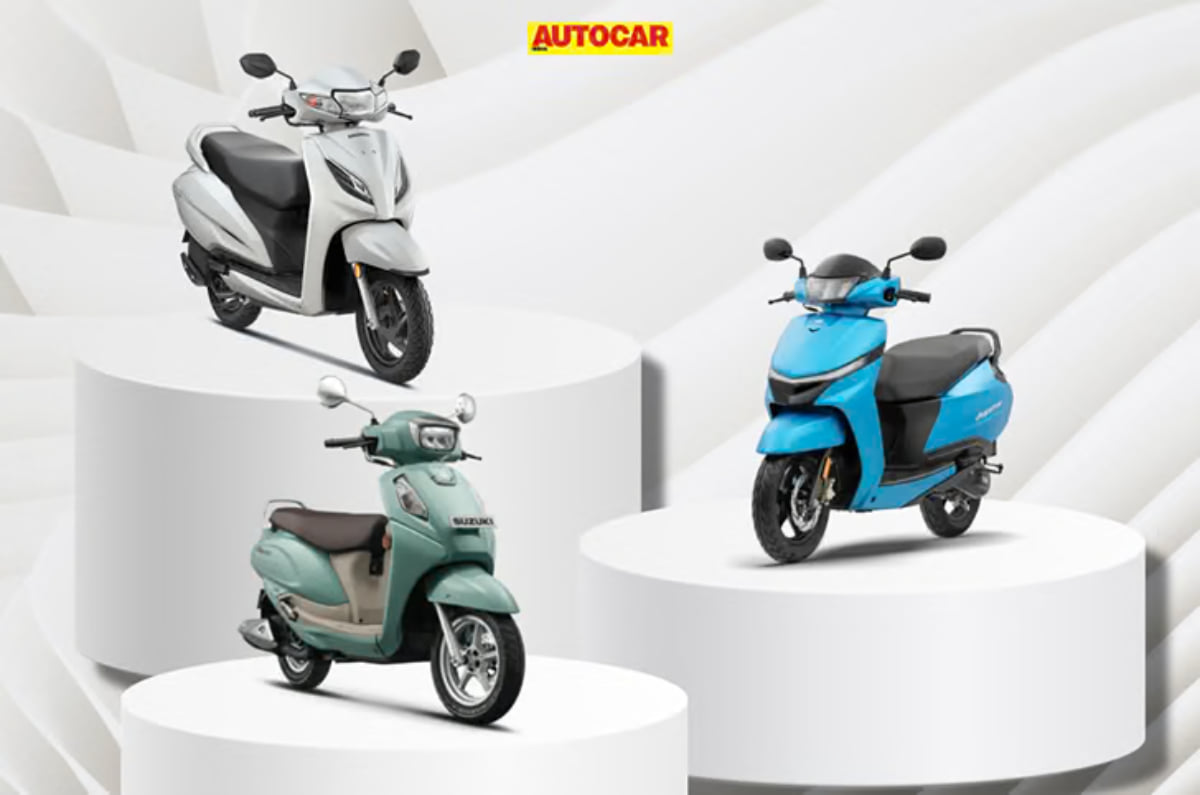
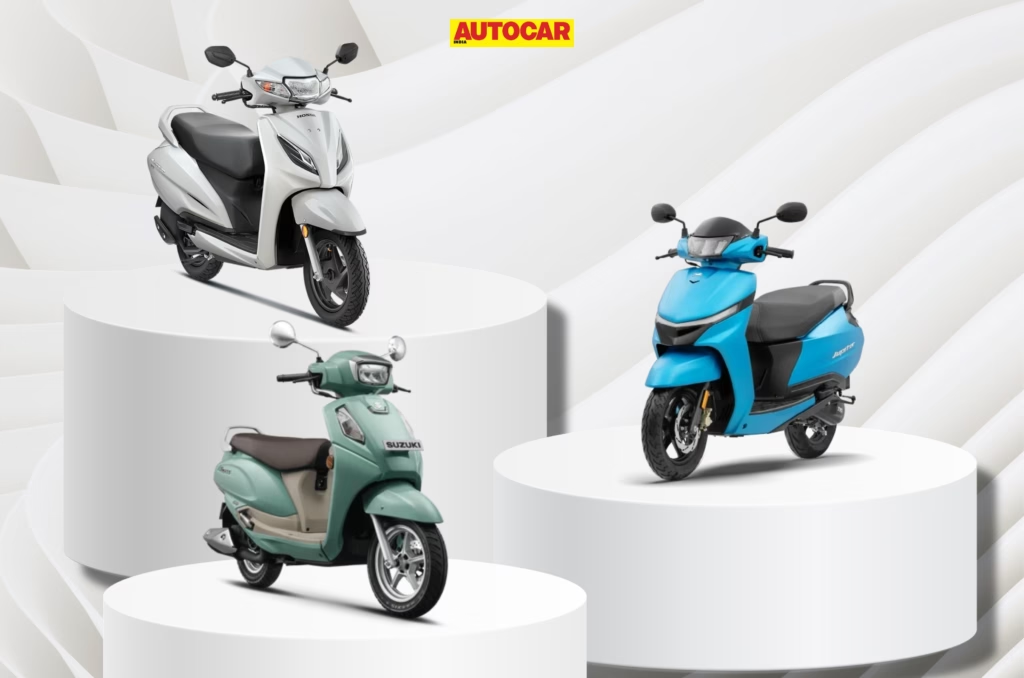
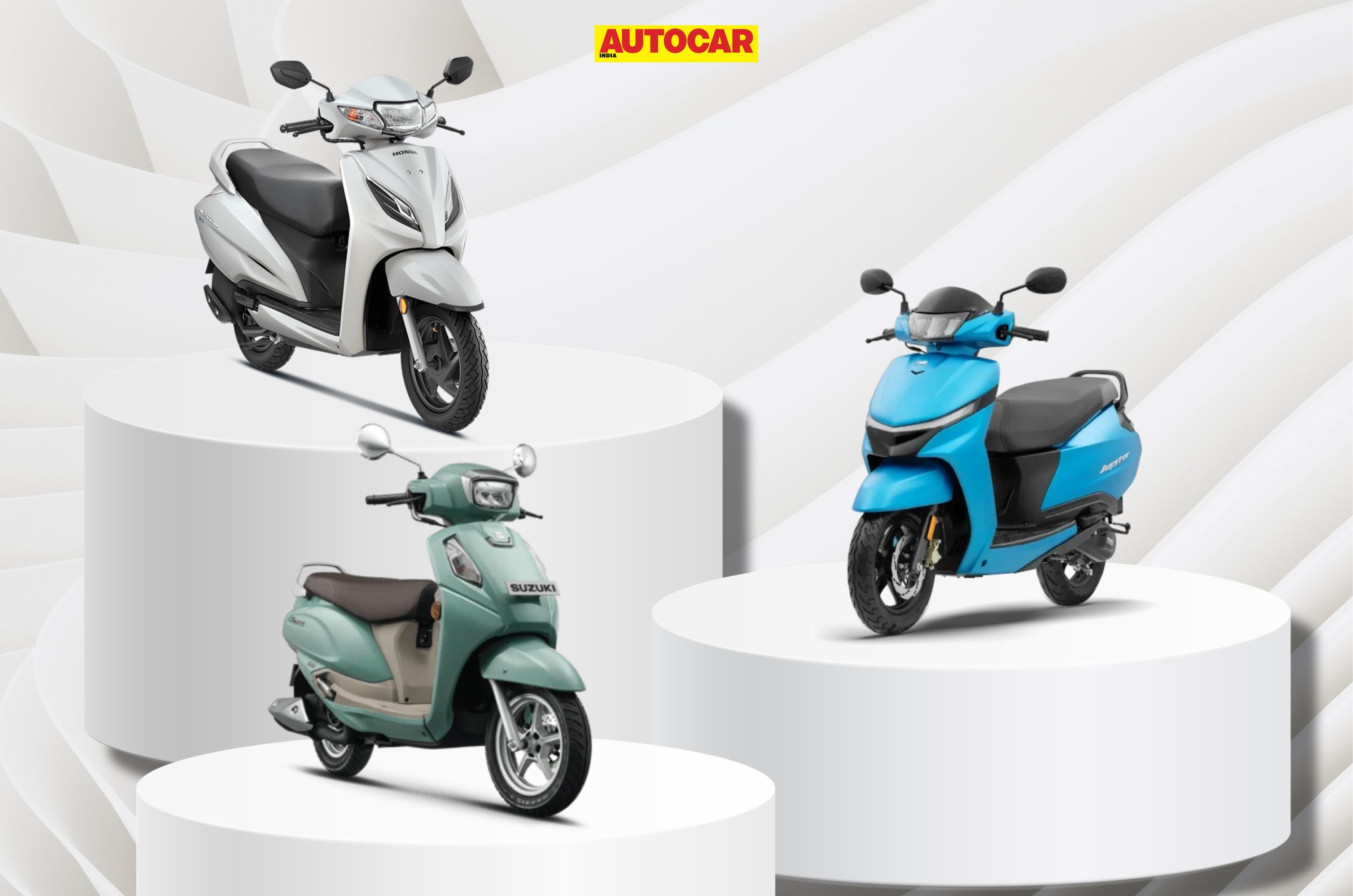
Two-wheeler manufacturers have dispatched a record 48,65,192 scooters in the domestic market in the first half (H1) of FY2027. That’s an additional 10.8 lakh units over the same period last year, representing a 29 percent increase. The six-month period included two monthly records: April 2026 opened as the best-ever April, with 6,91,993 units, while September registered 9,95,576 units – the highest monthly total ever for the category and just 4,424 units short of the million-unit (10 lakh) milestone.
Zooming out, the scale of the growth becomes clearer. Scooter sales have more than doubled over 12 years. In H1 FY2016, the total was 2.4 million units, whereas FY2027’s first half has already reached about 60 percent of FY2026’s full-year record of 8.11 million units.
Electric scooters double, claim a 20 percent share
Honda leads overall, TVS grows faster
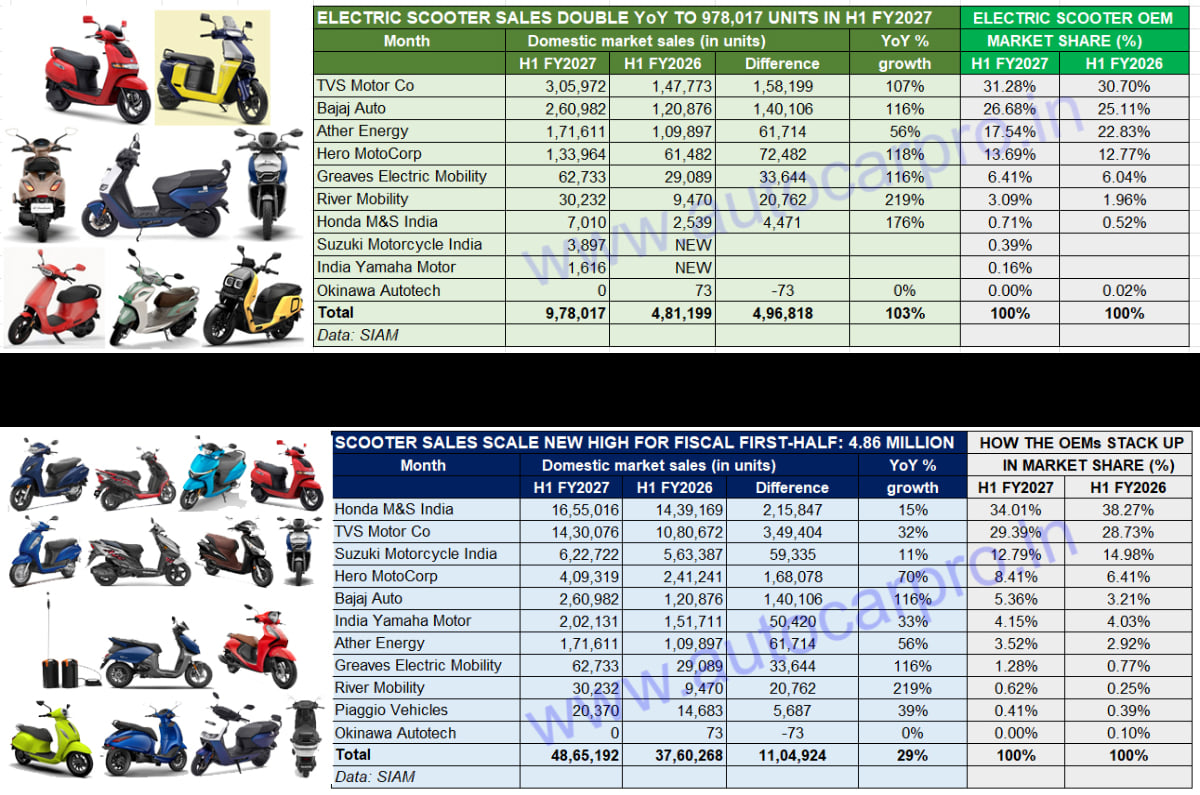
The fastest-growing part of the segment is electric. E-scooter wholesales hit 9,78,017 units in H1 FY2027, up 103 percent year-on-year from 4,81,199 units in H1 FY2026. This surge has pushed EVs’ share of total scooter sales from 13 percent to 20 percent in a single year.
TVS Motor Company leads the e-scooter market, with 3,05,972 iQube and Orbiter units dispatched, up 107 percent year-on-year, giving it a 31 percent share. Bajaj Auto is second, with 2,60,982 Chetak and Yulu units – a 116 percent jump – and a 27 percent share. Together, the two account for 58 percent of all e-scooters sold in the first half. Ather Energy, with 1,71,611 units and 56 percent growth, held third place, though its share dipped from 23 percent to 18 percent as the market expanded. Hero MotoCorp’s Vida dispatched 1,33,964 units, up 118 percent, for a 14 percent share.
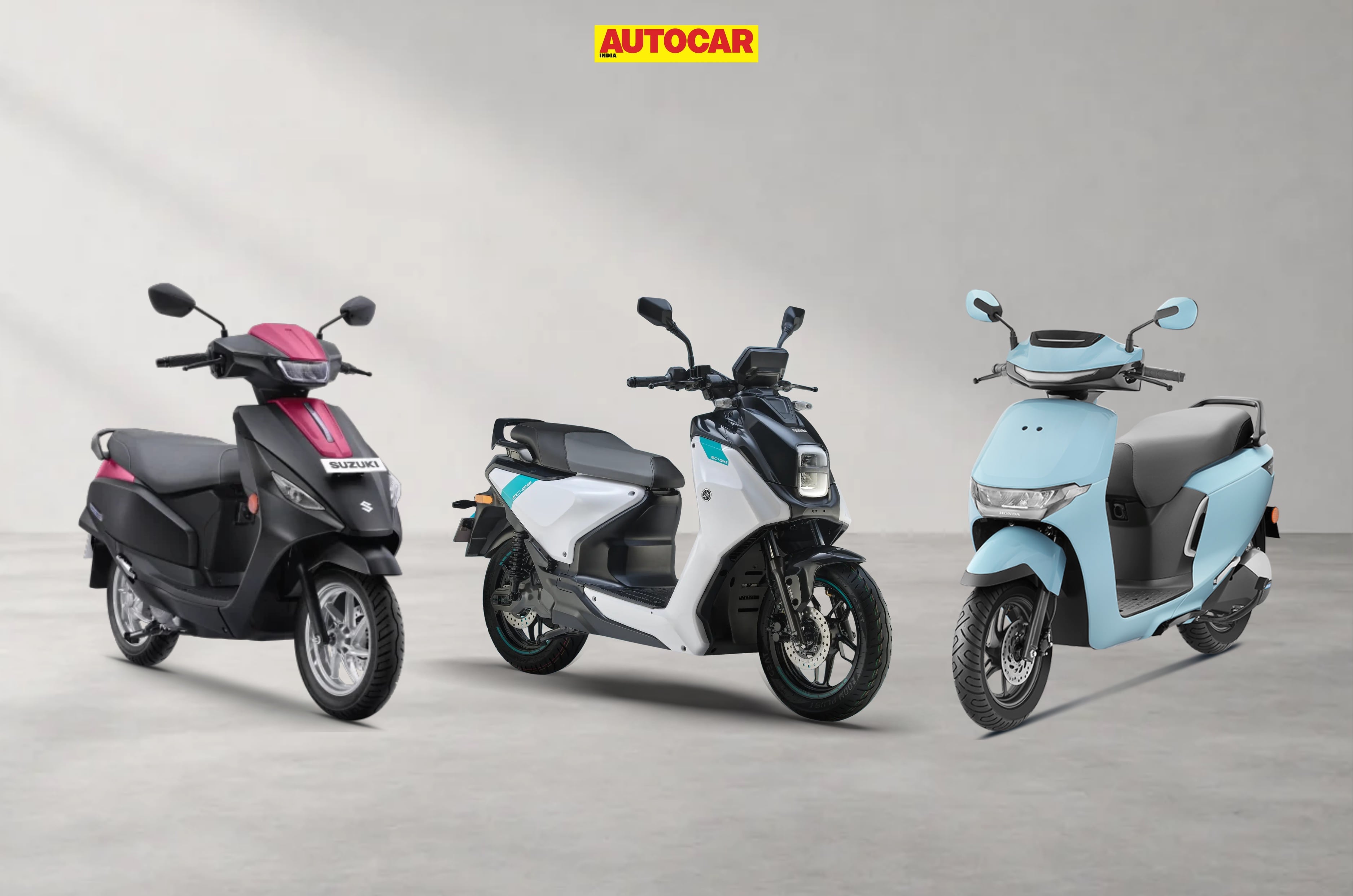
The three Japanese players – Honda, Suzuki and Yamaha – collectively sold 12,523 e-scooters, accounting for a combined 1 percent share. Honda led the group with 7,010 units, up 176 percent.
Across ICE and EV models combined, Honda Motorcycle & Scooter India remains the category leader with 1.65 million units, up 15 percent, although its market share has dipped from 38 percent to 34 percent. TVS Motor Company is in second place with 1.43 million units and 32 percent growth, adding 3,49,404 units year-on-year. Nearly half of that incremental volume came from its electric lineup.
Suzuki, with 6,22,722 units and 11 percent growth, and Hero MotoCorp, with 4,09,319 units and 70 percent growth, hold third and fourth place, respectively. Bajaj Auto has climbed to fifth with 2,60,982 units and 116 percent growth, displacing Yamaha, which recorded 2,02,131 units, up 33 percent. Ather Energy is seventh with 1,71,611 units, while River Mobility has entered the top 10, overtaking Piaggio with 30,232 units of the Indie scooter.
With the festive season now underway, the industry will be looking to convert the strong H1 momentum into retail sales. Whether Q3 and Q4 can sustain the near-30 percent growth rate needed to push scooter sales past 10 million units for the first time remains to be seen, but the trajectory points firmly in that direction.
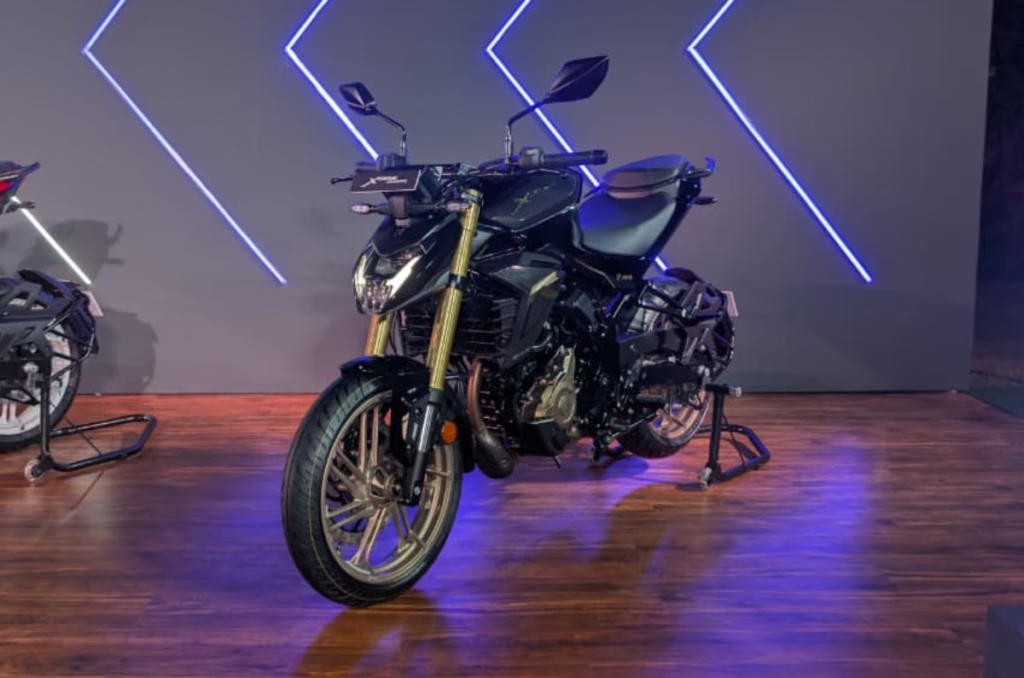
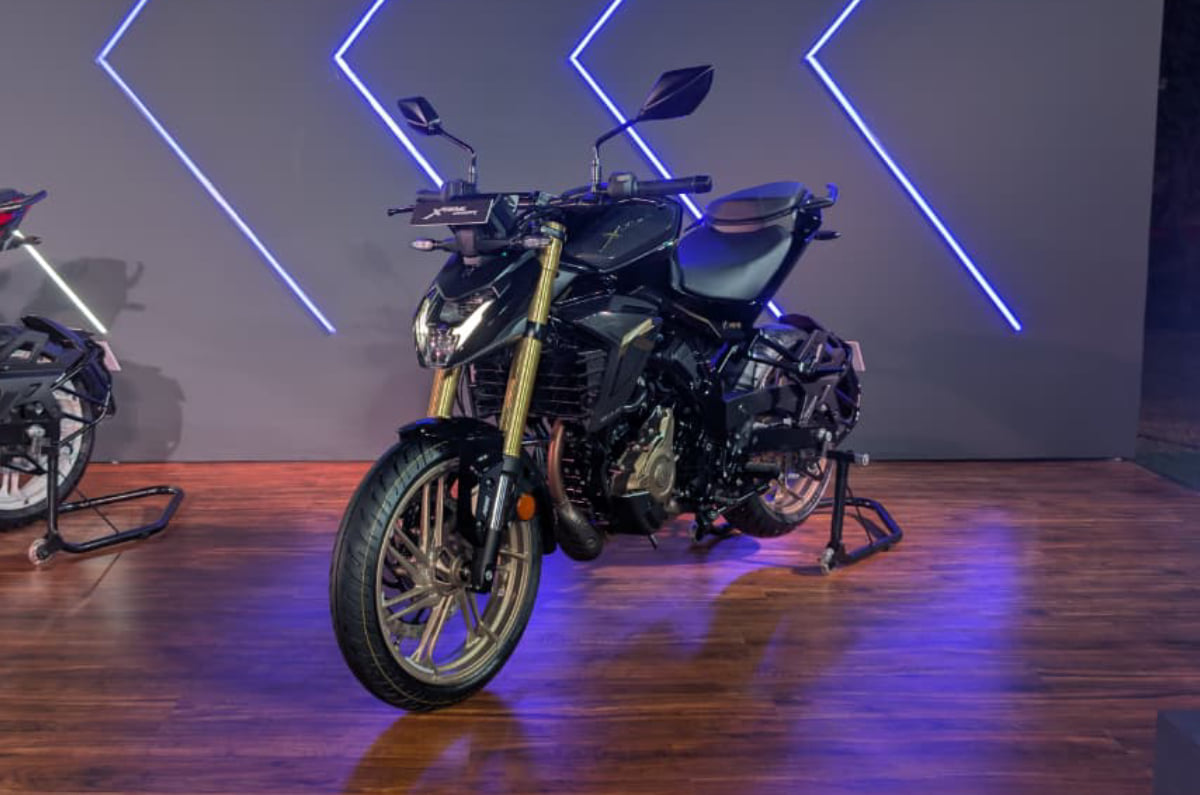
Hero MotoCorp has introduced a new Xtreme 250R Carbon variant with a substantial feature overhaul, adding multiple hardware and tech updates. Here are the five things you need to know about the bike.
1. What’s new on the updated Hero Xtreme 250R?
The Xtreme 250R Carbon features ride-by-wire, which unlocks four riding modes – Rain, Road, Sport and Track – along with traction control calibrated individually for each mode. A bi-directional quickshifter, cruise control and TPMS have also been added. In terms of tech, the LCD instrument cluster has been replaced by a 4.2-inch TFT screen borrowed from the Xpulse 210.
The rear suspension gets Frequency Selective Damping (FSD), a system that uses a secondary valve to automatically vary damping across two distinct profiles based on the speed and frequency of road inputs. It stiffens up to absorb high-frequency impacts, such as road chatter, and softens for longer, slower compressions, such as when going over a speed breaker.
2. What does the Hero Xtreme 250R engine have to offer?
The 249cc liquid-cooled, single-cylinder engine is carried over largely unchanged, producing 30hp at 9,250rpm and 25.3Nm at 7,500rpm. The latter represents a minor 0.3Nm increase over the outgoing bike, delivered 250rpm higher in the rev range.
3. Which is faster, the KTM 250 Duke or the Hero Xtreme 250R?
We found the Hero Xtreme 250R to be the quicker of the two during our tests. The KTM 250 Duke completed the 0-60kph run in 3.44 seconds and the 0-100kph run in 8.50 seconds. The Xtreme 250R, tested on the same day, completed the same runs in 3.15 seconds and 8.22 seconds, respectively.
It’s worth noting that these figures are for the standard Xtreme 250R. However, the engine remains largely unchanged, and Hero’s claimed 0-60kph time for the Carbon is identical to that of the standard model, so we expect the updated bike’s performance to be largely similar.
4. What is the price of the updated Hero Xtreme 250R Carbon?
The Hero Xtreme 250R Carbon is priced at Rs 1.98 lakh (ex-showroom, Delhi), a Rs 14,000 premium over the standard Xtreme 250R following an Rs 11,000 price hike for the standard model alongside the introduction of the Carbon variant. Despite the premium, the Carbon remains notably more affordable than the KTM 250 Duke, which costs Rs 2.28 lakh.
5. What colours is the new Xtreme 250R available in?
The Hero Xtreme 250R Carbon is offered in three colours: Carbon Red, Carbon Black and Carbon White. Along with the new colours, the Carbon variant also gets coloured wheels and exclusive graphics.
The Indian scooter industry has hit a new milestone, recording its highest-ever monthly dispatches in September 2026. A total of 9,95,576 scooters were dispatched during the month, marking a substantial 34 percent jump over the 7,42,602 units sold in September 2025 and comfortably surpassing the previous monthly record of 8,55,715 units set just a month earlier, in August 2026.
Highest monthly total in the segment’s history, falling just 4,424 units short of the 10 lakh mark
Honda led with 3,83,035 units, followed by TVS at 2,77,115 units
Electric scooter dispatches reached 1,86,692 units
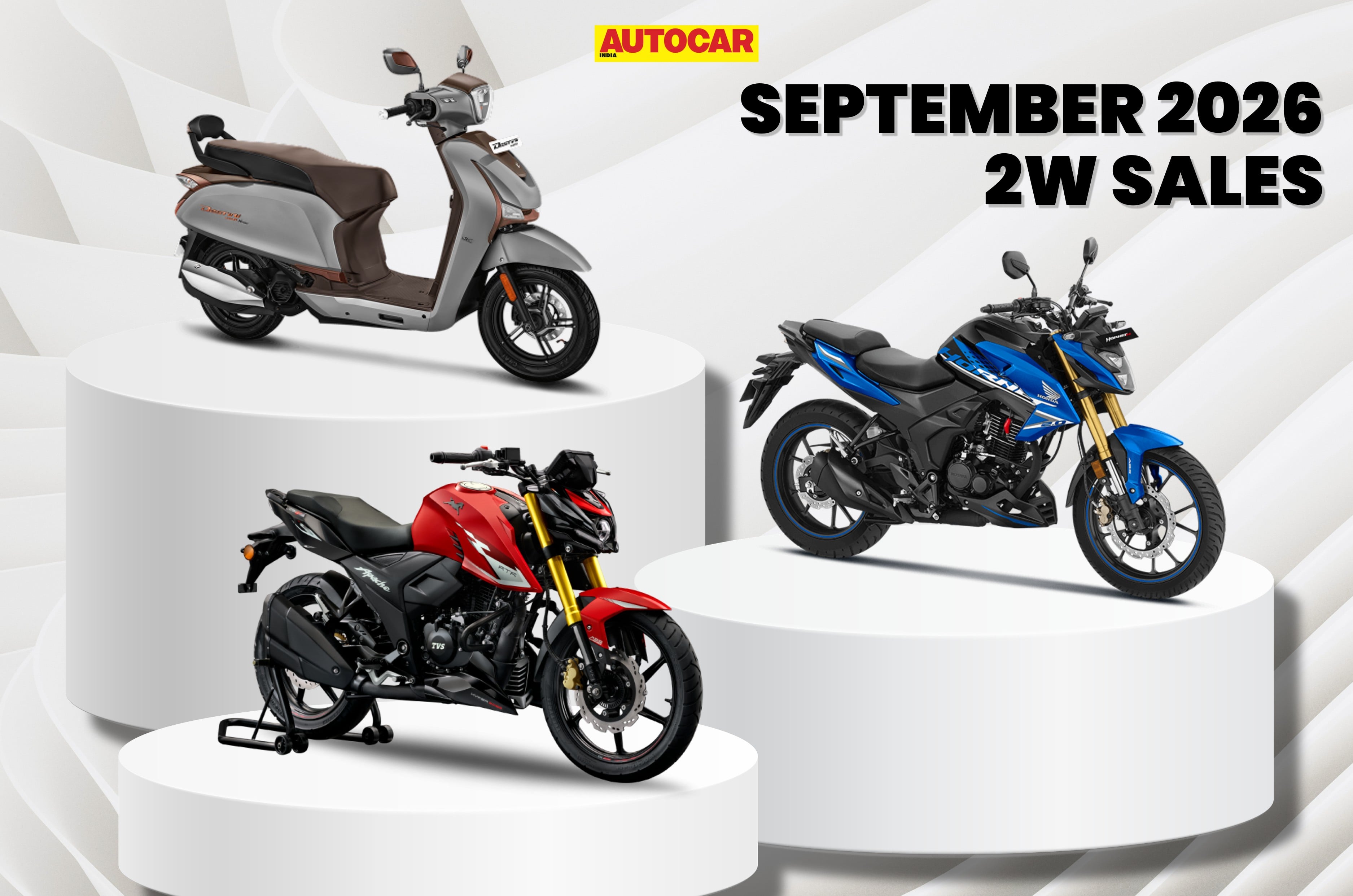
September 2026 scooter sales
Honda and TVS dominate sales
Honda Motorcycle and Scooter India led the segment by a wide margin, dispatching 3,83,035 units – a 46 percent year-on-year increase – to claim roughly 38 percent of the market. TVS Motor Company was second with 2,77,115 units, up 29 percent, accounting for around 28 percent of the market. Together, the two OEMs accounted for approximately two-thirds of all scooter dispatches during the month.
Suzuki and Hero MotoCorp rounded out the top four, with 1,06,274 units (+1 percent) and 96,254 units (+67 percent), respectively.
Electric scooters continue their climb
The electric segment had another strong showing, with 1,86,692 scooters dispatched in September – a 68 percent year-on-year increase. This was the second-highest month on record for electric scooters, behind only August 2026, when dispatches reached 1,88,714 units.
TVS led the charge in terms of EV volumes, with its iQube and Orbiter models together clocking 62,347 units – more than double the year-ago figure. Hero MotoCorp’s Vida range sold 28,962 units, up 88 percent, while Bajaj’s Chetak posted 28,862 units, also up 88 percent. Ather Energy dispatched 30,121 units, a 20 percent increase, with its recently launched mass-market Konarc expected to add further momentum.
For the April-September period, scooter dispatches totalled 48.2 lakh units, up 29 percent year-on-year, underlining the segment’s consistent growth trajectory heading into the festive second half of the fiscal year.
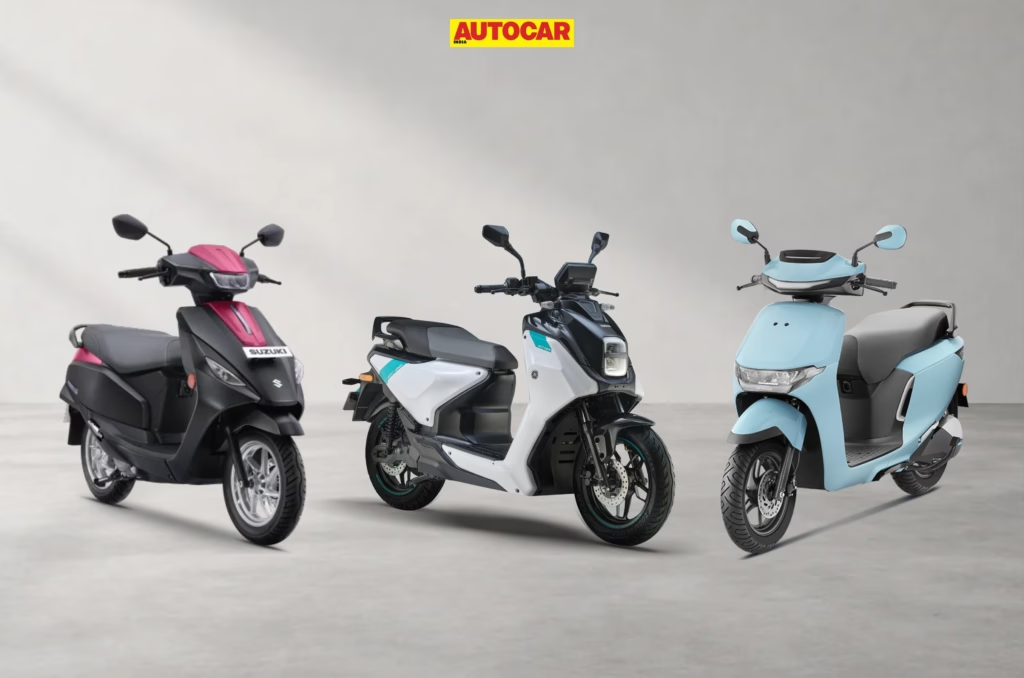
Cumulative retail sales of the three Japanese electric scooter manufacturers in India – Honda, Suzuki and Yamaha – have crossed the 10,000-units mark for the first time in a calendar year. As per the latest Vahan statistics, this triumvirate have delivered 10,735 units to their customers between January 1 and October 8 in 2026.
Last year, Honda, which was the sole e-2-wheeler OEM in India, had sold 7,730 units of the Activa-e and QC1, less of the former and more of the latter. While Suzuki entered the market in January 2026 with its e-Access, Yamaha plugged in two months later in March with its EC-O6. This makes 2026 the first year when all these three Japanese OEMs are part of the Indian electric scooter market.
A look at the OEMs’ monthly performance reveals that Honda Motorcycle & Scooter India has sold 5,536 units in this year to date, accounting for 51 percent of the total 10,735 Japanese e-scooters delivered. HMSI’s best monthly sales this year were in September (1,107 units), marking the first time the OEM has crossed 1,000 units. This number can only improve following the recent launch of its third e-scooter for India – the QC3.
The initial rollout of the QC3 will be limited to five cities across the country: Delhi, Agra, Cuttack, Surat and Kollam, with a nationwide rollout to follow in a phased manner..
Suzuki Motorcycle India, which entered the India e-2W market with its e-Access in January this year as an alternative to the popular petrol-engined Suzuki Access 125, has delivered 4,133 units till October 8. This gives the company a 39 percent share of the three Japanese OEM’s total e2W retail sales. The monthly sales chart reveals that monthly sales have crossed 600 units for three months running: July (606 units), August (674 units) and September (657 units). Rather creditable considering this is an expensive product, priced at Rs 1.88 lakh (ex-showroom) and the costliest amongst the Japanese EVs.
India Yamaha Motor, which plugged into the e-2W market this March, has retailed 1,066 units, which gives it a 10 percent share of the 10,735 units delivered by Honda, Suzuki and Yamaha. Yamaha’s vehicle of entry is the EC-06, its first electric scooter developed in collaboration with River Mobility. IYM’s highest monthly sales to date were in September (232 units)
Japanese OEMs have 0.66 percent share of e-2Ws sold in 2026 so far
As the monthly retail sales data table depicts, combined Honda-Suzuki-Yamaha sales were at their highest in September 2026 (1,996 units), which gives them a 1 percent share of the record 2,07,850 e-2Ws sold in India last month. Of the total 16,10,854 e-2Ws sold between January 1 and October 8, these three Japanese OEMs with 10,735 units have a meagre 0.66 percent share.
Among the reasons for their minimal presence in this booming segment of the Indian EV industry is that Honda, Suzuki and Yamaha entered the e-2W market late, as compared to their ICE legacy rivals TVS Motor Co (January 2020), Bajaj Auto (January 2020) or Hero MotoCorp Vida (November 2022).
While market leader TVS has sold 4,22,274 iQubes and Orbiters for a 26 percent market share of the e-2W sales in 2026 to date, Bajaj Auto has delivered 3,61,988 Chetaks (22 percent share), Ather Energy has sold 2,67,579 units (17 percent share) and Hero Vida 1,77,541 e-scooters (11 percent share).
There is also the issue of their stiff model pricing in a value-conscious market, which has a plethora of more affordable e-scooters which are also more tech-laden, as well as a limited sales network compared to the Indian legacy OEMs as well as a host of startups which are regulars in the monthly Top 10 e-2W OEM chart.
The run-up to the festive season drove two-wheeler sales across the board in September 2026, with most major manufacturers posting double-digit year-on-year (YoY) growth. Hero MotoCorp led the industry in volumes, while Honda and TVS also delivered strong performances on the back of surging demand.
Hero: 7,66,348 units
Hero MotoCorp reported total dispatches of 7,66,348 units in September 2026, up 12 percent over the 6,87,220 units recorded in the same month last year. The company’s domestic ICE business contributed 7,10,436 units, with scooters recording particularly strong 60 percent YoY growth. Hero MotoCorp’s electric vehicle arm, Vida, dispatched 28,798 units, representing 83 percent growth.
Honda: 7,06,266 units
Honda Motorcycle and Scooter India (HMSI) clocked 7,06,266 units, a 24 percent jump from the 5,68,164 units sold last September. Domestic sales grew 26 percent to 6,36,768 units, while exports rose 11 percent to 69,498 units.
TVS: 6,45,955 units
TVS Motor Company posted two-wheeler sales of 6,45,955 units, up 23 percent over the 5,23,923 units recorded in September 2025. Domestic two-wheeler sales grew 17 percent to 4,82,073 units, while electric two-wheeler sales more than doubled, rising 110 percent to 65,799 units compared to 31,266 units a year ago.
Bajaj: 4,51,494 units
Bajaj Auto sold 4,51,494 two-wheelers last month, up 5 percent over the 4,30,853 units recorded in the same month last year. Domestic two-wheeler volumes declined 12 percent to 2,39,771 units, but the company offset this with a 34 percent surge in exports to 2,11,723 units.
Royal Enfield: 1,33,958 units
Royal Enfield posted its highest-ever monthly dispatch total of 1,33,958 motorcycles this past month, up 8 percent over the 1,24,328 units recorded in September 2025. Domestic sales grew 7 percent to 1,21,326 units, while exports were up 17 percent to 12,632 units. The milestone month coincided with the launch of the Himalayan 440, which, according to the company, is fully booked for the next six months. Royal Enfield’s electric brand, Flying Flea, also began its European expansion, with the C6 going on sale across five cities – Paris, Barcelona, Rome, Berlin and London.
Suzuki: 1,33,688 units
Suzuki recorded total sales of 1,33,688 units in September 2026, up 8 percent over the 1,23,550 units recorded last year. Domestic sales grew 3 percent to 1,08,806 units, while exports registered a sharper 41 percent increase to 24,882 units.
चश्मे बनाने वाली कंपनी लेंसकार्ट सॉल्यूशंस में लगभग ₹2,047.4 करोड़ की ब्लॉक डील होने वाली है। CNBC-TV18 की एक रिपोर्ट में सूत्रों के हवाले से कहा गया है कि प्लेटिनम जैस्मीन ए 2018 ट्रस्ट ₹682.45 प्रति शेयर के फ्लोर प्राइस पर शेयर बेच सकती है। जानकारी के अनुसार, यह फ्लोर प्राइस लेंसकार्ट के पिछले क्लोजिंग प्राइस से 3.5% कम है। इस ऑफर का साइज लेंसकार्ट की कुल इक्विटी का लगभग 1.7% है। ट्रांजेक्शन की वैल्यू लगभग ₹2,047.4 करोड़ है।
रिपोर्ट के मुताबिक, ब्लॉक डील के जरिए बेचे गए शेयरों पर 90 दिन का लॉक-अप पीरियड लागू होगा, यानि इस दौरान इन शेयरों को आगे नहीं बेचा जा सकेगा। लेंसकार्ट में जून 2026 तिमाही के आखिर तक प्रमोटर्स के पास 17.53 प्रतिशत हिस्सेदारी थी।
इस साल अगस्त में सॉफ्टबैंक विजन फंड (SVF) II लाइटबल्ब (केमैन) लिमिटेड ने लेंसकार्ट में 2.58% हिस्सेदारी ब्लॉक डील के जरिए बेची थी। 4.5 करोड़ शेयर ₹2,887.87 करोड़ में बेचे गए थे। खरीदारों में सोसाइटे जेनरल ओडीआई, गोल्डमैन सैक्स, मोतीलाल ओसवाल म्यूचुअल फंड, वैनगार्ड ग्रुप, मॉर्गन स्टेनली, SBI म्यूचुअल फंड, निप्पॉन इंडिया, HDFC म्यूचुअल फंड जैसे कई घरेलू और वैश्विक निवेशक शामिल थे।
जून में सॉफ्टबैंक ने बेचे थे ₹2873 करोड़ के शेयर
जून में भी सॉफ्टबैंक समूह ने SVF II लाइटबल्ब (केमैन) के जरिए लेंसकार्ट में 3.25% हिस्सेदारी बेची थी। उस वक्त 5,65,00,000 शेयर बेचे गए थे और ट्रांजेक्शन की वैल्यू ₹2,873.30 करोड़ रही थी। व्हाइटओक कैपिटल म्यूचुअल फंड (MF), मिरे एसेट MF, कोटक MF, केनरा रोबेको MF, ICICI प्रूडेंशियल MF, HDFC लाइफ इंश्योरेंस कंपनी, ICICI प्रूडेंशियल लाइफ इंश्योरेंस, सोसाइटी जेनरल, मेट्जलर एसेट मैनेजमेंट, गोल्डमैन सैक्स, फिडेलिटी, कॉप्थॉल मॉरीशस इनवेस्टमेंट, इंटरनेशनल मॉनेटरी फंड, और डेंडाना इनवेस्टमेंट्स (मॉरीशस) लिमिटेड खरीदार रहे थे।
लेंसकार्ट के शेयर की कीमत BSE पर वर्तमान में ₹706.60 है। कंपनी का मार्केट कैप ₹1.2 लाख करोड़ है। शेयर साल 2026 में अब तक 60% चढ़ा है। 3 महीनों में कीमत 40% उछली है। शेयर की कीमत ₹2 है। यह BSE 200 इंडेक्स का हिस्सा है। ब्रोकरेज फर्म मोतीलाल ओसवाल ने शेयर के लिए ‘बाय’ रेटिंग दोहराई है। टारगेट प्राइस 800 रुपये प्रति शेयर दिया है। अगस्त महीने में जेफरीज ने लेंसकार्ट स्टॉक पर ‘बाय’ रेटिंग बरकरार रखी थी। टारगेट प्राइस बढ़ाकर 680 रुपये प्रति शेयर कर दिया था। ICICI Securities ने ‘बाय’ रेटिंग के साथ 750 रुपये का टारगेट दिया है। सिटी ने 650 रुपये प्रति शेयर के टारगेट प्राइस के साथ ‘न्यूट्रल’ रेटिंग बरकरार रखी है। HSBC ने स्टॉक के लिए ‘होल्ड’ रेटिंग बरकरार रखी है। टारगेट प्राइस 575 रुपये प्रति शेयर दिया है।
Disclaimer: मनीकंट्रोल.कॉम पर दिए गए सलाह या विचार एक्सपर्ट/ब्रोकरेज फर्म के अपने निजी विचार होते हैं। वेबसाइट या मैनेजमेंट इसके लिए उत्तरदायी नहीं है। यूजर्स को मनीकंट्रोल की सलाह है कि कोई भी निवेश निर्णय लेने से पहले हमेशा सर्टिफाइड एक्सपर्ट की सलाह लें।
भारतीय शेयर बाजारों में 18 सितंबर को पहले अच्छी तेजी दिखी लेकिन बाद में सेंसेक्स ने हल्की गिरावट में क्लोजिंग की। हालांकि निफ्टी हरा ही रहा। दिन में सेंसेक्स पिछले बंद भाव से करीब 414 अंक तक उछलकर 74,728.44 के हाई तक गया। इसी तरह निफ्टी भी पिछली क्लोजिंग से लगभग 118.55 अंक तक चढ़कर 23,389.15 के हाई तक गया। कारोबार खत्म होने पर सेंसेक्स 19.63 अंक लुढ़ककर 74,294.96 पर बंद हुआ। दूसरी ओर निफ्टी 75.80 अंकों की बढ़त के साथ 23,346.40 पर बंद हुआ।
इस बीच BSE पर लिस्टेड कंपनियों का मार्केट कैप 2.30 लाख करोड़ रुपये से ज्यादा बढ़ गया। गुरुवार, 17 सितंबर को शेयर मार्केट बंद होने पर BSE पर लिस्टेड कंपनियों का मार्केट कैप 4,77,48,363.696 करोड़ रुपये रहा था। शुक्रवार को मार्केट बंद होने पर यह 4,79,78,860.47 करोड़ रुपये हो गया। यानि कि 2,30,496.774 करोड़ रुपये की वृद्धि।
एक दिन पहले कैसा रहा था बाजार
गुरुवार, 17 सितंबर को भारतीय शेयर बाजार लगभग फ्लैट रहे थे। अमेरिकी फेडरल रिजर्व द्वारा बेंचमार्क ब्याज दर 0.25 प्रतिशत बढ़ाने और मौद्रिक नीति में आगे भी सख्ती के संकेत दिए जाने के बाद निवेशकों ने सतर्कता बरती थी। सेंसेक्स 21.86 अंक या 0.03 प्रतिशत फिसलकर 74,314.59 पर बंद हुआ था। निफ्टी 53 अंक या 0.23 प्रतिशत की मामूली बढ़त के साथ 23,270.60 पर बंद हुआ था। बीएसई स्मॉलकैप सिलेक्ट इंडेक्स 0.95 प्रतिशत और मिडकैप सिलेक्ट इंडेक्स 0.72 प्रतिशत चढ़ा था।
अमेरिकी बाजार हरे निशान में बंद हुए हैं। एशियाई बाजारों में भी तेजी है। दक्षिण कोरिया का कोस्पी लगभग 2.6 प्रतिशत चढ़ा है। जापान का निक्केई 225 इंडेक्स 1.4 प्रतिशत और ताइवान वेटेड लगभग 2 प्रतिशत बढ़त में है। शंघाई कंपोजिट में करीब 1 प्रतिशत और हेंगसेंग में 0.5 प्रतिशत की तेजी है।
रुपया 16 पैसे मजबूत
रुपया शुक्रवार को अमेरिकी मुद्रा के मुकाबले 2 पैसे की गिरावट के साथ 95.91 (अस्थायी) प्रति डॉलर पर बंद हुआ। गुरुवार को रुपया 2 पैसे मजबूत होकर 95.89 प्रति डॉलर पर बंद हुआ था।
Disclaimer: यहां मुहैया जानकारी सिर्फ सूचना के लिए दी जा रही है। यहां बताना जरूरी है कि मार्केट में निवेश बाजार जोखिमों के अधीन है। निवेशक के तौर पर पैसा लगाने से पहले हमेशा एक्सपर्ट से सलाह लें। मनीकंट्रोल की तरफ से किसी को भी पैसा लगाने की यहां कभी भी सलाह नहीं दी जाती है।
Hero Motors IPO: हीरो ग्रुप की Hero Motors Ltd अपना ₹1,000 करोड़ का IPO ला रही है। इश्यू 16 से 18 सितंबर तक खुलेगा। कंपनी ने शेयर का प्राइस बैंड ₹79-84 तय किया है। इस भाव पर कंपनी का वैल्यूएशन करीब ₹3,815 करोड़ बैठता है।
IPO में ₹600 करोड़ का फ्रेश इश्यू है। वहीं ₹400 करोड़ का हिस्सा ऑफर फॉर सेल (OFS) है। OFS में ₹395 करोड़ प्रमोटर O P Munjal Holdings और ₹5 करोड़ Hero Cycles को जाएंगे।
Hero Motors IPO का GMP
ग्रे मार्केट में भी हीरो मोटर्स के आईपीओ को तगड़ा रिस्पॉन्स मिल रहा है। इनवेस्टगेन के मुताबिक, इसका लेटेस्ट GMP ₹24 है। यह अपर प्राइस बैंड के हिसाब से 28.57% लिस्टिंग गेन का संकेत है। हालांकि, इसे लिस्टिंग प्राइस की गारंटी नहीं मानना चाहिए क्योंकि ये लगातार बदलता रहता है।
Hero Motors की कारोबारी सेहतर
हीरो मोटर्स फ्रेश इश्यू से मिले पैसे का इस्तेमाल कर्ज घटाने और क्षमता बढ़ाने में करेगी। करीब ₹190 करोड़ कर्ज चुकाने में लगाए जाएंगे। वहीं ₹200 करोड़ उत्तर प्रदेश के गौतम बुद्ध नगर प्लांट में नए उपकरण खरीदने पर खर्च होंगे।
FY26 में कंपनी का कुल रेवेन्यू 9.1% बढ़कर ₹1,188.35 करोड़ रहा। नेट प्रॉफिट 25.5% बढ़कर ₹41.17 करोड़ पहुंच गया। अब कंपनी के सामने बड़ी चुनौती अपनी बढ़ी हुई क्षमता का पूरा इस्तेमाल करना और इन निवेशों से बेहतर रिटर्न हासिल करना है।
हीरो मोटर्स क्या करती है?
हीरो मोटर्स, पंकज एम. मुंजाल से जुड़ी ऑटो कंपोनेंट और ऑटोमोटिव टेक्नोलॉजी कंपनी है। यह सीधे ग्राहकों को बाइक या स्कूटर नहीं बेचती। कंपनी पावरट्रेन सिस्टम, गियर और ई-बाइक ड्राइवट्रेन बनाती है। इसके ग्राहक BMW, Ducati जैसी कंपनियां और दुनिया की कई ई-बाइक कंपनियां हैं।
इसका कारोबार भारत के साथ अमेरिका, यूरोप और ASEAN देशों में भी है। कंपनी का फोकस इलेक्ट्रिक और हाइब्रिड टेक्नोलॉजी पर भी तेजी से बढ़ रहा है।
दूसरे ‘हीरो’ कंपनियों से कैसे अलग है?
सबसे पहले यह समझना जरूरी है कि Hero Motors और Hero MotoCorp अलग कंपनियां हैं। Hero MotoCorp बाइक और स्कूटर बनाकर सीधे ग्राहकों को बेचती है। इसके Splendor और Xtreme जैसे ब्रांड हैं। दूसरी ओर, Hero Motors मुख्य रूप से B2B कंपनी है। यानी यह दूसरी ऑटो कंपनियों के लिए कंपोनेंट और टेक्नोलॉजी तैयार करती है।
Hero Cycles साइकिल कारोबार में है। वहीं, Hero Electric इलेक्ट्रिक टू-व्हीलर बनाती है। चारों कंपनियां मुंजाल परिवार की अलग-अलग कारोबारी शाखाओं से जुड़ी हैं। इसलिए Hero नाम एक जैसा होने के बावजूद इनके कारोबार और निवेश की कहानी अलग है।
Disclaimer: यहां मुहैया जानकारी सिर्फ सूचना के लिए दी जा रही है। यहां बताना जरूरी है कि मार्केट में निवेश बाजार जोखिमों के अधीन है। निवेशक के तौर पर पैसा लगाने से पहले हमेशा एक्सपर्ट से सलाह लें। मनीकंट्रोल की तरफ से किसी को भी पैसा लगाने की यहां कभी भी सलाह नहीं दी जाती है।
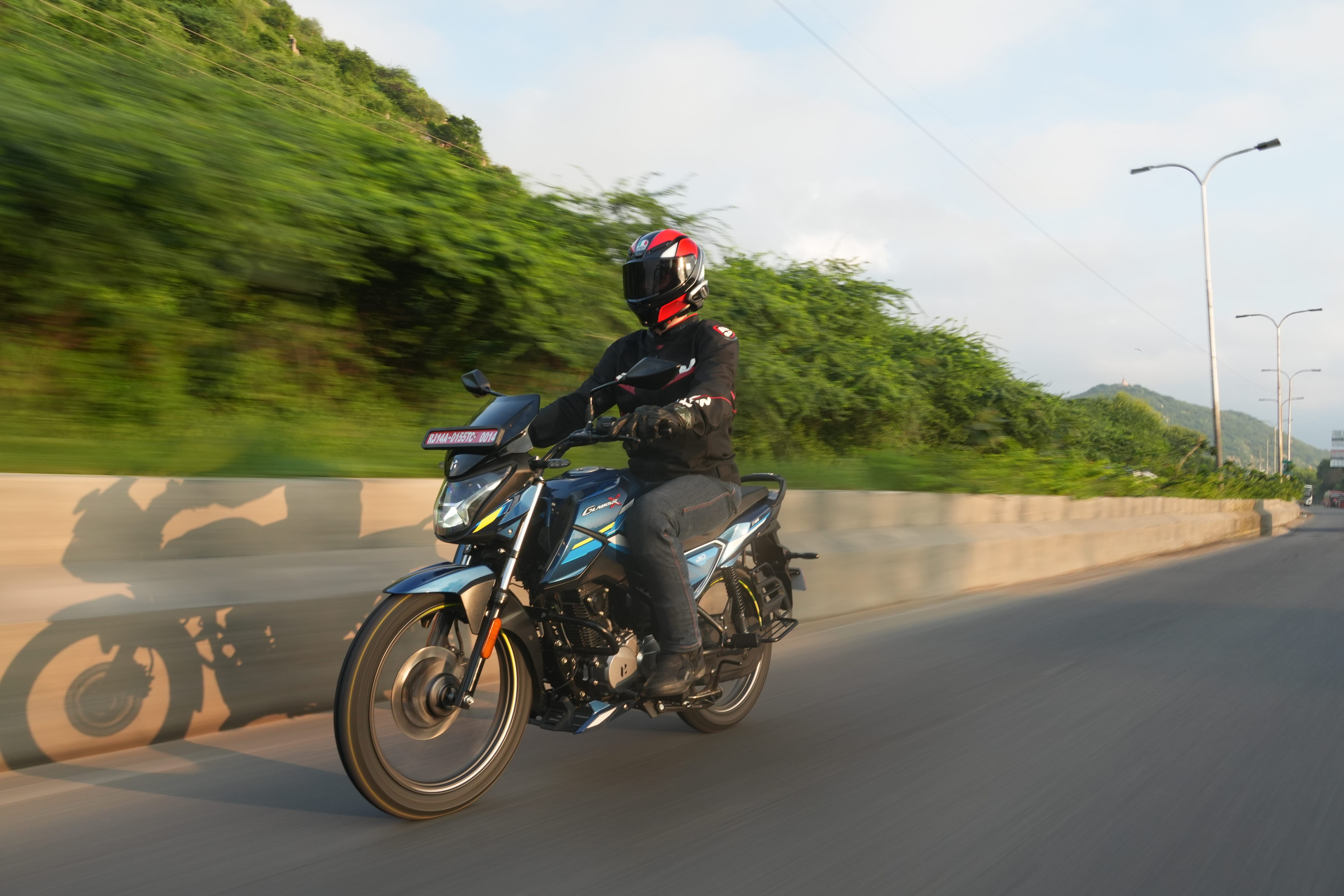
Hero MotoCorp has added single-channel ABS to the Glamour X 125, making it the most significant update to the motorcycle, since its launch. It couples the single-channel ABS system with Integrated Braking system (IBS). It has been launched at a price of Rs 1.01 lakh.
125cc engine produces 11.4hp and gets three riding modes
Cruise control and connected features continue
Glamour X 125: What’s new?
Costs just Rs 1,000 more than the Disc variant
The addition of ABS is the key change here. It prevents the wheel from locking during hard braking, while IBS links the front and rear brakes to provide more balanced braking.
The Glamour X 125 joins the TVS Raider 125, Honda CB125 Hornet and Hero’s own Xtreme 125R in offering ABS in its class. The Xtreme 125R is also available with dual-channel ABS. The Glamour X 125 is also available in Drum and Disc variants, priced at Rs 89,999 and Rs 99,999, respectively. The new ABS-equipped version costs Rs 1.01 lakh.
Electric vehicles have skyrocketed in significance over the past decade, particularly in light of global issues like climate change and pollution. EVs require no fossil fuels to run, and therefore emit zero harmful pollutants into the atmosphere. To promote the adoption of EVs, September 9 was designated ‘World EV Day’ six years ago by sustainability-focused companies Green.TV and ABB Group, and is recognised worldwide.
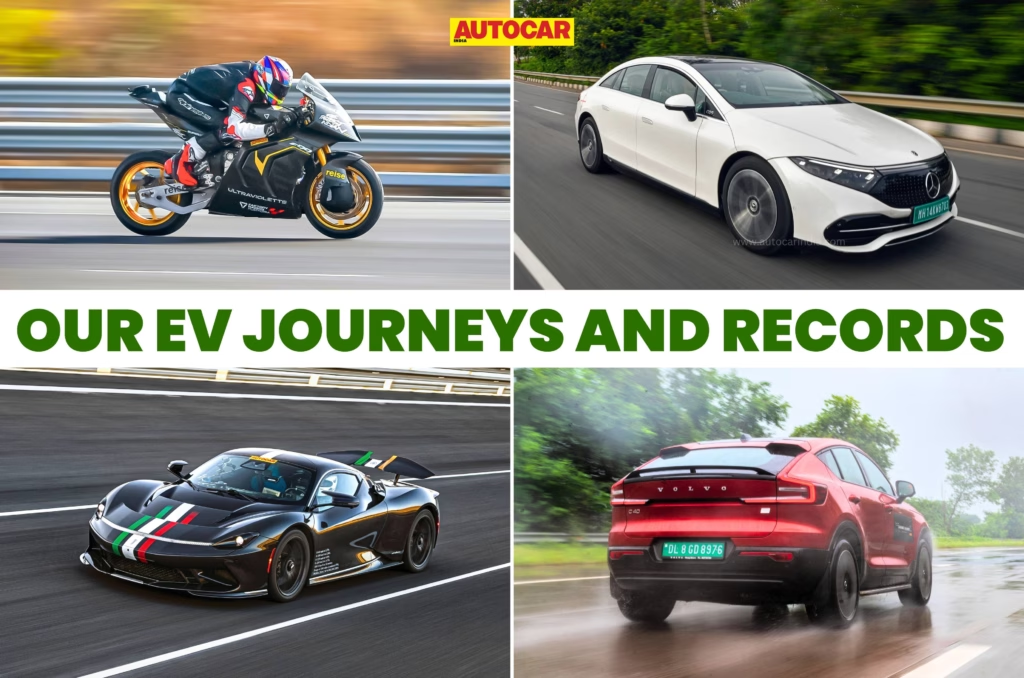
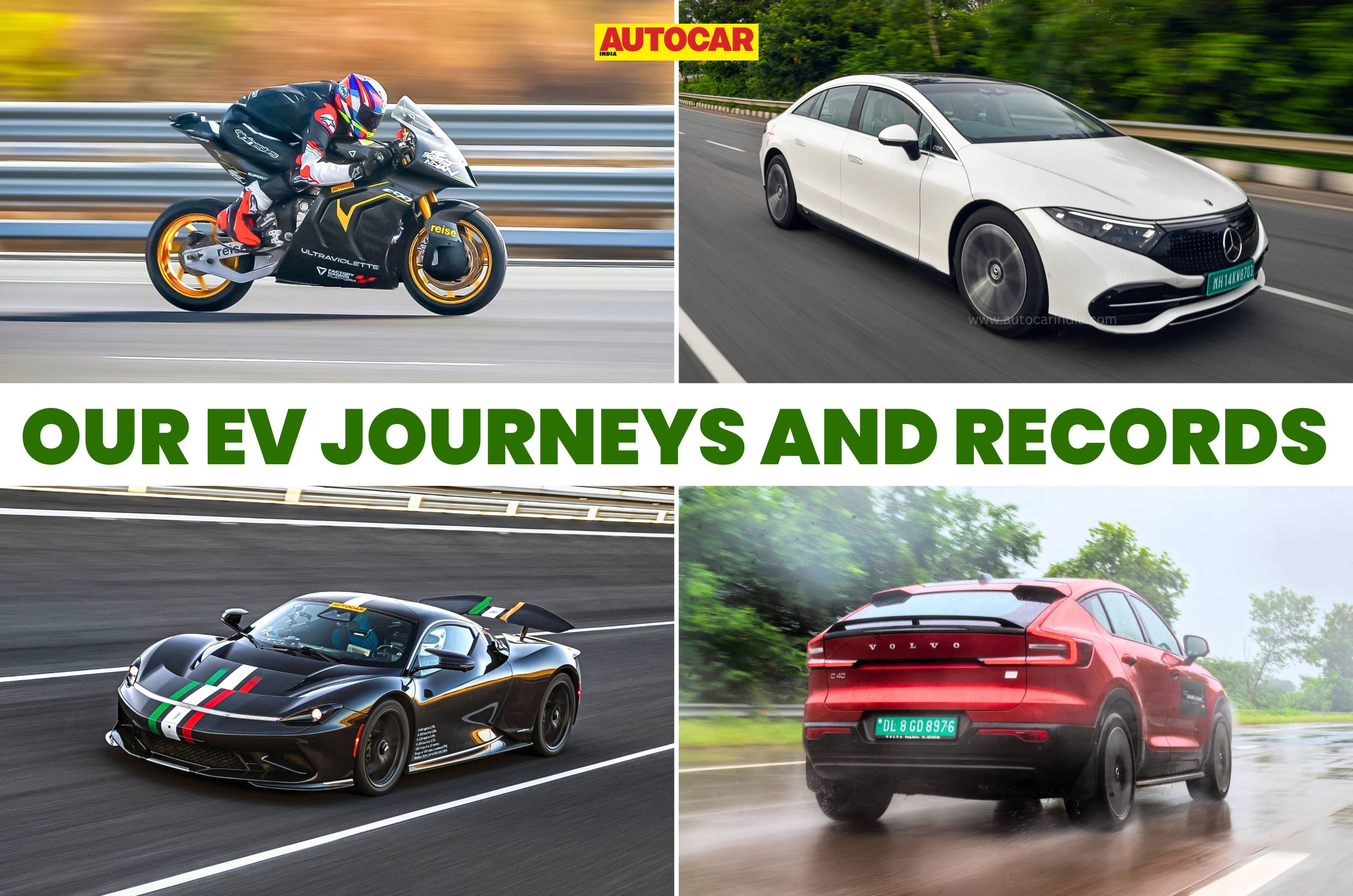
On the sixth iteration of World EV Day, let’s take a look at some of Autocar India’s most notable achievements in the all-electric mobility space.
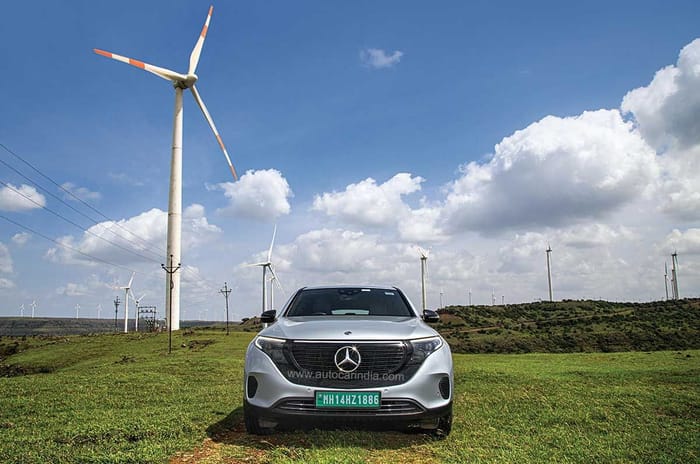
1. Mercedes Benz EQC clean energy charging
Hydro, wind and solar energy were the only means of charging we used
In 2021, we set out on a journey in the Mercedes-Benz EQC to explore how truly “green” EVs can be when powered by renewable energy only; at present, coal is the primary source of energy production. We departed from the Mercedes-Benz facility in Chakan with a full charge, heading to Tata Power’s Khopoli hydroelectric plant, Agaswadi wind farm and Mulshi solar farm.
Along the way, we investigated clean power sources – hydro, wind and solar – that could sustainably fuel EVs in India. While the EQC couldn’t be charged directly from the hydro grid since it mixes with the main grid, we were able to charge the SUV via a 15A plug at Tata Power. However, we did tap charging power directly from wind turbines and solar panels for the EQC. Ultimately, this trip showed us that our EVs could soon be truly emissions-free – not just at the tailpipe, but across the entire power chain.
2. Green Mumbai Drive 2021
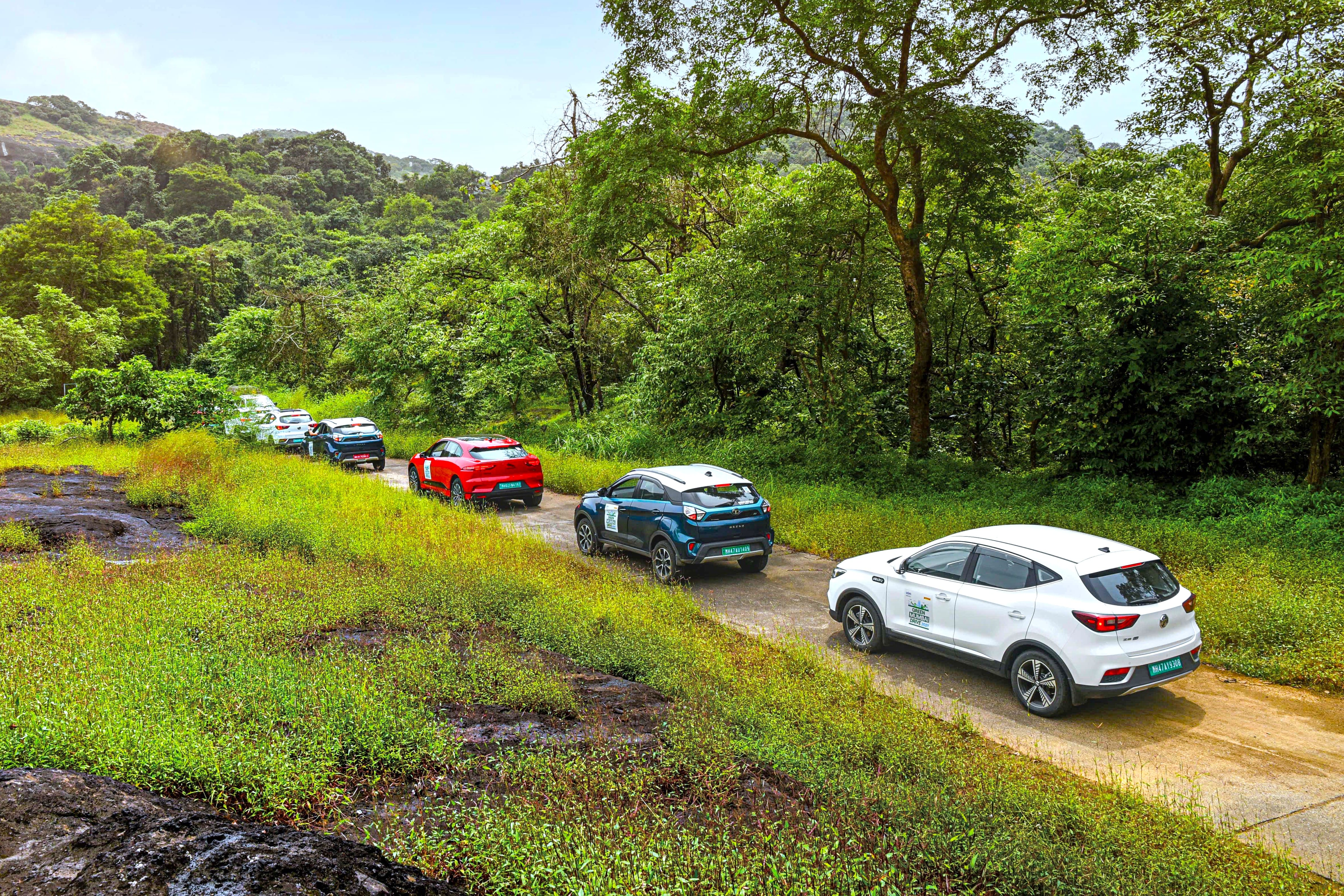
30 EVs quietly trundling through the Sanjay Gandhi National Park
We achieved a rare feat by bringing together every EV that was on sale in India at the time and driving them across Mumbai and through the protected Sanjay Gandhi National Park in Borivali. 30 EVs were part of the drive, including the Hyundai Kona, Tata Nexon EV, MG ZS EV, Mercedes-Benz EQC, Jaguar i-Pace, Audi e-tron GT, and even a Tesla Model X.
The Green Mumbai Drive was flagged off from the Mahalakshmi Racecourse by Aditya Thackeray, MoS for Tourism, Environment and Protocol, and Jeet Adani, director of Adani Electricity. Notable auto industry executives like Santosh Iyer (Mercedes-Benz India), Balbir Singh Dhillon (Audi India), Rohit Suri (JLR India), and Amit Suri (Volvo India) were also part of the event.
3. Debuting EVs in two different national parks
Tata Nexon EV in Satpura Tiger Reserve, Audi e-tron in Gir National Park
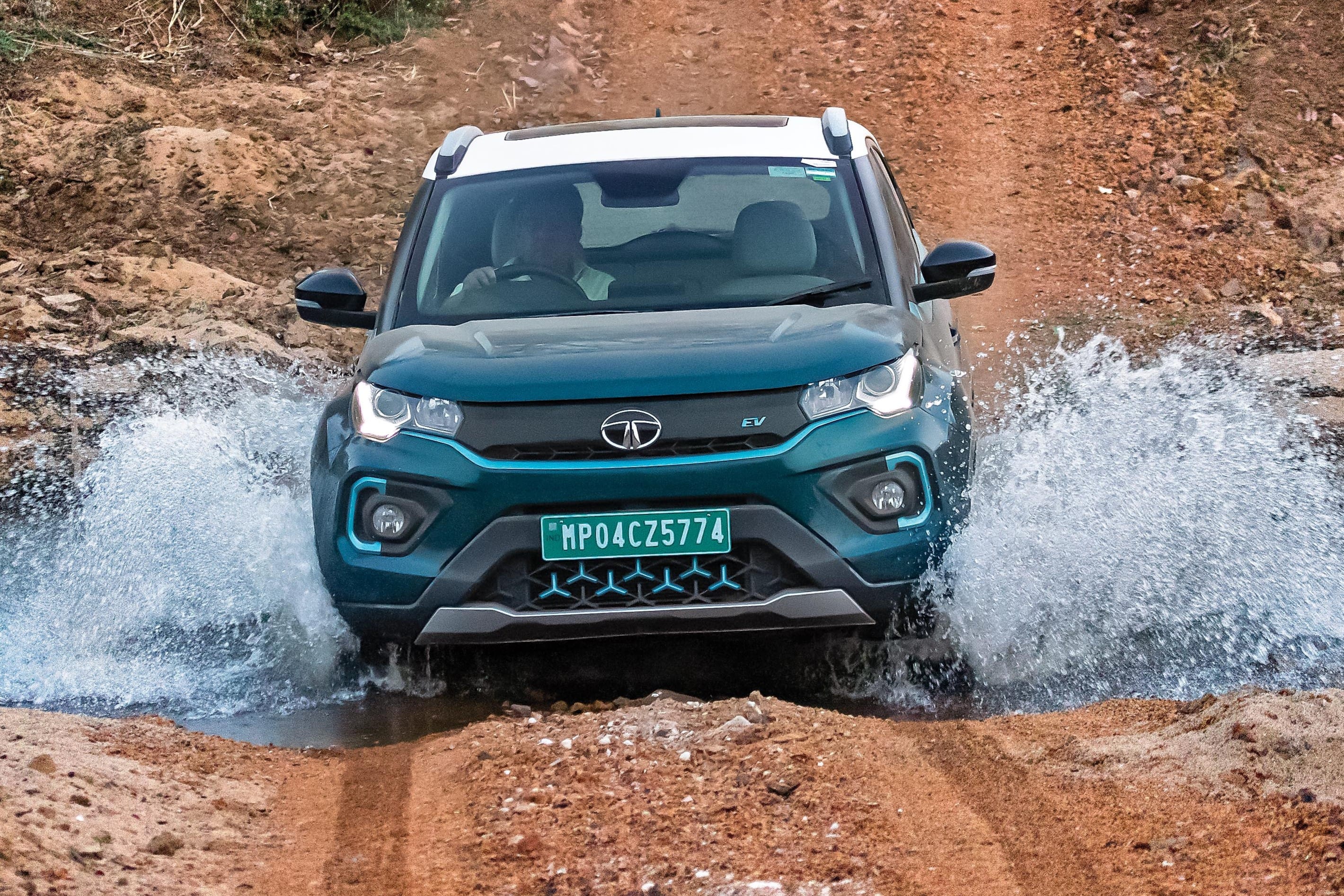
In 2021, we were the first to drive an electric car (specifically, the Tata Nexon EV) into Madhya Pradesh’s Satpura Tiger Reserve. The roughly 140km drive from Bhopal to Forsyth Lodge was completed with around 30km of range remaining, despite starting with the battery at 92 percent. With no fast-charging infrastructure nearby, the Nexon EV had to be charged overnight using a 15A socket. During the safari, the torquey and compact EV performed well on steep inclines and narrow forest trails, and its silent operation allowed it to approach wildlife like sambars, gaurs, wild pigs, and even a leopard without the noise of an idling engine – no tiger, though.
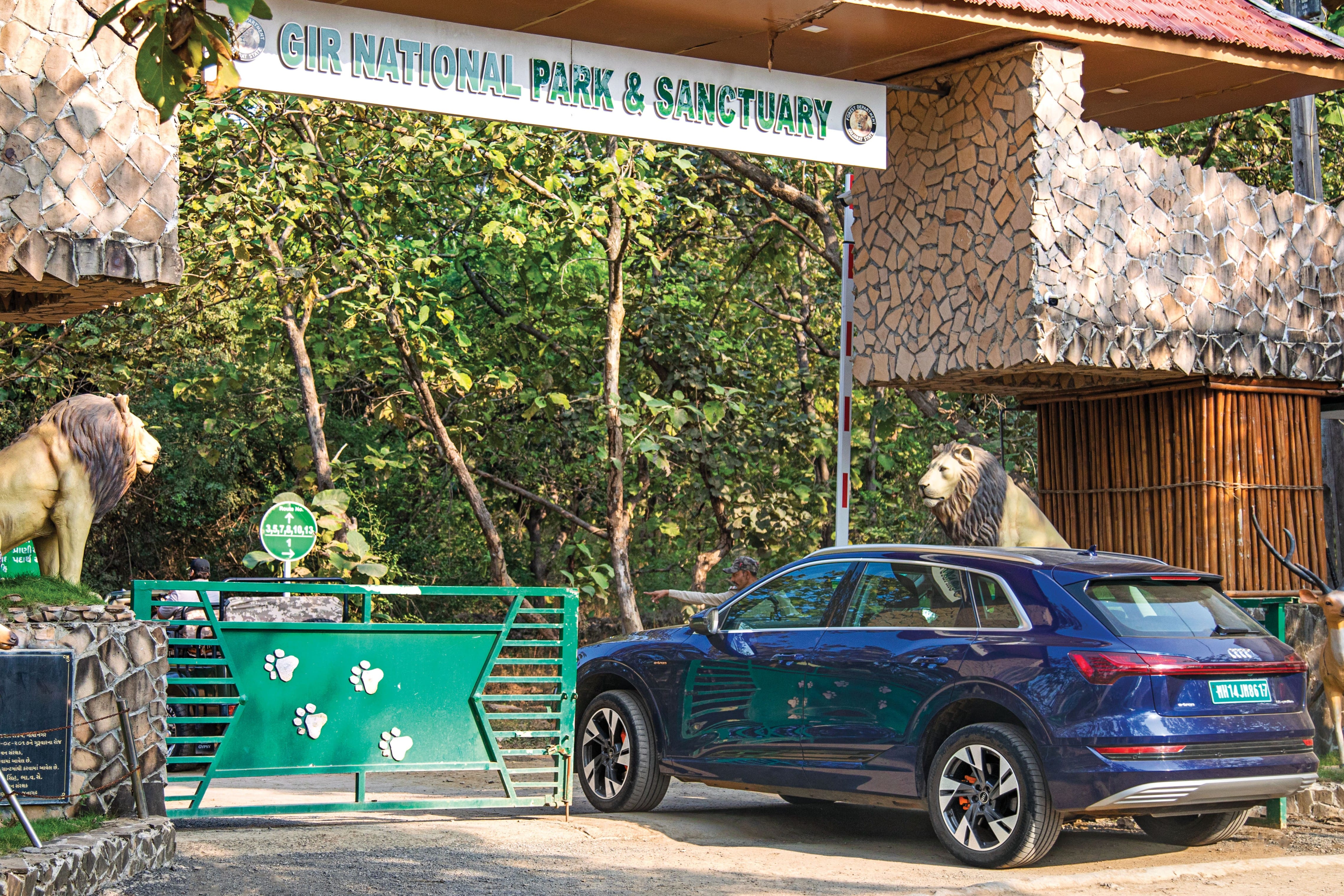
Then, in 2022, we were yet again the first to drive an EV into Gujarat’s Gir National Park, this time in an Audi e-tron. Reaching our accommodation induced a great deal of range anxiety due to faulty chargers along the way, but we managed to get there with around 20 percent of charge remaining. Once we reached, the e-tron was an excellent companion to tour the park with, helping us spot wildlife like chital, crocodiles, lions, and more.
4. Porsche Taycan Kashmir to Kanyakumari road trip
Nearly 4,500km in a performance EV
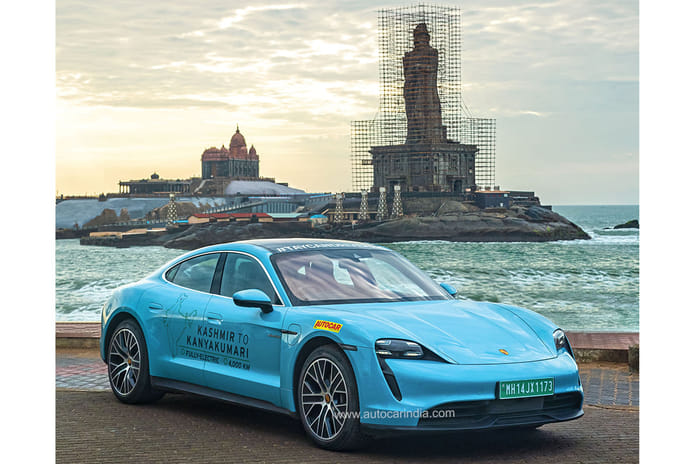
2022 saw us take one of our most ambitious roadtrips to date: 4,467km from Kashmir to Kanyakumari in a Porsche Taycan. Despite challenges like landslides in Jammu, flooded roads in Punjab, and power outages at certain charging spots, the Taycan handled the journey with ease. On one of the most efficient legs, the Porsche EV delivered 7.1km/kWh, working out to an indicated range of 475km.
Comfort mode was the default setting, but we did have lots of fun in some stretches courtesy of the Taycan’s Sport Plus drive mode. Up to 225kW of fast charging bolstered convenience, and total charging expenses tallied up to just Rs 15,422 – cheaper than fuel for an equivalent petrol car. More than just distance, the trip proved that combining sports car-like performance with electric efficiency works perfectly in real-world conditions, and that the Taycan is more durable than you may think.
5. Pininfarina Battista India top speed record
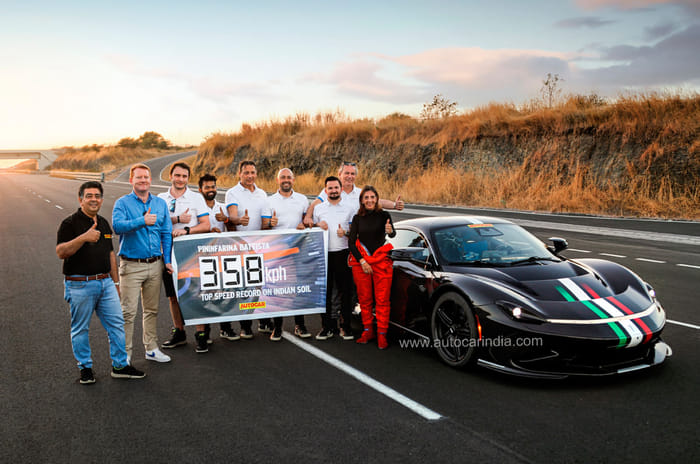
1900hp, quad-motor hypercar achieved a 358.03kph top speed
Back in early 2023, we set a new Indian top-speed record with the 1,900hp Pininfarina Battista electric hypercar at the NATRAX high-speed oval near Indore. Achieving an impressive v-max of 358.03kph, the Battista blitzed past the previous record of 332.20kph, which was also set by us in 2016 in an Audi R8 V10 Plus.
The Battista top-speed run also ended up establishing new world records for a production car: 0-300kph in 10.49 seconds and a quarter-mile time of 8.55 seconds, all verified by the Federation of Motor Sports Clubs of India (FMSCI).
6. Hero Vida V1 Pro longest distance in 24 hours record
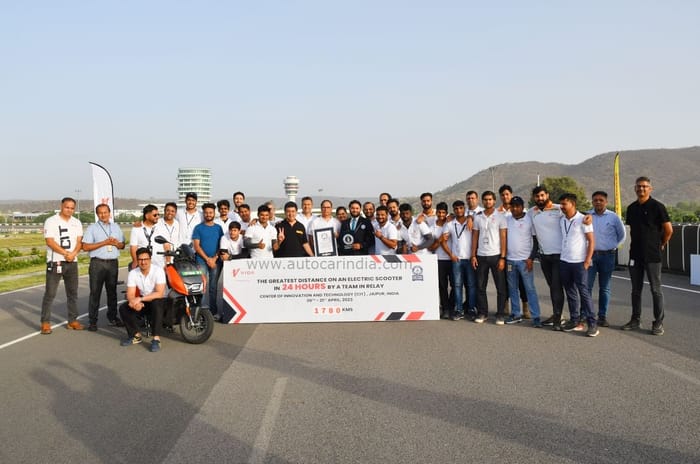
The e-scooter travelled just shy of a whopping 1,800km
The endurance challenge relied on swift battery swaps and flawless coordination, with the pit crew achieving 38 battery changes in under 20 seconds – quite impressive considering the extreme heat, rider fatigue, and complexity involved. Moreover, the Vida V1 Pro ran flawlessly throughout, handling the gruelling conditions with ease and maintaining performance consistently.
7. Volvo EC40 Jaisalmer to Mawsynram road trip
From India’s driest region to its wettest
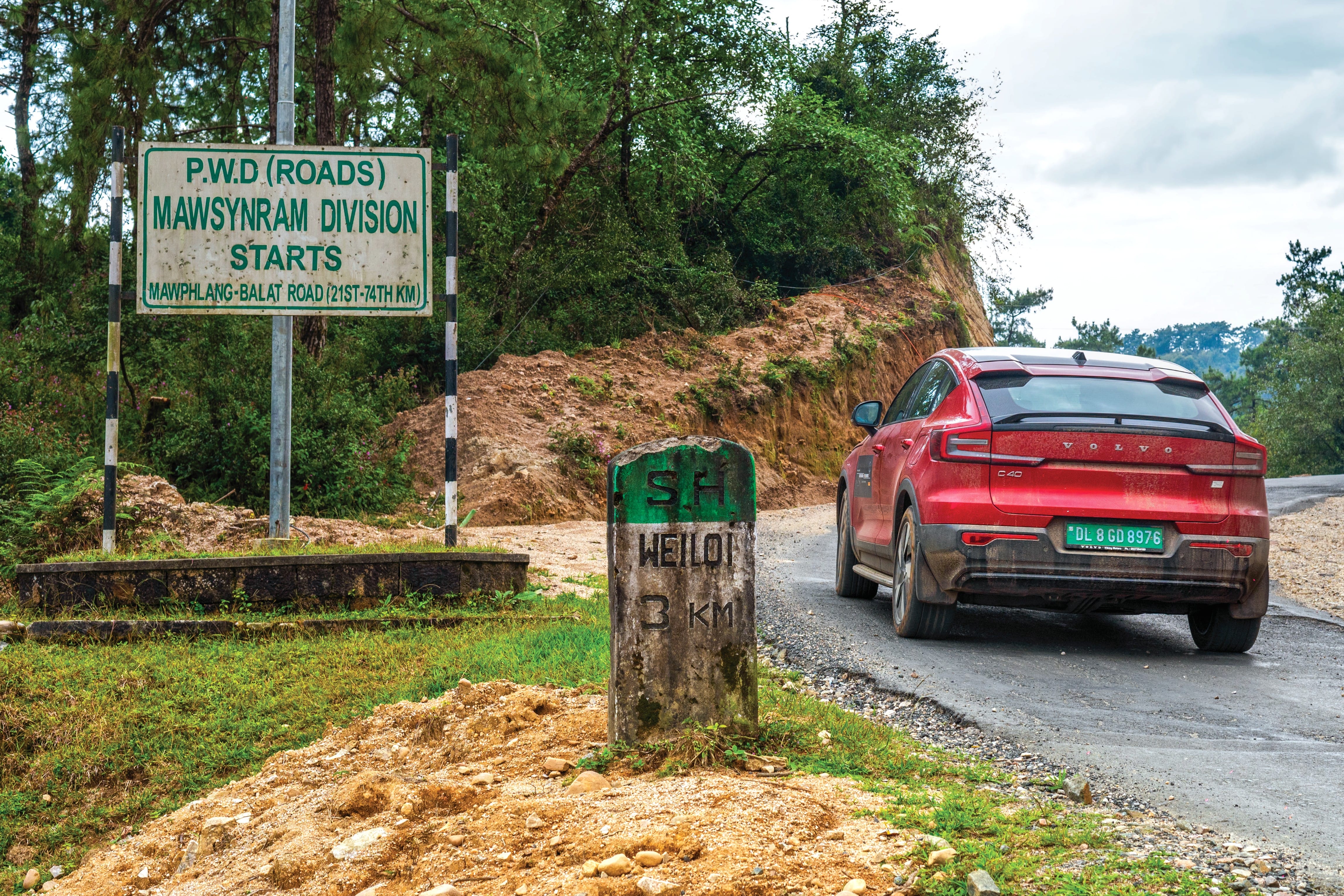
In 2024, we took the Volvo EC40 (formerly known as the C40 Recharge) on a roughly 3,000km road trip from Jaisalmer in Rajasthan – one of India’s driest locations – to Mawsynram in Meghalaya, widely recognised as the country’s wettest. The route included a detour to Ghaziabad’s Volvo Reverse Project, a former dumping ground where around 10,000 trees had been planted as part of the company’s reforestation initiative.
Charging was carried out mainly overnight with DC fast chargers also used along the route, and the EC40 posed no issues during the journey. Ironically, we encountered heavy rain and waterlogging in Jaisalmer but surprisingly little rainfall in Mawsynram.
8. Mercedes Benz EQS sedan longest distance world record
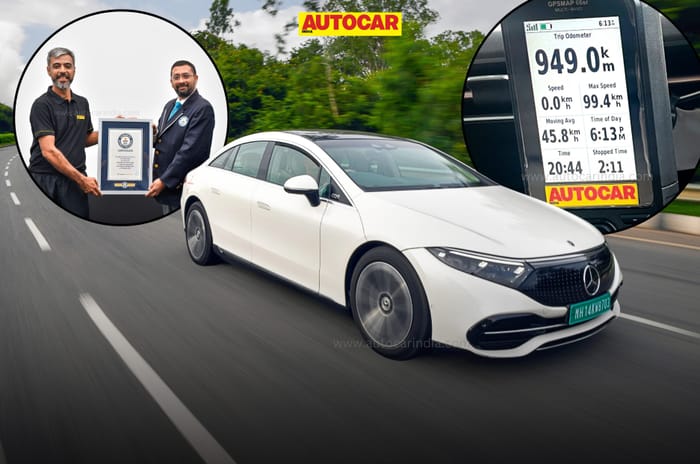
Setting off from Bangalore on a full charge, the EQS 580 covered a distance of 949km when it reached its destination in Navi Mumbai, beating the previous Guinness World Record for the same by 32.26km. Impressively, the 949km real-world range exceeds EQS 580’s claimed range of 817km by just over 16 percent. It’s also worth mentioning that the two-day journey was completed under arduous conditions like heavy rainfall, lots of traffic, broken roads, and even a flat tyre.
9. Porsche Taycan BIC EV lap record
2:10.313 lap time makes the Taycan the fastest EV around BIC so far
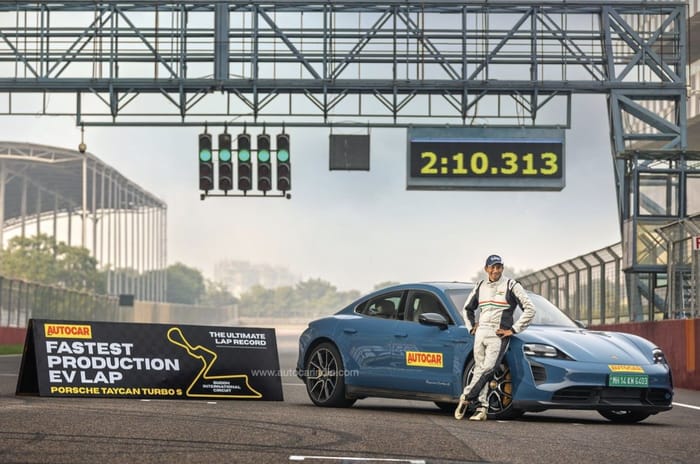
At the Buddh International Circuit in Greater Noida, we lapped a Porsche Taycan Turbo S and clocked a time of 2:10.313 minutes – the first-ever EV lap record around the 5.125km track. Despite its rather portly kerb weight of 2,370kg, the Taycan delivered unexpectedly sharp performance at BIC thanks to 761hp and 1,050Nm, a low centre of gravity (aided by the heavy 93.4 kWh battery), precise steering, and superb balance.
Upon hitting the apex and pinning the throttle, the Taycan belied physics the way it propelled out of corners with explosive speed, and despite weighing 845kg more, the EV achieved nearly the same top speed as the 911 GT3 RS at the end of BIC’s main straight.
10. Ultraviolette F99 India top speed record
258kph around NATRAX and a 100-200kph run of 6.2 seconds
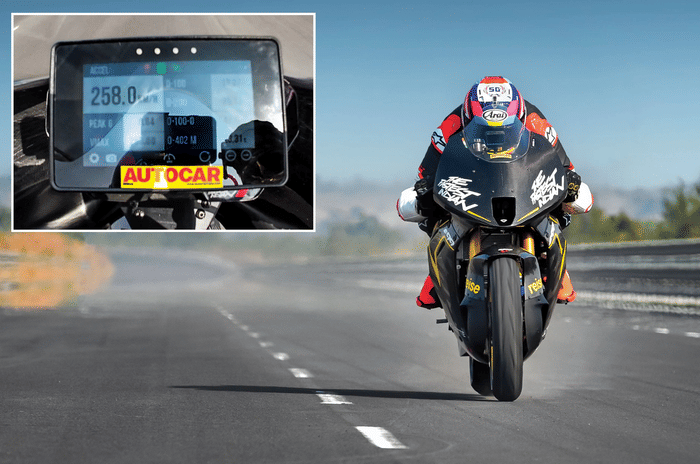
One of our more recent records entailed setting a new benchmark for made-in-India two-wheelers by hitting a top speed of 258kph on the Ultraviolette F99 at the NATRAX oval. Designed around a 400V architecture with a liquid-cooled powertrain, the purpose-built F99 packs 120hp and an astounding 972Nm (measured at the rear wheel).
The F99’s custom trellis frame, forged carbon-fibre bodywork, Brembo brakes, and Ohlins suspension helped the bike remain stable at high speeds, culminating in a clean record run captured via precision V-Box data. It also achieved a blistering 0-200kph run in under 10 seconds and 100-200kph in just 6.2 seconds, smashing previous Indian motorcycle speed records.
11. Mercedes Benz EQS SUV temperature change record
From the sweltering heat of Rajasthan to the sub-zero chill of Ladakh
Our 2025 Guinness World Record saw us achieving the greatest temperature change endured by a production EV. We accomplished this using the Mercedes-Benz EQS 450 SUV, driving from the scorching heat of 47.5 deg-C in Rajasthan to the below-freezing chill of -3.7 deg-C in Ladakh, for an impressive overall temperature swing of 51.2 deg-C.
The journey tested the limits of the EQS 450 SUV, especially its 122kWh battery’s thermal management system. Despite extreme variations in temperature, the climate control and battery systems kept the EQS 450 SUV performing smoothly and safely.