

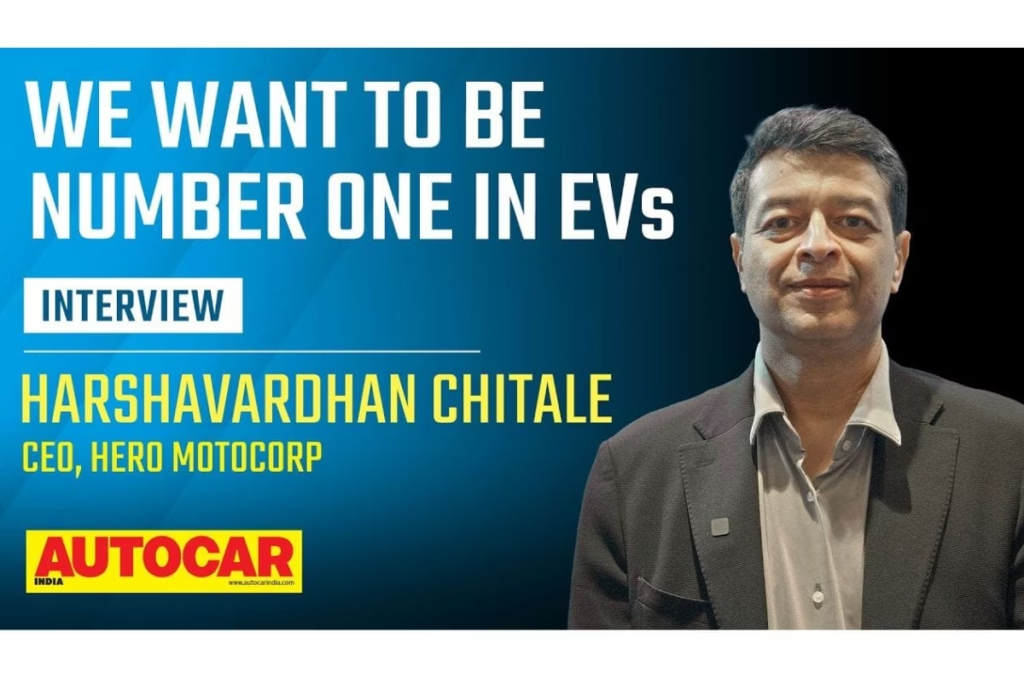

Hero is targeting the top position in India’s electric two-wheeler market as it scales up its Vida business and continues to back Ather Energy. “We clearly are focusing on being number one. There we are not shy of that,” Hero MotoCorp CEO Harshavardhan Chitale told Autocar Professional at the SIAM Annual Convention in New Delhi. He added that Vida and Ather sales, taken together, have already occupied the top position during some months. Considering individual sales numbers from January till August this year, Vida is currently fourth, behind Ather.
- Hero currently invests in Ather Energy and Euler Motors; recently increased its Ather investment
- Vida currently offers scooters with both fixed and removable batteries
- Hero CEO says Ather-Hero joint product may happen in future
Vida is Hero’s EV subsidiary
Company is increasing production and exploring different offerings
Hero initially differentiated the brand through removable batteries, targeting, among others, customers living in apartments without convenient access to charging. The company is now pursuing fixed-battery scooters alongside its removable-battery models. Chitale said the two configurations are attracting different sets of buyers. Fixed batteries allow Hero to offer a more competitively priced product, with the difference between the two configurations at around Rs 10,000.
Vida has gained almost 600 basis points (6 percent) of market share over the past year and is seeing year-on-year growth of around 100 percent, according to Chitale. Demand has prompted Hero to increase production. Chitale said EV capacity would rise by almost 50 percent this month compared with the previous month, followed by a further doubling by December. Demand for removable-battery models has remained strong, despite the introduction of fixed-battery alternatives.
Ather-Hero partnership progress
Charging already integrated, joint product might happen in future
Hero’s EV strategy also includes its investment in Ather, which it has continued to support through successive fundraises, including the most recent one of Rs 1758 crore. For now, the two companies will continue pursuing independent product roadmaps rather than integrating their vehicle platforms. However, that could change as the market matures. Chitale said the companies discuss areas including battery-cell sourcing, software, motors and motor components. Joint sourcing could become an option, although no such arrangement is currently underway.
Charging infrastructure is already an area where both the companies are working together. Hero and Ather are part of an interoperable fast-charging initiative which, according to Chitale, now involves close to 20 companies and nearly 6,000 charging points.
Hero also has an interest in electric commercial vehicle maker Euler Motors. Chitale described Euler as potentially the “next Ather in making” and said Hero would continue supporting the company through its fundraises. The combination of Vida, Ather and Euler gives Hero exposure across electric two-wheelers and commercial vehicles as it seeks a larger share of India’s expanding EV market.
With inputs from Mukul Y. Singh, Hormazd Sorabjee, Ketan Thakkar, and Stephen Raj Antony.
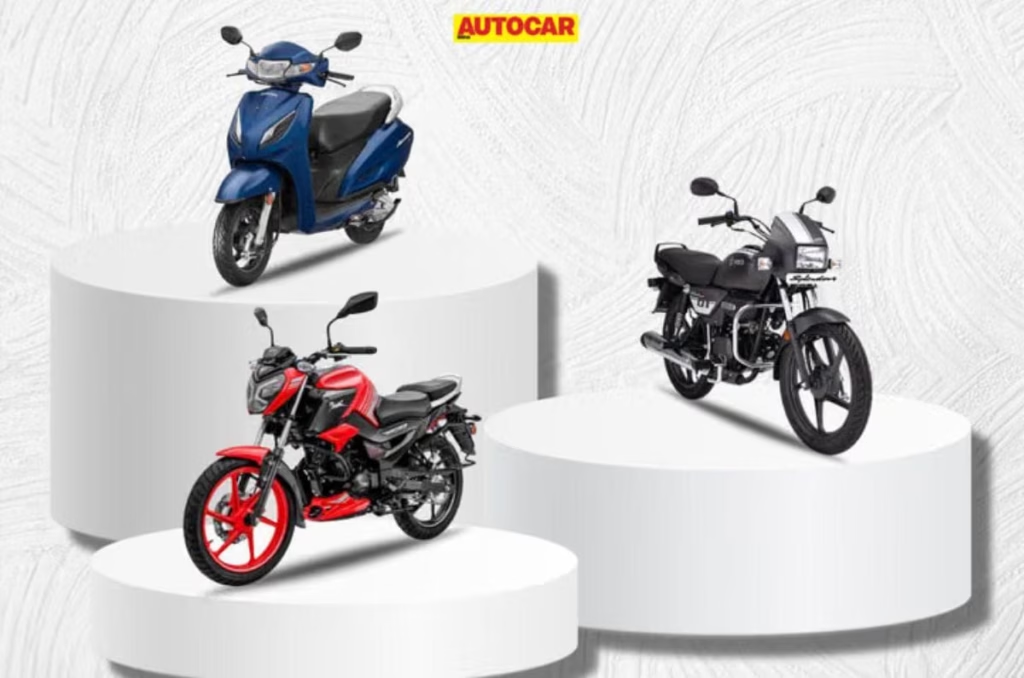
Two-wheeler retail sales in India rose 19.69 percent year on year to 17,14,610 units in August 2026, according to the Federation of Automobile Dealers Associations (FADA). The segment recorded its highest-ever August sales, although volumes declined 5.70 percent from July, when dealers retailed 18,18,289 two-wheelers. August 2025 sales stood at 14,32,537 units.
- Retail sales reach 17.15 lakh units, highest for an August
- Share of EVs in two-wheeler sales crosses 10 percent in a non-festive month
- Honda leads the market as dealers turn optimistic ahead of the festive season
FADA attributed the strong year-on-year growth to healthy rural demand and improved affordability following the GST 2.0 rollout. The month-on-month decline was attributed to the seasonal monsoon slowdown, rainfall in some regions and the inauspicious Shravan/Aadi period.
Rural two-wheeler retail grew 20.25 percent year on year in August, slightly ahead of the 19.07 percent growth recorded in urban markets. Compared with July, however, two-wheeler sales fell 6.85 percent in rural areas and 4.38 percent in urban centres.
EVs accounted for 10.68 percent of total two-wheeler retail sales in August, up from 7.66 percent a year ago. The share of electric models was 11.24 percent in July. FADA noted that August was the first non-festive month in which EVs comprised over 10 percent of two-wheeler sales.
As for fuel type, petrol continued to dominate the two-wheeler market with an 89.23 percent share, while CNG and LPG models together accounted for 0.08 percent.
Honda Motorcycle and Scooter India remained the largest two-wheeler OEM in August with a 26.09 percent market share, retailing 4,47,342 units. Hero MotoCorp was second with 4,13,996 units and a 24.15 percent share, while TVS Motor Company sold 3,53,746 units and had a 20.63 percent share.
Bajaj Auto retailed 1,57,149 two-wheelers, giving it a 9.17 percent share, followed by Suzuki Motorcycle India with 1,04,217 units and a 6.08 percent share. Royal Enfield recorded 94,448 units and a 5.51 percent share.
Among the electric-focused manufacturers listed separately by FADA, Ather Energy sold 28,757 units and had a 1.68 percent share, while Ola Electric registered 13,852 units and a 0.81 percent share. Greaves Electric Mobility, River Mobility and BGauss recorded 8,613, 5,141 and 4,845 units, respectively.
With the festive season approaching, FADA expects two-wheeler demand to strengthen in September. Rural cash flows and late-season rainfall remain key factors that could influence sales, while the continued shift towards alternative powertrains is expected to support the market.
Dealer sentiment for September remains positive, with 67.09 percent of dealers expecting growth, 27.35 percent expecting a flat market and 5.56 percent anticipating de-growth. For the September-November period, 81.62 percent of dealers expect the market to grow.
With inputs from Eshisha Java
August 2026 delivered strong year-on-year growth across the board as manufacturers gear up for the festive season, but the standout story was TVS Motor Company leapfrogging both Honda and Hero MotoCorp to become India’s largest two-wheeler manufacturer by monthly dispatches for the first time.
TVS Motor: 5,91,437 units
TVS recorded its highest-ever monthly two-wheeler sales this past August, with dispatches climbing 21 percent year-on-year from 4,90,788 units last August. This pushed it past both Honda and Hero for the top spot this month. Domestic two-wheeler sales grew 18 percent to 4,33,796 units, while the company’s electric two-wheeler business posted growth of 137 percent to 59,453 units. TVS also continued to lead as an exporter, shipping 1,57,641 two-wheelers overseas, up 29 percent year-on-year.
Honda: 5,79,162 units
Honda Motorcycle & Scooter India (HMSI) posted 8 percent YoY growth, with total sales rising from 5,34,861 units last August. Domestic sales grew at the same 8 percent clip to 5,17,329 units, while exports rose by a sharper 15 percent to 61,833 units.
Hero MotoCorp: 5,68,398 units
Hero two-wheeler dispatches grew a modest 2.65 percent year-on-year from 5,53,727 units. Domestic ICE dispatches stood at 5,16,747 units, while the Vida brand continued its strong run with 25,558 units dispatched – a 38 percent growth. Exports fell 24.6 percent to 26,093 units from 34,588 a year earlier.
Bajaj Auto: 4,43,748 units
Bajaj two-wheeler dispatches grew 30 percent YoY from 3,41,887 units. Domestic sales rose 10 percent to 2,01,898 units, while exports jumped 53 percent to 2,41,850 units, continuing the company’s run as one of India’s largest two-wheeler exporters.
Royal Enfield: 1,26,479 units
Royal Enfield motorcycle sales grew 11 percent YoY from 1,14,002 units. Domestic sales rose 11 percent to 1,14,204 units, while exports grew 10 percent to 12,275 units. The month saw the launch of the Classic 350 Gorkha Edition and an updated Continental GT 650, alongside continued momentum for the Flying Flea C6, which the brand says has crossed 50,000 customer-driven kilometres in its current sole market of Bengaluru.
Suzuki: 1,20,611 units
Suzuki posted 6 percent year-on-year growth from 1,13,936 units, driven largely by domestic sales, which rose 13 percent to 1,03,118 units. Exports declined to 17,493 units from 22,307 units a year earlier.
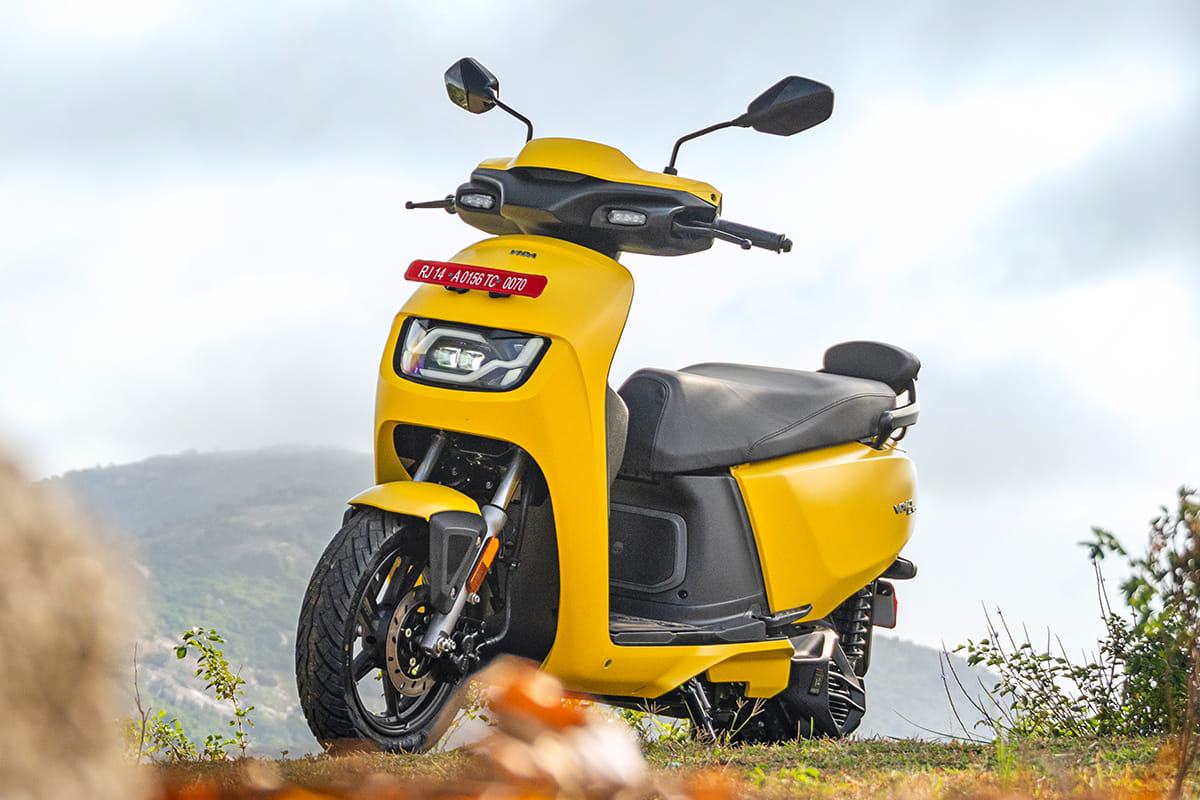
Electric two-wheelers could help dealers retain more customers even as they reduce the need for traditional servicing, according to Hero MotoCorp’s chief business officer, Ashutosh Varma.
- EVs are currently complementing, rather than replacing, ICE two-wheelers, says Hero MotoCorp
- EV service retention could reach 85-90 percent
- Software-based services could create new revenue opportunities for dealers
EVs could improve service retention
Dealer revenue set to evolve
Speaking at a FADA conclave, Varma said the current growth of the ICE two-wheeler market suggests EVs are complementing conventional motorcycles and scooters rather than replacing them.
“The way the ICE business seems to be growing, it doesn’t seem like EVs are substituting ICE sales. It’s just like complementing ICE sales,” he said.
One of the potential benefits for dealers could be higher customer retention. Varma said average retention in the ICE business is around 60 percent, while EVs could push this considerably higher.
“In EVs it nudges us to move even further, possibly 85-90 percent,” he said.
While EVs have fewer mechanical components and generally require less routine maintenance than ICE vehicles, a higher proportion of EV owners returning to authorised workshops could help offset some of the reduction in conventional service and parts revenue.
Varma also pointed to software as another potential source of income for dealers. Manufacturers are increasingly offering modular, paid software and technology features, giving dealerships an opportunity to earn from services beyond traditional workshop jobs.
The revenue mix for dealerships is therefore likely to change as EVs become more common, rather than simply declining because vehicles need less mechanical servicing.
“The nature of revenues as you go forward will continue to evolve,” Varma said. “There are new avenues that will continue to emerge and EVs is an excellent example.”
Stocks to Watch: बुधवार 2 सितंबर को कई बड़ी कंपनियों के शेयरों पर नजर रहेगी। अगस्त की सेल्स, नए ऑर्डर और बड़े बिजनेस अपडेट सामने आए हैं। रिन्यूएबल एनर्जी, FMCG, IT और मेटल सेक्टर की कंपनियां फोकस में रहेंगी। यहां 13 ऐसे स्टॉक्स हैं, जिनमें बुधवार को हलचल देखने को मिल सकती है।
Hero MotoCorp
देश की सबसे बड़ी टू-व्हीलर कंपनी Hero MotoCorp की घरेलू बिक्री अगस्त में 4.5% बढ़कर 5.42 लाख यूनिट रही। स्कूटर की बिक्री बढ़ने से मोटरसाइकिल की बिक्री में आई गिरावट का असर कम हुआ। कुल बिक्री और एक्सपोर्ट मिलाकर डिस्पैच 2.6% बढ़कर 5.68 लाख यूनिट रहे।
Coal India
सरकारी कोयला कंपनी Coal India ने अगस्त के ई-ऑक्शन में 210.66 लाख टन कोयला ऑफर किया। इसमें से 82.76 लाख टन की एलोकेशन हुई। यानी करीब 39% कोयला बिका। खास बात यह रही कि औसत कीमत नोटिफाइड प्राइस से 59% ज्यादा रही।
NMDC
सरकारी खनन कंपनी NMDC ने अगस्त में उत्पादन बढ़ने की जानकारी दी है। कंपनी का कुल उत्पादन बढ़कर 40.7 लाख टन हो गया। एक साल पहले अगस्त में यह 33.7 लाख टन था। वहीं, बिक्री 35.8 लाख टन रही, जो पिछले साल 33.9 लाख टन थी।
Ujjivan Small Finance Bank
स्मॉल फाइनेंस बैंक Ujjivan Small Finance Bank ने बताया कि RBI ने कैरल फर्टाडो को अंतरिम CEO बनाने की मंजूरी दे दी है। उनकी नियुक्ति 1 सितंबर 2026 से प्रभावी होगी। वह तीन महीने तक इस पद पर रहेंगी।
Gland Pharma
फार्मा कंपनी Gland Pharma की विशाखापट्टनम स्थित API फैसिलिटी में US FDA ने 24 अगस्त से 1 सितंबर 2026 के बीच GMP इंस्पेक्शन किया। कंपनी के मुताबिक, इस इंस्पेक्शन के बाद फैसलिटी को US FDA से कोई आपत्ति नहीं मिली है। इसे कंपनी के लिए बड़ा पॉजिटिव अपडेट माना जा रहा है।
Adani Green Energy
रिन्यूएबल एनर्जी कंपनी Adani Green Energy की सब्सिडियरी ने गुजरात के खावड़ा में 139 MW का सोलर प्रोजेक्ट चालू कर दिया है। इसके बाद कंपनी की कुल ऑपरेशनल रिन्यूएबल एनर्जी कैपेसिटी बढ़कर 20,280.8 MW हो गई है।
Reliance Industries
तेल से रिटेल तक कारोबार करने वाली Reliance Industries की सब्सिडियरी RCPL ने आइसक्रीम बाजार में एंट्री कर ली है। कंपनी ने ‘Bombay Creamery’ नाम से नया ब्रांड लॉन्च किया है। इसकी शुरुआती कीमत ₹10 रखी गई है। आइसक्रीम को रियल डेयरी क्रीम से तैयार किया जाएगा।
ARSS Infrastructure Projects
इंफ्रास्ट्रक्चर कंपनी ARSS Infrastructure Projects को ईस्ट कोस्ट रेलवे से करीब ₹104.06 करोड़ का वर्क ऑर्डर मिला है। यह ऑर्डर हावड़ा-विशाखापट्टनम मुख्य रेल लाइन पर दो रोड ओवर ब्रिज बनाने से जुड़ा है।
Ashiana Housing
रियल एस्टेट कंपनी Ashiana Housing ने अगस्त 2026 में 1.67 लाख वर्ग फुट एरिया की बुकिंग की। इसकी वैल्यू ₹165.93 करोड़ रही। अगस्त तक कंपनी की YTD बुकिंग 11.30 लाख वर्ग फुट तक पहुंच गई, जिसकी कुल वैल्यू ₹1,025.34 करोड़ है।
L&T Finance
फाइनेंशियल सर्विसेज कंपनी L&T Finance को IRDAI से कॉरपोरेट एजेंट के तौर पर Perpetual Registration मिल गया है। कंपनी का नया सर्टिफिकेट 31 अगस्त 2026 से लागू हो गया है। इससे कंपनी को इंश्योरेंस प्रोडक्ट्स के डिस्ट्रीब्यूशन से जुड़े कारोबार को बढ़ाने में मदद मिल सकती है।
ITC
FMCG कंपनी ITC की सब्सिडियरी ITC Infotech के साथ Blazeclan Technologies और Cloudlytics Technologies के मर्जर को NCLT की कोलकाता और मुंबई बेंच से मंजूरी मिल गई है। यह मंजूरी ITC Infotech के डिजिटल और क्लाउड कारोबार को मजबूत कर सकती है।
Wipro
IT कंपनी Wipro ने ABB के साथ अपने ग्लोबल डिजिटल वर्कप्लेस सर्विसेज एंगेजमेंट को आगे बढ़ाया है। इस समझौते के तहत डिजिटल वर्कप्लेस सर्विसेज को बेहतर बनाने और उन्हें आगे डेवलप करने पर काम होगा।
Disclaimer: मनीकंट्रोल, नेटवर्क18 ग्रुप का हिस्सा है। नेटवर्क18 का नियंत्रण इंडिपेंडेट मीडिया ट्रस्ट करता है, जिसकी एकमात्र लाभार्थी रिलायंस इंडस्ट्रीज है।
Disclaimer: यहां मुहैया जानकारी सिर्फ सूचना के लिए दी जा रही है। यहां बताना जरूरी है कि मार्केट में निवेश बाजार जोखिमों के अधीन है। निवेशक के तौर पर पैसा लगाने से पहले हमेशा एक्सपर्ट से सलाह लें। मनीकंट्रोल की तरफ से किसी को भी पैसा लगाने की यहां कभी भी सलाह नहीं दी जाती है।
Ather Energy Share Price: इलेक्ट्रिक टू-व्हीलर कंपनी Ather Energy ने इस साल शेयर बाजार में Tesla, BYD और Xiaomi जैसी दिग्गज कंपनियों को भी पीछे छोड़ दिया है। कंपनी के शेयर 2026 में अब तक करीब 130% चढ़ चुके हैं। विश्लेषकों को बढ़ते मार्केट शेयर की वजह से स्टॉक में आगे भी तेजी की उम्मीद है।
Ather के शेयर में तेजी ने ग्लोबल निवेशकों का भी ध्यान खींचा है। सोमवार को BlackRock Global Funds ने ओपन मार्केट से कंपनी में 1% से कम हिस्सेदारी खरीदी है।
इसके उलट EV कंपनियों से जुड़े 104 शेयरों को ट्रैक करने वाला ब्लूमबर्ग इंडेक्स इस साल करीब 1% गिरा है। Tesla, BYD और Xiaomi जैसी बड़ी कंपनियों के कमजोर प्रदर्शन का असर इस इंडेक्स पर पड़ा है।
पिछले महीने शेयर 36% से ज्यादा चढ़ा
Hero MotoCorp की हिस्सेदारी वाली Ather Energy इलेक्ट्रिक टू-व्हीलर की डिजाइनिंग, मैन्युफैक्चरिंग और सर्विसिंग करती है। कंपनी का अपना चार्जिंग नेटवर्क भी है। भारत में EV की बढ़ती मांग का कंपनी को फायदा मिल रहा है।
बेंगलुरु की कंपनी का शेयर पिछले महीने 36% से ज्यादा चढ़ा। मई 2025 में लिस्टिंग के बाद यह किसी एक महीने में कंपनी की सबसे बड़ी तेजी है। बाजार में कंपनी की ग्रोथ को लेकर भरोसा बढ़ा है।
FY28 तक 26% मार्केट शेयर का अनुमान
Emkay Global Financial Services का अनुमान है कि FY28 तक Ather Energy का मार्केट शेयर बढ़कर 26% हो सकता है। मार्च के अंत में कंपनी का मार्केट शेयर करीब 17% था।
ब्रोकरेज का मानना है कि नए प्रोडक्ट लॉन्च और कंपनी की इन-हाउस टेक्नोलॉजी से Ather को फायदा मिल सकता है। इससे कंपनी घरेलू प्रतिद्वंद्वी Ola Electric को कड़ी टक्कर दे सकती है। पिछले हफ्ते Ather ने Konarc इलेक्ट्रिक स्कूटर लॉन्च किया था। इसे कंपनी की अपनी EV आर्किटेक्चर पर बनाया गया है। यह मास मार्केट सेगमेंट के लिए तैयार किया गया है।
Konarc से दोगुना हो सकता है बाजार
Nomura Holdings के एनालिस्ट्स का कहना है कि Konarc की वजह से Ather का एड्रेसेबल मार्केट दोगुना हो सकता है। यानी कंपनी के पास पहले के मुकाबले ज्यादा ग्राहकों तक पहुंचने का मौका होगा।
एनालिस्ट्स का कहना है कि भारत में इलेक्ट्रिक टू-व्हीलर का बाजार अब अहम मोड़ पर पहुंच रहा है। इस सेगमेंट में लंबी अवधि के लिए Ather को सबसे मजबूत विकल्पों में शामिल माना जा रहा है।
लिस्टिंग के बाद 440% चढ़ा शेयर
लिस्टिंग के बाद से Ather Energy का शेयर करीब 440% चढ़ चुका है। पिछले पांच साल में ₹2,500 करोड़ या उससे ज्यादा का IPO लाने वाली भारतीय कंपनियों में Ather Energy का प्रदर्शन सबसे बेहतर रहा है।
तेजी के बावजूद एनालिस्ट्स अभी भी स्टॉक को लेकर बुलिश हैं। ब्लूमबर्ग के मुताबिक, कंपनी को कवर करने वाले सभी 14 एनालिस्ट्स शेयर पर खरीदारी की सलाह दे रहे हैं।
Axis Capital ने Ather Energy का टारगेट प्राइस ₹2,100 रखा है। सोमवार के क्लोजिंग प्राइस के मुकाबले इसमें करीब 22% की तेजी की संभावना बताई गई है।
अगले 3-4 साल में शेयर दोगुना हो सकता है
Emkay के एनालिस्ट चिराग जैन का मानना है कि अगले तीन से चार साल में मौजूदा स्तर से भी Ather Energy का शेयर दोगुना हो सकता है।
उनका कहना है कि Ather सिर्फ फीचर्स हटाकर कीमत कम करने के पक्ष में नहीं है। कंपनी लागत कम करके कीमत घटाने की रणनीति पर काम कर रही है, ताकि ब्रांड और प्रोडक्ट क्वालिटी पर असर न पड़े।
एथर एनर्जी का शेयर मंगलवार को 1.07% की तेजी के साथ 1,736 रुपये पर बंद हुआ।
गोदरेज ग्रुप का स्टॉक 55% उछल सकता है, कोटक ने ₹1010 का टारगेट दिया
Disclaimer: मनीकंट्रोल.कॉम पर दिए गए सलाह या विचार एक्सपर्ट/ब्रोकरेज फर्म के अपने निजी विचार होते हैं। वेबसाइट या मैनेजमेंट इसके लिए उत्तरदायी नहीं है। यूजर्स को मनीकंट्रोल की सलाह है कि कोई भी निवेश निर्णय लेने से पहले हमेशा सर्टिफाइड एक्सपर्ट की सलाह लें।
Hero MotoCorp will invest up to Rs 1,758 crore to increase its stake in Ather Energy, taking its holding in the electric two-wheeler maker from 29.88 percent to approximately 32.8 percent on a fully diluted basis.
- Hero MotoCorp will buy existing Ather shares worth up to Rs 1,758 crore
- Its stake will rise from 29.88 percent to approximately 32.8 percent
- The deal comes shortly after Hero’s separate Rs 1,000 crore investment in Ather
The investment was approved by Hero MotoCorp’s Committee of Directors on August 27 and will involve the purchase of existing Ather shares from an existing shareholder. This makes it a secondary transaction, rather than a fresh issue of equity by Ather. The deal will be funded entirely through cash and is expected to be completed by September 3, 2026. No government or regulatory approvals are required.
The latest investment comes shortly after Hero announced plans to invest up to Rs 1,000 crore in Ather through a preferential issue. Ather subsequently allotted Hero convertible warrants worth Rs 959.99 crore as part of that investment.
The two transactions are separate, with the earlier investment involving securities issued by Ather and the latest Rs 1,758 crore deal involving the purchase of existing shares. Taken together, Hero has committed up to around Rs 2,758 crore to Ather through the two transactions.
Hero has been an investor in Ather for several years and is already its largest shareholder. The latest investment will further strengthen its position in the company as Ather continues to expand its electric two-wheeler business and charging network across India.
Ather’s turnover has grown significantly over the past three financial years, rising from Rs 1,753.8 crore in FY2024 to Rs 2,255 crore in FY2025 and Rs 3,671.76 crore in FY2026.
The company designs, manufactures and sells electric two-wheelers and operates its own charging network with an open-source connector that’s shared with Vida. Ather’s portfolio includes the 450 range and Rizta, while its presence has expanded across the country. As for the brand’s immediate plans, Ather is slated to launch its first-model based on the EL platform tomorrow, at its community day, intended to slot in below the Rizta.
With inputs from ANGITHA SURESH
केंद्रीय सड़क परिवहन और राजमार्ग मंत्री नितिन गडकरी ने बुधवार को कहा कि भारत का इलेक्ट्रिक व्हीकल (EV) बाजार 2030 तक 20 लाख करोड़ रुपये तक पहुंच सकता है। इसके साथ ही इस सेक्टर में 5 करोड़ नौकरियां पैदा होने की उम्मीद है।
PTI की रिपोर्ट के अनुसार, CII-ITC सेंटर ऑफ एक्सीलेंस फॉर सस्टेनेबल डेवलपमेंट की ओर से आयोजित एक समिट को संबोधित करते हुए गडकरी ने कहा कि भारत में अभी 57 लाख इलेक्ट्रिक वाहन रजिस्टर्ड हैं और ऑटोमोबाइल बाजार में इलेक्ट्रिक वाहनों की हिस्सेदारी करीब 7 प्रतिशत है।
उन्होंने कहा, “2030 तक भारत का इलेक्ट्रिक व्हीकल (EV) मार्केट 20 लाख करोड़ रुपये का हो जाएगा। इससे 2030 तक पांच करोड़ नौकरियां भी पैदा होंगी।”
इस दौरान गडकरी ने भारत की दो सबसे बड़ी टू-व्हीलर बनाने वाली कंपनियों, बजाज ऑटो और हीरो मोटोकॉर्प की एक्सपोर्ट क्षमता का भी जिक्र किया और कहा कि वे अपने बनाए गए वाहनों में से 50 प्रतिशत से ज्यादा का एक्सपोर्ट करती हैं।
भारत को और ज्यादा इलेक्ट्रिक बसों की जरूरत
गडकरी ने कहा कि भारत में हर साल एक लाख इलेक्ट्रिक बसों की मांग है, लेकिन देश के मैन्युफैक्चरर अभी साल में सिर्फ 50,000-60,000 EV बसें ही बनाते हैं।
उन्होंने कहा कि सरकार का लक्ष्य अगले पांच सालों में भारत के ऑटोमोबाइल इंडस्ट्री को दुनिया में सबसे बड़ा बनाना है। उन्होंने यह भी कहा कि देश के पास ट्रेंड मैनपावर और कॉम्पिटिटिव व्हीकल मैन्युफैक्चरिंग क्षमताएं हैं।
गडकरी ने आगे कहा, “अगले पांच सालों में हमारा लक्ष्य भारत के ऑटोमोबाइल इंडस्ट्री को दुनिया में नंबर 1 बनाना है… यह मुश्किल है, लेकिन नामुमकिन नहीं।”
उन्होंने कहा कि भारत के ऑटोमोबाइल सेक्टर का आकार काफी बढ़ गया है। उन्होंने बताया कि जब उन्होंने ट्रांसपोर्ट मिनिस्टर का पद संभाला था, तब इस सेक्टर की वैल्यू 14 लाख करोड़ रुपये थी, जो अब बढ़कर 22 लाख करोड़ रुपये हो गई है।
केंद्रीय मंत्री ने कहा कि अभी US के ऑटोमोबाइल सेक्टर की वैल्यू 78 लाख करोड़ रुपये है, इसके बाद चीन 47 लाख करोड़ रुपये के साथ दूसरे और भारत 23 लाख करोड़ रुपये के साथ तीसरे स्थान पर है।
फॉसिल फ्यूल के इंपोर्ट और लॉजिस्टिक्स लागत को कम करने पर जोर
गडकरी ने कहा कि भारत फॉसिल फ्यूल के इंपोर्ट पर 22 लाख करोड़ रुपये खर्च करता है, जिससे प्रदूषण भी बढ़ता है।
उन्होंने कहा, “हम अच्छे हाईवे बना रहे हैं… अच्छे रास्ते और उनके विकल्प तैयार कर रहे हैं, और बायो-फ्यूल ही भविष्य है।”
लॉजिस्टिक्स लागत के बारे में गडकरी ने कहा कि सरकार का लक्ष्य इसे घटाकर 8% तक लाना है। उनका तर्क है कि लॉजिस्टिक्स लागत कम होने से ग्लोबल मार्केट में भारत की कॉम्पिटिटिवनेस (प्रतिस्पर्धा क्षमता) बेहतर होगी।
गडकरी ने कहा कि IIT चेन्नई, IIT कानपुर और IIM बैंगलोर की हालिया रिपोर्ट से पता चला है कि एक्सप्रेसवे और इकोनॉमिक कॉरिडोर बनने से भारत की लॉजिस्टिक्स लागत 16% से घटकर 10% हो गई है।
उन्होंने कहा, “सरकार का लक्ष्य लॉजिस्टिक्स लागत को घटाकर 8% करना है, जिससे भारत को ज्यादा प्रतिस्पर्धी बनने में मदद मिलेगी।”
यह भी पढ़ें: Honda ADV160 Flex-Fuel स्कूटर और Rebel 300 बाइक लॉन्च, ₹5,000 में बुकिंग शुरू, अक्टूबर से मिलेगी डिलीवरी
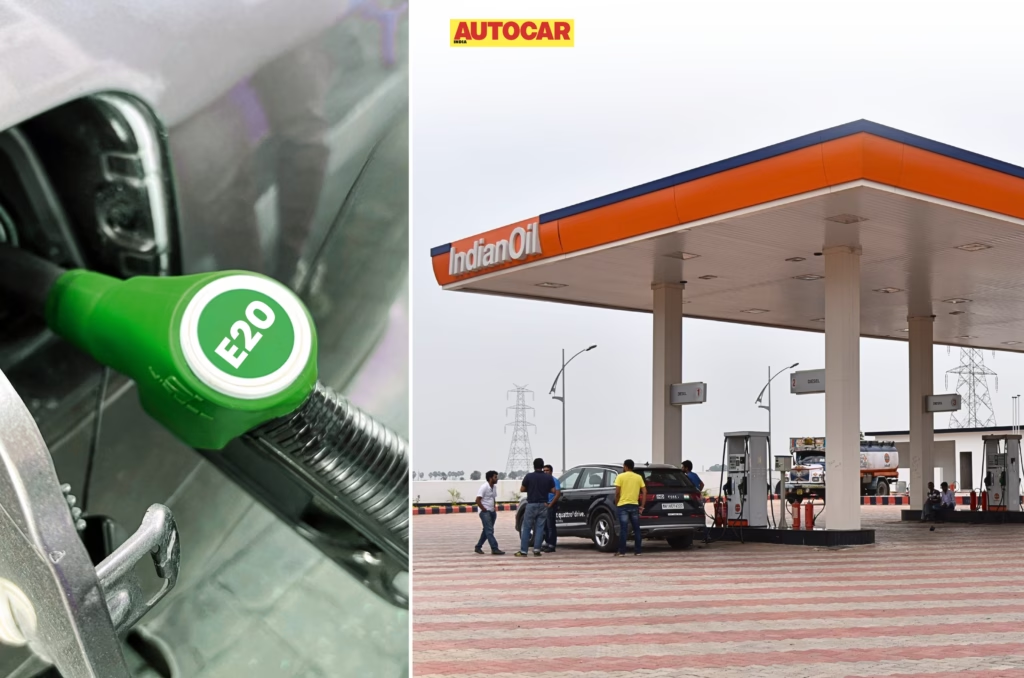
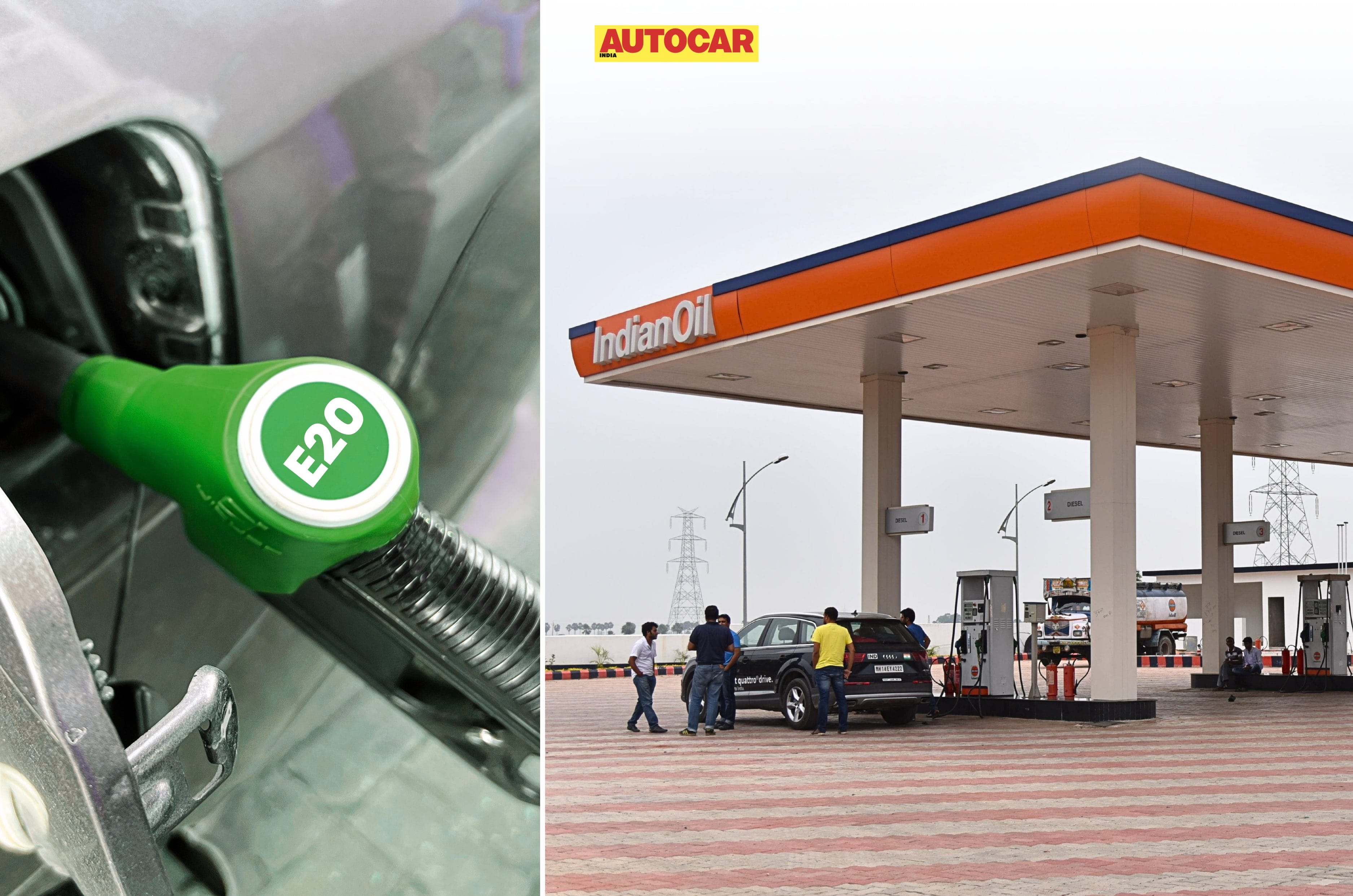
The Ministry of Petroleum and Natural Gas has launched a massive quality-control campaign across India’s retail fuel network and, as of August 25, 2026, stopped petrol sales at 2,573 non-compliant outlets, according to highly placed ministry sources. Indian Oil Corporation (IOCL) leads with 1,257 halted pumps, followed by Hindustan Petroleum (HPCL) at 915 and Bharat Petroleum (BPCL) at 401.
The trigger was a letter from the Society of Indian Automobile Manufacturers (SIAM) to the ministry on July 28, leaked soon after, flagging alarmingly high levels of chloride contamination in E20 fuel samples tested across the country. SIAM withdrew the letter within days, saying the figures “needed further verification”, but the damage was done. A subsequent Reuters investigation into carmakers’ internal testing data kept the contamination question firmly in the public eye and has forced the government to react.
To restore consumer confidence and tackle contaminants and water in the supply chain, the government has mandated water-ingress testing of underground tanks 8 to 12 times a day, a rigorous regime already underway at 88,995 dealerships. A sweeping audit prioritising older retail outlets has covered 84,687 fuel stations; field teams are checking tank integrity during rainfall, and automation systems with monitoring probes are active at 85,649 outlets, with malfunctioning units being repaired on priority.
Oil-marketing companies (OMCs) have conducted 7,296 sulphur tests and 1,079 chloride tests on ethanol-carrying tankers, along with 151 chloride tests on their own storage tanks.
The intensity of the crackdown reflects a government under pressure to protect the integrity of its green-energy transition. The rollout of E20 (petrol blended with 20 percent ethanol) was accelerated ahead of its original schedule. Since April 1, E20 has been the only petrol available at Indian pumps, leaving motorists with no option of buying the earlier E10 blend.
Automakers’ extensive fuel-testing drive
The move to ensure that the prescribed standards are met at the forecourts is a direct response to growing opposition from motorists and anxiety among the country’s leading vehicle manufacturers.
For motorists, the transition to E20 has brought tangible financial losses arising from lower fuel efficiency and potential mechanical risks. In a widely publicised dispute, a consumer court in Raipur recently directed Maruti Suzuki to replace a Grand Vitara over an E20-related engine complaint, underlining the legal and warranty vulnerabilities facing carmakers. Concerns over mileage loss, accelerated component wear and the compatibility of pre-2023 vehicles have simmered for months.
Behind closed doors, the anxiety ran deeper. While brands like Toyota, Maruti Suzuki and Hero MotoCorp publicly backed the government’s green mandate, a Reuters review of leaked internal communications revealed that Maruti Suzuki, Tata Motors and Mahindra & Mahindra had privately flagged severe contamination in E20 petrol. Over the course of a year, the three carmakers quietly conducted the most extensive fuel-testing drive since the national rollout, collecting and analysing over 250 samples from petrol pumps across 21 states and Union territories.
Leaked report rings alarm bells
The industry findings, compiled by SIAM and reviewed by Reuters, painted a starkly different picture from official compliance narratives. Against the government’s permissible chloride limit of 3 parts per million (ppm) or 3mg/kg, automaker testing found alarming levels across 18 states: Rajasthan recorded 6 to 570ppm — 190 times the limit; Delhi-NCR ranged from 1.4 to 420ppm and Madhya Pradesh from 4.1 to 550ppm. Karnataka and Kerala, by contrast, stayed well within the safe zone at 1 to 2.2ppm.
Water content spiked to 13,000ppm in Andhra Pradesh and 12,500ppm in Uttar Pradesh, which is more than four times the official permissible limit of 3,000ppm.
In modern engines, these deviations can be damaging. Organic chloride is highly corrosive, and modern precision fuel injectors are engineered to tolerate just 1-3ppm to align with international standards. In a leaked July email, a senior Mahindra executive warned that organic chloride was the root cause of rapid vehicle failures, capable of destroying fuel systems and engines in as little as 200km. Mahindra has since described interpretations drawn from the email as baseless, calling the industry data limited and preliminary.
Skoda Auto India brand director Ashish Gupta, in a recent interaction with Autocar Professional, acknowledged a genuine issue with EPC (Electronic Power Control) and fuel pump failures in certain parts of the country, particularly in Punjab. He added that while fuel-sample testing has not shown a definitive chemical difference, engineers suspect high chloride or high sulphur levels, which can clog the fuel-pump filters.
The regulatory gap
To be fair, BIS standards currently lack a formally mandated statutory threshold for inorganic chlorides in finished ethanol-blended petrol (like E20). However, the petroleum ministry and OMCs enforce internal procurement guidelines, capping the limit at 3ppm for ethanol manufacturers. Setting BIS standards that make chloride limits mandatory is urgently needed, as the main culprit for vehicle damage is not E20 petrol but the chloride levels in it.
With inputs from Shahkar Abidi