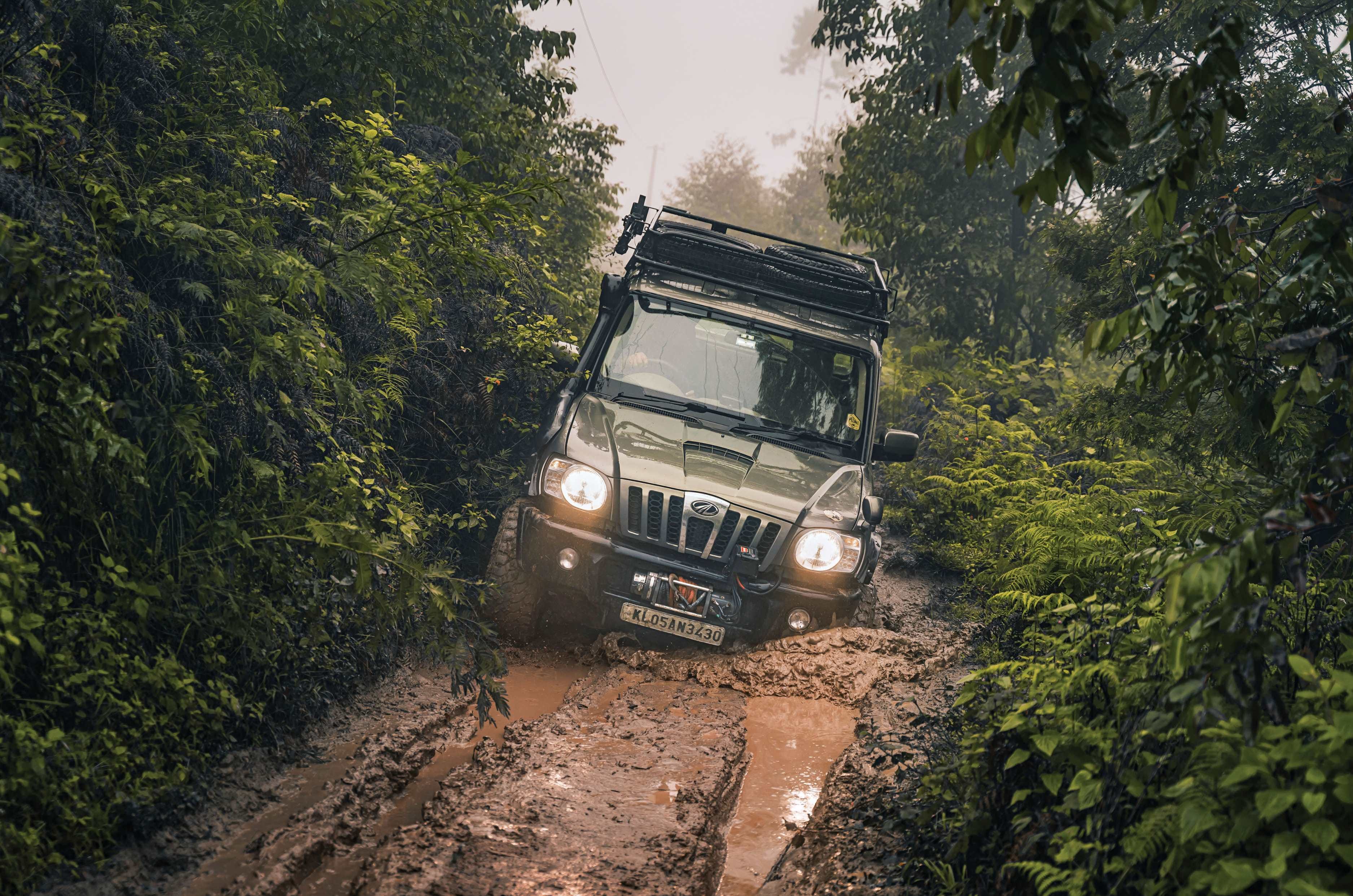
Mahindra Scorpio Getaway: Lifestyler, I am your father

Mahindra Scorpio Getaway: Lifestyler, I am your father
Mahindra Scorpio Getaway

This is the story of a 1,50,000km-old Mahindra Scorpio Getaway that has lived the life it was designed for.

My name is Ouseph Chacko, and I am part-owner of this Getaway because it is my company car. As a partner of an off-road motorcycle school and adventure touring company, I can tell you that if we didn’t have the Getaway from when we started out, it would have taken us a lot longer to get here. We would have been a fair bit lighter of wallet too.

To tell this story properly, I need to rewind a bit – pickup trucks by their very nature are designed to be versatile, and that’s the story of this Getaway. Back in 2016, my business partner Rish was big into long-distance cycling, kayaking and camping tours and needed a vehicle that could accommodate his expensive cycles, carry a couple of kayaks and have the ability to lug around enough gear to make camping, glamping.

The Getaway offered power steering, power windows, power mirrors, air conditioning, front seat armrests and a rear defogger! It also had the electronic shift-on-the-fly four-wheel-drive system and was the most powerful pickup truck on offer.

First things first

While the Getaway looked as lifestyle as could be for pickup trucks back then, it still looked more BRO than Special Forces (no disrespect to the BRO but you get the picture), it needed upgrades.
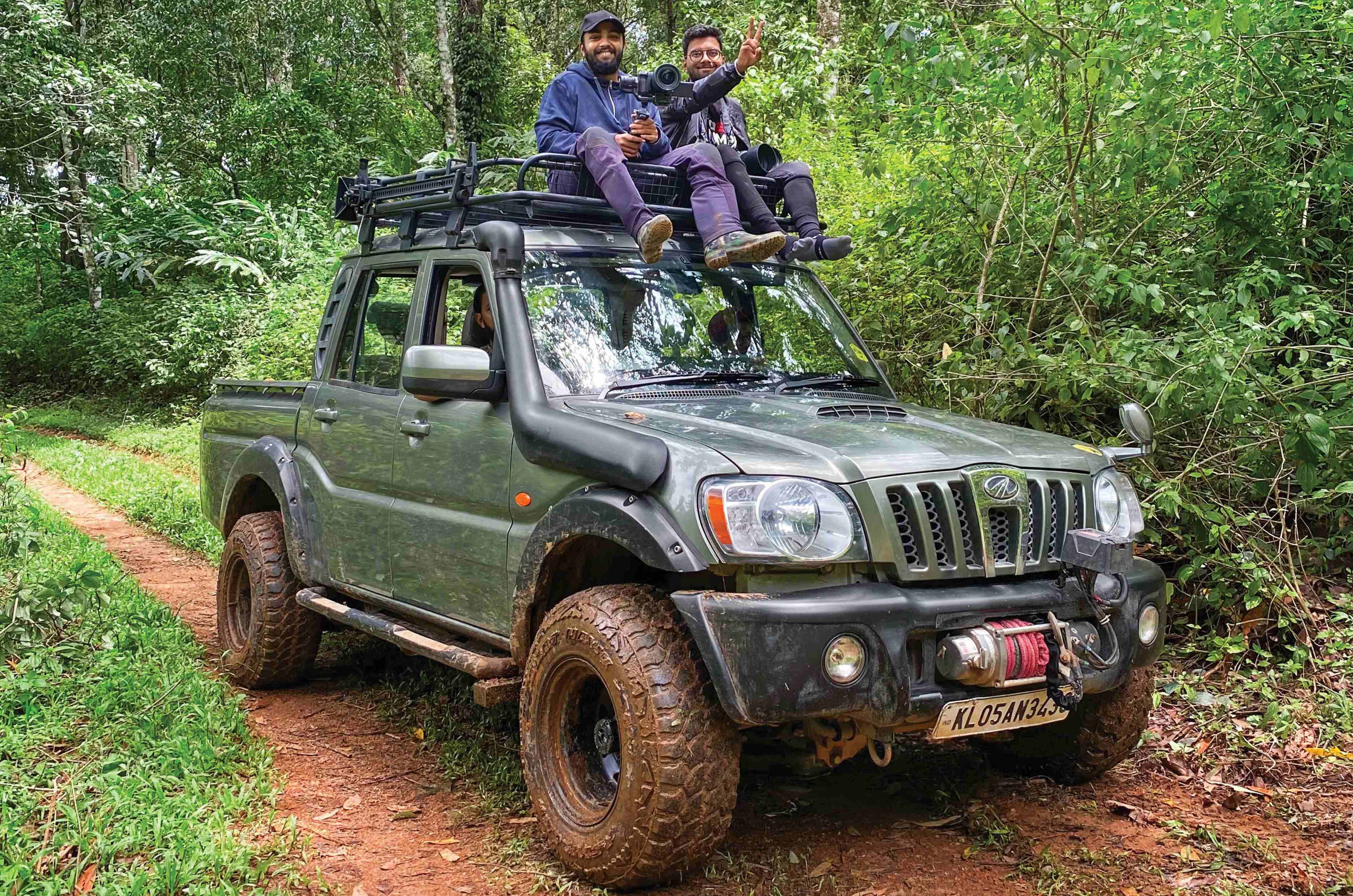
Who needs drones when you have a roof carrier?

To ensure Rish got stuck further down the trail, a Lamda cable-operated locking differential found its way into the rear axle, while the front axle got manual locking hubs (the factory-fitted auto-locking hubs were prone to breaking under heavy load). The engine was left untouched, but to allow adequate wheel arch clearance for the planned high-profile fat tyres, a two-inch body-lift kit was installed. When you lift it, you need to stance it, and so, the vanilla factory wheels made way for off-road -30 off-set steel wheels and faux wheel arch extensions that muscled up the looks but also let us squeeze in fatter tyres without alerting the RTO.

A canopy was added to cover the pickup bed, custom bicycle mounts were welded onto the floor of the bed, a roof-mounted tent, a side awning, solar panels on the roof, an AC-to-DC converter to run devices off the solar panels, a roof carrier, a snorkel, the legendary Warn M8000 winch, metal off-road bumpers, nine auxiliary lamps. Kitchen sink? Pah! There was no space left!

Life has other plans

The snorkel allows some river crossing, but the Brahmaputra had to be crossed on this raft.

For reasons beyond the scope of this story, the Getaway spent most of its first two years parked up with no place to go. It preened, posed, went for the occasional camping trip and lent itself to all the mall crawler memes you can think of.

Then came August 2018. The skies over Kerala opened up. Rivers breached banks, houses were flooded up to the first floor in some places, and parts of middle Kerala were unreachable unless you had a boat or a vehicle with a snorkel. The official rescue teams quickly found themselves overwhelmed, so the Getaway, along with all of Kerala’s 4×4 community, stepped in to assist. The need of the hour was clean bedsheets, towels, underwear, drinking water, easy-to-reheat food and a way to get these supplies to people stranded in homes surrounded by flood waters or cut off by landslides. We loaded the Getaway’s pickup bed to the sky and drove through bonnet-deep water for about three days, handing out generously donated essentials. We stopped only when the rains subsided and when one of the people we thought needed help asked if we were carrying blue underwear. His favourite colour apparently!
Extremely useful as a backup car for our business because it can carry a mechanic, medic, tools, medical kit and motorcycles, with room to spare.

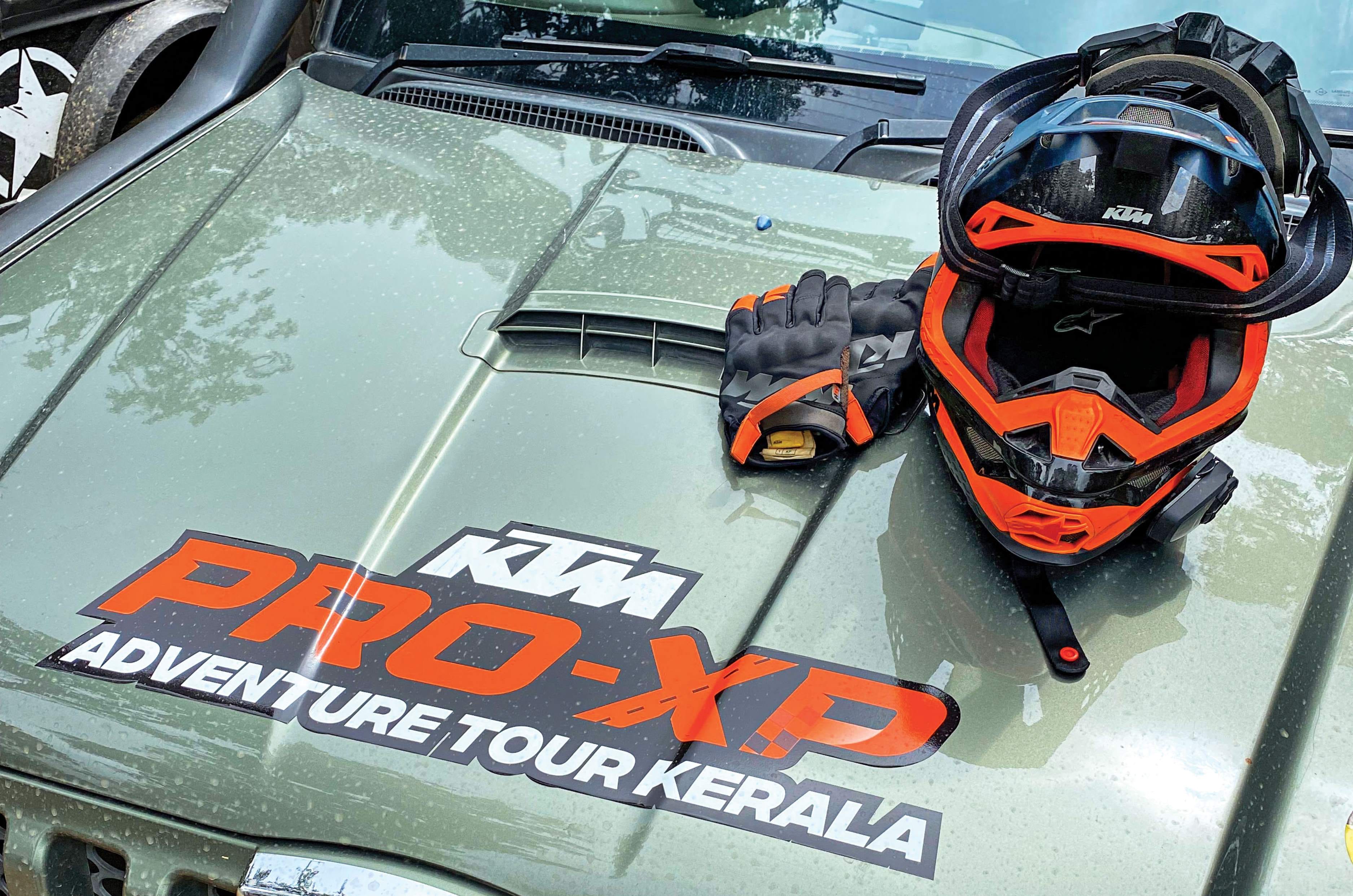
Soon after the rains subsided, the Motor Vehicles Department in Kerala started a serious clampdown run on modified vehicles, and we figured it was time to strip the Getaway of everything but the essentials. The School Of Dirt  – our off-road motorcycling school – was in full swing by then, and the Getaway was the backup car because it could carry a mechanic, medic and two broken motorcycles at a go. We kept the winch, the snorkel and the mud-terrain tyres. We added new features like the comprehensive tool kit for off-road trail fixes and an exhaustive medical kit for when things go wrong far from a hospital. This thing can carry a lot!

We’ve had a few heart-in-mouth moments, but the Getaway always got us home safe.

The next eight years were when the Getaway really pulled its own weight in gold. Most notably, the two 8,000km Kottayam-to-Kohima round trips, mostly with a 250kg Tiger 1200 strapped to its back, and about 1,10,000km criss-crossing South India with us and paraphernalia in it. It has been our hotel room and our home away from home when the adventure motorcycle thrill started booming. More than anything, it has been as reliable as a hammer and didn’t need much more than a full tank of diesel and some duct tape to get to the next destination.
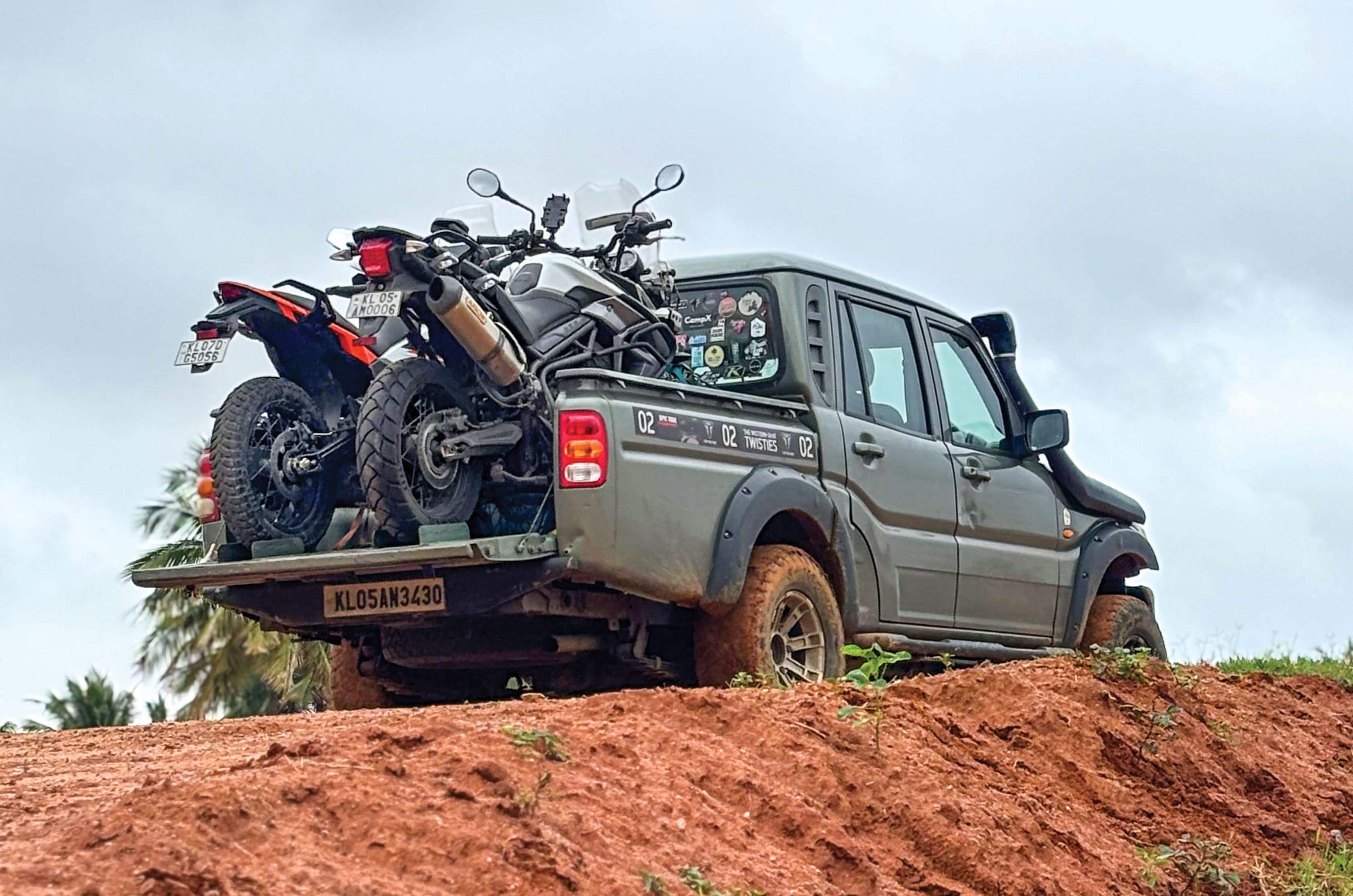
Wear and tear on big bikes is expensive. Getaway helps mitigate that expense.

We figured a long time ago that using its ‘certified’ 600kg payload capacity to carry a motorcycle is a huge cost saving for a startup business. Ever since all nice and fast things became sin goods in the eyes of the government, carrying the bike to the start of the trip and using it only at the event became a much more economical proposition than riding it all the way. An example? A proper load- and speed-rated rear tyre on the Tiger 1200 costs Rs 25,000, and with the way I ride the bike, I obliterate that poor tyre in just 3,500km. That and the expensive mechanical wear and tear on these big bikes ultimately meant it was cheaper to load the bike on the back of the Getaway and transport it to the event.

Spare a thought

This being a Mahindra and based largely on the Scorpio, parts are available everywhere in India, and mechanics know their way around the Getaway’s Scorpio bloodline despite the pickup’s rarity. We run the car on a preventive maintenance schedule because we really work it hard, and no matter what, it gets fresh air, oil and diesel filters every 5,000km. The engine and transmission oil get changed at the same time, the leaf springs at the back are realigned and reshaped every 15,000km and the torsion bar front suspension gets re-adjusted every time we notice it starting to sag. We don’t have a bed liner for the pickup bed, so once a year, we check it in to a paint spa for a fresh coat to prevent rusting from all the scratches. That’s it.
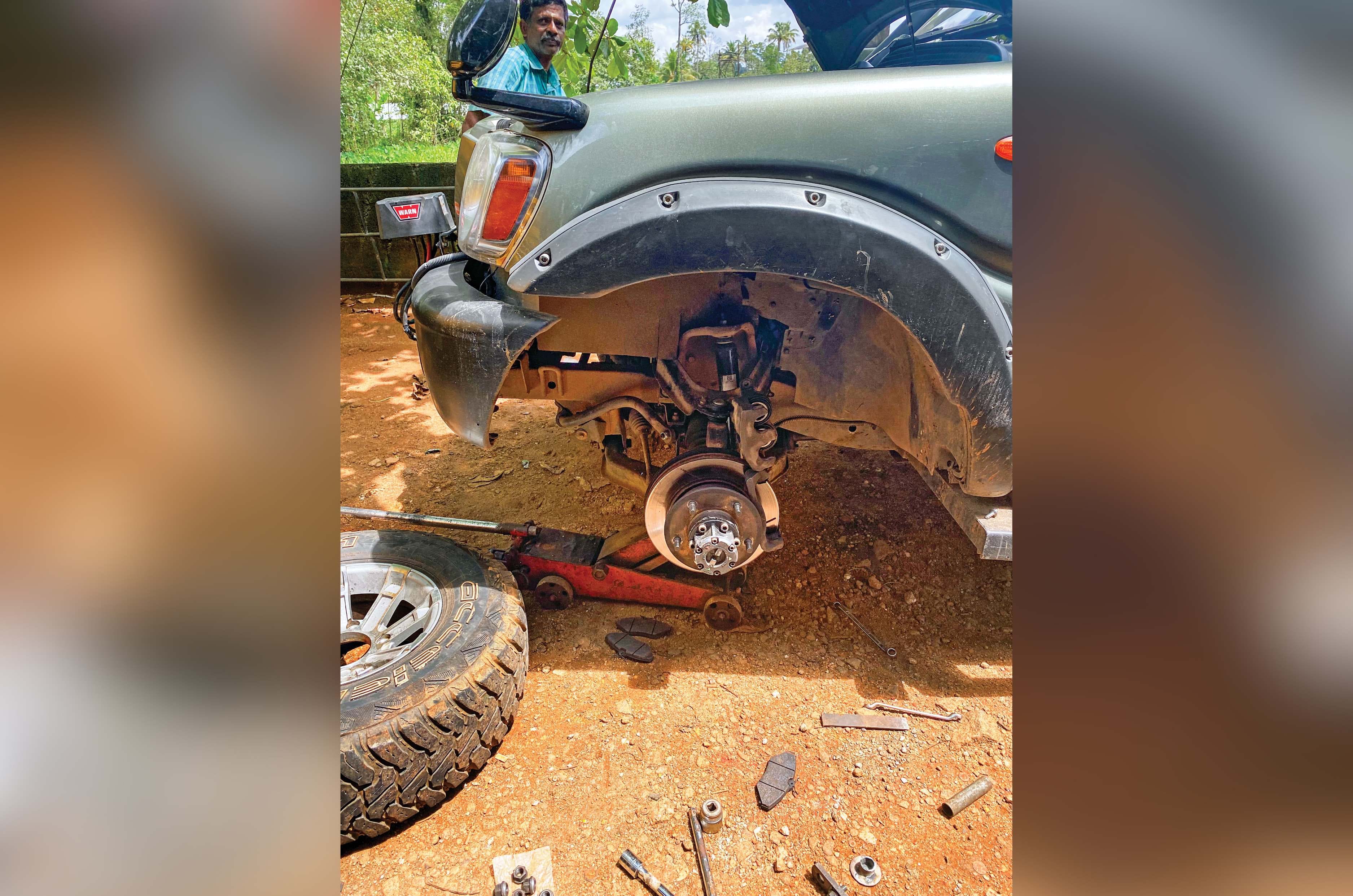
Easily repaired because it shares a lot of parts with the Scorpio.

The engine has never needed an overhaul, and it is helpful that the bomb-proof 2.6 CRDe engine will run on anything that resembles diesel. The weak link in the mechanical package is the clutch – if you’re not reasonably careful every time you start off on a slope, it’ll vaporise fast. Still, the clutch pack along with the clutch release bearing works out to something like Rs 6,000, so apart from the inconvenience of being stranded, it really doesn’t hurt the wallet.

Also, because of our carelessness, we’ve chewed through three rear differentials in the course of the last decade (sometimes the cable-operated Lamda differential doesn’t fully disengage thanks to a corroded cable, and if you are not careful, you end up driving with a partially locked differential on the road). The rear differential turned out to be one of the most expensive spares on the Getaway, working out to around Rs 40,000 a pop, and even that is not too bad considering a broken tail-lamp on a Hilux will set you back Rs 30,000. We’ve since discarded the locking differential and keep fingers crossed that the winch will yank us out when the time comes. Also, don’t break the rear windshield – it is harder to source than a Ferrari 250 GTO!

With a full load, the Getaway still runs around 10 kilometres for every litre of diesel consumed, and that, along with its 60-litre fuel tank, gives it a useful range of 600km.
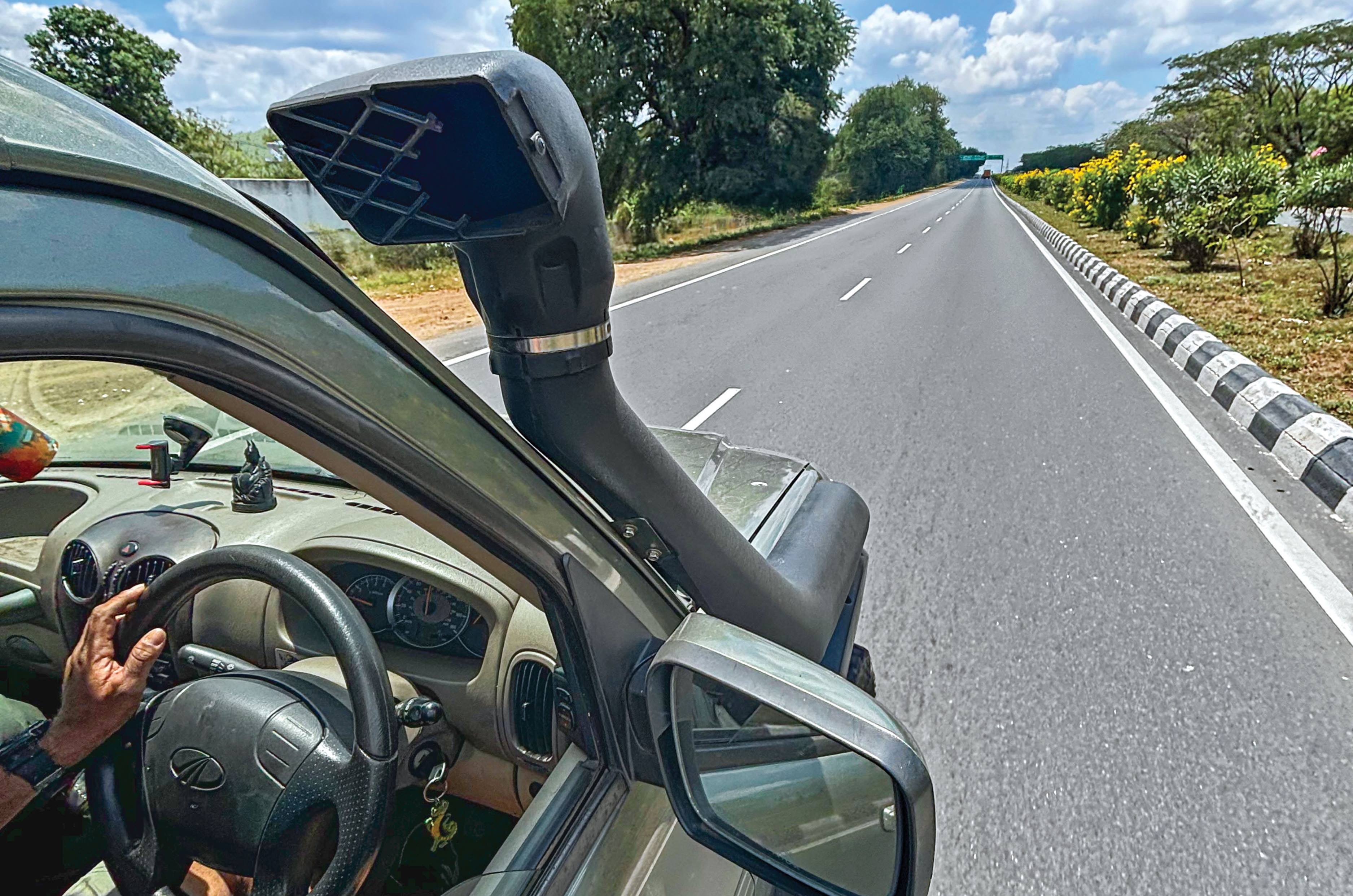
1,50,000km of highways and trails, and it is still going strong!

The Getaway doesn’t seem to lose much on resale value either. Back in 2016, Rish bought it for Rs 11 lakh and some spare change (on road!). Because every other new lifestyle pickup truck in the market is considerably more expensive, I think people are coming around to the sweet spot of utility, value and comfort that the Getaway hits. It is a reasonably simple vehicle with zero electronics (no ABS even!) and so lends itself to hard work and easy fixes happily. Still, well-maintained Getaways are few and far between and their owners (like us) are loathe to let them go. The ones you find on used-car portals are bad. Trust me, I’ve looked.

What next?

No one is more excited about the launch of the Getaway’s replacement than I am. The new Lifestyler (weird name) looks very cool, and the more powerful engines will definitely make fully loaded cross-country trips effortless. The expected base price is positively tasty, and I hope it will come with maintenance costs to match.

It does seem a bit too fancy, though, and I worry about the interiors that are no longer the hose-down kind. I hope Mahindra will offer a more pared-down version that will allow people like me to use it with dirty boots and greasy gloves guilt-free. 
In the mountaineering world, when someone successfully summits a peak, you ask, “Who’s your sherpa” The Getaway has been The School Of Dirt’s unfailing sherpa. The Lifestyler has its work cut out.

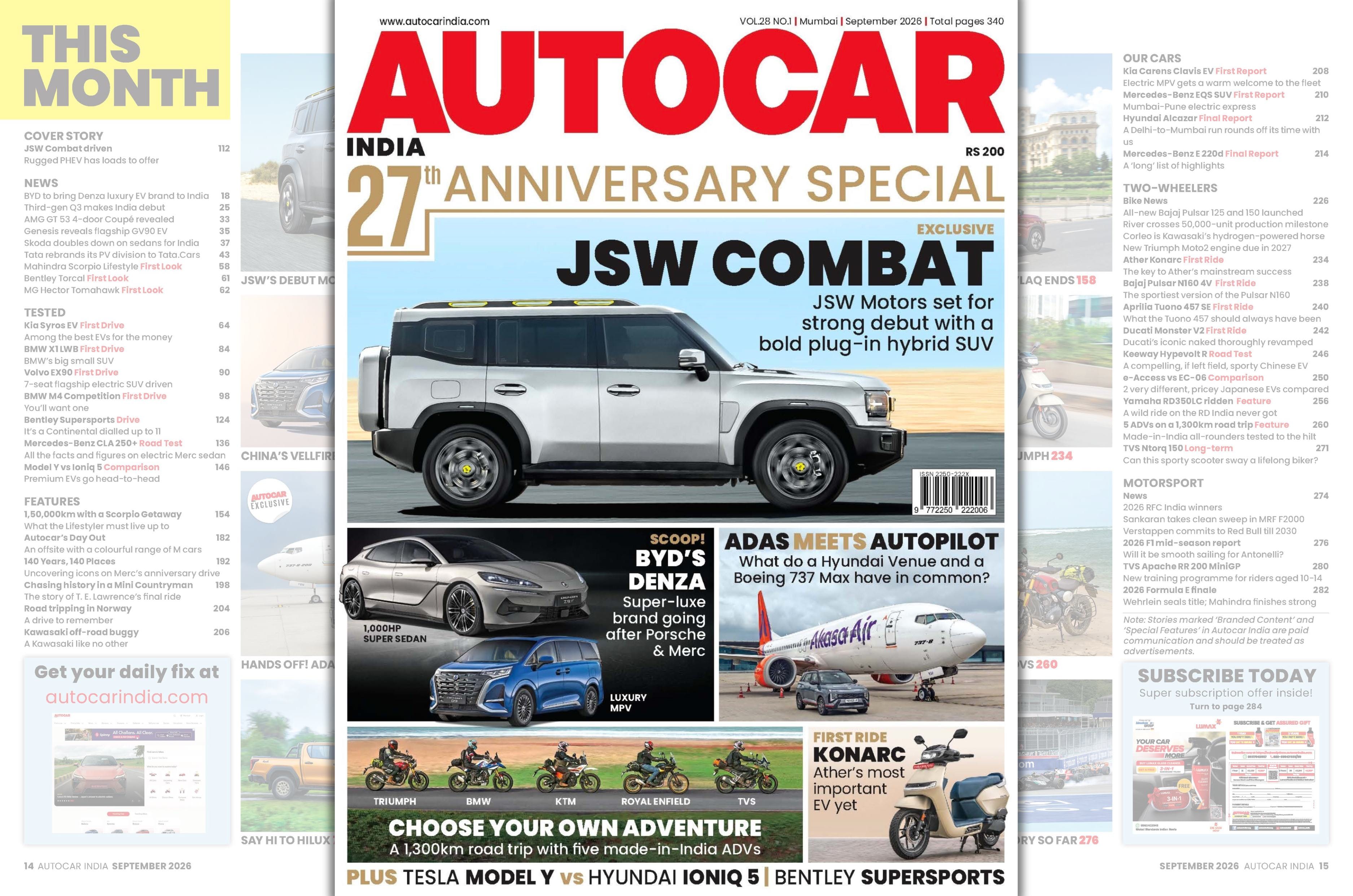
Autocar India September 2026: JSW Combat, Scorpio Lifestyler, BYD Denza and more

Autocar India September 2026: JSW Combat, Scorpio Lifestyler, BYD Denza and more
Autocar India Sept 2026 issue

Autocar India turns 27, and rather than quietly celebrating with a cake, we’ve celebrated the way we know best: with scoops, exclusive drives and a frankly unreasonable amount of driving. In this issue, we bring you an exclusive drive of JSW’s new Combat SUV (you heard the name here first), a scoop on BYD’s Denza luxury push, and the last leg of the 20,000km Pune-to-Prague odyssey, alongside a serious collection of new cars and bikes. Oh, and there’s also a Boeing 737 Max aircraft involved. Because apparently cars weren’t complicated enough.

JSW Combat: Review

JSW’s first SUV is a rugged plug-in hybrid based on the Jetour T2. We get an early exclusive drive of the Combat and examine whether this newcomer really has what it takes to shake up the Rs 30-50 lakh SUV market. 

BYD Denza: China’s Luxury Offensive

BYD is bringing Denza to India, with luxury EVs like the D9 MPV and Z9 GT aimed squarely at the established big boys. Having disrupted the mid-range EV market with BYD, it is now going after the high-end market with Denza. 

ADAS Meets Autopilot: Hands Off!/Look ma, no hands!

What do a Hyundai Venue and a Boeing 737 Max have in common? Quite a lot, apparently. We climb into a full-flight simulator to understand how aircraft autopilot works and what it has in common with the increasingly sophisticated systems in our cars. 

Skoda Kylaq: Pune to Prague, Part 2

The Silk Route may have been built for traders, but we’ve used it to find out just how far you can take a small SUV before it starts asking for a holiday. After 19,000km, 70 days and not a single puncture, our Skoda Kylaq finally reaches Prague. 

Autocar’s Day Out: M-ployees of the Month

Most company off-sites involve a resort, a buffet and someone reluctantly joining a team-building exercise. Ours involved six BMW M cars, more than 3,000hp, a deserted concrete ground and a frankly irresponsible amount of tyre abuse. Four M4s and two M2s went head-to-head in slalom, football and drifting, and what began as a relaxing team outing rapidly descended into a war. 

Tesla Model Y vs Hyundai Ioniq 5: Comparison 

Two premium EVs, two very different ideas about what an electric car should be. The Model Y with its recently revised price, and the updated Ioniq 5 go head-to-head to see which makes the stronger case. 

Bentley Supersports: Drive

Take a Continental GT and turn the dial towards something completely unnecessary. The result is Bentley’s Supersports, a rear-wheel-driven beast with considerably more intent. We drive it around Laguna Seca.

Mini Countryman C: First Drive 

The Countryman has grown into a proper luxury SUV, with generous space, loads of kit and a new 1.5-litre turbo. At Rs 47.5 lakh, it’s the biggest and most grown-up Mini yet, and is ready to lock eyes with real luxury SUVs rather than merely be a fashion statement. But has it done that?

5 Ways to Adventure: Feature

Five made-in-India ADVs, 1,300km and one simple question: which is the best way to go exploring? We put the bikes through highway miles, trail riding and plenty of scenic detours to see how their different approaches to adventure stack up.

Ather Konarc: First Ride

Ather’s new Konarc brings the brand’s blend of quality and comfort to a wider audience, with prices starting at Rs 99,999. A compelling new step into the mainstream.

Suzuki e-Access vs Yamaha EC-06: Comparison

Japan finally answers India’s e-scooter boom, and the two takes couldn’t be more different – one built from scratch, the other born from an Indian startup partnership. Which one takes the crown?

Get the latest issue on Amazon and Flipkart.

Autocar India September 2026 issue

Autocar India turns 27, and rather than quietly celebrating with a cake, we’ve celebrated the way we know best: with scoops, exclusive drives and a frankly unreasonable amount of driving. In this issue, we bring you an exclusive drive of JSW’s new Combat SUV (you heard the name here first), a scoop on BYD’s Denza luxury push, and the last leg of the 20,000km Pune-to-Prague odyssey, alongside a serious collection of new cars and bikes. Oh, and there’s also a Boeing 737 Max aircraft involved. Because apparently cars weren’t complicated enough.

JSW Combat: Review

JSW’s first SUV is a rugged plug-in hybrid based on the Jetour T2. We get an early exclusive drive of the Combat and examine whether this newcomer really has what it takes to shake up the Rs 30-50 lakh SUV market. 

BYD Denza: China’s Luxury Offensive

BYD is bringing Denza to India, with luxury EVs like the D9 MPV and Z9 GT aimed squarely at the established big boys. Having disrupted the mid-range EV market with BYD, it is now going after the high-end market with Denza. 

ADAS Meets Autopilot: Hands Off!/Look ma, no hands!

What do a Hyundai Venue and a Boeing 737 Max have in common? Quite a lot, apparently. We climb into a full-flight simulator to understand how aircraft autopilot works and what it has in common with the increasingly sophisticated systems in our cars. 

Skoda Kylaq: Pune to Prague, Part 2

The Silk Route may have been built for traders, but we’ve used it to find out just how far you can take a small SUV before it starts asking for a holiday. After 19,000km, 70 days and not a single puncture, our Skoda Kylaq finally reaches Prague. 

Autocar’s Day Out: M-ployees of the Month

Most company off-sites involve a resort, a buffet and someone reluctantly joining a team-building exercise. Ours involved six BMW M cars, more than 3,000hp, a deserted concrete ground and a frankly irresponsible amount of tyre abuse. Four M4s and two M2s went head-to-head in slalom, football and drifting, and what began as a relaxing team outing rapidly descended into a war. 

Tesla Model Y vs Hyundai Ioniq 5: Comparison 

Two premium EVs, two very different ideas about what an electric car should be. The Model Y with its recently revised price, and the updated Ioniq 5 go head-to-head to see which makes the stronger case. 

Bentley Supersports: Drive

Take a Continental GT and turn the dial towards something completely unnecessary. The result is Bentley’s Supersports, a rear-wheel-driven beast with considerably more intent. We drive it around Laguna Seca.

Mini Countryman C: First Drive 

The Countryman has grown into a proper luxury SUV, with generous space, loads of kit and a new 1.5-litre turbo. At Rs 47.5 lakh, it’s the biggest and most grown-up Mini yet, and is ready to lock eyes with real luxury SUVs rather than merely be a fashion statement. But has it done that?

5 Ways to Adventure: Feature

Five made-in-India ADVs, 1,300km and one simple question: which is the best way to go exploring? We put the bikes through highway miles, trail riding and plenty of scenic detours to see how their different approaches to adventure stack up.

Ather Konarc: First Ride

Ather’s new Konarc brings the brand’s blend of quality and comfort to a wider audience, with prices starting at Rs 99,999. A compelling new step into the mainstream.

Suzuki e-Access vs Yamaha EC-06: Comparison

Japan finally answers India’s e-scooter boom, and the two takes couldn’t be more different – one built from scratch, the other born from an Indian startup partnership. Which one takes the crown?

Get the latest issue on our subscriptions website, Amazon, and Flipkart.

Simple Energy crosses 10,000 annual sales for the first time

Simple Energy crosses 10,000 annual sales for the first time
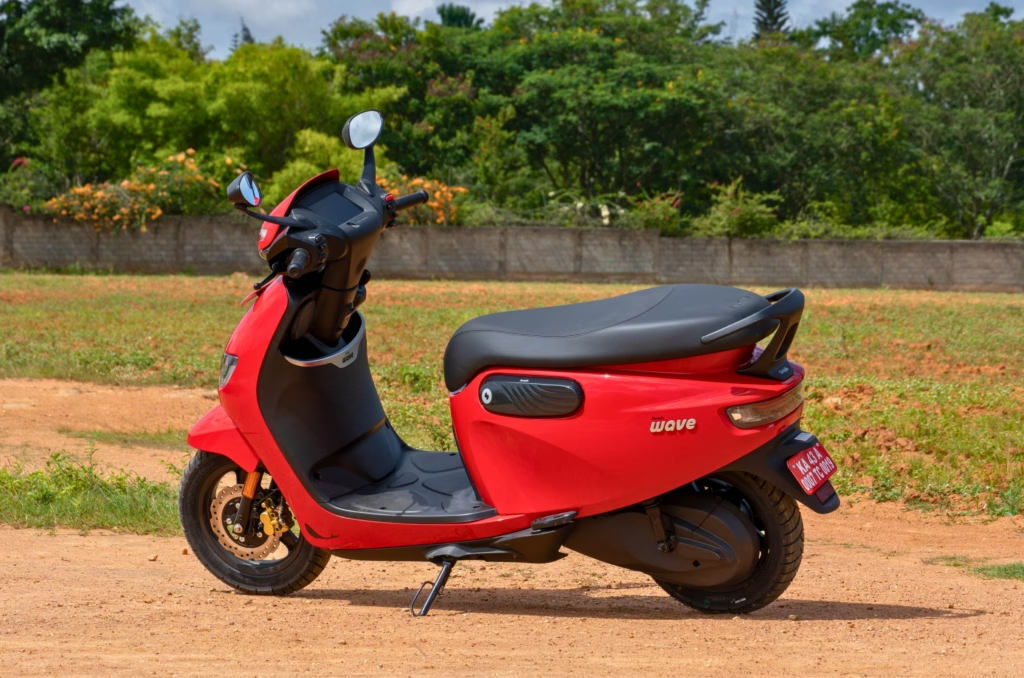
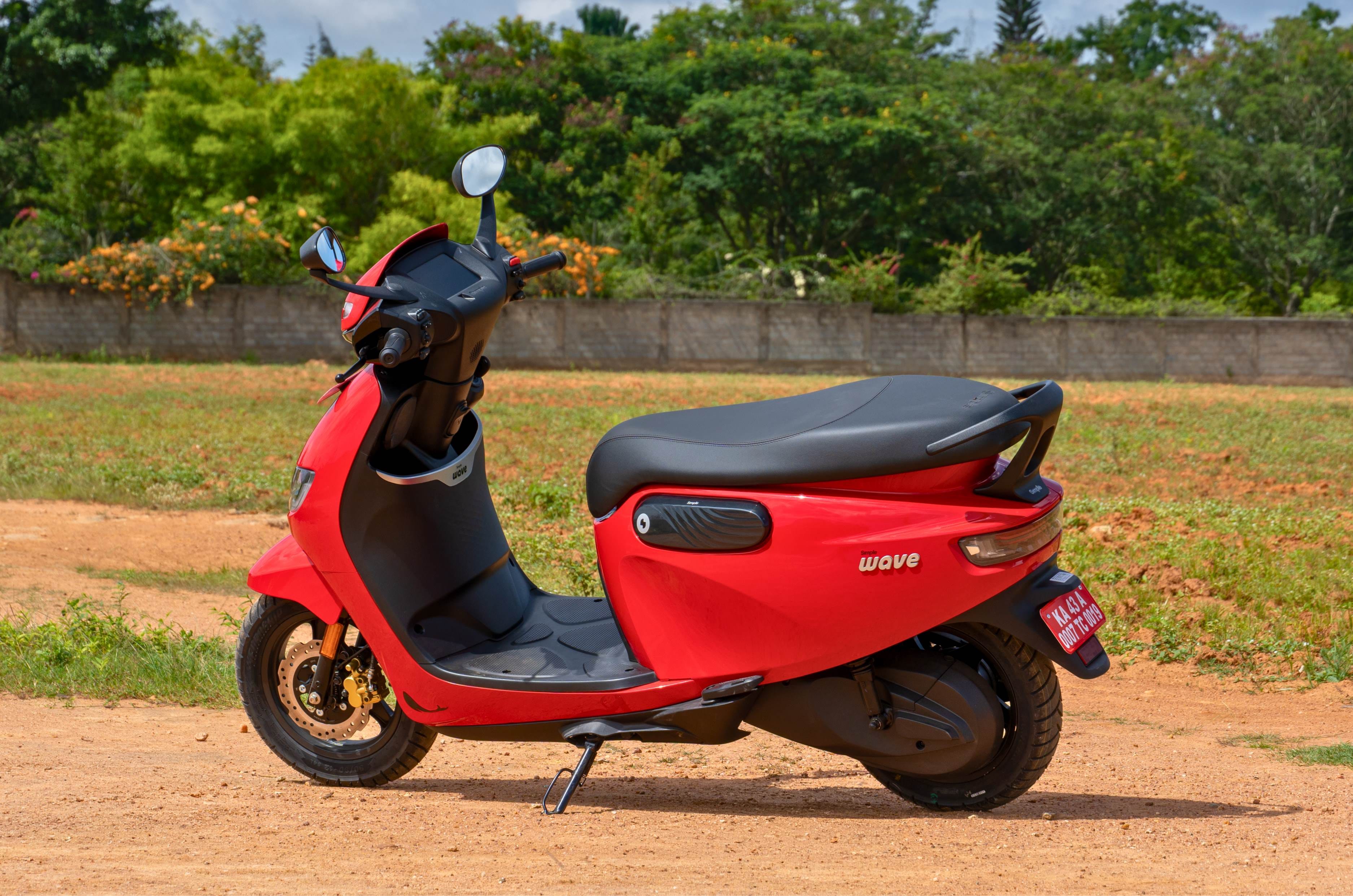
An outside shot showing the left side of the Simple Wave in Coral Red colour.

Simple Energy, which has been a regular in the monthly top 10 electric 2W OEM listing since February 2026 with its Simple One performance EV scooter, has clocked cumulative sales of over 10,000 units in the first eight months of this year. As per Vahan, between January and August 2026, the Bengaluru-based EV startup registered deliveries of 10,429 units, which is 203 percent more compared to last year’s 3,436 units for the same period. This momentum comes just as Simple launched its most affordable scooter yet, Wave, priced at Rs 1.10 lakh (ex-showroom, Bengaluru) and its entry into the family scooter segment.

  1. Wave makes the brand more accessible with a lower Rs 1.10 lakh ex-showroom price
  2. Brand has consistently averaged as the top nine EV seller in India since February 2026

Wave is expected to be the sales topper for Simple

The family EV scooter is based on One, but more practical

With the Wave, Simple Energy is hoping to make, well, waves in the family e-scooter segment, which has been dominated by the TVS iQube, Bajaj Chetak and Hero Vida for the past couple of years. Add Ather Rizta with its steadily growing sales, and the new Konarc to that list of rivals as well. Compared to the more performance-based One, Wave targets a much wider customer with its base S 2.2 variant pricing (Rs 1.10 lakh, ex-showroom) as also the focus around everyday practicality, ride comfort, and usability across different rider demographics.

The scooter has four variants as per the battery capacity. The base Wave S is offered in two battery capacities: 2.2kWh (110km IDC range) and 2.7kWh (132Km IDC range). While the middle variant, Wave, has a 3.7kWh battery and 171km of IDC range, and the top Wave + variant has a 5kWh battery and has a 243km IDC range, the highest in its segment. Simple has announced that deliveries will commence on September 25.

Production capacity and showrooms are being increased

The increased presence is expected to improve the brand’s sales

In tandem with the Wave’s launch and expected market demand, the company states that it is scaling its manufacturing and retail footprint. The company currently has a production capacity of 3,000 units per month, and has over 75 outlets across 63 cities in India including Bengaluru, Delhi, Patna, Nagpur, Bhopal, Agra, Goa, Vijayawada, Hyderabad, Kochi, and Chennai.

Simple Energy Sales

Year

Units

YoY percentage change

CY2023

66


CY2024

1,433


CY2025

6,628

362

CY2026

10,429

203

Cumulative total

18,556


As per Vahan’s data, From January 1 till August 31, 2026

For Simple, whose highest monthly retails were in March 2026 (1,780 units), the new Wave gives it an opportunity to target the highest-selling sub-category in e-2Ws: the family scooter. Simple ranked 13 in CY2025 sales and entered the top 10 for the first time in February 2026 and has consistently averaged ninth position since. The brand has cumulatively sold 18,556 units since sales began in 2023. It remains to be seen if the Wave turns out to be the much needed boost for the brand to climb up higher on that list.

With inputs from Stephen Raj Antony.

Simple Wave Launched from Rs 1.10 lakh

Simple Wave Launched from Rs 1.10 lakh
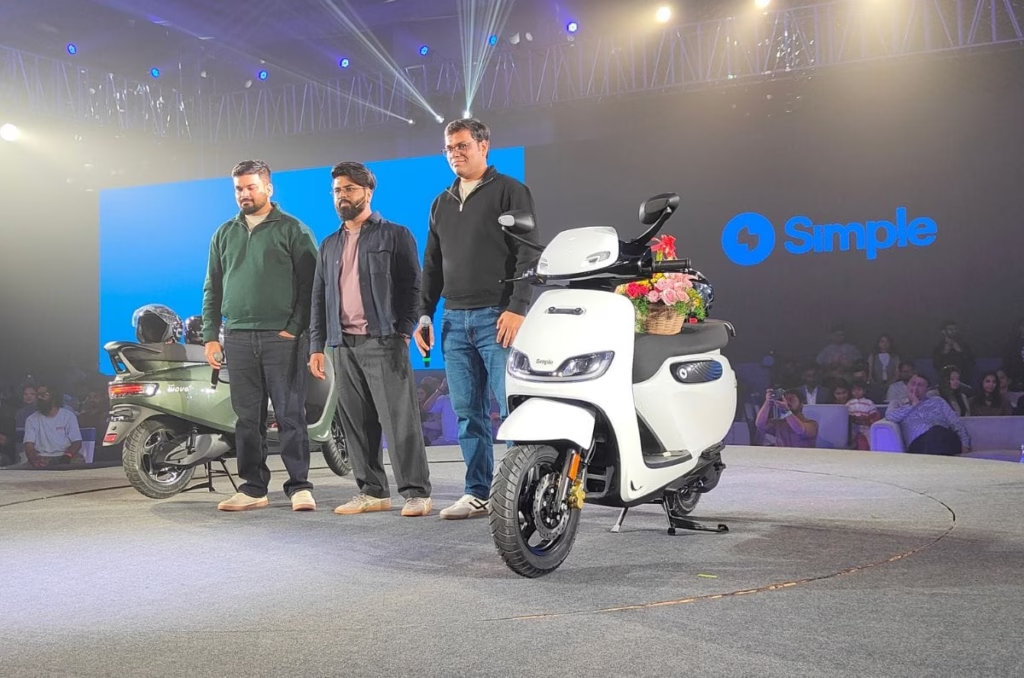
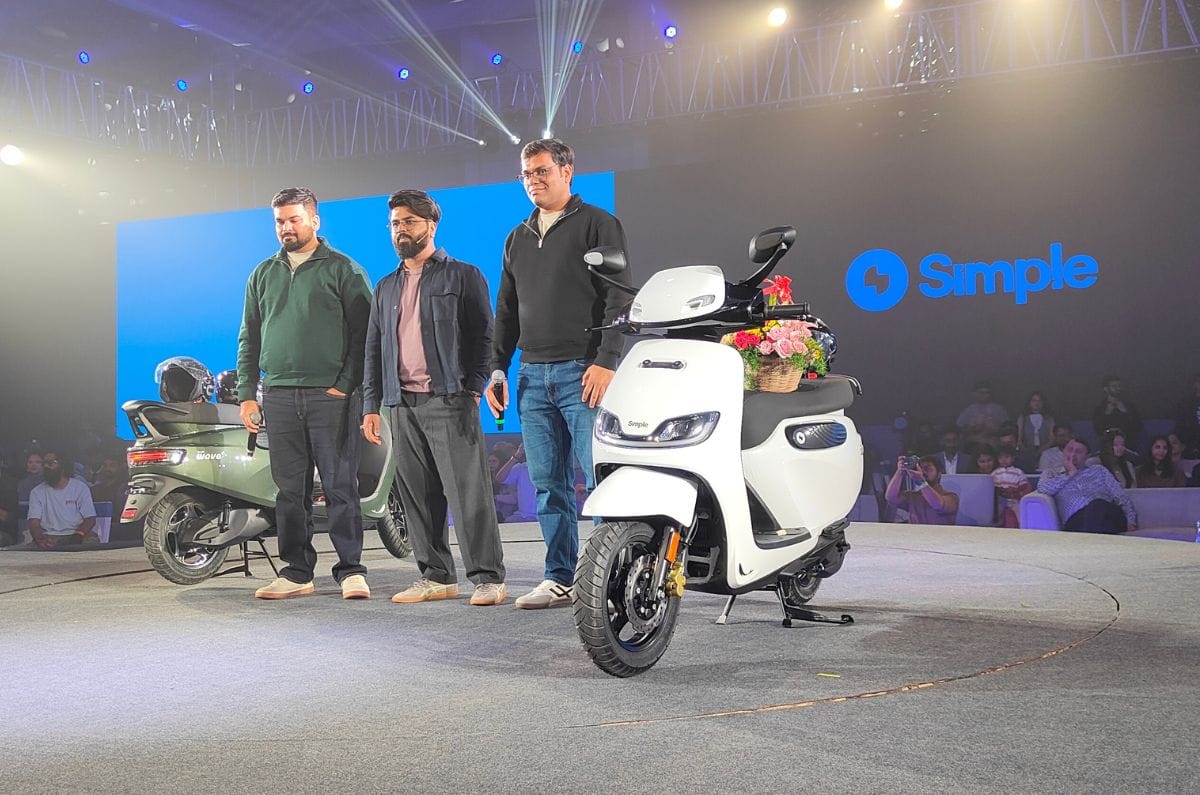
An indoor shot showing the new Wave scooter with the founders of Simple Energy on stage

Simple, the Bengaluru based EV startup, has finally launched their family scooter Wave today. The scooter was first spotted testing back in March this year and was earlier referred to as Arrive during development. Simple is looking to position this as a mass market scooter compared to their sharp, performance focussed One and One S.

  1. Simple Wave has four variants; six, if you count instrument cluster options
  2. Lowest variant has a 2.2kWh battery, top variant has a 5kWh battery
  3. Delivery starts from 25 September 2026

Simple Wave: What you should know

New and improved motor, battery, and design

The Wave is based on an updated platform of the brand’s One scooter range. The first update is to the suspension, with the Wave using a twin shock rear suspension (compared to the One’s monoshock) and a much longer seat. Speaking of which, the Wave has a whopping 920mm long seat, claimed to be the longest scooter seat in the country. The other headline is the 70L storage in the Wave. Of which, 63 litres come from the under seat compartment, three litres on the front apron cubby, and four litres from a quick access pocket on the left side of the rider’s seat (called Pill Storage). An identical pocket for the right side is offered as an accessory.

The Wave has four variants by battery capacity. The base WaveS is offered in two battery capacities, 2.2kWh and 2.7kWh with 110km and 132km of IDC range, respectively. The middle variant, Wave, has a 3.7kWh battery and 171km of IDC range, and the top Wave+ variant has a 5kWh battery and 243km of IDC range. Wave+ currently has the highest range in its segment. Compared to the One range, the powertrain has seen updates all over. The 6.4kW motor has been updated to third generation and so has the Battery Management System, with the overall size of the motor reduced by 15 percent.

For context, the One uses a 5kWh battery and an 8.8kW motor; the One S has a 3.7kWh battery and a 6.4kW motor. They offer up to 265km and 190km of claimed range, respectively. Do note that there’s also a One Ultra with a 6.5kWh battery and a motor with 8.8kW of power with a claimed 400km range, but the delivery dates for that have not been announced so far. The One Ultra is currently the most expensive scooter from Simple, priced at Rs 2.35 lakh (ex-showroom, Bengaluru).

The scooter’s design has also shifted to a sleeker silhouette, letting go of the One’s sharp and aggressive lines. Simple claims it’s inspired by water, as opposed to air for the One range. However, the Wave retains the 7-inch TFT instrument cluster. The Wave+ gets it as standard, whereas the lower variants offer an option between the TFT or an InfinityBlack LCD cluster. The WaveS variants get three ride modes (EcoX, Eco, and Ride) with a claimed top speed of 75kph. Wave and Wave+ variants add an additional Sports mode and increases the top speed to 90kph. The 2.2kWh variant is available in two colours, 2.7kWh variants in four, and the 3.7kWh and 5kWh variants in six colours.

First spotted on the test mule, the Wave swaps the rear disc from the One range for a more cost-effective rear drum brake but retains the Combined Braking System (CBS) across all four variants. However, the One scooters offer traction control as standard rider aid, with the Wave limiting it to — called GripSense now — on the higher variants. Dimensions-wise, compared to the One range, seat height has been lowered by 5mm to 775mm and ground clearance has been increased by 3mm to 175mm.

The Simple Wave has been priced starting at Rs 1.10 lakh (ex-showroom, Bengaluru). Simple has announced that deliveries commence from September 25. Prices for the higher variants hasn’t been revealed, and Simple hasn’t clarified if the delivery date applies to all the variants. With its pricing, the Simple Wave directly rivals other EV scooters like the new Ather Konarc, Bajaj Chetak, Hero Vida, and TVS iQube, with range as its biggest trump card over all of them.
 

न नौकरी छोड़ने की जरूरत, न ऑफिस का झंझट! इस साइड बिजनेस से 5 लाख महीने कमाने का दावा

आज के दौर में नौकरी के साथ एक्सट्रा कमाई का रास्ता तलाशने वालों की संख्या लगातार बढ़ रही है। कोई ऑनलाइन काम शुरू करता है तो कोई कंटेंट क्रिएशन या छोटे कारोबार में हाथ आजमाता है। इसी बीच एक्स पर एक यूजर की पोस्ट ने लोगों का ध्यान खींचा है, जिसमें एक ऐसे साइड बिजनेस का जिक्र किया गया है, जिसे शुरू करने के लिए बड़े निवेश की जरूरत नहीं बताई गई है। पोस्ट के मुताबिक, कुछ लोग इसी काम को पार्ट-टाइम करते हुए हर महीने करीब 5 लाख रुपये तक कमा रहे हैं।

खास बात यह है कि इसके लिए न अपना ऑफिस खोलने की जरूरत बताई गई है और न ही कर्मचारियों या सामान के स्टॉक का झंझट है। यही वजह है कि सोशल मीडिया पर इस कमाई के मॉडल को लेकर दिलचस्पी बढ़ गई है। हालांकि, असल कमाई कितनी होगी, यह कई बातों पर निर्भर कर सकता है।

न दुकान, न स्टाफ… फिर कमाई कैसे?

एक्स यूजर अंकित पांडे ने बताया कि उनके कुछ दोस्त रियल एस्टेट में फ्रीलांसिंग के जरिए अच्छी कमाई कर रहे हैं। उन्होंने इसे ‘रियल एस्टेट फ्रीलांसिंग’ नाम दिया और दावा किया कि इसे बेहद कम शुरुआती खर्च के साथ शुरू किया जा सकता है।

उनके मुताबिक, सबसे पहले अपने शहर के कई बिल्डरों से संपर्क करना होगा और उनके चैनल पार्टनर प्रोग्राम से जुड़ना होगा। इसके बाद उनके प्रोजेक्ट, कीमत, भुगतान योजना और कब्जे की तारीख जैसी जानकारी समझनी होगी।

असली काम है खरीदार ढूंढना

बिल्डरों से जुड़ने के बाद अगला कदम संभावित ग्राहकों तक पहुंचना है। पांडे के अनुसार, खरीदार सोशल मीडिया, दोस्तों, रिश्तेदारों, सहकर्मियों और अपने निजी नेटवर्क के जरिए खोजे जा सकते हैं। यानी इस काम में दुकान खोलने या कोई सामान खरीदकर रखने की जरूरत नहीं है। मुख्य भूमिका खरीदार और बिल्डर के बीच संपर्क बनाने, भरोसा कायम करने और सौदा पूरा कराने की होती है।

50 लाख के फ्लैट पर कितना बन सकता है कमीशन?

पांडे ने अपनी पोस्ट में एक उदाहरण के जरिए कमाई का गणित समझाया। उनके मुताबिक, अगर 50 लाख रुपये के फ्लैट पर 3 प्रतिशत कमीशन मिले, तो एक सौदे से 1.5 लाख रुपये बन सकते हैं। इसी हिसाब से तीन फ्लैट बिकने पर करीब 4.5 लाख रुपये और चार सौदों पर 6 लाख रुपये तक कमीशन बन सकता है। हालांकि, रियल एस्टेट में कमीशन की दर हर जगह एक जैसी नहीं होती। यह बिल्डर, प्रोजेक्ट और समझौते के आधार पर अलग-अलग हो सकती है।

सुनने में आसान, लेकिन सौदा पक्का करना मुश्किल

सोशल मीडिया पर कुछ लोगों ने इस मॉडल को आकर्षक जरूर माना, लेकिन कई यूजर्स ने इसकी असली चुनौती भी बताई। उनका कहना था कि खरीदार ढूंढना और आखिर में डील बंद करना उतना आसान नहीं है, जितना पोस्ट में दिखाई देता है।

एक यूजर ने कहा कि इस काम में ग्राहकों की तलाश के साथ जोखिम भी जुड़ा होता है। वहीं, दूसरे ने बताया कि कमीशन आकर्षक लग सकता है, लेकिन ग्राहक को मनाकर सौदा पूरा करना काफी मुश्किल होता है।

30 साल से यही काम कर रहे अंकल

एक यूजर ने अपने परिवार का अनुभव साझा करते हुए बताया कि उसके अंकल करीब तीन दशक से रियल एस्टेट का काम कर रहे हैं। कभी उनके महीने में 5-7 घर तक बिक जाते हैं, तो कभी लगातार 4-6 महीने तक एक भी सौदा नहीं होता। उन्होंने यह भी कहा कि उनके परिवार की आर्थिक स्थिति इसलिए संभल जाती है क्योंकि उनकी पत्नी सरकारी नौकरी में हैं। उनके मुताबिक, रियल एस्टेट का यह काम ऐसे व्यक्ति के लिए चुनौतीपूर्ण हो सकता है जो अपने परिवार का अकेला कमाने वाला सदस्य हो।

‘साइड इनकम’ का मौका या पूरी तरह बिक्री पर निर्भर काम?

इस पूरी चर्चा ने रियल एस्टेट फ्रीलांसिंग की एक दिलचस्प तस्वीर सामने रखी है। इसमें शुरुआती निवेश कम हो सकता है, लेकिन कमाई पूरी तरह ग्राहकों, बिक्री और सौदे पूरे होने पर निर्भर करती है। यानी कागज पर यह मॉडल जितना आसान दिखता है, असल जिंदगी में उतना ही नेटवर्क, भरोसे और बिक्री की क्षमता का खेल है। सोशल मीडिया पर 5 लाख रुपये महीने की कमाई का दावा भले आकर्षक हो, लेकिन हर व्यक्ति के लिए इतनी आय की गारंटी नहीं मानी जा सकती।

डिस्क्लेमर: यह रिपोर्ट सोशल मीडिया पर यूज़र द्वारा शेयर किए गए कंटेंट पर आधारित है। मनीकंट्रोल इन दावों की न तो स्वतंत्र रूप से पुष्टि नहीं करता है और न ही इनका समर्थन करता है।

VIDEO: पति को अचानक शुरू हुई उल्टियां, रात में दवा लेने निकली डॉक्टर… फिर बताई भारत की वो सुविधा जो विदेश में आसानी से नहीं मिलती

Highest Paying Jobs: सॉफ्टवेयर इंजीनियर नहीं, ये लोग कमा रहे लाखों! PG मालिक से चायवाले तक की लिस्ट वायरल

भारत में अक्सर युवाओं को बताया जाता है कि IIT की पढ़ाई, FAANG जैसी बड़ी टेक कंपनियों में नौकरी या Data Structures and Algorithms (DSA) में महारत हासिल करना अच्छी कमाई का सबसे आसान रास्ता है। लेकिन टेक और AI कमेंटेटर साक्षी ने सोशल मीडिया पर एक मजेदार लिस्ट शेयर कर इस सोच को ही उलट दिया। उन्होंने भारत में इस समय सबसे ज्यादा कमाई करने वाले लोगों की एक मजाकिया रैंकिंग साझा की, जिसमें सॉफ्टवेयर इंजीनियर टॉप पर नहीं, बल्कि काफी पीछे नजर आए। इस लिस्ट में PG मालिक, मकान मालिक, पानी के टैंकर वाले और चाय-सिगरेट की दुकान चलाने वाले शामिल हैं।

नंबर-1 पर PG मालिक, एक कमरे से लाखों की कमाई

साक्षी की इस मजेदार रैंकिंग में सबसे ऊपर PG मालिक को रखा गया। उन्होंने बताया कि शहरों में बढ़ती नौकरी और किराए की मांग का फायदा PG के मालिकों को मिल रहा है। उनके मुताबिक, एक कमरे में तीन लोगों को रखा जाता है और हर व्यक्ति से करीब ₹10,000 से ₹15,000 तक किराया लिया जाता है। इस हिसाब से कुछ PG मालिक किराया और दूसरे खर्च निकालने के बाद भी ₹1 लाख से ₹1.5 लाख महीने तक कमा सकते हैं। यही वजह है कि पोस्ट में PG बिजनेस को आज के दौर के सबसे कमाई वाले कामों में से एक बताया गया।

बेंगलुरु के मकान मालिक भी पीछे नहीं

लिस्ट में तीसरे नंबर पर बेंगलुरु के मकान मालिक का जिक्र किया गया। टेक सिटी में किराए की बढ़ती मांग को लेकर अक्सर सोशल मीडिया पर चर्चाएं होती रहती हैं। पोस्ट में मजाकिया अंदाज में बताया गया कि दो बेडरूम का फ्लैट खरीदकर उसे करीब ₹50,000 महीने के किराए पर देना, हर साल किराया बढ़ाना और WhatsApp पर सिर्फ ‘last price’ लिखकर बातचीत खत्म करना भी कमाई का शानदार तरीका बन गया है।

पानी के टैंकर वाले भी बने ‘बिजनेस किंग’

बेंगलुरु में पानी की समस्या किसी से छिपी नहीं है। इसी को लेकर साक्षी ने पानी के टैंकर संचालकों को भी अपनी लिस्ट में जगह दी। उन्होंने मजाकिया अंदाज में लिखा कि ये लोग बेंगलुरु का ही पानी वापस बेंगलुरु के लोगों को बेचते हैं। पानी की कमी के समय टैंकरों की मांग बढ़ने से इस कारोबार की कमाई भी बढ़ जाती है।

ब्रोकरों की कमाई का भी किया जिक्र

रैंकिंग में प्रॉपर्टी ब्रोकर भी शामिल हैं। पोस्ट के मुताबिक, कुछ ब्रोकर किरायेदारों को कई ऐसे घर दिखाते हैं जो उनकी जरूरत के मुताबिक नहीं होते और आखिर में डील होने पर किरायेदार और मकान मालिक, दोनों से करीब एक महीने के किराए के बराबर कमीशन ले लेते हैं। बेंगलुरु जैसे शहरों में लगातार घर बदलने वाले किरायेदारों की बड़ी संख्या के कारण यह काम भी अच्छी कमाई वाला बताया गया।

टेक पार्क के बाहर चाय-सिगरेट वाला भी हिट

इस लिस्ट में दूसरे नंबर पर जिस शख्स को रखा गया, वह शायद सबसे ज्यादा चौंकाने वाला नाम है टेक पार्क के बाहर चाय, सिगरेट और स्नैक्स बेचने वाला दुकानदार। साक्षी ने उसे टेक इंडस्ट्री का ‘अनसंग हीरो’ बताया। उनके अनुसार, हजारों सॉफ्टवेयर इंजीनियर रोजाना चाय, सिगरेट और स्नैक्स के लिए ऐसी दुकानों पर निर्भर रहते हैं। पोस्ट में अनुमान लगाया गया कि अच्छी लोकेशन वाली ऐसी दुकान से कुछ दुकानदार ₹30,000 से ₹50,000 महीने तक कमा सकते हैं।

न MBA, न फंडिंग, फिर भी कमाई!

इस पूरी पोस्ट का सबसे मजेदार हिस्सा यही था। चाय-सिगरेट की दुकान के लिए न किसी MBA की जरूरत है, न pitch deck की और न ही startup funding की। साक्षी ने इसी अंदाज में टेक इंडस्ट्री पर तंज कसते हुए बताया कि जहां इंजीनियर नौकरी और प्रमोशन के लिए लगातार मेहनत कर रहे हैं, वहीं कुछ छोटे कारोबारी रोजमर्रा की जरूरतों के दम पर अच्छी कमाई कर रहे हैं।

सॉफ्टवेयर इंजीनियरों पर आया सबसे बड़ा तंज

पोस्ट के अंत में सॉफ्टवेयर इंजीनियरों को लेकर सबसे मजेदार टिप्पणी की गई। साक्षी ने लिखा कि जब बाकी लोग अलग-अलग तरीकों से कमाई कर रहे हैं, तब सॉफ्टवेयर इंजीनियर रात 2 बजे तक DSA के सवाल हल कर रहे हैं और उम्मीद कर रहे हैं कि अगली salary hike अच्छी होगी।

सोशल मीडिया यूजर्स ने भी लिए मजे

साक्षी की पोस्ट को सोशल मीडिया पर जबरदस्त प्रतिक्रिया मिली और इसे खबर लिखने तक 1.5 लाख से ज्यादा व्यूज मिले। यूजर्स ने भी अपने-अपने अंदाज में इस रैंकिंग पर मजेदार प्रतिक्रियाएं दीं। एक यूजर ने मजाक करते हुए कहा कि सॉफ्टवेयर इंजीनियरों ने कमाई का सबसे मुश्किल रास्ता चुना है और उन्हें DSA की तैयारी के बजाय पानी का टैंकर खरीद लेना चाहिए था। एक अन्य यूजर ने बेंगलुरु का असली ‘product-market fit’ AI या सॉफ्टवेयर नहीं, बल्कि चाय, प्रॉपर्टी और मेट्रो से दूरी का गणित बताया। एक यूजर ने टैक्स को लेकर भी तंज कसा और कहा कि इन कामों में कमाई करने वालों में शायद सॉफ्टवेयर इंजीनियर ही ऐसा व्यक्ति है जो नियमित रूप से इनकम टैक्स और ITR जैसी चीजों से जूझता है।

डिस्क्लेमर: यह रिपोर्ट सोशल मीडिया पर यूज़र द्वारा शेयर किए गए कंटेंट पर आधारित है। मनीकंट्रोल इन दावों की न तो स्वतंत्र रूप से पुष्टि नहीं करता है और न ही इनका समर्थन करता है।

MPSC Paper Leak: गर्लफ्रेंड को पास कराने के लिए एमपीएससी का पेपर कर दिया लीक! इंस्पेक्टर ने खोला राज, एग्जाम रद्द; 6 गिरफ्तार

E3 Electric opens its first store in Bengaluru

E3 Electric opens its first store in Bengaluru

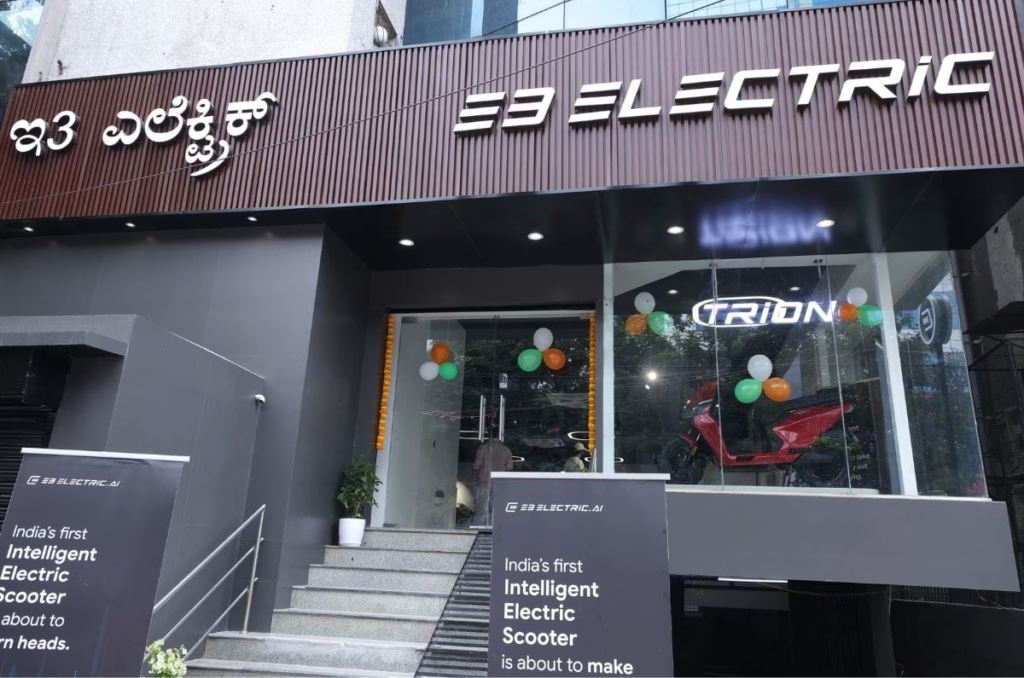
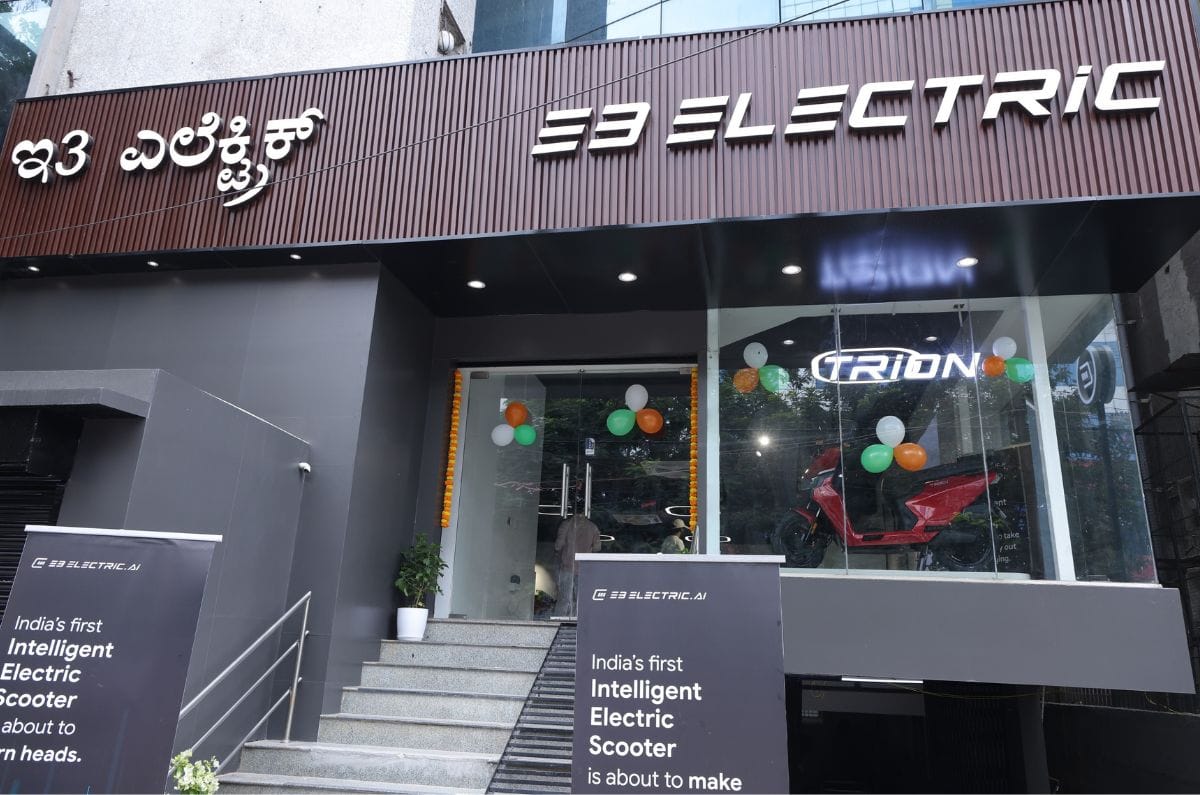
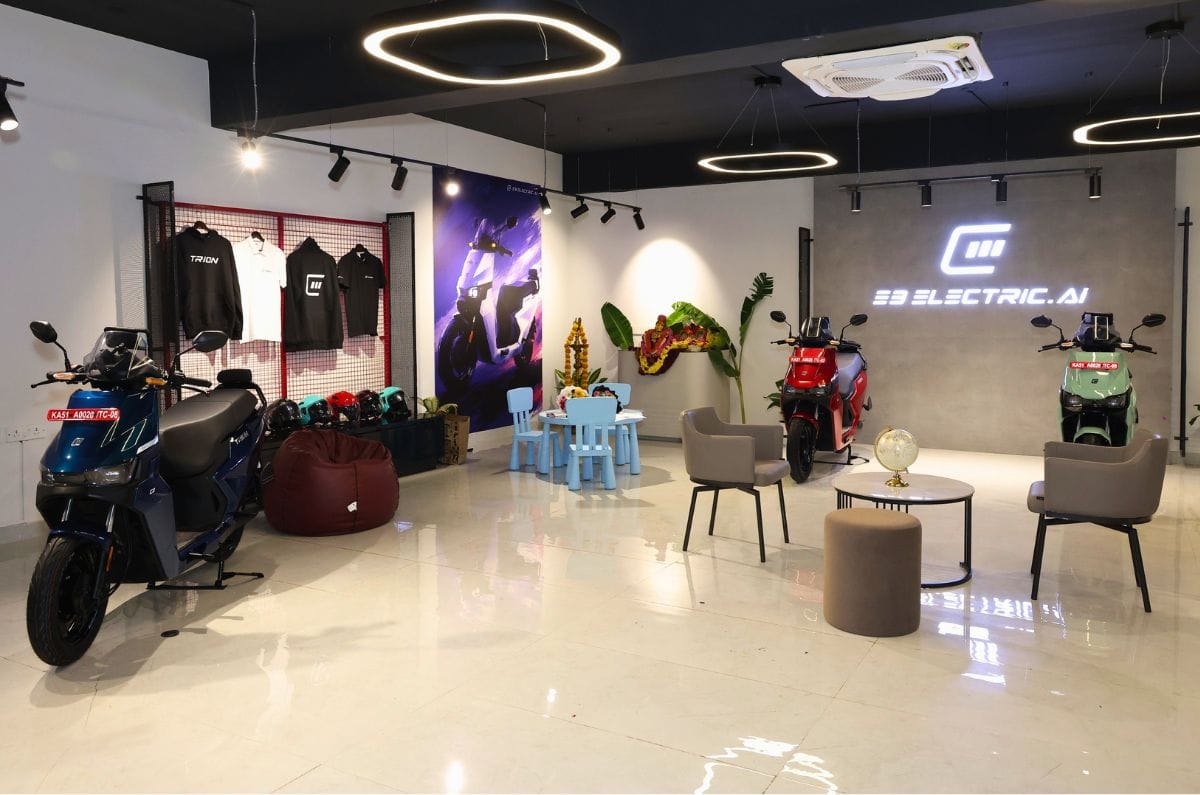
E3 Electric.AI – the newest entrant in India’s growing electric 2-wheeler market has opened its doors to customers at its first flagship experience centre in Koramangala, Bengaluru, spanning over 2,500 square feet offering sales, service and spares backup under one roof. Along with this, the brand has also highlighted its expansion across the country. 

  1. The flagship store spans over 2,500sq. ft.
  2. E3 Electric.AI currently has three models on offer
  3. 6 more stores in Bengaluru and 100 more stores planned across India in the current financial year.

E3 Electric.AI to open 6 more stores in Bengaluru

This startup currently has three models on sales – C1, C1X, C2

While this flagship store is situated in Koramangala, Bengaluru, E3 says that there are six more stores opening in Bengaluru in the coming months, although a clear timeline hasn’t been provided. In addition to that, the brand also plans to expand in Mysuru as part of its Karnataka expansion.

In terms of its pan-India expansion, the brand aims to open about 100 stores in 90 markets during the current financial year. With a similar ethos as the first store – customer-first and experience-led.

As for the products on offer, this Bengaluru based startup has 3 models on offer – C1, C1x and C2. The entry-level Trion C1 uses a removable 2.3kWh LFP battery, while the C1x and C2 get larger, fixed 3kWh LFP units. 

The Trion rides on 14-inch wheels, which are larger than those on most electric scooters currently on sale in India.

Business idea: 1 करोड़ की नौकरी छोड़ भारत लौटा इंजीनियर! सिर्फ ₹90,000 से शुरू किया बिजनेस, 6 साल में हासिल किया बड़ा मुकाम

Business idea: अमेरिका में करोड़ों की सैलरी वाली नौकरी छोड़कर भारत लौटने वाले भारतीयों की संख्या लगातार बढ़ रही है। बेहतर पारिवारिक जीवन, भारत में बढ़ते स्टार्टअप अवसर और कुछ नया करने की चाह लोगों को वापस देश आने के लिए प्रेरित कर रही है। इसी कड़ी में चेन्नई के युवा उद्यमी विवेक तिरुवेंगडम (Vivek Thiruvengadam) की कहानी इन दिनों सोशल मीडिया पर चर्चा का विषय बनी हुई है।

Qubit Fitness के संस्थापक और CEO विवेक तिरुवेंगदम ने बताया कि उन्होंने अमेरिका में करीब 1 करोड़ रुपये सालाना की नौकरी छोड़ दी और परिवार के साथ चेन्नई लौट आए। उस समय उनके पास सिर्फ 90 हजार रुपये की बचत थी। लेकिन उन्होंने इसी रकम से अपना बिजनेस शुरू करने का फैसला किया।

विवेक ने इंस्टाग्राम पर अपनी छह साल की यात्रा साझा करते हुए लिखा कि यह फैसला अचानक नहीं था। उनका मकसद सिर्फ ज्यादा पैसा कमाना नहीं। बल्कि परिवार के करीब रहना और ऐसा काम करना था, जिसका समाज पर सकारात्मक प्रभाव पड़े।

उन्होंने बताया कि अमेरिका में 14 साल बिताने के बाद उन्होंने और उनकी पत्नी ने अपनी 11 महीने की बेटी के साथ भारत लौटने का निर्णय लिया। उनका मानना था कि परिवार के साथ रहकर कुछ नया और सार्थक बनाना किसी बड़ी नौकरी से ज्यादा महत्वपूर्ण है।

Qubit Fitness की कैसे हुई शुरुआत?

जनवरी 2021 में विवेक ने बिना किसी ऑफिस, निवेशक या टीम के Qubit Fitness की शुरुआत की। उनके पास सिर्फ एक लैपटॉप, अपना समय और 90 हजार रुपये की बचत थी। शुरुआती दौर आसान नहीं था। पहले साल कंपनी का कारोबार करीब 20 लाख रुपये तक ही पहुंच पाया, जो अमेरिका में उनकी सालाना आय की तुलना में काफी कम था।

हालांकि, उन्होंने हार नहीं मानी और लगातार मेहनत करते रहे। समय के साथ कंपनी का विस्तार हुआ। नए ग्राहक जुड़े, कामकाज बेहतर हुआ और कारोबार बढ़ता गया। भारत लौटने के छह साल बाद विवेक ने वह वित्तीय लक्ष्य हासिल कर लिया, जिसके लिए उन्होंने यह बड़ा फैसला लिया था।

अपने अनुभव शेयर करते हुए विवेक ने कहा कि उद्यमिता ने उन्हें सिखाया कि लगातार मेहनत, प्रतिभा से भी ज्यादा महत्वपूर्ण होती है। धैर्य का फल देर से मिलता है। लेकिन मिलता जरूर है। उन्होंने यह भी कहा कि उद्देश्य के साथ काम करके कमाया गया पैसा अलग तरह की संतुष्टि देता है।

सफलता का श्रेय परिवार को दिया

विवेक ने अपनी सफलता का श्रेय अपने परिवार, ग्राहकों और शुरुआती दिनों में उनका साथ देने वाले लोगों को दिया। उन्होंने कहा कि इन्हीं लोगों के भरोसे और सहयोग की वजह से वह अपने सपने को हकीकत में बदल पाए। सोशल मीडिया पर उनकी कहानी को लोगों ने खूब सराहा। एक यूजर ने लिखा कि आपकी सफलता के पीछे आपकी अच्छाई और सोच सबसे बड़ी ताकत है।

ये भी पढ़ें- Bullet Train Update: मुंबई-अहमदाबाद बुलेट ट्रेन को लेकर बड़ा अपडेट, 30 मीटर नीचे बन रहा BKC स्टेशन, सूरत स्टेशन ने लिया भव्य आकार

वहीं, दूसरे यूजर ने कहा कि आपका ब्रांड और सोच लोगों के लिए प्रेरणा है। परिवार के साथ रहकर आगे बढ़ने का आपका फैसला शानदार है। कई अन्य लोगों ने भी विवेक की यात्रा को प्रेरणादायक बताते हुए उन्हें बधाई दी। विवेक का कहना है कि कभी-कभी विश्वास ही आपका इकलौता बिजनेस प्लान होता है। इस यात्रा ने उन्हें सिखाया कि प्रतिभा से ज्यादा निरंतरता मायने रखती है। उद्देश्यपूर्ण काम से मिलने वाली संतुष्टि अलग ही होती है।

View this post on Instagram