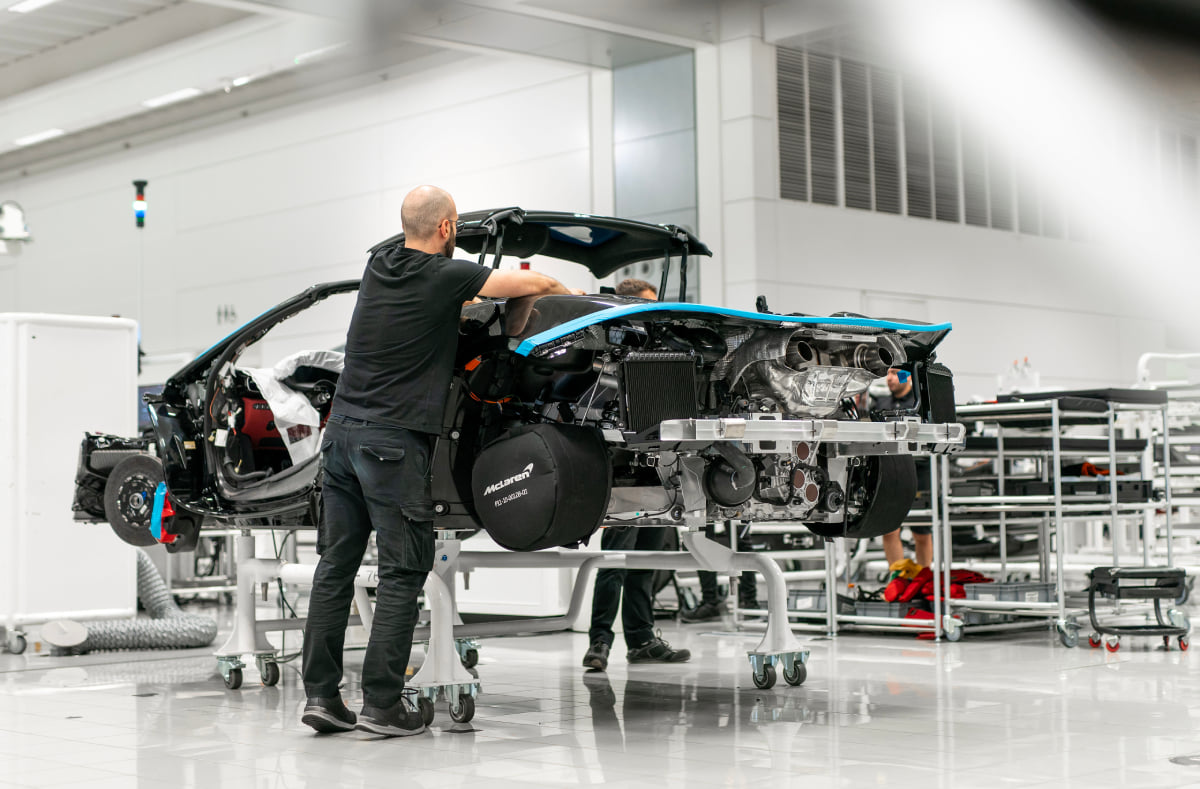
McLaren has confirmed plans to build its first SUV in the UK as part of a GBP 500 million investment in its manufacturing and engineering operations. The unnamed performance SUV is in the early stages of development and is planned to launch before 2030.
The investment will also fund a second vehicle assembly facility in the UK, expand McLaren’s existing facilities and bring engine development and production in-house for the first time. The programme is expected to create at least 1,000 jobs within and around McLaren, with a further 3,000 jobs expected across its supply chain.
Speaking to Autocar UK, McLaren COO Michael Straughan said “there’s a roadmap for about the next 10 years that gives us real confidence. We’ve got a growth plan and a delivery perspective on how we can get to where we want to get to.”
McLaren SUV confirmed
McLaren had previously ruled out an SUV, with former CEO Mike Flewitt saying the company could not afford to develop one and that it “just doesn’t fit the brand”. The company is one the last supercar makers to add an SUV to its range, following rivals including Ferrari, Lamborghini and Aston Martin.
The SUV will use one of the company’s new hybrid powertrains. Straughan said the SUV remains in the early stages of development, although McLaren is targeting a launch before 2030. The company has not yet announced its name, technical details or exact launch date.
The SUV will be the first McLaren road car to move beyond the mid-engined supercar format that has defined the brand since its road-car business was established. “No longer will we be only rear-engined, rear-wheel-drive cars. There’s going to be front-engined, and either four-wheel drive or perhaps rear-wheel drive in the future. It’s very difficult off one assembly line, so we need another assembly line – wherever we decide to put that”, Straughan said.
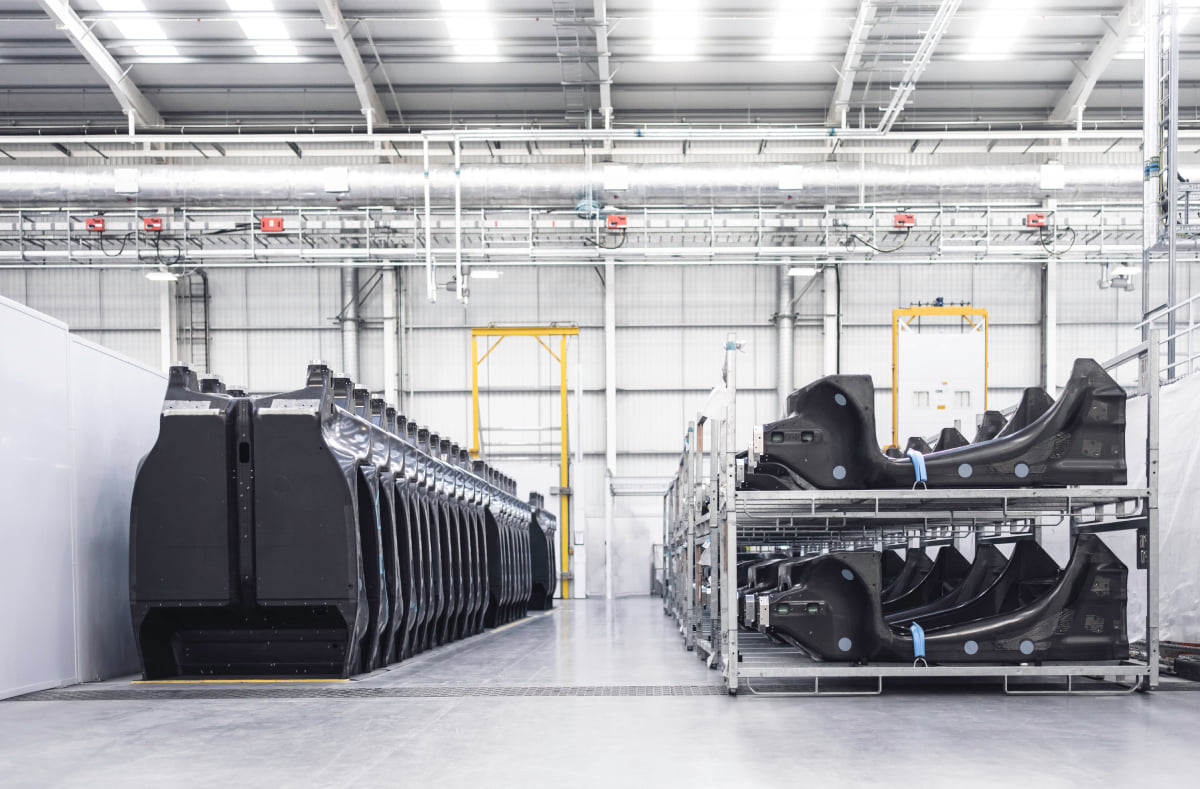
The SUV’s body structure is still being decided. McLaren is considering several options, including carbonfibre, drawing on its expertise in lightweight composite construction. “It’s one of the discussions we’re having at the moment, because nobody has ever done this before,” he said. “Every other SUV [of this type] has been aluminium, and we’ve got a number of options at the moment for what the body structure will be in the future. If we went that way, it would be the first. It would be incredibly special.” he added.
The SUV is the only new model McLaren has confirmed. However, the front-engined layout could support other models in future. Straughan said there are no firm plans for additional models, but that the layout “opens up other opportunities”. McLaren has not confirmed any further derivatives or changes to its existing supercar range.
New engines and gearboxes
McLaren will develop and manufacture future engines and gearboxes in-house for the first time. Its current V6 and V8 engines are supplied by Ricardo, which has powered all of McLaren’s core models since the company’s relaunch with the 12C in 2011. The engines are exclusive to McLaren.
McLaren hasn’t alluded to their technical specifications, but says they will support “the company’s hybrid engine strategy”. The company says they will be developed and tuned to maximise driver engagement. Asked about the technical make-up of these new engines, Straughan said: “Obviously it’s going to start with the current V8 products or the future generation of that, but once you start building engines there are lots of opportunities”.
Confirmation of plans for two distinct engine programmes suggests McLaren will offer different cylinder counts and capacities across its line-up going forward. McLaren’s partnership with Ricardo will continue for other engineering work, but future engines will be built by McLaren rather than shipped to Woking by Ricardo.
No immediate McLaren EV
McLaren has no immediate plans for a fully electric road car. COO Michael Straughan said the company will wait until customer demand is strong enough, although its integration with Forseven has provided experience in electric-vehicle development. Straughan said it was important that McLaren launched an EV “at the right time”.
“It’s inevitable – it will come, and we’ve got to be ready for when it does come. But the market reception to EVs in this space is not fantastic at the moment, so we can’t afford to make a mistake with the product, and therefore we will hold off until we’re certain that the customer demand is there”, he added.
Second UK factory planned
The new facility will supplement the McLaren Production Centre in Woking, although its location has not yet been confirmed. “We can’t build a front-engined car on the same line as a rear-engined car,” Straughan said. “We’re not going to use somebody else’s production line,” Straughan said. “We’ll build our own”, he added.
McLaren will also expand its existing production facility in Woking, which built around 2,000 cars in 2025, as well as its carbonfibre manufacturing and research centre in South Yorkshire. The company has recently opened a design and innovation centre in Bicester and a testing and vehicle development facility in the Midlands.
Together, these sites will support McLaren’s UK operations across design, engineering, vehicle development and manufacturing, increasing production capacity for its next generation of models. “We can’t stop making the cars we make today,” Straughan said. “We have to introduce the new products alongside them”, Straughan said.
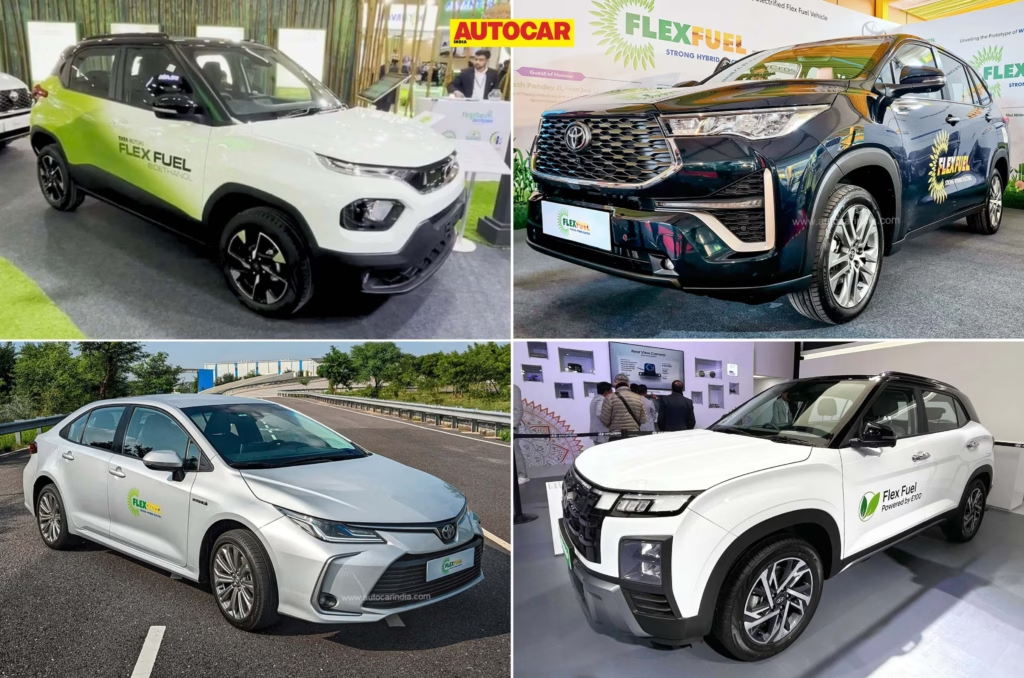
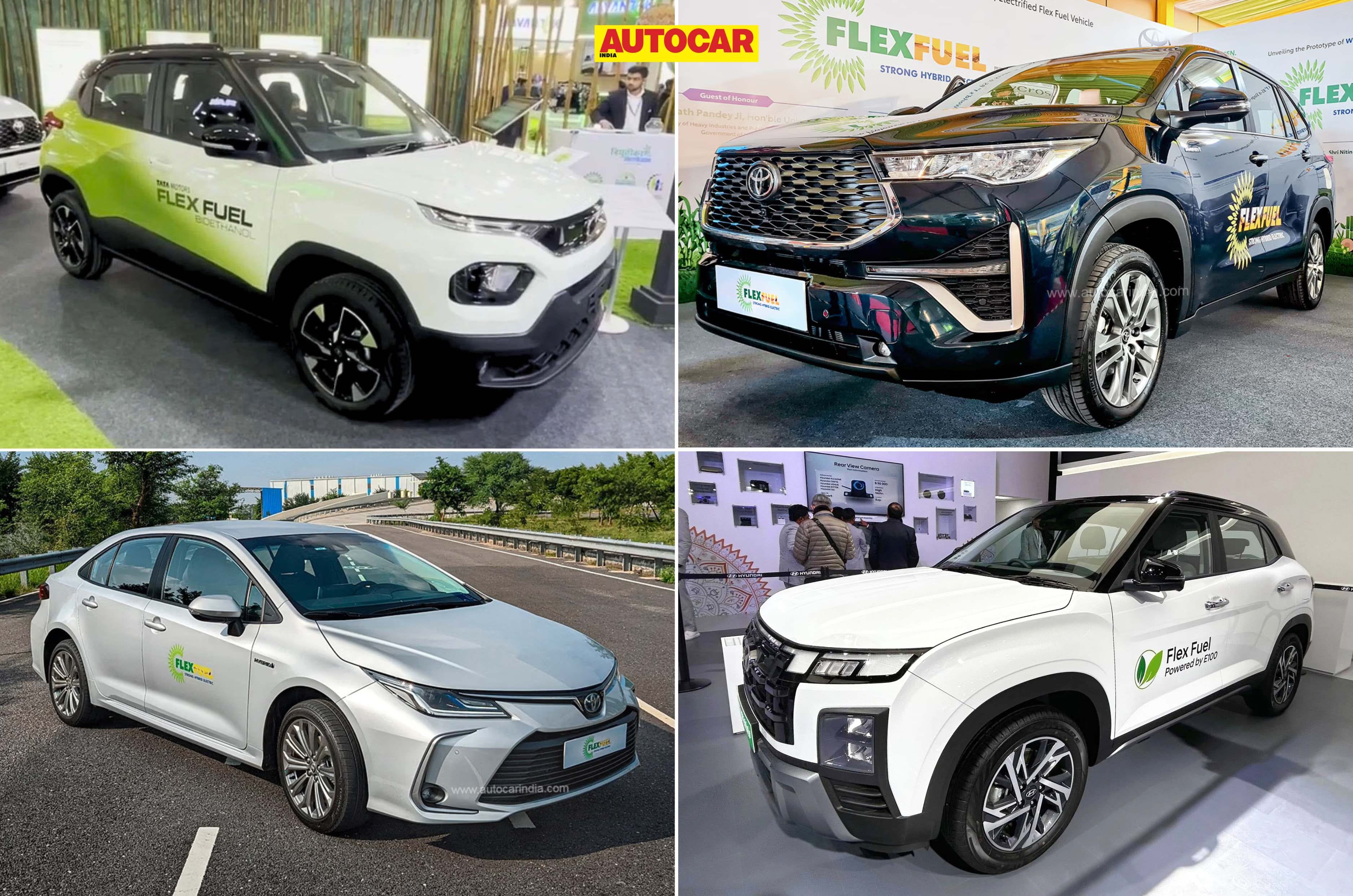
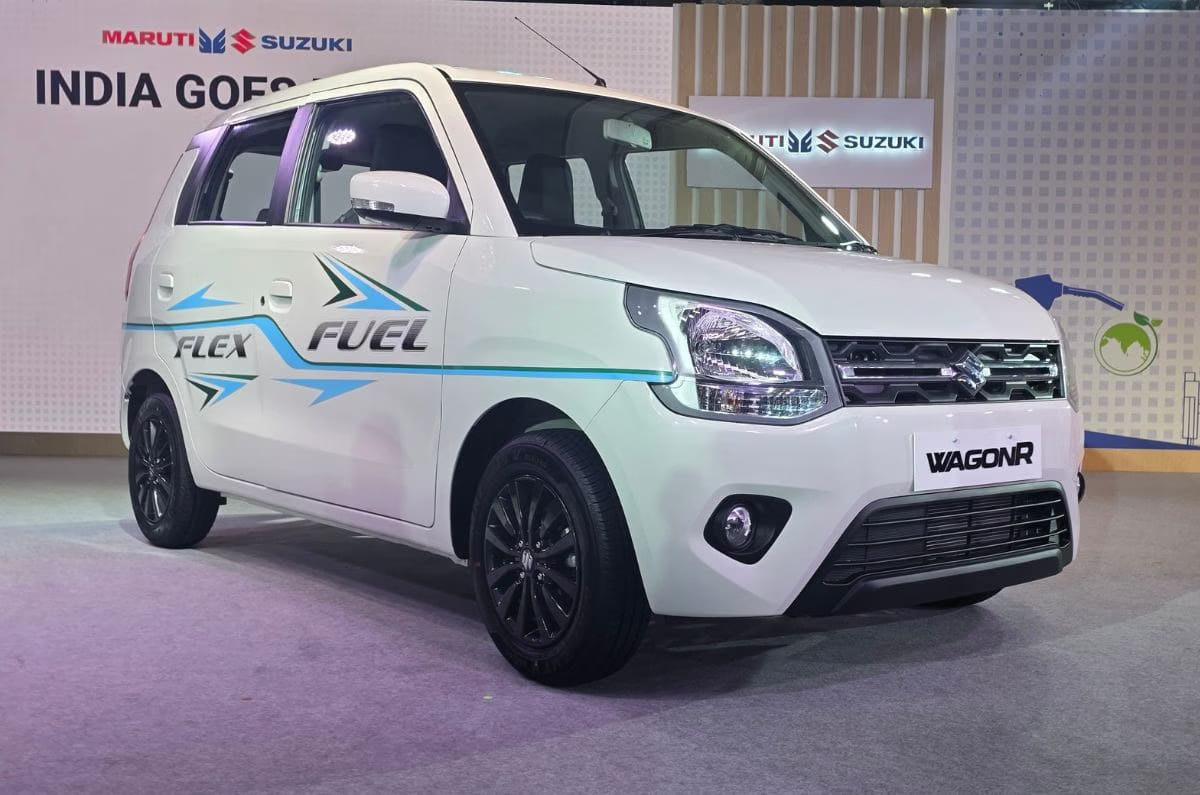
With authorities pushing for higher ethanol-blended petrol, mass-market carmakers have been working toward bringing flex-fuel vehicles to our market. Infact, Maruti Suzuki was the first carmaker to begin production and launch a flex -fuel vehicle with the Wagon R Bioflex. Other carmakers such as Toyota, Hyundai, Tata, and Kia have also showcased flex-fuel models that show readiness for higher blends of ethanol-blended petrol. With E85 fuel dispensing stations being established across the nation, more carmakers could join the flex-fuel bandwagon in the future. Below is a list of all the flex-fuel cars showcased in India, with some capable of running purely on ethanol as well.
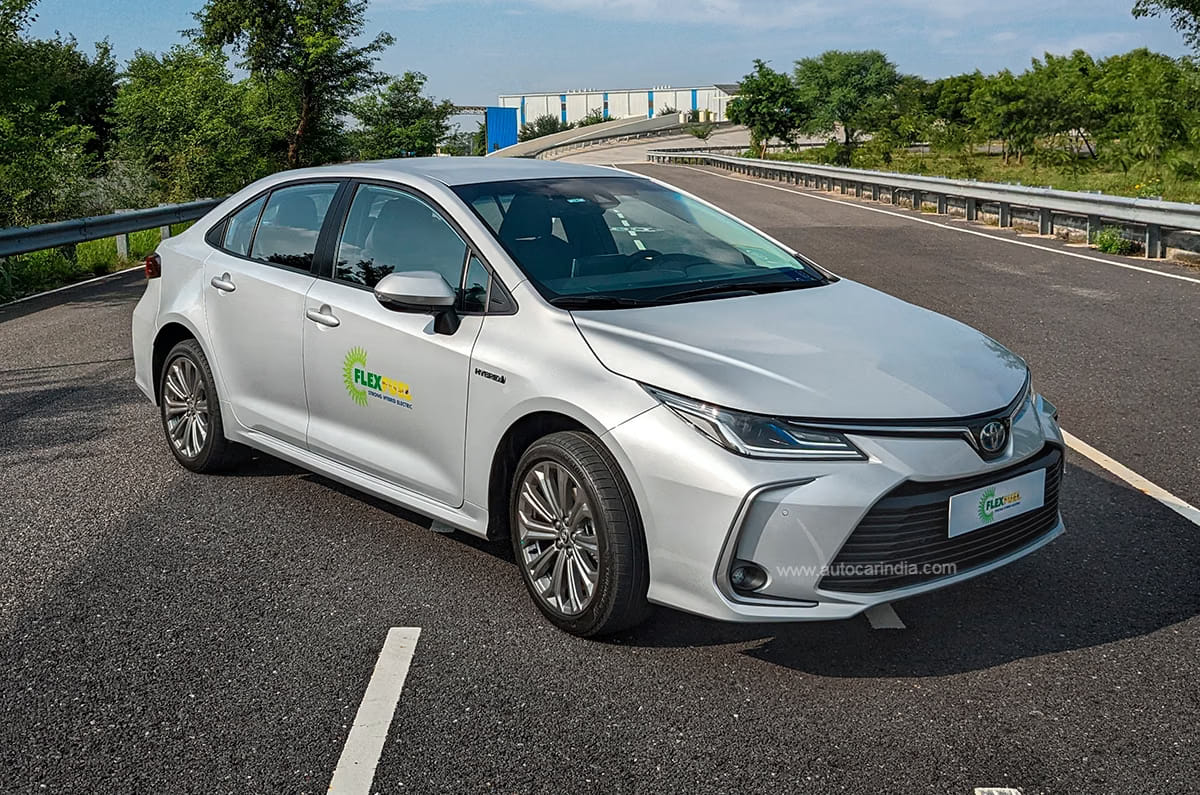
Toyota Corolla flex fuel
Toyota showcased its flex-fuel technology capabilities with the Corolla hybrid. Revealed in October 2022, the sedan uses a 102hp, 142Nm 1.8-litre petrol engine mated to a strong hybrid system and is capable of running on E100 fuel. It is unlikely to make it to our market, but at the time, Toyota said that its flex-fuel vehicle could arrive here if E85 or pure ethanol can be supplied across India, given that the technology is ready. We even had the opportunity to experience the flex-fuel Corolla on a test track.
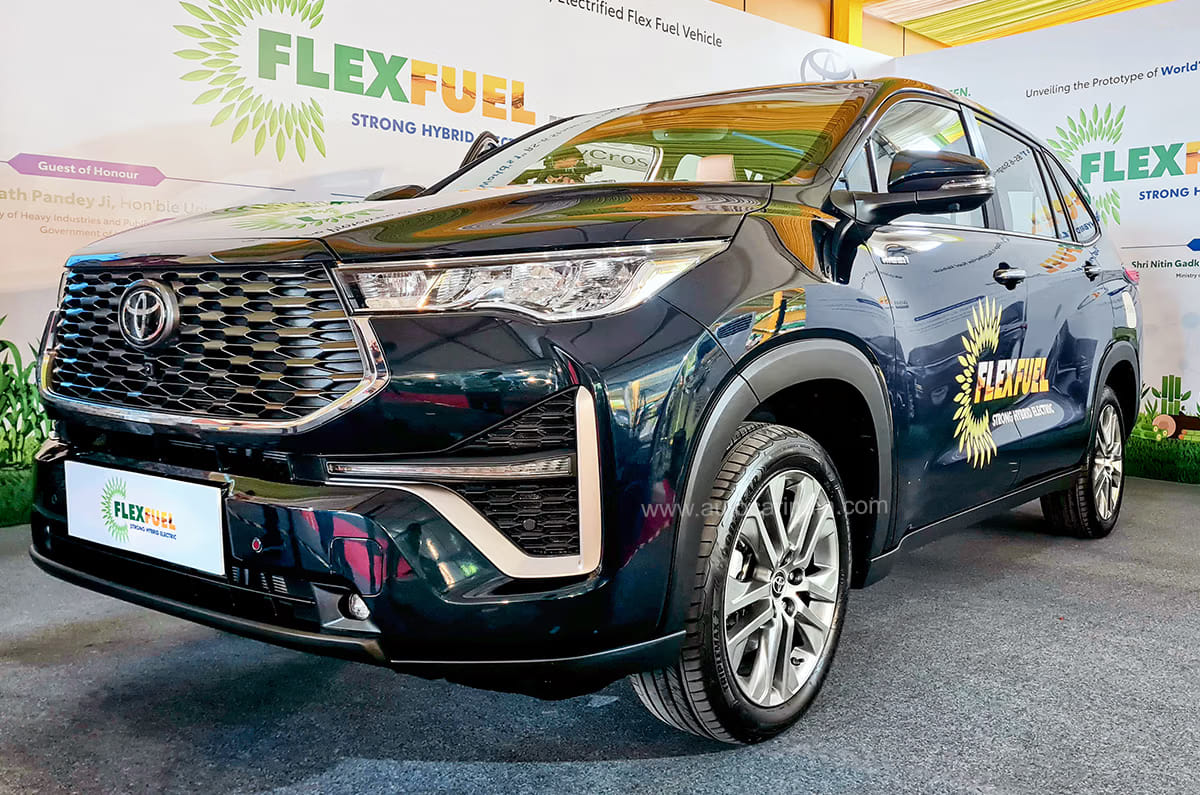
Toyota Innova Hycross flex fuel prototype
In August 2023, Toyota revealed a prototype of the Innova Hycross flex fuel. Like the standard Hycross, it utilises the same 2.0-litre Atkinson-cycle petrol engine paired to an electric motor. Engine tweaks include different spark plugs and piston ring tops, as well as valves and valve seals designed to be water-resistant and prevent corrosion. It also gets a three-way catalyst in the exhaust system to reduce hydrocarbon emissions. Ethanol-compatibility modifications have been done to the vehicle’s fuel filter, fuel pump and fuel lines.
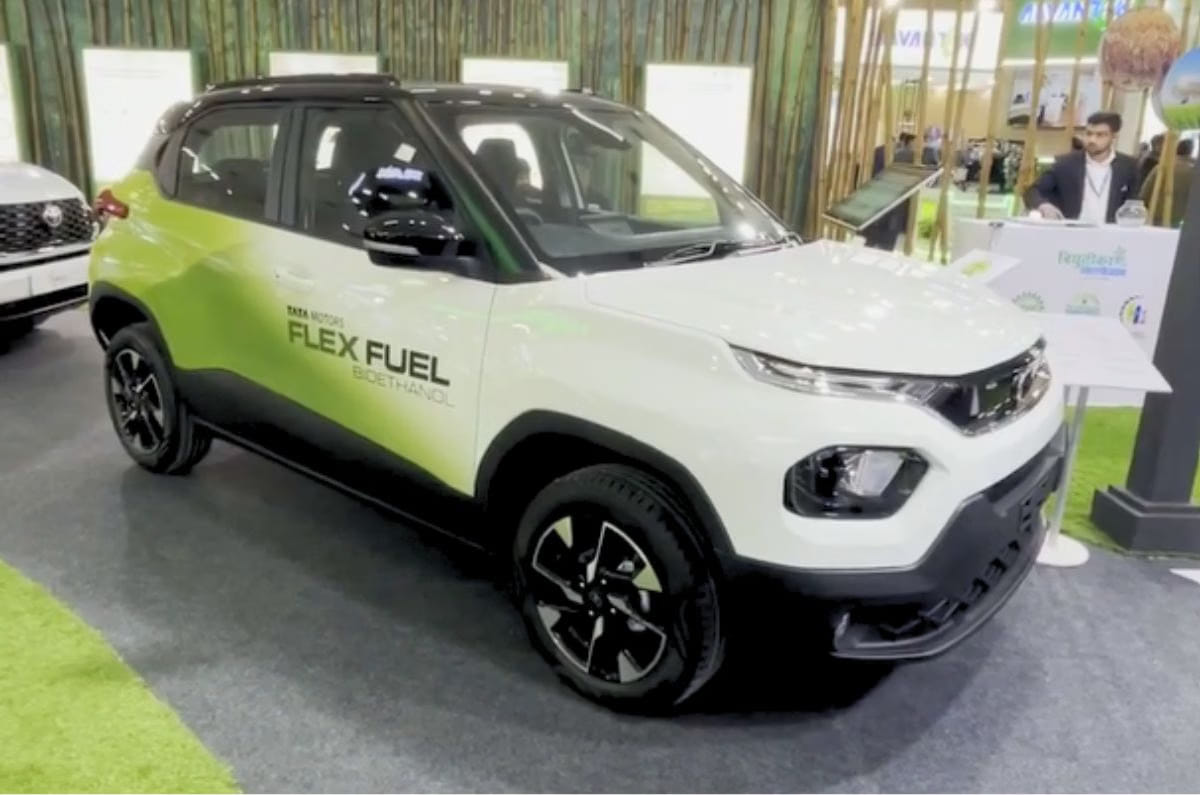
Tata Punch flex fuel
Tata showcased its first flex-fuel model in the form of the Punch SUV, though in pre-facelift guise. It has the 88hp, 115Nm 1.2-litre petrol engine that also powers the current model. The engine is capable of running on blends of up to E85 and has modified ECU software, fuel injector systems and an exhaust after-treatment system to adapt to different ethanol blends.
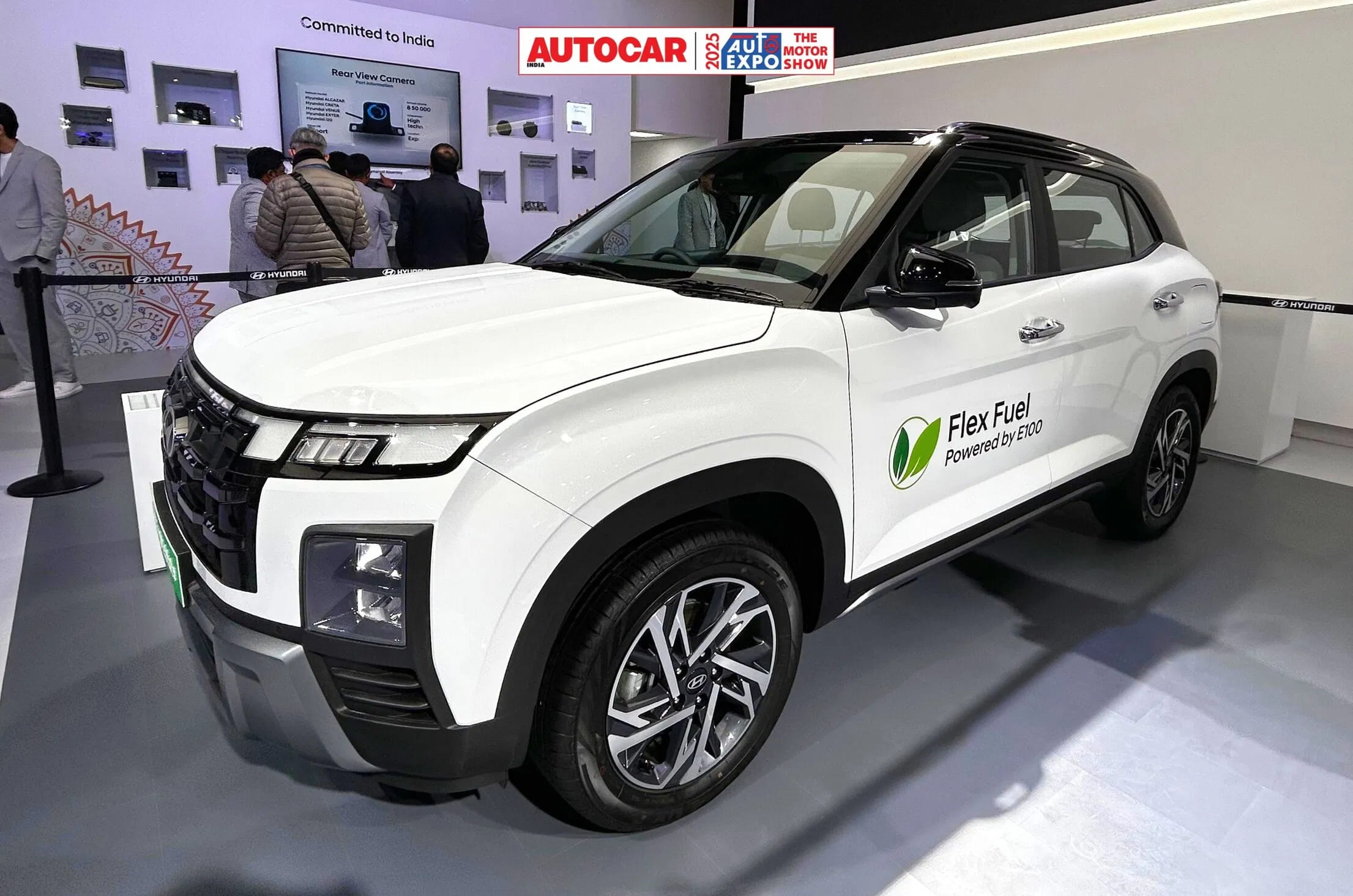
Hyundai Creta flex fuel
Hyundai revealed the Creta flex fuel at the Auto Expo 2025 to highlight its readiness for flex-fuel technology. The SUV’s engine has been modified to run on E100 ethanol. But instead of using the 1.5-litre naturally aspirated petrol or turbo-petrol that’s available on the India-spec model, it gets a 1.0-litre turbo-petrol engine that does duty in the Venue and i20 N Line. It develops 120hp and 172Nm, and is paired to a 6-speed torque converter automatic, unlike the 7-speed DCT on the Venue and i20.
Maruti Suzuki Wagon R flex fuel
The Maruti Wagon R Bioflex is the first flex-fuel car that went on sale in the country. Maruti unveiled the production-spec Wagon R flex fuel years after unveiling its prototype in 2022. It is powered by the 1.2-litre petrol engine that also does duty in the standard model. While the Wagon R is compatible with running on E100 fuel, it has been homologated to only run on E85 fuel. Like the rest of the cars here, it gets upgraded fuel injectors and fuel pumps, new fuel lines, a newly calibrated ECU, and an ethanol sensor for ethanol compliance.
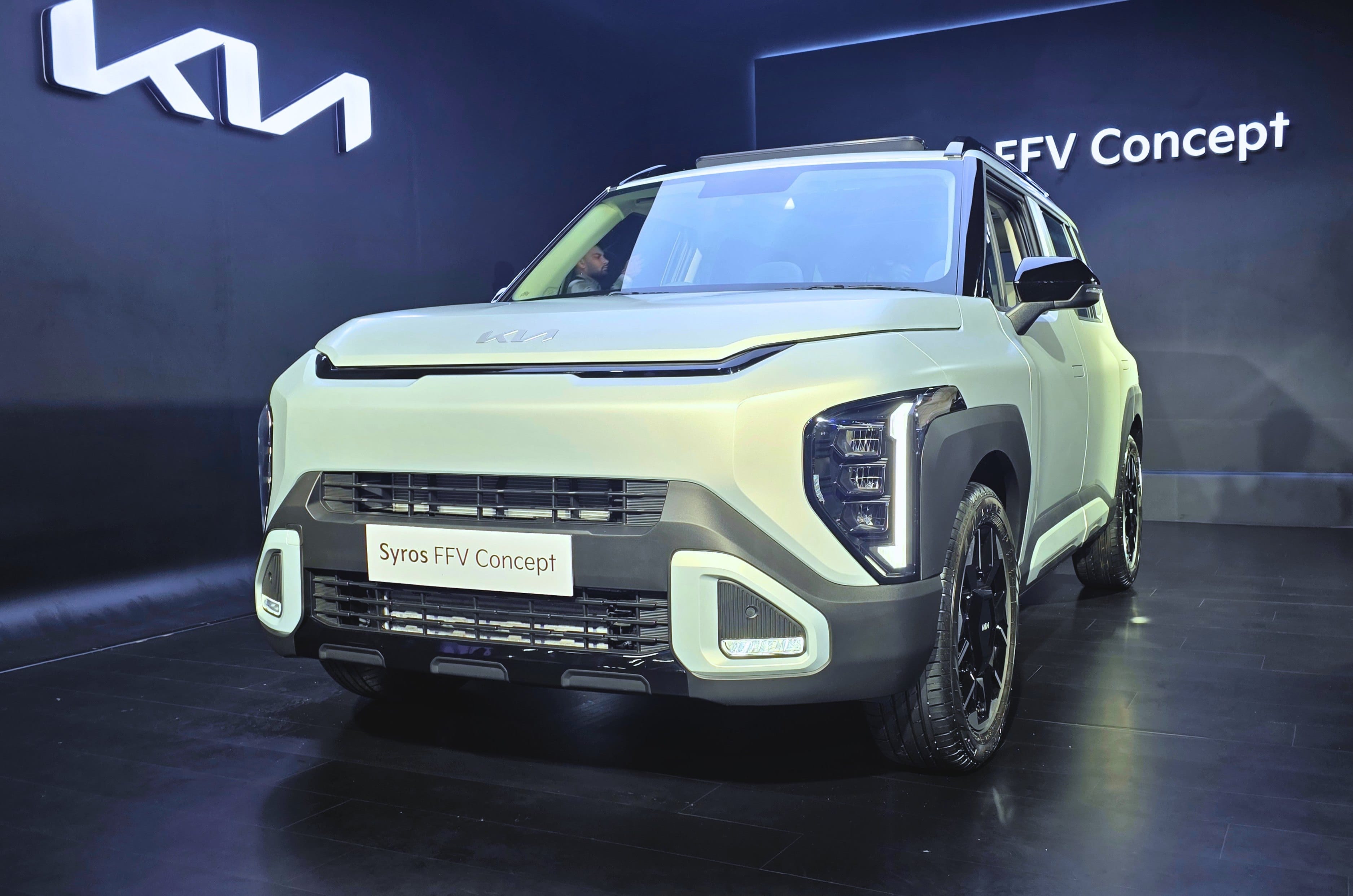
Kia Syros FFV Concept
Kia India showcased its commitment to bringing flex-fuel cars to India with the Syros flex fuel vehicle (FFV) concept. According to Kia, the Syros FFV is capable of running on pure petrol, pure ethanol, and varying ethanol-petrol blends. It looks identical to the standard Syros, but under the bonnet is a 1.0-litre three-cylinder direct-injection turbocharged engine which has tweaked components for compatibility with ethanol and is paired with a 6-speed torque converter automatic. The arrival of a production-spec version is yet to be confirmed by Kia.
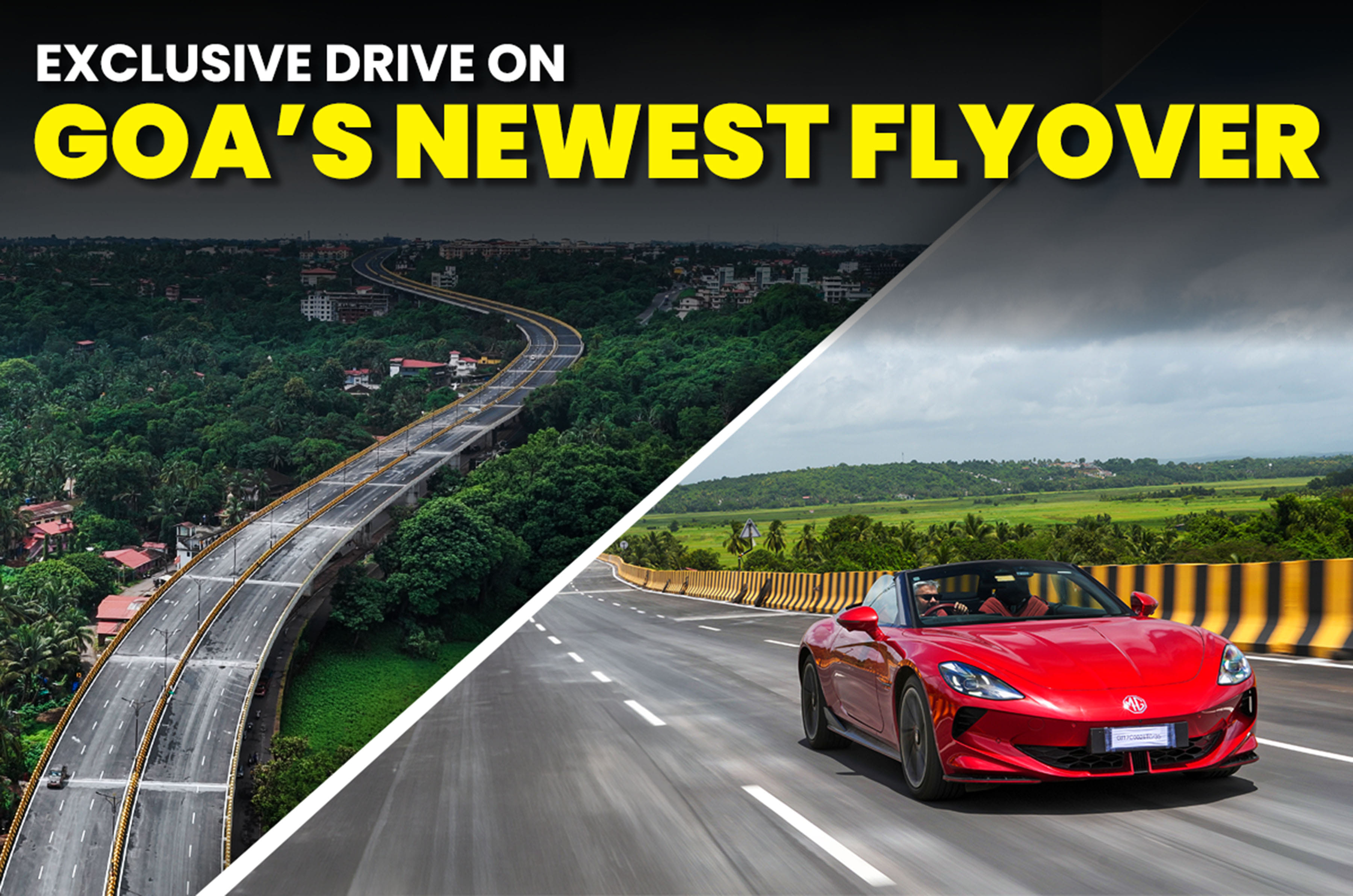
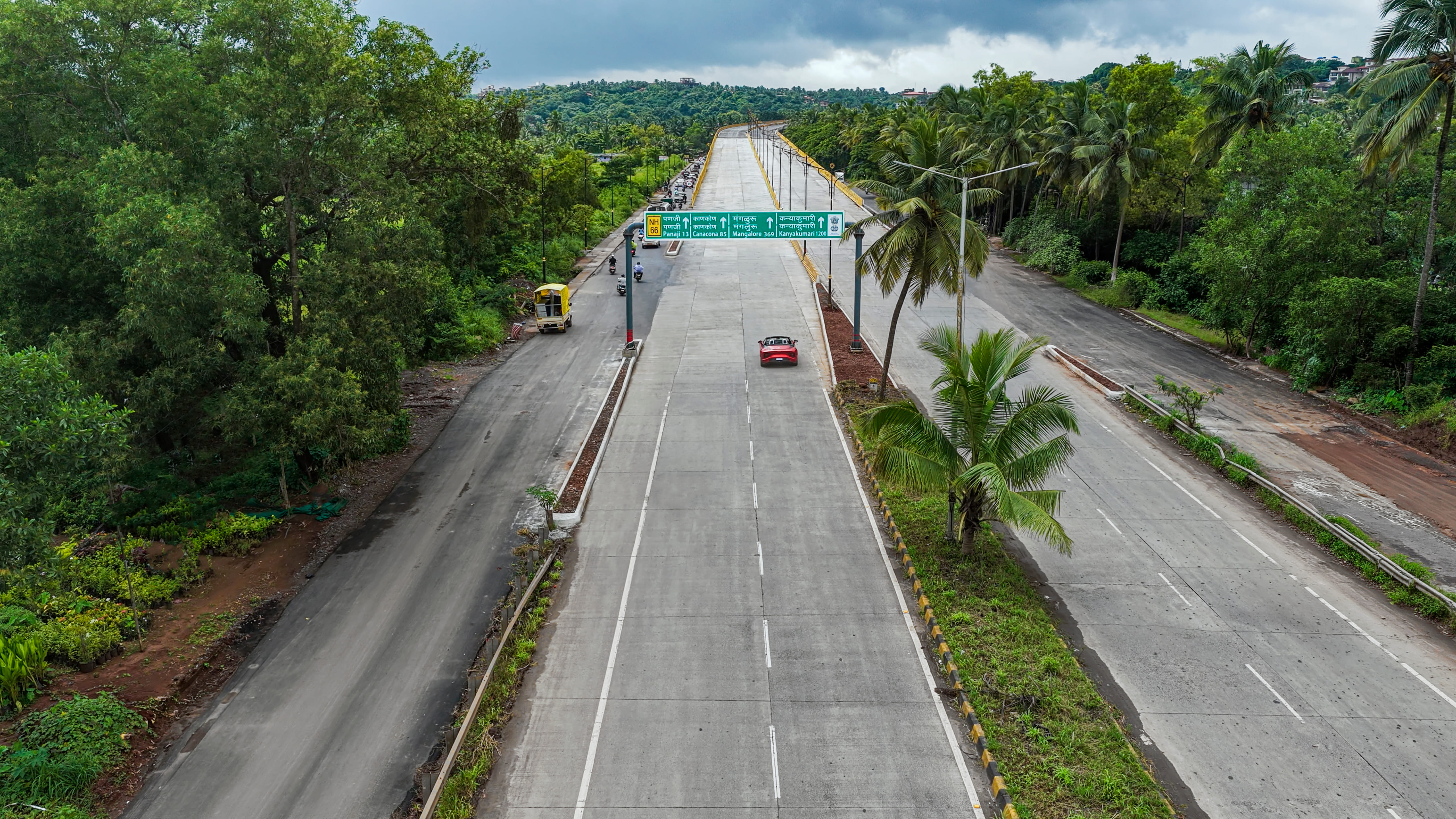
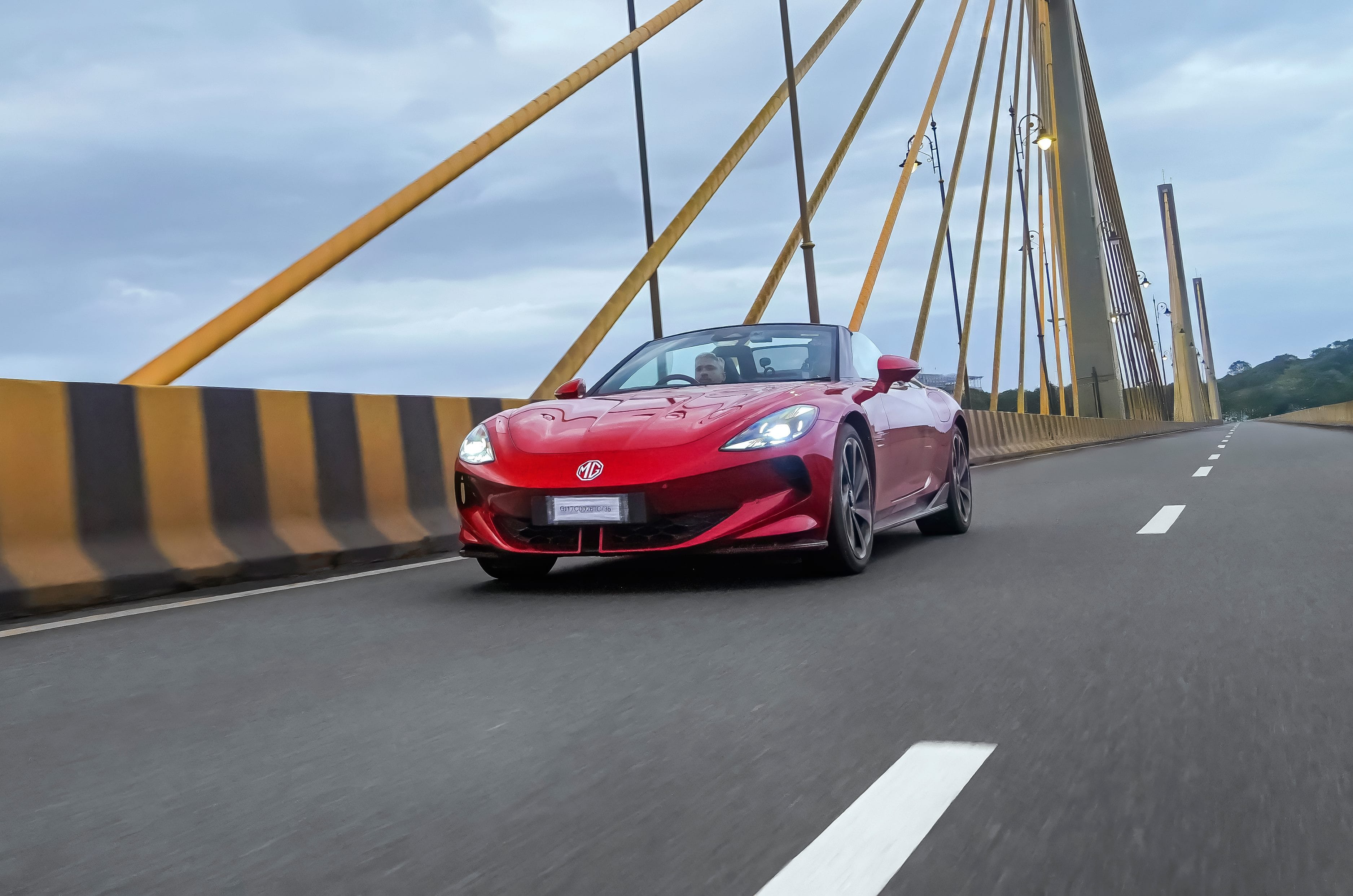
If a holiday in Goa is a fixture on your calendar, you will have noticed that the state has changed a fair bit in the last few years. There is a new airport to fly into, new bridges replacing the old, not to mention the wider highways. The latest upgrade to the state’s road network is the Porvorim Elevated Corridor, targeting a major bottleneck on NH66. We were given an exclusive opportunity to experience it for ourselves before the official inauguration on Sep 9, and we brought along a very ‘Goa’ car for the occasion – the MG Cyberster.
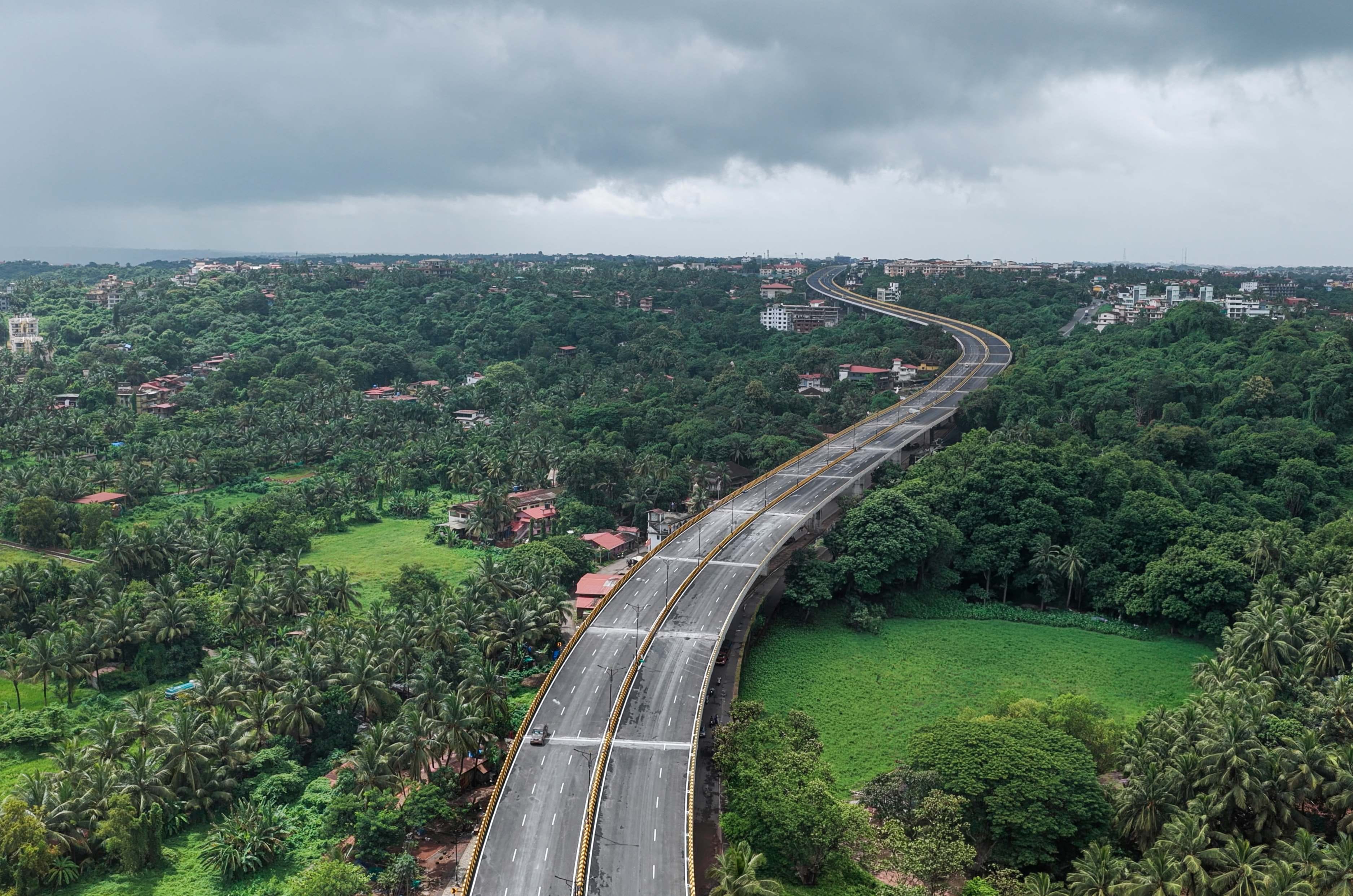
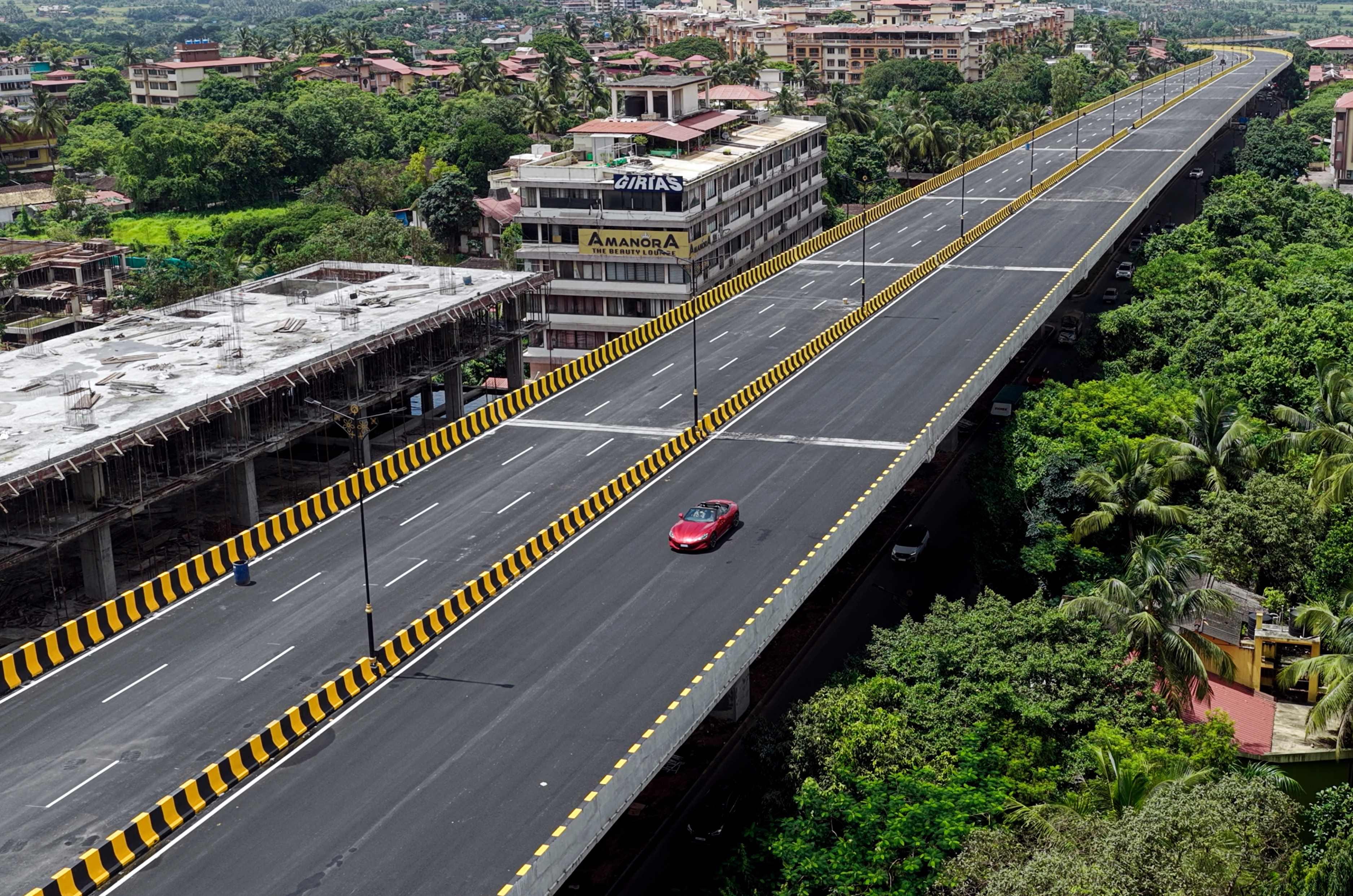
First, a bit of quick history and geography. National Highway 66 is a 1,640km arterial highway running from Panvel in Maharashtra to Kanyakumari in Tamil Nadu. 124km of NH66 is in Goa and, for years, Porvorim has been its most notorious bottleneck. The new 5.15km Porvorim Elevated Corridor lets traffic sail clean over all that congestion below, connecting directly to the Atal Setu bridge that crosses the Mandovi River. It promises to cut travel time between Mapusa in the north and the capital Panaji by up to 30 minutes – a claim we set out to test.
Six-laned Porvorim Elevated Corridor brings North Goa and Panaji closer than ever.
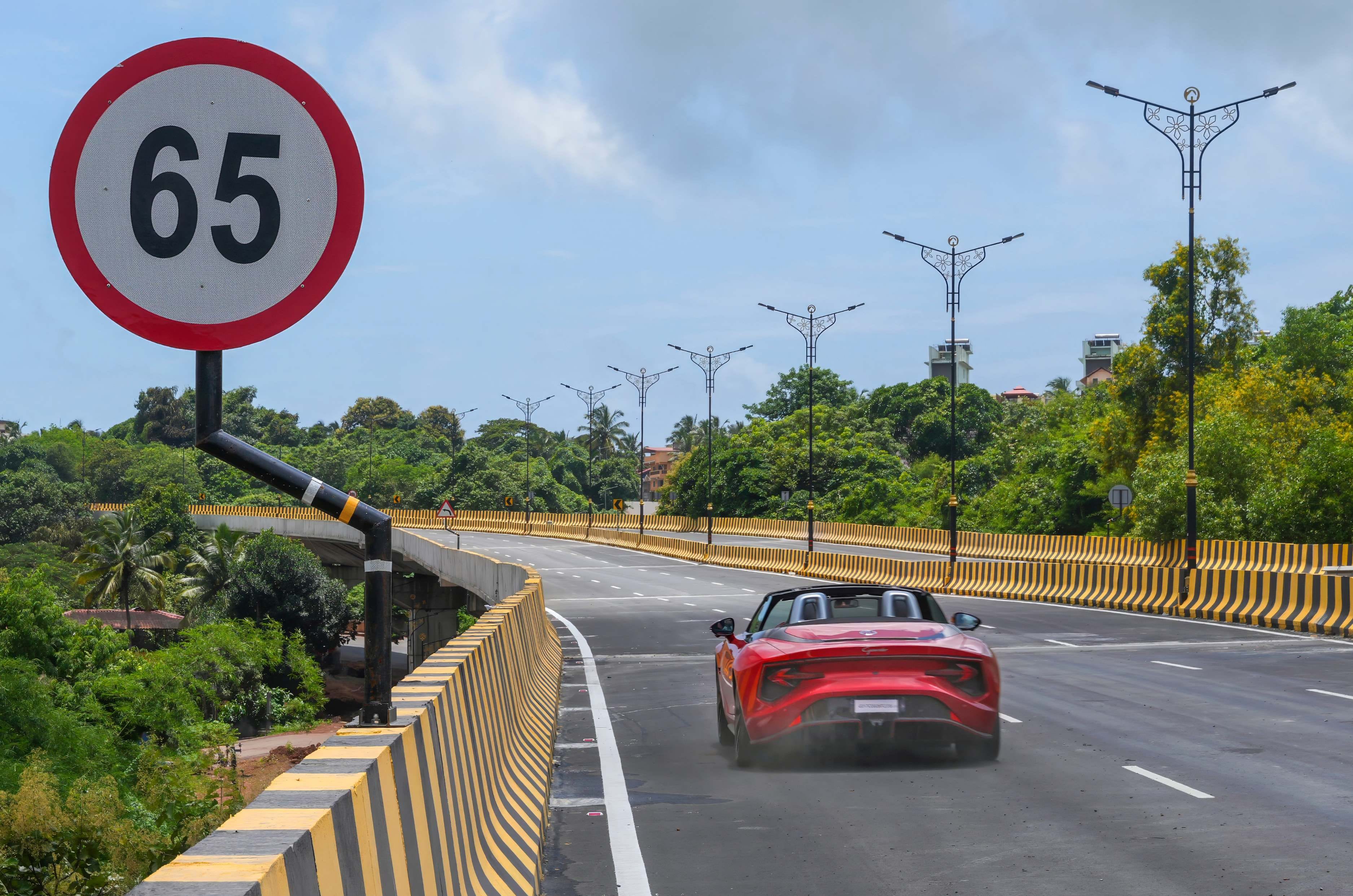
Our starting point was the north end of the corridor, a couple of kilometres away from Guirim village near Mapusa. We started our stopwatch on the concrete ramp leading up the PEC – one we would only stop once we crossed over the Atal Setu Bridge and entered Panaji. And even with 510hp and 725Nm on tap and the road all to ourselves, we would be sticking to the 65kph speed limit.
From the concrete on-ramp, it’s only a few metres until you drive onto the actual viaduct section, which is paved tarmac broken up only by expansion joints. It is not completely straight either – the north end has some lovely sweeping curves. In a car like the Cyberster, it is quite tempting to push through the bends but, exercising restraint, we instead indulged in the joys of open-top motoring. The Cyberster drops its top in 10 seconds at speeds up to 50kph, giving us superb views all around. Importantly, it also raises the top just as quickly, which comes in handy during sudden showers.
No more jams! 5.15km flyover sails over congestion at Porvorim junction.
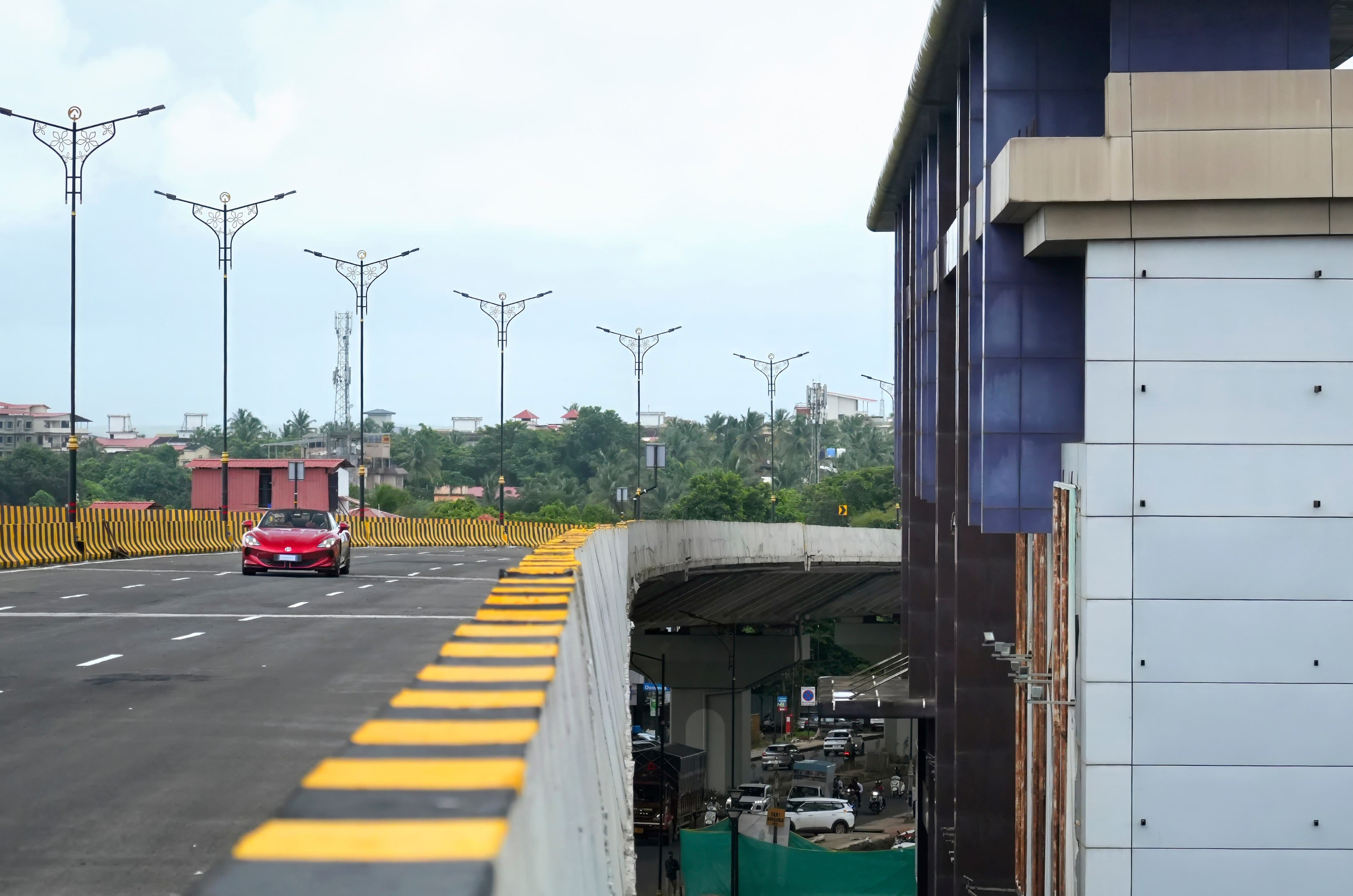
From the driver’s seat, the panoramic view of Porvorim’s greenery was quite stunning – something you would never notice stuck in traffic below. Drive on, and the road becomes arrow-straight, and you start to notice how close some of the buildings are to the corridor. This proximity to adjoining structures, along with the fact that NH66 had to stay operational below, were among the biggest challenges the engineers faced.
Some buildings were a little too close for comfort making construction quite challenging.
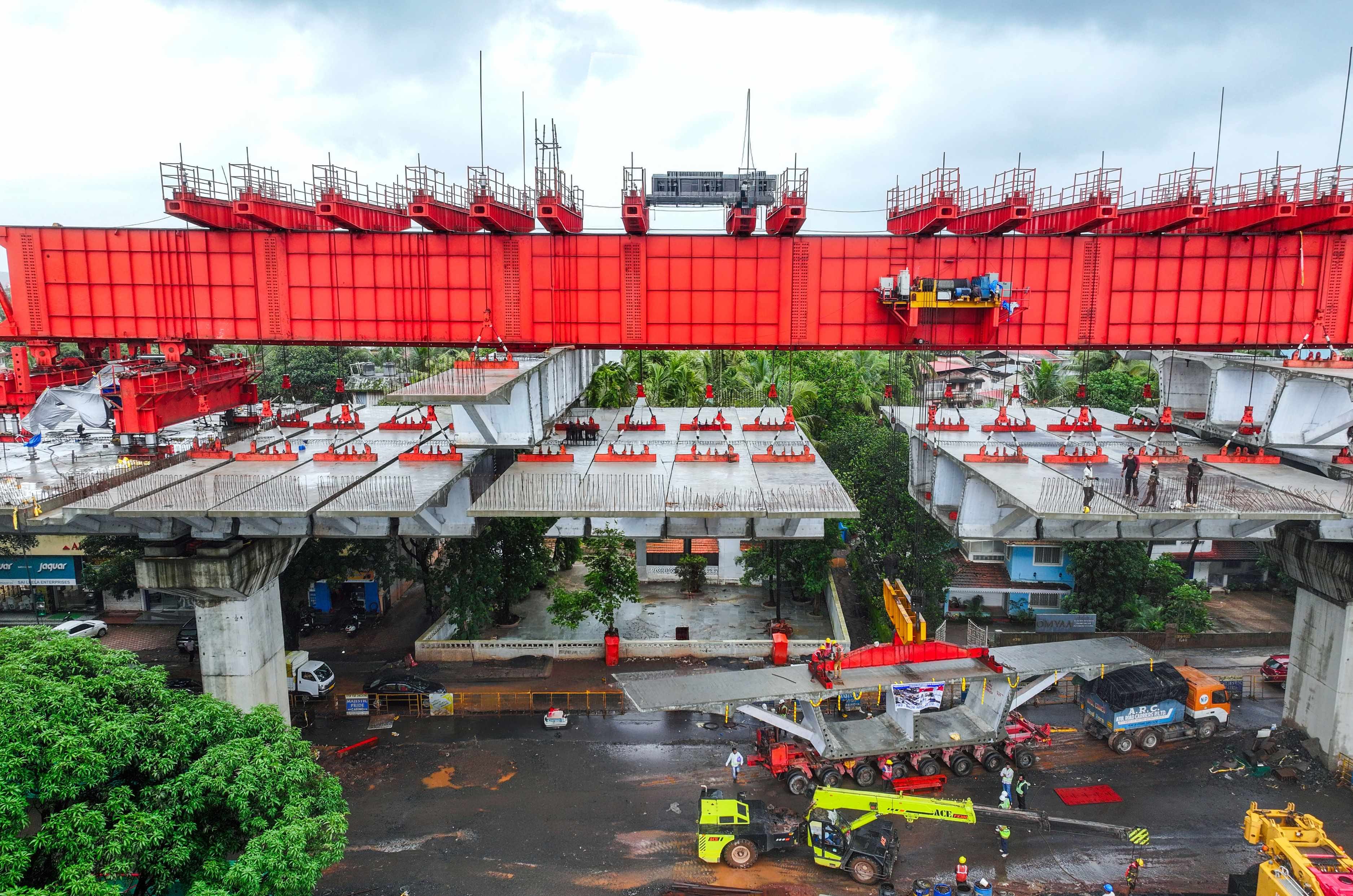
The 4.19km viaduct section is supported by 87 pillars. Each span running between two pillars requires between 13 and 17 individual pre-cast concrete sections. These sections are about 24 metres wide and weigh a whopping 120 tonnes each. They were cast in a yard down the road, trucked to the site, hoisted 11 metres high and installed in place – all in a narrow space between buildings with absolutely no room for error, while ensuring minimal traffic disruptions below.
Considering the challenges, it is quite remarkable that the Porvorim Elevated Corridor was completed in just two years and five months. Below the main structure, 10.30 kilometres of service roads and 28 minor junctions keep local traffic moving, while the corridor sails above it all. Also featured are eight box culverts and a rainwater harvesting system, so the monsoon doesn’t slow traffic down. A modern lighting setup with 515 streetlights has already been installed, while two high-mast lights and ten overhead gantries with cameras are to be put up soon. All constructed at a cost of Rs 641.46 crore.
New flyover part of NH 66 open to cars, two-wheelers and CVs. Speed limit 65kph.
Before long, we were passing the Mall de Goa – close enough to see the expressions on the faces of people in the food court, as they watched the bright red Cyberster whizz past their window. As we made our way down the off-ramp, the stopwatch showed that it had been just over four and a half minutes. Heading towards the Atal Setu, we merged with the dozens coming from the diversion and became part of regular traffic.
And just like that, we were climbing the Atal Setu bridge, which would take us across the Mandovi River and into Panaji. To the right, stunning views of Panaji city and Miramar beach in the distance, and to the left, Old Goa with its historic churches, while above me, through the open roof of the Cyberster, panoramic views of the bridge’s iconic pylons and yellow cable stays.
Drop top MG Cyberster a great match for Goa’s vibe
Coming down the Atal Setu into Panaji, our stopwatch read just under 10 minutes. Even if you factor in a couple of extra minutes for traffic once the PEC opens, it equates to a real-world saving of about 30 minutes in peak hours, which is quite significant. In fact, the PEC is said to have a capacity of 70,000 PCU, or passenger car units, per day, so traffic flow is expected to be quite swift. Simultaneously, it will reduce the burden on the service and other connecting roads below the corridor, improving flow for local traffic too.
Connects directly to (yet another) Atal Setu bridge and brings you closer to Goa’s historic sites.
The Porvorim Elevated Corridor, along with other recent infra projects such as the Atal Setu, the New Zuari Bridge and the widening of NH66, is expected to boost the economy by improving intra-state connectivity to Goa’s industrial hubs, as well as flow between the airports and ports. It should also make commutes easier for residents and change the way tourists experience Goa – less time spent travelling, more time to explore the beaches, the culture and everything Goa has to offer.
In conversation with Sandip Prabhu Chodnekar, Principal Chief Engineer, Goa Public Works Department (PWD)
On the challenges faced during construction
This bridge is about 24 metres wide, but the right of way is only 25 metres. Constructing such a wide structure when both sides are already fully developed was very challenging. One of the biggest challenges was lifting the segments. Each segment is nearly 24 metres wide and weighs around 120 tonnes. We could not divert the traffic, so we had to carry out most of the work at night. During the daytime, we stopped heavy traffic so that the segments could be lifted safely and normal traffic could resume quickly.
Lifting 25 metre wide sections that weigh 120 tonnes called for nerves of steel.
On other highlights of the project
We tried to harvest the rainwater to recharge the groundwater and increase the water table. There is a median between the service roads below, where we are also planting trees. The corridor’s rainwater harvesting system collects the water and directs it into this median. From there, the water flows into pits that we have dug and filled with aggregates and strainers, allowing the rainwater to percolate into the ground. This helps harvest the rainwater and increase the water table on the plateau during the monsoon.
On traffic and usage
Below the corridor, things will be quite different. Once around 50,000 PCUs of traffic are taken off the existing four-lane road, there could be a tendency for people to park on these lanes. So, we will have to manage parking as well. We have streamlined the junctions and completely reworked the at-grade traffic flow. Motorcycles are also allowed on the Porvorim Elevated Corridor.
In conversation with Dr. Pramod Sawant, Chief Minister, Goa
On the importance of the project
The Porvorim Elevated Corridor is actually important not only for Goa but also for Maharashtra, Karnataka and Kerala. Porvorim had become a problem because it is a congested and newly developed city, with development on both sides of the road. Even after the road was widened, it was very difficult to manage, and it had become an accident-prone zone. That is why the Porvorim flyover was required, to ensure smooth traffic on NH-66.
Greater connectivity a boon for residents, tourists and businesses.
On the project’s wider connectivity benefits
With the opening of Manohar International Airport in North Goa, there was a need to improve connectivity towards South Goa. People arriving at Manohar International Airport and travelling towards South Goa were facing a lot of congestion. Now, that congestion will be reduced and this will definitely help tourism and vehicle movement in the state.
Furthermore, there will be better connectivity between the airports and ports, which will havea positive economic impact. It is also a very important project for the people of Goa. Especially those travelling between North Goa and the capital; they will save time and money, and their daily commute will become much easier.
On Goa’s future infrastructure plans
Almost all the projects on the National Highway network in Goa have been completed. One of the remaining projects is the Borim Bridge, which will connect the Ponda side. The tendering process for it will happen in the next few days.
We are planning to improve connectivity across rural Goa, from one end of Maharashtra towards Karnataka. We are considering a ring road for Goa, because traffic currently comes into the interior areas and cities. In the future, we want traffic to be able to move around the interior villages and across the state without having to enter the cities.
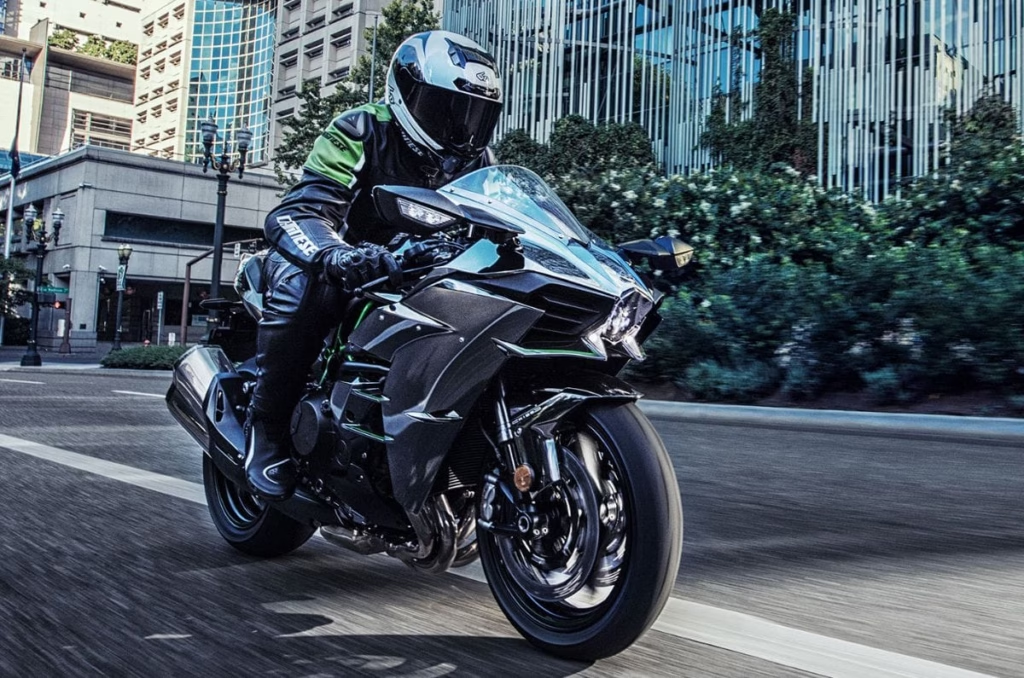
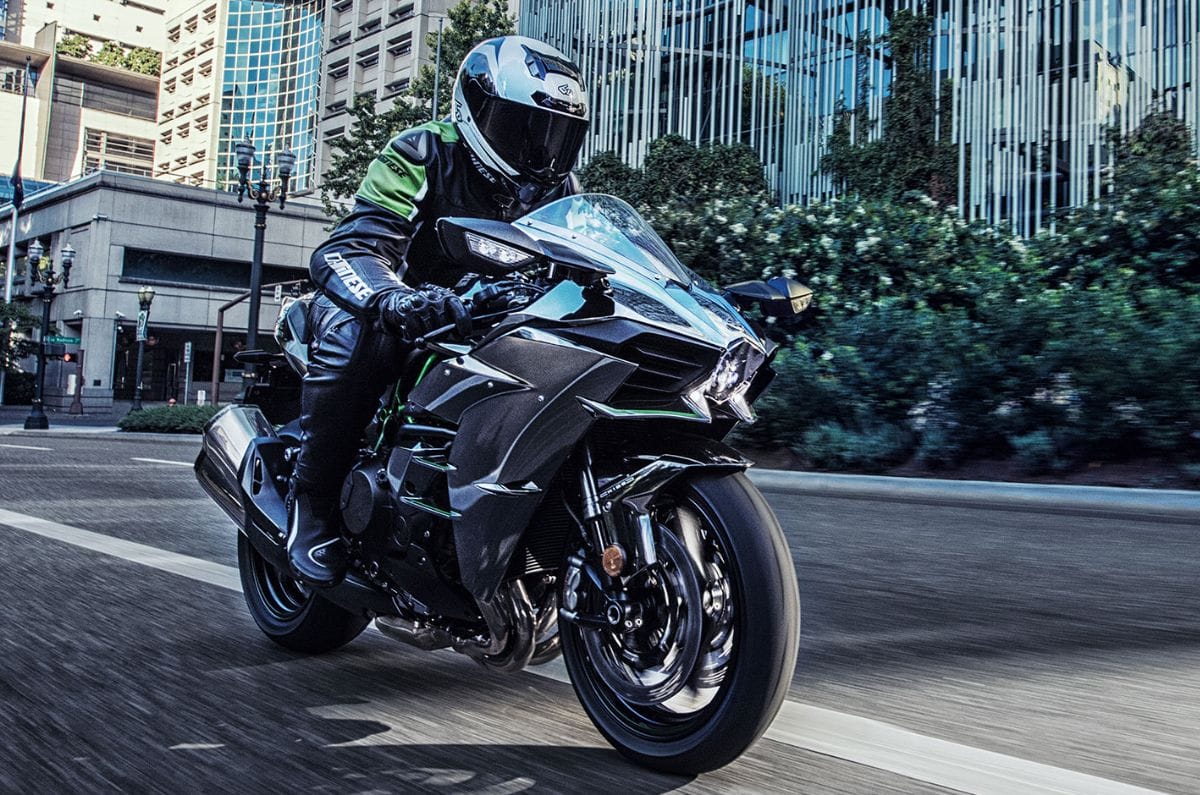
Kawasaki launched the Ninja H2 at EICMA 2014, and later the H2R, as supercharged sportbikes unlike anything else. Receiving its last major update in 2019, the H2 was the most powerful road-legal sportbike at the time, with 228hp of power. It was discontinued in the UK in 2021, following the Euro5 regulations kicking in, though it continues to be available in the US. Cut to now, and Kawasaki appears to be bringing back the most powerful Ninja.
The 2021 version was the most powerful road legal sportbike at the time
2027 Ninja H2 appears to share a lower power engine with the Z H2
International debut likely to be at EICMA 2026
Ninja H2 making a European comeback in 2027
International launch likely at EICMA 2026; Indian launch unconfirmed
On their social media, Kawasaki UK has posted a short teaser with a caption “Return To Beyond Belief” accompanied by the soundtrack of an engine accelerating through the gears and the recognizable supercharger flutter. What makes us believe that this is indeed the H2, is the caption’s callback to the original, 2014 launch slogan for the series, “Built Beyond Belief”. In July, we had reported that Kawasaki appears to be bringing back the Ninja H2 but with a lower 197hp engine, shared with the super-naked, Z H2. Since the information was obtained from Kawasaki’s US filings, we can expect the detuned H2 to head there as well, alongside the UK.
In its last version, the Ninja H2 had a hyperbike-like stance with a hefty 238kg of kerb weight. It remains to be seen whether the new one will change the design in any way, or drop a few kilos to become more agile, in line with a conventional sportbike. Besides the loaded caption and the engine’s sound, Kawasaki’s post did not reveal any details about the Ninja H2’s launch; but we could see it debut at EICMA 2026, just like the very first iteration.
As for India, the iteration of the H2 platform we last had access to was in the form of the Ninja H2 SX SE. The sports-tourer was listed on Kawasaki India’s website until July, but it’s since been removed. Kawasaki hasn’t revealed any plans to bring the updated H2 to India—which isn’t unusual—so we will have to wait and see if that changes in the future.
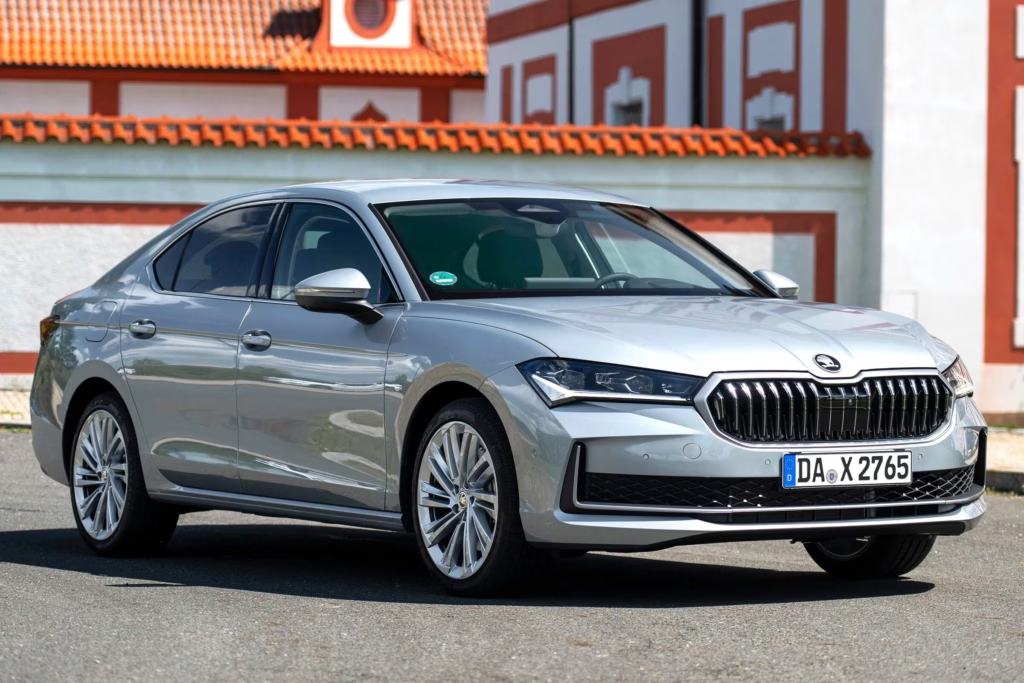
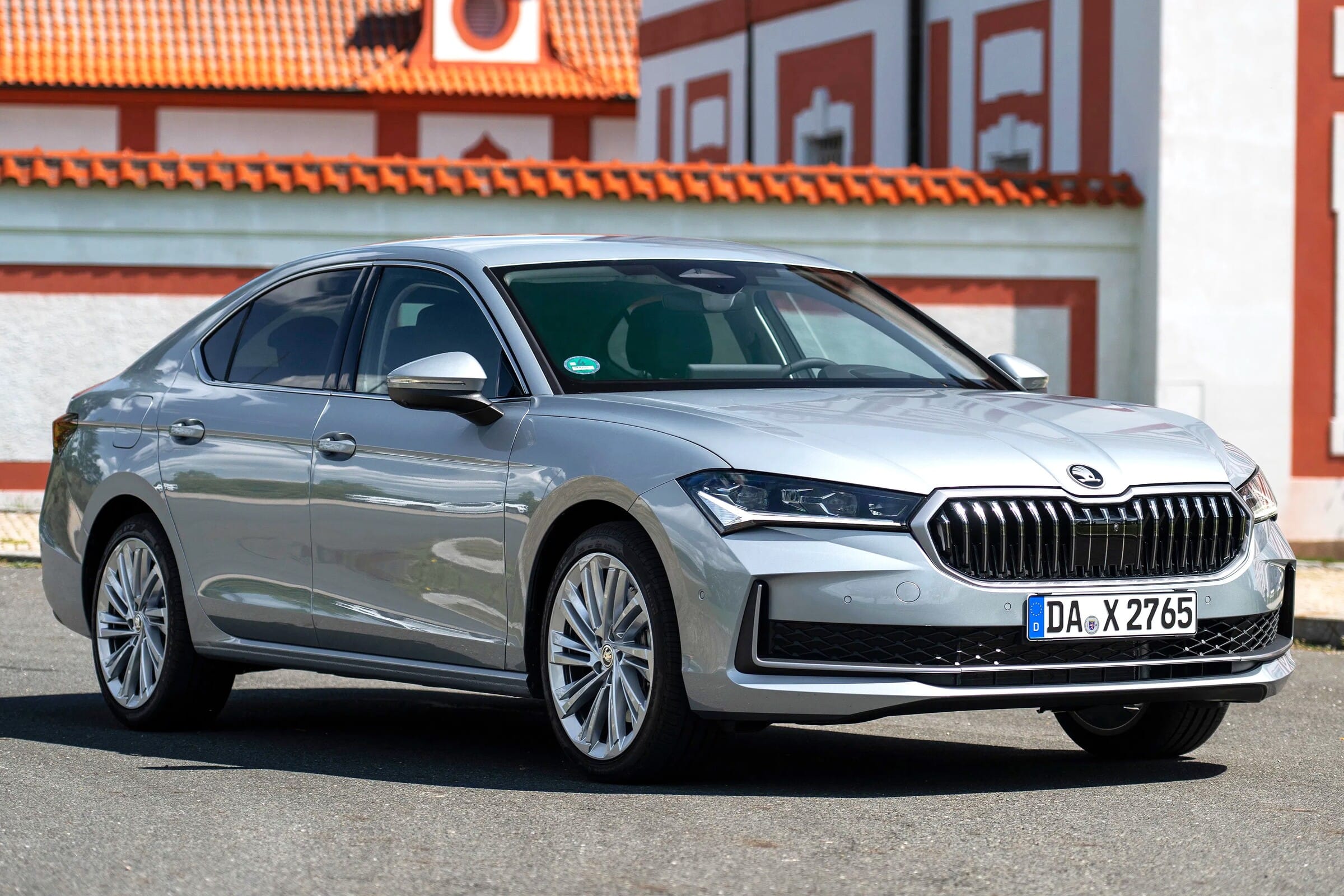
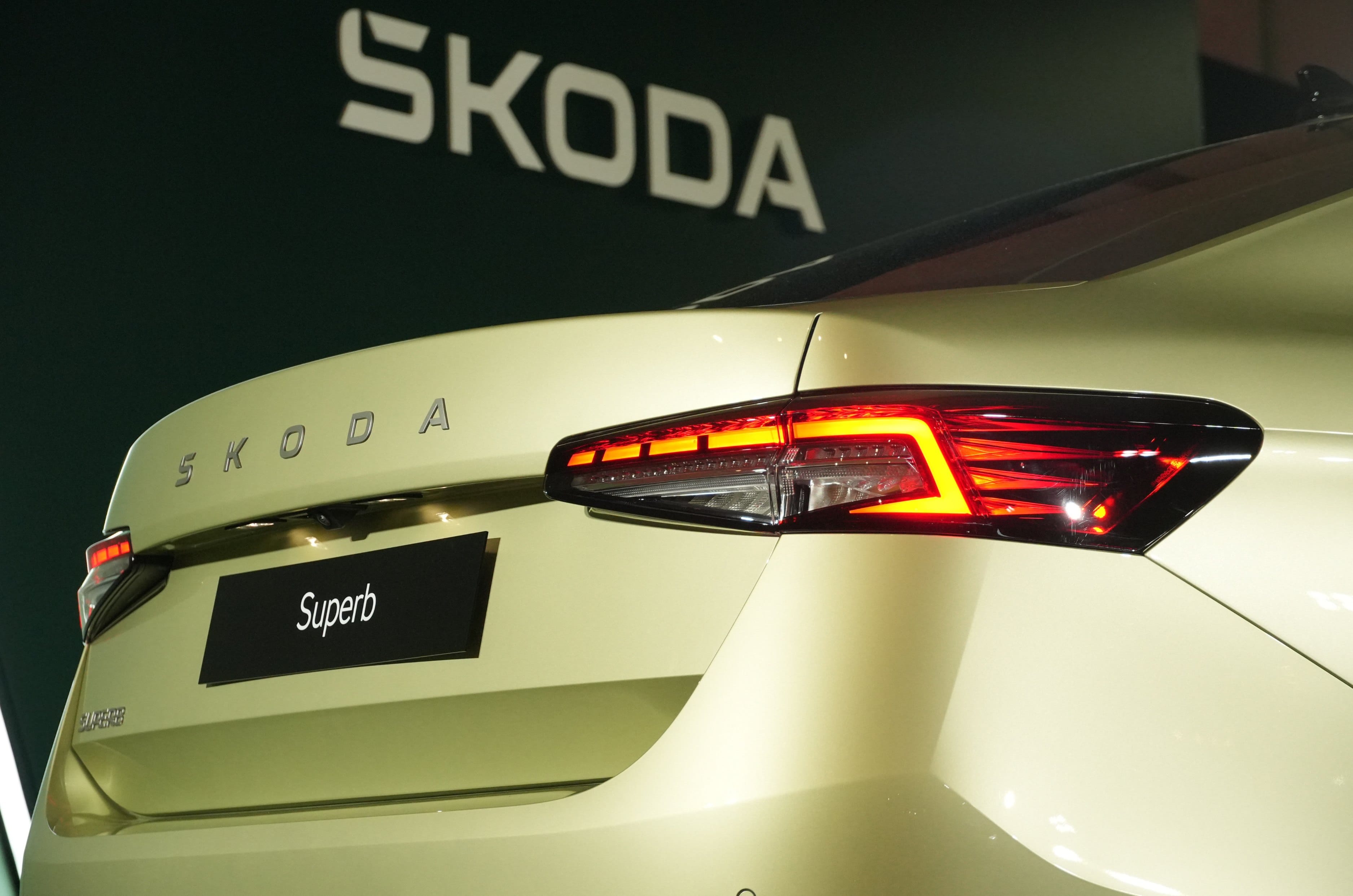
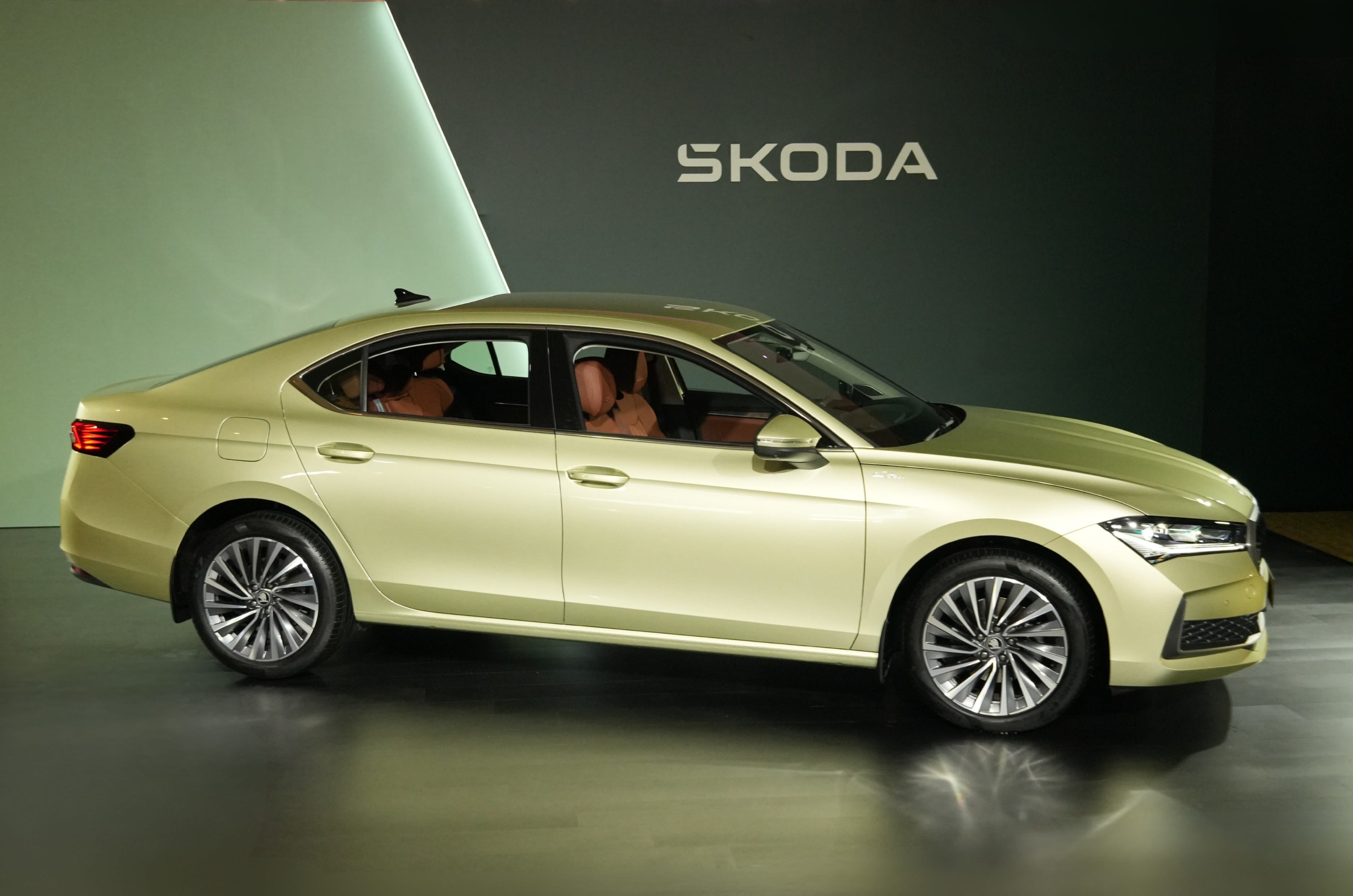
Skoda is evaluating the discontinuation of its flagship sedan, the Superb, amid a larger cost-reduction effort by the Volkswagen Group – the conglomerate aims to halve the number of models it sells within the next decade. First introduced in 1934, the Superb nameplate was originally used for a full-size luxury car made by Skoda up until 1949. Skoda revived the Superb nameplate in 2001 for its flagship sedan, which is now in its fourth generation and has sold over 1.6 million units to date worldwide.
Skoda Superb might end up on the chopping block
In a recent media interaction (reported on by Autocar UK), Skoda CEO Klaus Zellmer said it’s “not a given” that it wouldn’t shrink its model line-up in the future. This is despite the fact that the Czech carmaker reported its most profitable H1 numbers yet in 2026 – €16 billion in revenue and an 8.5 percent return on sales.
Zellmer hinted that Skoda’s sedan and estate line-up could be subject to reductions due to fading buyer interest in these body styles. “The big question is going forward: saloons and limousines and combis [estates] are not on the rising path. The [next-gen SSP] platform caters for wiggle room to go up to Superb dimensions. We’re currently looking into whether we still need the full monty, or whether we will have a smart way to cover both segments and target groups,” he said.
The fourth-gen Superb is offered as both a sedan and an estate, while the Octavia sits below it and has sold nearly 8 million units over its 30-year tenure. Zellmer said the “Octavia has led its segment since 2016,” giving the carmaker a strong seller that increasingly overlaps with the Superb in terms of size and practicality. Therefore, Skoda is examining whether it needs two models covering these buyers or whether a single model could serve both groups more efficiently.
Interestingly, the fourth-gen Superb is set to launch in India as a fully-imported model sometime during the first half of 2027. The Superb will also mark the return of diesel power for Volkswagen Group’s India portfolio, as the sedan will come equipped with a 150hp 2.0-litre TDI engine.
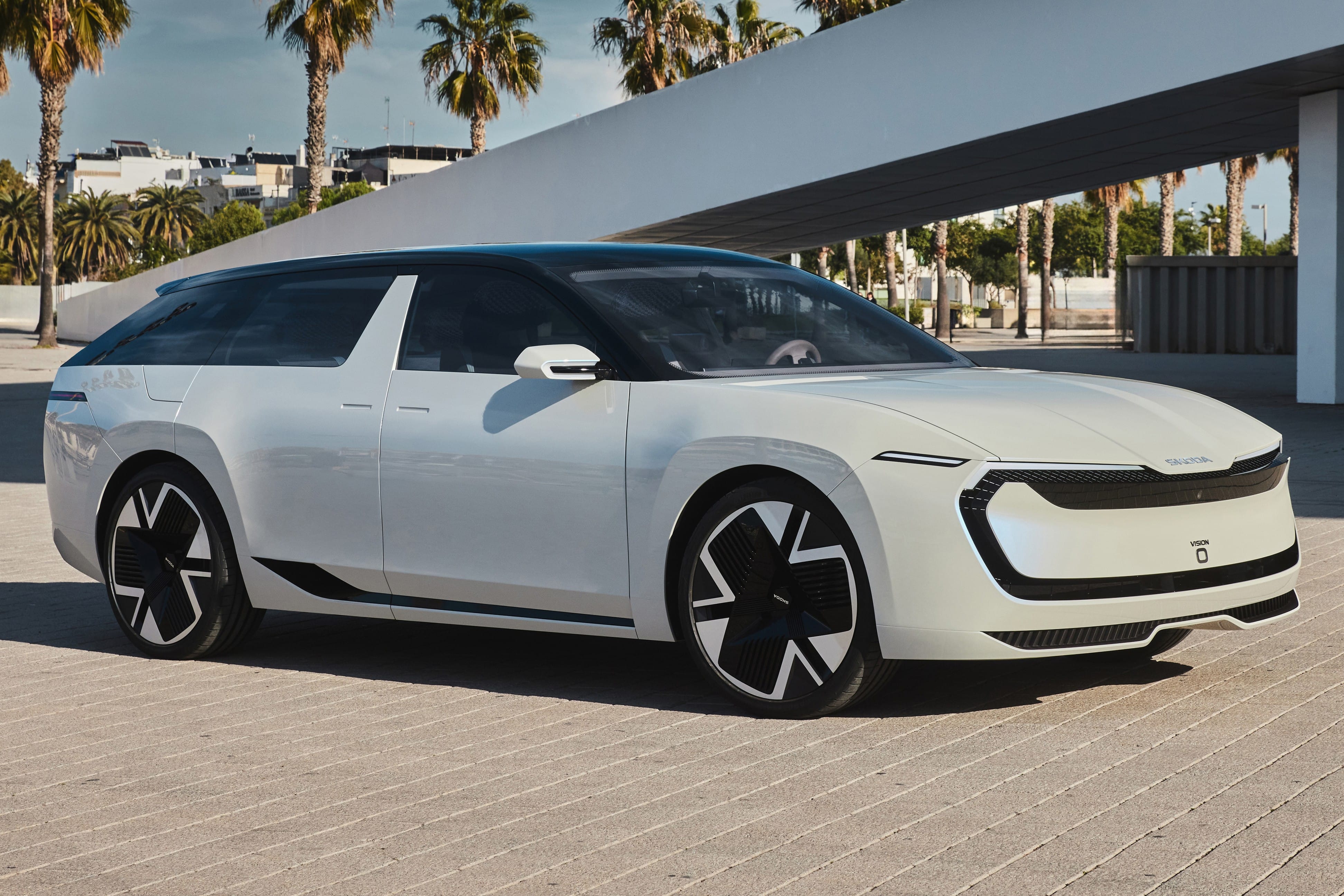
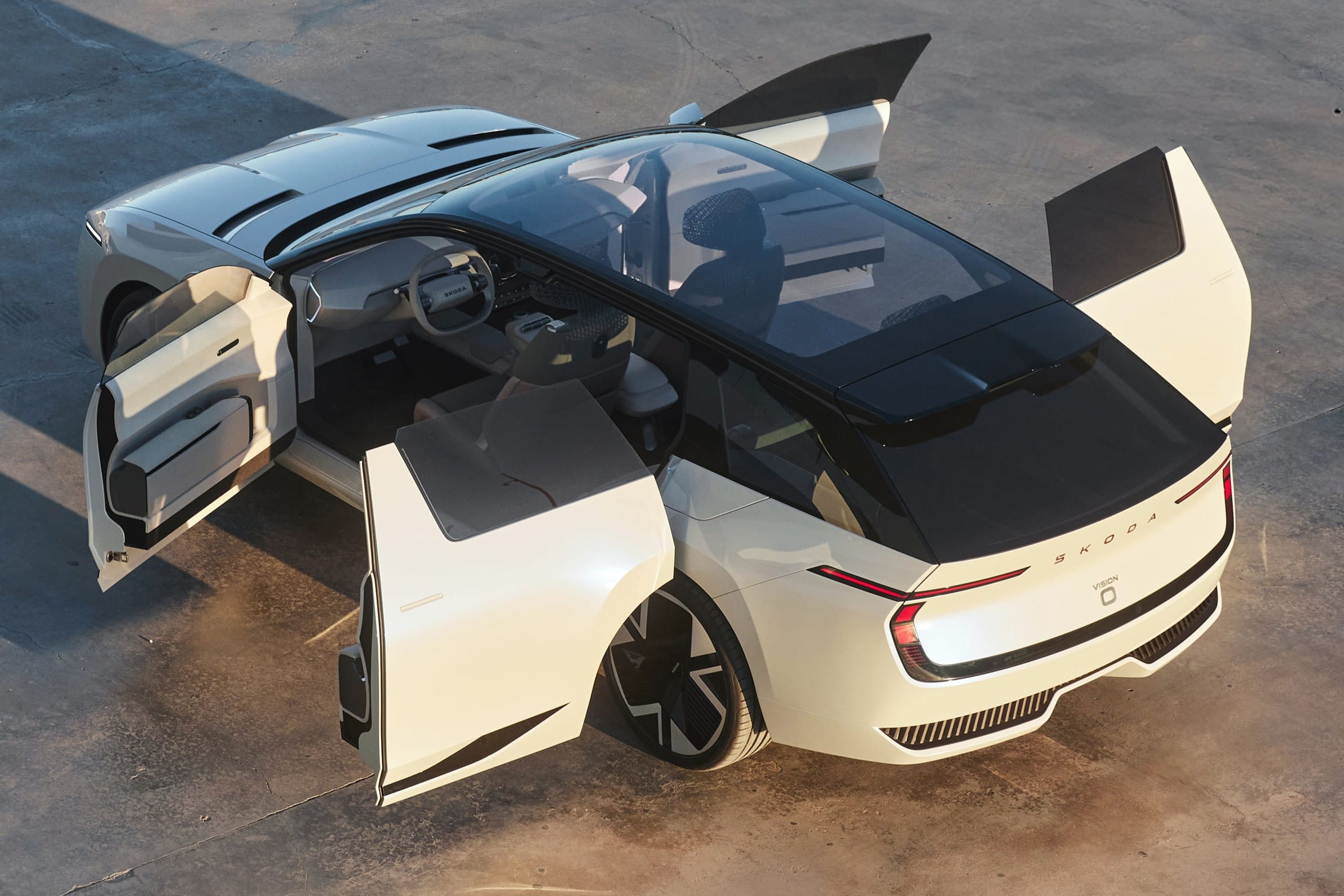
Could the production-spec Vision O replace the Superb?
Skoda’s Vision O concept, which was unveiled in 2025 and previews the next-gen Octavia, provides a possible indication of how the carmaker could consolidate its future estate offerings. The 4,850mm-long concept previews the next-generation Octavia as an electric estate, and is 152mm longer than the current Octavia Combi (4,698mm) and just 52mm shorter than the Superb Combi (4,902mm).
This could enable the next-gen Octavia to move upmarket and provide the space and practicality currently offered by the Superb, thus allowing Skoda to axe the latter nameplate. That said, Skoda has not confirmed if the production-spec Vision O will replace the Superb. The concept’s production version is expected to land by the end of the decade and will use the Volkswagen Group’s next-gen SSP architecture.
Skoda is also keeping its options open on powertrains in light of slowing EV adoption, with Zellmer stating that the carmaker’s current model line-up is the largest in its history as a result of “catering for a market still divided between combustion drivetrains and electric vehicles, and everything in between such as mild hybrid, full hybrid, plug-in hybrid.” To that end, a range-extender hybrid setup is being considered for the production-spec Vision O. The EV sales downturn may prompt Skoda to extend the lifespan of its ICE-powered models as well.
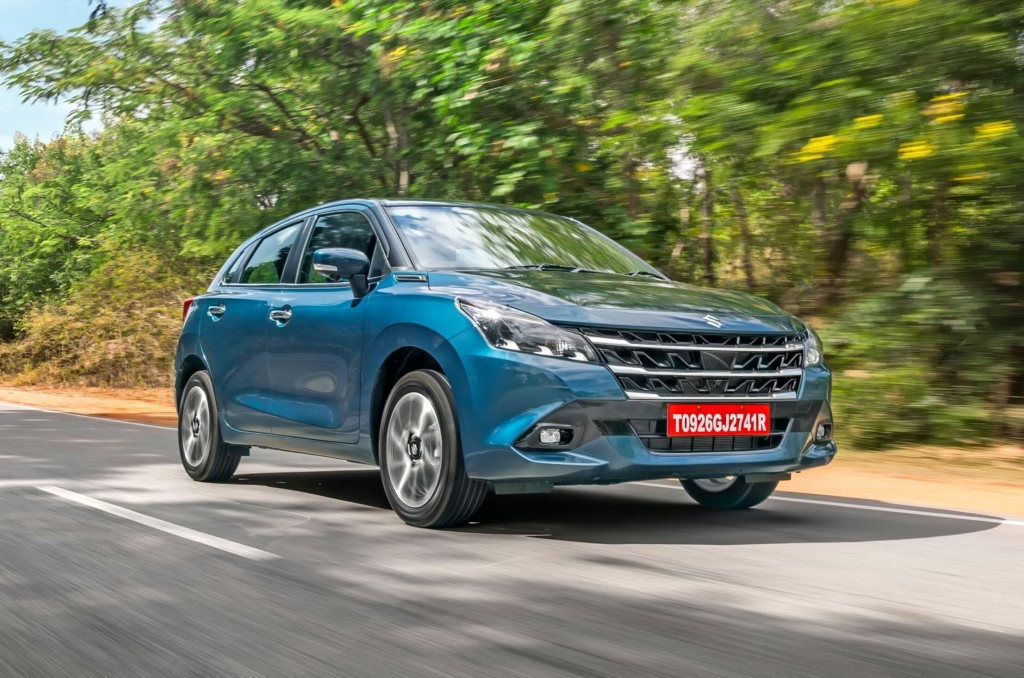
The Maruti Suzuki Baleno has proven to be hugely successful, with the premium hatchback going home to 1.9 million buyers since its introduction in 2015. And in a time when compact SUVs are all the rage, the Baleno continues to buck the trend and bring in the numbers for the brand. And now in a bid to keep it fresh and relevant, Maruti Suzuki has updated it with a tweaked design, new comfort and safety features and even a new petrol engine.
Maruti Baleno Exterior Design and Engineering – 7/10
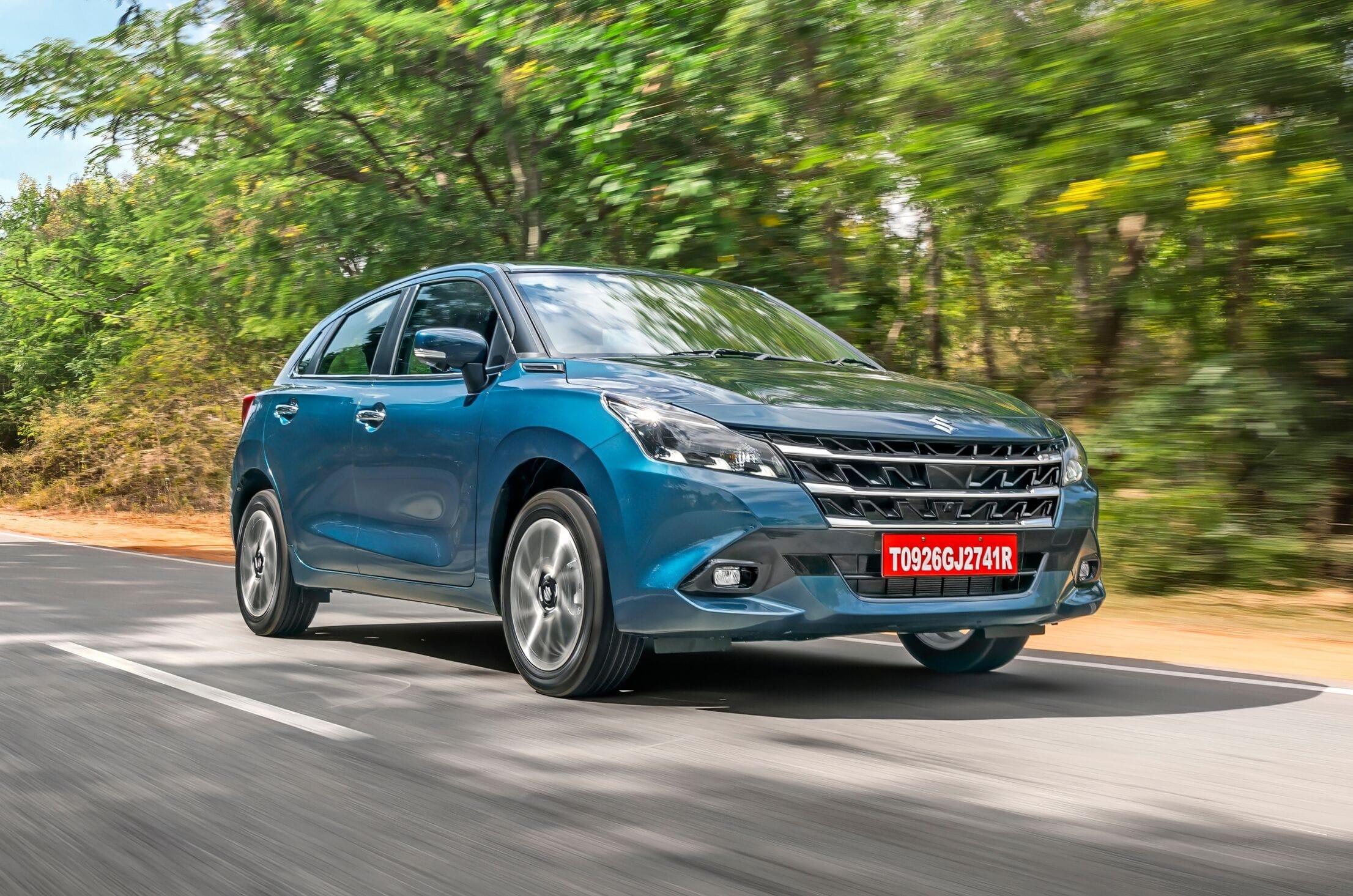
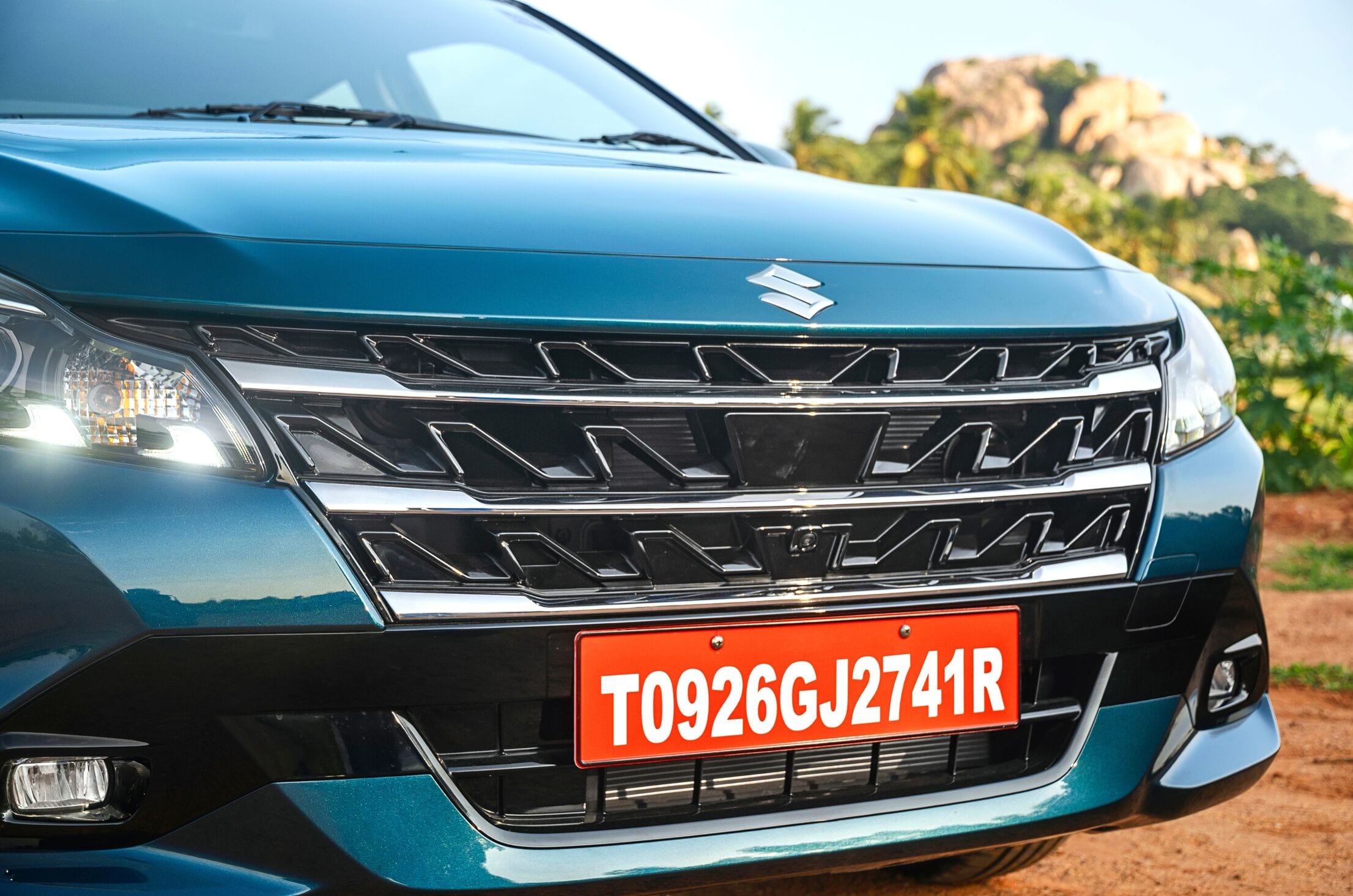
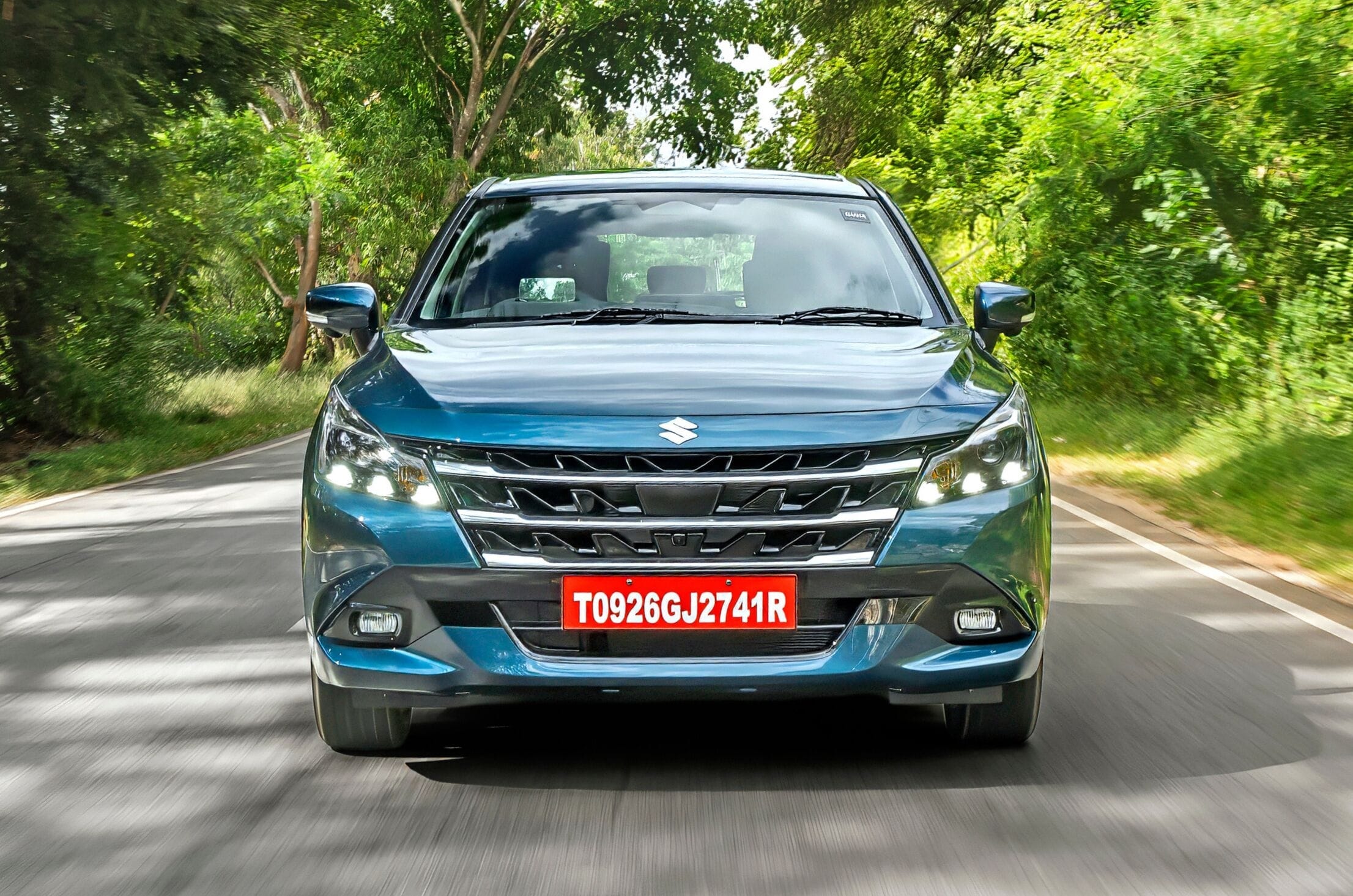
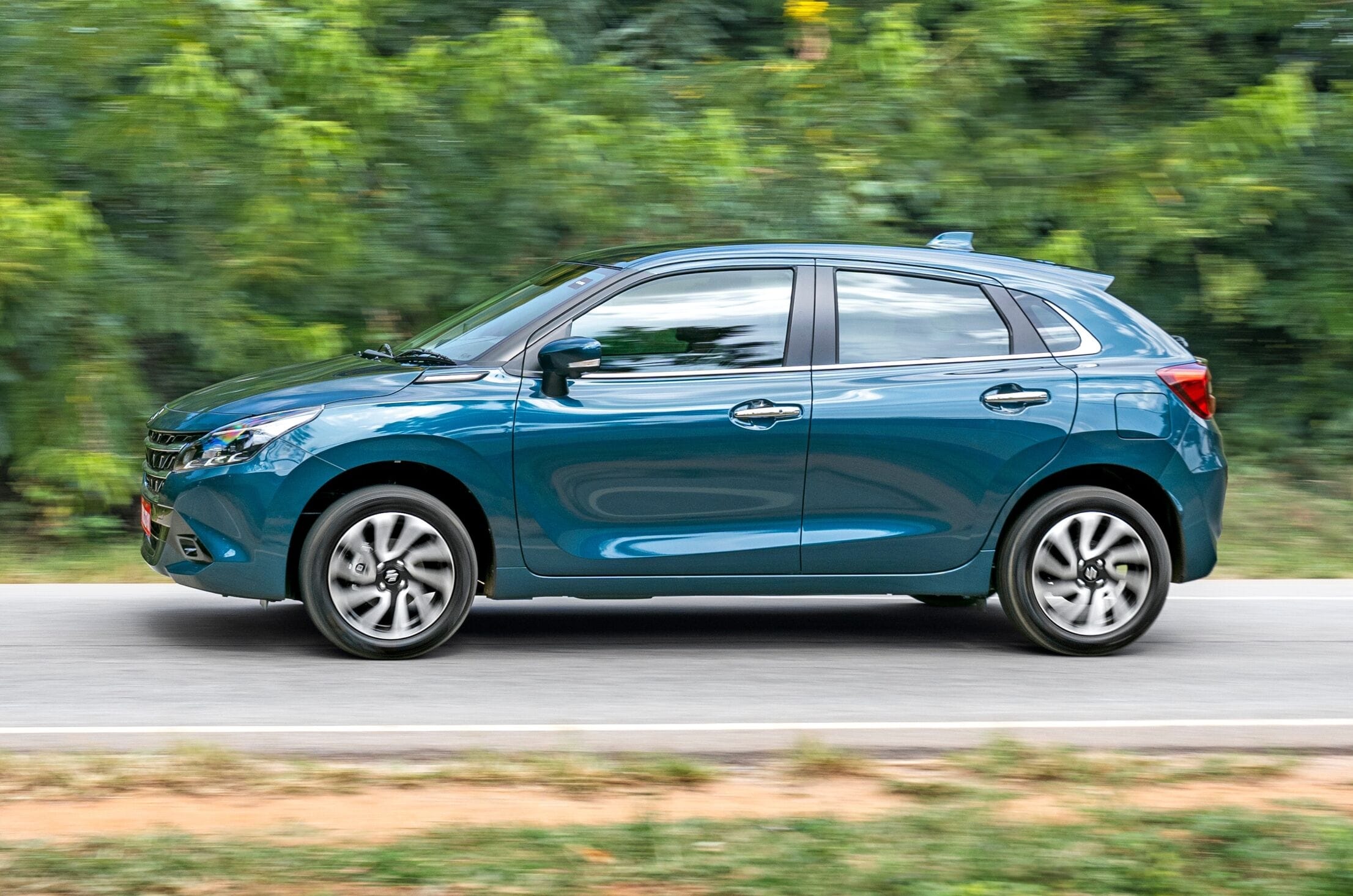
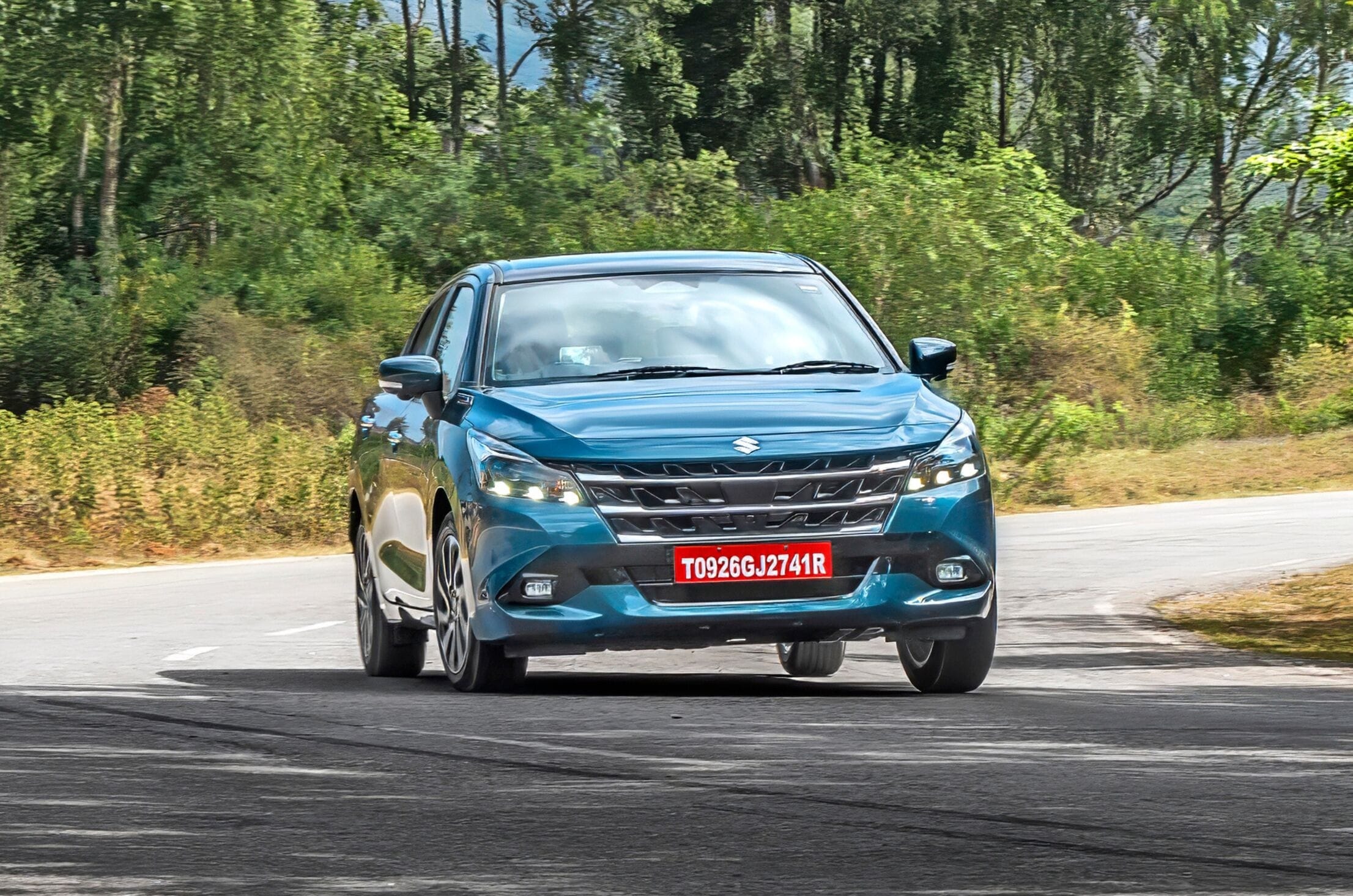
Being a mid-life-cycle update, the Baleno doesn’t get a design overhaul but rather tweaked styling with the bulk of the design changes concentrated at the front end. The grille is now much larger than before with three horizontal chrome slats and gloss black detailing, with a radar module in the centre for the new ADAS tech. The bumper is new too and features a gloss black trim that links the new LED fog lamps and the Suzuki logo has also been moved above the grille. Otherwise, the clamshell bonnet with the two character lines and the LED headlamps with the three-block DRL signature are carried over unchanged.
Gets a new larger grille with chrome slats, a new bumper and new fog lamps.
Changes along the sides are minimal, with the only distinguishing factors being a chrome garnish on the front fender and a shark fin antenna on the roof. The facelift retains the older Baleno’s chrome lining under the windows that extends up till the C-pillar, chrome door handles and the dual-tone 16-inch alloy wheels on this top-spec Alpha (O) variant.
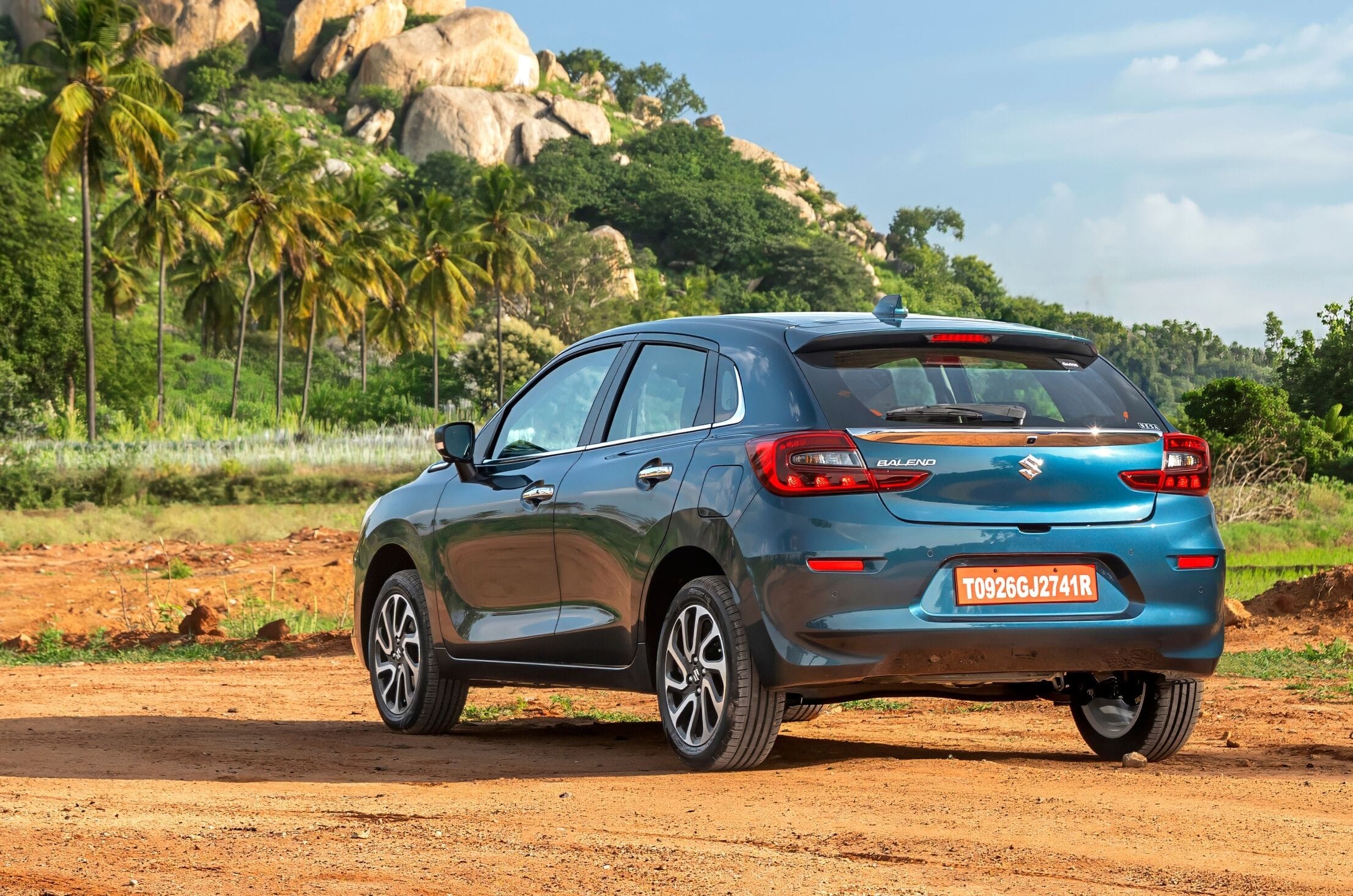
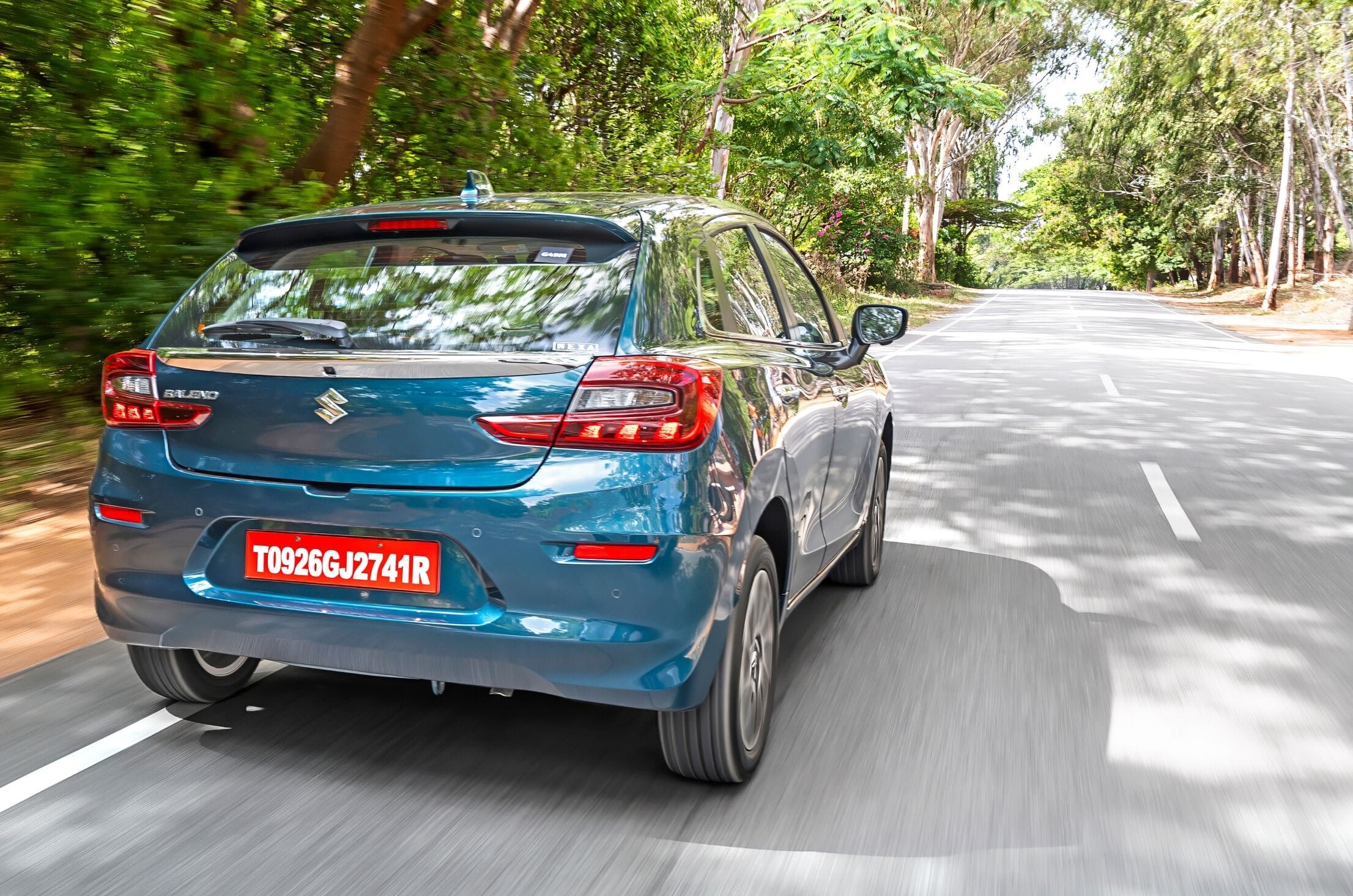
The rear however, stays identical to the pre-facelift Baleno with its C-shaped LED taillamps that also feature the three-block pattern, a chrome band running across the tailgate and a small, roof-mounted spoiler. There’s also a new Enigmatic Teal Green paint shade as seen in the pictures here. Overall, the Baleno sticks to the formula that’s made it as successful as it is with minor tweaks in order to keep it fresh. The front grille, though, splits opinion and certainly doesn’t appear as cohesive as the one on the model it replaces.
Rear stays identical to the pre-facelift model, with the same dual-tone alloys as well
Maruti Baleno Interior Space and Comfort – 8/10
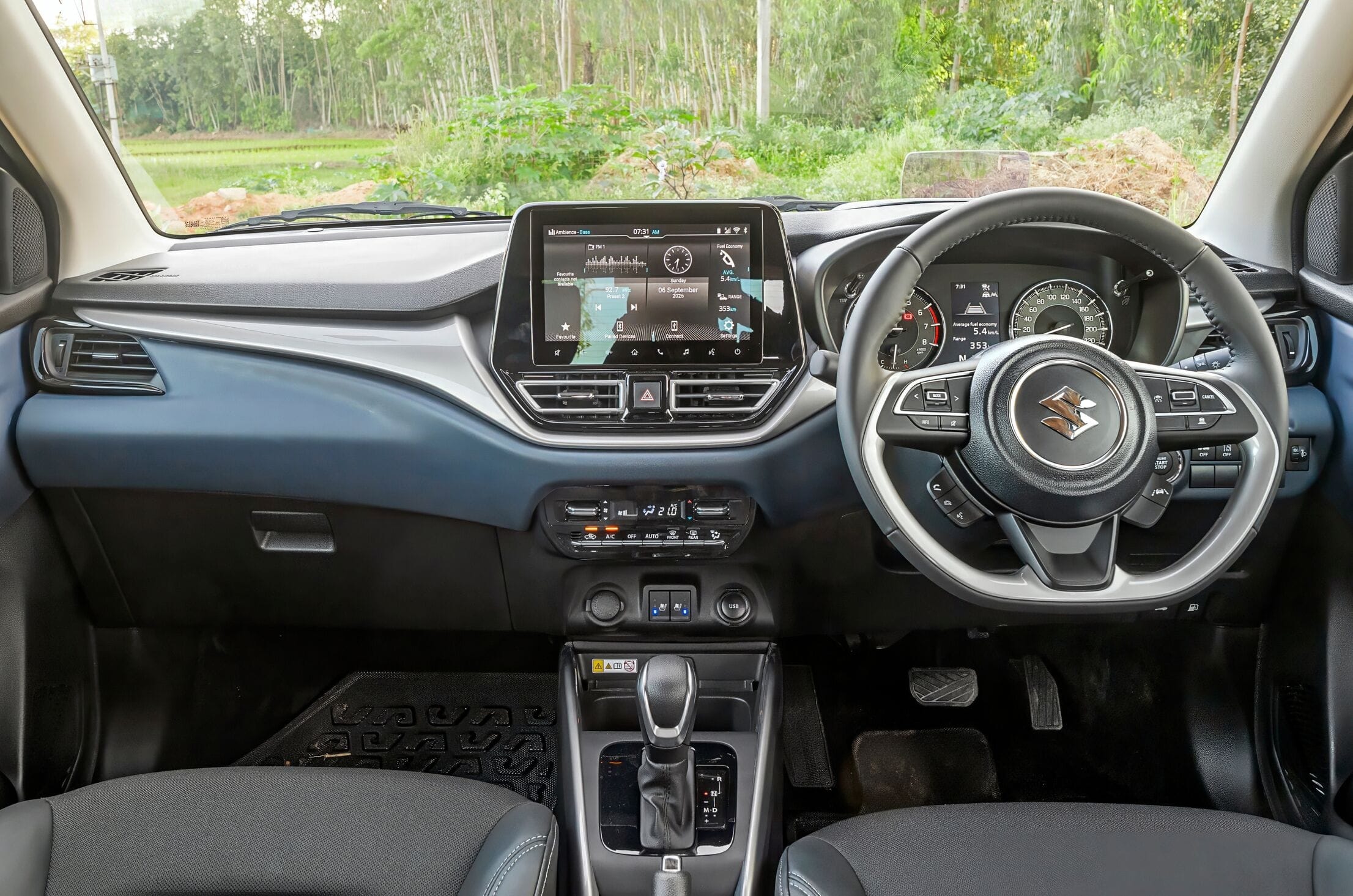
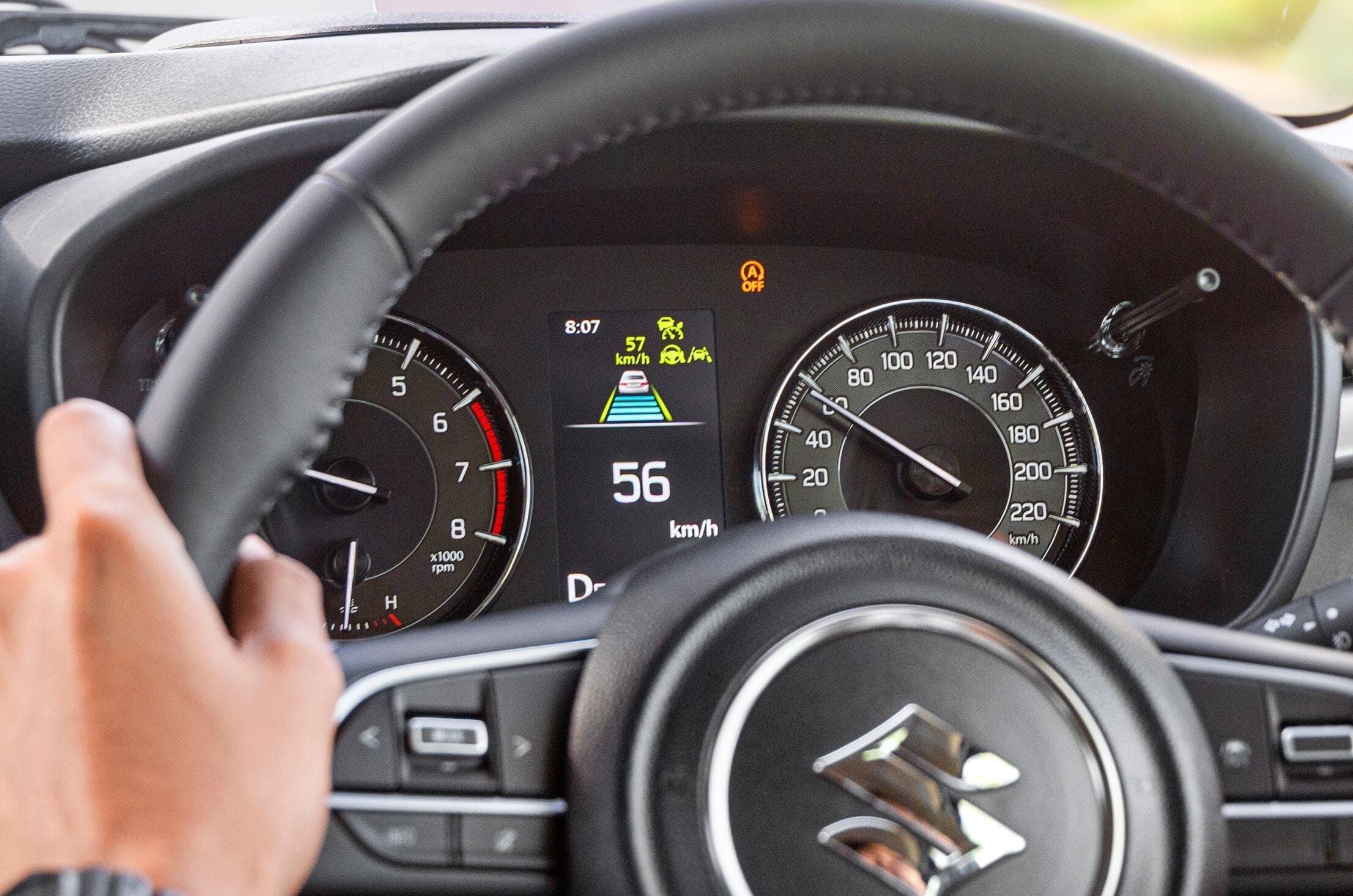
The interior of the Baleno facelift stays near-identical, with the same layered, V-shaped dashboard, flat-bottom three-spoke steering wheel and dual-tone black and blue colour scheme. There have been some tweaks however. The steering now features buttons on the right side for the adaptive cruise control and lane keep assist, there are more buttons on the right of the steering too (near the start/stop button) to turn off certain ADAS features and the seats now feature part-leatherette upholstery. The seats still majorly feature fabric upholstery but the outer edges are now finished in leatherette, which helps up the premium feel.
Layered dashboard with a dual-tone black-and-blue interior theme is carried over unchanged
Otherwise, this cabin is made up of good quality materials, particularly the soft touch leather wrapped steering and the padded elbow rests on the doorcards. The only sore points are the hard plastics and the simple woven roofliner. It’s a practical place too, with big door pockets, a decent-sized glovebox and storage in the centre console, with big cupholders and a small bin under the centre armrest.
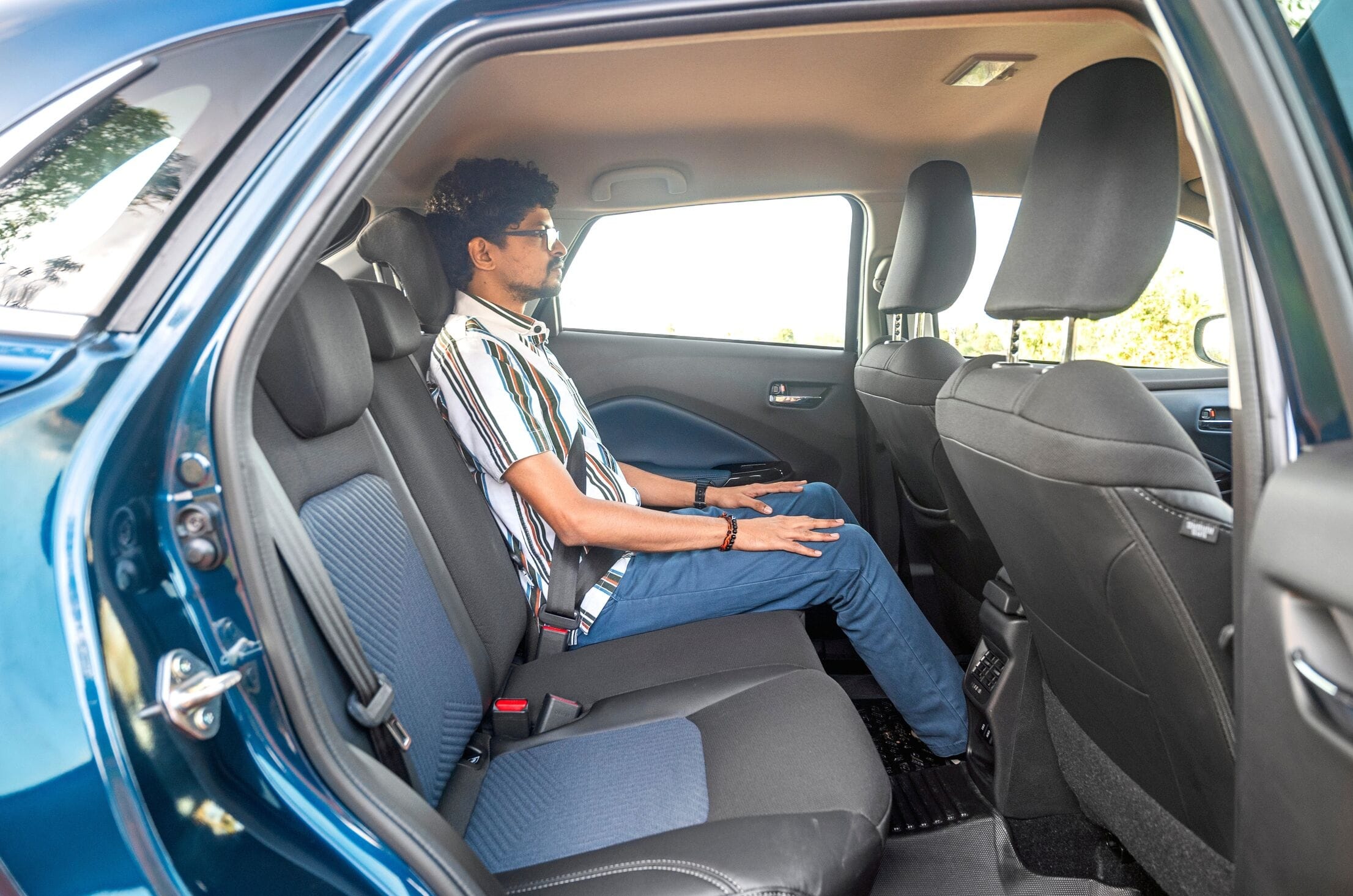
The front seats are unchanged and that’s a good thing as they are accommodating, supportive and offer nice cushioning. Thanks to the height adjustable driver’s seat and tilt/telescopic steering, finding an ideal driving position is an easy affair. Space at the rear is excellent, and even tall passengers won’t find a shortage of headroom or legroom. There’s good underthigh support, the seat cushioning is on point and on the whole, this is a comfy place to be. A welcome addition is an adjustable headrest and three-point seatbelt for the rear centre passenger. Rear passengers also get dedicated AC vents and USB charging ports.
Rear seat space is excellent and even tall passengers won’t find a shortage of headroom or legroom
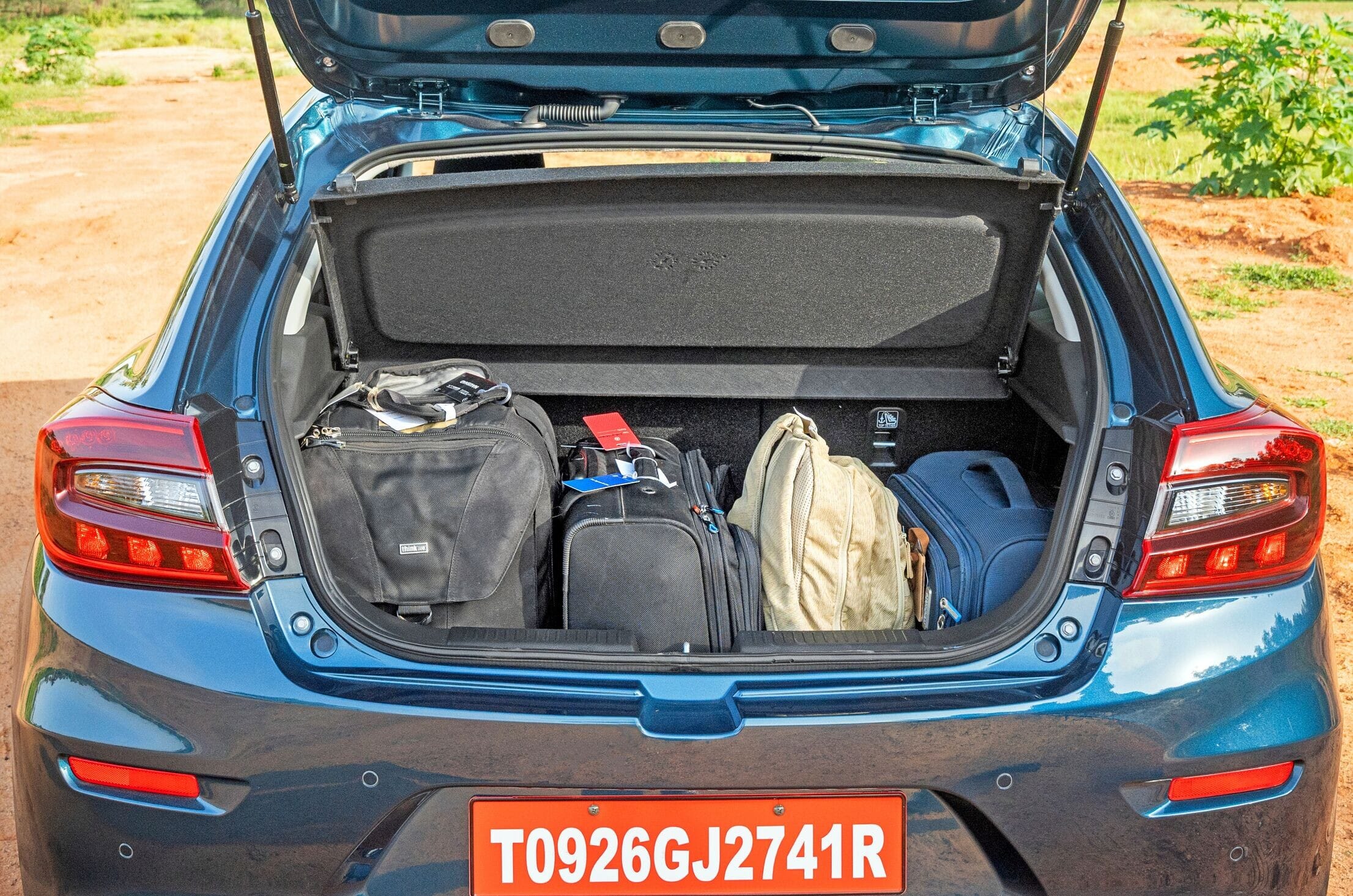
What further enhances overall comfort are the UV-cut glasses, which helps keep the heat out. As for boot space, it’s a sizable 318 litres, though the loading lip is quite high. It’s also nice to see that it retains a spare tyre under the boot floor, when many modern cars are pivoting to puncture repair kits.
Boot is a sizeable 318-litres though the loading lip is quite high; continues to get a spare tyre
Maruti Baleno Features and Safety – 9/10
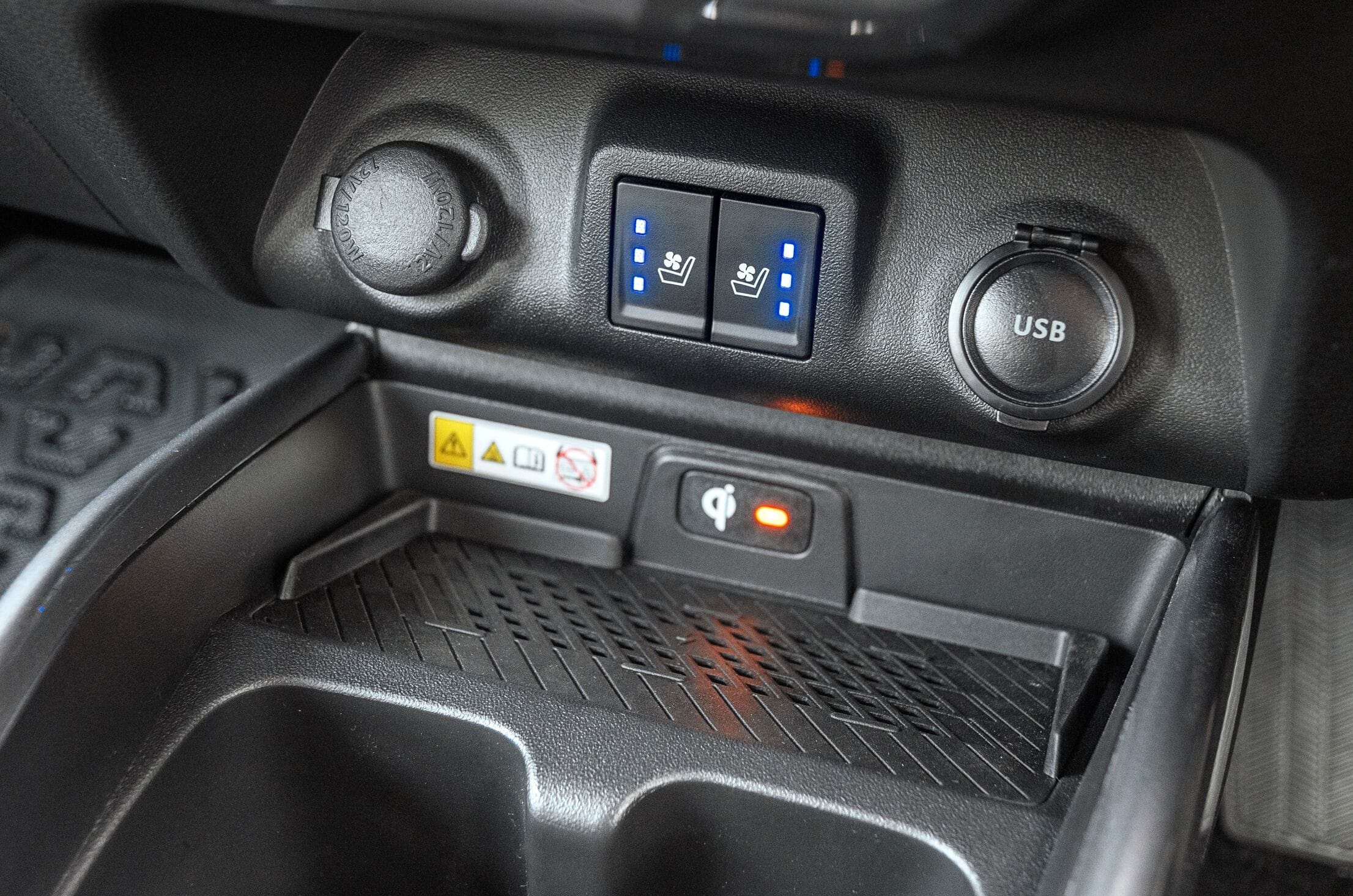
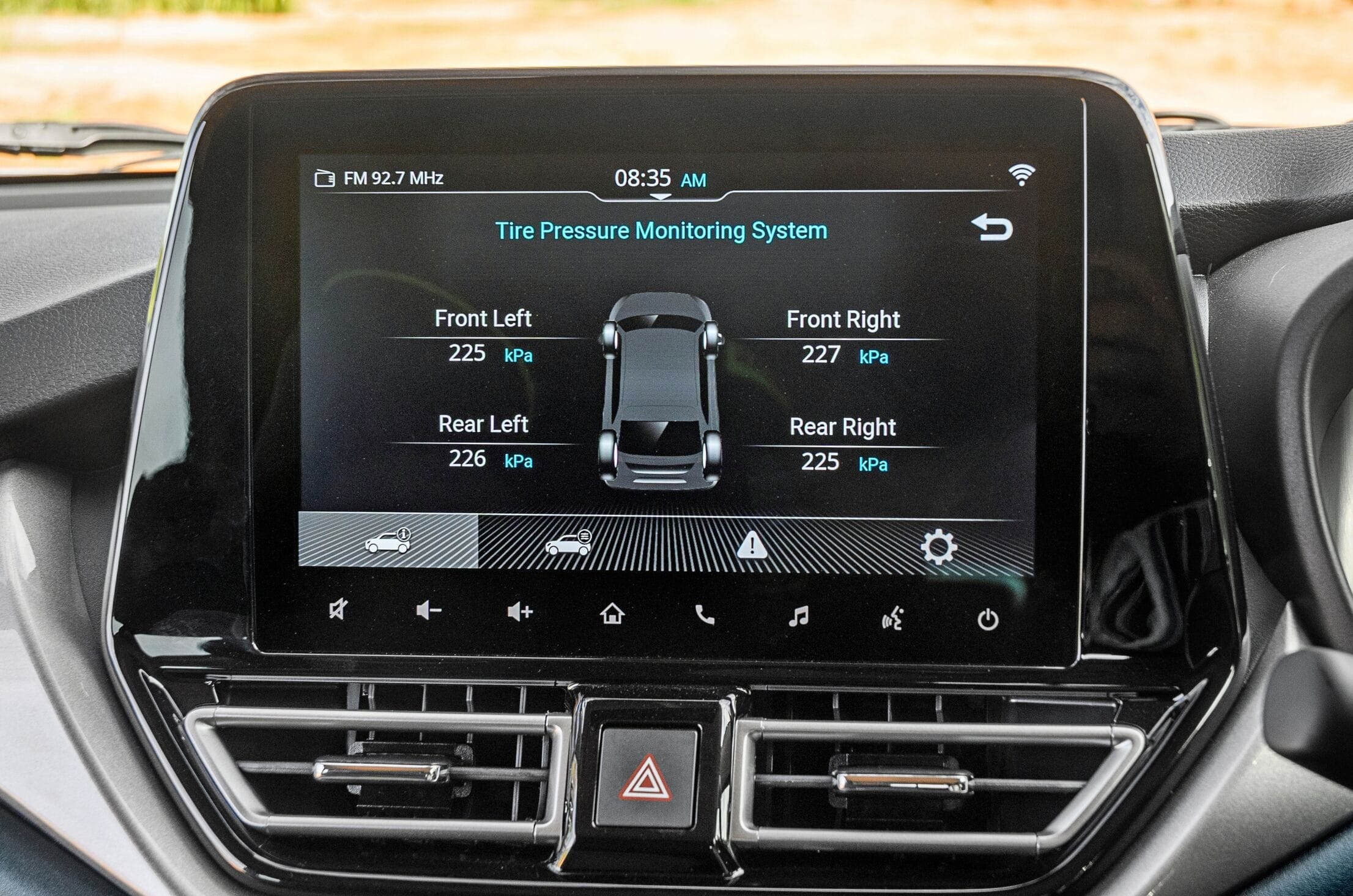
There have been some important additions when it comes to features, as the Baleno now gets ventilated front seats, a cooled wireless phone charger, a tyre pressure monitoring system, a Clarion sound system, and perhaps most importantly, segment-first ADAS Level 2 features.
Ventilated front seats and a cooled wireless charging pad are among the new additions
Other than that, the features list was fairly expansive as is, with this top-spec Alpha (O) also getting a 9-inch infotainment touchscreen with wireless smartphone integration, auto climate control, a heads-up display, colour MID, auto headlamps, auto-dimming IRVM, keyless entry and go, rear wiper/washer, connected car tech and more. Safety kit includes 6 airbags as standard, traction control, a 360-degree parking camera (its quite low res though) and ISOFIX child seat mounts. The outgoing Baleno had a 4-star crash safety rating from Bharat NCAP and that should be the case for this one as well.
9-inch touchscreen has been retained; now features a TPMS
Of the newer features, the ventilated front seats work effectively though the blower is quite audible while the wireless charger charges your phone’s battery at a good rate without overheating it. The TPMS too worked as intended, while the Clarion audio system is better than the outgoing model’s it still falls short of what rivals offer.
The addition of Level 2 ADAS tech however, greatly boosts the Baleno’s safety quotient. It’s a camera and radar-based system that brings in features like auto emergency braking, adaptive cruise control, lane keep assist, lane departure warning and more. On our brief test drive, the ADAS features worked as intended and seemed well calibrated as they weren’t overly intrusive. However, if you turn off the ADAS features they will automatically switch back on everytime you start the car.
Gets segment-first Level 2 ADAS features which seemed well calibrated for our conditions
As for features then, the Baleno facelift takes a step up and almost has all bases covered. Only things missing are a rear centre armrest and a sunroof, both of which its rivals offer.
Maruti Baleno Performance and Refinement – 8/10
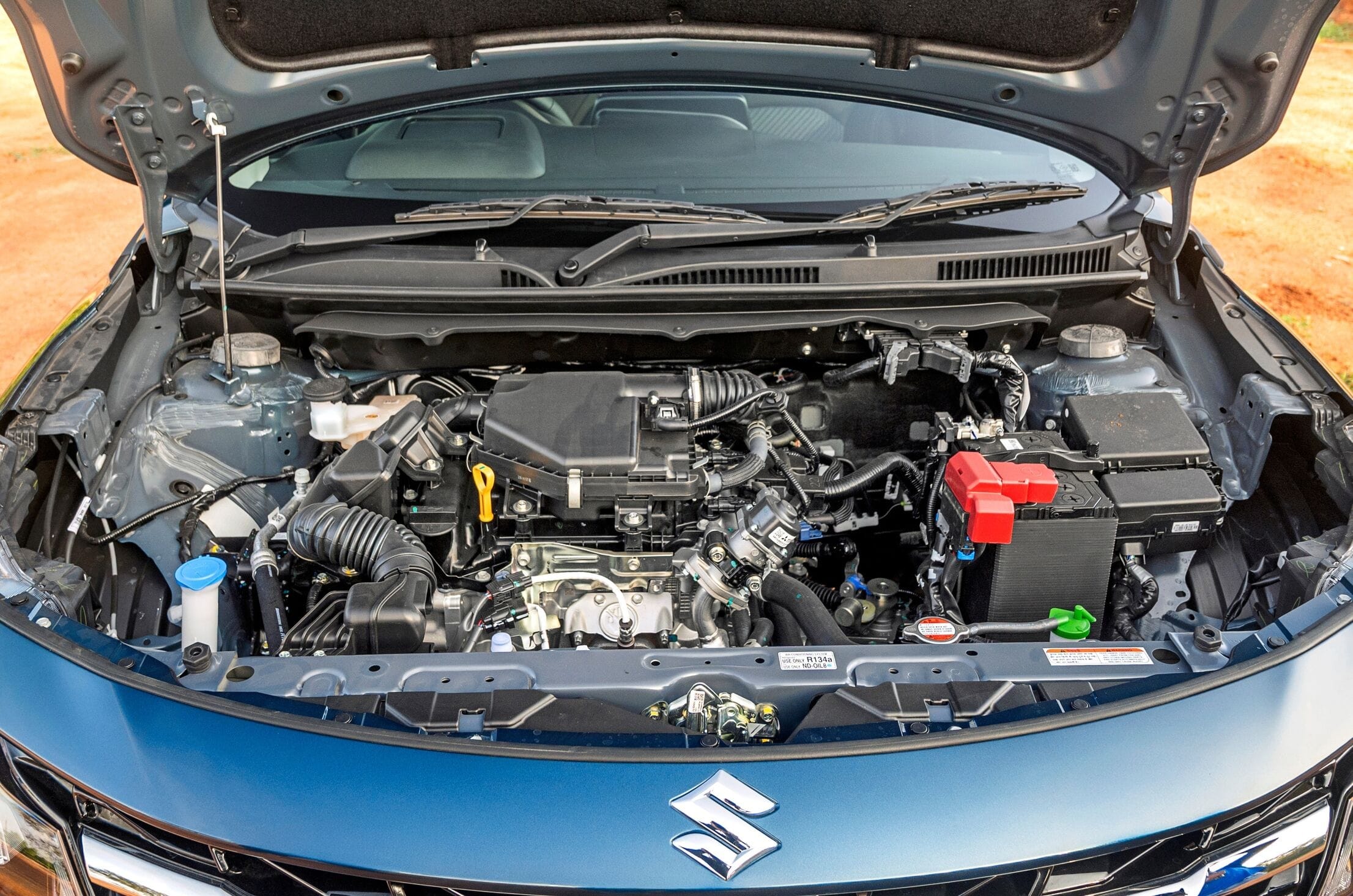
By far the biggest change with the facelift comes under the hood and it’s rare that we get to see a new engine with a facelift. Out goes the 1.2-litre, four-cylinder, K-series engine and in comes the 1.2-litre, three-cylinder, Z-series engine from the likes of the Swift and the Dzire. Yes, the Baleno is down a cylinder and as such, down on output too. The Z12E engine makes 83hp and 112Nm, which is 7hp and 1Nm lower than the older K12N engine. Maruti has moved to this engine as it is newer, is less polluting, more efficient and also opens it up to the possibility of hybridisation in the future.
New Z-series engine impresses with its drivability, low end response and promises more efficiency
This Z-series naturally aspirated engine is one of the most refined three-cylinder engines around. There is some of that typical three-cylinder thrum at idle but that smoothens out as the revs climb. It’s fairly quiet too at idle and it’s only when you’re at the top of the rev range that it becomes audible inside the cabin.
As we’ve experienced in the Swift and Dzire, this Z-series engine impresses with its low-end response and drivability. Power builds in a smooth linear manner, it moves off the line cleanly and part-throttle responses are good too. However, it doesn’t feel as peppy as the older K-series engine and doesn’t feel as strong at the top of the rev range. And considering that it’s down on power and heavier than the outgoing car, it isn’t as quick in terms of outright acceleration. But for a daily urban runabout, this engine is up to the task. For reference, we managed a 0-100kph time of 13.03sec and 15.89sec for the Swift MT and Swift AMT, respectively and you can expect the Baleno to be slightly slower than this owing to its higher kerb weight.
Power builds in a smooth linear manner and part-throttle responses are good, too.
As was the case earlier, the Baleno facelift can be had with either a 5-speed manual or a 5-speed AMT automatic. The manual gearbox is particularly impressive with its effortlessness and our pick of the two. The clutch pedal is light and easy to modulate, while the gearbox is smooth and has nice, short throws and well defined gates.
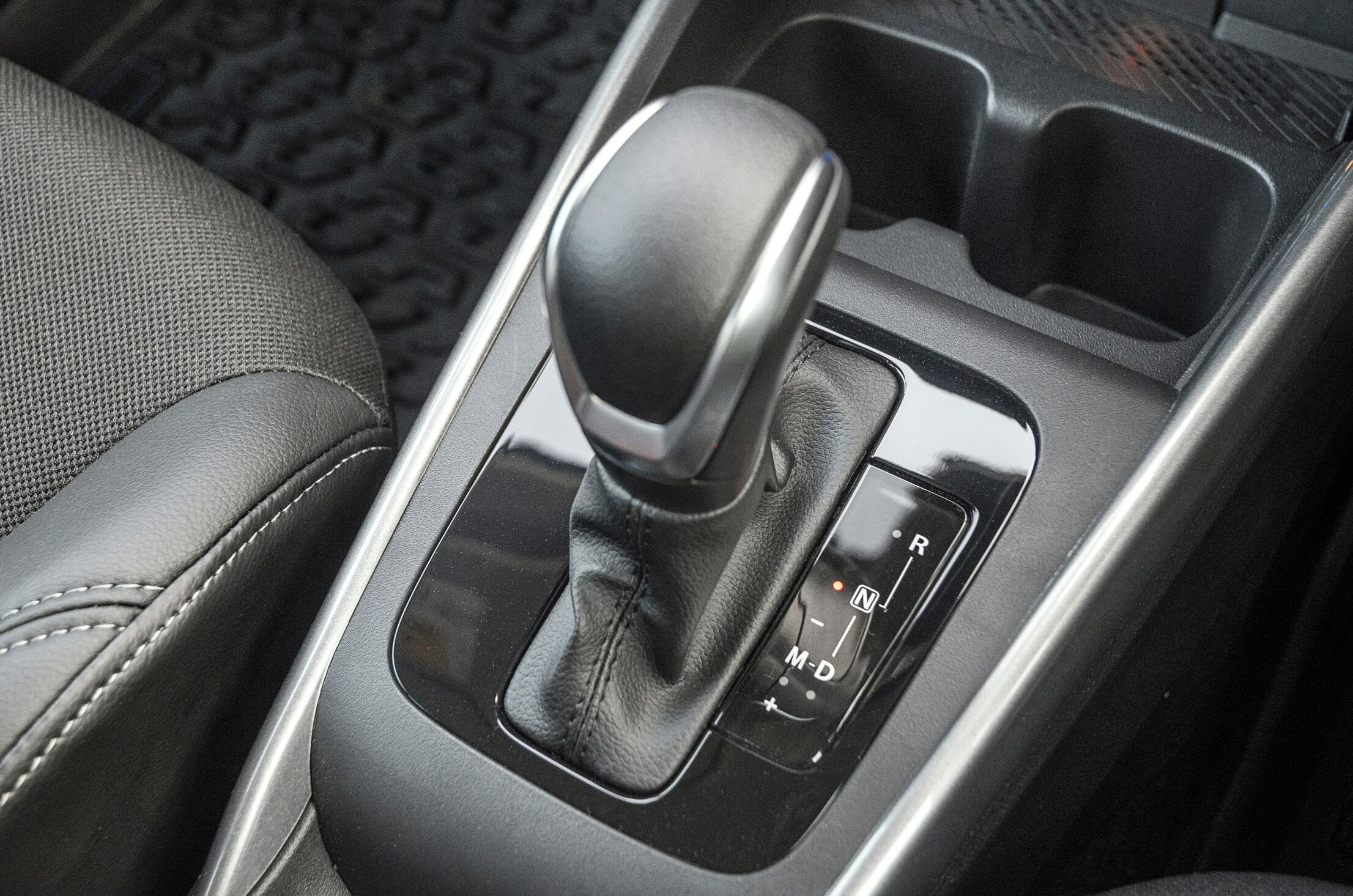
In comparison to its rivals, which offer more sophisticated automatics in the form of a CVT and a DCT, the Baleno only comes with a simpler, more cost-effective AMT. The AMT makes for a good option for those who wish for greater convenience and it’s smooth as far as AMTs go. There is still that noticeable headnod effect that you get between shifts and it is hesitant when you try to make a quick overtake, as it takes some time to downshift. That can be alleviated however, by shifting to manual mode via the gear lever and what’s nice is that it won’t auto upshift in this mode.
AMT adds a layer of convenience but feels hesitant when you try to make a quick overtake
A factory-fitted CNG option is also available with the Baleno facelift. It uses the same engine but power and torque outputs fall to 70hp and 102Nm, respectively, when run on CNG, and it can only be had with the 5-speed manual gearbox. However, we’re yet to experience the Baleno facelift CNG.
Maruti Baleno Mileage and Efficiency – 9/10
Both manual and AMT variants see an improvement in claimed efficiency with the new engine.
The biggest advantage with the move to the Z-series engine comes in the form of fuel efficiency. The Baleno petrol-manual is now claimed to return 23.80kpl (1.45kpl more), while the AMT is said to do 24.77kpl, which is a 1.83kpl improvement. The Baleno CNG meanwhile, sees an improvement of 3km/kg, with a claimed 33.61km/kg. As always, these are claimed figures tested in ideal conditions and expect real-world fuel efficiency to be lower. What’s interesting is that the Baleno has become more efficient despite becoming up to 30kg heavier than the outgoing version.
Maruti Baleno Ride Comfort and Handling – 8/10
As before, the Baleno continues to impress with its ride comfort. The suspension has a softness to it, which means low speed ride is excellent and it’s only the sharpest bumps and big potholes that manage to unsettle it. It also manages to iron out road imperfections with considerable ease and stays composed at higher speeds, with well-contained vertical and side-to-side movements.
Good body control with minimal roll and the steering weighs up nicely as you pick up the pace
Handling isn’t its strongest suit but the Baleno displays good body control with minimal roll around the corners. The steering, meanwhile, is light at low speeds, which aids city driving, but it adds some reassuring weight as you pick up the pace which is confidence-inspiring. It’s not particularly feelsome but that’s nothing to complain about, given its an urban premium hatchback. As for braking, it continues with the same discs up front and drums at the rear setup and the stopping power is more than adequate. On the whole then, the Baleno feels mature and composed on the move.
Maruti Baleno Value for Money – 8/10
The Maruti Baleno facelift is priced from Rs 6.10 lakh (ex-showroom, India), though this is a special festive price and Maruti is yet to disclose complete variant-wise pricing. It continues to get a 3 year/1,00,000km standard warranty and as before, rivals other premium hatchbacks in the Hyundai i20 and Tata Altroz, both of which are priced from Rs 6 lakh (ex-showroom, India).
The added features and the promise of greater fuel efficiency just further enhance the Baleno’s appeal
There are some drawbacks of course, like the hesitant AMT automatic and it doesn’t feel as peppy as the older K-series Baleno. But those pale in comparison to the Baleno’s inherent strengths of a spacious and comfortable cabin, an effortless drive thanks to its light controls, a refined engine and a good ride comfort and handling balance. The added comfort and safety features and the promise of greater fuel efficiency with the new engine just further enhance its appeal. As such, the Baleno is all set to retain its spot at the top of the premium hatchback chain.
When introduced originally, the Lamborghini Urus rewrote the playbook of what an SUV could be. Sharp to look at, ferociously fast and with a mighty V8 soundtrack, the Urus has become the benchmark of performance SUVs. Now though, thanks to ever tightening regulations, the Urus has had to pivot to hybridisation. But has that diluted the experience? We got behind the wheel of the Lamborghini Urus SE to answer that question.
Lamborghini Urus SE Exterior Design and Engineering – 9/10
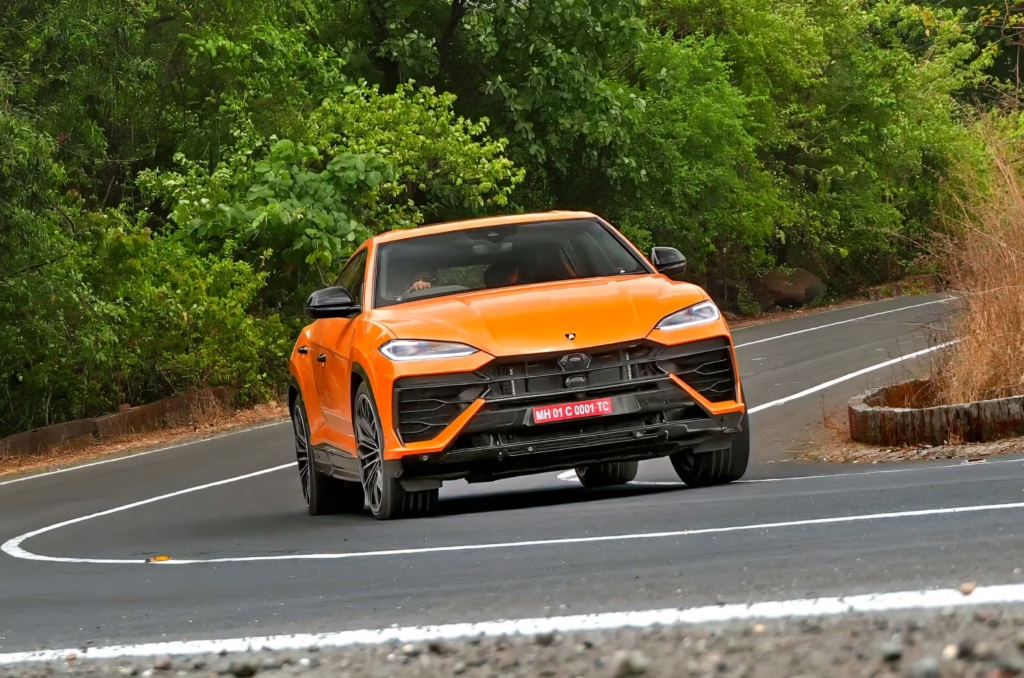
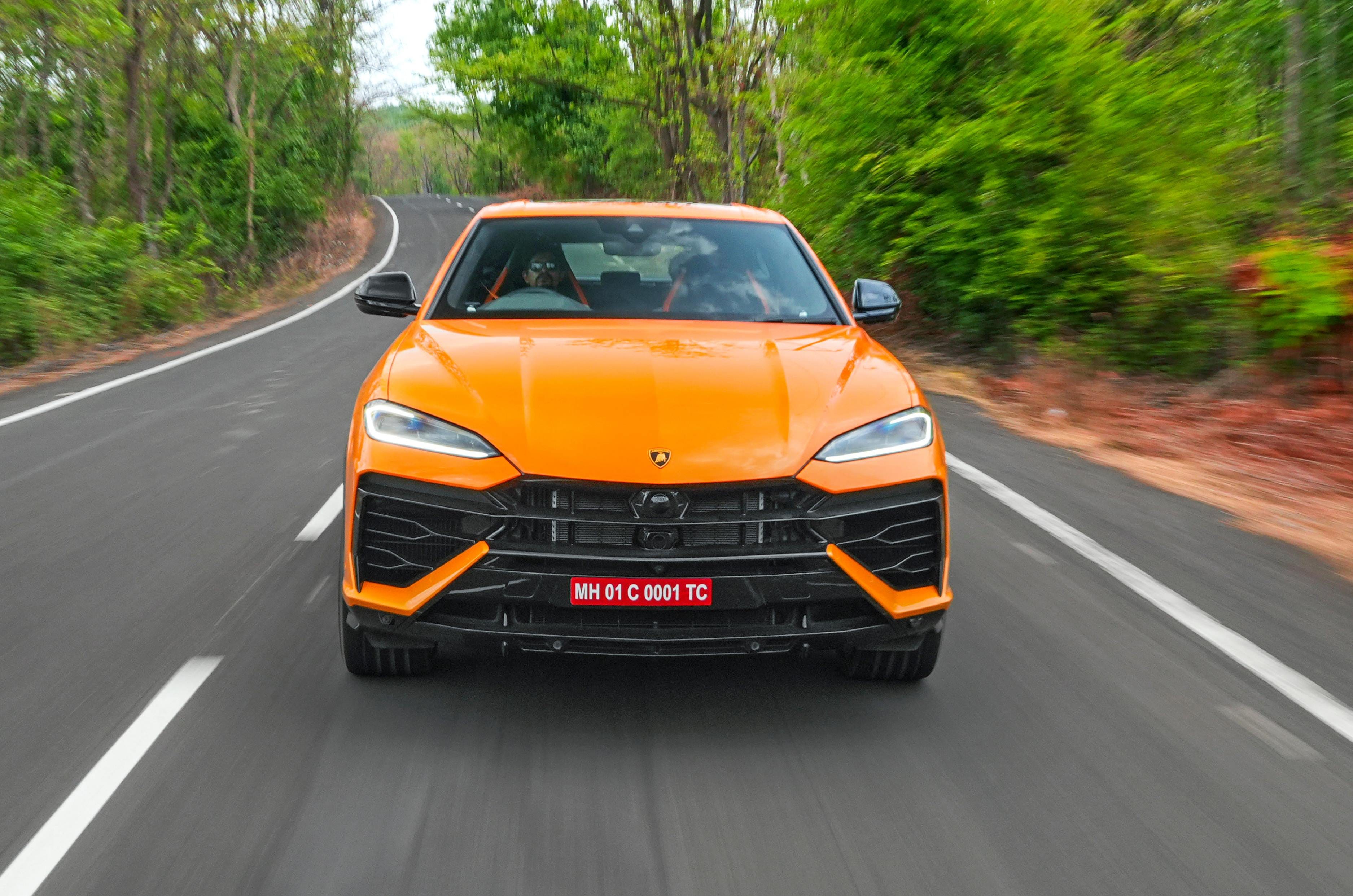
Urus SE has a more rounded-off design than its predecessor, but it’s no less menacing.
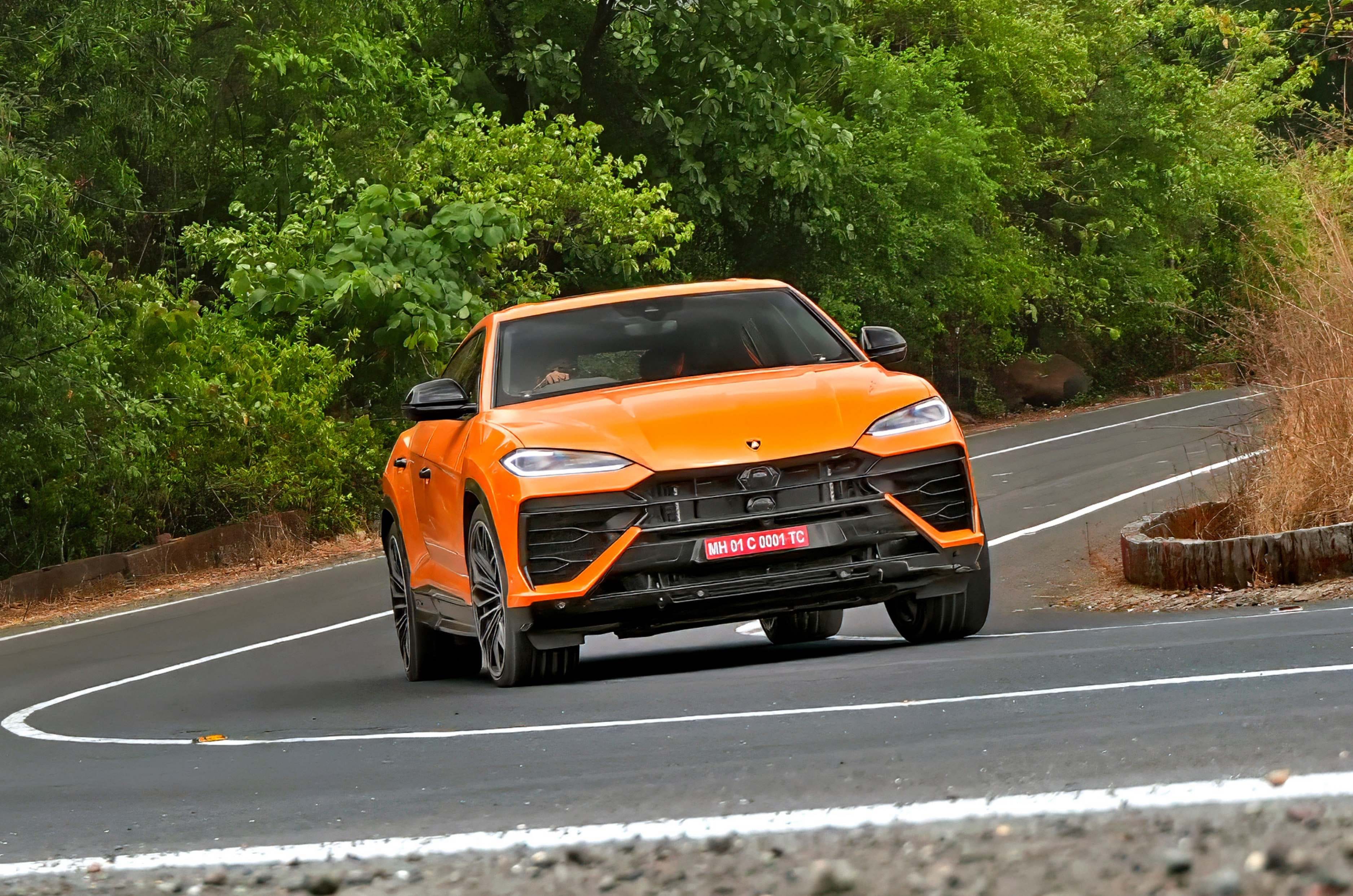
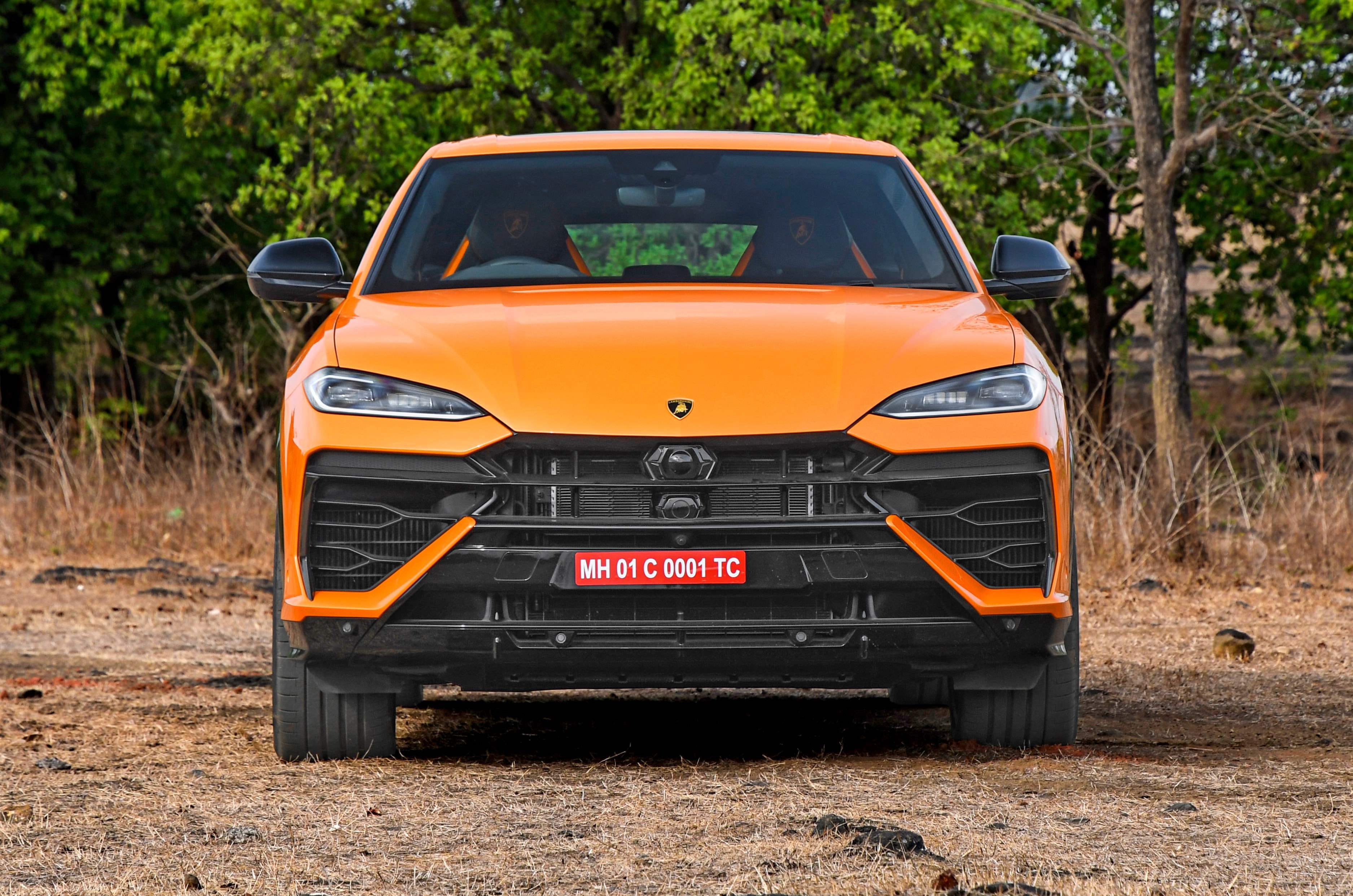
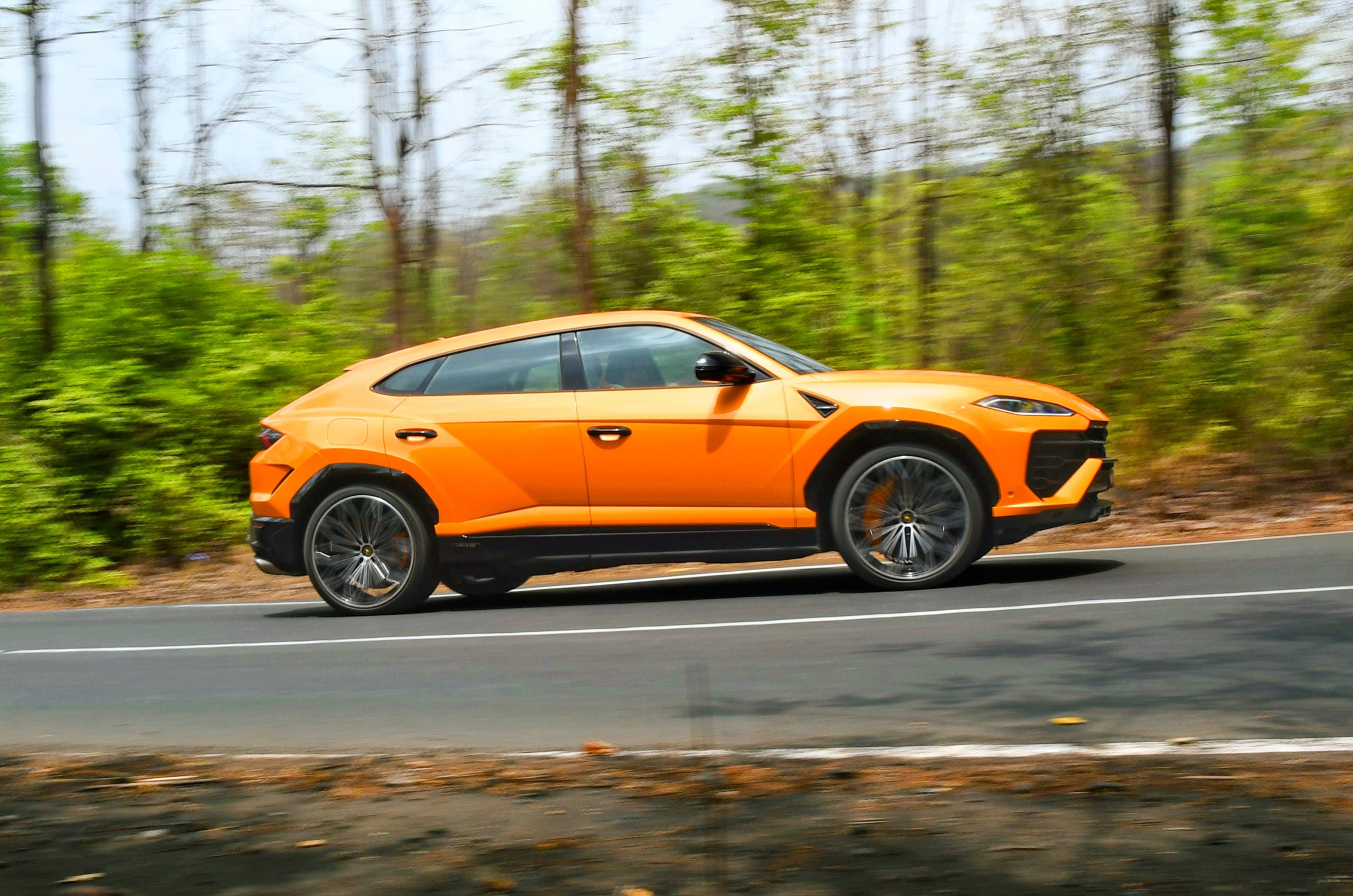
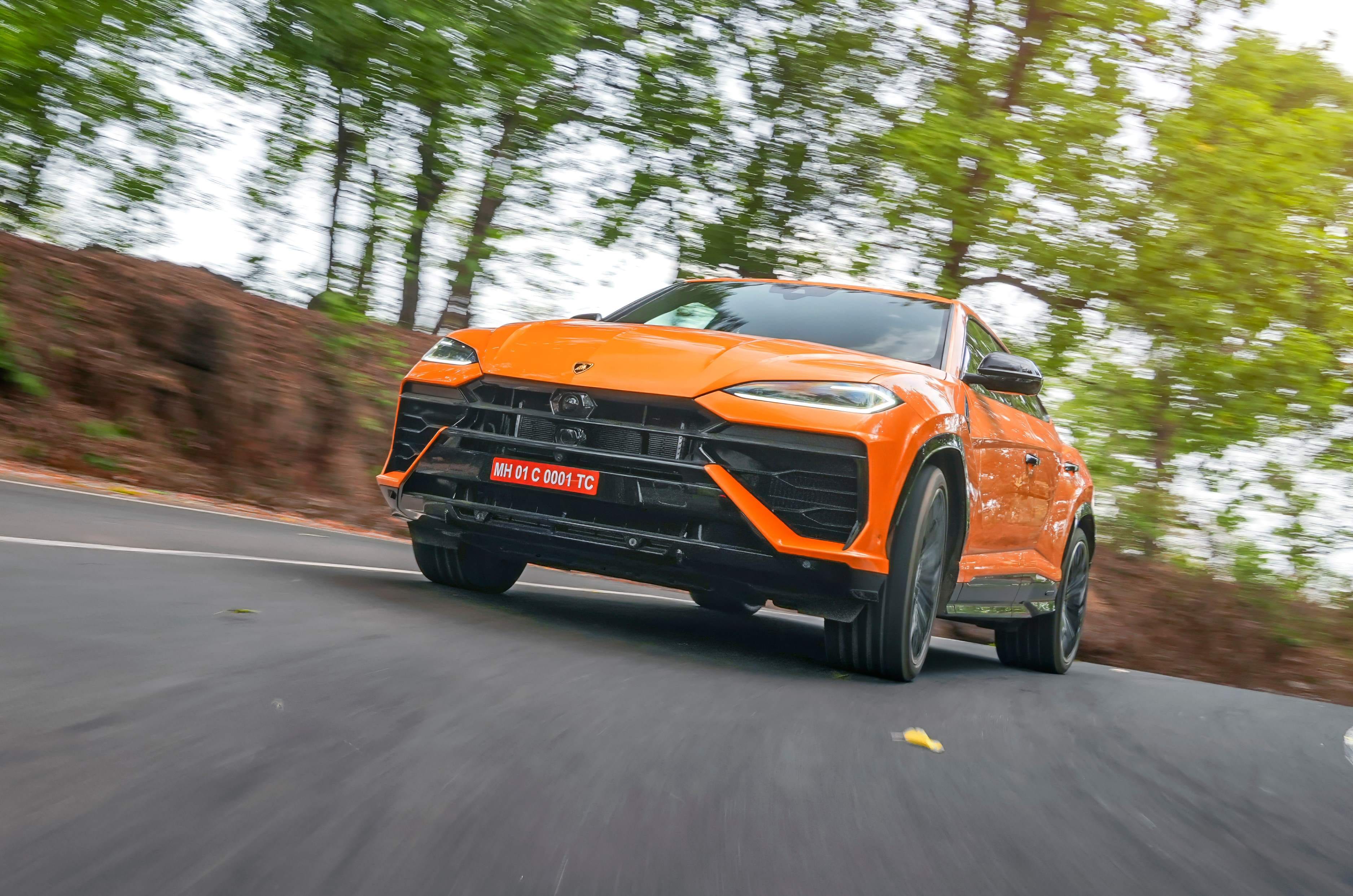
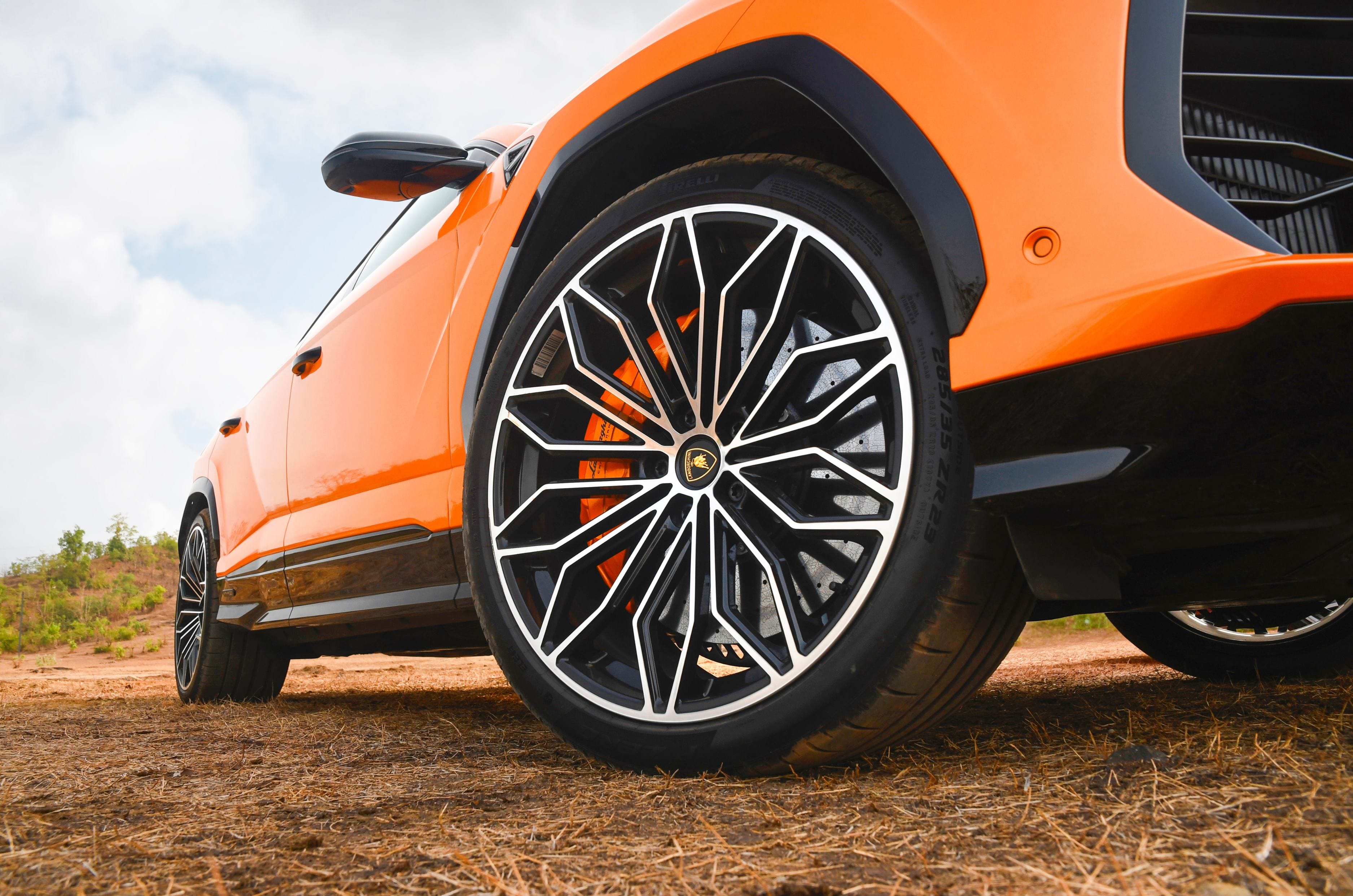
In comparison to the older Urus and the mad Urus Performante, the Urus SE does appear a bit softer and more rounded off. But that’s not to say it lacks presence by any means. It’s still full of sharp angles and surfaces, the Arancio Borealis optional paint on our test car looked stunning as did the diamond-cut, multi-spoke 23-inch alloy wheels. Up front, there’s a new bonnet, redesigned bumper and a larger front grille, while the slimmer headlights are now matrix LED units and a different DRL signature.
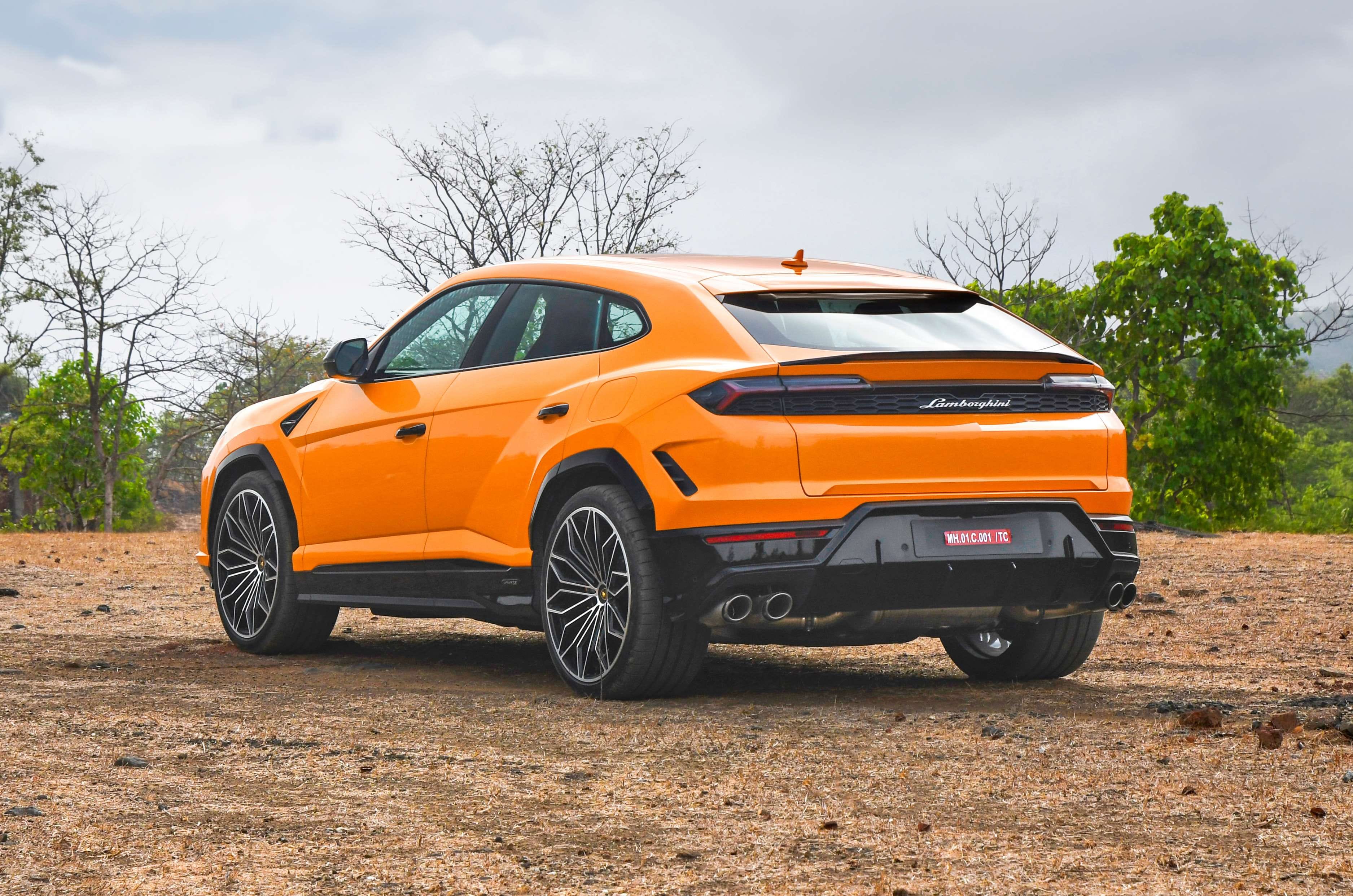
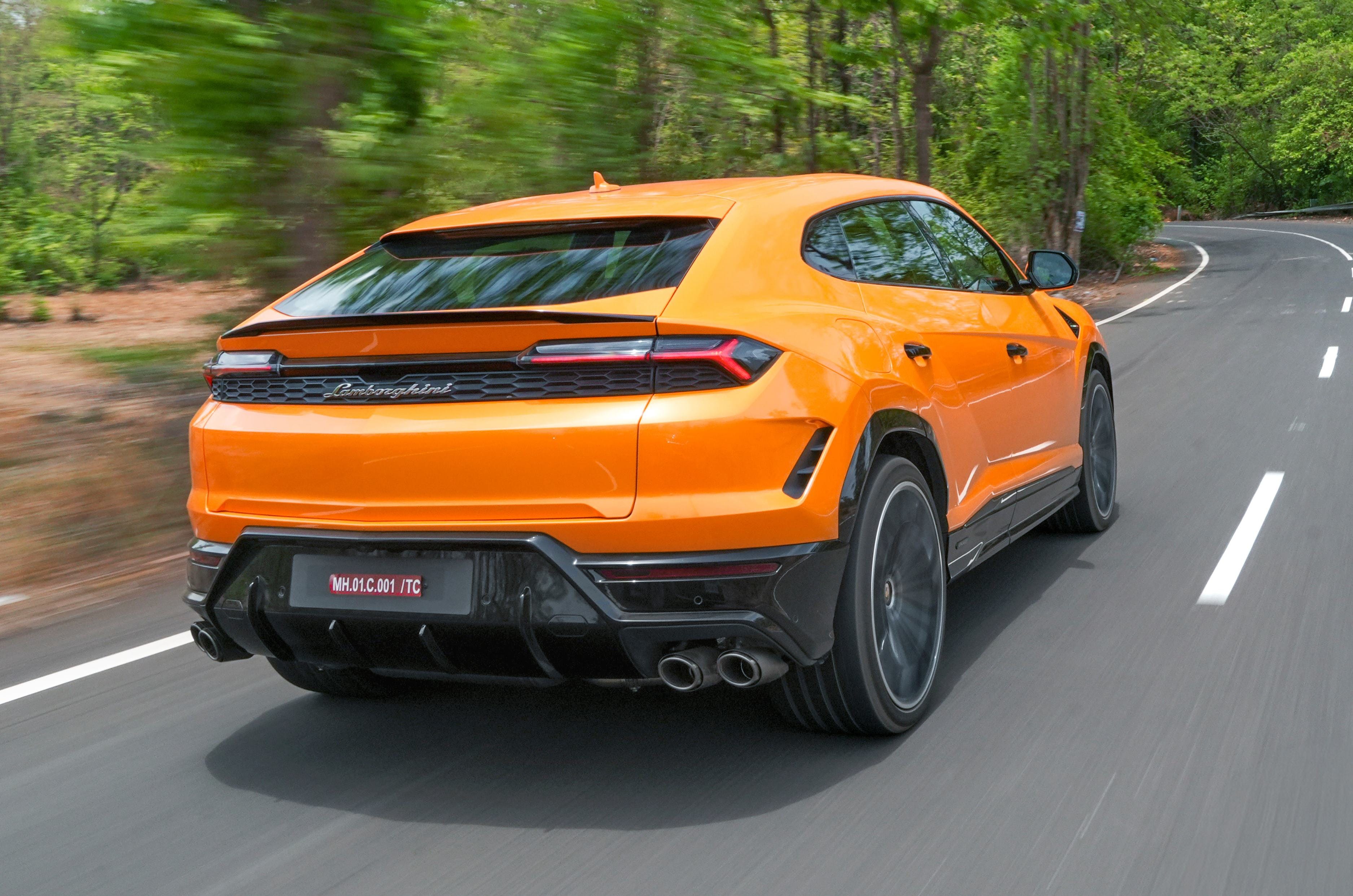
Rear end features quad-exhaust setup, sporty raked roofline, and a hexagon-patterned grille connecting the tail-lights.
The differences are immediately apparent at the rear too, with a new tailgate, rear bumper and a connecting tail-light grille. As always, Lamborghini’s Ad Personam personalisation programme offers an enormous scope for customisation, so buyers can tailor the Urus SE as per their needs. It remains a substantial machine, measuring 5.12m long and 2.02m wide, with a 3m wheelbase. Kerb weight is a hefty 2,505kg, which makes the fact that it can sprint from 0-100kph in just 3.4sec all the more impressive.
Lamborghini Urus SE Interior Space and Comfort – 8/10
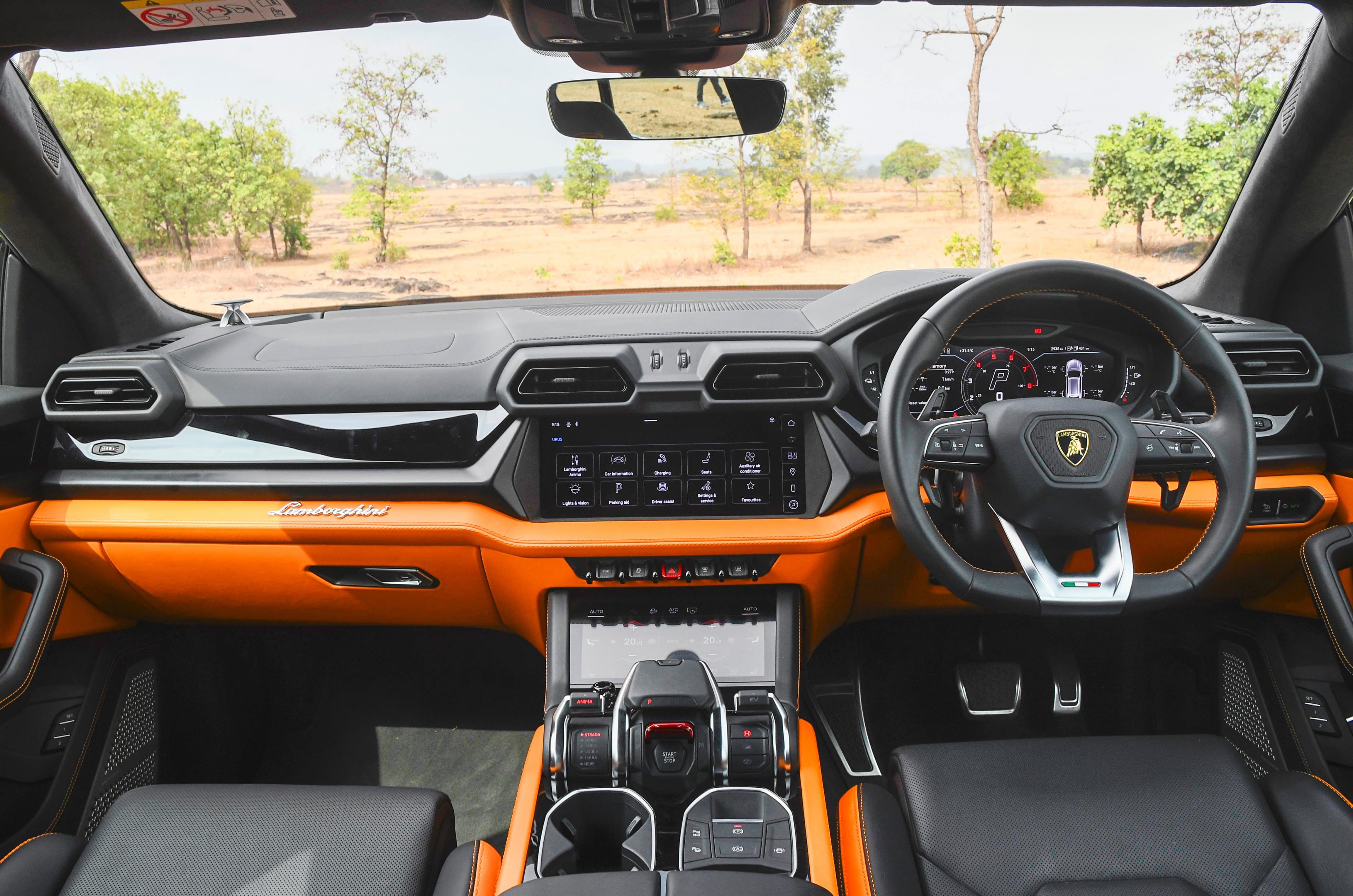
Dashboard layout is premium and feature-loaded, and gets a lot of Lamborghini theatrics.
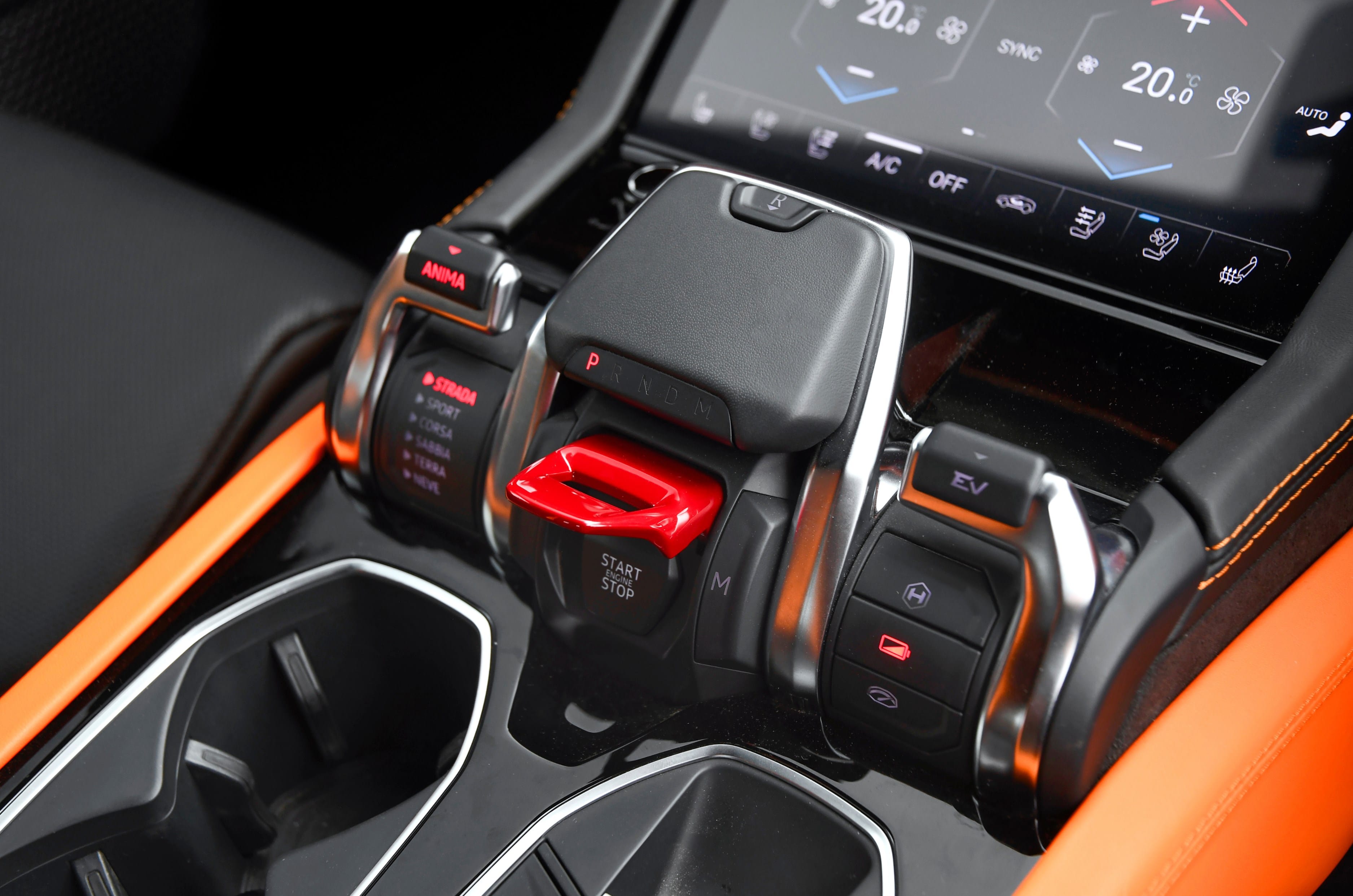
Inside, the Urus SE retains the familiar Lamborghini approach of combining the ambience of a supercar with the practicality expected of an SUV. However, the changes here are less apparent than those on the outside. The centre console is ever so slightly redesigned with a new array of toggle switches under the touchscreen. The touchscreen itself is larger than the earlier Urus, with updated graphics and a slicker user interface.
Lamborghini’s signature flip-up engine start/stop button is inspired by those of fighter jets.
There’s plenty of visual theatre, too, and it looks just as extroverted as the outside. Standout elements include the hexagonal AC vents, the Lamborghini badging on the dashboard, the aircraft-style levers for the drive modes and of course, the fighter-jet inspired flap-up engine start/stop button. Lamborghini has also introduced new colour and trim combinations with the SE, with our test car featuring the same predominantly orange theme as on the outside.
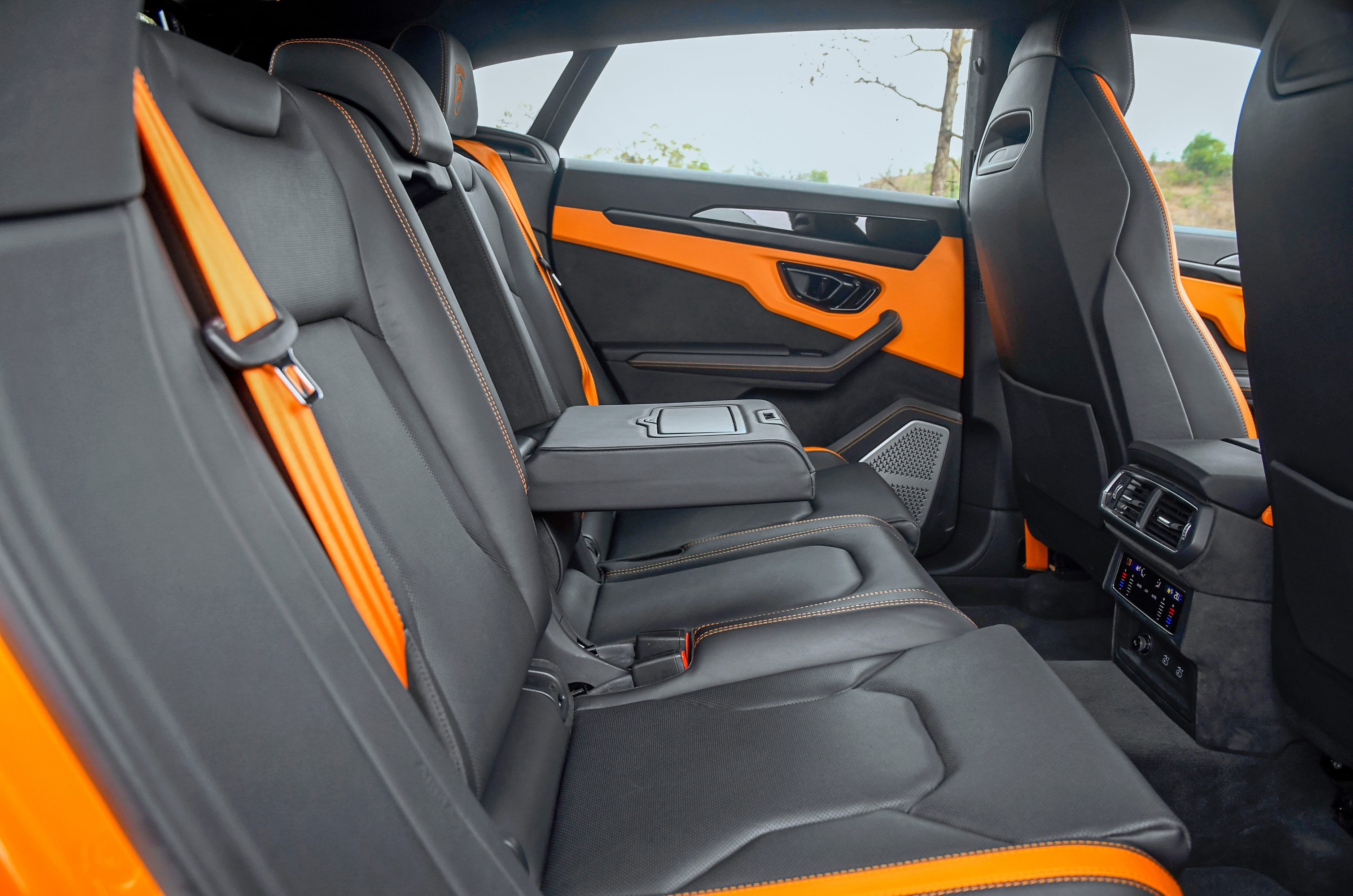
Rear space is surprisingly plentiful given the Urus SE’s sporty proclivities.
Despite all the drama, this remains a practical SUV. The long wheelbase means there’s plenty of legroom at the rear and it’s wide enough for three too, though taller passengers may find headroom a bit tight thanks to the tapering roofline. The front seats are large, well padded and the optional Lamborghini crest on the headrests just adds to the ambience. The glovebox is decent sized, there’s cupholders and the boot offers 454 litres of capacity.
Lamborghini Urus SE Features and Safety – 8/10
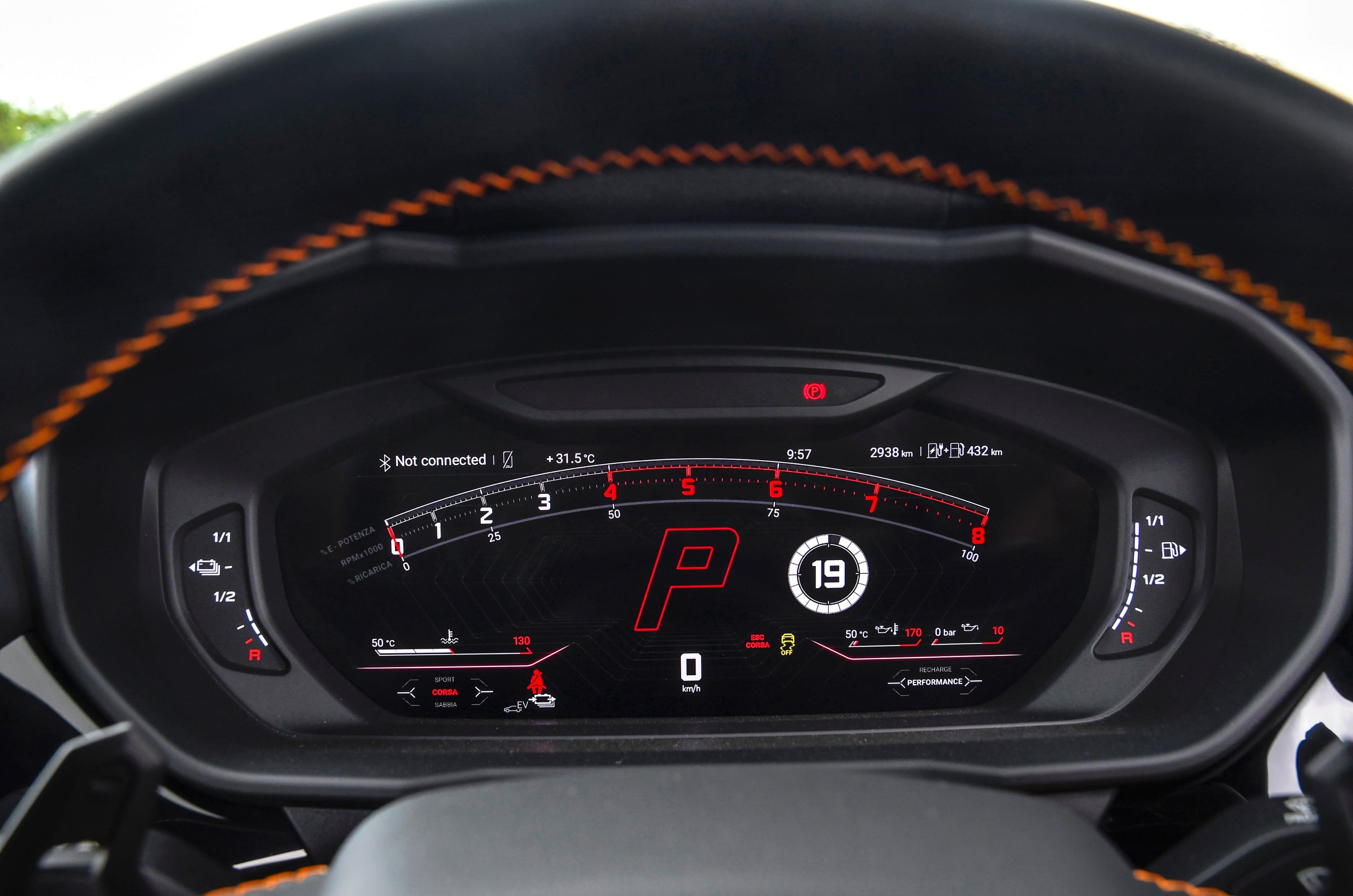
Info-packed driver’s display interface can get confusing at times.
As standard, the Urus SE gets plenty of features like the three screen setup – for the infotainment, AC system and driver’s display – wireless Android Auto and Apple CarPlay, LED matrix headlamps, four-zone auto climate control, leather upholstery, 360-degree camera, connected car tech and so much more.
The SE also gets a comprehensive technology upgrade, with the new user interface being one of the more significant updates. It features a carousel-style layout on the touchscreen to access the numerous sub-menus it packs in, while the driver’s display shows all sorts of data pertaining to the hybrid system, navigation, media and other car-related info. Navigating all the sub-menus can get confusing, however.
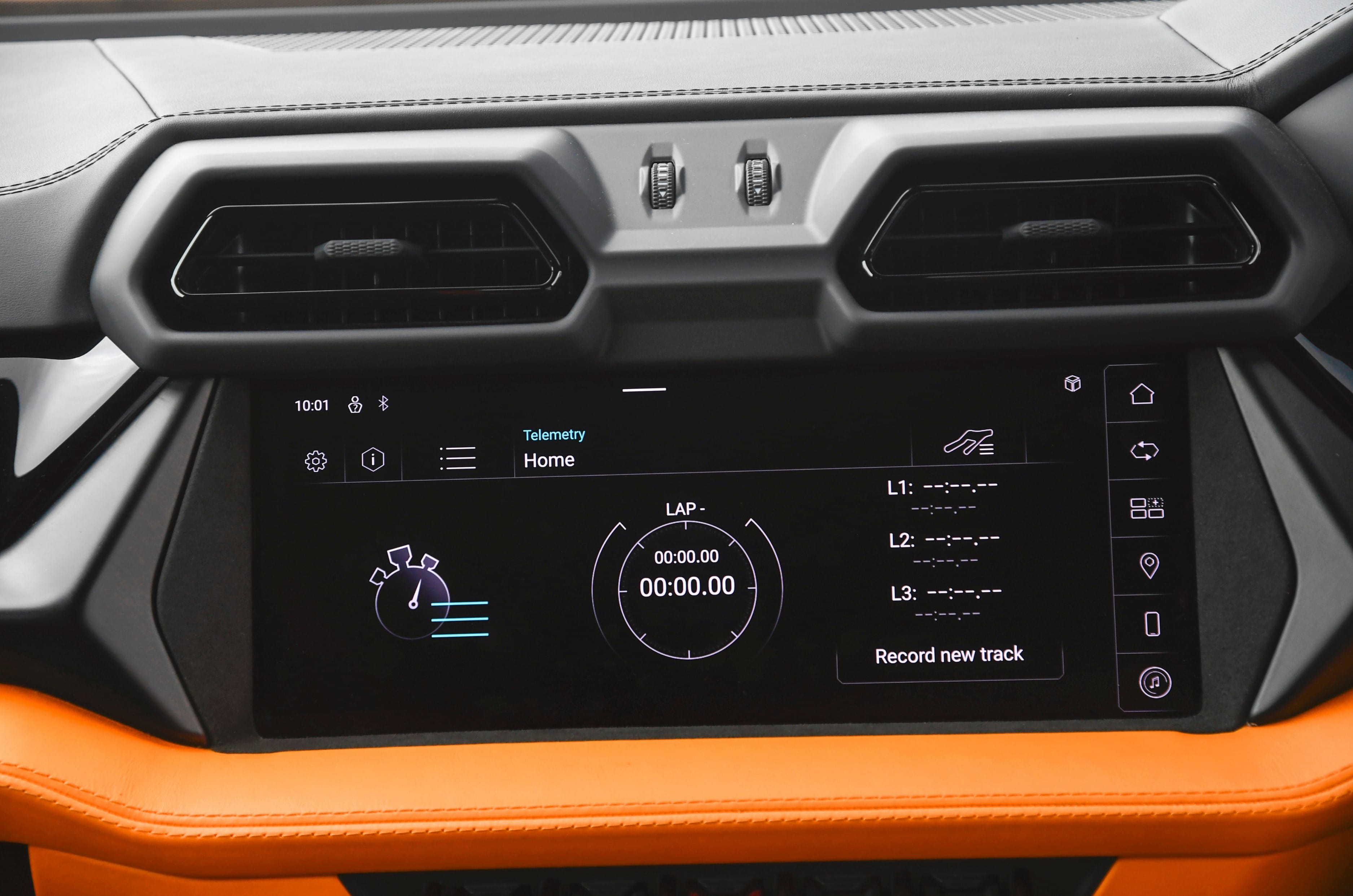
New Lamborghini Telemetry function comes with over 300 pre-loaded racetracks to record lap times on.
There’s also ‘Lamborghini Telemetry’ that can display lap times and sector information for more than 300 preloaded circuits, as well as record new tracks. Connected services extend to navigation, real-time traffic, remote locking, vehicle-status information, remote charging, remote cooling of the cabin and various safety and security alerts.
Also part of the package is ADAS tech like autonomous emergency braking, lane keep assist, adaptive cruise control and more. But there’s a lot that’s optional too, like a large panoramic sunroof, a Bang and Olufsen 3D audio system and a whole lot more, apart from the usual trim, material and stitching options. On the whole, the Urus SE is well-equipped but some of the optional extras really could have been standard fitment given the asking price.
Lamborghini Urus SE Performance and Refinement – 9/10
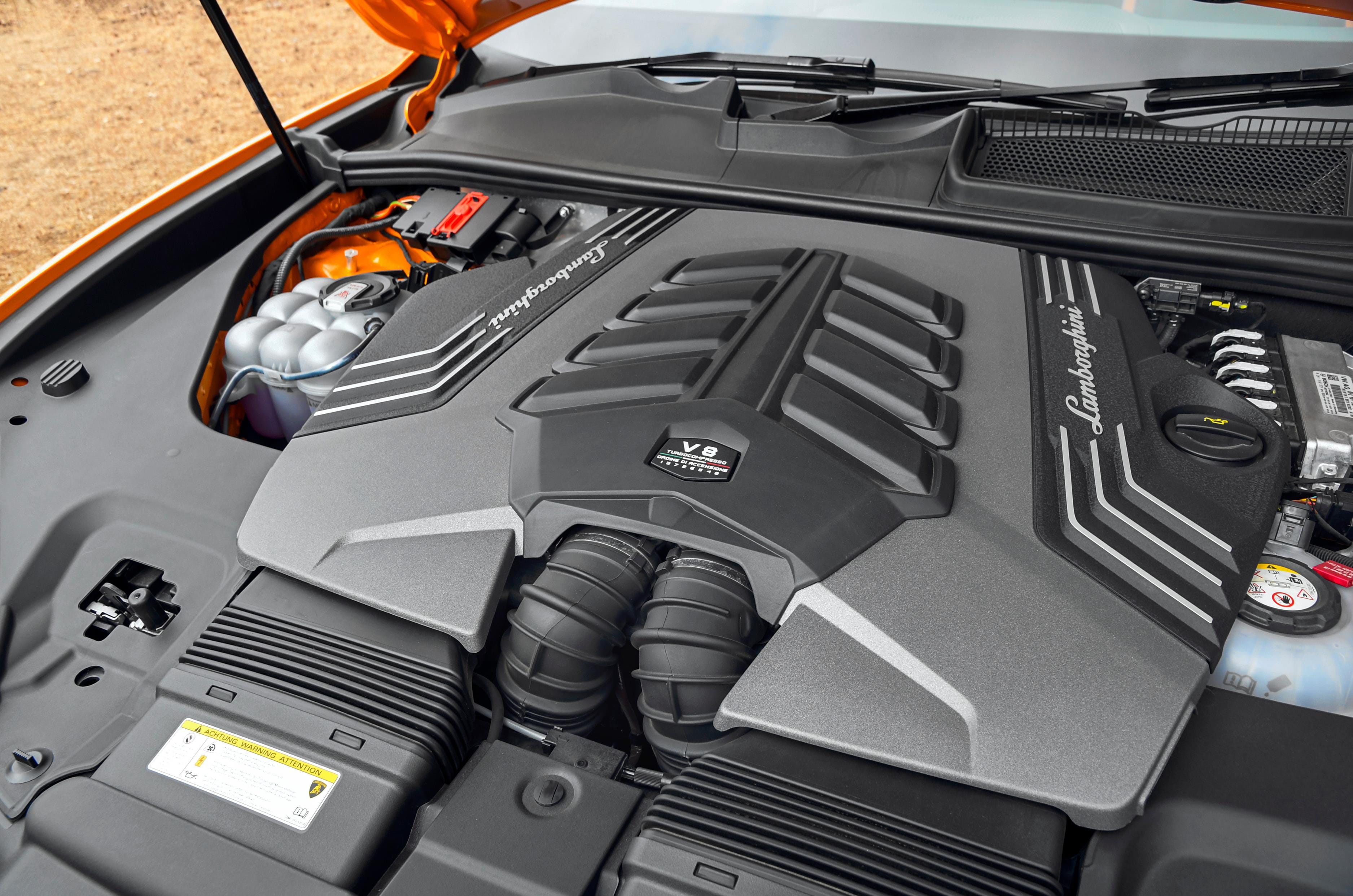
Twin-turbo V8 and electric motor develop a combined 800hp and 950Nm.
As for the numbers, they are, predictably, staggering. The Urus SE combines the familiar 4.0-litre twin-turbo V8 with a 25.9kWh lithium-ion battery and a permanent-magnet synchronous electric motor for an eye-watering combined output of 800hp and 950Nm. The result is 0-100kph in 3.4sec and 0-200kph in 11.2sec, with a claimed top speed of 312kph. Those figures put the Urus SE firmly in supercar territory, despite its size and weight.
And it does feel like one from behind the wheel too, especially in a straight line. Acceleration is relentless and it feels borderline scary on narrow, two-lane roads. The Urus SE always feels like it has power in reserve, especially when you’ve got the powertrain fully dialled up. There’s Strada mode for everyday driving, Sport for when you want to have a bit more fun and of course, Corsa for when you want a proper scare. Couple that with the hybrid system in its full performance mode, and the SE can really feel overwhelming. But if you don’t drive with a heavy foot, it’s surprisingly cordial and sedate. The SE really has a Jekyll and Hyde character about it.
Unrelenting acceleration can get scary on public roads.
What makes the SE more interesting than simply being a faster Urus is the way the electric motor has been integrated. Of course, it’s to help with emissions and meet regulations, but it’s also to boost performance. In EV mode, it can reach up to 135kph and go as far as 66km. But with a flick of a switch, it can turn from silent to violent.
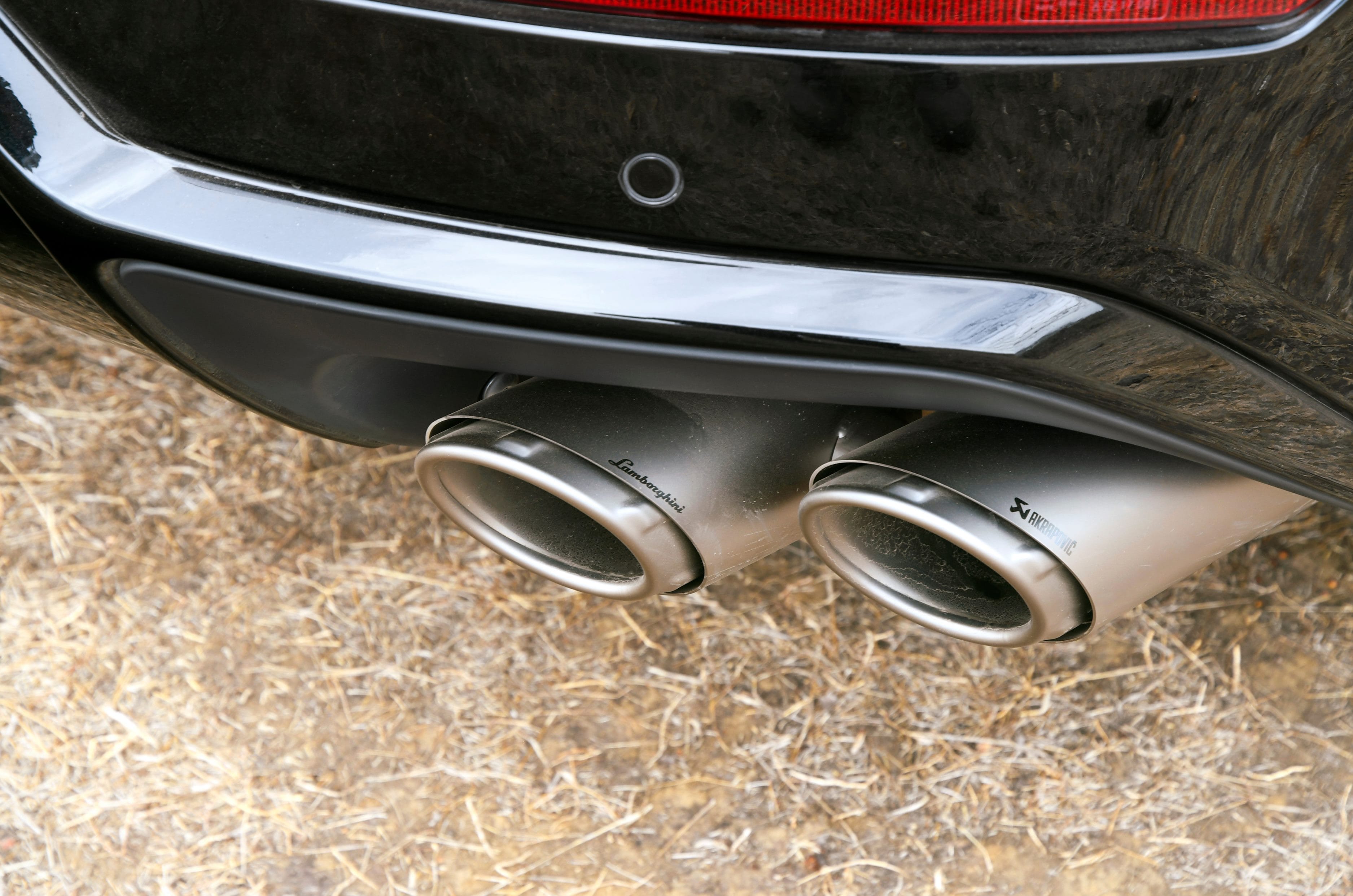
The V8 also hasn’t become anonymous with the hybridisation. It still makes its presence felt, especially through the optional Akrapovic exhaust our car came fitted with, but it does feel a bit subdued. It’s also piped through the speakers, which doesn’t feel entirely ethical but it does help its case.
Optional Akrapovic exhaust system helps enhance the V8’s aural character.
Lamborghini has also paid considerable attention to keeping performance consistent, with additional cooling for the powertrain and brakes. Not that we ever managed to push it so hard to test out that claim. And apart from the aforementioned drive modes, there’s even some off-road modes baked in, but how many buyers actually take their prized possession off the grippy stuff remains to be seen.
Lamborghini Urus SE Mileage and Efficiency – 7/10
This is where the Urus SE’s plug-in hybrid system makes a big difference. Lamborghini quotes a WLTP combined energy consumption of 4.67km/kWh plus 17.54kpl. With a discharged battery, however, combined claimed fuel efficiency falls to 7.75kpl.
Thanks to the 25.9kWh battery, the Urus SE claims a 66km all-electric range.
The headline figure therefore needs some context. The SE’s efficiency advantage is greatest when the battery is regularly topped up. With a claimed 66km of EV range, many shorter daily journeys can theoretically be completed without the V8 needing to fire up at all.
For longer journeys, the hybrid system allows the electric motor and V8 to share the workload. But once the battery is depleted, this remains a 2.5-tonne SUV with a twin-turbo V8, so expectations of conventional-SUV fuel economy would be unrealistic.
Lamborghini Urus SE Ride Comfort and Handling – 8/10
Ride isn’t all that absorbent due to the low-profile Pirelli P Zero tyres.
The Urus SE uses a multilink suspension setup front and rear with semi-active dampers, all of which make this large SUV feel engaging around corners without sacrificing comfort. There is a sense of pliancy at low speeds with the ride firming up as speeds rise. Of course, riding on 23-inch wheels means you can feel potholes and road imperfections, but still it isn’t uncomfortable by any means.
Rear-wheel steering, semi-active dampers, e-diff, and torque vectoring help make the Urus SE a keen handler.
It also gets rear-wheel steering, which helps make it more manageable at lower speeds while contributing to agility at higher speeds. The SE feels eager to change direction and the e-diff and clever torque vectoring system do their best to keep things tidy around bends. You also get a good sensation from the steering which has good heft to it and the Pirelli P Zero tyres it comes with are grippy too. Lamborghini has also worked on the aerodynamics, with a new rear aero lip and diffuser increasing rear downforce by 35 percent over the Urus S. Overall though, the SE feels agile enough but there’s no escaping its heavy kerb weight.
Giant carbon-ceramic brakes peek out from behind the 23-inch alloys.
You’re also backed by massive carbon-ceramic brakes, measuring 440mm at the front and 410mm at the rear, and they do take some time getting used to. They may not have the initial bite like with conventional steel brakes, but the stopping power is immense and they stay consistent despite repeated hard braking, which is essential in something as big and powerful as the Urus SE.
Lamborghini Urus SE Value for Money – 7/10
The Urus SE is arguably the most convincing expression yet of Lamborghini’s super-SUV. More importantly, it hasn’t sacrificed the characteristics that make a Lamborghini feel special in the pursuit of meeting ever tightening restrictions. There’s still a V8, it’s still outlandish inside and out, and it still delivers a driving experience that goes well beyond what you’d expect from something this large. All of that while adding the benefit of the plug-in hybrid system for performance and efficiency, as well as properly usable EV range.
The Urus SE is the all-in-one Lamborghini.
At Rs 4.47 crore (ex-showroom, before options), of course, the Urus SE is expensive. But that’s almost beside the point. The Urus SE isn’t for those who expect rational value; it is for those who want a vehicle that can combine supercar pace, SUV practicality, luxury, all-electric driving and aspirational brand value all in one package. As a technological statement and a performance SUV then, the Urus SE makes a compelling case for Lamborghini’s hybrid future.
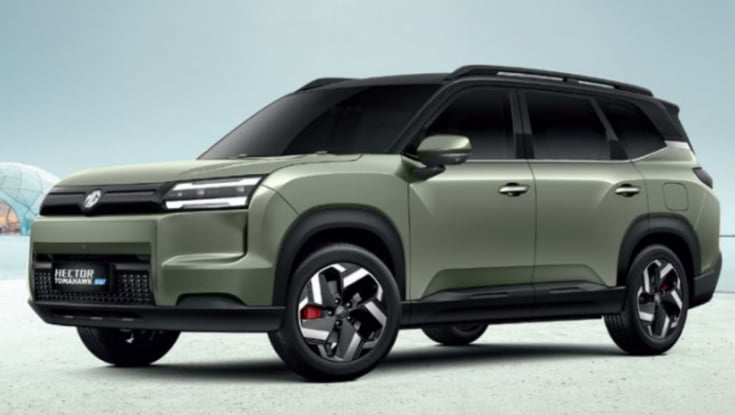
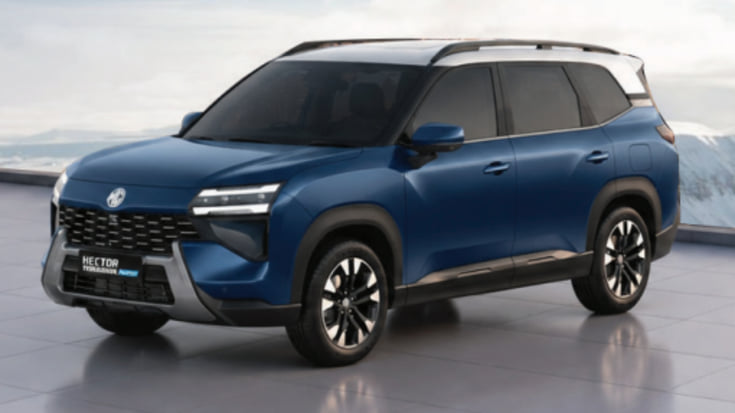
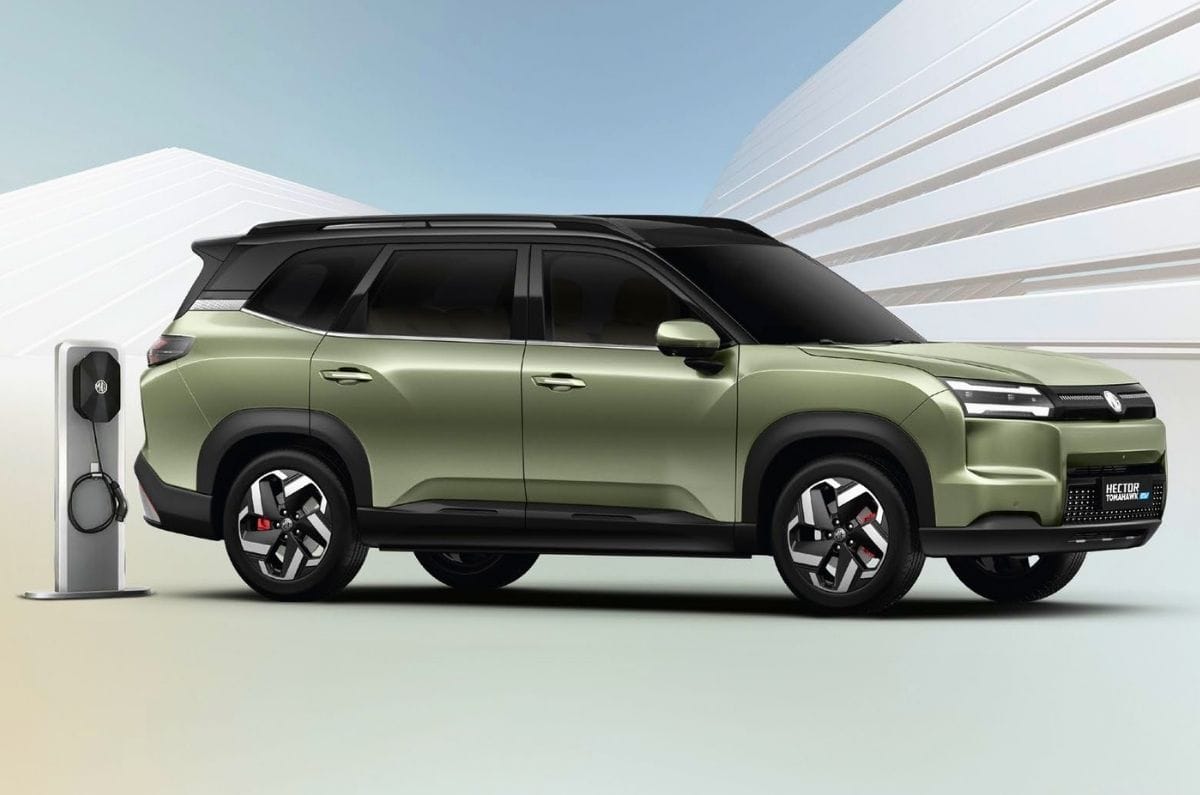
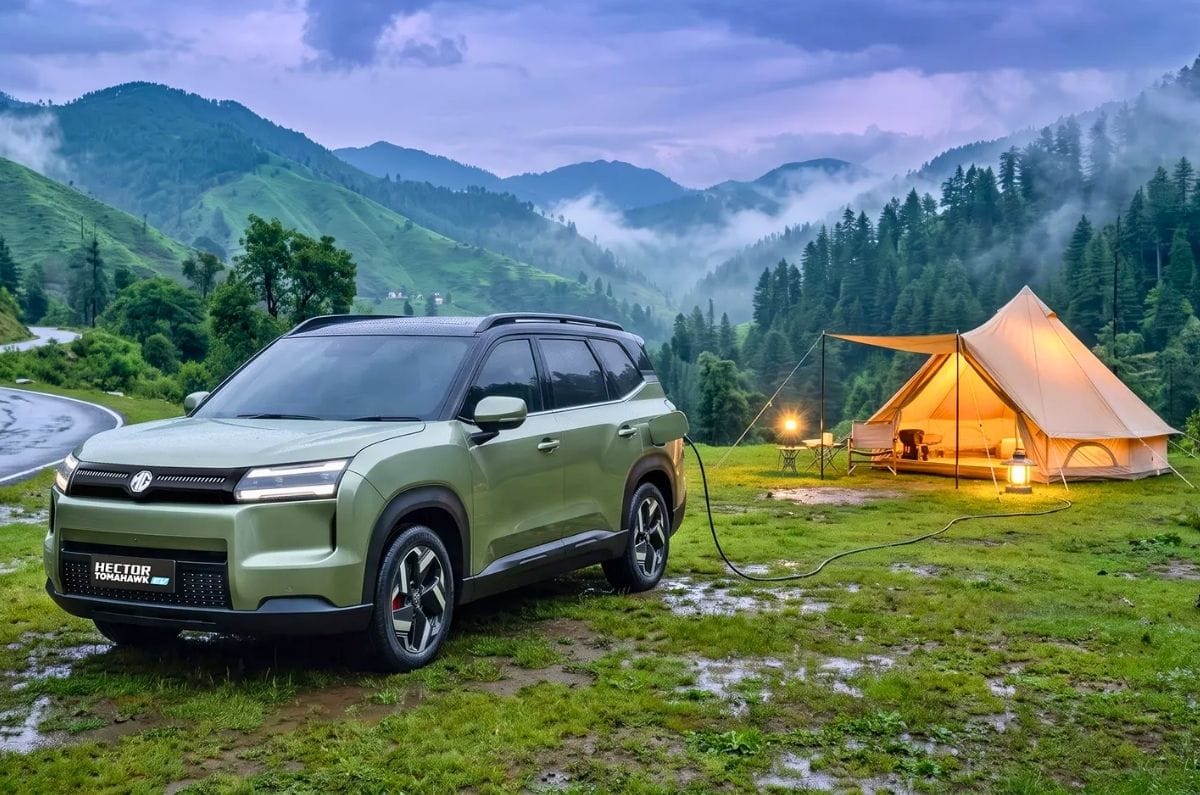
MG launched the Hector Tomahawk in India in both all-electric (EV) and plug-in hybrid (PHEV) versions, with prices starting from Rs 19.50 lakh and Rs 25.70 lakh, respectively. Both models are offered with a lot of new-age technology and have piqued the interest of enthusiasts. Here’s everything you need to know about the MG Hector Tomahawk EV and Hector Tomahawk PHEV.
1. What are the exterior differences between the EV and PHEV?
Both versions get different grilles, front bumpers, and alloy wheels
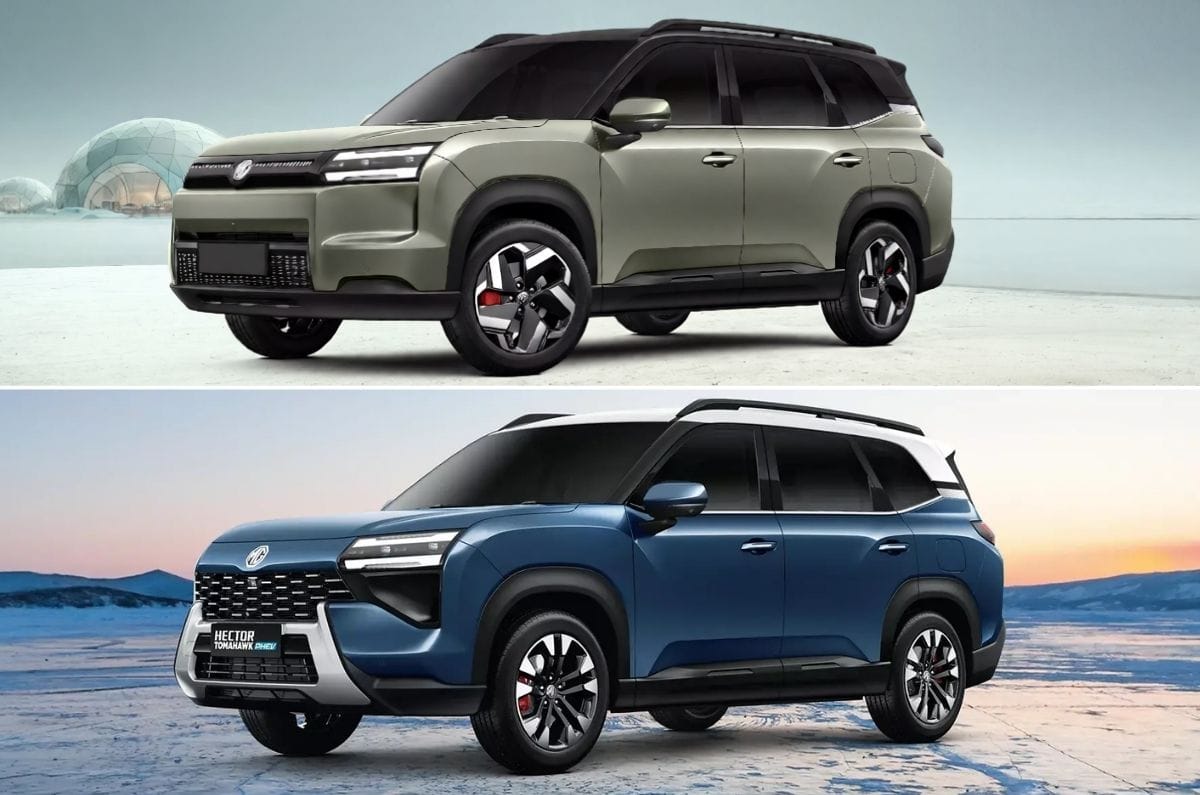
Both the Hector Tomahawk’s EV and PHEV versions have some design differences. While the EV gets a blanked-off gloss-black grille, the PHEV gets a functional grille with chrome inserts and black trims underneath the headlights. The front bumper design is also different, with the PHEV getting a silver bullbar-like element in the centre that the EV misses. The headlights and illuminated MG logo are, however, shared.
Not much is different in the side profile, except for the 18-inch alloy designs and red callipers on the top-spec Hector Tomahawk PHEV. If you opt for a dual-tone shade, the EV will have a black roof, while the PHEV will have a white roof. The rear design, however, is identical for both versions of the SUV.
2. What are the interior differences between the EV and PHEV?
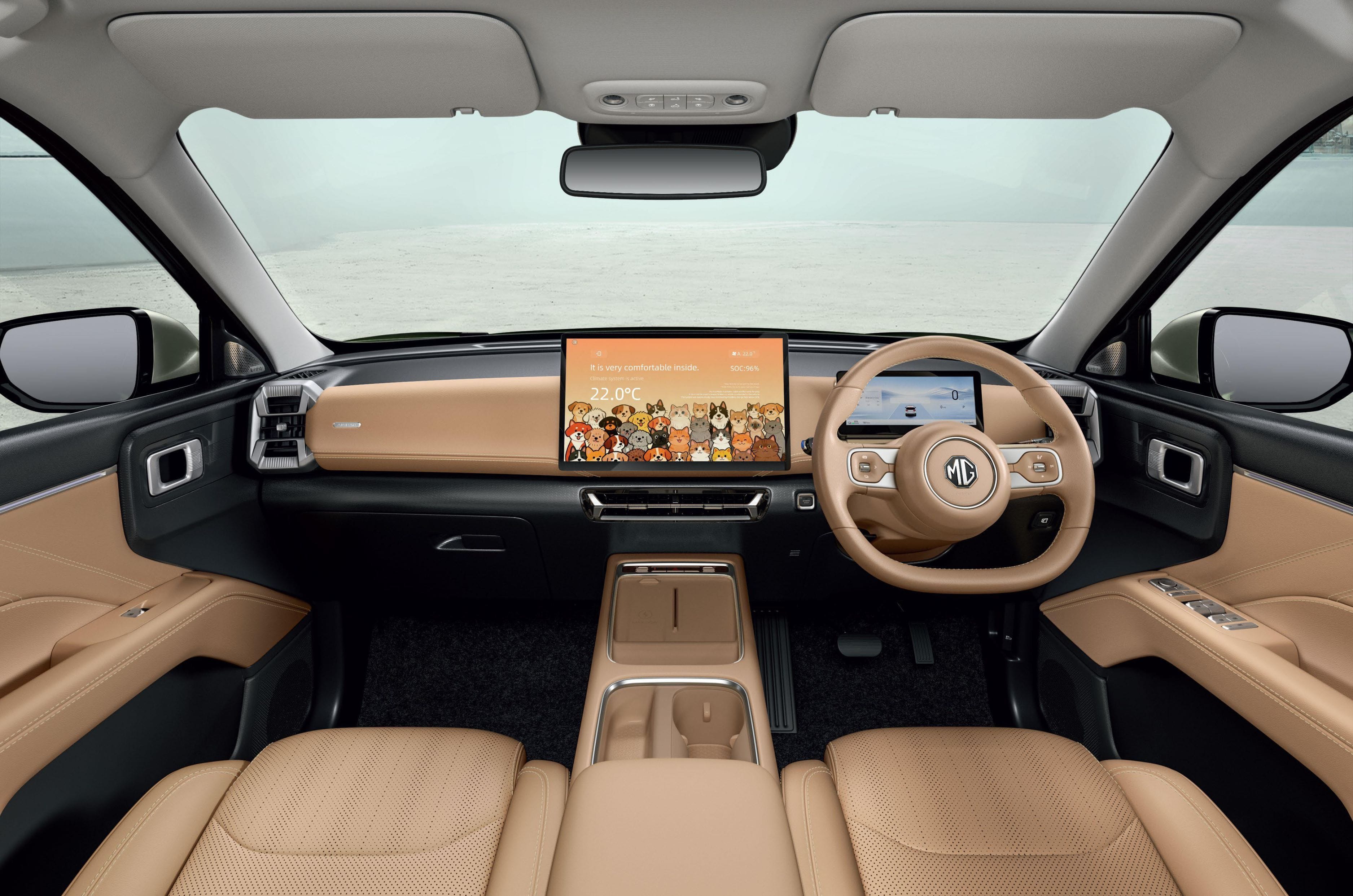
Save for a luggage cover and different cabin themes, everything else is the same
MG Hector Tomahawk EV gets a beige and black cabin theme.
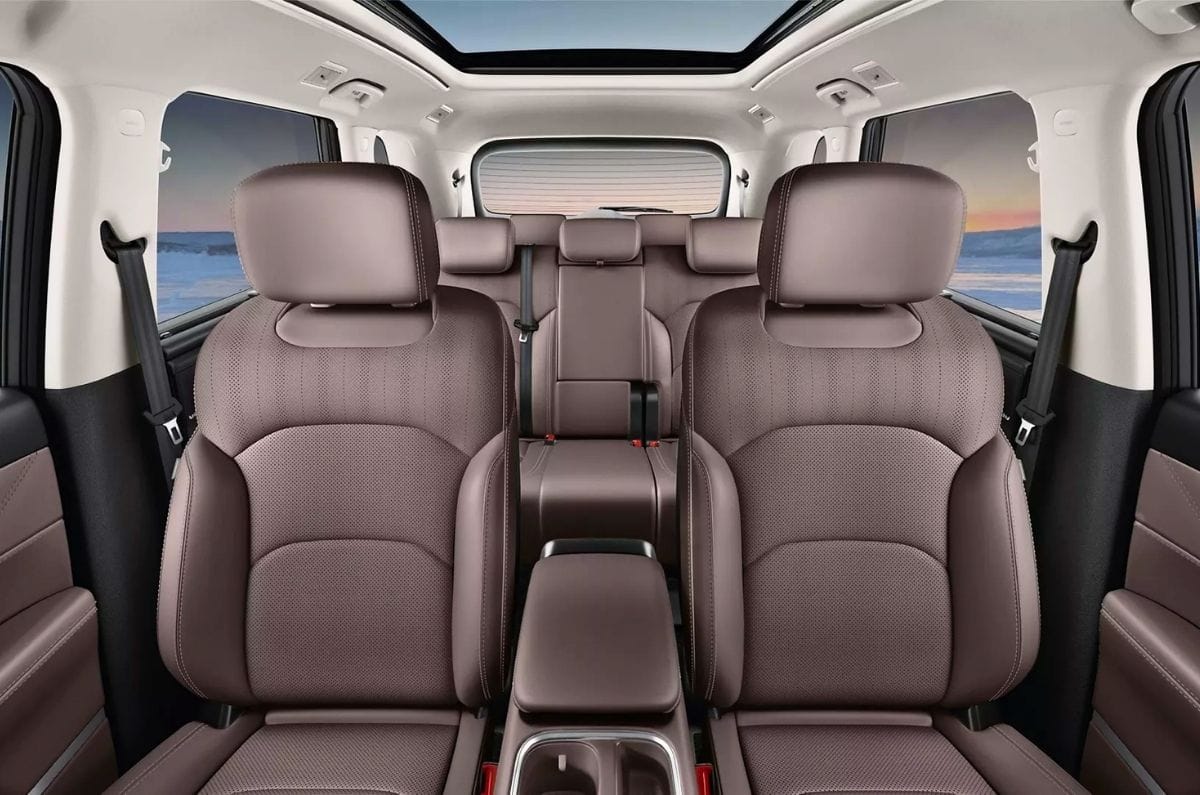
Save for a rolling luggage shade on the 5-seater variants of the EV, and a different cabin theme – brown and black on the EV and a darker brown and black on the PHEV – there is no visible difference. Everything else is the same, including the feature suite: a 15.6-inch touchscreen infotainment system, an 8.8-inch digital driver’s display, a 10-speaker Infinity sound system, a panoramic sunroof, powered and ventilated front seats with memory function for the driver’s seat, and a 50W fast wireless charger.
MG Hector Tomahawk PHEV gets a brown and black cabin theme.
The safety suite is also identical in both Hector Tomahawk versions, which includes 6 airbags, a 360-degree camera with an under-bonnet view, Level 2 advanced driver assistance systems (ADAS) and a tyre pressure monitoring system (TPMS).
3. What is the boot space on the MG Hector Tomahawk EV and PHEV?
EV and PHEV versions offer up to 610 litres and 192 litres of boot space, respectively
5-seater MG Hector Tomahawk EV’s boot space.
The MG Hector Tomahawk EV is offered in either a 5-seater or a 7-seater version. The 5-seater offers 610-litre boot space, with all rows up, which can be expanded to 1,053 litres by folding down the rear row. The 7-seater version offers a 192-litre boot space with all rows up, and 528 litres when the third row is folded.
The PHEV, offered only as a 7-seater, offers 192-litre boot space like the EV’s 7-seater version, expandable to 528 litres by folding the third row. Neither the EV nor the PHEV version of the Hector Tomahawk are offered with a frunk (storage space under the bonnet).
4. What are the powertrain specifications of the MG Hector Tomahawk PHEV and EV?
PHEV gets a 1.5L engine and 20.5kWh battery; EV offers a 69.2kWh battery pack
The MG Hector Tomahawk PHEV gets a 1.5-litre naturally aspirated petrol engine and a 20.5kWh battery pack, offering a combined output of 198hp and 230Nm. The front-wheel-drive (FWD) SUV has an all-electric range of around 115km and a total range including the petrol engine of around 1,100km.
The MG Hector Tomahawk EV, on the other hand, gets a 69.2kWh battery pack, mated to a front-axle-mounted electric motor producing 204hp and 310Nm. It has a claimed range of 517km.
5. Can the Hector Tomahawk PHEV be charged at a public EV charging station?
It supports 25kW DC fast charging
Yes, being a plug-in hybrid (PHEV), the MG Hector Tomahawk PHEV supports 25kW DC fast charging. This can replenish the battery from 30 to 80 percent in 35 minutes, like a typical EV. MG is also offering it with a 3.3kW home charger, which can recharge the battery pack from 10 to 100 percent in 7.5 hours.
6. Are the MG Tomahawk EV and PHEV more affordable with BaaS?
BaaS reduces the EV’s and PHEV’s initial prices by up to Rs 6.01 lakh and 3.91 lakh, respectively
MG Hector Tomahawk EV, PHEV BaaS vs non-BaaS prices (in Rs, lakh)
Without BaaS
With BaaS
Initial cost difference
EV
19.50 to 23.50
13.99 to 17.49*
Up to 6.01
PHEV
25.70 to 27.80
21.79 to 23.89^
3.91
*Battery subscription fee is Rs 4.9 per km per month
^Asks for a battery subscription fee of Rs 3.2 per km per month
The BaaS (Battery-as-a-Service) option reduces the upfront price of the MG Hector Tomahawk EV by Rs 6.01 lakh and the PHEV by Rs 3.91 lakh. However, you then pay a battery rental fee for every kilometre you drive: Rs 4.90 per km for the EV and Rs 3.20 per km for the PHEV. At these rates, the upfront savings from BaaS are effectively used up after around 1.22 lakh km. The break-even point is 1,22,653 km for the EV and 1,22,187 km for the PHEV.
In simple terms, if you expect to drive less than 1.22 lakh km over the entire ownership period, BaaS could be the more affordable option because of its lower initial cost. However, if you plan to drive more than 1.22 lakh km, buying the Hector Tomahawk with the battery included is likely to save you more money in the long run.
There is also another factor to consider. Under the BaaS plan, you do not own the battery, so your long-term costs depend on the rental agreement. If MG increases the per-kilometre fee or changes the contract in the future, your running costs could also increase. So, while BaaS would be more affordable for most buyers, purchasing the vehicle with the battery included may offer greater certainty in running cost calculations.
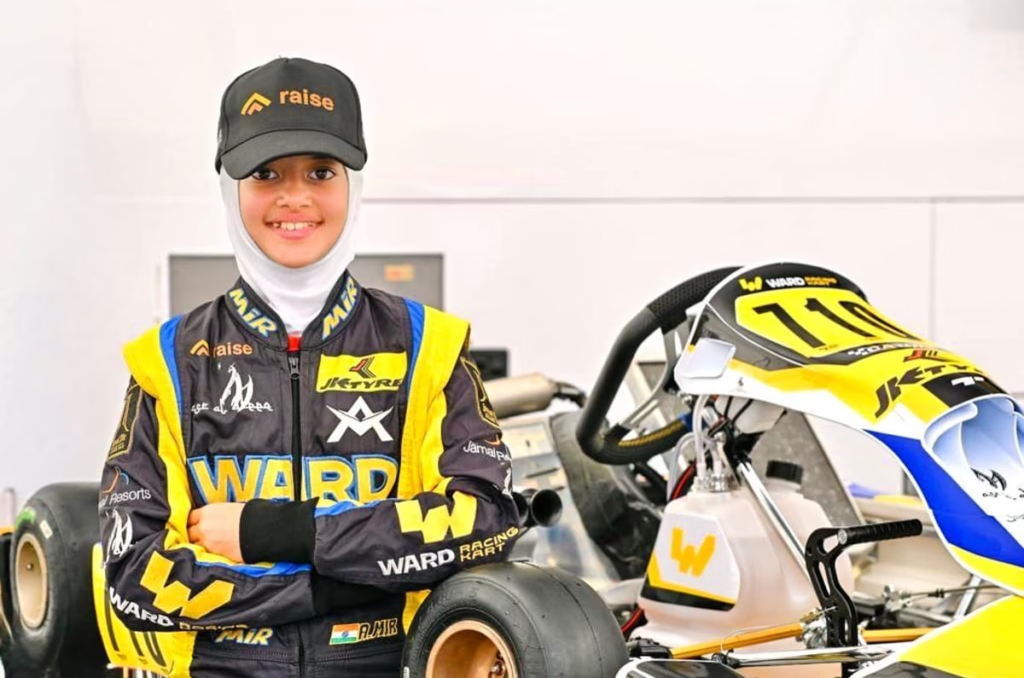
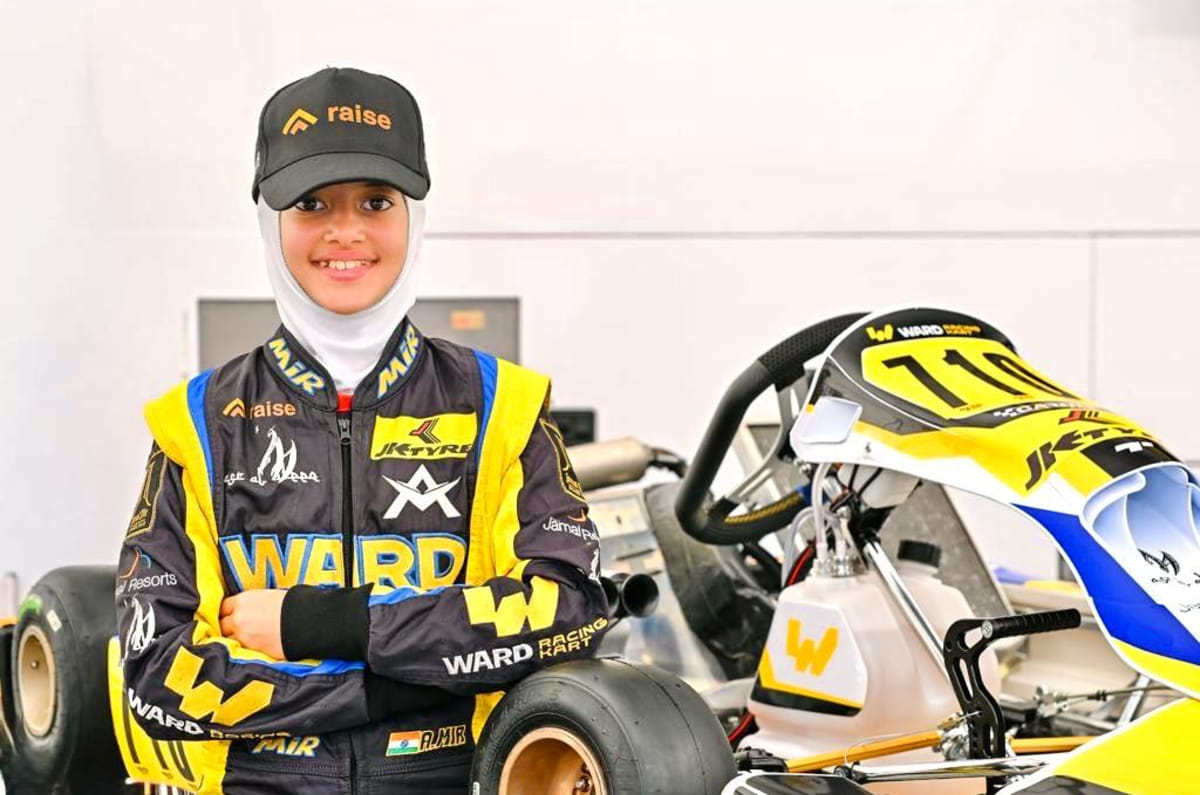
JK Tyre has signed 11-year-old Atiqa Mir as part of its driver development programme.
Over the past few years, Mir has emerged as one of India’s most promising young talents in the international karting scene. She’s currently competing in the WSK Final Cup karting series, with Round 1 underway at Italy’s Franciacorta Karting Track.
Mir is currently racing in the WSK Final Cup karting series
Top ranked female racer in the FIA International Karting’s OK N Junior class
JK Tyre signs Atiqa Mir
JK Tyre has been a key pillar of the motorsport community in India, especially with its national racing and karting championships. The company’s played a pivotal role in the junior careers of several prominent racers, including Narain Karthikeyan, Karun Chandhok and Kush Maini.
Its latest recruit, Atiqa Mir, has already made headlines through her achievements in various karting championships in Europe and the Middle East. Earlier this year, she became the first Indian to secure a podium in the European leg of the Champions of the Future Academy, before going on to deliver a dominant victory in Greece. She’s currently the top ranked female racer in the FIA International Karting’s OK N Junior class for drivers up to 14 years old.
At just nine years old, Mir was shortlisted for the Iron Dames Young Talents programme. Since then, she’s also become the first Indian and Asian racer selected for the F1 Academy’s Discover Your Drive programme.
“At JK Tyre, nurturing young talent has always been at the heart of our motorsport journey. Atiqa represents the next generation of Indian racing, and we are delighted to support her as she pursues excellence on the global stage. Her association also reflects our continued commitment to encouraging greater participation of women in motorsport and inspiring young girls to take up the sport,” said Anshuman Singhania, Managing Director, JK Tyre & Industries.