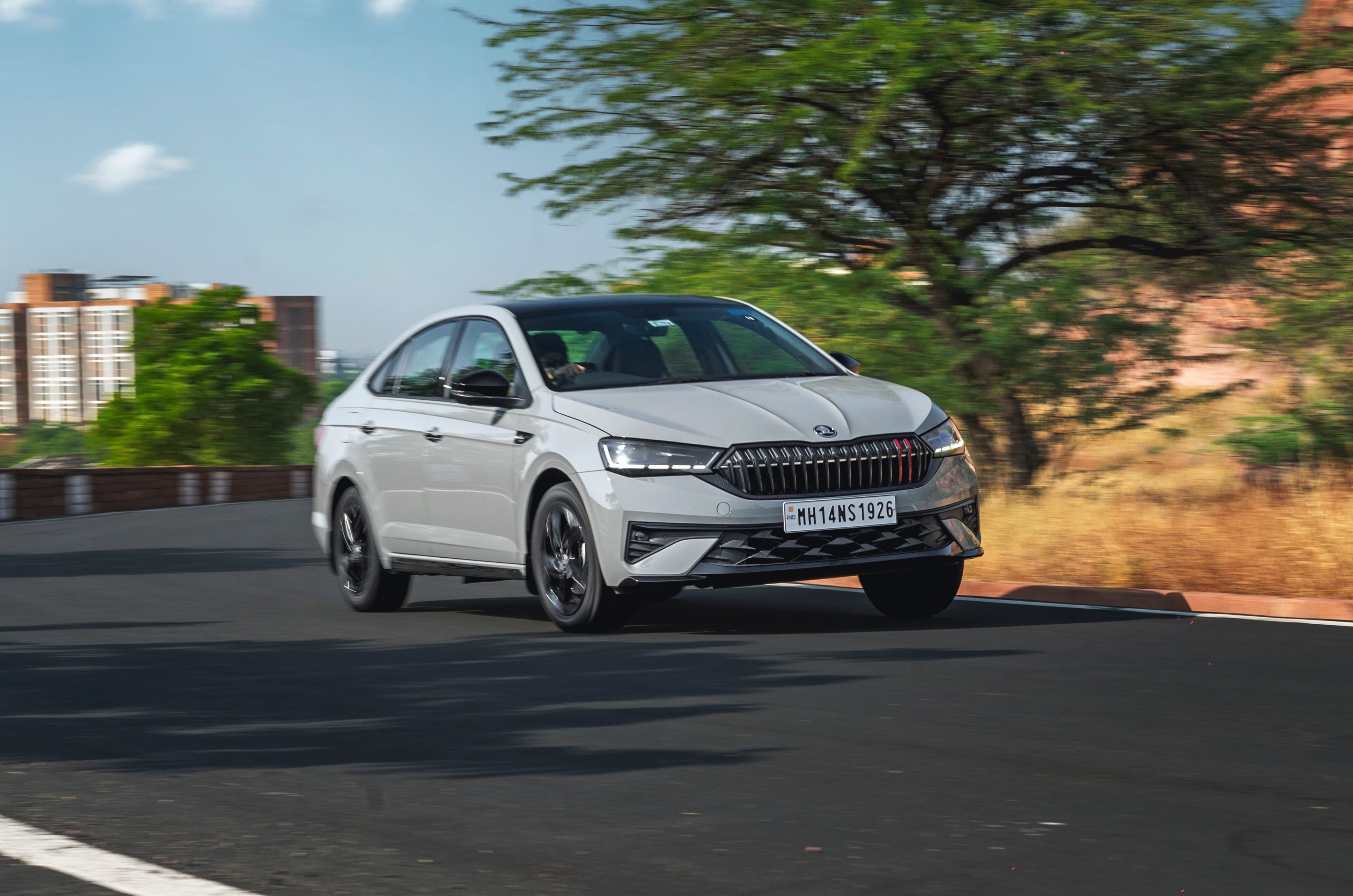
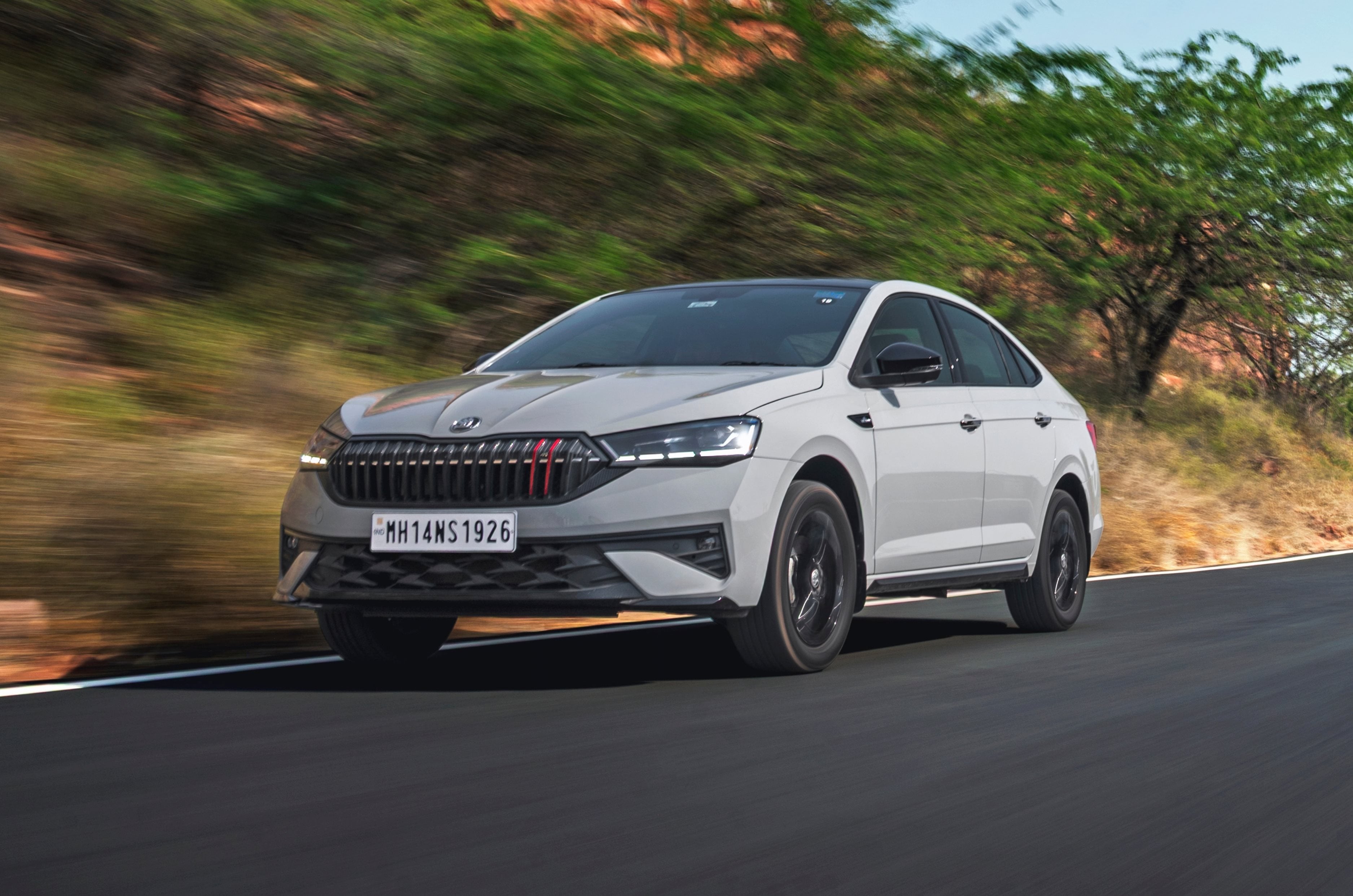
The mid-size sedan segment has been witnessing a resurgence. Things have spruced up with facelifts introduced for the Hyundai Verna and Honda City, and Skoda has also joined the bandwagon by giving the Slavia a facelift of its own. This is the first major mid-life update for the sedan since it was launched in 2022 and brings comprehensive updates throughout. If you’re looking to buy the Skoda Slavia facelift, our list of reasons helps you decide if it’s worth the wait or if it’s better to look elsewhere.
Powerful and zippy engines
The Slavia facelift continues to offer the same 115hp/178Nm 1.0-litre 3-cylinder and 150hp/250Nm 1.5-litre 4-cylinder direct-injection turbo-petrol engines as its pre-facelift version. And it’s not a bad thing because both engines have enough pep. The talking point is the introduction of a new 8-speed torque converter automatic for the 1.0-litre engine, which replaces the older 6-speed unit. Shifts are smooth across gears, and manual mode lets you rev to the limit before upshifting, leading to an engaging driving experience. On the other hand, the more powerful 1.5-litre unit has plenty of grunt, has brisk acceleration, and shifts via the 7-speed DSG are snappy.
Precise handling and high-speed stability
Like the pre-facelift version, the Slavia continues to impress with its precise handling characteristics. Body roll is well maintained despite the high 179mm ground clearance, and it feels composed around corners. Moreover, the steering feels well-weighted as you increase speed. At higher speeds, overall stability is great as the suspension absorbs rough road surfaces really well.
Spacious, comfortable and feature-rich cabin
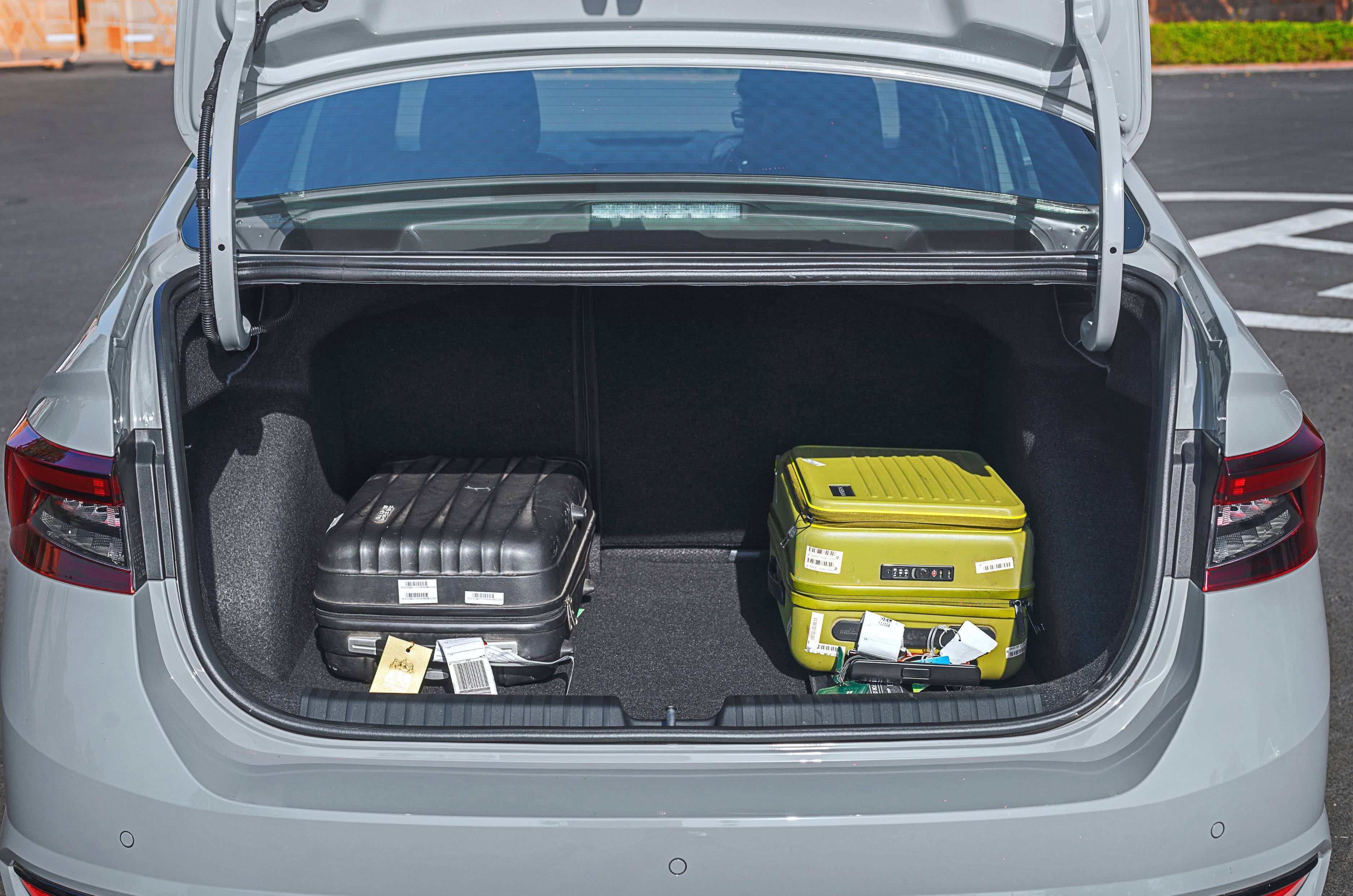
Updated trim materials and new feature additions make the interior of the Slavia facelift a great place to be in. The front seats are well contoured and supportive, and the same is the case for the rear seats, with plenty of knee room and foot room, especially for two adults. Additionally, there are plenty of storage spaces and also Skoda’s signature ‘Simply Clever features. The large 521-litre boot with its squarish opening is easy to load stuff into, while the 60:40 split-folding rear seats bring added convenience. Overall build quality, too, is solid, and everything is well put together.
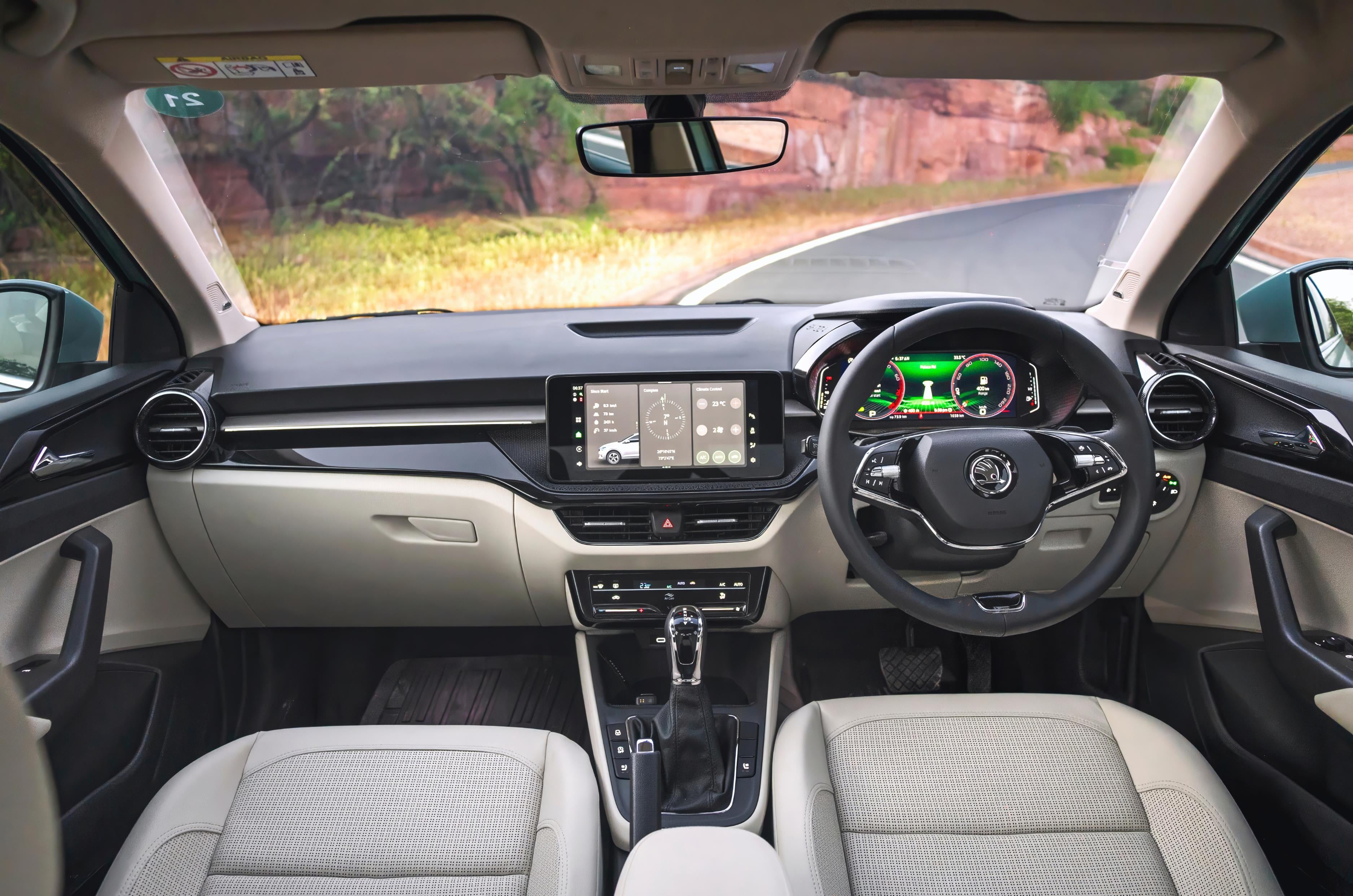
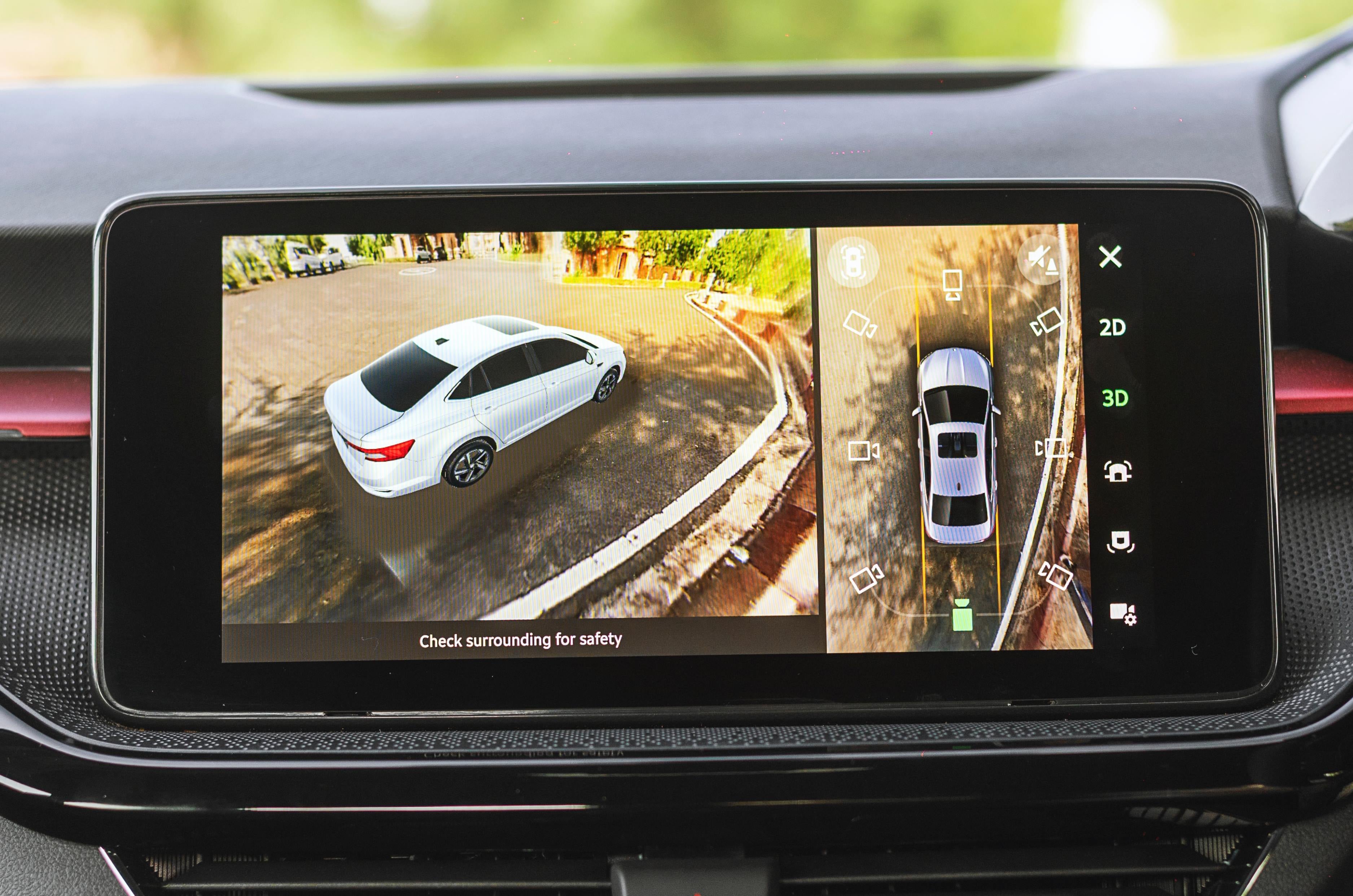
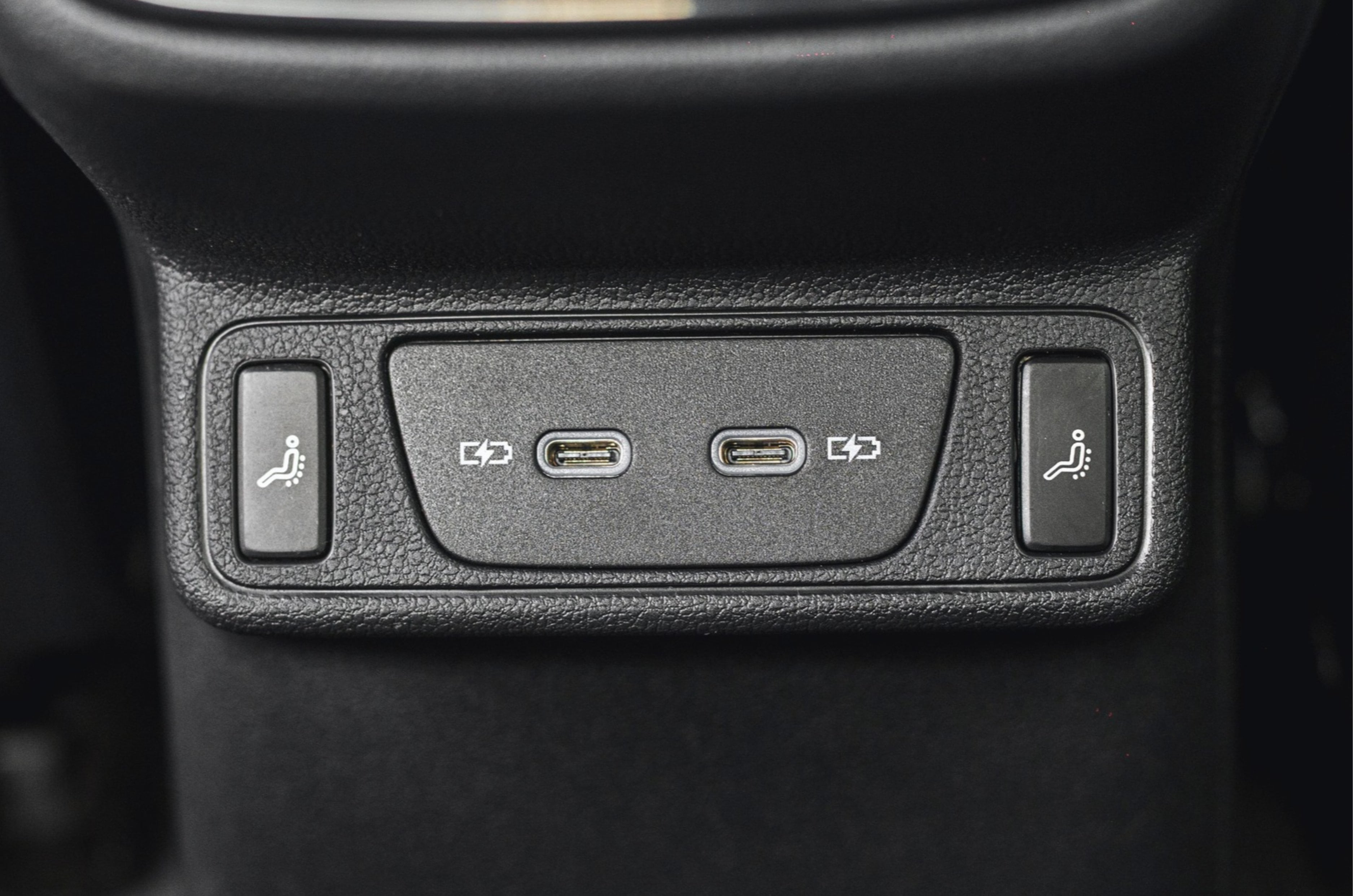
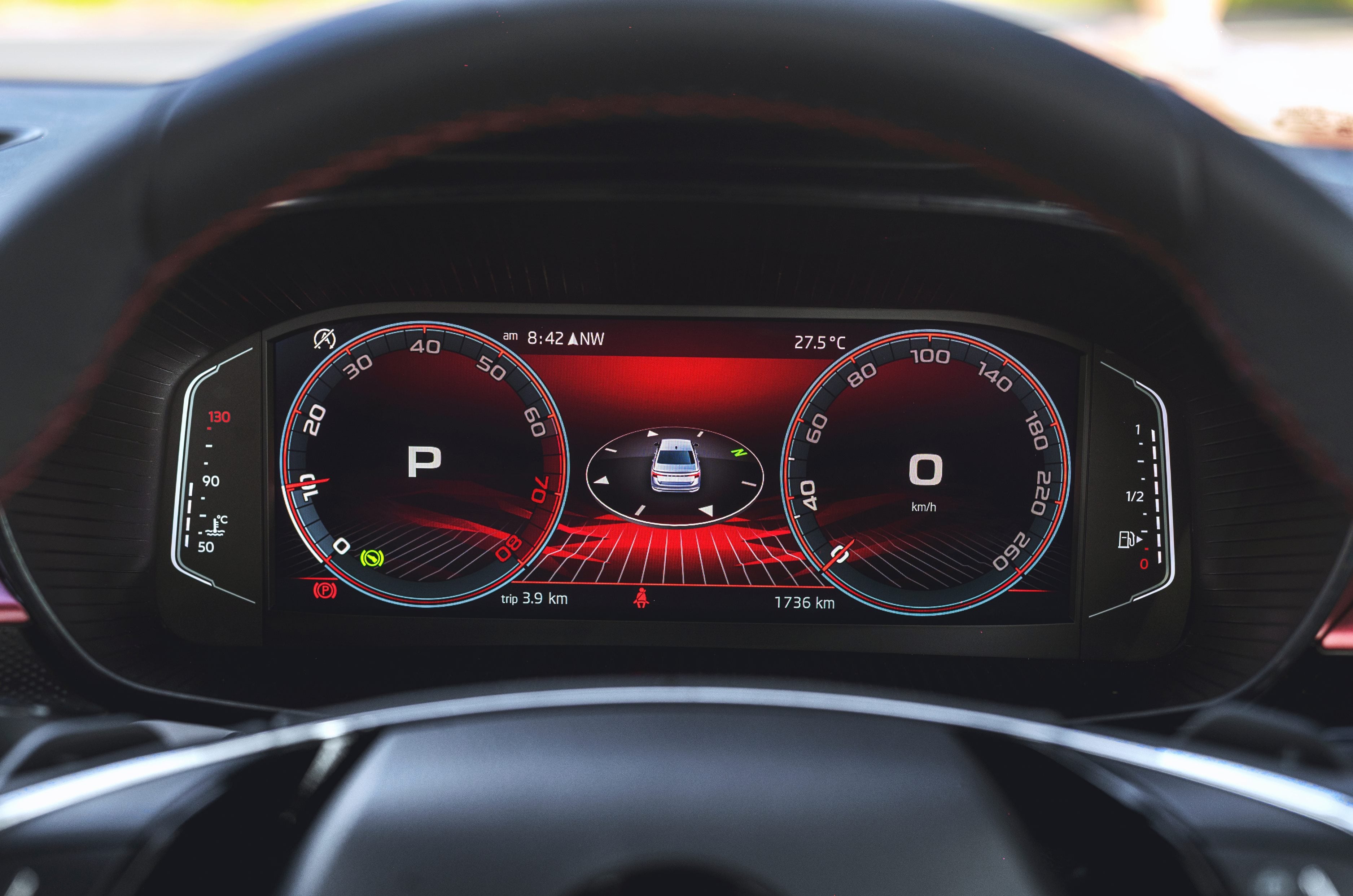
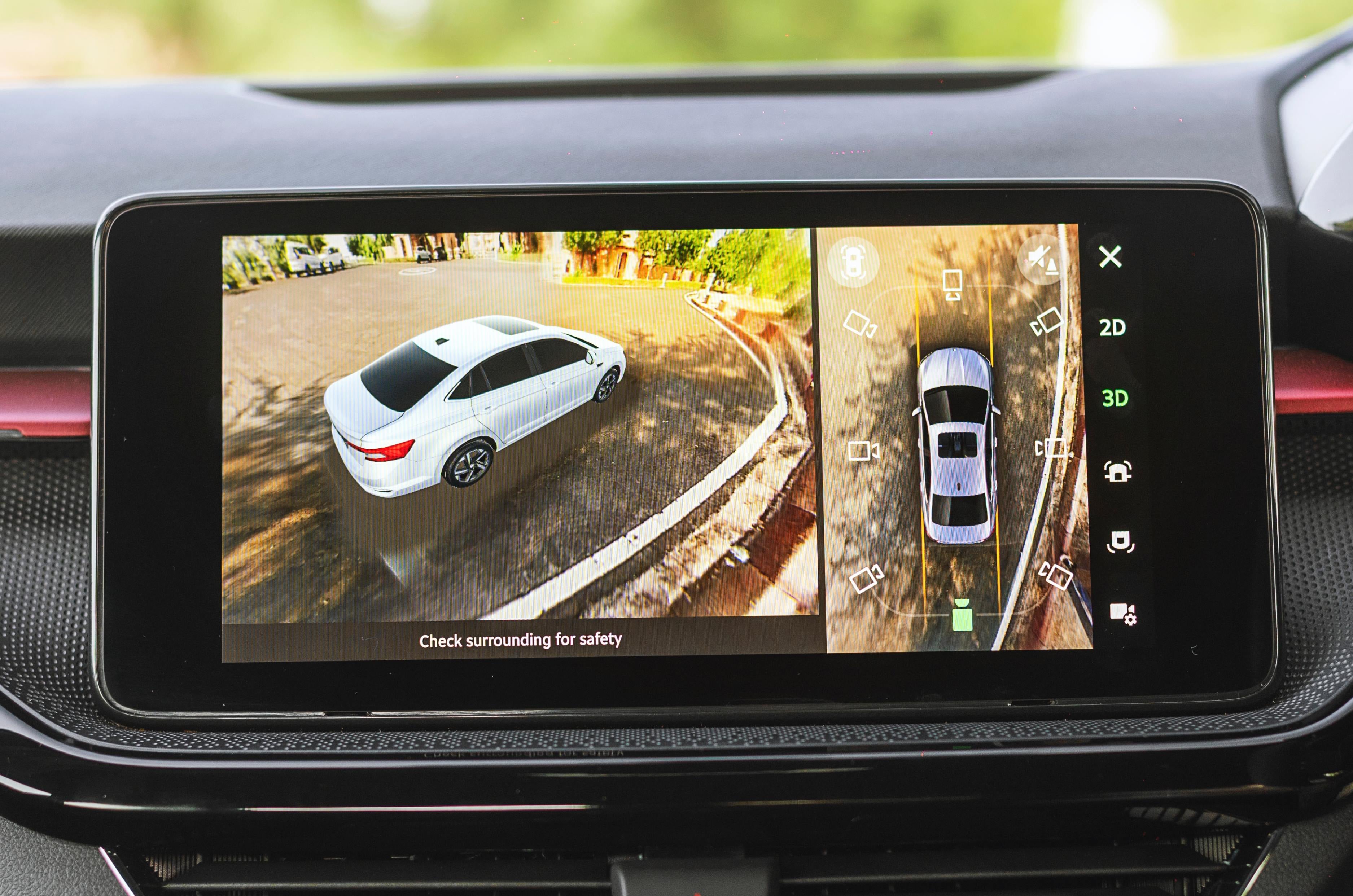
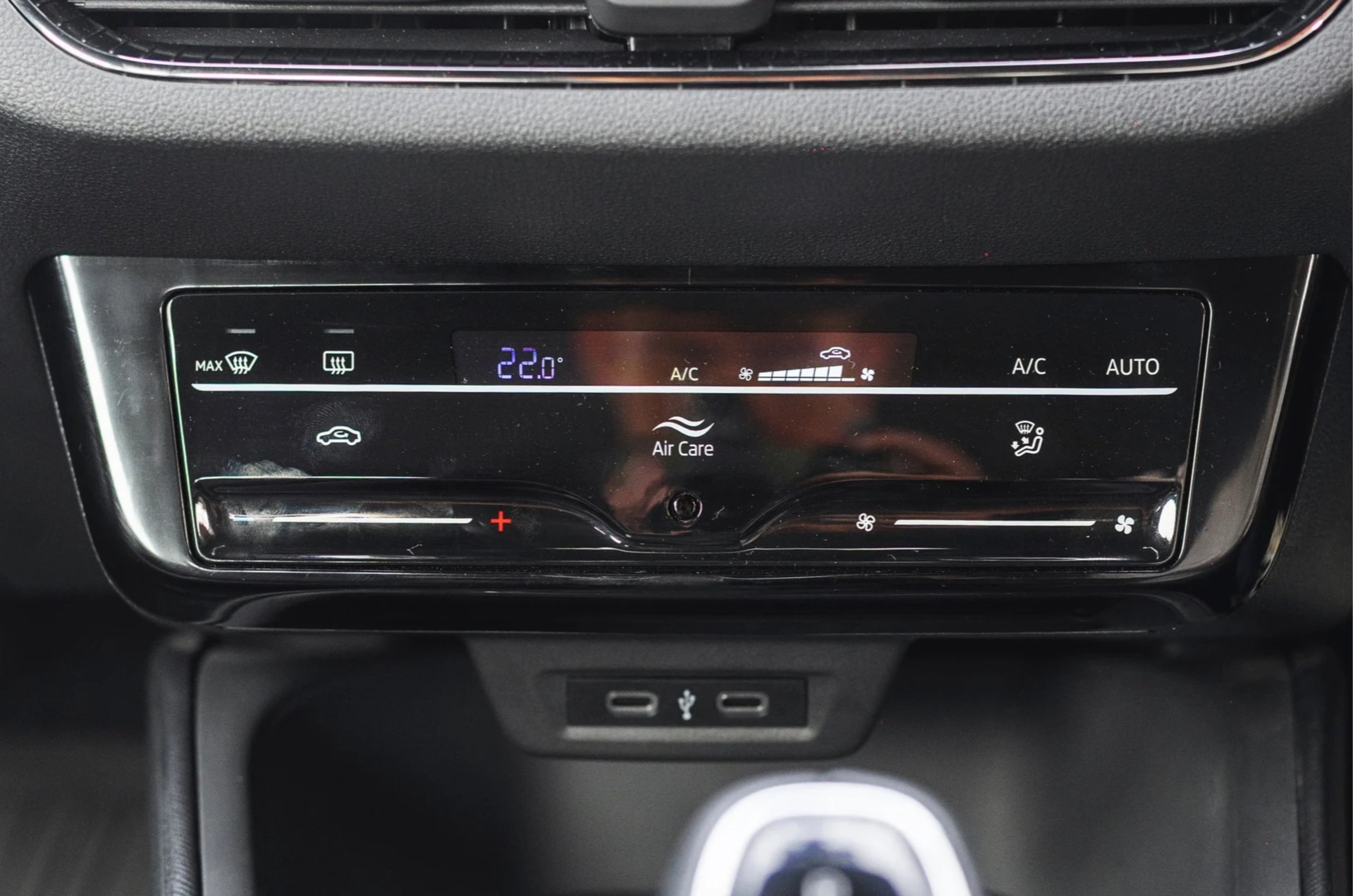
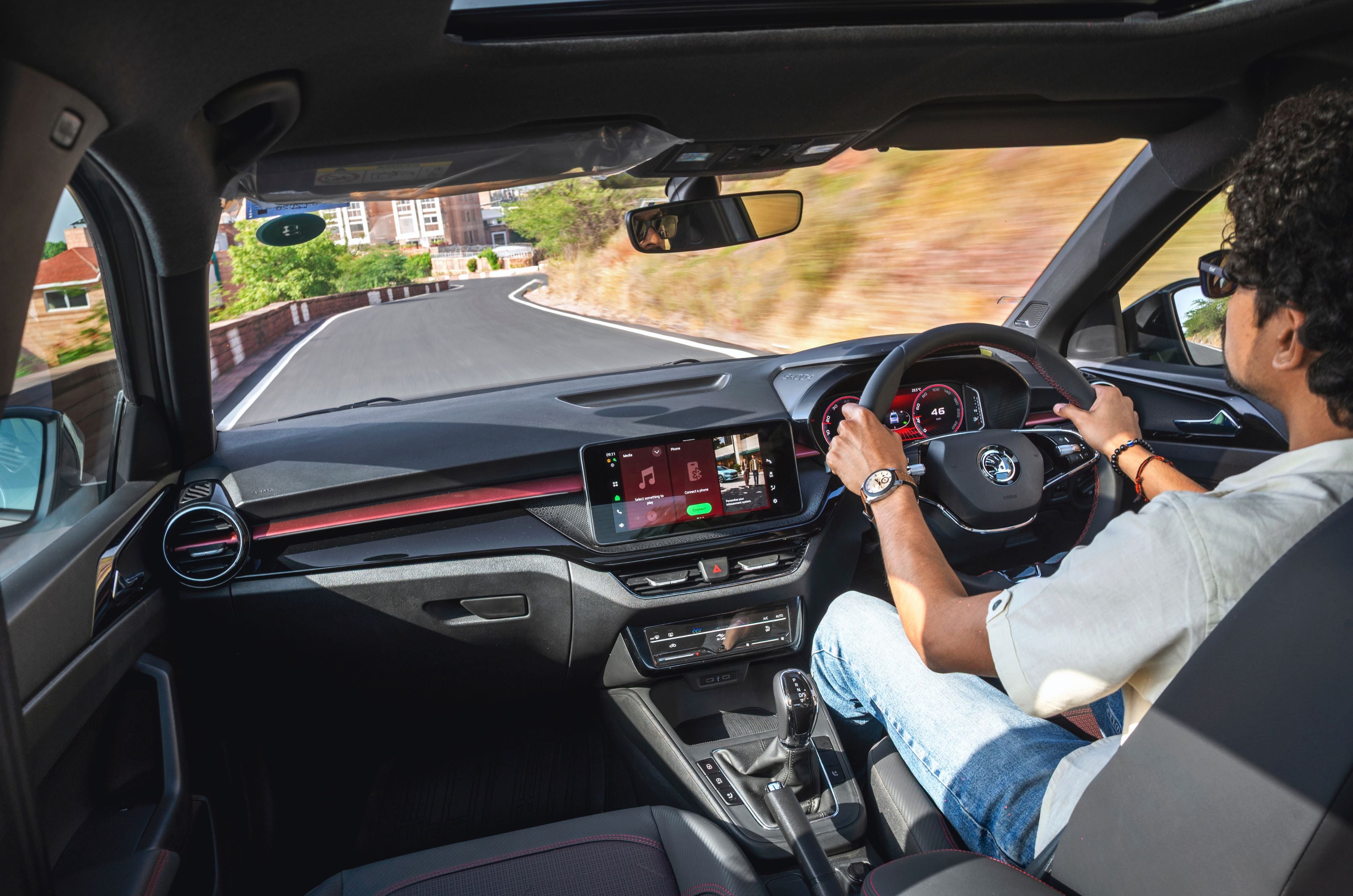
Skoda has dialed up the equipment list by borrowing the Kushaq’s rear seat massaging function, a slightly larger infotainment screen, and a 10.25-inch digital driver’s display, with updated graphics. To top it all off, you get powered and ventilated front seats, a 360-degree camera, a single-pane sunroof, and wireless phone charging. On another note, the introduction of a variable geometry compressor has improved overall AC performance.
Reasons not to buy the Skoda Slavia facelift
Firm low-speed ride
Though the Slavia facelift’s high-speed ride is supple, the same isn’t the case at low speeds. There’s an underlying firmness that’s typically associated with European cars at low speeds, which takes away from the overall ride quality experience.
No manual option for the 1.5 TSI
Like with the pre-facelift version, the 1.5-litre TSI remains the more powerful, effortless, and stronger performer than the smaller 1.0-litre TSI. However, it is paired exclusively with a 7-speed DCT. Enthusiastic drivers will miss the option of a 6-speed manual gearbox, which was available on the pre-facelift version for a short while.
Market Next Week: बाजार के एक बड़े हिस्से पर दबाव बना रहा और मिड कैप और स्मॉल कैप इंडेक्स लगातार चौथे हफ्ते भी गिरावट का शिकार रहे। इस हफ्ते निफ्टी मिडकैप 100 इंडेक्स में 3.5% और निफ़्टी स्मॉलकैप 100 इंडेक्स में 3.3% की गिरावट आई, जिससे इनका प्रदर्शन बेंचमार्क इंडेक्स के मुकाबले कमजोर रहा। बीते हफ्ते BSE सेंसेक्स 1,986.04 अंक या 2.68% गिरकर 71,909.70 पर बंद हुआ,जबकि निफ़्टी 50 में 3.10% या 718.55 अंकों की गिरावट आई और यह 22,421.95 पर बंद हुआ।
निफ्टी कंज्यूमर ड्यूरेबल्स सबसे ज्यादा टूटा
सेक्टोरल इंडेक्सों पर नजर डालें तो निफ्टी कंज्यूमर ड्यूरेबल्स में सबसे ज्यादा 6% की गिरावट आई। इसके बाद निफ्टी ऑटो में 5.8% की गिरावट दर्ज की गई। निफ्टी मेटल, FMCG और PSU बैंक इंडेक्स में 4% से ज़्यादा की गिरावट हुई, जबकि निफ्टी रियल्टी, हेल्थकेयर, इंफ्रा और ऑयल एंड गैस इंडेक्स में 3% से ज़्यादा की गिरावट आई। हालांकि, निफ्टी IT में 0.5% की बढ़त हुई।
निफ्टी मिडकैप 100 इंडेक्स में 3.5% की गिरावट
निफ्टी मिडकैप 100 इंडेक्स में इस हफ्ते 3.5% की गिरावट आई। इसमें लगातार चौथे हफ्ते भी इसमें गिरावट का सिलसिला जारी रहा। सबसे ज्यादा गिरावट वाले शेयरों में PB फिनटेक, पतंजलि फूड्स, वोडाफोन आइडिया, कोरोमंडल इंटरनेशनल, स्विगी, LIC हाउसिंग फाइनेंस, जुबिलेंट फूडवर्क्स, SBI कार्ड्स एंड पेमेंट सर्विसेज़, यस बैंक, कल्याण ज्वैलर्स इंडिया, हाउसिंग एंड अर्बन डेवलपमेंट कॉर्पोरेशन और रैडिको खेतान शामिल रहे।
निफ्टी स्मॉलकैप 100 इंडेक्स में भी लगातार चौथे हफ्ते गिरावट
निफ्टी स्मॉलकैप 100 इंडेक्स में भी लगातार चौथे हफ्ते गिरावट जारी रही। यह इस हफ्ते 3.3% गिर गया। इस गिरावट की वजह IFCI, आदित्य बिड़ला रियल एस्टेट, फ़िज़िक्सवाला, गुजरात मिनरल डेवलपमेंट कॉर्पोरेशन, गार्डन रीच शिपबिल्डर्स एंड इंजीनियर्स, आइनॉक्स विंड, वॉकहार्ट और वेल्सपन कॉर्प के शेयरों में आई गिरावट रही।
विदेशी संस्थागत निवेशकों की बिकवाली बढ़ी
बीते हफ्ते विदेशी संस्थागत निवेशकों (FIIs) ने अपनी बिकवाली बढ़ा दी और लगातार छठे हफ़्ते निकासी की। उन्होंने कुल 34,966.07 करोड़ रुपये के शेयर बेचे। वहीं,घरेलू संस्थागत निवेशकों (DIIs) ने बाज़ार को सपोर्ट करना जारी रखा और इस हफ़्ते 33,455.30 करोड़ रुपये के शेयर खरीदे।
इस हफ्ते बाजार में आई गिरावट से BSE पर लिस्टेड कंपनियों की कुल मार्केट वैल्यू में लगभग 15 लाख करोड़ रुपये की कमी आई।
जानें आगे कैसी रह सकती है बाजार की चाल
कोटक सिक्योरिटीज के VP टेक्निकल रिसर्च,अमोल अठावले ने कहा कि छोटे ट्रेडिंग वीक में बेंचमार्क इंडेक्स में भारी गिरावट आई। निफ्टी 3.10 प्रतिशत गिरकर बंद हुआ, जबकि सेंसेक्स में लगभग 2000 अंकों की गिरावट आई। सेक्टरों की बात करें तो लगभग सभी प्रमुख सेक्टर इंडेक्स में ऊपरी स्तरों पर प्रॉफिट बुकिंग देखने को मिली। कंज्यूमर और ऑटो इंडेक्स में सबसे ज्यादा गिरावट आई। कंज्यूमर इंडेक्स 6.15 प्रतिशत और ऑटो इंडेक्स 5.85 प्रतिशत नीचे बंद हुआ।
इस हफ्ते मार्केट में ऊपरी लेवल पर लगातार बिकवाली का दबाव बना रहा। वीकली चार्ट पर एक लॉन्ग ‘बेयरिश कैंडल’ बनी। इंट्राडे चार्ट पर ‘लोअर हाई’ और ‘लोअर लो’ बनने का सिलसिला जारी रहा,जो काफी हद तक नेगेटिव ट्रेंड का संकेत है।
अमोल अठावले का मानना है कि शॉर्ट-टर्म में मार्केट का मिजाज कमज़ोर रहेगा, लेकिन यह ‘ओवरसोल्ड’ स्थिति में है। इसलिए, मौजूदा लेवल से ‘पुलबैक रैली’ की संभावना से इनकार नहीं किया जा सकता। नीचे की तरफ, 22,200/71,300 एक अहम सपोर्ट जोन है, जबकि 22,500/72,200 तत्काल रेजिस्टेंस लेवल है। अगर मार्केट 22,500/72,200 के ऊपर जाता है तो पुलबैक बढ़कर 22,700–22,800/73,000-73,200 तक जा सकता है। इसके विपरीत अगर यह 22,200/71,300 के नीचे जाता है तो बिकवाली का दबाव बढ़ सकता है और मार्केट 22,000–21,950/71,000-70,700 तक गिर सकता है।
बैंक निफ्टी पर अपनी राय साझा करते हुए अमोल अठावले ने कहा कि इसके लिए 54,000 एक अहम सपोर्ट ज़ोन है। अगर यह इस लेवल के ऊपर बना रहता है तो इंडेक्स वापस 55,000–55,500 तक जा सकता है। हालांकि, 54,000 के नीचे जाने पर बिकवाली का दबाव बढ़ सकता है और इसके 53,500–53,200 तक गिरने की संभावना बढ़ सकती है।
मोतीलाल ओसवाल फाइनेंशियल सर्विसेज़ के हेड ऑफ़ रिसर्च,वेल्थ मैनेजमेंट सिद्धार्थ खेमका का कहना है कि आने वाले समय में भारतीय शेयर बाजार पर दबाव बने रहने की संभावना है,क्योंकि ग्लोबल बॉन्ड मार्केट में भारी गिरावट,कच्चे तेल की कीमतों में फिर से तेजी और पिछले छह महीनों में विदेशी निवेशकों की सबसे ज्यादा बिकवाली का असर बाजार के सेंटीमेंट पर पड़ रहा है। US 10-ईयर ट्रेजरी बॉन्ड का यील्ड 2007 के अपने उच्चतम स्तर को पार करके 5.3% पर पहुंच गया है,जो अप्रैल 2002 के बाद सबसे ज्यादा है,जबकि 30-साल के बॉन्ड का यील्ड 5.6% पर है।
निफ्टी की अर्निंग यील्ड अब अमेरिकी बॉन्ड पर मिलने वाले ब्याज से कम होने हो गई है। इसके कारण,ग्लोबल यील्ड के स्थिर होने, कच्चे तेल की कीमतों में कमी आने और विदेशी निकासी में कमी आने तक बाजार में तेजी की संभावना नहीं है।
रेलिगेयर ब्रोकिंग के SVP रिसर्च अजीत मिश्रा का कहना है कि टेक्निकल नजरिए से देखें तो निफ्टी अपने अहम लॉन्ग टर्म सपोर्ट लेवल यानी 22,600 और 22,400 के आसपास 200-हफ्ते के SMA और EMA से साफ तौर पर नीचे आ गया और 22,180 के लेवल (जो अप्रैल 2026 का निचला स्तर था) की ओर बढ़ गया है। इससे बाजार में मंदी का माहौल और मज़बूत हुआ है।
निफ्टी के लिए 22,000–22,200 का जोन अगले अहम सपोर्ट के तौर पर काम कर सकता है, जबकि 22,500–22,600 का लेवल सबसे नजदीकी रेजिस्टेंस बन सकता है। इसके बाद 22,800 पर अगला बड़ा रेजिस्टेंस होगा। इंडेक्स में करेक्शन का दौर जारी रहने और उतार-चढ़ाव बढ़ने के कारण,निकट भविष्य में सतर्क रहने की जरूरत है और चुनिंदा शेयरों में ही मौके तलाशने की सलाह है।
LKP सिक्योरिटीज के सीनियर टेक्निकल एनालिस्ट रूपक डे का कहना है कि बाजार का मूड अभी भी कमजोर बना हुआ है क्योंकि कोविड के समय आई गिरावट के बाद पहली बार इंडेक्स अपने 200-हफ्ते के मूविंग एवरेज के नीचे बंद हुआ है। निचले स्तर पर,22,200 पर सपोर्ट है। अगर इंडेक्स इसके नीचे जाता है तो 22,060 तक और गिरावट आ सकती है।
ऊपर की तरफ 22,600 पर रेजिस्टेंस है। जब तक इंडेक्स 22,600 के नीचे रहेगा,तब तक उछाल पर बिकवाली का ट्रेंड बना रहेगा।
डिस्क्लेमर: मनीकंट्रोल.कॉम पर दिए गए विचार एक्सपर्ट के अपने निजी विचार होते हैं। वेबसाइट या मैनेजमेंट इसके लिए उत्तरदाई नहीं है। यूजर्स को मनी कंट्रोल की सलाह है कि कोई भी निवेश निर्णय लेने से पहले सर्टिफाइड एक्सपर्ट की सलाह लें।
देश में त्योहारी सीजन शुरू होने से पहले एयर कंडीशनर और दूसरे कंज्यूमर अप्लायंसेज की कीमतें 5-8% बढ़ गई हैं, लेकिन मैन्युफैक्चरर्स को उम्मीद है कि इनकी जबरदस्त डिमांड से बिक्री में डबल-डिजिट ग्रोथ होने की उम्मीद है। कंज्यूमर प्रीमियम प्रोडक्ट्स, रिप्लेसमेंट और आसान फाइनेंसिंग का विकल्प चुन रहे हैं। इससे अप्लायंसेज की बिक्री को सपोर्ट मिल सकता है। कीमतों में हालिया बढ़ोतरी इस साल कीमतों में बढ़त का तीसरा दौर है। अप्लायंस मैन्युफैक्चरर्स का कहना है कि कीमतों में इस बढ़त में तांबा, एल्युमीनियम, स्टील और कच्चे तेल से बनने वाले उत्पादों की बढ़ती लागत, माल ढुलाई पर बढ़ते खर्च और करेंसी में उतार-चढ़ाव का सबसे बड़ा हाथ है।
कीमतें बढ़ने के बावजूद, अप्लायंस इंडस्ट्री के लिए फेस्टिव सीज़न की शुरुआत अच्छी रहा है। अप्लायंस मैन्युफैक्चरर्स ने दक्षिण भारत में ओणम के दौरान अच्छी बिक्री की जानकारी दी है। कंपनियों को उम्मीद है कि प्रीमियम प्रोडक्ट्स के प्रति बढ़ते रुझान, रिप्लेसमेंट मांग और कंज्यूमर फाइनेंसिंग की वजह से नवरात्रि और दिवाली के दौरान भी अच्छी मांग बनी रह सकती है।
ग्राहकों का रुझान तेजी से ज्यादा क्षमता वाले, कई फ़ीचर्स वाले और एनर्जी-एफ़िशिएंट अप्लायंसेज़ के साथ-साथ स्मार्ट कनेक्टेड प्रोडक्ट्स की ओर बढ़ रहा है। हालांकि बिक्री की मात्रा पर कीमतों के बढ़ने का असर पड़ सकता है,लेकिन प्रीमियम प्रोडक्ट्स की ओर बढ़ते रुझान से कुल वैल्यू ग्रोथ को सपोर्ट मिलने की उम्मीद है।
कुछ मैन्युफैक्चरर्स का मानना है कि निकट भविष्य में कीमतों में बढ़ोतरी का असर सीमित रहेगा, क्योंकि डीलर्स और डिस्ट्रीब्यूटर्स ने प्री-बाइंग स्कीम के ज़रिए पहले की कीमतों पर खरीदे गए प्रोडक्ट्स का स्टॉक जमा कर रखा है।
हायर अप्लायंसेज को बिक्री में डबल डिजिट ग्रोथ की उम्मीद
हायर अप्लायंसेज इंडिया के CEO एन.एस. सतीश ने PTI को बताया कि फेस्टिव सीज़न के दौरान इंडस्ट्री में डबल-डिजिट ग्रोथ होने की उम्मीद है। हायर को उम्मीद है कि फेस्टिव सीज़न में उसकी बिक्री (वैल्यू के हिसाब से) 30-35% बढ़ेगी, जबकि यूनिट बिक्री में लगभग 20% की बढ़ोतरी हो सकती है। सतीश ने पूरी इंडस्ट्री में लगभग 10-15% ग्रोथ की उम्मीद जताई। उनका कहना है कि जिन ग्राहकों ने पहले से ही कोई अप्लायंस खरीदने का प्लान बना रखा है,वे या तो बजट में रहने के लिए कम क्षमता वाला प्रोडक्ट चुन सकते हैं या फिर प्रीमियम मॉडल लेने के लिए EMI फाइनेंसिंग का इस्तेमाल कर सकते हैं।
हायर (Haier) ने 1 अक्टूबर से रूम एयर कंडीशनर की कीमतें लगभग 5% बढ़ा दी हैं, जबकि LED टीवी और वॉशिंग मशीन जैसे प्रोडक्ट्स की कीमतों में 2-3% की बढ़ोतरी हुई है।
प्रीमियम प्रोडक्ट्स फाइनेंसिंग से डिमांड बढ़ने की उम्मीद
LG इलेक्ट्रॉनिक्स इंडिया के को-चीफ सेल्स और मार्केटिंग ऑफिसर संजय चितकारा ने कहा कि कंपनी फेस्टिव सीज़न को लेकर उम्मीद बनाए हुए है,जिसकी शुरुआत अक्टूबर के दूसरे हफ्ते में नवरात्रि से होती है। कंपनी को त्योहारों से पहले अच्छी खासी पूछताछ देखने को मिली है और उसे उम्मीद है कि घर खरीदने और अपग्रेड करने से मांग बढ़ेगी। ग्राहक न सिर्फ़ रेफ्रिजरेटर, वॉशिंग मशीन, टेलीविज़न और एयर कंडीशनर बदल रहे हैं, बल्कि डिशवॉशर, माइक्रोवेव ओवन, ऑडियो प्रोडक्ट और वॉटर प्यूरीफ़ायर में भी दिलचस्पी दिखा रहे हैं।
चितकारा ने कहा कि GST में बदलाव और त्योहारों के दौरान EMI स्कीमों से चीज़ें खरीदना आसान हुआ है, जिससे मांग बढ़ने की उम्मीद है। LG की ‘एसेंशियल सीरीज़’ को टियर-2 और टियर-3 शहरों में पहली बार खरीदने वाले ग्राहकों से अच्छा रिस्पॉन्स मिला है।
सोनी इंडिया को सेल्स वैल्यू में 15-20% बढ़ोतरी की उम्मीद
सोनी इंडिया के मैनेजिंग डायरेक्टर सुनील नय्यर को उम्मीद है कि प्रीमियम प्रोडक्ट्स, नए लॉन्च और ग्राहकों के लिए खास ऑफ़र की वजह से त्योहारों के मौसम में बिक्री की वैल्यू में 15-20% की बढ़ोतरी होगी। सोनी को उम्मीद है कि उसके इमेजिंग बिज़नेस में 30% से ज़्यादा की बढ़ोतरी हो सकती है। जबकि टेलीविज़न की मांग प्रीमियम BRAVIA मॉडल और बड़ी स्क्रीन वाले टीवी से बढ़ेगी। कंपनी को हेडफ़ोन, साउंडबार और पार्टी स्पीकर की भी अच्छी मांग की उम्मीद है।
गोदरेज को भी अच्छी सेल्स ग्रोथ की उम्मीद
गोदरेज एंटरप्राइजेज ग्रुप के अप्लायंसेज डिविजन के हेड कमल नंदी ने कहा कि कंपनी ने ओणम के दौरान अच्छी बिक्री की है और उम्मीद है कि त्योहारों के मौसम में दूसरे इलाकों में भी मांग बढ़ेगी।
गोदरेज अप्लायंसेज ने 1 अक्टूबर से रूम AC की कीमतें भी बढ़ा दी हैं। हालांकि, ग्राहकों को कुछ समय तक पुराने स्टॉक के कारण बढ़ी हुई कीमतों से पहले वाली कीमतों पर ही प्रोडक्ट मिल सकते हैं।
नंदी ने कहा कि मौजूदा स्टॉक लगभग एक से डेढ़ महीने तक चल सकता है, जिसका मतलब है कि कीमतें पूरी तरह बढ़ने से पहले, दिवाली तक कुछ प्रोडक्ट्स पुरानी कीमतों पर ही बिकते रह सकते हैं।
क्या कहती है इंडस्ट्री रिपोर्ट?
सेक्टर की रिपोर्ट्स के मुताबिक,ओणम से लेकर दशहरा और दिवाली तक के त्योहारों के मौसम में अप्लायंस बनाने वाली कंपनियों की सालाना बिक्री का लगभग 30-40% हिस्सा होता है।
बोस्टन कंसल्टिंग ग्रुप और कॉन्फेडरेशन ऑफ़ इंडियन इंडस्ट्री की एक संयुक्त रिपोर्ट के अनुसार, भारत के कंज्यूमर ड्यूरेबल्स मार्केट के सालाना 8-10% की दर से बढ़ने और 2030 तक 3-3.25 लाख करोड़ रुपये तक पहुंचने का अनुमान है।
Skoda’s Slavia sedan has received its first major update since its introduction back in 2022. In order to keep it in touch with recently updated rivals like the Hyundai Verna and Honda City, the Slavia gets sharper styling, more equipment and even a significant mechanical change. Here’s what it’s like.
Skoda Slavia facelift exterior design and engineering – 8/10
Skoda Slavia Prestige (left) and Monte Carlo (right)
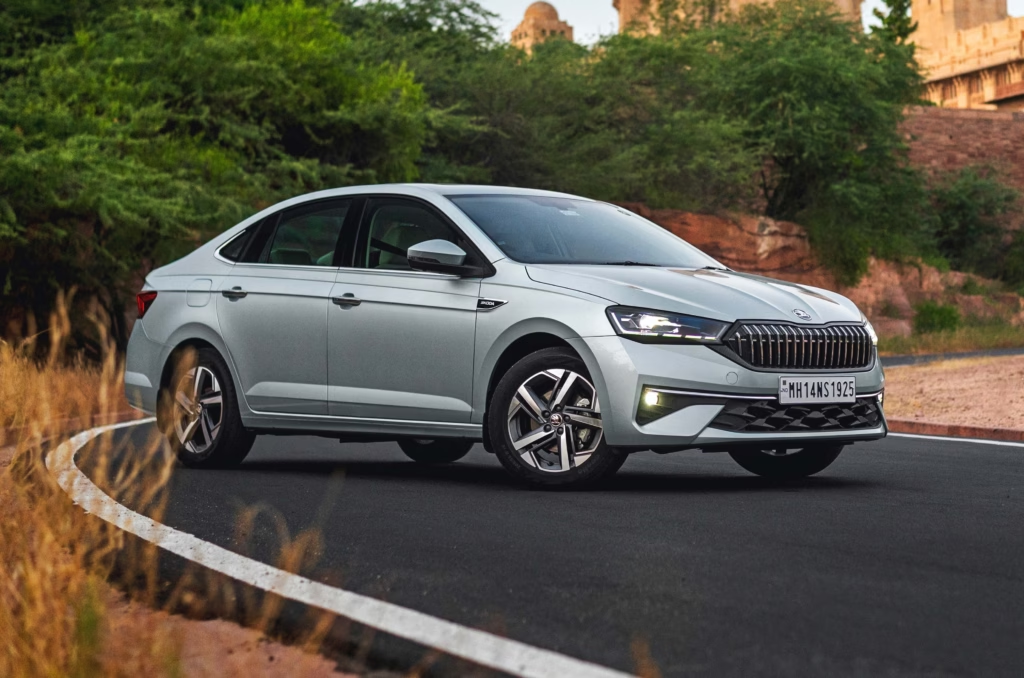
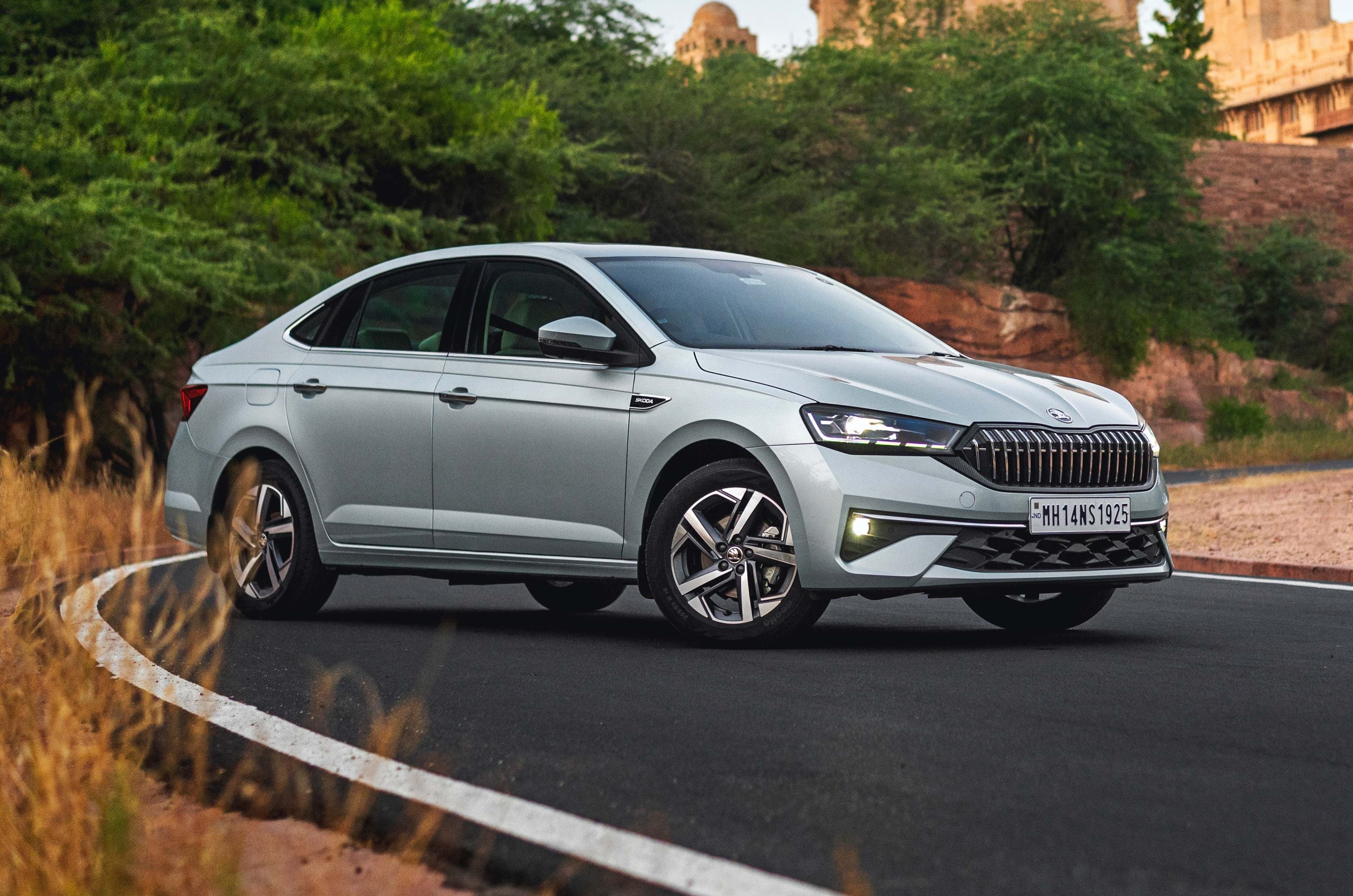
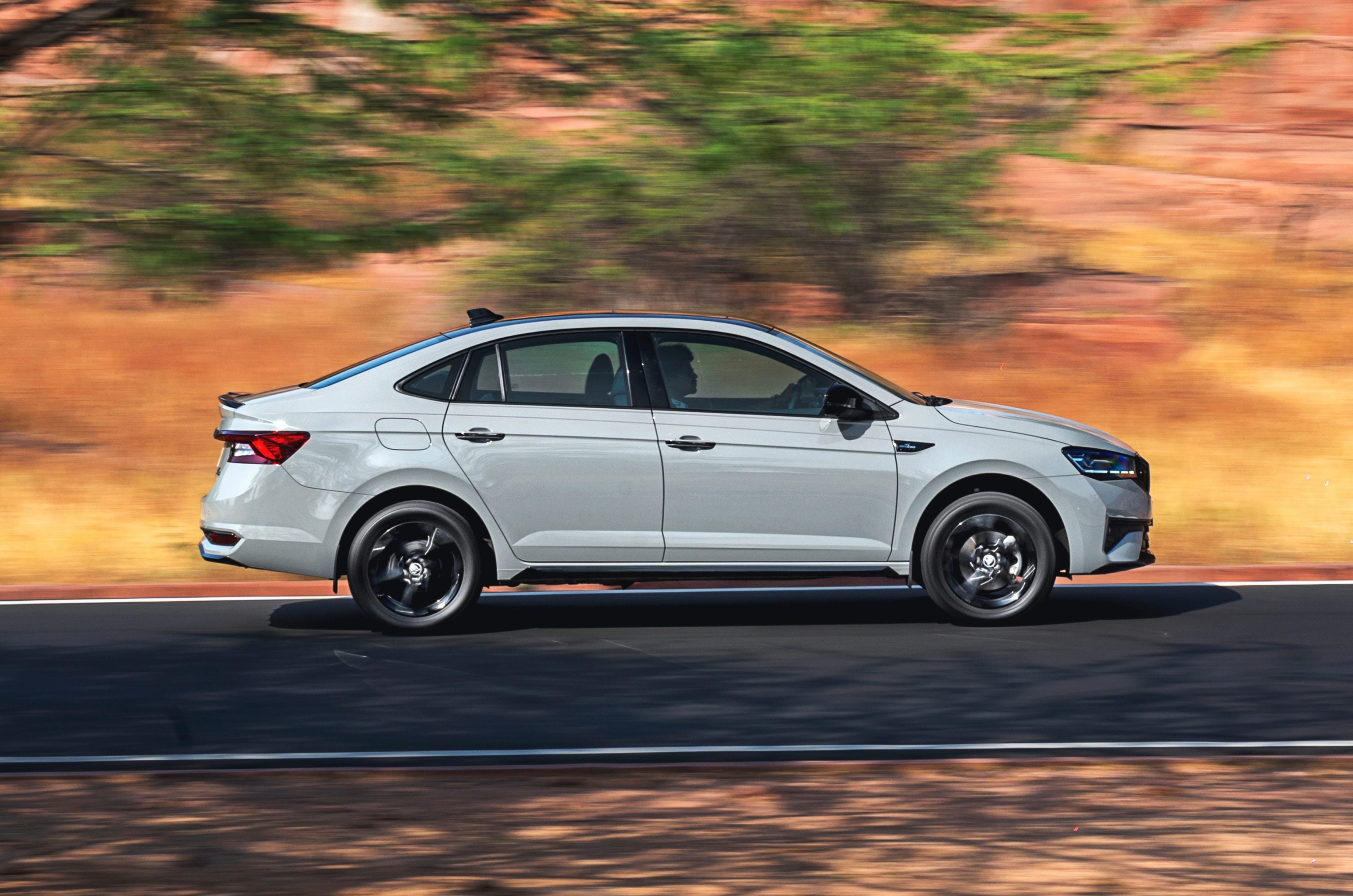
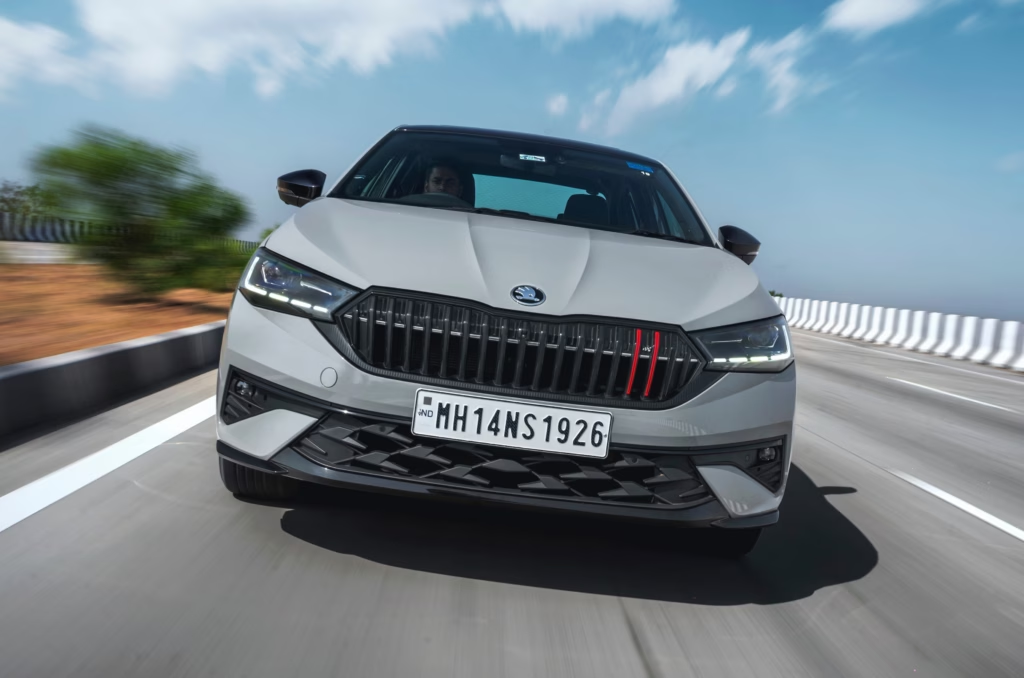
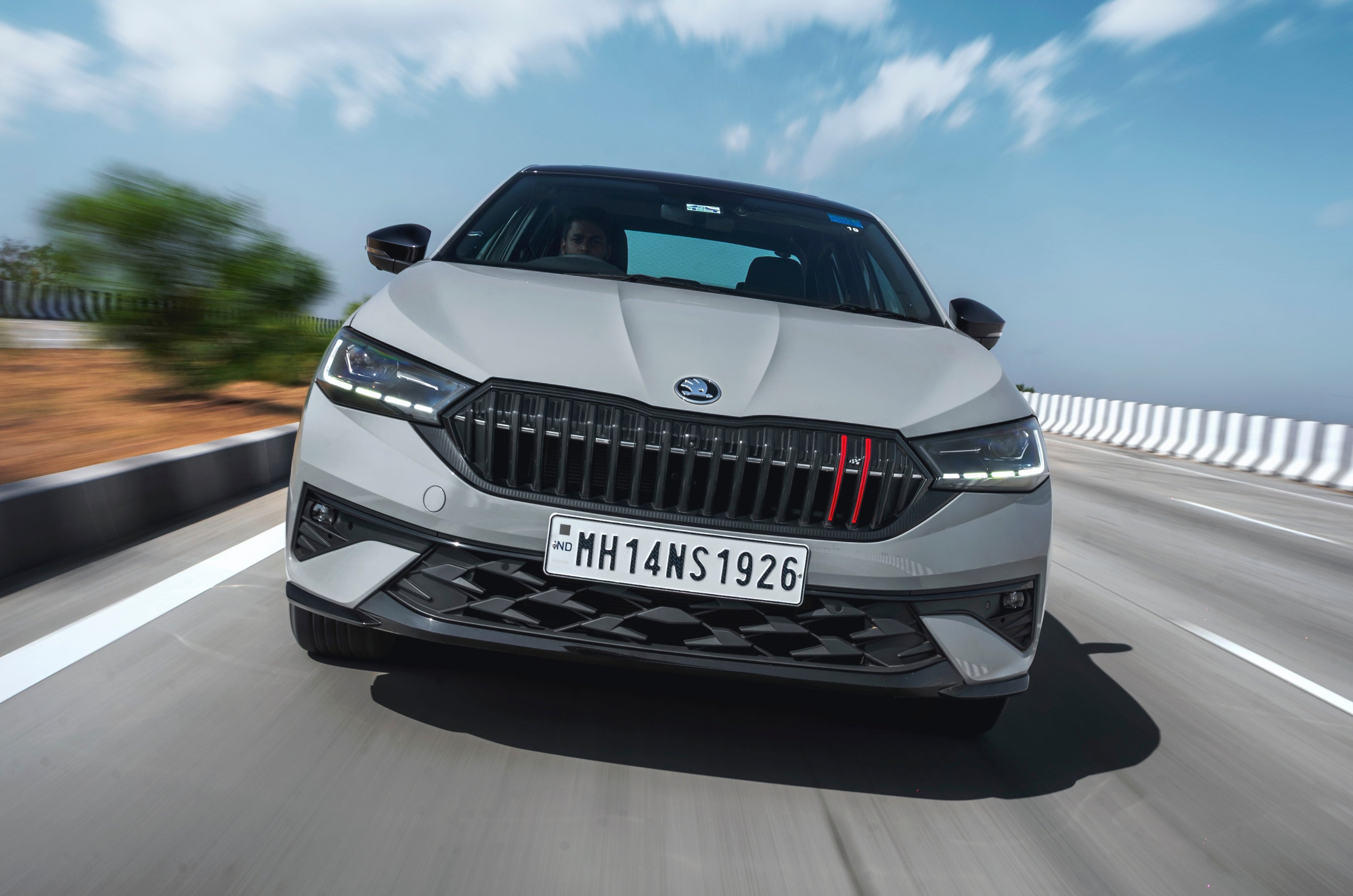
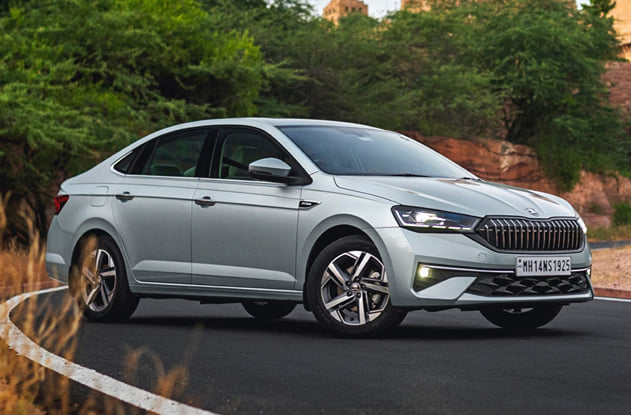
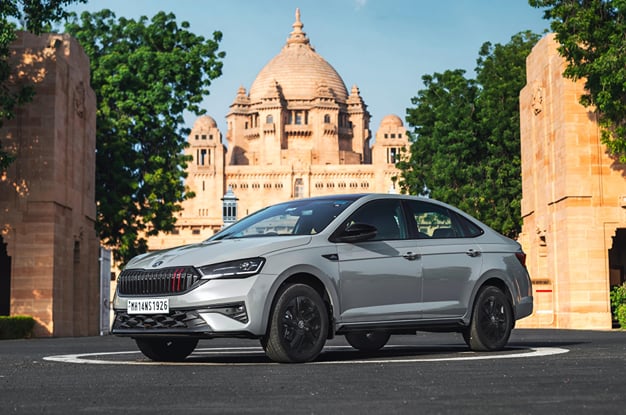
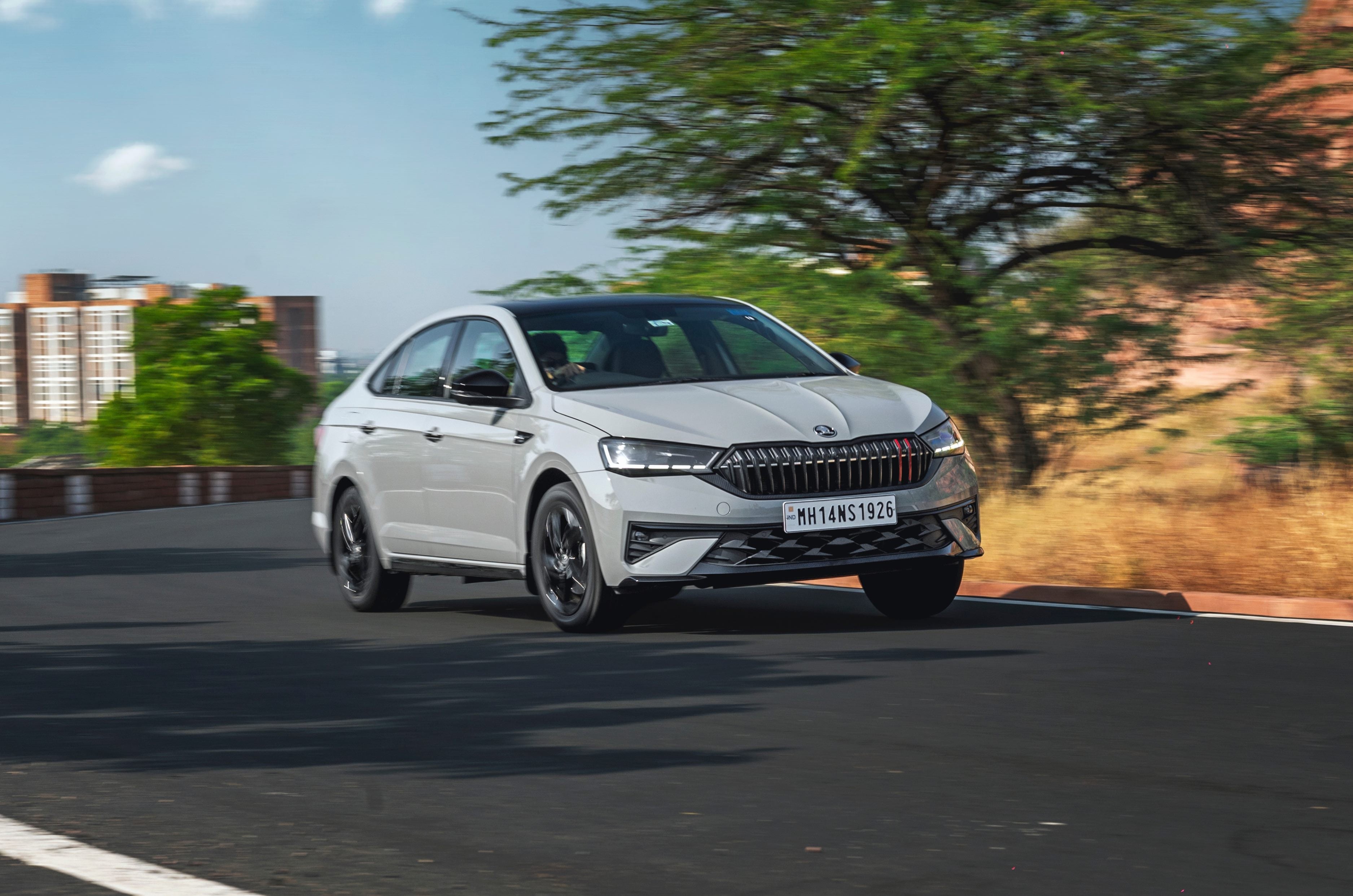
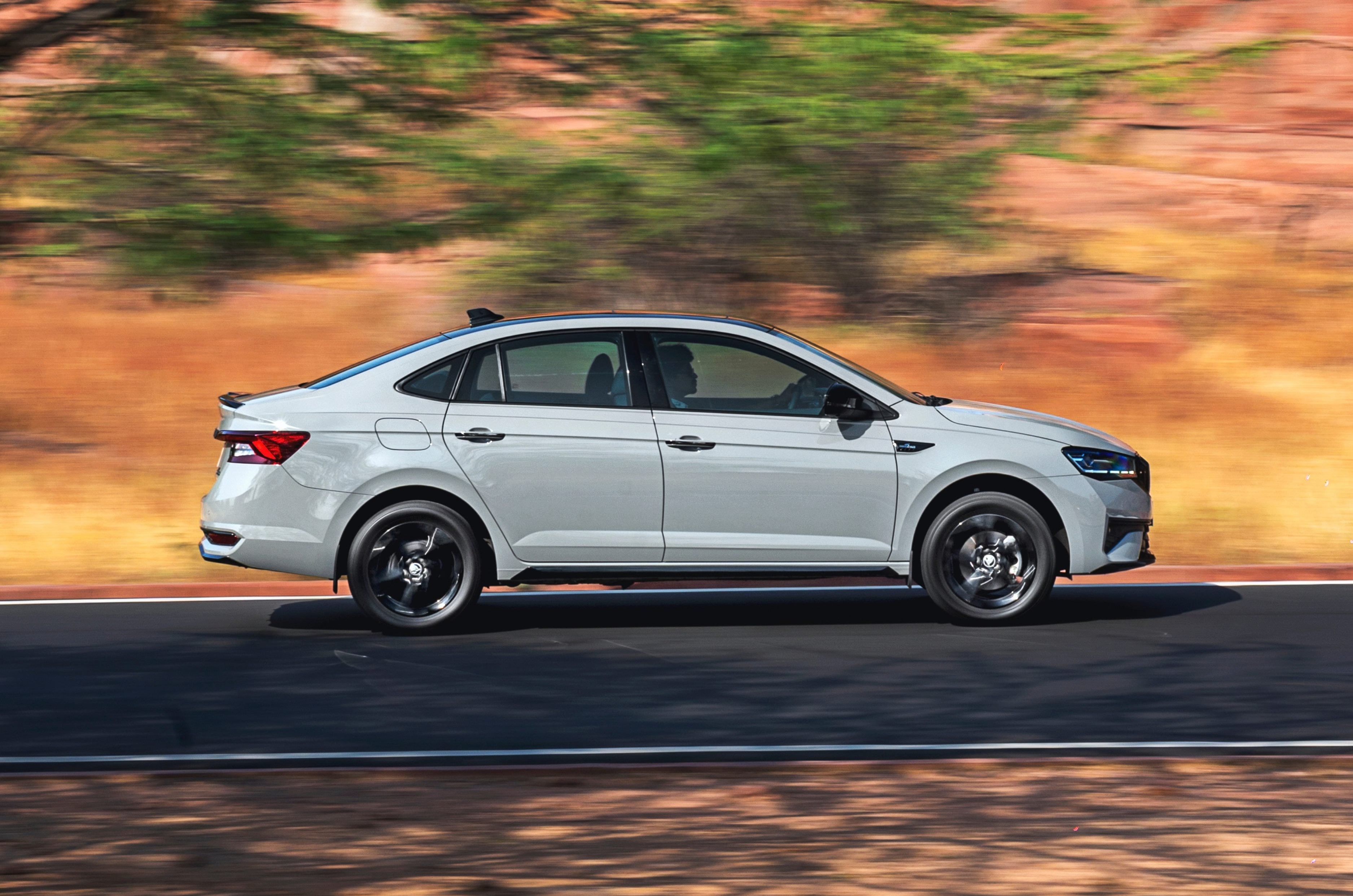
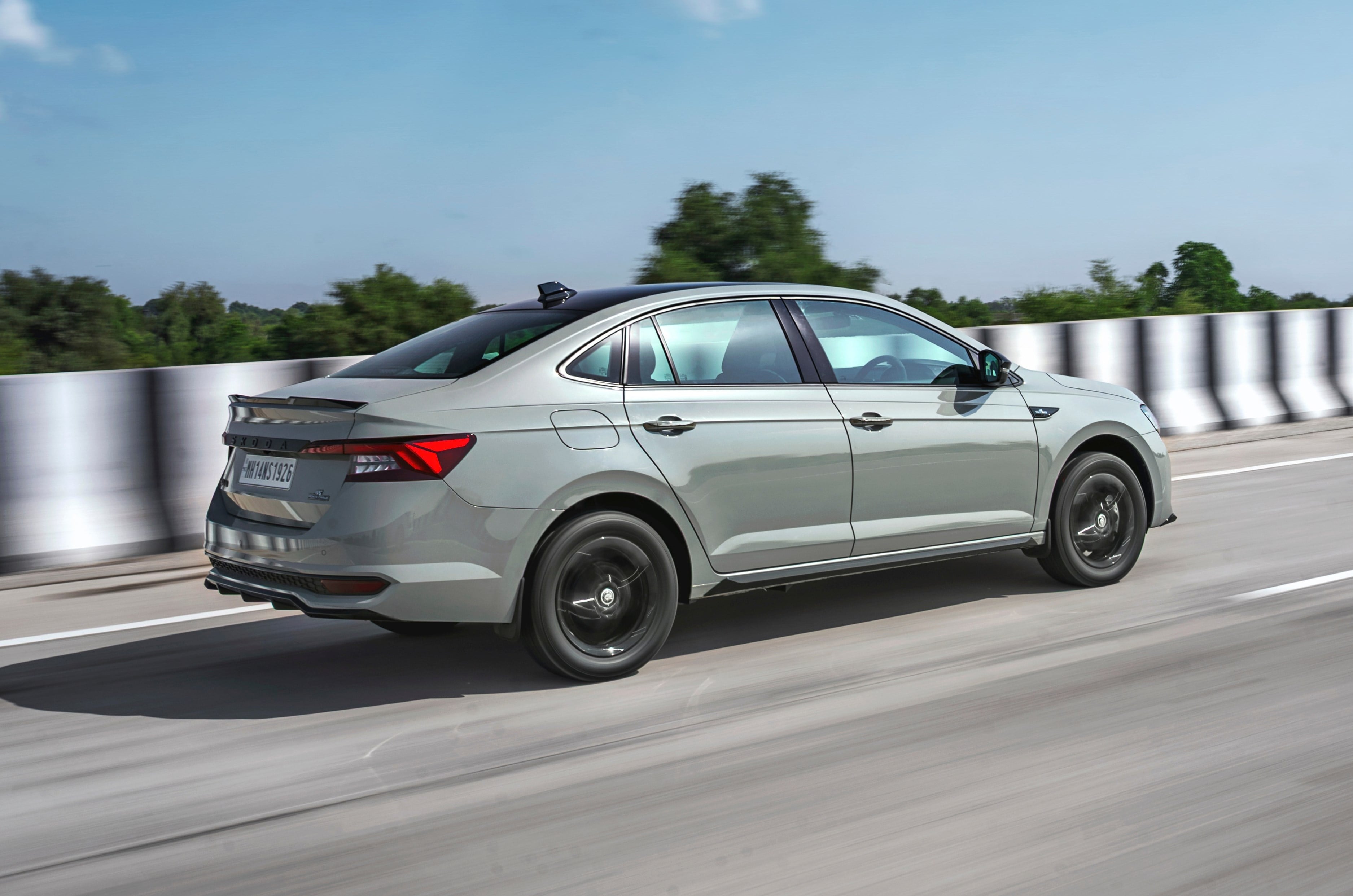
Being a facelift, the Slavia’s overall silhouette and proportions are unchanged, and that’s a good thing. Its design is clean and elegant rather than flashy, with crisp body lines, a long bonnet and a flowing roofline giving it a distinctly European appearance. The signature butterfly grille features new segmented chrome trim and sharp LED headlamps also get a new segmented LED DRL signature. The bumper is all new, featuring new LED fog lamps along with a reworked airdam. Along the sides, there’s a new design for the 16-inch alloys while the 179mm (unladen) ground clearance gives it a degree of SUV-like usability without making the sedan look too ungainly.
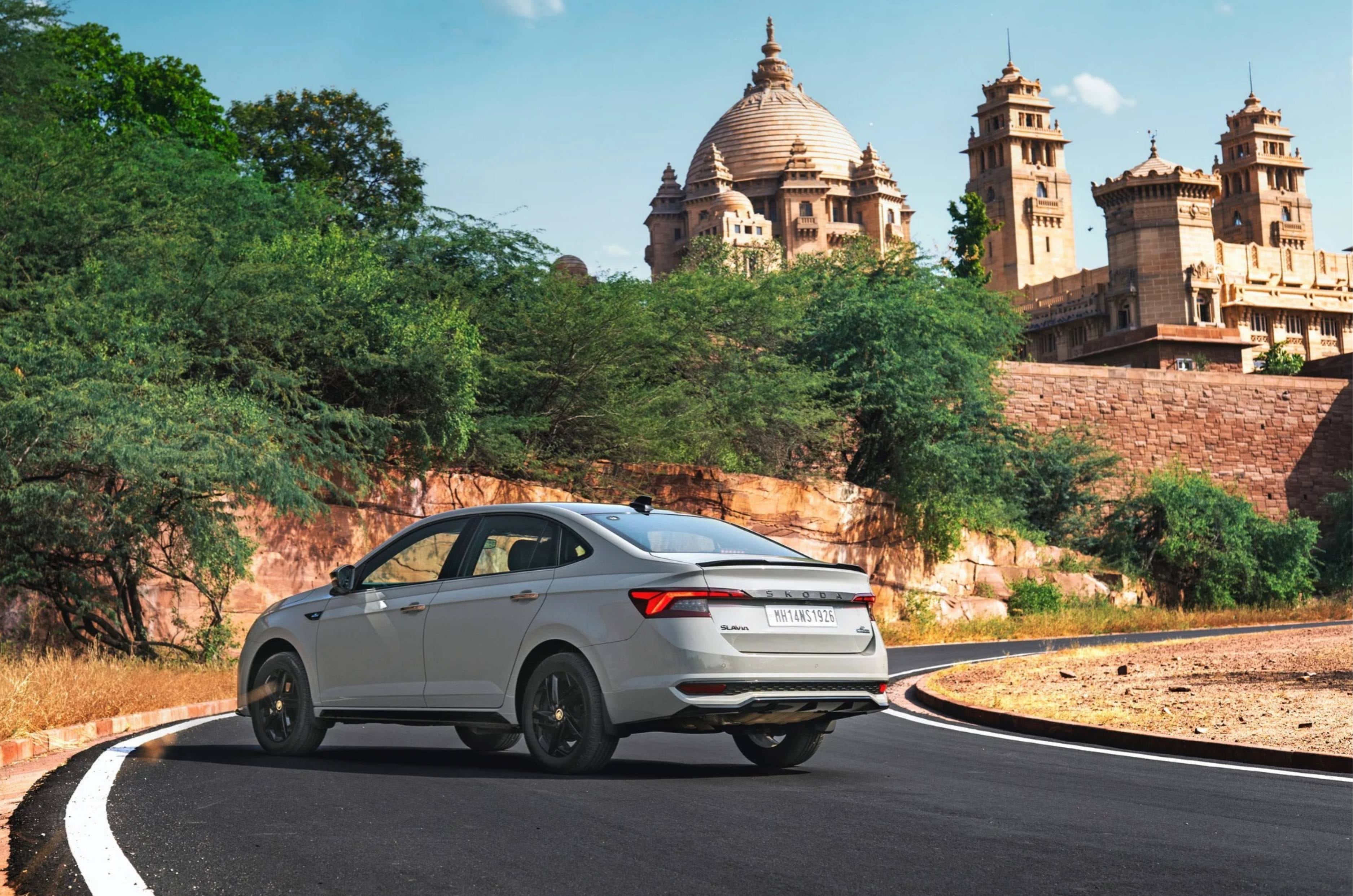
At the rear, it gets new sequential turn indicators and different LED elements in the tail lights. There’s a new trim piece connecting the tail-lights, with prominent ‘SKODA’ lettering, which gives the rear a cleaner, more contemporary look. As before, the Slavia is offered in a more luxurious Prestige trim, which brings chrome elements and a dual-tone finish for the alloys, and a sporty Monte Carlo trim that features blacked-out elements which include the grille, alloys, ORVMs, roof and bootlid spoiler. There’s also two new colours, Arctic Silver and Cappuccino Beige, which the former looking particularly tasteful.
Under the skin, the Slavia continues to use the MQB A0 IN platform, shared with the Kushaq and Volkswagen Virtus. This India-specific architecture allows the Slavia to retain its proper three-box sedan proportions while offering the ground clearance and practicality needed for Indian road conditions. Overall, the updates are evolutionary rather than revolutionary, but they do enough to keep the Slavia’s understated design looking fresh.
Skoda Slavia facelift interior space and comfort – 8/10
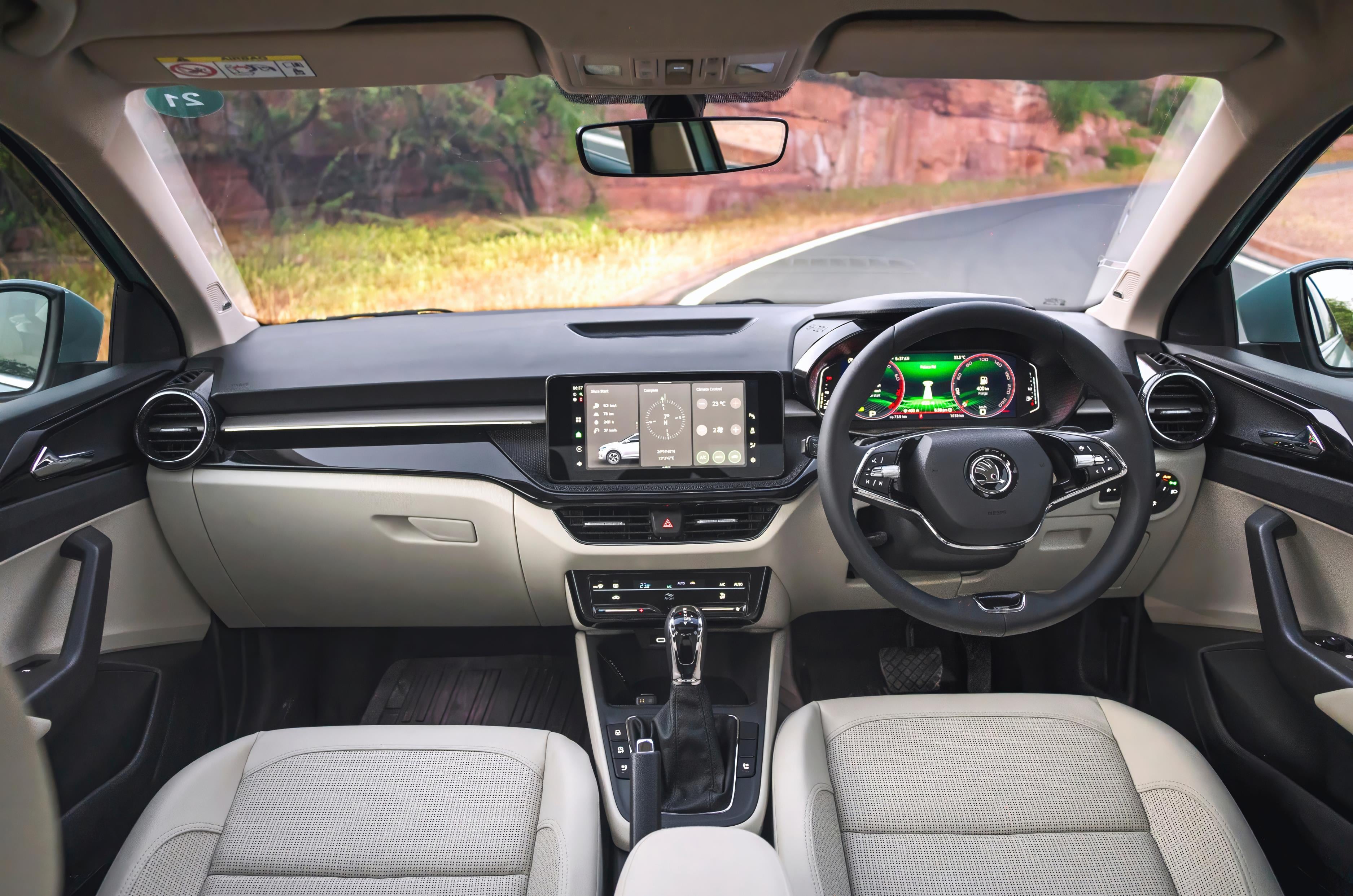
Step inside, and the door shuts with a reassuring thud and you’re greeted by the same layered dashboard. Like the exterior, the interior trim differs too depending on which trim you opt for. The more luxurious Prestige trim gets a beige and black upholstery with copper-coloured inserts on the dash, while the sporty Monte Carlo gets an all-black theme with contrasting red details on the dashboard, the stitching and the seat perforation. Build quality is solid overall, with a well put-together feel to the cabin. It’s also a practical space with plenty of storage spaces and the typical Skoda “Simply Clever” features like a ticket holder, coat hooks, phone pocket in the seatbacks and more.
The front seats are wide and supportive, with generous cushioning that makes the Slavia comfortable over long journeys, and finding your ideal driving position is easy too thanks to the electrically adjustable seats and reach/rake adjustment for the steering.
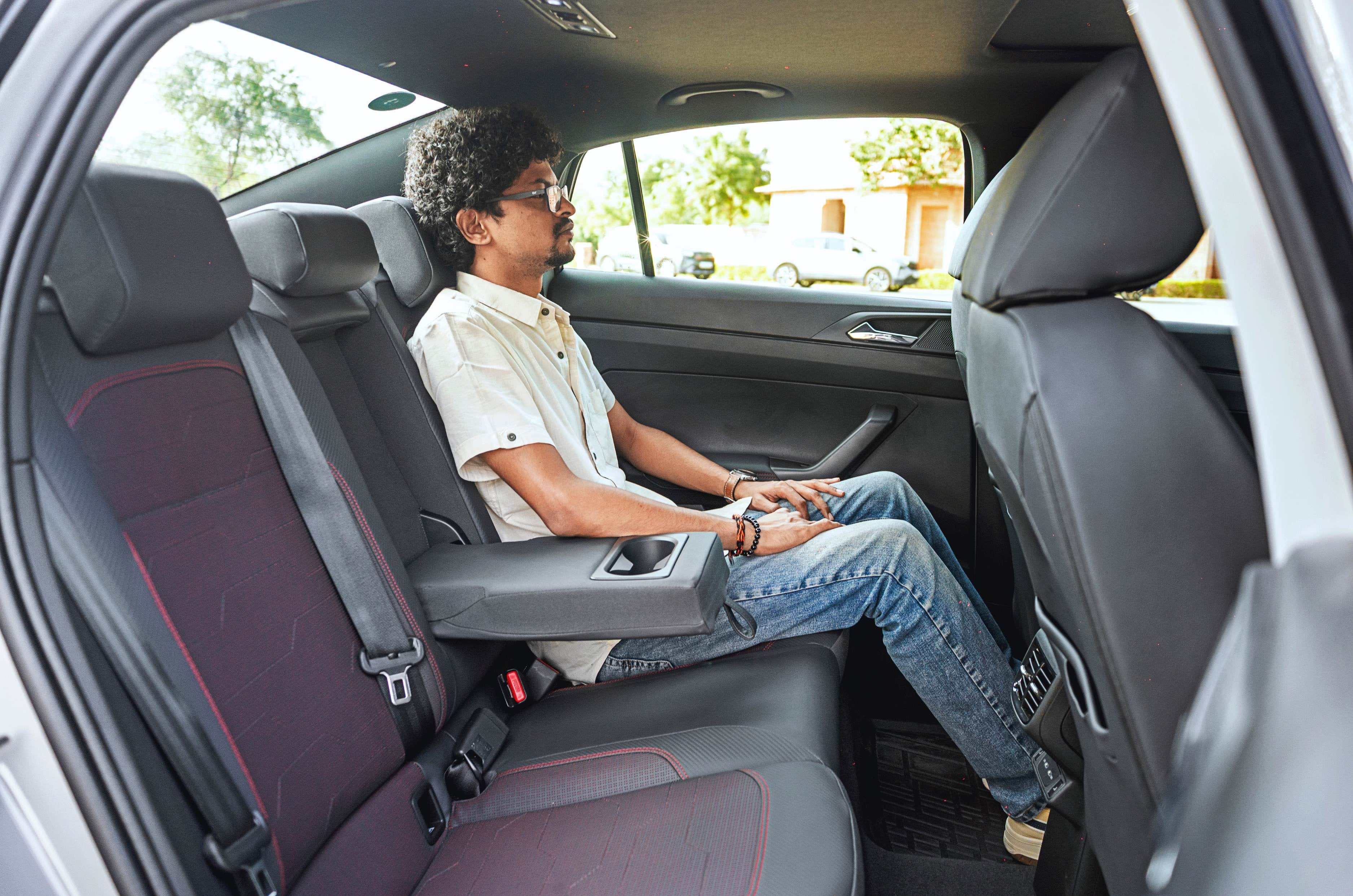
Rear-seat space remains one of Slavia’s biggest strengths. The long wheelbase translates into generous legroom and ample footroom, and the windows are also large enough. Headroom though, can be a little tight for taller passengers, and the contoured rear bench along with the transmission hump in the centre mean it’s more naturally suited to two adults than three.
The 521-litre boot is among the largest in the segment, and the squared-off shape makes it easy to load. The 60:40 split-folding rear seats add further versatility. It also continues to get a space tyre and a subwoofer under the boot floor.
Skoda Slavia facelift features and safety – 9/10
The Slavia facelift brings a useful upgrade in equipment, with the highlight being a segment-first rear seat massaging function. It’s a feature more commonly associated with larger, more expensive cars and adds another layer of comfort to what is already a spacious rear bench. This feature works very well and will be a hit with the chauffeur-driven.
The infotainment and instrumentation have also been upgraded. The previous 10-inch touchscreen has been replaced by a slightly larger 10.1-inch unit, while the driver’s display grows substantially from 8 inches to 10.25 inches. Both screens get new graphics and additional features, giving the cabin a more contemporary feel and bringing the Slavia’s interface up to date. The touchscreen has a slick interface and also benefits from an AI voice assistant and connected car features, while the digital cluster gets multiple layouts along with a turn-by-turn navigation feature. The themes for both these screens also differ depending on whether you’ve gone for the Prestige or the Monte Carlo trim.
Another significant upgrade is the addition of a 360-degree camera, replacing the previous rear-view-only camera. This marks a huge improvement and the clarity and crispness of this camera is one of the best at this price point. And finally, like the Kushaq, the Slavia facelift also gets a new variable geometry compressor instead of a fixed geometry unit for the AC system, which has improved the cooling performance significantly.
Other than these, it continues to feature ventilated and powered front seats, a sunroof, wireless smartphone integration, a great-sounding audio system, auto climate control, ambient lighting, LED lights, auto headlamps/wipers, cruise control, leatherette upholstery, 6 airbags, ESC, traction control, hill-hold assist and much more. The pre-facelift Slavia has also received a full 5-star crash safety rating from Global NCAP. However, some features that rivals offer and are missing here include an electronic parking brake and ADAS tech.
All together, the feature additions make the facelift feel more complete, with the new screens, 360-degree camera and rear seat massage adding both convenience and a greater sense of sophistication to the cabin.
Skoda Slavia facelift powertrain and performance – 8/10
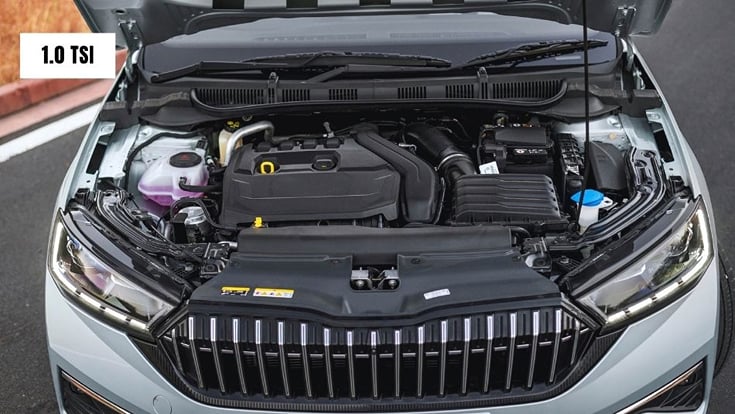
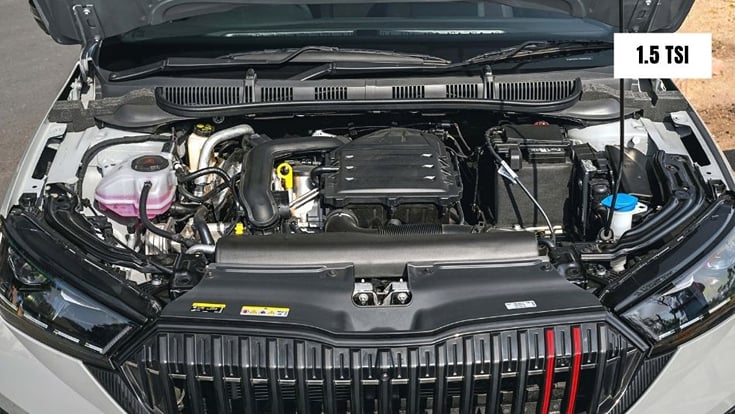
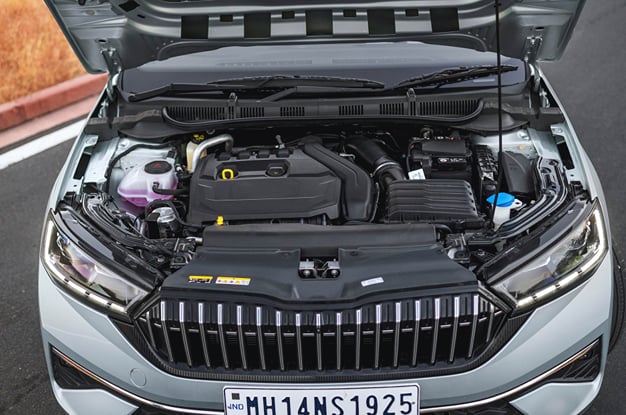
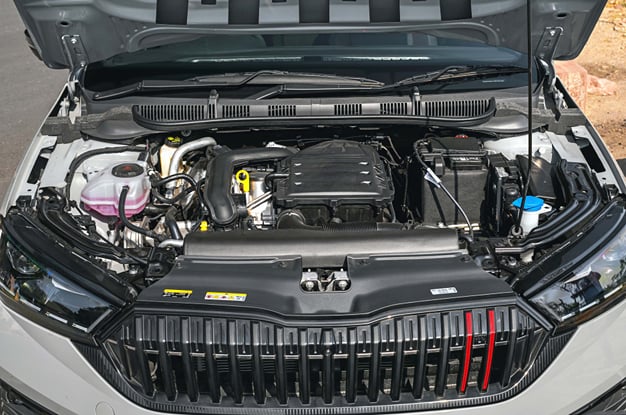
Skoda Slavia 1.0-litre TSI engine (left), 1.5-litre TSI engine (right)
The Slavia retains the same engine options as earlier, so you have a choice between two direct-injection turbo petrols. There’s a 1.0-litre, three-cylinder unit that puts out 115hp and 178Nm and a 1.5-litre, four-cylinder mill that produces 150hp and 250Nm.
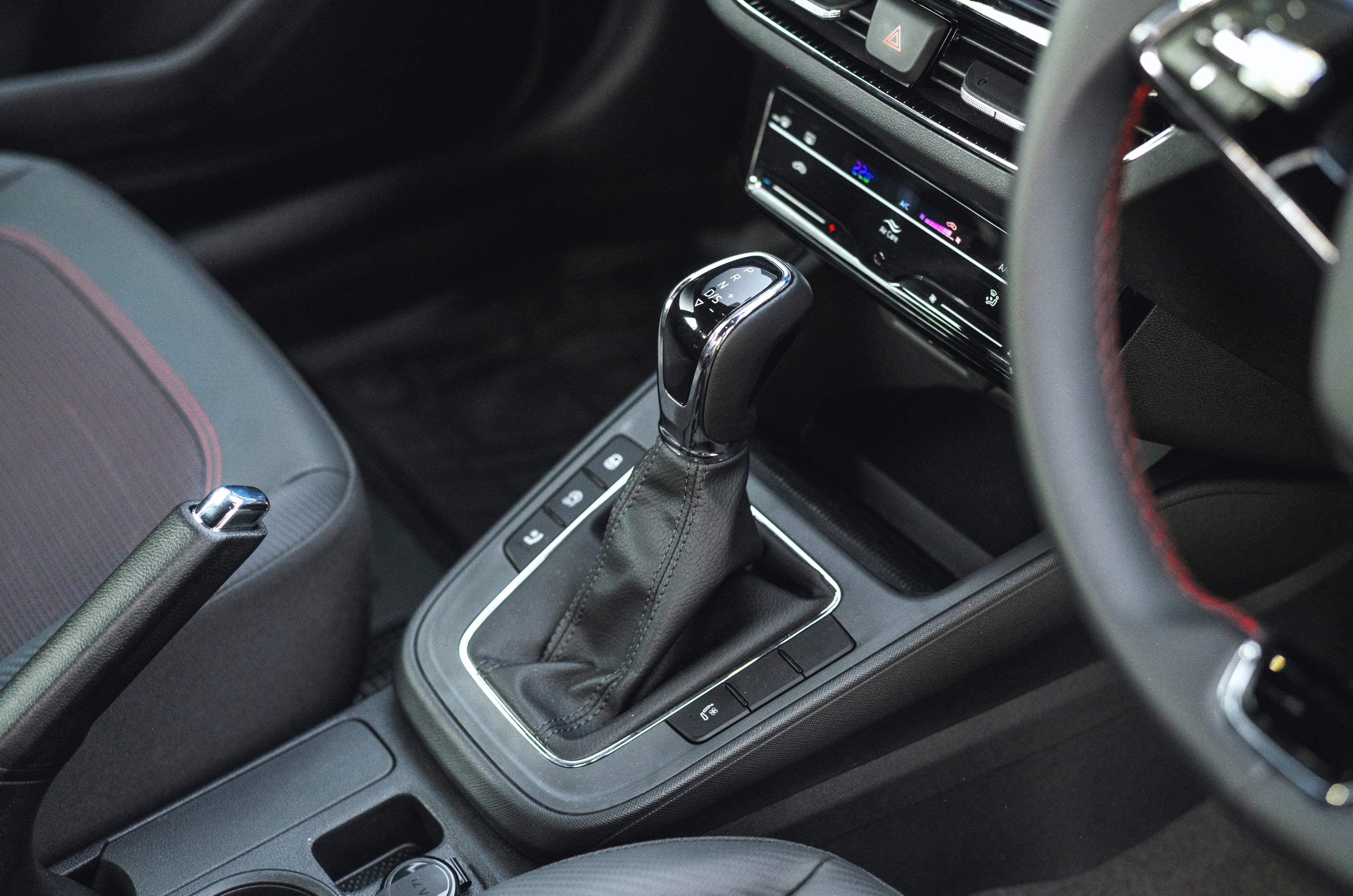
The 1.5 TSI can only be had with a 7-speed dual clutch automatic and enthusiasts will miss the option of a 6-speed manual with this engine, which was on offer earlier. The 1.0 TSI does get a 6-speed manual option, but the gearbox of major interest with this engine is the new 8-speed torque converter automatic. It’s the Aisin-sourced AQ300, replacing the earlier AQ250 6-speed unit, and this helps lower emissions and fuel consumption.
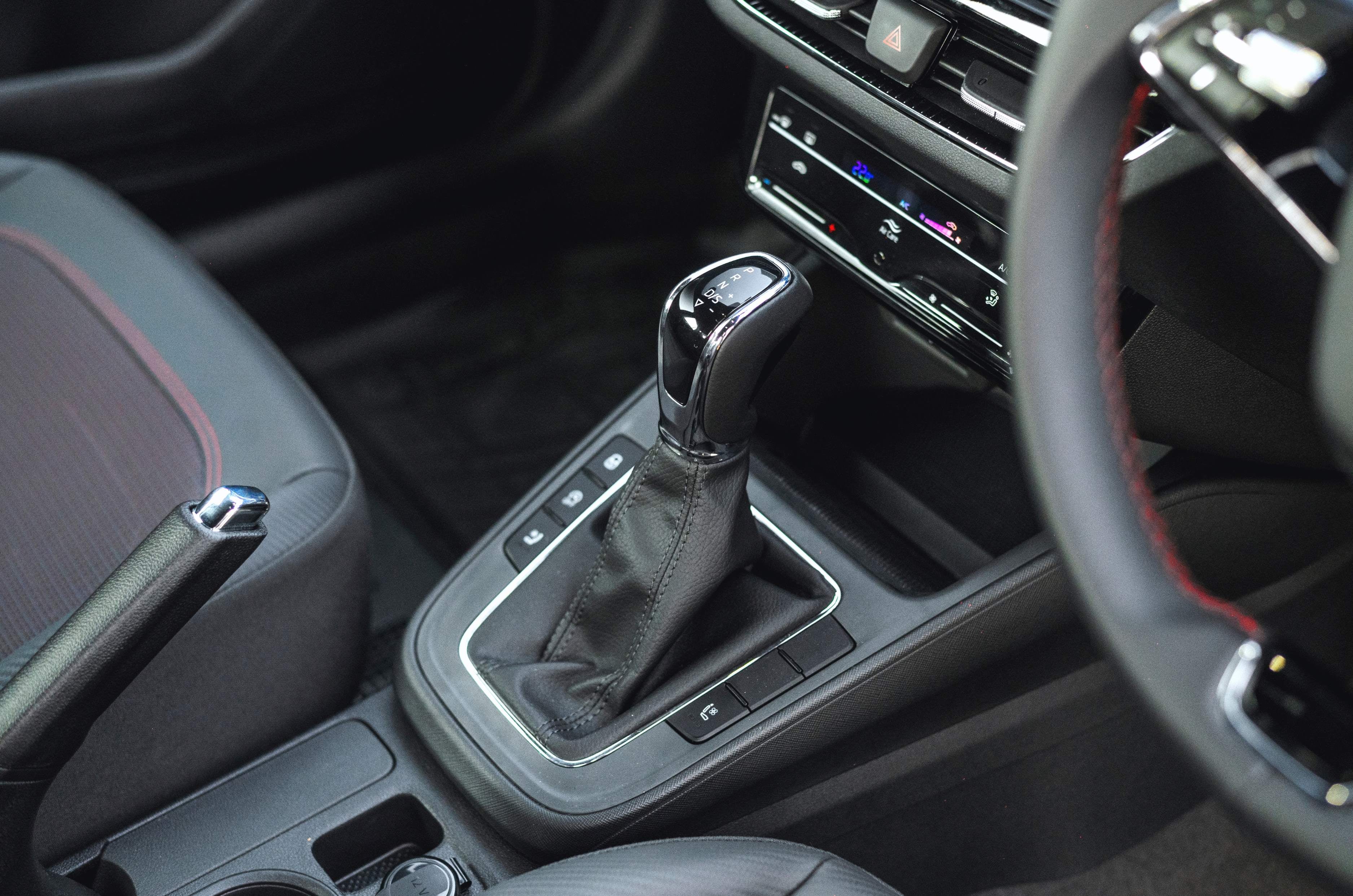
The new gearbox brings a welcome improvement to the Slavia’s low-speed manners. While the previous car had a tendency to leap forward from a standstill, this one now feels much more controlled than before. Once on the move, shifts are smooth and seamless, as you’d expect from a torque-converter automatic. What’s particularly impressive, though, is the speed of the manual shifts, whether you use the paddles or the Tiptronic gear lever. In manual mode, the gearbox also allows the engine to rev close to its limit before shifting up which makes the Slavia 1.0 TSI engaging to drive. The only real gripe with the gearbox is that all the ratios feel rather short. Third tops out at just over 100kph, while at 100kph in 8th, the engine is spinning at a little over 2,000rpm, which is higher than you’d expect given the number of ratios it has to play with.
Although we didn’t get a chance to time it, expect it to complete the 0-100kph sprint in around 11sec, similar to the 6-speed AT’s 11.16sec time. At idle, there is some of that familiar vibrations of a three-cylinder engine. It settles when you drive gently, but push beyond 3000rpm and the gravelly note makes itself heard inside. For the smaller and less powerful petrol engine, refinement could have been better, and more insulation would have helped too.
The 1.5-litre four-cylinder TSI continues unchanged and remains the stronger, more effortless performer of the two. Acceleration is brisk and flat-out performance is strong, while shifts via the paddles are, as expected, quick. The pre-facelift Slavia 1.5 TSI DSG managed 0-100kph in 8.96sec in our tests, and performance with the updated car should remain in the same ballpark.
Between the two engines, the 1.5 TSI is the one that feels more complete, not just because of its stronger performance but also because it is smoother and benefits from cylinder-deactivation technology. Under light engine loads, two of its four cylinders shut down to save fuel, and the transition is seamless as well. However like the 1.0, the 1.5-litre also becomes quite audible when worked hard and some road noise from coarse surfaces also make its way into the cabin.
Skoda Slavia facelift fuel efficiency – 7/10
Our brief test drive meant we didn’t get a chance to test the fuel efficiency of the Slavia facelift, however we have tested the Kushaq facelift which is mechanically identical. In our real-world fuel efficiency tests, the Kushaq 1.0 TSI AT averaged better than the 1.5 TSI DSG by 0.48kpl. In the city, the 1.0 TSI (10.7kpl) was more efficient than the 1.5 TSI (9.55kpl) by 1.15kpl, thanks to the 1.0’s lighter kerb weight and aggressive start/stop system. In contrast, the 1.5’s twin-cylinder deactivation tech helped it be more efficient on the highway (15.29kpl) than the 1.0 (15.10kpl) by 0.19kpl. However, we’re yet to test the 1.0 MT’s fuel efficiency.
Skoda Slavia facelift ride comfort and handling – 8/10
Ride and handling are areas where the Slavia continues to impress. Despite its generous 179mm ground clearance, the handling doesn’t feel compromised. Body roll is well controlled, while the car remains composed and predictable when you go around corners. The steering is on the lighter side but picks up weight progressively as speeds rise.
There is that typical low-speed firmness in the ride quality that you’d normally associate with European cars. But it never feels overly stiff and instead gives it tremendous stability at highway speeds. The suspension also deals with broken surfaces and undulations with maturity, absorbing sharper imperfections without becoming unsettled. It is this combination of an agile chassis, well-controlled body movements and mature ride quality that makes the Slavia enjoyable to drive.
The Slavia’s braking performance remains strong and reassuring but the 1.5 TSI has now gained rear disc brakes. During our test drive, we didn’t find a noticeable difference to the earlier drum brake setup. The 1.0 TSI meanwhile, continues with the same setup as before.
Skoda Slavia facelift value for money and verdict – 8/10
Prices for the Skoda Slavia facelift are set to be announced in the coming days, but expect it to cost a bit more than the Rs 10 lakh to 18.20 lakh (ex-showroom) the pre-facelift model demanded. What’s nice though is that the new 8-speed AT can be had right from the second-to-base Classic+ trim. As before, it continues to go up against the likes of the Hyundai Verna, Honda City and its Volkswagen sibling, the Virtus.
With this facelift, Skoda has enhanced the Slavia further with a sleeker design that looks timeless, important comfort and safety feature additions and relevant technical updates. Some shortcomings remain, like the slightly firm low speed ride, the absence of a manual gearbox with the more potent engine and it does miss a couple of features compared to rivals. But then whatever features have been added have enriched the experience, like the rear seat massage, the new AC compressor and the 360-degree camera. And as before, it remains very enjoyable to drive thanks to the punchy engines, the sorted handling and the mature high speed manners.
The Slavia facelift then, stands out as one of the most complete and well-rounded sedans around, with a great blend of comfort, practicality, features and driving pleasure.
Noida suicide case: राजधानी दिल्ली से सटे उत्तर प्रदेश के नोएडा में स्थित सुपरनोवा बिल्डिंग के एक अपार्टमेंट की बालकनी से शनिवार (3 अक्टूबर) को एक युवक ने कूदकर अपनी जान दे दी। सेक्टर 94 में स्थित सुपरनोवा बिल्डिंग की 43वीं मंजिल से कूदने से ठीक पहले 28 साल के युवक ने कथित तौर पर AC रिपेयर करने वाले कर्मचारियों की एक टीम से कहा कि वह डिप्रेशन में है। मृतक की पहचान गुरुग्राम के मानेसर में IMT व्यू CGHS के टॉवर A के रहने वाले विनय कुमार जैन के बेटे संभव जैन के तौर पर हुई है। गौतम बुद्ध नगर पुलिस कमिश्नरेट के अनुसार, जैन एक दिन के लिए सेक्टर 94 की स्पायर बिल्डिंग में अकेले आए थे।
यह घटना शनिवार सुबह सेक्टर 126 पुलिस स्टेशन के इलाके में हुई। पुलिस के अनुसार, जैन बालकनी की रेलिंग से लटके हुए थे। तभी पास के फ्लैट में काम कर रहे AC रिपेयर करने वाले कर्मचारियों की टीम ने उन्हें देखा। बताया जा रहा है कि कर्मचारियों ने उनसे बात करने और उन्हें रेलिंग से पीछे हटने के लिए मनाने की कोशिश की। ‘टाइम्स ऑफ इंडिया’ की रिपोर्ट के अनुसार, बातचीत के दौरान जैन ने उनसे कहा, “मैं डिप्रेशन में हूं।” इसके बाद वह बालकनी से कूद गया, जिससे मौके पर ही उसकी मौत हो गई।
घटना का एक वीडियो भी ऑनलाइन सामने आया है। फुटेज में जैन को बालकनी की रेलिंग से लटके हुए देखा जा सकता है। कुछ ही पल बाद वह बिल्डिंग से नीचे गिर जाते हैं। इस दौरान मौके पर कुछ लोग मौजूद थे। आत्महत्या से पहले युवक ने उनसे कहा, “नहीं गिर रहा सर…” और फिर अचानक उसने छलांग लगा दी। AC मैकेनिकों ने बचाने की पूरी कोशिश की। लेकिन वह सफल नहीं हो सके। घटना केयरटेकर के कैमरे में कैद हो गई।
पुलिस ने शुरू की जांच
पुलिस फिलहाल मामले की जांच कर रही है। घटना की जानकारी मिलने के बाद, सेक्टर 126 की पुलिस टीम मौके पर पहुंची और जानकारी जुटाई। पुलिस ने बताया कि कानूनी कार्रवाई पूरी हो चुकी है और पोस्टमार्टम की प्रक्रिया चल रही है। पुलिस अधिकारियों और फोरेंसिक साइंस लेबोरेटरी की टीम ने घटनास्थल का निरीक्षण किया और सबूत इकट्ठा किए। जांच के हिस्से के तौर पर बिल्डिंग और आसपास के इलाकों के CCTV फुटेज की भी जांच की जा रही है।
वीडियो वायरल हुआ
घटना का एक वीडियो सोशल मीडिया पर भी सामने आया है। फुटेज में जैन बालकनी की रेलिंग से लटके हुए दिख रहे हैं और नीचे से लोगों की प्रतिक्रियाएं सुनी जा सकती हैं। कुछ ही पल बाद वह बिल्डिंग से नीचे गिर जाते हैं। तब से यह वीडियो ऑनलाइन काफी शेयर किया जा रहा है।
पुलिस ने बताया कि उन्होंने घटना के समय बिल्डिंग के पास मौजूद लोगों से पूछताछ की। पूछताछ के दौरान जांचकर्ताओं को पता चला कि जैन मानसिक तनाव में थे। उनके परिवार को घटना की जानकारी दे दी गई है। पुलिस ने कहा कि मामले के सभी पहलुओं की जांच की जा रही है और नियमों के अनुसार आगे की कानूनी कार्रवाई की जाएगी।
नोएडा सुपरनोवा 43वीं मंजिल से कूदा युवक। आत्महत्या से पहले युवक ने कहा- “नहीं गिर रहा सर…” और फिर अचानक छलांग लगा दी।
बेंगलुरु का नाम आते ही अक्सर ट्रैफिक जाम, महंगे किराए, खराब इंफ्रास्ट्रक्चर और लंबे सफर की बातें होने लगती हैं। लेकिन करीब डेढ़ साल से कर्नाटक की राजधानी में रह रहे चेन्नई के एक शख्स ने शहर की ऐसी तस्वीर सामने रखी है, जिसे अक्सर चर्चाओं में जगह नहीं मिलती। उन्होंने रोजमर्रा की जिंदगी से जुड़ी कई छोटी-छोटी चीजें गिनाईं, जिन्होंने उन्हें बेंगलुरु का मुरीद बना दिया।
ट्रैफिक और समस्याओं के बीच दिखीं शहर की अच्छी बातें
Reddit पर एक पोस्ट के जरिए इस शख्स ने लिखा कि बेंगलुरु को लेकर लोगों की कई शिकायतें जायज हैं, लेकिन शहर में ऐसी कई सुविधाएं भी हैं जिनकी लोग अक्सर अनदेखी कर देते हैं।
अपने पोस्ट में उन्होंने बेंगलुरु की तुलना चेन्नई से करते हुए बताया कि शहर की कुछ सामान्य-सी लगने वाली चीजें उनकी रोजमर्रा की जिंदगी को काफी आसान और बेहतर बनाती हैं।
मोहल्लों के छोटे पार्क बने पसंदीदा ठिकाने
बेंगलुरु के बड़े और मशहूर पार्कों की चर्चा तो खूब होती है, लेकिन इस चेन्नई निवासी को शहर के छोटे BBMP पार्क खास तौर पर पसंद आए।
उन्होंने बताया कि रिहायशी इलाकों के बीच बने इन छोटे पार्कों में पेड़, हरियाली और बैठने की जगह होती है। उनके लिए ये सिर्फ घूमने की जगह नहीं, बल्कि रोज की जिंदगी का हिस्सा बन चुके हैं।
₹80 का खाना याद आया तो पुरानी यादें ताजा हो गईं
बेंगलुरु की Darshini और Udupi फूड कल्चर भी उन्हें काफी पसंद है। खासतौर पर कम कीमत में साफ-सुथरा शाकाहारी खाना मिलने की सुविधा ने उनका ध्यान खींचा।
उन्होंने अपने इंटर्नशिप के दिनों को याद करते हुए बताया कि उस समय महज ₹80 में मिलने वाला Udupi मील उनके लिए काफी मददगार साबित होता था। उनके मुताबिक, कम बजट में पेट भरने के लिए ऐसे विकल्प किसी राहत से कम नहीं थे।
Weekend Trip के लिए बेंगलुरु की लोकेशन शानदार
शहर की भौगोलिक स्थिति भी उन्हें पसंद आई। उन्होंने कहा कि बेंगलुरु से तमिलनाडु, केरल, आंध्र प्रदेश और गोवा की ओर जाना आसान है।
खास तौर पर KSRTC बस कनेक्टिविटी को उन्होंने बेहद उपयोगी बताया। उनके मुताबिक, शहर में रहने वालों के लिए आसपास के राज्यों तक पहुंचने के कई सुविधाजनक विकल्प मौजूद हैं।
₹30 की बस राइड ने खींचा ध्यान
उनकी सबसे दिलचस्प बातों में से एक बेंगलुरु की बस सेवा को लेकर थी। उन्होंने 500-सीरीज बसों का जिक्र करते हुए बताया कि Outer Ring Road की ओर जाने के लिए उन्हें अक्सर AC बस मिल जाती है। जहां उनके कुछ साथी कैब या बाइक टैक्सी का सहारा लेते हैं, वहीं वह करीब ₹30 में बस से ऑफिस पहुंच जाते हैं। उनके मुताबिक, इसमें surge pricing जैसी परेशानी भी नहीं होती।
IT और पब्स से आगे भी है Bengaluru
चेन्नई के इस शख्स ने शहर के मंदिरों और पारंपरिक बाजारों का भी जिक्र किया। उनका कहना था कि बेंगलुरु को अक्सर IT कंपनियों, कैफे और पब्स के लिए जाना जाता है, लेकिन शहर का एक पारंपरिक और सांस्कृतिक पक्ष भी है। उनकी पोस्ट का मकसद भी इसी दूसरे पहलू को सामने लाना था। उन्होंने लोगों से शहर की समस्याओं के साथ-साथ उसकी अच्छी चीजों पर भी ध्यान देने की अपील की।
Reddit पर लोगों ने भी की तारीफ
पोस्ट सामने आने के बाद कई Reddit यूजर्स ने इस सकारात्मक नजरिए की सराहना की। एक यूजर ने इसे बेंगलुरु की तारीफ से जुड़ी दुर्लभ पोस्ट बताया। कुछ लोगों ने शहर के मौसम और शाम की सैर का जिक्र किया, जबकि दूसरे यूजर्स ने KSRTC की कनेक्टिविटी को लेकर सहमति जताई। एक यूजर ने तो यहां तक कहा कि यही वह बेंगलुरु है, जिसे वह भी पसंद करता है। कुल मिलाकर, यह पोस्ट बेंगलुरु की उन छोटी-छोटी खूबियों पर रोशनी डालती है, जो बड़े ट्रैफिक जाम और महंगे किराए जैसी चर्चाओं के बीच अक्सर नजरों से ओझल हो जाती हैं।
Only recently, I made the sweeping and somewhat heavy-handed statement that EVs have taken the excitement out of speed. That once you’ve done one ballistic acceleration run in an EV, you’ve done them all, and without a roaring engine, vibrations pulsating through the wheel and gearshifts jolting you in the small of your back, it all feels a bit sanitised. Well, as it turns out, all an EV needs to solve this conundrum is… even more power.
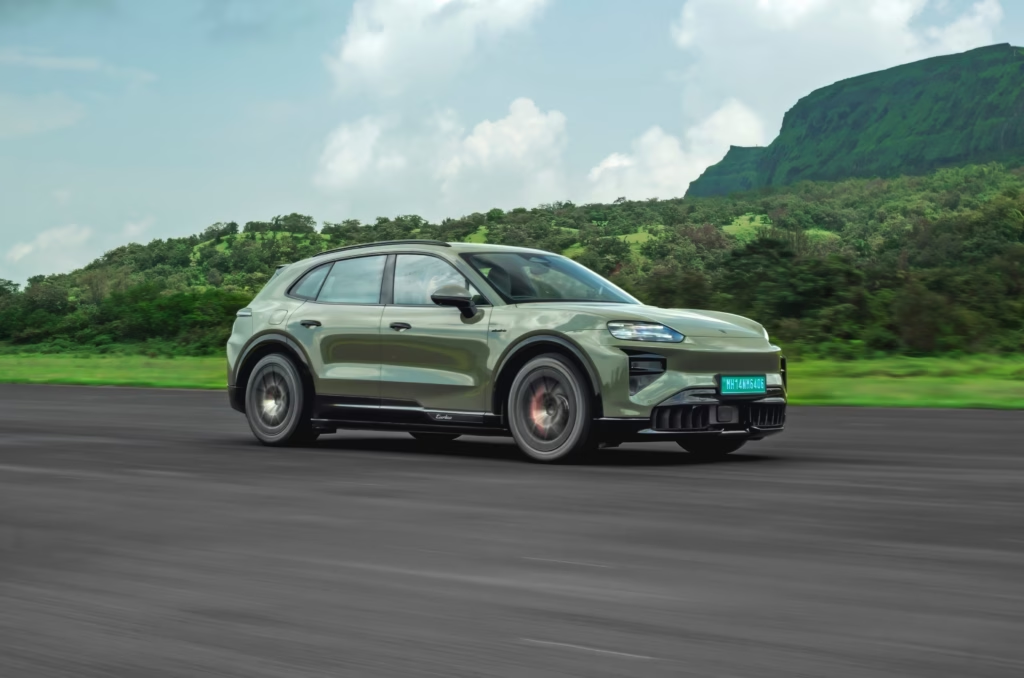
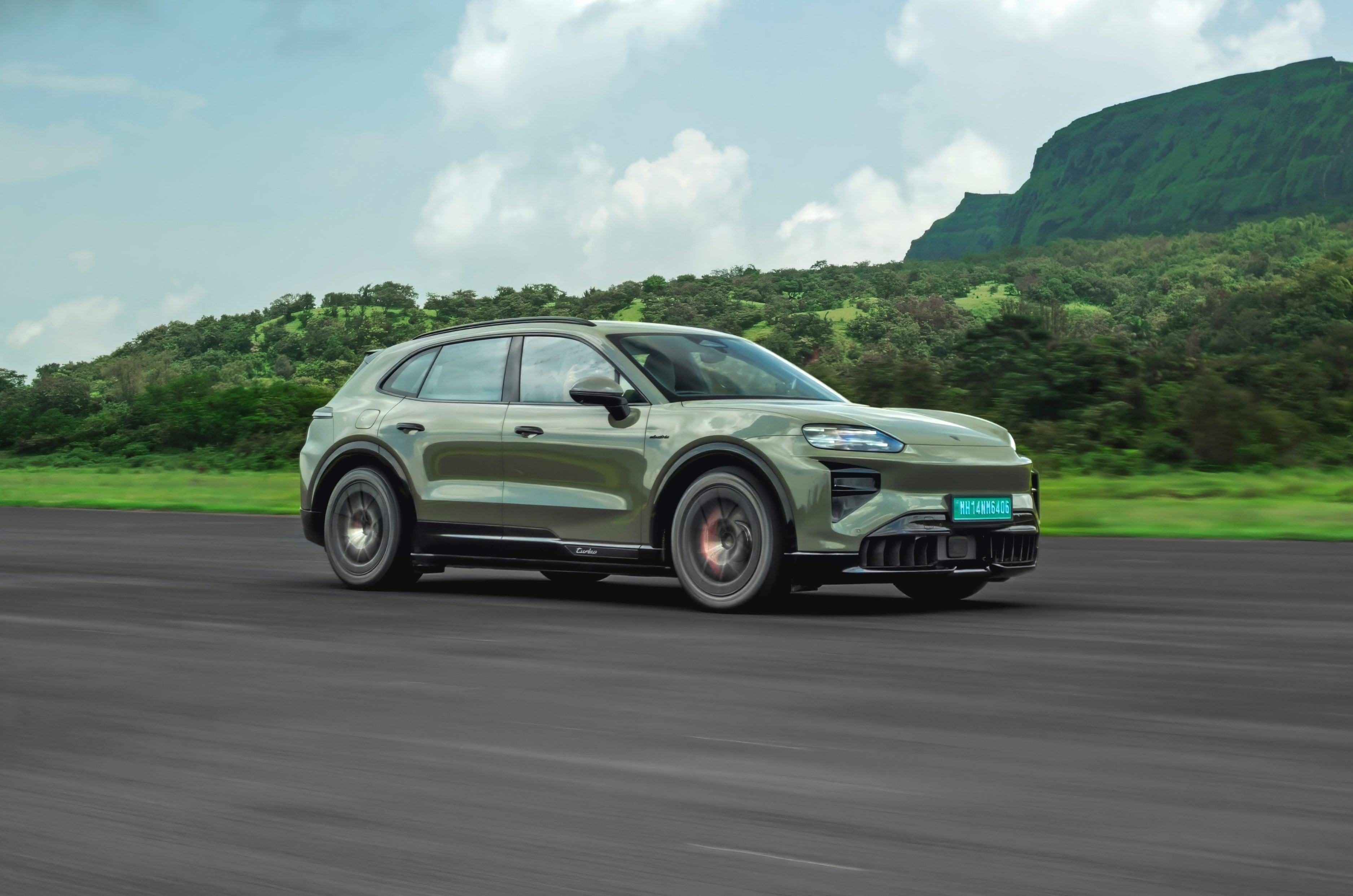
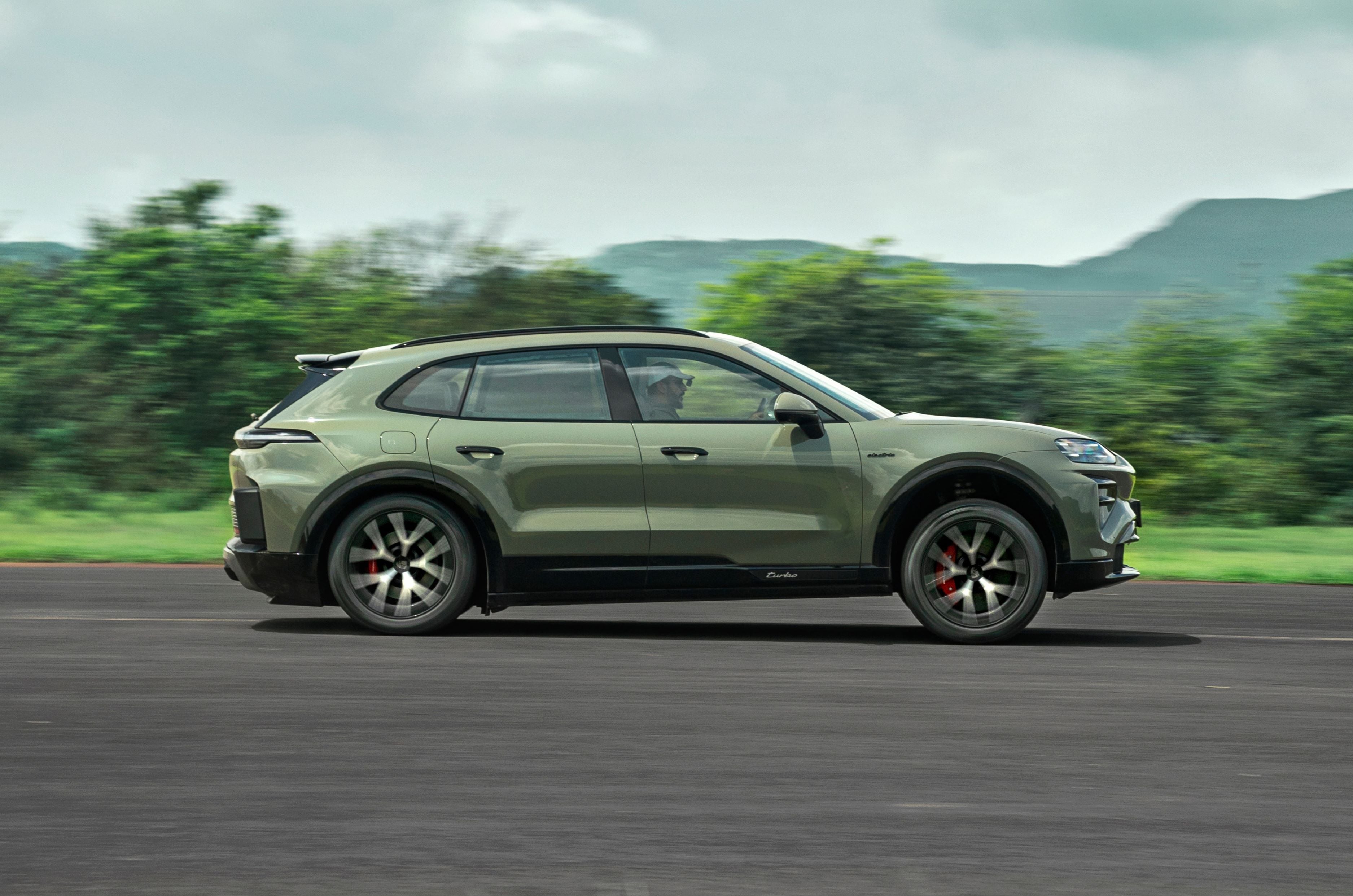
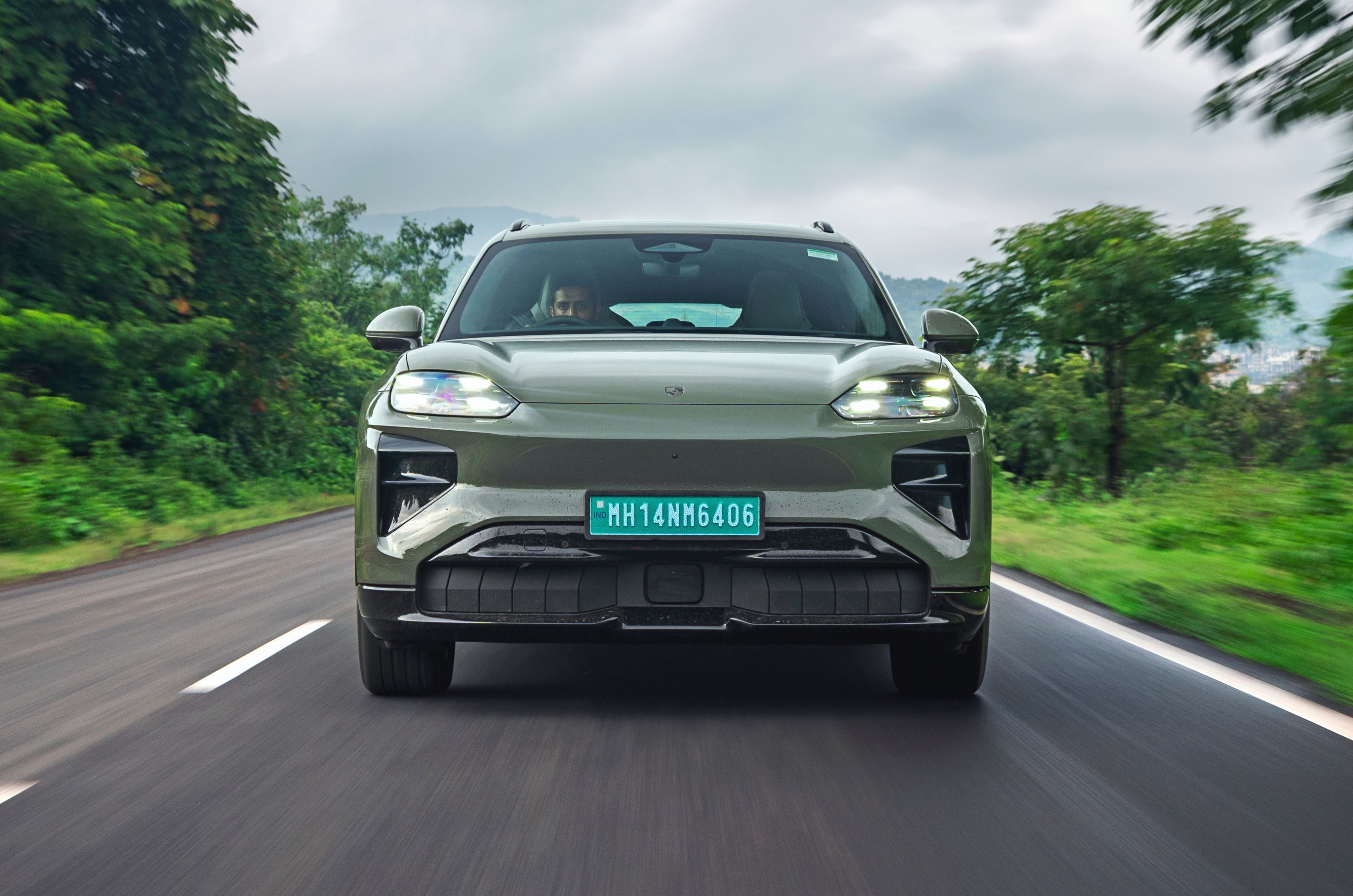
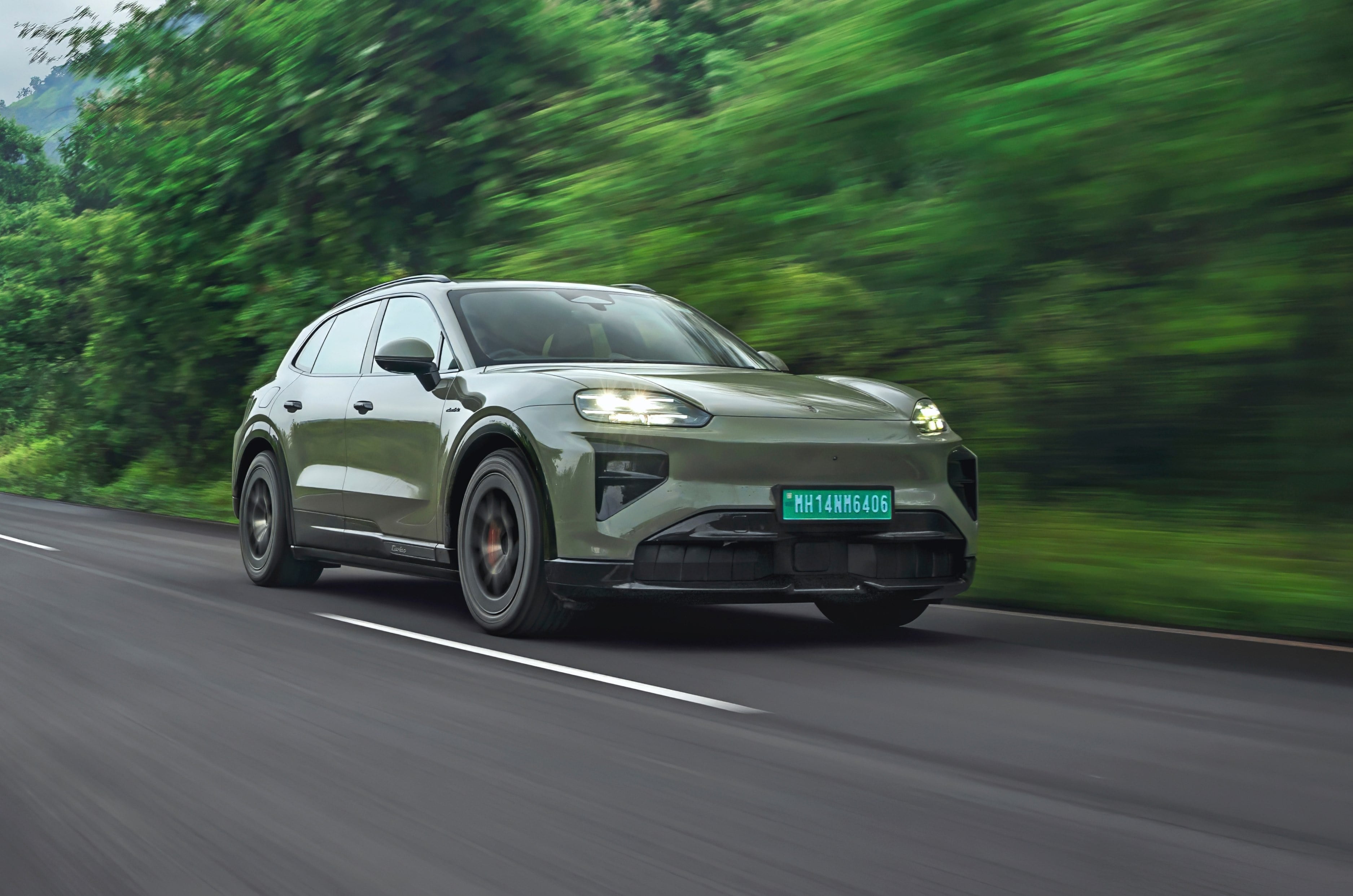
Remember when 1,000 horsepower was the sort of million-dollar pipe dream that we thought we’d only ever see on bedroom posters or YouTube videos? Well, it’s not that insane a proposition anymore, and in fact, three cars on sale in India have crossed the fabled 1,000hp mark. Two are ultra-exotic supercars that cost north of Rs 10 crore – the 1,015hp Lamborghini Revuelto and 1,050hp Ferrari Testarossa. And the third is this, the 1,156hp Porsche Cayenne Turbo Electric – a full Maruti Brezza more powerful than those Italian supercars – and yours for a fraction of the price, at Rs 2.28 crore.
That’s not a lot of money for what is the most powerful car ever to go on sale in India, and that raises a somewhat existential question. Have they gone too far?
2026 Porsche Cayenne Turbo Performance – 10/10
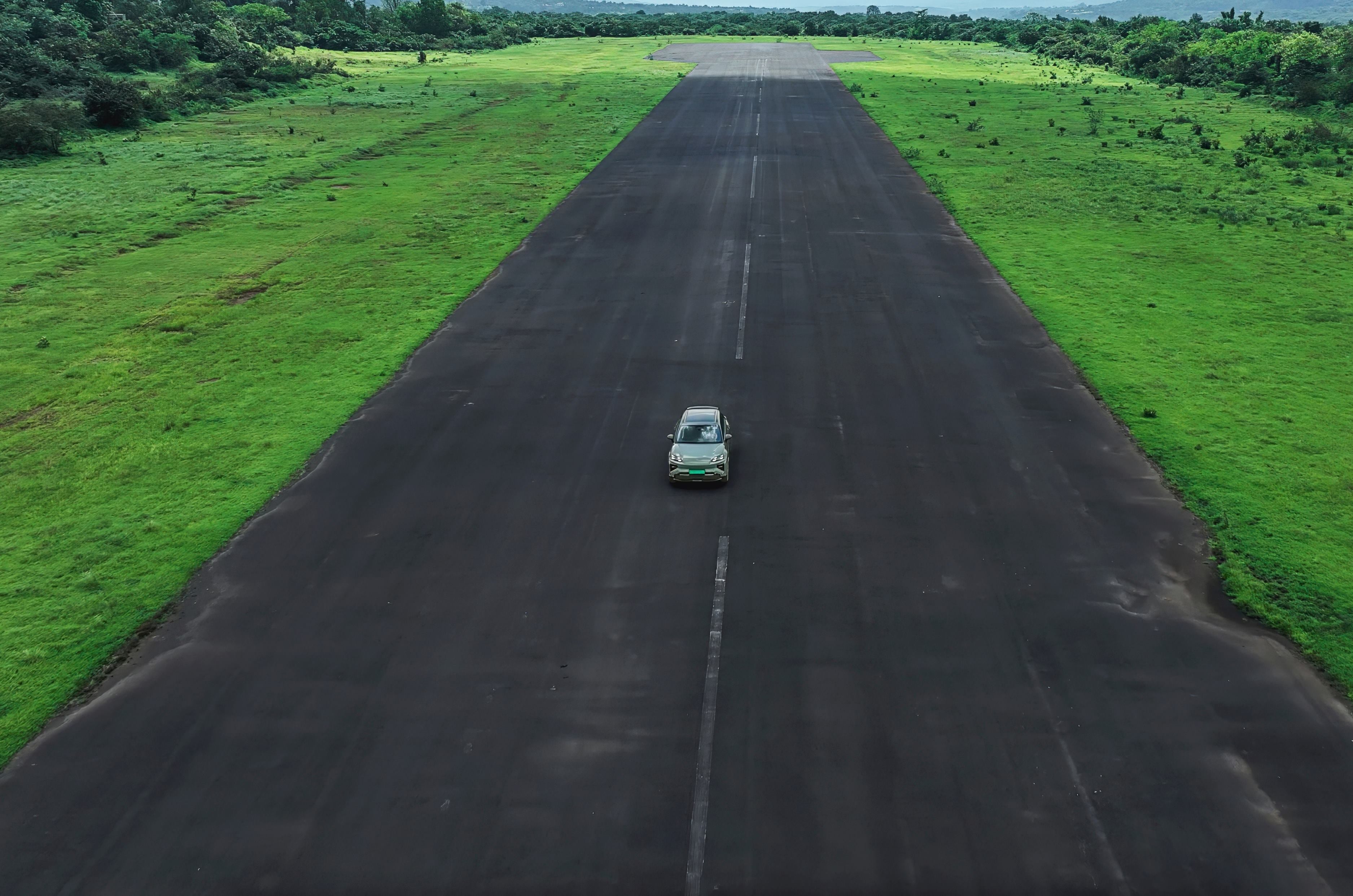
I have the Aamby Valley airstrip rolled out like a red carpet in front of me, perhaps the only place other than a race track where unlocking this hyper-SUV’s full accelerative potential is possible, and I’m about to let it rip. The process is familiar and simple enough. Twist the mode dial to Sport Plus, hold the brake with your left foot and mash the accelerator until it says ‘Launch Control Activated’. Up until this point, it’s nowhere near as dramatic as something with a four-digit power output has any right to be. The electronic sound it makes to signify all the power swelling up is gentle, and it doesn’t even give you any feedback through the pedals. Things are disconcertingly calm for what’s about to happen. I let go of the brake.
The nose lurches upwards and points to the sky like a fighter jet leaving an aircraft carrier, as the huge SUV squats onto its rear axle. It’s in this gut-twisting moment that I realise Porsche India hasn’t specified the Active Ride Control option on this car, which I’m told suppresses this issue by force-tilting the car forward, Power deployment is brutally efficient initially, with barely a chirp from the tyres and not a single of those 1,500 newton metres wasted off the line. But then I notice the nose start to go light and weave from left to right. I steady the wheel as the speed continues to build. With no engine weighing down the front axle and so much rearward lean, there is a frightening lack of traction from the front wheels at speed.
Never before has launching a car attacked so many sections of my body. It’s usually just the abdomen; a really fast car will wind you. Right now, my neck is straining as the head restraint is too far back, my cheeks are starting to ache like I’ve been pretending to find someone’s jokes funny for an hour, there’s a weird pressure coursing through my arms and legs, and my eyes are starting to water as they dart around in their sockets, not knowing what to focus on. Oh, and I’ve been winded well and good.
I’ve launched dozens of really, really fast cars down this very runway, but I don’t recall the scenery ever passing by so quickly. I can’t get a frame of reference so I glance down at the speedo. Two hundred and a blurry something; that’s way more than I expected to see and it’s climbing too fast. This doesn’t compute; it’s usually at this speed that I think about braking. But we aren’t even at the halfway mark yet; how? Brave face on, I keep my foot in. 230, 250, 27- wait, the brochure said it maxes out at 260. It lied. Then suddenly the braking point flashes by and I jump onto the wide pedal. All those forces reverse their polarity as the big Cayenne squirms down to a halt, still well clear of the end of the runway. Let’s do it again!
2026 Porsche Cayenne Turbo: Real-world acceleration test
Speed
Time (in seconds)
20kph
0.45
40kph
0.94
60kph
1.45
80kph
1.96
100kph
2.52
120kph
3.18
140kph
4.01
160kph
4.96
180kph
6.12
200kph
7.47
220kph
9.06
240kph
10.92
260kph
13.20
And it will do it again, and again, and again. Because if there’s one thing we’ve learnt about Porsches over the years, it’s that they’re engineered to perform repeatedly and consistently. The dual-motor Turbo has been certified to deliver a 2.5sec 0-100kph time; our VBOX confirmed the same several times over. But eventually, as the battery SOC dipped below 75 percent, the times started to go up, a tenth of a second at a time.
The biggest victim of the repeated runs, however, were the brakes – even for mammoth 420mm discs, arresting 2.7 tonnes is no joke, and soon their squeal was louder than their bite. I don’t usually advocate for carbon ceramic brakes on SUVs, but perhaps this is the one time Porsche India should have shelled out for the Rs 13.5 lakh option.
2026 Porsche Cayenne Turbo: Real-world braking test
80-0kph distance
23.47 metres
80-0kph time
2.08 seconds
2026 Porsche Cayenne Turbo ride comfort and handling – 8/10
However, by the twenty-seventh-or-so sprint down the runway, the car seldom missing a beat and the excitement never waning, my body decided it had taken enough of a beating. From longitudinal g-forces, at least; the lateral attack was yet to come. So we waved goodbye to the gentleman in the tower, who’s probably used to seeing much slower-moving traffic on the runway, and made our way back to reality via the twisting roads leading down to Lonavala.
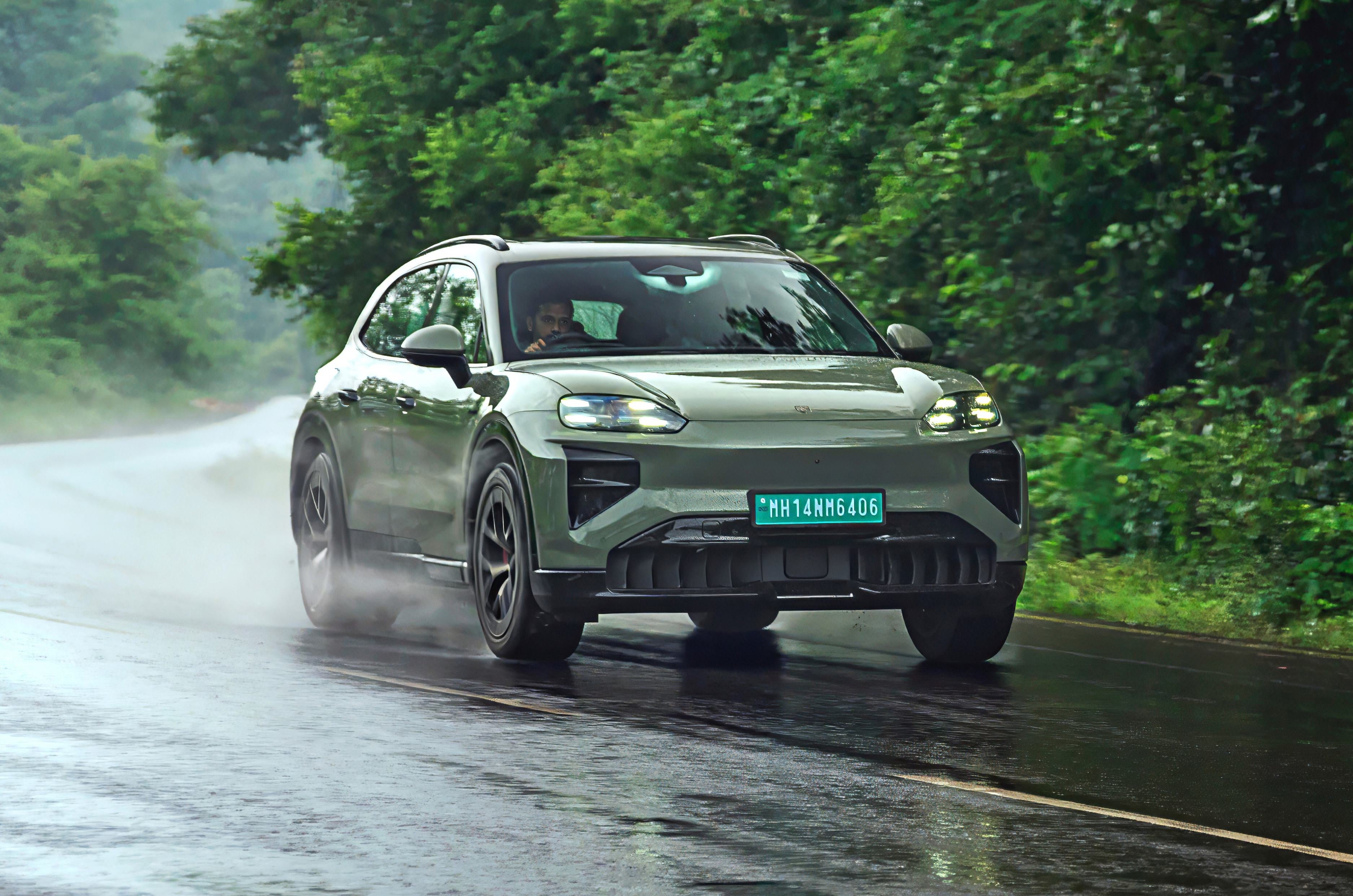
It’s been a few years since I’ve come to our old stomping ground of Tiger Point and its surrounding twisties, and I can’t think of a nicer car to reacquaint myself with my favourite corners in. Muscle memory kicks in as I enter the first, fast right-hander. I lean in instinctively, but then the car starts to lean too; unexpected. It does the same on the next left, and right, and once again I start to wish they specified that Active Ride Control option. Porsche engineers are usually among the best at taming big mass, but perhaps they’ve finally met their match.
On its standard air springs and adaptive dampers, the Cayenne Turbo displays a disappointing amount of body roll, exacerbated only by the enthusiasm from the motors that begging you to push it harder. The steering too is encouraging, what with the small-diameter wheel and the fact it’s as sharp and direct as you expect. Here, too, I will say that rear-axle steering would have added a welcome extra degree of agility, but once again, Porsche India hasn’t ticked the option. It can still link together a series of corners with greater alacrity than most other big SUVs, but for the first time in recent memory, I’m not feeling that distinct Porsche magic at my fingertips.
Through the narrow and bustling streets of Lonavala, I’m starting to explore the other end of this SUV’s capability spectrum. And that’s just the beauty of EVs, isn’t it? One minute you’re clocking 0-200kph in 7.4 seconds, the next you’re ambling silently through a school zone. Like the best of them, it’s refined, smooth and incredibly easy to modulate, and you could be forgiven for forgetting there’s 857hp at your behest (the full 1,156 only comes with launch control). One spec deficiency I’m glad for right now, however, is the choice of more sensible 21-inch wheels rather than the optional 22s. They don’t look as nice, but they’re soaking up the harsh hits from the rutted road beneath me.
2026 Porsche Cayenne Turbo range, battery and charging – 7/10
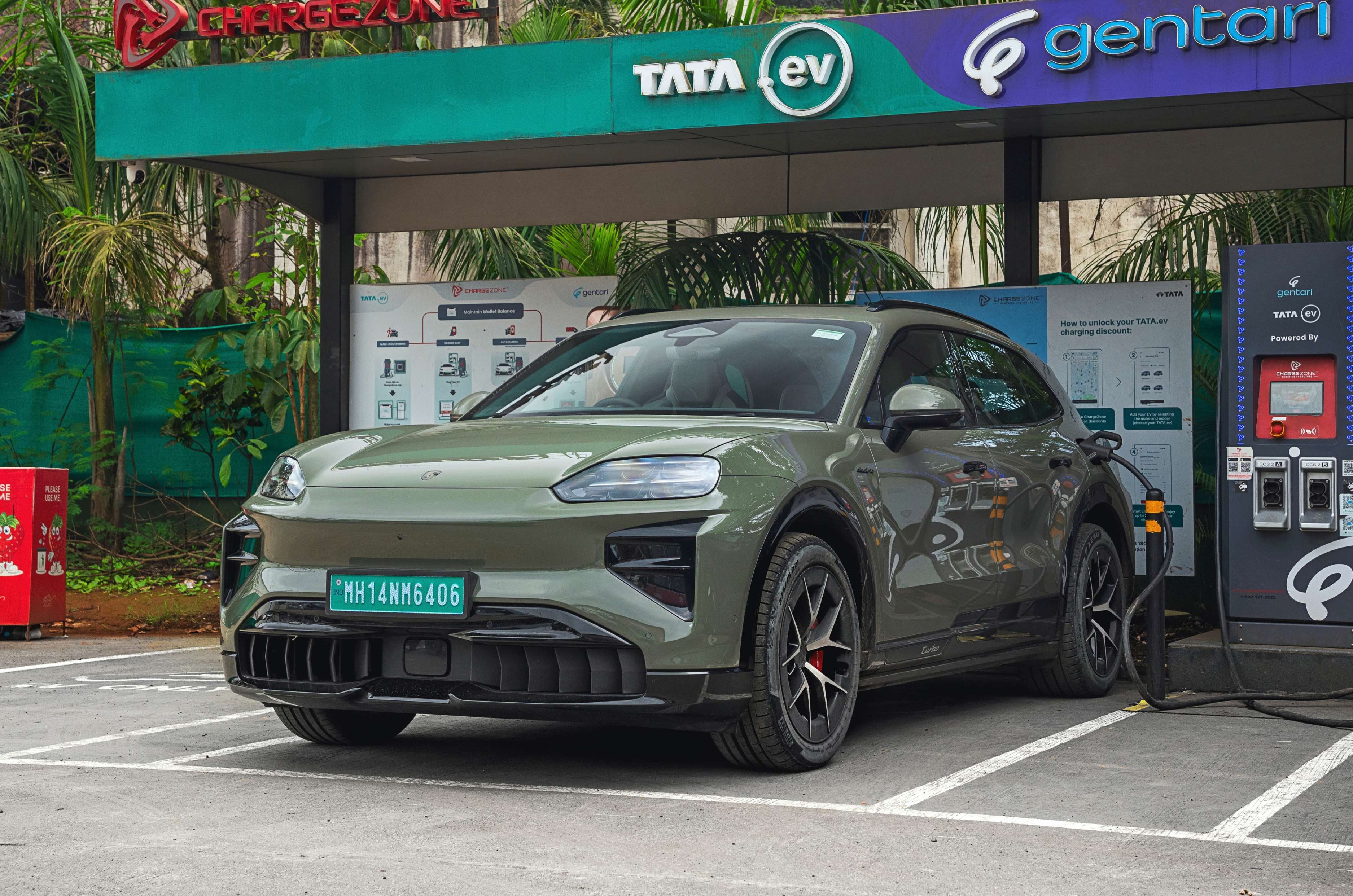
Between racing repeatedly down the runway and then trying to extract that Porsche spice in my favourite corners, I’ve reached Lonavala city with around 20 percent left in the 113kWh tank- er, pack? The Cayenne Turbo is rated at 623 kilometres on the WLTP cycle, so the ‘real’ real-world range should be far more palatable than this; to obliterate such a large chunk in such a short time requires the prolonged buffoonery I just subjected it to. Probably best to find a place to plug in soon, and grab some lunch while I’m at it. On a mythical 400kW plug, the Cayenne can be charged from 10-80 percent in just 16 minutes, but on a rainy Wednesday at a hill station, the best we can do is 60kW, so it’ll take much longer.
Today is a study in why India is far from ready for full EV adoption. Apart from ICE cars parked in charging spaces, malfunctioning plugs, unfathomable apps and an absent mobile network, we were also waylaid by two power cuts.
2026 Porsche Cayenne Turbo features and safety – 9/10
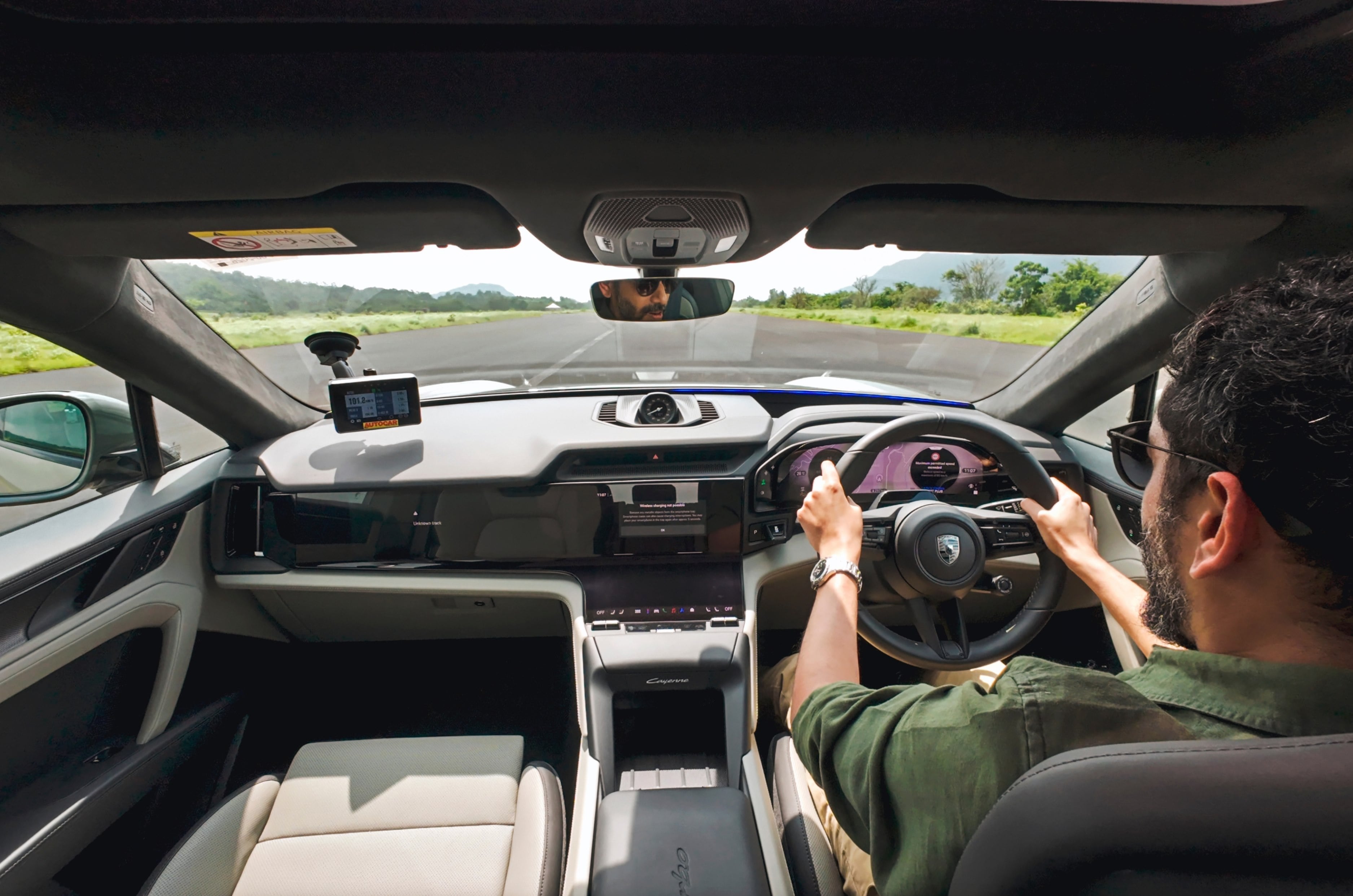
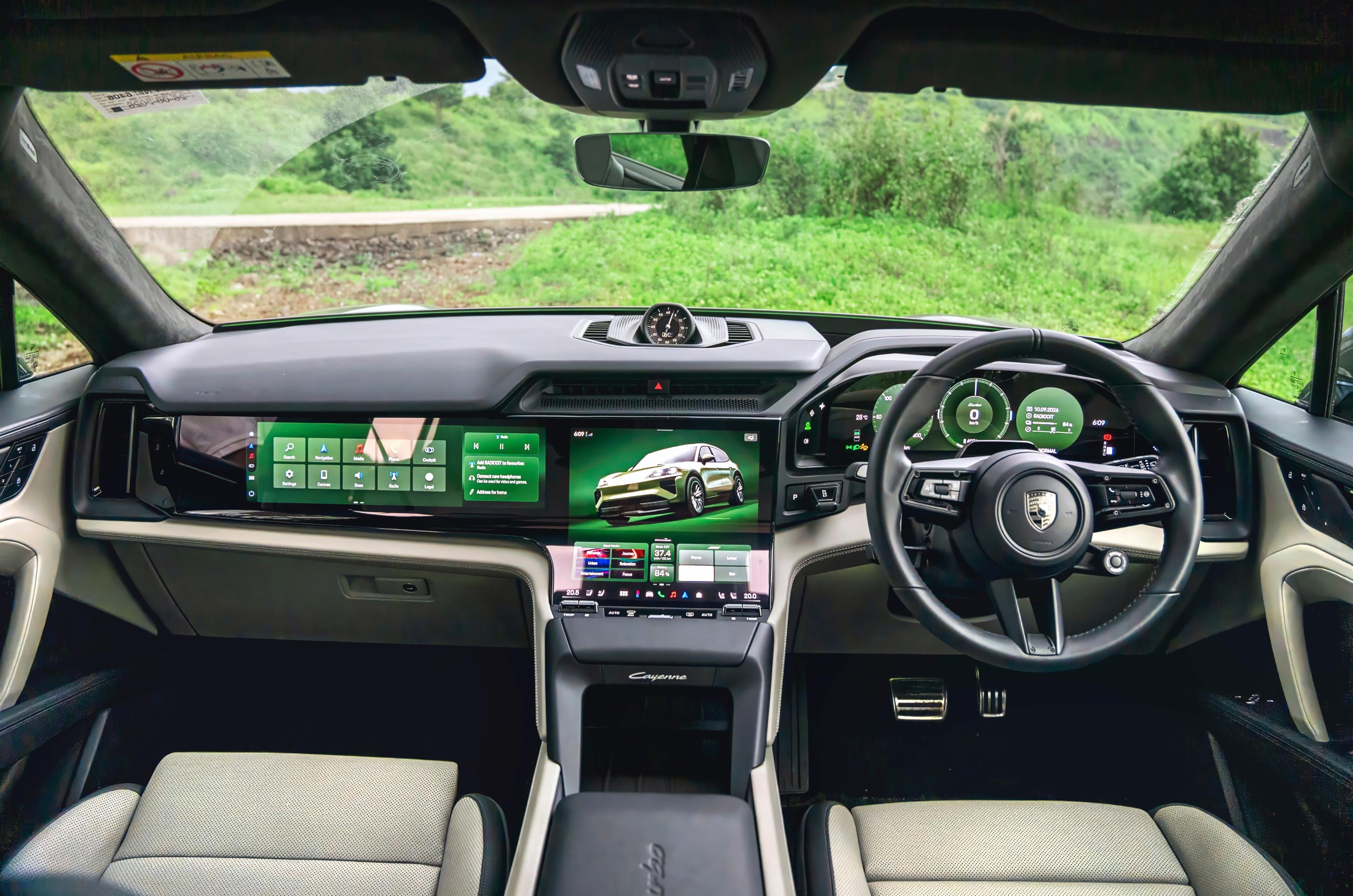
On the upside, all this gave me a chance to have a play around with the Cayenne’s new and tech-heavy interior. The passenger screen is a Rs 2 lakh option I would not tick, but the centrepiece is the cascading curved touchscreen. It looks gimmicky but actually functions really well, the bottom half of the ‘bend’ housing the major functions, while the more upright top functioning as the display. The AC vents are adjusted from the touchscreen sadly, but otherwise there are plenty of physical controls.
There’s no shortage of features here and you can add even more from the options list. For instance, the panoramic sunroof is standard, but there’s no sunshade. Instead, you can option an electrochromic function that masks out the glass in sections.
2026 Porsche Cayenne Turbo interior space and comfort – 8/10
Functionality comes first in a Porsche, and you can see that in the compact but tactile steering wheel, the clear dial-style driver’s display and the sporty ergonomics. In fact, despite all the tech, this feels instantly like a Porsche from behind the wheel.
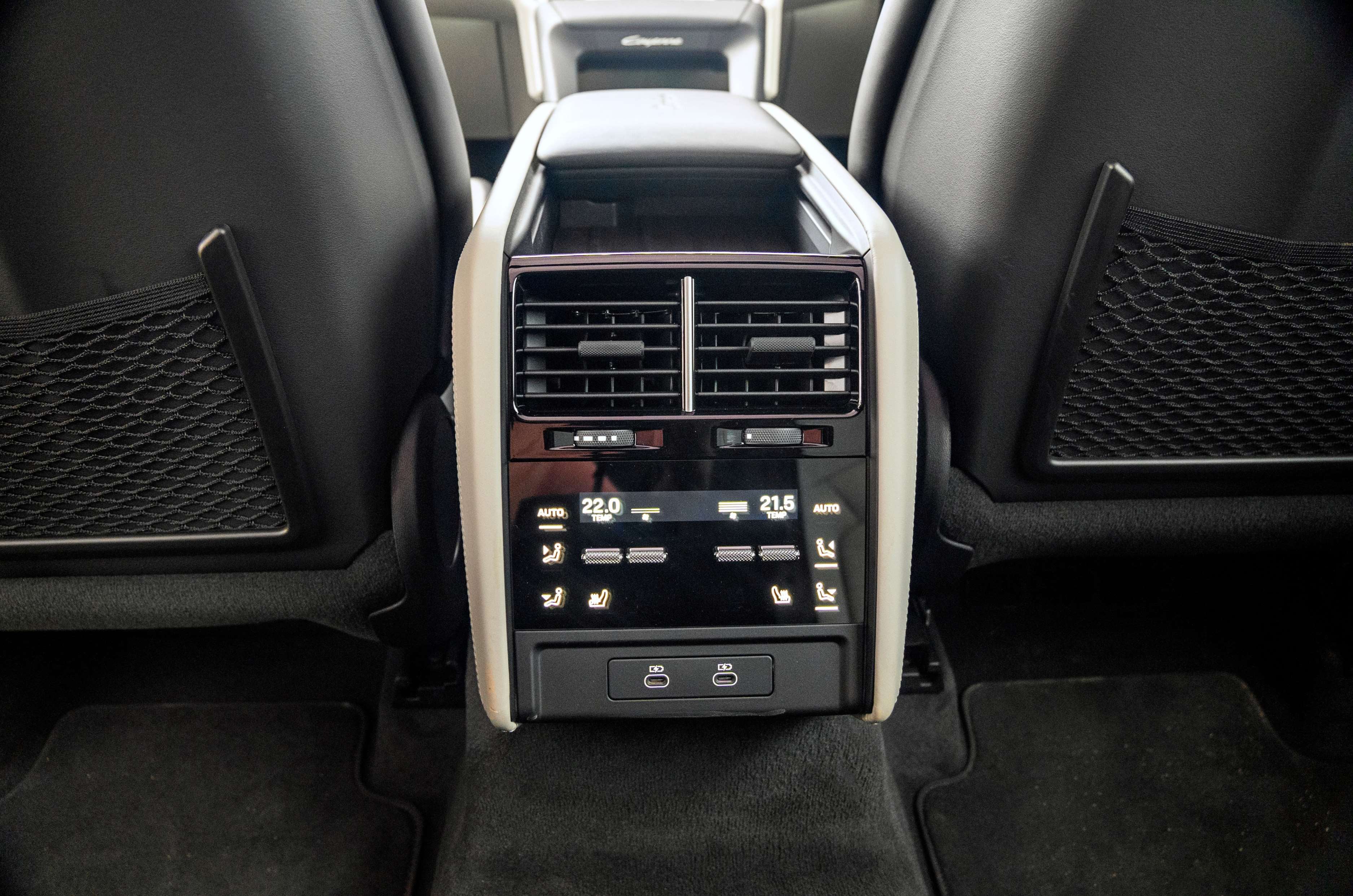
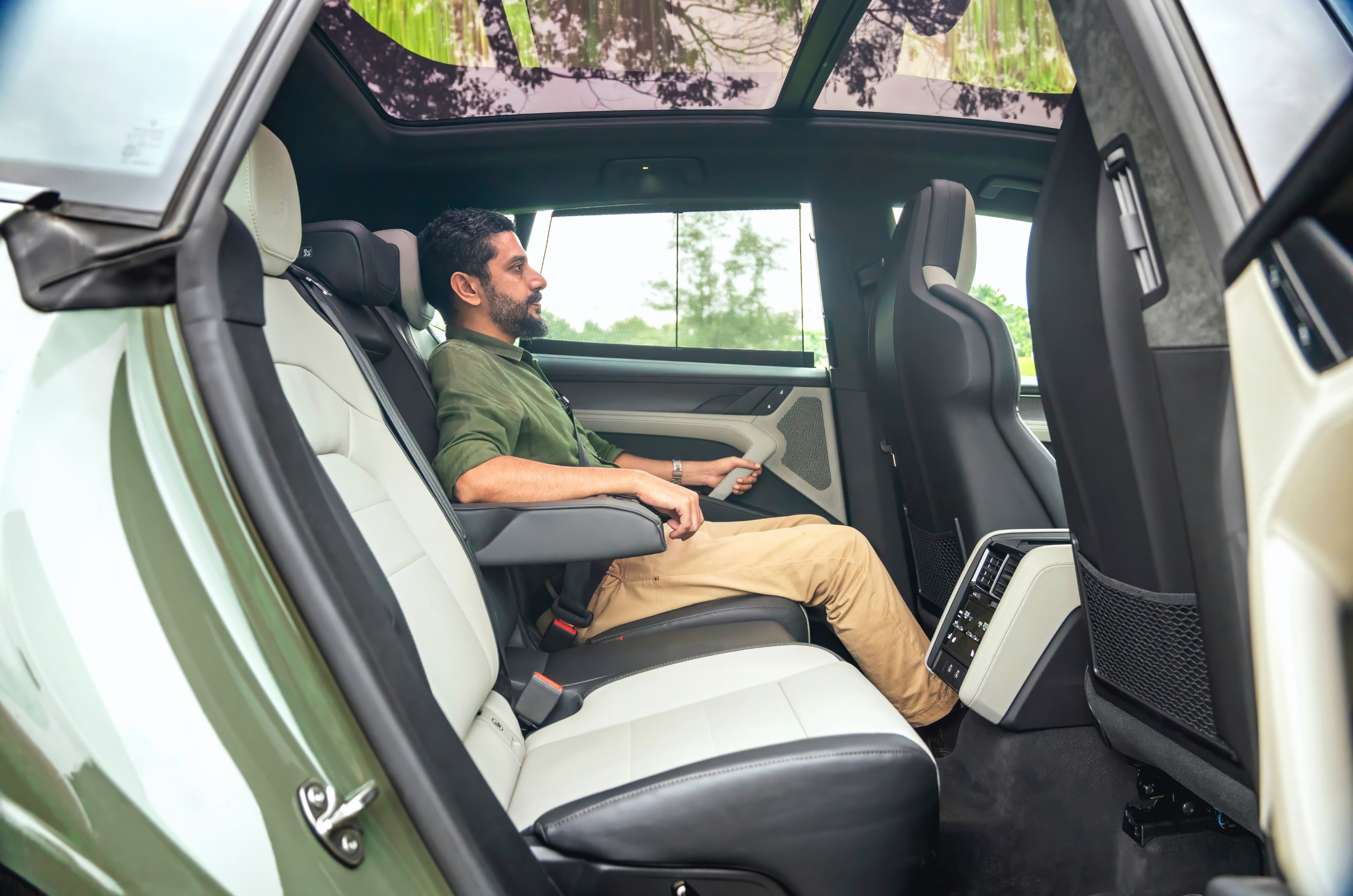
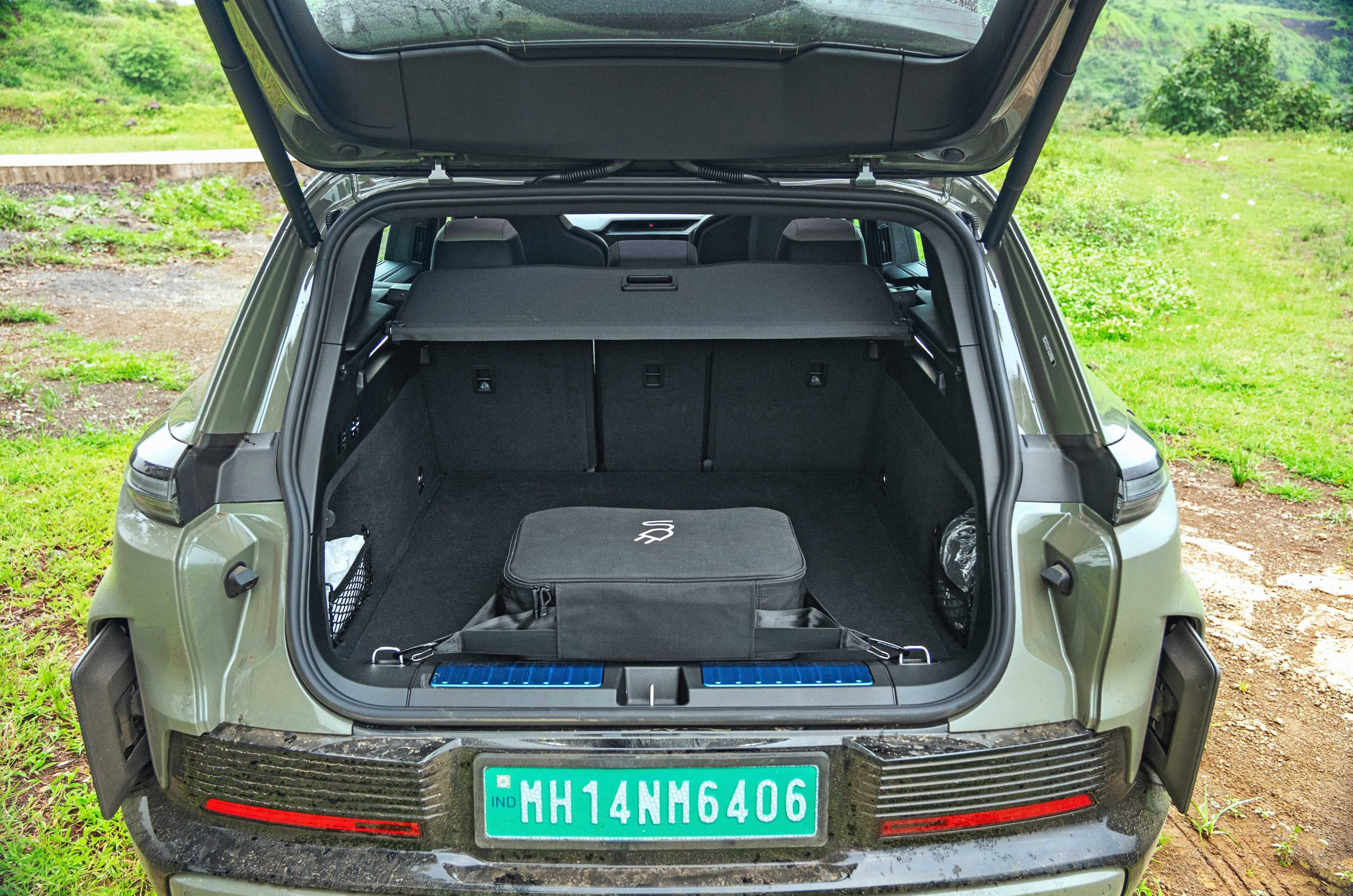
This is easily the most spacious Porsche yet, though, with the huge 3,023mm wheelbase liberating massive seating room, as well as a huge 747-litre boot and 90-litre frunk. It’s well equipped, it’s luxurious, it’s sporty; it’s almost hard to fault here.
2026 Porsche Cayenne Turbo exterior design and engineering – 7/10
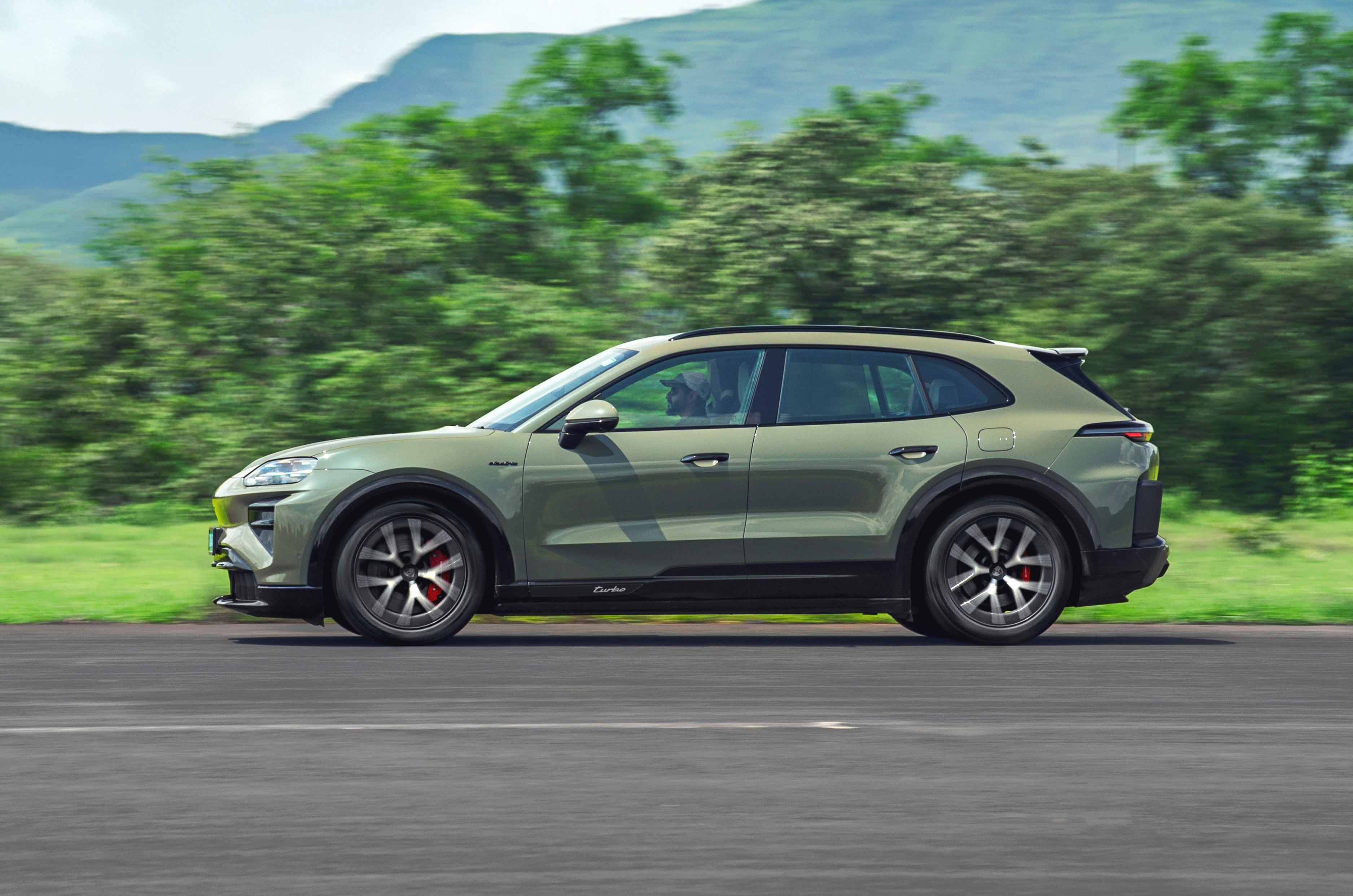
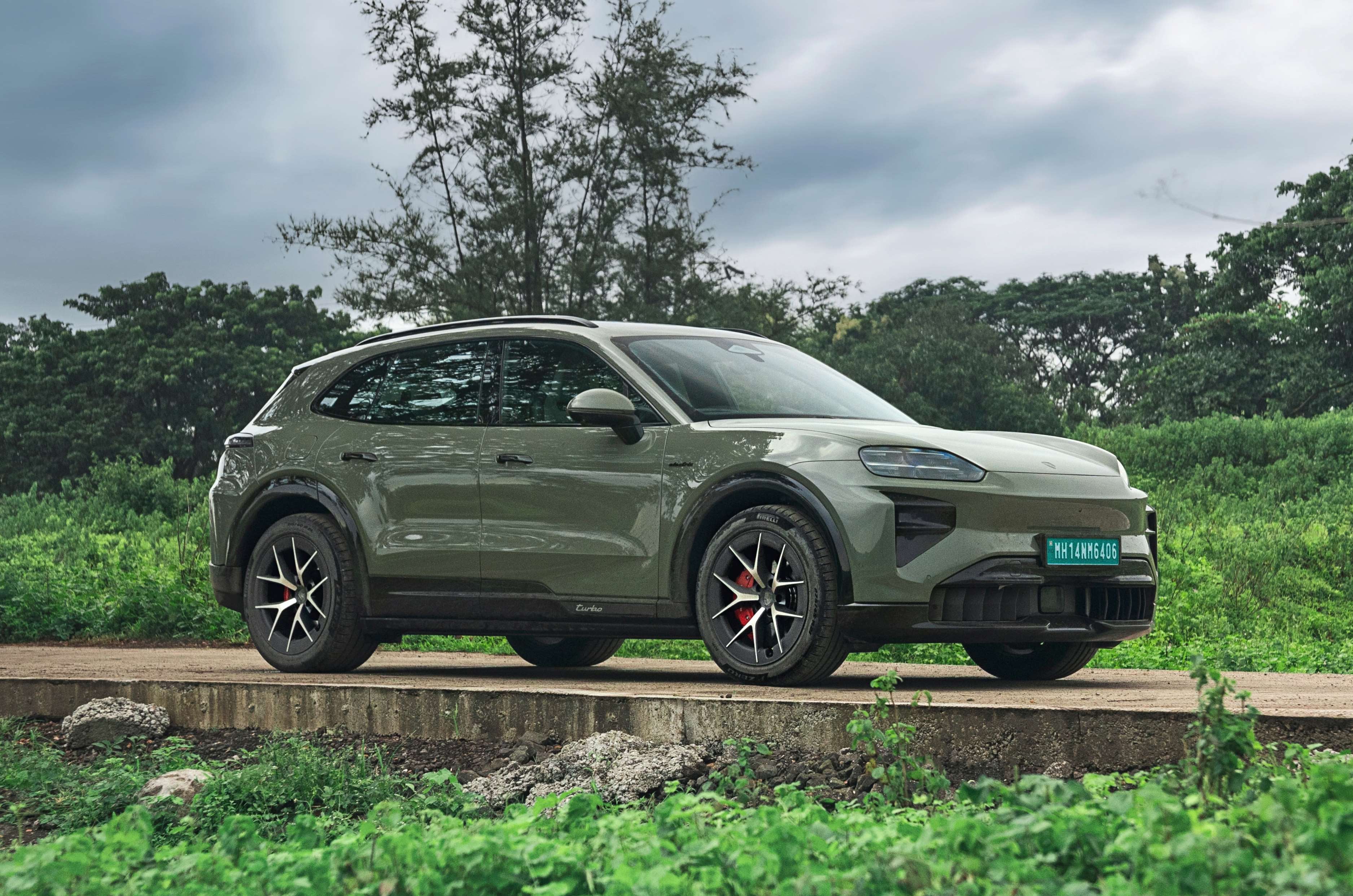
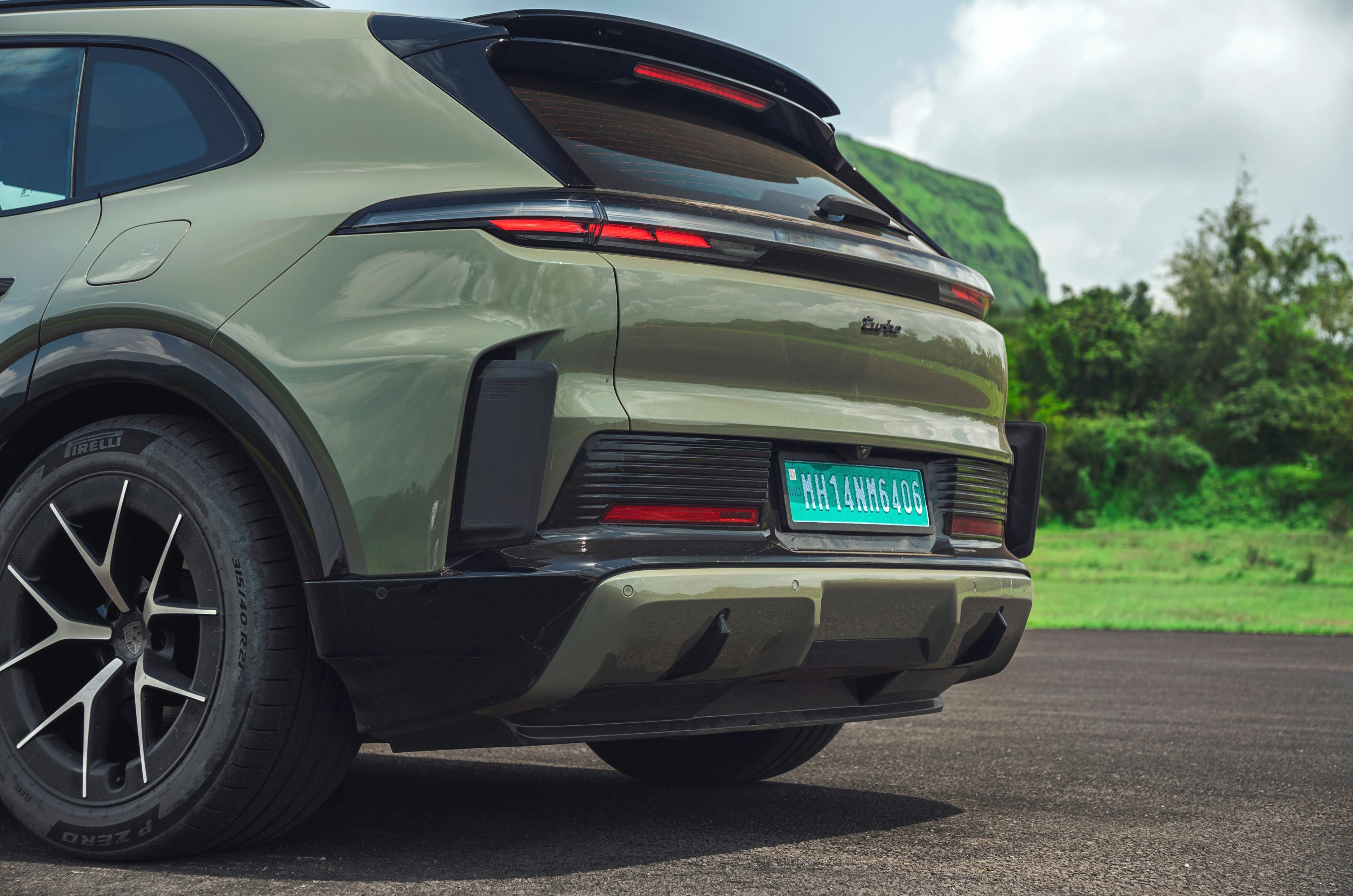
I’m less convinced by the exterior, though. It certainly has size on its side; this is the largest Porsche ever, a fact exaggerated by its slim headlamps and tail-lamps. Even the gigantic 21-inch wheels look a size down against the mass of bodywork. They’ve worked around it with plenty of contrast black details, and there are lots of cool details, like the active aero vanes up front and the flaps that extend from the rear bumper to reduce drag at speed. They’ve even got the GPS co-ordinates of Porsche’s wind tunnel embossed into them.
However, it’s also this size that works against it, as the proportions make it look bulky and a bit ungainly. This might be fine most big luxury SUVs, but in a Porsche, there’s a certain visual agility that’s missing.
2026 Porsche Cayenne Turbo price and verdict – 9/10
Is it wrong that for a car with such eye-watering headline figures, it’s the slow cruise back home that I appreciate the most? Having been pulverised by the acceleration in the morning, I’m happy to let the ventilated 18-way seats soothe my back, as my favourite tunes stream through 14 Bose speakers and adaptive cruise control keeps an Expressway pace.
Because it’s an EV, you can switch quite easily between its two personalities, and because it’s a Porsche, it does both reliably as many times as you need it to. Some of that special sauce has been lost along the way, and the smaller Macan Electric does a much better job in this regard, but I’d argue the Cayenne has an even greater breadth of ability. It’s easy to launch India’s most powerful car to stratospheric speeds, but it’s even easier to forget that you can, and perhaps that’s its biggest triumph
आज के समय में स्मार्टफोन खरीदते समय लोग ऐसा फोन चाहते हैं, जिसमें बड़ी स्क्रीन, दमदार बैटरी और अच्छा प्रोसेसर मिले। इसी को ध्यान में रखते हुए Xiaomi ने भारत में अपना नया बजट स्मार्टफोन Redmi 17C 5G लॉन्च कर दिया है। इस फोन में 6.9 इंच की बड़ी डिस्प्ले और 6,000mAh की बैटरी दी गई है। इसके अलावा, फोन में MediaTek Dimensity 6300 प्रोसेसर मिलता है। बता दें कि यह स्मार्टफोन Dark Night, Coffee Brew और Purple Dawn समेत तीन कलर ऑप्शन में उपलब्ध होगा।
Redmi 17C 5G की कीमत और उपलब्धता
भारत में Redmi 17C 5G की शुरुआती कीमत 20,999 रुपये है। यह कीमत फोन के 4GB RAM और 128GB स्टोरेज वाले वेरिएंट के लिए है। वहीं, इसके 6GB RAM और 128GB स्टोरेज वाले मॉडल की कीमत 22,999 रुपये रखी गई है।
इस स्मार्टफोन की बिक्री 7 अक्टूबर को दोपहर 12 बजे से शुरू होगी। ग्राहक इसे mi.com, Amazon.in और Xiaomi के रिटेल स्टोर से खरीद सकेंगे।
Redmi 17C 5G के स्पेसिफिकेशन्स
Redmi 17C 5G में 6.9-इंच का डिस्प्ले है, जिसका रिफ्रेश रेट 120Hz AdaptiveSync तक है। Xiaomi ने इसमें Low Blue Light, Flicker Free और Circadian Friendly व्यूइंग के लिए TÜV Rheinland सर्टिफिकेशन भी शामिल किए हैं, ताकि लंबे समय तक इस्तेमाल करने पर भी स्क्रीन आरामदायक रहे।
Redmi 17C 5G में धूल और पानी से बचाव के लिए IP64 रेटिंग दी गई है। इसके अलावा, फोन में Wet Touch Technology 2.0 भी मिलती है। इसकी मदद से उंगलियां गीली, तैलीय या साबुन लगी होने पर भी फोन की स्क्रीन काम करती रहती है।
इस स्मार्टफोन में 6,000mAh की बैटरी है और यह 33W फास्ट चार्जिंग को सपोर्ट करता है। Xiaomi का कहना है कि इसका स्मार्ट चार्जिंग इंजन समय के साथ चार्जिंग की क्षमता और बैटरी की हेल्थ को बेहतर बनाने के लिए बनाया गया है।
कंपनी के अनुसार, इंटरनल टेस्टिंग के आधार पर, 1,000 बार पूरी तरह चार्ज होने के बाद भी बैटरी अपनी क्षमता का कम से कम 80% बनाए रख सकती है।
परफॉर्मेंस की बात करें तो, यह डिवाइस MediaTek Dimensity 6300 प्रोसेसर पर चलता है। इसमें 6GB तक की फिजिकल RAM मिलती है। इसके अलावा, फोन में Memory Extension फीचर भी दिया गया है। इसकी मदद से RAM को बढ़ाकर 12GB तक किया जा सकता है, जिससे एक साथ कई ऐप इस्तेमाल करने पर फोन आसानी से काम कर सकेगा।
फोटोग्राफी के लिए, Redmi 17C 5G में 50MP का AI रियर कैमरा है, जिसमें Ultra HD, Portrait और Night Mode जैसे फीचर्स हैं। इसमें सेल्फी और वीडियो कॉल के लिए 8MP का फ्रंट कैमरा भी है।
यह फोन HyperOS 3 पर चलता है और Xiaomi इंटरकनेक्टिविटी, कॉल सिंक और शेयर्ड क्लिपबोर्ड जैसे फीचर्स को सपोर्ट करता है। इसमें उपलब्धता और डिवाइस की कम्पैटिबिलिटी के आधार पर Google Gemini और Circle to Search भी मिलते हैं।
अन्य फीचर्स में साइड-माउंटेड फिंगरप्रिंट सेंसर, 3.5mm हेडफोन जैक और 200% वॉल्यूम बूस्ट शामिल हैं।
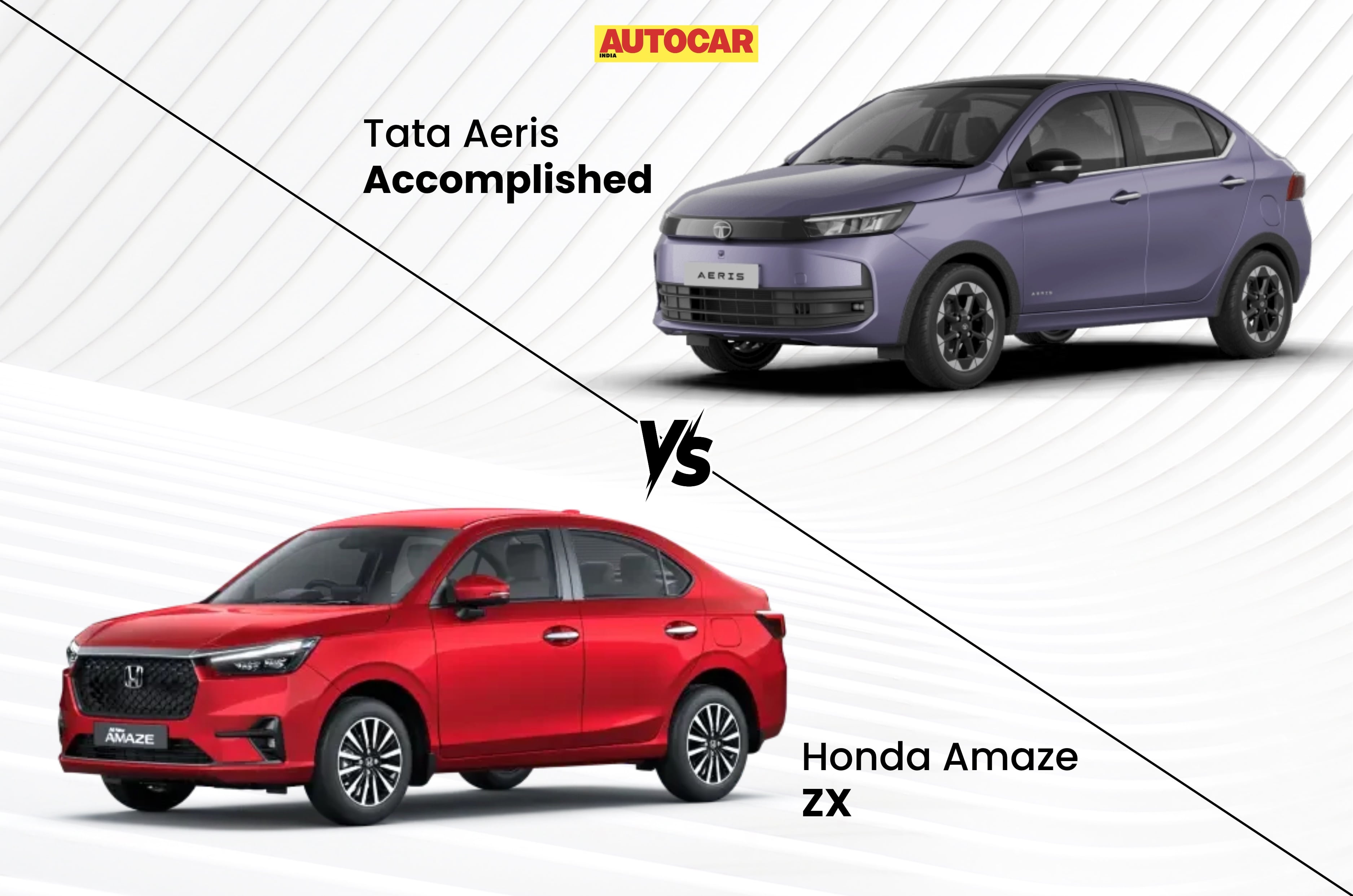
With the arrival of the new Aeris, Tata has made an attempt to strengthen its prowess in the compact sedan space. Though based on the Tigor, the Aeris comes with fresher styling elements and added features. Here, we’ve compared it with the Honda Amaze, which is currently in third-gen form and one of the longstanding contenders in the segment. For this comparison, we’ve chosen the Aeris’ Accomplished trim and the Amaze’s ZX trim.
For full specs, features, and a price breakdown, check our Aeris vs Amaze comparison.
Tata Aeris vs Honda Amaze: Dimensions
Aeris is taller and gets the larger boot; Amaze is wider and has a longer wheelbase
Tata Aeris vs Honda Amaze: Dimensions
Tata Aeris
Honda Amaze
Difference
Length (in mm)
3,995
3,995
–
Width (in mm)
1,684
1,733
-49
Height (in mm)
1,532
1,500
+32
Wheelbase (in mm)
2,450
2,470
-20
Ground clearance (in mm)
170
172
-2
Boot space (litres)
419
416
+3
The Aeris and Amaze have the same length but differ greatly in other dimensions. The Amaze is wider, has a longer wheelbase, and rides a narrow 2mm higher than the Aeris. On the other hand, the Aeris is taller and has a slightly bigger boot. One thing to note is that the Aeris’ boot is likely to have more usable space, as its boot lid uses gas struts to open and close, whereas the Amaze’s trunk lid utilises a hinge mechanism.
Tata Aeris vs Honda Amaze: Powertrain
CNG AMT combo offered only on the Aeris
Tata Aeris vs Honda Amaze: Powertrain
Tata Aeris
Honda Amaze
Engine
1.2-litre 3-cyl petrol | 1.2-litre 3-cyl CNG
1.2-litre 4-cyl petrol
Power (hp)
86 | 76
90
Torque (Nm)
113 | 97
110
Transmission
5MT / 5AMT
5MT / CVT
In petrol guise, both the Aeris and Amaze get a 1.2-litre naturally aspirated unit. The former’s mill uses a 3-cylinder setup, whereas the latter adds an additional cylinder. Amaze’s power output is higher than the Aeris, but the latter delivers slightly more torque. Both models get a 5-speed manual, but automatic variants of the Aeris use an AMT while the Amaze gets a CVT gearbox.
The Aeris offers a factory-fitted CNG kit on its top Accomplished trim with petrol and AMT gearbox choices. In CNG guise, it gets a dual-cylinder setup that doesn’t sacrifice much boot space as opposed to a single large tank. While Honda also offers a CNG kit on the Amaze, it’s exclusively offered with the manual gearbox and is fitted at the dealer level.
Tata Aeris vs Honda Amaze: Exterior
Dual-tone paint options exclusive to the Aeris
Tata Aeris vs Honda Amaze: Exterior
Tata Aeris
Honda Amaze
Headlights
Auto LED
Projector Auto LED
Tail-lights
LED
LED
DRLs
Yes
Yes
Front fog lamps
LED
Projector LED
Wheels
15-inch alloys
15-inch alloys
Powered ORVMs
Yes
Yes
Shark-fin antenna
Yes
Yes
Colour
Dual-tone, 6 options
Monotone, 6 options
On the visual front, the Aeris and Amaze are neck and neck with LED light setups, fog lamps, 15-inch alloy wheels, powered ORVMs, and a sharkfin antenna. However, when it comes to paint options, the Aeris Accomplished is limited to dual-tone finishes with a black roof, and the Amaze gets monotone paint jobs only.
Tata Aeris vs Honda Amaze: Interior
Aeris gets the popular front seat ventilation feature
Tata Aeris vs Honda Amaze: Interior
Tata Aeris
Honda Amaze
Instrument cluster
Digital dials
Part-digital TFT display with analogue dials
Infotainment screen
10.25-inch
8-inch
Android Auto, Apple CarPlay
Wireless
Wireless
Sunroof
No
No
Front seat ventilation
Yes
No
Audio system
4-speaker, 2-tweeter
4-speaker, 2-tweeter
Wireless phone charger
Yes
Yes
Climate control
Automatic
Automatic
Driver seat adjustment
Height, reach (manual)
Height, reach (manual)
Steering adjustment
Tilt
Tilt
Rear AC vents
Yes
Yes
Rear centre armrest
Yes
Yes
Seat upholstery
Leatherette
Fabric
Connected car tech
Yes
Yes
Keyless entry
Yes
Yes
Push-button start
Yes
Yes
Cooled glove box
Yes
No
USB ports
2x Type-C 1x Type-A
2x Type-A ports
Inside is where the odds look in favour of the Aeris. It gets a larger infotainment screen, front seat ventilation, leatherette seat upholstery, and a cooled glovebox over the Aeris. Meanwhile, the Amaze’s instrument cluster has a colour TFT with configurable displays on offer.
Tata Aeris vs Honda Amaze: Driving features
Paddle shifters found on both; Adaptive cruise control exclusive to the Aeris
Tata Aeris vs Honda Amaze: Driving features
Tata Aeris
Honda Amaze
Paddle shifters
Yes
Yes
Cruise control
Regular
Adaptive
As for driving features, both get paddle shifters with their respective automatic versions. But the Aeris gets regular cruise control as opposed to the advanced adaptive cruise control found on the Amaze.
Tata Aeris vs Honda Amaze: Safety features
360-degree camera exclusive to the Aeris; Amaze is the only compact sedan with ADAS
Tata Aeris vs Honda Amaze: Safety features
Tata Aeris
Honda Amaze
BNCAP rating
Not tested
5 stars
Airbags
6
6
ADAS
No
Level 1
Camera setup
360-degree
Rear
Blind view monitor
Yes
Yes
Dashcam recording
Yes
No
Rain sensing wipers
Yes
Yes
Parking sensors
Rear
Rear
Disc brakes
Front
Front
Tyre-pressure monitoring
Yes
Yes
Interior rearview mirror (IRVM)
Manual dimming
Manual dimming
Hill-hold assist
Yes
Yes
ESC
Yes
Yes
Traction control
Yes
Yes
Adjustable headrests
Front only
Front only
The Amaze has achieved a 5-star crash safety rating by BNCAP. While the Aeris is yet to be tested by BNCAP, it’s worth noting that the Tigor that it’s based on achieved a 4-star rating by GNCAP. As for safety equipment, both are well equipped with six airbags, ESC, traction control, rear parking sensors, TPMS, and hill hold assist. Additionally, the Aeris gets a 360-degree camera as opposed to the Amaze’s rear-view only, but the latter offers an ADAS suite which the former misses out on. Meanwhile, both skip adjustable headrests for the rear occupants.
Tata Aeris vs Honda Amaze: Price and verdict
Tata Aeris vs Honda Amaze: Price
Tata Aeris Accomplished
Honda Amaze ZX
Petrol manual
8.20
9.39
Petrol automatic
8.75
10.00
CNG manual
9.20
–
CNG automatic
9.75
–
Comparing like-for-like powertrain combinations, the Aeris is more affordable than the Amaze by up to Rs 1.25 lakh. Interestingly, even its CNG automatic version is cheaper than the Amaze petrol CVT. Between the Aeris and the Amaze, it’s the former we’d pick. Not only is the Aeris more affordable than the Amaze by over a lakh, but it also packs in more features and offers more powertrain combinations. Though in automatic guise the Amaze’s CVT unit delivers a more refined experience than the AMT on the Aeris, the premium that it commands isn’t justified.
Porsche की मशहूर Cayenne अब पेट्रोल इंजन के साथ-साथ पूरी तरह इलेक्ट्रिक अवतार में भी भारतीय सड़कों पर नजर आएगी। कंपनी ने भारत में अपनी नई ऑल-इलेक्ट्रिक Cayenne को लॉन्च कर दिया है। इसे Porsche की सबसे चर्चित SUV लाइनअप में एक बड़ा अपडेट माना जा रहा है। बता दें कि नई Cayenne Electric को भारत में दो वेरिएंट में उतारा गया है। इनमें Cayenne Electric और ज्यादा पावरफुल Cayenne Turbo Electric शामिल हैं। कंपनी ने इसे इस तरह तैयार किया है कि रोजाना की ड्राइविंग में आराम और उपयोगिता के साथ Porsche की पहचान वाली हाई-परफॉर्मेंस ड्राइविंग भी मिल सके।
कीमत और वेरिएंट
भारत में Porsche Cayenne Electric की शुरुआती एक्स-शोरूम कीमत ₹1.77 करोड़ है। वहीं, इसका ज्यादा पावरफुल Cayenne Turbo Electric वेरिएंट ₹2.27 करोड़ (एक्स-शोरूम) से शुरू होता है। खास बात यह है कि Porsche सिर्फ इलेक्ट्रिक Cayenne पर निर्भर नहीं रहेगी। कंपनी ने साफ किया है कि आने वाले कई सालों तक पेट्रोल इंजन वाली Cayenne भी बिक्री के लिए उपलब्ध रहेगी। यानी ग्राहकों के पास इलेक्ट्रिक और पेट्रोल, दोनों तरह की पावरट्रेन में से चुनने का विकल्प रहेगा।
परफॉर्मेंस और पावरट्रेन
Cayenne Electric के केंद्र में Porsche का E-Performance पावरट्रेन है, जिसमें आगे और पीछे के एक्सल पर इलेक्ट्रिक मोटर और साथ में 113 kWh की परफॉर्मेंस बैटरी दी गई है। स्टैंडर्ड Cayenne Electric 408 hp तक की पावर देती है, और Launch Control का इस्तेमाल करने पर इसकी ओवरबूस्ट पावर 442 hp तक पहुँच जाती है। यह 4.8 सेकंड में 0 से 100 kmph की रफ़्तार पकड़ लेती है और इसकी टॉप स्पीड इलेक्ट्रॉनिक रूप से 230 kmph तक सीमित है।
Cayenne Turbo Electric परफॉर्मेंस को काफी बेहतर बनाती है, जो 1,156 hp की पावर और 1,150 Nm का टॉर्क देती है। यह वैरिएंट सिर्फ 2.5 सेकंड में 0-100 kmph की रफ़्तार पकड़ लेती है, इसकी टॉप स्पीड 260 kmph है और इसकी रेंज 623 km बताई गई है। दोनों ही मॉडल में Porsche Active Suspension Management (PASM) के साथ अडैप्टिव एयर सस्पेंशन स्टैंडर्ड तौर पर मिलता है, जबकि बेहतर फुर्ती और कम टर्निंग सर्कल के लिए Rear-Axle Steering का ऑप्शन भी उपलब्ध है।
रेंज और चार्जिंग क्षमताएं
Porsche Cayenne Electric में 113kWh की बैटरी दी गई है। स्टैंडर्ड वेरिएंट को लेकर कंपनी का दावा है कि यह WLTP सर्टिफिकेशन के मुताबिक एक बार फुल चार्ज होने पर 642 किलोमीटर तक चल सकती है।
चार्जिंग की बात करें तो यह SUV 390kW तक की DC फास्ट चार्जिंग सपोर्ट करती है। कंपनी के मुताबिक, सही परिस्थितियों में इसकी बैटरी लगभग 16 मिनट में 10% से 80% तक चार्ज हो सकती है। वहीं, अधिकतम DC चार्जिंग पावर मिलने पर सिर्फ 10 मिनट की चार्जिंग में 290 से 324 किलोमीटर तक की रेंज मिल सकती है।
AC चार्जिंग के लिए, इसका ऑनबोर्ड चार्जर 22 kW तक को सपोर्ट करता है, जिससे कम्पैटिबल वॉलबॉक्स पर इसे लगभग 5.75 घंटे में पूरी तरह चार्ज किया जा सकता है। खास बात यह है कि Cayenne Electric भारत में Porsche का पहला ऐसा मॉडल है जिसमें ऑप्शनल 11 kW वायरलेस (इंडक्टिव) चार्जिंग सिस्टम मिलता है।
डिजाइन, डायमेंशन और प्रैक्टिकैलिटी
Porsche Cayenne Electric का लुक काफी हद तक मौजूदा Cayenne जैसा ही रखा गया है, लेकिन इसके फ्रंट डिजाइन में कुछ बदलाव किए गए हैं। इसमें बंद ग्रिल, एक्टिव एयरोडायनामिक वेंट्स और Porsche के खास फोर-पॉइंट DRL डिजाइन वाले Matrix LED हेडलाइट्स दिए गए हैं।
साइज की बात करें तो इलेक्ट्रिक Cayenne की लंबाई 4,985mm, चौड़ाई 1,980mm और ऊंचाई 1,674mm है। इसका व्हीलबेस 3,023mm है। यह पेट्रोल इंजन वाली Cayenne के मुकाबले थोड़ी लंबी है।
स्पेस के मामले में भी Porsche ने इसे काफी प्रैक्टिकल रखने की कोशिश की है। इसके फ्रंट में मिलने वाले फ्रंक (Frunk) में 90 लीटर का स्टोरेज स्पेस है। वहीं, पीछे का बूट 781 लीटर का है। पीछे की पावर्ड सीटों को फोल्ड करने पर यह स्पेस बढ़कर 1,588 लीटर तक हो जाता है।
Cayenne Electric में 3,000kg तक की टोइंग क्षमता मिलती है, जब इसमें Performance Battery का इस्तेमाल किया जाता है। वहीं, Offroad Package के साथ इसकी टोइंग क्षमता बढ़कर 3,500kg तक हो जाती है।
इंटीरियर, टेक्नोलॉजी और असिस्टेंस सिस्टम
अंदर की तरफ, Cayenne Electric में भारत में पहली बार Porsche का कर्व्ड 14.5-इंच का इंफोटेनमेंट टचस्क्रीन दिया गया है, जिसके साथ पूरी तरह से डिजिटल इंस्ट्रूमेंट क्लस्टर भी है। इसमें ऑप्शन के तौर पर 14.9-इंच का पैसेंजर डिस्प्ले और ऑगमेंटेड-रियलिटी हेड-अप डिस्प्ले भी उपलब्ध है। स्टैंडर्ड फीचर्स में 8-वे इलेक्ट्रिकली एडजस्टेबल फ्रंट सीट्स (जिन्हें 18-वे तक अपग्रेड किया जा सकता है), फोर-जोन ऑटोमैटिक क्लाइमेट कंट्रोल, वेंटिलेटेड फ्रंट सीट्स, स्लाइडिंग पैनोरमिक रूफ और 25W तक की वायरलेस स्मार्टफोन चार्जिंग शामिल हैं।
एडवांस्ड ड्राइवर असिस्टेंस सिस्टम में 2D सराउंड व्यू के साथ ParkAssist, Lane Change Assist, Intersection Assist, Warn and Brake Assist, Swerve and Turn Assist और Speed Limit Assist शामिल हैं। गाड़ी में अल्ट्रा-वाइडबैंड टेक्नोलॉजी वाला Comfort Access भी है, जिससे बिना चाबी के एंट्री और ऑटोमैटिक लॉकिंग की सुविधा मिलती है, साथ ही जेस्चर-कंट्रोल्ड टेलगेट ऑपरेशन भी मिलता है।
मार्केट में किससे होगा मुकाबला
भारत में, Cayenne Electric का मुकाबला Audi Q8 e-tron, BMW iX और Lotus Eletre जैसी इलेक्ट्रिक SUV से होगा।