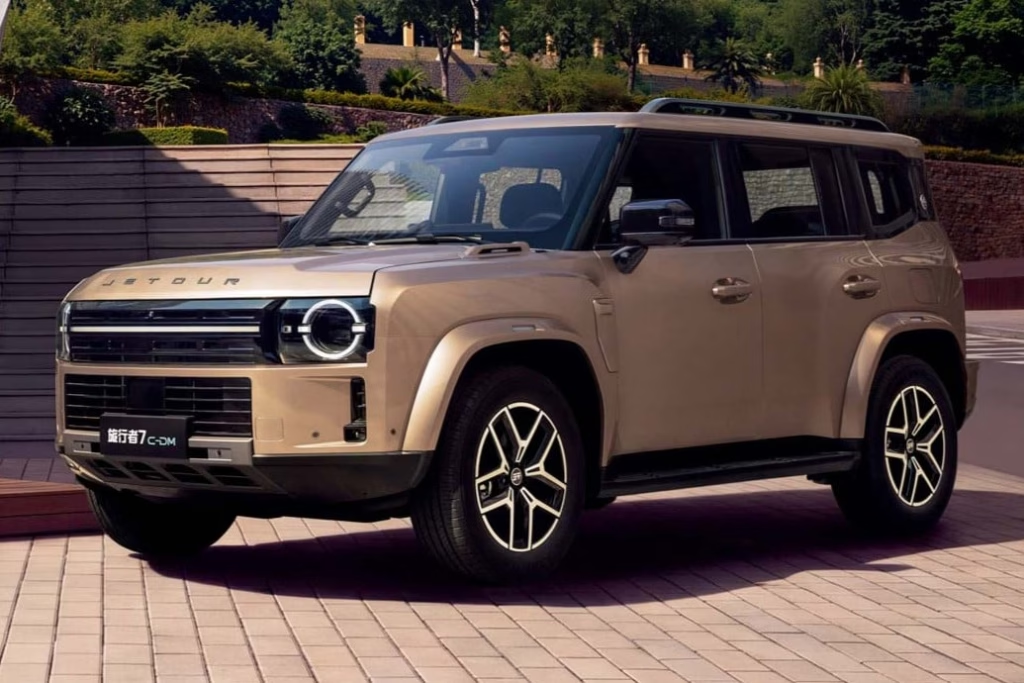
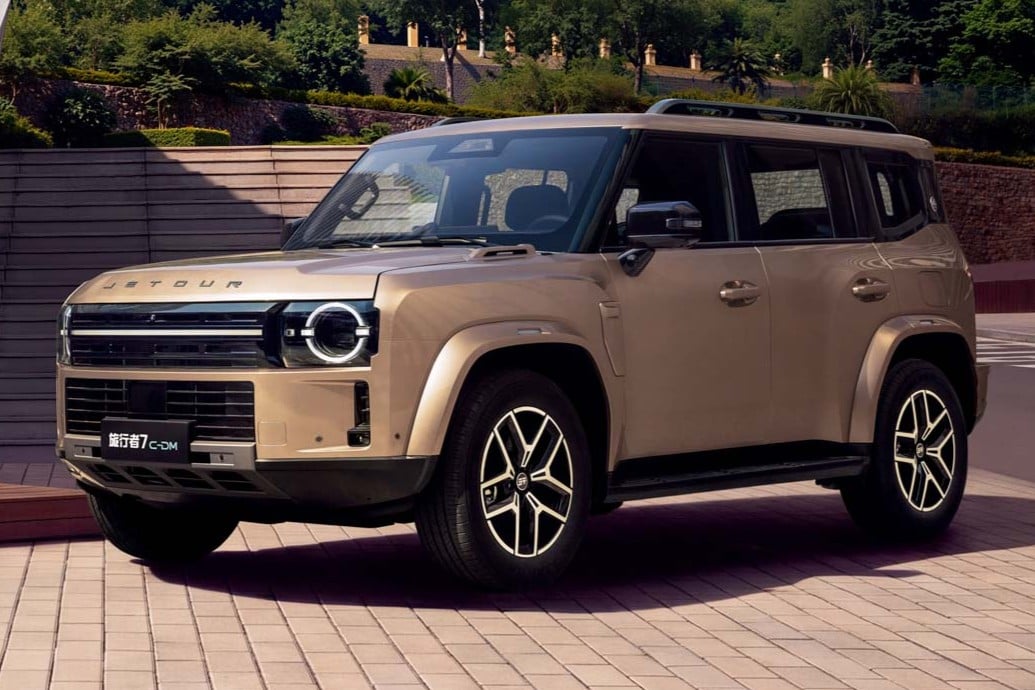
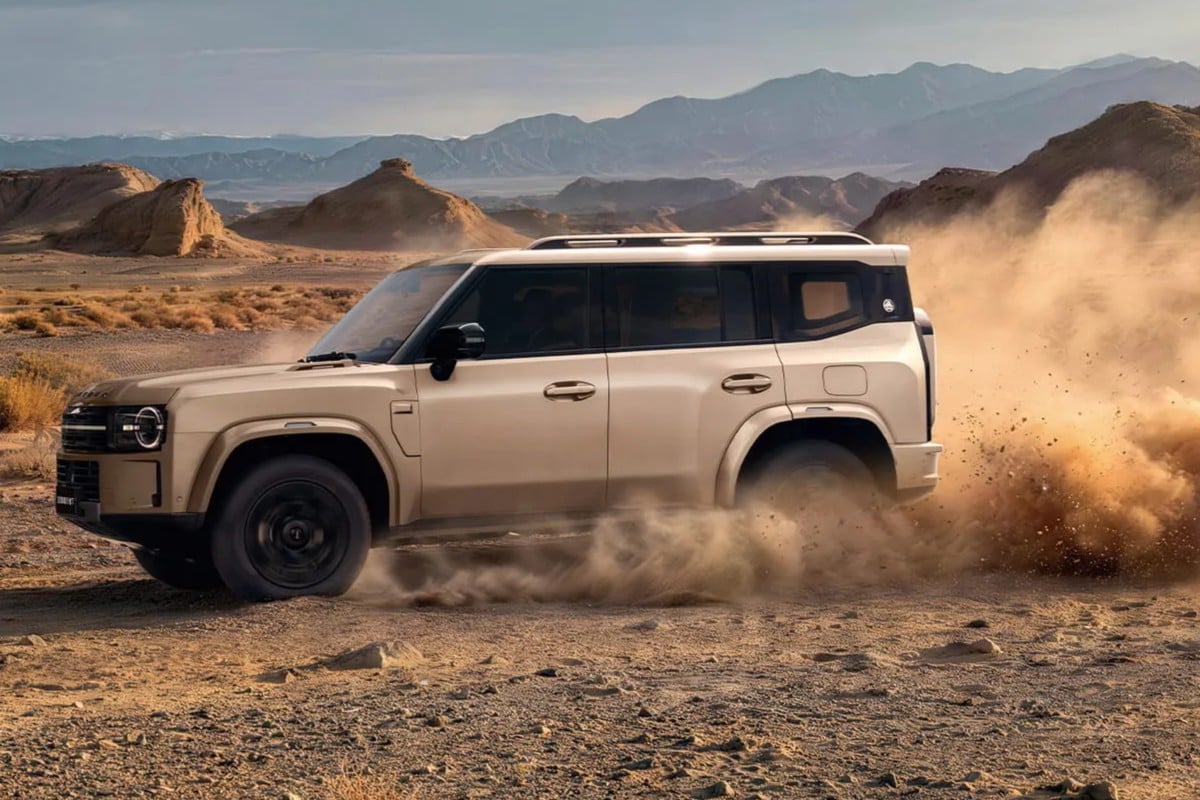
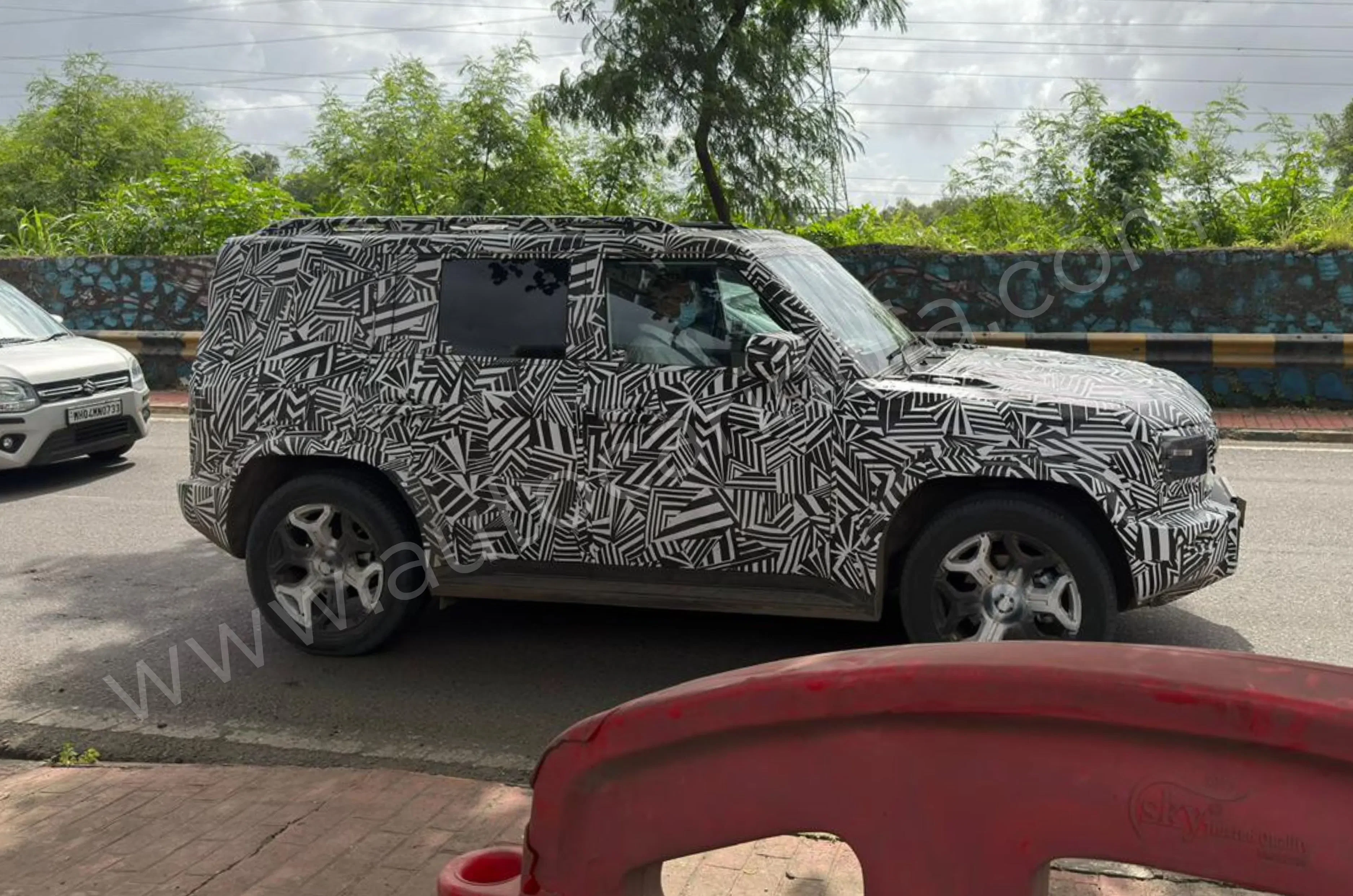
A facelifted version of the Jetour T2 has been launched in global markets. The Jetour T2 facelift was first unveiled in August at the Chengdu Motor Show in China, and gets some design revisions, more features, and powertrain tweaks. Interestingly, this updated iteration went on sale not long before the launch of the pre-facelift Jetour T2 under the JSW Combat name in India.
Jetour T2 facelift exterior design
The updated Jetour T2 retains the prior version’s boxy proportions, but with a few notable styling updates. Most of these are up front, such as circular DRLs in the headlamps, a new grille housing an LED strip, and a much cleaner front bumper. The Jetour wordmark has also been relocated from the grille to the leading edge of the bonnet.
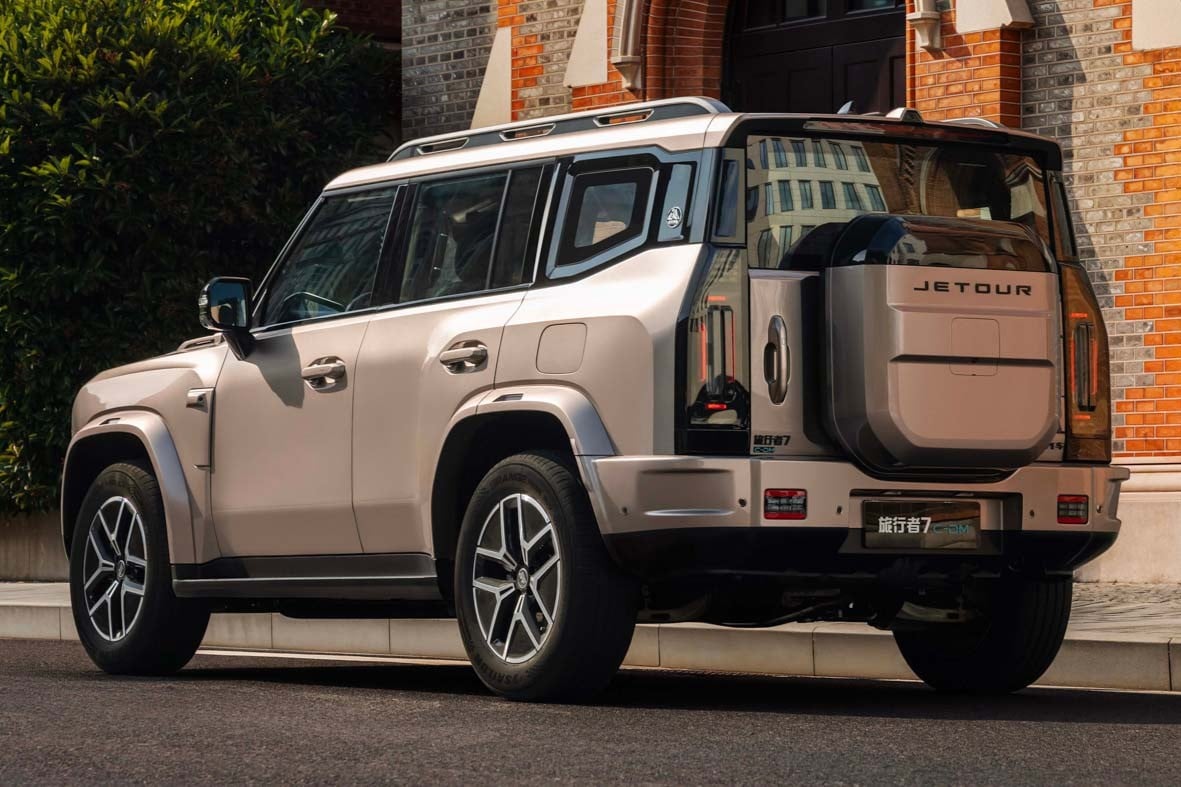
Over to the side, the Jetour T2 facelift gets new alloy wheel designs, as well as body-coloured wheel arches. The rear end sees some revisions too, particularly a cleaner bumper design, an updated spare wheel cover with a Jetour wordmark, and a discreet roof spoiler.
Jetour T2 facelift interior and features
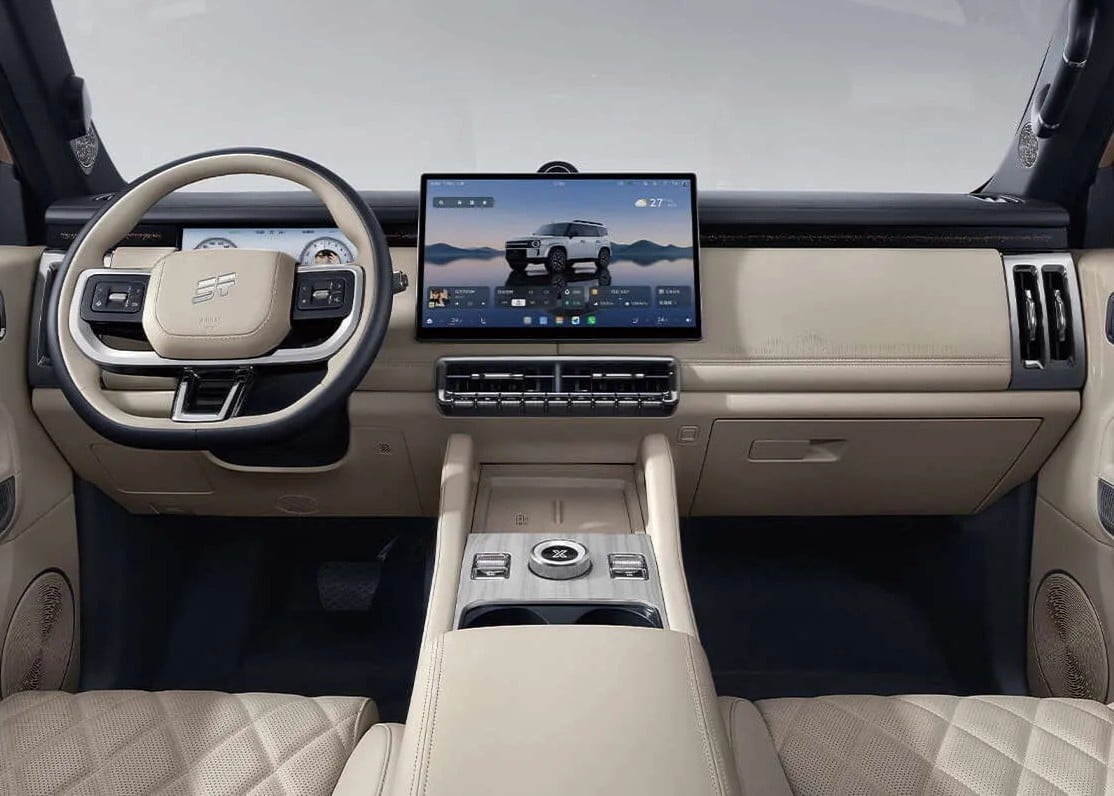
Inside, the Jetour T2 facelift takes on a more premium slant than its predecessor. The beige colour scheme lends the cabin an airier vibe, the seats are upholstered in quilted leatherette, and the dashboard looks to be fitted with leatherette trim – the open storage space in front of the co-driver looks to be closed-off in the facelifted model. There’s also a new three-spoke flat-bottomed steering wheel, and the AC vents have fresh designs too.
The 10.25-inch digital driver’s display and 15.6-inch infotainment touchscreen remain unchanged in size, but the latter is now powered by a stronger Qualcomm Snapdragon 8255 chip that allows for the integration of a new voice-controlled AI assistant. Other notable features include 10-way powered front seats with a massage function, dual wireless charging pads, a 23-speaker sound system, an ADAS suite, and 256-colour ambient lighting.
Jetour T2 facelift powertrains
The Jetour T2’s powertrain offerings vary widely by market, but looking at the China-spec model, the facelifted version continues to offer a 184hp 1.5-litre four-cylinder turbo-petrol engine in the base variant. This mill is paired with a 7-speed dual-clutch automatic that sends power to the front wheels. All other petrol variants of the facelifted Jetour T2, meanwhile, get a 254hp 2.0-litre turbo-petrol engine with the same 7-speed DCT and AWD. A big change here is that the top-spec petrol variant comes with an 8-speed automatic gearbox instead.
As for the plug-in hybrid (PHEV) variants of the Jetour T2 facelift, the 156hp 1.5-litre turbo-petrol engine has been retained, but the dual electric motors have been replaced by a single unit that develops 307hp and 330Nm. The 3-speed dedicated hybrid transmission (DHT) is now a 1-speed unit as well. These updates have been made in the interest of efficiency, as even with a slightly smaller 26.61kWh battery pack, the facelifted Jetour T2 PHEV manages a WLTP-certified 108km pure-electric range – up by 8km. There’s a larger 45.12kWh battery pack on offer too, which bumps the rated pure-electric range to 173km – an increase of 11km over the prior 43.24kWh unit.
Is the Jetour T2 facelift coming to India
As noted previously, the pre-facelift Jetour T2 PHEV is set to launch in India in the coming months as JSW Motors’s debut model, the Combat. Since JSW Motors has been extensively testing the pre-facelift Jetour T2, it’s quite unlikely that the facelifted version will make it here in the short term. As it stands, JSW Motors has yet to even communicate the launch date of the Combat, and recent media reports allege that the carmaker has pushed its debut from the festive season to mid-December.
त्योहारों का सीजन बस शुरू होने वाला है और अक्टूबर आते ही लोग घर की जरूरत का सामान खरीदने की तैयारी करने लगते हैं। अगर आप भी इस बार नई वॉशिंग मशीन, LED TV या फ्रिज खरीदने का प्लान बना रहे हैं, तो आपके लिए एक जरूरी खबर है। दरअसल, 1 अक्टूबर 2026 से इन सामानों की कीमत बढ़ सकती है। ऐसे में त्योहारी ऑफर्स का इंतजार करने से पहले कीमतों में होने वाले बदलाव पर नजर रखना आपके लिए फायदेमंद हो सकता है।
जाने-माने टिप्सटर अभिषेक यादव के अनुसार, AC की कीमतें 5% से 8% तक बढ़ सकती हैं, जबकि कुछ ब्रांड दूसरे होम अप्लायंस की कीमतों में भी करीब 3% से 4% तक इजाफा कर सकते हैं। यह संभावित कीमत बढ़ोतरी ऐसे समय में सामने आई है, जब दिवाली का शॉपिंग सीजन आने वाला है। इस दौरान आमतौर पर लोग घर के लिए नए इलेक्ट्रॉनिक्स और होम अप्लायंस खरीदना पसंद करते हैं।
I forgot to post this, starting tomorrow i.e. October 1 appliance prices are increasing in India
AC prices are going up by 5 to 8%, and some brands are also raising prices of fridges, washing machines and LED TVs by around 3 to 4%
LG is hiking AC prices by 5 to 7% from October 1, Haier by around 5% on ACs and 2 to 3% on TVs and washing machines, and Blue Star, Godrej and others have also confirmed hikes, some from October and some from November
Reason is costly copper, steel, plastics and freight, and this is already the third price hike this year
Haier even says it may raise prices again in December and January, around 15% in total by January
One good thing, shops still have old stock at old prices, so if you were planning to buy an AC or fridge for Diwali, better do it soon
फ्रिज, वॉशिंग मशीन और टीवी की कीमतें भी बढ़ सकती हैं
लीक हुई जानकारी के अनुसार, कीमतों में बढ़ोतरी सिर्फ एयर कंडीशनर तक ही सीमित नहीं है। कुछ मैन्युफैक्चरर्स के कीमतें बदलने की वजह से रेफ्रिजरेटर, वॉशिंग मशीन और LED टेलीविजन के भी महंगे होने की संभावना है।
यादव ने X पर लिखा कि Haier टेलीविजन और वॉशिंग मशीन की कीमतों में लगभग 2% से 3% की बढ़ोतरी करने की योजना बना रहा है। वहीं, Blue Star, Godrej और अन्य ब्रांड्स ने भी कीमतों में बढ़ोतरी की पुष्टि की है, हालांकि अलग-अलग ब्रांड्स के लिए इसे लागू करने की तारीखें अलग-अलग हो सकती हैं।
यादव ने X पर लिखा, “LG 1 अक्टूबर से AC की कीमतों में 5 से 7% की बढ़ोतरी कर रहा है, Haier AC पर लगभग 5% और TV व वॉशिंग मशीन पर 2 से 3% की बढ़ोतरी कर रहा है, और Blue Star, Godrej व अन्य ने भी बढ़ोतरी की पुष्टि की है। कुछ अक्टूबर से और कुछ नवंबर से।”
आखिर क्यों बढ़ रही हैं होम अप्लायंस की कीमतें?
होम अप्लायंस की कीमतों में बढ़ोतरी के पीछे कई वजहें हो सकती हैं। इनमें कच्चे माल और सामान की ढुलाई यानी ट्रांसपोर्टेशन की बढ़ती लागत प्रमुख कारण मानी जा रही है। फ्रिज, वॉशिंग मशीन और TV जैसे प्रोडक्ट बनाने में कॉपर, स्टील और प्लास्टिक जैसी चीजों का बड़े पैमाने पर इस्तेमाल होता है। इसके अलावा, सामान को एक जगह से दूसरी जगह पहुंचाने का खर्च बढ़ने से भी कंपनियों की कुल लागत बढ़ सकती है।
टिप्स्टर अभिषेक यादव ने कीमतों में बढ़ोतरी की वजह बताते हुए महंगे कॉपर, स्टील, प्लास्टिक और बढ़ी हुई फ्रेट लागत का जिक्र किया है। उनके मुताबिक, इस साल कंपनियों की ओर से यह तीसरी बार कीमतों में बढ़ोतरी हो सकती है।
अगर कंपनियों की प्रोडक्शन और ट्रांसपोर्ट लागत आगे भी बढ़ती रहती है, तो आने वाले महीनों में होम अप्लायंस की कीमतों में और बदलाव देखने को मिल सकते हैं। हालांकि, कीमत कितनी बढ़ेगी और कब से लागू होगी, यह हर कंपनी के फैसले पर निर्भर करेगा।
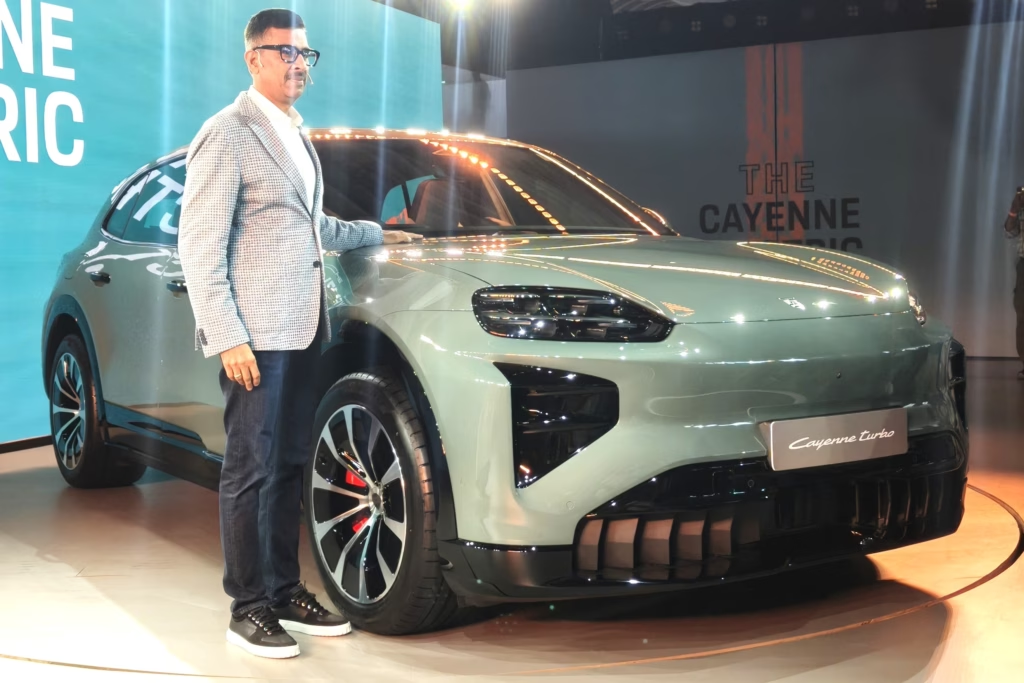
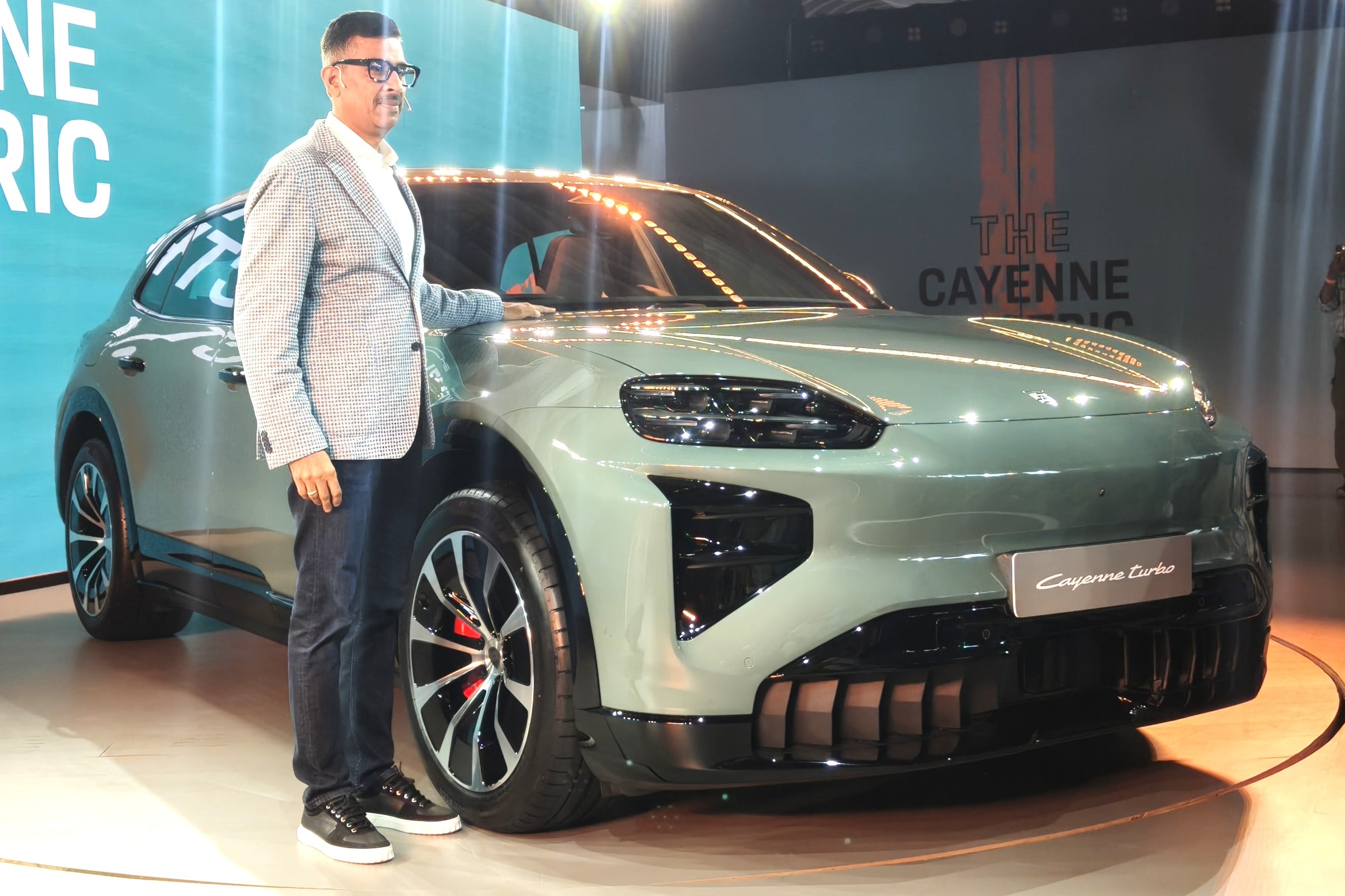
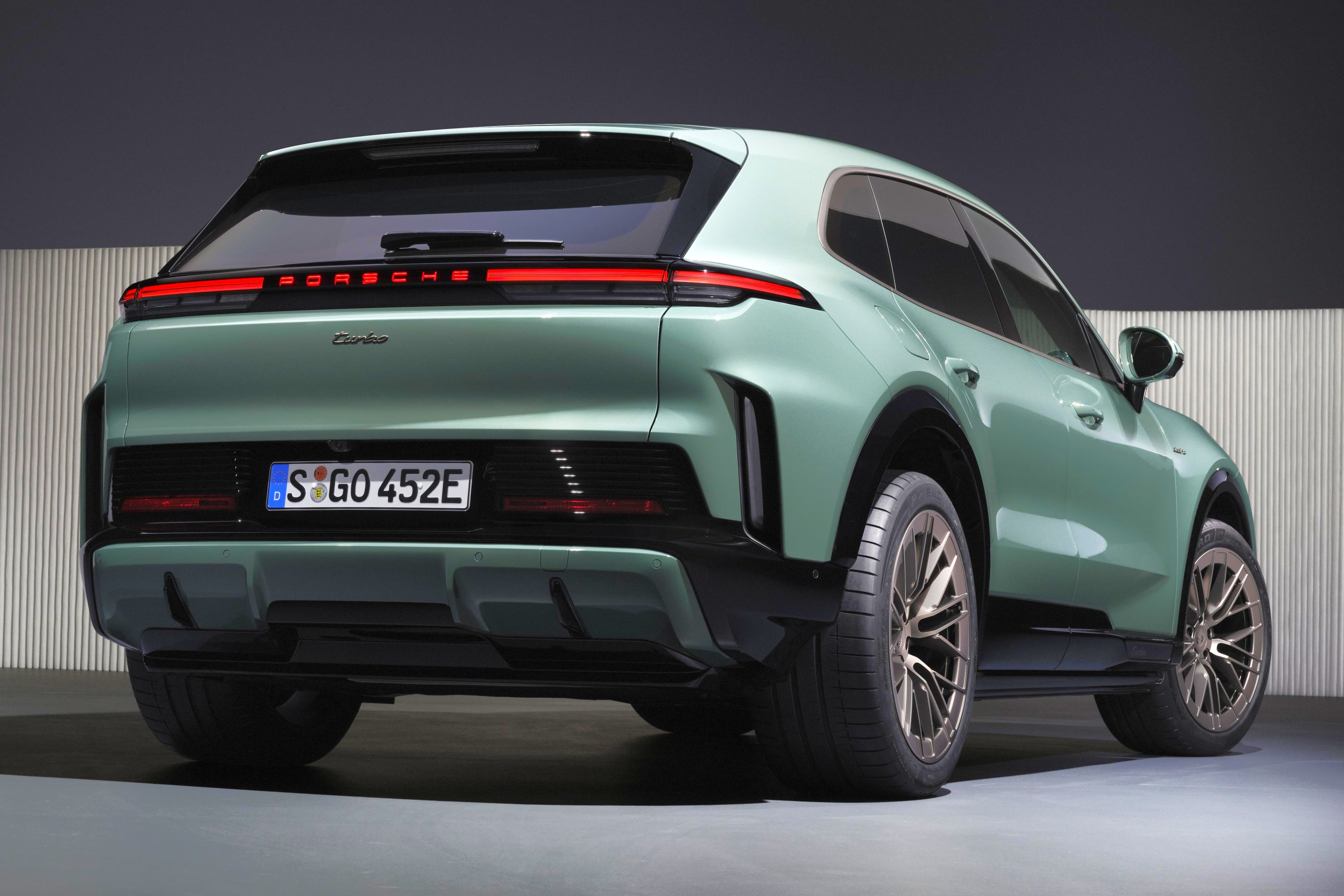
Following the India price reveal of the Cayenne Electric in late 2025, Porsche has formally showcased the electric SUV here for the first time. It’s positioned as Porsche’s flagship electric SUV globally and is available in India in two variants: Cayenne Electric and Cayenne Turbo Electric. These are priced at Rs 1.77 crore and Rs 2.28 crore (before options), respectively.
Porsche Cayenne Electric powertrain and performance
Underpinned by the Volkswagen Group’s 800V Premium Platform Electric (PPE) architecture, the Cayenne Electric comes with a 113kWh battery pack and dual motors (AWD) as standard. The base state of tune is 408hp and 750Nm (442hp and 835Nm with Launch Control engaged), while the range-topping Turbo belts out 857hp and 1,360Nm (1,156hp and 1,500Nm with Launch Control engaged).
With Launch Control, the base Cayenne Electric claims a 0-100kph time of 4.8 seconds, while the Turbo achieves the same in a supercar-baiting 2.5 seconds. The former is good for a top speed of 230kph, with the Turbo upping it to 260kph.
As for WLTP range, the base version is rated at 642km and the Turbo at 623km. Thanks to its 800V architecture, the Cayenne Electric can charge at DC wattages of up to 390kW, which can juice the battery from 10-80 percent in just 16 minutes – a 10-minute charge can net you up to 324km of range. AC charging at up to 22kW is also supported, with a 0-100 percent charge said to take 5.75 hours.
Porsche Cayenne Electric exterior design
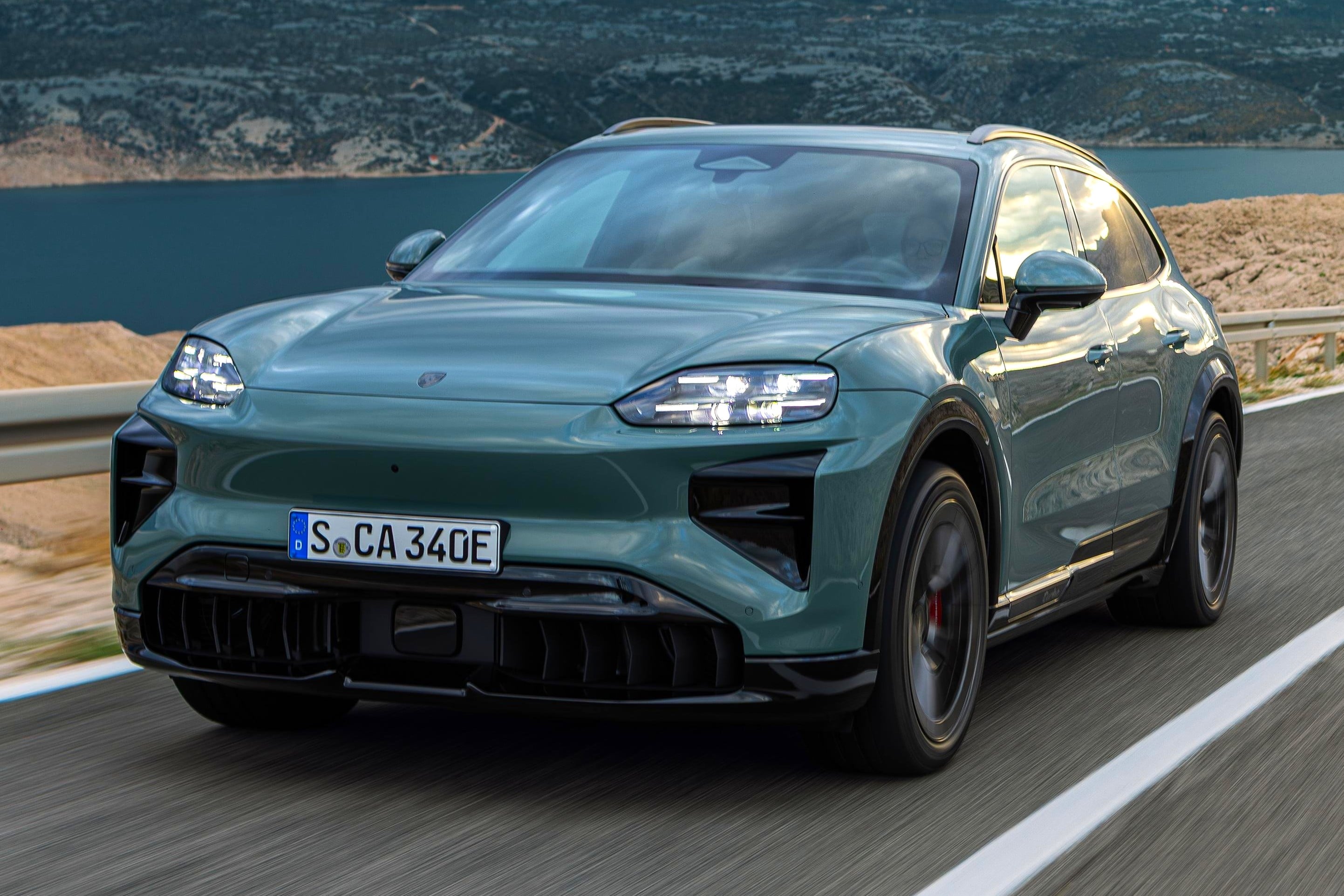
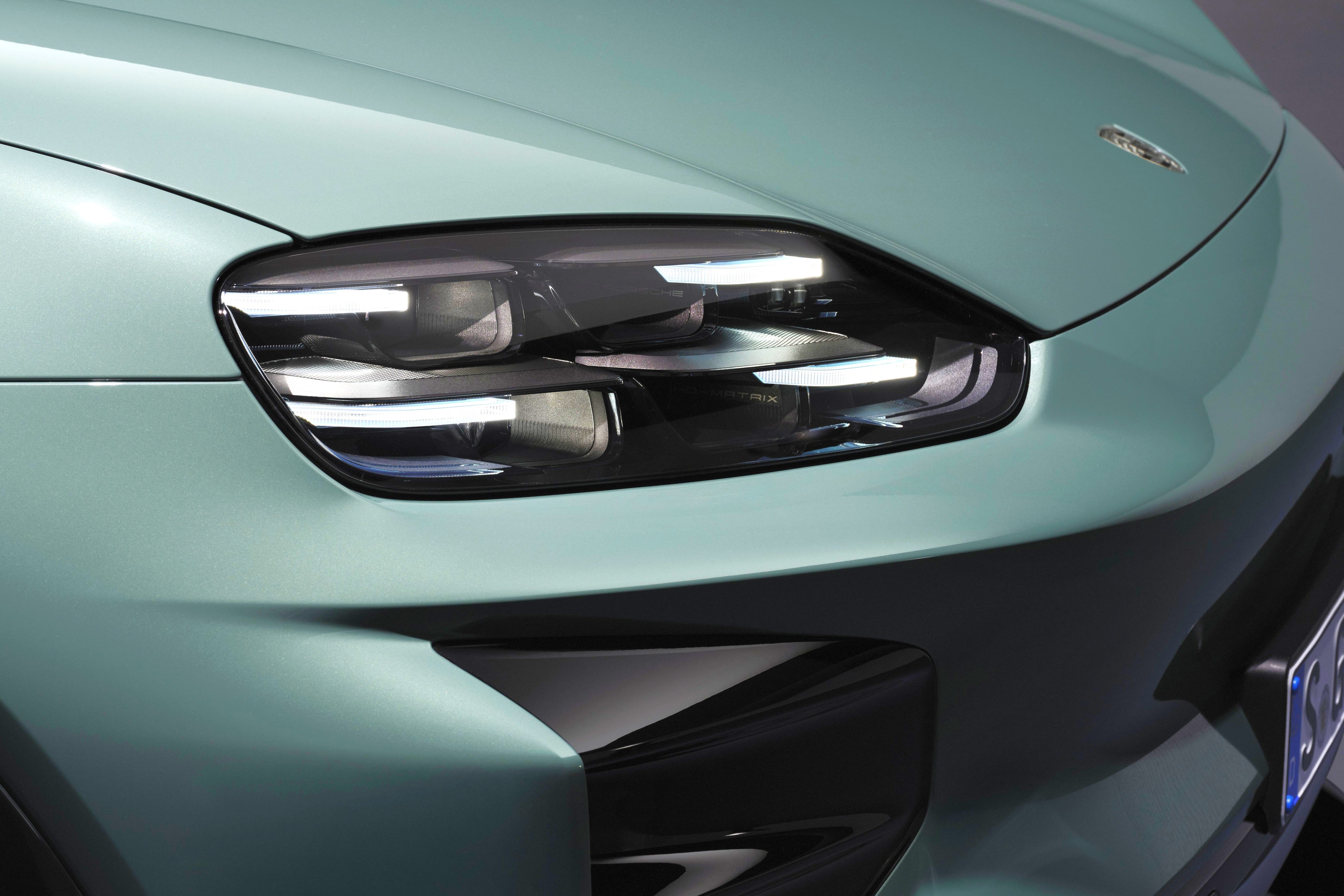
The Cayenne Electric features an evolution of the design language seen on the smaller Macan Electric. Up front, the SUV sports oblong-shaped Matrix LED headlamps housing four individual daytime running lights (DRLs) each. The clean-looking front bumper has a wide air dam flanked by vertically oriented air intakes, along with some relatively discreet black cladding. Under the bonnet, there’s a 90-litre frunk.
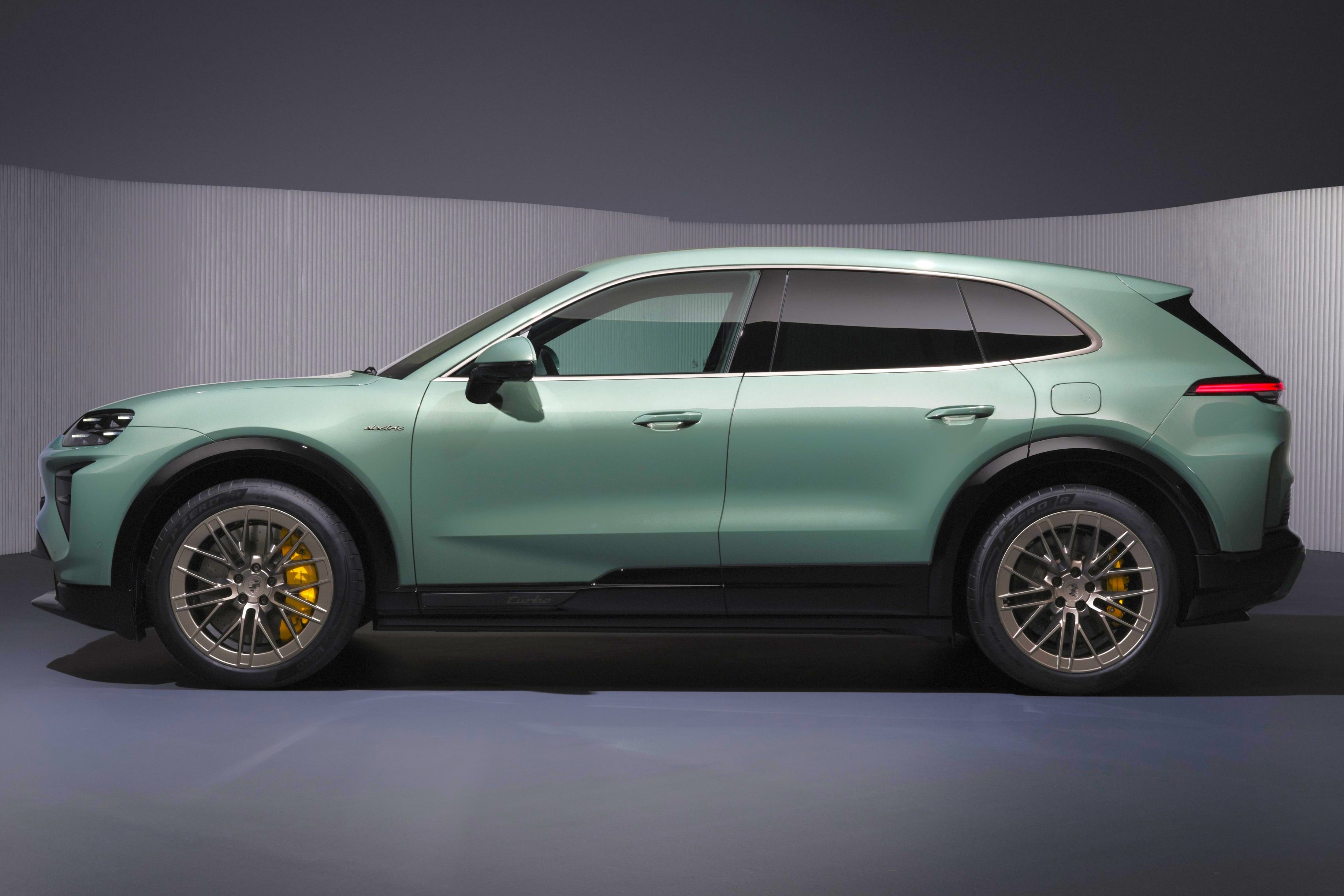
Over to the side, the Cayenne Electric is 55mm longer than its ICE-powered counterpart, measuring 4,985mm in length, 1,980mm in width and 1,674mm in height, with a wheelbase of 3,023mm. 20-inch alloy wheels are standard fit for the Cayenne Electric, which can be optioned up to 22 inches. The SUV comes with soft-close doors as standard too.
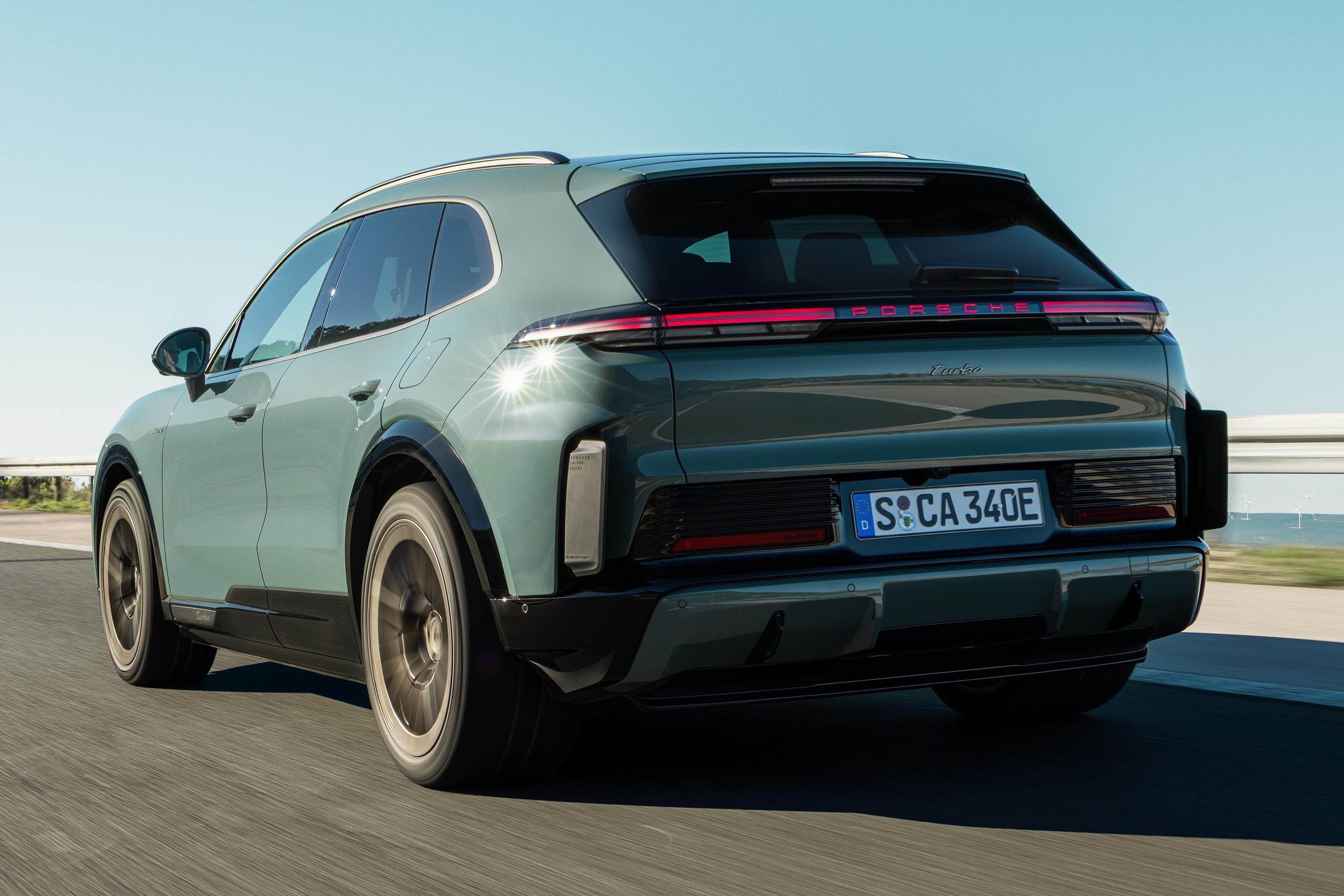
The rear end of the Cayenne Electric features a sporty raked roofline, though not as much as that of its coupe-SUV sibling, the Cayenne Coupe Electric. A wraparound clear-lens LED light bar with an illuminated Porsche wordmark takes prominence here, and there’s a sizeable roof spoiler as well. The rear bumper is quite chunky, and above it lies a blacked-out section with horizontal slats and reflectors.
Porsche Cayenne Electric interior and features
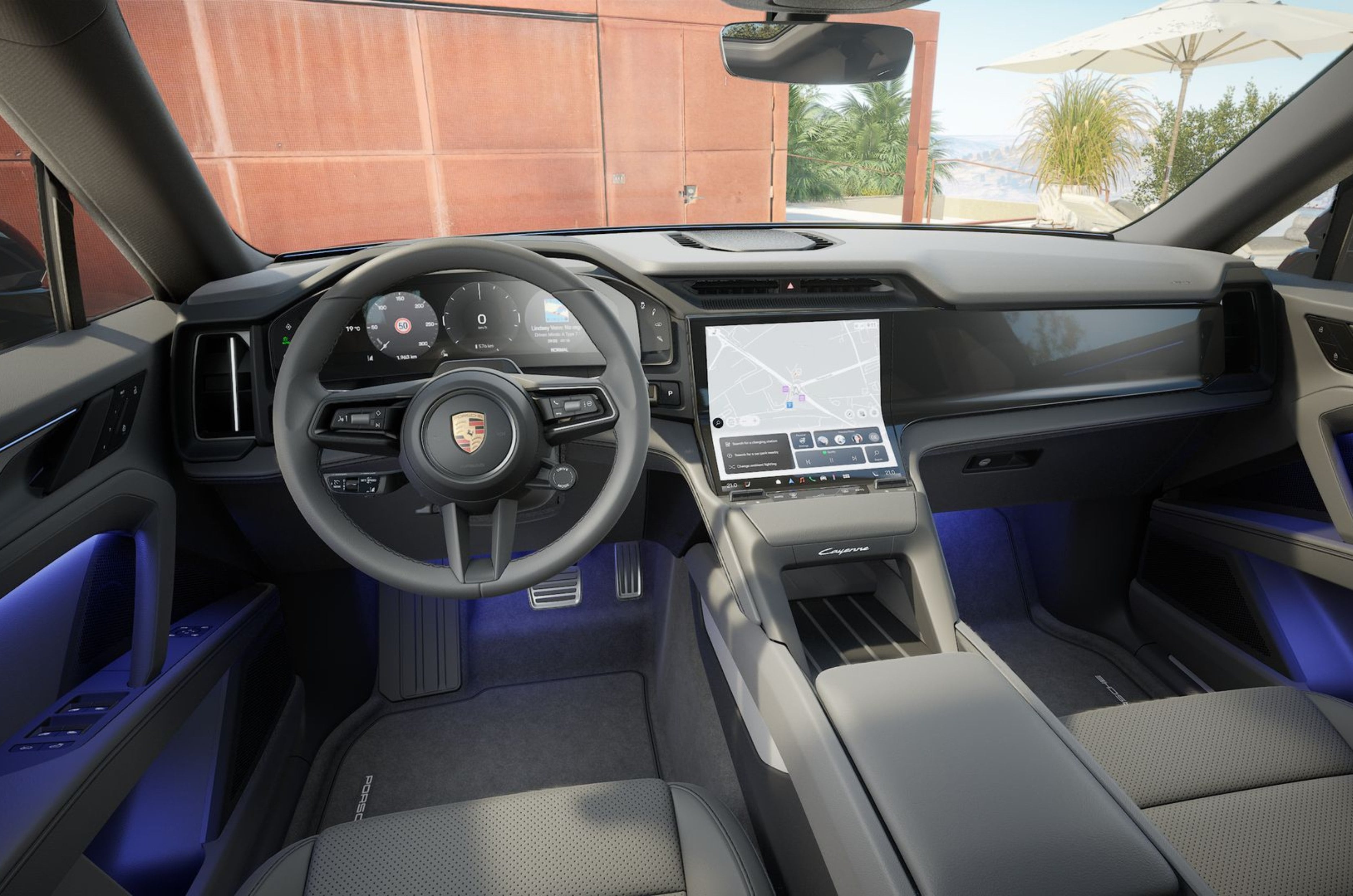
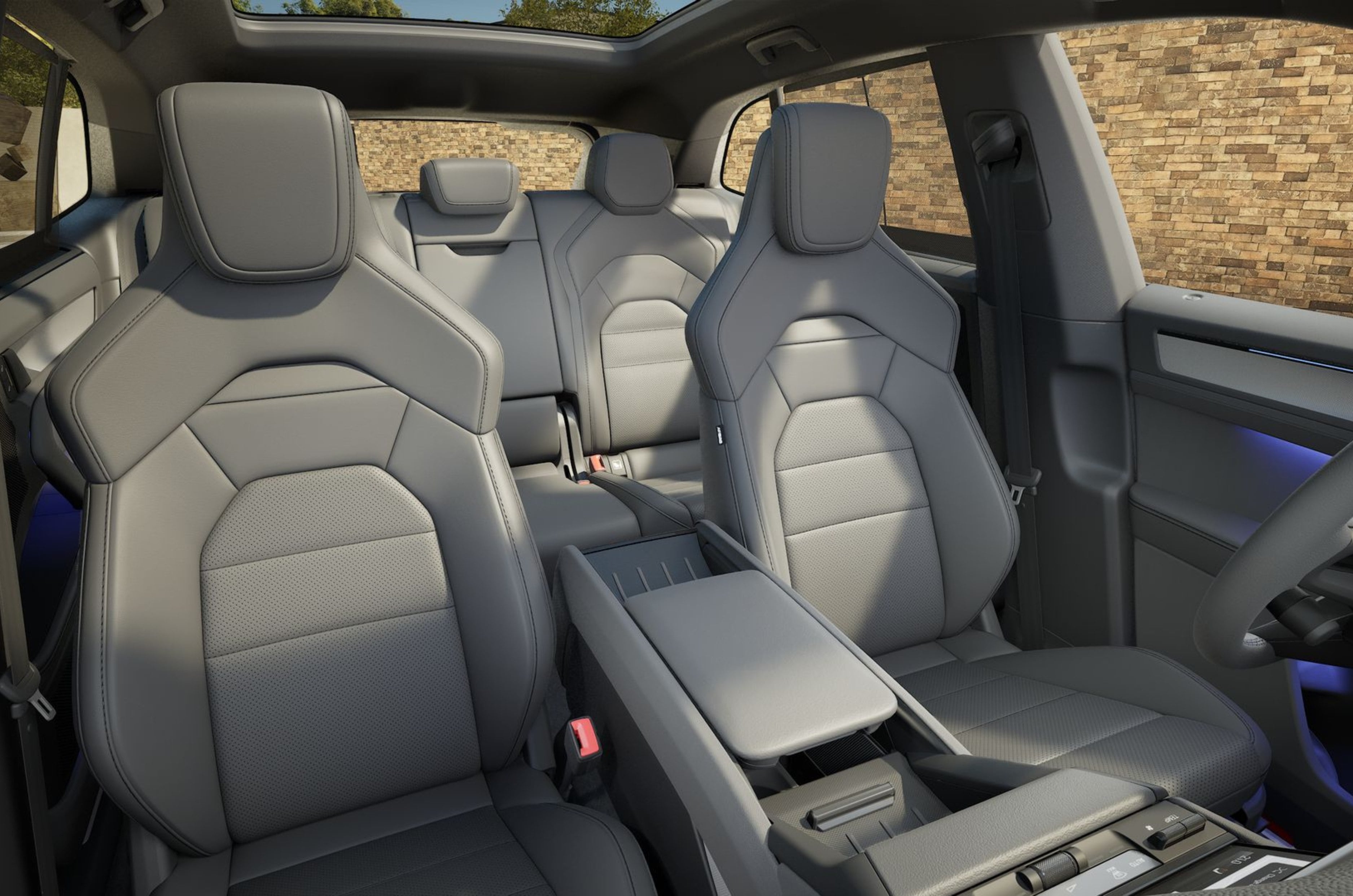
As standard, the interior of the Cayenne Electric is finished in black, and so are many of the controls. The dashboard gets a unique-looking 14.5-inch curved OLED touchscreen in the centre, and there’s a 14.25-inch OLED driver’s display and a three-spoke steering wheel to the side – a 14.9-inch passenger screen is available as an optional extra. The centre console has a pass-through design, allowing for some storage space and a wireless charging pad underneath, and there’s a fairly high central tunnel separating the front seats. Ambient lighting bathes the footwells and door liners in one of 30 configurable colours.
Being a Porsche, the Cayenne Electric offers lots of customisation potential and optional features. Speaking of which, standard equipment for the Cayenne Electric includes a 10-speaker sound system, 8-way powered and heated front seats, a memory function for the driver’s seat, a panoramic sunroof, four-zone climate control, a cabin air purifier, a powered boot lid, powered rear sunshades, a 360-degree camera, advanced driver assistance systems (ADAS), and more. Boot space is rated at a whopping 781 litres.
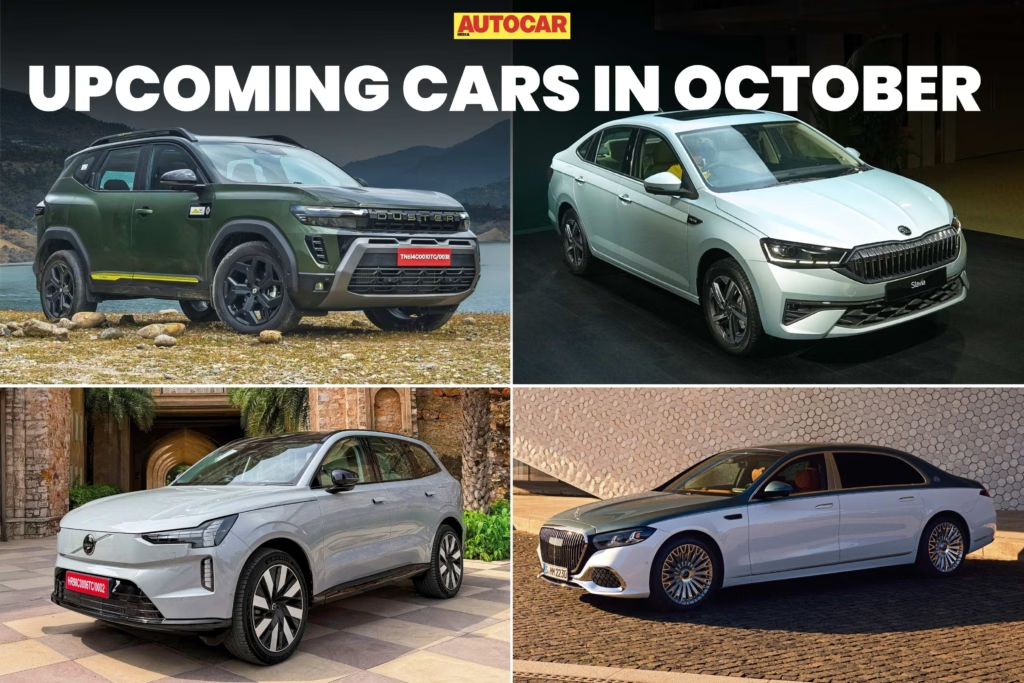
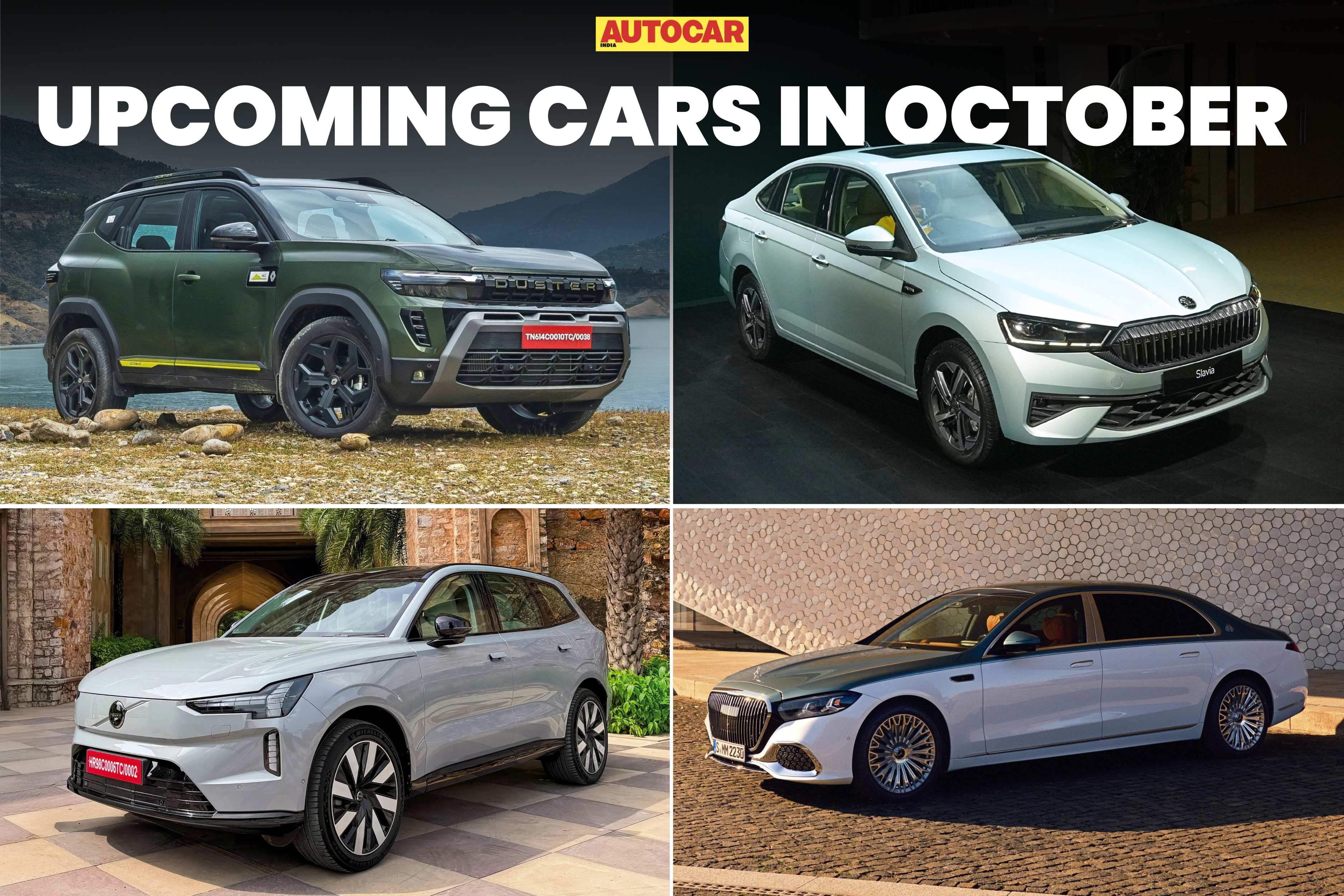
October marks the onset of the festive season in India, which means manufacturers line up a barrage of new car launches and debuts for prospective buyers to consider. It’s no different this year, with October 2026 looking quite stacked with fresh launches and debuts, especially during the first half of the month. Let’s delve into every new car that will either go on sale or debut in India next month.
Mercedes-Benz Maybach S-Class facelift
Launch: 5 October
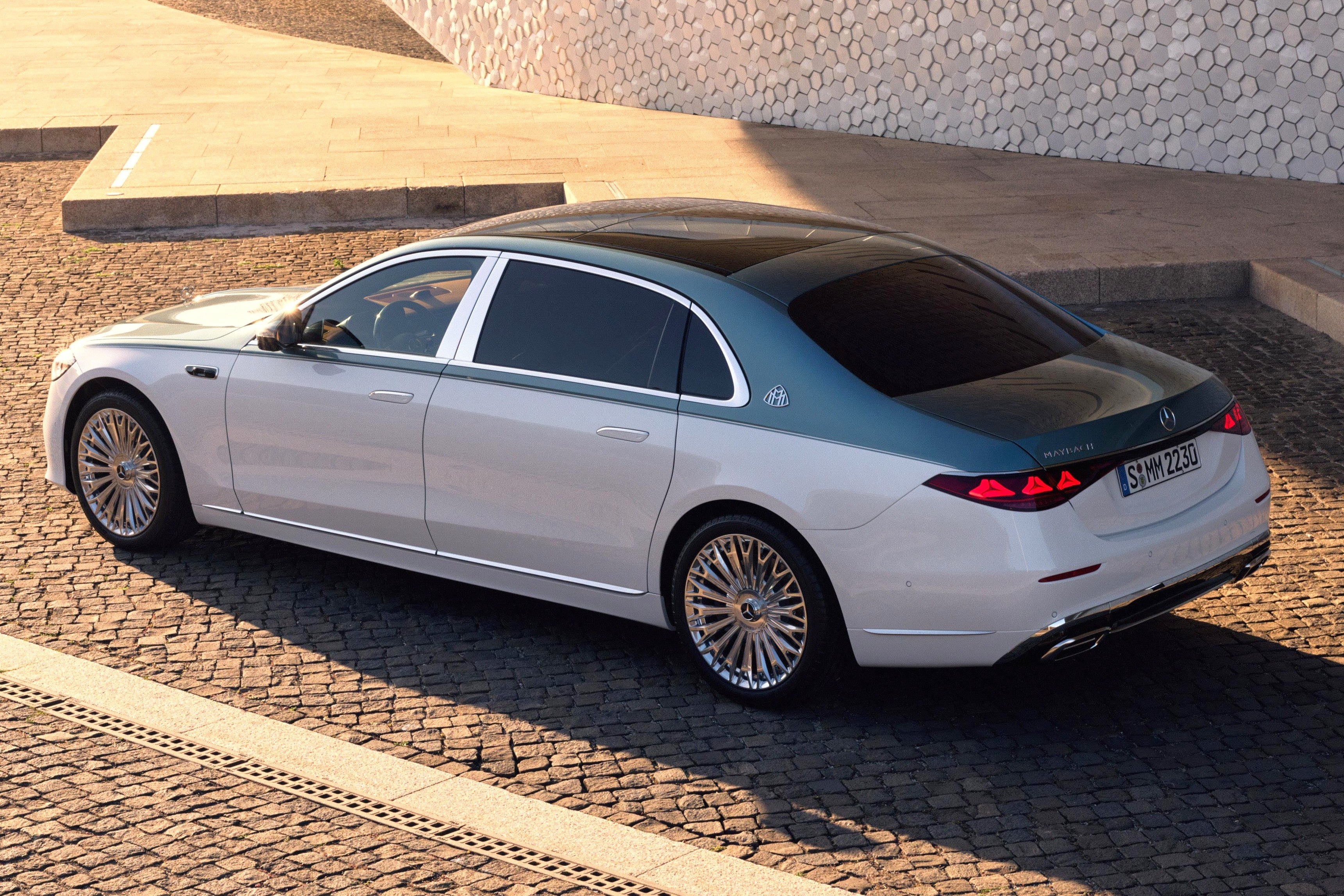
Following the launch of the 2026 S-Class facelift back in June, Mercedes-Benz India will bring the sedan’s longer and more luxurious Maybach derivative in October. Compared to its standard version, the Maybach S-Class facelift continues to be 180mm longer, but carries styling differentiators like a vertically-slatted grille adorned with a ‘Maybach’ wordmark, mildly revised bumpers, bespoke wheel designs, lots of Maybach logos peppered across the bodywork, and the signature dual-tone exterior finish.
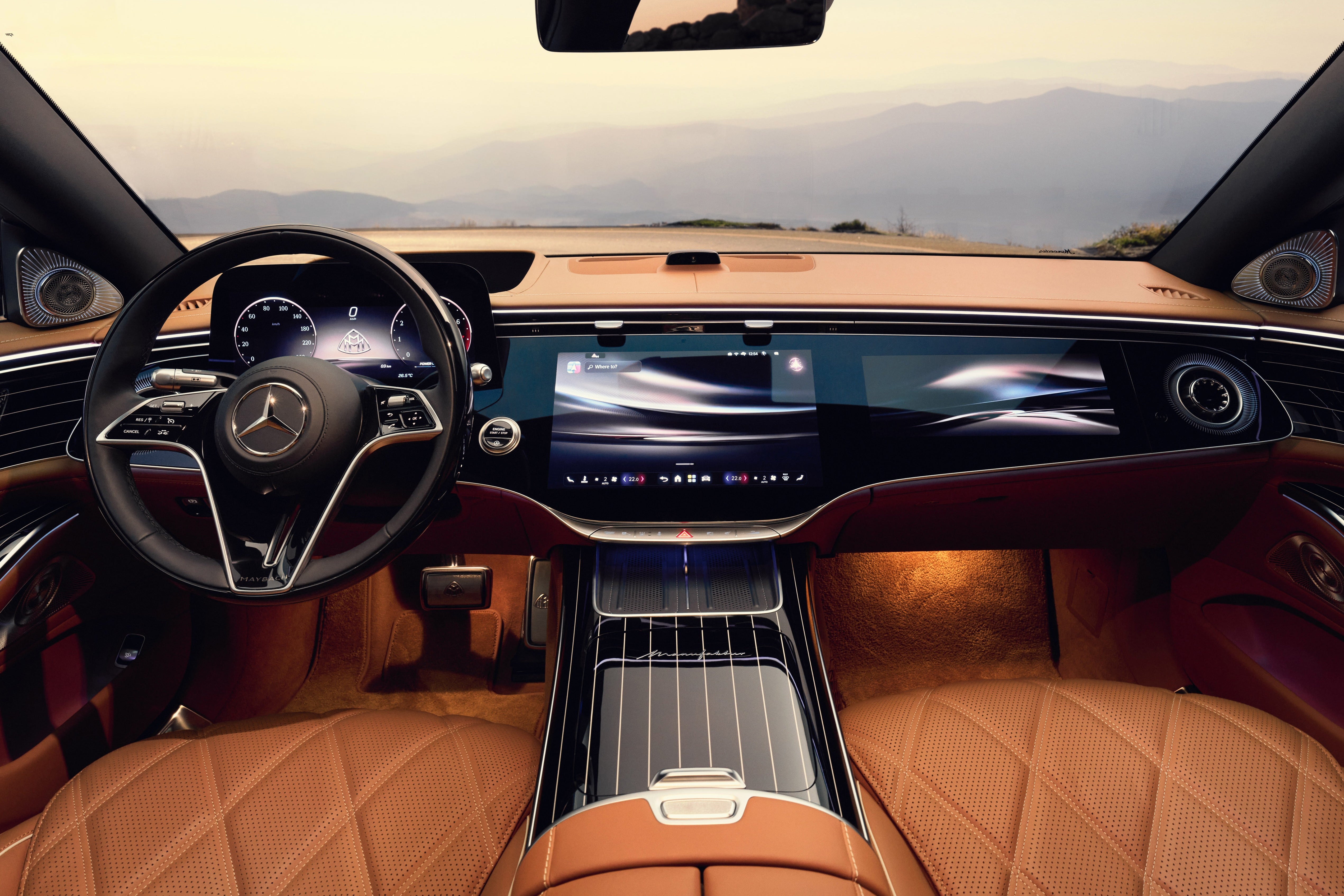
Inside, the Maybach prominently retains the standard S-Class’s Superscreen setup, comprising a 12.3-inch digital driver’s display, a 14.4-inch central touchscreen, and a 12.3-inch passenger display. New upholstery choices include extended leather and a leather-free vegan option. The rear seats remain largely unchanged, offering up to 43 degrees of recline, along with heating, ventilation, and massage functions. Globally, the Maybach S-Class can be had with either a 4.0-litre twin-turbo mild-hybrid V8 (S 580), a 4.0-litre twin-turbo V8 plug-in hybrid (S 580e), or a 612hp 6.0-litre twin-turbo V12 (S 680). Mercedes-Benz India is likely to offer the updated Maybach S-Class in S 580 or S 580e spec.
Honda Elevate facelift
Launch: 6 October
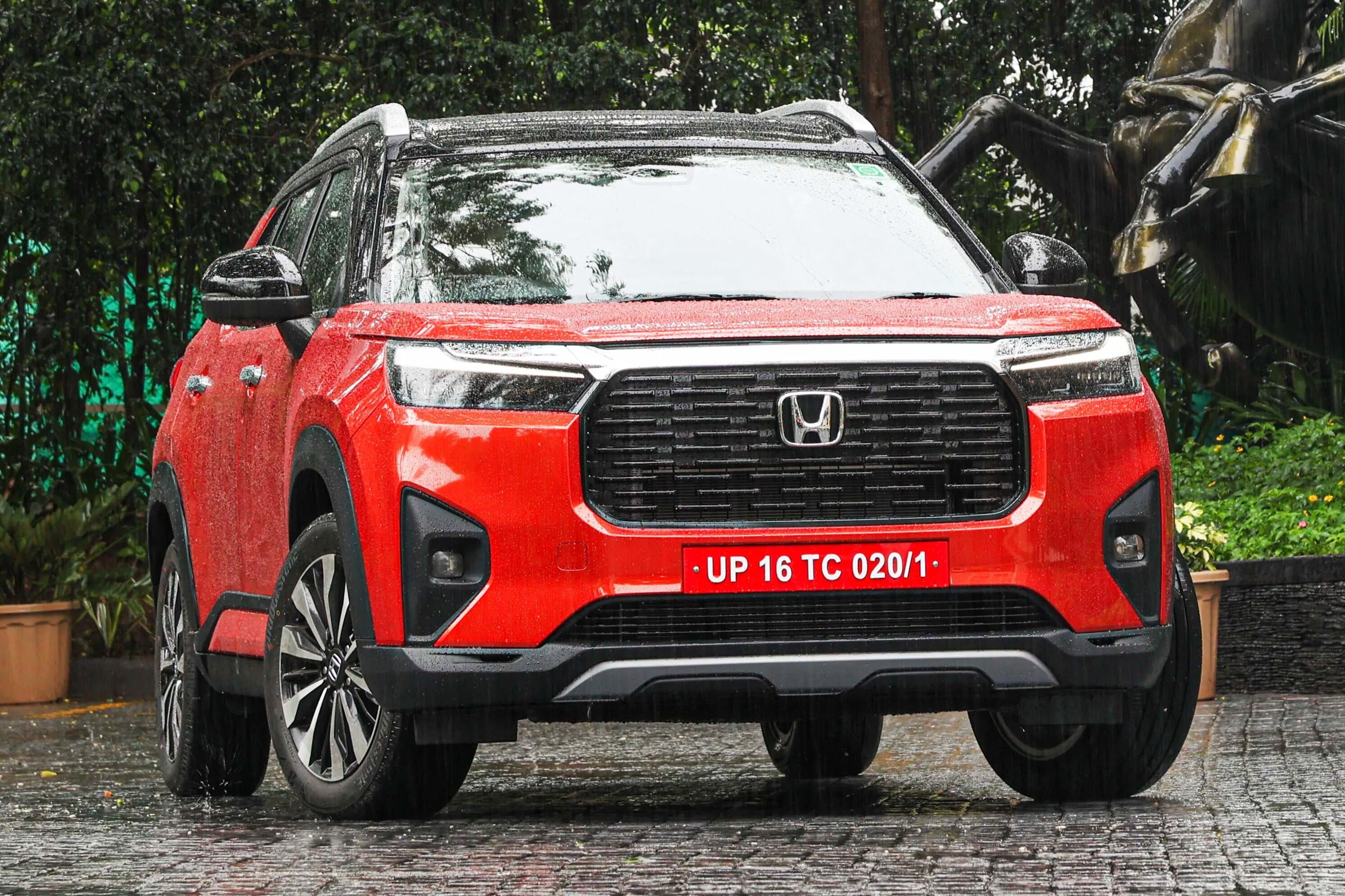
Current Honda Elevate. Image used for representation only.
Following in the footsteps of the 2026 City facelift, Honda will launch an updated version of the Elevate SUV in October. Expect the Elevate facelift to sport revised styling cues, including the headlamps, tail-lamps, bumpers, grille, and wheels. The interior is anticipated to see changes like a larger infotainment touchscreen and revised colour schemes, along with feature upgrades like ventilated front seats, a 360-degree camera, ambient lighting, and more.
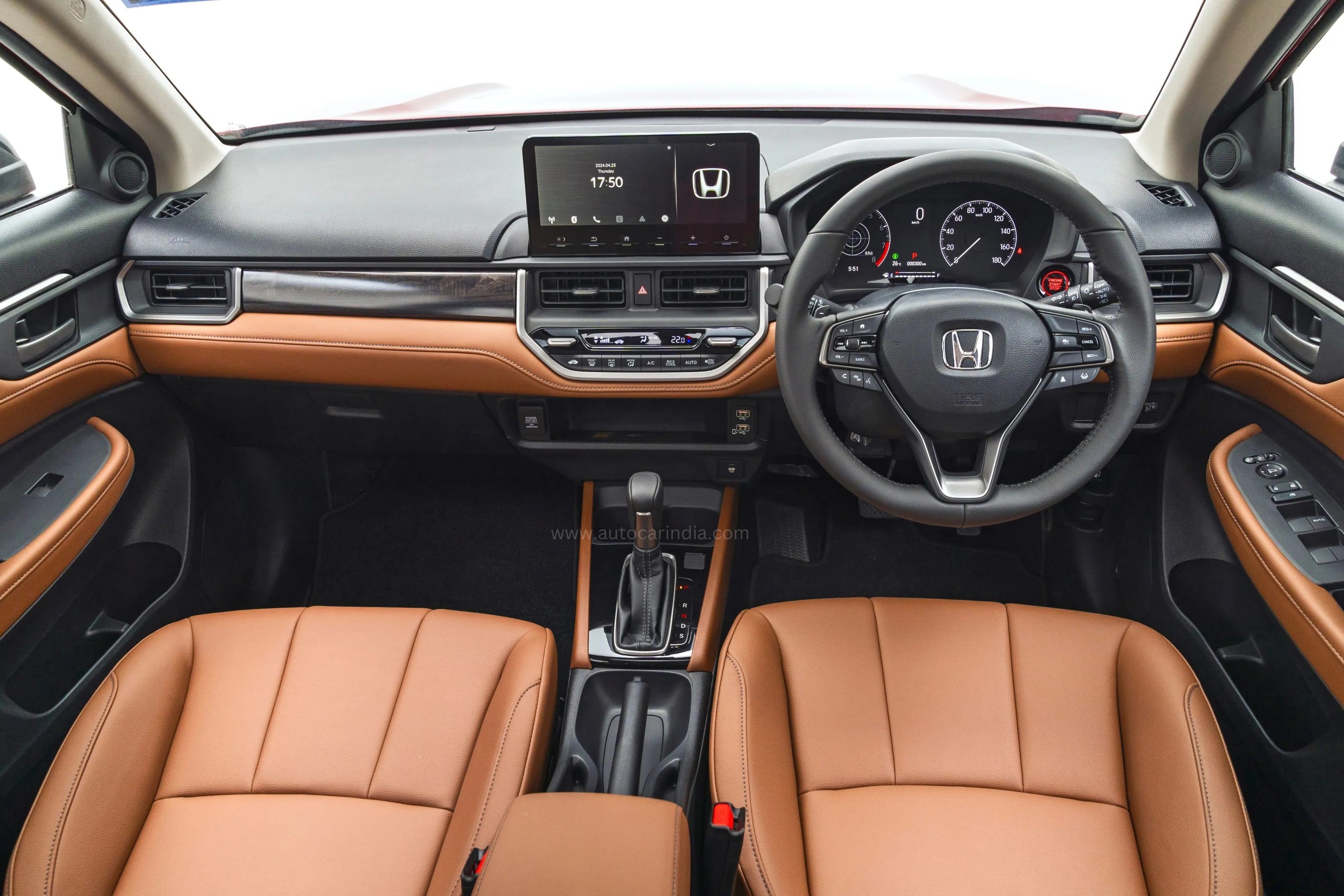
Current Honda Elevate interior. Image used for representation only.
The facelifted Elevate is likely to retain the current model’s 121hp 1.5-litre four-cylinder naturally aspirated petrol engine, and its 6-speed manual and CVT automatic gearbox options. It remains to be seen if Honda will additionally offer the Elevate facelift with the City e:HEV’s 126hp 1.5-litre four-cylinder petrol-hybrid powertrain, which is solely mated to an e-CVT automatic. A strong hybrid version of the Elevate would allow it to compete directly with established hybrid midsize SUVs like the Maruti Grand Vitara, Victoris, and Toyota Hyryder, as well as the upcoming Renault Duster hybrid – also slated for launch next month.
Skoda Slavia facelift
Launch: 6 October
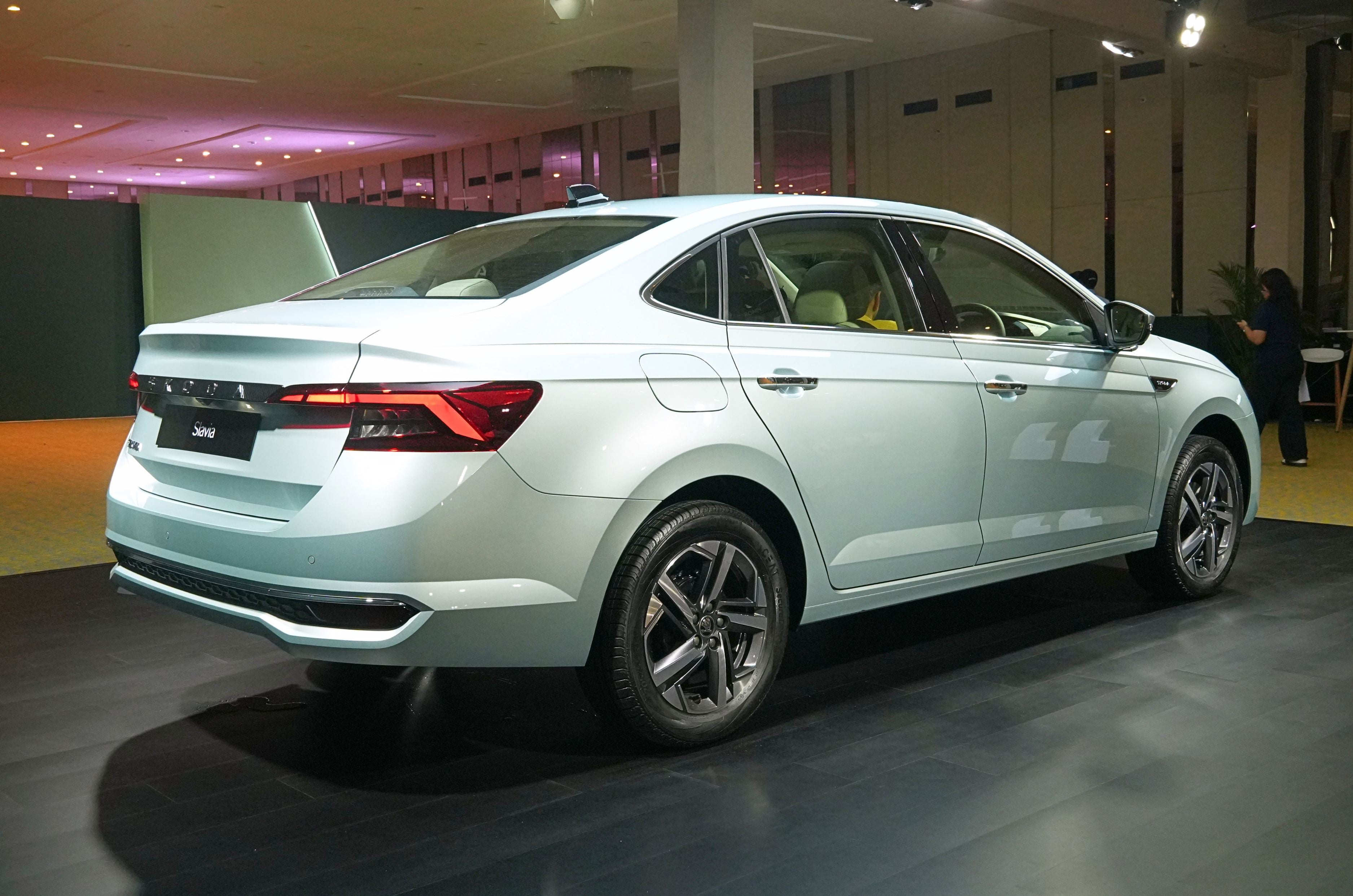
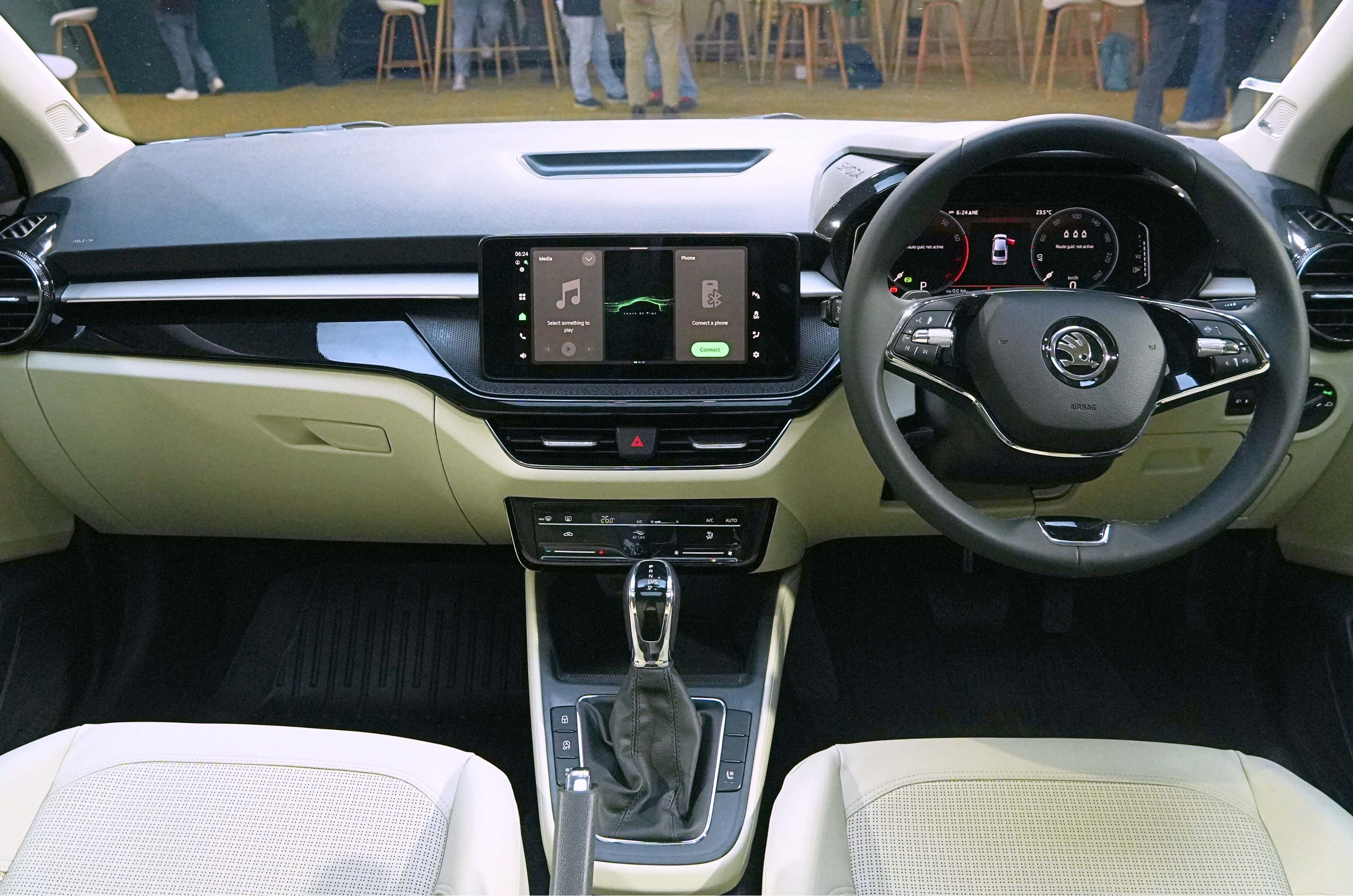
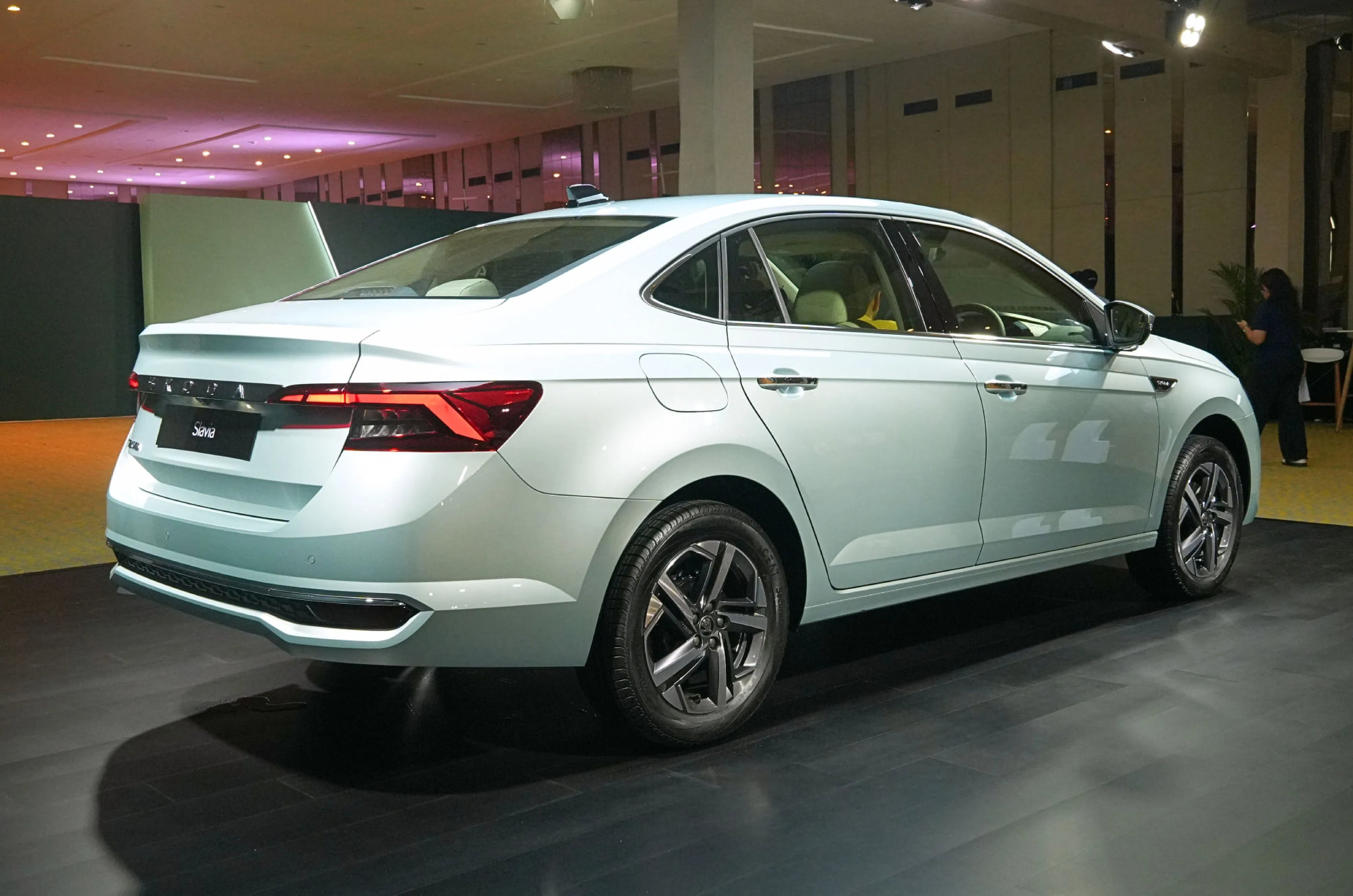
Having debuted back in August, the facelifted Skoda Slavia’s prices will be announced next month. The Slavia facelift brings a host of exterior tweaks, like new DRL signatures for the headlamps, an updated grille, redesigned bumpers, and fresh alloy wheels. Not much has changed on the inside, but there are new colour schemes on offer. Skoda has also added features like a 360-degree camera, a massage function for the outboard rear seats, a larger 10.25-inch digital driver’s display, a Google-based AI assistant, an upgraded variable-geometry AC compressor, and front parking sensors.
Under the bonnet, the Slavia facelift retains its 115hp 1.0-litre three-cylinder direct-injection turbo-petrol and 150hp 1.5-litre four-cylinder direct-injection turbo-petrol engines. The big change here is that the 6-speed torque converter automatic that was previously available for the 1.0 TSI has been swapped with an 8-speed unit, which should deliver better fuel efficiency on the highway. A 6-speed manual gearbox is also available for the 1.0 TSI, whereas the 1.5 TSI continues to be paired exclusively with a 7-speed dual-clutch automatic. The 1.5 TSI will be offered with rear disc brakes too – a much-requested upgrade.
Volvo ES90
Launch: 12 October
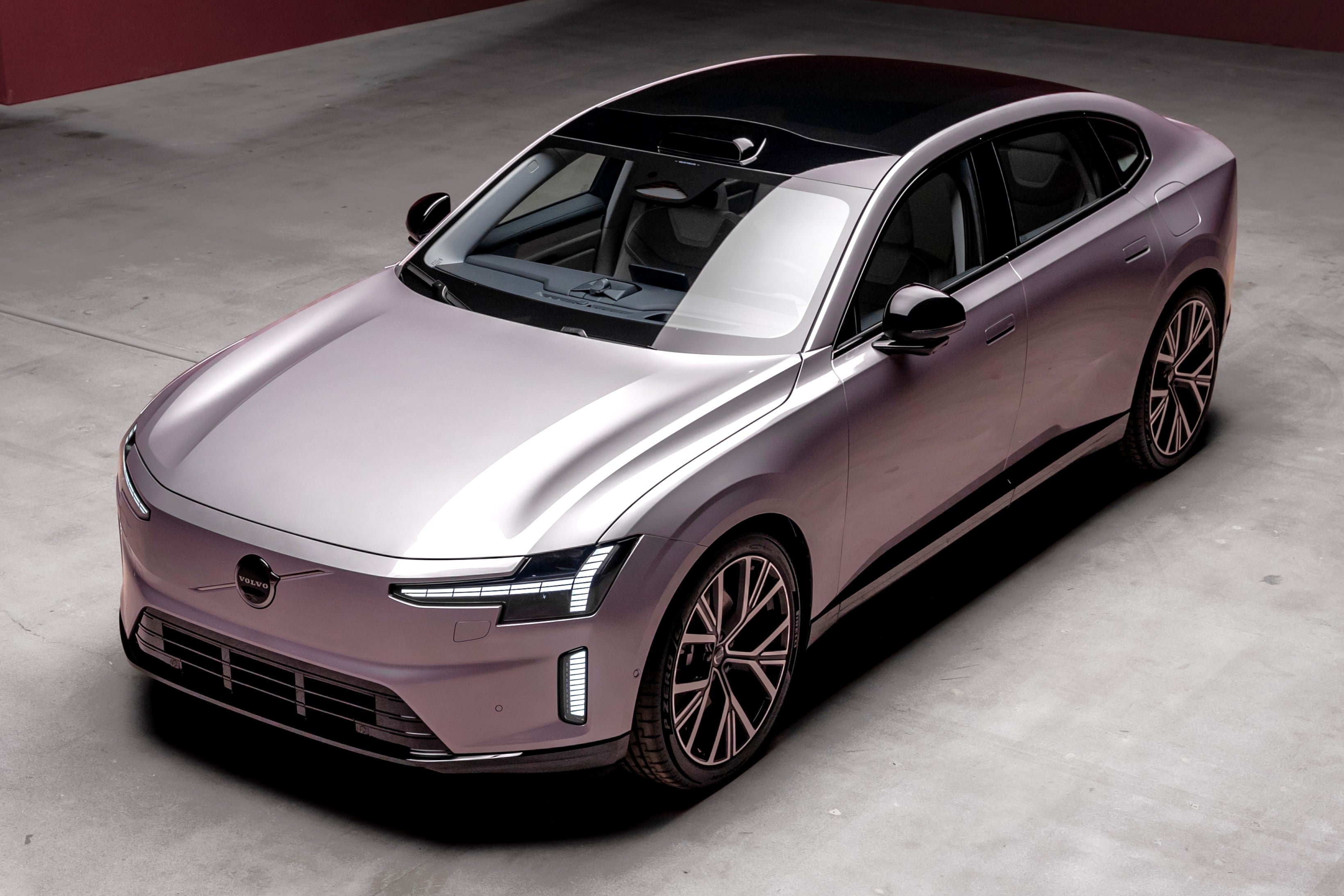
Volvo will return to the luxury sedan space next month with the launch of the all-electric ES90. It’s based on Volvo’s 800V SPA2 platform, and is likely to be offered with a 106kWh battery, dual-motor AWD setup in India. Combined output is pegged at 456hp and 670Nm, which is good for a claimed 0-100kph time of 5.3 seconds. As for WLTP range, the ES90 is rated at 696km, and the sedan can charge at up to 350kW DC, taking 22 minutes for a 10-80 percent top-up.
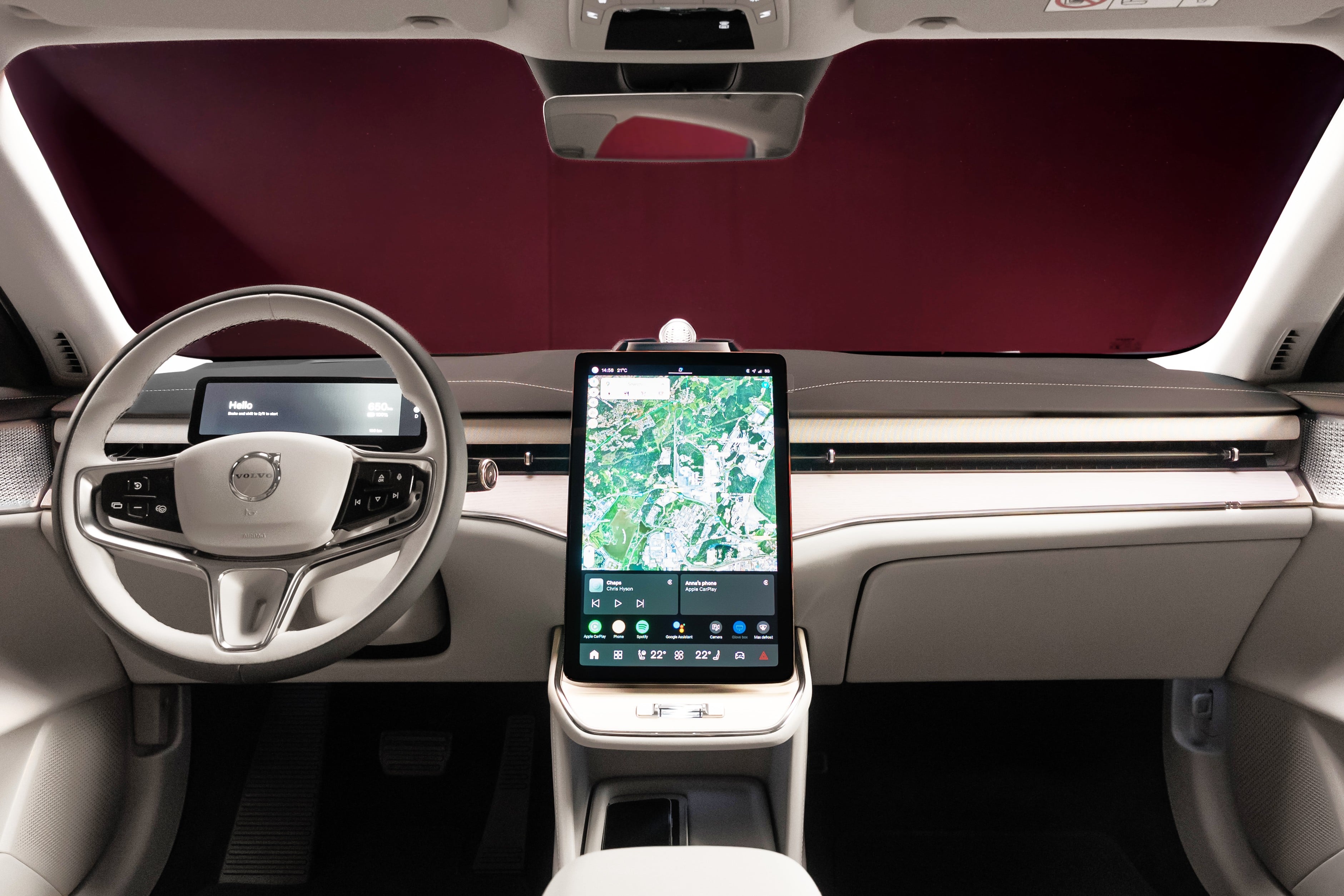
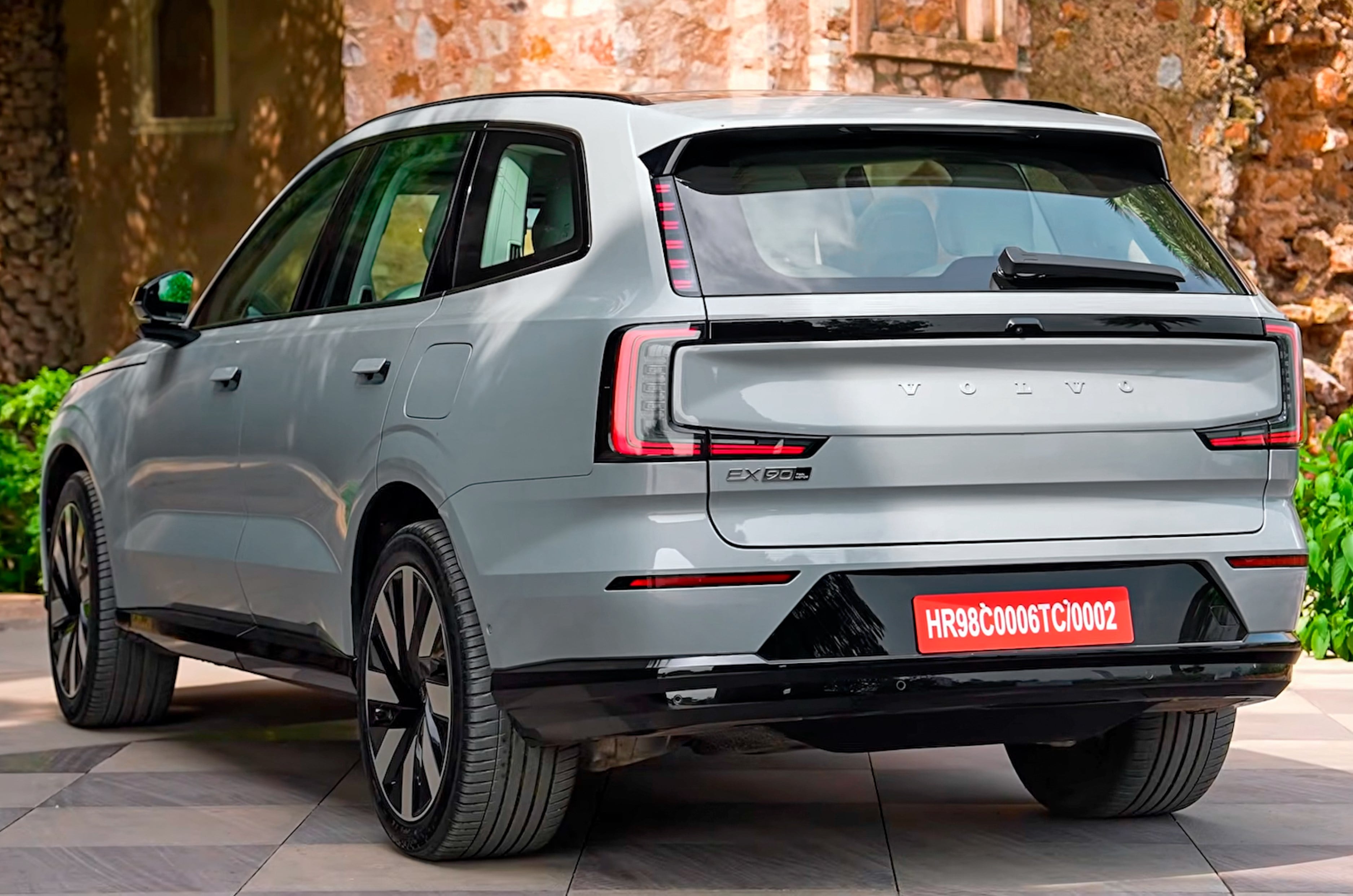
On the outside, the ES90 looks sleek and quietly aggressive, with T-shaped LED headlamps, vertically oriented front fog lamps, clean panelling, and C-shaped tail-lamps. Moreover, it has a drag coefficient of 0.25, making it the most aerodynamic Volvo car yet. Inside, the ES90 packs a 14.5-inch Google-based portrait touchscreen, a floating centre console, a three-spoke steering wheel, a slim 9-inch digital driver’s display, a 13.2-inch head-up display, a panoramic glass roof, four-zone climate control, powered front seats, Level 3 ADAS, and a Bose sound system.
Volvo EX90
Launch: 12 October
Alongside the ES90, Volvo will launch its SUV counterpart, the EX90. The electric SUV is also based on the SPA2 platform and is expected to offer the same 106kWh dual-motor AWD powertrain. Owing to its higher-riding stance, the EX90’s WLTP range is slightly lower at 625km, but the SUV impressively claims the same 5.3sec 0-100kph time.
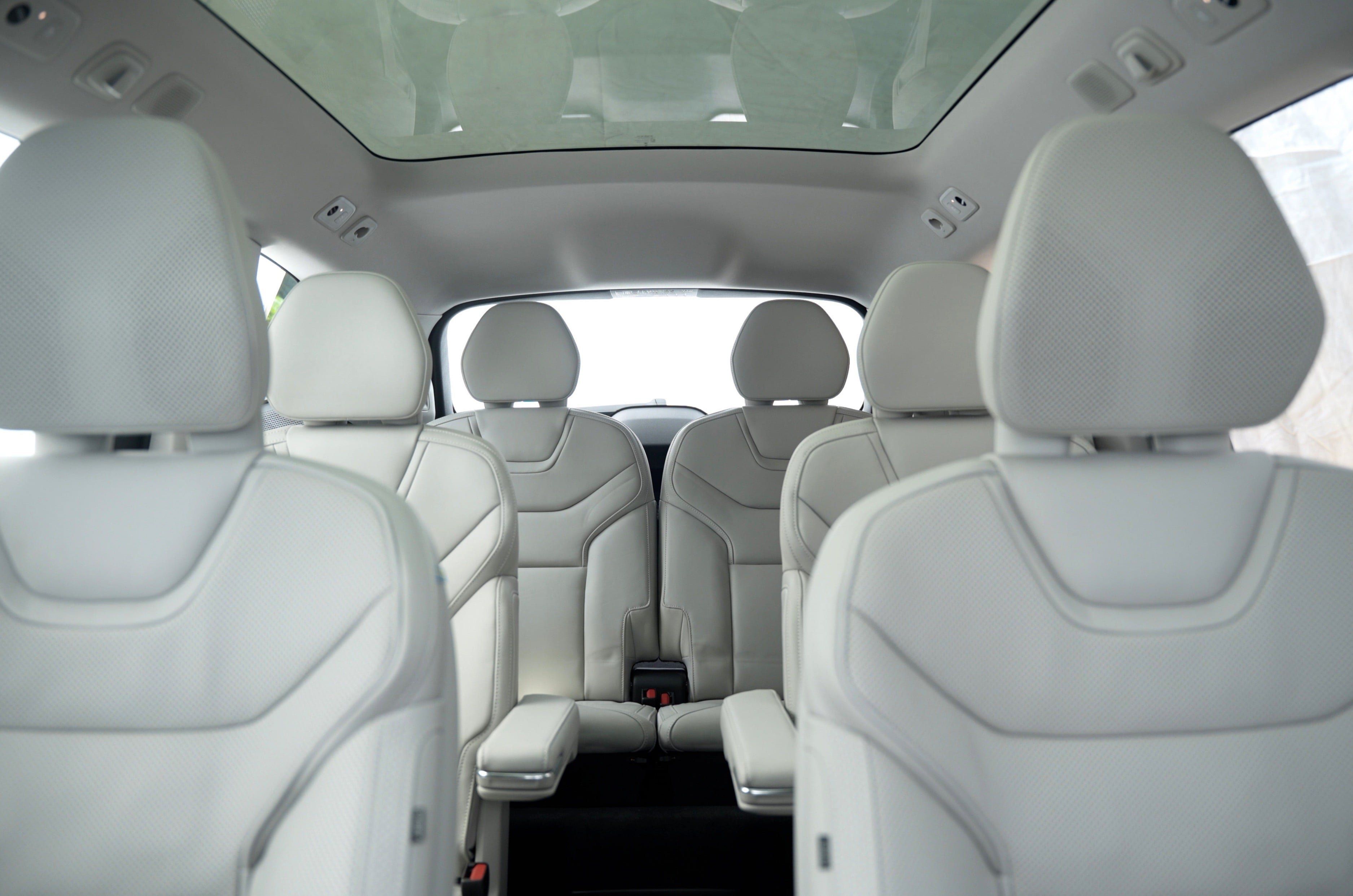
Even in terms of exterior design, the core elements are quite similar between the EX90 and ES90. The same holds true for the interior and equipment list as well, with the only major difference being that the EX90 can seat up to six occupants and gets second-row captain’s chairs.
Toyota Glanza facelift
Debut: 14 October
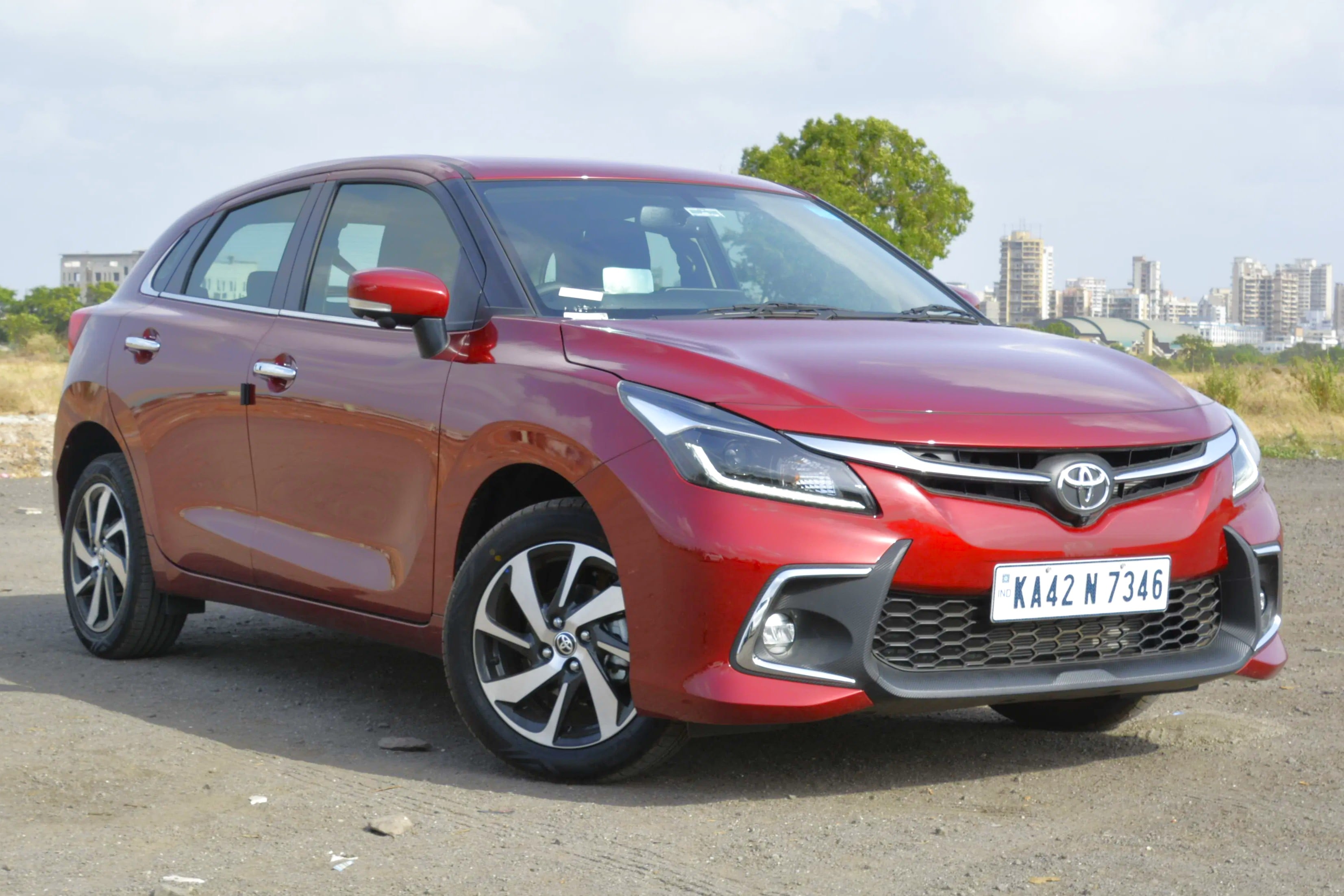
Current Toyota Glanza. Image used for representation only.
Just a month after the launch of the Baleno facelift, the updated form of its Toyota-badged counterpart, the Glanza, will be revealed. The Glanza facelift is likely to feature styling revisions similar to those of the updated Baleno, like a larger grille, redesigned bumpers, and new alloy wheel designs. Inside, the Toyota hatchback’s dashboard layout is expected to be largely unchanged, save for fresh seat upholstery. New creature comforts are likely to include Level 2 ADAS, a wireless charging pad, and ventilated front seats.
Current Toyota Glanza interior. Image used for representation only.
Under the bonnet, the Glanza facelift is anticipated to mirror the Baleno in dropping its current 90hp 1.2-litre four-cylinder K12N petrol engine in favour of the 83hp 1.2-litre three-cylinder Z12E mill. Like in the Baleno facelift, this engine is expected to be offered with either a 5-speed manual or 5-speed AMT in the updated Glanza, along with a 70hp CNG option.
Third-gen Audi Q3
Launch: 16 October
Audi India will launch the latest generation of its entry-level SUV, the Q3, next month. The India-spec third-gen Q3 was unveiled back in August, and will continue to rival the BMW X1 and Mercedes-Benz GLA. On the outside, the new Q3 is larger than its predecessor in every dimension and bears a sharper design language, which includes split LED headlamps, a wide grille, 18-inch alloy wheels, and a rear light bar with an illuminated Audi emblem.
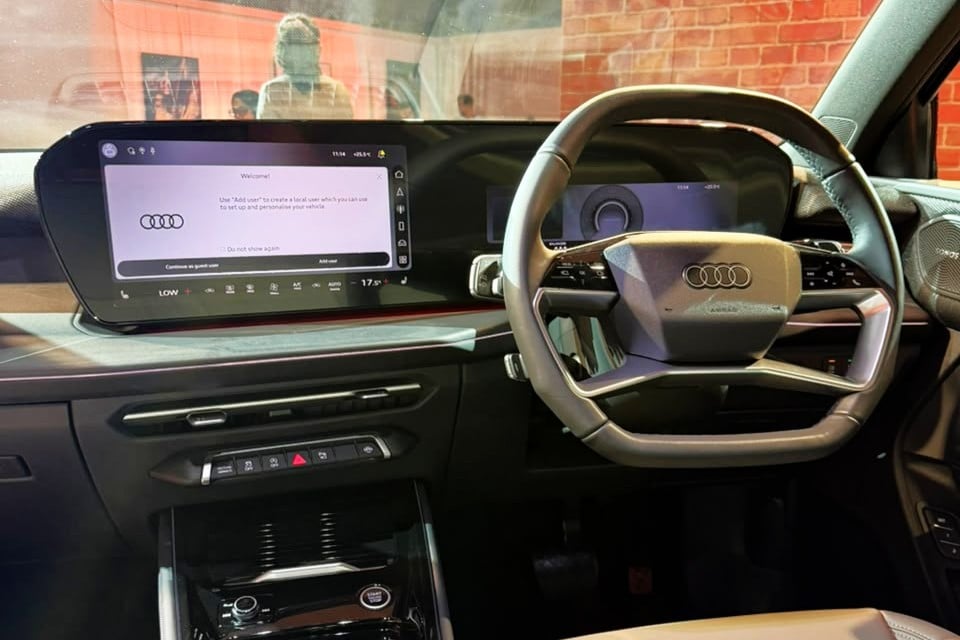
The interior of the third-gen Q3 is more modern and feature-loaded too, offering a 12.8-inch touchscreen, an 11.9-inch digital driver’s display, a new squircle-shaped four-spoke steering wheel, ambient lighting, a Sonos sound system, a panoramic sunroof, ambient lighting, a 360-degree camera, dual-zone climate control, among others. Under the bonnet, the Q3 continues to get a 204hp 2.0-litre four-cylinder direct-injection turbo-petrol engine, mated to a 7-speed dual-clutch automatic and Audi’s Quattro AWD system. 0-100kph comes up in a claimed 7.1 seconds, and the top speed is rated at 229kph.
Renault Duster hybrid
Launch: 17 October
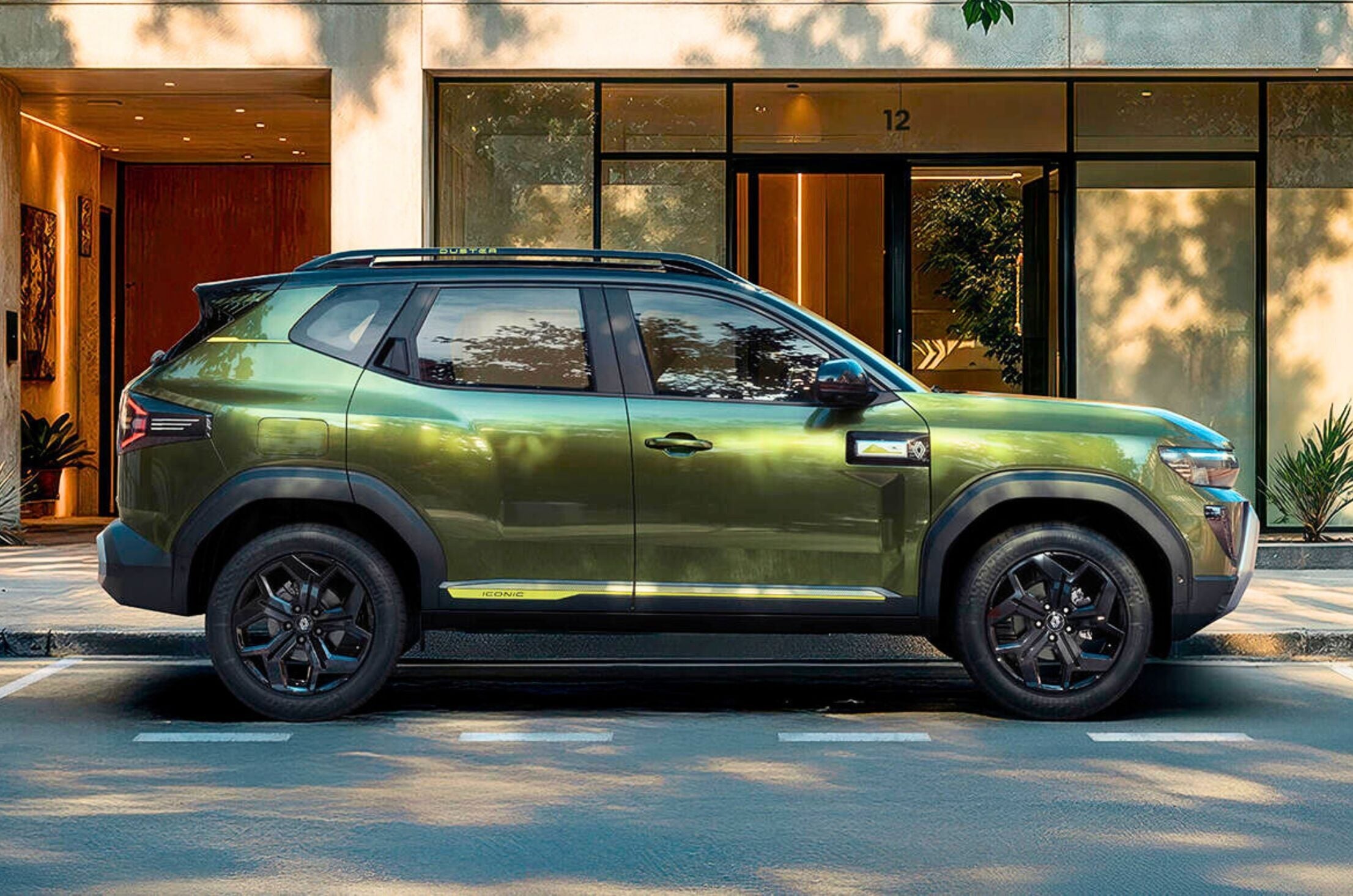
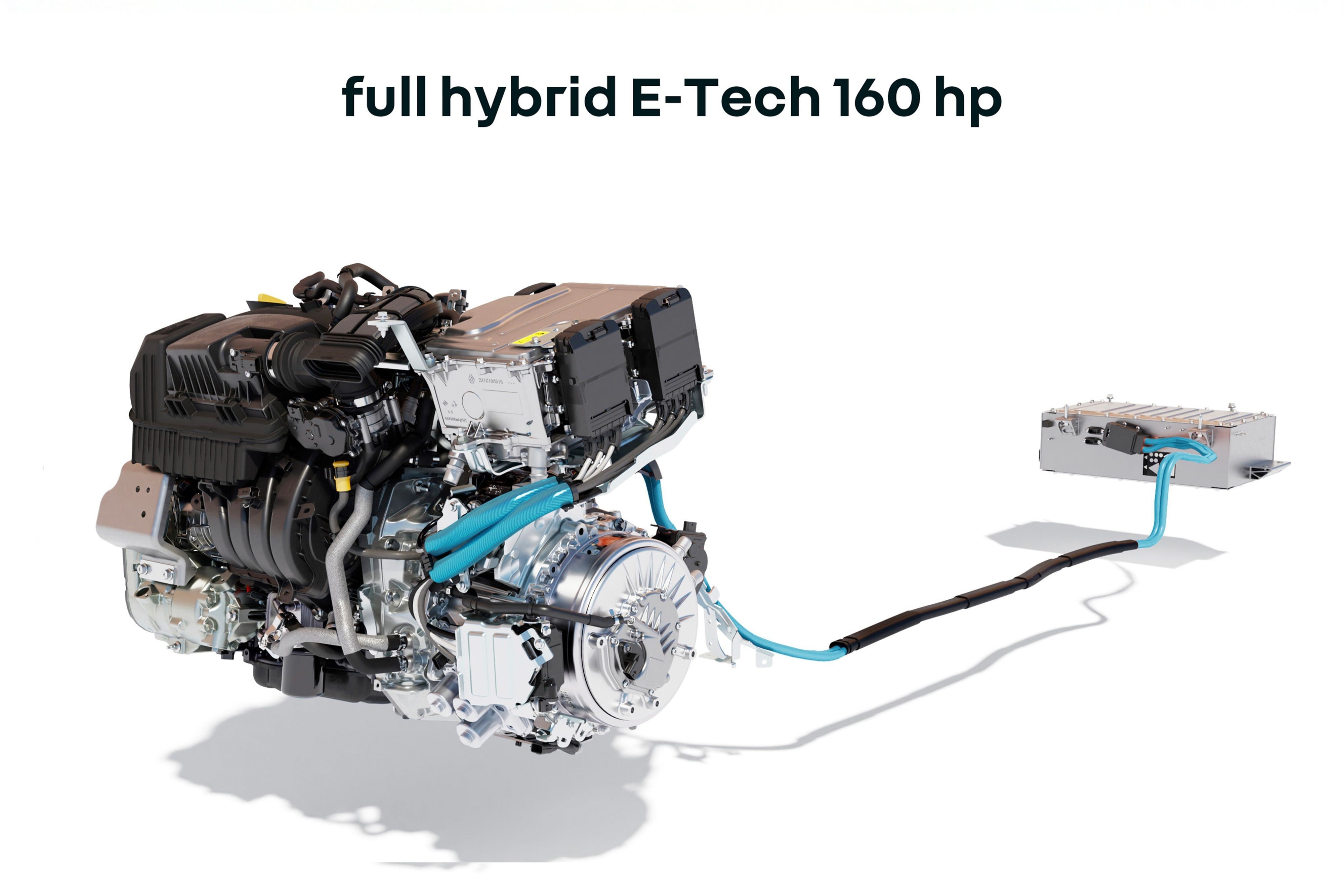
Since its launch earlier this year, the Renault Duster has been available with a couple of turbo-petrol engines only, but that will change come October 17. Renault will bolster the Duster’s line-up with a strong hybrid powertrain dubbed the E-Tech 160. It pairs a 1.8-litre four-cylinder naturally aspirated petrol engine with two electric motors and a 1.4kWh battery pack, developing a combined 160hp and 172Nm.
This setup will be paired with a segment-first 8-speed dedicated hybrid transmission (DHT) that uses fixed gear ratios, unlike the e-CVTs seen in hybrid SUV rivals like the Grand Vitara, Victoris, and Hyryder. The DHT should therefore enable a more natural driving feel to the Duster hybrid. Thanks to its 1.4kWh battery, the E-Tech 160 is also claimed to deliver 80 percent of urban driving in all-electric mode, which should help the Duster hybrid achieve great fuel efficiency.
Hyundai Bayon
Launch: Mid to late October
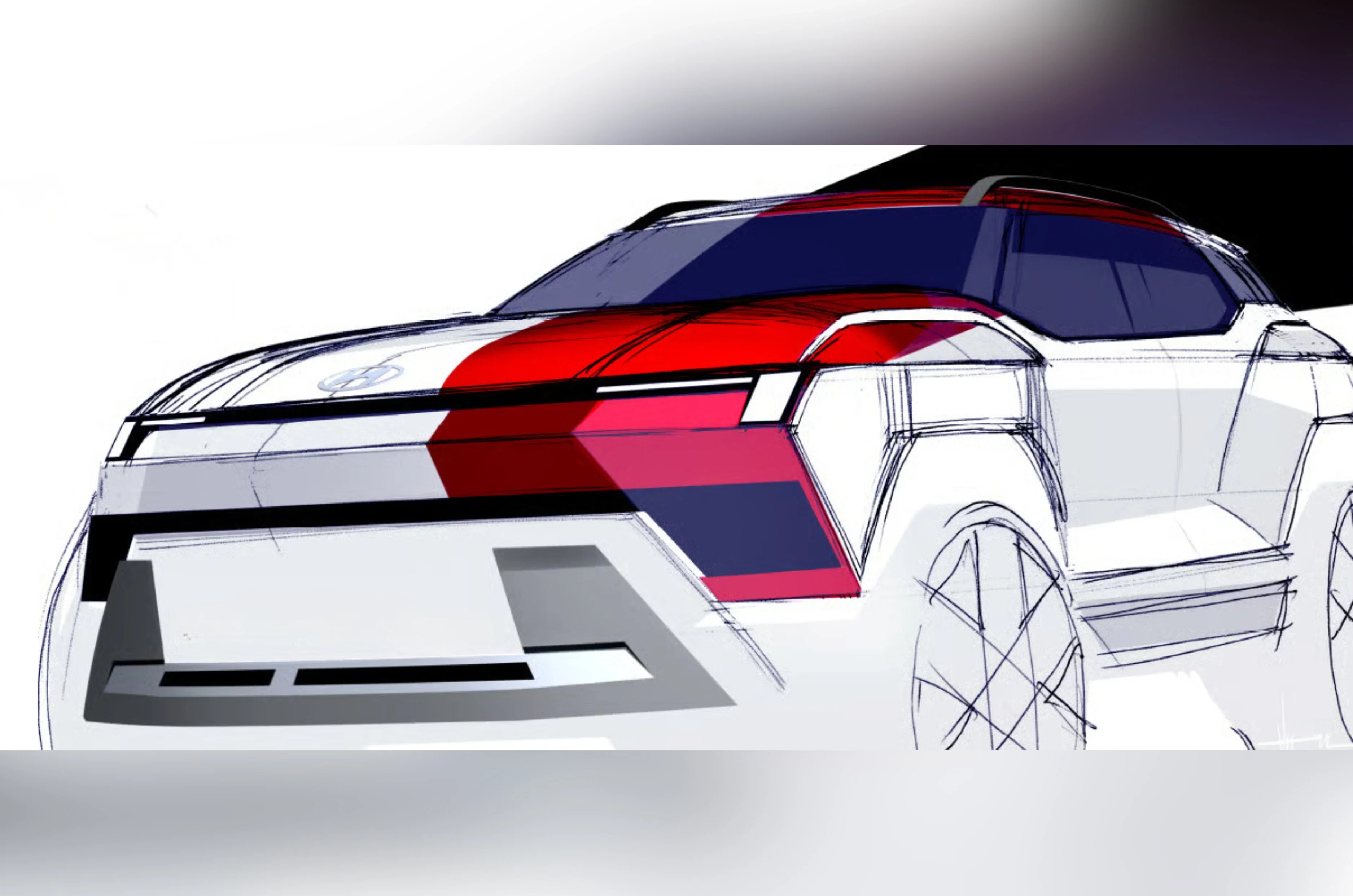
Hyundai’s second midsize SUV for India, the Bayon, is expected to be fully revealed and launched next month – bookings commenced on 23 September. The Bayon will slot between the Venue and Creta, offering the latter’s 1.5-litre naturally aspirated engine in petrol and CNG guises. Gearbox options are likely to include a 6-speed manual and CVT automatic. On the outside, the Bayon will feature Hyundai’s ‘Art of Steel’ design language, with styling cues like L-shaped front and rear LEDs, rakish proportions, an upward-sloping window line, and more. It’s also expected to be the first Hyundai car to come with an underbody CNG tank.
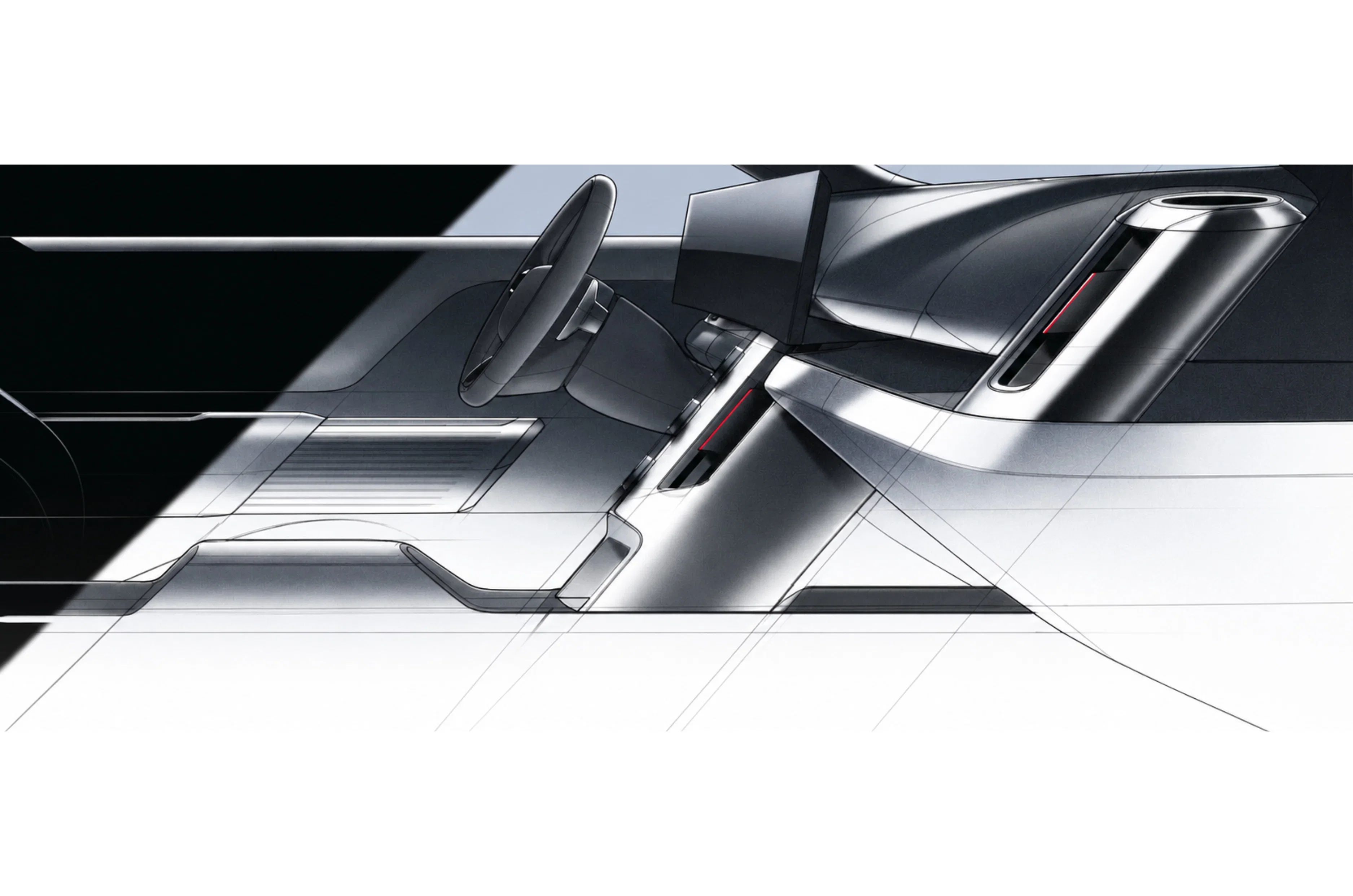
The interior of the Bayon is likely to offer a curved dual-screen setup, a three-spoke steering wheel bearing Hyundai’s four-dot motif, and a vertically oriented centre console – the dashboard layout will resemble that of the fourth-gen i20, which was revealed for the Brazilian market a few months ago.
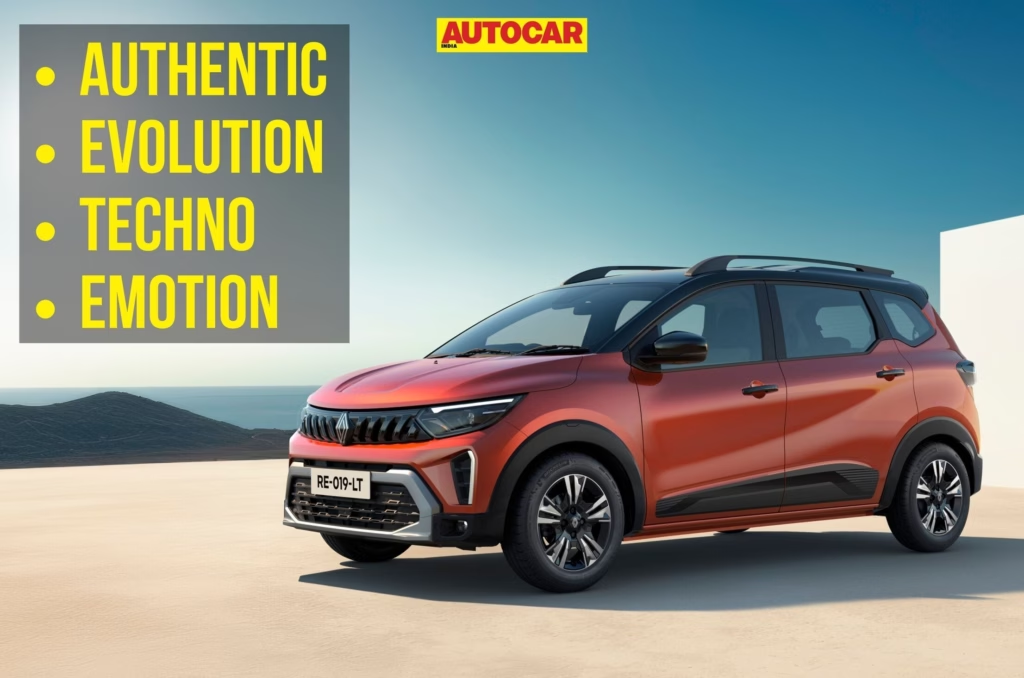
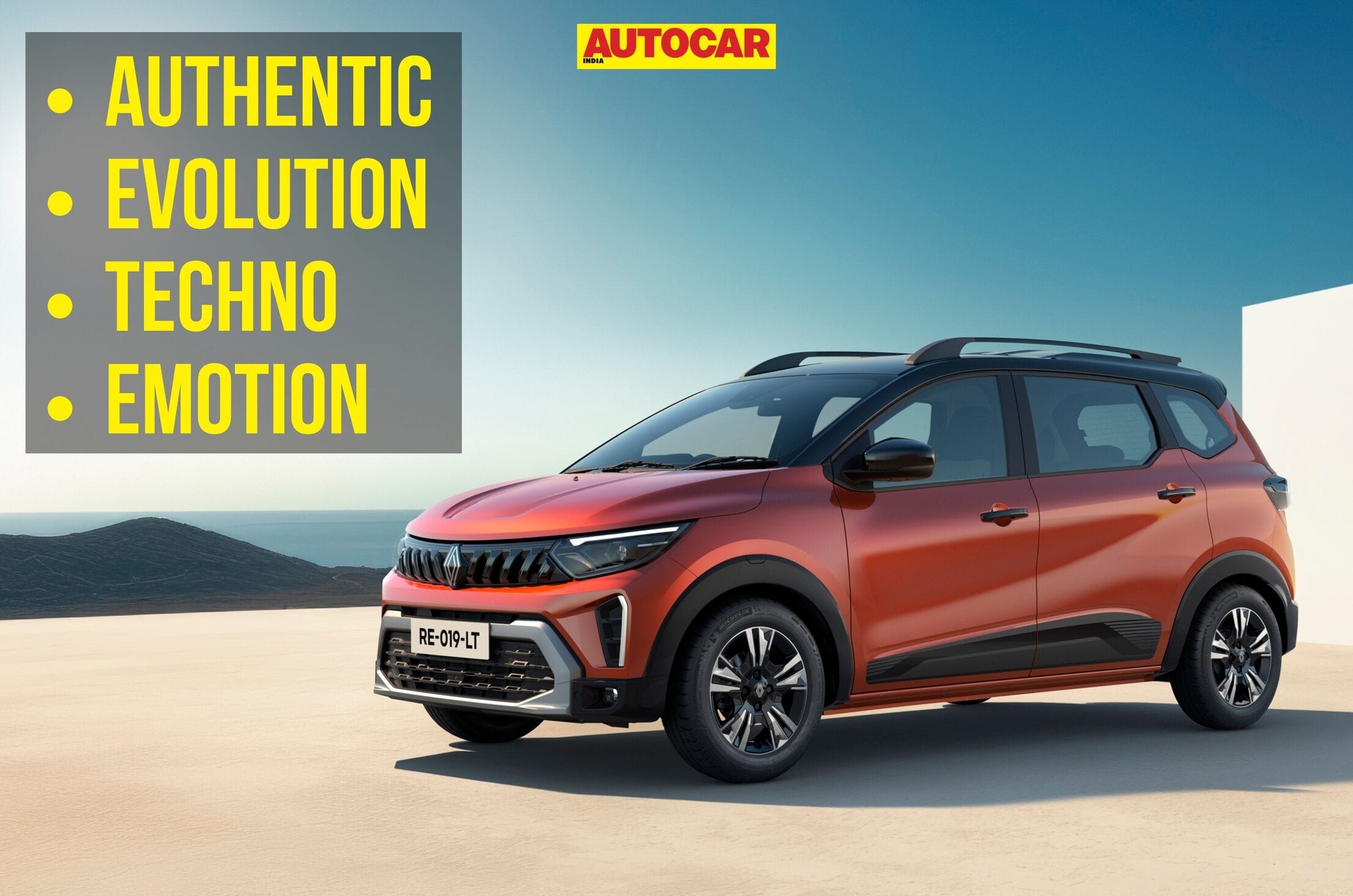
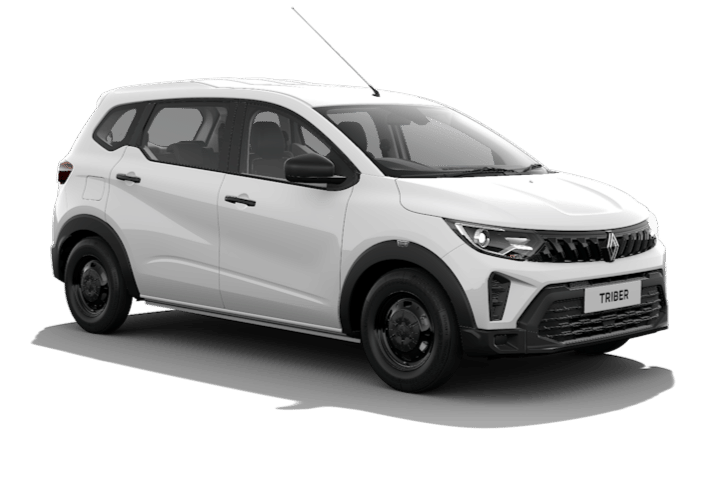
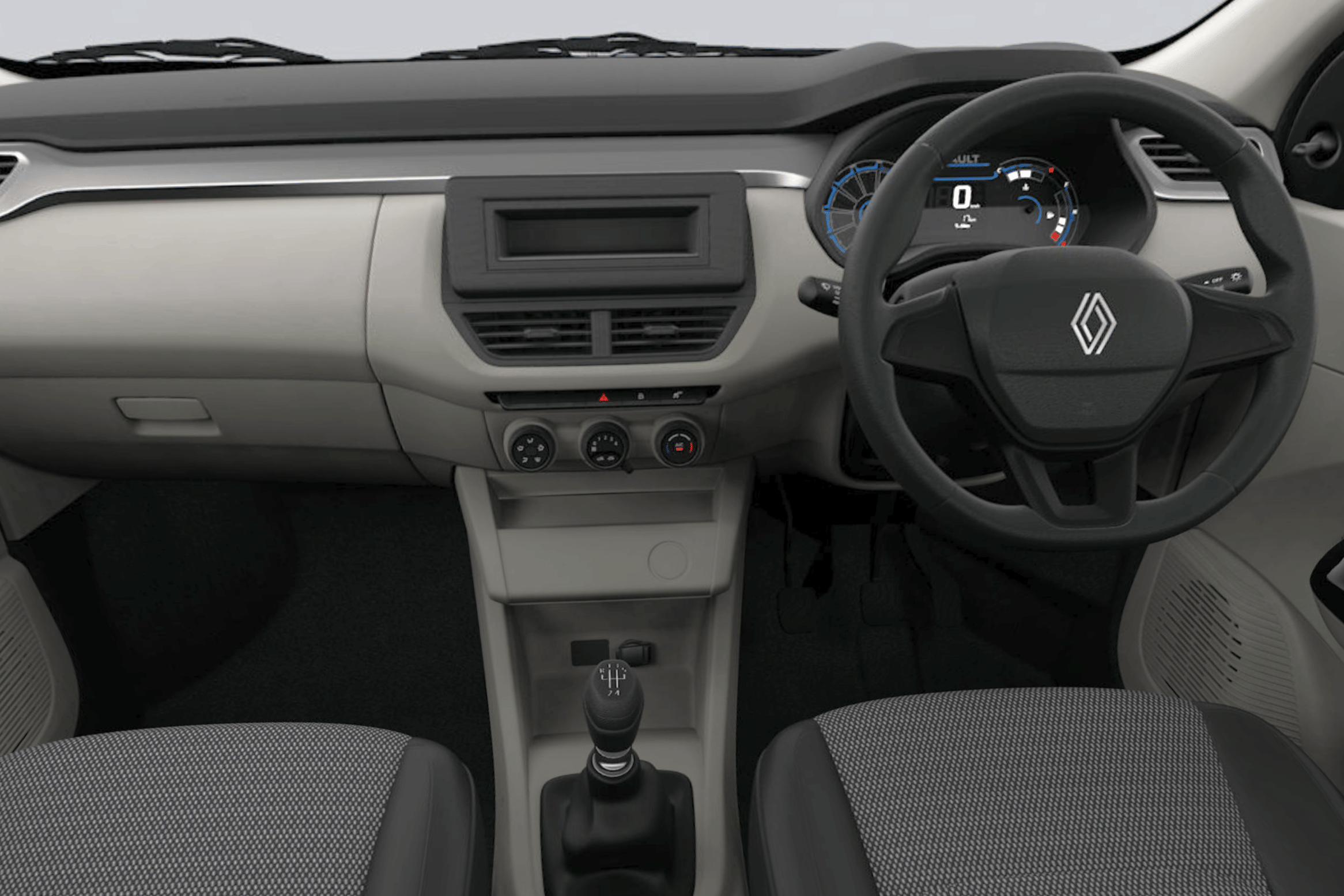
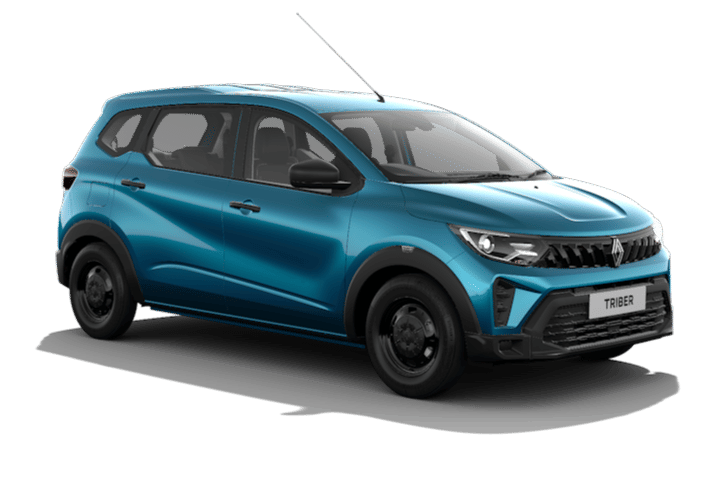
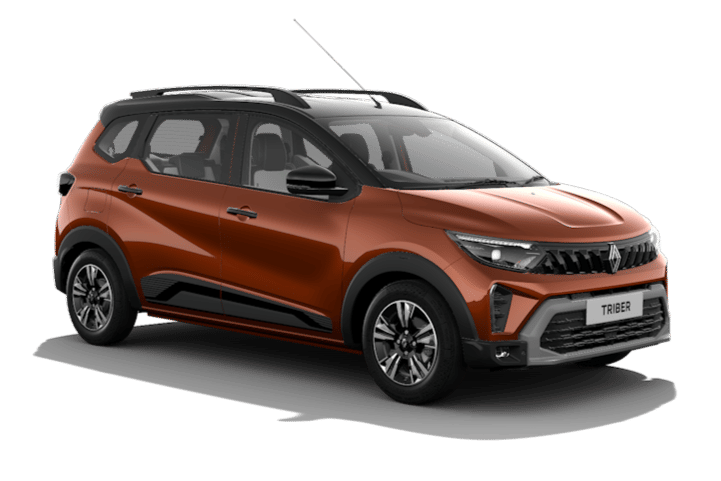
The Renault Triber facelift was launched in India in 2025, bringing a bevy of exterior and interior updates, along with a new variant nomenclature. The Triber comes in four trim levels, available with both naturally aspirated and turbo-petrol engine options. Let’s have a look at the prices, powertrains, colours and features available with each variant of the Triber.
Renault Triber price list and powertrains
Trim
MT
AMT
Authentic
5.80
–
Evolution
6.73
–
Evolution Turbo
7.84
–
Techno
7.44
–
Techno Turbo
8.53
–
Emotion*
8.05
8.52
Emotion Turbo*
8.99
–
*Dual-tone paint option available at an additional cost of Rs 21,000.
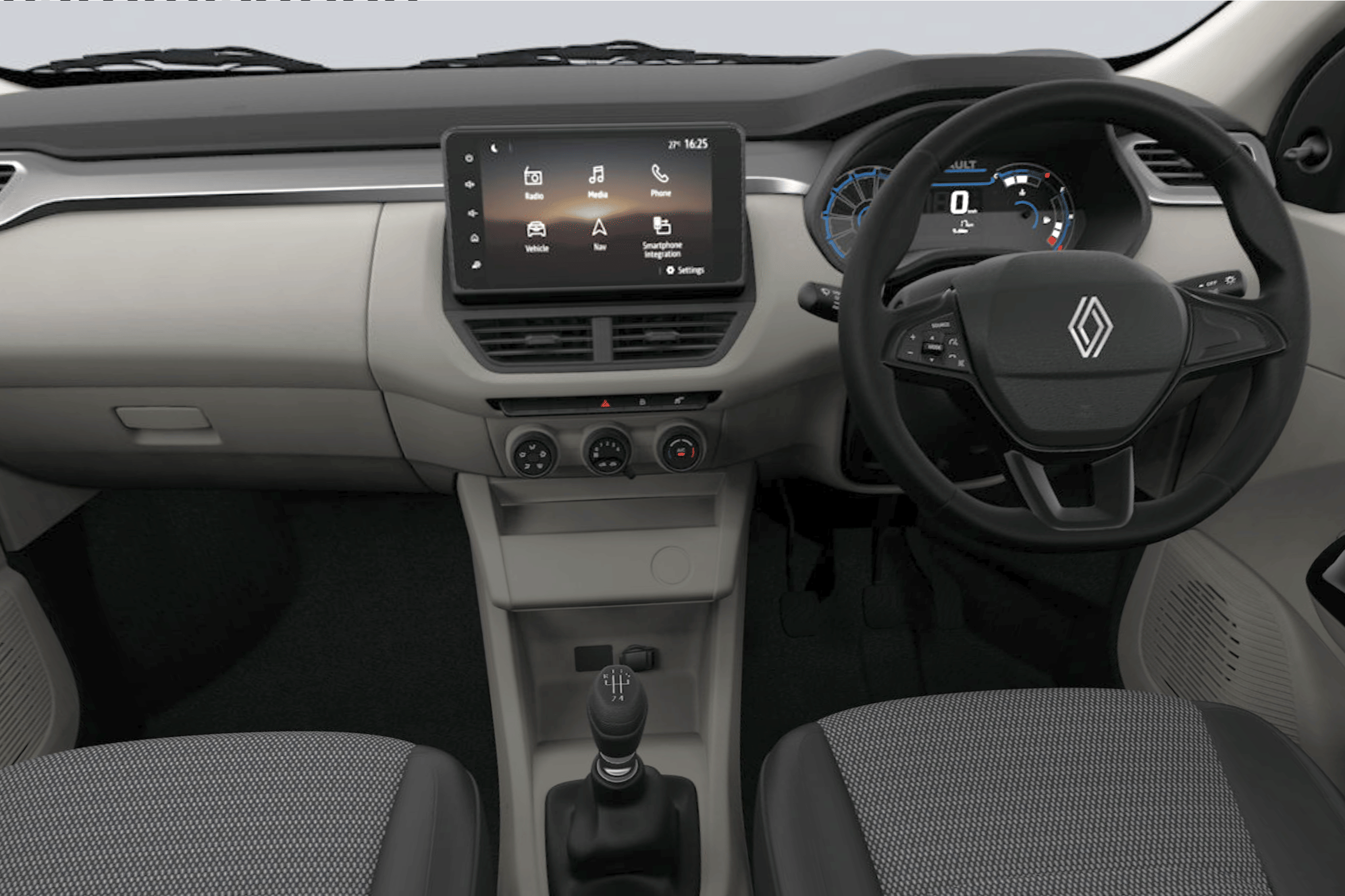
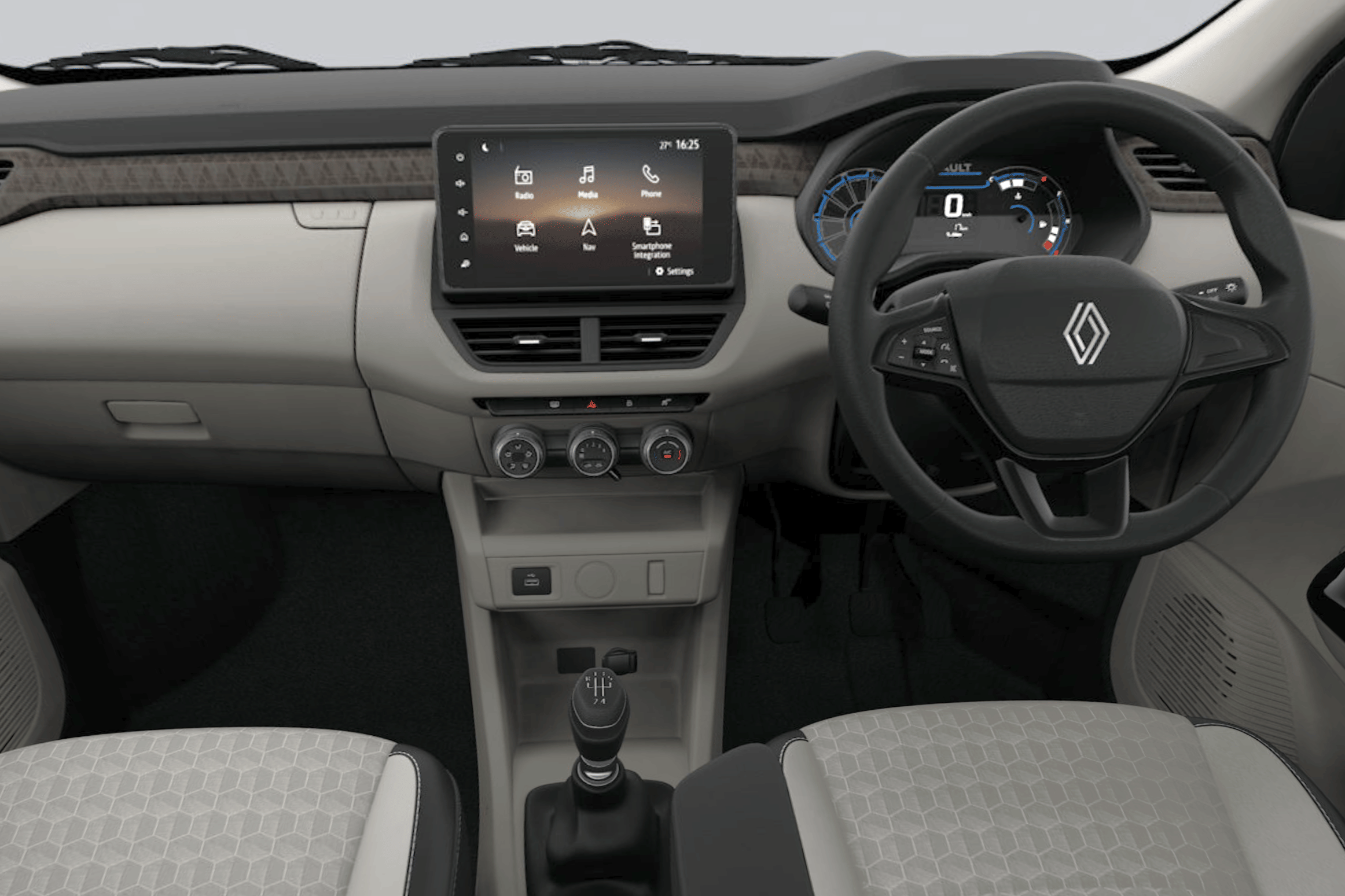
The naturally aspirated 1.0-litre three-cylinder petrol engine produces 72hp and 96Nm and is paired with a five-speed manual or, in the top-spec Emotion, a five-speed AMT. The 1.0-litre turbo-petrol produces 100hp and 180Nm and is available only with a five-speed manual.
Renault Triber colour options
Nine colour options, three of which are dual-tone
Renault Triber variant-wise colours
Authentic
Evolution
Techno
Emotion
Ice Cool White
Yes
Yes
Yes
Yes
Stealth Black
Yes
Yes
Yes
Yes
Moonlight Silver
Yes
Yes
Yes
Yes
Shadow Grey
No
Yes
Yes
Yes
Zanskar Blue
No
Yes
Yes
Yes
Amber Terracotta
No
No
Yes
Yes
Ice Cool White with black roof
No
No
No
Yes
Shadow Grey with black roof
No
No
No
Yes
Amber Terracotta with black roof
No
No
No
Yes
The Triber colour options include six monotone shades. There are three dual-tone finishes, but these are available only with the range-topping Triber Emotion trim and command a Rs 21,000 premium. The entry-level Triber Authentic comes only in three colours – Ice Cool White, Stealth Black and Moonlight Silver. In addition to those, the mid-spec Triber Evolution is available in Shadow Grey and Zanskar Blue. Lastly, the one below the top Triber Techno also gets the option of an Amber Terracotta colour.
LED daytime running lamps (DRLs), projector headlights, fog lamps
Dual-tone wheel covers
Smart access card
Cooled lower glove box
Push-button start/stop
Wireless Android Auto and Apple CarPlay
Wireless charging pad
7-inch TFT digital instrument cluster
Automatic climate control
Third row 12V socket
Auto headlights with follow me home function
Rain-sensing wipers
Cruise control (MT only)
Front parking sensors
Which Renault Triber variant should you consider buying?
Techno Turbo offers the best balance of features and performance
With the 2026 update, Renault has moved several features down to the Triber’s lower variants. The Techno gets equipment including six airbags, an 8-inch touchscreen, steering-mounted controls, a rear-view camera, height adjustment and an armrest for the driver’s seat, electrically foldable ORVMs, a rear wiper and defogger, and two front tweeters.
The Techno Turbo, priced at Rs 8.53 lakh, also gets the new 100hp, 180Nm turbo-petrol engine, paired with a five-speed manual gearbox. It costs Rs 1.09 lakh more than the naturally aspirated Techno, with the extra cost going towards the more powerful engine. For buyers who want the turbo engine, the Techno Turbo offers the key equipment without the additional cost of the top-spec Emotion.
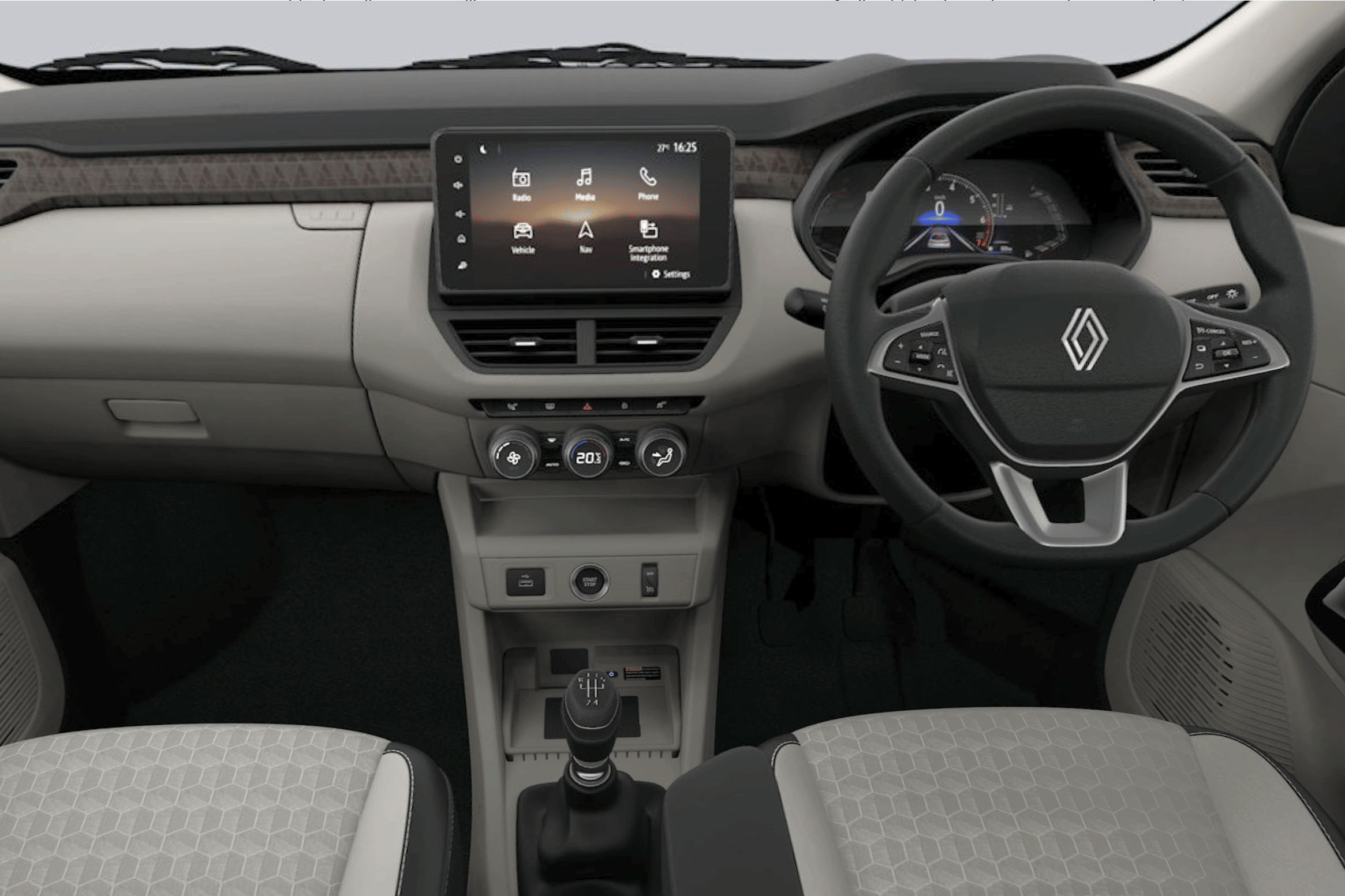
The Emotion adds features such as automatic climate control, wireless Android Auto and Apple CarPlay, wireless charging, automatic headlights, rain-sensing wipers, cruise control and front parking sensors. It is also the only variant available with the naturally aspirated engine and an AMT.
There are vastly different ideas of what luxury means. For some, it is craftsmanship – the quality of the materials, the precision of the detailing and the sense of occasion that comes with them. For others, it is exclusivity, space or technology. But perhaps the most valuable form of luxury today is something considerably harder to manufacture: time.
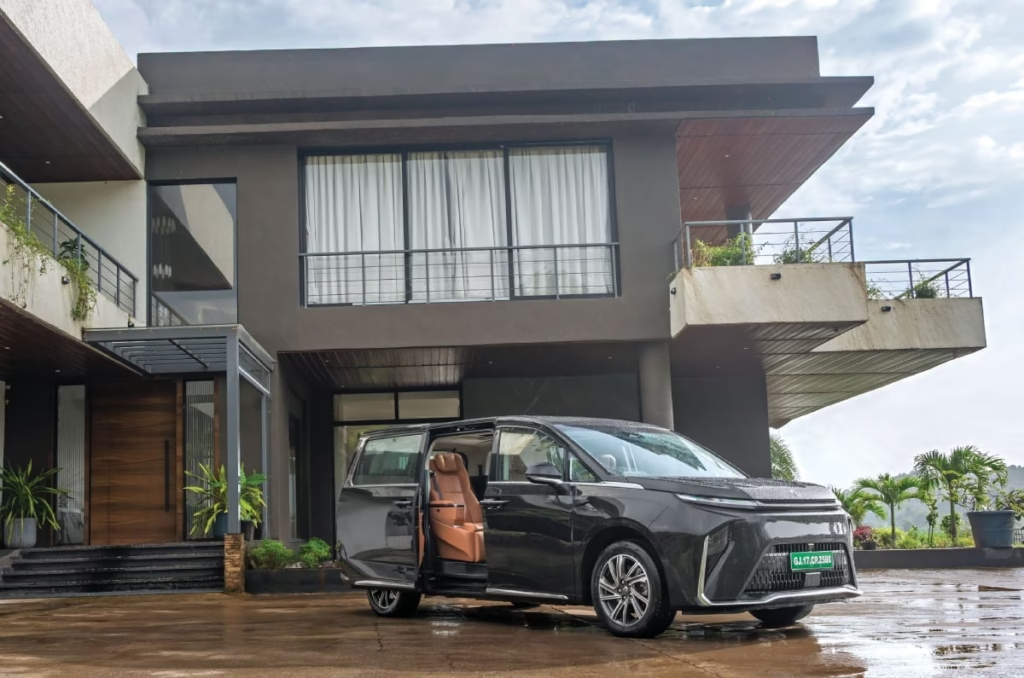
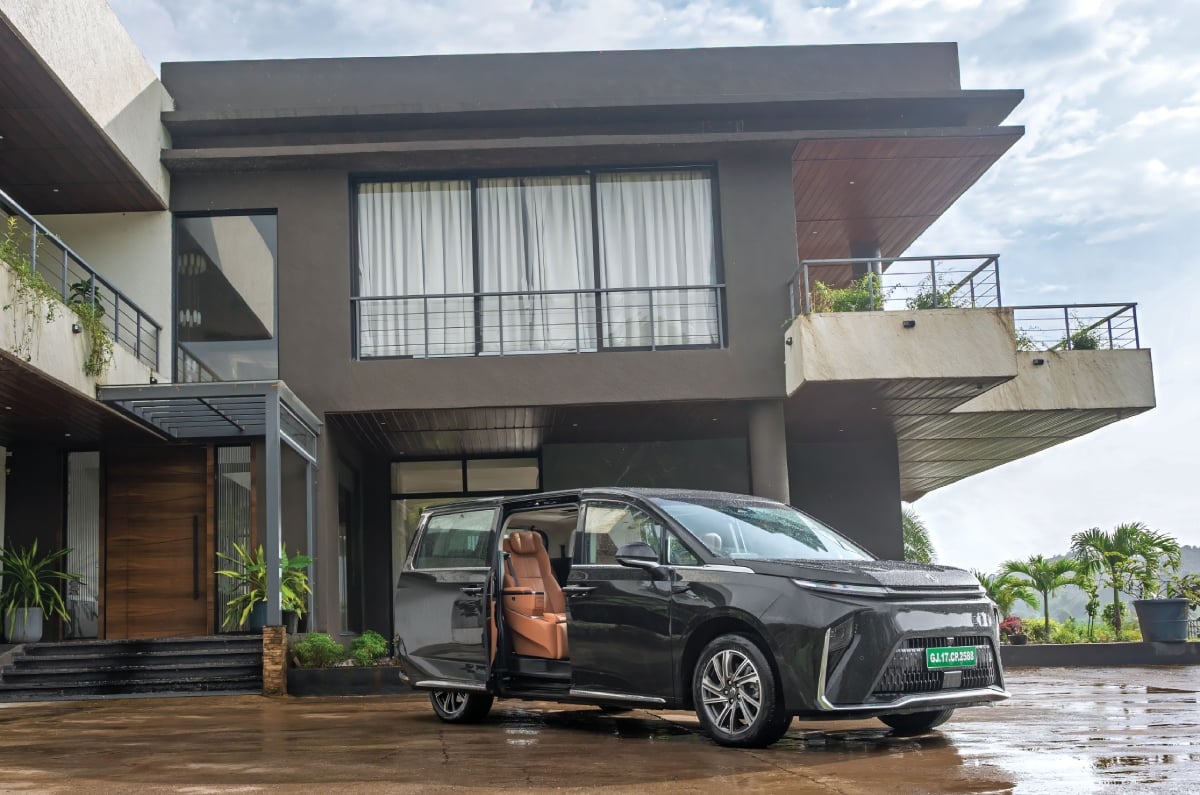
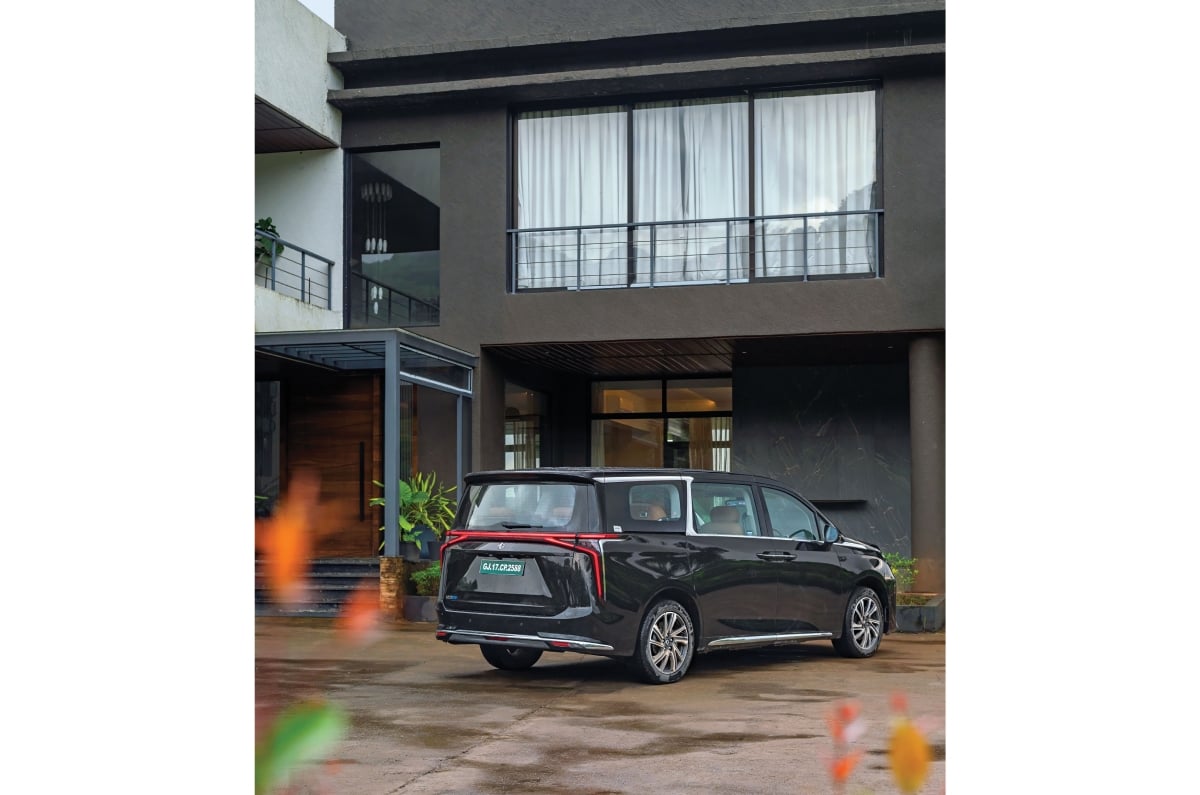
The freedom to spend a journey exactly as you want, without worrying about the road ahead, is the kind of luxury the MG M9 is built around. And nowhere is that more evident than in its Presidential second row.
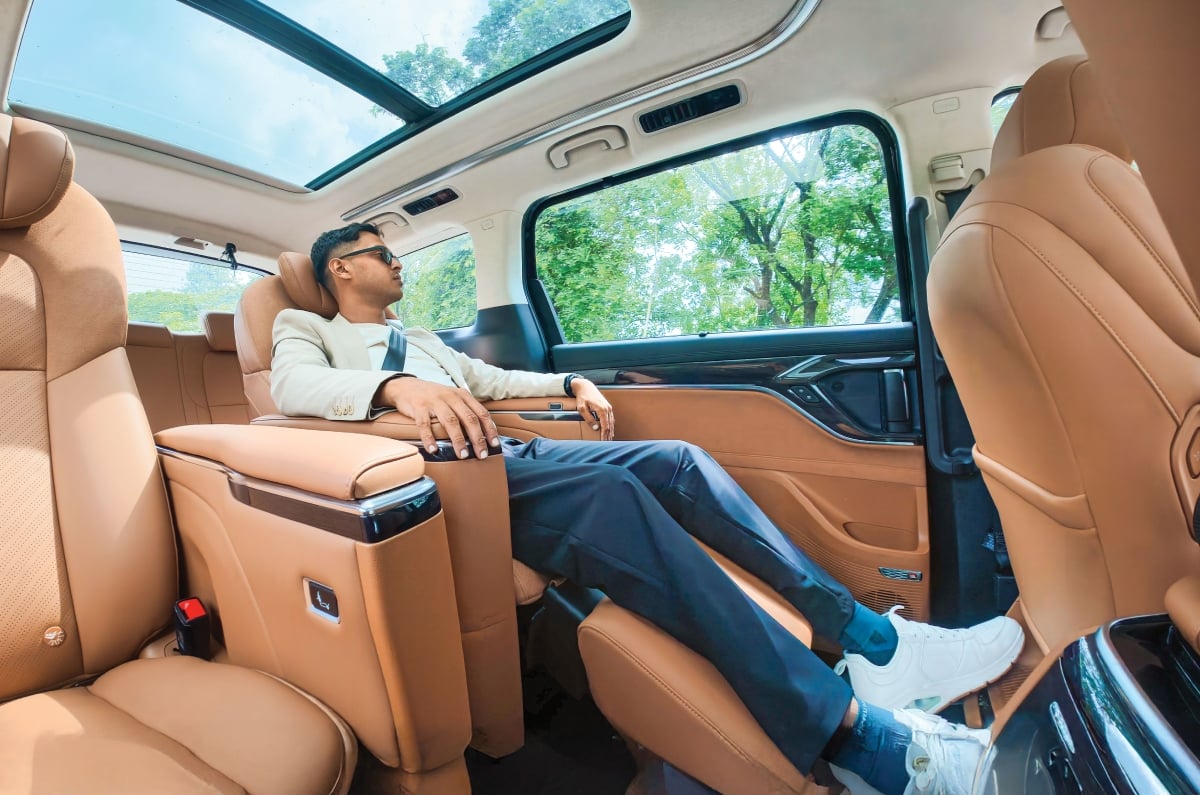
Every drive in the M9 is an opportunity to stretch out and relax.
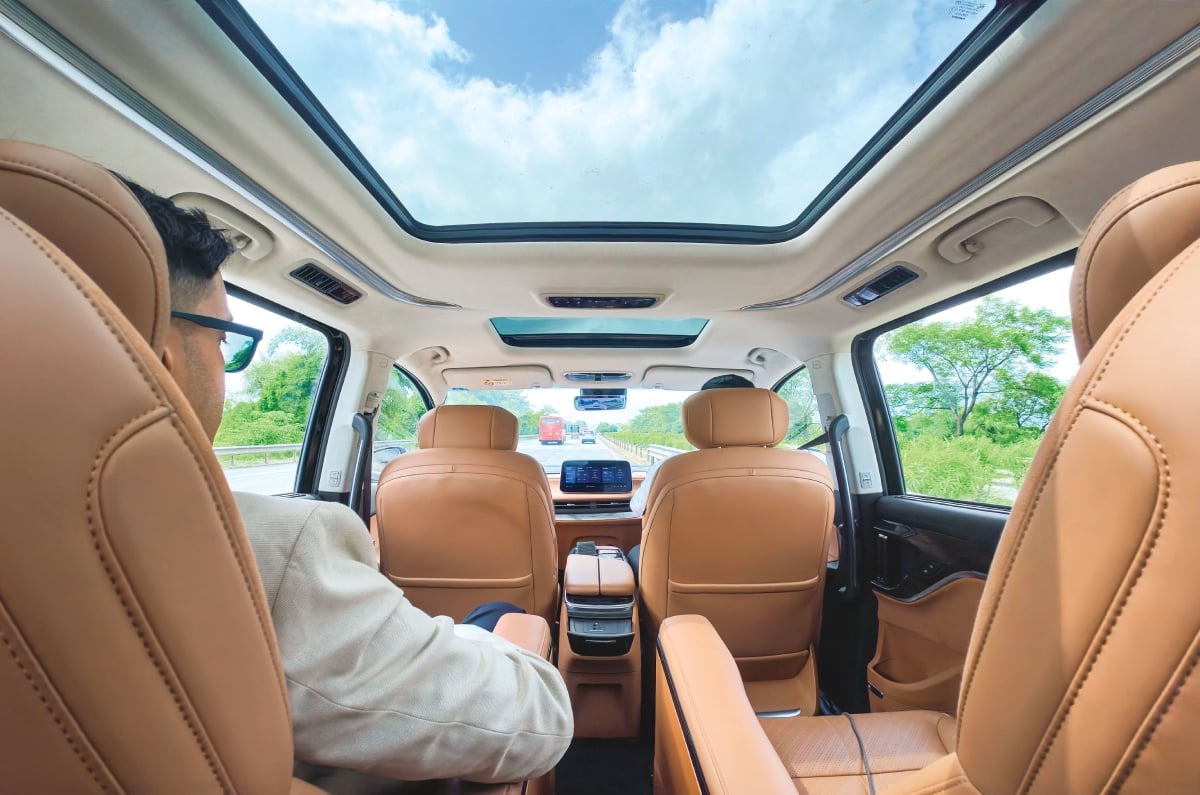
Leaving Mumbai behind for Karjat, the M9 turns what could be a routine road trip into something rather different. The traffic, the road surface and the distance to the destination are still there, but they no longer need to occupy the passenger’s attention. The second row has been designed to make the journey itself the experience.
The two Presidential Seats are the obvious starting point. With 16-way electric adjustment, heating, ventilation and eight massage functions, they offer considerably more than simply a comfortable place to sit. Their leg rests can be extended, allowing you to get that ‘putting your feet up after a long day’ experience, and the backrests can be reclined. And particularly with Boss Mode moving the front passenger seat forward, the available space is nothing short of vast.
The M9’s Boss Mode is especially handy if you want to free up some leg room in the second row.
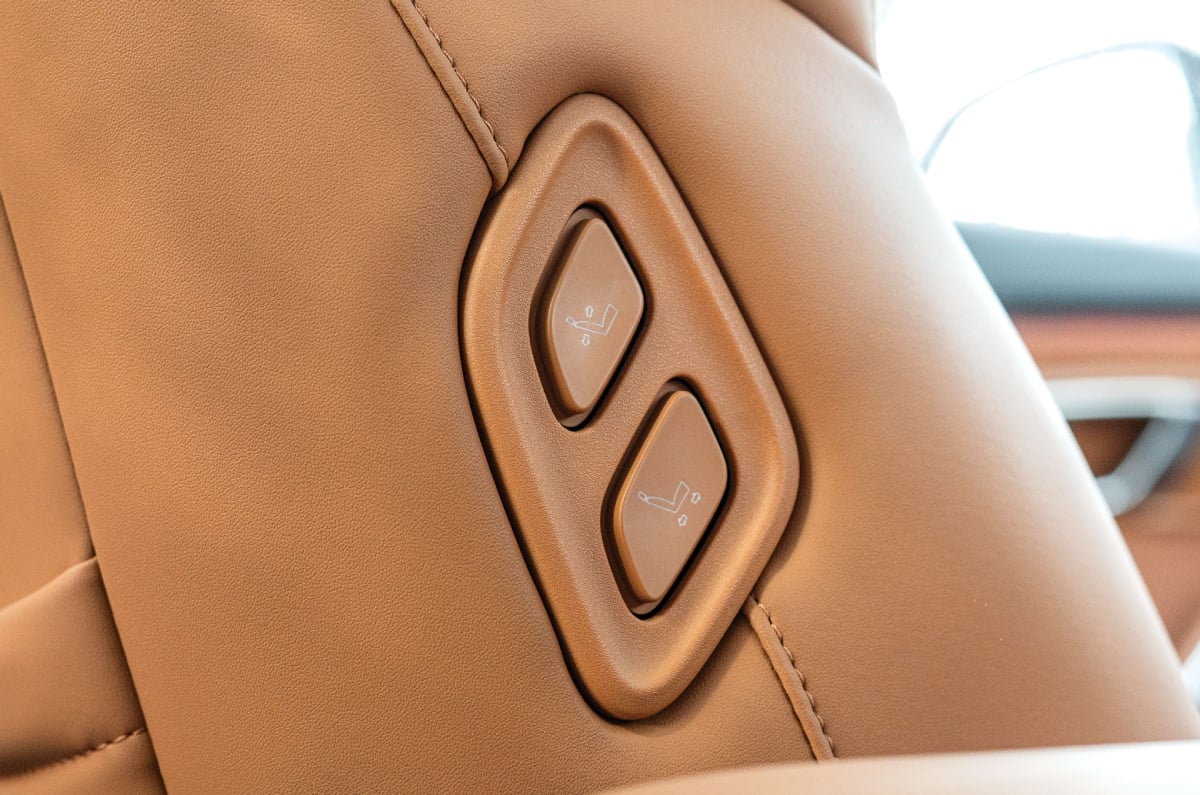
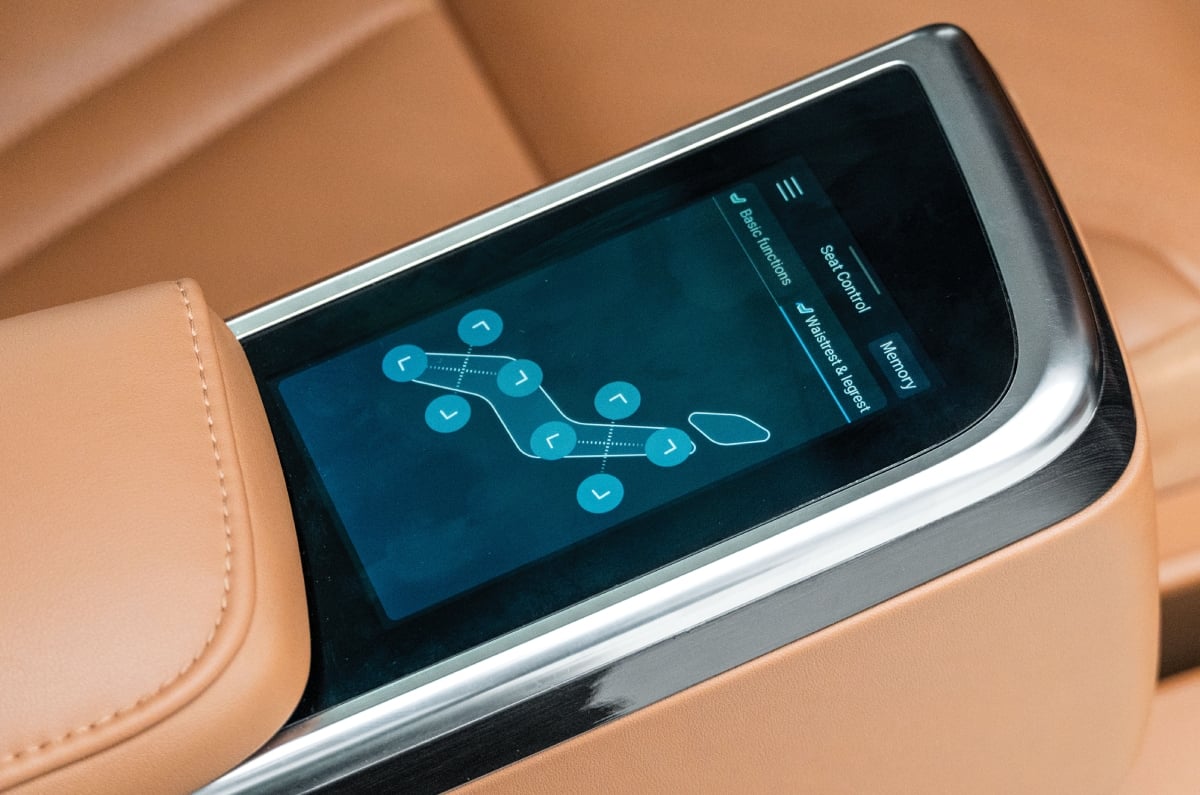
It is the sort of environment in which work can be done without feeling like work. Every major seat function is within easy reach thanks to the intelligent armrests. Not only can passengers adjust their seats’ position and temperature and regulate the AC, they can even get a massage, activate the sunroof or alter the ambient lighting. Once the laptop is closed, the M9 can change character just as easily.
The dedicated second-row climate zone means passengers can set the temperature to their liking, while 64-colour ambient lighting allows the atmosphere to be changed from bright and functional to subdued and relaxing. The panoramic, yacht-style dual sunroof adds another layer to the sense of space, bringing natural light into what already feels more like a lounge than an MPV cabin.
The M9’s 13-speaker JBL audio system, complete with amplifier and subwoofer, takes advantage of the cabin’s excellent isolation. Even the details that are easy to overlook have been considered. There is a wireless charger, an air purifier and sunshades for the rear windows. The front seats are heated, ventilated and massaging too, while the third row gets its own air-conditioning vents and USB connectivity. This is a seven-seater, after all, and the M9 doesn’t treat the occupants furthest from the driver as an afterthought.
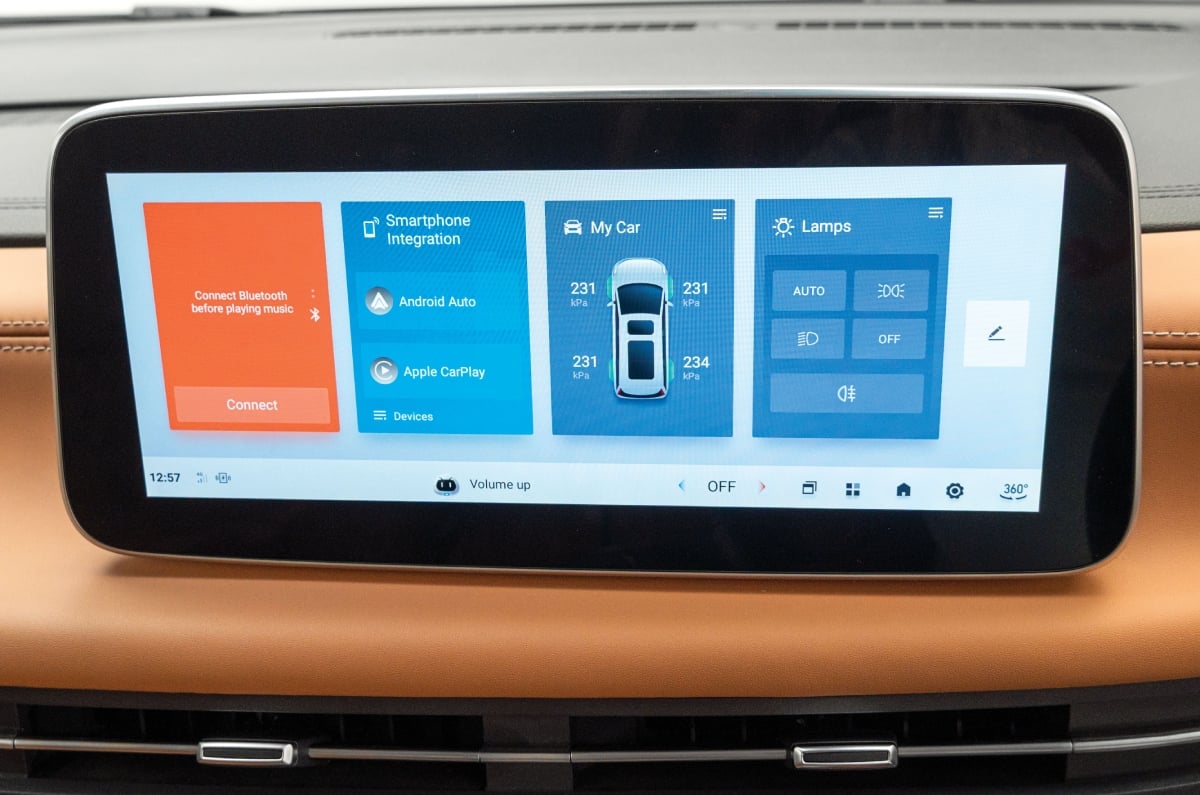
M9’s 12.3-inch central screen is loaded with useful functions and can even fully recline the second-row seats.
But it is the Presidential second row that defines the M9. And as the journey progresses, its importance becomes increasingly apparent. Mumbai’s roads aren’t always smooth. There are bumps, undulations, and speed breakers that arrive with little warning. Yet the M9’s suspension works quietly underneath, muffling sharper edges and keeping the cabin composed.
That refinement is complemented by the electric powertrain. A 90kWh NMC battery feeds a front-mounted motor producing 245hp and 350Nm, with a claimed range of 548km. But for those in the back, the more important numbers are the ones that don’t appear on a specification sheet: how little noise enters the cabin, how smoothly the M9 gathers speed and how rarely the occupants are reminded of the machinery doing the work.
Seat massage and adjustment controls are neatly built into second-row armrests.
As Mumbai’s traffic thins out, the road begins to wind through the green, mist-covered hills approaching Karjat, and the monsoon transforms the landscape into a succession of views worth looking at.
The M9 takes the inherent practicality and space of an MPV and reorganises them around the passenger. Its Presidential second row isn’t simply a collection of luxury features; it is the point around which the entire vehicle’s character revolves.
And the response has been encouraging. The M9 has found more than 2,500 buyers in less than a year, the surest sign that the idea of luxury is changing. It is becoming less about arriving with a sense of occasion and more about making the journey itself feel effortless.
Because when someone else is worrying about the road, the greatest luxury isn’t necessarily having somewhere better to go. It is having the time – and the space – to enjoy getting there.
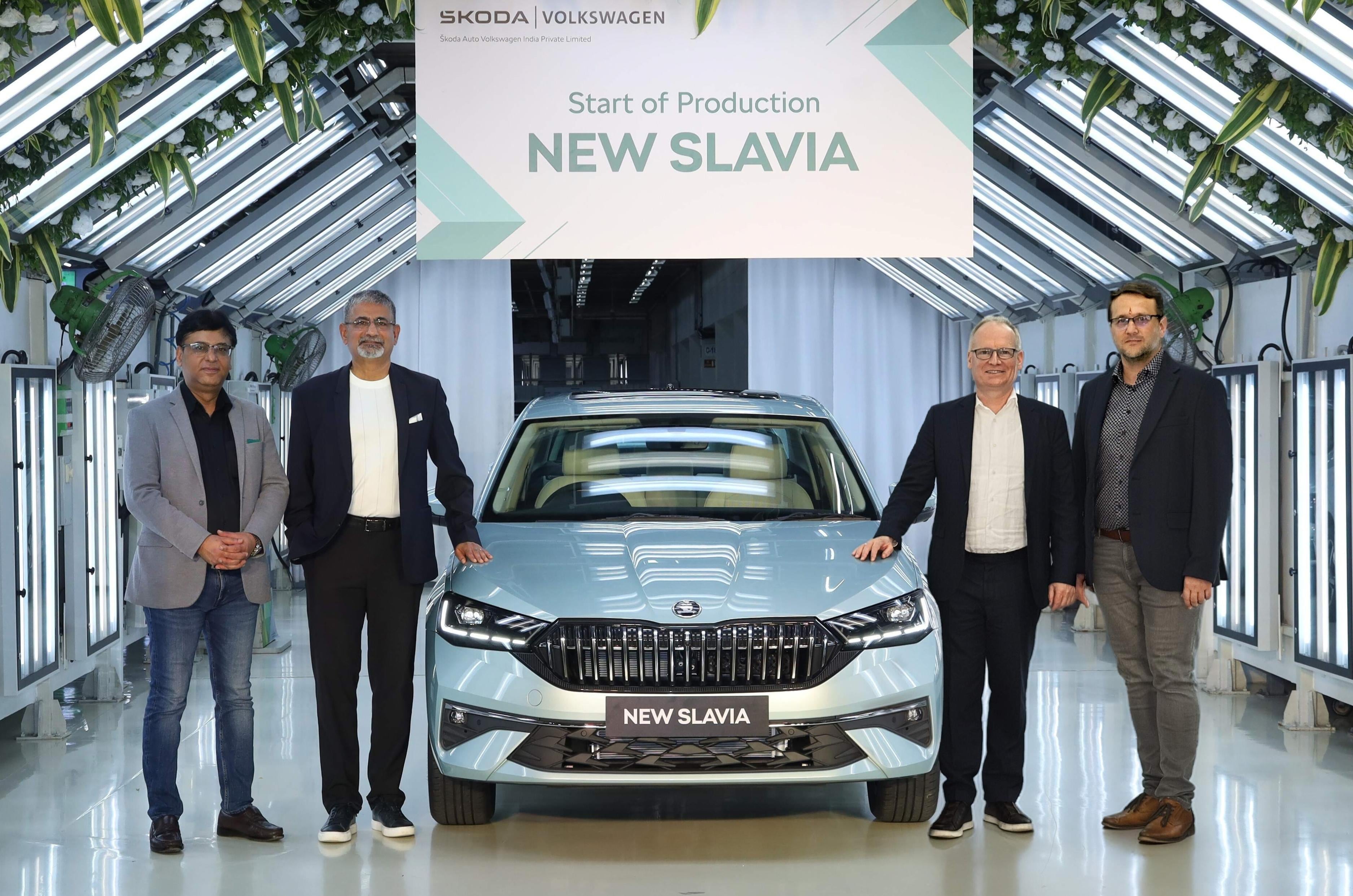
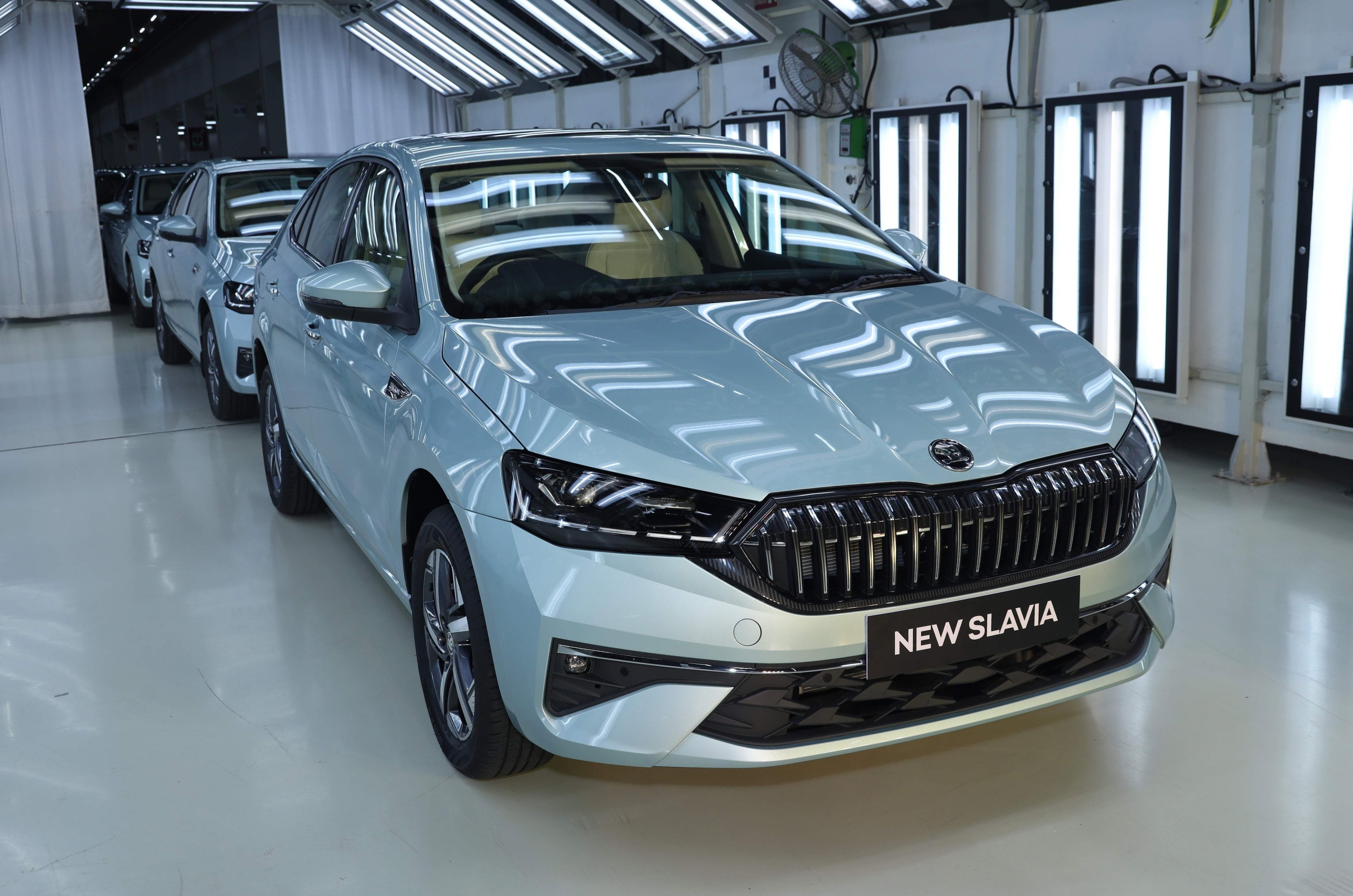
Skoda Auto Volkswagen India has commenced production of the facelifted Slavia at its Chakan plant in Pune. The updated sedan is expected to reach customers during the festive season, with prices set to be announced soon.
The 2026 Slavia gets revised exterior styling, new features and an 8-speed torque-converter automatic for the 1.0-litre TSI engine. It continues with the 115hp 1.0 TSI and 150hp 1.5 TSI turbo-petrol engines, while the latter retains its 7-speed dual-clutch automatic.
Production begins ahead of the festive-season launch
Gets 360-degree camera and rear sequential turn indicators
Rear seats gain a new massage function
2026 Skoda Slavia: What’s new?
The Slavia retains its existing overall shape but gets revised headlights, tail-lights, grille, air dam and alloy wheels. It also gets new LED daytime running light signatures, sequential rear turn indicators and a new trim between the tail-lights bearing the ‘SKODA’ lettering.
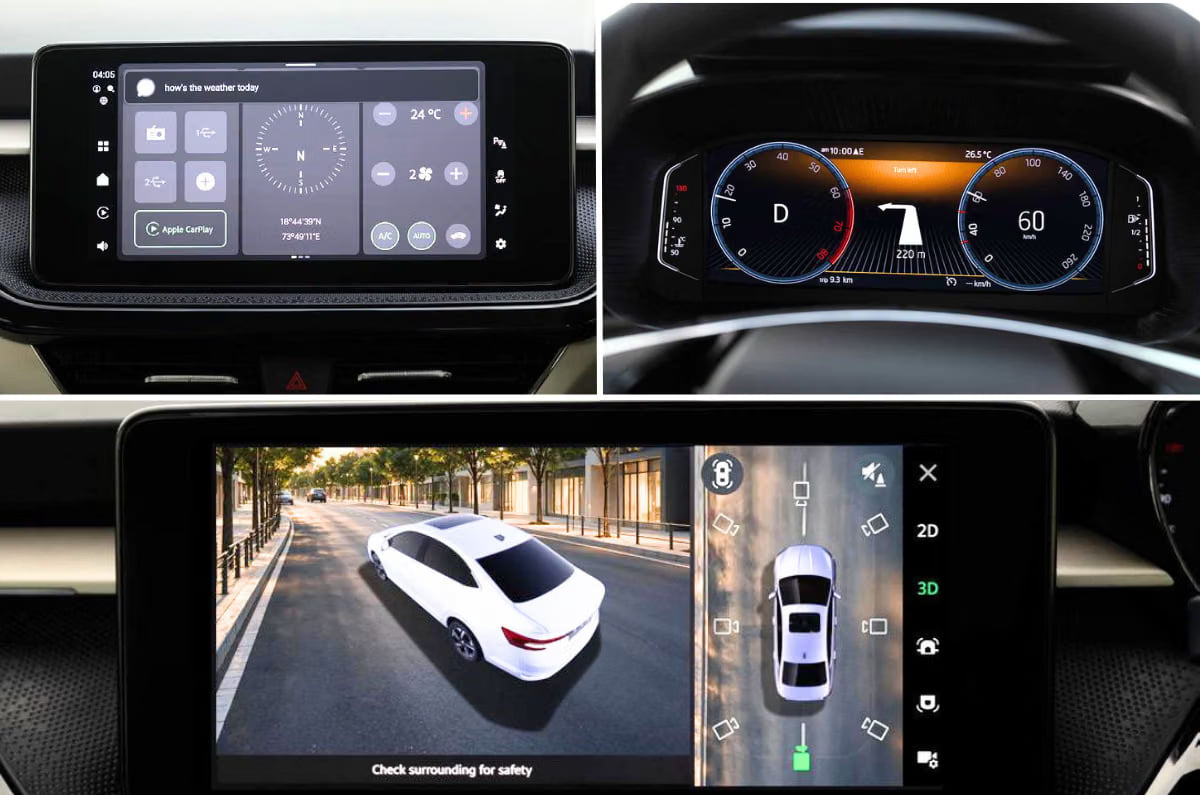
Inside, the basic dashboard layout has been retained, but the touchscreen has grown from 10 inches to 10.1 inches, while an 8-inch driver’s display has been replaced by a 10.25-inch unit. Both screens get updated graphics and functions. An ADAS suite continues to be unavailable.
Top: Touchscreen (L), driver’s display (R); bottom: 360-degree camera view.
The facelift also adds a 360-degree camera, replacing the outgoing car’s rearview camera. Other additions include a rear-seat massage function and a new variable-geometry compressor for better AC performance. A panoramic sunroof is still not part of the package, and the car continues with a single-pane unit.
2026 Skoda Slavia: Engine and gearbox
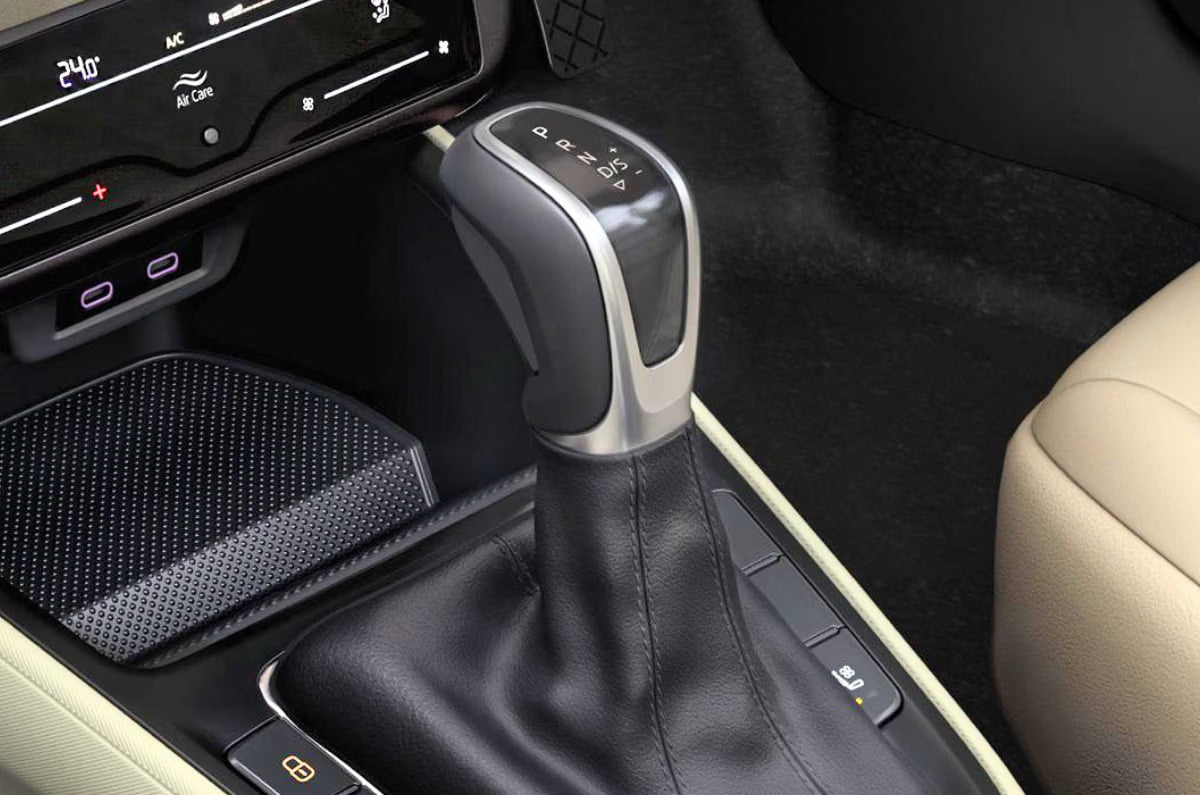
New 8-speed torque-converter gearbox replaces the 6-speed unit.
The 2026 Slavia carries over the existing 115hp 1.0 TSI and 150hp 1.5 TSI direct-injection turbo-petrol engines. The 1.0 TSI continues with a 6-speed manual, while the 1.5 TSI is paired with a 7-speed dual-clutch automatic.
The major powertrain change is to the 1.0 TSI automatic, which now gets an 8-speed torque-converter gearbox in place of the outgoing 6-speed automatic.
2026 Skoda Slavia: Launch and price
Bookings for the facelifted Slavia are already open, while prices will be announced in early October. Deliveries are scheduled to begin during the festive season. The outgoing Slavia is priced between Rs 10 lakh and Rs 18.19 lakh, ex-showroom. With the facelift, a price hike of up to Rs 85,000 is likely. The Slavia competes with the Hyundai Verna, Honda City and Volkswagen Virtus.
त्योहारी सीजन से पहले देश में एयर कंडीशनर (AC), LED TV, फ्रिज, वॉशिंग मशीन जैसे सामान महंगे हो सकते हैं। प्रमुख कंज्यूमर इलेक्ट्रॉनिक्स कंपनियां 1 अक्टूबर से अपने उत्पादों के दाम 5 से 8 प्रतिशत तक बढ़ाने की तैयारी कर रही हैं। कंपनियों के मुताबिक, तांबा, एल्युमीनियम, स्टील, प्लास्टिक और कच्चे तेल से जुड़े उत्पादों की बढ़ती लागत के साथ-साथ माल ढुलाई खर्च और विदेशी मुद्रा में उतार-चढ़ाव के कारण कीमतें बढ़ाना जरूरी हो गया है। इस साल यह तीसरा मौका होगा, जब कंज्यूमर इलेक्ट्रॉनिक्स कंपनियां दाम बढ़ाएंगी। पश्चिम एशिया में चल रहे तनाव के चलते कच्चे माल की लागत काफी बढ़ गई है।
न्यूज एजेंसी पीटीआई के मुताबिक, AC की कीमतों में जहां करीब 5 से 8 प्रतिशत तक बढ़ोतरी की संभावना है, वहीं कुछ कंपनियां वॉशिंग मशीन, रेफ्रिजरेटर और LED TV के दाम 3 से 4 प्रतिशत बढ़ाने जा रही हैं। हालांकि, कुछ कंपनियां अभी स्थिति का आकलन कर रही हैं। कई कंपनियों का मानना है कि कीमत बढ़ाने से मांग पर असर पड़ सकता है। वहीं कुछ अन्य की राय है कि कीमत वृद्धि का असर सीमित रहेगा, क्योंकि डीलर्स और डिस्ट्रीब्यूटर्स के पास पहले ही पुराने दाम का स्टॉक है।
ब्लू स्टार, गोदरेज अप्लायंसेज, हायर, डाइकिन और सुपर प्लास्ट्रॉनिक्स समेत कई कंपनियां अलग-अलग कैटेगरीज में कीमतें 4-10 प्रतिशत बढ़ाने की घोषणा कर चुकी हैं। LG और बॉश होम कम्फर्ट ने भी AC की कीमतों में करीब 5 प्रतिशत की बढ़ोतरी की है। पैनासोनिक अभी कीमत बढ़ाने को लेकर स्थिति का आकलन कर रही है।
कीमतों में 5 से 7 प्रतिशत तक की बढ़ोतरी करना हुआ जरूरी
पीटीआई के मुताबिक, ब्लू स्टार के मैनेजिंग डायरेक्टर बी. त्यागराजन का कहना है कि कमोडिटी की बढ़ती कीमतों के कारण एसी और डीप फ्रीजर की कीमतें पहले ही 5 से 8 प्रतिशत बढ़ाई जा चुकी हैं। अमेरिका-ईरान युद्ध के कारण तांबा, स्टील और प्लास्टिक समेत कच्चे माल के दाम चढ़ गए हैं। कंपनी इस साल अब तक 3 बार कीमतें बढ़ा चुकी है।
गोदरेज एंटरप्राइजेज ग्रुप के बिजनेस हेड और एग्जीक्यूटिव वाइस प्रेसिडेंट, अप्लायंसेज बिजनेस कमल नंदी ने कहा कि कीमतों में पिछले बदलाव के बाद कमोडिटी की लागत में 8 से 10 प्रतिशत की वृद्धि हुई है। ऐसे में विभिन्न कैटेगरीज में कीमतों में 5 से 7 प्रतिशत तक की बढ़ोतरी करना जरूरी हो गया है। हालांकि, पुराने दाम पर खरीदा गया स्टॉक करीब एक से डेढ़ महीने तक बाजार में उपलब्ध रह सकता है।
Haier 5 प्रतिशत महंगे करेगी एसी, दिसंबर और जनवरी में भी बढ़ा सकती है दाम
हायर इंडिया के प्रेसिडेंट एन.एस. सतीश का कहना है कि कंपनी 1 अक्टूबर से एसी की कीमतों में करीब 5 प्रतिशत की वृद्धि करेगी। अन्य उत्पादों जैसे एलईडी टीवी, वॉशिंग मशीन आदि की कीमतों में भी 2 से 3 प्रतिशत की बढ़ोतरी की जाएगी। उन्होंने कहा कि यदि कच्चे माल की लागत बढ़ती रही, तो दिसंबर और जनवरी में भी कीमतें बढ़ाई जा सकती हैं।
उनका कहना है कि अगर कीमतें बढ़ाने से बचते हैं, तो नुकसान होगा। अगर कीमतें बढ़ाते हैं, तो बिक्री पर थोड़ा असर पड़ सकता है, लेकिन कोई चारा नहीं है। सतीश के मुताबिक, तांबे की कीमत पिछले साल के करीब 8,000-9,000 डॉलर प्रति टन से बढ़कर लगभग 14,500 डॉलर प्रति टन तक पहुंच गई है। एक एसी में औसतन 3 से 4 किलोग्राम तांबे का इस्तेमाल होता है। इसलिए इसका असर एसी की मैन्युफैक्चरिंग कॉस्ट पर सीधे पड़ रहा है।
डाइकिन 16 सितंबर से 10 प्रतिशत तक बढ़ा चुकी है कीमतें
डाइकिन एयरकंडीशनिंग इंडिया के चेयरमैन और मैनेजिंग डायरेक्टर कंवलजीत जावा का कहना है कि कंपनी ने 16 सितंबर से ही कीमतों में 8 से 10 प्रतिशत की बढ़ोतरी कर दी है। तांबे की कीमतों में करीब 25 से 35 प्रतिशत की वृद्धि हुई है और डॉलर मजबूत होने से कंपनियों पर लागत का दबाव और बढ़ गया है। वहीं, सुपर प्लास्ट्रॉनिक्स प्राइवेट लिमिटेड (SPPL) ने अक्टूबर के बाद टीवी की कीमतों में करीब 7 प्रतिशत की वृद्धि की योजना बनाई है। अन्य होम अप्लायंसेज की कीमतें पहले ही 4 से 5 प्रतिशत बढ़ाई जा चुकी हैं।
The Hyundai Ioniq 5 received a larger battery pack with its April 2026 update, resulting in a higher claimed single-charge range. In this feature, we compare the Hyundai EV with the Tesla Model Y, one of its direct rivals in India. Keep reading to see how the two performed in real world conditions. We also compare their prices, as the Ioniq 5 has become more expensive after the update, while Tesla has dropped the price of the Model Y.
Hyundai Ioniq 5 vs Tesla Model Y: Specifications, price
Ioniq 5
Model Y
Battery size (kWh)
84 (NMC)
60 (LFP)
Power (hp)
229
299
Torque (Nm)
350
420
Drive layout
RWD
RWD
Claimed range (km)
690 (ARAI)
500 (WLTP)
Kerb weight (kg)
2,165
2,003
The Ioniq 5’s battery size has increased from 72.6kWh to 84kWh (gross capacity), though the nickel manganese cobalt (NMC) cell chemistry has been retained. The larger battery has increased the kerb weight to 2,165kg, up by 150kg from the outgoing version. In comparison, the Model Y uses a 64kWh (gross capacity) battery with lithium ferrous phosphate (LFP) cell chemistry; the smaller battery contributes to the Tesla EV being 162kg lighter in this comparison. Their claimed range figures are based on different test cycles – ARAI for the Ioniq 5 and WLTP for the Model Y – so they are not directly comparable.
Speaking of motor outputs, the Model Y makes 70hp and 70Nm more than the Ioniq 5; both use a rear-wheel-drive setup. The Model Y feels stronger to drive, with quicker acceleration and sharper throttle response than the Hyundai.
Hyundai Ioniq 5 vs Tesla Model Y: Real-world range
For our real-world range test, the Hyundai Ioniq 5 was driven in Eco mode and the Model Y in Chill mode (Eco in Tesla speak). The Ioniq 5 used Level 2 regenerative braking in the city and Level 1 on the highway, while the Model Y used Standard in the city and Reduced on the highway.
Ioniq 5
Model Y
Tested city efficiency (km/kWh)
6.22
5.84
Tested highway efficiency (km/kWh)
5.71
6.52
Tested average efficiency (km/kWh)
5.96
6.18
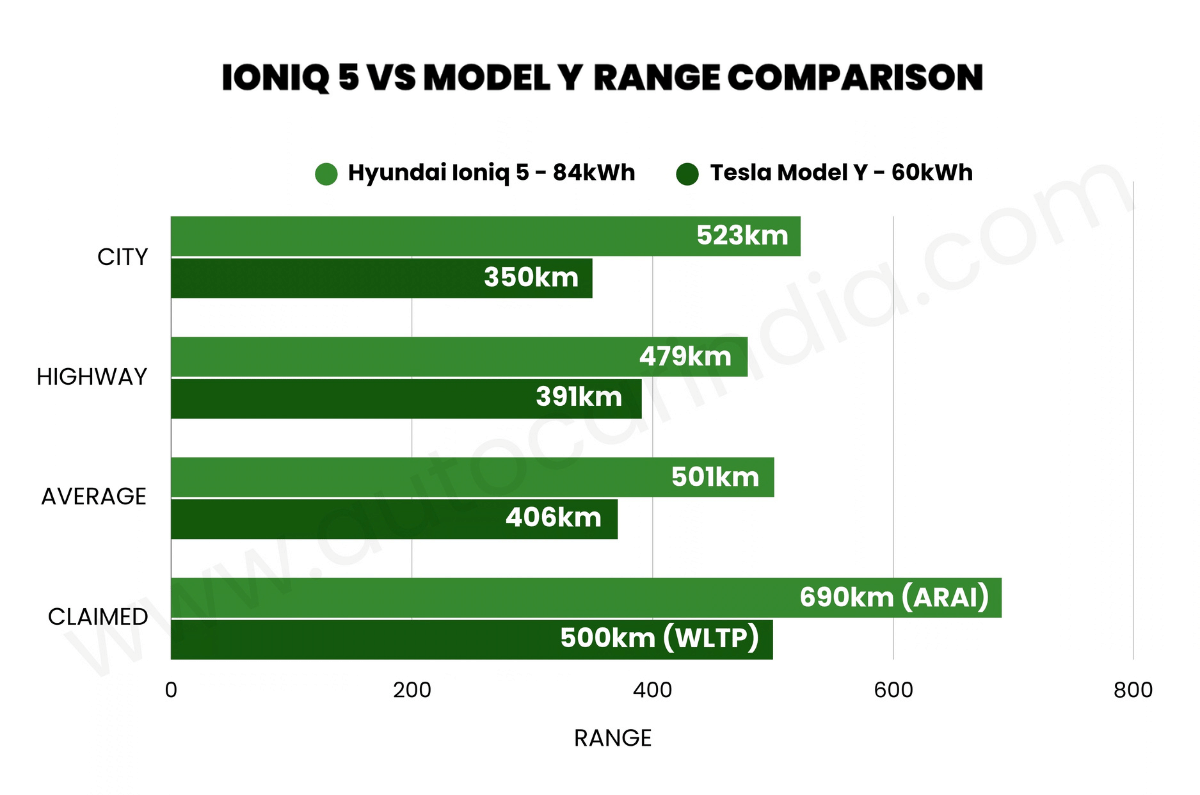
In the city, the Ioniq 5 returned 6.22km/kWh, compared to 5.84km/kWh for the Model Y. On the highway, however, the Tesla was more efficient at 6.52km/kWh, aided by its superior aerodynamics; the Ioniq 5 managed 5.71km/kWh. But overall range in our tests stood at 501km for the Ioniq 5, 130km more than the Model Y’s 371km figure.
Hyundai Ioniq 5 vs Tesla Model Y: Prices
Ioniq 5
Model Y
Price (Rs lakh)
55.71
50.89
At the time of writing, the Hyundai Ioniq 5 is pricier than the Tesla Model Y by Rs 4.82 lakh. But judged purely on its higher real-world range, the Hyundai Ioniq 5 gets our vote.
Autocar India’s range testing
For our real-world range comparisons, we begin with each car’s battery fully charged and tyre pressures set as per the manufacturer’s recommendations. We drive the cars on a fixed loop covering both city and highway stretches while maintaining set average speeds. We then calculate the range based on the percentage of charge consumed. The AC is set to 22deg C in auto mode, and we use features such as the music system, lights and ventilated seats as needed, just as a regular user would. This approach ensures consistency and gives a clear idea of what to expect in actual conditions.
Ex-showroom prices mentioned above are as of September 23, 2026.
भारतीय रेलवे यात्रियों के लिए एक बड़ी सुविधा लाने की तैयारी कर रहा है। नई दिल्ली और वाराणसी के बीच Sleeper Vande Bharat Express चलाने की योजना बनाई जा रही है। प्रस्तावित ट्रेन रात में सफर कर यात्रियों को सुबह मंजिल तक पहुंचा सकती है। इस रूट में प्रयागराज और कानपुर जैसे बड़े शहर भी शामिल होंगे। रेलवे अधिकारियों के मुताबिक, ट्रेन का ट्रायल जल्द शुरू होने की संभावना है और इसे दिवाली के आसपास चलाने का लक्ष्य रखा गया है। अगर योजना समय पर पूरी होती है, तो दिल्ली, प्रयागराज, कानपुर और वाराणसी के बीच यात्रा करने वाले यात्रियों को तेज और आरामदायक सफर का नया विकल्प मिल सकता है।
दिल्ली-वाराणसी के साथ प्रयागराज और कानपुर भी जुड़ेंगे
प्रस्तावित ट्रेन सिर्फ दिल्ली और वाराणसी के बीच नहीं दौड़ेगी। इसके रास्ते में प्रयागराज और कानपुर भी शामिल होंगे। उत्तर प्रदेश के इन प्रमुख शहरों से बड़ी संख्या में यात्री दिल्ली और वाराणसी की यात्रा करते हैं। ऐसे में ट्रेन का रूट चार बड़े शहरों को एक साथ जोड़ने वाला होगा।
रात में चलेगी ट्रेन, सुबह पहुंचाएगी मंजिल तक
प्रस्तावित टाइमिंग के अनुसार, वाराणसी कैंट से ट्रेन रात 9:20 बजे रवाना होकर करीब 10:45 बजे प्रयागराज और 12:35 बजे कानपुर सेंट्रल पहुंचेगी। इसके बाद सुबह करीब 5 बजे नई दिल्ली पहुंचने का प्रस्ताव है। वापसी में भी नई दिल्ली से ट्रेन रात 9:20 बजे चलकर सुबह 5 बजे वाराणसी पहुंच सकती है। यानी यात्रियों को रात में सफर करने और सुबह अपनी मंजिल पर पहुंचने का विकल्प मिलेगा।
160 kmph तक पहुंच सकती है रफ्तार
Sleeper Vande Bharat को 130 से 160 किलोमीटर प्रति घंटे की गति से चलाने की योजना है। हालांकि वास्तविक स्पीड ट्रैक की स्थिति, ट्रायल और जरूरी मंजूरियों पर निर्भर करेगी। रेलवे के Mission Raftaar के तहत ट्रैक और इंफ्रास्ट्रक्चर में सुधार होने पर इस रूट पर सफर का समय कम करने में मदद मिल सकती है।
823 यात्रियों के लिए होगी जगह
प्रस्तावित ट्रेन में कुल 16 कोच होंगे और इनमें करीब 823 यात्रियों के बैठने-सोने की क्षमता होगी। कोच की संभावित संरचना में 11 AC 3-टियर, चार AC 2-टियर और एक First AC कोच शामिल होंगे। ट्रेन के रखरखाव की जिम्मेदारी Northern Railway संभाल सकती है।
किराया कितना होगा? अभी इंतजार
ट्रेन की चर्चा और प्रस्तावित टाइमिंग सामने आने के बावजूद अभी किराया, ट्रेन नंबर और नियमित संचालन की आधिकारिक तारीख तय नहीं हुई है। ट्रेन की अंतिम गति और शेड्यूल भी ट्रायल के बाद स्पष्ट होगा। इसलिए यात्रियों को आधिकारिक घोषणा का इंतजार करना होगा।