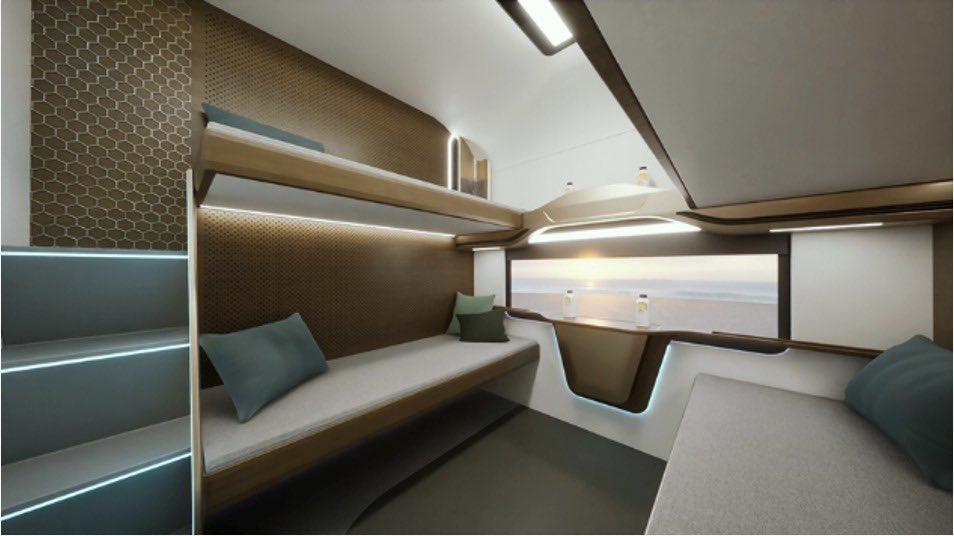
आप रातभर ट्रेन में सफर करते हैं और चाहते हैं कि जर्नी आरामदायक होने के साथ लग्जरी भी लगे, तो मुंबई-बेंगलुरु (Mumbai-Bengaluru) वंदे भारत स्लीपर ट्रेन (Vande Bharat Sleeper train) आपके लिए खास हो सकती है। इसका फर्स्ट AC कोच मॉडर्न डिजाइन, प्राइवेसी और प्रीमियम सुविधाओं के साथ तैयार किया गया है, जिसकी पहली झलक ने ही ट्रैवलर का ध्यान खींच लिया है:
First AC Cabin (फर्स्ट एसी केबिन)
इस ट्रेन का फर्स्ट AC कोच सबसे बड़ा हाईलाइट माना जा रहा है। इसमें प्राइवेट केबिन (private cabin) दिए गए हैं, जिनमें स्लाइडिंग दरवाजे लगाए गए हैं। इससे पैसेंजर को पहले के मुकाबले ज्यादा प्राइवेसी और आराम मिल सकता है। केबिन का डिजाइन ऐसा रखा गया है कि सफर होटल (hotel-like travel) जैसा महसूस हो।
Premium Interior (प्रीमियम इंटीरियर)
कोच के अंदर का इंटीरियर मॉडर्न और अट्रैक्टिव बनाया गया है। लकड़ी जैसी फिनिश, सॉफ्ट LED लाइटिंग और खूबसूरत कलर थीम इसे स्टैंडर्ड ट्रेन कोच से अलग बनाती है। पूरा माहौल शांत और आरामदायक रखने की कोशिश की गई है।
Comfortable Journey (आरामदायक सफर)
ट्रेन में आरामदायक बर्थ, मजबूत सीढ़ियां (sturdy ladder) और हर सीट के पास चार्जिंग पॉइंट जैसी सुविधाएं दी गई हैं। लंबी दूरी (long-distance travel) की पैसेंजर को ध्यान में रखते हुए कोच को इस तरह डिजाइन किया गया है कि पैसेंजर आसानी से आराम कर सकें।
Smart Facilities (मॉडर्न सुविधाएं)
इस वंदे भारत स्लीपर ट्रेन में पैसेंजर इंफॉर्मेशन डिस्प्ले सिस्टम, मॉडर्न बायो-वैक्यूम टॉयलेट, बेहतर LED लाइटिंग, CCTV सुरक्षा और अन्य कई स्मार्ट सुविधाएं (smart feature) दी गई हैं। इनका उद्देश्य सफर (journey) को पहले से ज्यादा सुविधाजनक और सिक्योर बनाना है।
Better Overnight Travel (बेहतर ओवरनाइट यात्रा)
मुंबई (Mumbai) और बेंगलुरु (Bengaluru) के बीच रोज बड़ी संख्या में लोग सफर करते हैं। यह ट्रेन खासतौर पर रातभर की जर्नी को ज्यादा आरामदायक बनाने के लिए तैयार की गई है, ताकि पैसेंजर सुबह अपनी मंजिल पर फ्रेश होकर पहुंच सकें।
Ticket Booking (टिकट बुकिंग)
फिलहाल मुंबई-बेंगलुरु वंदे भारत स्लीपर ट्रेन की कमर्शियल सेवा शुरू नहीं हुई है और टिकट बुकिंग भी अभी शुरू नहीं हुई है। सोशल मीडिया के वीडियो ने इसकी शानदार झलक दिखाकर पैसेंजर की उत्सुकता जरूर बढ़ा दी है।
The Mahindra Scorpio N facelift has been spied undisguised, giving a glimpse at the SUV’s new interior and exterior changes. These spy shots reveal that the facelift will see minor changes outside, while the interior will be revamped with fresh features.
Spy shots show Thar Roxx-like 10.25-inch screens inside
New alloy wheels can be seen, but taillights are the same
Expected to continue with the same powertrain options
Mahindra Scorpio N facelift spied: What was spotted?
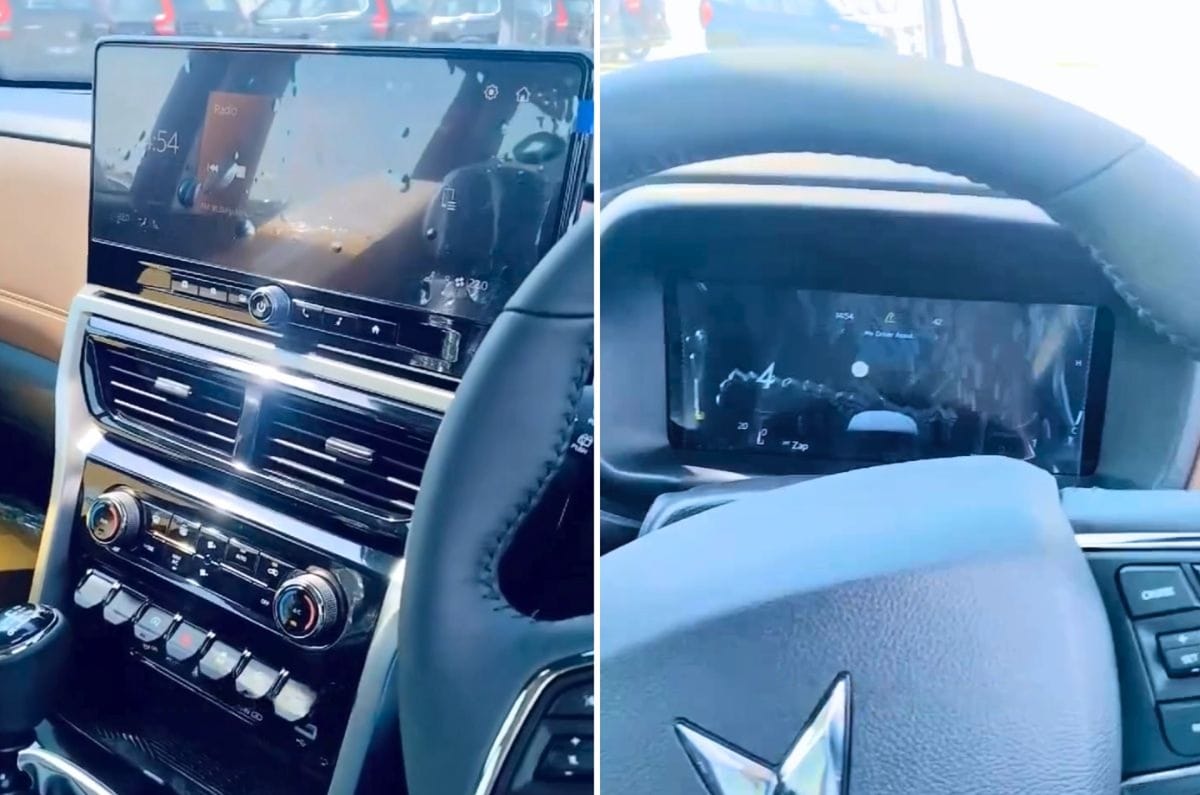
Spy shots reveal new Thar Roxx-like screens, centre AC vents, and switchgear
Image source: @vikey_root_baba_1008 on Instagram
Spy shots of the Mahindra Scorpio N facelift’s interior suggest that Mahindra is continuing with the same brown-and-black dual-tone cabin theme as the current model. What’s different, however, is a Thar Roxx-like free-standing infotainment system and a fully digital driver’s display. On the Thar Roxx, both screens are 10.25 inches. The centre air vents are now positioned beneath the infotainment system. The switchgear on the centre console also seems to have a fresh design.
Other than these changes, everything else looks identical to the current Scorpio N. On the feature front too, it could get a new panoramic sunroof and continue with a wireless phone charger, dual-zone climate control, a 12-speaker Sony sound system, a powered driver’s seat and ventilated front seats.
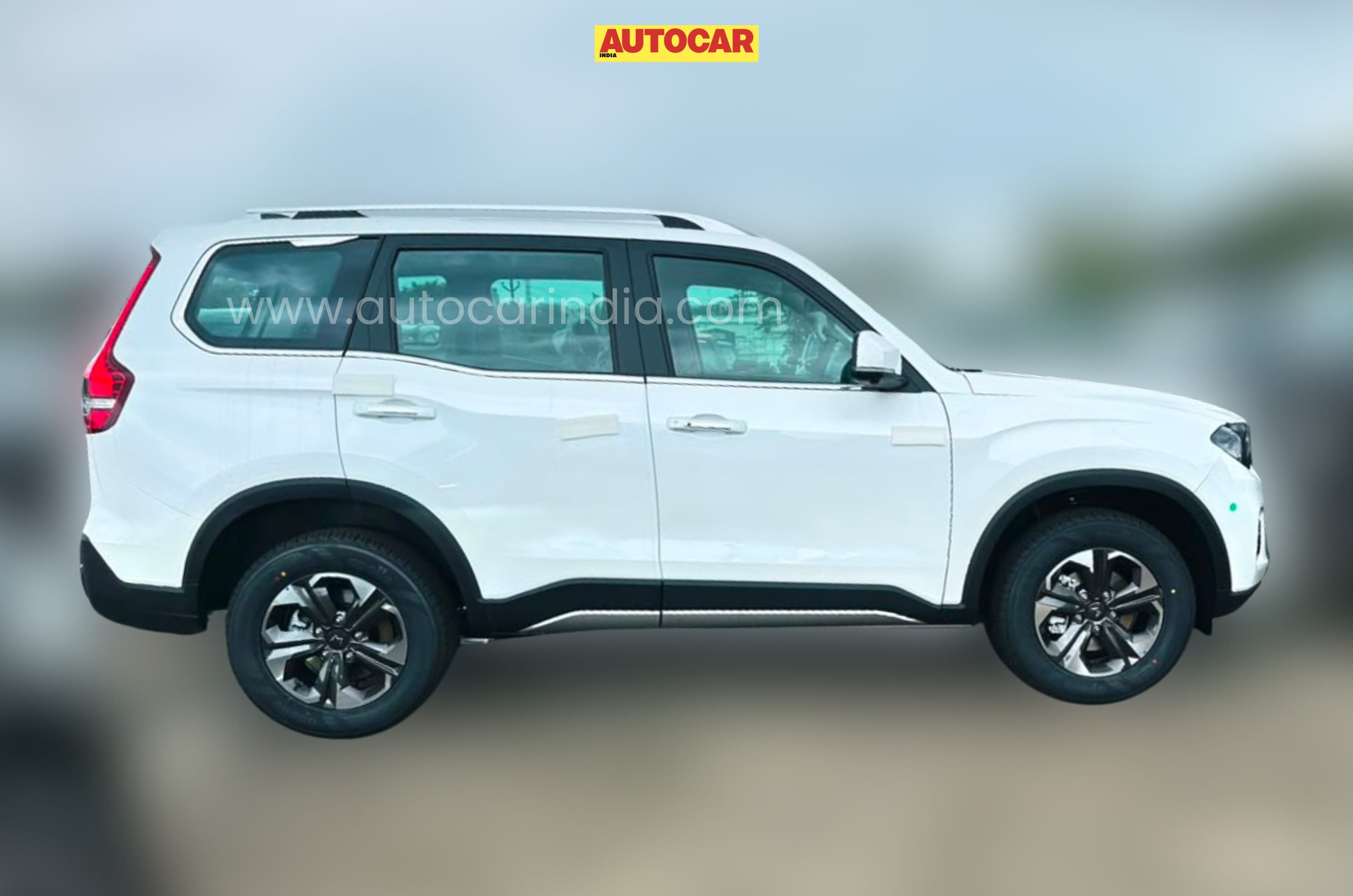
Alloy wheels have a fresh design, but the taillights are the same as the current model
Only the side profile of the Scorpio N facelift can be seen from the spy shots, which suggest redesigned alloy wheels that look more contemporary than those on the current model. Keen-eyed viewers can also catch a glimpse of the taillights, which seem to be the same LED units as the current model. Other elements, including the chrome beading on the window line with a scorpion tail-like tip, silver roof rails, chrome strips on door handles and black cladding on wheel arches and the lower section of the body, are the same as the current Scorpio N.
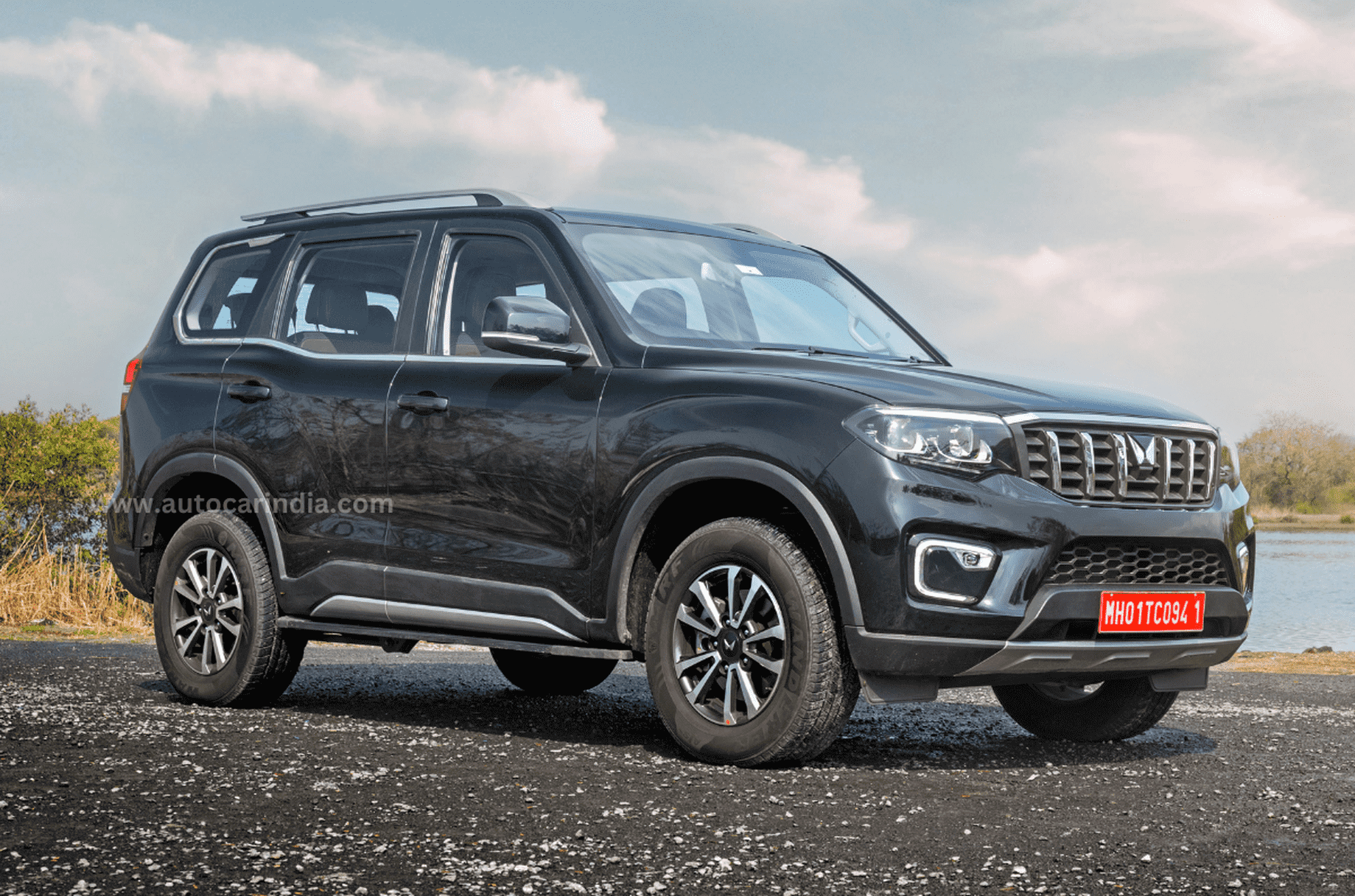
Current-spec Scorpio N’s exterior design shown for representative purposes only.
While a clear view of the facelifted Scorpio N’s fascia is yet to be seen, numerous test mules have hinted at a slightly revised grille with horizontal slats, dual-pod headlights, and a similar bumper with fog lamps with scorpion tail-like design.
Mahindra Scorpio N facelift: Expected powertrains
Expected to continue with the same direct-injection turbo-petrol and diesel options
The facelifted Mahindra Scorpio N is expected to continue with the same engine options as the current model. These include a 2.0-litre direct-injection turbo-petrol engine paired with either a 6-speed manual or a 6-speed automatic transmission. It produces 203hp with both gearbox options, while putting out 370Nm with the manual and 380Nm with the torque converter automatic gearbox.
It also gets a 2.2-litre direct-injection diesel engine, which produces 132hp, 300Nm on the lower variants. On the higher variants, this engine produces 175hp, 370Nm with the 6-speed manual transmission, and 175hp, 400Nm with the 6-speed torque converter automatic transmission. Mahindra is also expected to continue a 4×4 option with a low-range transfer case with both transmission options for this diesel engine.
With the facelift, Mahindra is expected to slightly increase prices of the Scorpio N, which currently range from Rs 13.49 lakh to Rs 24.95 lakh (ex-showroom). It will continue to rival the Mahindra XUV 7XO, Hyundai Alcazar, Tata Safari, and MG Hector.
Prayagraj Housing Scheme: प्रयागराज विकास प्राधिकरण (PDA) शहर में एक बड़े ग्रुप हाउसिंग प्रोजेक्ट की शुरुआत करने जा रहा है। खास बात यह है कि यह परियोजना माफिया डॉन अतीक अहमद के पुराने कोठी के पास स्थित उस जमीन पर विकसित की जाएगी, जिस पर पहले अवैध कब्जा था। कसारी-मसारी आवास योजना के तहत यहां करीब 700 दो बेडरूम (2BHK) फ्लैट बनाए जाएंगे, जिनकी कीमत ₹25 लाख प्रति फ्लैट तय की गई है।
सिर्फ ₹2.50 लाख जमा कर करा सकेंगे रजिस्ट्रेशन
दैनिक जागरण की रिपोर्ट के अनुसार, इस परियोजना का भूमि पूजन अक्टूबर में दीपावली से पहले किया जाएगा। इसके बाद दिसंबर से फ्लैटों की बुकिंग (रजिस्ट्रेशन) शुरू होगी। फ्लैट खरीदने के इच्छुक लोगों को रजिस्ट्रेशन के समय कुल कीमत का 10 प्रतिशत यानी 2.50 लाख रुपये जमा करना होगा। इसके बाद निर्धारित प्रक्रिया के अनुसार आगे की भुगतान व्यवस्था की जाएगी।
RERA से मांगी गई मंजूरी
प्राधिकरण ने इस परियोजना के निर्माण के लिए रियल एस्टेट रेगुलेटरी अथॉरिटी (RERA) से अनुमति लेने की प्रक्रिया भी शुरू कर दी है। इसके लिए ऑनलाइन आवेदन पहले ही भेजा जा चुका है। PDA का कहना है कि जिस लगभग 9,000 वर्गमीटर जमीन पर यह प्रोजेक्ट विकसित किया जाएगा, उस पर पहले अतीक अहमद का अवैध कब्जा था। प्राधिकरण ने कार्रवाई कर जमीन को अपने कब्जे में लिया और अब वहां आवासीय परियोजना विकसित करने का फैसला किया है।
तीन साल में पूरा होगा निर्माण
PDA का लक्ष्य इस पूरे प्रोजेक्ट का निर्माण तीन साल में पूरा करने का है। फ्लैटों का आवंटन लॉटरी प्रणाली के माध्यम से किया जाएगा, ताकि प्रक्रिया पारदर्शी और निष्पक्ष बनी रहे।
कम आय वर्ग के लोगों को मिलेगा फायदा
PDA के जोनल अधिकारी सूरज पटेल के अनुसार, यह परियोजना विशेष रूप से कम आय वर्ग (LIG) के लोगों को किफायती आवास उपलब्ध कराने के उद्देश्य से शुरू की जा रही है। उन्होंने बताया कि आने वाले महीनों में रजिस्ट्रेशन प्रक्रिया शुरू कर दी जाएगी। इच्छुक लोग आवेदन कर सकेंगे।
इस परियोजना के शुरू होने से प्रयागराज में किफायती आवास की तलाश कर रहे लोगों को नया विकल्प मिलेगा। वहीं अवैध कब्जे से मुक्त कराई गई जमीन का उपयोग अब सार्वजनिक हित के लिए किया जाएगा। प्रयागराज विकास प्राधिकरण (PDA) अक्सर शहर में विभिन्न आय वर्गों (EWS, LIG, MIG और HIG) के लिए कई आवासीय योजनाएं और प्लॉट/फ्लैट नीलामी योजनाएं चलाता रहता है।
Dharmendra Pradhan Resignation: पूर्व केंद्रीय शिक्षा मंत्री धर्मेंद्र प्रधान के इस्तीफे से पहले केंद्र सरकार ने उन्हें बचाने की पूरी कोशिश की थी। ‘द इंडियन एक्सप्रेस’ की एक रिपोर्ट के अनुसार, सरकार ने उन्हें शिक्षा मंत्रालय से हटाकर किसी दूसरे मंत्रालय की जिम्मेदारी देने का प्रस्ताव तैयार किया था। लेकिन आंदोलन का नेतृत्व कर रही कॉकरोच जनता पार्टी (CJP) ने इसे पूरी तरह खारिज कर दिया। संगठन का साफ कहना था कि धर्मेंद्र प्रधान का सिर्फ मंत्रालय बदलना नहीं, बल्कि केंद्रीय मंत्रिमंडल से इस्तीफा ही स्वीकार होगा।
बताया गया है कि 25 जुलाई को धर्मेंद्र प्रधान के इस्तीफे से पहले पिछले कई सप्ताह से NEET-UG 2026 परीक्षा में कथित अनियमितताओं और पेपर लीक को लेकर छात्रों का आंदोलन लगातार तेज हो रहा था। दिल्ली के जंतर-मंतर पर शुरू हुआ यह विरोध प्रदर्शन धीरे-धीरे राष्ट्रीय स्तर के अभियान में बदल गया। रिपोर्ट के मुताबिक, प्रधान के पद छोड़ने से पहले केंद्र ने एक समझौता करने की कोशिश की थी, लेकिन सरकार CJP के नेताओं सौरव दास और आशुतोष रांका को मनाने में नाकाम रही।
सरकार ने निकाला था बीच का रास्ता
The Indian Express की रिपोर्ट के अनुसार, केंद्र सरकार ने विवाद को शांत करने के लिए एक समझौते का रास्ता तलाशने की कोशिश की। केंद्रीय मंत्री जेपी नड्डा और जितेंद्र सिंह ने CJP के नेताओं सौरव दास और आशुतोष रांका से संपर्क कर यह जानने की कोशिश की थी कि यदि धर्मेंद्र प्रधान से शिक्षा मंत्रालय लेकर उन्हें किसी अन्य मंत्रालय में भेज दिया जाए तो क्या आंदोलन समाप्त किया जा सकता है।
हालांकि आंदोलनकारी नेताओं ने इस प्रस्ताव को ठुकरा दिया। उन्होंने स्पष्ट कर दिया कि उनकी मुख्य मांग धर्मेंद्र प्रधान का पूर्ण इस्तीफा है। रिपोर्ट में कहा गया है कि सरकार और आंदोलनकारियों के बीच प्रभावी संवाद समय पर स्थापित नहीं हो सका, जिससे दोनों पक्ष अपने-अपने रुख पर और अधिक अड़ गए। रिपोर्ट के अनुसार, सरकार और प्रदर्शनकारियों के बीच लगातार बातचीत का जरिया न बन पाने की वजह से गतिरोध बना रहा। फिर दोनों पक्षों का रुख और कड़ा हो गया।
NEET विवाद से शुरू हुआ था आंदोलन
यह आंदोलन NEET-UG 2026 परीक्षा में कथित गड़बड़ियों और पेपर लीक के आरोपों के बाद शुरू हुआ था। बाद में यह सिर्फ एक परीक्षा तक सीमित नहीं रहा। बल्कि भर्ती परीक्षाओं और प्रवेश परीक्षाओं में पारदर्शिता तथा जवाबदेही की मांग को लेकर व्यापक अभियान बन गया। CJP नेताओं ने इसे केवल एक मंत्री के खिलाफ विरोध नहीं। बल्कि परीक्षा प्रणाली में कथित खामियों और जवाबदेही की कमी के खिलाफ आंदोलन बताया।
बीजेपी के भीतर भी बढ़ी थी चिंता
रिपोर्ट के मुताबिक, इस्तीफे से करीब 48 घंटे पहले भारतीय जनता पार्टी (BJP) और सरकार के भीतर भी यह महसूस किया जाने लगा था कि बढ़ते जनाक्रोश और संसद में लगातार हो रहे हंगामे के बीच धर्मेंद्र प्रधान का शिक्षा मंत्री बने रहना राजनीतिक रूप से मुश्किल होता जा रहा है। सरकार ने बैक-चैनल बातचीत के जरिए संकट टालने की कोशिश की। लेकिन जंतर-मंतर पर बैठे आंदोलनकारी किसी भी समझौते के लिए तैयार नहीं हुए।
खबरों के मुताबिक, सरकार ने पर्दे के पीछे से बातचीत करके और प्रधान को कैबिनेट से हटाने के बजाय कुछ रियायतें देकर संकट को कम करने की कोशिश की थी। हालांकि, CJP का कहना था कि आंदोलन की मुख्य मांग तभी पूरी होगी जब वे इस्तीफा देंगे। सोशल मीडिया पर मजबूत लामबंदी और पहली बार वोट देने वालों एवं प्रतियोगी परीक्षाओं की तैयारी करने वाले उम्मीदवारों के बीच अपील के कारण इस विरोध प्रदर्शन को असामान्य राजनीतिक महत्व भी मिला।
आखिरकार देना पड़ा इस्तीफा
करीब पांच सप्ताह तक चले आंदोलन के बाद धर्मेंद्र प्रधान ने केंद्रीय शिक्षा मंत्री पद से इस्तीफा दे दिया। इस्तीफे के बाद CJP ने इसे छात्रों की जीत बताते हुए अपना आंदोलन स्थगित करने की घोषणा की। धर्मेंद्र प्रधान के इस्तीफे के बाद केंद्र सरकार ने प्रह्लाद जोशी को शिक्षा मंत्रालय का अतिरिक्त प्रभार सौंप दिया। ओडिशा के वरिष्ठ BJP नेता प्रधान ने पेट्रोलियम, स्टील और शिक्षा जैसे कई अहम मंत्रालय संभाले थे। लेकिन लगभग पांच सप्ताह के विरोध प्रदर्शन के बाद उन्हें अपनी कुर्सी छोड़नी पड़ी।
Kapil Sibal: राज्यसभा सांसद और सीनियर वकील कपिल सिब्बल ने सोमवार को ‘कॉकरोच जनता पार्टी’ (CJP) के लीगल एड फंड में 1 करोड़ रुपये का योगदान देने की घोषणा की। यह फंड NEET से जुड़े हालिया विरोध-प्रदर्शनों के दौरान पुलिस केस का सामना कर रहे छात्रों और प्रदर्शनकारियों की मदद के लिए बनाया गया है।
सिब्बल ने कहा कि यह फंड अलग-अलग राज्यों में छात्रों और प्रदर्शनकारियों के खिलाफ दर्ज कानूनी मामलों पर नजर रखने और वकीलों के नेटवर्क के जरिए कानूनी मदद मुहैया कराने में मदद करेगा। उन्होंने कहा कि बिहार, असम, बंगाल और महाराष्ट्र जैसी जगहों पर शांतिपूर्ण प्रदर्शन करने वालों के खिलाफ कानूनी कार्रवाई नहीं होनी चाहिए और उनके खिलाफ दर्ज FIR वापस लेने की मांग की।
वहीं, दूसरी तरफ CJP के प्रवक्ता सौरव दास ने कहा कि केंद्र के आश्वासन के बावजूद, देश भर में छात्रों के खिलाफ आपराधिक मामले दर्ज किए जाने की आशंका बनी हुई है। उन्होंने बताया कि CJP सुप्रीम कोर्ट के वकील के संपर्क में है ताकि पुलिस द्वारा मामला दर्ज किए गए छात्रों के लिए कानूनी मदद ली जा सके।
कपिल सिब्बल ने दी आर्थिक मदद
दास के साथ बैठे कपिल सिब्बल ने CJP को आर्थिक मदद के अपने फैसले पर सहमति जताई।
उन्होंने कहा, “मैंने कहा है कि भारत में जहां भी शांतिपूर्ण विरोध प्रदर्शन हुए हैं – चाहे वह बिहार, असम, बंगाल या महाराष्ट्र हो – और जहां छात्रों या प्रदर्शनकारियों को निशाना बनाया गया है, वहां सरकारों द्वारा दर्ज किए गए कानूनी मामलों पर नजर रखने के लिए हमने एक सिस्टम बनाने का फैसला किया है, ताकि हमारे वकील कानूनी मदद दे सकें। हमने मांग की है कि कोई FIR दर्ज नहीं होनी चाहिए, और अगर दर्ज की गई हैं, तो उन्हें वापस लिया जाना चाहिए।”
VIDEO | Delhi: Addressing a press conference along with CJP spokesperson Saurav Das, Independent Rajya Sabha MP and senior advocate Kapil Sibal says, “This CJP will create a framework to track what happened at which place, which student or protester was affected, and what action… pic.twitter.com/OoSbxfy9bx
सिब्बल ने कहा कि CJP एक वेबसाइट बनाएगी जिसमें FIR का सामना कर रहे छात्रों की जानकारी होगी और जो वकील मुफ्त (प्रो बोनो) या अन्य कानूनी मदद देने के इच्छुक हैं, वे इस पहल से जुड़ सकेंगे।
उन्होंने आगे कहा, “मैंने अपनी तरफ से 1 करोड़ रुपये का योगदान दिया है, और मैं पूरे भारत के वकीलों से अपील करता हूं कि वे इस फंड में योगदान देकर मदद करें ताकि हम प्रभावित लोगों की मदद कर सकें। हमारे वकील उन लोगों के साथ खड़े हैं, जो कानून के दुरुपयोग से प्रभावित हुए हैं।”
Toyota will debut the new-generation 2026 Hilux in India tomorrow, July 28. The Hilux, currently in its eighth-generation avatar in the country, was launched in March 2022 and has been a relative success, especially against the likes of the Isuzu V-Cross pickup. With the new-generation model, teasers suggest that Toyota will give the Hilux a full design overhaul, making it look more modern and offering a handful of new features. Here’s everything you can expect from the 2026 Toyota Hilux in India:
1. What is the expected price of the 2026 Toyota Hilux in India
New-gen Hilux’s price could range between Rs 32 lakh and Rs 40 lakh (ex-showroom)
With the new-generation update, Toyota is expected to raise the Hilux’s prices by a considerable margin. For reference, the current model is priced from Rs 28.52 lakh to Rs 36 lakh (ex-showroom). So, the upcoming new-generation Hilux is likely to have a price tag of somewhere between Rs 32 lakh and Rs 40 lakh (ex-showroom).
2. What engine option will power the 2026 Toyota Hilux?
The Hilux’s 2.8-litre diesel engine could be offered with a 48V ‘neoDrive’ tech
International-spec ninth-generation Toyota Hilux shown for representational purposes only.
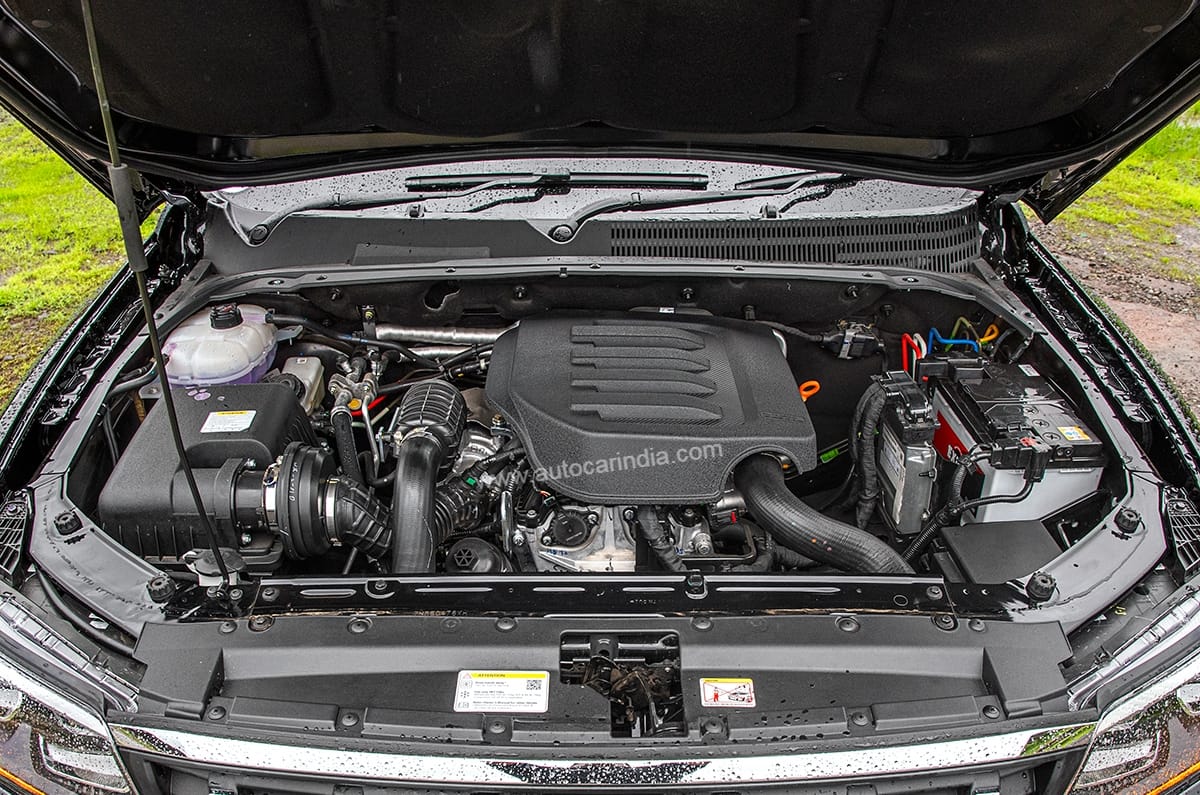
As the upcoming new-gen model is based on the same IMV platform as the current Hilux, Toyota is expected to offer it with the same 2.8-litre diesel engine that produces 204hp, 420Nm with a 6-speed manual transmission, and 240hp, 500Nm with a 6-speed torque converter automatic gearbox. A 4×4 AWD system is expected to be offered as standard with a low-range transfer case. A small improvement, however, could be a new 48V mild-hybrid system, called the ‘neoDrive’ on the Fortuner, which would slightly improve the fuel efficiency of the Toyota pickup.
Notably, the international-spec ninth-generation Hilux is also offered as an all-electric vehicle with a 59.2kWh battery pack, delivering a WLTP-claimed range of 240km, and front- and rear-axle-mounted electric motors with a combined output of 196hp. However, the Hilux EV’s India launch is highely unlike in the country.
3. What are the exterior design changes on the 2026 Toyota Hilux?
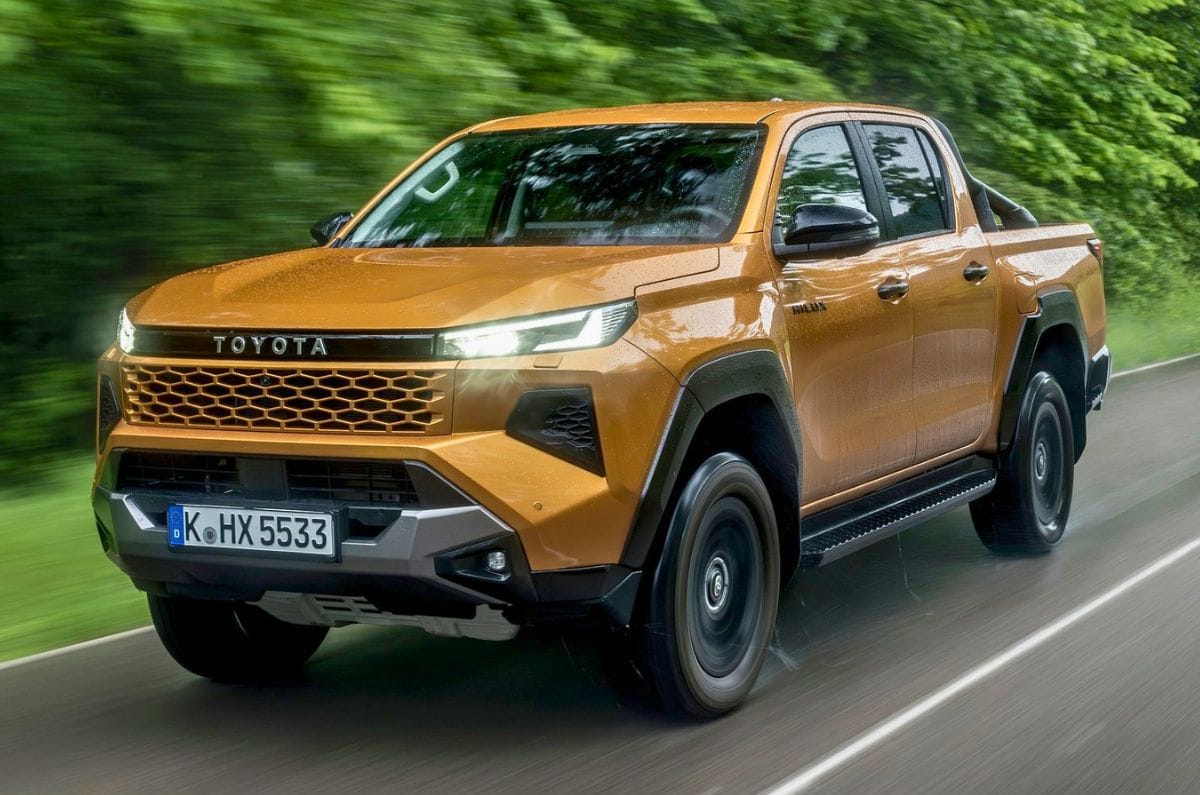
Has slimmer headlights, a square grille and an aggressive-looking front bumper
International-spec ninth-generation Toyota Hilux shown for representational purposes only.
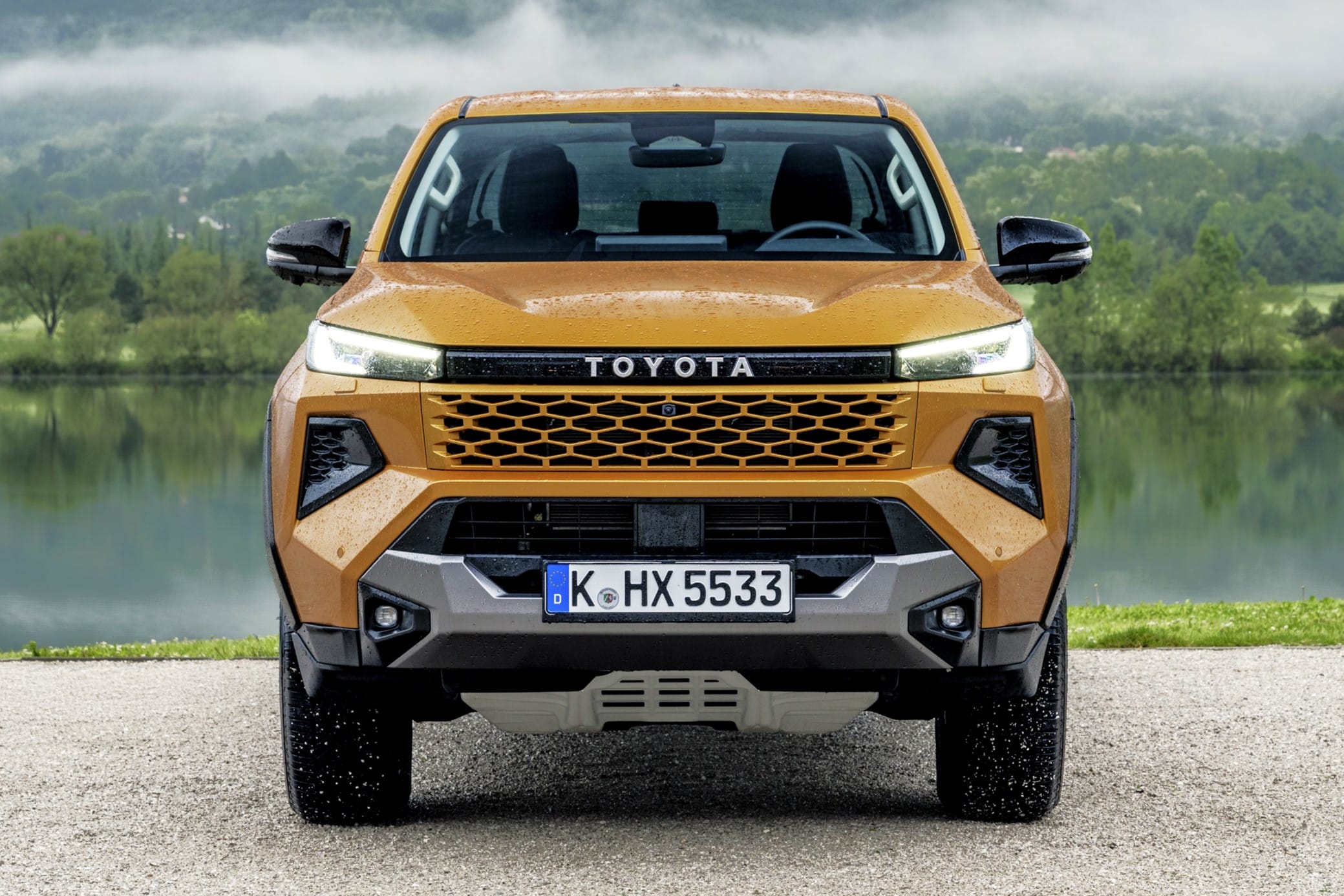
Compared to the current model, the international-spec ninth-generation Hilux has plenty of prominent creases and angles that make it look more aggressive. At the front, it gets slimmer LED headlights with LED DRLs, connected via a gloss black strip that features ‘Toyota lettering’. The grille is squarer than before and features prominent angular honeycomb-mesh design elements.
On the bumper, there are two quadrangle-shaped black air intakes on either side of the grille. The lower section of the bumper looks very aggressive with strong creases, wide air intakes, a silver skid plate, and two LED fog lamps.
Gets a cleaner side profile, but the square wheel arches add to its character
International-spec ninth-generation Toyota Hilux shown for representational purposes only.
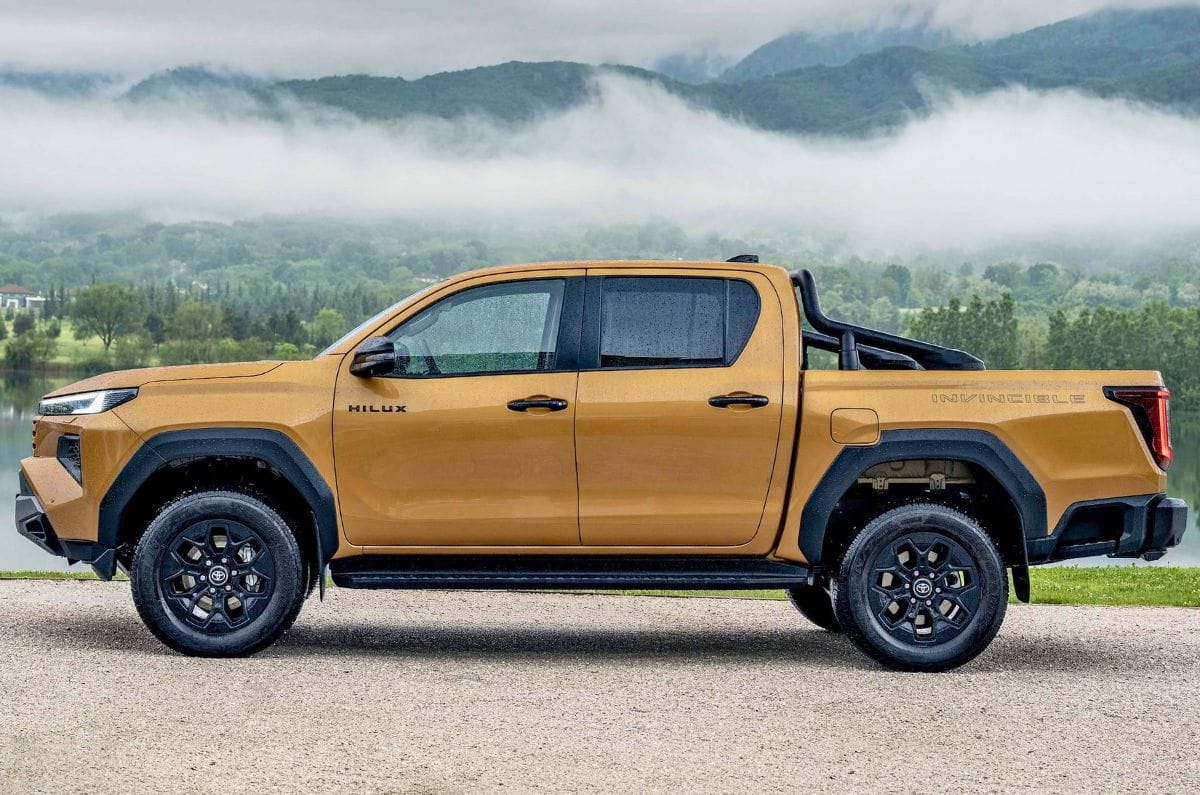
Compared to the front, the side profile design is cleaner. The international model gets 18-inch black alloy wheels, squared-off black cladding on wheel arches and a footboard for easier ingress and egress. The outside rearview mirrors (ORVMs) and door handles are black, and the truckbed features a roll cage finished in black for added contrast.
Features new wraparound taillights but a similar Toyota badging on the tailgate
International-spec ninth-generation Toyota Hilux shown for representational purposes only.
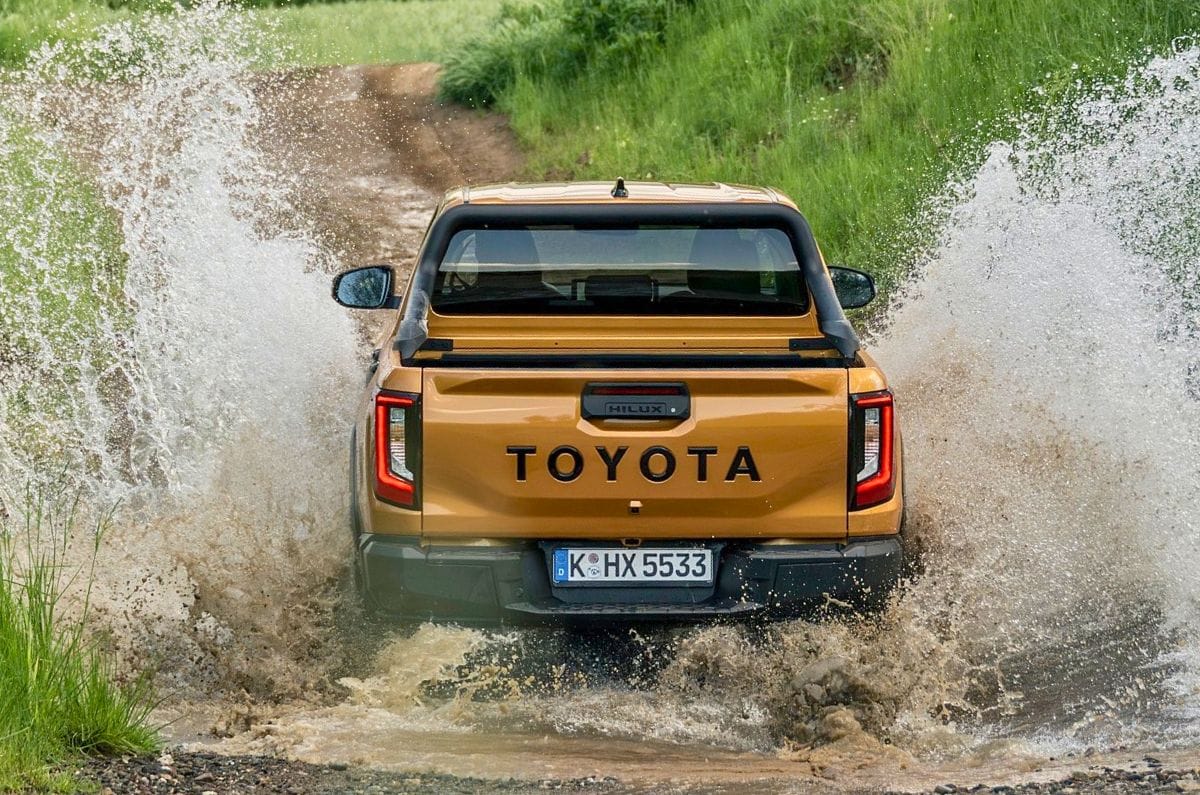
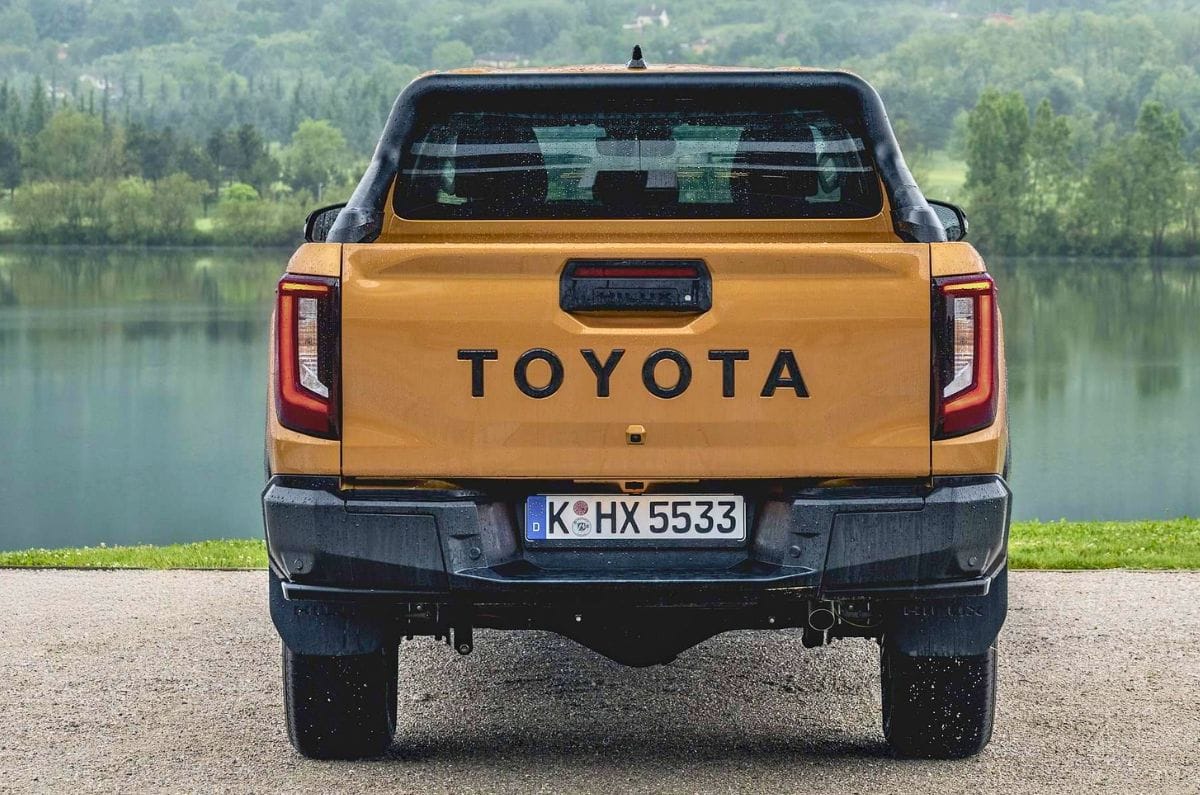
The 2026 Toyota Hilux’s rear features C-shaped wraparound LED taillights. The tailgate features massive ‘Toyota’ lettering in black, and the tailgate handle is also finished in black. The rear bumper is chunky and integrates a step to climb onto the truck bed.
4. What are the interior design changes on the 2026 Toyota Hilux?
The international model gets a revamped all-black cabin with two screens
Japan-spec ninth-generation Toyota Hilux shown for representational purposes only.
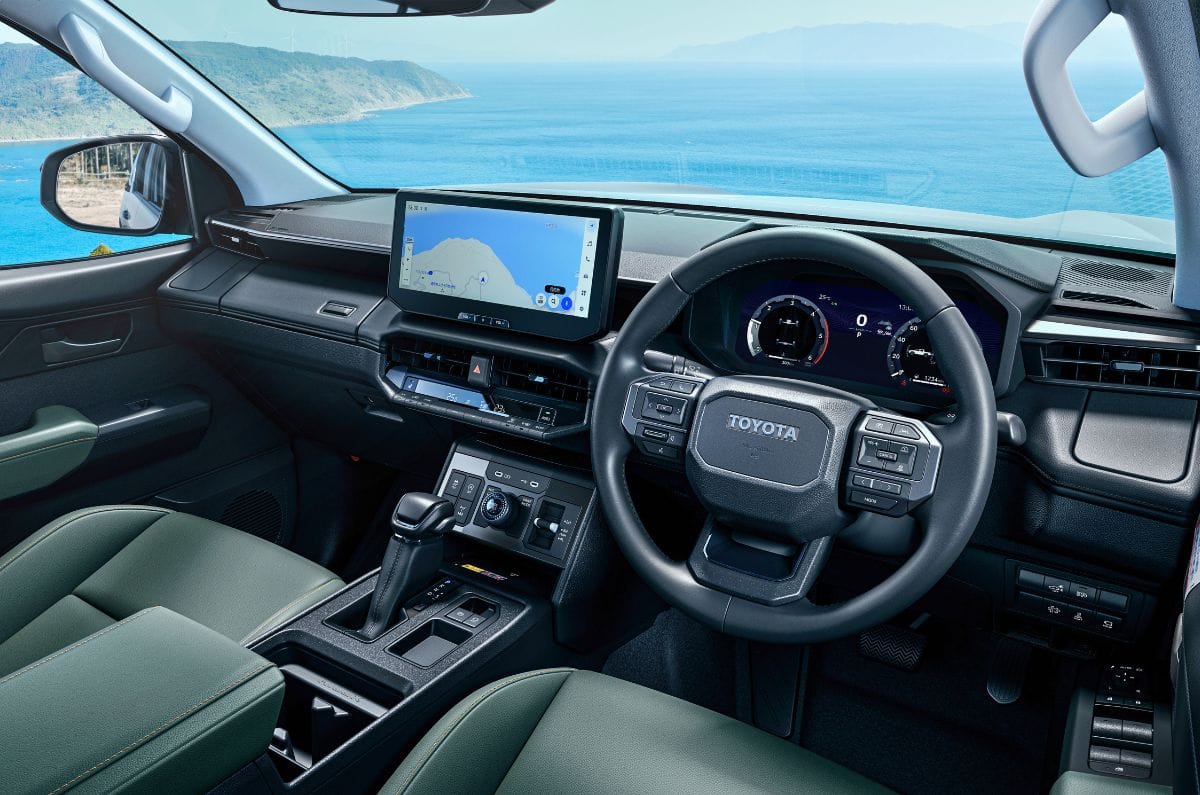
While the India-spec Hilux’s interior is yet to be teased, it is expected to be revamped entirely like the international model. With a chunky 3-spoke steering wheel with physical buttons, a 12.3-inch digital driver’s display and a same-sized touchscreen infotainment system, it looks more modern than the outgoing model. With a mix of soft-touch leatherette materials and hard plastics, it seems to be equal parts contemporary and rugged. Unlike modern-day cars, the new-gen Hilux offers a plethora of physical controls on the centre console and transmission tunnel. Like the current model, the international-spec ninth-gen Hilux features an all-black cabin.
5. What features does the 2026 Toyota Hilux have?
360-degree camera, dual-zone AC, and powered seats are expected to be offered
International-spec ninth-generation Toyota Hilux shown for representational purposes only.
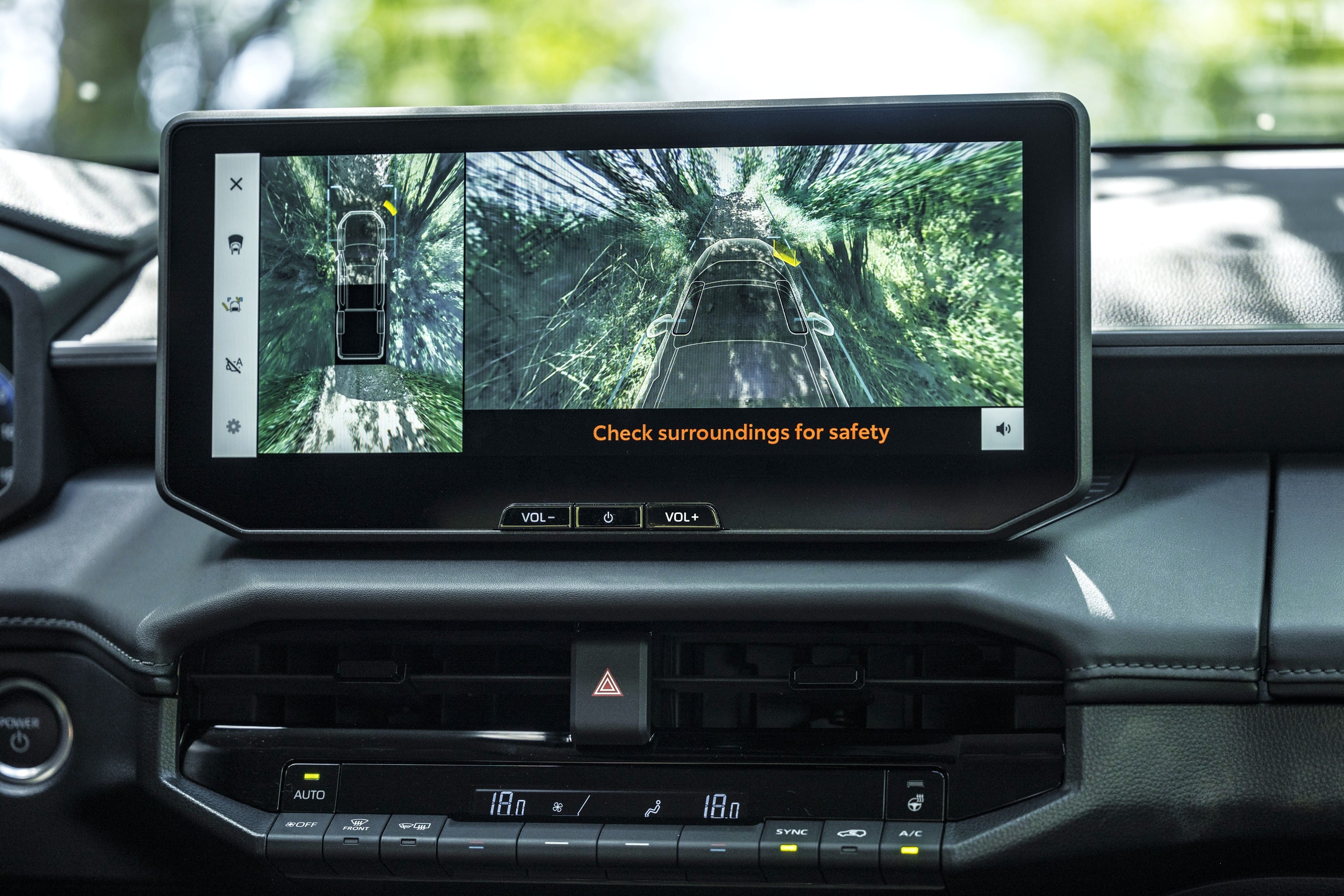
New features onboard the ninth-generation Toyota Hilux include a 360-degree camera system with a blind-spot monitor, dual-zone automatic climate control, powered and ventilated front seats, heated ORVMs and an advanced driver assistance system (ADAS) suite. Other features include the aforementioned 12.3-inch screens, a 9-speaker JBL audio system, a 220V power outlet for front passengers and front and rear parking sensors. The feature suite of the India-spec 2026 Hilux is expected to be similar to the international-spec model.
6. Which cars will the 2026 Toyota Hilux rival in India
The 2026 Hilux will continue its rivalry with only one car in India
The new-generation Toyota Hilux will continue to rival the Isuzu V-Cross in India, which received a minor update in February 2026. Notably, the V-Cross is priced from Rs 25.50 lakh to Rs 30.28 lakh (ex-showroom).
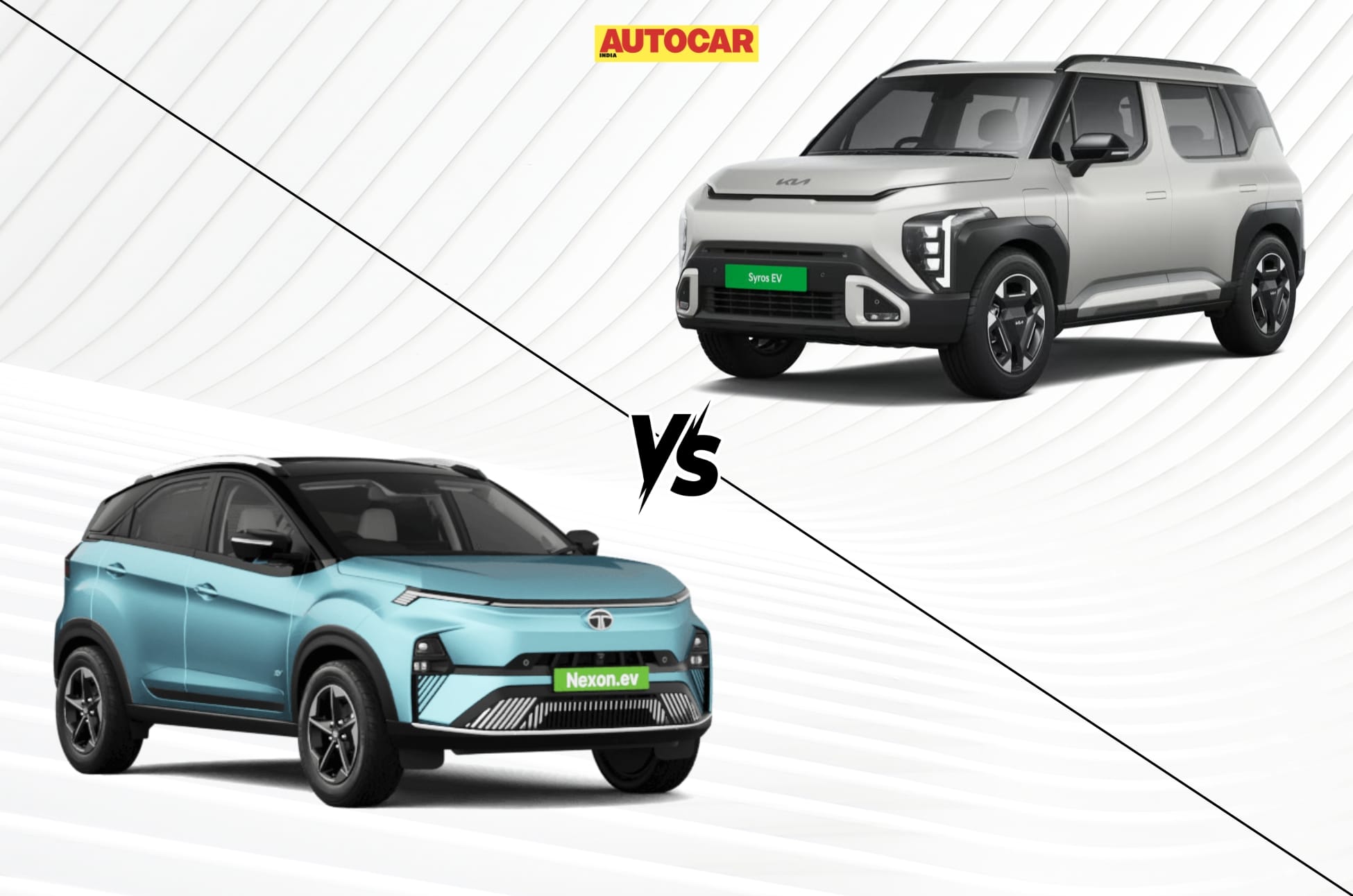
Kia has taken its first aim to crack the compact electric SUV space with the Syros EV. On the other hand, Tata has been dominating this very segment with the Nexon EV that’s been on the market for quite some time. But how do both SUVs fare when comparing specifications and features of their respective top-spec versions? For this comparison, we’ve chosen the Kia Syros EV’s X-Line variant and the Nexon EV’s Empowered+ A 45 variant.
Explore full specs, features, and a price breakdown in our Syros EV vs Nexon EV comparison.
Kia Syros EV vs Tata Nexon EV: Dimensions
Syros EV is comparatively the larger vehicle here
Kia Syros EV vs Tata Nexon EV: Dimensions
Kia Syros EV
Tata Nexon EV
Length (mm)
3,995
3,995
Width (mm)
1,805
1,802
Height (mm)
1,670
1,625
Wheelbase (mm)
2,550
2,498
Frunk (litres)
16
11.6
Boot space (litres)
390
350
Wheel size (inches)
17
16
While both SUVs have identical length, the Syros EV is 3mm wider, 45mm taller, and gets a 52mm longer wheelbase than the Nexon. Additionally, the former gets a 40-litre larger boot, a 4.4-litre larger frunk, and rides on wheels an inch bigger than the Nexon EV.
Kia Syros EV vs Tata Nexon EV: Powertrains
Syros EV gets the larger battery pack, more powerful motor, and higher claimed range figure
Kia Syros EV vs Tata Nexon EV top-spec: Powertrains
Kia Syros EV
Tata Nexon EV
Battery size (kWh)
51.4
45
Electric motor setup
Single motor
Single motor
Drive layout
FWD
FWD
Power (hp)
171
144
Torque (Nm)
255
215
Claimed 0-100kph time (seconds)
8.1
8.9
ARAI range (km)
526
489
The Syros EV features the largest battery pack in its segment with a 51.4kWh battery pack. Not only is its battery pack larger than the Nexon’s, but it also has a more powerful motor, leading to a quicker claimed 0-100kph time and a segment-best ARAI range that’s 37km higher than the Nexon’s.
Kia Syros EV vs Tata Nexon EV top-spec: Charging speeds and times
Syros EV supports faster charging speeds
Kia Syros EV vs Tata Nexon EV top-spec: Charging speeds and times
Kia Syros EV
Tata Nexon EV
Battery size (kWh)
51.4
45
7.2kW AC charging (10-100 percent)
–
6 hours 36 minutes
11kW AC charging (10-100 percent)
8.9 hrs
DC fast charging (10-80 percent)
39 minutes at 100kW
40 minutes at 60kW
The Syros EV supports higher charging output than the Nexon EV, be it at AC or DC speeds. But despite this, the Nexon EV’s smaller battery helps it juice up quicker at AC speeds, while DC fast charging times are almost similar to the Syros EV’s.
Kia Syros EV vs Tata Nexon EV: Exterior features
Syros EV top-spec limited to one colour
Kia Syros EV vs Tata Nexon EV top-spec: Exterior features
Kia Syros EV
Tata Nexon EV
LED headlamps
Automatic
Automatic
LED tail-lamps
Yes
Connected
DRLs
Yes
Connected
Front fog lamps
LED
LED
Puddle lamps w/ logo projection
Yes
No
Powered and foldable ORVMS
Yes
Yes
Flush door handles
Yes
No
Rear spoiler
Yes
Yes
Colour options
2, monotone and matte
5, dual tone
On the outside, the Syros EV gets goodies such as flush door handles with motorised opening for the front handles, and puddle lamps with logo projection, which the Nexon EV skips. But with the Syros EV in top-spec guise, you’re limited to only black exterior paint in either matte or gloss finish. On the other hand, the Nexon offers five dual tone paint choices with a black roof as standard at the top-end.
Kia Syros EV vs Tata Nexon EV: Interior features
Sliding and reclining rear seats with seat base ventilation found only on the Syros EV
Kia Syros EV vs Tata Nexon EV: Interior features
Kia Syros EV
Tata Nexon EV
Infotainment screen
12.3-inch
12.3-inch
Digital driver’s display
12.3-inch
10.25-inch
HVAC display
5-inch
No
Apple CarPlay & Android Auto
Wireless
Wireless
Connected car tech
Yes
Yes
Sunroof
Panoramic
Panoramic
Sound system
8-speaker Harmon Kardon
9-speaker JBL
Automatic climate control
Yes
Yes
Wireless charger
Yes
Yes
Driver’s seat adjustment
4-way powered
No
Ventilated front seats
Yes
Yes
Rear seat base ventilation
Yes
No
Rear sunshades
Yes
Yes
Rear centre armrest
Yes
Yes
Sliding, reclining rear seats
Yes
No
OTA updates
Yes
Yes
Ambient lighting
Yes
Yes
Air purifier
No
Yes
Rear AC vents
Yes
Yes
While Kia and Tata have packed a lot of features for their respective models, the former has the edge here. The Syros EV gets a larger digital driver’s display, powered driver seat, rear seat base ventilation, and sliding and reclining rear seats. But it misses out on an additional speaker and an air purifier, which the Nexon EV gets.
Kia Syros EV vs Tata Nexon EV: Driving features
Both models are on par with driving features
Kia Syros EV vs Tata Nexon EV: Driving features
Kia Syros EV
Tata Nexon EV
Drive modes
Eco, Normal, Sport
Eco, City, Sport
V2L function
Yes
Yes
Multi-level regen braking
Yes
Yes
Paddleshifters for regen
Yes
Yes
Cruise control
Adaptive
Adaptive
In the driving features department, the Syros EV and Nexon EV are equally equipped with drive modes, regen paddle shifters, adaptive cruise control, and V2L functionality.
Kia Syros EV vs Tata Nexon EV: Safety features
Syros EV yet to achieve BNCAP certification
Kia Syros EV vs Tata Nexon EV: Safety features
Kia Syros EV
Tata Nexon EV
Bharat NCAP rating
Yet to be tested
5 stars
Airbags
6
6
ABS with EBD
Yes
Yes
Electronic stability program
Yes
Yes
Follow-me-home headlamps
Yes
No
Hill hold control
Yes
Yes
Hill descent control
No
Yes
TPMS
Yes
Yes
360-degree camera
Yes
Yes
Parking sensors
Front, rear, side
Front and rear
Electronic parking brake
Yes (w/ auto-hold)
Yes (w/ auto-hold)
Rain-sensing wipers
No
Yes
Auto-dimming IRVM
Yes
Yes
ISOFIX child seat anchors
Yes
Yes
Rear wiper, defogger
Yes
Yes
Disc brakes
All wheel
All wheel
Level 2 ADAS
Yes
Yes
While the Tata Nexon EV has already scored a 5-star rating in BNCAP tests, the Syros EV is yet to be tested. But for the latter, a similar rating can be expected considering its ICE version has already attained a 5-star rating.
Both the Syros EV and Nexon EV come well equipped with basic and advanced safety features, including a Level 2 ADAS suite and a 360-degree camera. Here, the Kia gets follow-me-home headlamps and additional parking sensors on the side over the Tata. However, hill descent control and rain-sensing wipers are found only on the latter.
Kia Syros EV vs Tata Nexon EV: Prices and Verdict
Syros EV X-Line pricier by Rs 3.5 lakh
Kia Syros EV vs Tata Nexon EV: Price
Kia Syros EV
Tata Nexon EV
Price (Rs lakh)
20.00
17.49
In top-specification guise, the Syros EV is Rs 3.5 lakh pricier than the Nexon EV. Between the two, it’s the Nexon EV we find as the better value proposition. While the Syros EV is the larger vehicle dimensionally, has the larger battery pack, more powerful motor, and the higher claimed range, it doesn’t justify the extra premium that it commands over the Nexon EV. The Nexon EV may not have as much claimed range or features as the Syros EV, but it isn’t bad by segment standards.
भारतीय रेलवे में AC कोच से सफर करने वाले यात्रियों को मिलने वाली बेडरोल किट में कई चीजें शामिल होती हैं, लेकिन एक बात अक्सर लोगों का ध्यान खींचती है दो बेडशीट। ज्यादातर यात्री इसे अतिरिक्त सुविधा मानते हैं, जबकि इसके पीछे एक खास वजह छिपी है। हाल ही में संसद में इस मुद्दे पर सवाल पूछे जाने के बाद रेलवे ने इसकी पूरी जानकारी दी। साथ ही लिनेन की सफाई, कंबलों के इस्तेमाल और यात्रियों की स्वच्छता से जुड़े नियमों पर भी स्थिति स्पष्ट की गई। इससे यह समझने में मदद मिलती है कि रेलवे सिर्फ सफर को आरामदायक ही नहीं, बल्कि अधिक स्वच्छ और सुरक्षित बनाने के लिए भी कई व्यवस्थाएं अपनाता है।
बेडरोल किट में क्या-क्या मिलता है?
भारतीय रेलवे First AC, Second AC, Third AC और AC Economy में सफर करने वाले यात्रियों को टिकट के साथ बेडरोल किट उपलब्ध कराता है। इसकी अलग से कोई कीमत नहीं ली जाती क्योंकि इसका खर्च टिकट में शामिल होता है।
एक बेडरोल किट में आमतौर पर ये सामान मिलता है
2 बेडशीट
1 तकिए का कवर
1 हैंड टॉवल
1 कंबल
आखिर 2 बेडशीट क्यों दी जाती हैं?
रेल मंत्री अश्विनी वैष्णव ने राज्यसभा में बताया कि दोनों बेडशीट का इस्तेमाल अलग-अलग उद्देश्य के लिए होता है।
पहली बेडशीट सीट या बर्थ पर बिछाने के लिए होती है।
दूसरी बेडशीट कंबल के नीचे ओढ़ने से पहले इस्तेमाल की जाती है, ताकि कंबल सीधे यात्री के शरीर के संपर्क में न आए।
उन्होंने बताया कि यह अतिरिक्त बेडशीट स्वच्छता बनाए रखने के लिए दी जाती है और इसे हर इस्तेमाल के बाद धोया जाता है।
कंबल हर बार क्यों नहीं धोए जाते?
संसद में यह सवाल भी पूछा गया कि जब बेडशीट हर यात्रा के बाद धुलती है, तो ऊनी कंबलों को महीने में केवल एक बार ही क्यों साफ किया जाता है।
इसके जवाब में रेलवे ने बताया कि यात्रियों और कंबल के बीच अतिरिक्त बेडशीट का इस्तेमाल करने से सीधे संपर्क से बचाव होता है, जिससे स्वच्छता बेहतर बनी रहती है।
अब AI करेगा लिनेन की जांच
रेल मंत्री ने बताया कि रेलवे ने लिनेन की सफाई की गुणवत्ता जांचने के लिए नई तकनीक का इस्तेमाल शुरू कर दिया है।
सभी मैकेनाइज्ड लॉन्ड्री में Whito-Meter से बेडशीट की सफाई जांची जाती है।
लॉन्ड्री की निगरानी के लिए CCTV कैमरे लगाए गए हैं।
पुणे, जयपुर और जोधपुर में AI Camera Stain Detection तकनीक का पायलट प्रोजेक्ट भी शुरू किया गया है, जिससे बेडशीट पर बचे दाग की पहचान की जा सके।
किन ट्रेनों में शुरू हुई नई व्यवस्था?
रेलवे ने यात्रियों की सुविधा और स्वच्छता बढ़ाने के लिए फिलहाल कुछ ट्रेनों में कंबल कवर उपलब्ध कराने की शुरुआत की है।
यह सुविधा अभी North Western Railway की ट्रेनों और कामाख्या-हावड़ा वंदे भारत स्लीपर ट्रेन में पायलट प्रोजेक्ट के तौर पर शुरू की गई है।
कब बदली जाती हैं बेडशीट और कंबल?
रेलवे के तय नियमों के अनुसार अलग-अलग लिनेन की एक निश्चित उपयोग अवधि होती है। समय पूरा होने या खराब होने पर इन्हें बदल दिया जाता है।
तकिए का कवर 9 महीने तक इस्तेमाल किया जाता है।
फेस टॉवल की निर्धारित अवधि भी 9 महीने है।
हैंडलूम बेडशीट को 12 महीने बाद बदल दिया जाता है।
Polyvastra (KVIC) बेडशीट की उपयोग अवधि 24 महीने तय है।
तकिए को 24 महीने तक इस्तेमाल किया जाता है।
वहीं, ऊनी कंबल भी सामान्य तौर पर 24 महीने की निर्धारित अवधि पूरी होने या खराब होने पर बदल दिए जाते हैं।
रेलवे का फोकस अब सफाई और आराम दोनों पर
भारतीय रेलवे का कहना है कि यात्रियों को साफ-सुथरा और सुरक्षित सफर देने के लिए लिनेन की गुणवत्ता पर लगातार नजर रखी जा रही है। नई तकनीक, नियमित जांच और समय पर लिनेन बदलने जैसी व्यवस्थाओं का उद्देश्य यात्रियों को बेहतर स्वच्छता और आराम उपलब्ध कराना है।
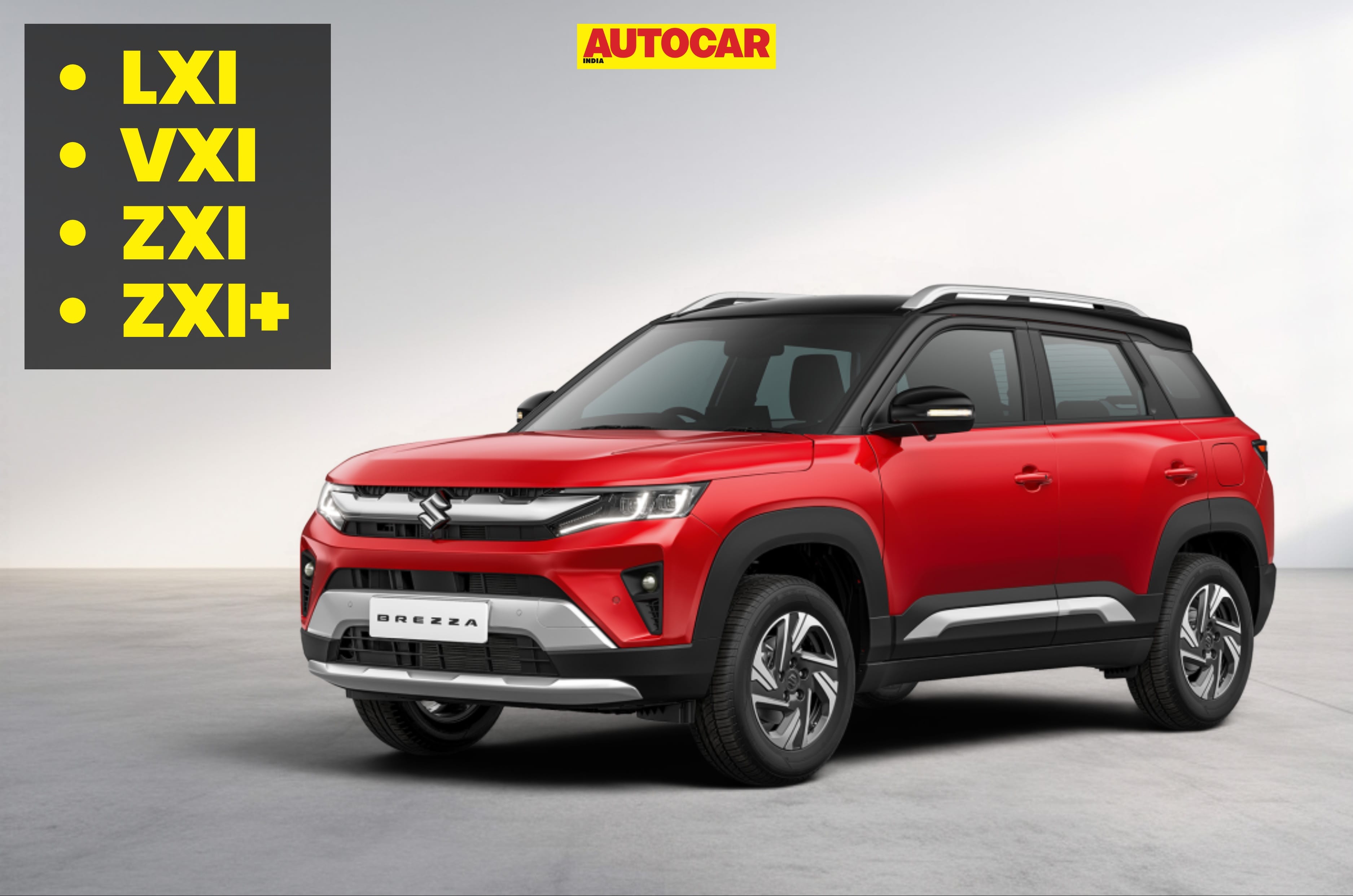
The 2026 Maruti Suzuki Brezza facelift receives updated exterior styling, a revised interior, new convenience and safety features, and a broader powertrain line-up. Buyers can choose from petrol, turbo-petrol and factory-fitted CNG powertrains across four trims – LXi, VXi, ZXi and ZXi+. Here’s a detailed look at what each variant offers and which one you should consider buying.
The Brezza facelift is priced at a at a starting price of Rs 7.40 lakh and is available with three powertrain options spread across the four-variant line-up. The new 1.0-litre Boosterjet direct injection turbo-petrol engine is offered across all four trims with a 6-speed manual gearbox. The 1.5-litre K15C petrol engine is available with a 6-speed manual on the LXi, VXi and ZXi, while the 6-speed automatic can be had from the VXi onwards, including the range-topping ZXi+. Buyers looking for a factory-fitted CNG option can choose between the LXi, VXi and ZXi variants, as the top-spec ZXi+ is offered only with petrol power.
2026 Maruti Suzuki Brezza facelift colour options
The Brezza facelift is available in nine exterior colours, including monotone and dual-tone finishes. Dual-tone paint schemes are limited to higher variants, while colour availability varies depending on the trim. The ZXi and ZXi+ also get additional premium paint options and dual-tone combinations.
2026 Maruti Suzuki Brezza facelift variant-wise features
LXi
Powertrains: 1.0 Boosterjet 6MT, 1.5 Petrol 6MT, 1.5 CNG 6MT
Six airbags
Electronic Stability Program (ESP)
Hill Hold Assist
Rear parking sensors
ISOFIX child seat mounts
Three-point seatbelts for all occupants
Tyre repair kit
Tilt-adjust steering
Keyless entry
Driver-side auto up/down power window
Rear AC vents
Electrically adjustable ORVMs
Halogen projector headlamps
LED tail-lamps
Roof spoiler
Shark-fin antenna
16-inch steel wheels with wheel covers
Fabric upholstery
Manual day/night IRVM
Rear defogger (Boosterjet only)
Height-adjustable driver’s seat (Boosterjet only)
Auto climate control (Boosterjet only)
VXi
Features over LXi
Powertrains: 1.0 Boosterjet 6MT, 1.5 Petrol 6MT/6AT, 1.5 CNG 6MT
7-inch touchscreen infotainment system
Wireless Android Auto and Apple CarPlay
ARKAMYS sound system
Steering-mounted audio and Bluetooth controls
Suzuki voice assistant
Remote infotainment app
Reverse parking camera (Boosterjet)
Automatic climate control
Height-adjustable driver’s seat
Rear defogger
16-inch alloy wheels (Boosterjet)
Electrically foldable ORVMs (Boosterjet)
ZXi
Features over VXi
Powertrains: 1.0 Boosterjet 6MT, 1.5 Petrol 6MT/6AT, 1.5 CNG 6MT
Electric sunroof
Push-button start
LED projector headlamps
Auto headlamps (Boosterjet)
Chrome front grille
60:40 split-folding rear seat
Roof rails
Rear centre armrest
Parcel tray
Wireless charger
Rear centre armrest with cupholder
Ambient lighting
Rear wiper and washer (Boosterjet)
Cruise control (Boosterjet)
Tweeters (Boosterjet)
Front parking sensors (Boosterjet)
Blind Spot Warning (Boosterjet)
Rear Cross Traffic Alert (Boosterjet)
Tyre Pressure Monitoring System (Boosterjet)
ZXi+
Features over ZXi
Powertrains: 1.0 Boosterjet 6MT, 1.5 Petrol 6AT
10.1-inch touchscreen infotainment system
ARKAMYS Surround Sense audio system
Connected car technology (Suzuki Connect)
Front centre armrest with storage
Front sliding armrest
LED fog lamps
LED DRLs
Cooled glovebox
Auto-folding ORVMs
Auto-dimming IRVM
360-degree camera
In-built navigation with live traffic updates
Rear USB ports (Type-A and Type-C)
Internet connectivity
Cruise control
Alexa Auto voice assistant
Over-the-air app updates
PM2.5 cabin air filter with AQI display
Ventilated front seats
Leatherette upholstery
64-colour ambient lighting
16-inch diamond-cut alloy wheels
Leather-wrapped steering wheel
Blind Spot Warning
Rear Cross Traffic Alert
Which 2026 Maruti Suzuki Brezza facelift variant should you buy?
The ZXi is the sweet spot in the Brezza facelift range. It gets many of the features buyers in this segment are likely to appreciate, including an electric sunroof, LED projector headlamps, wireless charger, push-button start and ambient lighting, while remaining available with all three mainstream powertrains – the 1.5-litre petrol manual, 1.5-litre petrol automatic and factory-fitted CNG. This makes it the most well-rounded variant for most buyers.
If you’re planning to buy the new 1.0-litre Boosterjet turbo-petrol, the ZXi again stands out. In addition to the features mentioned above, it adds equipment such as cruise control, front parking sensors, Blind Spot Warning, Rear Cross Traffic Alert and a tyre pressure monitoring system, making it the best-balanced turbo variant in the Brezza range.
The ZXi+ is best suited to buyers who specifically want the larger 10.1-inch touchscreen, Suzuki Connect connected car technology, ventilated front seats, leatherette upholstery, 360-degree camera and premium cabin features. While it offers the most comprehensive equipment list in the Brezza range, the additional convenience features may not justify the price premium for every buyer.
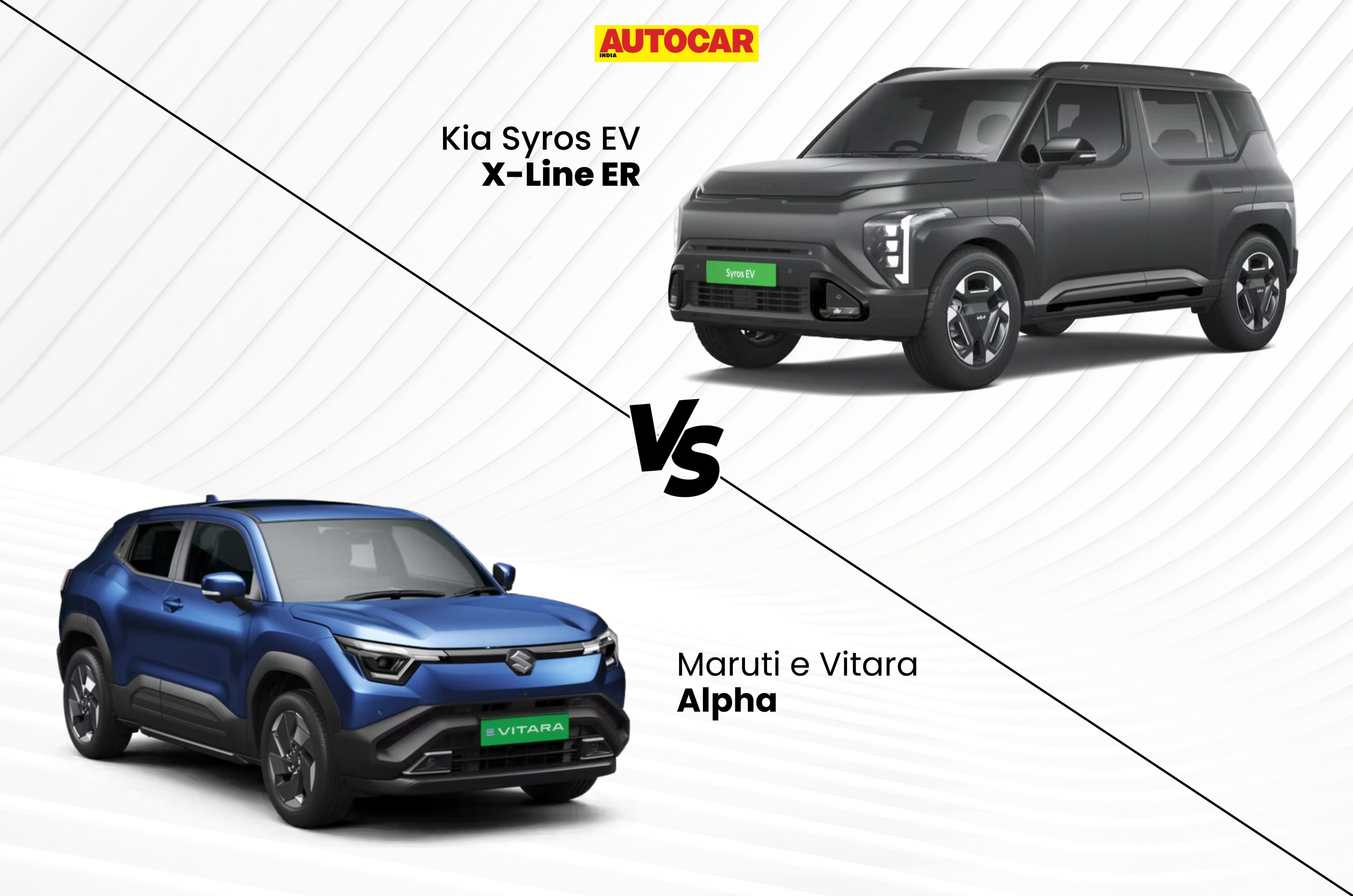
Kia India has officially launched its second mass-market electric car, the Syros EV. While the sub-4m Syros EV directly rivals the Tata Nexon EV and Mahindra XUV 3XO, the Kia’s pricing sees quite a bit of overlap with that of the Maruti Suzuki e Vitara, which is of a segment above. In fact, the top-spec trims of both electric SUVs are identically priced. Therefore, we compared the top-spec versions of the Syros EV and e Vitara on paper to determine which electric SUV offers more bang for your buck.
Kia Syros EV vs Maruti Suzuki e Vitara: Top trim dimensions
e Vitara is longer, but Syros EV is wider and taller
Kia Syros EV X-Line ER vs Maruti e Vitara Alpha dimensions
Syros EV
e Vitara
Length (mm)
3,995
4,275
Width (mm)
1,805
1,800
Height (mm)
1,670
1,640
Wheelbase (mm)
2,550
2,700
Frunk (litres)
16
–
Wheel size (inches)
17
18
Expectedly, the Syros EV is 280mm shorter overall (150mm shorter wheelbase) than the e Vitara, but interestingly, the Kia compact SUV is 5mm wider and 30mm taller. Neither Kia nor Maruti Suzuki quote precise boot space figures for their respective electric SUVs, but it’s worth noting that the Syros EV comes with a 16-litre frunk, while the e Vitara completely lacks storage space up front. However, the top-spec e Vitara does get larger alloy wheels than the equivalent Syros EV.
Kia Syros EV vs Maruti Suzuki e Vitara: Top trim powertrains
Syros EV is quicker, e Vitara claims higher range and has a bigger battery
Kia Syros EV X-Line ER vs Maruti e Vitara Alpha battery and range
Syros EV
e Vitara
Battery size (kWh)
51.4
61
Electric motor setup
Single motor, front
Single motor, front
Drive layout
FWD
FWD
Power (hp)
171
174
Torque (Nm)
255
193
Claimed 0-100kph time (seconds)
8.1
8.7
ARAI range (km)
526
543
The Syros EV’s battery pack is almost 10kWh smaller than that of the e Vitara, but the Kia is only 17km behind in terms of ARAI-claimed range. Both electric SUVs are front-wheel drive and make similar amounts of power, but the Syros EV edges ahead by a significant 62Nm in terms of torque output. This is partly why the Syros EV claims a 0.6sec quicker 0-100kph time than that of the e Vitara.
Kia Syros EV vs Maruti Suzuki e Vitara: Top trim charging speeds
Syros EV supports higher DC wattages
Kia Syros EV X-Line ER vs Maruti e Vitara Alpha charging times
Syros EV
e Vitara
Battery size (kWh)
51.4
61
7.4kW AC charging (10-100 percent)
–
9 hrs
11kW AC charging (10-100 percent)
8.9 hrs
–
DC fast charging (10-80 percent)
39 mins at 100kW
45 mins at 70kW
Kia and Maruti Suzuki quote AC charging speeds at different wattages, so the Syros EV and e Vitara can’t be directly compared on this front. However, it’s noteworthy that though the e Vitara has a larger battery than the Syros EV, the former takes roughly the same amount of time for a 10-100 percent charge at 7.4kW as the latter does at 11kW. Coming to DC charging, the Syros EV supports up to 100kW, while the e Vitara tops out at 70kW.
Kia Syros EV vs Maruti Suzuki e Vitara: Top trim exterior features
Syros EV gets puddle lamps, but e Vitara offers much greater choice in colours
Kia Syros EV X-Line ER vs Maruti e Vitara Alpha exterior features
Syros EV
e Vitara
LED projector headlamps
Yes (auto)
Yes (auto)
Front fog lamps
Yes
Yes
LED tail-lamps
Yes
Yes
Puddle lamps w/ logo projection
Yes
No
Roof rails
Yes
No
Powered ORVMs
Yes
Yes
Auto-folding ORVMs
Yes
Yes
Flush door handles
Yes
No
Body cladding
Yes
Yes
Rear spoiler
Yes
Yes
Colour options
2, monotone
10, monotone + dual-tone
Both electric SUVs are quite evenly matched in terms of exterior features, but the Syros EV takes the lead by way of roof rails and door-mounted puddle lamps that project the Kia logo. The Syros EV has flush door handles too, but some may appreciate the e Vitara’s conventional door handles more. Colours are a square win for the e Vitara, as it offers six monotone options and four dual-tone finishes. The Syros X-Line ER can be had in either Aurora Black Pearl or Matte Graphite, both of which are difficult to maintain. Buyers who want other colours have no option but to consider lower-spec Syros EV variants.
Kia Syros EV vs Maruti Suzuki e Vitara: Top trim interior features
Syros EV beats e Vitara with panoramic sunroof, cooled rear seat bases, and more
Kia Syros EV X-Line ER vs Maruti e Vitara Alpha interior features
Syros EV
e Vitara
Infotainment screen
12.3-inch
10.1-inch
Digital driver’s display
12.3-inch
10.25-inch
Climate control display
5-inch
–
Sunroof
Panoramic
Fixed single-pane
Wireless charger
Yes
Yes
Driver’s seat adjustment
4-way powered
10-way powered
Ventilated front seats
Yes
Yes
Rear seat base ventilation
Yes
No
Automatic climate control
Yes
Yes
Ambient lighting
Yes
Yes
Sound system
8-speaker Harmon Kardon
8-speaker Infinity
Apple CarPlay & Android Auto
Wireless
Wireless
Connected car tech
Yes
Yes
OTA updates
Yes
Yes
Rear sunshades
Yes
No
Rear centre armrest
Yes
Yes
Sliding, reclining rear seats
Yes
Yes
Even on the inside, the Syros EV’s feature set comes out on top. Over the e Vitara, the Syros EV packs larger infotainment and instrument displays, an additional screen for climate control settings, a panoramic sunroof, rear sunshades, and ventilation for the rear seat bases – this feature is not available even in electric SUVs a segment above the Syros EV. The e Vitara’s only advantage over the Syros EV is a greater gamut of electrical adjustment for the driver’s seat.
Kia Syros EV vs Maruti Suzuki e Vitara: Top trim driving features
Syros EV scores big on convenience by way of paddle shifters for regen modes
Kia Syros EV X-Line ER vs Maruti e Vitara Alpha driving features
Syros EV
e Vitara
Drive modes
Eco, Normal, Sport
Eco, Normal, Sport
Terrain modes
No
Snow
V2L function
Yes
No
Multi-level regen braking
Yes
Yes
Paddle shifters for regen
Yes
No
Cruise control
Adaptive
Adaptive
Both the Syros EV and e Vitara come with three drive modes and adaptive cruise control, but the Kia SUV inches forward thanks to vehicle-to-load (V2L) functionality, which lets you power external devices from the battery pack. The Syros EV also offers paddle shifters to cycle through the regenerative braking levels, while the e Vitara makes do with just a knob on the centre console. However, the e Vitara does offer a Snow terrain mode over the Syros EV.
Kia Syros EV vs Maruti Suzuki e Vitara: Top trim safety features
e Vitara wins thanks to an extra airbag, rain-sensing wipers, and 5-star BNCAP score
Kia Syros EV X-Line ER vs Maruti e Vitara Alpha safety features
Syros EV
e Vitara
Bharat NCAP rating
Yet to be tested
5 stars
Airbags
6
7
ABS with EBD
Yes
Yes
Electronic stability program
Yes
Yes
Follow-me-home headlamps
Yes
Yes
Hill hold control
Yes
Yes
TPMS
Yes
Yes
360-degree camera
Yes
Yes
Parking sensors
Front, rear, side
Front, rear
Electronic parking brake
Yes (w/ auto-hold)
Yes (w/ auto-hold)
Rain-sensing wipers
No
Yes
Auto-dimming IRVM
Yes
Yes
ISOFIX child seat anchors
Yes
Yes
Rear wiper, defogger
Yes
Yes
Disc brakes
Front, rear
Front, rear
Level 2 ADAS
Yes
Yes
Acoustic vehicle alert system
Yes
Yes
Coming to safety, the e Vitara finally scores a win. It’s the only one here to come with seven airbags and rain-sensing wipers, whereas the Syros EV sets itself apart with side parking sensors. The e Vitara also holds a 5-star crash safety rating from Bharat NCAP, while the Syros EV has not been tested yet. It’s worth noting, though, that the ICE-powered Syros was awarded 5 stars by Bharat NCAP, so a similar rating for the compact SUV’s electric derivative is very possible.
Kia Syros EV vs Maruti Suzuki e Vitara: Top trim prices
Syros EV for buyers seeking features, e Vitara for those who want a bigger car
Kia Syros EV X-Line ER vs Maruti e Vitara Alpha price comparison
Syros EV
e Vitara
Price (Rs, lakh)
20.00
19.99
As noted previously, there is next to no difference in the pricing of the Syros EV X-Line ER and e Vitara Alpha, which means the final decision comes down to your needs and preferences. If you want as many features as possible, are fine with a dark colour, and don’t mind smaller dimensions and funkier styling, the Syros EV X-Line ER is the one to go for. On the other hand, if you want the price you pay to be reflected in the size of the car, more choice in colours, more conventional looks, and are happy to forgo some features, you can consider the e Vitara.
It’s also worth noting that both the Syros EV and e Vitara can be purchased with battery-as-a-service (BaaS), which converts the cost of the battery into separate usage-based EMIs, thereby lowering the upfront cost. Kia has yet to reveal the BaaS price of the Syros EV X-Line ER, but the e Vitara Alpha costs Rs 14.49 lakh – Rs 5.5 lakh off the sticker price – with a Rs 4.39/km battery usage fee.