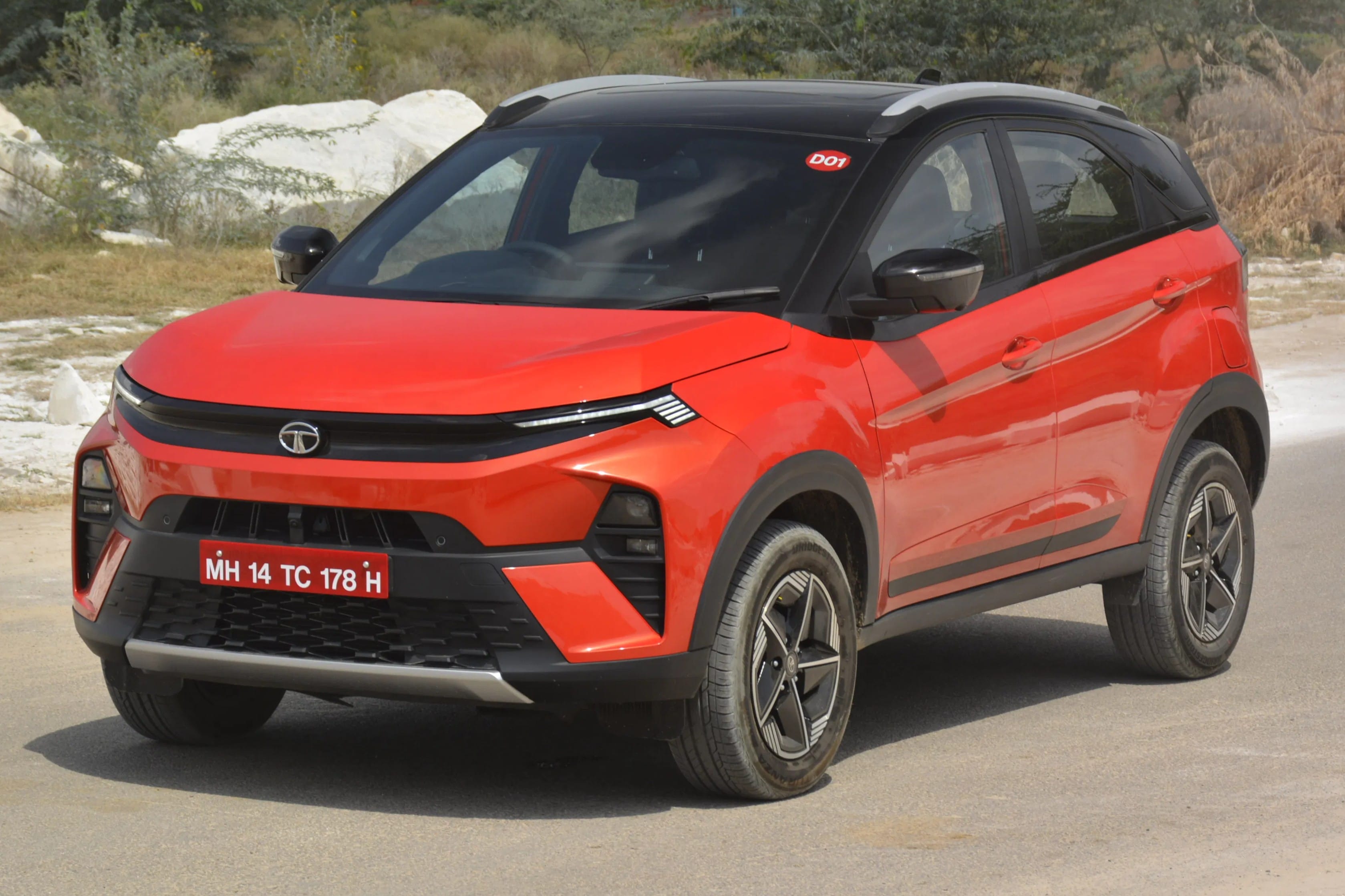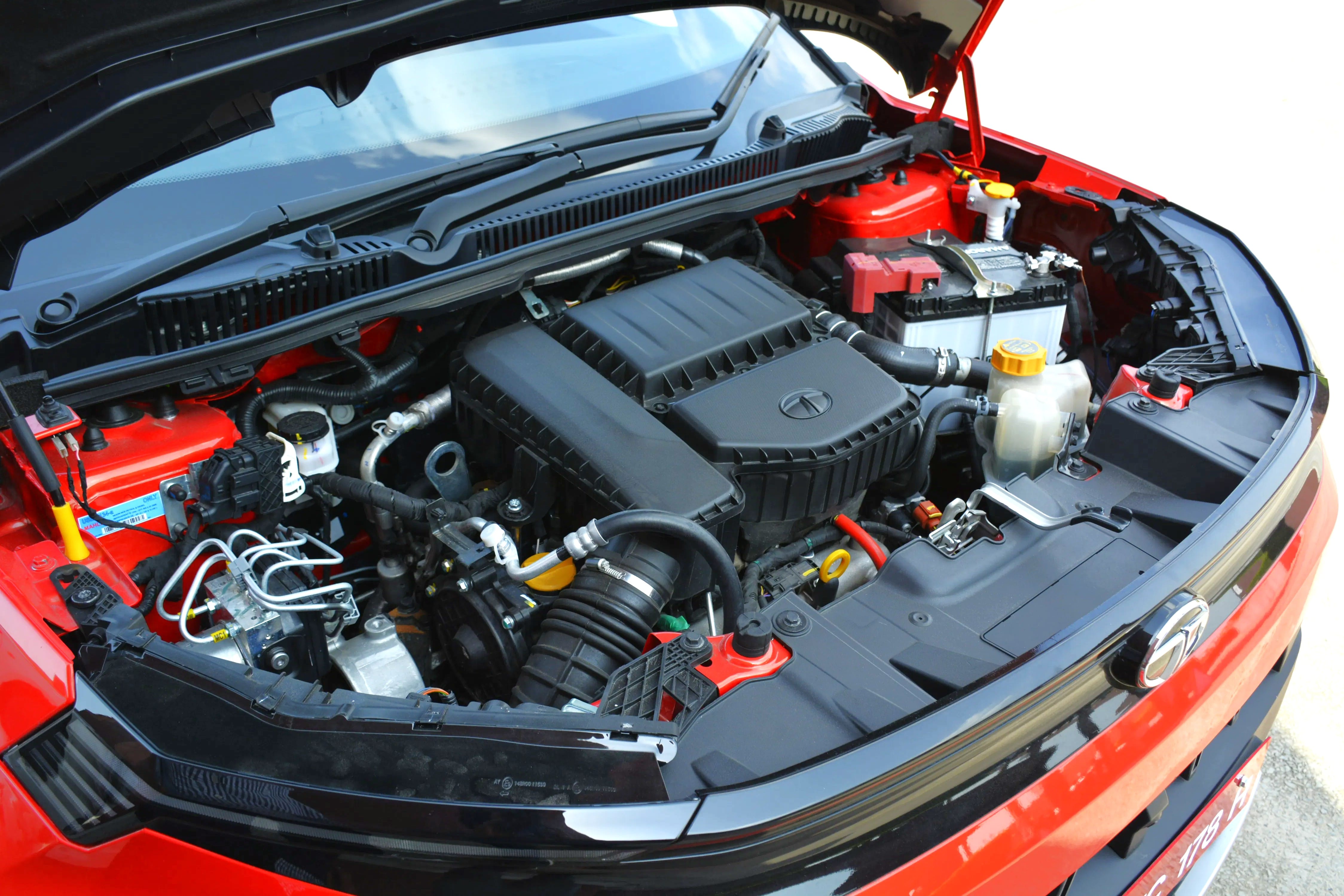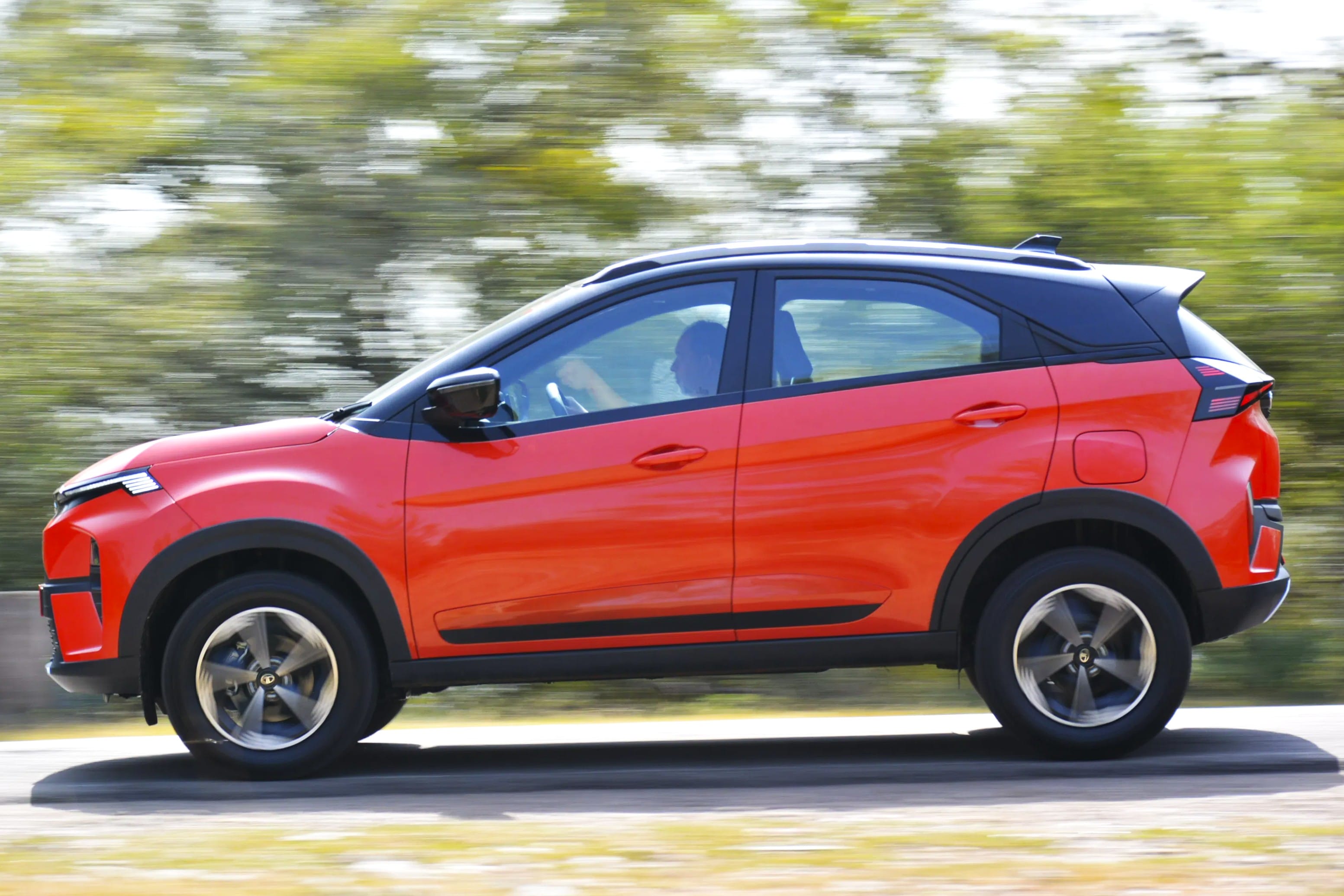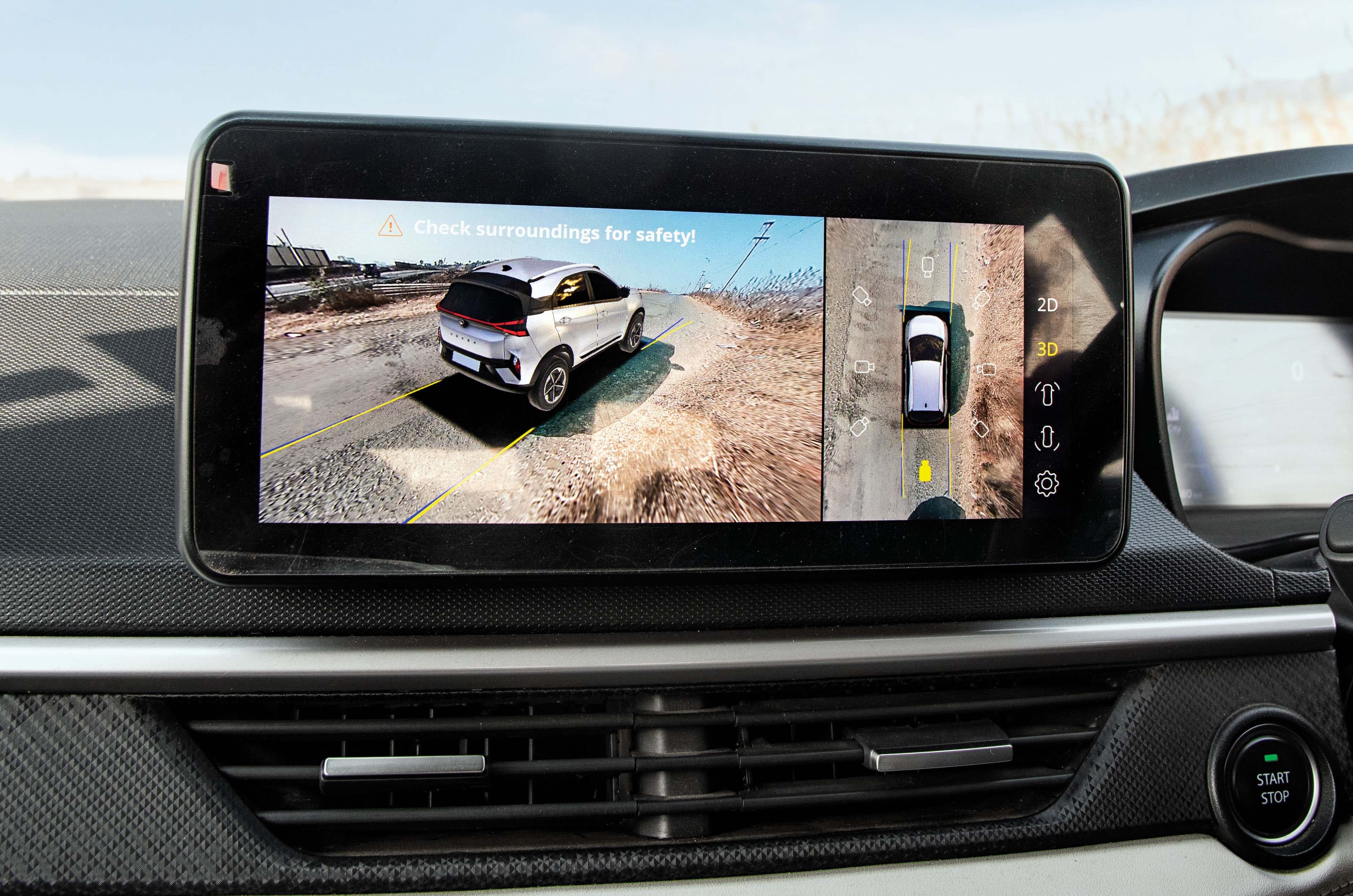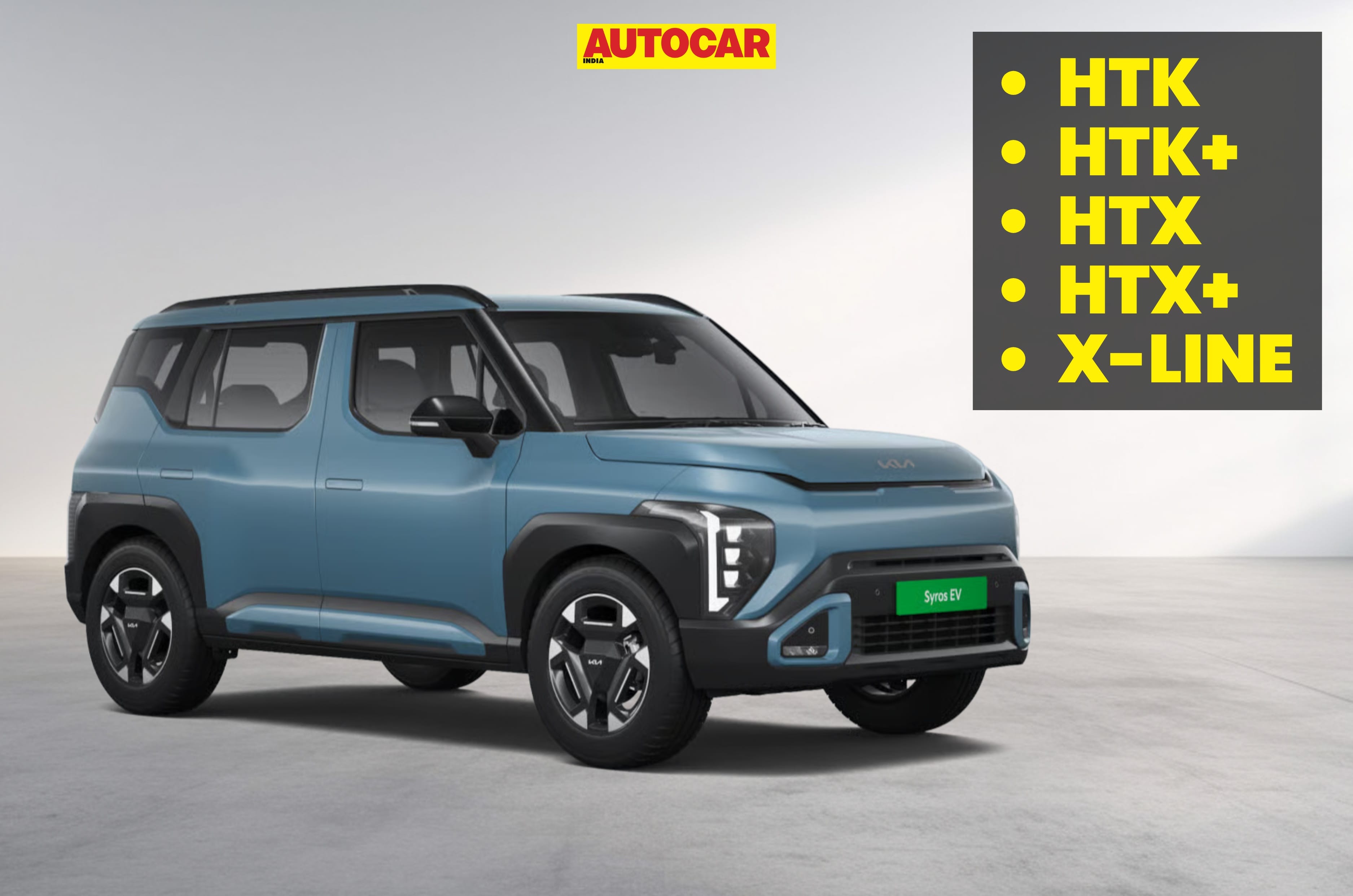
Kia Syros EV variants and features explained

Kia Syros EV variants explained

Kia has unveiled its second mass-market electric model for India in the form of the Syros EV. Though it shares its K1 platform with its ICE counterpart, it utilises the same battery packs found on the larger Carens Clavis EV. While prices are yet to be announced, they are expected to be in the Rs 15 lakh to 20 lakh range. At launch, it will take on the likes of the Tata Nexon EV, which currently dominates the segment, and the Mahindra XUV 3XO EV. In this article, we explain all the variants on offer, the colours, the standard safety kit, and the variant-wise features of the Syros EV.  

Kia Syros EV variant-wise battery pack options

Offered in seven variants across five trims 

Kia Syros EV variant-wise battery pack options 

Trim 

42kWh

51.4kWh (Extended range)

HTK

Yes

HTK+

Yes

Yes

HTX

Yes

Yes

HTX+

Yes

X-Line

Yes

The Kia Syros EV offers a choice of 42kWh and 51.4kWh battery packs. While the base HTK trim solely offers a 42kWh option, the mid-level HTK+ and HTX trims additionally offer the larger 51.4kWh battery pack. Meanwhile, the higher-end HTX+ and X-Line trims are available only with the 51.4kWh battery pack.

Both battery packs are paired to a front-mounted motor, which develops 135hp and 171hp in 42kWh and 51.4kWh guises, respectively. In both versions, the motor produces an identical 255Nm of torque. Kia claims a 0-100kph time of 8.1 seconds in 51.4kWh guise. While the 42kWh battery pack gets an ARAI-claimed range of 443km, the 51.4kWh version’s claimed range is 526km.  Not only has Kia equipped the Syros EV with the largest battery pack in its segment (51.4kWh), but it also gets the most powerful motor and the highest claimed range figure in its class.

Both versions support up to 11 kW AC charging speeds, while DC charging support is up to 100kW. At 11kW AC speeds, a smaller 42kWh battery takes four hours to charge from 10-80 percent, while the 51.4kWh battery takes an additional 50 minutes. However, with a 100kW DC charger, both versions can charge from 10-80 percent in the same 39 minutes, claims Kia.

Kia Syros EV exterior and interior colours 

Nine options for the exterior, three for the interior
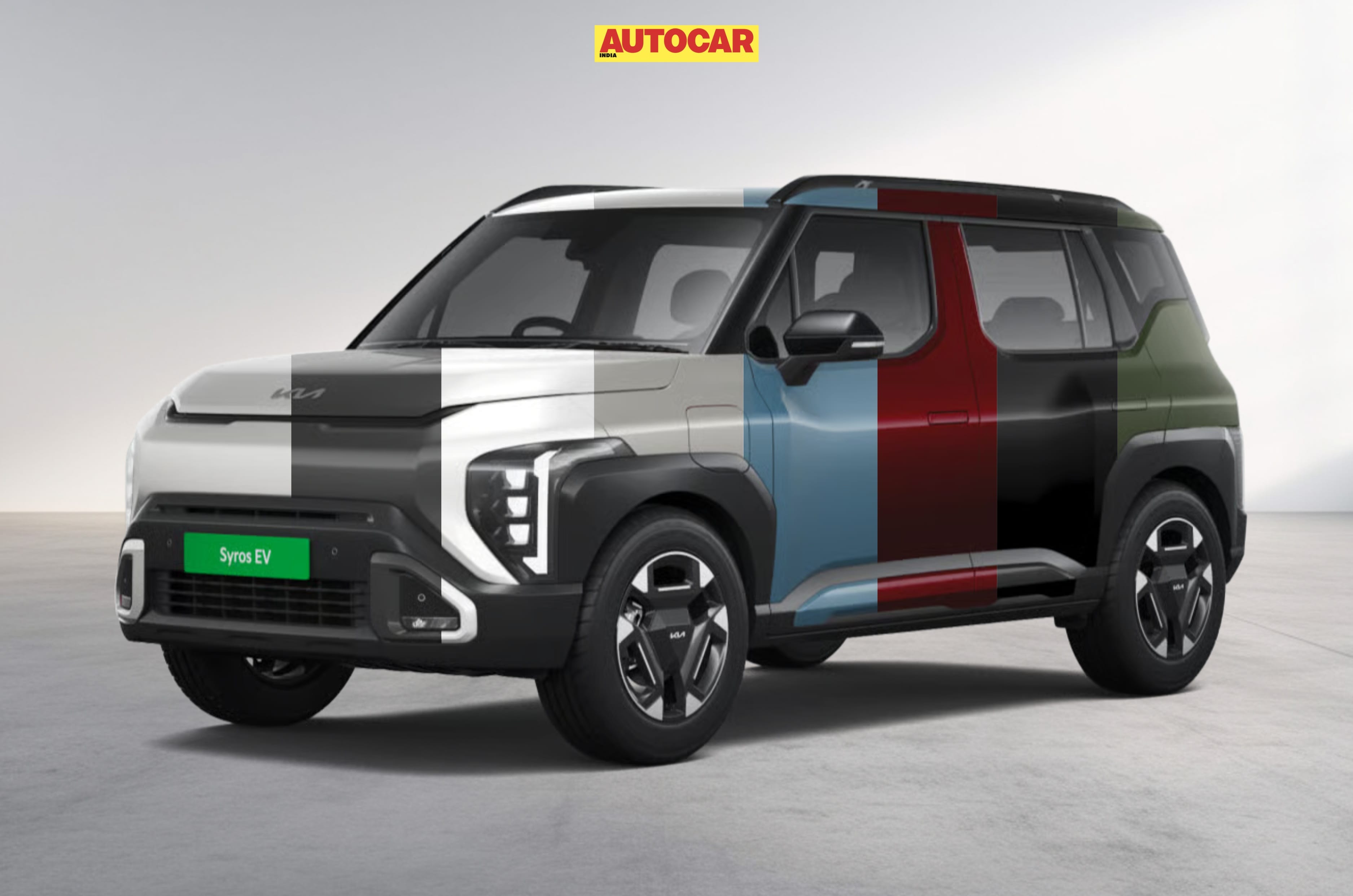
The Kia Syros EV is available only in nine monotone colour options. These include Ivory Silver Matte, Frost Blue, Gravity Grey, Pewter Olive, Magma Red, Ivory Silver Gloss, Aurora Black Pearl, Glacier White Pearl, and Xclusive Matte Graphite. Of these, the top X-Line trim is available solely in the Aurora Black Pearl and Xclusive Matte Graphite colours.

Inside, the Syros EV offers three interior and seat upholstery options depending on the chosen trim. HTK, HTK+ and HTX trims get blue and grey semi-leatherette seat upholstery and green accents throughout the interior, while the HTX+ trim gets black and white leatherette seat upholstery and white accents throughout the interior. The top X-Line trim comes with black and green leatherette seat upholstery with green accents across the interior.

Kia Syros EV standard safety kit 

Gets six airbags, electronic parking brake, hill start assist, TPMS, to name a few

As standard, the Kia Syros EV is equipped with six airbags, ABS, brake assist, ESC, stability control, hill-start assist, tyre pressure monitoring system (TPMS), all-wheel disc brakes, electronic parking brake with auto hold, follow-me-home headlamps, virtual engine sound system, child lock, rear parking sensors, speed sensing door locks, impact sensing auto door unlock, 3-point seatbelts for all seats, ISOFIX anchors, rear occupant alert, front passenger airbag on/off switch, and rear occupant alert.

Kia Syros EV variant-wise features list 

HTK

Battery pack options: 42kWh

  • LED headlamps, DRLs, foglamps, and tail-lamps
  • 16-inch aero-optimised alloy wheels 
  • Flush door handles 
  • Shark fin antenna 
  • Blue and grey fabric-leatherette seat upholstery 
  • 12.3-inch infotainment system 
  • 12.3-inch digital driver’s display 
  • Wireless Android Auto and Apple CarPlay 
  • 4 speakers and 2 tweeters 
  • Steering-mounted controls 
  • Tilt-adjustable steering 
  • Drive modes (Eco, Sport, Normal) 
  • 4x USB Type-C ports 
  • Portable charging cable 
  • Front centre console with retractable cup holders and storage 
  • Front centre armrest
  • Electronic parking brake with auto hold
  • Seatback pocket (front passenger seat)
  • Rear window sunshades 
  • Front adjustable headrests 
  • Rear AC vents 
  • Day/night IRVM 

HTK+ 

Battery pack options: 42kWh, 51.4kWh (Extended Range-ER)

Features over HTK

  • Rear view camera 
  • Cruise control
  • 100W Type-C charging port 
  • 17-inch aero-optimised alloy wheels (ER)

HTX 

Battery pack options: 42kWh, 51.4kWh (Extended Range-ER)

Features over HTK+

  • Panoramic sunroof
  • Rear wiper and washer
  • LED rear turn indicators 
  • All door windows up/down with key 
  • All door windows one-touch up/down with anti-pinch function
  • Sliding and reclining rear seats 
  • 60:40 split rear seat
  • Rear centre armrest with cupholder 
  • Rear adjustable headrests 
  • Rear defogger 
  • Rear parcel tray 
  • LED cabin lights, boot lamp
  • Seatback pocket (driver seat)
  • Connected-car tech (ER)
  • OTA software updates (ER)

HTX+ 

Battery pack options: 51.4kWh (Extended Range-ER)

Features over HTX

  • Automatic flush door handles
  • Black and white leatherette seat upholstery 
  • Leatherette-wrapped steering wheel 
  • Leatherette finish for armrest and door trims
  • Metal pedals 
  • 12.3-inch infotainment display with onboard navigation 
  • 5-inch HVAC control display
  • 8-speaker Harman Kardon sound system 
  • Dual dash cam 
  • Auto-dimming IRVM
  • Battery heating system 
  • Front seat ventilation 
  • Rear seat ventilation (seat base only) 
  • 4-way powered driver seat 
  • Wireless phone charger 
  • Front parking sensors

X-Line 

Battery pack options: 51.4kWh (Extended Range-ER)

Features over HTX+

  • 64-colour ambient lighting 
  • LED footwell lamps
  • Black and green leatherette seat upholstery 
  • Level 2 ADAS
  • Vehicle to Load (V2L) functionality 
  • Puddle lamps with logo projection 
  • Digital key 

3 reasons to buy the Tata Nexon, and 2 reasons not to

tata nexon

The Tata Nexon first hit the Indian market in 2017, and even after nine years and two facelifts, the compact SUV regularly ranks in the upper echelons of the monthly sales charts. If you’re considering purchasing a Nexon, listed below are three of its most prominent strengths, and two areas where it falls short of rivals.

Pros

Diverse powertrain line-up

Buyers can choose between petrol, diesel, CNG, and electric options

One of the Nexon’s biggest trump cards is its wide array of powertrains on offer: petrol, diesel, CNG, and electric (Nexon EV). Petrol and CNG Nexon buyers get a 1.2-litre 3-cylinder turbocharged engine 120hp and 170Nm in petrol guise, while the CNG makes 100hp instead. The Nexon diesel is powered by a 1.5-litre 4-cylinder mill that develops 115hp and 260Nm, whereas the EV offers 30kWh and 45kWh battery packs.

There’s quite a bit of gearbox choice too. The Nexon petrol alone can be had with one of four gearbox options: 5-speed manual, 6-speed manual, 6-speed AMT, and 7-speed DCT. Diesel variants of the compact SUV offer either a 6-speed manual or 6-speed AMT, while the Nexon CNG gets a 6-speed manual only.

Comfortable ride quality

Can take virtually any broken road in its stride

As we noted in our 2023 Nexon review, the compact SUV rides very well on all types of roads. There’s a hint of stiffness in the ride at low speeds, but as you go faster, it immediately smoothes out. The Nexon rides flat despite its relatively tall 208mm ground clearance, and exhibits impressive body control and bump absorption over broken patches.

Feature-rich cabin

Highlights include dual 10.25-inch displays, panoramic sunroof, and 360-deg camera

Another aspect of the Nexon that struck a chord with Indian buyers is its extensive feature set. Depending on the variant, the Nexon packs goodies like a 10.25-inch infotainment touchscreen, a 10.25-inch digital driver’s display, a panoramic sunroof, an 8-speaker JBL sound system, ventilated front seats, ADAS, connected car tech, a cabin air purifier, auto-dimming IRVM, wireless charging pad, a 360-degree camera, automatic climate control, and more.

Cons

Interior ergonomics and quality could be better

No proper cupholders and distracting touch-capacitive controls

While the Nexon’s interior looks premium at first glance, a closer look reveals some foibles. First off, there are no proper cupholders in the Nexon’s cabin, which can be an annoyance at times. The driver’s seat doesn’t offer electrical adjustment either, and the seat ventilation button is concealed from view because it’s located at the base of the seat.

Tata has also used some gloss-black trim pieces for the Nexon’s interior, which are difficult to keep clean they attract fingerprints and dust. Overall build quality is not that impressive too, and the touch-capacitive controls for the AC and steering can be fiddly to operate while on the move.

6-speed MT not that great

Long throws and snappy clutch

The 6-speed manual offered with the Nexon could do with some more tuning. While the gearbox’s gates are well-defined, its throws are long and the shift action isn’t the most pleasing. The snappy clutch also detracts from the smoothness of the driving experience.

कोलकाता से दिल्ली-बेंगलुरु तक सीधी प्रीमियम बस सेवा शुरू, जानें किराया और सुविधाएं

Kolkata Premium Bus Service: कोलकाता को चार बड़े भारतीय शहरों के लिए सीधी प्रीमियम कोच कनेक्टिविटी मिलने वाली है। News18 की एक रिपोर्ट के अनुसार, ‘श्यामली परिवहन’ बुधवार से दिल्ली, चेन्नई, बेंगलुरु और पुरी के लिए नई लंबी दूरी की बस सेवाएं शुरू कर रही है। इन रूटों का मकसद यात्रियों को ट्रेन और फ्लाइट के मुकाबले आरामदायक और सही कीमत वाला विकल्प देना है।

रिपोर्ट के मुताबिक, पश्चिम बंगाल के ट्रांसपोर्ट मिनिस्टर अर्जुन सिंह करुणामयी बस टर्मिनस पर इस सर्विस का औपचारिक उद्घाटन करेंगे। चारों रूटों पर कोच रोजाना चलेंगे और हफ्ते भर नियमित रूप से रवाना होंगे।

रिपोर्ट के अनुसार, कोलकाता से दिल्ली जाने वाली बस सेवा में करीब 26 घंटे का समय लगेगा। इस रूट का किराया लगभग 2,500 रुपये से 3,000 रुपये के बीच होगा। वहीं, बेंगलुरु जाने वाली बस करीब 35 घंटे में सफर पूरा करेगी और इसका किराया प्रति यात्री 4,500 रुपये रखा गया है।

इसके अलावा, चेन्नई रूट पर यात्रियों को करीब 24 घंटे का सफर करना होगा, जिसके लिए किराया लगभग 4,700 रुपये होगा। जबकि, पुरी जाने वाली प्रीमियम वोल्वो बस सबसे तेज होगी, जो करीब 8 घंटे में सफर पूरा करेगी। इस रूट का किराया 1,500 रुपये से 2,000 रुपये के बीच होगा।

रिपोर्ट में यह भी बताया गया है कि यात्रियों को बायो-टॉयलेट, मुफ्त तकिए और बिस्तर की चादरें मिलेंगी, साथ ही हर सीट पर अलग-अलग एंटरटेनमेंट स्क्रीन भी होगी। यात्रियों को सफर के दौरान स्नैक्स, बोतल बंद पानी, चाय और कॉफी भी मुफ्त में दी जाएगी।

श्यामली परिवहन के मैनेजिंग डायरेक्टर अरुण घोष ने कहा कि इस सर्विस को हवाई यात्रा या फर्स्ट-क्लास AC ट्रेन कोच जैसी सुविधा देने के लिए डिजाइन किया गया है, जबकि इसका किराया AC थ्री-टियर रेल किराए के बराबर रखा गया है। उन्होंने कहा कि कोलकाता के यात्रियों की ओर से सस्ती और अच्छी क्वालिटी वाली लंबी दूरी की यात्रा की बढ़ती मांग को देखते हुए ये नए रूट शुरू किए गए हैं।

रिपोर्ट के अनुसार,  प्रीमियम कोच उन बिजनेस और घूमने-फिरने वाले यात्रियों को आकर्षित करेंगे जो शहर से पारंपरिक रेल और हवाई यात्रा के विकल्पों के बजाय सीधे और आरामदायक विकल्प की तलाश में हैं।

यह भी पढ़ें: Instamart ऐप से घर बैठे मिलेगी HPCL LPG सिलेंडर की डिलीवरी, जानें ऑर्डर करने का पूरा तरीका

Nissan Tekton vs Hyundai Creta: Whose top trim offers more value?

Nissan Tekton vs Hyundai Creta

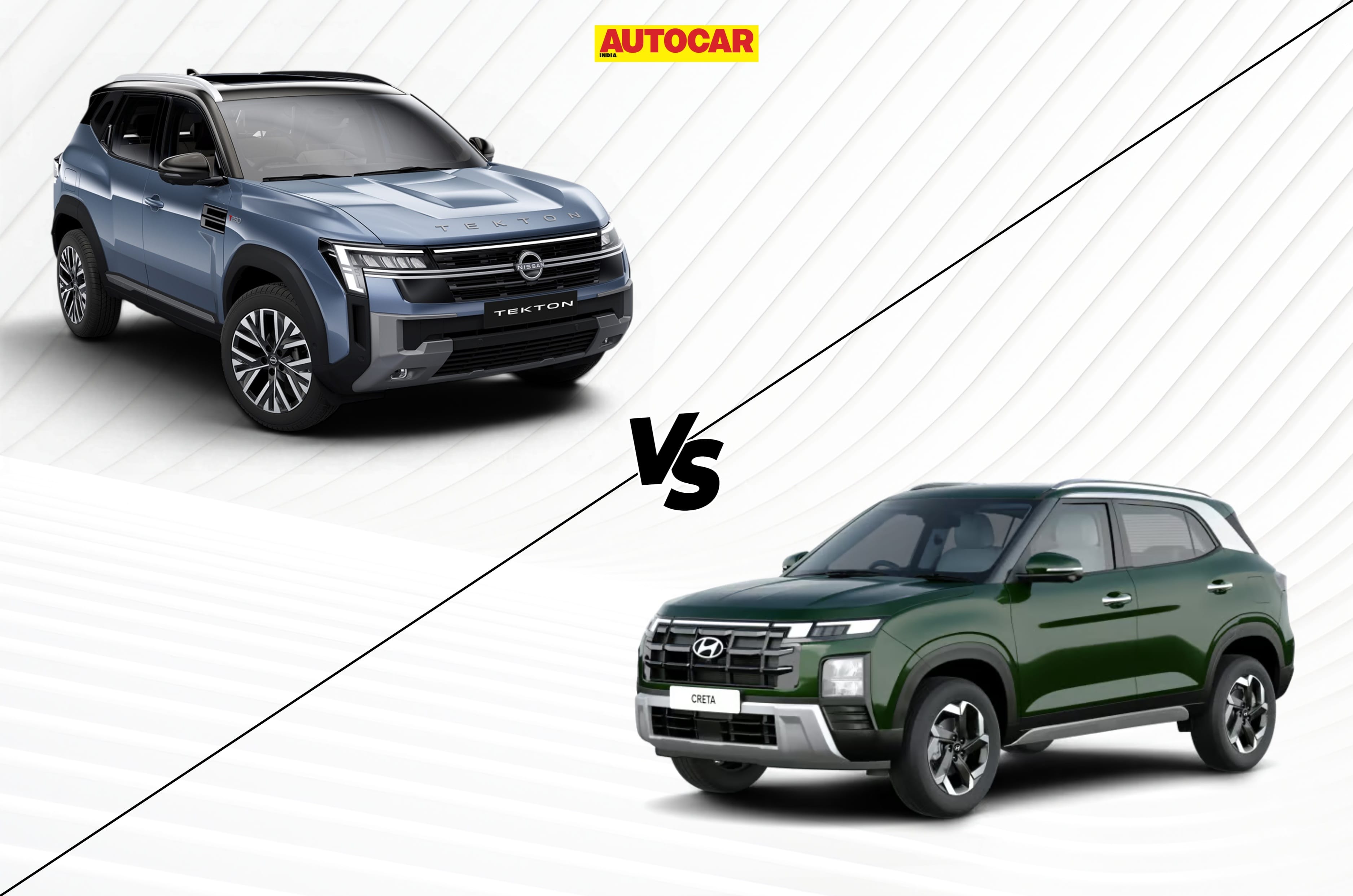
The arrival of the Tekton has helped Nissan make a much-needed comeback to the popular mid-size SUV segment. On the other hand, Hyundai has championed this space with the Creta, which continues to lead sales. But which of the two SUVs offers better value when you compare their top-spec versions on paper? We find out. For this comparison, we’ve chosen the Tekna+ and King trims of the Tekton and Creta, respectively.

Explore full specs, features, and a price breakdown in our Tekton vs Creta comparison.

Nissan Tekton vs Hyundai Creta: Dimensions

Tekton’s dimensions are higher than those of the Creta’s

Nissan Tekton vs  Duster: Dimensions 


Nissan Tekton

Hyundai Creta

Difference

Length (mm)

4,349

4,330

+19

Width (mm)

1,815

1,790

+25

Height (mm)

1,674

1,635

+39

Wheelbase (mm)

2,657

2,610

+47

Ground clearance (mm)

212

190

+22

Boot space (litres)

518

433

+85

As far as dimensions are concerned, the Tekton is the larger vehicle overall. It is 19mm longer, 25mm wider, and has a 47mm bigger wheelbase. Additionally, it rides 22mm higher off the ground, and its 518-litre boot is the largest in the segment.

Nissan Tekton vs Hyundai Creta: Engine specifications 

Tekton solely powered by turbo-petrol, while Creta gets diesel and NA petrol engines

Nissan Tekton vs Hyundai Creta: Engine specifications 


Nissan Tekton 

Hyundai Creta

Engine options

Turbo-petrol

Naturally aspirated petrol | Turbo-petrol | Diesel

Displacement 

1.0-litre | 1.3-litre 

1.5-litre | 1.5-litre | 1.5-litre

No. of cylinders

3 | 4

4 | 4 | 4

Power (hp)

100 | 163

115 | 160 | 116

Torque (Nm)

166 | 280

144 | 253 | 250

Gearbox 

6MT | 6DCT

6MT/CVT | 7DCT | 6MT/6AT

In top-spec guise, the Tekton is offered with two turbo-petrol engines, whereas the Creta has a diverse powertrain lineup comprising naturally aspirated petrol, turbo-petrol and diesel engines. The same is the case for gearbox options, as the Creta offers different automatic transmissions depending on the engine chosen. The Nissan Tekton’s 1.0-litre and 1.3-litre turbo-petrol units are the least and most powerful engines here, respectively.  

Nissan Tekton vs Hyundai Creta: Exterior features 

Only the Tekton comes with fog lamps

Nissan Tekton vs Hyundai Creta: Exterior


Nissan Tekton

Hyundai Creta

Headlights

Auto LED

Auto LED

Taillights

Connected LED

Connected LED

DRLs

Connected LED

Connected LED

Front fog lamps

LED

No

Rear fog lamps

LED

No

Puddle lamps

Yes

Yes

Wheels

18-inch

18-inch

Powered ORVMs

Yes

Yes

Roof rails

Yes

Yes

Colour

Monotone, dual tone

Monotone, dual tone, matte

On the exterior front, the Tekton and Creta’s top-spec versions come replete with connected LED light setups, 18-inch alloys, powered ORVMs and roof rails. However, front and rear fog lamps are found only on the Tekton. Monotone and dual-tone colour options are on offer with both models, but the Creta is also available with matte-finished paint jobs. 

Nissan Tekton vs Hyundai Creta: Interior and features

Tekton misses out on feel-good features that the Creta gets

Nissan Tekton vs  Hyundai Creta: Interior and features


Nissan Tekton

Hyundai Creta

Driver’s display

10.25-inch

10.25-inch

Infotainment screen

10.1-inch

10.25-inch

Android Auto, Apple CarPlay

Wireless

Wireless

Audio system

6-speaker Arkamys

8-speaker Bose

Sunroof

Panoramic

Panoramic

Climate control

Dual-zone automatic

Dual-zone automatic

Rear AC vents

Yes

Yes

Driver seat adjustment

6-way

8-way with memory

Front passenger seat adjustment

6-way

8-way

Front seat features

Ventilation

Ventilation

Boss mode

No

Powered

Powered tailgate

Yes

No

Seat upholstery

Leatherette

Leatherette

Reclining rear seats 

No

Yes

Steering wheel adjustment

Tilt, telescopic

Tilt, telescopic

Wireless phone charger

Front

Front and rear

Air Purifier

Yes

No

Sunshades

Magnetic (all windows optional)

Retractable (rear windows)

Connected car tech

Yes

Yes

Rear armrest

Yes

Yes

Ambient lighting 

Yes

Yes

USB ports 

4x type-C

4x type-C

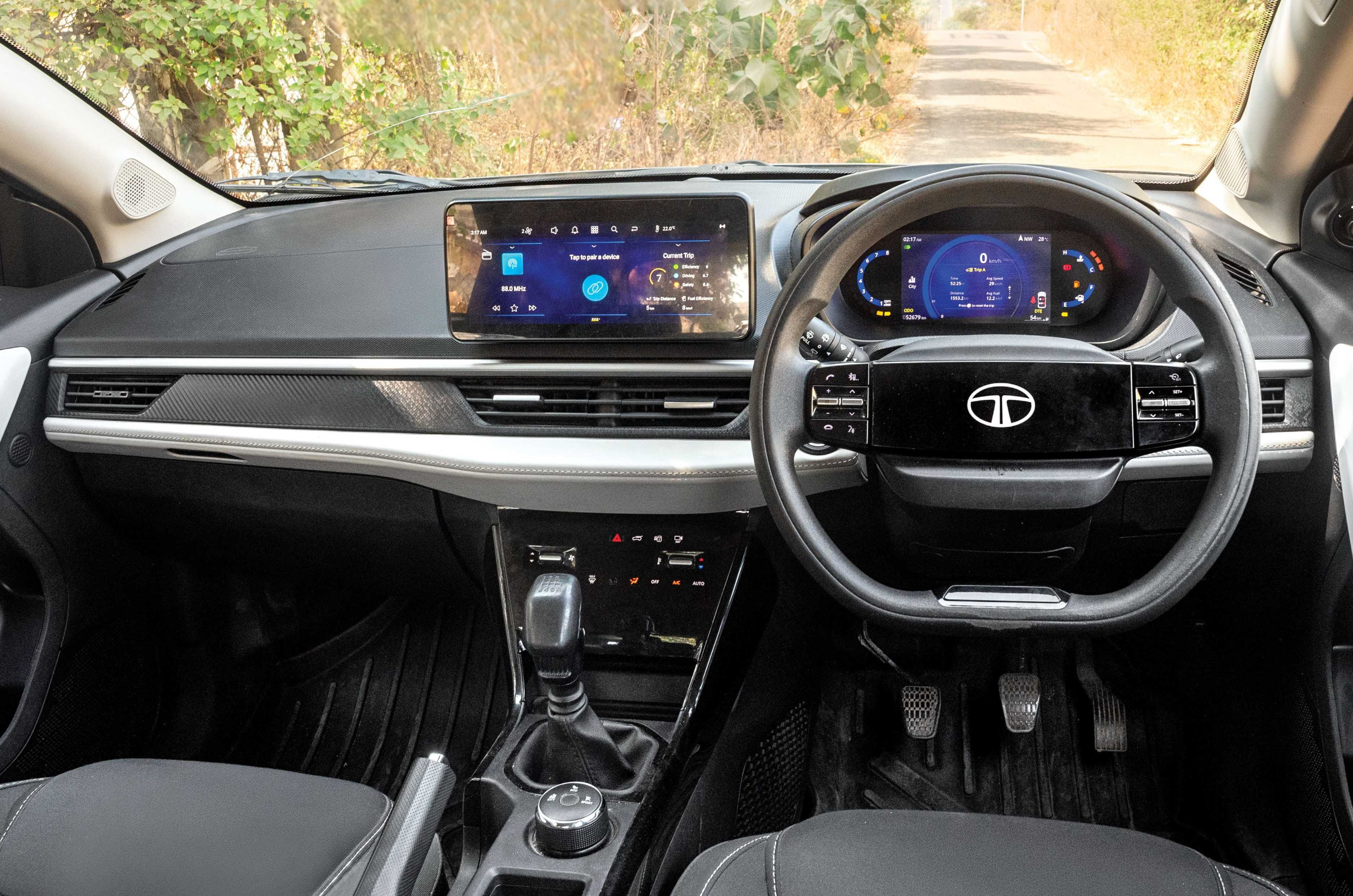
The Tekton comes with an air purifier and a powered tailgate over the Creta, but the latter gets a slightly bigger infotainment screen, additional speakers, more adjustment for the powered front seats, driver seat memory, reclining rear seats, boss mode, and an additional wireless phone charger at the back.

Nissan Tekton vs Hyundai Creta: Driving Features

Tekton gets steering modes, while the Creta gets traction modes

Nissan Tekton vs Hyundai Creta: Driving Features 

Driving Features 

Nissan Tekton

Hyundai Creta

Drive modes

Eco, Comfort

Eco, Normal, Sport

Steering modes

Low effort, High effort

No

Traction modes

No

Snow, mud, sand

Paddle Shifters

Automatic only

Automatic only

Cruise Control

Adaptive

Adaptive

While the ‘Eco’ drive mode is common on both SUVs, the Tekton gets a ‘Comfort’ mode, while the Creta features ‘Normal’ and ‘Sport’ driving modes. Steering modes are present only on the Tekton, while the Creta gets traction control modes for different terrains. In top-spec guise, both SUVs have adaptive cruise control and paddle shifters with their automatic variants.

Nissan Tekton vs Hyundai Creta: Safety features

Both SUVs are equally matched with basic and advanced safety tech

Nissan Tekton vs  Kushaq Prestige: Safety features


Nissan Tekton

Hyundai Creta

Airbags

6

6

ADAS

Level 2

Level 2

Camera setup

360-degree

360-degree

Parking sensors

Front and rear

Front and rear

Electronic parking brake

DCT variant only

Yes

TPMS

Yes

Yes

IRVM

Auto-dimming

Auto-dimming

Rear wiper, washer

Yes

Yes

Rear defogger

Yes

Yes

Hill start assist

Yes

Yes

Hill descent control

DCT only

No

ESC

Yes

Yes

Traction control

Yes

Yes

When it comes to safety, both the Tekton and Creta come well-equipped with safety features including six airbags, parking sensors, TPMS, Level 2 ADAS suite and a 360-degree camera setup. The only difference is that while an electronic parking brake is common on both, the former gets it only on automatic versions, while the latter has it with manual gearbox variants as well. 

Nissan Tekton vs Hyundai Creta: Price and verdict

Nissan Tekton Tekna+ vs Kushaq Prestige: Ex-showroom prices 


Nissan Tekton Tekna+ (Rs lakh)

Hyundai Creta King (Rs lakh)


Turbo-petrol MT

16.49

Turbo-petrol DCT

18.59

19.91

Naturally aspirated petrol MT

17.27

Naturally aspirated petrol CVT

18.68

Diesel MT

18.85

Diesel AT

19.77

The only comparable variant between the Tekton and the Creta is their turbo-petrol automatic versions, where the Tekton is Rs 1.32 lakh cheaper. Between the newly launched Tekton and the reigning Creta, we recommend the former. Not only is the Tekton more affordable, especially when you consider turbo-petrol versions, but you also get more torque. While it does miss out on some feel-good features that the Creta gets, it’s not necessarily a deal-breaker. If your monthly usage consists mainly of highway runs, then the Creta diesel makes for a sensible choice. 

CLAT 2027 Registration: कर लें तैयारी जल्द जारी होगा क्लैट 2027 का नोटिफिकेशन, जानें प्रक्रिया, जरूरी योग्यता और परीक्षा का पैटर्न

CLAT 2027 Registration: कानून के क्षेत्र में करियर बनाने के इच्छुक छात्रों के लिए क्लैट परीक्षा क्वालिफाई करना जरूरी होता है। इसके स्कोर के आधार पर उन्हें देशभर के लॉ कॉलेज और यूनिवर्सिटी में स्नातक और परास्नातक पाठ्यक्रमों में प्रवेश दिया जाता है। इस परीक्षा के लिए आधिकारिक नोटिफिकेशन कंसोर्टियम नेशनल लॉ यूनिवर्सिटीज (CNLU) जारी करता है। पिछले साल क्लैट परीक्षा दिसंबर में हुई थी, लेकिन इसके लिए पंजीकरण 01 अगस्त 2025 से शुरू हुए थे। इसलिए पिछले ट्रेंड के आधार पर अनुमान लगाया जा रहा है कि सीएनएलयू जल्द ही शैक्षिक सत्र 2027-28 के लिए क्लैट का नोटिफिकेशन जारी कर सकता है। इस प्रवेश प्रक्रिया में शामिल होने के इच्छुक परीक्षार्थी आधिकारिक वेबसाइट consortiumofnlus.ac.in पर टेस्ट के लिए रजिस्टर कर सकेंगे।

क्लैट 2027: नोटिफिकेशन कब आएगा?

पिछले साल के ट्रेंड्स को देखते हुए, कैंडिडेट उम्मीद कर सकते हैं कि क्लैट 2027 का नोटिफिकेशन 20 जुलाई, 2026 के आसपास जारी होगा। आवेदन पोर्टल अगस्त में खुल सकता है और अक्टूबर, 2026 तक खुला रहेगा।

क्लैट 2027 के लिए जरूरी योग्यता

क्लैट के जरिए लॉ यूजी प्रोग्राम में प्रवेश लेने वाले उम्मीदवारों को 10+2 या इसके बराबर की परीक्षा कम से कम 45% अंकों के साथ पास करना जरूरी है। वहीं, अनुसूचित जाति (SC), अनुसूचित जनजाति (ST) और दिव्यांग (PwD) उम्मीदवारों को इस परीक्षा में शामिल होने के लिए 12वीं कक्षा में 40% अंक होना अनिवार्य है। जबकि, लॉ पीजी पाठ्यक्रम में प्रवेश के इच्छुक उम्मीदवारों का 50% अंक के साथ एलएलबी डिग्री होना अनिवार्य है। SC/ST/PwD वालों को 45% अंक या इसके बराबर ग्रेड लाना होगा।

क्लैट 2027 आवेदन प्रक्रिया

  • क्लैट 2027 के लिए अप्लाई करने के लिए, ऑफिशियल वेबसाइट consortiumofnlus.ac.in पर जाएं।
  • होमपेज पर, “CLAT 2027” लिंक पर क्लिक करें।
  • अपना मोबाइल नंबर और पासवर्ड डालें और संबंधित प्रोग्राम के लिए अप्लाई करें।
  • जरूरी डॉक्यूमेंट्स, डिटेल्स सबमिट करें और आप क्लैट 2027 परीक्षा के लिए सफलतापूर्वक रजिस्टर करें।

क्लैट 2027 परीक्षा पैटर्न

क्लैट यूजी परीक्षा पैटर्न

क्लैट यूजी परीक्षा में उम्मीदवारों की कॉम्प्रिहेंशन और रीजनिंग स्किल्स के साथ-साथ करंट अफेयर्स की जानकारी भी जाची जाती है। क्लैट यूजी दो घंटे की होगी, जिसमें 120 बहुविकल्पीय सवाल होंगे, हर सवाल एक नंबर का होगा। गलत जवाबों के लिए 0.25 नंबर काटे जाएंगे। इसमें इन विषयों से सवाल शामिल होंगे :

  • इंग्लिश लैंग्वेज
  • करंट अफेयर्स, जिसमें जनरल नॉलेज भी शामिल है
  • लीगल रीजनिंग
  • लॉजिकल रीजनिंग
  • क्वांटिटेटिव टेक्नीक्स

क्लैट पीजी परीक्षा पैटर्न

पोस्टग्रेजुएट कोर्स में प्रवेश के लिए क्लैट परीक्षा में अंडरग्रेजुएट जैसा ही पैटर्न होता है, लेकिन इसमें बहुविकल्पीय सवालों के बजाय ऑब्जेक्टिव-टाइप सवाल होते हैं। इसमें सिर्फ एक सेक्शन होगा, जिसमें अंडरग्रेजुएट प्रोग्राम के जरूरी विषयों और कॉन्स्टिट्यूशनल लॉ, ज्यूरिस्प्रूडेंस, एडमिनिस्ट्रेटिव लॉ, कॉन्ट्रैक्ट लॉ, टॉर्ट्स, फैमिली लॉ, क्रिमिनल लॉ, प्रॉपर्टी लॉ, कंपनी लॉ, पब्लिक इंटरनेशनल लॉ, टैक्स लॉ, एनवायर्नमेंटल लॉ, और लेबर और इंडस्ट्रियल लॉ से सवाल होंगे।

CBSE’s 3-language policy: अंतरिम राहत से सुप्रीम कोर्ट का इनकार, सर्वोच्च अदालत ने पूछा, क्या अंग्रेजी को भारतीय भाषा मान लिया गया है?

Tata Sierra EV Empowered vs Hyundai Creta Electric Excellence LR: Which to buy?

Tata Sierra EV mid-spec vs Hyundai Creta EV top-spec comparison

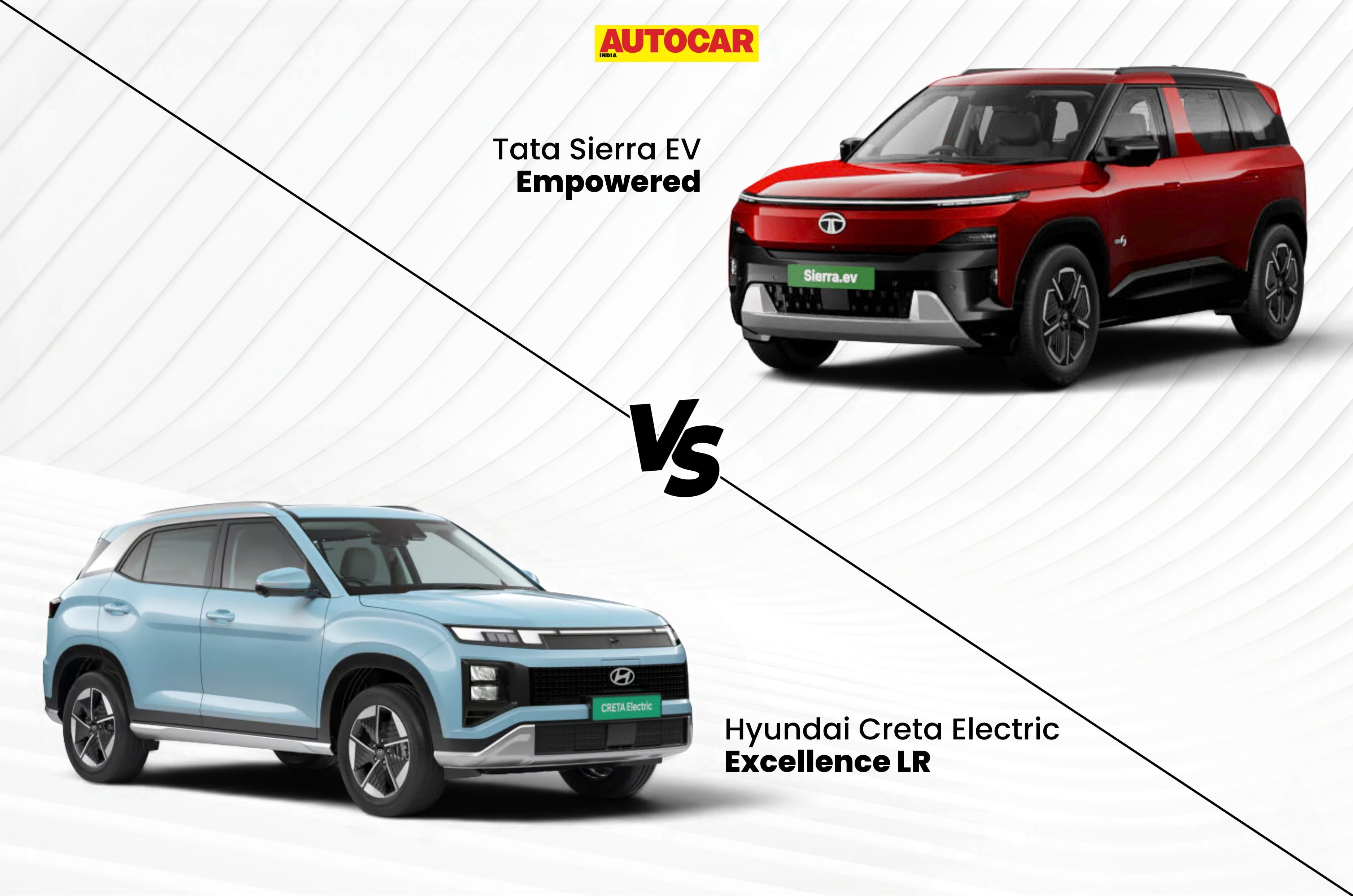
Both the Tata Sierra EV and Hyundai Creta Electric are available with two battery pack options. However, the lower variants of the Creta Electric feature a smaller 42kWh battery pack, so we’ll be looking at the 51.4kWh version here – the Creta’s top-spec Excellence LR (Long Range) variant is only offered with the larger battery pack. However, the Sierra EV’s Empowered trim offers buyers more flexibility as it’s available in 63kWh and 75kWh guises. The Sierra EV Empowered is priced from Rs 22.79 lakh to Rs 23.79 lakh, while the Creta Electric’s top-spec Excellence LR costs Rs 23.67 lakh. Let’s find out which midsize electric SUV is right for you.

Explore full specs, features and a price breakdown in our Sierra EV and Creta Electric comparison.

Tata Sierra EV Empowered vs Hyundai Creta Electric Excellence LR: Dimensions

The Sierra is the bigger car here, but the Creta EV is just as long

Tata Sierra EV Empowered vs Hyundai Creta Electric Excellence LR dimensions


Tata Sierra EV

Hyundai Creta Electric

Length (mm)

4,340

4,340

Width (mm)

1,841

1,790

Height (mm)

1,750

1,655

Wheelbase (mm)

2,730

2,610

Boot space (litres)

450

433

Frunk (litres)

55

22

Wheel size (inches)

18

17

While the overall length of the Hyundai Creta Electric is identical to the Tata Sierra EV, the latter boasts 120mm longer wheelbase. The Sierra EV is 51mm wider and 95mm taller at the roof than its Hyundai rival. The range-topping Excellence LR variant of the Creta EV only gets 17-inch wheels, but the Empowered trim of the Tata SUV comes equipped with larger 18-inch rims. In terms of their luggage-carrying capacity as well, the Sierra EV has the bigger rear boot and frunk (front trunk).

Tata Sierra EV Empowered vs Hyundai Creta Electric Excellence LR: Powertrain

The rear-wheel drive Sierra gets two powertrain options and has the range advantage

Tata Sierra EV Empowered vs Hyundai Creta Electric Excellence LR powertrain options


Tata Sierra EV

Hyundai Creta Electric

Battery size (kWh)

63/75

51.4

Electric motor setup

Single, rear (RWD)

Single, front (FWD)

Power (hp)

238/209

171

Torque (Nm)

315

255

Claimed 0-100kph

7.9 seconds

Claimed range (km)

566/665

510

AC charging

Up to 10.5 hrs at 7.2kW (10-100%)

7.25 hrs at 7.4kW (10-100%)

DC fast charging

Up to 26 mins at 120kW (20-80%)

39 mins at 100kW (10-80%)

The Sierra EV in Empowered trim is offered with 63kWh and 75kWh battery packs. Even with the smaller battery option, the Sierra EV’s claimed range is 56km more than the top-spec Creta Electric’s. Bumping up to the top-spec, rear-wheel drive (RWD) 75kWh version of the Sierra EV means a claimed range of 665km – that’s 155km more than the top-spec Creta Electric.

The smaller battery size and a slightly faster AC charging speed means that the Creta Electric can be charged from 10-100 percent in 7 hours and 15 minutes, which is over 3 hours less than what the Sierra EV with the 75kWh battery pack requires. Meanwhile, the Sierra EV with the 63kWh battery takes under 9 hours to achieve the same SoC (state of charge). Both cars support DC fast charging of over 100kW, with the Sierra EV’s claimed charging time being based on 120kW DC charging.

The Sierra EV’s single electric motor powers its rear wheels, while that of the Creta Electric powers its front. While the punchier 63kWh version of the Tata SUV makes 67hp more than its Hyundai EV rival, even its lower-output 75kWh version makes more power (38hp more than the Creta Electric). The Sierra EV also has the torque advantage, developing 60Nm more than its Hyundai rival. While Tata Motors hasn’t published the claimed 0-100kph time of the mid-spec Sierra EV, it’s likely to be brisk.

Tata Sierra EV Empowered vs Hyundai Creta Electric Excellence LR: Exterior features

The Sierra EV’s Empowered trim adds more novelty features on the outside than its Hyundai rival

Tata Sierra EV Empowered vs Hyundai Creta Electric Excellence LR exterior features


Tata Sierra EV

Hyundai Creta Electric

LED projector headlamps

Yes (auto)

Yes (auto)

Connected light bar

Yes

Yes

Front fog lamps

Yes

No

Rear fog lamps

Yes

No

Cornering lights

Yes

No

Sequential turn signals

Yes

Yes

Welcome lights

Yes

Yes

Puddle lamps

Yes

Yes

Powered ORVMs

Yes (with auto-fold function)

Yes (with auto-fold function)

Flush door handles

Yes

No

Body cladding

Yes

Yes

Roof rails

Yes

Yes

Rear spoiler

Yes

Yes

Powered tailgate

Yes (gesture activated)

No

Colours

Mono-tone

Mono-tone and Dual-tone

The Empowered trim of the Sierra EV gets useful features such as a gesture-activated powered tailgate, front & rear fog lamps, and front cornering lights. While both cars gets a rear spoiler, the Sierra EV’s unit actually hides the rear wiper for a cleaner look. They also feature niceties like puddle lamps, welcome & good-bye light animations, and automatic LED headlamps. The Creta Electric sticks to conventional pull-type door handles, whilst the Tata SUV uses flush door handles. Hyundai offers dual-tone colour choices with the Creta Electric, but Tata Motors does not.

Tata Sierra EV Empowered vs Hyundai Creta Electric Excellence LR: Interior features

Both electric SUVs are fairly well-matched when it comes to interior convenience features

Tata Sierra EV Empowered vs Hyundai Creta Electric Excellence LR interior features


Tata Sierra EV

Hyundai Creta Electric

Infotainment screen

12.3-inch

10.25-inch

Digital driver’s display

10.25-inch

10.25-inch

Front passenger display

12.3-inch

No

Panoramic sunroof

Yes (voice assisted)

Yes (voice assisted)

Wireless charger

Yes

Yes

Driver’s seat adjustment

6-way powered

8-way powered

Co-driver’s seat adjustment

4-way manual

8-way powered

Thigh-support extender

Yes

No

‘Boss’ mode

Yes (manual)

Yes (powered)

Ventilated front seats

Yes

Yes

Leatherette upholstery

Yes

Yes

Rear split seats

Yes

Yes

Automatic climate control

Yes (dual-zone)

Yes (dual-zone)

Cooled glovebox

Yes

Yes

Cooled armrest storage

No

Yes (front)

Ambient lighting

Yes

Yes

Audio system

12-speaker JBL Black

8-speaker Bose

Dolby Atmos

Yes

No

Apple CarPlay & Android Auto

Yes (wireless)

Yes (wired)

USB Type-C ports

Yes (4 ports)

Yes (3 ports)

Connected car tech

Yes

Yes

Voice assistant

Yes (multiple)

Yes

OTA updates

Yes

Yes

EV route planner

Yes

No

Gaming

Yes

No

Rear sunblinds

Yes

Yes

Rear armrest

Yes (with cupholders)

Yes (with cupholders)

Rear tray tables

No

Yes

The Tata Sierra EV gets more speakers as part of its JBL Black audio system, along with Dolby Atmos and wireless Apple CarPlay & Android Auto. The Sierra offers more USB ports and Tata’s new ‘AirConsole’ gaming system with a high-definition front passenger screen. Other interior features exclusive to the Sierra EV include front thigh-support extenders for added comfort and a route planner to help minimise range anxiety.

The Hyundai Creta Electric doesn’t get a third screen and its dual digital displays are smaller than the Sierra’s. However, the Hyundai EV offers a powered ‘Boss’ function, a cooled compartment under the front armrest, tray tables with cupholders for rear passengers, and a leatherette-like eco-friendly material for the seats.

Tata Sierra EV Empowered vs Hyundai Creta Electric Excellence LR: Safety features

The fully loaded Creta EV comes with ADAS, which the Sierra EV lacks in its mid-spec trim

Tata Sierra EV Empowered vs Hyundai Creta Electric Excellence LR safety features


Tata Sierra EV

Hyundai Creta Electric

Airbags

6

6

ABS with EBD

Yes

Yes

Electronic stability program

Yes

Yes

Hill-hold assist

Yes

Yes

Hill-descent control

Yes

Yes

TPMS

Yes

Yes

Parking sensors

Yes (front & rear)

Yes (front & rear)

360-degree camera

Yes

Yes

Electronic parking brake

Yes (with auto-hold function)

Yes (with auto-hold function)

Auto-dimming IRVM

Yes

Yes

Rain-sensing wipers

Yes

Yes

Auto-dimming IRVM

Yes

Yes

ISOFIX

Yes

Yes

Rear wiper and defogger

Yes

Yes

All-wheel disc brakes

Yes

Yes

Level 2 ADAS

No

Yes

Both these cars come well-equipped with modern safety features. However, the Creta Electric adds Level 2 ADAS (Advanced Driver Assistance Systems), too. This ropes in nannies such as forward collision warning, blind-spot warning, lane-departure warning with lane-keeping assist, rear cross-traffic alert, high-beam assist, and adaptive cruise control with stop & go functionality.

Tata Sierra EV Empowered vs Hyundai Creta Electric Excellence LR: Other features

The Sierra EV is better equipped on this front too

Tata Sierra EV Empowered vs Hyundai Creta Electric Excellence LR other features


Tata Sierra EV

Hyundai Creta Electric

Drive modes

Yes (3)

Yes (3)

Terrain modes

Yes (4)

No

Single-pedal driving

No

Yes

V2V and V2L

Yes

Yes (V2L)

AVAS

Yes

Yes

Unlike the Sierra EV, the Hyundai Creta Electric gets a proper single-pedal driving mode. This makes driving it over long distances on the highway less tiresome while also helping improve range because of energy recuperation even without using the brake pedal. However, the Sierra EV supports both vehicle-to-load and vehicle-to-vehicle charging functions – the Creta Electric only supports the former. Both EVs come with an Acoustic Vehicle Alerting System (AVAS).

Conclusion

Tata Sierra EV Empowered vs Hyundai Creta Electric Excellence LR prices


Tata Sierra EV

Hyundai Creta Electric

Price range (In Rs, lakh)

22.79-23.79

23.67

If you want more cabin & luggage space, longer range & faster performance plus conveniences like a powered tailgate, wireless smartphone connectivity, multiple voice assistants, plus V2V and V2L functions, then the Tata Sierra EV will be a suitable pick. In case you don’t need the additional range offered by the 75kWh version, you can save Rs 1 lakh and go for the 63kWh version instead –  it’s Rs 88,000 cheaper than the Creta Electric. However, prospective Sierra EV buyers should be aware of the inconsistencies in Tata’s service quality and vehicle fit & finish.

Prices mentioned are ex-showroom, Delhi.

Also read

Tata Sierra EV mid-spec vs Maruti e Vitara top-spec: Features and specs compared

3 reasons to buy the Tata Sierra EV and 2 reasons not to

Renault Triber पर मिल रहा ₹60,000 तक का डिस्काउंट, बस इसी महीने रहेगा यह धांसू ऑफर, जानें कीमत और फीचर्स

Renault Triber: अगर आप नई कार खरीदने की सोच रहे हैं, तो यह खबर आपके लिए फायदेमंद साबित हो सकती है। दरअसल, Renault India अपने Triber MPV पर 60,000 रुपये तक की छूट दे रहा है। जो कि केवल इसी महीने तक लागू है। ये ऑफर राज्य, मॉडल ईयर, वेरिएंट और कस्टमर की पात्रता के आधार पर अलग-अलग हो सकते हैं। रेनॉ इंडिया की ऑफिशियल ऑफर लिस्ट के अनुसार, केरल में कस्टमर Triber पर कुल 60,000 रुपये तक का डिस्काउंट मिल सकता है, जबकि गुजरात में खरीदार 45,000 रुपये तक का लाभ उठा सकते हैं। ज्यादातर दूसरे राज्यों में, MY2026 मॉडल पर ज्यादा से ज्यादा फायदे 30,000 रुपये तक हैं।

इन ऑफर्स में 30,000 रुपये तक का कैश डिस्काउंट शामिल हो सकता है। इसके अलावा, ग्राहक को एक्सचेंज बोनस, स्क्रैपेज बोनस, लॉयल्टी बोनस, रेफरल और कॉरपोरेट बेनिफिट्स जैसे फायदे भी मिल सकते हैं। हालांकि, ये लाभ ग्राहक की पात्रता और लागू स्कीम पर निर्भर करेंगे।

रेनॉ ने ग्राहकों को सलाह दी है कि वे अपने शहर में लागू सही ऑफर के बारे में जानने के लिए अपने नजदीकी ऑथराइज्ड डीलर से संपर्क करें, क्योंकि ऑफर के फायदे अलग-अलग जगहों पर अलग-अलग हो सकते हैं और ये डीलर की भागीदारी और स्टॉक की उपलब्धता पर निर्भर करते हैं।

रेनॉ ट्राइबर की कीमत अभी 5.81 लाख रुपये से 8.48 लाख रुपये (एक्स-शोरूम) के बीच है। यह भारतीय बाजार में सबसे सस्ती थ्री-रो वाली MPV में से एक बनी हुई है, जिसमें सात लोगों के बैठने की सुविधा मिलती है।

पावरट्रेन और इंजन

इंजन की बात करें तो, Renault Triber में 1.0 लीटर का नैचुरली एस्पिरेटेड 3-सिलेंडर पेट्रोल इंजन दिया गया है। यह इंजन 72 bhp की पावर और 96 Nm का पीक टॉर्क जनरेट करता है। इस इंजन के साथ ग्राहकों को 5-स्पीड मैनुअल गियरबॉक्स और 5-स्पीड ऑटोमेटेड मैनुअल ट्रांसमिशन (AMT) का विकल्प मिलता है।

ट्राइबर के मैनुअल वर्जन की ARAI-क्लेम्ड फ्यूल एफिशिएंसी 20.0 kmpl तक है, जबकि AMT वेरिएंट 17.0 kmpl तक का माइलेज देता है।

फीचर्स

वेरिएंट के आधार पर, ट्राइबर में कई फीचर्स देखने को मिलते हैं। इनमें 8 इंच का टचस्क्रीन इंफोटेनमेंट सिस्टम, वायरलेस Android Auto और Apple CarPlay, डिजिटल इंस्ट्रूमेंट क्लस्टर, स्टीयरिंग पर ऑडियो कंट्रोल, पीछे की सीटों के लिए AC वेंट्स, पुश-बटन स्टार्ट/स्टॉप, कीलेस एंट्री, इलेक्ट्रिकली एडजस्ट होने वाले ORVMs और कूल्ड सेंटर स्टोरेज कंपार्टमेंट शामिल हैं।

सेफ्टी फीचर्स की बात करें तो, वेरिएंट के आधार पर Triber में स्टैंडर्ड तौर पर छह एयरबैग, EBD के साथ ABS, इलेक्ट्रॉनिक स्टेबिलिटी प्रोग्राम (ESP), हिल स्टार्ट असिस्ट, टायर प्रेशर मॉनिटरिंग सिस्टम (TPMS), रियर पार्किंग सेंसर, रिवर्सिंग कैमरा और सीट बेल्ट रिमाइंडर दिए गए हैं।

बता दें कि Renault Triber उन खरीदारों की जरूरतों को पूरा करती है जो थ्री-रो सीटिंग वाली किफायती फैमिली गाड़ी की तलाश में हैं। जुलाई 2026 के ऑफर सीमित समय के लिए हैं और ये मैन्युफैक्चरर और भाग लेने वाली डीलरशिप द्वारा तय की गई शर्तों और नियमों के अधीन हैं।

यह भी पढ़ें: लेह से इंस्पायर्ड डिजाइन और पावरफुल इंजन… Renault ने लॉन्च की नई Duster Adventure Edition

जानिए भारत की सबसे तेज स्पीड वाली ट्रेनों के बारे में, क्या वंदे भारत शामिल है इसमें?

वंदे भारत एक्सप्रेस को अक्सर भारत की सबसे मॉडर्न और तेज ट्रेनों में गिना जाता है, लेकिन क्या यह सच में देश की सबसे तेज ट्रेन है? ‘मेक इन इंडिया’ पहल के तहत तैयार की गई यह भारत की पहली स्वदेशी सेमी-हाई-स्पीड ट्रेन है, जो मॉडर्न टेक्निक, तेज रफ्तार और शानदार सुविधाओं के लिए जानी जाती है। इसकी मैक्सिमम स्पीड 160 किमी/घंटा तक है और यह बिना अलग इंजन के इलेक्ट्रिक मल्टीपल यूनिट (EMU) सिस्टम पर चलती है। आइए जानते हैं वंदे भारत, नमो भारत, राजधानी, शताब्दी और नई वंदे भारत स्लीपर में से कौन-सी ट्रेन स्पीड, टेक्नोलॉजी और आराम के मामले में सबसे आगे है:

वंदे भारत स्लीपर एक्सप्रेस: ​​

This may contain: the inside of a train car with purple seats and no one sitting on the bench

2026 में शुरू की गई वंदे भारत स्लीपर एक्सप्रेस, वंदे भारत प्लेटफॉर्म पर बनी भारत की पहली ओवरनाइट (रात भर चलने वाली) ट्रेन है। कोटा-नागदा रूट पर ट्रायल रन के दौरान इसने 180 किमी/घंटा की स्पीड हासिल की, जबकि रिसर्च डिज़ाइन्स एंड स्टैंडर्ड्स ऑर्गनाइजेशन (RDSO) ने मुंबई-अहमदाबाद कॉरिडोर पर लॉन्ग डिस्टेंस के टेस्ट भी किए। हालांकि, रेगुलर कमर्शियल ऑपरेशन में यह ट्रेन मंजूर की गई ऑपरेशनल स्पीड पर चलेगी।

राजधानी एक्सप्रेस:

This may contain: a train traveling down tracks next to the ocean

​​1969 में शुरू हुई राजधानी एक्सप्रेस भारत की पहली पूरी तरह से एयर-कंडीशंड प्रीमियम ट्रेन सर्विस थी। 130 किमी/घंटा की टॉप स्पीड के साथ, यह नई दिल्ली को देश भर की कई स्टेट की राजधानियों और बड़े शहरों से जोड़ती है। दशकों से, राजधानी भारत में लॉन्ग डिस्टेंस की प्रीमियम रेल ट्रैवल के लिए एक बेंचमार्क रही है।

अमृत भारत एक्सप्रेस:

This may contain: the inside of a train car with many tables and laptops on each side of the seats

​​2023 में शुरू की गई अमृत भारत एक्सप्रेस एक नॉन-AC पुश-पुल ट्रेन है जिसे किफायती लॉन्ग डिस्टेंस के ट्रैवल के लिए डिजाइन किया गया है। चेन्नई की इंटीग्रल कोच फैक्ट्री में बनी यह ट्रेन 130 किमी/घंटा तक की स्पीड से चल सकती है। दोनों सिरों पर लोकोमोटिव होने के कारण, ट्रेन की स्पीड तेजी से बढ़ती और कम होती है। इसका ऑब्जेक्टिव छोटे कस्बों और शहरों को तेज और कम्फर्टेबल ट्रैवल ऑप्शन देना है, जहां राजधानी या शताब्दी जैसी प्रीमियम ट्रेनें नहीं जाती हैं।

गतिमान एक्सप्रेस:

ये है भारत की सबसे महंगी और आलीशान ट्रेन, एक टिकट की कीमत में आ जाएगी लग्जरी कार! - News18 हिंदी

​​

अप्रैल 2016 में शुरू की गई गतिमान एक्सप्रेस भारत की पहली सेमी-हाई-स्पीड ट्रेन सेवा थी। हजरत निजामुद्दीन और आगरा कैंट के बीच चलने वाली यह ट्रेन मैक्सिमम 160 किमी/घंटा की स्पीड से चलती है। इस ट्रेन को 5,500 HP वाले WAP-5 इलेक्ट्रिक लोकोमोटिव से चलाया जाता है और इसमें एग्जीक्यूटिव चेयर कार और AC चेयर कार कोच होते हैं। सभी कोच बायो-टॉयलेट से लैस हैं, जो इसे इंडियन रेलवे की प्रीमियम डे की ट्रैवल सर्विस में से एक बनाता है।

शताब्दी एक्सप्रेस: ​​

This may contain: a train traveling over a bridge with tall buildings in the backgroung area

1988 में शुरू हुई शताब्दी एक्सप्रेस भारत की सबसे पॉपुलर प्रीमियम दिन की ट्रेनों में से एक है। इसे उसी दिन वापसी की जर्नी के लिए डिजाइन किया गया है और यह मैक्सिमम 130 किमी/घंटा की गति से चलती है। इस ट्रेन में केवल AC चेयर कार और एग्जीक्यूटिव चेयर कार कोच होते हैं, इसमें स्लीपर डिब्बे नहीं होते, जिससे यह कम से मीडियम डिस्टेंस की जर्नी के लिए आइडियल बन जाती है।

नमो भारत RRTS:

नमो भारत की पीक ऑवर्स में 10 और नई ट्रिप्स की शुरुआत, RRTS कॉरिडोर के यात्रियों को मिली बड़ी सौगात | Namo Bharat 10 more new Trips launched during peak hours Good

दिल्ली-मेरठ रीजनल रैपिड ट्रांजिट सिस्टम (RRTS) पर चलने वाली नमो भारत ट्रेनें तेज स्पीड वाली रीजनल ट्रैवल के लिए डिज़ाइन की गई हैं। हालांकि ये 160 किमी/घंटा की ऑपरेशनल स्पीड से चलती हैं, लेकिन इन ट्रेनों की डिज़ाइन स्पीड 180 किमी/घंटा है। नेशनल कैपिटल रीजन ट्रांसपोर्ट कॉरपोरेशन (NCRTC) डेवलप्ड यह सिस्टम ट्रेडिशनल रेलवे लाइनों और रोड ट्रैफिक से अलग, खास तौर पर इसके लिए बनाए गए ट्रैक पर चलता है, जिससे ट्रैवल तेज और ज़्यादा भरोसेमंद होती है।

वंदे भारत से लेकर अमृत भारत तक, इंडियन रेलवे तेजी से मॉडर्न हो रहा है और तेज ट्रेनें, बेहतर टेक्नोलॉजी और पैसेंजर के लिए ज्यादा आराम जैसी सुविधाएं ला रहा है। ये अगली जनरेशन की सर्विस ट्रैवल का समय कम कर रही हैं, सेफ्टी बढ़ा रही हैं और देश भर के ज्यादा शहरों और कस्बों तक हाई-स्पीड कनेक्टिविटी पहुंचा रही हैं।

Nissan Tekton vs Skoda Kushaq: Whose top trim offers more value?

Nissan Tekton vs Skoda Kushaq: Whose top trim offers more value?

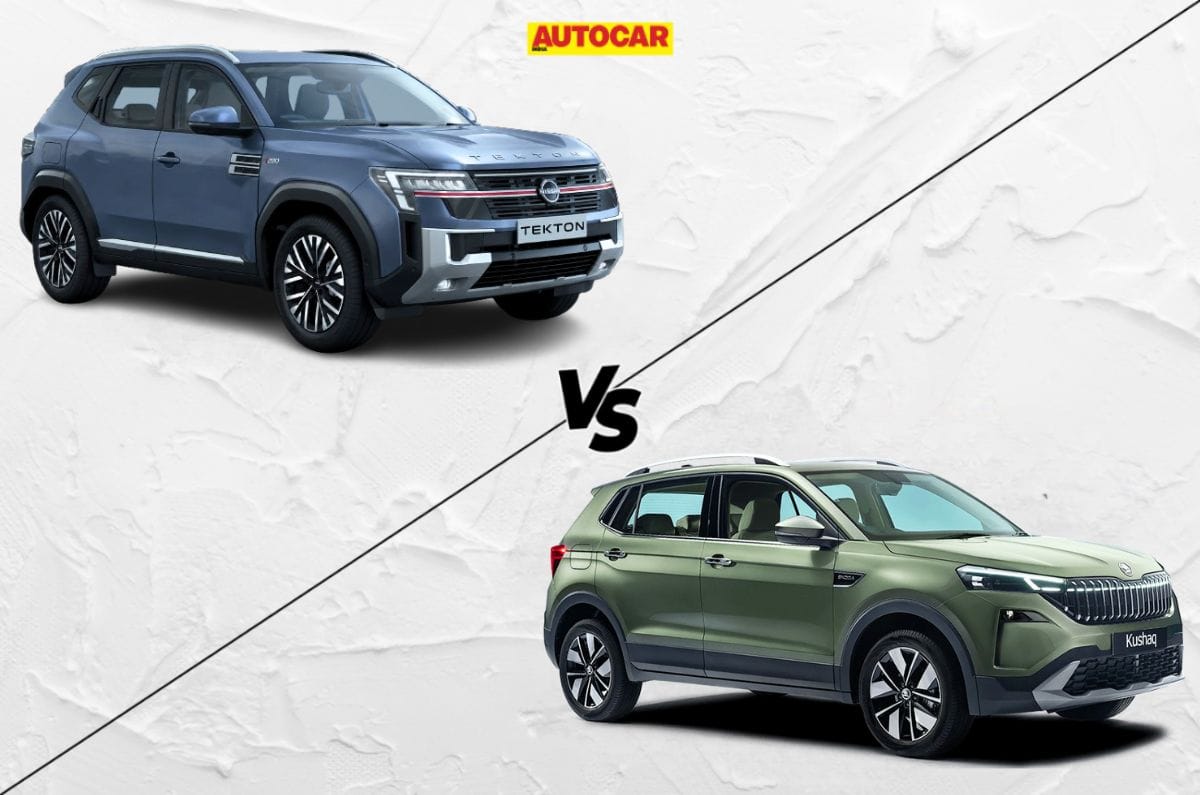
Nissan recently launched the Tekton midsize SUV in India. It is being offered in six trims: Visia, Visia+, Acenta, N-Connecta, Tekna, and Tekna+, with prices ranging from Rs 10.49 lakh to Rs 18.59 lakh (ex-showroom). The Skoda Kushaq is also offered at a similar top-end price. So, which top-spec model should you choose between the Tekton Tekna+ and Kushaq Prestige? Let us find out.

Nissan Tekton vs Skoda Kushaq: Dimensions

The Tekton is much larger than the Kushaq and offers a bigger boot

Nissan Tekton vs  Duster: Dimensions and other specifications 


Nissan Tekton

Skoda Kushaq

Difference

Length (mm)

4,349

4,229

+120

Width (mm)

1,815

1,760

+55

Height (mm)

1,674

1,612

+62

Wheelbase (mm)

2,657

2,651

+6

Ground clearance (mm)

212

188

+24

Boot space (litres)

518

385

+133

Although the Tekton and Kushaq have a similar wheelbase, the Tekton has larger proportions than the Kushaq and offers a bigger boot. The Tekton also has a 24mm higher ground clearance than the Kushaq.

Nissan Tekton Tekna+ vs Skoda Kushaq Prestige: Powertrain

Both top-spec trims are offered with two turbo-petrol engine options

Nissan Tekton Tekna+ vs  Kushaq Prestige: Powertrain


Tekton Tekna+

Kushaq Prestige

Engine*

1.0L TP | 1.3L TP

1.0L TP | 1.5L TP

Power

100hp | 163hp

115hp | 150hp

Torque

160Nm | 280Nm

178Nm | 250Nm

Transmission

6MT | 6DCT

6MT, 8AT | 7DCT

Drivetrain^

FWD

FWD

*TP = Turbo-petrol

^FWD = Front-wheel-drive

Both the Nissan Tekton and the Skoda Kushaq offer two turbo-petrol engines with their respective top trims. Comparing the smaller engines, the Kushaq produces 15hp and 18Nm more than the Tekton, while also offering an automatic transmission option.

The Tekton’s 1.3-litre engine is, however, 13hp and 30Nm more potent than the Kushaq’s larger-capacity 1.5-litre engine. Both manufacturers, however, offer their top-spec trims with such an engine with a DCT only.

Nissan Tekton Tekna+ vs Skoda Kushaq Prestige: Exterior

The Tekton gets larger rims, and everything else is the same as the Kushaq

Nissan Tekton Tekna+ vs  Kushaq Prestige: Exterior


Tekton Tekna+

Kushaq Prestige

Headlights

Auto LED

Auto LED

Taillights

Connected LED

Connected LED

DRLs

Connected LED

Segmented LED 

Front fog lamps

LED

LED

Rear fog lamps

LED

LED

Puddle lamps

Yes

Yes

Wheels

18-inch

17-inch

Powered ORVMs

Yes

Yes

Roof rails

Yes

Yes

Colour

Mono, Dual tones

Mono, Dual tones

While both top-spec models get all-LED lighting, puddle lamps, powered outside rearview mirrors (ORVMs) and roof rails, the Tekton Tekna+ goes a step further with larger 18-inch alloy wheels compared to the 17-inch units on the Kushaq Prestige. 

Nissan Tekton Tekna+ vs Skoda Kushaq Prestige: Interior

The Tekton gets a powered tailgate, but Kushaq offers massage rear seats

Nissan Tekton Tekna+ vs  Kushaq Prestige: Interior and features


Tekton Tekna+

Kushaq Prestige

Driver’s display

10.25-inch

10.25-inch

Infotainment screen

10.1-inch

10.1-inch

Android Auto, Apple CarPlay

Wireless

Wireless

Audio system

6-speaker Akamys

7-speaker*

Sunroof

Panoramic

Panoramic

Climate control

Dual-zone

Automatic

Rear AC vents

Yes

Yes

Front seat adjustment

6-way powered

6-way powered

Front seat features

Ventilation

Ventilation

Rear seat features

None

Massage

Powered tailgate

Yes

No

Seat upholstery

Leatherette

Leatherette

Steering wheel adjustment

Tilt, telescopic

Tilt, telescopic

Wireless phone charger

Yes

Yes

Cruise control

Adaptive

Adaptive

*Kushaq’s sound system comprises 6 speakers, an amplifier and a subwoofer

The Kushaq is the only car in the midsize SUV segment to offer a massage function on the rear seats. Over the Tekton, it also offers more speakers. On the other hand, the Tekton Tekna+ is equipped with a powered tailgate and dual-zone AC, which are missing from the Kushaq Prestige. Everything else is the same, including the 10.25-inch driver’s display, 10.1-inch infotainment system, a panoramic sunroof, powered and ventilated front seats and a wireless phone charger. 

Nissan Tekton Tekna+ vs Skoda Kushaq Prestige: Safety

The Tekton offers an ADAS suite, which is missing on the Kushaq

Nissan Tekton Tekna+ vs  Kushaq Prestige: Safety features


Tekton Tekna+

Kushaq Prestige

Airbags

6

6

ADAS

Level 2

No

Camera setup

360-degree

360-degree

Parking sensors

Front and rear

Front and rear

Electronic parking brake

DCT variant only

DCT variant only

TPMS

Yes

Yes

IRVM

Auto-dimming

Auto-dimming

Rear wiper, washer

Yes

Yes

Rear defogger

Yes

Yes

Hill start assist

Yes

Yes

Hill descent control

DCT only

No

ESC

Yes

Yes

Traction control

Yes

Yes

Both top-spec variants of the Tekton and Kushaq offer similar features like 6 airbags, a 360-degree camera, front and rear parking sensors, an auto-dimming inside rearview mirror (IRVM), a rear wiper and washer. However, the Tekton offers a Level-2 advanced driver assistance system (ADAS) suite and hill descent control, both of which are missing on the Kushaq.

Nissan Tekton Tekna+ vs Skoda Kushaq Prestige: Price, verdict

Top-spec trims of both SUVs come at a similar price 

Nissan Tekton Tekna+ vs Kushaq Prestige: Ex-showroom prices (Rs, lakh)


Tekton Tekna+

Kushaq Prestige

Price range

16.49-18.59

16.79-18.79

The starting price of the Nissan Tekton’s Tekna+ trim is Rs 30,000 less than that of the Kushaq Prestige. The top-end price of the Tekton is also Rs 20,000 less than that of the Kushaq. At this lower price point, the Tekton offers a powered tailgate, Level-2 ADAS, dual-zone AC and larger alloy wheels. It is also larger than the Kushaq and offers a larger boot, making it the better top-spec Tekton variant than the Kushaq Prestige. 

Prices are ex-showroom, India.

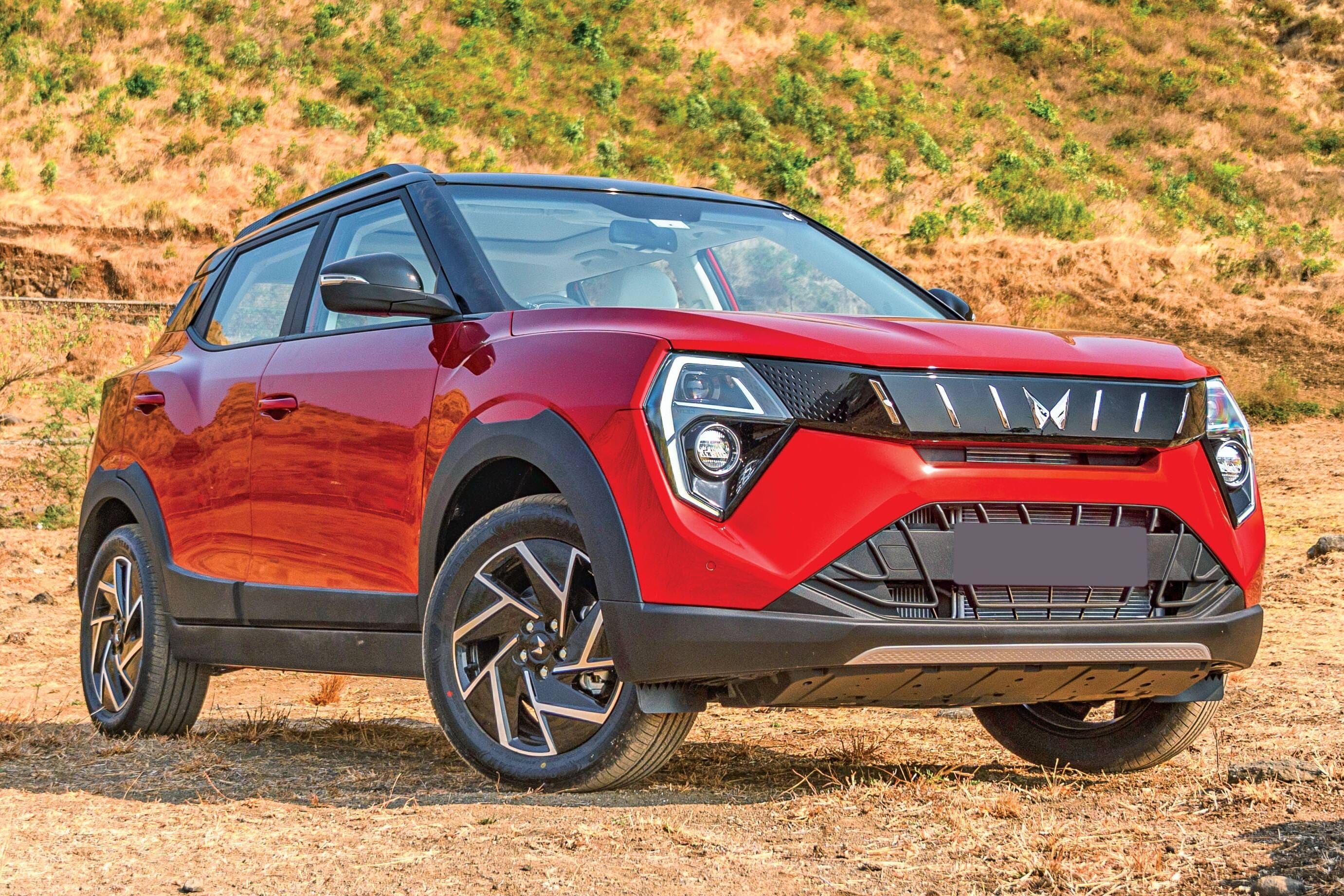
Buying a used Mahindra XUV 3XO: What to look out for

used Mahindra XUV 3XO

GOOD FOR: Spacious interior, Strong engines

LOOK OUT FOR: Suspension rattles, Infotainment issues

The Mahindra XUV 3XO was launched in 2024 as a replacement for the XUV300. But instead of a mild facelift, Mahindra went all out and gave the compact SUV an overhauled exterior, a thoroughly reworked interior, some segment-first features, a new class-leading petrol powertrain and a new name. Mahindra’s smallest offering stands out in the crowded compact SUV segment for its roomy and premium interior and many powertrain options, making it worth considering as a used buy. Here’s what to keep in mind.

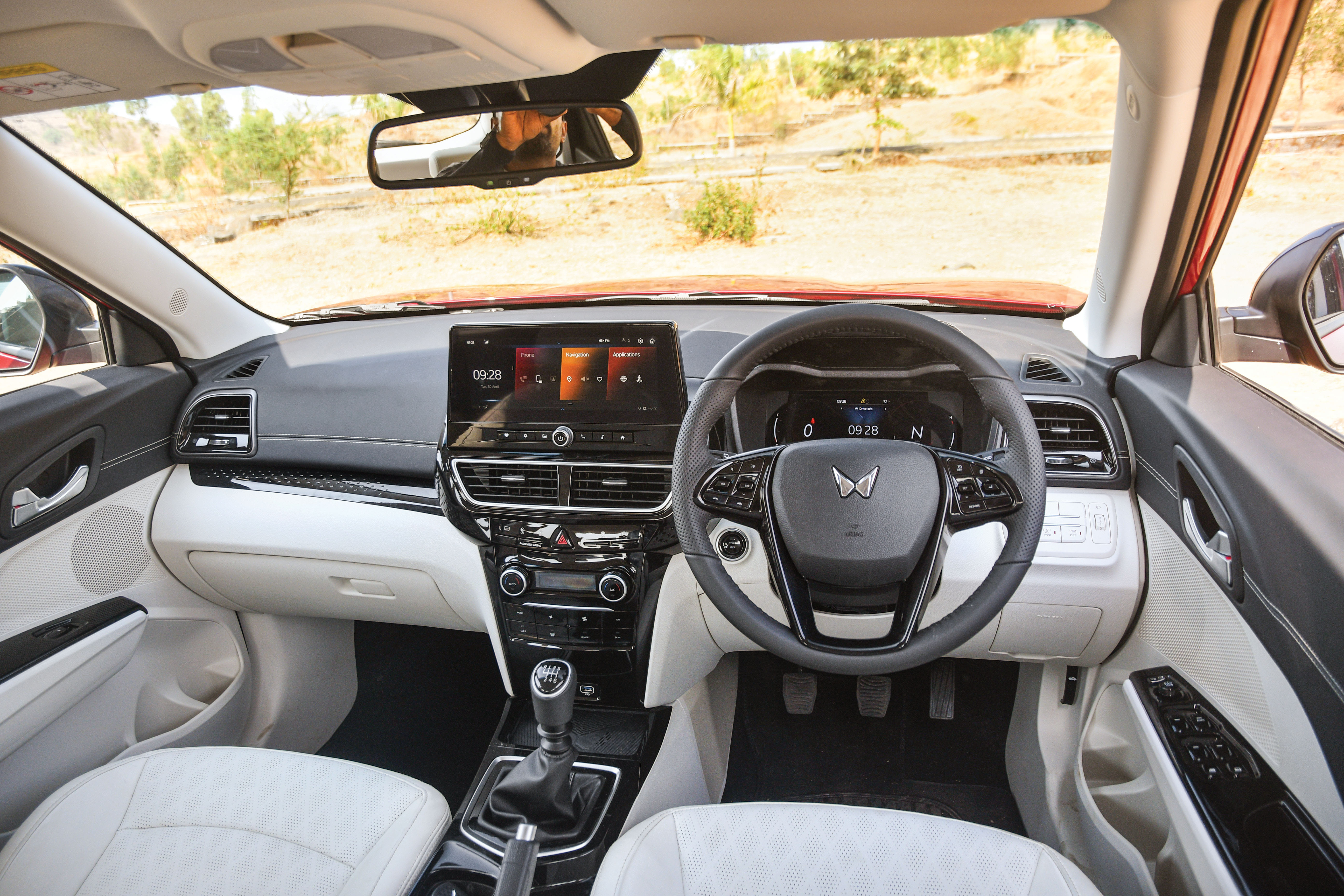
Despite the redesigned exterior, the 3XO’s rear section still looks abruptly chopped off, though it doesn’t look as awkward as the XUV300’s. The front styling, too, is bold, distinctive and splits opinion. Inside, quality took a huge step up, with the 3XO’s interior feeling genuinely premium. It’s very good on space too, and can easily accommodate five adults, though the trade-off is one of the smallest boots in the segment.

Check out used Mahindra XUV 3XO models.

Mahindra XUV 3XO powertrain and mileage

Petrol, turbo-petrol, and diesel engines;  up to 21.8kpl claimed mileage

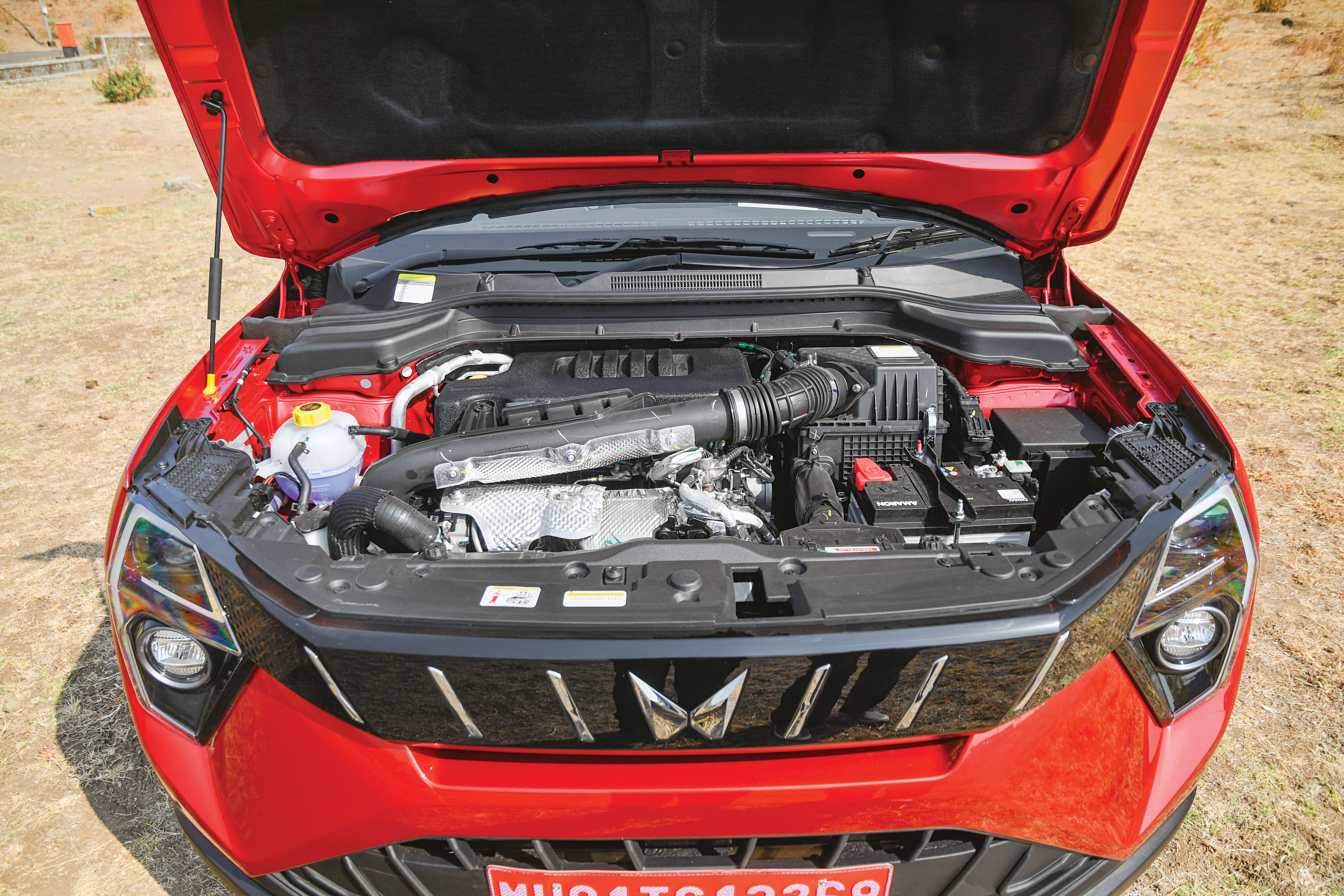
Mahindra offers the XUV 3XO with three engine options – two petrols and one diesel. The range starts with a 111hp, 1.2-litre, MPFi, turbo-petrol engine that can be had with a 6-speed manual (ARAI-rated 18.89kpl fuel economy) or a 6-speed torque converter automatic (17.96kpl) option. Then there’s a 117hp, 1.5-litre diesel, which comes with a 6-speed manual (20.6kpl) and 6-speed AMT (21.2kpl). Meanwhile, the range topper is a 131hp, 1.2-litre direct-injection turbo-petrol unit, which is available with an Aisin-sourced 6-speed torque converter automatic (18.2kpl) and a 6-speed manual option (20.1kpl).

The diesel makes sense for high-mileage users or for those who do frequent road trips owing to its higher real-world efficiency. Enthusiasts will enjoy the 131hp turbo-petrol for its punchy character and the performance it packs in. However, for most users, the 111hp turbo-petrol will do the job just fine, as it has a good balance of performance, drivability and efficiency. What’s great is that every engine option can be had with an automatic gearbox option for greater convenience.

Mahindra XUV 3XO variants and features

Twin 10.25-inch screens, panoramic sunroof

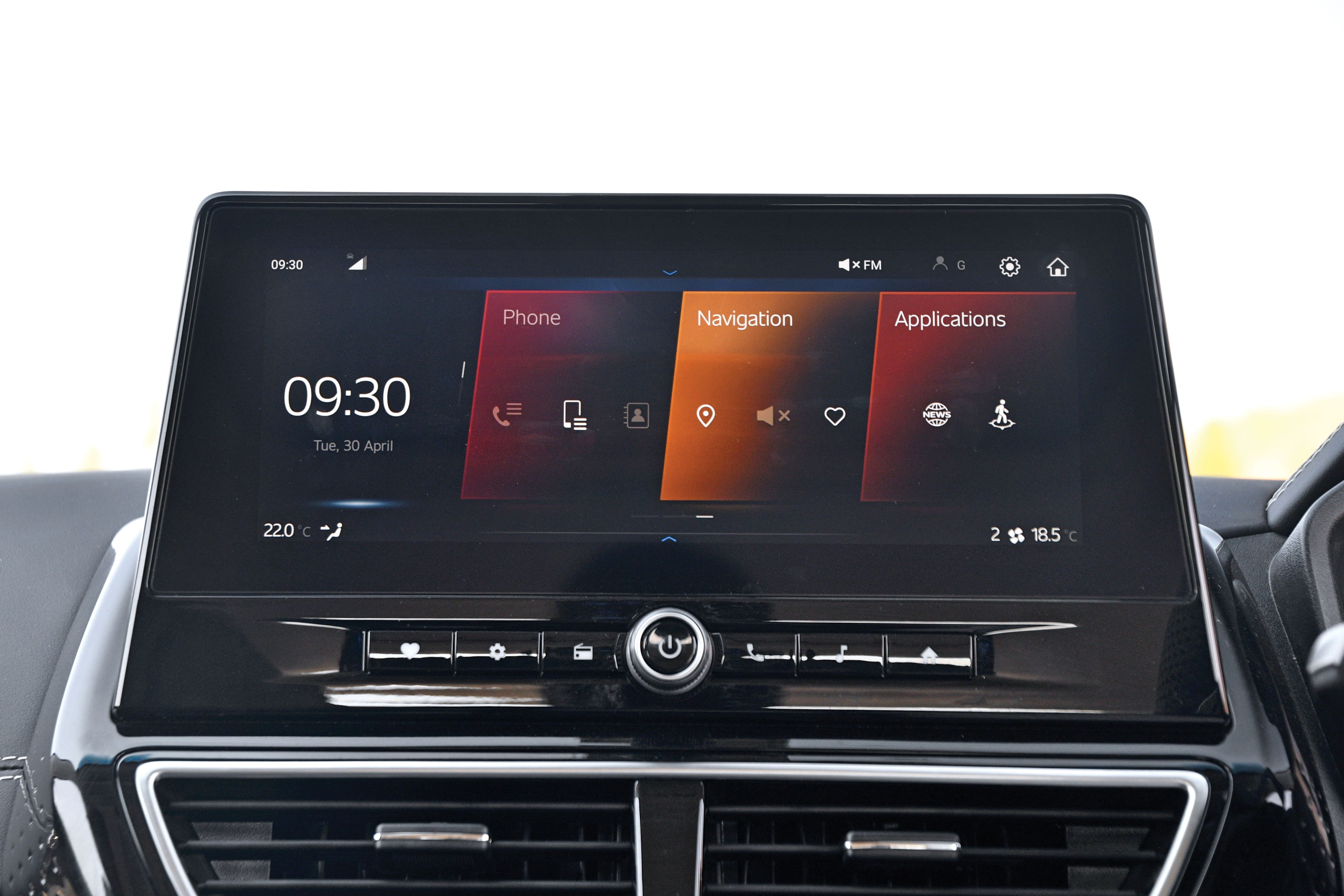
At launch, there were nine trim lines on offer – MX1, MX2, MX2 Pro, MX3, MX3 Pro, AX5, AX5 L, AX7 and AX7 L. Mahindra later launched a mid-spec RevX trim for the XUV 3XO too. As for features, the top-spec AX7L gets all-LED lighting, a seven-speaker Harman Kardon audio system with a 380W amplifier, a 10.25-inch infotainment screen and driver’s display, panoramic sunroof, AdrenoX Connect connectivity suite, wireless Android Auto and Apple CarPlay, a wireless charger, rear AC vents, and more.

All variants get safety features like 6 airbags, rear disc brakes, ESP and ISOFIX anchors. Higher-spec versions get an electronic parking brake with auto-hold, hill-start and hill-descent assist, a 360-degree camera, a blind spot monitor and Level 2 ADAS. As always, the range-topping variant will give you the best experience given all that it packs in, but for most users, the mid-spec AX5 will also suffice, as it has a good balance of features.

XUV 3XO warranty details

The XUV 3XO is a reliable SUV, with problems few and far between, and it’s backed up by Mahindra’s widespread service network throughout the country. What’s nice is that it comes with a standard warranty of 3 years / 1,00,000km, which can be extended to a total of 5 years or 1,50,000km. 

What to look out for in a used Mahindra XUV 3XO

Suspension rattles

Some owners have reported rattling or thudding sounds coming from the suspension when driven through rough patches or potholes. This is often linked to worn out lower control arms. Take a test drive and drive through a rough patch of road, and listen out for any thudding or rattling from the suspension. Many of the suspension components are covered under warranty too, so this is something to keep in mind. 

Infotainment issues

Owners have faced issues with the XUV 3XO’s AdrenoX infotainment system like Apple CarPlay/Android Auto disconnections, screen freezing and the reverse camera display getting stuck on a black screen. Before purchasing, check that it functions smoothly, pairs up with your phone easily, and that the system’s software is up to date.

Braking trouble

Mahindra XUV 3XO owners have reported a few distinct brake issues, ranging from inconsistent, spongy brake pedal feel to hissing noises and overly sensitive Automatic Emergency Braking (AEB). Before purchasing, it’s worth getting the brakes checked by an authorised service center.

Second hand Mahindra XUV 3XO price and resale value

Rs 6 lakh-10 lakh

Being a new model that’s still on sale, the XUV 3XO commands good value in the resale market. With such a wide spread of trim levels and powertrain options, you’ll find used options across a wide price range, but refrain from spending over Rs 10 lakh. Look for an example with the extended warranty package, as that’ll give you added peace of mind.

Mahindra XUV 3XO fact file

Years produced 2024-present 
Price when new Rs 7.49 lakh-15.49 lakh (ex-showroom, India) 
Engine 3cyls, 1197cc, turbo-petrol / 3cyls, 1197cc, turbo-petrol / 4cyls, 1497cc, diesel
Power 200 / 230 / 300Nm
Torque 144 / 253 / 250Nm
Ground clearance201mm
Boot space 364 litres