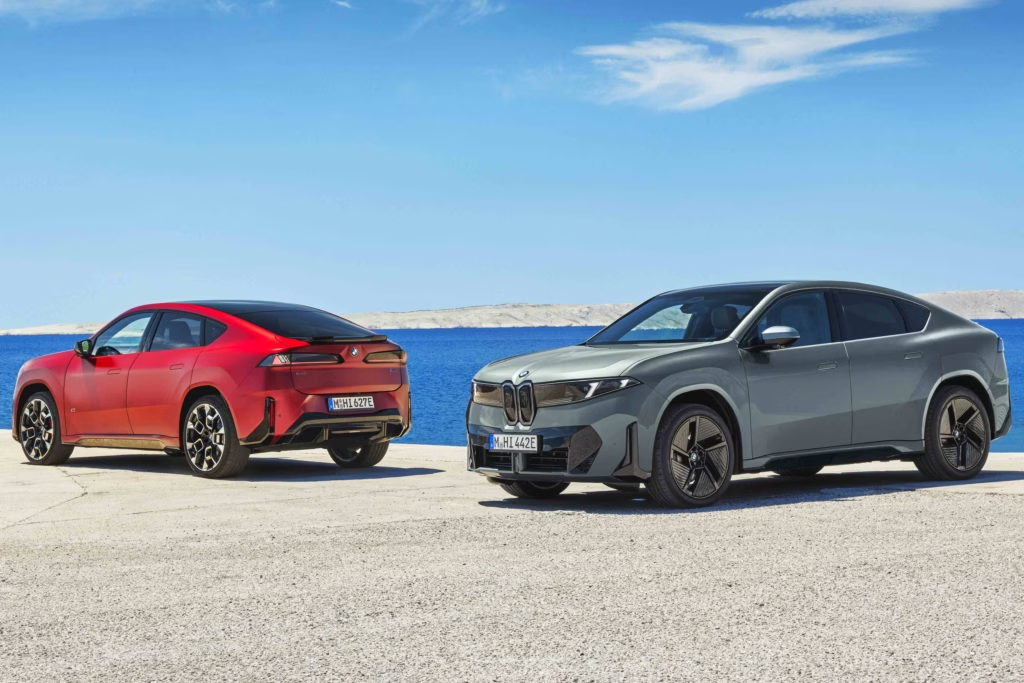
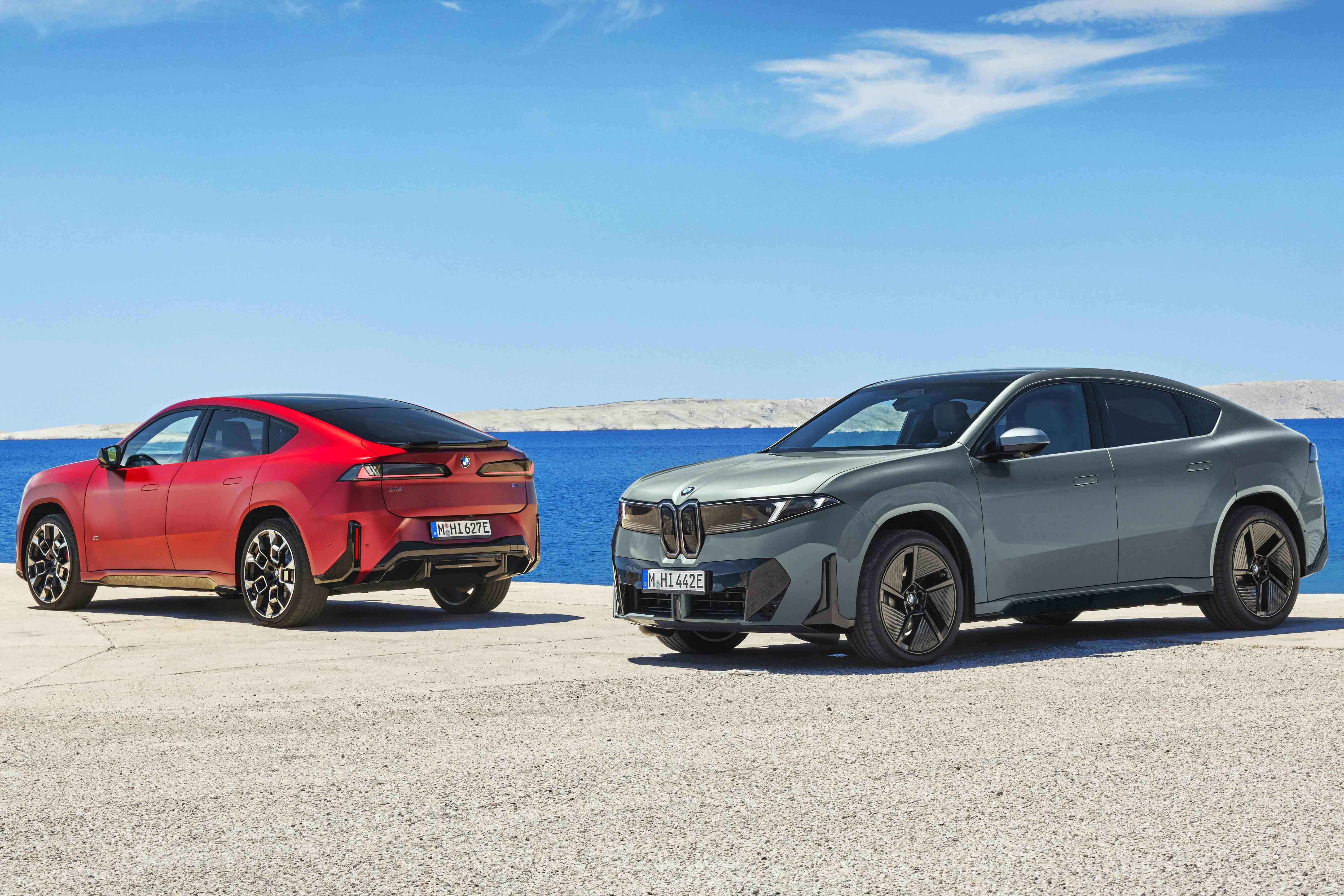
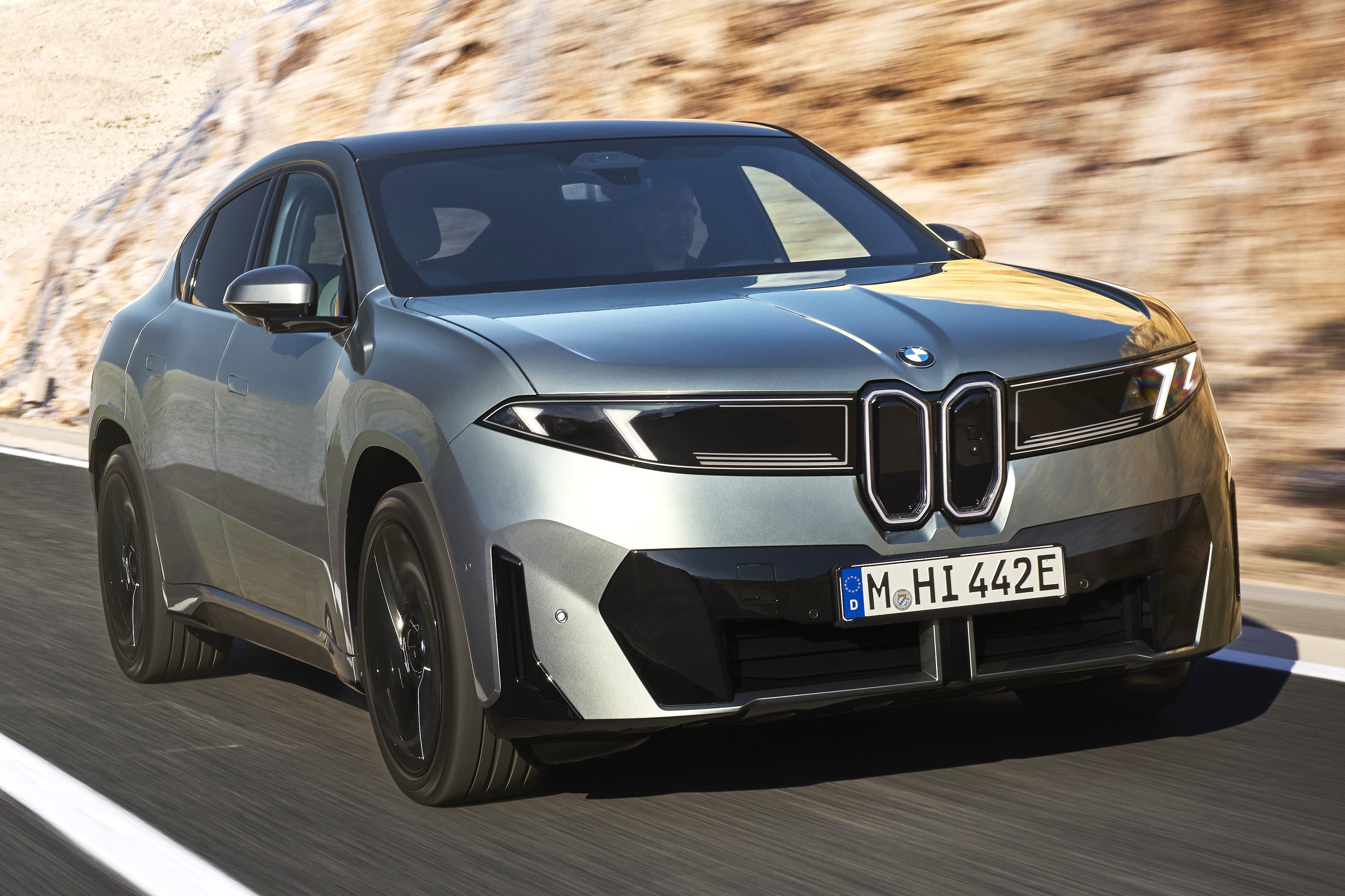
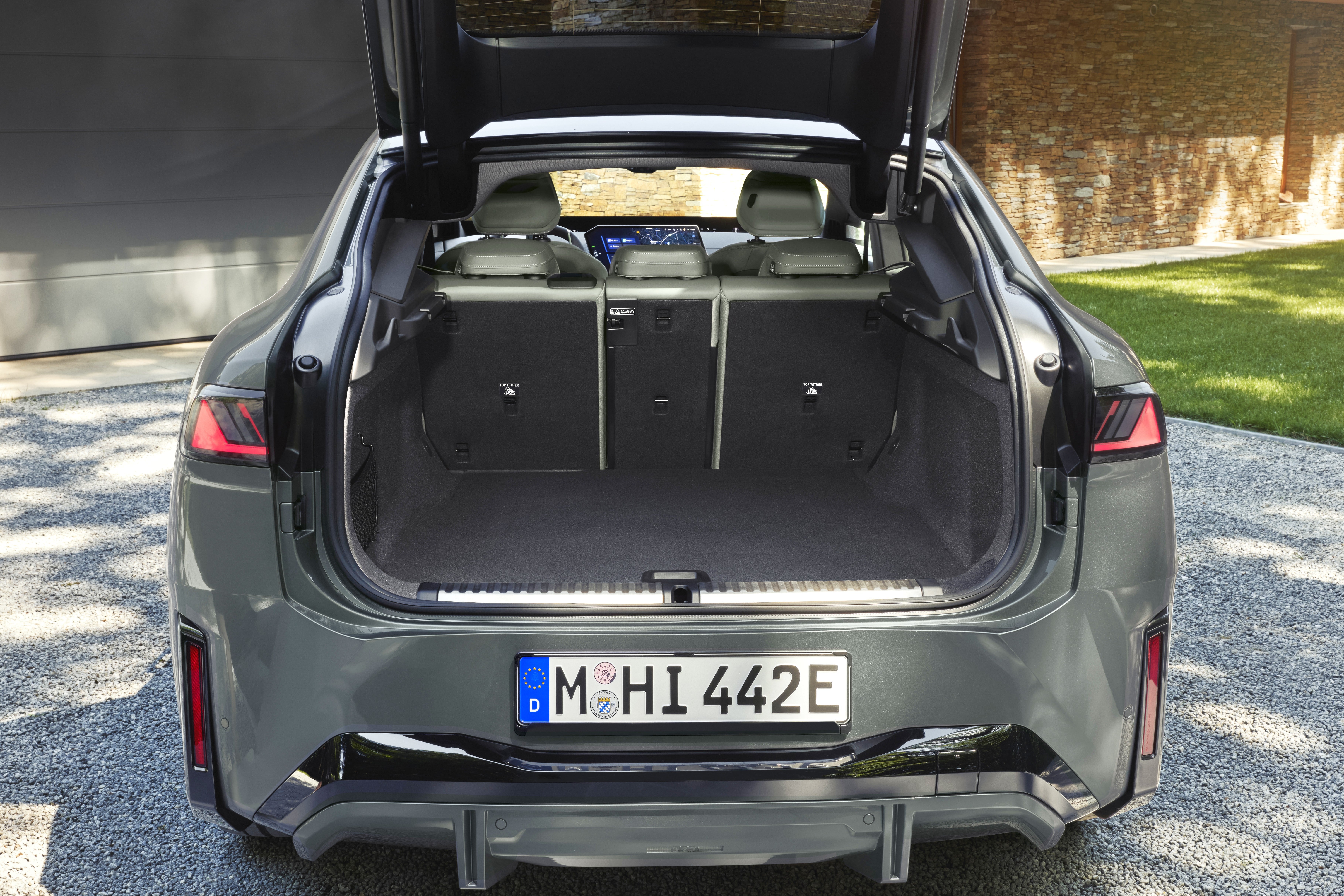
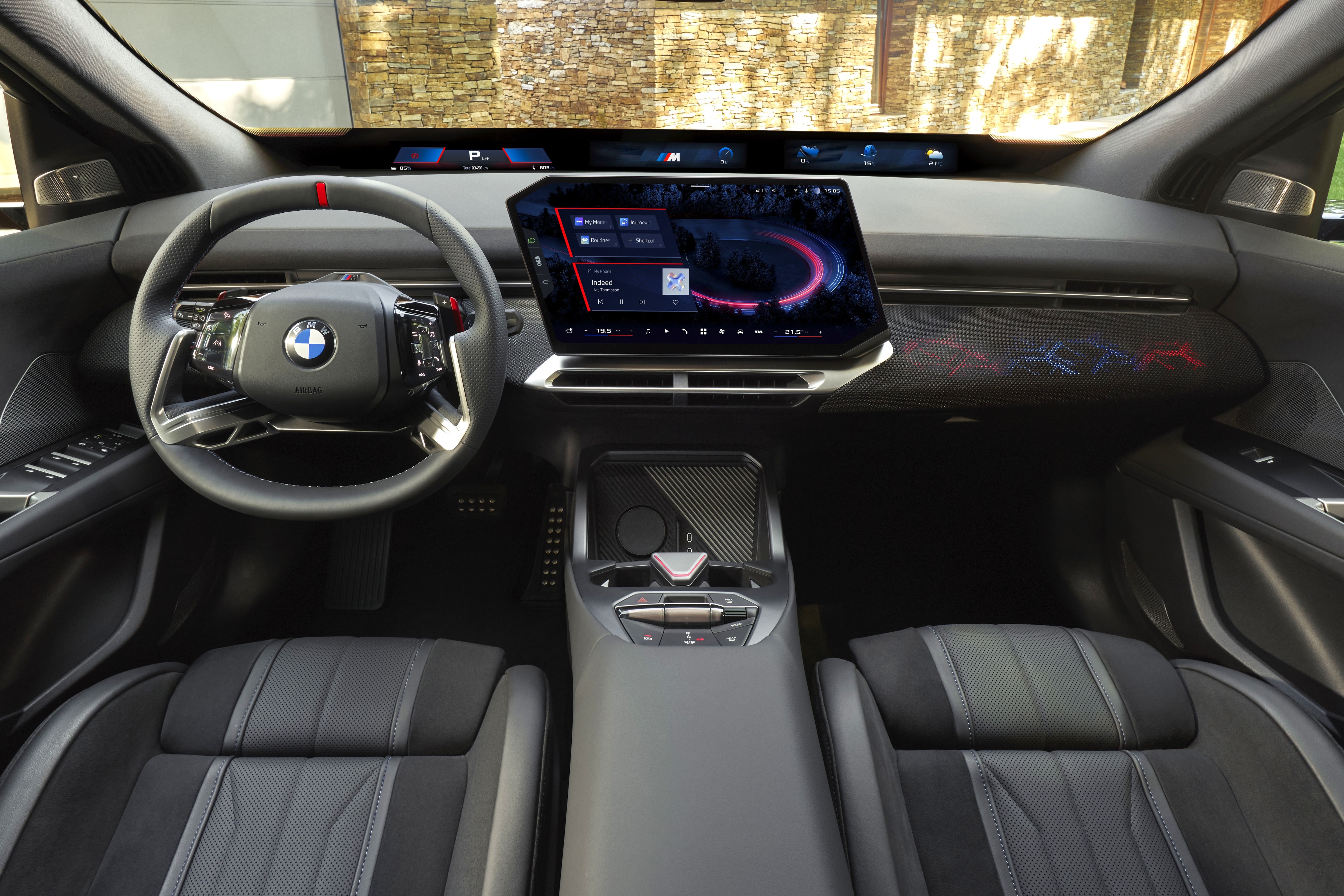
BMW has pulled the wraps off the iX4, a coupe-SUV derivative of the iX3 and the third Neue Klasse offering from the German carmaker. The iX4’s global launch is scheduled for March 2027, and it will be available in two variants initially: 40 xDrive and 50 xDrive. A sportier, range-topping variant dubbed the M60 xDrive will join the iX4 line-up at a later date.
BMW iX4 powertrain and performance
iX4 50 xDrive
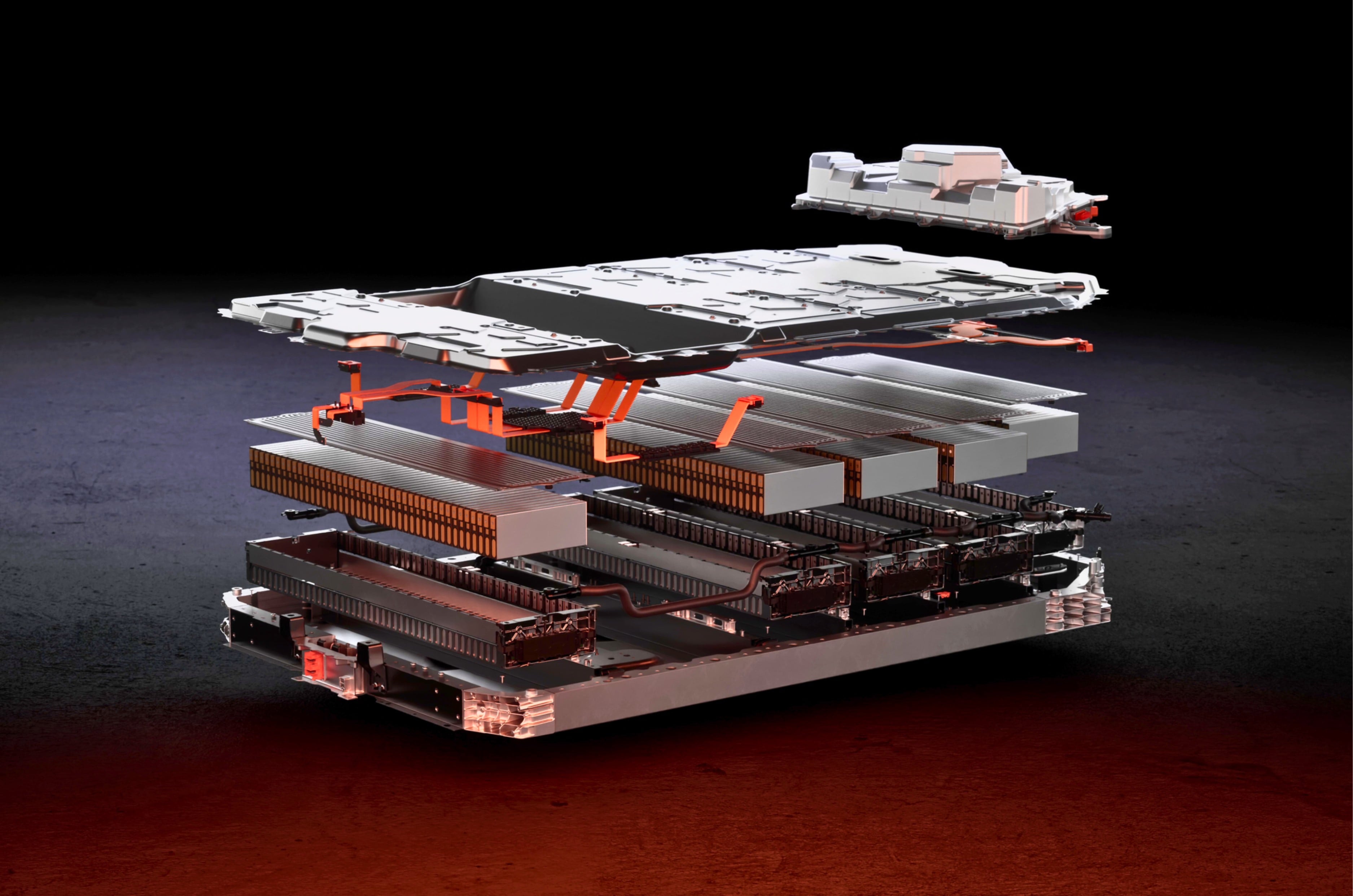
The iX4 rides on BMW’s 800-volt Neue Klasse platform and borrows the iX3’s battery options. Specifically, the iX4 40 xDrive comes with an 82.6kWh battery delivering a WLTP range of 526km-638km, while the 50 xDrive gets a 108.7kWh unit that’s good for a 680km-828km range. The iX4 M60 xDrive is likely to use the same 108.7kWh battery, but is rated for a maximum WLTP range of 777km.
iX4 M60 xDrive
All iX4 variants get a dual-motor all-wheel drive setup as standard, with the 40 xDrive developing 374hp and 520Nm, the 50 xDrive churning out 469hp and 645Nm, and the M60 xDrive producing 603hp and 875Nm. The 40 xDrive claims a 0-100kph time of 5.6 seconds and a 200kph top speed, the 50 xDrive is good for a 4.9-sec 0-100kph run and a 210kph top speed, and the M60 xDrive manages a 3.9-sec 0-100kph dash and a 240kph top speed. Adaptive sports suspension is also fitted as standard in the M60 xDrive, and is available as an option in the other variants.
iX4 50 xDrive
As for charging, all three iX4 versions can be charged at up to 22kW from an AC source, while DC fast charging is capped at 300kW for the 40 xDrive and 400kW for the 50 xDrive. A 10 to 80 percent DC charge takes 21 minutes for both variants. Furthermore, BMW claims that when charging at the maximum DC wattage, the iX4 40 xDrive can add up to 301km of range in 10 minutes, whereas the 50 xDrive delivers a range top-up of up to 387km in the same timeframe.
BMW iX4 exterior design
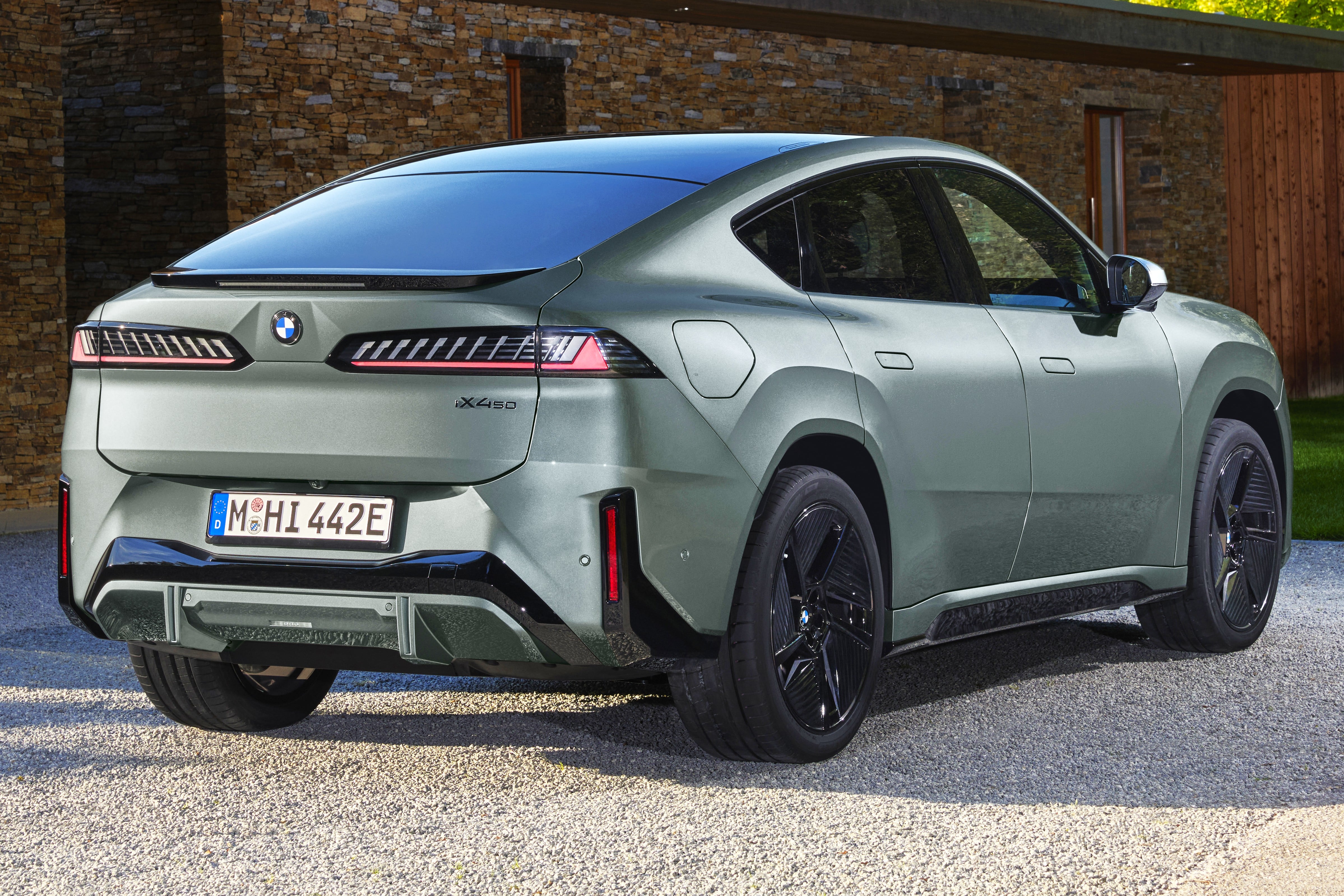
iX4 50 xDrive
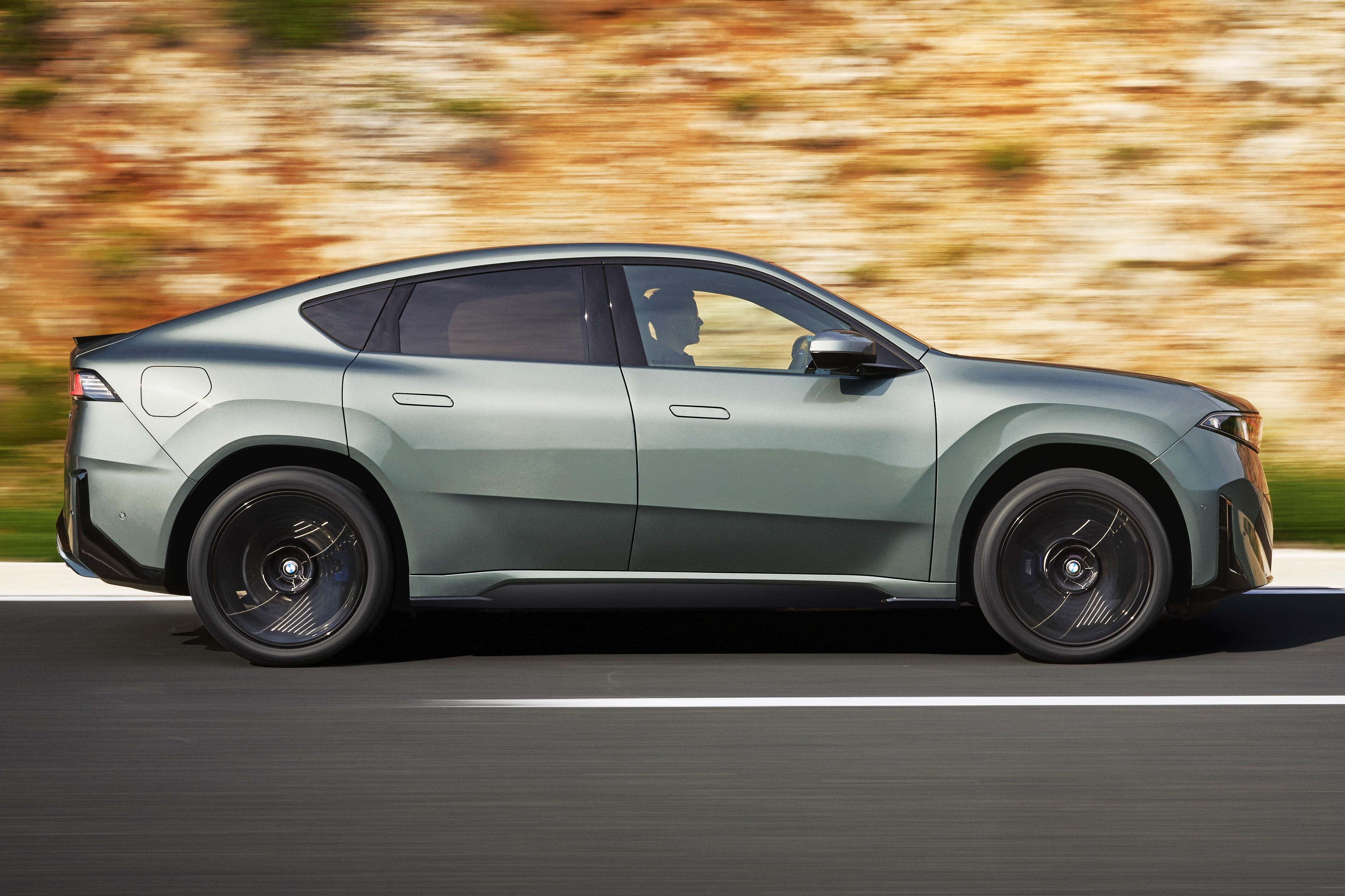
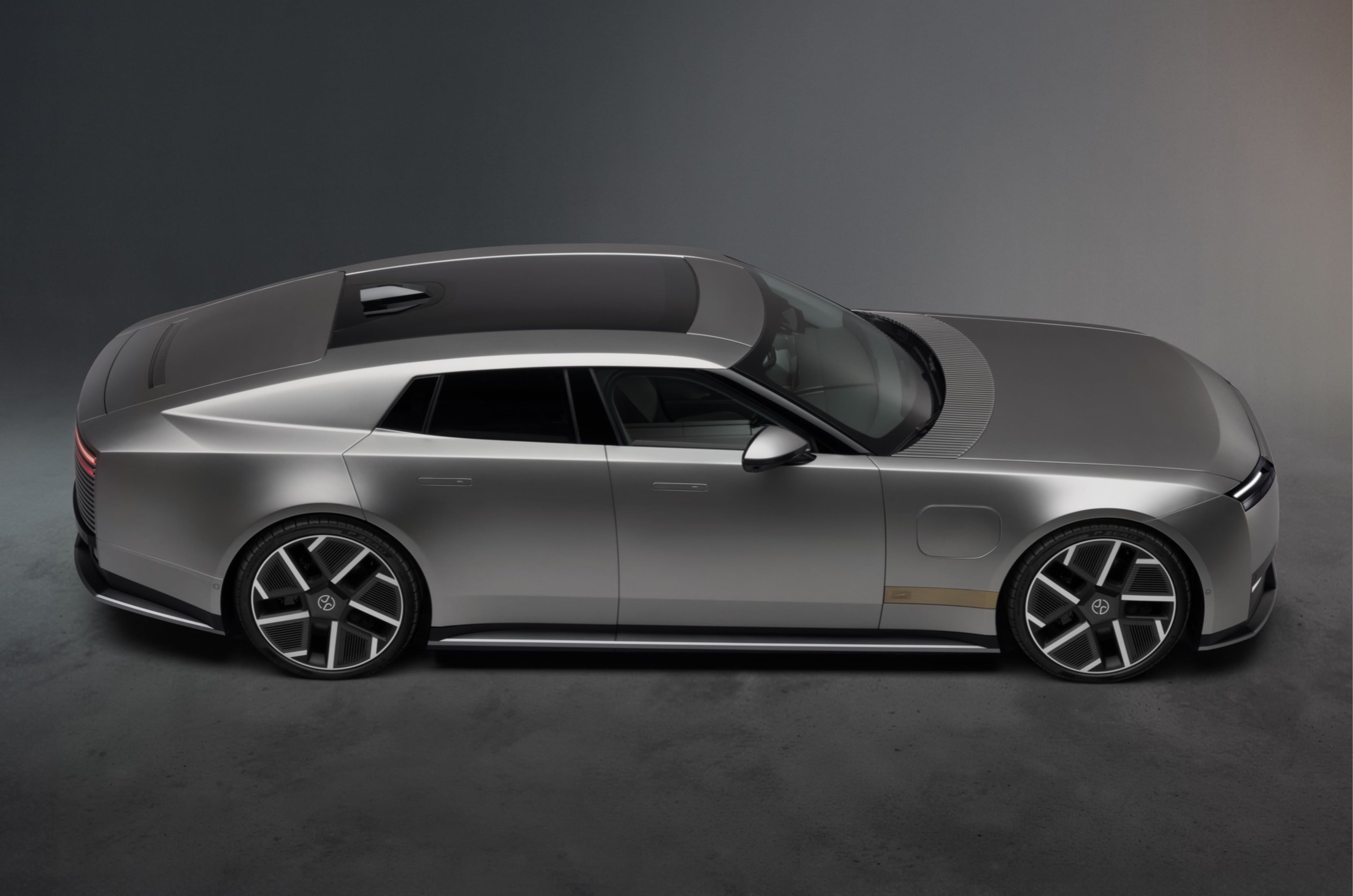
Measuring 4,782mm in length, 1,895mm in width, 1,595mm in height, and with a wheelbase of 2,897mm, the iX4 is 40mm shorter than the iX3. The iX4 retains many of the Neue Klasse styling cues seen on the iX3, but with distinctions like a steeply-raked roofline, unique alloy wheel designs (20-inchers are standard, which can be optioned up to 22 inches), clear-lens tail-lamps, a bootlid spoiler, and a slightly more sculpted rear bumper.
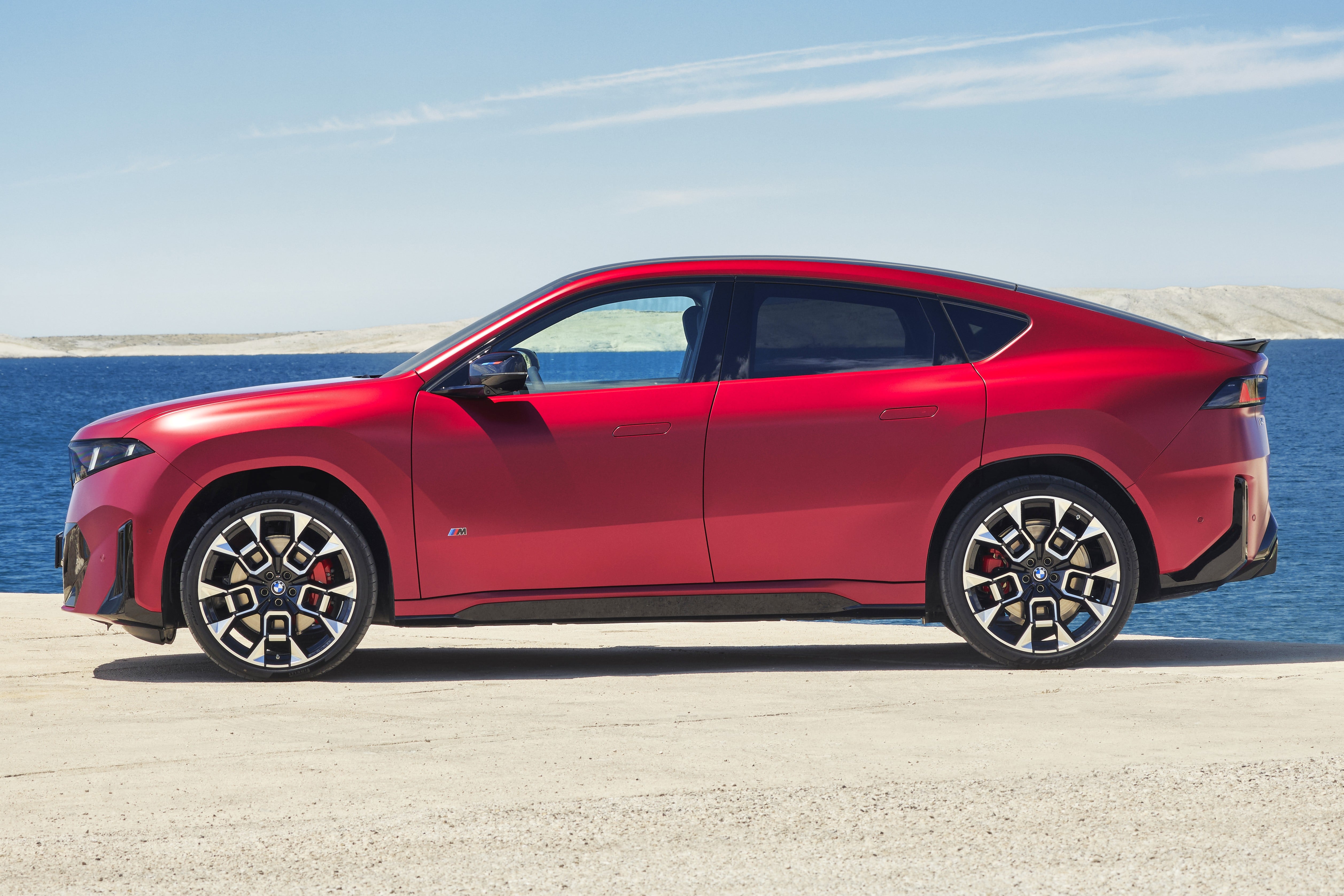
iX4 M60 xDrive
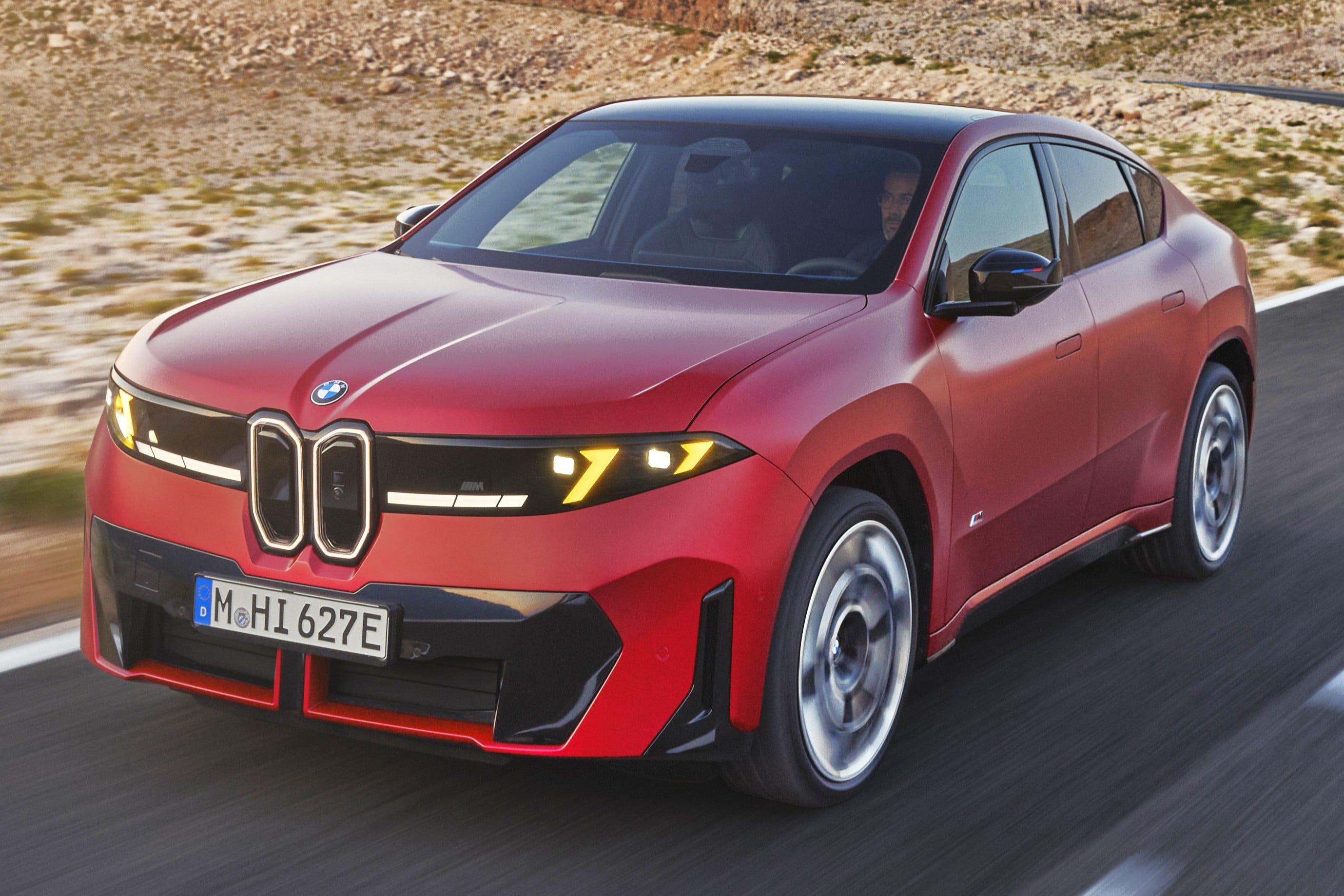
The iX4 M60 xDrive further differentiates itself with adaptive LED headlamps, unique lighting signatures in the grille area, yellow-coloured daytime running lights (activated only when the low-beams are on), larger 21-inch alloy wheels, M badging, M-spec ORVM housings, a bigger bootlid spoiler, and blacked-out exterior trim.
BMW iX4 interior and features
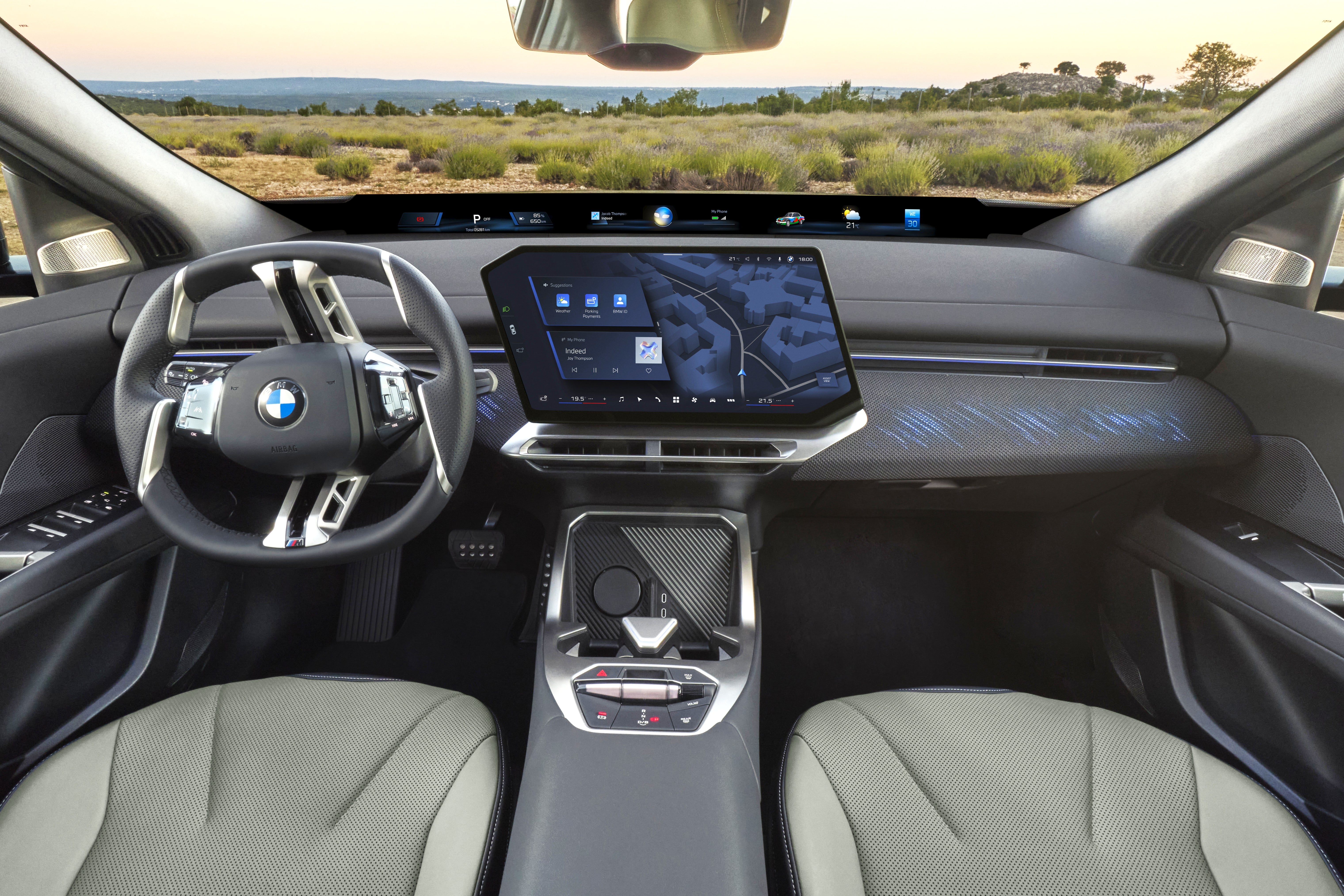
iX4 50 xDrive interior
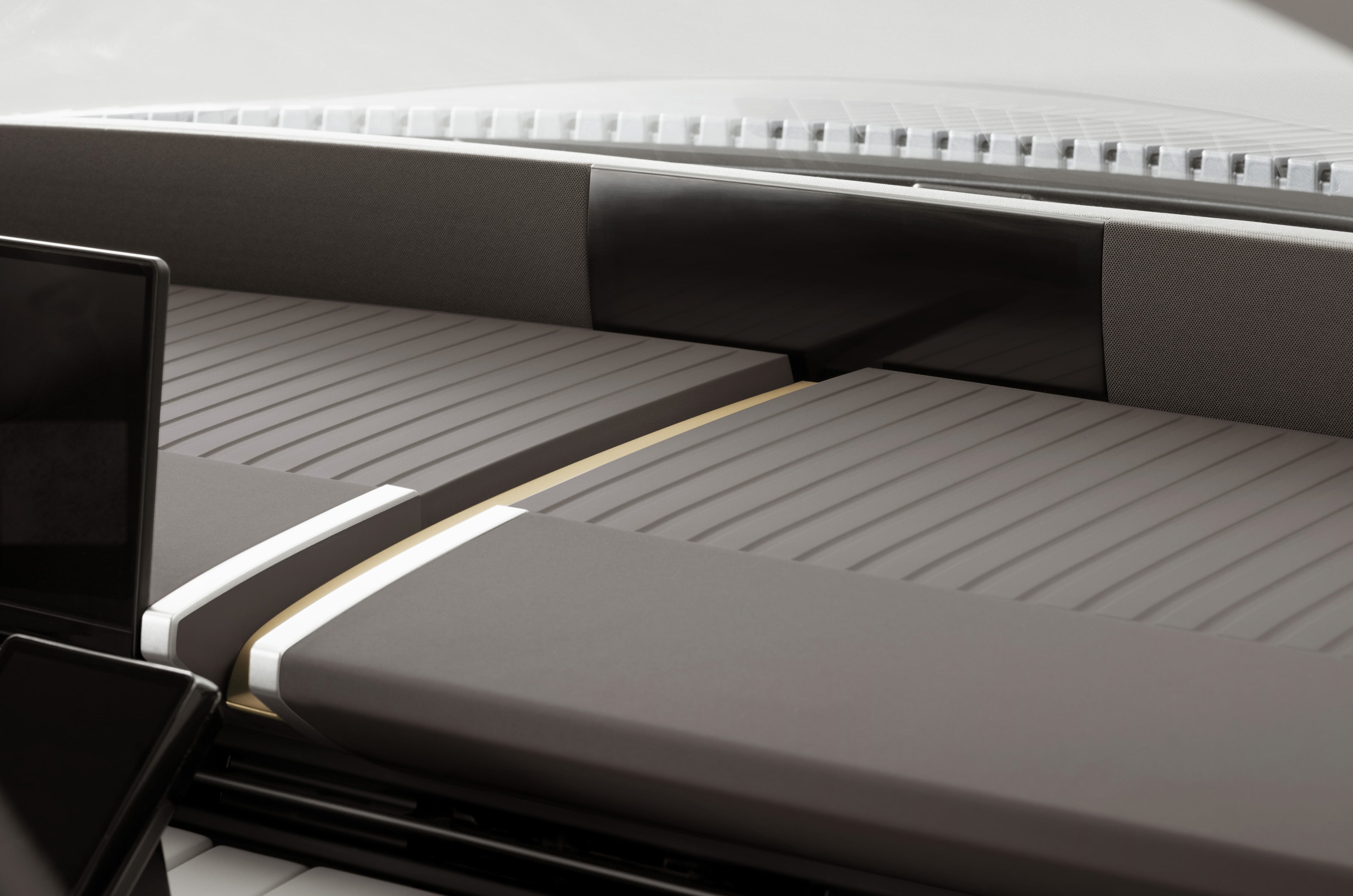
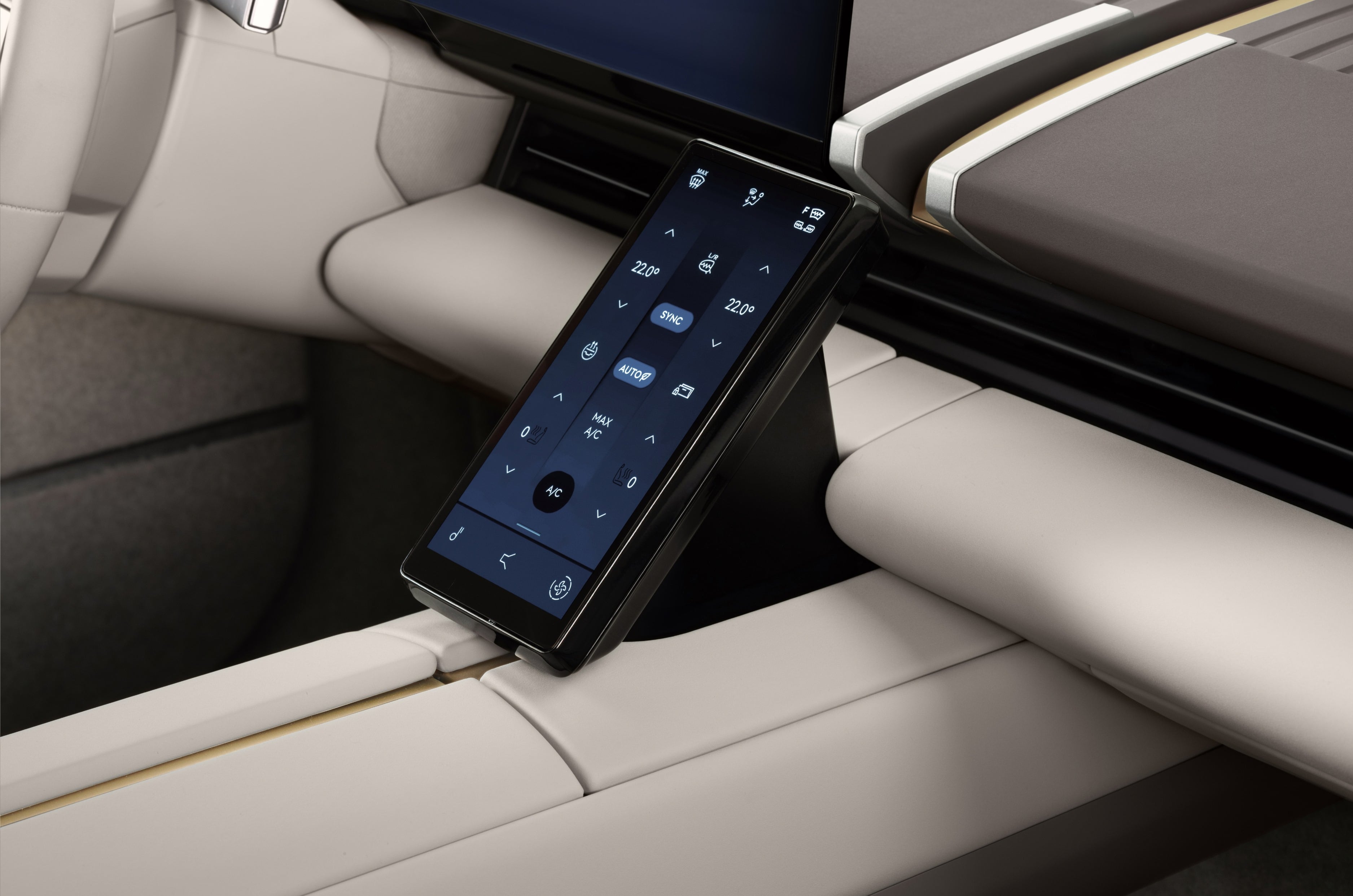
The interior of the iX4 is identical to that of the iX3, save for a bit less headroom in the second row on account of the sloping roofline, and a smaller 490-litre boot. A rhomboidal 17.9-inch infotainment touchscreen sits proud on the centre of the dashboard, while a pillar-to-pillar Panoramic Vision display can be seen at the base of the windshield. The unconventional-looking four-spoke steering wheel and high-set central tunnel are also retained from the iX3.
iX4 50 xDrive
As for standard features, the iX4 40 xDrive and 50 xDrive come with configurable ambient lighting, a panoramic sunroof, wireless Apple CarPlay and Android Auto, powered front seats with memory functions, Level 2 ADAS, a 7-speaker sound system, connected car tech, an AI-powered digital assistant, Veganza leatherette upholstery, a wireless charging pad, power-opening doors, among others.
iX4 M60 xDrive interior
The top-spec M60 xDrive’s cabin further differentiates itself with a black finish, M-spec steering wheel, M Sport seats with massage functions, a 13-speaker Harman Kardon sound system, and more.
The Tata Aeris may be a new name, but its roots lie in the Tigor, which has enjoyed considerable popularity since 2017 for its distinctive styling, practical cabin, comfortable ride and decent powertrains. The Aeris builds on that foundation with a sharper design, a more upmarket cabin and an even more generous equipment list while retaining the same basic mechanical package underneath. Having already driven the iCNG version, we now get behind the wheel of the petrol Aeris to see how it fares as an everyday sedan.
Tata Aeris petrol performance and refinement – 7/10
The petrol engine gives it slightly better cruising capability than the CNG
3-cylinder engine is so-so on refinement and sounds coarse when revved hard
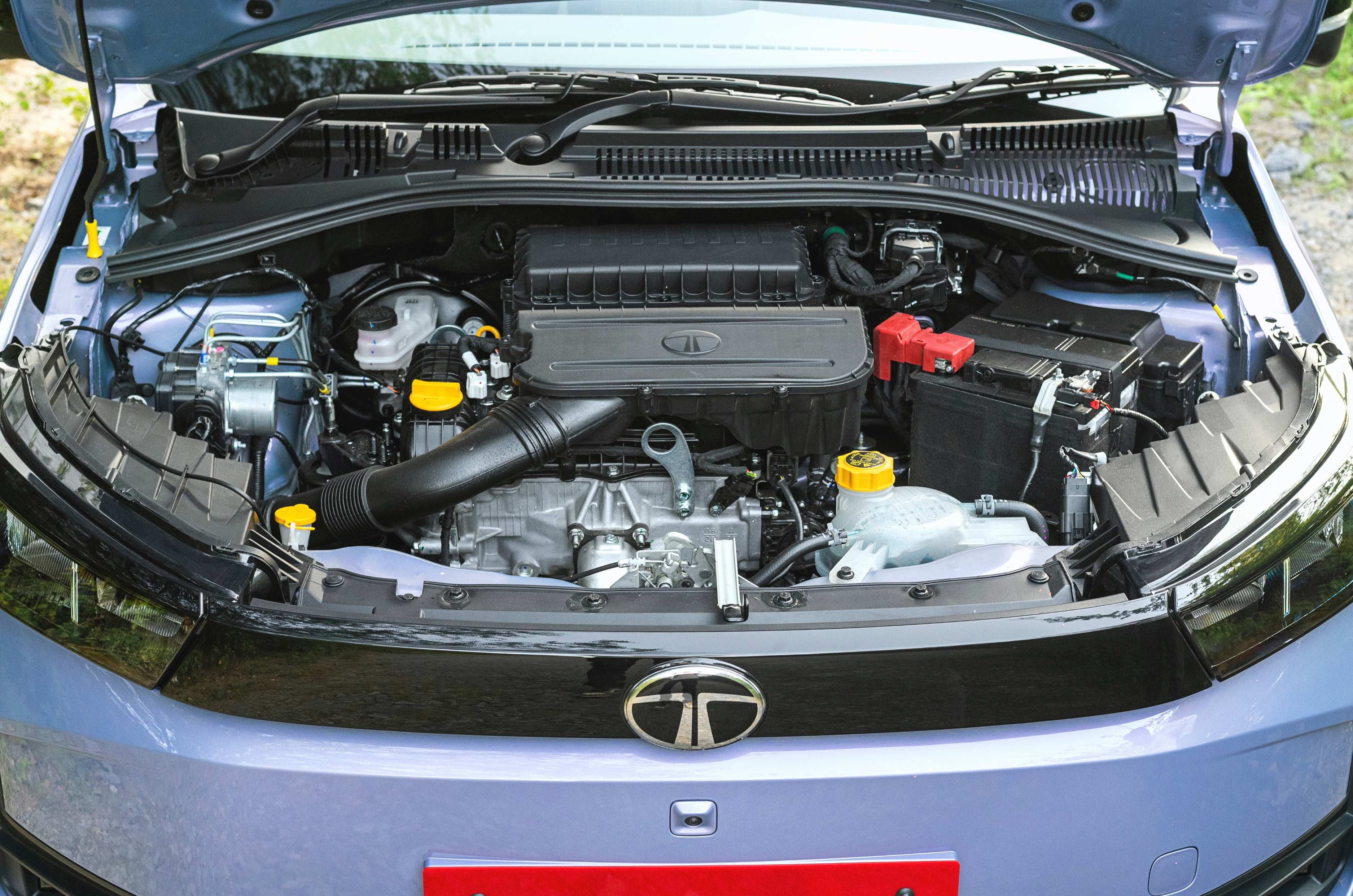
The Tata Aeris comes with a 1.2-litre 3-cylinder naturally aspirated engine that produces 86hp and 113Nm in its petrol guise and is offered with a choice between a 5-speed manual and a 5-speed automated manual transmission (AMT). The three-cylinder engine isn’t the smoothest in the segment, while the sound insulation also has room for improvement. There are noticeable vibrations at idle and low speeds, though these settle down once you’re on the move. However, they make a comeback beyond 2,500rpm, accompanied by a coarse engine note that can get intrusive and tiring on longer high-speed drives.
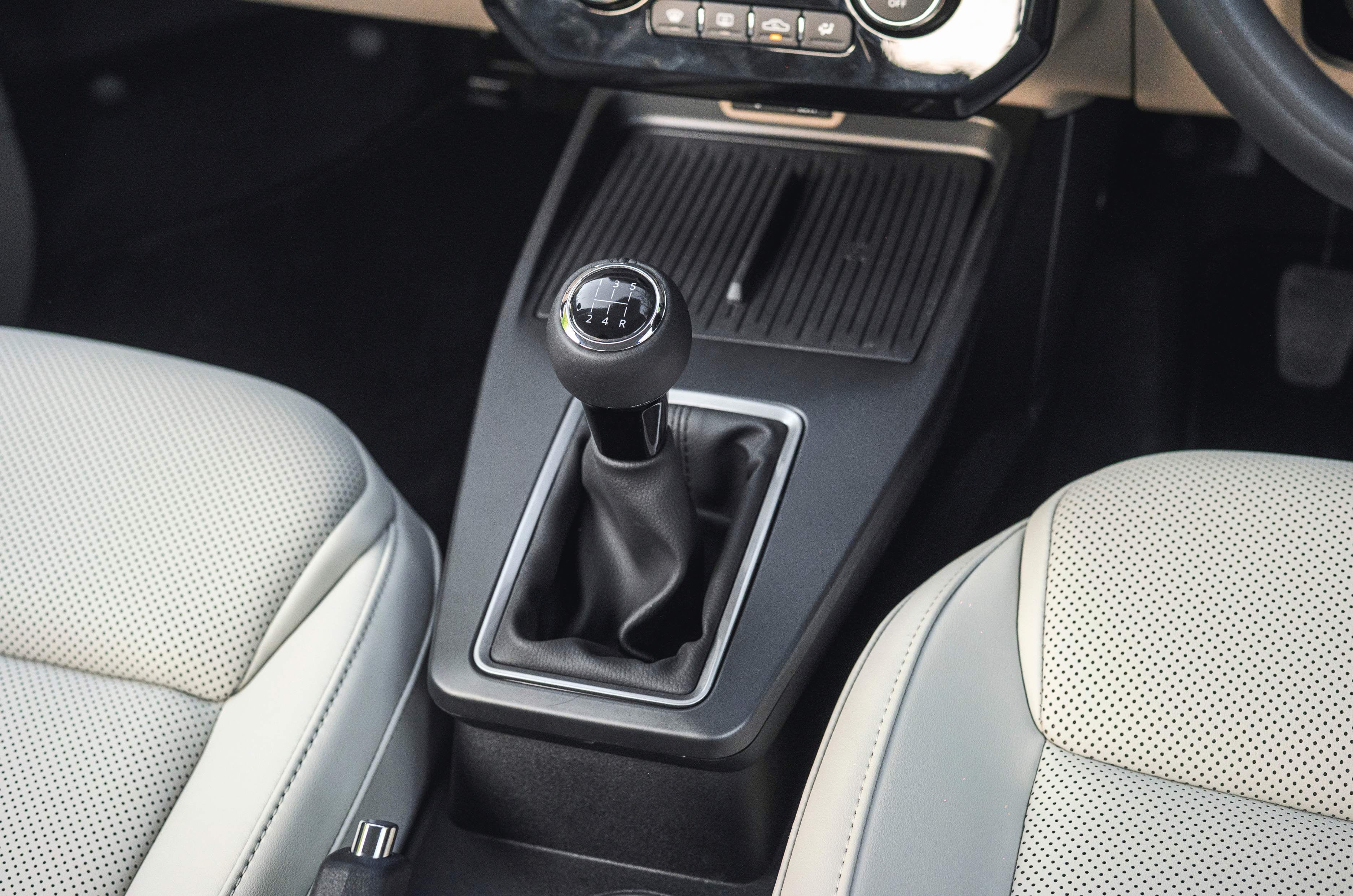
Manual lever looks premium for the price, offering short throws and defined gear gates.
The petrol version’s output figures are 10hp and 16Nm higher than the CNG version, which may look modest on paper, but the difference is discernible out on the road. We drove the petrol-powered Aeris with a 5-speed manual gearbox and noticed it offers short shift throws and well-defined gear gates. While it is not the slickest gearbox compared to its Maruti, Honda and Hyundai rivals, it is still a step up from the Tigor’s in terms of smoothness.
Aeris’ petrol version feels adequate for the city and is fine for gentle highway cruises too.
The performance in city speeds is adequate, and the powertrain is peppy enough for everyday driving. The clutch is light and has a predictable bite point, meaning you do not strain your left foot even in bumper-to-bumper traffic. There’s a dead pedal too, but it feels narrower than what we would have liked.
It is fairly quick to reach 80kph, but takes some time to reach triple-digit speeds. However, the petrol-powered Aeris maintains these speeds with relative ease, which makes it a decent highway cruiser. Unlike the CNG, the Aeris petrol does not feel out of breath when overtaking, and as long as you are in the right gear, it maintains good momentum.
AMT adds convenience for city drives but doesn’t like being rushed; the manual gearbox is easy to use.
We got a taste of the AMT during our earlier stint with the Aeris iCNG, when we switched to petrol mode, and found that the gearbox offered reasonable acceleration with measured inputs. Push the accelerator aggressively, though, and the typical AMT hesitation became evident, meaning overtakes need to be planned well. The AMT also gets a creep function, which comes in handy in bumper-to-bumper traffic.
All of this makes the AMT a good option for city driving, but for high-speed highway cruising, we recommend the manual gearbox, which offers greater control and a more engaging experience. That said, opting for the manual in the city is not a compromise either.
Tata Aeris petrol ride comfort and handling – 8/10
It allows for a confident drive at both low and high speeds
Like other Tata offerings, ride quality is one area where the Aeris excels. It takes broken roads in its stride, with the suspension absorbing rough patches well and keeping most surface irregularities from filtering into the cabin. The 170mm ground clearance is also adequate for tackling large speed breakers without much concern. That said, the CNG version has an edge in this department, thanks to its 14-inch steel wheels with taller sidewalls, which offer a more cushioned ride than the 15-inch alloys on the top-spec petrol version. Notably, lower Aeris trims get 14-inch wheels.
Well-tuned suspension keeps the Aeris comfortable and confident on all roads.
At high speed too, the suspension stiffens enough to keep the Aeris composed through quick lane changes, without feeling floaty. On the highways, it remains stable and inspires confidence at higher speeds. The steering, however, could do with more precision, as it feels slightly vague around the centre. While it weighs up nicely as speeds rise, a sharper response around the centre would have further enhanced the Aeris’ high-speed confidence.
Tata Aeris petrol mileage and efficiency
We expect the Aeris petrol to have similar fuel efficiency as the Tiago
Tata has yet to reveal the official fuel-efficiency figures for the petrol-powered Aeris. But it gets the same powertrain as the pre-facelift Tiago we tested in 2022. In that test, it returned 13.30kpl in the city and 16.60kpl on the highway. The Aeris could have similar fuel efficiency. However, we will be able to give you a more definitive assessment once we put the Aeris through our standard fuel-efficiency tests.
Tata Aeris petrol exterior design and engineering – 8/10
Has a sleeker and more modern exterior design and comes with LED lights all around
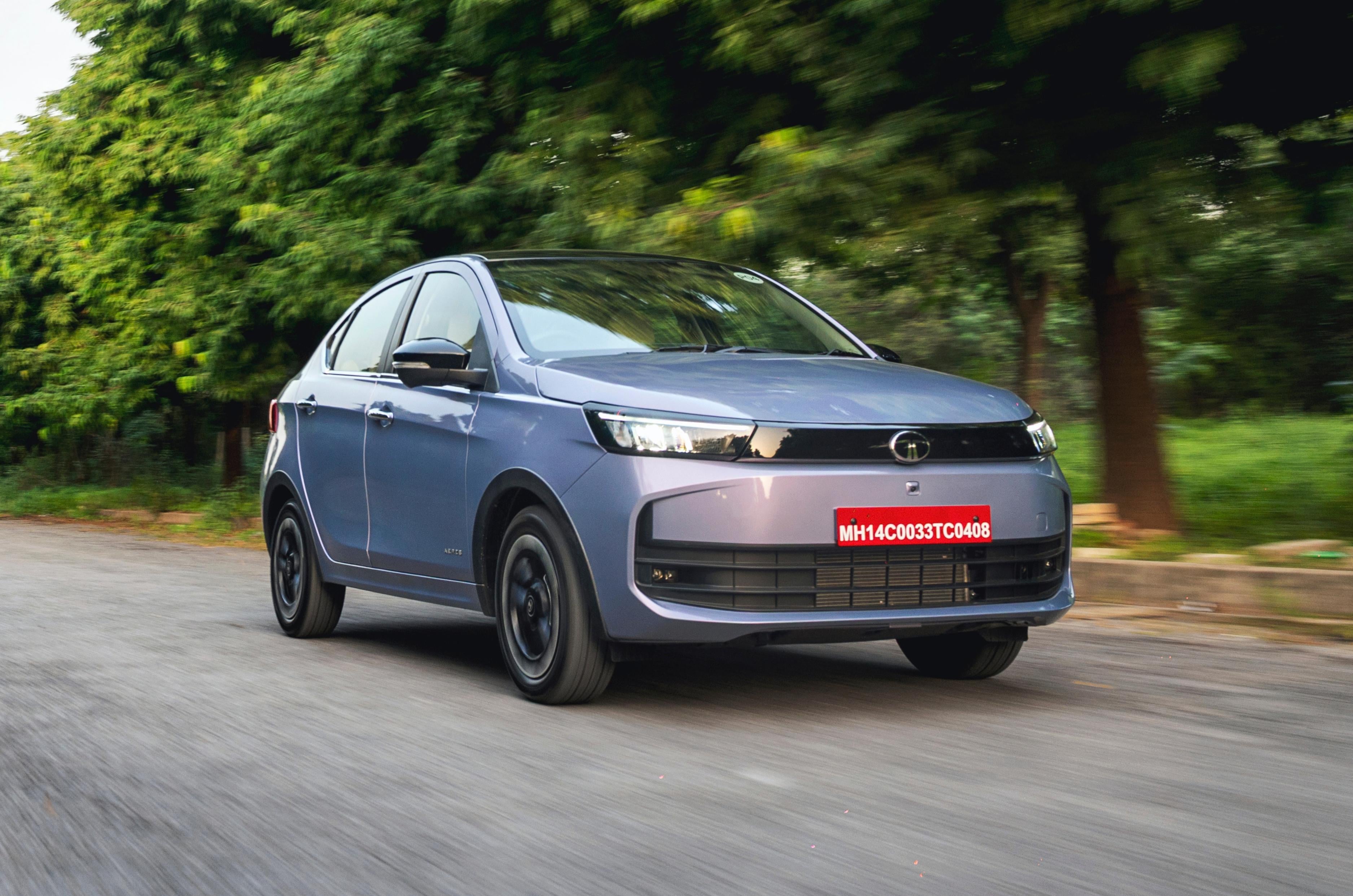
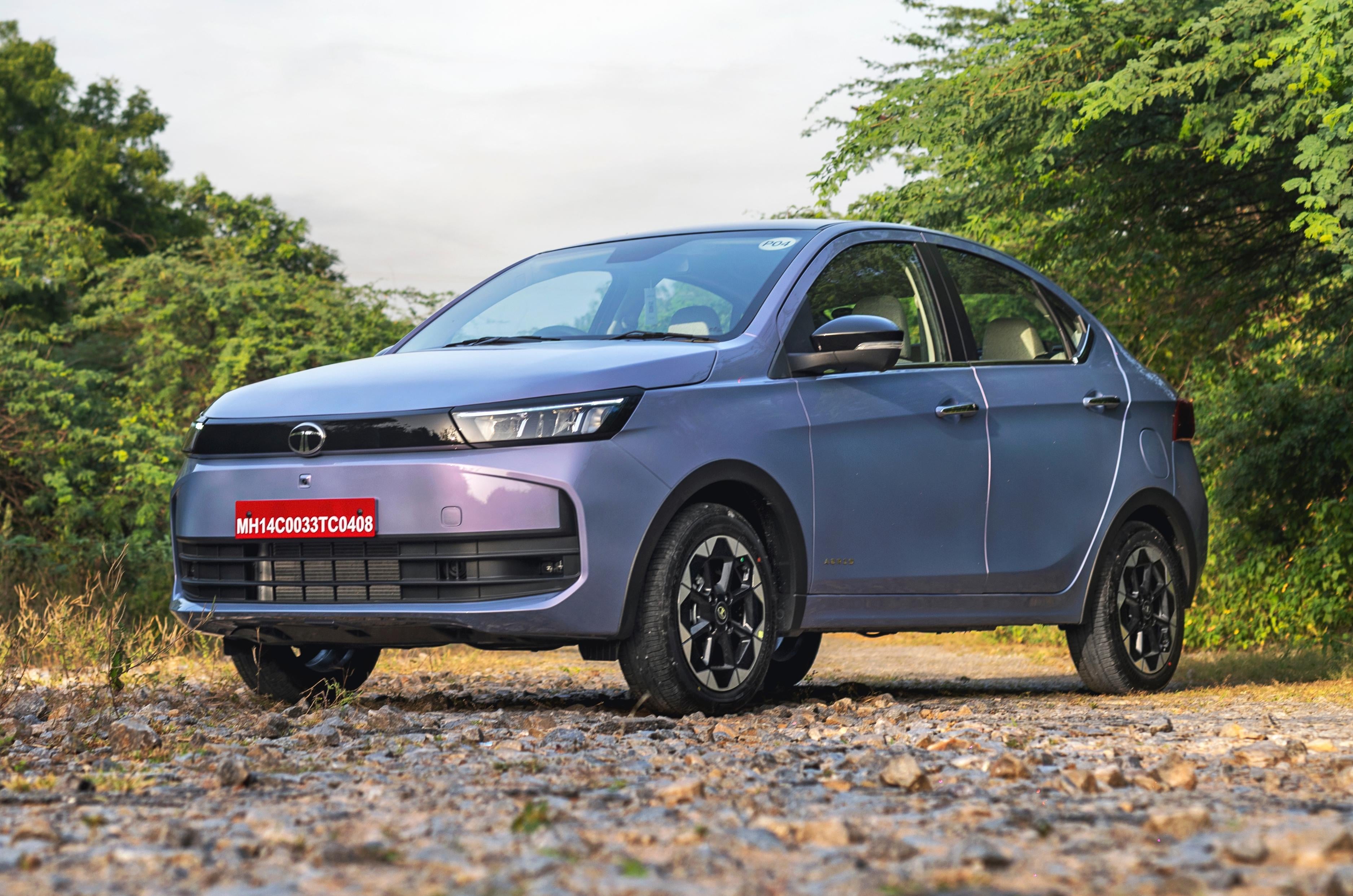
Save for the new bumper, the fascia is similar to the Tiago’s and looks very modern.
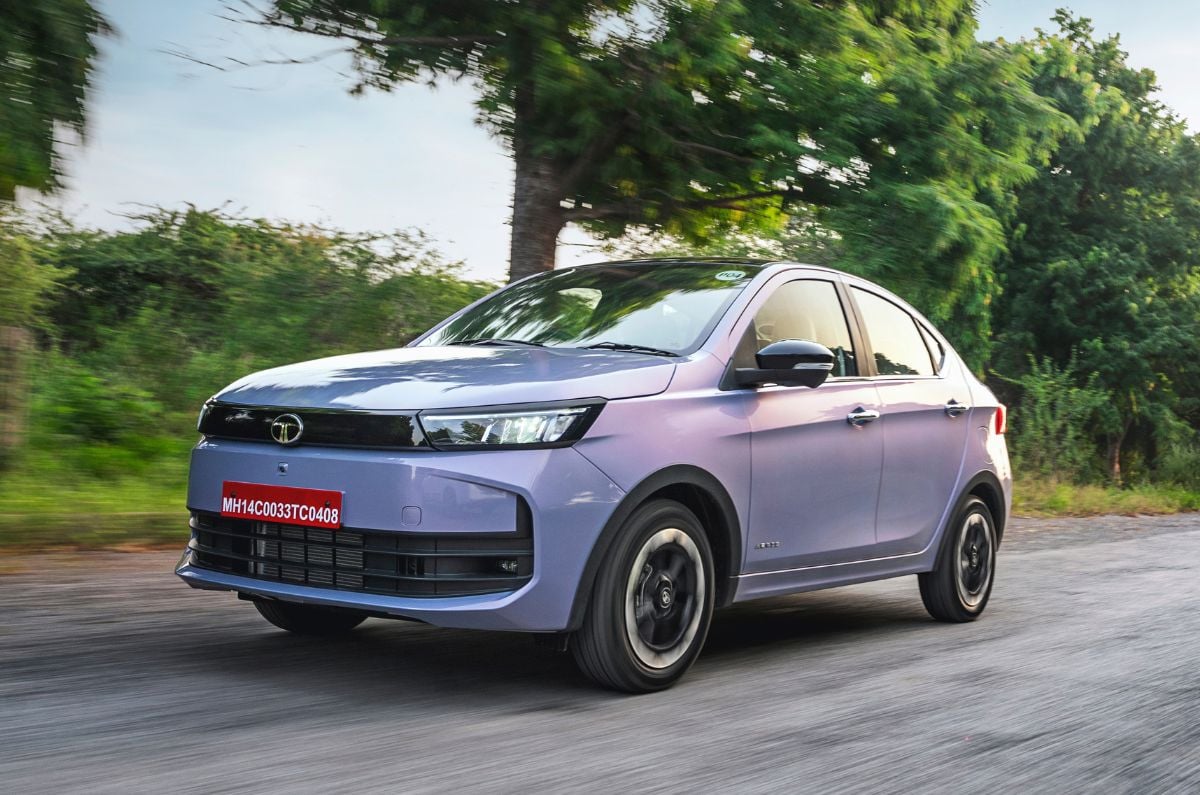
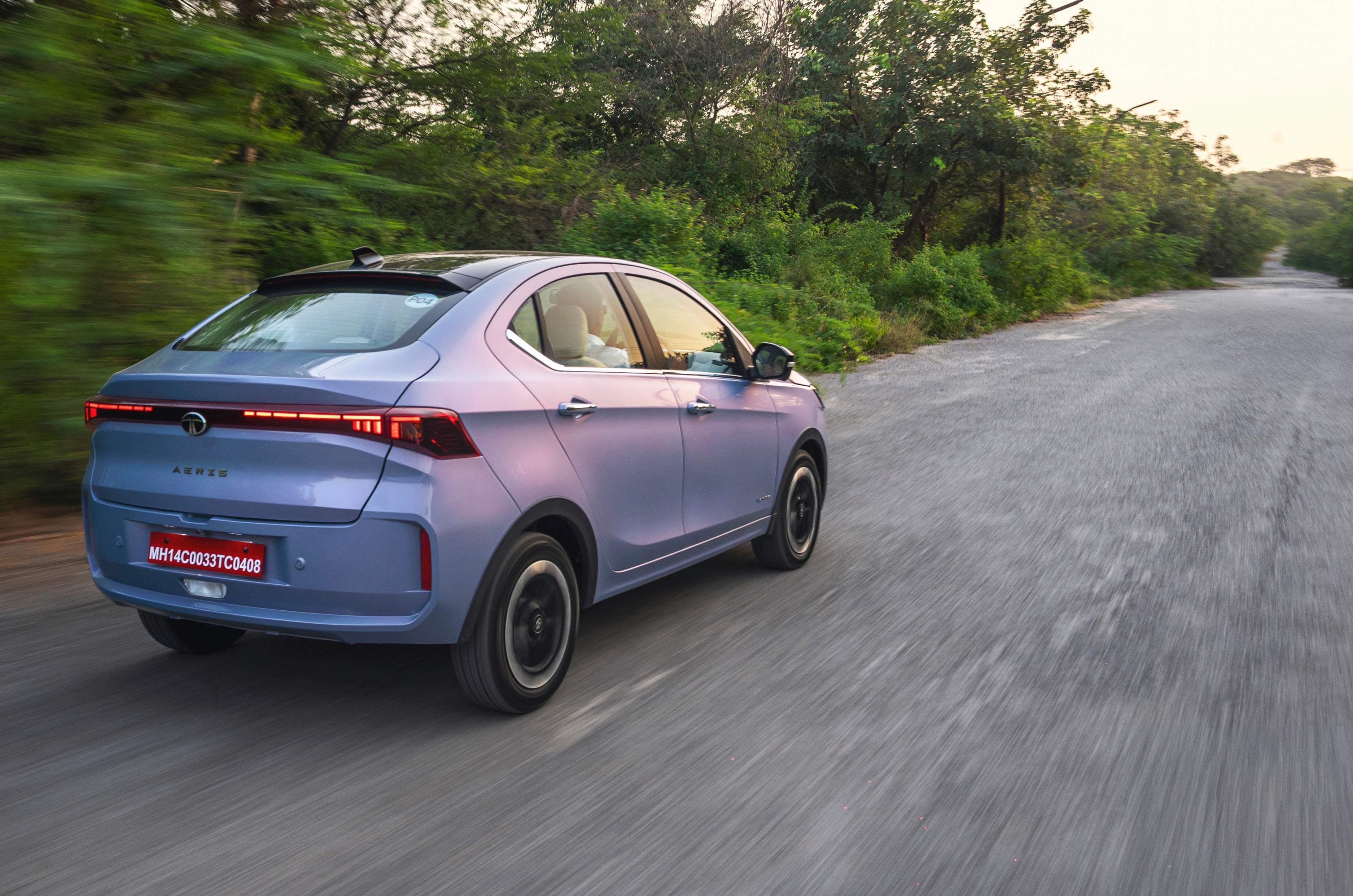
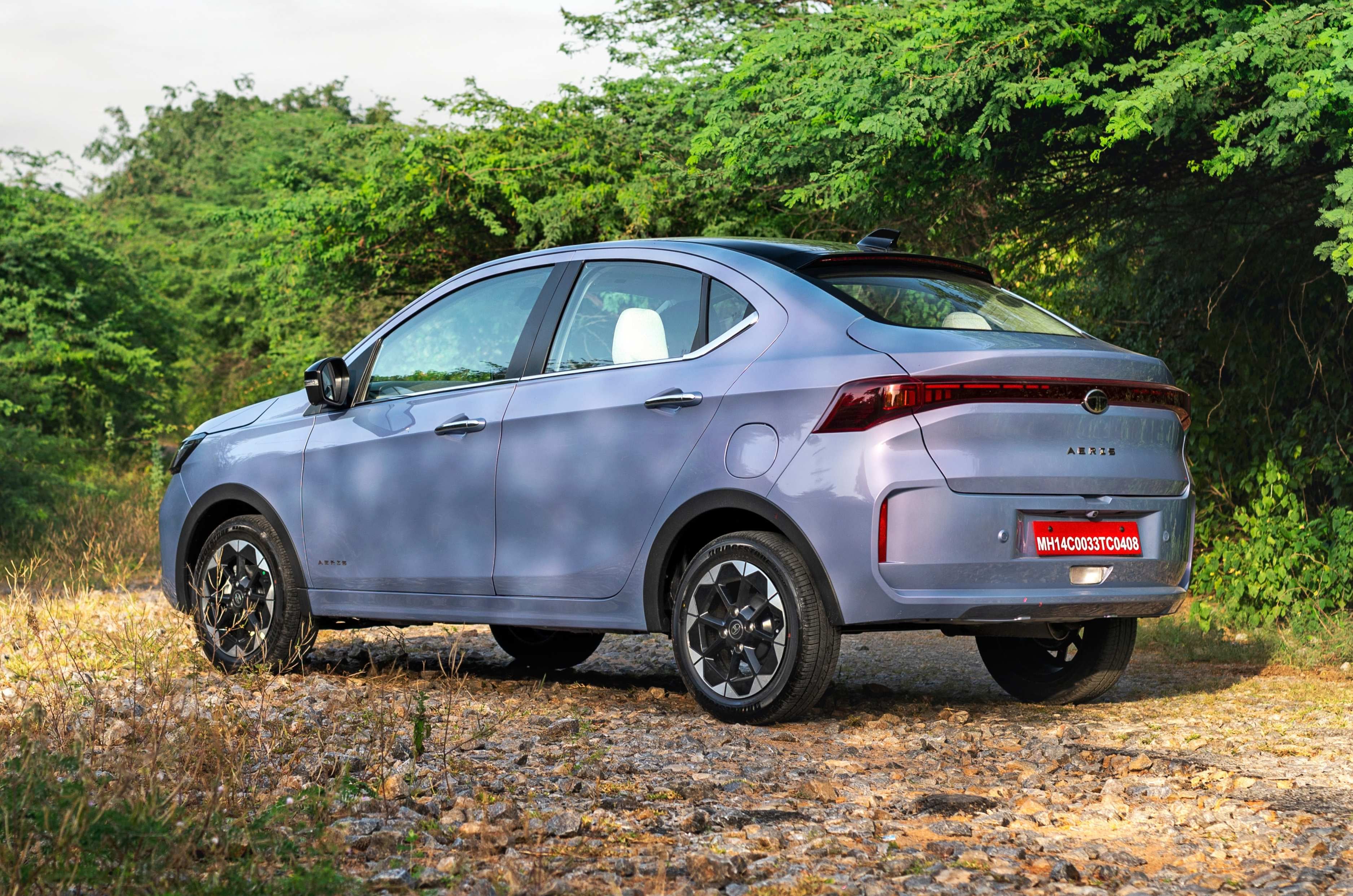
The Tata Aeris looks sleeker than before, with its design now closely aligned with the Tiago hatchback, something we have seen previously with the Tigor. Another factor that could work in the Aeris’ favour is Tata’s decision to offer it exclusively to private buyers, while retaining the Xpres, the fleet version of the Tigor, for commercial customers. This should help the Aeris steer clear of the ‘taxi’ tag often associated with rival compact sedans.
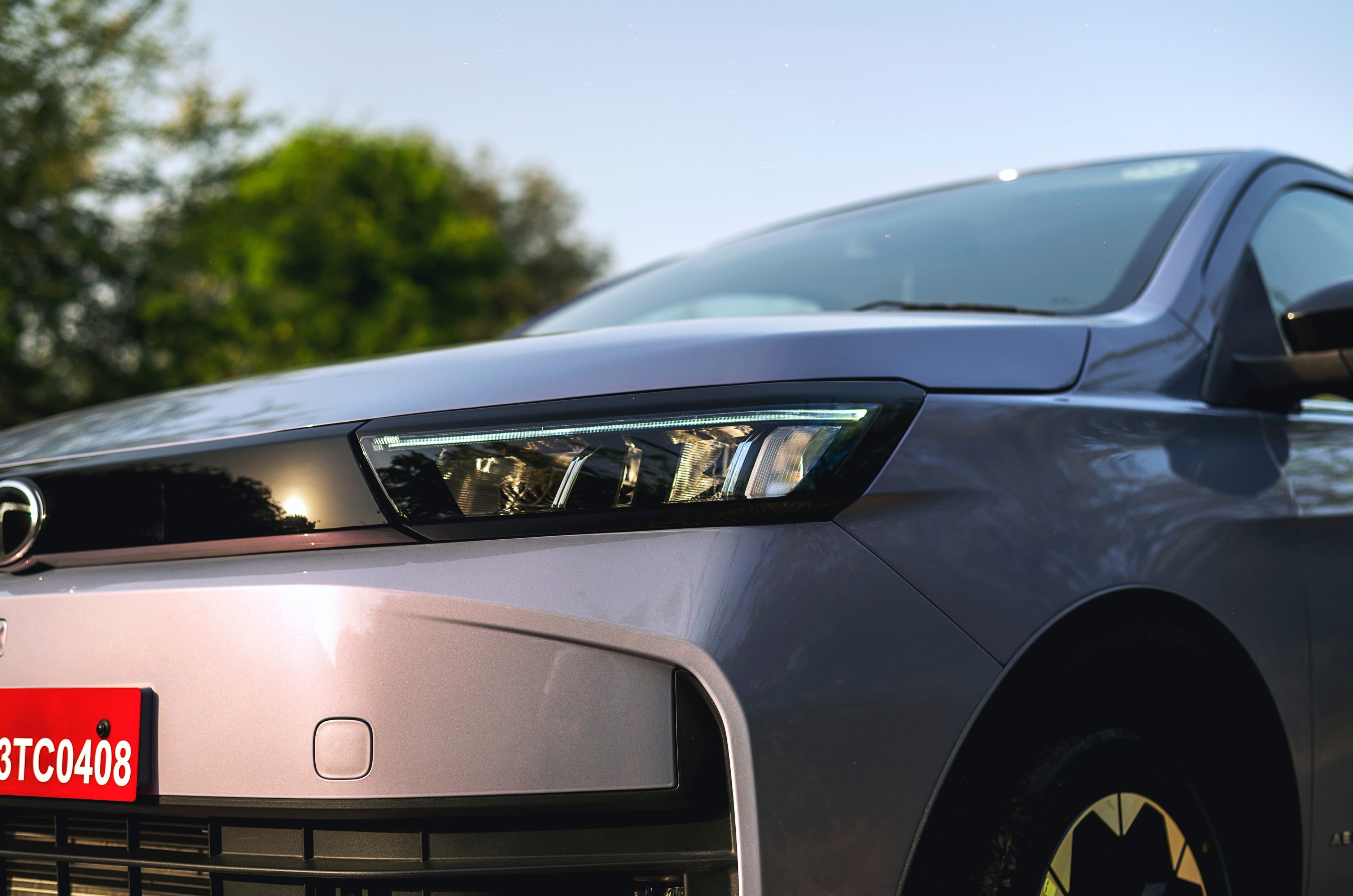
LED headlights with LED DRLs, which are connected by a black trim, make it look sleeker.
Up front, the new clamshell bonnet leads into slim LED headlights with thin LED DRL strips integrated into them. The headlights are connected by a gloss-black trim. The front bumper is also new, featuring wider air intakes and LED fog lamps, a welcome upgrade over the Tigor’s halogen units.
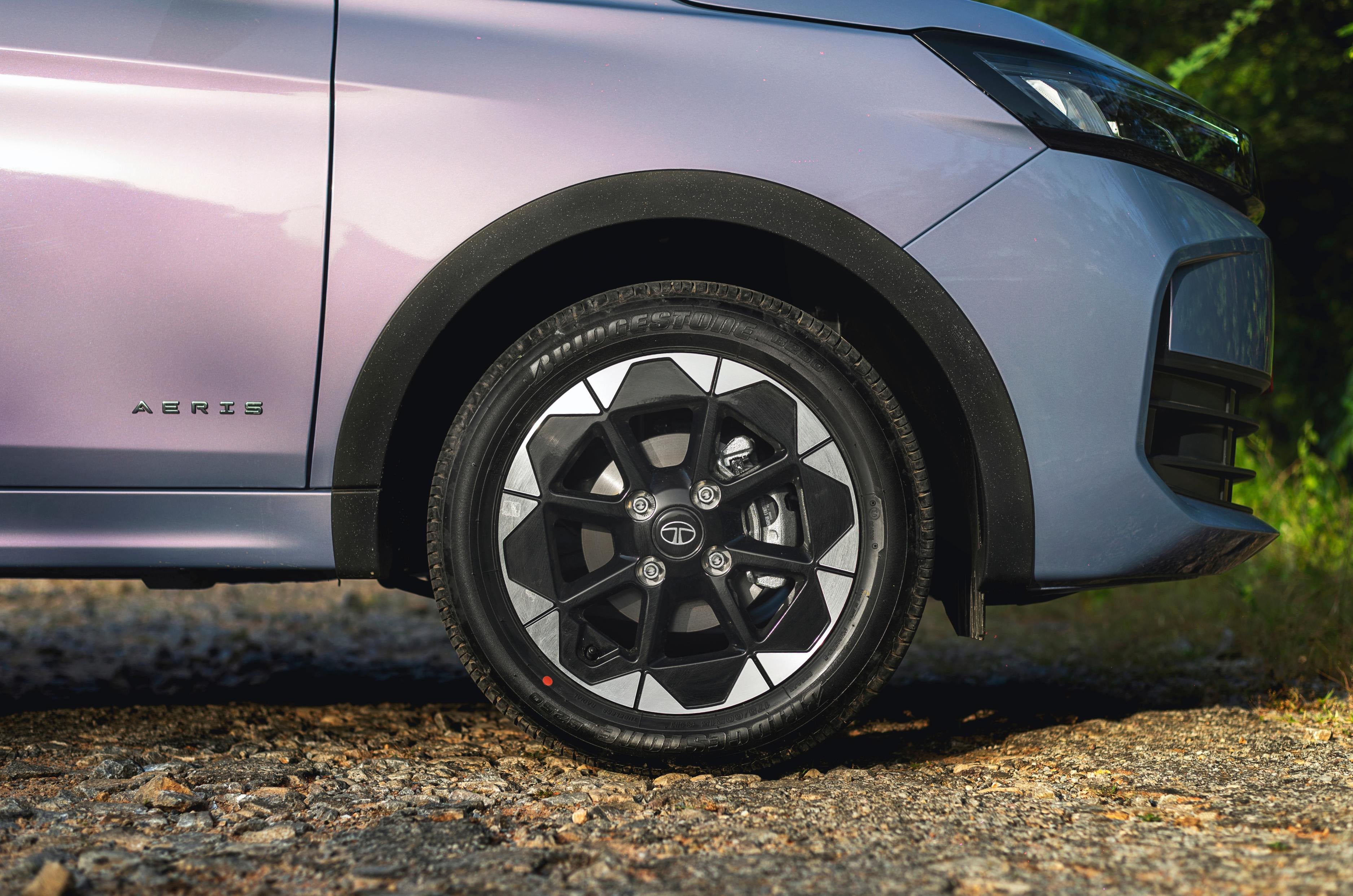
Top versions get 15-inch alloy wheels; 14-inch wheels on other variants appear undersized.
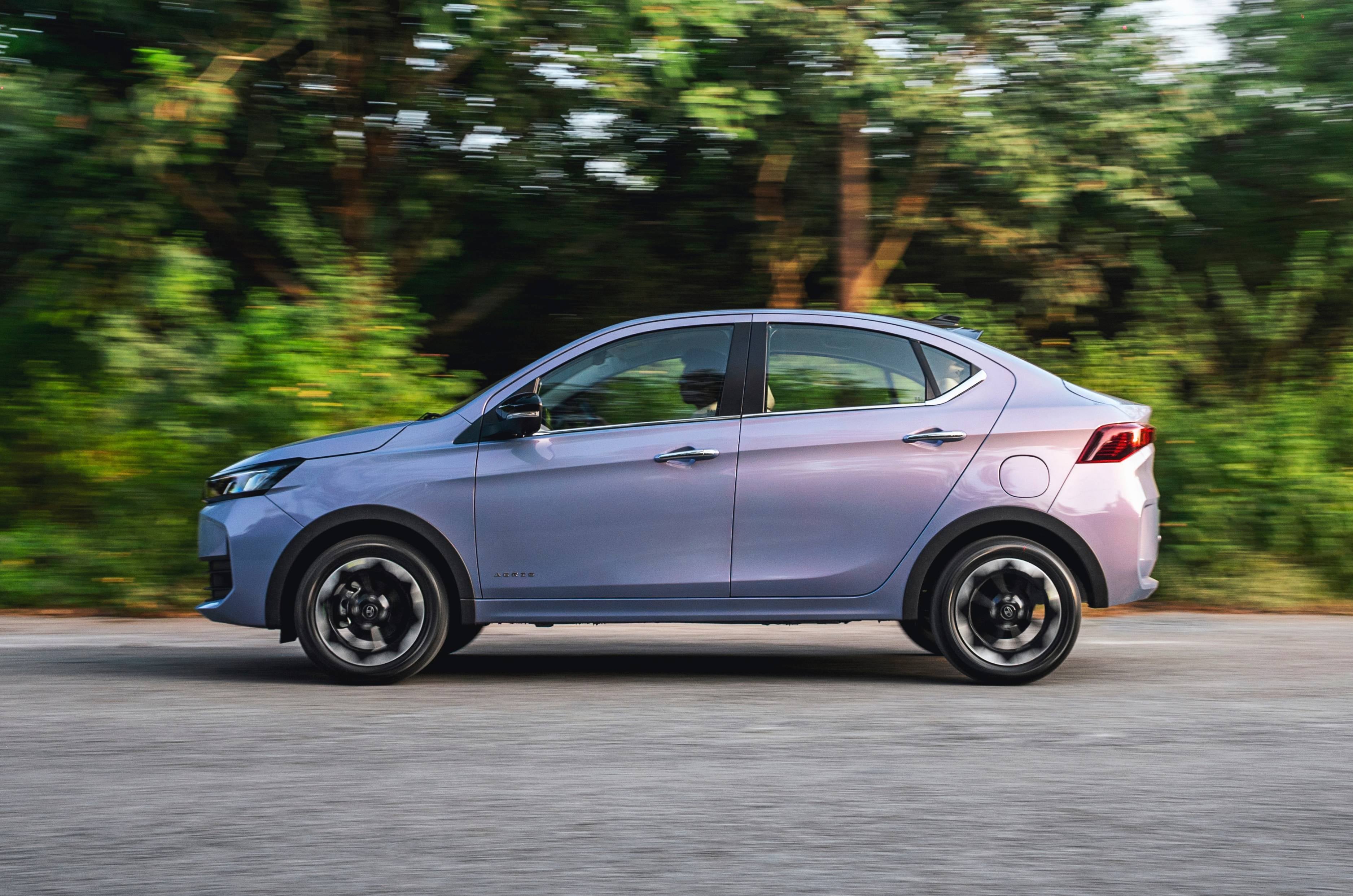
In profile, the 15-inch dual-tone alloy wheels fill the wheel arches nicely, and their contrasting finish looks particularly appealing when the Aeris is on the move. The wheel arches get slim cladding, which Tata says is made from recycled materials and features a distinctive speckled texture. Like the Tigor, the Aeris also gets chrome door handles and a chrome strip along the window line, adding some contrast to the otherwise clean design.
Fastback-like roofline remains a distinctive design element.
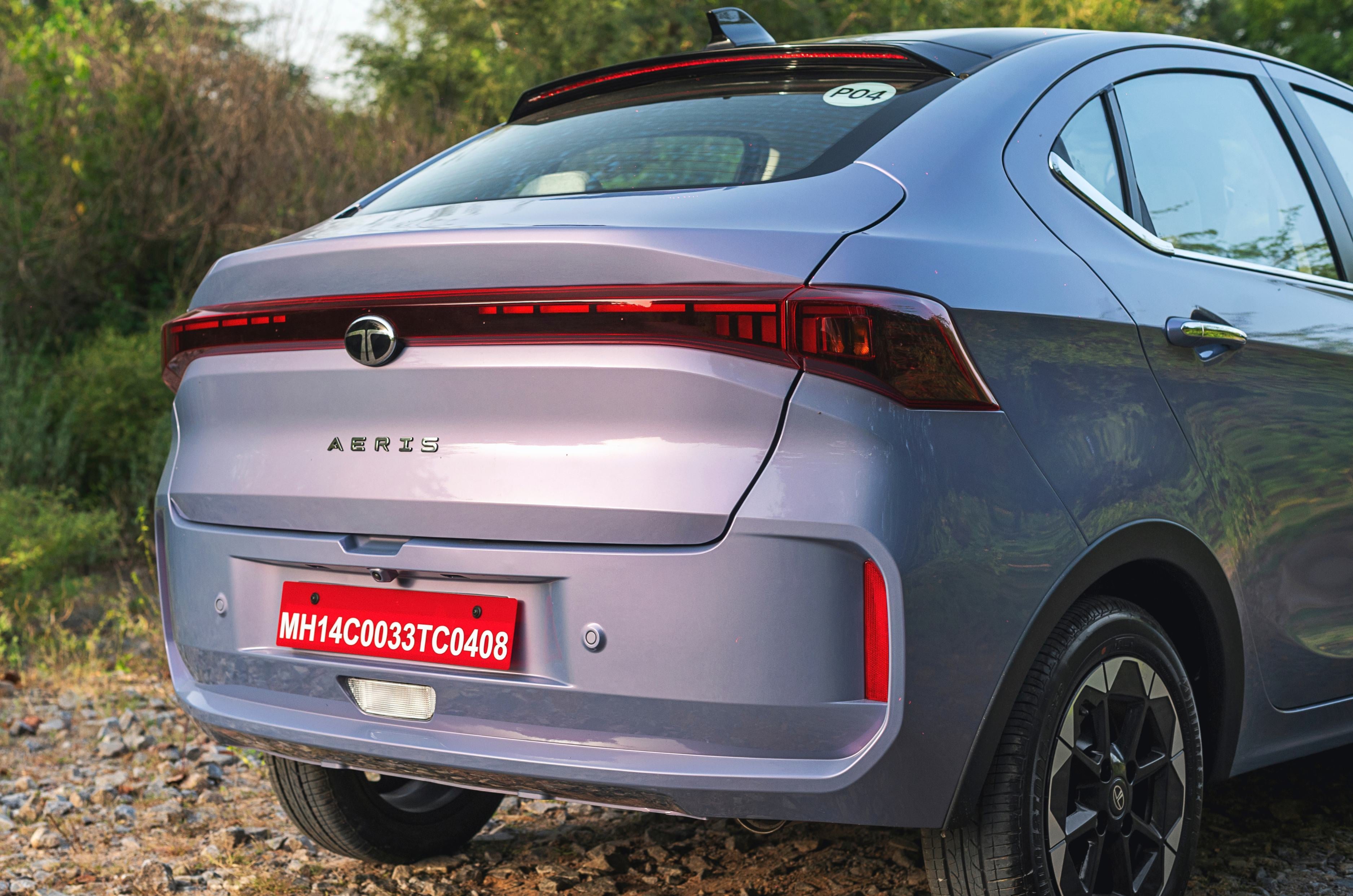
The coupe-like, tapering roofline remains unchanged from the Tigor, and continues to make the Aeris’ overall design cohesive. At the rear, the new taillights give the sedan a more modern appearance, while the red trim connecting them visually makes the Aeris appear larger than it is. The rear bumper is cleanly styled, with the reverse light neatly positioned in the centre.
The Aeris measures 3,995mm in length, 1,684mm in width and 1,532mm in height, and has a 2,450mm wheelbase.
Tata Aeris petrol interior space and comfort – 8/10
Beige theme makes the interior feel airy, and everything is nicely laid out in the cabin
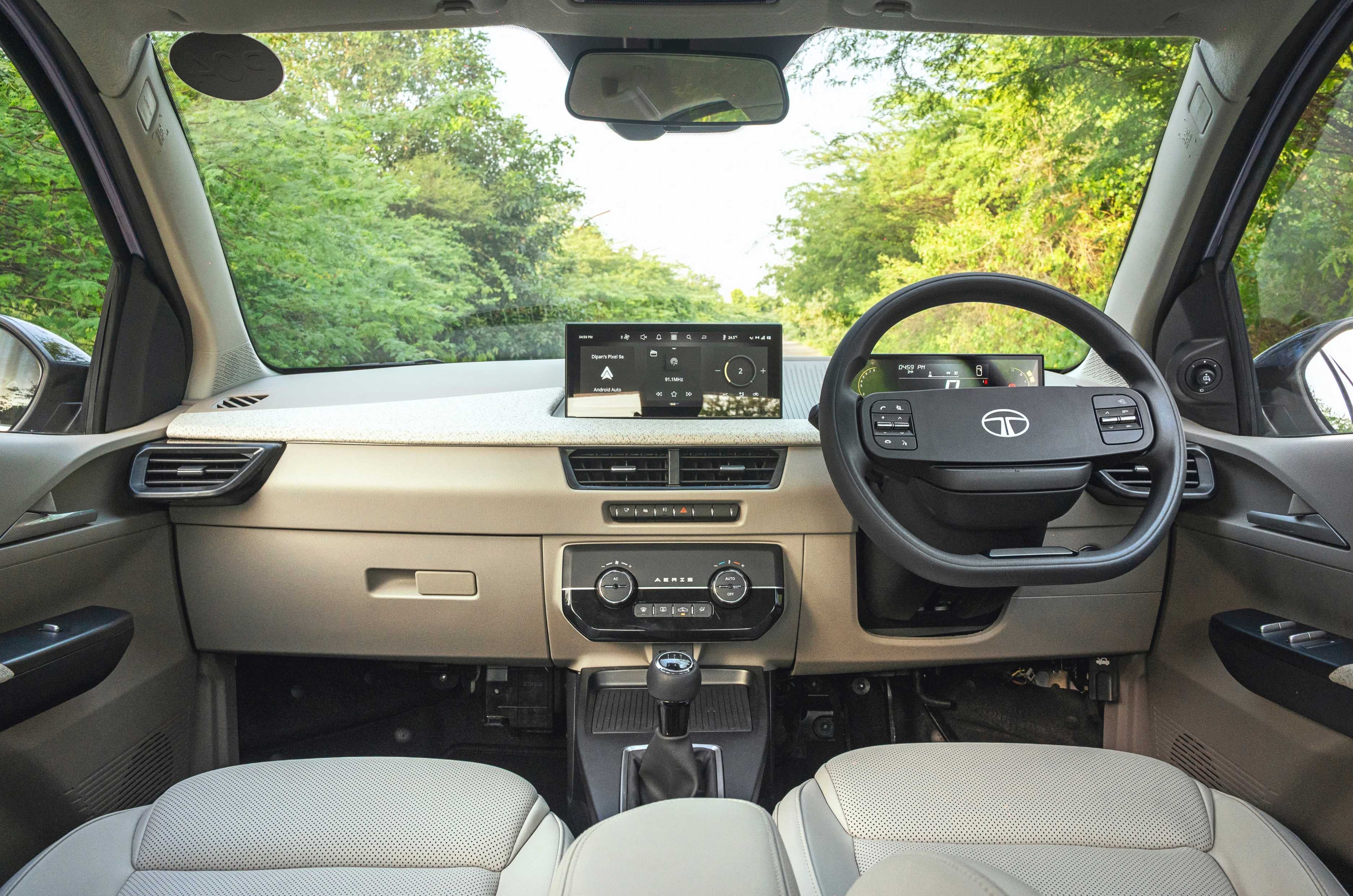
Beige theme lends the cabin an airy feel; dashboard is neatly laid out.
The Aeris’ interior is neatly laid out and looks fairly modern. The cabin gets a beige colour scheme, which makes it feel airy and gives the sedan a greater sense of space. However, the light shade could prove difficult to keep spick and span, especially with regular use.
The dashboard houses a 10.25-inch infotainment touchscreen, a free-standing semi-digital instrument cluster and a revised two-spoke steering wheel. The latter retains physical buttons and, thankfully, does away with the scratch-prone gloss-black finish seen on the Tigor. The door handles look floating like the Sierra and feel sturdy. Lower down, Tata has retained rotary dials and physical buttons for the climate control. They feel solid and do not come across as flimsy.
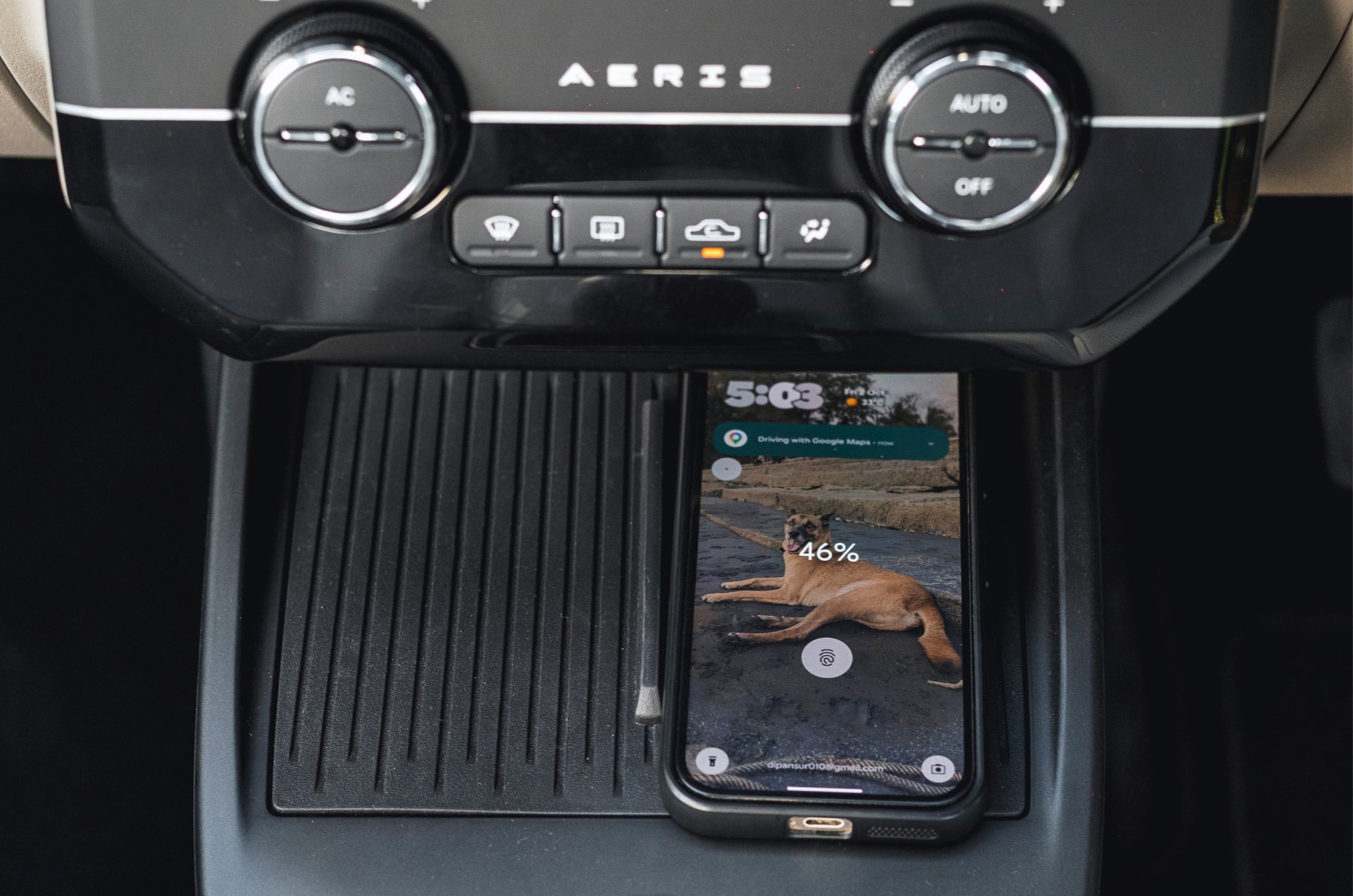
The wireless charger works well but tends to make the phone hot during prolonged use.
The centre console has been thoroughly redesigned and looks neat. The manual gear lever looks premium and feels good to hold, while the AMT gets a rotary dial that also feels solid and operates seamlessly. Two rubberised phone holders on the console keep phones from sliding around, and the top-spec Accomplished trim offers wireless charging in one slot. The centre console also gets two cupholders and a leatherette-wrapped centre armrest with integrated storage space underneath.
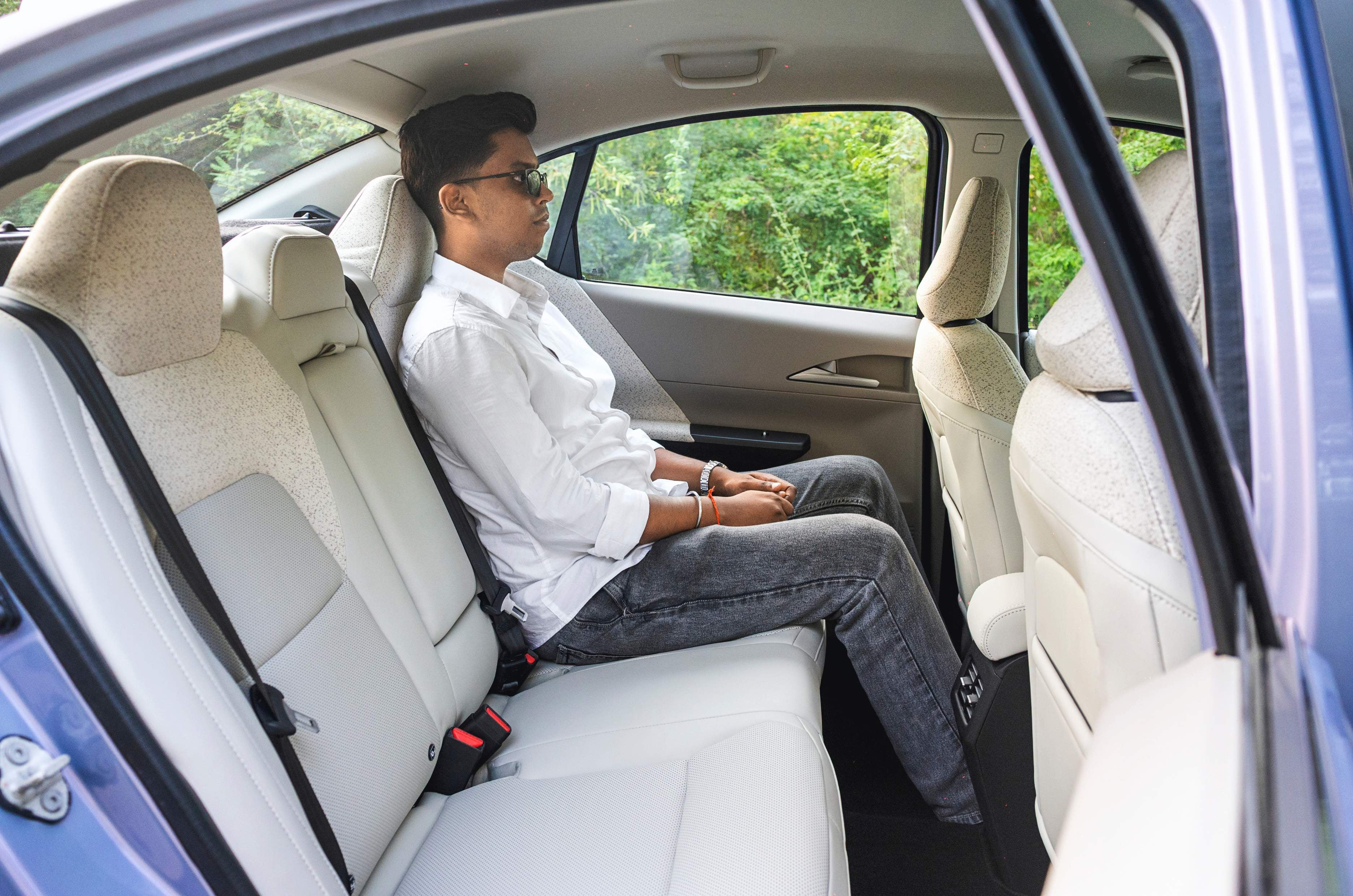
The rear seat offers good kneeroom and legroom, while headroom can be tight for taller passengers.
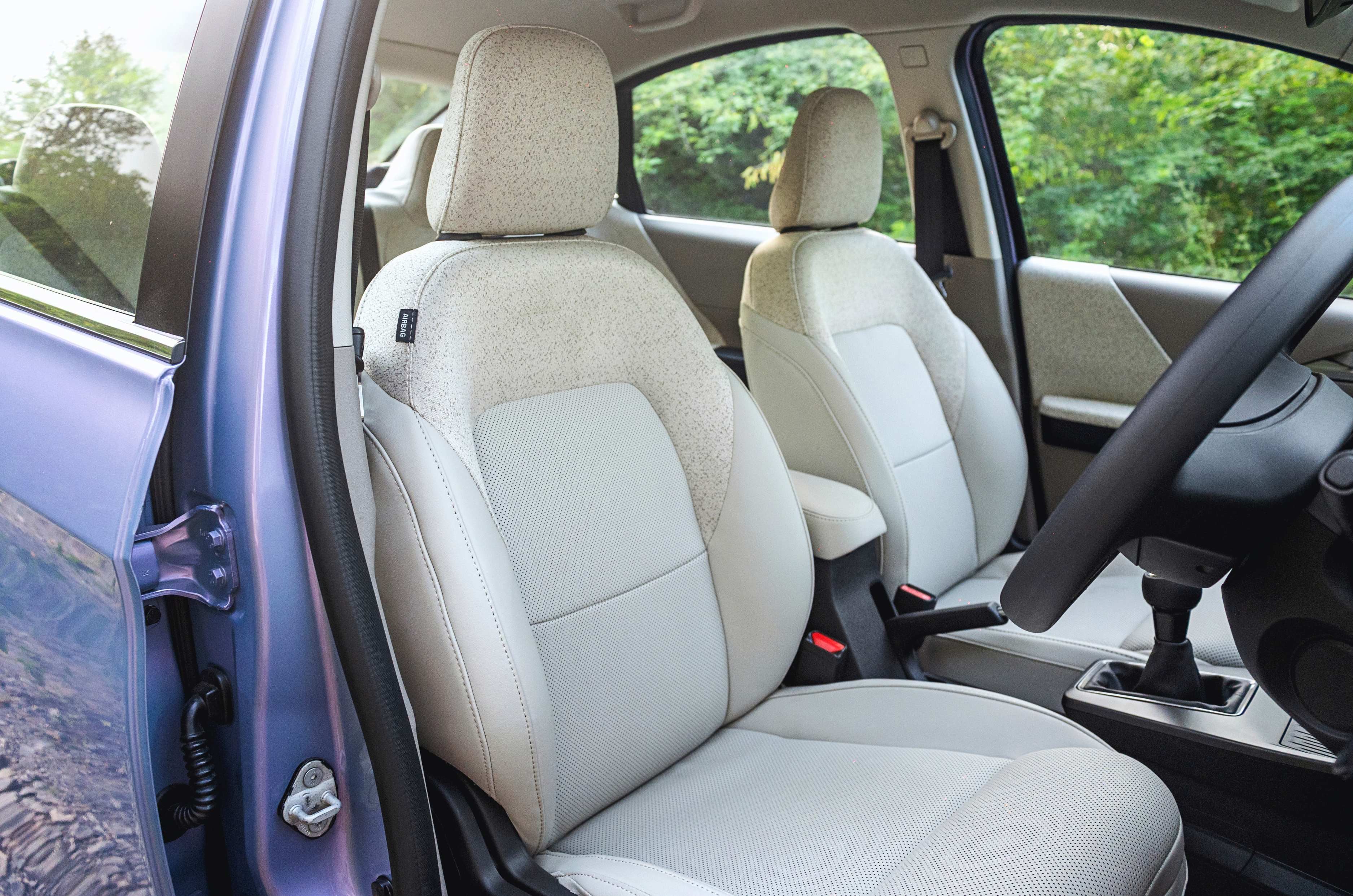
Tata offers part-leatherette upholstery and has revised the cushioning and bolstering, ensuring comfort even on long journeys. They also get a segment-first ventilation function. The rear seats are comfortable too, with good legroom and kneeroom, although headroom is a little tight for passengers over six feet tall. Under-thigh support is adequate.
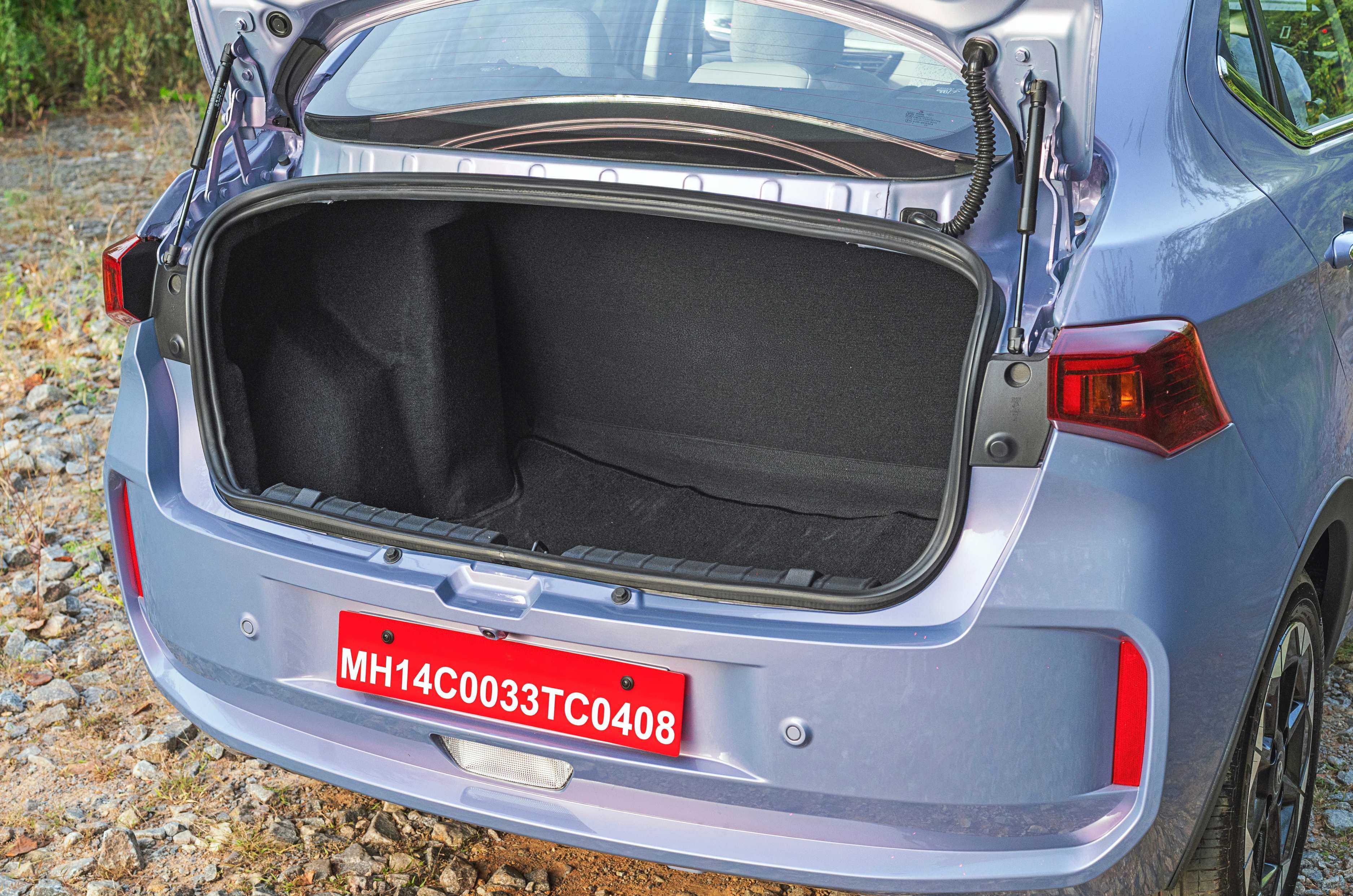
The 419-litre boot is handily large, but the aperture makes loading tricky. Struts free up more usable space.
The Aeris offers 419 litres of boot space, marginally more than the Amaze’s 416 litres and comfortably ahead of the Dzire’s 382 litres and Aura’s 402 litres. The boot itself is large and can swallow a substantial amount of luggage. The use of mechanical struts instead of conventional hinges is a clever touch, as they do not eat into the available boot space. Despite the large boot, the Aeris gets a 14-inch underbody-mounted spare wheel, which is always more promising than a puncture repair kit.
Tata Aeris petrol features and safety – 9/10
Loaded with features to the brim, most of which are well integrated
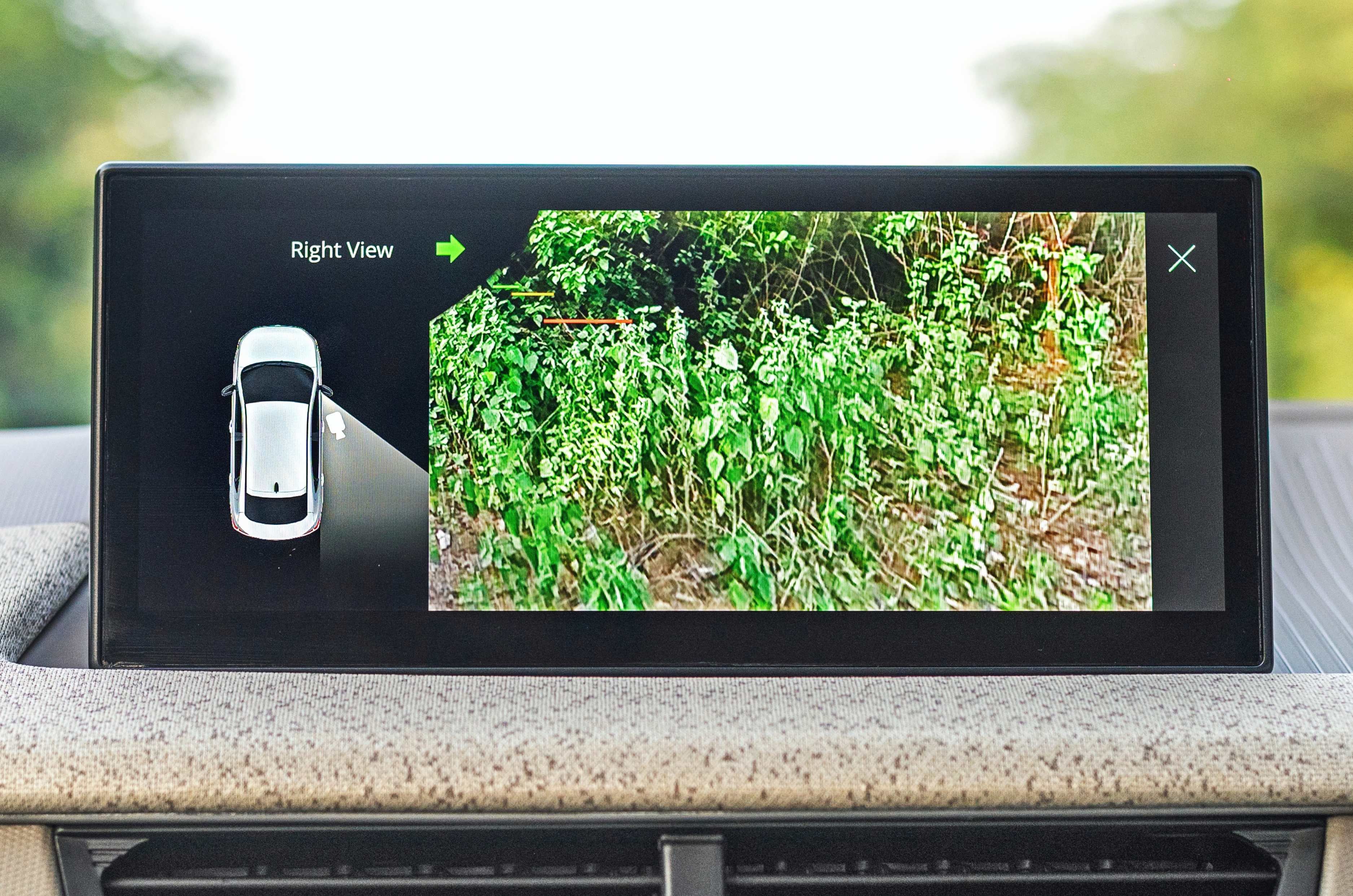
Blind-spot monitor is very useful but takes up the full screen and hides the map display.
Like other Tata cars, the Aeris is packed with features. The 10.25-inch infotainment touchscreen is slick to use and remains responsive even when navigating through multiple menus. It also displays the 360-degree camera feed, which is lag-free, although the image quality isn’t the best. Tata has also added a new DVR function that allows the surround-view cameras to record the car’s surroundings, ensuring you do not shell out extra for a dashcam. The infotainment screen automatically switches to the blind-spot monitor when indicators are used, which is useful. However, this can be annoying when you are using navigation, although there is an option to disable the view completely.
Revised cushioning and bolstering, and a new ventilation function on the front seats improve overall comfort.
The front-seat ventilation function works well too. During our time with the car, it proved effective at keeping us cool in Faridabad’s near 40deg C ambient temperature. However, the infotainment screen or driver’s display shows nothing when the ventilation is on or the level is adjusted, which can be a little inconvenient.
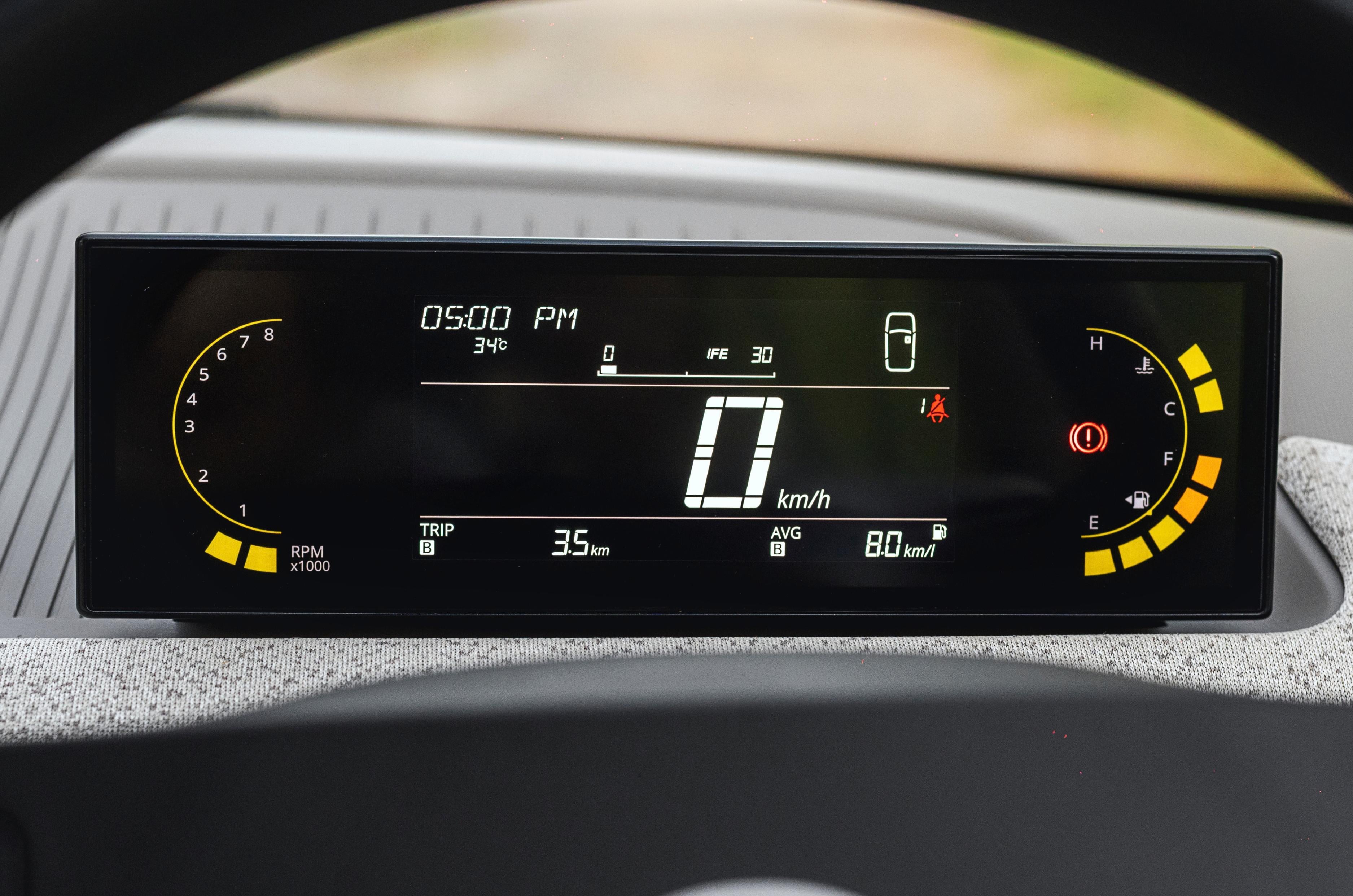
Part-digital Instrument cluster includes screen flanked by rev counter and fuel gauge.
The instrument cluster itself is fairly basic, with analogue dials for the fuel level and rev counter, while a digital display handles the speed and other general information. Depending on the steering wheel’s tilt angle and the driver’s seating position, some of this information can occasionally be obscured.
The four-speaker, two-tweeter audio system is a step down from the Tigor’s four-speaker, four-tweeter setup, although sound quality remains good enough for the segment. The rear seats lack pressure sensors, meaning the seat-belt warning will sound until the belts are fastened.
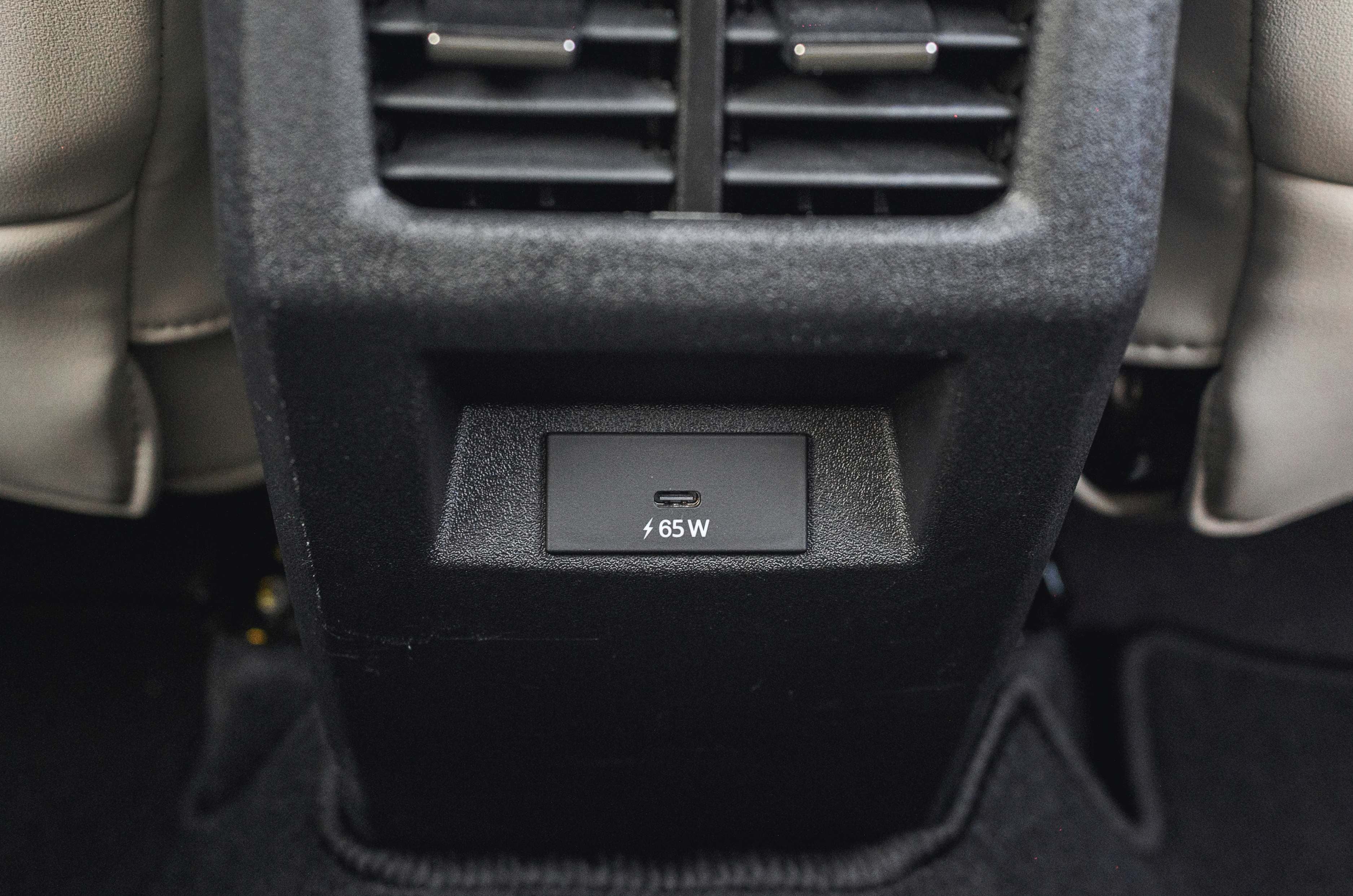
AC vents and a 65W Type-C charging port are among the additions at the back.
On the safety front, the Aeris gets six airbags, Isofix child-seat anchorages for the rear seats, rear parking sensors and three-point seat belts with reminders for all occupants as standard. Higher variants add a 360-degree camera, a day/night inside rear-view mirror, rain-sensing wipers, a rear defogger, a tyre pressure monitoring system (TPMS) and ESP with traction control. The pre-facelift Tigor scored four stars in Global NCAP testing in 2020, but a Bharat NCAP test for the Aeris is due.
Tata Aeris petrol value for money and verdict – 8/10
A well-rounded compact sedan, with the petrol engine making it more versatile
Priced from Rs 5.29 lakh, it offers strong value in a segment where affordability matters.
The Tata Aeris is a much more appealing proposition than the Tigor it replaces. Its fresh design, well-equipped cabin, generous boot and comfortable ride make it easy to live with, while the petrol engine gives it enough performance for both city and high-speed highway cruising. The manual gearbox is light and easy to use, while the AMT is better suited to relaxed city driving than enthusiastic highway use. The long list of features adds further appeal to the package.
There are some shortcomings too, including a coarse engine and poor cabin insulation. However, the Aeris’ biggest strength is its pricing. The petrol variants are priced from Rs 5.29 lakh to Rs 8.74 lakh (ex-showroom), and it undercuts rivals by a fair margin, making a strong case for itself in a segment where value for money remains a key consideration.
Grace, Space, Pace. That’s been a long-held Jaguar maxim, clearly no more the case, though, at least not that first part. Jaguar’s new Type 01 ditches grace for a design that’s very much in your face, or, styled with exuberant modernism, as the brand more eloquently puts it.
Yes, exuberant it most certainly is; the sheer size and presence of the car are unapologetically bold, and we knew this would be the case when we saw the Type 00 concept. At the time, Jaguar said it would greatly influence the actual production car. Love it or hate it, you have to applaud Jaguar for keeping a majority of the concept’s far-out ideas to the point where a lot of time was spent engineering the new Jaguar Electric Architecture (JEA) to make the design possible.
Strike a chord
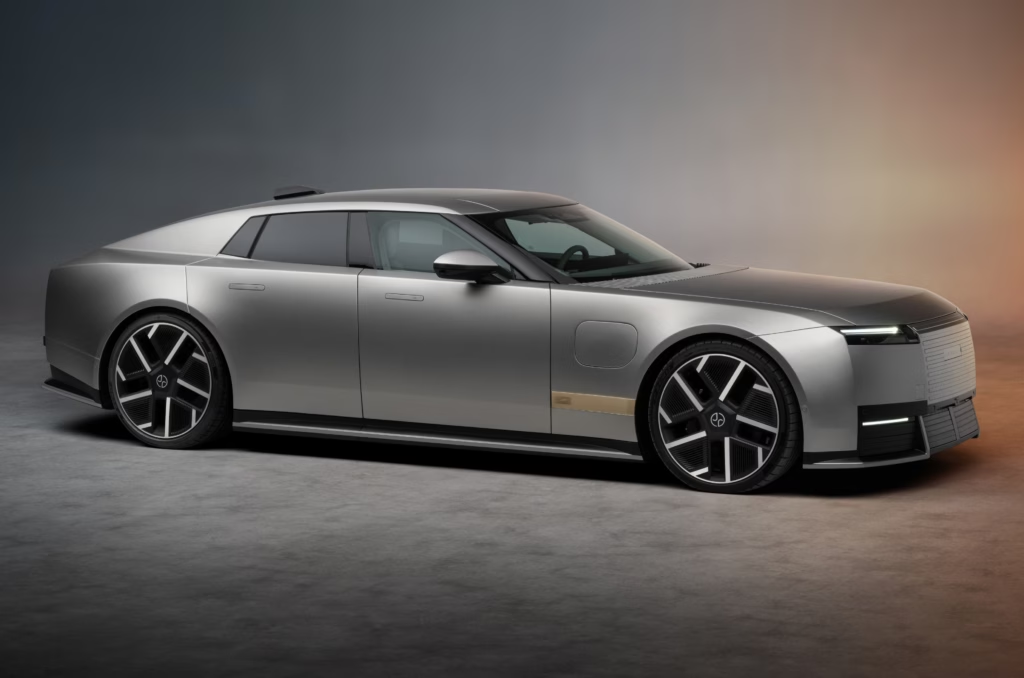
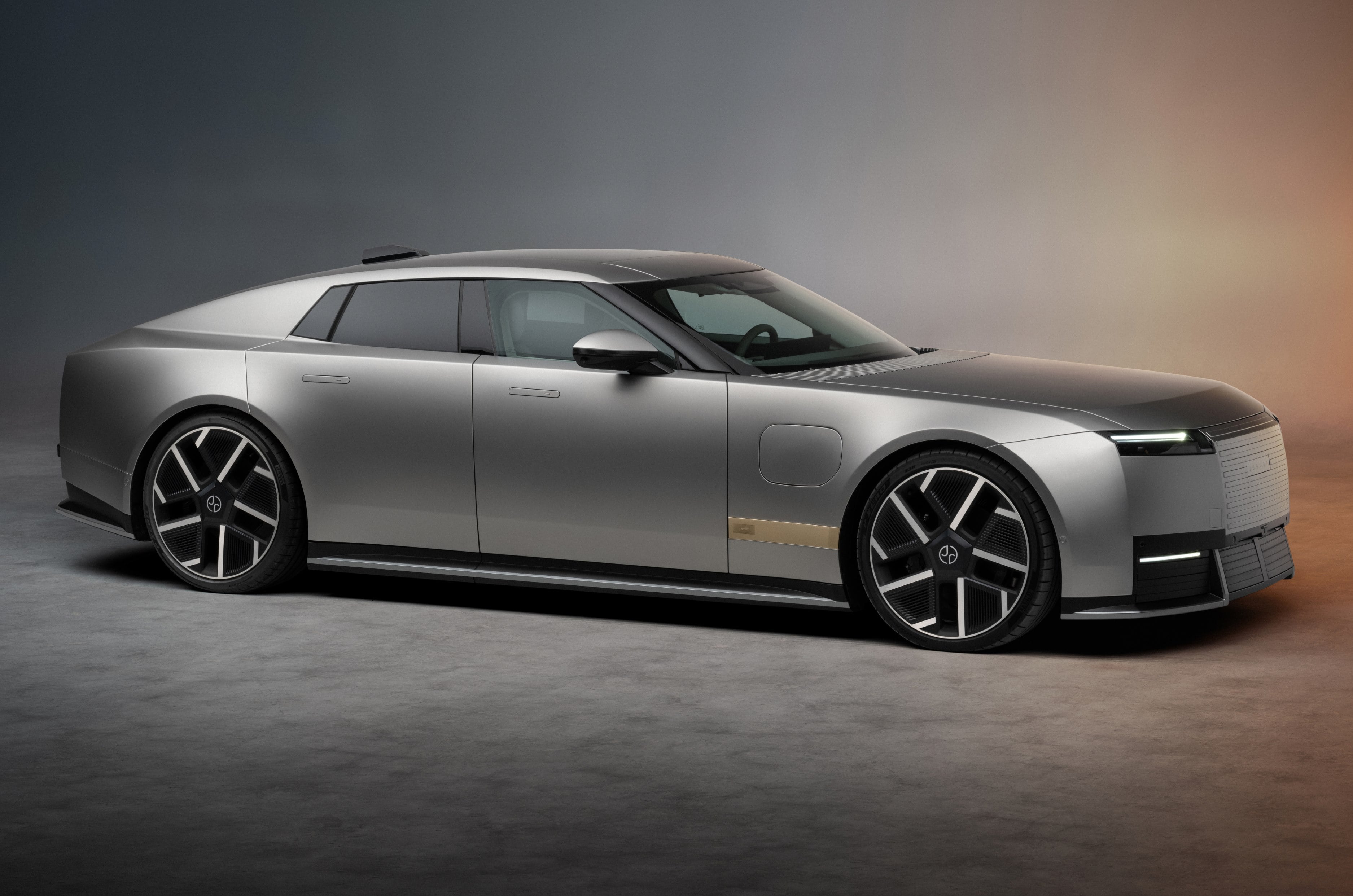
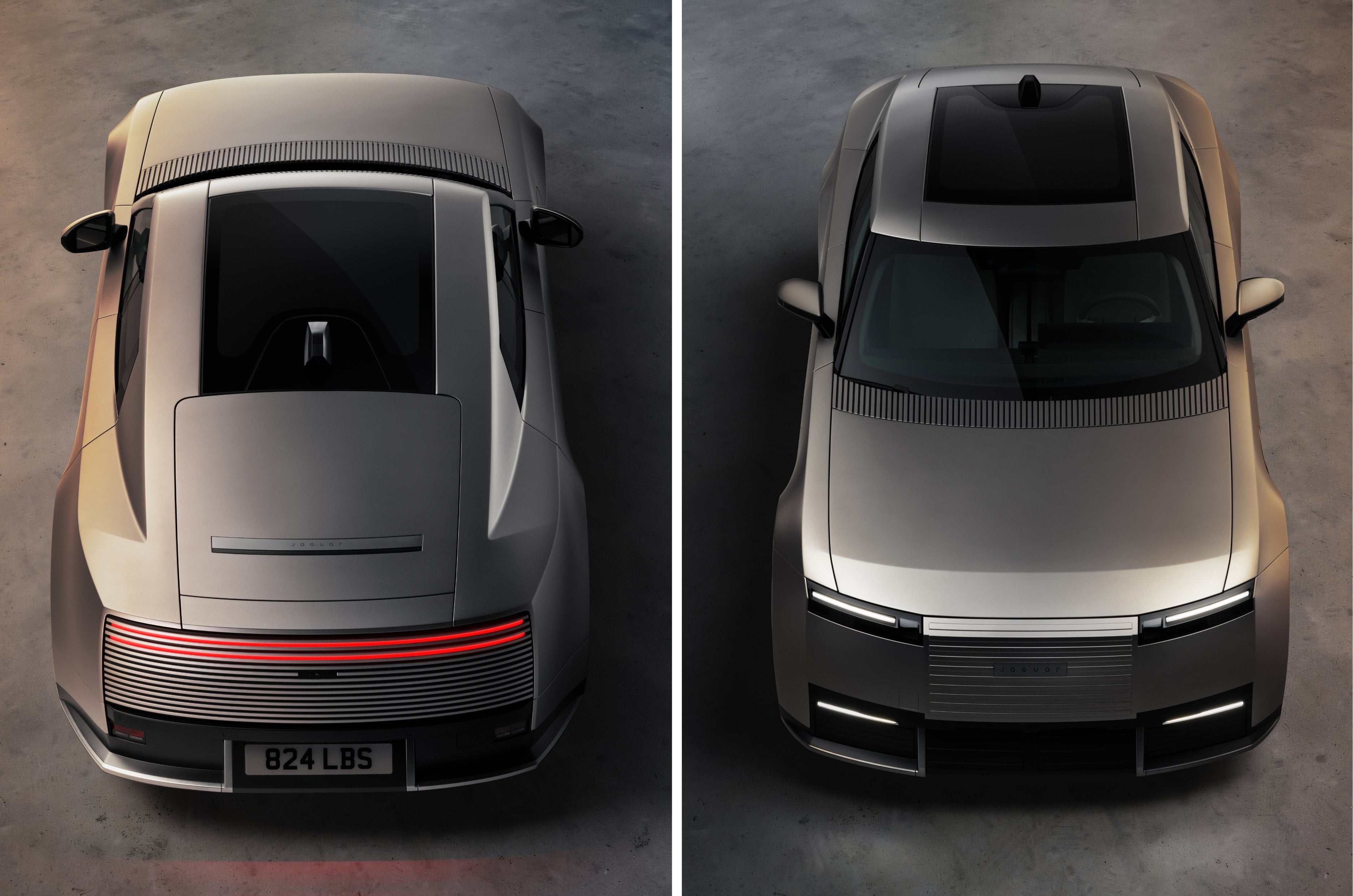
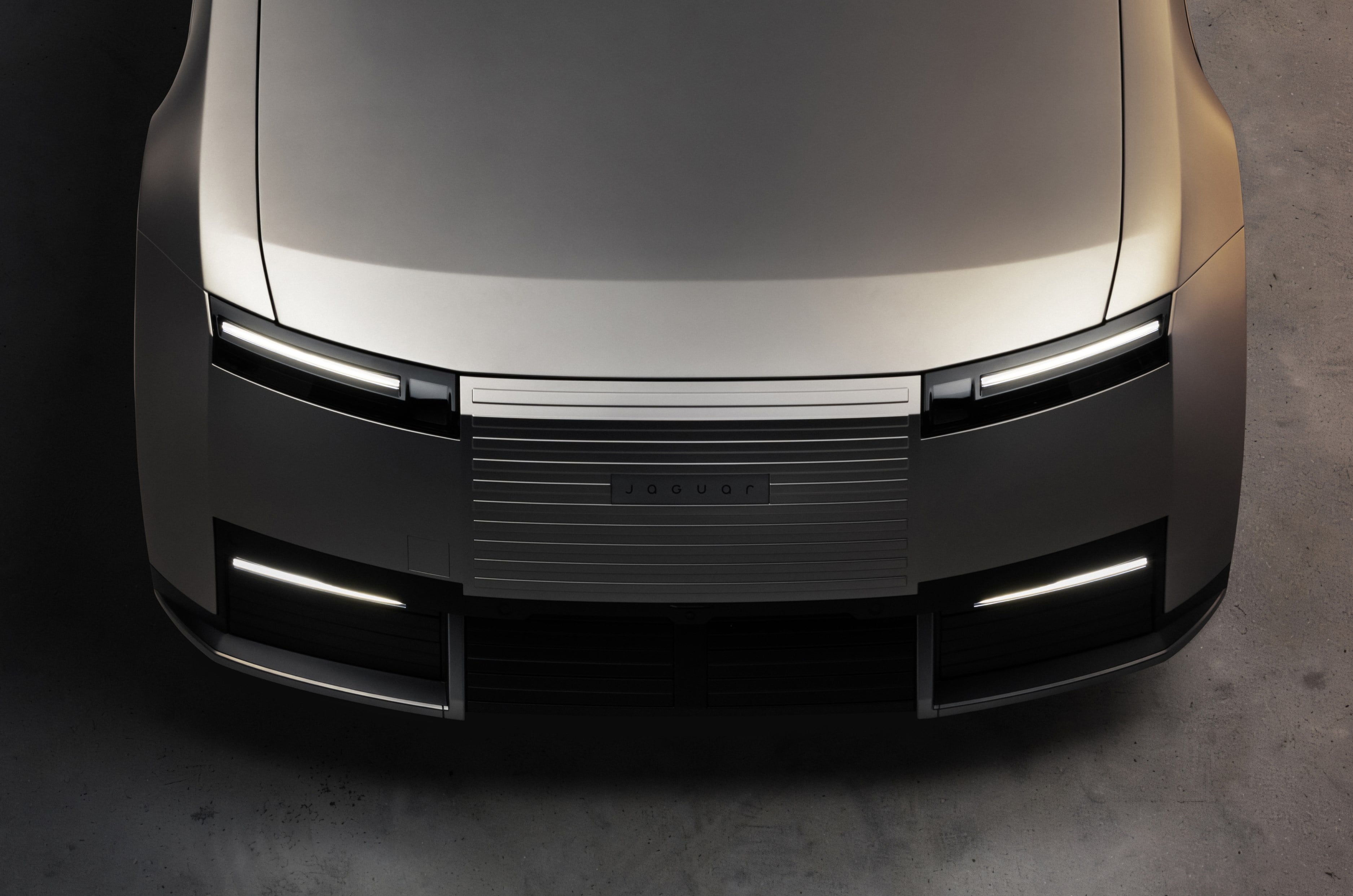
The front is dominated by Jaguar’s new ‘strikethrough’ design element, which gives the bluff nose some character. Unlike most EVs that have a blanked-off front, the strikethrough simulates a grille, retaining some of the visual character of a conventional car. There is, of course, cooling required, and this is handled by active shutters lower down, which open and close depending on cooling requirements.
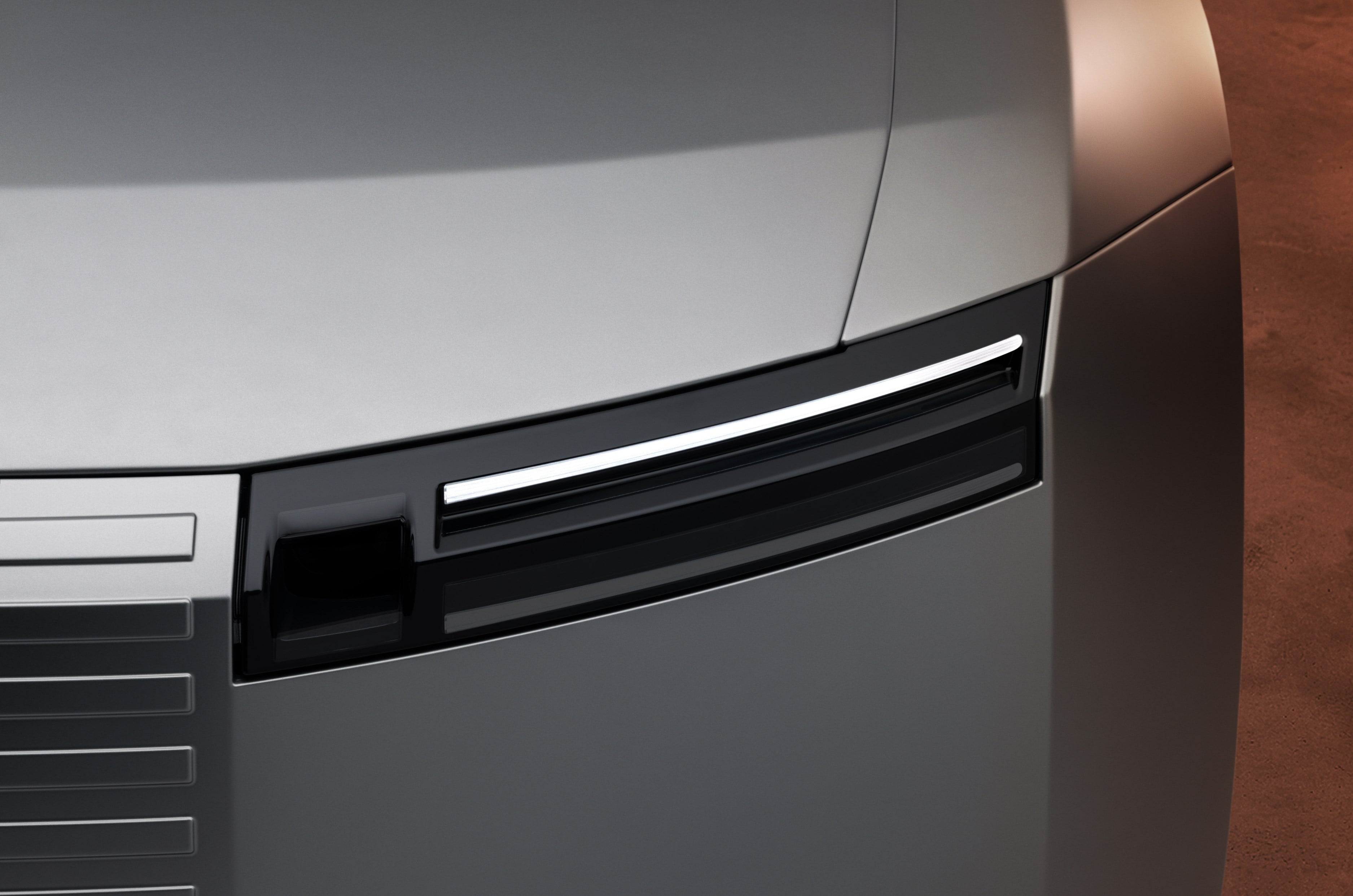
The four ‘line’ daytime running lights are another distinctive element and could become a signature for future Jaguars. The headlights, meanwhile, are the slimmest ever fitted to a Jaguar.
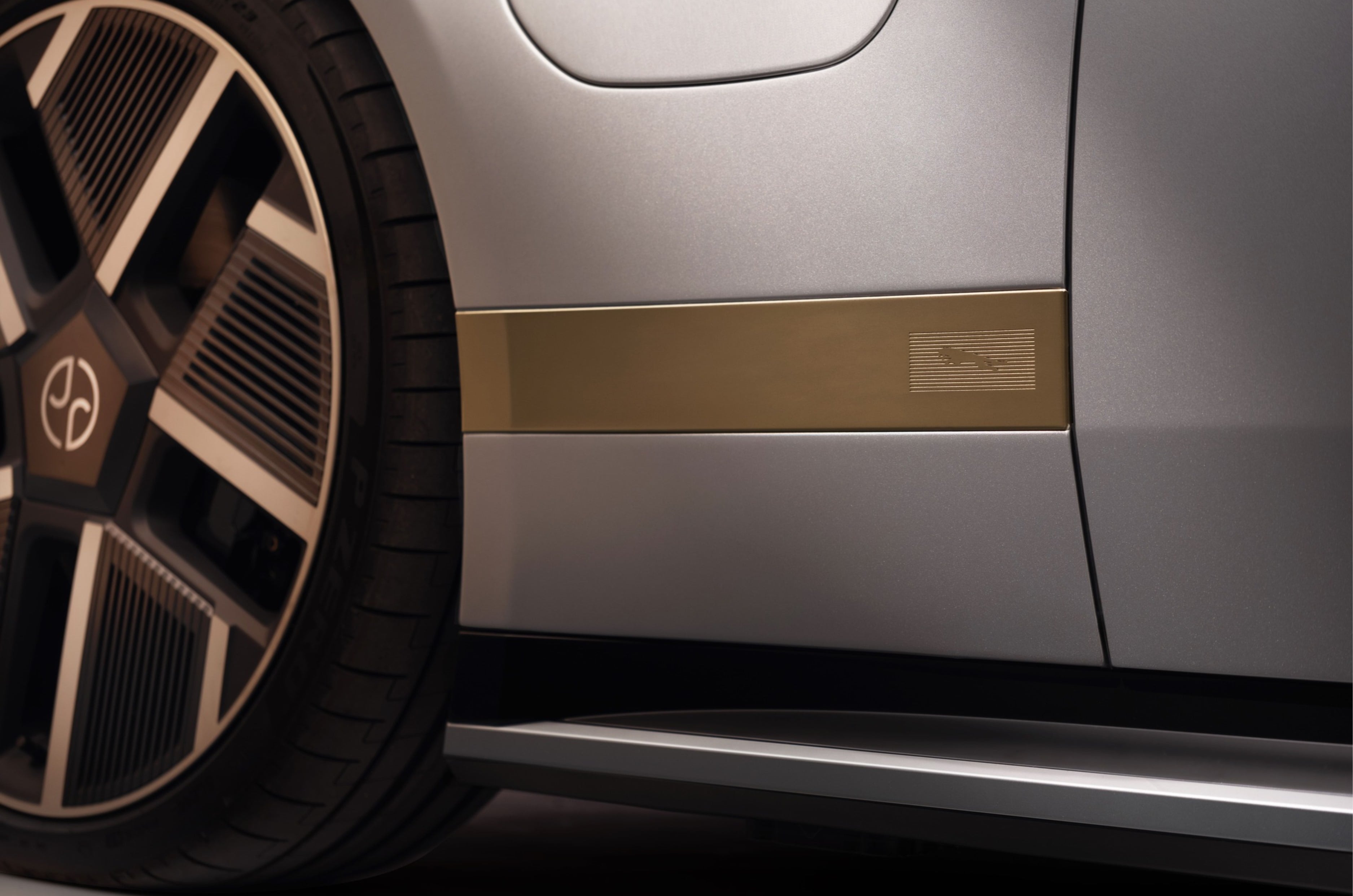
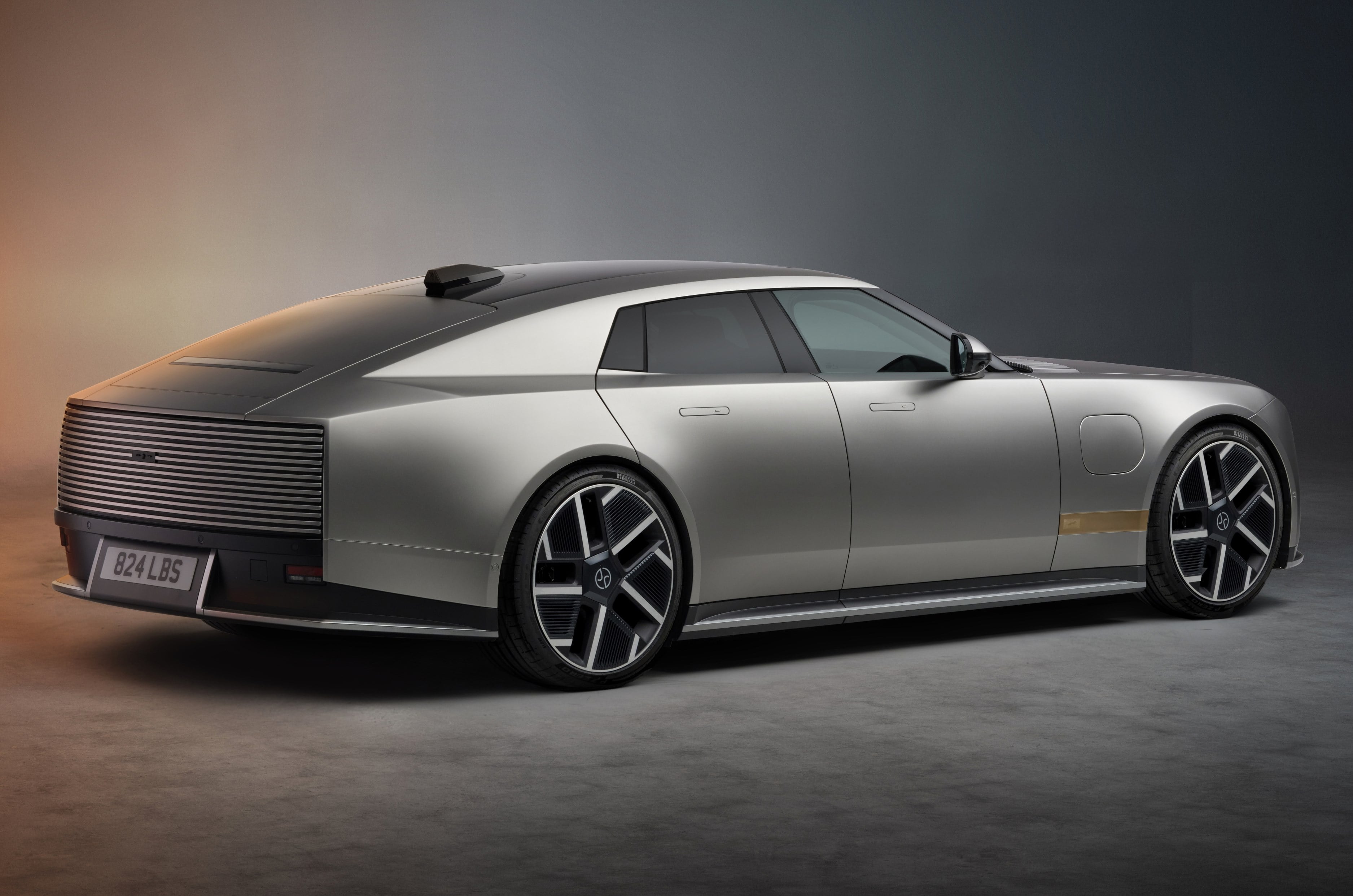
Despite its almost upright front end, the Type 01 is the most aerodynamic Jaguar yet, with a drag coefficient of just 0.23. This has been achieved through extensive aerodynamic work, including active aero elements and clean, uninterrupted body surfaces. The traditional leaping Jaguar mascot is absent from the bonnet, but fear not, it’s not entirely gone, surfacing on a brass-like panel on the front fenders, which also highlights what Jaguar calls the ‘luxury gap’ — the distance between the front axle and the A-pillar. This massive length gives the car its distinctive bonnet-forward proportions and a very regal stance; there is also a functional purpose.
The Type 01 has a split battery pack, comprising five separate modules: one positioned ahead of the A-pillar – in this gap – necessitating a re-engineered front crash structure; then there are three modules behind the A-pillar, a gap around the B-pillar area and then the final module near the C-pillar. Typically, EVs use a single battery pack contained between the A and C pillar line; however, the low roof meant Jaguar needed that gap to create a footwell for rear passengers.
The long 3.2-metre wheelbase and low 1,400mm overall height give the Type 01 its dramatic slammed-down stance, a hallmark of the concept. In fact, the massive 23-inch wheels make up more than half the height of the entire car. Charging ports are provided on both sides, making it convenient to plug in regardless of which side the charging station is on.
One of the most interesting elements of the Type 01’s is what Jaguar calls the ‘impossible panel’. This is essentially the rear fender panel that extends all the way to the A-pillar at the top and has an extremely deep draw forming massive shoulders over the rear wheels. Jaguar says computer simulations initially suggested that the required depth could not be created with a single piece of aluminium, but it worked with the tooling and made it a reality. The resulting panel features a sharp crease that rises from the window line and creates a striking visual effect, which stands out nicely in the silver finish of the car we see here.
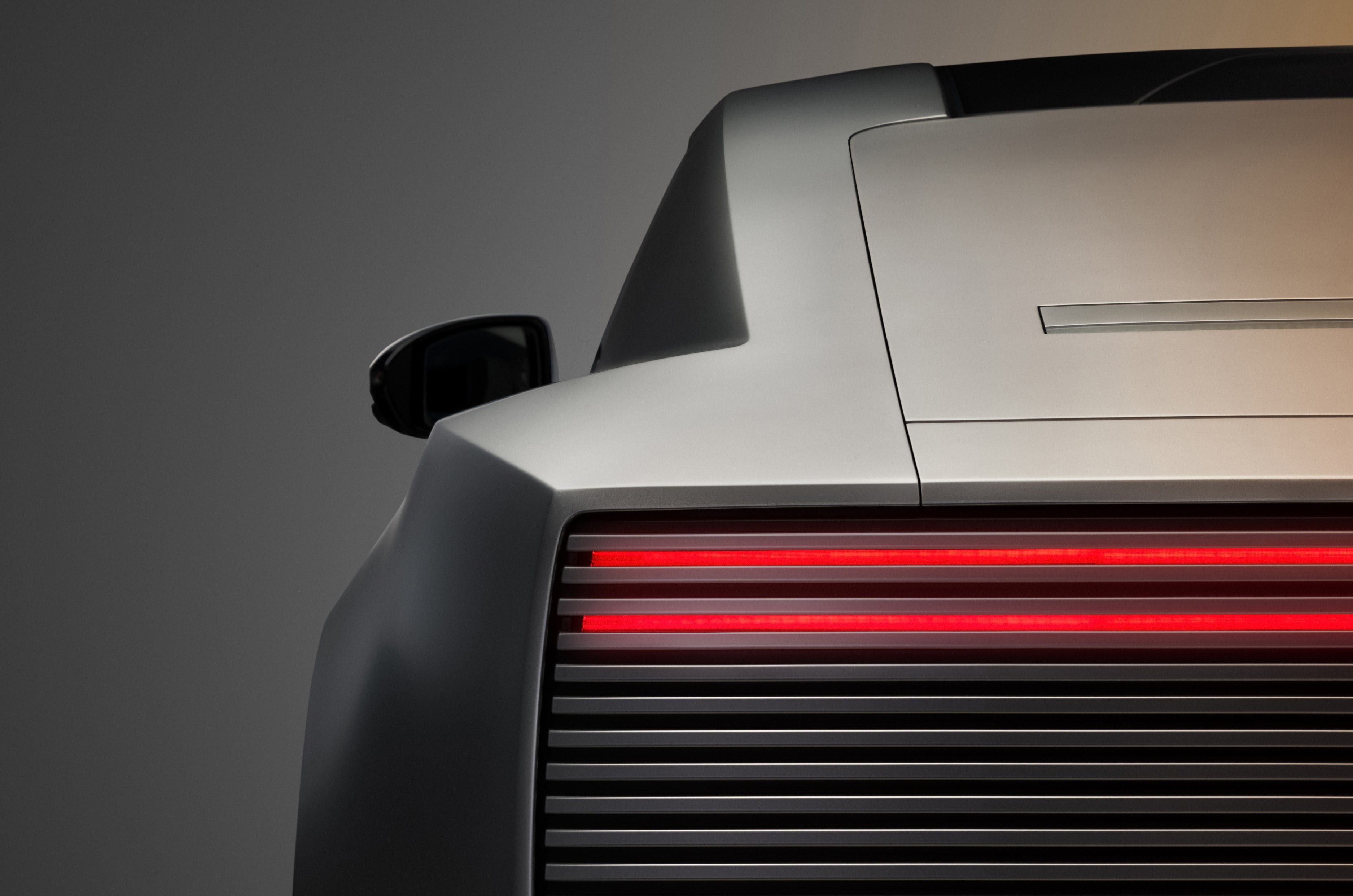
The rear is another striking area and will be the one with the most polarised views. The strikethrough design continues, but it pretty much dominates the entire width of the car; even the taillights are hidden within. When the car is switched off, the lights are invisible, leaving just the grille-like surface, and it does look excessively lined, though unique.
Then there’s the complete absence of a rear windscreen. Jaguar says a conventional rear windscreen would offer very limited visibility with a short vertical height, given the car’s long sloping roofline, so it opted for a clean monolithic panel while a camera feeds a digital rear-view mirror. There’s also a rear spoiler that can be deployed; there are three positions in all, adjusting according to speed to aid aerodynamic efficiency and stability. Beneath the tailgate is 450 litres of boot space in a relatively shallow bay, with some additional storage beneath a panel.
Give and take
The Type 01’s concept car design and proportions do come with some compromises, and that’s immediately apparent stepping into the rear. You have to move around a protruding rear panel and sink into the seats. Once there, the space is cosy or claustrophobic depending on how you see small spaces. The trouble is the low roof is very close to your head, and the window panes are extremely small; there’s a glass roof, but it only does so much to alleviate the lack of cabin volume. Furthermore, you sit behind the pillar, so you get some privacy, but not an open view outside.
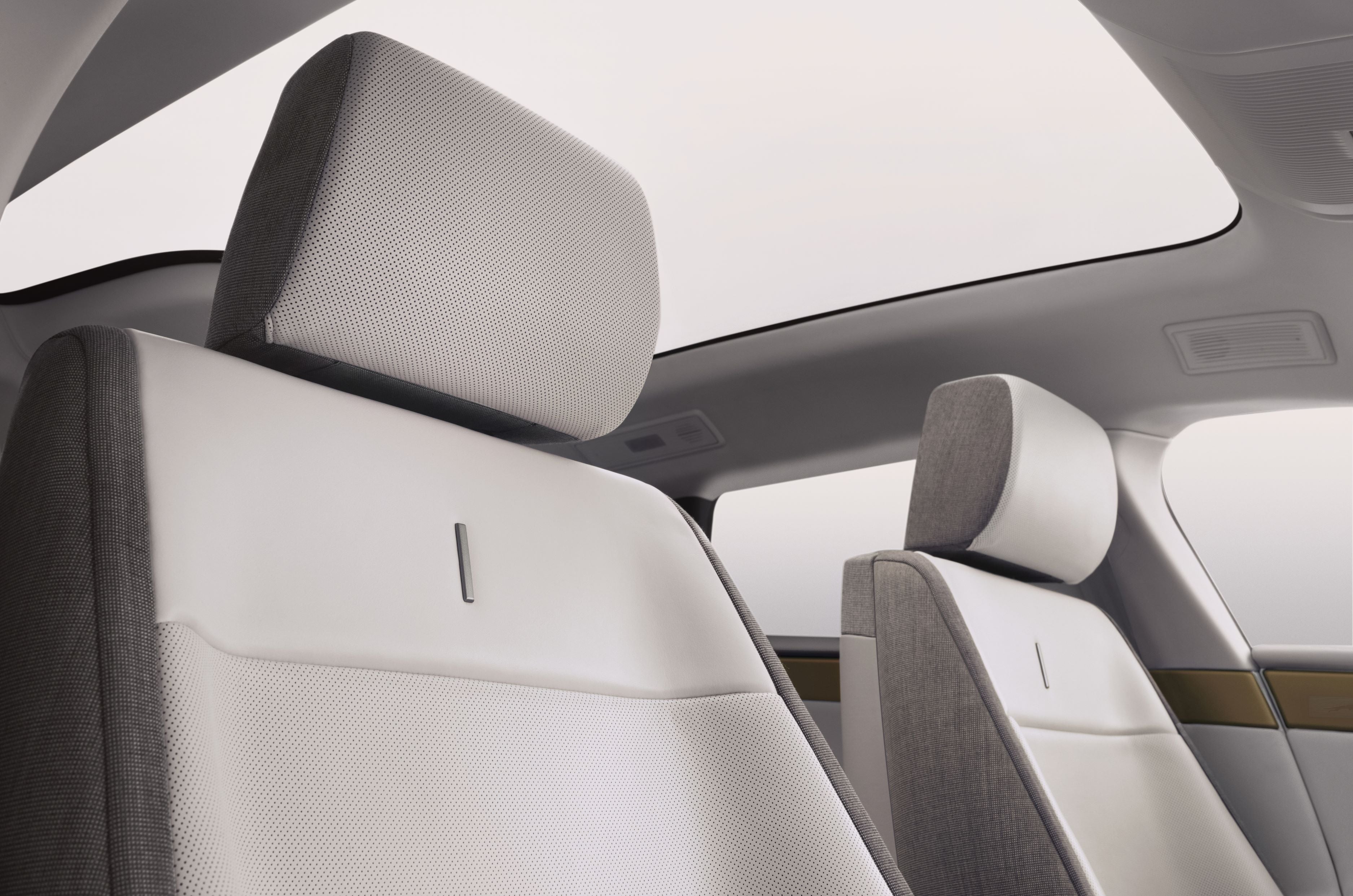
The seats are comfy enough, and at the rear the split battery arrangement reduces the knees-up seating position; while it isn’t comfortable like a conventional car, the arrangement makes a meaningful difference.
At the front too, the low roof means a low-set driving position; the windscreen is shallow in height, and headroom is just about sufficient for taller occupants. Also, the rear-view mirror – or display, more accurately – is positioned at the base of the windscreen rather than atop. The front seats feature heating, cooling and massage functions.
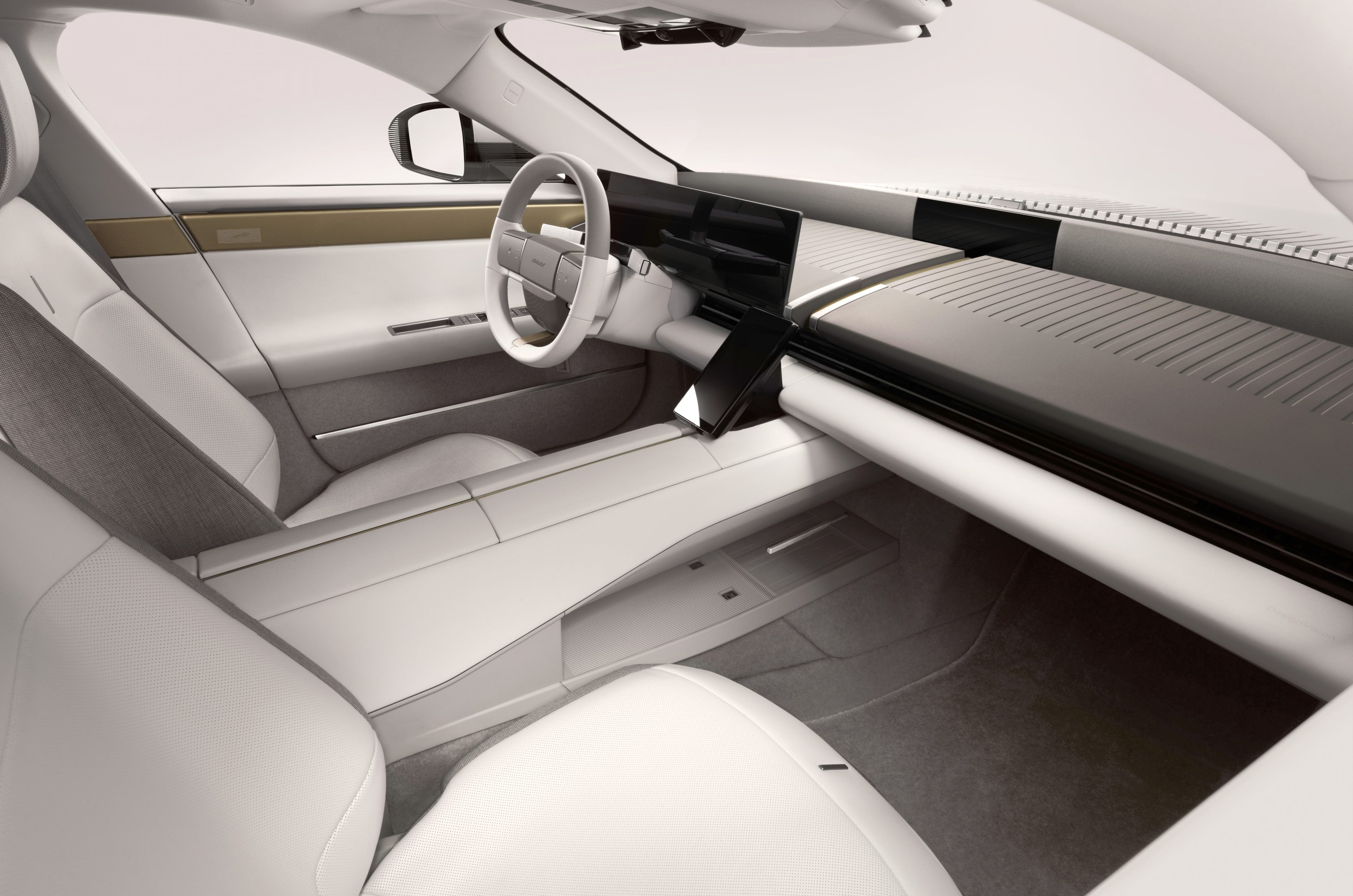
The cabin is divided into four distinct zones by a prominent central spine that houses storage spaces and a rear touchscreen controller. The dashboard carries the strikethrough pattern from the bonnet outside, and the doors carry prominent brass-finished panels. The absence of physical buttons is disappointing; thankfully, the central touchscreen, which handles climate control, is positioned in a manner that allows the driver to rest a hand on the central spine to make operations a bit easier.
There’s a single large 24-inch display combining the instrument cluster and central infotainment screen; driver-focused information is to the right, and functions accessible to the front passenger are on the left.
Number crunching
Underneath its dramatic styling, the Type 01 packs in some serious performance hardware and is the latest to join the 1,000hp+ club. Power comes from a three-motor setup, two at the rear and one at the front. Combined, these produce a massive 1,030hp and 1,365Nm of torque, and despite it weighing in at about 2.7 tonnes, the Type 01 does the 0 to 100kph sprint in 3.2 seconds. This isn’t the 2-second territory that others of this high horsepower club claim, but it’s still extremely quick for what is essentially a four-door GT. Jaguar has often talked of ‘power in reserve’ and highlights its strong 100kph to 180kph of 4.0 seconds as evidence.
Feeding this power is the split module battery; it utilises NMC chemistry and has a 120kWh capacity (118kWh usable) and promises a WLTP range of up to 720km. Jaguar says thanks to the 850-volt architecture, on a 350kW DC charger you can add 321km of range in 13 minutes and 10-80 per cent in around 22 minutes with the split pack set-up to maximise 400-volt chargers. The Type 01 also features twin AC charging ports, one on each side, so it’s easy to charge no matter how you park.
The powertrain has drive modes, torque vectoring and ride is courtesy of switchable air springs and twin-valve active dampers. Rear-wheel steering keeps a tight 11.5m wall-to-wall turning circle diameter.
Shock! And awe?
The Type 01 is unlike Jaguars of the past, which were the target. Jaguar sales were drying up, and it needs to bring in new customers, and that’s where this entirely new design direction comes in. It has traces of its heritage but, on the whole, is unique, and there’s no denying it’s striking to look at with its wild concept car looks. This, however, means interior space is at a premium, and there are ingress and egress challenges. Making amends in some way is the minimal and classy interior styling and, of course, a powertrain with all the right numbers and ingredients that promises a thrilling drive experience.
Asking prices for all this will be going up, not to the levels of a Rolls or Bentley but above what the brand’s previous flagships like the XJ were at. Expect prices to start at £120,000 in international markets where deliveries are scheduled to begin by mid-2027. India will follow a few months on with prices around the Rs 2 crore mark, give or take.
Sitting between Mercedes and BMWs at the lower end and Rolls and Bentleys above, the Type 01 has found a gap and a differentiation in its style and appeal too. But can Jaguar transform from elegance and heritage to exuberant modernism? It’s a big leap for sure, and one that the company needs the big cat to make.
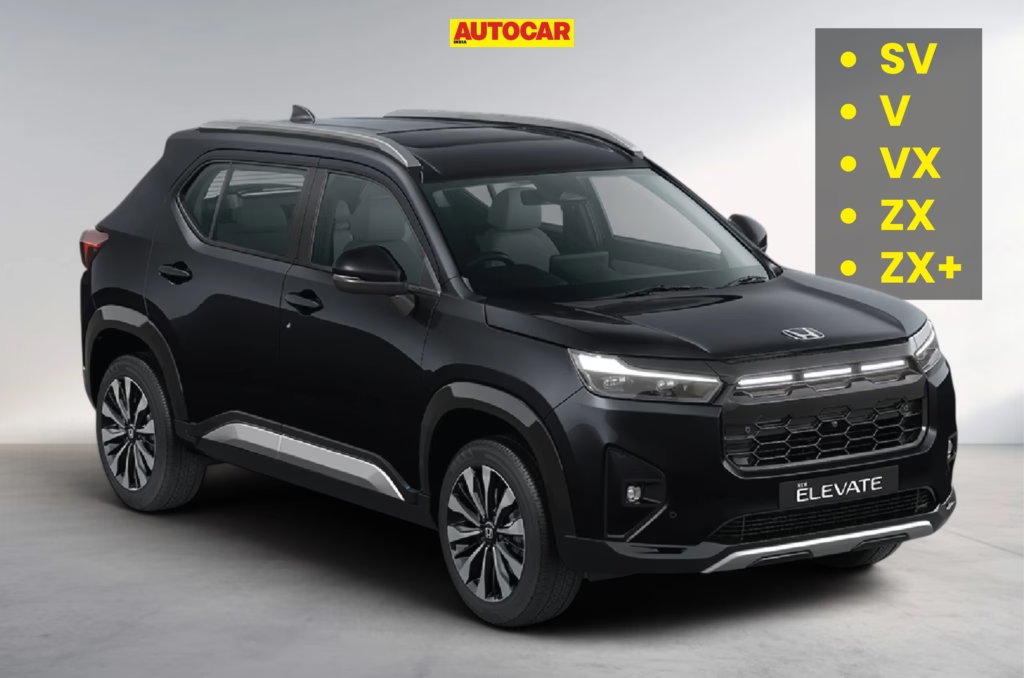
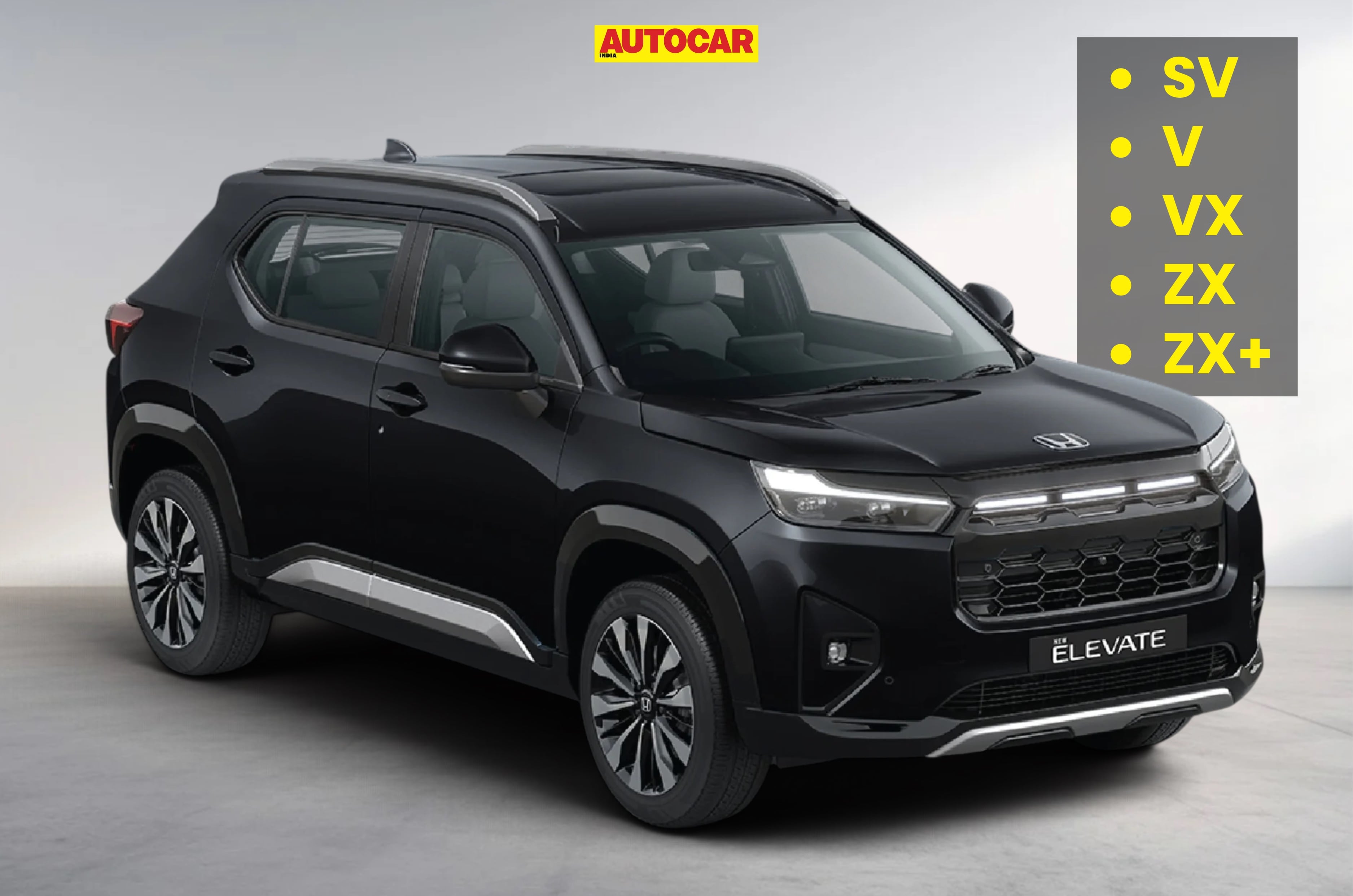
Honda has given the Elevate its first major update since the midsize SUV’s introduction in India in 2023. The facelift brings new lighting signatures, plus a revised grille and slightly updated bumpers on the outside. Inside, the cabin gains new features and a more premium feel. Prices for the Elevate facelift range between Rs 11.80 lakh and Rs 18.30 lakh (ex-showroom). Let’s now look at the different variants and powertrain specs.
2026 Honda Elevate facelift variants and powertrain
Honda has carried over the Elevate’s sole engine option with the facelift. The 1.5-litre four-cylinder naturally aspirated petrol mill continues to produce 121hp and 145Nm of torque. It can be had with a 6-speed manual gearbox or a CVT. The claimed mileage of the 2026 Elevate facelift is 15.31kpl for the manual and 16.61kpl for the CVT.
Honda has also introduced a new top-spec ZX+ trim, which means the Elevate facelift is available in 5 trims. The base SV trim is only offered with the manual gearbox, while the other four get both the CVT option as well. Here’s a look at the full variant spread and prices of the Honda Elevate facelift:
2026 Honda Elevate facelift variants
MT (in Rs, lakh)
CVT (in Rs, lakh)
SV
11.80
–
V
12.29
13.79
VX
13.93
15.39
ZX
15.39
16.89
ZX+
16.80
18.30
All prices are ex-showroom, India.
2026 Honda Elevate facelift colours
The 2026 Honda Elevate facelift comes in a new Nordic Forest Pearl colour, adding to the 6 existing options. The latter include Obsidian Blue Pearl, Radiant Red Metallic, Lunar Silver Metallic, Platinum White Pearl, Meteoroid Grey Metallic and Crystal Black Pearl. Shades such as Nordic Forest, Radiant Red and Platinum White can also be had with a dual-tone finish and a black roof. However, the dual-tone and pearl options cost extra. On the inside, the 2026 Elevate comes in either a two-tone ivory/black or an all-black theme.
All that said, let’s look at the trim-wise features split of the 2026 Honda Elevate facelift.
2026 Elevate facelift SV
Price: Rs 11.80 lakh
LED projector headlamps with LED DRLs
LED tail-lamps
16-inch steel wheels
Rear spoiler
Ivory and black interior
Fabric seat upholstery
Keyless entry with push-button ignition
Automatic climate control
Rear AC vents
PM2.5 filter
Electrically adjustable ORVMs
Tilt & telescopic steering
Height-adjustable driver’s seat
Part-digital instrument cluster with 7-inch MID
Steering-mounted controls
Front centre armrest with storage
60:40 split-folding rear seats
6 airbags
Electronic stability control
Traction control
Hill-start assist
Rear parking sensors
ISOFIX child-seat anchors
3-point seatbelts and seatbelt reminders for all seats
2026 Elevate facelift V
Price: Rs 12.29 lakh – Rs 13.79 lakh
16-inch steel wheels with covers
Parcel tray
8-inch touchscreen infotainment
Wireless Android Auto and Apple CarPlay
4-speaker audio system
Honda Connect connected-car tech
3 USB ports
Multi-angle rear-view camera
Rear defogger
Paddle shifters (CVT only)
Remote engine start (CVT only)
Electronic parking brake with auto hold (CVT only)
All-wheel disc brakes (CVT only)
2026 Elevate facelift VX
Price: Rs 13.93 lakh – Rs 15.39 lakh
17-inch dual-tone alloy wheels
Roof rails
Signature LED light bars
LED projector fog lamps
Auto-folding ORVMs
Walk-away auto lock
Single-pane sunroof
Orange ambient lighting
Touch-sensitive LED spot lamps
Leather-wrapped steering wheel and gear knob
Soft-touch padding on doors and armrest
Front seat-back pocket
Driver and co-driver vanity lights
AQI display with auto-clean function
6-speaker audio system
Wireless phone charger
LaneWatch camera
Auto headlamps
Rear wiper and washer
2026 Elevate facelift ZX
Price: Rs 15.39 lakh – Rs 16.89 lakh
17-inch alloys in Berlina Black and Dark Clear
Leatherette seat upholstery
Ventilated front seats
10.25-inch touchscreen infotainment
8-speaker audio system
Adaptive cruise control
Low-speed follow (CVT only)
Lead-car departure alert
Collision-mitigation braking
Lane-keep assist
Road-departure mitigation
Auto high beam
Auto-dimming IRVM
Rear centre armrest with cupholders
2026 Elevate facelift ZX+
Price: Rs 16.80 lakh – Rs 18.30 lakh
Dual-tone colours
Powered front seats (8-way driver, 4-way passenger)
Ventilated rear seats
360-degree camera
Front parking sensors
Which variant of the 2026 Honda Elevate facelift should you buy?
With an attractive price tag for the segment, the ZX trim of the 2026 Honda Elevate offers plenty of premium features for the money. It also offers a better touchscreen and seat upholstery, along with an ADAS suite.
Mercedes-Maybach S 580e: Mercedes-Benz India ने देश की पहली इलेक्ट्रिक Mercedes-Maybach, ‘Mercedes-Maybach S 580e’ लॉन्च की है, जिसकी कीमत 3.35 करोड़ रुपये (एक्स-शोरूम) है। यह लग्जरी सेडान Maybach ब्रांड के पारंपरिक आराम और बेहतरीन कारीगरी को प्लग-इन हाइब्रिड पावरट्रेन के साथ जोड़ती है। बता दें कि Mercedes-Benz शुरू में भारत में S 580e की सिर्फ 30 यूनिट्स ही बेचेगी।
Mercedes-Maybach S 580e: डिजाइन
Mercedes-Maybach S 580e का डिजाइन काफी हद तक फ्लैगशिप S-Class जैसा ही है, लेकिन इसे Maybach की खास पहचान देने के लिए कई बदलाव किए गए हैं। इसमें रोशनी वाला Maybach ग्रिल, Maybach लोगो प्रोजेक्शन और इल्यूमिनेटेड डोर सिल्स दिए गए हैं। इसके अलावा, ग्राहकों को MANUFAKTUR के तहत कई कस्टमाइजेशन विकल्प भी मिलते हैं।
ग्राहक इस कार के लिए खास टू-टोन पेंट फिनिश और अपनी पसंद के Nappa लेदर इंटीरियर का विकल्प चुन सकते हैं।
भारत में इसका मॉडल सिर्फ 4-सीटर कॉन्फिगरेशन में उपलब्ध होगा। इसमें पीछे Executive सीटें और पूरी लंबाई में रियर बिजनेस कंसोल दिया गया है। Mercedes-Benz के मुताबिक, कार में पीछे बैठने वाले यात्रियों के आराम पर खास ध्यान दिया गया है, जो Maybach कारों की सबसे खास खूबियों में से एक है।
Mercedes-Maybach S 580e: फीचर्स
Mercedes-Maybach S 580e के केबिन में लग्जरी और टेक्नोलॉजी से जुड़े कई शानदार फीचर्स दिए गए हैं। इसमें 31 स्पीकर वाला Burmester 4D साउंड सिस्टम मिलता है। इसमें 8 एक्साइटर्स और 1,610 वॉट का आउटपुट दिया गया है, जिससे कार के अंदर शानदार साउंड का अनुभव मिलता है।
पीछे बैठने वाले यात्रियों के लिए वायरलेस चार्जिंग, फोल्डिंग टेबल, तापमान कंट्रोल वाले कप होल्डर और Rear Comfort Package Plus जैसे फीचर्स दिए गए हैं।
टेक्नोलॉजी की बात करें तो कार में Mercedes-Benz का लेटेस्ट Operating System (MB.OS), 3D ड्राइवर डिस्प्ले, MBUX Superscreen, Augmented Reality नेविगेशन और Head-Up Display मिलता है। सेफ्टी के लिए इसमें ADAS Level 2, PRE-SAFE सिस्टम और कुल 15 एयरबैग दिए गए हैं।
Mercedes-Maybach S 580e: स्पेसिफिकेशन्स
इसमें 3.0-लीटर, छह-सिलेंडर वाला पेट्रोल प्लग-इन हाइब्रिड पावरट्रेन है, जो Mercedes के 4MATIC ऑल-व्हील-ड्राइव सिस्टम के साथ आता है। इसका कंबशन इंजन 443 hp की पावर और 560 Nm का टॉर्क देता है, जबकि इलेक्ट्रिक मोटर 160 hp की पावर और 480 Nm का टॉर्क जोड़ती है।
इसकी कुल पावर 585 hp और टॉर्क 750 Nm है, जो 9G-TRONIC ऑटोमैटिक ट्रांसमिशन के जरिए मिलता है। Mercedes का दावा है कि S 580e 4.8 सेकंड में 0 से 100 kmph की रफ्तार पकड़ सकती है और इसकी टॉप स्पीड 250 kmph है। इस सेडान में 22 kWh का बैटरी पैक भी है, जो WLTP-सर्टिफाइड लगभग 100 km की इलेक्ट्रिक रेंज देता है। चार्जिंग के लिए इसमें 11 kW AC और 60 kW DC फास्ट चार्जिंग की सुविधा है।
Mercedes-Maybach S 580e: कीमत, उपलब्धता और कस्टमाइजेशन
Mercedes-Maybach S 580e की कीमत ₹3.35 करोड़ (एक्स-शोरूम) रखी गई है। कंपनी शुरुआत में इस लग्जरी सेडान की सिर्फ 30 यूनिट ही उपलब्ध कराएगी। इसके साथ ग्राहकों को घर पर कार चार्ज करने के लिए फ्री होम चार्जिंग सॉल्यूशन भी दिया जाएगा।
ग्राहक अपनी पसंद के हिसाब से कार को और भी खास बना सकते हैं। इसके लिए Mercedes-Benz ने MANUFAKTUR कस्टमाइजेशन का विकल्प दिया है। इसमें खास पेंट स्कीम, प्रीमियम लेदर थीम और हाथ से तैयार किए गए इंटीरियर ट्रिम जैसे विकल्प शामिल हैं।
Skoda has given a major facelift to the Slavia mid-size sedan for 2026. It gets a range of updates, including a new automatic gearbox, sharper styling, updated interior trim, and much-needed feature additions. Here, we explain its trim lineup, powertrain choices, colour options, variant-wise features, and our recommendations for the best variant to go for.
2026 Skoda Slavia price and powertrains
Skoda Slavia Price List (Rs lakh)
1.0 TSI MT
1.0 TSI AT
1.5 TSI AT
Classic
10.00
–
–
Classic+
10.99
12.49
–
Signature
13.94
14.94
–
Sportline
14.34
15.34
–
Prestige
15.89
16.89
18.59
Monte Carlo
–
17.29
18.84
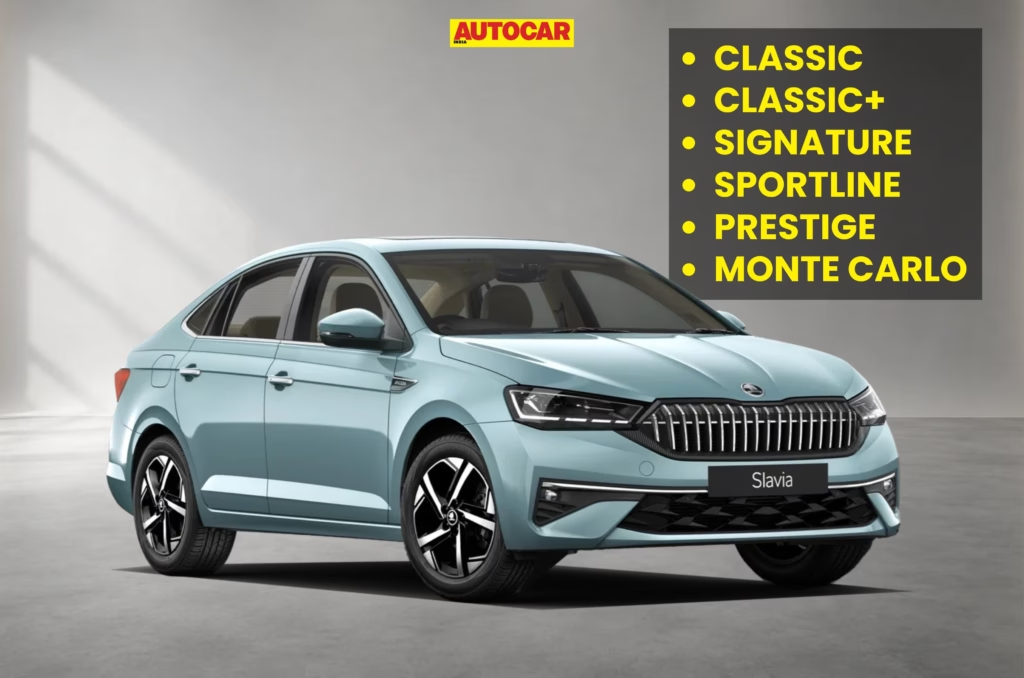
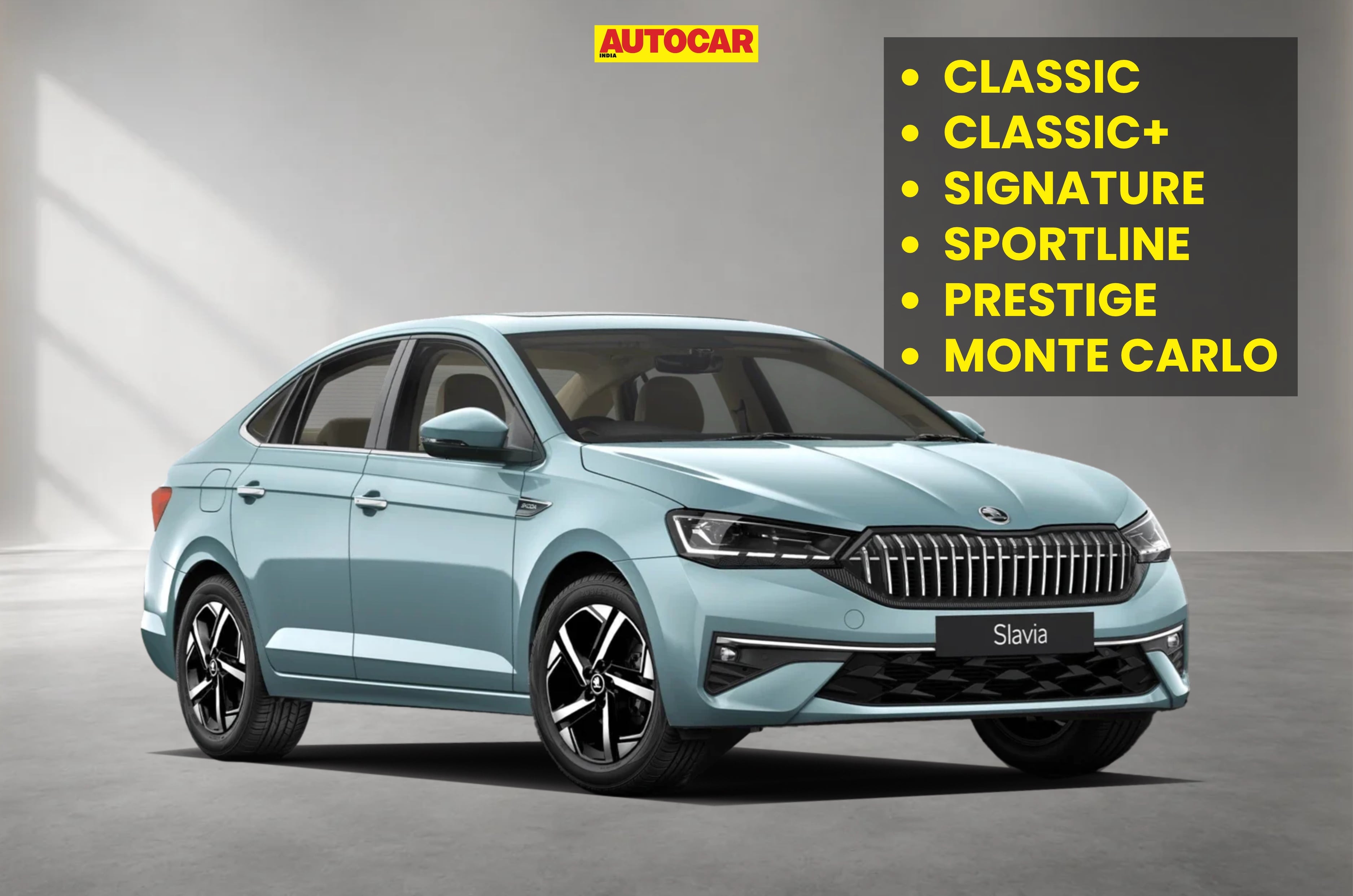
Prices for the Slavia range between Rs 10 lakh and Rs 18.84 lakh. The Skoda sedan is offered in 12 variants across six trims, namely Classic, Classic+, Signature, Sportline, Prestige, and Monte Carlo. The smaller 1.0-litre TSI is available from the base Classic trim onward, whereas automatic options are available from the trim above it. The more powerful 1.5-litre TSI is limited to the top-end Prestige and Monte Carlo trims.
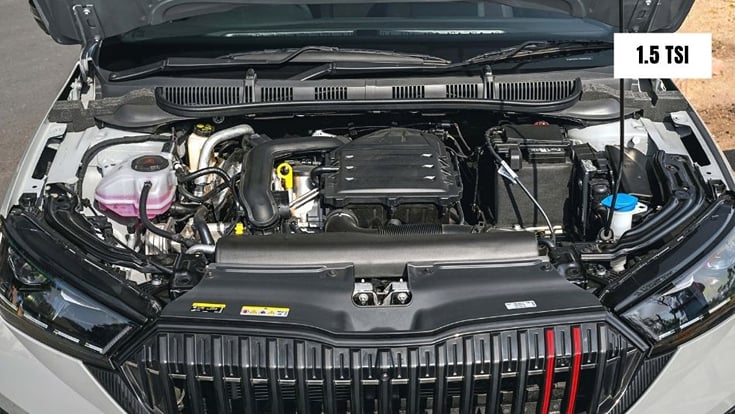
Powering the Skoda Slavia is a pair of direct-injection turbo-petrol engines. There’s a 1.0-litre, 3-cylinder mill that produces 115hp and 178Nm and is paired to a 6-speed manual or an 8-speed automatic transmission. Top-end trims also offer a larger 1.5-litre, 4-cylinder mill, developing 150hp and 250Nm, with transmission duties handled by a 7-speed DCT. Additionally, this engine also gets cylinder deactivation tech that enables the engine to operate on 2 cylinders depending on the load to improve fuel efficiency. Claimed mileage figures for the 1.0-litre manual and automatic versions are 19.76kpl and 19.50kpl, respectively, while it’s 18.79kpl for the 1.5-litre mill.
2026 Skoda Slavia exterior and interior colours
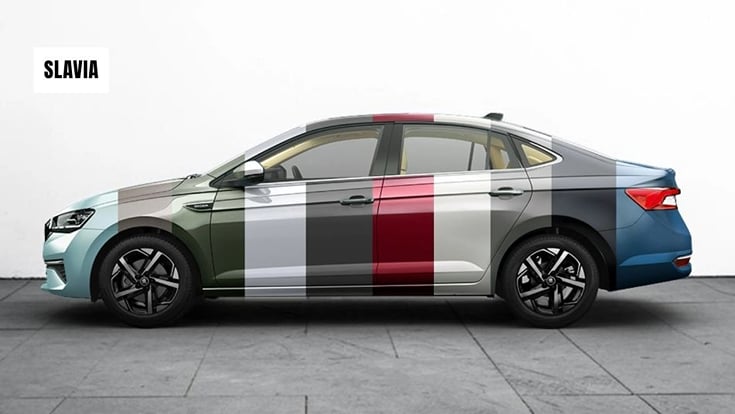
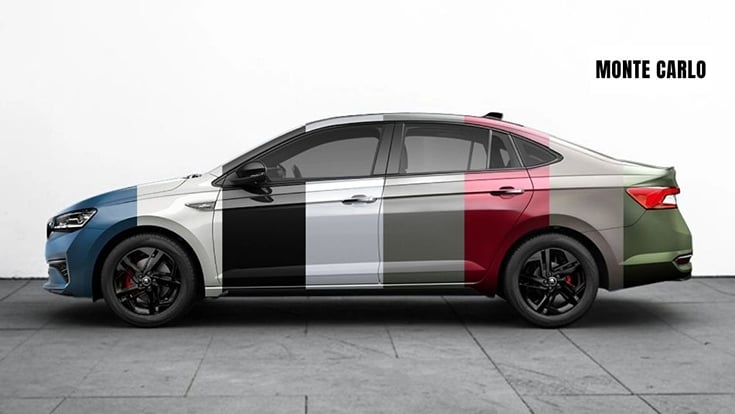
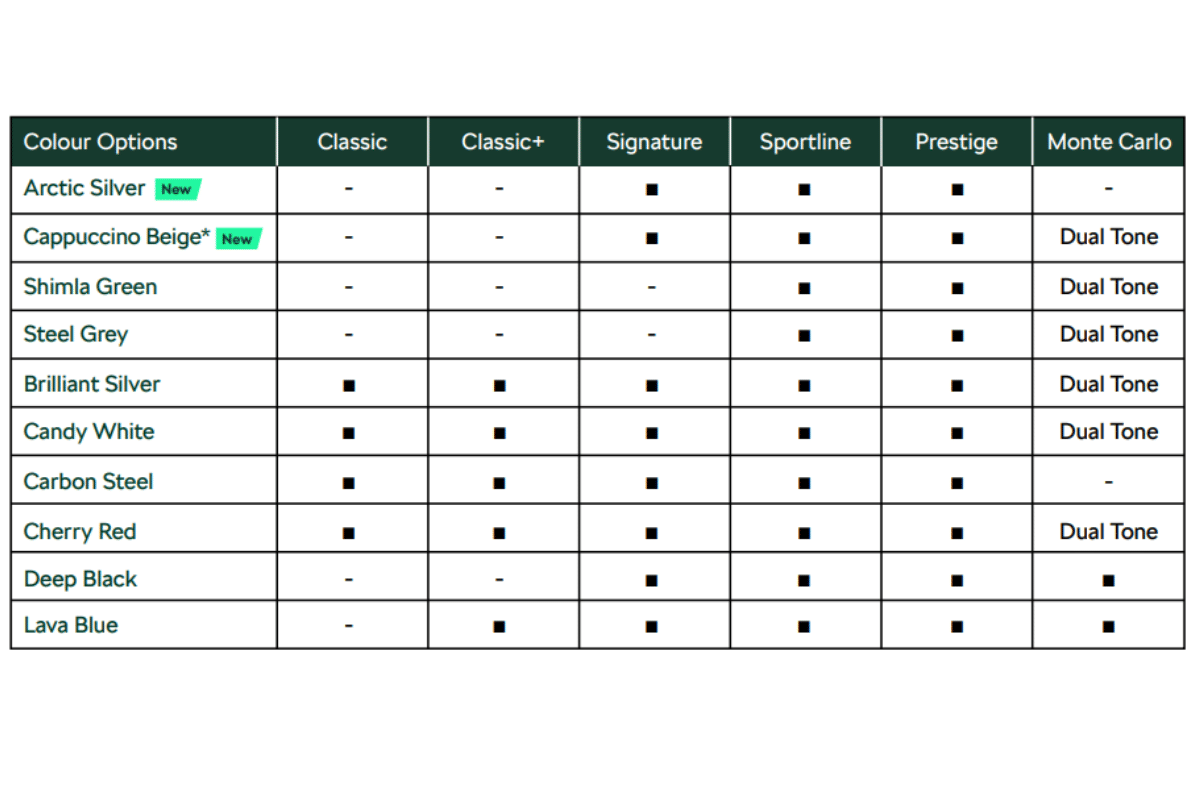
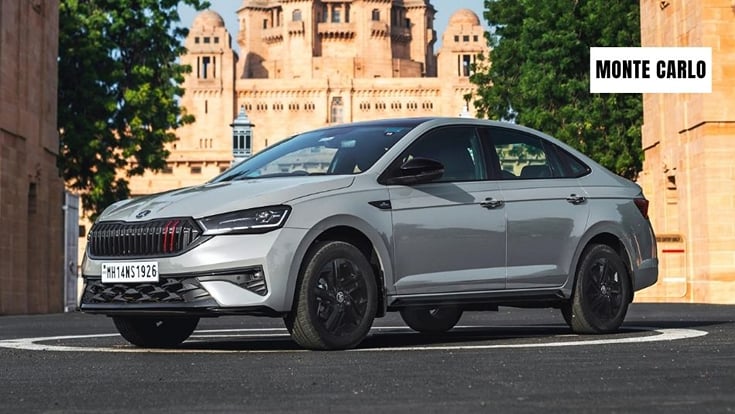
The standard Skoda Slavia is available in nine colours to choose from, namely Arctic Silver, Cappuccino Beige, Shimla Green, Steel Grey, Candy White, Carbon Steel, Brilliant Silver, Lava Blue, Cherry Red, and Deep Black. Monte Carlo versions come with dual-tone choices with a black roof for select paint options. Below is a list of the colours on offer depending on the chosen trim.
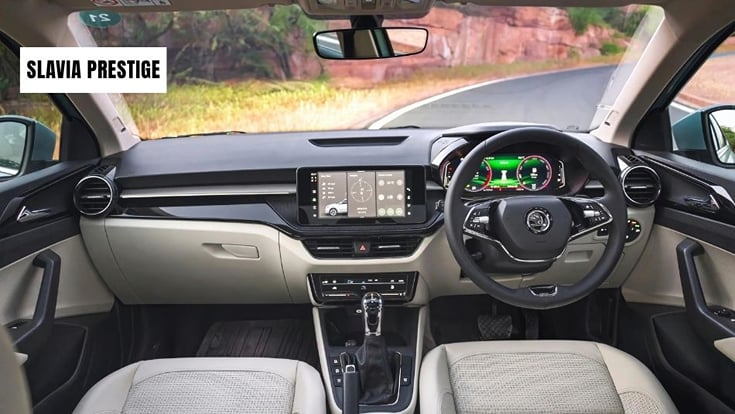
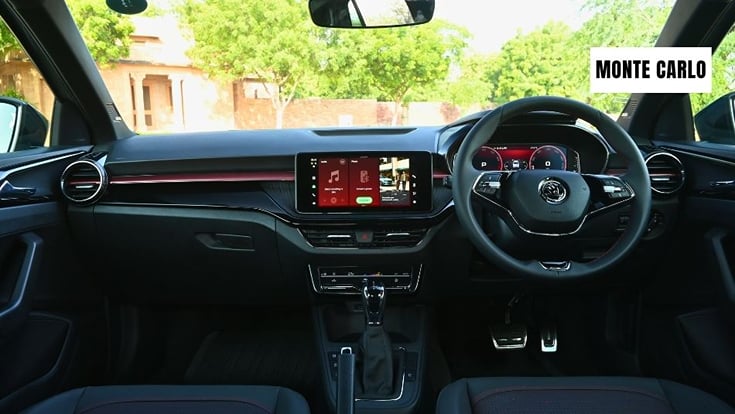
Inside, the standard Slavia gets a beige and black theme with silver beige inserts. Sportline and Monte Carlo versions come with an all-black interior, wherein the latter takes it one step further with red accents and stitching.
2026 Skoda Slavia variant-wise feature list
Classic
Engine option: 1.0 TSI MT
Price: Rs 10 lakh
7-inch infotainment system
Wired Apple CarPlay and Android Auto
4-speakers
USB Type-A port
Automatic climate control
Height-adjustable driver seat
6 airbags
ESC
Electronic differential lock system
Traction control system
Tyre pressure monitoring system
ISOFIX mounts
Rear defogger
Rear parking sensors
Manual day/night IRVM
15-inch steel wheels with covers
Halogen headlamps
LED turn indicators on ORVM
LED tail-lamps with halogen indicator
Fabric seat upholstery
Fabric front centre armrest and door pads
Analogue dials with 3.5-inch MID
Height-adjustable rear headrests
Tilt and telescopic steering wheel
All power windows
Power-adjustable ORVMs
Auto engine start/stop function
Steering-mounted controls
Classic+
Engine option: 1.0 TSI MT/AT
Price: Rs 10.99 lakh to Rs 12.49 lakh
Features over Classic
Single-pane sunroof
Cruise control
Hill hold control (AT only)
Rain-sensing wipers
Auto-dimming IRVM
16-inch alloy wheels
All LED headlamps
LED fog lamps
All LED tail-lamps
Sequential rear turn indicators
Leatherette steering wheel and gear knob (AT only)
Paddle shifters (AT only)
Signature
Engine option: 1.0 TSI MT/AT
Price: Rs 13.94 lakh to Rs 14.94 lakh
Features over Classic+
8-inch digital driver’s display
10.1-inch infotainment system
Wireless Apple CarPlay and Android Auto
Google AI assistant
8-speaker sound system
Wireless smartphone charger
4x USBType-C ports
Hill hold control
Automatic headlamps
Ambient lighting
Follow-me-home headlamps
Shark fin antenna
Leatherette steering wheel and gear knob
Rear AC vents
Sliding front centre armrest
Rear centre armrest
One-touch up/down driver window
Rear view camera
Keyless entry
Push-button start
60:40 split folding rear seats
Power folding ORVMs
Front and rear parking sensors
Cooled glovebox
Front seatback pockets
Sportline
Engine option: 1.0 TSI MT/AT
Price: Rs 14.34 lakh to Rs 15.34 lakh
Features over Signature
360-degree camera
16-inch black alloy wheels
Sportline badging on tailgate
Gloss black exterior elements
Bootlip spoiler
Aluminium pedals
Prestige
Engine option: 1.0 TSI MT/AT, 1.5 TSI AT
Price: Rs 15.89 lakh to Rs 18.59 lakh
Features over Sportline
10.25-inch digital driver’s display
Powered and ventilated front seats
Rear seat massage function
16-inch dual-tone alloy wheels
Footwell illumination
Leatherette seat upholstery
Leatherette front centre armrest and door pads
Monte Carlo
Engine option: 1.0 TSI AT, 1.5 TSI AT
Price: Rs 17.29 lakh to Rs 18.84 lakh
Features over Prestige
16-inch black alloy wheels
Red ambient lighting
Red accents on grille
Red brake calipers
Black exterior design elements
Black leatherette seats with contrast red stitching
Aluminium pedals
Which variant of the 2026 Skoda Slavia should you buy?
For most buyers, the Signature trim is the one we’d recommend. As a mid-level trim, it comes with a well-equipped feature list for its asking price, and its automatic version is a good pick for under Rs 15 lakh. Those looking for all the bells and whistles can upgrade to the top-of-the-line Prestige trim. This trim also offers the more powerful 1.5-litre TSI engine for those looking for added performance.
Skoda has launched the Slavia facelift at Rs 10 lakh. This is the first mid-life cycle update that the mid-size sedan has received since its introduction in 2022. Updates include a refreshed exterior, mild interior changes, feature additions, and a new gearbox option. The Slavia facelift takes on the likes of the Volkswagen Virtus, Honda City, and the Hyundai Verna.
Gets a new 8-speed AT for the 1.0-litre TSI mill.
Larger screens, 360-degree camera now part of the feature list
Variable geometry compressor improves AC performance.
Exterior gets all-LED lighting, sportier bumpers and new colour options.
Skoda Slavia facelift full price list
1.0 TSI MT
1.0 TSI AT
1.5 TSI AT
Classic
10.00
–
–
Classic+
10.99
12.49
–
Signature
13.94
14.94
–
Sportline
14.34
15.34
–
Prestige
15.89
16.89
18.59
Monte Carlo
–
17.29
18.84
The Slavia facelift has an identical starting price as its predecessor at Rs 10 lakh. However, at the top end, the former is Rs 64,000 pricier than the latter.
Skoda Slavia facelift exterior updates
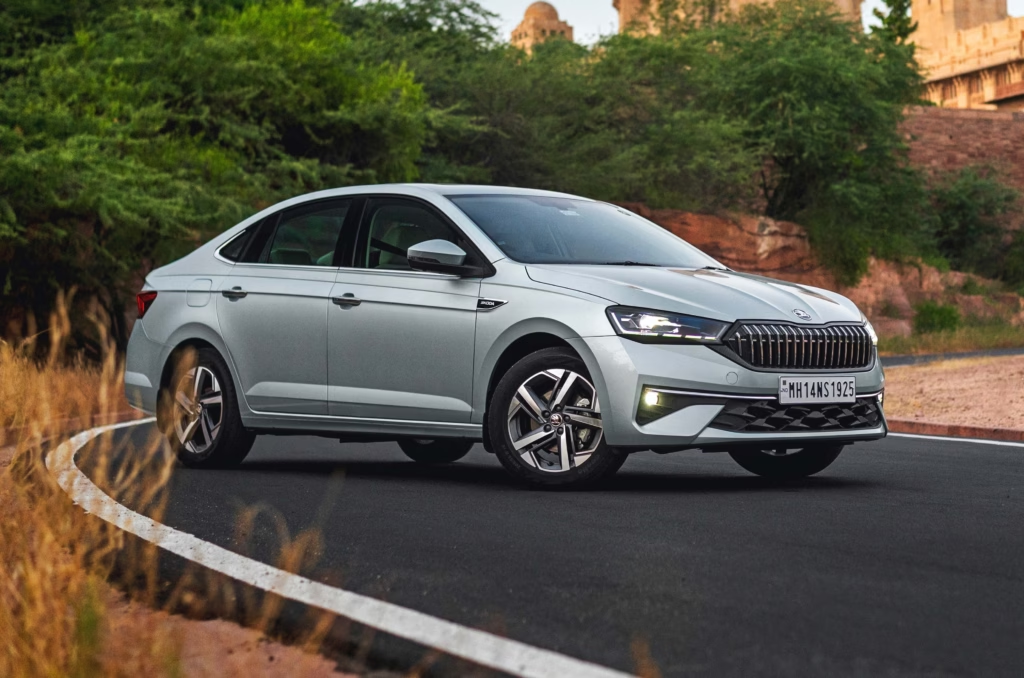
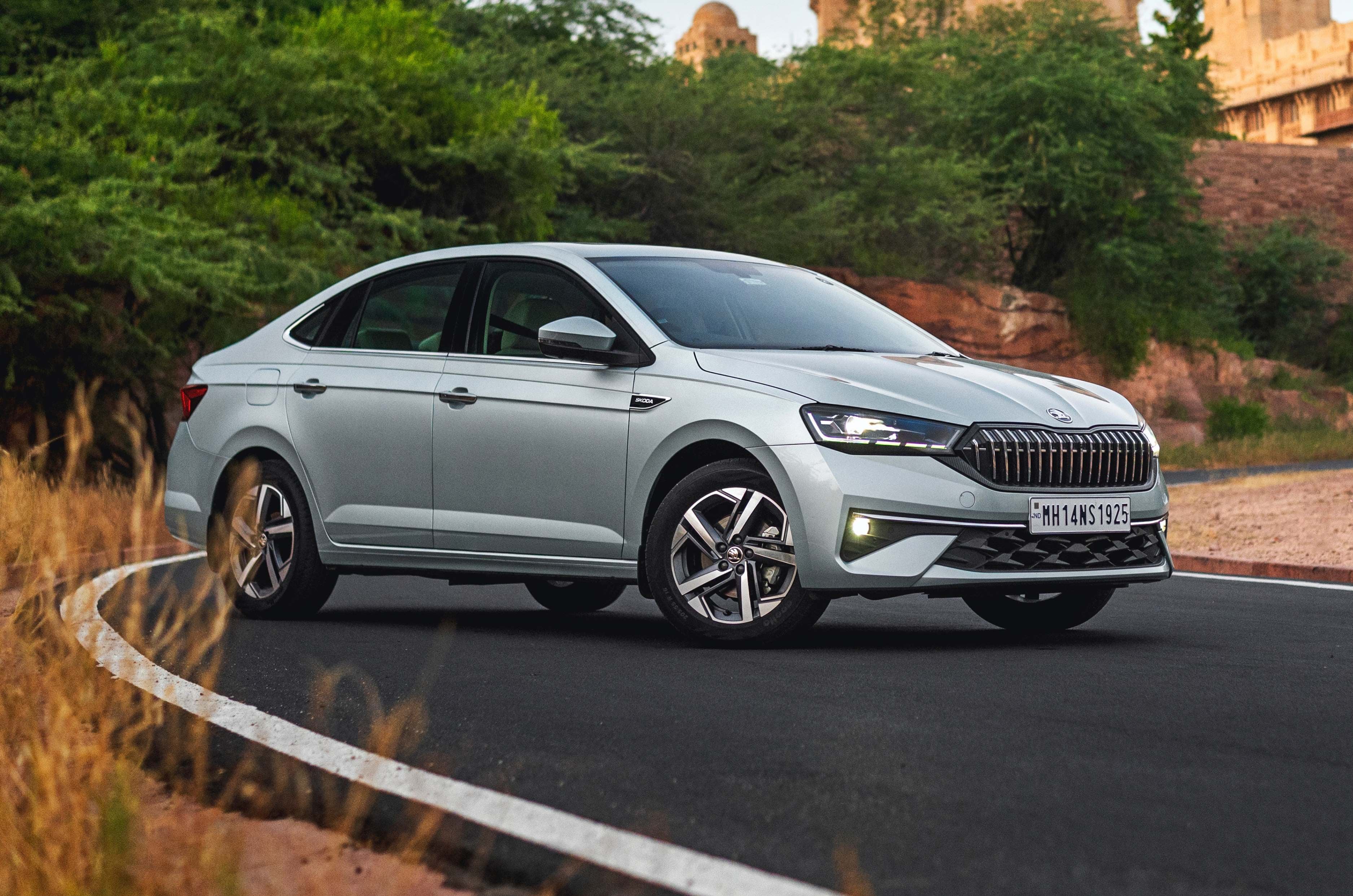
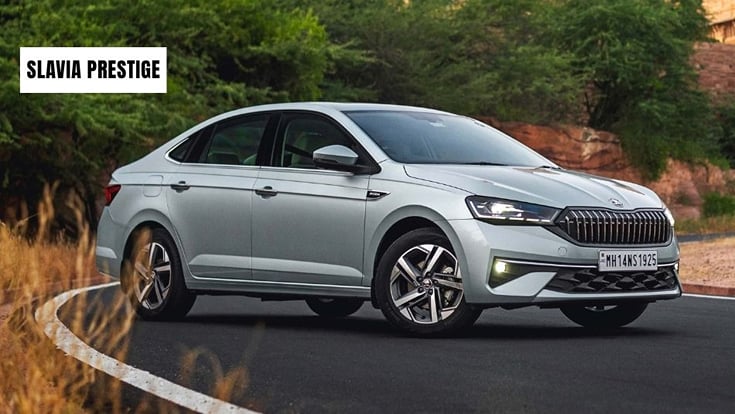
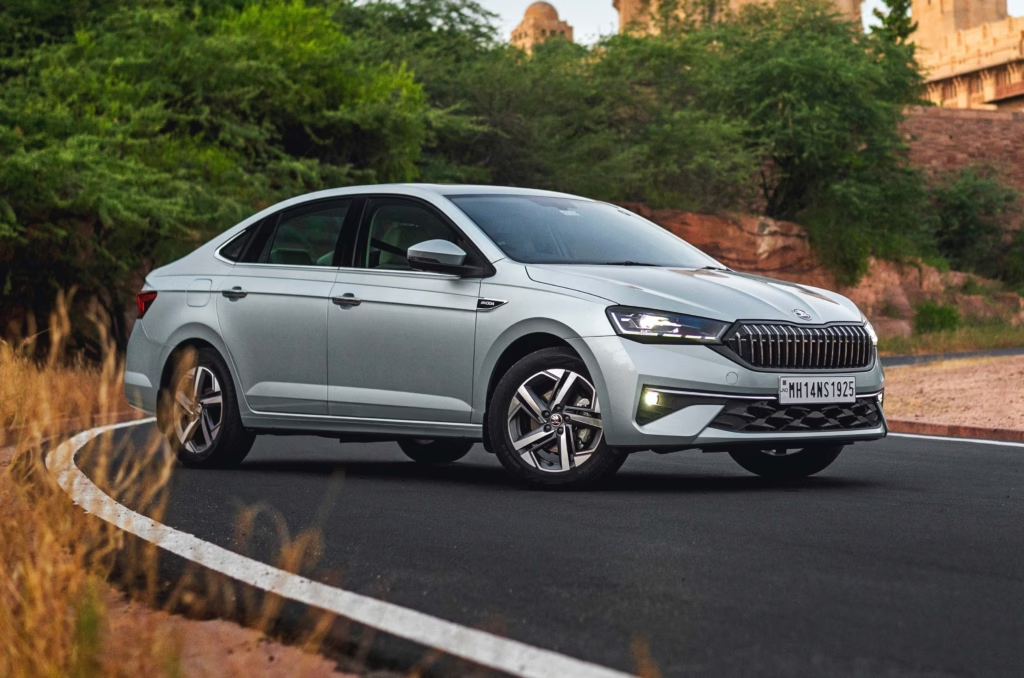
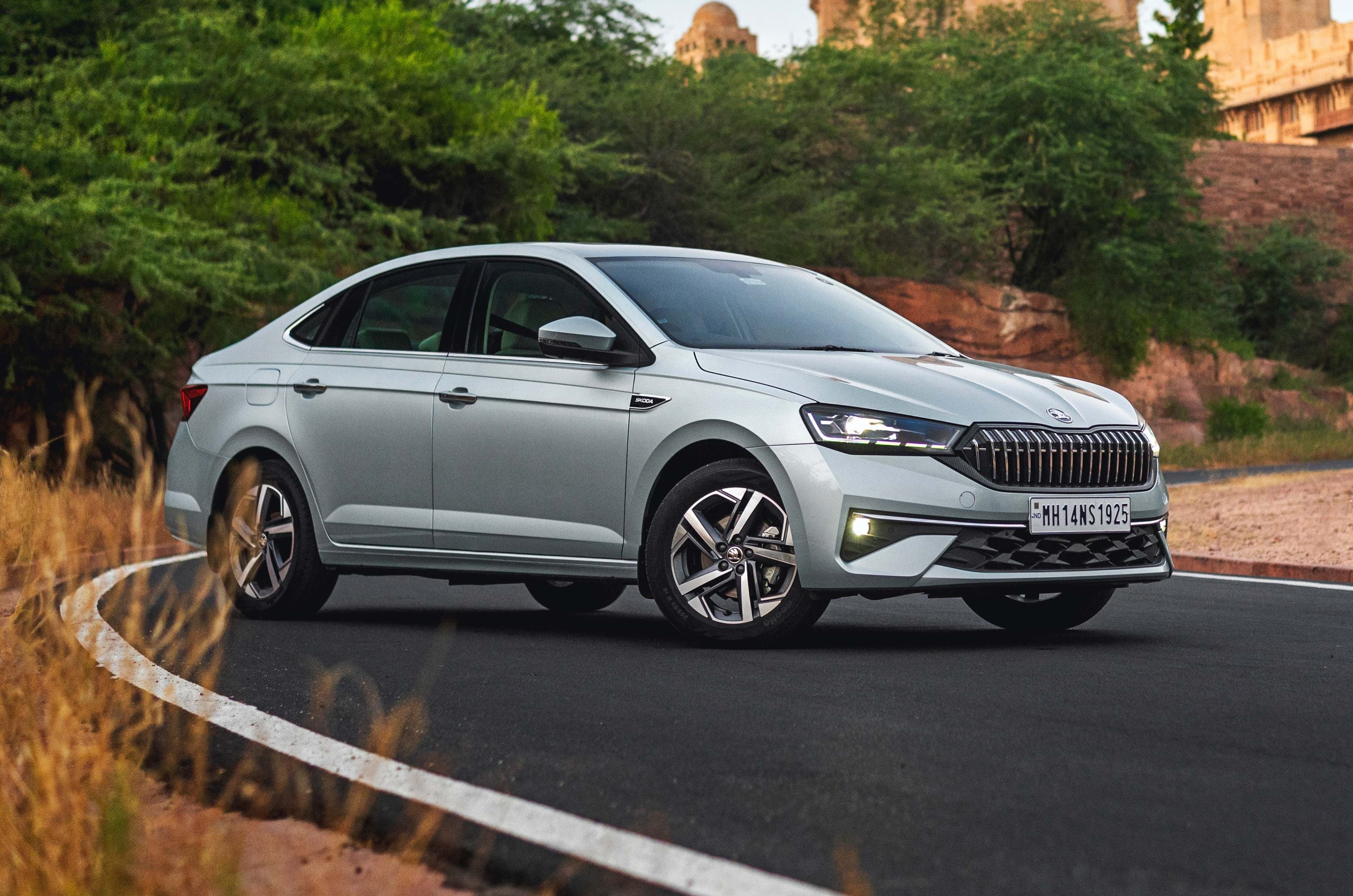
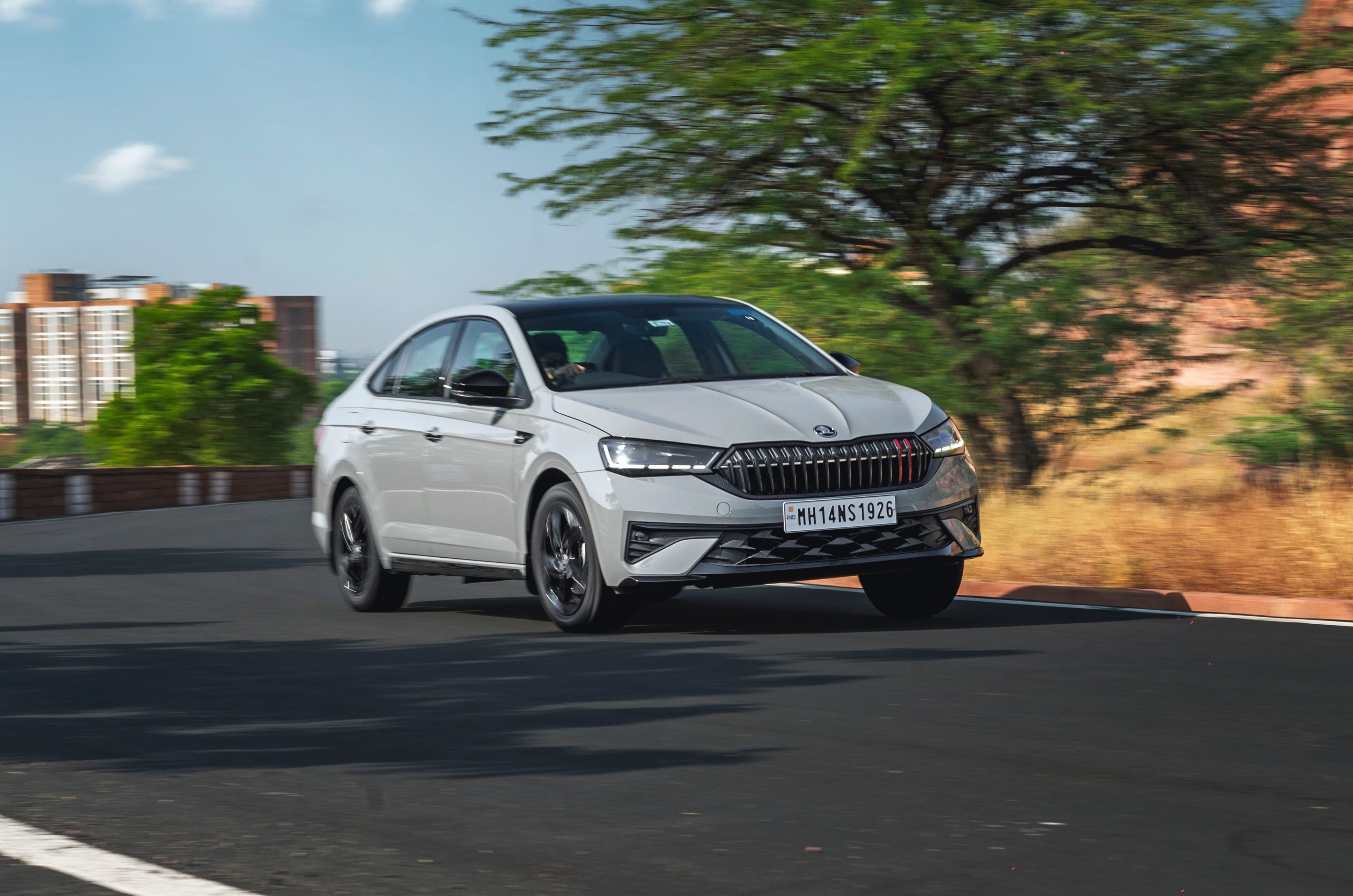
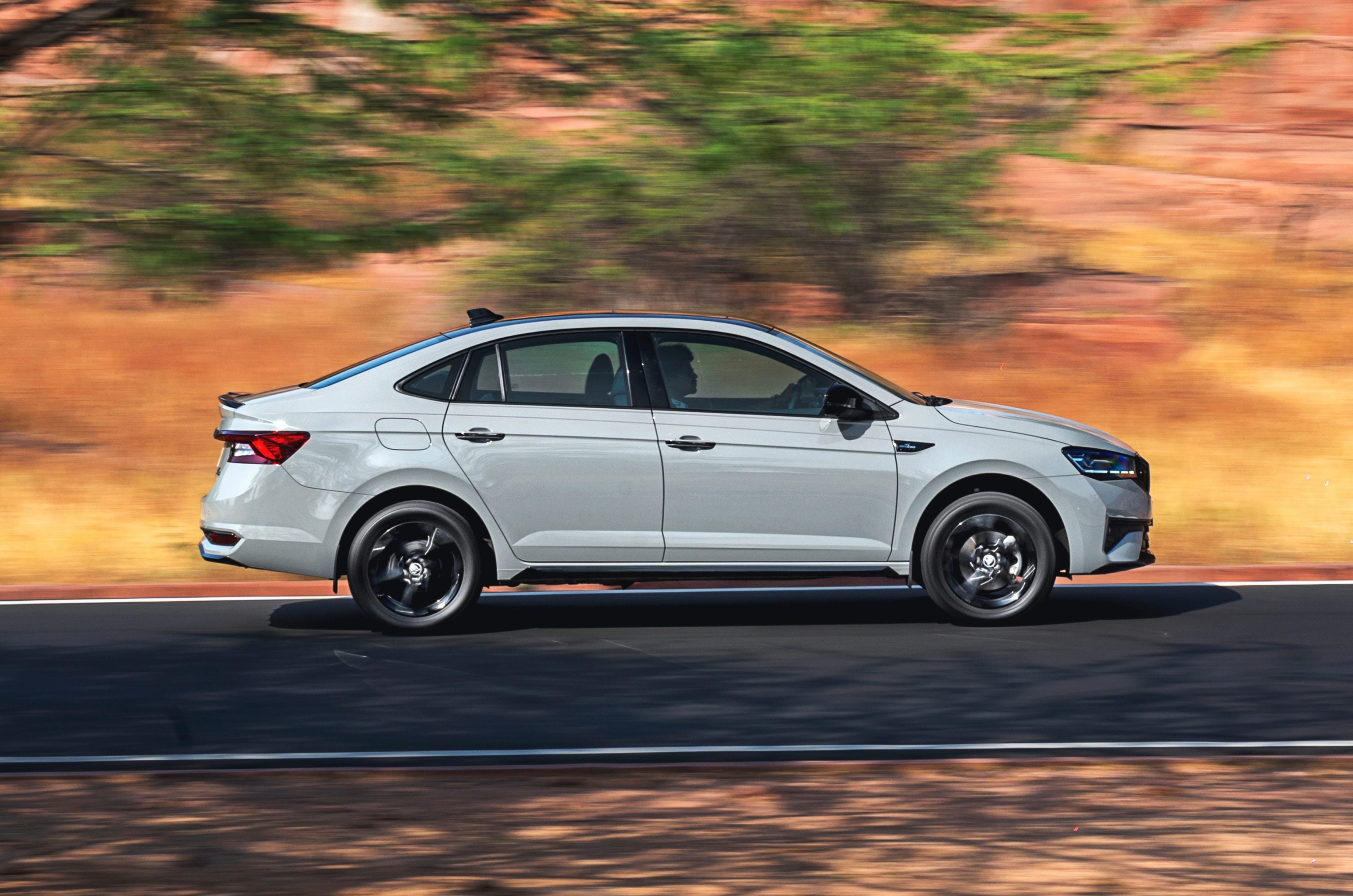
The Slavia facelift retains the overall silhouette of its outgoing version, but subtle updates give it a sharper look than before. The front sees updated detailing for the LED headlamps with segmented DRLs, a segmented chrome strip on the grille, new LED foglamp units, and a sportier bumper with a revised air dam. In profile, there’s a new design for the 16-inch alloy wheels, sharp body lines across the sides, and a chrome-tipped window line. Revised LED tail-lamps with sequential turn indicators, updated Skoda branding, and a restyled bumper make up the rear of the Slavia facelift. New colours for the Slavia include Arctic Silver and Capuccino Beige. Monte Carlo versions come with blacked-out exterior elements, badges and alloy wheels, red accents on the grille, special ‘Monte Carlo’ badges and dual-tone colour choices.
Skoda Slavia facelift dimensions
Skoda Slavia facelift dimensions
Length (mm)
4,552
Width (mm)
1,752
Height (mm)
1,507
Wheelbase (mm)
2,651
Ground clearance (mm)
179
Boot space (litres)
521
Skoda Slavia facelift interior updates
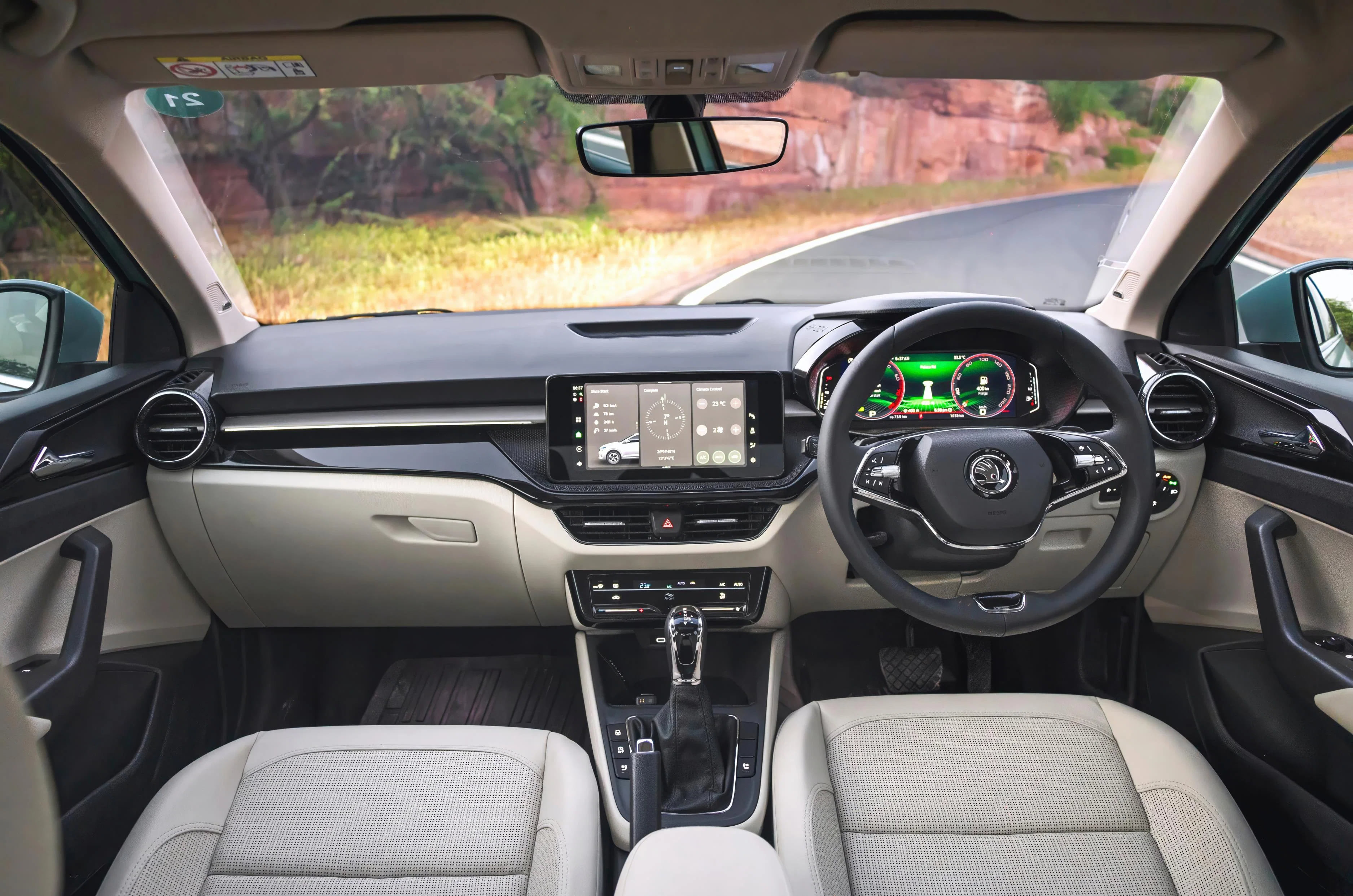
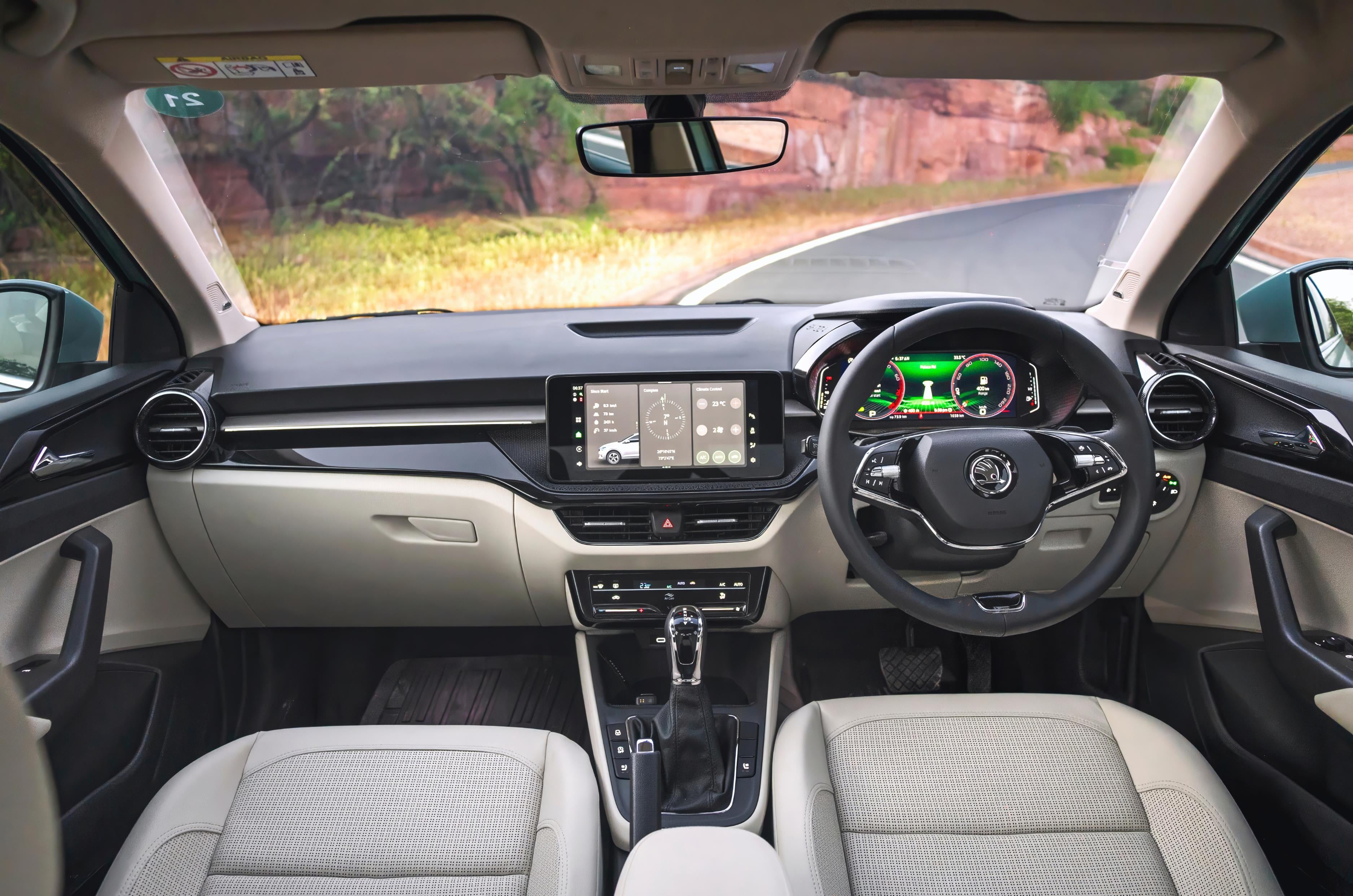
Inside, the Slavia facelift looks largely similar to the outgoing model, with the standard model carrying over the beige-and-black theme with copper inserts. Monte Carlo versions get an all-black theme with red inserts and exclusive red graphics across the screens. Meanwhile, the standard Slavia’s leatherette-upholstered seats have a monotone finish, as opposed to the older model’s dual-tone finish. On the other hand, Monte Carlo versions come with black leatherette seats and contrast red stitching. Elements like the two-spoke steering wheel, recessed space on the dash, circular air vents, and touch-based HVAC controls have been carried over.
Skoda Slavia facelift features
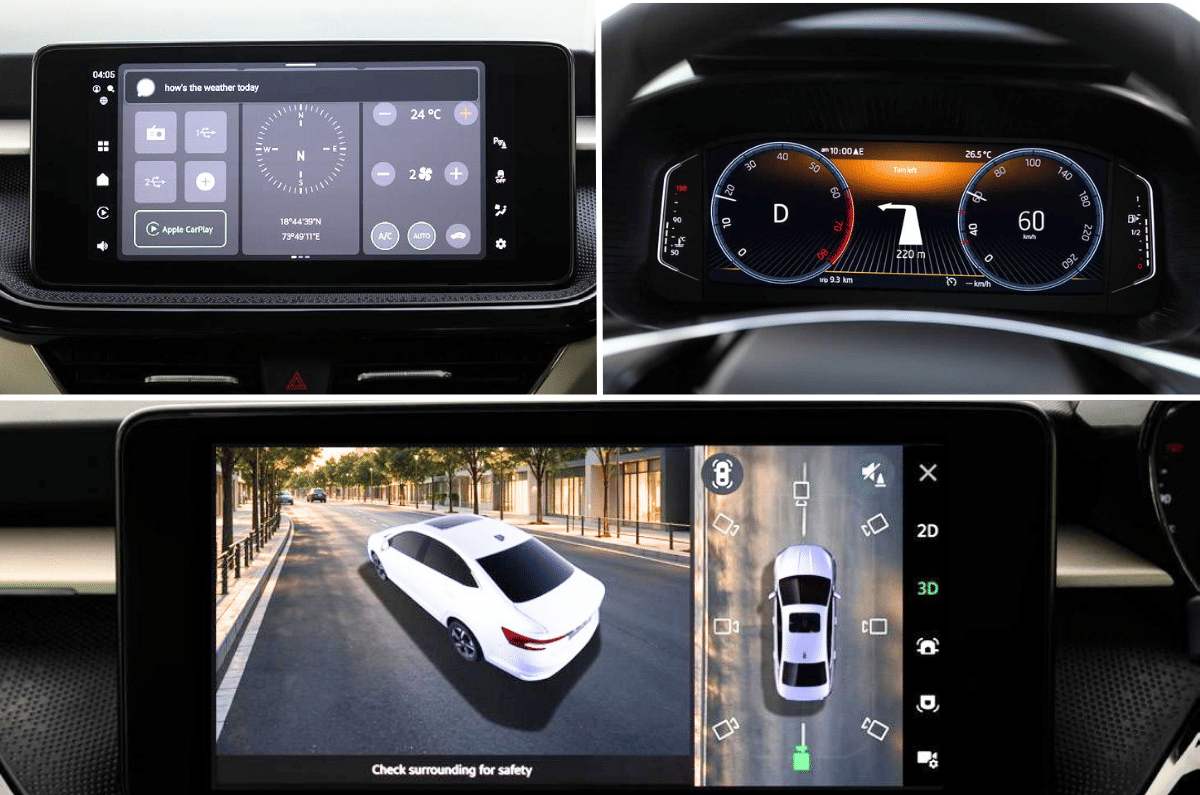
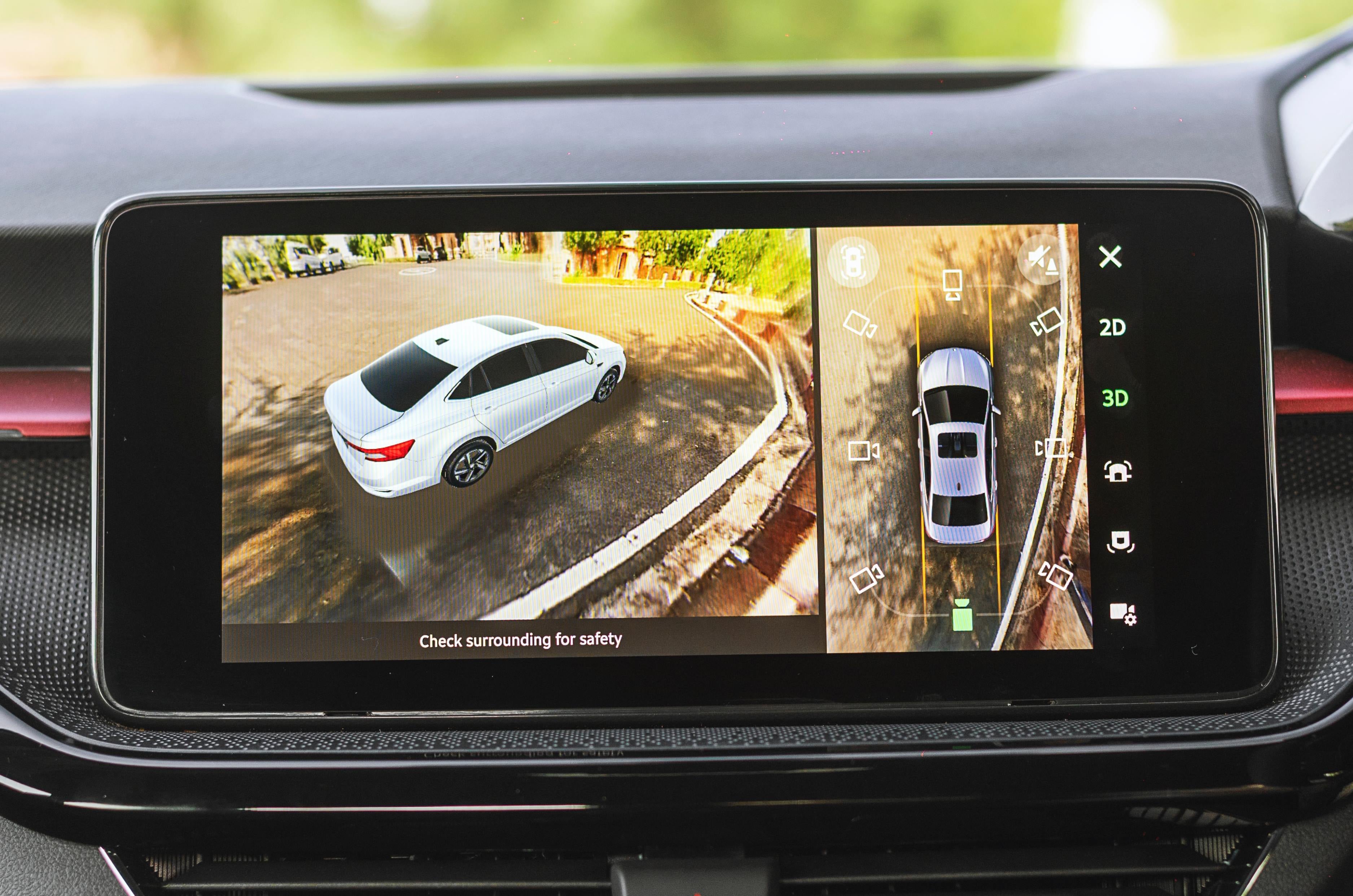
Skoda has bolstered the Slavia facelift’s equipment list, introducing a slightly larger 10.1-inch infotainment system with Google AI assistant, a new 10.25-inch digital driver’s display with configurable screens, segment-only rear seat massage function, and a 360-degree camera. A new variable-geometry compressor for the HVAC brings a much-needed improvement to AC performance. Other goodies like a single-pane sunroof, wireless Apple CarPlay and Android Auto, a wireless phone charger, powered and ventilated front seats, and an 8-speaker audio system have been retained. However, it skips an ADAS suite that rivals offer.
Skoda Slavia facelift powertrain options
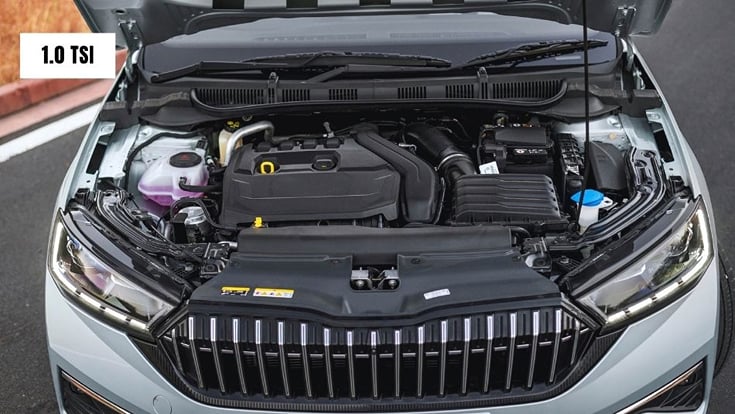
The Slavia facelift retains its 115hp, 178Nm, 1.0-litre and 150hp, 250Nm, 1.5-litre direct-injection turbo-petrol engines. Additionally, the former and latter retain their 6-speed manual and 7-speed DCT gearboxes, respectively. However, automatic versions of the 1.0-litre engine are now paired with a new 8-speed torque converter automatic, replacing the older 6-speed unit. Ahead of its launch, we’ve had the opportunity to review the Skoda Slavia facelift.
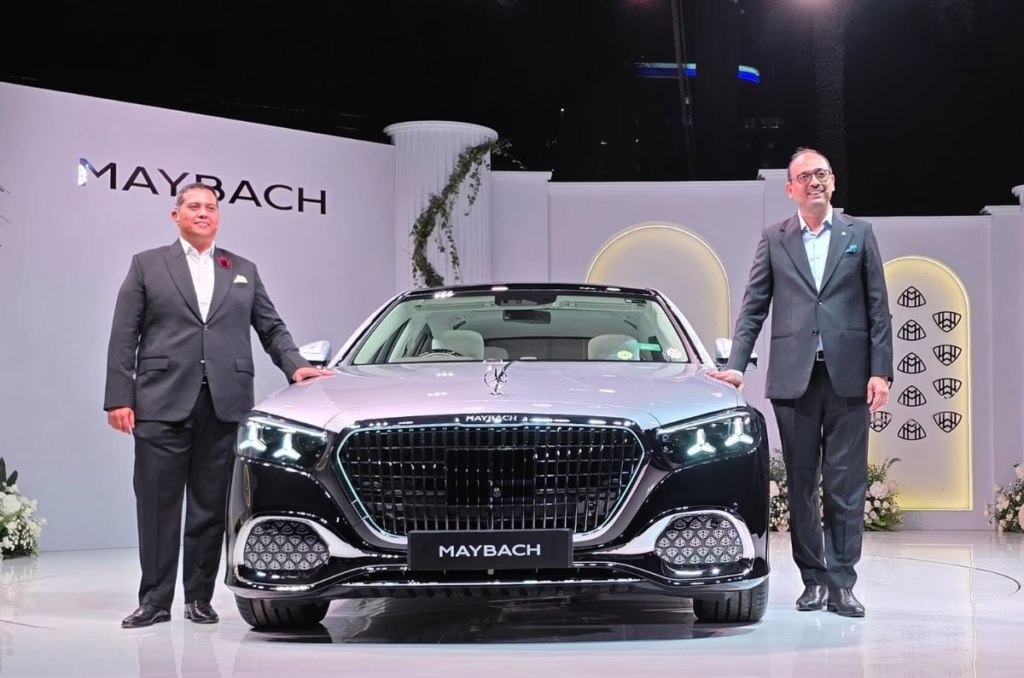
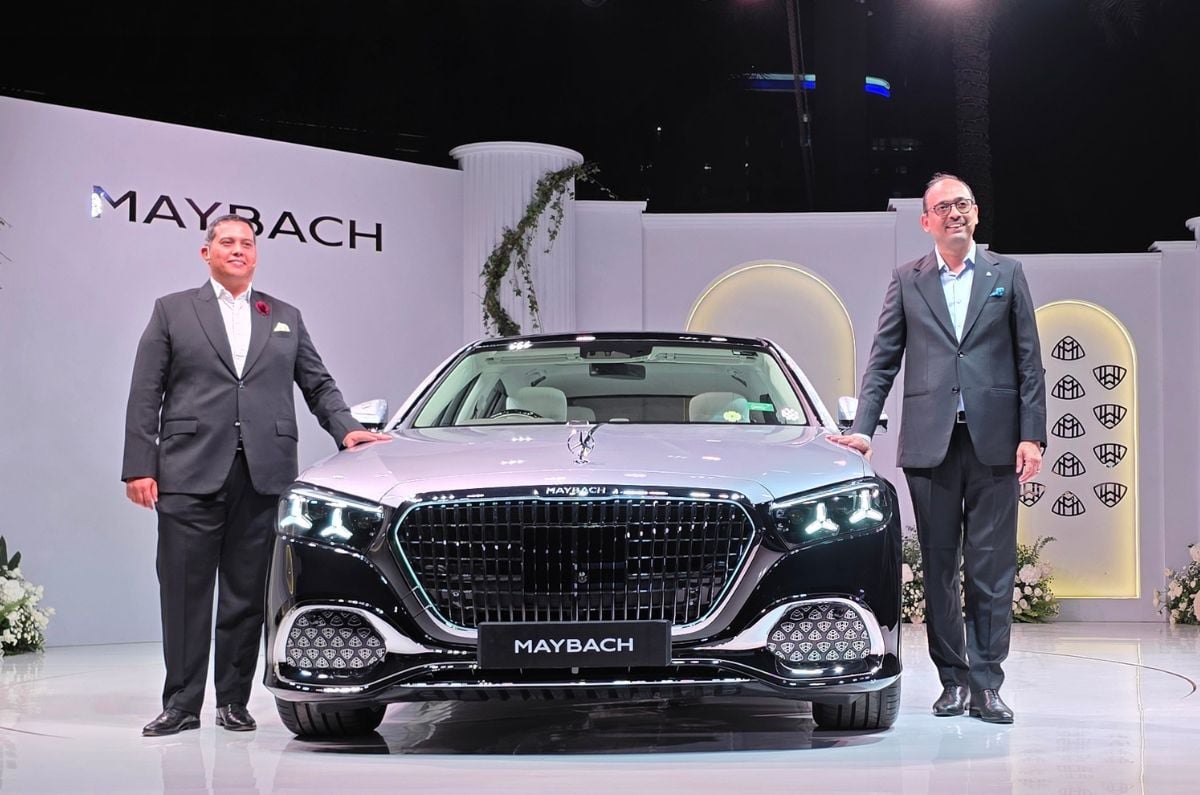
Mercedes-Benz has launched the Maybach S-Class facelift at Rs 3.35 crore (ex-showroom). It has been brought to India in S 580e guise, making it the first Maybach in India to be offered with a plug-in hybrid powertrain. Only 30 units have been allocated in the first batch, costing Rs 97 lakh more than the ‘regular’ S-Class Manufaktur Edition AMG Line that was launched just a couple of months ago. This is also Mercedes’s third PHEV in India, following the updated S-Class and AMG E 53 Hybrid. Mercedes says around 50 percent of its S-Class sales in India are of the Maybach variant.
Maybach S-Class comes to India in S 580e guise with 3.0-litre PHEV powertrain
Gets executive rear seats with full-length business console as standard
Offers 98km electric-only range thanks to a 22kWh battery
Mercedes-Maybach S 580e powertrain and specs
The new PHEV powertrain is one of the biggest updates to the Maybach S-Class, as the outgoing model was offered with a 4.0-litre V8. The S 580e uses a 443hp/560Nm 3.0-litre inline-six petrol engine paired with a 160hp/480Nm electric motor and a 22kWh battery. Total system output is 585hp and 750Nm, and it comes with all-wheel drive as standard. Mercedes claims the car can travel up to 98km and reach a top speed of 140kph on electric power alone. It also has a WLTP-certified fuel efficiency of 34.48kpl, although it’s likely not to be of much interest to a Maybach owner.
The S 580e offers three drive modes – Maybach, Electric and Battery Hold – along with adjustable energy recuperation, including one-pedal driving. As for charging, Mercedes will offer an 11kW AC on-board charger, and the car is also compatible with up to 60kW DC fast charging. The S 580e gets air suspension and rear-axle steering as standard.
Mercedes-Maybach S 580e interior and features
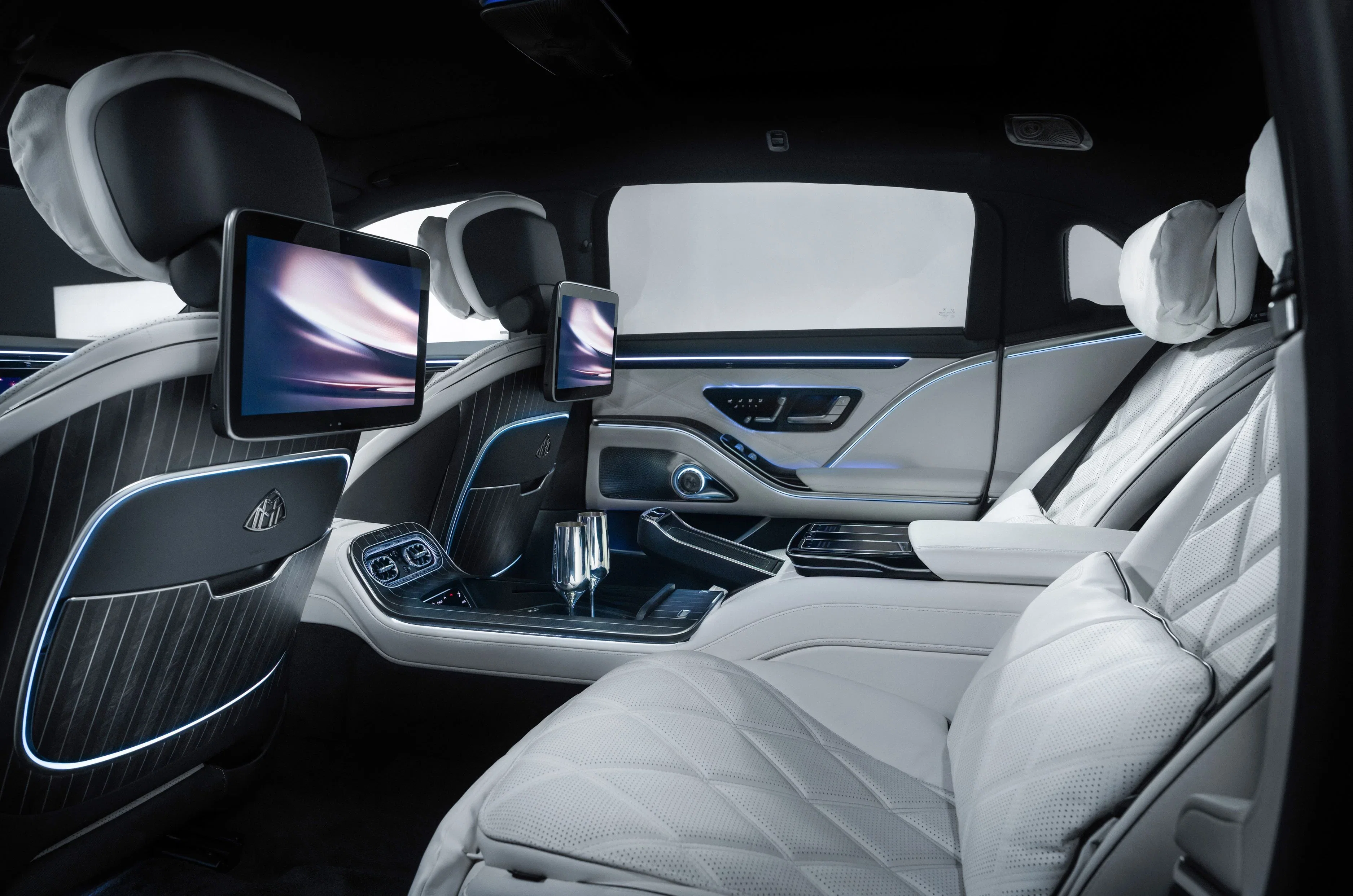
The focus of any Maybach is, of course, the back seat, and in that regard, Mercedes is offering the S 580e in a four-seat layout with executive seats with a full-length business console. Rear Comfort Package Plus is standard, offering fold-out tray tables, wireless charging pads, rear-compartment ambient lighting and even temperature-controlled cup holders. The seats recline to 43 degrees (compared to the regular S-Class’s 38 degrees) and are heated, ventilated and massaging. You also get two individual ‘smartphone’ remotes to operate everything instead of the tablet controller from before.
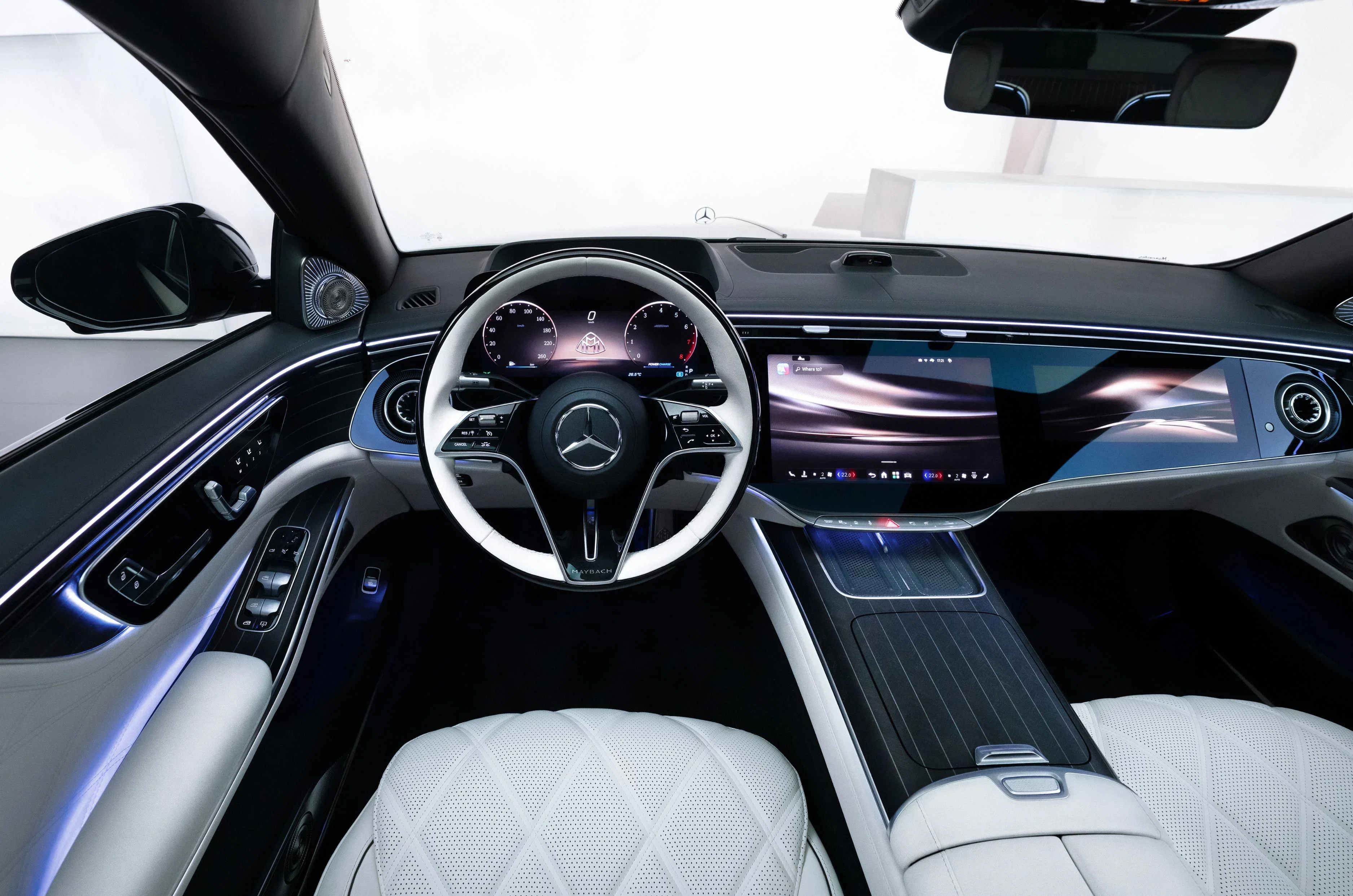
Up front, the dashboard remains largely unchanged from the regular S-Class. The MBUX Superscreen spans the front of the cabin, combining the central display with a front passenger display carrying a privacy function, while the driver gets a free-standing 3D display. The difference here is that you get a unique Maybach graphical theme for all screens, along with signature rose gold accents. Some of the equipment highlights include an augmented reality head-up display and navigation, a 31-speaker Burmester 4D surround sound system and two rear entertainment screens with wireless headsets.
The cabin is trimmed in Maybach-exclusive Nappa in crystal white and silver grey pearl, with Manufaktur piano lacquer trim, a Manufaktur roof liner in crystal white Nappa leather and Manufaktur seat backrest trim.
Mercedes-Maybach S 580eexterior design
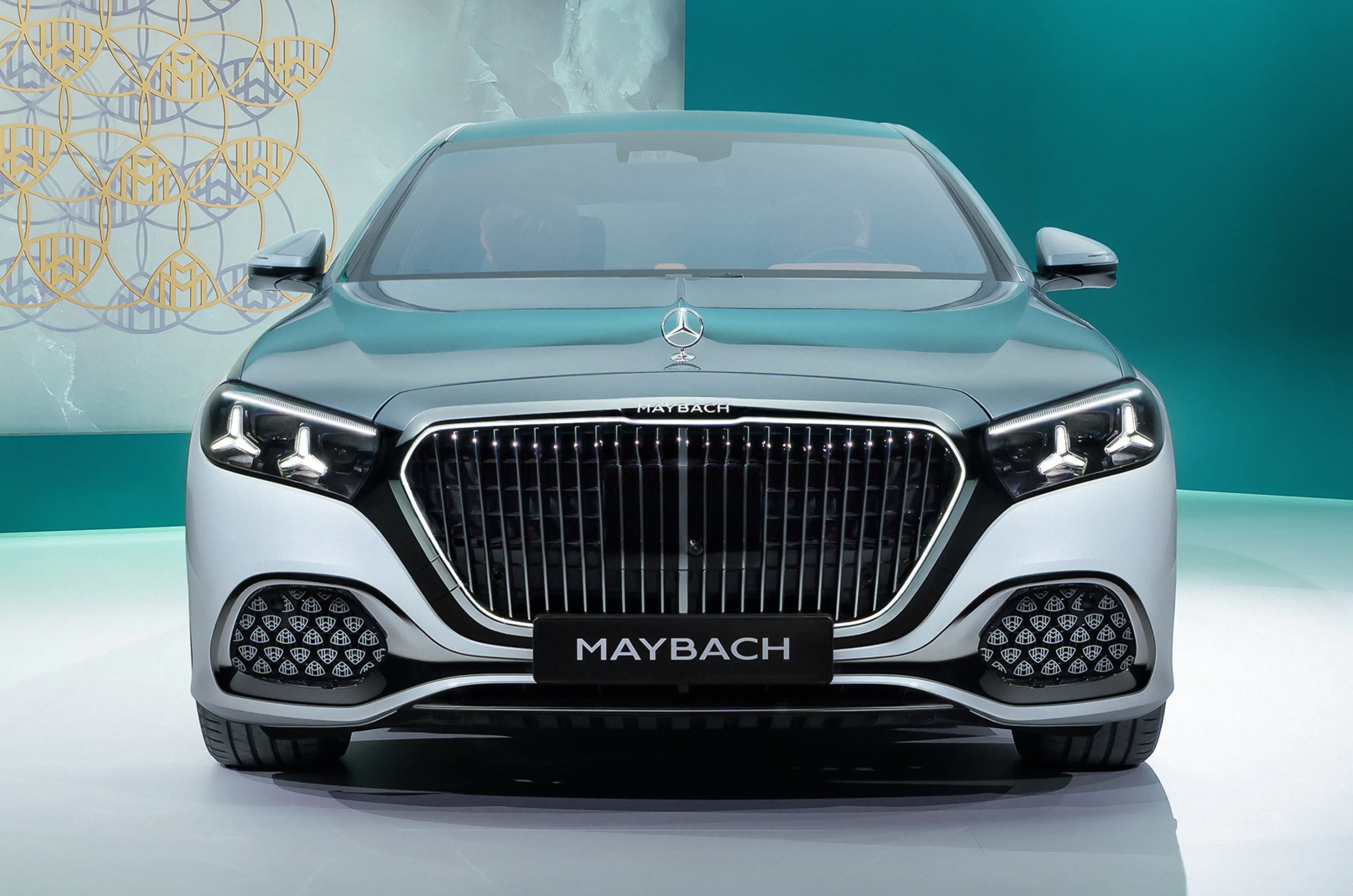
Changes to the exterior are similar to those on the regular S-Class facelift, albeit with a few Maybach-specific twists. For instance, here too the grille is 20 percent larger and framed by LED illumination, with an illuminated Mercedes star on the bonnet above. The difference is that the grille uses the Maybach signature vertical slats, and there’s an illuminated ‘Maybach’ wordmark above them.
The headlamps are the new, larger units with the latest version of Mercedes’s Digital Light ambient lighting and three-pointed star daytime running lamps (DRLs), but rather than the techie blue accents, there are rose gold embellishments with the Maybach logo on them.
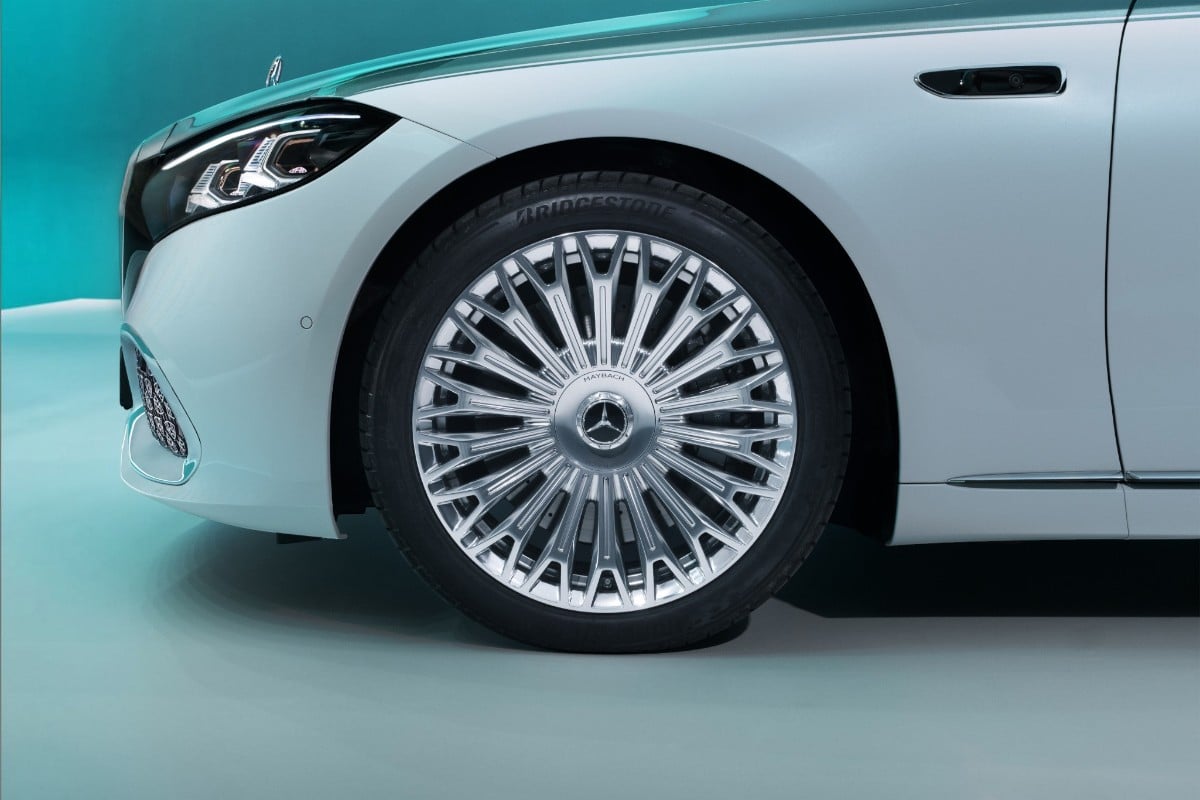
As before, the Maybach is 180mm longer than the long-wheelbase S, and that’s plain to see in profile. The India-spec model rides on 20-inch forged Maybach wheels, which also house a counterweighted Mercedes logo that always stays upright as the wheels turn. The Maybach logo on the D-pillar is illuminated as well, and the tail-lamps also get the triple-three-pointed star LED signature, like in the standard S-Class.
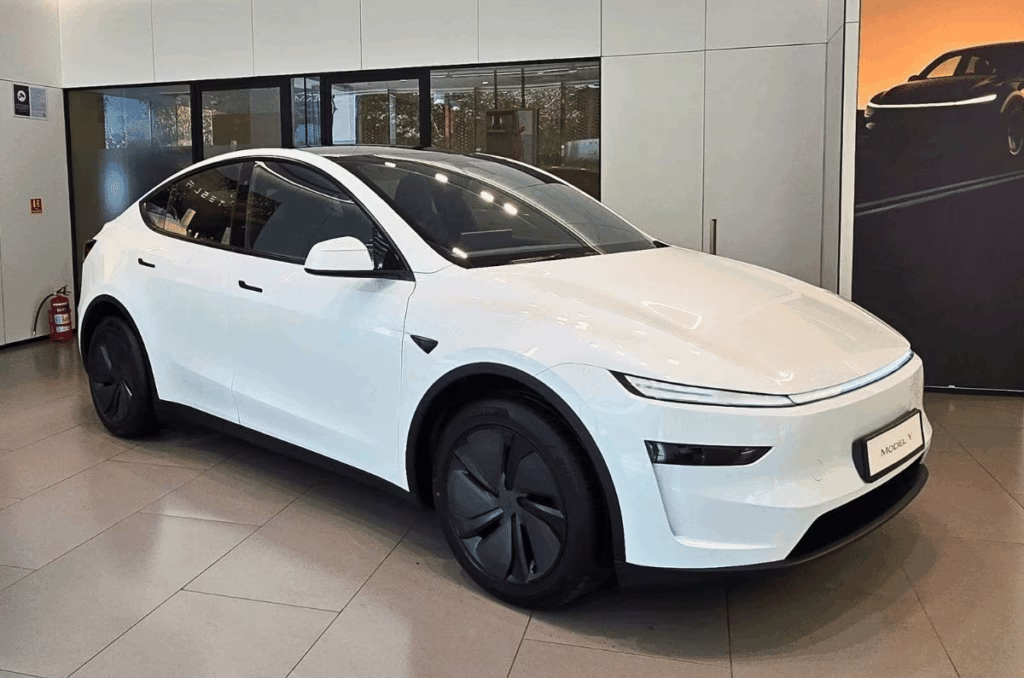
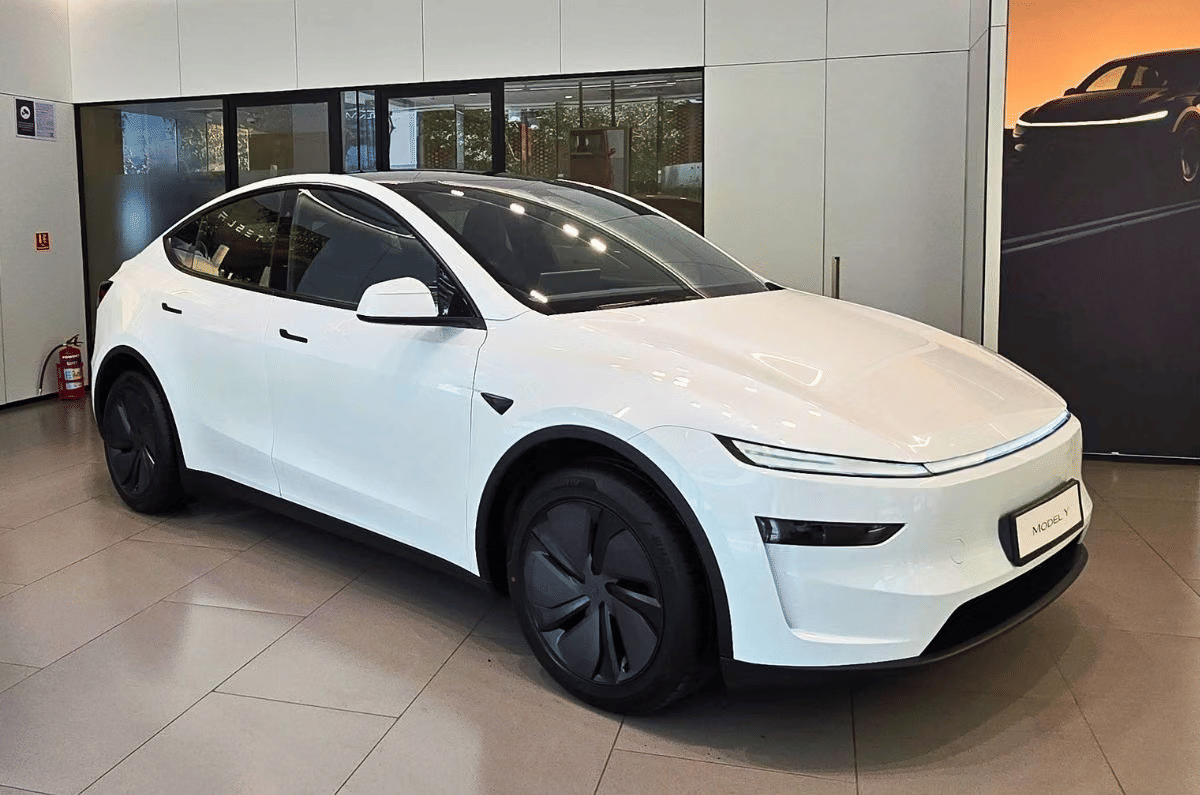
A little over 13 months after entering the Indian market, Tesla has crossed the 1,000-unit sales mark with its sole offering – the Model Y. According to the Vahan portal, Tesla India recorded total deliveries of 1,017 Model Y units between September 2025 and October 2, 2026. Last month, Tesla recorded its highest-ever monthly sales in the country at 291 units, up 322 percent from 69 units from the year-ago period. Month-on-month, too, sales were up 149 percent from 117 units in August.
Tesla India sales so far
Triple-digit sales registered since July
Tesla Model Y sales in India so far
Month
Units
Change (percent)
September 2025
69
–
October 2025
40
-42
November 2025
48
20
December 2025
69
44
January 2026
38
-45
February 2026
29
-24
March 2026
53
83
April 2026
43
-19
May 2026
36
-16
June 2026
38
6
July 2026
116
205
August 2026
117
1
September 2026
291
149
October 2026*
30
–
Total
1,017
–
*Data for October 1 and 2.
The American EV maker’s September sales performance came during a record month for India’s electric passenger vehicle (e-PV) market, which recorded monthly retail sales of 35,995 units; Tesla accounted for 0.80 percent of total e-PV sales. It also moved up to second place in the luxury e-PV segment for the first time, outselling Mercedes-Benz India, which sold 125 units in September. BMW India was the segment leader with 502 units and a 51 percent share. Tesla’s share of the luxury e-PV market rose to 30 percent in September 2026, from 11 percent a year earlier. In July, Tesla had moved ahead of Volvo to take third place.
Tesla Model Y L AWD.
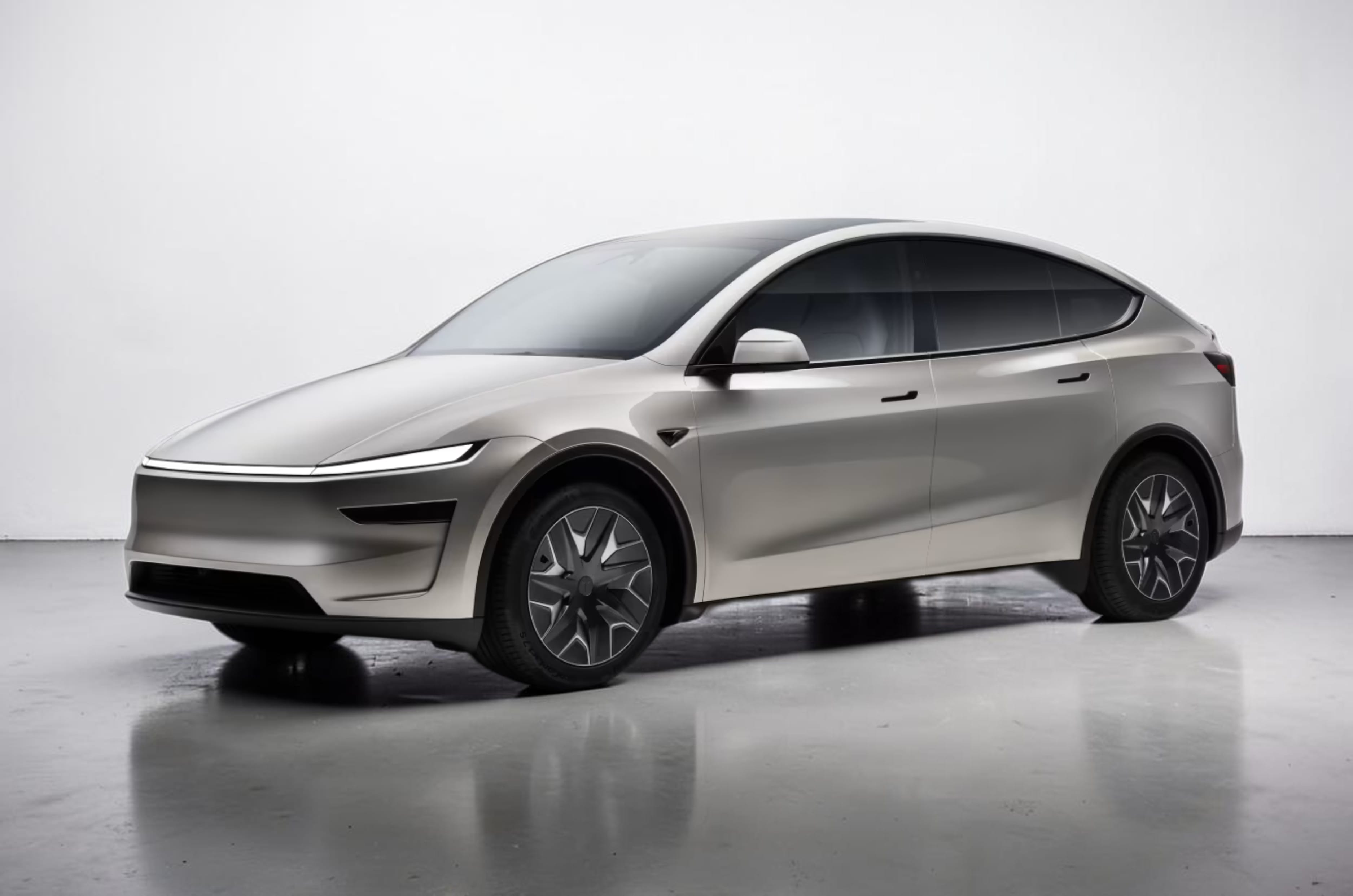
From September 2025 until June 2026, the Model Y recorded monthly deliveries in double digits. Sales rose 205 percent month-on-month to 116 units in July, compared to just 38 units in June. Between July and October 2, Tesla delivered 554 Model Ys, accounting for 54 percent of its total sales so far. This came after Tesla India cut the Model Y Premium RWD base trim’s price by Rs 9 lakh in May, bringing it down to Rs 50.89 lakh. The Tesla EV is available in five-seater (Model Y) and six-seater (Model Y L) iterations. Compared to the top-spec Model Y L Premium AWD, the Model Y Premium RWD costs Rs 11.1 lakh less.
The Model Y rivals the Hyundai Ioniq 5 (Rs 55.71 lakh), Kia EV6 (Rs 65.98 lakh) and BYD Sealion 7 (Rs 49.4 lakh to Rs 55.9 lakh).
Model Y specs, range
The Model Y Premium RWD gets a 64kWh battery (gross capacity) with a claimed 500km WLTP range, and it uses a 299hp, 420Nm electric motor. The battery size of the Model Y L has not been revealed. Since the Model Y L in right-hand drive configuration is also available in Australia, and going by the Australian-spec model, it is likely powered by an 88.2kWh battery (gross capacity). Power and torque figures are estimated at 514hp and 590Nm, respectively. Tesla India has confirmed that the Model Y L gets a dual-motor AWD setup and has a claimed range of 681km (WLTP).
Tesla India expanding sales, charging network
6 showrooms, 7 charging stations are operational here
Last month, Tesla India opened its sixth showroom in Chennai, adding to its existing outlets in Mumbai, Delhi, Gurugram, Bengaluru and Hyderabad. It has also started service and bodyshop operations in Chennai, taking its service network to eight locations.
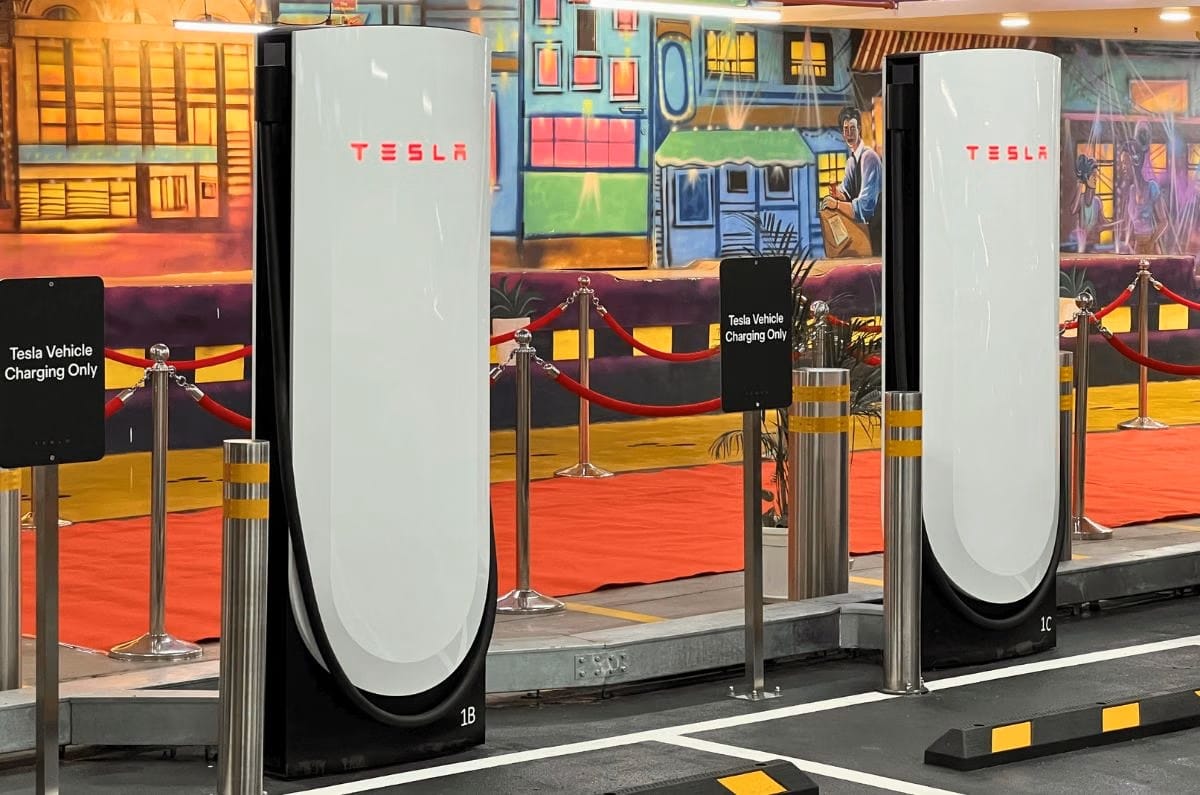
In August, Tesla opened its latest Destination Charging facility at Lake Shore Thane in Mumbai. It has four 11kW AC chargers. Tesla now operates seven charging stations in India, including locations in Navi Mumbai, Delhi and Gurugram, with 20 Superchargers and 24 Destination Chargers.
Ex-showroom prices mentioned above are as on October 5, 2026.
The mid-size sedan segment has been witnessing a resurgence. Things have spruced up with facelifts introduced for the Hyundai Verna and Honda City, and Skoda has also joined the bandwagon by giving the Slavia a facelift of its own. This is the first major mid-life update for the sedan since it was launched in 2022 and brings comprehensive updates throughout. If you’re looking to buy the Skoda Slavia facelift, our list of reasons helps you decide if it’s worth the wait or if it’s better to look elsewhere.
Powerful and zippy engines
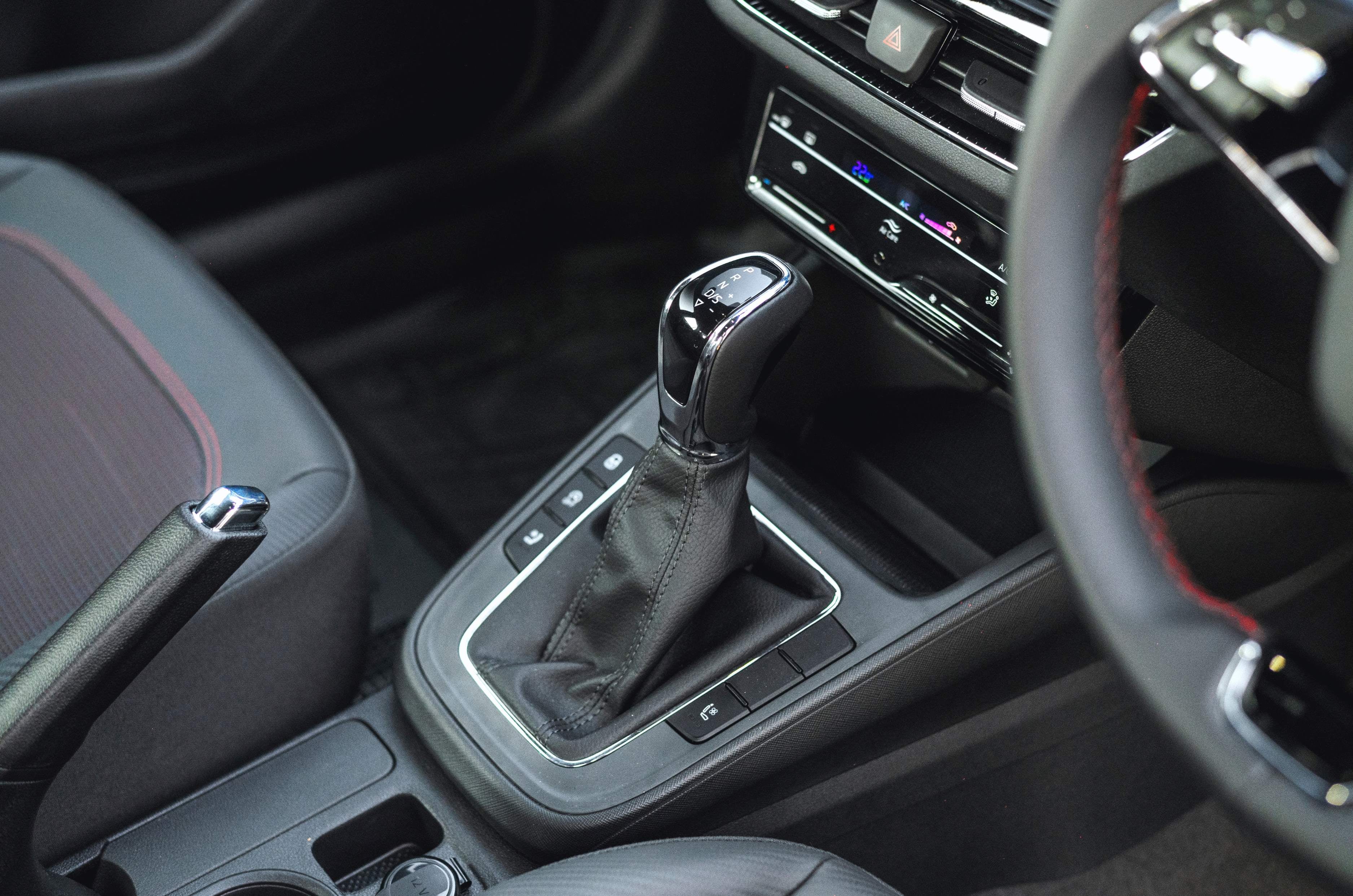
The Slavia facelift continues to offer the same 115hp/178Nm 1.0-litre 3-cylinder and 150hp/250Nm 1.5-litre 4-cylinder direct-injection turbo-petrol engines as its pre-facelift version. And it’s not a bad thing because both engines have enough pep. The talking point is the introduction of a new 8-speed torque converter automatic for the 1.0-litre engine, which replaces the older 6-speed unit. Shifts are smooth across gears, and manual mode lets you rev to the limit before upshifting, leading to an engaging driving experience. On the other hand, the more powerful 1.5-litre unit has plenty of grunt, has brisk acceleration, and shifts via the 7-speed DSG are snappy.
Precise handling and high-speed stability
Like the pre-facelift version, the Slavia continues to impress with its precise handling characteristics. Body roll is well maintained despite the high 179mm ground clearance, and it feels composed around corners. Moreover, the steering feels well-weighted as you increase speed. At higher speeds, overall stability is great as the suspension absorbs rough road surfaces really well.
Spacious, comfortable and feature-rich cabin
Updated trim materials and new feature additions make the interior of the Slavia facelift a great place to be in. The front seats are well contoured and supportive, and the same is the case for the rear seats, with plenty of knee room and foot room, especially for two adults. Additionally, there are plenty of storage spaces and also Skoda’s signature ‘Simply Clever features. The large 521-litre boot with its squarish opening is easy to load stuff into, while the 60:40 split-folding rear seats bring added convenience. Overall build quality, too, is solid, and everything is well put together.
Skoda has dialed up the equipment list by borrowing the Kushaq’s rear seat massaging function, a slightly larger infotainment screen, and a 10.25-inch digital driver’s display, with updated graphics. To top it all off, you get powered and ventilated front seats, a 360-degree camera, a single-pane sunroof, and wireless phone charging. On another note, the introduction of a variable geometry compressor has improved overall AC performance.
Reasons not to buy the Skoda Slavia facelift
Firm low-speed ride
Though the Slavia facelift’s high-speed ride is supple, the same isn’t the case at low speeds. There’s an underlying firmness that’s typically associated with European cars at low speeds, which takes away from the overall ride quality experience.
No manual option for the 1.5 TSI
Like with the pre-facelift version, the 1.5-litre TSI remains the more powerful, effortless, and stronger performer than the smaller 1.0-litre TSI. However, it is paired exclusively with a 7-speed DCT. Enthusiastic drivers will miss the option of a 6-speed manual gearbox, which was available on the pre-facelift version for a short while.