All you need to know about the MG Hector Tomahawk EV and PHEV

All you need to know about the MG Hector Tomahawk EV and PHEV

MG launched the Hector Tomahawk in India in both all-electric (EV) and plug-in hybrid (PHEV) versions, with prices starting from Rs 19.50 lakh and Rs 25.70 lakh, respectively. Both models are offered with a lot of new-age technology and have piqued the interest of enthusiasts. Here’s everything you need to know about the MG Hector Tomahawk EV and Hector Tomahawk PHEV. 

1. What are the exterior differences between the EV and PHEV?

Both versions get different grilles, front bumpers, and alloy wheels

EV
PHEV
 

Both the Hector Tomahawk’s EV and PHEV versions have some design differences. While the EV gets a blanked-off gloss-black grille, the PHEV gets a functional grille with chrome inserts and black trims underneath the headlights. The front bumper design is also different, with the PHEV getting a silver bullbar-like element in the centre that the EV misses. The headlights and illuminated MG logo are, however, shared. 

Not much is different in the side profile, except for the 18-inch alloy designs and red callipers on the top-spec Hector Tomahawk PHEV. If you opt for a dual-tone shade, the EV will have a black roof, while the PHEV will have a white roof. The rear design, however, is identical for both versions of the SUV.

2. What are the interior differences between the EV and PHEV?

Save for a luggage cover and different cabin themes, everything else is the same

MG Hector Tomahawk EV gets a beige and black cabin theme.

Save for a rolling luggage shade on the 5-seater variants of the EV, and a different cabin theme – brown and black on the EV and a darker brown and black on the PHEV – there is no visible difference. Everything else is the same, including the feature suite: a 15.6-inch touchscreen infotainment system, an 8.8-inch digital driver’s display, a 10-speaker Infinity sound system, a panoramic sunroof, powered and ventilated front seats with memory function for the driver’s seat, and a 50W fast wireless charger. 

MG Hector Tomahawk PHEV gets a brown and black cabin theme.

The safety suite is also identical in both Hector Tomahawk versions, which includes 6 airbags, a 360-degree camera with an under-bonnet view, Level 2 advanced driver assistance systems (ADAS) and a tyre pressure monitoring system (TPMS). 

3. What is the boot space on the MG Hector Tomahawk EV and PHEV?

EV and PHEV versions offer up to 610 litres and 192 litres of boot space, respectively

5-seater MG Hector Tomahawk EV’s boot space. 

The MG Hector Tomahawk EV is offered in either a 5-seater or a 7-seater version. The 5-seater offers 610-litre boot space, with all rows up, which can be expanded to 1,053 litres by folding down the rear row. The 7-seater version offers a 192-litre boot space with all rows up,  and 528 litres when the third row is folded. 

The PHEV, offered only as a 7-seater, offers 192-litre boot space like the EV’s 7-seater version, expandable to 528 litres by folding the third row. Neither the EV nor the PHEV version of the Hector Tomahawk are offered with a frunk (storage space under the bonnet). 

4. What are the powertrain specifications of the MG Hector Tomahawk PHEV and EV?

PHEV gets a 1.5L engine and 20.5kWh battery; EV offers a 69.2kWh battery pack

The MG Hector Tomahawk PHEV gets a 1.5-litre naturally aspirated petrol engine and a 20.5kWh battery pack, offering a combined output of 198hp and 230Nm. The front-wheel-drive (FWD) SUV has an all-electric range of around 115km and a total range including the petrol engine of around 1,100km. 

The MG Hector Tomahawk EV, on the other hand, gets a 69.2kWh battery pack, mated to a front-axle-mounted electric motor producing 204hp and 310Nm. It has a claimed range of 517km.  

5. Can the Hector Tomahawk PHEV be charged at a public EV charging station?

It supports 25kW DC fast charging

Yes, being a plug-in hybrid (PHEV), the MG Hector Tomahawk PHEV supports 25kW DC fast charging. This can replenish the battery from 30 to 80 percent in 35 minutes, like a typical EV. MG is also offering it with a 3.3kW home charger, which can recharge the battery pack from 10 to 100 percent in 7.5 hours.

6. Are the MG Tomahawk EV and PHEV more affordable with BaaS?

BaaS reduces the EV’s and PHEV’s initial prices by up to Rs 6.01 lakh and 3.91 lakh, respectively 

MG Hector Tomahawk EV, PHEV BaaS vs non-BaaS prices (in Rs, lakh)


Without BaaS

With BaaS

Initial cost difference

EV

19.50 to 23.50

13.99 to 17.49*

Up to 6.01

PHEV

25.70 to 27.80

21.79 to 23.89^

3.91

*Battery subscription fee is Rs 4.9 per km per month

^Asks for a battery subscription fee of Rs 3.2 per km per month

The BaaS (Battery-as-a-Service) option reduces the upfront price of the MG Hector Tomahawk EV by Rs 6.01 lakh and the PHEV by Rs 3.91 lakh. However, you then pay a battery rental fee for every kilometre you drive: Rs 4.90 per km for the EV and Rs 3.20 per km for the PHEV. At these rates, the upfront savings from BaaS are effectively used up after around 1.22 lakh km. The break-even point is 1,22,653 km for the EV and 1,22,187 km for the PHEV.

In simple terms, if you expect to drive less than 1.22 lakh km over the entire ownership period, BaaS could be the more affordable option because of its lower initial cost. However, if you plan to drive more than 1.22 lakh km, buying the Hector Tomahawk with the battery included is likely to save you more money in the long run.

There is also another factor to consider. Under the BaaS plan, you do not own the battery, so your long-term costs depend on the rental agreement. If MG increases the per-kilometre fee or changes the contract in the future, your running costs could also increase. So, while BaaS would be more affordable for most buyers, purchasing the vehicle with the battery included may offer greater certainty in running cost calculations.

Prices are ex-showroom, India.

Yamaha India eyes capacity expansion as plants near full utilisation

Yamaha India eyes capacity expansion as plants near full utilisation
Yamaha RayZR on a production line

Yamaha Motor India has begun evaluating additional manufacturing capacity as it expects its existing 1.5 million unit annual output to be fully utilised within the next two to three years. The Japanese two-wheeler maker operates plants in Surajpur, Uttar Pradesh and Kanchipuram, Tamil Nadu, with a combined annual capacity of 1.5 million units, and is weighing whether to expand within its current footprint or invest at a new location.

  1. Yamaha India’s 1.5 million unit annual capacity expected to be fully utilised within 2-3 years
  2. Domestic sales up 41 percent to 4.1 lakh units in H1 2026
  3. Annual sales target of 50,000 units set for the newly launched YZF-R2

Yamaha India capacity expansion: Key details

New plant requires 3-4 years of lead time; expansion within existing sites also being considered

Hajime Aota, Chairman of the Yamaha Motor India Group, said the company still has space to expand at its existing facilities, reducing the immediate pressure to acquire new land. The decision on expansion – whether at Surajpur, Kanchipuram or elsewhere – will depend on manufacturing processes, supplier allocation and longer-term domestic and export requirements. “At this moment, we have capability and we have space,” Aota said, while noting that planning for a new greenfield facility typically requires a lead time of three to four years.

Yamaha expects its total volumes (including exports) to exceed 1.1 million units in 2026, with domestic sales up 41 percent to 4.1 lakh units in the first half of the year. The company expects H2 volumes to be higher, supported by festive demand and new product launches. On the YZF-R2, which debuted yesterday at Rs 2.30 lakh, Yamaha has set an annual domestic sales target of 50,000 units.

Aota described India and Indonesia as Yamaha’s two biggest global growth engines, with India offering the stronger long-term growth opportunity. However, he noted that India must continue improving manufacturing productivity and technical capabilities to narrow the gap with Indonesia and expand its role in Yamaha’s global manufacturing network. The company employs approximately 10,000 people across its Indian operations and has invested over Rs 2,000 crore in research, development and manufacturing in India over the past eight to ten years. The quantum of investment required for the next phase of expansion has not been disclosed.

Yamaha expects the R2 to drive total sales to 11 lakh units in 2026

Yamaha expects the R2 to drive total sales to 11 lakh units in 2026
Launch event image of the R2 with top Yamaha executives

Yamaha is targeting annual sales of 50,000 units for the newly launched R2 in India as it looks to strengthen its position in the country’s premium motorcycle market. The target translates into a monthly run rate of more than 4,000 units, making the R2 an important volume contributor to Yamaha’s premium portfolio rather than a niche model positioned above the R15.

  1. Yamaha R2 starts at Rs 2.30 lakh and is the most feature-packed 200cc motorcycle
  2. India’s premium segment is growing faster than the broader two-wheeler segment
  3. One third of Yamaha’s total sales came from premium motorcycles

R2 is expected to contribute 18 percent of total sales by 2026 end

Scooters account for 46 percent of Yamaha’s sales so far in 2026

The R2 will be manufactured in India and has been designed for domestic and international markets. Company executives said exports remain part of the R2 programme but will follow after the new model establishes itself in India. The R2 target comes as premium motorcycles grow considerably faster than the broader Indian two-wheeler market. Yamaha outpaced the overall market, with its first-half volumes rising 41 percent to 4.1 lakh units from 2.9 lakh a year earlier. This was nearly twice the 21 percent growth recorded by the broader domestic two-wheeler industry, which expanded to 1.06 crore units.

Premium motorcycles accounted for around one-third of Yamaha’s volumes during the period, while scooters contributed approximately 46 percent. The R2’s annual target translates into average monthly sales of about 4,167 units, or approximately 18 percent of Yamaha’s average monthly premium motorcycle volumes in the first half of 2026, underlining the model’s importance to the company’s growth plans.

Raw material costs may affect growth

The rising costs could lead to price hikes too!

The stronger volume outlook comes with pressure on profitability from rising raw-material costs, particularly aluminium. Hajime Aota, Chairman of Yamaha Motor India Group of Companies, said “I wish I did not have to do it,” referring to a possible further price increase. “But if I am going to sacrifice profitability, I may. That is where we are.”

Yamaha will have to balance higher input costs against the price sensitivity of the Indian market as it seeks to sustain growth through the festive season. The company is also expanding its premium retail network, particularly in Tier 1 and Tier 2 cities. It expects the Blue Square network to exceed 600 outlets by the end of 2026.

The R2 launch, network expansion and continued growth in premium motorcycles provide Yamaha with momentum for the second half. Reaching more than 11 lakh units in 2026 will also depend on export performance and the company’s ability to manage cost pressures without weakening domestic demand.

With inputs from Stephen Raj Antony.
 

Hero MotoCorp to invest Rs 1,758 crore more in Ather

Hero MotoCorp to invest Rs 1,758 crore more in Ather

Hero MotoCorp will invest up to Rs 1,758 crore to increase its stake in Ather Energy, taking its holding in the electric two-wheeler maker from 29.88 percent to approximately 32.8 percent on a fully diluted basis.

  1. Hero MotoCorp will buy existing Ather shares worth up to Rs 1,758 crore
  2. Its stake will rise from 29.88 percent to approximately 32.8 percent
  3. The deal comes shortly after Hero’s separate Rs 1,000 crore investment in Ather

The investment was approved by Hero MotoCorp’s Committee of Directors on August 27 and will involve the purchase of existing Ather shares from an existing shareholder. This makes it a secondary transaction, rather than a fresh issue of equity by Ather. The deal will be funded entirely through cash and is expected to be completed by September 3, 2026. No government or regulatory approvals are required.

The latest investment comes shortly after Hero announced plans to invest up to Rs 1,000 crore in Ather through a preferential issue. Ather subsequently allotted Hero convertible warrants worth Rs 959.99 crore as part of that investment.

The two transactions are separate, with the earlier investment involving securities issued by Ather and the latest Rs 1,758 crore deal involving the purchase of existing shares. Taken together, Hero has committed up to around Rs 2,758 crore to Ather through the two transactions.

Hero has been an investor in Ather for several years and is already its largest shareholder. The latest investment will further strengthen its position in the company as Ather continues to expand its electric two-wheeler business and charging network across India.

Ather’s turnover has grown significantly over the past three financial years, rising from Rs 1,753.8 crore in FY2024 to Rs 2,255 crore in FY2025 and Rs 3,671.76 crore in FY2026.

The company designs, manufactures and sells electric two-wheelers and operates its own charging network with an open-source connector that’s shared with Vida. Ather’s portfolio includes the 450 range and Rizta, while its presence has expanded across the country. As for the brand’s immediate plans, Ather is slated to launch its first-model based on the EL platform tomorrow, at its community day, intended to slot in below the Rizta. 

With inputs from ANGITHA SURESH

Tata Motors adopts Tata.cars as new identity for PV business

Tata Motors adopts Tata.cars as new identity for PV business
Tata Motors adopts Tata.cars identity for passenger vehicle business

Tata Motors announced Tata.cars as the new retail name for its passenger vehicle (PV) division on Thursday. Both internal combustion engine (ICE) and electric vehicle (EV) models will now come under Tata.cars umbrella brand. Tata.ev will continue as a sub-brand under the wider Tata.cars brand. This new identity will progressively appear across showrooms, digital touch points, after-sales and service operations, and marketing communications.

  1. Tata.ev to continue as a sub-brand under Tata.cars
  2. Tata Motors Passenger Vehicles to remain as the registered legal entity
  3. New principal colour and typeface are a part of the new identity

That said, the company’s legal identity and corporate structure remain unchanged. Tata Motors Passenger Vehicles will continue to be the registered legal entity for statutory filings, manufacturing plants, official contracts and regulatory obligations. 

Tata Motors adopts Tata.cars as new identity for PV business

Tata Motors said the new identity formalises how Indian customers already refer to its passenger vehicles as “Tata cars”. “In many ways, Tata.cars is an identity that India has given us. Today, we formally embrace it,” said Shailesh Chandra, Managing Director, Tata Motors Passenger Vehicles and Tata Passenger Electric Mobility. “The Tata name carries our heritage, our values and the trust earned over generations, while Tata.cars gives our passenger vehicle business a distinct, modern and future-facing expression,” he added.

Vivek Srivatsa, Chief Commercial Officer, Tata Passenger Electric Mobility, said the transition would also introduce a new visual and sensory system built around a design philosophy called Parallel Pathways. It includes Ambition Blue as the principal colour, a bespoke typeface called Parallel Display and a new sonic identity. Tata Motors will also begin updating its dealerships over the next few months with redesigned interiors and a new stainless-steel facade featuring louvred panels.

The new brand system has been designed to work across products, technologies, customer experiences and markets. While customers will increasingly encounter Tata.cars across sales and service channels, corporate and regulatory references will continue under Tata Motors Passenger Vehicles.

With inputs from Ketan Thakkar.
2027 Bentley Torcal preview: Riding along in Crewe’s first EV

2027 Bentley Torcal preview: Riding along in Crewe’s first EV
Bentley Torcal EV prototype first drive

Only the day before I would be surprised with a passenger ride in a prototype of Bentley’s new electric SUV, I just so happened to be engaged in a conversation about why an EV would be so well suited to this brand in particular. Yes, as we’ve said in the past, EVs are perfect for luxury applications – smooth, silent and effortless as they are. But the other realisation we made was that Bentley, despite leaning into sportiness as one of its core brand pillars, has never been a slave to weight loss. Even its lightest car in 85 years – the new, stripped-down Supersports – is but one kilogram shy of two tonnes! And yet its cars have always managed to deliver the comfort expected of a super-luxury vehicle, and somehow also the poise and agility of a sports tourer. A tricky balance indeed. 

Reining in 2.5-tonne-plus vehicles, then, isn’t so much a challenge for Bentley’s chassis engineers as it is standard operating procedure. And thus, when the time came to create the brand’s first EV – a five-metre SUV no less – weight management was the last thing on their minds. Being a luxury EV with the full technological might of the Volkswagen Group behind its development, it would be all too easy to just squeeze out a bunch of eye-watering performance figures and leave it at that. But Bentley engineers say that won’t necessarily be the case, and certainly not the focus. The focus, instead, was on making the Torcal walk the razor-thin line between sport and luxury that every one of their cars is required to. 

The Torcal prototype rolls silently into view at the driveway of our hotel in Monterey, California shrouded as it is in its crystalline camouflage – a motif we’ll revisit later. It hides the details well enough, but what’s clear is that this a tall and squared-off SUV, much like the Bentayga, and though aerodynamics will no doubt have been a consideration, that Bentley boldness is recognisable in its bluff front fascia. It’s actually a little smaller than a Bentayga, but the smaller front overhangs tell me they’re making good use of its wheelbase.

We’re ushered quickly into the cabin, which too is wrapped up from floor to headliner, and quickly given a brief before prying eyes can come in for a closer look. There’s stuff we’re told about that I can’t reveal today, but I’m hurriedly making notes all the same. But then Torcal product line director Martin Page presses the start button, and my brain does a somersault. “It’s… idling?” I mutter, as he cracks a smile from the driver’s seat.

Digital meets analogue

Yes, they’ve given the Torcal the sound of a V8, the most enduring engine layout the brand has used in its century of making cars. And while this is hardly the first EV to mimic an engine, there’s a mesmerising authenticity to it that I’ve never experienced from a synthetised setup before. I’d go as far as saying sounds better – more layered and full-bodied than the twin-turbo 4.0-litre you’ll find in the Continental range, and we’re still at a standstill. It’s uncanny.

As we move off, the sound swells, ebbs and flows with an almost flawed resonance that fills up the cabin. It’s not loud or overwhelming; but it’s ever present, though I’m told it can be switched off if not desired. I’m told the car is in ‘Bentley’ mode – the middle ground, as we know from existing models – and once on the move, the sound fades into the background.

The story behind the V8 sound is almost as fascinating as the sound itself. Any other brand would record one of its V8 engines, play the recording through the speakers and call it a day. But in keeping with Bentley’s history of doing things painstakingly by hand, they recorded the sound and got an orchestra to recreate it with live instruments. What I’m listening to is a mix of drums, viola and bass guitar – every beat and note fed into a machine and algorithmically meted back out in proportion with the torque demand. Moving up to Sport mode suitably increases the volume and even alters the pitch slightly, but what doesn’t change is the genuine feeling that somewhere up front, an old-school, hairy-chested V8 is thumping away to move us forward.

The crystal method

The over-engineering doesn’t stop there, however; Bentley’s handcrafted approach extends to the graphics of the Torcal – both physical and digital. The diamond motif has long been a part of the Bentley brand, and you’ll see it everywhere from its cars’ grille mesh patterns, to stitching, to upholstery quilting. Something catches my eye from under the sheet that covers the rear doors, which I carefully lift up to catch a sneak peek.

It’s ambient lighting, shimmering, moving as it cascades across a soft Merino wool door card. The idea was to simulate light flowing through crystal, and though it’s probably a simulated effect, it is incredibly convincing, and oddly relaxing to stare at. Curiously, it’s blue, and we’re in Sport mode, Bentley having chosen to buck the trend of equating ‘Sport’ with ‘red’.

But as Martin cycles back and forth through the modes of the ‘Curation Engine’ – a luxurious way to say ‘drive mode selector’ – I notice something else. The graphics on the curved touchscreen – also with a crystalline theme – are slick and incredibly sharp, in a way I haven’t seen in any Bentley before. Credit to the new-gen PPE (Premium Platform Electric) and its E&E architecture the Torcal shares with the electric Cayenne, I suppose. 

I then glance at the digital speedo, which shows a digital number encased in a ring of crystal, which again hides a fascinating story. This seemingly innocuous graphical element is not the result of Adobe After Effects or, god forbid, generative AI. Bentley commissioned Cumbria Crystal to make a cut crystal tube and then shone light through it from various angles. This was filmed and then programmed to play back in sync with the car’s speed, so what you’re seeing is high-res footage of real light passing through real glass, moving in a circle as the car goes faster. But what is luxury, if not unnecessary excess?

Effortless heft

My mind circles back to my conversation from the previous evening, however, as we approach the Freeway. Bentley hasn’t revealed power and torque figures yet, describing them only as ‘ample’, and that’s clear as we break off the on-ramp and merge into the swarm of American commuters hurrying to work. The seat-of-the-pants sensation is one of power that feels effortless, if not hurried, if that makes sense, which is in line with any of the V8 hybrid cars Bentley also sells.

Bentley also hasn’t revealed the kerb weight figure, but going by other EVs of this size and nature, my guess puts it well past 2.5 tonnes and closer to 2.7 or 2.8. Not that you can tell from inside, where there’s a composure that feels truest to the contemporary range of Bentley models. The Torcal uses two-chamber air suspension, adaptive dampers and active anti-roll bars to control its immense mass, and I suspect a bit of magic too, because here too, they’ve managed to find a balance. I noticed the prototype was riding on 22-inch wheels with supercar-like 315-section rear tyres, and road noise is kept incredibly well in check. 

The ride is hefty but not harsh like some sports SUVs, comfortable but not floaty like some outright luxury SUVs. It stays steady on the Freeway, and as we get back to the narrower roads that snake around Pebble Beach, it stomps out imperfections with authority. As Martin takes the opportunity to lean it into some curvier bits of road, I sense a bit of give and roll, but not too much. I’m told they could have erased it entirely, but that would feel too unnatural.

And that sums up the Torcal nicely. It feels ‘natural’, and even from this short passenger ride, a great exercise in manufacturing analogue authenticity from what is a very digital set of tools. When advancing beyond the realm of mundane transportation and into more desirable applications – luxury, or performance, for instance, of which Bentleys have to do both – an EV has to be more convincing. So far, ballistic numbers have been that route for most, but there is an increasing effort to build tangible character into these cars that must be applauded. The Torcal feels like one of the best examples of this yet, and though far from the finished product, it’s a promising sign that Bentley is on the right track with its first EV.

Porsche Cayenne Electric India debut on September 30

Porsche Cayenne Electric India debut on September 30
Porsche Cayenne Electric

Porsche is set to debut the Cayenne Electric in India on September 30. The electric SUV was launched in India earlier last year, with prices starting at Rs 1.76 crore (ex-showroom), and is available in Cayenne Electric and Cayenne Turbo Electric variants. 

  1. 113kWh battery pack with claimed range of up to 642km
  2. Optional 11kW wireless charging available
  3. Up to 1,156hp in Turbo Electric; 0-100kph in 2.5sec
  4. Adaptive air suspension offered as standard 

Porsche Cayenne Electric: Battery and range

The Cayenne Electric is available with a 113kWh battery and dual electric motors with all-wheel drive. The standard model produces 408hp and 835Nm, while the Turbo Electric makes 1,156hp and 1,150Nm.

The electric SUV does 0-100kph in 4.8sec, has an electronically limited top speed of 230kph and a claimed range of 642km. The Turbo Electric cuts the 0-100kph time to 2.5sec, has a 260kph top speed and a claimed range of 623km. Both variants get adaptive air suspension as standard, while rear-axle steering is optional.

The Cayenne Electric can recover energy at a rate of up to 600kW through regenerative braking, depending on speed, temperature and battery charge level. Porsche says this is equivalent to Formula E levels of recuperation and claims that 97 percent of braking can be handled by the electric motors alone. The Cayenne Electric is also the first Porsche to be offered with an optional 11kW wireless charging system.

Porsche Cayenne Electric: Exterior

The Cayenne Electric retains the overall silhouette of the combustion-engined Cayenne but gets a revised front end. It has a blanked-off grille with air vents on either side of the bumper to cool the battery and electrical components, along with active aerodynamic vents lower down on the bumpers.

The SUV gets gloss-black lower cladding and 20- to 22-inch alloy wheel options. At the rear is a full-width LED light bar with illuminated Porsche lettering and a black bumper with horizontal elements. The Turbo Electric gets a body-coloured skid plate, while the standard version has an all-black finish.

At 4,985mm, the Cayenne Electric is 55mm longer than the combustion-engined Cayenne and has a 3,023mm wheelbase. It is 1,980mm wide and 1,674mm tall. Porsche quotes a 90-litre frunk and 781-litre boot, with the latter expanding to 1,588 litres with the powered rear seats folded.

Porsche Cayenne Electric: Interior and features

The Cayenne Electric gets a digital driver’s display and a 14.5-inch curved infotainment touchscreen, which is a first for a Porsche model in India. An optional 14.9-inch passenger display and augmented-reality head-up display are also available.

Other equipment includes eight-way electrically adjustable front seats, which can be upgraded to up to 18-way adjustable ones, four-zone automatic climate control, ventilated front seats, a panoramic sunroof and wireless phone charging. A 14-speaker Bose sound system is standard, while a 20-speaker Harman Kardon system is available as an option.

The Cayenne Electric will rival the Audi Q8 e-tron, BMW iX and Lotus Eletre in India.

Toyota Innova Hycross facelift rendered based on design patent

Toyota Innova Hycross facelift rendered based on design patent
Toyota files patent for Innova Hycross facelift’s front bumper

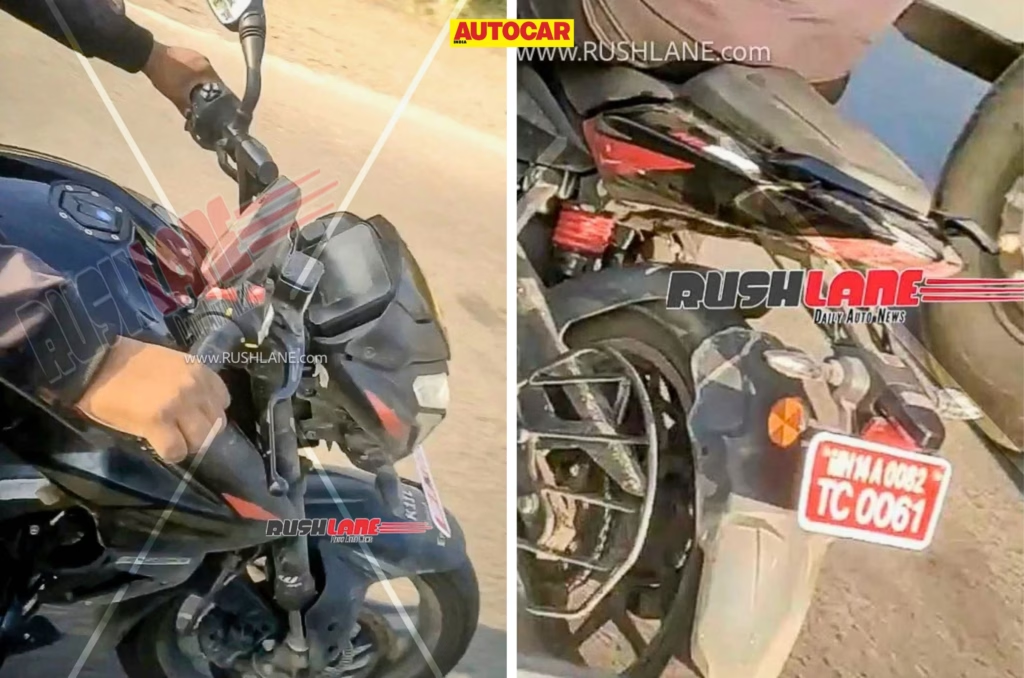
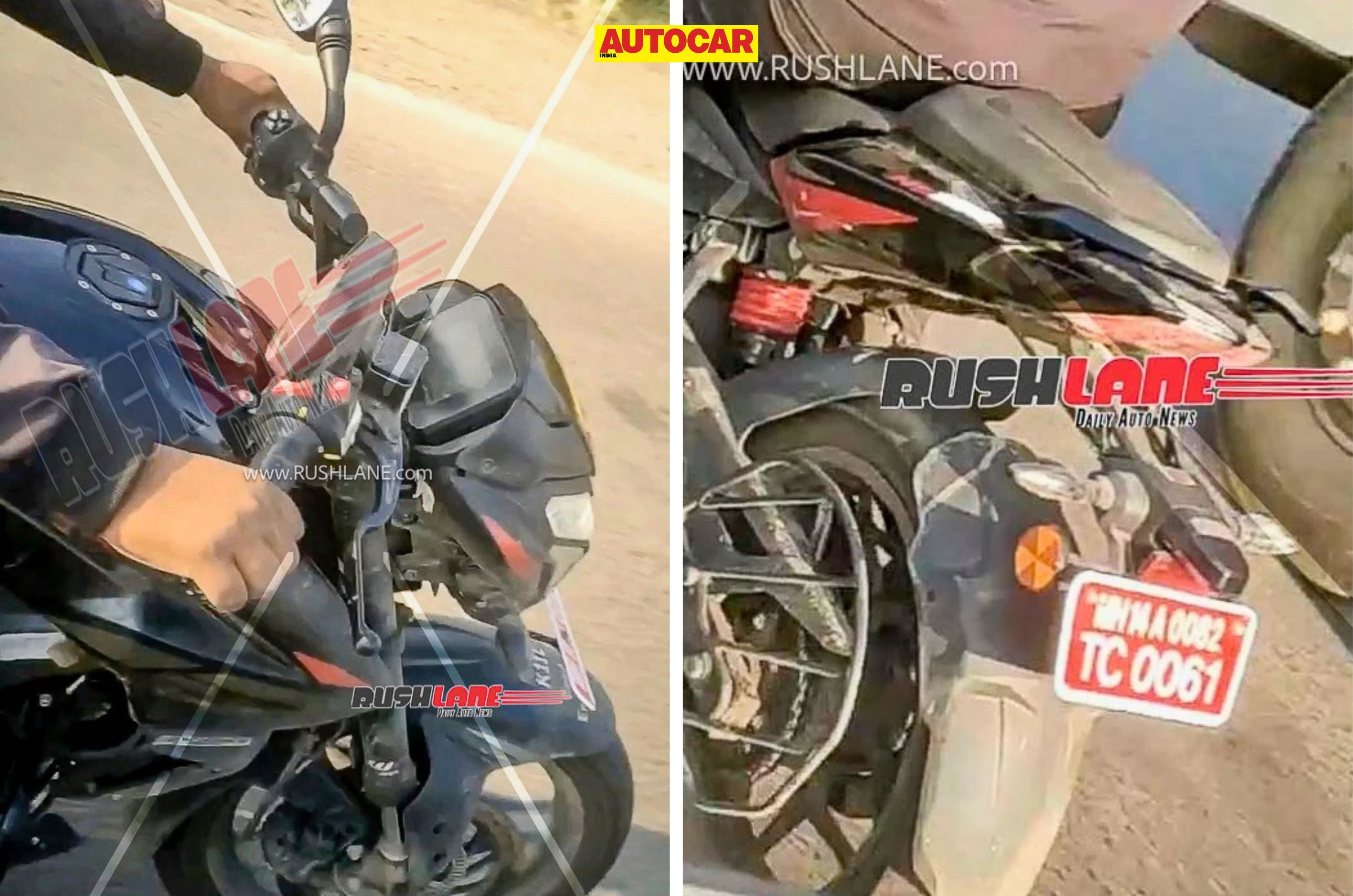
The Toyota Innova Hycross, launched in 2022, is set to receive a facelift in India. We have now come across a Toyota design patent for a new front bumper that looks similar to the one seen on test mules of the facelifted MPV. This suggests that the patented bumper could be used on the production model, giving us an idea of what the Innova Hycross’s front-end design could look like.

Toyota Innova Hycross facelift: What to expect?

Patented design reveals a Hilux-like grille with diamond-shaped air inlets

The design patent reveals that the Innova Hycross facelift will have a more aggressive fascia than the current model. It will get a squarer Hilux-like grille with diamond-shaped air inlets and two black diamond-shaped elements on either side of the bumper, possibly with fog lamps, similar to the current Innova Hycross. Spied mules have revealed slimmer headlights with projector lamps, which could also make it to the production-spec facelift model.

The spied mules also gave a glimpse of new LED elements in the tail-lights, while the rear bumper and side profile are likely to be similar to the current model’s. Toyota could offer it with new alloy wheels.

The interior design of the facelifted Innova Hycross is yet to be seen

A free-standing touchscreen infotainment system and a driver’s display, also part of the current Innova Hycross, were spotted on the facelifted model’s test mules. While a clearer glimpse is still awaited, Toyota could keep the overall design similar to the current model while offering new trims, upholstery and features to make it feel more upmarket.

Powertrain options are expected to be unchanged

Image source: Rushlane

Toyota is expected to continue offering the Innova Hycross facelift with the current model’s powertrains: a 173hp 2.0-litre petrol engine mated to a CVT and a 184hp 2.0-litre petrol-hybrid setup paired with an e-CVT.

The Toyota Innova Hycross is expected to have a slight premium over the current model, which is priced from Rs 18.90 lakh to Rs 31.84 lakh (ex-showroom).

Hyundai to debut new compact electric SUV by Q4 FY27

Hyundai to debut new compact electric SUV by Q4 FY27

Hyundai has announced a new compact electric SUV for India at its 2026 CEO Investor Day. The new EV will be designed and manufactured in India and is slated to debut in the country by the last quarter of FY 2027 (by March 2027). Jose Munoz, President and CEO of Hyundai Motor Company, said, “A brand-new compact SUV is coming, designed and localised in India.” 

  1. A ‘next-gen infotainment’ and Level-2 ADAS are confirmed features
  2. Will be built on the E-GMP (K) platform and manufactured in Tamil Nadu
  3. Will compete with the Tata Nexon EV and Mahindra XUV 3XO EV

Upcoming Hyundai compact EV: All we know so far

It will be built on the E-GMP (K) platform and will be a rival to the Nexon EV

The upcoming EV, codenamed HE1i, was first announced at Hyundai’s Investor Day 2025. Later, we got to know it will be a born-electric vehicle built on the E-GMP (K) platform, which also underpins the Inster EV offered abroad. It will be manufactured at Hyundai’s Sriperumbudur facility in Tamil Nadu.

The HE1i EV will use localised Exide-sourced batteries and will be offered in two versions: standard range and long range, the exact specifications of which are unknown. For context, the Euro-spec Inster is offered with a 42kWh battery with 300km WLTP-claimed range and a long-range 49kWh battery with 355km claimed range.

Image source: @joonsun_erin on Instagram

The new compact EV is confirmed to have a “next-generation infotainment system”, which could be the Pleos Connect infotainment system also expected on the upcoming third-generation Creta, and “Level 2 assisted driving technology”. 

The upcoming Hyundai compact EV will be positioned as a rival to the Tata Nexon EV, Mahindra XUV 3XO EV and Kia Syros EV. Being a localised offering, it could have a lower price tag than the Syros EV, which is currently the most expensive option in the segment. 

Hyundai confirms next-gen Creta and i10 for India

Hyundai expects electrified vehicles to account for 50 percent of India sales by 2030. Currently, it sells two EVs in the country: the Creta Electric and Ioniq 5, and the upcoming compact eSUV will give the carmaker a share in the more accessible segment of India’s EV market.

JSW MG bets on PHEVs to challenge diesel models in executive SUV market

JSW MG bets on PHEVs to challenge diesel models in executive SUV market
Hector Tomahawk PHEV

JSW MG Motor is betting on plug-in hybrid technology to attract buyers of executive diesel SUVs, with the Hector Tomahawk PHEV forming the centrepiece of its strategy. The company believes the powertrain can offer the lower running costs of electric driving without the range concerns associated with a pure EV. The seven-seat Tomahawk PHEV offers more than 115km of electric-only driving and a combined range of over 1,100km.

  1. MG claims Rs 3,000-4,000 running cost per 1,000km, versus Rs 10,000-12,000 for diesel
  2. JSW MG targets the executive SUV market that sells 50,000 units a month
  3. Company aims for 5,000-6,000 Tomahawk sales per month

JSW MG eyes executive diesel SUV market

JSW MG says that the executive SUV market in India accounts for around 50,000 units a month, with diesel SUVs contributing about 40,000 units and EVs around 10,000. The diesel segment includes models such as the Mahindra XUV 7XO, Tata Safari and Tata Harrier, while the EV segment includes the Mahindra XEV 9S, Tata Harrier EV and Kia Carens Clavis EV.

“If you look at the diesel C-sized market, that is about 40,000 units. The C-sized EV market is about 10,000. So, the total potential is 50,000,” says Anurag Mehrotra, Managing Director, JSW MG Motor India.

The Hector Tomahawk PHEV is priced Rs 1.5 lakh-2 lakh higher than the top diesel automatic variants of the Mahindra XUV 7XO, Tata Safari and Tata Harrier. JSW MG expects to justify this premium through lower operating costs and the overall product package.

The Tomahawk PHEV has no direct mass-market PHEV rival in India and will instead target diesel SUV buyers. According to surveys cited by Mehrotra, owners in this segment typically cover 18,000-20,000km a year, with many combining daily commutes with regular outstation travel.

“They want the fuel efficiency of a diesel because they are travelling longer distances,” says Mehrotra. “For them, there has not been a new-energy choice. The plug-in hybrid takes away the range issue completely, but still gives you the unit economics of an EV.”

Vinay Raina, Chief Commercial Officer, JSW MG Motor India, says many of these customers choose diesel because it suits their usage rather than because of a fixed preference for the fuel. “The Indian consumer is willing to experiment,” he says.

MG Hector Tomahawk PHEV running costs

JSW MG estimates that covering 1,000km in the PHEV could cost Rs 3,000-4,000, compared with Rs 10,000-12,000 in a diesel SUV. This calculation assumes regular charging and substantial use of the electric mode. “The plug-in hybrid will be close to a third of the cost of running a diesel,” Mehrotra says.

The company says the PHEV can return around 22kpl when used mainly as a hybrid, while its claimed 30-50kpl figure assumes regular charging and that most daily travel is completed using electric power. These figures include kilometres covered on electricity and therefore cannot be directly compared with the fuel economy of a diesel SUV. Charging costs also need to be included when calculating the overall running cost.

This also means the claimed savings will depend on how the vehicle is used. Owners who regularly charge at home and complete much of their daily driving on battery power should use less petrol, while those who rarely charge will rely more on the engine and lose much on the projected savings.

JSW MG targets 5,000-6,000 Tomahawks a month

JSW MG is targeting monthly sales of 5,000-6,000 units for the Tomahawk range, which includes the EV and PHEV. The company has not specified how that volume will be split between the two powertrains. At the targeted volume, JSW MG estimates the range would account for around 10-12 percent of the 50,000-unit monthly executive SUV opportunity it has identified. 

The Tomahawk EV and PHEV are based on the company’s ADAPT architecture, which is designed to support multiple powertrain types. JSW MG currently has achieved around 45 percent localization in the Tomahawk and plans to increase this to approximately 70 percent by next year, with the investment already approved by its board.