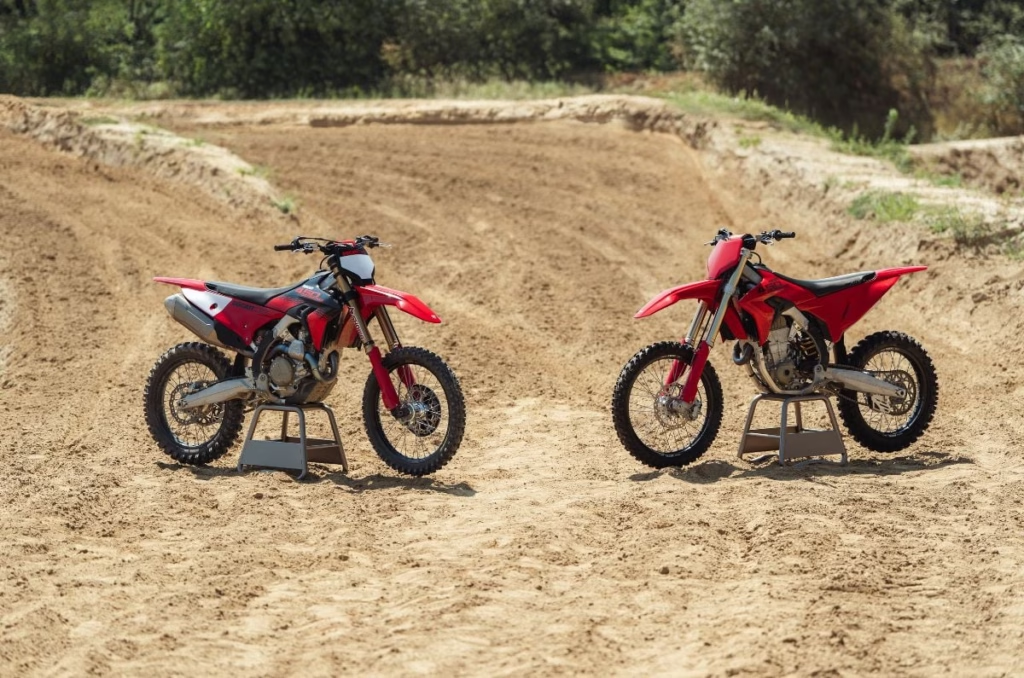
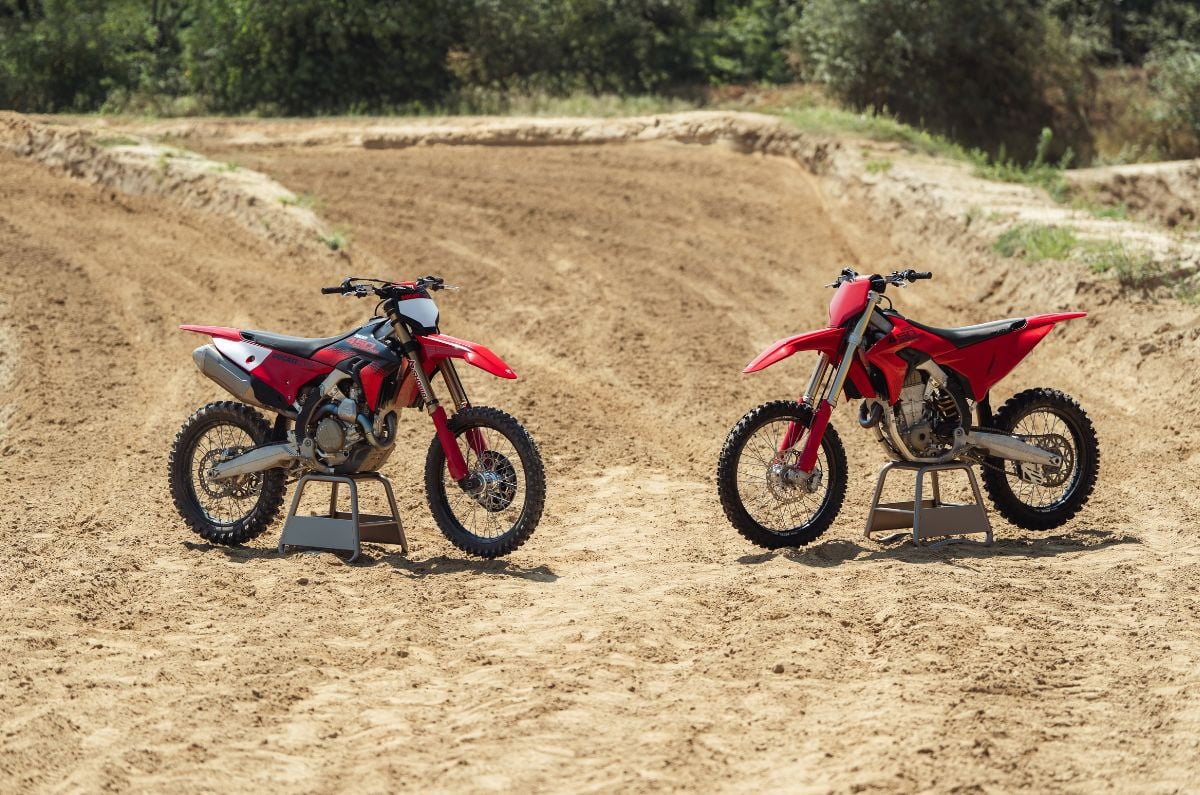
Closely following the reveal of the Desmo450 SM, Ducati has now unveiled the 2027 version of its first off-roader, the Desmo450 MX. Like earlier, there’s also a Desmo450 MX Factory version that gets a slightly different look with additional equipment over the standard model. The Borgo-Panigale manufacturer has also dropped the prices for both models, by up to GBP 2,400.
Desmo450 MX Factory gets additional accessories such as a sump guard and disc guard as standard
Both models have become cheaper compared to their 2026 versions
2027 Ducati Desmo450 MX and Factory: What’s new?
Changes aimed at better performance and durability
Starting with the standard model, Ducati has made changes throughout the motorcycle in order to improve functionality, performance and ergonomics. The rear sprocket has been changed to a larger 51-tooth version compared to the earlier 49-tooth one, in order to improve the rear wheel torque while exiting corners. Both the gear and the brake lever tips have also been changed to offer better ergonomics and allow for more ergonomic foot movement during gear shifts and braking. The company has also upgraded numerous other components for improved reliability. These are all nuanced changes and the most identifiable way to differentiate the 2027 model from the 2026 version is with a new livery that features black logos instead of white.
On the Desmo450 MX Factory version, Ducati has increased the equipment on offer, while trimming off 800gm from its kerb weight. Considering the Desmo450 MX weighs 104.8kg on an empty fuel tank, that number becomes all the more important for the Factory version. In addition to receiving all the standard model’s improvements, the factory model gets extra dark Kashima coating on its 49mm fork and monoshock, plus a titanium oxide (TiO) treatment for superior wear resistance. The factory model exclusively gets a full Akrapovic exhaust system, which is said to reduce the overall weight by 1.7kg. The triple clamp unit is also machined from a single billet, to reduce weight even further. Ducati has given the factory version a sump guard, a disc rotor guard, and an RK MXU chain with O-rings. In addition to these existing pieces of equipment, a holeshot device is also standard, allowing the rider to manage acceleration and stability better during starts.
Ducati has also brought the WiFi module to the Factory version, last seen on the Desmo450 SM, that enables predictive maintenance and customisation of the motorcycle’s two ride modes via the company’s X-Link mobile app. For 2027, the factory version also gets a new Ducati Corse livery, featuring the red and black Ducati logo.
The prices for both Desmo450 MX models have dropped significantly in Europe. The 2027 Desmo450 MX is priced at GBP 9,495 (Rs 12.02 lakh) and the 450 MX Factory at GBP 10,795 (Rs 13.67 lakh). That’s a GBP 1,750 (Rs 2.22 lakh) drop on the regular MX, and a GBP 2,400 (Rs 3.04 lakh) drop on the MX Factory compared to their respective 2026 versions. Both are already arriving at various European dealerships, with the rest of the world to follow. However, the USA won’t be one of them where the limited edition MY26 model will be available exclusively instead. In India, the 2026 Desmo450 MX is available for Rs 17.23 lakh (ex-showroom). Neither the 2027 Desmo450 MX nor the 2027 Desmo450 SM are available here yet, and it remains to be seen if our market also sees similar price revisions at launch.
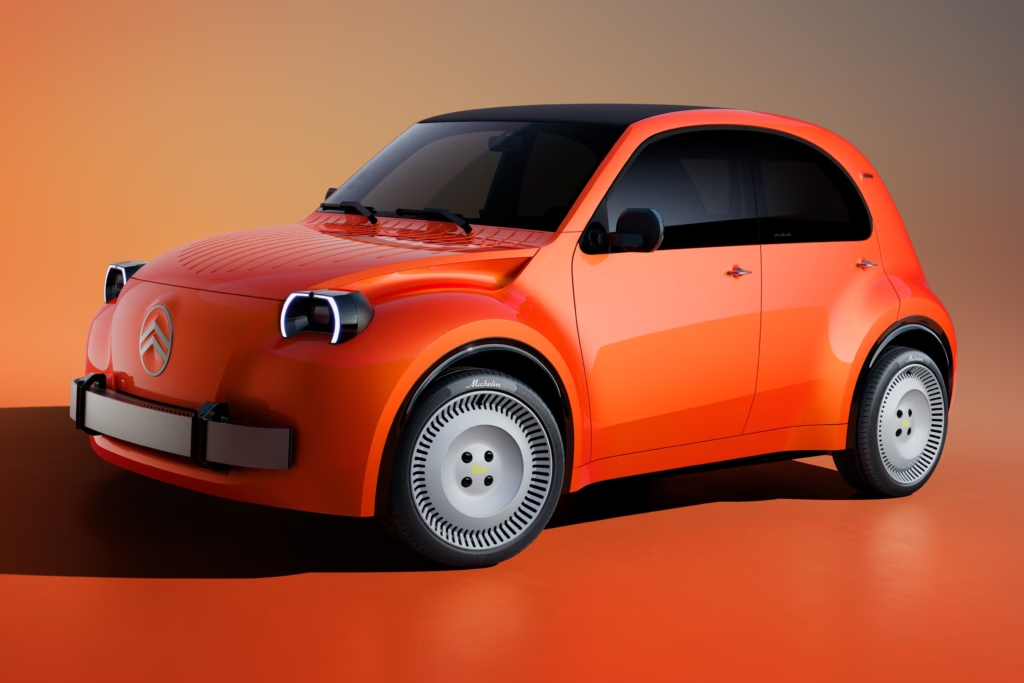
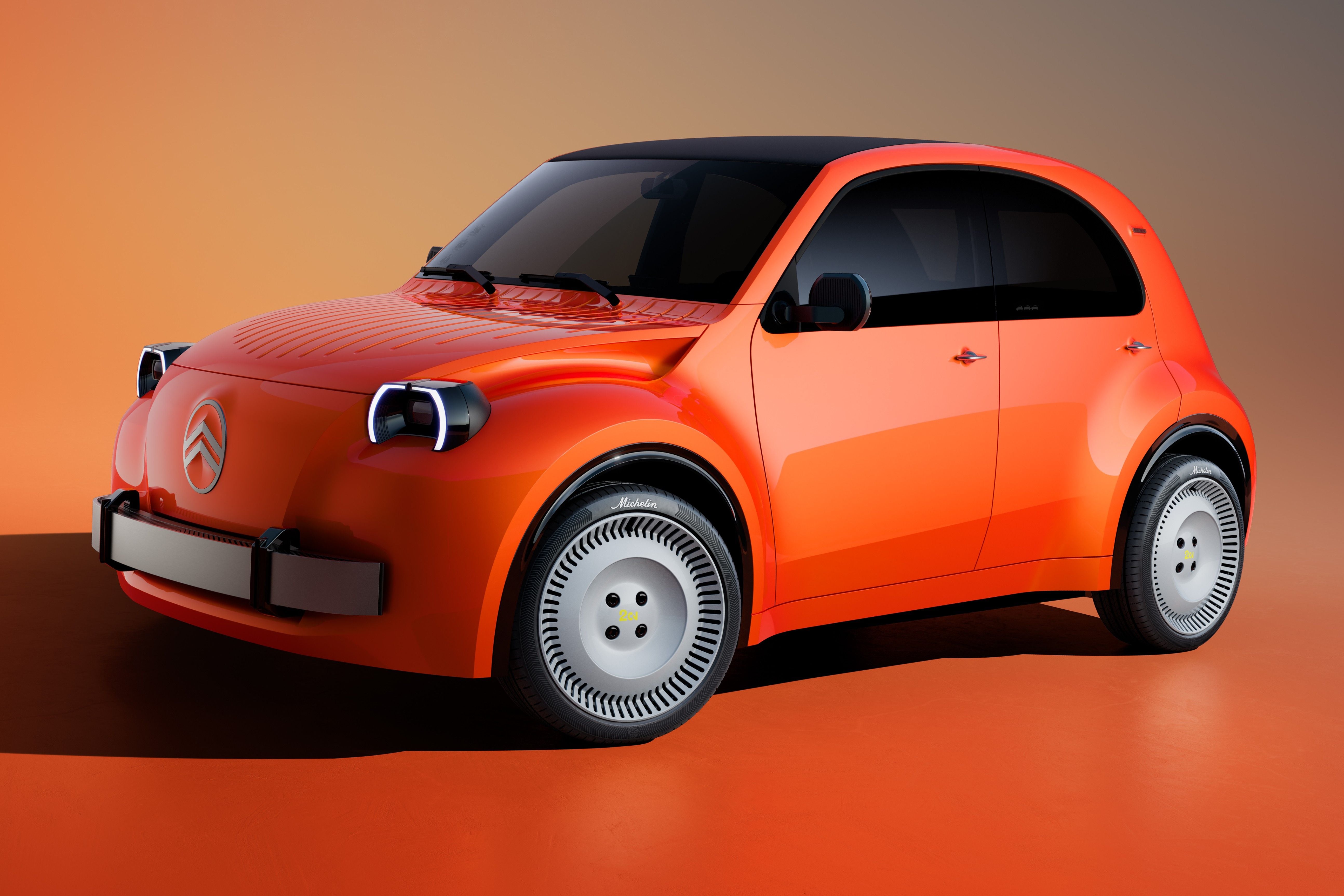
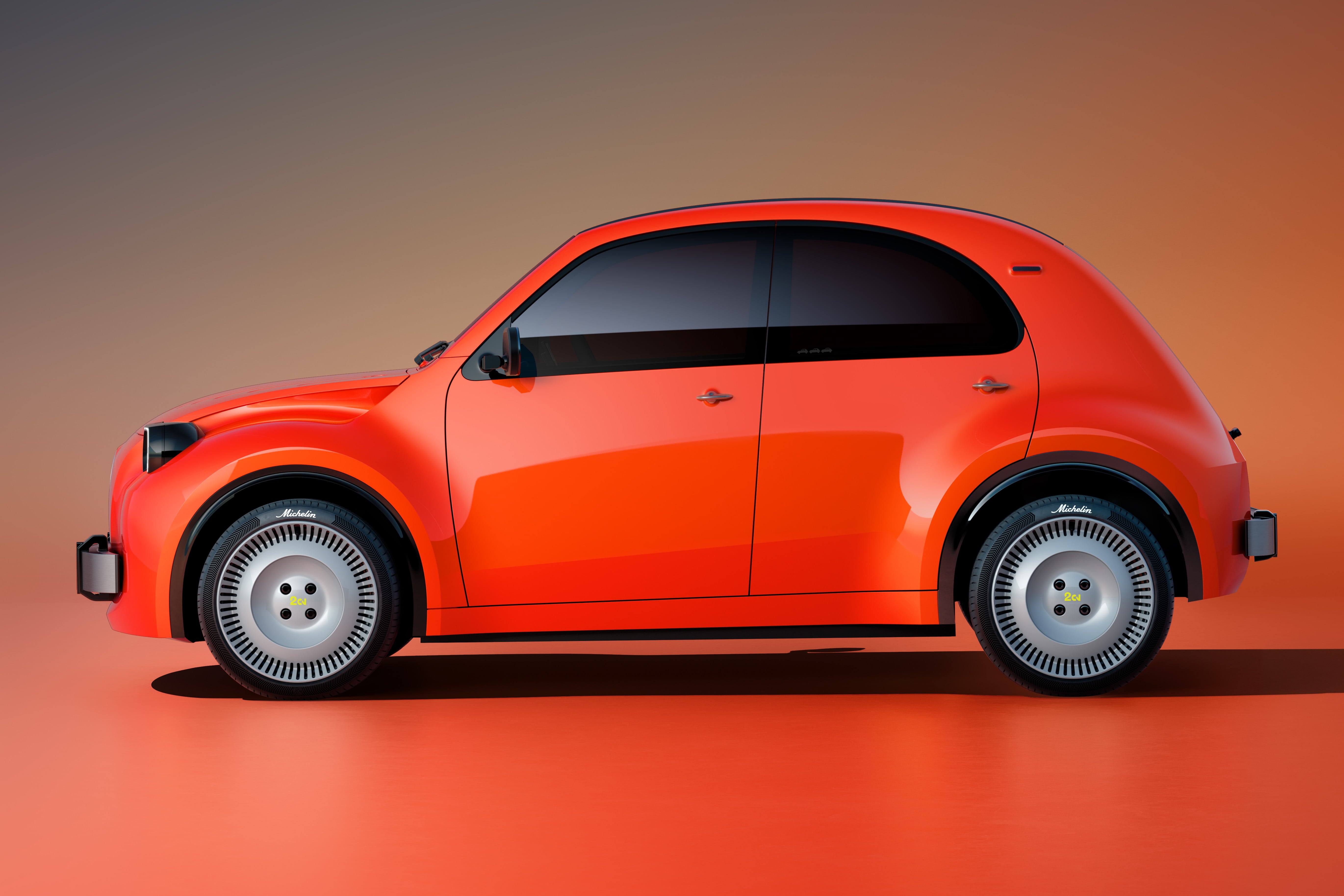
Citroen has unveiled the 2 CV concept at the 2026 Paris Motor Show. The 2 CV concept is a neo-retro take on the original Citroen 2 CV, an iconic nameplate in the carmaker’s lineup. Notably, the nameplate returns at the Paris Motor Show 78 years after the original 2 CV was showcased in 1948. The Citroen 2 CV concept previews a small electric hatchback that’s due in 2028 with a starting price of 15,000 Euros.
Production-spec version due in 2028; to sit between Ami and C3.
Takes design cues from the original 2 CV with a modern twist.
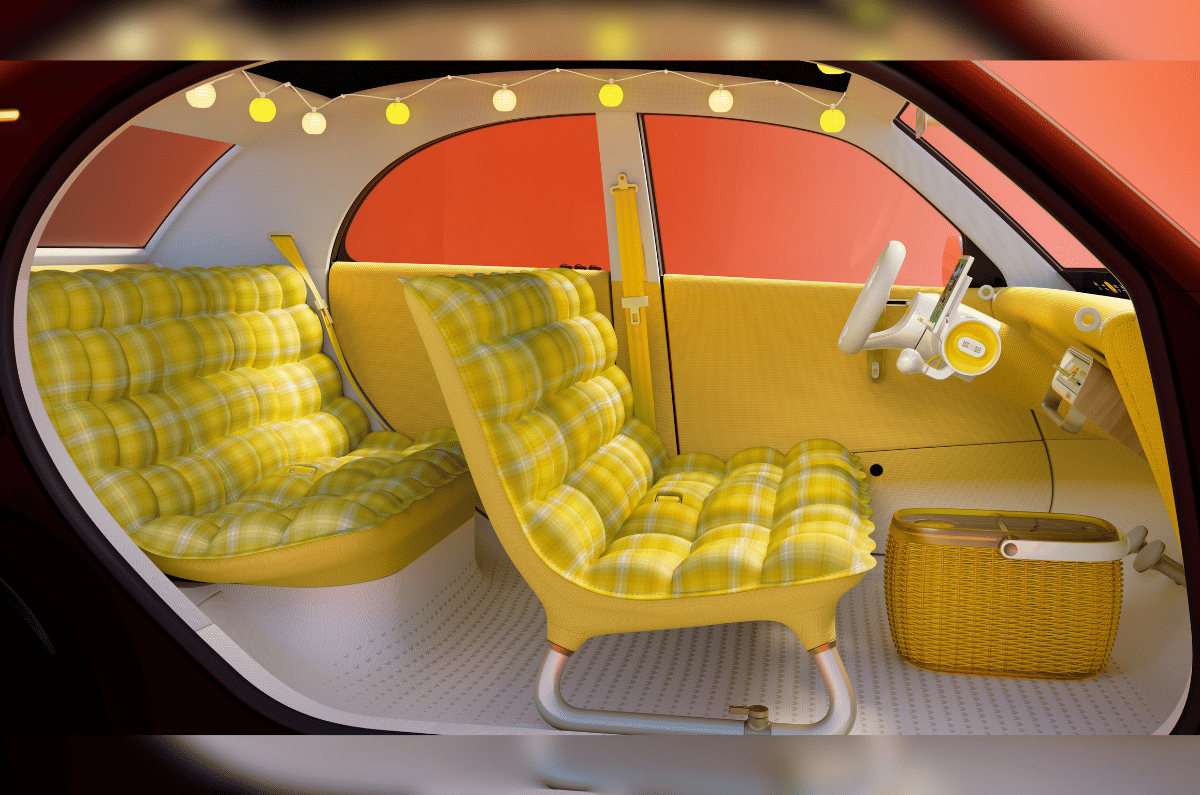
Quirky interior gets bench seats and does without a dashboard and centre console.
Citroen 2 CV concept: All you need to know
The production-spec 2CV will sit between the Ami and C3 hatchback in Citroens global portfolio. At 3.76 metres, the 2 CV concept is shorter than the original model. Additionally, Citroen is aiming for a sub-1-tonne weight in order to utilise a “cost-effective battery with range tailored for everyday use and low running costs.”
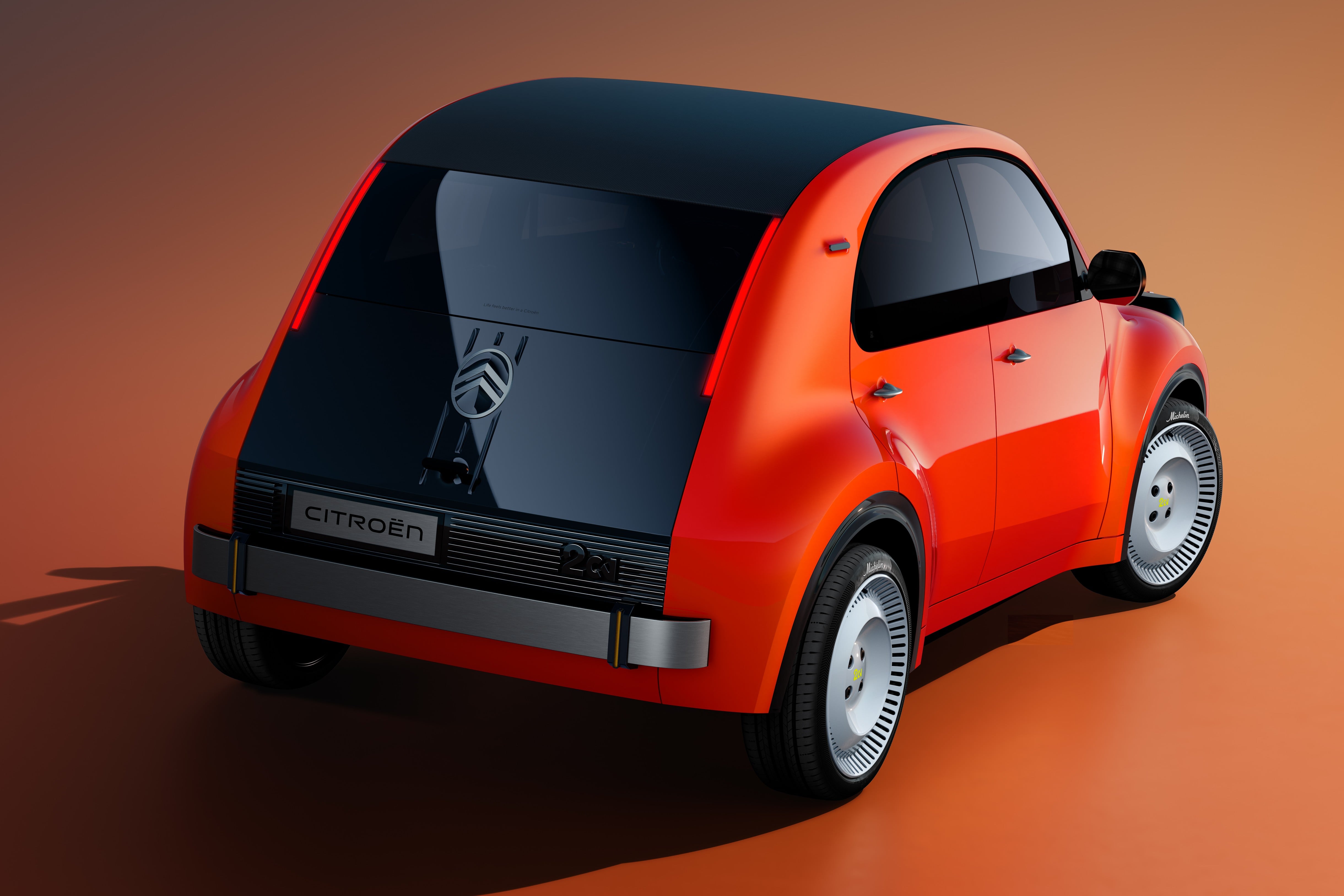
The 2 CV concept’s design takes inspiration from the circular design cues of the original model. At the front are LED headlamps surrounded by semi-circular DRL signatures, a blanked-off grille with the Citroen badge and a ridge pattern on the bonnet. The numbers 48, 90, and 26 inscribed on the windscreen refer to the years 1948, 1990, and 2026, which mark the original model’s launch, end of production, and new concept unveiling, respectively. When viewed head-on, the V-shaped design of the bonnet and the thick silver strip are elements reminiscent of the older 2 CV. In profile, there’s a curved roofline that smoothly integrates into the rear section, rounded-off wheel arches with a gloss-black finish, and C-pillar-mounted turn indicators.
The 18-inch steel wheels have a design inspired by the original 2 CV, and the tyre sidewalls feature Michelin branding and the Citroen chevron pattern. Michelin has developed a technology dubbed ‘universal digital twin of the tyre’ that Citroen says helps the vehicle’s behaviour to adapt to its environment and monitor tyre condition continuously. At the rear is a black tailgate that extends towards the bumper like the older 2CV, three horizontal stripes, a short overhang, a tailgate handle, LED lights on either side of the tailgate, and a number plate with the 2 CV’s international nicknames on it. Like the front, there’s a thick silver strip here as well.
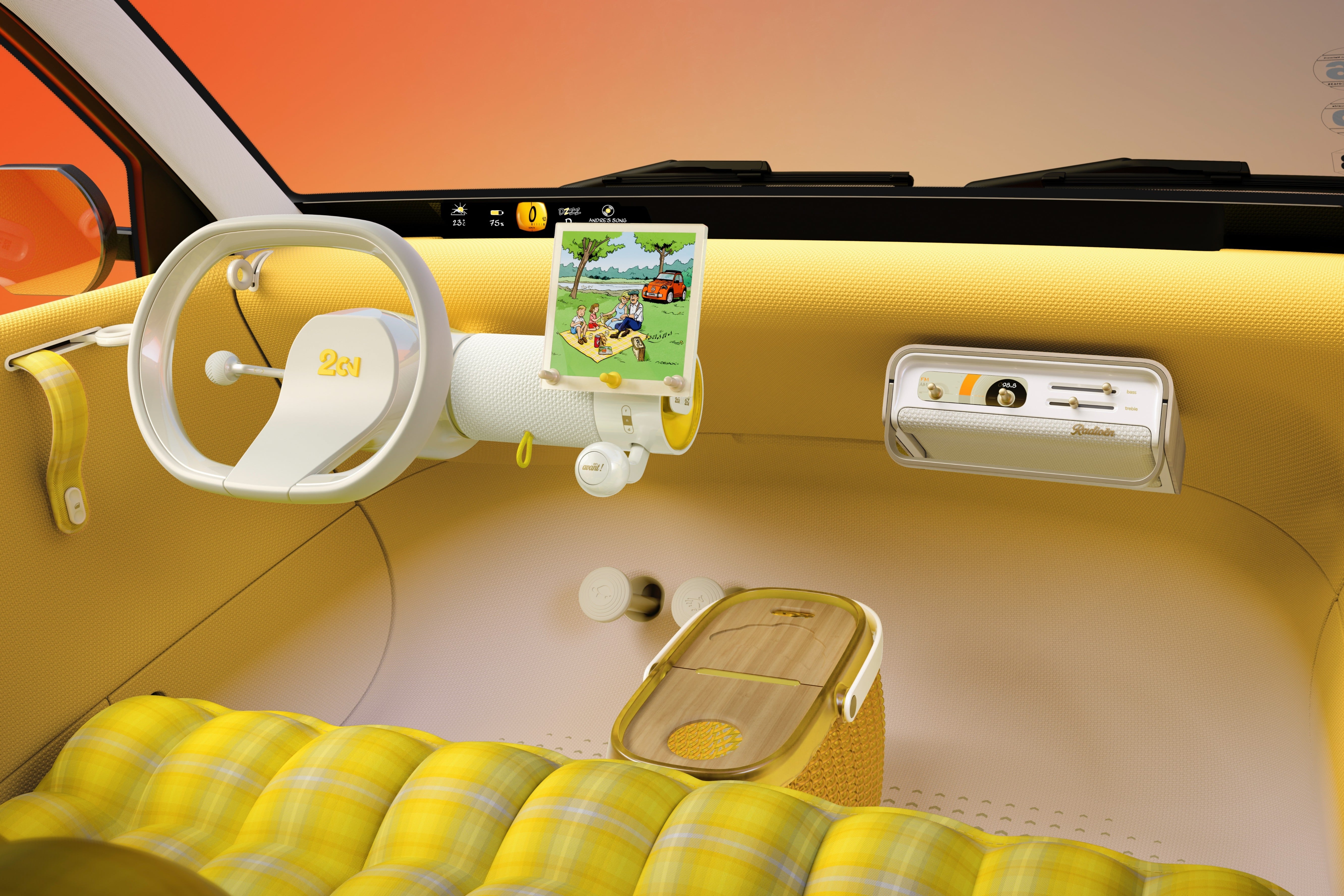
The interior gets a lively white and yellow theme, while the floor, dashboard, and door panels have a fabric finish with a texture that takes inspiration from cane basketry, and the bench-type seats are wrapped in a Tartan yellow upholstery. The 2 CV concept employs a cabin design that’s devoid of a traditional dashboard, increasing the sense of space. In place of the dashboard is a single cylindrical structure, on which is a single-spoke steering wheel, a single control lever, and an 8-inch touchscreen with comic book-inspired graphics and toggle switches under it.
You get a digital driver’s display below the windscreen, a removable 3D-printed storage basket instead of a centre console, and straps for door handles. Additionally, there’s a fabric sunroof and ‘Radioën’, a radio unit that can be detached and used as a speaker. Interesting details include a rabbit and tortoise inscription on the accelerator and brake pedals.
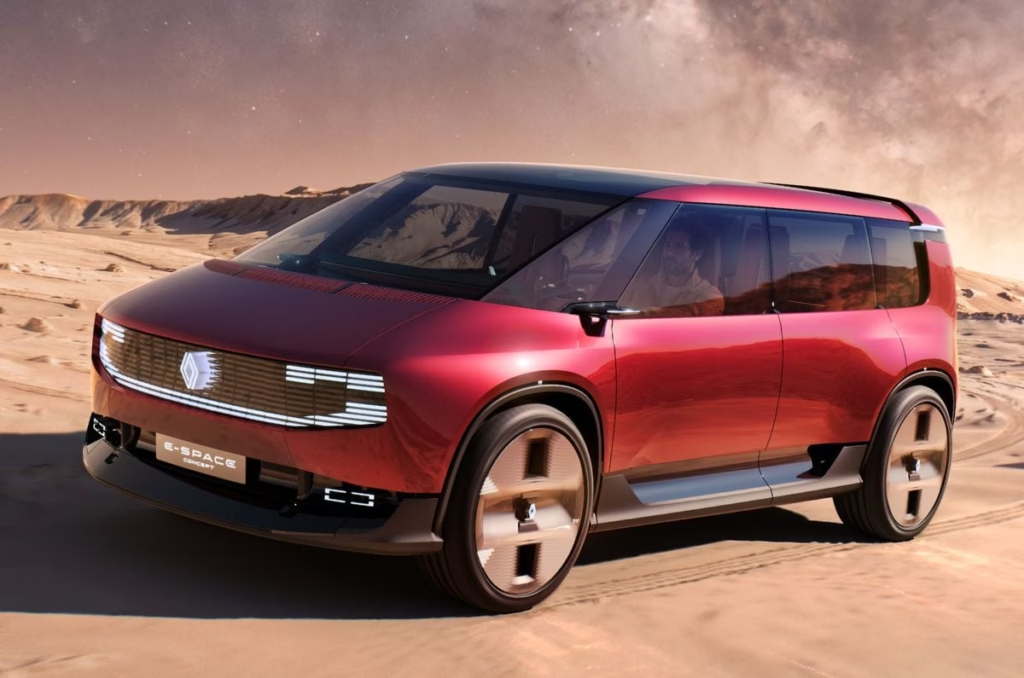
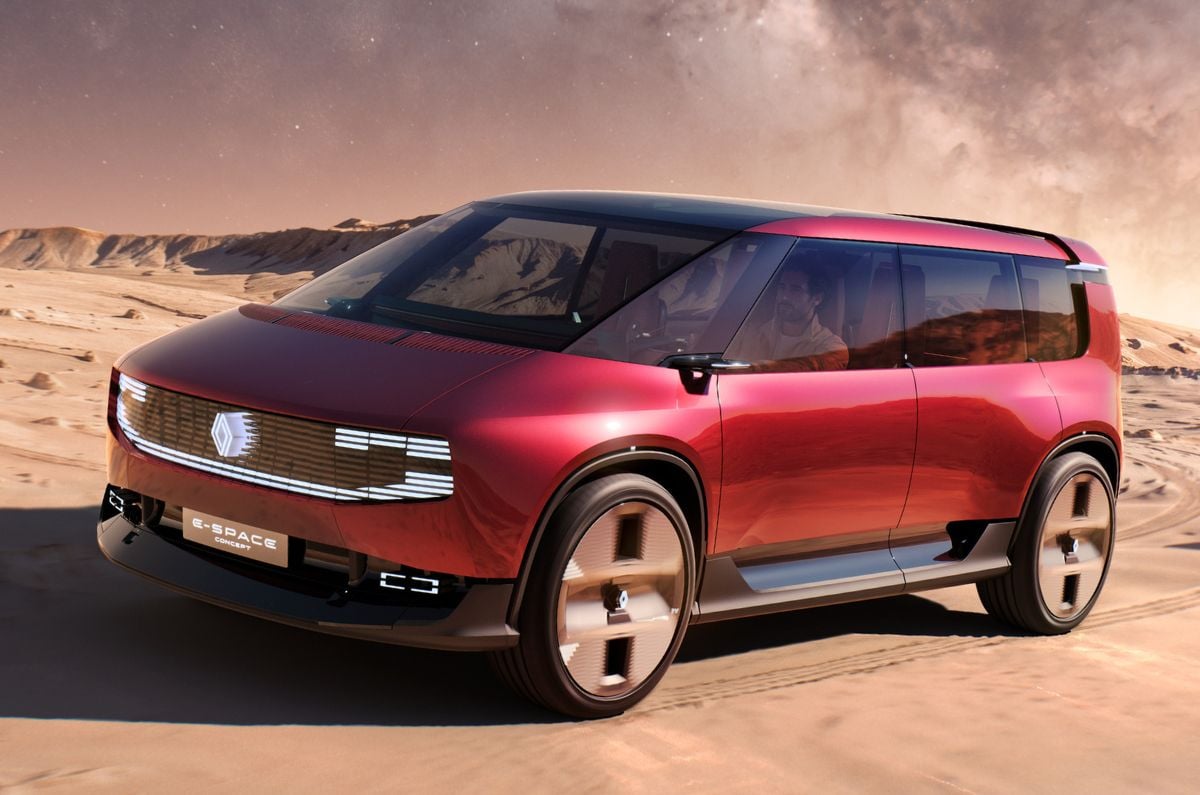
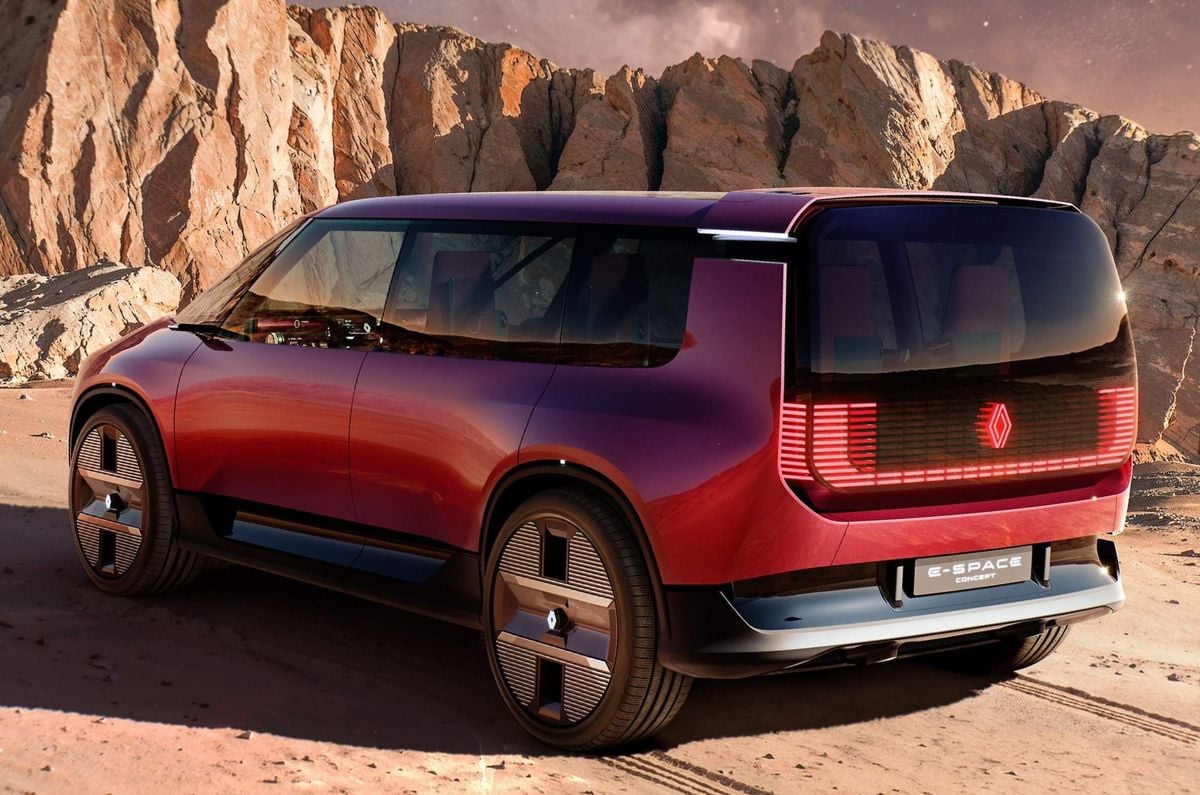
Renault unveiled the E-Space concept at the 2026 Paris Motor Show, hinting at a potential electric MPV comeback for the iconic nameplate. Explicitly pitched as a “real alternative to SUVs and saloons”, the E-Space concept goes back to Renault’s ‘voitures à vivre’ philosophy, which puts the human experience, comfort, and everyday lifestyle at the centre of vehicle design.
Introduced in 1984, the Renault Espace was Europe’s first MPV and retained this body style till its fourth generation. In 2023, it was transformed into a stretched version of the Austral SUV.
Renault E-Space Concept exterior details
Retro-modern MPV concept has some elements that link it to the previous Espace models
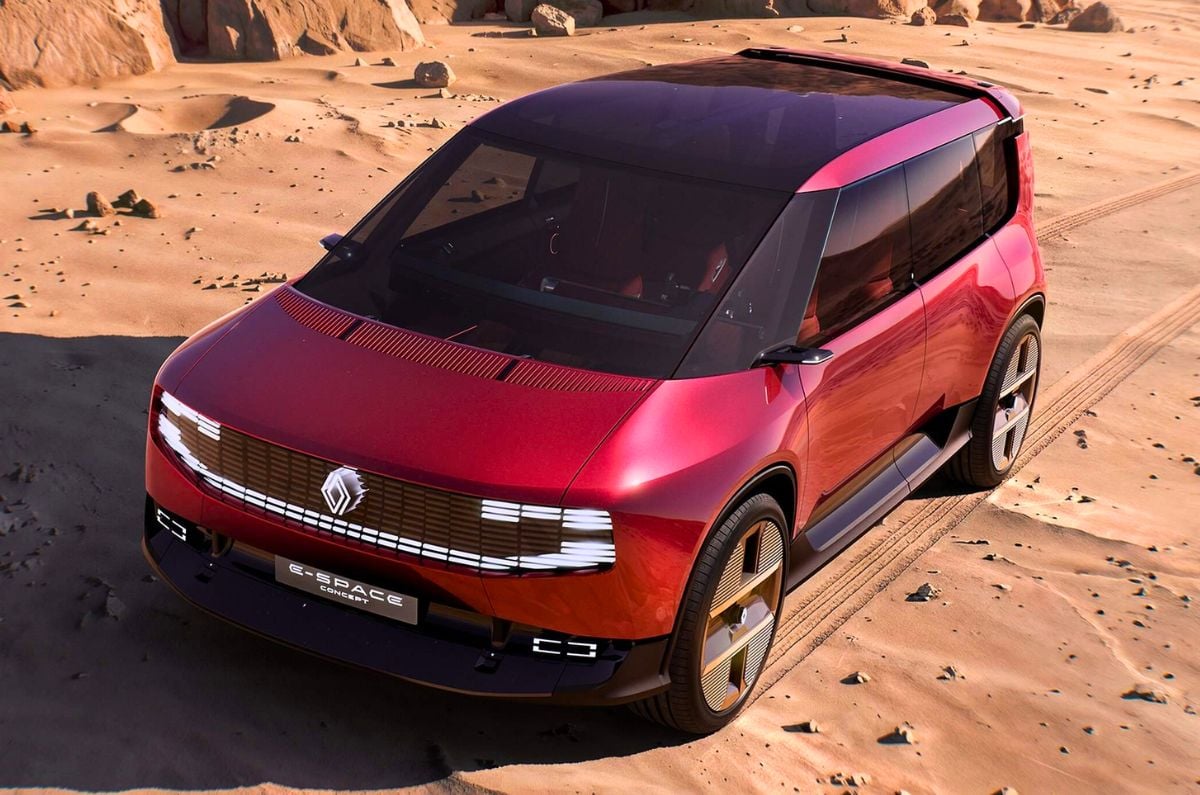
The Renault E-Space concept has an overall clean design, which Renault’s brand design director Alexandre Malval says is “stripped of anything that might distract the eye.”
At the front, it gets U-shaped LED lighting elements on the blanked-off grille. The grille itself features an illuminated Renault logo that appears to float over it. One design cue that links to the original Espace is the heavily raked windscreen, which appears to extend to the bonnet like the French TGV train.
In profile, the E-Space Concept sports huge 24-inch alloy wheels and a large glasshouse that places “natural light at the heart of the concept”. It is 4.70 metres long, 2.02 metres wide and 1.67 metres tall, and Renault says its height- and length-to-width ratios are similar to the original Espace, albeit with shorter overhangs.
At the rear, the rear spoiler appears similar to the roof bars prominent on the 3rd- and 4th-generation Espace. The U-shaped lighting elements mimic the front LED design, and their placement on a gloss-black panel makes the windscreen appear larger.
Renault E-Space Concept interior details
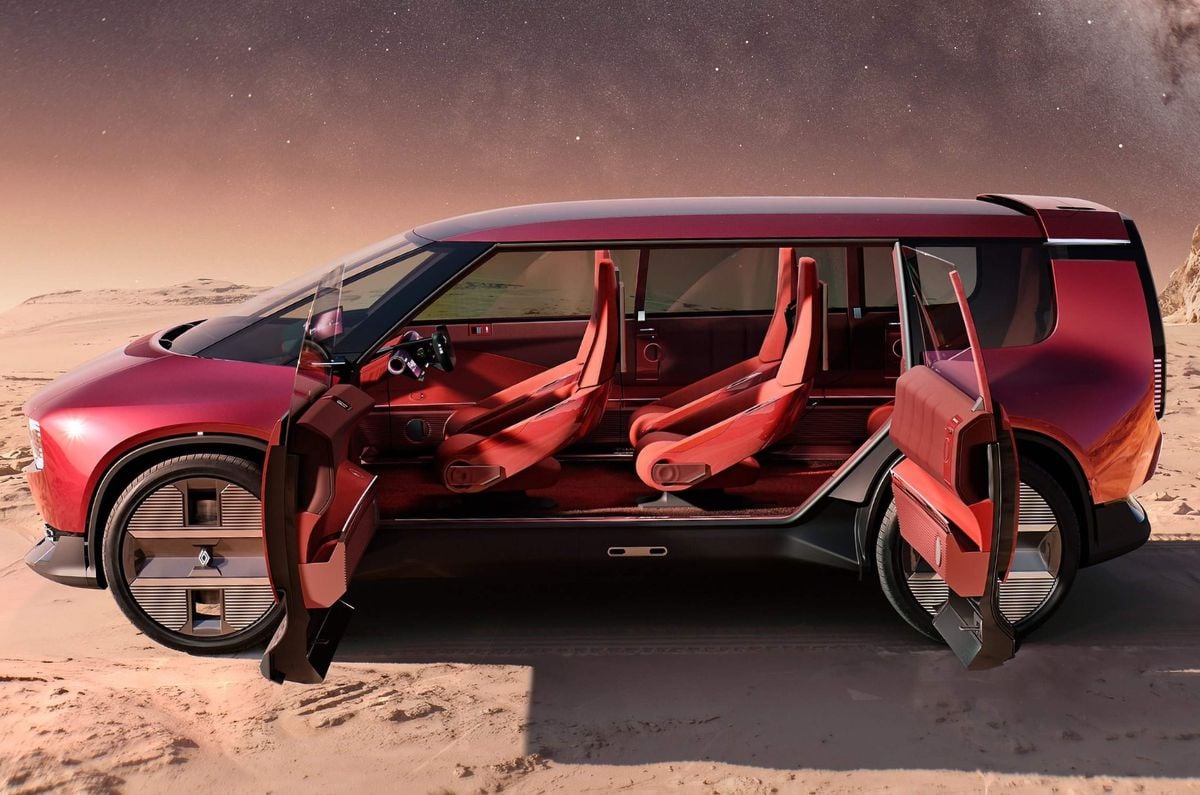
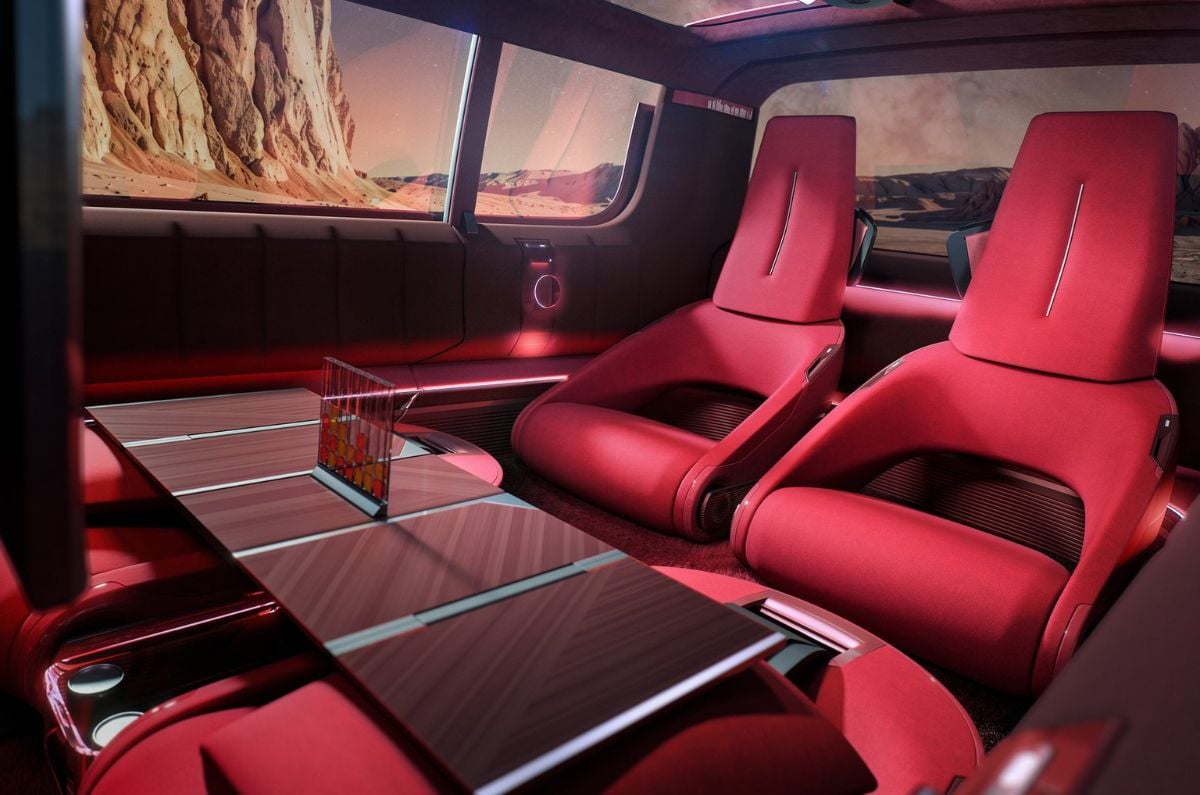
3-row, 6-seater electric MPV aims to maximise interior space and comfort
The E-Space Concept revives Renault’s voitures à vivre philosophy. This approach focuses on the human experience and everyday family life rather than raw performance or luxury, all of which are clearly visible in the electric MPV concept’s cabin. It also brings back the vibrant pop interior colours Renault was known for back in the 70s.
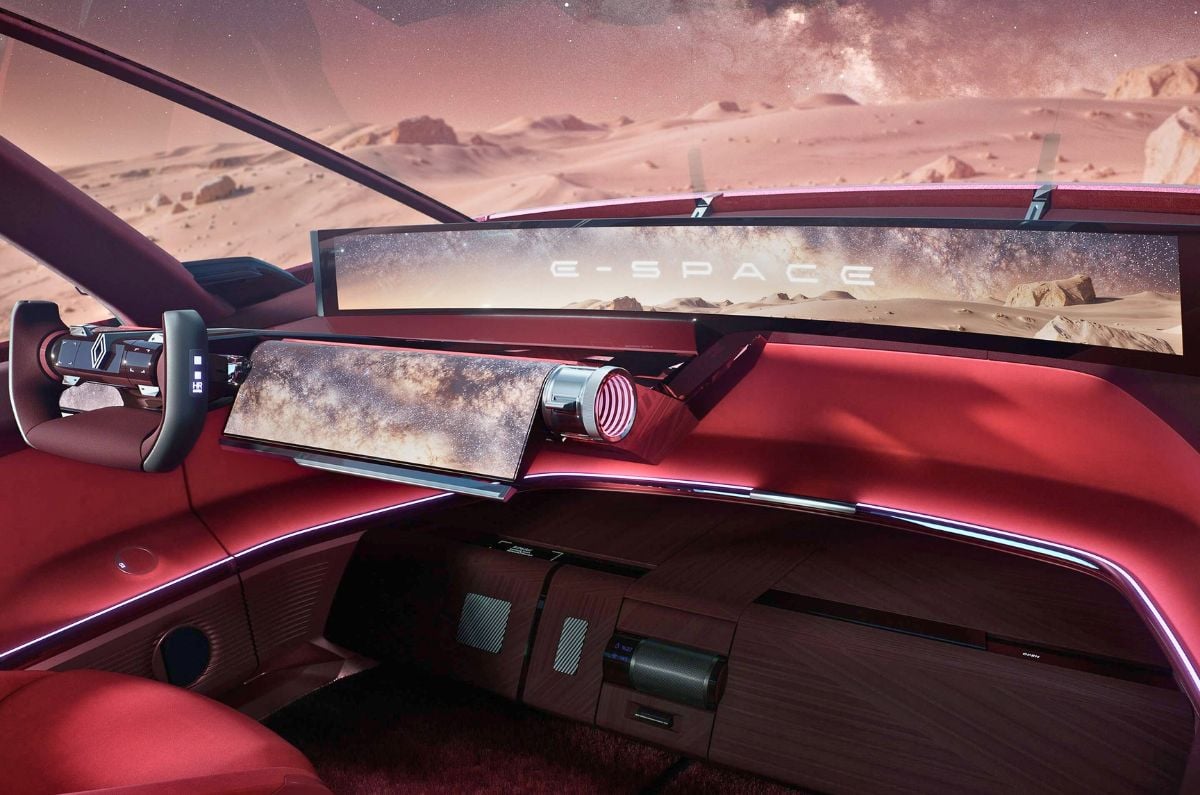
The concept features an ‘OpenR Panorama’ screen which spans the entire width of the dashboard. Renault says this display will be in the next-generation Rafale and Scenic models. While this expansive display is not touch-enabled, there is a smaller infotainment touchscreen suspended from the dashboard that can be used to control functions such as music and navigation.
The E-Space concept uses a yoke-style steering wheel and a steer-by-wire system, which frees up space for the driver’s footwell due to a missing mechanical steering column. The steering wheel features touch-sensitive buttons to interact with the OpenR display.
It gets 6 seats spread across three rows. There are folding tables mounted on the front-row seatbacks which second-row passengers can use if they do not spin around to face the third row. The second-row seats can also be folded flat to form a table for those in the third row.
With the E-Space concept, Renault appears to be not only considering a return to the model’s MPV roots, but also hopes to replicate the success of its electric revivals of iconic nameplates such as the Twingo, Renault 4 and Renault 5.
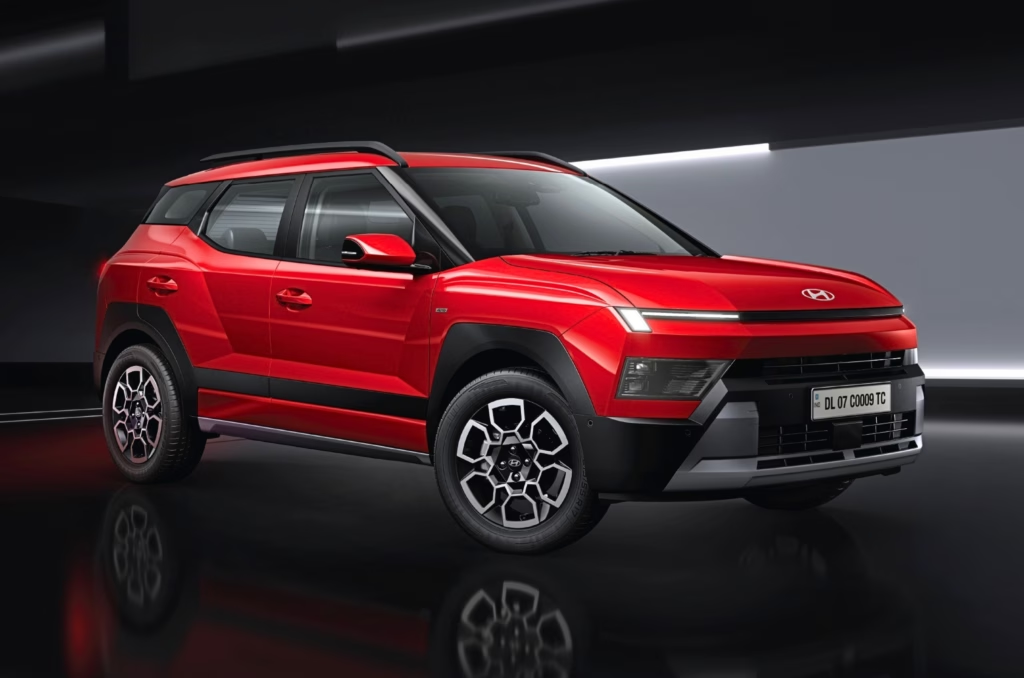
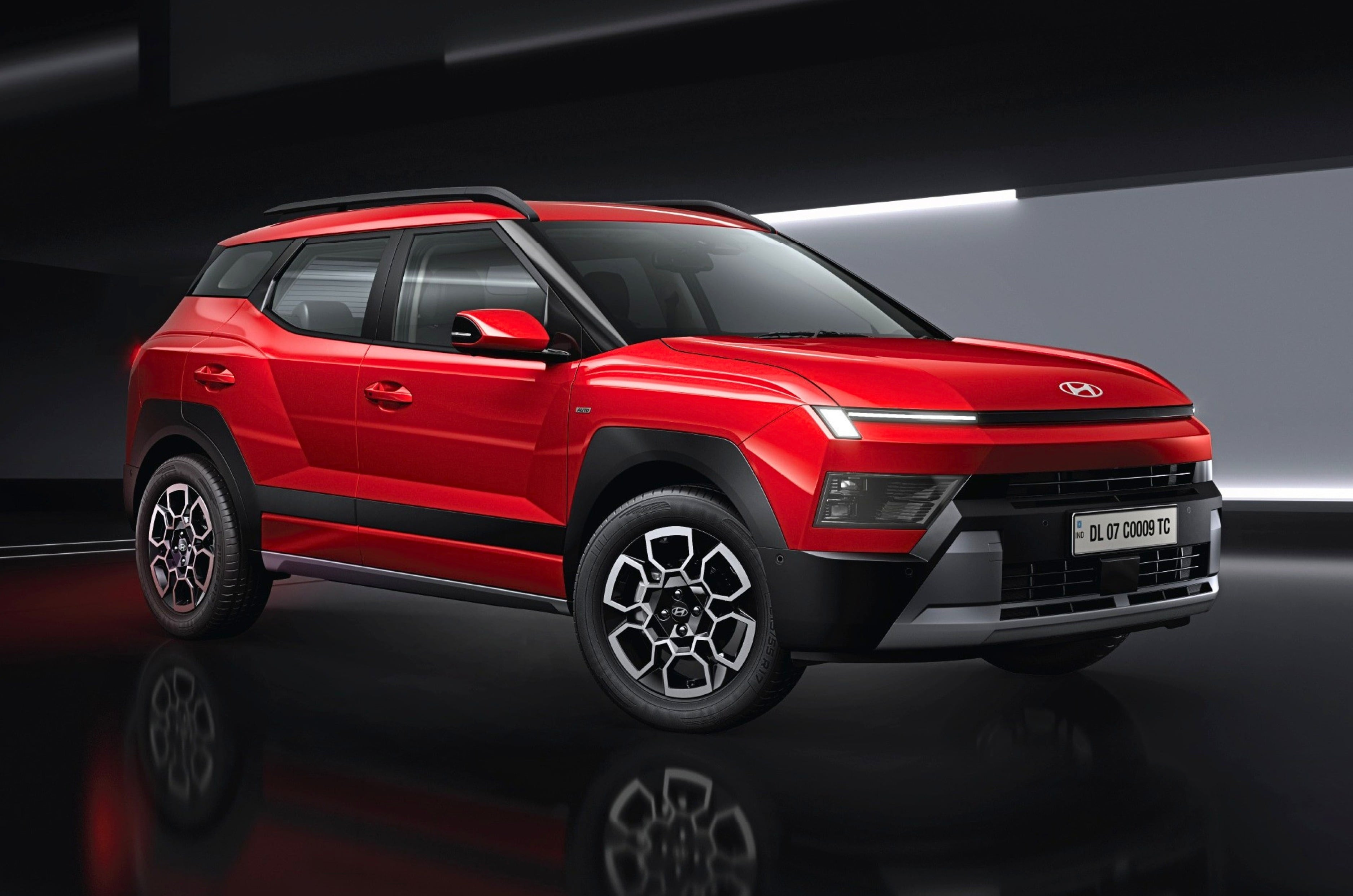
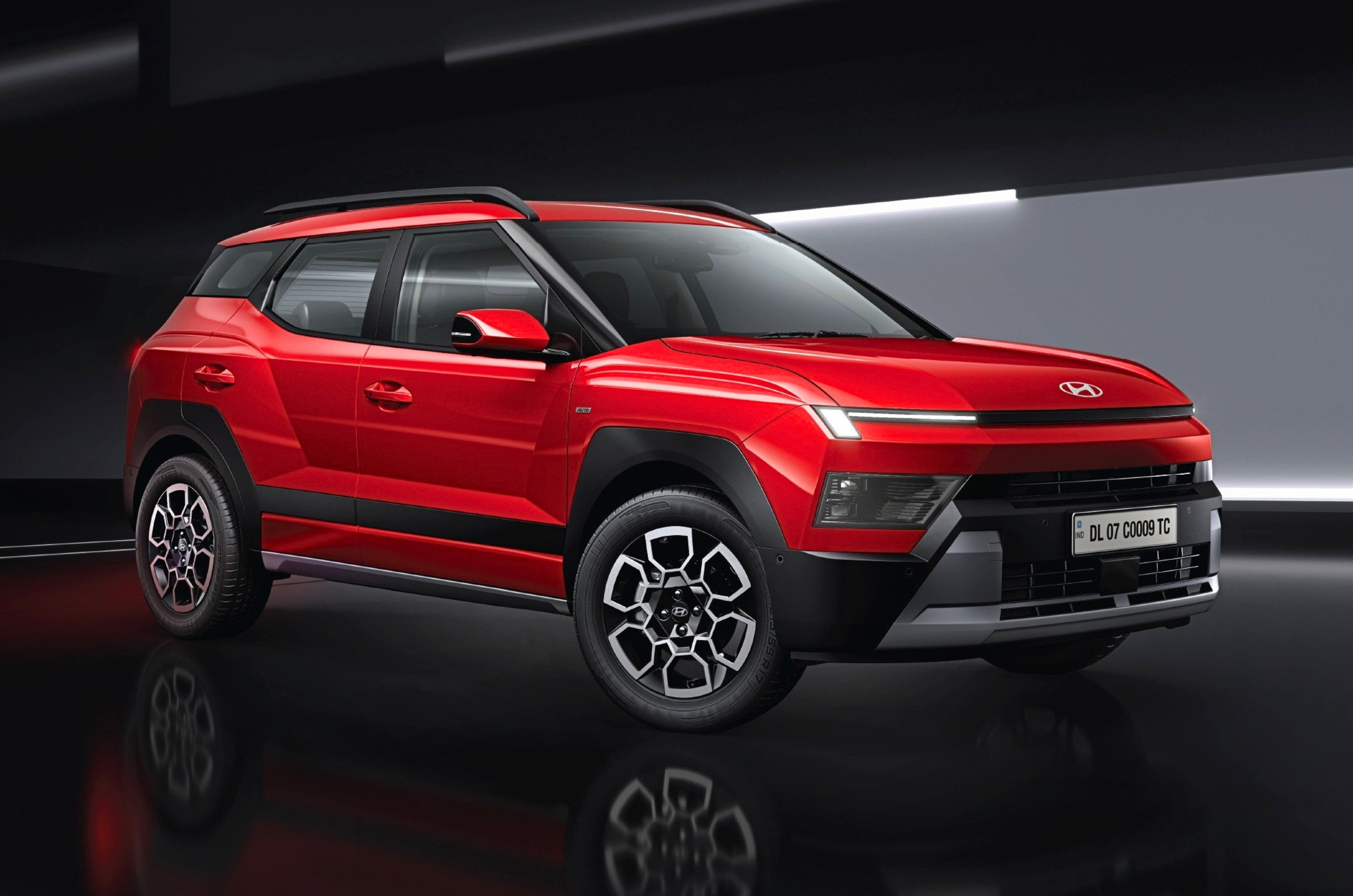
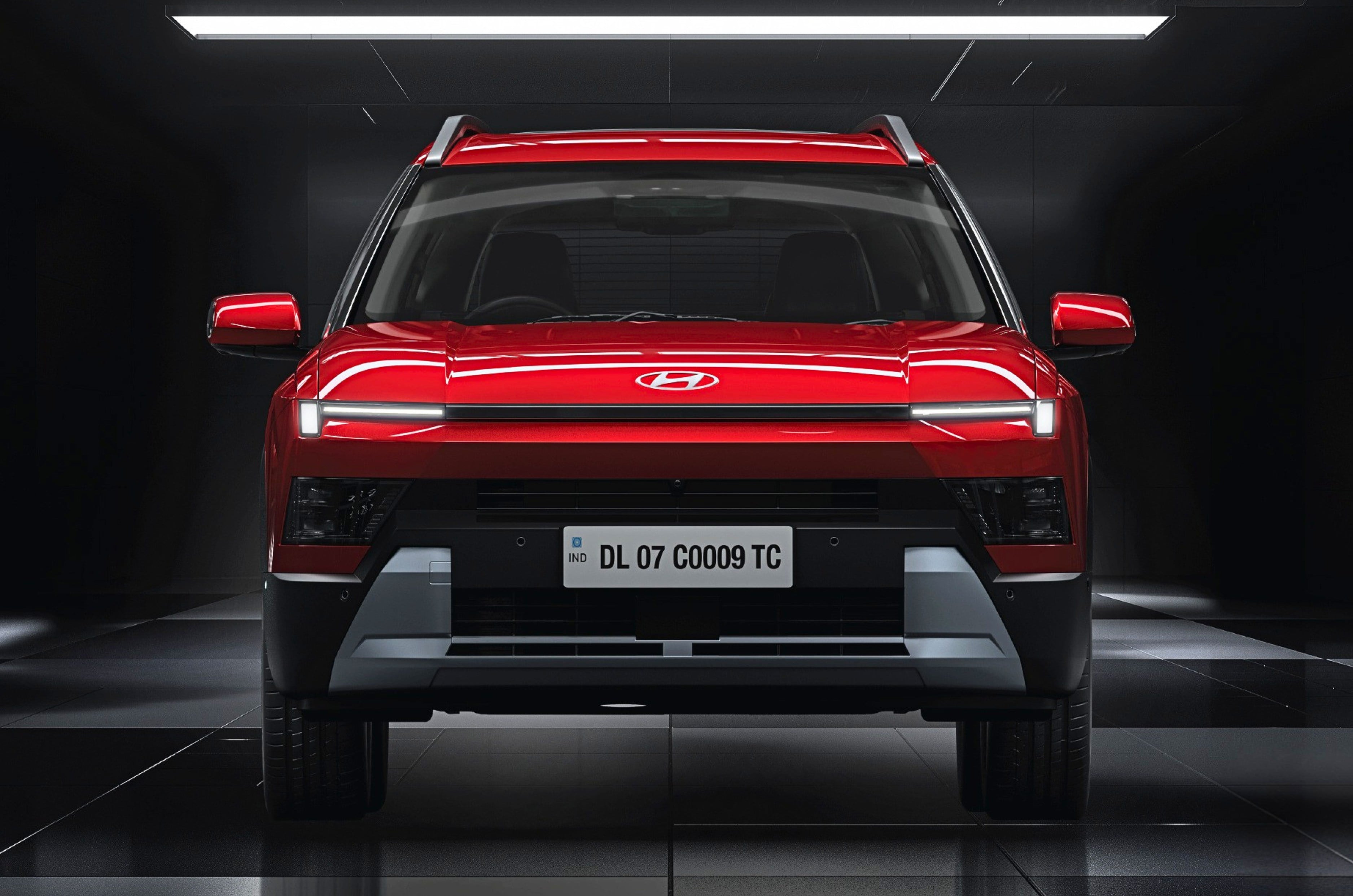
Hyundai has fully revealed the new Bayon midsize SUV ahead of its price announcement on October 26. The Bayon will be positioned between the Venue and Creta in Hyundai’s SUV lineup and is squarely meant to take on the Maruti Victoris. It gets Hyundai’s latest ‘Art of Steel’ design language, a new interior shared with the Brazil-spec i20 and will come powered by a 1.5-litre petrol engine at launch. Bookings for the new Hyundai Bayon have commenced today.
First Hyundai in India to get Generative AI voice assistance
Interior gets dual 12.3-inch displays for instrumentation and infotainment
1.5-litre petrol engine gets 6-speed MT and CVT gearbox options
Hyundai Bayon exterior design
The Bayon gets Hyundai’s latest ‘Art of Steel’ design language, and from certain angles, looks very much like a scaled-down Tucson that was recently revealed for the North American market. Although Hyundai hasn’t revealed the exact dimensions yet, it’s expected to measure just a tad more than 4 meters, thereby slotting below the 4.3-meter Creta.
Up front, the layered fascia sports a split headlamp setup, with the LED DRLs positioned in a slim black trim on the leading edge of the bonnet. The DRLs also resemble Hyundai’s ‘H’ motif split in half – this one doesn’t get a full-width LED light band, as is very much the trend these days. Meanwhile, the bumper houses the main headlamp unit and chunky cladding finished in black and silver.
The Bayon perhaps looks the most distinctive in profile, with its flared wheel arches and sharp character lines adding quite a lot of visual muscle. There’s generous use of cladding over the wheel arches and the petal-style alloy wheels also look quite stylish. Hyundai has also opted for traditional pull-type door handles instead of flush-fitting units and the gloss-black treatment for the pillars creates a nice floating effect for the roof.
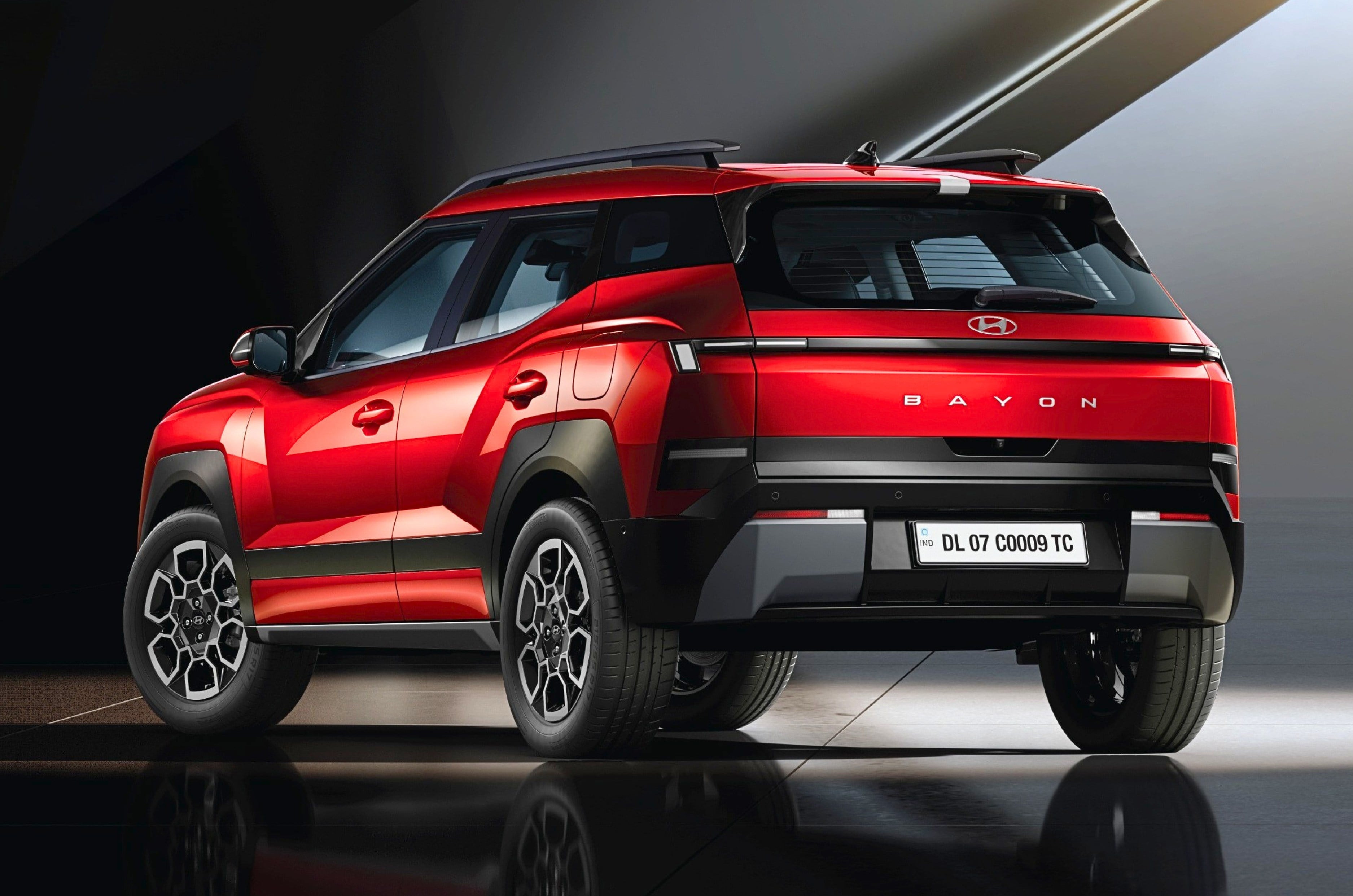
At the rear, the Bayon gets a slim black band housing very sleek tail lamps and there’s ‘Bayon’ spelt bold and centre on the tail gate. There’s also a pronounced roof spoiler, while the bumper gets a dual-tone black and silver treatment housing some more lighting elements. Overall, the Bayon has a crossover-ish look rather a boxy, upright SUV.
Hyundai Bayon interior and features
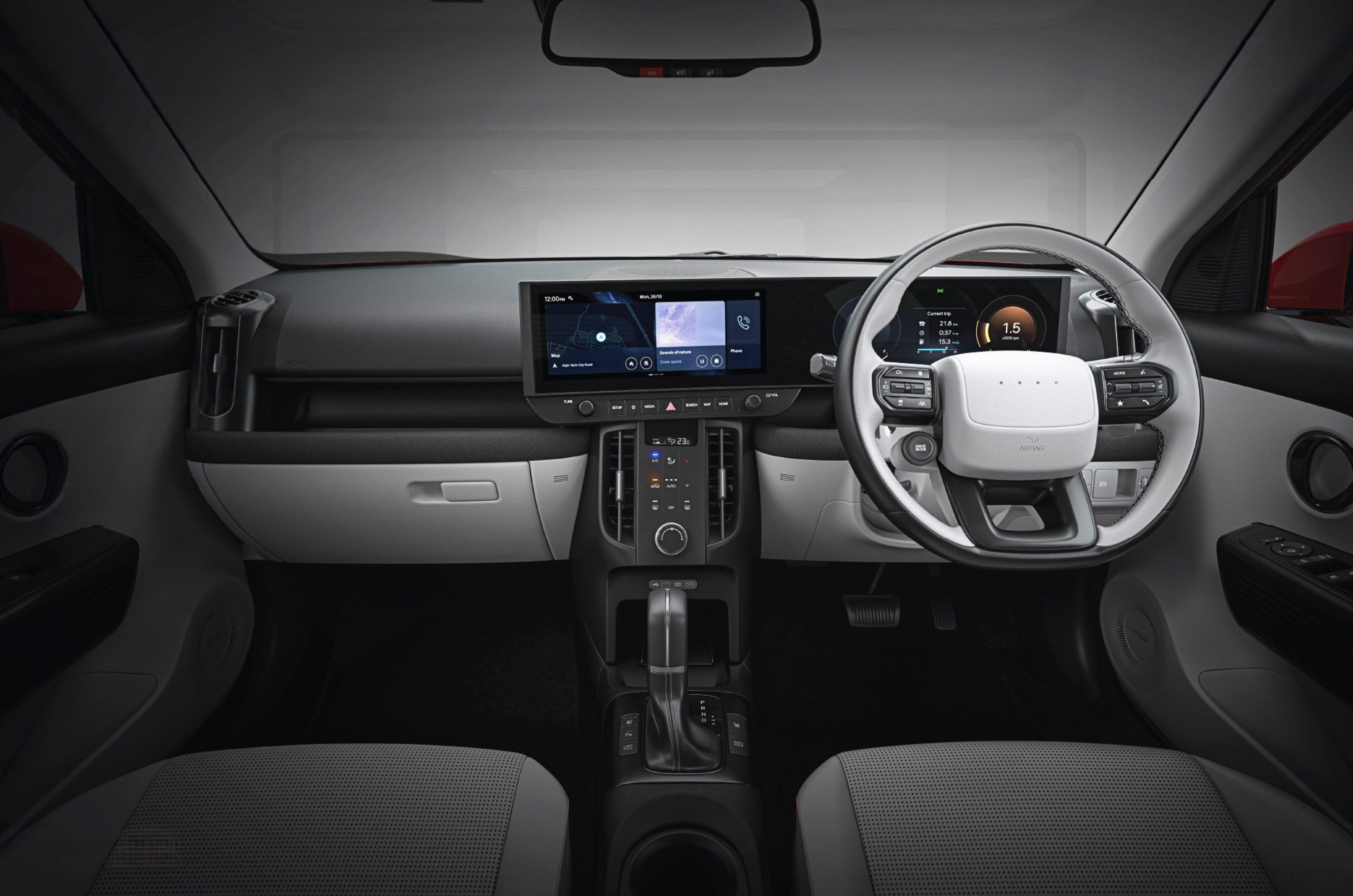
The layered dashboard sports a twin 12.3-inch connected screen setup and a central dropdown panel housing the HVAC controls – it also seems to have physical dials and knobs, which is always a welcome sight. We can also spot a wireless charging pad at the base of the vertically oriented centre console.
The steering wheel with Hyundai’s four-dot motif, the vertical AC vents flanking the centre panel and even the door pads look very similar to those on the new i20. It also gets steering-mounted paddle shifters, and like all Hyundais, expect it to be properly kitted out with convenience and safety features.
Hyundai Bayon expected powertrain options
At launch, Hyundai is offering the Bayon with the tried and tested 115hp/144Nm 1.5-litre, four-cylinder naturally aspirated petrol engine that powers the Creta. It will come with manual and CVT gearbox options. And while Hyundai hasn’t confirmed it yet, a CNG version is also expected to be added to the lineup at a later stage, likely with an underbody tank, making the Bayon the first Hyundai model over four metres long to be powered by CNG.
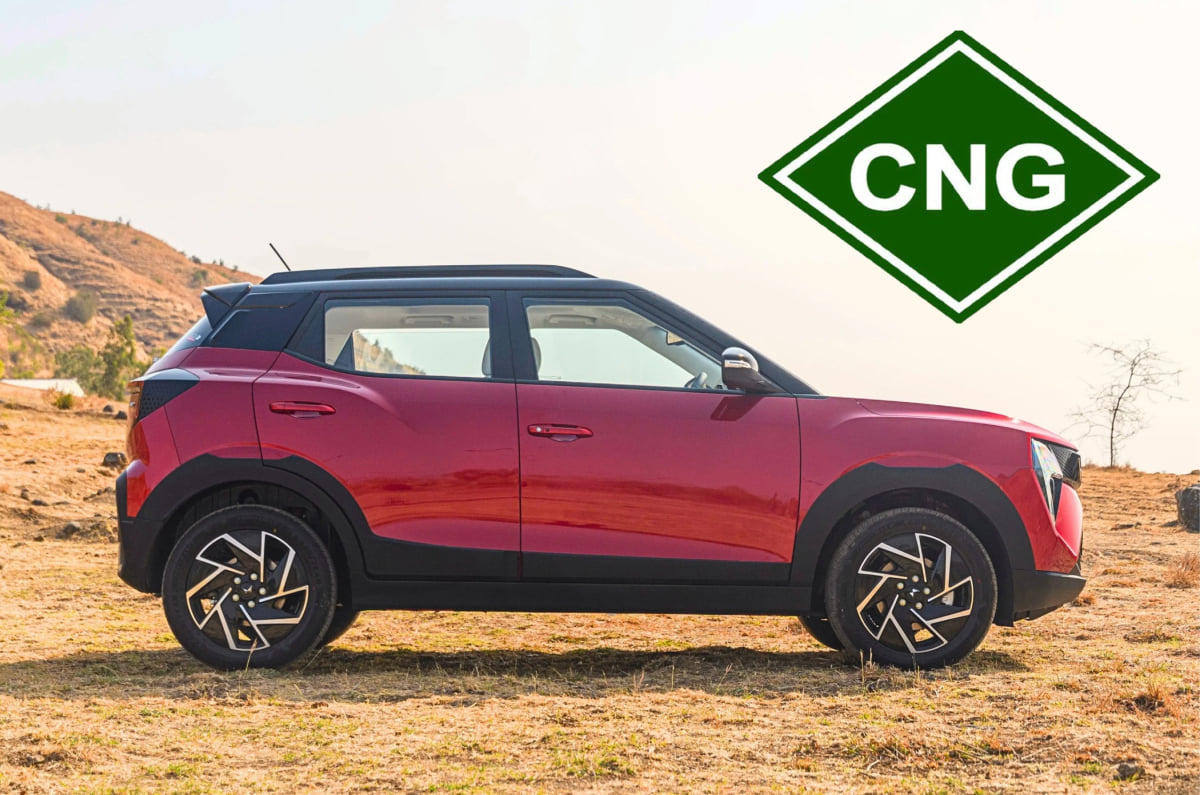
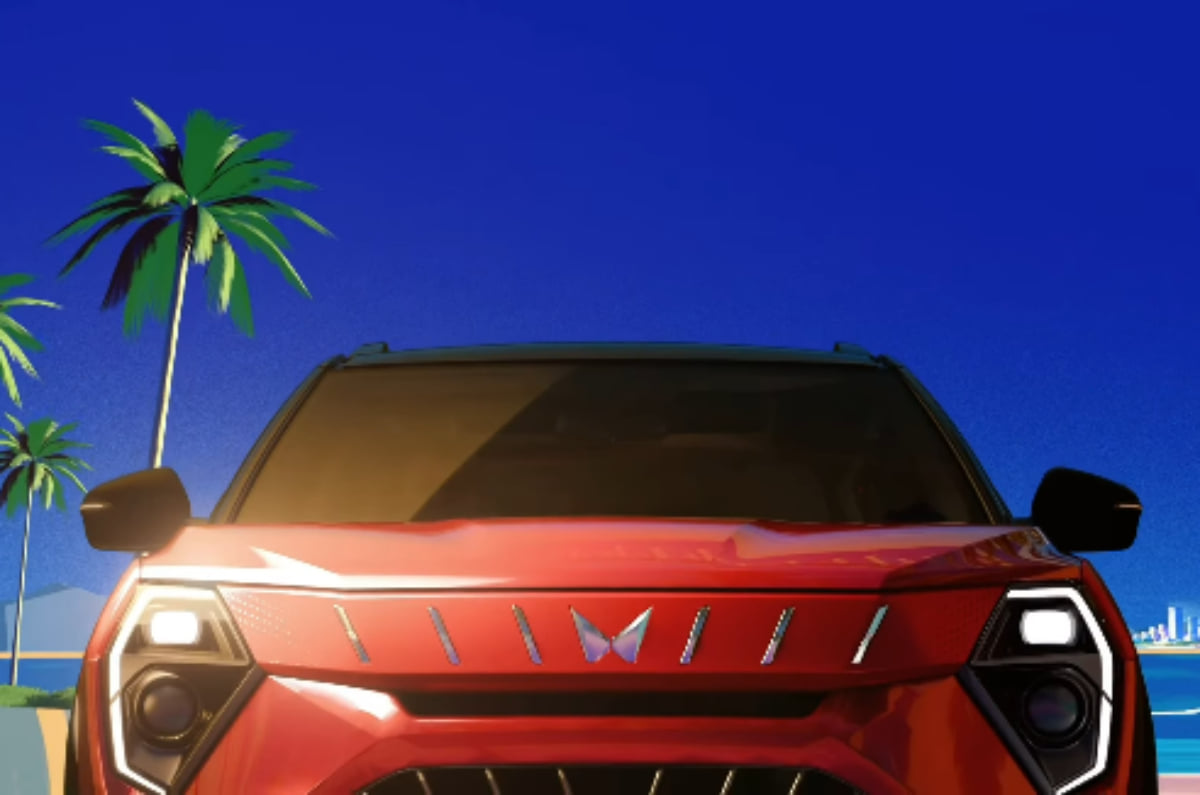
Mahindra will debut a CNG the variant of the XUV 3XO on October 15, expanding its compact SUV’s powertrain line-up to four options. The CNG version will join the existing petrol, diesel and electric variants, making it the third compact SUV in India to offer a CNG option, alongside the Maruti Suzuki Brezza and Tata Nexon. The teaser offers a first look at the XUV 3XO CNG’s exterior and interior.
Mahindra XUV 3XO CNG: Expected powertrain
The XUV 3XO CNG is expected to use the 1.2-litre turbo-petrol engine with multi-point fuel injection (MPFI), which produces 111hp and 200Nm in the petrol version. The petrol-powered XUV 3XO is available with six-speed manual and automatic gearboxes. Transmission options for the CNG version, along with details of the CNG tank and its placement, are likely to be revealed closer to launch.
Mahindra XUV 3XO CNG: exterior and interior
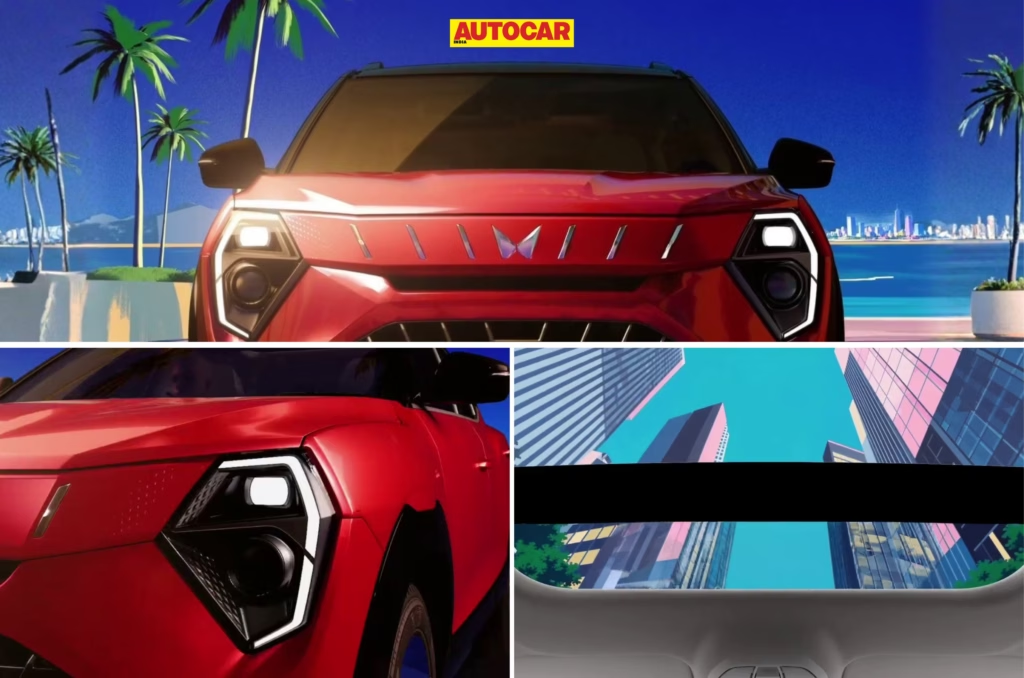
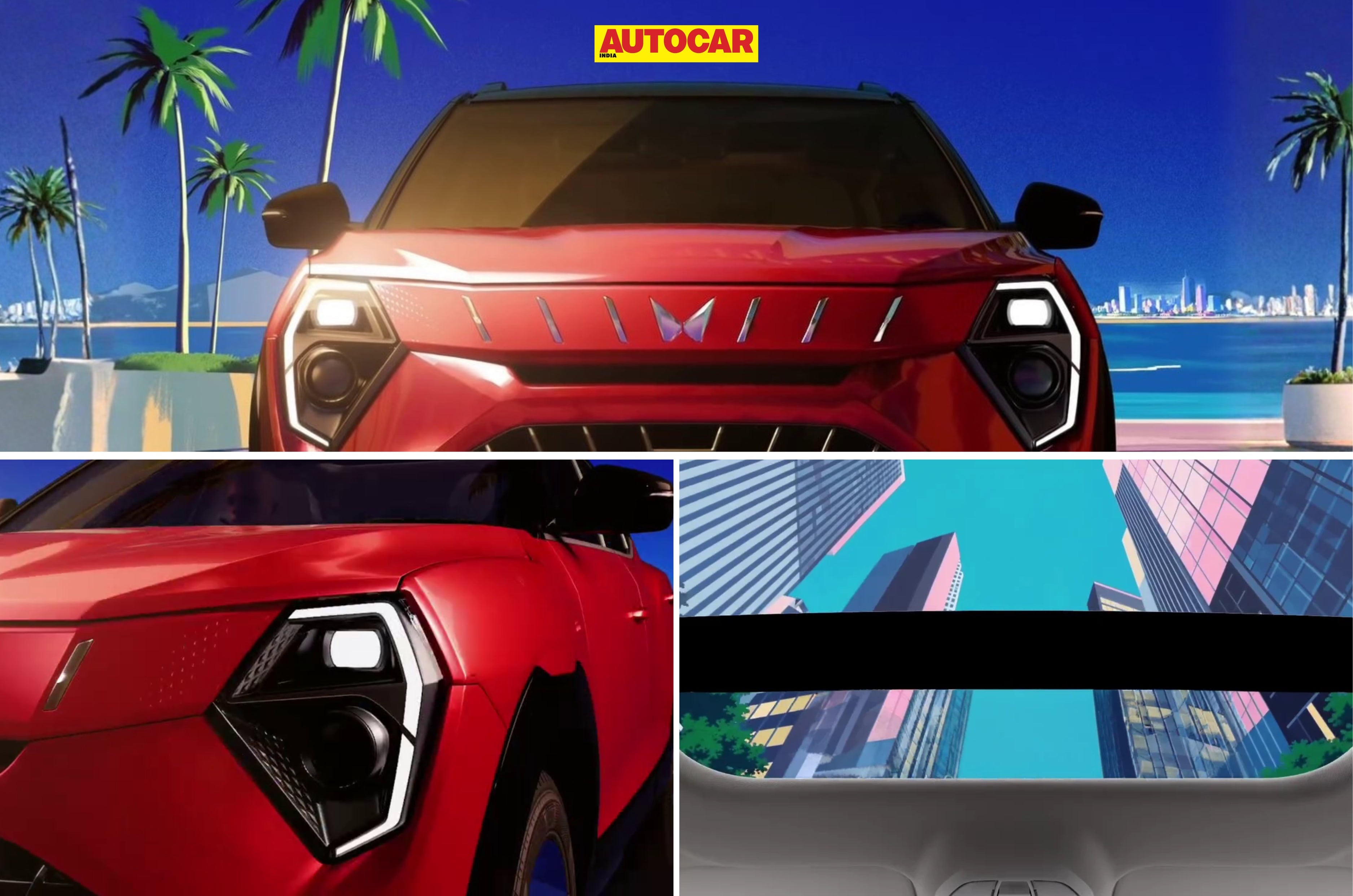
The teaser shows a body-coloured panel between the headlamps, with slim metallic inserts flanking the Mahindra Twin Peaks logo. The closed-off grille design resembles the RevX range, which suggests Mahindra could be offering the CNG powertrain with the RevX range. The teaser also confirms a panoramic sunroof.
Other exterior details are expected to remain largely unchanged from the standard XUV 3XO.
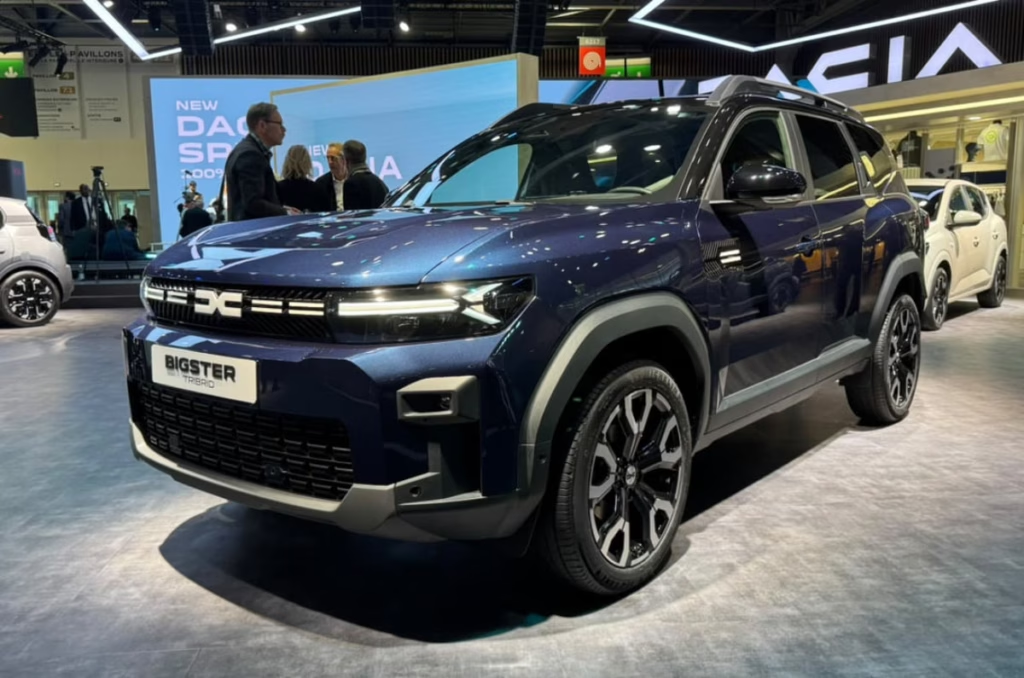
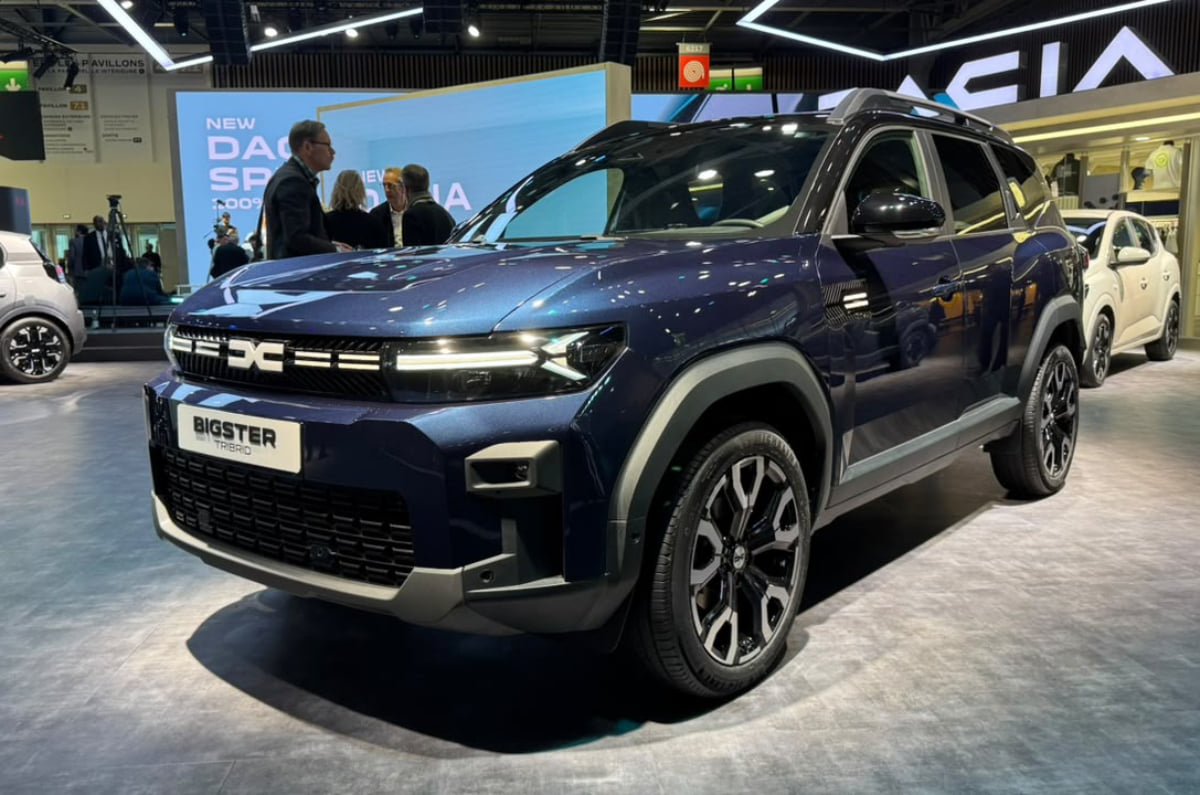
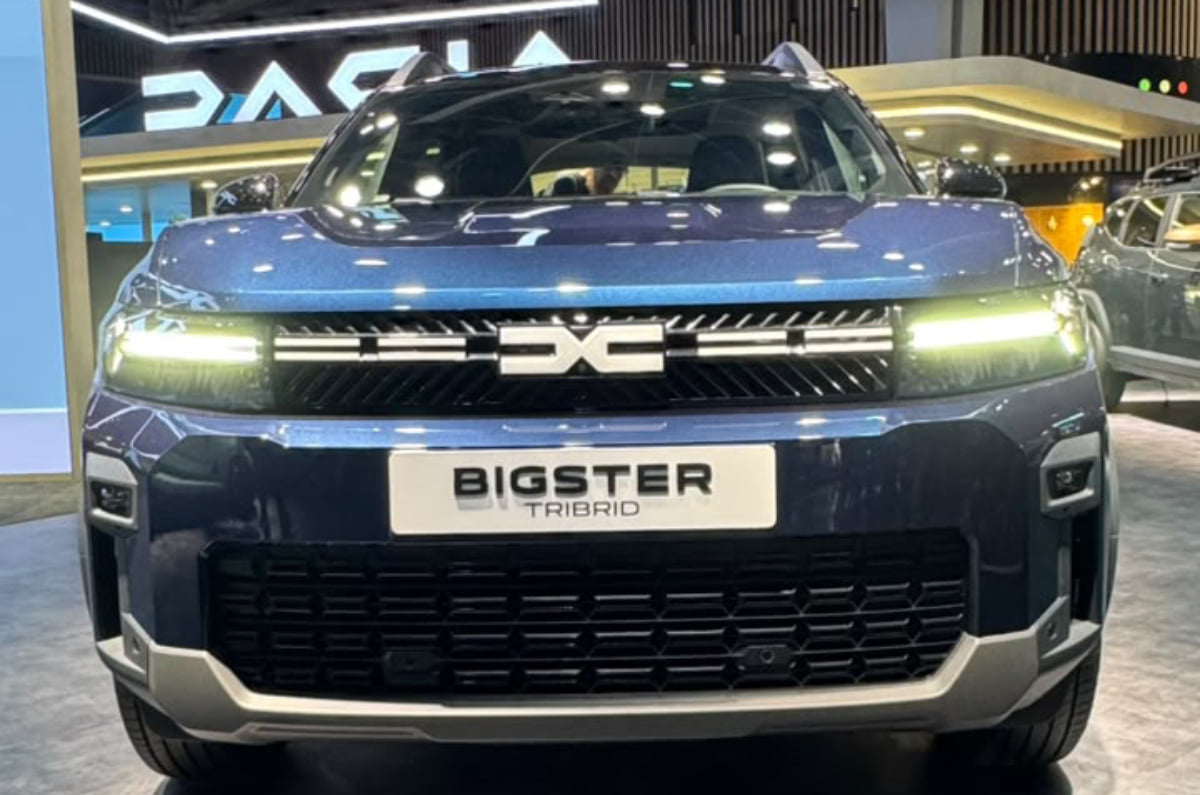
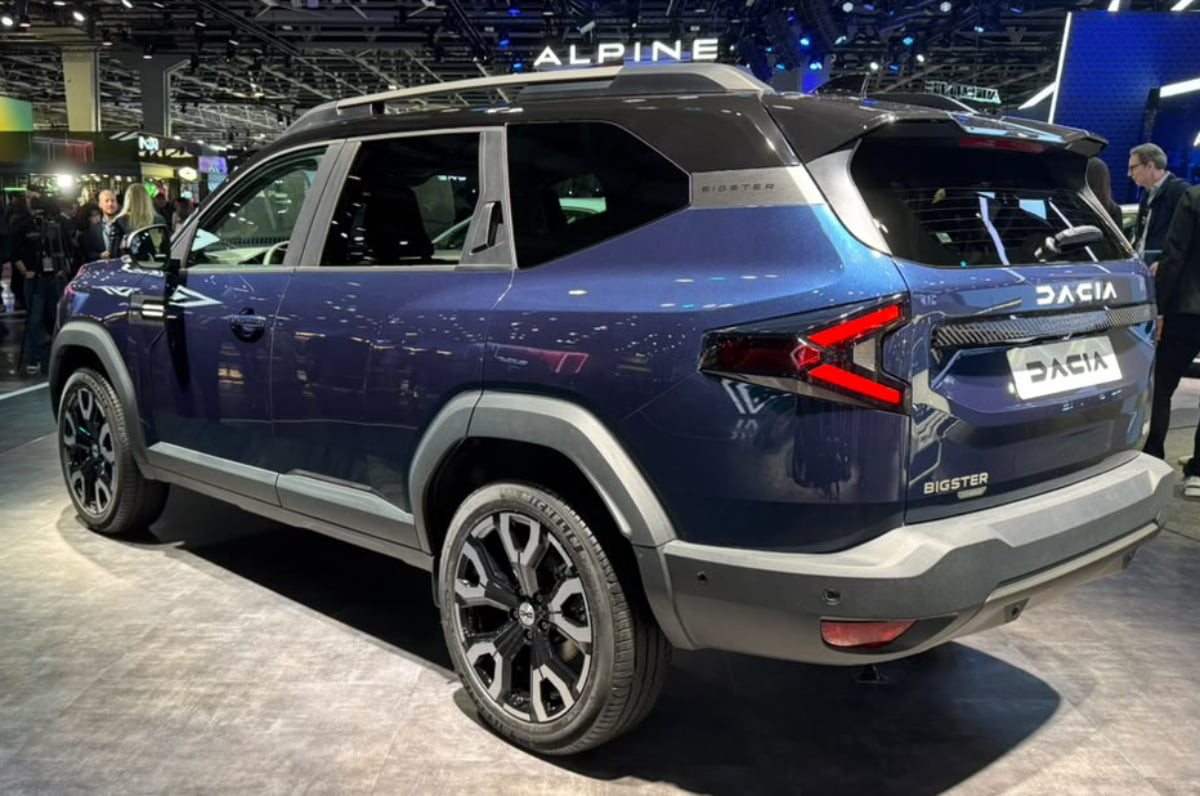
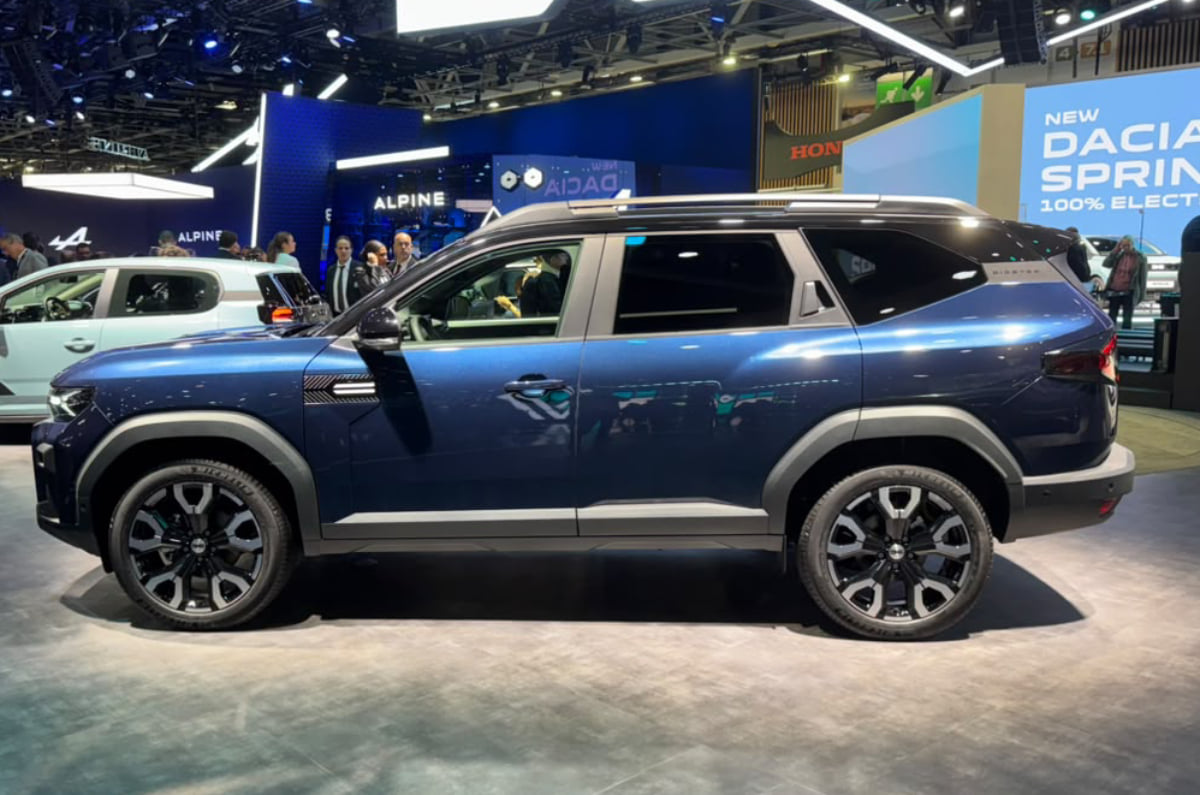
The Dacia Bigster, which is expected to come to India as a Renault in 2027, was showcased at the 2026 Paris Motor Show. The three-row SUV is expected to be positioned as a larger alternative to the Renault Duster, with turbo-petrol and strong-hybrid powertrain options. The hybrid system is set to debut in India in the Duster on October 17, 2026.
Dacia Bigster: Powertrain
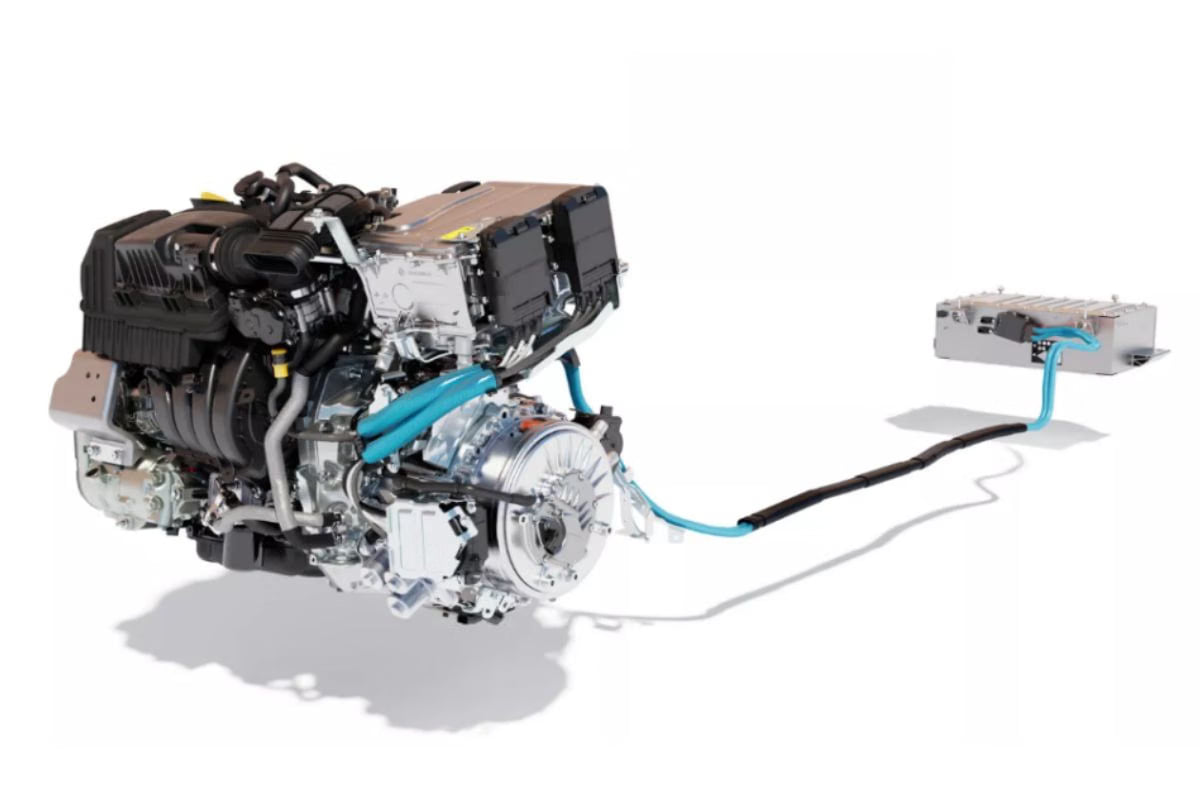
Renault strong hybrid E-Tech 160hp powertrain.
The India-bound Bigster is expected to get 1.3-litre turbo-petrol and 1.8-litre strong-hybrid powertrain options. The latter will make its India debut in the Renault Duster later this week.
In the Duster hybrid, the 1.8-litre naturally aspirated petrol engine works with two electric motors and a 1.4kWh battery to produce a combined 160hp and 172Nm. The system uses a multi-mode automatic gearbox with fixed gear ratios. Since this is a strong-hybrid setup, the battery does not require charging via an external source, and it charges while the vehicle is being driven. Renault claims the Duster hybrid can cover up to 80 percent of city driving in electric mode.
The Bigster is expected to use the same hybrid setup, though its power and torque figures could differ due to its larger size.
Dacia Bigster: Exterior
The Bigster is 230mm longer overall than the India-spec Duster, with a 45mm longer wheelbase and much of the added length at the rear overhang. The European Dacia Bigster features a chunky front skid plate, rugged-looking front and rear bumpers, and LED daytime running lights.
Like the India-spec Duster, the India-bound Bigster is expected to get revised styling compared to its Dacia counterpart, including changes to the grille and bumpers. The India-spec Duster gets connected tail-lamps, unlike the European Dacia Duster, which has separate units.
Dacia Bigster: Interior and layout
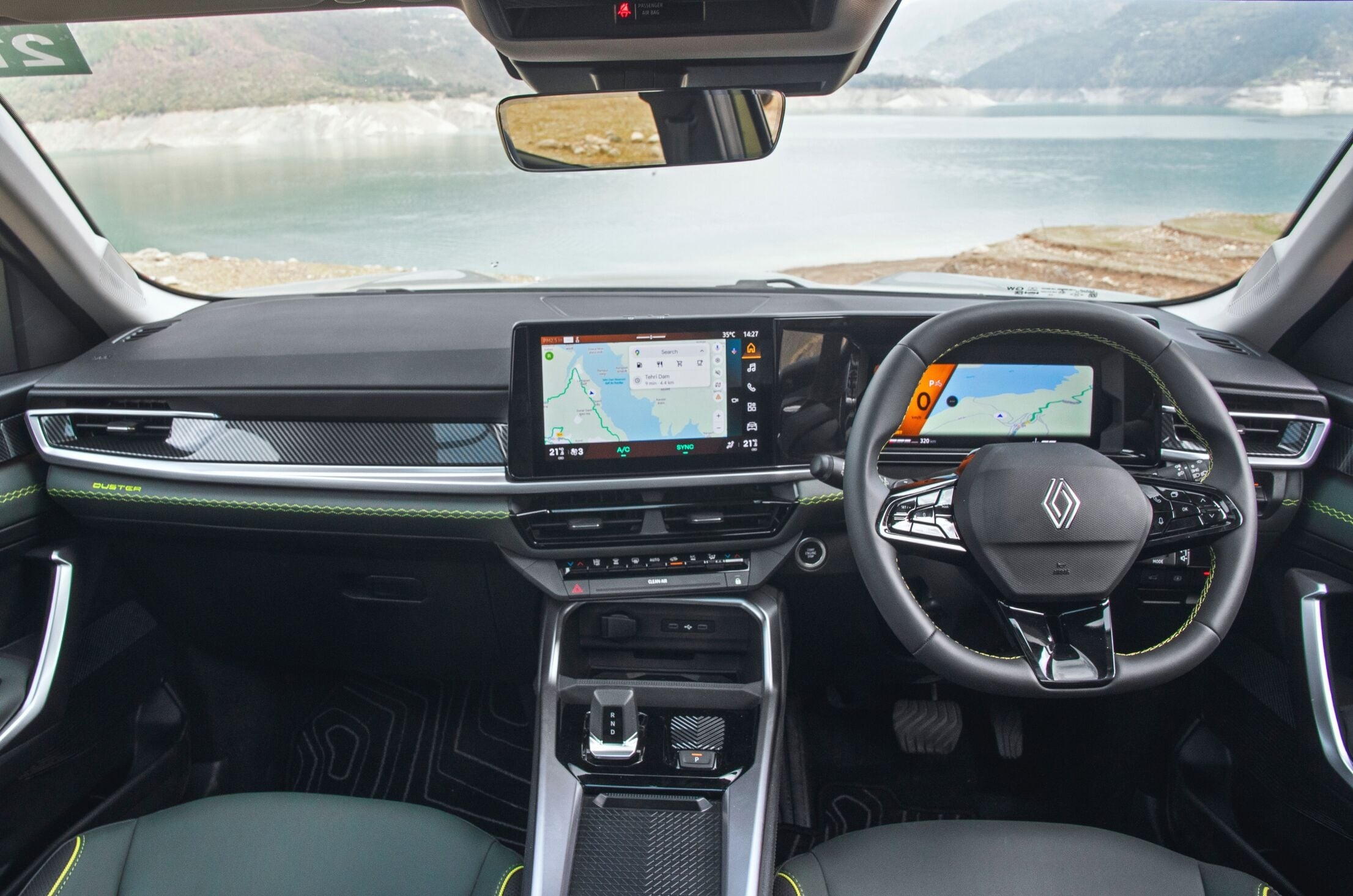
Renault Duster interior image used for representation only.
The India-bound Bigster is expected to be a seven-seater with three rows. Its cabin layout is expected to be similar to that of the new Renault Duster, with additional features likely for the larger SUV. The Duster gets a 10.1-inch touchscreen infotainment system, a 10.25-inch digital instrument cluster, dual-zone climate control and a wireless phone charger.
Dacia Bigster: India launch and rivals
The Renault-badged Bigster is expected to arrive in India in 2027. It will sit above the Duster in Renault’s SUV line-up and is expected to compete with three-row SUVs such as the Hyundai Alcazar, Mahindra XUV 7XO and MG Hector Tomahawk range.
A Nissan version of the three-row SUV has also been spotted testing in India.
Honda Motorcycle and Scooter India (HMSI) is significantly scaling up its manufacturing capacity in India, with company President and CEO Tsutsumu Otani confirming plans to increase output across its four Indian plants from the current 62.5 lakh units per year to 80 lakh units by 2028.
HMSI to expand production capacity from 62.5 lakh to 80 lakh units annually by 2028
CB350 already being exported to Europe; CB500 being evaluated as the next export model
Africa, Central America and South America identified as key future export markets
HMSI production and export plans
The expansion is expected to create over 2,000 jobs
Otani said the expansion over the next 18-24 months is aimed at serving both domestic demand and a growing export business. “With the eight-million-unit capacity planned in 2028, we will be well equipped to handle customer demand for ICE or EV products,” he said. The company’s current production is already running at full capacity.
On the export front, HMSI has begun shipping India-made models to Europe, starting with the CB350, for which Otani said the “sales situation is also very good”. The CB500 is being evaluated as the next potential export model, although he described these plans as being at an early stage.
Beyond Europe, Otani highlighted Africa, Central America and South America as important future markets, with Africa singled out as particularly significant. “India’s geographical proximity can provide an advantage in serving the African market, especially if one were to factor in transportation costs,” he said.
To support its export ambitions, HMSI is also looking to deepen localisation. Otani acknowledged that several components currently undergo final assembly in India but rely on parts imported from Thailand, Japan and Europe. “We intend to accelerate localisation and manufacture more in India as our next step,” he said, adding that resource circulation and the recycling of steel and aluminium remain areas the company is working through, given India’s limited domestic supplies of these materials.
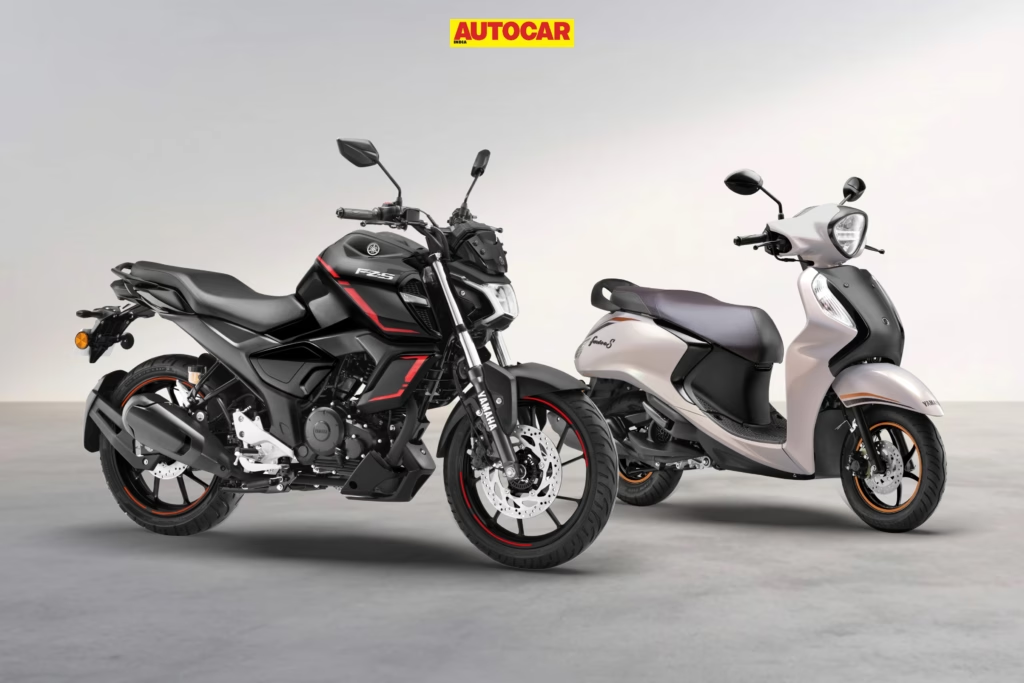
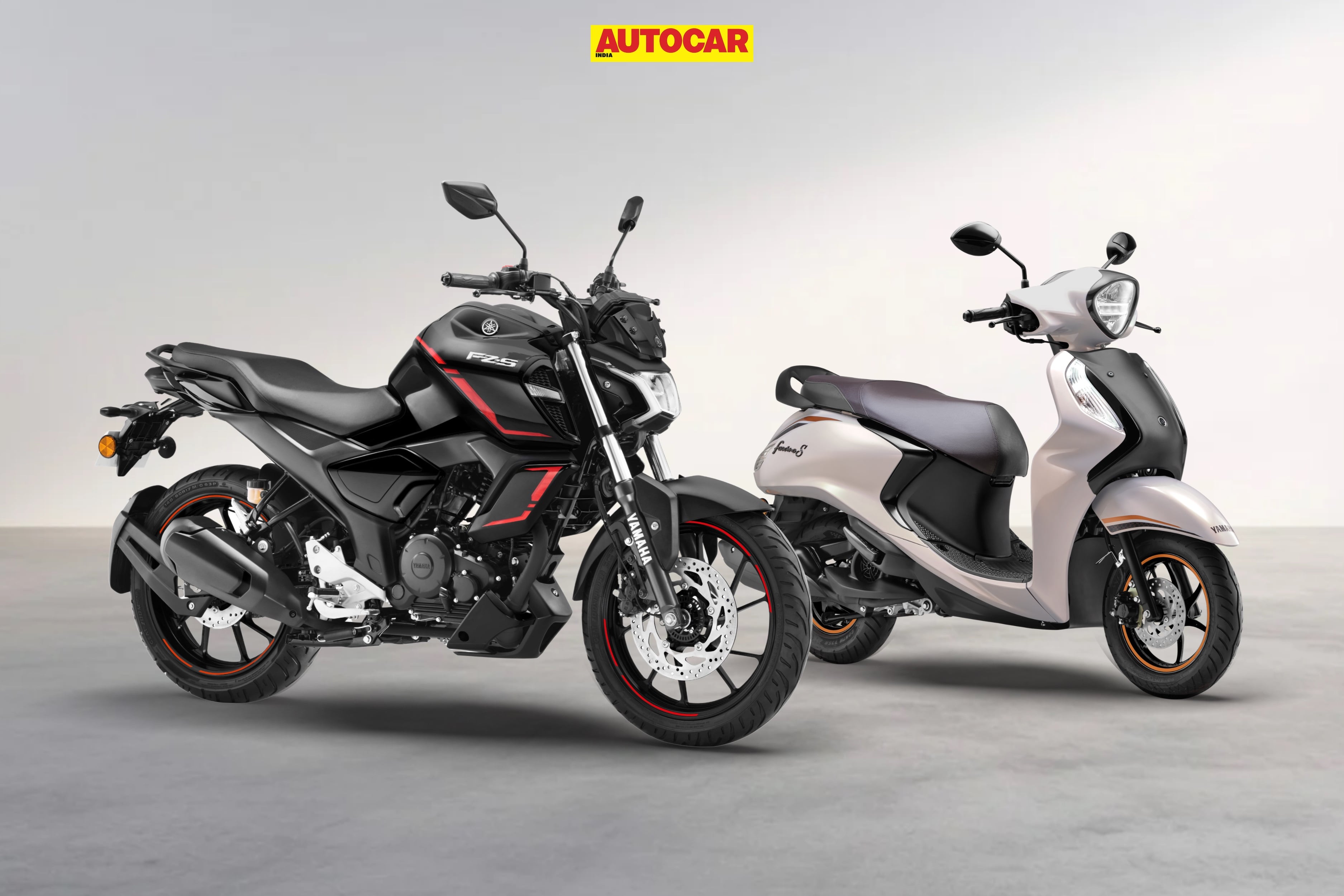
Yamaha Motor India has announced the beginning of its festive season offers, covering most of its popular motorcycles and scooters. The offers come in the form of insurance premium benefits, low down payment with flexible finance schemes, or both. Yamaha has told us that the insurance benefits mentioned here is the minimum amount customers can expect to get on their premiums.
Yamaha R15 and MT-15 don’t get any discount benefits
FZ series get the highest offer of the bunch
Yamaha festive offers: The breakdown
Aerox, R15S and EC-06 are completely exempted
The Fascino and RayZR 125, both recently updated, get the least amount of offers. The 125cc scooter duo, besides sharing the same platform, also share the same Rs 3,399 benefit for the insurance and a lowered down payment of Rs 2,499. The FZ series, now consisting of seven different variants, get Rs 5,999 as insurance benefit and Rs 3,900 as the down payment. The R15 and the MT-15 do not get any insurance benefits, just a lowered down payment of Rs 4,999. The XSR155, on the other hand, gets Rs 5,555 worth of insurance benefit and the same lowered down payment amount.
Type
Product/Variant
Insurance Benefit*
Low down payment*
Yamaha Hybrid scooter range
Fascino 125, RayZR 125
Rs 3,399
Rs 2,499
Yamaha FZ series
FZ-S (FZ-S Fi Hybrid, FZ-S Fi, FZ-S Fi V4 DLX and FZ-S Fi V4)
FZ (FZ Rave, FZ-Fi and FZ Blue Flex)
Rs 5,999
Rs 3,900
Yamaha 155cc motorcycles
XSR155
Rs 5,555
Rs 4,999
Yamaha 155cc motorcycles
R15 and MT-15
NA
Rs 4,999
The recently launched Yamaha R2 does not get any offers at this time, nor do the Aerox, R15S and Yamaha’s first electric scooter, the EC-06. The Japanese manufacturer has specified that the offers are currently not applicable in the states of Keralam and Tamil Nadu. Elsewhere in the country, the insurance benefits have been effective from October 1 (October 10 in Maharashtra) to November 15. The lowered down payment and finance schemes have been effective since October 1 and will remain so until the end of November.
*Terms and conditions apply. Insurance benefits based on the applicable insurance cost, excluding add-ons.
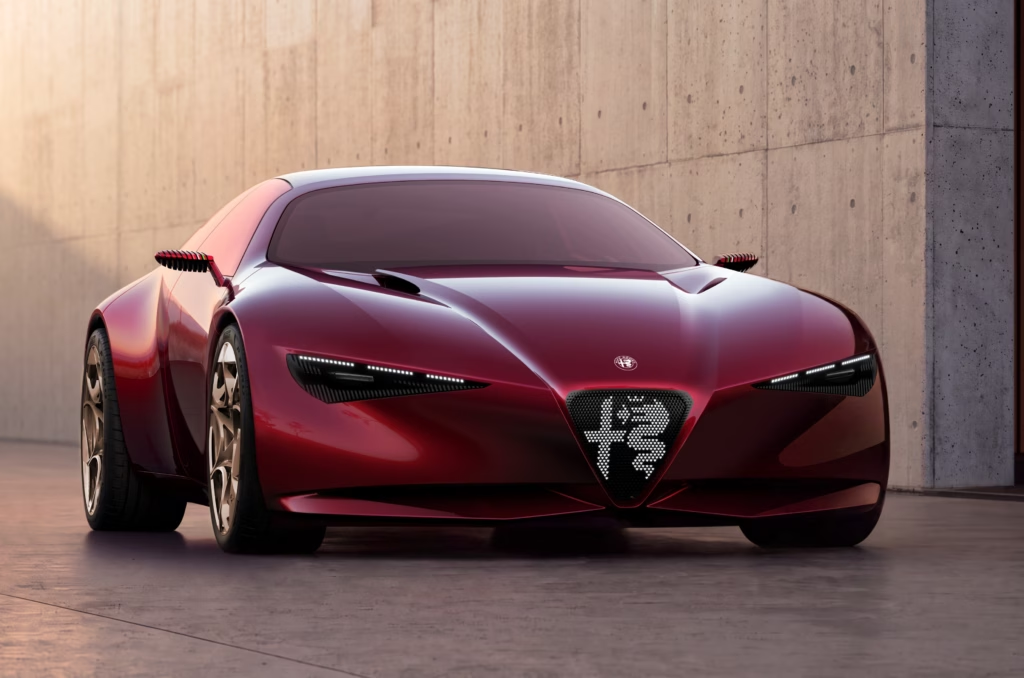
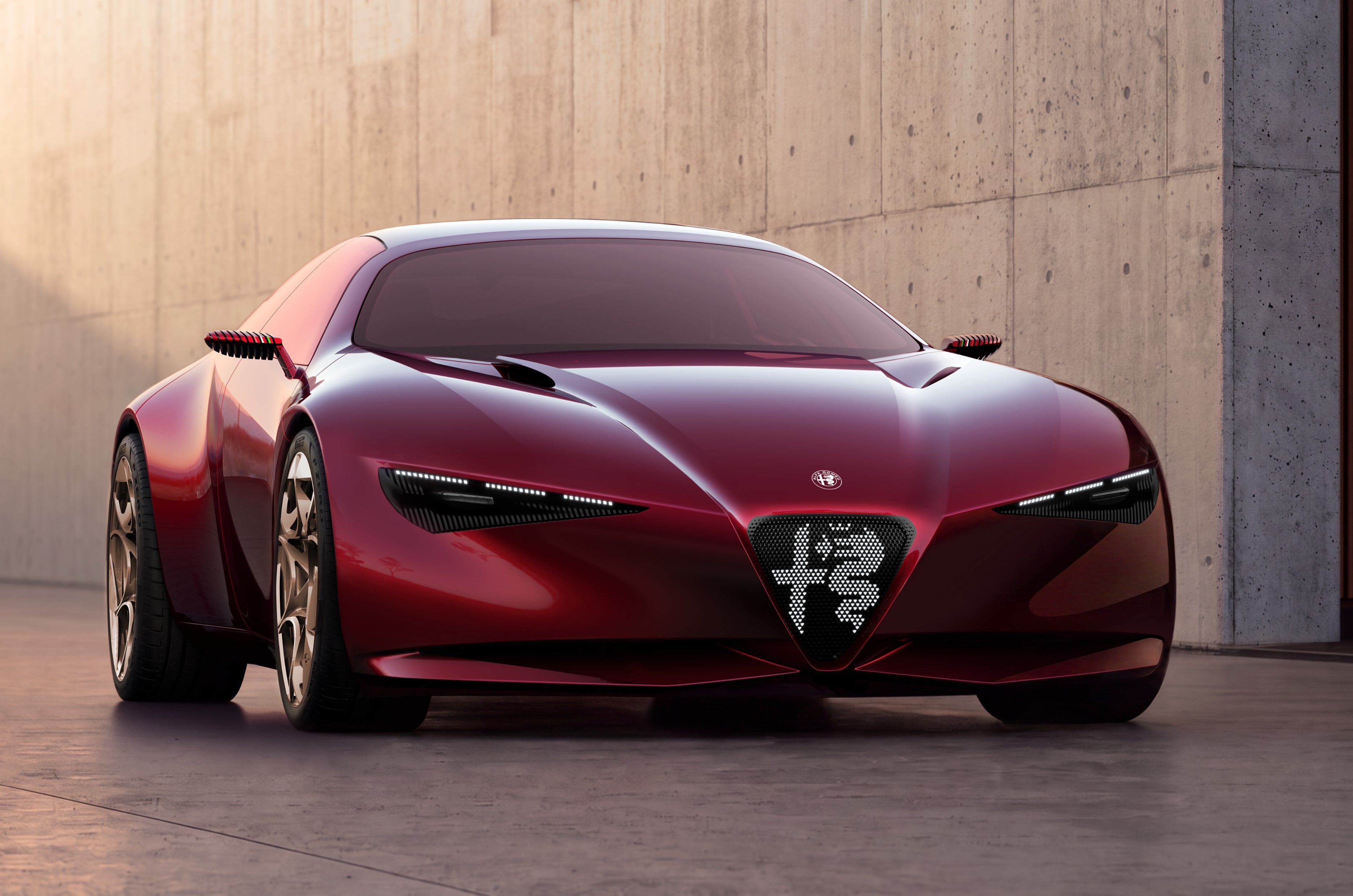
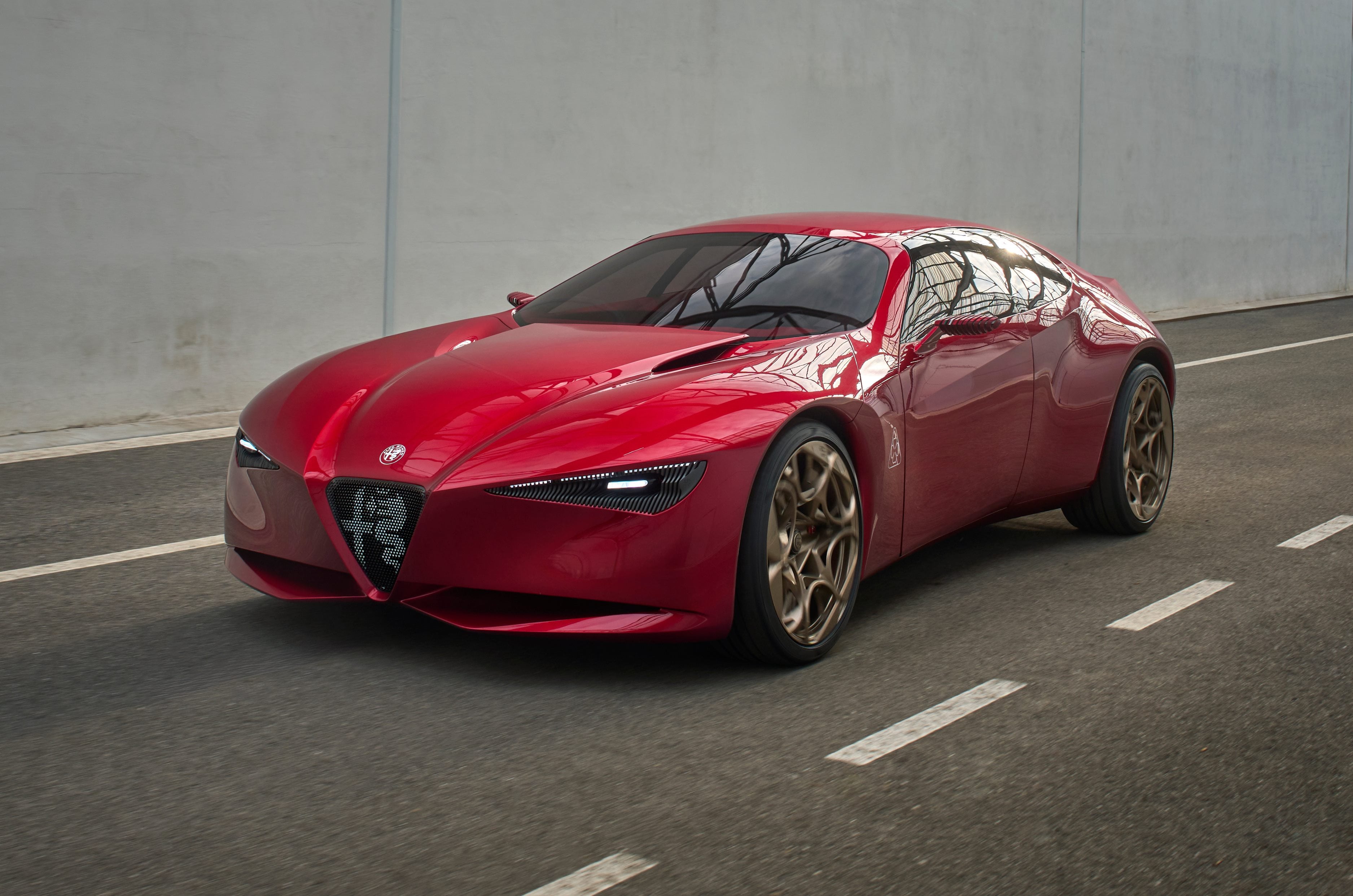
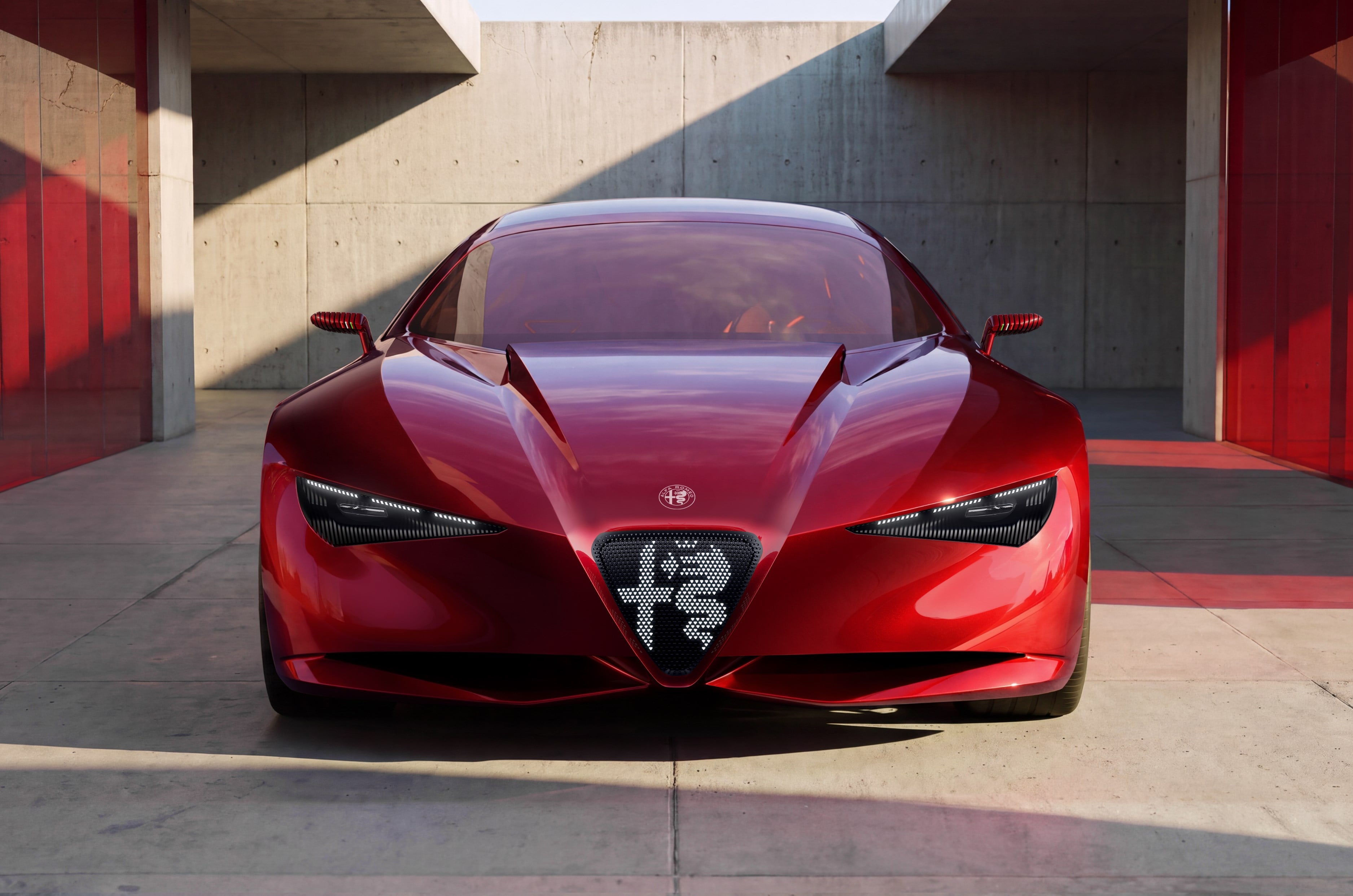
Alfa Romeo’s major reveal at the 2026 Paris Motor Show is the Cuorerosso, a four-door concept that previews a new design language dubbed ‘Necessary Beauty’. In addition, the Cuorerosso debuts a strong hybrid version of Alfa Romeo’s 2.9-litre twin-turbo V6, which is used in the Giulia, Stelvio, and 33 Stradale.
Alfa Romeo Cuorerosso powertrain
Alfa Romeo says that the Cuorerosso serves as a precursor to a “multi-energy approach” that the carmaker’s future models will follow, specifically mild hybrid, strong hybrid, plug-in hybrid, and full-electric powertrains. To put it succinctly, Alfa Romeo wants to put “technology and innovation at the service of driving pleasure and sportiness.”
The Cuorerosso’s 2.9-litre V6 hybrid powertrain is mated to a torque converter automatic gearbox, an all-wheel drive system, and a carbonfibre driveshaft – the concept weighs 1,750kg. It’s also equipped with steer-by-wire tech, which eliminates physical linkages between the steering rack and wheels in favour of full electronic control.
Alfa Romeo Cuorerosso exterior design
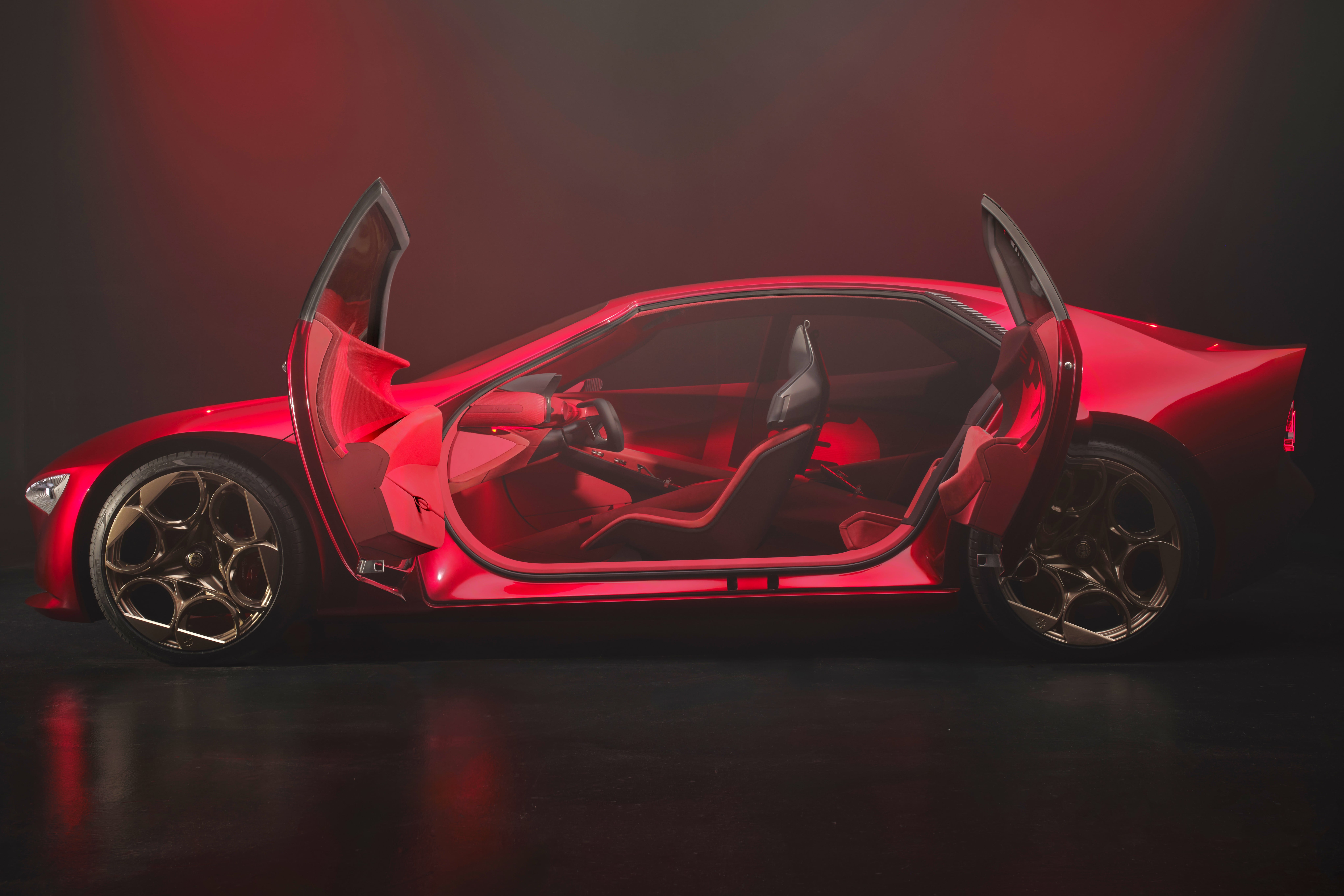
Stretching the tape at 4,700mm long, 1,980mm wide, and 1,331mm tall, with a wheelbase of 2,930mm, the Cuorerosso doesn’t stray all that far from the Alfa Romeo Giulia in terms of dimensions. The styling, though, is a different story. Up front, the Cuorerosso looks quite menacing thanks to its swept-back triangular headlamps and segmented eyebrow-like DRLs, which flank a backlit grille that displays the Alfa Romeo motif in a pixel pattern – the brand’s emblem sits right above the grille too.
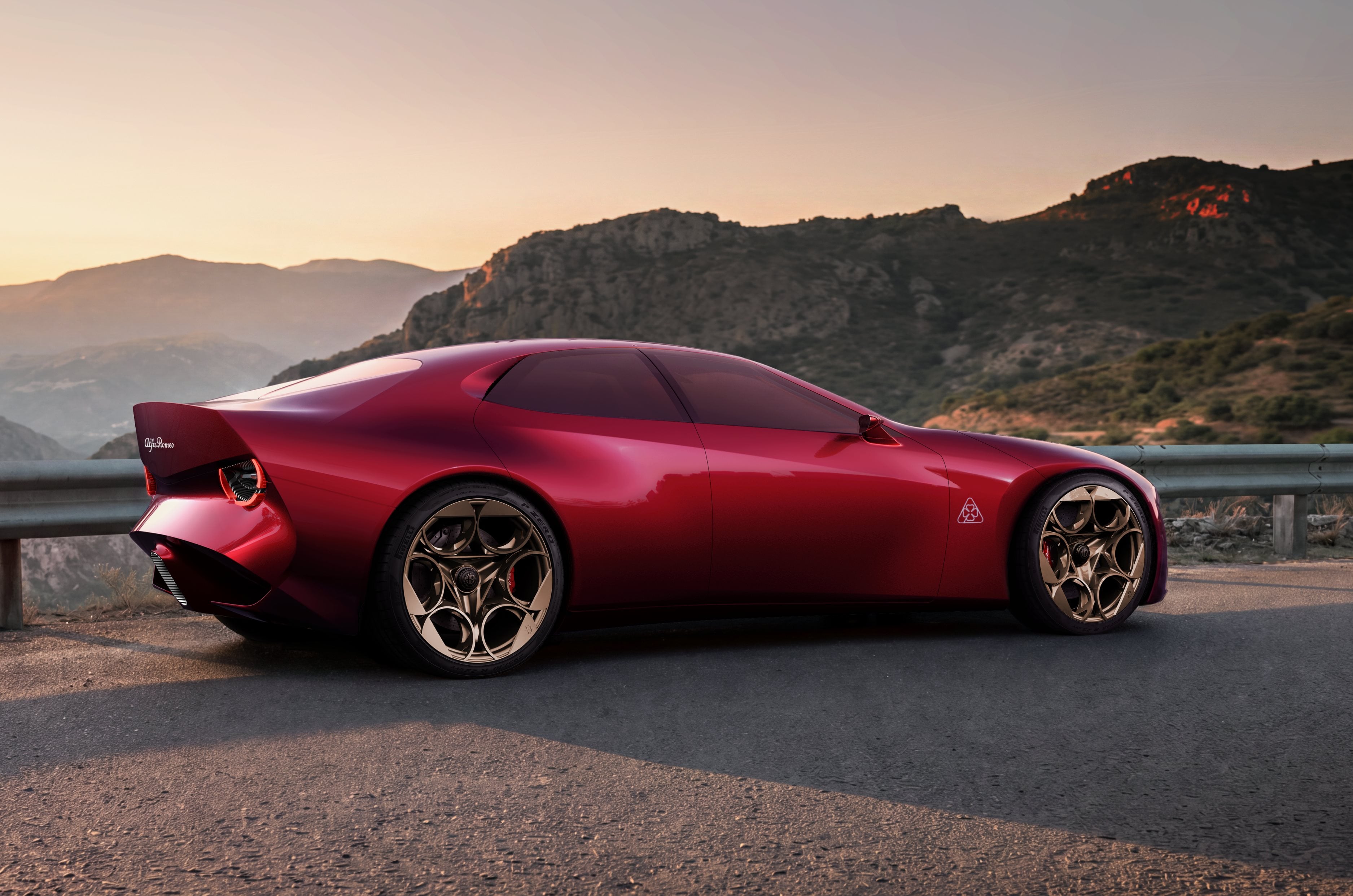
Sleek air intakes can be seen on the front bumper, while the bonnet looks very sculpted and muscular, with air exits opening up just ahead of the windscreen. Over to the side, the 22-inch bronze-coloured forged alloy wheels immediately stand out, and so do the slatted ORVMs and heavily flared rear wheel arches. Rear-hinged back doors are another flamboyant styling touch on the Cuorerosso.
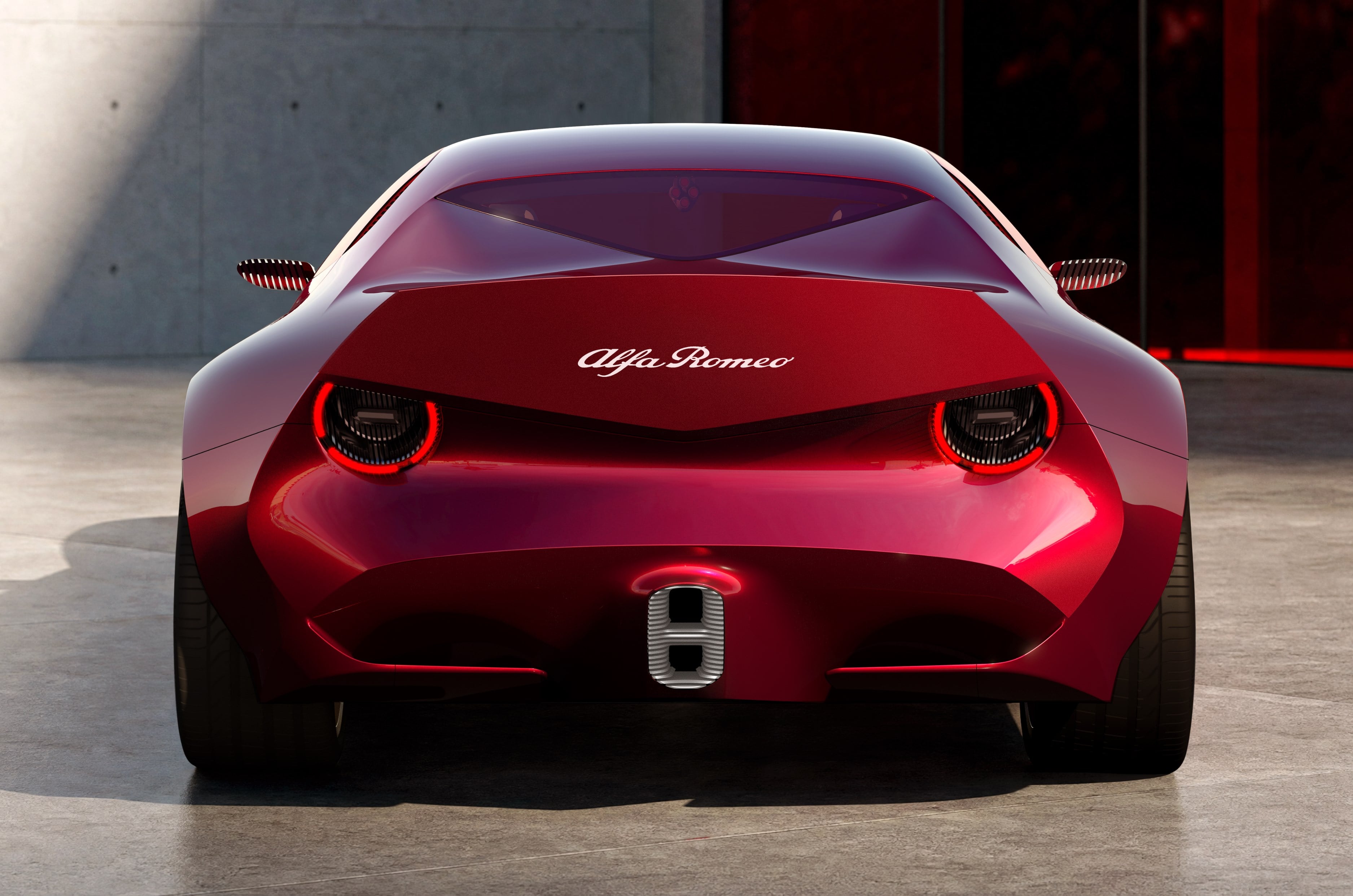
The rear end of the Cuorerosso is characterised by a large integrated ducktail spoiler, below which sits a pair of crescent-shaped tail-lamps and an Alfa Romeo wordmark. The sharply-protruding bumper lends a cool wedge-like shape to the rear, especially when viewed from the side, and includes a centrally positioned dual-exhaust setup flanked by air exits. Alfa Romeo claims a 0.28Cd drag coefficient for the Cuorerosso.
Alfa Romeo Cuorerosso interior
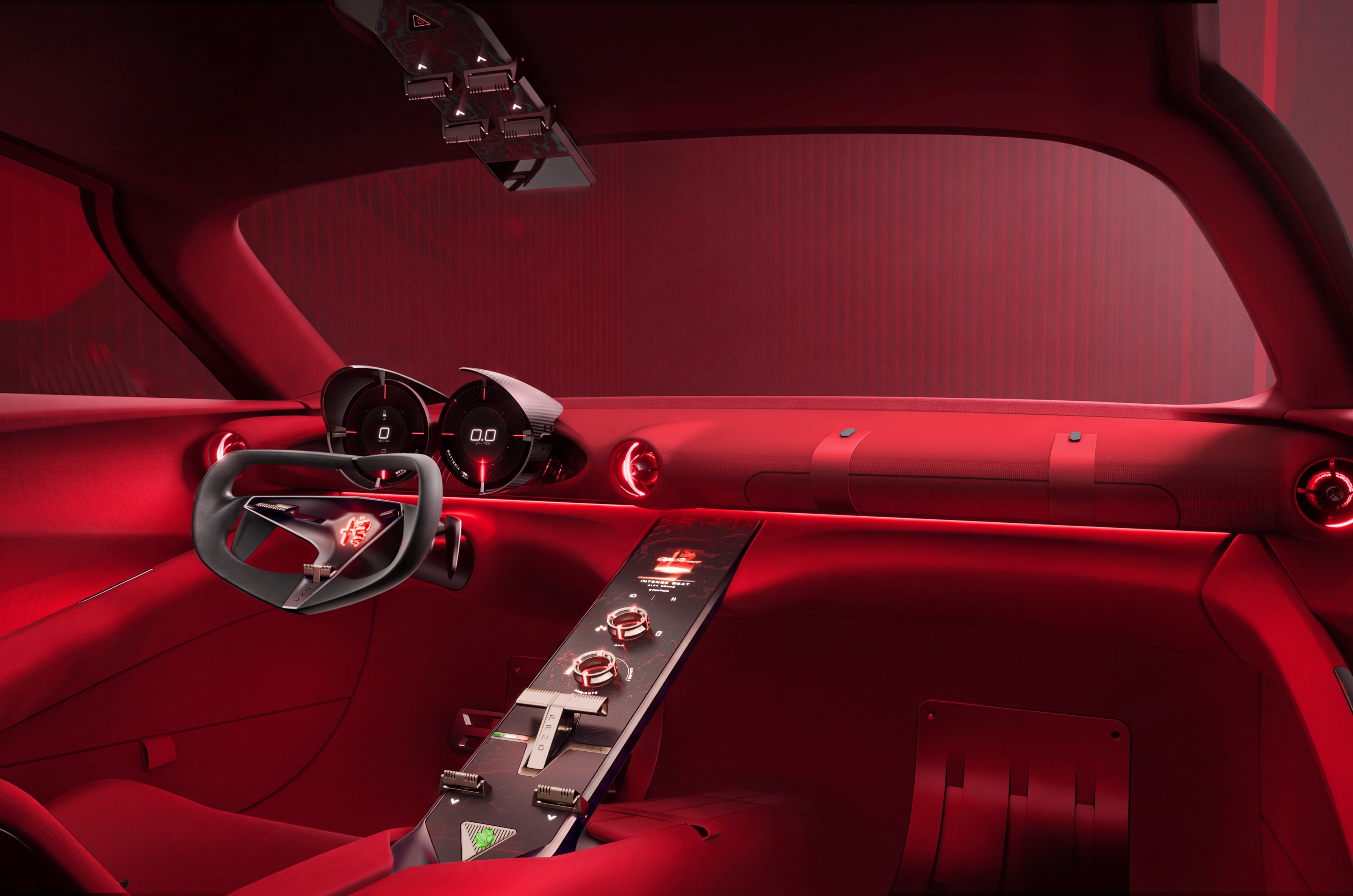
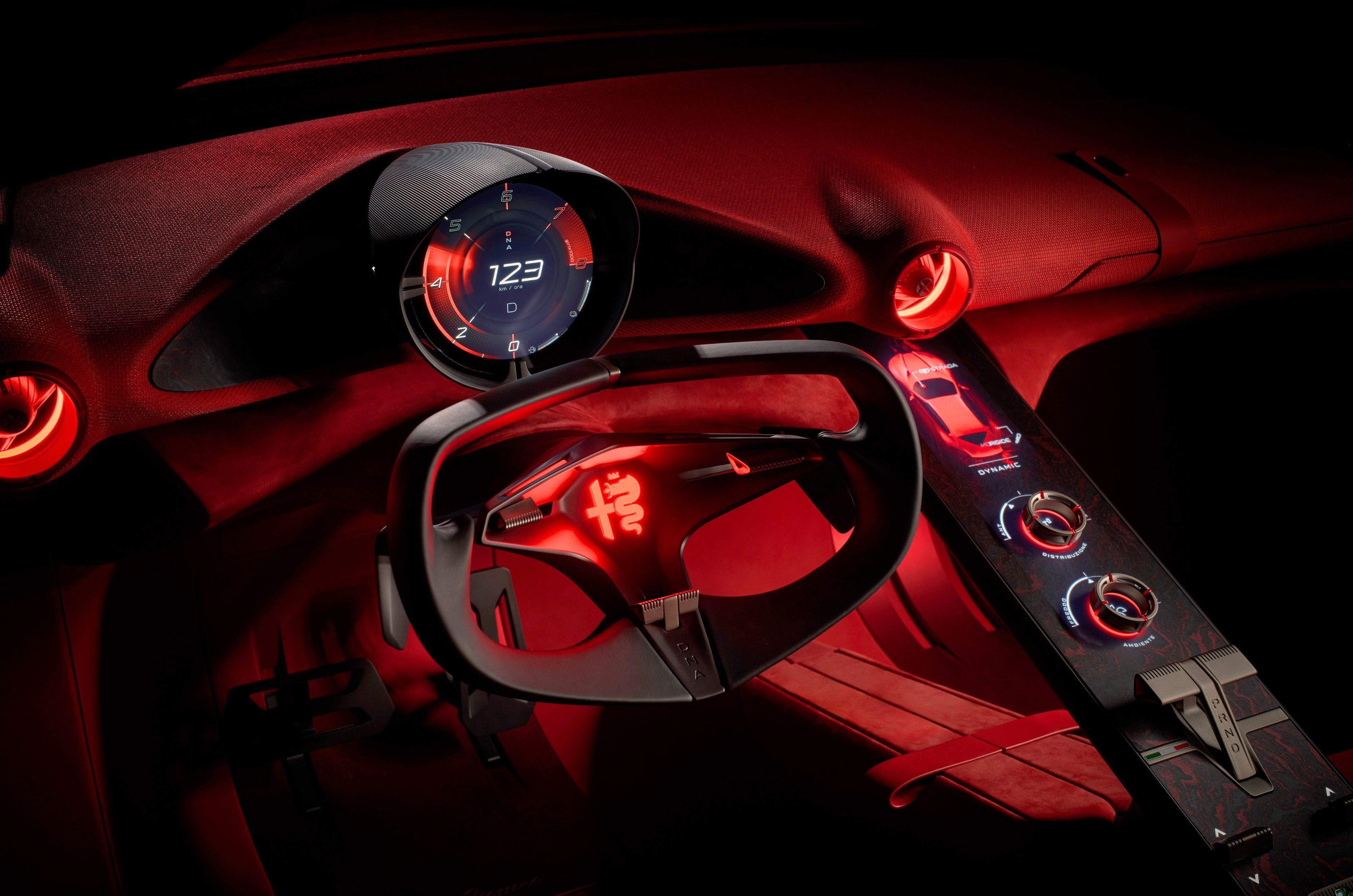
Inside, the Cuorerosso has a 2+2 seating layout and is just as radical as its exterior. For one, the colour scheme is predominantly red to convey the Cuorerosso’s sporty intentions, and there’s red ambient lighting in various spots too. The centre console has a pass-through design, and integrates a ‘Magma Display’ that combines physical controls with a digital interface. An aircraft-style gear selector can also be seen in the lower half of the centre console, along with a clover leaf emblem that glows green.
Ahead of the driver sits an unconventional-looking three-spoke steering wheel that has a flat top and a pointed bottom, while the central hub is dished inward and sports an Alfa Romeo emblem that glows red. Behind the steering wheel sits a pair of digital dials, which remain separate during normal driving and merge into one large dial if you start picking up the pace.
The Cuorerosso itself is unlikely to make it to production, but if it’s any indication of Alfa Romeo’s future, things look to be quite exciting for the Italian marque.
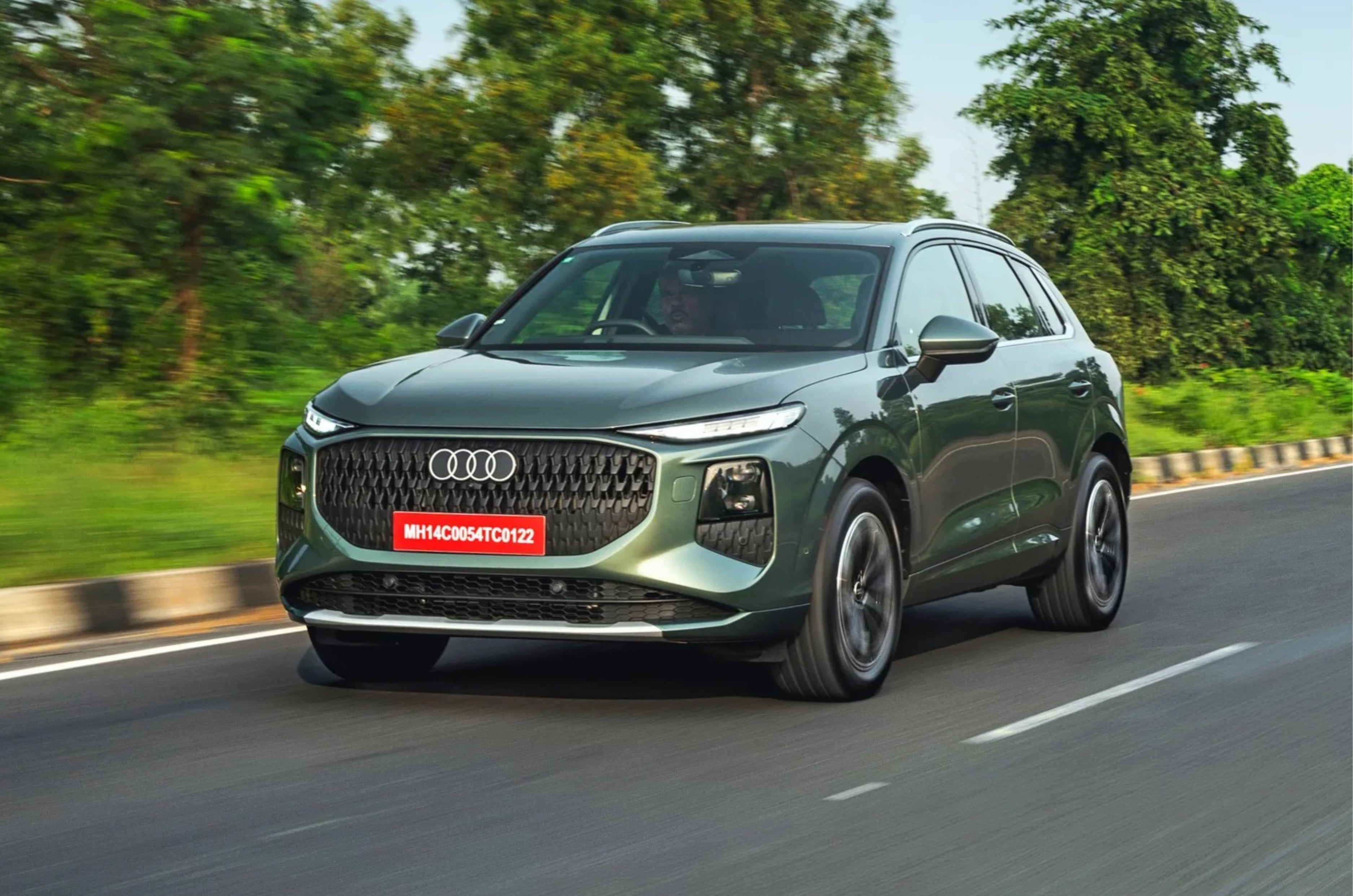
It would be easy to file the third-generation Q3 as just another new model but it isn’t. For Audi India, this is closer to a reset. The brand has spent the past few years soldiering on with ageing, outdated products and its showroom traffic has paid the price for this freeze in new products. But that’s all changed now. With fresh investment pouring in from its headquarters, Audi is on a new product offensive which has been kicked started with the Q3. This compact SUV is also the entry point into the brand, so it carries the burden of deliveringthe maximum sales. There’s a lot riding on the Q3’s gentle shoulders and Audi is hopeful that this will model will mark the turning point for the brand. But first, Audi has to convince customers. Is the new Q3 a quantum leap over the past Q3? We drove it in Goa to find out.
Audi Q3 Exterior Design and Engineering – 8/10
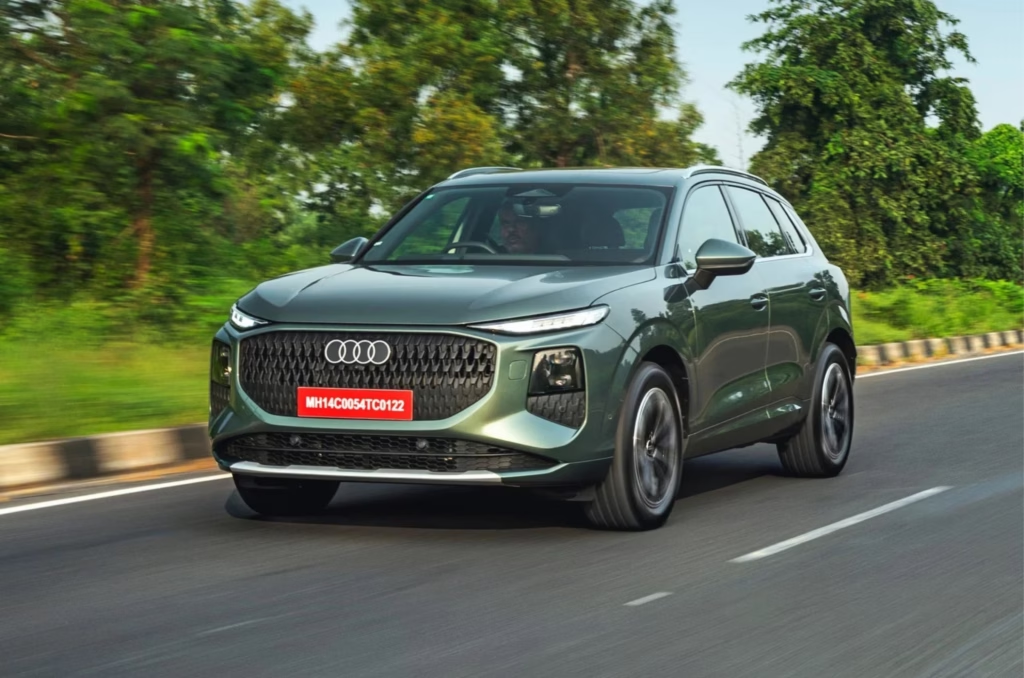
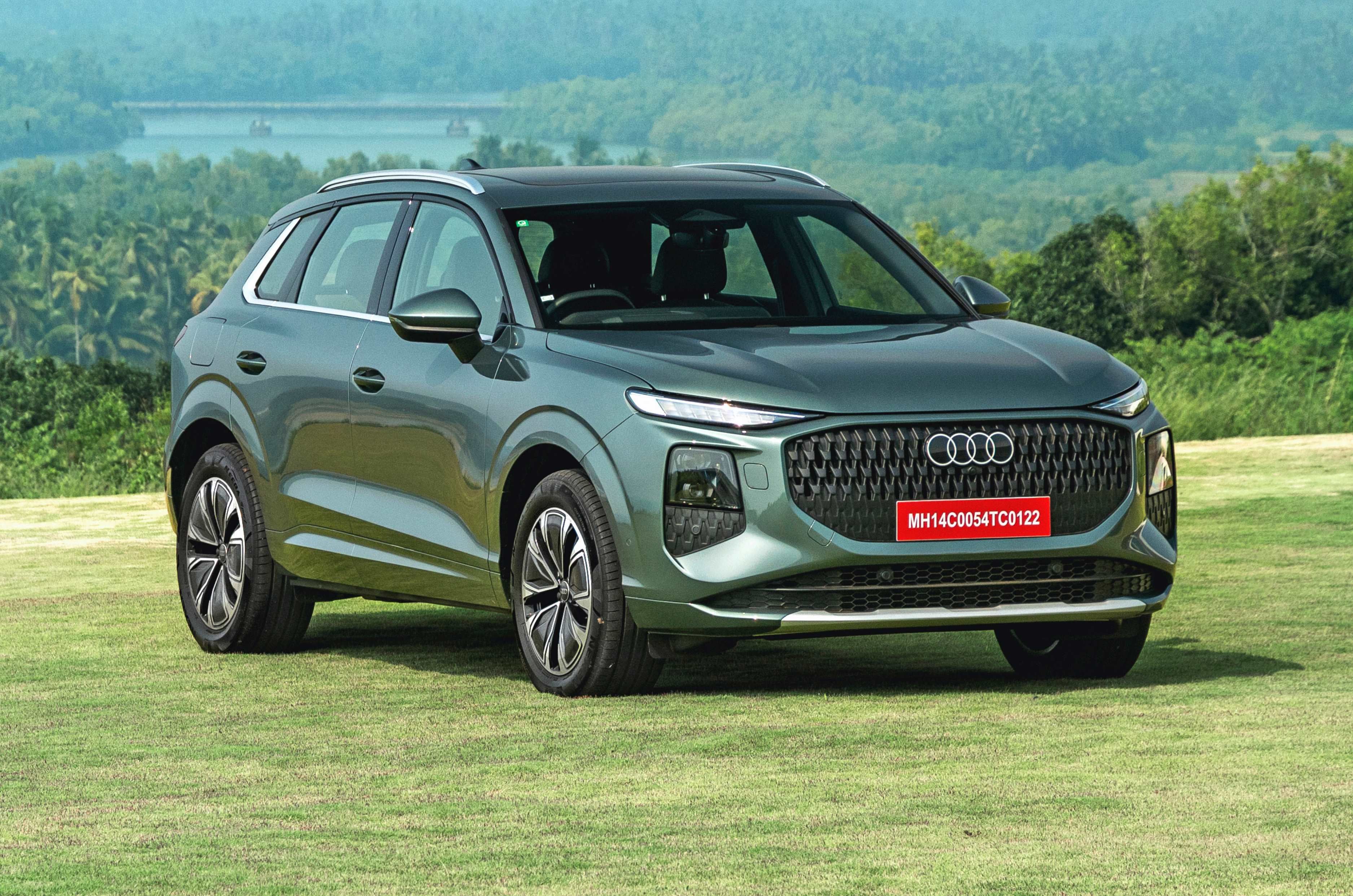
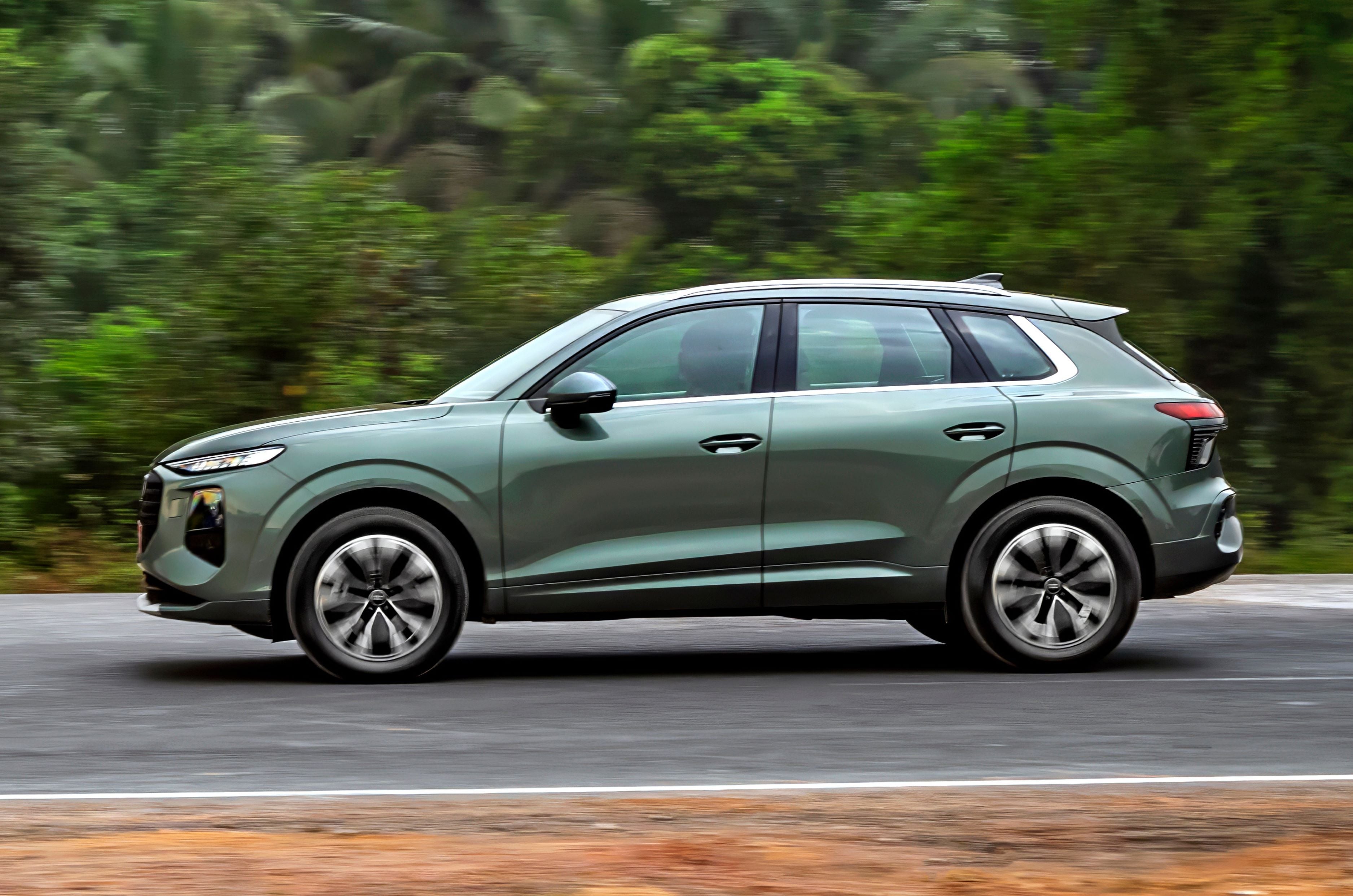
The crisp, edgy lines of the old car have made way for something more fluid and flamboyant. The new Q3 has grown marginally in every dimension, but the 2,681mm wheelbase is unchanged, so it keeps the compact footprint its urban buyers like.
A fluid and flamboyant new design language replaces the edgy styling of the old car
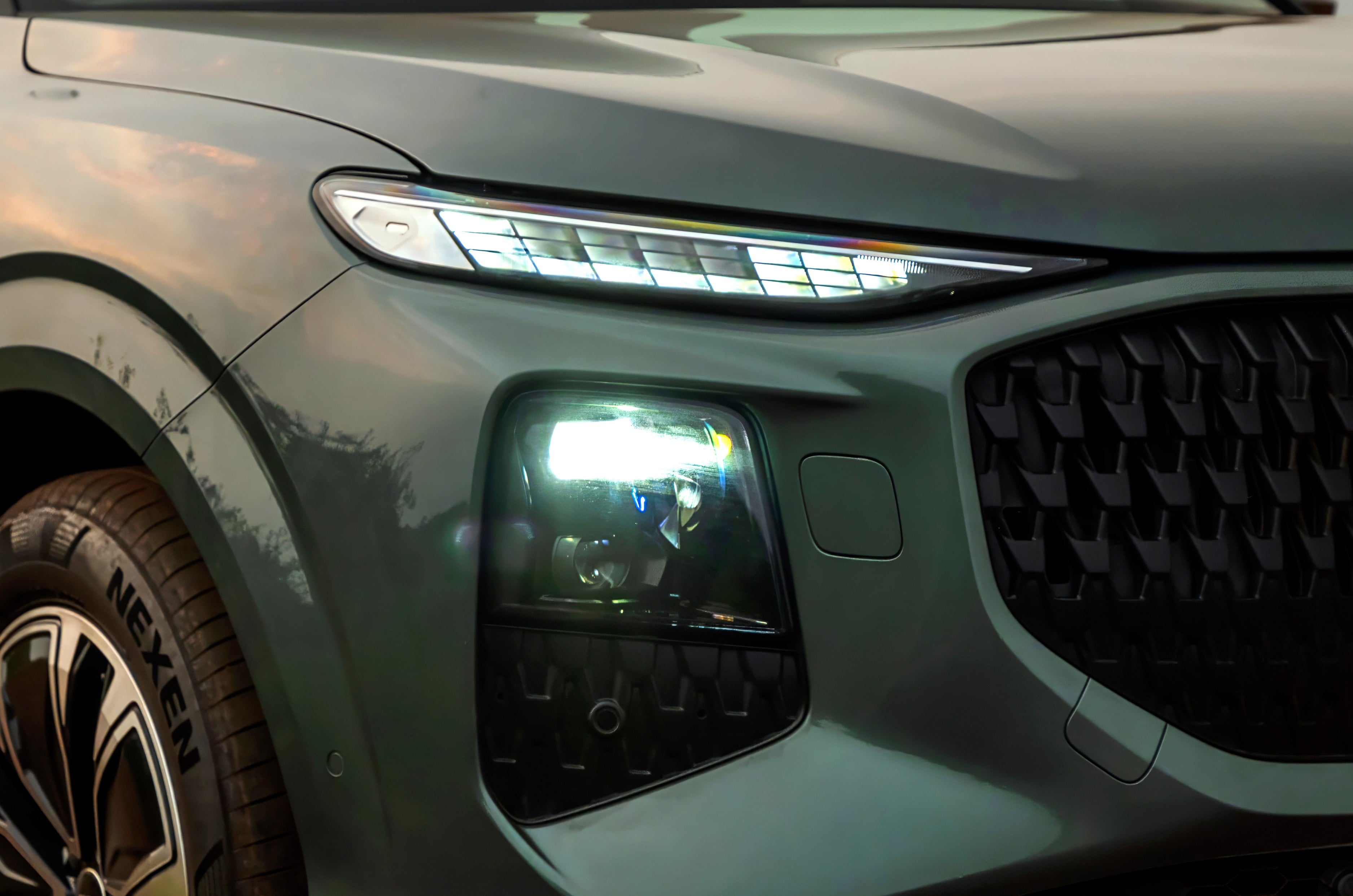
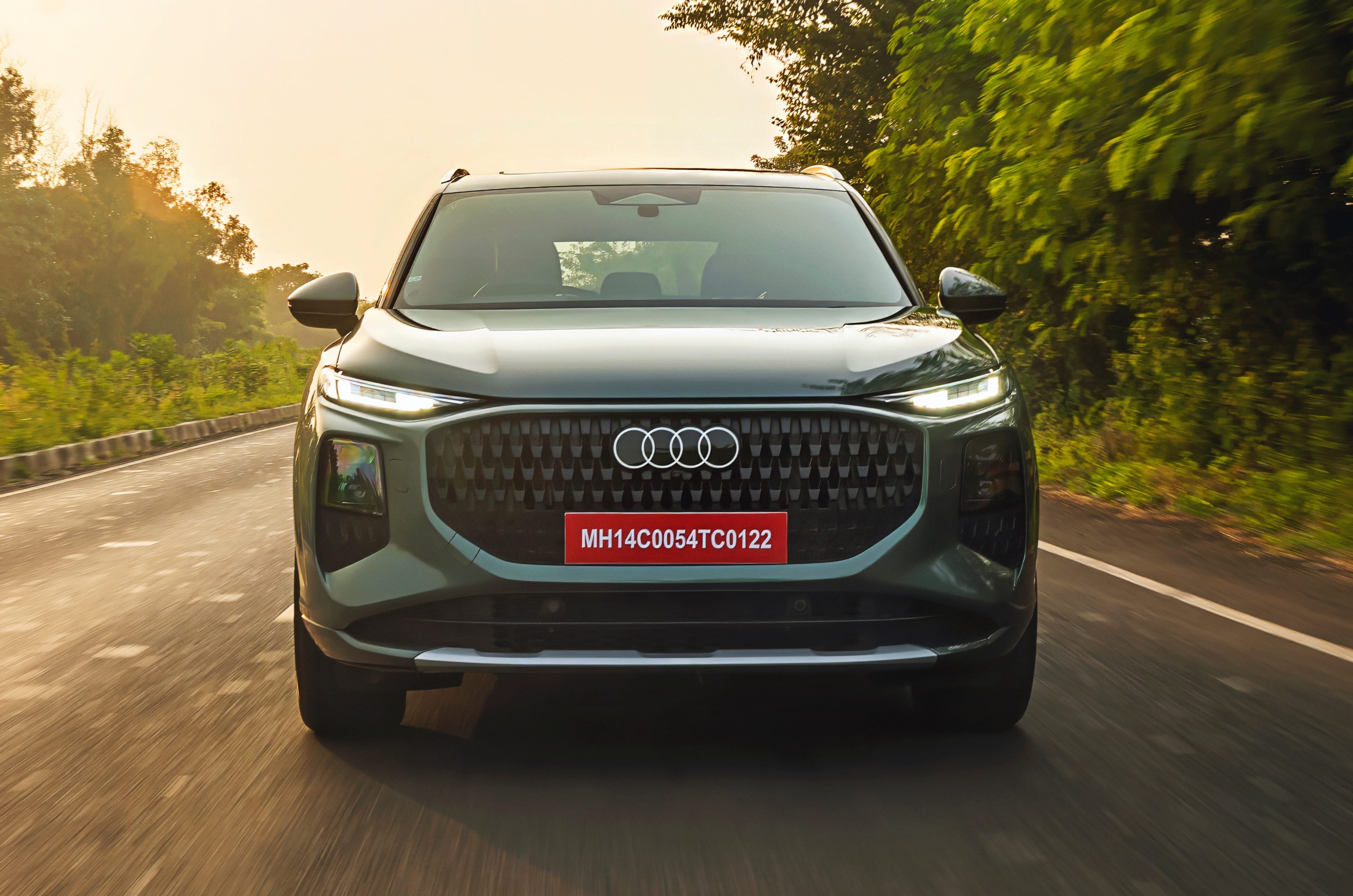
The face is split in two. Slim LED daytime running lights sit up top and double as dynamic indicators, while the main headlamps are stacked below. The wide honeycomb grille certainly makes a statement, and its flat 2D logo hides the ADAS radar. Up close, though, the grille’s finish looks a touch plasticky for a car wearing four rings.
Lighting is the real party piece. The Digital Matrix LED units use micro-LED technology, with some 25,600 individually controlled pixels per headlamp. That lets them do far more than dip and glare-free high beam. They can project a carpet of light in your own lane, and when you flick the indicator, the beam stretches across to illuminate the lane you are moving into. It’s a clever way to flag your intent and place the car on dark, unlit roads. The DRLs also offer four selectable light signatures via the touchscreen. There is a caveat. The projection tricks are at their best on pitch-black roads; with streetlights around, the effect is largely lost.
Trick Digital Matrix LED headlights use 25,600 individually controlled pixels per side
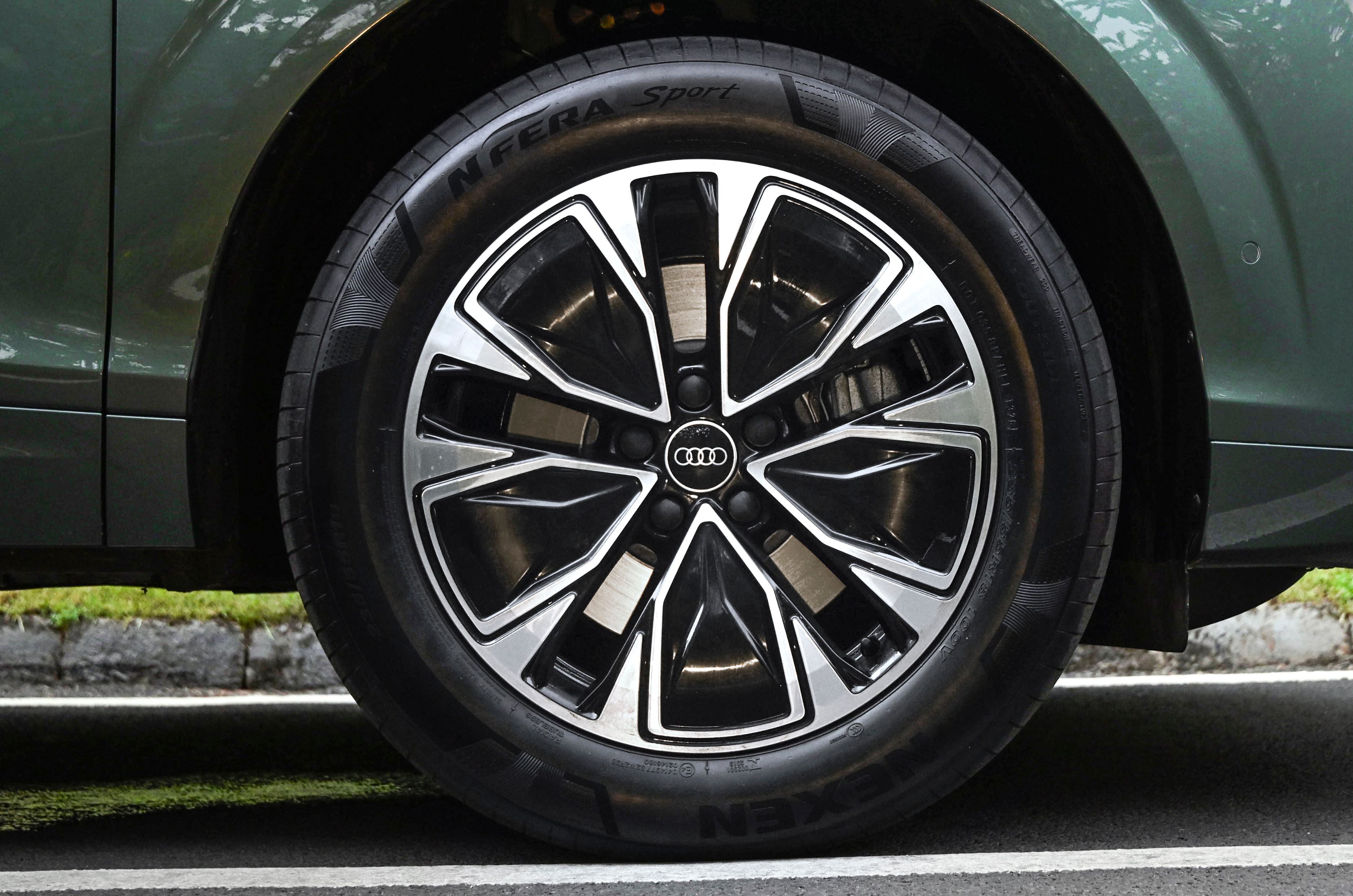
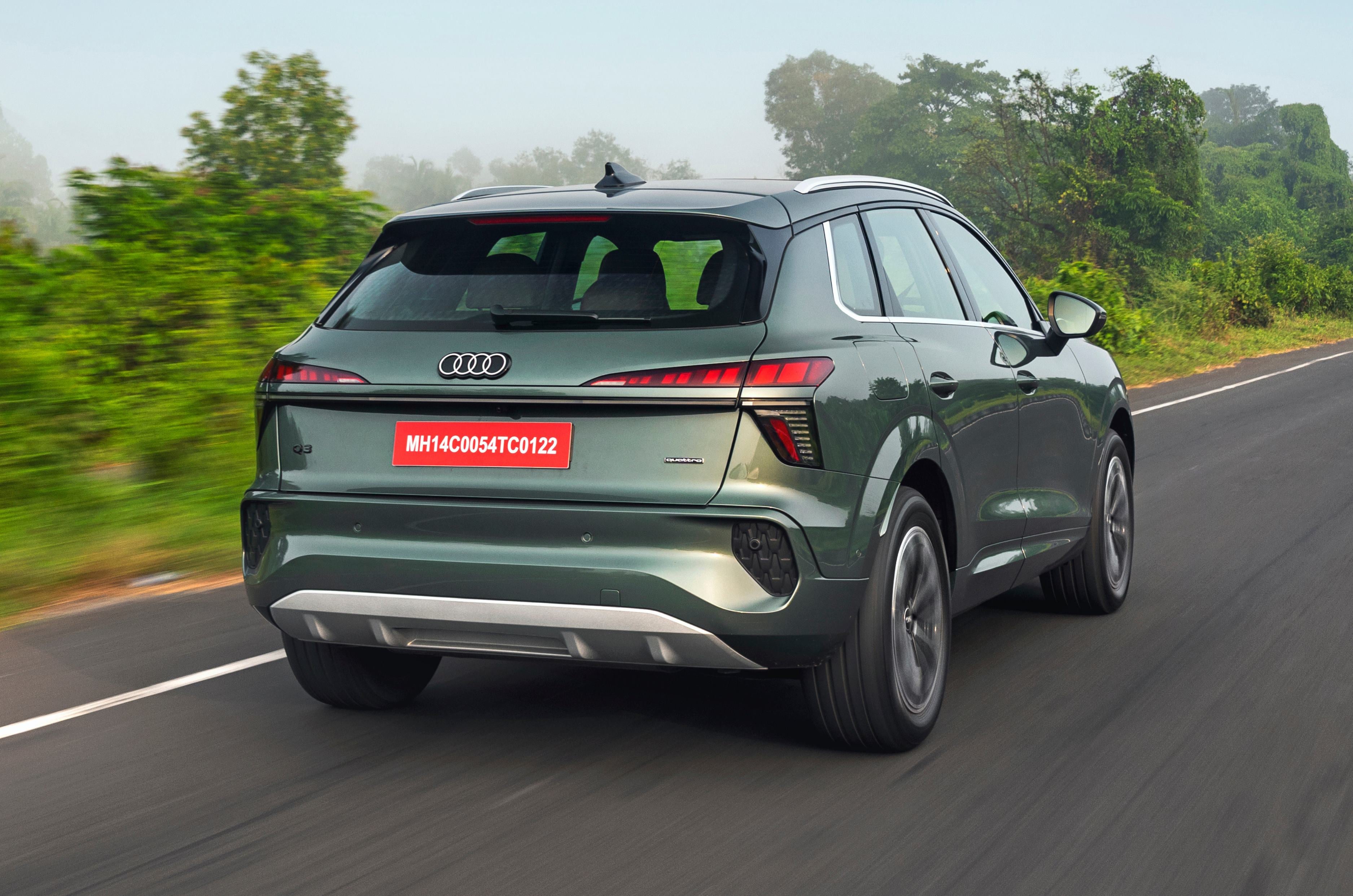
In profile, brushed aluminium below the windows and gloss black above create a floating-roof effect, and the rear haunches add a hint of muscle. For once, the wheels deserve a mention too. Audi has rarely nailed its alloy designs, but these are genuinely striking, wrapped in chunky, high-profile rubber. At the back, split LED tail-lamps are joined by a slim light bar and an illuminated Audi logo, and the tailgate is powered.
Stunning 18-inch alloys get self-leveling centre caps and are wrapped in high-profile tyres
Audi Q3 Interior Space and Comfort – 8/10
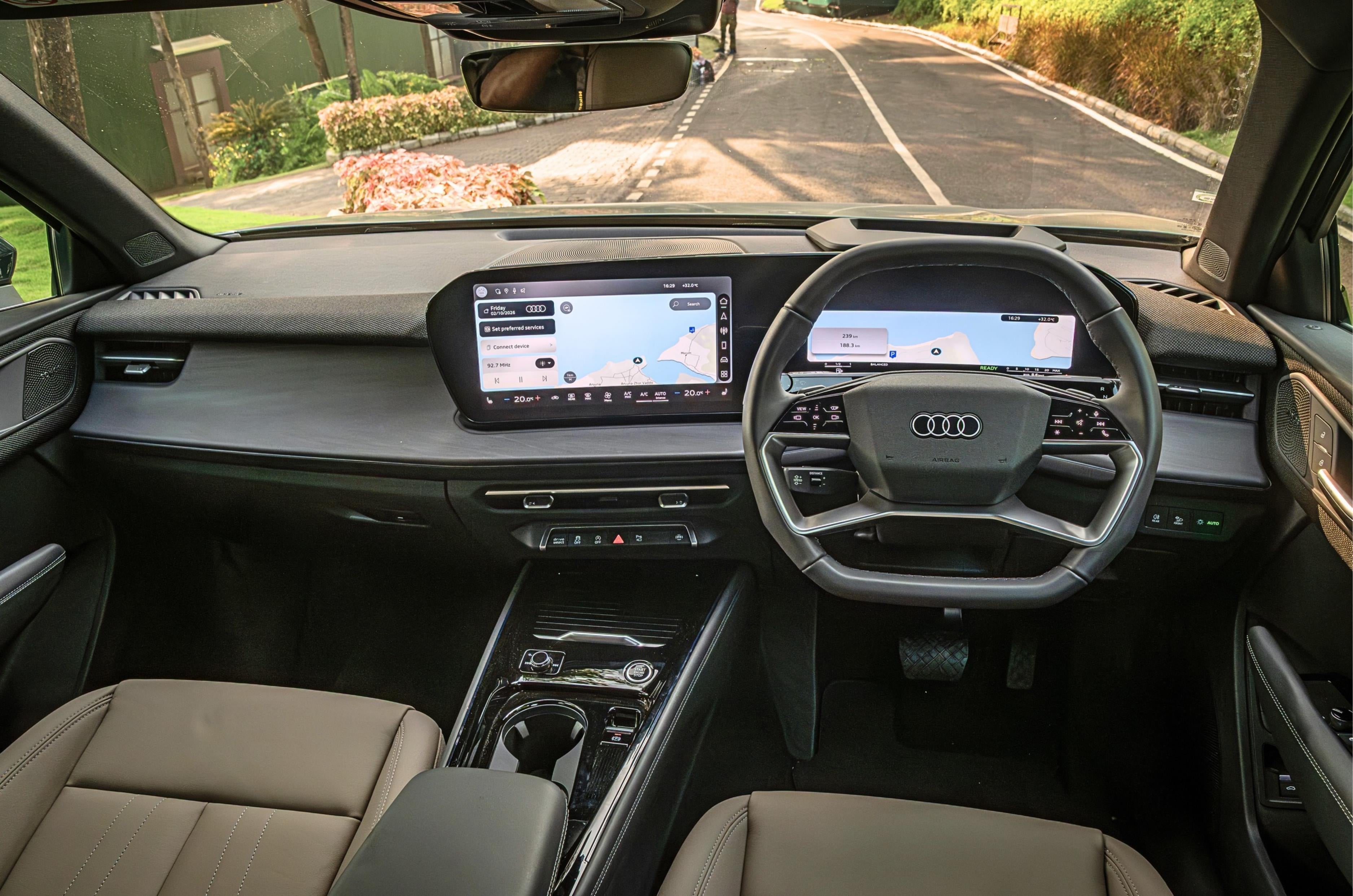
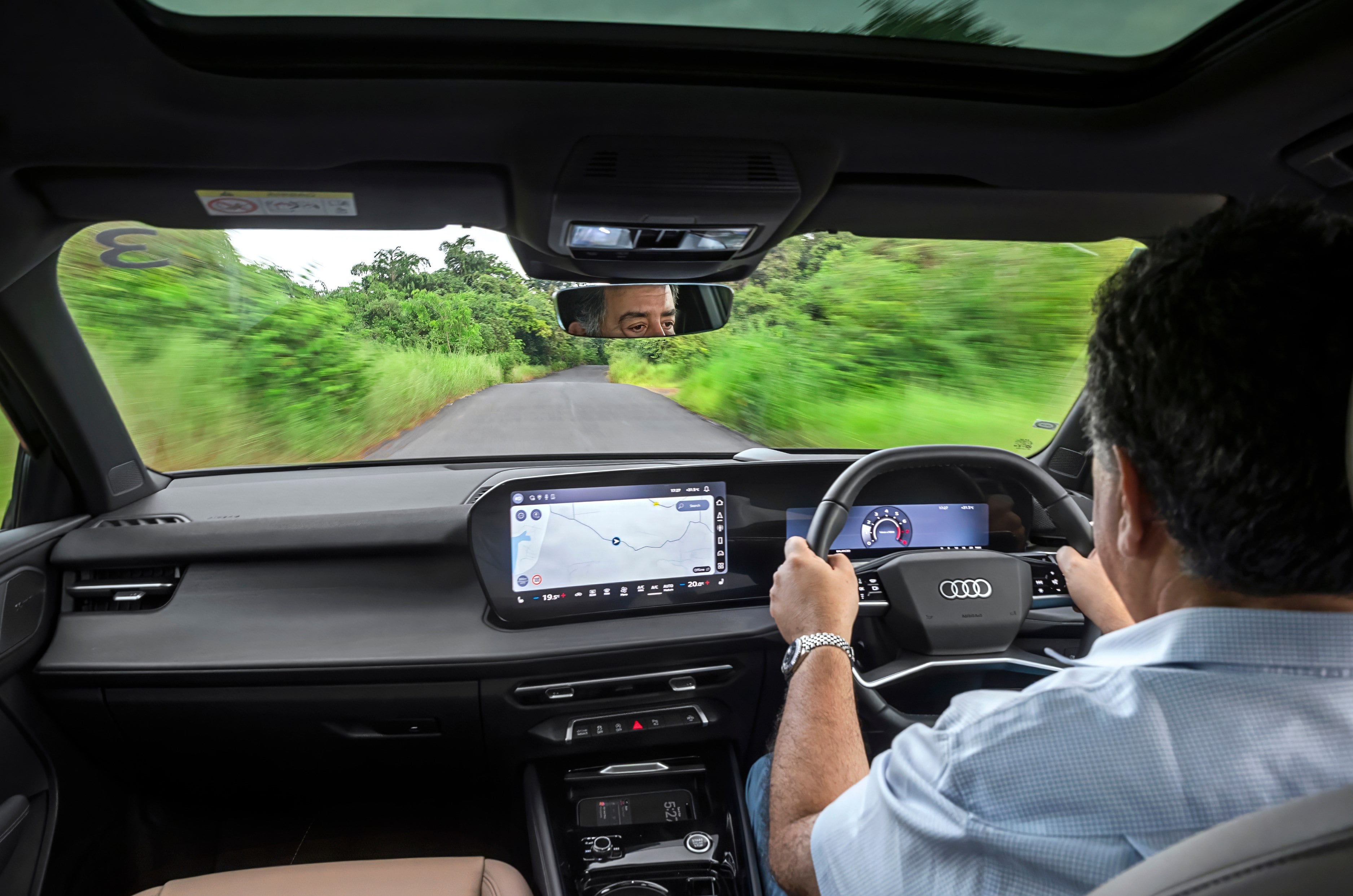
Step inside and the leap over the old Q3 is obvious. The dashboard is clean and contemporary, anchored by a curved panel that houses an 11.9-inch driver’s display and a 12.8-inch touchscreen. Fabric replaces leather across much of the cabin and the lower plastics are on the hard side. Yet the overall impression is of a cabin that’s solidly screwed together, and it feels more robust than its German rivals. Small details help: the fat tabs that adjust the air-con vents have a reassuringly substantial action.
New interior is a big leap over the last model and feels better built than its German rivals
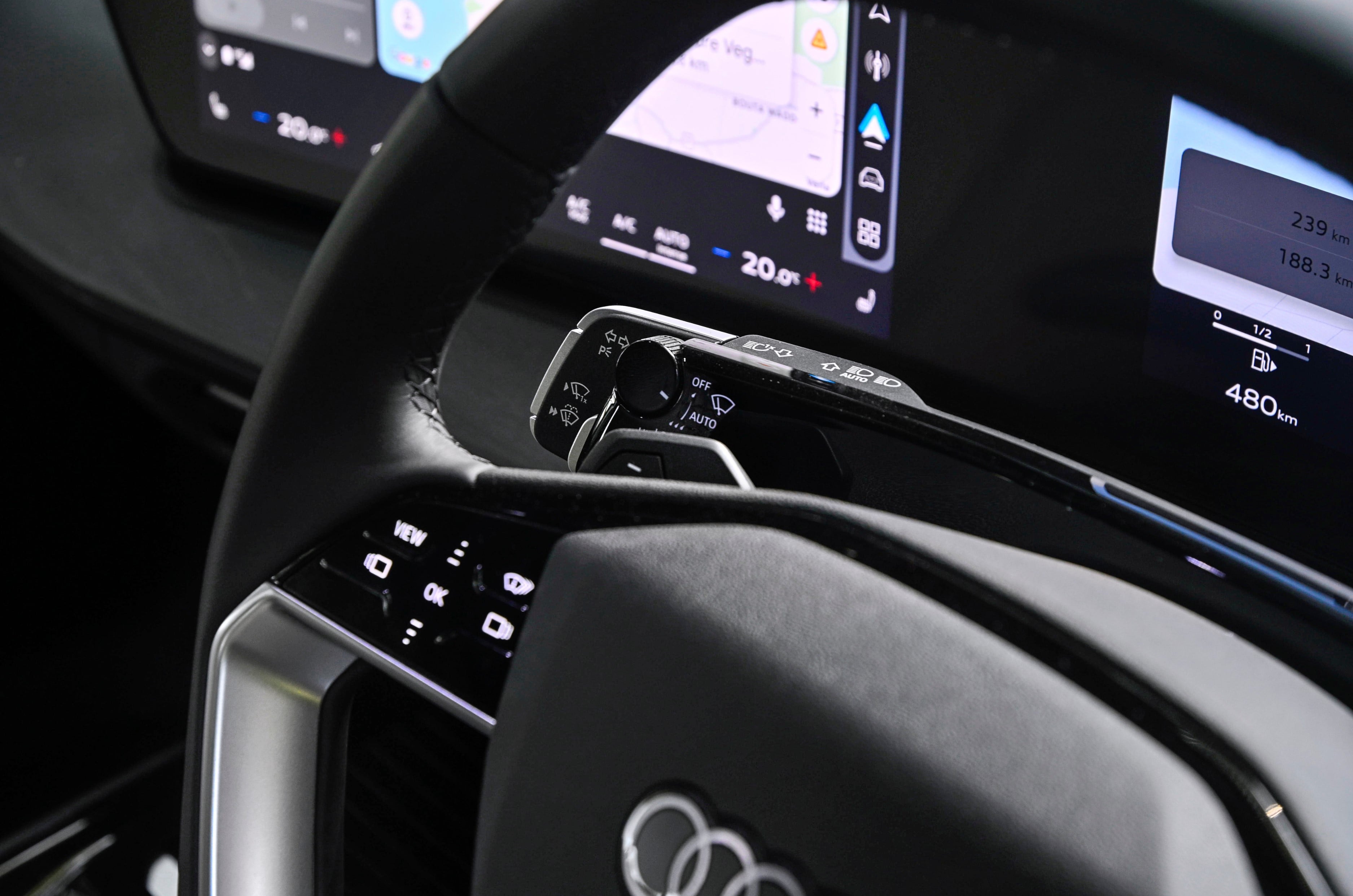
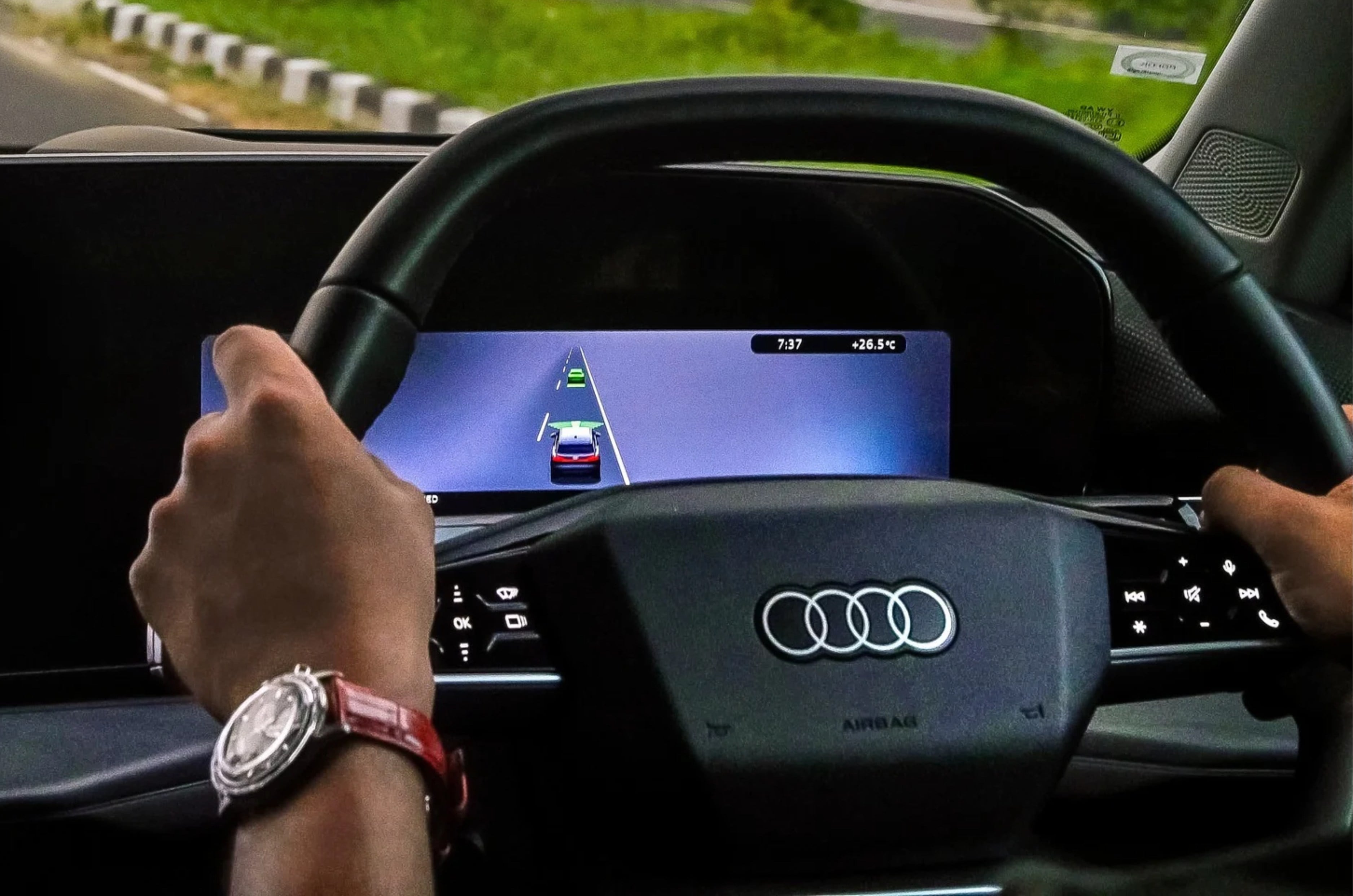
The hexagonal steering wheel takes some getting used to. So does the new control stalk, which Audi has loaded with an astonishing number of jobs: indicators, front and rear wipers and headlamp controls all live on one chunky lever. The gear selector moves to a stalk of its own on the other side. It feels awkward at first, but within a day it becomes second nature.
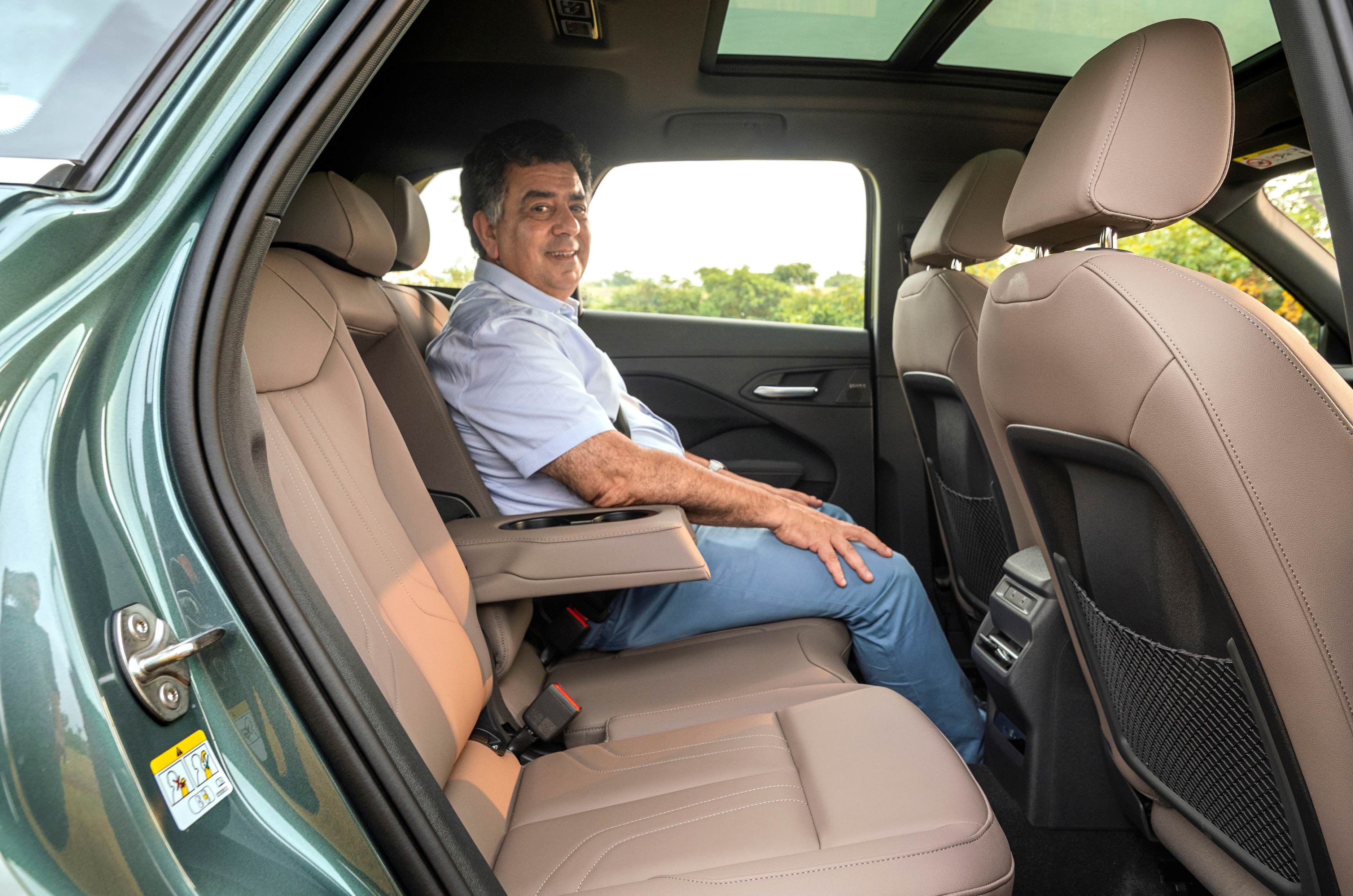
Two adults will be comfortable in the back seat, but a third will feel like a sqeeze
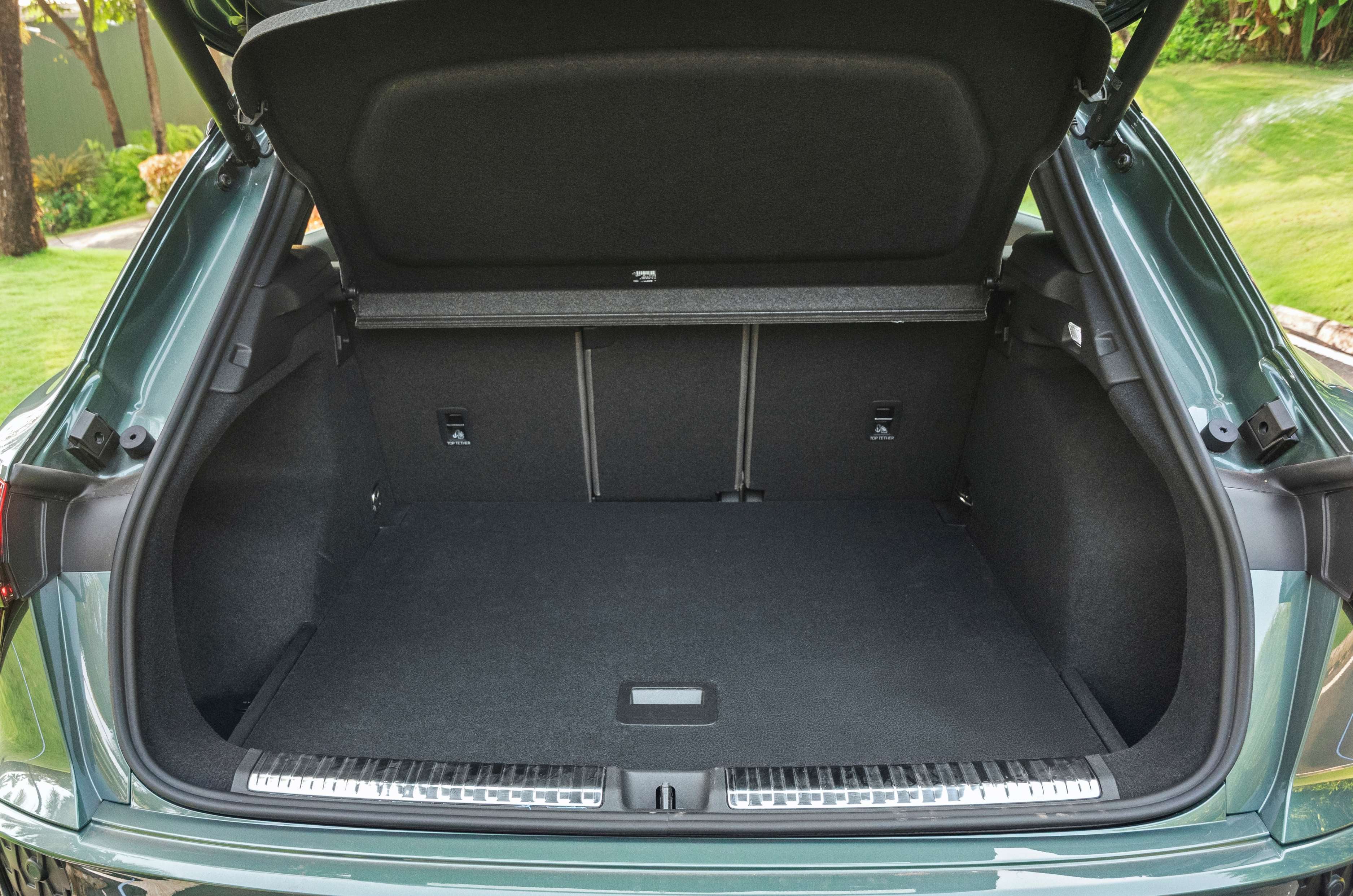
The front seats are generous, well bolstered and very comfortable over long stints. The rear hasn’t moved on much from the old car. Two large adults will be fine, but three is a squeeze; think of it as a four-seater with an occasional fifth. Rear passengers do get a third climate zone and two USB-C ports. The boot is spacious, and it’s good to find a space-saver spare under the floor.
Powered tailgate opens to a large 488-litre boot; seats split 40:20:40 for longer items
Audi Q3 Features and Safety – 7/10
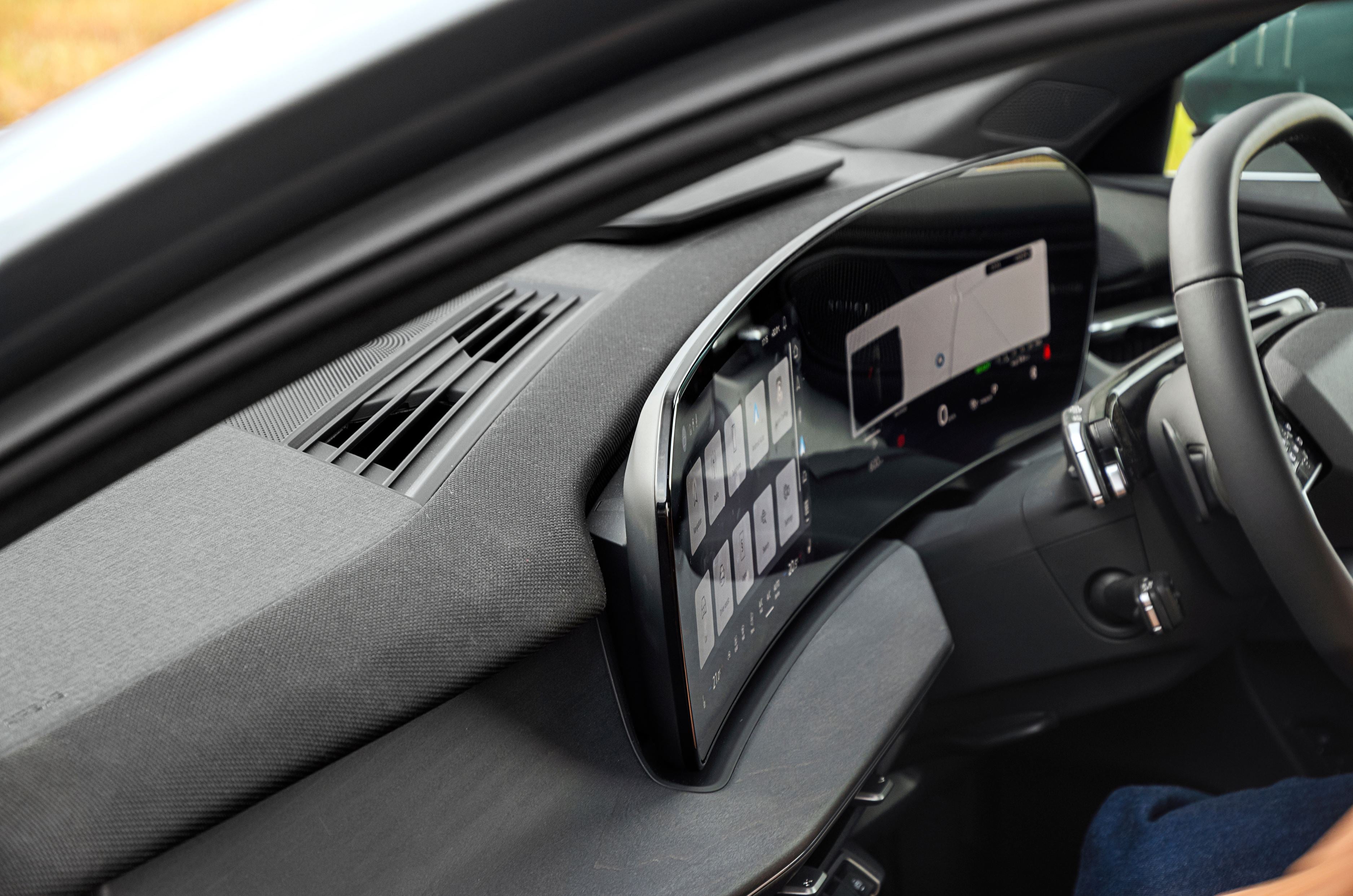
The curved touchscreen works well, and the curvature itself cuts out glare and reflections. Response is smooth and quick, though the icons are, in typical Audi fashion, a bit subdued and not instantly distinguishable. Physical buttons are fewer, but the climate controls sit permanently at the base of the screen, so you never dig through menus to change the temperature or blower speed.A head-up display brings key information into your line of sight and the fonts are crisp and sharp.
Curved display cuts out glare and reflections
Audi’s own navigation is good, but integrated Google Maps, increasingly the benchmark, is expensive to licence and hence missing. The instrument cluster is surprisingly basic too, with little configurability and minimal choice of layouts and that’s a let-down from the brand that pioneered the virtual cockpit.
We also hit a software glitch with our iPhones. Wireless phone mirroring connected initially, then dropped out and refused to reconnect, prompting a switch to USB. It’s the sort of bug an over-the-air update should fix.
Lighting and wiper controls are odd at first but easy to get used to
The equipment list isn’t thin. There’s a superb-sounding 12-speaker Sonos system, a large panoramic sunroof, powered and heated front seats with driver memory, nine airbags and adaptive cruise control. That cruise works well, too. But for a car costing over Rs 50 lakh and launching in 2026, there gaps that are hard to overlook.
There is no lane-keep assist, so the ADAS suite stops at adaptive cruise. A full Level 2+ package is now table stakes in this class, all the more so when far cheaper mass-market cars offer one. There are no ventilated seats either, near-essential in our climate. The biggest miss, though, is a 360-degree camera, something a great many buyers actively look for. The reversing camera’s resolution is disappointing, although there is an auto-park function.
ADAS kit limited to auto emergency braking and adaptive cruise control
None of this is unusual for its rivals. But as the newest kid on the block, the Q3 should have moved the game on, and here it hasn’t.
Audi Q3 Performance and Refinement – 9/10
The engine is the star of the show. Audi’s 2.0 TFSI makes 201bhp and 320Nm, and it is smooth, strong and refined. That alone hands the Q3 a massive edge over the underwhelming, smaller-capacity motors in the X1 and GLA.
Strong and refined 2.0 TFSI makes 204hp and 320Nm, enough for 0-100kph in 7.1 seconds
It isn’t flawless. At low revs there’s a brief hesitation before it gathers itself and pulls smartly, which is why we left it in Dynamic mode most of the time. Once on the boil, though, it is eager and free-revving, a reminder of why this is the best 2-litre turbo-petrol in the business. Around town it feels responsive; on the highway it builds pace effortlessly. Audi claims 0-100kph in 7.1sec, which puts the Q3 at the top of its class.
The 7-speed dual-clutch remains a fine partner, eager to drop a gear to keep the engine in its powerband. Flick it into Sport or reach for the paddles if you want to take charge. Quattro all-wheel drive is now standard on every Q3, not an option, and there’s a range of drive modes including an off-road setting to make the most of it. It’s good insurance on slippery surfaces and gives the Q3 an edge over rivals when conditions turn tricky. Whether many owners need it, or more importantly will pay extra for it, is another question.
Strikes a great balance of ride and handling; gets Quattro all-wheel drive as standard
Audi Q3 Ride Comfort and Handling – 9/10
The big surprise is the handling. The variable-ratio steering adjusts its response to both speed and lock, so its light and effortless at parking speeds, then quicker and more direct as you wind on more lock. Barring a touch of slack around the straight-ahead, it is accurate and weights up superbly.
Quick steering often makes a car nervous at speed. Not here. The Q3 stays stable and reassuring when the needle climbs, yet changes direction with an agility you simply don’t expect from an Audi SUV.
New Progressive Steering is light at parking speeds, but gets sharper and more direct as speeds rise
What you do expect from an Audi is a good ride, and the Q3 delivers. It is on the firm side but never uncomfortable, soaking up potholes and broken patches with real composure. A big help is the 55-profile tyres. Their roughly 130mm sidewall is the first line of defence, absorbing much of the shock before it reaches the suspension and, ultimately, the cabin.
Audi Q3 Value for Money – 8/10
The new Q3 is a superbly engineered car, and its mechanical package sits well ahead of its rivals. The cabin is a big step up too, but given its timing, the Q3 doesn’t quite leapfrog the competition here; it lands a little short on equipment.
What it does do is drive brilliantly. It is by far the nicest car to drive in its class, and that matters, because Audi says 84 percent of Q3 owners drive themselves.
Easily the nicest car to drive in its class, but doesn’t leapfrog the competition in terms of features
A lot now rides on price. At around Rs 65 lakh on-road, it is steep. Not because the car isn’t worth it, but because buyers may balk at paying so much more than the outgoing Q3, whose transaction price had slipped to around Rs 40 lakh.
On the product front, though, Audi has come back with a bang. A brilliant powertrain, a superb blend of ride and handling and a genuinely classy feel make the Q3 the enthusiast’s pick of the class. If this is the opening act, Audi’s reset is off to a promising start.