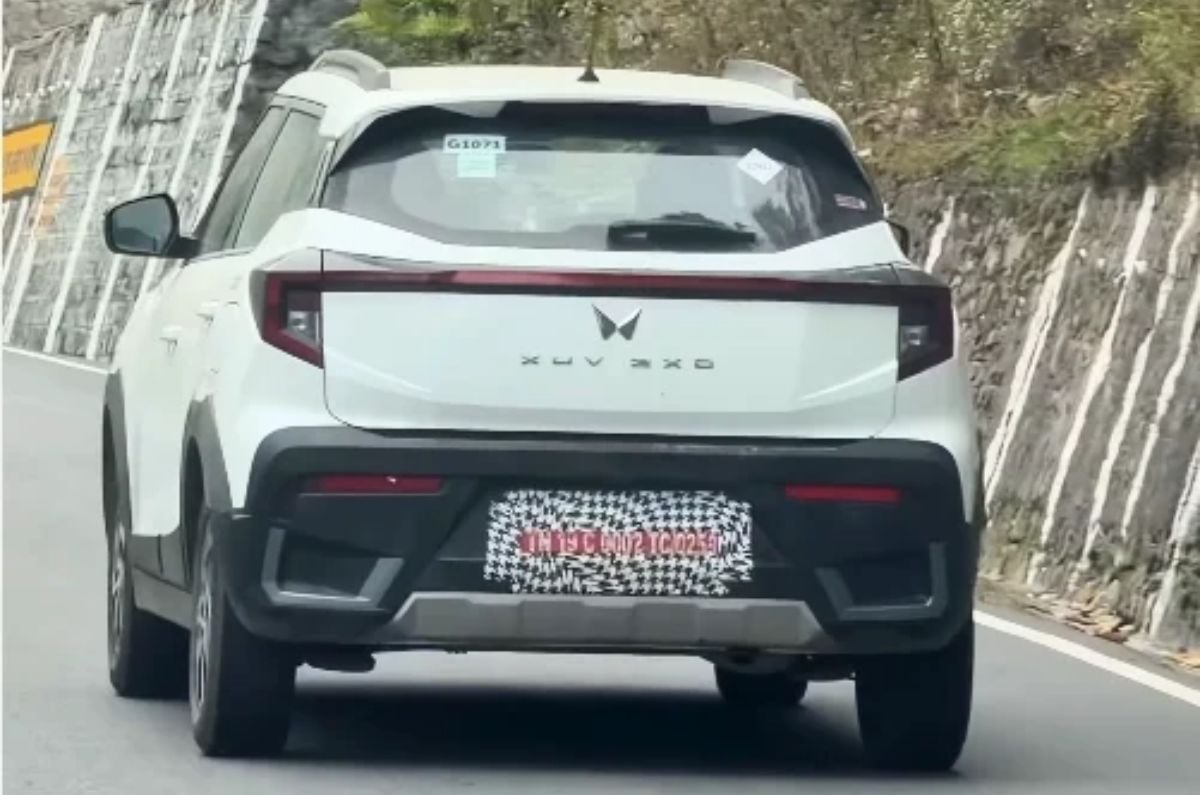
Six months after our report on the development of the Mahindra XUV 3XO CNG first surfaced, a test mule has been spied on public roads. The spotting comes just days before the car’s official debut on October 15, 2026, giving us a first look some of its design details.
The exterior holds few tells to set it apart from the non-CNG variants
The test mule spotted was almost entirely undisguised, as seen in these spy images. However, they mainly show us the rear of the XUV 3XO CNG. A few design elements shared with the non-CNG variants of the XUV 3XO include the ‘XUV 3XO’ branding, roof rails, rear spoiler, connected tail-lamps, and the chunky black bumper with a silver skid plate and static reflectors. What’s new here, though, is the ‘CNG’ sticker on the rear windscreen.
भारत में सरकारी नौकरी को अक्सर सुरक्षित भविष्य और अच्छी जिंदगी की गारंटी माना जाता है। लेकिन मुंबई में काम करने वाले उत्तर प्रदेश के आजमगढ़ निवासी एक नाई की कहानी इस सोच से अलग नजर आती है। दावा है कि वह महीने में करीब 1 लाख रुपये कमाता है। दिलचस्प बात यह है कि इतनी कमाई के बावजूद वह एंट्री-लेवल सरकारी नौकरी मिलने पर भी अपना मौजूदा काम छोड़ना नहीं चाहता।
लेखक और फंड मैनेजर हर्ष गुप्ता मधुसूदन ने सोशल मीडिया प्लेटफॉर्म X पर इस नाई के साथ हुई बातचीत साझा की। उनकी पोस्ट के मुताबिक, नाई हफ्ते में छह दिन सुबह से रात तक काम करता है। यात्रा के बुनियादी खर्च निकालने के बाद उसकी मासिक कमाई करीब एक लाख रुपये बताई गई है।
मेहनत और आजादी को मानता है अपनी सबसे बड़ी पूंजी
हर्ष के मुताबिक, बातचीत के दौरान नाई ने कहा कि काम करने और मेहनत करने वालों के लिए अवसरों की कमी नहीं है। वह अपने काम को पसंद करता है और इसमें मिलने वाली आजादी उसके लिए अहम है। यही वजह है कि वह सरकारी नौकरी के बजाय अपना मौजूदा काम जारी रखना चाहता है।
उसकी कहानी ने रोजगार को लेकर एक दिलचस्प सवाल खड़ा किया है क्या अच्छी कमाई और संतुष्टि के लिए सरकारी नौकरी ही एकमात्र रास्ता है? हालांकि, एक व्यक्ति का अनुभव पूरे रोजगार बाजार की तस्वीर नहीं बताता।
आजमगढ़ से लखनऊ तक का सफर हुआ आसान, विकास से खुश है परिवार
बातचीत में उत्तर प्रदेश के विकास का जिक्र भी आया। हर्ष के अनुसार, नाई ने बताया कि पहले उसके गांव से लखनऊ पहुंचने में 7-8 घंटे लगते थे। अब बेहतर सड़कों के कारण उतने ही समय में आना-जाना संभव हो गया है, वह भी रास्ते में चाय और खाने के लिए रुकने के बाद।
नाई ने देश में हुए विकास कार्यों पर खुशी जताई। उसने बताया कि गांव में उसके परिवार को कुछ सरकारी योजनाओं का लाभ मिला है, हालांकि शहर में ऐसा लाभ नहीं मिला।
टैक्स भरने पर गर्व, बेटे की पढ़ाई पर भी ध्यान
इस कहानी का एक और पहलू उसकी पारिवारिक जिंदगी है। हर्ष के मुताबिक, नाई की कमाई से टैक्स कटता है और वह गर्व के साथ इनकम टैक्स रिटर्न भी दाखिल करता है। कई बार उसे रिफंड भी मिलता है।
उसका एक छोटा बेटा है, जिसे वह निजी प्री-स्कूल में पढ़ाता है। उसकी पत्नी भी कमाई में योगदान देती थी, लेकिन फिलहाल बच्चे की देखभाल के लिए काम से ब्रेक पर है।
Got a hair cut via Urban today morning. The barber has been in Mumbai for sometime but is from Azamgarh. Works six days a week, morning to night and earns around a lakh rupees per month after his basic travel expenses. Said there is no dearth of opportunity or jobs, just need to work hard. Said wouldn’t take an entry level government job even if offered as he likes his work and autonomy.
I asked him about UP. He said earlier it took 7-8 hours to go from his village to Lucknow. Now you can do a round trip in that time while stopping for lunch and tea. Added that your glass of tea is unlikely to spill on the highways – they are so good. Was very happy with the development work in the country. Said in the village his family got some scheme benefits but not in the city. Told me TDS is deducted so he proudly files his returns and often gets refunds.
Has one son who he sends to a private pre-school and wife earned extra but is currently on break given the kid is small. I felt like telling him that he must let go of this toxic positivity about India and his life, and he must pronto create an account on X and Instagram to receive the “correct” opinions about our ostensibly ‘failed’ nation – but I didn’t have the heart to say that to him! 😉
सोशल मीडिया पर छिड़ी बहस, क्या हर किसी के लिए ऐसे अवसर हैं?
पोस्ट वायरल होने के बाद सोशल मीडिया पर लोगों की अलग-अलग प्रतिक्रियाएं सामने आईं। कुछ यूजर्स ने नाई की मेहनत और आत्मनिर्भरता की तारीफ की। वहीं, कुछ ने सवाल उठाया कि क्या एक नाई के लिए हर महीने एक लाख रुपये कमाना आम बात है। कुछ लोगों ने इस कमाई के दावे की तुलना दूसरे शहरों में नाइयों की आमदनी से भी की।
दूसरी ओर, कुछ यूजर्स ने कहा कि एक व्यक्ति की सफलता को देश में रोजगार की पूरी स्थिति का प्रमाण नहीं माना जा सकता। उन्होंने शिक्षित युवाओं के रोजगार, शिक्षा की गुणवत्ता और महिलाओं की सुरक्षा जैसे मुद्दे भी उठाए।
हर्ष ने अपनी पोस्ट के अंत में व्यंग्य करते हुए लिखा कि उनका मन नाई से कहने का हुआ कि वह भारत और अपनी जिंदगी को लेकर इतनी सकारात्मक सोच छोड़कर सोशल मीडिया पर देश की नाकामियों के बारे में पढ़े, लेकिन वह ऐसा कह नहीं सके।
इस कहानी का असली पहलू यही है कि जहां कुछ लोग सरकारी नौकरी को सफलता मानते हैं, वहीं कुछ के लिए अपने काम में कमाई, संतुष्टि और आजादी ज्यादा मायने रखती है।
(डिस्क्लेमर: यह रिपोर्ट सोशल मीडिया पर यूज़र द्वारा शेयर किए गए कंटेंट पर आधारित है। मनीकंट्रोल इन दावों की न तो स्वतंत्र रूप से पुष्टि नहीं करता है और न ही इनका समर्थन करता है।)
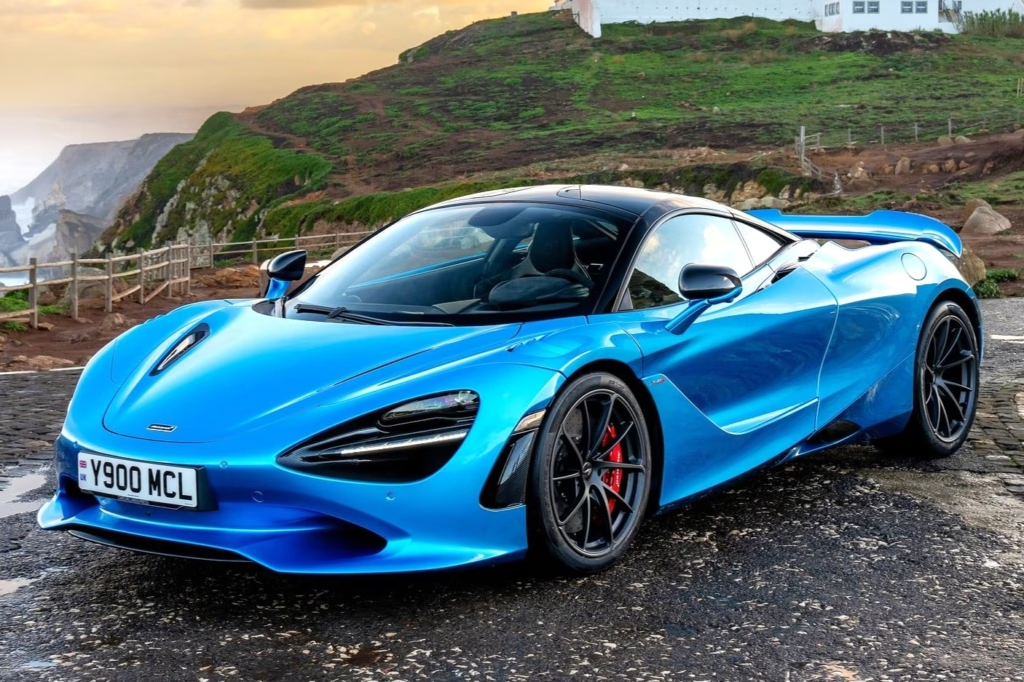
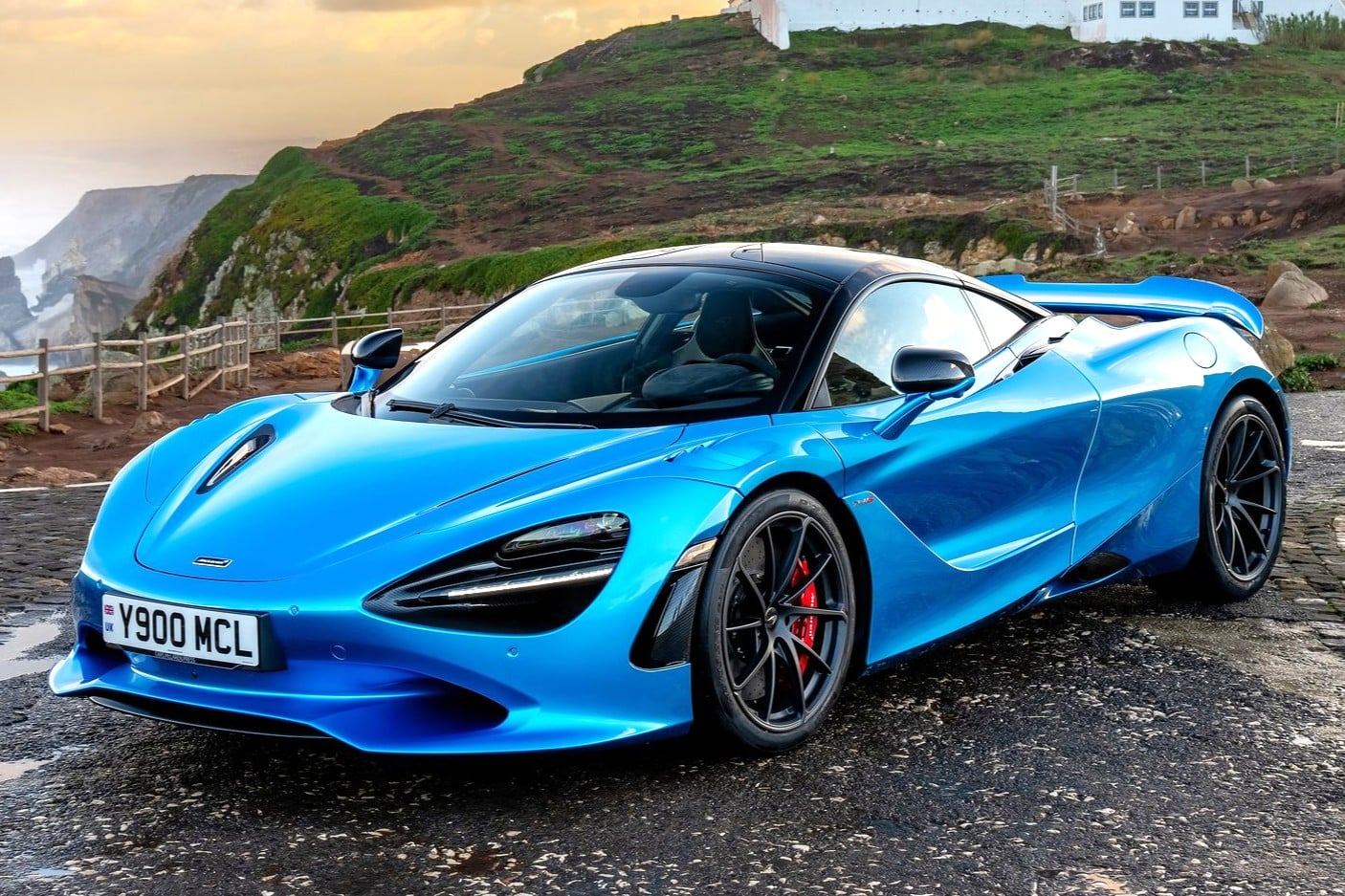
The sun will soon set on the McLaren 750S, as the British marque has confirmed that it will end production of the mid-engined V8 supercar in 2027. Final orders are therefore being accepted for the 750S, with McLaren gearing up to overhaul its model range and expand into new segments from next year. The 750S is available in India in both Coupe and Spider body styles, priced at Rs 4.94 crore and Rs 5.46 crore (before options), respectively.
Launched in 2023 as a heavily updated version of the 720S, the 750S is McLaren’s flagship series-production offering. It is powered by a 4.0-litre twin-turbo V8 that belts out 750hp and 800Nm, paired with a 7-speed dual-clutch automatic sending power to the rear wheels. The 750S Coupe also has a relatively light kerb weight of 1,389kg (Spider is 49kg heavier), which means its power-to-weight ratio is an impressive 540hp/tonne. 0-100kph comes up in a brisk 2.8 seconds (claimed), and the top speed is 332kph.
McLaren prepares for a fresh model line-up
The 750S’s retirement is part of a wider shake-up for McLaren. Recently, McLaren revealed a new logo (pictured) and confirmed the development of its first SUV, which is expected to rival the likes of the Lamborghini Urus SE, Aston Martin DBX and Ferrari Purosangue. The SUV will use a hybrid powertrain and arrive as the first front-engined McLaren road car. McLaren will also build new engines and gearboxes in-house for the first time, and to support these development efforts, the carmaker is setting up a new factory in the UK.
Additionally, McLaren is planning to discontinue the Artura and GTS by 2028. Since the 750S, Artura and GTS are the only series-produced McLaren models currently on offer, the carmaker will likely have a completely new line-up by the end of this decade.
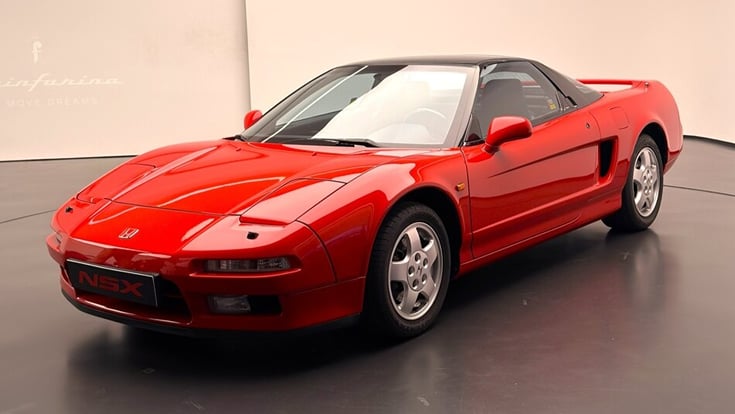
Four decades ago, Honda embarked on a quest to prove that a mid-engined, rear-wheel-drive sports car can be just as, or more performant than a V8-powered Ferrari (specifically, the 348), while being comfortable, reliable, relatively easy to drive, and more affordable. From this ambitious mission, the first-generation Honda NSX (shorthand for New Sportscar eXperimental) was born, making its global debut at the Chicago Auto Show in 1989. Production of the NSX commenced in 1990 and lasted till 2005.
The NSX made history as the first production car to use an all-aluminium spaceframe chassis. It also received inputs from F1 champions Ayrton Senna and Satoru Nakajima during its development, enabling a driving experience that was almost universally acclaimed. Such was the glory of the first-gen NSX, that it was officially inducted into the Toyota Automotive Museum in 2021 – even one of Honda’s biggest rivals couldn’t ignore how great the masterpiece that the NSX was.
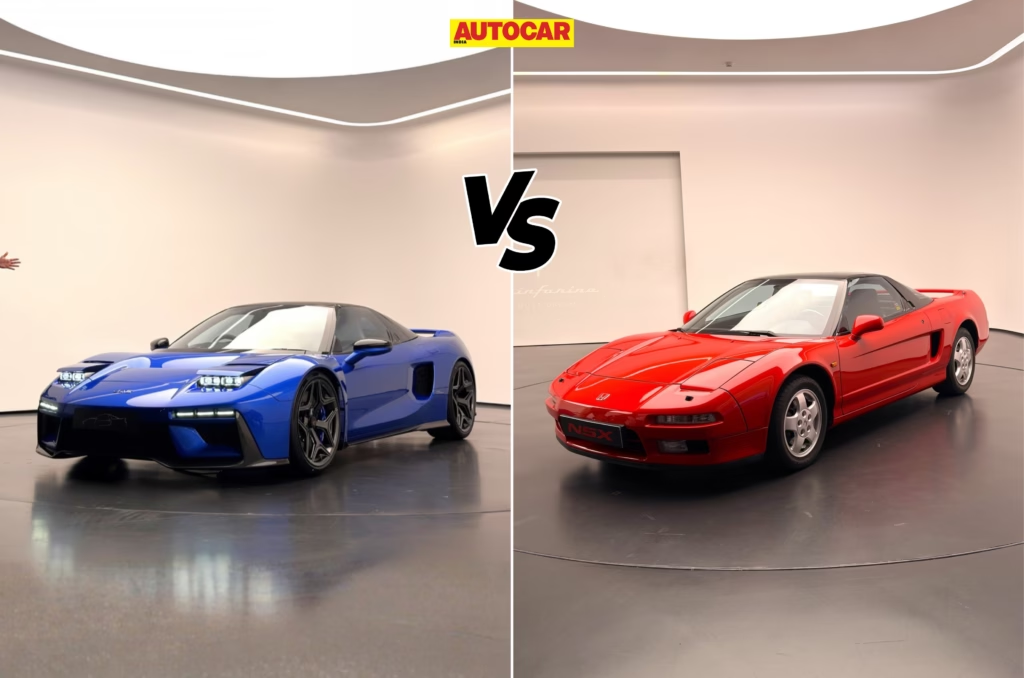
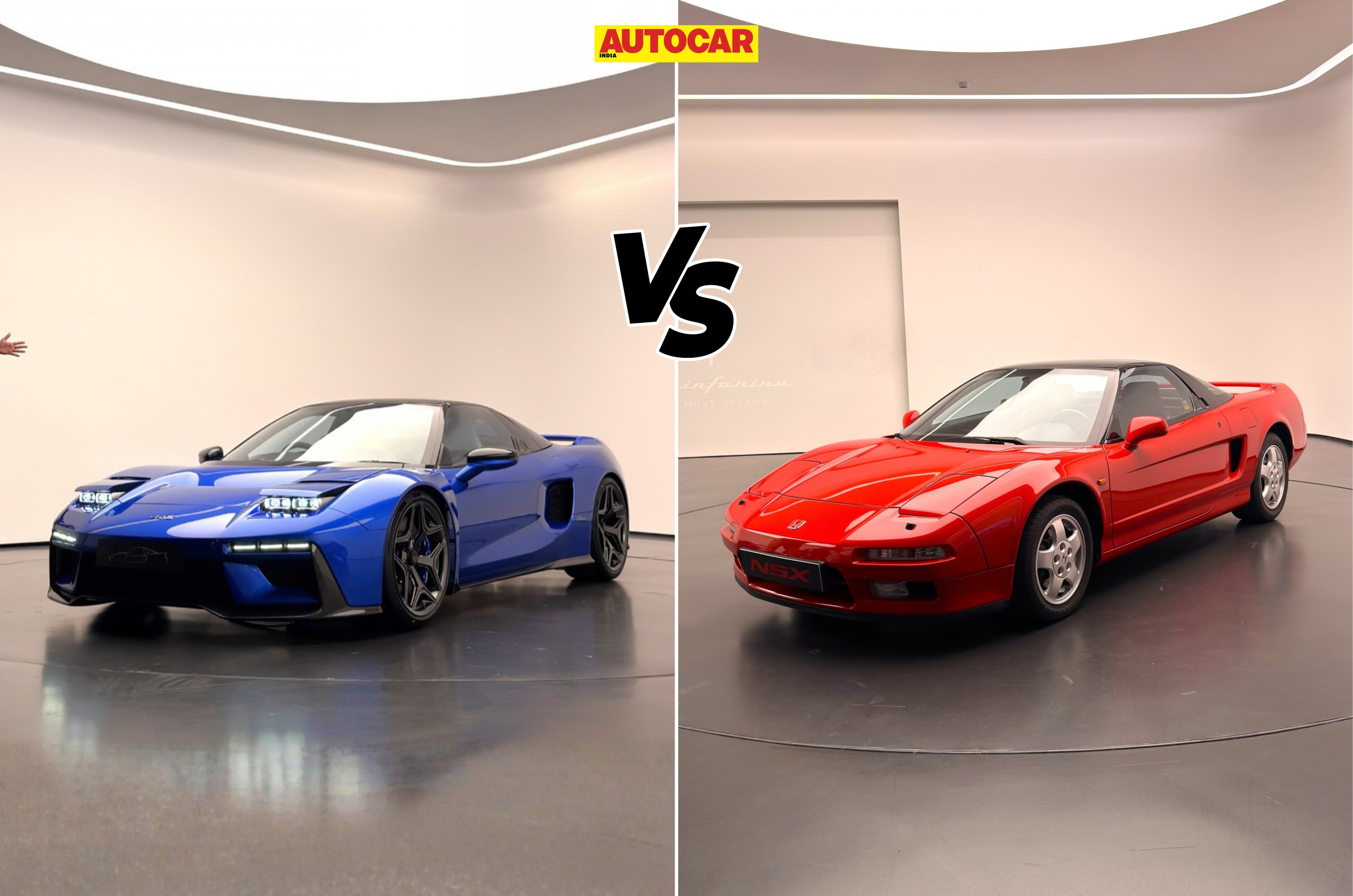
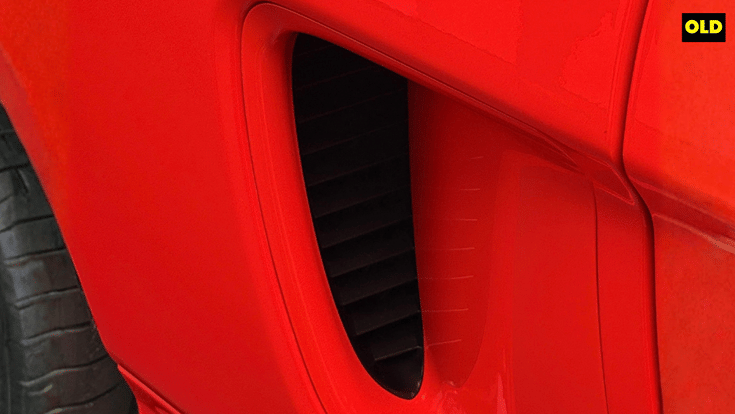
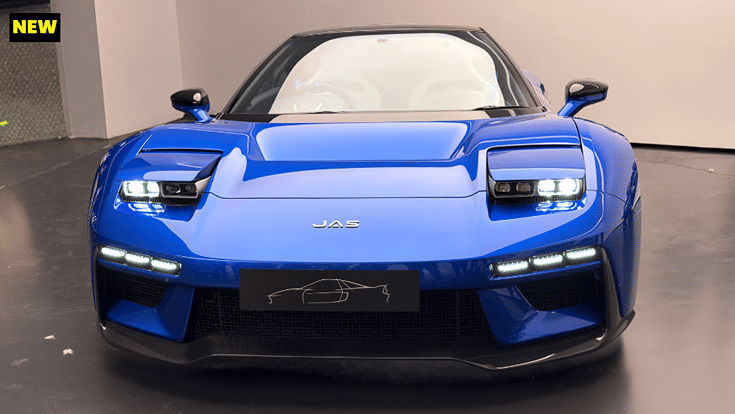
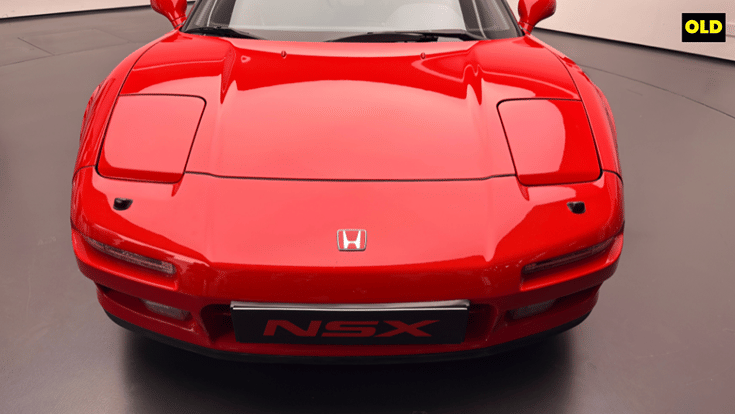
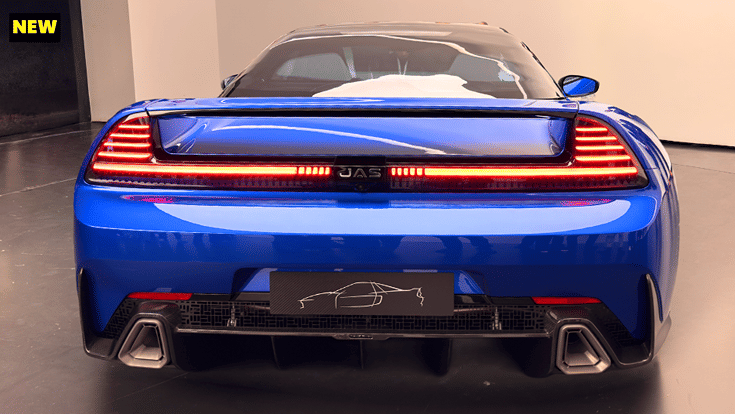
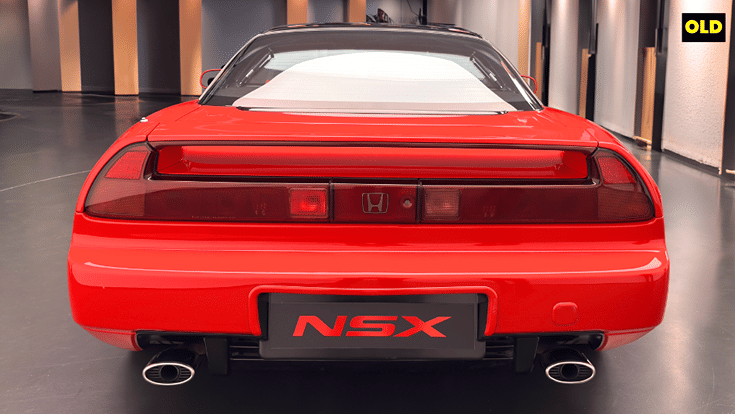
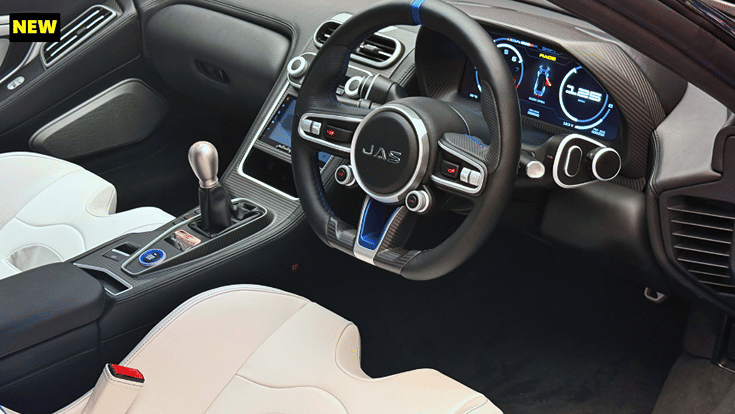
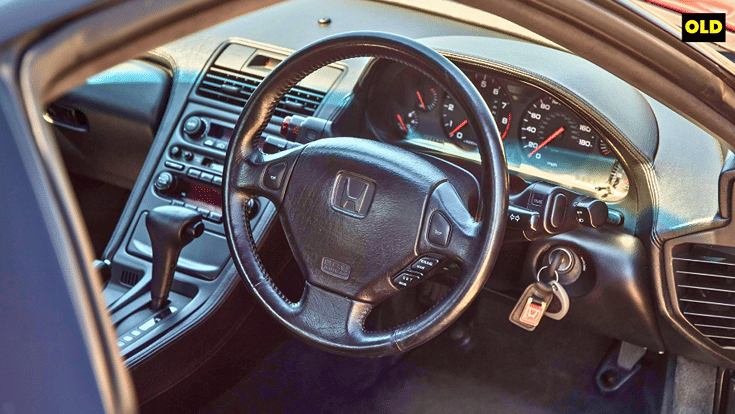
L: JAS Tensei | R: Honda NSX Gen 1
Throughout its 15-year production run, several revisions and editions (Type S, NSX-R, NSX-T, and more) of the first-gen NSX were launched. It sold over 18,000 units in total and cemented itself as one of the most iconic performance cars to come out of the Land of the Rising Sun. A second-gen NSX was launched in the mid-2010s as a bleeding-edge supercar with a mid-engined, hybrid all-wheel-drive powertrain. However, the new NSX was not received as well as its predecessor was, selling under 3,000 units globally until its discontinuation in 2022.
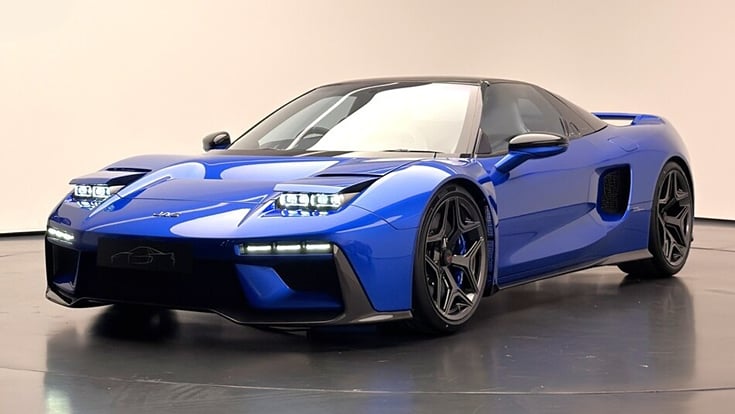
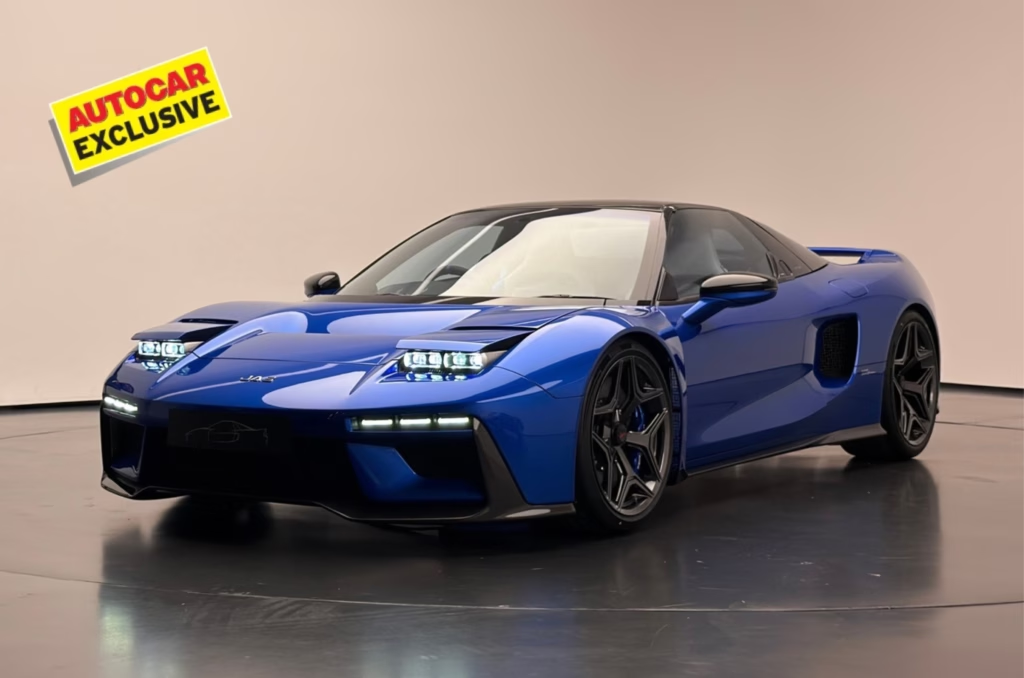
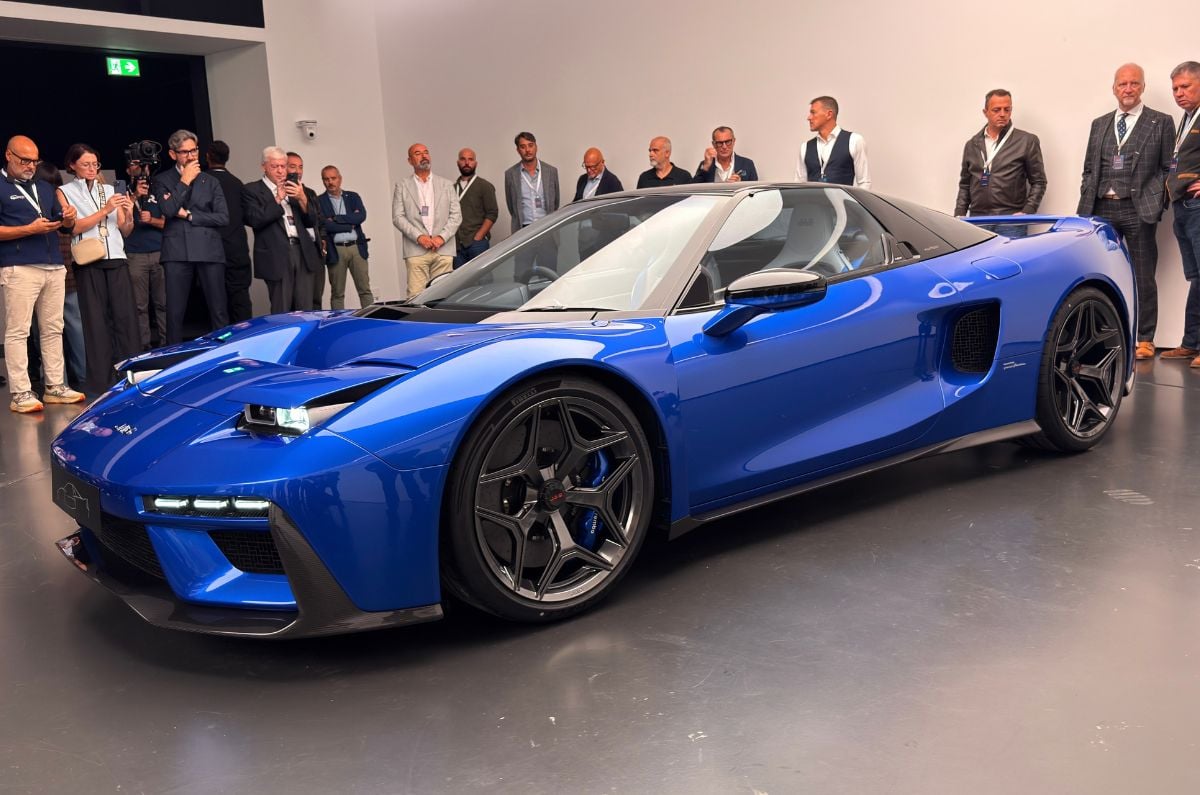
Roughly four decades after the first-gen NSX’s birth, JAS Motorsport (Honda’s racing partner since 1998) has paid tribute to the original sports car with the Tensei. The name roughly translates to “rebirth” in Japanese, which is apt given that the Tensei uses the first-gen NSX as its base and re-imagines it with modern materials, design philosophies, and technologies – along with a new carbonfibre body styled by Pininfarina. With that in mind, let’s take a look at how the JAS Tensei compares to the Honda NSX.
JAS Tensei vs Honda NSX engine and gearbox
The Tensei forgoes the turbocharging and electrical assistance seen on modern performance cars in favour of a refreshingly old-school 3.5-litre naturally aspirated V6, which is a fair bit larger than the 3.0-litre naturally aspirated V6 (codename: C30A) that powered the first-gen NSX – a 3.2-litre V6 (codename: C32A) was used in later model revisions. JAS Motorsport teamed up with British motorsport engineering specialist Judd Power to thoroughly re-engineer the Tensei’s V6, with upgrades like a billet crankshaft, forged lightweight pistons and connecting rods, individual throttle bodies, better cooling, revised ignition and engine management systems, new headers, and a more visceral-sounding exhaust system.
Thanks to those mechanical changes, the Tensei develops 420hp and 350Nm, which is up 146hp and 65Nm over the first-gen NSX’s 274hp and 285Nm output. Even when compared to the later-lifecycle C32A-powered NSXs powered by the 3.2-litre V6, the Tensei is more powerful by 126hp and 45Nm. The Tensei’s engine also has a higher 8,500rpm redline, while the NSX’s V6s could spin to a maximum of 8,000rpm. A 6-speed manual is the only gearbox available for the Tensei, while the C30A-powered NSX models came with a 5-speed unit only. However, a 6-speed manual was introduced alongside the NSX’s C32A engine from 1997 onward.
JAS Tensei vs Honda NSX exterior design
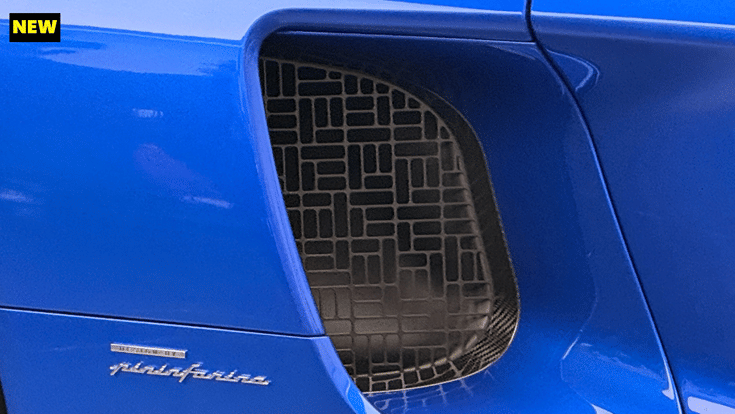
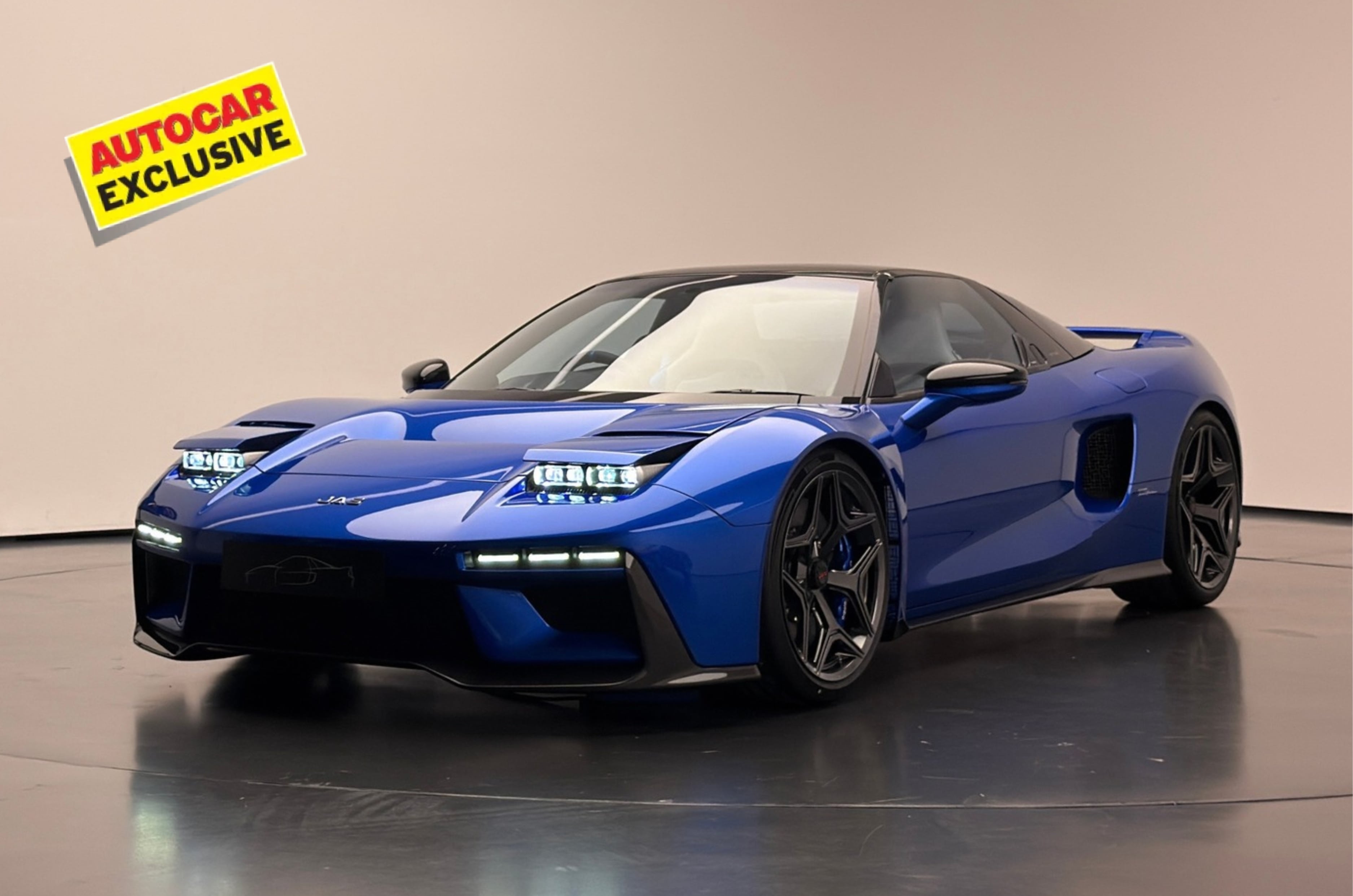
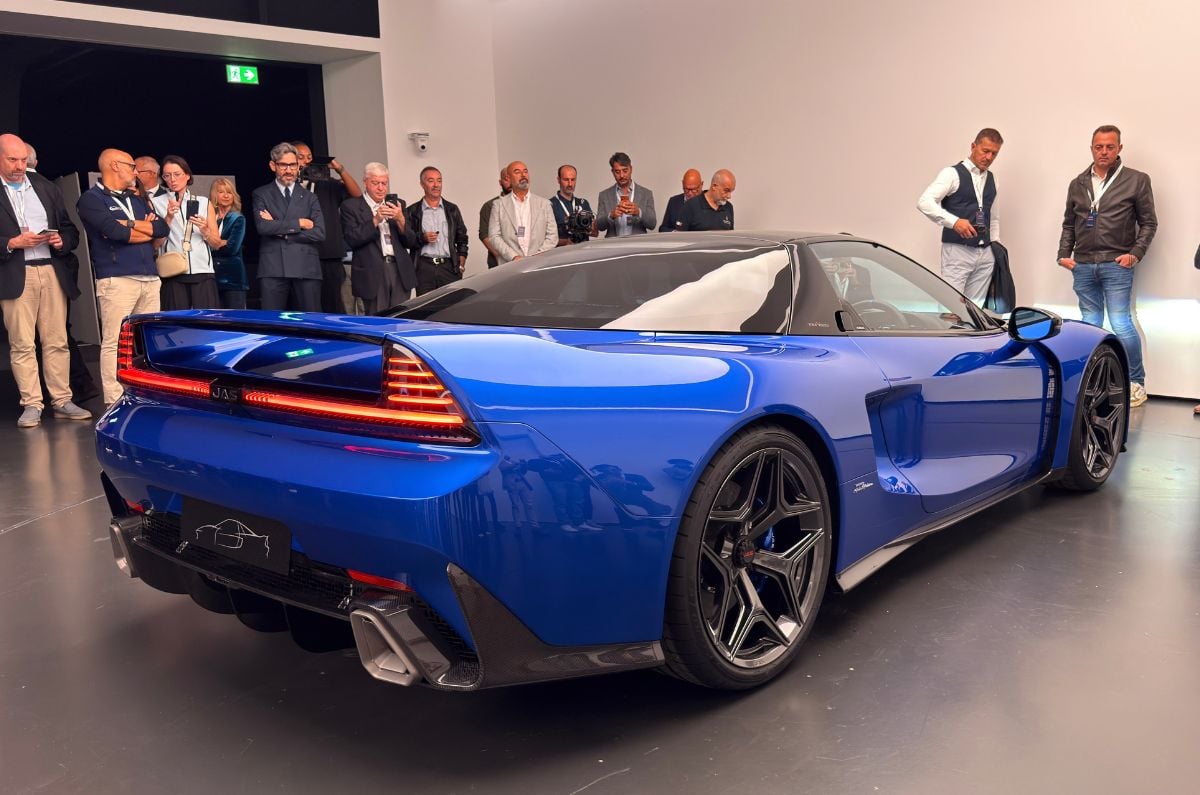
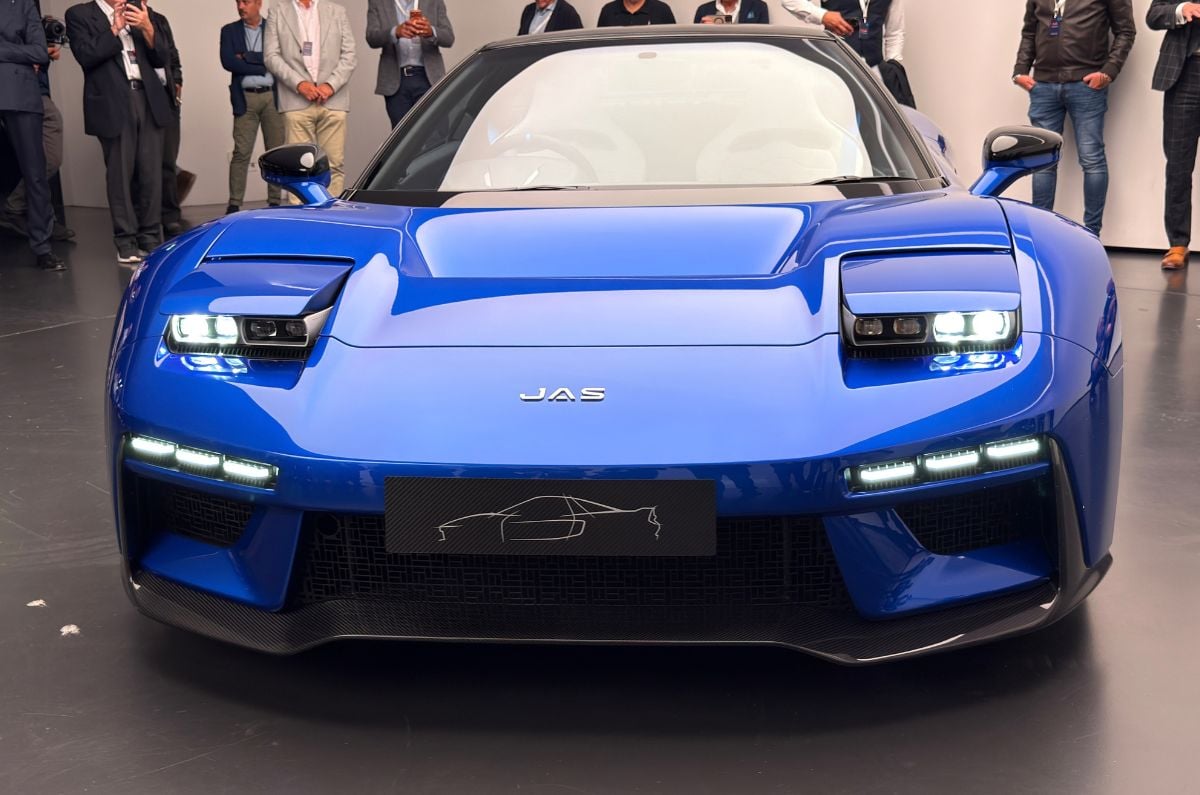
As mentioned earlier, the Tensei has a completely new Pininfarina-designed carbonfibre body with a slightly longer wheelbase and wider tracks. The Tensei retains many of the NSX’s core styling elements, such as the long and low stance, pop-up headlamps (which look very cool), side intakes, B-pillar door handles, integrated rear spoiler, wide L-shaped tail-lamps, and dual-exhaust tips.
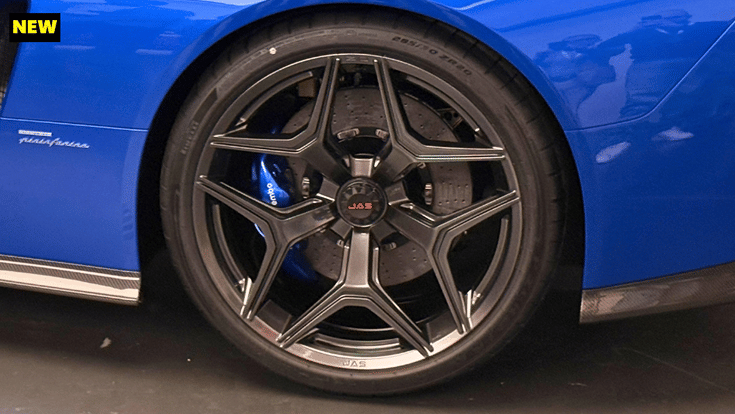
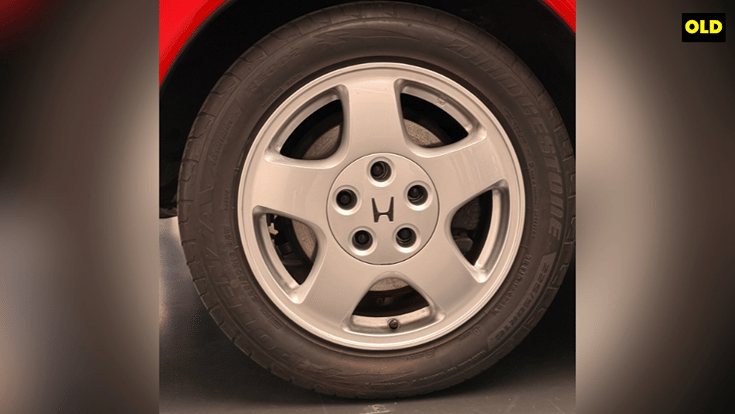
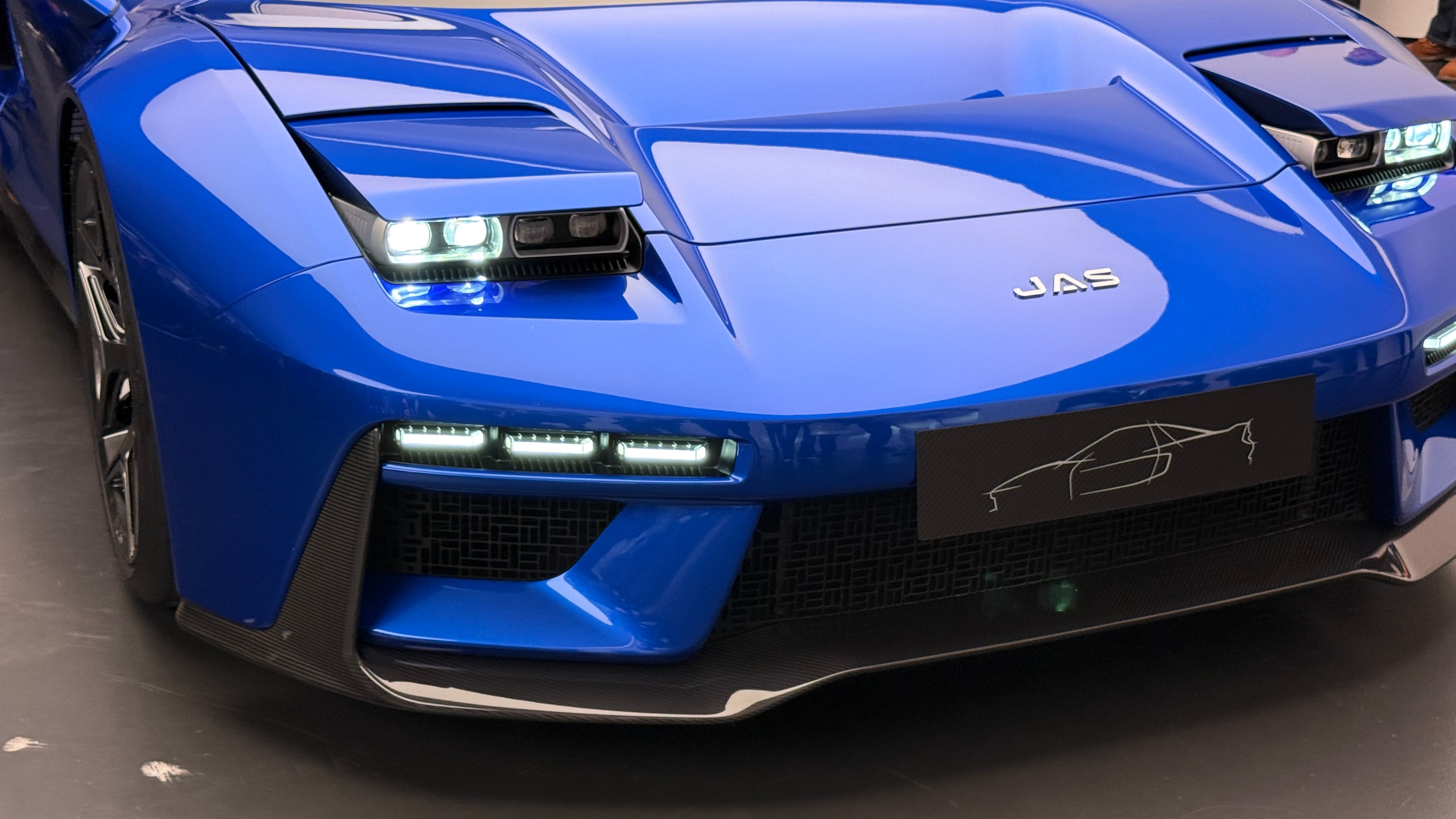
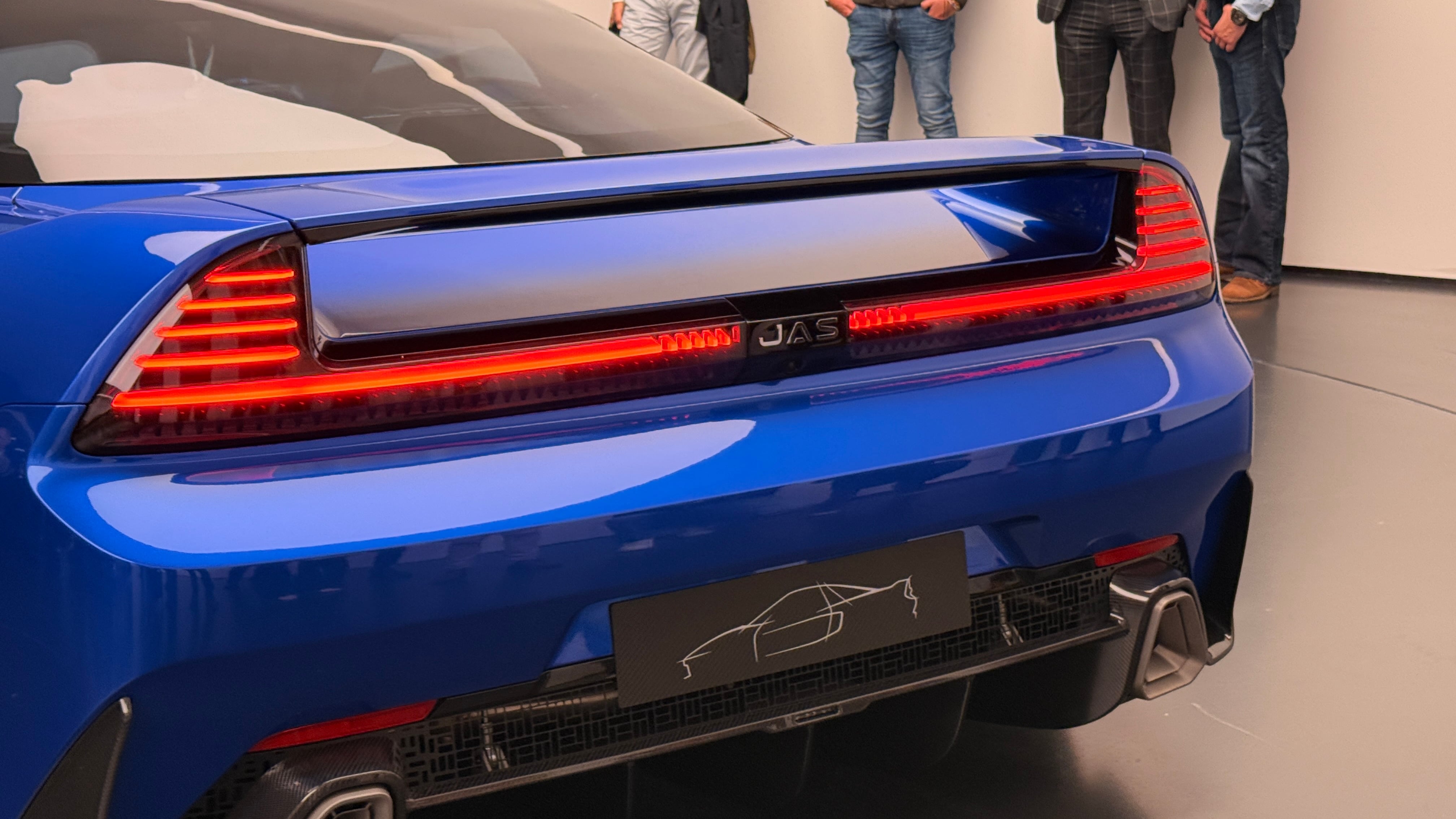
However, the Tensei sets itself apart with modern touches like LED lighting up front, with segmented DRLs on either side, larger front air intakes accentuated by a full-width carbonfibre splitter, larger wheels (19 inches front, 20 inches rear), bigger side intakes, a slatted 3D LED treatment for the tail-lamps, longer and more svelte ORVMs, hexagonal exhaust tips, a rear diffuser, and a sportier design for the rear bumper.
JAS Tensei vs Honda NSX interior
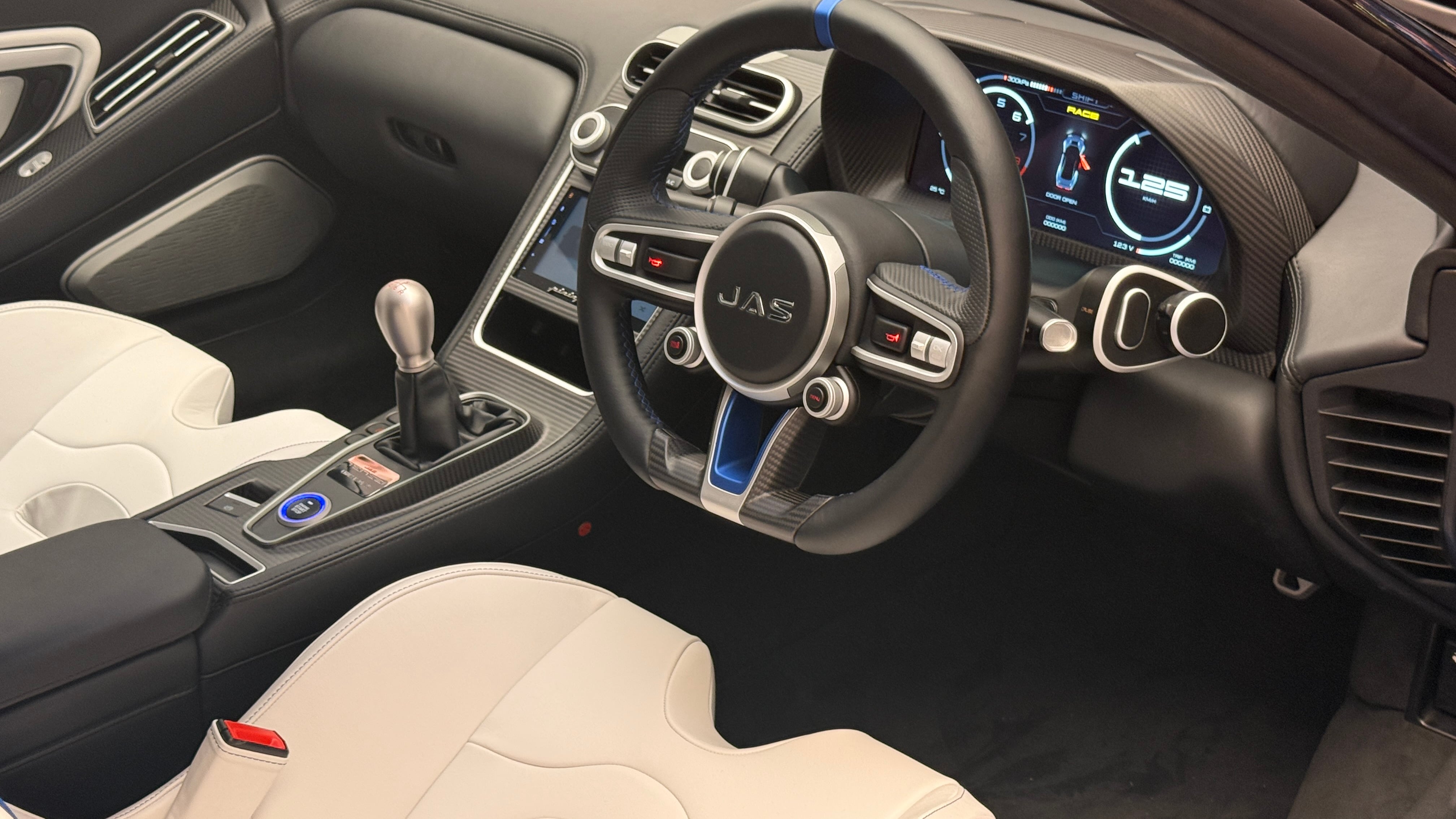
Inside, the Tensei features the same F16-inspired layout as that of the NSX, but a lot else has changed here. For one, the steering wheel looks much more modern, with a redesigned three-spoke design, a flat bottom, a 12 o’clock marker, and a circular hub. The instrument cluster is fully digital instead of analogue like in the NSX, but JAS Motorsport has retained the large stalk that incorporates cruise control and lighting functions.
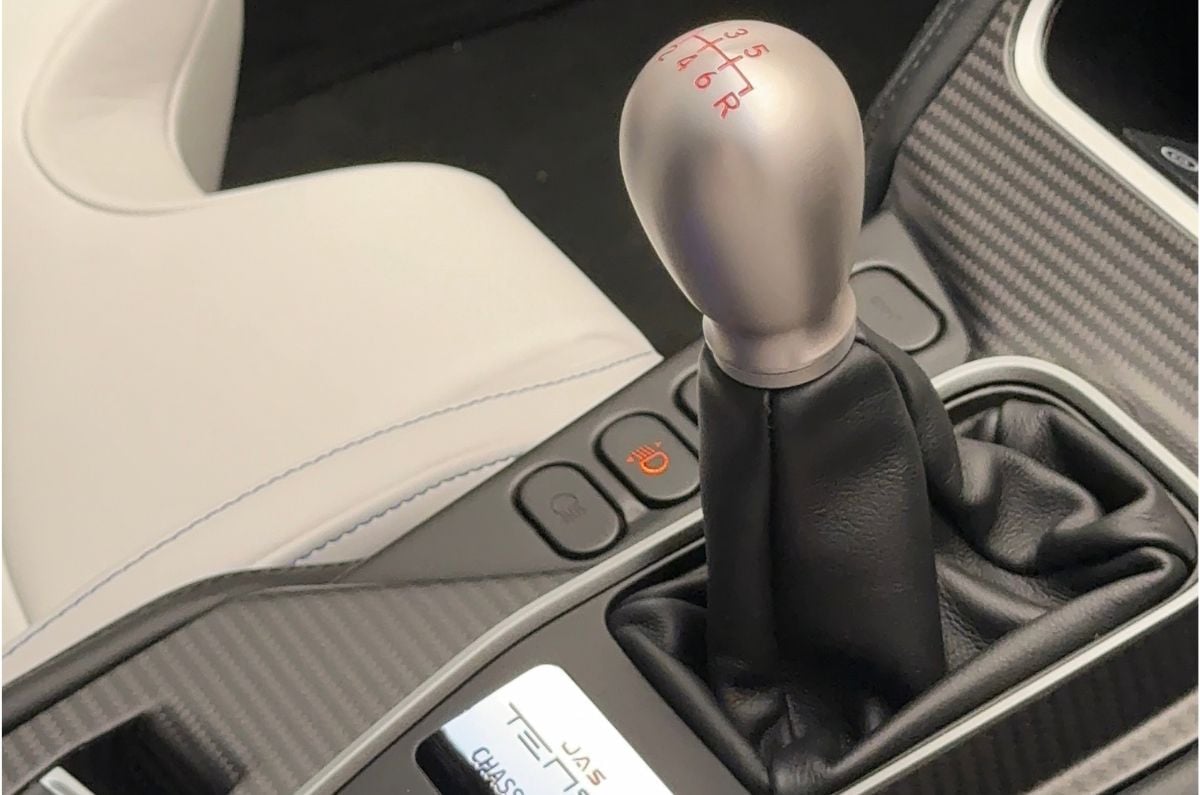
The Tensei’s centre console has been thoroughly revised too, with an oval housing for the central air vents, a raised hub for the AC controls, a modestly-sized touchscreen and an open storage space. Lower down, the central tunnel sports a chunky gear lever with a titanium knob, a row of buttons on the passenger side, the engine start/stop button, and an electronic parking brake button – no pull-type handbrake here, like you get in the NSX.
Only 35 examples of the JAS Tensei will be built, priced at €880,000 (Rs 9.55 crore) a pop, before options.
There are few cars that changed the supercar world quite like the original Honda NSX. It proved that a mid-engined exotic could be fast, reliable, approachable and, crucially, enjoyable without trying to intimidate its driver. More than three decades later, JAS Motorsport has taken that philosophy and given it a thoroughly modern interpretation.
Meet the JAS Tensei. Tensei translates roughly to “rebirth” in Japanese, and the name neatly captures what JAS is attempting here. This isn’t simply an NSX restoration, nor is it a cosmetic restomod. JAS has taken the first-generation NSX as its starting point and re-engineered the car with modern materials, motorsport know-how and a new body designed by Pininfarina. And there will be just 35 examples.
But first, Who is JAS?
Launched in 1995, JAS Motorsports was named after its founders Paolo Jasson, Maurizio Ambrogetti and Giorgio Schön. They have been the official partner for Honda since 1998 and have since developed race cars for various competitions with successful results in touring car championships.
JAS Tensei: Exterior design
Look at the Tensei from a distance and the connection to the original NSX is immediately apparent. The proportions remain familiar, as do several of the visual cues that defined Honda’s icon. But the details are considerably more modern.
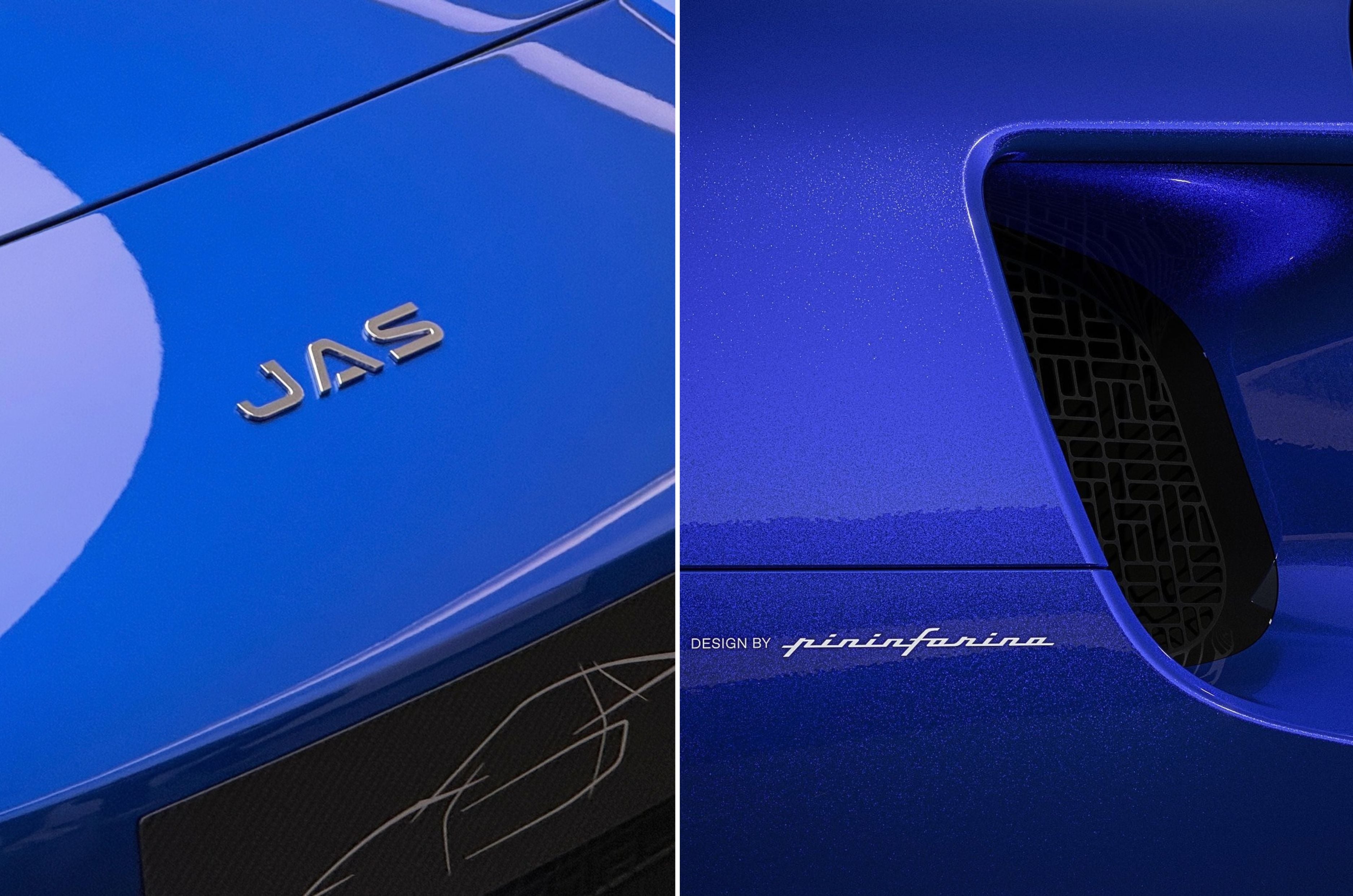
The body is constructed entirely from carbon fibre, allowing JAS to alter the car’s dimensions and surfaces while keeping weight under control. Pininfarina was responsible for the design, bringing an Italian interpretation to a fundamentally Japanese concept. It is an interesting collaboration because Pininfarina already has history with the NSX story. The company was involved with Honda’s HP-X concept, which preceded the production NSX.
The result is therefore less a replica and more an alternate evolution of the original car — essentially asking what the NSX might have looked like had its development continued into the modern era.
The front bumper is sculpted to guide air under the car and out of the massive duct in the bonnet. The pop-up headlamps have been retained but now feature LED treatment. The wiper covers have also been redesigned and in fact the only part that has been untouched is the roof. The A and B pillars are more raked and the wheels have gone up by a massive 4 inches. 15s and 16s on the NSX are now 19s and 20s on the Tesei. Interestingly the door handle with the NSX badge is also carried over. Low down you will spot the iconic Pininfarina badge that we are used to seeing on Ferraris.
At the rear the integrated spoiler has been reworked with slight changes to the panels so as to improve airflow. The diffuser is carbon fibre and the exhausts are massive too. Like the original NSX, the tail lamps are stretched across the width and now hey 3D effect for the LED strips. Overall, it is a resto mod done to perfection. Just enough modern touches without skewing it from the iconic design.
JAS Tensei: interior and features
Inside the size of the cabin is identical to the original NSX, although there are updates all around. There’s a new sporty steering wheel, digital drivers display and sports seats. However, there is a full configurator available to spec your Tensei to your liking. The seat upholstery and paints can be customised along with brake calliper colours and wheels. A pleasant surprise is the centre console that does away with a massive tablet as per current trends and instead features a modest touchscreen with the climate control switchgear similar to the NSX. Pininfarina wanted to ensure none of the essence of the NSX was lost in an attempt to modernise the cabin
JAS Tensei: Powertrain and specs
Perhaps the most significant decision sits behind the cabin. The Tensei retains a naturally aspirated V6, rather than adopting the turbocharging or hybrid assistance that has become almost mandatory for modern supercars.
The 3.5-litre V6 has been extensively re-engineered with Judd Power, the British motorsport engineering specialist. The work goes considerably beyond simply increasing displacement or fitting a louder exhaust. The engine gets a billet crankshaft, forged lightweight pistons and connecting rods, individual throttle bodies, upgraded cooling and revised ignition and engine management systems. There are also new headers and an exhaust system designed to give the engine a more immediate and visceral character. The result is 420hp, with the engine capable of revving to 8,500rpm.
Those figures may not sound extraordinary in an era of 1,000hp hybrid hypercars, but that misses the point of Tensei. JAS isn’t chasing an enormous power-to-headline ratio. Instead, the emphasis is on response, linearity and the connection between throttle, engine and driver.
The other big piece of the puzzle is the gearbox. The Tensei uses a six-speed manual transmission and remains rear-wheel drive. That combination, together with the naturally aspirated V6, is perhaps the clearest indication of what JAS wants this car to feel like. The objective isn’t to overwhelm the driver with acceleration figures; it is to make every interaction with the car feel mechanical and deliberate.
The chassis has been extensively revised as well, with bespoke suspension components, revised geometry, upgraded bearings and uprights, enhanced anti-roll bars and KW dampers with electronically controlled damping. There is also a hydraulic front-axle lift system, while forged aluminium wheels measure 19 inches at the front and 20 inches at the rear.
JAS has taken one of the most important analogue supercars ever made and asked how its fundamental qualities could be preserved in 2026. It’s a carbon-bodied, naturally aspirated, manual, rear-wheel-drive supercar with an 8,500rpm redline. And that makes the Tensei interesting for reasons that go far beyond its rarity. It is effectively a reminder that performance isn’t necessarily about making a car faster in every measurable way. Sometimes it is about making the driver feel more involved.
Motorsport without turning it into a race car
This is where JAS’s background becomes particularly important. JAS Motorsport has spent decades developing Honda competition cars, and that experience forms the foundation of the Tensei programme. But the challenge here is fundamentally different from building a race car. A race car can sacrifice refinement, usability and longevity in pursuit of lap time. A road-going supercar cannot.
Tensei therefore represents an interesting middle ground: motorsport-derived engineering, but applied to a car designed to be driven on the road. The engine is built and tested by Judd Power before returning to JAS in Italy, where each car undergoes further testing and validation.
JAS Tensei: Super exclusive
JAS plans to build only 35 Tenseis, each individually specified by its owner. Production takes place at JAS Motorsport’s facility near Milan, with the car bringing together Japanese engineering heritage, British motorsport expertise and Italian design.
It is an unusual combination, but perhaps that’s exactly what makes the Tensei so compelling. The original NSX was unusual because Honda approached the supercar formula from a completely different direction.
Three decades later, JAS is doing something remarkably similar. It isn’t trying to build the most powerful supercar. It is trying to build the most involving interpretation of an icon. And if the original NSX was Honda’s idea of what a supercar should be, the Tensei is JAS Motorsport’s answer to what that idea could become today.
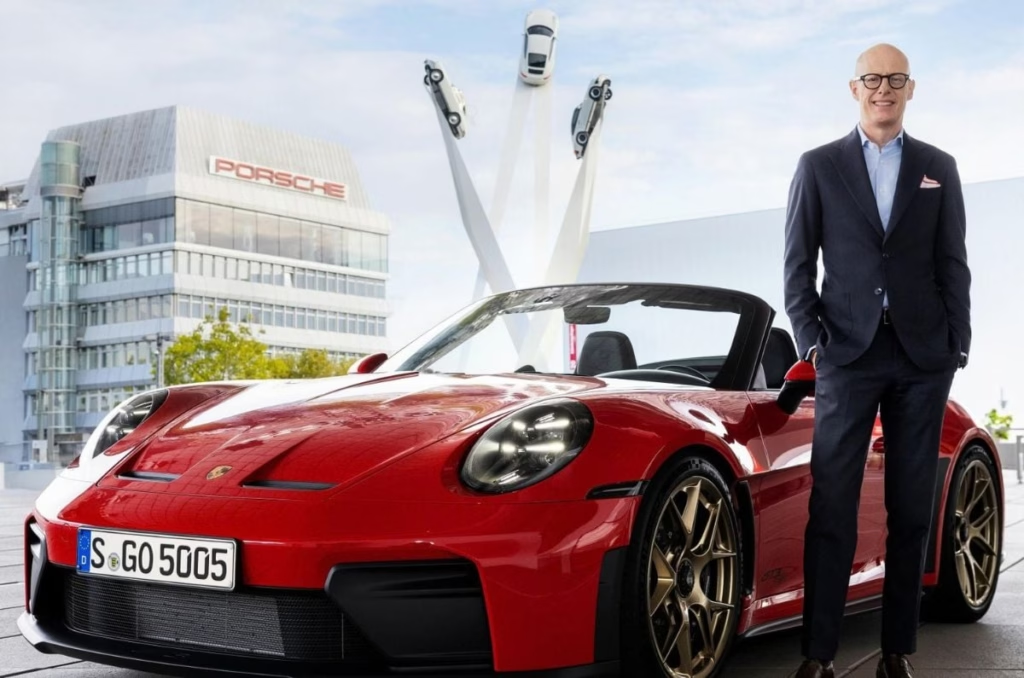
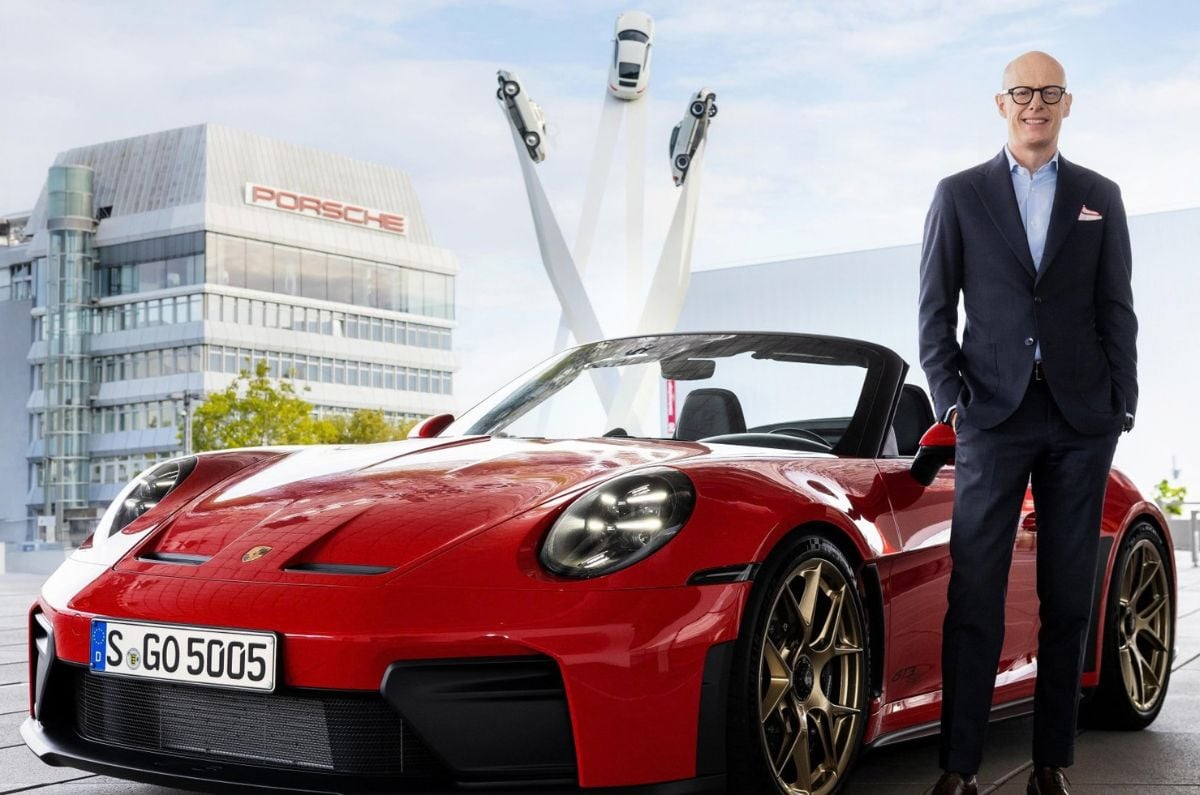
Porsche has outlined a new line-up of models under its Sportwagenschmiede ‘35 strategy, which was presented by the German luxury marque at the Capital Markets Day in Weissach. The strategy, which means ‘sports car forge’ in German, includes a new halo supercar positioned above the 911, a new internal combustion-powered (ICE) SUV and an all-electric 718 line-up. Porsche stated that it will also be expanding its ‘special request’ offerings.
Mission S concept to preview the new supercar on October 15.
New ICE and PHEV SUV to join the Macan Electric in 2028.
Next-gen 718 Boxster and Cayman to be all-electric.
New Porsche halo supercar
This upcoming model is to be previewed as the Mission S concept on October 15
Under its new Sportwagenschmiede ‘35 strategy, Porsche has announced plans for a new mid-engined super sports car platform that will underpin a model above the 911. “We are developing a super sports car platform,” Porsche CEO Michael Leiters told the media present at the Capital Markets Day event.
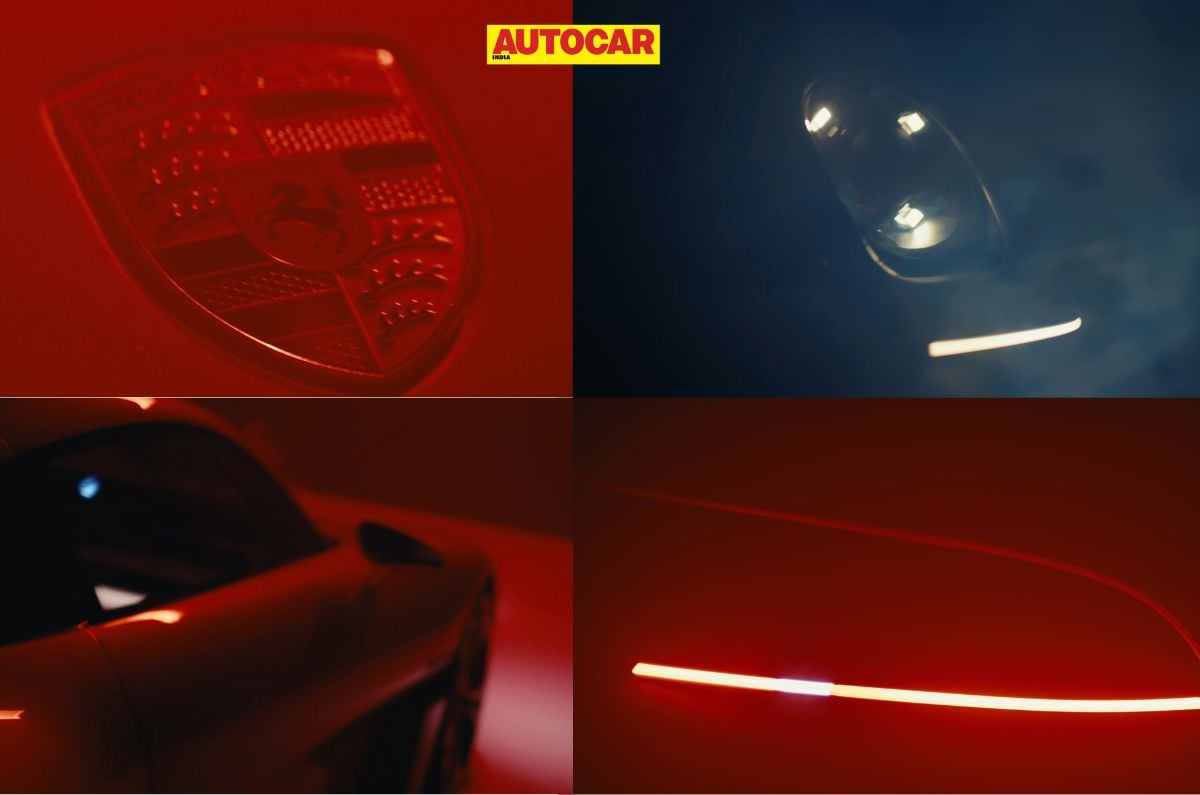
Porsche Mission S official teaser
The brand said that it will be previewing this new model on October 15 by way of a concept called ‘Mission S’. This would be Porsche’s first range-topping supercar since the 918 Spyder and could serve as its spiritual successor. This upcoming mid-engined supercar, along with the other upcoming models announced by Porsche, could share parts with Volkswagen Group models, the company stated.
New Porsche SUVs in the works
This new combustion-powered SUV is set to join the Macan Electric in 2028
Joining the all-electric Macan in 2028 will be a similarly sized SUV, the brand confirmed. It also said that this new SUV will be offered with a range of combustion and plug-in hybrid (PHEV) powertrain options. Autocar UK previously reported that this SUV will be based on the PPC platform and be twinned with the Audi Q5.
Porsche is also exploring a new flagship SUV, which would be placed above the Cayenne. Codenamed the ‘K1’, it is reportedly set to launch with combustion power first, with an all-electric version expected at a later stage. The brand has committed to deepening its collaboration with Audi on the PPE and PPC platforms, which it hopes will lower development costs and improve efficiency. Porsche added that the unique character of each brand will be maintained through brand-specific technology and features.
Porsche confirms all-electric 718 models
Boxster and Cayman to move away from combustion power
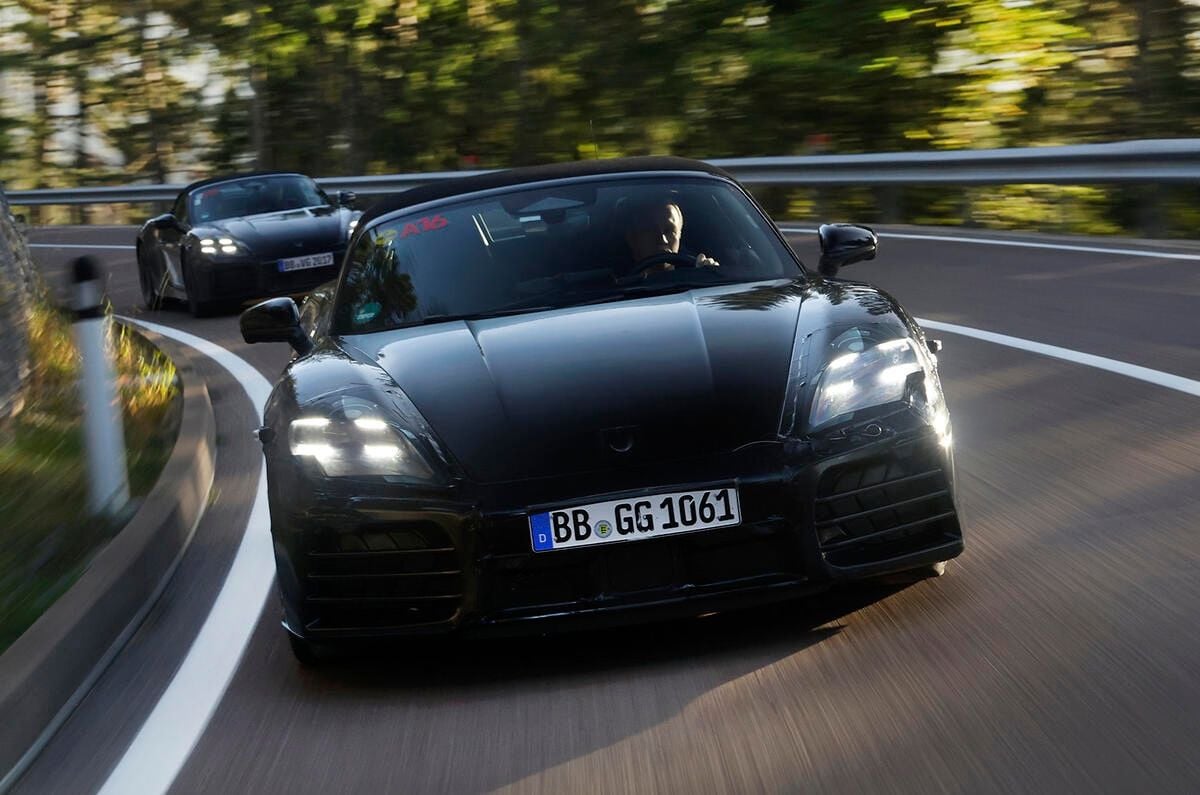
Porsche 718 Boxster EV image by Autocar UK
The next-gen 718 duo will be moving to an all-electric platform, with 2028 set to be their first full year of production, Porsche confirmed. This is in contrast to what the luxury marque was earlier expected to do, with plans to equip the next-gen 718 range with a platform compatible with both combustion and pure-electric powertrains.
Porsche to ramp up its exclusive offerings
Focus on individualised examples from Sonderwunsch, Exclusive Manufaktur and Manthey to strengthen
Porsche has showcased several one-off models in recent months. These include the Flachbau RS, which is a road-legal one-off based on the 911 GT2 RS, and three one-of-one 911s that were displayed at the Monterey Car Week in August 2026.
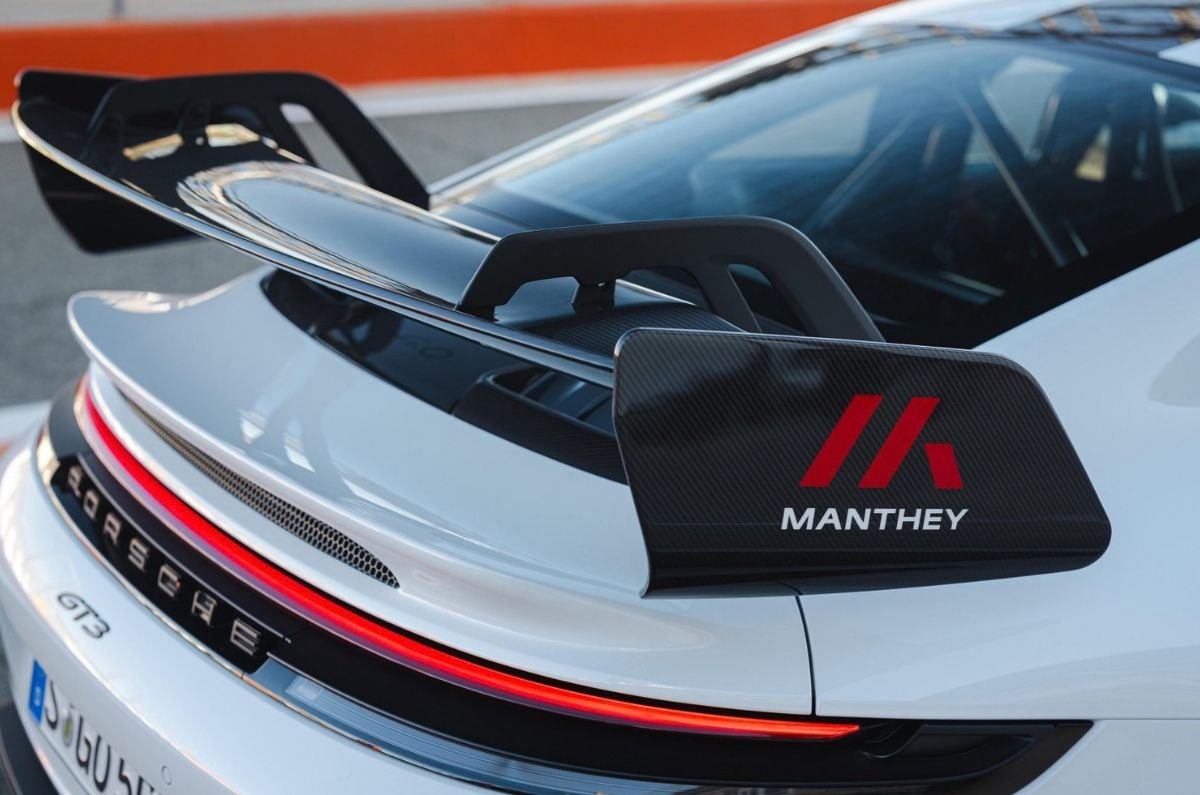
Porsche Manthey 911 GT3
Porsche is now aiming to grow the sales from its Sonderwunsch personalisation division sixfold in the medium term. It has also increased its stake in Manthey Racing to 67 percent, with the aim to offer customers performance kits, exclusive track-side experiences and complete few-off concepts. These individualised examples are likely to carry much higher profit margins than regular series-production models. Porsche revealed that the highest price ever paid for a fully bespoke Sonderwunsch example was north of EUR 13 million.
Measures to boost profitability
Porsche is working on increasing profitability after profits fell by over 90 percent in 2025
Porsche saw its operating profit fall from EUR 5.64 billion to EUR 413 million in 2025, a drop of over 90 percent compared to 2024. Porsche expects the upcoming 718 electric range to support sales in 2028, with the new Macan-sized ICE SUV contributing from 2029. More models in the higher-margin D and E segments will follow, as per Porsche.
Porsche is also cutting model variants by about 20 percent to reduce complexity, and expects sales per variant to rise by about 30 percent as a result. As reported earlier, Porsche may also merge the Panamera and Taycan nameplates into a single model to curb unprofitable expenses. By implementing its new Sportwagenschmiede ‘35 strategy, Porsche is aiming for a net cash flow margin of 9 to 12 percent in the medium term, and wants its break-even point to drop below 2 lakh units. The company is also set to reduce material costs by around 10 percent by way of parts sharing with the rest of the Group.
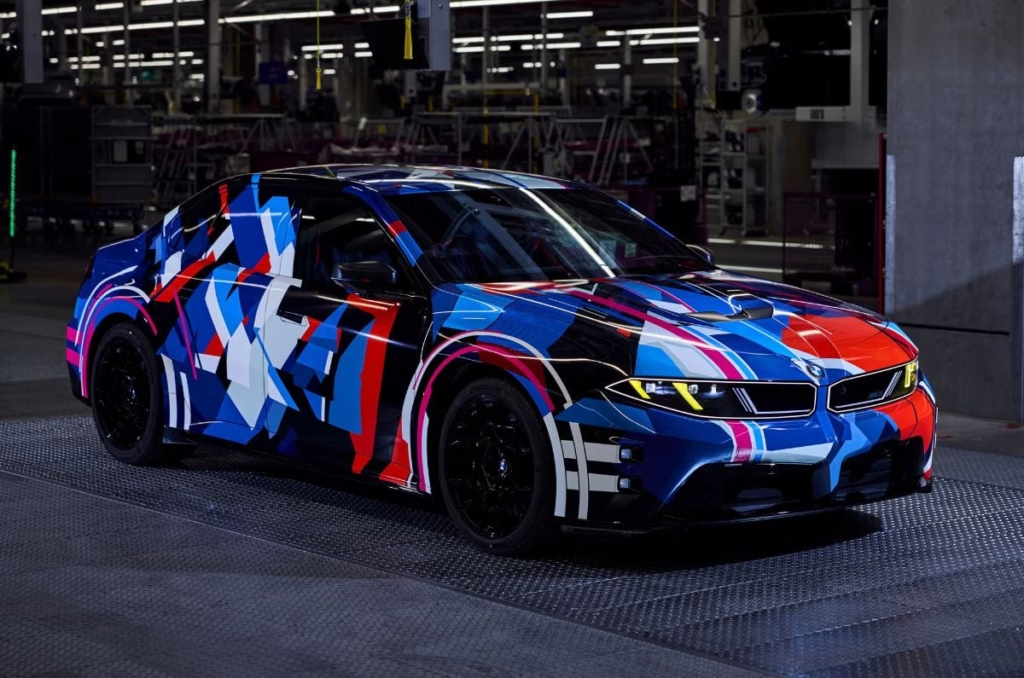
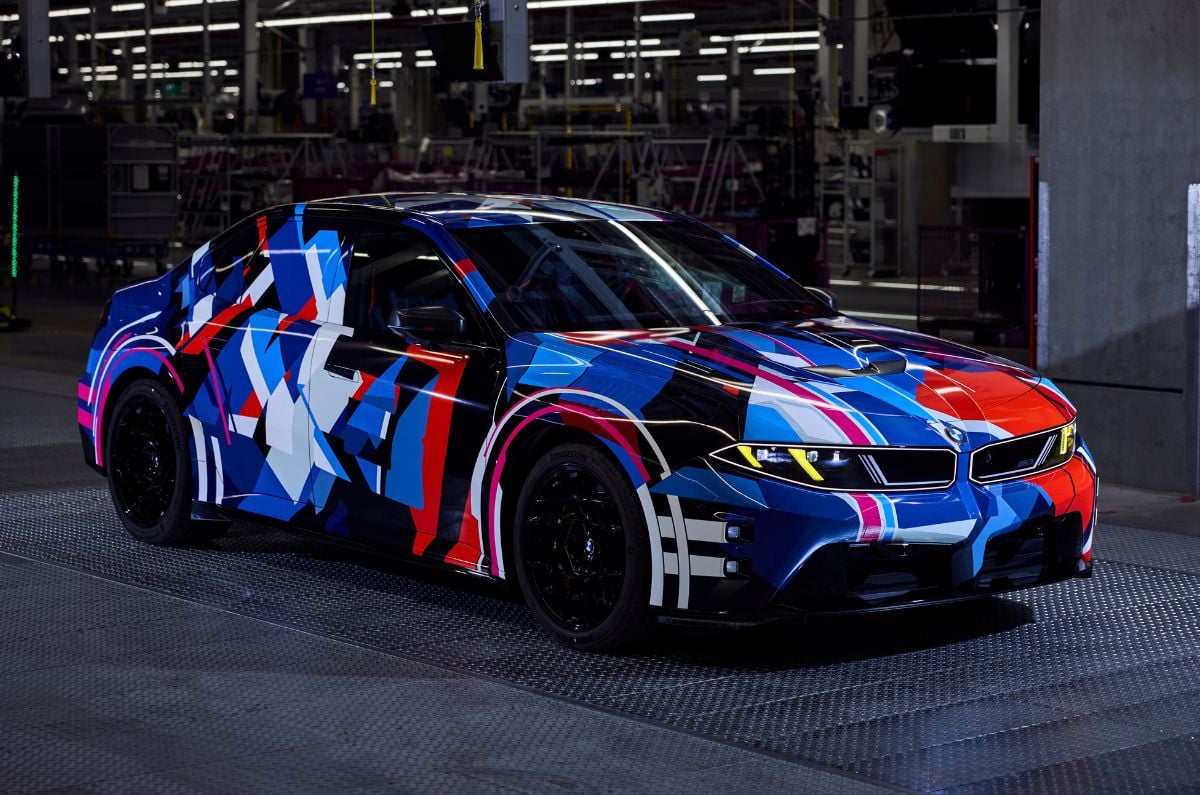
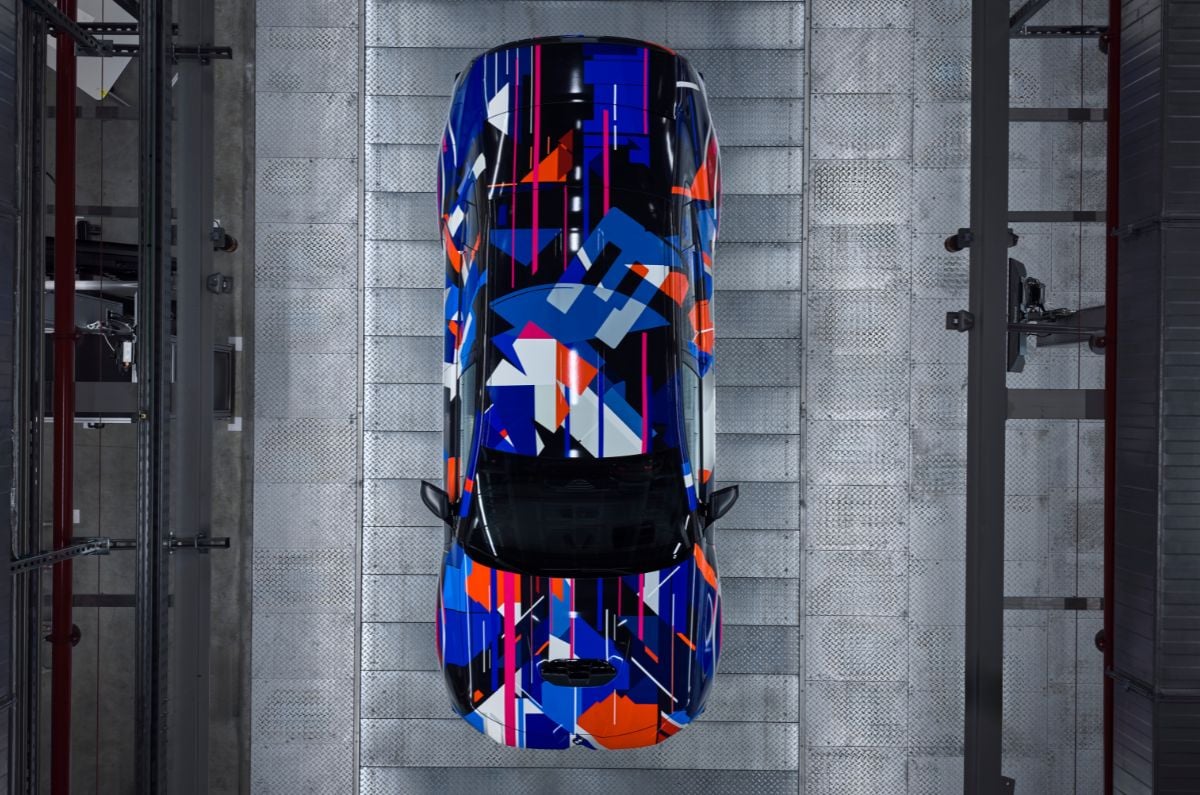
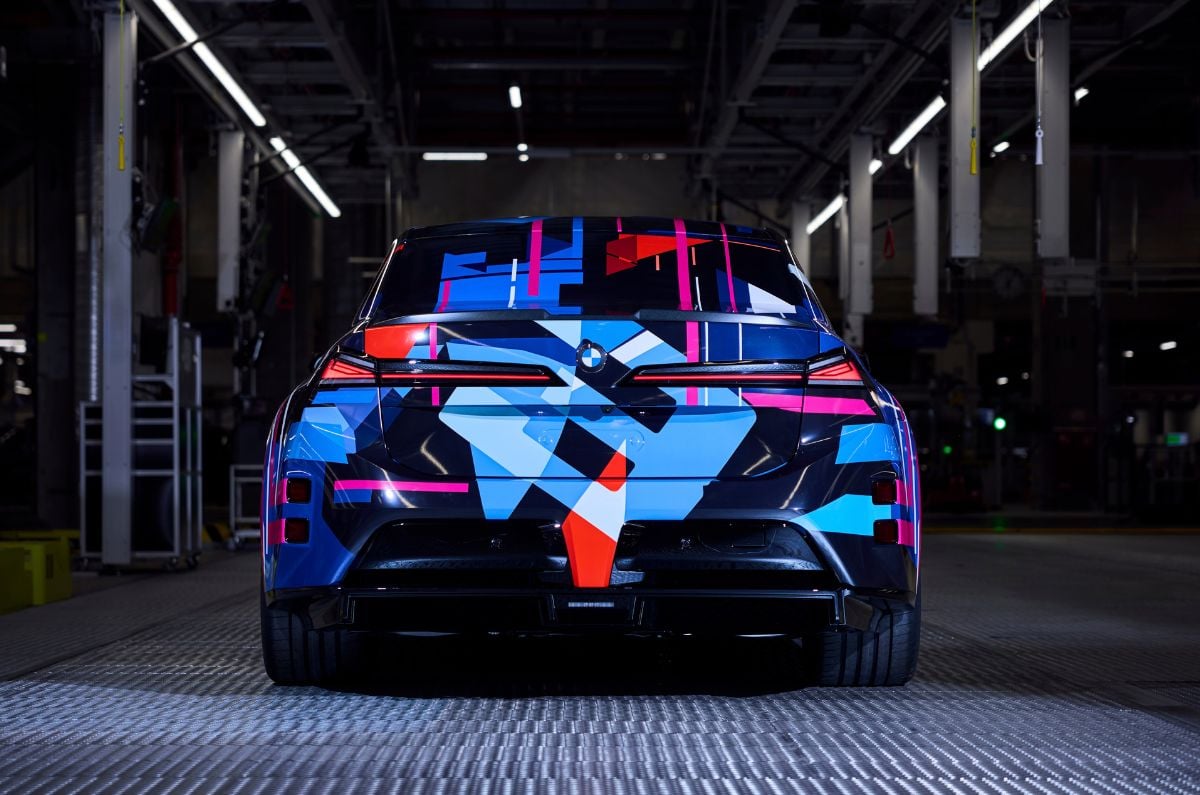
BMW has revealed a near-production M3 electric wrapped in camouflage. The images released provide us an insight into what the final, production model will look like. The fully electric M3 is to be produced at the German luxury automaker’s main plant, where the first BMW Neue Klasse model, the fully electric i3, is made. “We are delighted that we will also be producing the first fully-electric BMW M3 here in Munich,” said Peter Weber, Head of BMW Group Plant Munich.
BMW M3 electric exterior design
Neue Klasse details visible include the sleek front grille and LED elements
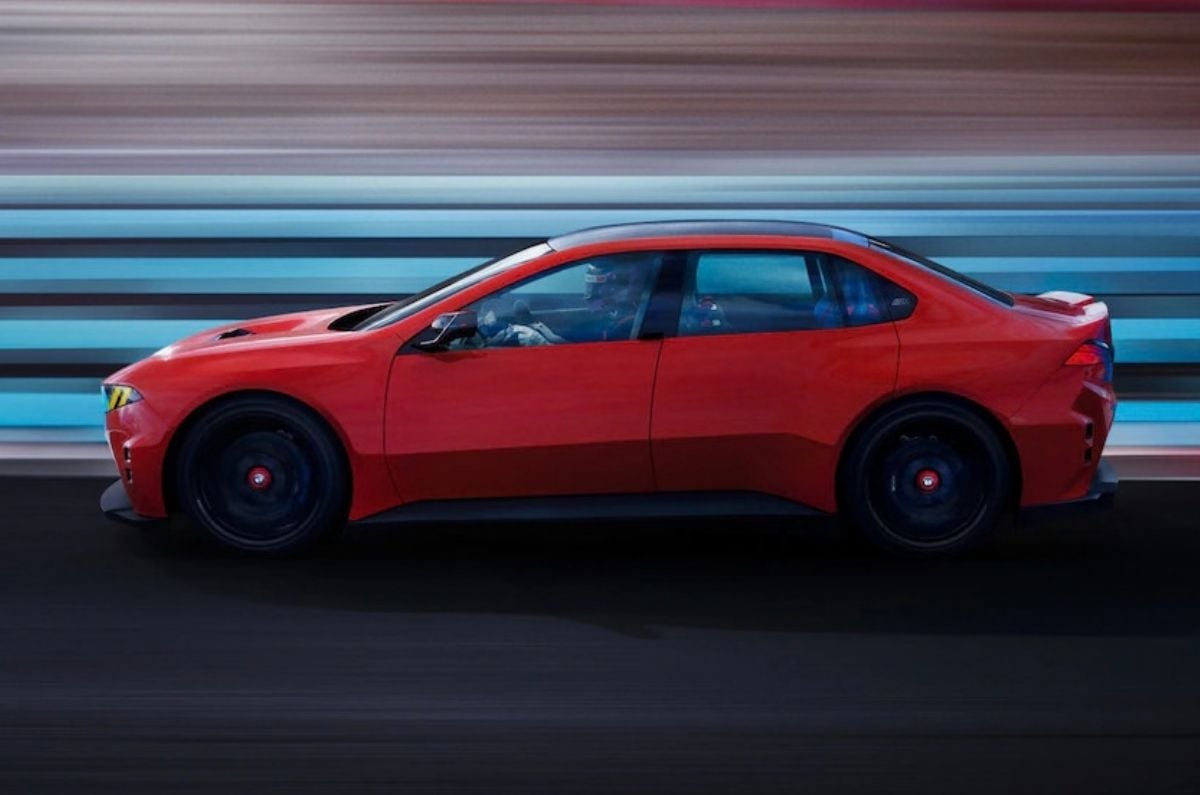
Some of the design details poking through the camouflage are similar to what we see on the combustion-powered 3 Series. This means there’s the new kidney grille up front that’s flanked by angular LED lighting signatures. Lower down, however, is a revised bumper with pronounced aero elements and cube-shaped LEDs stacked vertically. The bonnet of the M3 electric also sports a hump.
The so-called “reinterpreted M aero” ORVMs of the concept have been replaced by a more conventional design. Save for the centre cap design, the all-black alloy wheels look similar to what was seen on the concept. The rear of the camouflaged M3 electric gets a bootlip spoiler and the same cube-like design integrated into the bumper.
BMW M3 electric expected interior and features
Some of the design and equipment seen on the Neue Klasse concept will make it to the production model
BMW M Neue Klasse concept interior
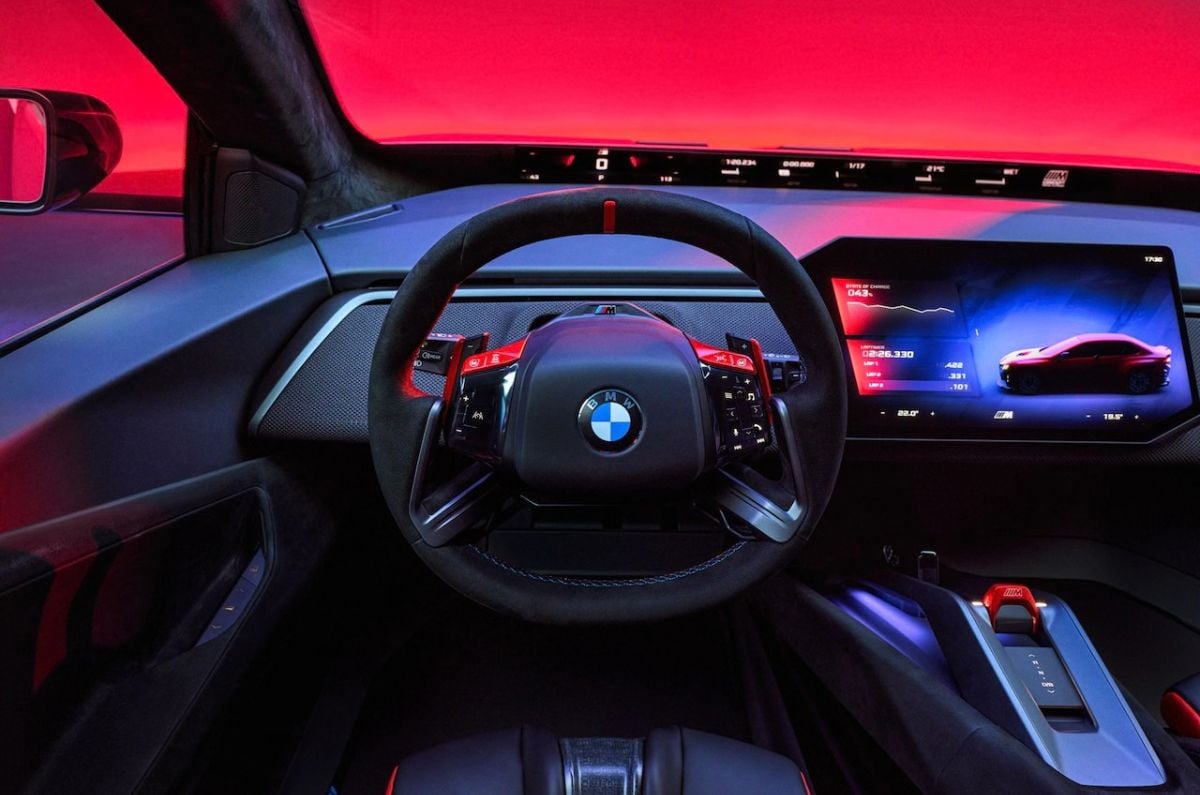
While BMW is yet to show the interior of the upcoming M3 electric, it’s likely to borrow some of the cues from the Neue Klasse concept. The latter was showcased with a sleek digital instrument panel cutting across the base of the windscreen and a chunky steering wheel with red highlights and BMW M stitching. The sloping centre console of the concept has a red toggle-style drive selector with ‘M’ branding, while the dashboard features a ‘floating’ infotainment screen.
BMW M Neue Klasse concept interior
The cabin of the Neue Klasse concept is primarily finished in black leather, with hexagonal lighting pattern on the textured dashboard. The production model could also come with the sporty bucket seats finished in a two-tone M livery. There will also be ‘M’ lettering and graphics on the seats and displays, respectively, as has been the case with other BMW M cars.
BMW M3 electric powertrain
The M3 EV could feature an 800V architecture and four electric motors
BMW said that the Neue Klasse concept featured an M-specific version of its sixth-generation cylindrical cells with a capacity of over 100kWh. The 800-volt architecture powers four electric motors – one for each wheel – as part of its new M eDrive powertrain. This will be accompanied by BMW’s new ‘Heart of Joy’ control unit and M Dynamic Performance Control software, with wheel-specific power delivery and braking systems.
BMW is yet to reveal specifics regarding this setup’s output or performance. “It’s not about having even more power. At the end of the day, you can’t put that down to the road anyway. You need to have sufficient power at every corner of the car and we are using four electric motors, but you will never use it at the same time,” BMW M CEO Franciscus van Meel told Autocar UK.
BMW M Neue Klasse concept
Instead, the focus here appears to revolve around better stability without compromising agility. “You can brake the inner wheels, accelerate the outer ones and can get out of turns in a completely different way. It’s a new era of vehicle dynamics,” said van Meel.
He also stated that the fully electric M3 will come with simulated gear shifts but without simulated engine sounds, with the intention being better driving intuitiveness. “We tried all the different sounds. We had a high-revving V10 from the M5, a high-revving V8 from the M3 and even tried the four-cylinder from the E30. But every sound only made sense for that specific car. If you try to put the sound in another car, the feeling is not right.”
According to van Meel, the priority while driving on a track isn’t down to just copying the feel and emotion of a combustion-powered car. Quickness around the track is more important. “You need to have some pedal feel and ratios that you are comfortable with, so that you automatically know you are driving [for example] 100mph because you are in third gear, because you know the deceleration and acceleration. That’s what you want. You can of course copy a gearbox, and it’s already quite emotional. That’s a good idea. But we want more,” van Meel continued.
BMW M3 electric production
The M3 EV will be made at the BMW Group Plant in Munich
BMW will be investing around EUR 650 million into its Munich facility to prepare it for fully electric models. Part of this investment has gone into modernising production structures and systematic digitalisation, along with enhancing cooperation with the development teams and suppliers. According to the brand, from 2027 onwards, this facility will only be producing EVs such as the M3 electric.
Following a rules overhaul, the 2026 F1 pecking order has been shaped significantly by the development race playing out behind the scenes.
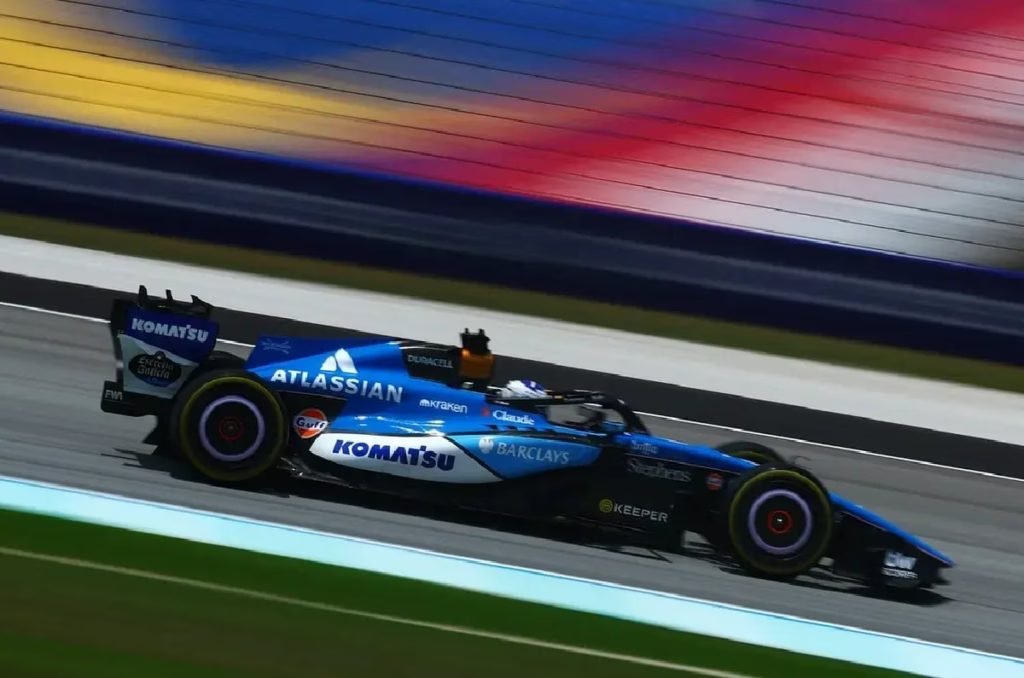
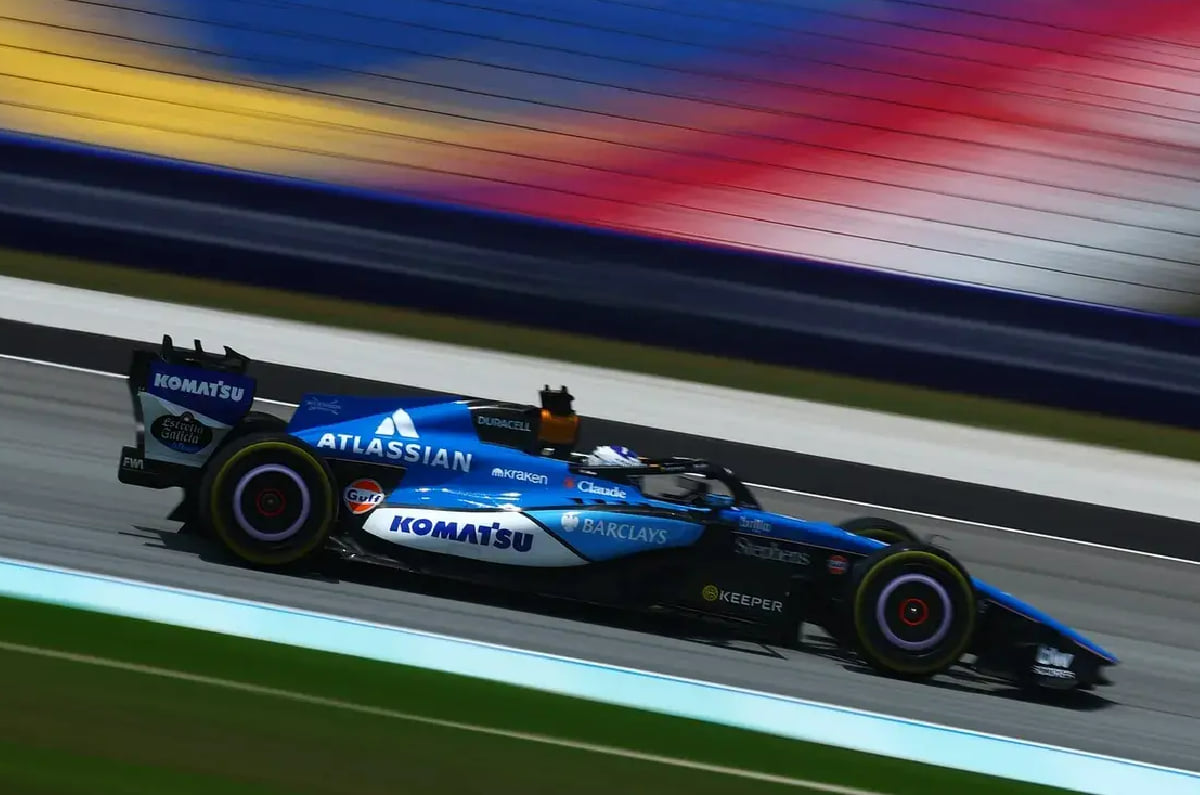
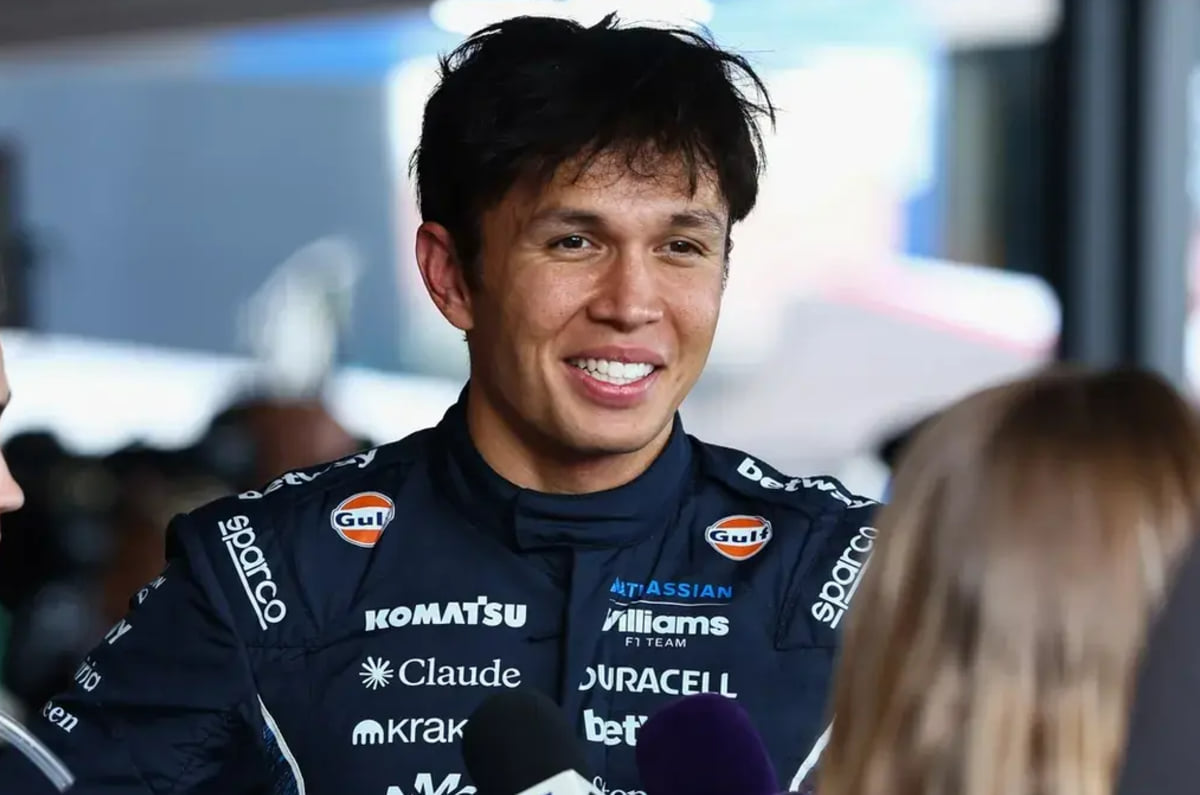
Speaking to media, including Autocar India, ahead of the Bahrain GP in Malaysia, Atlassian Williams F1 Team driver Alex Albon says the rate of development is faster than he’s ever seen before in his career. But rather than keeping pace, the team has decided to stop bringing upgrades this year and put its resources into building a stronger car for 2027.
Alex Albon on F1 2026 development war
In previous years, upgrade packages typically delivered a few hundredths of a second. But with teams still trying to understand the 2026 rules, McLaren boss Andrea Stella reckoned upgrades this year can deliver gains of two to three tenths of a second.
“We’re seeing a huge difference. Even when I think about when the regulations changed in 2022, teams are just getting better at becoming more efficient with bringing upgrades to the car,” Albon said, adding that he believes the rate at which teams are progressing is “at least 3x of last year”.
The $215 million cost cap means teams have adopted varying strategies for how to roll out these upgrades. Ferrari has been quite aggressive with rolling out chassis upgrades. Atlassian Williams, on the other hand, focused most of its resources on bringing one major upgrade package to Round 15 at Azerbaijan. The team has struggled with an overweight car and other performance issues in the first half of the 2026 season. The Azerbaijan upgrade package looked to address these issues and it appears to be a step in the right direction, delivering the team’s very first Q3 appearance of the season back at Baku.
Albon points out that the biggest is in the mid-field. “Last year and previous years that I remember my experience in Formula 1, it was always only the top three or four teams that were capable of achieving four or five big upgrades a season. And now you’re actually getting midfield teams very close to achieving the same amount of development rate,” he shared.
“So, yes, it’s been partly also why as a team we’ve been struggling a little bit, because we are now maybe at a similar pace to last year, which obviously is not enough.”
Atlassian Williams F1 Team switches focus to 2027
Atlassian Williams currently stands ninth overall in the teams’ championship, ahead of Aston Martin and Cadillac. When asked about the team’s targets for the rest of the season, Albon said, “Truthfully, this year, we have calculations of our own development rate versus the top teams and the midfield teams. We know which rate we need to be at to be able to overtake them.”
But the team has decided to sacrifice its 2026 development to deliver a stronger car next year. “We know where we need to be starting next year at Race 1, which is the most important. The best way we can arrive to Race 1 next year competitive is to focus on next year. And that means not bringing upgrades for the rest of the year. That means all the simulator work that we’re doing behind the scenes is now focused on next year’s car.” Albon stated,
“We need to be very ambitious and very aggressive with the rate at which we’re going to develop the car next year because the speed at which teams are able to progress is higher than ever.
Albon: Antonelli, Hamilton’s driving style better suited to new cars
Albon also shared that this year’s cars, with a near 50:50 split between combustion and electric power, have forced him to rethink his own driving style. “I’ve had to change quite a lot,” he said. “I think it’s been the single biggest change for me personally to adapt to a different set of regulations.”
He points to two main factors – the cars are now smaller and the tyres have changed significantly. “I think a lot of the drivers who push [at corner] entries – so if you think famously, someone like Lewis [Hamilton], I think Kimi [Antonelli] does a very similar thing – they’re being rewarded. I think it’s complicated, but basically, it’s because the rear tyres are not as strong this year as they were in previous years, relative to the front tyres,” Albon explained.
“The other thing is obviously the deployment, which a lot of the deployment is down to the drivers – the way the driver downshifts and upshifts. Also, the way the driver brakes and the biggest factor is the way the driver goes on throttle.”
As for adapting his own driving style to suit the new cars, Albon said, “I wouldn’t say it was conscious. In the very beginning, it was very difficult to understand. It was very against my personal driving style. We’re in October now, I only just feel like I’m starting to feel natural in driving a car, which is a lot longer than it takes.”
The Sorento is a big bet for Kia India, and you can tell. Six trims, two powertrains, front- and all-wheel drive, six or seven seats and 32 versions in all. This is not a toe in the water exercise but a full-blooded dive into the deep end of the executive SUV pool. More than that, it is a case study in how to launch a product in India, because Kia has got the basics right before it has even started talking about features.
Start with the powertrains, which for this class of SUV could hardly be better judged. There is a strong 2.2-litre diesel for diesel die-hards and there are still plenty of those. And then there is a 1.6-litre turbo-petrol strong hybrid whose timing couldn’t be more perfect. Petrol prices are climbing, E20 has quietly eaten into real-world efficiency, and buyers want diesel-like running costs from a smooth, quiet powertrain without lying awake worrying about diesel’s long-term future. The Sorento hybrid is pitched squarely at that anxiety.
The strategy behind the car is just as interesting. This fourth-generation (MQ4) Sorento arrives in India towards the end of its global life cycle. It is still a current product, but one due to be replaced internationally next year, while India will carry on with this one. That is actually a very smart move. A car this late in its life has its development costs largely amortised, and Kia India can bring some of the tooling here, which slashes the investment.
And this is a properly localised car, not a screwdriver job. The body is stamped and welded at Kia’s Anantapur plant, and the dashboard and seats are made here too. That is what makes the Rs 27.99 lakh starting price possible. The catch is that localisation on this scale only pays off with volume, and Kia wants to sell around 40,000 Sorentos a year. That is a big number for a Rs 30-40 lakh SUV. Can it get there?
Kia Sorento exterior design and engineering
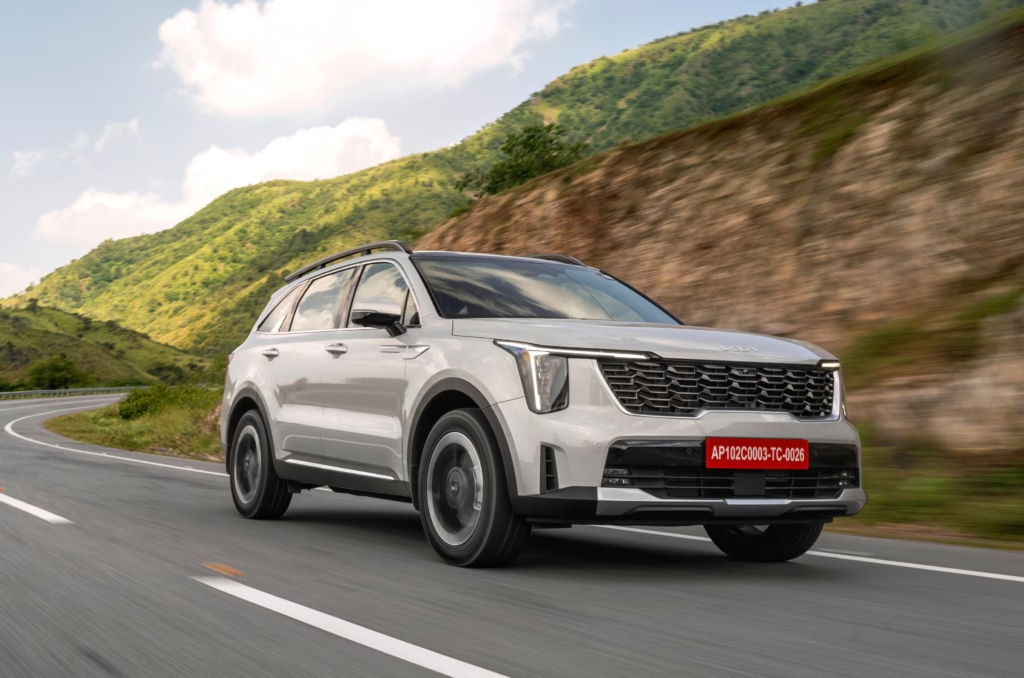
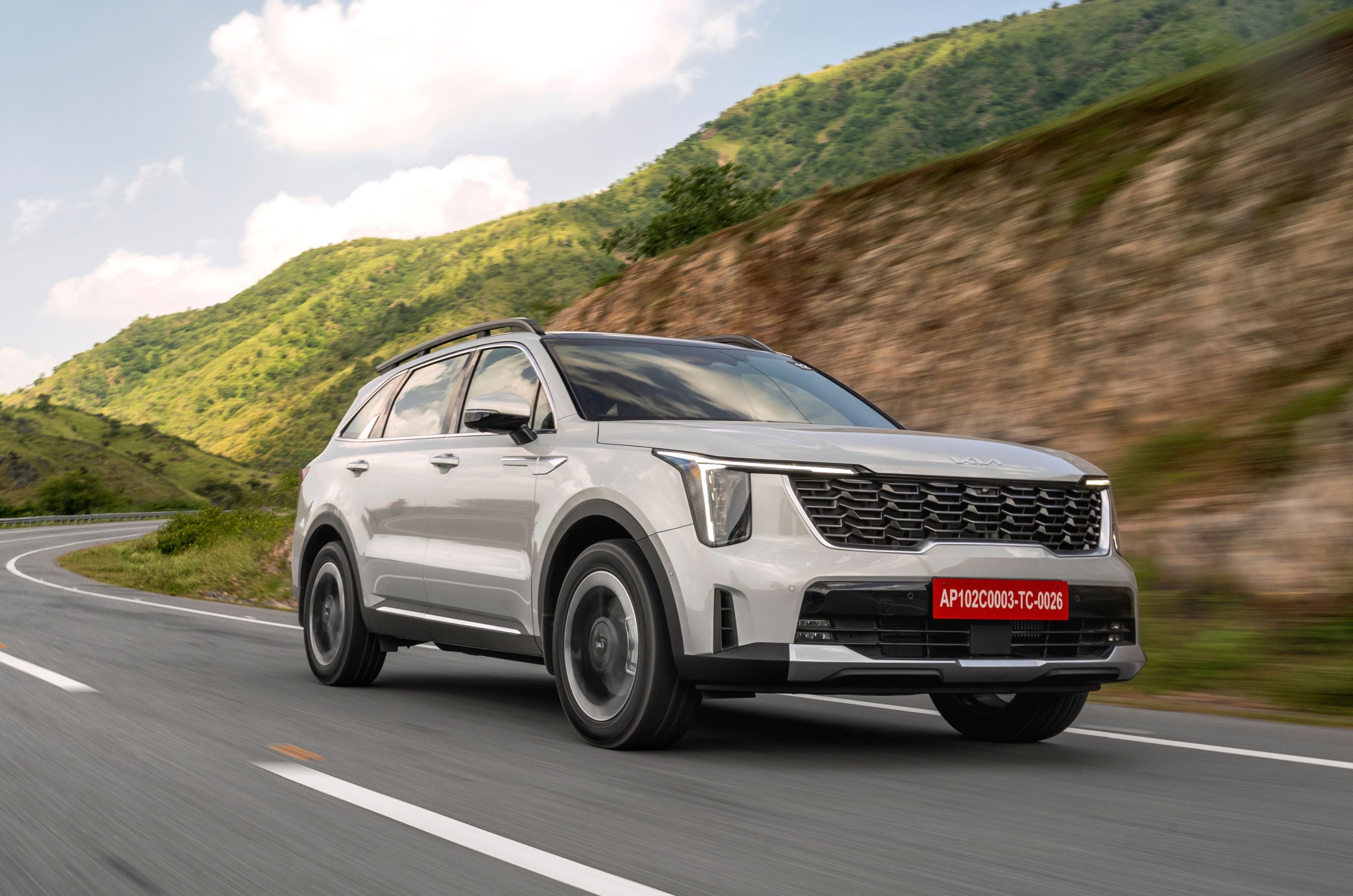
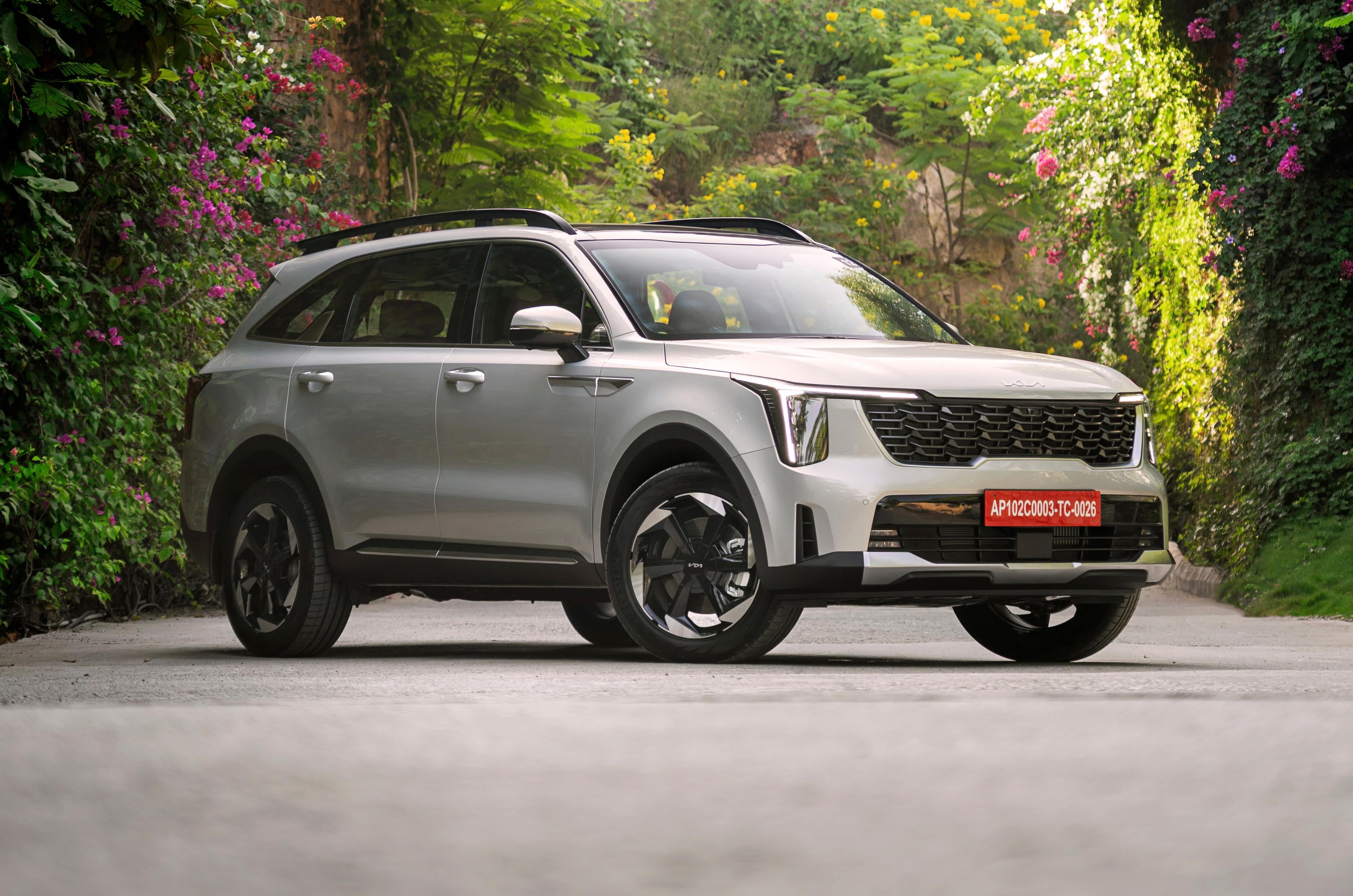
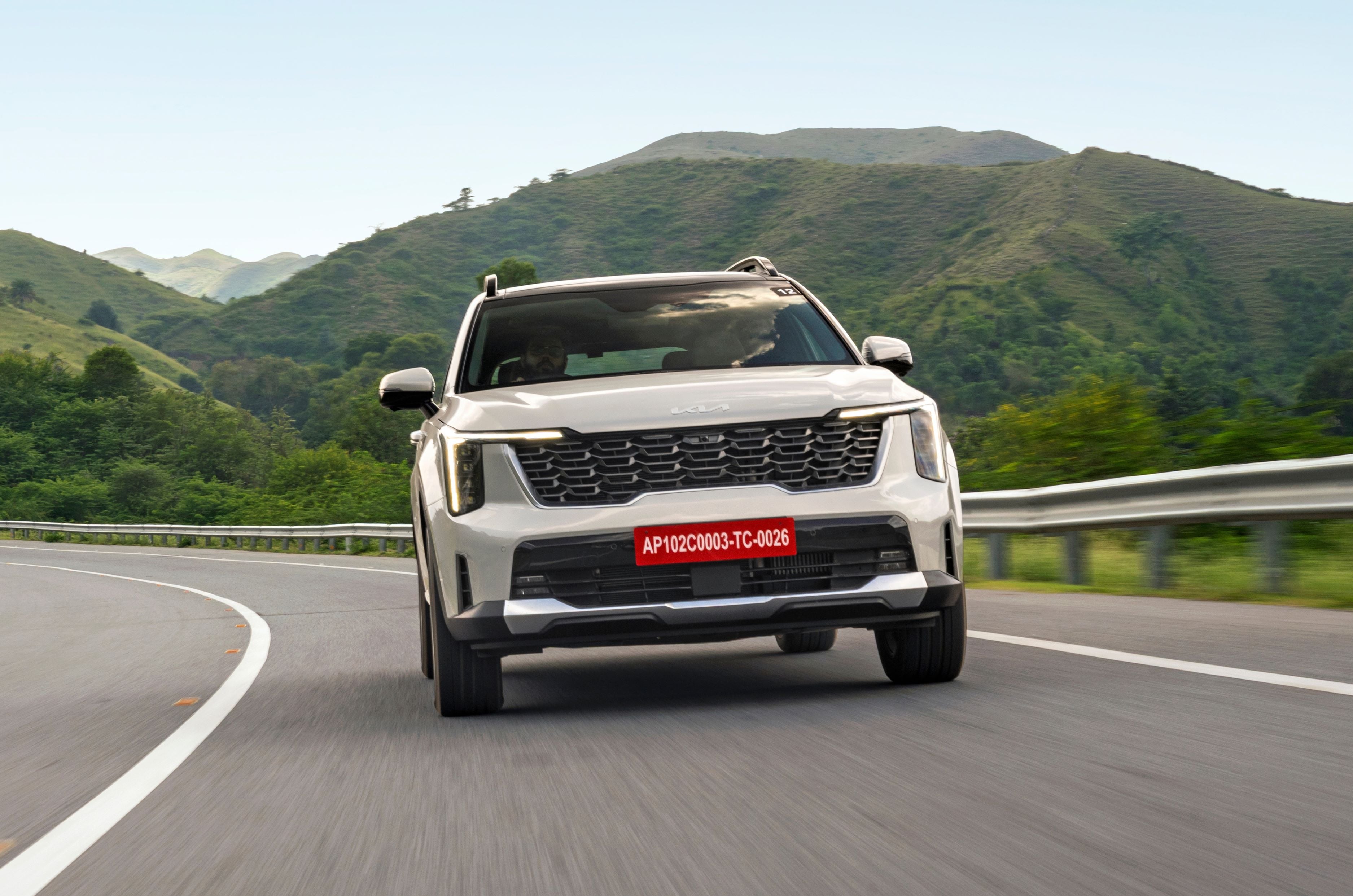
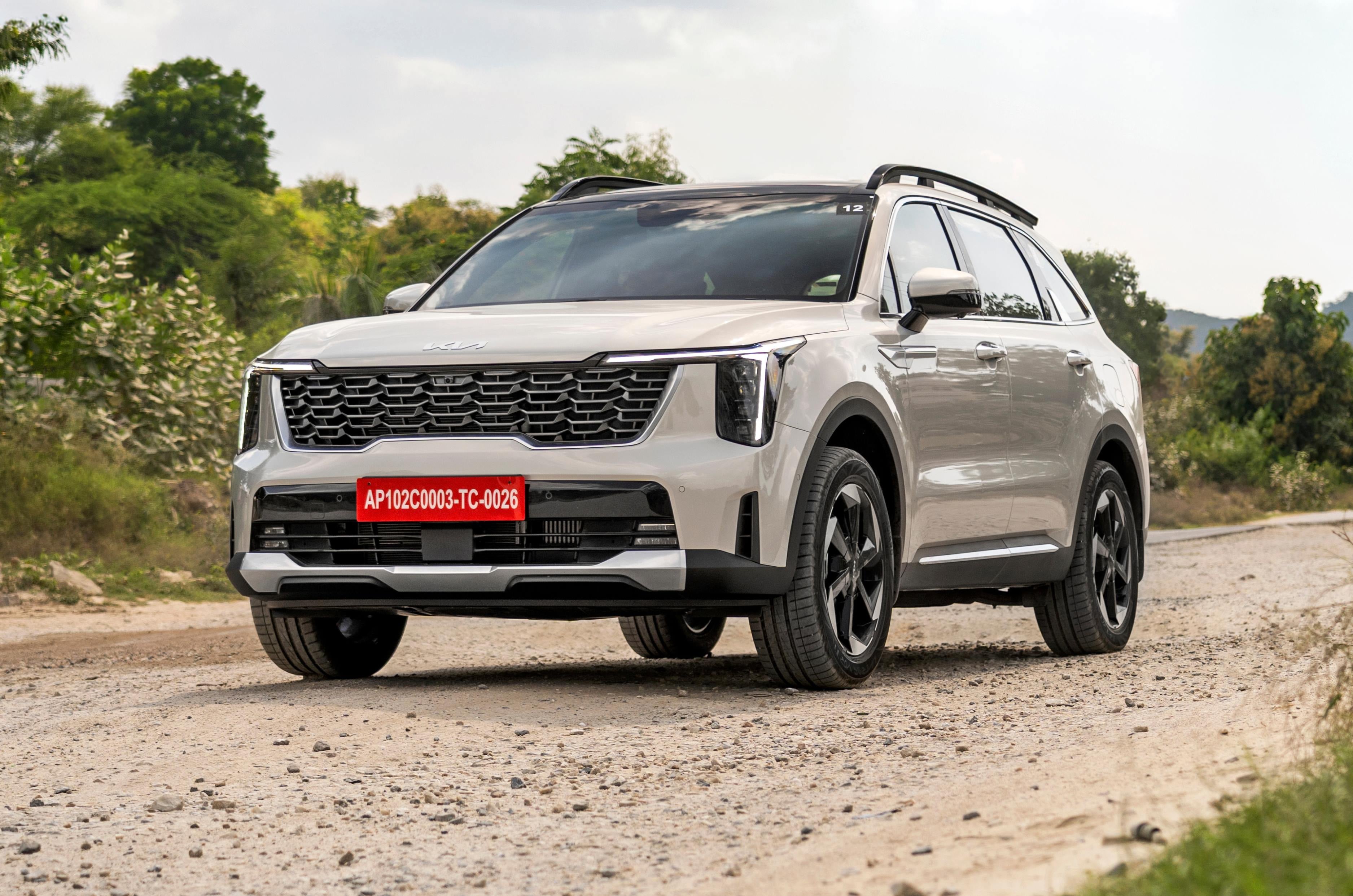
Based on the gen 4 Sorento, it carries over the older and more palatable design language.
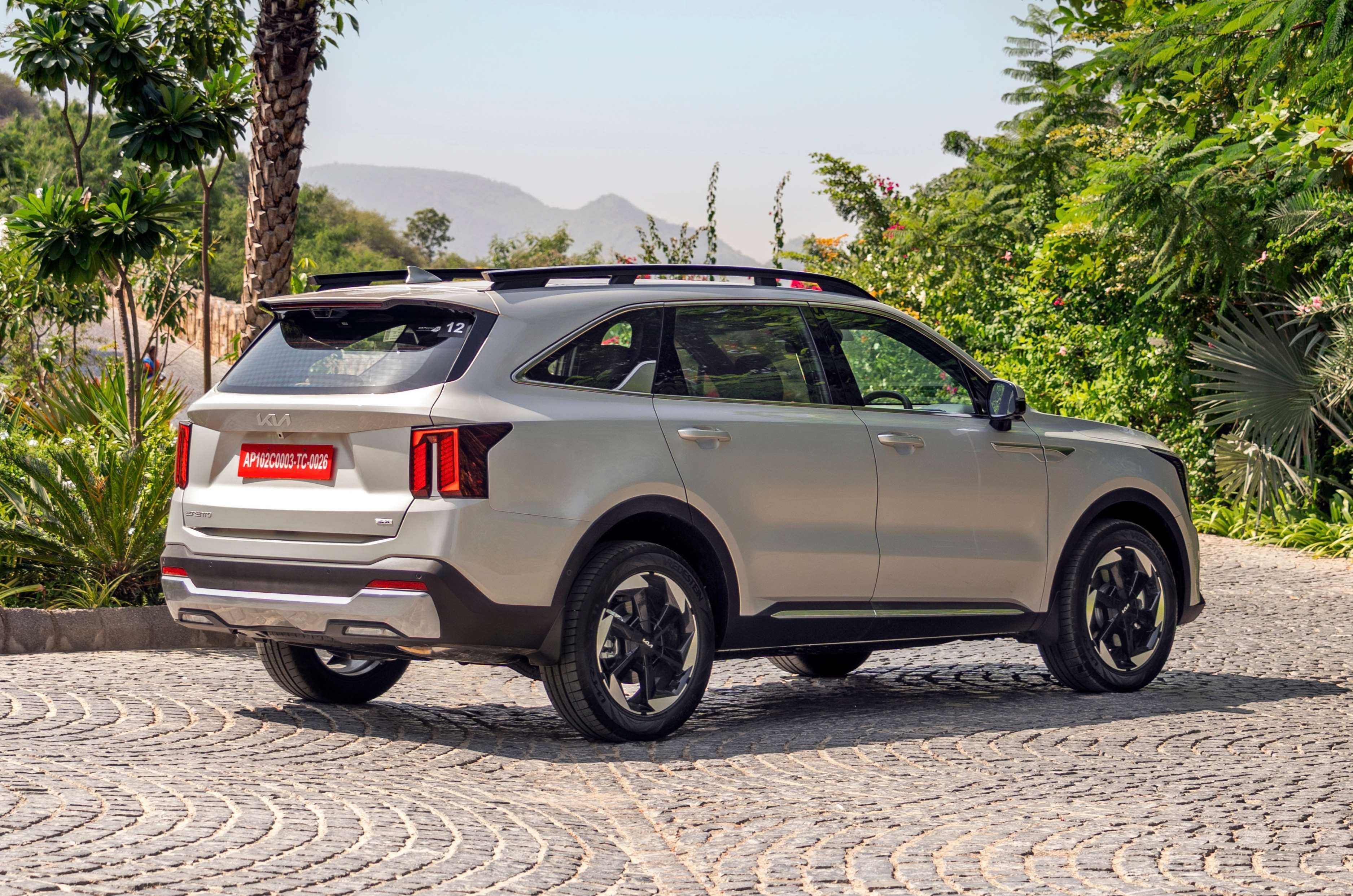
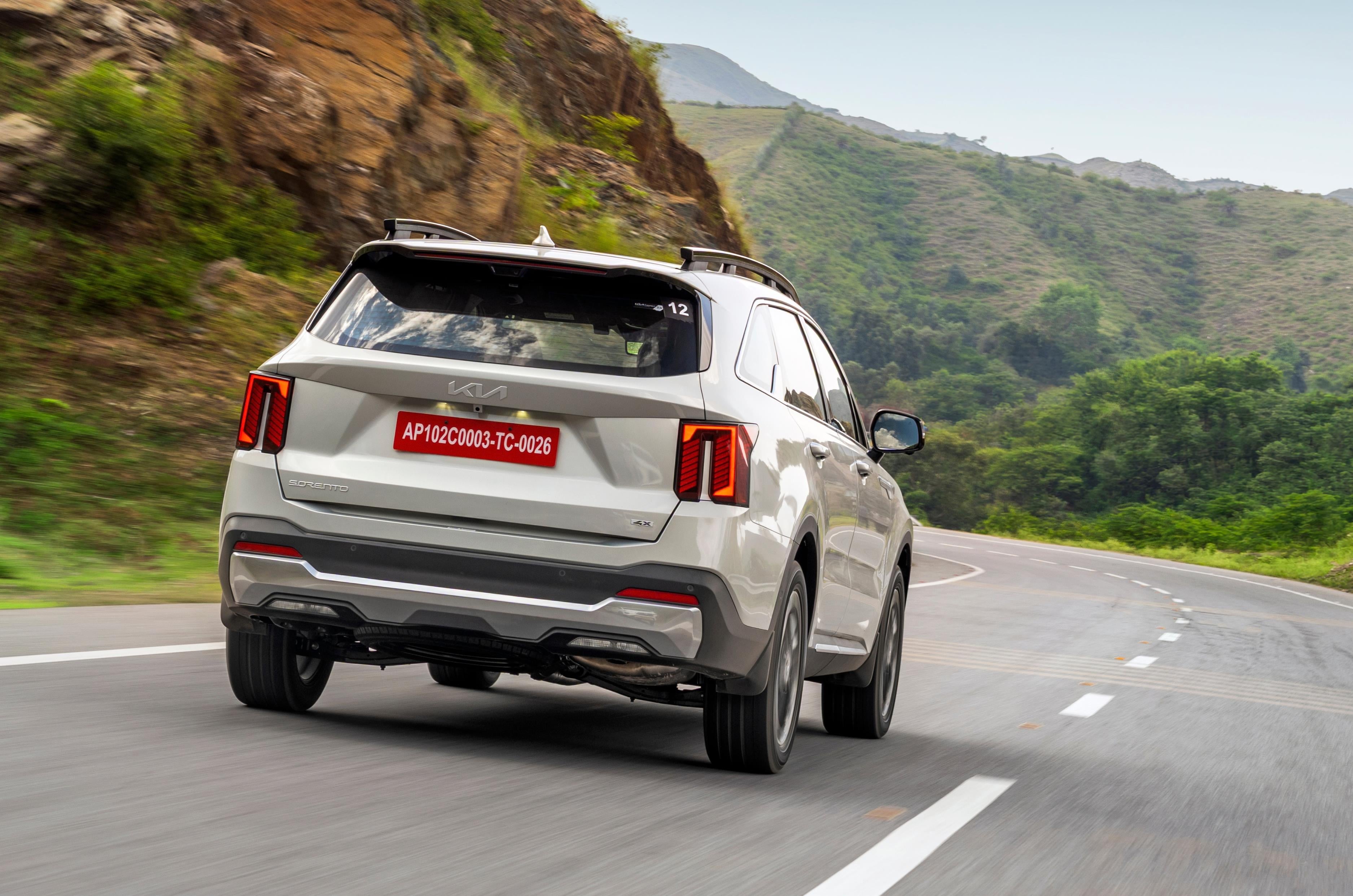
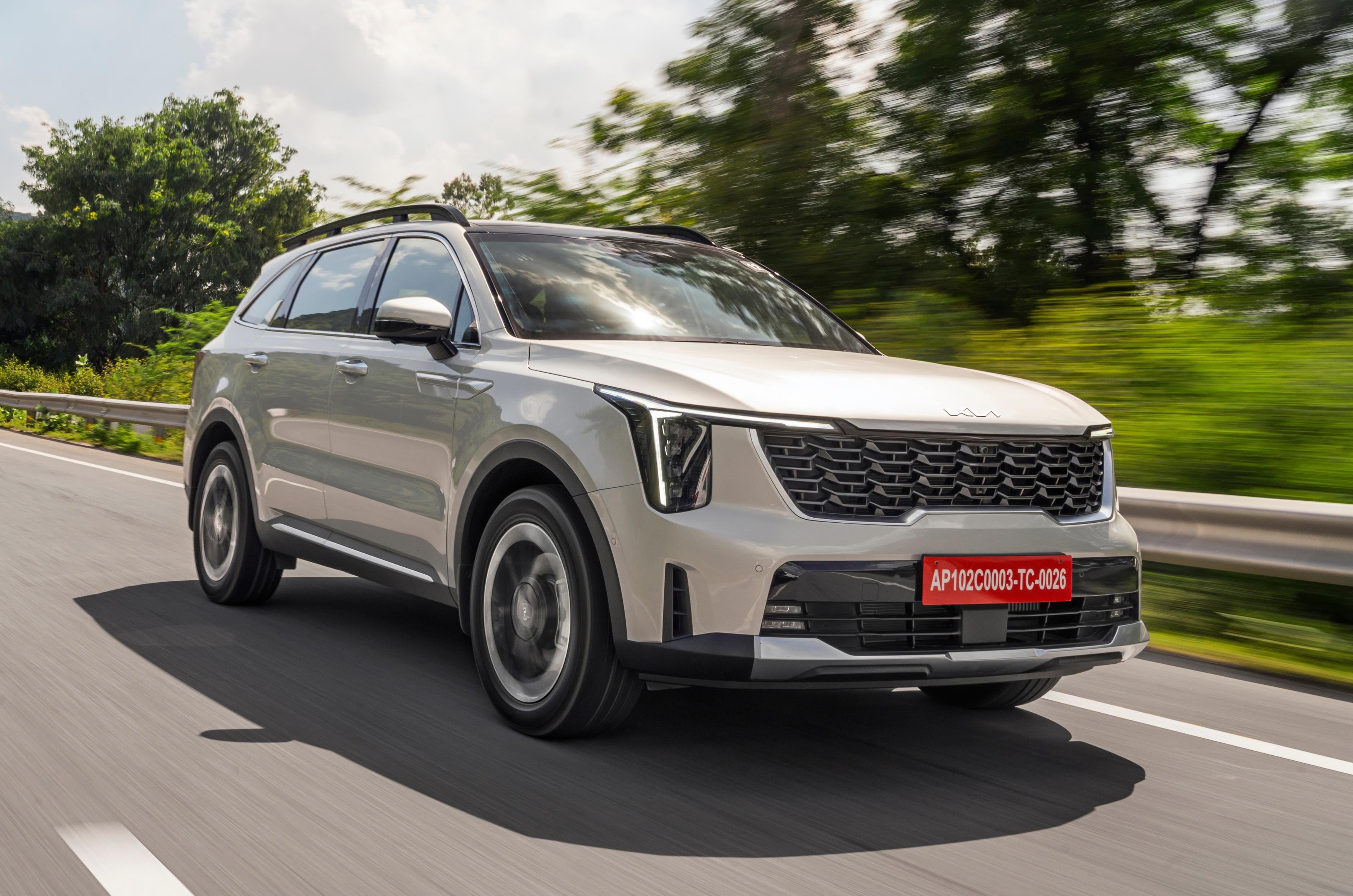
The Sorento sits on Hyundai-Kia’s MQ4 platform, the freshest architecture in its class, and it has already had a mid-life update to keep it looking current. The 2024 facelift brought the nose in line with the design language Kia kicked off with the EV9, so you get vertically stacked LED headlights, Y-shaped daytime running lamps and an aggressive looking bumper with wide intakes. At the back are L-shaped wraparound tail-lamps, and thankfully no light bar stretched across the tailgate.
Beats the rivals in length, width, and wheelbase.
Kia’s stated aim was a more technical, precise look, one meant to signal tight build quality and engineering sophistication. It is a trick the German premium brands have used for years, and Kia has clearly taken a leaf out of their book. The Sorento looks crisp and expensive rather than flashy, and is likely to age well too.
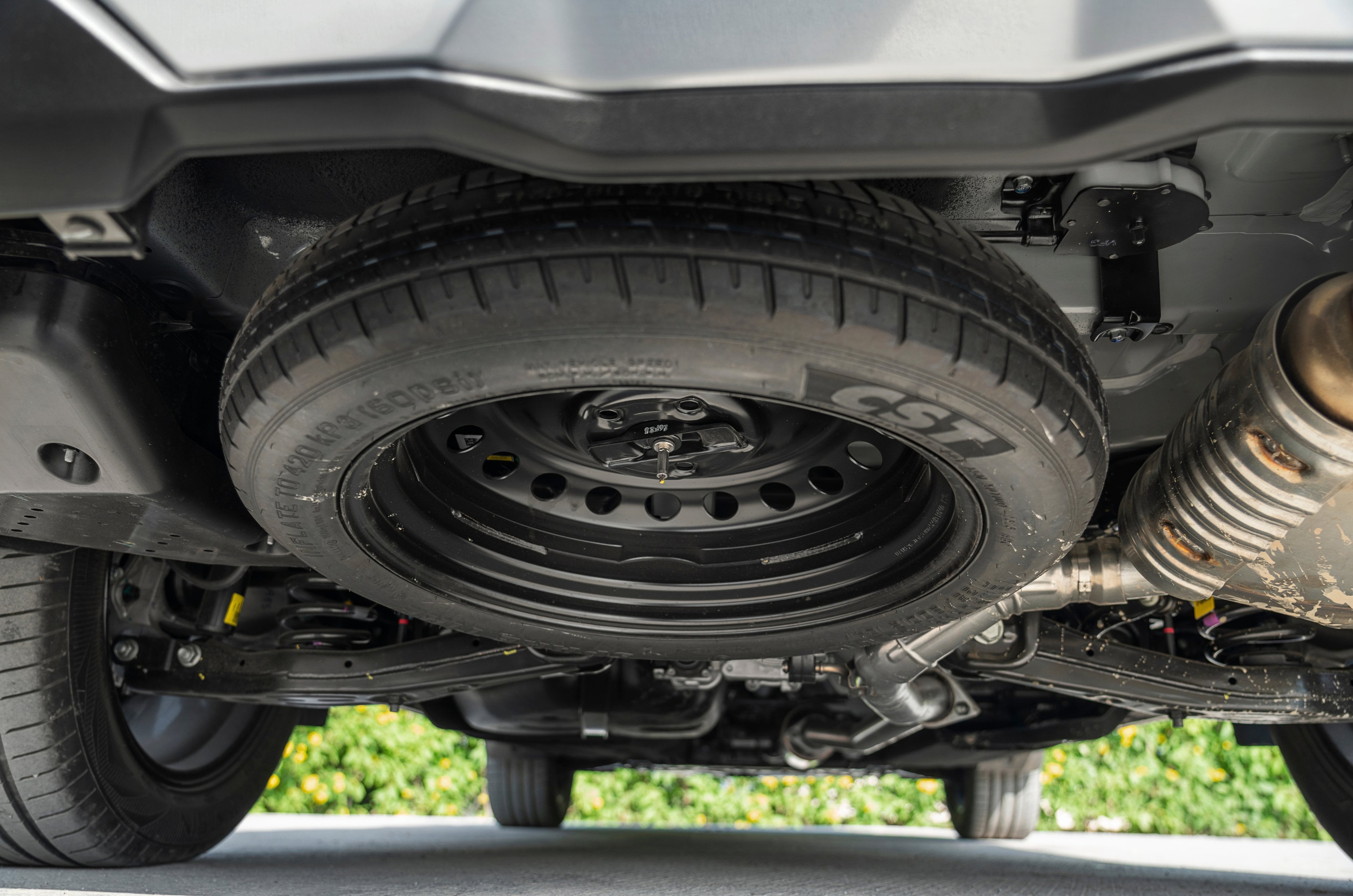
Spare wheel mounted under the floor frees up room in the boot.
What it does not have is brute presence. Despite being the longest, widest and tallest SUV in its segment, at 4,815mm long, 1,900mm wide and 1,785mm tall on a 2,815mm wheelbase, it does not loom in your mirrors the way a Fortuner does. The sloping roofline at the rear softens the silhouette and lends it a hint of crossover, and some will see it as a big Seltos rather than a junior Land Cruiser. Clearly this is not an SUV that looks like it can bully its way through traffic.
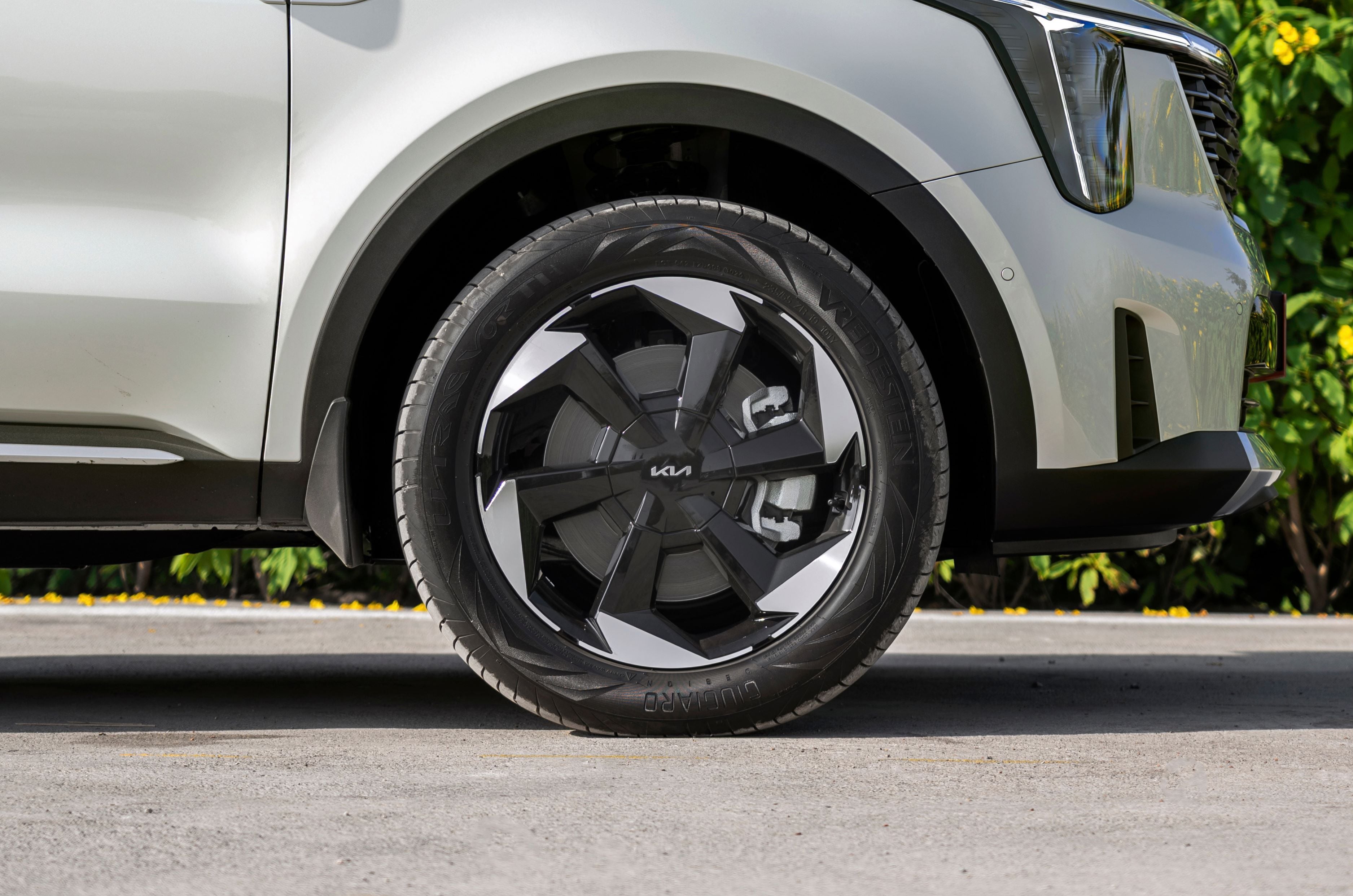
A more unique design could’ve been used for the 19-inch alloys.
The 19-inch dual-tone alloys could have been more distinctive, too an effect exaggerated by the chunky 235/55 R19 tyres. Those tall sidewalls, though, are not a styling misstep so much as an engineering choice, and they play a big part in how this car rides. More on that later.
Kia Sorento interior space and comfort
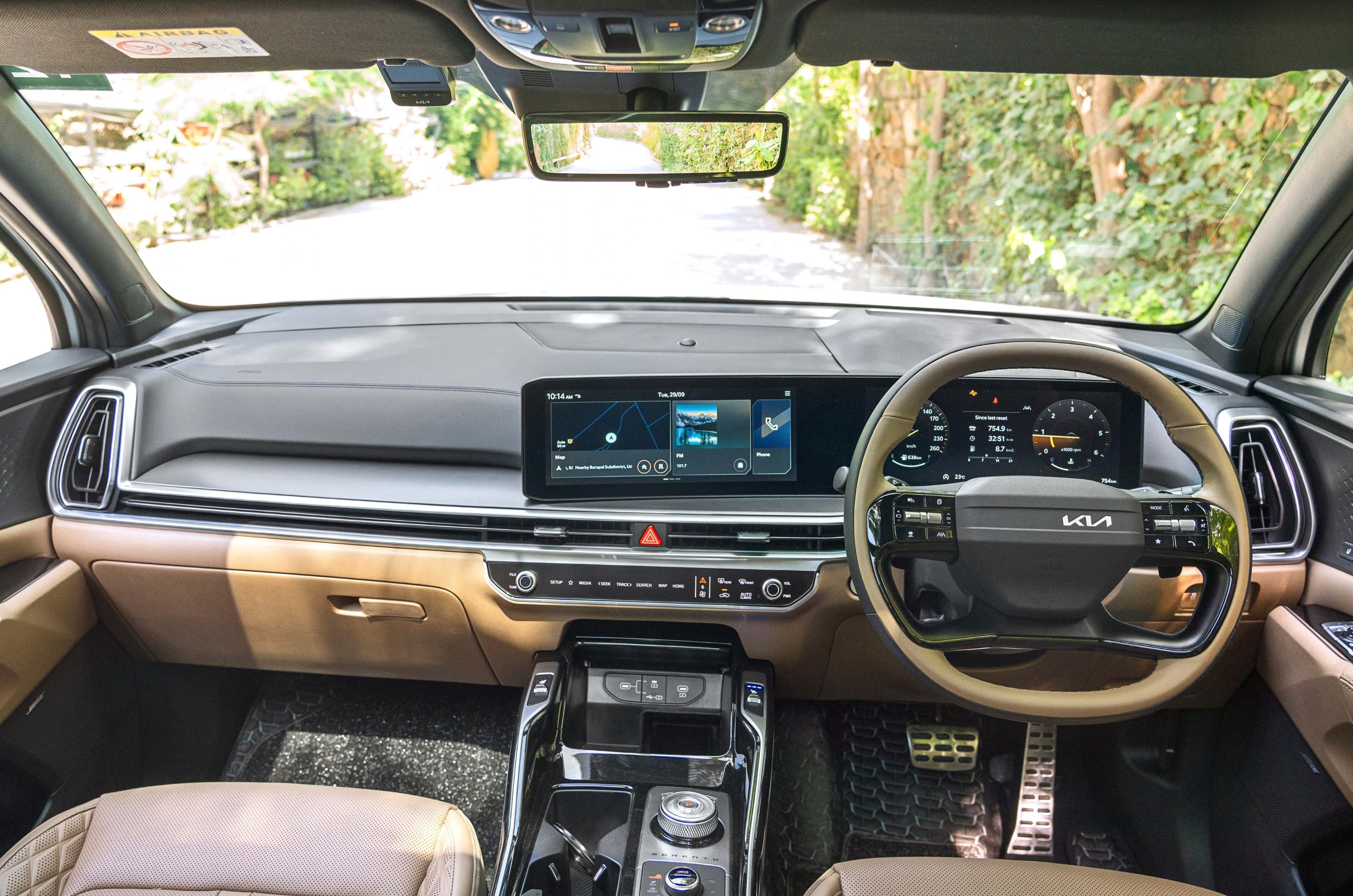
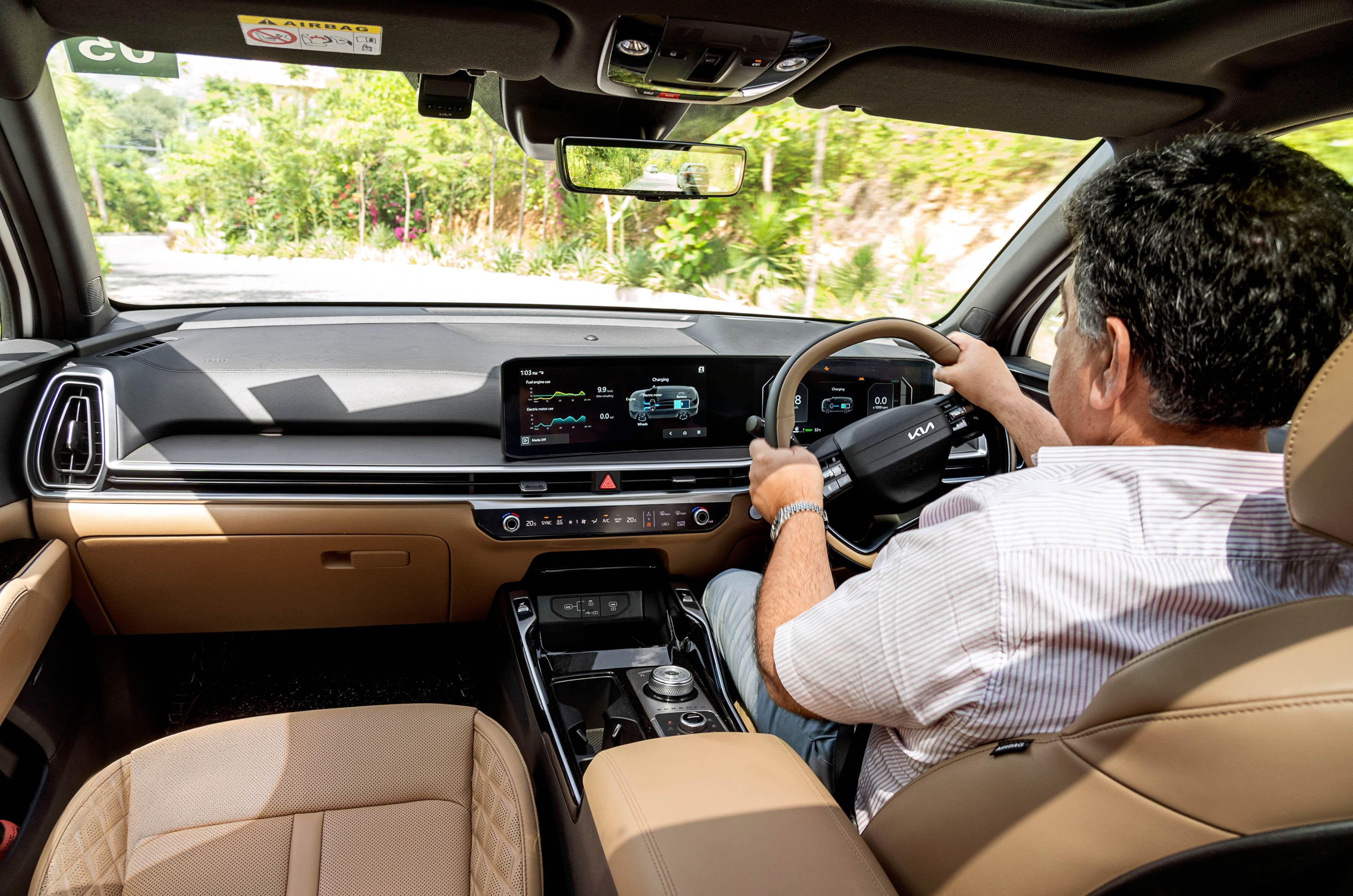
Clutter-free dashboard with solid build and plush feel.
If the exterior is quietly effective, the cabin is where Kia has truly aced it. The Sorento offers a mix of quality, equipment and ergonomics that nothing at this price can match. Soft-touch materials cover everything you are likely to touch, including the spots where your knee rests against the centre console. There is a healthy count of physical buttons, and they click with a precision that feels engineered rather than sourced. The knurled finish on the rotary drive selector and the switchgear adds a tactile richness you normally pay German money for.
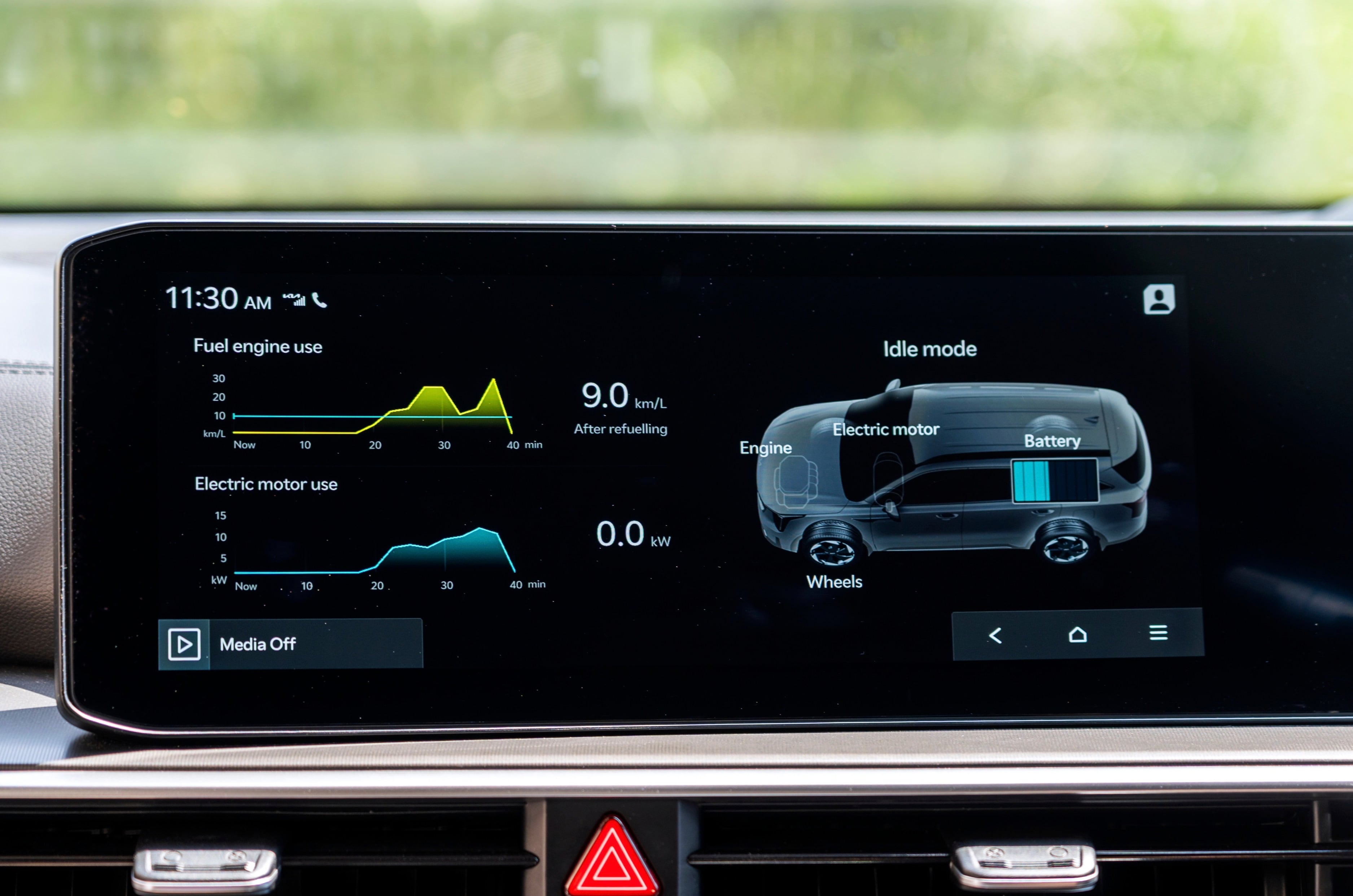
Hybrid variant gets exclusive data for power flow and efficiency.
As with its Hyundai cousins, the real ace is the software. The 12.3-inch infotainment system is logically laid out, menus are where you expect them to be, and getting to a feature takes a tap or two rather than a treasure hunt. Kia has also kept the climate controls off the main screen. They live on a touch-sensitive bar below it, with scrollers and a button that toggles the bar between air-con and infotainment shortcuts. It is a clever, space-saving solution, though you will occasionally find it in the wrong mode just when you need it.
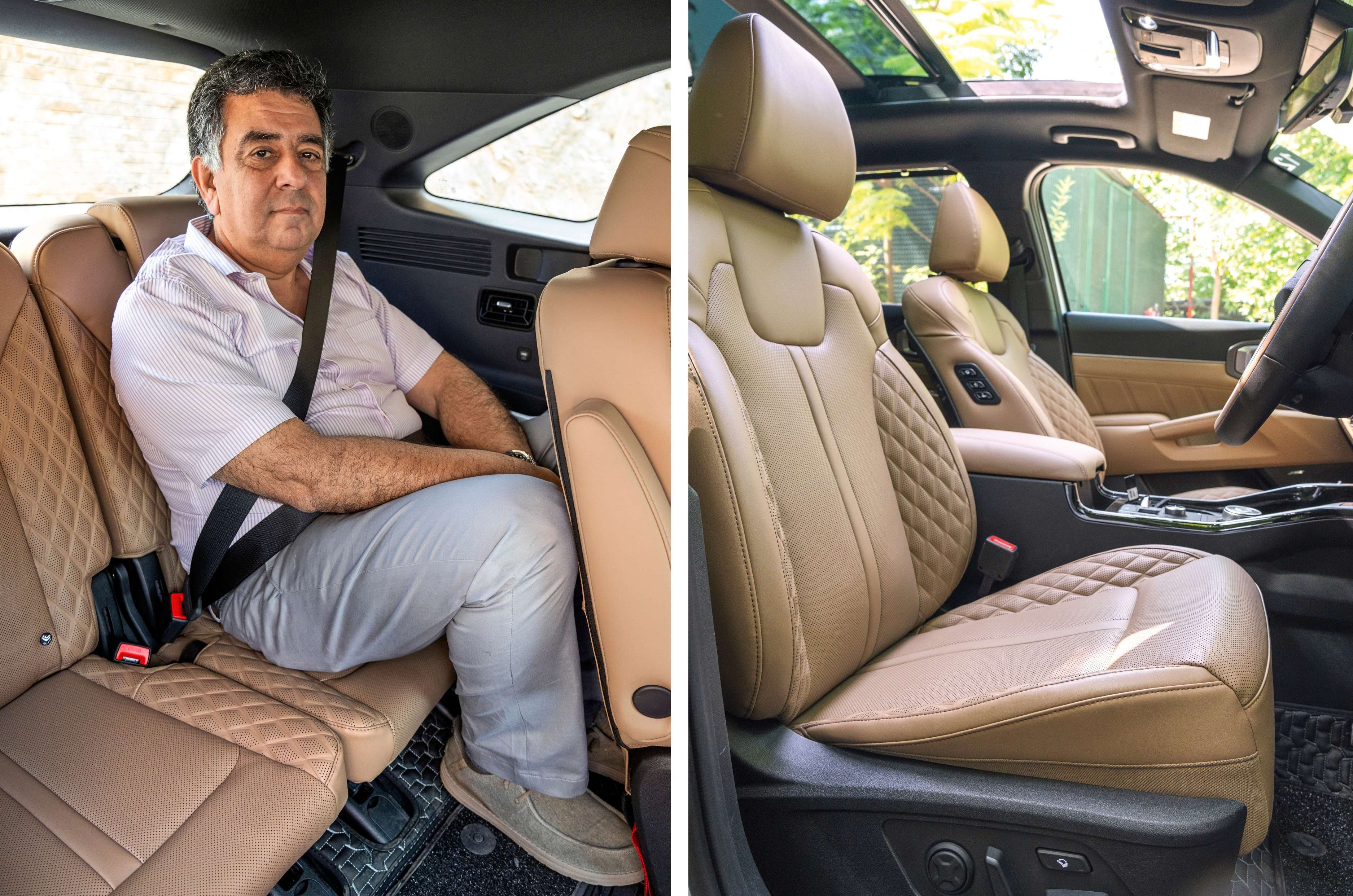
L: Third row seat placed on floor results in knees-up seating; best for children. R: Broad, supportive and well-cushioned front seats are electric and also get ventilation.
The front seats are fully powered, with 10-way adjustment, lumbar support and ventilation, and the passenger seat gets a boss mode so whoever sits behind can push it forward. Coming to the third row, access is easy. You can either walk through the gap between the captain chairs or press a button on the seat, which electrically slides and tilts it forward. Once there, the news is mixed. Legroom is better than you expect, but the seat base is mounted almost flat on the floor, so there is no under-thigh support and your knees point at the roof. Treat it as a space for children or short hops. At least the third row gets its own blower controls and USB ports.
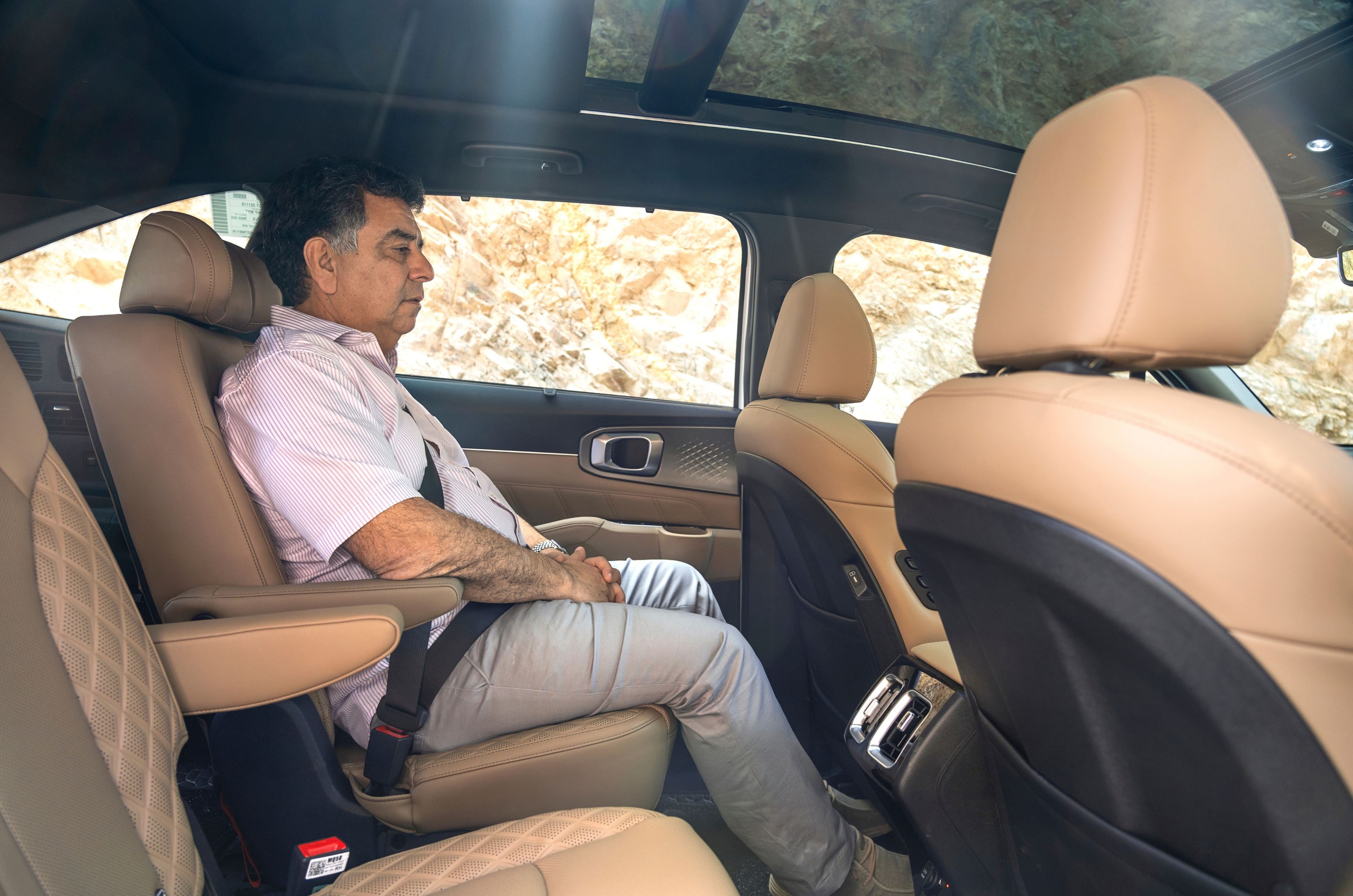
Spacious middle-row with ventilated and adjustable captain chairs; bench seat version also available.
One of the Sorento’s highlights, however, is the second-row experience. Our test car was the top HTX with six seats, and its second-row captain chairs are ventilated too, a rarity in this class. They are the best seats in the house. There is lots of legroom, a commanding view out and good under-thigh support, comparable to the Innova Hycross’s middle-row captain chairs, though the Toyota seats you a touch higher. A neat detail is the cupholder moulded into the door, up near the handle, where it is actually easy to reach.
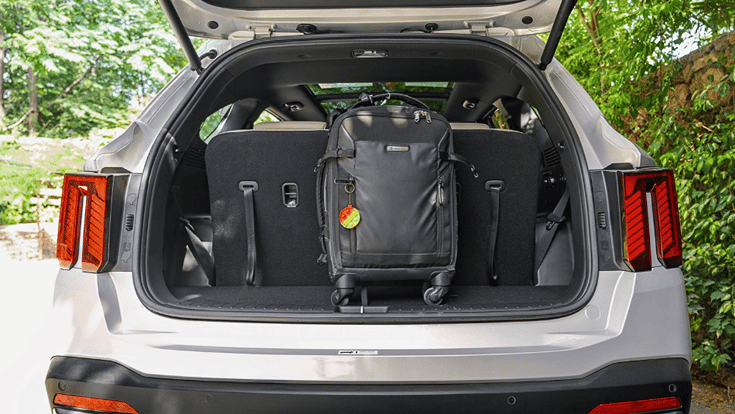
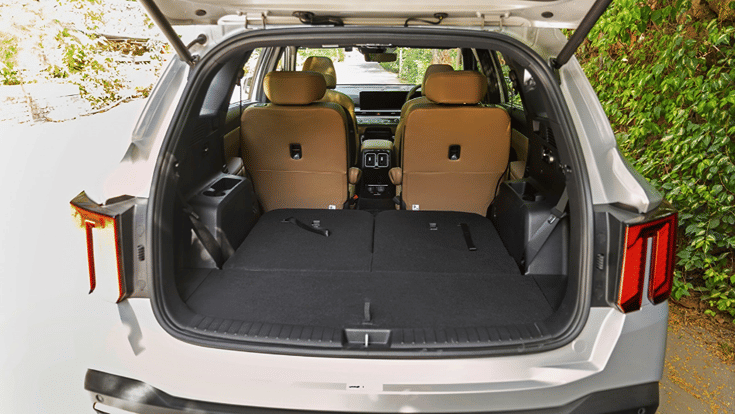
With all three rows up, the boot is a modest 179 litres; fold the third row and that grows to 813 litres. A full-size spare is welcome, but it is slung under the body, which is not the most convenient place to reach. Overhead, the massive panoramic roof floods the cabin with light and adds to the sense of space.
Kia Sorento features and technology
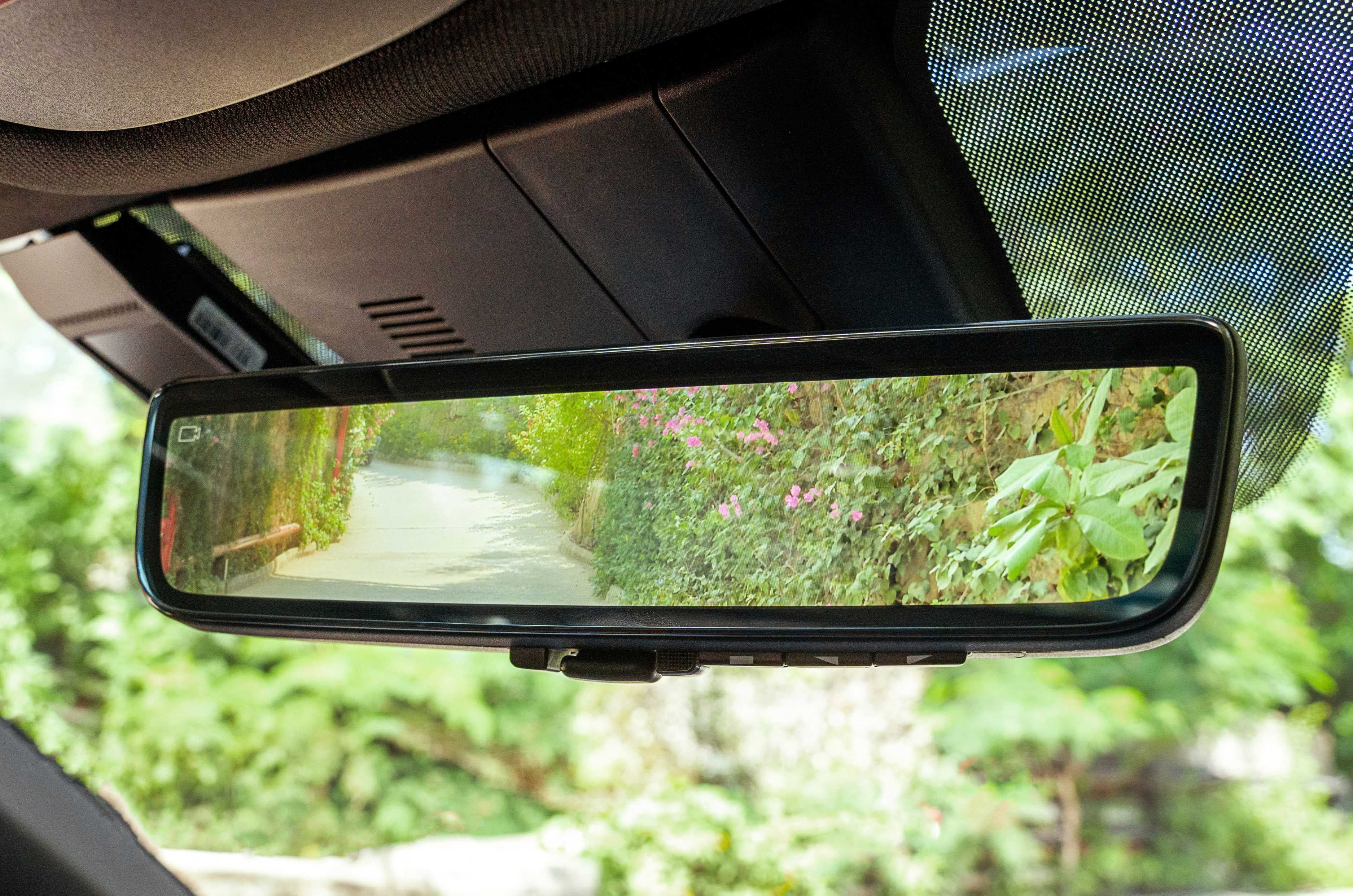
Digital IRVM offers excellent resolution and can be adjusted for level and brightness.
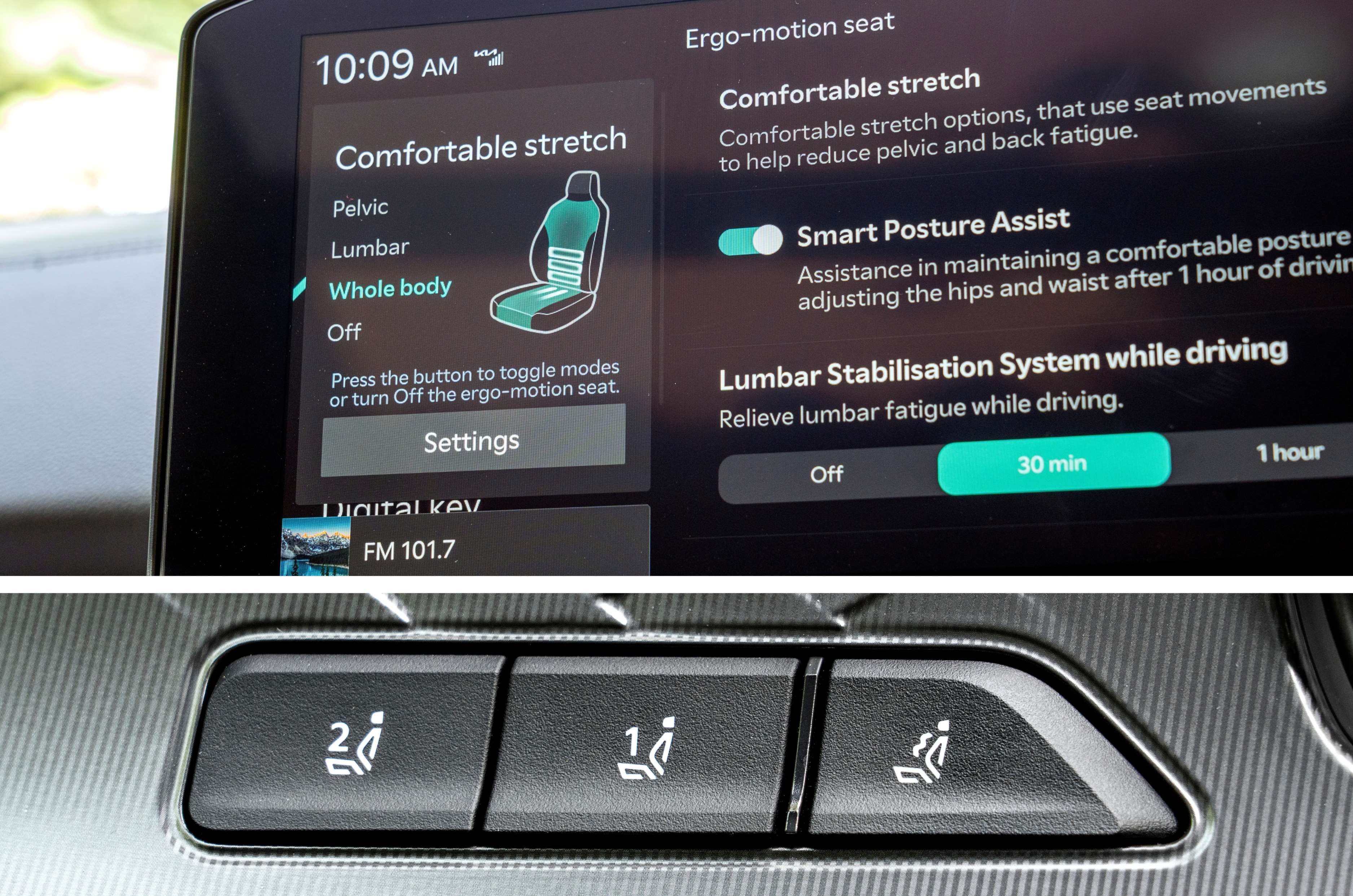
The equipment list is huge. In addition to the aforementioned 12.3-inch touchscreen, powered front seats, ventilated captain’s chairs, and panoramic sunroof, the Sorento comes packed with a 12.3-inch digital driver’s display, a head-up display, a 12-speaker Bose system, dual-zone climate control, a powered tailgate, rear-window sunshades, 64-colour ambient lighting and a digital rear-view mirror that flips back to a conventional one at the turn of a knob. The driver’s seat even gets an ‘ergo-motion’ mode that simulates a massage function by shifting the contours around.
Ergo mode for driver seat acts like a massage by moving the contours to avoid a stiff back on a long trip.
Safety is just as thorough, with 10 airbags, a 360-degree camera, front and rear dashcams, remote parking assist, TPMS and Level 2+ ADAS on the (A) trims. There is even real-time generative AI, a first for any Sorento globally.
Kia Sorento performance and refinement
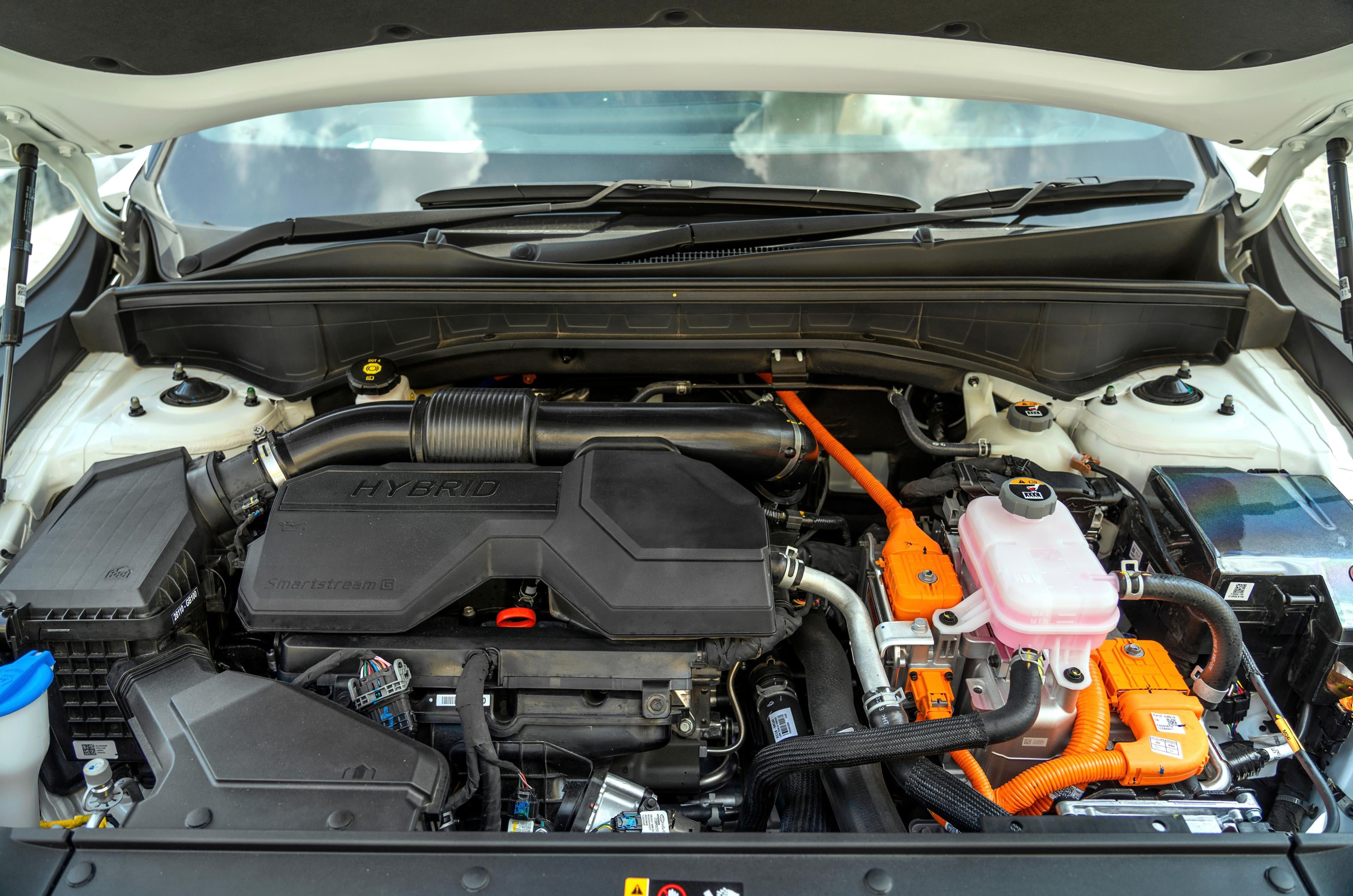
1.6-litre turbo-petrol engine paired with an electric motor and 6-speed torque converter automatic.
First up, the hybrid. Its 1.6-litre turbo-petrol makes 180hp and 265Nm, and the electric motor adds 65hp and 264Nm. The combined figure rating is 230hp and 380Nm of torque You can tell this the hybrid is the one for the city the moment you pull away, because the response is instant. It is well mated to the 6-speed torque-converter automatic, and the handover from electric to petrol power is close to seamless.
Hybrid variant is smooth in the city but gets noisy on the highway especially during overtakes.
The 1.49kWh battery lets it run in EV mode for a decent stretch at crawling speeds, and in stop-go traffic the hybrid makes eminent sense. Power delivery is refined, seamless and relaxing, and efficiency should be strong; The limitation is the motor itself. With only 65hp to shift a car weighing over two tonnes, it cannot do the heavy lifting on its own, so when you want to make quick progress the engine kicks in early. Push hard on the highway and the four-cylinder gets noisy and starts to run out of steam.
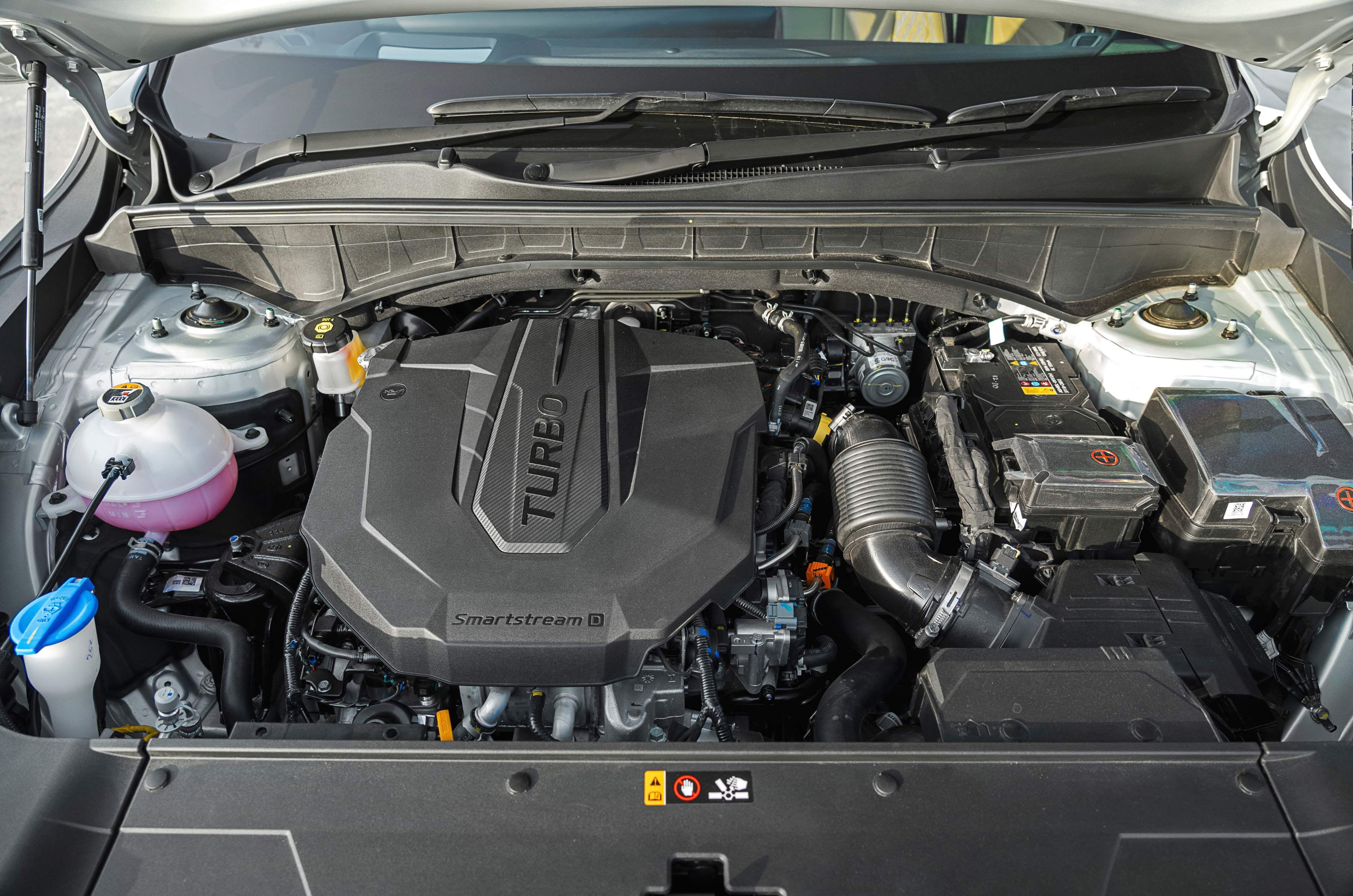
2.2-litre diesel engine makes 193hp mated to an 8-speed DCT and is the same unit seen on the Carnival.
Which is where the diesel comes in. The 2.2-litre is familiar from the Carnival, but it feels a lot sprightlier in the lighter Sorento. Its 193hp and 442Nm arrive in a strong, linear surge, and this is a fantastic, long-legged cruiser. Settle into eighth gear on an open highway and it simply lopes along, the engine barely working. It is also more tractable at low speeds than you might expect, pulling cleanly at part throttle from very low revs, so it can double as a city car, although its low-end response does not come close to the hybrid’s. It’s only when you floor it to dart through traffic that you experience a bit of hesitation, and its hear that you can use the paddle shifts to be in the right gear at the right time of the 8-speed DCT which comes as a pleasant surprise.
The diesel‘s strong torque and effortless cruising makes it perfect for long trips.
Rather than the snappy, slightly jerky shifts typical of dual-clutch boxes, this DCT slurs its changes almost like a torque converter, which adds to the smoothness of the whole package. The reason is that it is a wet-clutch unit, which also bodes well for durability in Indian traffic. The diesel is quite refined for the most part and its only when pushed hard that it gets audible and takes on a gruff note.
Both get drive modes; You can play with the Eco, Normal, Sport and Smart (or auto) modes in the diesel which alters the power delivery. In Sport, the throttle response is sharper and the default mode we liked whilst in Eco you can feel the response a bit dulled down. The Sorento Hybrid gets just Eco, Sport and Smart modes and in Eco mode EV running is prioritised. In addition, the AWD versions get Snow, Sand and Mud terrain modes which we didn’t a get chance to fully experience.
Kia Sorento mileage
In terms of fuel efficiency, the hybrid is rated at a highly frugal 19.60kpl with front-wheel drive and 17.70kpl with AWD, while the diesel returns 17.66kpl and 15.79kpl respectively on the Indian test cycle. In real-world city driving the gap between the hybrid and diesel could be bigger, depending on traffic. On long cross-country runs, though, with extended stints of cruising in high gears, the diesel could well be the more frugal of the two.
Kia Sorento ride and handling
The Sorento’s ride comfort is simply outstanding, and it comes as a pleasant surprise. That’s because Kias have traditionally been stiffer sprung than their Hyundai cousins, but here Kia has clearly prioritised comfort over sportiness, and the suspension is on the soft side. The way it smothers bad roads at speed is remarkable. Around Udaipur, where several stretches are properly broken, we never once had to lift off for a bad patch. The car just soaked it up and kept going.
Ride quality is segment best and it is unfazed over broken roads.
The isolation it gives its passengers is shockingly good, and those tall-sidewall tyres deserve part of the credit. They do a fine job of rounding off sharp jolts and filtering out the high-frequency shocks that a suspension alone cannot fully absorb. At highway speeds there is a bit of body movement on the undulating bits but its not disconcerting and both versions feel stable and planted at high speeds, which matters in a car this tall.
Our HTX test cars came with AWD as standard. We did not get a chance to test its off-road ability properly, but on dirt roads it felt sure-footed and secure. A proper off-road test will reveal how capable the all-wheel-drive system, though we doubt owners will really want to test the Sorento’s off-road capability.
Steering is light but lacks consistency and sharpness of European rivals.
The steering is less impressive. There is a dead zone around the straight-ahead position, and it does not feel as fluid or progressive as its European rivals’. The Volkswagen Tayron and Skoda Kodiaq are both dynamically sharper. One reason is because the Sorento rides taller too, as ground clearance has been raised from the global car’s 176mm to 208mm, and there is a touch of body roll when you push hard through corners.
But that misses the point. On balance, the Sorento’s ride and handling are superbly judged for the people who will buy it. Kia has done a fine job of understanding what a premium SUV buyer in India wants, and it has tailored the car accordingly.
Kia Sorento price and verdict
As a package, the Sorento hits it out of the park; rivals have a lot of catching up to do.
If the product does not win you over, the pricing certainly will. A starting price of Rs 27.99 lakh has set the cat amongst the pigeons, putting the Sorento within striking distance of the Mahindra XUV 7XO. And with its size, features and overall polish, the Sorento will not just nibble at the top end of the 7XO’s pie but with the Hybrid could also tempt a few Innova Hycross buyers. As for the Volkswagen Tayron and Skoda Kodiaq, the Sorento makes them look overpriced and underequipped.
The lower and mid variants are exceptional value. The top-end HTX, at Rs 37.49-40.19 lakh depending on fuel and seating, is pricey by comparison, around Rs 5 lakh more than an equivalent HTK, because it comes with AWD as standard. Here Kia has missed a trick. An HTX with two-wheel drive, a few lakh cheaper, would have been a far easier sell to the many buyers who want all the features and ventilated rear seats but will never leave the tarmac. That however is a small quibble that Kia can easily correct.
The lasting impression is that the Sorento feels premium, bordering on luxury. It is fantastically equipped, it rides beautifully, and it offers a choice of two powertrains that are each right for a distinct type of buyer. Most of all, it fits what the Indian SUV buyer actually wants with uncanny precision. Will Kia hit its target of 40,000 sales a year? That could be a tall order. But what there is no doubt about is that Kia has built another winner.
Suzuki is planning to make core advanced driver assistance system (ADAS) functions standard across its future India lineup, including affordable cars, as it develops a lower-cost system suited to Indian road conditions. The aim is to offer greater access to accident prevention. “Fitting expensive advanced driver assistance systems only to a few luxury cars does not reduce accidents across society,” said Katsuhiro Kato, Suzuki’s chief technology officer, at the company’s recent technology strategy briefing, citing more than 1.77 lakh road accident fatalities in India in 2024.
Proposed system’s cameras and AI tech to eliminate the need for a front radar
Suzuki is working on lighter bodies designed to protect occupants in crashes
Core ADAS functions to become standard
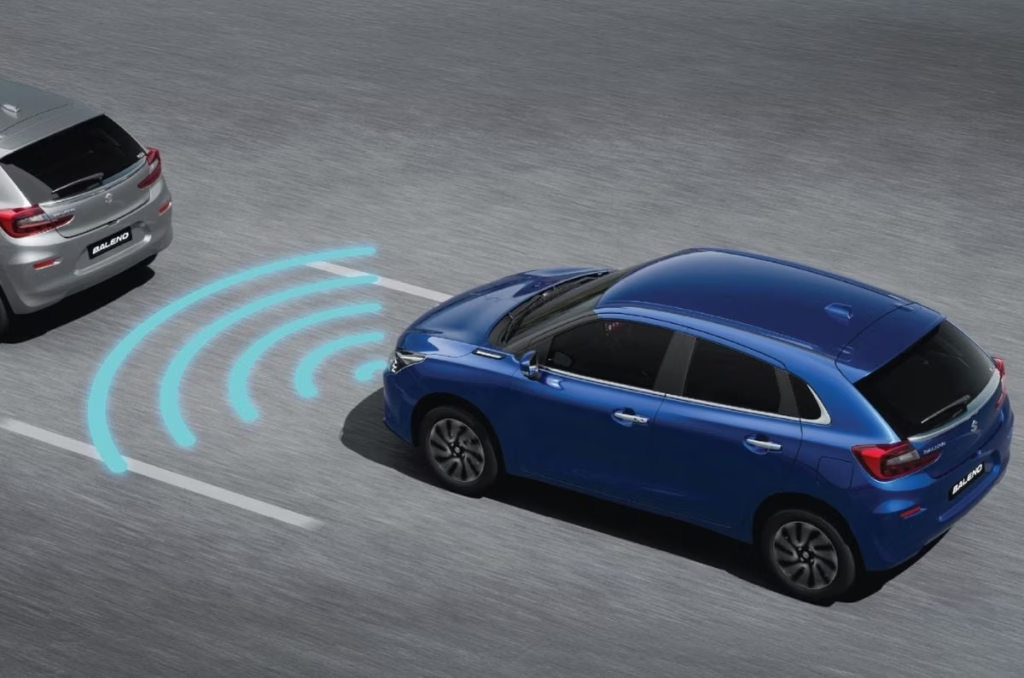
Kato said Suzuki intends to make safety functions such as automatic emergency braking and lane departure prevention standard, while reserving additional comfort and convenience functions for higher variants. The manufacturer describes the approach as “just-right ADAS”, with the system being developed specifically around Indian traffic conditions and the need to keep costs down.
Cameras and AI to eliminate the need for a front radar
To reduce the cost of the system, Suzuki plans to use high-resolution cameras and AI chips, while integrating driver and occupant monitoring with ADAS. The proposed setup will also do away with the front radar sensor. The company says it is targeting “major cost reductions” while maintaining “equal or better safety performance”. These, however, are development targets, and Suzuki has not released performance results for a production version of the system.
The manufacturer says it is approaching vehicle safety from two directions: preventing accidents through ADAS and protecting occupants when a crash occurs. Alongside its electronic safety systems, the company is working on lighter vehicle bodies designed to protect occupants in a collision.
New electronic architecture could cut costs
The carmaker’s ADAS plans form part of its wider “SDV Right” strategy, which aims to simplify the electronic architecture of its future vehicles. The manufacturer plans to combine communication, power distribution and body-control functions into a Central Zone ECU. Suzuki estimates that this controller could cost around 30 percent less and weigh about 15 percent less than its conventional arrangement.
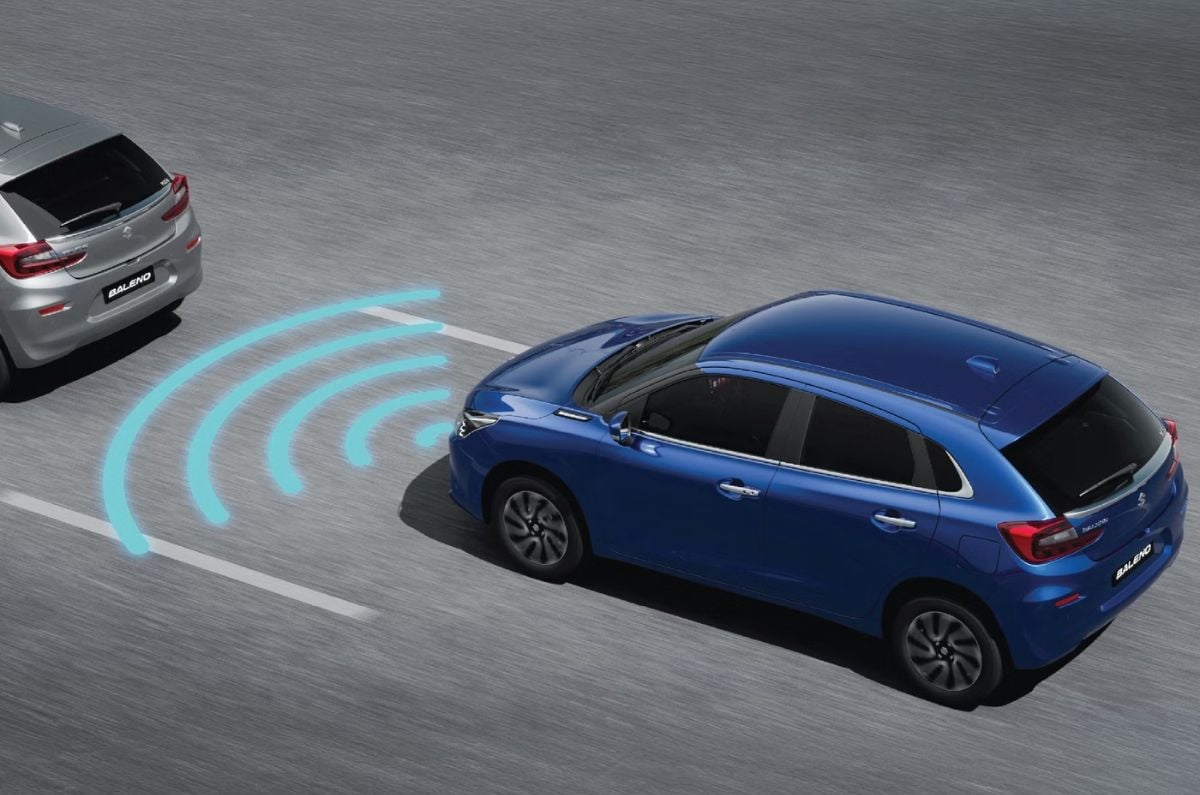
Suzuki has not yet announced which models will get the new ADAS system or when it will be introduced. In the small-car segment, the Baleno is currently Maruti Suzuki’s most affordable model to offer an ADAS suite, which was introduced with its recent facelift. The technology is currently not offered by any of its premium hatchback rivals.