iQOO ने आखिरकार चीन में अपने नए स्मार्टफोन Neo 12 की लॉन्च डेट का ऐलान कर दिया है। कंपनी ने लॉन्च से पहले फोन का डिजाइन और कलर ऑप्शन भी दिखा दिए हैं। यह स्मार्टफोन खास तौर पर गेमिंग को ध्यान में रखकर बनाया गया है। इसमें Qualcomm का Snapdragon 8 Elite Gen 5 प्रोसेसर और कंपनी की Q3 गेमिंग चिप मिल सकती है। साथ ही फोन में बेहतर कूलिंग के लिए Ice Dome एक्टिव कूलिंग सिस्टम भी दिया जाएगा। लीक रिपोर्ट्स के मुताबिक, iQOO Neo 12 में 9,000mAh की बड़ी बैटरी मिल सकती है। इसके अलावा, फोन की एक लाइव तस्वीर भी ऑनलाइन लीक हुई है।
iQOO Neo 12 की लॉन्च डेट और डिजाइन की झलक सामने आई
iQOO Neo 12 को चीन में 28 अक्टूबर को स्थानीय समयानुसार शाम 7 बजे (भारतीय समयानुसार शाम 4:30 बजे) लॉन्च किया जाएगा। लॉन्च इवेंट के तुरंत बाद इसकी बिक्री शुरू हो जाएगी। कंपनी ने बताया है कि यह आने वाला फोन Contest, Shadow Black और Frost Blade Blue कलर में उपलब्ध होगा।
रिपोर्ट के मुताबिक, Shadow Black वेरिएंट में Silver फिनिश है, जबकि Frost Blade Blue हल्के नीले रंग का है। Contest कलर वाले वेरिएंट के पिछले हिस्से (रियर पैनल) पर एक नई टेक्सचर्ड फिनिश दी गई है, जिसमें लाइट का एक खास इफेक्ट दिखता है।
कंपनी ने इस नए डिवाइस को डिजाइन करने के लिए ‘चाइना एकेडमी ऑफ आर्ट’ के साथ मिलकर काम किया है। यह भी कन्फर्म हो गया है कि इस स्मार्टफोन में पॉलिश्ड मेटल फ्रेम होगा। आधिकारिक रेंडर में फोन के पीछे एक बड़ा, चौकोर आकार का कैमरा मॉड्यूल दिख रहा है, जिसके कोने गोल हैं। इस कैमरा मॉड्यूल में दो लेंस एक के ऊपर एक लगे हैं, और फ्लैश को इसके ठीक बाहर रखा गया है।
iQOO Neo 12 के रियर कैमरा मॉड्यूल पर Monster Inside की ब्रांडिंग है और लेंस के बगल में एक गोल जालीदार ग्रिल दी गई है। फोन के फ्रेम के दाईं ओर एग्जॉस्ट वेंट दिए गए हैं।
इसके अलावा, Weibo पर iQOO Neo 12 की कथित लाइव तस्वीरें सामने आई हैं। लीक हुए रेंडर में फोन का Frost Blade Blue वेरिएंट दिख रहा है।
यह भी कन्फर्म हो गया है कि iQOO Neo 12 Qualcomm के Snapdragon 8 Elite Gen 5 चिपसेट और कंपनी की अपनी Q3 गेमिंग चिप के साथ आएगा। इसमें एक इनबिल्ट कूलिंग फैन और Ice Dome एक्टिव कूलिंग सिस्टम होगा। माना जा रहा है कि इसमें 9,000mAh की बैटरी होगी, जो 100W वायर्ड फास्ट चार्जिंग को सपोर्ट करेगी।
लीक रिपोर्ट्स के मुताबिक, iQOO Neo 12 पिछले साल अक्टूबर में लॉन्च हुए iQOO Neo 11 का अगला मॉडल होगा। फिलहाल, इस नए स्मार्टफोन की प्री-बुकिंग Vivo China की वेबसाइट पर शुरू हो चुकी है।
Jeep is mulling a revival of its iconic Willys military off-roader for an affordable electric SUV after 2030. The proposed model is part of Jeep’s plans to develop compact EVs and strengthen its position against growing competition from Chinese carmakers, particularly in Europe.
Speaking to Autocar UK, Xavier Peugeot, the head of Jeep Europe, said that the Willys is the brand’s “key attention” for the future, and that its electric revival is one of several “new ideas” that could be realised in the coming years. He described Jeep’s heritage as a key advantage in countering new rivals, especially from China, stating: “One of our main assets to counter this offensive is our DNA.”
Jeep Willys revival: All we know so far
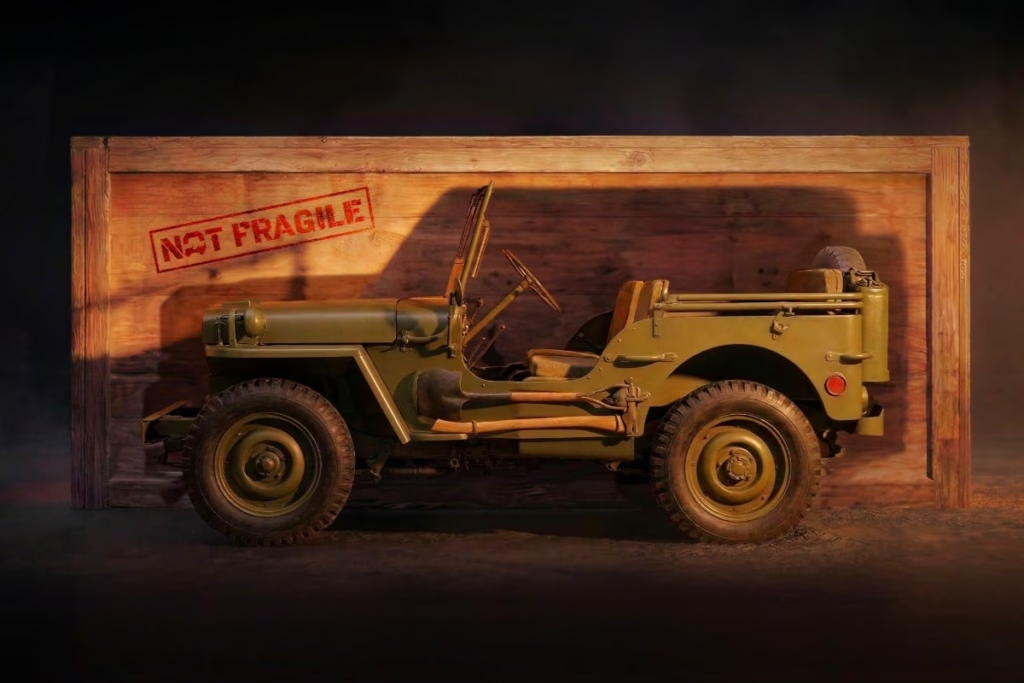
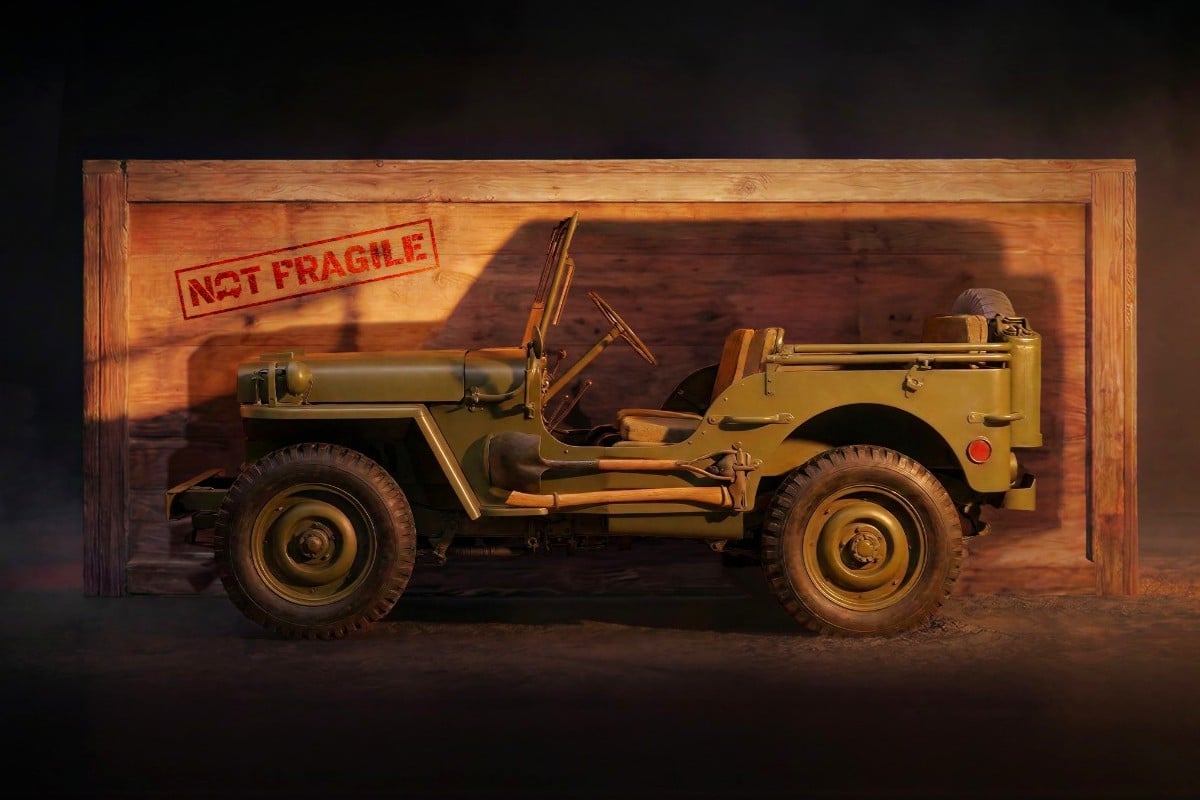
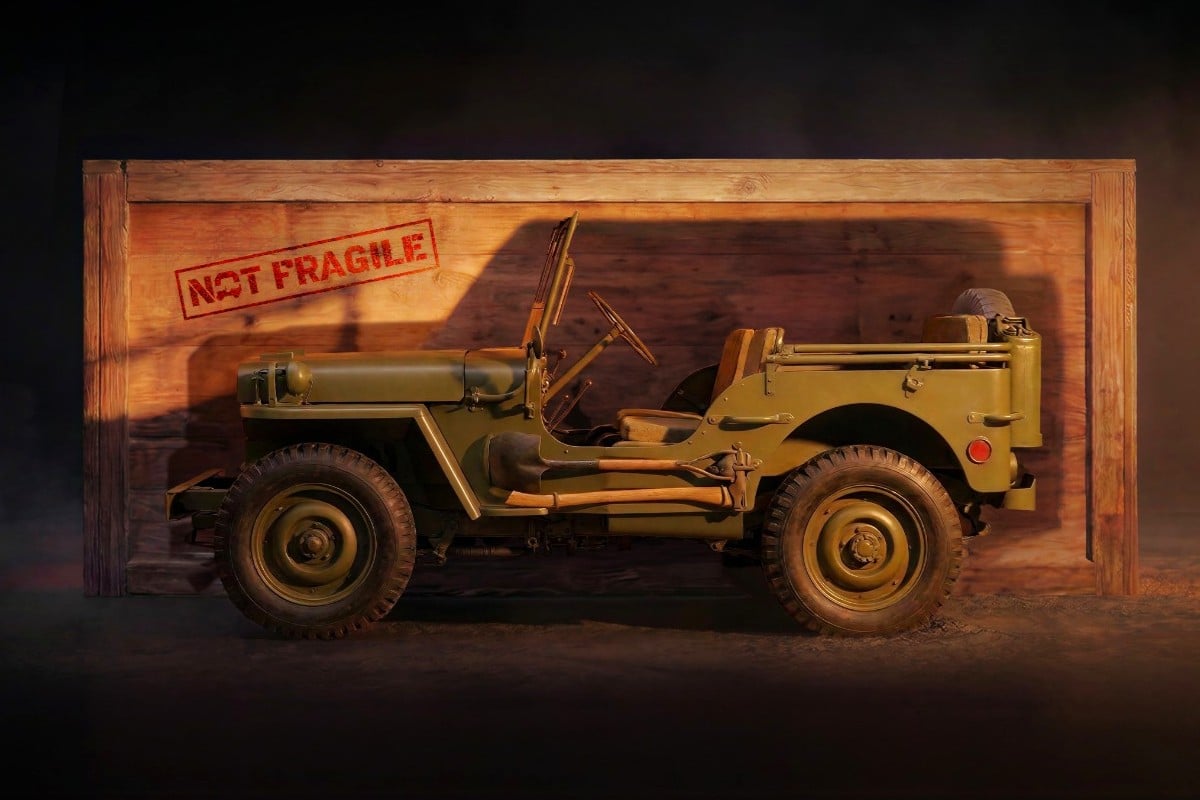
A recent teaser image released by Stellantis shows the original Willys MB military Jeep parked in front of the silhouette of a larger, closed-roof SUV with a bootlid-mounted spare wheel. The boxy design of this SUV looks to draw heavily from the original Willy’s utilitarian trappings, and the “Not Fragile” lettering on the crate implies ruggedness, and perhaps a focus on off-road prowess.
Specifics about the proposed Willys revival are yet to be finalised, but Peugeot noted “BEV affordability” as an important attribute, suggesting the EV could be aimed at the more attainable end of the price spectrum. To that end, the electric Willys may use a new low-cost EV architecture being developed by Stellantis for models that comply with the European Union’s proposed ‘E-car’ regulations – the production version of the recently-revealed Citroen 2CV concept is also expected to use this platform.
Peugeot additionally said that “each model in [Jeep’s] future range will be 4×4-compatible,” which could help set the electric Willys revival apart from the rest of Stellantis’s upcoming EVs. The project is expected to move forward after Jeep completes its current ‘Road to 2030’ strategy.
That said, Peugeot did remark that Jeep is “not confirming any concrete launch for this year or that year,” and that “ideas around Willys [will be] confirmed” by the end of this decade.
अमेरिका में टेक्नोलॉजी स्टॉक्स में आई बड़ी गिरावट ने कई एशियाई शेयर बाजारों के लिए खतरे की घंटी बजा दी है। अमेरिका में सेमीकंडक्टर्स शेयरों में लगातार 8 सत्रों में बिकवाली देखने को मिली। यह 2008 के बाद बिकवाली का सबसे लंबा सिलसिला था। इसका असर नैस्डेक 100 पर भी पड़ा। अप्रैल 2005 के बाद इसमें सबसे बड़ी गिरावट आई।
आईआई शेयरों की बदौलत अमेरिकी शेयर बाजारों में तेजी
पिछले 1.5-2 सालों में अमेरिका में एआई और सेमीकंडक्टर कंपनियों के शेयरों में जबर्दस्त तेजी आई है। इस सेक्टर को चिप और दूसरे हार्डवेयर सप्लाई करने वाली एशियाई कंपनियों के शेयरों में भी खूब तेजी आई है। इनमें दक्षिण कोरिया और ताइवान की कई कंपनियां शामिल हैं। अमेरिका में एआई बूम जारी रखने के लिए नए निवेश की जरूरत है। पहले ही इस सेक्टर में काफी ज्यादा निवेश हो चुका है।
एआई में निवेश घटा तो एशियाई शेयर बाजारों में मच सकता है कोहराम
अगर अमेरिका में एआई में निवेश की रफ्तार सुस्त पड़ती है तो इसका असर इस सेक्टर से जुड़ी एशियाई कंपनियों पर भी पड़ेगा। इसका संकेत दिखने लगा है। नियोक्लाउड ऑफर करने वाली कंपनी CoreWeave के बॉन्ड्स की कीमतों में बड़ी गिरावट देखने को मिली है। इससे इस सेक्टर पर बढ़ते दबाव का संकेत मिलता है। इनवेस्टर्स सवाल पूछ रहे है कि एआई और सेमीकंडक्टर्स कंपनियों ने जो निवेश किया है, क्या उसका रिटर्न मिलने जा रहा है? क्या AI की डिमांड इतनी है, जिससे इन कंपनियों के रेवेन्यू को सपोर्ट मिलेगा?
इंटरेस्ट रेट बढ़ने से एआई कंपनियों के लिए बढ़ रही इनवेस्टमेंट कॉस्ट
CoreWeave के शेयरों में 16 अक्तूबर को 12 फीसदी गिरावट आई। क्रूड की बढ़ती कीमतों ने एआई और सेमीकंडक्टर्स कंपनियों के लिए चिंता और बढ़ा दी है। क्रूड में उछाल से महंगाई बढ़ रही है, जिससे काबू में करने के लिए केंद्रीय बैंक इंटरेस्ट रेट्स बढ़ा रहे हैं। इससे इससे एआई कंपनियों के लिए नए निवेश की लागत भी बढ़ रही है। पिछले महीने अमेरिकी केंद्रीय बैंक इंटरेस्ट रेट 25 बेसिस प्वाइंट बढ़ा चुका है। अब नजरें इस महीने की फेड की पॉलिसी पर लगी हैं।
ताइवान और दक्षिण कोरिया की चिप कंपनियों को हो सकती है दिक्कत
ताइवान की TSMC, दक्षिण कोरिया की SK Hynix और Samsung Electronics जैसी कंपनियां AI कंप्यूटिंग के लिए जरूरी चिप और मेमोरी की सप्लाई करती हैं। इन कंपनियों की कमाई एआई इंफ्रास्ट्रक्चर में होने वाले इनवेस्टमेंटम पर निर्भर है। अगर एआई इंफ्रास्ट्रक्चर में निवेश घटता है तो इन कंपनियों की कमाई पर सीधा असर पड़ेगा। Gartner ने चेतावनी दी है कि एआई इंफ्रास्ट्रक्चर में 3.5 ट्रिलियन डॉलर के इनवेस्टमेंट को 2030 तक बड़ा खतरा पैदा हो सकता है। इसकी वजह यह है कि इनवेस्टमेंट के अनुपात में रेवेन्यू नहीं दिख रहा।
कंपोनेंट्स बनाने वाली कंपनियों के शेयरों में 236% तक उछाल
Union Bancaire Privee में मैनेजिंग डायरेक्टर वी-सेर्न लिंग ने कहा, “अगर हायरपरस्केलर्स और नियोक्लाउड्स को निवेश जारी रखने के लिए फंड नहीं मिलता है तो इसका असर टीएसएमसी, सैमसंग और SK Hynix जैसी एशियाई कंपनियों पर पड़ेगा। उन्हें मिलने वाले ऑर्डर्स घट जाएंगे।” इस साल MSCI Asia-Pacific Index की सबसे ज्यादा चढ़ने वाली 10 कंपनियों से 8 कंपोनेंट्स बनाने वाली कंपनियां हैं। इनमें से हर कंपनी का शेयर कम से कम 236 फीसदी चढ़ा है।
जहां तक भारत की बात है तो इसका असर भारतीय शेयर बाजारों पर नहीं पड़ेगा। इसकी वजह यह है कि भारत में एआई और सेमीकंडक्टर्स बनाने वाली कंपनियां नहीं हैं। यहीं वजह है कि पिछले 1-2 सालों में जब अमेरिका, दक्षिण कोरिया और ताइवान के शेयर बाजारों में तेजी आई तब भारतीय शेयर बाजारों में गिरावट देखने को मिली है। यहां तक की एआई बूम का निगेटिव असर भारतीय आईटी कंपनियों पर पड़ा है। अब जब एआई और चिप शेयर गिर रहे हैं तो भारतीय आईटी शेयरों में तेजी दिख रही है।
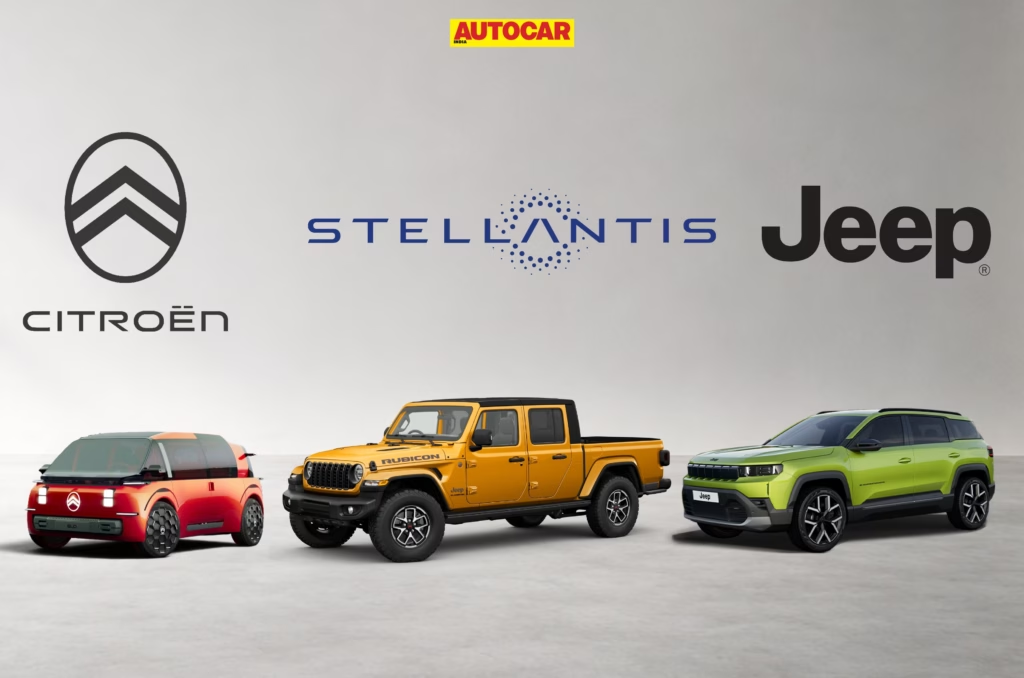
Stellantis has confirmed 12 Citroen and Jeep launches for India by 2030 as part of a roadmap dubbed ‘FaSTLAne 2030’. Speaking to Autocar India at the 2026 Paris Motor Show, Tianshu Xin – the head of Stellantis China and Asia-Pacific – confirmed a new investment of Rs 4,000 crore for the Indian market and said, “The plan is to introduce 12 new models in the next three years…seven of them will be new models and five are upgrades.”
Stellantis India lines up a dozen launches across Citroen and Jeep
Multiple SUVs inbound, along with an MPV, an entry-level car, and a premium pickup
The first model under FaSTLAne 2030 is scheduled to go on sale in India by the second quarter of 2027. This influx of new Citroen and Jeep launches will cover the compact, midsize, and premium SUV segments, and include a new MPV, an entry-level car, and a premium pickup truck. Of the 12 launches, seven will be from Citroen and five from Jeep.
Brand footprints to be expanded in India
Stellantis says these brands will play “distinct but complementary roles” in its line-up – Jeep will bolster its current position in the premium SUV arena, and Citroen will do the same in the mass-market segments. Expanding the customer reach of Citroen and Jeep is crucial, and Stellantis has committed to growing the brands’ retail and service networks, especially in Tier 2, 3, and 4 cities, along with increasing parts availability.
More Stellantis EVs coming, hybrids also confirmed
Additionally, Stellantis has confirmed a new multi-fuel strategy for the Indian market, which will span “efficient internal combustion engines, hybrid, plug-in hybrid (PHEV), and battery-electric (BEV) technologies.” These are already offered by Stellantis brands globally, and it should be interesting to see the specific powertrains that make it to India. As it stands, the majority of Stellantis India’s powertrain offerings are petrol; Citroen and Maserati also offer EVs, while Jeep additionally offers diesel in entry-level models.
Localisation target of 90 percent
According to Xin, the new models under FaSTLAne 2030 will be produced in India, so localisation will play a key role for competitive pricing. In light of that, Stellantis has set a target of 90 percent localisation across Jeep and Citroen, and will bank on its Indian R&D and manufacturing facilities, along with its supplier ecosystem, to achieve this. Moreover, India-developed FaSTLAne 2030 models will be exported to overseas markets.
Stellantis India’s two major brands, Citroen and Jeep, haven’t been very successful at attracting buyers in recent years. Citroen’s cars, despite recent updates, have struggled to gain traction in India due to their rivals being more aspirational and feature-rich. Jeep India, meanwhile, hasn’t launched any new models or facelifts in several years, turning prospective buyers away to more updated offerings. FaSTLAne 2030 is looking to be the shot in the arm that Stellantis India needs to pique buyer interest again.
What about Leapmotor?
Xin also provided an update on the long-overdue India entry of Stellantis’s Chinese EV brand, Leapmotor. Stellantis had planned to bring Leapmotor to India in 2025, but that evidently didn’t pan out. Xin noted that Leapmotor’s India entry is still being studied, and that there has to be enough “volume potential to justify the business case.” Therefore, a decision on Leapmotor entering India will only be made when the business case is ‘proven and solid.’
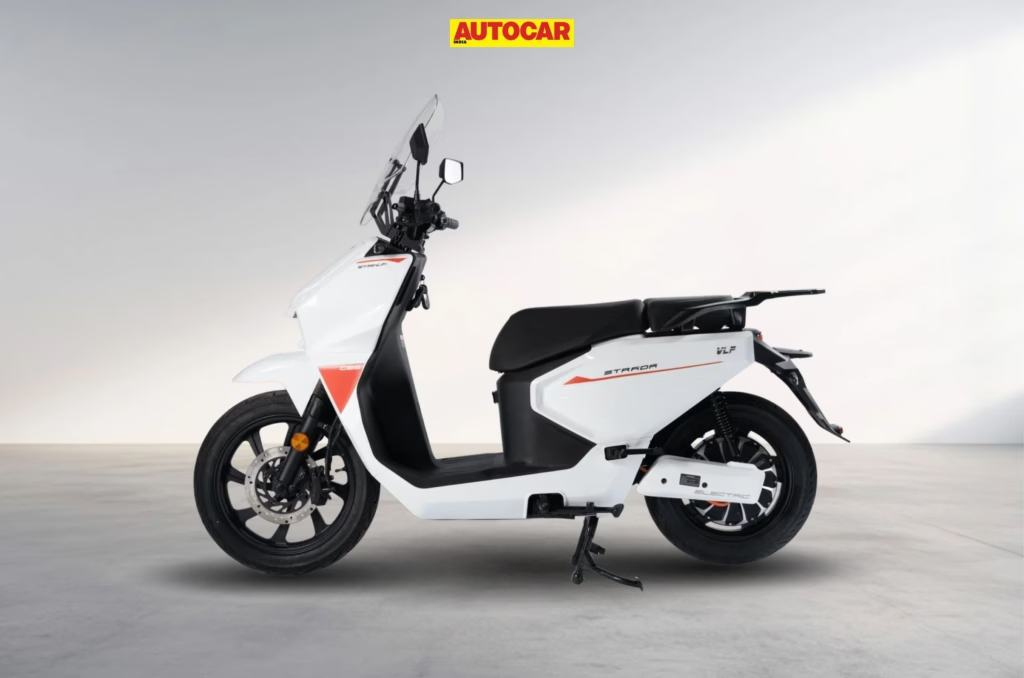
VLF (or Velocifero) is a brand with Italian heritage but manufactures its scooters in Zhejiang, China. Kolhapur-based Motohaus brought VLF to India in 2024 and manages sales and service in the country. The company has introduced a new electric scooter named Strada in two variants, priced at Rs 1.20 lakh and Rs 1.55 lakh, meant to replace the Tennis, its first launch in India.
City variant has a 2.16kWh removable battery
Max variant has two removable units with 4.32kWh total capacity
Rated top speed is 85kph in the top Sport ride mode
Bookings are open for Rs 999 for the City and for Rs 1,999 for the Max
VLF Strada details
Two variants and a shared 4.8kW BLDC motor
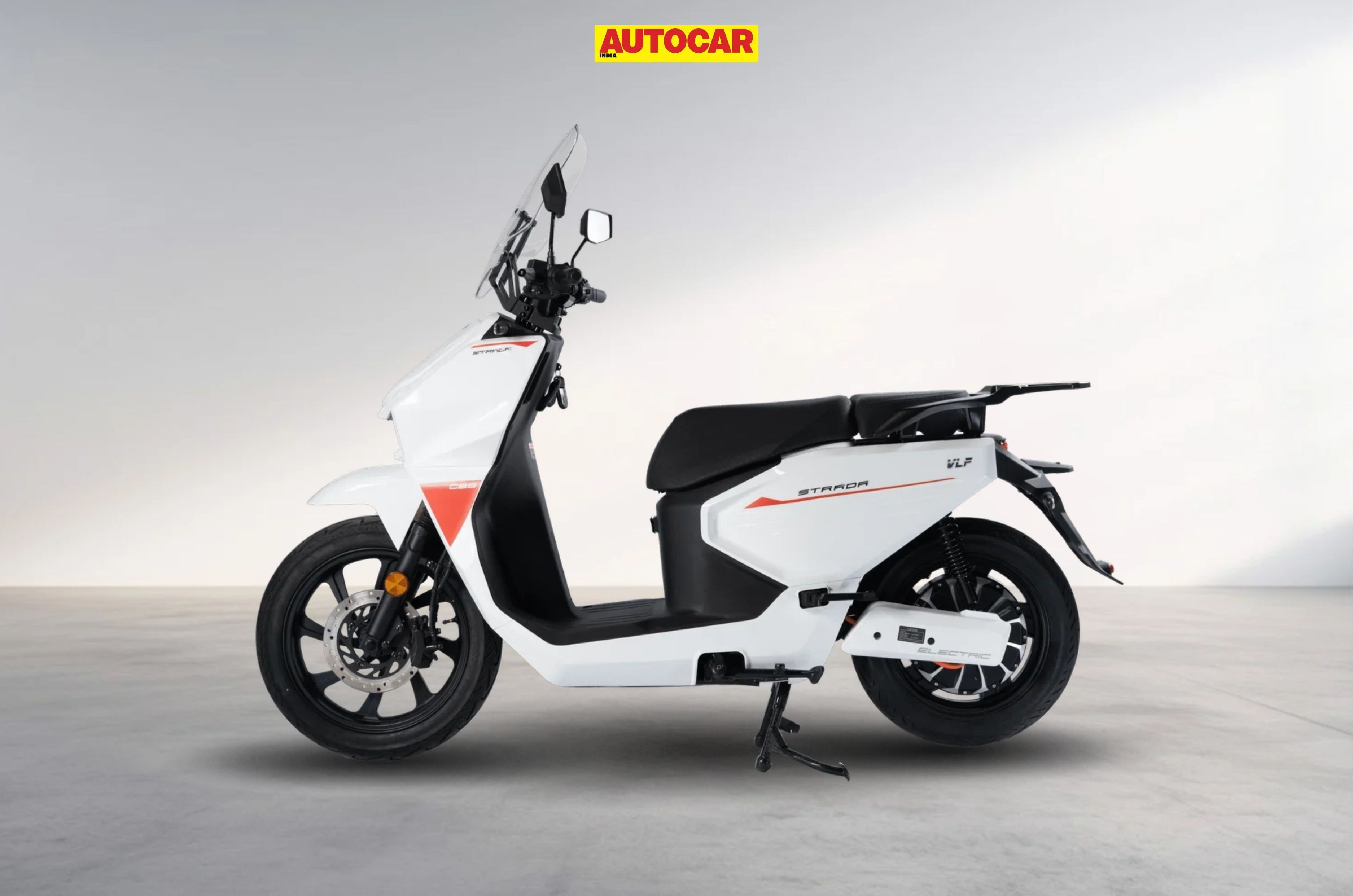
The Strada has two variants, City and Max, both of which share a BLDC, hub-mounted motor with 4.8kW peak power and 34Nm of peak torque; rated power is 3kW. The base City variant has a single 2.16kWh removable LFP battery, and the Max variant doubles that to two batteries with a total capacity of 4.32kWh. Both the motor and the battery units are rated for IP67 ingress protection. There are three ride modes on offer: Eco, City and Sport. Depending on the ride mode, the top speed varies as well. Eco tops out at 45kph, City at 65kph and Sport at 85kph.
The IDC range is 130km for City and 250km for Max. VLF claims the single battery system can charge from 20-100 percent in three hours, and the same takes six hours for both batteries. The company hasn’t specified the charging speed to achieve these times, nor has it mentioned the wattage of the bundled charger. We’re currently awaiting clarifications on the same.
VLF has designed the Strada with a sporty look, but the scooter’s dimensions should make it accessible to most people. It has a split-seat configuration with a seat height of 780mm without compromising on the ground clearance, which is a healthy 175mm. VLF has listed the kerb weight of the scooter at a surprisingly light 98kg, and this is likely for the City variant with the smaller battery pack. The Max variant should weigh notably more. Front and rear suspension units are par for the course, with a 31mm telescopic fork and a preload-adjustable twin shock.
Tyre size is an area where the Strada stands out, quite literally, with a 16-inch front wheel and a 14-inch rear. In the scooter segment, most options tend to stick to 10-14-inch tyres, and therefore this is certainly an interesting move from VLF. Larger tyre sizes are associated with more stable rides as well, so it remains to be seen how the Strada does on that front. Stopping the scooter are a 240mm front disc and a 220mm rear disc. There’s no ABS, but a combined braking system (CBS) is standard.
Features include a 5-inch TFT display, all-LED lighting with dual-projector headlights, an integrated windshield, a keyless ignition system and an integrated luggage rack. There are four colour options on offer: Carbonio Black, Luna White, Titanio Grey and Urbano Silver. VLF also showcases pictures of a pannier mounted on the rack, so it’s likely that an accessory line-up is on the cards.
Priced at Rs 1.20 lakh for the City variant and Rs 1.55 lakh for the Max variant, the VLF Strada is a rival to established models such as the TVS iQube 2.2 (Rs 1.16 lakh), TVS Orbiter V1 (Rs 1.01 lakh), Chetak C2501 (Rs 99,802), Ather Konarc (Rs 99,999) and Vida VX2 Go 2.2 (Rs 99,999). VLF Strada is already available on Motohaus’s Indian website, with bookings open for Rs 999 for City and Rs 1,999 for Max.
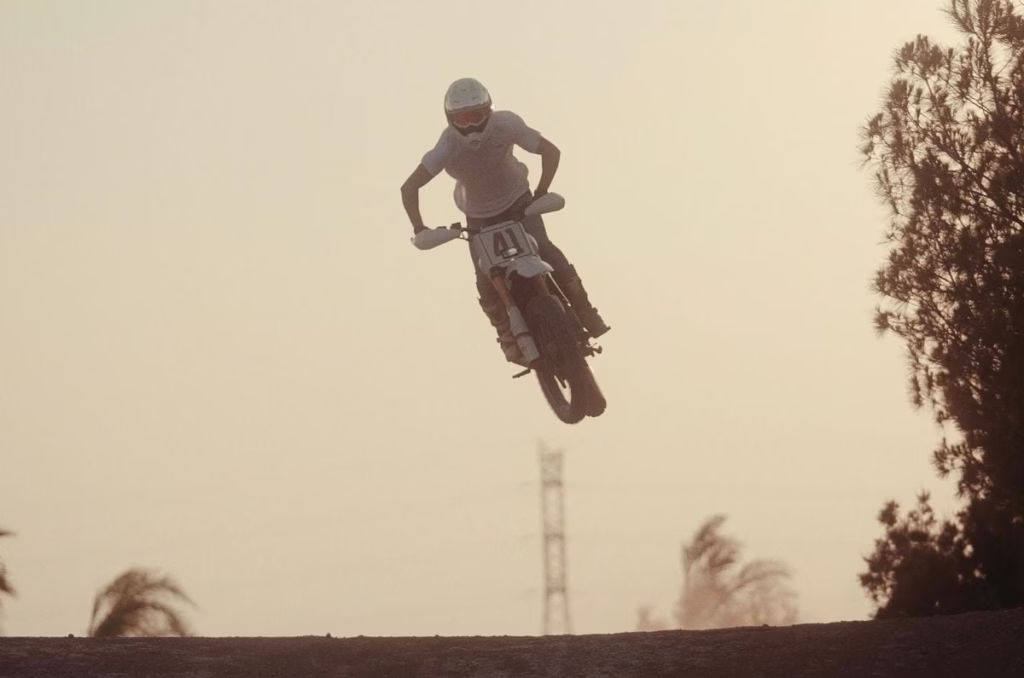
Spain’s Tamarit Motorcycles has won Triumph Originals 2026 – the British manufacturer’s global custom competition, after securing 33 percent of the public vote and earning the judge panel’s highest score. Its Scrambler 400 XC based build, Miura, impressed both judges and voters with its interpretation of the brief and excellent build quality.
Bringing together custom builders from seven countries (Canada, China, France, Italy, Spain, the UK and the USA), Triumph Originals 2026 required each team to create a 1/1 ‘Time Capsule’ Scrambler inspired by a defining era from the model’s rich history.
Thousands of motorcycle enthusiasts from around the world cast their votes to help decide the winner. The public vote was combined with scores from an international judging panel made up of leading figures from the worlds of motorcycle design, custom building, journalism and heritage, ensuring every entry was assessed on its originality, technical execution and interpretation of the competition’s brief.
AI Boom in Stock Market: हॉन्ग कॉन्ग में एआई से जुड़ी कंपनियों ने इस बार रिकॉर्डतोड़ पैसे जुटाए। यह तेजी ऐसे समय में आई, जब हॉन्ग कॉन्ग के शेयर बाजार में भारी गिरावट देखने को मिली। कंपनियों ने आईपीओ, प्लेसमेंट्स और ब्लॉक ट्रेड्स के जरिए जुलाई-सितंबर में $47.5 अरब जुटाए, जोकि ब्लूमबर्ग के मुताबिक किसी साल की तीसरी तिमाही में अब तक की सबसे बड़ी रकम है।
इसके साथ ही इस साल अब तक हॉन्ग कॉन्ग में कुल $92 अरब से अधिक फंड जुटाए गए जोकि साल 2021 में $112.5 अरब के रिकॉर्ड के काफी करीब है। यह ऐसे समय में हुआ, जब बॉन्ड यील्ड में तेजी और कई नए शेयरों के खराब परफॉरमेंस के कारण निवेशक और कंपनियां अब पहले की तुलना में अधिक सतर्कता बरत रही हैं।
AI ने भरा जोश
हॉन्ग कॉन्ग में रौनक के पीछे एआई रही है लेकिन इस गर्मी तो इसने तगड़ा जोश दिखा दिया। चीन की कंपनियों ने तेजी से बढ़ रही एआई इंडस्ट्री में विस्तार के लिए ताबड़तोड़ पैसे जुटाए और पहले की तुलना में मार्केट में बहुत जल्द दोबारा एंट्री की। सबसे तगड़ा सौदा तो अलीबाबा ग्रुप की $10.2 अरब का फॉलो-ऑन ऑफर रहा तो Zhongji Innolight ने करीब $8 अरब जुटाए जोकि लगभग सात वर्षों में हॉन्ग कॉन्ग की सबसे बड़ी लिस्टिंग रही। अन्य कंपनियों ने भी बार-बार निवेशकों से पैसे जुटाए। एआई मॉडल बनाने वाली Z.AI ने इस साल IPO, प्लेसमेंट और कन्वर्टिबल बॉन्ड के जरिए कुल $9.6 अरब जुटाए।
गोल्डमैन में एशिया (एक्स-जापान) इक्विटी कैपिटल मार्केट्स के प्रमुख जेम्स वांग का कहना है कि पहले कंपनियां एक बार पैसे जुटाने के बाद फिर एक-दो साल बाद ही दोबारा ऐसी कोशिश करती थी लेकिन अब लॉकअप पीरियड समाप्त होते ही पूंजी जुटाने लगी हैं। उनका कहना है कि AI की वजह से यह सिलसिला अगले कुछ वर्षों तक जारी रहेगा और इसकी रफ्तार जल्द धीमे होने के कोई संकेत नहीं हैं।
Z.AI के अलावा एक और एआई मॉडल कंपनी मिनीमैक्स ग्रुप, चिप बनाने वाली कंपनी शंघाई एलुवेटर कोरएक्स सेमीकंडक्टर और शंघाई बिरेन टेक्नोलॉजी भी अपने IPO लॉकअप की अवधि खत्म होने के तुरंत बाद जुलाई में दोबारा बाजार में लौट आईं।
यह तेजी सिर्फ चीन या हॉन्ग कॉन्ग तक ही नहीं रही, पूरे एशिया-प्रशांत क्षेत्र में देखने को मिली। तीसरी तिमाही में इस क्षेत्र में शेयर बिक्री के जरिए रिकॉर्ड $120 अरब से अधिक जुटाए गए, जो छह वर्षों में इस अवधि के लिए सबसे अधिक है। चीन में भी इस दौरान मेमोरी चिप बनाने वाली Corp का 66.6 अरब युआन (लगभग $9.9 अरब) का IPO आया, जो चीन में अब तक का दूसरा सबसे बड़ा IPO रहा।
भारत में भी दिखी रौनक
साल की शुरुआत में अमेरिका-ईरान युद्ध, शेयर बाजार में हाहाकार और विदेशी निवेशकों की ताबड़तोड़ बिकवाली के दबाव में रहने के बाद भारतीय बाजार ने भी जोरदार वापसी की। जुलाई से अब तक यहां शेयरों की बिक्री के जरिए कंपनियों ने रिकॉर्ड $26 अरब जुटाए, जिसके साथ भारतीय मार्केट के लिए यह अब तक की सबसे अच्छी तिमाही साबित हुई।
इस दौरान सबसे बड़े डील्स की बात करें तो एलआईसी में $3.2 अरब की सरकारी हिस्सेदारी की बिक्री शामिल थी तो एनएसई ने $2.4 अरब का दूसरा सबसे बड़ा आईपीओ पेश किया। यह ऐसे समय में हुआ जब निफ्टी 50 अगस्त की शुरुआत के अपने हाई लेवल से लगभग 9.5% नीचे आ गया था। घरेलू बाजार में पर्याप्त लिक्विडिटी ने नए शेयर ऑफरिंग की मांग को मजबूत बनाए रखा।
आगे भी आईपीओ का पाइपलाइन काफी मजबूत है। मुकेश अंबानी की जियो प्लेटफॉर्म्स नवंबर में संभावित लिस्टिंग से पहले निवेशकों से मुलाकात कर रही है। ब्लूमबर्ग न्यूज के अनुसार यह भारत के सबसे बड़े IPO में से एक हो सकता है। सिटीग्रुप में इक्विटी कैपिटल मार्केट्स के प्रमुख हरीश रमन का कहना है कि इस साल अभी और आईपीओ आ सकते हैं और वैश्विक निवेशकों की दिलचस्पी भी बनी हुई है।
आगे कैसा है रुझान
एआई पर होने वाले भारी खर्च भविष्य में पर्याप्त रिटर्न दे पाएगा या नहीं, इसे लेकर सवाल उठने लगे हैं लेकिन इसके बावजूद एआई से जुड़ी कंपनियां ताबड़तोड़ पैसा जुटा रही हैं और निवेशकों की दिलचस्पी भी बनी हुई है। हालांकि HSBC के ग्लोबल हेड ऑफ इक्विटी कैपिटल मार्केट्स मार्टिन जोल (Martin Zoll) का कहना है कि कई कंपनियों के शेयर आईपीओ प्राइस से नीचे आ गए हैं, जिसके चलते निवेशक सावधानी भी बरतने लगे हैं। बता दें कि जुलाई की शुरुआत से हांगकांग में हुए 10 सबसे बड़े सौदों में से केवल दो ही अपने ऑफर प्राइस से ऊपर हैं। फास्ट-फैशन रिटेलर शेन ग्लोबल होल्डिंग्स (Shein Global Holdings) और चिपमेकर लॉन्गसिस इलेक्ट्रॉनिक्स (chipmaker Longsys Electronics) के शेयर तो पहले ही दिन इश्यू प्राइस के नीचे आ गए।
आगे की बात करें तो आईपीओ और अन्य सौदों की पाइपलाइन काफी बड़ी है। फिलीपींस के सबसे लोकप्रिय मोबाइल पेमेंट ऐप GCash की पैरेंट कंपनी Mynt Inc ने आईपीओ का भाव फिक्स कर दिया है और यह फिलीपींस का सबसे बड़ा आईपीओ बनने वाला है। ऑस्ट्रेलिया भी एआई से जुड़ी इस तेजी का एक हिस्सा बनने वाला है। वहां डेटा सेंटर ऑपरेटर Firmus Grid $5 अरब का IPO देश में अब तक के सबसे बड़े लिस्टिंग में से एक होगा।
डिस्क्लेमर: मनीकंट्रोल.कॉम पर दिए गए सलाह या विचार एक्सपर्ट/ब्रोकरेज फर्म के अपने निजी विचार होते हैं। वेबसाइट या मैनेजमेंट इसके लिए उत्तरदायी नहीं है। यूजर्स को मनीकंट्रोल की सलाह है कि कोई भी निवेश निर्णय लेने से पहले हमेशा सर्टिफाइड एक्सपर्ट की सलाह लें।
सड़क पर बाइक चलाते समय पीछे से आवारा कुत्तों का दौड़ना कई लोगों के लिए परेशानी और डर का कारण बन सकता है। इसी समस्या से निपटने के लिए चीन के एक बाइक सवार ने ऐसा जुगाड़ किया, जिसे देखकर सोशल मीडिया पर लोग दो हिस्सों में बंट गए। उसने अपनी बाइक के पीछे एक लंबा डंडा लगा दिया, ताकि पीछा करने वाले कुत्तों को दूर रखा जा सके।
इस अनोखे तरीके का वीडियो सोशल मीडिया पर तेजी से वायरल हो रहा है। कुछ लोगों ने इसे अपनी सुरक्षा के लिए बनाया गया उपाय बताया, जबकि कई यूजर्स ने इसे जानवरों के साथ क्रूरता करार दिया।
पीछे से आने वाले कुत्तों के लिए बनाया ‘जुगाड़’
वायरल वीडियो में बाइक के पीछे एक लंबी रॉड लगी दिखाई देती है। जब कुत्ते बाइक का पीछा करते हुए पास आते हैं, तो सवार उसी डंडे का इस्तेमाल उन्हें दूर रखने के लिए करता नजर आता है।
वीडियो शेयर करने वाले यूजर ने इसे कुत्तों को मारने वाली स्टिक बताया। इसी वजह से वीडियो सामने आते ही इसके इस्तेमाल और मकसद को लेकर बहस शुरू हो गई।
बाइक सवारों की परेशानी भी लोगों ने समझी
सोशल मीडिया पर हर किसी ने इस तरीके की आलोचना नहीं की। कुछ यूजर्स ने कहा कि जिस व्यक्ति का कभी बाइक चलाते समय कुत्तों ने पीछा किया है, वह इस परेशानी को अच्छी तरह समझ सकता है।
लोगों का कहना था कि अचानक कई कुत्तों के पीछे पड़ जाने पर बाइक सवार घबरा सकता है और संतुलन बिगड़ने से दुर्घटना भी हो सकती है। हालांकि, उनका सुझाव था कि सुरक्षा के लिए ऐसा तरीका अपनाया जाए जिससे जानवरों को चोट न पहुंचे।
‘डंडे की जगह पानी का स्प्रे क्यों नहीं?’
कुछ लोगों ने इस समस्या का एक आसान और कम नुकसान वाला विकल्प भी सुझाया। उनका कहना था कि बाइक पर छोटा पानी का स्प्रे रखा जा सकता है।
कुत्ते के बिल्कुल पास जाने के बजाय जमीन की ओर या उसके आसपास पानी का हल्का स्प्रे उसका ध्यान भटका सकता है और बाइक सवार को वहां से निकलने का समय मिल सकता है।
किसी ने कहा- यह जुगाड़ खुद पड़ सकता है भारी
कुछ भारतीय यूजर्स ने वीडियो को अपने अनुभवों से जोड़ते हुए कहा कि कुत्तों को डंडे से दूर भगाने की कोशिश उलटी भी पड़ सकती है।
एक यूजर ने मजाकिया अंदाज में कहा कि भारतीय कुत्ते इतने समझदार हैं कि डंडे को ही पकड़ सकते हैं और बाइक सवार को गिरा सकते हैं। यानी जिस उपकरण को सुरक्षा के लिए बनाया गया है, वह गलत स्थिति में दुर्घटना का कारण भी बन सकता है।
China MAN CREATES ‘DOG-BEATING STICK’ that SMACKS STRAY DOGS in FACE and BODY as they CHASE HIS BIKE https://t.co/S65xutIT4y
एक यूजर ने इसके पीछे कुत्तों के व्यवहार से जुड़ी वजह बताने की कोशिश की। उसके मुताबिक, कुत्ते अपने इलाके को लेकर काफी सतर्क होते हैं और चलती बाइक या उसके टायर को अपने क्षेत्र में घुस आए दूसरे जानवर की तरह देख सकते हैं। हालांकि, यह सोशल मीडिया पर दिया गया एक यूजर का दावा है, इसे वैज्ञानिक निष्कर्ष नहीं माना जा सकता।
In the previous issue (August 2026), you saw the Skoda Kylaq take on the familiarity of India, the hills and traditions of Nepal, and the variety of China through Tibet’s gorgeous but bone-shaking terrain, followed by the sensory overload of food and culture. Now, it was time for a fresh experience through Central Asia on the ancient Silk Route, subsequently entering Europe towards our final destination.
Kyrgyzstan – Uzbekistan – Kazakhstan
Kyrgyzstan
The Kylaq had everyone turning heads.
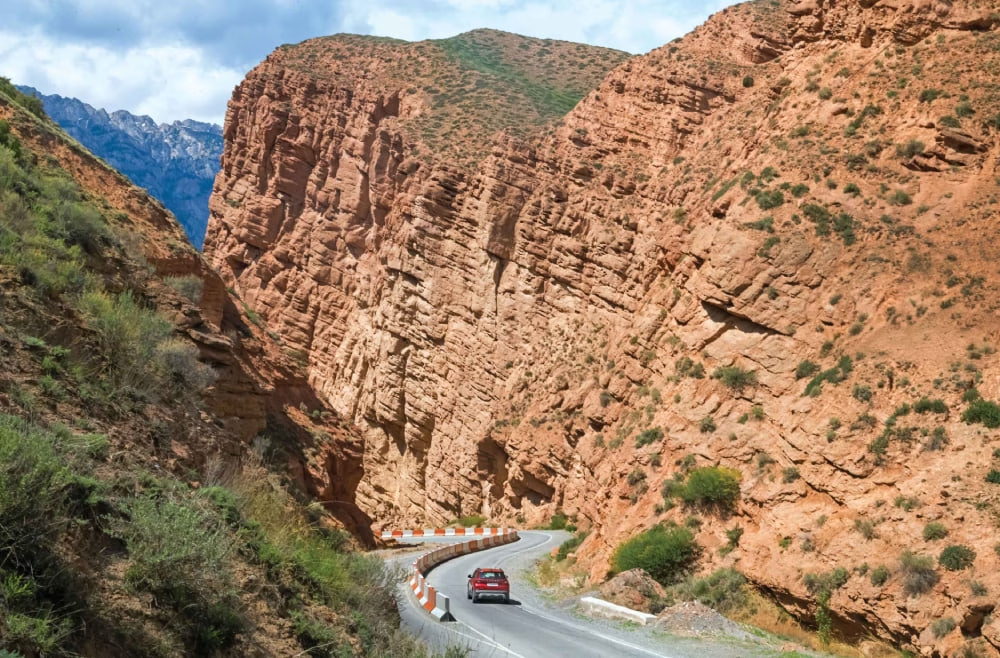
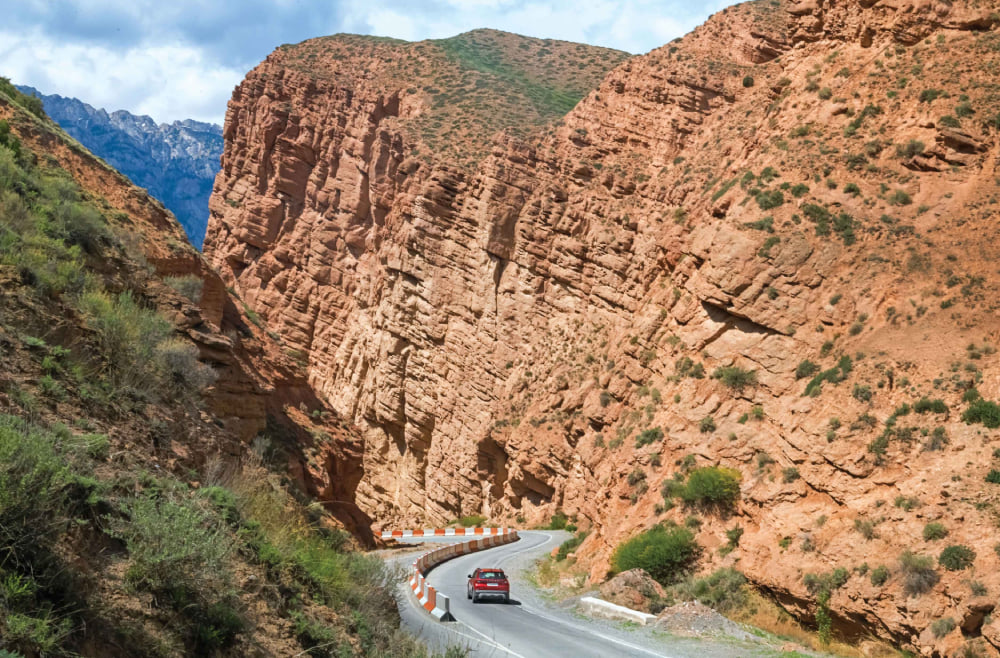
Crossing the Chinese border into Kyrgyzstan was like crossing into a different world. The differences are immediate, right from the signage, fonts and faces to the sights, terrain and traffic. Being a landlocked country peppered with alpine mountains, one doesn’t need to go far to experience what Kyrgyzstan has to offer. As you drive through the ribbon of tarmac between the peaks, you realise why it is called the “Switzerland of Asia”.
A roughly 400km drive to our first halt in Naryn was smooth sailing. However, the chilly weather was a far cry from the piercing heat of China. We pulled out our jackets that were buried deep in our bags and made a beeline the next day for the capital city of Bishkek. The roads are a driver’s delight, and while there aren’t many sights to stop and admire, the Orto-Tokoy Reservoir made for a stunning photo-op.
Kyrgyzstan in numbers
Torgart – Uzbek border
Distance covered
1,321km
Fuel consumed
126.49 litres
Average fuel economy
10.44kpl
Approx. fuel cost
Rs 11,727
Avg. per-litre fuel cost
Rs 92.58
Total time driven
34hrs 23min
Average speed
38.4kph
From Bishkek, we headed to Osh, which is also known as the capital of the south and is the oldest city in Kyrgyzstan. Walking through the Jayma Bazaar in the city centre, you may get a bit of celebrity treatment, as the locals aren’t used to having many tourists just walking through. Some playful heckling and wide smiles add to the overall experience.
Chorsu Bazaar is a one-stop shop for everything in Tashkent.
What the market offers is mounds of kurut, a snack made from curdled milk or oghurt, salted and then hardened. The best part is its extended shelf life without needing a refrigerator. We packed some with the hope of eating it at home, knowing fully well that it would vanish by the next town.
From Osh, we would be exiting the stunning valleys and terrain of Kyrgyzstan and entering the city of Fergana in Uzbekistan.
Uzbekistan
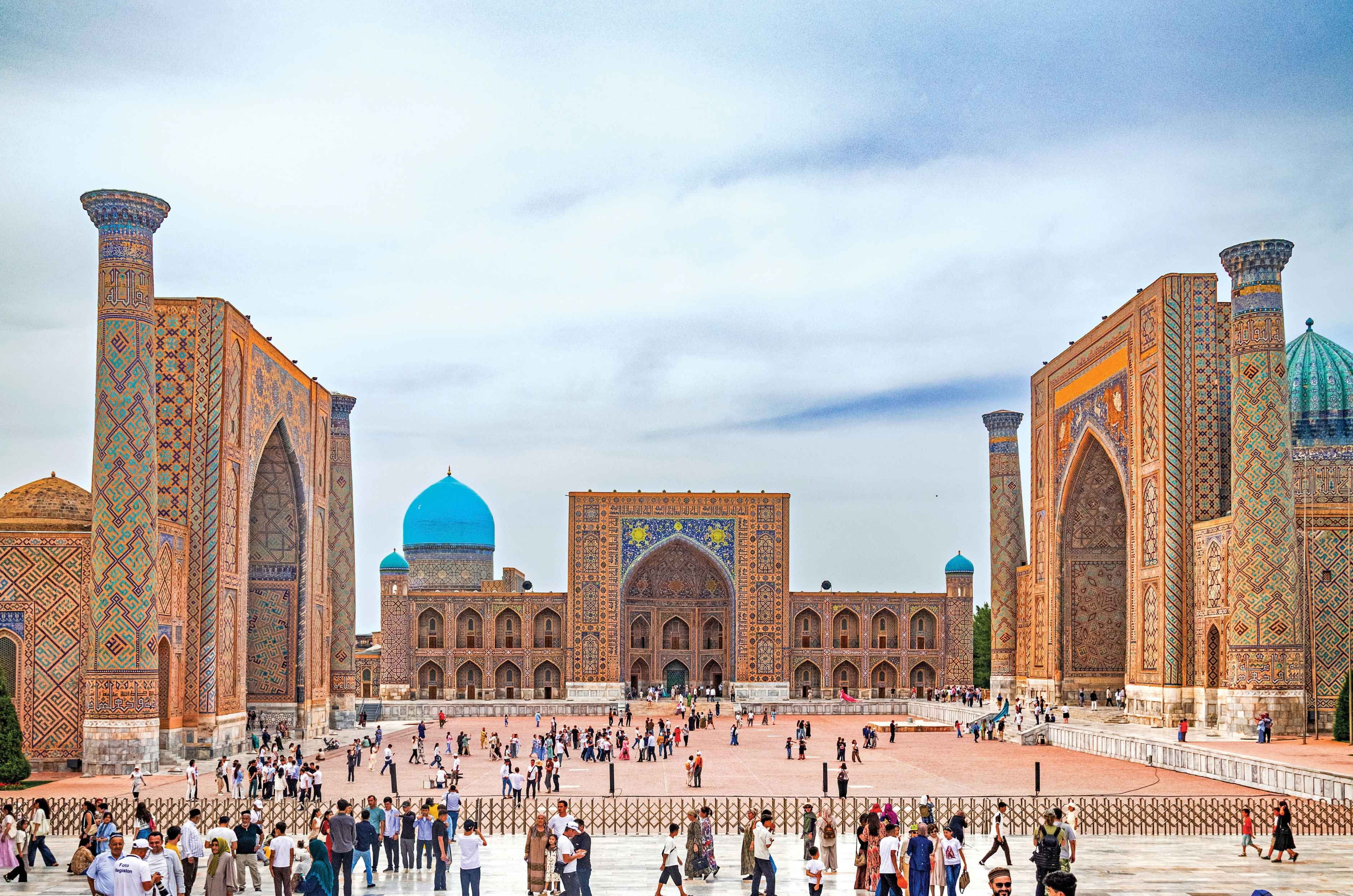
Registan Square in Samarkand is breathtaking from every angle.
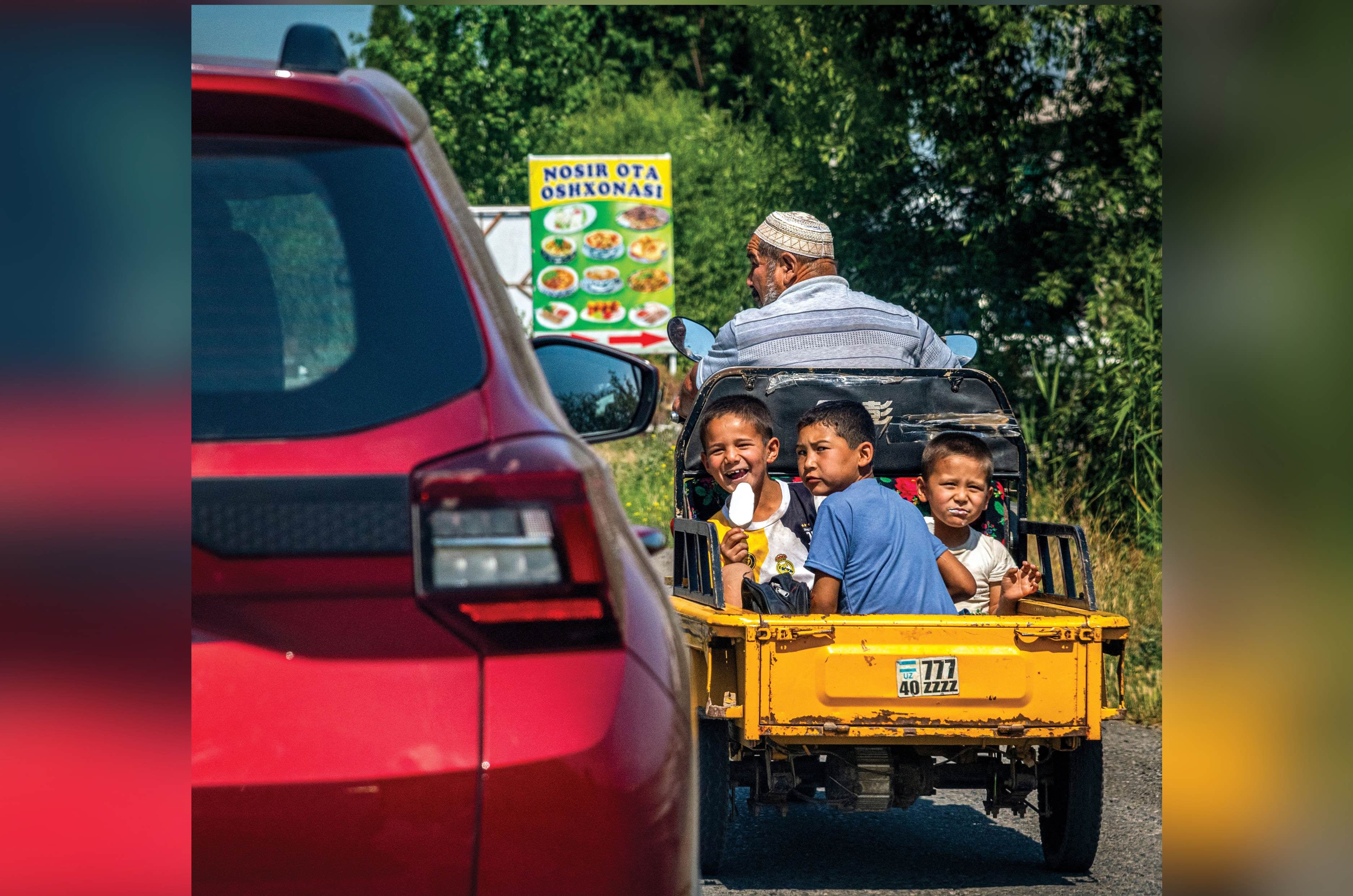
Like Kyrgyzstan, Uzbekistan also has its own personality. While there are similarities in the faces and fashion, the city of Fergana has a tinge of European infrastructure. Roads are lined with trees and patir shops – flatbread made from butter or lamb fat, with intricate detailing and some sesame seeds sprinkled on top. It’s pretty enough to dissuade you from eating it, but tastes like something that would go extremely well with a cup of chai.
Uzbekistan in numbers
Kyrgyz-Uzbek border – Turkistan
Distance covered
1,257km
Fuel consumed
81.74 litres
Average fuel economy
15.37kpl
Approx. fuel cost
Rs 9,800
Avg. per-litre fuel cost
Rs 120
Total time driven
27hrs 5mins
Average speed
46.4kph
What is also fascinating is the number of old Soviet-era cars still running on the highways with no fuss. We shared road space with old Ladas crammed with luggage inside and on the roof. Over the smooth highways of Uzbekistan, the Kylaq had an easy run, allowing us to focus on the sights around us.
From Fergana, we headed to the capital city of Tashkent. A properly modern metropolis with high-end malls and low-slung supercars, parks, walkways and everything you expect from a big city. So, to get a taste of age-old tradition, we ventured towards Samarkand, which used to be a major trading hub on the Silk Route.
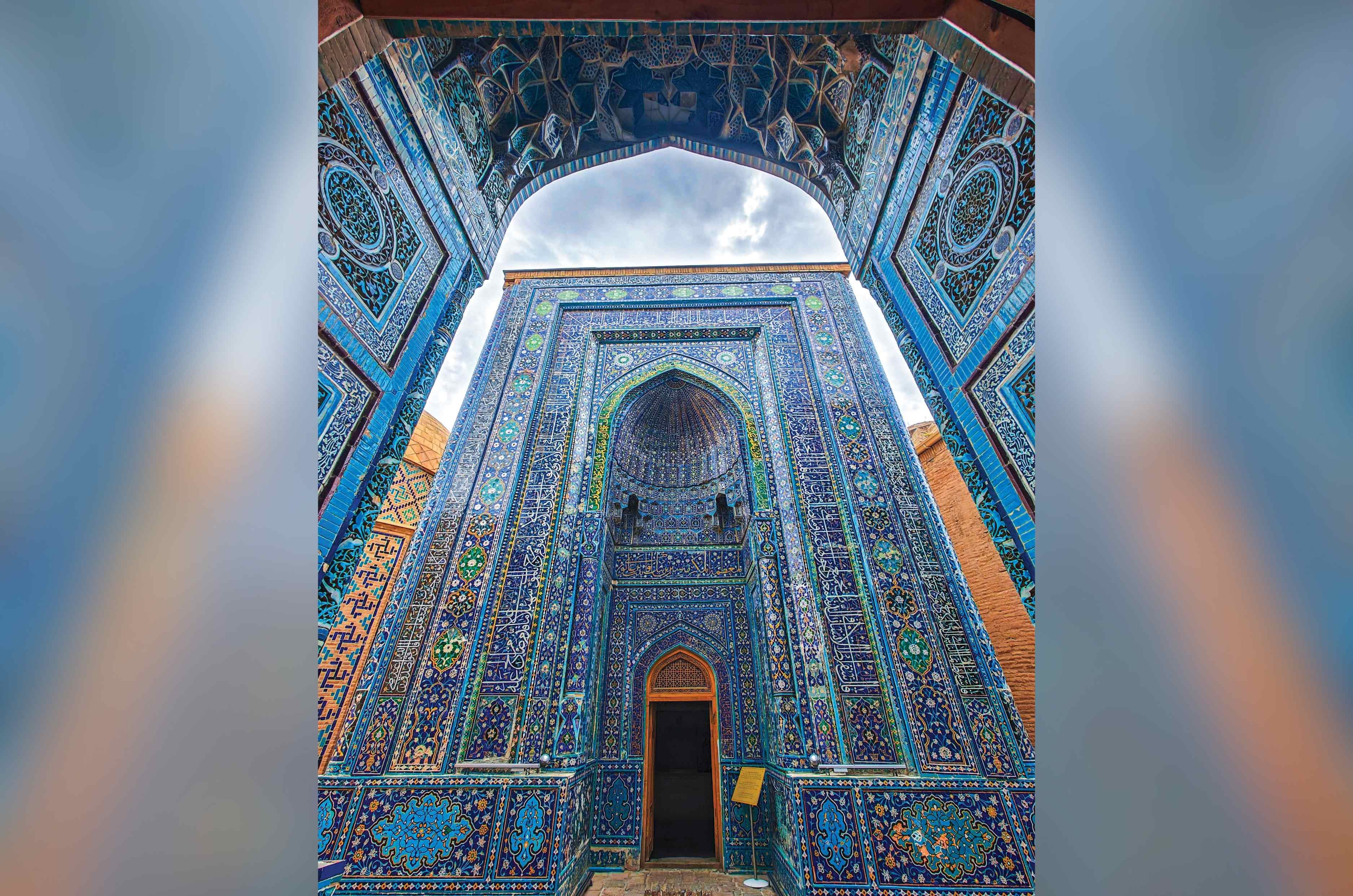
The Shah-i-Zinda ensemble has 11 mausoleums with incredibly detailed azure and turquoise tiles.
Entering Samarkand, you almost feel the tradition in the air. Years of cross-cultural civilisation have made it a stunning destination to get a glimpse of history, and it is unlike any other Western or Eastern city. The highlight here, of course, is the Bibi-Khanym Mosque in the Registan ensemble. Turquoise domes kissing the sky, with walls adorned with hand-carved artistry, are nothing short of breathtaking.
You can walk through the corridors and the square innumerable times, and each time, you will gasp at the sheer detail and effort. And to think it was built as far back as the 15th century. Magnificent is an understatement.
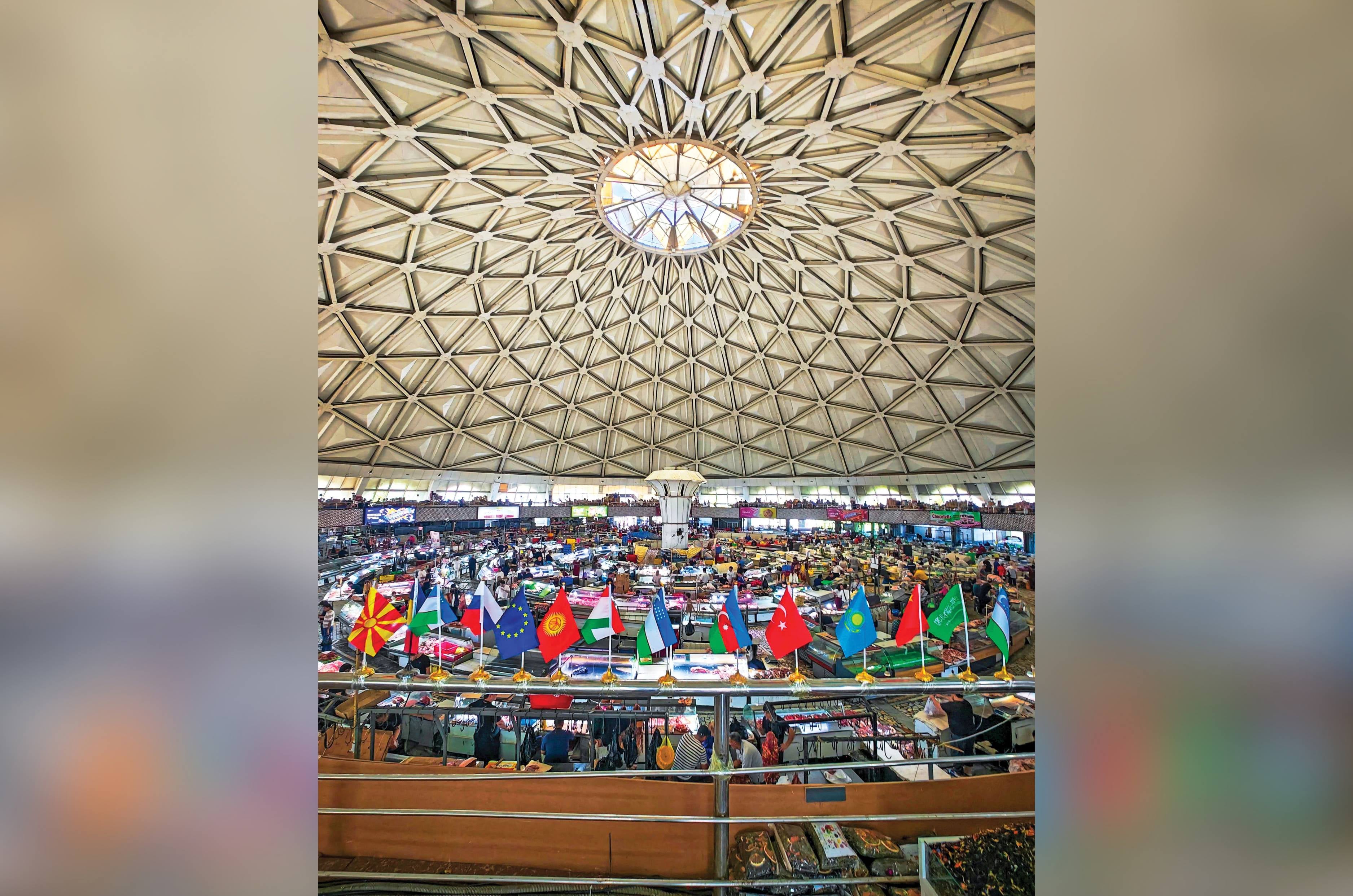
After soaking in the stunning detail, we headed back to Tashkent and straight to the equally fascinating Chorsu Bazaar. What looks like an IMAX dome on the outside is a full-fledged one-stop shop on the inside. Teas, dry fruits or even a leg of lamb, you can get it all here.
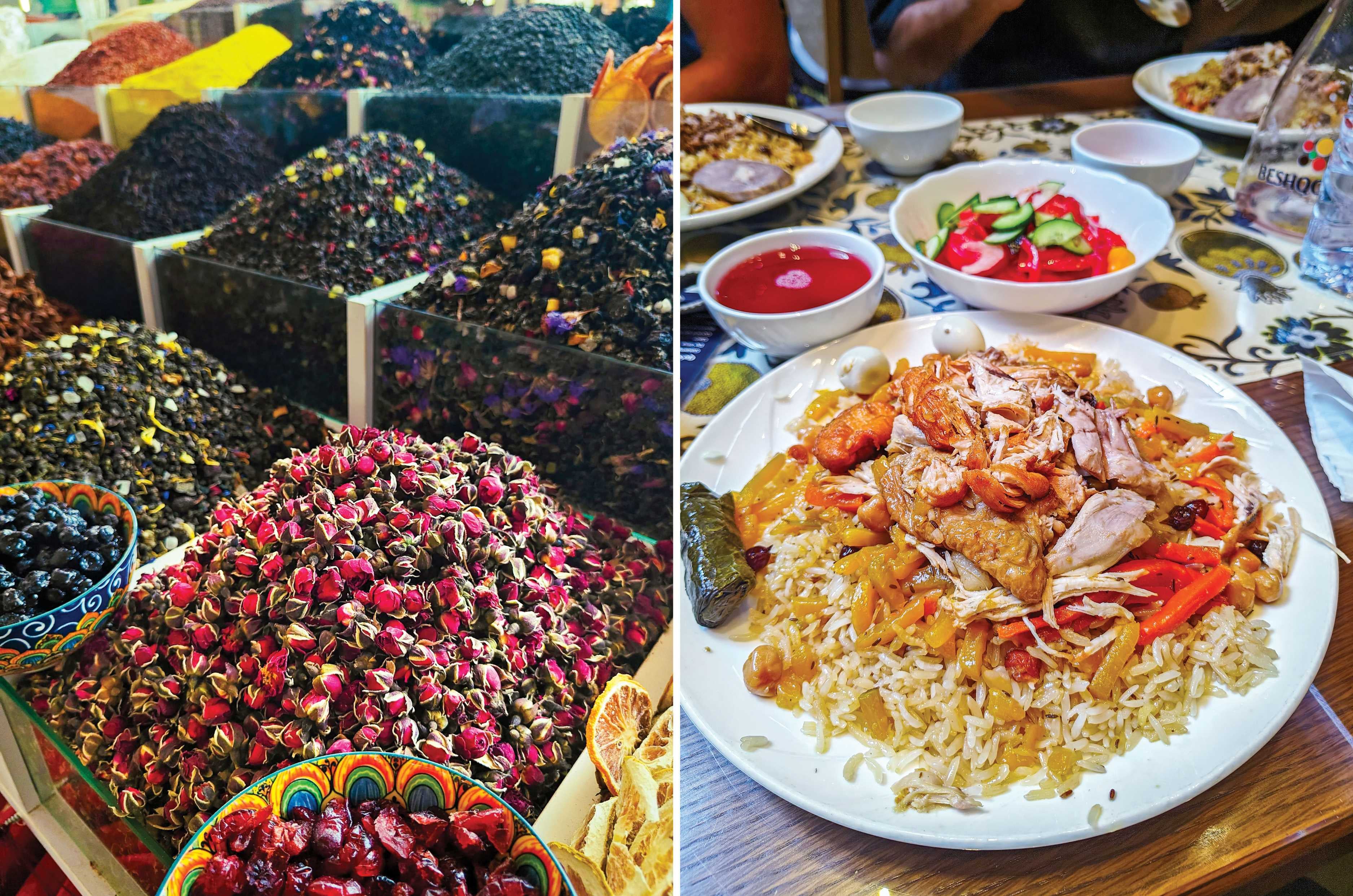
Uzbekistan’s market is nothing short of paradise for tea lovers.
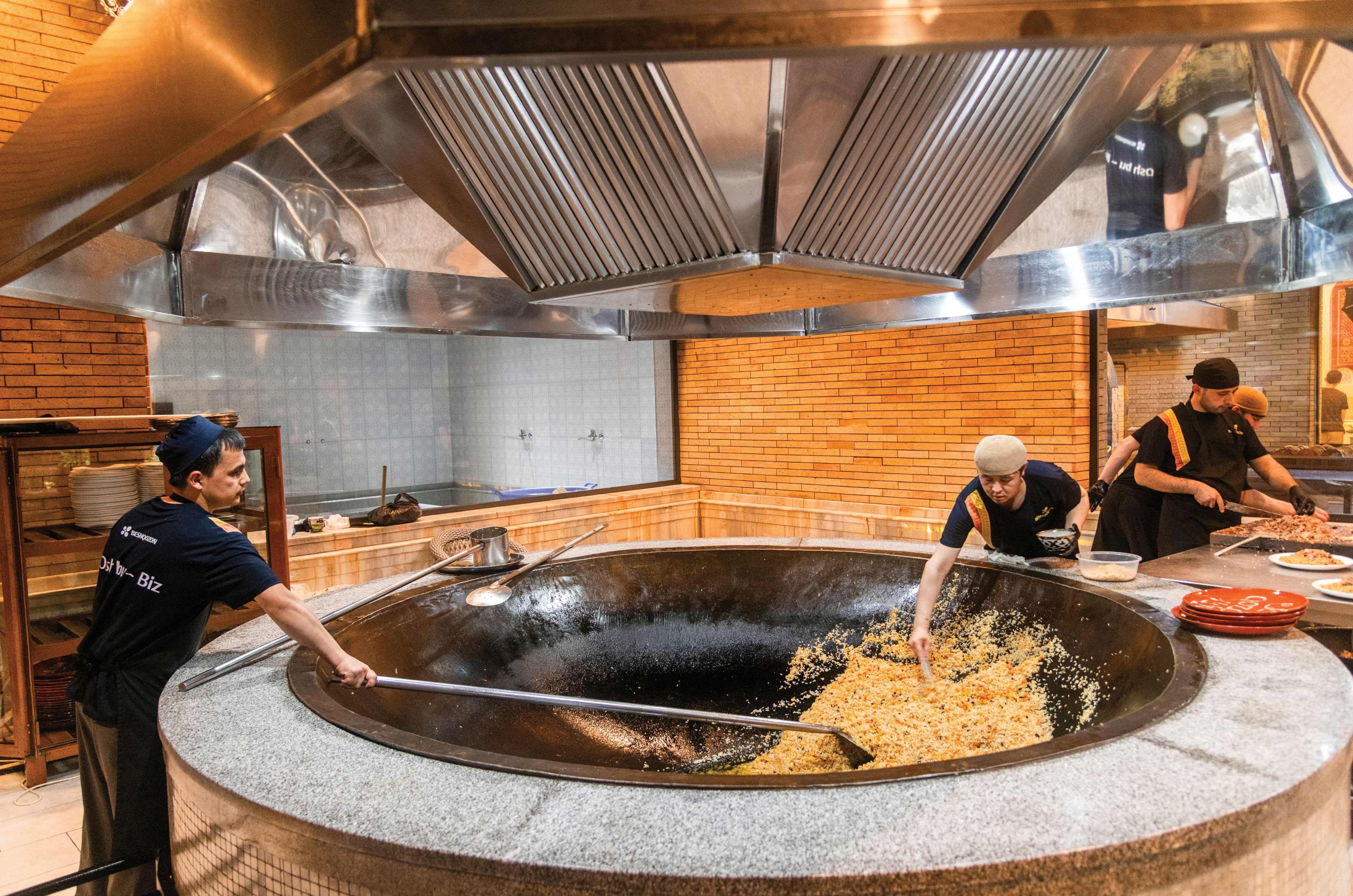
After a long walk that ended with bags of tea and dehydrated kiwis, we headed for Uzbekistan’s pièce de résistance: the famous plov. Like a biryani, but made with different spices, and if you want to go heavy on culture, you can have one with horse meat, too. Some bravehearts did try it and resorted to chicken or lamb, but it did offer the lost taste of biryani and got us homesick in the first bite.
Massive dome known as a kazan used to make the famous Uzbek plov.
After days of driving through mountains and around lakes, and walking through corridors that were once at the peak of world trade, our next adventure would take us to the Great Steppe of Kazakhstan.
Kazakhstan
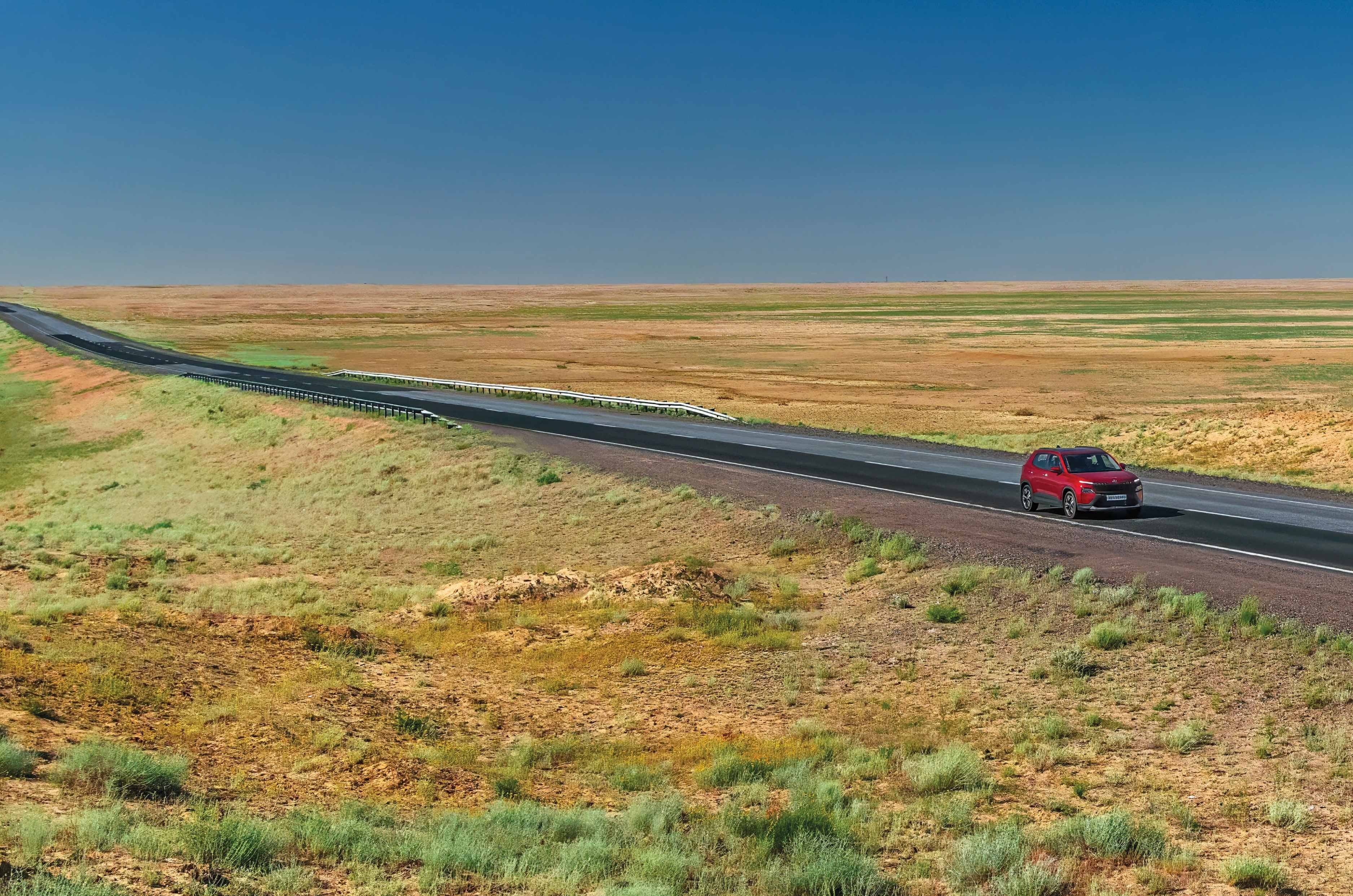
The Great Steppe in Kazakhstan feels like driving on an endless treadmill.
Crossing from Turkmenistan after vigorous checks, Kazakhstan feels almost desolate. Arrow-straight highways for kilometres, between acres of flat land with nothing on the horizon. We were driving through green pastures that would turn into brown, dried patches before turning green again, kilometre after kilometre.
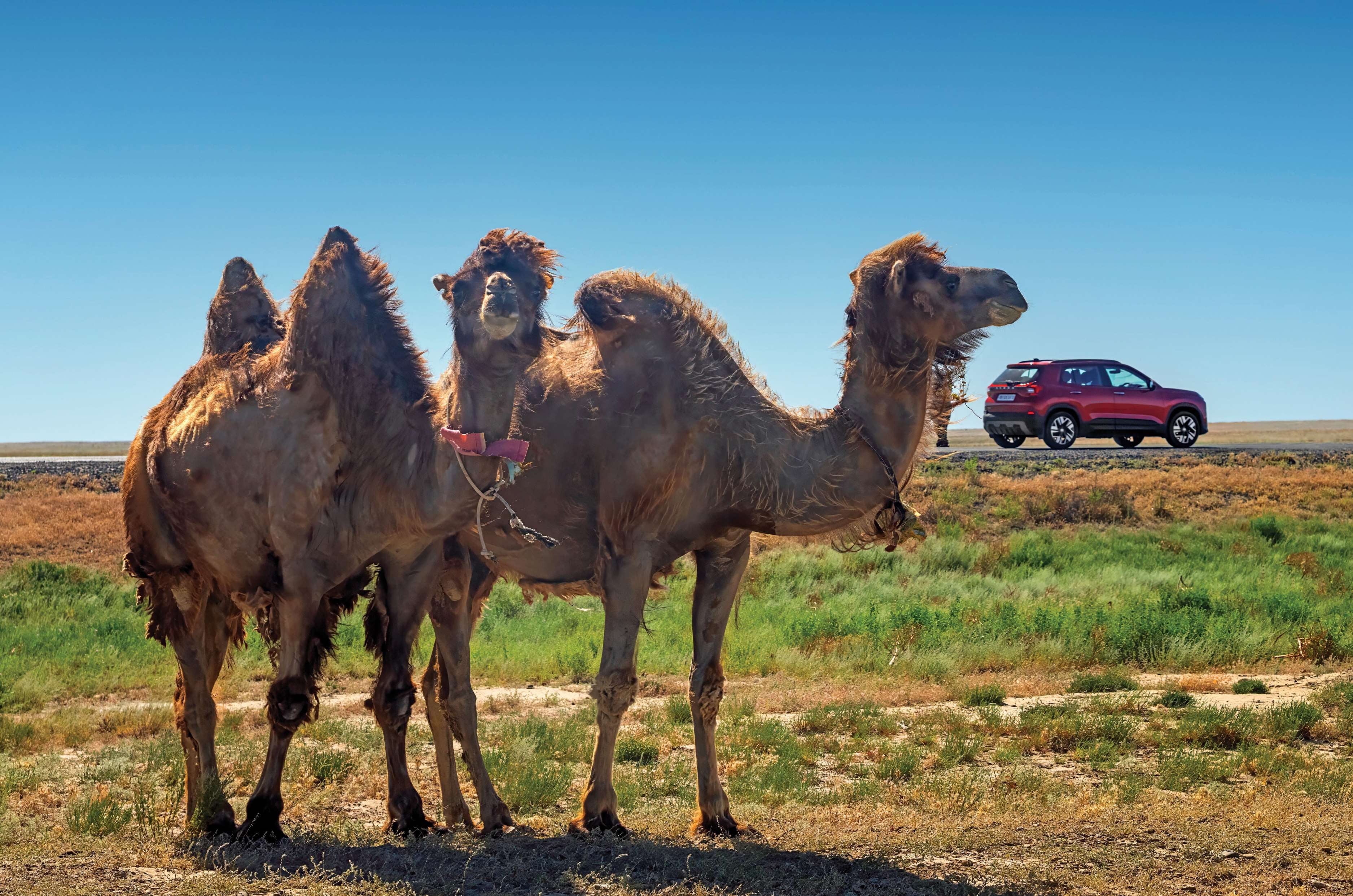
The Great Steppe, while stunning in size, is also a bit monotonous when you’re driving through it for days. The only respite would be a herd of double-humped Bactrian camels, cooling off at a nearby pond and often curious to know what a cherry-red Kylaq was doing in the middle of Kazakhstan.
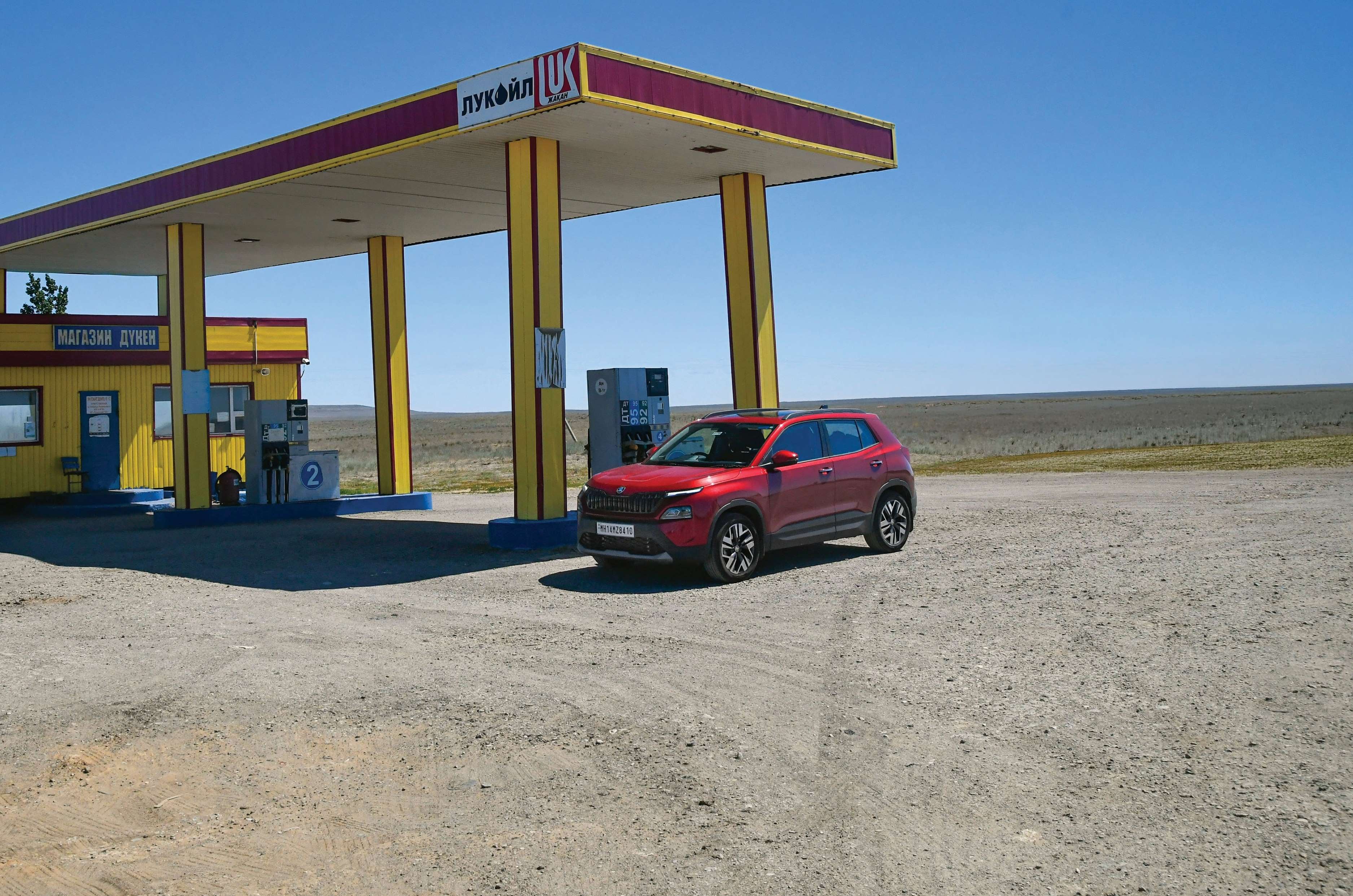
At Rs 58.17 per litre, Kazakhstan offered the lowest fuel price of the entire drive.
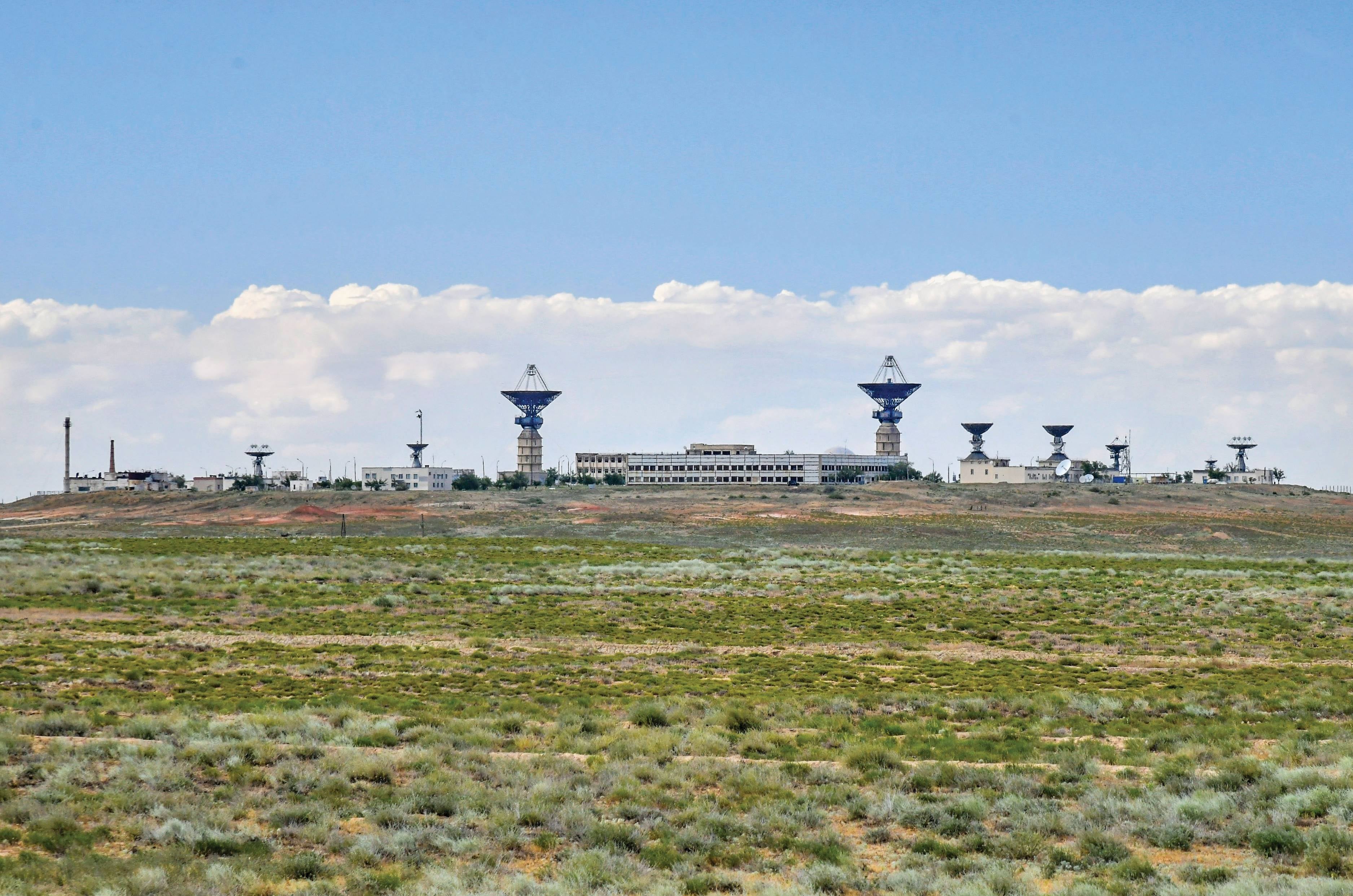
An interesting stop between Turkistan and Aral is the Baikonur Cosmodrome, which is the world’s first and largest operational space launch facility. However, thanks to the endless highways through Aral, Aktobe and Atyrau, we only got to test the Kylaq’s wheel alignment and its highway stability more than we would have liked.
Baikonur Cosmodrome – the world’s first, largest and operational space launch facility.
The mighty Stans were all about breathtaking sights, warm people and mouth-watering cuisine. The region still feels unadulterated, and that itself is what makes it special.
Kazakhstan in numbers
Turkistan – Kazakh-Russia border
Distance covered
3,237km
Fuel consumed
229.52 litres
Average fuel economy
14.10kpl
Approx. fuel cost
Rs 13,325
Avg. per-litre fuel cost
Rs 58.17
Total time driven
42 hrs
Average speed
77.1kph
Georgia – The Birthplace of Wine
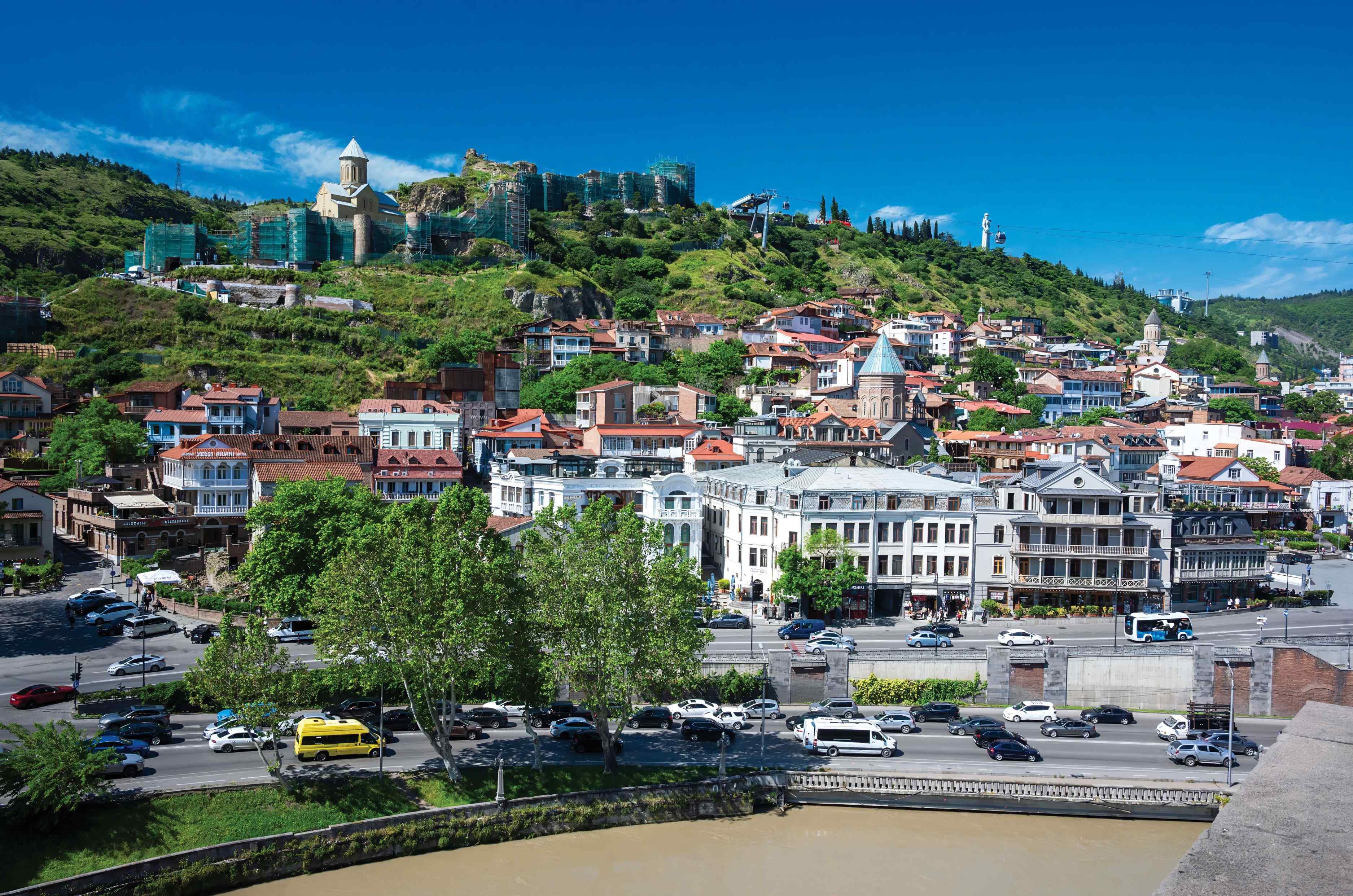
Compared to the vast landscapes and long highways of the Stans, Georgia was a contradiction. Based within the Caucasus Mountains, it has its share of twisties, which the Kylaq enjoyed. But the capital, Tbilisi, is the largest city and thereby pretty chaotic to drive in. Peak-hour traffic is just like what you would have in India, so we parked the car in a worryingly narrow alleyway and, for the most part, made our way on foot.
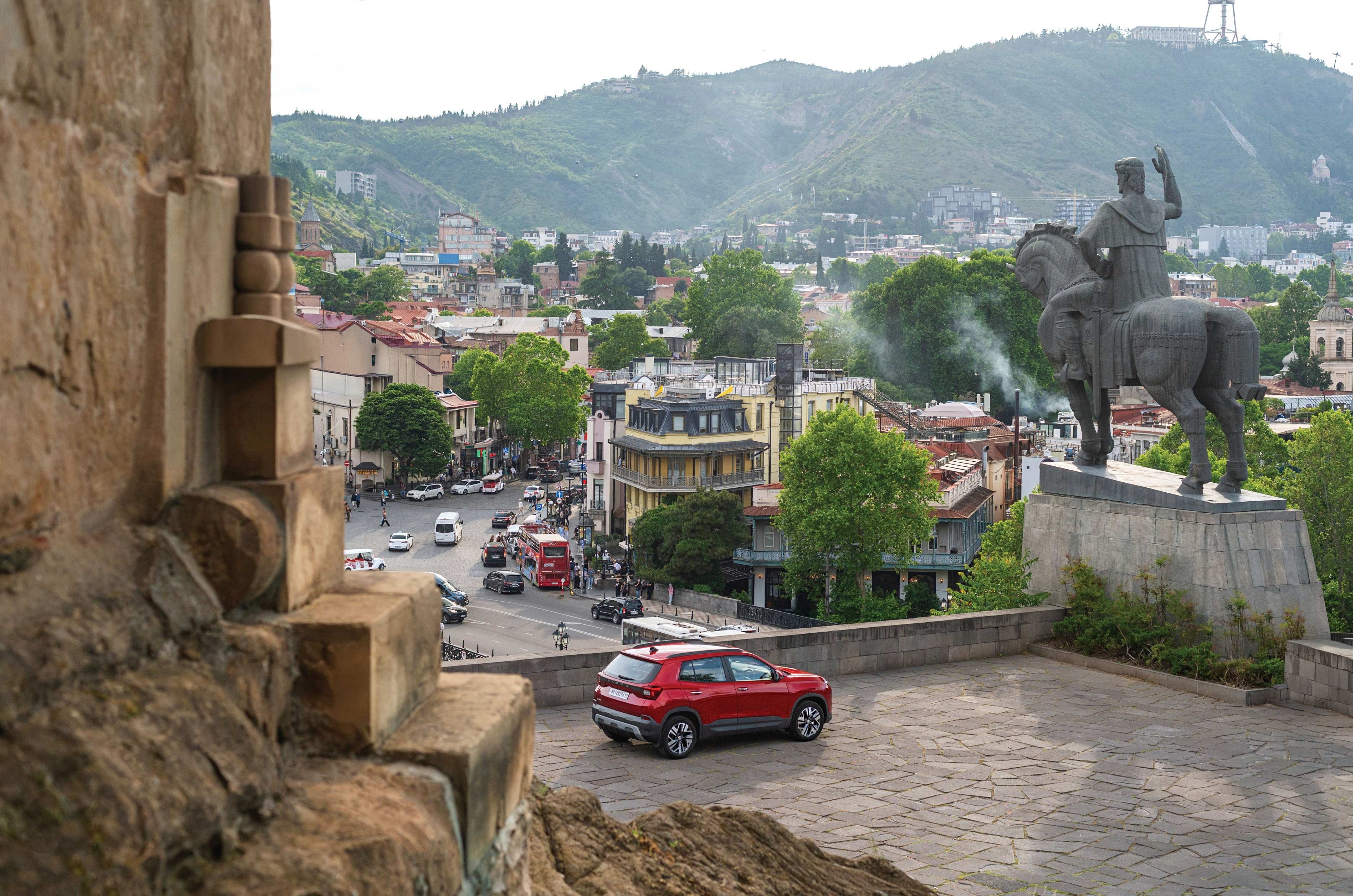
Huge statue of the founder of Tbilisi King Vakhtang I Gorgasali.
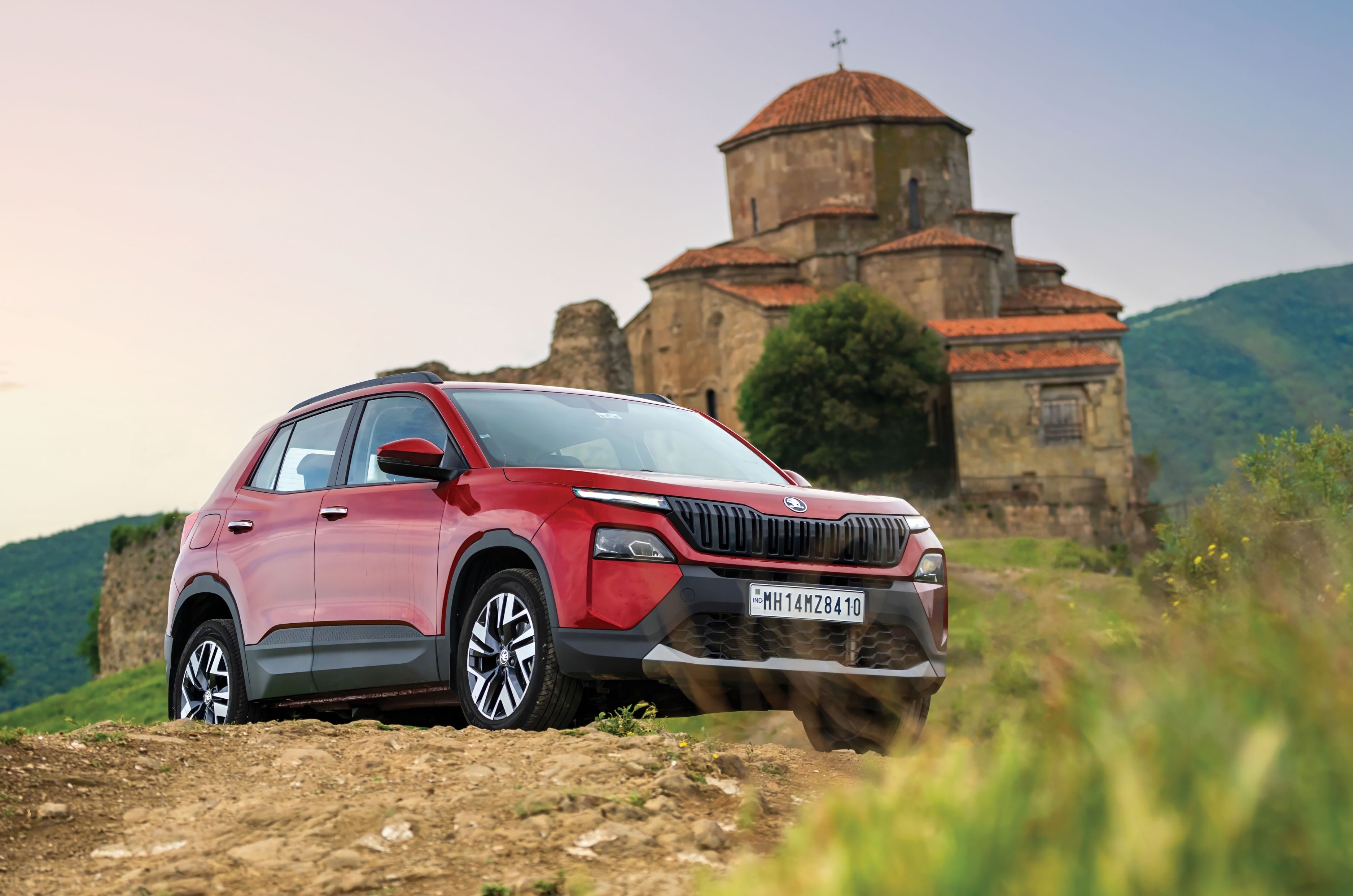
Like any big city, Tbilisi has its modern side, with glass buildings and modern restaurants, but there is still a large section that is rooted in tradition. Cobblestone streets with wooden houses and sulphur baths are a fascinating experience, as is the fantastic view from near the monument of King Vakhtang Gorgasali, the founder of Tbilisi.
The monument itself is a striking bronze equestrian statue located on a rocky cliff above the Mtkvari River, next to the historic Metekhi Church in Tbilisi, Georgia. But Georgia is known to be the birthplace of wine, and on our drive to Tbilisi, we spotted several vineyards sprawling for acres. We had to get a closer look, and thankfully, our guide’s friend owned one of them.
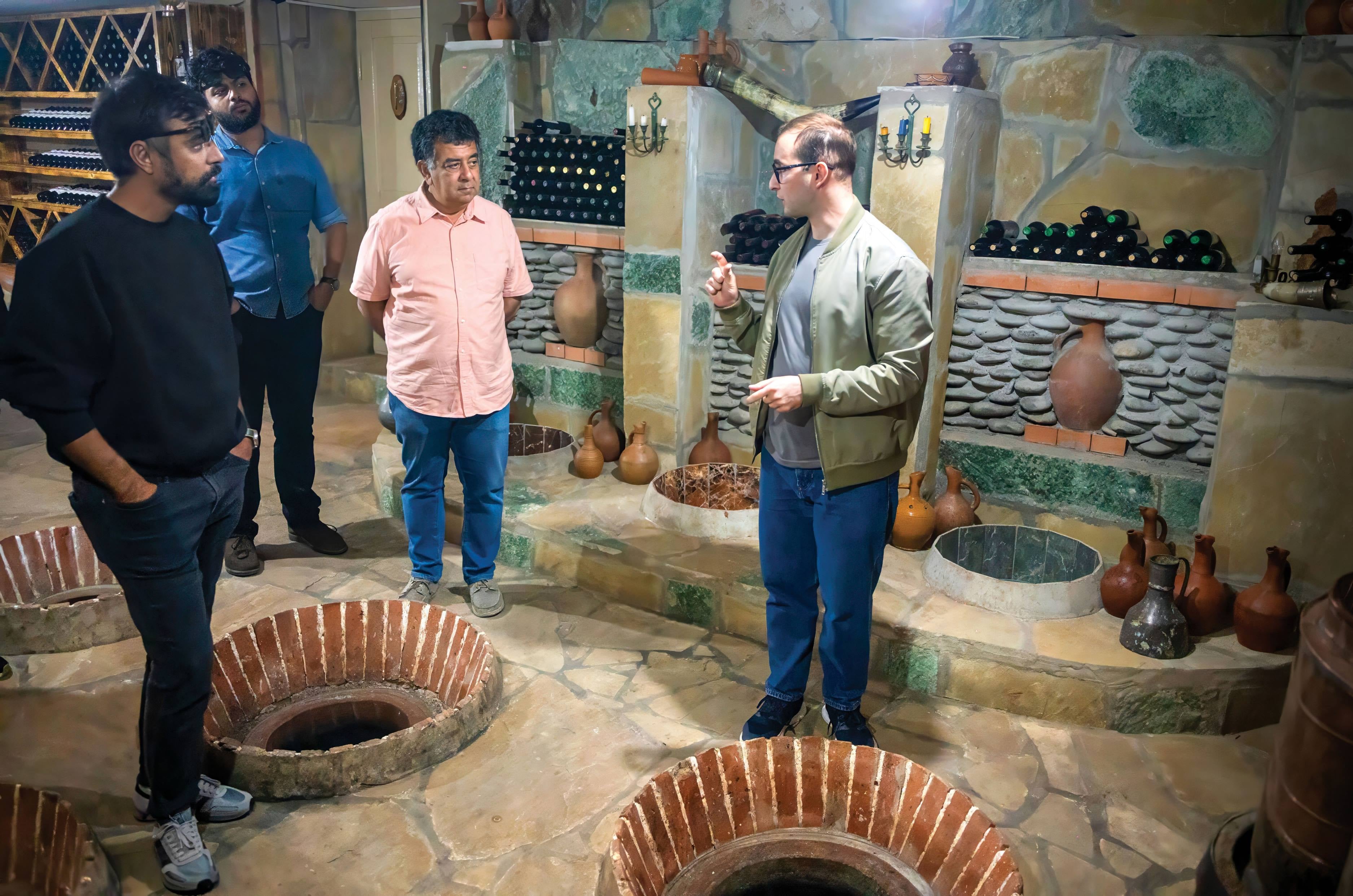
Georgian wine fermented in clay jars buried in the ground.
The Georgians still use the ancient process of fermenting wine in barrels under the floor, but have now blended it with modern technology that allows them to control the temperature and get a more consistent batch each time. Wine connoisseur or not, the experience is enthralling.
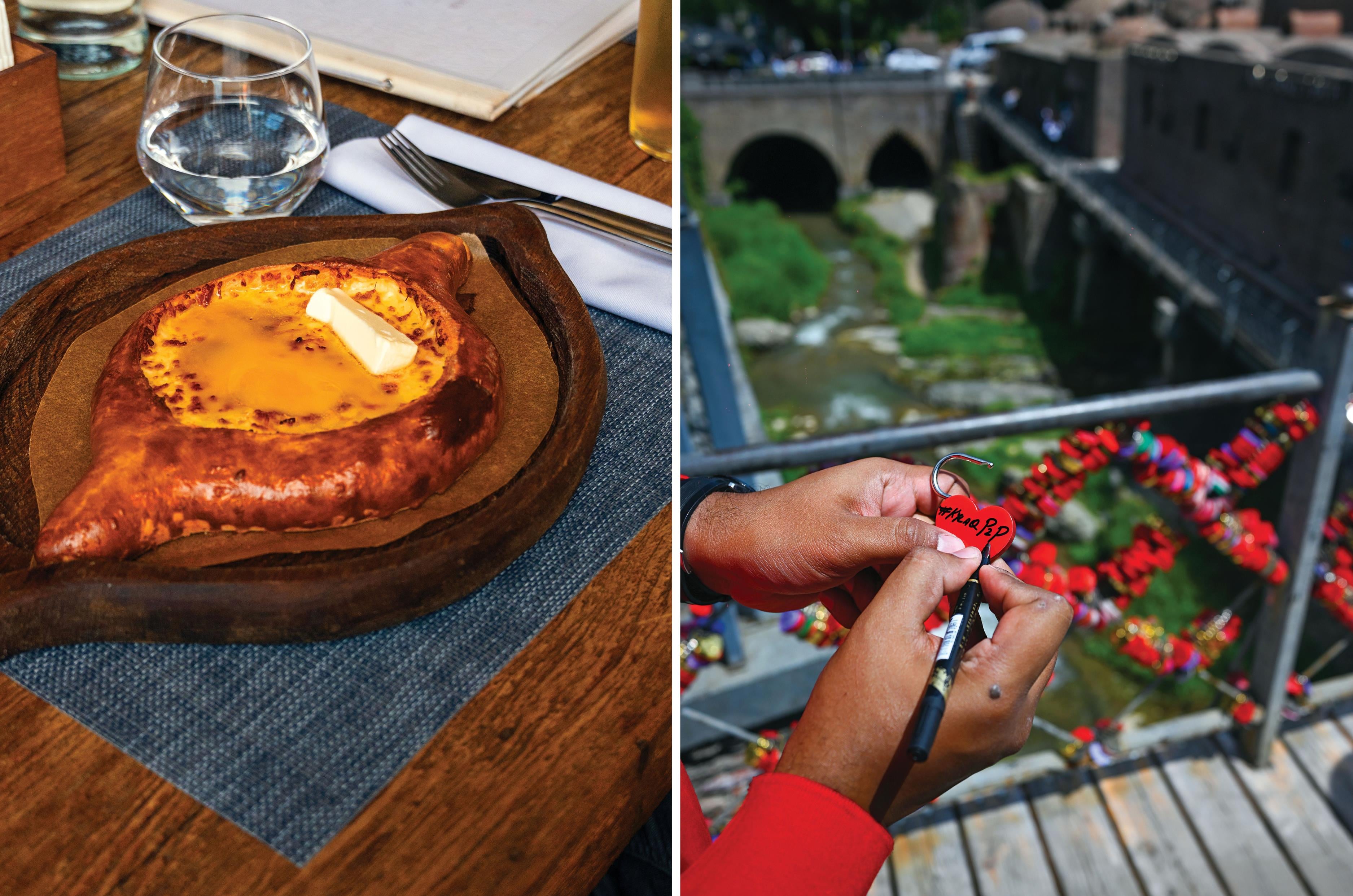
Khachapuri (flatbread with cheese and egg) is Georgia’s national snack.
The city tour built up an appetite, and we followed the scent of fresh bread for some authentic khachapuri. A Georgian flatbread that is hollowed out in the centre and filled with cheese, khachapuri varies depending on the region you’re in. You can have it with an egg cracked into it or with meat, too.
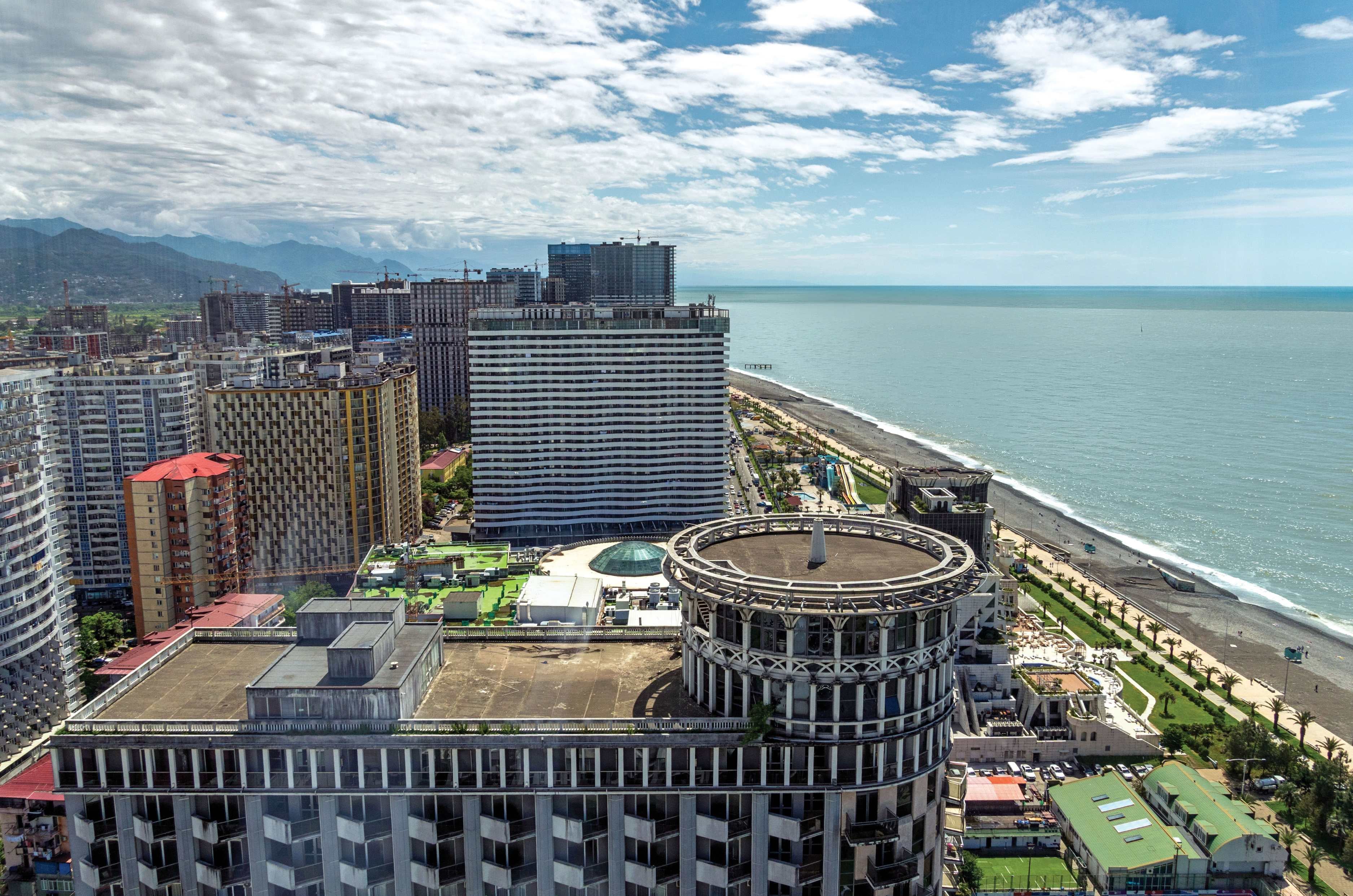
Coastal city of Batumi is a stark contrast of Tbilisi.
With sightseeing done, we drove the next day to the coastal city of Batumi. A vibrant, modern city with a lot more European influence. However, if the roads in Tbilisi were narrow, Batumi was on another level. Despite the compact dimensions of the Kylaq, our hotel parking was a sidewalk cordoned off by the hotel manager, as there simply was no space to park.
14th-century Gergeti Trinity Church has stunning views of the Caucasus Mountains.
Still, we made the most of it by strolling by the shore of the Black Sea, watching the locals angling for fish. Georgia, just like the Stans, offered a unique glimpse into this part of the world and its diverse culture. For our final stretch before Europe, we had one last country to drive through – the colourful Türkiye.
Georgia in numbers
Tbilisi – Türkiye border
Distance covered
624km
Fuel consumed
58.62 litres
Average fuel economy
10.64kpl
Approx. fuel cost
Rs 7,607
Avg. per-litre fuel cost
Rs 129.78
Total time driven
17.5hrs
Average speed
58.5kph
Türkiye – Gateway to Europe
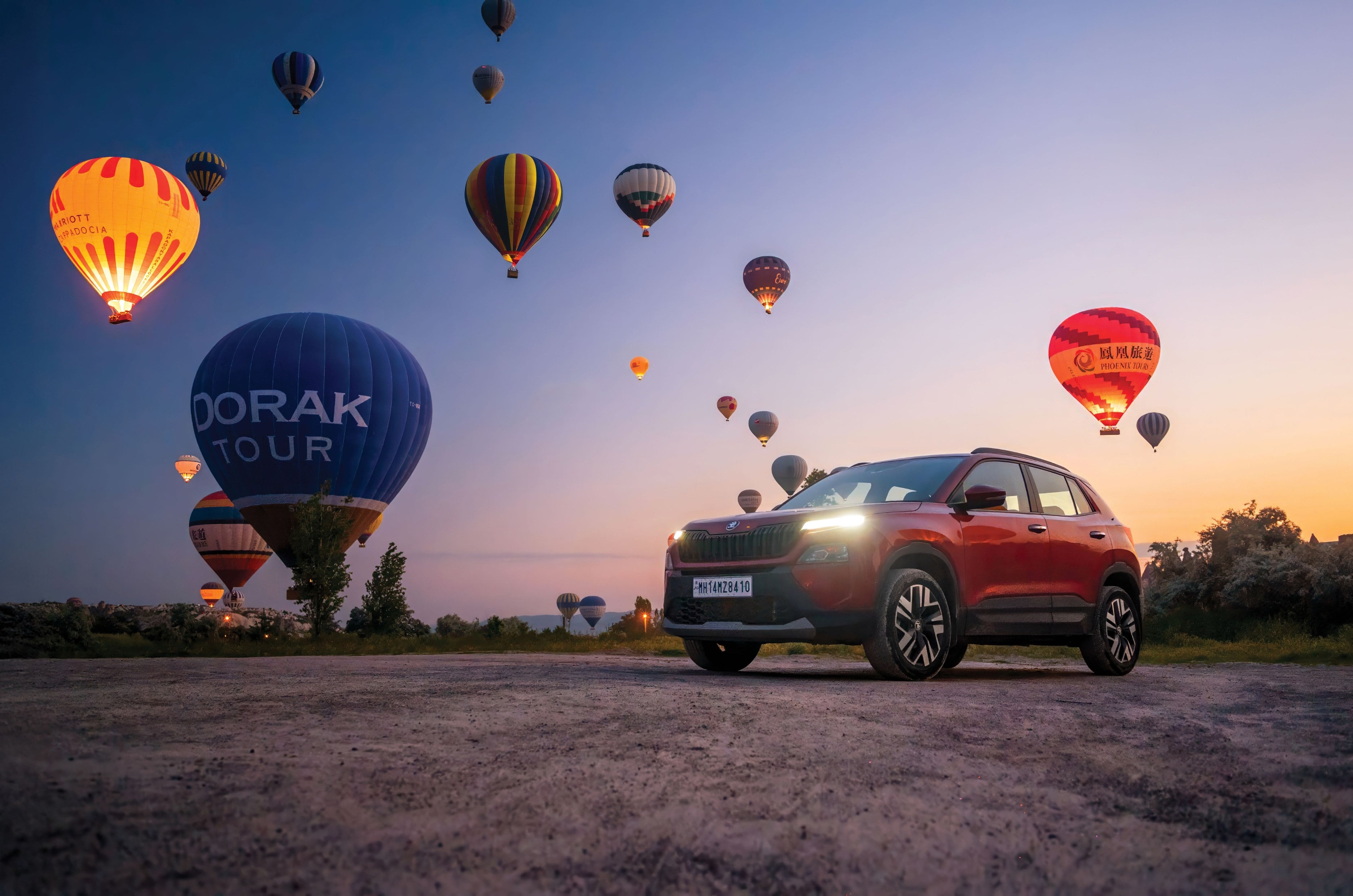
Cappadocia’s claim to fame is well worth the hype.
As the Kylaq crossed into Türkiye, our first stop was in Erzurum. A major winter sports town, but thanks to the time of year, our ski resort was bright, sunny and without an ounce of snow. A quick stroll through the small town and we hit the sack in preparation for a 700km-plus drive to the tourist haven that is Cappadocia.
The next morning, the plan was to do what you must do in Türkiye – take a hot-air-balloon ride. A pre-dawn wake-up call is never comfortable, but the peace was soon shattered by the sound of a group of old diesel Land Rover Defenders revving to keep themselves warm while they waited to transfer tourists to the balloon launch site. The balloon ride is arguably the largest tourist attraction in Türkiye, so there was quite the rush.
We, too, loaded up the Kylaq and hit the road to get the perfect shot of the sun coming up over the hills while the sky was filled with balloons. And boy, did we get it. As the orange tinge hit the fairy chimneys, we saw what the hype was about. The visual is nothing like you have ever seen: watching one colourful hot-air balloon is rare, and here there were over a hundred. We shot GBs worth of images and videos and got back to catch up on the broken sleep from earlier.
Türkiye in numbers
Erzurum – Bulgaria border
Distance covered
1,436km
Fuel consumed
98.1 litres
Average fuel economy
14.63kpl
Approx. fuel cost
17,187
Avg. per-litre fuel cost
Rs 134.19
Total time driven
19.5 hrs
Average speed
73.64kph
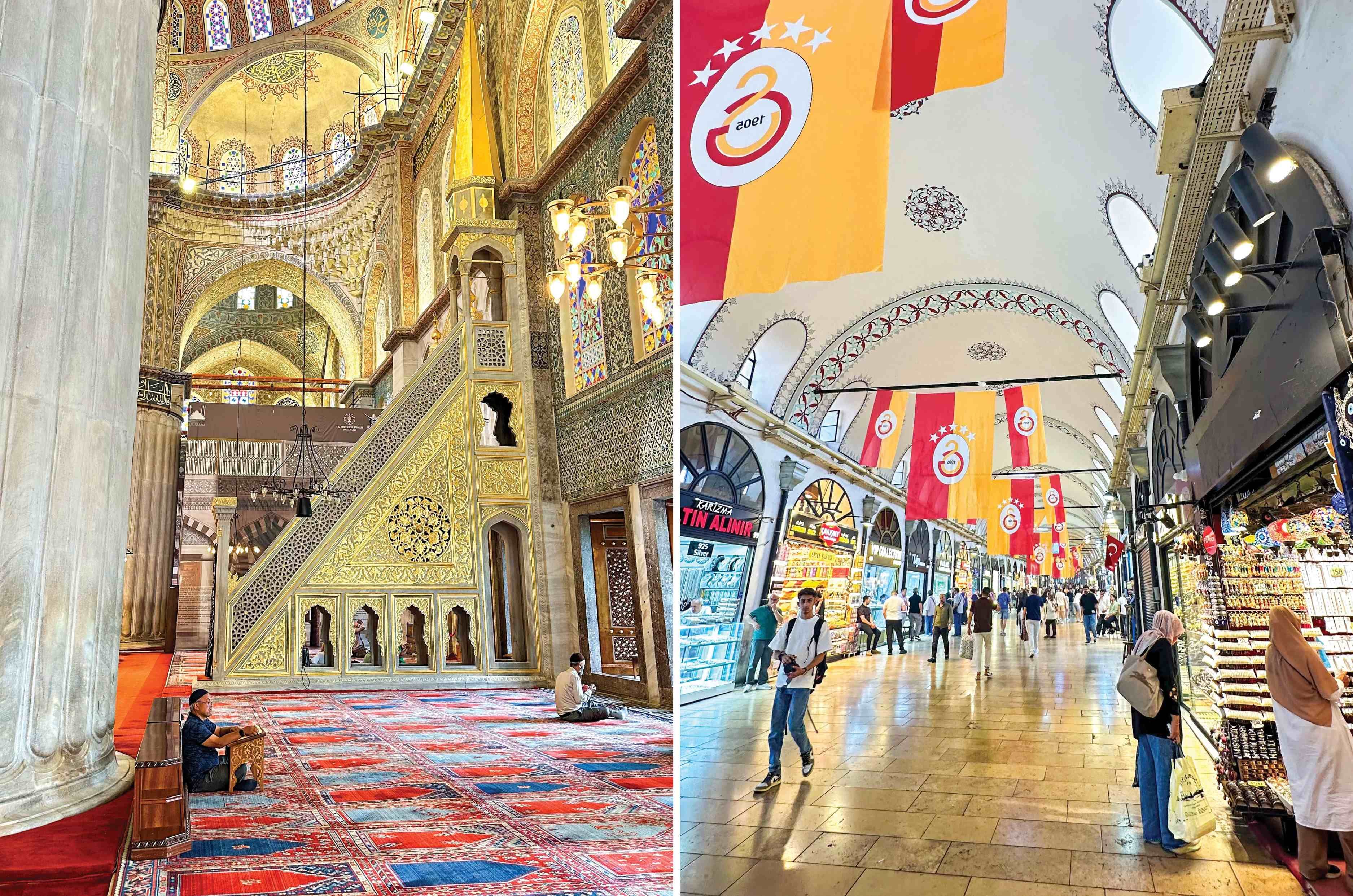
A relaxing drive the next day got us to Istanbul, which, to some, might seem like the capital thanks to its bustling character – a glimpse of which we got as we got closer. A traffic jam stretching for more than a couple of kilometres brought the Kylaq to crawling speeds. To avoid the repercussions of driving next to hasty cab drivers, we parked the Kylaq and headed to check out the nightlife, but more importantly, the döner kebab.
Exceptional interiors and an unbelievable calm in Istanbul.
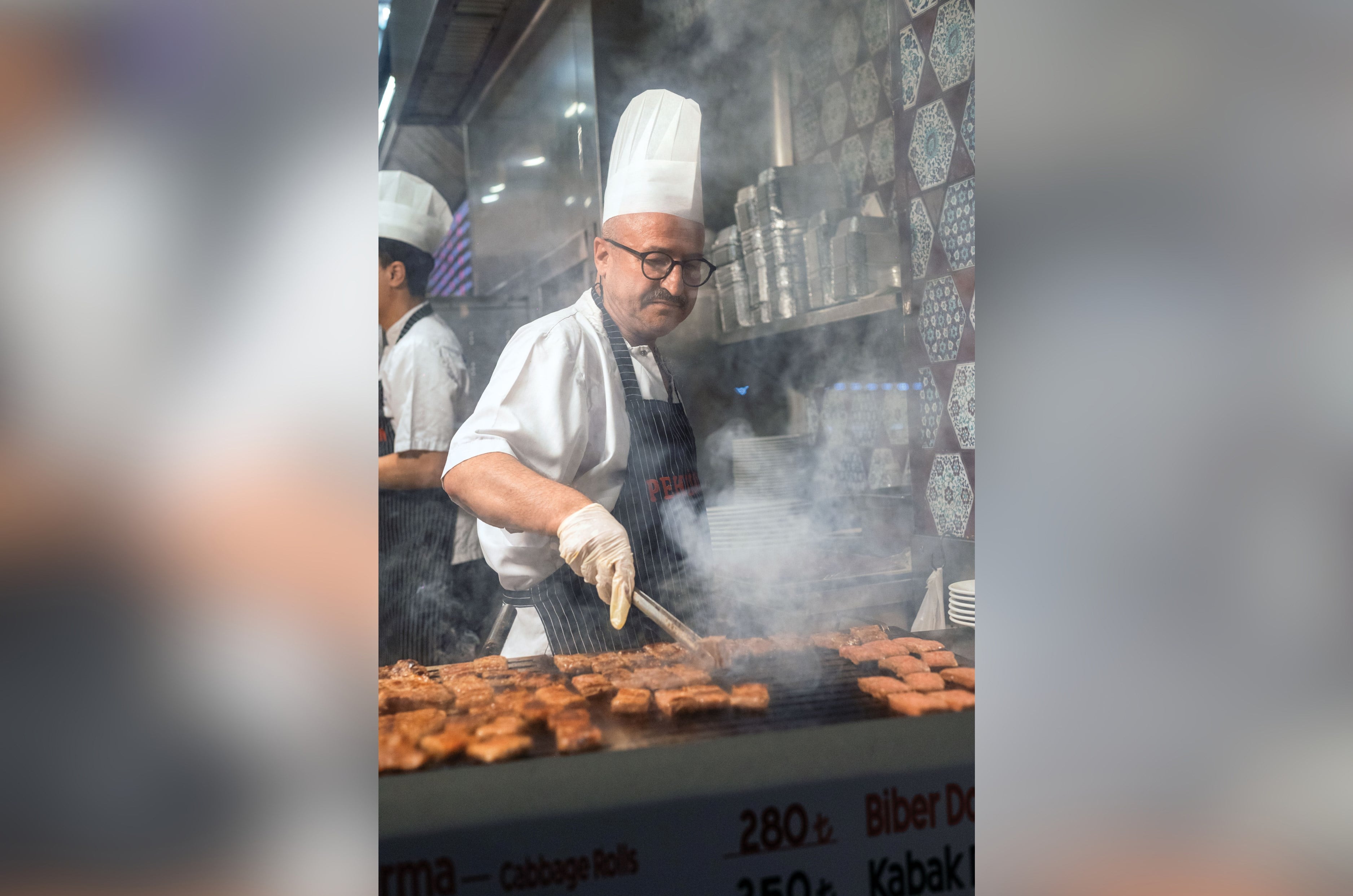
Similar to a shawarma, the döner kebab consists of a pile of meat that is cooked on a rotisserie over a flame. The dripping fat is mopped up by pita bread, which is then loaded with the sliced meat and seasonings. After a long walk through the Grand Bazaar, haggling for a fake Rolex, the döner becomes almost a necessity.
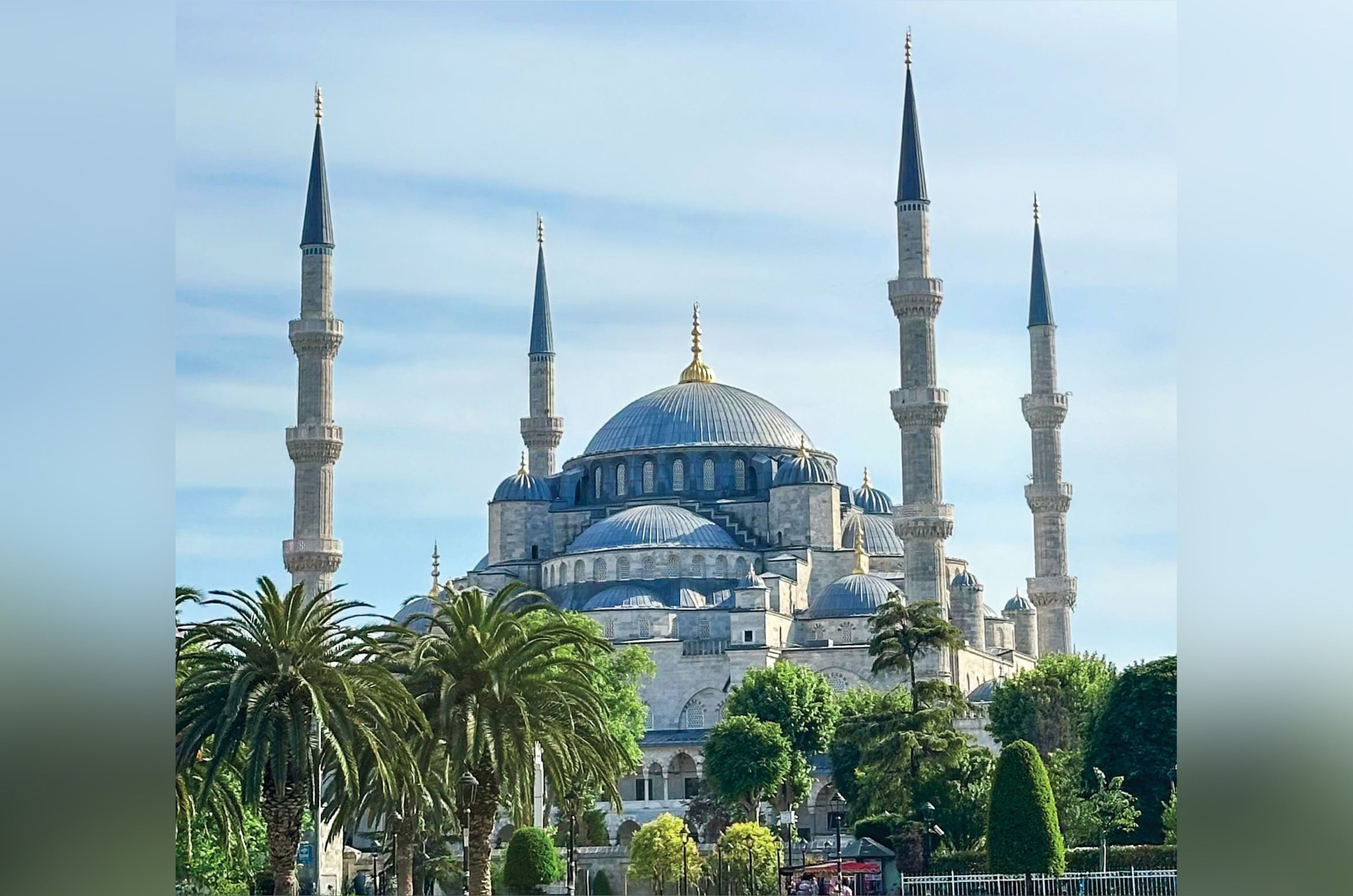
What’s also equally stunning is the Blue Mosque. Known formally as the Sultan Ahmed Mosque, it was constructed between 1609 and 1617 in the Ottoman era by Ahmed I. To get the entire mosque in frame, you need to fall back to the Hagia Sophia Mosque, which is in the same vicinity. Both equally grand, equally detailed and equally important.
The Blue Mosque, built in the Ottoman era, is majestic.
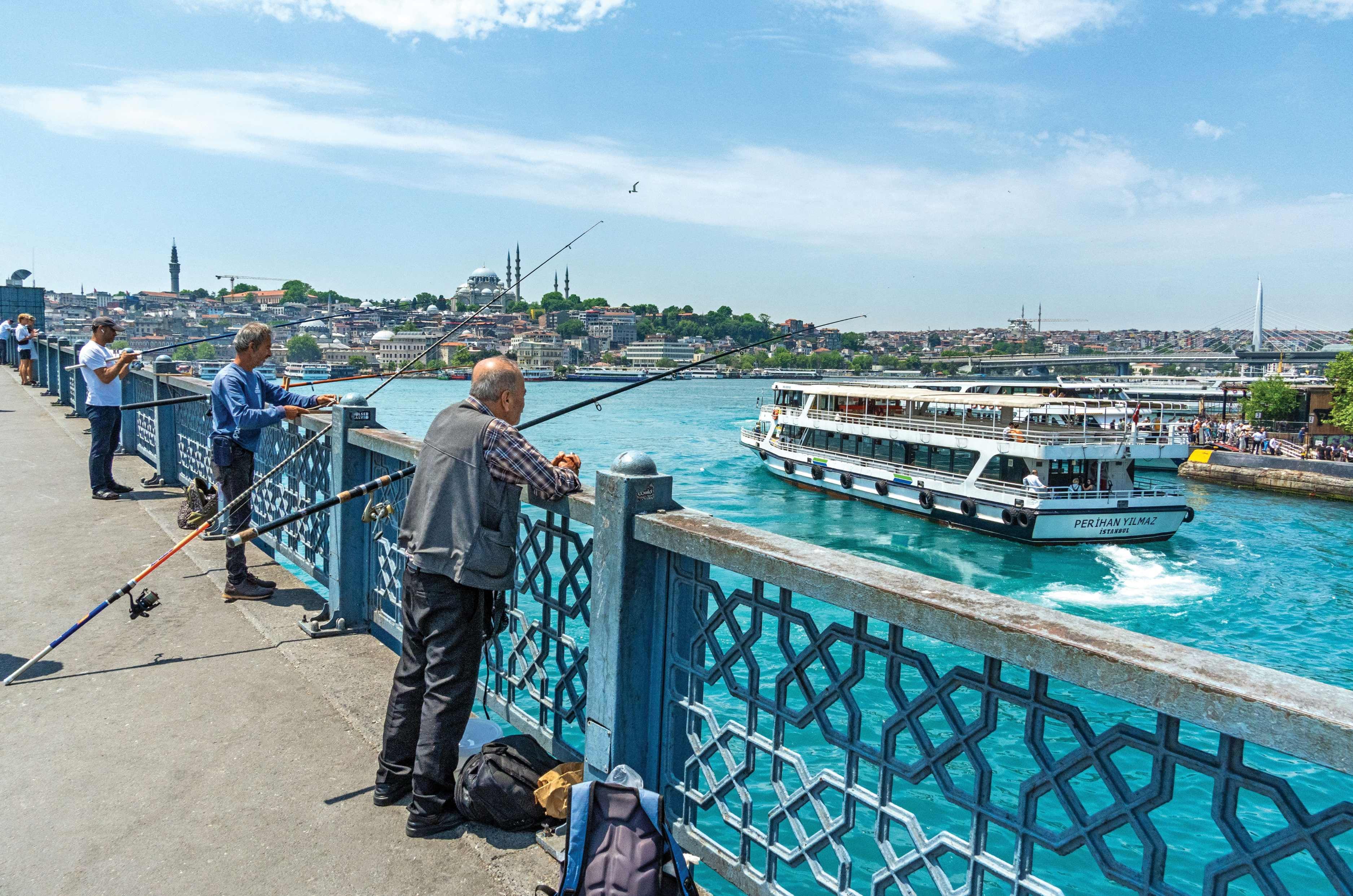
To explore more of Türkiye, we got back into the Kylaq and realised there was a bridge that is unlike any other in the world. The Bosphorus Bridge is located over the Bosphorus Strait, but its claim to fame is that it, quite literally, has one end in Asia and one end in Europe. You can cross the bridge in about two minutes, depending on traffic, but the sense that you can practically drive over from Asia into Europe before you can finish watching a reel is unreal.
Angling over the Bosphorus strait is a common hobby.
Europe – Home Stretch
Bulgaria – Romania – Hungary – Slovakia – Prague
The end of our incredible Pune-to-Prague drive was now a matter of days away. After over two months on the road, we were a couple of thousand kilometres away from the finish line. The excitement that had tapered off midway was back in full force.
We would be entering Europe through Bulgaria, and the border, as expected, was busy. Documentation, carnets, passports, stringent car checks and some explaining later, we were finally in.
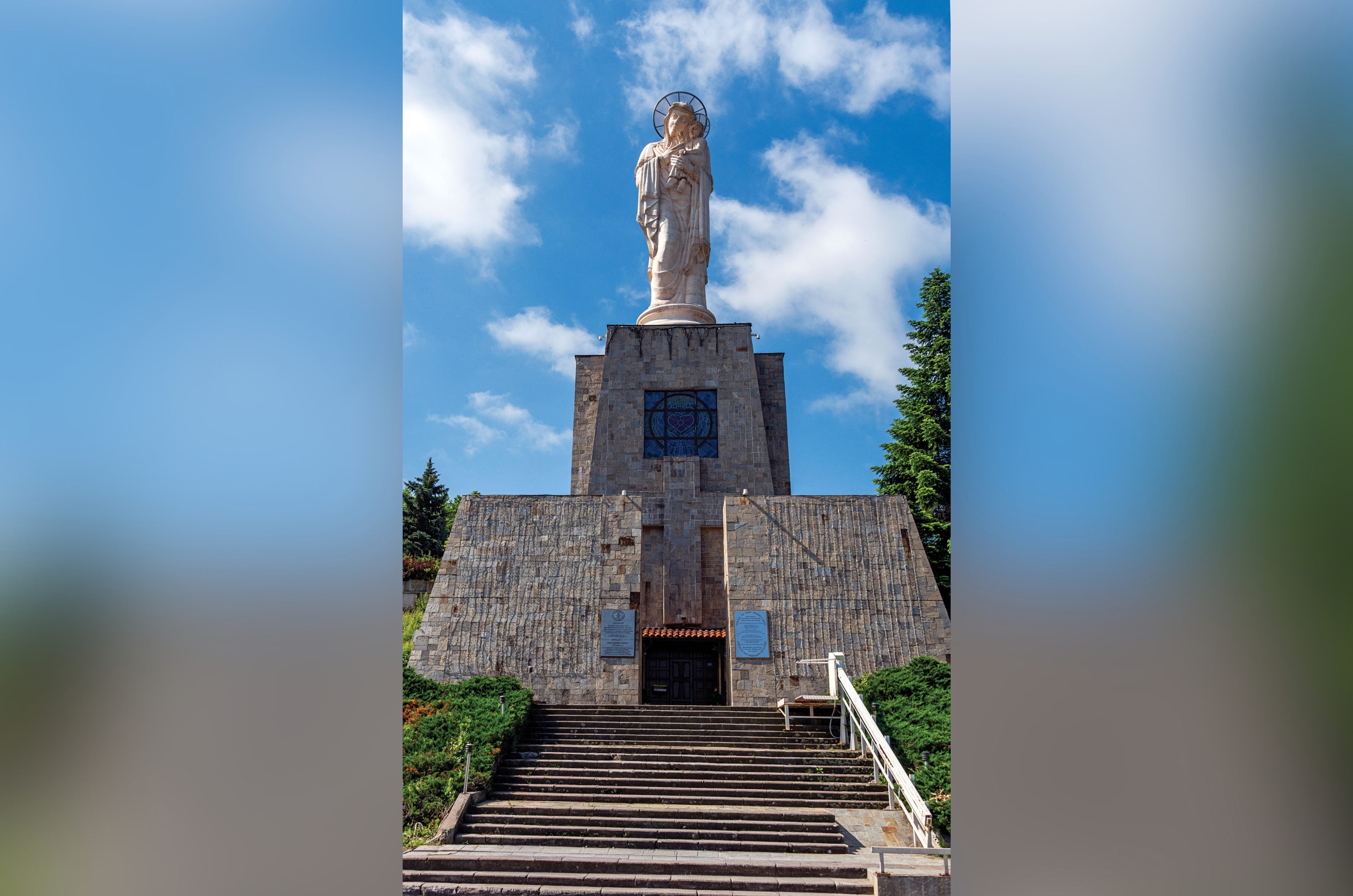
Monument of the Holy Mother of God in Haskovo.
Haskovo is a quaint town with a slow pace and none of the bustle of a European city, but it boasts a Guinness record for having the towering Monument of the Holy Mother of God, the tallest statue of the Virgin Mary and Baby Jesus in the world. Naturally, we had to check it out before we headed further.
Crossing countries in Europe is the equivalent of crossing states in India. There are no significant border checks or passport-control booths. A board with the blue EU flag and the name of the country is all you will see.
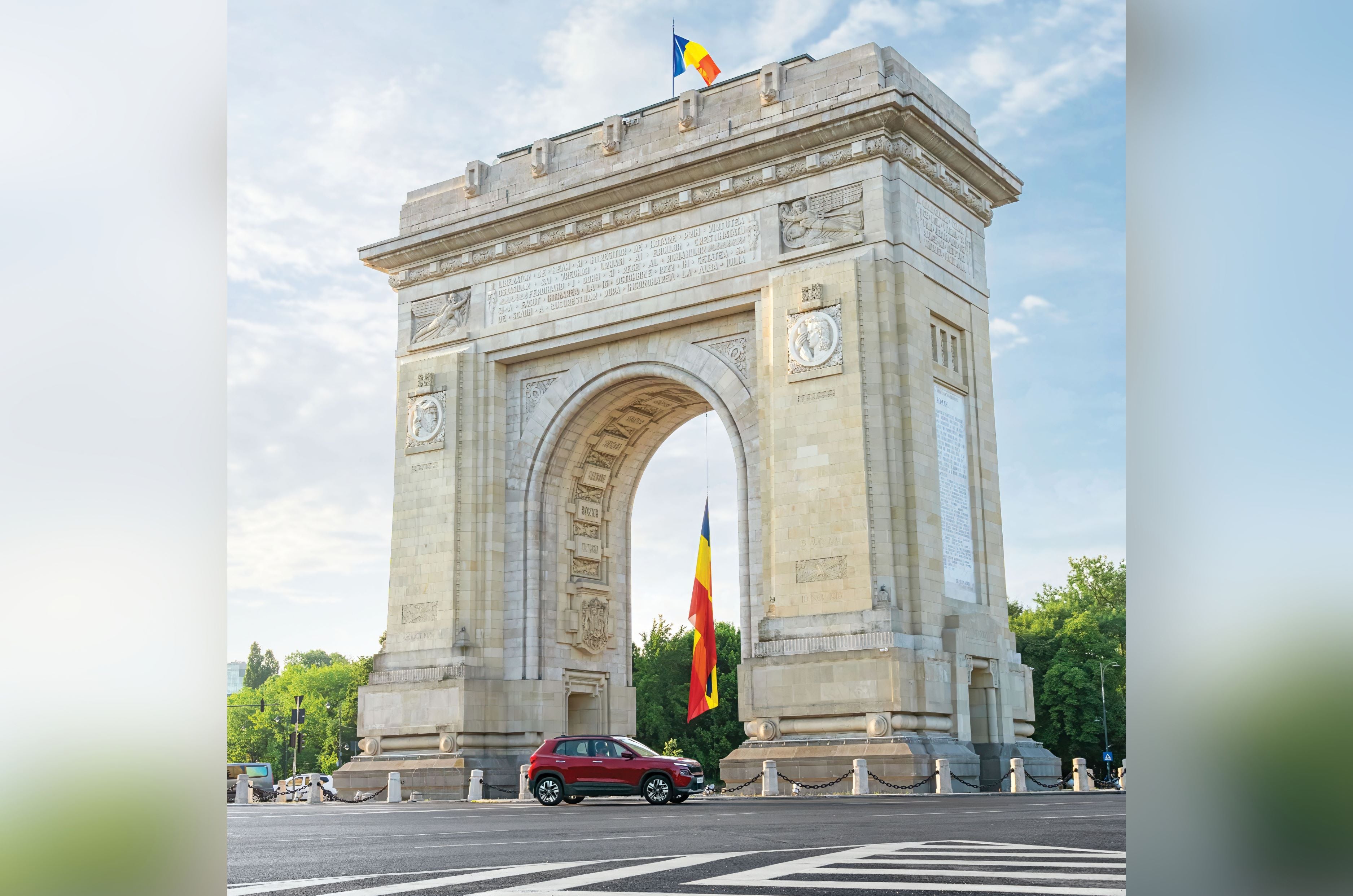
Romania’s Arcul de Triumf an ode to the one in Paris.
We crossed into Romania rather unassumingly and headed for Bucharest. The capital is picturesque and is also colloquially known as “Little Paris”. Like the Arc de Triomphe in Paris, Romania too has its own version. A tad smaller in comparison, but just as iconic.
However, what takes the cake is the Parliament Building, formally known as the Palace of the Parliament, which is also the heaviest building in the world, standing at approximately a ridiculous 4,098,500 tonnes. We couldn’t verify that, but since the Kylaq looked like a mere speck in front of it, it was all the proof we needed.
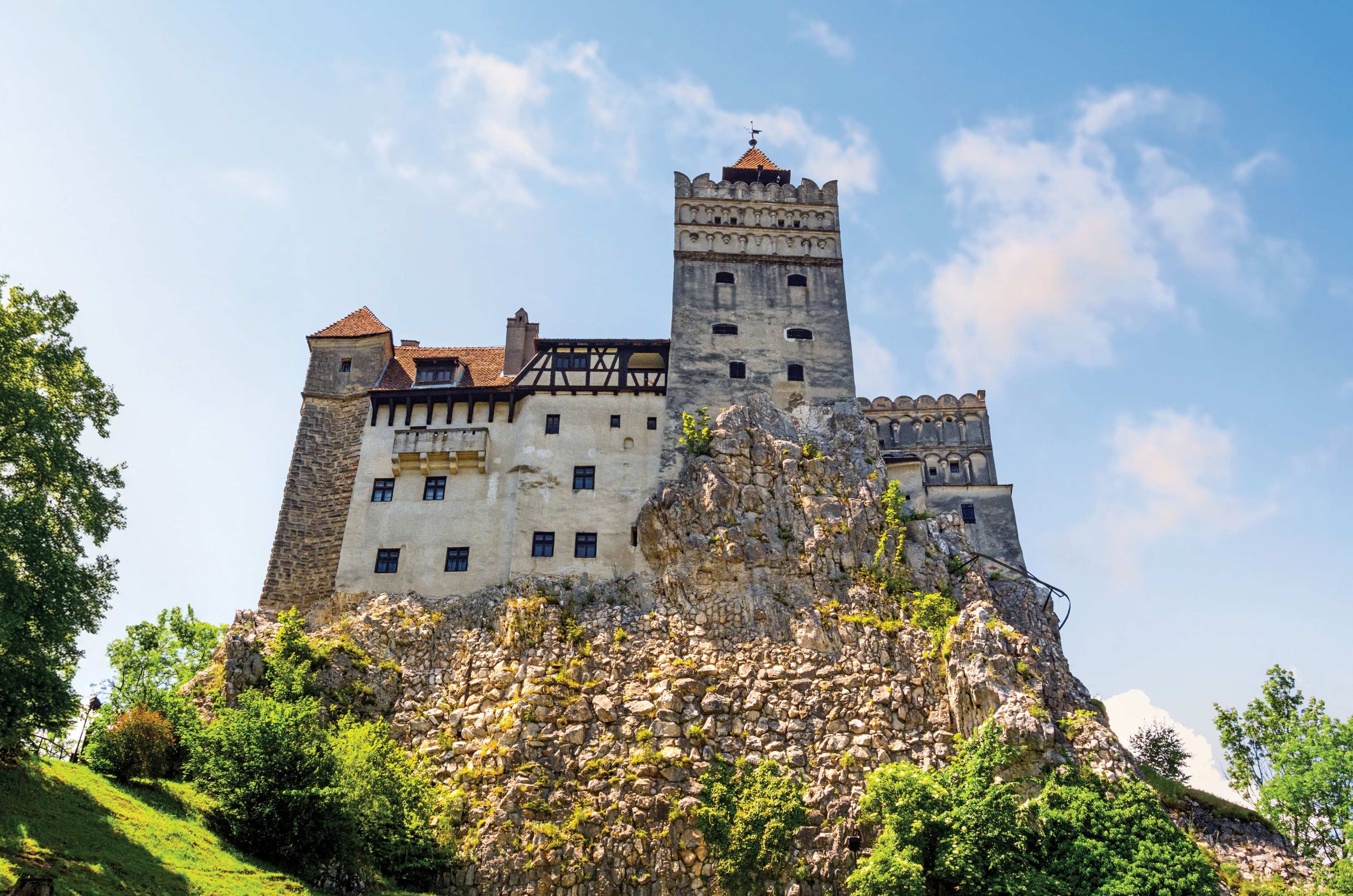
Bran Castle is widely marketed as Dracula’s home.
Bucharest also has a thriving nightlife, with the quiet cobbled streets turning into party hubs post-sunset. As we headed towards Hungary, we couldn’t help but make a stop at Bran Castle. Despite the myth that it was once home to the famous Dracula, there is nothing but merchandise at the foot of the castle to prove that claim. Historians have dismissed the claim and, while it is fascinating, there is plenty of evidence against it. Still, that did not stop us from buying some fake vampire teeth and Dracula magnets.
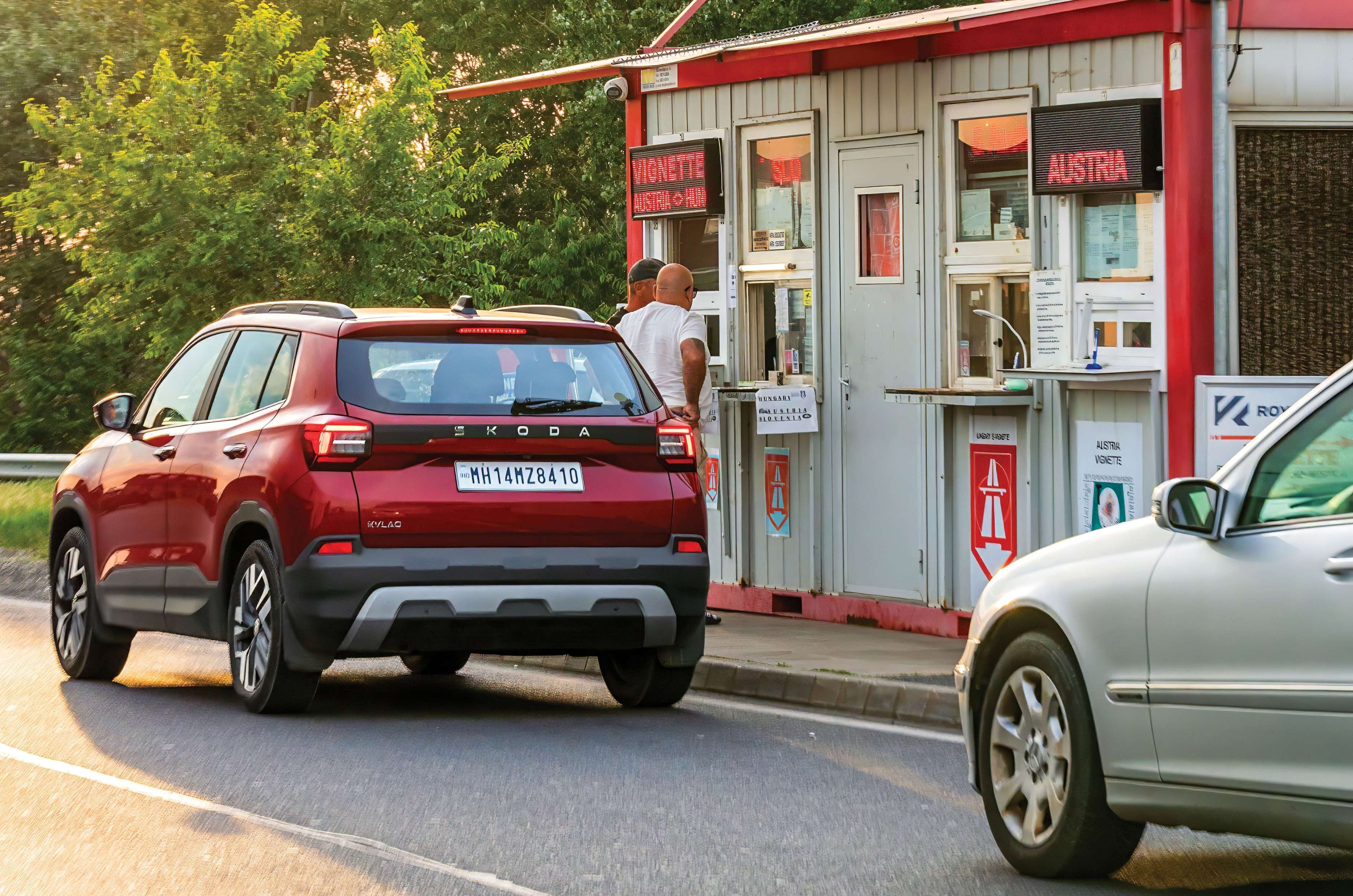
Vignette is Europe’s FASTag and is essential on the freeways.
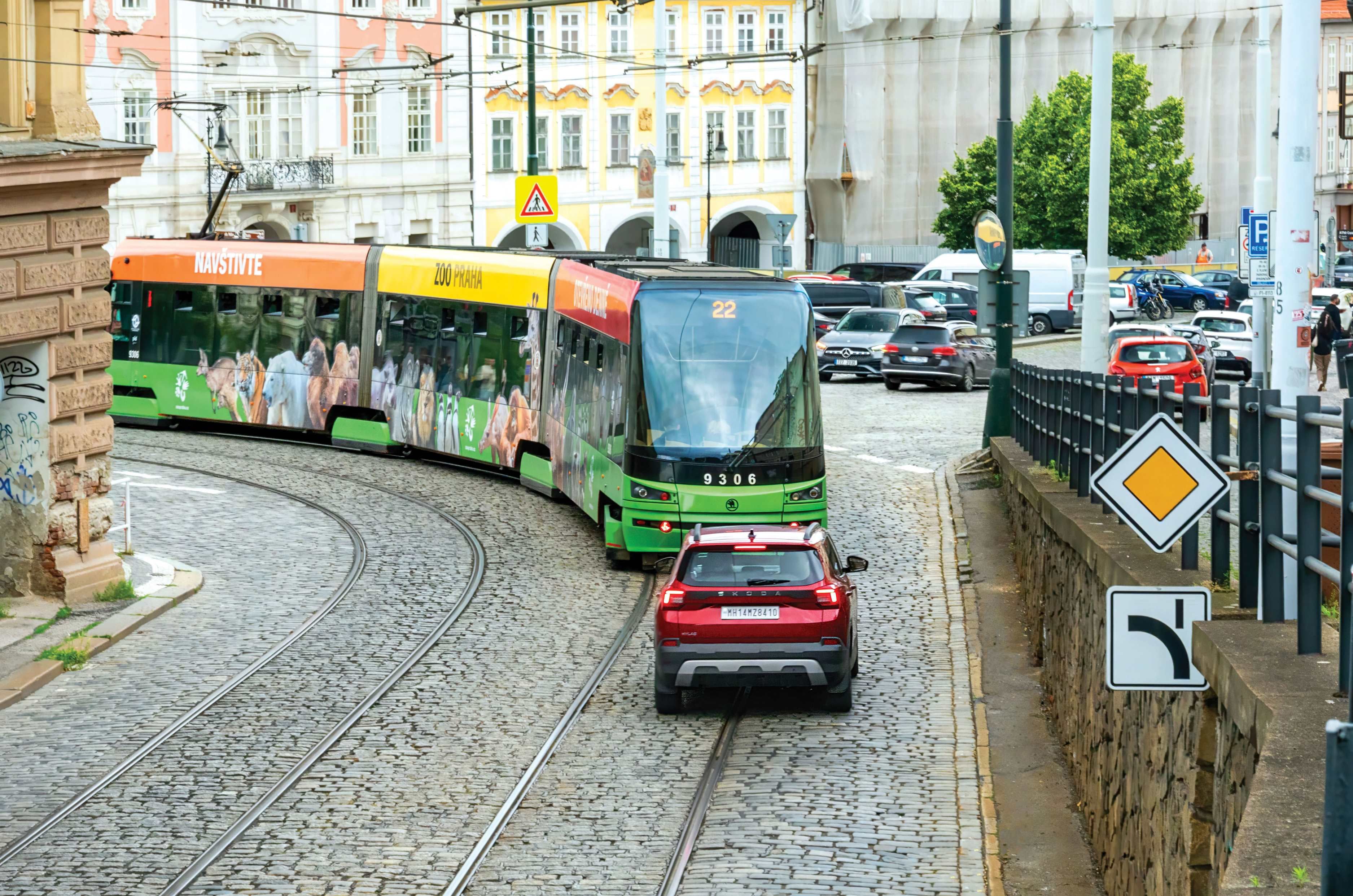
From the shores of the Black Sea, we drove into landlocked Hungary. The drive to Budapest was long, but thanks to Europe’s seamless highways, it was light work for the Kylaq. In Europe, it just blended in with the other cars, and at no point did it feel out of place. It might have been built in India, but it felt every bit as European as it got closer to Prague.
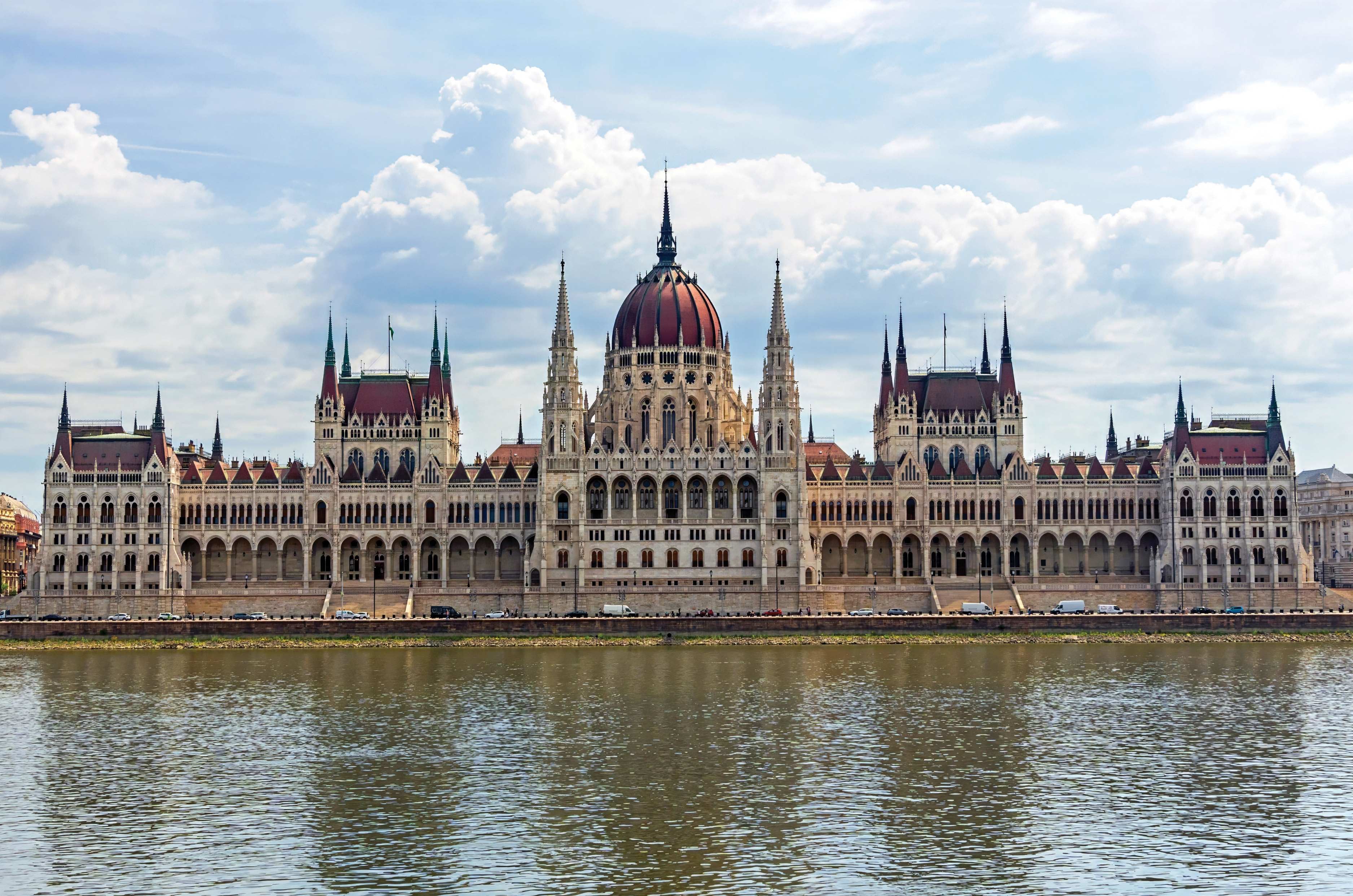
Budapest’s Parliament Building sits by the banks of the Danube River.
As we drove by the banks of the Danube, we were in awe of the stunning Hungarian Parliament Building. Budapest is also known for its bridges, with as many as 13 iconic ones, each with its own identity.
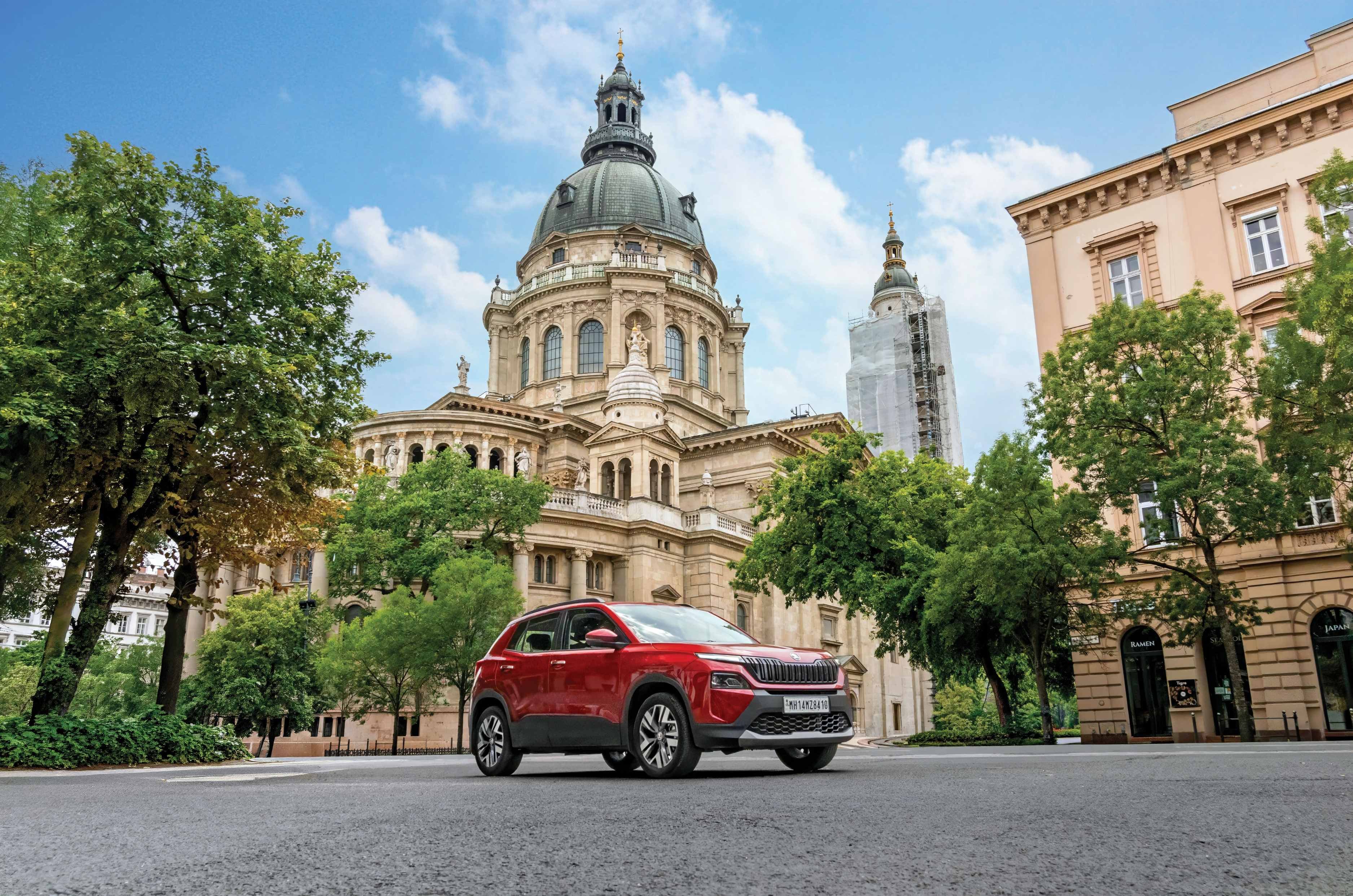
St. Stephen’s Basilica is the largest church in Budapest.
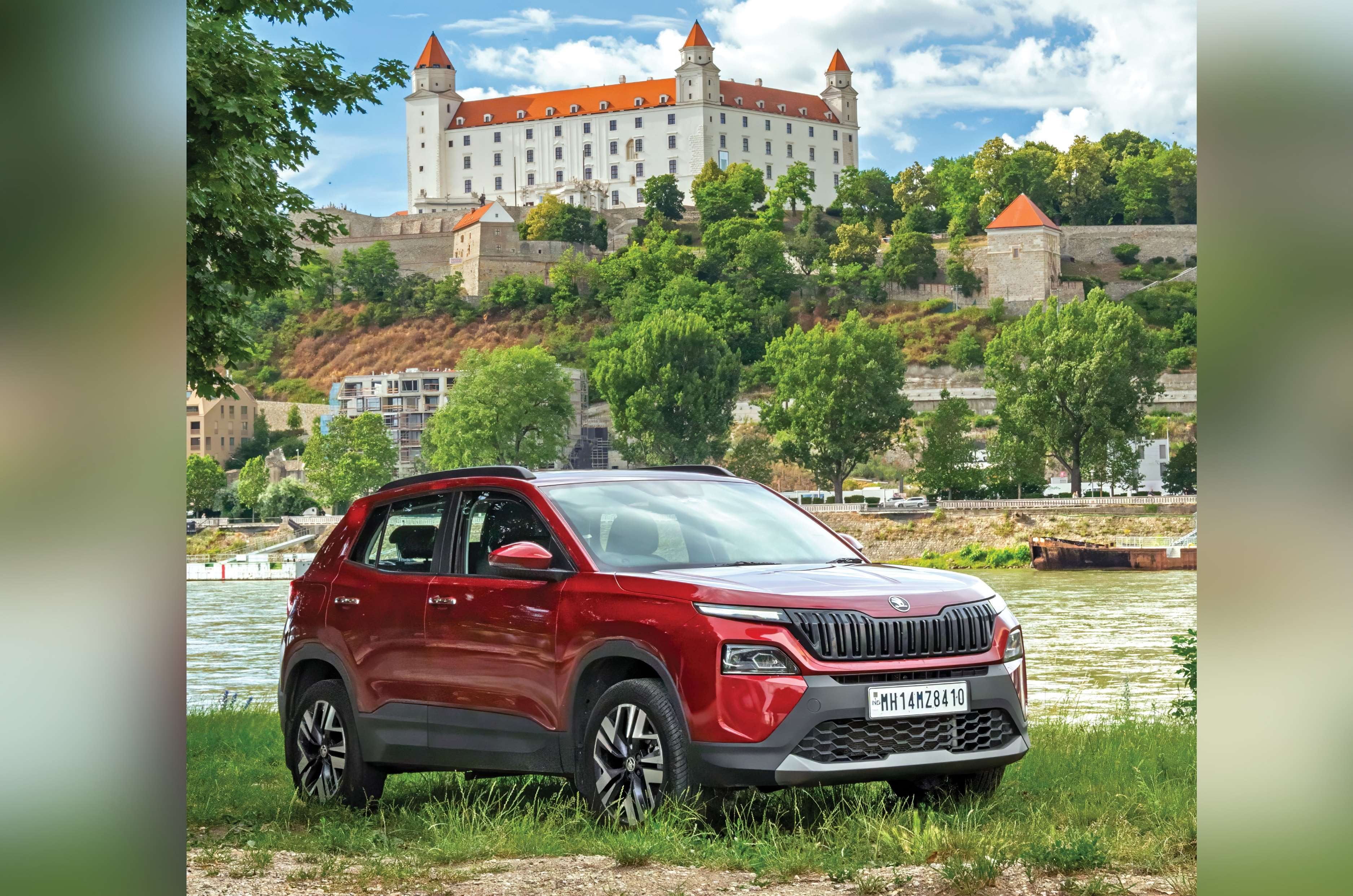
The last country before we entered the Czech Republic was Slovakia. The small country, with a quarter of the population of Mumbai, has a rather interesting Indian connection, as we found out in the pedestrian-only zone of its capital, Bratislava. Bratislava was visited by Pt. Jawaharlal Nehru in 1938, along with a young Indira Gandhi, regarding the freedom movement under British rule.
Bratislava Castle, built in the 13th century on the banks of the Danube, is now a museum.
The town square is also an open market with rich produce, handmade jewellery and a lot more. After buying the last few souvenirs before our bags exploded, we were set for the home stretch.
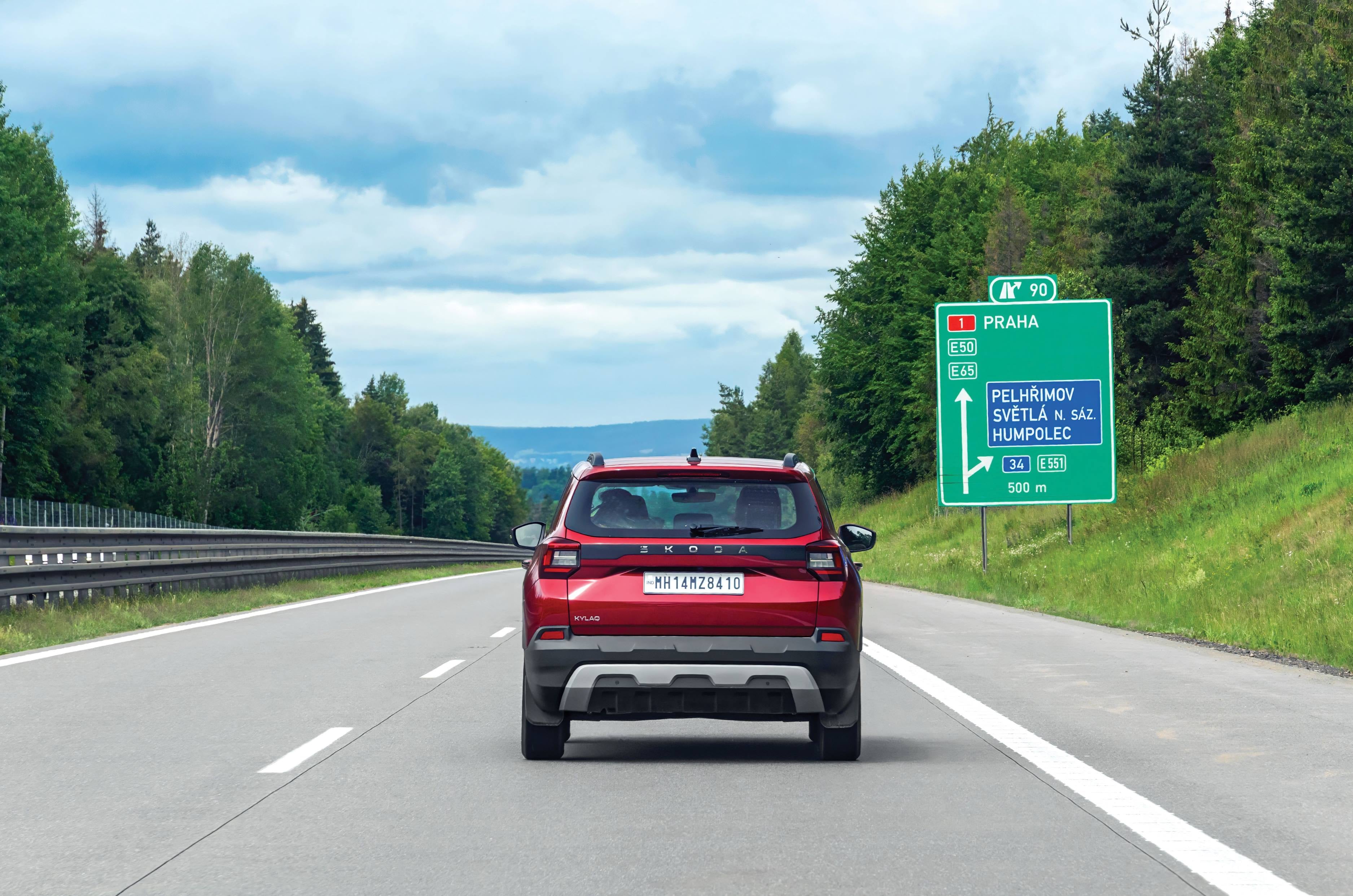
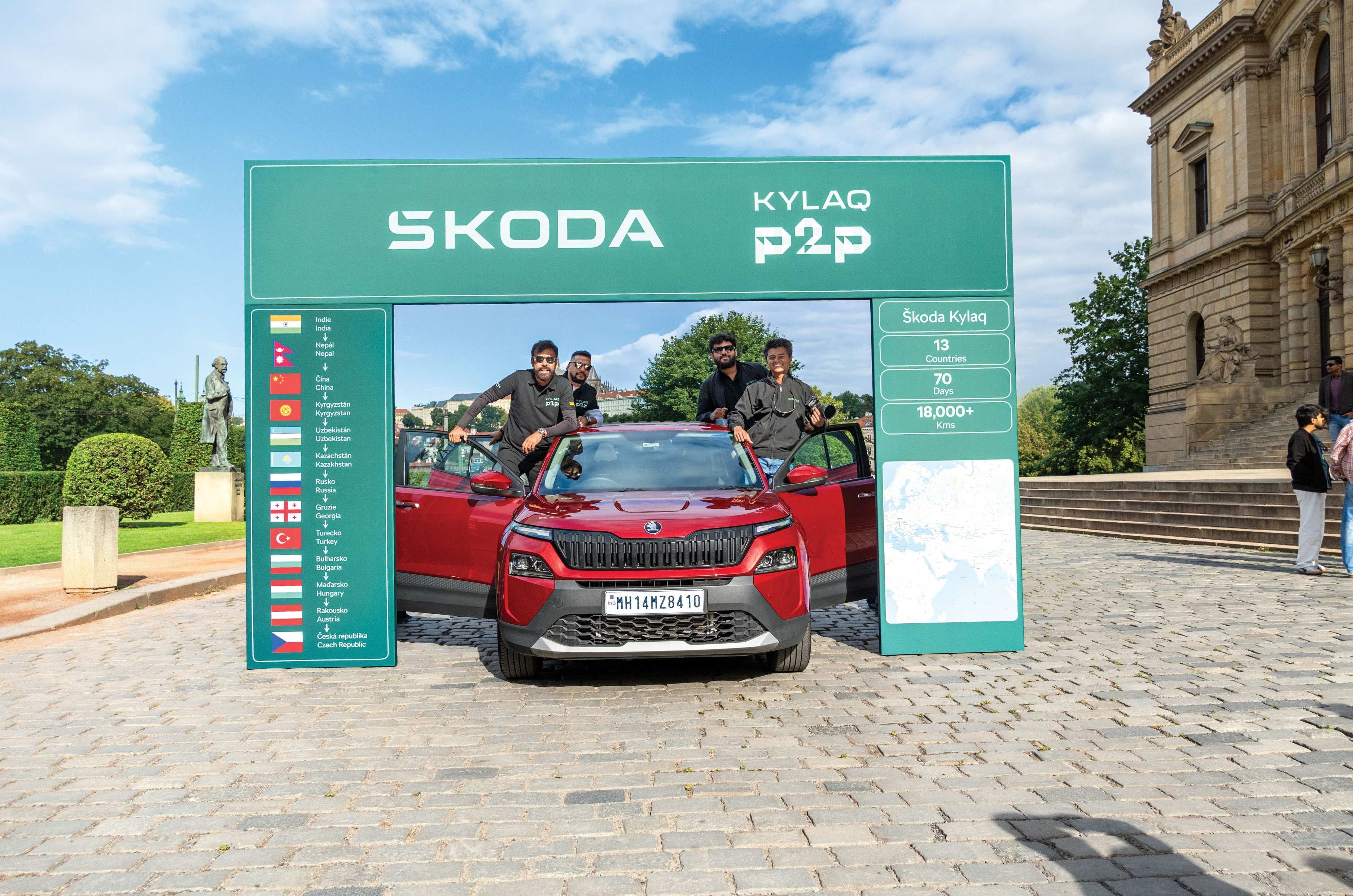
Prague boards were the beginning of a bittersweet end.
Prague was no more than 200-odd kilometres away, and the bittersweet feeling of it all coming to an end loomed over each and every one of us. As we crossed Brno and got closer to Mlada Boleslav (Skoda’s headquarters), we all reminisced about how gigantic this drive had been. Seventy days, almost 20,000km and not a single fault with the car, not even a puncture.
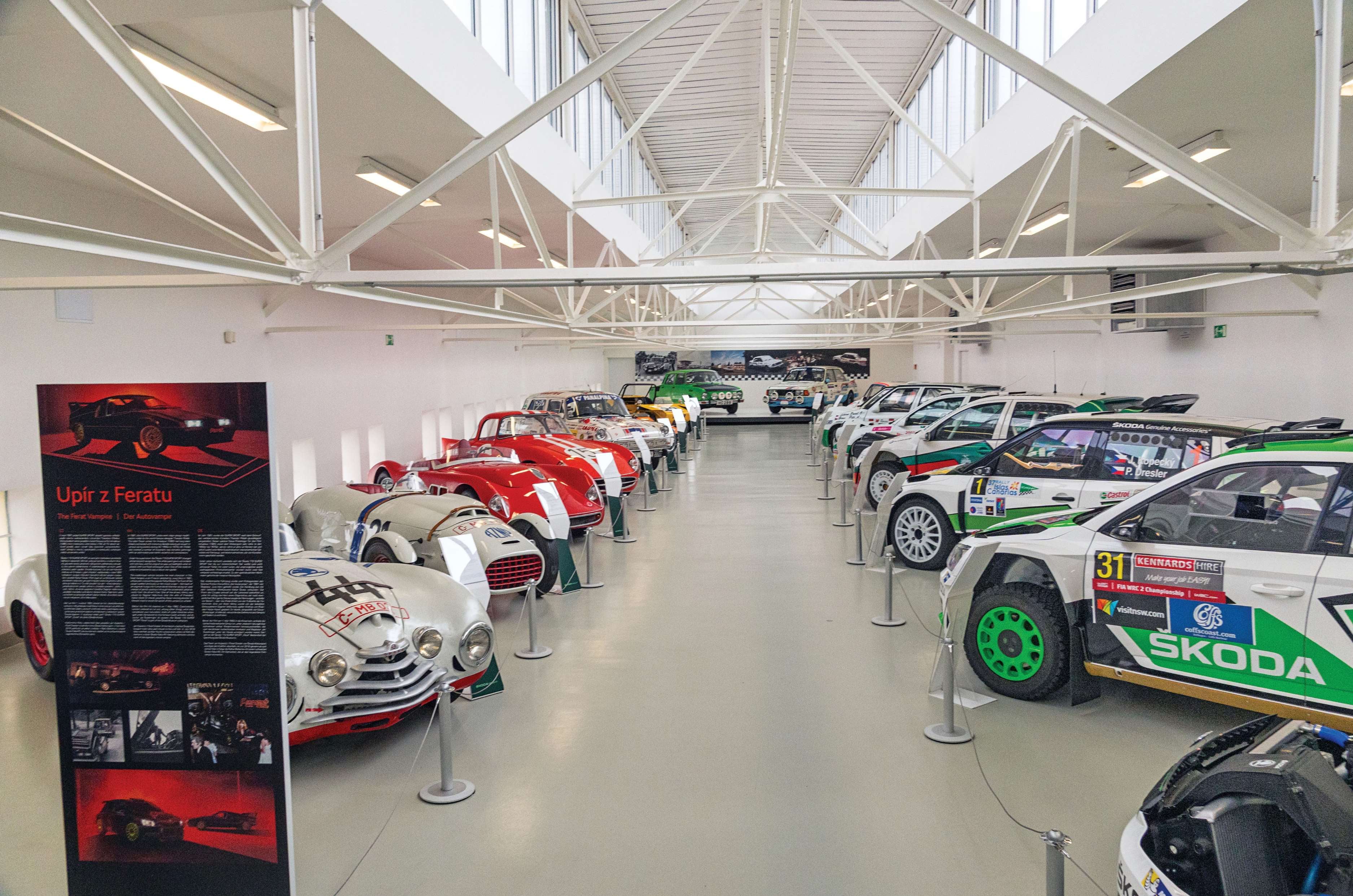
Rich history of rally and motorsport at the Skoda museum.
We crossed the Skoda factory gates with employees gazing in amusement and confusion. They had never seen this car, but strangely, it had a Skoda logo. As we parked the car near the iconic museum that preserves over 130 years of history, we had to peek in and see where it all started.
The fact that a simple bicycle gave birth to one of the largest auto manufacturers in the world is pretty astonishing. Road cars, racing cars and rally legends, Skoda has done it all. A reputation built over a century for being tough, resilient and deeply desirable.
Watching the Indian-made Kylaq sitting proud and faultless in the gleaming sunlight against the backdrop of Prague Castle, looking exactly like it did on the factory floor in Chakan, only proves that the 130-year-old ethos is still the same, no matter where Skoda builds a car.
The final picture in the camera that will always take us back in time
In a world rapidly shifting towards more screens and fewer experiences, a drive like P2P isn’t just a rarity; it’s a statement of defiance: as long as there’s a world to explore, we will find a way to drive across it.
Maatrubhumi Release: सलमान खान की वॉर ड्रामा फिल्म ‘मातृभूमि’ का सफर काफ़ी उतार-चढ़ाव भरा रहा है। फिल्म का नाम बदला गया, टीजर पर लोगों की प्रतिक्रियाएं, रिलीज कई बार टली और हाल ही में तो यह भी पक्का नहीं था कि यह फिल्म कभी रिलीज होगी या नहीं। लेकिन एक नई रिपोर्ट के मुताबिक़ अब ये सब पुरानी बातें हो चुकी हैं। ‘मातृभूमि’ अगले महीने ही सिनेमाघरों में आ सकती है।
‘मातृभूमि’ को सरकार से NOC मिली
खबर थी कि ‘मातृभूमि’ – जो शुरू में गलवान में भारतीय और चीनी सेनाओं के बीच टकराव पर आधारित थी – या तो रोक दी गई थी या उसमें देरी हो रही थी। वजह…. केंद्र सरकार को यह पक्का नहीं था कि इसमें चीन को कैसे दिखाया जाएगा। अब बॉलीवुड हंगामा ने एक सूत्र के हवाले से कहा है कि I&B मंत्रालय फिल्म के नए वर्जन से ‘संतुष्ट’ है और उसने पिछले हफ्ते ही इसे NOC दे दी है।
बताया जाता है कि रक्षा मंत्रालय की ओर से फिल्म के शुरुआती चीन-विरोधी रुख पर आपत्ति जताए जाने के बाद ‘मातृभूमि’ की कई बार दोबारा शूटिंग (रीशूट) की गई। रिपोर्ट में सूत्र के हवाले से कहा गया है- “‘मातृभूमि’ का नया वर्जन ओरिजिनल वर्जन की तुलना में काफी बदला हुआ है। इसके अलावा अब इसमें भारत और चीन के रिश्तों को भी सकारात्मक नजरिए से दिखाया गया है।”
‘मातृभूमि’ की रिलीज डेट?
हालांकि ‘मातृभूमि’ के मेकर्स ने अभी तक इस बारे में कोई पुष्टि नहीं की है। लेकिन बॉलीवुड हंगामा की रिपोर्ट में यह भी कहा गया है कि सलमान खान ने रिलीज के लिए एक तारीख सोच रखी है। रिपोर्ट में सूत्र के हवाले से कहा गया है, “सलमान खान अब 13 नवंबर पर नजरें गड़ाए हुए हैं। उनका मानना है कि दिवाली के बाद का समय – जब लोग जश्न के मूड में होंगे – फिल्म की रिलीज के लिए सही रहेगा।
हालांकि सेंसर की प्रक्रिया अभी बाकी है। मेकर्स जल्द ही फिल्म को सेंट्रल बोर्ड ऑफ फिल्म सर्टिफिकेशन (CBFC) के पास जमा करेंगे। अगर CBFC फिल्म को मंजूरी दे देता है और यह प्रक्रिया इसी महीने पूरी हो जाती है, तो सलमान और उनकी टीम शायद 13 नवंबर को ‘मातृभूमि’ को सिनेमाघरों में ले आएगी। इस बारे में अगले 10 दिनों में साफ तस्वीर सामने आ जाएगी।” अगर ऐसा होता है, तो ‘मातृभूमि’ फिल्म नितेश तिवारी की बड़े बजट वाली फिल्म ‘रामायण पार्ट वन’ के रिलीज़ होने के एक हफ्ते बाद सिनेमाघरों में आ सकती है।
‘मातृभूमि’ के बारे में
सलमान खान फिल्म्स के बैनर तले सलमा खान द्वारा प्रोड्यूस की गई फिल्म ‘मातृभूमि: मे वॉर रेस्ट इन पीस’ का निर्देशन अपूर्व लाखिया ने किया है और इसमें चित्रांगदा सिंह भी अहम भूमिका में हैं। इस साल की शुरुआत में नाम बदलने से पहले इस फिल्म का टाइटल ‘बैटल ऑफ गलवान’ था। असल में यह फिल्म भारतीय और चीनी सैनिकों के बीच 2020 में हुई गलवान घाटी की झड़प पर आधारित थी, लेकिन खबरों के मुताबिक दोबारा शूटिंग के बाद फिल्म से चीन से जुड़े सभी संदर्भ हटा दिए गए।