Skoda Slavia facelift review: Small changes add up

Skoda Slavia facelift review: Small changes add up

Skoda’s Slavia sedan has received its first major update since its introduction back in 2022. In order to keep it in touch with recently updated rivals like the Hyundai Verna and Honda City, the Slavia gets sharper styling, more equipment and even a significant mechanical change. Here’s what it’s like.

Skoda Slavia facelift exterior design and engineering – 8/10
Slavia
Skoda Slavia Monte Carlo front qiuarter static

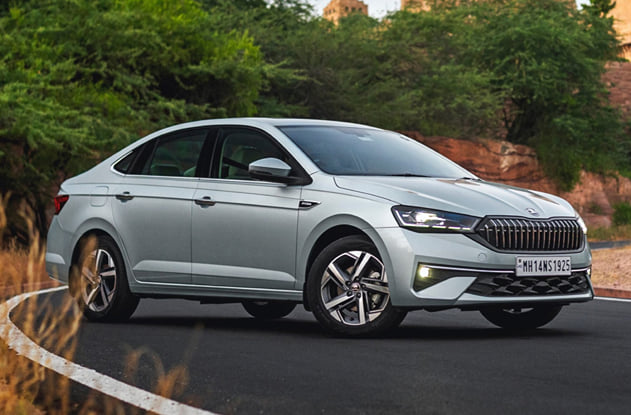
Skoda Slavia Prestige (left) and Monte Carlo (right)

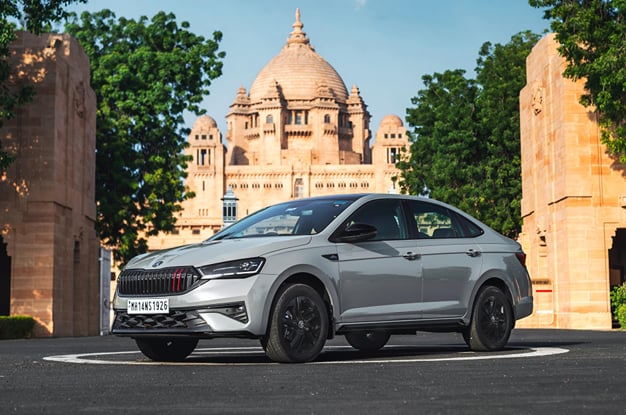
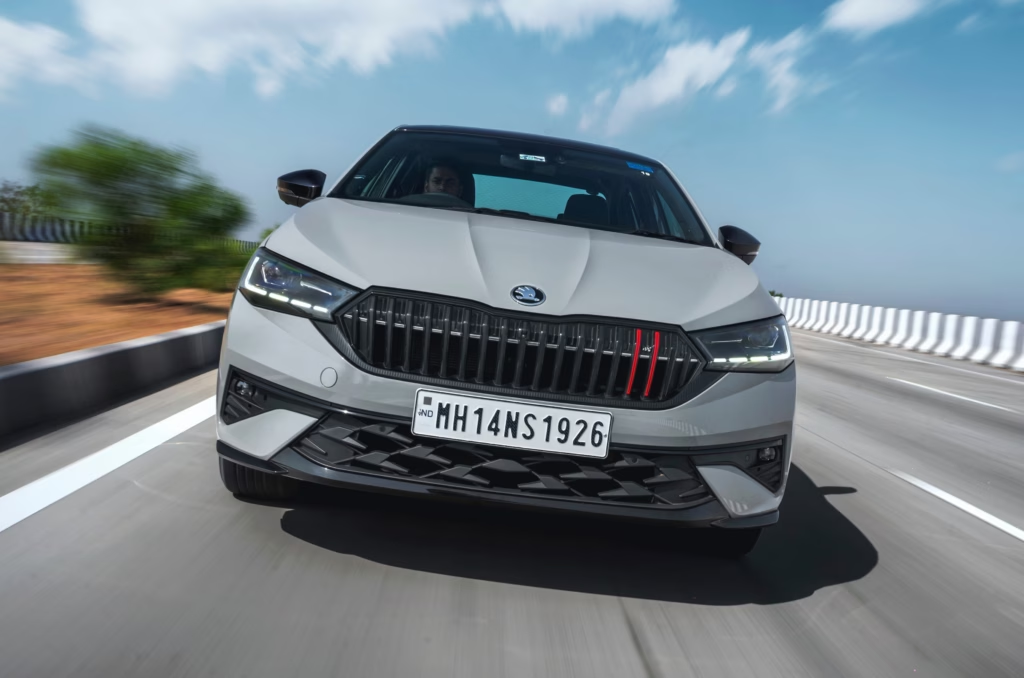
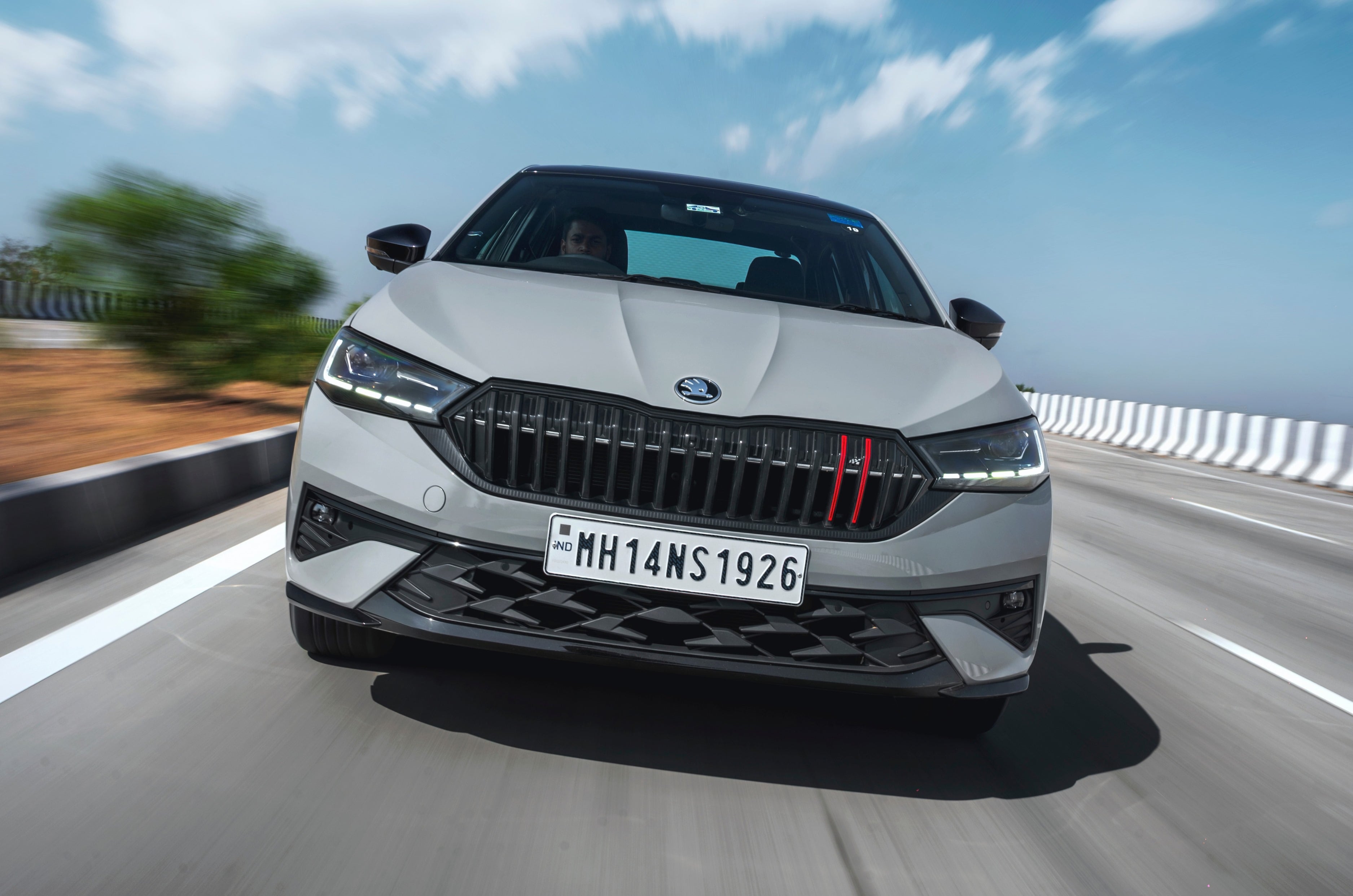
Being a facelift, the Slavia’s overall silhouette and proportions are unchanged, and that’s a good thing. Its design is clean and elegant rather than flashy, with crisp body lines, a long bonnet and a flowing roofline giving it a distinctly European appearance. The signature butterfly grille features new segmented chrome trim and sharp LED headlamps also get a new segmented LED DRL signature. The bumper is all new, featuring new LED fog lamps along with a reworked airdam. Along the sides, there’s a new design for the 16-inch alloys while the 179mm (unladen) ground clearance gives it a degree of SUV-like usability without making the sedan look too ungainly.
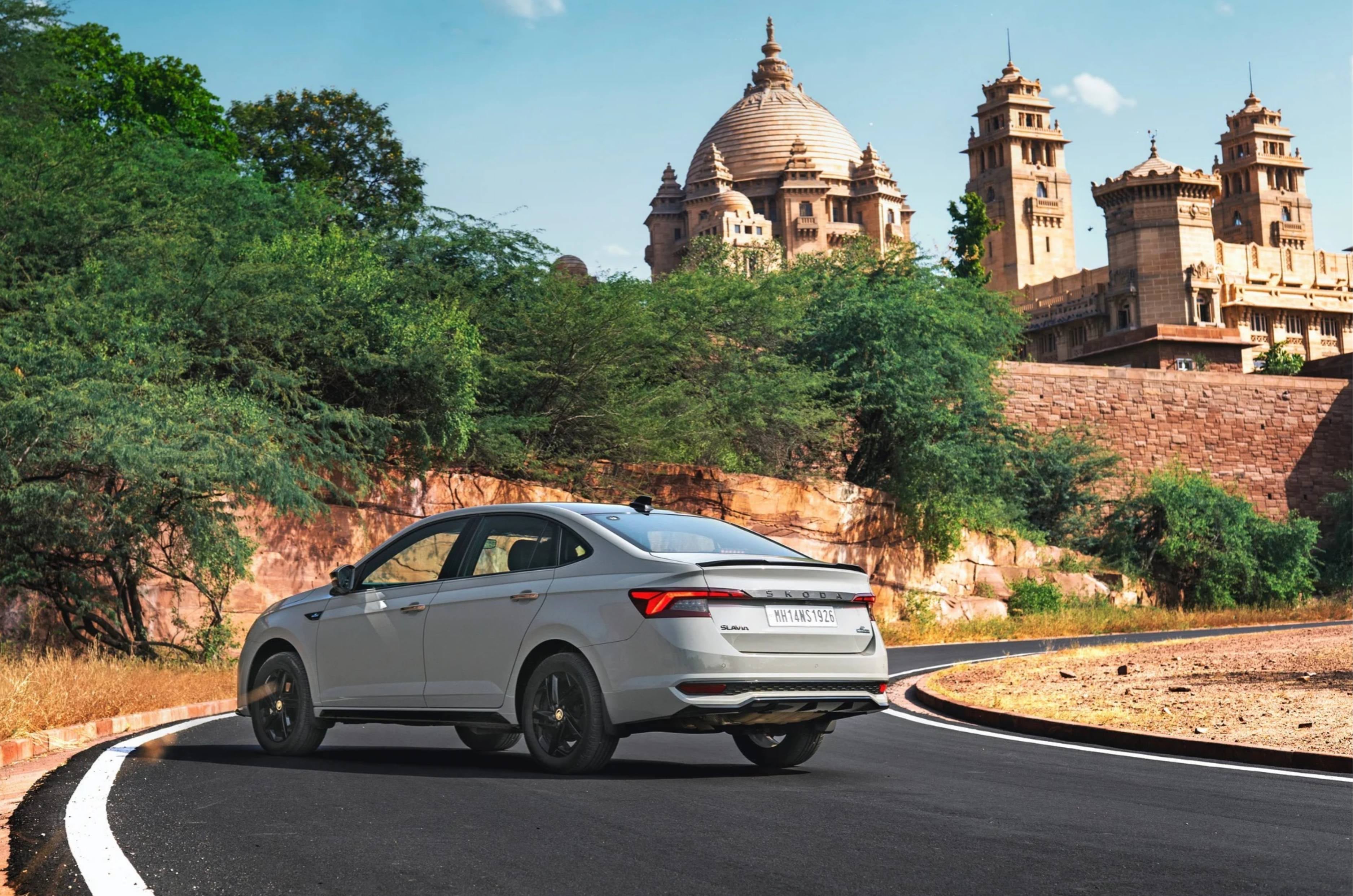
At the rear, it gets new sequential turn indicators and different LED elements in the tail lights. There’s a new trim piece connecting the tail-lights, with prominent ‘SKODA’ lettering, which gives the rear a cleaner, more contemporary look. As before, the Slavia is offered in a more luxurious Prestige trim, which brings chrome elements and a dual-tone finish for the alloys, and a sporty Monte Carlo trim that features blacked-out elements which include the grille, alloys, ORVMs, roof and bootlid spoiler. There’s also two new colours, Arctic Silver and Cappuccino Beige, which the former looking particularly tasteful.

Under the skin, the Slavia continues to use the MQB A0 IN platform, shared with the Kushaq and Volkswagen Virtus. This India-specific architecture allows the Slavia to retain its proper three-box sedan proportions while offering the ground clearance and practicality needed for Indian road conditions. Overall, the updates are evolutionary rather than revolutionary, but they do enough to keep the Slavia’s understated design looking fresh.

Skoda Slavia facelift interior space and comfort – 8/10
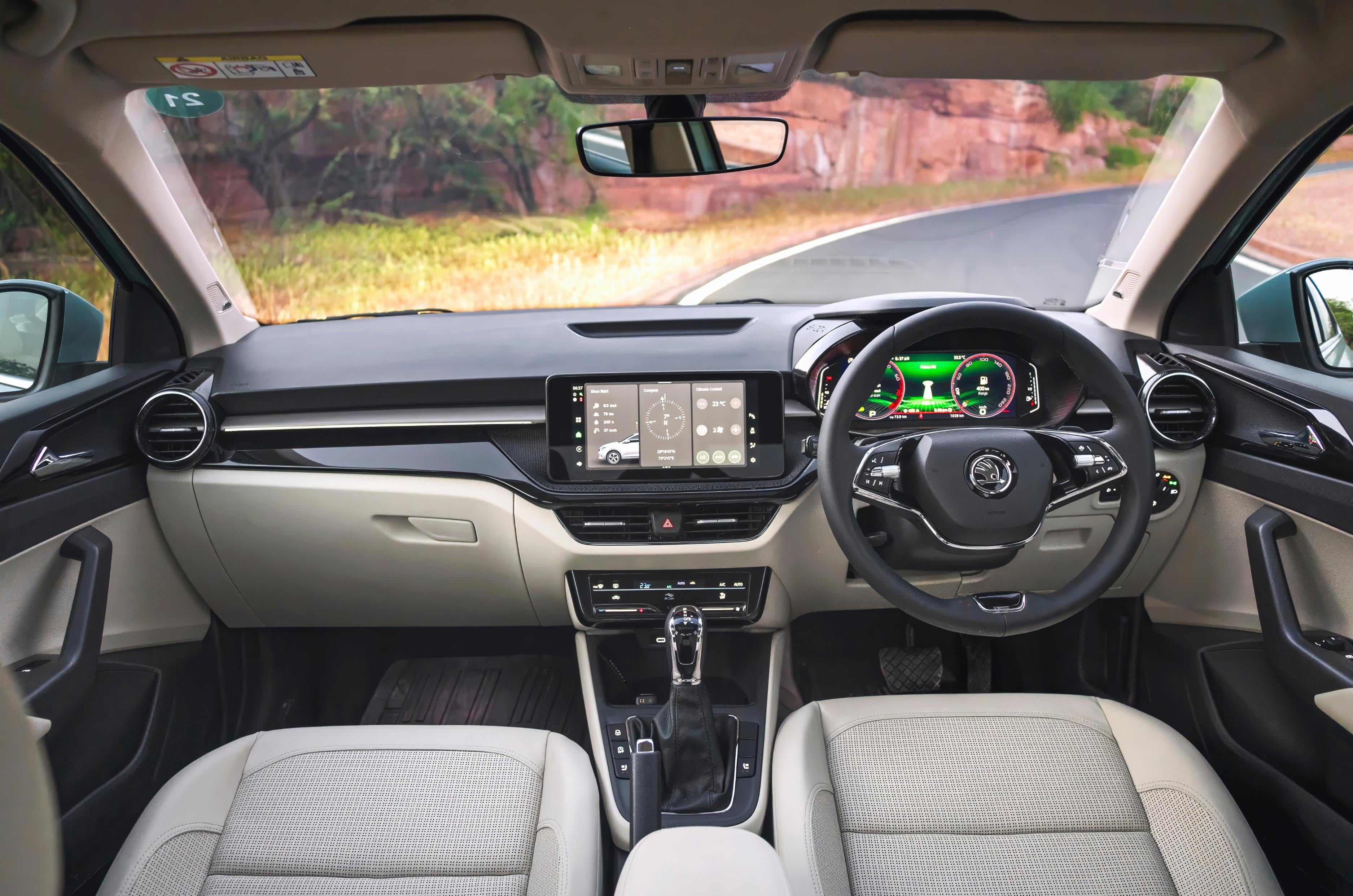
Step inside, and the door shuts with a reassuring thud and you’re greeted by the same layered dashboard. Like the exterior, the interior trim differs too depending on which trim you opt for. The more luxurious Prestige trim gets a beige and black upholstery with copper-coloured inserts on the dash, while the sporty Monte Carlo gets an all-black theme with contrasting red details on the dashboard, the stitching and the seat perforation. Build quality is solid overall, with a well put-together feel to the cabin. It’s also a practical space with plenty of storage spaces and the typical Skoda “Simply Clever” features like a ticket holder, coat hooks, phone pocket in the seatbacks and more.

The front seats are wide and supportive, with generous cushioning that makes the Slavia comfortable over long journeys, and finding your ideal driving position is easy too thanks to the electrically adjustable seats and reach/rake adjustment for the steering.
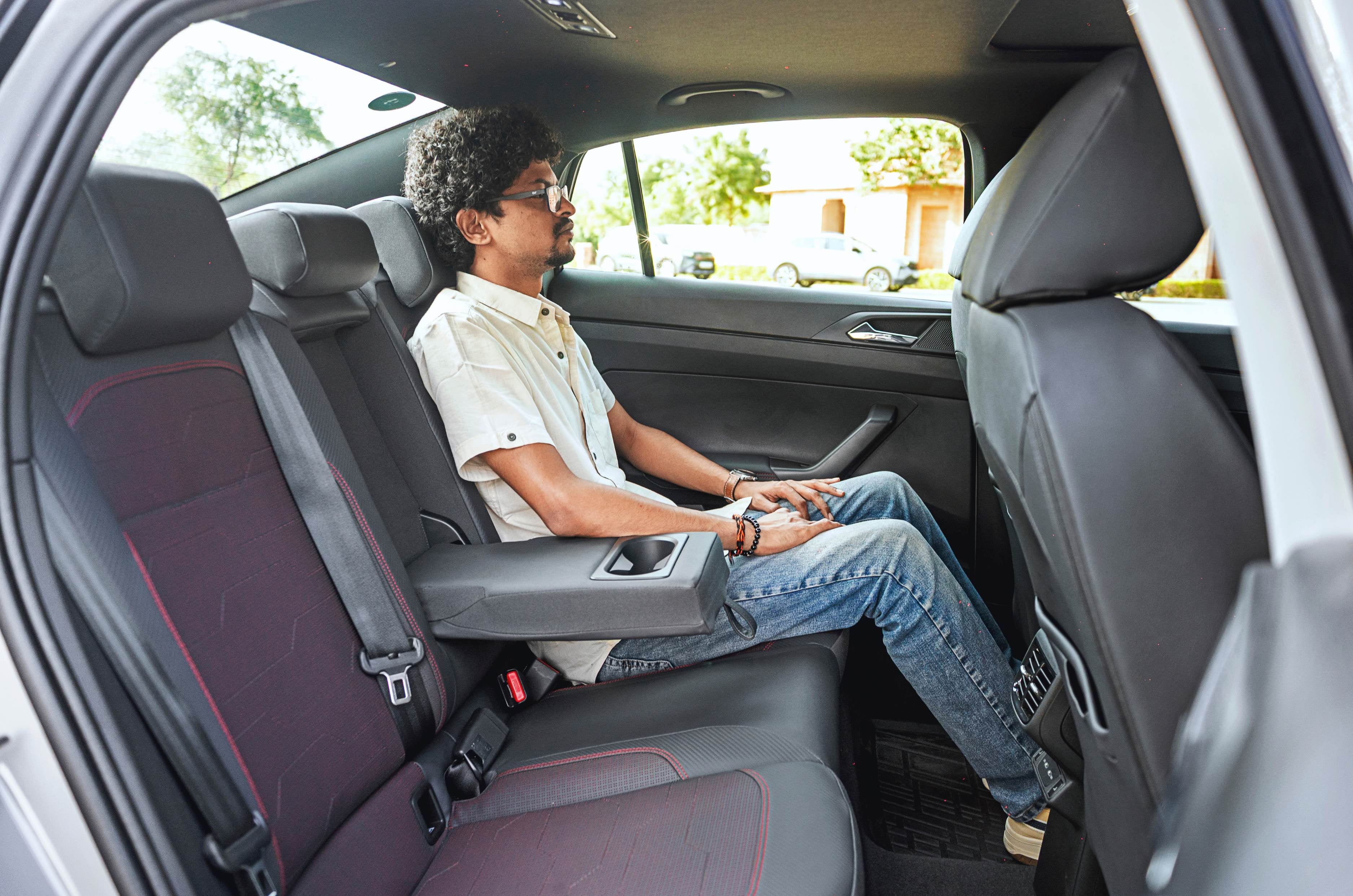
Rear-seat space remains one of Slavia’s biggest strengths. The long wheelbase translates into generous legroom and ample footroom, and the windows are also large enough. Headroom though, can be a little tight for taller passengers, and the contoured rear bench along with the transmission hump in the centre mean it’s more naturally suited to two adults than three. 
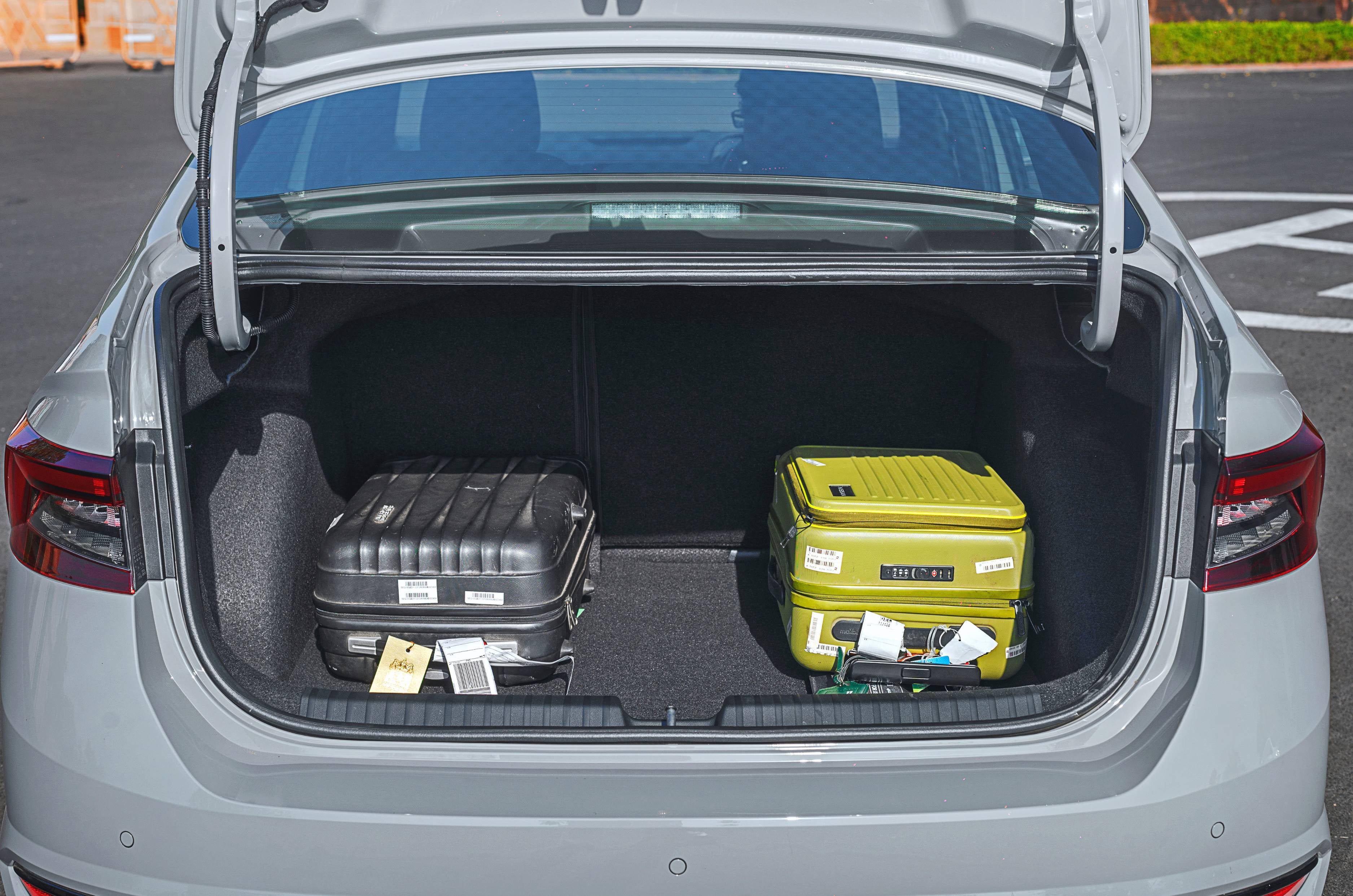
The 521-litre boot is among the largest in the segment, and the squared-off shape makes it easy to load. The 60:40 split-folding rear seats add further versatility. It also continues to get a space tyre and a subwoofer under the boot floor.

Skoda Slavia facelift features and safety – 9/10
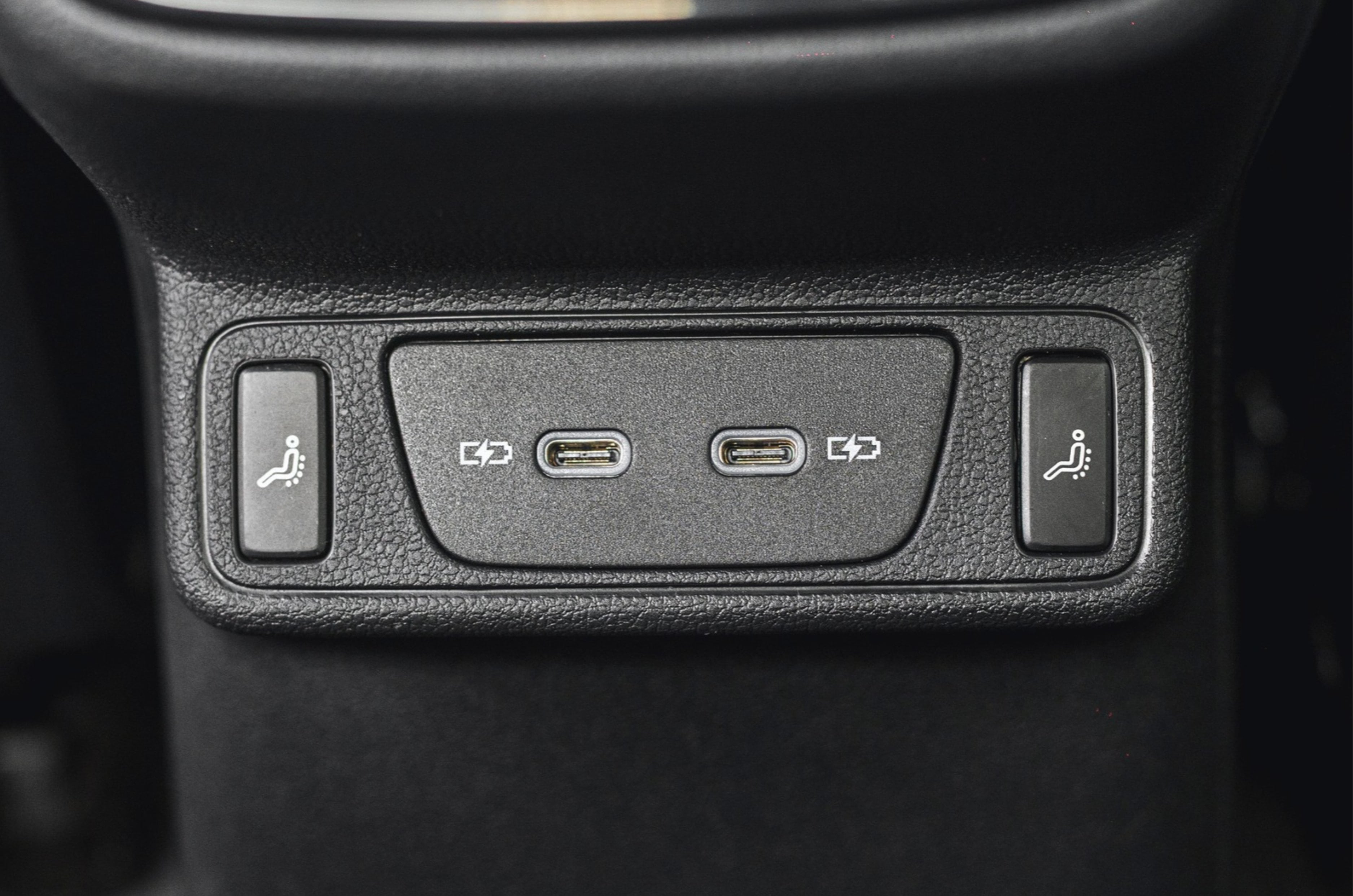
The Slavia facelift brings a useful upgrade in equipment, with the highlight being a segment-first rear seat massaging function. It’s a feature more commonly associated with larger, more expensive cars and adds another layer of comfort to what is already a spacious rear bench. This feature works very well and will be a hit with the chauffeur-driven.
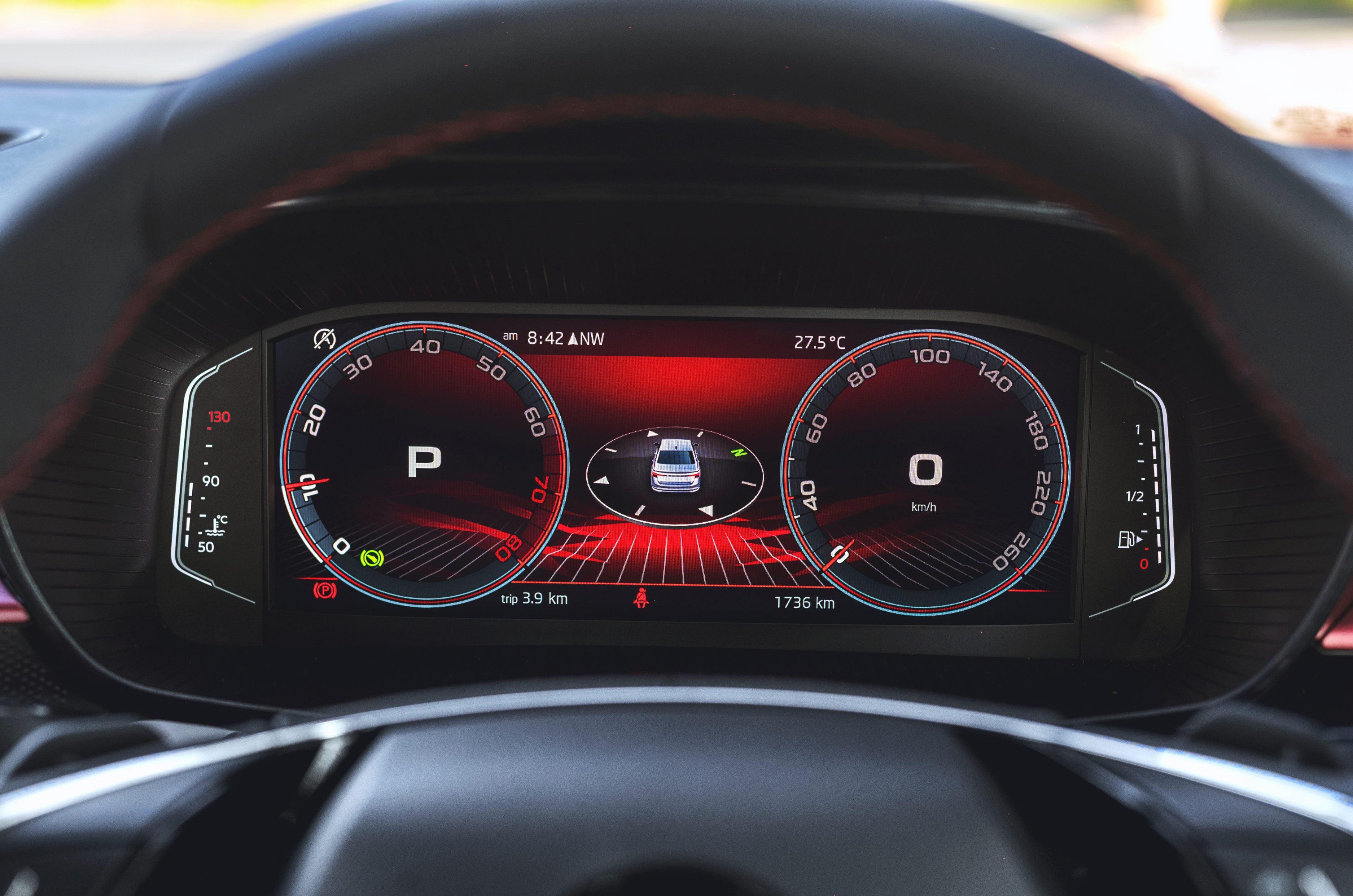
The infotainment and instrumentation have also been upgraded. The previous 10-inch touchscreen has been replaced by a slightly larger 10.1-inch unit, while the driver’s display grows substantially from 8 inches to 10.25 inches. Both screens get new graphics and additional features, giving the cabin a more contemporary feel and bringing the Slavia’s interface up to date. The touchscreen has a slick interface and also benefits from an AI voice assistant and connected car features, while the digital cluster gets multiple layouts along with a turn-by-turn navigation feature. The themes for both these screens also differ depending on whether you’ve gone for the Prestige or the Monte Carlo trim.
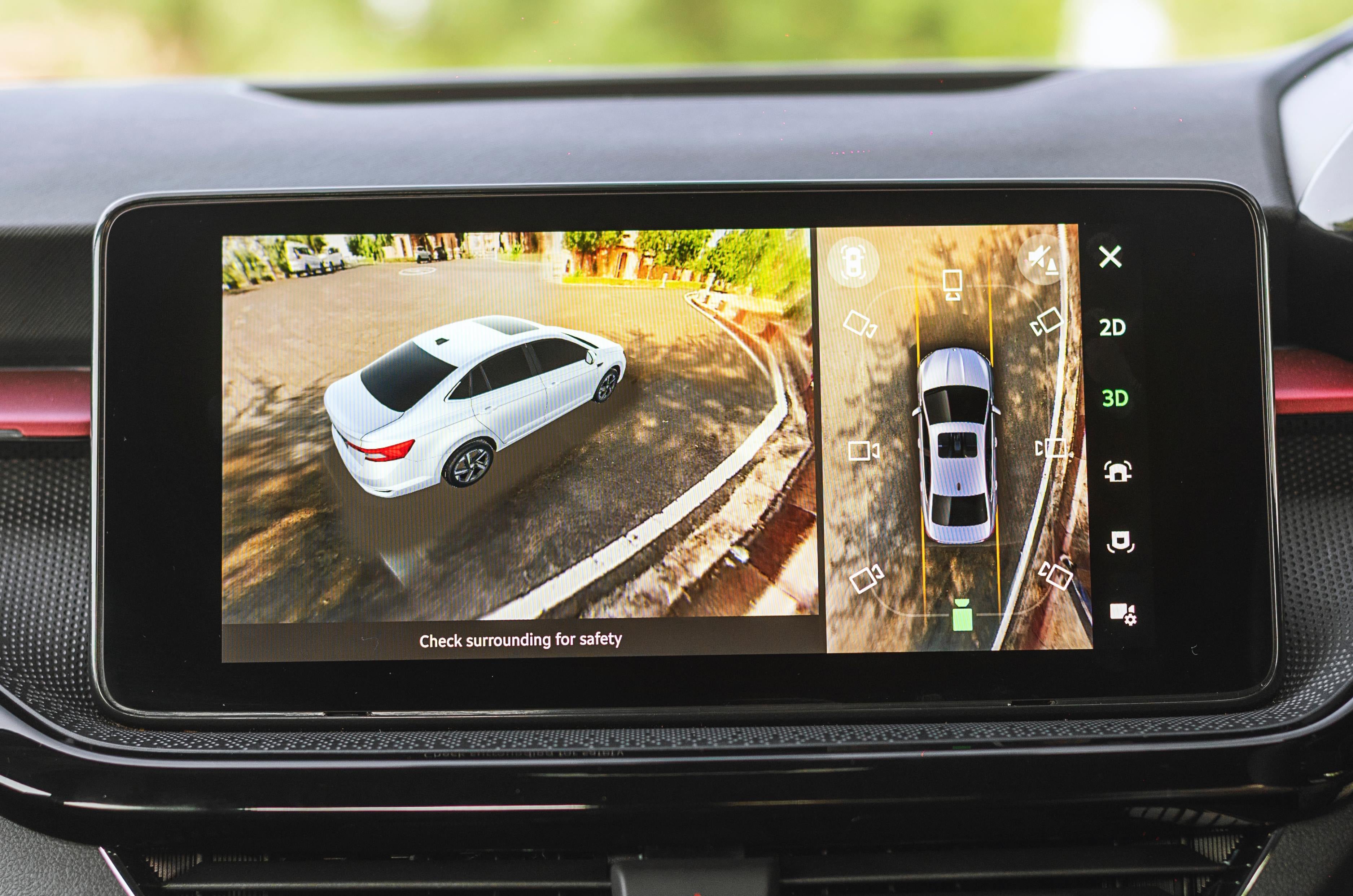
Another significant upgrade is the addition of a 360-degree camera, replacing the previous rear-view-only camera. This marks a huge improvement and the clarity and crispness of this camera is one of the best at this price point. And finally, like the Kushaq, the Slavia facelift also gets a new variable geometry compressor instead of a fixed geometry unit for the AC system, which has improved the cooling performance significantly.
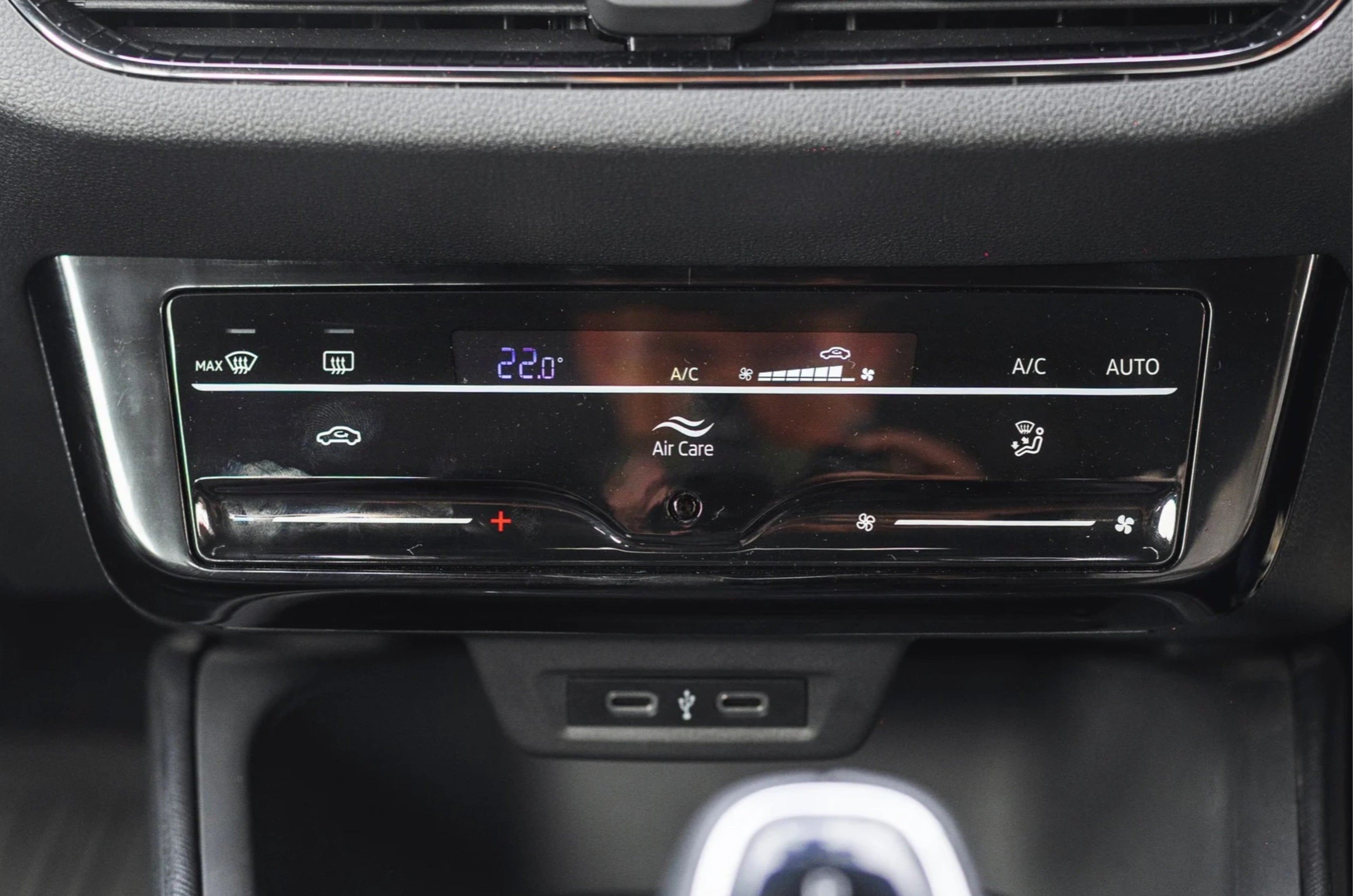
Other than these, it continues to feature ventilated and powered front seats, a sunroof, wireless smartphone integration, a great-sounding audio system, auto climate control, ambient lighting, LED lights, auto headlamps/wipers, cruise control, leatherette upholstery, 6 airbags, ESC, traction control, hill-hold assist and much more. The pre-facelift Slavia has also received a full 5-star crash safety rating from Global NCAP. However, some features that rivals offer and are missing here include an electronic parking brake and ADAS tech.  

All together, the feature additions make the facelift feel more complete, with the new screens, 360-degree camera and rear seat massage adding both convenience and a greater sense of sophistication to the cabin.

Skoda Slavia facelift powertrain and performance – 8/10
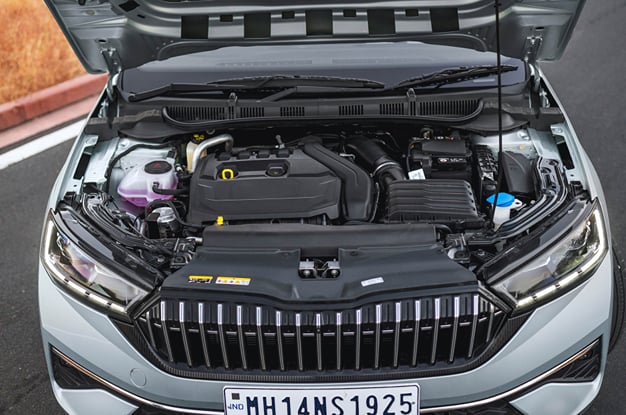
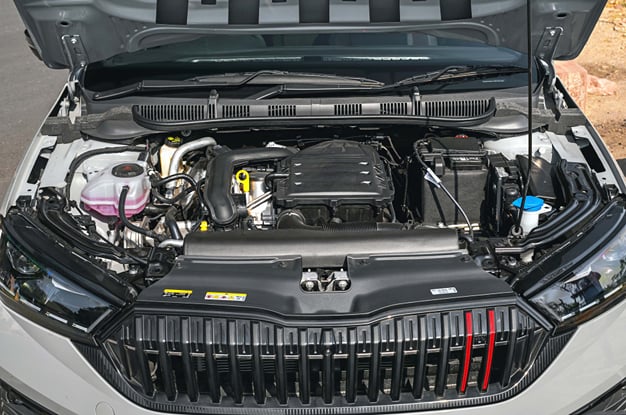
Skoda Slavia 1.0-litre TSI engine
Skoda Slavia 1.5-litre TSI engine
 

Skoda Slavia 1.0-litre TSI engine (left), 1.5-litre TSI engine (right)

The Slavia retains the same engine options as earlier, so you have a choice between two direct-injection turbo petrols. There’s a 1.0-litre, three-cylinder unit that puts out 115hp and 178Nm and a 1.5-litre, four-cylinder mill that produces 150hp and 250Nm.

The 1.5 TSI can only be had with a 7-speed dual clutch automatic and enthusiasts will miss the option of a 6-speed manual with this engine, which was on offer earlier. The 1.0 TSI does get a 6-speed manual option, but the gearbox of major interest with this engine is the new 8-speed torque converter automatic. It’s the Aisin-sourced AQ300, replacing the earlier AQ250 6-speed unit, and this helps lower emissions and fuel consumption.
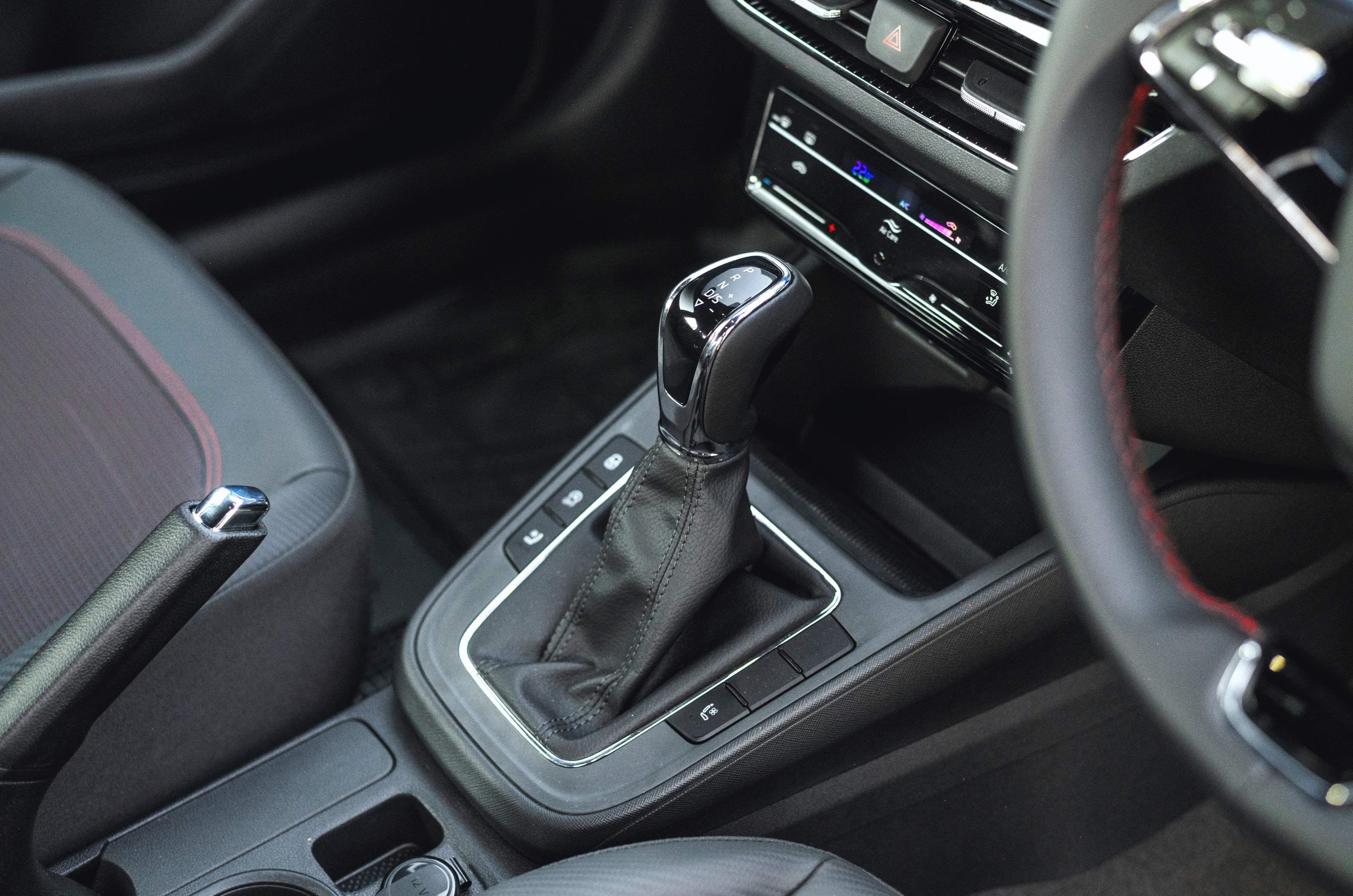
The new gearbox brings a welcome improvement to the Slavia’s low-speed manners. While the previous car had a tendency to leap forward from a standstill, this one now feels much more controlled than before. Once on the move, shifts are smooth and seamless, as you’d expect from a torque-converter automatic. What’s particularly impressive, though, is the speed of the manual shifts, whether you use the paddles or the Tiptronic gear lever. In manual mode, the gearbox also allows the engine to rev close to its limit before shifting up which makes the Slavia 1.0 TSI engaging to drive. The only real gripe with the gearbox is that all the ratios feel rather short. Third tops out at just over 100kph, while at 100kph in 8th, the engine is spinning at a little over 2,000rpm, which is higher than you’d expect given the number of ratios it has to play with.
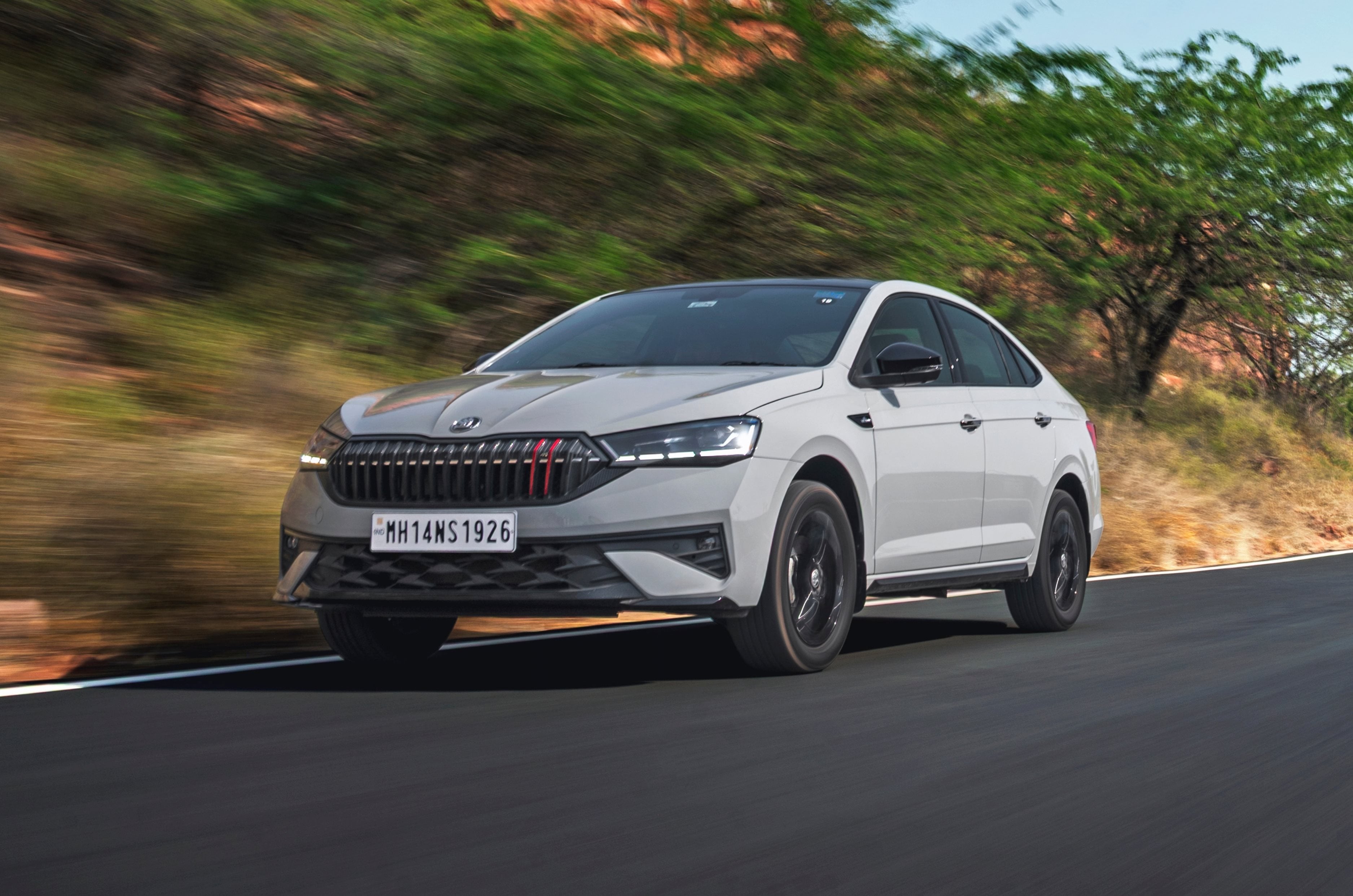
Although we didn’t get a chance to time it, expect it to complete the 0-100kph sprint in around 11sec, similar to the 6-speed AT’s 11.16sec time. At idle, there is some of that familiar vibrations of a three-cylinder engine. It settles when you drive gently, but push beyond 3000rpm and the gravelly note makes itself heard inside. For the smaller and less powerful petrol engine, refinement could have been better, and more insulation would have helped too.

The 1.5-litre four-cylinder TSI continues unchanged and remains the stronger, more effortless performer of the two. Acceleration is brisk and flat-out performance is strong, while shifts via the paddles are, as expected, quick. The pre-facelift Slavia 1.5 TSI DSG managed 0-100kph in 8.96sec in our tests, and performance with the updated car should remain in the same ballpark.
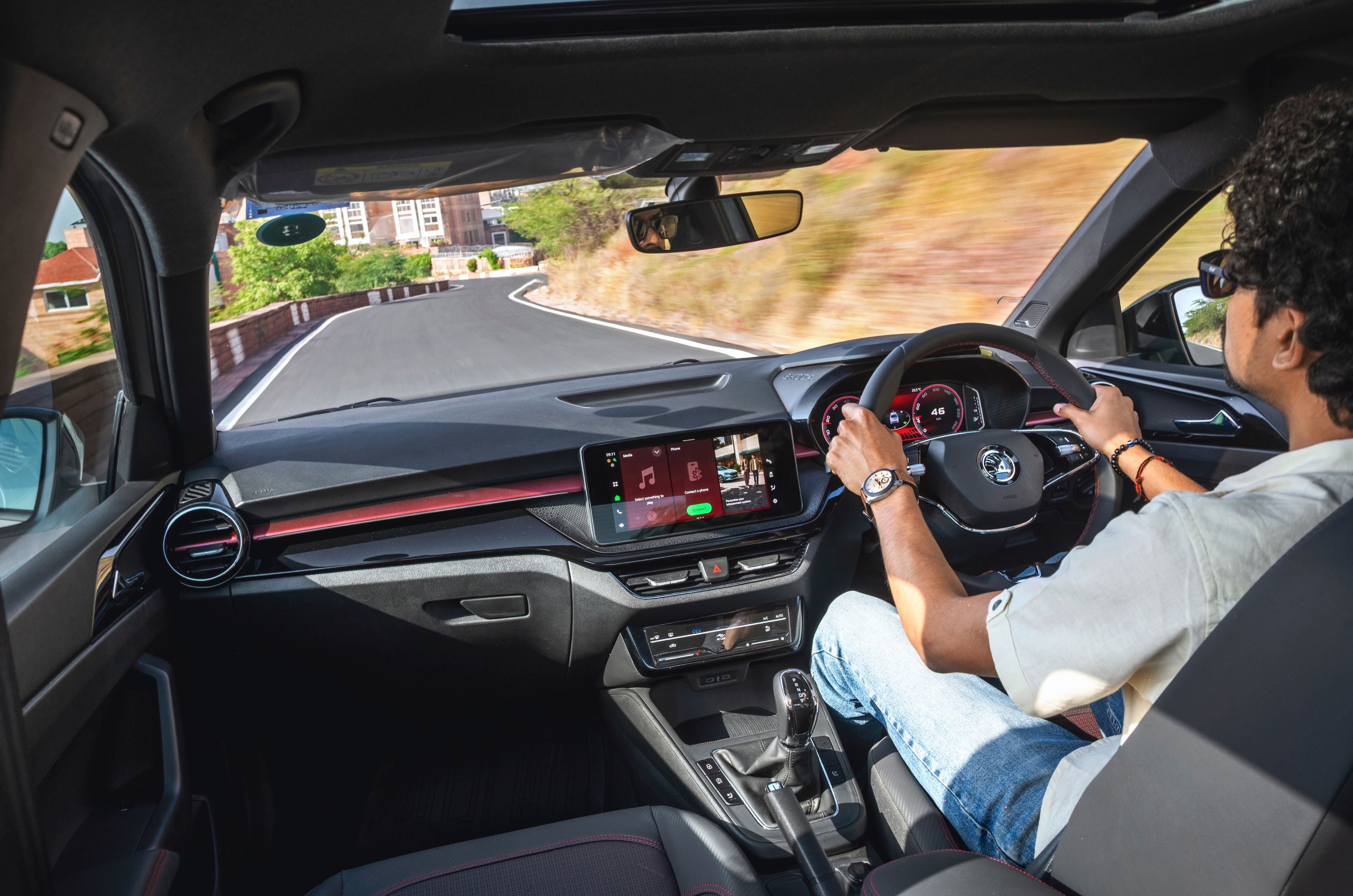
Between the two engines, the 1.5 TSI is the one that feels more complete, not just because of its stronger performance but also because it is smoother and benefits from cylinder-deactivation technology. Under light engine loads, two of its four cylinders shut down to save fuel, and the transition is seamless as well. However like the 1.0, the 1.5-litre also becomes quite audible when worked hard and some road noise from coarse surfaces also make its way into the cabin.

Skoda Slavia facelift fuel efficiency – 7/10

Our brief test drive meant we didn’t get a chance to test the fuel efficiency of the Slavia facelift, however we have tested the Kushaq facelift which is mechanically identical. In our real-world fuel efficiency tests, the Kushaq 1.0 TSI AT averaged better than the 1.5 TSI DSG by 0.48kpl. In the city, the 1.0 TSI (10.7kpl) was more efficient than the 1.5 TSI (9.55kpl) by 1.15kpl, thanks to the 1.0’s lighter kerb weight and aggressive start/stop system. In contrast, the 1.5’s twin-cylinder deactivation tech helped it be more efficient on the highway (15.29kpl) than the 1.0 (15.10kpl) by 0.19kpl. However, we’re yet to test the 1.0 MT’s fuel efficiency.

Skoda Slavia facelift ride comfort and handling – 8/10
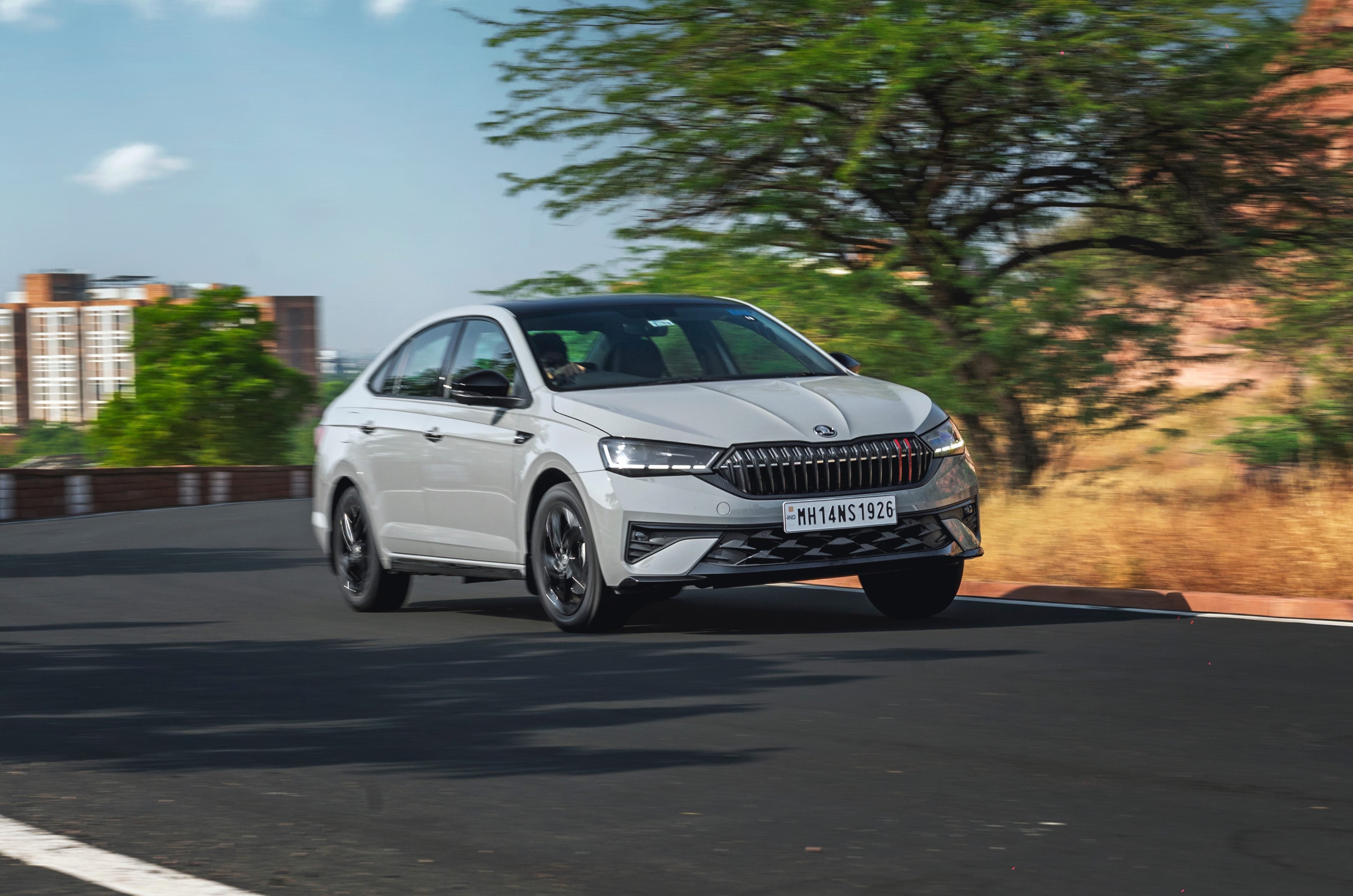
Ride and handling are areas where the Slavia continues to impress. Despite its generous 179mm ground clearance, the handling doesn’t feel compromised. Body roll is well controlled, while the car remains composed and predictable when you go around corners. The steering is on the lighter side but picks up weight progressively as speeds rise.

There is that typical low-speed firmness in the ride quality that you’d normally associate with European cars. But it never feels overly stiff and instead gives it tremendous stability at highway speeds. The suspension also deals with broken surfaces and undulations with maturity, absorbing sharper imperfections without becoming unsettled. It is this combination of an agile chassis, well-controlled body movements and mature ride quality that makes the Slavia enjoyable to drive.
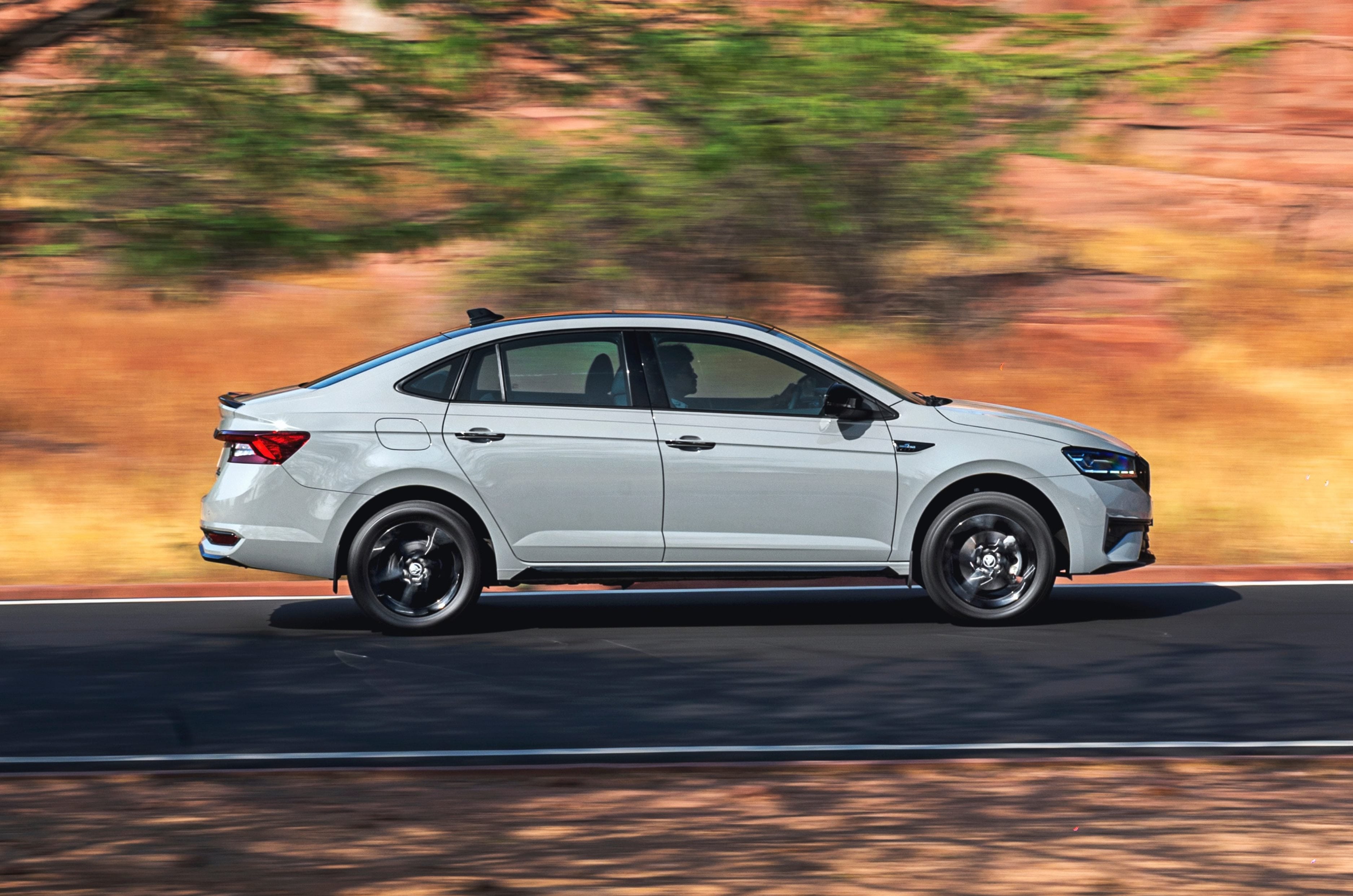
The Slavia’s braking performance remains strong and reassuring but the 1.5 TSI has now gained rear disc brakes. During our test drive, we didn’t find a noticeable difference to the earlier drum brake setup. The 1.0 TSI meanwhile, continues with the same setup as before. 

Skoda Slavia facelift value for money and verdict – 8/10

Prices for the Skoda Slavia facelift are set to be announced in the coming days, but expect it to cost a bit more than the Rs 10 lakh to 18.20 lakh (ex-showroom) the pre-facelift model demanded. What’s nice though is that the new 8-speed AT can be had right from the second-to-base Classic+ trim. As before, it continues to go up against the likes of the Hyundai Verna, Honda City and its Volkswagen sibling, the Virtus.
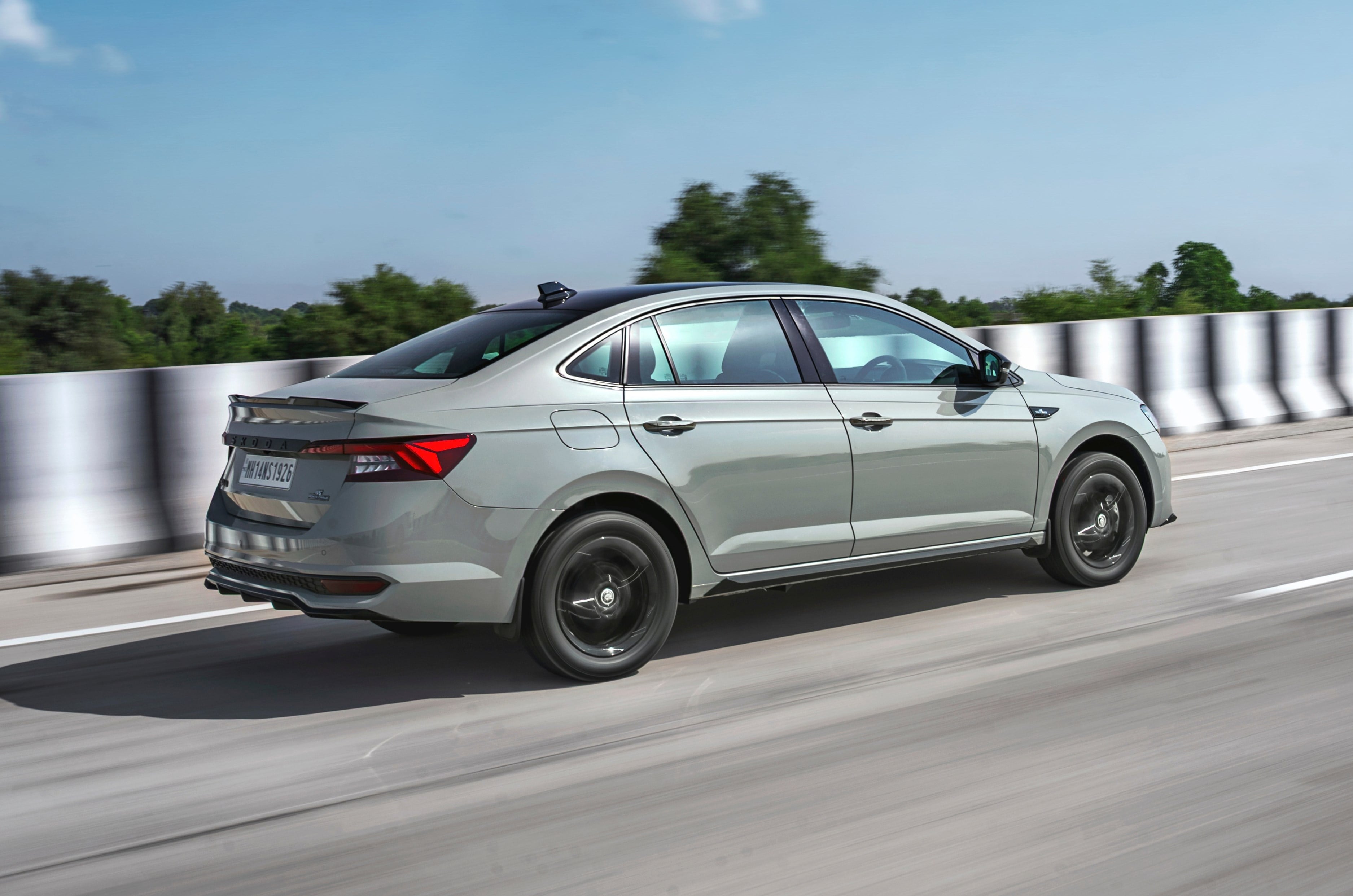
With this facelift, Skoda has enhanced the Slavia further with a sleeker design that looks timeless, important comfort and safety feature additions and relevant technical updates. Some shortcomings remain, like the slightly firm low speed ride, the absence of a manual gearbox with the more potent engine and it does miss a couple of features compared to rivals. But then whatever features have been added have enriched the experience, like the rear seat massage, the new AC compressor and the 360-degree camera. And as before, it remains very enjoyable to drive thanks to the punchy engines, the sorted handling and the mature high speed manners. 

The Slavia facelift then, stands out as one of the most complete and well-rounded sedans around, with a great blend of comfort, practicality, features and driving pleasure.
What to expect from Mercedes-Maybach S-Class ahead of launch tomorrow

What to expect from Mercedes-Maybach S-Class ahead of launch tomorrow
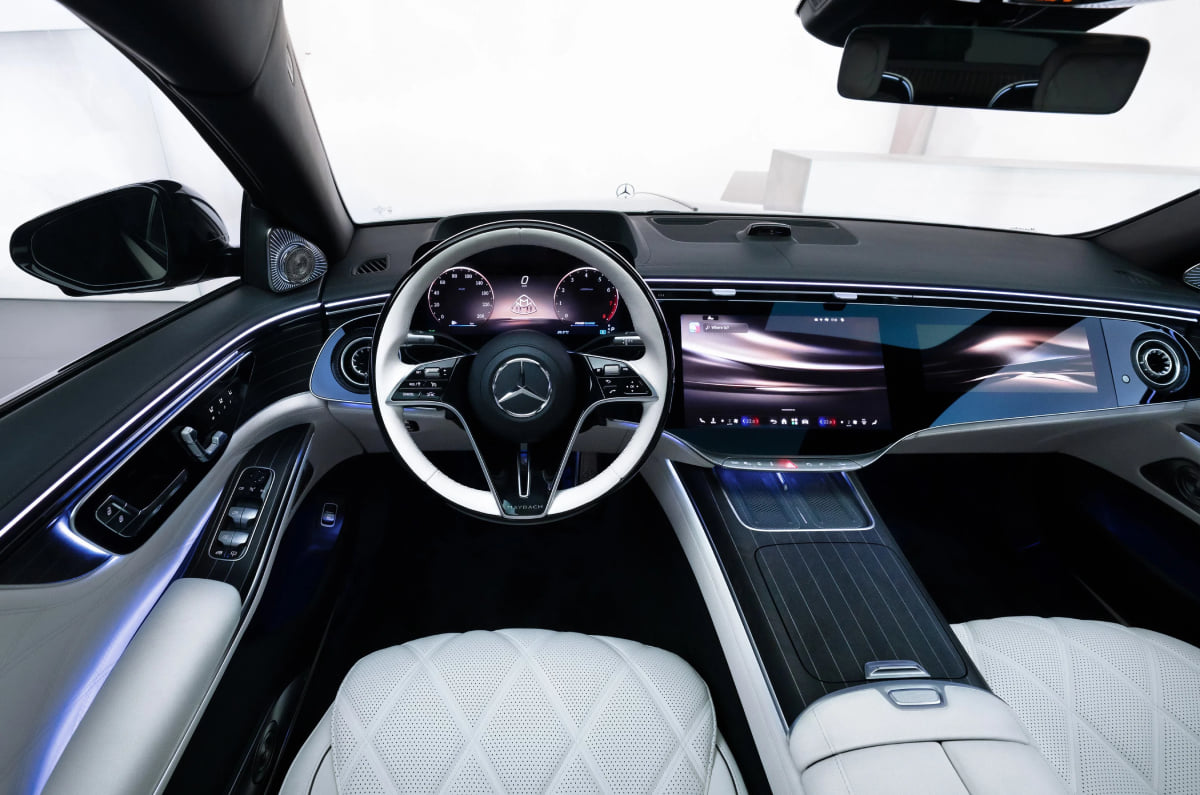
Mercedes Maybach S-Class

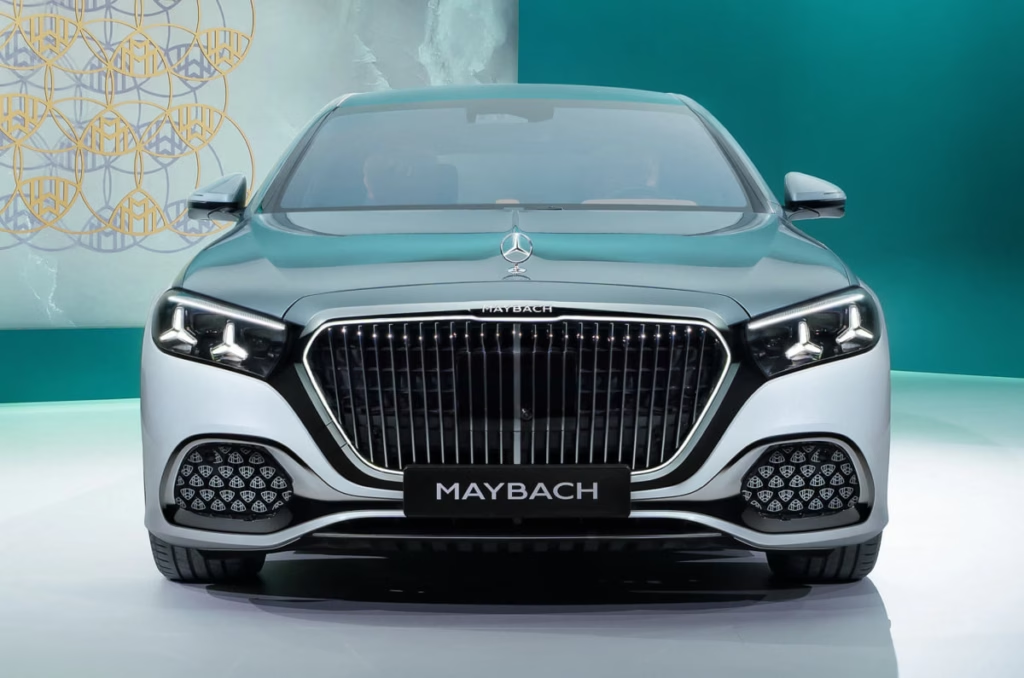
Mercedes-Benz will launch the updated Maybach S-Class in India on October 5. The facelift brings styling and technology updates, along with more personalization options and changes to the powertrain range. With the launch just around the corner, here’s everything you need to know about the new Maybach S-Class.

What exterior changes does the new Maybach S-Class get over the S-Class?

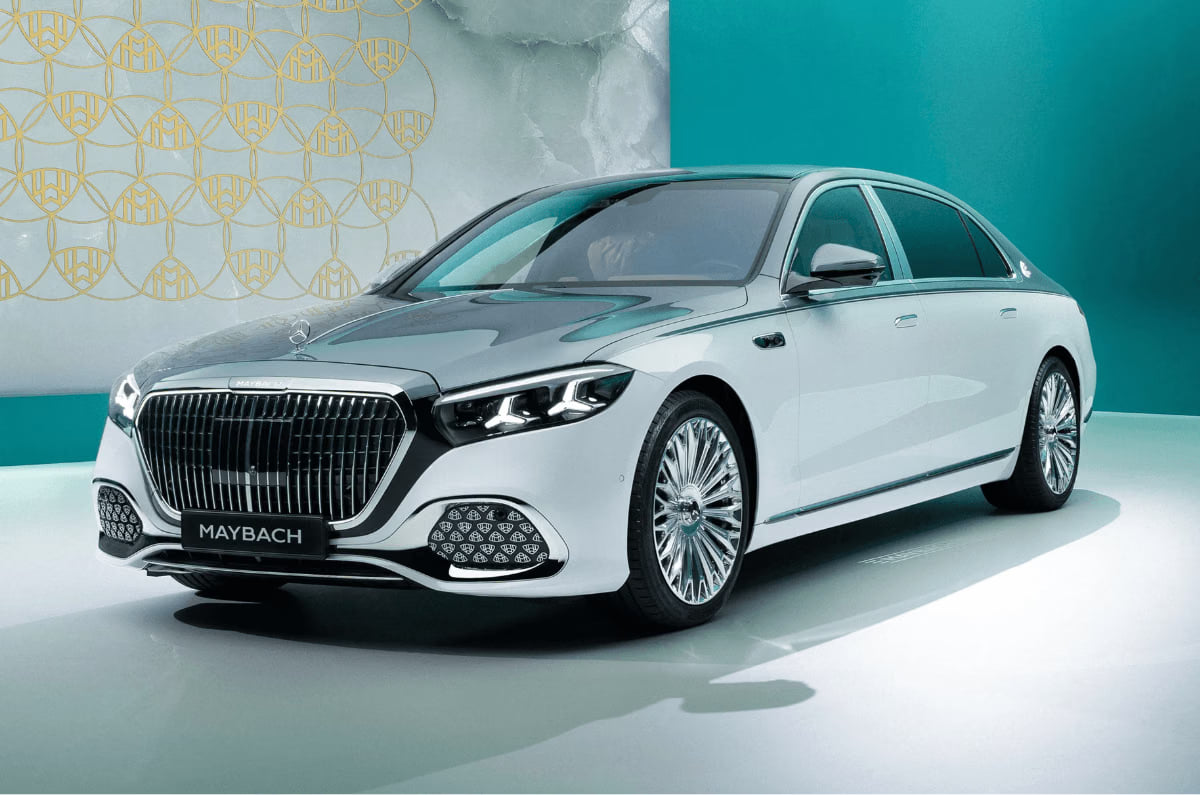
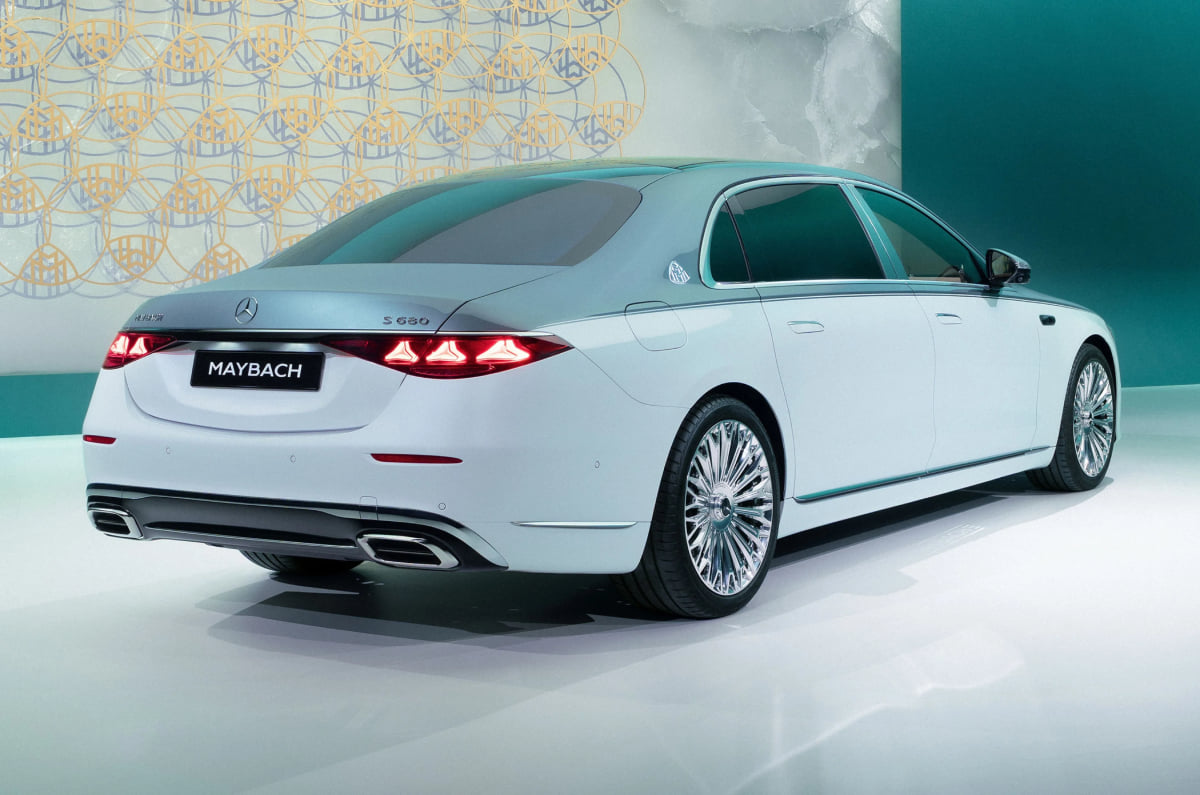
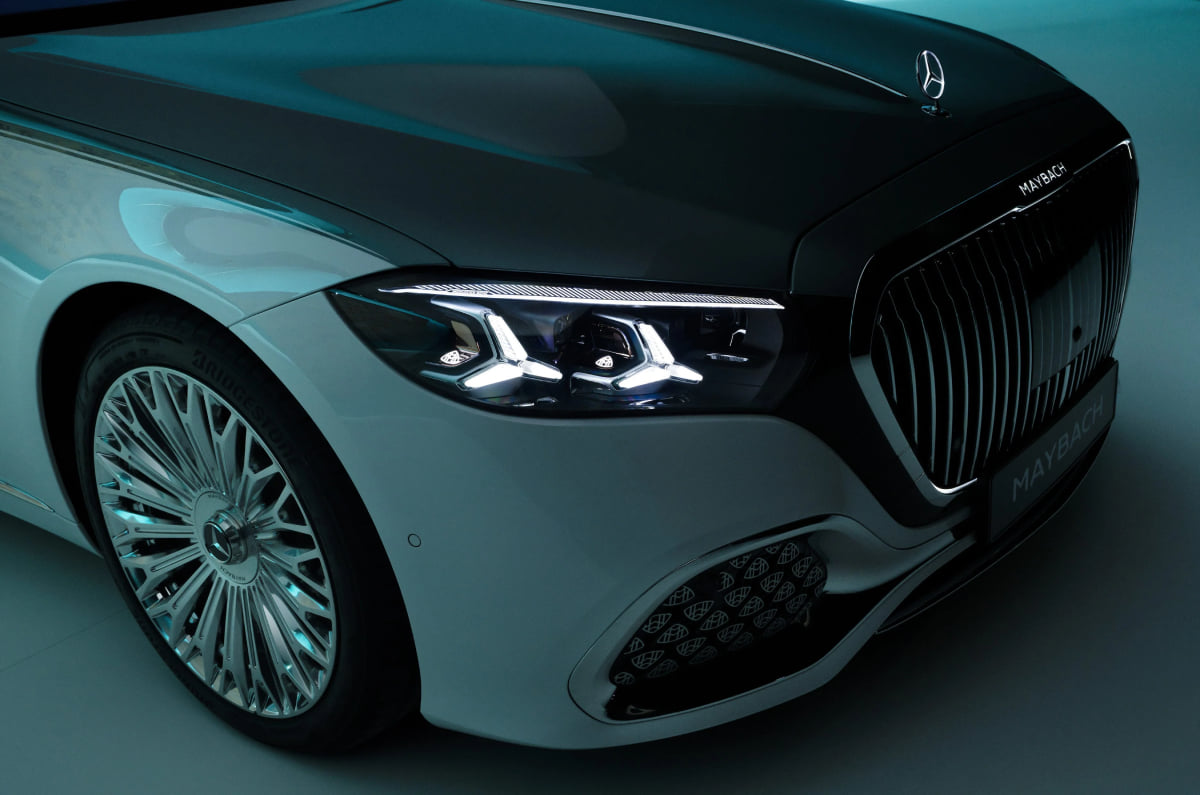
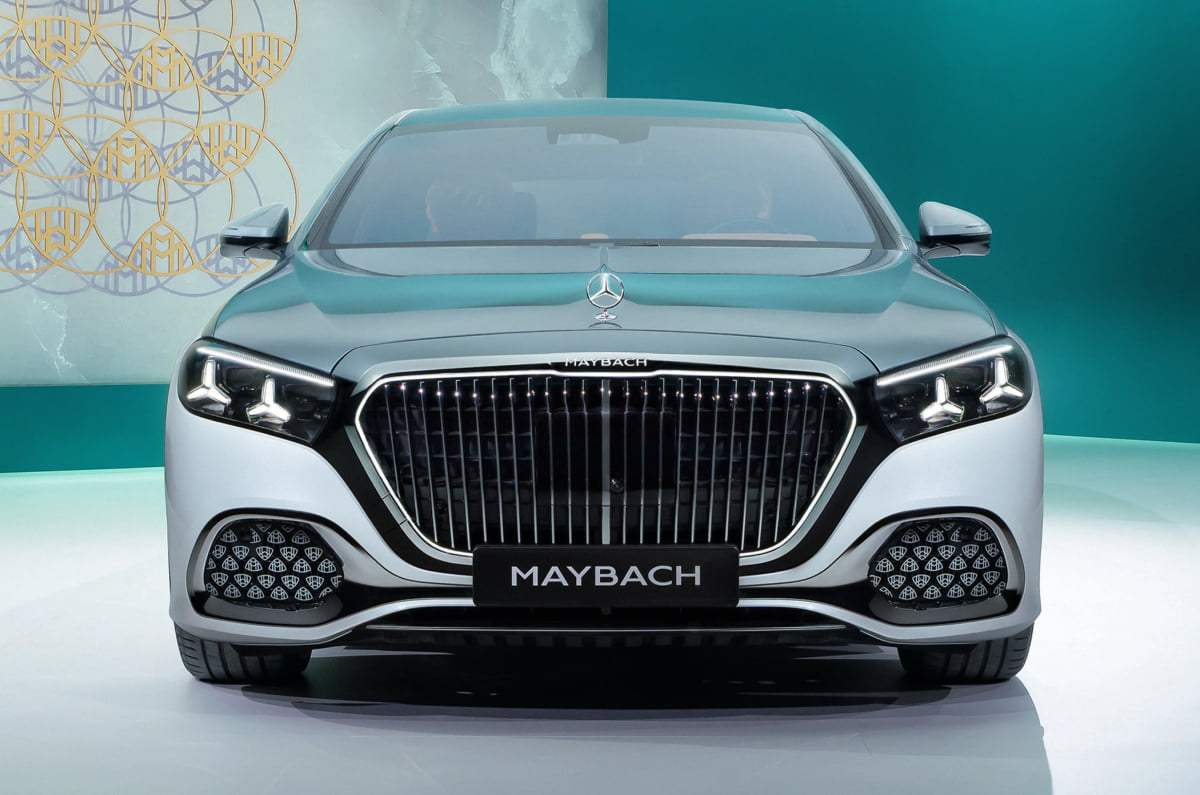
The Maybach S-Class gets the larger illuminated grille seen on the updated S-Class, but with Maybach-specific vertical slats and an illuminated ‘Maybach’ wordmark above them. It also gets an illuminated Mercedes star on the bonnet, LED headlights with three-pointed-star DRLs and rose gold embellishments featuring the Maybach logo instead of the techie blue accents on the standard S-Class. There are also tiny Maybach logos in the lower air-dam mesh, an illuminated Maybach logo on the D-pillar and the same three-pointed-star LED signature for the tail-lamps as the standard S-Class.

The Maybach is 180mm longer than the long-wheelbase S-Class. It is also available with new 20- and 21-inch forged alloy wheels, which feature a counterweighted Mercedes logo that stays upright as the wheels turn. The carmaker says every Maybach S-Class gets some options from its Manufaktur personalization range, which now includes more exterior colours and two-tone paint combinations.

What are the key interior and feature highlights of the Maybach S-Class?

The cabin of the Maybach S-Class, like the standard S-Class gets a Superscreen-style layout comprising a 12.3-inch digital instrument cluster, a 14.4-inch central touchscreen and a 12.3-inch passenger display. The car also uses a new E&E architecture with four ‘supercomputers’ that run the entire car, from the screens to the safety features to the driving dynamics.

As on the outside, Mercedes has expanded the choice of extended leather upholstery and added new upholstery colours. For the first time on a Maybach, buyers can also specify leather-free vegan upholstery with its own unique design. 

What changes have been made to the rear-seat experience of the Maybach S-Class?

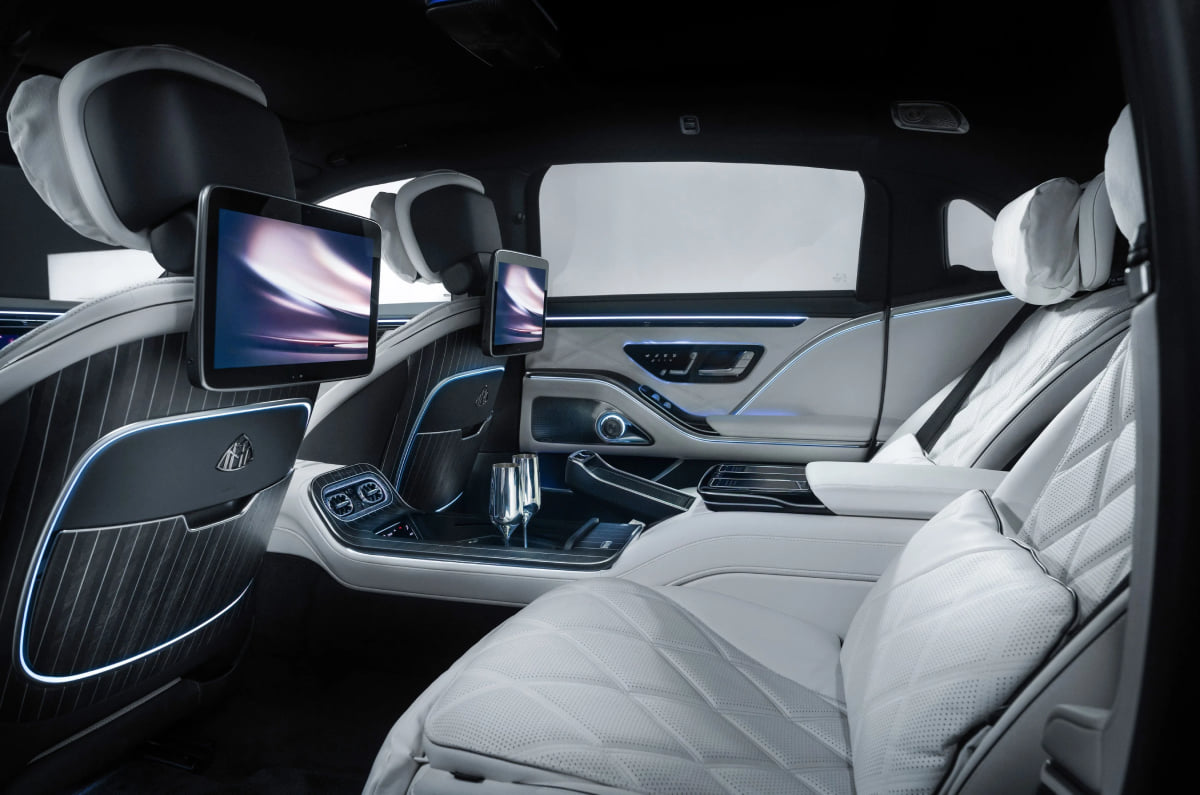
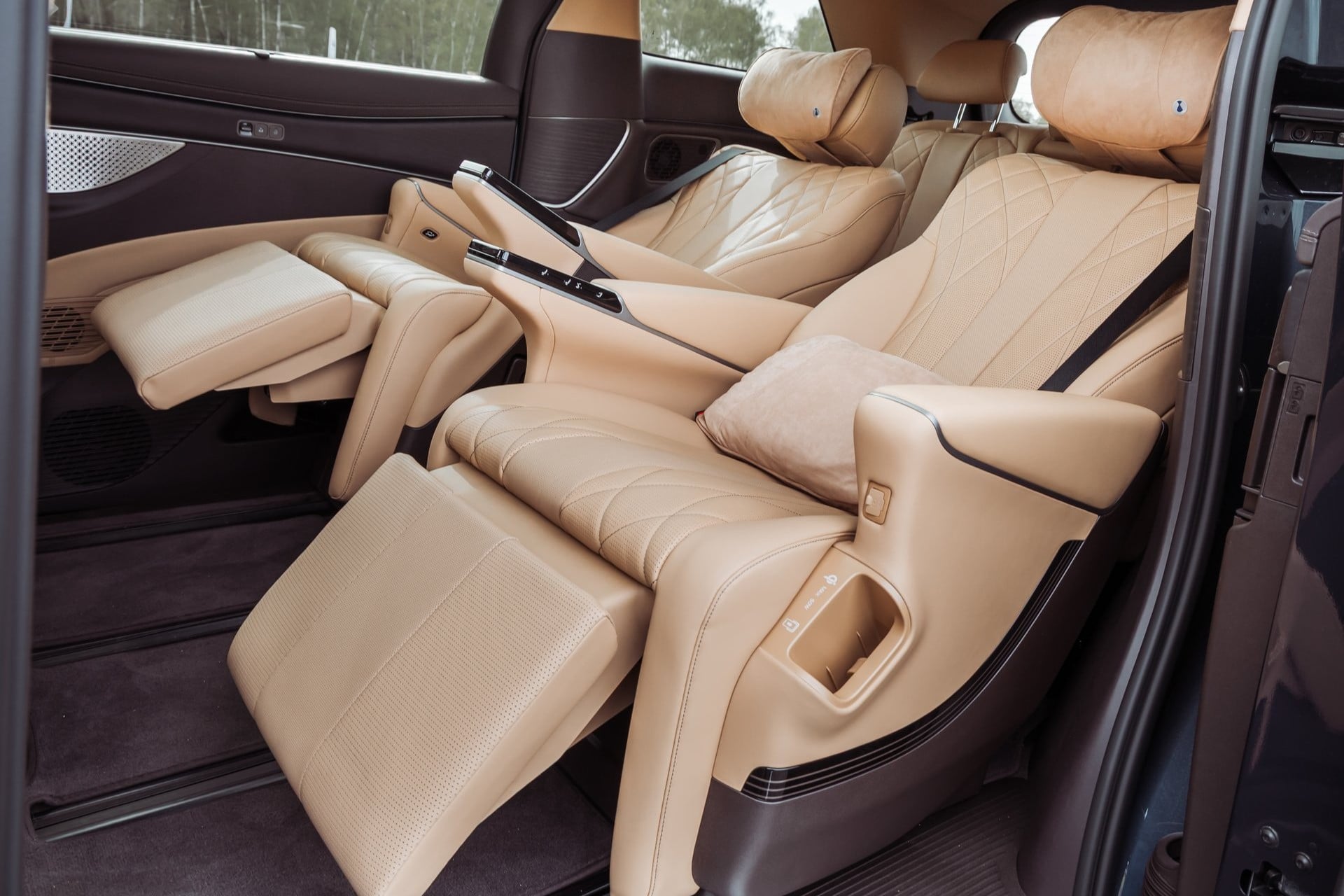
The rear seats now recline up to 43 degrees, compared with 38 degrees in the standard S-Class. They are also heated, ventilated and equipped with massage functions. The previous tablet controller has been replaced by two individual smartphone-style remotes for operating the car’s functions. There is also a Maybach drive mode that makes the suspension even softer.

What engine options are available internationally on the Maybach S-Class, and which one will India get?

Internationally, the Maybach S-Class is offered with petrol and plug-in hybrid powertrains. The S 580 gets a 4.0-litre V8 with a flat-plane crank, producing 537hp and 750Nm. Some markets also get the S 580e plug-in hybrid, which combines a 3.0-litre inline-six with a 163hp electric motor and a 22kWh battery. Total output is 585hp and 750Nm, with an electric-only range of up to 98km. The top-spec S 680 gets either a V12 or a more powerful V8 depending on the market. 

In India, we are likely to get the 612hp, 850Nm version of the S 580’s 4.0-litre V8.

What is the Maybach S-Class Night Series?

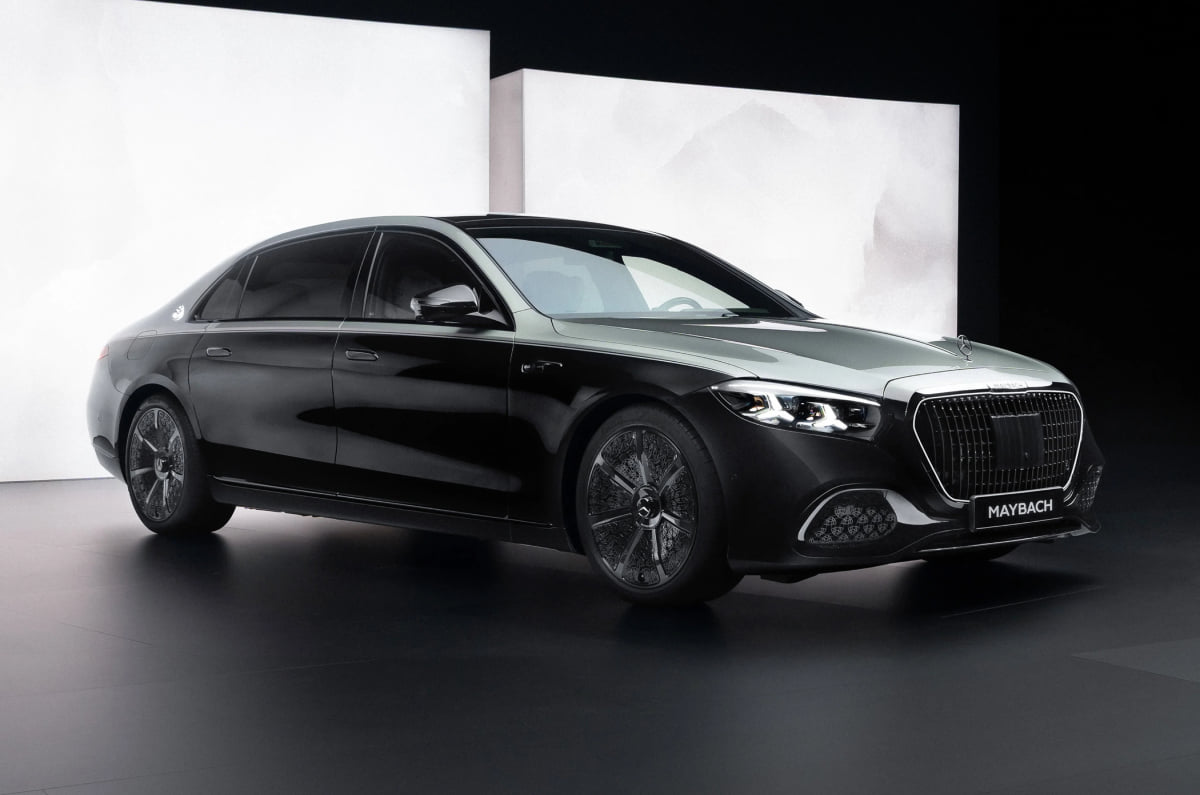
The Night Series is a darker-themed version of the Maybach S-Class. It gets darker exterior and interior colours, while chrome elements are replaced with dark chrome. It also gets a different set of aero-efficient black wheels adorned with dozens of Maybach logos.

How much will the new Maybach S-Class cost in India

The outgoing Maybach S 580 is currently priced at Rs 2.87 crore, ex-showroom, before options. Like the outgoing model, the updated Maybach S-Class is also expected to be locally assembled in India. The updated model is expected to cost more, with the price likely to be north of Rs 3 crore.

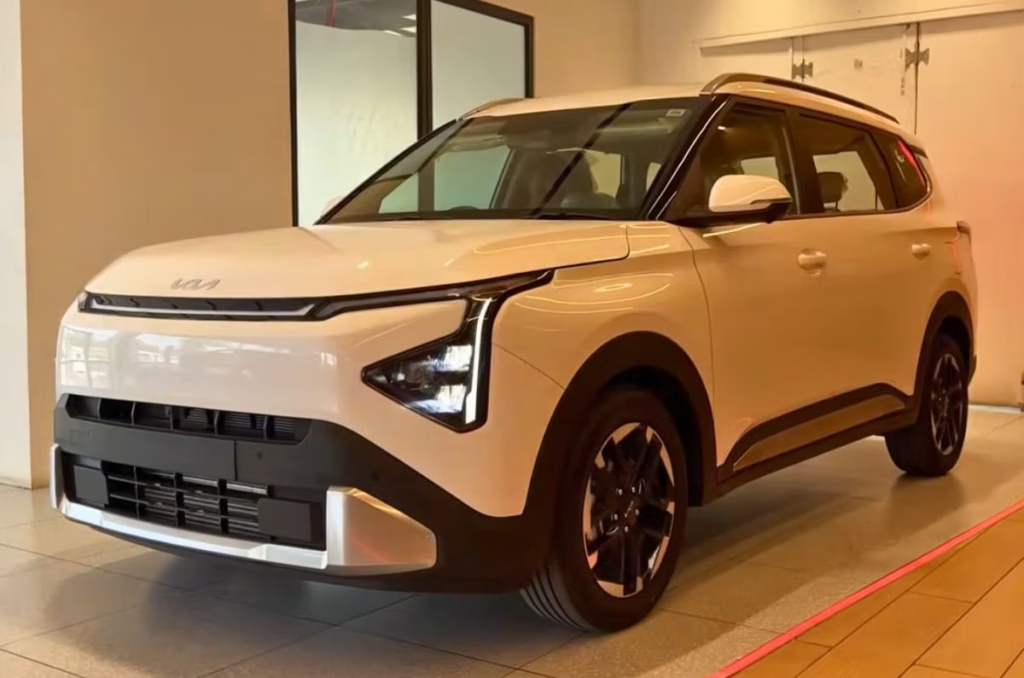
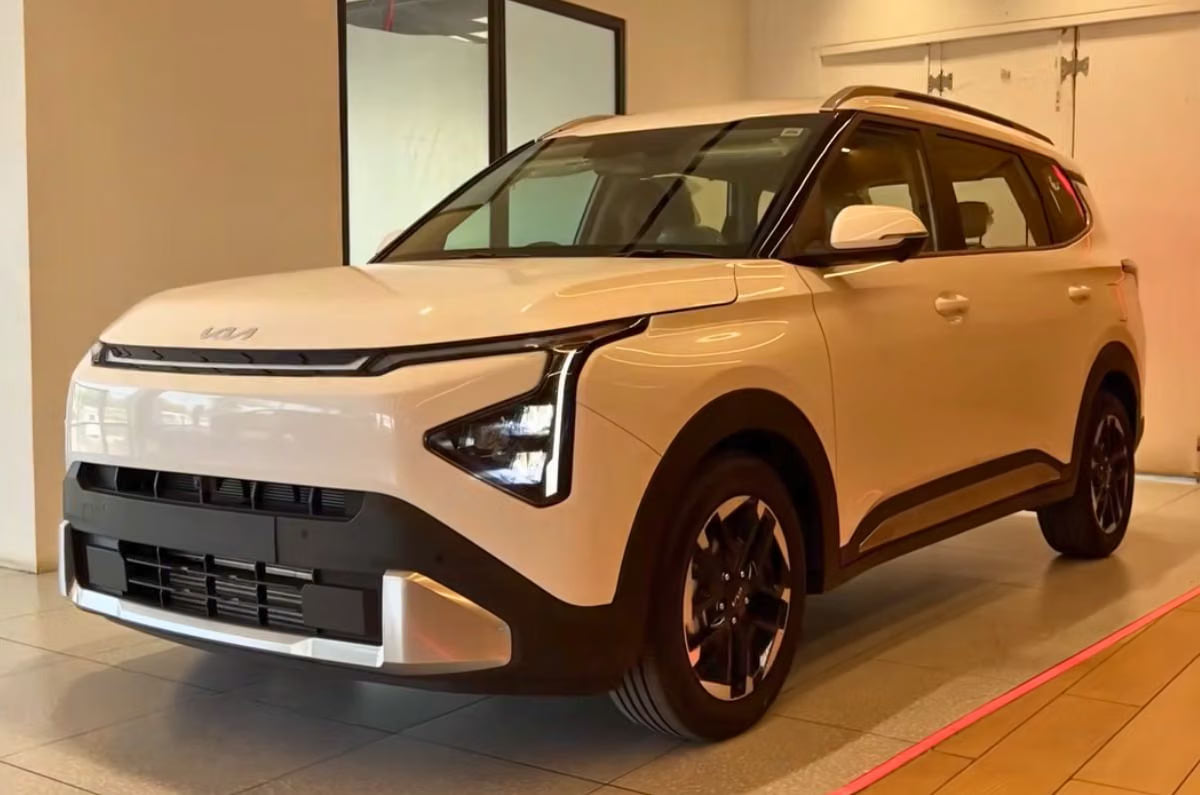
Kia Carens Clavis gets benefits of up to Rs 95,000 in October 2026

Kia Carens Clavis gets benefits of up to Rs 95,000 in October 2026
Carens Clavis

Kia has rolled out a range of benefits across its India line-up for October 2026, including cash discounts, exchange and scrappage offers, loyalty benefits and corporate discounts. The offers vary by model, variant and powertrain, with select cars also getting additional benefits such as an extended warranty. Here is a model-wise breakdown of Kia’s October offers.

Disclaimer: Offers/benefits may vary by city and are subject to stock availability. Buyers are advised to check with their local dealer for exact figures.

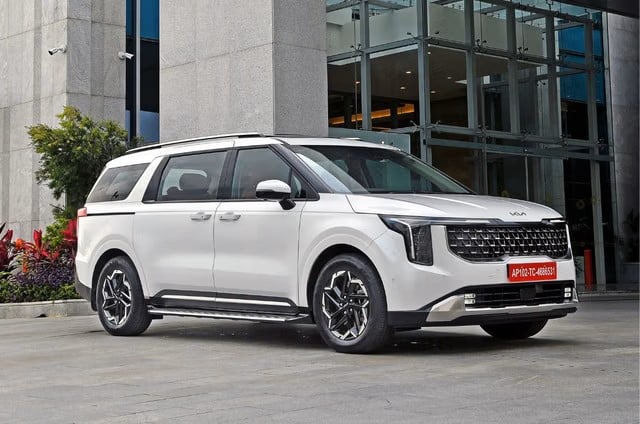
Kia Carnival discounts in October 2026

Up to Rs 1.70 lakh off

The Kia Carnival gets the highest benefits in Kia’s October 2026 offer programme, with savings of up to Rs 1.70 lakh. The package comprises a Rs 1 lakh exchange offer, Rs 20,000 scrappage benefit and corporate benefits of up to Rs 50,000.

Kia’s flagship MPV focuses on rear-seat comfort and space, making it a compelling choice among chauffeur-driven buyers. Priced from Rs 59.65 lakh, the Carnival does not have a direct rival, although the MG M9 is positioned in a similar price bracket.


Kia Carens Clavis discounts in October 2026

Up to Rs 95,000 off

The Kia Carens Clavis gets benefits of up to Rs 95,000 on its ICE variants, excluding the CNG version. The offer comprises a Rs 10,000 cash discount, Rs 30,000 exchange benefit, Rs 20,000 loyalty benefit, Rs 20,000 scrappage benefit and corporate benefits of up to Rs 15,000.

The Clavis is available in six- and seven-seat configurations, with naturally aspirated petrol, turbo-petrol, CNG and diesel engine options. Prices range from Rs 11.39 lakh to Rs 21.79 lakh, ex-showroom. It is sold alongside the older Carens, which remains the lower-priced option in Kia’s MPV line-up. The Clavis rivals MPVs such as the Maruti Suzuki XL6 and Toyota Rumion, while its price also overlaps with larger three-row SUVs such as the Hyundai Alcazar and Tata Safari. 


Kia Carens Clavis EV discounts in October 2026

Up to Rs 75,000 off

The Carens Clavis EV gets benefits of up to Rs 75,000 across its range. The offer includes a Rs 20,000 exchange benefit, Rs 20,000 loyalty benefit, Rs 20,000 scrappage benefit and corporate benefits of up to Rs 15,000. No cash is available for the Clavis EV this month.

The electric MPV offers a practical, well-finished cabin and strong performance even under load. However, it is significantly more expensive than the ICE-powered Clavis. The Clavis EV is priced between Rs 18.04 lakh and Rs 25 lakh, ex-showroom.  It rivals the BYD eMax 7 and VinFast VF MPV 7.

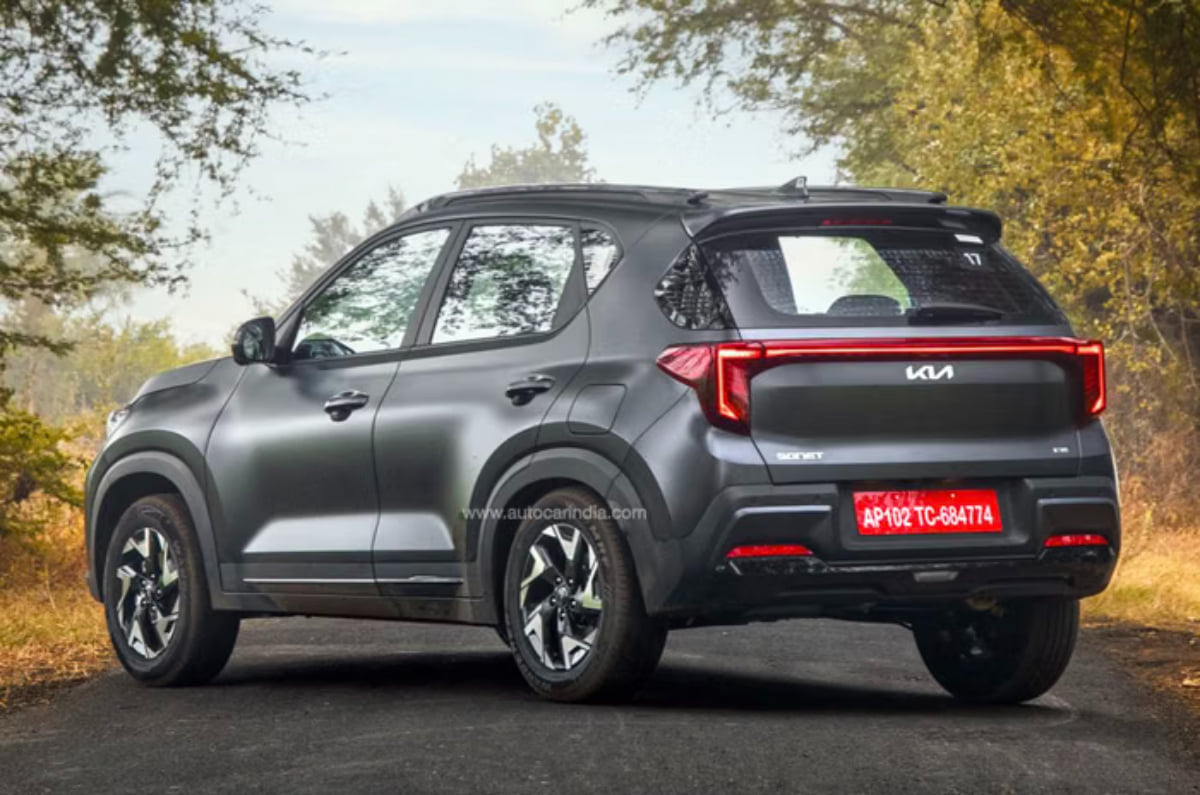
Kia Sonet discounts in October 2026

Up to Rs 65,000 off

Benefits on the Kia Sonet vary by powertrain and variant. The naturally-aspirated petrol 1.2-litre HTK (O) gets the highest benefits of up to Rs 65,000, comprising a Rs 15,000 cash discount, Rs 20,000 exchange benefit, Rs 15,000 scrappage benefit and corporate benefits of up to Rs 15,000. The Sonet diesel , turbo-petrol and naturally-aspirated variants get benefits of up to Rs 50,000.

The compact SUV offers a long equipment list and multiple engine options. However, rear-seat space is limited and higher variants can get expensive. A rival to the Maruti Suzuki Brezza, Tata Nexon, Skoda Kylaq, Hyundai Venue and Mahindra XUV 3XO, the Sonet is priced between Rs 7.41 lakh and Rs 14.27 lakh.


Kia Syros discounts in October 2026

Up to Rs 55,000 off

The Kia Syros gets benefits of up to Rs 55,000 on its ICE variants. The offer includes a Rs 20,000 exchange benefit, Rs 20,000 scrappage benefit and corporate benefits of up to Rs 15,000. Kia is also offering a free extended warranty with the Syros.

The Syros stands out for its stylish cabin and spacious rear seats, although NVH levels in both petrol and diesel variants remain high. The Kia Syros’ rivals include the Tata Nexon, Mahindra XUV 3XO, Maruti Suzuki Brezza, Skoda Kylaq and Hyundai Venue. It is priced from Rs 8.42 lakh to Rs 15.82 lakh.

Kia Carens discounts in October 2026

Up to Rs 45,000 off

The Kia Carens, excluding CNG variants, gets benefits of up to Rs 45,000. These comprise a Rs 10,000 exchange benefit, Rs 20,000 scrappage benefit and corporate benefits of up to Rs 15,000. The Carens CNG gets a Rs 20,000 scrappage benefit.

The Carens offers a spacious cabin, good practicality and a generous feature list. However, diesel performance under full load is not particularly strong, and the petrol engine is not very fuel-efficient. The Carens is priced between Rs 11.02 lakh and Rs 12.88 lakh, ex-showroom, it rivals the Toyota Rumion and Maruti Suzuki Ertiga.

Kia Seltos discounts in October 2026

Up to Rs 40,000 off

The Kia Seltos gets benefits of up to Rs 40,000 across its range. These comprise a Rs 20,000 loyalty benefit and Rs 20,000 scrappage benefit. There is no cash discount or exchange benefit for the Seltos this month.

The midsize SUV combines a comfortable ride with good handling and a strong turbo-petrol engine option. However, some rivals offer a more comprehensive feature list, and the diesel engine lacks punch. The Seltos rivals the Hyundai Creta, Tata Sierra, Maruti Grand Vitara, Toyota Urban Cruiser Hyryder, Volkswagen Taigun, Skoda Kushaq, Renault Duster and MG Astor. Its prices range from Rs 11 lakh to Rs 21.82 lakh.

Kia Sorento discounts in October 2026

Up to Rs 40,000 off

The recently launched Kia Sorento gets benefits of up to Rs 40,000 across its range. The offer comprises a Rs 20,000 loyalty benefit and Rs 20,000 scrappage benefit.

The Sorento is Kia’s flagship three-row SUV in India and is offered with a 2.2-litre diesel engine or a 1.6-litre turbo-petrol strong-hybrid powertrain. Prices range from Rs 27.99 lakh to Rs 40.39 lakh. It competes with SUVs including the Jeep Meridian, Skoda Kodiaq and Volkswagen Tayron.

All prices are ex-showroom, India.

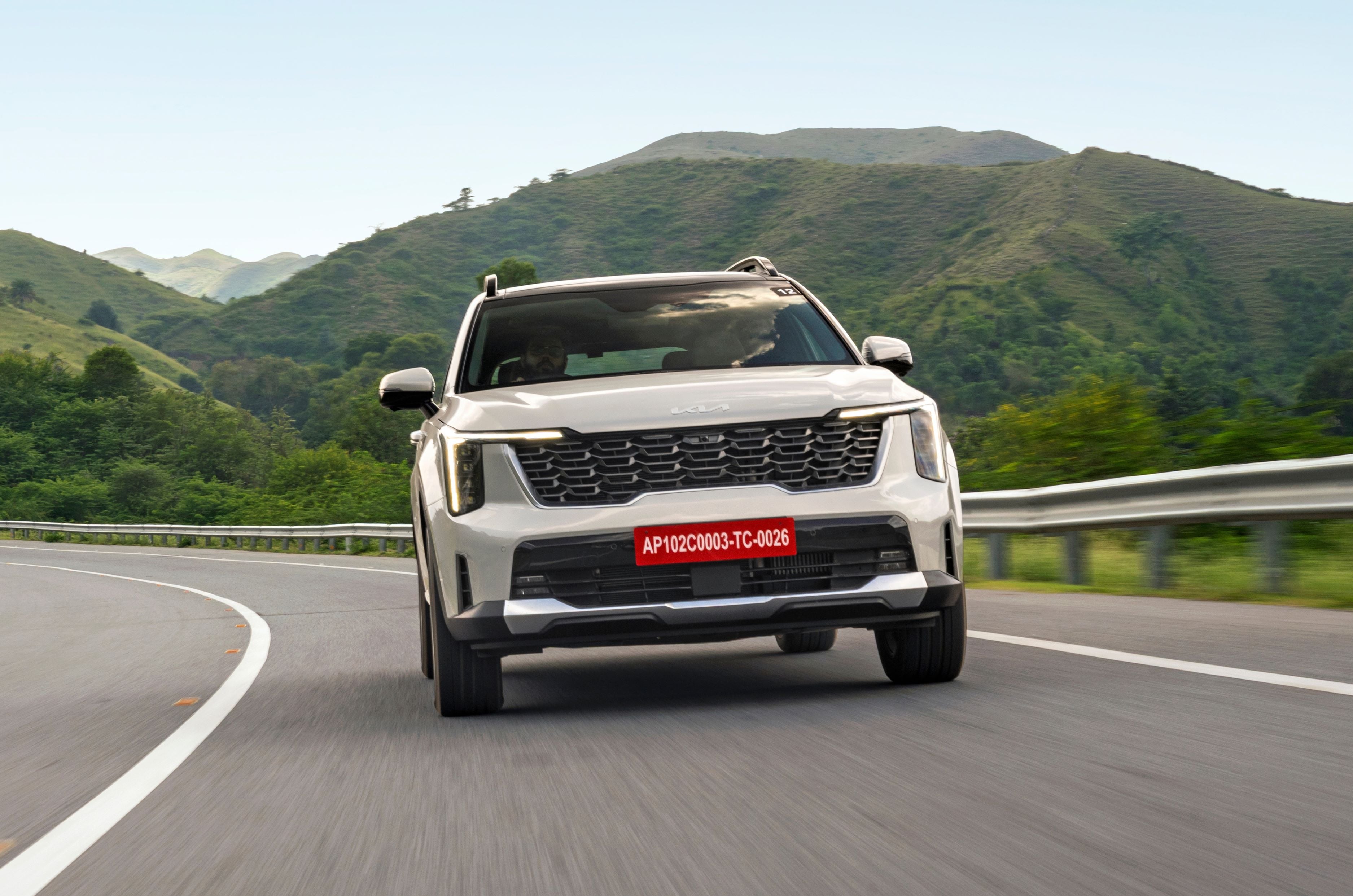
Kia Sorento review: Kia’s big hybrid and diesel bet

Kia Sorento review: Kia's big hybrid and diesel bet
kia sorento

The Sorento is a big bet for Kia India, and you can tell. Six trims, two powertrains, front- and all-wheel drive, six or seven seats and 32 versions in all. This is not a toe in the water exercise but a full-blooded dive into the deep end of the executive SUV pool. More than that, it is a case study in how to launch a product in India, because Kia has got the basics right before it has even started talking about features.

Start with the powertrains, which for this class of SUV could hardly be better judged. There is a strong 2.2-litre diesel for diesel die-hards and there are still plenty of those. And then there is a 1.6-litre turbo-petrol strong hybrid whose timing couldn’t be more perfect. Petrol prices are climbing, E20 has quietly eaten into real-world efficiency, and buyers want diesel-like running costs from a smooth, quiet powertrain without lying awake worrying about diesel’s long-term future. The Sorento hybrid is pitched squarely at that anxiety.

The strategy behind the car is just as interesting. This fourth-generation (MQ4) Sorento arrives in India towards the end of its global life cycle. It is still a current product, but one due to be replaced internationally next year, while India will carry on with this one. That is actually a very smart move. A car this late in its life has its development costs largely amortised, and Kia India can bring some of the tooling here, which slashes the investment.

And this is a properly localised car, not a screwdriver job. The body is stamped and welded at Kia’s Anantapur plant, and the dashboard and seats are made here too. That is what makes the Rs 27.99 lakh starting price possible. The catch is that localisation on this scale only pays off with volume, and Kia wants to sell around 40,000 Sorentos a year. That is a big number for a Rs 30-40 lakh SUV. Can it get there?

Kia Sorento exterior design and engineering

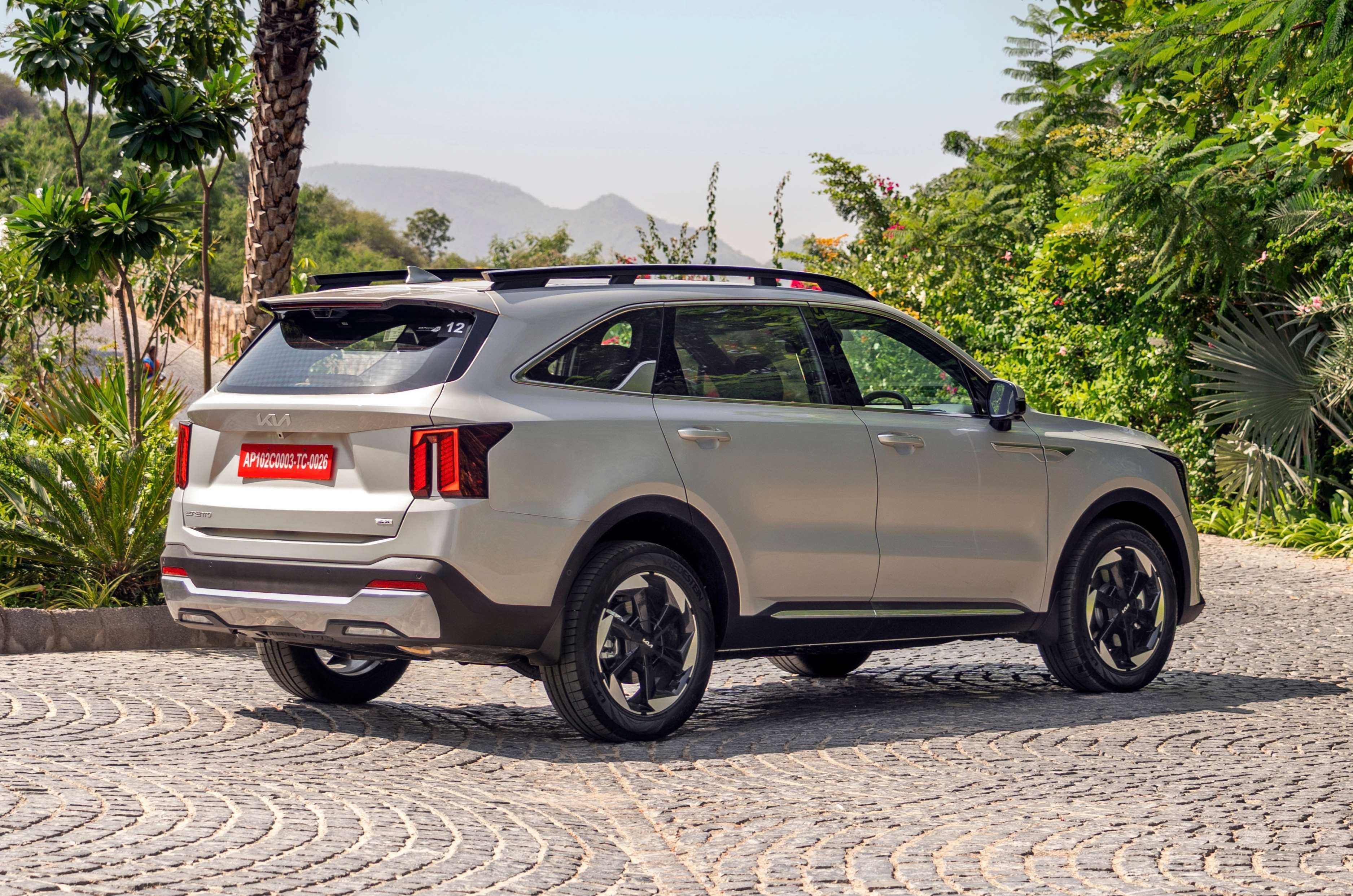
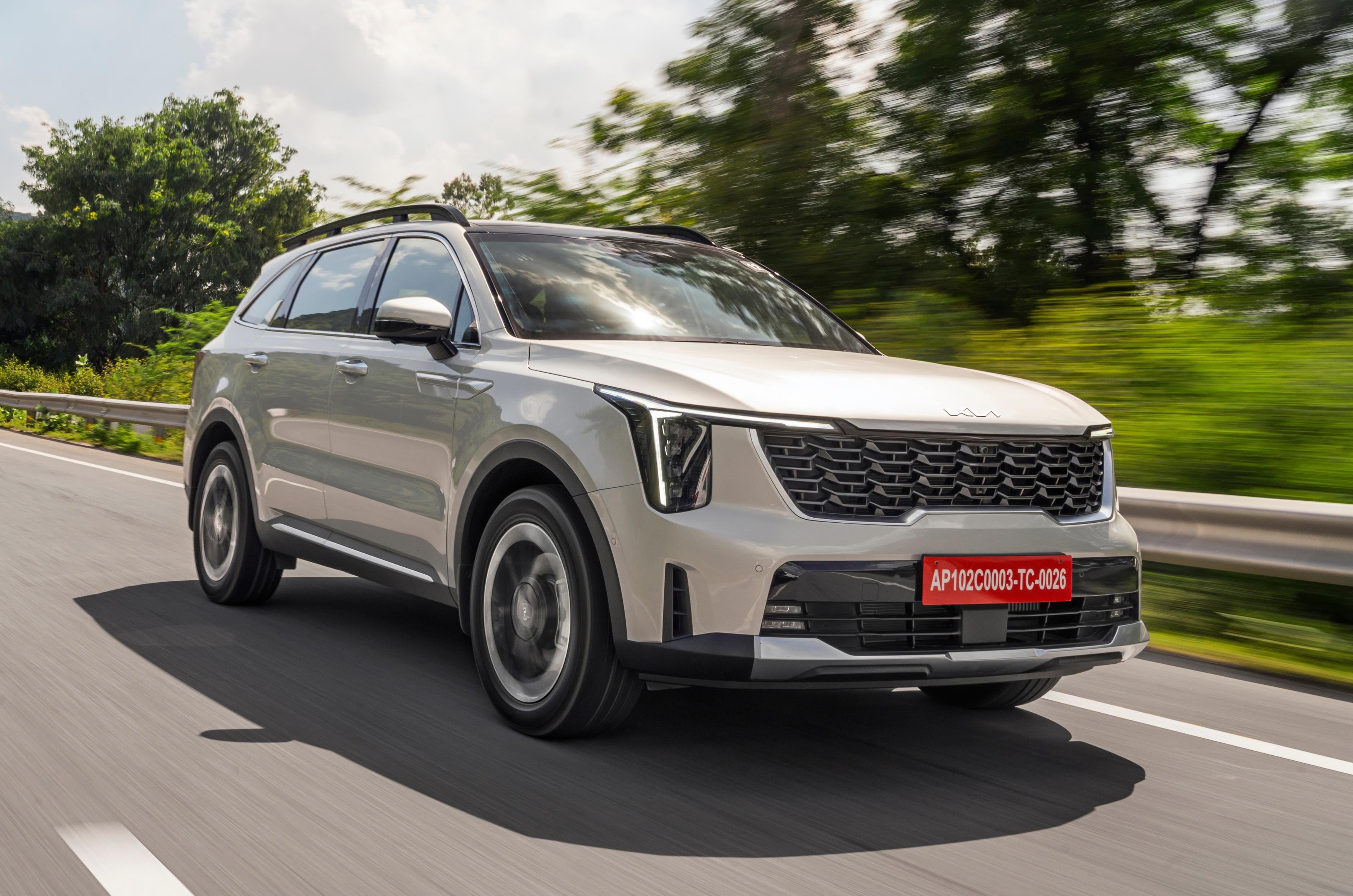
Based on the gen 4 Sorento, it carries over the older and more palatable design language.

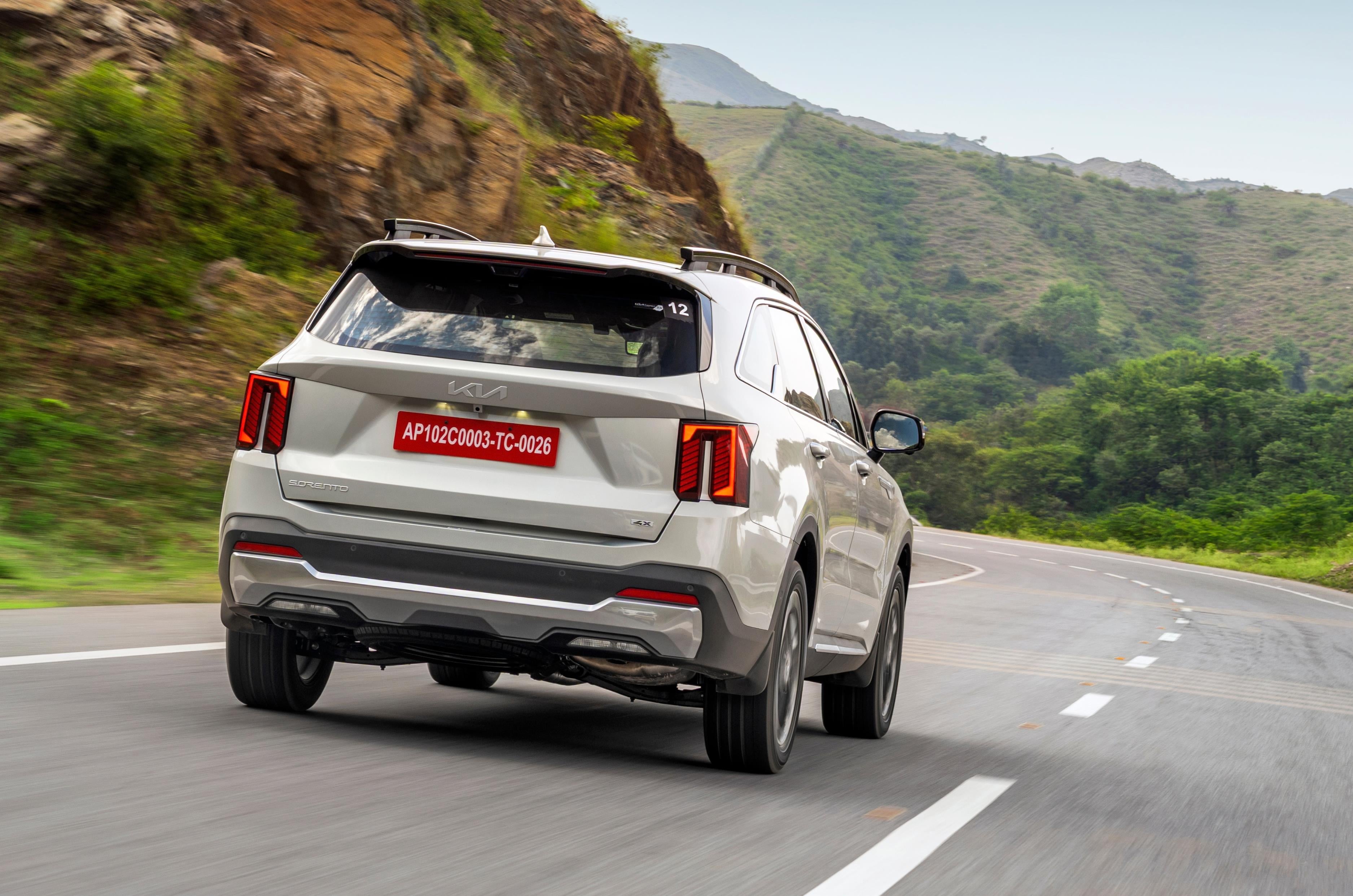
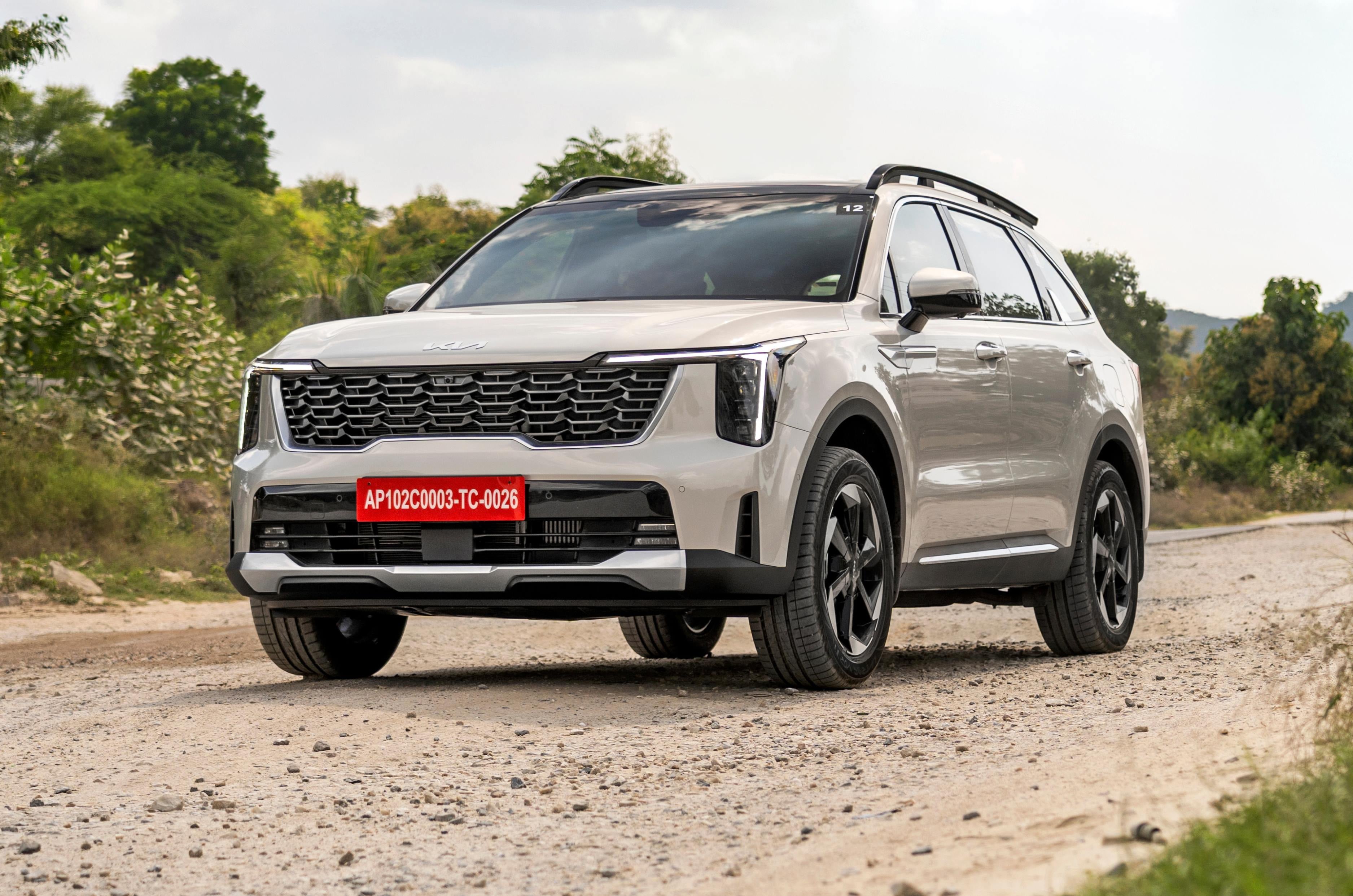
The Sorento sits on Hyundai-Kia’s MQ4 platform, the freshest architecture in its class, and it has already had a mid-life update to keep it looking current. The 2024 facelift brought the nose in line with the design language Kia kicked off with the EV9, so you get vertically stacked LED headlights, Y-shaped daytime running lamps and an aggressive looking bumper with wide intakes. At the back are L-shaped wraparound tail-lamps, and thankfully no light bar stretched across the tailgate.

Beats the rivals in length, width, and wheelbase.

Kia’s stated aim was a more technical, precise look, one meant to signal tight build quality and engineering sophistication. It is a trick the German premium brands have used for years, and Kia has clearly taken a leaf out of their book. The Sorento looks crisp and expensive rather than flashy, and is likely to age well too.

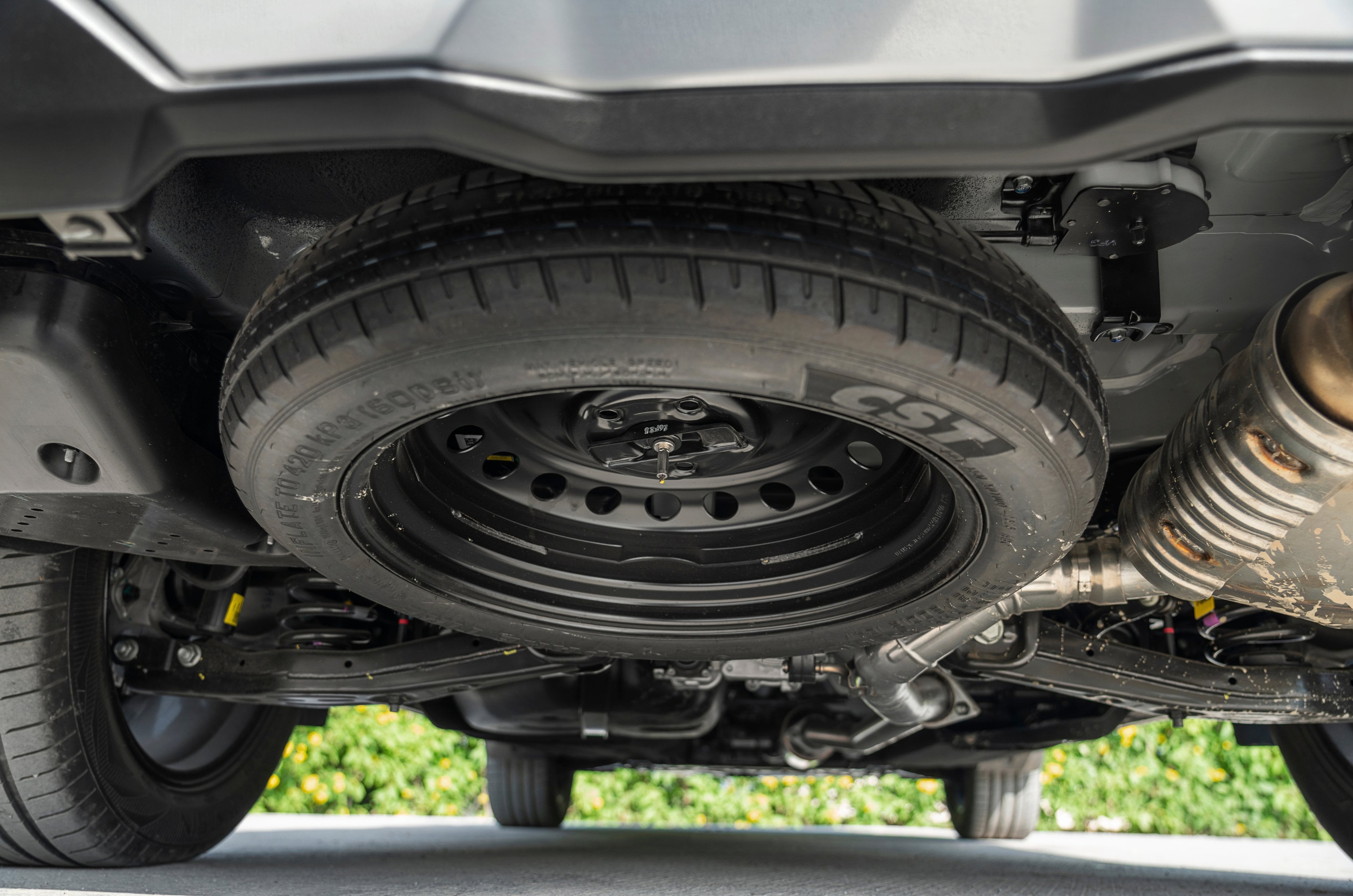
Spare wheel mounted under the floor frees up room in the boot.

What it does not have is brute presence. Despite being the longest, widest and tallest SUV in its segment, at 4,815mm long, 1,900mm wide and 1,785mm tall on a 2,815mm wheelbase, it does not loom in your mirrors the way a Fortuner does. The sloping roofline at the rear softens the silhouette and lends it a hint of crossover, and some will see it as a big Seltos rather than a junior Land Cruiser. Clearly this is not an SUV that looks like it can bully its way through traffic.

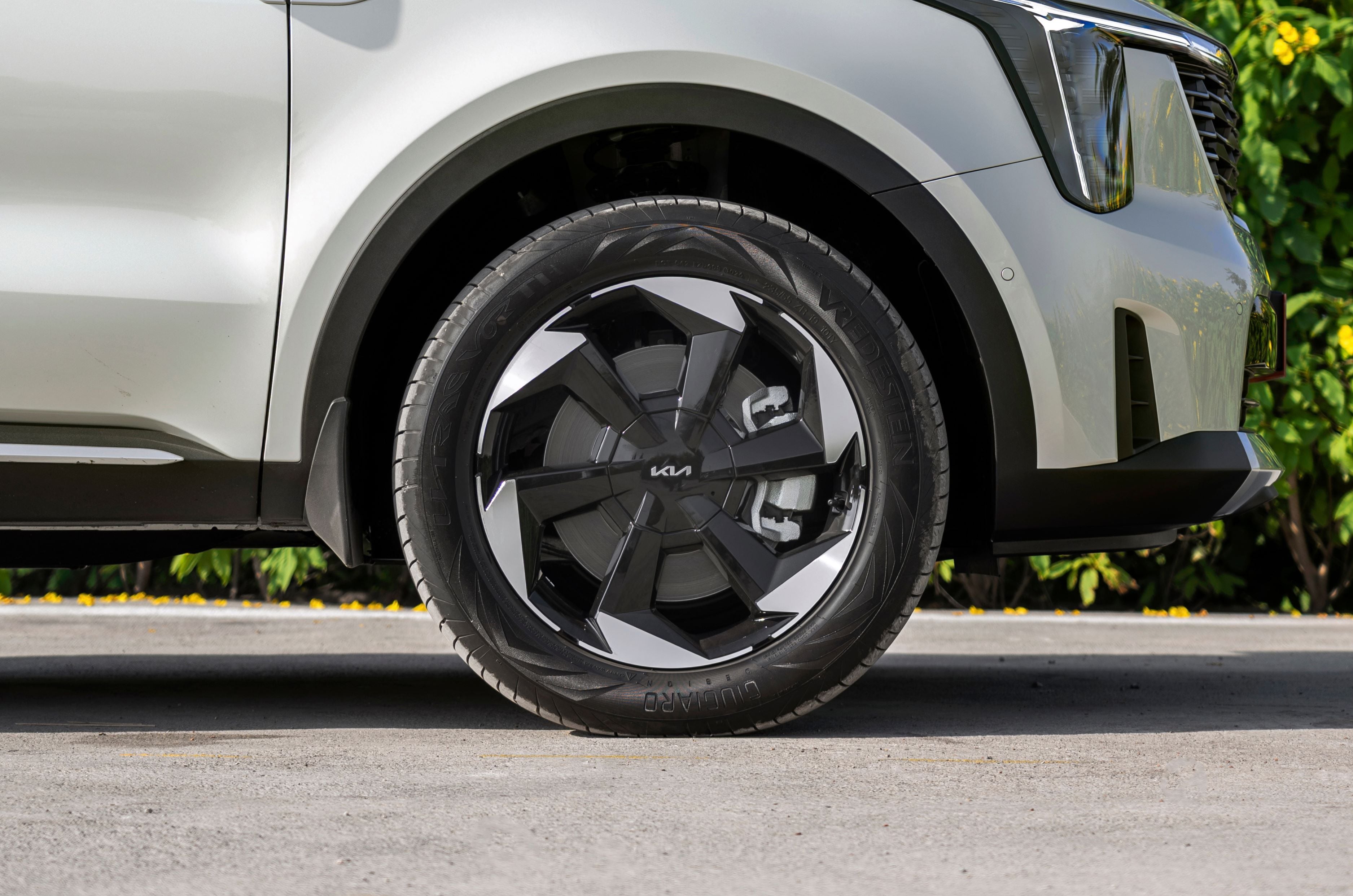
A more unique design could’ve been used for the 19-inch alloys.

The 19-inch dual-tone alloys could have been more distinctive, too an effect exaggerated by the chunky 235/55 R19 tyres. Those tall sidewalls, though, are not a styling misstep so much as an engineering choice, and they play a big part in how this car rides. More on that later.

Kia Sorento interior space and comfort

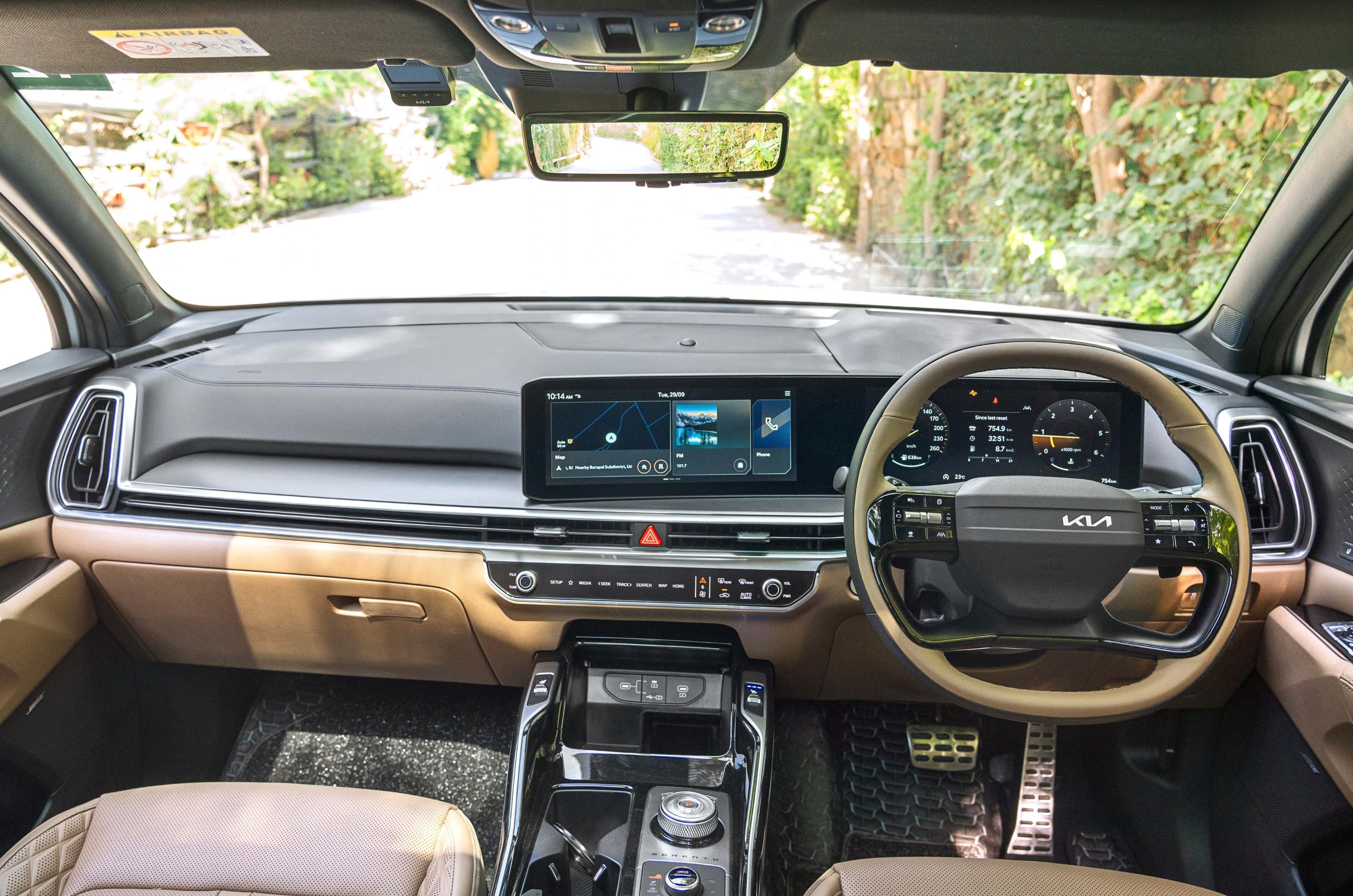
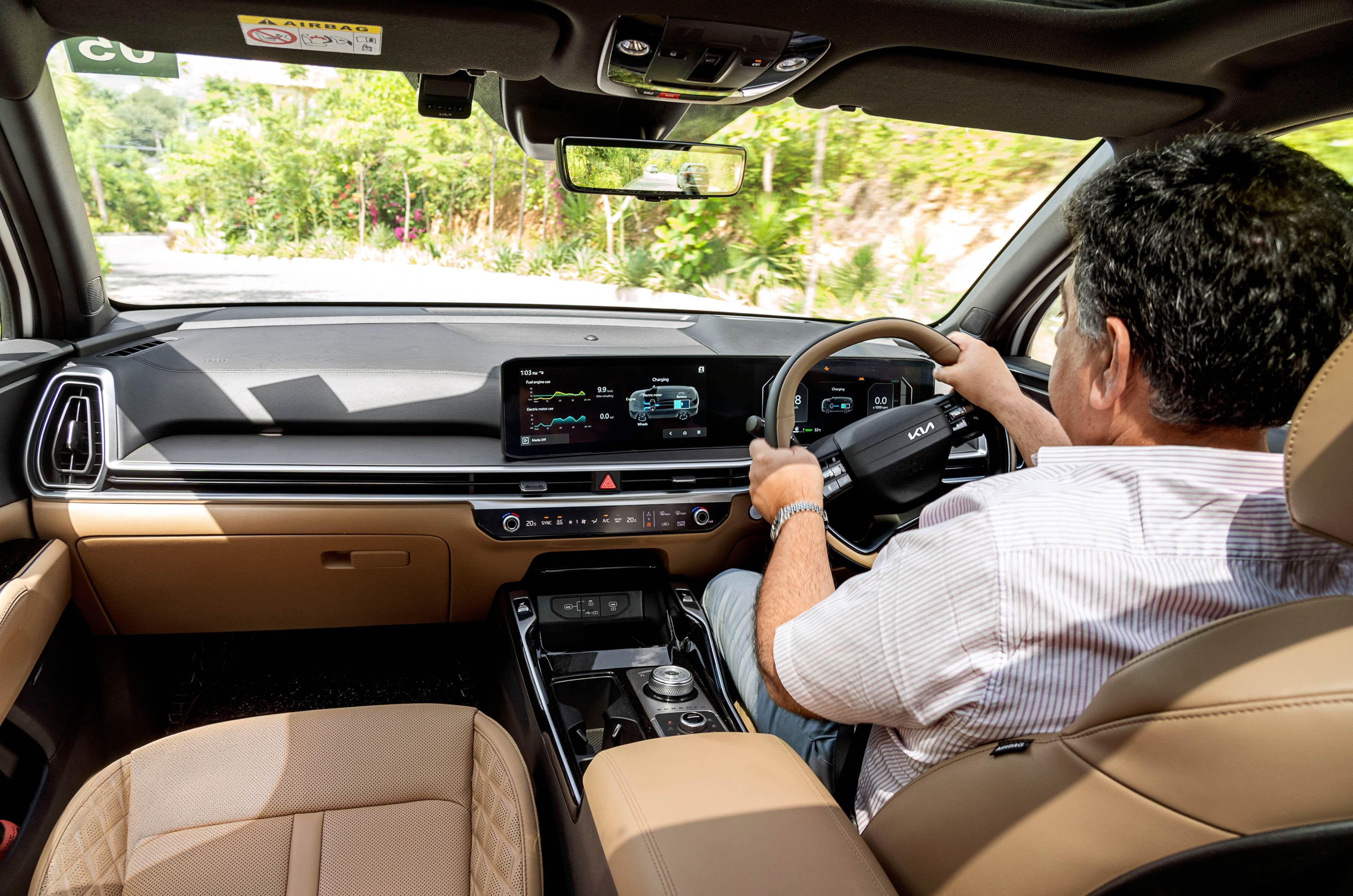
Clutter-free dashboard with solid build and plush feel.

If the exterior is quietly effective, the cabin is where Kia has truly aced it. The Sorento offers a mix of quality, equipment and ergonomics that nothing at this price can match. Soft-touch materials cover everything you are likely to touch, including the spots where your knee rests against the centre console. There is a healthy count of physical buttons, and they click with a precision that feels engineered rather than sourced. The knurled finish on the rotary drive selector and the switchgear adds a tactile richness you normally pay German money for.

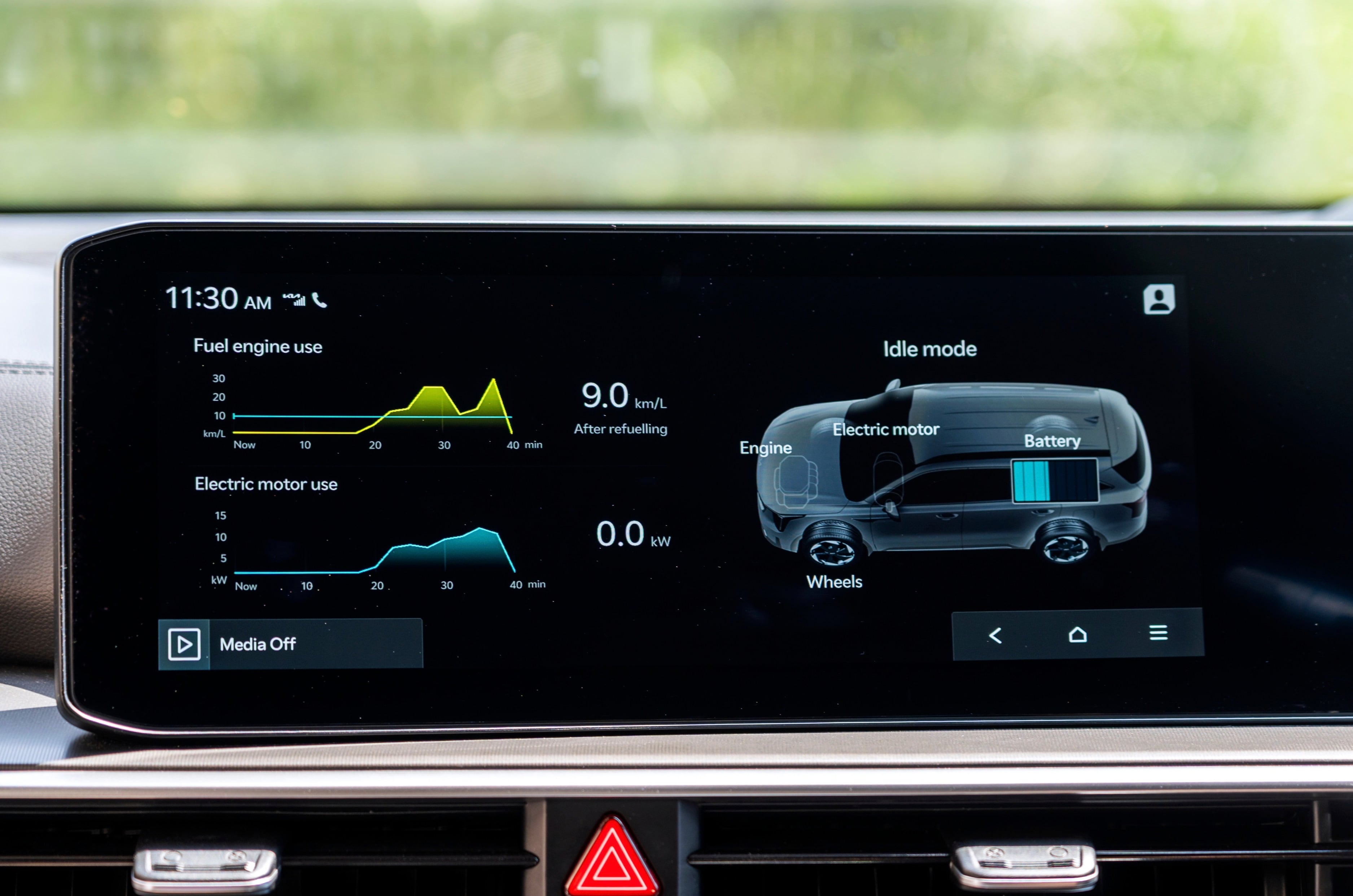
Hybrid variant gets exclusive data for power flow and efficiency.

As with its Hyundai cousins, the real ace is the software. The 12.3-inch infotainment system is logically laid out, menus are where you expect them to be, and getting to a feature takes a tap or two rather than a treasure hunt. Kia has also kept the climate controls off the main screen. They live on a touch-sensitive bar below it, with scrollers and a button that toggles the bar between air-con and infotainment shortcuts. It is a clever, space-saving solution, though you will occasionally find it in the wrong mode just when you need it.
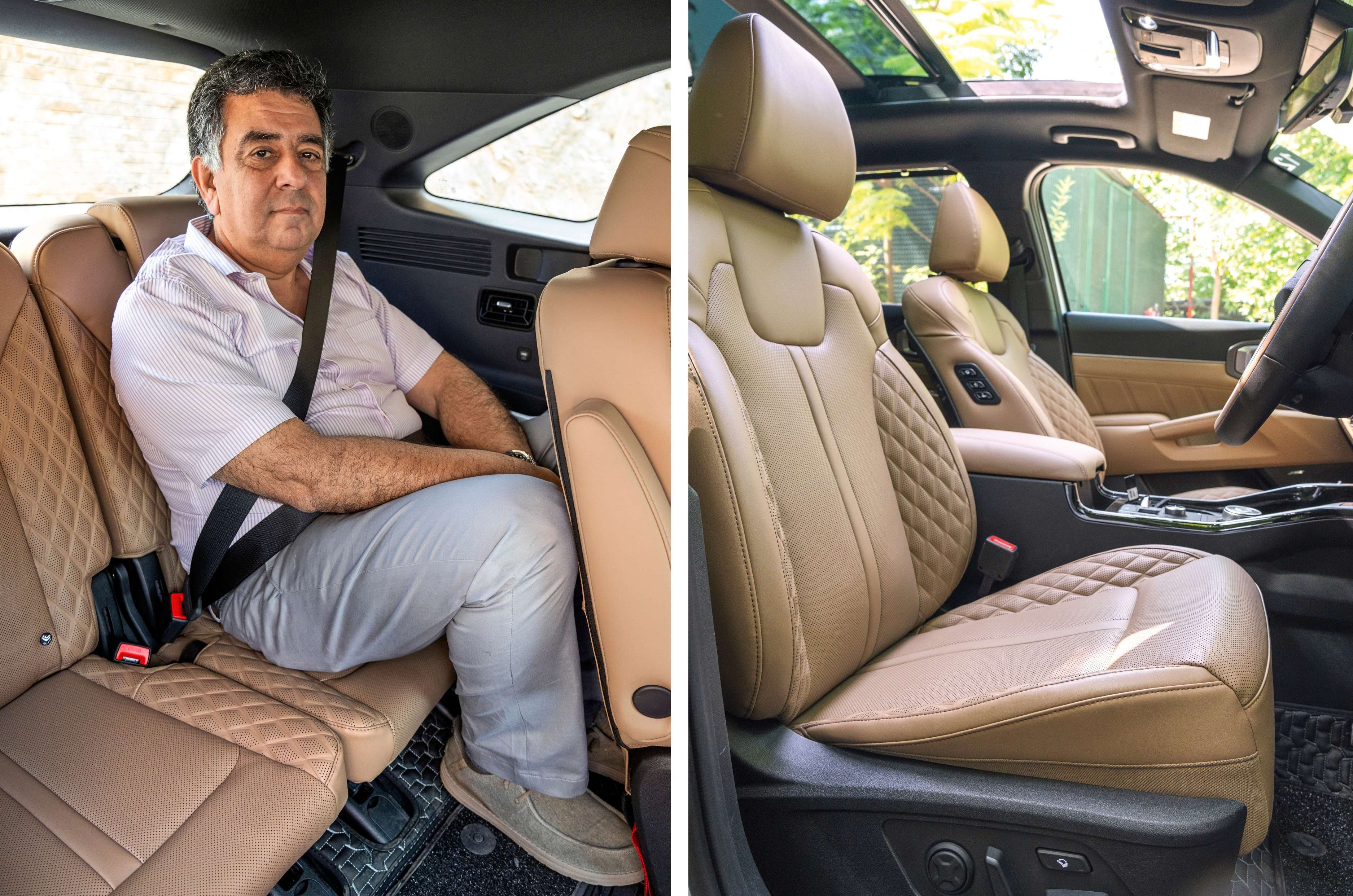
L: Third row seat placed on floor results in knees-up seating; best for children. R: Broad, supportive and well-cushioned front seats are electric and also get ventilation.

The front seats are fully powered, with 10-way adjustment, lumbar support and ventilation, and the passenger seat gets a boss mode so whoever sits behind can push it forward. Coming to the third row, access is easy. You can either walk through the gap between the captain chairs or press a button on the seat, which electrically slides and tilts it forward. Once there, the news is mixed. Legroom is better than you expect, but the seat base is mounted almost flat on the floor, so there is no under-thigh support and your knees point at the roof. Treat it as a space for children or short hops. At least the third row gets its own blower controls and USB ports.

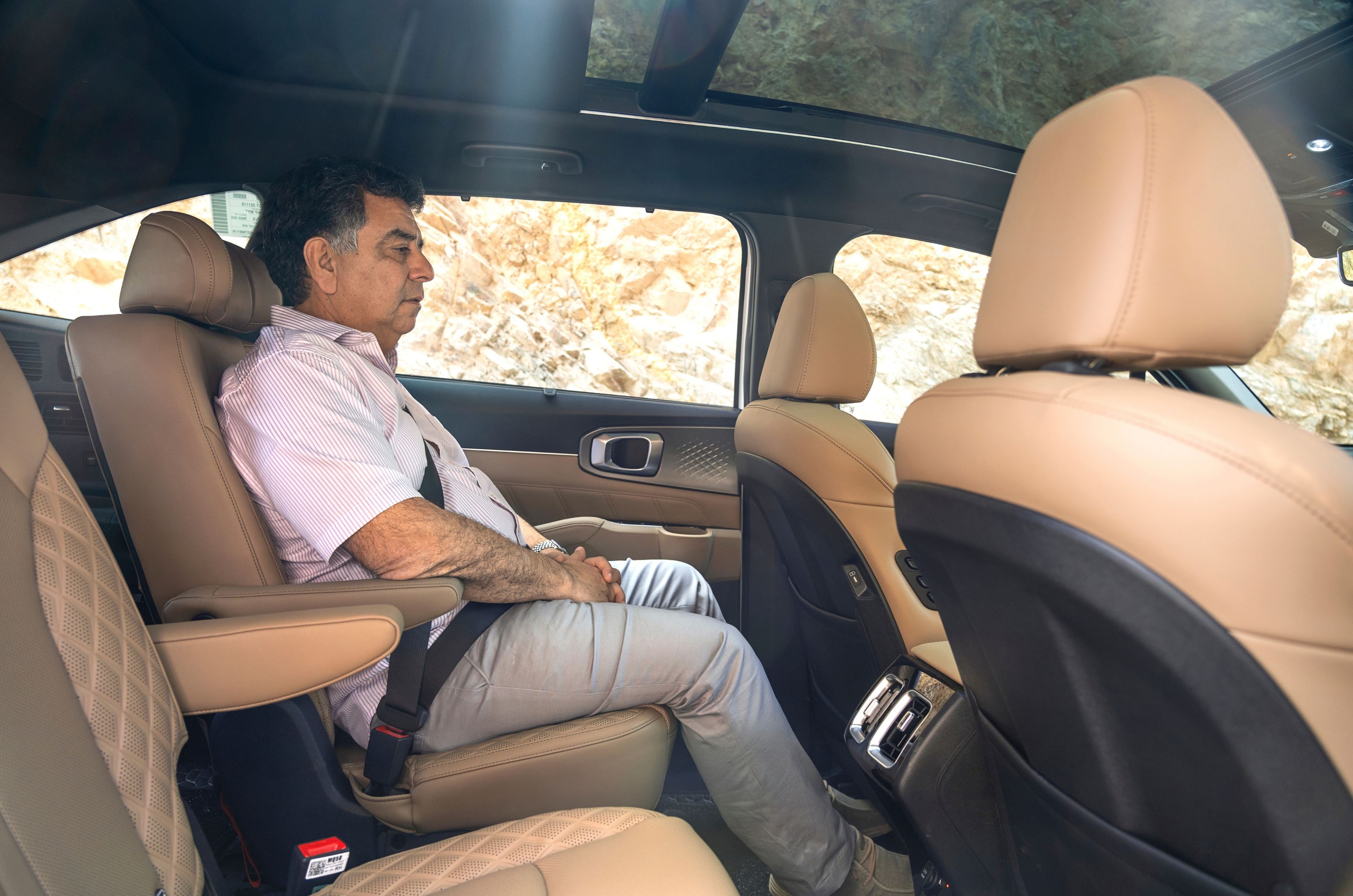
Spacious middle-row with ventilated and adjustable captain chairs; bench seat version also available.
One of the Sorento’s highlights, however, is the second-row experience. Our test car was the top HTX with six seats, and its second-row captain chairs are ventilated too, a rarity in this class. They are the best seats in the house. There is lots of legroom, a commanding view out and good under-thigh support, comparable to the Innova Hycross’s middle-row captain chairs, though the Toyota seats you a touch higher. A neat detail is the cupholder moulded into the door, up near the handle, where it is actually easy to reach.
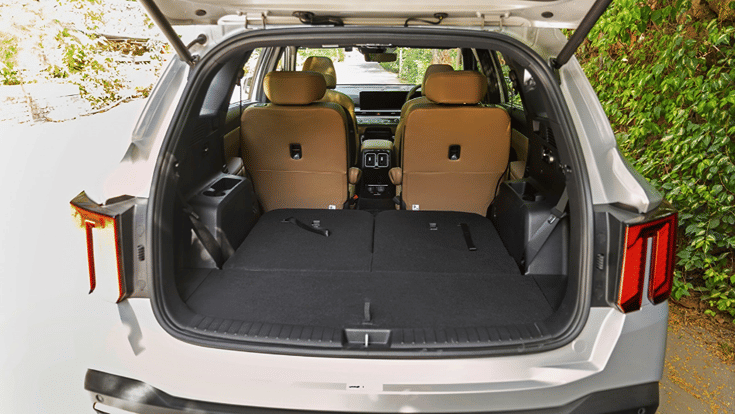
kia sorento boot space unfolded
kia sorento boot space folded
 

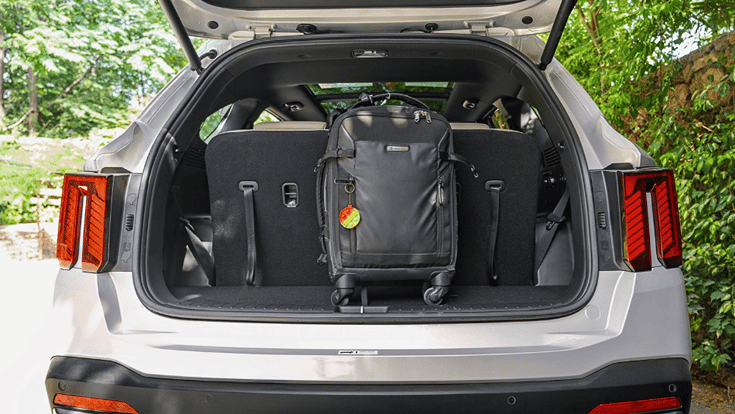
With all three rows up, the boot is a modest 179 litres; fold the third row and that grows to 813 litres. A full-size spare is welcome, but it is slung under the body, which is not the most convenient place to reach. Overhead, the massive panoramic roof floods the cabin with light and adds to the sense of space.

Kia Sorento features and technology

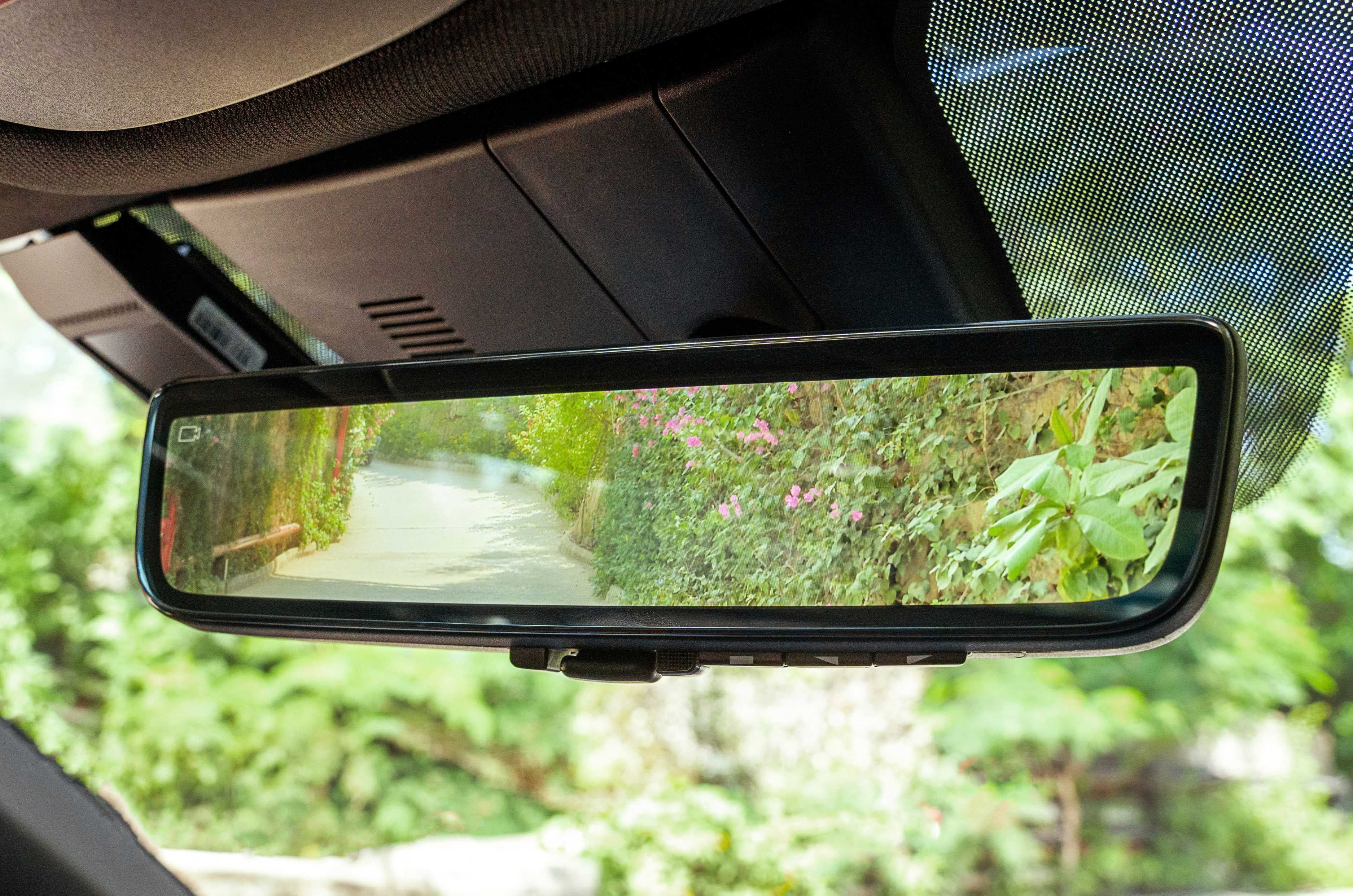
Digital IRVM offers excellent resolution and can be adjusted for level and brightness.

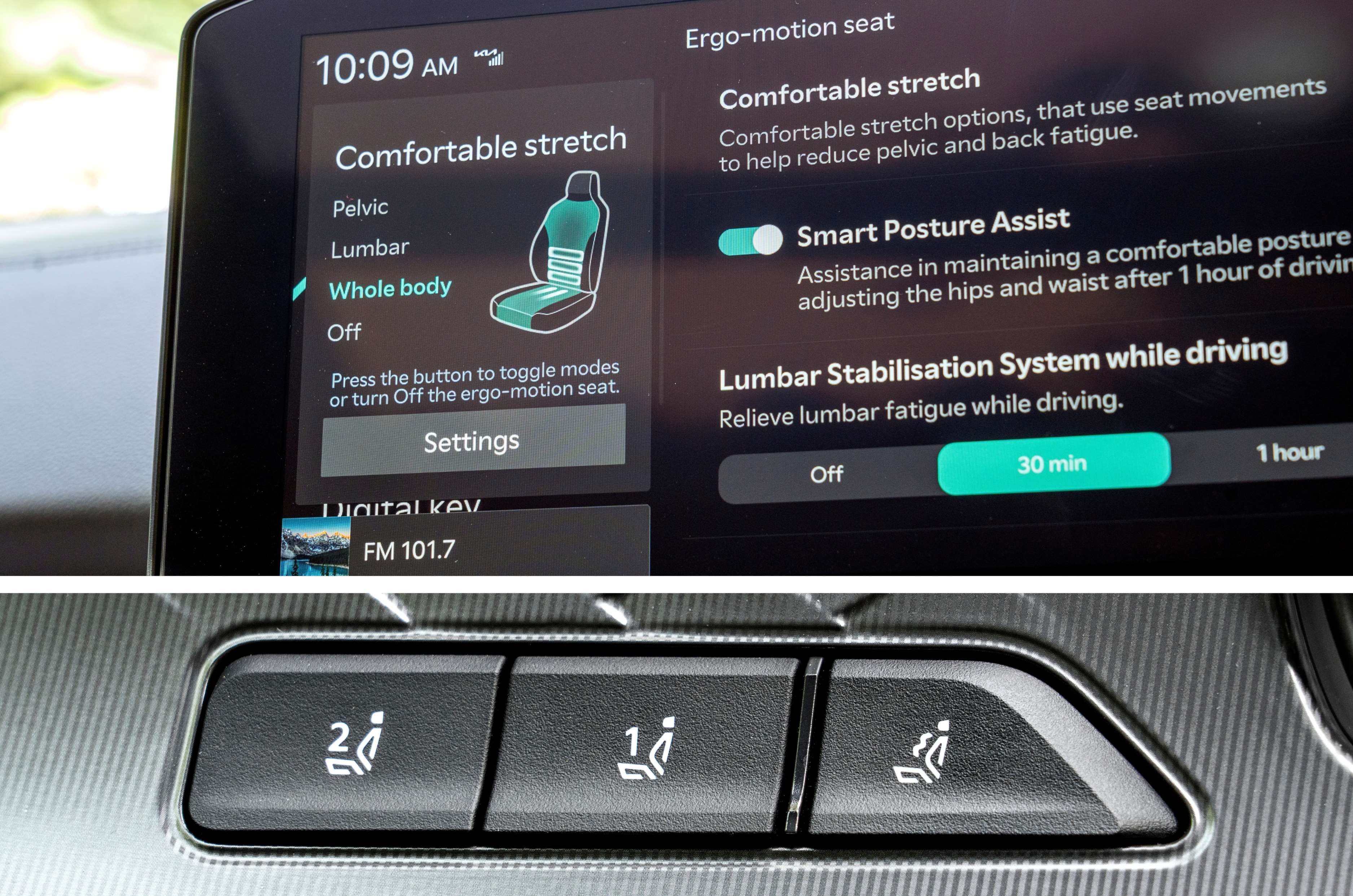
The equipment list is huge. In addition to the aforementioned 12.3-inch touchscreen, powered front seats, ventilated captain’s chairs, and panoramic sunroof, the Sorento comes packed with a 12.3-inch digital driver’s display, a head-up display, a 12-speaker Bose system, dual-zone climate control, a powered tailgate, rear-window sunshades, 64-colour ambient lighting and a digital rear-view mirror that flips back to a conventional one at the turn of a knob. The driver’s seat even gets an ‘ergo-motion’ mode that simulates a massage function by shifting the contours around.

Ergo mode for driver seat acts like a massage by moving the contours to avoid a stiff back on a long trip.

Safety is just as thorough, with 10 airbags, a 360-degree camera, front and rear dashcams, remote parking assist, TPMS and Level 2+ ADAS on the (A) trims. There is even real-time generative AI, a first for any Sorento globally.

Kia Sorento performance and refinement

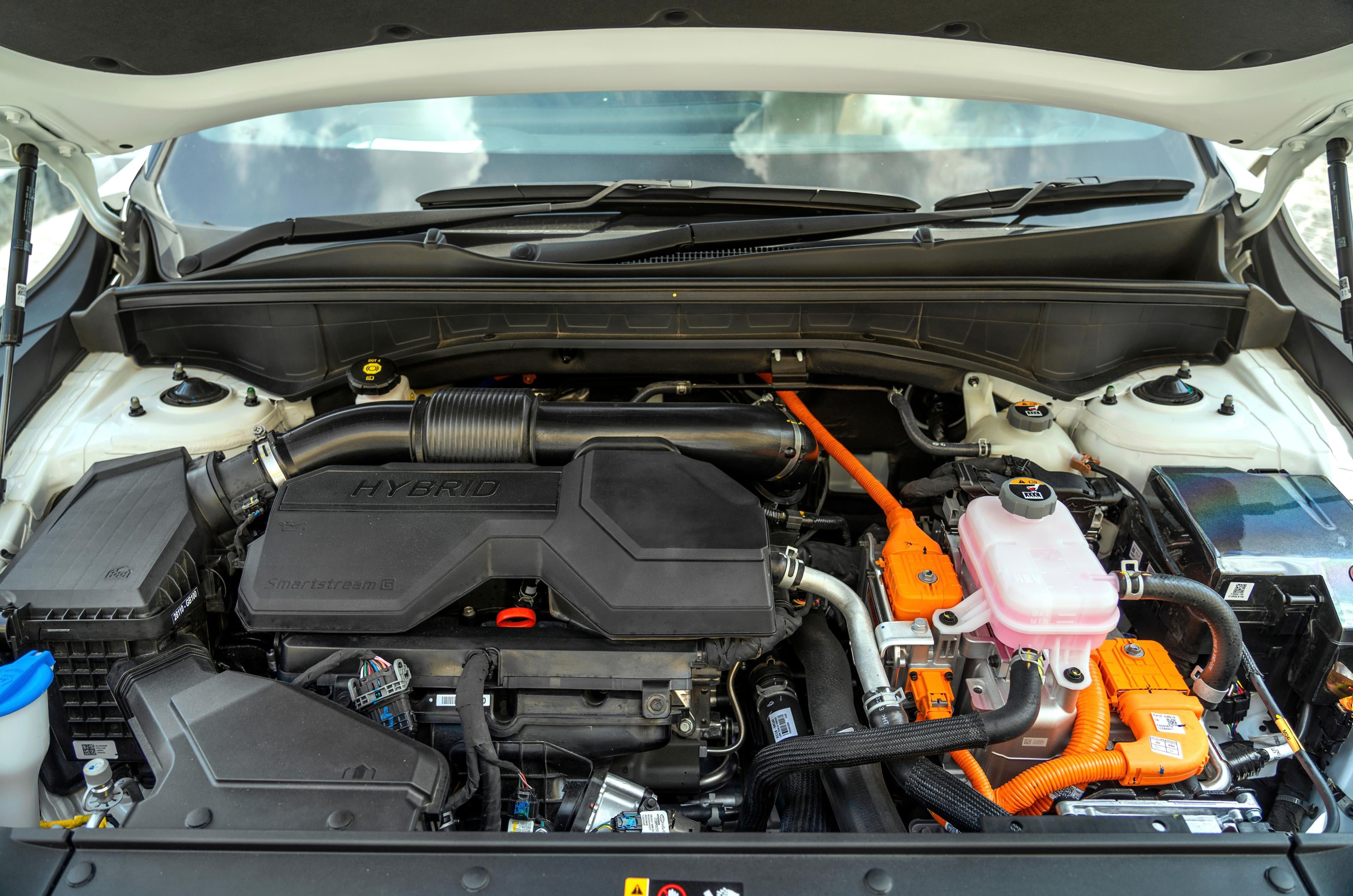
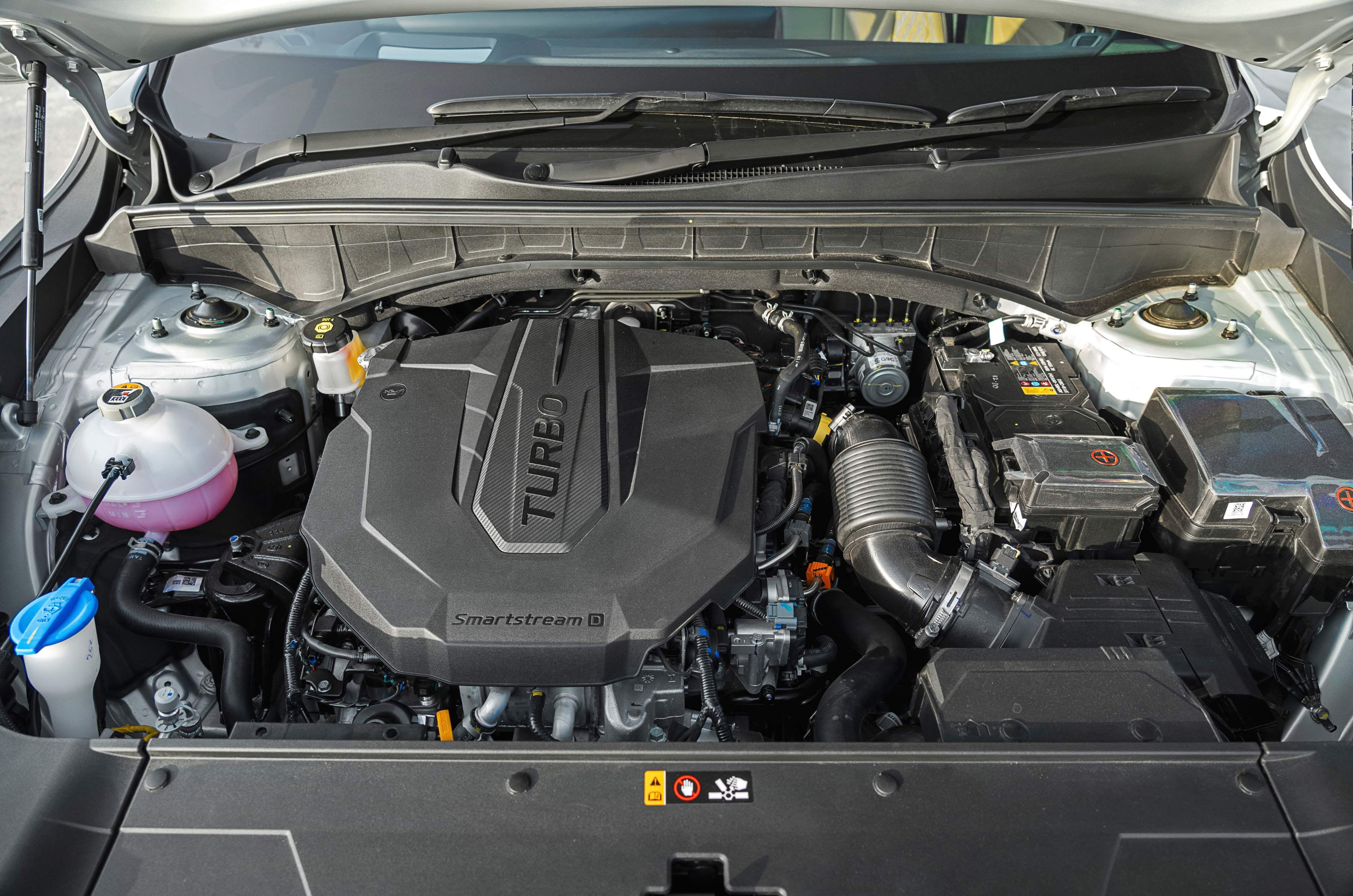
1.6-litre turbo-petrol engine paired with an electric motor and 6-speed torque converter automatic.

First up, the hybrid. Its 1.6-litre turbo-petrol makes 180hp and 265Nm, and the electric motor adds 65hp and 264Nm. The combined figure rating is 230hp and 380Nm of torque You can tell this the hybrid is the one for the city the moment you pull away, because the response is instant. It is well mated to the 6-speed torque-converter automatic, and the handover from electric to petrol power is close to seamless.

Hybrid variant is smooth in the city but gets noisy on the highway especially during overtakes.

The 1.49kWh battery lets it run in EV mode for a decent stretch at crawling speeds, and in stop-go traffic the hybrid makes eminent sense. Power delivery is refined, seamless and relaxing, and efficiency should be strong; The limitation is the motor itself. With only 65hp to shift a car weighing over two tonnes, it cannot do the heavy lifting on its own, so when you want to make quick progress the engine kicks in early. Push hard on the highway and the four-cylinder gets noisy and starts to run out of steam.

2.2-litre diesel engine makes 193hp mated to an 8-speed DCT and is the same unit seen on the Carnival.

Which is where the diesel comes in. The 2.2-litre is familiar from the Carnival, but it feels a lot sprightlier in the lighter Sorento. Its 193hp and 442Nm arrive in a strong, linear surge, and this is a fantastic, long-legged cruiser. Settle into eighth gear on an open highway and it simply lopes along, the engine barely working. It is also more tractable at low speeds than you might expect, pulling cleanly at part throttle from very low revs, so it can double as a city car, although its low-end response does not come close to the hybrid’s. It’s only when you floor it to dart through traffic that you experience a bit of hesitation, and its hear that you can use the paddle shifts to be in the right gear at the right time of the 8-speed DCT which comes as a pleasant surprise.

The diesel‘s strong torque and effortless cruising makes it perfect for long trips.

Rather than the snappy, slightly jerky shifts typical of dual-clutch boxes, this DCT slurs its changes almost like a torque converter, which adds to the smoothness of the whole package. The reason is that it is a wet-clutch unit, which also bodes well for durability in Indian traffic. The diesel is quite refined for the most part and its only when pushed hard that it gets audible and takes on a gruff note.

Both get drive modes; You can play with the Eco, Normal, Sport and Smart (or auto) modes in the diesel which alters the power delivery. In Sport, the throttle response is sharper and the default mode we liked whilst in Eco you can feel the response a bit dulled down. The Sorento Hybrid gets just Eco, Sport and Smart modes and in Eco mode EV running is prioritised. In addition, the AWD versions  get Snow, Sand and Mud terrain modes which we didn’t a get chance to fully experience.

Kia Sorento mileage

In terms of fuel efficiency, the hybrid is rated at a highly frugal 19.60kpl with front-wheel drive and 17.70kpl with AWD, while the diesel returns 17.66kpl and 15.79kpl respectively on the Indian test cycle. In real-world city driving the gap between the hybrid and diesel could be bigger, depending on traffic. On long cross-country runs, though, with extended stints of cruising in high gears, the diesel could well be the more frugal of the two.

Kia Sorento ride and handling

The Sorento’s ride comfort is simply outstanding, and it comes as a pleasant surprise. That’s because Kias have traditionally been stiffer sprung than their Hyundai cousins, but here Kia has clearly prioritised comfort over sportiness, and the suspension is on the soft side. The way it smothers bad roads at speed is remarkable. Around Udaipur, where several stretches are properly broken, we never once had to lift off for a bad patch. The car just soaked it up and kept going.

Ride quality is segment best and it is unfazed over broken roads.

The isolation it gives its passengers is shockingly good, and those tall-sidewall tyres deserve part of the credit. They do a fine job of rounding off sharp jolts and filtering out the high-frequency shocks that a suspension alone cannot fully absorb. At highway speeds there is a bit of body movement on the undulating bits but its not disconcerting and both versions feel stable and planted at high speeds, which matters in a car this tall.

Our HTX test cars came with AWD as standard. We did not get a chance to test its off-road ability properly, but on dirt roads it felt sure-footed and secure. A proper off-road test will reveal how capable the all-wheel-drive system, though we doubt owners will really want to test the Sorento’s off-road capability. 

Steering is light but lacks consistency and sharpness of European rivals.

The steering is less impressive. There is a dead zone around the straight-ahead position, and it does not feel as fluid or progressive as its European rivals’. The Volkswagen Tayron and Skoda Kodiaq are both dynamically sharper. One reason is because the Sorento rides taller too, as ground clearance has been raised from the global car’s 176mm to 208mm, and there is a touch of body roll when you push hard through corners.

But that misses the point. On balance, the Sorento’s ride and handling are superbly judged for the people who will buy it. Kia has done a fine job of understanding what a premium SUV buyer in India wants, and it has tailored the car accordingly.

Kia Sorento price and verdict

As a package, the Sorento hits it out of the park; rivals have a lot of catching up to do.

If the product does not win you over, the pricing certainly will. A starting price of Rs 27.99 lakh has set the cat amongst the pigeons, putting the Sorento within striking distance of the Mahindra XUV 7XO. And with its size, features and overall polish, the Sorento will not just nibble at the top end of the 7XO’s pie but with the Hybrid could also tempt a few Innova Hycross buyers. As for the Volkswagen Tayron and Skoda Kodiaq, the Sorento makes them look overpriced and underequipped.

The lower and mid variants are exceptional value. The top-end HTX, at Rs 37.49-40.19 lakh depending on fuel and seating, is pricey by comparison, around Rs 5 lakh more than an equivalent HTK, because it comes with AWD as standard. Here Kia has missed a trick. An HTX with two-wheel drive, a few lakh cheaper, would have been a far easier sell to the many buyers who want all the features and ventilated rear seats but will never leave the tarmac. That however is a small quibble that Kia can easily correct.

The lasting impression is that the Sorento feels premium, bordering on luxury. It is fantastically equipped, it rides beautifully, and it offers a choice of two powertrains that are each right for a distinct type of buyer. Most of all, it fits what the Indian SUV buyer actually wants with uncanny precision. Will Kia hit its target of 40,000 sales a year? That could be a tall order. But what there is no doubt about is that Kia has built another winner. 

All prices are ex-showroom, India.

BYD luxury brand Denza officially announces India entry

BYD luxury brand Denza officially announces India entry
denza india

Denza, the luxury brand of Chinese carmaker BYD, has announced its India entry by way of a recent social media post. This confirms our prior report on BYD bringing Denza to the Indian market in the coming months. The report also contained details surrounding Denza’s first pair of models for India.

BYD Denza India entry announcement

A recent social media post from Denza India shows the brand’s blue-and-silver hourglass-esque logo with “Arriving soon” written above. The caption adds that Denza is set to introduce a “sophisticated, high-performance EV experience” to the Indian market, which sounds par for the course for the brand. Denza models will be positioned above those offered by BYD, particularly above the Rs 80 lakh price point.

Denza was founded in 2010 as a joint venture between BYD and Mercedes-Benz Group. By 2024, Mercedes-Benz Group relinquished its shares in Denza entirely and transferred ownership to BYD. As it stands, Denza operates in markets like Southeast Asia, China, Australia, Europe, and Latin America, offering luxury and performance EVs and plug-in hybrids.

Which Denza cars are coming to India

Z9 GT

The Denza Z9 GT is a four-door shooting brake, which will make it the only one of its kind in the Indian market. It comes with a massive 122.5kWh battery pack powering a trio of electric motors that produce 1,156hp, sent to all four wheels. 0-100kph comes up in a claimed 2.7 seconds, and the top speed is rated at 270kph. The Z9 GT delivers a WLTP-rated range of 600km, and can be charged at up to a whopping 1,500kW – at this wattage, the battery takes just nine minutes for a 10 to 97 percent charge.

Rear-wheel steering is also part of the package, and enables cool features like the ‘crab walk’, where the Z9 GT can move sideways, and ‘Compass Turn 360°’, which can perform a full rotation of the car akin to the Mercedes G-Class Electric’s G-Turn function. Inside, the Z9 GT offers a triple-screen setup on the dashboard, along with two screens that project a feed of the outside cameras. Other notable features include Level 2+ ADAS, full leather upholstery, a 20-speaker Devialet sound system, powered, heated, ventilated, and massaging front seats, and more. Pricing for the Z9 GT is expected to land in the Rs 1.2 crore-1.5 crore range.

D9

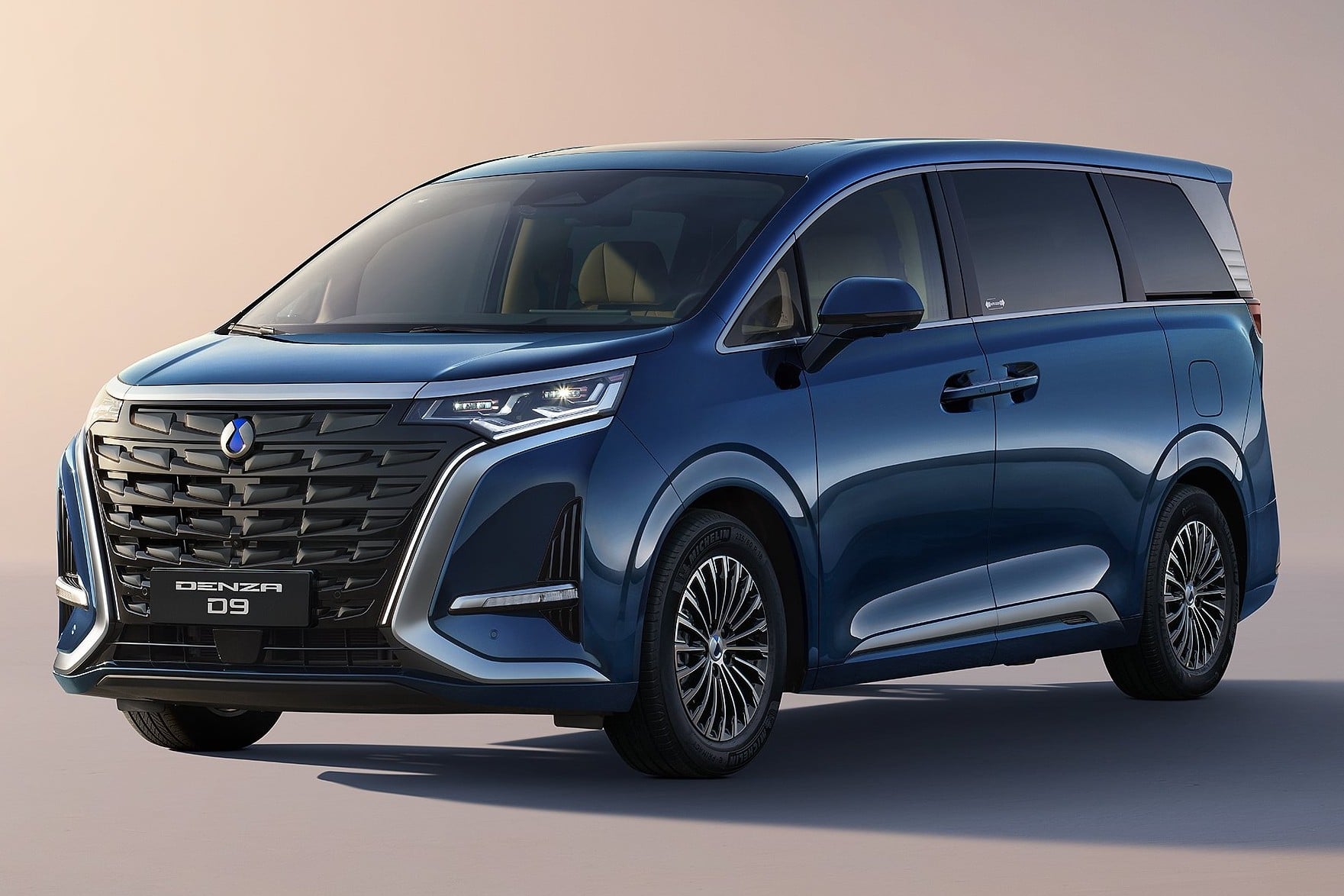
Rounding off the duo is the Denza D9, a large luxury MPV that will take on the likes of the MG M9 and Toyota Vellfire. The India-spec D9 is likely to get a 103kWh battery pack with a front-mounted motor outputting 313hp and 360Nm. WLTP range for the D9 is 520km, and it can be charged at up to 200kW DC.

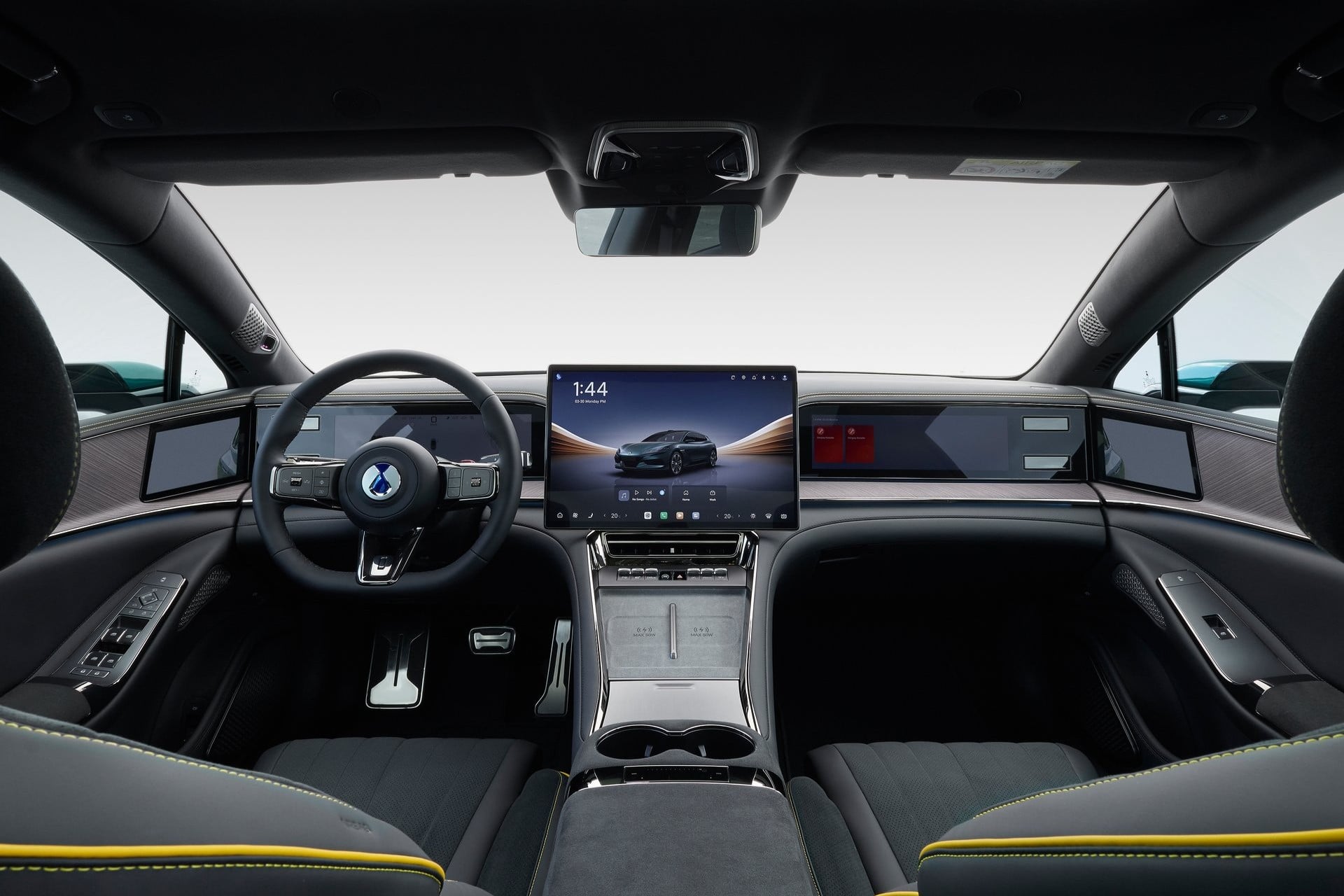
Inside, there’s a 2+2+3 seating layout, which means you get second-row captain’s chairs with electrical adjustment, heating, ventilation, and massage functions. Three-zone climate control, powered thigh extenders, a Dynaudio sound system, full leather upholstery, ambient lighting, and more are also part of the equipment list. Expect the D9 to be priced at around Rs 90 lakh, placing it between the M9 and Vellfire.

All prices are ex-showroom, India.

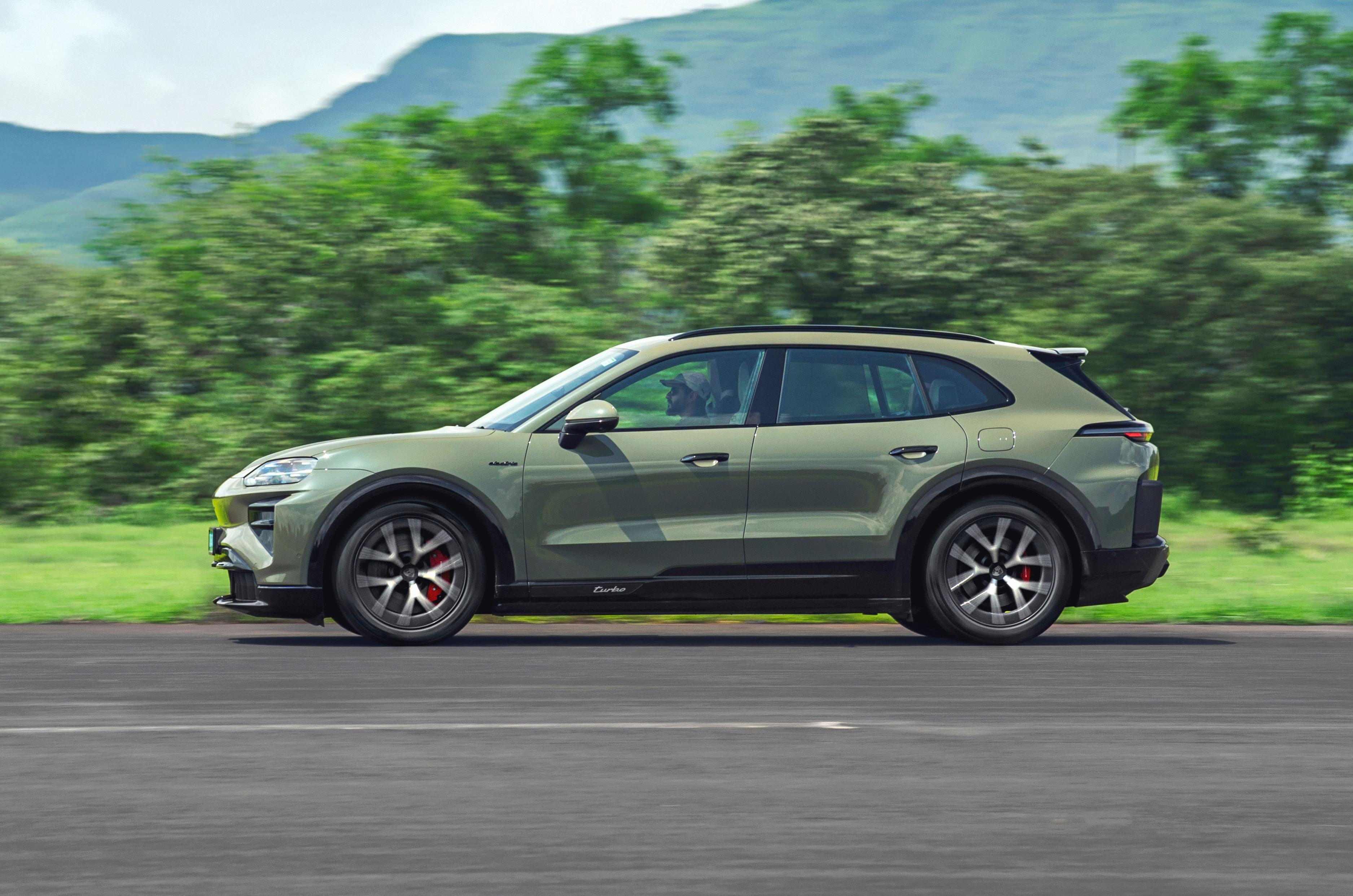
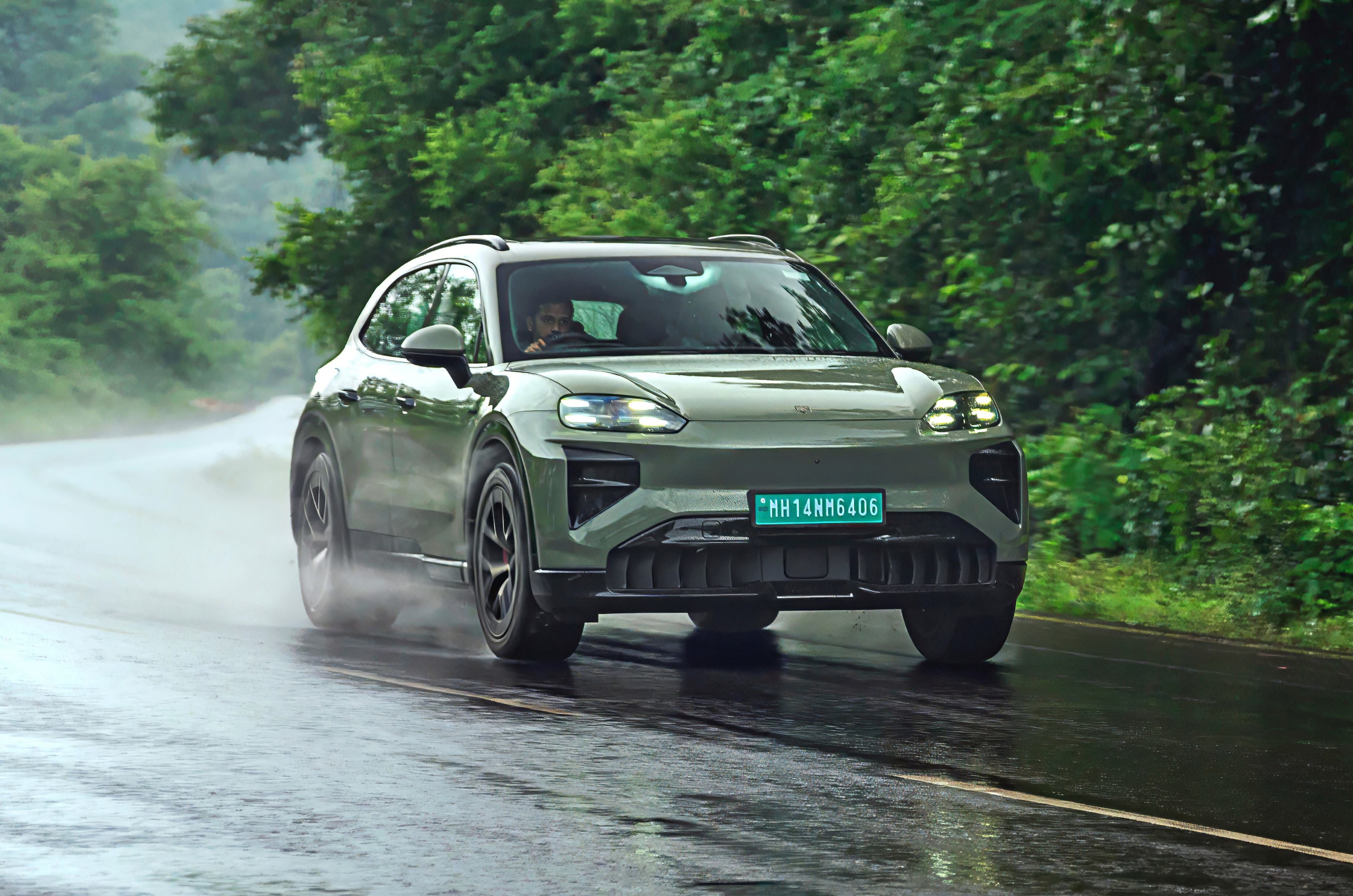
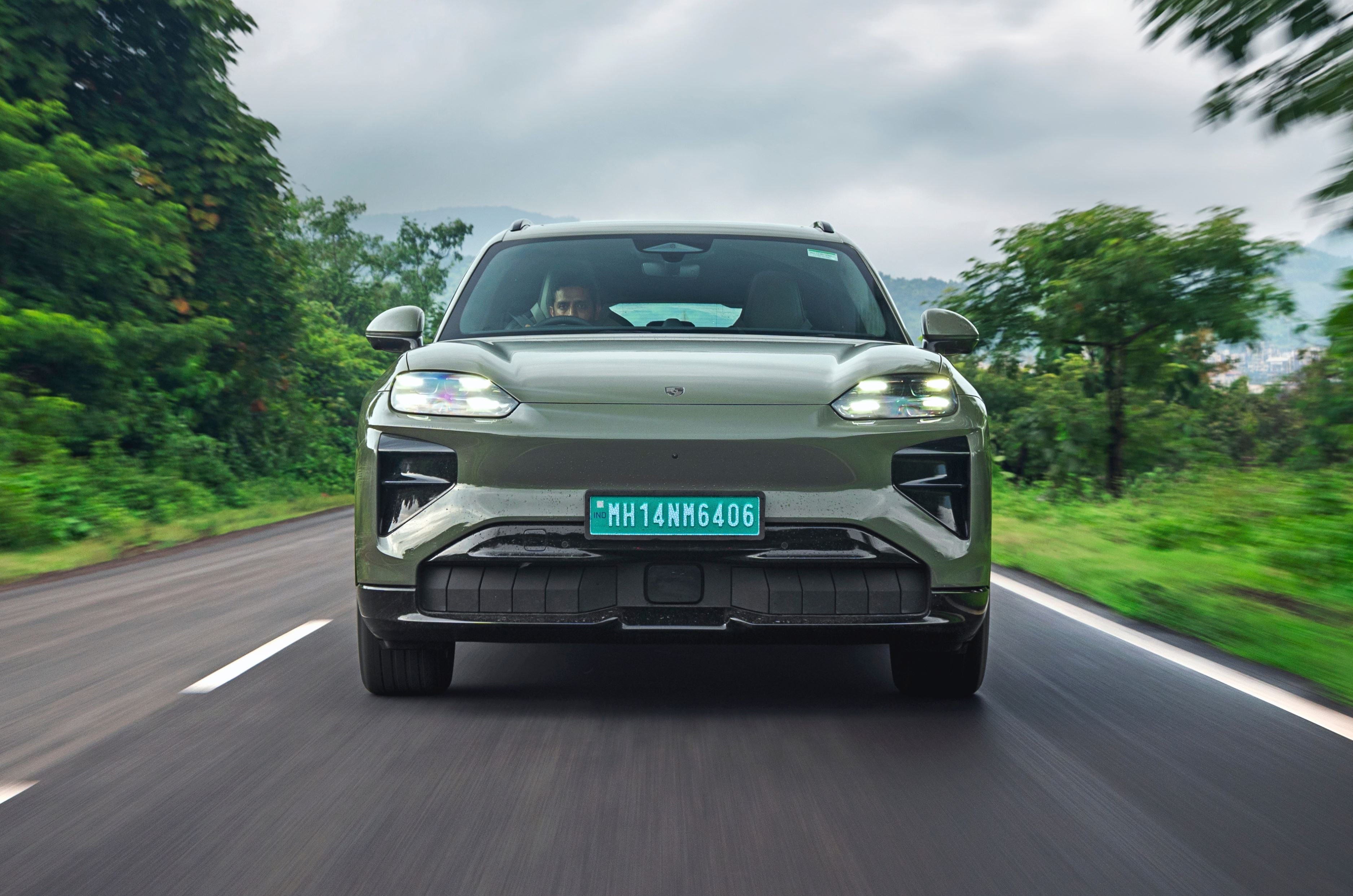
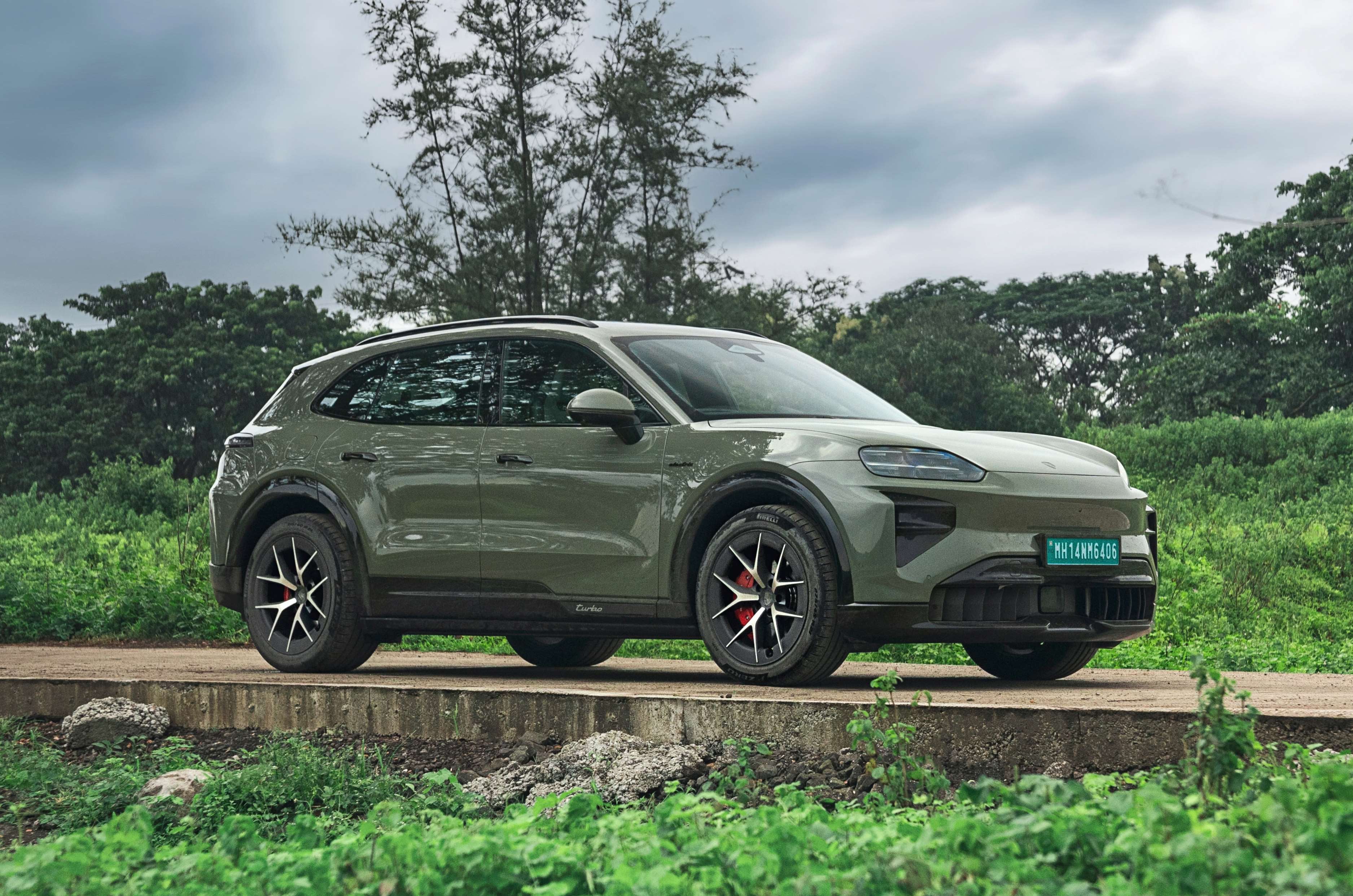
2026 Porsche Cayenne Turbo review – The most powerful car you can buy

2026 Porsche Cayenne Turbo review – The most powerful car you can buy

Only recently, I made the sweeping and somewhat heavy-handed statement that EVs have taken the excitement out of speed. That once you’ve done one ballistic acceleration run in an EV, you’ve done them all, and without a roaring engine, vibrations pulsating through the wheel and gearshifts jolting you in the small of your back, it all feels a bit sanitised. Well, as it turns out, all an EV needs to solve this conundrum is… even more power.

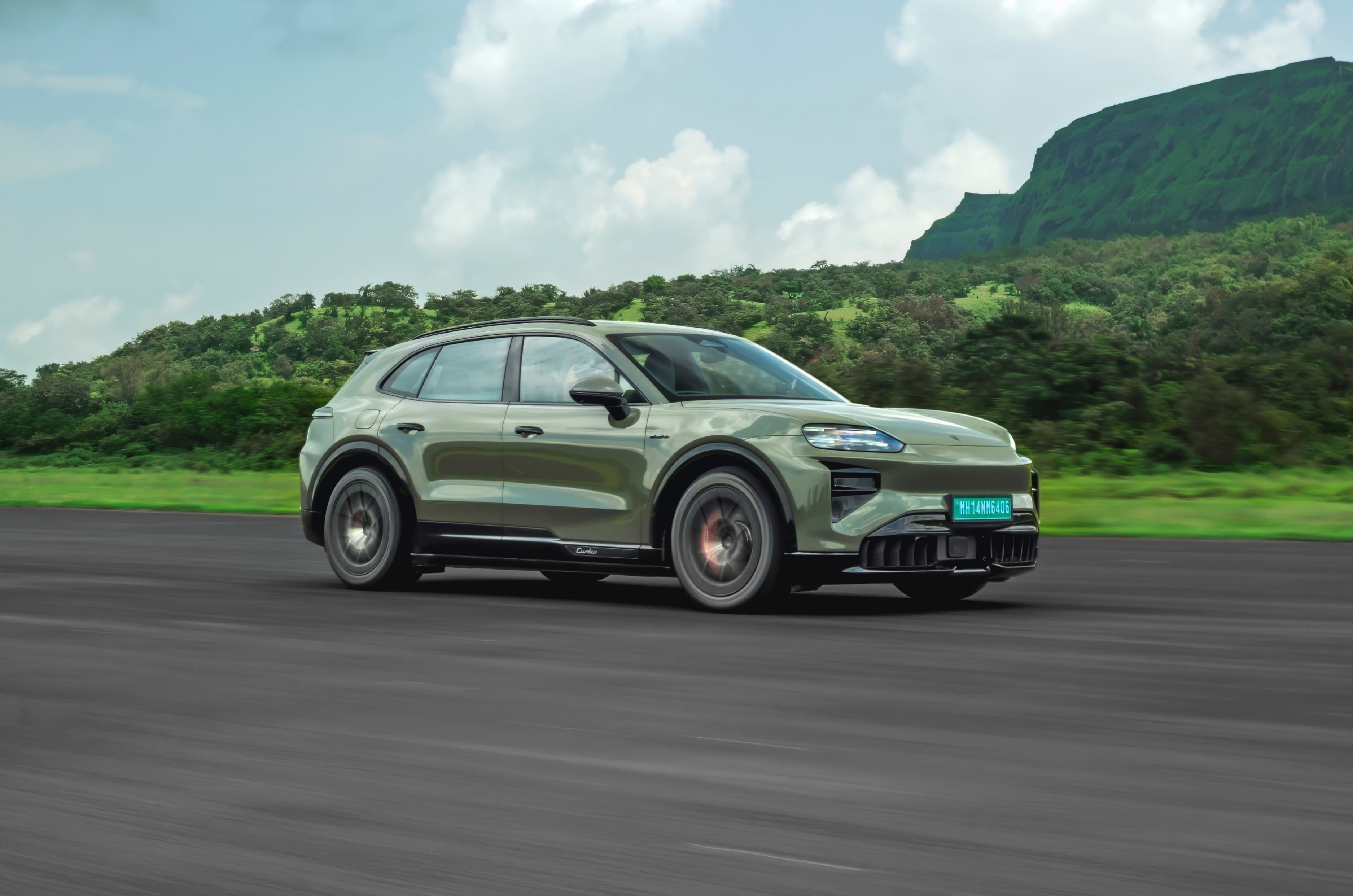
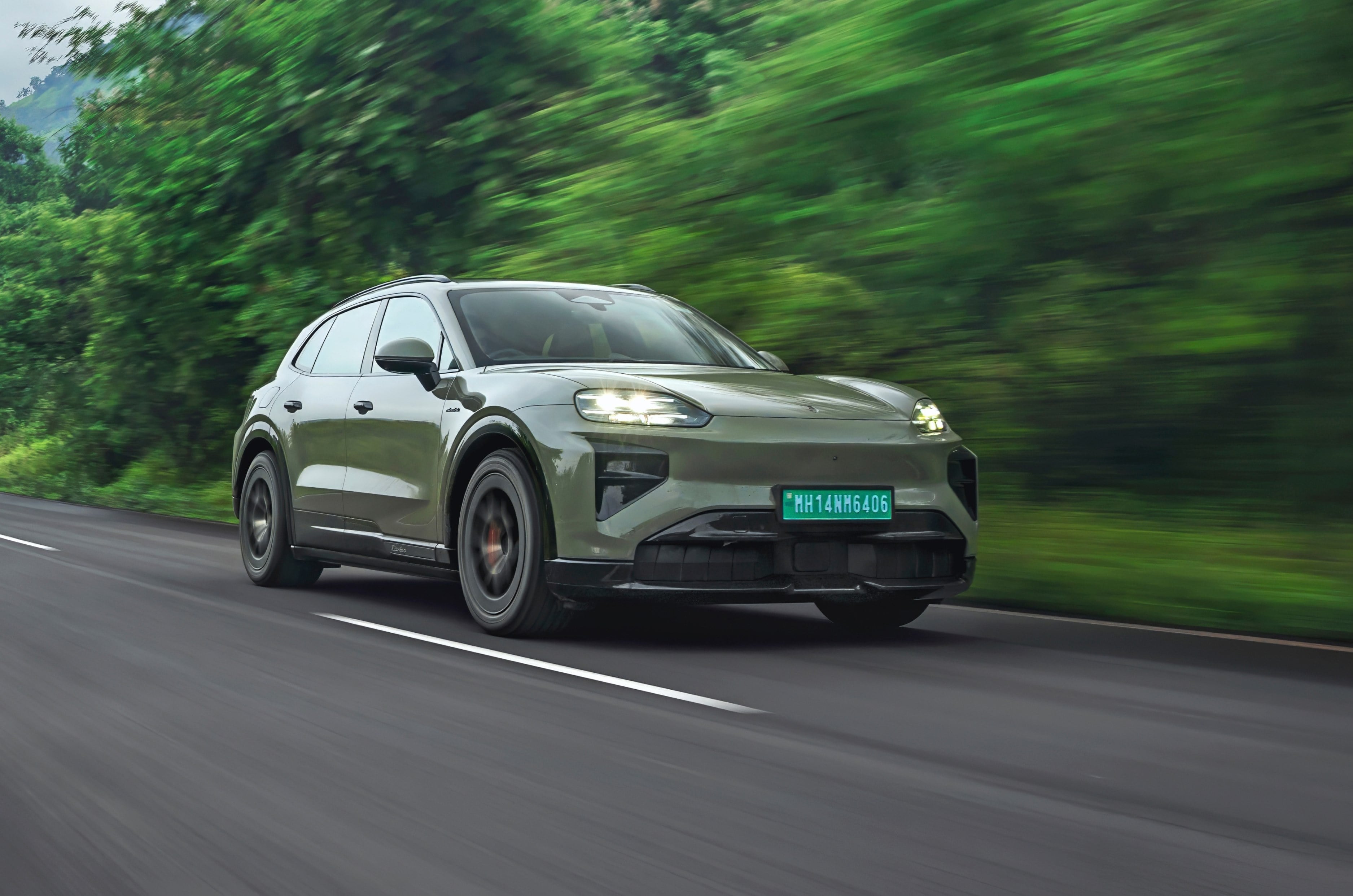
Remember when 1,000 horsepower was the sort of million-dollar pipe dream that we thought we’d only ever see on bedroom posters or YouTube videos? Well, it’s not that insane a proposition anymore, and in fact, three cars on sale in India have crossed the fabled 1,000hp mark. Two are ultra-exotic supercars that cost north of Rs 10 crore – the 1,015hp Lamborghini Revuelto and 1,050hp Ferrari Testarossa. And the third is this, the 1,156hp Porsche Cayenne Turbo Electric – a full Maruti Brezza more powerful than those Italian supercars – and yours for a fraction of the price, at Rs 2.28 crore.

That’s not a lot of money for what is the most powerful car ever to go on sale in India, and that raises a somewhat existential question. Have they gone too far?

2026 Porsche Cayenne Turbo Performance – 10/10

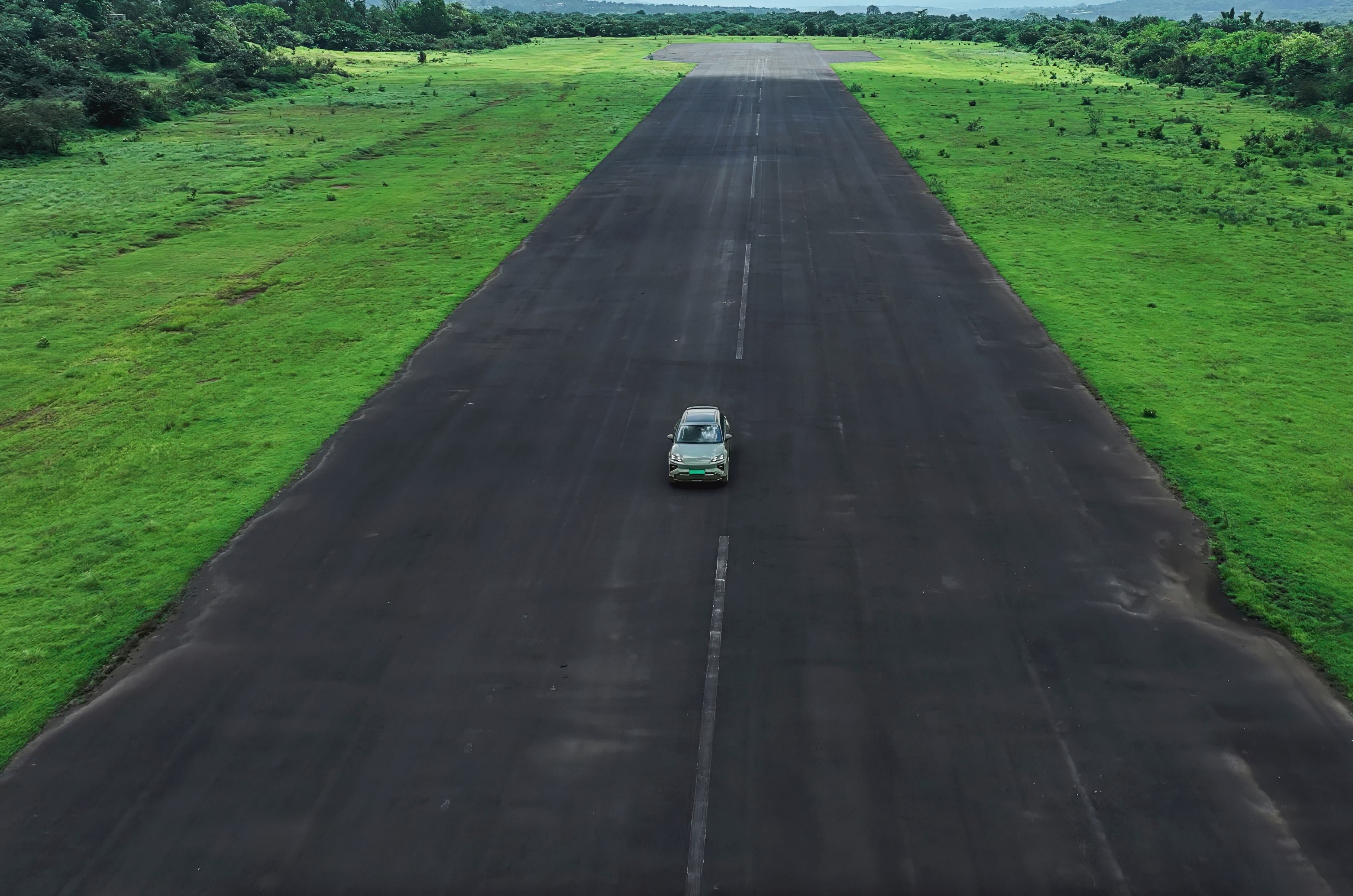
I have the Aamby Valley airstrip rolled out like a red carpet in front of me, perhaps the only place other than a race track where unlocking this hyper-SUV’s full accelerative potential is possible, and I’m about to let it rip. The process is familiar and simple enough. Twist the mode dial to Sport Plus, hold the brake with your left foot and mash the accelerator until it says ‘Launch Control Activated’. Up until this point, it’s nowhere near as dramatic as something with a four-digit power output has any right to be. The electronic sound it makes to signify all the power swelling up is gentle, and it doesn’t even give you any feedback through the pedals. Things are disconcertingly calm for what’s about to happen. I let go of the brake.

The nose lurches upwards and points to the sky like a fighter jet leaving an aircraft carrier, as the huge SUV squats onto its rear axle. It’s in this gut-twisting moment that I realise Porsche India hasn’t specified the Active Ride Control option on this car, which I’m told suppresses this issue by force-tilting the car forward, Power deployment is brutally efficient initially, with barely a chirp from the tyres and not a single of those 1,500 newton metres wasted off the line. But then I notice the nose start to go light and weave from left to right. I steady the wheel as the speed continues to build. With no engine weighing down the front axle and so much rearward lean, there is a frightening lack of traction from the front wheels at speed.

Never before has launching a car attacked so many sections of my body. It’s usually just the abdomen; a really fast car will wind you. Right now, my neck is straining as the head restraint is too far back, my cheeks are starting to ache like I’ve been pretending to find someone’s jokes funny for an hour, there’s a weird pressure coursing through my arms and legs, and my eyes are starting to water as they dart around in their sockets, not knowing what to focus on. Oh, and I’ve been winded well and good.

I’ve launched dozens of really, really fast cars down this very runway, but I don’t recall the scenery ever passing by so quickly. I can’t get a frame of reference so I glance down at the speedo. Two hundred and a blurry something; that’s way more than I expected to see and it’s climbing too fast. This doesn’t compute; it’s usually at this speed that I think about braking. But we aren’t even at the halfway mark yet; how? Brave face on, I keep my foot in. 230, 250, 27- wait, the brochure said it maxes out at 260. It lied. Then suddenly the braking point flashes by and I jump onto the wide pedal. All those forces reverse their polarity as the big Cayenne squirms down to a halt, still well clear of the end of the runway. Let’s do it again!

2026 Porsche Cayenne Turbo: Real-world acceleration test

Speed

Time (in seconds)

20kph

0.45

40kph

0.94

60kph

1.45

80kph

1.96

100kph

2.52

120kph

3.18

140kph

4.01

160kph

4.96

180kph

6.12

200kph

7.47

220kph

9.06

240kph

10.92

260kph

13.20

And it will do it again, and again, and again. Because if there’s one thing we’ve learnt about Porsches over the years, it’s that they’re engineered to perform repeatedly and consistently. The dual-motor Turbo has been certified to deliver a 2.5sec 0-100kph time; our VBOX confirmed the same several times over. But eventually, as the battery SOC dipped below 75 percent, the times started to go up, a tenth of a second at a time. 

The biggest victim of the repeated runs, however, were the brakes – even for mammoth 420mm discs, arresting 2.7 tonnes is no joke, and soon their squeal was louder than their bite. I don’t usually advocate for carbon ceramic brakes on SUVs, but perhaps this is the one time Porsche India should have shelled out for the Rs 13.5 lakh option.

2026 Porsche Cayenne Turbo: Real-world braking test

80-0kph distance

23.47 metres

80-0kph time

2.08 seconds

2026 Porsche Cayenne Turbo ride comfort and handling – 8/10

However, by the twenty-seventh-or-so sprint down the runway, the car seldom missing a beat and the excitement never waning, my body decided it had taken enough of a beating. From longitudinal g-forces, at least; the lateral attack was yet to come. So we waved goodbye to the gentleman in the tower, who’s probably used to seeing much slower-moving traffic on the runway, and made our way back to reality via the twisting roads leading down to Lonavala.

It’s been a few years since I’ve come to our old stomping ground of Tiger Point and its surrounding twisties, and I can’t think of a nicer car to reacquaint myself with my favourite corners in. Muscle memory kicks in as I enter the first, fast right-hander. I lean in instinctively, but then the car starts to lean too; unexpected. It does the same on the next left, and right, and once again I start to wish they specified that Active Ride Control option. Porsche engineers are usually among the best at taming big mass, but perhaps they’ve finally met their match.

On its standard air springs and adaptive dampers, the Cayenne Turbo displays a disappointing amount of body roll, exacerbated only by the enthusiasm from the motors that begging you to push it harder. The steering too is encouraging, what with the small-diameter wheel and the fact it’s as sharp and direct as you expect. Here, too, I will say that rear-axle steering would have added a welcome extra degree of agility, but once again, Porsche India hasn’t ticked the option. It can still link together a series of corners with greater alacrity than most other big SUVs, but for the first time in recent memory, I’m not feeling that distinct Porsche magic at my fingertips.

Through the narrow and bustling streets of Lonavala, I’m starting to explore the other end of this SUV’s capability spectrum. And that’s just the beauty of EVs, isn’t it? One minute you’re clocking 0-200kph in 7.4 seconds, the next you’re ambling silently through a school zone. Like the best of them, it’s refined, smooth and incredibly easy to modulate, and you could be forgiven for forgetting there’s 857hp at your behest (the full 1,156 only comes with launch control). One spec deficiency I’m glad for right now, however, is the choice of more sensible 21-inch wheels rather than the optional 22s. They don’t look as nice, but they’re soaking up the harsh hits from the rutted road beneath me.

2026 Porsche Cayenne Turbo range, battery and charging – 7/10

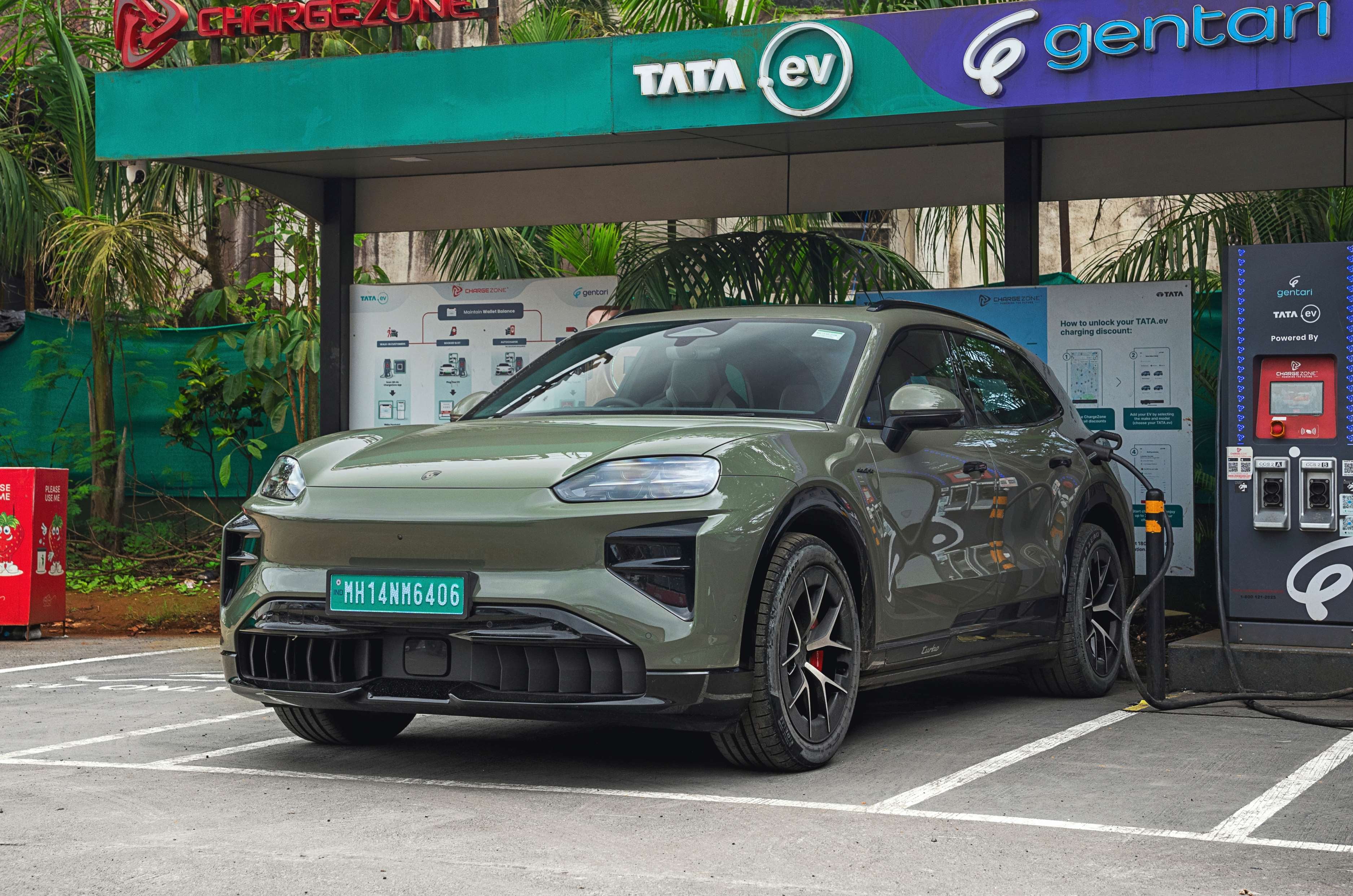
Between racing repeatedly down the runway and then trying to extract that Porsche spice in my favourite corners, I’ve reached Lonavala city with around 20 percent left in the 113kWh tank- er, pack? The Cayenne Turbo is rated at 623 kilometres on the WLTP cycle, so the ‘real’ real-world range should be far more palatable than this; to obliterate such a large chunk in such a short time requires the prolonged buffoonery I just subjected it to. Probably best to find a place to plug in soon, and grab some lunch while I’m at it. On a mythical 400kW plug, the Cayenne can be charged from 10-80 percent in just 16 minutes, but on a rainy Wednesday at a hill station, the best we can do is 60kW, so it’ll take much longer.

Today is a study in why India is far from ready for full EV adoption. Apart from ICE cars parked in charging spaces, malfunctioning plugs, unfathomable apps and an absent mobile network, we were also waylaid by two power cuts. 

2026 Porsche Cayenne Turbo features and safety – 9/10

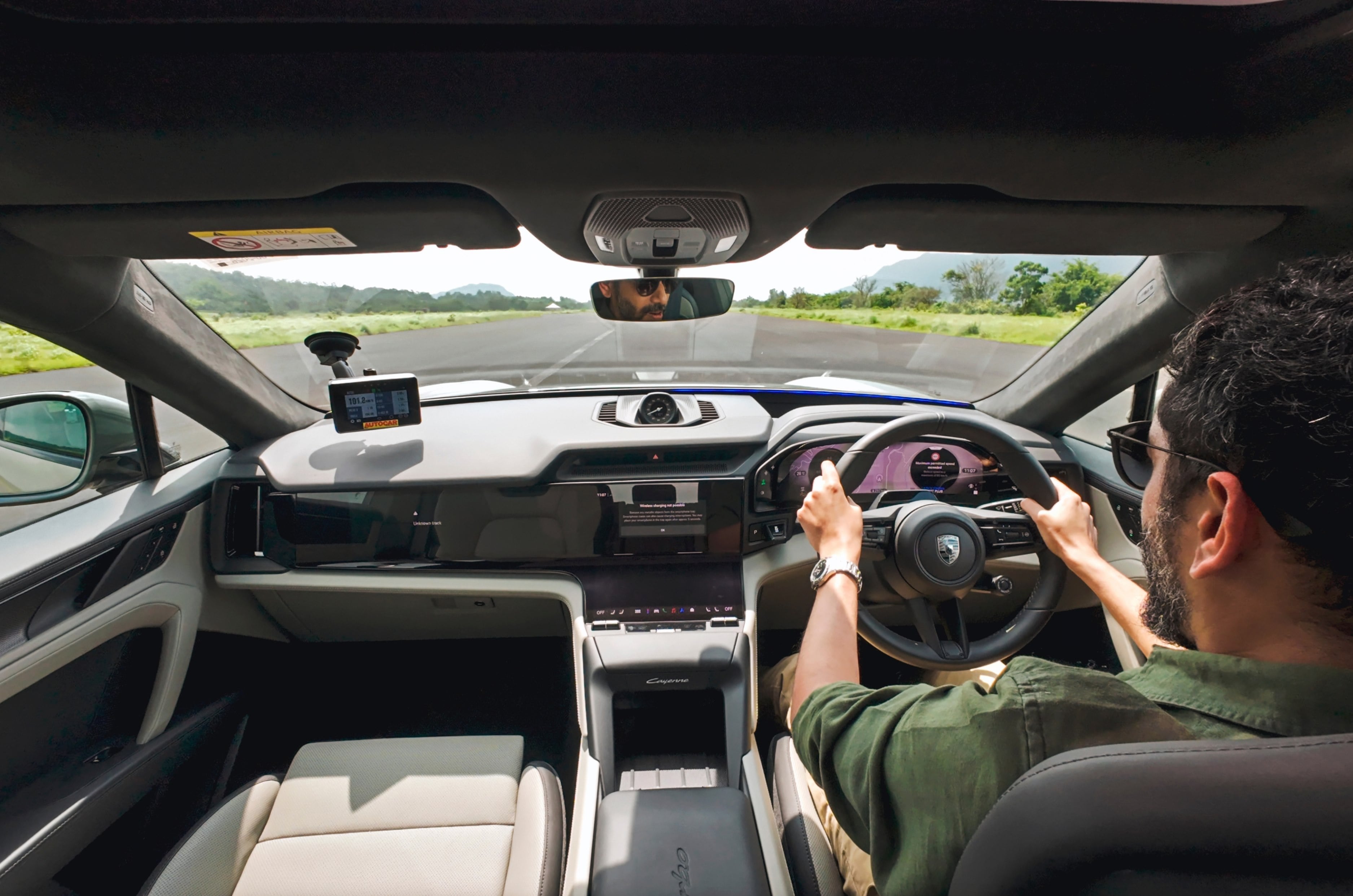
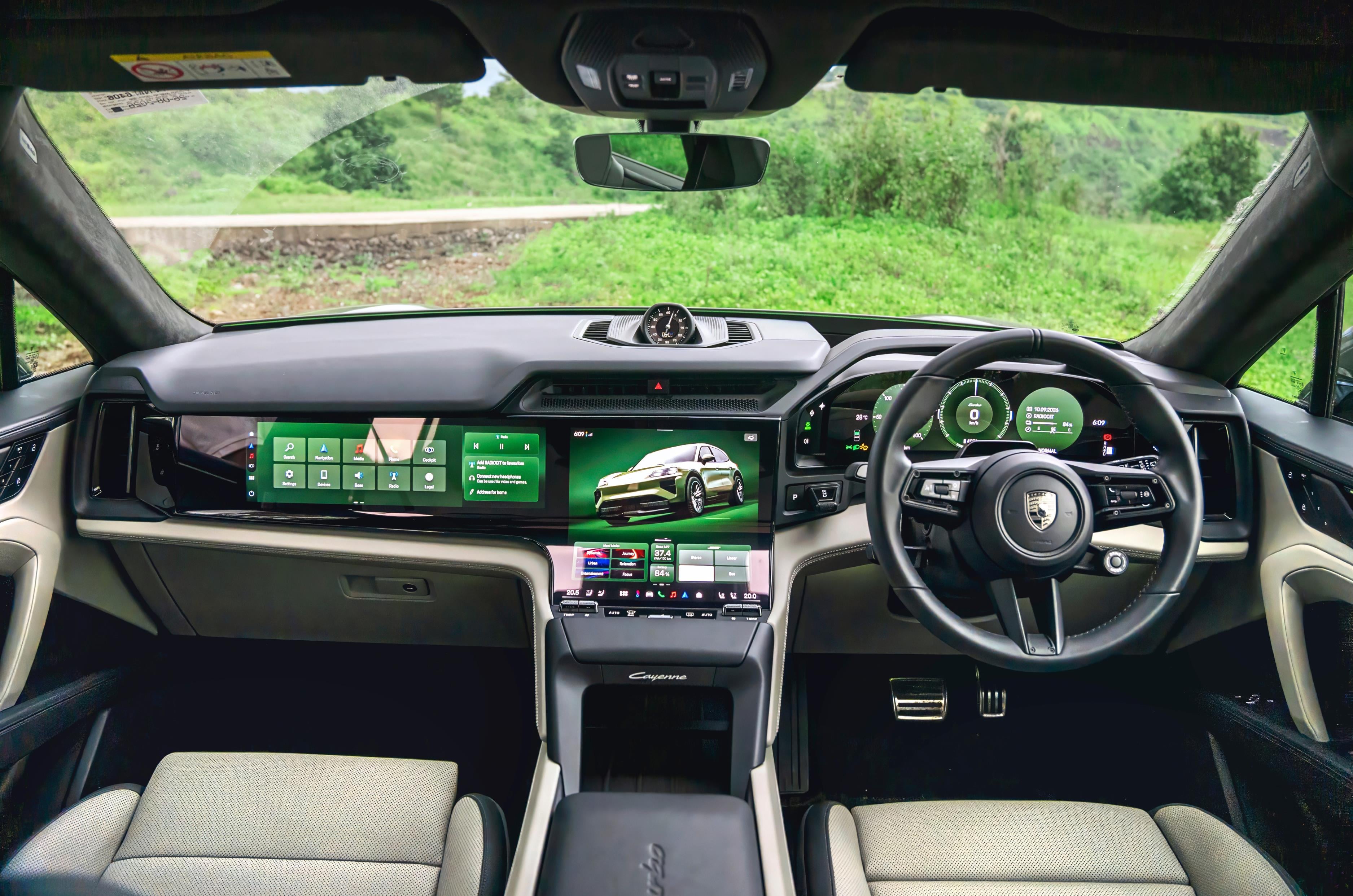
On the upside, all this gave me a chance to have a play around with the Cayenne’s new and tech-heavy interior. The passenger screen is a Rs 2 lakh option I would not tick, but the centrepiece is the cascading curved touchscreen. It looks gimmicky but actually functions really well, the bottom half of the ‘bend’ housing the major functions, while the more upright top functioning as the display. The AC vents are adjusted from the touchscreen sadly, but otherwise there are plenty of physical controls.

There’s no shortage of features here and you can add even more from the options list. For instance, the panoramic sunroof is standard, but there’s no sunshade. Instead, you can option an electrochromic function that masks out the glass in sections. 

2026 Porsche Cayenne Turbo interior space and comfort – 8/10

Functionality comes first in a Porsche, and you can see that in the compact but tactile steering wheel, the clear dial-style driver’s display and the sporty ergonomics. In fact, despite all the tech, this feels instantly like a Porsche from behind the wheel. 

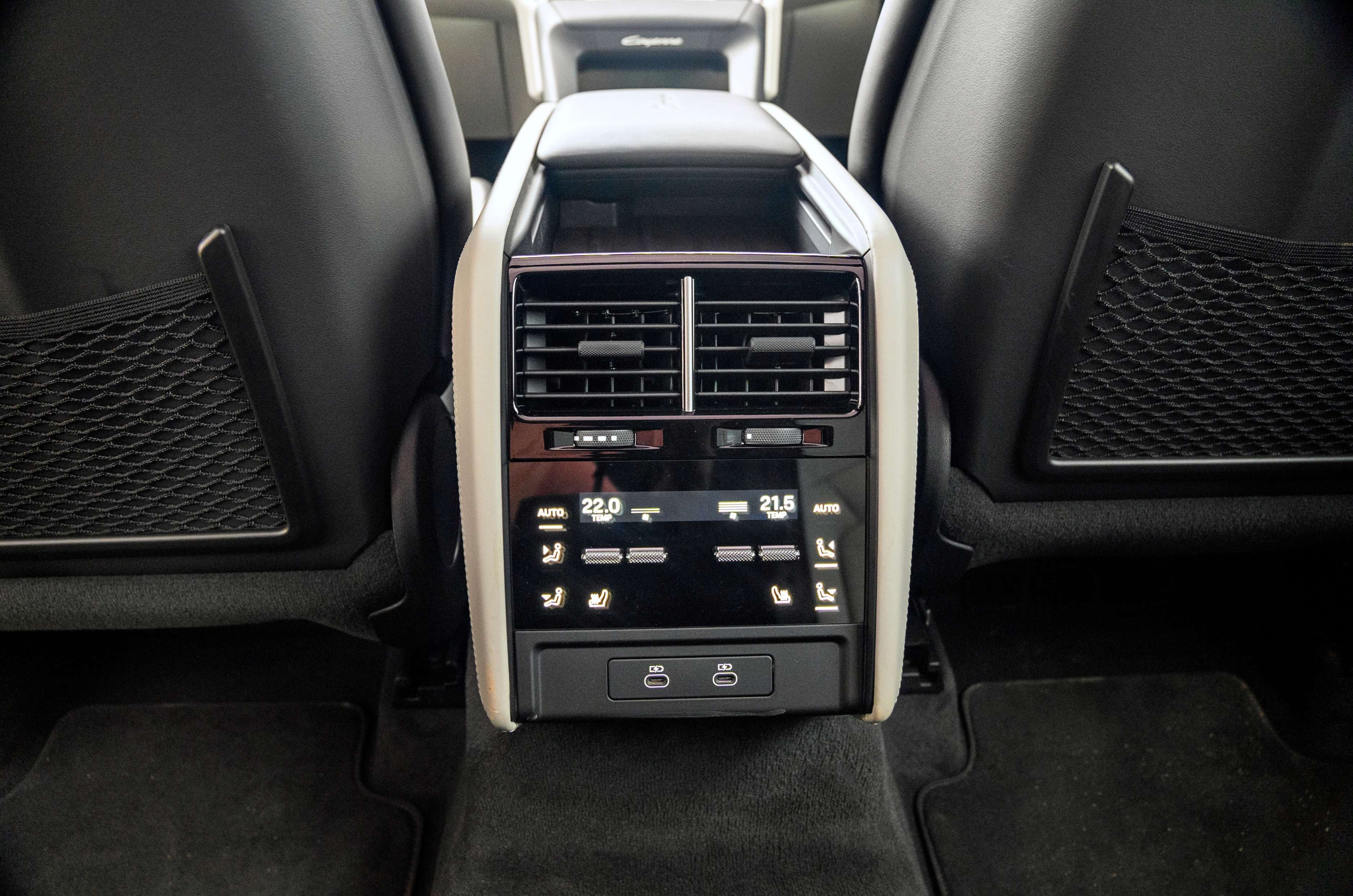
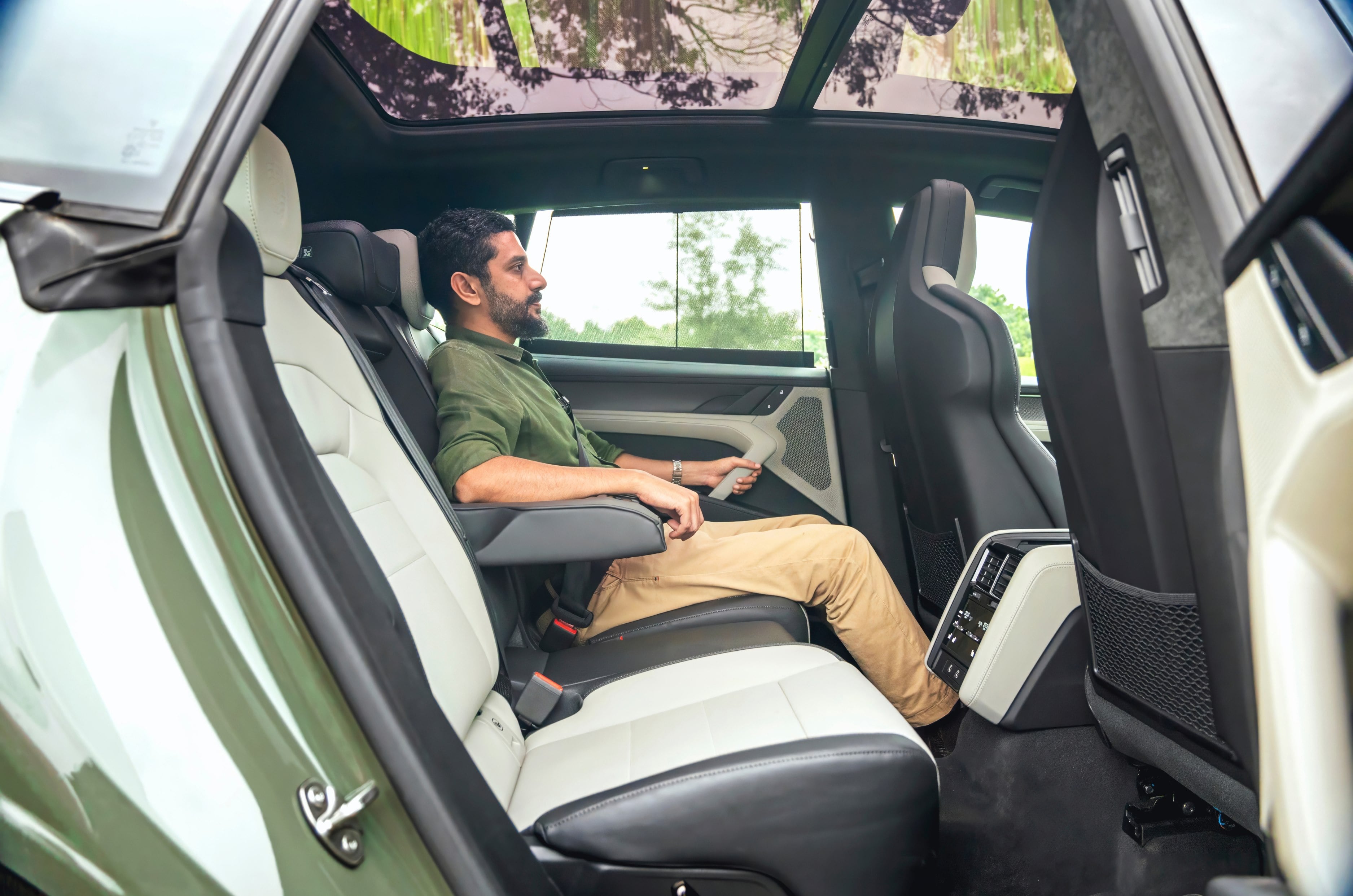
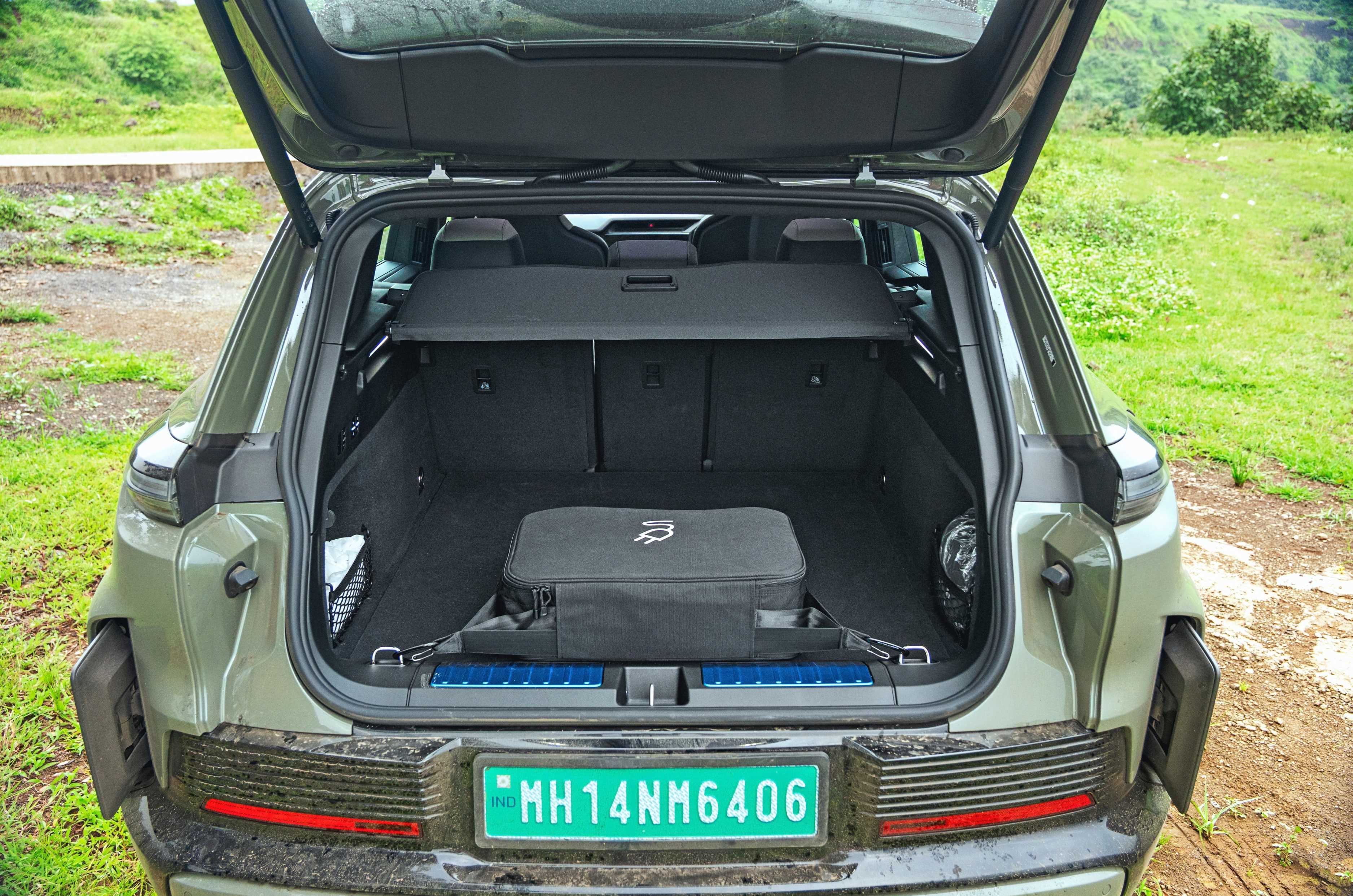
This is easily the most spacious Porsche yet, though, with the huge 3,023mm wheelbase liberating massive seating room, as well as a huge 747-litre boot and 90-litre frunk. It’s well equipped, it’s luxurious, it’s sporty; it’s almost hard to fault here.

2026 Porsche Cayenne Turbo exterior design and engineering – 7/10

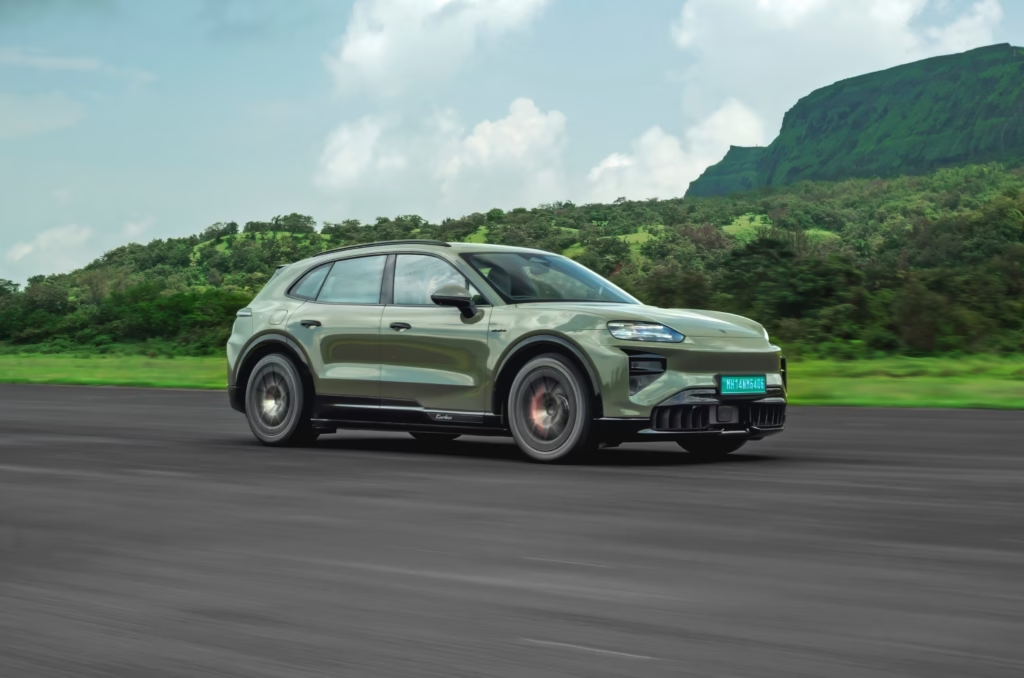
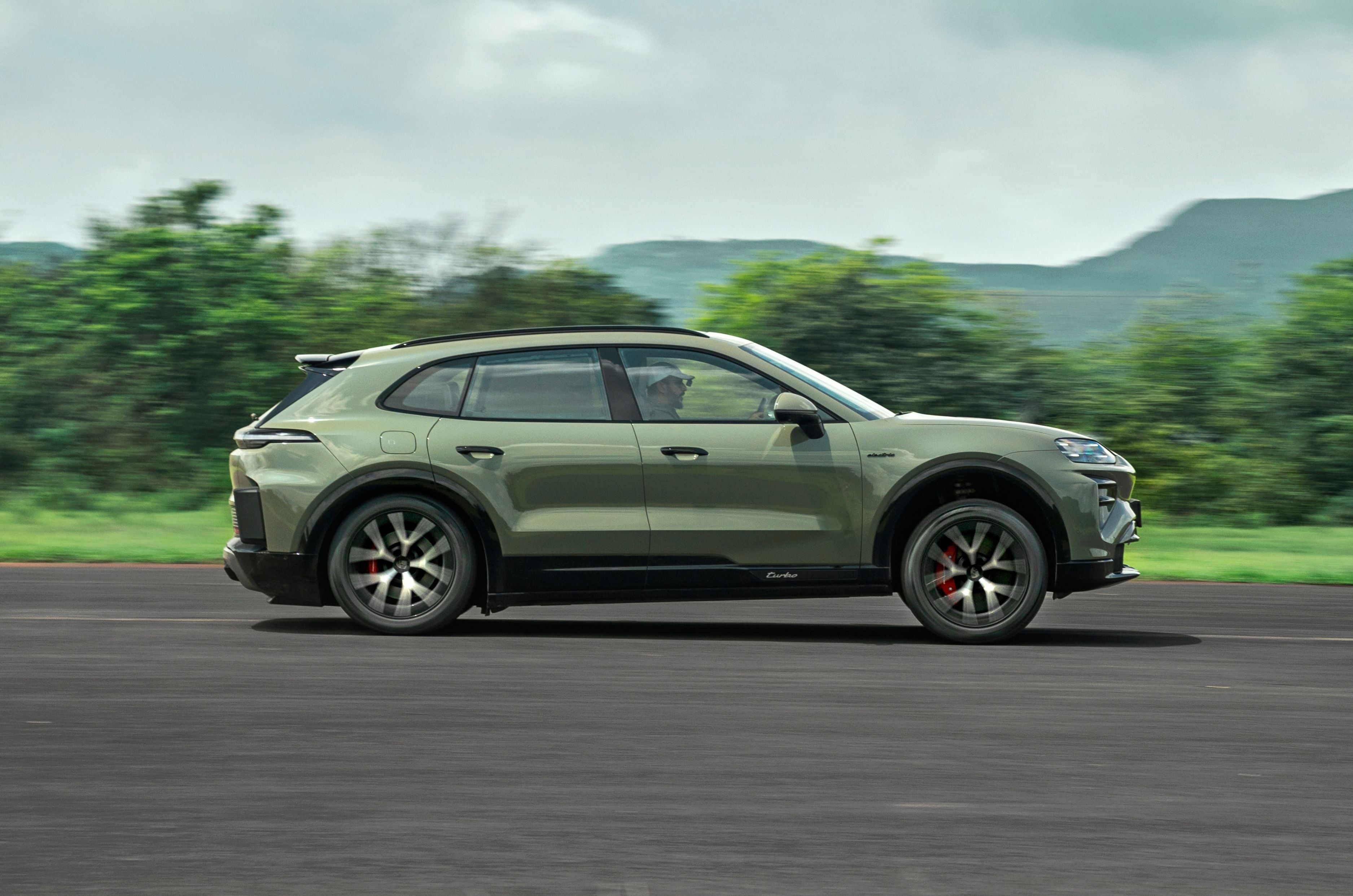
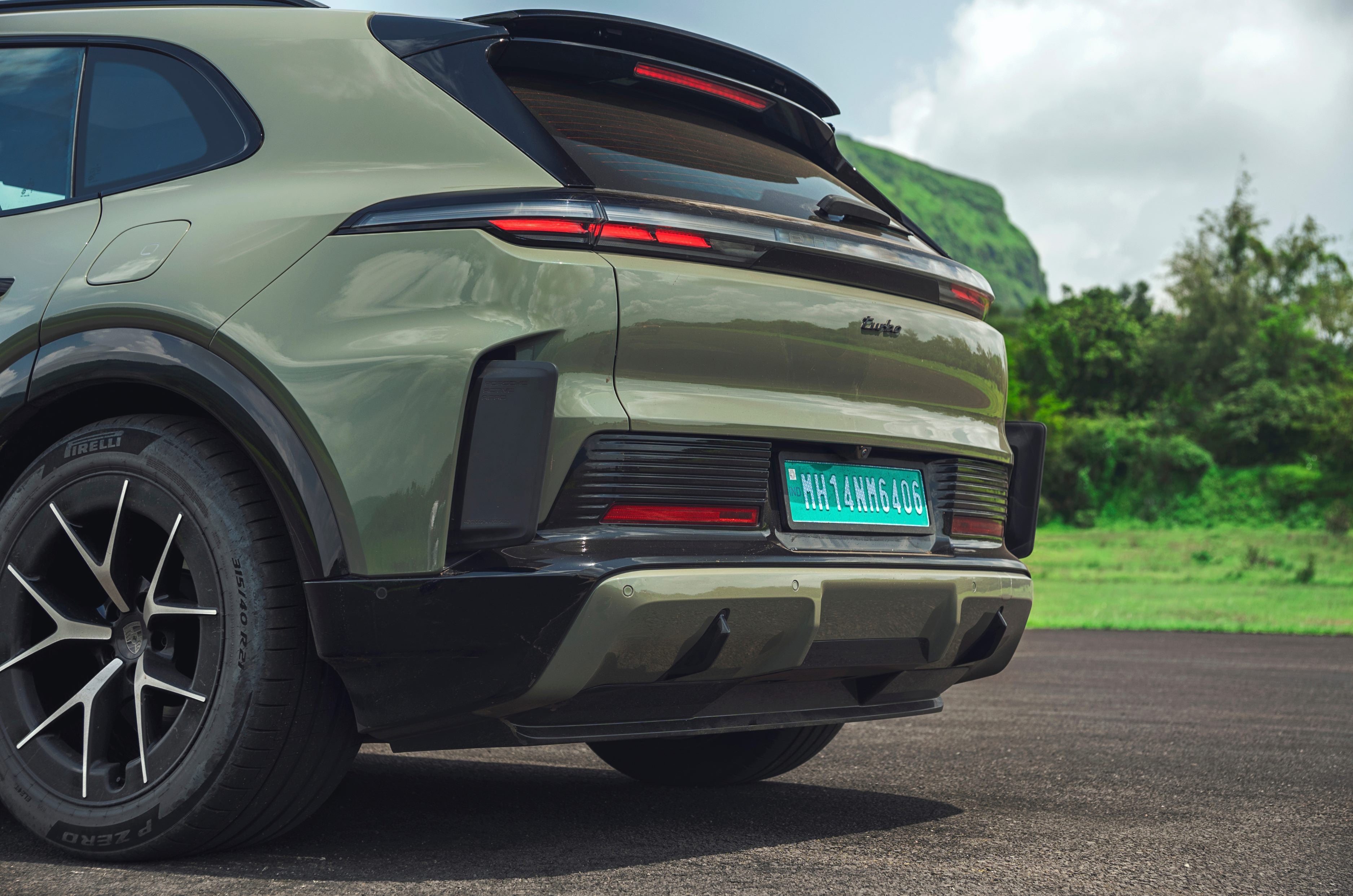
I’m less convinced by the exterior, though. It certainly has size on its side; this is the largest Porsche ever, a fact exaggerated by its slim headlamps and tail-lamps. Even the gigantic 21-inch wheels look a size down against the mass of bodywork. They’ve worked around it with plenty of contrast black details, and there are lots of cool details, like the active aero vanes up front and the flaps that extend from the rear bumper to reduce drag at speed. They’ve even got the GPS co-ordinates of Porsche’s wind tunnel embossed into them.

However, it’s also this size that works against it, as the proportions make it look bulky and a bit ungainly. This might be fine most big luxury SUVs, but in a Porsche, there’s a certain visual agility that’s missing.

2026 Porsche Cayenne Turbo price and verdict – 9/10

Is it wrong that for a car with such eye-watering headline figures, it’s the slow cruise back home that I appreciate the most? Having been pulverised by the acceleration in the morning, I’m happy to let the ventilated 18-way seats soothe my back, as my favourite tunes stream through 14 Bose speakers and adaptive cruise control keeps an Expressway pace.

Because it’s an EV, you can switch quite easily between its two personalities, and because it’s a Porsche, it does both reliably as many times as you need it to. Some of that special sauce has been lost along the way, and the smaller Macan Electric does a much better job in this regard, but I’d argue the Cayenne has an even greater breadth of ability. It’s easy to launch India’s most powerful car to stratospheric speeds, but it’s even easier to forget that you can, and perhaps that’s its biggest triumph

Aston Martin DBX GT debuts as SUV’s luxury-focused variant

Aston Martin DBX GT debuts as SUV’s luxury-focused variant
aston martin dbx gt

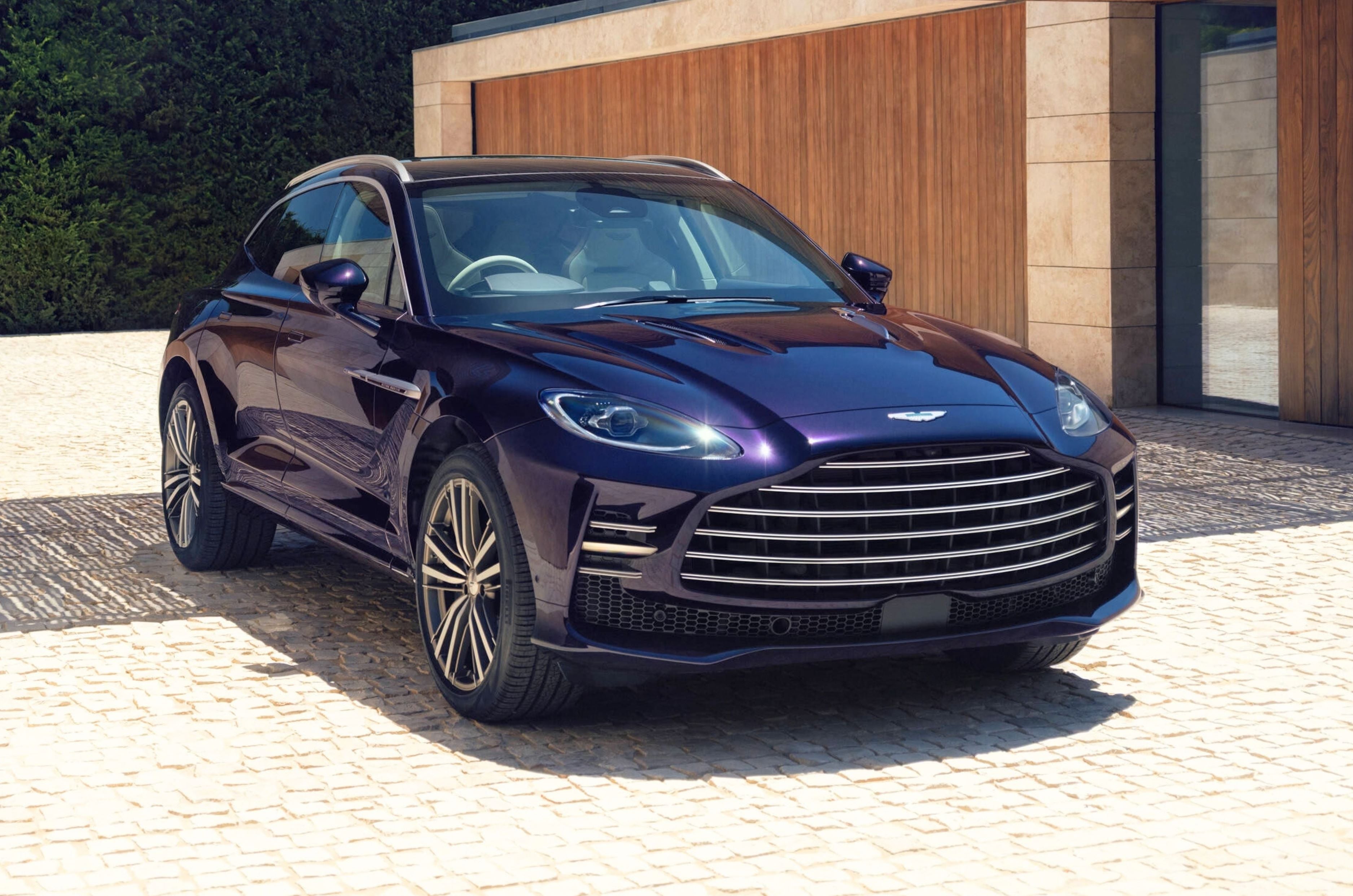
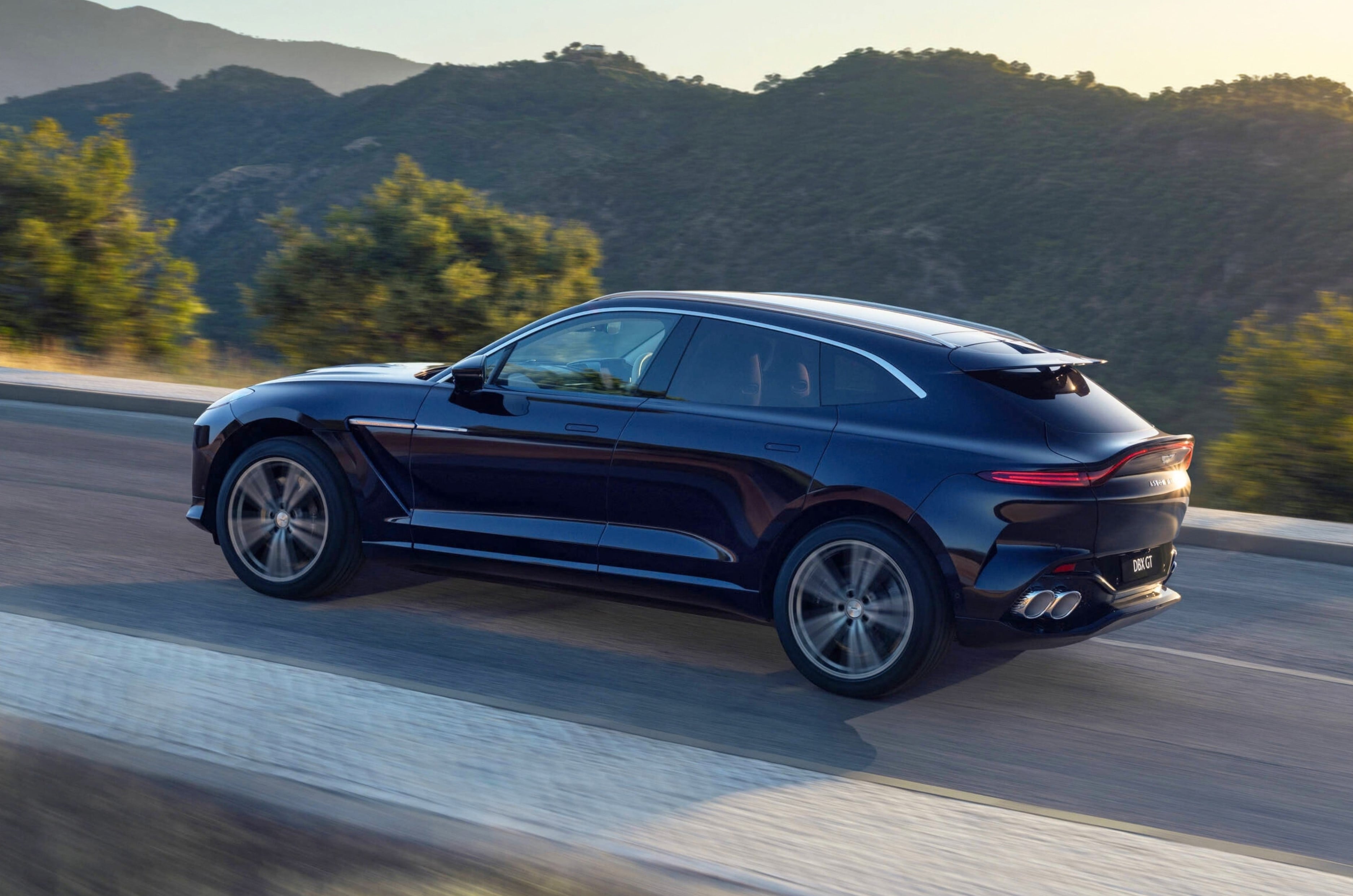
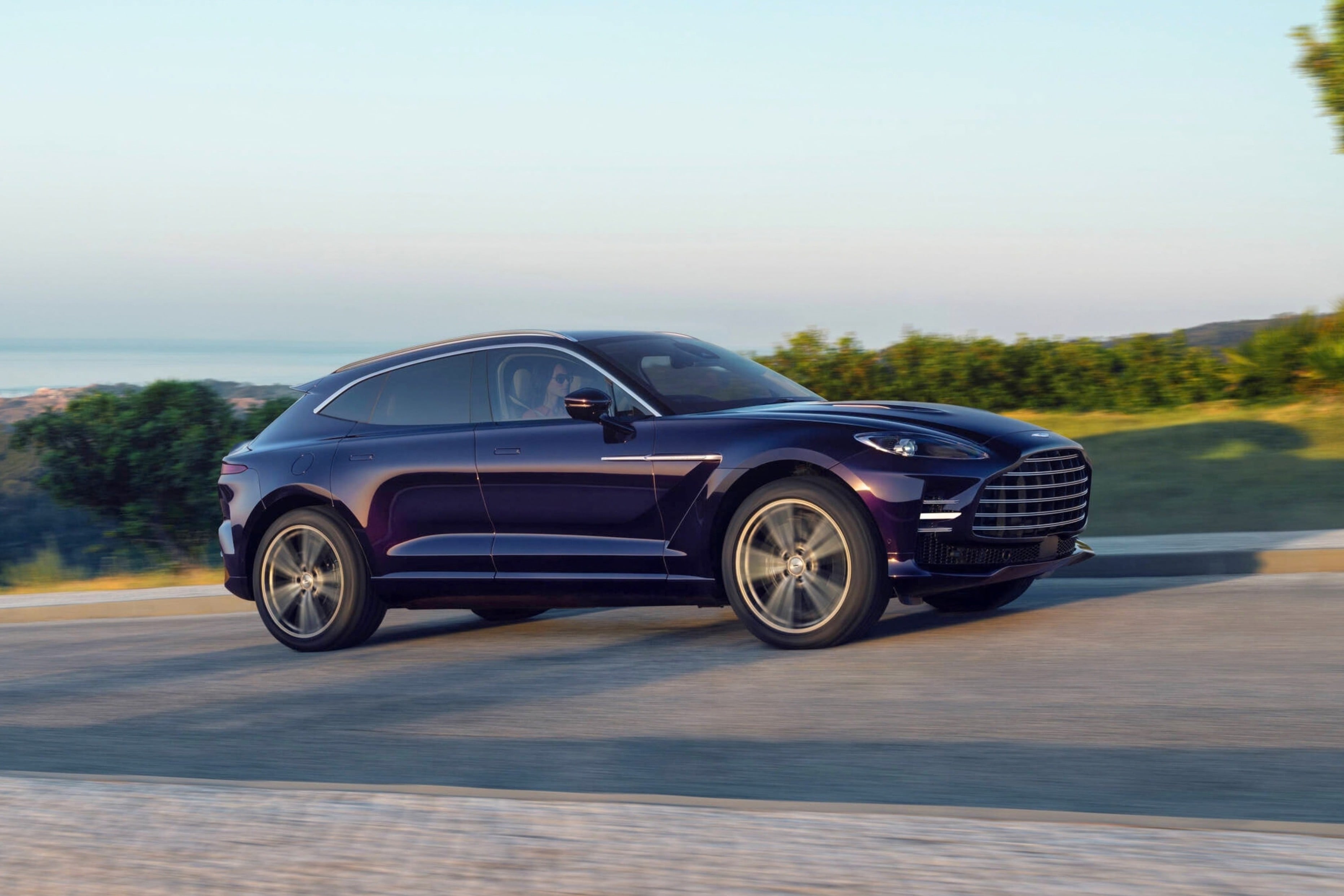
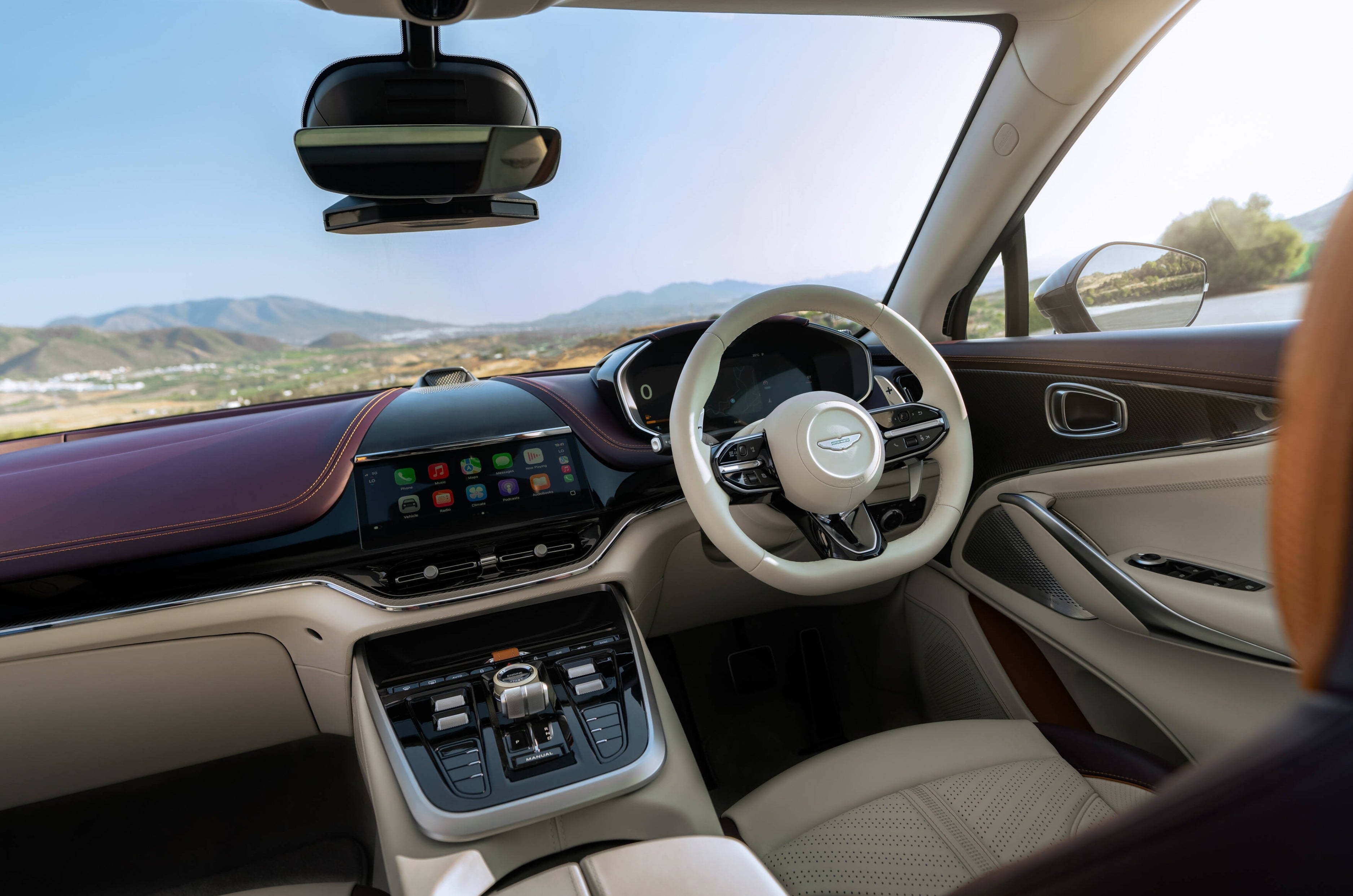
Aston Martin has added a new ‘GT’ variant to the DBX line-up. Positioned alongside the sportier DBX S variant, the GT places a much greater emphasis on luxury and comfort. Deliveries for the DBX GT commence in Q4 2026 across global markets.

Aston Martin DBX GT powertrain and performance

Under the bonnet, the GT retains the DBX S’s 4.0-litre twin-turbo V8 with no changes, which means an output 727hp and 900Nm. Also carried over from the DBX S is a 9-speed automatic gearbox that sends power to all four wheels, making for an identical 0-100kph time of 3.1 seconds (claimed) and a rated top speed of 310kph.

That said, Aston Martin has made subtle mechanical tweaks to reflect the DBX GT’s more comfort-oriented trappings. The throttle pedal and gearbox have been retuned to operate more smoothly, while the suspension has been revised to deliver a more pliant ride on bad roads. A pair of dampers has also been added between the body and rear sub-frame to keep movement in check, and the exhaust gets a dedicated tune that is touted to produce a “cleaner, richer tone.”

Aston Martin DBX GT exterior design

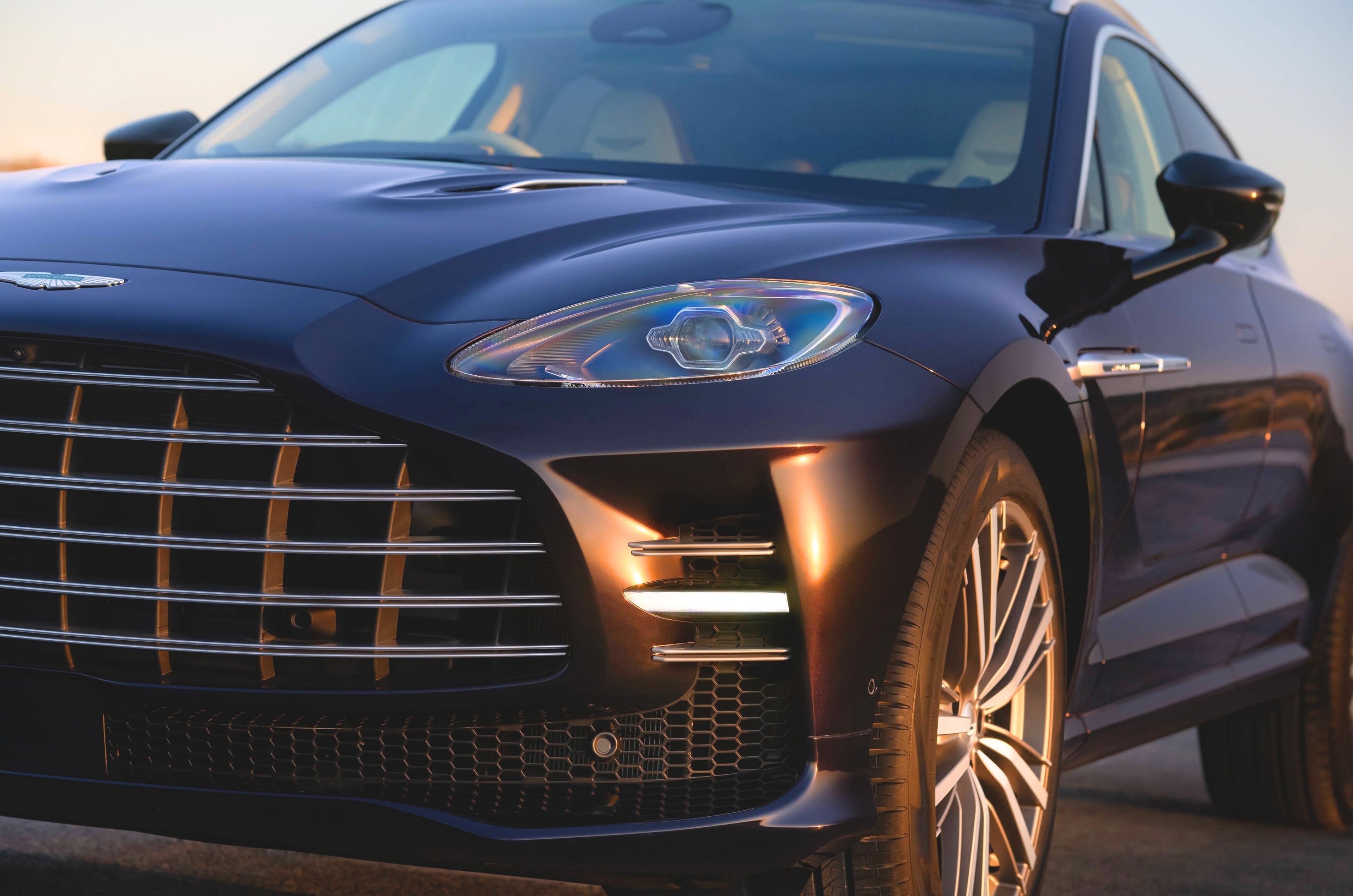
On the outside, the DBX GT features more polished styling elements. Up front, the bumper has a body-coloured finish and a cleaner look (no red accents like in the DBX S), while the redesigned grille gets horizontal slats instead of a mesh design.

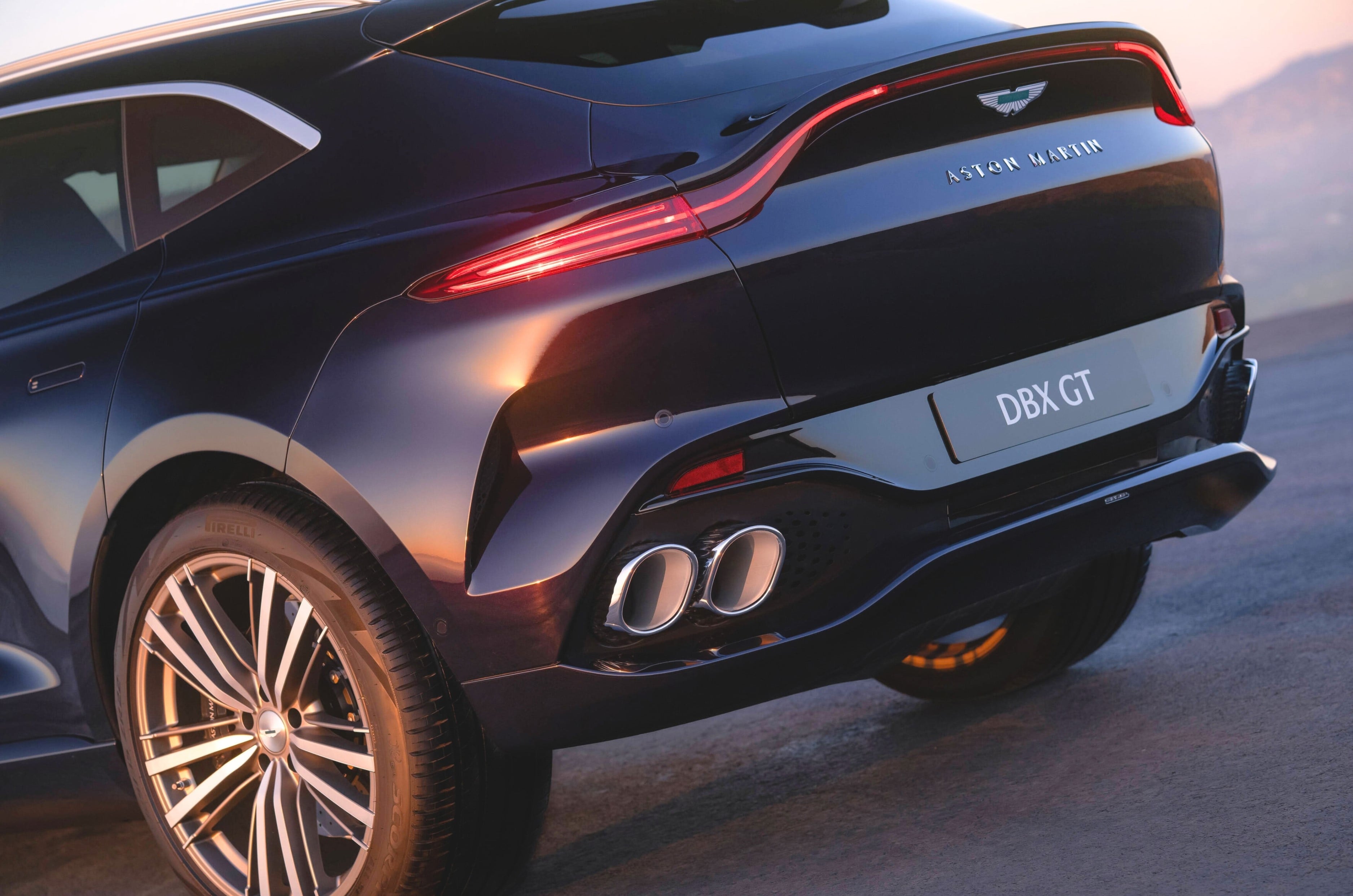
Over to the side, the two-piece side strakes are finished in satin silver, and there are new 22-inch alloy wheels as standard – 23-inchers are available as an optional extra. The side sills are also body-coloured in the DBX GT as well, and so is the rear diffuser. Speaking of the rear, the only change here is a new quad-exhaust setup where the tips are aligned horizontally.

Aston Martin DBX GT interior

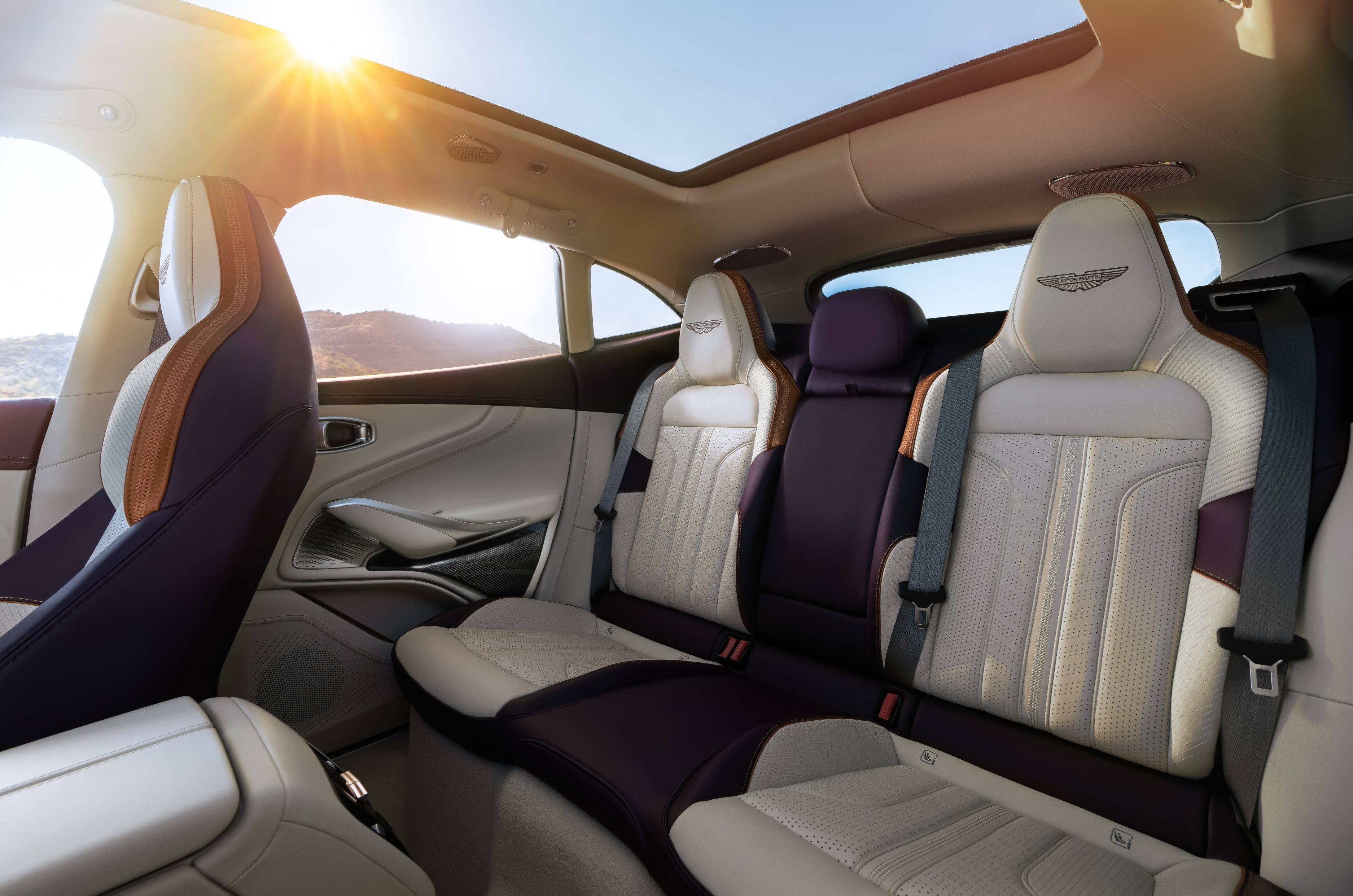
The interior layout of the DBX GT sees no major changes, but there are some updates to enhance comfort and opulence. For one, the seats are decked out in a new leather upholstery and get slightly thicker memory-foam cushions. Aston Martin has used more premium materials for the interior trim, such as anodised metal for the drive mode selector and surrounding rotary controls, as well as deep pile carpets. Buyers can, of course, choose from a plethora of colour schemes and interior upholstery options.

Sound deadening and window lamination have also been upgraded to better isolate occupants from the outside world. To bring in more natural light and increase the sense of airiness in the cabin, the DBX GT is equipped with a fixed panoramic glass roof as standard.

Honda Elevate facelift pre-bookings open

Honda Elevate facelift pre-bookings open

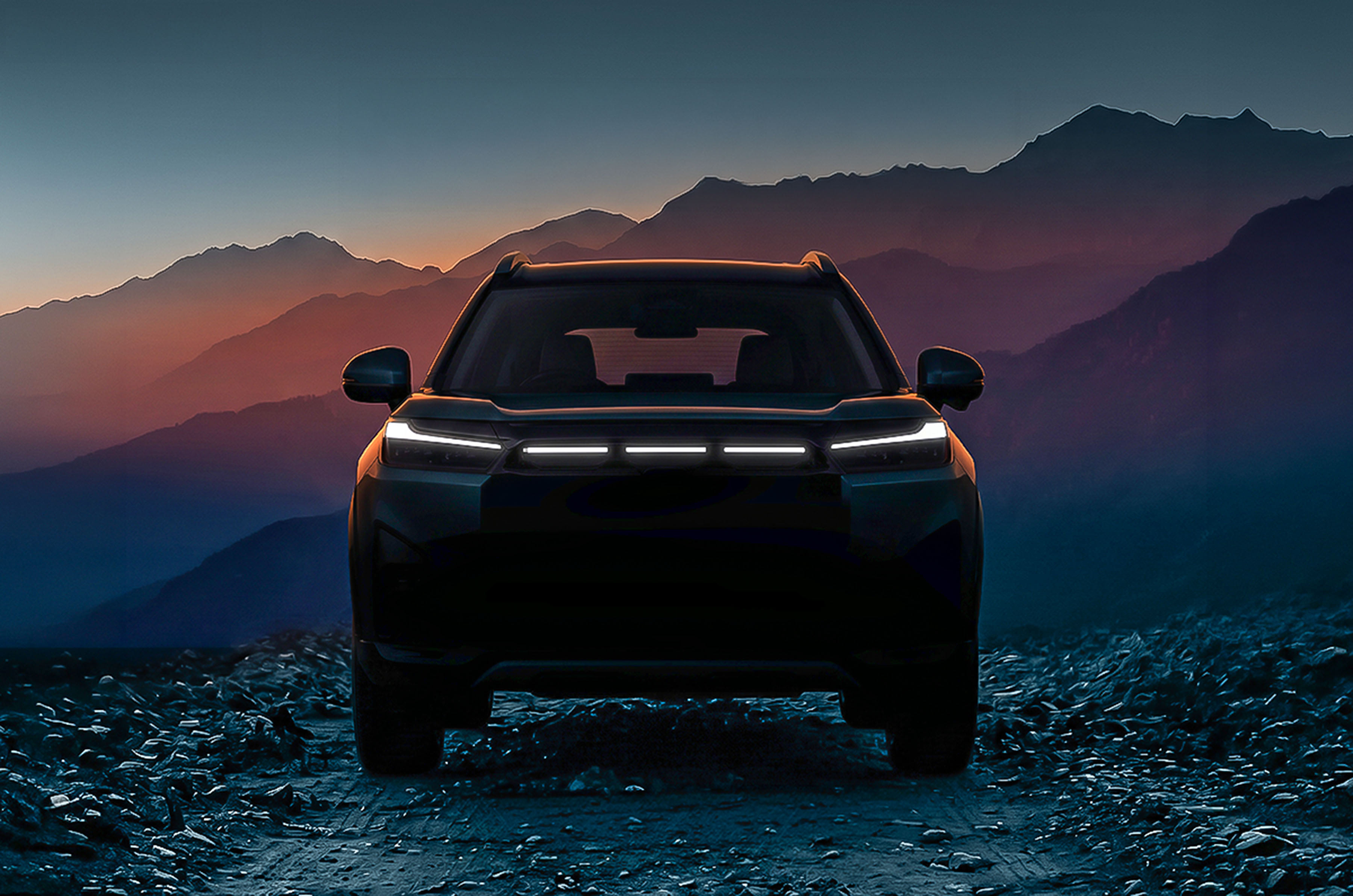
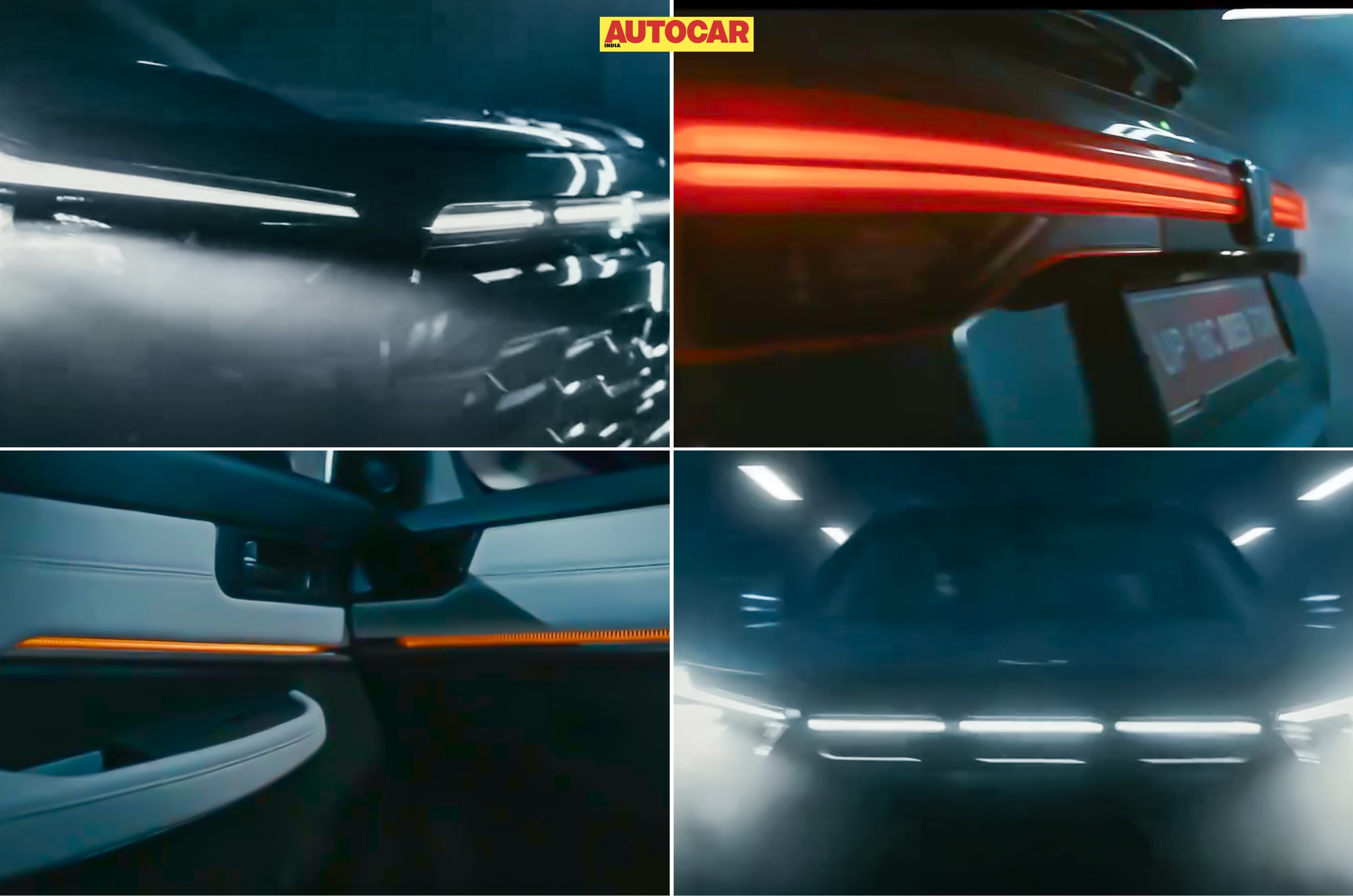
Honda has opened pre-bookings for the Elevate facelift at dealerships across the country, with a token amount of Rs 21,000, ahead of its October 6 debut. Along with the announcement, Honda shared a teaser of the facelifted Elevate, showcasing new exterior and interior design elements. The powertrain options, however, are expected to be the same as the outgoing model.

  1. Teaser shows new grille, segmented LED DRLs, and connected LED taillights
  2. Will get a revamped dashboard design and ambient lighting

Honda Elevate facelift teased: What could be seen?

New lighting elements and changes to the fascia

The teaser video shows a new grille design with glossy hexagonal design elements. The Honda logo has moved from the grille to the bonnet. Segmented LED DRLs, similar to the City facelift, are also seen. The headlights and fog lamp housing seem to be similar to the outgoing Elevate. Another new element is the connected LED taillight. Keen-eyed viewers can also spot a camera pod only on the left outside rearview mirror (ORVM), confirming that the Elevate facelift will continue with a Lane Watch camera system only.

Will have a revamped dashboard

While the interior was not shown as extensively as the exterior, a glimpse of the dashboard reveals a fresh design with more white leatherette padding and stitching. Amber-hued ambient lighting strips are also seen on the dashboard and door pads. Ambient lighting is offered as a dealership-level accessory fitment on the outgoing Elevate.

While changes to the feature suite are still under wraps, Honda could add several new features like a panoramic sunroof, dual-zone climate control, ventilated front seats, a powered co-driver’s seat and rear sunblinds to make the Elevate more competitive in the midsize SUV segment.

3 reasons to buy the Renault Triber Turbo and 3 reasons not to

3 reasons to buy the Renault Triber Turbo and 3 reasons not to
Renault Triber turbo front quarter tracking

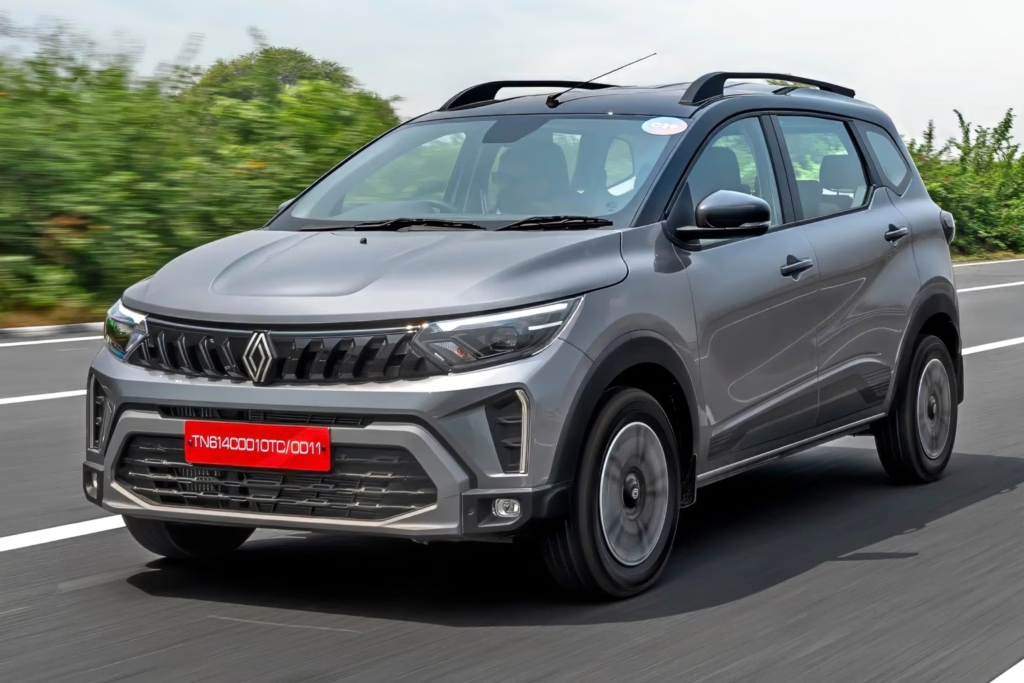
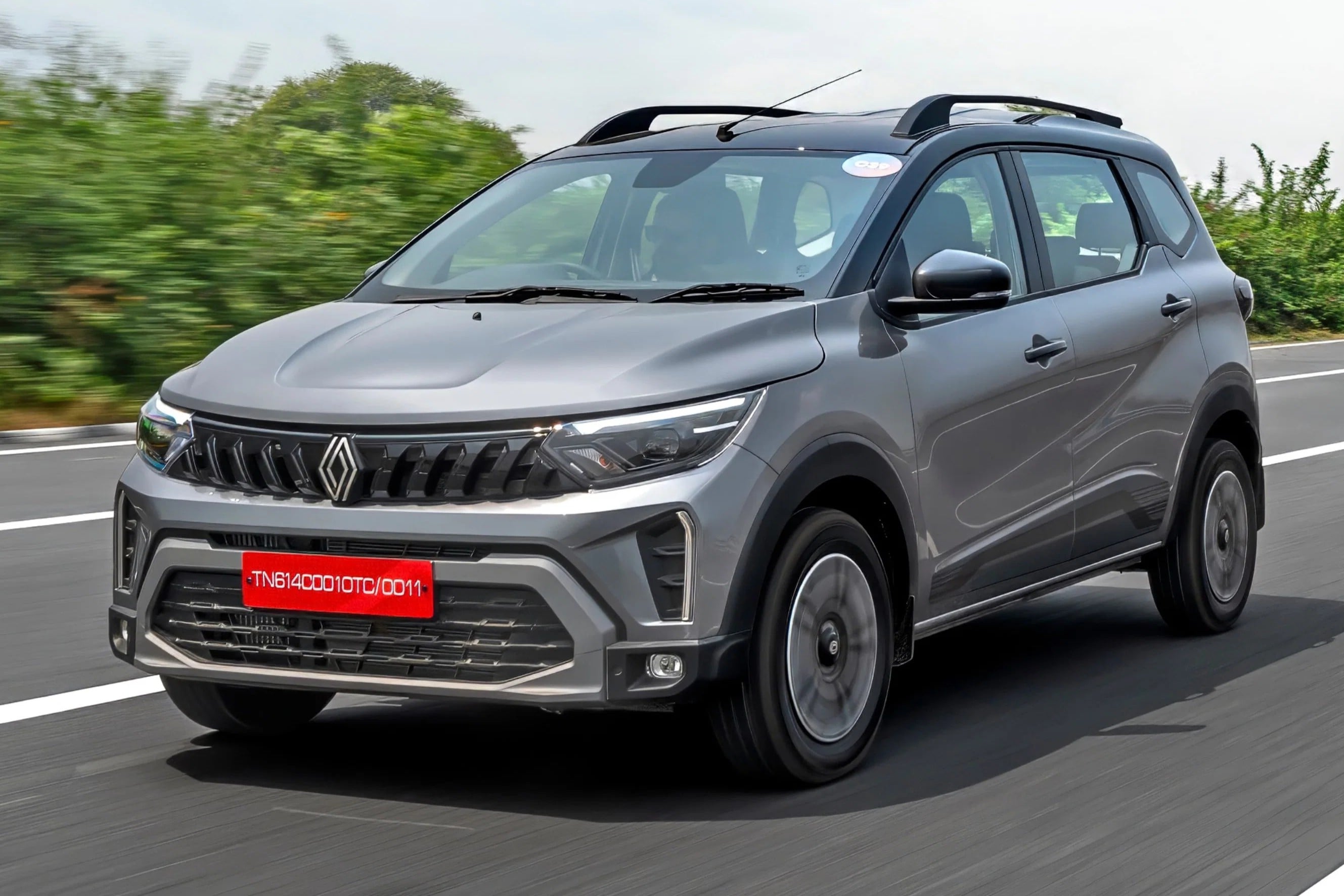
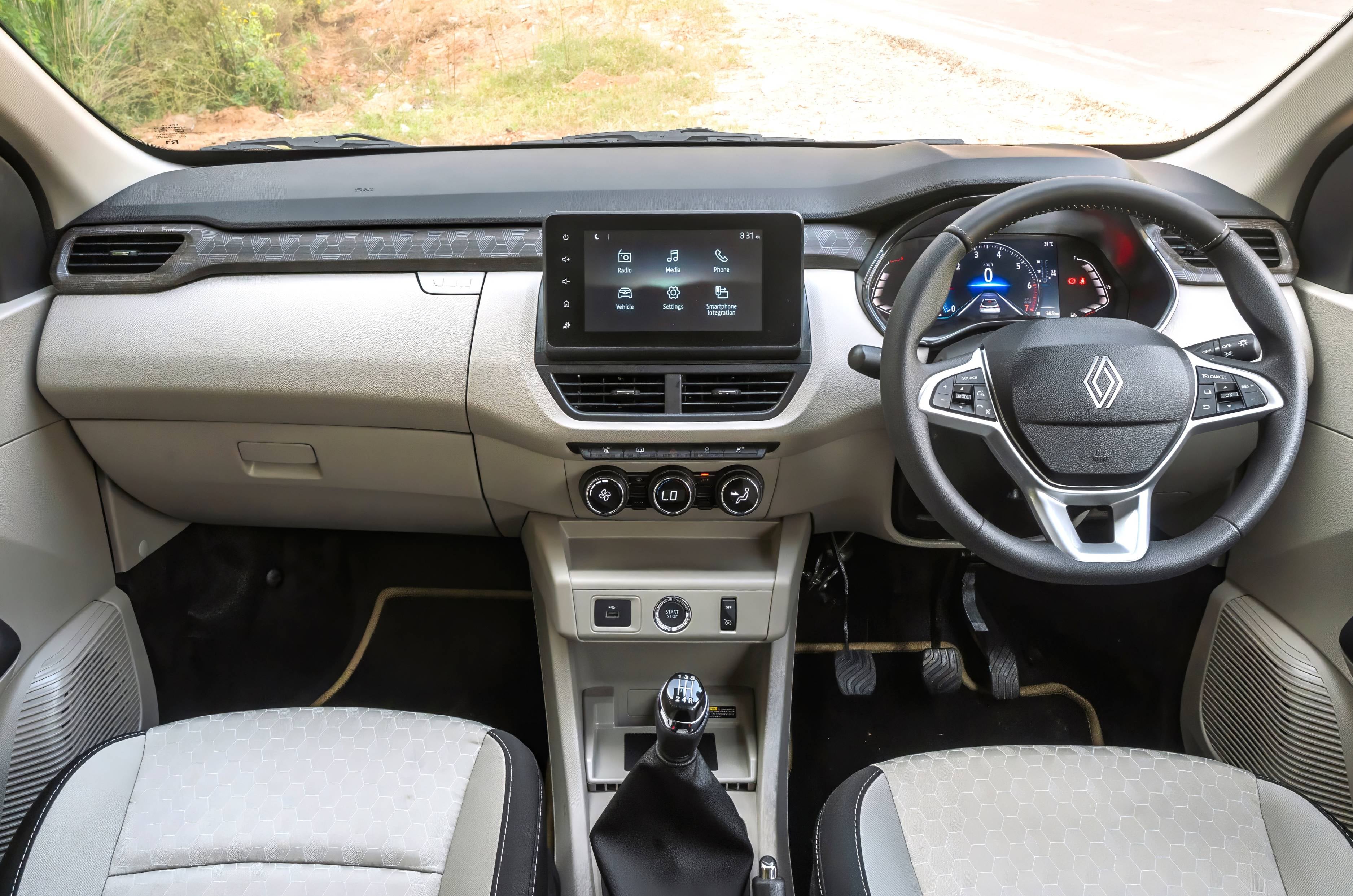
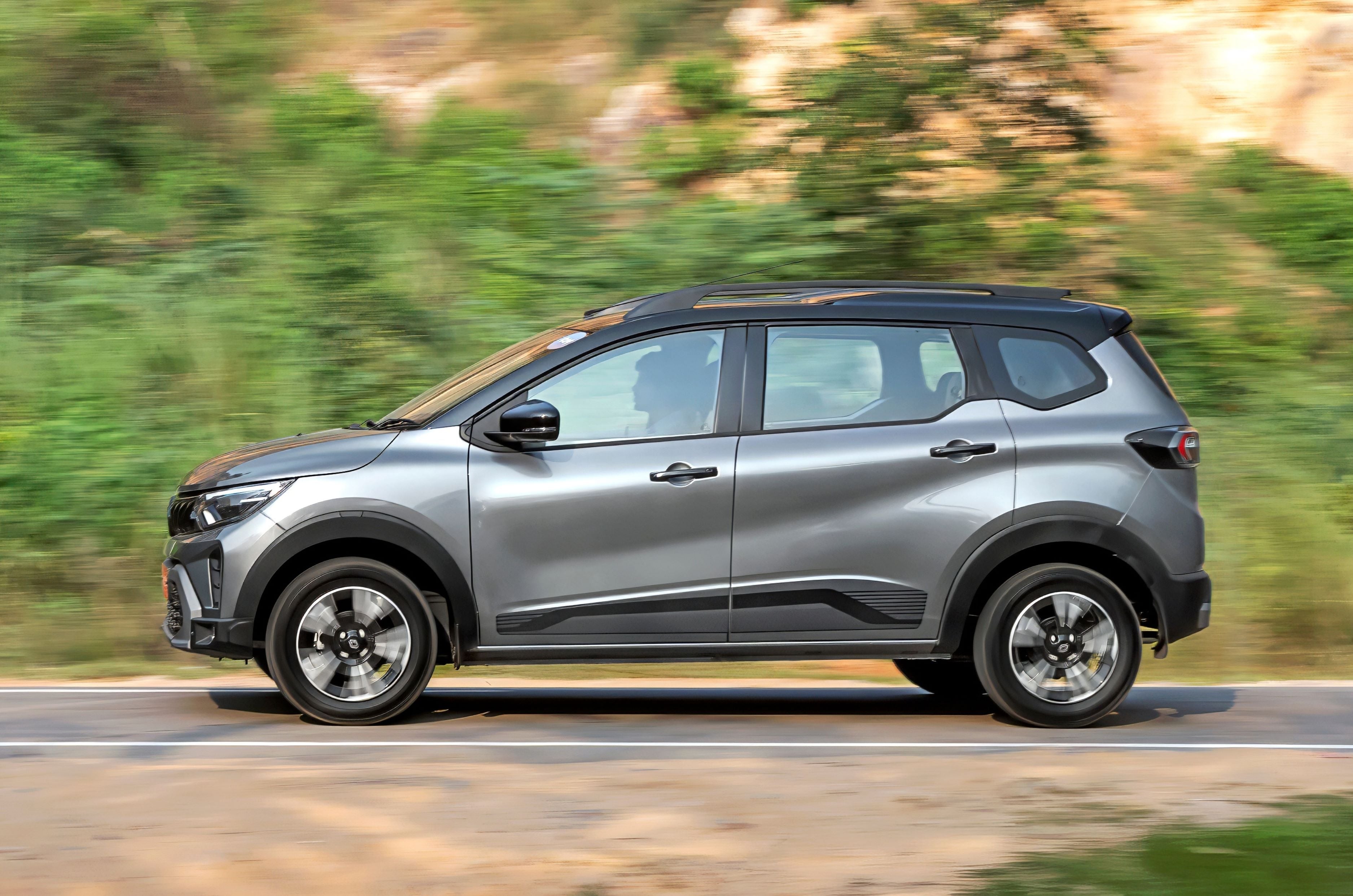
If you’re in the market for an affordable and compact 7-seater, the Renault Triber comes across as a well-packaged choice. For 2026, the Triber has been updated — it sits on a reengineered platform for better structural durability, gets a beefier suspension setup, and most importantly, it gets a much-needed turbo-petrol engine option. If you’re seriously considering the Triber, we bring a comprehensive list of reasons to go for one and reasons to look at another option.

Reasons to buy Renault Triber turbo 

Punchy turbo-petrol engine

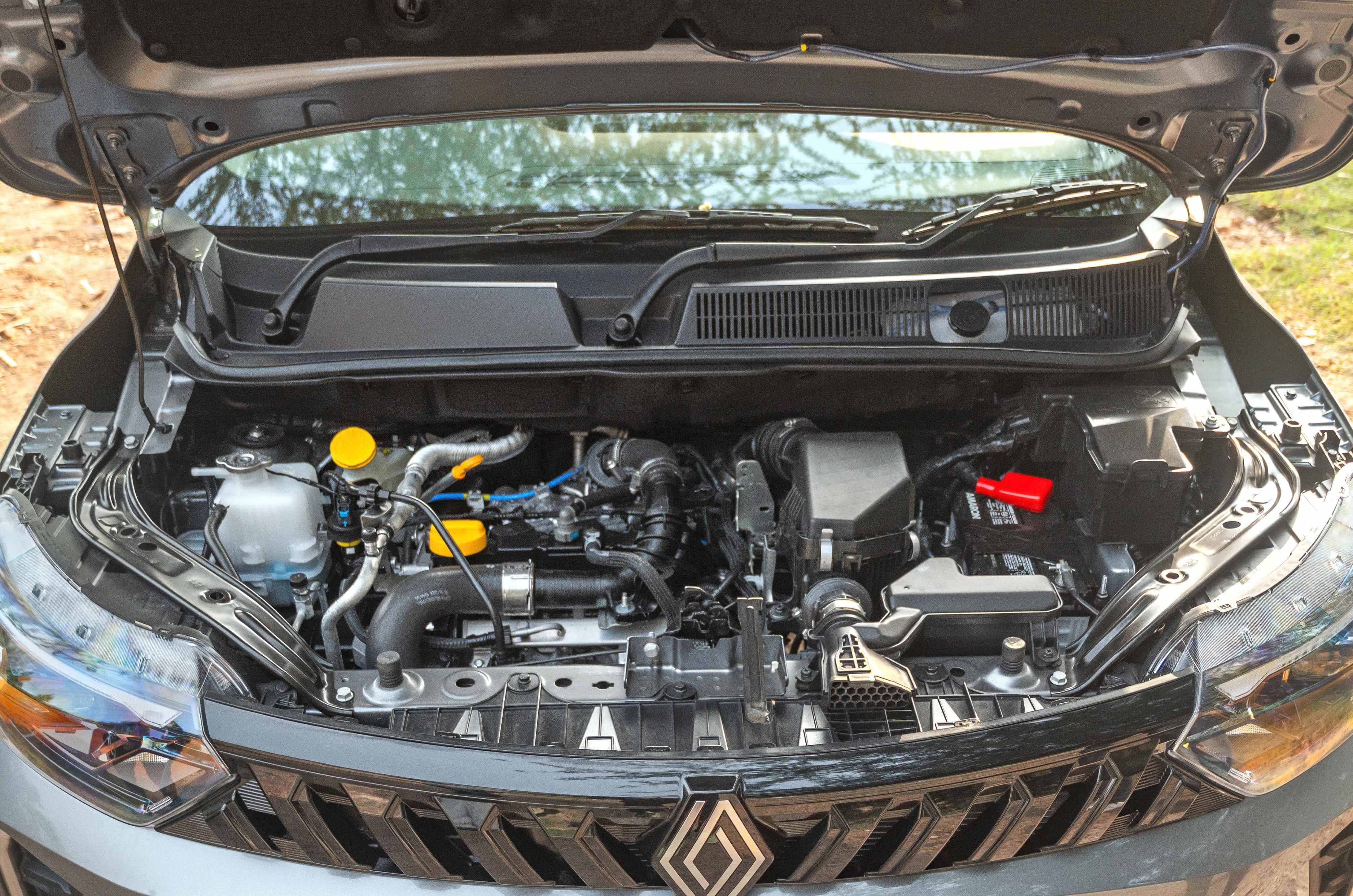
Turbo-petrol versions of the Triber get the same ‘HR10’ 1.0-litre, 3-cylinder unit as the Kiger and Duster. Power stands at an identical 100hp. But the Triber delivers more torque (180Nm) than both those SUVs thanks to a new engine management system. Pass the 2,500rpm mark and the Triber Turbo surges ahead with a strong midrange punch. In fact, pulling power feels sufficient even when fully loaded. This engine addresses the power gap left by the naturally aspirated petrol engine very well. 

Clever packaging

For its size and price, Renault has packaged the Triber’s cabin impressively with a surprising amount of room. Additionally, the light upholstery lends an airy feel to the cabin, and there’s plenty of storage space, including two large glove boxes, a smartphone shelf, two cup holders, a useful cooled storage bin and sizeable door pockets. 

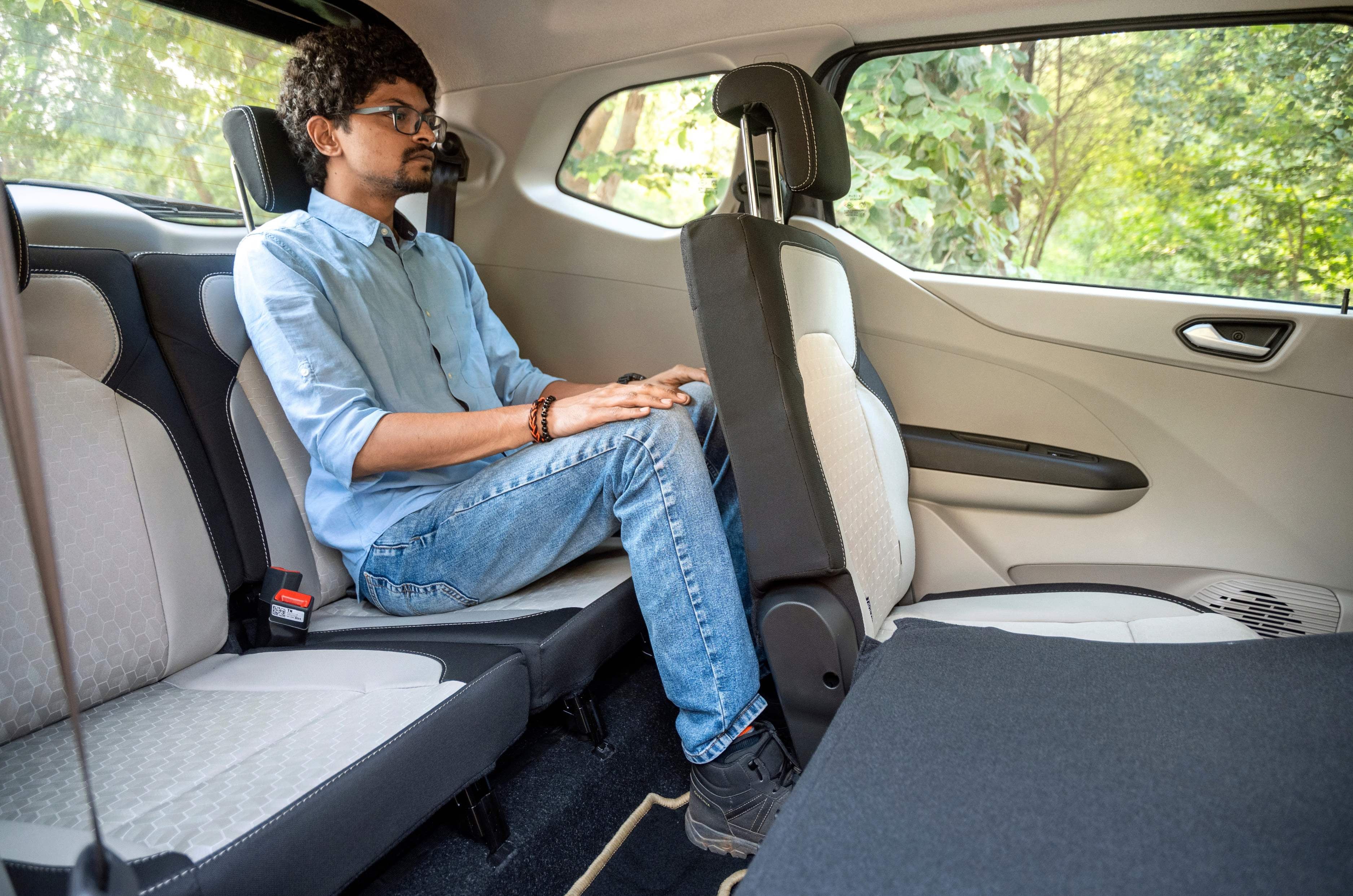
The second-row seats can slide, recline, tumble forward, and split-fold, making them quite versatile, and space is sufficient while the seats themselves are comfortable. Even third-row seat comfort is adequate, especially over short distances. Additionally, the third-row seats can be removed completely to provide extra boot space. Moreover, there are dedicated air vents and three-point seat belts for each row.

Composed ride quality

With the update, Renault has introduced new valve tech in the Triber’s shock absorbers and added anti-roll bars at the front and rear. These improvements have led to more stable ride quality, with better-controlled body roll around corners. Overall ride composure is impressive considering its 1-tonne kerb weight.

Reasons not to buy the Kiger turbo 

Notchy manual gearbox

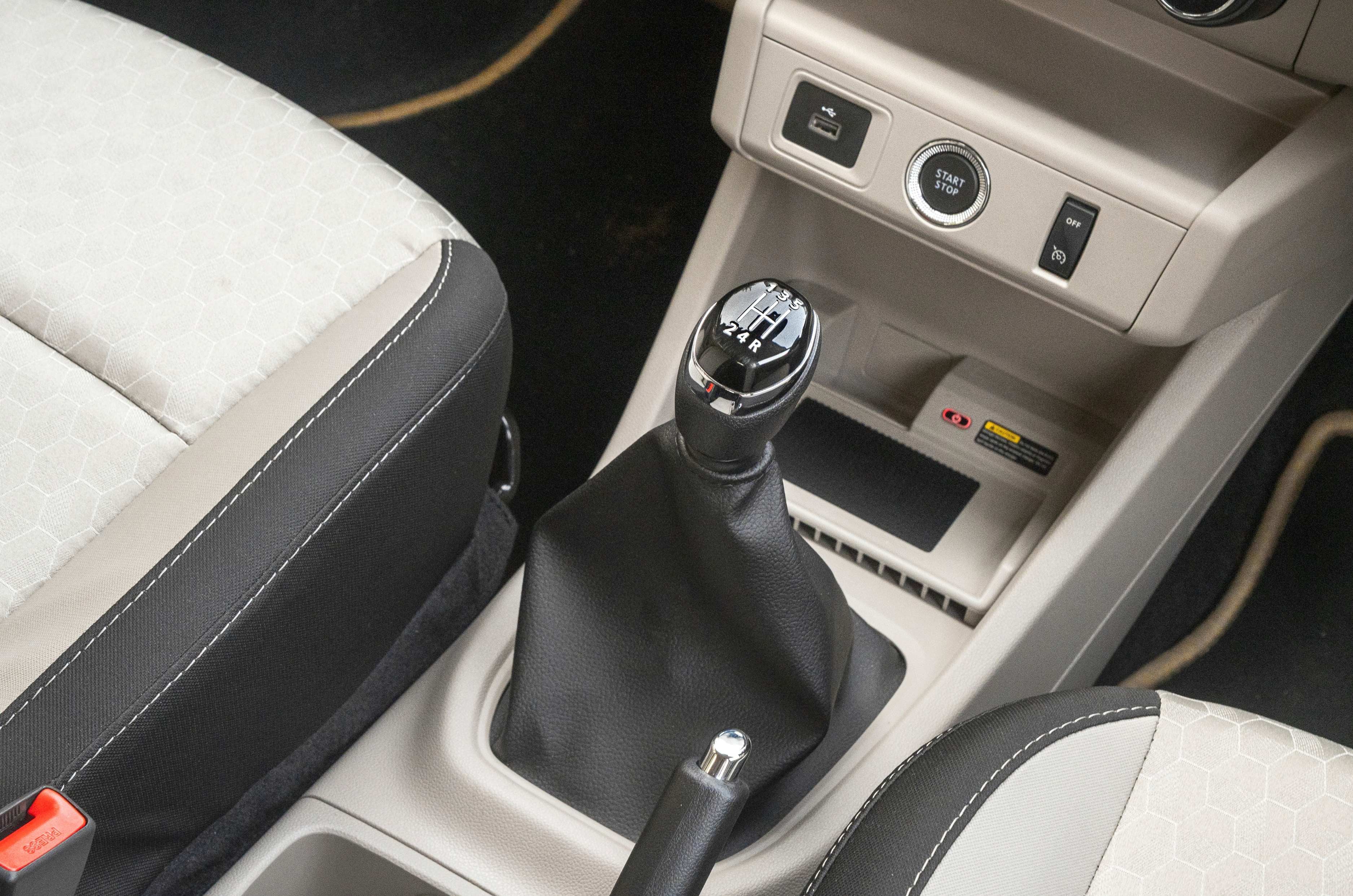
Though the turbo petrol mill brings much-needed power, accessing it, however, will be a task. Like its naturally aspirated counterpart, the 5-speed manual gearbox isn’t slick and requires more effort than usual to slot it into a desired gear. Meanwhile, the light nature of the clutch pedal does aid with city driving. 

Light steering

With the Triber turbo, Renault has lightened the steering to compensate for the added weight. However, it has been done excessively, making it devoid of feel, and it increasingly feels disconnected as speeds rise. Though a light steering is useful for parking and navigating tight spaces, the one in the Triber lacks feedback.

High NVH levels

Overall refinement levels in the Renault Triber aren’t something to write home about. Its 3-cylinder turbo mill has the typical thrum when idling and gets noisy when you rev it hard. Road and tyre noises are also loud, especially at higher speeds.

Jetour T2 facelift goes on sale internationally

Jetour T2 facelift goes on sale internationally
jetour t2 facelift

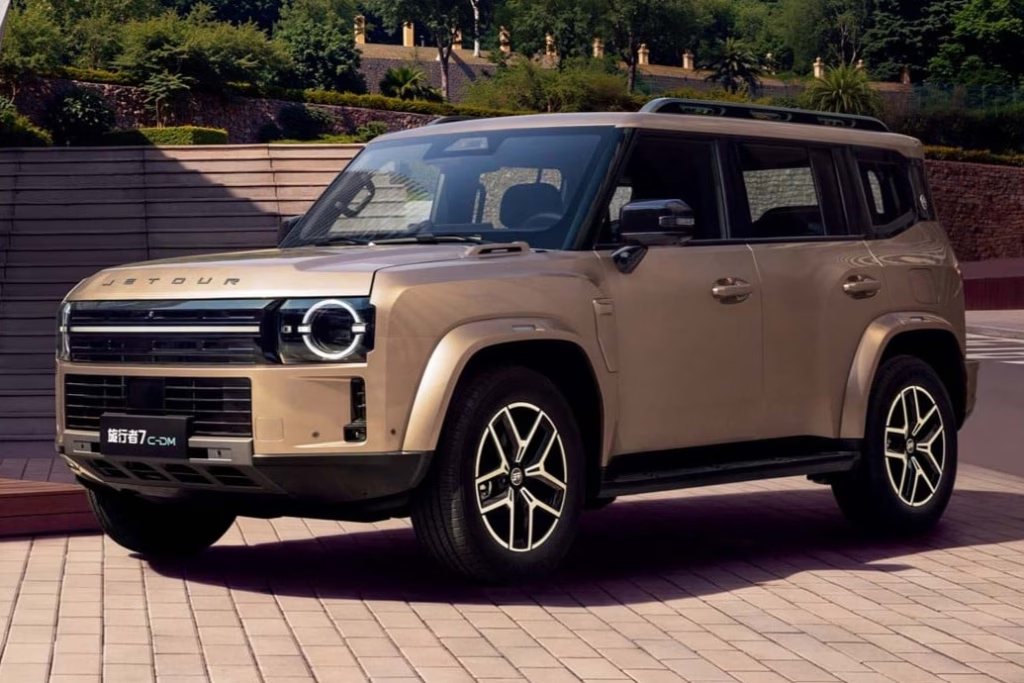
A facelifted version of the Jetour T2 has been launched in global markets. The Jetour T2 facelift was first unveiled in August at the Chengdu Motor Show in China, and gets some design revisions, more features, and powertrain tweaks. Interestingly, this updated iteration went on sale not long before the launch of the pre-facelift Jetour T2 under the JSW Combat name in India.

Jetour T2 facelift exterior design

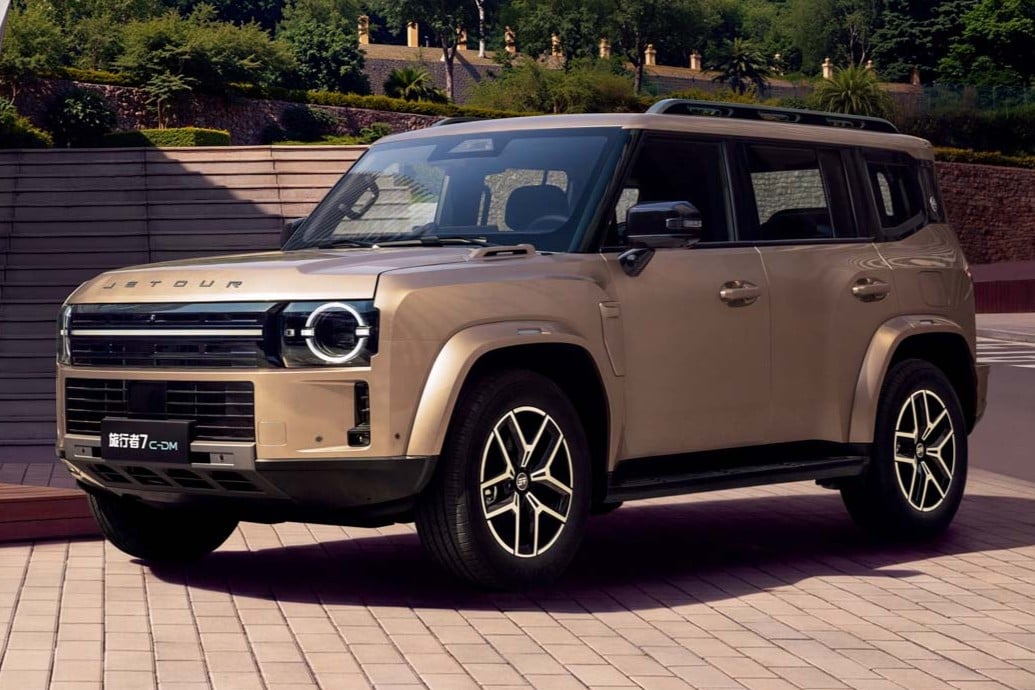
The updated Jetour T2 retains the prior version’s boxy proportions, but with a few notable styling updates. Most of these are up front, such as circular DRLs in the headlamps, a new grille housing an LED strip, and a much cleaner front bumper. The Jetour wordmark has also been relocated from the grille to the leading edge of the bonnet.

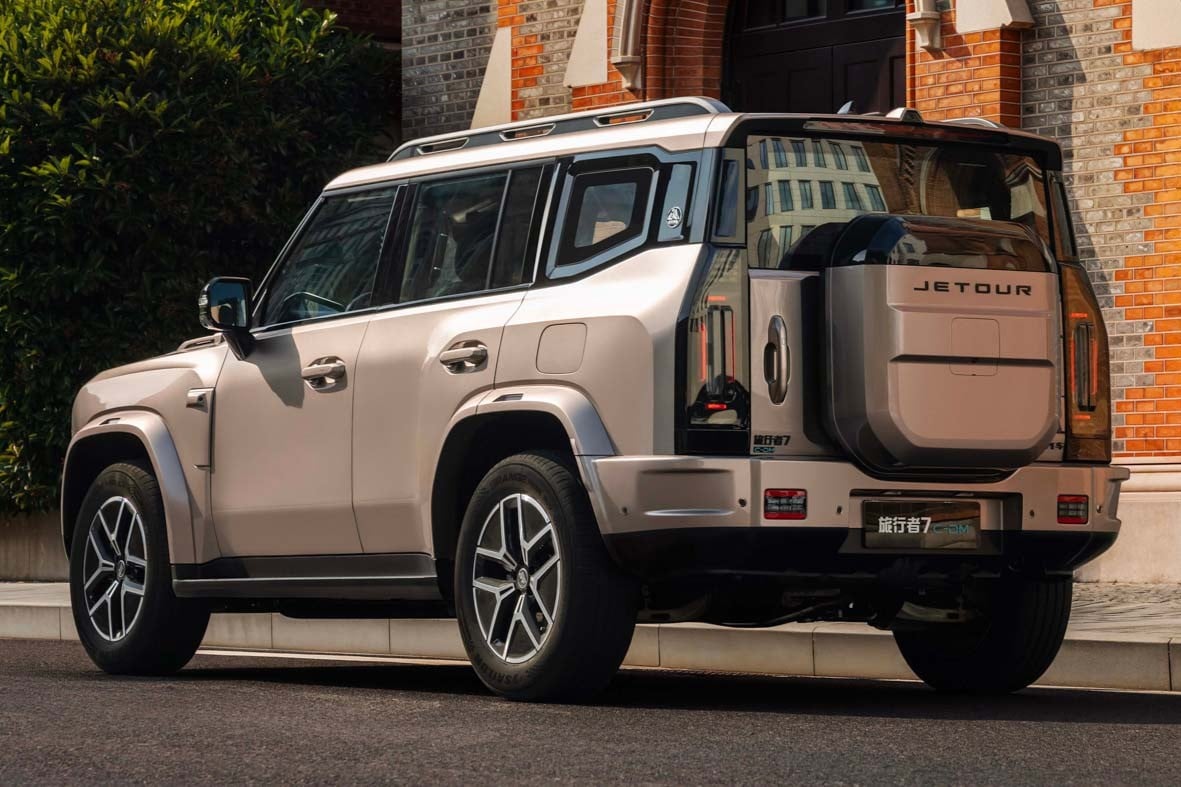
Over to the side, the Jetour T2 facelift gets new alloy wheel designs, as well as body-coloured wheel arches. The rear end sees some revisions too, particularly a cleaner bumper design, an updated spare wheel cover with a Jetour wordmark, and a discreet roof spoiler.

Jetour T2 facelift interior and features

Inside, the Jetour T2 facelift takes on a more premium slant than its predecessor. The beige colour scheme lends the cabin an airier vibe, the seats are upholstered in quilted leatherette, and the dashboard looks to be fitted with leatherette trim – the open storage space in front of the co-driver looks to be closed-off in the facelifted model. There’s also a new three-spoke flat-bottomed steering wheel, and the AC vents have fresh designs too.

The 10.25-inch digital driver’s display and 15.6-inch infotainment touchscreen remain unchanged in size, but the latter is now powered by a stronger Qualcomm Snapdragon 8255 chip that allows for the integration of a new voice-controlled AI assistant. Other notable features include 10-way powered front seats with a massage function, dual wireless charging pads, a 23-speaker sound system, an ADAS suite, and 256-colour ambient lighting.

Jetour T2 facelift powertrains

The Jetour T2’s powertrain offerings vary widely by market, but looking at the China-spec model, the facelifted version continues to offer a 184hp 1.5-litre four-cylinder turbo-petrol engine in the base variant. This mill is paired with a 7-speed dual-clutch automatic that sends power to the front wheels. All other petrol variants of the facelifted Jetour T2, meanwhile, get a 254hp 2.0-litre turbo-petrol engine with the same 7-speed DCT and AWD. A big change here is that the top-spec petrol variant comes with an 8-speed automatic gearbox instead.

As for the plug-in hybrid (PHEV) variants of the Jetour T2 facelift, the 156hp 1.5-litre turbo-petrol engine has been retained, but the dual electric motors have been replaced by a single unit that develops 307hp and 330Nm. The 3-speed dedicated hybrid transmission (DHT) is now a 1-speed unit as well. These updates have been made in the interest of efficiency, as even with a slightly smaller 26.61kWh battery pack, the facelifted Jetour T2 PHEV manages a WLTP-certified 108km pure-electric range – up by 8km. There’s a larger 45.12kWh battery pack on offer too, which bumps the rated pure-electric range to 173km – an increase of 11km over the prior 43.24kWh unit.

Is the Jetour T2 facelift coming to India

As noted previously, the pre-facelift Jetour T2 PHEV is set to launch in India in the coming months as JSW Motors’s debut model, the Combat. Since JSW Motors has been extensively testing the pre-facelift Jetour T2, it’s quite unlikely that the facelifted version will make it here in the short term. As it stands, JSW Motors has yet to even communicate the launch date of the Combat, and recent media reports allege that the carmaker has pushed its debut from the festive season to mid-December.