Skoda Kylaq Pune to Prague Leg 2: Prague calling

Skoda Kylaq Pune to Prague Leg 2: Prague calling
Skoda Kylaq Pune to Prague Leg 2

In the previous issue (August 2026), you saw the Skoda Kylaq take on the familiarity of India, the hills and traditions of Nepal, and the variety of China through Tibet’s gorgeous but bone-shaking terrain, followed by the sensory overload of food and culture. Now, it was time for a fresh experience through Central Asia on the ancient Silk Route, subsequently entering Europe towards our final destination.

Kyrgyzstan – Uzbekistan – Kazakhstan 

Kyrgyzstan

The Kylaq had everyone turning heads.

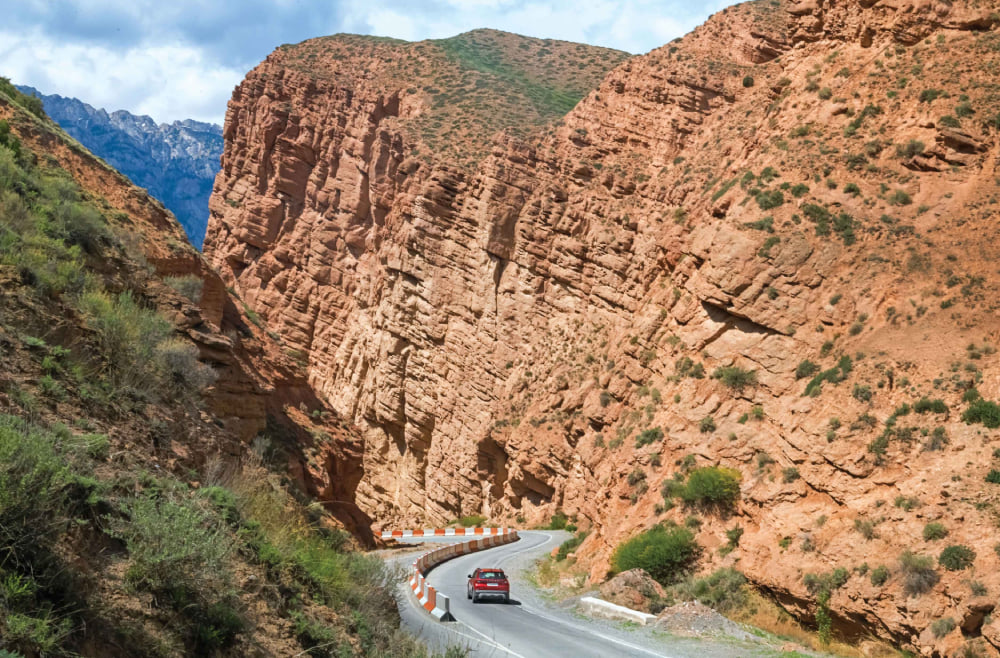
Crossing the Chinese border into Kyrgyzstan was like crossing into a different world. The differences are immediate, right from the signage, fonts and faces to the sights, terrain and traffic. Being a landlocked country peppered with alpine mountains, one doesn’t need to go far to experience what Kyrgyzstan has to offer. As you drive through the ribbon of tarmac between the peaks, you realise why it is called the “Switzerland of Asia”.

A roughly 400km drive to our first halt in Naryn was smooth sailing. However, the chilly weather was a far cry from the piercing heat of China. We pulled out our jackets that were buried deep in our bags and made a beeline the next day for the capital city of Bishkek. The roads are a driver’s delight, and while there aren’t many sights to stop and admire, the Orto-Tokoy Reservoir made for a stunning photo-op.

Kyrgyzstan in numbers
Torgart –  Uzbek border
Distance covered1,321km
Fuel consumed126.49 litres
Average fuel economy10.44kpl
Approx. fuel costRs 11,727
Avg. per-litre fuel costRs 92.58
Total time driven34hrs 23min
Average speed38.4kph

From Bishkek, we headed to Osh, which is also known as the capital of the south and is the oldest city in Kyrgyzstan. Walking through the Jayma Bazaar in the city centre, you may get a bit of celebrity treatment, as the locals aren’t used to having many tourists just walking through. Some playful heckling and wide smiles add to the overall experience.
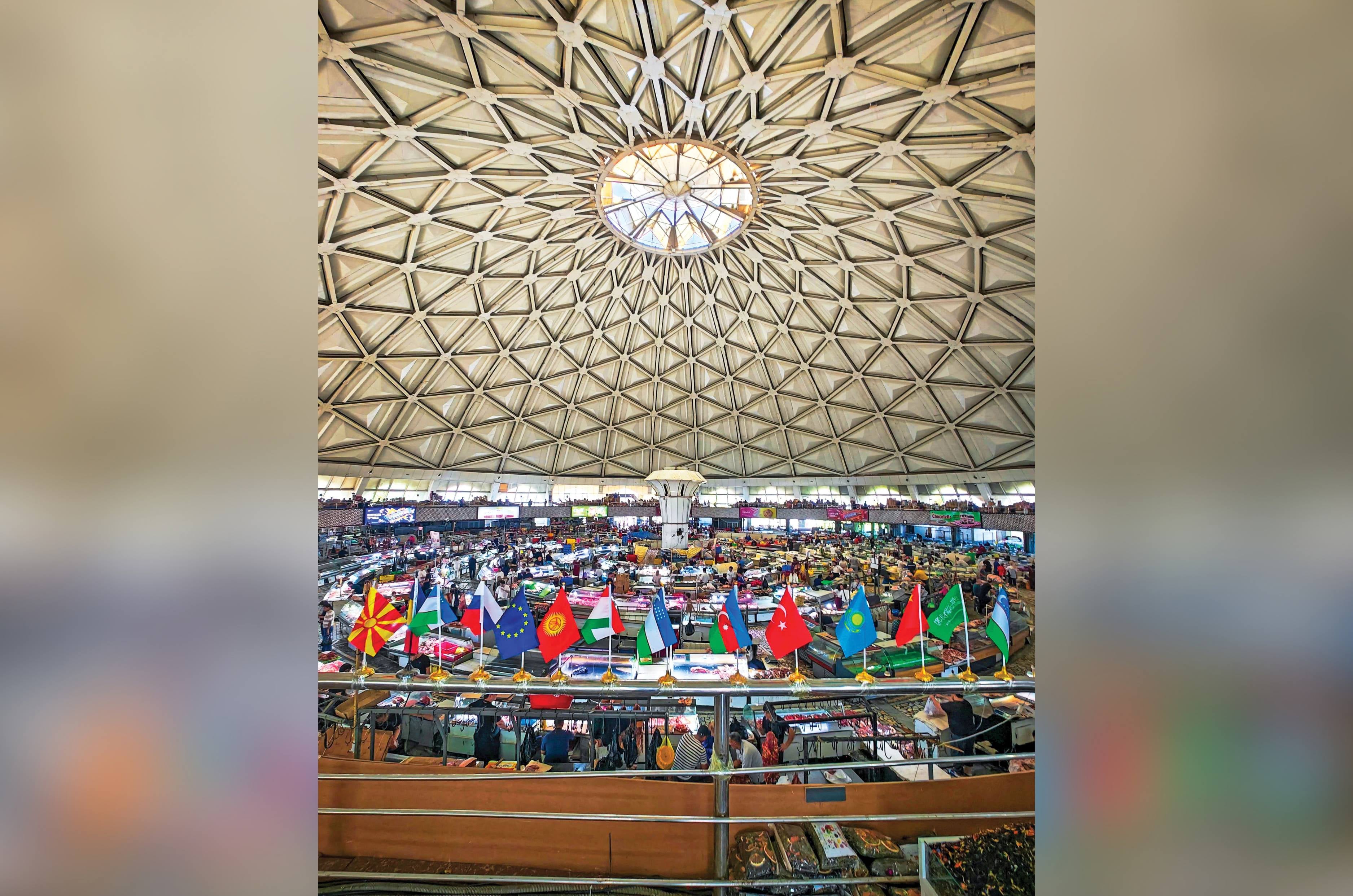
Chorsu Bazaar is a one-stop shop for everything in Tashkent.

What the market offers is mounds of kurut, a snack made from curdled milk or oghurt, salted and then hardened. The best part is its extended shelf life without needing a refrigerator. We packed some with the hope of eating it at home, knowing fully well that it would vanish by the next town.

From Osh, we would be exiting the stunning valleys and terrain of Kyrgyzstan and entering the city of Fergana in Uzbekistan.

Uzbekistan
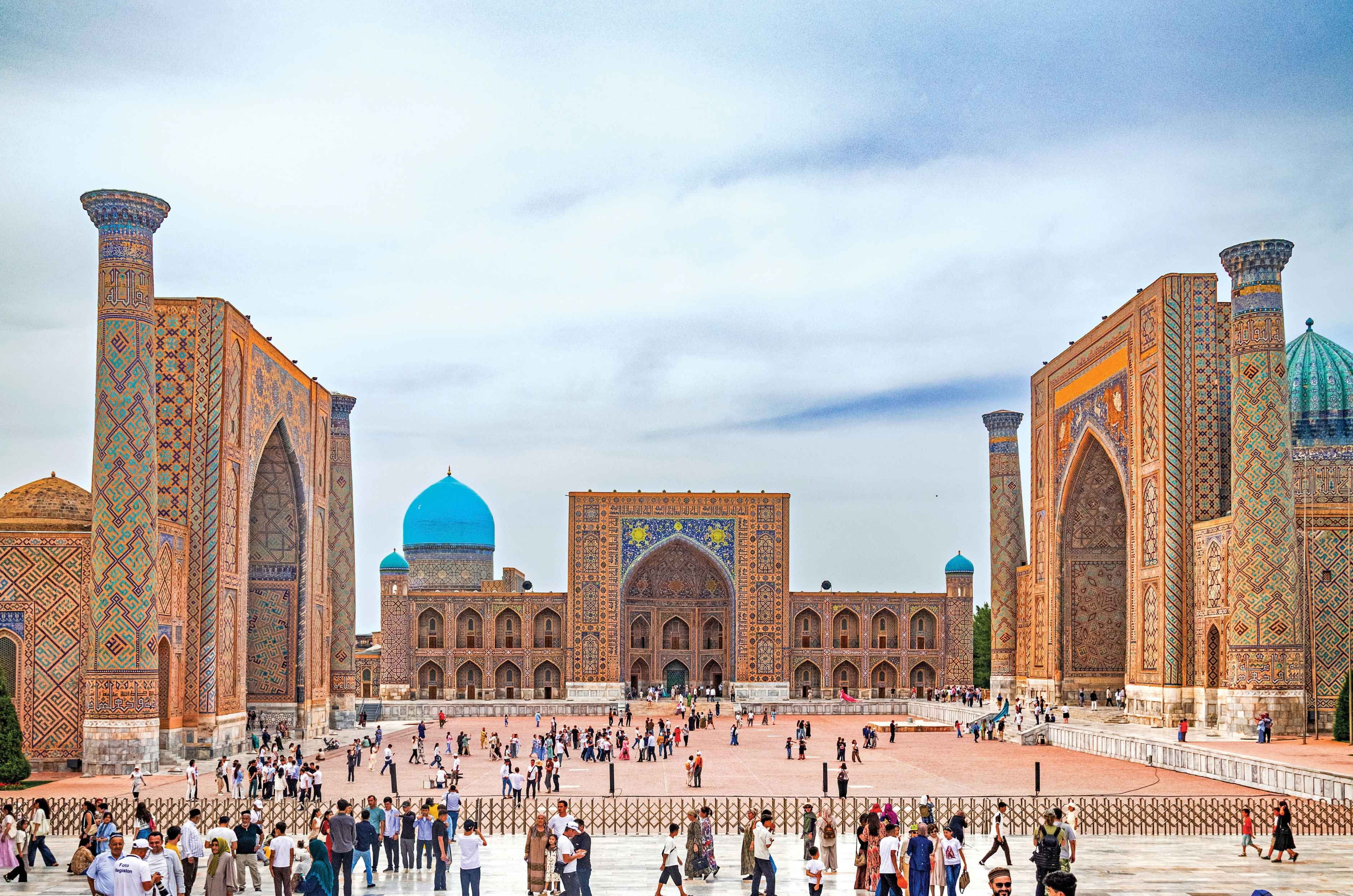
Registan Square in Samarkand is breathtaking from every angle.

Like Kyrgyzstan, Uzbekistan also has its own personality. While there are similarities in the faces and fashion, the city of Fergana has a tinge of European infrastructure. Roads are lined with trees and patir shops – flatbread made from butter or lamb fat, with intricate detailing and some sesame seeds sprinkled on top. It’s pretty enough to dissuade you from eating it, but tastes like something that would go extremely well with a cup of chai.

Uzbekistan in numbers
Kyrgyz-Uzbek border – Turkistan
Distance covered1,257km
Fuel consumed81.74 litres
Average fuel economy15.37kpl
Approx. fuel costRs 9,800
Avg. per-litre fuel costRs 120
Total time driven27hrs 5mins
Average speed46.4kph

What is also fascinating is the number of old Soviet-era cars still running on the highways with no fuss. We shared road space with old Ladas crammed with luggage inside and on the roof. Over the smooth highways of Uzbekistan, the Kylaq had an easy run, allowing us to focus on the sights around us.

From Fergana, we headed to the capital city of Tashkent. A properly modern metropolis with high-end malls and low-slung supercars, parks, walkways and everything you expect from a big city. So, to get a taste of age-old tradition, we ventured towards Samarkand, which used to be a major trading hub on the Silk Route.
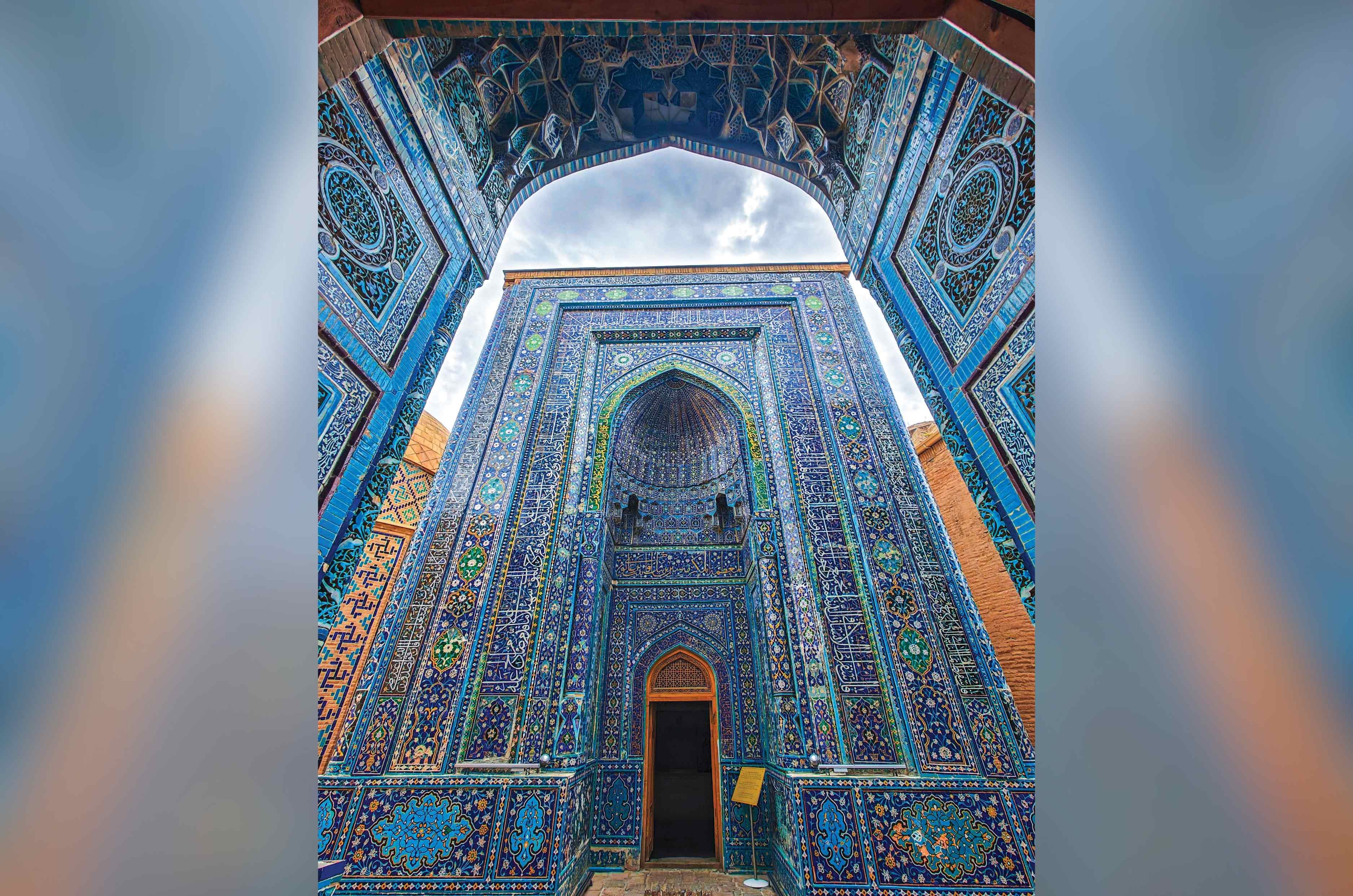
The Shah-i-Zinda ensemble has 11 mausoleums with incredibly detailed azure and turquoise tiles.

Entering Samarkand, you almost feel the tradition in the air. Years of cross-cultural civilisation have made it a stunning destination to get a glimpse of history, and it is unlike any other Western or Eastern city. The highlight here, of course, is the Bibi-Khanym Mosque in the Registan ensemble. Turquoise domes kissing the sky, with walls adorned with hand-carved artistry, are nothing short of breathtaking.

You can walk through the corridors and the square innumerable times, and each time, you will gasp at the sheer detail and effort. And to think it was built as far back as the 15th century. Magnificent is an understatement.

After soaking in the stunning detail, we headed back to Tashkent and straight to the equally fascinating Chorsu Bazaar. What looks like an IMAX dome on the outside is a full-fledged one-stop shop on the inside. Teas, dry fruits or even a leg of lamb, you can get it all here.
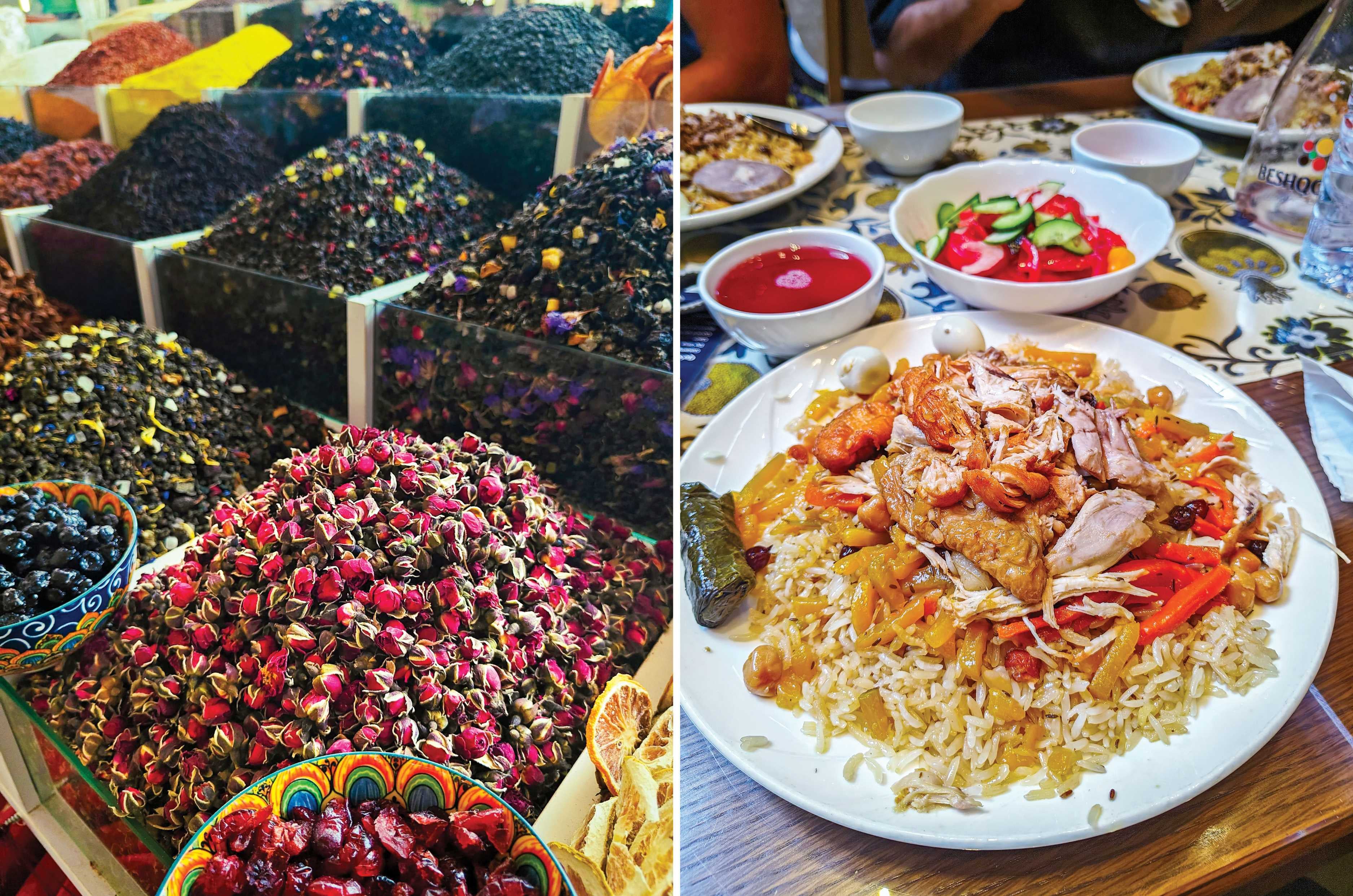
Uzbekistan’s market is nothing short of paradise for tea lovers.

After a long walk that ended with bags of tea and dehydrated kiwis, we headed for Uzbekistan’s pièce de résistance: the famous plov. Like a biryani, but made with different spices, and if you want to go heavy on culture, you can have one with horse meat, too. Some bravehearts did try it and resorted to chicken or lamb, but it did offer the lost taste of biryani and got us homesick in the first bite.
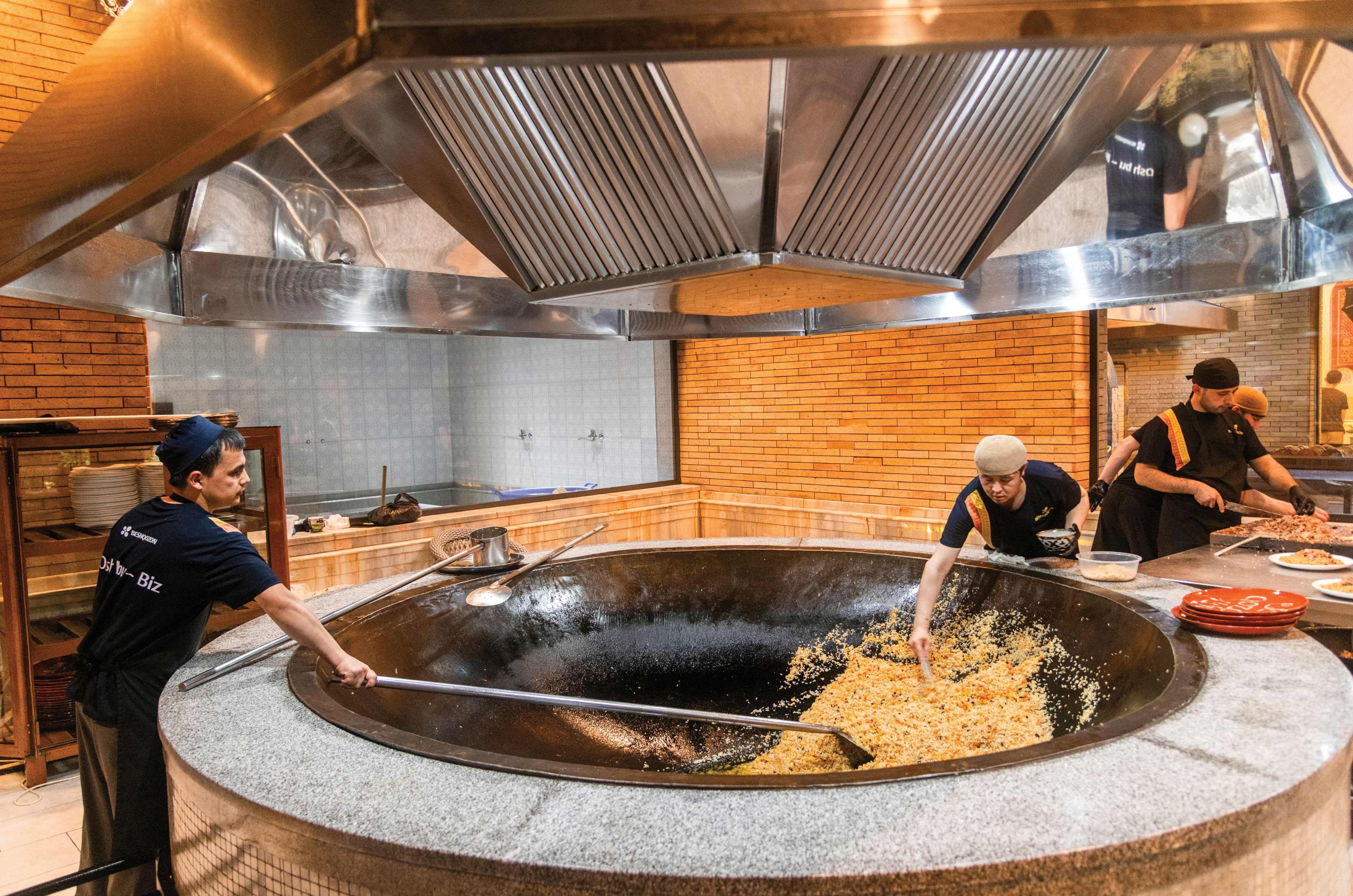
Massive dome known as a kazan used to make the famous Uzbek plov.

After days of driving through mountains and around lakes, and walking through corridors that were once at the peak of world trade, our next adventure would take us to the Great Steppe of Kazakhstan.

Kazakhstan
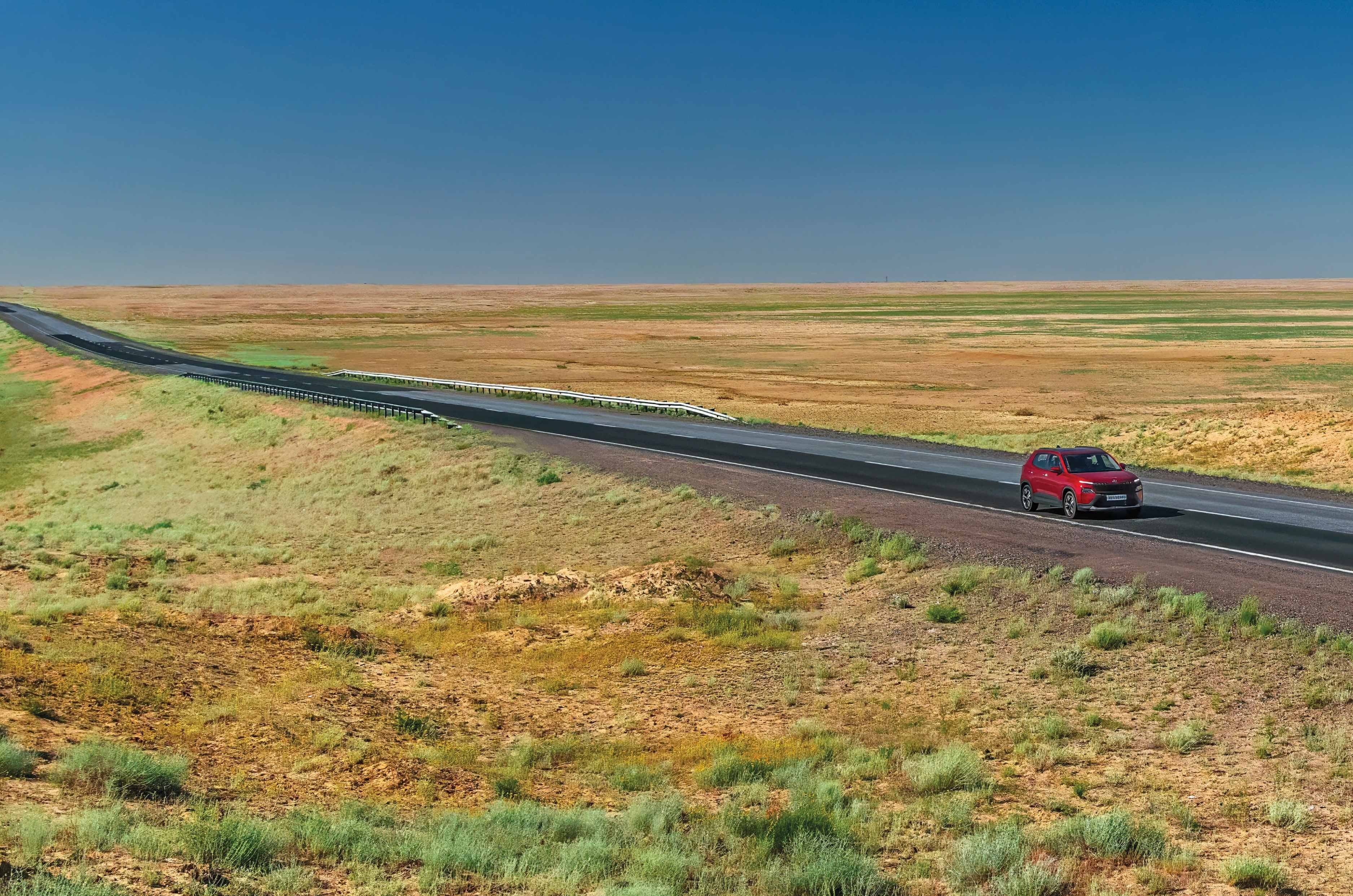
The Great Steppe in Kazakhstan feels like driving on an endless treadmill.

Crossing from Turkmenistan after vigorous checks, Kazakhstan feels almost desolate. Arrow-straight highways for kilometres, between acres of flat land with nothing on the horizon. We were driving through green pastures that would turn into brown, dried patches before turning green again, kilometre after kilometre.
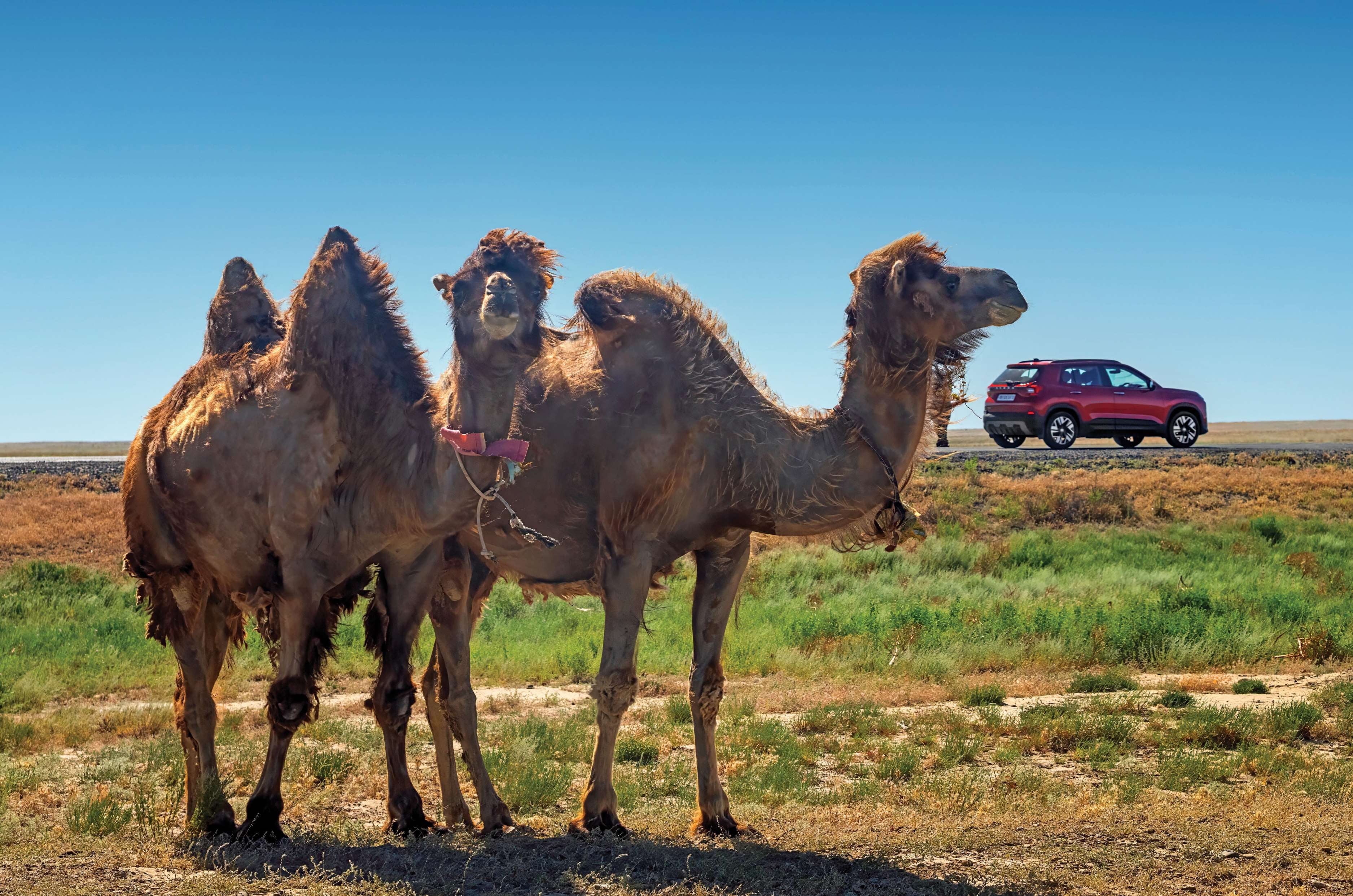
The Great Steppe, while stunning in size, is also a bit monotonous when you’re driving through it for days. The only respite would be a herd of double-humped Bactrian camels, cooling off at a nearby pond and often curious to know what a cherry-red Kylaq was doing in the middle of Kazakhstan.
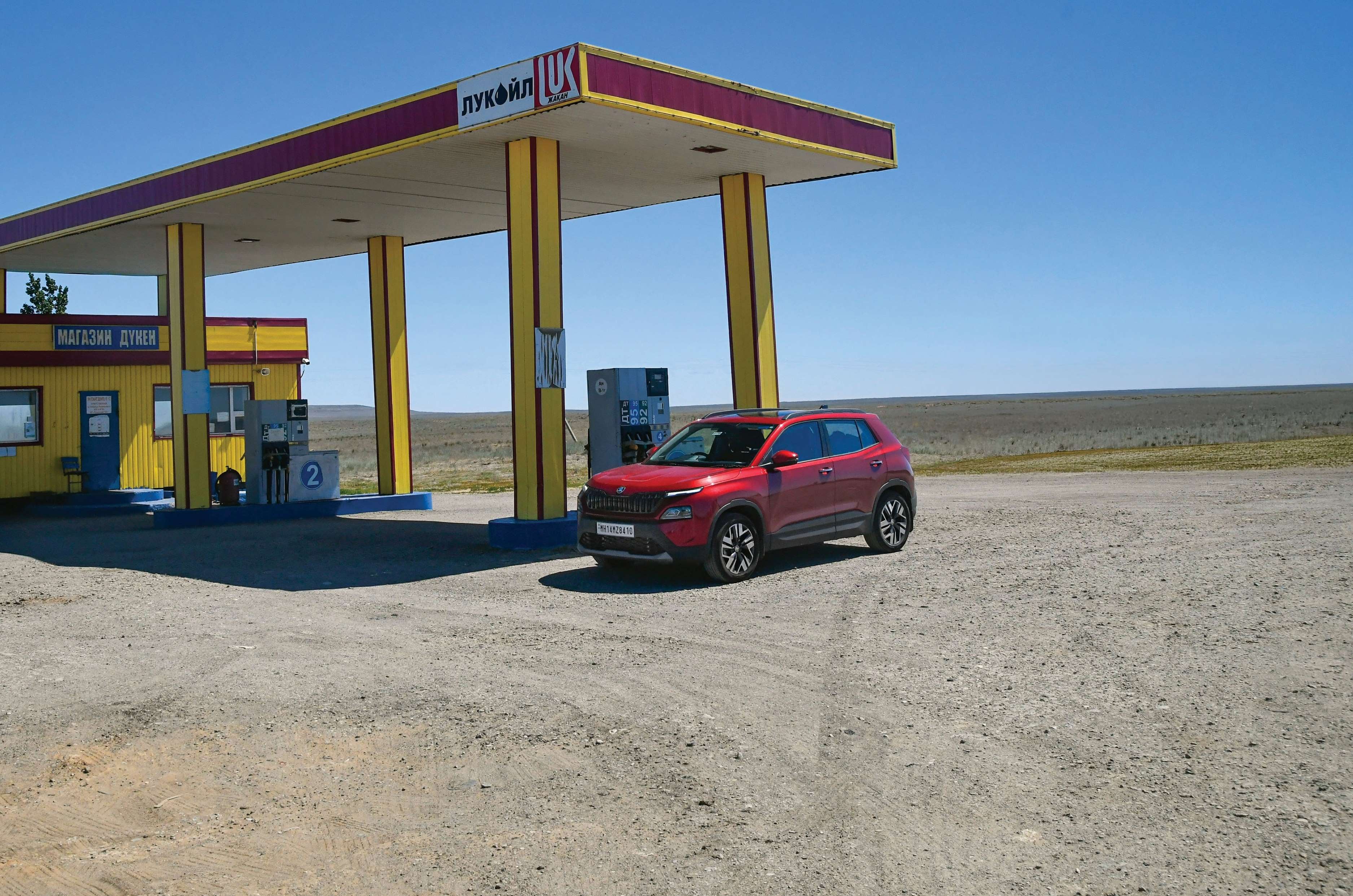
At Rs 58.17 per litre, Kazakhstan offered the lowest fuel price of the entire drive.

An interesting stop between Turkistan and Aral is the Baikonur Cosmodrome, which is the world’s first and largest operational space launch facility. However, thanks to the endless highways through Aral, Aktobe and Atyrau, we only got to test the Kylaq’s wheel alignment and its highway stability more than we would have liked.
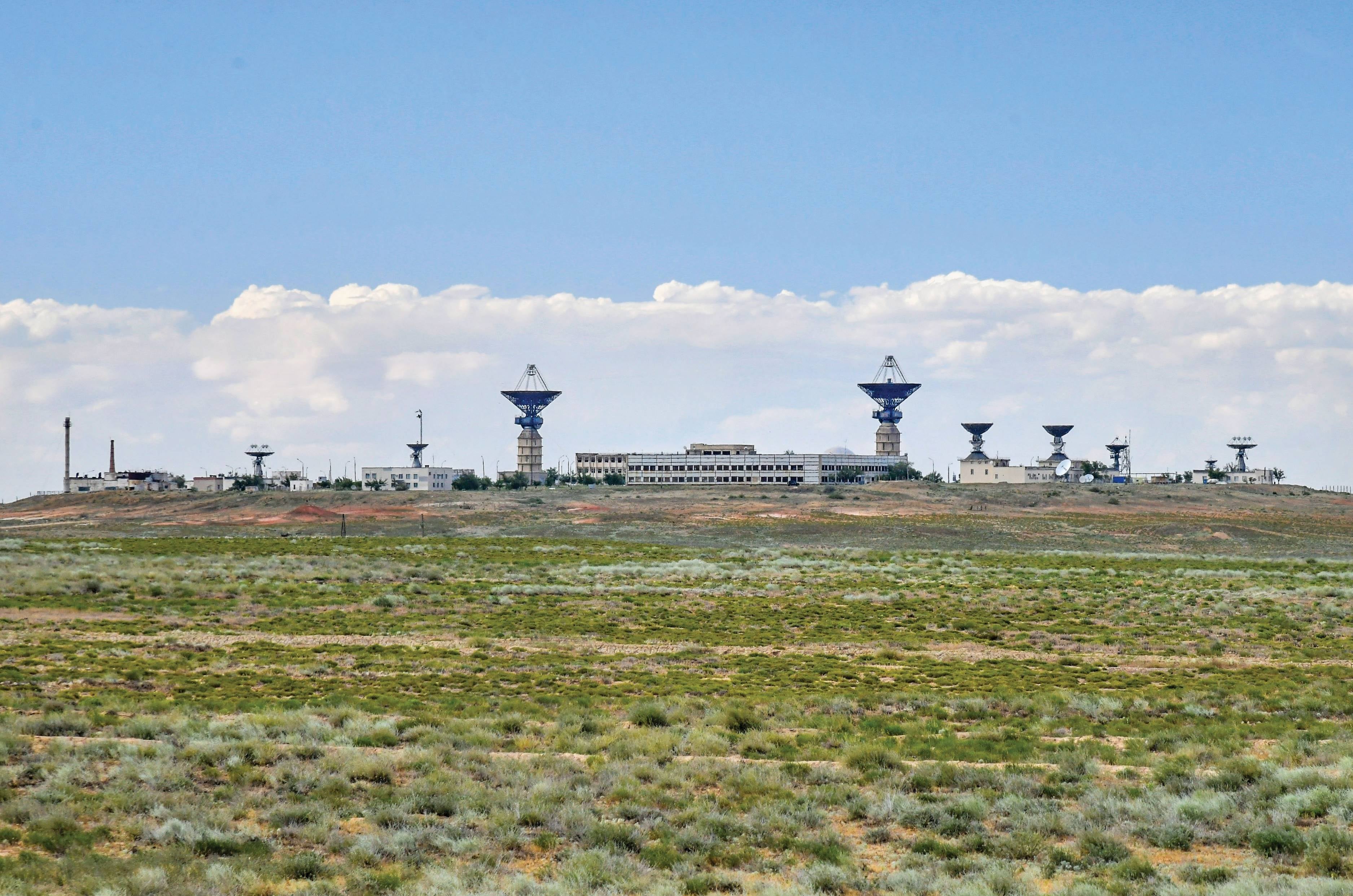
Baikonur Cosmodrome – the world’s first, largest and operational space launch facility.

The mighty Stans were all about breathtaking sights, warm people and mouth-watering cuisine. The region still feels unadulterated, and that itself is what makes it special.

Kazakhstan in numbers
Turkistan – Kazakh-Russia border
Distance covered3,237km
Fuel consumed229.52 litres
Average fuel economy14.10kpl
Approx. fuel costRs 13,325
Avg. per-litre fuel costRs 58.17
Total time driven42 hrs
Average speed77.1kph

Georgia – The Birthplace of Wine


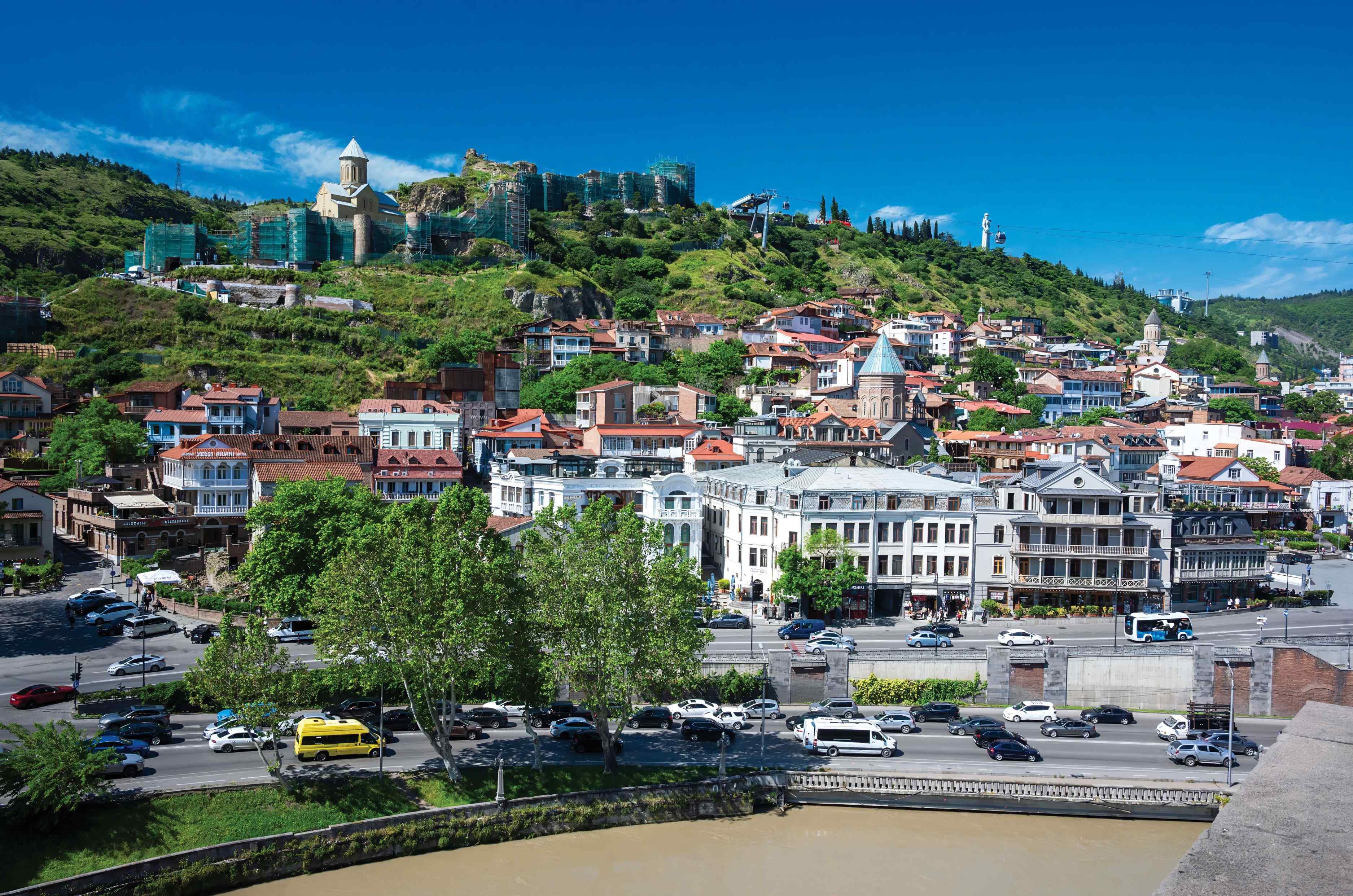
Compared to the vast landscapes and long highways of the Stans, Georgia was a contradiction. Based within the Caucasus Mountains, it has its share of twisties, which the Kylaq enjoyed. But the capital, Tbilisi, is the largest city and thereby pretty chaotic to drive in. Peak-hour traffic is just like what you would have in India, so we parked the car in a worryingly narrow alleyway and, for the most part, made our way on foot.
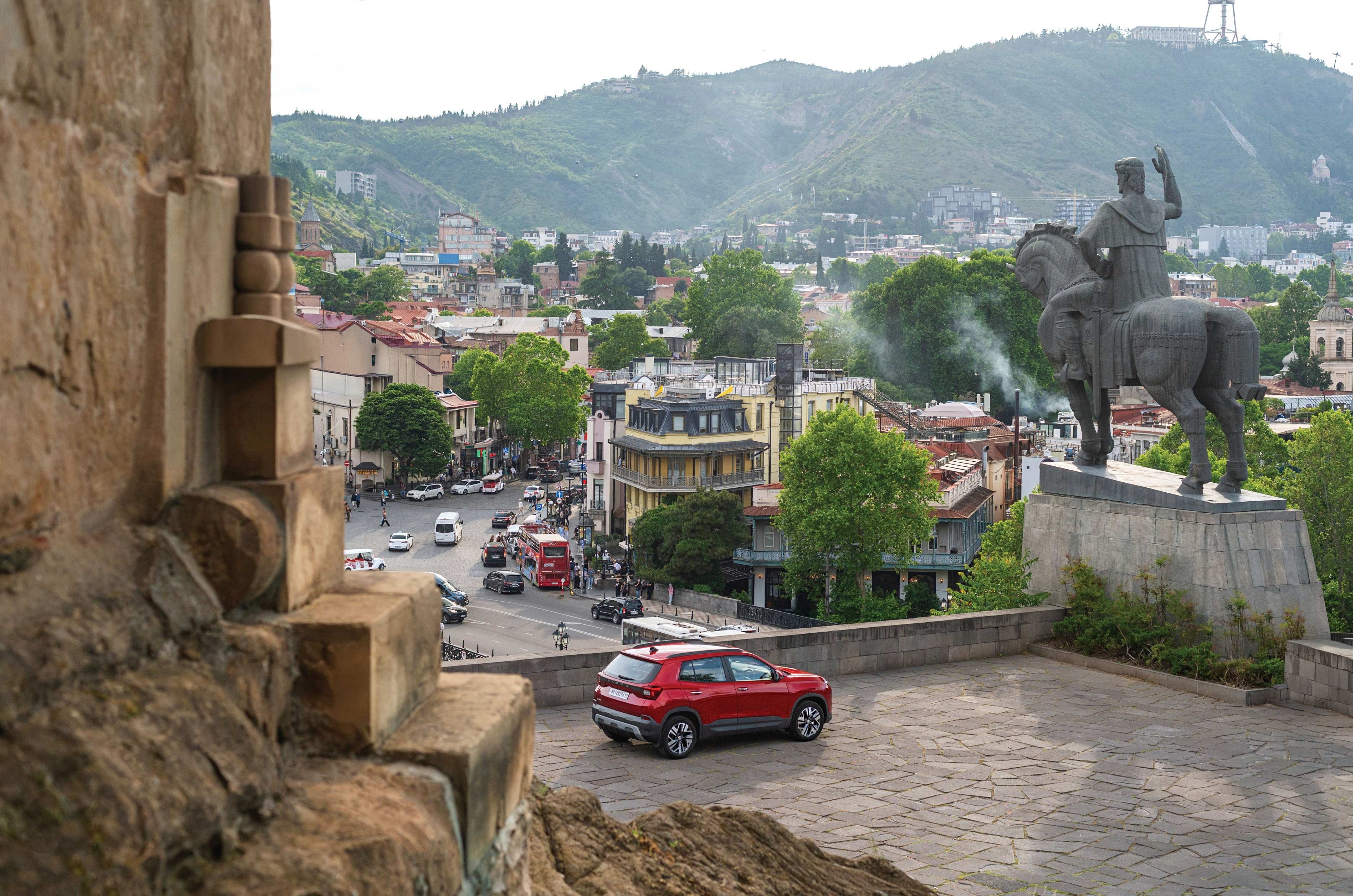
Huge statue of the founder of Tbilisi King Vakhtang I Gorgasali.

Like any big city, Tbilisi has its modern side, with glass buildings and modern restaurants, but there is still a large section that is rooted in tradition. Cobblestone streets with wooden houses and sulphur baths are a fascinating experience, as is the fantastic view from near the monument of King Vakhtang Gorgasali, the founder of Tbilisi.

The monument itself is a striking bronze equestrian statue located on a rocky cliff above the Mtkvari River, next to the historic Metekhi Church in Tbilisi, Georgia. But Georgia is known to be the birthplace of wine, and on our drive to Tbilisi, we spotted several vineyards sprawling for acres. We had to get a closer look, and thankfully, our guide’s friend owned one of them.
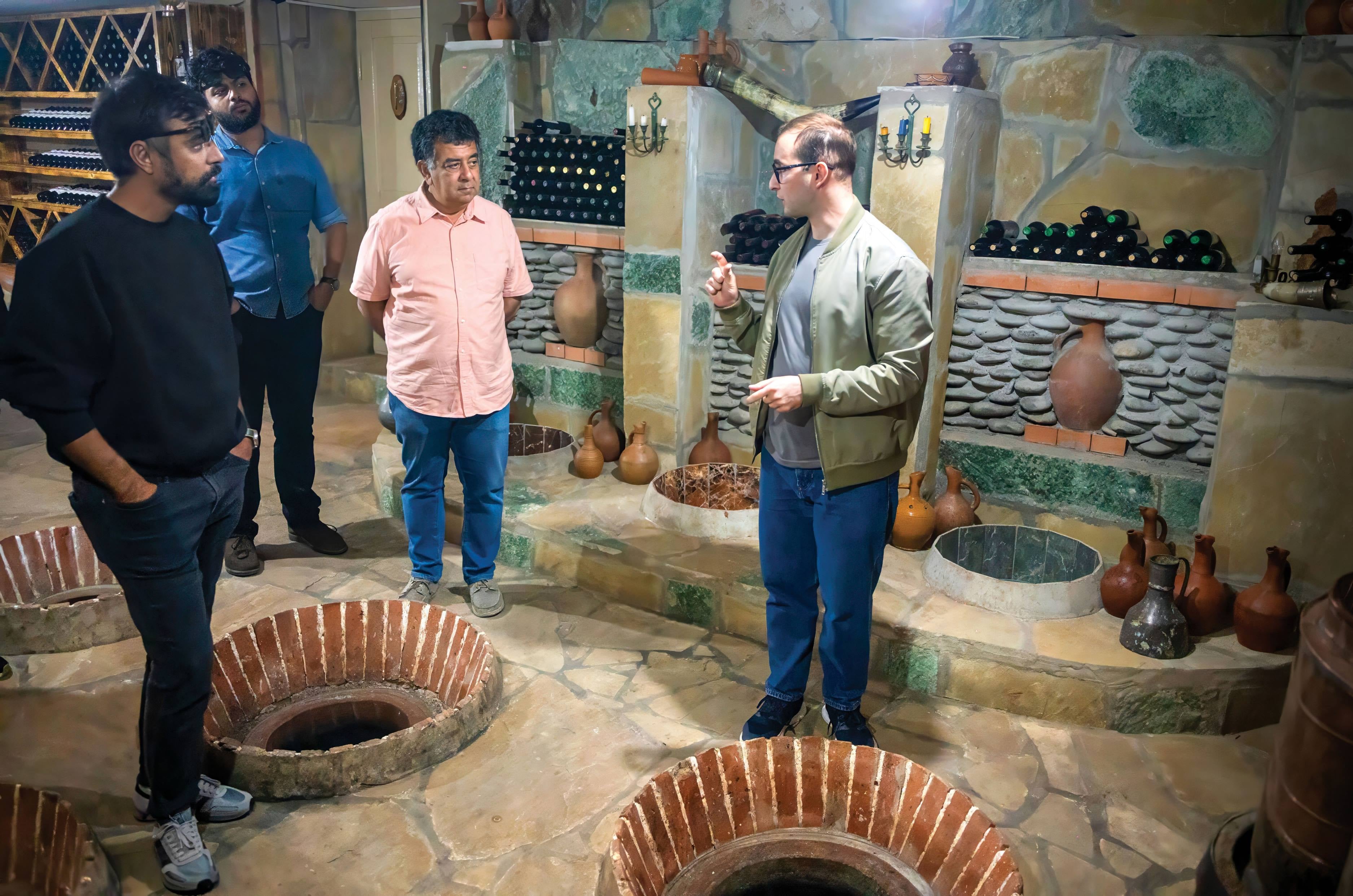
Georgian wine fermented in clay jars buried in the ground.

The Georgians still use the ancient process of fermenting wine in barrels under the floor, but have now blended it with modern technology that allows them to control the temperature and get a more consistent batch each time. Wine connoisseur or not, the experience is enthralling.
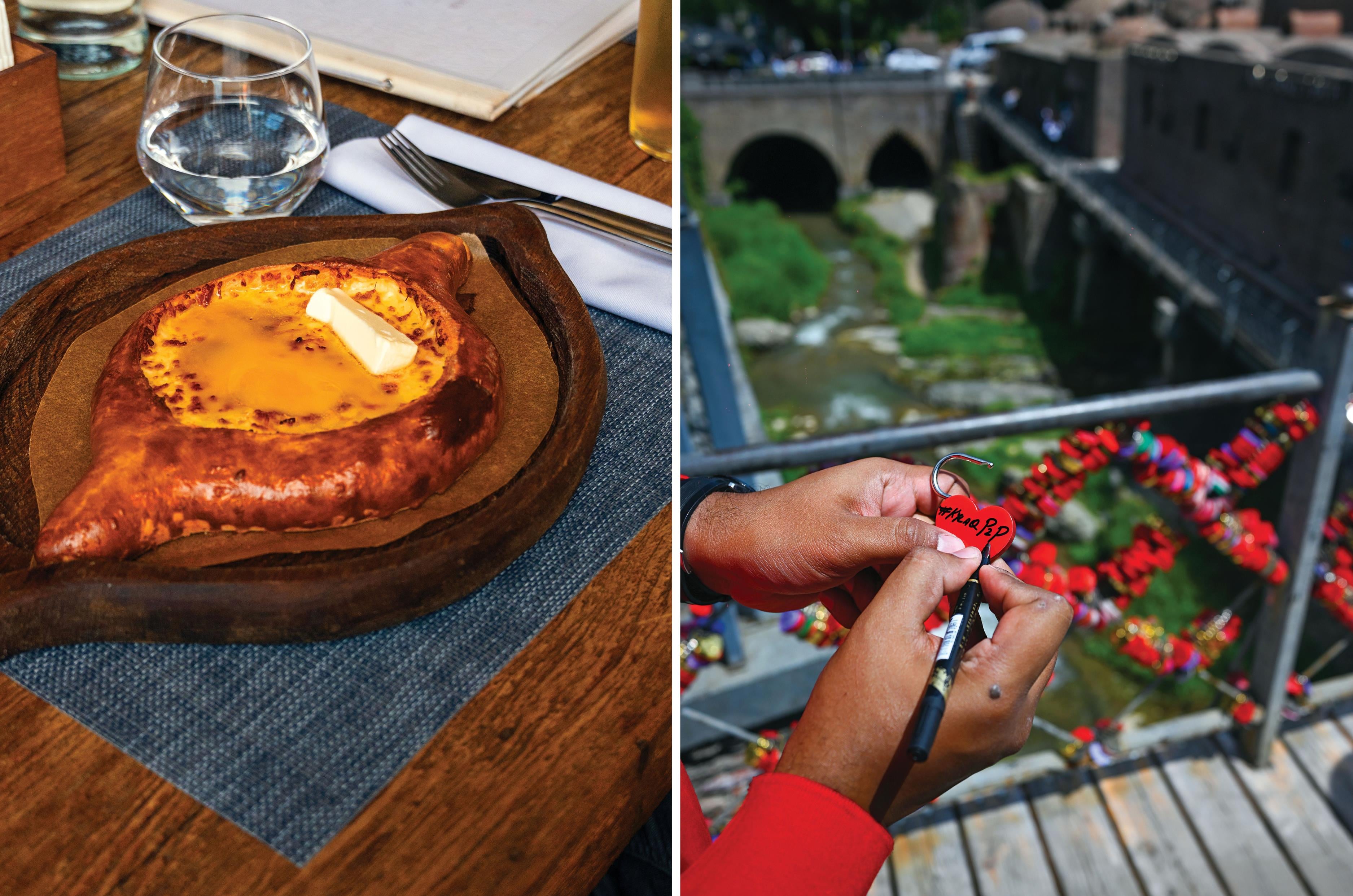
Khachapuri (flatbread with cheese and egg) is Georgia’s national snack.

The city tour built up an appetite, and we followed the scent of fresh bread for some authentic khachapuri. A Georgian flatbread that is hollowed out in the centre and filled with cheese, khachapuri varies depending on the region you’re in. You can have it with an egg cracked into it or with meat, too.
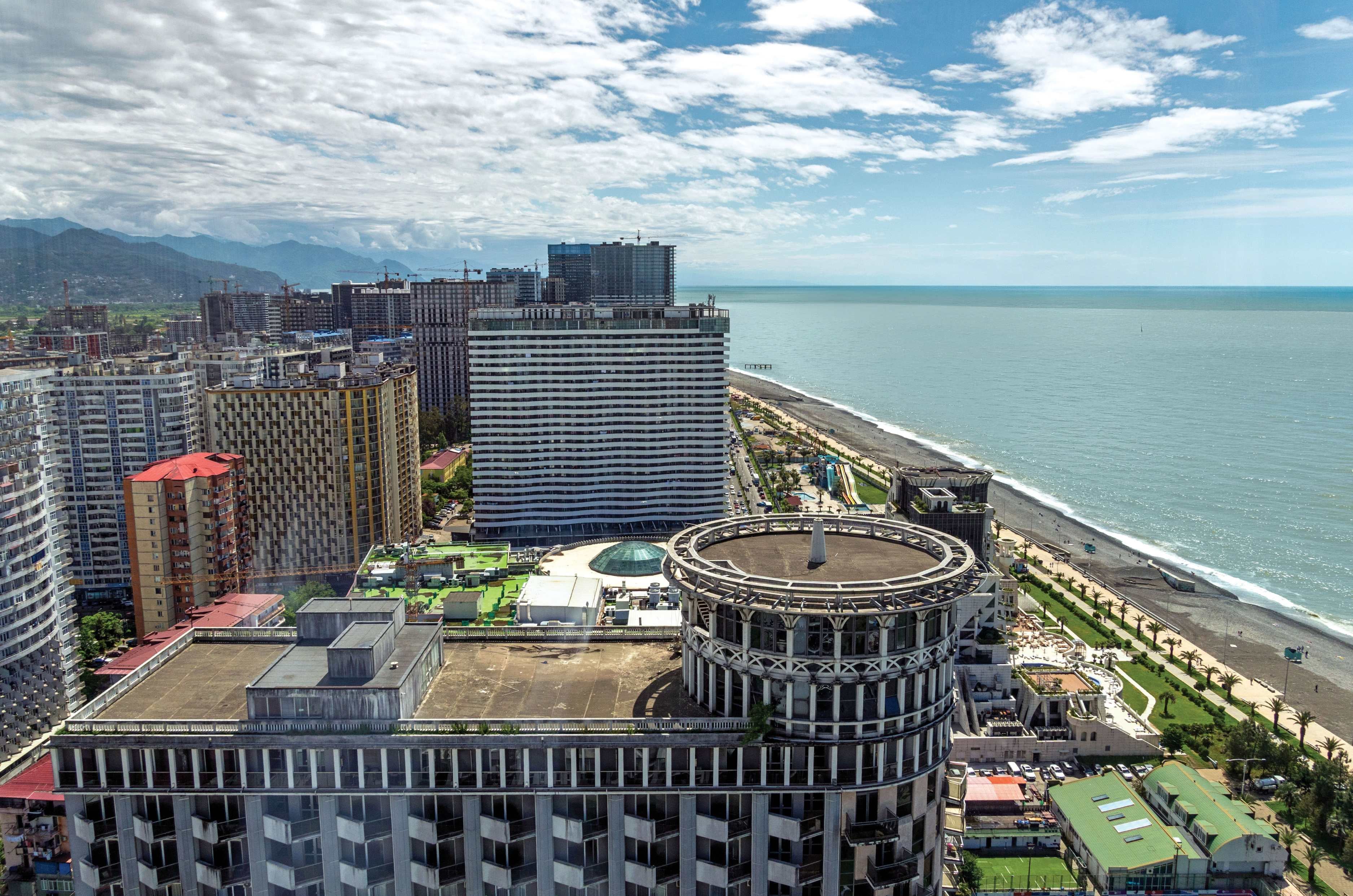
Coastal city of Batumi is a stark contrast of Tbilisi.

With sightseeing done, we drove the next day to the coastal city of Batumi. A vibrant, modern city with a lot more European influence. However, if the roads in Tbilisi were narrow, Batumi was on another level. Despite the compact dimensions of the Kylaq, our hotel parking was a sidewalk cordoned off by the hotel manager, as there simply was no space to park.
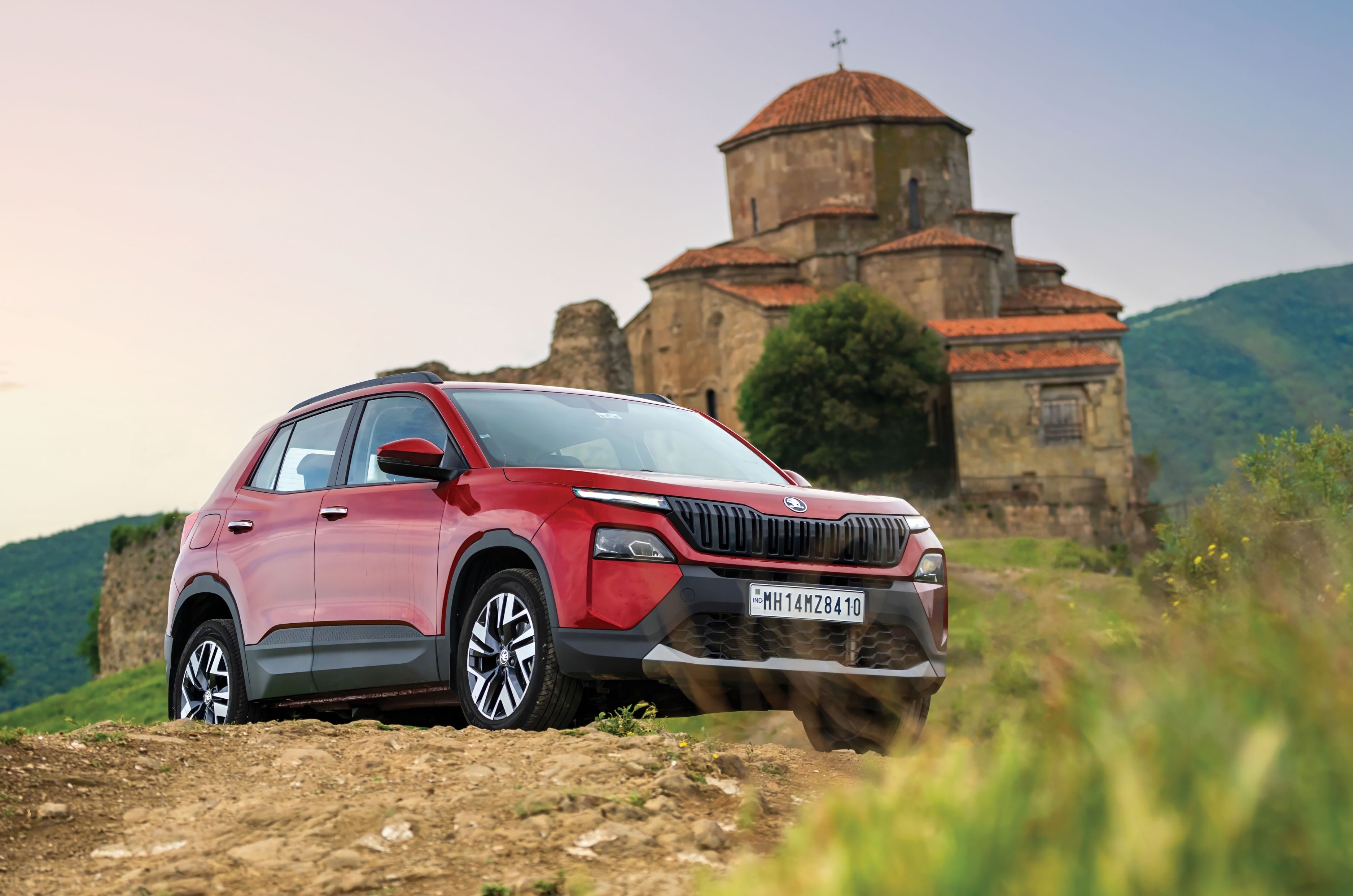
14th-century Gergeti Trinity Church has stunning views of the Caucasus Mountains.

Still, we made the most of it by strolling by the shore of the Black Sea, watching the locals angling for fish. Georgia, just like the Stans, offered a unique glimpse into this part of the world and its diverse culture. For our final stretch before Europe, we had one last country to drive through – the colourful Türkiye.

Georgia in numbers
Tbilisi – Türkiye border
Distance covered624km
Fuel consumed58.62 litres
Average fuel economy10.64kpl
Approx. fuel costRs 7,607
Avg. per-litre fuel costRs 129.78
Total time driven17.5hrs
Average speed58.5kph

Türkiye – Gateway to Europe

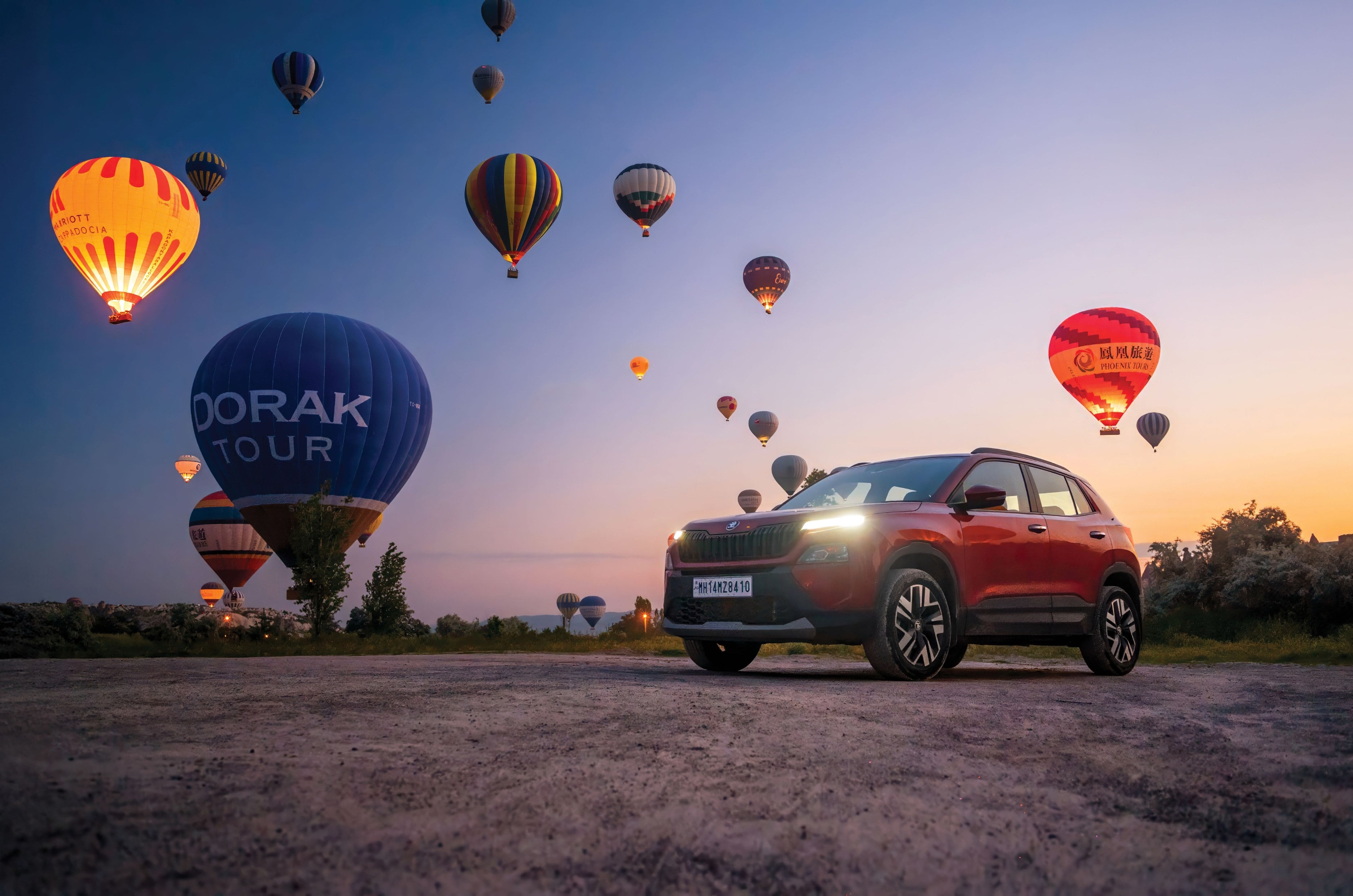
Cappadocia’s claim to fame is well worth the hype.

As the Kylaq crossed into Türkiye, our first stop was in Erzurum. A major winter sports town, but thanks to the time of year, our ski resort was bright, sunny and without an ounce of snow. A quick stroll through the small town and we hit the sack in preparation for a 700km-plus drive to the tourist haven that is Cappadocia.

The next morning, the plan was to do what you must do in Türkiye – take a hot-air-balloon ride. A pre-dawn wake-up call is never comfortable, but the peace was soon shattered by the sound of a group of old diesel Land Rover Defenders revving to keep themselves warm while they waited to transfer tourists to the balloon launch site. The balloon ride is arguably the largest tourist attraction in Türkiye, so there was quite the rush.

We, too, loaded up the Kylaq and hit the road to get the perfect shot of the sun coming up over the hills while the sky was filled with balloons. And boy, did we get it. As the orange tinge hit the fairy chimneys, we saw what the hype was about. The visual is nothing like you have ever seen: watching one colourful hot-air balloon is rare, and here there were over a hundred. We shot GBs worth of images and videos and got back to catch up on the broken sleep from earlier.

Türkiye in numbers
Erzurum – Bulgaria border
Distance covered1,436km
Fuel consumed98.1 litres
Average fuel economy14.63kpl
Approx. fuel cost17,187
Avg. per-litre fuel costRs 134.19
Total time driven19.5 hrs
Average speed73.64kph

A relaxing drive the next day got us to Istanbul, which, to some, might seem like the capital thanks to its bustling character – a glimpse of which we got as we got closer. A traffic jam stretching for more than a couple of kilometres brought the Kylaq to crawling speeds. To avoid the repercussions of driving next to hasty cab drivers, we parked the Kylaq and headed to check out the nightlife, but more importantly, the döner kebab.
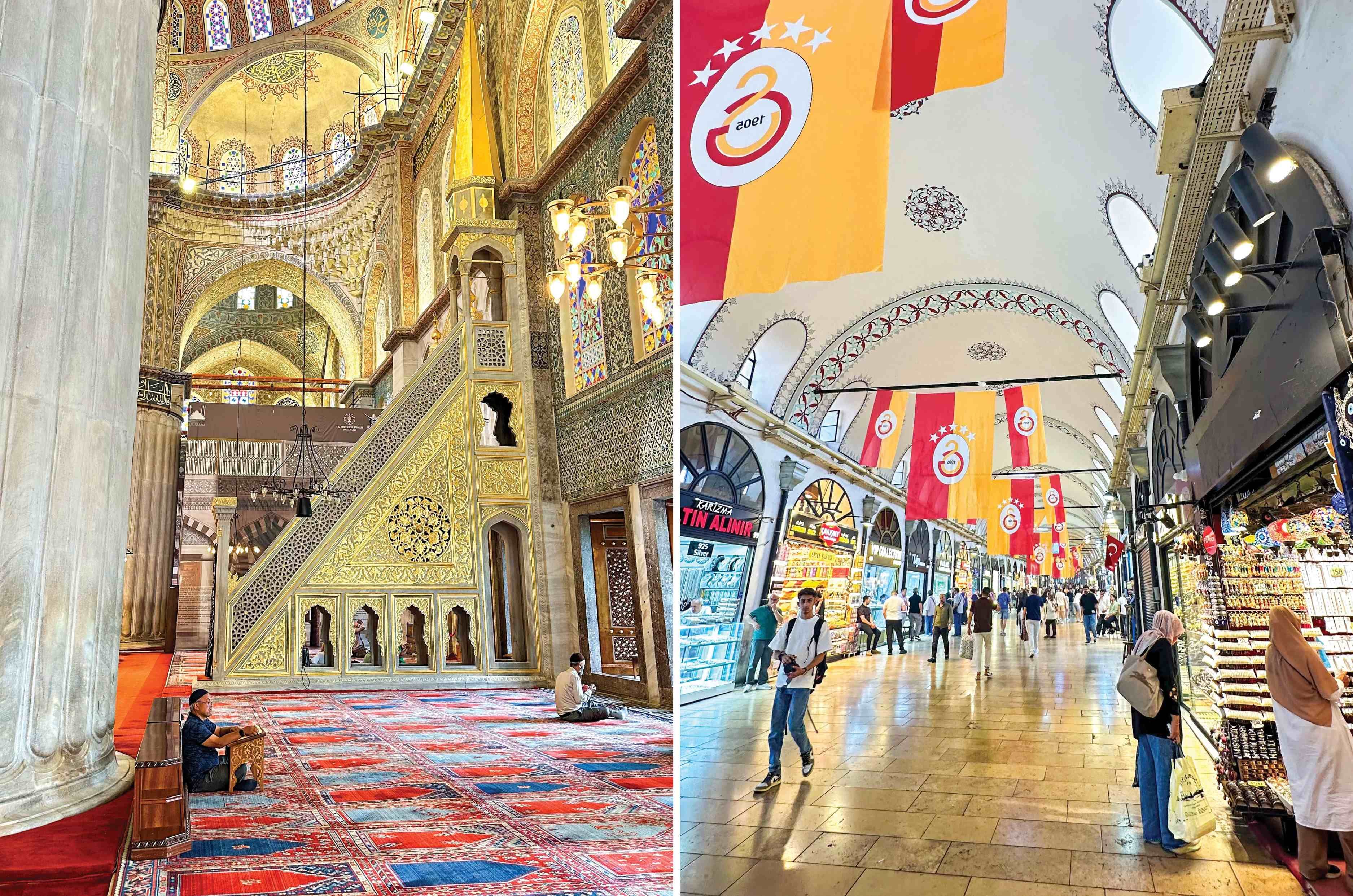
Exceptional interiors and an unbelievable calm in Istanbul.

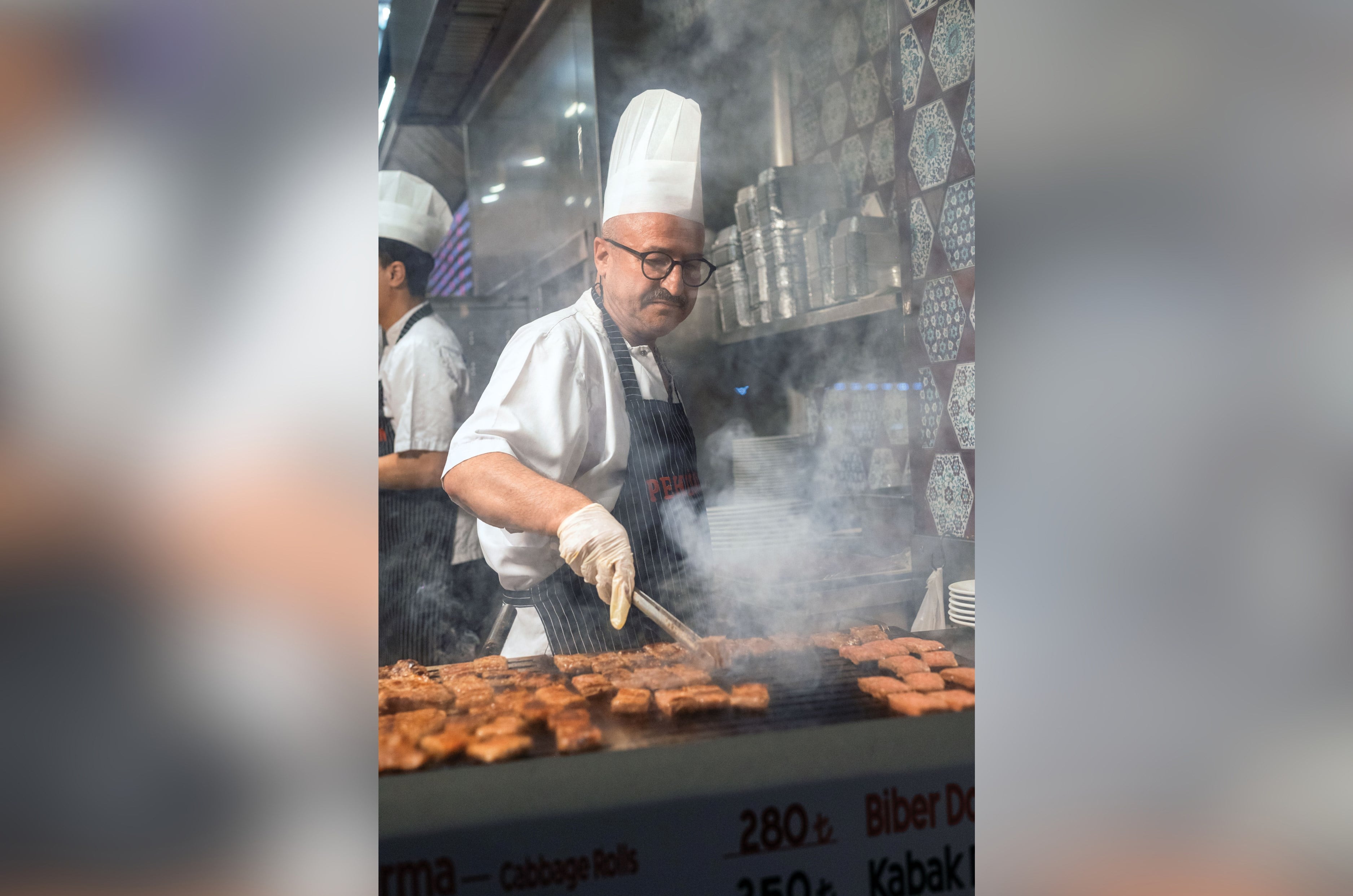
Similar to a shawarma, the döner kebab consists of a pile of meat that is cooked on a rotisserie over a flame. The dripping fat is mopped up by pita bread, which is then loaded with the sliced meat and seasonings. After a long walk through the Grand Bazaar, haggling for a fake Rolex, the döner becomes almost a necessity.
What’s also equally stunning is the Blue Mosque. Known formally as the Sultan Ahmed Mosque, it was constructed between 1609 and 1617 in the Ottoman era by Ahmed I. To get the entire mosque in frame, you need to fall back to the Hagia Sophia Mosque, which is in the same vicinity. Both equally grand, equally detailed and equally important.
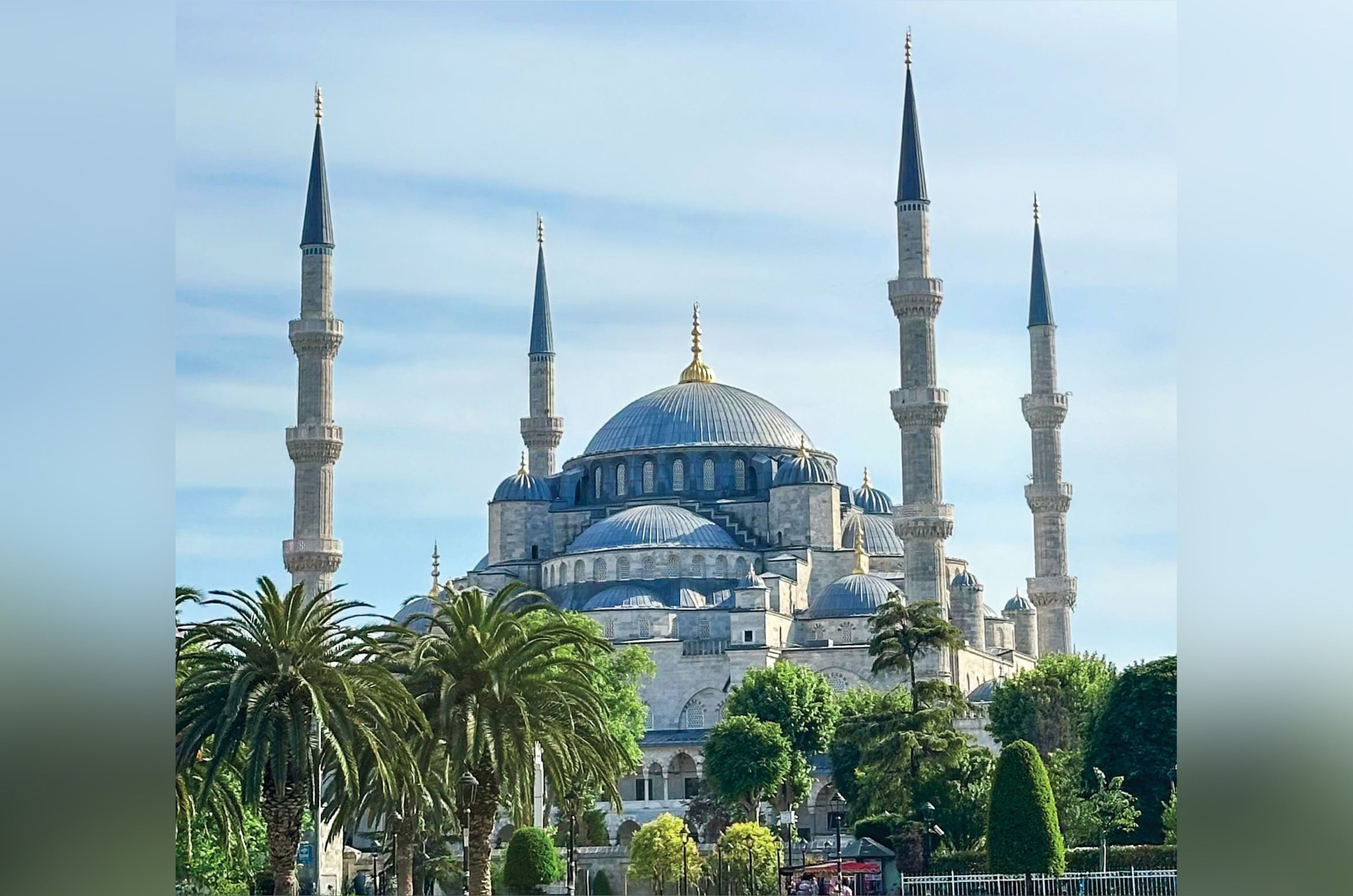
The Blue Mosque, built in the Ottoman era, is majestic.

To explore more of Türkiye, we got back into the Kylaq and realised there was a bridge that is unlike any other in the world. The Bosphorus Bridge is located over the Bosphorus Strait, but its claim to fame is that it, quite literally, has one end in Asia and one end in Europe. You can cross the bridge in about two minutes, depending on traffic, but the sense that you can practically drive over from Asia into Europe before you can finish watching a reel is unreal.
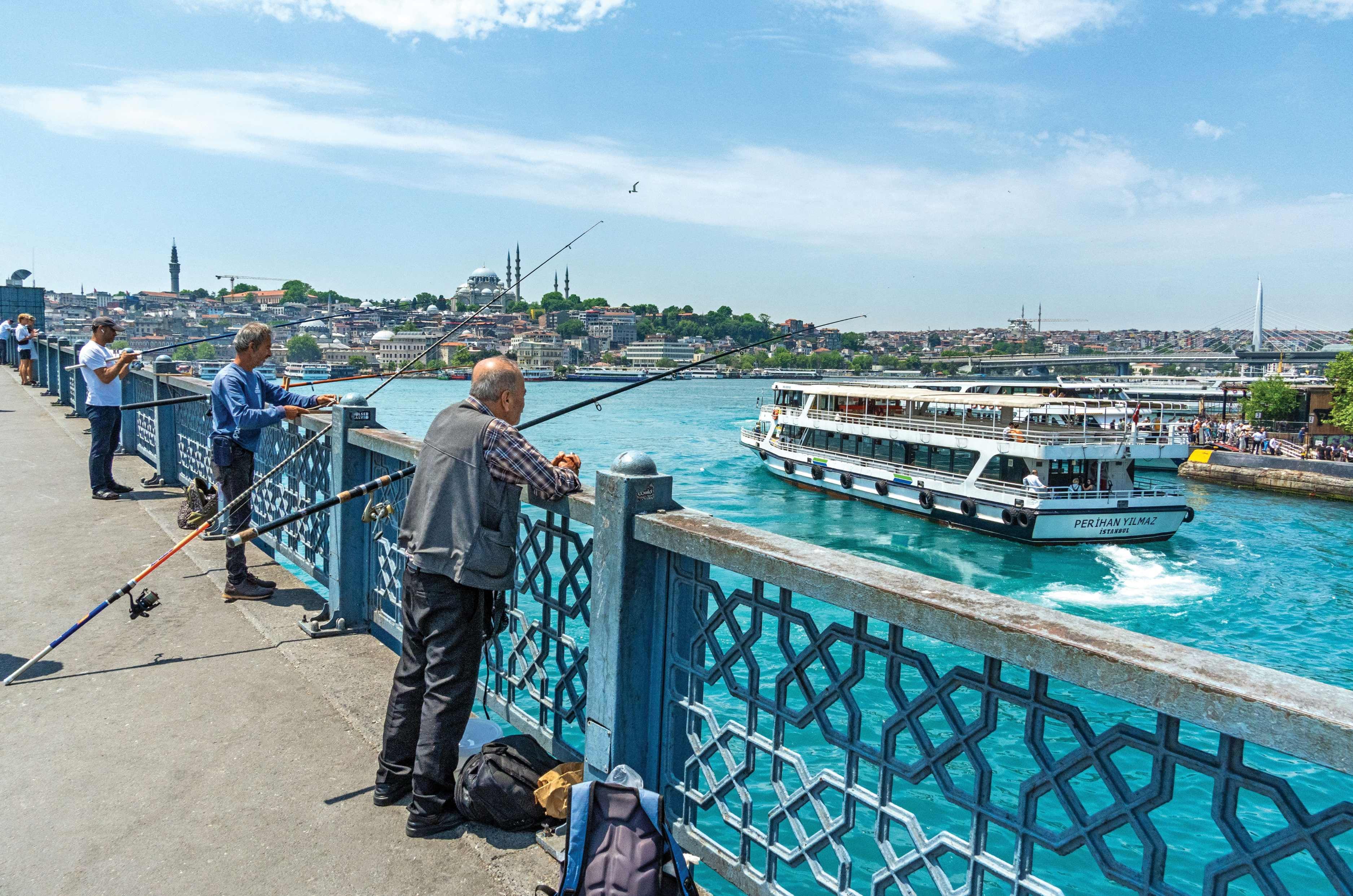
Angling over the Bosphorus strait is a common hobby.

Europe – Home Stretch 

Bulgaria – Romania – Hungary – Slovakia – Prague

The end of our incredible Pune-to-Prague drive was now a matter of days away. After over two months on the road, we were a couple of thousand kilometres away from the finish line. The excitement that had tapered off midway was back in full force.

We would be entering Europe through Bulgaria, and the border, as expected, was busy. Documentation, carnets, passports, stringent car checks and some explaining later, we were finally in.

Monument of the Holy Mother of God in Haskovo.

Haskovo is a quaint town with a slow pace and none of the bustle of a European city, but it boasts a Guinness record for having the towering Monument of the Holy Mother of God, the tallest statue of the Virgin Mary and Baby Jesus in the world. Naturally, we had to check it out before we headed further.

Crossing countries in Europe is the equivalent of crossing states in India. There are no significant border checks or passport-control booths. A board with the blue EU flag and the name of the country is all you will see.
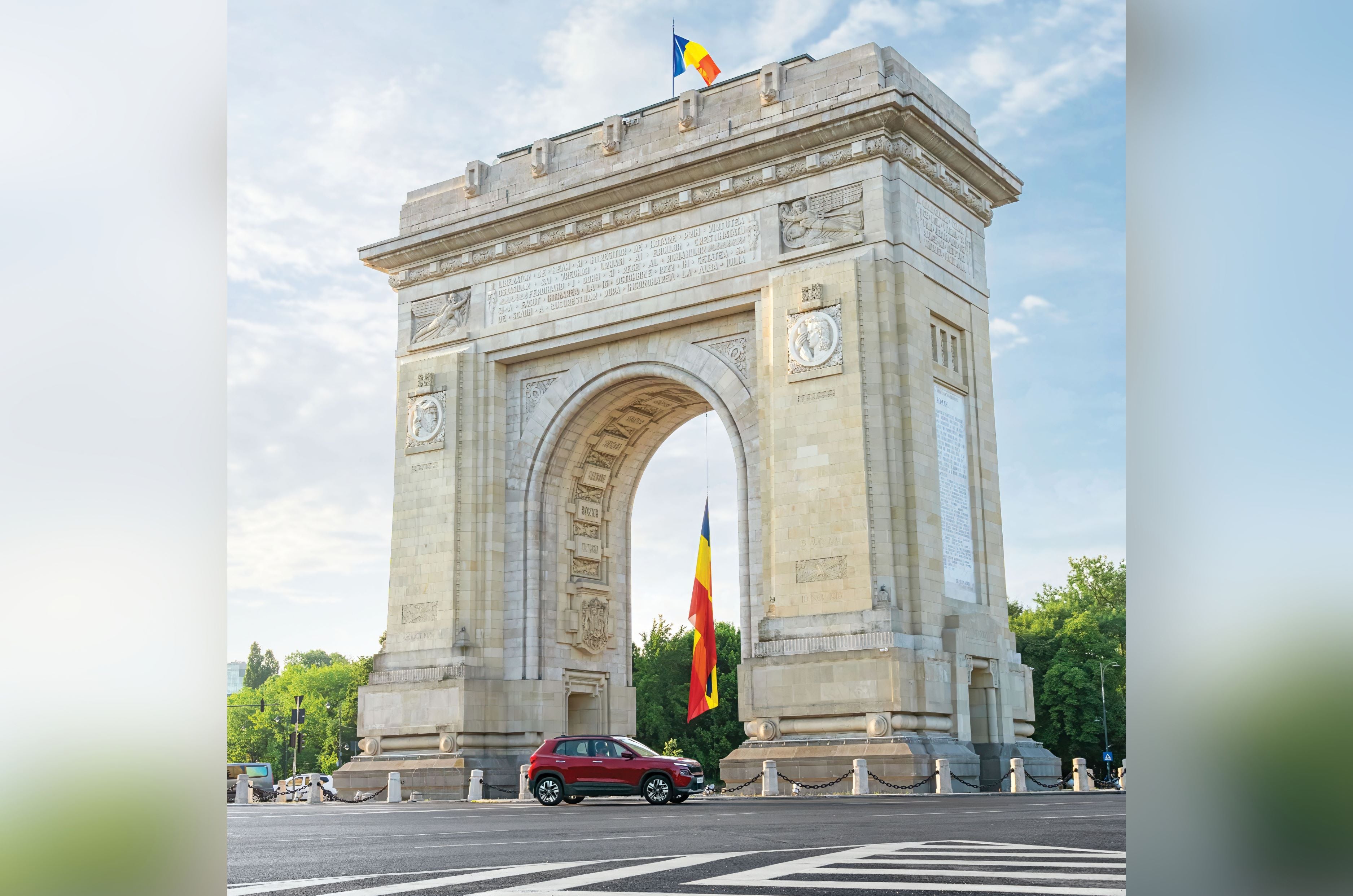
Romania’s Arcul de Triumf an ode to the one in Paris.

We crossed into Romania rather unassumingly and headed for Bucharest. The capital is picturesque and is also colloquially known as “Little Paris”. Like the Arc de Triomphe in Paris, Romania too has its own version. A tad smaller in comparison, but just as iconic.

However, what takes the cake is the Parliament Building, formally known as the Palace of the Parliament, which is also the heaviest building in the world, standing at approximately a ridiculous 4,098,500 tonnes. We couldn’t verify that, but since the Kylaq looked like a mere speck in front of it, it was all the proof we needed.
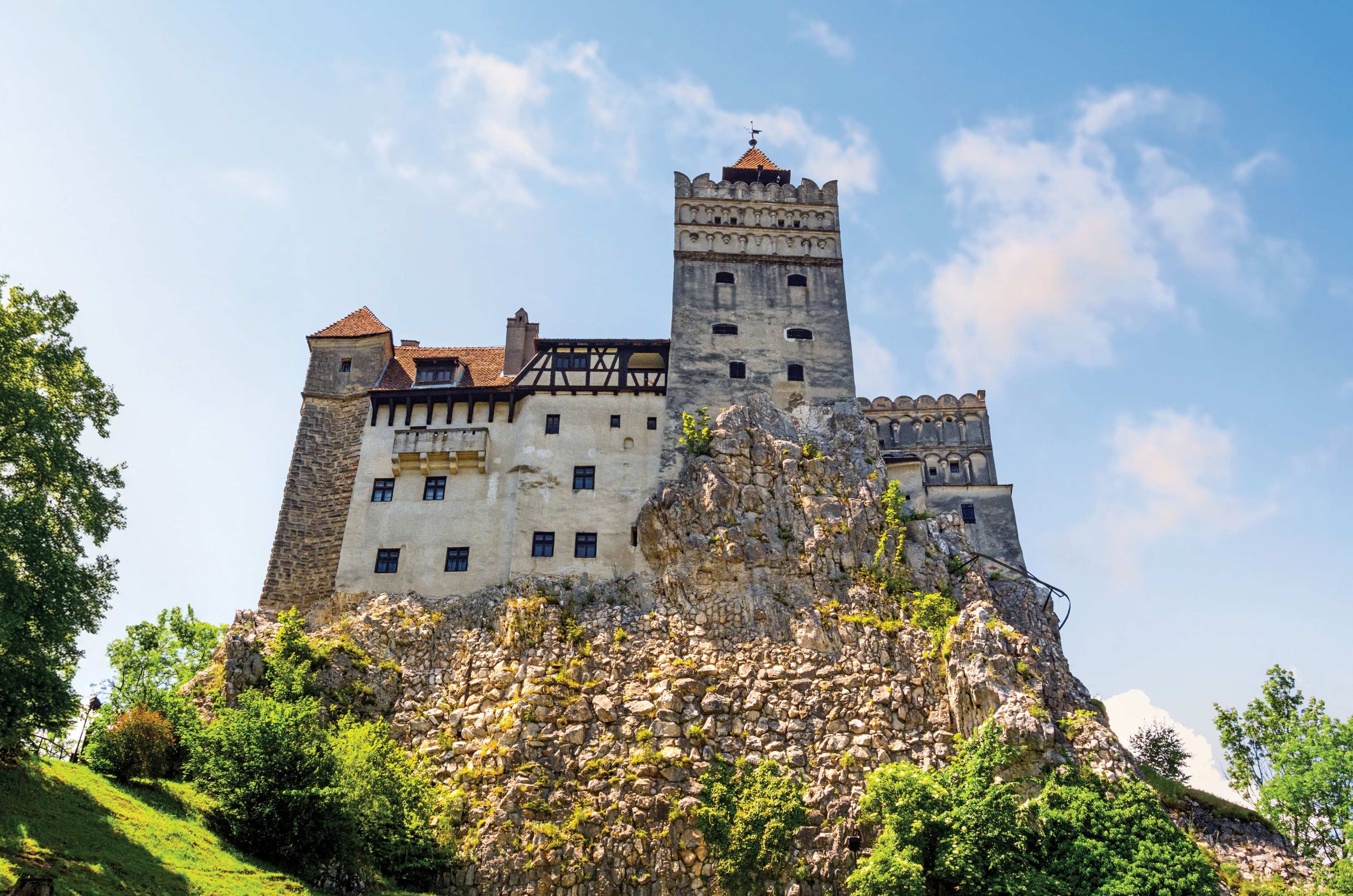
Bran Castle is widely marketed as Dracula’s home.

Bucharest also has a thriving nightlife, with the quiet cobbled streets turning into party hubs post-sunset. As we headed towards Hungary, we couldn’t help but make a stop at Bran Castle. Despite the myth that it was once home to the famous Dracula, there is nothing but merchandise at the foot of the castle to prove that claim. Historians have dismissed the claim and, while it is fascinating, there is plenty of evidence against it. Still, that did not stop us from buying some fake vampire teeth and Dracula magnets.
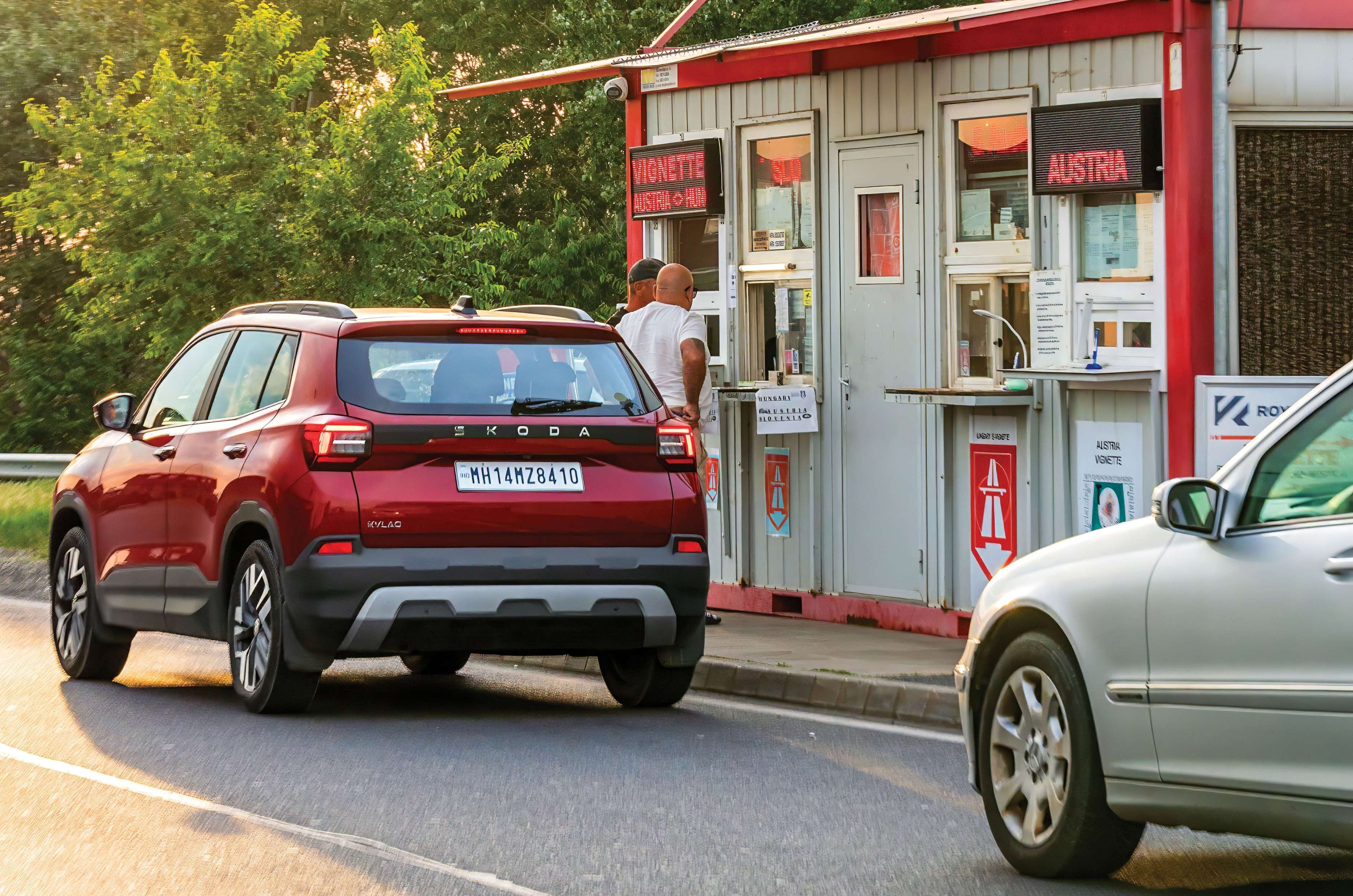
Vignette is Europe’s FASTag and is essential on the freeways.

From the shores of the Black Sea, we drove into landlocked Hungary. The drive to Budapest was long, but thanks to Europe’s seamless highways, it was light work for the Kylaq. In Europe, it just blended in with the other cars, and at no point did it feel out of place. It might have been built in India, but it felt every bit as European as it got closer to Prague.

Budapest’s Parliament Building sits by the banks of the Danube River.

As we drove by the banks of the Danube, we were in awe of the stunning Hungarian Parliament Building. Budapest is also known for its bridges, with as many as 13 iconic ones, each with its own identity.
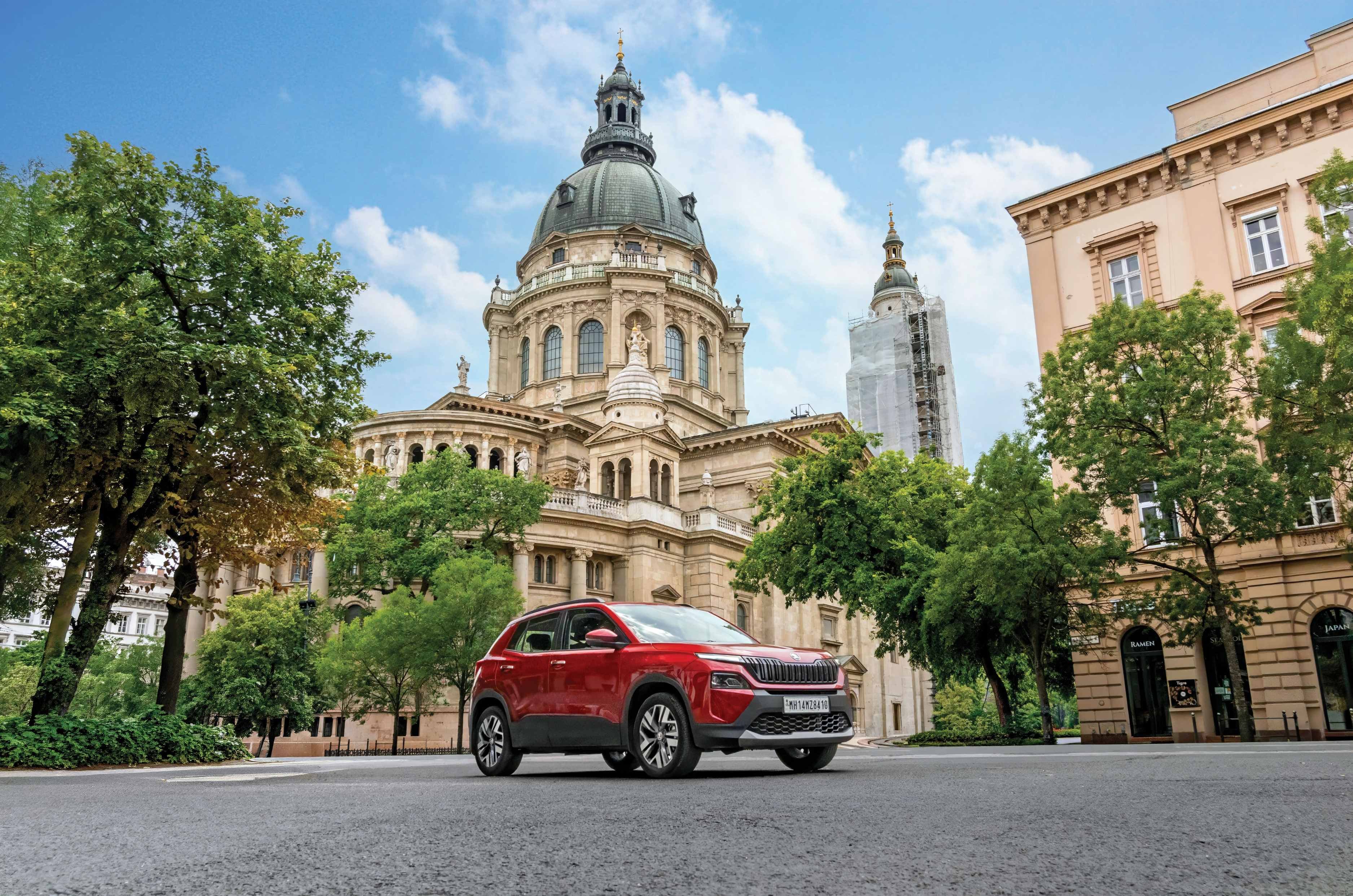
St. Stephen’s Basilica is the largest church in Budapest.

The last country before we entered the Czech Republic was Slovakia. The small country, with a quarter of the population of Mumbai, has a rather interesting Indian connection, as we found out in the pedestrian-only zone of its capital, Bratislava. Bratislava was visited by Pt. Jawaharlal Nehru in 1938, along with a young Indira Gandhi, regarding the freedom movement under British rule.
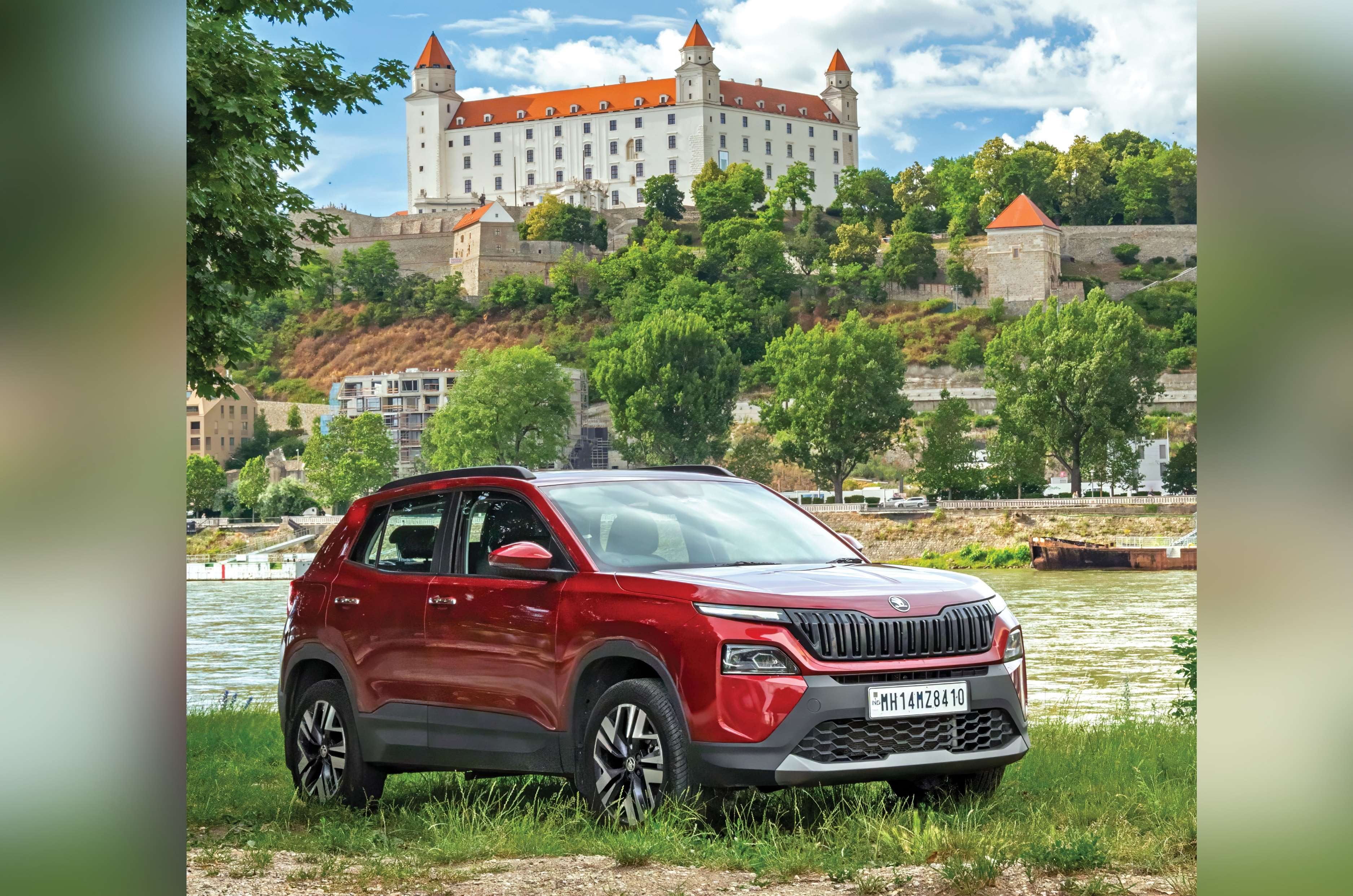
Bratislava Castle, built in the 13th century on the banks of the Danube, is now a museum.

The town square is also an open market with rich produce, handmade jewellery and a lot more. After buying the last few souvenirs before our bags exploded, we were set for the home stretch.
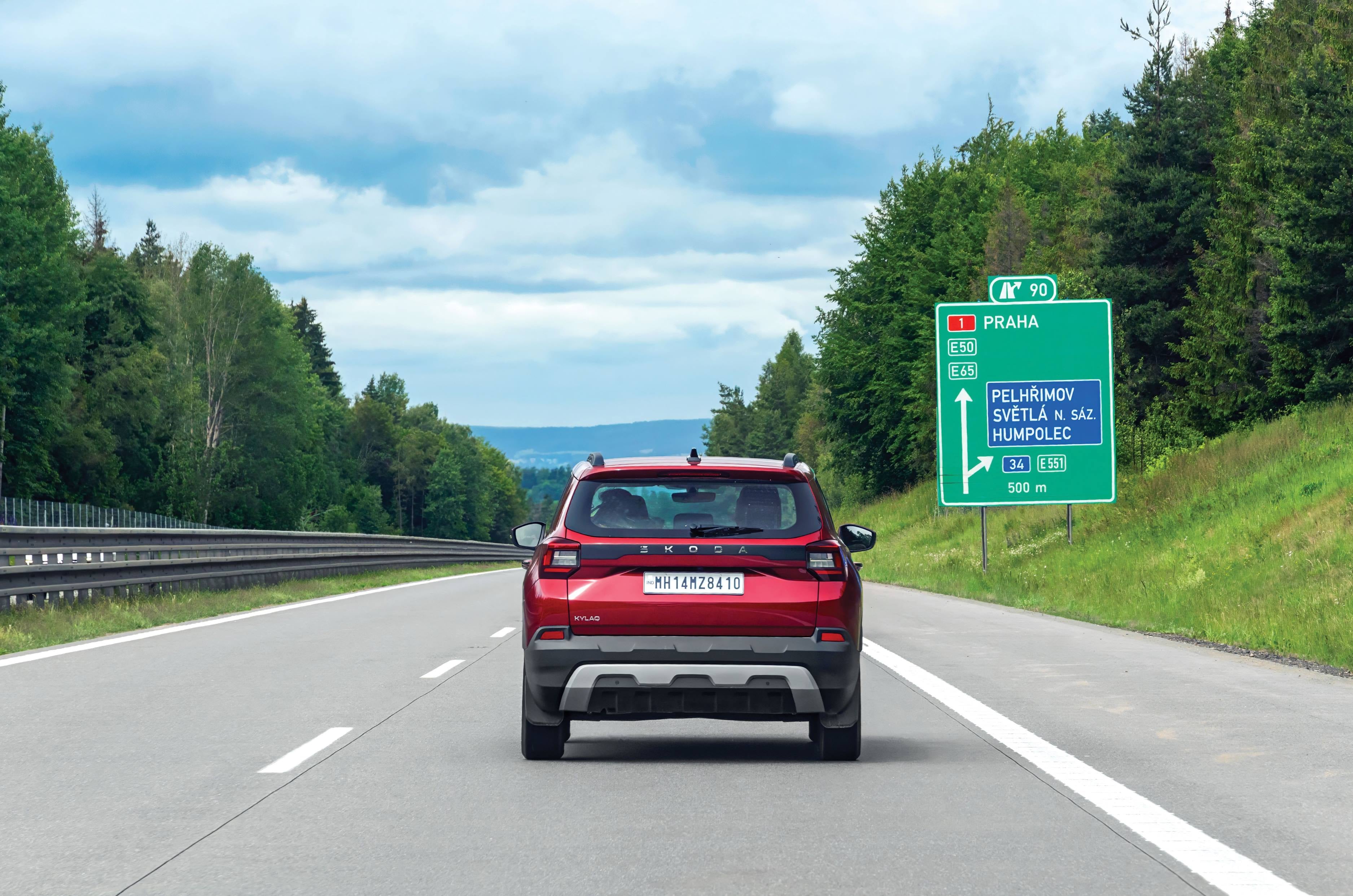
Prague boards were the beginning of a bittersweet end.

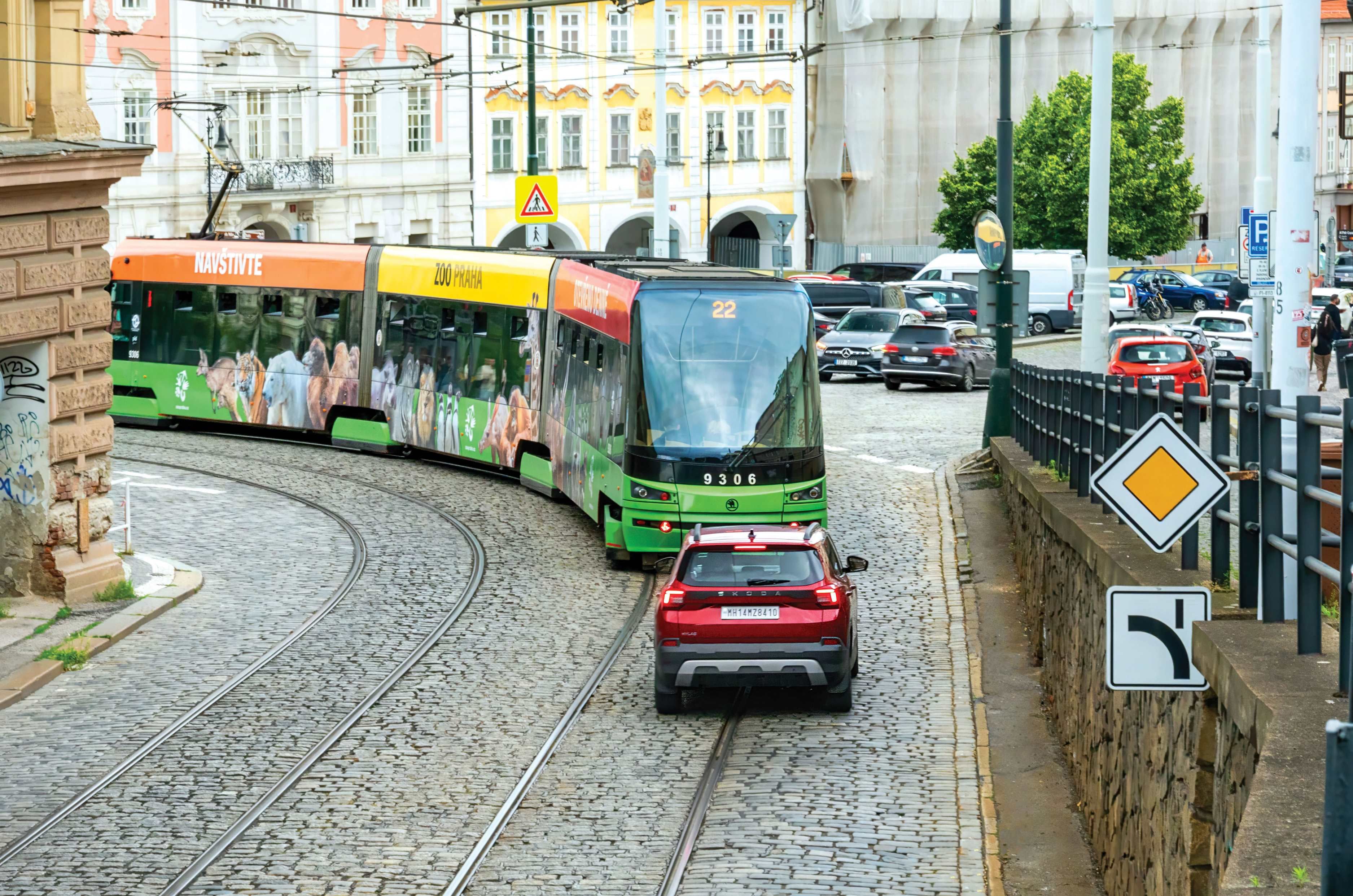
Prague was no more than 200-odd kilometres away, and the bittersweet feeling of it all coming to an end loomed over each and every one of us. As we crossed Brno and got closer to Mlada Boleslav (Skoda’s headquarters), we all reminisced about how gigantic this drive had been. Seventy days, almost 20,000km and not a single fault with the car, not even a puncture.
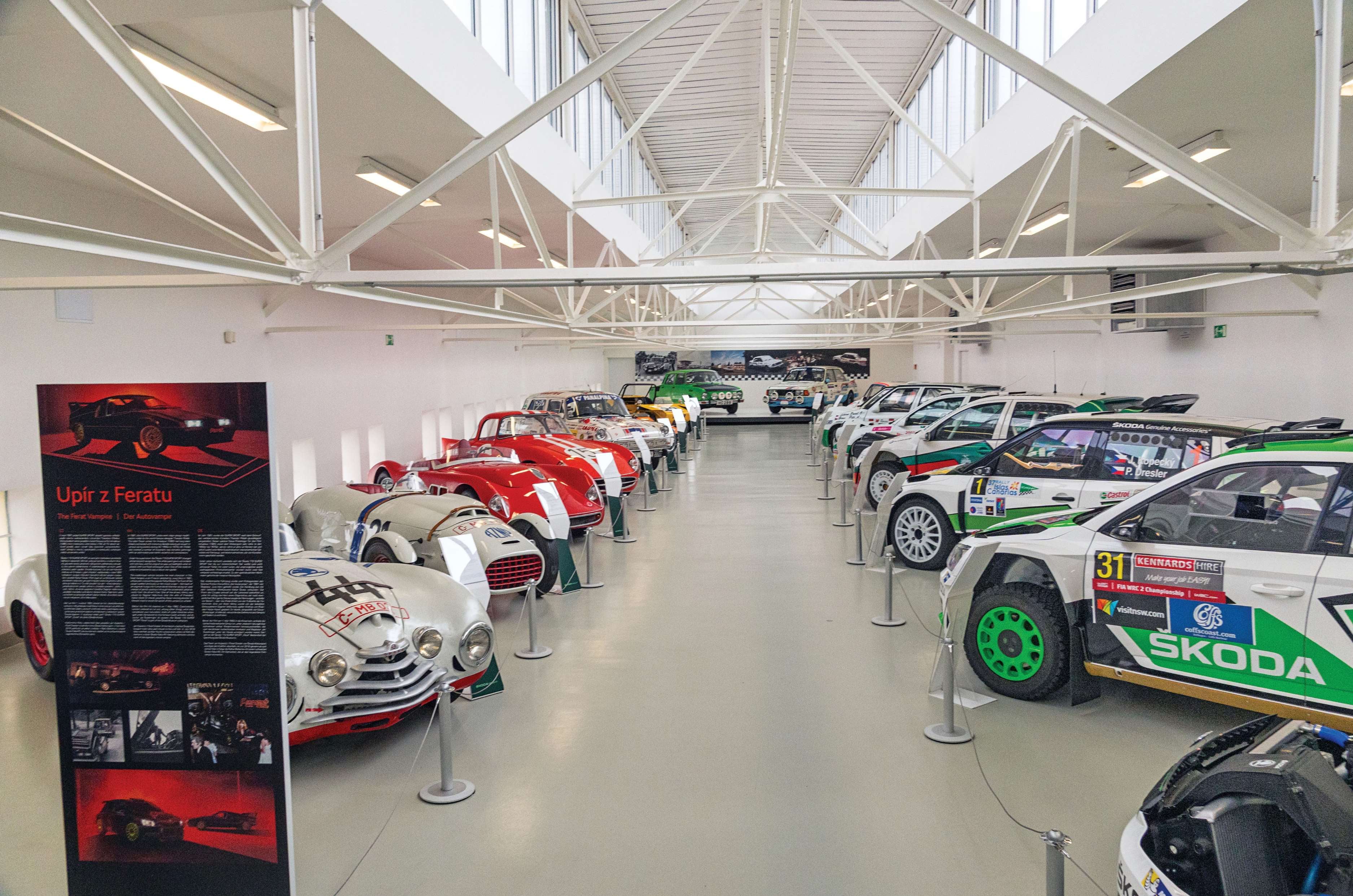
Rich history of rally and motorsport at the Skoda museum.

We crossed the Skoda factory gates with employees gazing in amusement and confusion. They had never seen this car, but strangely, it had a Skoda logo. As we parked the car near the iconic museum that preserves over 130 years of history, we had to peek in and see where it all started.

The fact that a simple bicycle gave birth to one of the largest auto manufacturers in the world is pretty astonishing. Road cars, racing cars and rally legends, Skoda has done it all. A reputation built over a century for being tough, resilient and deeply desirable.
Watching the Indian-made Kylaq sitting proud and faultless in the gleaming sunlight against the backdrop of Prague Castle, looking exactly like it did on the factory floor in Chakan, only proves that the 130-year-old ethos is still the same, no matter where Skoda builds a car. 
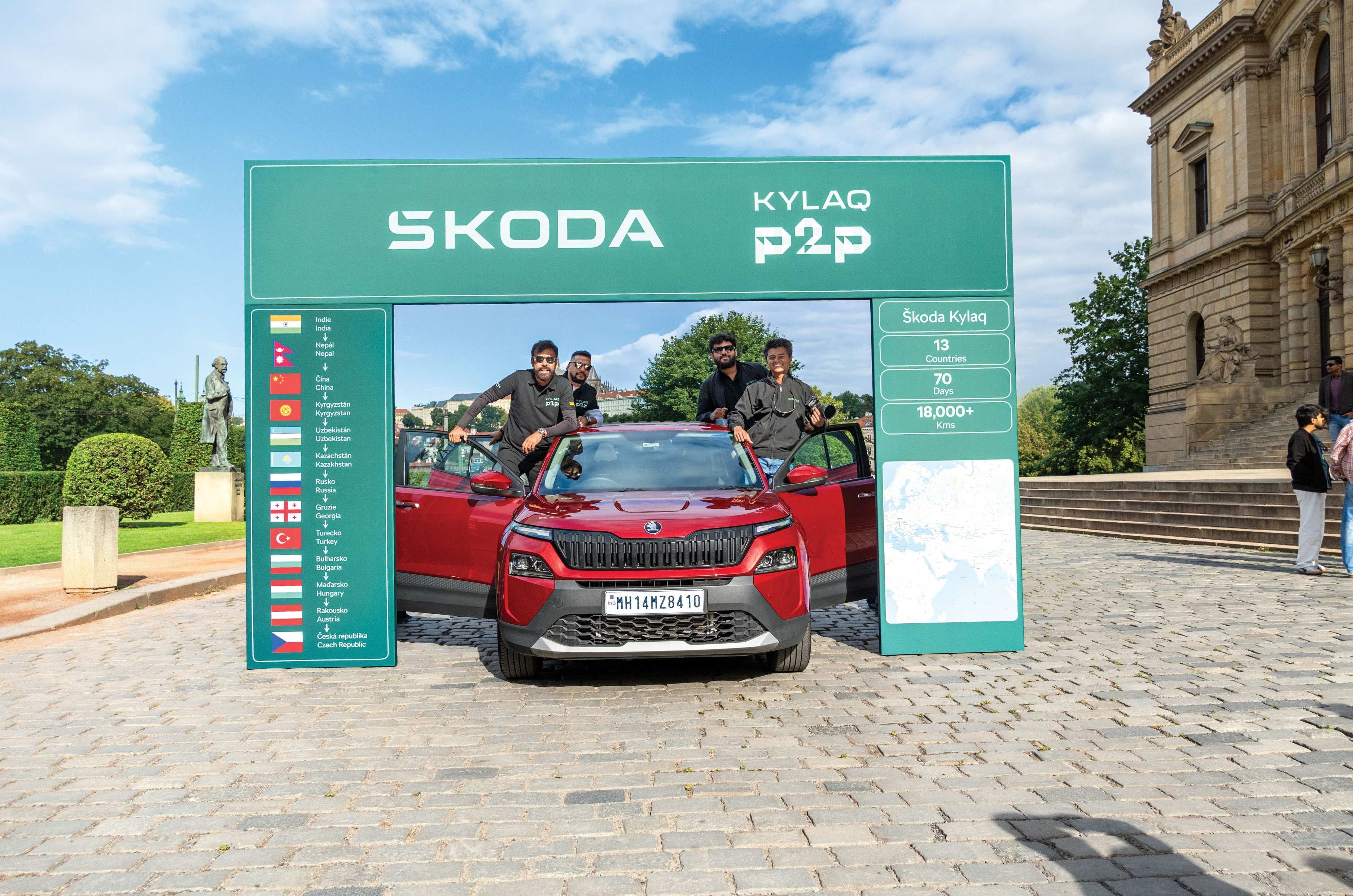
The final picture in the camera that will always take us back in time

In a world rapidly shifting towards more screens and fewer experiences, a drive like P2P isn’t just a rarity; it’s a statement of defiance: as long as there’s a world to explore, we will find a way to drive across it.

Europe in numbers
Bulgaria – Prague
Distance covered1,842km
Fuel consumed172.59
Average fuel economy10.67kpl
Approx. fuel cost32,247
Avg. per-litre fuel costRs 186.84
Total time driven25.89 hrs
Average speed71.14kph

LPG Price 04 October 2026: 4 अक्टूबर को LPG के नए रेट जारी, दिल्ली से रांची तक देखें कीमत

LPG Price 04 October 2026: त्योहारी सीजन में जब बाजार से लेकर घर की रसोई तक खर्च बढ़ने लगता है, ऐसे में गैस सिलेंडर की कीमत पर नजर रखना भी जरूरी हो जाता है। 4 अक्टूबर को एलपीजी की कीमतों को लेकर घरेलू उपभोक्ताओं के लिए फिलहाल राहत बनी हुई है। 14.2 किलो वाले घरेलू सिलेंडर के दाम में कोई बदलाव नहीं हुआ है, जिससे आम परिवारों के बजट पर अतिरिक्त बोझ नहीं पड़ा। हालांकि, दूसरी ओर कमर्शियल एलपीजी सिलेंडर की बढ़ी कीमत कारोबारियों की चिंता बढ़ा सकती है। होटल, रेस्टोरेंट और ढाबों में इस्तेमाल होने वाले 19 किलो के सिलेंडर के रेट बढ़ने से उनकी लागत प्रभावित होगी।

ऐसे में इस महीने घरेलू गैस उपभोक्ताओं को जहां स्थिर कीमतों से राहत मिली है, वहीं कमर्शियल गैस इस्तेमाल करने वालों के लिए खर्च बढ़ गया है। आइए जानते हैं दिल्ली, मुंबई, कोलकाता, चेन्नई समेत प्रमुख शहरों में घरेलू और कमर्शियल एलपीजी सिलेंडर आज कितने रुपये में मिल रहा है।

घरेलू LPG सिलेंडर के दाम में कोई बदलाव नहीं

तेल कंपनियों ने 14.2 किलो वाले घरेलू एलपीजी सिलेंडर की कीमतों में फिलहाल कोई बदलाव नहीं किया है। यानी देश के प्रमुख शहरों में उपभोक्ताओं को आज भी पुराने रेट पर ही घरेलू सिलेंडर मिलेगा।

राजधानी दिल्ली में 14.2 किलो का सिलेंडर 942 रुपये का है। वहीं मुंबई में इसकी कीमत 941.50 रुपये, कोलकाता में 968 रुपये और चेन्नई में 957.50 रुपये बनी हुई है।

किस शहर में कितने रुपये का मिल रहा LPG सिलेंडर?

शहरघरेलू सिलेंडर (14.2 किलो)कमर्शियल सिलेंडर (19 किलो)
दिल्ली₹942₹2,810
मुंबई₹941.50₹2,763.50
कोलकाता₹968₹2,946.50
बेंगलुरु₹944.50₹2,893.50
हैदराबाद₹994₹3,058.50
चेन्नई₹957.50₹2,978.50
कटक₹968₹2,947.50
कोयंबटूर₹959₹3,002.50
रांची₹1,010.50₹2,988

घरेलू सिलेंडर स्थिर, लेकिन कमर्शियल गैस ने बढ़ाया खर्च

घरेलू उपभोक्ताओं के लिए भले ही कीमतें स्थिर हैं, लेकिन कारोबारियों को गैस के मोर्चे पर झटका लगा है। 1 अक्टूबर से 19 किलो वाले कमर्शियल एलपीजी सिलेंडर की कीमत में बढ़ोतरी की गई है।

दिल्ली में कमर्शियल सिलेंडर 62.50 रुपये महंगा होकर 2,810 रुपये पर पहुंच गया है। मुंबई में यह 2,764.50 रुपये, कोलकाता में 2,954 रुपये और चेन्नई में 2,983 रुपये का हो गया है।

होटल-रेस्टोरेंट से लेकर ढाबों तक पड़ेगा असर

कमर्शियल गैस सिलेंडर की कीमत बढ़ने का असर सीधे तौर पर उन कारोबारों पर पड़ सकता है जहां बड़े पैमाने पर खाना पकाया जाता है। होटल, रेस्टोरेंट, ढाबे और छोटे फूड बिजनेस में एलपीजी एक जरूरी खर्च है।

सिलेंडर महंगा होने से कारोबारियों की कुकिंग लागत बढ़ सकती है। इसका असर आगे चलकर खाने-पीने की चीजों की कीमतों पर भी दिखाई दे सकता है।

घरेलू और कमर्शियल LPG में क्या फर्क है?

घरेलू एलपीजी सिलेंडर मुख्य रूप से घरों में खाना पकाने के लिए इस्तेमाल होता है और इसका सामान्य वजन 14.2 किलो होता है। इसके मुकाबले 19 किलो वाला सिलेंडर व्यावसायिक इस्तेमाल के लिए होता है।

होटल, रेस्टोरेंट, ढाबे और अन्य खाद्य कारोबारों में इसका इस्तेमाल ज्यादा होता है। दोनों सिलेंडरों की कीमतें अलग होती हैं और इनके रेट में होने वाले बदलाव भी अलग-अलग हो सकते हैं।

आपके बजट के लिए क्या मायने रखता है?

फिलहाल घरेलू सिलेंडर की कीमत स्थिर रहने से आम परिवारों को राहत मिली है। हालांकि, कमर्शियल गैस के महंगे होने से बाहर खाना, होटल और छोटे खाद्य कारोबारों की लागत पर दबाव बढ़ सकता है। ऐसे में आने वाले दिनों में इसके असर पर नजर रखना जरूरी होगा।

Petrol Diesel Price Today: पेट्रोल-डीजल की कीमतों पर आया ताजा अपडेट, जानें 04 अक्टूबर के नए रेट और अपने शहर का भाव

Petrol Diesel Price Today: पेट्रोल-डीजल की कीमतों पर आया ताजा अपडेट, जानें 04 अक्टूबर के नए रेट और अपने शहर का भाव

Petrol Diesel Price Today: हर दिन की शुरुआत सिर्फ सूरज की किरणों से नहीं होती, बल्कि पेट्रोल और डीजल की नई कीमतों से भी होती है, जो आम आदमी की जेब पर सीधा असर डालती हैं। सुबह 6 बजे देश की तेल विपणन कंपनियां (OMCs) ताजा दरें जारी करती हैं, जो अंतरराष्ट्रीय बाजार में कच्चे तेल की कीमतों और डॉलर-रुपए की विनिमय दर में आए बदलावों पर आधारित होती हैं। ये बदलाव रोजमर्रा की जिंदगी को प्रभावित करते हैं, चाहे वो ऑफिस जाने वाला व्यक्ति हो या फल-सब्जी बेचने वाला व्यापारी।

ऐसे में हर दिन की कीमतों की जानकारी रखना सिर्फ जरूरी ही नहीं, बल्कि समझदारी भी है। सरकार की यह प्रणाली पारदर्शिता सुनिश्चित करती है ताकि उपभोक्ताओं को किसी तरह की भ्रमित जानकारी न मिले।

आपके शहर में आज का पेट्रोल-डीजल का भाव

ये रहे 04 अक्टूबर 2026 के प्रमुख शहरों के पेट्रोल-डीजल के ताजा रेट

नई दिल्ली: पेट्रोल ₹102.12 प्रति लीटर और डीजल ₹95.20 प्रति लीटर।

मुंबई: पेट्रोल ₹111.18 और डीजल ₹97.83 प्रति लीटर।

कोलकाता: पेट्रोल ₹113.47 जबकि डीजल ₹99.82 प्रति लीटर।

चेन्नई: पेट्रोल ₹107.77 और डीजल ₹99.55 प्रति लीटर।

गुरुग्राम: पेट्रोल ₹102.77 तथा डीजल ₹95.44 प्रति लीटर।

नोएडा: पेट्रोल ₹102.12 और डीजल ₹95.56 प्रति लीटर।

बेंगलुरु: पेट्रोल ₹110.93 जबकि डीजल ₹98.80 प्रति लीटर।

भुवनेश्वर: पेट्रोल ₹109.92 और डीजल ₹100.92 प्रति लीटर।

चंडीगढ़: पेट्रोल ₹98.10 तथा डीजल ₹86.09 प्रति लीटर।

हैदराबाद: पेट्रोल ₹115.69 और डीजल ₹103.82 प्रति लीटर।

जयपुर: पेट्रोल ₹112.66 जबकि डीजल ₹97.78 प्रति लीटर।

लखनऊ: पेट्रोल ₹102.05 और डीजल ₹95.55 प्रति लीटर।

पटना: पेट्रोल ₹113.35 तथा डीजल ₹99.36 प्रति लीटर।

तिरुवनंतपुरम: पेट्रोल ₹115.49 और डीजल ₹104.40 प्रति लीटर।

पिछले दो साल से स्थिर क्यों हैं कीमतें?

मई 2022 के बाद से केंद्र और कई राज्यों द्वारा टैक्स में कटौती की गई, जिसके बाद पेट्रोल-डीजल की कीमतों में स्थिरता देखी जा रही है। हालांकि अंतरराष्ट्रीय बाजार में उतार-चढ़ाव होता रहता है, फिर भी भारतीय उपभोक्ताओं के लिए कीमतें तुलनात्मक रूप से स्थिर बनी हुई हैं।

किन कारणों से तय होती हैं ईंधन की कीमतें?

  1. कच्चे तेल की कीमतें:

पेट्रोल और डीजल का उत्पादन मुख्य रूप से कच्चे तेल से होता है। जब अंतरराष्ट्रीय स्तर पर कच्चे तेल की कीमतें बढ़ती हैं, तो इसका असर सीधे भारतीय बाजार पर पड़ता है।

  1. डॉलर के मुकाबले रुपया:

भारत अधिकतर कच्चा तेल आयात करता है, और यह डॉलर में खरीदा जाता है। यदि रुपया कमजोर होता है, तो ईंधन महंगा हो जाता है।

  1. सरकारी टैक्स और शुल्क:

केंद्र और राज्य सरकारें पेट्रोल-डीजल पर भारी टैक्स लगाती हैं, जो खुदरा मूल्य का बड़ा हिस्सा होते हैं। यही कारण है कि राज्यों में कीमतों में अंतर होता है।

  1. रिफाइनिंग की लागत:

कच्चे तेल को इस्तेमाल लायक बनाने की प्रक्रिया (रिफाइनिंग) में भी खर्च होता है। ये लागत कच्चे तेल की गुणवत्ता और रिफाइनरी की क्षमता पर निर्भर करती है।

  1. मांग और आपूर्ति का संतुलन:

बाजार में ईंधन की मांग अगर बढ़ जाती है, तो कीमतें भी ऊपर जाने लगती हैं। खासकर त्योहारों, गर्मी या सर्दी के मौसम में ईंधन की खपत ज्यादा होती है।

कैसे करें अपने शहर की कीमतें SMS से चेक?

अगर आप मोबाइल से ईंधन की कीमत जानना चाहते हैं, तो ये प्रक्रिया आसान है:

Indian Oil ग्राहक: अपने शहर का कोड टाइप करें और उसे “RSP” के साथ 9224992249 पर भेजें।

BPCL ग्राहक: “RSP” लिखकर 9223112222 पर भेजें।

HPCL ग्राहक: “HP Price” लिखकर 9222201122 पर भेजें।

Mercedes-Benz E 220d long-term review, 15,000km report

Mercedes-Benz E 220d long-term review, 15,000km report
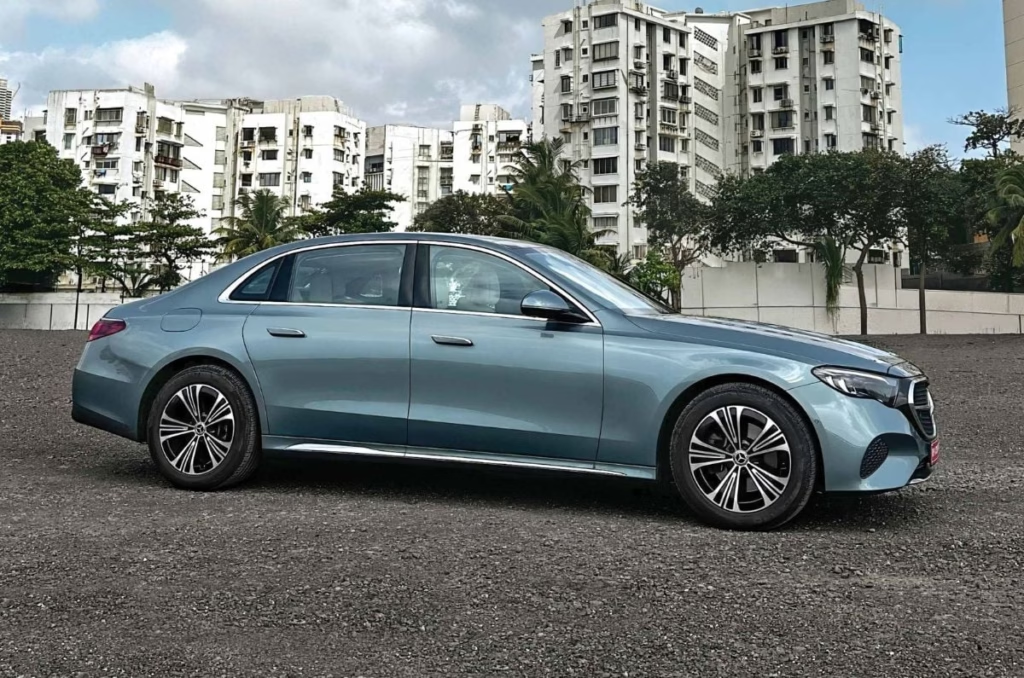
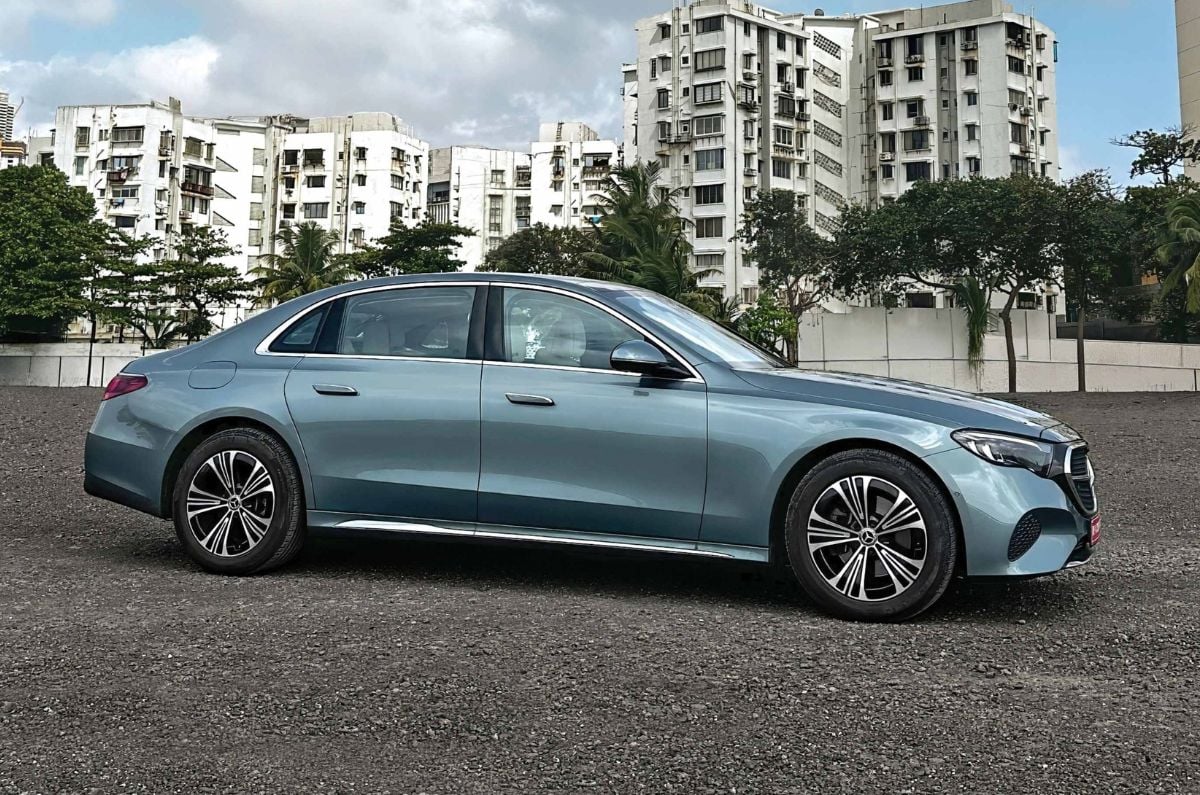
Mercedes-Benz E220d side static

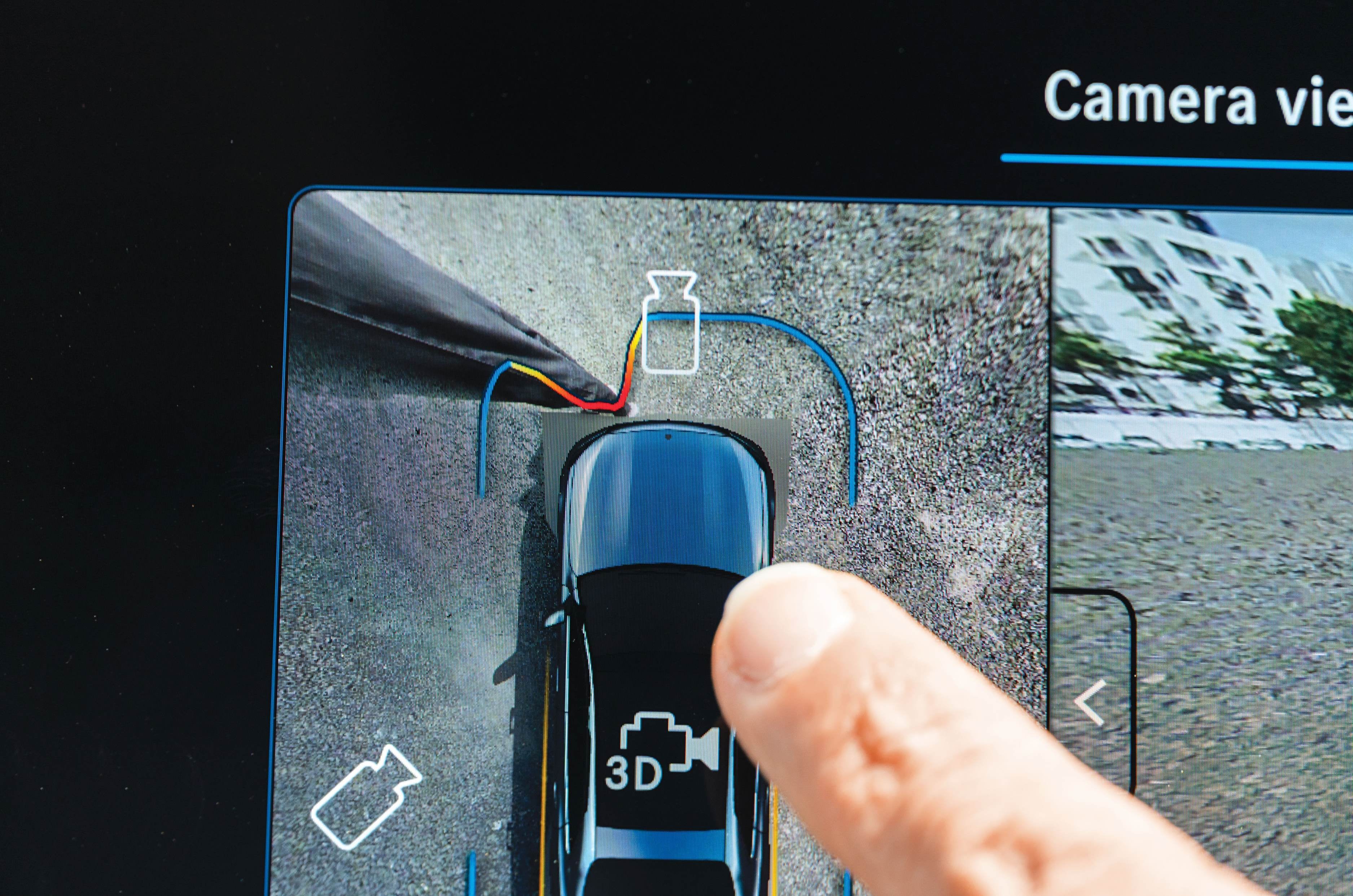
My start-up ritual is always the same. Fire the engine, drop the windows and take the fan speed to max. It’s the fastest way to vent the greenhouse and cool the cabin, especially on a baking hot day. On the E-Class, this, however, presents something of a problem. Pushing the fan speed up to maximum is a two-step process. You first have to select the fan-speed icon on the bottom of the touchscreen, and once you’ve hit that accurately, then it’s tap, tap, tap it up to max. This is not something you can do while reversing, as the camera feed pops up on the screen. And then you have to judge gaps, steer and move the car back and forth. There, however, is a hack – all I do is say, “Hey Mercedes, take fan speed to maximum,” and the blower speed increases, even as I work to get out of the parking lot. At times, I even ask Mercedes to open the windows. ‘Helga’ comprehends quite a lot these days. 

Reversing pictogram is tiny, and you can’t see obstacles clearly.

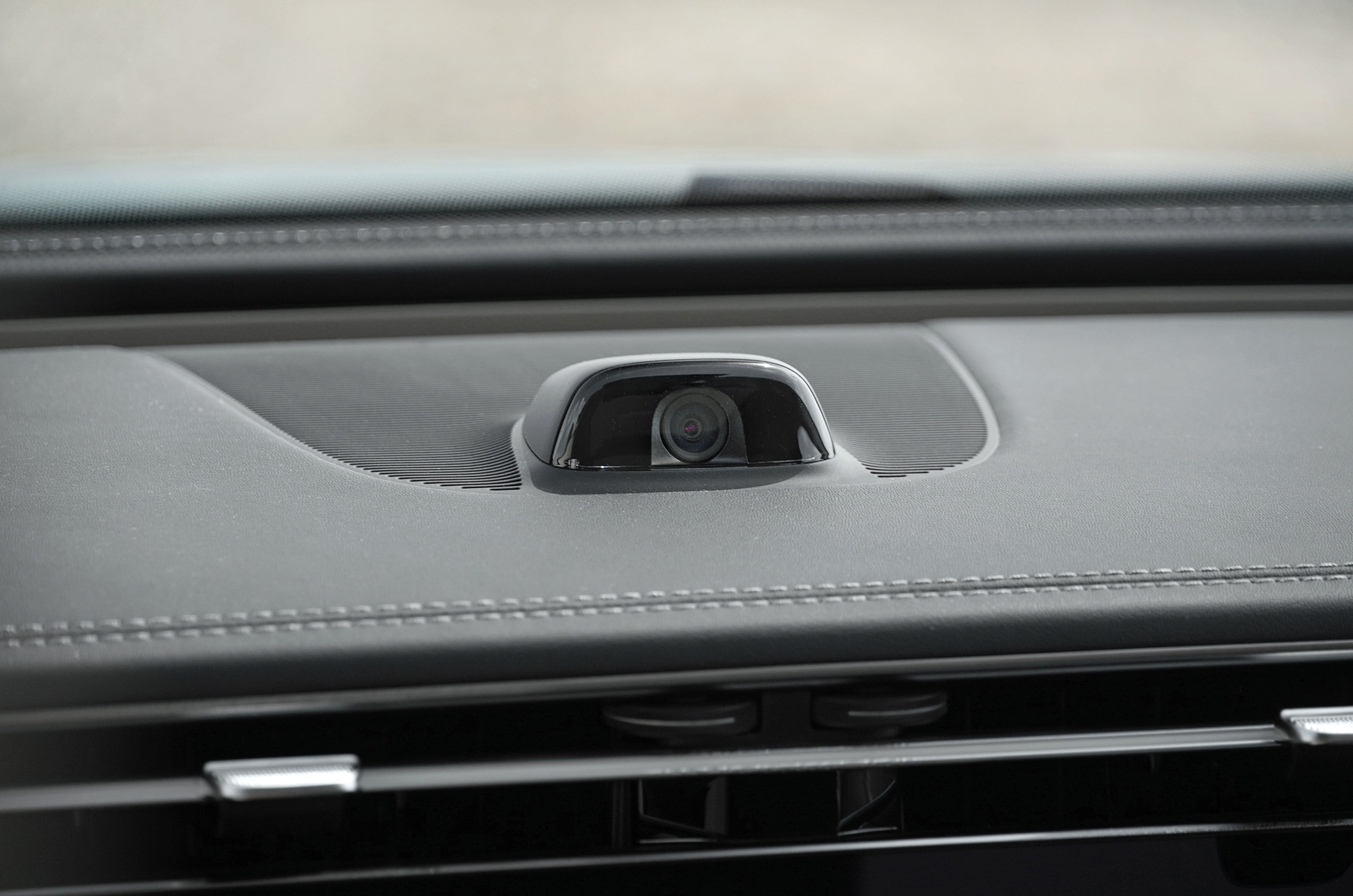
Over the weeks I’ve been driving the car, I’ve also found that, apart from being thoroughly modern, there’s also plenty of traditional ‘Mercedes’ in the E-Class, something that just elevates the experience. Sure, there are a few bits that make you ask “is this really Mercedes?”… such as the build of the gear selector or some creaky plastics, a culprit here seems to be the dashboard camera mounting that sounds a bit creaky. But what lends a tremendous sense of well-being is just how robust and solid the fundamental structure feels. 

A few dashboard creaks can be heard, the culprit seems to be the camera mounting.

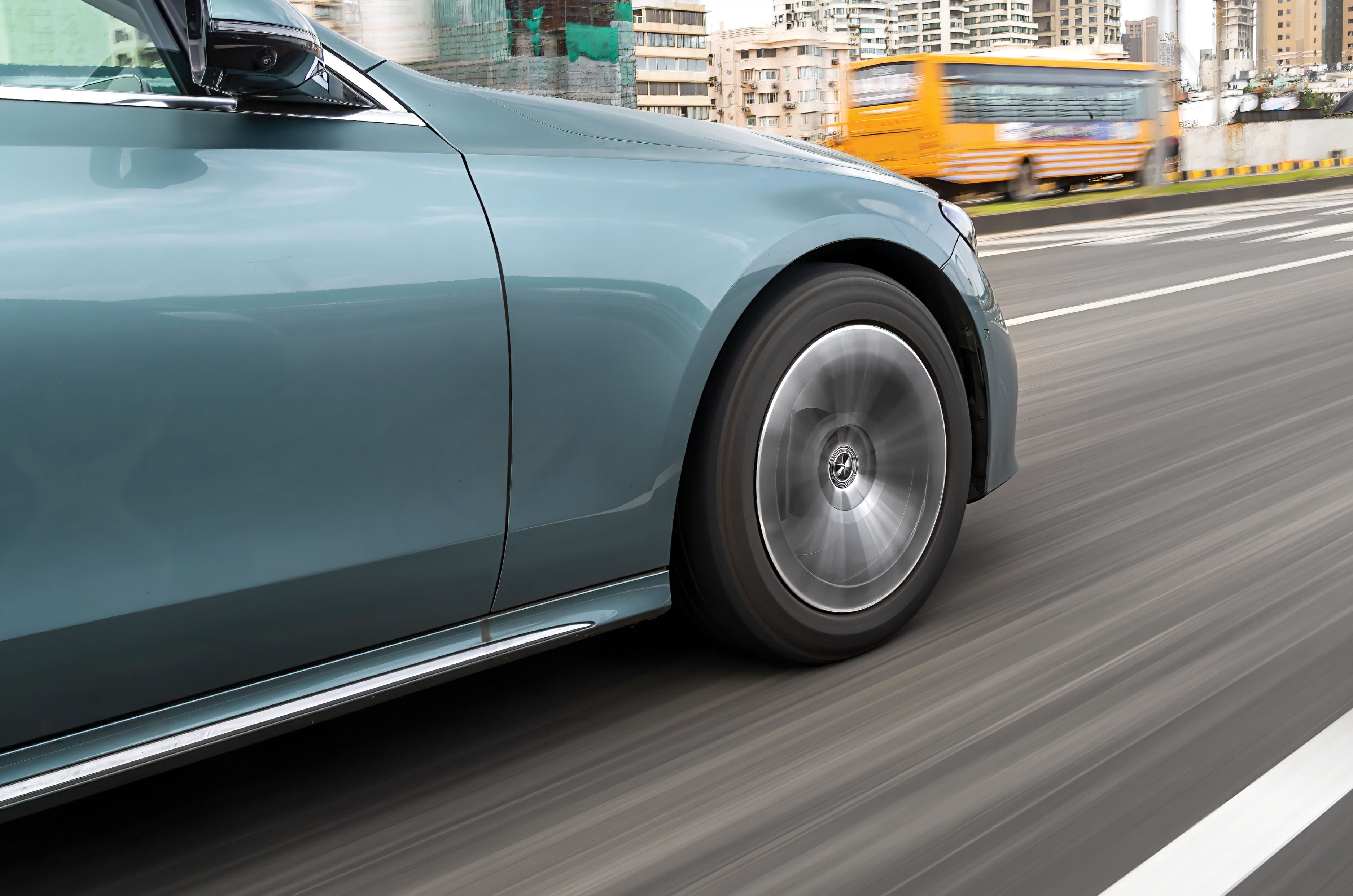
Then, there’s how majestically it rides over our pothole-infested and poorly patched roads. An essential skill in our conditions, something I appreciate almost every second I’m in the car. The suspension is supple and absorbent, and the E remains flat even over bad patches, with vertical movement superbly damped. Worth noting is the fact that in our conditions, where sharp bumps abound, coil springs often get the better of air springs, the steel coils reacting to sharp bumps and sudden changes in direction more seamlessly. And then, of course, this car gets both the long wheelbase and, more importantly, the sedan advantage; no SUV, like-for-like, can ride as well as a sedan. 

Even the worst surfaces are ridden over with great suppleness. 

Ladled in with the good build and great ride is superb insulation. Sitting in the cabin just cuts you off from so much noise going on outside. Sure, you can hear loud spikes, but the general hubbub of Indian traffic just fades into the background. This allows the long-wheelbase E-Class to cover ground in a graceful, elegant and effortless manner, the chaotic and loud world around you somewhat muted. I can’t help thinking of this every time I cross one particularly noisy junction in Byculla near our office in Mumbai. 

The 220 diesel also impresses when it comes to refinement. First up, it’s difficult to tell this is a diesel at low and medium speeds from the passenger seat. This is especially true once the engine is warmed up. Sure, you can look at the tachometer and the truncated powerband and guess, but with no typical diesel rattle at low engine speeds and no clatter under load, telling passengers in the car this is a petrol, and getting them to believe it, is a fun game I often played. It’s only when you rev the engine close to the redline that there is a faint diesel drone.

Want to fall in love with
diesel again? Take this car
on a long drive.

What’s odd about the diesel is that it feels way too relaxed and laid back when you need to take off from rest. Squeeze down gently on the accelerator pedal, say as the traffic lights turn green, and, at times, the car barely moves. This makes you tap the throttle a bit harder and gets you to second guess yourself. Not comfortable when you are sat with large commercial vehicles bearing down on you at the lights. It only appears to be a matter of tuning; it doesn’t happen in Sport. Once on the move, the hybrid system delivers 27hp of e-boost so seamlessly, it’s tough to pinpoint when exactly the e-power comes in; and then power flows in a seamless, smooth, almost petrol-like manner. You do miss the turbo-diesel spike of torque at low speeds, though; today’s tighter emission-control norms somewhat strangle the responses. 

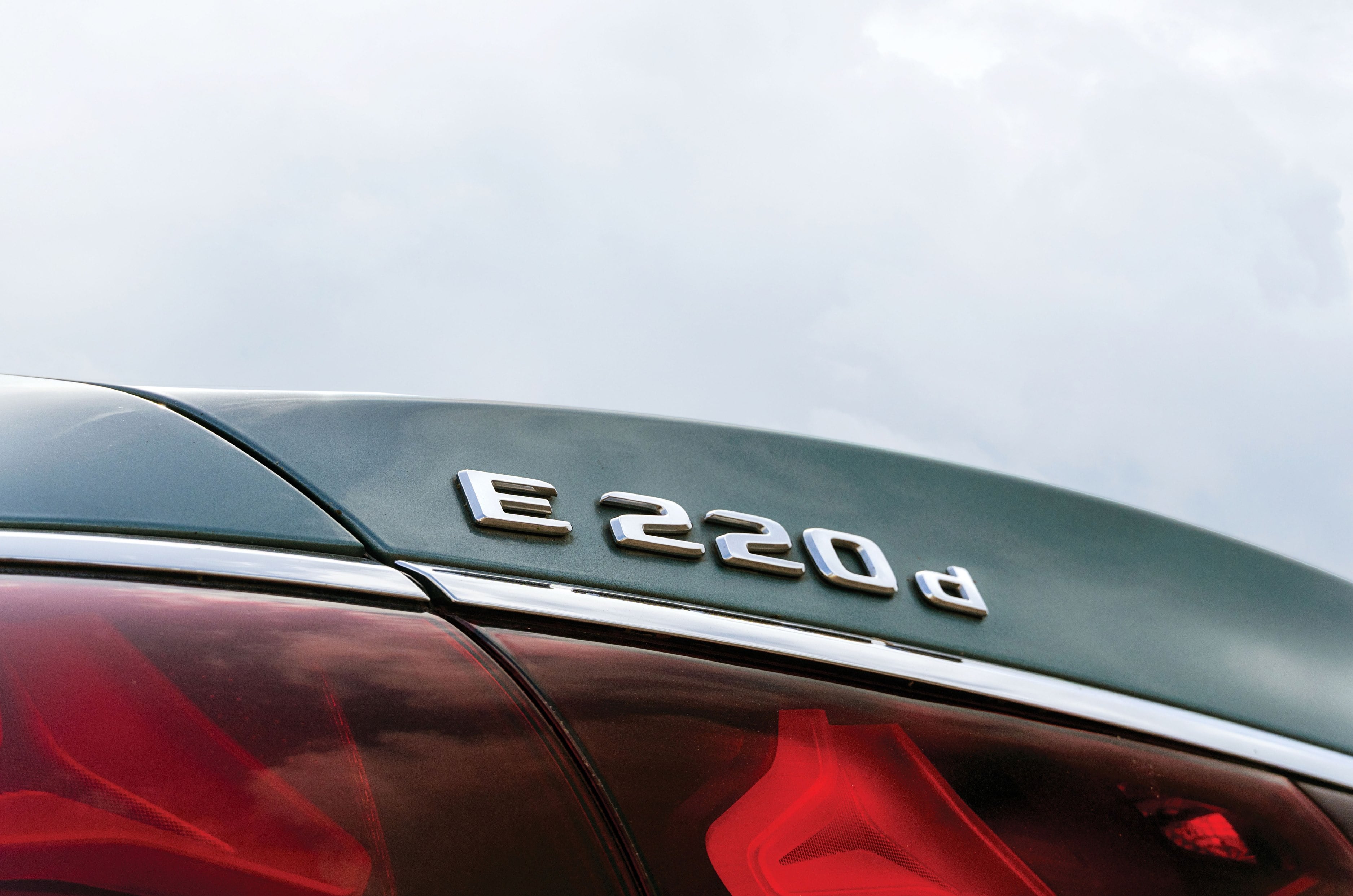
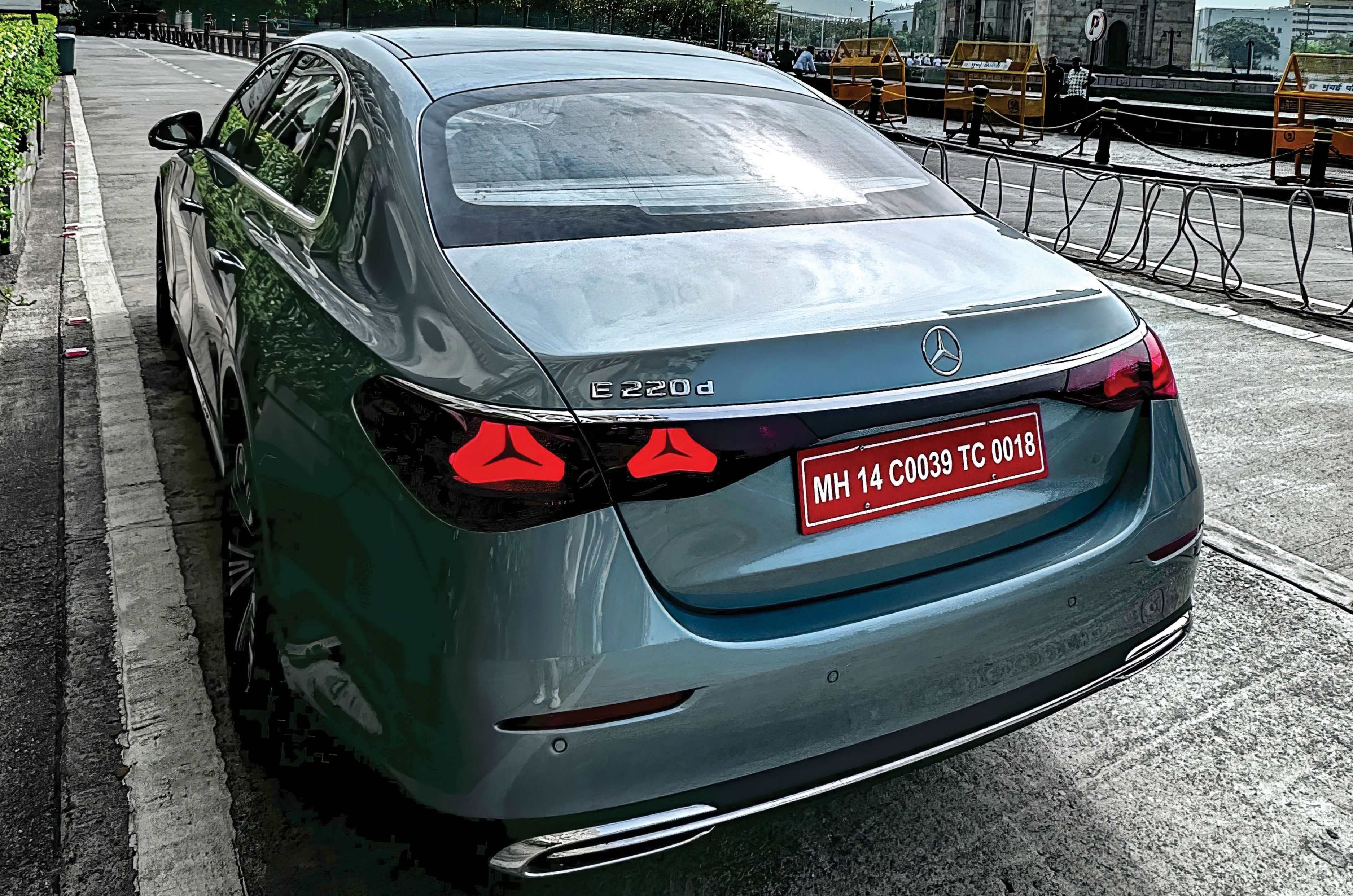
Two red stars in tail-light tell you this is an E-Class, even at a distance. 

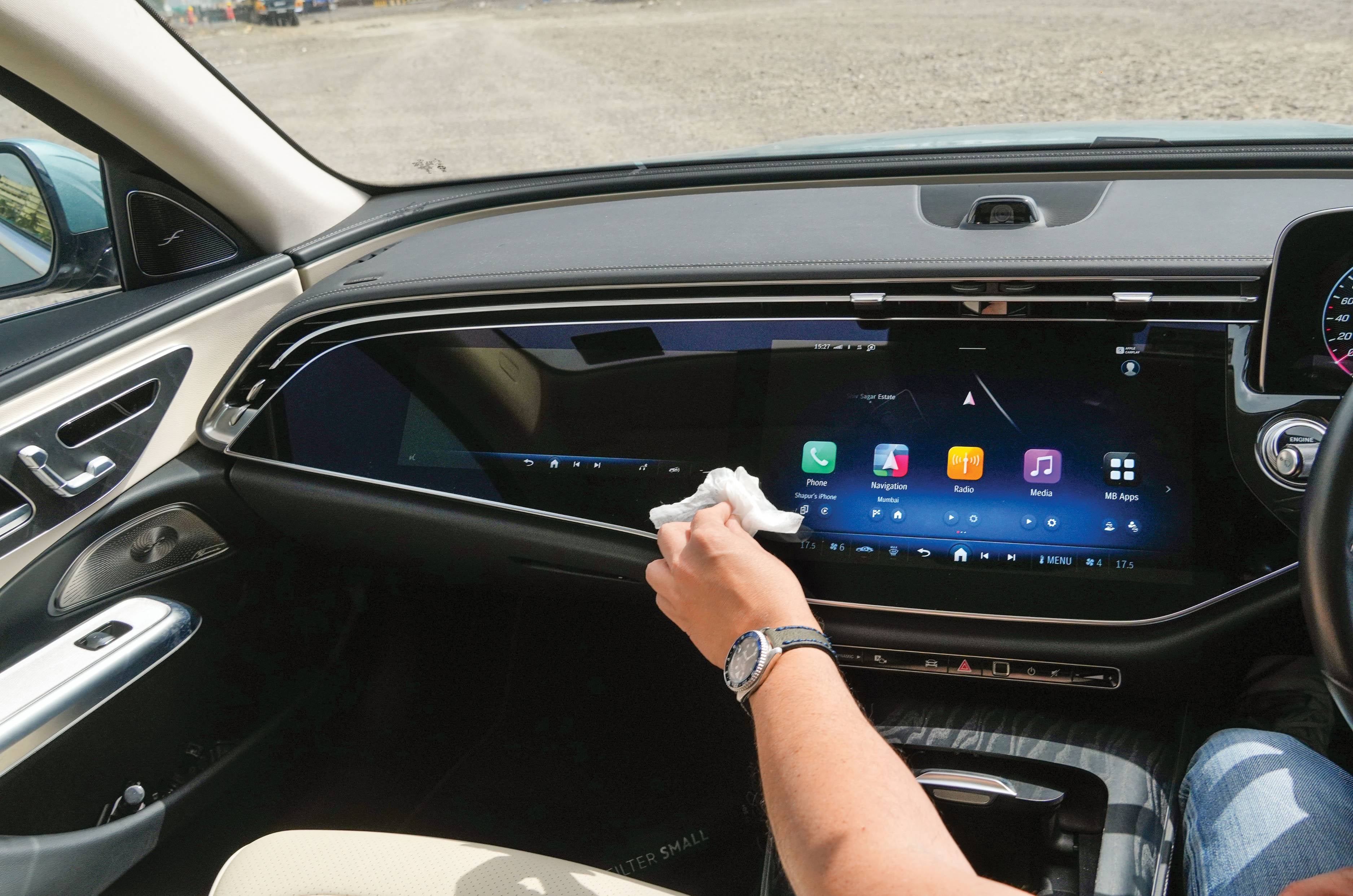
Over the time we had the car with us, we also discovered a few other niggles. The ‘glass’ dashboard picks up too many fingerprints, to begin with, and these prove difficult to clean. The E-Class also isn’t the most comfortable five seater, the narrow centre seat is only usable for short drives. Then, at times, because of the long wheelbase, some of the large speedbreakers are better traversed at an angle, so that the belly of the car is raised higher. This is especially when the car is fully loaded.

Piano black and polished glass pick up fingerprints very easily. 

What endears you to this car, however, is that the new E-Class steers much better, even managing to sort of shrink around you when you begin to enjoy wheel time. That, of course, and the sheer comfort and calm you get when you are sat at the rear, the refinement, plush ride and solid build delivering a near-first-class experience in the back. And then, since it’s a diesel with a healthy e-boost, it’s also super-efficient, currently the most fuel-efficient car in our fleet, double digits in the city, and from a car this size! It ticks so many boxes, no wonder it’s still the class leader by a country mile, and that’s despite the healthy premium it asks for. 

Mercedes-Benz E 220d test data

Odometer15,203km
PriceRs 83.5 lakh (ex-showroom, India)
Economy11.6kpl (this month)
Maintenance costNone
FaultsNone
Previous reportMay 2026, July 2026

Kia Carens Clavis gets benefits of up to Rs 95,000 in October 2026

Kia Carens Clavis gets benefits of up to Rs 95,000 in October 2026
Carens Clavis

Kia has rolled out a range of benefits across its India line-up for October 2026, including cash discounts, exchange and scrappage offers, loyalty benefits and corporate discounts. The offers vary by model, variant and powertrain, with select cars also getting additional benefits such as an extended warranty. Here is a model-wise breakdown of Kia’s October offers.

Disclaimer: Offers/benefits may vary by city and are subject to stock availability. Buyers are advised to check with their local dealer for exact figures.

Kia Carnival discounts in October 2026

Up to Rs 1.70 lakh off

The Kia Carnival gets the highest benefits in Kia’s October 2026 offer programme, with savings of up to Rs 1.70 lakh. The package comprises a Rs 1 lakh exchange offer, Rs 20,000 scrappage benefit and corporate benefits of up to Rs 50,000.

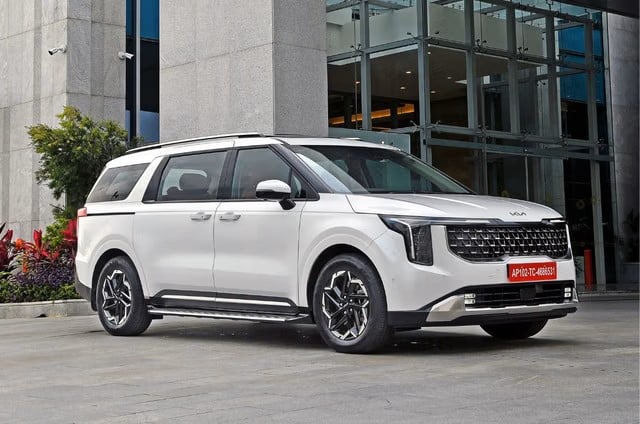
Kia’s flagship MPV focuses on rear-seat comfort and space, making it a compelling choice among chauffeur-driven buyers. Priced from Rs 59.65 lakh, the Carnival does not have a direct rival, although the MG M9 is positioned in a similar price bracket.


Kia Carens Clavis discounts in October 2026

Up to Rs 95,000 off

The Kia Carens Clavis gets benefits of up to Rs 95,000 on its ICE variants, excluding the CNG version. The offer comprises a Rs 10,000 cash discount, Rs 30,000 exchange benefit, Rs 20,000 loyalty benefit, Rs 20,000 scrappage benefit and corporate benefits of up to Rs 15,000.

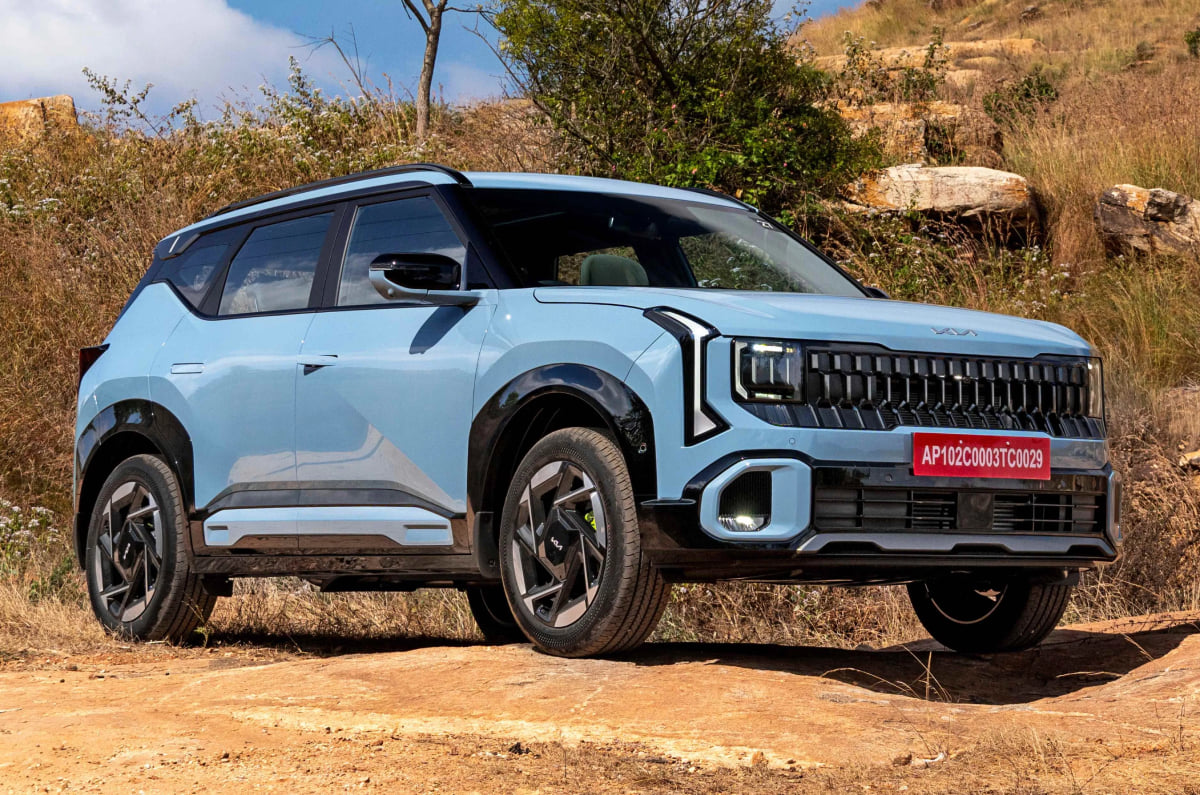
The Clavis is available in six- and seven-seat configurations, with naturally aspirated petrol, turbo-petrol, CNG and diesel engine options. Prices range from Rs 11.39 lakh to Rs 21.79 lakh, ex-showroom. It is sold alongside the older Carens, which remains the lower-priced option in Kia’s MPV line-up. The Clavis rivals MPVs such as the Maruti Suzuki XL6 and Toyota Rumion, while its price also overlaps with larger three-row SUVs such as the Hyundai Alcazar and Tata Safari. 


Kia Carens Clavis EV discounts in October 2026

Up to Rs 75,000 off

The Carens Clavis EV gets benefits of up to Rs 75,000 across its range. The offer includes a Rs 20,000 exchange benefit, Rs 20,000 loyalty benefit, Rs 20,000 scrappage benefit and corporate benefits of up to Rs 15,000. No cash is available for the Clavis EV this month.

The electric MPV offers a practical, well-finished cabin and strong performance even under load. However, it is significantly more expensive than the ICE-powered Clavis. The Clavis EV is priced between Rs 18.04 lakh and Rs 25 lakh, ex-showroom.  It rivals the BYD eMax 7 and VinFast VF MPV 7.

Kia Sonet discounts in October 2026

Up to Rs 65,000 off

Benefits on the Kia Sonet vary by powertrain and variant. The naturally-aspirated petrol 1.2-litre HTK (O) gets the highest benefits of up to Rs 65,000, comprising a Rs 15,000 cash discount, Rs 20,000 exchange benefit, Rs 15,000 scrappage benefit and corporate benefits of up to Rs 15,000. The Sonet diesel , turbo-petrol and naturally-aspirated variants get benefits of up to Rs 50,000.

The compact SUV offers a long equipment list and multiple engine options. However, rear-seat space is limited and higher variants can get expensive. A rival to the Maruti Suzuki Brezza, Tata Nexon, Skoda Kylaq, Hyundai Venue and Mahindra XUV 3XO, the Sonet is priced between Rs 7.41 lakh and Rs 14.27 lakh.


Kia Syros discounts in October 2026

Up to Rs 55,000 off

The Kia Syros gets benefits of up to Rs 55,000 on its ICE variants. The offer includes a Rs 20,000 exchange benefit, Rs 20,000 scrappage benefit and corporate benefits of up to Rs 15,000. Kia is also offering a free extended warranty with the Syros.

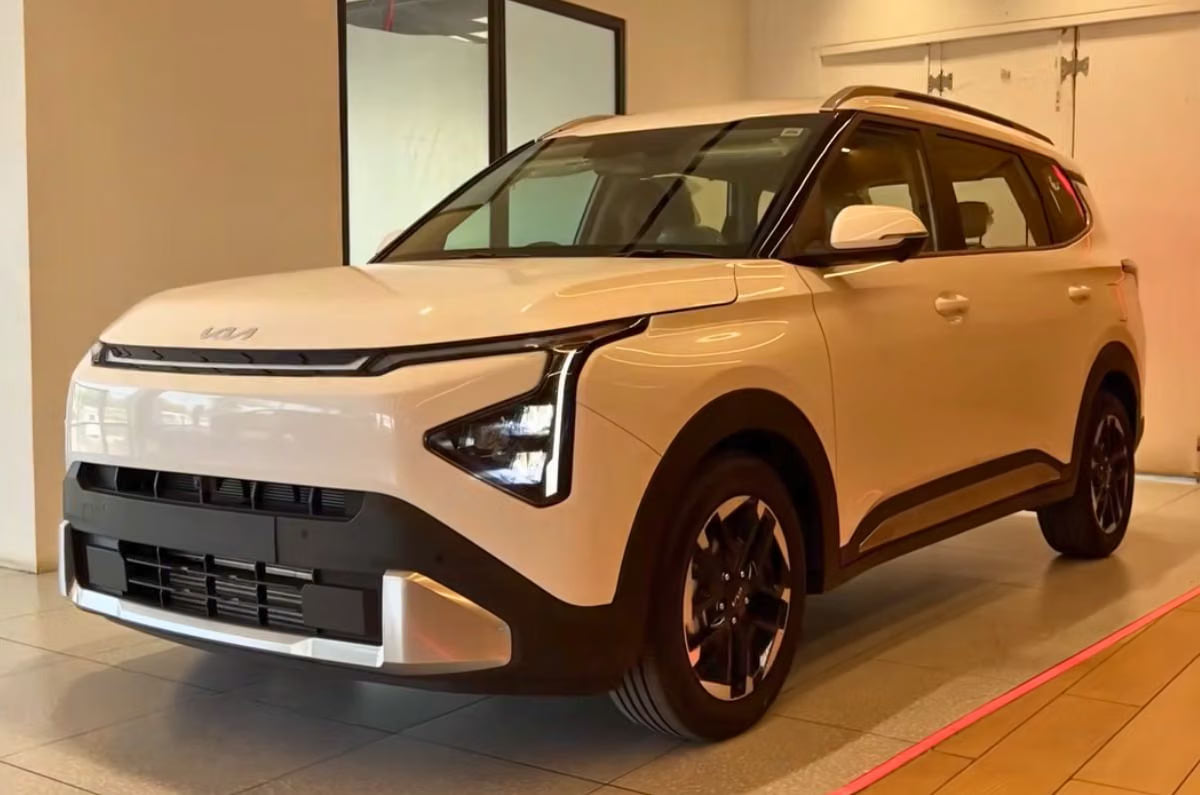
The Syros stands out for its stylish cabin and spacious rear seats, although NVH levels in both petrol and diesel variants remain high. The Kia Syros’ rivals include the Tata Nexon, Mahindra XUV 3XO, Maruti Suzuki Brezza, Skoda Kylaq and Hyundai Venue. It is priced from Rs 8.42 lakh to Rs 15.82 lakh.

Kia Carens discounts in October 2026

Up to Rs 45,000 off

The Kia Carens, excluding CNG variants, gets benefits of up to Rs 45,000. These comprise a Rs 10,000 exchange benefit, Rs 20,000 scrappage benefit and corporate benefits of up to Rs 15,000. The Carens CNG gets a Rs 20,000 scrappage benefit.

The Carens offers a spacious cabin, good practicality and a generous feature list. However, diesel performance under full load is not particularly strong, and the petrol engine is not very fuel-efficient. The Carens is priced between Rs 11.02 lakh and Rs 12.88 lakh, ex-showroom, it rivals the Toyota Rumion and Maruti Suzuki Ertiga.

Kia Seltos discounts in October 2026

Up to Rs 40,000 off

The Kia Seltos gets benefits of up to Rs 40,000 across its range. These comprise a Rs 20,000 loyalty benefit and Rs 20,000 scrappage benefit. There is no cash discount or exchange benefit for the Seltos this month.

The midsize SUV combines a comfortable ride with good handling and a strong turbo-petrol engine option. However, some rivals offer a more comprehensive feature list, and the diesel engine lacks punch. The Seltos rivals the Hyundai Creta, Tata Sierra, Maruti Grand Vitara, Toyota Urban Cruiser Hyryder, Volkswagen Taigun, Skoda Kushaq, Renault Duster and MG Astor. Its prices range from Rs 11 lakh to Rs 21.82 lakh.

Kia Sorento discounts in October 2026

Up to Rs 40,000 off

The recently launched Kia Sorento gets benefits of up to Rs 40,000 across its range. The offer comprises a Rs 20,000 loyalty benefit and Rs 20,000 scrappage benefit.

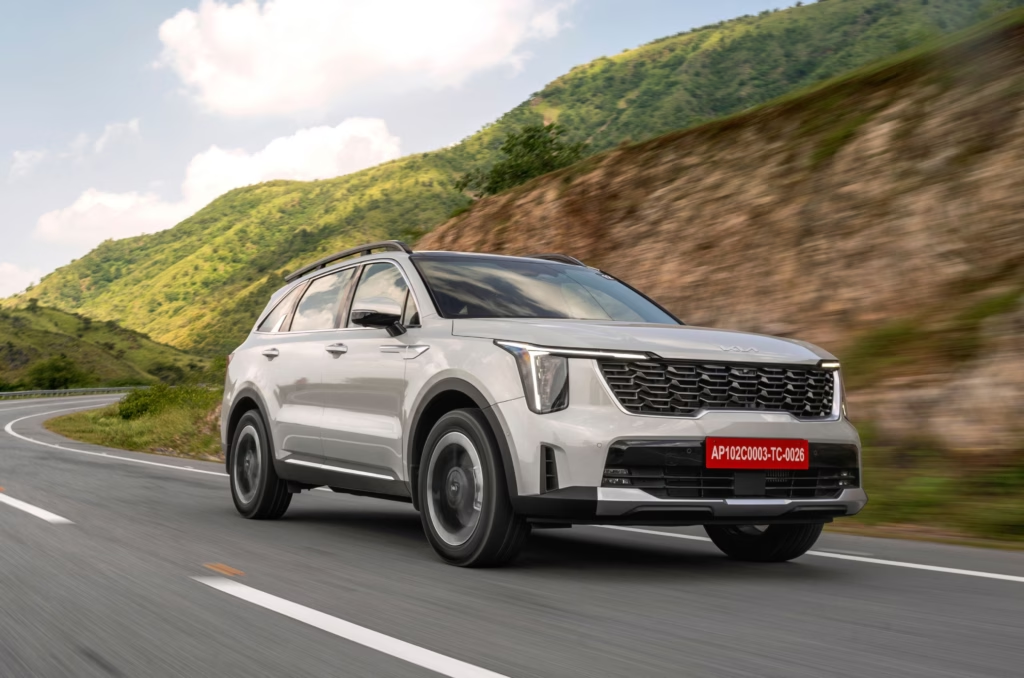
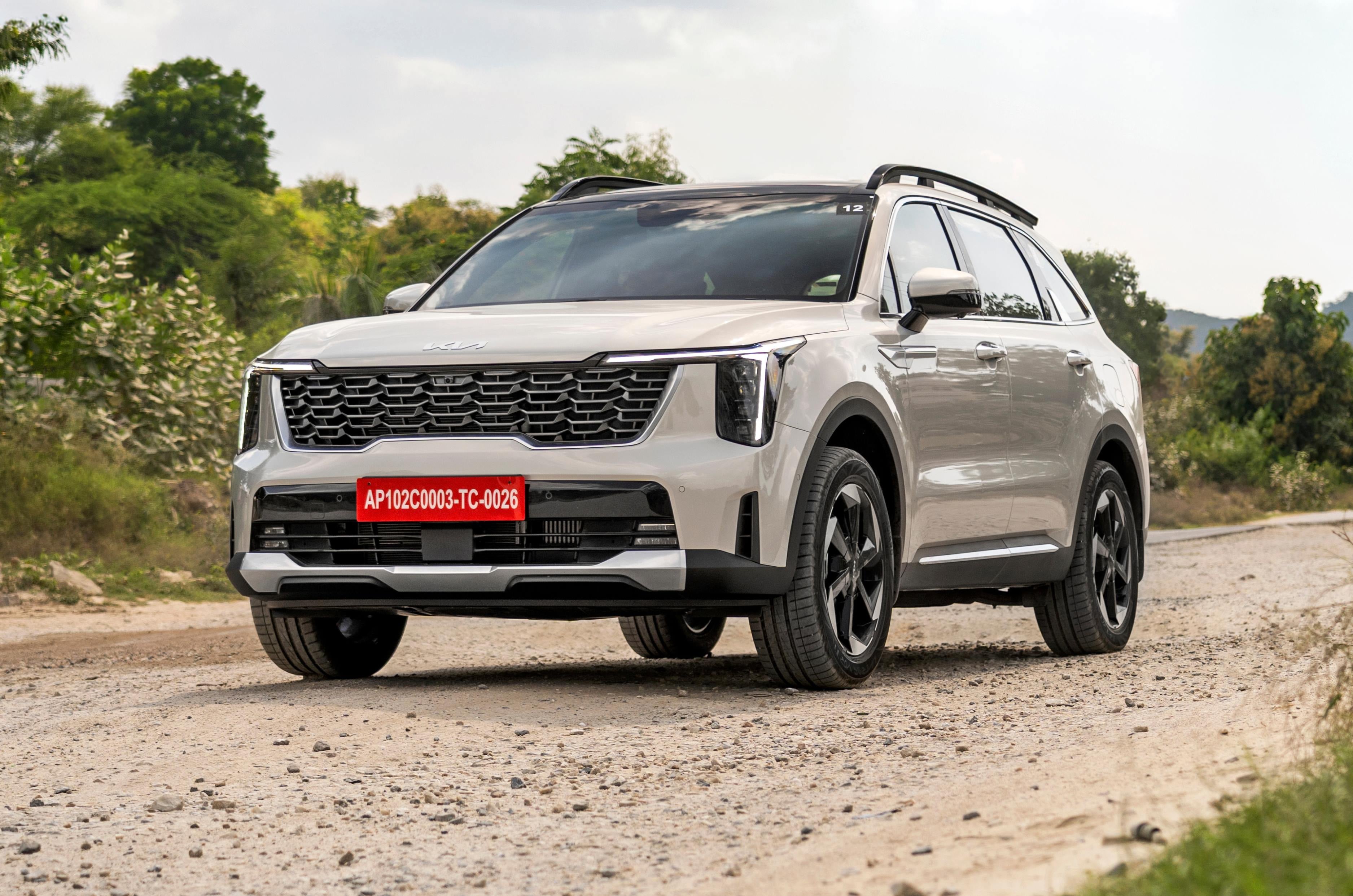
The Sorento is Kia’s flagship three-row SUV in India and is offered with a 2.2-litre diesel engine or a 1.6-litre turbo-petrol strong-hybrid powertrain. Prices range from Rs 27.99 lakh to Rs 40.39 lakh. It competes with SUVs including the Jeep Meridian, Skoda Kodiaq and Volkswagen Tayron.

All prices are ex-showroom, India.

Kia Sorento review: Kia’s big hybrid and diesel bet

Kia Sorento review: Kia's big hybrid and diesel bet
kia sorento

The Sorento is a big bet for Kia India, and you can tell. Six trims, two powertrains, front- and all-wheel drive, six or seven seats and 32 versions in all. This is not a toe in the water exercise but a full-blooded dive into the deep end of the executive SUV pool. More than that, it is a case study in how to launch a product in India, because Kia has got the basics right before it has even started talking about features.

Start with the powertrains, which for this class of SUV could hardly be better judged. There is a strong 2.2-litre diesel for diesel die-hards and there are still plenty of those. And then there is a 1.6-litre turbo-petrol strong hybrid whose timing couldn’t be more perfect. Petrol prices are climbing, E20 has quietly eaten into real-world efficiency, and buyers want diesel-like running costs from a smooth, quiet powertrain without lying awake worrying about diesel’s long-term future. The Sorento hybrid is pitched squarely at that anxiety.

The strategy behind the car is just as interesting. This fourth-generation (MQ4) Sorento arrives in India towards the end of its global life cycle. It is still a current product, but one due to be replaced internationally next year, while India will carry on with this one. That is actually a very smart move. A car this late in its life has its development costs largely amortised, and Kia India can bring some of the tooling here, which slashes the investment.

And this is a properly localised car, not a screwdriver job. The body is stamped and welded at Kia’s Anantapur plant, and the dashboard and seats are made here too. That is what makes the Rs 27.99 lakh starting price possible. The catch is that localisation on this scale only pays off with volume, and Kia wants to sell around 40,000 Sorentos a year. That is a big number for a Rs 30-40 lakh SUV. Can it get there?

Kia Sorento exterior design and engineering

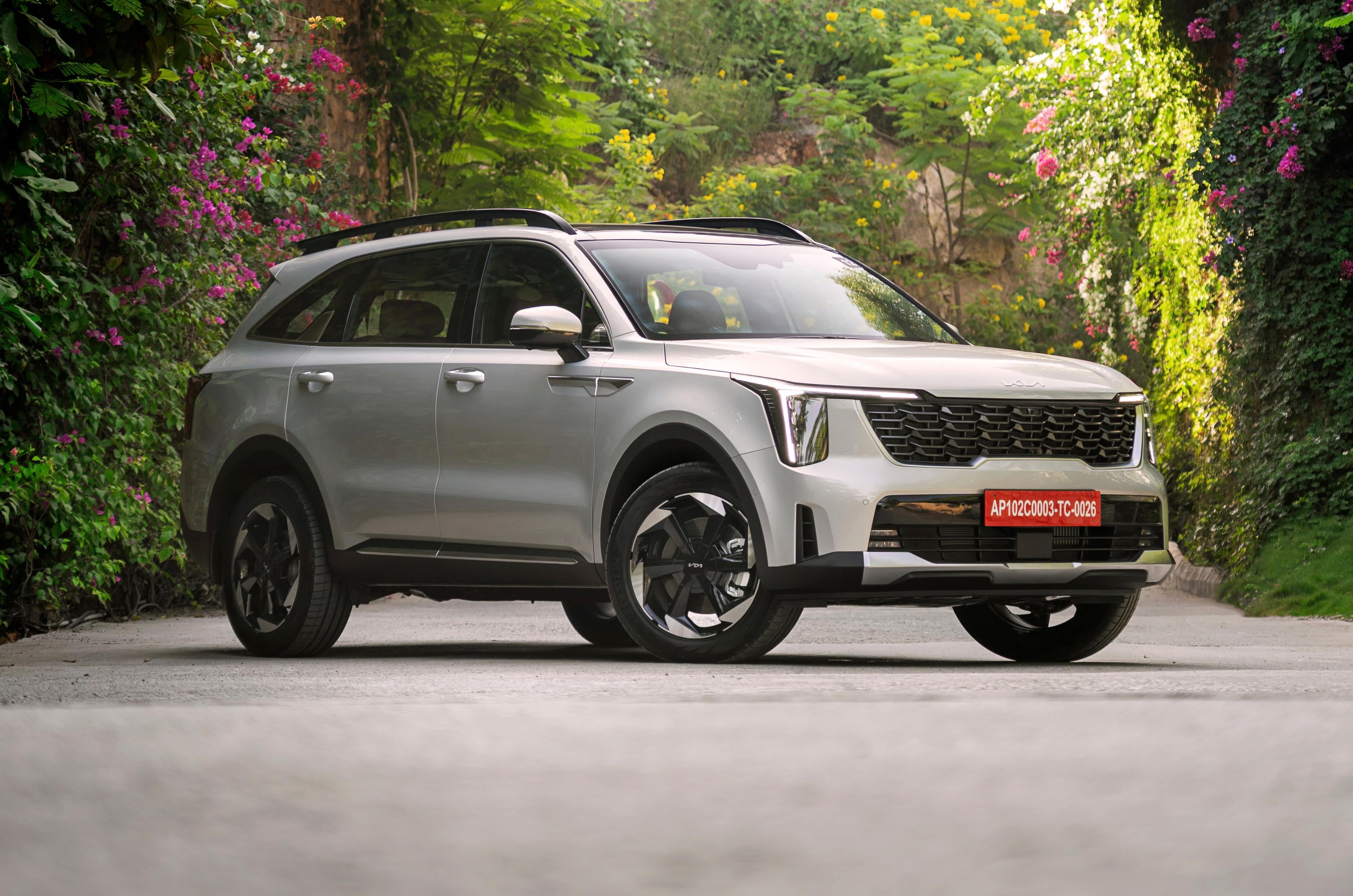
Based on the gen 4 Sorento, it carries over the older and more palatable design language.

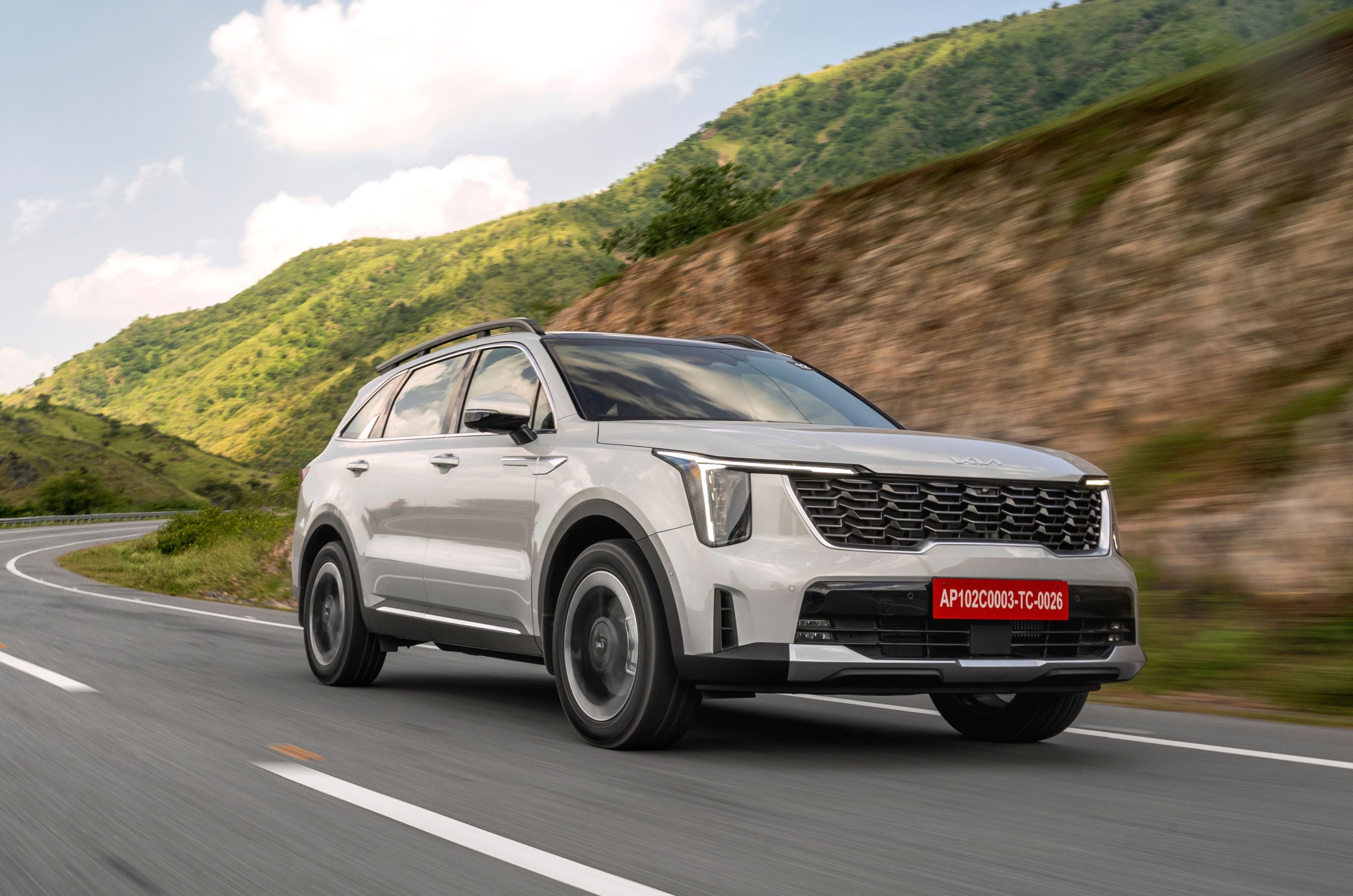
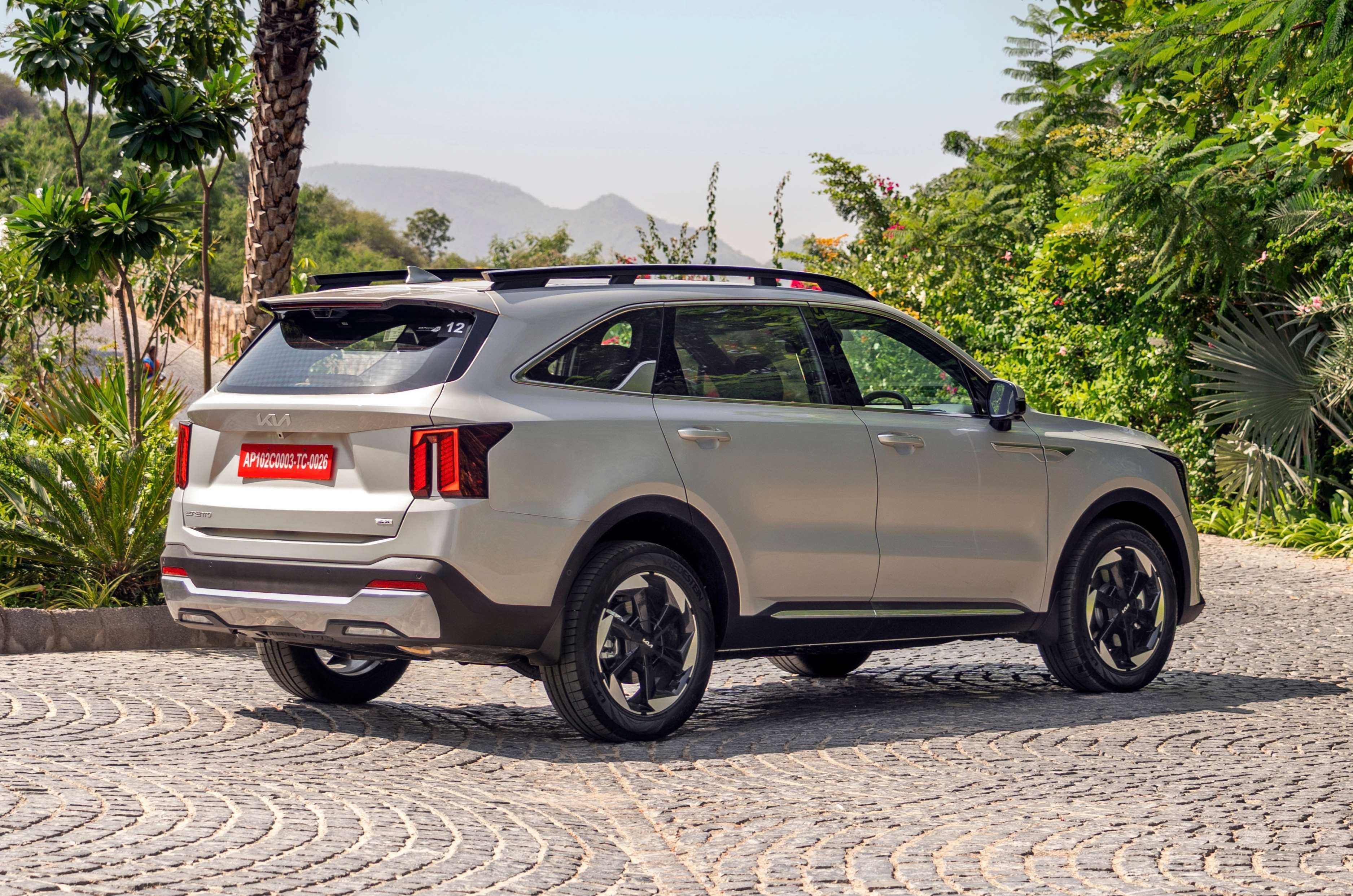
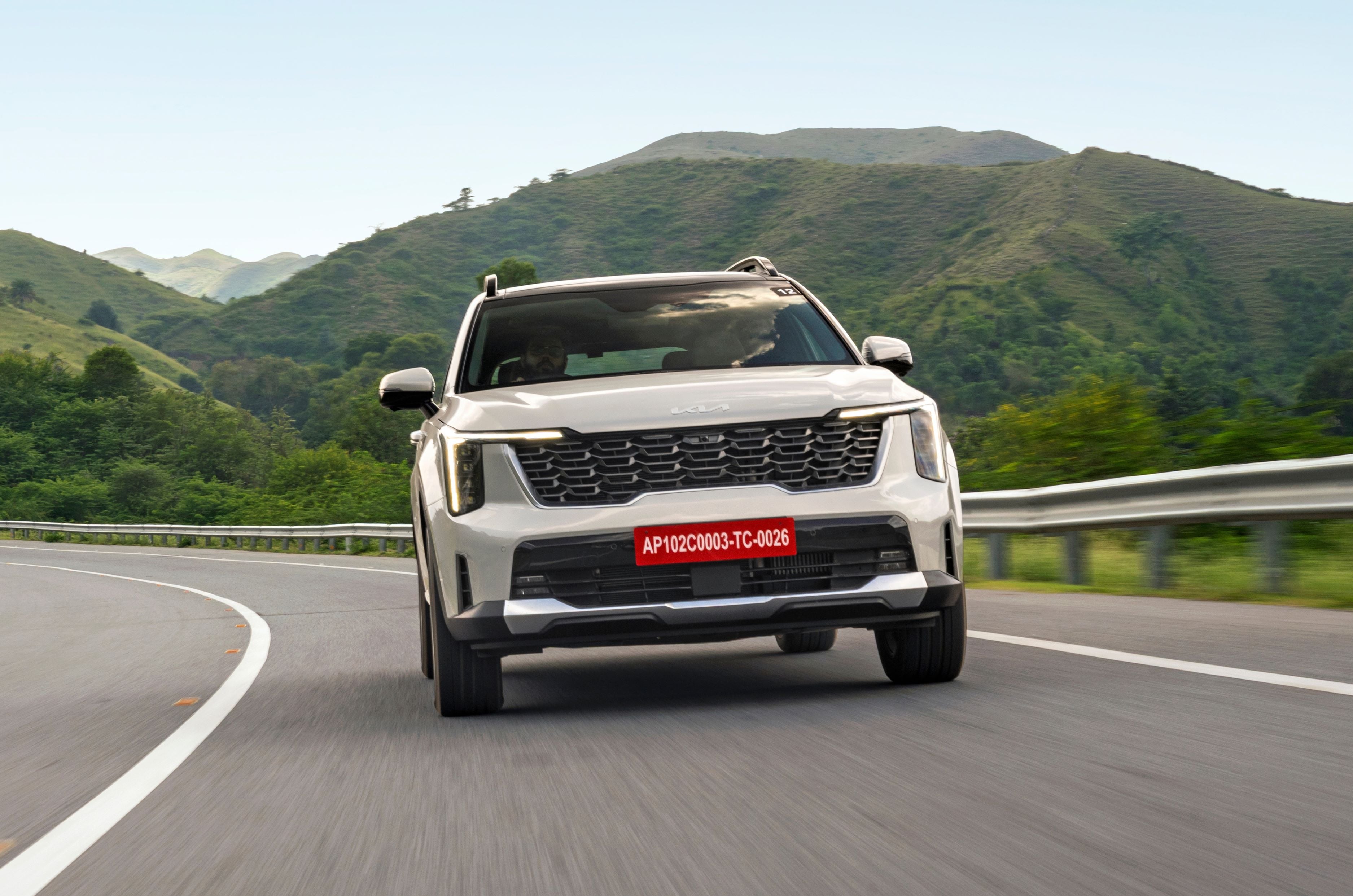
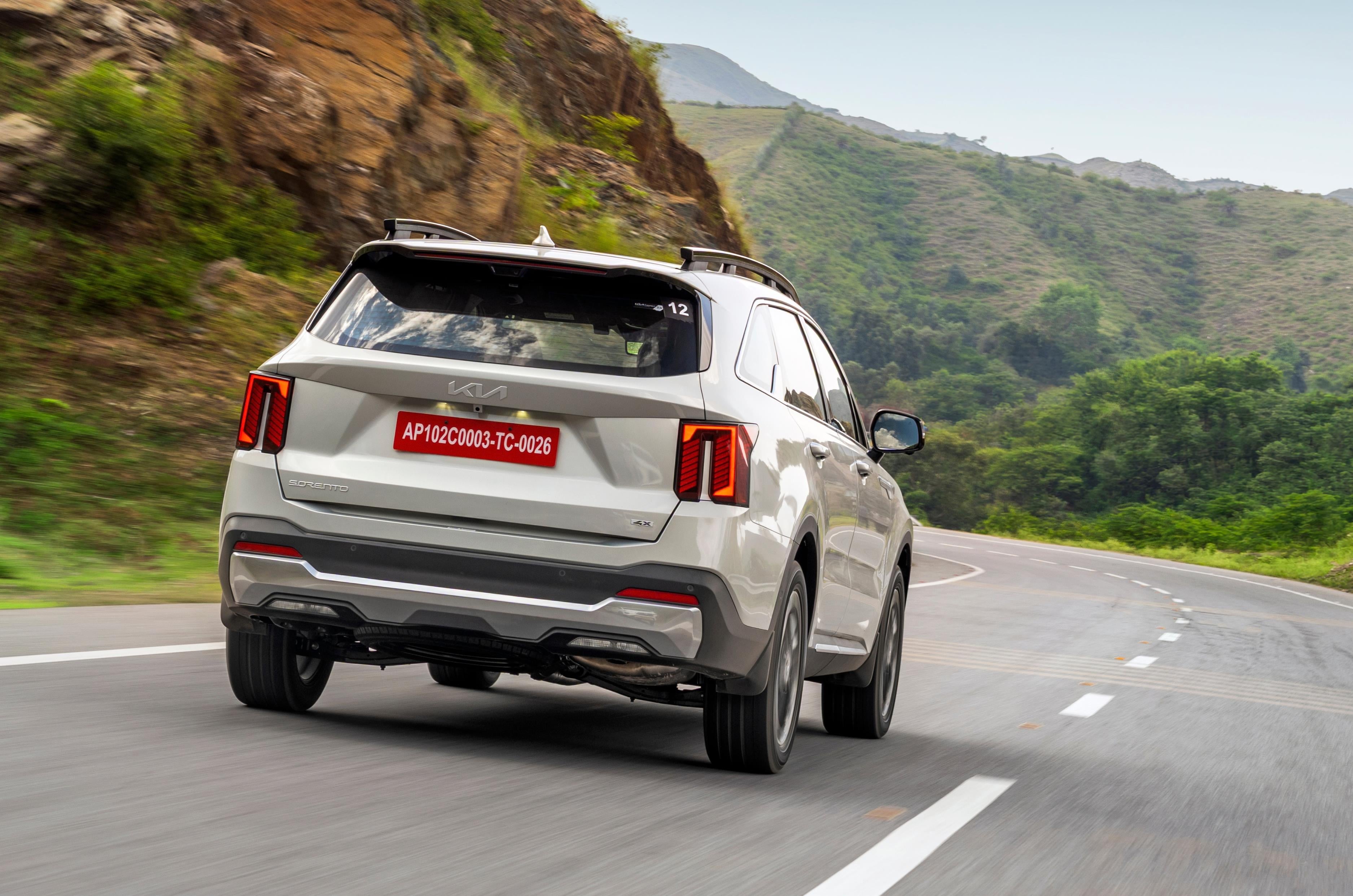
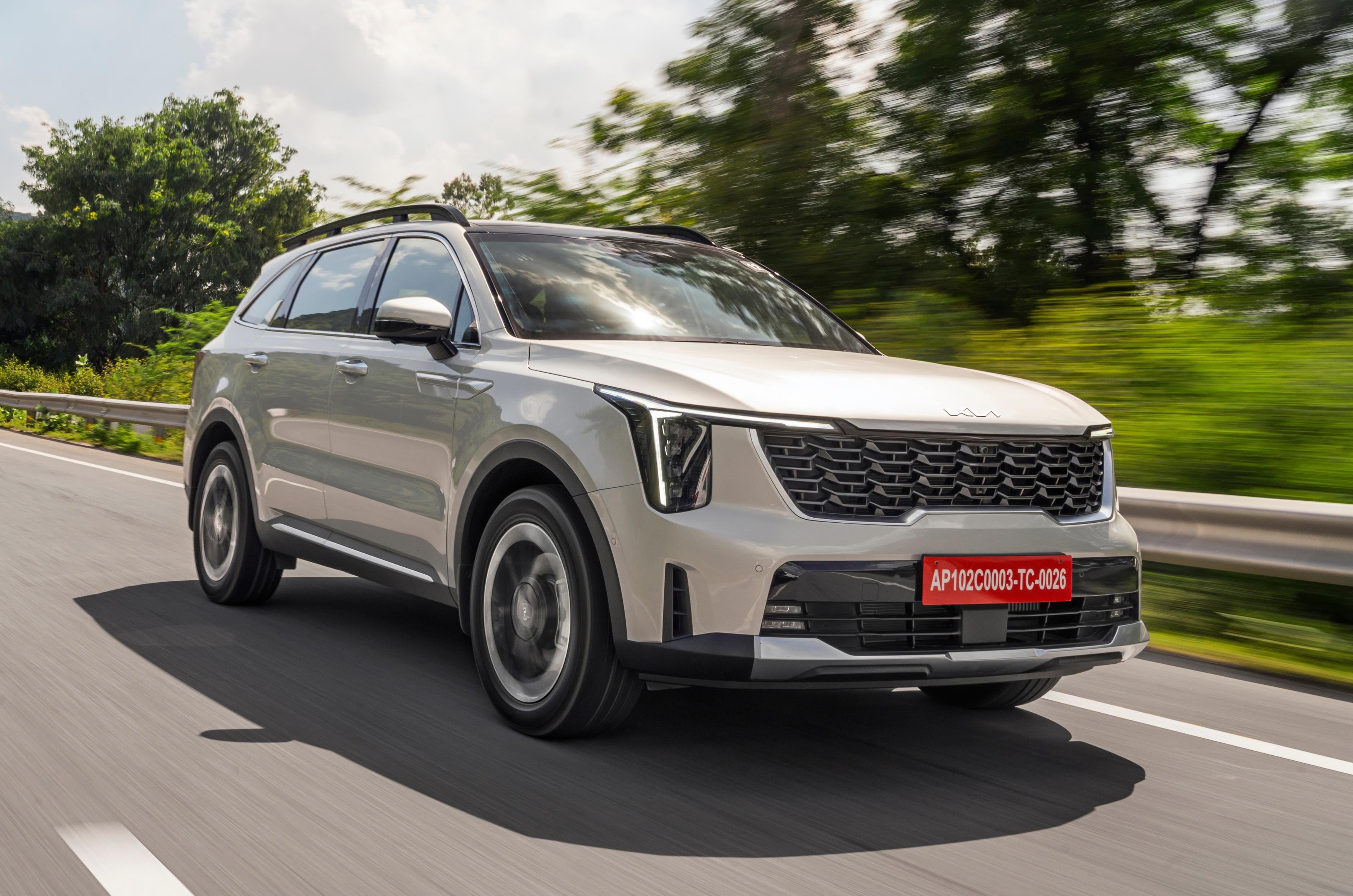
The Sorento sits on Hyundai-Kia’s MQ4 platform, the freshest architecture in its class, and it has already had a mid-life update to keep it looking current. The 2024 facelift brought the nose in line with the design language Kia kicked off with the EV9, so you get vertically stacked LED headlights, Y-shaped daytime running lamps and an aggressive looking bumper with wide intakes. At the back are L-shaped wraparound tail-lamps, and thankfully no light bar stretched across the tailgate.

Beats the rivals in length, width, and wheelbase.

Kia’s stated aim was a more technical, precise look, one meant to signal tight build quality and engineering sophistication. It is a trick the German premium brands have used for years, and Kia has clearly taken a leaf out of their book. The Sorento looks crisp and expensive rather than flashy, and is likely to age well too.

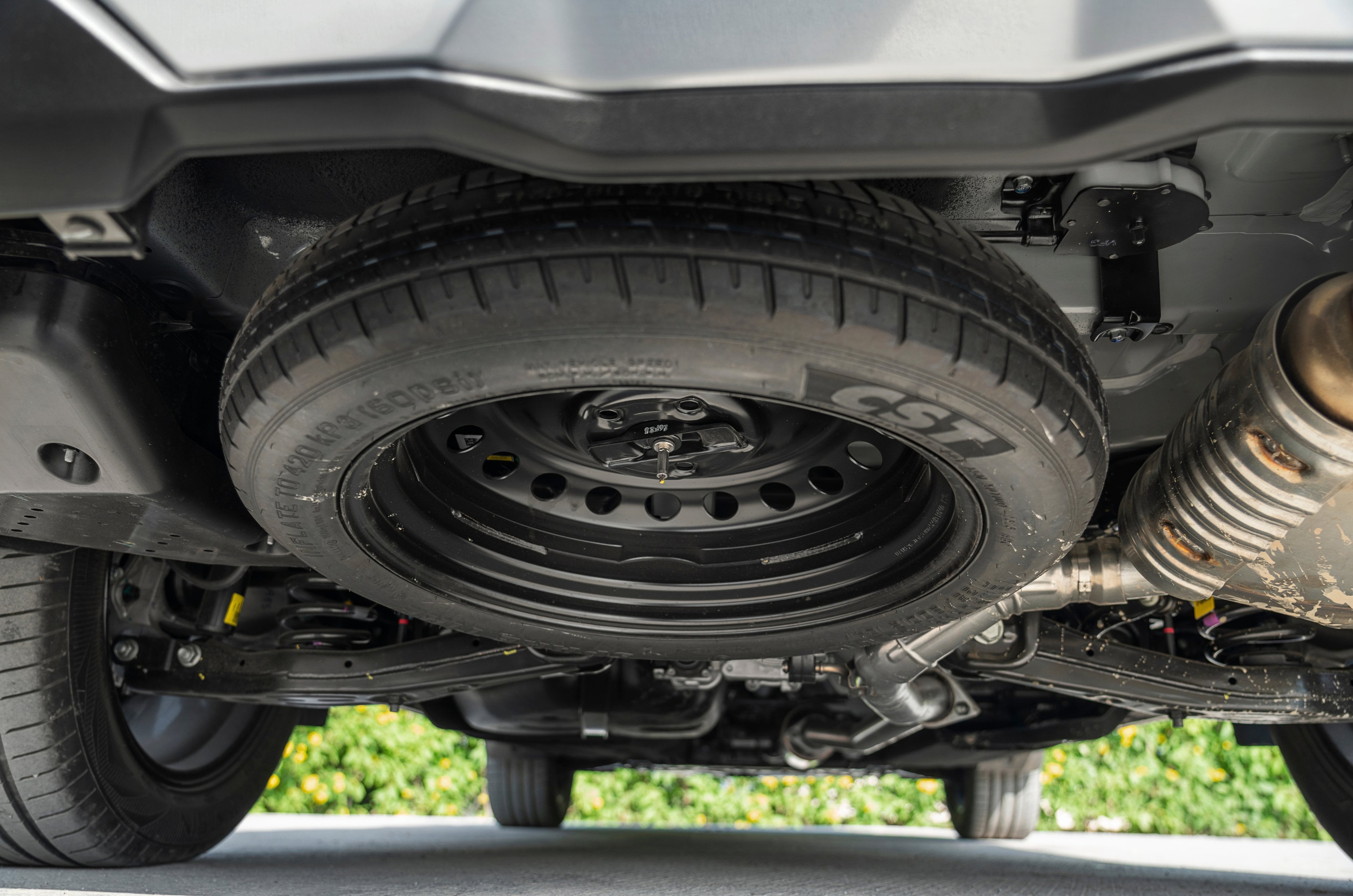
Spare wheel mounted under the floor frees up room in the boot.

What it does not have is brute presence. Despite being the longest, widest and tallest SUV in its segment, at 4,815mm long, 1,900mm wide and 1,785mm tall on a 2,815mm wheelbase, it does not loom in your mirrors the way a Fortuner does. The sloping roofline at the rear softens the silhouette and lends it a hint of crossover, and some will see it as a big Seltos rather than a junior Land Cruiser. Clearly this is not an SUV that looks like it can bully its way through traffic.

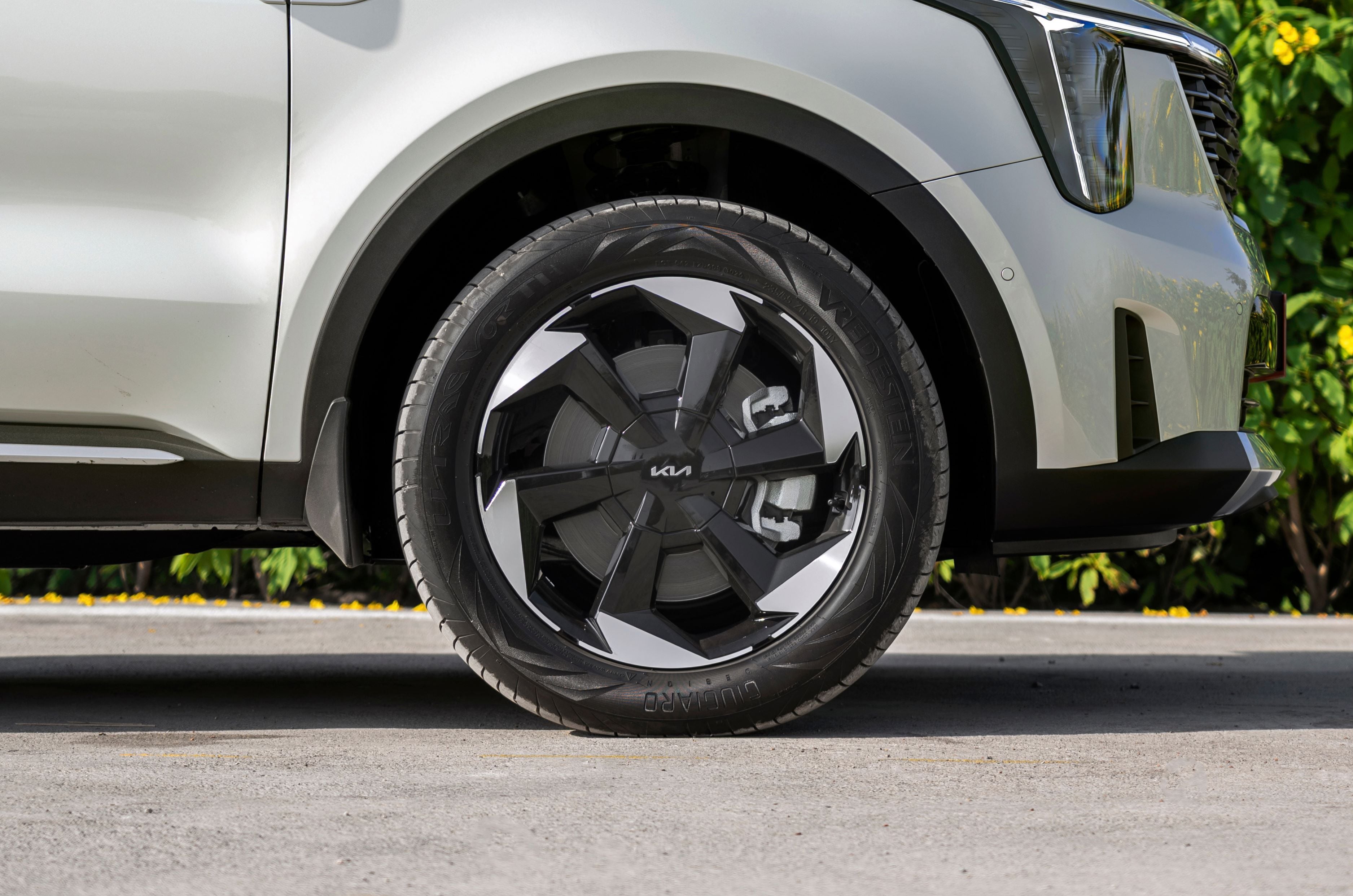
A more unique design could’ve been used for the 19-inch alloys.

The 19-inch dual-tone alloys could have been more distinctive, too an effect exaggerated by the chunky 235/55 R19 tyres. Those tall sidewalls, though, are not a styling misstep so much as an engineering choice, and they play a big part in how this car rides. More on that later.

Kia Sorento interior space and comfort

Clutter-free dashboard with solid build and plush feel.

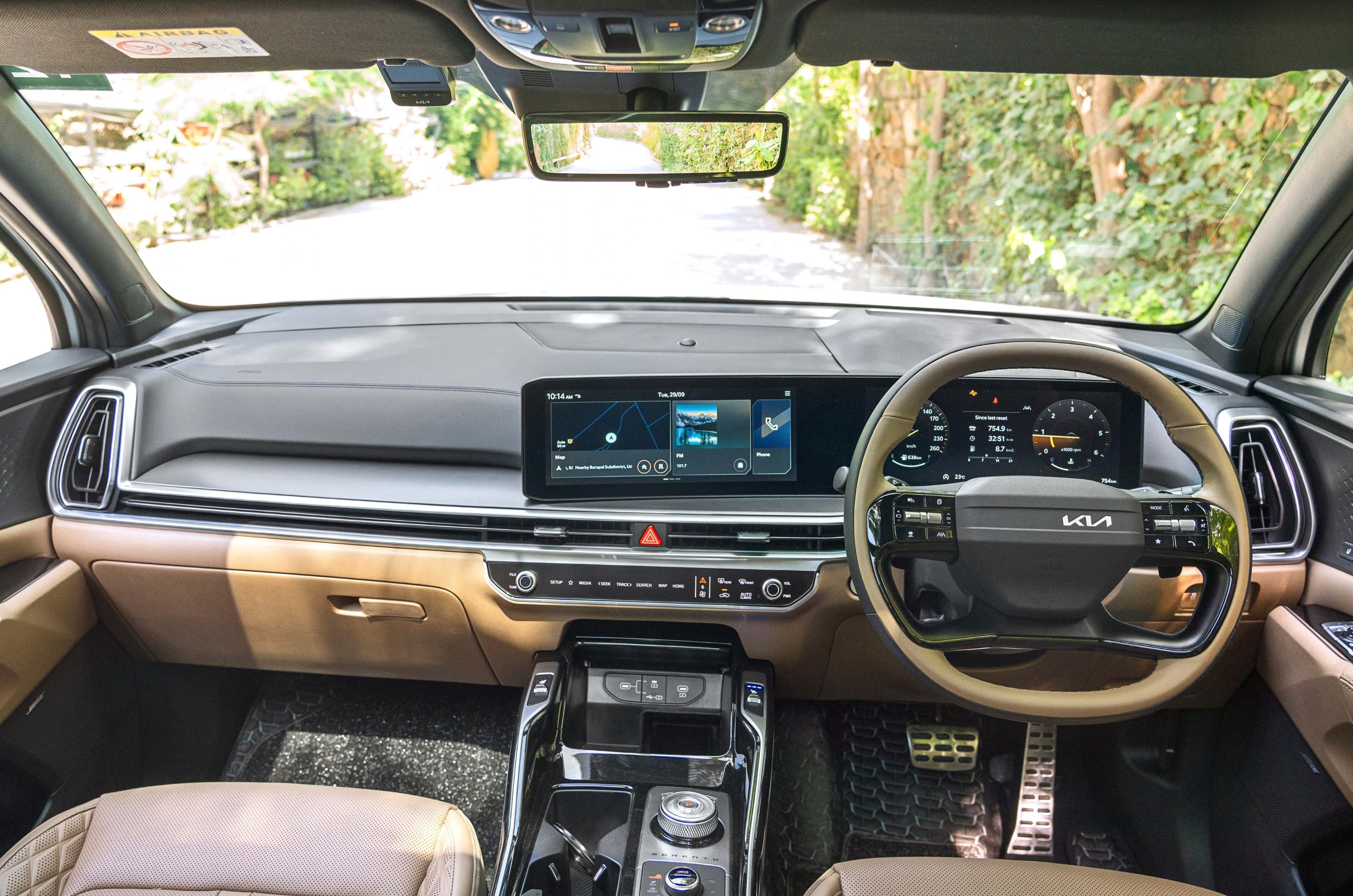
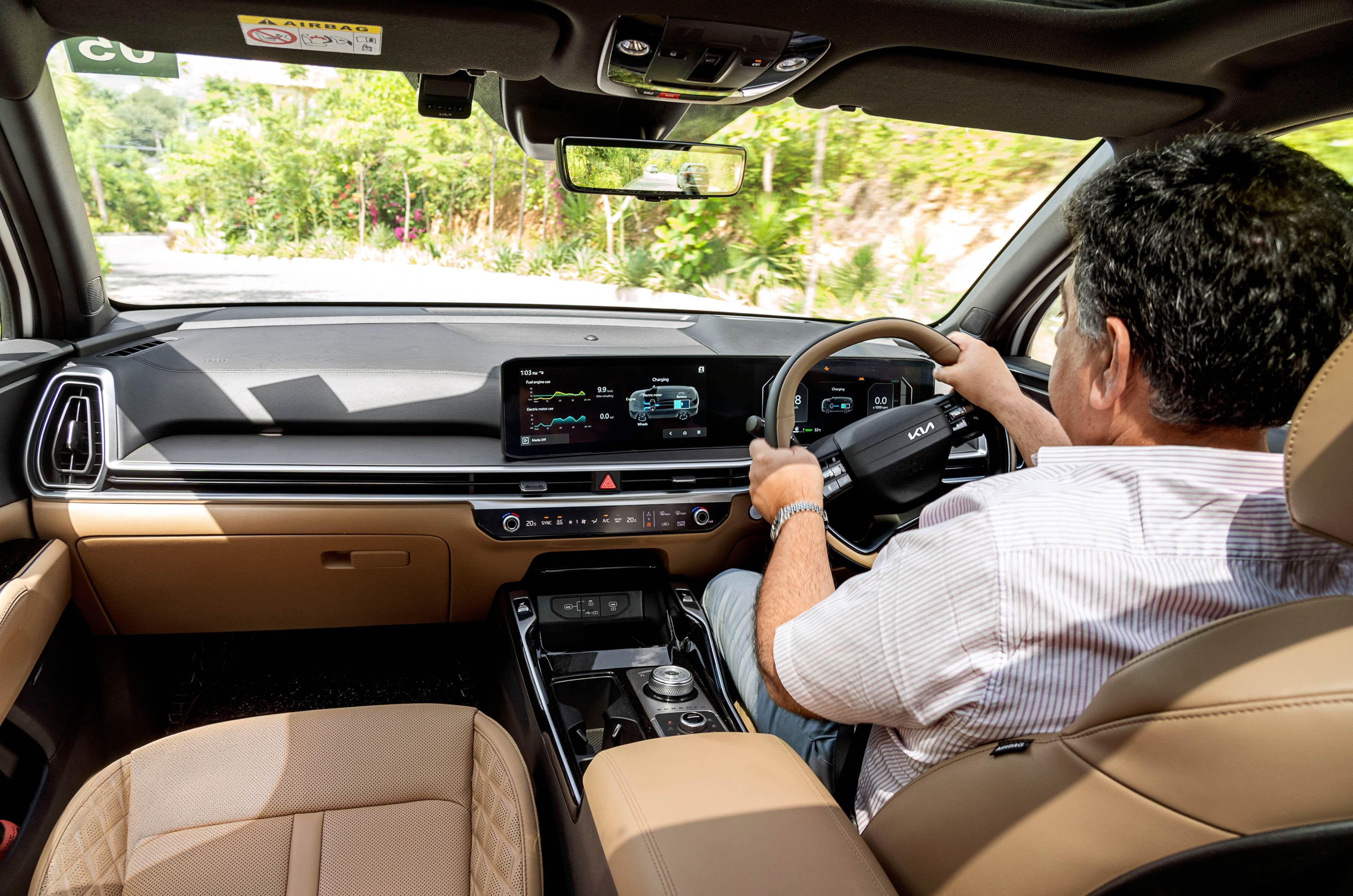
If the exterior is quietly effective, the cabin is where Kia has truly aced it. The Sorento offers a mix of quality, equipment and ergonomics that nothing at this price can match. Soft-touch materials cover everything you are likely to touch, including the spots where your knee rests against the centre console. There is a healthy count of physical buttons, and they click with a precision that feels engineered rather than sourced. The knurled finish on the rotary drive selector and the switchgear adds a tactile richness you normally pay German money for.

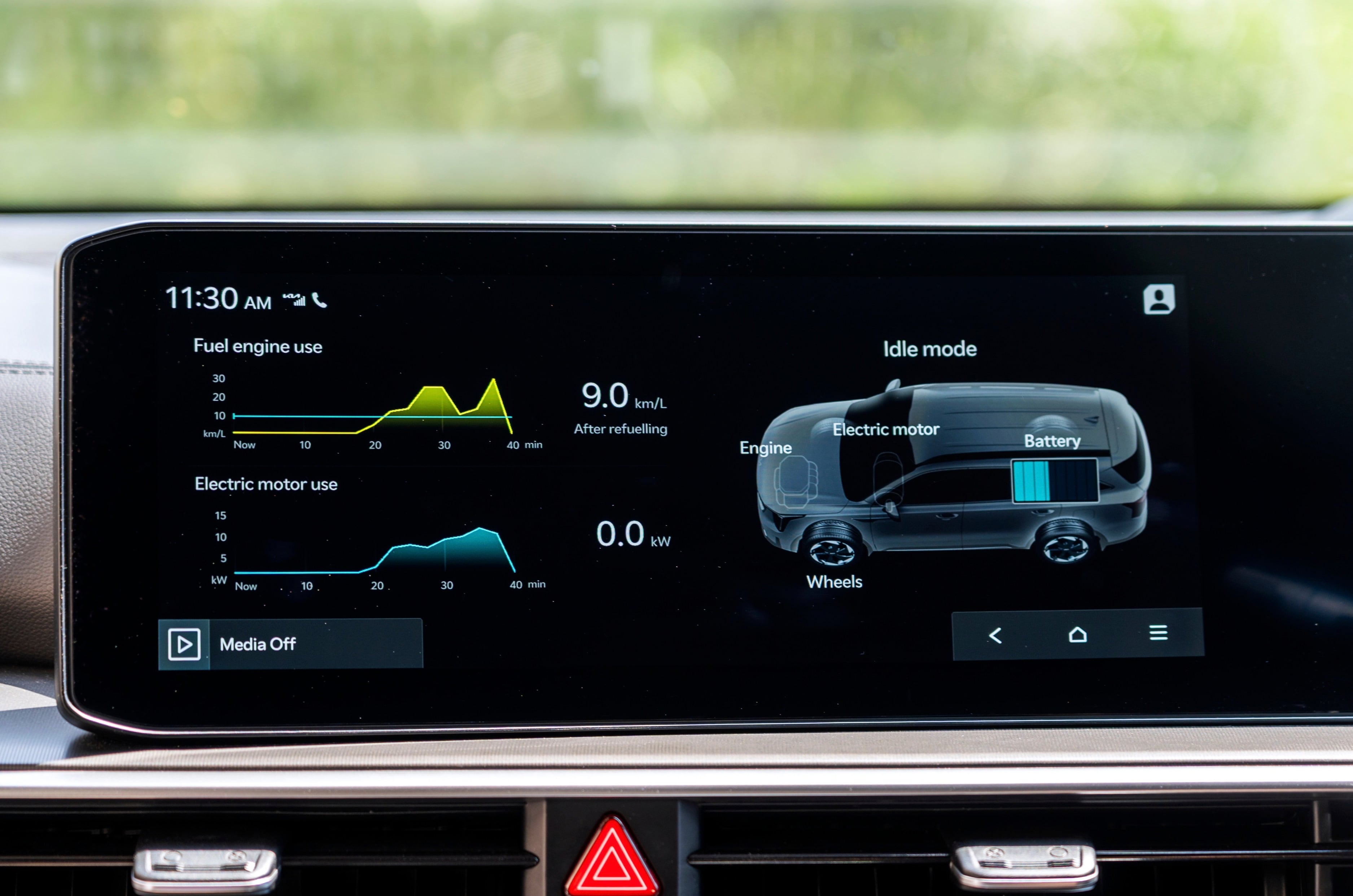
Hybrid variant gets exclusive data for power flow and efficiency.

As with its Hyundai cousins, the real ace is the software. The 12.3-inch infotainment system is logically laid out, menus are where you expect them to be, and getting to a feature takes a tap or two rather than a treasure hunt. Kia has also kept the climate controls off the main screen. They live on a touch-sensitive bar below it, with scrollers and a button that toggles the bar between air-con and infotainment shortcuts. It is a clever, space-saving solution, though you will occasionally find it in the wrong mode just when you need it.

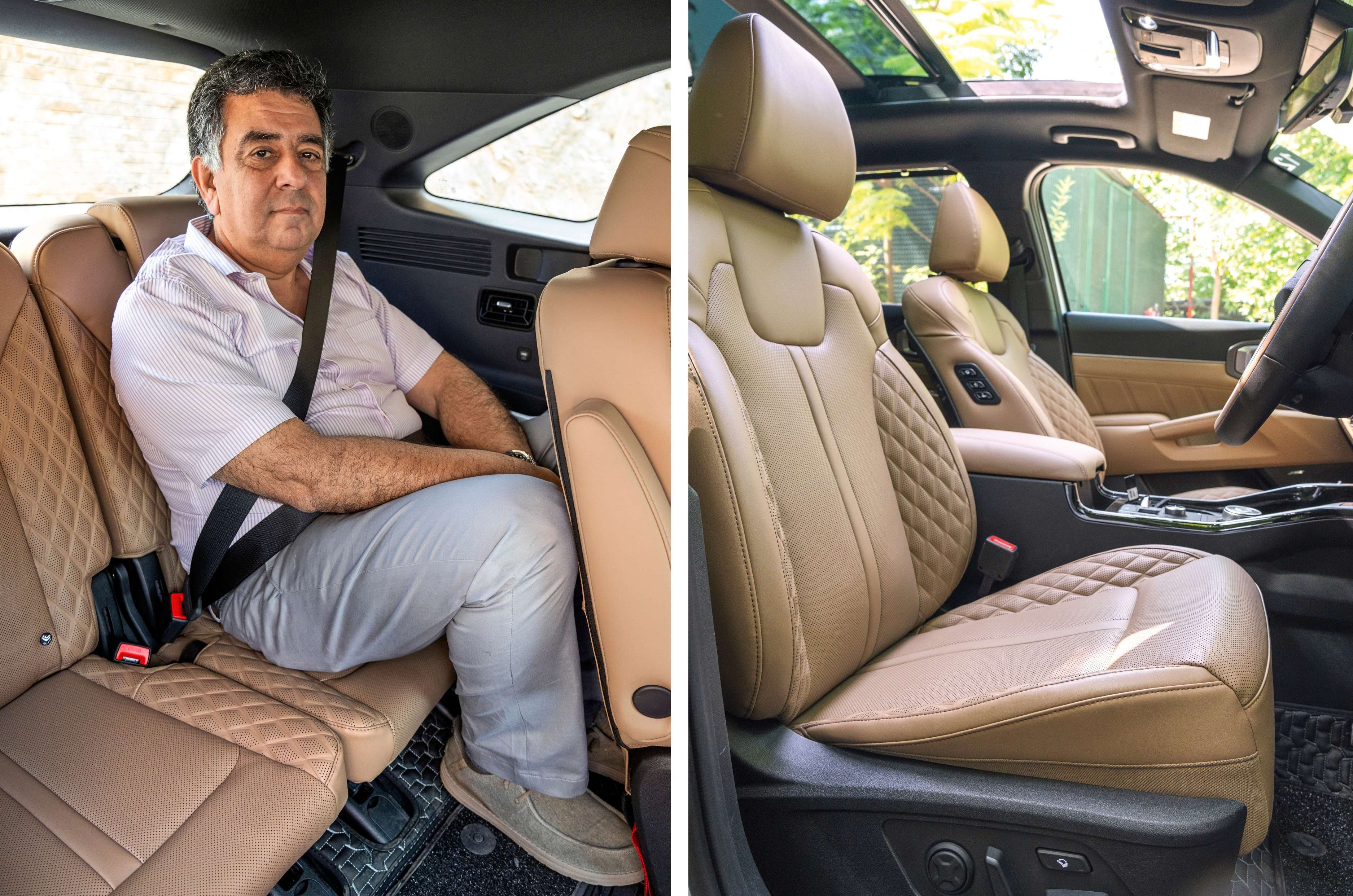
L: Third row seat placed on floor results in knees-up seating; best for children. R: Broad, supportive and well-cushioned front seats are electric and also get ventilation.

The front seats are fully powered, with 10-way adjustment, lumbar support and ventilation, and the passenger seat gets a boss mode so whoever sits behind can push it forward. Coming to the third row, access is easy. You can either walk through the gap between the captain chairs or press a button on the seat, which electrically slides and tilts it forward. Once there, the news is mixed. Legroom is better than you expect, but the seat base is mounted almost flat on the floor, so there is no under-thigh support and your knees point at the roof. Treat it as a space for children or short hops. At least the third row gets its own blower controls and USB ports.

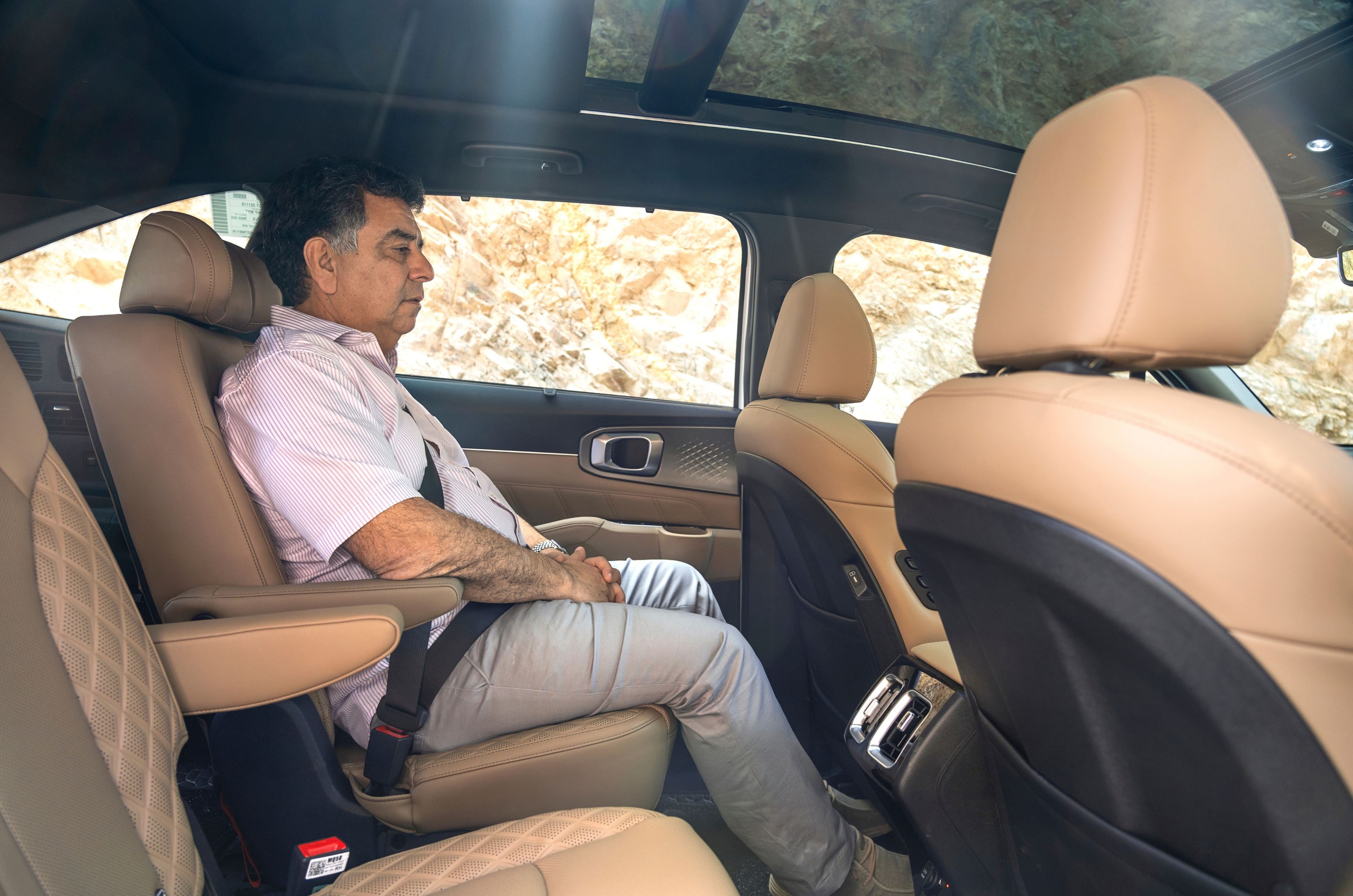
Spacious middle-row with ventilated and adjustable captain chairs; bench seat version also available.

One of the Sorento’s highlights, however, is the second-row experience. Our test car was the top HTX with six seats, and its second-row captain chairs are ventilated too, a rarity in this class. They are the best seats in the house. There is lots of legroom, a commanding view out and good under-thigh support, comparable to the Innova Hycross’s middle-row captain chairs, though the Toyota seats you a touch higher. A neat detail is the cupholder moulded into the door, up near the handle, where it is actually easy to reach.

kia sorento boot space unfolded
kia sorento boot space folded
 

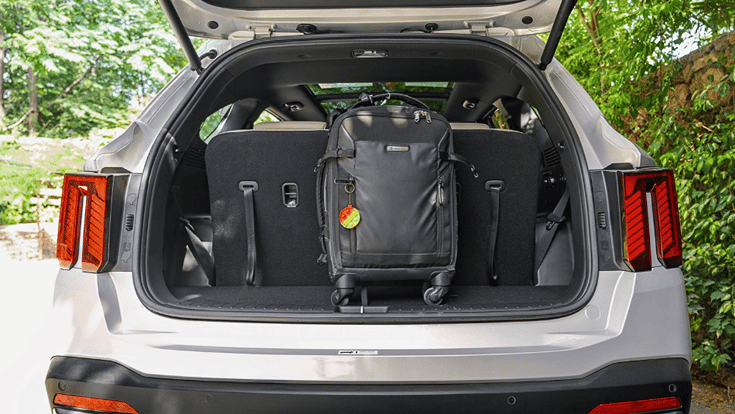
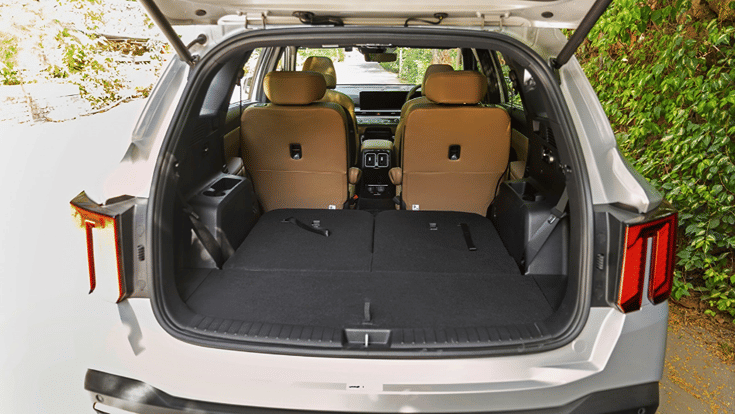
With all three rows up, the boot is a modest 179 litres; fold the third row and that grows to 813 litres. A full-size spare is welcome, but it is slung under the body, which is not the most convenient place to reach. Overhead, the massive panoramic roof floods the cabin with light and adds to the sense of space.

Kia Sorento features and technology

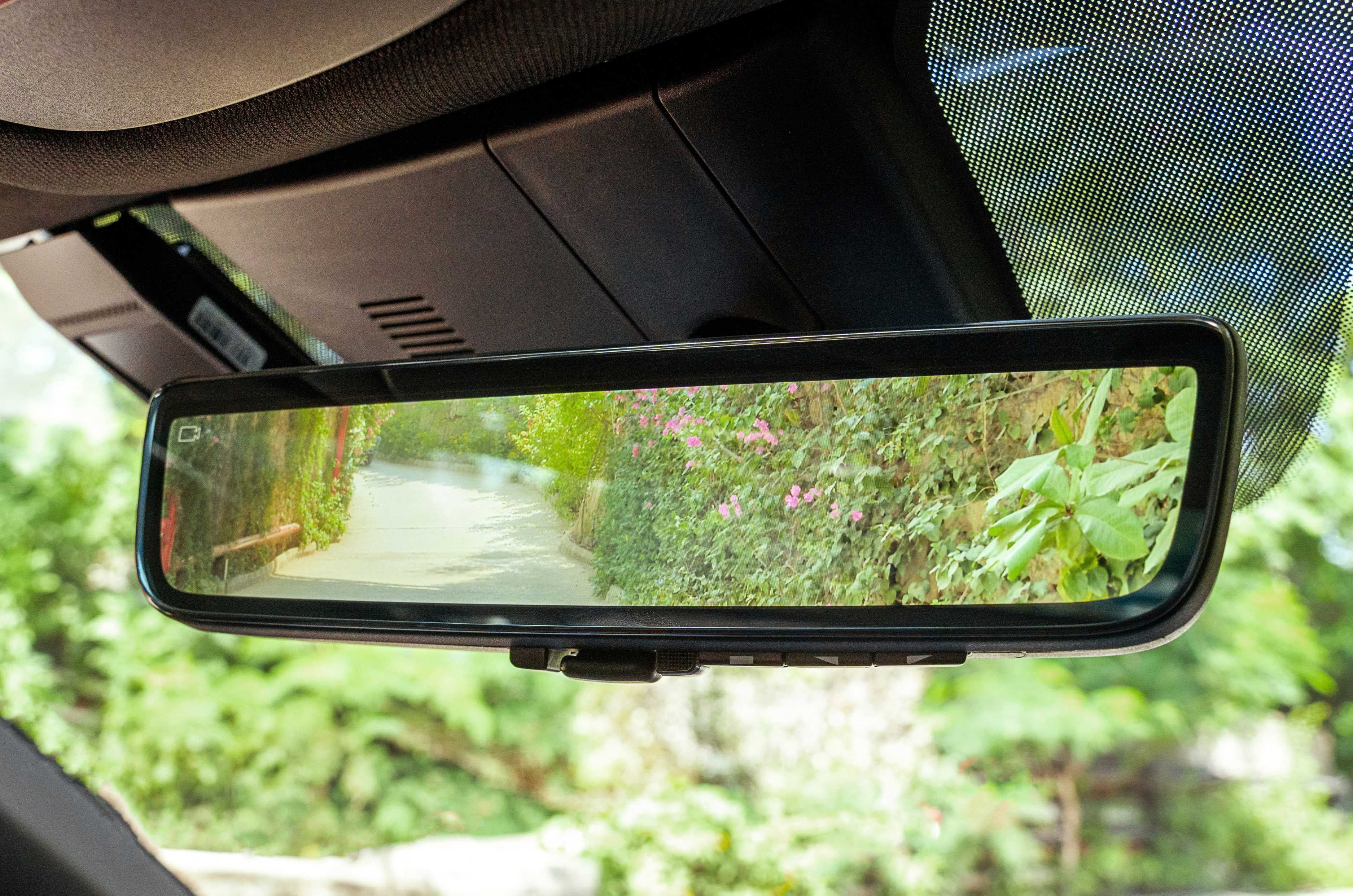
Digital IRVM offers excellent resolution and can be adjusted for level and brightness.

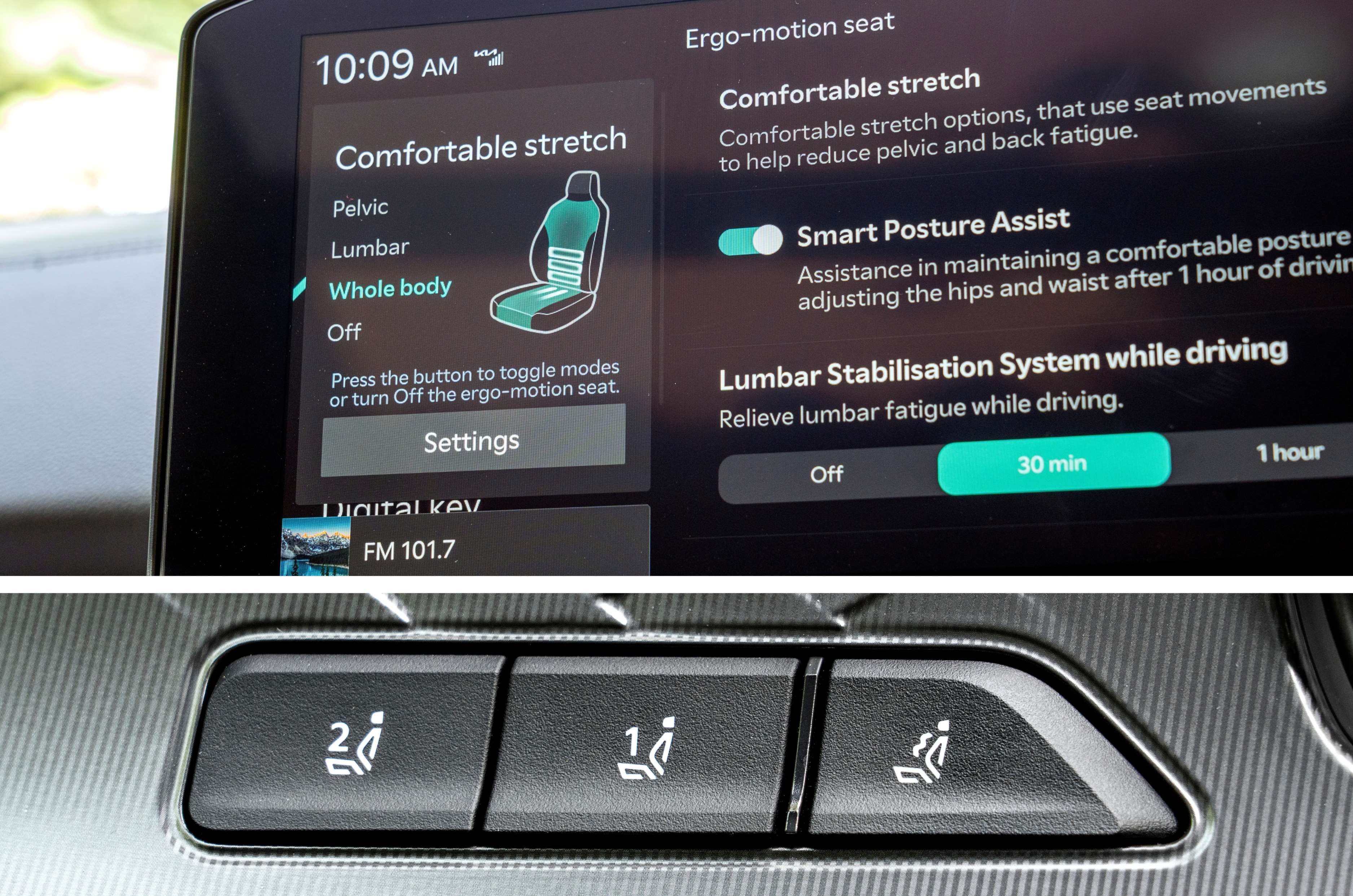
The equipment list is huge. In addition to the aforementioned 12.3-inch touchscreen, powered front seats, ventilated captain’s chairs, and panoramic sunroof, the Sorento comes packed with a 12.3-inch digital driver’s display, a head-up display, a 12-speaker Bose system, dual-zone climate control, a powered tailgate, rear-window sunshades, 64-colour ambient lighting and a digital rear-view mirror that flips back to a conventional one at the turn of a knob. The driver’s seat even gets an ‘ergo-motion’ mode that simulates a massage function by shifting the contours around.

Ergo mode for driver seat acts like a massage by moving the contours to avoid a stiff back on a long trip.

Safety is just as thorough, with 10 airbags, a 360-degree camera, front and rear dashcams, remote parking assist, TPMS and Level 2+ ADAS on the (A) trims. There is even real-time generative AI, a first for any Sorento globally.

Kia Sorento performance and refinement

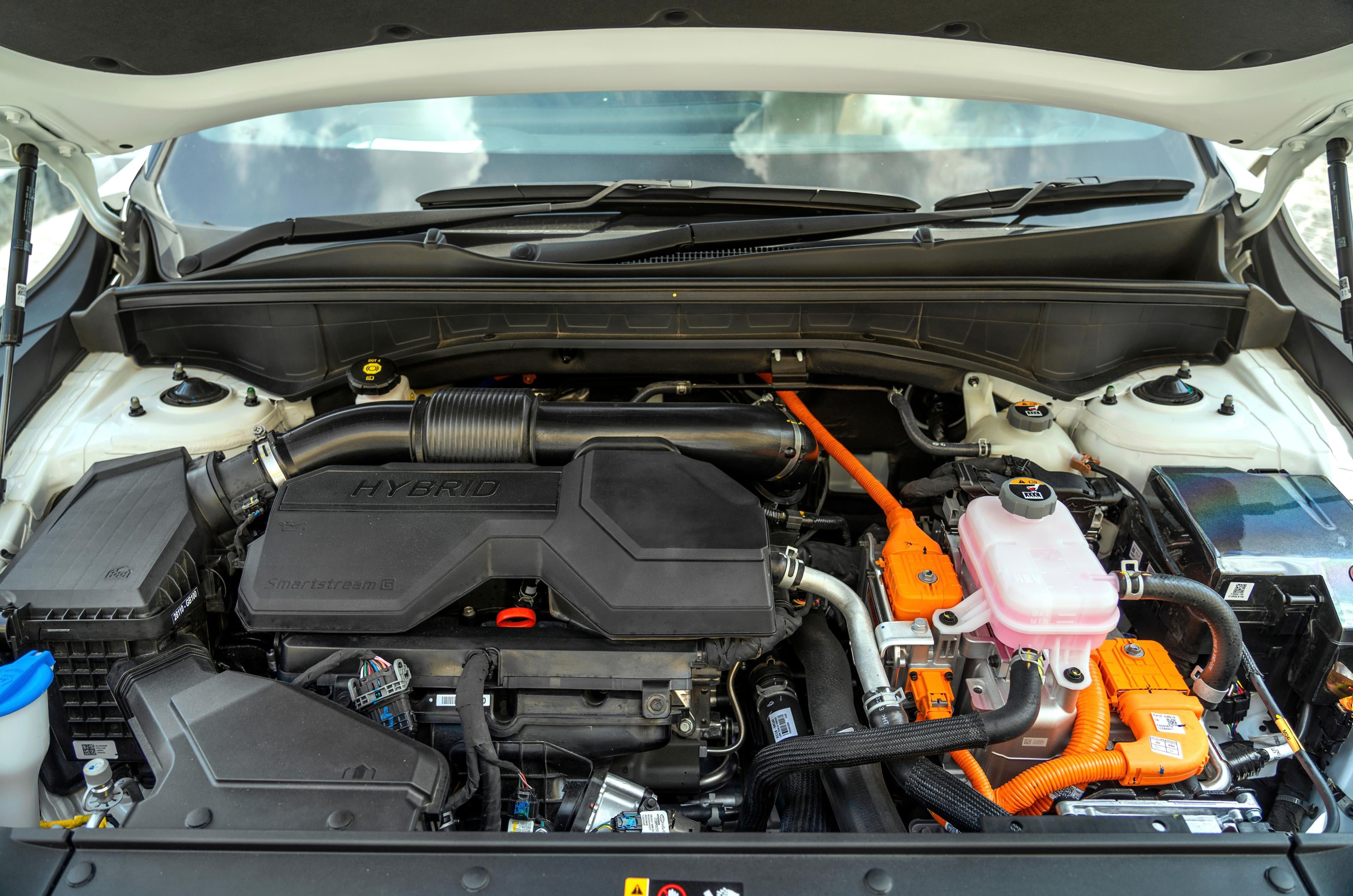
1.6-litre turbo-petrol engine paired with an electric motor and 6-speed torque converter automatic.

First up, the hybrid. Its 1.6-litre turbo-petrol makes 180hp and 265Nm, and the electric motor adds 65hp and 264Nm. The combined figure rating is 230hp and 380Nm of torque You can tell this the hybrid is the one for the city the moment you pull away, because the response is instant. It is well mated to the 6-speed torque-converter automatic, and the handover from electric to petrol power is close to seamless.

Hybrid variant is smooth in the city but gets noisy on the highway especially during overtakes.

The 1.49kWh battery lets it run in EV mode for a decent stretch at crawling speeds, and in stop-go traffic the hybrid makes eminent sense. Power delivery is refined, seamless and relaxing, and efficiency should be strong; The limitation is the motor itself. With only 65hp to shift a car weighing over two tonnes, it cannot do the heavy lifting on its own, so when you want to make quick progress the engine kicks in early. Push hard on the highway and the four-cylinder gets noisy and starts to run out of steam.

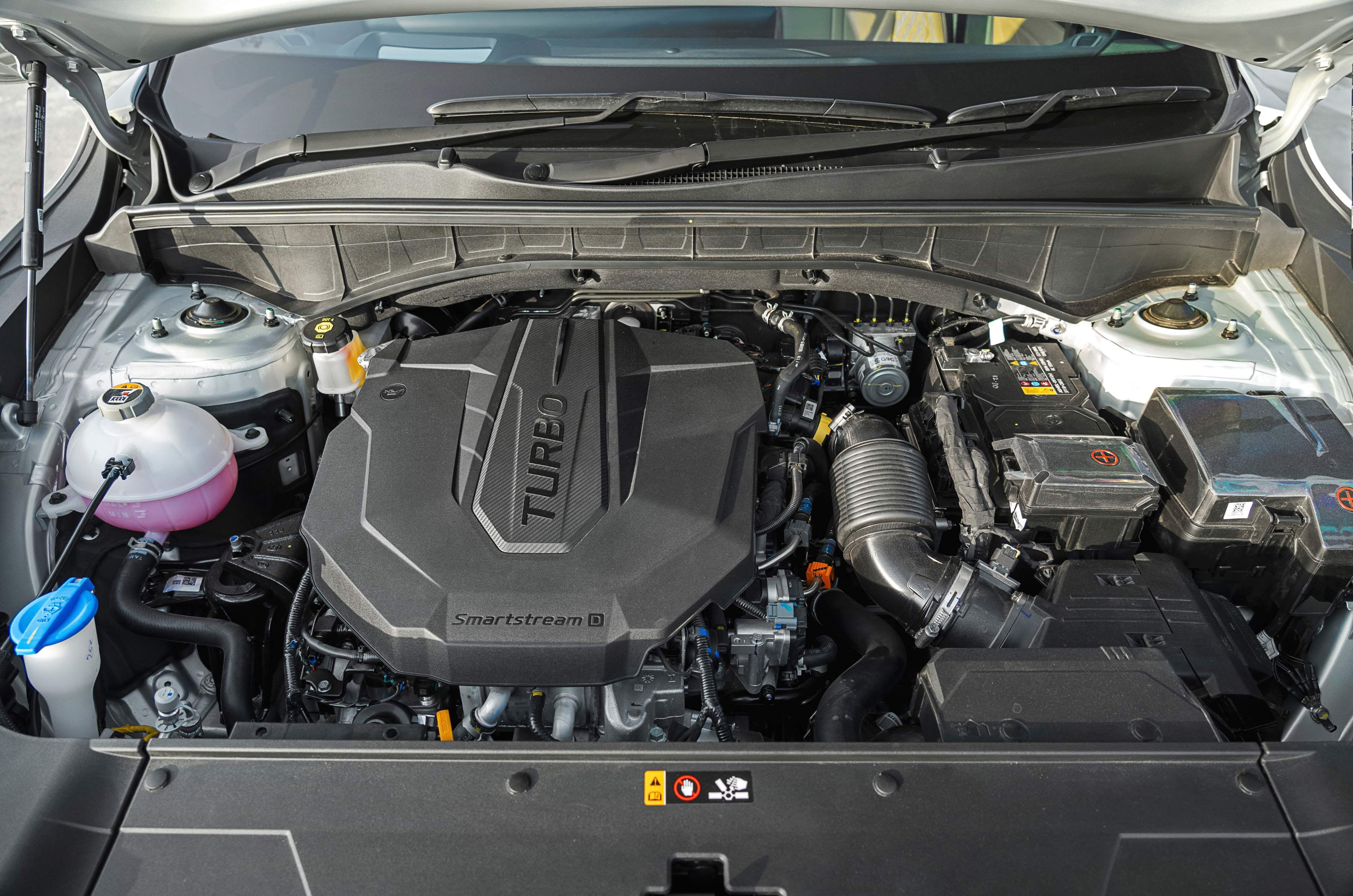
2.2-litre diesel engine makes 193hp mated to an 8-speed DCT and is the same unit seen on the Carnival.

Which is where the diesel comes in. The 2.2-litre is familiar from the Carnival, but it feels a lot sprightlier in the lighter Sorento. Its 193hp and 442Nm arrive in a strong, linear surge, and this is a fantastic, long-legged cruiser. Settle into eighth gear on an open highway and it simply lopes along, the engine barely working. It is also more tractable at low speeds than you might expect, pulling cleanly at part throttle from very low revs, so it can double as a city car, although its low-end response does not come close to the hybrid’s. It’s only when you floor it to dart through traffic that you experience a bit of hesitation, and its hear that you can use the paddle shifts to be in the right gear at the right time of the 8-speed DCT which comes as a pleasant surprise.

The diesel‘s strong torque and effortless cruising makes it perfect for long trips.

Rather than the snappy, slightly jerky shifts typical of dual-clutch boxes, this DCT slurs its changes almost like a torque converter, which adds to the smoothness of the whole package. The reason is that it is a wet-clutch unit, which also bodes well for durability in Indian traffic. The diesel is quite refined for the most part and its only when pushed hard that it gets audible and takes on a gruff note.

Both get drive modes; You can play with the Eco, Normal, Sport and Smart (or auto) modes in the diesel which alters the power delivery. In Sport, the throttle response is sharper and the default mode we liked whilst in Eco you can feel the response a bit dulled down. The Sorento Hybrid gets just Eco, Sport and Smart modes and in Eco mode EV running is prioritised. In addition, the AWD versions  get Snow, Sand and Mud terrain modes which we didn’t a get chance to fully experience.

Kia Sorento mileage

In terms of fuel efficiency, the hybrid is rated at a highly frugal 19.60kpl with front-wheel drive and 17.70kpl with AWD, while the diesel returns 17.66kpl and 15.79kpl respectively on the Indian test cycle. In real-world city driving the gap between the hybrid and diesel could be bigger, depending on traffic. On long cross-country runs, though, with extended stints of cruising in high gears, the diesel could well be the more frugal of the two.

Kia Sorento ride and handling

The Sorento’s ride comfort is simply outstanding, and it comes as a pleasant surprise. That’s because Kias have traditionally been stiffer sprung than their Hyundai cousins, but here Kia has clearly prioritised comfort over sportiness, and the suspension is on the soft side. The way it smothers bad roads at speed is remarkable. Around Udaipur, where several stretches are properly broken, we never once had to lift off for a bad patch. The car just soaked it up and kept going.

Ride quality is segment best and it is unfazed over broken roads.

The isolation it gives its passengers is shockingly good, and those tall-sidewall tyres deserve part of the credit. They do a fine job of rounding off sharp jolts and filtering out the high-frequency shocks that a suspension alone cannot fully absorb. At highway speeds there is a bit of body movement on the undulating bits but its not disconcerting and both versions feel stable and planted at high speeds, which matters in a car this tall.

Our HTX test cars came with AWD as standard. We did not get a chance to test its off-road ability properly, but on dirt roads it felt sure-footed and secure. A proper off-road test will reveal how capable the all-wheel-drive system, though we doubt owners will really want to test the Sorento’s off-road capability. 

Steering is light but lacks consistency and sharpness of European rivals.

The steering is less impressive. There is a dead zone around the straight-ahead position, and it does not feel as fluid or progressive as its European rivals’. The Volkswagen Tayron and Skoda Kodiaq are both dynamically sharper. One reason is because the Sorento rides taller too, as ground clearance has been raised from the global car’s 176mm to 208mm, and there is a touch of body roll when you push hard through corners.

But that misses the point. On balance, the Sorento’s ride and handling are superbly judged for the people who will buy it. Kia has done a fine job of understanding what a premium SUV buyer in India wants, and it has tailored the car accordingly.

Kia Sorento price and verdict

As a package, the Sorento hits it out of the park; rivals have a lot of catching up to do.

If the product does not win you over, the pricing certainly will. A starting price of Rs 27.99 lakh has set the cat amongst the pigeons, putting the Sorento within striking distance of the Mahindra XUV 7XO. And with its size, features and overall polish, the Sorento will not just nibble at the top end of the 7XO’s pie but with the Hybrid could also tempt a few Innova Hycross buyers. As for the Volkswagen Tayron and Skoda Kodiaq, the Sorento makes them look overpriced and underequipped.

The lower and mid variants are exceptional value. The top-end HTX, at Rs 37.49-40.19 lakh depending on fuel and seating, is pricey by comparison, around Rs 5 lakh more than an equivalent HTK, because it comes with AWD as standard. Here Kia has missed a trick. An HTX with two-wheel drive, a few lakh cheaper, would have been a far easier sell to the many buyers who want all the features and ventilated rear seats but will never leave the tarmac. That however is a small quibble that Kia can easily correct.

The lasting impression is that the Sorento feels premium, bordering on luxury. It is fantastically equipped, it rides beautifully, and it offers a choice of two powertrains that are each right for a distinct type of buyer. Most of all, it fits what the Indian SUV buyer actually wants with uncanny precision. Will Kia hit its target of 40,000 sales a year? That could be a tall order. But what there is no doubt about is that Kia has built another winner. 

All prices are ex-showroom, India.

LPG Cylinder Price: 3 अक्टूबर को LPG के नए रेट जारी, जानें आपके शहर में 14.2 किलो और 19 किलो सिलेंडर कितने का मिल रहा है

LPG Price 03 October 2026: अक्टूबर महीने की शुरुआत के साथ एलपीजी सिलेंडर की कीमतों में बदलाव किया गया है। तेल कंपनियों की ओर से जारी नए रेट में 19 किलो वाले कमर्शियल LPG सिलेंडर की कीमत बढ़ाई गई है, जबकि घरेलू उपभोक्ताओं के लिए इस्तेमाल होने वाले 14.2 किलो के सिलेंडर के दाम में कोई बदलाव नहीं हुआ है। ऐसे में घरेलू बजट पर फिलहाल अतिरिक्त बोझ नहीं पड़ा है, लेकिन होटल और रेस्तरां जैसे कारोबारों की लागत बढ़ गई है।

कमर्शियल LPG सिलेंडर पर बढ़ा बोझ

अक्टूबर की शुरुआत में सबसे बड़ा बदलाव कमर्शियल गैस सिलेंडर की कीमत में देखने को मिला। दिल्ली में 19 किलो का कमर्शियल सिलेंडर अब ₹2,810 में मिलेगा। सितंबर में इसकी कीमत ₹2,747.50 थी।इस तरह दिल्ली में कमर्शियल LPG सिलेंडर ₹62.50 महंगा हो गया है। कमर्शियल सिलेंडर का इस्तेमाल होटल, रेस्तरां, ढाबों और दूसरे व्यावसायिक प्रतिष्ठानों में बड़े पैमाने पर किया जाता है। इसलिए कीमत बढ़ने से इन कारोबारों के गैस खर्च में इजाफा हो सकता है।

घरेलू LPG सिलेंडर के दाम में कोई बदलाव नहीं

घरेलू उपभोक्ताओं के लिए अक्टूबर की शुरुआत में कीमतें स्थिर रखी गई हैं। 14.2 किलो के घरेलू LPG सिलेंडर की दिल्ली में कीमत ₹942 पर बनी हुई है। अन्य बड़े शहरों में भी घरेलू सिलेंडर के रेट में कोई नया बदलाव नहीं किया गया है। मुंबई में यह ₹941.50, कोलकाता में ₹968 और चेन्नई में ₹957.50 का है।

इन शहरों में कमर्शियल सिलेंडर के नए रेट

कमर्शियल LPG की कीमत अलग-अलग शहरों में अलग है। अक्टूबर में मुंबई में 19 किलो का सिलेंडर ₹2,763.50, जबकि कोलकाता में ₹2,946.50 का हो गया है। चेन्नई में कमर्शियल सिलेंडर की कीमत ₹2,978.50 है। वहीं बेंगलुरु में ₹2,893.50, हैदराबाद में ₹3,058.50 और रांची में ₹2,988 का रेट है।

घरेलू गैस के लिए कहां ज्यादा कीमत चुकानी होगी?

शहरवार आंकड़ों के मुताबिक रांची में 14.2 किलो के घरेलू LPG सिलेंडर की कीमत ₹1,010.50 है, जो इस सूची में सबसे अधिक है। हैदराबाद में घरेलू सिलेंडर ₹994 और कोलकाता में ₹968 का है।मुंबई में घरेलू LPG सिलेंडर ₹941.50 का है, जबकि दिल्ली में इसकी कीमत ₹942 है।

03 अक्टूबर के LPG रेट: एक नजर में

शहरघरेलू LPG सिलेंडरकमर्शियल LPG सिलेंडर
दिल्ली₹942₹2,810
मुंबई₹941.50₹2,763.50
कोलकाता₹968₹2,946.50
बेंगलुरु₹944.50₹2,893.50
हैदराबाद₹994₹3,058.50
चेन्नई₹957.50₹2,978.50
कटक₹968₹2,947.50
कोयंबटूर₹959₹3,002.50
रांची₹1,010.50₹2,988

हर महीने की शुरुआत में क्यों बदलते हैं LPG के रेट?

तेल कंपनियां आमतौर पर हर महीने की शुरुआत में LPG सिलेंडर की कीमतों की समीक्षा करती हैं। इसी समीक्षा के बाद घरेलू और कमर्शियल गैस के नए रेट जारी किए जाते हैं। अक्टूबर में जहां कमर्शियल LPG सिलेंडर की कीमतों में बढ़ोतरी हुई है, वहीं घरेलू 14.2 किलो वाले सिलेंडर के दाम को स्थिर रखा गया है। इसलिए इसका असर मुख्य रूप से व्यावसायिक इस्तेमाल करने वाले उपभोक्ताओं पर पड़ेगा, जबकि घरेलू ग्राहकों के लिए मौजूदा रेट बरकरार हैं।

Petrol Diesel Price Today: 03 अक्टूबर को पेट्रोल-डीजल के नए रेट जारी, जानें आपके शहर का भाव

LPG Price 02 October 2026: 2 अक्टूबर को गैस सिलेंडर के नए रेट जारी, जानें दिल्ली-मुंबई समेत सभी शहरों के भाव

LPG Price 02 October 2026: अक्टूबर शुरू होते ही एलपीजी सिलेंडर को लेकर नया अपडेट सामने आया है। तेल कंपनियों ने महीने की शुरुआत में गैस की कीमतों में बदलाव किया है, लेकिन इसका असर हर उपभोक्ता पर एक जैसा नहीं पड़ा। 19 किलो वाले कमर्शियल सिलेंडर की कीमत बढ़ाई गई है, जबकि 14.2 किलो वाले घरेलू सिलेंडर के रेट में कोई बदलाव नहीं किया गया।

होटल-रेस्तरां के लिए बढ़ी लागत

इस महीने की सबसे बड़ी हलचल कमर्शियल एलपीजी सिलेंडर के दाम में देखने को मिली है। दिल्ली में 19 किलो वाला सिलेंडर अब ₹2,810 का हो गया है। सितंबर में यही सिलेंडर ₹2,747.50 में उपलब्ध था। यानी कीमत में ₹62.50 की बढ़ोतरी हुई है।

कमर्शियल सिलेंडर का इस्तेमाल मुख्य रूप से होटल, रेस्तरां और अन्य व्यावसायिक जगहों पर होता है, इसलिए बढ़े हुए दाम का सीधा असर इन कारोबारों की गैस लागत पर पड़ सकता है।

घरेलू गैस की कीमत फिलहाल जस की तस

आम परिवारों के लिए अक्टूबर की शुरुआत राहत वाली रही है। 14.2 किलो वाले घरेलू एलपीजी सिलेंडर के दाम में कोई बदलाव नहीं किया गया। दिल्ली में यह अभी भी ₹942 का है।

मुंबई में घरेलू सिलेंडर ₹941.50, कोलकाता में ₹968 और चेन्नई में ₹957.50 में मिल रहा है।

बड़े शहरों में कमर्शियल गैस के रेट

शहरों के हिसाब से कमर्शियल सिलेंडर की कीमत अलग-अलग है। मुंबई में 19 किलो वाला सिलेंडर ₹2,763.50 और कोलकाता में ₹2,946.50 का है। चेन्नई में इसकी कीमत ₹2,978.50 पहुंच गई है।

बेंगलुरु में कमर्शियल सिलेंडर ₹2,893.50, हैदराबाद में ₹3,058.50 और रांची में ₹2,988 का मिल रहा है।

कहां घरेलू सिलेंडर सबसे ज्यादा कीमत पर?

उपलब्ध शहरों के रेट पर नजर डालें तो रांची में 14.2 किलो के घरेलू सिलेंडर की कीमत ₹1,010.50 है। हैदराबाद में यह ₹994 और कोलकाता में ₹968 का है। वहीं मुंबई में घरेलू सिलेंडर ₹941.50 के साथ इन शहरों में अपेक्षाकृत कम कीमत पर है।

अक्टूबर के LPG रेट एक नजर में

शहरघरेलू LPGकमर्शियल LPG
दिल्ली₹942₹2,810
मुंबई₹941.50₹2,763.50
कोलकाता₹968₹2,946.50
बेंगलुरु₹944.50₹2,893.50
हैदराबाद₹994₹3,058.50
चेन्नई₹957.50₹2,978.50
कटक₹968₹2,947.50
कोयंबटूर₹959₹3,002.50
रांची₹1,010.50₹2,988

हर महीने की पहली तारीख क्यों अहम होती है?

एलपीजी की कीमतों की समीक्षा आमतौर पर हर महीने की शुरुआत में की जाती है। इसी दौरान तेल कंपनियां घरेलू और कमर्शियल सिलेंडर के नए रेट घोषित करती हैं। अक्टूबर में भी यही प्रक्रिया हुई, जिसमें कमर्शियल सिलेंडर महंगा हुआ, लेकिन घरेलू गैस की कीमतों को स्थिर रखा गया।

Petrol Diesel Price Today: 2 अक्टूबर को जारी हुए पेट्रोल-डीजल के नए रेट, जानें आपके शहर में आज का भाव

Petrol Diesel Price Today: 2 अक्टूबर को जारी हुए पेट्रोल-डीजल के नए रेट, जानें आपके शहर में आज का भाव

Petrol Diesel Price Today: हर दिन की शुरुआत सिर्फ सूरज की किरणों से नहीं होती, बल्कि पेट्रोल और डीजल की नई कीमतों से भी होती है, जो आम आदमी की जेब पर सीधा असर डालती हैं। सुबह 6 बजे देश की तेल विपणन कंपनियां (OMCs) ताजा दरें जारी करती हैं, जो अंतरराष्ट्रीय बाजार में कच्चे तेल की कीमतों और डॉलर-रुपए की विनिमय दर में आए बदलावों पर आधारित होती हैं। ये बदलाव रोजमर्रा की जिंदगी को प्रभावित करते हैं, चाहे वो ऑफिस जाने वाला व्यक्ति हो या फल-सब्जी बेचने वाला व्यापारी।

ऐसे में हर दिन की कीमतों की जानकारी रखना सिर्फ जरूरी ही नहीं, बल्कि समझदारी भी है। सरकार की यह प्रणाली पारदर्शिता सुनिश्चित करती है ताकि उपभोक्ताओं को किसी तरह की भ्रमित जानकारी न मिले।

आपके शहर में आज का पेट्रोल-डीजल का भाव

ये रहे 02 अक्टूबर 2026 के प्रमुख शहरों के पेट्रोल-डीजल के ताजा रेट

नई दिल्ली: पेट्रोल ₹102.12 प्रति लीटर और डीजल ₹95.20 प्रति लीटर।

मुंबई: पेट्रोल ₹111.18 और डीजल ₹97.83 प्रति लीटर।

कोलकाता: पेट्रोल ₹113.47 जबकि डीजल ₹99.82 प्रति लीटर।

चेन्नई: पेट्रोल ₹107.77 और डीजल ₹99.55 प्रति लीटर।

गुरुग्राम: पेट्रोल ₹102.77 तथा डीजल ₹95.44 प्रति लीटर।

नोएडा: पेट्रोल ₹102.12 और डीजल ₹95.56 प्रति लीटर।

बेंगलुरु: पेट्रोल ₹110.93 जबकि डीजल ₹98.80 प्रति लीटर।

भुवनेश्वर: पेट्रोल ₹109.92 और डीजल ₹100.92 प्रति लीटर।

चंडीगढ़: पेट्रोल ₹98.10 तथा डीजल ₹86.09 प्रति लीटर।

हैदराबाद: पेट्रोल ₹115.69 और डीजल ₹103.82 प्रति लीटर।

जयपुर: पेट्रोल ₹112.66 जबकि डीजल ₹97.78 प्रति लीटर।

लखनऊ: पेट्रोल ₹102.05 और डीजल ₹95.55 प्रति लीटर।

पटना: पेट्रोल ₹113.35 तथा डीजल ₹99.36 प्रति लीटर।

तिरुवनंतपुरम: पेट्रोल ₹115.49 और डीजल ₹104.40 प्रति लीटर।

पिछले दो साल से स्थिर क्यों हैं कीमतें?

मई 2022 के बाद से केंद्र और कई राज्यों द्वारा टैक्स में कटौती की गई, जिसके बाद पेट्रोल-डीजल की कीमतों में स्थिरता देखी जा रही है। हालांकि अंतरराष्ट्रीय बाजार में उतार-चढ़ाव होता रहता है, फिर भी भारतीय उपभोक्ताओं के लिए कीमतें तुलनात्मक रूप से स्थिर बनी हुई हैं।

किन कारणों से तय होती हैं ईंधन की कीमतें?

  1. कच्चे तेल की कीमतें:

पेट्रोल और डीजल का उत्पादन मुख्य रूप से कच्चे तेल से होता है। जब अंतरराष्ट्रीय स्तर पर कच्चे तेल की कीमतें बढ़ती हैं, तो इसका असर सीधे भारतीय बाजार पर पड़ता है।

  1. डॉलर के मुकाबले रुपया:

भारत अधिकतर कच्चा तेल आयात करता है, और यह डॉलर में खरीदा जाता है। यदि रुपया कमजोर होता है, तो ईंधन महंगा हो जाता है।

  1. सरकारी टैक्स और शुल्क:

केंद्र और राज्य सरकारें पेट्रोल-डीजल पर भारी टैक्स लगाती हैं, जो खुदरा मूल्य का बड़ा हिस्सा होते हैं। यही कारण है कि राज्यों में कीमतों में अंतर होता है।

  1. रिफाइनिंग की लागत:

कच्चे तेल को इस्तेमाल लायक बनाने की प्रक्रिया (रिफाइनिंग) में भी खर्च होता है। ये लागत कच्चे तेल की गुणवत्ता और रिफाइनरी की क्षमता पर निर्भर करती है।

  1. मांग और आपूर्ति का संतुलन:

बाजार में ईंधन की मांग अगर बढ़ जाती है, तो कीमतें भी ऊपर जाने लगती हैं। खासकर त्योहारों, गर्मी या सर्दी के मौसम में ईंधन की खपत ज्यादा होती है।

कैसे करें अपने शहर की कीमतें SMS से चेक?

अगर आप मोबाइल से ईंधन की कीमत जानना चाहते हैं, तो ये प्रक्रिया आसान है:

Indian Oil ग्राहक: अपने शहर का कोड टाइप करें और उसे “RSP” के साथ 9224992249 पर भेजें।

BPCL ग्राहक: “RSP” लिखकर 9223112222 पर भेजें।

HPCL ग्राहक: “HP Price” लिखकर 9222201122 पर भेजें।

Jeep Compass discounts go up to Rs 1.5 lakh in October 2026

Jeep Compass discounts go up to Rs 1.5 lakh in October 2026
jeep compass in showroom

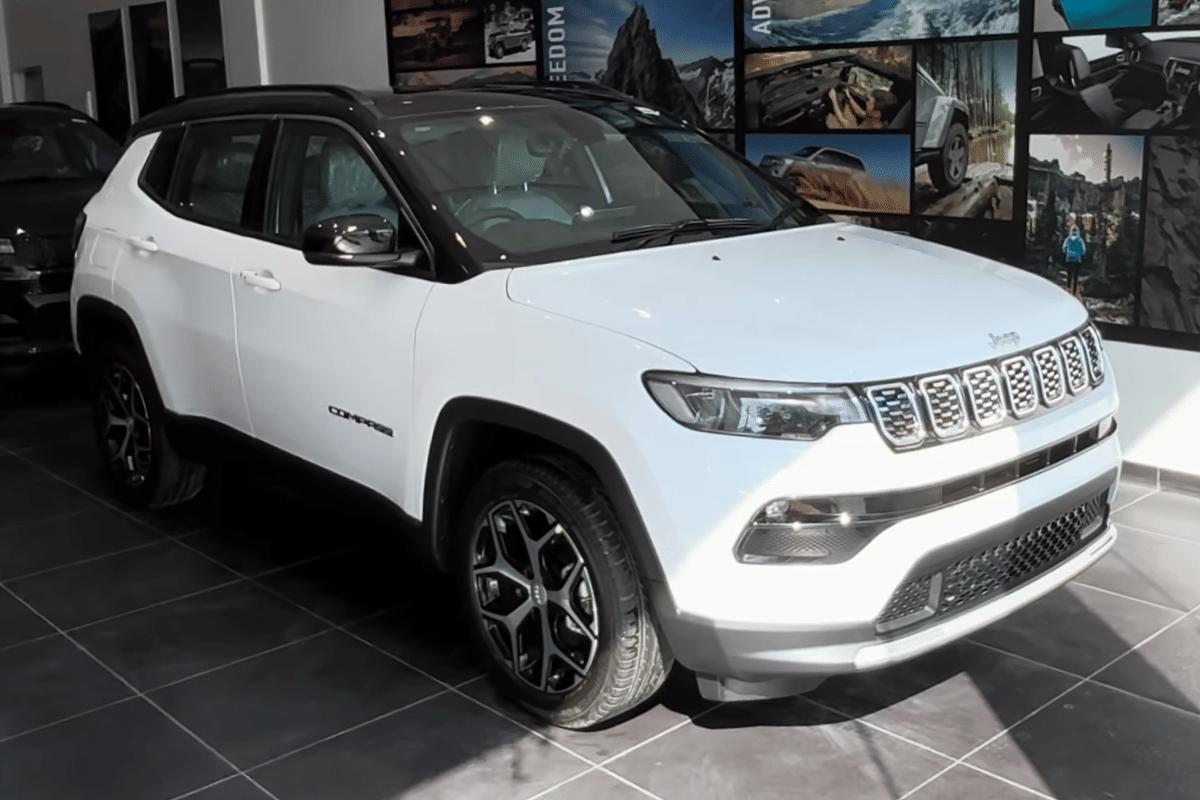
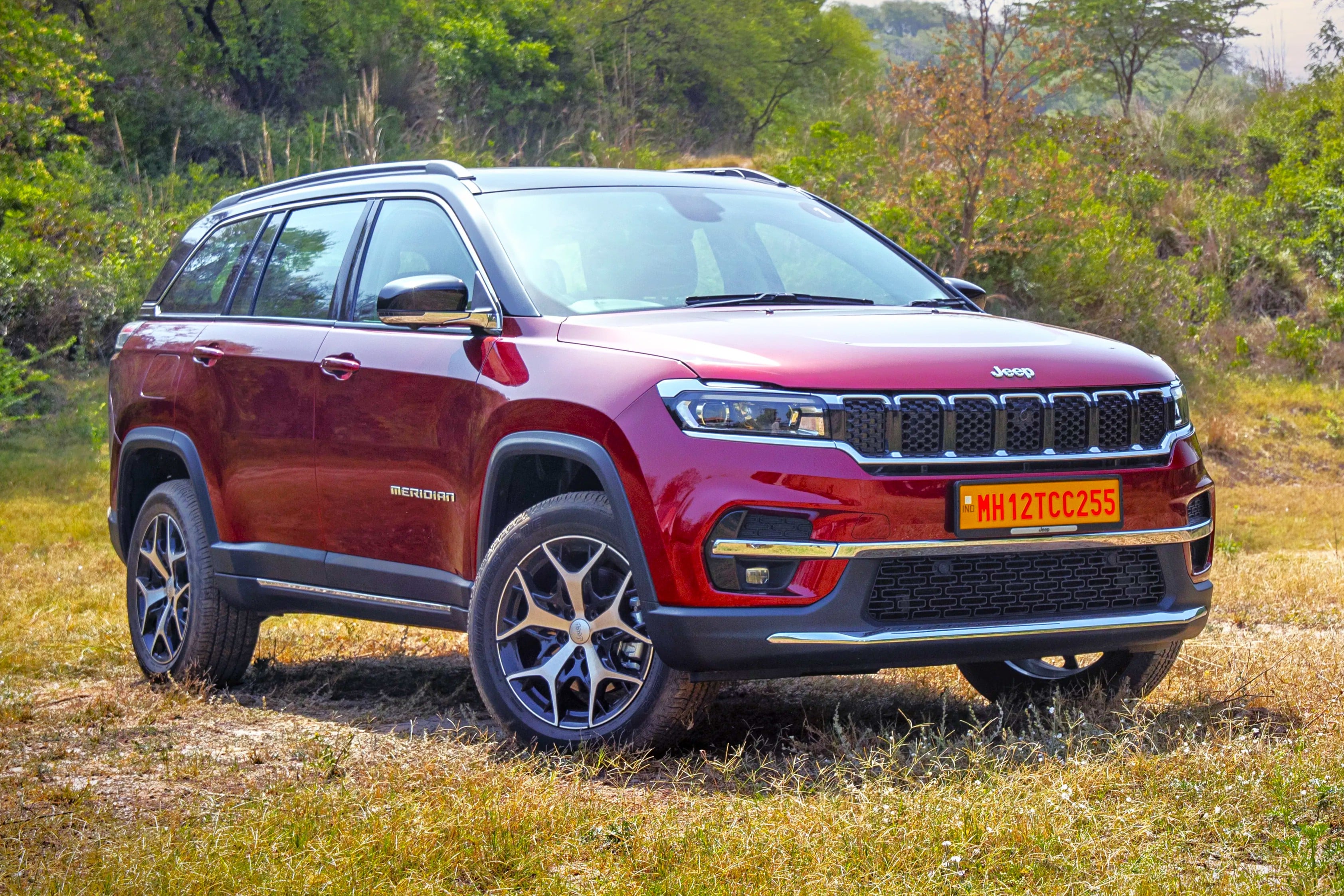
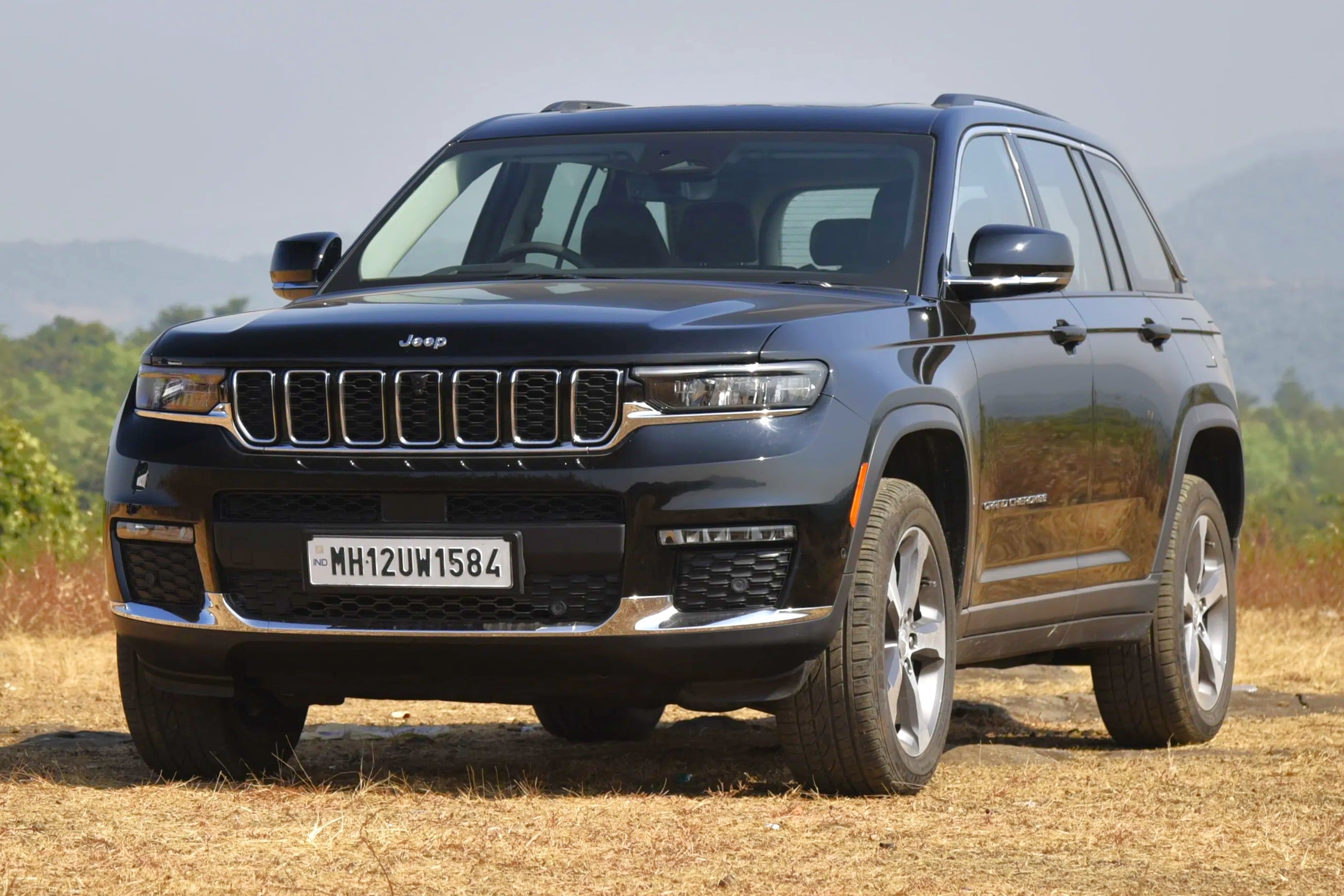
Jeep India is offering compelling benefits on the Compass, Meridian, and Grand Cherokee throughout October. These benefits include consumer discounts, corporate offers, and other special incentives. Prospective buyers interested in the Wrangler should note that there are no benefits available for the off-roader this month.

Disclaimer: Discounts vary from city to city and are subject to stock availability. Please check with your local nearest Jeep dealership for the exact figures.

Jeep Compass discounts in October 2026

Up to Rs 1.5 lakh

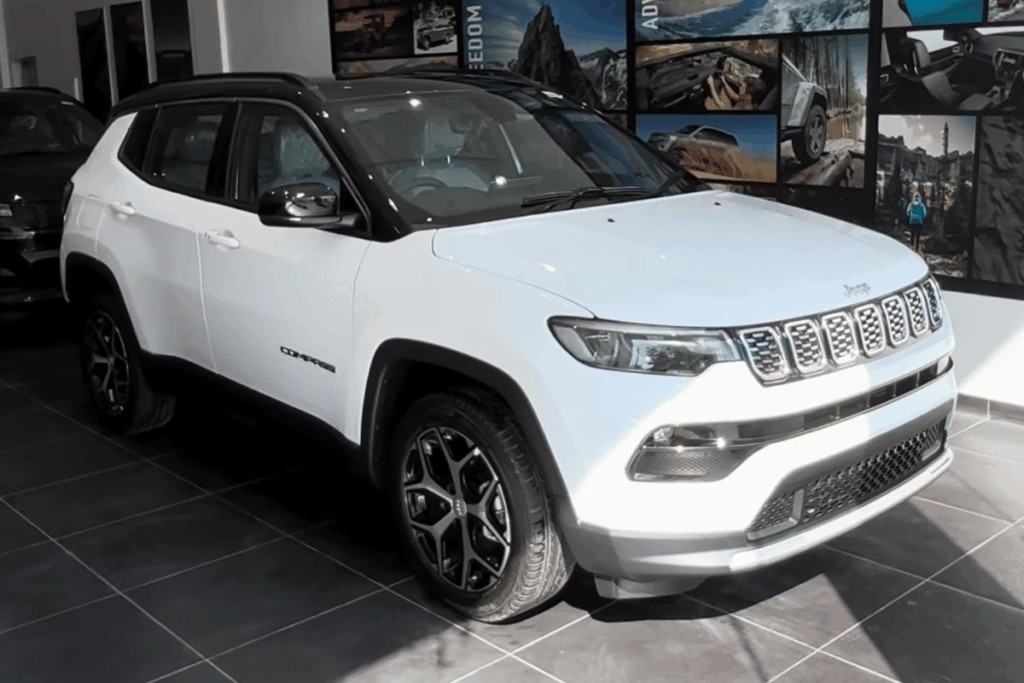
Certain variants of Jeep’s entry-level model, the Compass, can be purchased with benefits of up to Rs 1.5 lakh this month. Corporate benefits of up to Rs 1.1 lakh are also available for select companies, and doctors and leasing companies can avail an additional Rs 15,000 benefit. The Compass is powered by a 170hp 2.0-litre four-cylinder diesel engine, which can be paired with either a 6-speed manual or a 9-speed torque converter automatic. Jeep offers the Compass with 4×4 in higher trim levels as well. Prices for the Compass start at Rs 17.99 lakh and top off at Rs 30.70 lakh.

Jeep Meridian discounts in October 2026

Up to Rs 1.65 lakh

Benefits on select variants of the Meridian three-row SUV climb up to Rs 1.65 lakh in October, and buyers of MY24 units can also take advantage of corporate offers ranging up to Rs 1.3 lakh. Doctors and leasing companies can additionally secure benefits of up to Rs 30,000. Mechanically, the Meridian and Compass are almost identical, so you get a 170hp 2.0-litre diesel engine, 6-speed manual and 9-speed automatic gearboxes, and the option of 4×4 in higher trims. The Meridian price range is Rs 23.33 lakh to Rs 38.26 lakh.

Jeep Grand Cherokee discounts in October 2026

Up to Rs 4 lakh

Jeep’s flagship SUV, the Grand Cherokee, offers the highest discounts this month. Buyers can avail up to Rs 4 lakh in benefits, along with free access to the Jeep Wave Exclusive ownership programme, which combines aftersales benefits like a three-year warranty pack, express servicing, adventure concierge services, and more. Jeep sells the Grand Cherokee in only one variant, which is powered by a 272hp 2.0-litre four-cylinder direct-injection turbo-petrol engine paired with an 8-speed automatic gearbox and 4×4. The Jeep Grand Cherokee is priced at Rs 63 lakh.

All prices are ex-showroom, India.