LPG Price 27 September 2026: महीने के अंत में LPG Cylinder Price को लेकर आम लोगों के लिए राहत की खबर सामने आई है। 27 सितंबर 2026 को घरेलू और कमर्शियल गैस सिलेंडर की कीमतों में कोई बदलाव नहीं किया गया है। यानी इस महीने के आखिरी दिनों में ग्राहकों को सिलेंडर के लिए पहले से ज्यादा पैसे खर्च नहीं करने होंगे। 14.2 किलो वाला घरेलू LPG सिलेंडर और 19 किलो वाला कमर्शियल सिलेंडर पुराने रेट पर ही उपलब्ध रहेगा। अगर आप आज गैस सिलेंडर बुक करने की सोच रहे हैं, तो अपने शहर की कीमत जरूर चेक कर लें।
अलग-अलग शहरों में LPG के दाम अलग हो सकते हैं। ऐसे में दिल्ली, मुंबई, कोलकाता, चेन्नई, बेंगलुरु समेत प्रमुख शहरों में घरेलू और कमर्शियल सिलेंडर की आज की कीमत क्या है, यह जानना जरूरी है। नीचे शहरवार दोनों सिलेंडर के ताजा रेट एक साथ दिए गए हैं, जिससे आपको बुकिंग से पहले सही कीमत जानने में आसानी होगी।
दिल्ली समेत बड़े शहरों में आज कितनी है कीमत?
अगर आप आज गैस सिलेंडर बुक करने की तैयारी कर रहे हैं, तो अपने शहर का ताजा रेट जानना जरूरी है। अलग-अलग शहरों में घरेलू और कमर्शियल LPG की कीमतें अलग हैं।
शहर
घरेलू सिलेंडर (14.2 किलो)
कमर्शियल सिलेंडर (19 किलो)
दिल्ली
₹942
₹2,747.50
मुंबई
₹941.50
₹2,701
कोलकाता
₹968
₹2,884
चेन्नई
₹957.50
₹2,916.50
बेंगलुरु
₹944.50
₹2,831
हैदराबाद
₹994
₹2,996
जयपुर
₹945.50
₹2,776
नोएडा
₹939.50
₹2,747.50
गुरुग्राम
₹950.50
₹2,764.50
चंडीगढ़
₹951.50
₹2,769.50
दिल्ली में घरेलू और कमर्शियल सिलेंडर का रेट
राजधानी दिल्ली में 14.2 किलो का घरेलू LPG सिलेंडर ₹942 में मिल रहा है। वहीं 19 किलो वाले कमर्शियल सिलेंडर की कीमत ₹2,747.50 है। यानी दोनों श्रेणियों के सिलेंडर के दाम में बड़ा अंतर बना हुआ है।
आपके शहर में अलग क्यों हो सकती है कीमत?
LPG सिलेंडर की कीमत सभी शहरों में एक जैसी नहीं होती। स्थानीय टैक्स, परिवहन और डिलीवरी से जुड़े खर्चों के कारण अलग-अलग जगहों पर रेट में अंतर देखने को मिलता है। इसी वजह से सिलेंडर बुक करने से पहले अपने शहर की कीमत जांच लेना बेहतर रहता है।
हर महीने क्यों बदलते हैं LPG के दाम?
तेल कंपनियां LPG की कीमतों की समीक्षा करते समय अंतरराष्ट्रीय बाजार में कच्चे तेल और गैस की कीमत, रुपये की विनिमय दर तथा अन्य लागतों को ध्यान में रखती हैं। इसी आधार पर महीने की शुरुआत में कीमतों में बदलाव किया जा सकता है। हालांकि, हर महीने दाम बढ़ना या घटना जरूरी नहीं है।
Petrol Diesel Price Today: हर दिन की शुरुआत सिर्फ सूरज की किरणों से नहीं होती, बल्कि पेट्रोल और डीजल की नई कीमतों से भी होती है, जो आम आदमी की जेब पर सीधा असर डालती हैं। सुबह 6 बजे देश की तेल विपणन कंपनियां (OMCs) ताजा दरें जारी करती हैं, जो अंतरराष्ट्रीय बाजार में कच्चे तेल की कीमतों और डॉलर-रुपए की विनिमय दर में आए बदलावों पर आधारित होती हैं। ये बदलाव रोजमर्रा की जिंदगी को प्रभावित करते हैं, चाहे वो ऑफिस जाने वाला व्यक्ति हो या फल-सब्जी बेचने वाला व्यापारी।
ऐसे में हर दिन की कीमतों की जानकारी रखना सिर्फ जरूरी ही नहीं, बल्कि समझदारी भी है। सरकार की यह प्रणाली पारदर्शिता सुनिश्चित करती है ताकि उपभोक्ताओं को किसी तरह की भ्रमित जानकारी न मिले।
आपके शहर में आज का पेट्रोल-डीजल का भाव
ये रहे 27 सितंबर 2026 के प्रमुख शहरों के पेट्रोल-डीजल के ताजा रेट
नई दिल्ली: पेट्रोल ₹102.12 प्रति लीटर और डीजल ₹95.20 प्रति लीटर।
मुंबई: पेट्रोल ₹111.18 और डीजल ₹97.83 प्रति लीटर।
कोलकाता: पेट्रोल ₹113.47 जबकि डीजल ₹99.82 प्रति लीटर।
चेन्नई: पेट्रोल ₹107.77 और डीजल ₹99.55 प्रति लीटर।
गुरुग्राम: पेट्रोल ₹102.77 तथा डीजल ₹95.44 प्रति लीटर।
नोएडा: पेट्रोल ₹102.12 और डीजल ₹95.56 प्रति लीटर।
बेंगलुरु: पेट्रोल ₹110.93 जबकि डीजल ₹98.80 प्रति लीटर।
भुवनेश्वर: पेट्रोल ₹109.92 और डीजल ₹100.92 प्रति लीटर।
चंडीगढ़: पेट्रोल ₹98.10 तथा डीजल ₹86.09 प्रति लीटर।
हैदराबाद: पेट्रोल ₹115.69 और डीजल ₹103.82 प्रति लीटर।
जयपुर: पेट्रोल ₹112.66 जबकि डीजल ₹97.78 प्रति लीटर।
लखनऊ: पेट्रोल ₹102.05 और डीजल ₹95.55 प्रति लीटर।
पटना: पेट्रोल ₹113.35 तथा डीजल ₹99.36 प्रति लीटर।
तिरुवनंतपुरम: पेट्रोल ₹115.49 और डीजल ₹104.40 प्रति लीटर।
पिछले दो साल से स्थिर क्यों हैं कीमतें?
मई 2022 के बाद से केंद्र और कई राज्यों द्वारा टैक्स में कटौती की गई, जिसके बाद पेट्रोल-डीजल की कीमतों में स्थिरता देखी जा रही है। हालांकि अंतरराष्ट्रीय बाजार में उतार-चढ़ाव होता रहता है, फिर भी भारतीय उपभोक्ताओं के लिए कीमतें तुलनात्मक रूप से स्थिर बनी हुई हैं।
किन कारणों से तय होती हैं ईंधन की कीमतें?
कच्चे तेल की कीमतें:
पेट्रोल और डीजल का उत्पादन मुख्य रूप से कच्चे तेल से होता है। जब अंतरराष्ट्रीय स्तर पर कच्चे तेल की कीमतें बढ़ती हैं, तो इसका असर सीधे भारतीय बाजार पर पड़ता है।
डॉलर के मुकाबले रुपया:
भारत अधिकतर कच्चा तेल आयात करता है, और यह डॉलर में खरीदा जाता है। यदि रुपया कमजोर होता है, तो ईंधन महंगा हो जाता है।
सरकारी टैक्स और शुल्क:
केंद्र और राज्य सरकारें पेट्रोल-डीजल पर भारी टैक्स लगाती हैं, जो खुदरा मूल्य का बड़ा हिस्सा होते हैं। यही कारण है कि राज्यों में कीमतों में अंतर होता है।
रिफाइनिंग की लागत:
कच्चे तेल को इस्तेमाल लायक बनाने की प्रक्रिया (रिफाइनिंग) में भी खर्च होता है। ये लागत कच्चे तेल की गुणवत्ता और रिफाइनरी की क्षमता पर निर्भर करती है।
मांग और आपूर्ति का संतुलन:
बाजार में ईंधन की मांग अगर बढ़ जाती है, तो कीमतें भी ऊपर जाने लगती हैं। खासकर त्योहारों, गर्मी या सर्दी के मौसम में ईंधन की खपत ज्यादा होती है।
कैसे करें अपने शहर की कीमतें SMS से चेक?
अगर आप मोबाइल से ईंधन की कीमत जानना चाहते हैं, तो ये प्रक्रिया आसान है:
Indian Oil ग्राहक: अपने शहर का कोड टाइप करें और उसे “RSP” के साथ 9224992249 पर भेजें।
BPCL ग्राहक: “RSP” लिखकर 9223112222 पर भेजें।
HPCL ग्राहक: “HP Price” लिखकर 9222201122 पर भेजें।
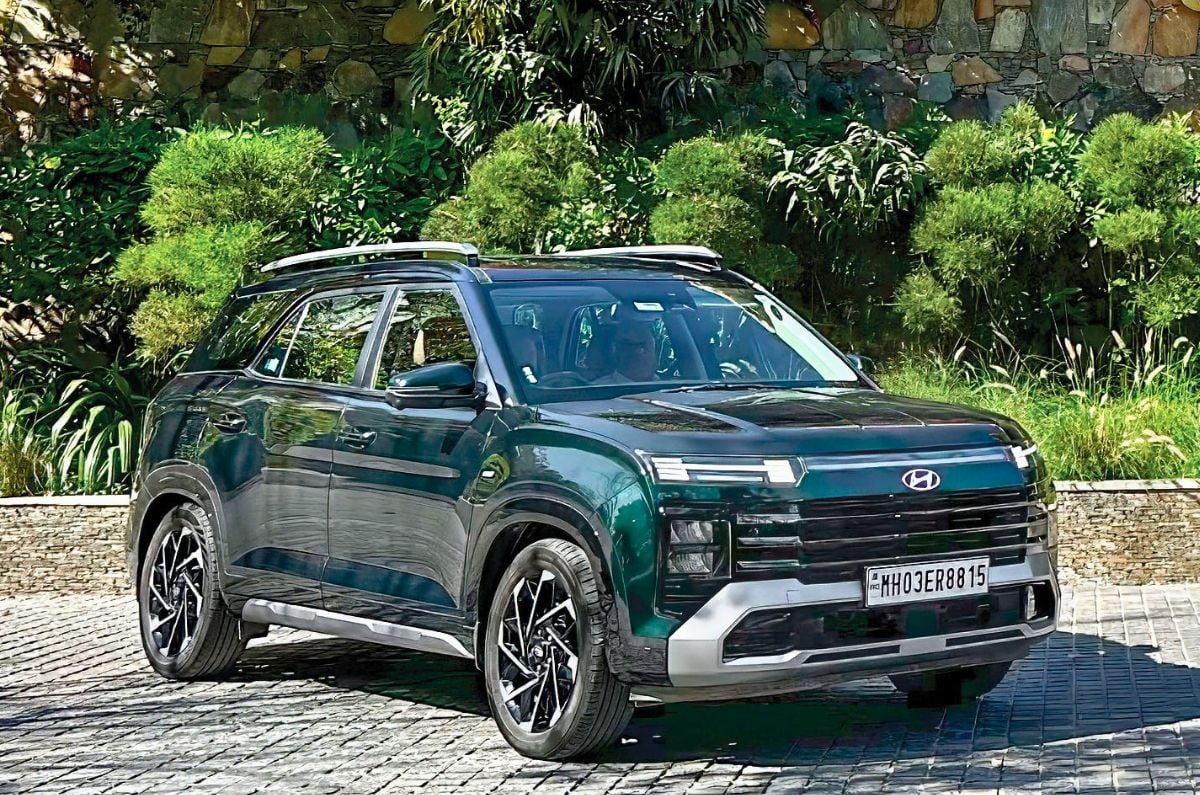
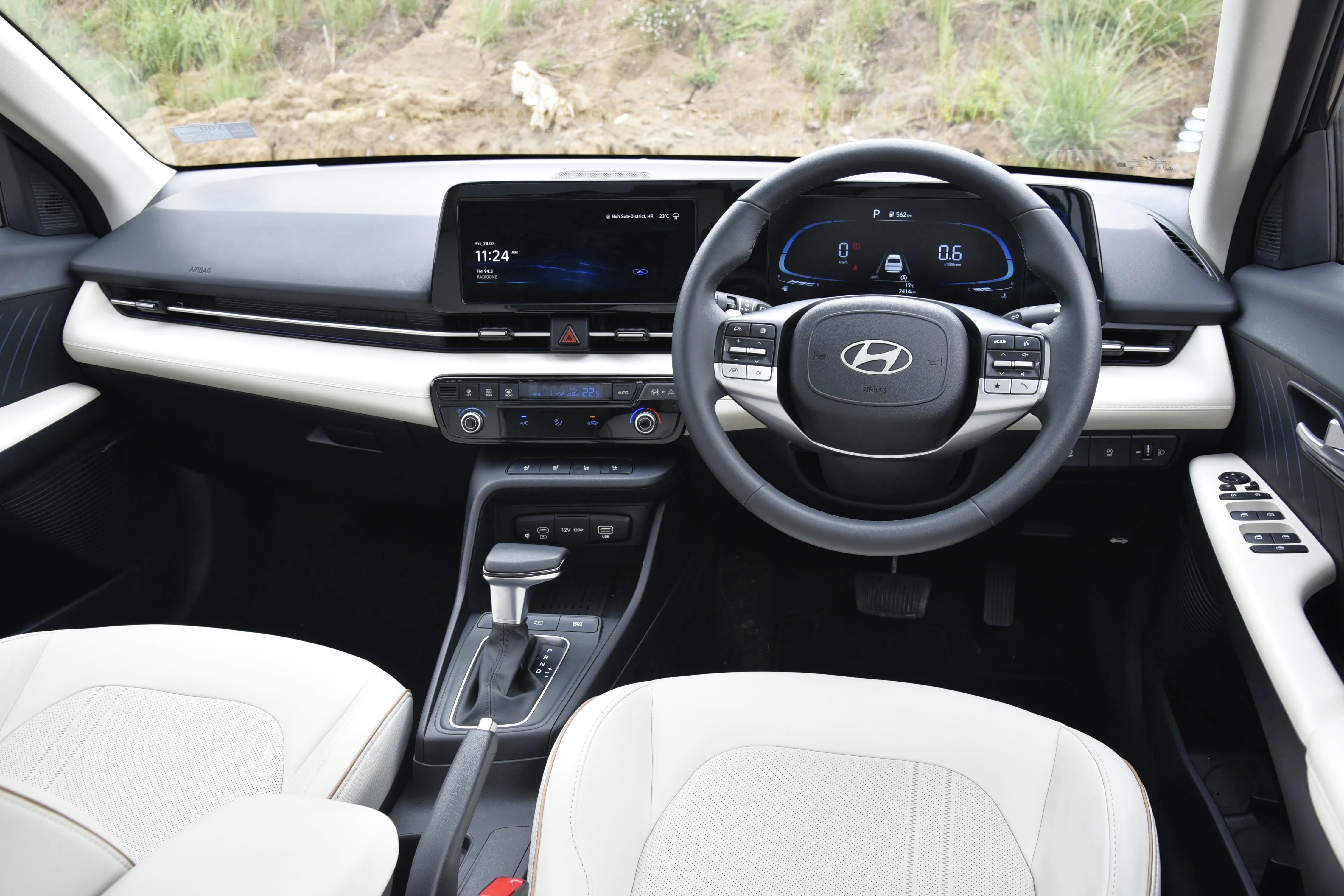
Our long-term Alcazar has done all sorts of jobs since it joined the fleet. City runs, airport pickups, the odd weekend getaway. But nothing quite like what it was asked to do recently. It had to play support car for our camera crew shooting a feature on the Delhi-Mumbai Expressway, and that meant a 2,700km round trip between Mumbai and Delhi with barely a day’s rest in between.
I wasn’t driving the entire way myself, and the Alcazar was only handed over to me in Delhi by one of our drivers. His enthusiasm to ask me if we needed him to drive it back to Mumbai was a testament of how impressed he really was with the Alcazar.
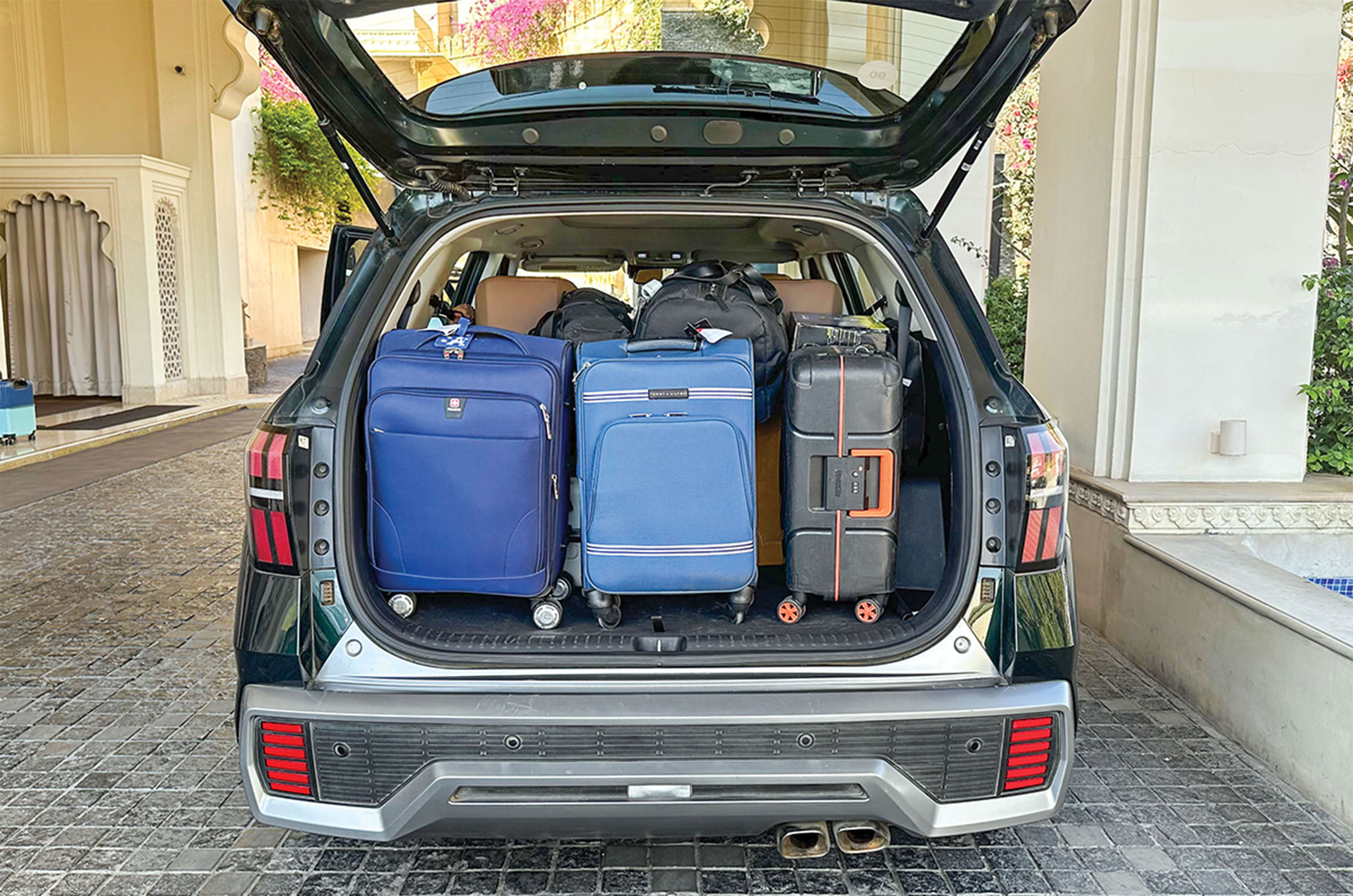
Folded third row frees up a lot of space for luggage.
The brief was simple. The Alcazar had to carry three crew members and all their camera gear along with all our luggage. This is exactly the kind of job our Alcazar has proven good at before, and it didn’t disappoint this time either. With the third row folded flat, the boot swallowed almost everything.
The captain seats in the second row turned out to be a real boon, especially for the camera crew – super comfy during a long day of shooting. The foldable tray table was handy for the laptop to copy and work on footage, and the fact that it was steady enough says a lot about the good build quality.
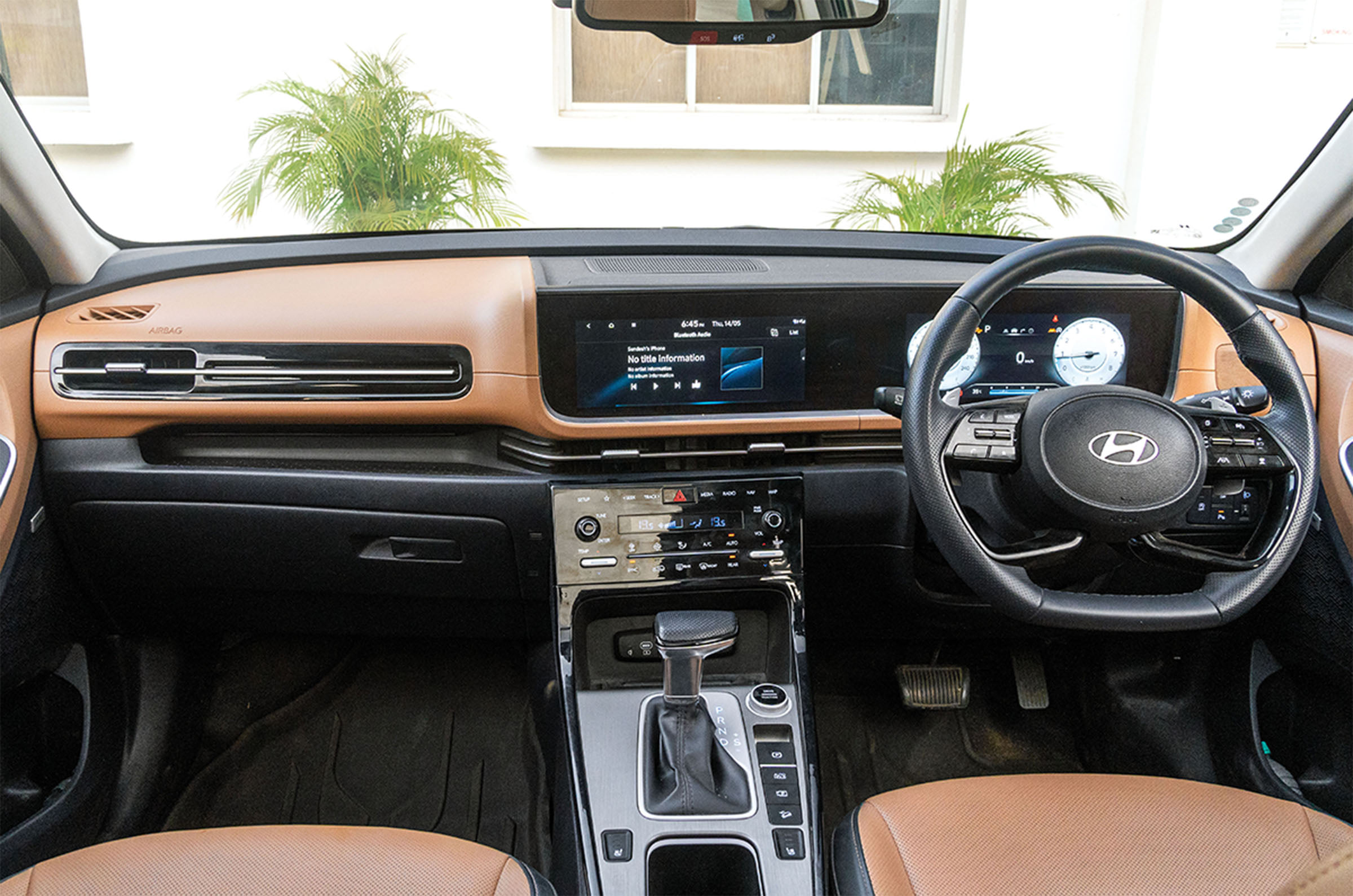
Design is simple yet ergonomic. Dark-coloured interiors help it look clean.
The Delhi-Mumbai Expressway is where this car was always going to shine, and it did. Long, arrow-straight sections let the 1.5-litre turbo-petrol settle into an easy cruise. At 100kph in top gear, the engine barely feels stressed, and wind noise is well contained for a car this size. We clocked long hours driving in a single day on the way back, stopping only for fuel and food, and nobody complained of fatigue by the end of it.
The DCT, which I’ve spoken of before, is jerky in bumper-to-bumper traffic, but was not an issue here. Once you’re past 40kph and holding a steady throttle, it’s smooth and quick to respond. It’s really only the crawl through Mumbai and Delhi outskirts where its low-speed hesitation showed up.
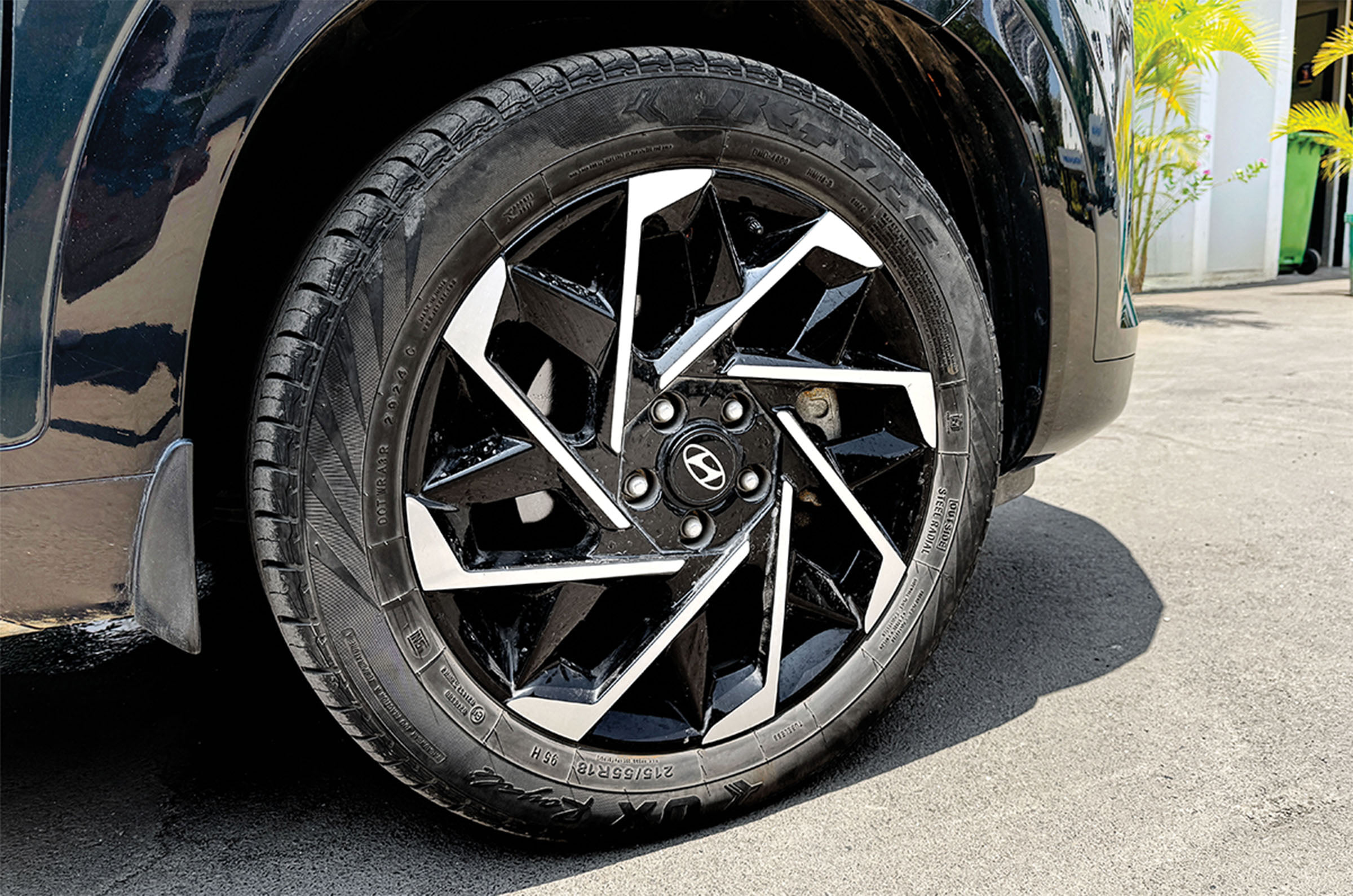
Large 18-inch wheels look stylish, but they don’t help the Alcazar’s ride quality.
The return leg we took had some patchy sections in Maharashtra, where the NE4 Expressway ends and connects to the old Golden Quadrilateral section of the highway. The Alcazar’s ride, tuned more for comfort on good surfaces, felt busy over broken patches. Nothing alarming, but the ride did feel slightly firmer than I expected from a car this size.
This stretch also penalised fuel efficiency. Loaded up with gear, four adults, and running the air conditioning at full blast through most of the drive, the trip computer settled at 12.8kmpl. That’s respectable for a heavy petrol SUV doing this kind of duty, but it’s definitely not the frugal numbers our diesel Alcazar managed, doing the same duty on the Kashmir-to-Kanyakumari run a few years back.
Ventilated driver and passenger seats are a boon on a hot, sunny afternoon.
A few other bits we did appreciate. The ventilated seats made the long hours of driving through the heat a lot more comfortable. The adaptive cruise control also was genuinely useful on the Expressway stretch, taking a lot of the fatigue out of long, straight sections. The absence of wireless Android Auto or Apple CarPlay was an irritant, as it meant connecting to the Infotainment using the cable and having a fully charged phone constantly plugged in for a long period of time.
Another observation on this trip: the plasticky bits on the dashboard picked up a fair bit of dust, especially with four people living out of the car for five days. To be honest, though, the camera crew kept the windows rolled down for a fair amount of time shooting. Thankfully, nothing a wipe down couldn’t fix.
Type-A USB for smartphone interface needed. Type-C only works for charging.
At the end of it all, the Alcazar clocked close to 2,750km in five days absolutely fuss-free. No warning lights, no rattles that weren’t there before. It’s exactly the kind of trip that reminds you why a car like this earns its place in our long-term fleet. Not glamorous, not the fastest thing on the road, but dependable when you need it most. As it happens, this Mumbai-Delhi-Mumbai run turned out to be its last big assignment with us. With this report, our time with the Alcazar comes to a close, and it’s headed back to Hyundai. It leaves the fleet the same way it arrived, quietly capable, and it’s fitting that its final outing was spent doing what it always did best, hauling people and gear over long distances without a fuss.
Hyundai Alcazar Petrol DCT Signature 6-seater test data
Not too long after a significant update, Mahindra has given the Thar yet another shot in the arm. The Thar OG now gets a whole new set of upgrades to the design, interior and, mainly, under the skin. A new suspension, new steering and added features are all part of the aim to make it more liveable and urban-friendly while retaining the Thar’s butch and bullyish character. Have they succeeded?
Mahindra Thar OG exterior design and engineering – 9/10
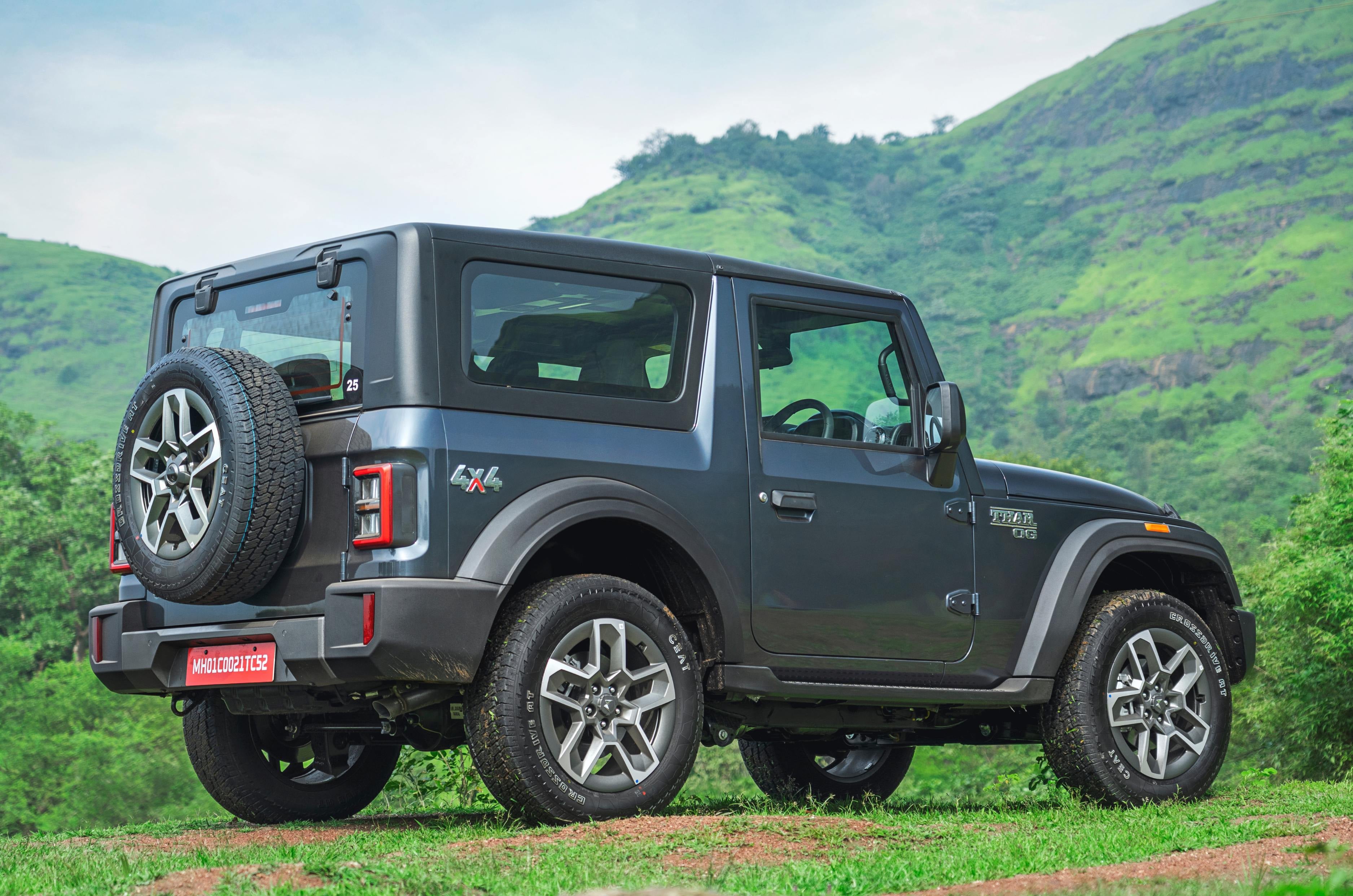
Design updates have retained the classic Thar look and road presence.
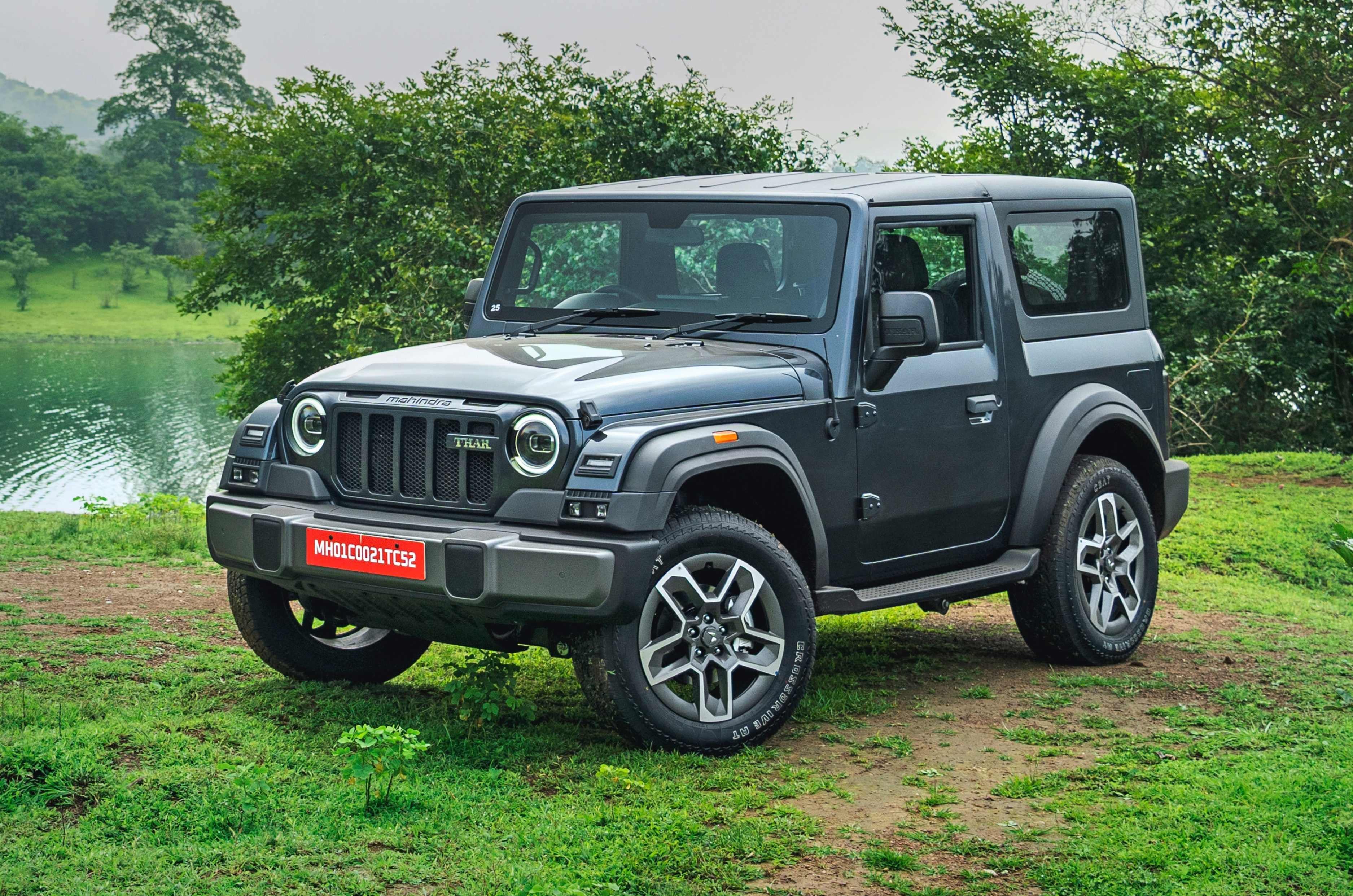
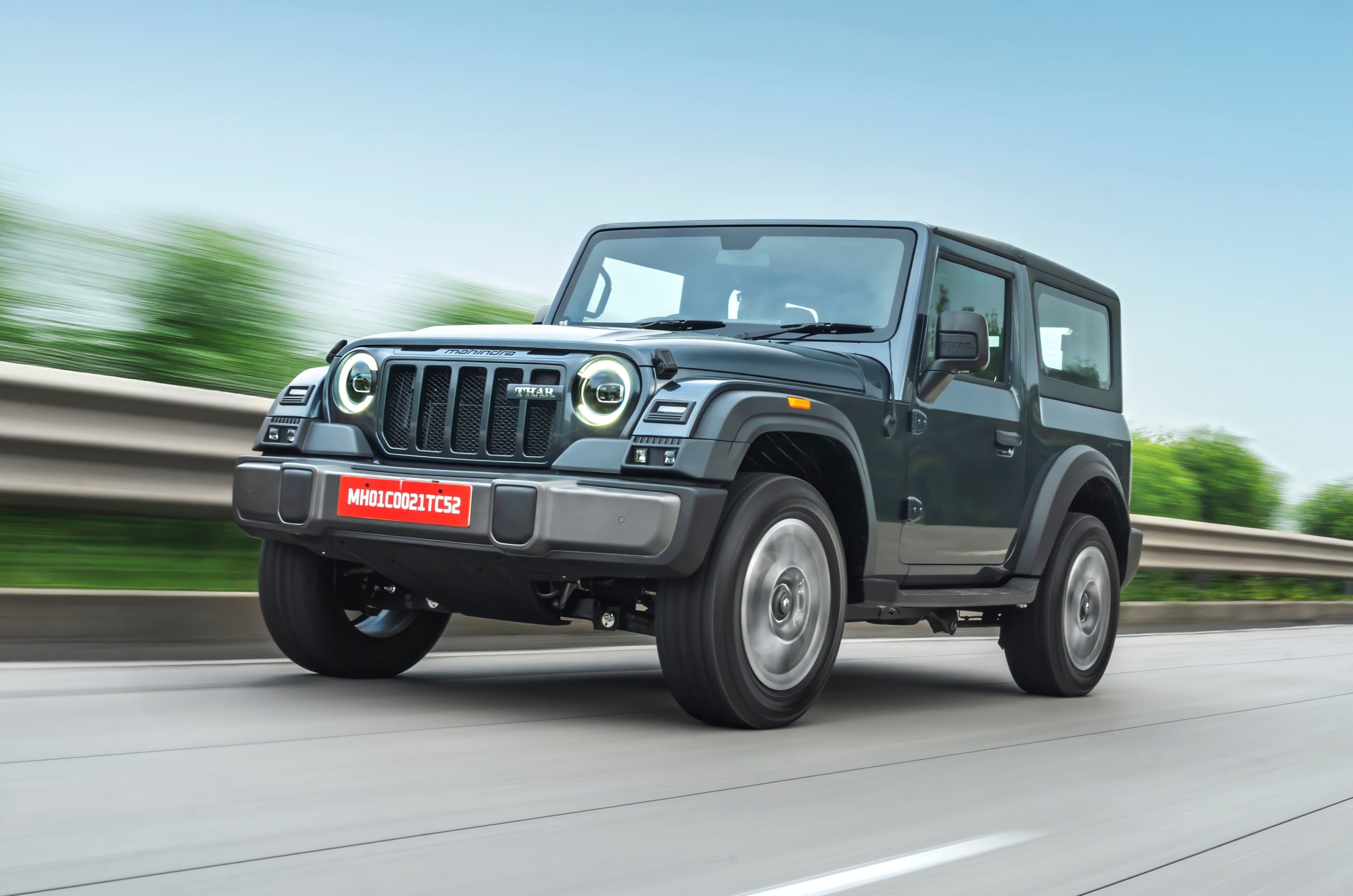
The design is why the Thar stands out, so Mahindra has not done much to change its character. However, it now gets some modern touches. At the front, the halogens are replaced with LED headlamps with C-shaped LED DRLs, along with LED fog lamps. The grille has been redesigned, with the Thar logo forged into it, and so has the front bumper. Look closer, and you will also see front parking sensors now, while the track has been widened for more stability.
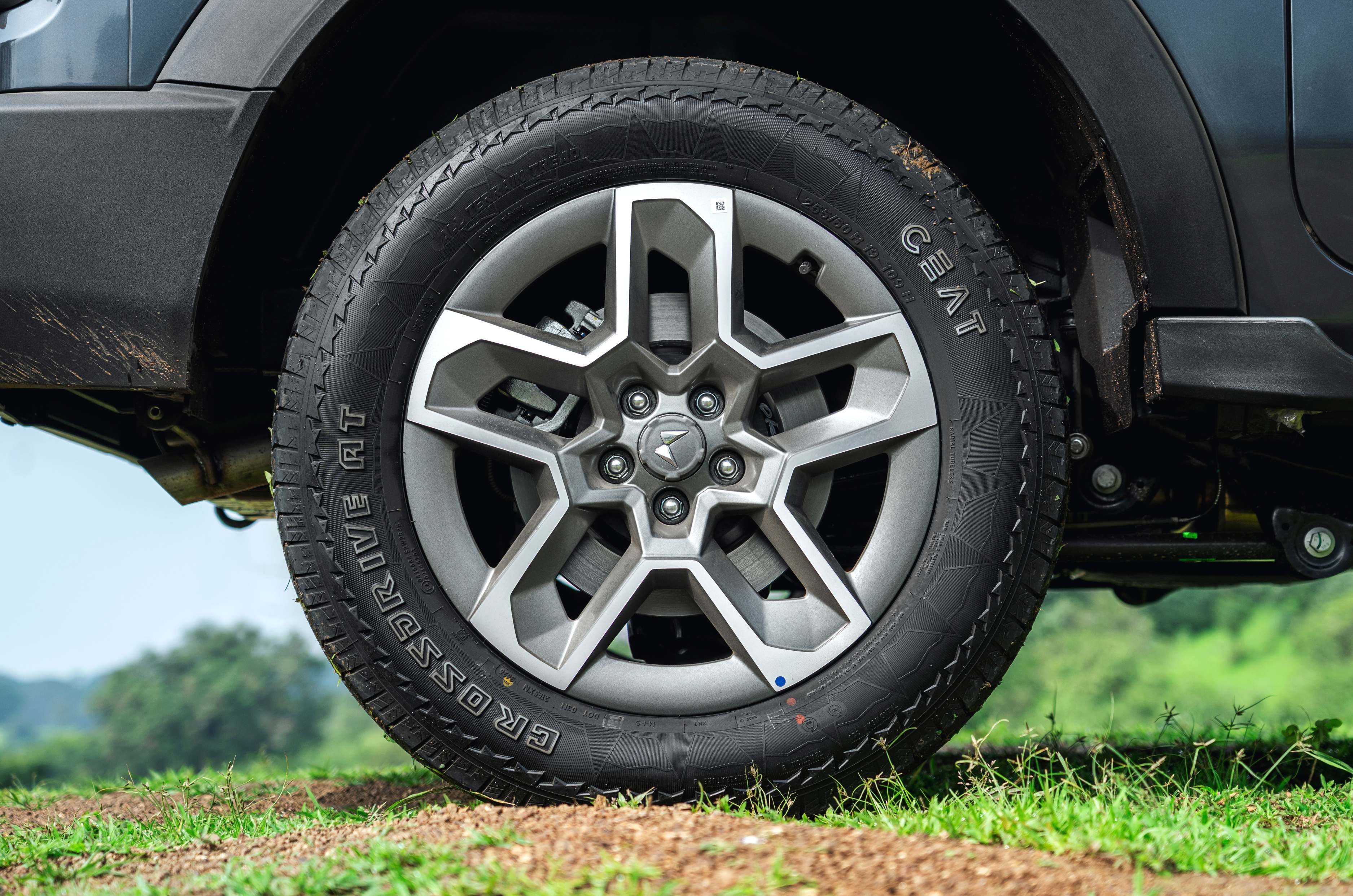
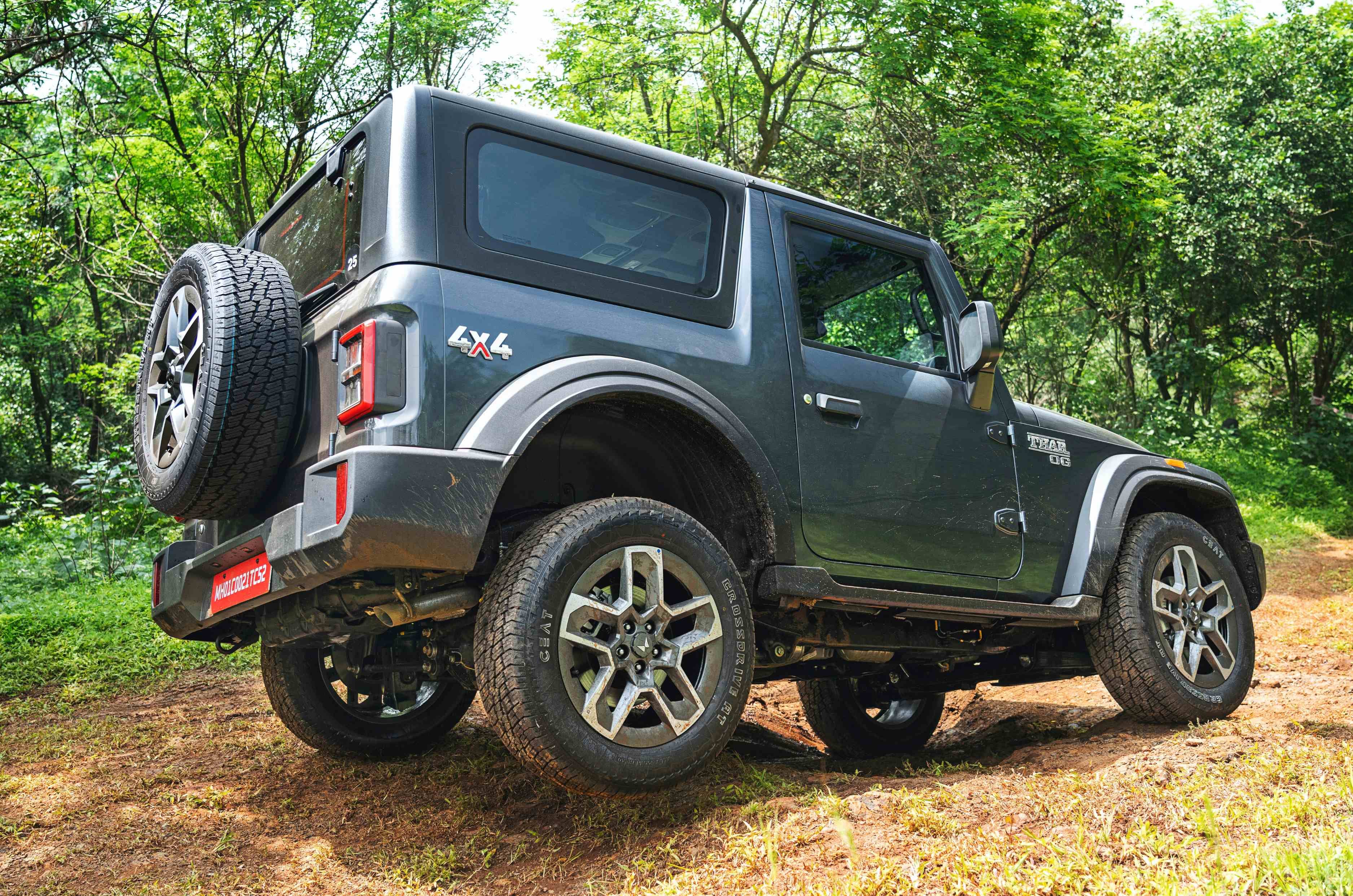
19-inch alloy wheels with AT tyres add to the toughness.
What you don’t see is the new platform the Thar sits on. The OG is now based on the Gen 4 chassis, dubbed M-Glyde, which also serves the Roxx. The side profile flaunts new 19-inch wheels with AT tyres, the Thar OG badge and a new design for the cladding.
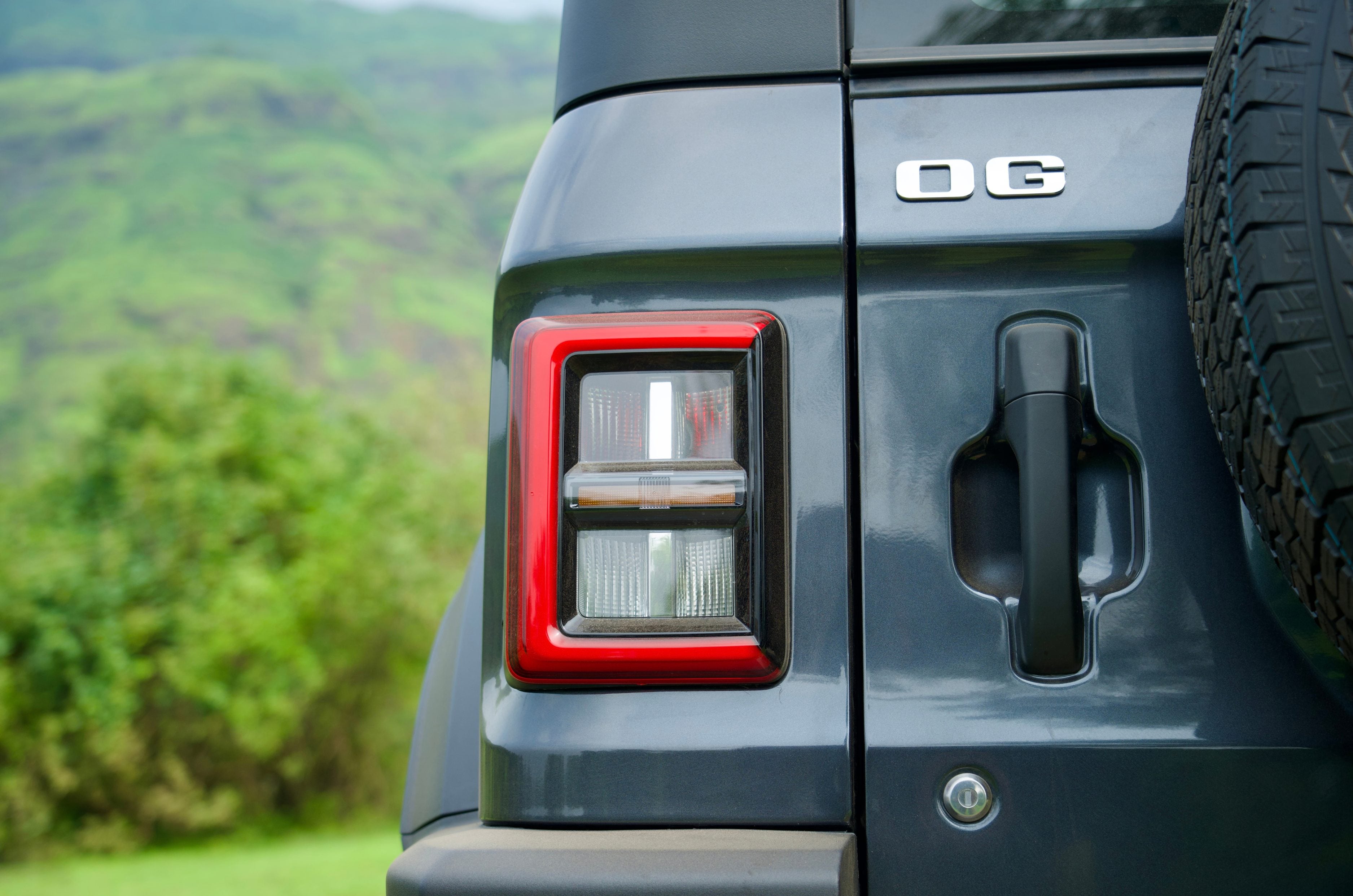
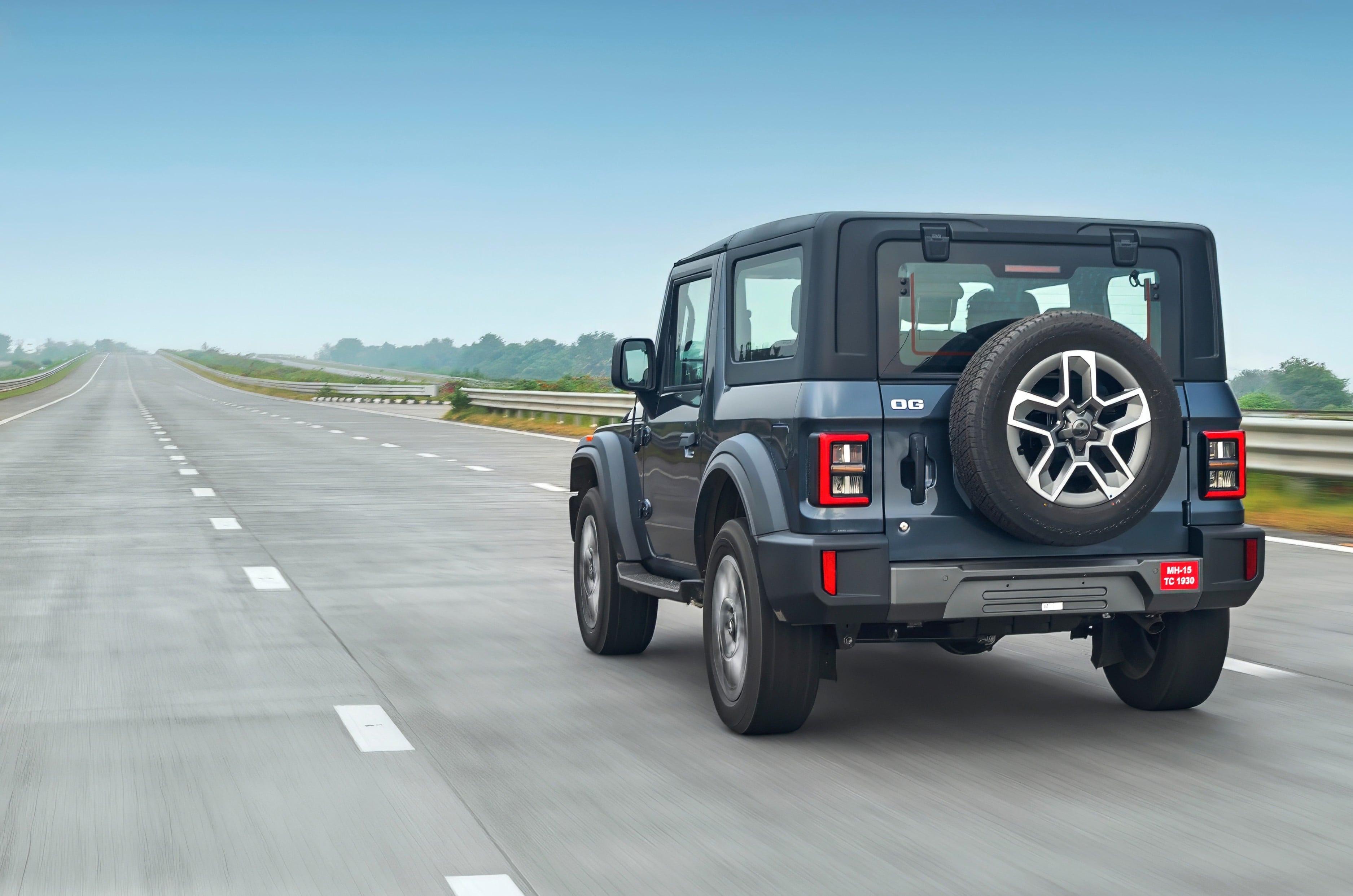
LED taillamps are similar to the Thar Roxx.
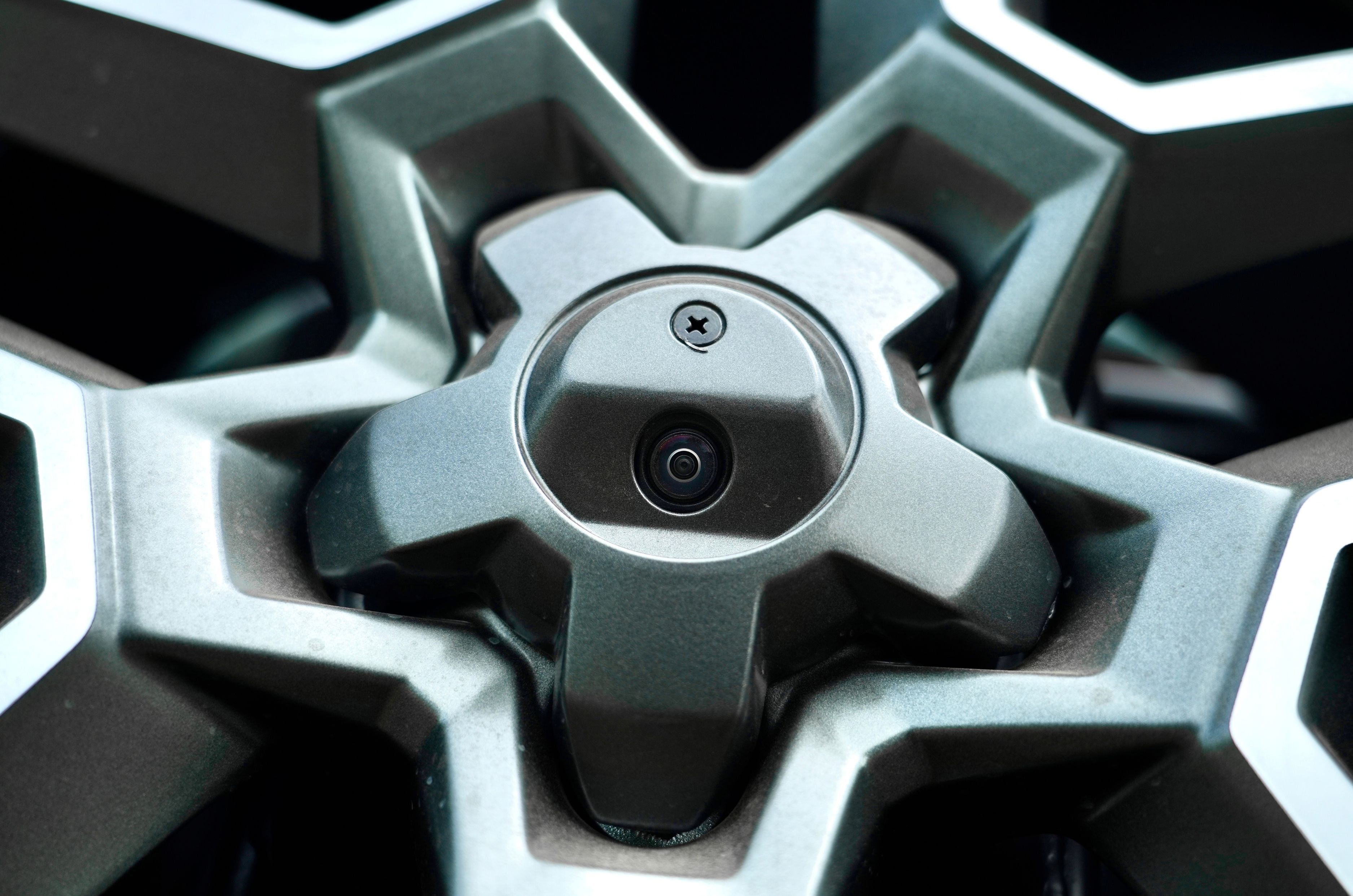
The rear continues with the LED treatment, with C-shaped taillamps, a new bumper and another OG logo. A closer look reveals a rear camera in the centre of the spare wheel.
The reversing camera is tucked in the centre of the spare wheel.
Overall, the imposing, butch design remains, with new modern touches.
Mahindra Thar OG interior space and comfort – 6/10
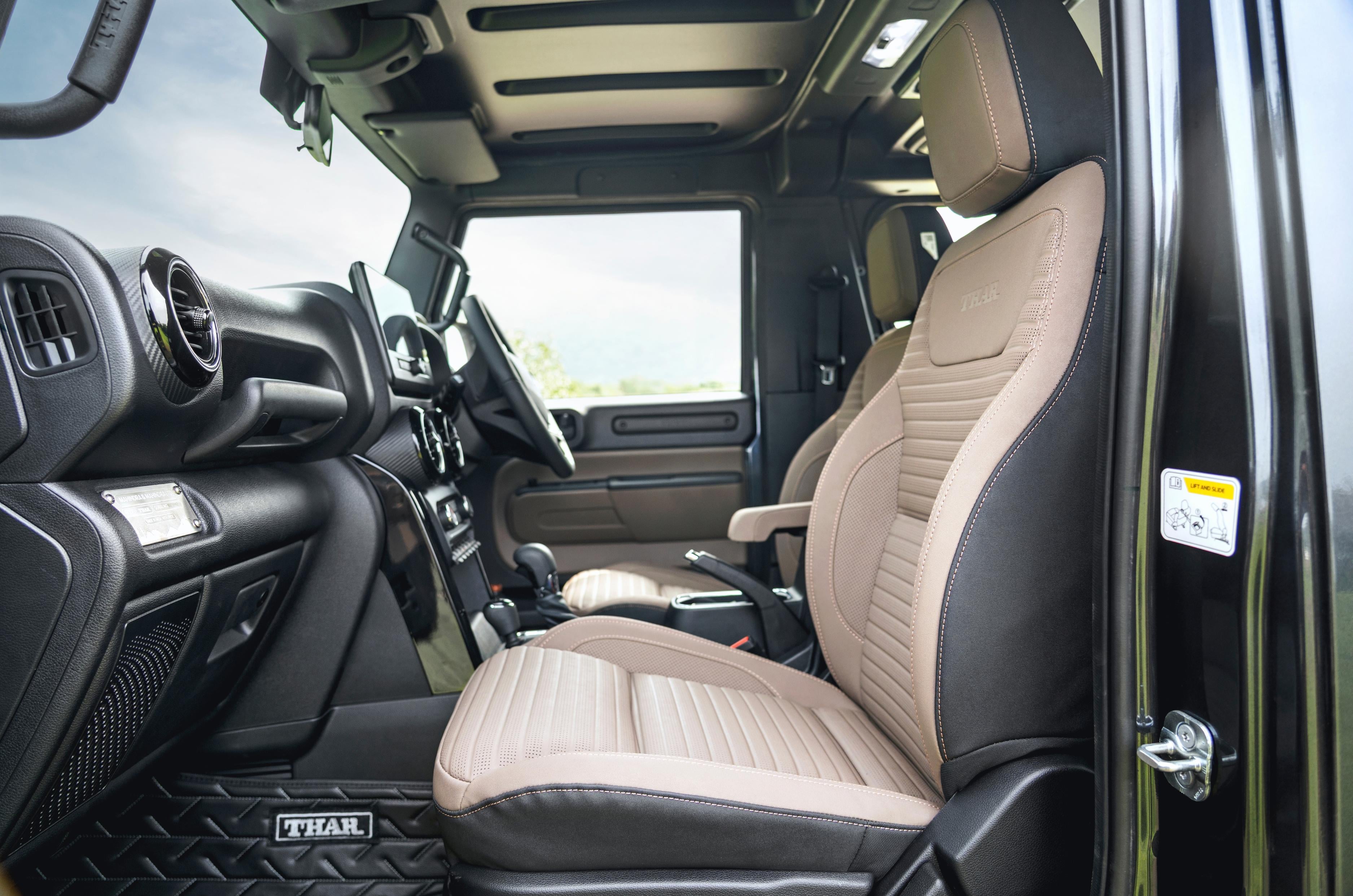
Top-spec ZXT trim gets leatherette upholstery in a new shade.
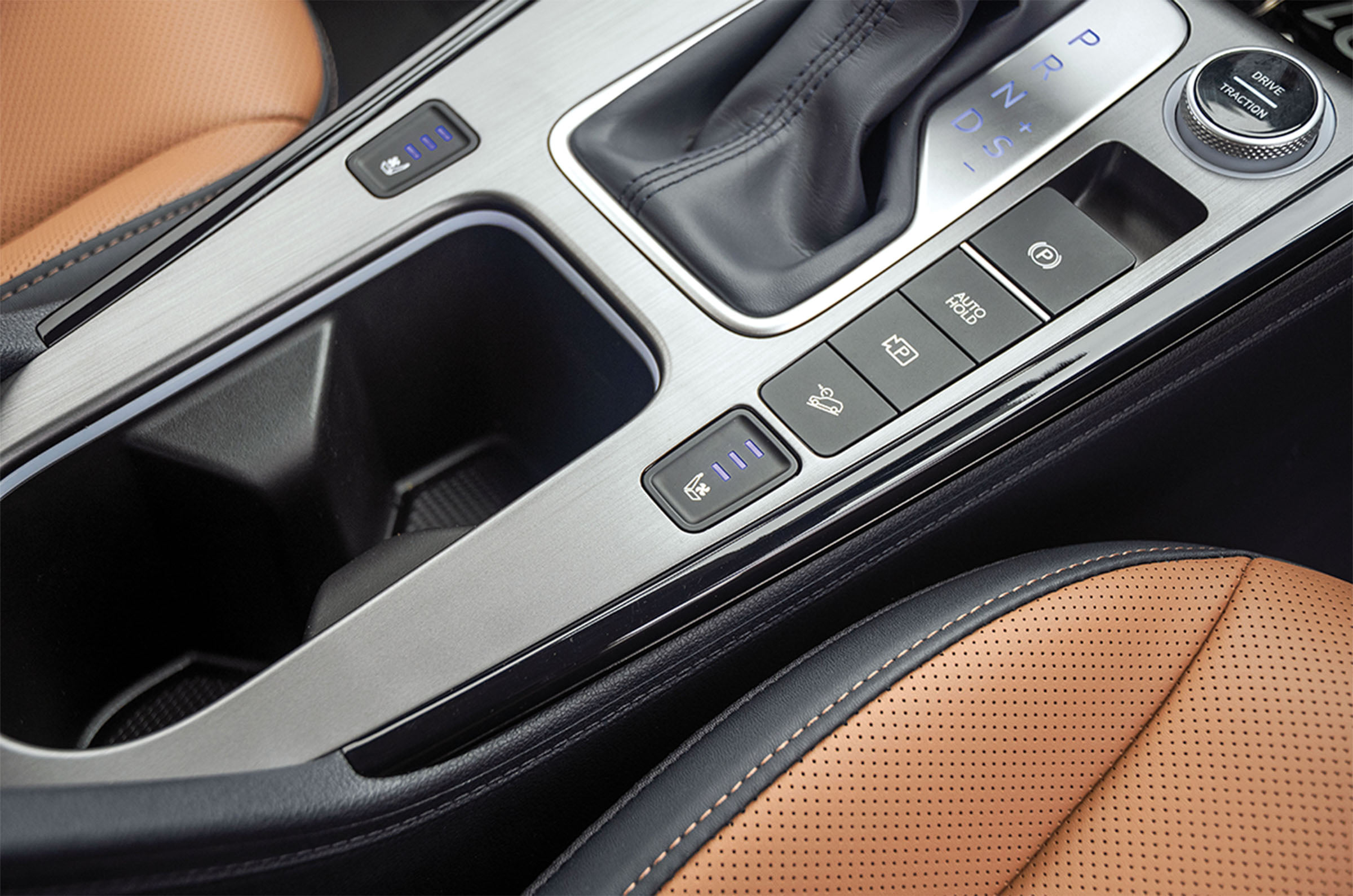
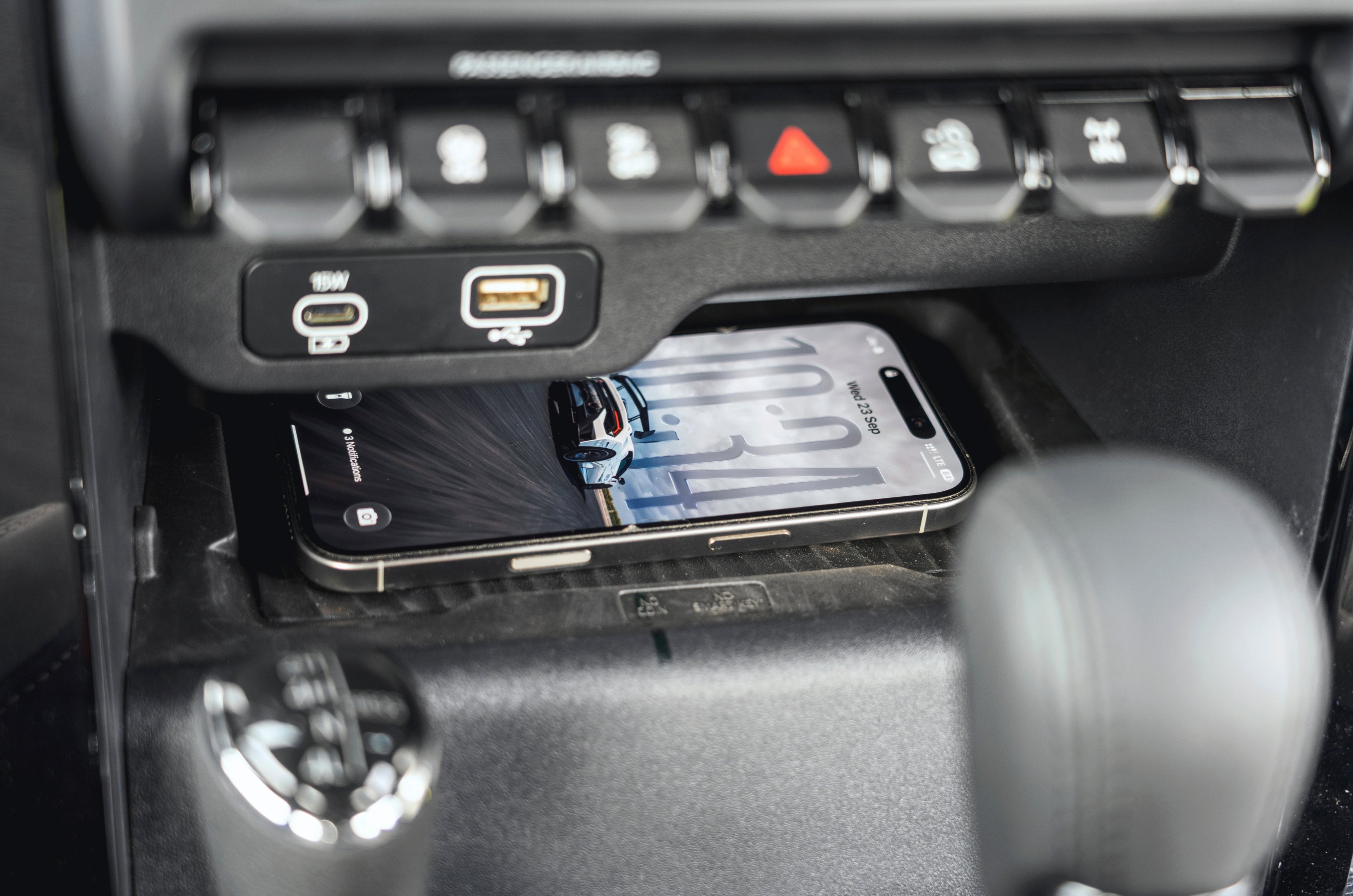
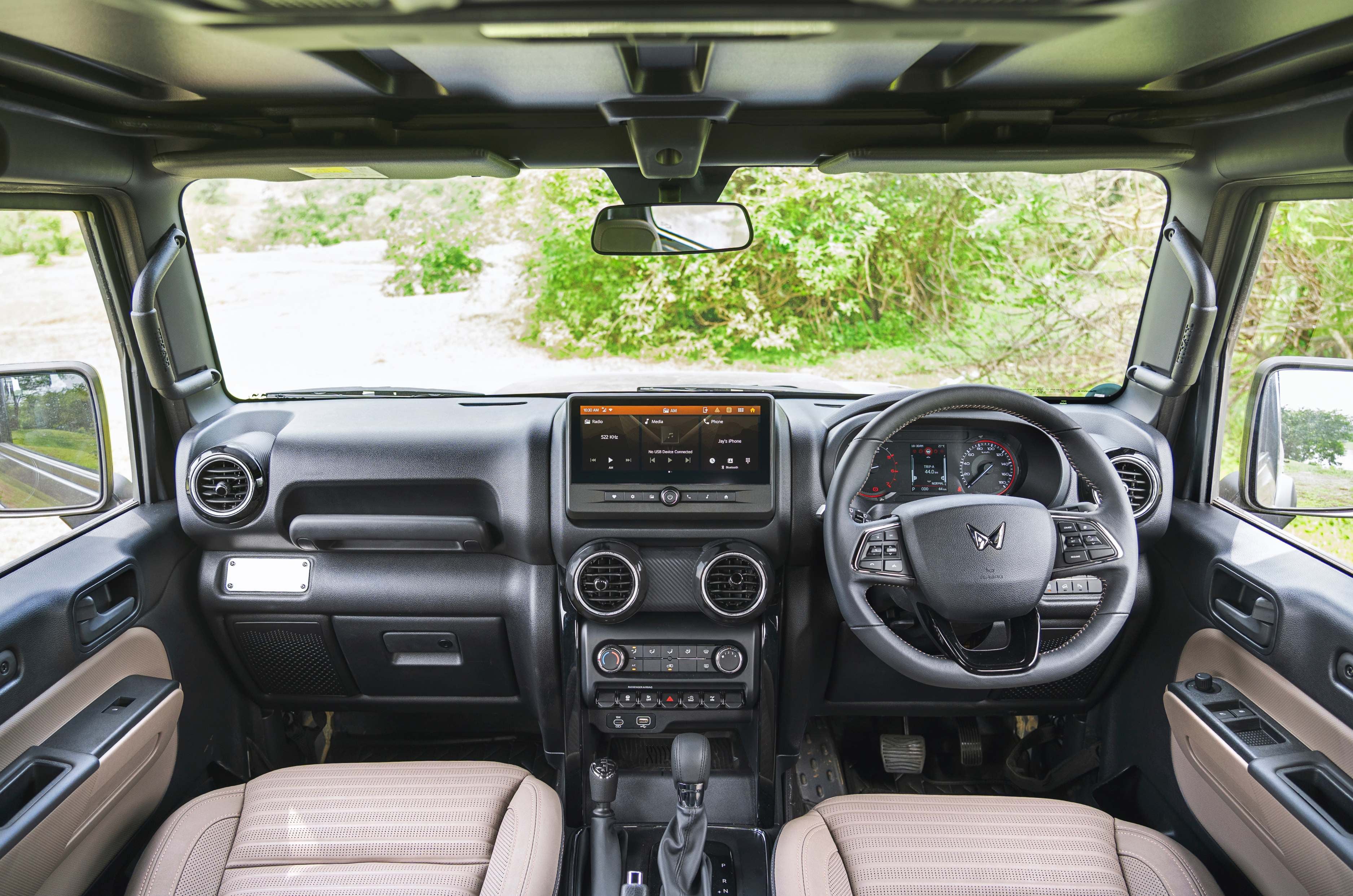
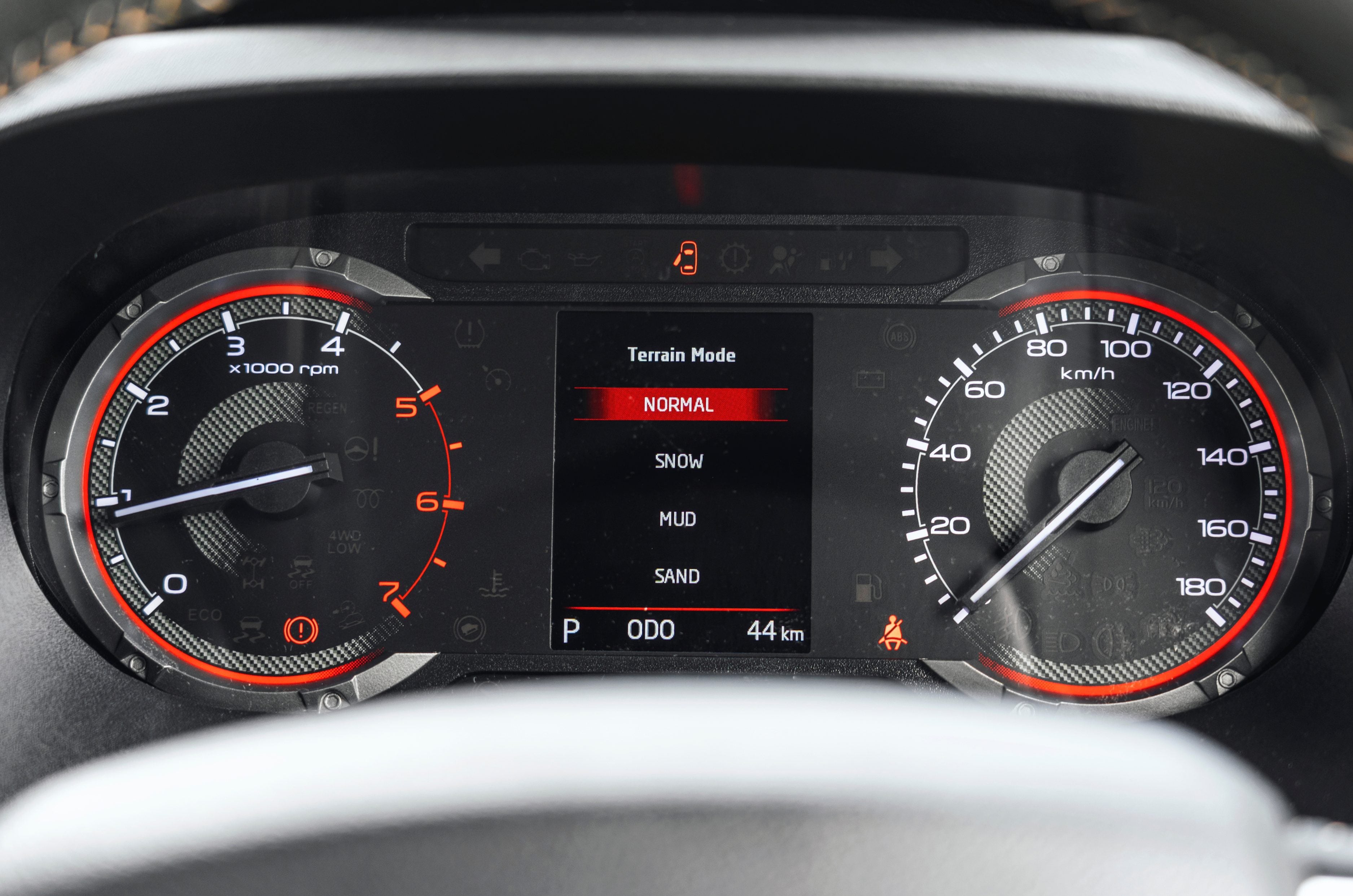
Compared to the exterior, the changes on the inside are a lot more subtle. The new top-spec ZXT trim gets leatherette upholstery finished in a shade of brown, which looks premium with the exposed stitching. There is a new wireless charger and two new switches on the centre console: one for the terrain modes and the other to engage the electronic locking differential.
Gets a new wireless phone charger and different switchgear.
The Thar received a facelift around a year ago, when the cabin was brought up to date with a new steering wheel, touchscreen and dashboard, and these features have been carried over to the OG. The seats are broad and comfy but miss out on ventilation. The two dummy buttons on the centre console will hopefully be used for this feature soon.
Dashboard design is unchanged from the 2025 facelift.
The steering wheel is also the same as before, as is the analogue instrument cluster with an MID in the centre. The plastics, however, feel low-rent, especially when you consider the rivals in the same price bracket.
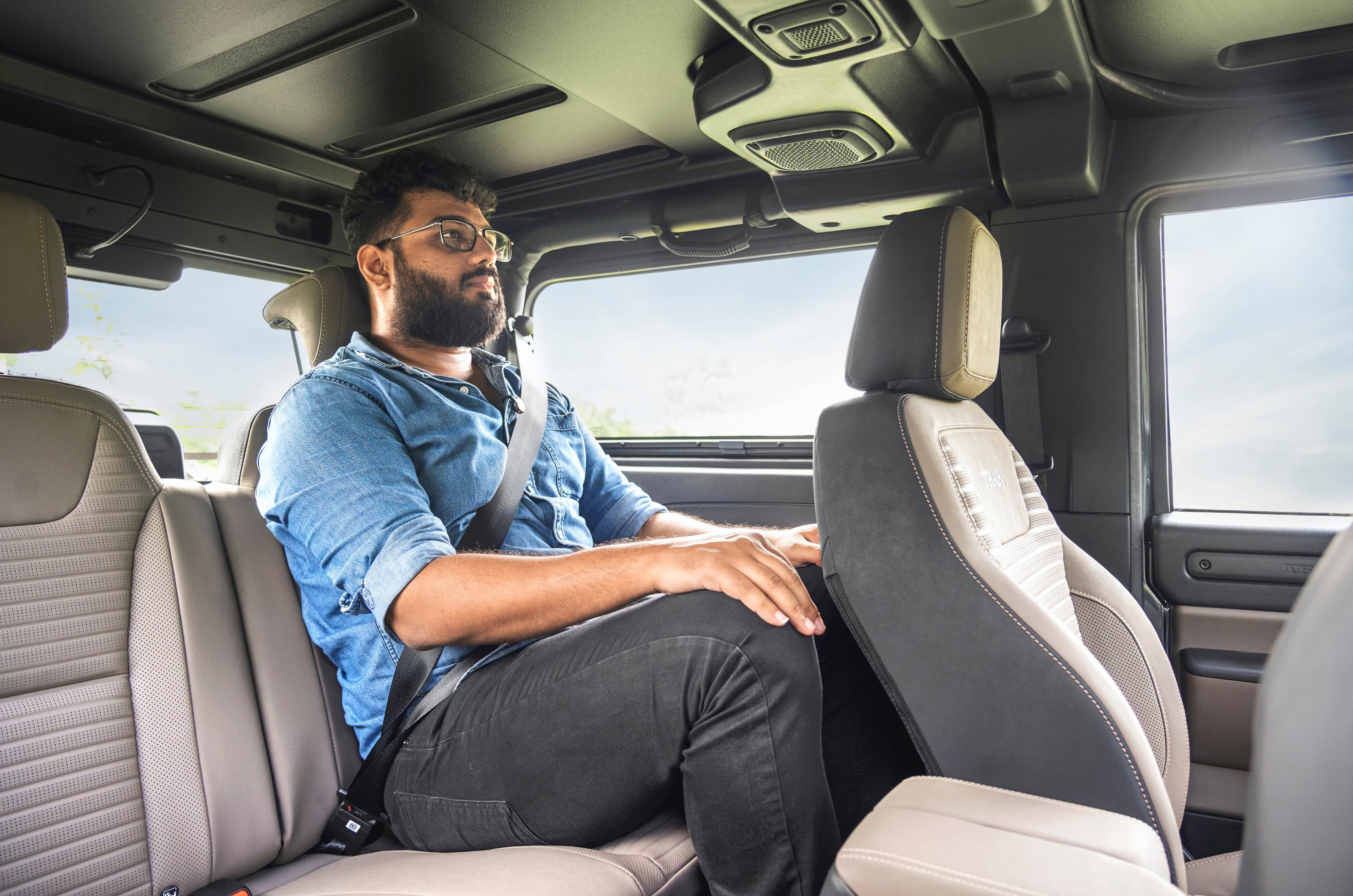
Just enough room in the rear seat; gets AC vents now.
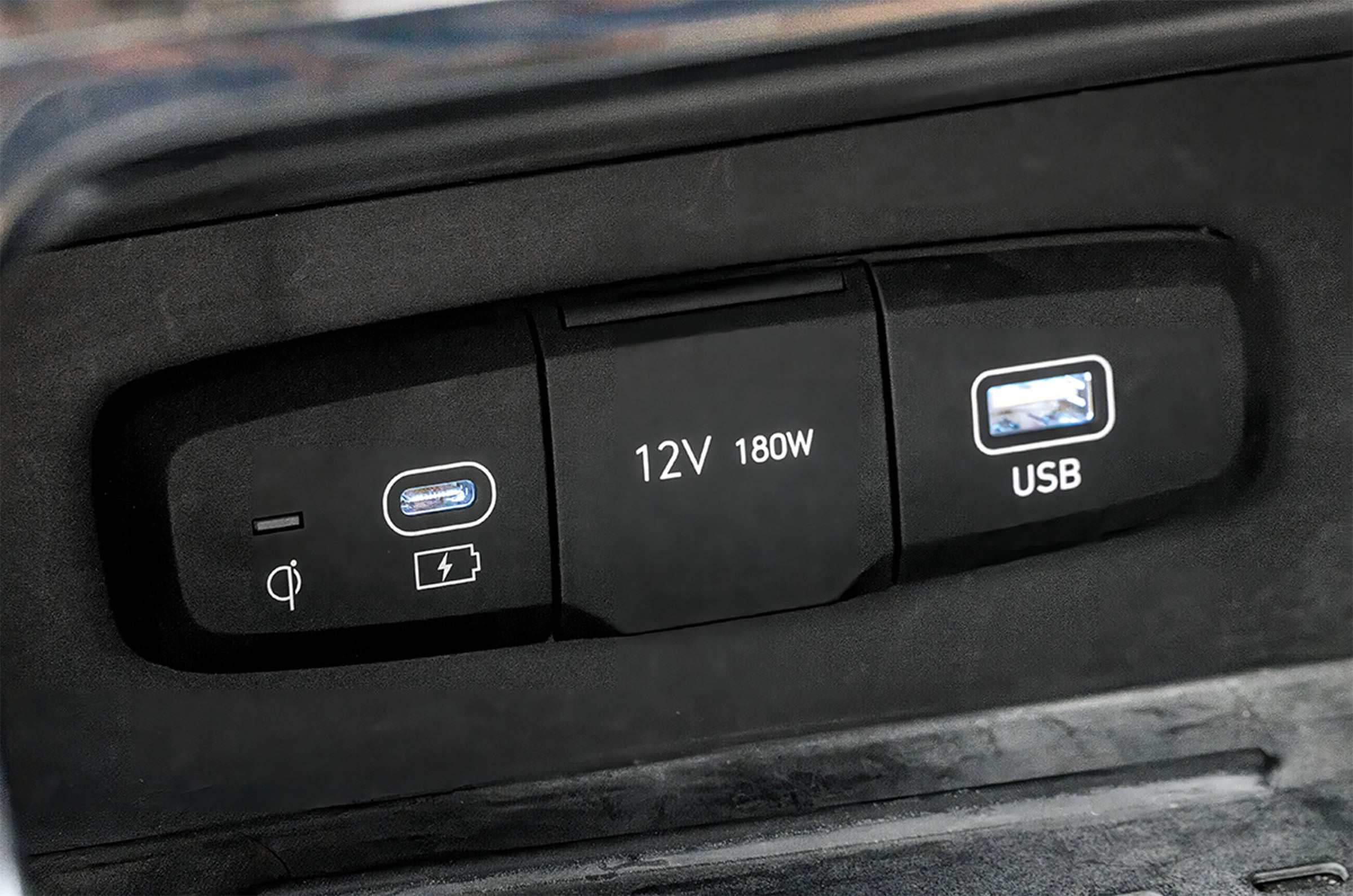
At the rear, space remains as it was, and it is exclusively a two-seater. However, the addition of AC vents, a USB-C port and soft-plastic armrests with cupholders has enhanced comfort. The backrest can recline, and short drives should be easy once you settle in.
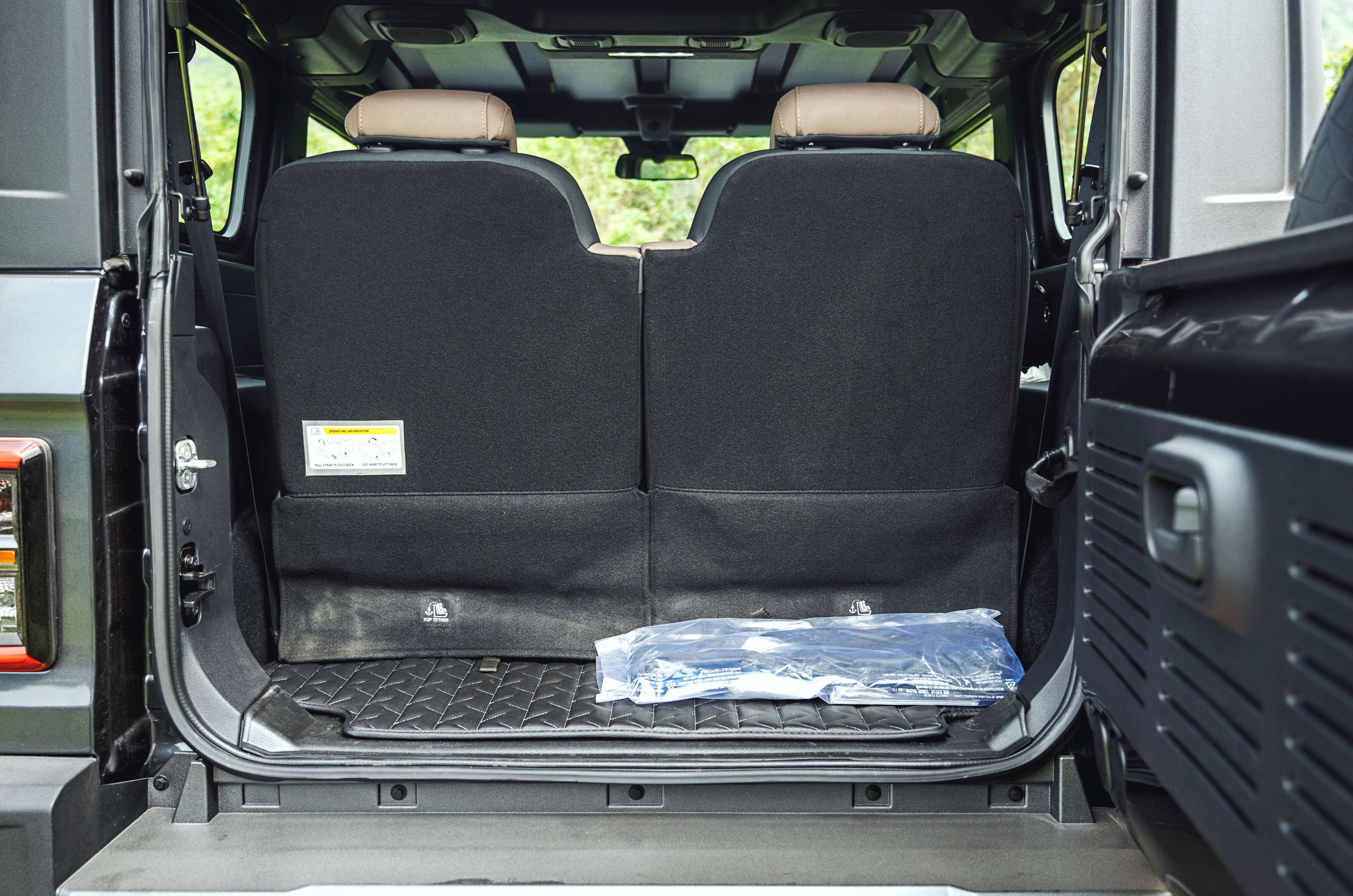
Boot space is still not adequate for long trips or airport runs without folding the second row.
The boot space remains a weak point too, with barely any room for an airport run. Large suitcases will require folding down the second row.
Mahindra Thar OG features and safety – 7/10
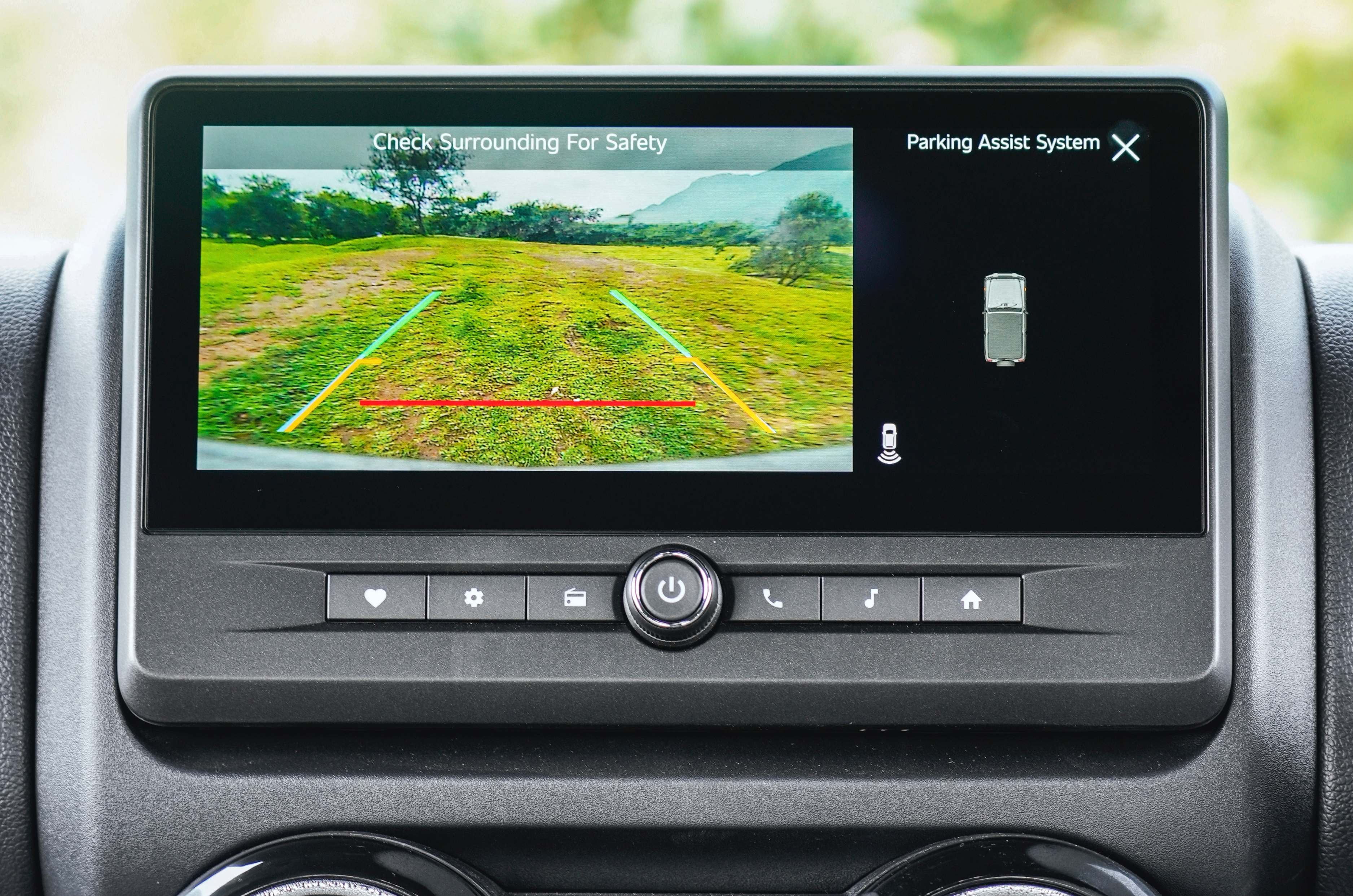
Not the best clarity and misses a 360-degree view, which is essential for off-roading.
The Thar OG isn’t on par with rival mid-size SUVs but does get the essentials this time around. There are grab handles, manual AC controls, a USB-A port for Apple CarPlay since it isn’t wireless, and a USB-C port for charging. Android Auto gets wireless connectivity.
Crucially, the ZXT trim gets six airbags now, with the launch of the new HPTS airbags, which stand for Head, Pelvis, Thorax and Shoulder. There are front parking sensors with a reversing camera now, although, given the Thar’s off-road bias, a 360-degree camera would have been a lot more useful. The ESP also gets a retune for better response, and then there are the big mechanical updates under the skin.
Mahindra Thar OG performance and refinement – 8/10
The bump in power and torque makes it better at highway cruising.
Powering the Thar OG is the same powertrain lineup as before, but with a bump in power and torque for the turbo-petrol engine and the bigger diesel. We had the 2.2-litre diesel engine on test with the six-speed automatic gearbox. The engine now produces 152hp and 330Nm, which is 18hp and 30Nm more than the outgoing unit.
To be honest, the jump in performance is not evident initially, as Mahindra engines have always had a good off-the-line response. Where the power comes in is in the second half of the rev band. Highway cruising at triple-digit speeds is a bit more effortless now, but you wouldn’t enjoy rushing the Thar. Sedate cruising is what it does best.
Highway stability is better now, but over an uneven stretch it still tosses you around.
What Mahindra has also improved is NVH, and the cabin is a bit more muted now. You still hear the diesel drone past 2,500rpm, but overall sound damping has been improved.
The gearbox, too, likes to pace itself, and quick overtakes come at the cost of engine noise. The shifts are smooth but relaxed, and even in manual mode, you don’t get much better response. Enthusiastic driving is not something the Thar enjoys, contrary to the infamous videos circulating online.
Mahindra Thar OG ride comfort and handling – 7/10
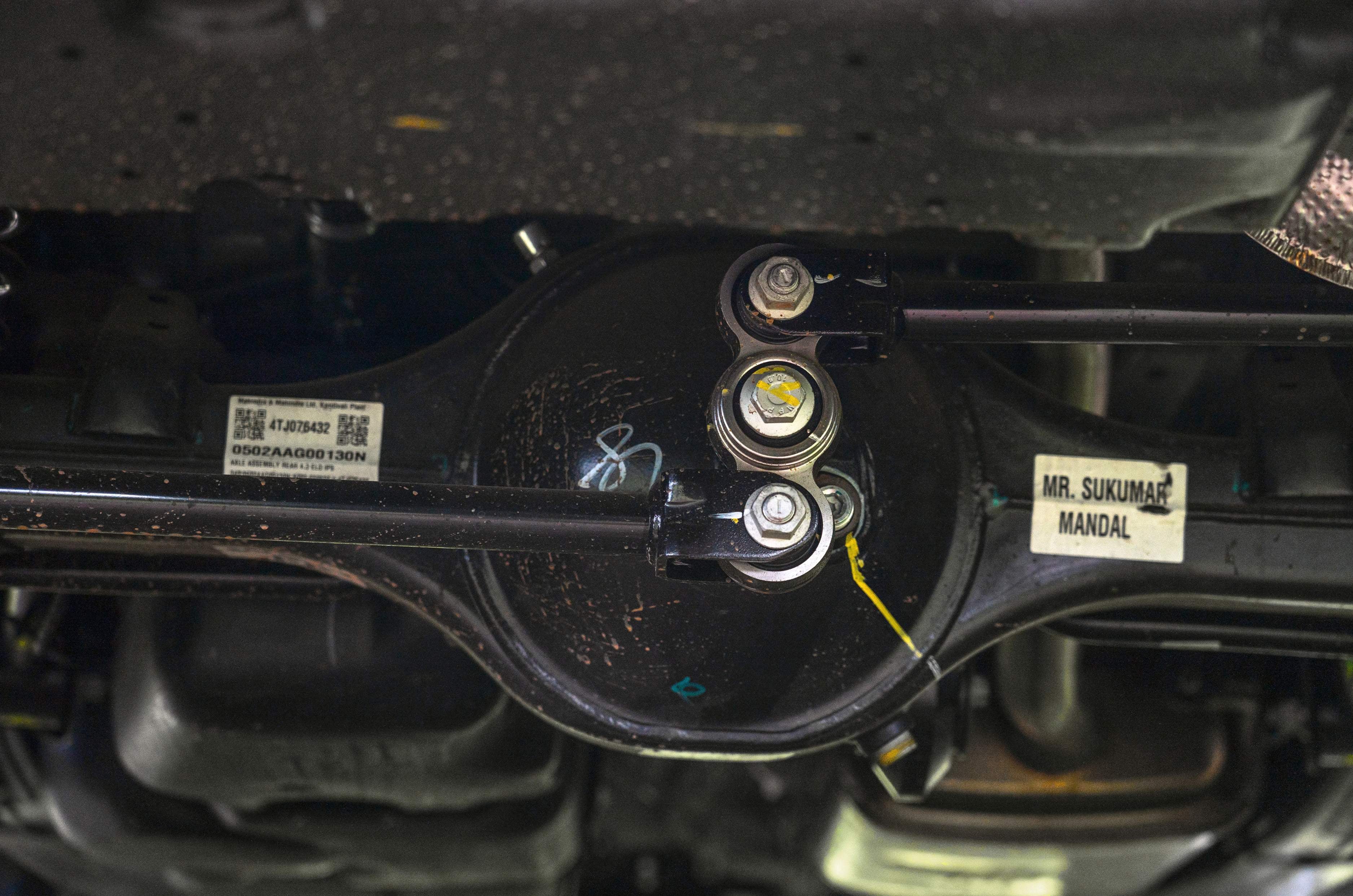
Rear pentalink suspension with Watts linkage for added stability and comfort.
The biggest advances to the Thar OG have taken place under the body. The stiffer Gen 4 chassis is paired with a new Pentalink suspension at the rear, with a Watts linkage and DAVINCI dampers. Frequency-dependent damping, however, is only available on the top-spec trim. But has that improved the Thar on the road? The simple answer is yes.
The Watts linkage is responsible for adding stability at the rear. Imagine you’re pushing a shopping trolley. If one wheel suddenly moves sideways while you hit a bump, the trolley gets wobbly. The Watts linkage basically tells the axle: “You can go up and down, but please stay in the middle.” The effect is less bouncing over uneven highways and bad patches.
The electronic locking differential is now convenient to use, making the Thar just as capable as before.
Then there is the DAVINCI damping that was seen on the XUV 7XO. The thuds coming from sharp, low-speed bumps are now not as harsh and, while it will still toss you around, if you hit a bad bump, it won’t unsettle the car. To add even more comfort with the bigger 19-inch wheels, the ZXT trim also gets frequency-dependent dampers along with the DAVINCI setup. Over a rough patch, you can tell they are working full-time to keep the cabin unfazed.
New gen 4 platform seen on the Roxx now underpins the 3-door Thar.
Now, as sophisticated as all of this is, the Thar OG is still a hardcore body-on-frame SUV at the end of the day. The new tech has certainly improved its on-road manners, but if you want a plush, supple ride, the Thar won’t cut it. A long drive will now be more comfortable, but you will still get knocked awake from your snooze.
Terrain modes work with ESP, throttle control and steering input for maximum assistance while off-roading.
The new EPS, however, has made a huge difference. The amount of effort needed to steer and turn the Thar is no longer a game of might. Under 20kph, the steering is light enough to twirl with just one finger, but as the speed rises, it gains heft so as not to feel uncomfortably light at speed. So, there is no need to wrangle with the steering to make a three-point turn anymore.
Also new and exclusive to the ZXT trim are rear disc brakes, which have added to the stopping power. The bite is stronger, and the Thar feels a lot more confident when slowing down now.
Mahindra Thar OG price and verdict – 8/10
The Thar OG is improved in all areas without sacrificing its character.
With a starting price of Rs 10.32 lakh, the Thar OG is rather tempting. However, for most of the new bells and whistles, you will have to opt for the top-spec ZXT trim, which starts at Rs 13.99 lakh for the 1.5-litre engine with RWD. The diesel-AT version we drove will set you back Rs 18.99 lakh, so you need to be sure of what you want. The Thar OG is mighty capable, has a lot of character and is a lot better in every area than before. But as an everyday car, you’d still want some more practicality, creature comforts and refinement. However, if you are someone who likes to off-road or even just take the long way home with little regard for plushness, there is nothing like the Thar OG under Rs 65 lakh.
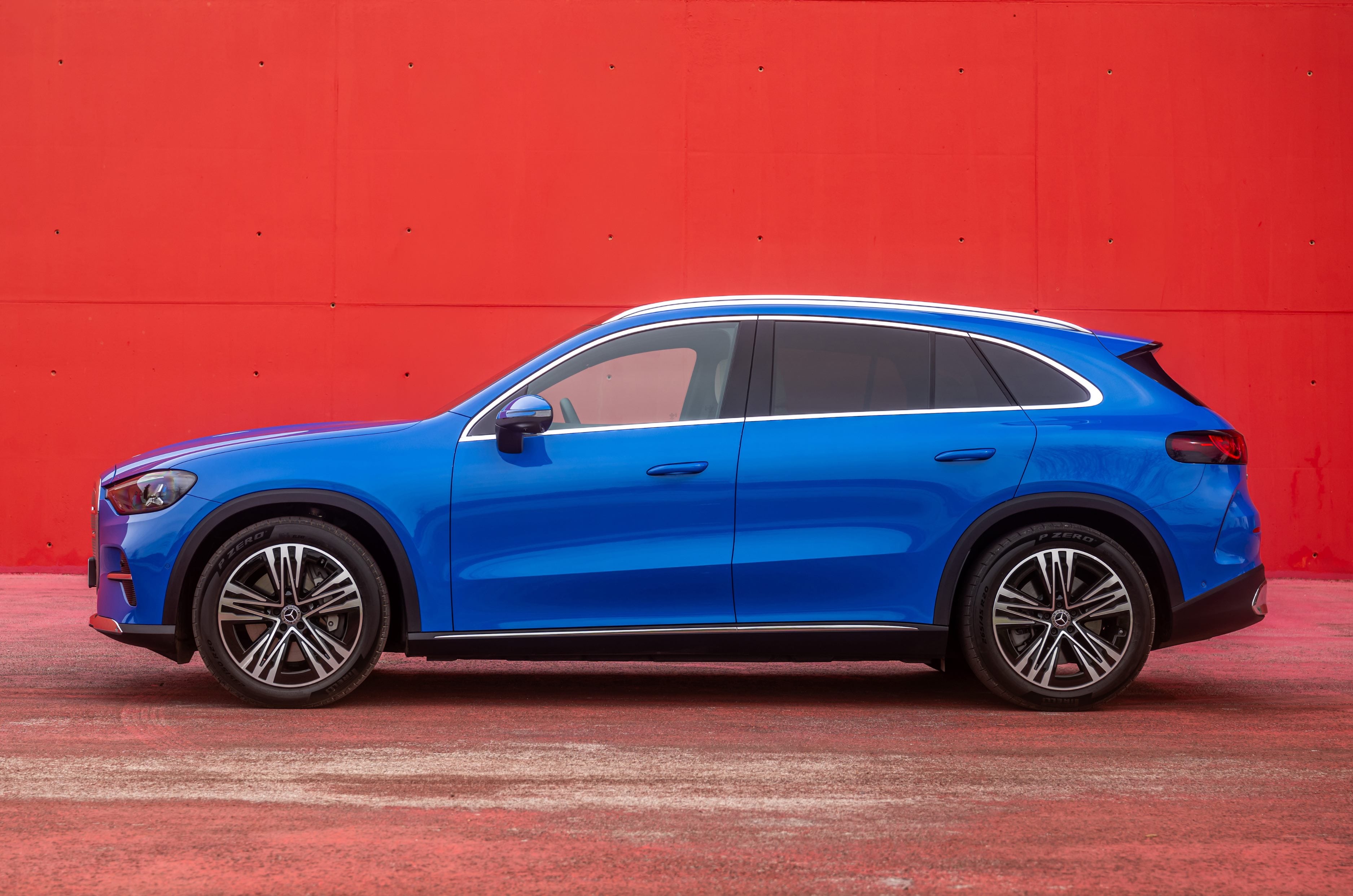
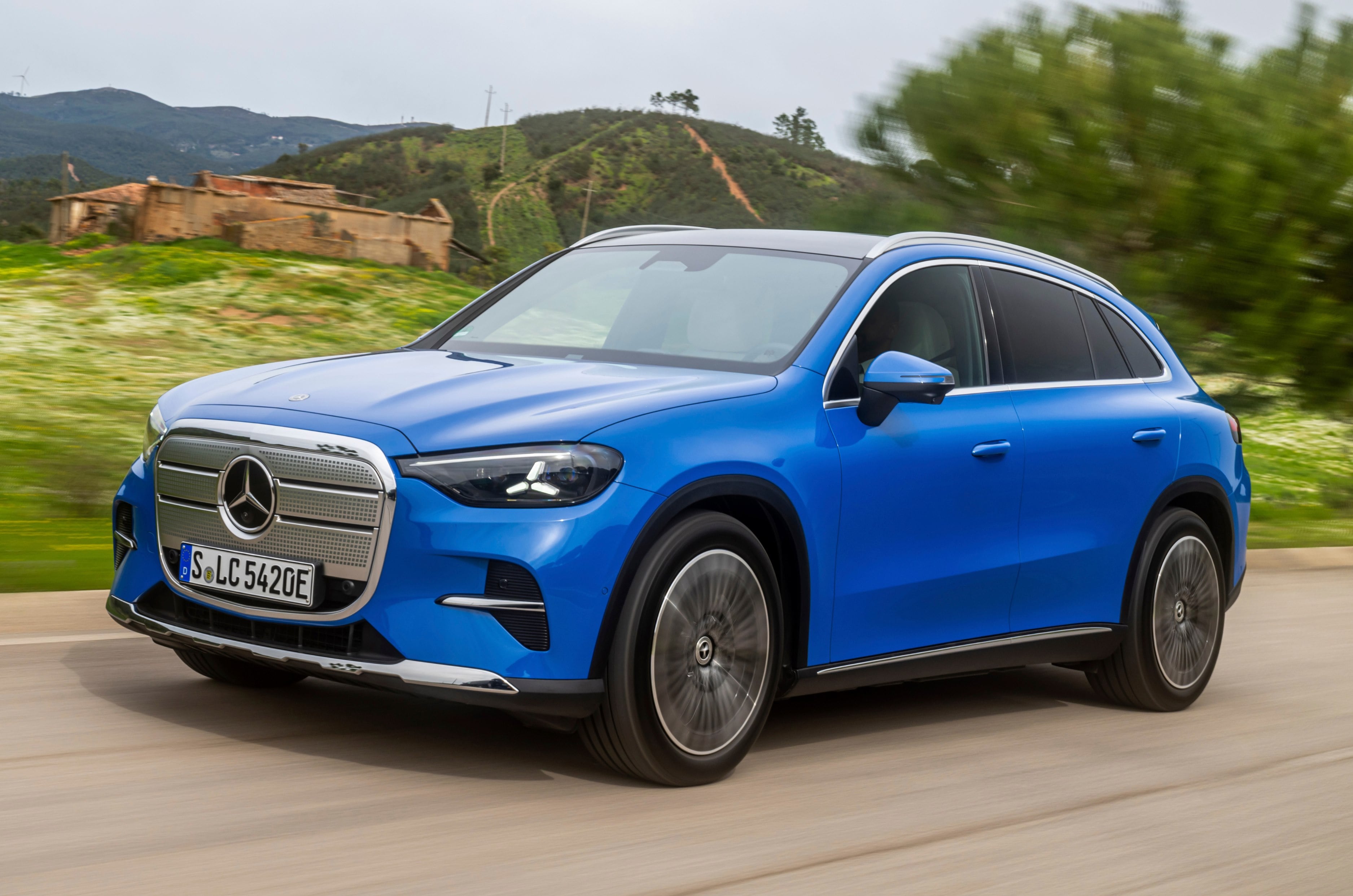
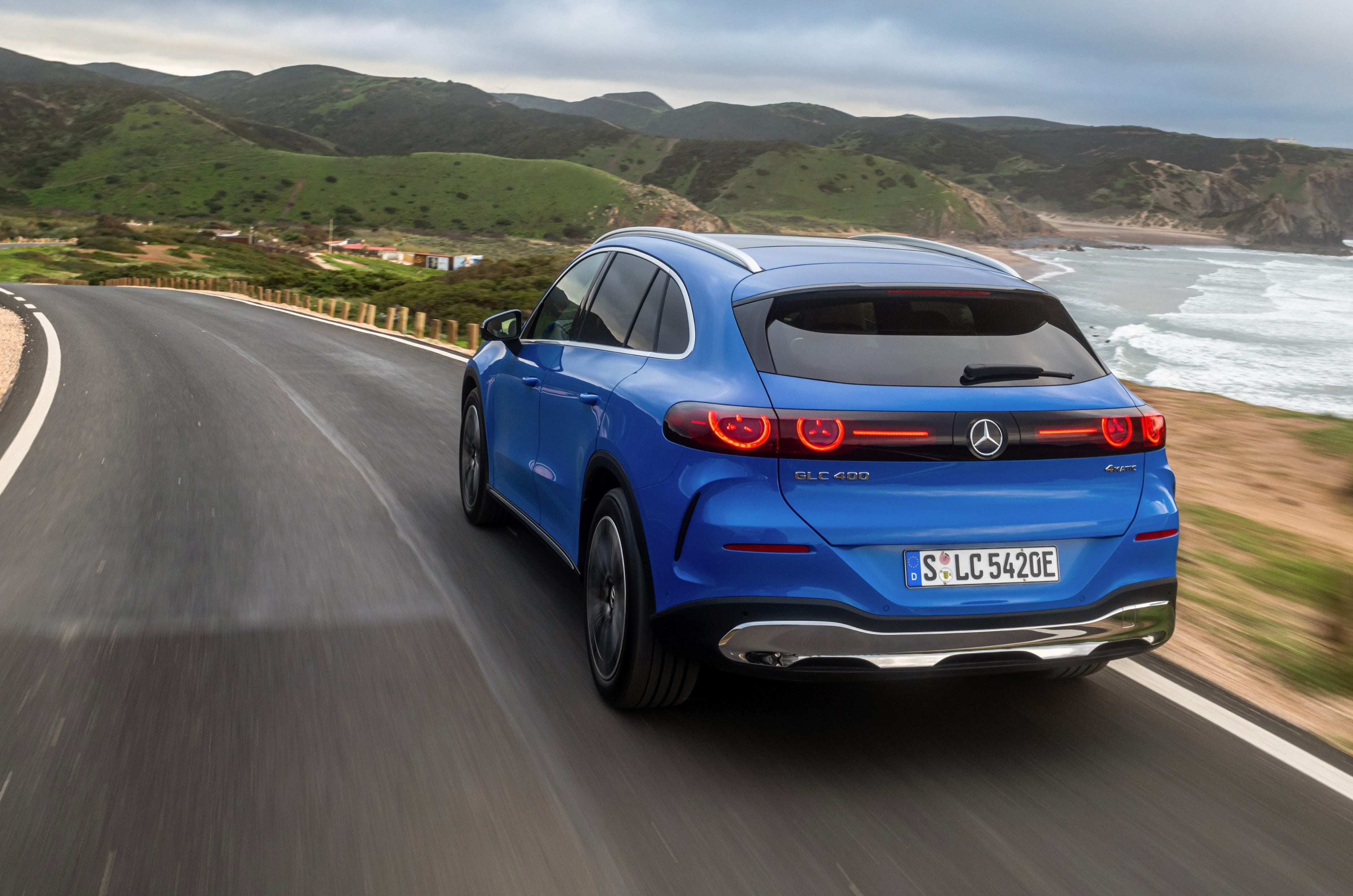
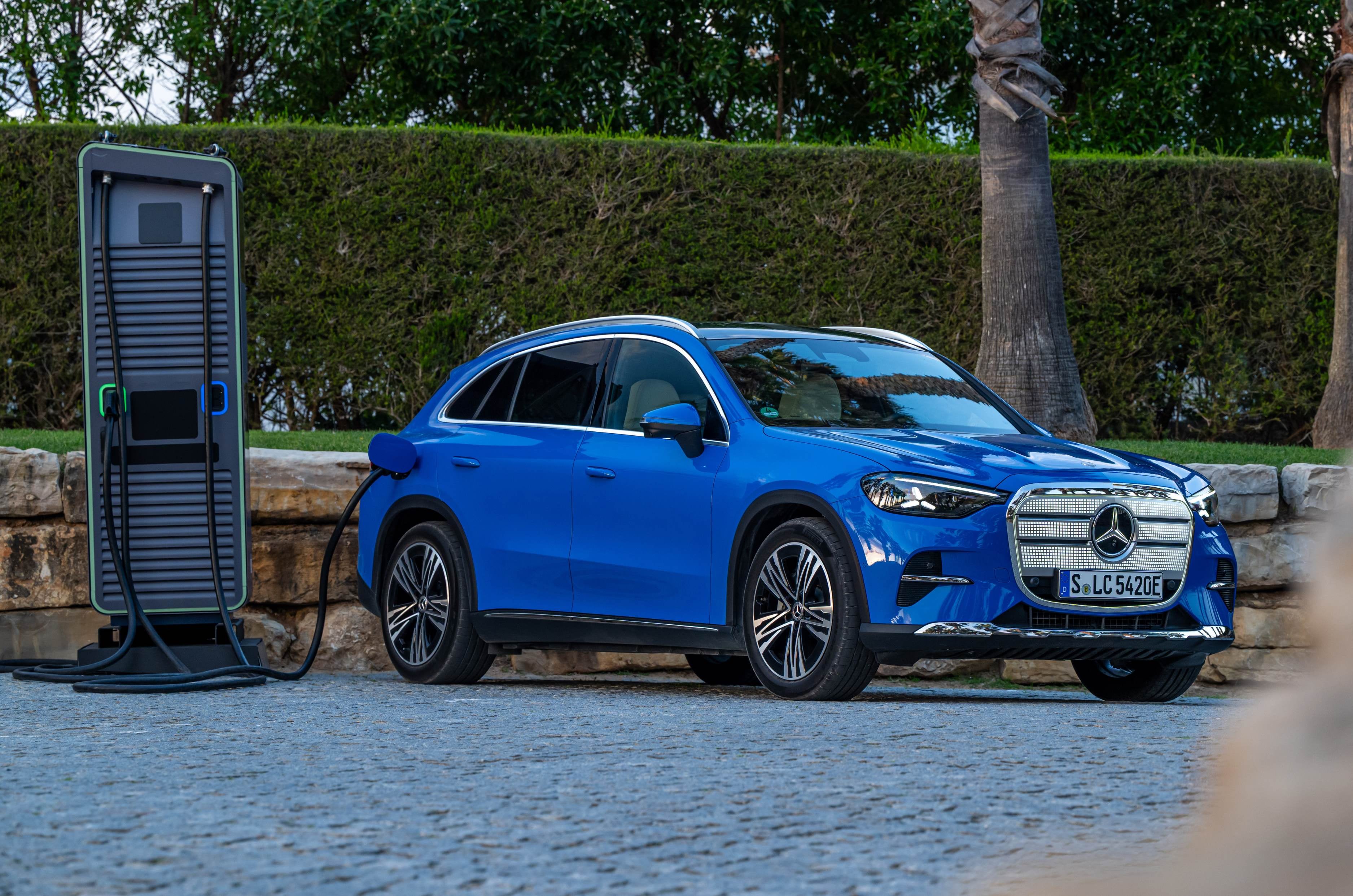
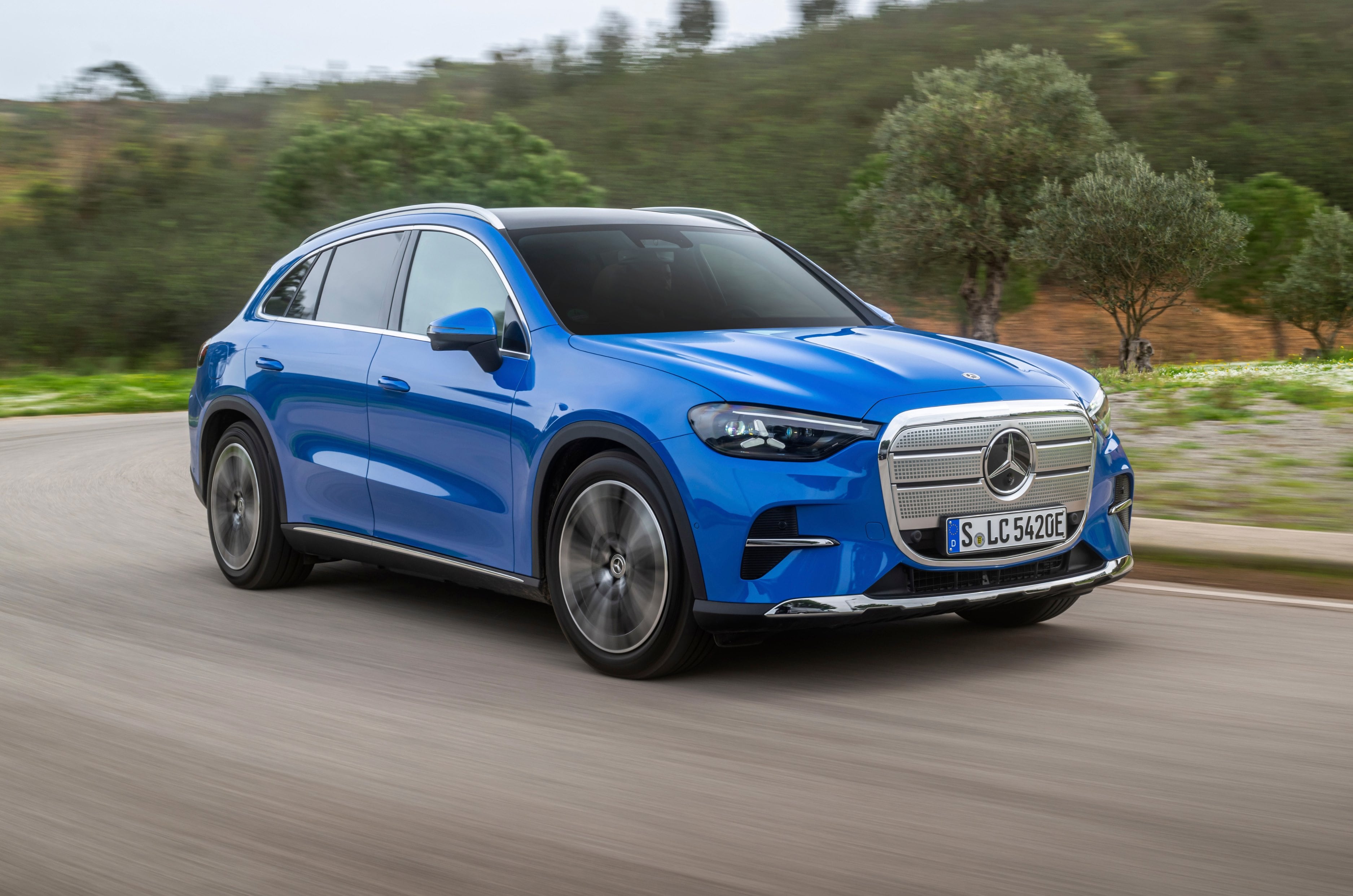
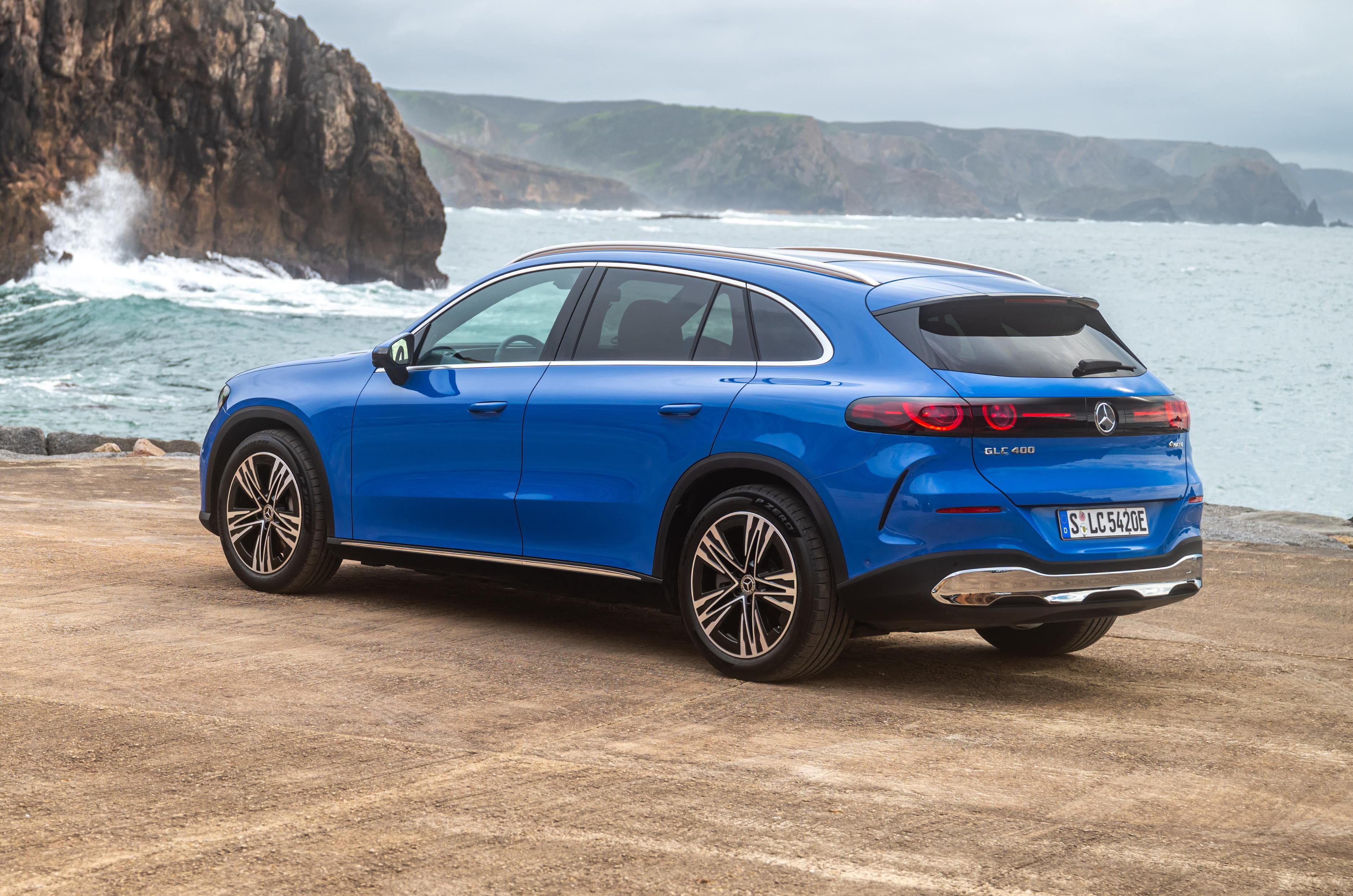
The Mercedes-Benz GLC EV you see here is not merely an electric derivative of the GLC you and I are familiar with. It’s built on an all-electric platform, and it’s longer, wider, and built on a slightly larger wheelbase than the GLC. And it also does 0-100kph in just 4.3 seconds.
The big news is that it’s coming to India by the end of the year. There’s lots to talk about, so let’s go one by one.
Mercedes-Benz GLC EV Exterior Design and Engineering – 8/10
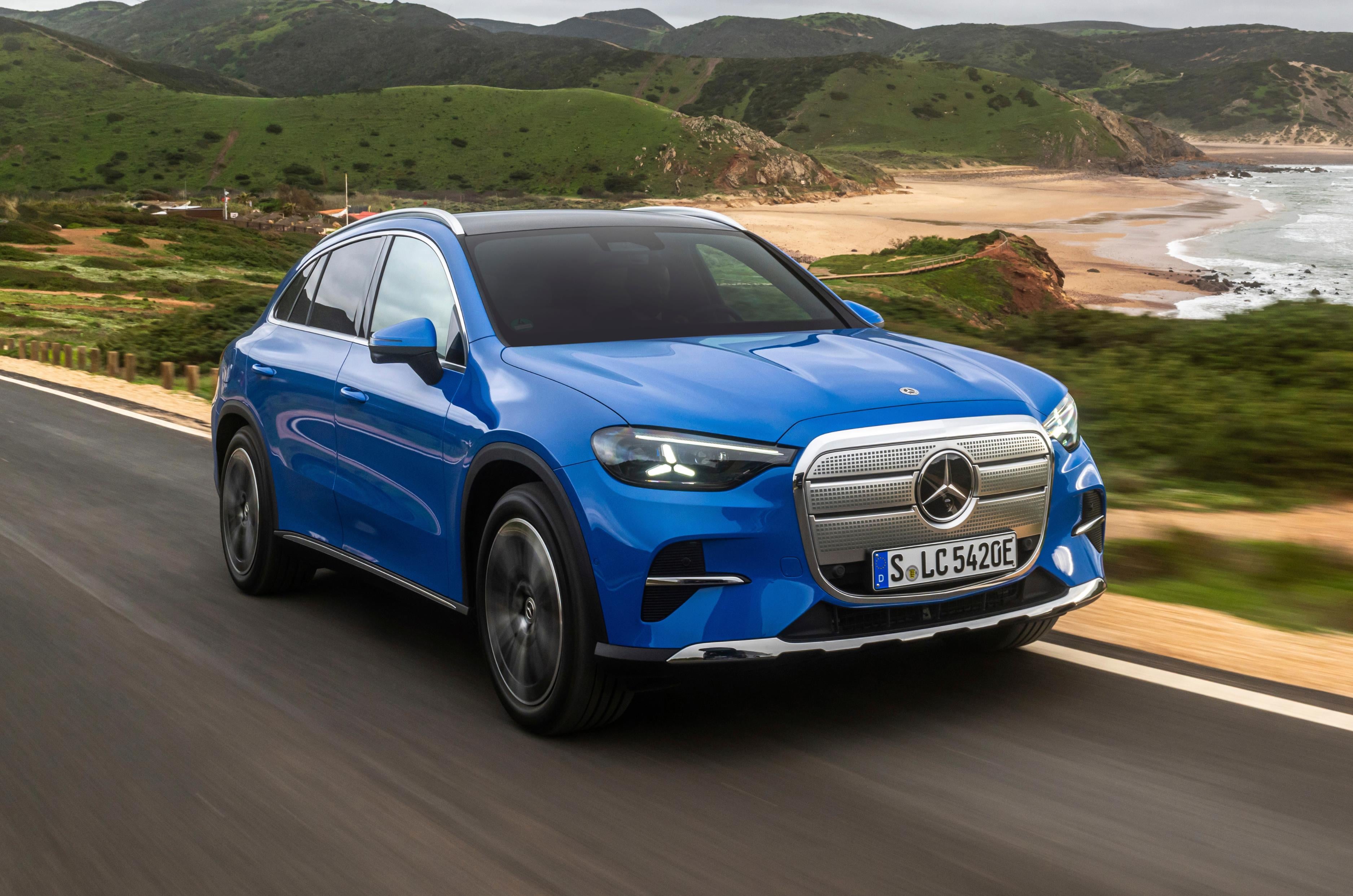
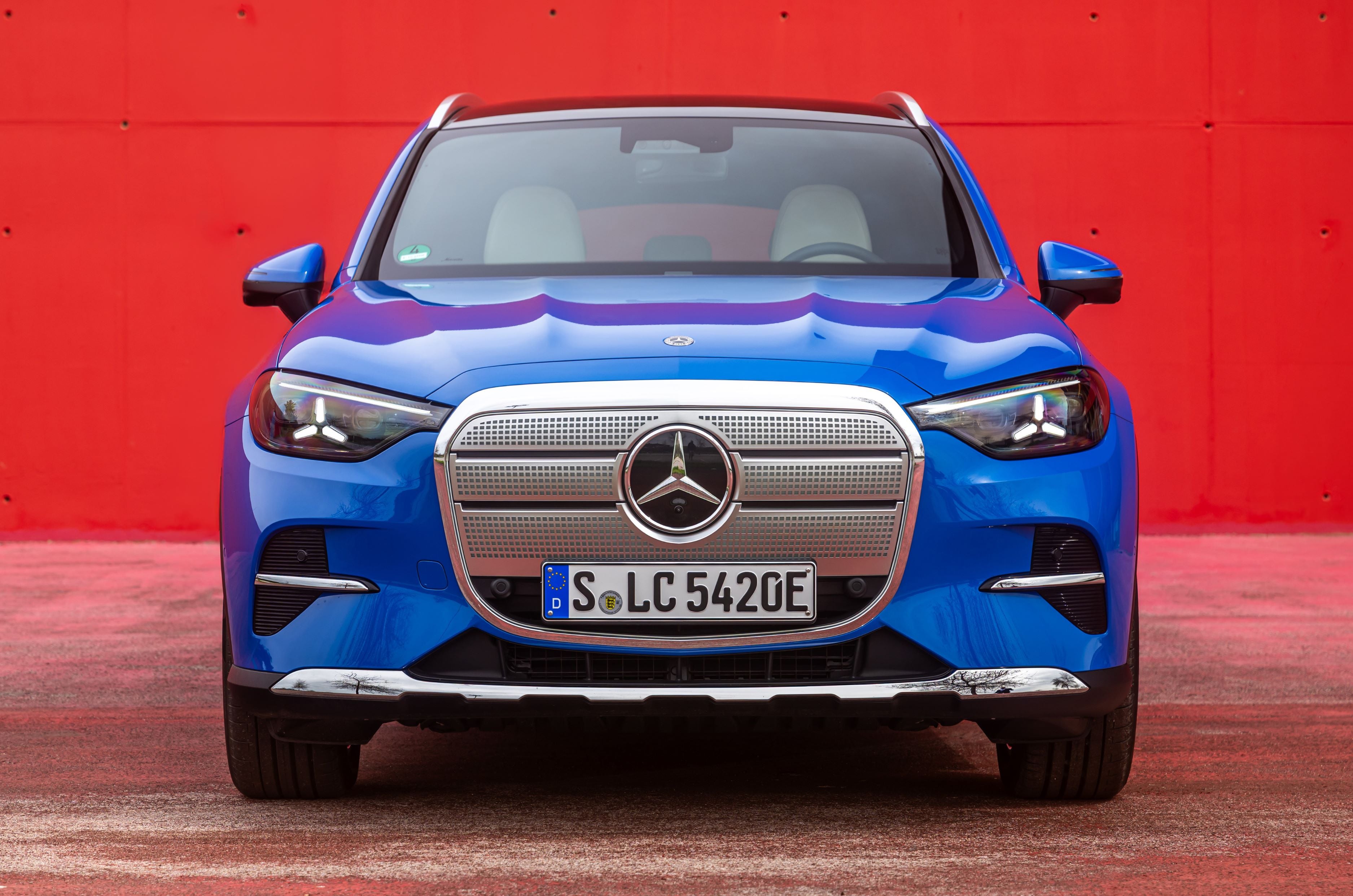
Large new grille reminiscent of older Mercs
Let’s talk styling first, and what catches your attention up front is this large new grille. It’s very different from what we’ve seen of Mercs of late, but it actually has a link to Mercs of old. The upright grille is styled to look like the one on iconic models like the W112 S-Class, but there’s a lot of modernity built into it as well. There are 942 lighting elements in it! Talking of lighting, the three-pointed star on the nose glows and there’s a tri-star DRL pattern in the headlights too. And unlike other Merc EVs from the (recent) past, there is a functional frunk with a handy 129 litres of space.
Gets an 84mm longer wheelbase than the ICE version.
The GLC EV doesn’t look all too different to the ICE GLC in profile. Which is to say it is not an upright SUV but curvy, low-slung and aerodynamic. What is noticeably different is the wheelbase, which is a full 84mm longer. Mind you, this is the standard wheelbase GLC EV. There’s a long-wheelbase version sold in markets like China. India will get the GLC with 20-inch rims and flush-fitted door handles that pop out when the doors are unlocked.
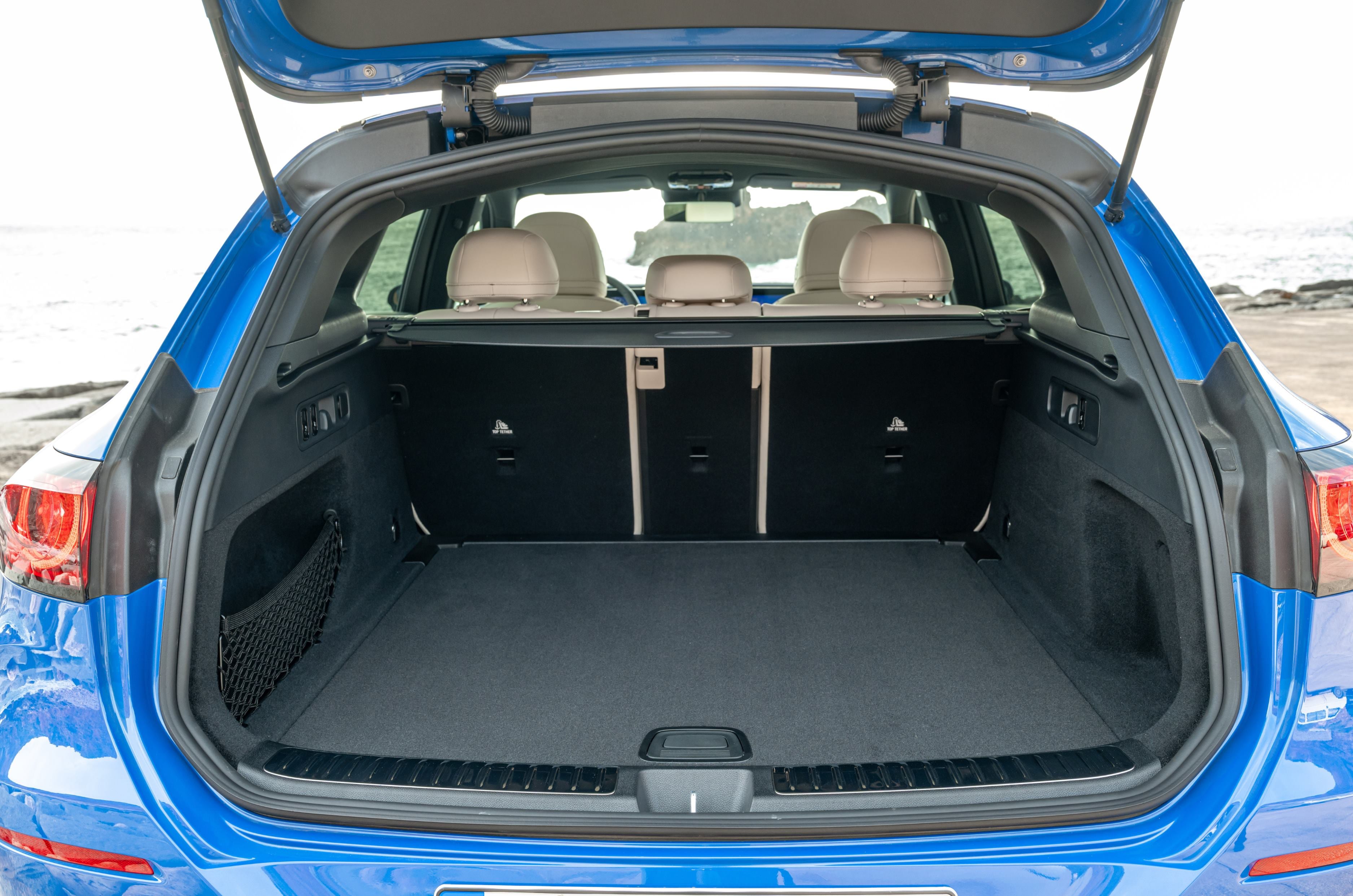
570-litre boot is spacious, but a caveat is the absence of a spare wheel.
Styling at the back is quite distinct from the other lot of Mercedes SUVs, and that’s thanks to a band of black that runs the width of the tailgate. There’s full-LED lighting at the back replete with three-pointed star light signatures.
The powered tailgate opens up to a 570-litre luggage area, which is quite sizable. The only catch is that there’s no space for a spare tyre. Mercedes India will probably have to provide one to sit on the boot floor, which means not much space will be left for luggage.
Before we proceed, I have to admit, I didn’t like what I saw of the GLC EV in pictures. In reality, it is eye-catching, and in a very good way.
Mercedes-Benz GLC EV Interior Space and Comfort – 8/10
Interior quality is impressive, with open-pore wood trim while physical steering knobs and AC vents have a tactile feel
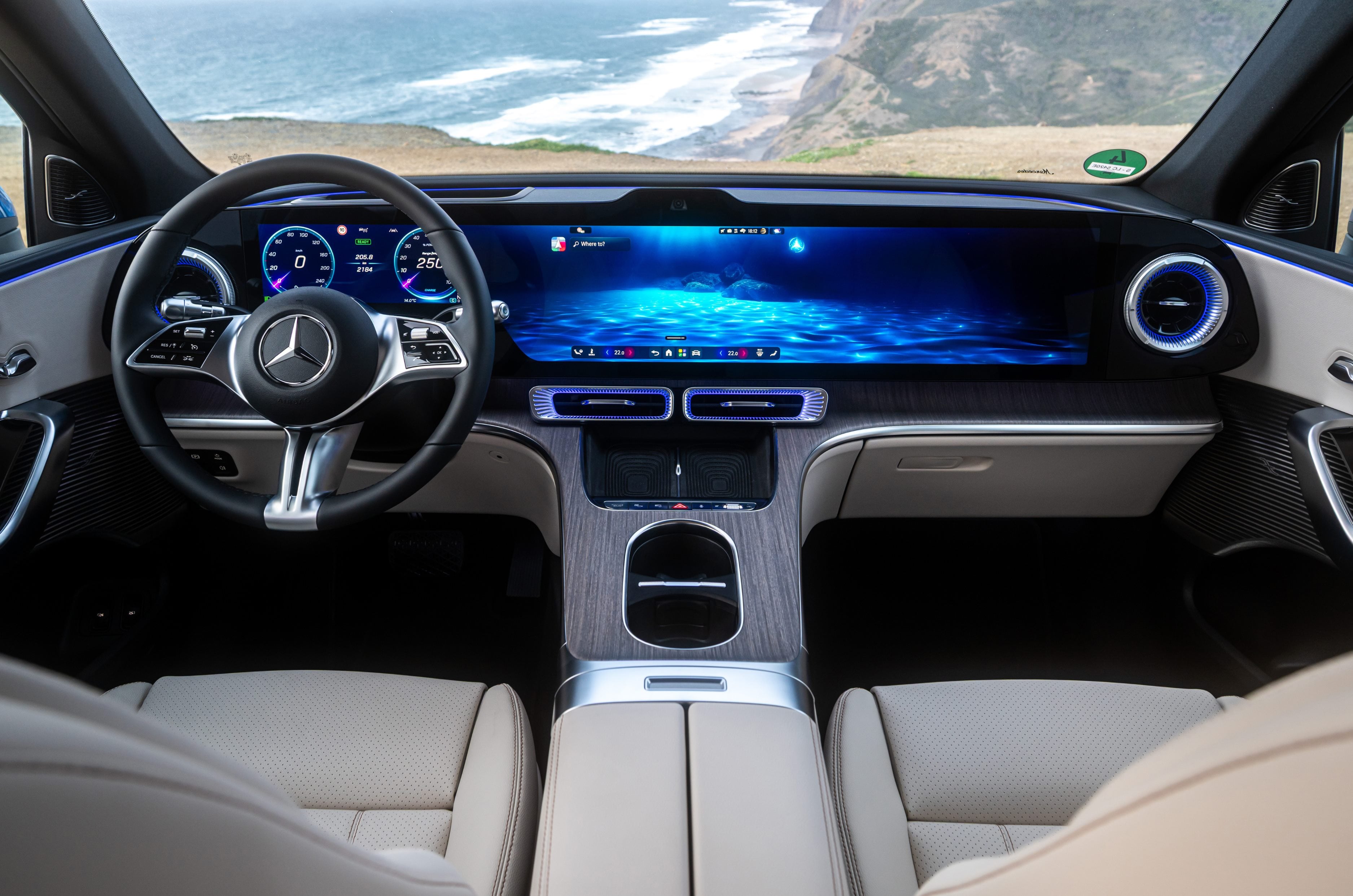
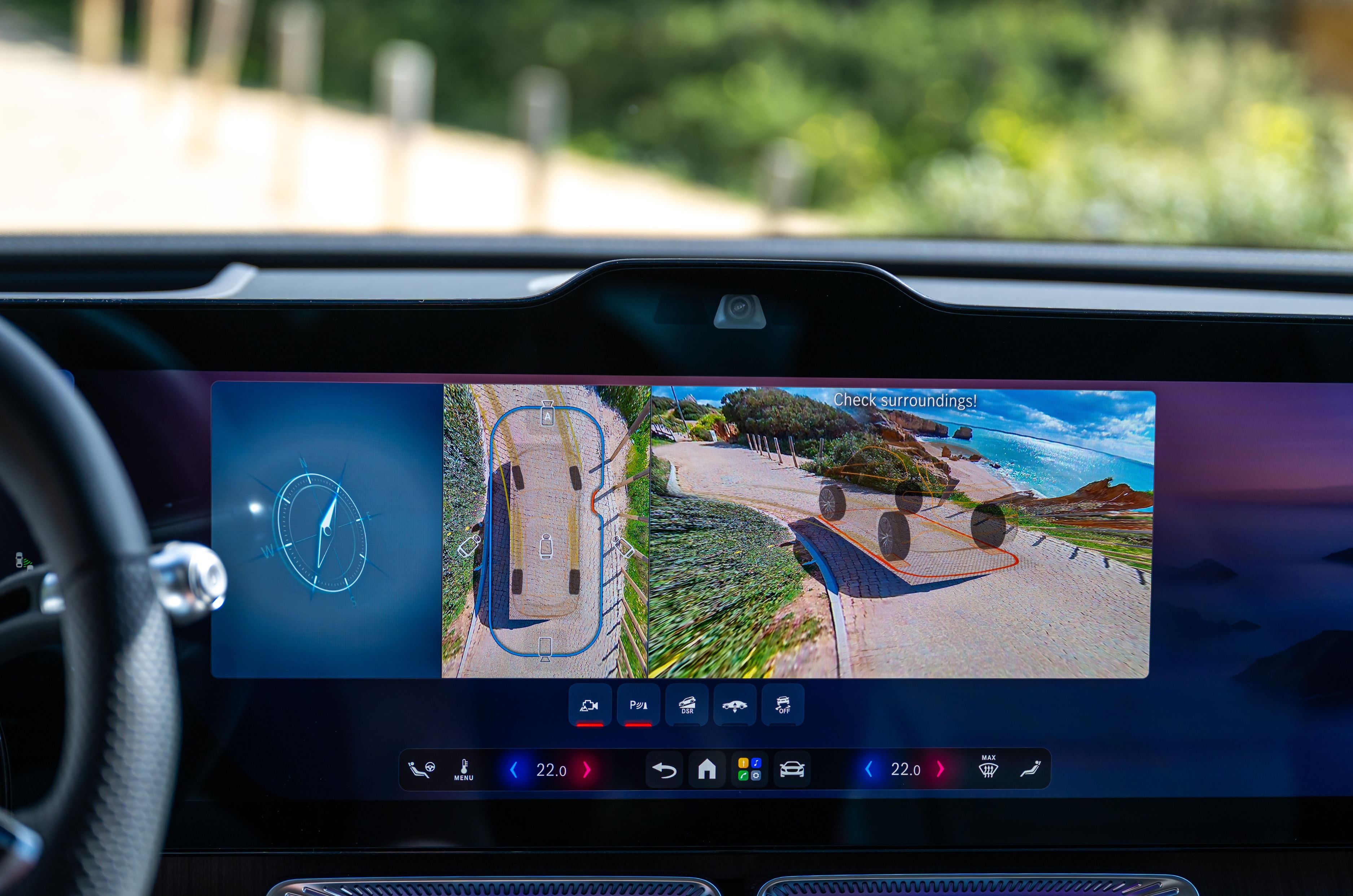
That new-age Mercedes vibe continues inside too, and that feeling is all thanks to a 39-inch Hyperscreen that extends nearly the entire width of the dash. There’s a seamless connection between the digital instrument cluster, the centre touchscreen and front passenger display, and it does look really impressive. That being said, the screens have taken away some of the warmth that you’d expect in a Merc.
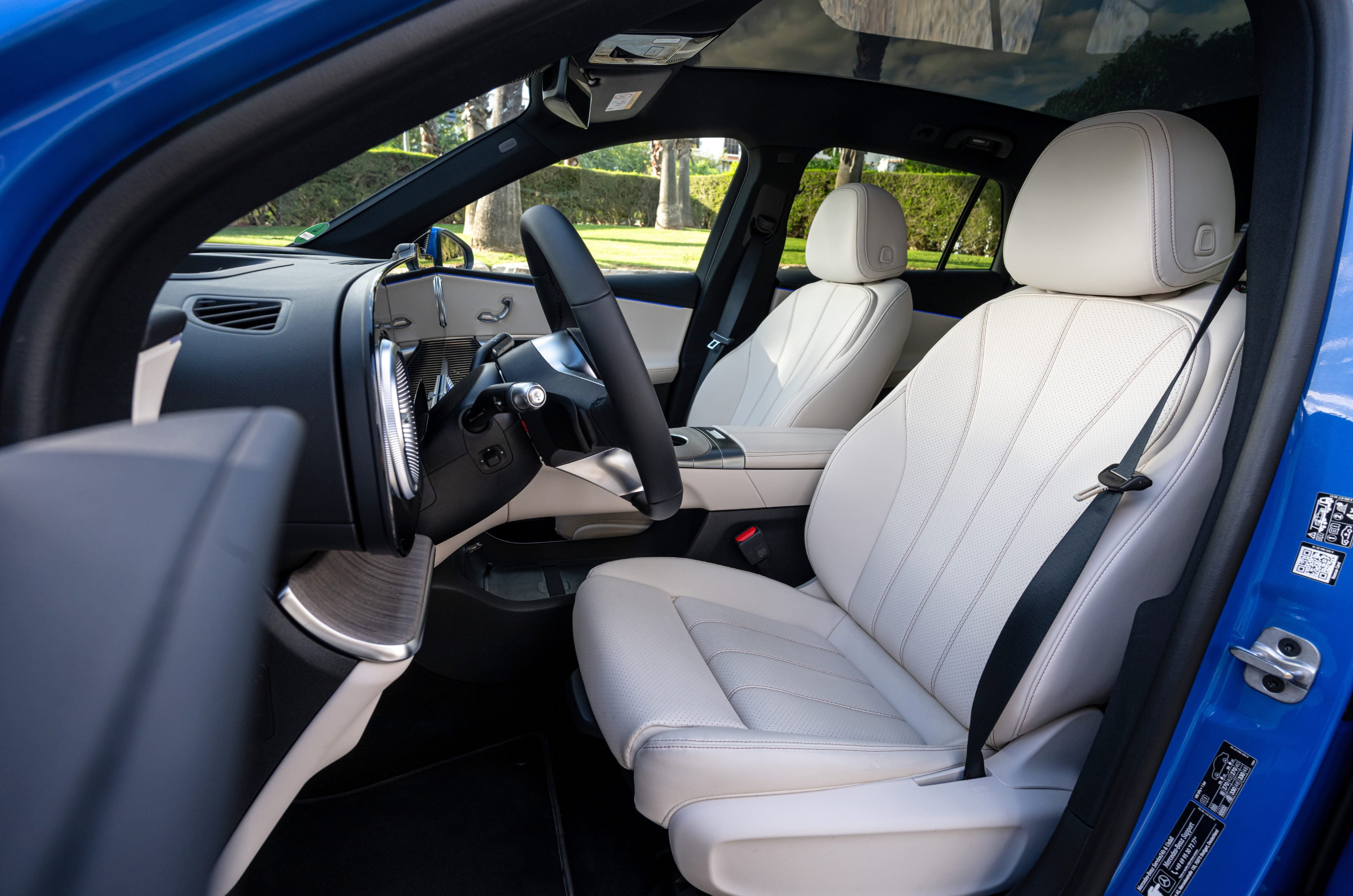
Comfy front seats come with various levels of adjustment, massage and heating. India-spec model expected to come with a cooling function.
In terms of quality, though, the GLC EV feels like an expensive Mercedes. There’s open-pore wood, the AC vents operate with very satisfying clicks and clacks, and physical rotary controllers make a welcome comeback to the steering wheel.
The front seats are as comfy as they look, with multi-way powered adjustment, massage and heating. We expect the model for India to pack in ventilation as well.
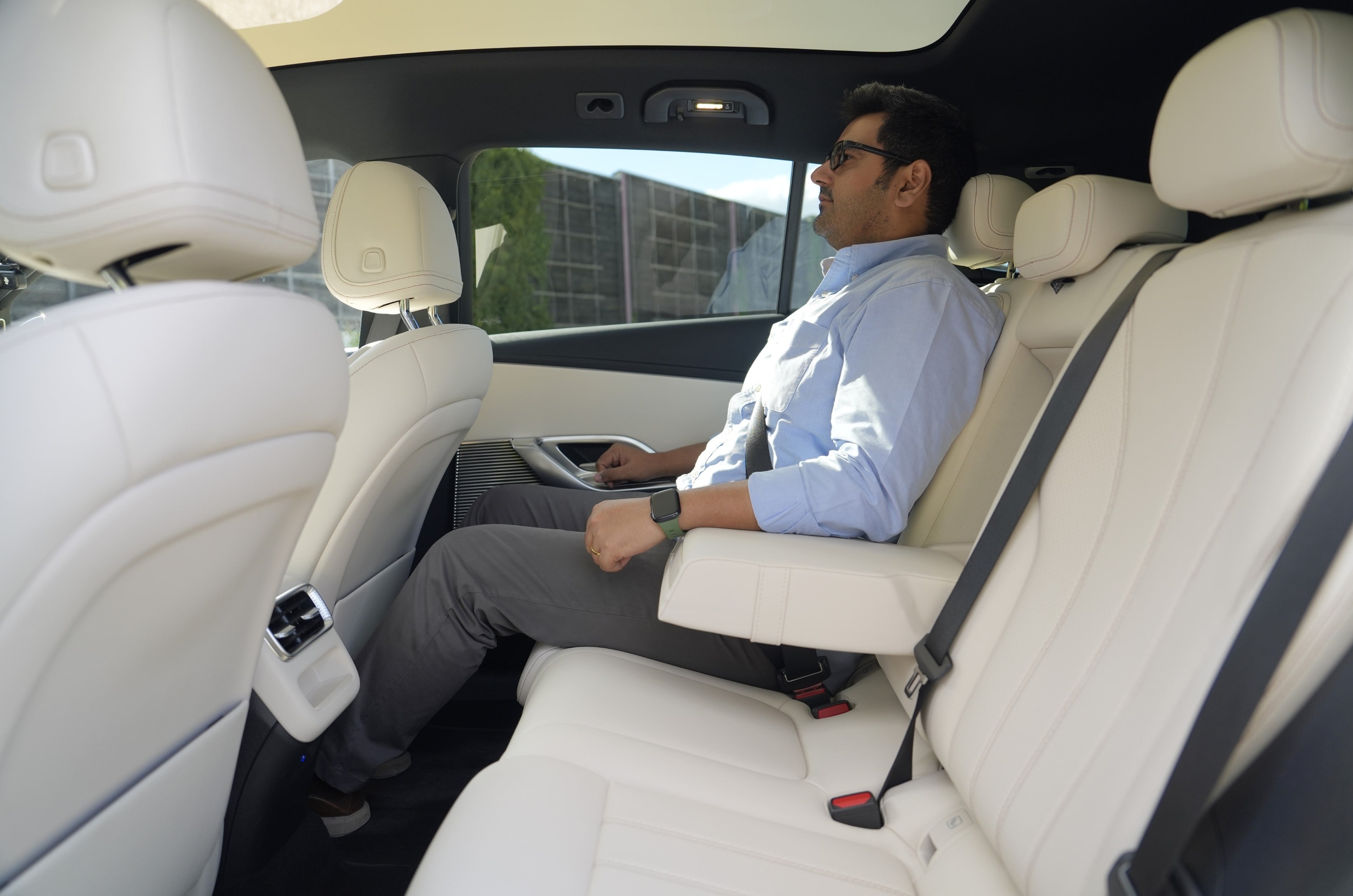
You get more space than the standard GLC, and unlike some EVs, you do get good foot room. However, it’s best suited for two.
It’s at the back where things get really interesting for buyers confused between a GLC and a GLC EV. Rear seat space is a bit more generous than the standard GLC. There’s also good foot room under the front seats, which is not something you can say about all EVs, and even the seating position isn’t the typical knees-up that we’ve come to associate with EVs. A longer seat squab would have upped the experience. Also, the rear seat is best for two. A middle passenger will have to contend with a high centre tunnel.
Mercedes-Benz GLC EV Features and Safety – 9/10
The Hyperscreen is the focal point of the dash and delivers brilliant graphics across the entire display. The digital dials, centre touchscreen and passenger screen appear to be part of a seamless display and look terrific. There are themes for the screen too that also adjust other functions for the full effect. For instance, a bonfire on the screen will be accompanied by the seat heating coming on.
Massive 39-inch hyperscreen has a good UI and seamlessly integrates with other in-car displays but packs in too many functions.
The thing is, there’s just too much packed onto the centre touchscreen. The UI is good but more physical controls would just make life easier. The passenger display is slick in its own right but only blanks out if it detects the driver looking at it (a camera on the dash monitors the driver’s gaze). A privacy glass would have just been better.
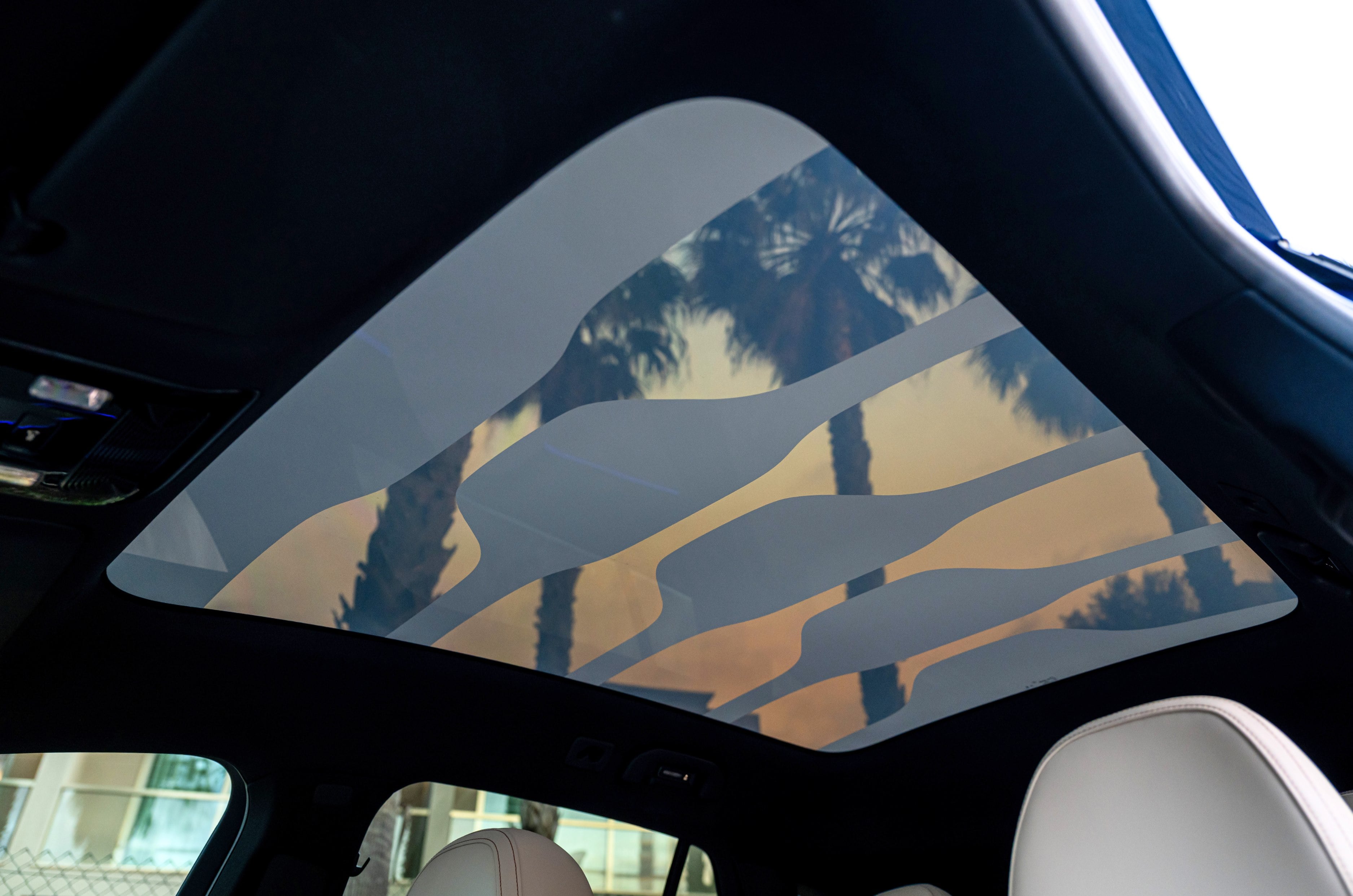
Among the other features, the panoramic glass roof is made up of nine segments which can be individually controlled for transparency. You can make them completely opaque, and they did a surprisingly good job of keeping the heat out. You could even have the glass roof specced with 162 stars that change colour with the ambient lighting.
Panoramic glass roof comprises nine individually configurable segments to control transparency.
Features-wise, aside from the screens and glass roof, the other highlight is the Burmester 4D sound system with exciters in the seat, so you can actually feel the bass. The head-up display and cameras are also top-class, while the AI integration doesn’t feel like a tick-mark item. You can actually converse with your car for restaurant recommendations or even abstract general knowledge.
The safety suite includes 9 airbags, ESC and a full suite of ADAS features.
Mercedes-Benz GLC EV Performance and Refinement – 9/10
Your friendly Mercedes salesperson will only be too happy to run you through the GLC 400’s big numbers: 489hp, 800Nm and a 4.3 sec 0-100kph time. The figures are made possible by front and rear permanently excited motors that draw power from a 94kWh battery pack.
489hp from its dual motors makes the GLC EV feel like an AMG compared to its ICE counterpart.
How does it all come together? The first thing that gets you is the silence. The drive experience is just what you’d expect in a plush Mercedes electric car. So it’s really quiet, and you don’t hear much of the world outside. There is a bit of wind noise if you really pay attention, but honestly, with some music piping out of the Burmester sound system, it’s not something that will catch your attention in the least.
What’s also clear is that the GLC EV is the strong and silent type. The performance makes the GLC EV feel like an AMG compared to the standard GLC petrol and diesel. A two-speed gearbox ensures quick getaways when needed, as well as the long legs for a more relaxed drive. Stomp down on the accelerator from a steady cruise, and you can feel the kickdown.
You won’t need to drive like a hoon to enjoy the GLC EV. Performance, no surprises, is very brisk when you put some weight on the accelerator pedal, with easy access to power. You can make the GLC EV feel a bit more urgent when you play around with the drive modes, but honestly, you won’t really need to because of how friendly the power feels and how ready the GLC EV feels at all times.
Power is easily accessible and is ready to push further when you put your foot down.
You’ll also take very naturally to the regen braking levels. One-pedal driving is included, and there’s the option of an intelligent mode too that reads the driving environment and optimises regen force.
The GLC EV also gets sound profiles, and we have to say they’re a bit unusual. They’re not trying to mimic the sound of a V8 or a V6 or any kind of ICE engine. The sounds are more on the sci-fi spectrum, so if you accelerate hard, you’d get the feeling of being in a UFO, which is disconcerting, if we can be honest. We’d rather enjoy the quiet inside.
Mercedes-Benz GLC EV Range and Efficiency – 8/10
Its large 94kWh battery can be charged from 10-80 percent in 22 minutes with a 330kW DC fast charger.
Now, on to the matter of range. Mercedes claims a 715-kilometre range on the WLTP cycle. Even if you account for real-world Indian conditions, you’re looking at a comfortable range of over 550 kilometres. Drive with a bit of care, and you could see that figure go past 600 kilometres. We really have come a long way in just a few years, haven’t we?
Of course, the go-to charging solution for most owners will be home charging. There’s up to 22kW AC support. The GLC can also be charged at up to 330kW using DC charging. Theoretically, at max speed, the GLC EV’s 94kWh battery can be juiced up from 10 to 80 percent in 22 minutes. A 10-minute charge alone can give you 300 kilometres of range.
Mercedes-Benz GLC EV Ride Comfort and Handling – 8/10
We can’t give a definitive verdict on cornering ability, as the bulk of our route was on the Autobahn outside Stuttgart, which has the gentlest of curves.
At Autobahn speeds, the GLC EV feels really planted and drives like a proper German car should. There’s pleasant weight at the steering wheel as well.
In terms of high-speed ride comfort, the GLC EV doesn’t come across as softly sprung as something like an EQS SUV, which really feels a bit roly-poly. There is still some vertical movement even when you switch to Sport mode, but it’s not to the point of being an irritant.
Feels planted out on the Autobahn and the steering is well-weighted
We’ll reserve judgement on the air suspension’s bump absorption till we drive the GLC EV on our roads, but on the sole patch of broken road on our route, the GLC EV didn’t feel entirely plush. Perhaps that’s something for Mercedes India to have on their list of things to do for the version headed our way.
A cool feature on the GLC’s suspension is its use of Google Maps to identify the vehicle’s environment and adjust ride height. For instance, the car automatically lowers on a highway. Also cutting-edge is how the suspension preps damping force in advance of a bump based on Car2X information from a Mercedes vehicle driving ahead. The systems better be up for the challenge of our roads.
Bundled in with air suspension is rear-axle steer, and the 4.5 degrees of movement does help greatly at parking speeds.
Mercedes-Benz GLC EV Should You Buy Now or Wait – 9/10
Bookings for the GLC EV open in early October, and the model will be launched in India within 2026.
It’s a big deal because the GLC EV comes to India within just six months of its European rollout. What makes the timeline even more impressive is the fact that the GLC EV won’t be an import, but will be assembled in India. Local assembly points at keen pricing.
The GLC EV will be locally assembled 6 months after its European version goes on sale.
We expect the model to be priced at about Rs 85-90 lakh (estimated, ex-showroom), which wouldn’t be all too far from the ICE GLC’s price. Factor in the registration benefits on EVs, and the price gets more tempting still.
As a product, the GLC EV does have lots going for it. It’s got the power, the refinement and the tech you’d expect on a luxury EV. Importantly, it doesn’t feel like your dad’s Mercedes, and that new-age cool is something many buyers will resonate with.
BMW’s iX3 Long Wheelbase and Audi’s Q6 e-tron are alternatives to watch out for in 2027, but in the near future, the GLC EV looks set for a clean run.
LPG Price 26 September 2026: भारत में LPG सिलेंडर हर घर की जरूरत बन चुका है। खाना बनाने से लेकर रेस्टोरेंट, ढाबे और छोटे-बड़े कारोबार तक, इसका इस्तेमाल बड़े स्तर पर किया जाता है। यही वजह है कि गैस सिलेंडर की कीमत में होने वाला कोई भी बदलाव सीधे लोगों की जेब और महीने के बजट पर असर डालता है। LPG के दाम समय-समय पर बदलते रहते हैं और इन पर कई चीजों का असर पड़ता है। अंतरराष्ट्रीय बाजार में गैस की कीमत, आयात का खर्च, डॉलर के मुकाबले रुपये की स्थिति और सरकार के टैक्स जैसे कारणों से सिलेंडर के रेट ऊपर-नीचे हो सकते हैं।
ऐसे में हर महीने की तरह इस बार भी लोगों की नजर LPG की कीमतों पर है। अगर आप भी सिलेंडर बुक कराने वाले हैं या अपने शहर का आज का रेट जानना चाहते हैं, तो यहां घरेलू और कमर्शियल LPG सिलेंडर की ताजा कीमतें देख सकते हैं।
आज कितने रुपये में मिल रहा LPG सिलेंडर?
फिलहाल 14.2 किलोग्राम वाले घरेलू LPG सिलेंडर की कीमत अलग-अलग शहरों में 941.50 रुपये से 994 रुपये के बीच है। वहीं 19 किलोग्राम वाले कमर्शियल सिलेंडर के दाम 2,701 रुपये से 2,996 रुपये तक हैं। शहर के हिसाब से कीमतों में अंतर देखने को मिलता है।
दिल्ली से हैदराबाद तक, आपके शहर में क्या है रेट?
शहर
घरेलू सिलेंडर
कमर्शियल सिलेंडर
दिल्ली
₹942
₹2,747.50
मुंबई
₹941.50
₹2,701
कोलकाता
₹968
₹2,884
बेंगलुरु
₹944.50
₹2,831
हैदराबाद
₹994
₹2,996
चेन्नई
₹957.50
₹2,916.50
कटक
₹968
₹2,885
कोयंबटूर
₹959
₹2,940
रांची
₹1,010.50
₹2,925.50
LPG की कीमत आखिर तय कैसे होती है?
सिलेंडर के दाम किसी एक फैक्टर से तय नहीं होते। अंतरराष्ट्रीय बाजार में ईंधन की कीमत, LPG के आयात की लागत, डॉलर के मुकाबले रुपये की स्थिति और सरकार की ओर से लगाए जाने वाले टैक्स जैसे कई कारक कीमत को प्रभावित करते हैं। तेल कंपनियां इन परिस्थितियों को ध्यान में रखते हुए समय-समय पर LPG के दाम में बदलाव करती हैं।
खाड़ी देशों से अमेरिका तक पहुंचा भारत का LPG कनेक्शन
LPG की कहानी अब सिर्फ घरेलू बाजार तक सीमित नहीं है। ईरान में युद्ध के कारण खाड़ी क्षेत्र से ऊर्जा आपूर्ति प्रभावित होने के बीच भारत ने LPG के लिए दूसरे स्रोतों का रुख किया। इसी बदलाव में अमेरिका की भूमिका तेजी से बढ़ी है।
अमेरिका बना भारत का बड़ा LPG सप्लायर
ब्लूमबर्ग की रिपोर्ट के मुताबिक, पिछले साल भारत के LPG आयात में अमेरिका की हिस्सेदारी करीब 6% थी, जो अब बढ़कर 20% से अधिक हो गई है। यानी भारत की LPG सप्लाई चेन में अमेरिका की मौजूदगी पहले के मुकाबले काफी मजबूत हुई है।
Petrol Diesel Price Today: हर दिन की शुरुआत सिर्फ सूरज की किरणों से नहीं होती, बल्कि पेट्रोल और डीजल की नई कीमतों से भी होती है, जो आम आदमी की जेब पर सीधा असर डालती हैं। सुबह 6 बजे देश की तेल विपणन कंपनियां (OMCs) ताजा दरें जारी करती हैं, जो अंतरराष्ट्रीय बाजार में कच्चे तेल की कीमतों और डॉलर-रुपए की विनिमय दर में आए बदलावों पर आधारित होती हैं। ये बदलाव रोजमर्रा की जिंदगी को प्रभावित करते हैं, चाहे वो ऑफिस जाने वाला व्यक्ति हो या फल-सब्जी बेचने वाला व्यापारी।
ऐसे में हर दिन की कीमतों की जानकारी रखना सिर्फ जरूरी ही नहीं, बल्कि समझदारी भी है। सरकार की यह प्रणाली पारदर्शिता सुनिश्चित करती है ताकि उपभोक्ताओं को किसी तरह की भ्रमित जानकारी न मिले।
आपके शहर में आज का पेट्रोल-डीजल का भाव
ये रहे 26 सितंबर 2026 के प्रमुख शहरों के पेट्रोल-डीजलके ताजा रेट
नई दिल्ली: पेट्रोल ₹102.12 प्रति लीटर और डीजल ₹95.20 प्रति लीटर।
मुंबई: पेट्रोल ₹111.18 और डीजल ₹97.83 प्रति लीटर।
कोलकाता: पेट्रोल ₹113.47 जबकि डीजल ₹99.82 प्रति लीटर।
चेन्नई: पेट्रोल ₹107.77 और डीजल ₹99.55 प्रति लीटर।
गुरुग्राम: पेट्रोल ₹102.77 तथा डीजल ₹95.44 प्रति लीटर।
नोएडा: पेट्रोल ₹102.12 और डीजल ₹95.56 प्रति लीटर।
बेंगलुरु: पेट्रोल ₹110.93 जबकि डीजल ₹98.80 प्रति लीटर।
भुवनेश्वर: पेट्रोल ₹109.92 और डीजल ₹100.92 प्रति लीटर।
चंडीगढ़: पेट्रोल ₹98.10 तथा डीजल ₹86.09 प्रति लीटर।
हैदराबाद: पेट्रोल ₹115.69 और डीजल ₹103.82 प्रति लीटर।
जयपुर: पेट्रोल ₹112.66 जबकि डीजल ₹97.78 प्रति लीटर।
लखनऊ: पेट्रोल ₹102.05 और डीजल ₹95.55 प्रति लीटर।
पटना: पेट्रोल ₹113.35 तथा डीजल ₹99.36 प्रति लीटर।
तिरुवनंतपुरम: पेट्रोल ₹115.49 और डीजल ₹104.40 प्रति लीटर।
पिछले दो साल से स्थिर क्यों हैं कीमतें?
मई 2022 के बाद से केंद्र और कई राज्यों द्वारा टैक्स में कटौती की गई, जिसके बाद पेट्रोल-डीजल की कीमतों में स्थिरता देखी जा रही है। हालांकि अंतरराष्ट्रीय बाजार में उतार-चढ़ाव होता रहता है, फिर भी भारतीय उपभोक्ताओं के लिए कीमतें तुलनात्मक रूप से स्थिर बनी हुई हैं।
किन कारणों से तय होती हैं ईंधन की कीमतें?
कच्चे तेल की कीमतें:
पेट्रोल और डीजल का उत्पादन मुख्य रूप से कच्चे तेल से होता है। जब अंतरराष्ट्रीय स्तर पर कच्चे तेल की कीमतें बढ़ती हैं, तो इसका असर सीधे भारतीय बाजार पर पड़ता है।
डॉलर के मुकाबले रुपया:
भारत अधिकतर कच्चा तेल आयात करता है, और यह डॉलर में खरीदा जाता है। यदि रुपया कमजोर होता है, तो ईंधन महंगा हो जाता है।
सरकारी टैक्स और शुल्क:
केंद्र और राज्य सरकारें पेट्रोल-डीजल पर भारी टैक्स लगाती हैं, जो खुदरा मूल्य का बड़ा हिस्सा होते हैं। यही कारण है कि राज्यों में कीमतों में अंतर होता है।
रिफाइनिंग की लागत:
कच्चे तेल को इस्तेमाल लायक बनाने की प्रक्रिया (रिफाइनिंग) में भी खर्च होता है। ये लागत कच्चे तेल की गुणवत्ता और रिफाइनरी की क्षमता पर निर्भर करती है।
मांग और आपूर्ति का संतुलन:
बाजार में ईंधन की मांग अगर बढ़ जाती है, तो कीमतें भी ऊपर जाने लगती हैं। खासकर त्योहारों, गर्मी या सर्दी के मौसम में ईंधन की खपत ज्यादा होती है।
कैसे करें अपने शहर की कीमतें SMS से चेक?
अगर आप मोबाइल से ईंधन की कीमत जानना चाहते हैं, तो ये प्रक्रिया आसान है:
Indian Oil ग्राहक: अपने शहर का कोड टाइप करें और उसे “RSP” के साथ 9224992249 पर भेजें।
BPCL ग्राहक: “RSP” लिखकर 9223112222 पर भेजें।
HPCL ग्राहक: “HP Price” लिखकर 9222201122 पर भेजें।
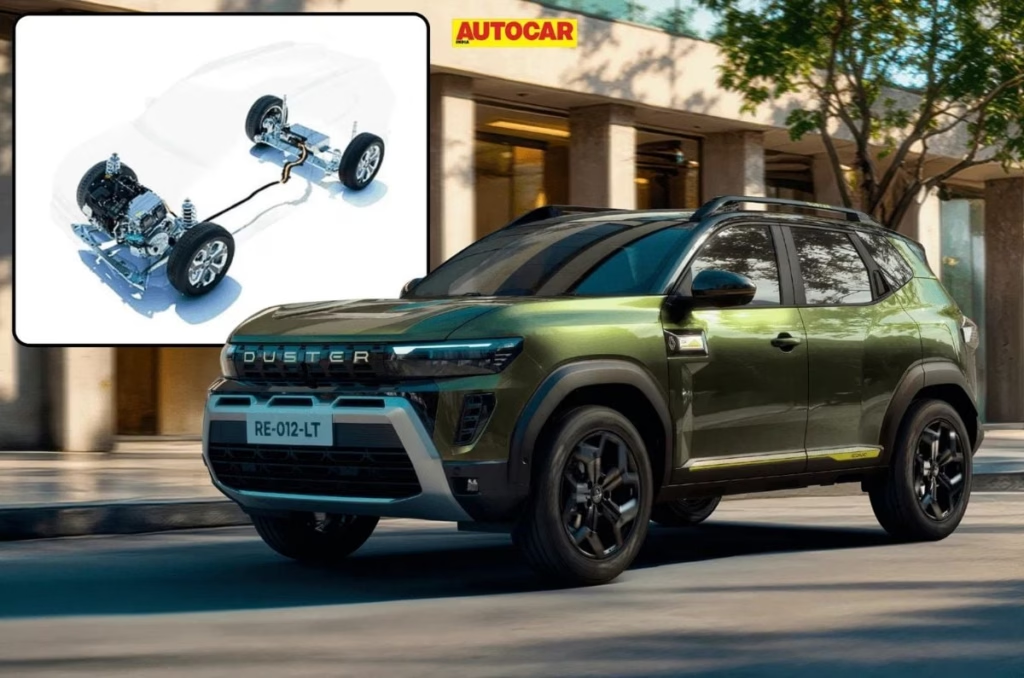
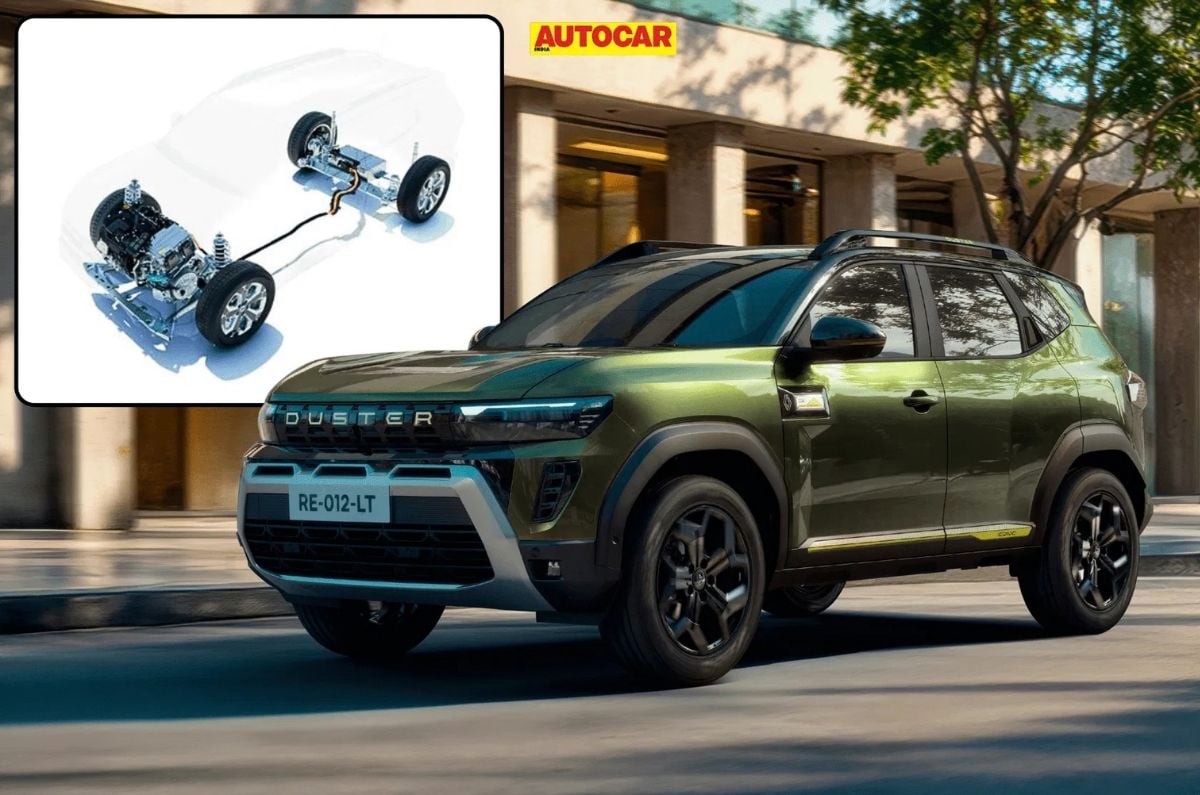
Renault is finally gearing up launch the Duster hybrid in India on October 17. This will be the third powertrain option on the Duster, adding to the existing 1.0-litre and 1.3-litre turbo-petrol engines. Called the E Tech system, Renault says it draws from its experience and expertise in Formula 1.
New strong hybrid unit will be third powertrain for the Duster
It combines a 1.8-litre petrol engine with two electric motors
To rival hybrid variants of Grand Vitara, Victoris and Hyryder
Renault Duster strong-hybrid details
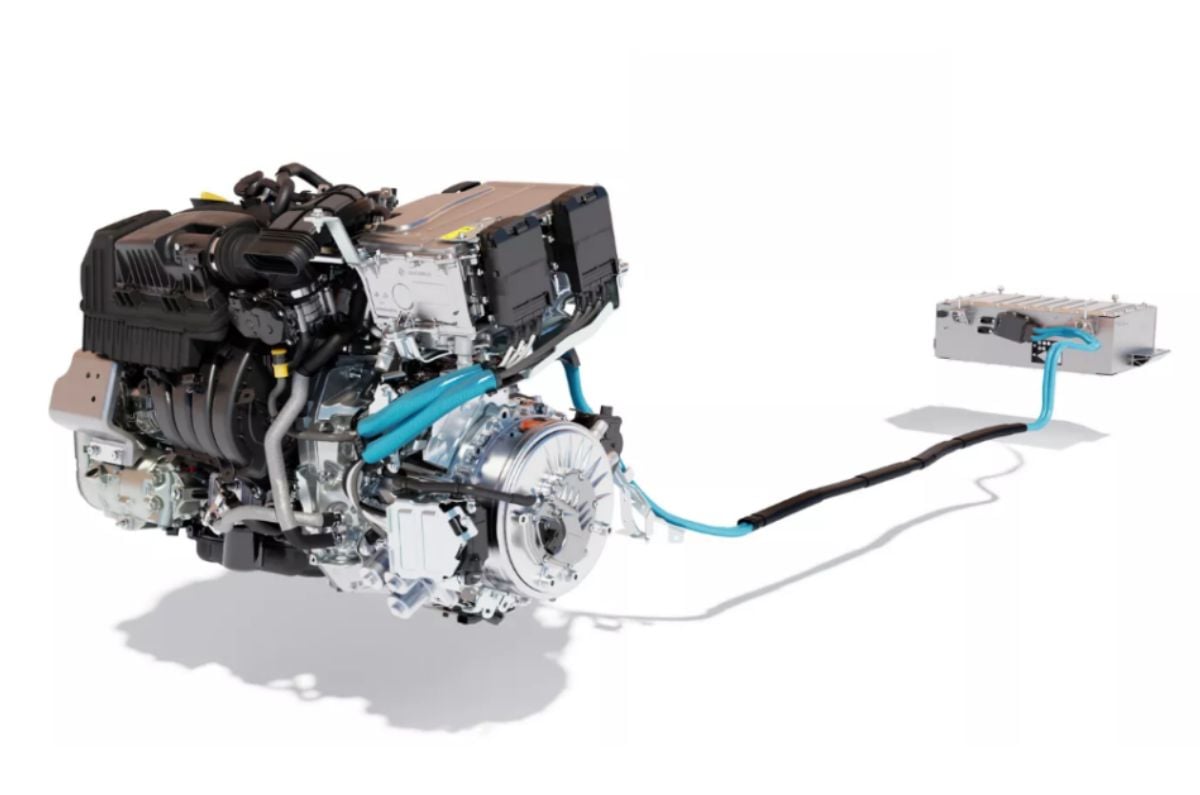
The strong-hybrid Duster combines a naturally aspirated 1,789cc four-cylinder petrol engine with two electric motors, a 20hp unit acting as a generator and a 49hp motor powering the wheels. Combined, the system produces 160hp and 172Nm, and it is supported by a 1.4kWh battery pack.
Unlike the Toyota hybrid system seen on the Hyryder, Grand Vitara and Victoris, Renault’s E Tech setup works differently. The Duster’s hybrid combines a petrol engine with electric drive and a battery, and it sends power to the wheels through a multi-mode automatic gearbox. While Toyota’s full hybrid uses an e-CVT and a power split device for a largely step-free driving feel, Renault’s hybrid transmission uses fixed gear ratios and can shift between them. This means engine rpm is expected to rise and fall more like a conventional automatic, and you may notice gear engagements as it switches between electric drive, engine drive, and a combination of both. It also uses a larger 1.4kWh battery pack compared to Toyota’s 0.76kWh unit.
Renault strong-hybrid E-Tech 160 hp powertrain
As with any full hybrid, the efficiency gains come from low-speed electric running, regenerative braking and the ability to keep the petrol engine off when it is not needed. However, real-world fuel economy will still depend on traffic conditions, speed, ambient temperature and driving style. That said, Renault claims the engine will enable 80 percent of city drives to be done in EV mode.
The strong hybrid is expected to help make up for the absence of a diesel engine option on the new Duster. This will also directly compete with the likes of the Maruti Grand Vitara, Victoris and Toyota Hyryder strong-hybrids in the midsize SUV segment.
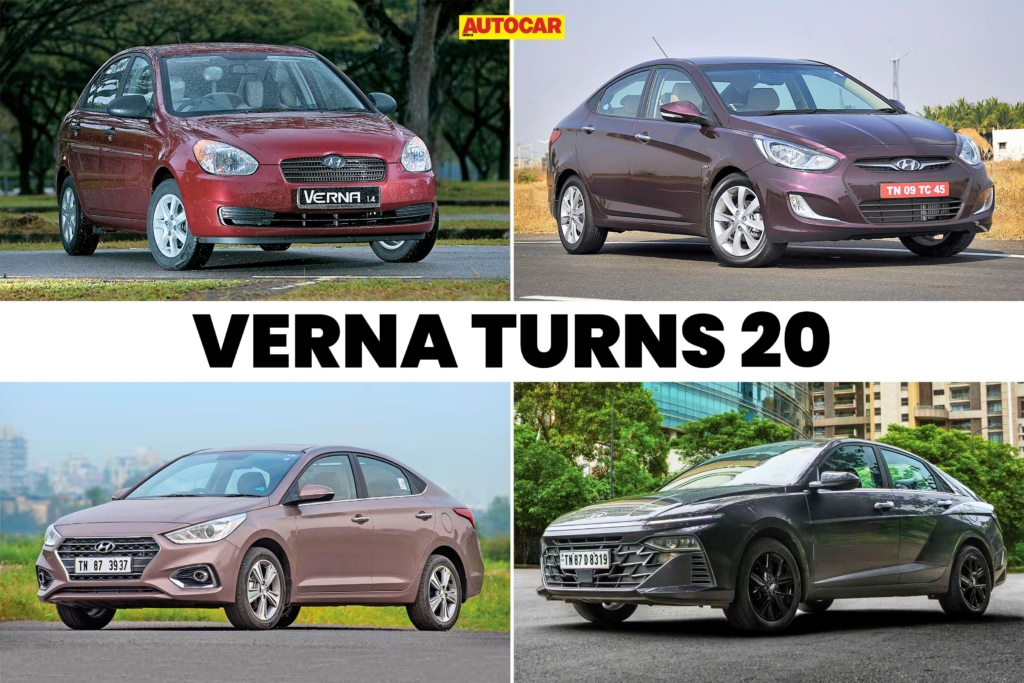
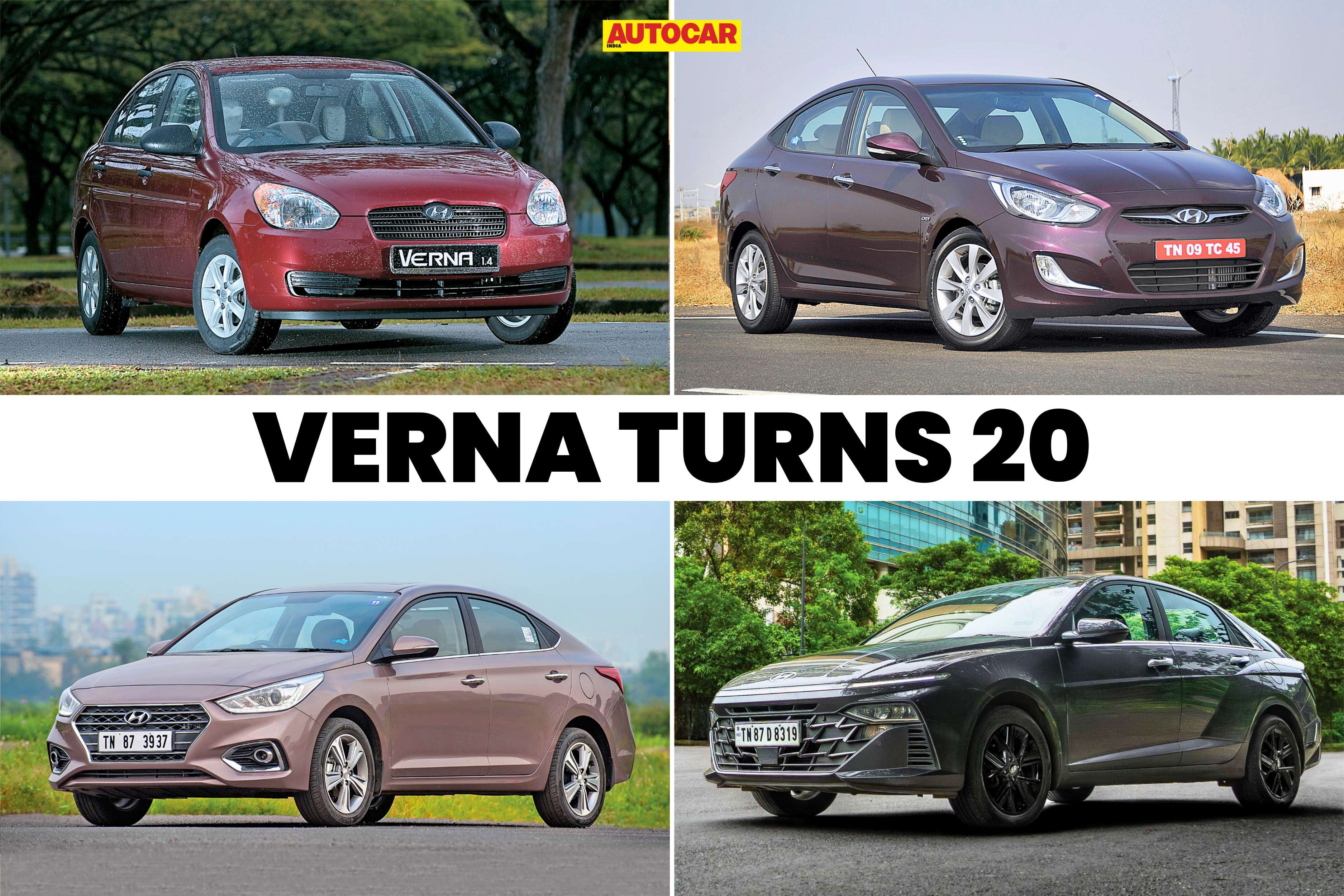
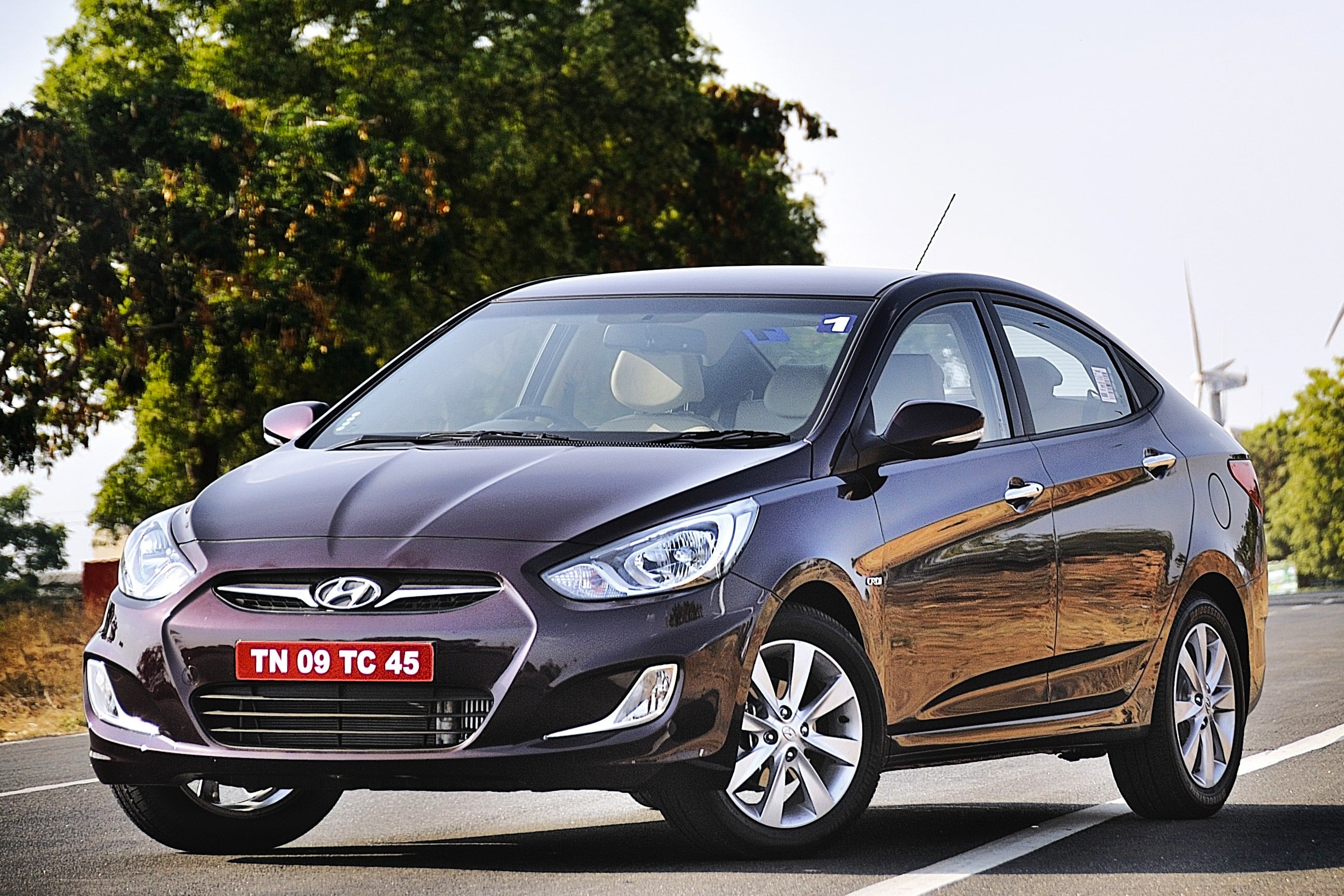
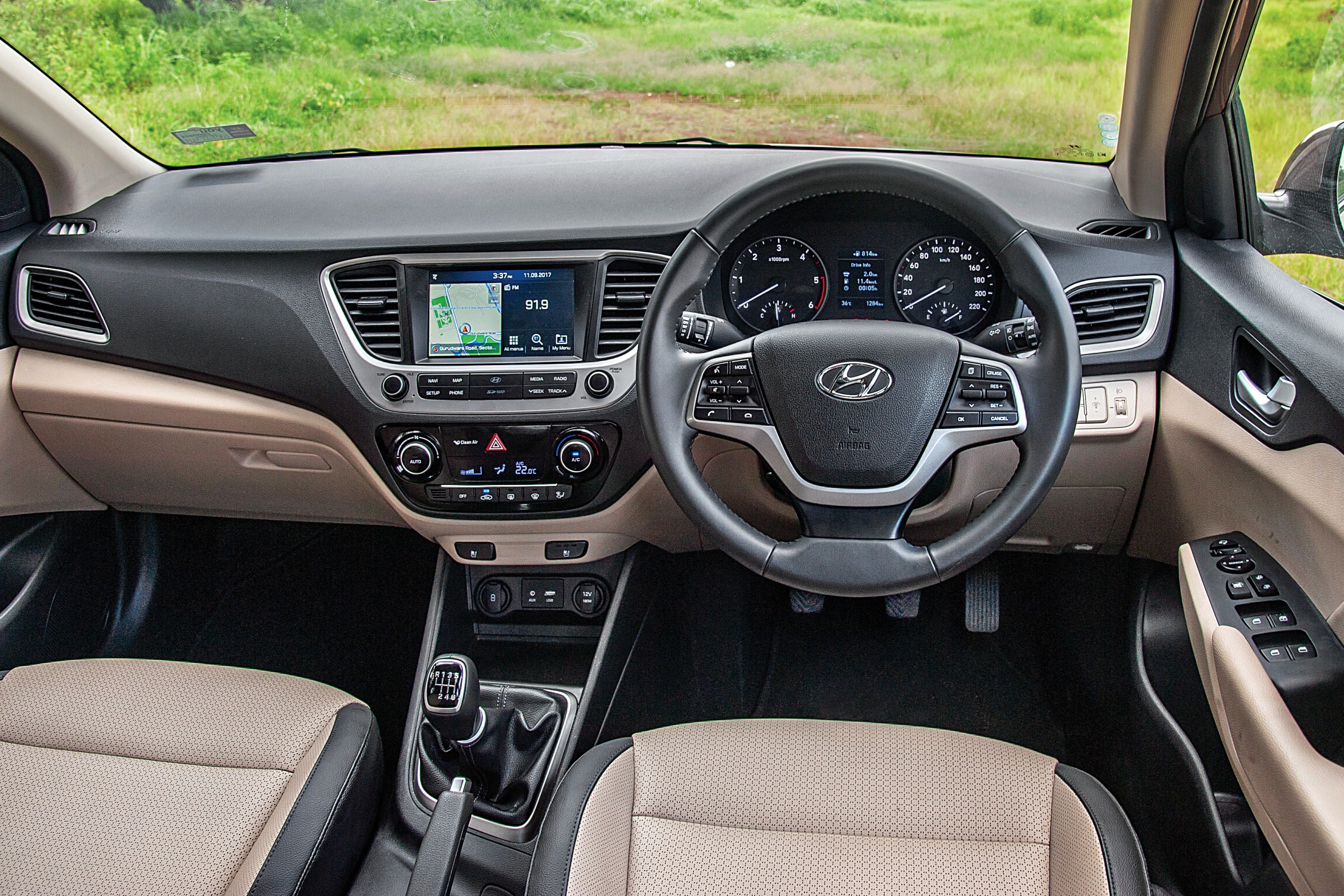
Hyundai is currently all-in on SUVs thanks to the persistent success of the Creta and Venue, but not many people know that the Korean carmaker’s longest-running nameplate in India belongs to a sedan: the Verna. Launched on September 25, 2006 as the successor to the Accent, the Verna is the longest-standing rival to the venerable Honda City in the midsize sedan segment.
Competitors like the Maruti Suzuki SX4 and Ciaz, Toyota Yaris, Fiat Linea, and Nissan Sunny came and went from this space, but the Verna continues to survive, pushing the segment forward and helping keep the midsize sedan alive – more important than ever given buyers’ increasing preference for high-riding form factors. On the Verna’s 20th anniversary, let’s take a look at how this beloved sedan has evolved with each generation.
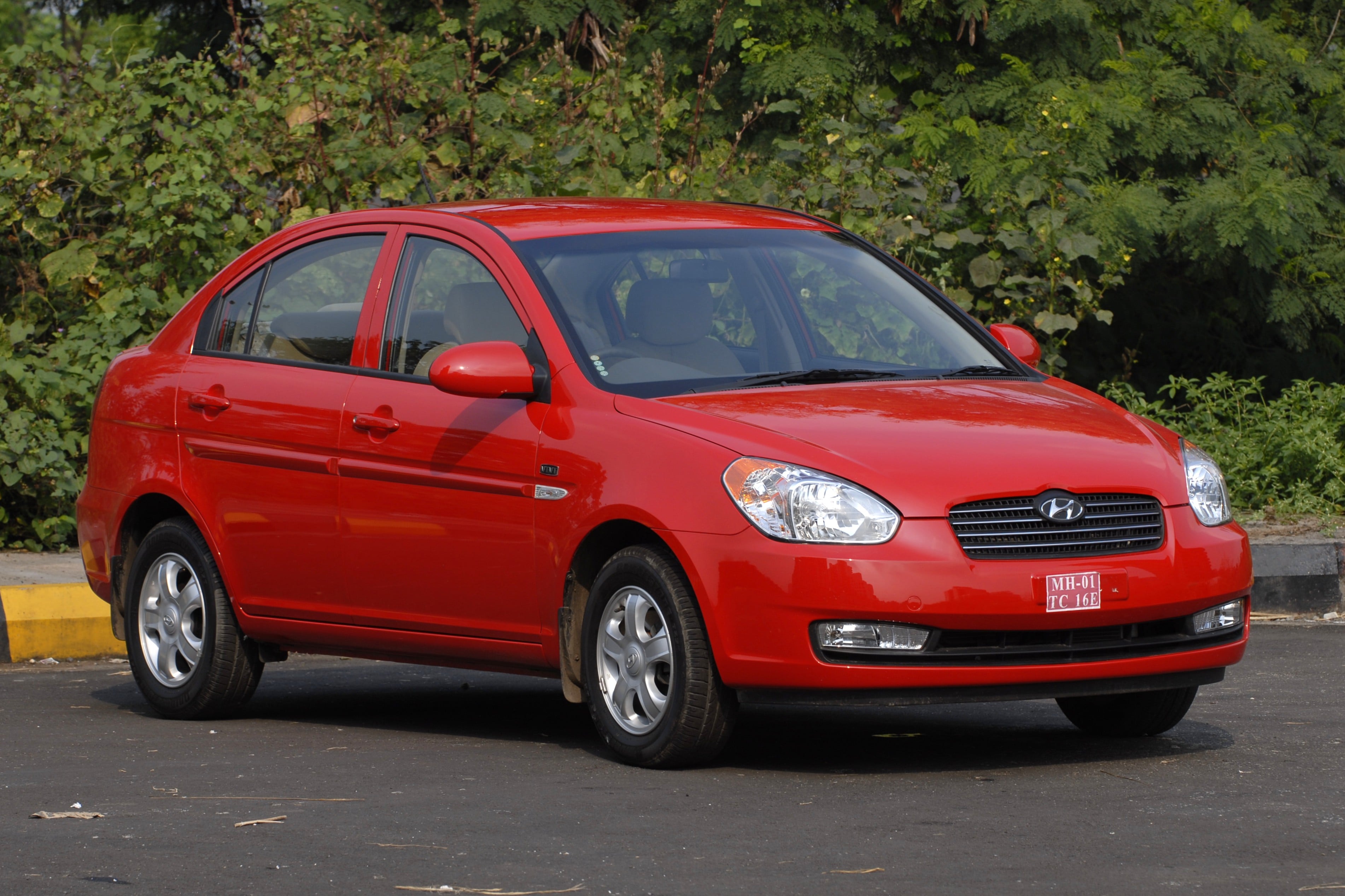
First-gen Hyundai Verna (2006-2011)
The one that started it all
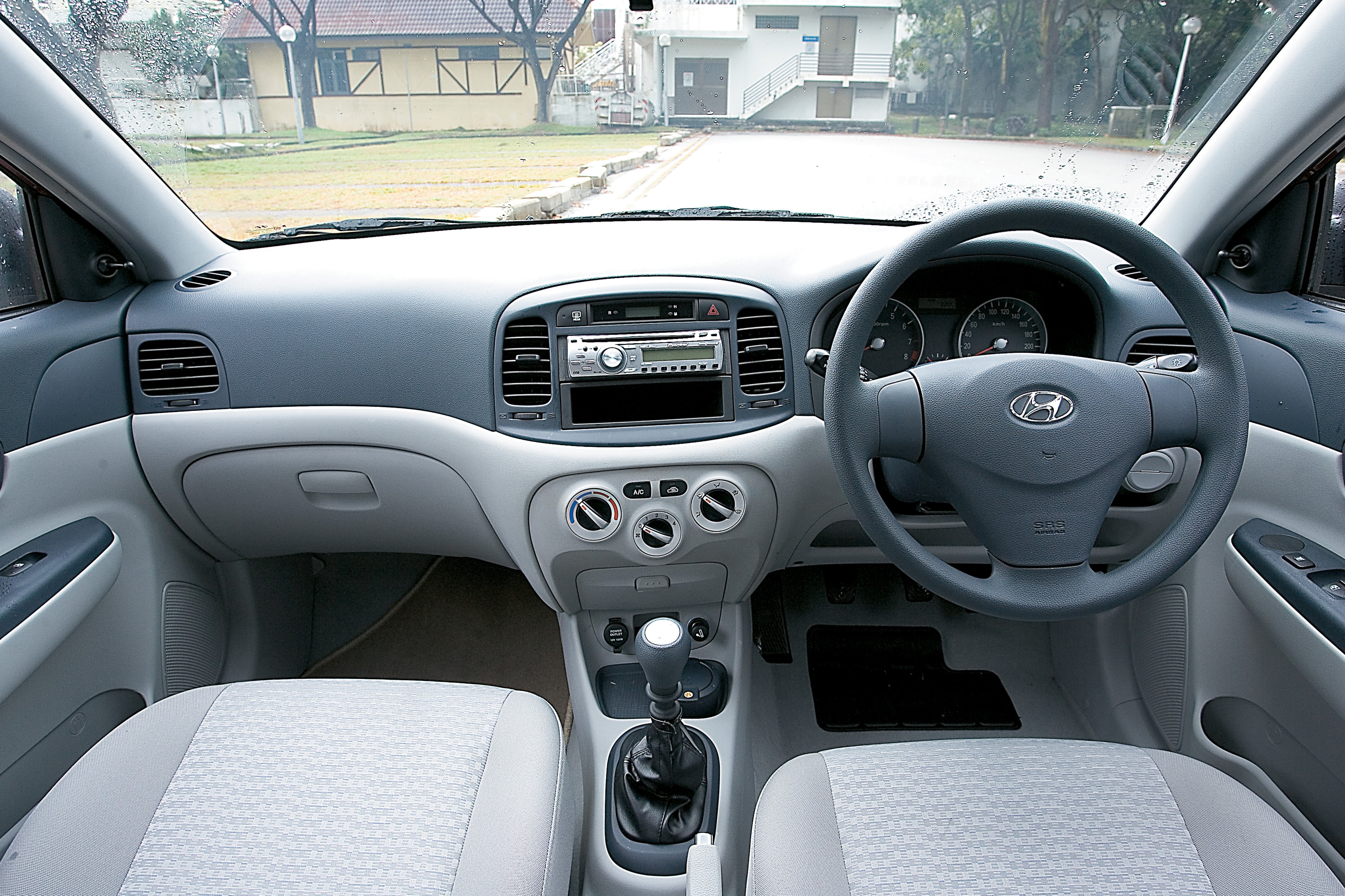
In 2006, Hyundai launched its Accent replacement under the Verna name because it wanted to sell both midsize sedans concurrently. The first-gen Verna featured a straightforward three-box design and was just over 4.3 metres long. Inside, the Verna was much more premium than the Accent, offering features like keyless entry, automatic climate control, a 4-speaker sound system, and more.
Under the bonnet, the first-gen Verna came with 103hp 1.6-litre naturally aspirated petrol and 110hp 1.5-litre diesel engine options, both of which were mated solely to a 5-speed manual gearbox – the diesel was later available with a segment-first 4-speed automatic transmission. The diesel Verna was particularly lauded for its strong power delivery and excellent fuel efficiency. Prices ranged from Rs 6.21 lakh-7.35 lakh, which was quite reasonable for the time. Needless to say, sedan buyers flocked to the Verna in droves, and it even won the 2007 Autocar India Value for Money award, among several others.
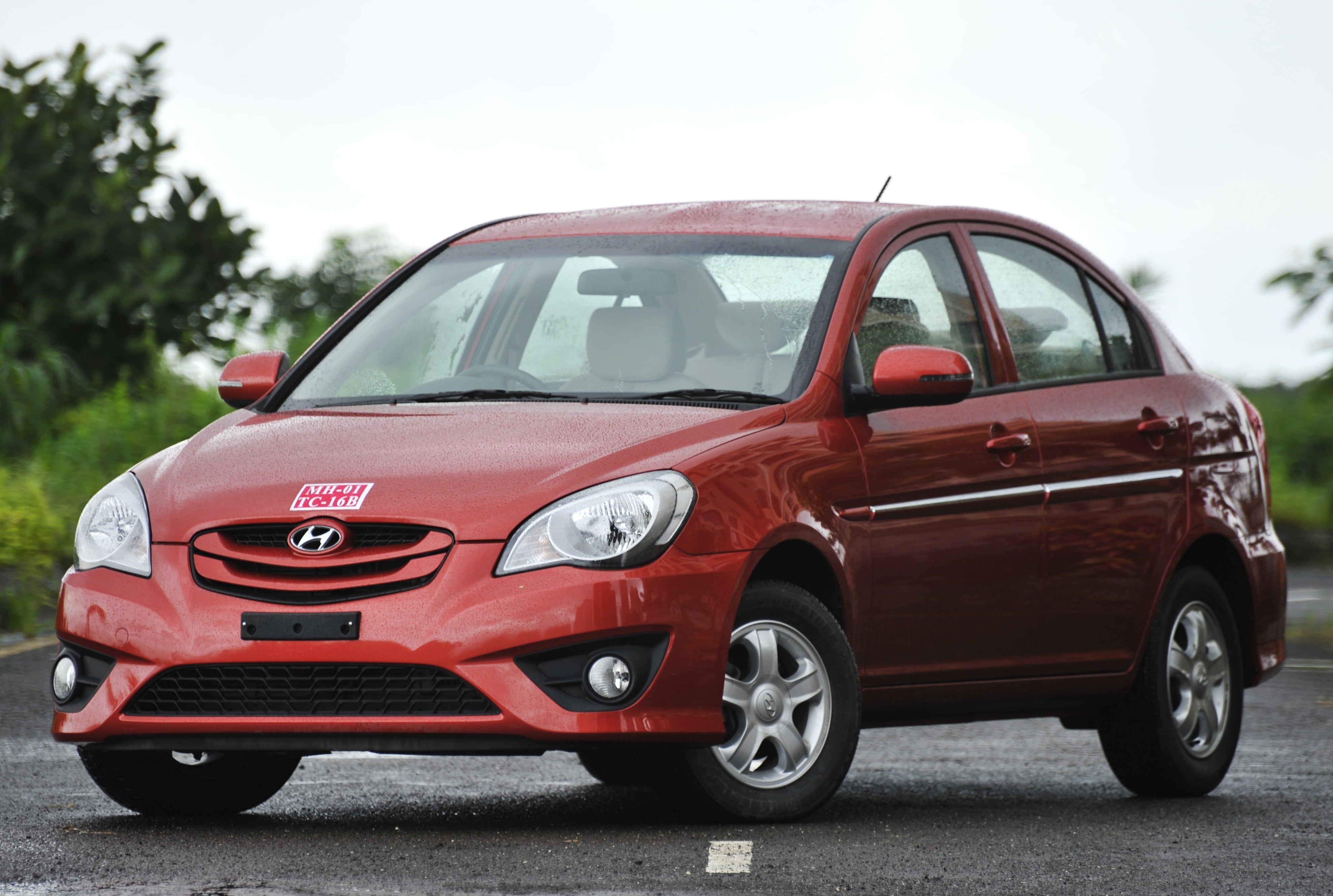
2010 facelift (Verna Transform)
The Verna’s very first facelift arrived in 2010 with a ‘Transform’ suffix attached to its name, and priced from Rs 6.56 lakh-9.22 lakh. While the engine options were unchanged, the Verna Transform was given a sharper-looking redesign on the outside, with revisions to the headlamps, grille, bumpers, wheels, and tail-lamps. The interior was fitted with blue LED illumination and a new instrument cluster, but was largely identical to the prior Verna.
Second-gen Hyundai Verna (2011-2017)
The one remembered as the ‘Fluidic’
The second-generation Verna is the one many Indians still picture when they think of the nameplate. Adopting Hyundai’s ‘Fluidic Sculpture’ design language, the second-gen Verna was larger and lower-slung than its predecessor, featuring more sculpted body lines, wing-shaped tail-lamps, and distinctive ‘eagle-eye’ headlamps. It was a sensational design at the time, and the engine options further sweetened the deal.
This generation of the Verna had the widest powertrain spread of them all. Buyers could choose between two naturally aspirated petrol engines – a 107hp 1.4-litre and a 124hp 1.6-litre – and two diesel engines – a 90hp 1.4-litre and a 128hp 1.6-litre. The petrol engines came with a 5-speed manual as standard, with the 1.6-litre unit additionally offering a 4-speed automatic. Similarly, the diesel mills got a 6-speed manual, with the larger engine available with a 4-speed automatic as well.
Combine all of the above with a much more modern interior equipped with segment-first goodies like a rear camera, 6 airbags, a cabin air purifier, and a cooled glovebox, along with very competitive pricing (Rs 6.99 lakh-10.74 lakh), and it’s no surprise that the Fluidic Verna was a major success.
2015 facelift (Verna 4S)
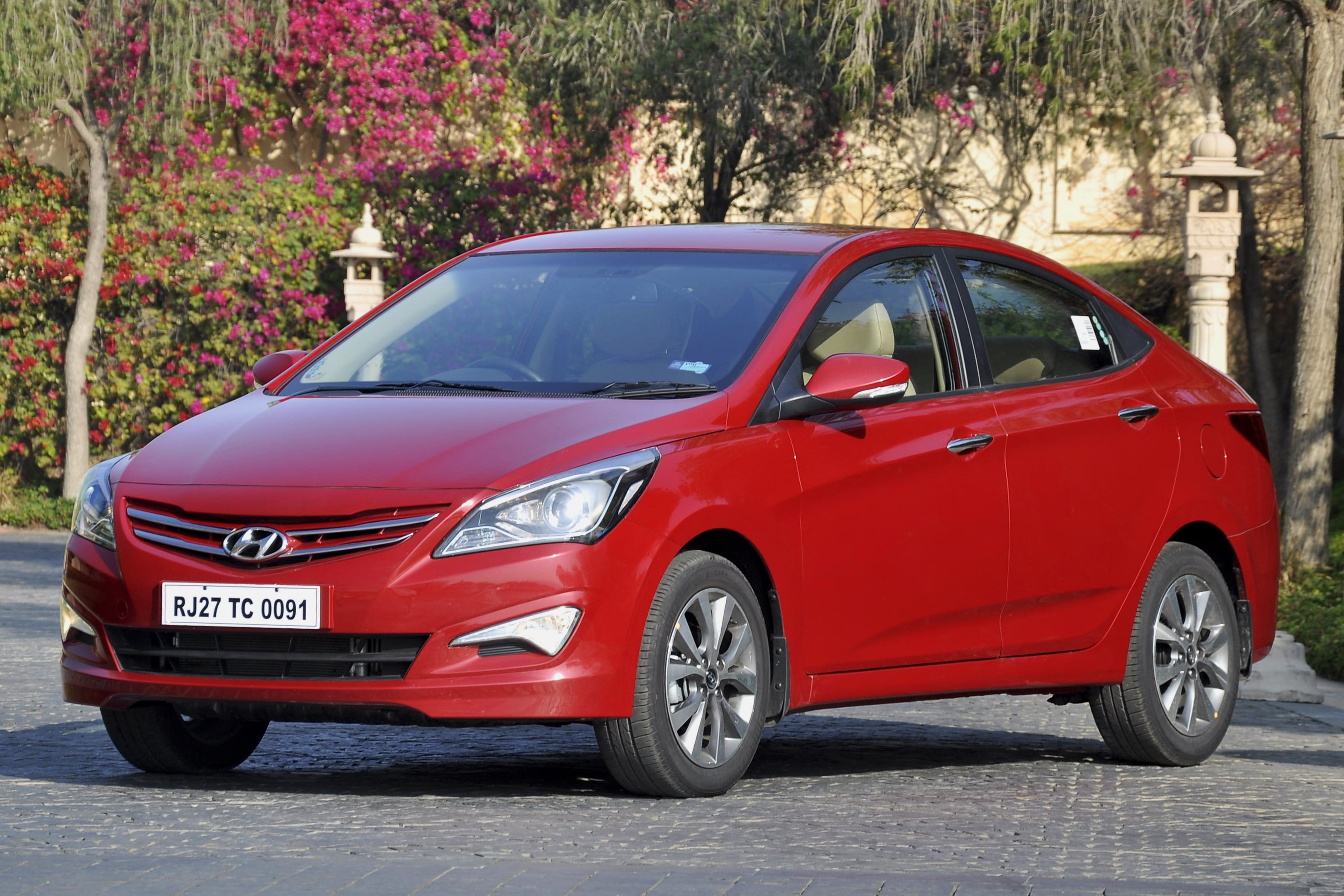
2015 marked the arrival of the second-gen Verna’s mid-lifecycle facelift, with prices starting at Rs 7.74 lakh and topping off at Rs 12.20 lakh. The styling grew more mature, with reshaped headlamps, updated bumpers, new wheels, and more, while the broad powertrain line-up was unchanged. However, the diesel engines came with a new low-friction piston coating that improved fuel efficiency and refinement. There were no changes to the interior layout, but Hyundai added rake adjust for the steering wheel, rain-sensing wipers, and even a manual Boss mode.
Third-gen Hyundai Verna (2017-2023)
The one with the Audi-like grille
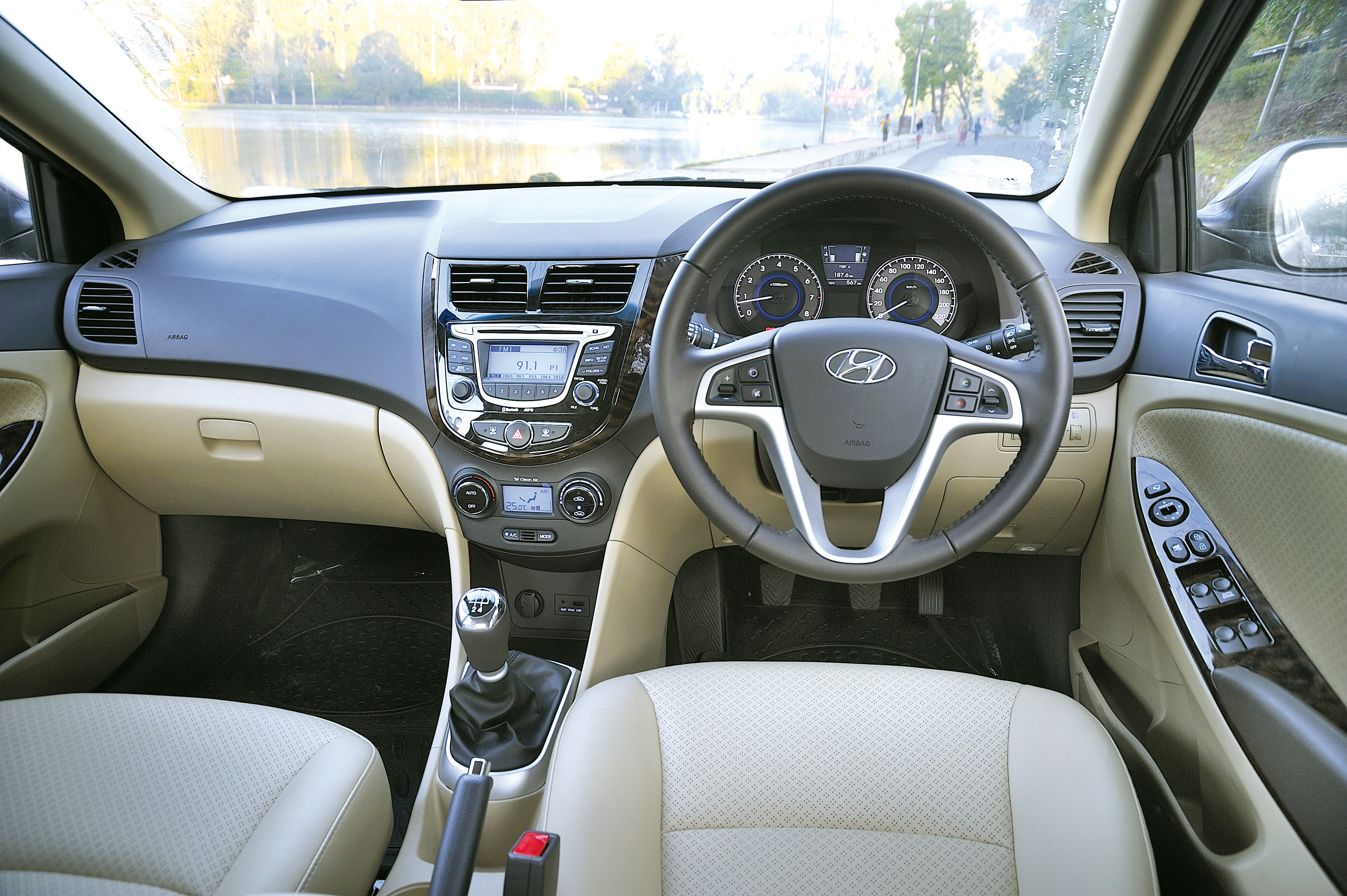
Underpinned by Hyundai’s newer K2 platform, the third-gen Verna was longer and wider than its Fluidic predecessor, and featured styling cues inspired by the larger and more upmarket Elantra. These included swept-back headlamps, L-shaped DRLs, an Audi-like hexagonal grille, and sleek tail-lamps. On the inside, the third-gen Verna yet again pushed the envelope with features like ventilated front seats (a segment-first), a sunroof, a 7-inch infotainment touchscreen, a 6-speaker sound system, cruise control, and more.
Engine options were simplified to just one per fuel type at launch: a 123hp 1.6-litre naturally aspirated petrol and a 128hp 1.6-litre diesel, both available with 6-speed manual and 6-speed torque converter automatic gearbox options. The third-gen Verna went on sale at a starting price of Rs 7.99 lakh, climbing to Rs 12.61 lakh at the top end.
2020 facelift
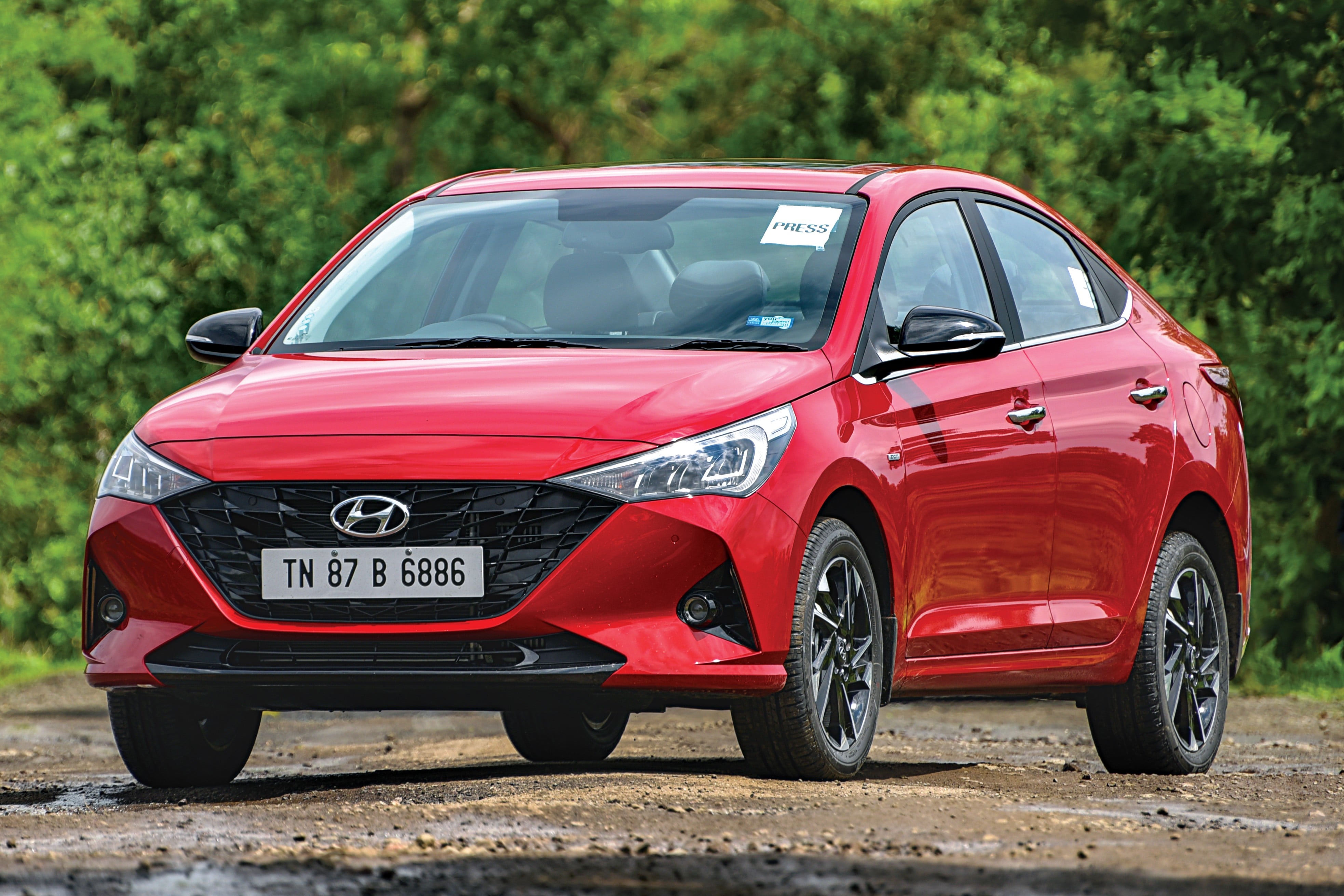
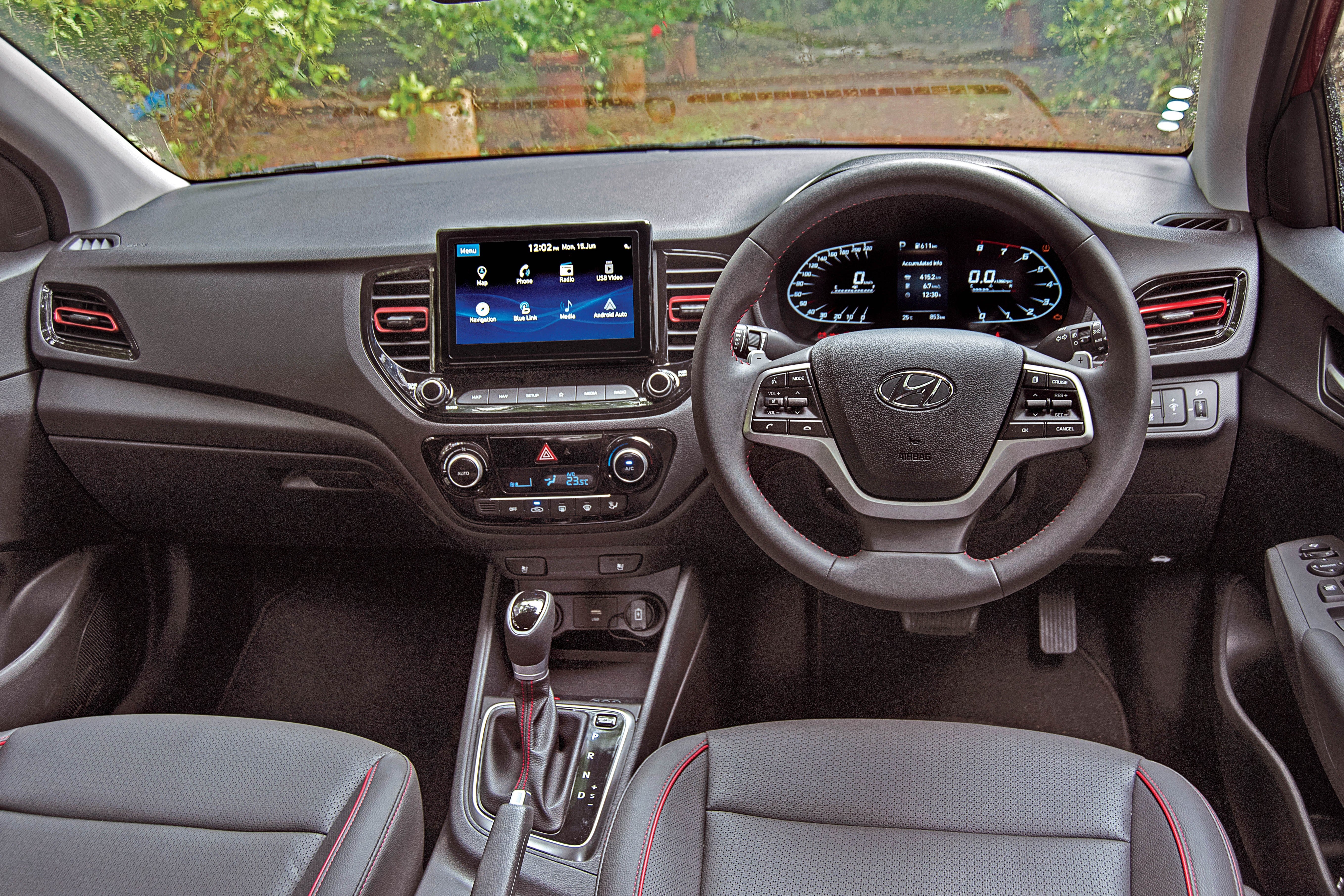
Hyundai launched a comprehensive facelift of the third-gen Verna in 2020, bringing compliance with Bharat Stage 6 emission norms by way of fresh 1.5-litre diesel and naturally aspirated petrol engines with manual and automatic gearboxes. This was also the first generation of the Verna to offer a turbo-petrol engine, specifically the 120hp 1.0-litre 3-cylinder direct-injection unit from the Venue, paired with a 7-speed dual-clutch automatic.
The 2020 Verna facelift also introduced significantly sharper styling changes, like a wider grille, larger headlamps, redesigned bumpers, new alloy wheels, and more. Inside, the midsize sedan saw upgrades like a larger 8-inch touchscreen, an Arkamys sound system, connected car tech, and a digital driver’s display. Pricing for the 2020 Verna facelift ranged from Rs 9.31 lakh to Rs 15.10 lakh – a considerable uptick over the prior model.
Fourth-gen Hyundai Verna (2023-present)
The one with the lightbar
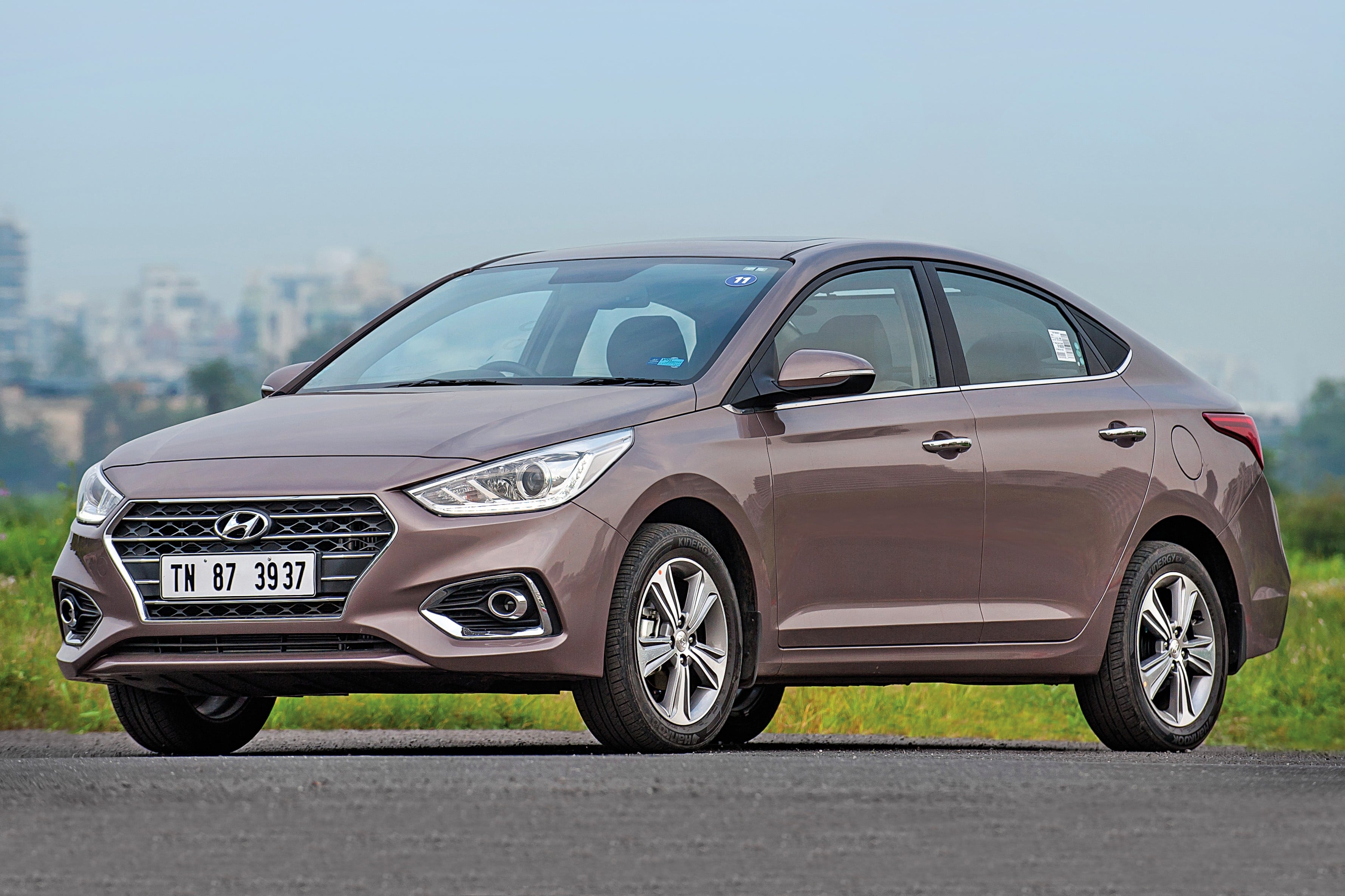
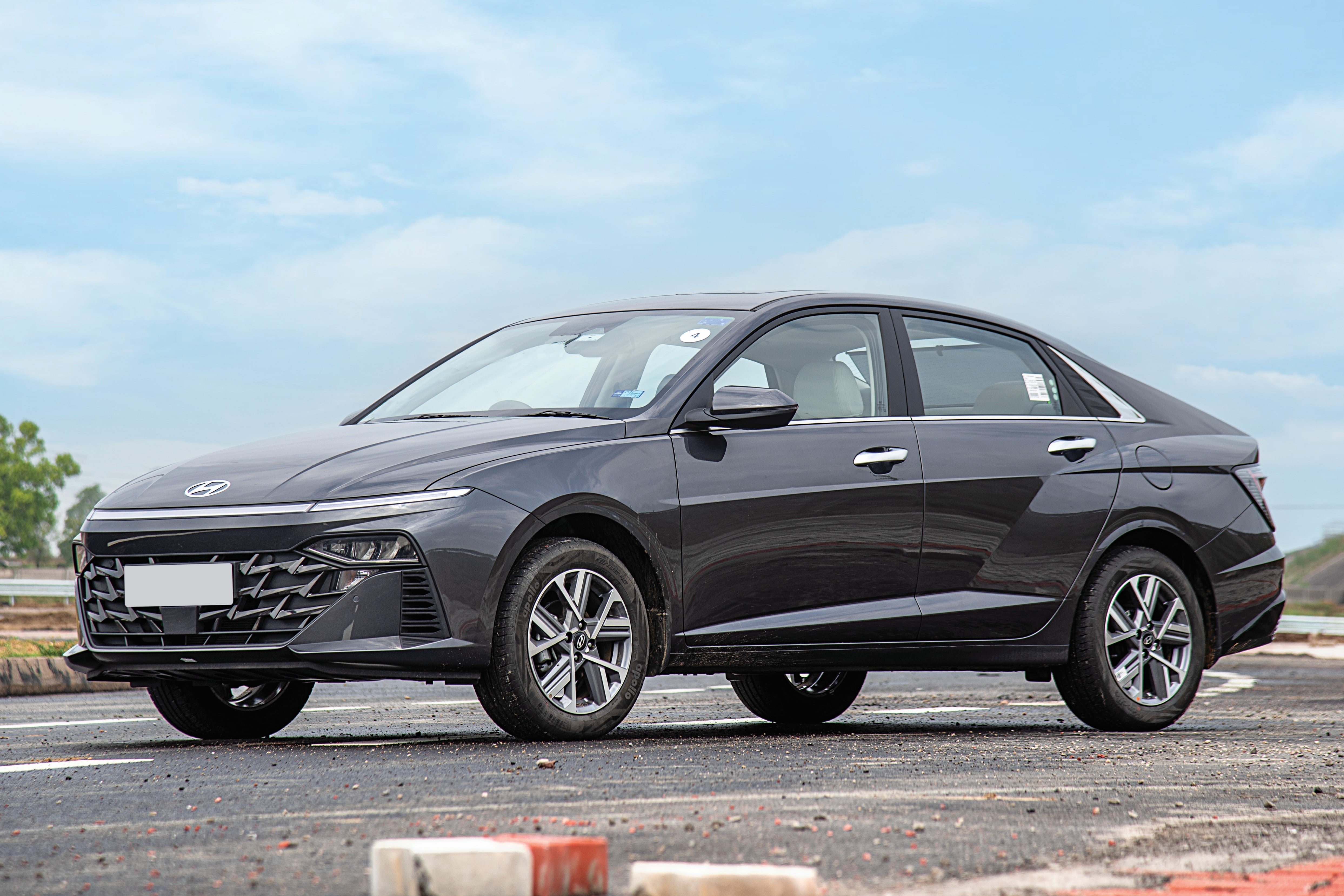
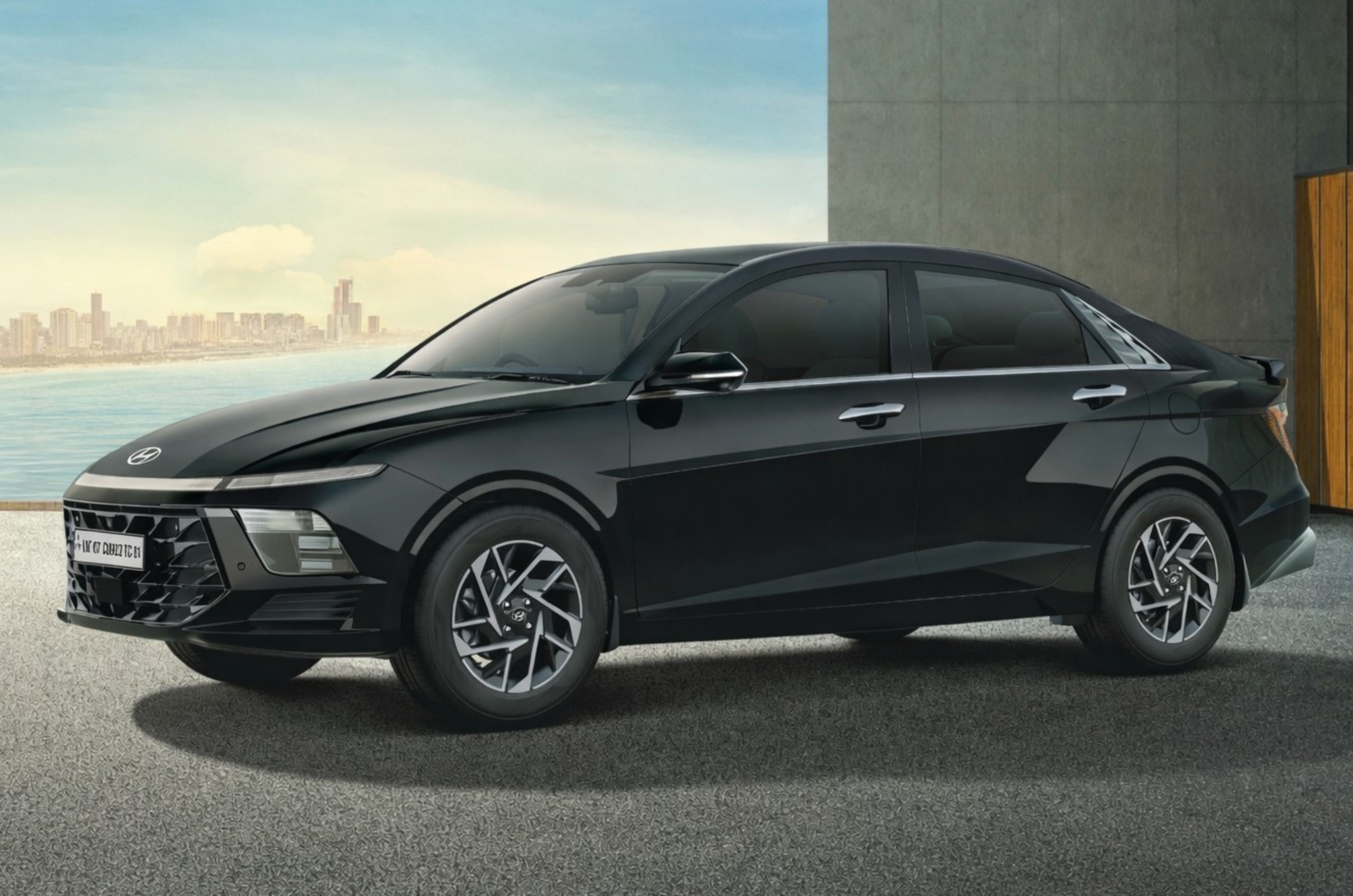
The current-gen Verna went on sale in India in 2023, and unlike its predecessors, the styling immediately split opinions. Hyundai’s ‘Sensuous Sportiness’ design language introduced a split-headlamp setup with a full-width LED light bar on the fourth-gen Verna’s front end, lots of cuts and creases all around the bodywork, a sloping fastback-esque roofline, and connected LED tail-lamps. Another point of contention was the absence of a diesel engine in the line-up – a first for the Verna.
Only two petrol engines are available for the fourth-gen Verna, particularly a 115hp 1.5-litre naturally aspirated and a 160hp 1.5-litre direct-injection turbo-petrol unit. Both engines get a 6-speed manual as standard, with the naturally aspirated motor additionally offering a CVT and the turbo-petrol a 7-speed dual-clutch automatic. On the inside, though, the fourth-gen Verna has an impressively clean and contemporary layout, equipped with segment-first features like heated front seats, Level 2 ADAS, and an 8-speaker Bose sound system.
2026 facelift
Most recently, Hyundai launched a facelift of the fourth-gen Verna. Styling updates were limited to revised bumpers and fresh alloy wheel designs, while the interior got a new three-spoke steering wheel, a 10.25-inch full-digital instrument cluster, and additional segment-first features like Boss mode, a 360-degree camera, and 7 airbags. Powertrains remain unchanged, and prices start at Rs 10.99 lakh and extend all the way up to Rs 18.31 lakh.
Mahindra launched the Thar OG in September 2026 with several hardware, styling and safety upgrades over the outgoing model. The Mahindra Thar OG competes with the Maruti Suzuki Jimny and Force Gurkha 3-door in the relatively niche mass-market off-roader segment. Let us look at how the changes and improvements in the Thar OG help the model take on its rivals.
Mahindra Thar OG vs rivals: Dimensions
Thar and Jimny are longest here
Mahindra Thar OG vs Maruti Jimny vs Force Gurkha dimensions
Thar OG
Jimny
Gurkha 3 door
Length (mm)
3,995
3,985
3,965
Width (mm)
1,870
1,645
1,865
Height (mm)
1,855
1,720
2,080
Wheelbase (mm)
2,450
2,590
2,400
Ground clearance (mm)
232
210
233
Approach angle (degree)
40
36
39
Departure angle (degree)
36
46
37
Rampover angle (degree)
26.4
24
28
Water wading depth (mm)
650
310 (estimated)
700
Wheel size (inch)
18/ 19
15
18
All three models trade punches in the size department. The Thar OG and Jimny are longer than the Gurkha 3-door, with the Jimny’s wheelbase being the longest. However, the Maruti off-roader is the narrowest and shortest one here. The Gurkha rides the highest off the ground, followed closely by the Thar OG with its 226mm clearance. Both of them offer 18-inch wheels, though the top-spec Thar OG ZXT trim rides on 19-inch units. The Jimny, on the other hand, comes with 15-inch wheels only.
The Thar OG has a 40-degree approach angle, while the Gurkha and Jimny have 39 degrees and 36 degrees, respectively. The Jimny has the highest departure angle at 46 degrees, followed by the Gurkha at 37 degrees and Thar at 36 degrees. The Gurkha has the best rampover angle at 28 degrees, compared to 26.4 degrees for the Thar and 24 degrees for the Jimny. The Gurkha also has the highest water-wading depth at 700mm, followed by the Thar at 650mm and the Jimny at an estimated 310mm.
Mahindra Thar OG vs rivals: Engine and gearbox
Mahindra Thar OG vs Maruti Jimny vs Force Gurkha powertrains
Thar OG
Jimny
Gurkha 3 door
Engine
1.5D | 2.0P | 2.2D
1.5P
2.6D
Turbocharged
Yes
No
Yes
Power (hp)
119 | 162 | 152
105
140
Torque (Nm)
300 | 330
134.2
320
Gearbox
6MT | 6MT or 6AT
5MT or 4AT
5MT
Drive layout
RWD | RWD or 4WD
4WD
4WD
The Mahindra Thar OG offers the widest choice of powertrains here, with three engines, while the Jimny and Gurkha 3-door get only one engine each. Thar’s 162hp 2.0-litre petrol is the most powerful here. Its 2.2-litre diesel engine makes the highest torque output here.
The stronger turbo-petrol and diesel engines of the Thar OG can be had with either a 6-speed manual or a 6-speed automatic gearbox. These also offer the choice between rear-wheel drive and four-wheel drive (4WD) layouts. Whereas, the 1.5-litre diesel engine is available in the rear-wheel drive guise, and transmission duties are handled solely by a 6-speed manual gearbox.
The Jimny offers 5-speed manual and 4-speed automatic options with 4WD as standard, whereas the Gurkha has a 5-speed manual gearbox with 4WD.
Mahindra Thar OG vs rivals: Off-roading features
Mahindra Thar OG vs Maruti Jimny vs Force Gurkha Off-roading hardware
Thar OG
Jimny
Gurkha 3 door
Front suspension
Independent double wishbone
3-link rigid axle
Independent double wishbone
Rear suspension
Pentalink with Watt’s link
3-link rigid axle
Multi-link with track bar
Terrain modes
In 4WD
No
No
Locking differential
Electronic; in 4WD
Electronic; in 4WD
Manual
The Thar OG and Gurkha 3-door both use independent double-wishbone front suspension, while the Jimny gets a 3-link rigid-axle setup at both ends. At the rear, the Thar uses a five-link setup with a Watt’s link, while the Gurkha gets a multi-link setup with a track bar.
In terms of off-road equipment, the Thar has an advantage with terrain modes available in 4WD, a feature that the Jimny and Gurkha do not offer. Both the Thar and Jimny use electronic locking differentials in 4WD, while the Gurkha gets a manual locking differential.
With its September update, the Thar OG also gains Mahindra’s DaVinci dampers, which is standard fitment across the range. The range-topping ZXT trim goes a step further by adding frequency dependent damping (FDD) to this setup.
Mahindra Thar OG vs rivals: Price
Mahindra Thar OG vs Maruti Jimny vs Force Gurkha prices
Thar OG
Jimny
Gurkha 3 door
Price range (Rs, lakh)
10.32-17.75
12.59-14.52
16.26
When it comes to base trims, the Thar OG is the indisputable winner. Prices start at Rs 10.32 lakh with the Thar OG AXT diesel 2WD MT, which is Rs 2.27 lakh more affordable than the base-spec Jimny Zeta Pro MT and a whopping Rs 5.94 lakh lower than the Gurkha (sold in one trim only).
Coming to the top trims, the Thar OG ZXT diesel 4WD AT trim is the most expensive here at Rs 17.75 lakh, pricier by Rs 1.49 lakh than the Gurkha and Rs 3.23 lakh than the Jimny Alpha AT.