ADAS Meets Autopilot: The Hyundai Venue and the Akasa Boeing 737 Max

ADAS Meets Autopilot: The Hyundai Venue and the Akasa Boeing 737 Max
Hyundai Venue N Line with Akasa Boeing 737 Max

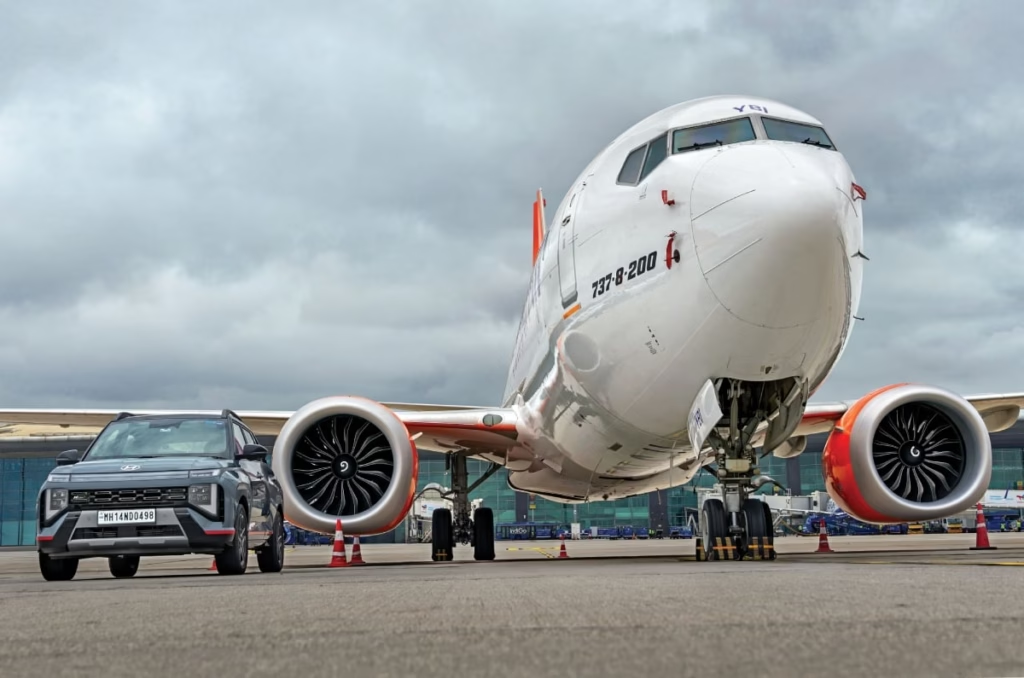
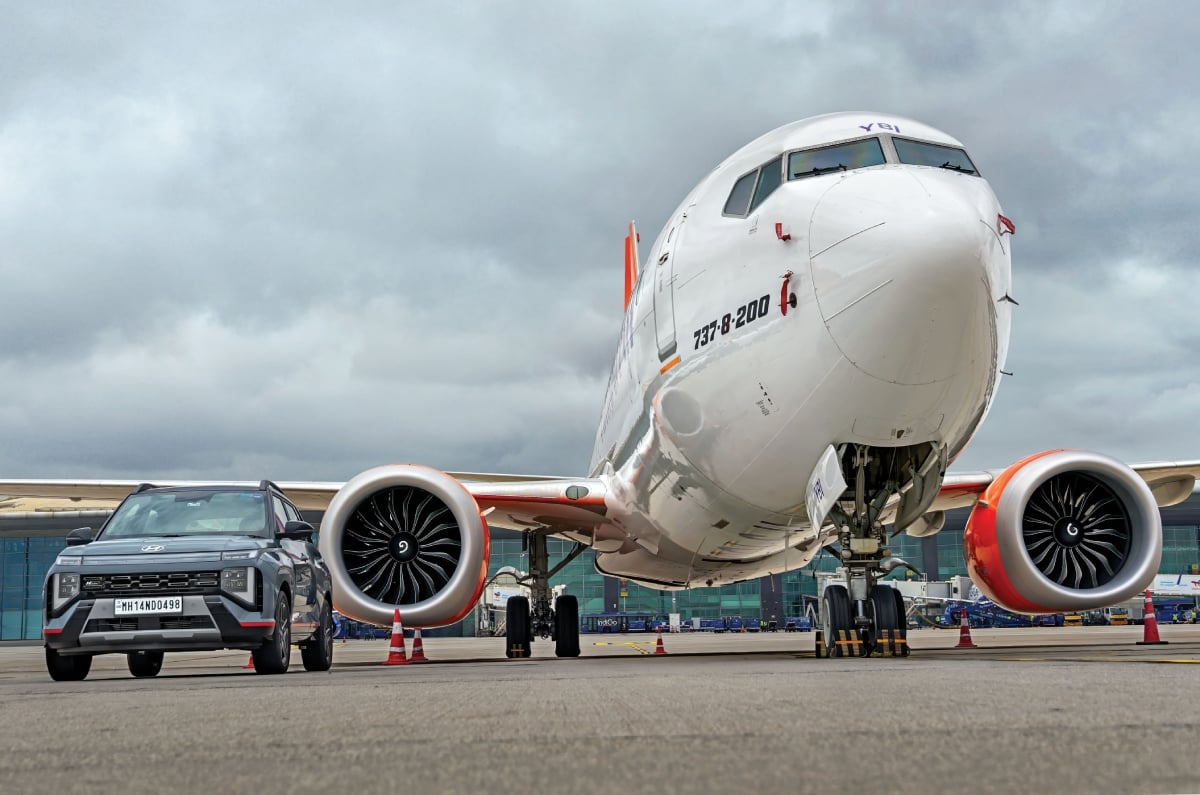
A Hyundai Venue N Line runs down a well-lined access road, its sensors alive. Off to the left overhead, an Akasa Boeing 737 Max makes its way down gracefully, flaps extended, ready to land. Both machines are bristling with technology that allows them to operate with a degree of independence once unthinkable. The car can keep itself within a lane, regulate speed in relation to the car ahead, and brake in emergencies. The aircraft can fly itself across continents, execute complex routes, and even land in zero visibility. Welcome to the new world where machines are self-aware and can operate for long stretches on their own.
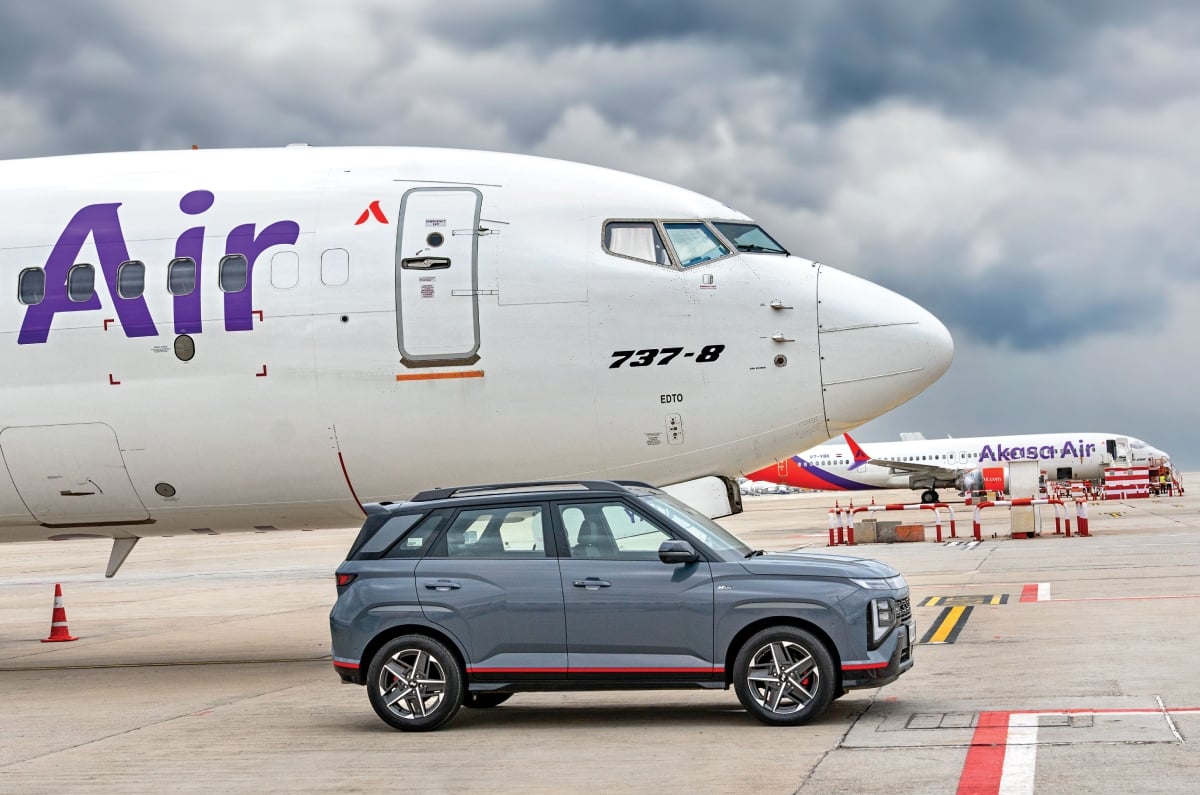
Hyundai Venue N Line and Akasa Boeing 737 Max side profile

Today, we dive deep into tech and compare how Advanced Driver Assistance Systems (ADAS), found in modern cars like the Hyundai Venue work, and juxtapose them against how advanced autopilot systems on airliners like the Boeing 737 Max function. Want to know how this Hyundai Venue senses lane markings, what it picks up, how it processes the data, makes a decision and executes a steering manoeuvre to keep the car within the lane, or how aircraft like the Boeing 737 Max are programmed to fly themselves and how they can even land automatically? Read on; there’s plenty of fascinating tech ahead. 

Sensor fusion 
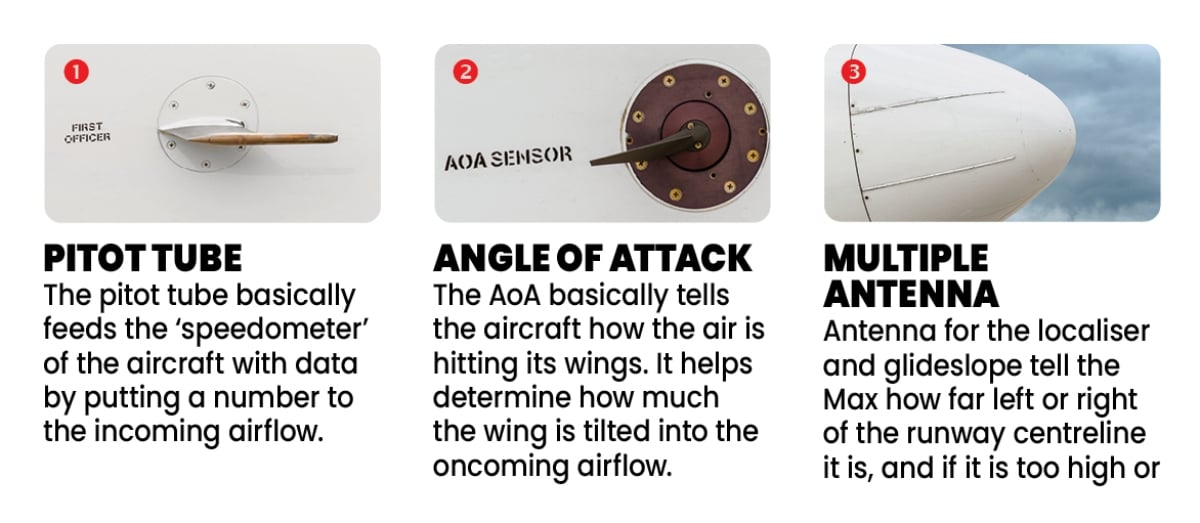
Akasa Boeing 737 Max sensors

Walk around the attractive-looking Akasa 737 Max, now one of forty-three, and you notice the nose of the aircraft bristling with sensors. It’s from where a vast majority of the data for the Autopilot is collected. Showing me around and explaining things is Captain Svetlana from Akasa. 
First up, the speed sensors – elbow-shaped pitot tubes that stick out at an angle. This tube helps measure the airflow and, hence, the speed of the aircraft. For accuracy, this speed data is correlated with the static port, mounted flush on the side of the aircraft, which measures the real atmospheric pressure at the height the aircraft is flying. 

Then there’s the AOA or Angle Of Attack sensor that basically tells you how the air is hitting the wings or how much the wing is tilted into the oncoming airflow. This is essential to know just how much lift the wing is making and how close the aircraft is to stall. 
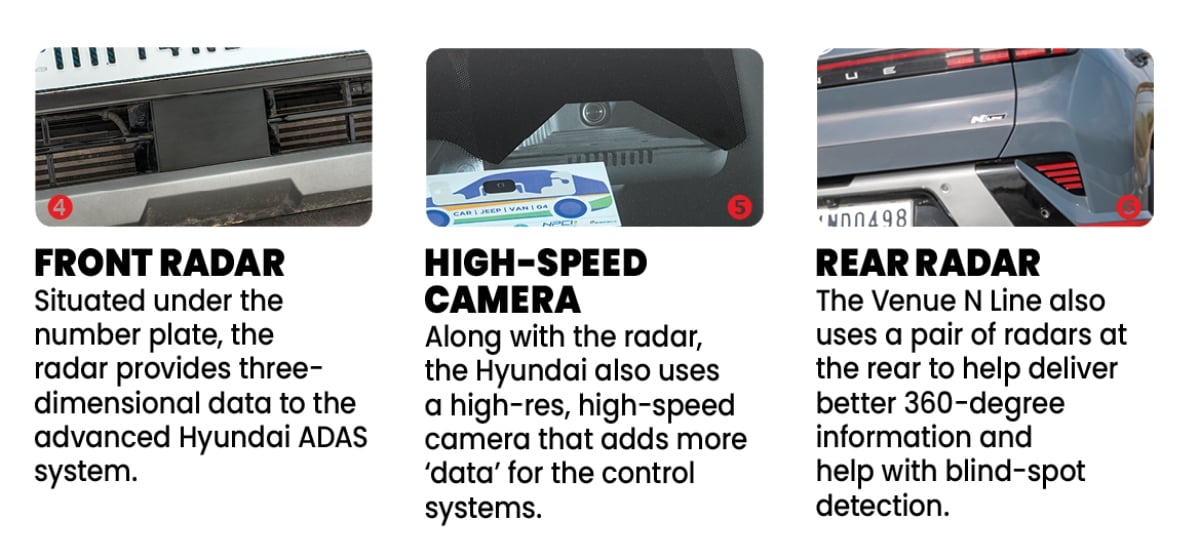
Hyundai Venue N Line sensors

Then, inside the nose cone, apart from the weather radar, are antennas for the localiser and glideslope. Both pick up radio beams sent from transmitters positioned near the runway. The localiser tells the aircraft how far left or right of the runway centreline it is, and the glideslope tells if the aircraft is too high or too low. Together, they give the aircraft a complete three-dimensional picture of the ideal path to the runway. They feed data to the Instrument Landing System (ILS) and are what lets a 737 Max line up and descend precisely even when visibility is poor.


Further back are a pair of TCAS antennas, one on the belly and one on the top. They listen for nearby transponders (that also help flightradar24 funtion) to keep the aircraft clear of traffic. 
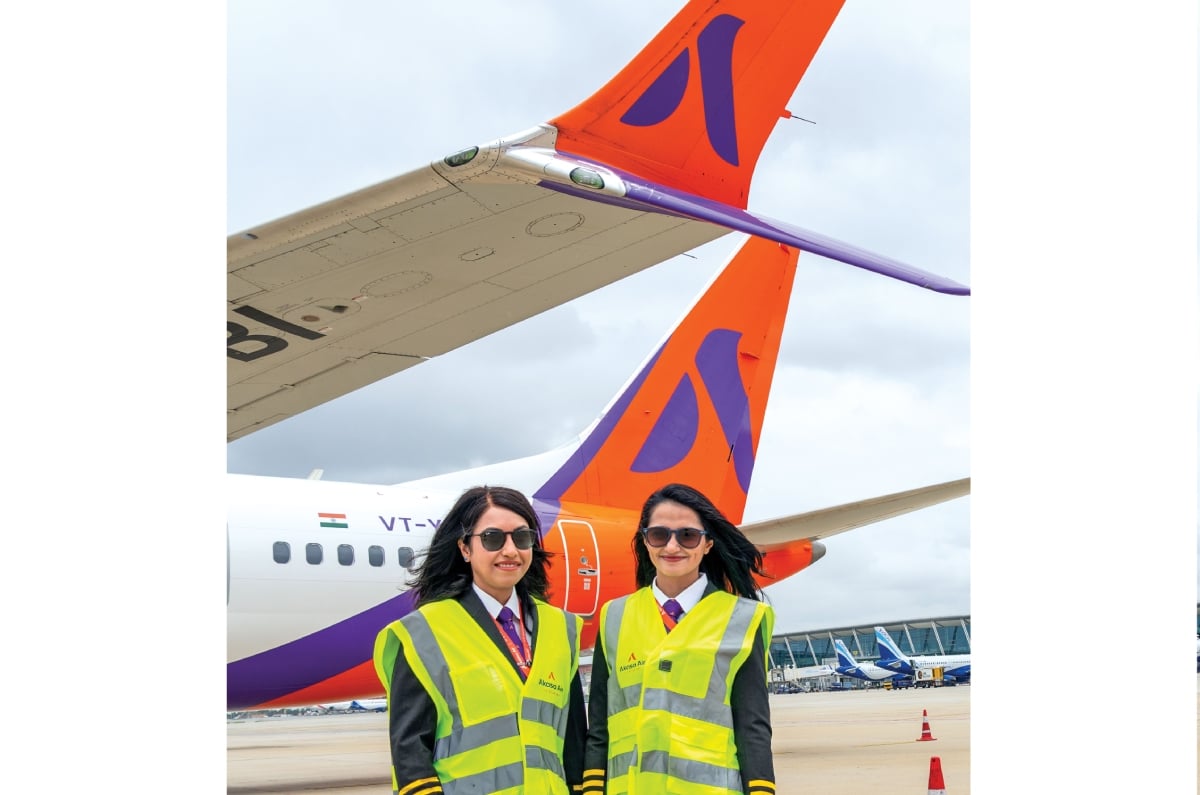
Akasa Air Captains
Capt. Svetlana and Capt. Sanaya help us get to grips with how the autopilot on the 737 Max functions. 

Positioning is done with the help of a GPS antenna on the roof. Another system, known as the Inertial Reference System, uses laser gyroscopes bolted to the airframe to sense every turn the aircraft makes. It uses accelerometers that sense every change in speed. A computer fuses the two, continuously tracking exactly how far and in which direction it’s travelled from a known starting point, which is set by the pilots at the gate.

Road and track 
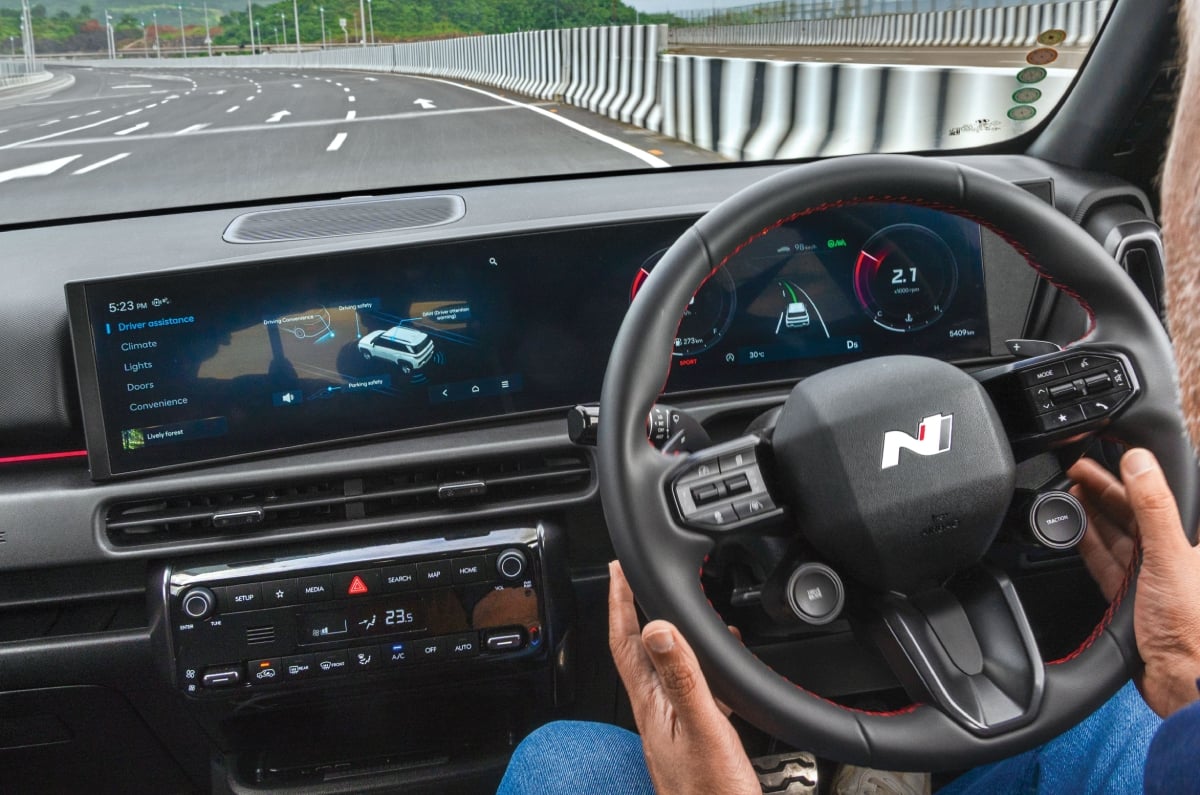
Hyundai Venue N Line interior
Though this is a high-tech and complex system, functionality is slick and smooth.

Now swap the open skies for chaotic tarmac. Here, the Venue N Line’s ADAS Level 2 suite runs off far fewer sensors or data points. The difference, however, is that the car actually ‘sees’ what is ahead, correlating data from the radar and the high-resolution camera into a single picture. Sensor fusion is essential on both the 737 and the Venue. What’s different is that the reactions of the car have to be immediate, and that means Smart Sense on the Venue not only has to process gigabytes of data every second, it also has to be ready with, say, a braking solution in milliseconds, just in case that petulant biker cuts across the Venue’s nose. 

One of the primary sensors is the radar. Located behind the black square plastic panel under the number plate up front, it acts as a measuring tape, constantly tracking the exact distance and closing speed of the car ahead. Similar to a fruit bat, the radar sends out bursts of high-frequency radio waves (or chirps) that vary between 10,000-50,000 bursts per second. Just as important is how quickly the data is processed and passed on, which provides enough sharpness and resolution to differentiate between shapes ahead. This data is used by the Forward Collision-Avoidance Assist (FCA) to stop the Venue often before human reflexes can even respond to danger. In addition, the system uses a pair of rear-mounted radars, ultrasonic sensors and parking and proximity cameras for a more secure 360-degree ‘picture’. 
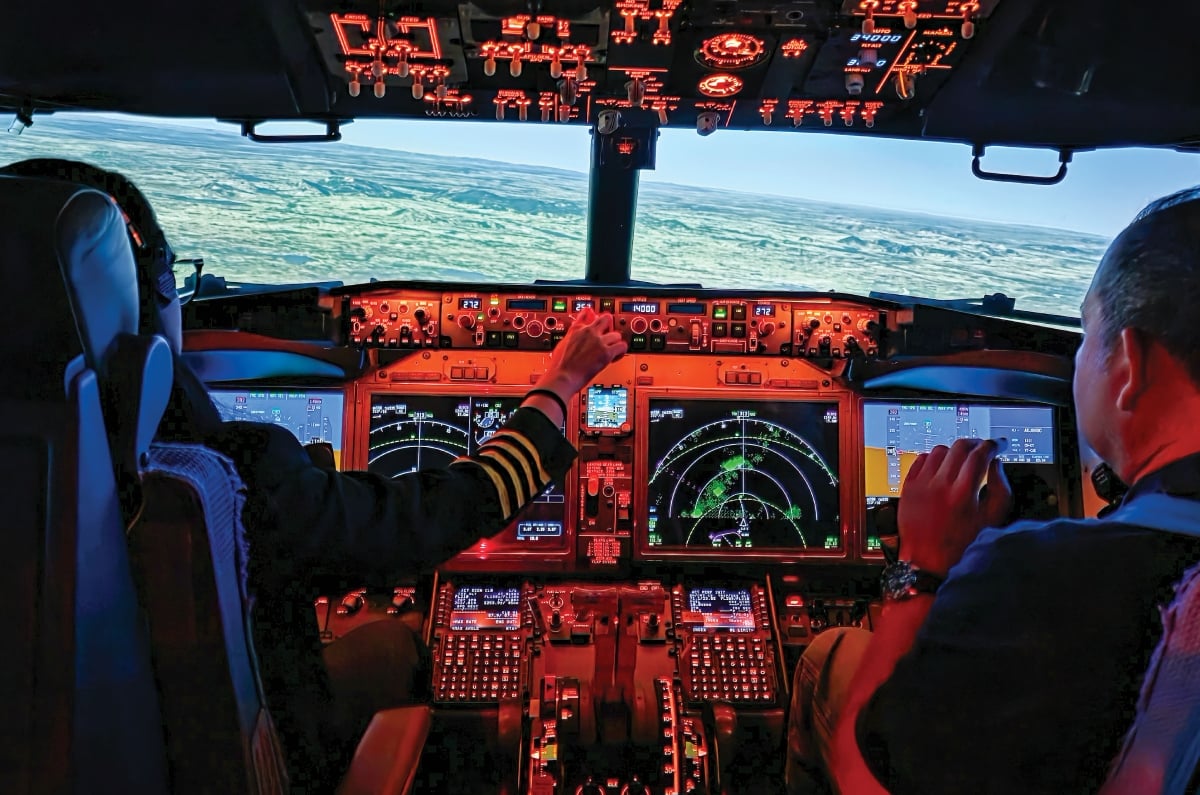
Akasa Boeing 737 Max cockpit
Captain Sanaya adjusts the heading knob in the sim, the aircraft reacts in real time without disengaging the system. 

The other important data source is a high-resolution, high-speed camera at the top of the windshield. While its primary job is to look for lane markings and obstacles, it also works along with the radar up front, sharing the workload. The camera, for example, sees every detail but lacks depth perception (or 3D vision), and a radar tracks distance but cannot see the same amount of detail as the camera. The camera sends data via a special, automotive application-optimised CMOS sensor, similar to the one on your Sony mirrorless camera that also has a high dynamic range (for bright lights). Hyundai’s system can even detect faded lines with its edge-detection, texture-tracking, and colour-reading systems. 
Hyundai’s SmartSense also integrates Artificial Intelligence (AI) and Machine Learning. So, instead of using rigid “if-then” decision-making software, it uses embedded neural networking to interpret real-time sensor data. 

Together, these systems form a nervous system that feeds into the car’s brain, which then nudges the steering, modulates throttle, or applies brakes. Unlike aviation, redundancy is limited. A sensor failure usually hands control back to the driver, who remains the ultimate fallback.

Steering wheels and yokes
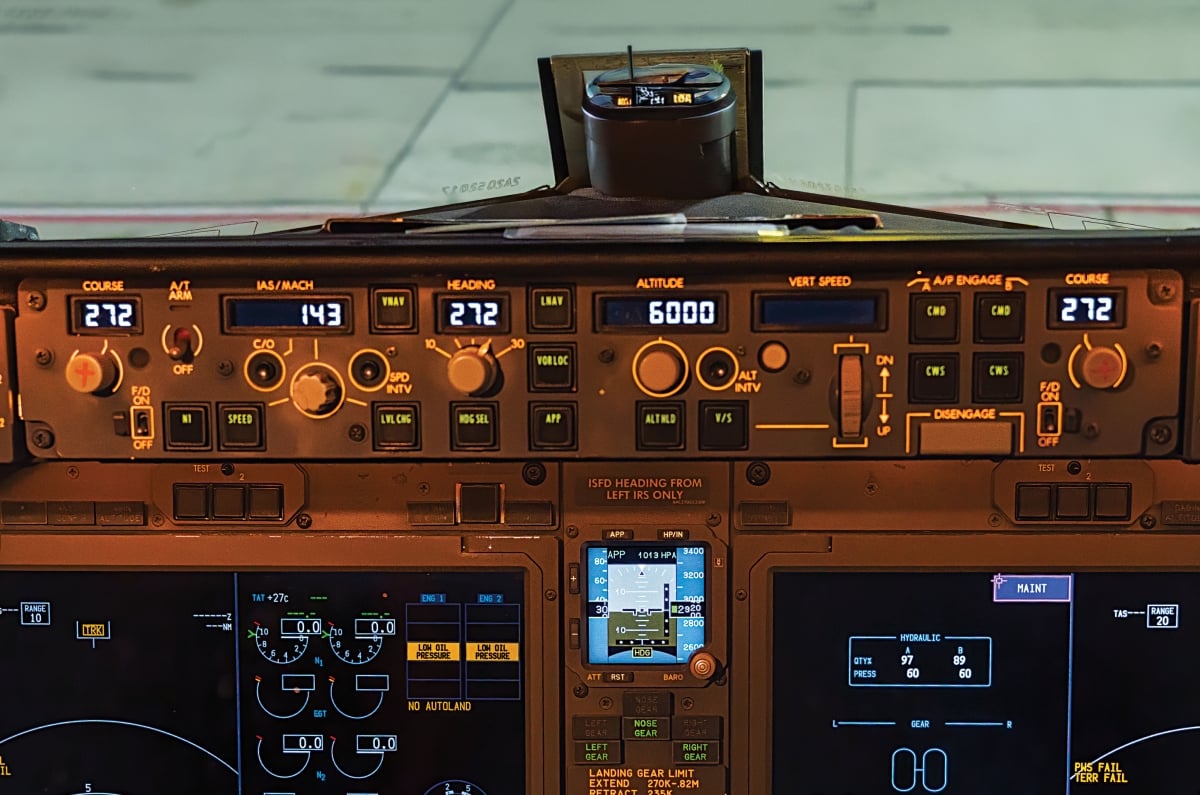
Akasa Boeing 737 Max cockpit 2
Hit ‘A/P Engage’ on mode control panel to activate autopilot; course, speed, heading and altitude are also adjustable here.

Once behind the wheel of the Venue, engaging the ADAS is seamless. You need to be above 30kph and on a well-lined road. To engage the system, you have to zoom into the left spoke of the steering wheel. Here you find the four buttons that help activate and operate the system. The first activates the Smart Cruise Control, the second allows you to increase or decrease the speed you want to run at, the third helps you set the desired safe distance to the car ahead and the fourth activates Lane Keep Assist (LKA). 
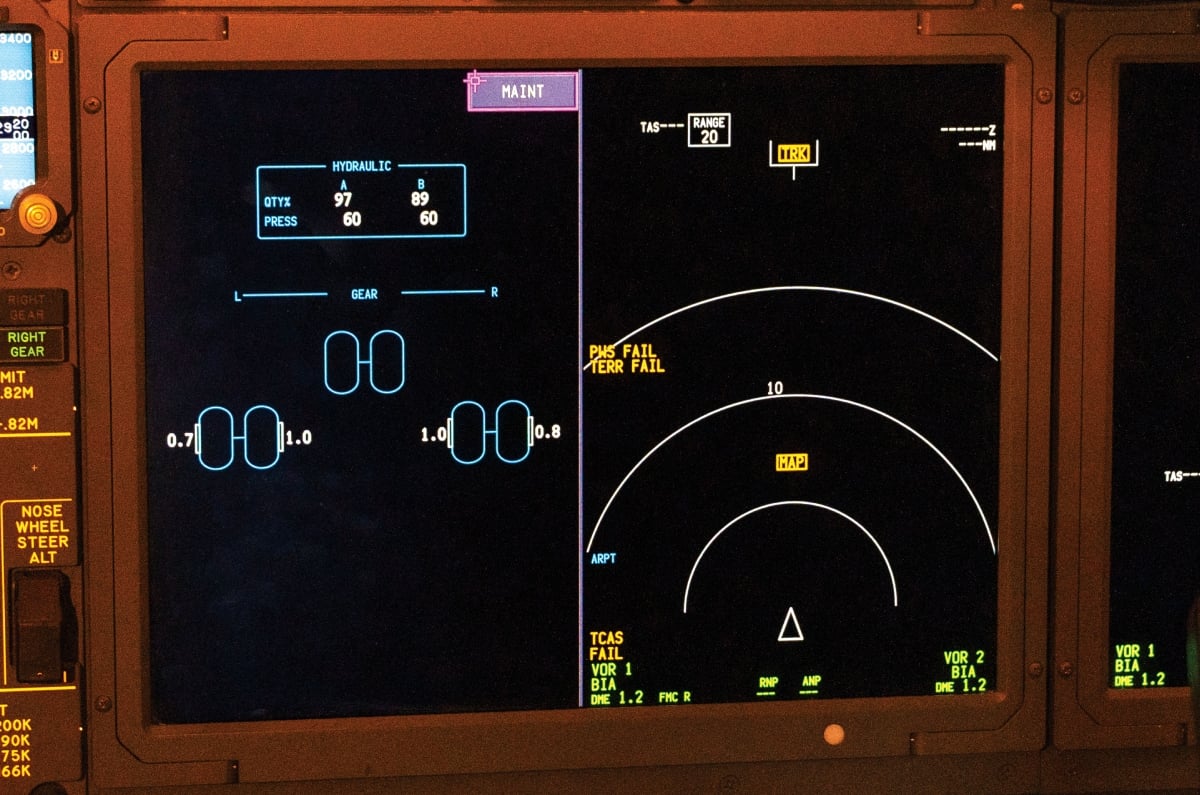
Akasa Boeing 737 Max tyre pressure
 Tyre pressure essential here too.

Activating LKA for me comes first, and you do this when you are running in a lane on a well-marked road. You know the system is engaged when the green steering icon lights up on the instrument panel and the car icon shows it running between the lines. Then you engage the smart cruise control and set the speed you want to run at, stepping off the accelerator simultaneously. The display on the instrument cluster lights up with the speed set, and you also get a horizontal bar showing the distance to the car ahead; which can be adjusted by the button with the distance icon. 

Unseen by the driver and passengers in the car, the camera immediately begins scanning lane markings, and radar modules measure the distance to the vehicle ahead. The steering wheel then nudges itself gently to follow curves, while the throttle and brakes modulate to maintain speed and distance. The system makes split‑second decisions to help keep you out of harm’s way. 
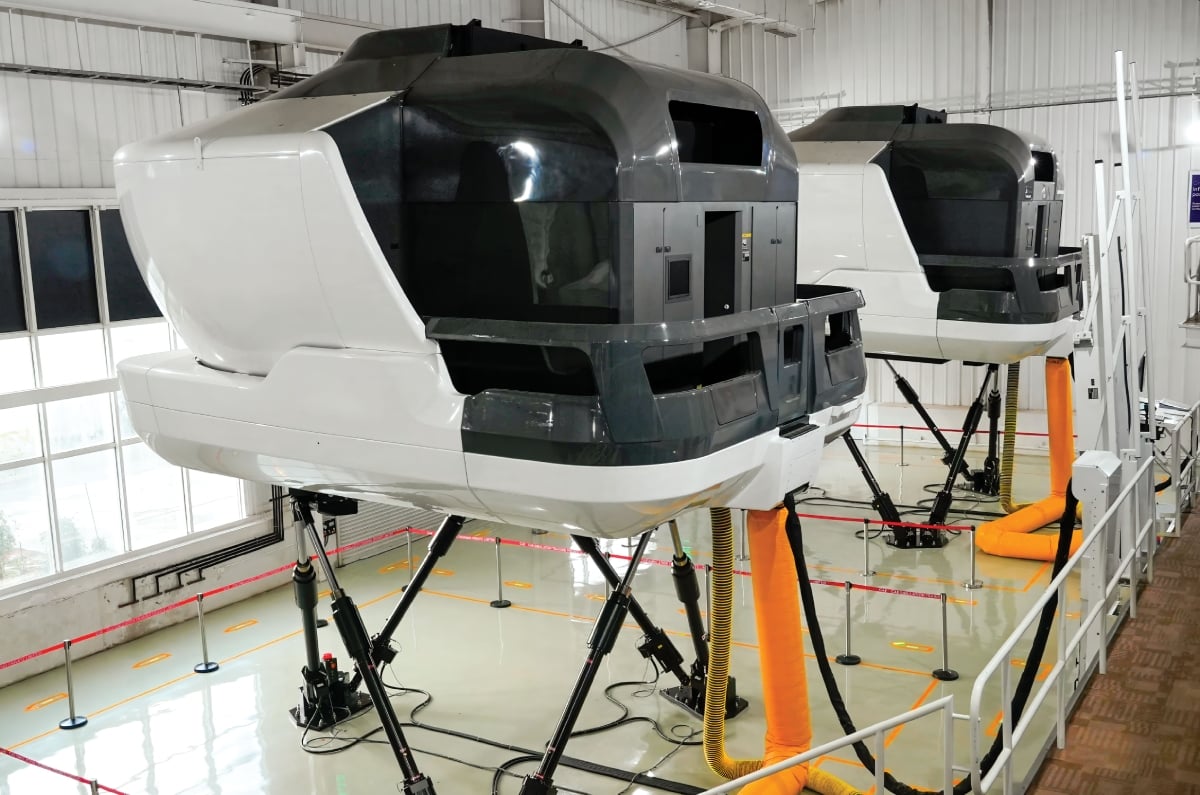
Akasa Air flight simulator
We took the assistance of the full-fledged 737 Max simulator that pilots train on to help us understand the systems better. 

Climbing into the Akasa Boeing 737 Max cockpit is an immediate sensory overload. Hundreds of buttons, switches, levers and dials just overwhelm you. They are ahead of you, to your left, your right, and even above. There are, in fact, so many switches, buttons and dials above, I have to duck-walk in. And I’m not exactly Joel Garner or Kareem Abdul-Jabbar. Once seated, I slide the seat to the left and forward by depressing a lever, no powered seats here. And forget about comparing screen size, this is a proper ‘glass cockpit’ with wall-to-wall screens. My feet rest on the pedals that work the rudder in the tail, and ahead of me is Boeing’s famous yoke; unlike a regular joystick, you bank by turning the semi-circular bit of the ‘wheel’. 

In contrast to our chaotic driving environment, the autopilot in the 737 Max operates on different principles. The environment is structured and regulated. There are no sudden jaywalkers or rogue bikers at thirty‑five thousand feet. So, unlike the Venue, the 737 doesn’t use optical cameras to see where it’s going. It doesn’t need to look for lanes or lines at 800kph. Instead, it relies on a combination of GPS, Inertial Reference Systems, antennas and sensors in the aircraft’s nose and cheek to get a fix on the exact heading, speed and altitude.
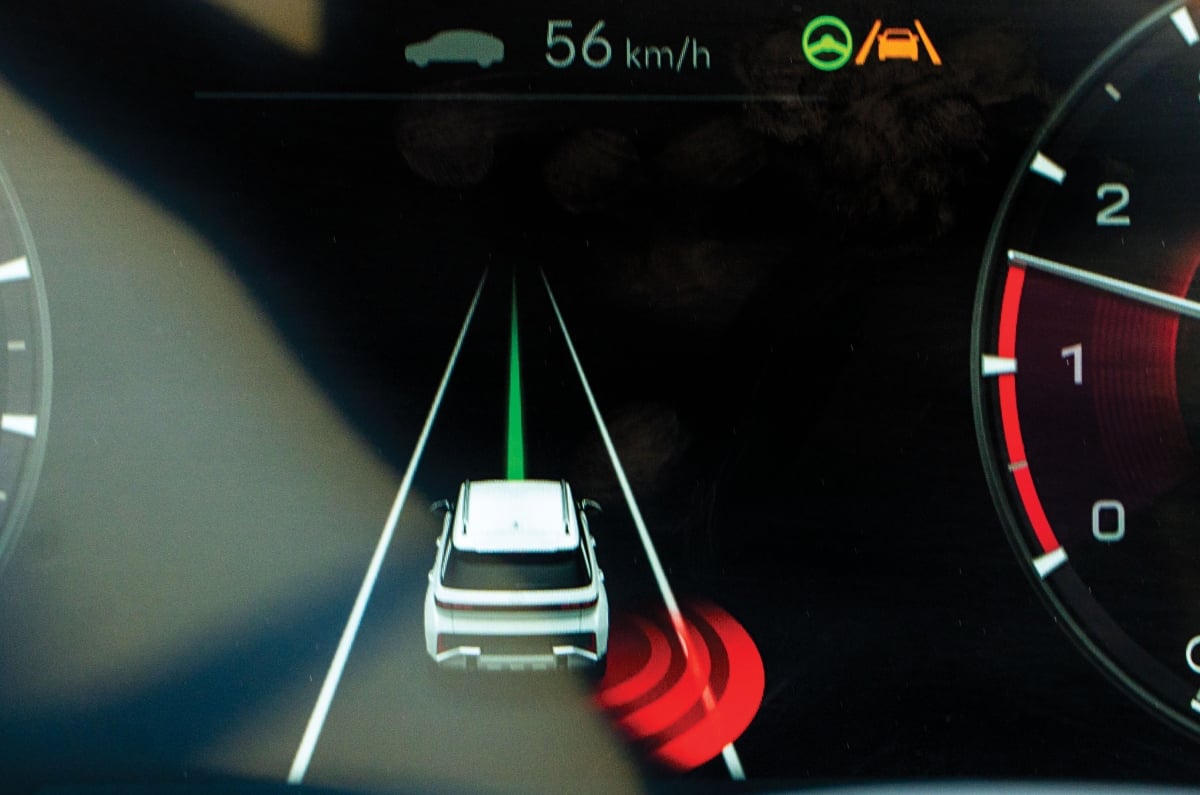
Hyundai Venue N Line ADAS
Driver’s display shows detailed ADAS information.

After taking a good look at the real cockpit and understanding some of the controls that help initiate the autopilot sequence, we shift to a full-scale moving platform simulator used to train airline pilots around the world. The cockpit is identical, down to the last detail, and here we have Captain Sanaya Chothia to help us conduct a simulated flight. Can’t help noticing, the 737 also has a tyre pressure monitor; of course, it does. 

First up, a full-bore take off in the sim, Capt. Sanaya working the rudder pedals to keep the aircraft running down the centre line. Wow, this feels real, the sound, the visuals, the motion all combined. What a thing! After climbing out, we take a quick look at the sequence used to initiate the autopilot, most of the steps done on the long horizontal panel that sits between the pilots, directly in their line of vision. The first step involves checking if the auto throttle is engaged, and then all the pilot needs to do is press a single button on the autopilot panel. Unlike ADAS, the route the aircraft has to take is already pre-programmed into the navigation computer, a fairly long and detailed process. The speed, the height, the course, the heading, everything. And the autopilot just follows this.  
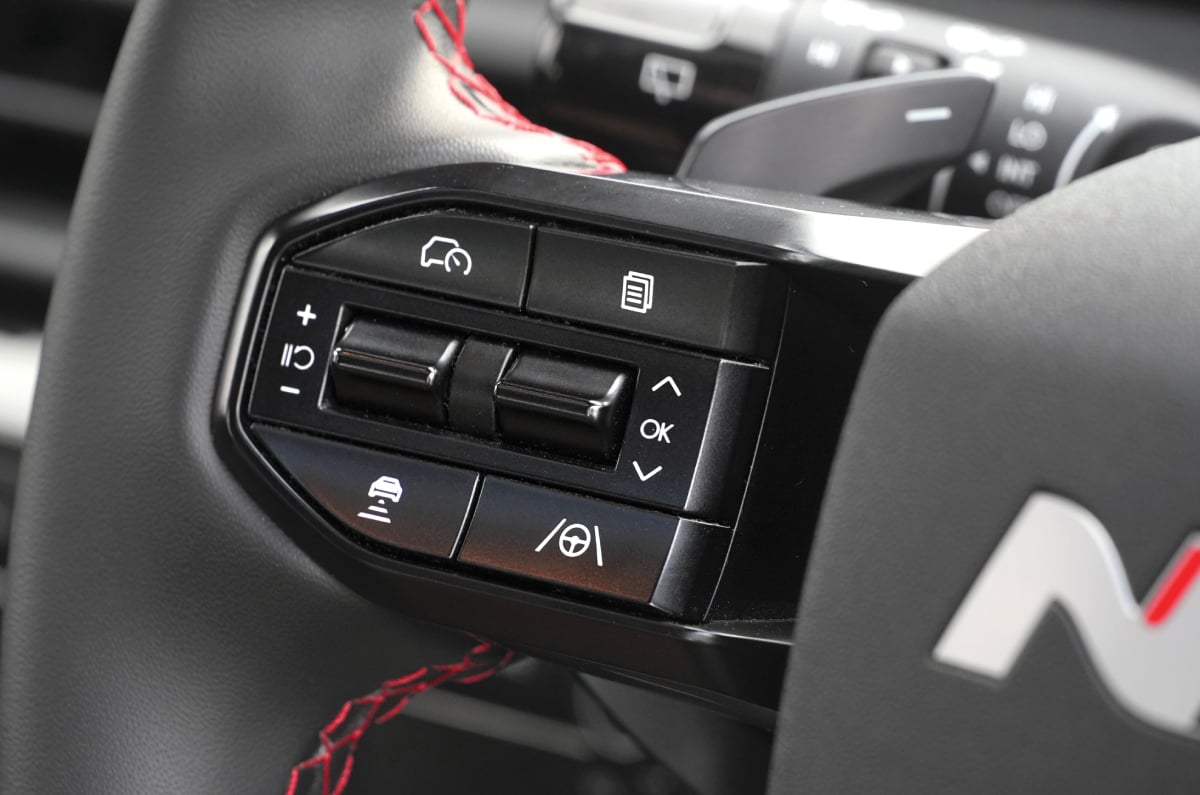
Hyundai Venue N Line ADAS controls
The buttons that initiate ADAS are all placed here. 

Once the system is initiated, the throttles move on their own, adjusting thrust; the yoke makes deliberate corrections and the screens display the aircraft banking smoothly along its GPS track. As the flight progresses, pilots can keep the aircraft on autopilot and make plenty of alterations to the route, either to avoid weather, get a more direct route or as directed by Air Traffic Control. There are knobs on the panel to alter course, speed, heading and altitude, with even the rate of descent and ascent adjustable. 

We even execute an autoland, where the aircraft lands itself. The Instrument Landing System frequency is first inputted into the Multi-Mode navigation panel, the final approach course is set for the runway on the Mode Control or autopilot panel (272 for runway 27 in this case), and then the APP or approach mode is selected once the aircraft is positioned correctly. Doing this arms the localiser and glideslope systems that, as we’ve mentioned earlier, have their sensors in the nose cone. Seeing the aircraft adjust, manoeuvre, manage its path, height and distance, and land itself is an eye-opener. What an incredible piece of technology! 
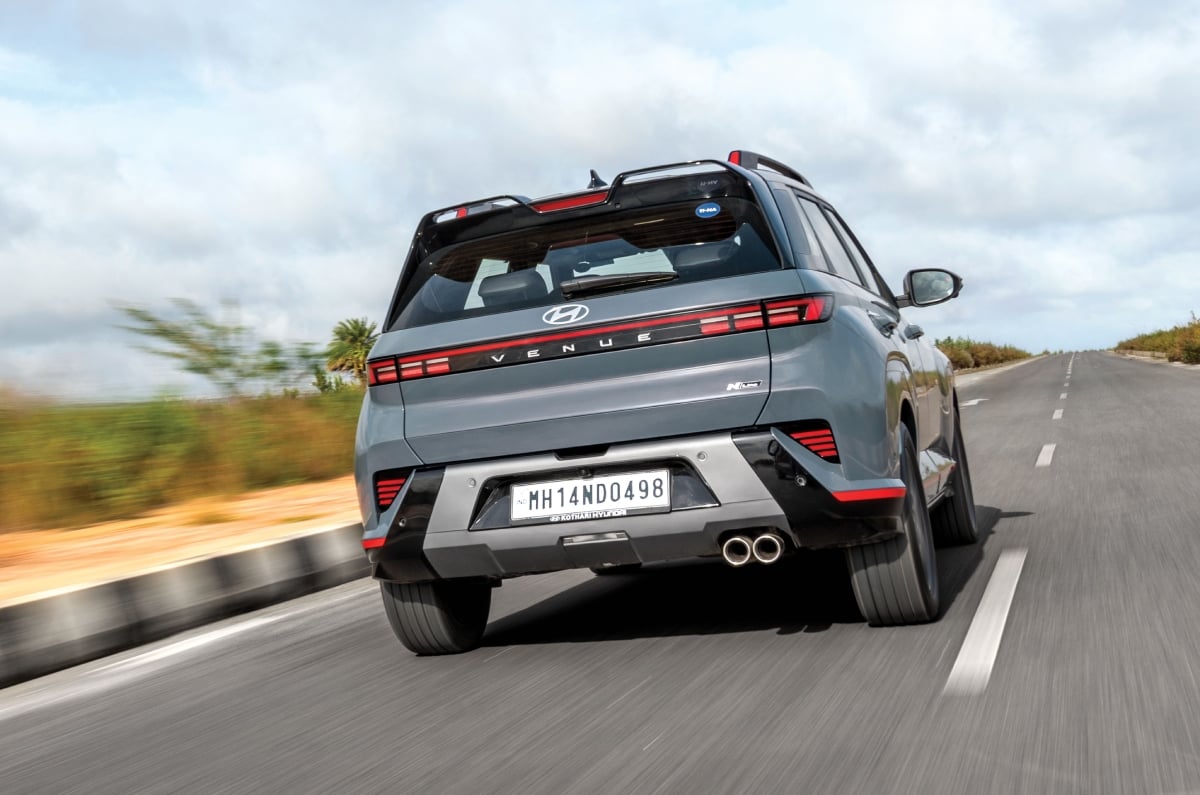
Hyundai Venue N Line rear action
Level 2 ADAS on the Hyundai Venue N Line integrates data from all its sensors for a smooth, seamless drive. 

What’s fascinating is that both systems have boundaries. In aviation, autopilot is trusted to fly for hours, even land. Pilots monitor, manage and intervene when necessary, but the system is designed to shoulder the bulk of the workload. Take offs, however, are always manual. In cars, ADAS is an assistant with a much narrower scope. It reduces fatigue, takes a load off the driver and adds a safety net, but ultimately the driver is always on call at short notice and is the one in control. 

Sharing the workload
Akasa Boeing 737 Max take off
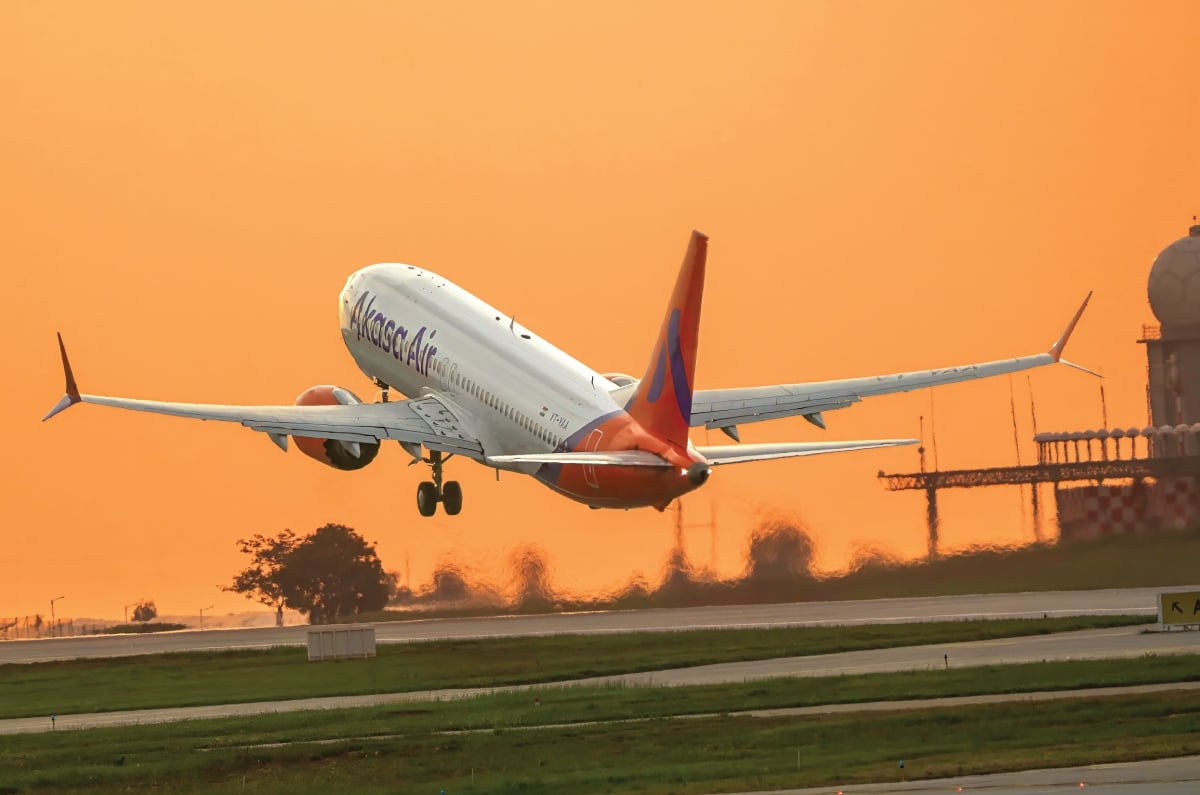
Modern aircraft like this Akasa 737 Max can get onto autopilot soon after take off.

Similar in execution but very different in how they function, ADAS and Autopilot both overlap but also exist in isolation. One is designed to keep you from bumping into a hatchback on the Western Express Highway, while the other is designed to guide an 80-tonne metal tube across oceans. Both are glimpses into a future where machines will shoulder more of the burden of control and blow us away with the technology on offer. But for now, if you step into an aircraft, know that while autopilot may be doing a bulk of the flying, a pilot is always watching, and when you engage ADAS to ease your commute, keep your eyes on the road, your hands on the wheel.
Renault India believes strong hybrids can be major volume drivers

Renault India believes strong hybrids can be major volume drivers
Renault India believes strong hybrid cars can be major volume drivers

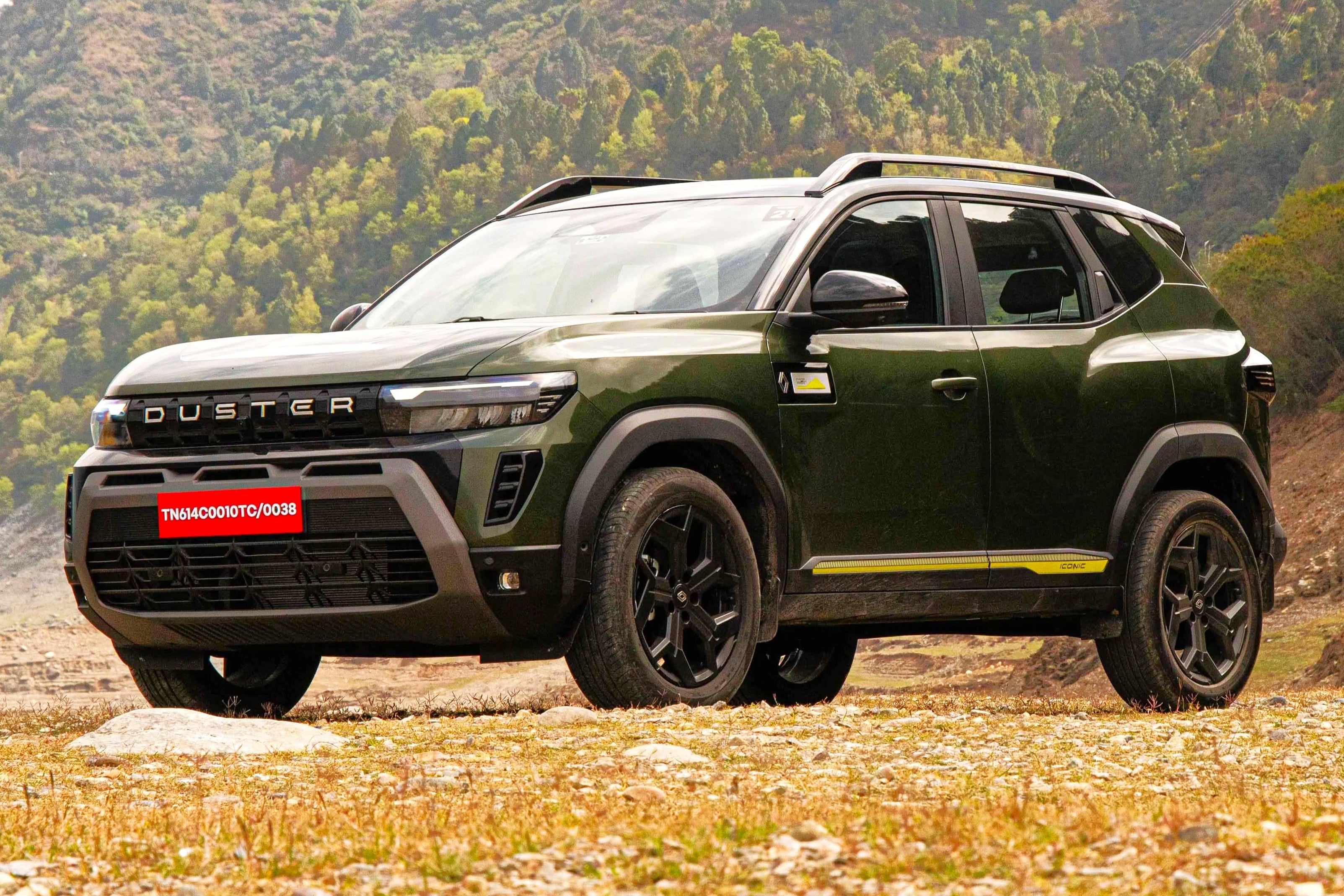
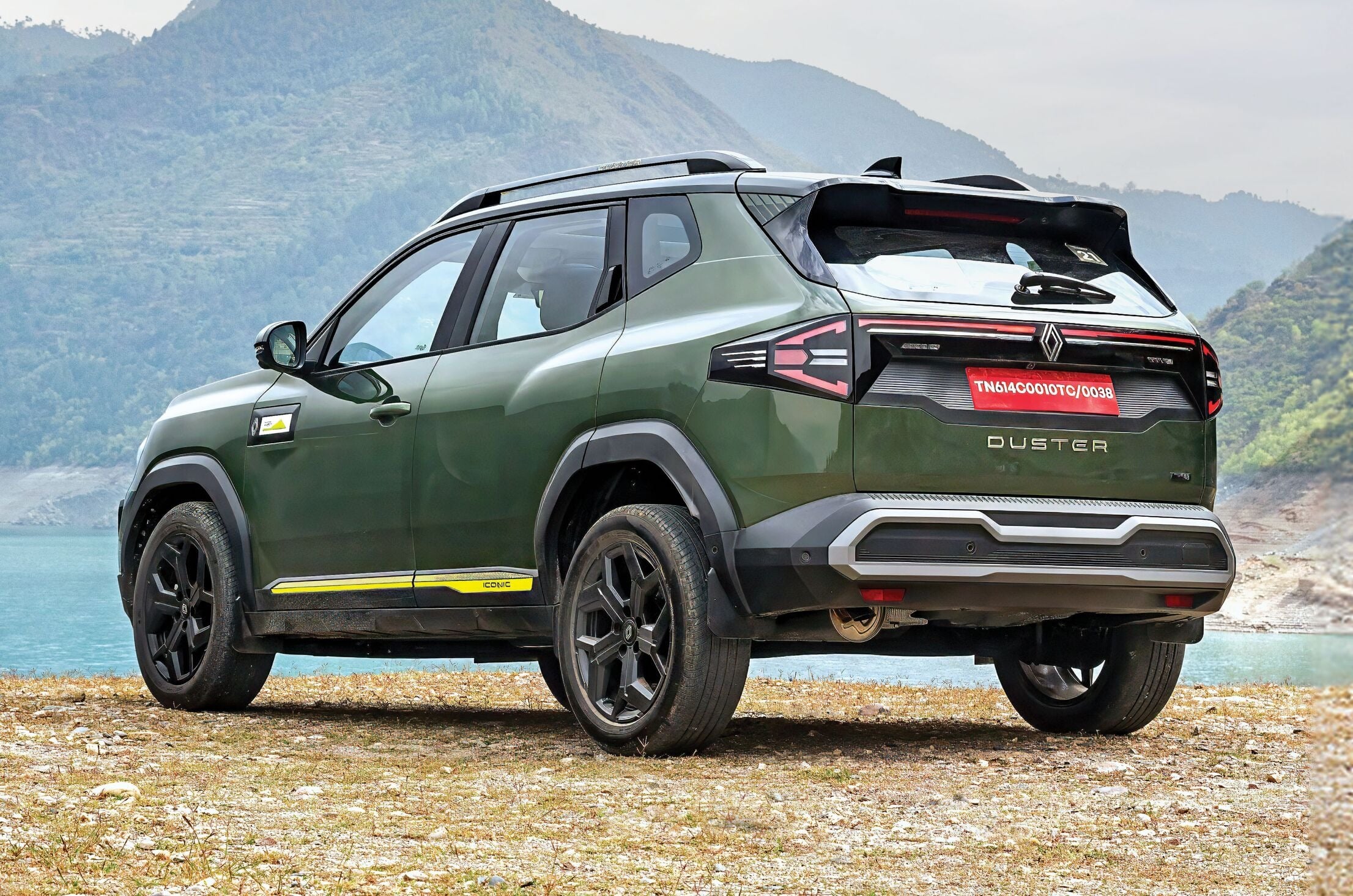
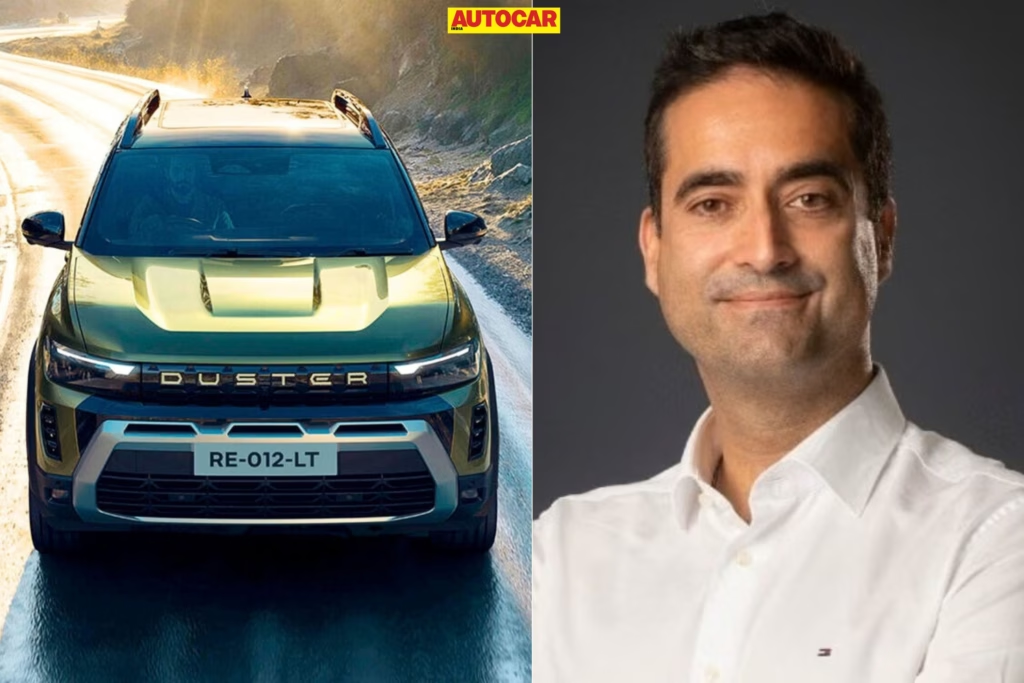
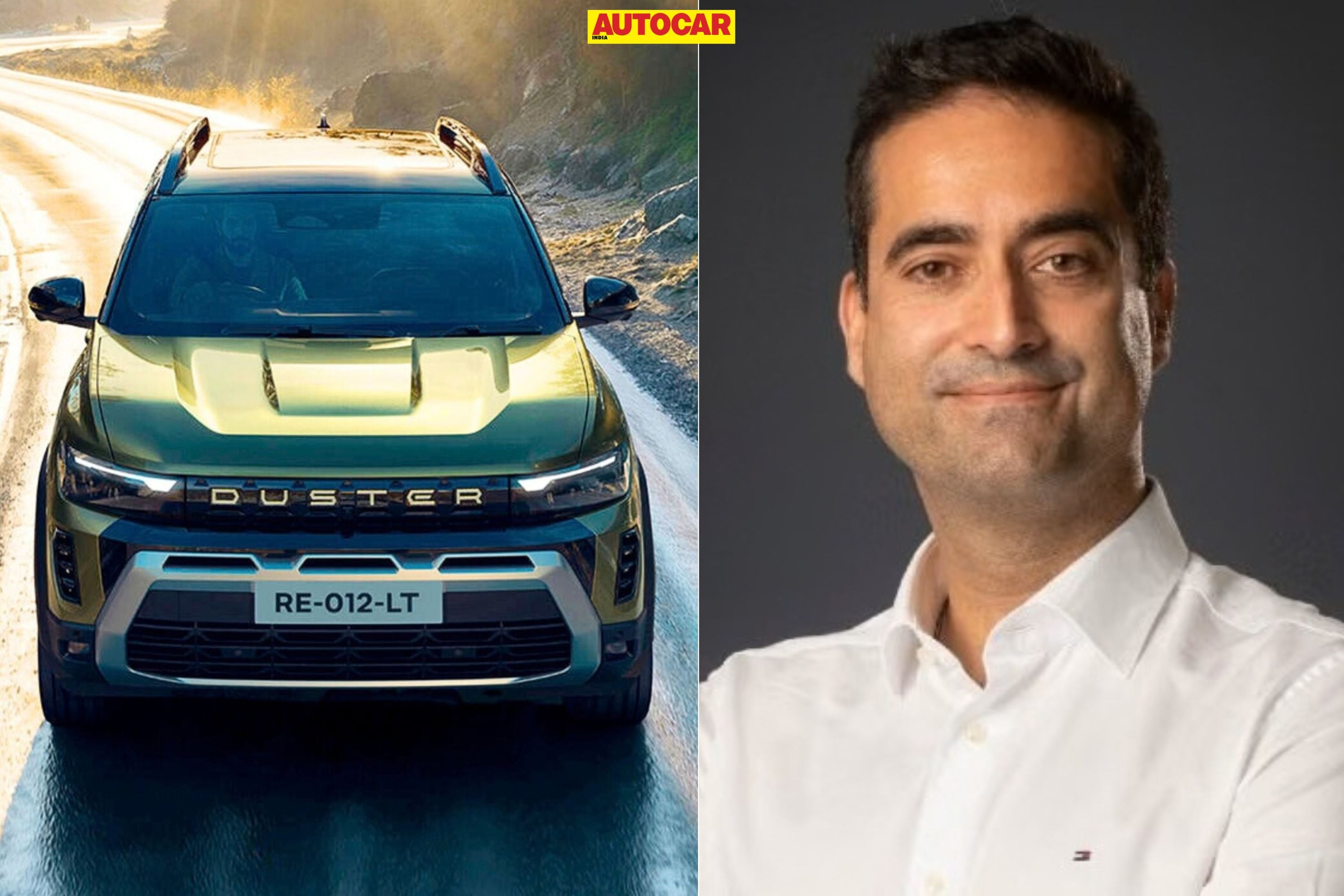
Renault India is gearing up to launch its first strong-hybrid powertrain under the bonnet of the Duster on October 17. The French carmaker expects strong-hybrid cars to become major volume drivers in India over the coming years. Speaking to our sister publication, Autocar Professional, Francisco Marques – Renault India’s Vice President for Sales and Marketing – described strong hybrids as a bridge between combustion-powered cars and EVs: “Hybrid is the perfect transition.”

Strong hybrids could drive sales for the next 20 years, says Marques

Marques expects this transitional period to last much longer than the immediate future. “Hybrid is going to be the main volume-making technology probably for the next 10, 15, or 20 years to come,” he said. According to Marques, EVs are not yet ready to dominate the Indian market on their own, with charging infrastructure and charging capacity likely to limit the pace of adoption.

The Indian passenger vehicle market continues supporting multiple powertrain technologies, including hybrids, CNG, and EVs, instead of one technology immediately replacing another. “Until EVs become something more, then there will be hydrogen,” Marques stated. He also expects strong hybrids to attract customers who might otherwise opt for diesel. “I see diesel declining, I see a strong hybrid growing very fast. And it’s related to the offer,” he said. Interestingly, diesel car sales grew by 15 percent year-on-year in the first half of CY2026, indicating that there still is a lot of demand for them.

More powertrain variety can improve the Duster’s slow sales pace

Since it went on sale in March, the Duster has been available exclusively with turbo-petrol engines – a sore point for many fans of the original Duster and its punchy 1.5-litre K9K diesel mill. It doesn’t help that many of the Duster’s midsize SUV rivals feature broader powertrain offerings: naturally aspirated petrol, diesel, CNG, hybrid, and electric. The lack of variety in fuel types is likely one of the reasons why the Duster has been falling behind in the sales charts – it managed a mere 406 wholesales in August, and has sold fewer than 7,000 units since launch. For perspective, the Kia Seltos sells an average of 10,000-11,000 units a month, while the segment-dominating Hyundai Creta averages 15,000-16,000 units sold.

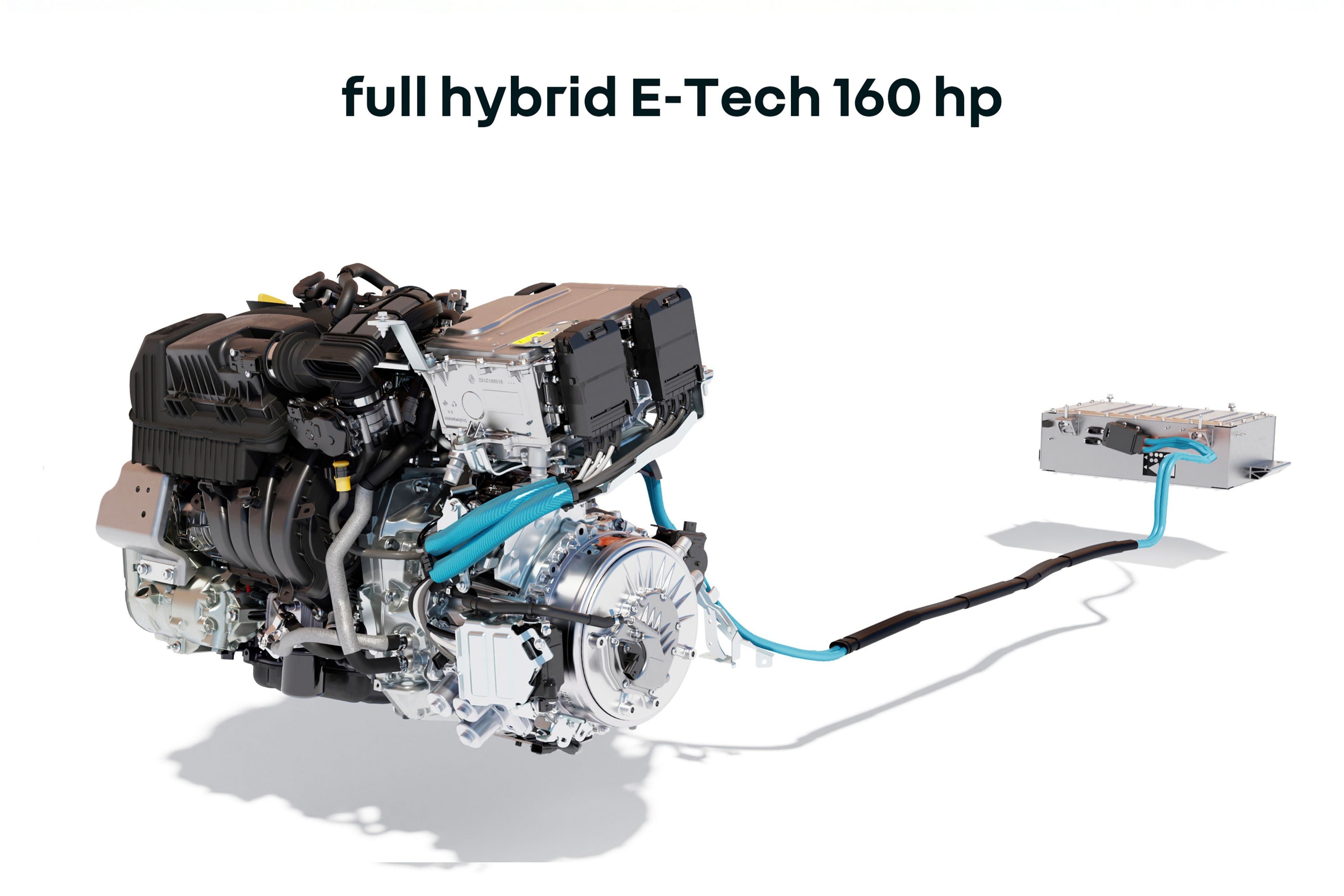
A strong-hybrid powertrain will let the Duster directly rival the subset of hybrid midsize SUVs, namely the Toyota Hyryder, Maruti Grand Vitara, and Maruti Victoris. On paper, the Duster’s upcoming ‘E-Tech 160’ hybrid setup has an edge over those of its rivals. Where the Hyryder, Victoris, and Grand Vitara use a 116hp 1.5-litre three-cylinder strong-hybrid system and an e-CVT gearbox, the Duster’s E-Tech 160 powertrain combines a larger 1.8-litre four-cylinder naturally aspirated petrol engine, two electric motors, and a 1.4kWh battery pack (the Hyryder has a 0.6kWh unit). Combined output is 160hp and 172Nm, with drive sent to the wheels through a segment-first 8-speed dedicated hybrid transmission. Renault also claims that the E-Tech 160 can deliver 80 percent of urban driving in all-electric mode.

That said, pricing is likely to be crucial to the Duster hybrid’s reception in the market, which is why Renault has been working on localising the E-Tech 160. Strong-hybrid variants of the Grand Vitara, Hyryder, and Victoris are priced in the Rs 16 lakh-20 lakh (ex-showroom) ballpark, so if the Duster hybrid is priced similarly, or even lower, Renault can trigger renewed interest in its midsize SUV.

Hyundai Verna vs Honda City petrol CVT real-world mileage compared

Hyundai Verna vs Honda City petrol CVT real-world mileage compared
Hyundai Verna vs Honda City petrol CVT mileage compared

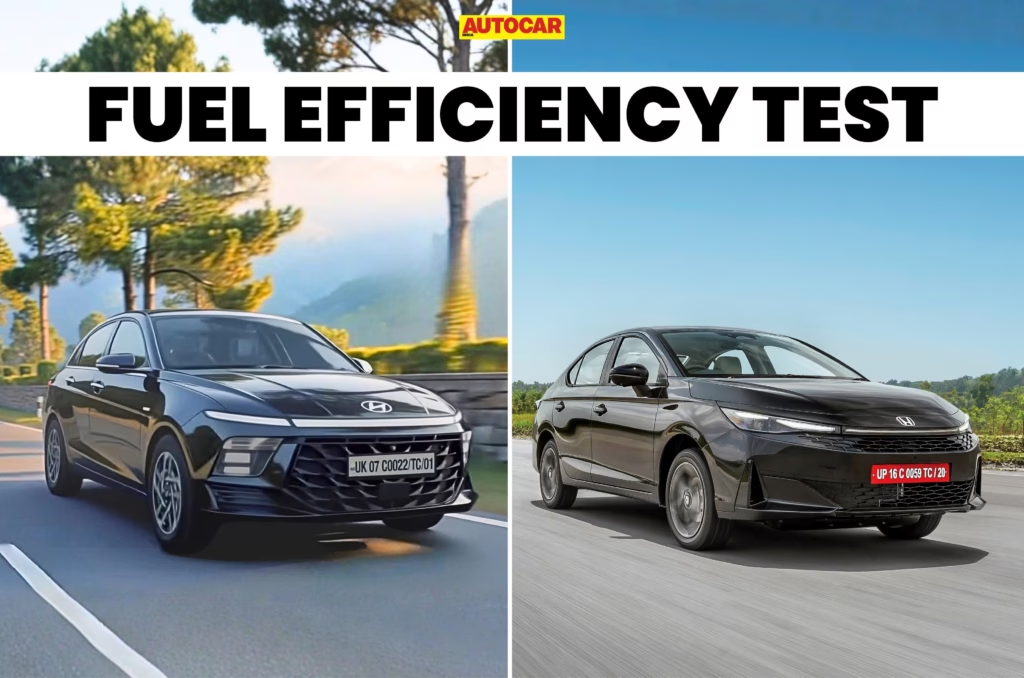
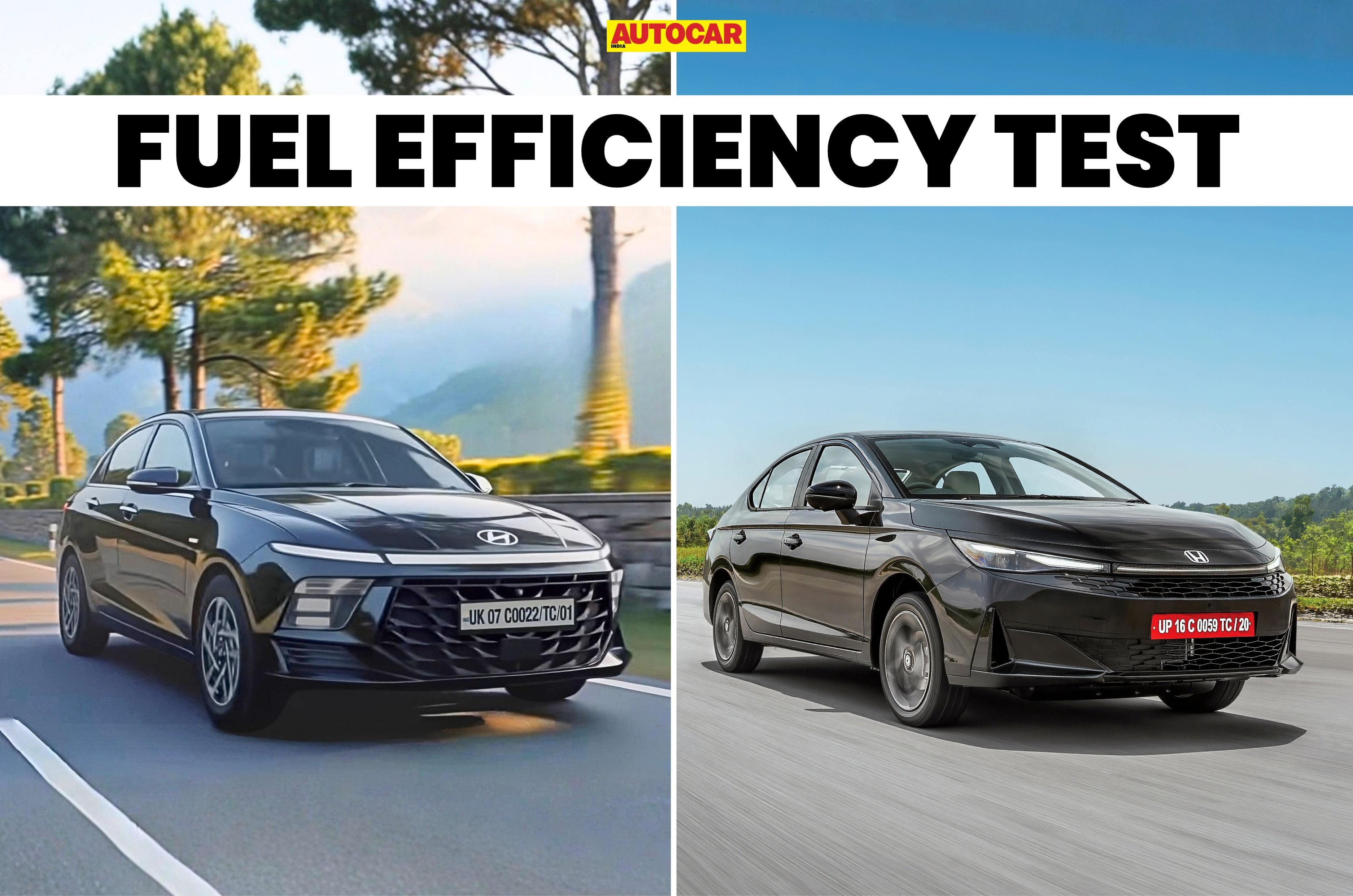
The Hyundai Verna and Honda City have been arch-rivals in the midsize sedan segment for a long time. Both are available with a petrol-CVT powertrain with similar specifications and prices. But in terms of fuel efficiency, how do the naturally aspirated petrol-CVT versions of the Verna and City compare? We put both sedans through our real-world efficiency tests to find out.

Hyundai Verna vs Honda City: Specifications, price

Both sedans get a similar engine and have a similar price range

Hyundai Verna vs Honda City: Specifications and price


Hyundai Verna

Honda City

Engine

4 cyls, naturally aspirated petrol

4 cyls, naturally aspirated petrol

Displacement (cc)

1,497

1,498

Power (hp)

115

121

Torque (Nm)

144

145

Gearbox

CVT

CVT

Fuel tank (litres)

45

40

Kerb weight (kg)

1,224

1,168

Claimed mileage (kpl)

19.6

17.97

Price range (in Rs lakh)

14.46-17.21

14.59-17.44

Both the Hyundai Verna and Honda City are powered by 1.5-litre four-cylinder naturally aspirated petrol engines that produce similar outputs, and both are available with a CVT automatic transmission. However, the two sedans differ in terms of fuel tank capacity and weight. The Verna gets a 5-litre larger fuel tank but is also 56kg heavier than the City. It also has the higher claimed fuel efficiency.

When it comes to pricing, the Verna has an advantage across the petrol-CVT range. Its starting price is Rs 13,000 lower than that of the City, while its top-end variant is Rs 23,000 more affordable.

Hyundai Verna vs Honda City: Real-world fuel efficiency

The Verna CVT was more fuel-efficient in our tests than the City CVT 

Hyundai Verna vs Honda City: Real-world mileage details


Hyundai Verna

Honda City

Tested city mileage (kpl)

10.40

10.10

Tested highway mileage (kpl)

17.40

16.49

Tested average mileage (kpl)

14.15

13.30

Tested range (km)

636.75

532

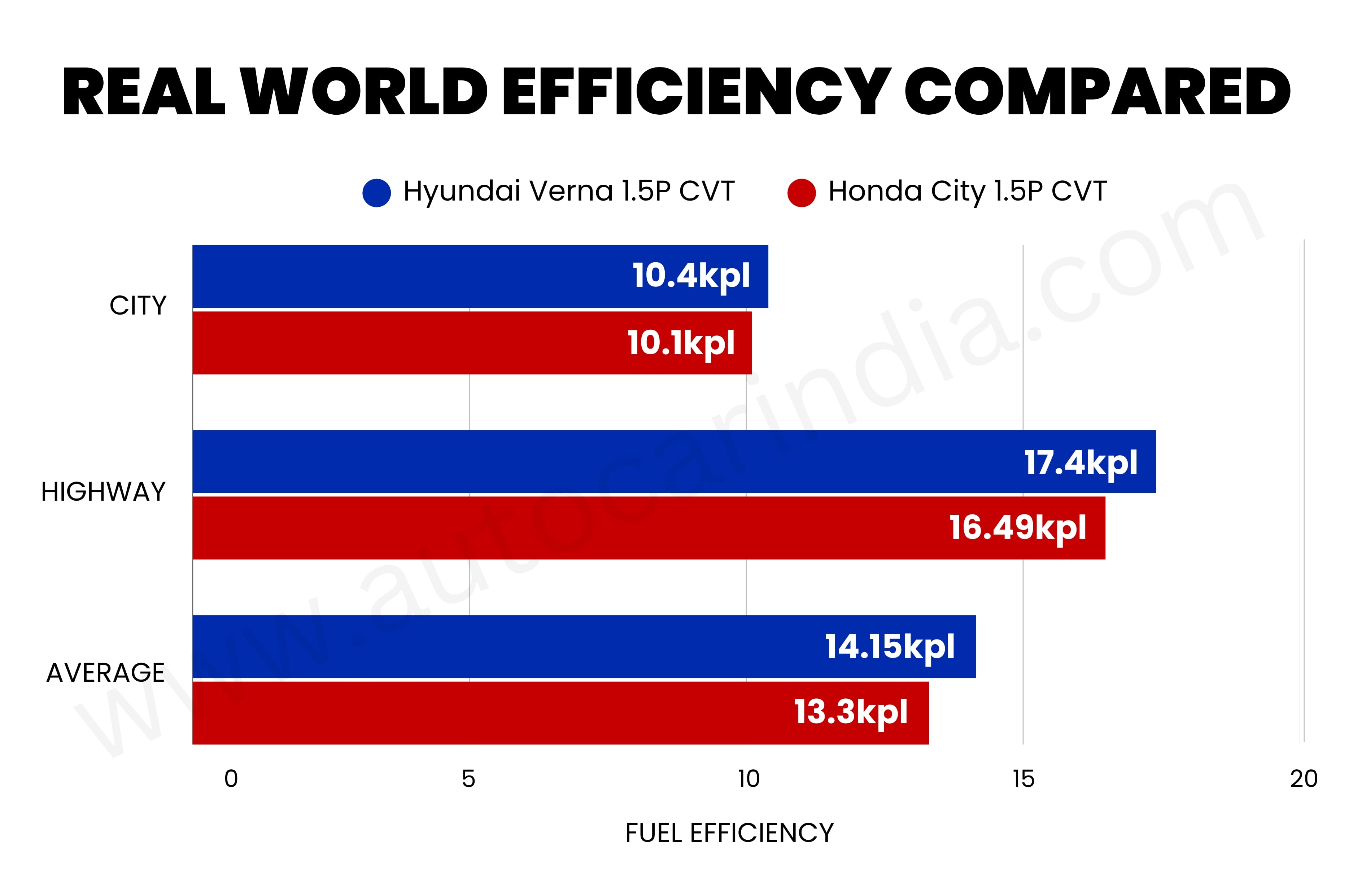
Both sedans were tested in their most efficient driving modes, with the Verna in Eco and the City in ECON. In our tests, the Verna returned 0.3kpl more than the City in city driving conditions and 0.91kpl more on the highway. Its higher highway efficiency can partly be attributed to the engine settling at a relaxed 1,900rpm at 100kph, while its automatic stop-start system helped conserve fuel in traffic. The City, on the other hand, does not get an automatic stop-start system, and its CVT tended to raise engine speed with even small throttle inputs. This made the City feel more responsive but also had an impact on its mileage.

The Verna’s average fuel efficiency was 0.85kpl higher than the City’s. Combined with its larger fuel tank, this gives the Verna a range of around 636.75km on a full tank, which is 104.75km more than the City’s estimated range of 532km.

Autocar India’s fuel efficiency testing

Before our real-world fuel efficiency tests, we fill our test cars’ tanks to the brim and maintain tyre pressures based on the manufacturer’s recommendation. These cars are driven in fixed city and highway loops in and around Navi Mumbai, and we maintain certain average speeds. Throughout the tests, there is only one person in each car, running the aircon at 22deg C in full-auto mode, and other electricals, such as the audio system, ventilated seats, indicators and wipers, are used when required, just like a regular user would. Periodic driver swaps further neutralise variations in driver patterns. At the end of each cycle, we calculate efficiency by filling the tanks to full again.

Mahindra Formula E retains de Vries, Mortara

Mahindra Formula E retains de Vries, Mortara
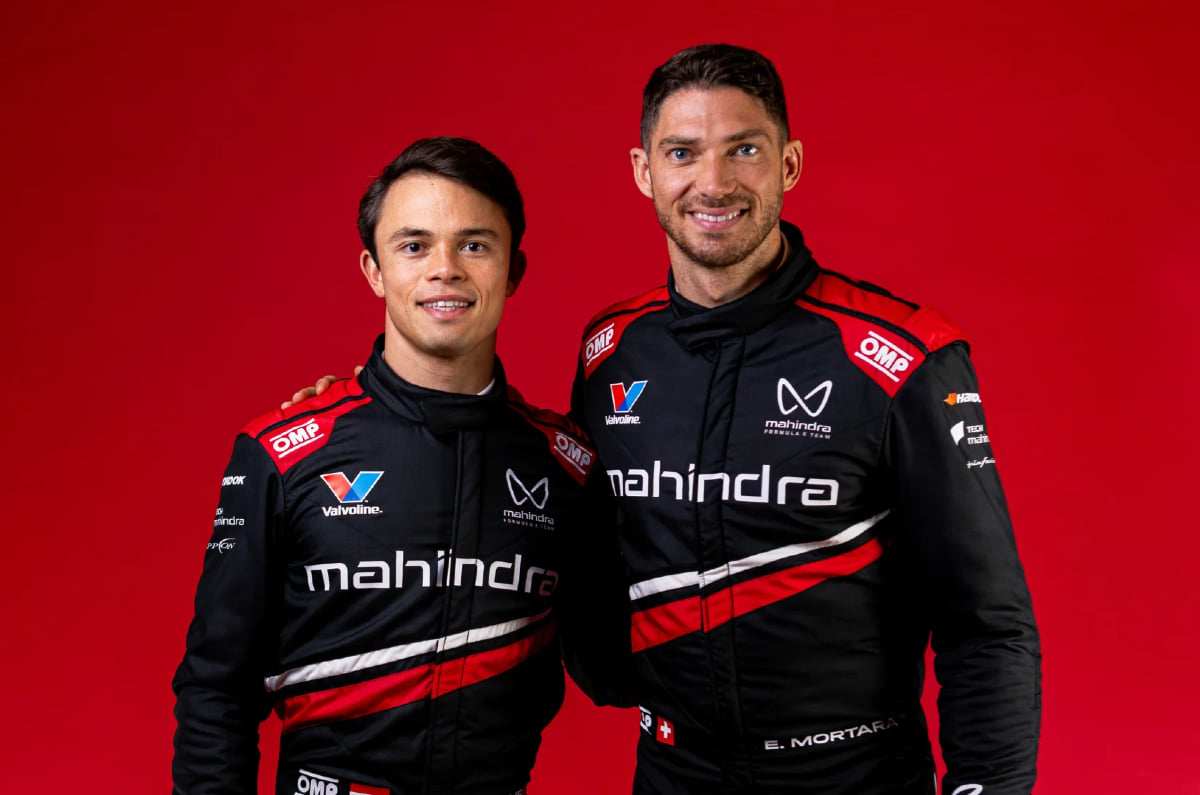
Mahindra Formula E Nyck de Vries, Edoardo Mortara

Mahindra Racing has confirmed that both Nyck de Vries and Edoardo Mortara will be staying with the team for the 2026/27 Formula E season. 

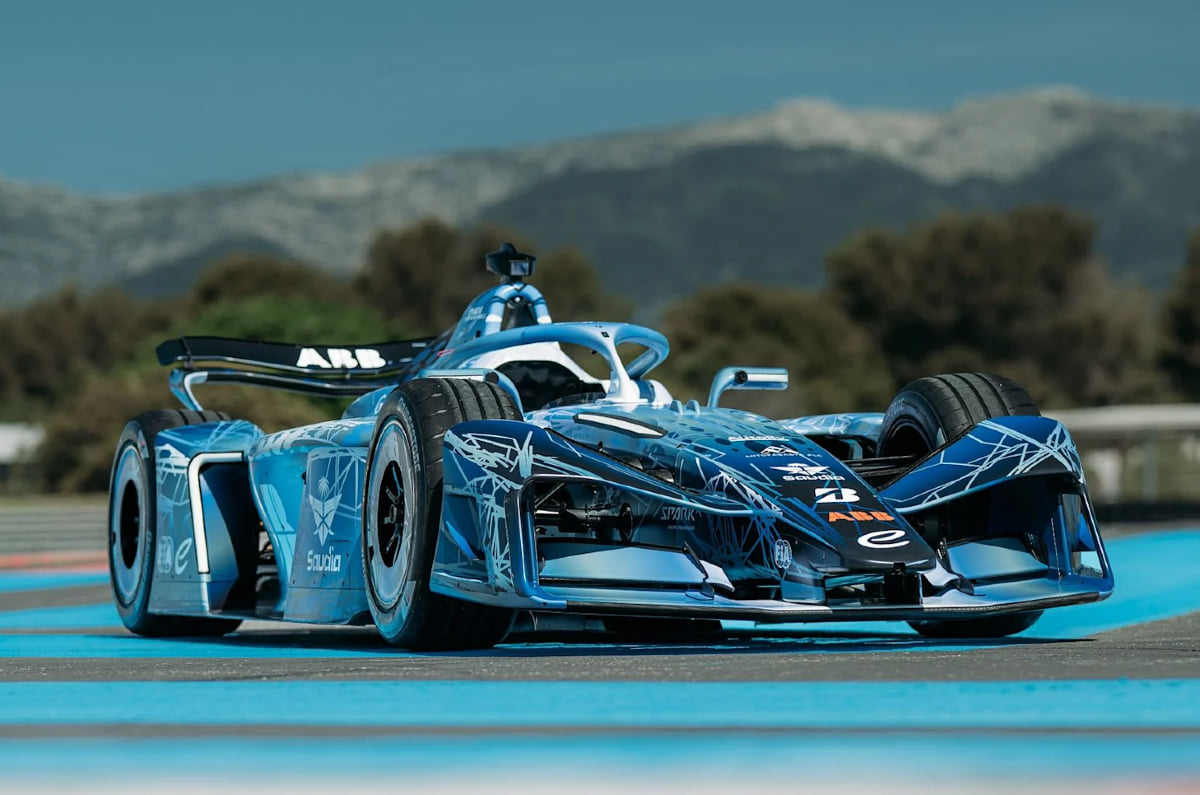
This upcoming season will also kick off a new era for the all-electric championship, with the new Gen4 cars making their debut. Formula E claims this will be the fastest car in the championship’s history with a top speed of over 335kph, 0-100kph time of around 1.8 seconds and an output of up to 816hp (600kW). These new cars will also feature permanent all-wheel drive, along with different aero configurations for qualifying and racing. 

  1. Mahindra finished P3 overall last season
  2. 2026/27 season kicks off in Jeddah on December 18

Both de Vries and Mortara joined Mahindra in 2023 and have played a pivotal role in the team’s recent Formula E resurgence. Last year, the Indian squad delivered its strongest Formula E campaign to date with a total of 252 points and third place in the teams’ championship, defeating the likes of Andretti, Citroen and Nissan.

“I would like to thank Nyck and Edoardo for continuing this adventure with us as we begin its second chapter. Over the past three seasons, we have built trust, shared reference points and a strong way of working together. That continuity will be important as Formula E enters the Gen4 era,” said Mahindra Racing CEO and team principal.

“Gen4 I would like to thank Nyck and Edoardo for continuing this adventure with us as we begin its second chapter. Over the past three seasons, we have built trust, shared reference points and a strong way of working together. That continuity will be important as Formula E enters the GEN4 era.”

2026/27 Formula E calendar

Formula E Gen4 car

The 2026/27 Formula E season will kick off with a double-header round in Jeddah on December 18-19. Before that, pre-season testing will take place at Spain’s Jarama circuit on November 16-20.

Round

E-Prix

Date

1

Jeddah

December 18

2

Jeddah

December 19

3

Mexico City

January 16

4

Austin

February 6

5

Miami

February 20

6

Sao Paulo

March 13

7

Sanya

April 17

8

Monaco

May 1

9

Monaco

May 2

10

Berlin

May 8

11

Berlin

May 9

12

London

May 29

13

London

May 30

14

Zandvoort

June 18

15

Zandvoort

June 19

16

Madrid

June 26

17

Madrid

June 27

18

Shanghai

July 10

19

Shanghai

July 11

20

Tokyo

July 24

21

Tokyo

July 25


Suzuki developing lower-cost ADAS that could reach affordable cars

Suzuki developing lower-cost ADAS that could reach affordable cars

Suzuki is planning to make core advanced driver assistance system (ADAS) functions standard across its future India lineup, including affordable cars, as it develops a lower-cost system suited to Indian road conditions. The aim is to offer greater access to accident prevention. “Fitting expensive advanced driver assistance systems only to a few luxury cars does not reduce accidents across society,” said Katsuhiro Kato, Suzuki’s chief technology officer, at the company’s recent technology strategy briefing, citing more than 1.77 lakh road accident fatalities in India in 2024.

  1. Proposed system’s cameras and AI tech to eliminate the need for a front radar
  2. Suzuki is working on lighter bodies designed to protect occupants in crashes

Core ADAS functions to become standard

Kato said Suzuki intends to make safety functions such as automatic emergency braking and lane departure prevention standard, while reserving additional comfort and convenience functions for higher variants. The manufacturer describes the approach as “just-right ADAS”, with the system being developed specifically around Indian traffic conditions and the need to keep costs down.

Cameras and AI to eliminate the need for a front radar

To reduce the cost of the system, Suzuki plans to use high-resolution cameras and AI chips, while integrating driver and occupant monitoring with ADAS. The proposed setup will also do away with the front radar sensor. The company says it is targeting “major cost reductions” while maintaining “equal or better safety performance”. These, however, are development targets, and Suzuki has not released performance results for a production version of the system.

The manufacturer says it is approaching vehicle safety from two directions: preventing accidents through ADAS and protecting occupants when a crash occurs. Alongside its electronic safety systems, the company is working on lighter vehicle bodies designed to protect occupants in a collision.

New electronic architecture could cut costs

The carmaker’s ADAS plans form part of its wider “SDV Right” strategy, which aims to simplify the electronic architecture of its future vehicles. The manufacturer plans to combine communication, power distribution and body-control functions into a Central Zone ECU. Suzuki estimates that this controller could cost around 30 percent less and weigh about 15 percent less than its conventional arrangement.

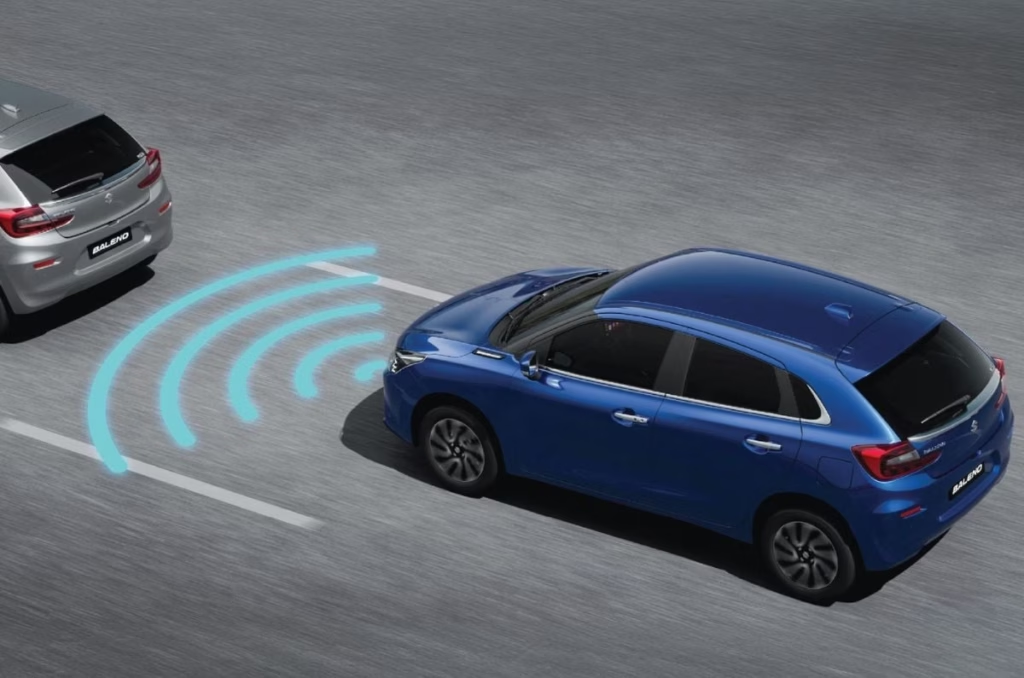
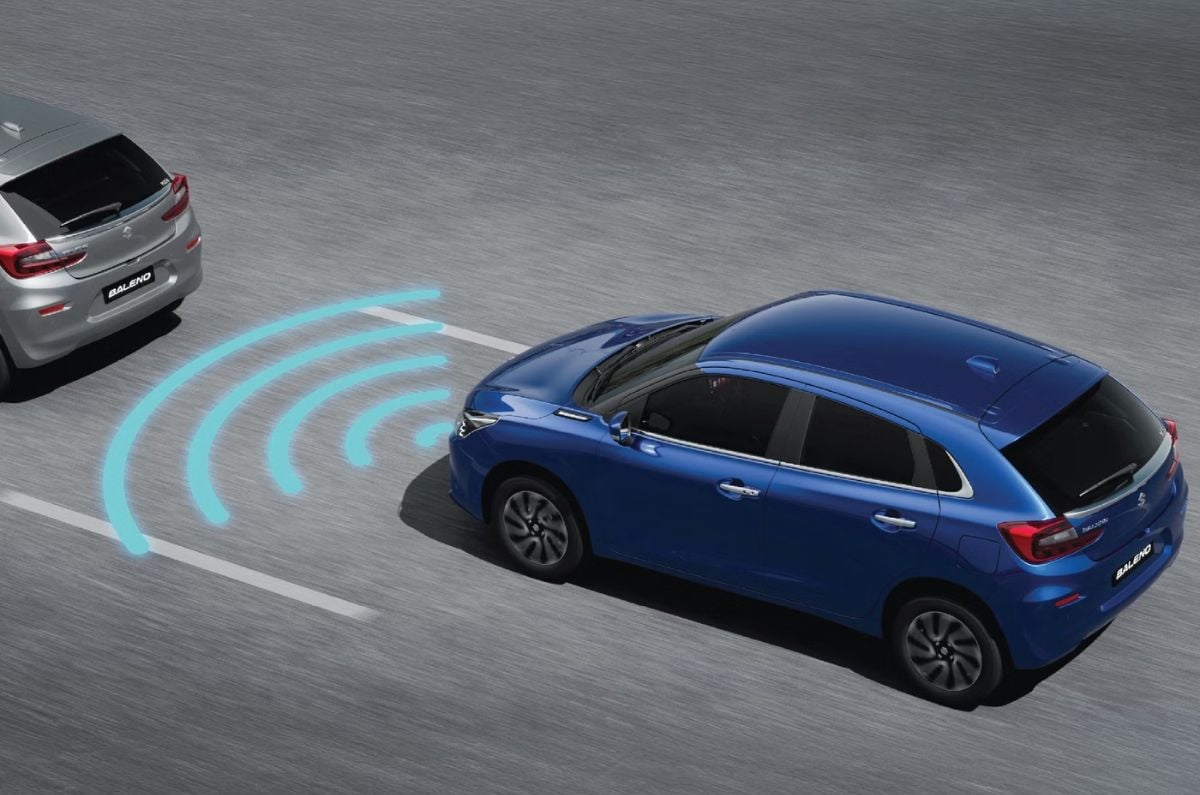
Suzuki has not yet announced which models will get the new ADAS system or when it will be introduced. In the small-car segment, the Baleno is currently Maruti Suzuki’s most affordable model to offer an ADAS suite, which was introduced with its recent facelift. The technology is currently not offered by any of its premium hatchback rivals.

With inputs from Kiran Murali.

Suzuki reveals new turbo-petrol engine specs; may come to India

Suzuki reveals new turbo-petrol engine specs; may come to India

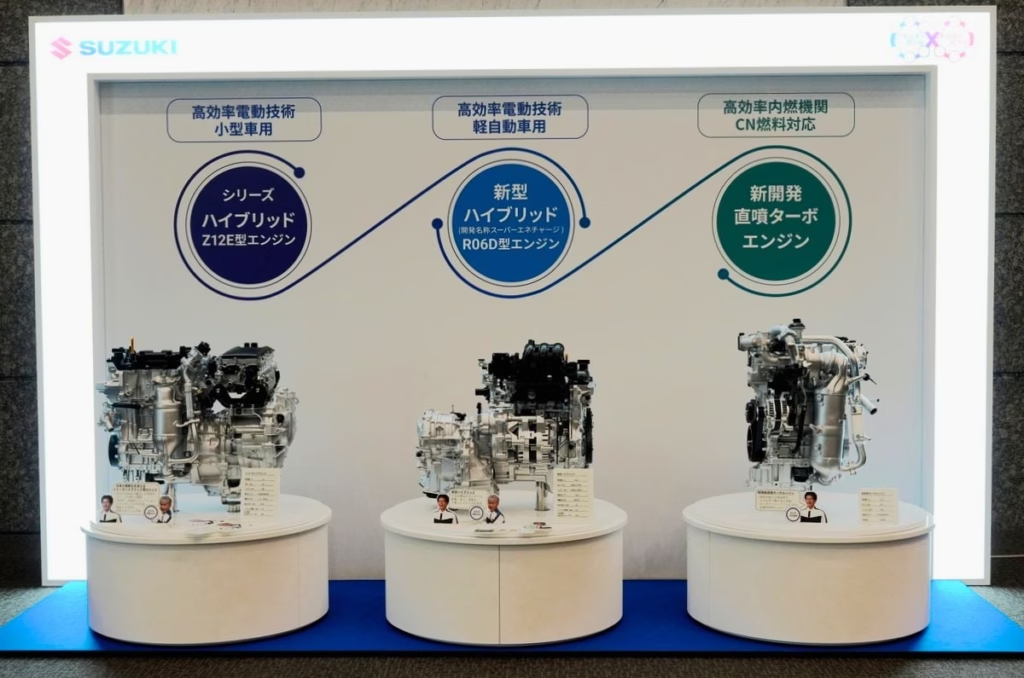
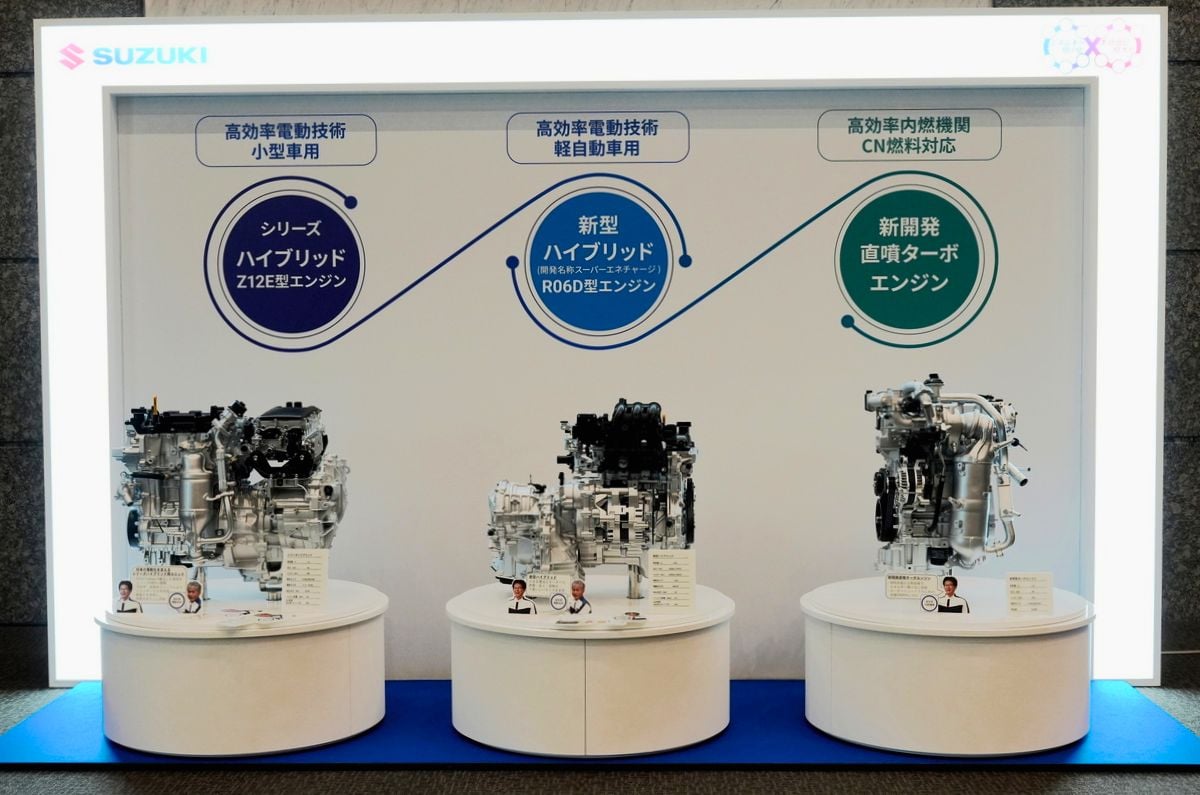
Suzuki recently revealed plans to develop a new direct-injection turbocharged (DITC) engine for growth markets, including India, as part of its ‘Technology Strategy 2026: Looking 10 Years Ahead’ roadmap. The manufacturer has also revealed specifications for a 1.2-litre 3-cylinder turbo-petrol engine prototype in Japan, which is being developed for compatibility with E100, CNG (compressed natural gas) and CBG (compressed biomethane gas). While not confirmed by the manufacturer, this engine is likely to eventually be offered in India.  

  1. 1.2-litre turbo-petrol engine prototype produces up to 126hp and 230Nm
  2. This engine is being developed to achieve up to 40 percent thermal fuel efficiency

Alongside the turbo-petrol engine, Suzuki has also showcased a series-hybrid powertrain based on the Z12E 3-cylinder engine and a smaller 0.66-litre engine for kei cars. Specifications of a 1.5-litre direct-injection turbo-petrol engine were also revealed.

Suzuki’s new engine prototypes: More details

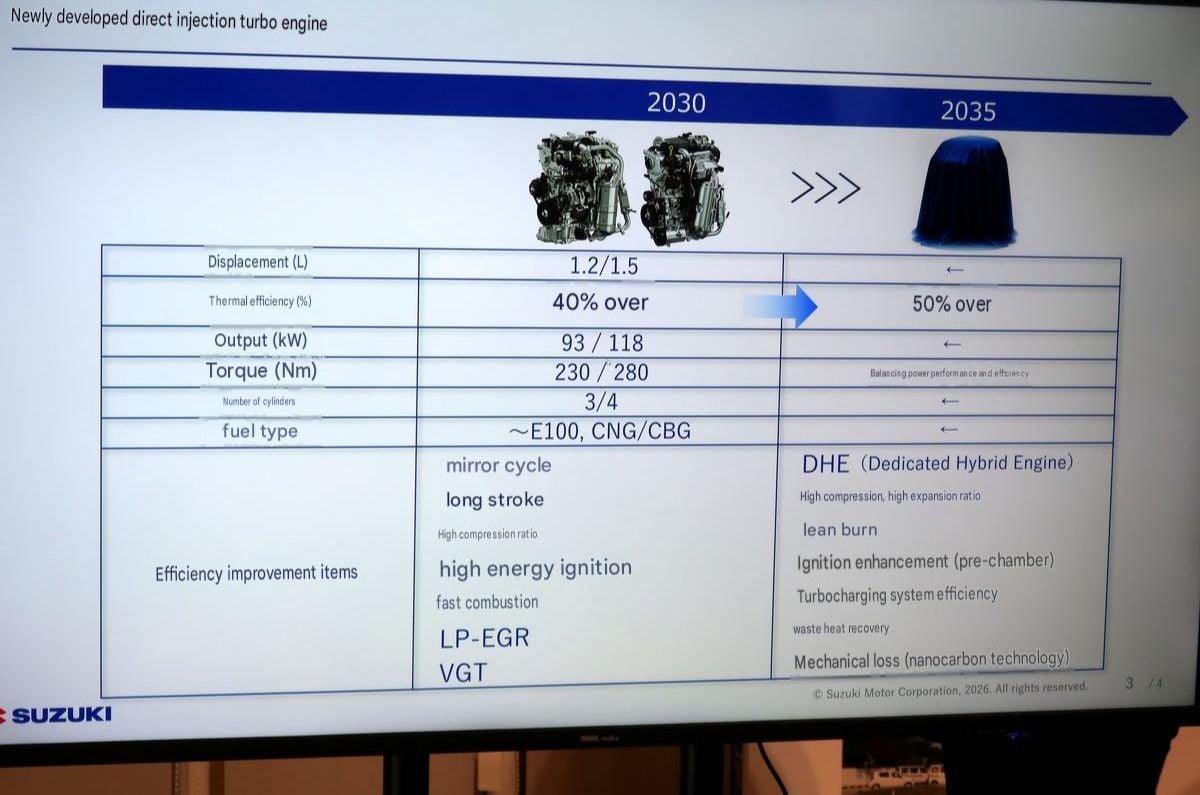
1.2-litre 3-cylinder turbo-petrol engine is based on Z12E, as per a media report

Image source: Autocar Japan (text translated into English) 

The showcased prototype is a 1.2-litre direct-injection turbo-petrol engine, aimed at producing up to 126hp and 230Nm, with thermal fuel efficiency targeted at up to 40 percent at launch and up to 50 percent by 2035. The engine is being developed for compatibility with E100 (100 percent ethanol), CNG and CBG.

According to a report by Japan’s MotorFan, the engine is based on Suzuki’s Z12E 3-cylinder unit and features a variable-geometry (VG) turbocharger and a water-cooled intercooler. The Z12E is offered in a naturally aspirated avatar in the Swift, Baleno and Dzire. While not confirmed by the manufacturer, the new turbocharged engine could eventually be offered in sub-4m cars in India.

Z12E engine to also form the basis of a series-hybrid powertrain

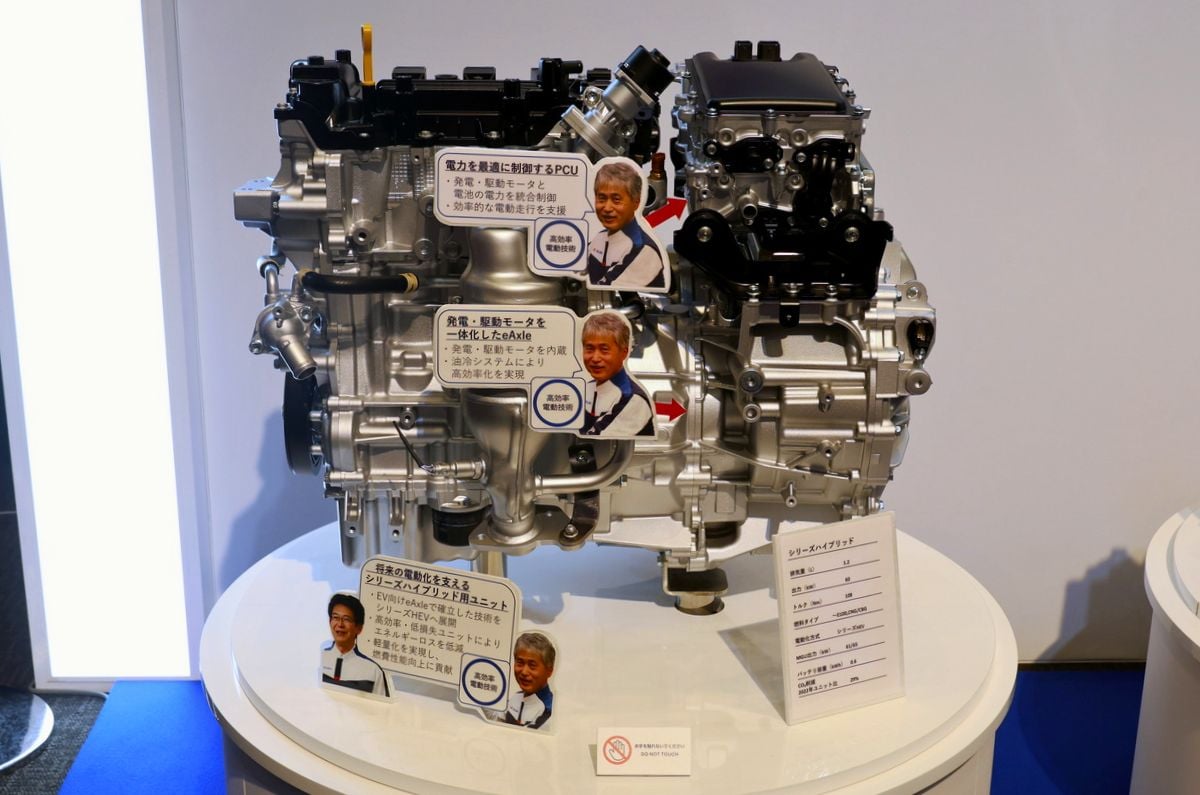
Suzuki is also developing the 1.2-litre Z12E 3-cylinder engine for use in a series-hybrid powertrain. In this setup, the engine generates electricity, while an electric motor drives the wheels. The system uses two motors – one for generating electricity and another for driving the wheels. In this application, the Z12E engine produces up to 82hp and 108Nm, while the generator motor has a maximum output of 83hp and the drive motor produces up to 88hp. The system uses a 0.6kWh battery.

Series hybrid system combining a 1.2L engine and two electric motors. (Image source: Autocar Japan)

Suzuki is also considering combining this series-hybrid system with its new 1.2-litre direct-injection turbo-petrol engine in a future plug-in hybrid setup. The proposed combination could deliver a total system output of up to 177hp.

1.5-litre turbo-petrol engine and a 0.66-litre engine (for kei cars) also in development

As per Autocar Japan, Suzuki is also developing a 1.5-litre 4-cylinder, aimed at producing up to 160hp and 280Nm. Like the smaller 1.2-litre engine, the 1.5-litre turbo-petrol engine is also being developed for compatibility with E100, CNG and CBG fuels.

Suzuki also showcased a smaller 0.66-litre 3-cylinder engine in Japan. The engine is being developed in both naturally aspirated and turbocharged forms for kei cars.

Notably, all the engines showcased by Suzuki are designed for transverse-mounted, front-wheel-drive (FWD) vehicles, with no mention of powertrains for longitudinally mounted, rear-wheel-drive (RWD) models such as the Jimny. However, powertrains for RWD models are also understood to be under development and could be revealed at a later date.

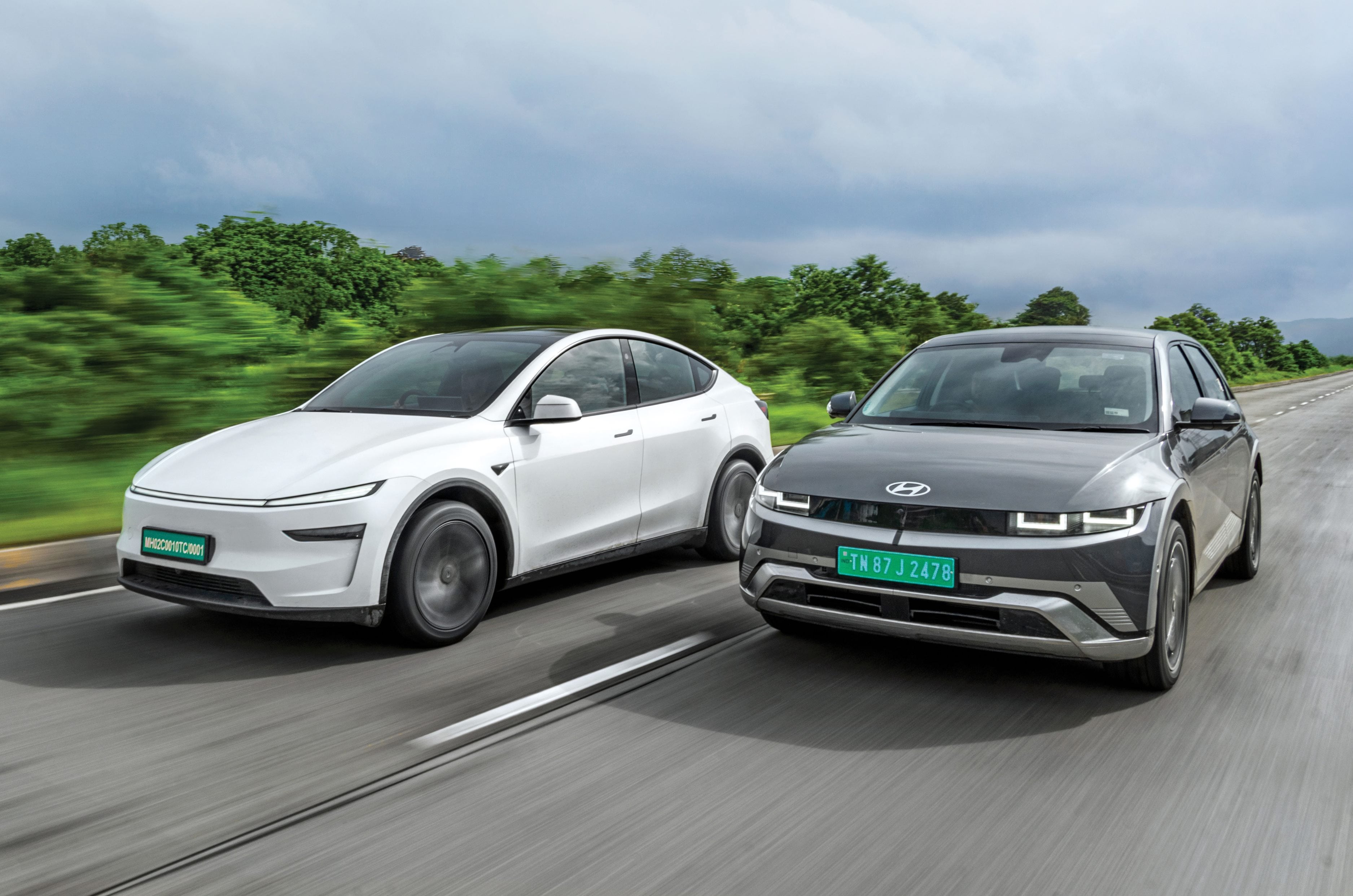
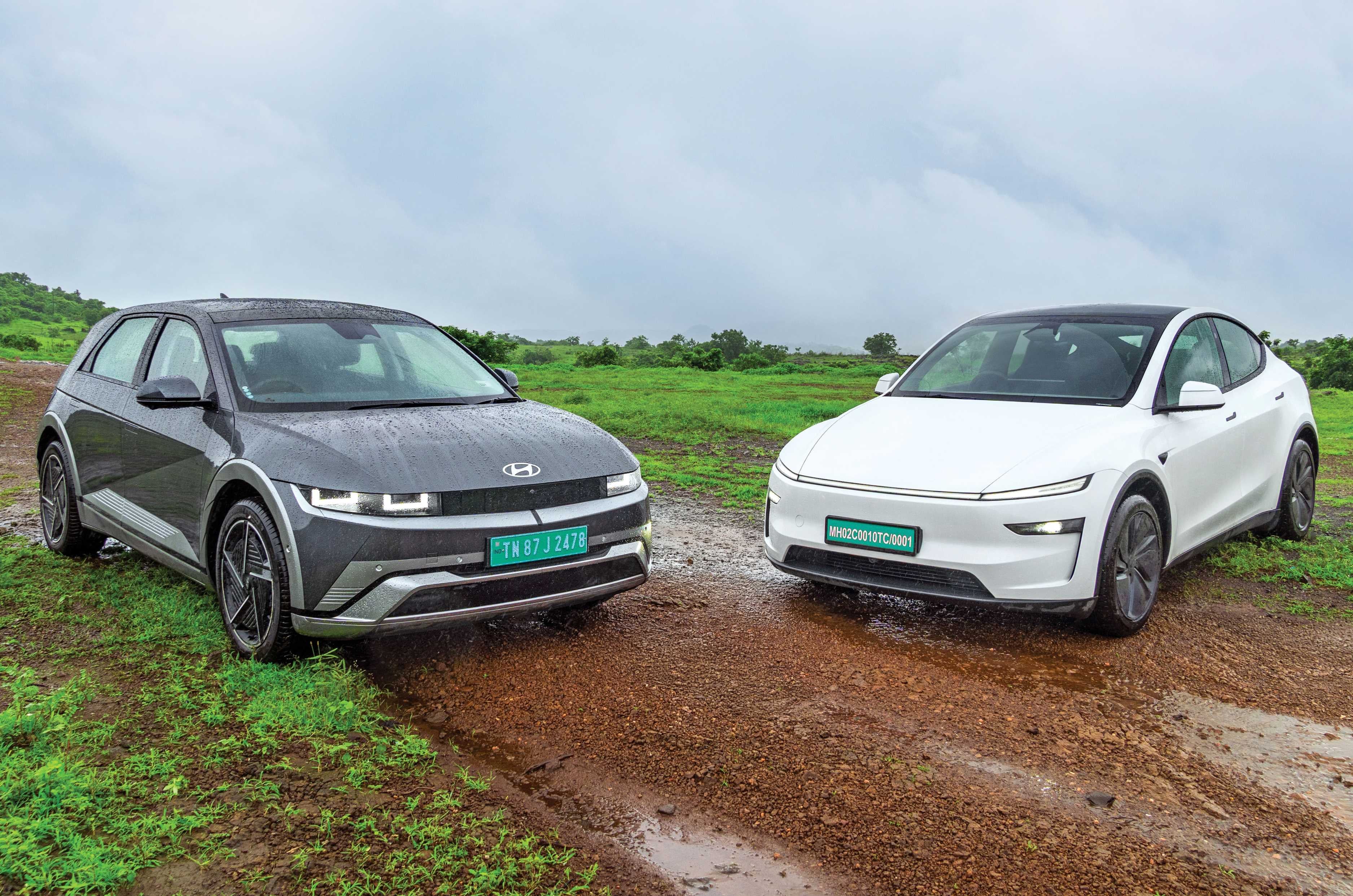
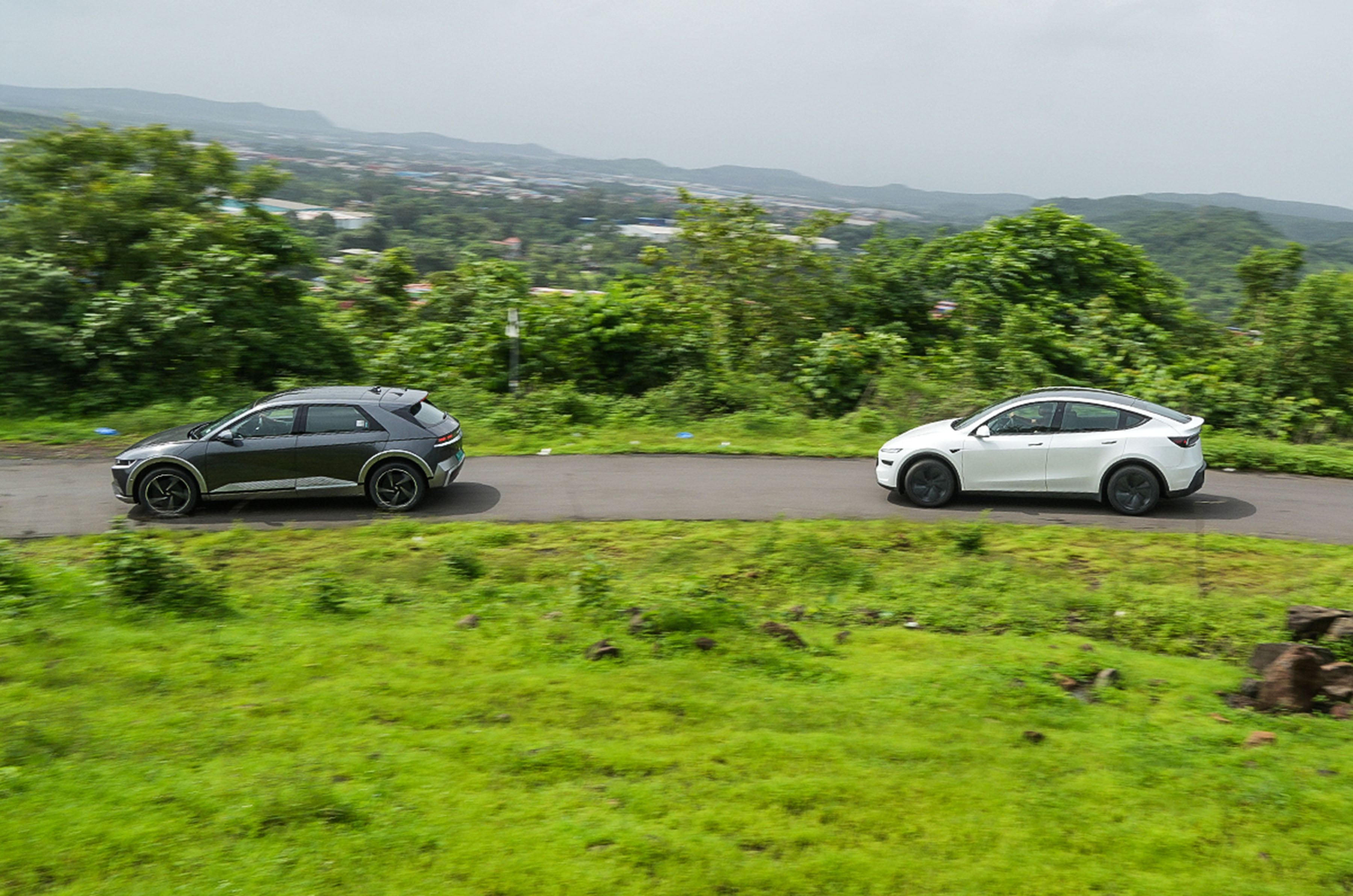
Tesla Model Y vs Hyundai Ioniq 5 comparison: Tech’in to the max

Tesla Model Y vs Hyundai Ioniq 5 comparison: Tech'in to the max

The Hyundai Ioniq 5 has been one of the standout EVs of recent years, so much so that we crowned it our 2024 Car of the Year. Back then, besides being one of the most impressive electric cars on sale, it was also among the most affordable in its segment. And when compared with rivals like the BYD Sealion 7 and BMW iX1, the Ioniq 5 came out on top thanks to its comfort, practicality and value.

Fast forward to 2026, and the landscape has changed. Hyundai has updated the Ioniq 5, and the biggest talking point is its larger 84kWh battery. But in the process, this value-focused EV has become one of the most expensive options available.

Tesla, meanwhile, has dropped prices. The Model Y now starts at just under Rs 51 lakh, undercutting the Ioniq 5 and transforming itself from one of the pricier alternatives into the more affordable option. With the pricing hierarchy flipped, this comparison has become more interesting than ever.

Tesla Model Y vs Hyundai Ioniq 5: Exterior design


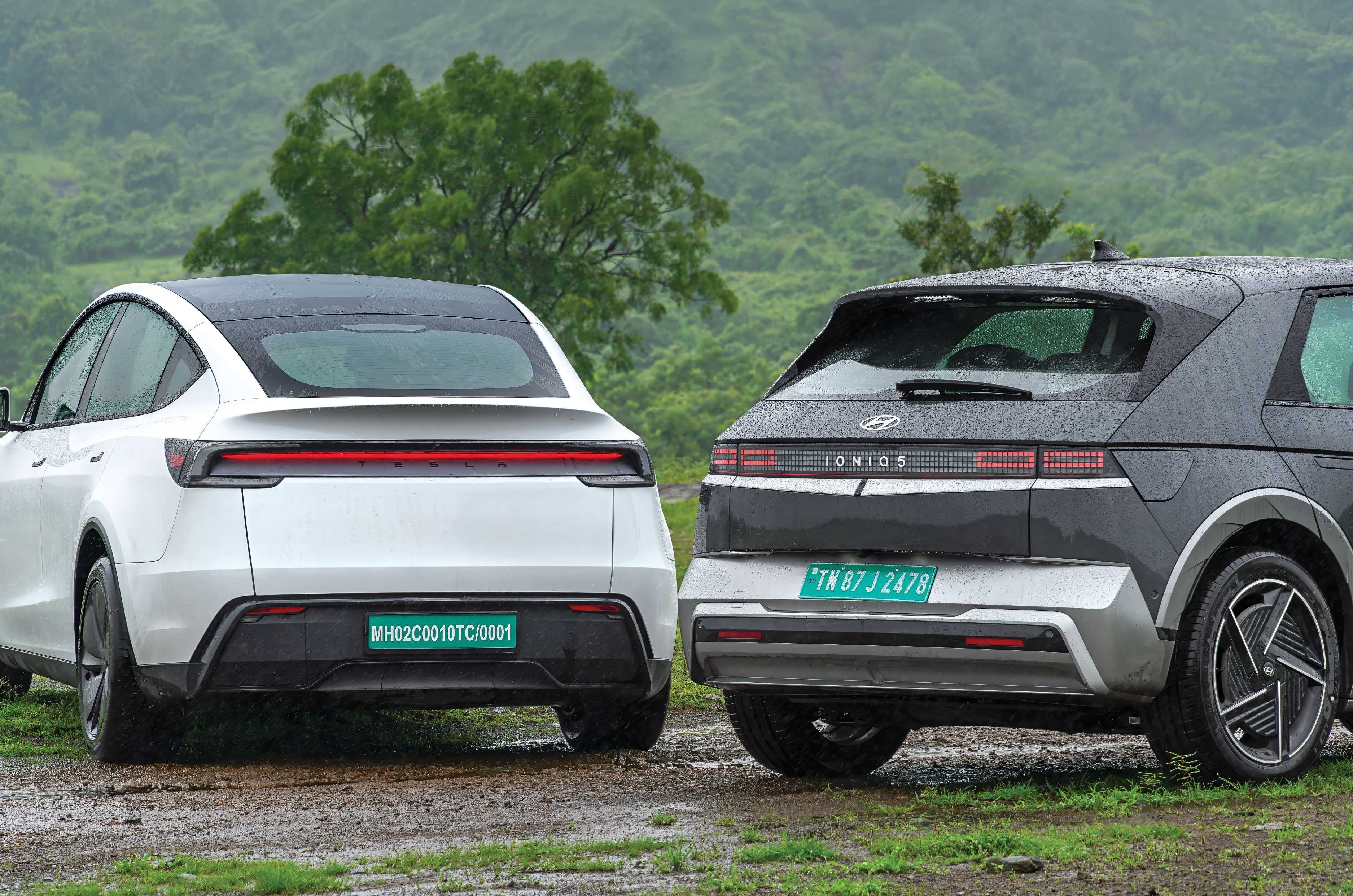
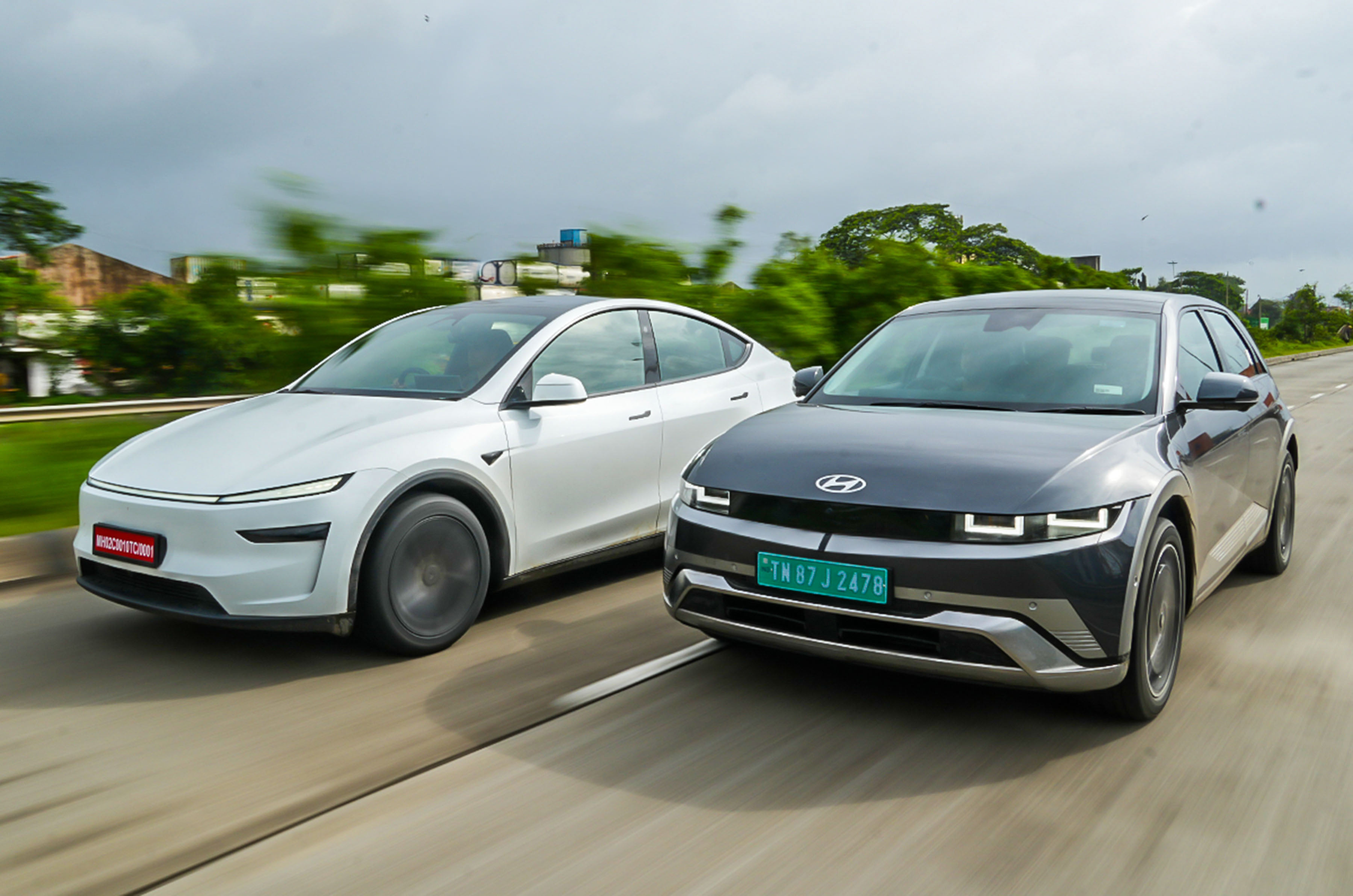
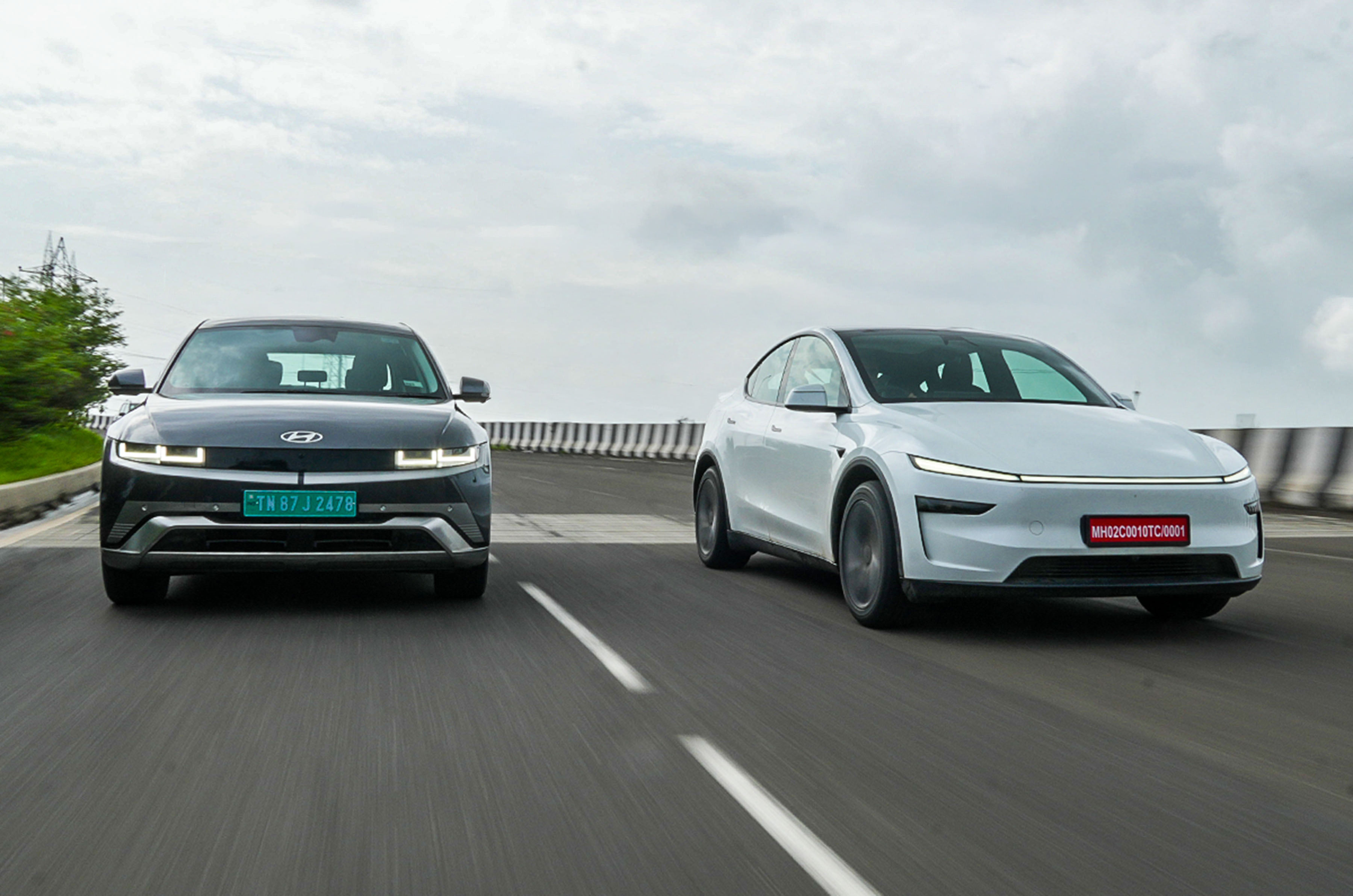
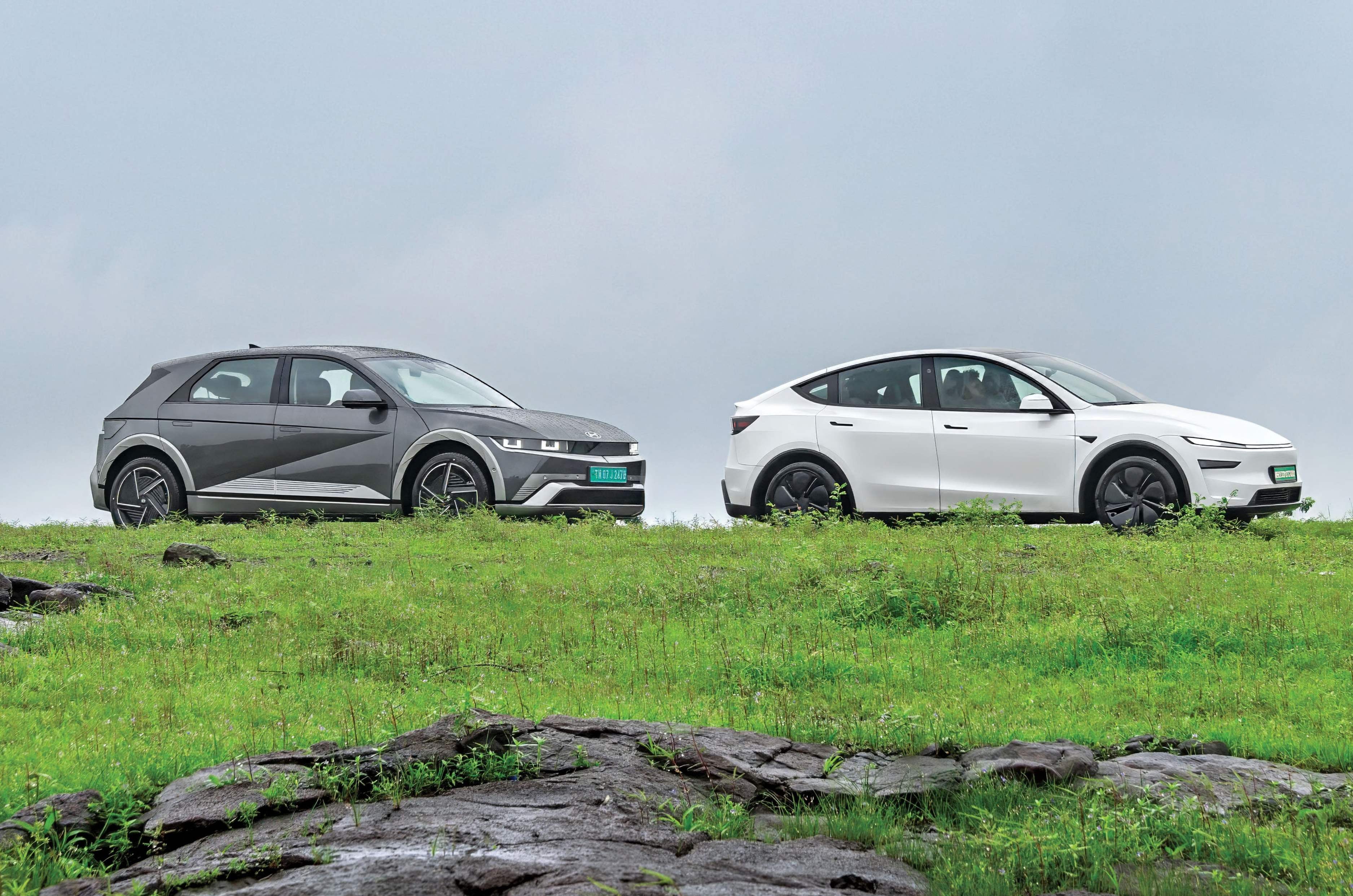
The Tesla Model Y is the larger vehicle overall, although the Hyundai counters with a longer wheelbase. Neither car follows a traditional SUV or sedan template, with muscular proportions and aggressive styling, but the Ioniq 5 stands out with its retro-futuristic design language, blending hatchback and crossover cues into a shape that is both distinctive and characterful. That said, its styling will continue to divide opinion.

The Tesla, by comparison, plays it a little safer. It too wears a crossover body style, but with a minimalist design that is unlikely to offend anyone. Frameless windows and a unique tail-lamp treatment with a hidden light bar add some flair to its otherwise fuss-free styling. 

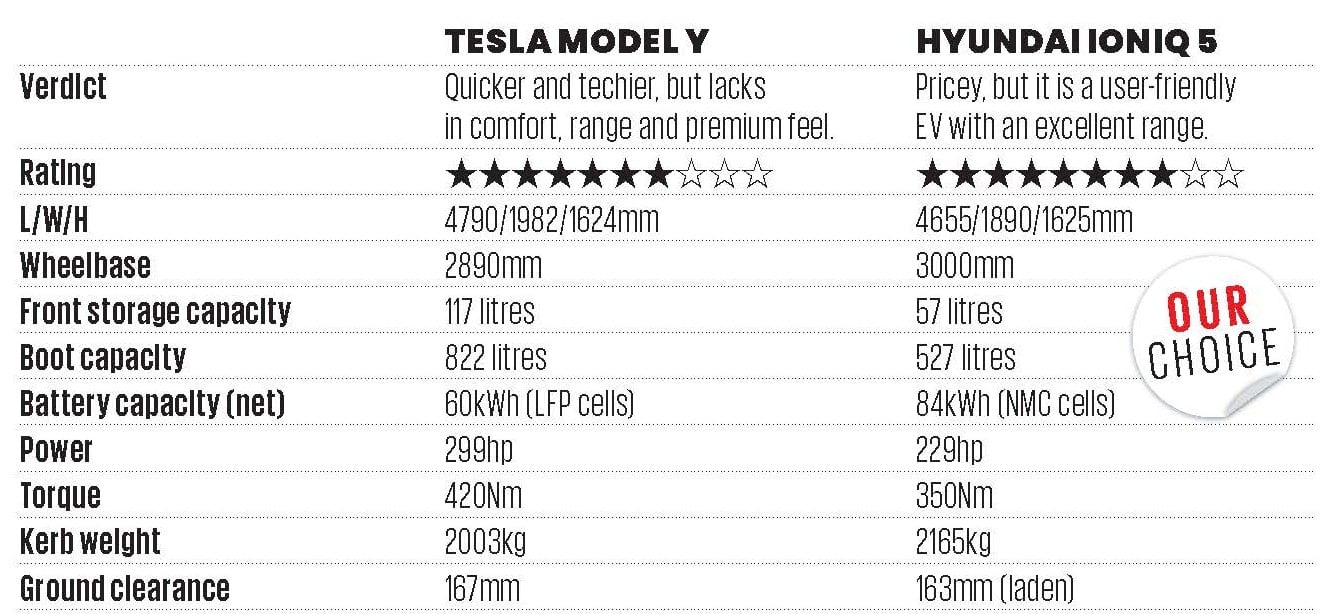
It’s worth noting that Tesla lists ground clearance at 167mm (unladen), while the Ioniq’s figure is specified as laden, coming in at 163mm. In the real world, the Tesla occasionally scrapes over unusually large speed breakers, while the Hyundai clears most of them despite its longer wheelbase.

Tesla Model Y vs Hyundai Ioniq 5: Interior and features

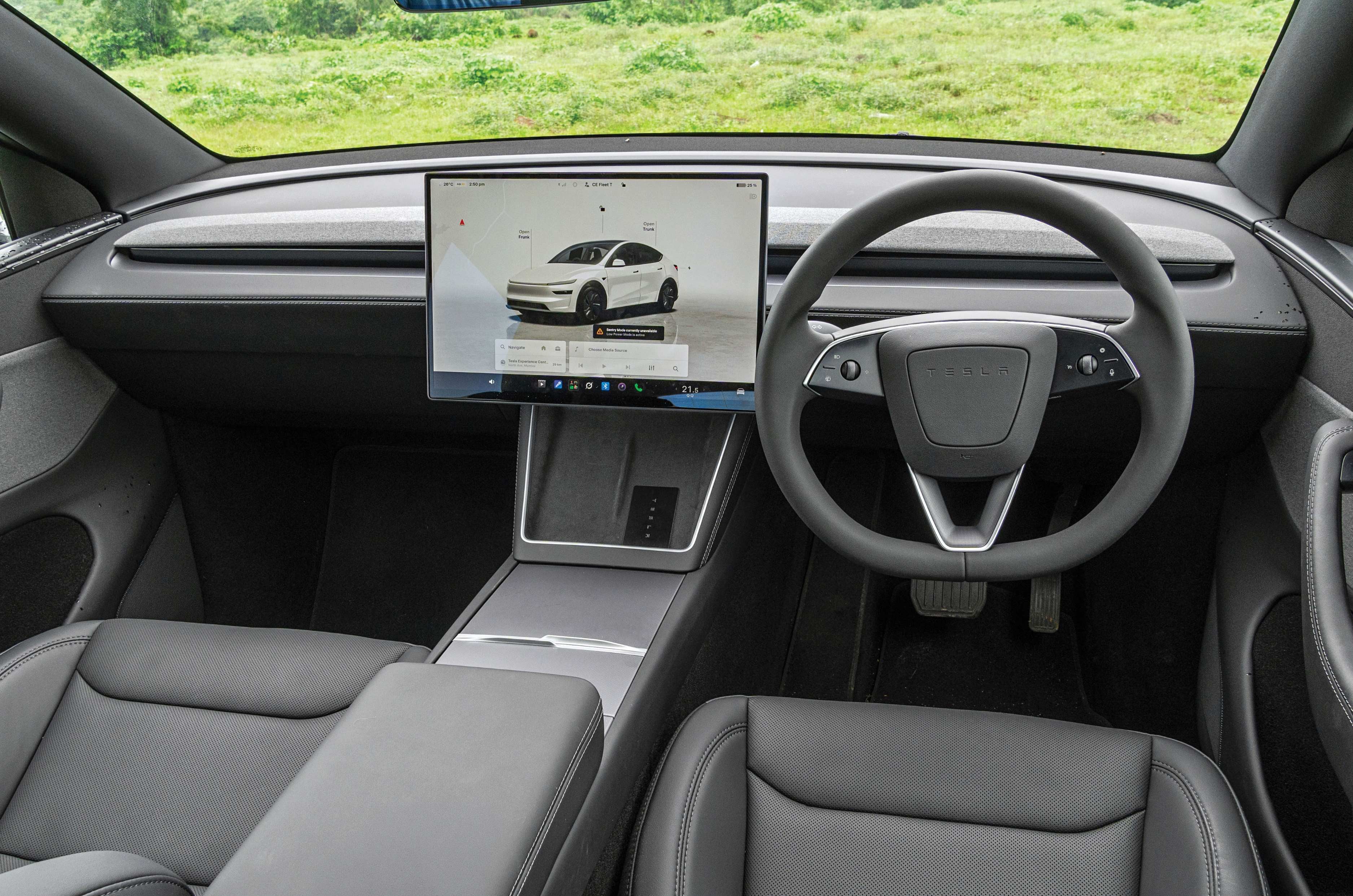
Takes minimalism to a whole different level, with merely a handful of physical controls. Lack of design elements, vegan materials don’t feel special.

Tesla’s non-motorised flush door handles remain a usability frustration, requiring an awkward push-and-pull action to operate. On the inside, the Model Y’s cabin embraces minimalism to an even greater extent. Even the air vents are hidden. The lack of design elements looks clean, but this and the choice of materials diminish the sense of occasion one expects at this price point.

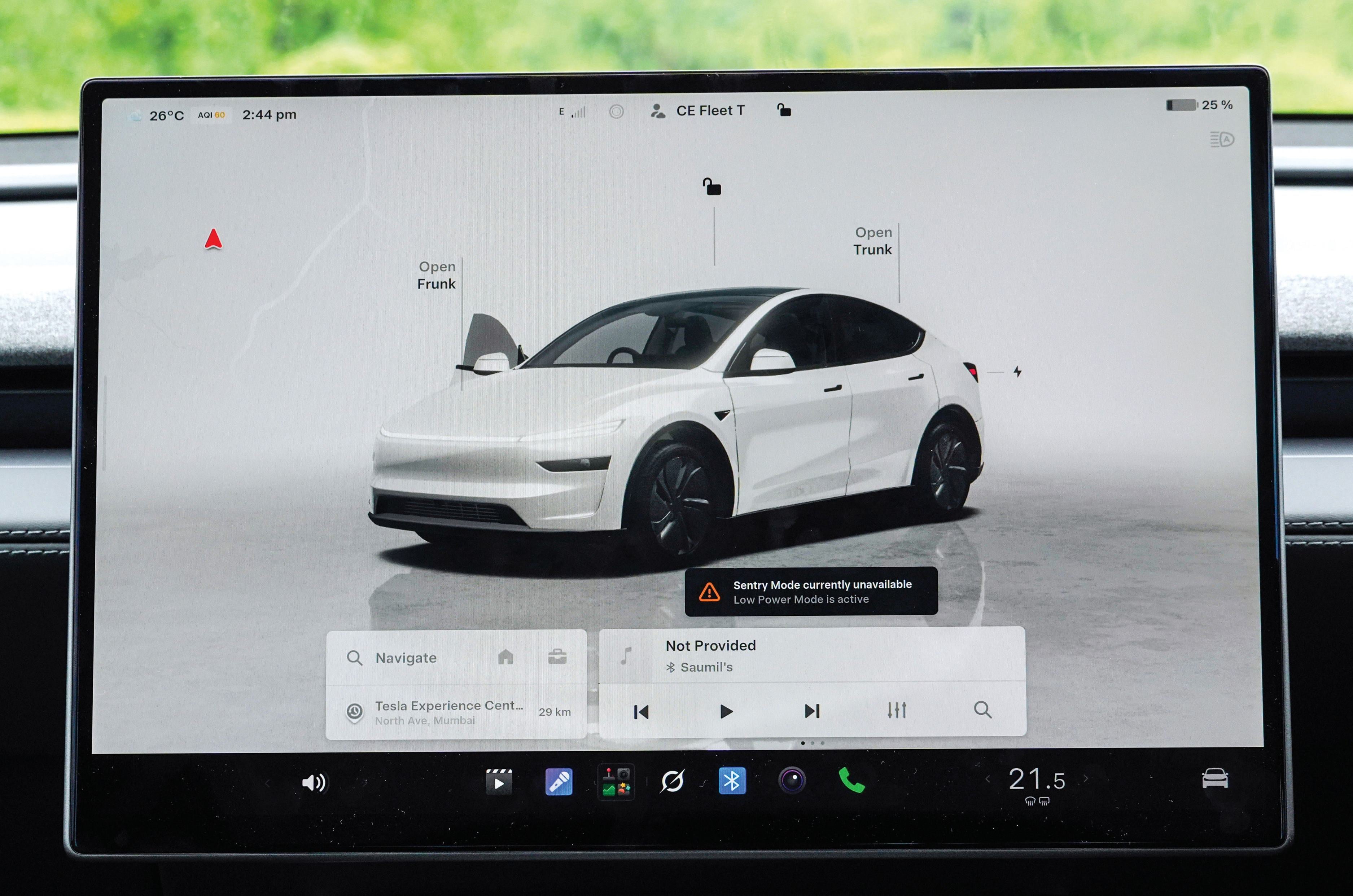
All functions are relegated to its slick screen.

Taking centre stage, quite literally, is a massive touchscreen. Nearly every function is controlled via the screen, including controls for the frunk, tailgate, glovebox, climate control, seats and steering, and mirror adjustments, among many others. This over-reliance on the touchscreen is daunting at first, but Tesla’s software experience is exceptional. The interface remains the benchmark for responsiveness, fluidity and overall usability.

The steering wheel features multi-function controls that take some time to get accustomed to. The high-beam flasher is integrated into the steering wheel too. Thankfully, the indicators and power-window switches remain physical controls. The lack of buttons might seem futuristic, but it often feels as though technology has taken precedence over usability. There are two charging pads, and below them sits an unusually bulky centre console that robs the cabin of some of its sense of space. Hampering usability further is the exceptionally deep storage area, which requires you to stretch to reach items placed inside.

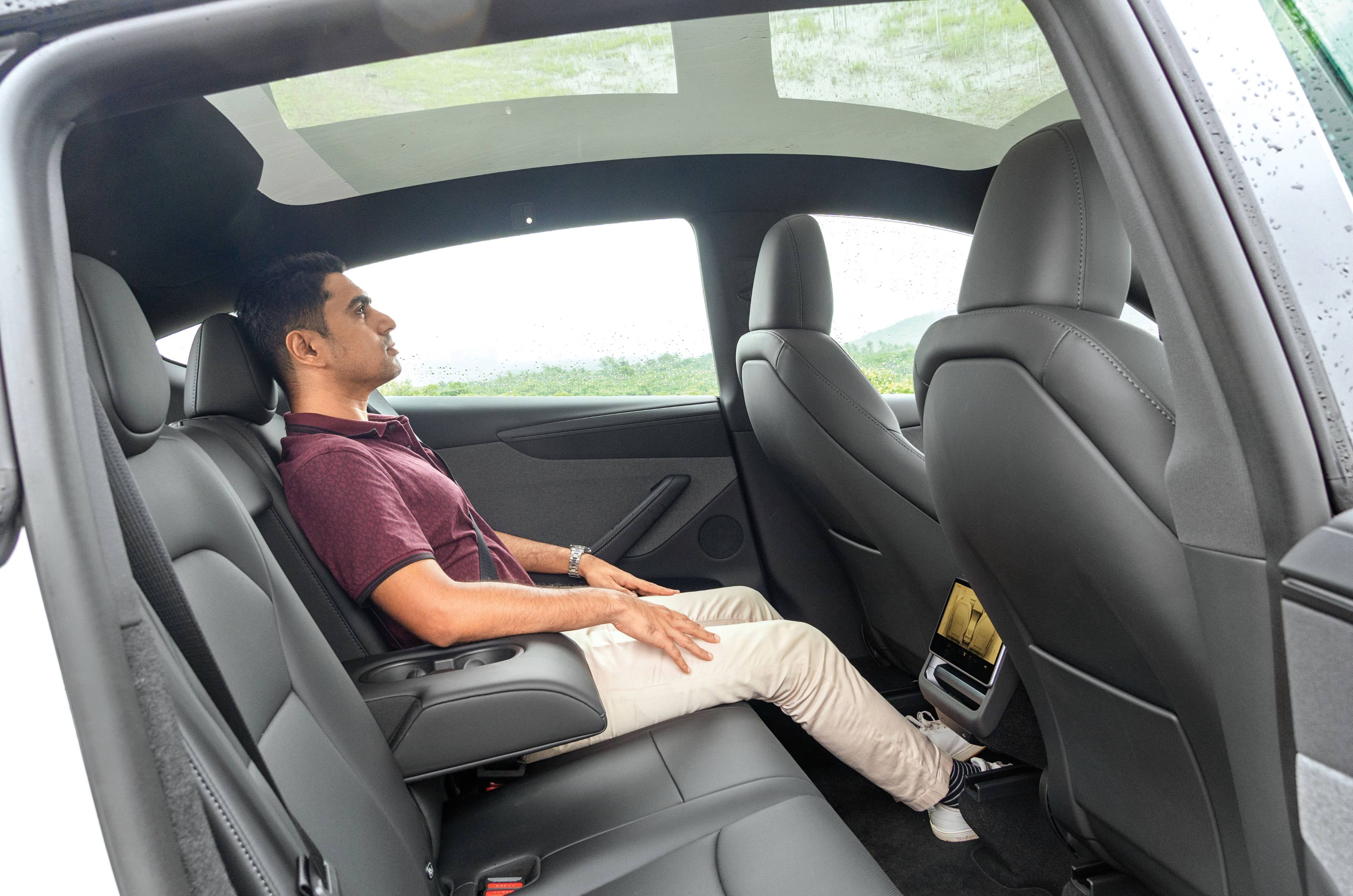
Albeit a bit low-set, this space feels airy thanks to its low window line.

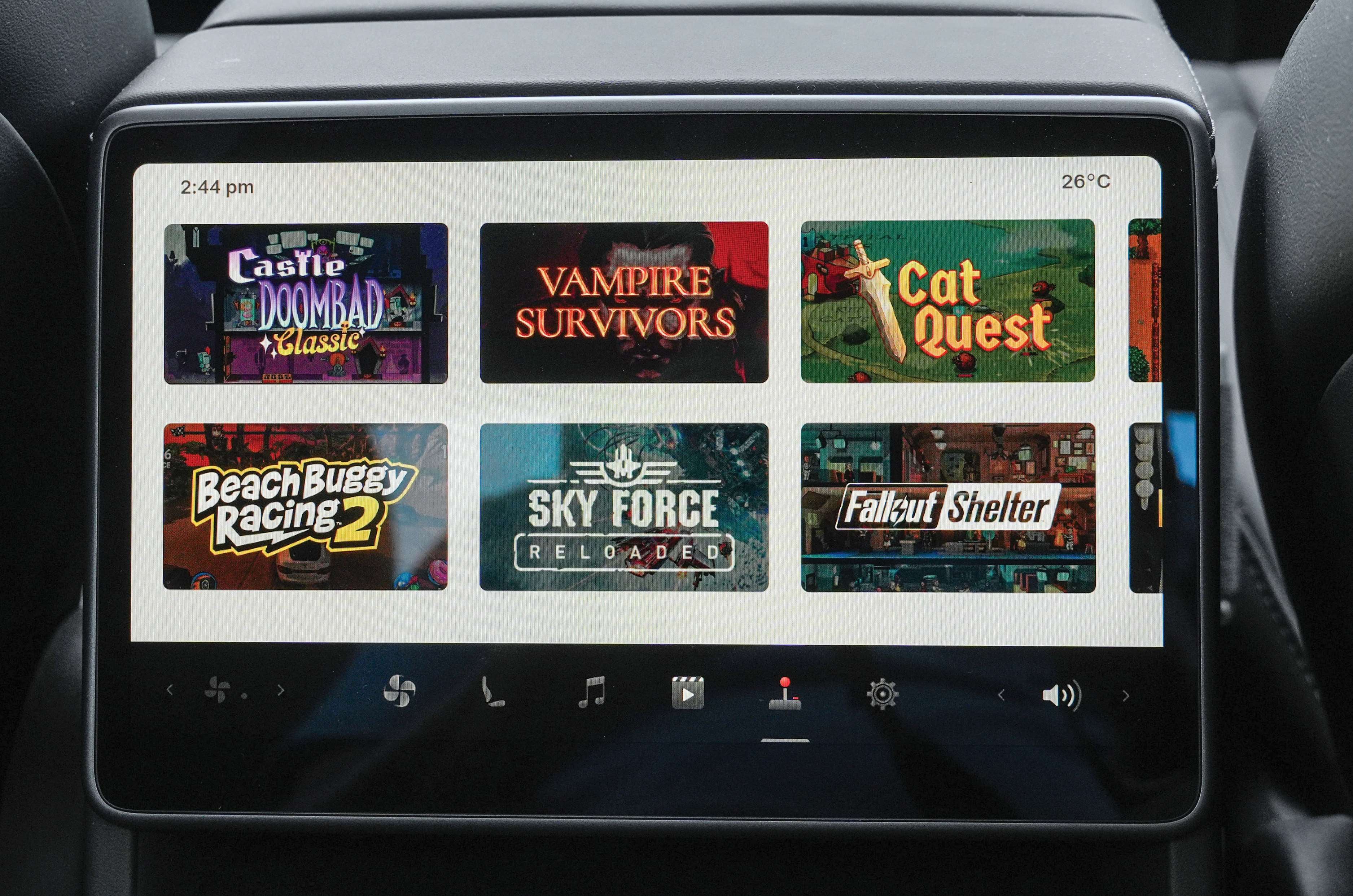
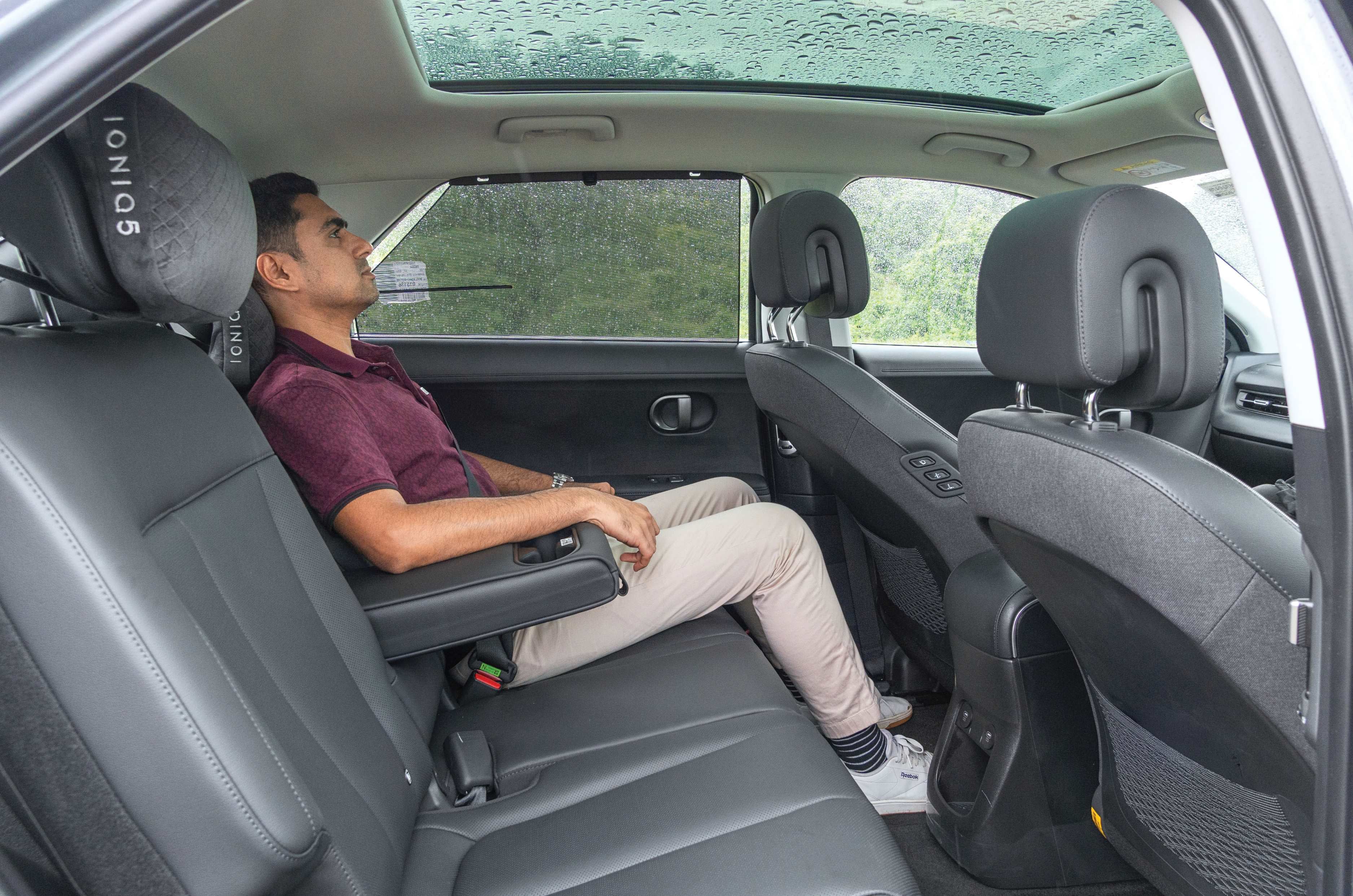
The front seats look simple and are surprisingly comfortable, with heating and ventilation functions. The rear seat is equally comfortable, although the seating position is somewhat low, resulting in a knees-up posture. What’s nice is that the backrest reclines to a comfortable angle. Rear-seat passengers are also treated to a dedicated touchscreen capable of controlling climate functions, streaming content and even gaming.

Rear screen for controls, games and videos.

One major drawback is that the sunroof still lacks a dedicated sunshade, causing the cabin to heat up considerably under the afternoon sun. The rear windows also miss out on sunshades.

More suited to our conditions, the black interiors are well-finished. It gets full marks as far as storage, ergonomics and usability goes.

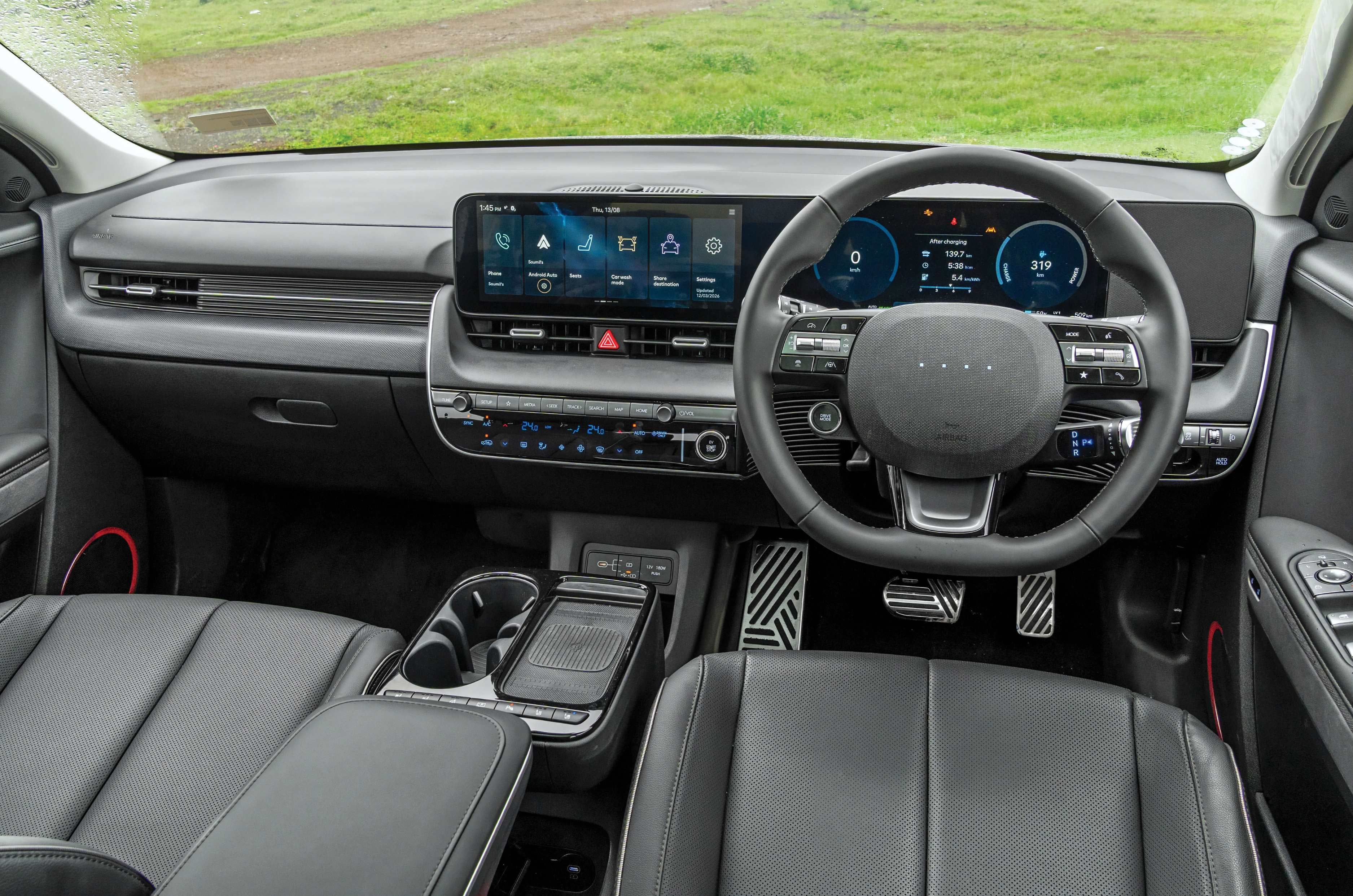
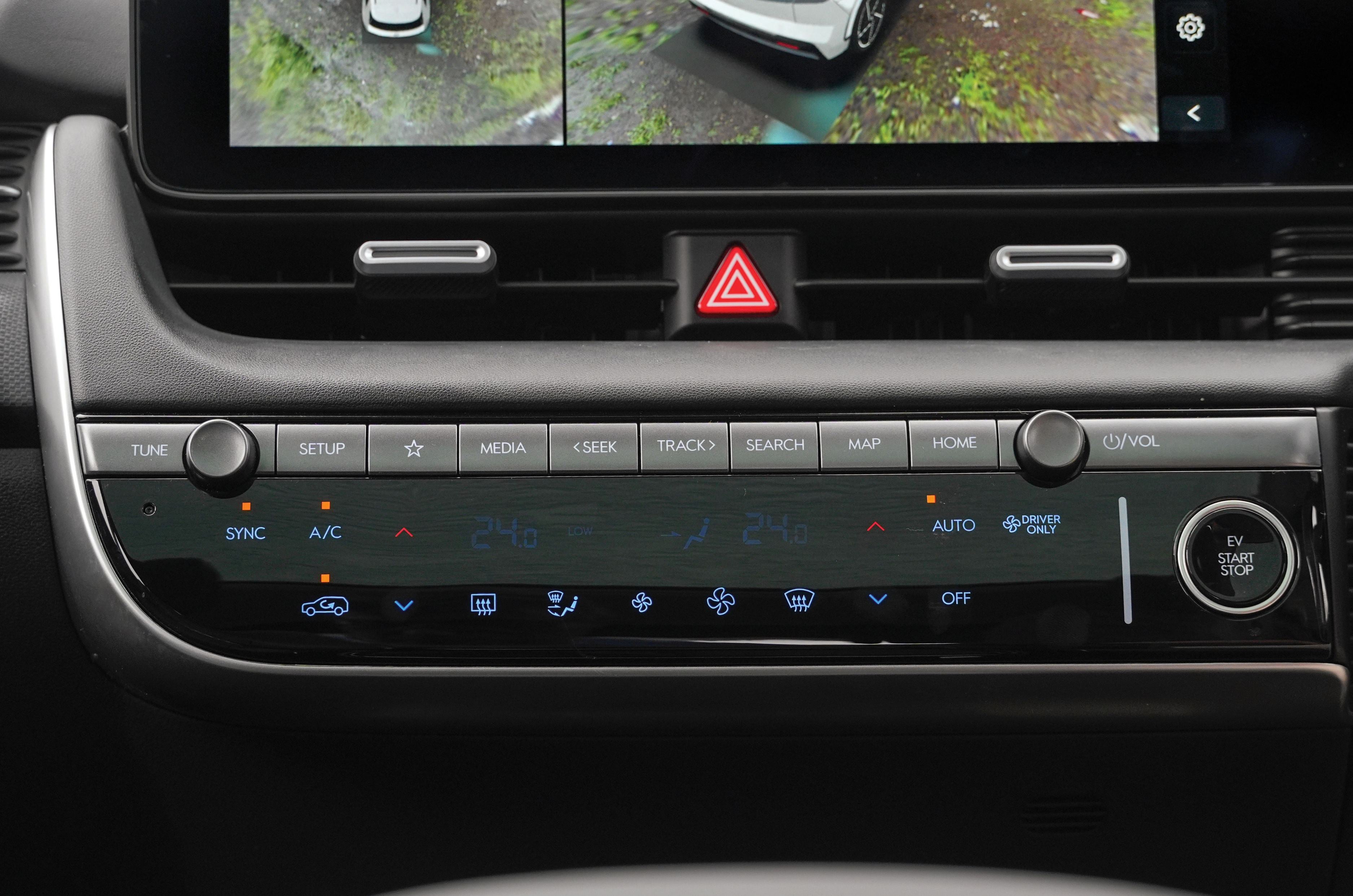
The Ioniq 5’s interior takes a more balanced, user-friendly approach. Not only does it get motorised pop-out door handles, but its cabin also combines touch-sensitive controls with physical buttons and knobs, creating an environment that feels intuitive from the moment you step in.

Thankfully, it retains physical controls.

Material quality is impressive, and where the Hyundai truly excels is in comfort and practicality. Storage areas are thoughtfully integrated throughout the cabin, and the sense of space is outstanding, making the Ioniq 5 particularly easy to live with.

Slide, recline, boss function and sunshades mean a better rear experience.

The front seats are broader and more comfortable, with extensive adjustment, including an ottoman-style leg support. Both front seats can be set up in a ‘zero-gravity’ position, where your back is reclined and legs lifted on the ottoman, making it very comfy. Plus, you can have the seats cooled or heated too, which adds to the relaxing experience. Rear-seat comfort is equally impressive, thanks to a bench that both slides and reclines. While it doesn’t get a dedicated rear screen like the Tesla, it does offer window sunshades and a 3-pin socket to power larger electronic devices.

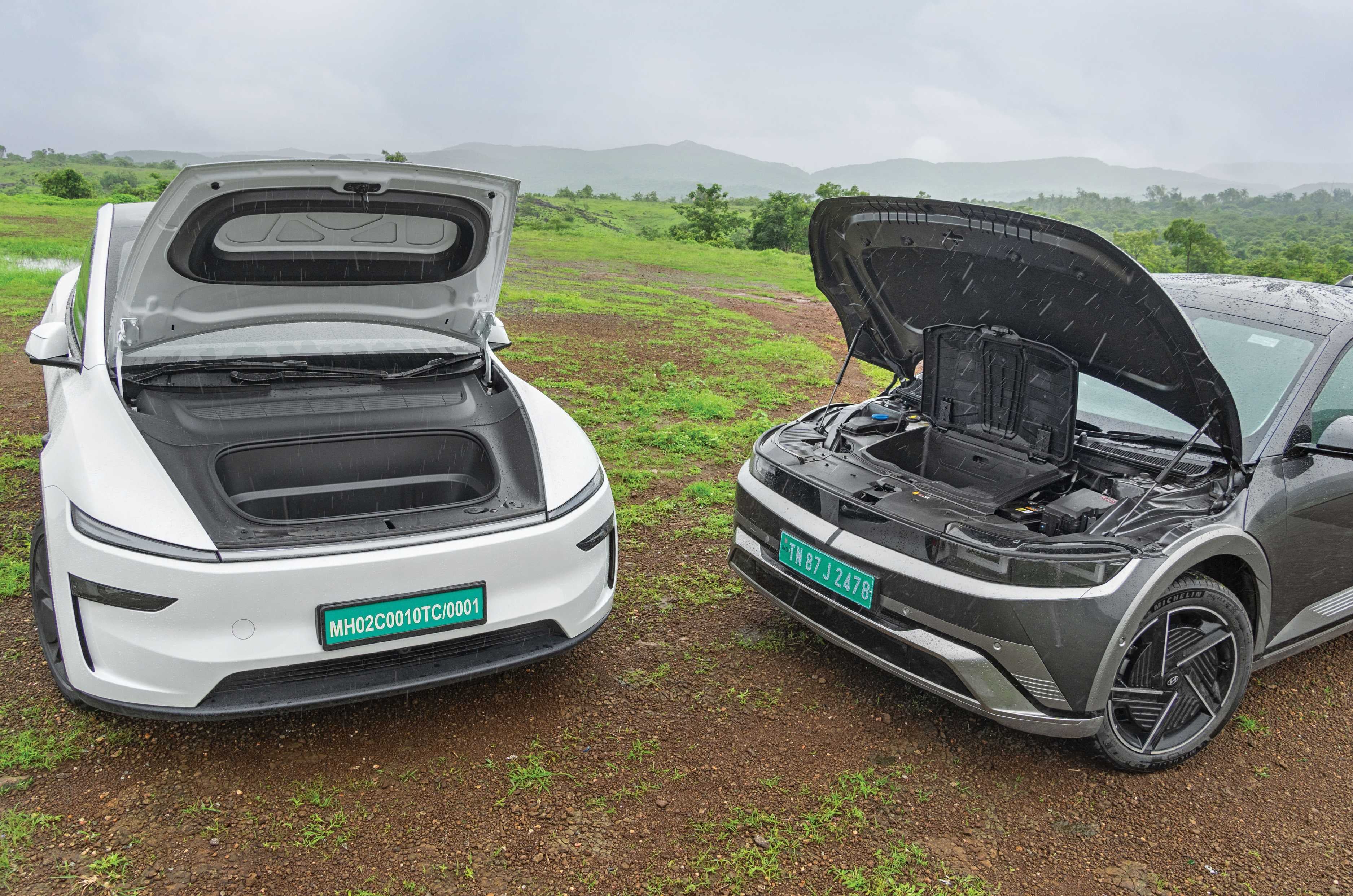
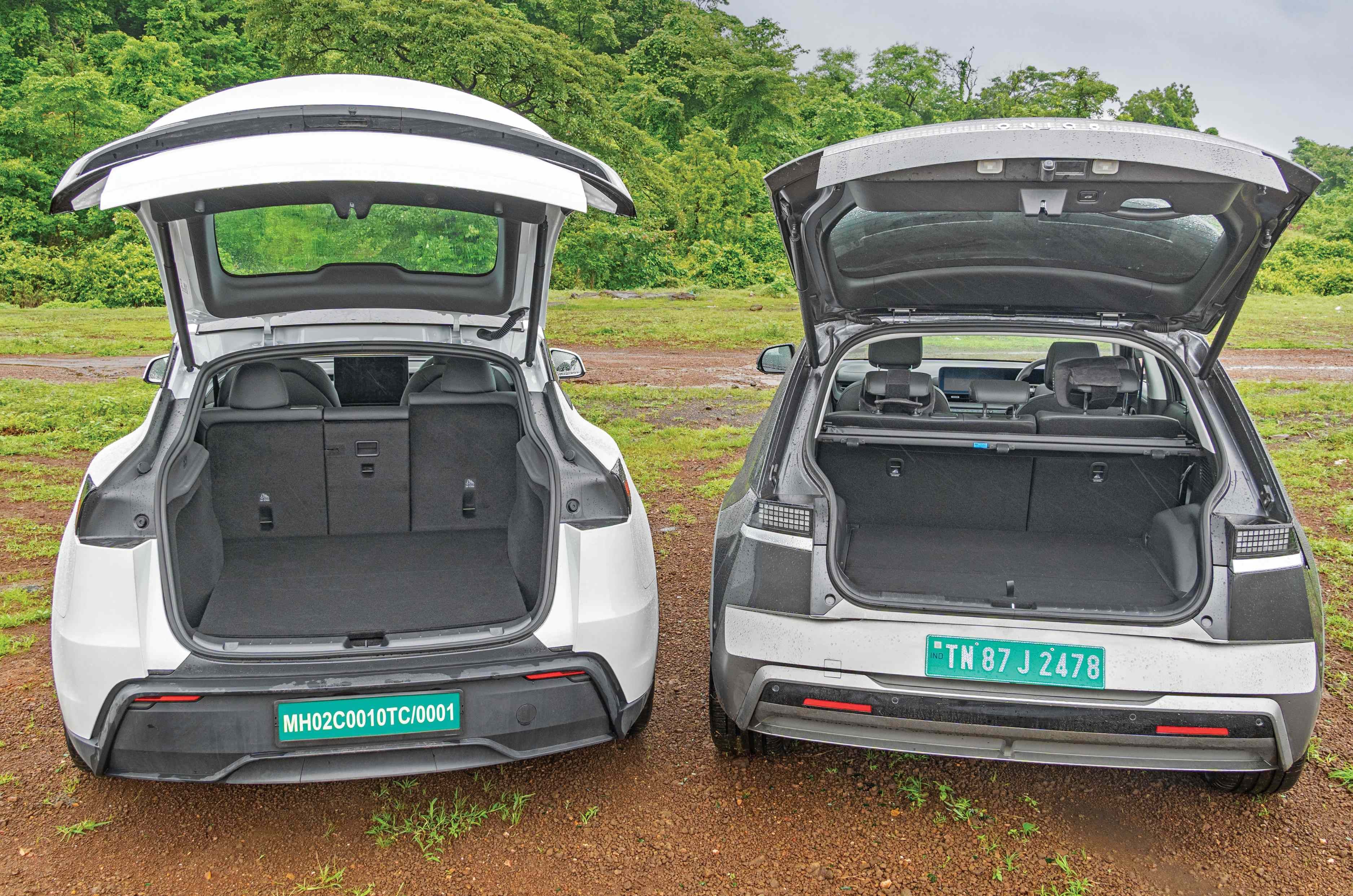
Along with a larger boot, the Tesla gets substantial underfloor storage.

The Tesla regains some lost ground when it comes to luggage-carrying capacity. Its front luggage compartment is broader and deeper than the Ioniq’s, and its boot is more spacious too. Additionally, it offers even more storage space beneath the boot floor. The Ioniq 5, on the other hand, not only falls a bit short in outright boot capacity, but also has a relatively higher loading lip, making it slightly more challenging to load heavy luggage.

The Model Y has a deeper and wider front-loading area than the Hyundai.

Tesla Model Y vs Hyundai Ioniq 5: Powertrain and performance

Hyundai has increased the battery size from 72.6kWh to 84kWh (gross capacity) while continuing to use Nickel Manganese Cobalt (NMC) cell chemistry. This feeds a 229hp/350Nm rear-mounted motor, which is 12hp more than before. However, the larger battery has pushed kerb weight up to 2,165kg, which is 150kg more than the outgoing version.


In contrast, the Model Y uses a 64kWh (gross capacity) battery with Lithium Ferrous Phosphate (LFP) cell chemistry, powering a 299hp/420Nm rear-mounted electric motor. While it is significantly more powerful, the Tesla is also 162kg lighter. As a result, its performance feels considerably stronger. It feels quicker off the line, accelerates harder and responds more eagerly to throttle inputs than the Hyundai. 

Tesla keeps things simple with just two drive modes: Standard and Chill, the latter serving as an economy setting. Impressively, Chill mode remains highly usable and, despite being toned down, still accelerates as strongly as the Hyundai in its sportiest setting.

Tesla Model Y vs Hyundai Ioniq 5: Acceleration test (in seconds)


Tesla Model Y

Hyundai Ioniq 5

20kph

1.29

1.31

40kph

2.33

2.66

60kph

3.48

4.05

80kph

4.69

5.71

100kph

6.19

7.97

120kph

8.23

10.83

140kph

10.78

14.63

160kph

14

20.27

To put its performance into perspective, the Model Y accelerates from 0-100kph in just 6.19 seconds in Standard mode and reaches its 203kph top speed in roughly 25 seconds. Even in Chill mode, it completes the 0-100kph run in a respectable 8.25 seconds, just 0.28 seconds slower than the Ioniq 5. More interestingly, the Tesla reaches 160kph in 18.58 seconds, making it 1.6 seconds quicker to the mark.

Tesla Model Y vs Hyundai Ioniq 5: Regenerative braking distance (80-20kph)


Tesla Model Y

Hyundai Ioniq 5

Strongest

116.71m (Standard)

136.45m (i-Pedal)

Weakest

223.55m (Reduced)

391.50m (Level 1)

In the Model Y, regenerative braking has just two modes – Standard and Reduced – and the retardation is seamless, though quite strong when you lift off the accelerator. Notably, Standard mode generates stronger deceleration than the Ioniq 5 in its most aggressive single-pedal setting. And while both cars support true one-pedal driving, the Tesla’s implementation feels more natural and intuitive. The Ioniq, though, with its multiple levels, can be set up to have retardation feel more ICE-like and thus very familiar.


Turning our attention to the Hyundai Ioniq 5, it may not dominate traffic-light drag races, but the good news is that power delivery is exceptionally smooth, and the overall driving experience feels highly refined. It offers multiple drive modes that alter part-throttle responses, steering feel and brake-pedal feel, although outright acceleration remains largely unchanged between them.

In general, the Ioniq 5’s cabin feels slightly more hushed than the Model Y’s, with a quieter motor and lower levels of road and tyre noise. Notably, though, the Tesla’s frontal sound insulation is exceptional – from inside the cabin, you would swear its horn is rather meek, but we assure you, that isn’t the case.

Tesla Model Y vs Hyundai Ioniq 5: Ride and handling 

The Model Y is quicker, but the Ioniq 5 betters it on range and fast-charging speed.

On the move, the Model Y inspires confidence. High-speed stability is excellent, and it changes direction with greater eagerness compared to the Ioniq. The small-diameter steering wheel offers different weight settings, but even its lightest mode feels substantial; it isn’t that light, one-finger-twirl setup and does come across as heavy. Ride comfort also doesn’t feel particularly plush. The suspension is quite firm and thuds noticeably over potholes and broken surfaces, making it less suited to rough Indian roads.

The Ioniq 5 takes a different approach. It feels far more comfortable and user-friendly, thanks to lighter steering and a softer suspension that, despite its 20-inch alloy wheels, absorbs road imperfections with much greater composure than the Tesla. The result is a more relaxed and comfortable driving experience. Sure, it doesn’t feel as sporty while changing direction and can feel a touch floaty at higher speeds, but that is a compromise many buyers will gladly accept for its low-speed pliancy and overall comfort.

Tesla Model Y vs Hyundai Ioniq 5: Range and efficiency

For our real-world range test, we ran the Hyundai Ioniq 5 in Eco mode and the Model Y in Chill mode, with the former’s regenerative braking set to Level 2 in the city and Level 1 on the highway, and the latter’s set to Standard in the city and Reduced on the highway.

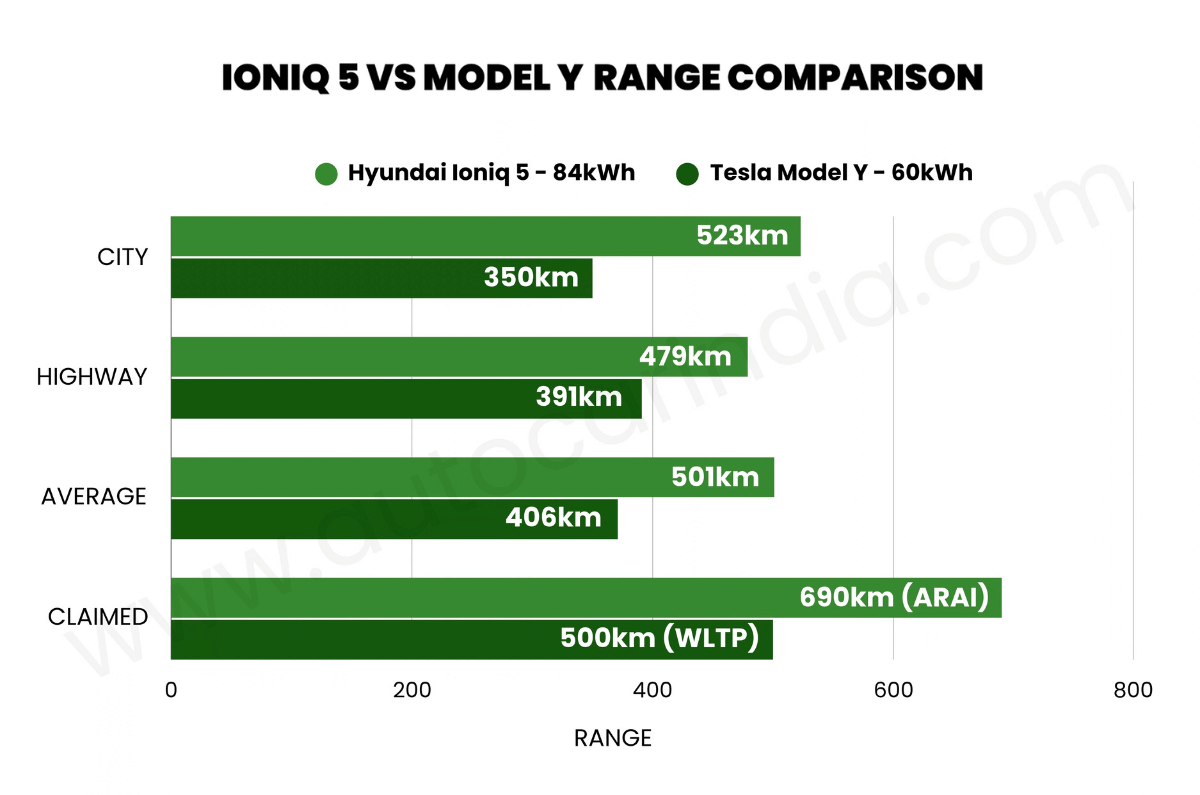
As far as efficiency goes, the Ioniq 5 was more efficient in the city, delivering 6.22km/kWh, while the Model Y managed 5.84km/kWh. On the highway, the Tesla’s superior aerodynamics yielded 6.52km/kWh, whereas the Ioniq 5 managed 5.71km/kWh. However, thanks to Hyundai’s substantially larger battery, its overall average range extrapolates to 501km, comfortably ahead of the Tesla’s 371km.

Tesla Model Y vs Hyundai Ioniq 5: Real-world range and efficiency 


Tesla Model Y

Hyundai Ioniq 5

Claimed range

500km

690km

City range

350km

523km

City efficiency

5.84km/kWh

6.22km/kWh

Highway range

391km

479km

Highway efficiency

6.52km/kWh

5.71km/kWh

Average range

371km

501km

Average efficiency

6.18km/kWh

5.96km/kWh

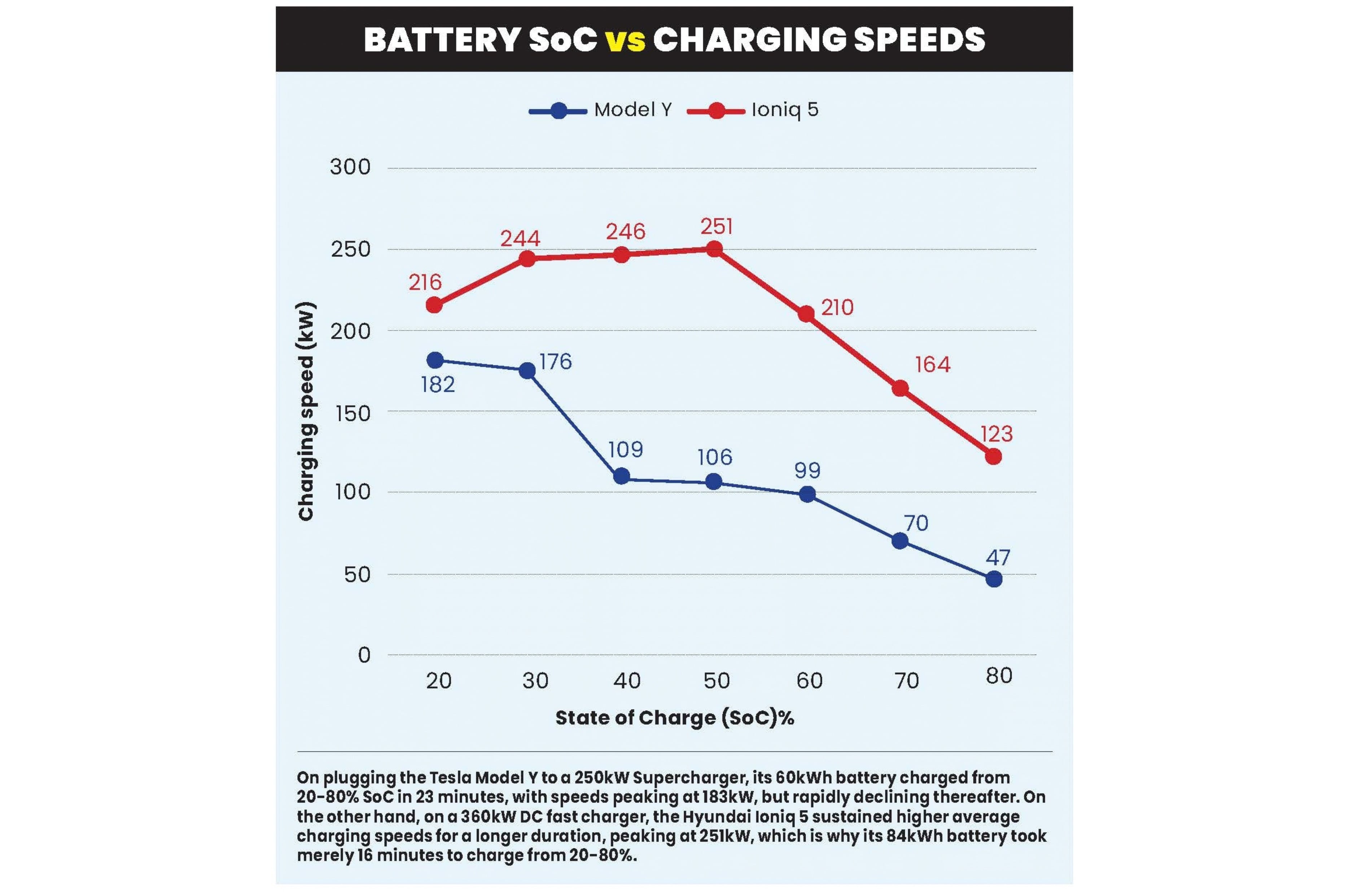
As for charging performance, we plugged the Model Y into a 250kW Tesla Supercharger, where it achieved peak charging speeds of 183kW. However, the Model Y does not sustain such high speeds for long, and its 60kWh battery is charged from 20-80 percent SoC in 23 minutes. From there, it took an additional 30 minutes to reach a full charge.

The Hyundai Ioniq 5 performs even better. Connected to a 360kW DC fast charger, its 800V electrical architecture enabled it to consistently maintain higher average charging speeds, peaking at 251kW. As a result, its 84kWh battery charged from 20-80 percent SoC in just 16 minutes. Like the Tesla, however, it required an additional 33 minutes to charge from 80 percent to full.

Tesla Model Y vs Hyundai Ioniq 5: Verdict

The Ioniq 5 no longer offers the value it once did. The Model Y, however, does.

The Tesla Model Y makes a compelling case for itself. It is quicker, more technologically advanced and backed by software that remains among the best in the automotive world. Crucially, it is now the more affordable option, making it a very tempting proposition. However, its over-reliance on the touchscreen, heavy steering, a firm low-speed ride and limited range due to the smaller battery count against it.

In comparison, the Hyundai Ioniq 5 remains the more rounded package. Its superior ride comfort, more intuitive cabin, significantly longer real-world range and impressive charging performance give it a clear edge where it matters most. More importantly, it feels better adapted to Indian roads and daily usage, thanks to its lighter steering and more comfortable ride.

At current prices, though, the Hyundai no longer holds the value card, nor does the brand command the same equity or snob value as some similarly priced rivals. But judged purely on its merits, the Hyundai Ioniq 5 continues to be the best all-round EV at this price point and thus gets our vote.

Honda City petrol CVT real world mileage tested, explained

Honda City petrol CVT real world mileage tested, explained
Honda City CVT real-world mileage tested

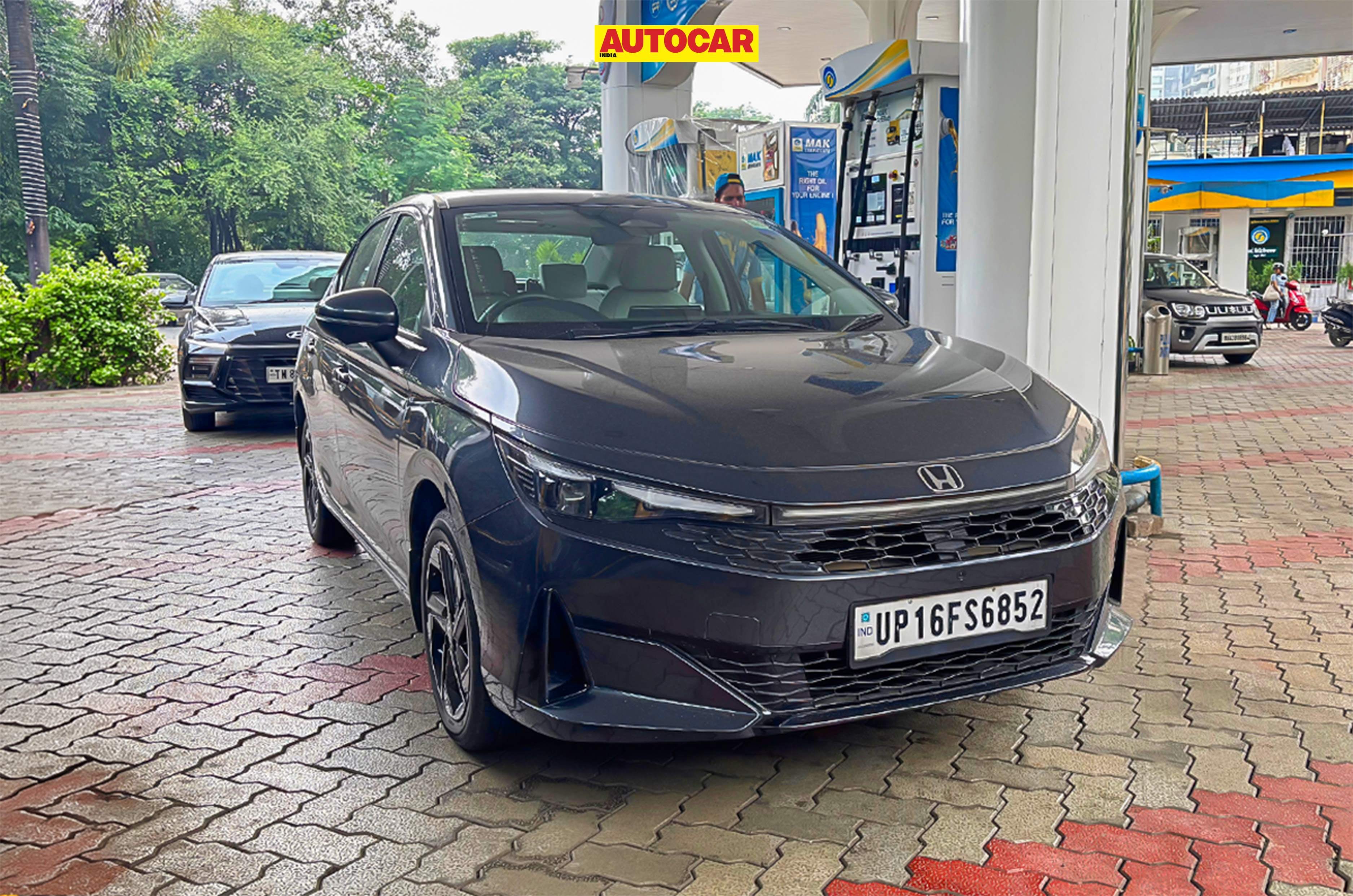
The fifth-generation Honda City received its second facelift in 2026 with a sleeker front design and some feature additions, while the powertrain options remain unchanged. It is still available with a 1.5-litre naturally aspirated petrol engine that can be had with either a 6-speed manual or a CVT automatic transmission, and then there’s a more efficient and powerful strong hybrid powertrain.

We’ve now subjected the Honda City petrol paired with the CVT through our efficiency tests to see how it fares.

  1. No auto stop-start feature 

  2. Weighs 1,168kg

  3. Claimed efficiency of 17.97kpl (CVT)

Honda City petrol CVT real-world fuel efficiency explained

The Honda City is powered by a 1.5-litre, four cylinder, naturally aspirated petrol engine that produces 121hp and 145Nm, and is paired with a 7-step continuously variable transmission (CVT). We kept the sedan in its most efficient ‘ECON’ mode throughout our tests.

Honda City CVT real-world mileage graph

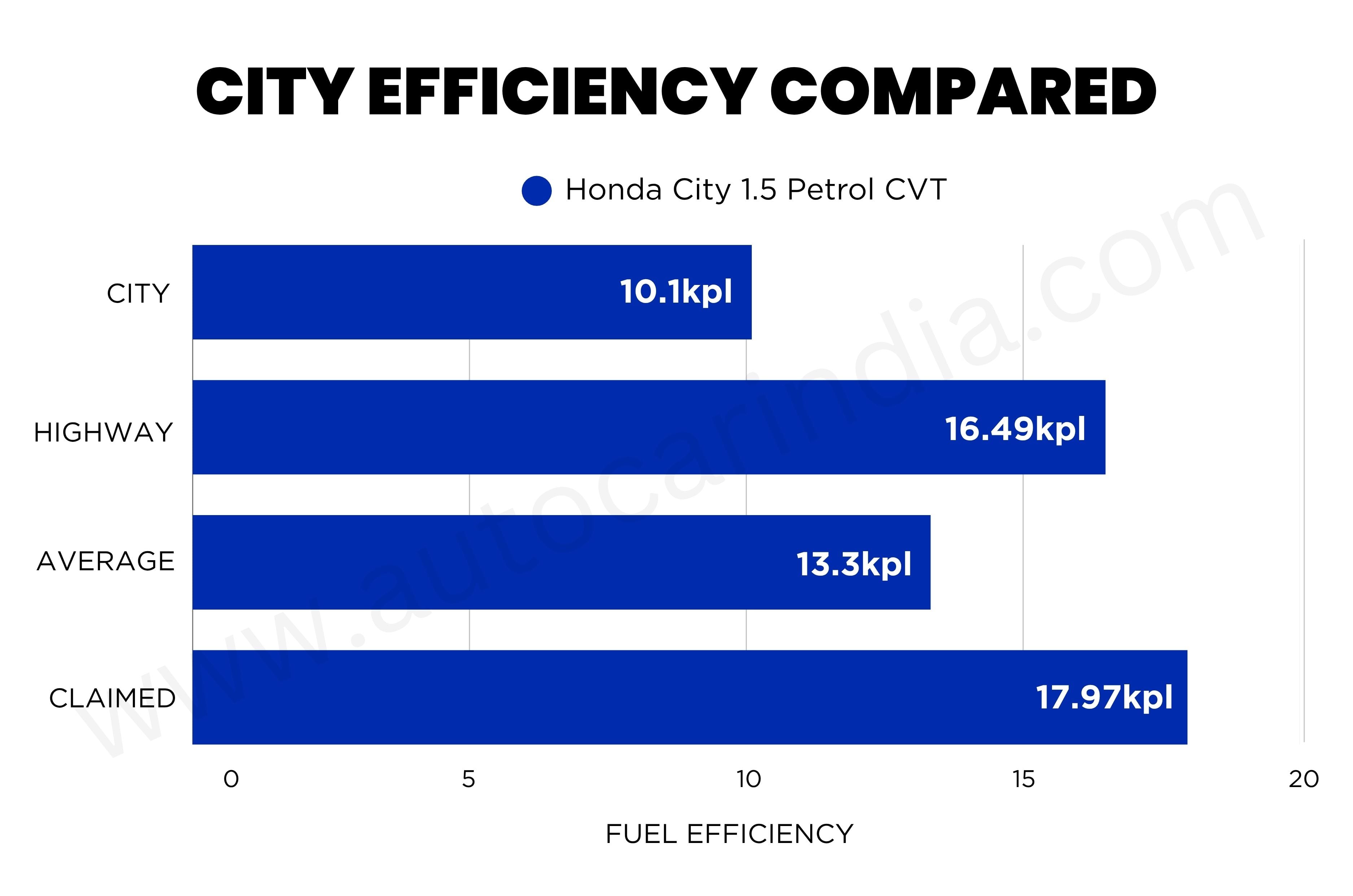
In our tests, the Honda City returned 10.1kpl and 16.49kpl in the city and on the highway, respectively. This results in an overall average fuel efficiency of 13.3kpl which translates to a real world range of 530km with the 40-litre fuel tank.

While its highway efficiency is respectable and close to the claimed 17.97kpl, an automatic stop‑start system would have further improved city efficiency. The CVT on the City also felt a bit too eager where even slight throttle inputs resulted in the engine revs going up. While this makes the car feel more responsive, it affects the overall efficiency.

Autocar India’s fuel efficiency testing

Before our real-world fuel efficiency tests, we fill our test cars’ tanks to the brim and maintain tyre pressures based on the manufacturer’s recommendation. These cars are driven in fixed city and highway loops in and around Navi Mumbai, and we maintain certain average speeds. Throughout the tests, there is only one person in each car, running the aircon at 22deg C in full-auto mode, and other electricals, such as the audio system, ventilated seats, indicators and wipers, are used when required, just like a regular user would. Periodic driver swaps further neutralise variations in driver patterns. At the end of each cycle, we calculate efficiency by filling the tanks to full again. 

Mercedes-Benz 140 Years, 140 Places odyssey: Wandering Stars

Mercedes-Benz 140 Years, 140 Places odyssey: Wandering Stars

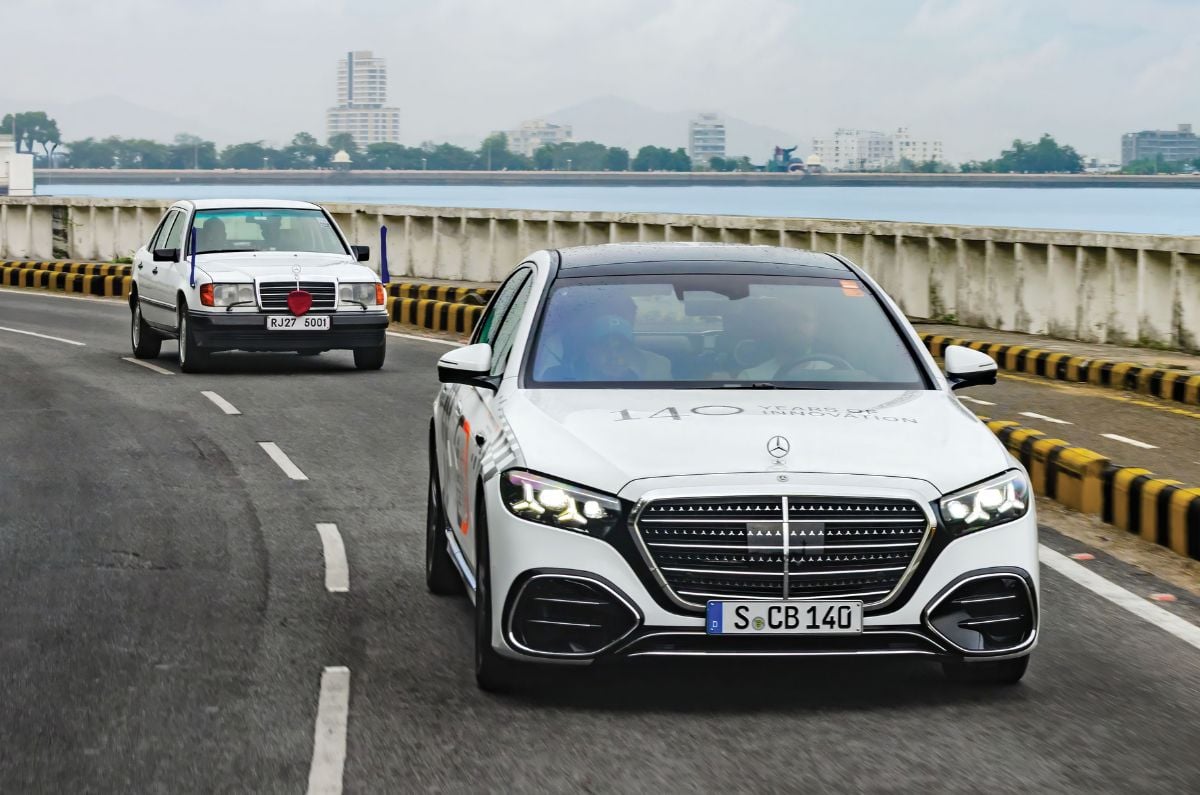
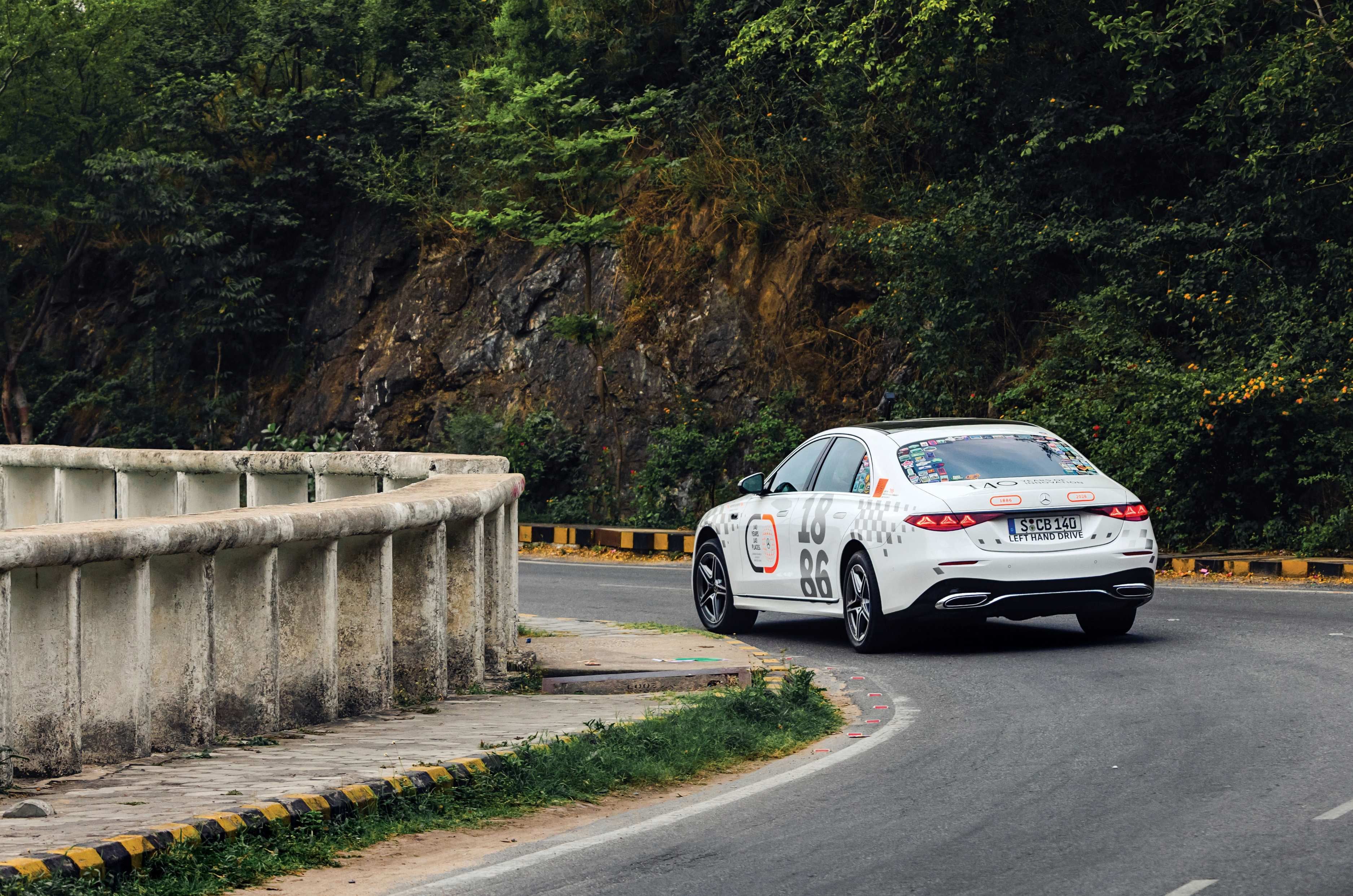
Mercedes-Benz’s 140 Years, 140 Places odyssey is a celebration of the carmaker’s origins in 1886. Spanning six continents, covering over 60,000 kilometres, it is as massive in significance as it is in scale. The tour kicked off at the Mercedes-Benz Museum in Stuttgart on the 29th of January, the same day Carl Benz received the patent for his first car 140 years ago! The cars then went to the Daimler house in Bad Cannstatt, they tracked the original route of Bertha Benz’s historic 1888 drive and drove the iconic Spa-Francorchamps racetrack in Belgium in wheel tracks of the W109 ‘Red Pig’ that made such a splash in 1971. The cars then went to the US, visiting the first plant in the US started by William Steinway (of Steinway & Sons, the famous German Piano makers), South America, Australia, Japan, Korea and Japan.

Legacy and history

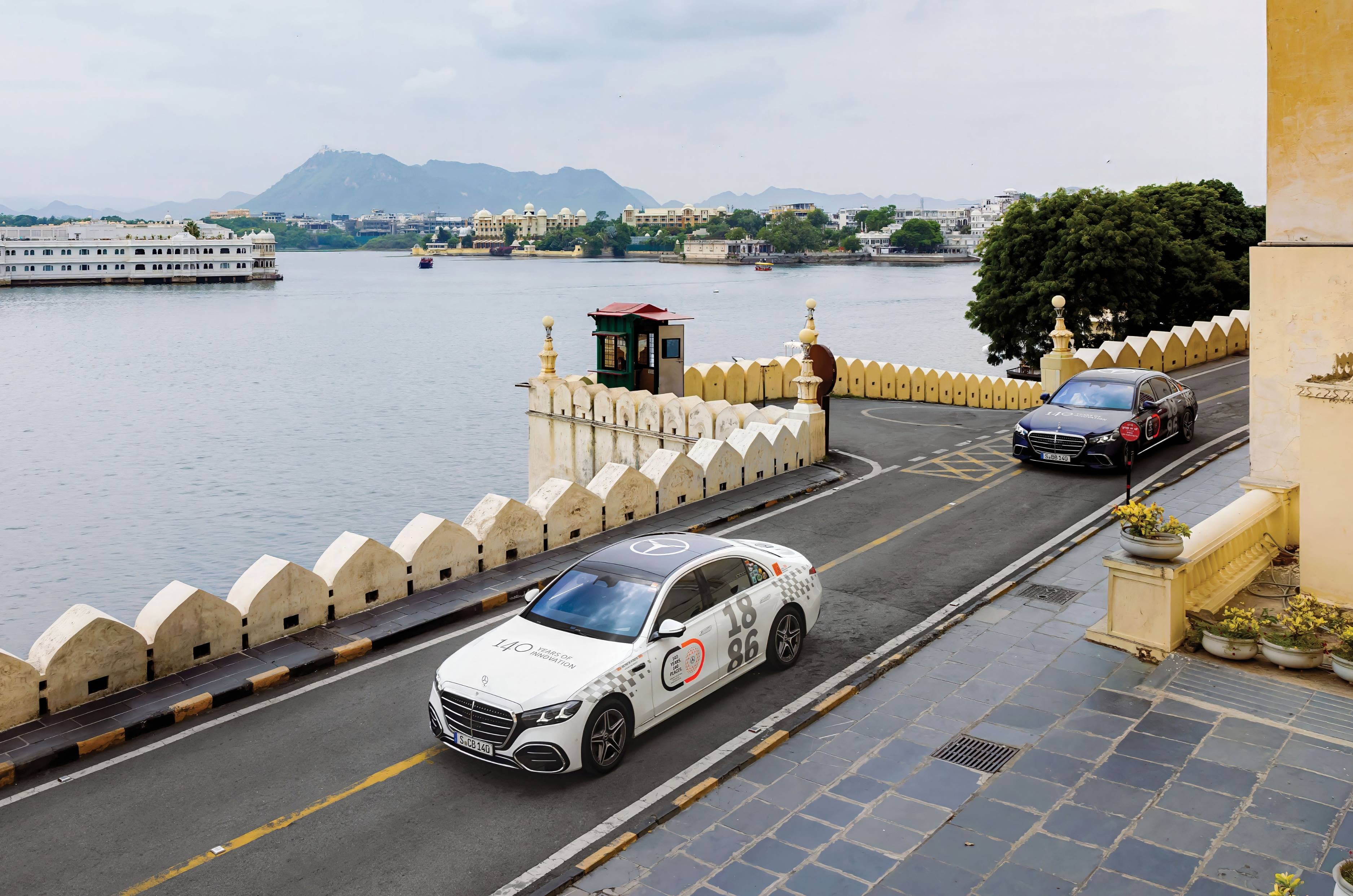
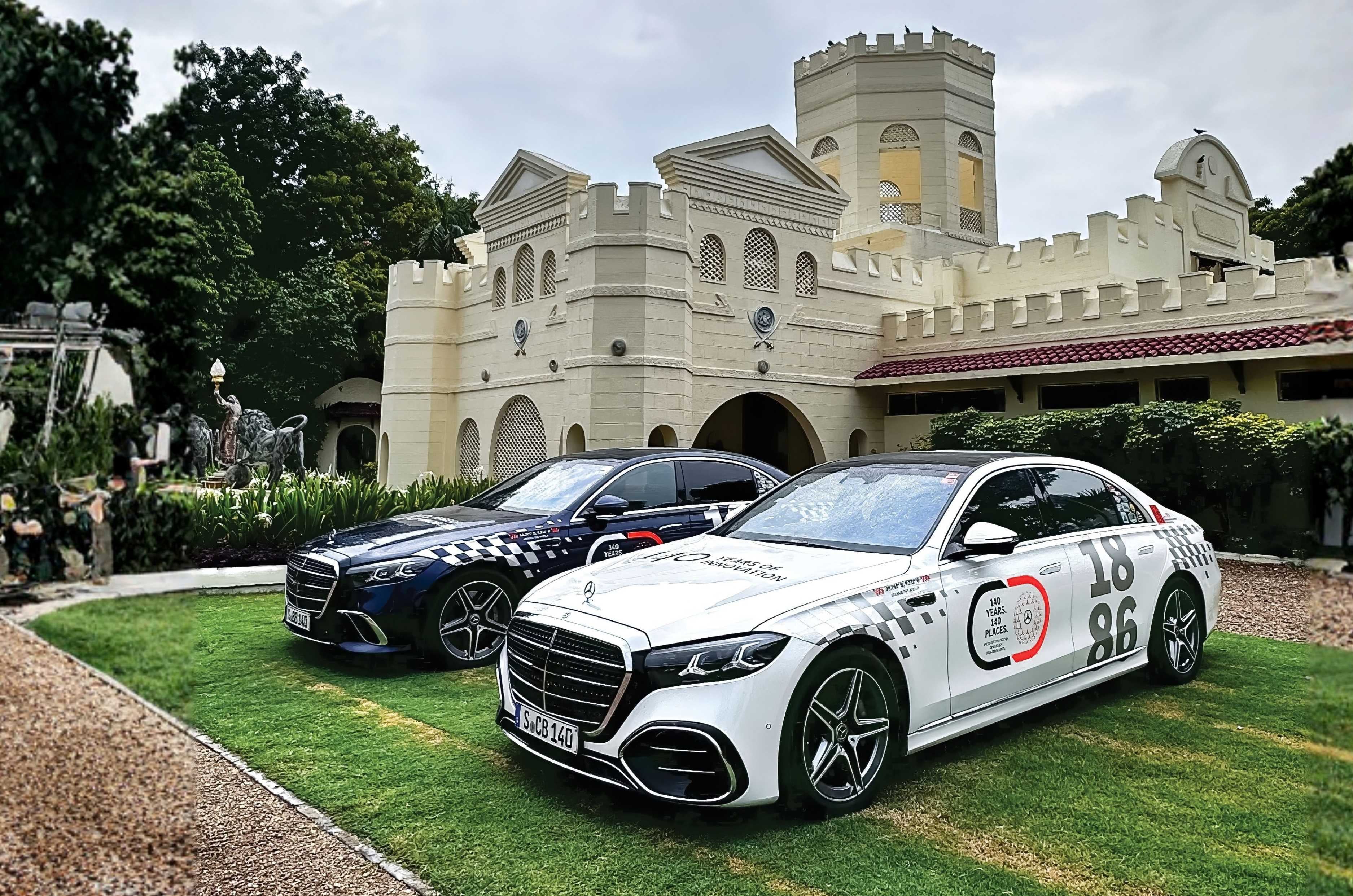
With their royal and regal air, the S-Classes feel right at home in Udaipur.

Part of the 140 Years, 140 Places expedition, Udaipur is one of the more stunning locations the Mercedes drive will visit on this India leg, and what’s incredible is that we have been chosen to be a part of it. What a privilege. The lake city of Udaipur also has tremendous historical significance. Home to one of the longest-serving dynasties, one that spans 1,500 years, this leg sees a coming together of the world’s oldest carmaker and one of the oldest dynasties. And while this trans-continental excursion is called 140 Years, 140 Places, it could also easily have been called 140 Years of Automotive Technology. With these S-Class pre-production cars dripping with both mechanical and electronic tech, what we are also celebrating is the journey of the car from a three-wheeler with a single-cylinder engine to this technological marvel. The company that invented the motorcar is still widely regarded as the one that makes ‘the best car in the world’.

Luxe Supreme

Everything is perfectly still. Not a gauge in the car is moving, and there’s no real sensation of speed. I must have dozed off. Blame it on the incredibly comfortable back seats and the sensory isolation. This car just shuts you off from the rest of the world. Then I discover we are cruising at 100kph, and not just 30 or 40. Up ahead is the lake city of Udaipur. Ahh.

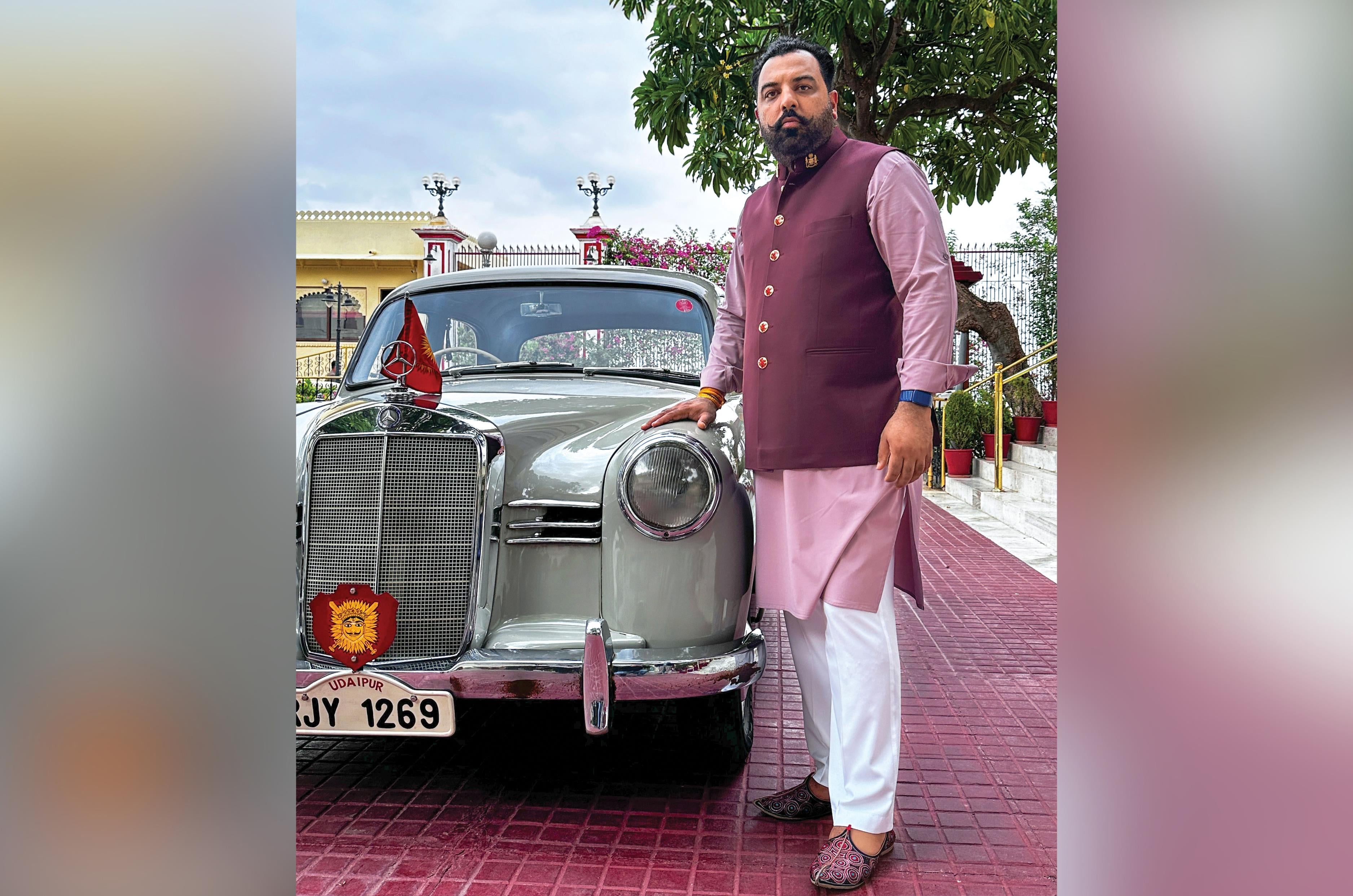
The Maharana of Udaipur with a car that has been in his family for three generations.

We start our journey on this leg from a very significant place, the palace situated on the lakeside at Udaipur. And not only does Lakhsyaraj, the 77th Custodian of the House of Mewar (formally Shriji Huzoor Dr Lakshyaraj Singh of Udaipur), play the perfect host, but he also parks an olive-green 180D in the foyer, a car that has been used by three generations of his family. The symbolism is rich; two legacies converging in a place that embodies the spirit of grandeur and continuity.

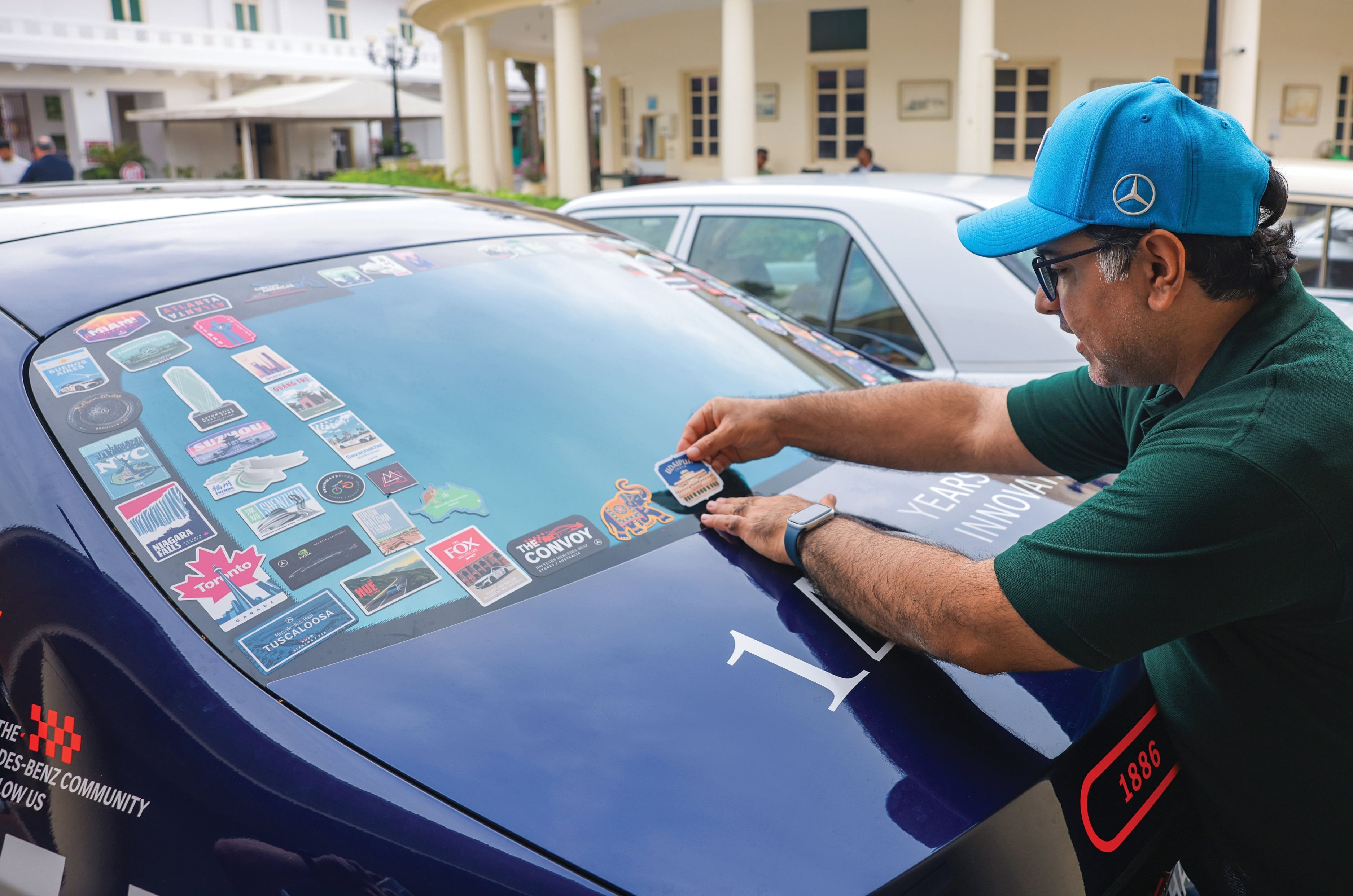
Perseus places the sticker on ‘Bertha’ in Udaipur.

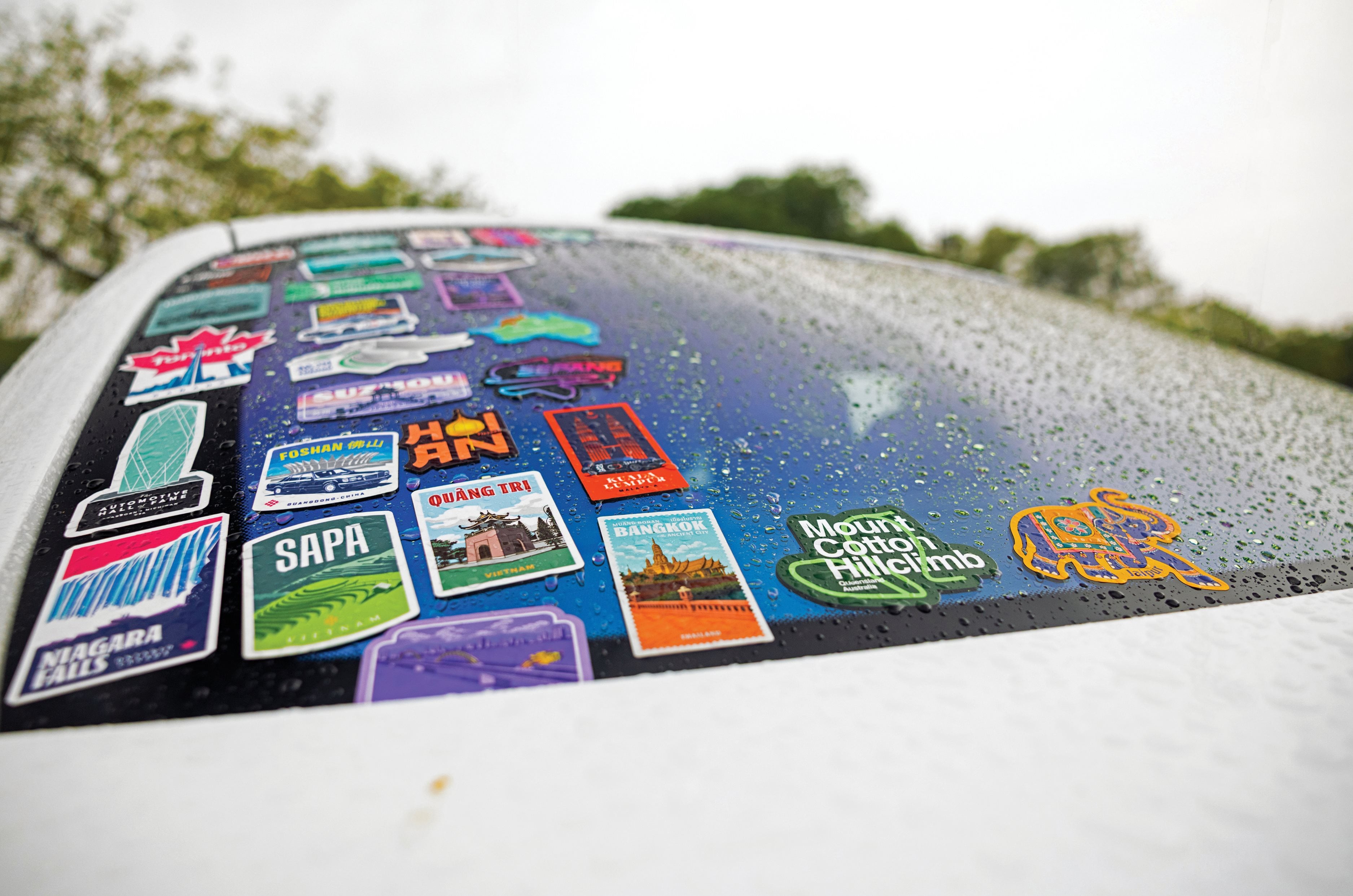
Since Udaipur is one of the 140 iconic destinations on the drive, Mercedes asks him to place an Udaipur sticker on the rear of the car; fitting. These cars, all three (the third is on another leg elsewhere in India), will eventually be housed in the Mercedes museum in Stuttgart, and what’s cool is that you can trace their journey via the stickers. Lakshyaraj then takes one of the cars for a brief drive. He wants to see just how much better this new version, with all its 2,700 new bits, is over his pre-facelifted car. And yes, he loves driving. I’d bumped into him earlier in the day at the airport, where his S-Class had come to pick him up, flags flying and uniformed driver and assistant in tow. But instead of climbing into the rear, he’d gotten straight behind the wheel. Tells you a lot.  
Still at the top

Late prototypes of the New S-Class made the journey.

Later in the day, I get another demonstration of why the S-Class is so special. We decide to drive around the lake for the cameras, the orange glow of the setting sun adding to the drama of this once James Bond film set. Sitting in the back feels almost magical, as the S-Class slips forward effortlessly, the sun glistening off the lake. It skips over cratered roads, glides silently through noisy bazaars and intersections and then, as the road around the lake opens out, I barely hear it even though Mercedes’ test driver is pulling the torque-y straight-six hard. This car is named Bertha, after Carl Benz’s wife, the one who undertook the world’s first long-distance drive; quite a story that. And the other, the white one, is Carl; BB and CB, both on Stuttgart number plates.
Hello Grandpa

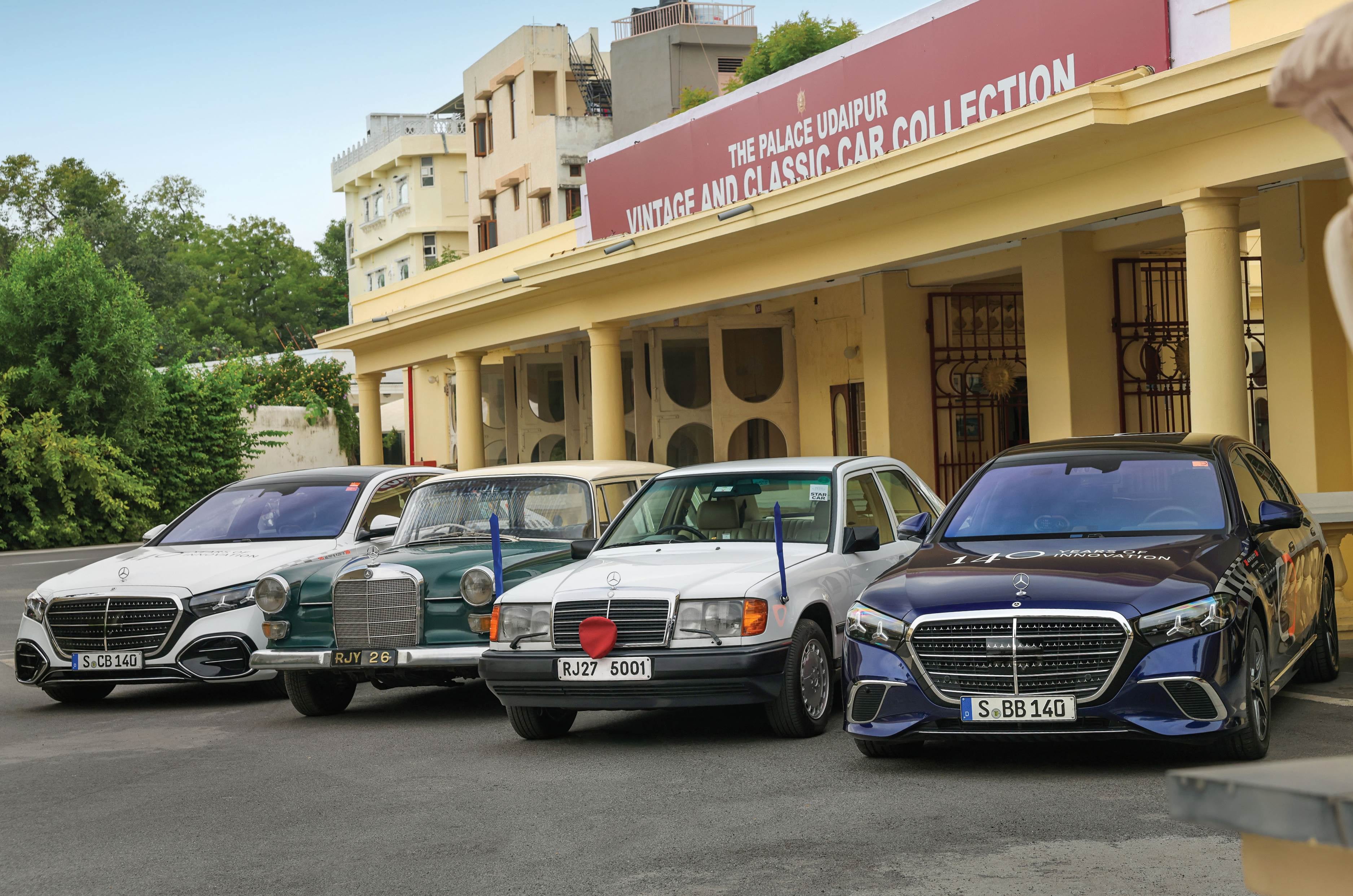
The S-Classes, along with the fin-tail and the 300D.

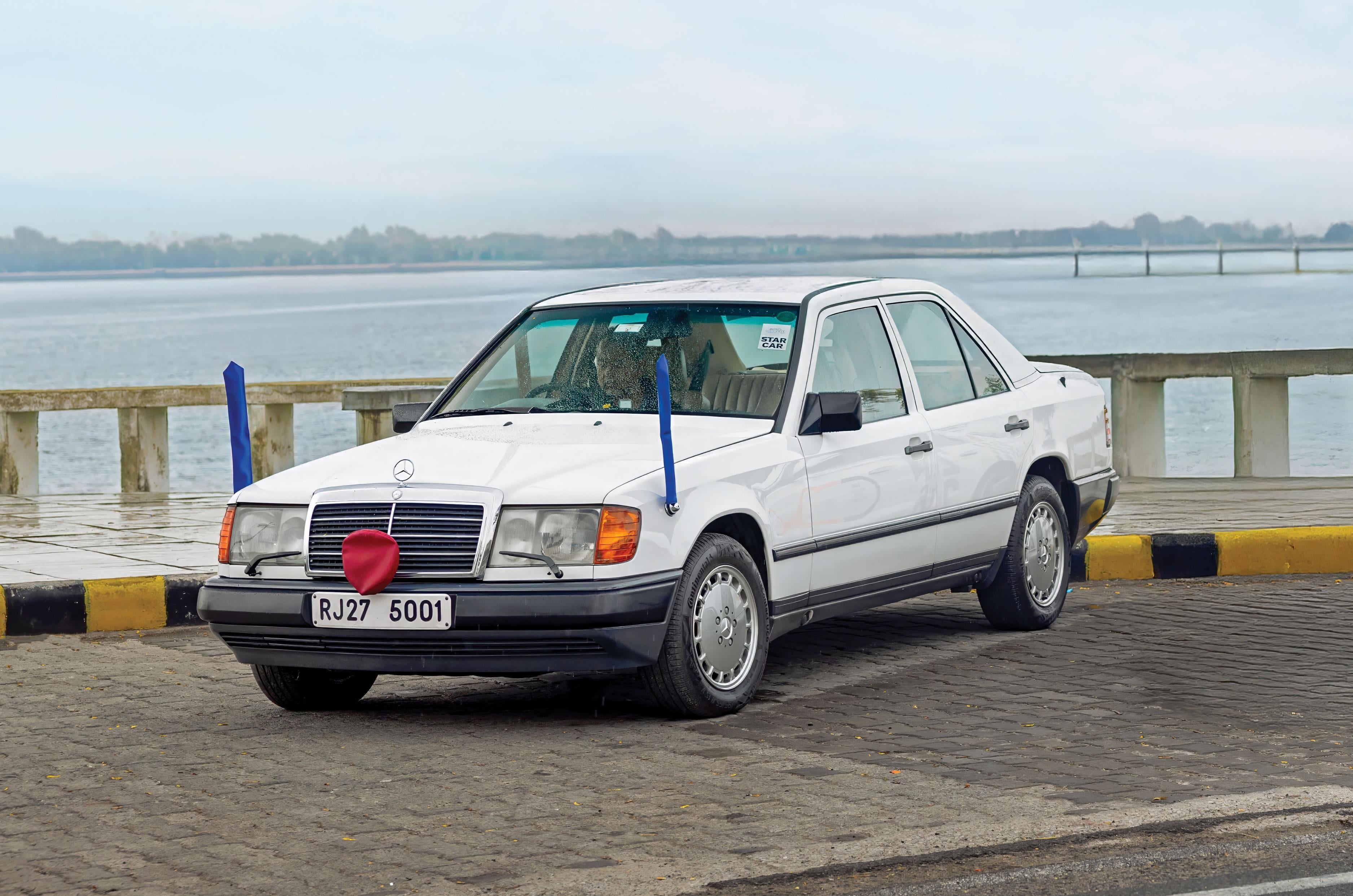
The next day, we set off to see the Udaipur Royal Garage, where we are met by other Mercedes cars. There’s a fin-tail that was used to pick up and drop off guests of the Royal family from neighbouring ‘states’ and a very special W124 300D. The latter, an import rather than a locally assembled W124, stands out from Indian-assembled cars with its black bumpers, headlamp wipers and amber indicators. This six-cylinder diesel with more than 2,00,000km on the clock was used by Shri Arvind Singh Mewar, the earlier Maharana, to cover long distances like Ahmedabad or Jodhpur. Recently restored, it was presented at the Mercedes-Benz Classic Car Rally in Mumbai. The 300D is in such fine nick, I can’t resist a quick spin around another of Udaipur’s stunning lakes, Fateh Sagar.

Why the 300D is such a legend

The W124 300D is an import. 

On the outside, the 300D looks sort of underwhelming. Starting up the straight-six diesel is relatively straightforward, although I have to wait for the glow plug to heat up (remember those?). While the roughly 110hp engine doesn’t feel responsive, it feels smooth and refined for a diesel, especially after 2,500rpm. And though it is slow by today’s standards, it doesn’t feel like you’re dragging anchor either. The chunky 300D also feels as tough as a Godrej safe. 

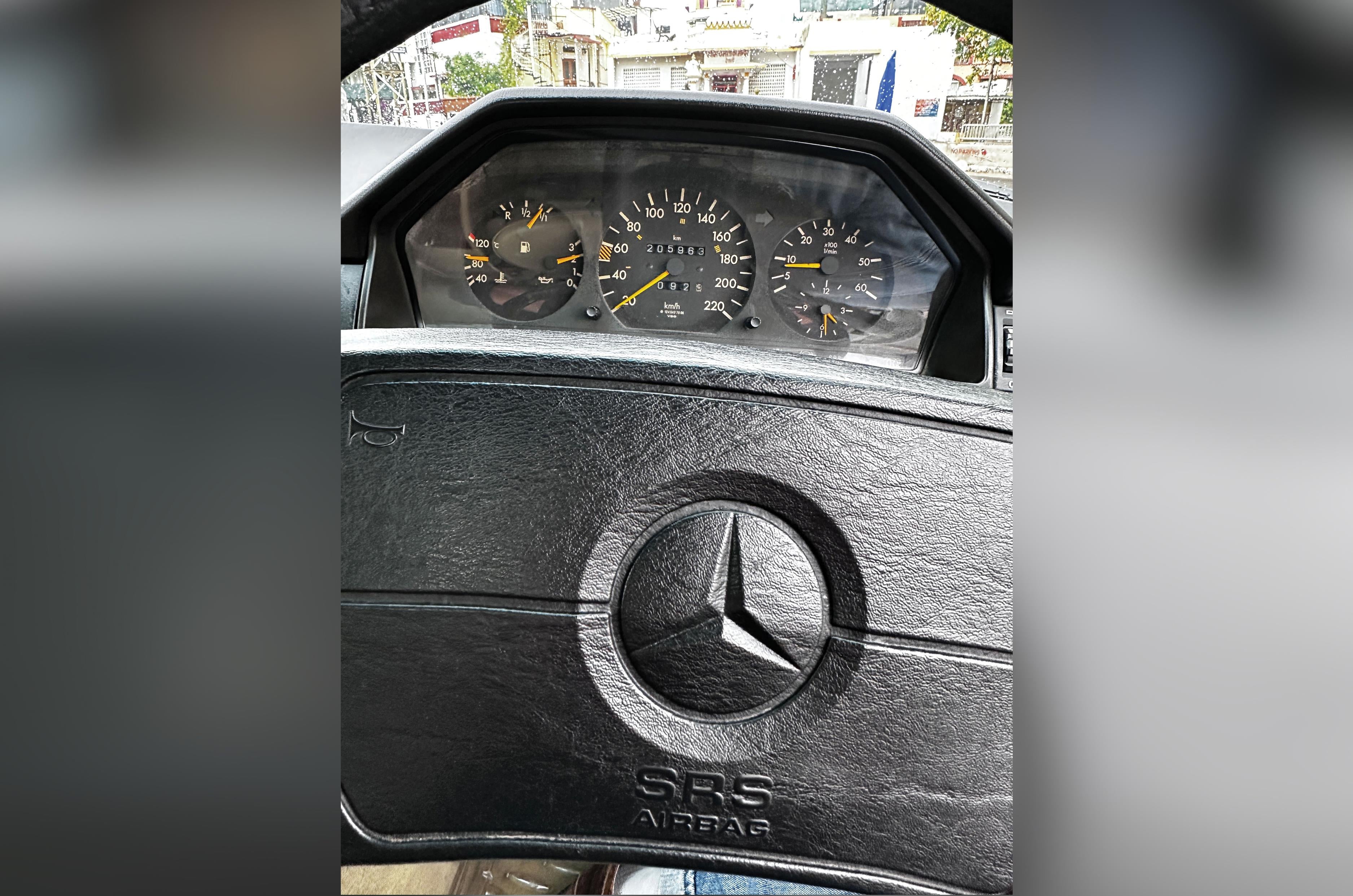
It has 2,00,000km on the odo, but hardly feels like it.

Then I catch a glimpse of the odometer; it reads in excess of 2,00,000 kilometres! Surely my eyes are playing tricks on me. Yes, this car has been recently refurbished, and the suspension has been tightened up, but this thing feels like it has just rolled out of the showroom only recently. It tracks straight, the steering is well weighted and, when I plonk my foot down, it even generates a reasonable amount of torque. This ‘OM603’ straight-six uses indirect injection and a pre-chamber, and has a simple two-valve-per-cylinder setup. Legend has it, it can do a million miles with only basic care. And what of turbo lag, you ask? It doesn’t have one.

Performance tech

The next morning, I get straight behind the wheel of CB or Carl Benz. I’m particularly excited because Carl has a V8 under the hood. What makes this V8 different is that it has some unique tech. This new S-Class is fitted with the ‘M177 Evo’ V8 engine that uses a flat-plane crankshaft! Made popular by Ferrari, a flat-plane crank is used on sportscars to help bunch up the firing order of the cylinders, so you get more of a kick from overlapping strokes. These engines, however, are not as smooth. So why has Mercedes used it in the S-Class, an out-and-out luxury car? Simple: it delivers better efficiency and lower emissions, as the crankshaft is lighter and there’s less reciprocating mass. And what of the vibrations? Mercedes says it has thrown tech at the problem.

V8-equipped S-Class feels effortlessly quick.

Initially, the going is slow as we exit the city. But once we get onto the wide highway, a small tap on the throttle releases a swell of torque just off 2,000rpm. And with 537hp propelling the limousine forward, it just shrinks the long straights on the highway. What’s cool is that the engine never feels brutish or AMG-like; the V8 soundtrack and rumble are superbly muted. The tech works. The new engine, in fact, is so well behaved that I have to check if it is indeed the one with the flat plane crank. At the next stop, I turn around and ask Mario Schneider, head of development for all Mercedes-Benz sedans, who just happens to be in the rear seat.

Also along for the drive is Perseus Bandrawalla, Autocar India’s curator of classic and modern classic events. Five minutes behind the wheel and he is waxing lyrical about the Mercedes V8 engines of days gone past – the M100, the M119 that powered the SL and others. It brings into perspective just how many great V8s Mercedes has had over the years, the 6.3 AMG V8, of course, included.

Cruise control

The three screens and updated cabin created a futuristic setup in a traditional environment.

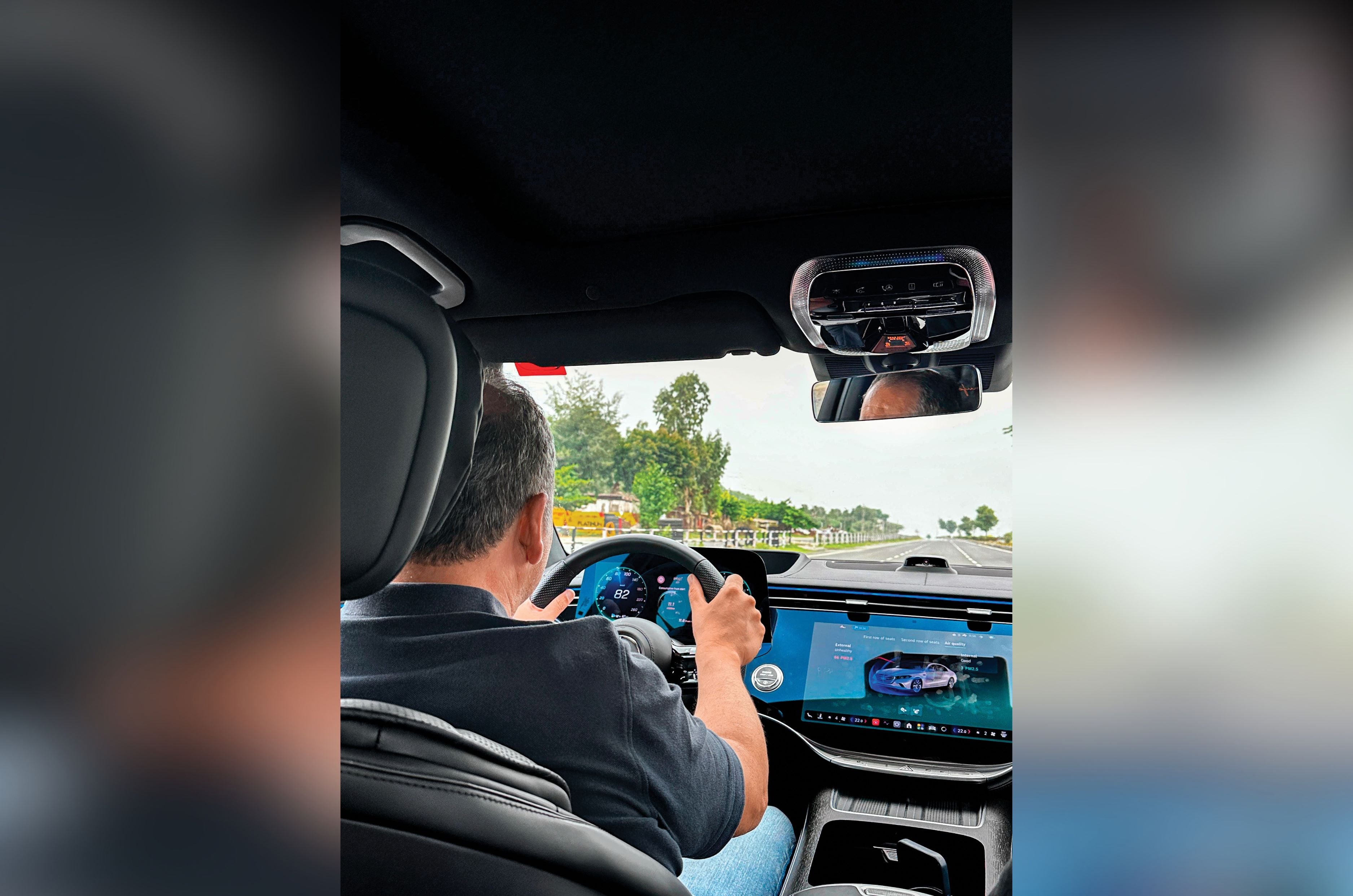
Further up, we get to a ghat section. Not only does the ride on this updated air suspension and adaptive dampers feel a bit more supple, it also feels at home on the winding road, the rear-wheel steering helps it into corners neatly. Even cooler, despite all the tech, it retains a natural fluidity and a sense of mechanical harmony, which make long drives feel just effortless. Are city-bound S-Class owners missing what’s best about this car? Absolutely! Talking about tech, this car also gets Level 3 autonomous driving (in places where it’s allowed), where the driver can be hands off, and even eyes off, with Mercedes Drive Pilot taking responsibility for safety. It is only one of two cars to get this globally.

As we get into traffic, what I notice is that the updated cabin, with its three screens and ambient lighting, creates an environment that is both futuristic and traditional. The seats, with massage and cooling functions, are thrones in their own right. And it’s not just the size, specifications and features it has; it’s how well everything is executed, from the solid build of the cabin to the new phone-like remote controls in the rear.

Collector’s edition

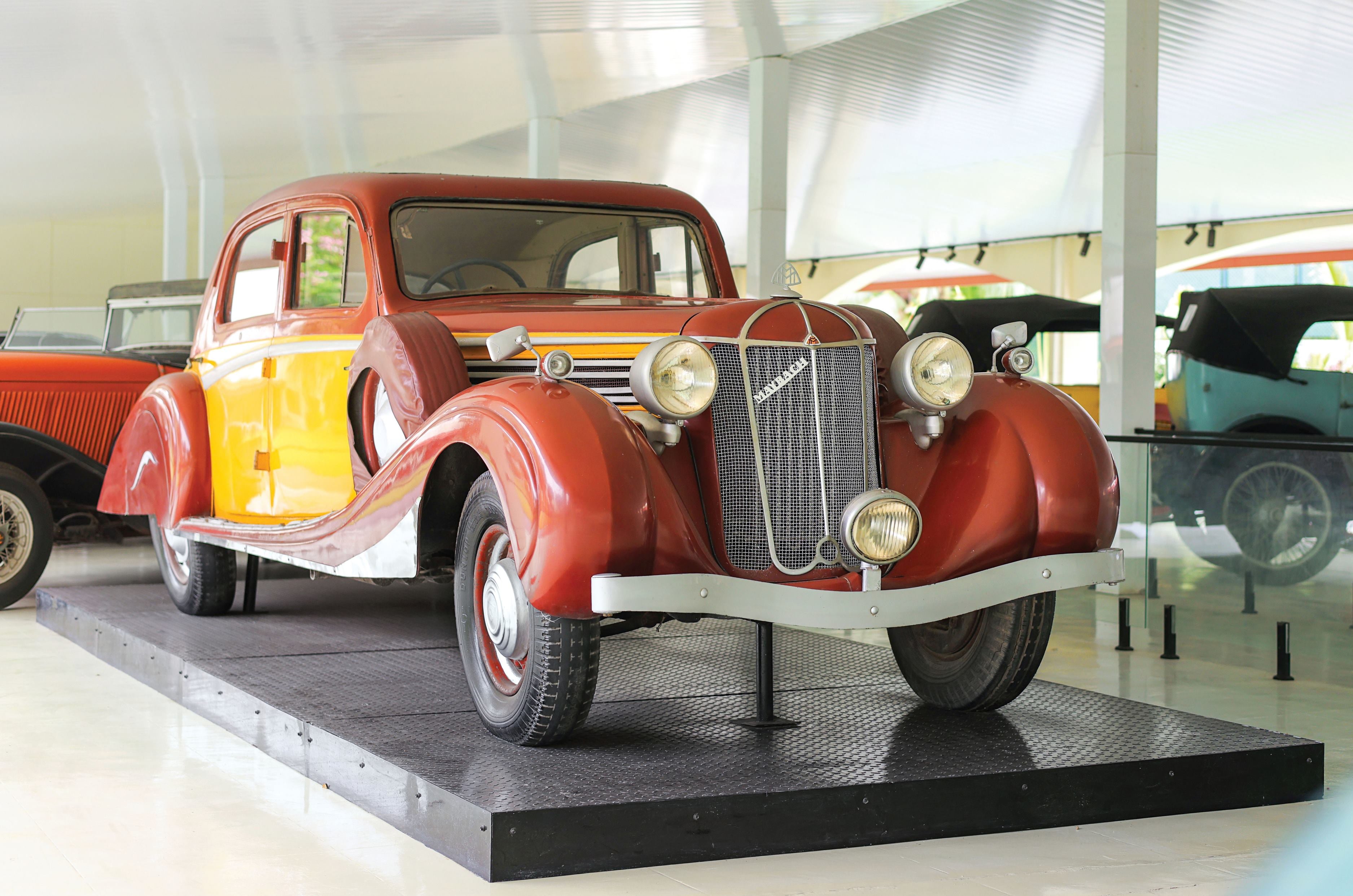
Streamlined Maybach SW38 four door could do 160kph

As we get to Ahmedabad, we turn into another historical location, Dastan Auto World – collector extraordinaire Pranlal Bhogilal’s collection, where the modern S-Classes met some more of their ancestors. A Maybach SW38, ordered by Maharaja Umaid Singh of Kota, draws admiring stares from the German members of the Mercedes crew, especially its aerodynamic profile. Capable of nearly 160kph, it was one of the fastest four-doors of its time. Equally captivating are Mercedes’ post-war comeback cars – the 300S ‘Adenauers’. Named after Germany’s first Chancellor, who famously rode in one with his hat on, this limousine is what eventually evolved into the S-Class.

Heritage and high tech

You can trace the journey via the stickers on the cars.

The 140 Years, 140 Places drive captured the duality of Mercedes perfectly; the brand embodies both heritage and innovation in equal measure, both streams converging seamlessly. As the convoy continues its odyssey, what’s clear is that this is a celebration not only of Mercedes’ past, but also the brand’s ability to connect eras, cultures and people through the universal language of the automobile.

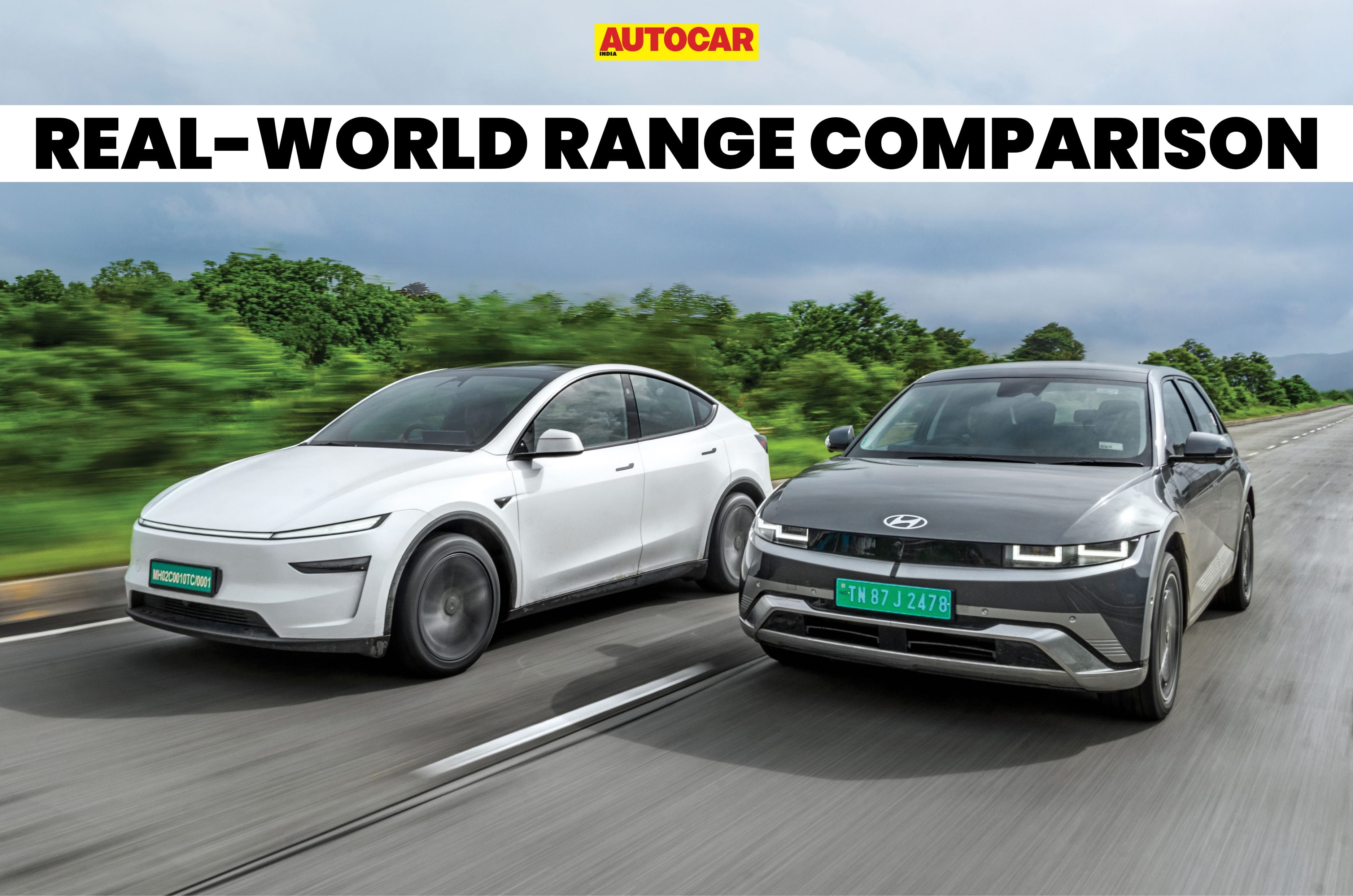
Hyundai Ioniq 5 vs Tesla Model Y real-world range compared

Hyundai Ioniq 5 vs Tesla Model Y real-world range compared

The Hyundai Ioniq 5 received a larger battery pack with its April 2026 update, resulting in a higher claimed single-charge range. In this feature, we compare the Hyundai EV with the Tesla Model Y, one of its direct rivals in India. Keep reading to see how the two performed in real world conditions. We also compare their prices, as the Ioniq 5 has become more expensive after the update, while Tesla has dropped the price of the Model Y.

Hyundai Ioniq 5 vs Tesla Model Y: Specifications, price

 Ioniq 5Model Y
Battery size (kWh)84 (NMC)60 (LFP)
Power (hp)229299
Torque (Nm)350420
Drive layoutRWDRWD
Claimed range (km)690 (ARAI)500 (WLTP)
Kerb weight (kg)2,1652,003

The Ioniq 5’s battery size has increased from 72.6kWh to 84kWh (gross capacity), though the nickel manganese cobalt (NMC) cell chemistry has been retained. The larger battery has increased the kerb weight to 2,165kg, up by 150kg from the outgoing version. In comparison, the Model Y uses a 64kWh (gross capacity) battery with lithium ferrous phosphate (LFP) cell chemistry; the smaller battery contributes to the Tesla EV being 162kg lighter in this comparison. Their claimed range figures are based on different test cycles – ARAI for the Ioniq 5 and WLTP for the Model Y – so they are not directly comparable.

Speaking of motor outputs, the Model Y makes 70hp and 70Nm more than the Ioniq 5; both use a rear-wheel-drive setup. The Model Y feels stronger to drive, with quicker acceleration and sharper throttle response than the Hyundai.

Hyundai Ioniq 5 vs Tesla Model Y: Real-world range

For our real-world range test, the Hyundai Ioniq 5 was driven in Eco mode and the Model Y in Chill mode (Eco in Tesla speak). The Ioniq 5 used Level 2 regenerative braking in the city and Level 1 on the highway, while the Model Y used Standard in the city and Reduced on the highway.

 Ioniq 5Model Y
Tested city efficiency (km/kWh)6.225.84
Tested highway efficiency (km/kWh)5.716.52
Tested average efficiency (km/kWh)5.966.18

In the city, the Ioniq 5 returned 6.22km/kWh, compared to 5.84km/kWh for the Model Y. On the highway, however, the Tesla was more efficient at 6.52km/kWh, aided by its superior aerodynamics; the Ioniq 5 managed 5.71km/kWh. But overall range in our tests stood at 501km for the Ioniq 5, 130km more than the Model Y’s 371km figure.

Hyundai Ioniq 5 vs Tesla Model Y: Prices

 Ioniq 5Model Y
Price (Rs lakh)55.7150.89

At the time of writing, the Hyundai Ioniq 5 is pricier than the Tesla Model Y by Rs 4.82 lakh. But judged purely on its higher real-world range, the Hyundai Ioniq 5 gets our vote. 

Autocar India’s range testing

For our real-world range comparisons, we begin with each car’s battery fully charged and tyre pressures set as per the manufacturer’s recommendations. We drive the cars on a fixed loop covering both city and highway stretches while maintaining set average speeds. We then calculate the range based on the percentage of charge consumed. The AC is set to 22deg C in auto mode, and we use features such as the music system, lights and ventilated seats as needed, just as a regular user would. This approach ensures consistency and gives a clear idea of what to expect in actual conditions.

Ex-showroom prices mentioned above are as of September 23, 2026.