Top 11 Adventure tourers between Rs 2-5 lakh

Top 11 Adventure tourers between Rs 2-5 lakh
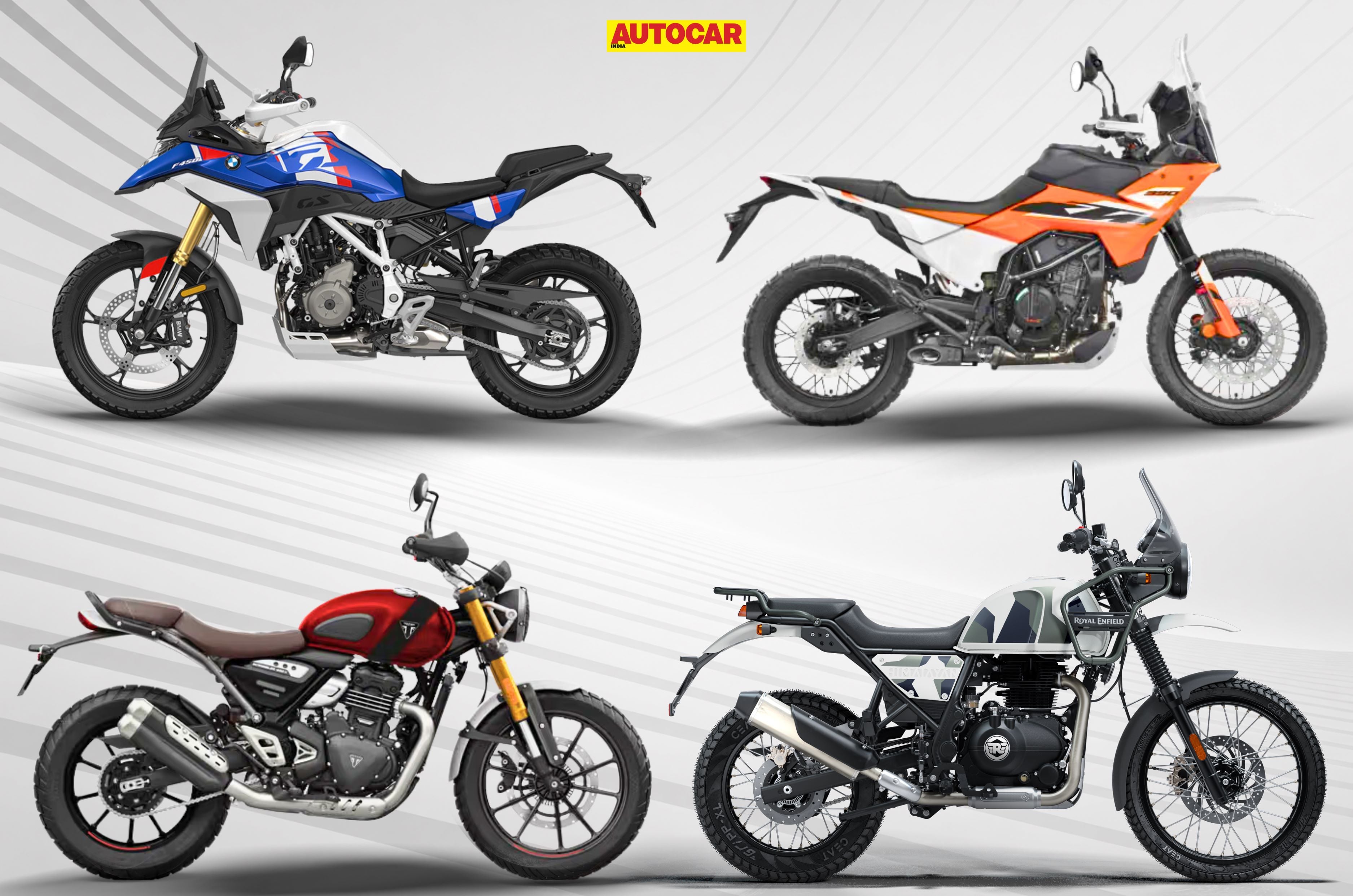
An edited lead image showing the BMW F 450 GS, KTM 390 Adventure S, Royal Enfield Himalayan 440, and Triumph Scrambler 400 X in clockwise direction.

Ten years ago, Royal Enfield made adventure tourers mainstream with the original Himalayan 411 and the segment has slowly, but surely grown since. As with any other thing that gains popularity, this segment also has gained different kinds of options. On the one hand, we have the V-Strom that’s effectively a Gixxer 250 on stilts, and on the other, we have the KTM 390 Adventure S that looks to strike a fine balance between both adventure and touring capabilities. Admittedly, this can get a bit overwhelming, so here are all the adventure touring motorcycles you can buy in India right now between Rs 2-5 lakh.

All prices mentioned are ex-showroom, Delhi.

11. TVS Apache RTX 300

Starts at Rs 1.99 lakh
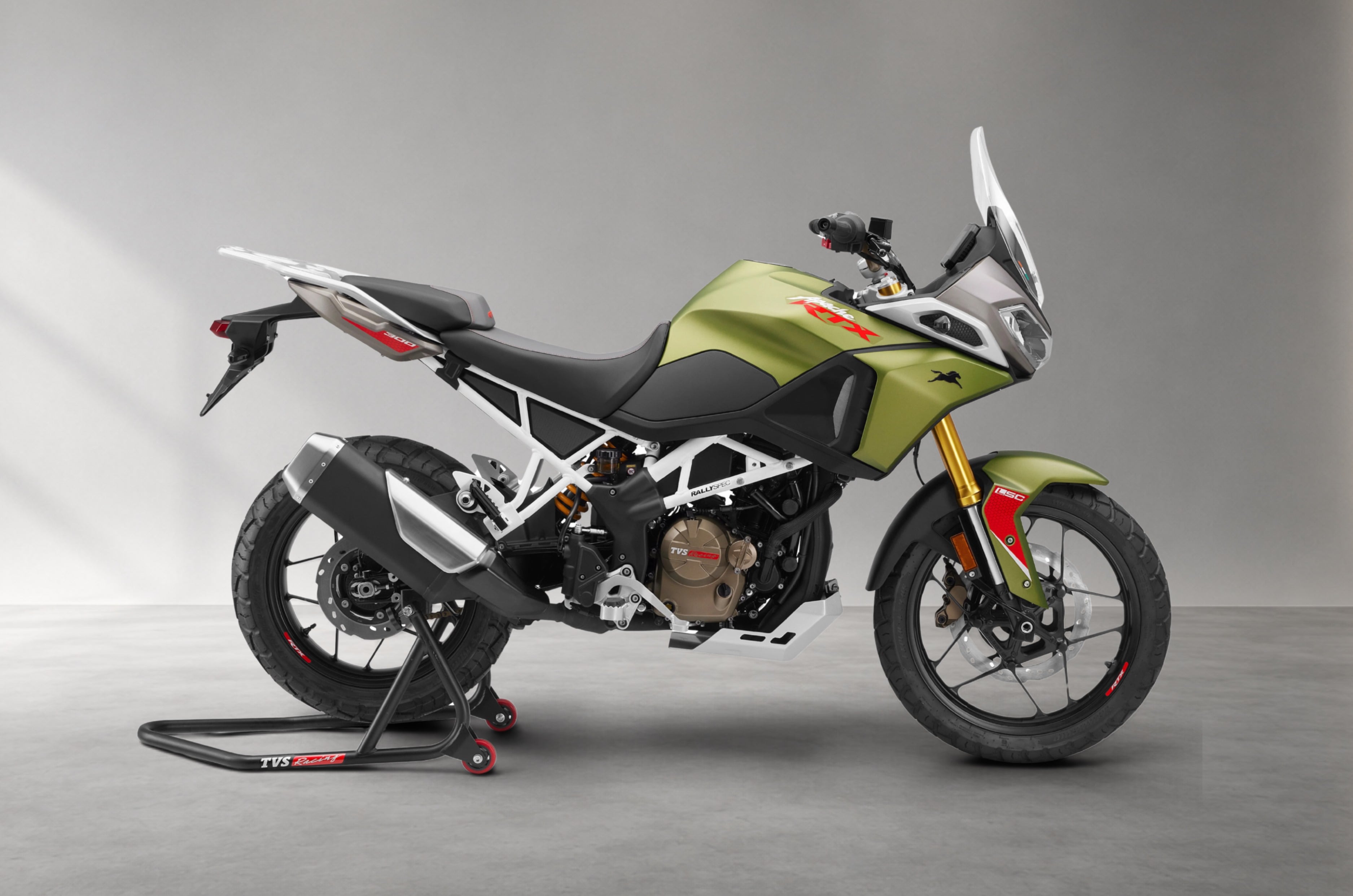
Inside render showing the TVS Apache RTX 300

TVS is the most recent (new) entrant into the segment, with the Apache RTX 300 redefining how many features you can pack into on a relatively affordable budget. The RTX’s 299.1cc single-cylinder, liquid-cooled engine with 36hp and 28.1Nm of torque isn’t the most exciting but has the ability to keep going as long as you’re willing to, except for the oddly small 12.5-litre fuel tank. The TVS sticks to a 19/17 front/rear wheel setup and only comes with alloy rims.

TVS offers four ride modes and cruise control as standard with the higher variants stepping that up to a bi-directional quickshifter, traction control, and Google Maps mirroring on the 5-inch TFT screen. It also has a very good headlight as standard, and the top BTO variant adds adjustable suspension too, both aimed at increasing the sense of safety and comfort. The 835mm seat height and 180kg kerb weight combo might look daunting on paper, but they aren’t a big hindrance in practice.

The TVS Apache RTX 300 spans Rs 1.99 lakh for the Base variant and Rs 2.39 lakh for the BTO variant.

10. Suzuki V-Strom SX

Rs 2.01 lakh
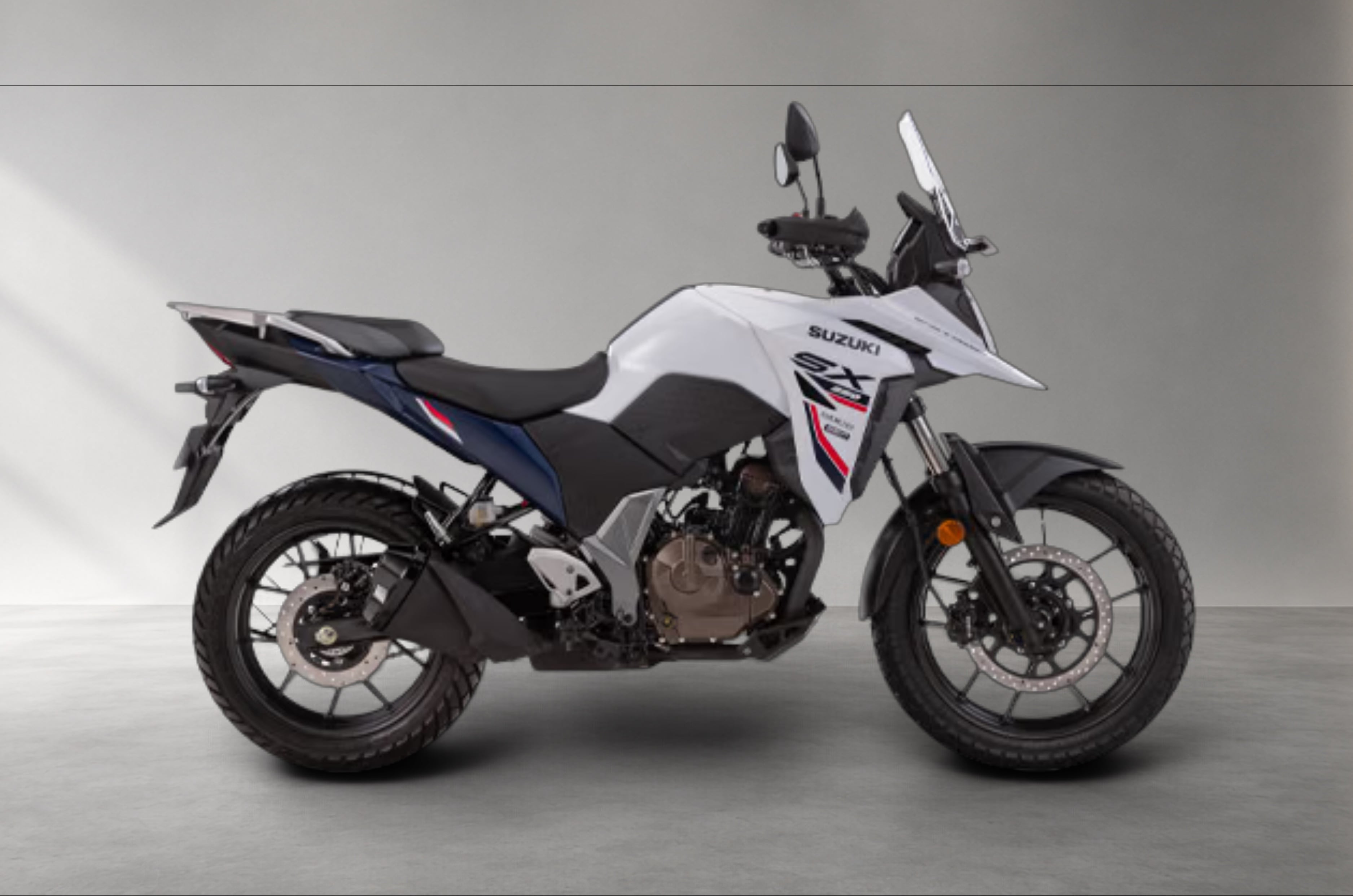
Inside render showing the Suzuki V-Strom SX 250

Suzuki’s adventure tourer is mostly a tourer because it is a re-engineered Gixxer 250 with a taller stance. But, don’t let that stop you from considering it seriously because its 249cc engine with 26.5hp and 22.2Nm of torque has more than enough to make long days seem effortless. The 12-litre fuel tank capacity seems small on paper, but it is possible to make the Suzuki quite efficient. It has a 835mm seat height, but the 167kg kerb weight softens that blow.

As is typical for Japanese products in this class, the V-Strom SX is light on features, with dual-channel ABS the only rider aid on offer. However, it also makes a great case for reliability, helped further by Suzuki’s brand cachet. The Suzuki runs on 19/17 front/rear wheels and only gets alloy rims.

The Suzuki V-Strom SX has a single variant and costs Rs 2.01 lakh.

9. Yezdi Adventure

Starts at Rs 2.06 lakh
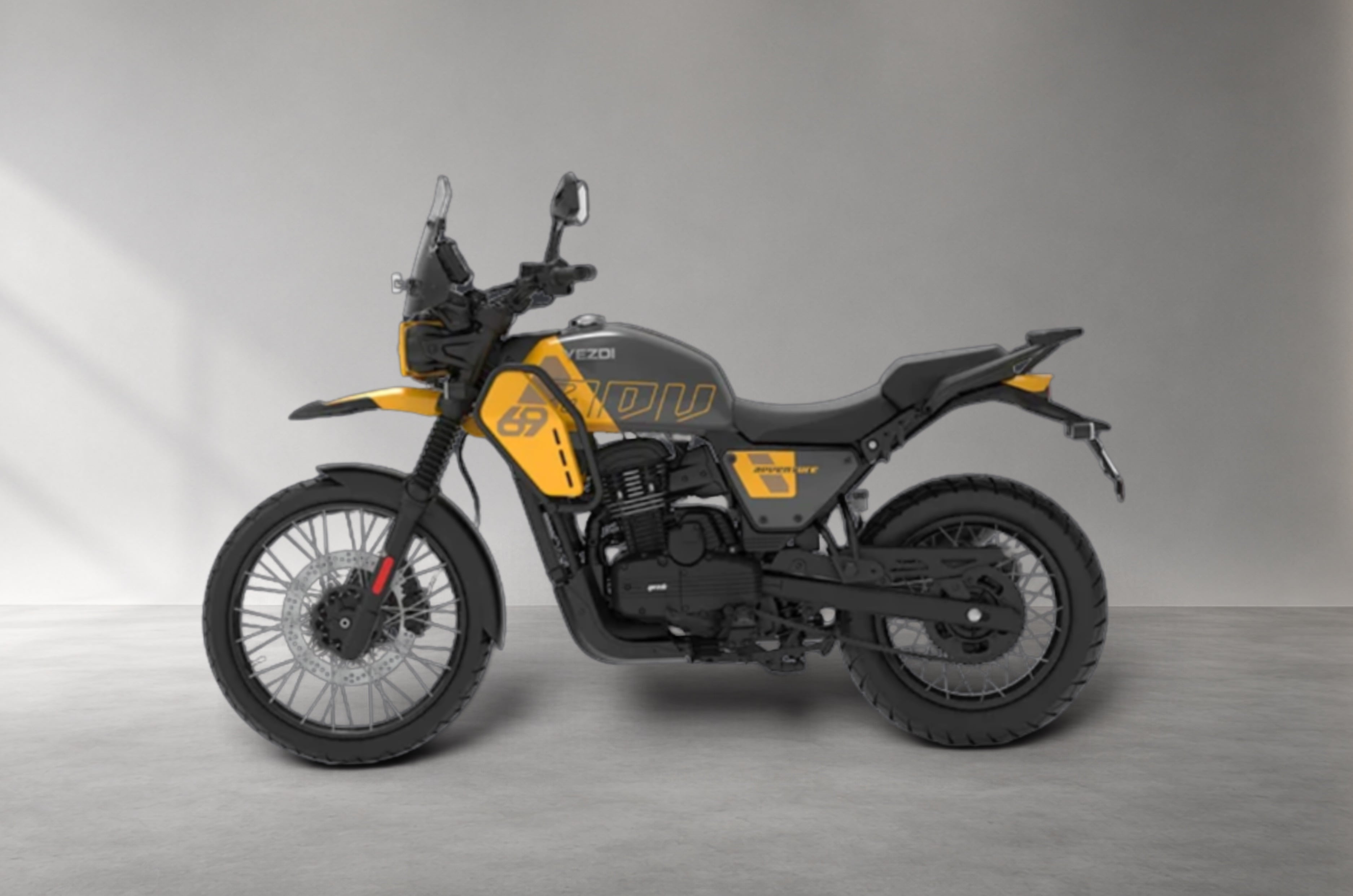
Inside render showing the Yezdi Adventure

Classic Legends’ Yezdi had comprehensively upgraded their adventure tourer earlier this year. The 334cc engine is now liquid-cooled and makes 29.6hp and 29.8Nm of torque. The fuel tank capacity is a healthy 15.5 litres and the Yezdi Adventure has a 815mm seat height and weighs about 198kg.

Along with an updated design, the Adventure gained features like an asymmetrical dual headlamp, all LED lighting, three ABS modes, traction control and a rerouted exhaust for better heat management. Yezdi also offers tubeless, cross spoke wheels as accessories for Rs 20,000 extra, if you’d like to embrace the adventure look with the convenience of tubeless tyres. Standard fitments are 21/17 front/rear tubed, wire-spoke wheels.

The Yezdi Adventure starts at Rs 2.06 lakh for the base Nebula Blue White colour and goes up to Rs 2.13 lakh for the top Yellow Falcon colour.

8. Royal Enfield Himalayan 440

Rs 2.29 lakh
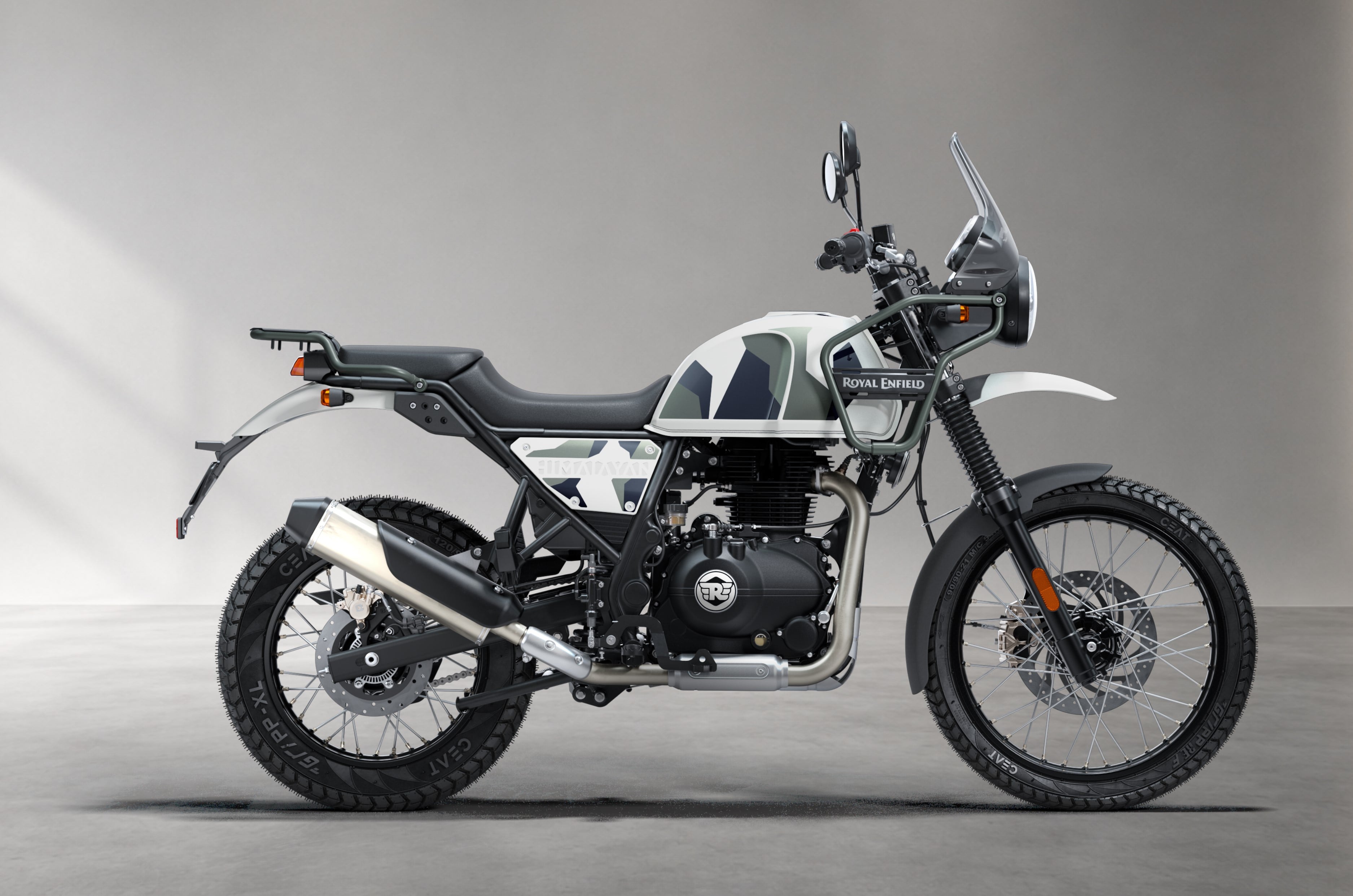
Insider render showing the Royal Enfield Himalayan 440

Royal Enfield has resurrected the air/oil-cooled Himalayan 440 for 2026. The 443cc engine (shared with the Scram 440) makes 25.4hp and 34Nm of torque and the Himalayan stays true to its roots by only offering switchable dual-channel ABS and the Tripper navigation pod as notable features. The seat height remains at 800mm, as does the fuel tank capacity at 15 litres; which also means the weight remains unchanged at 199kg as well. Royal Enfield has stuck to a tubed 21/17 wheel setup on the Himalayan 440.

Most of the mentioned specifications, are common to the Scram 440. Its base variant starts lower at Rs 2.25 lakh for wire spoke rims, and the higher variant offers alloy rims at Rs 2.32 lakh.

Uncharacteristic for Royal Enfield, all three colours of the Himalayan 440 cost the same Rs 2.29 lakh.

7. KTM 250 Adventure

Rs 2.53 lakh
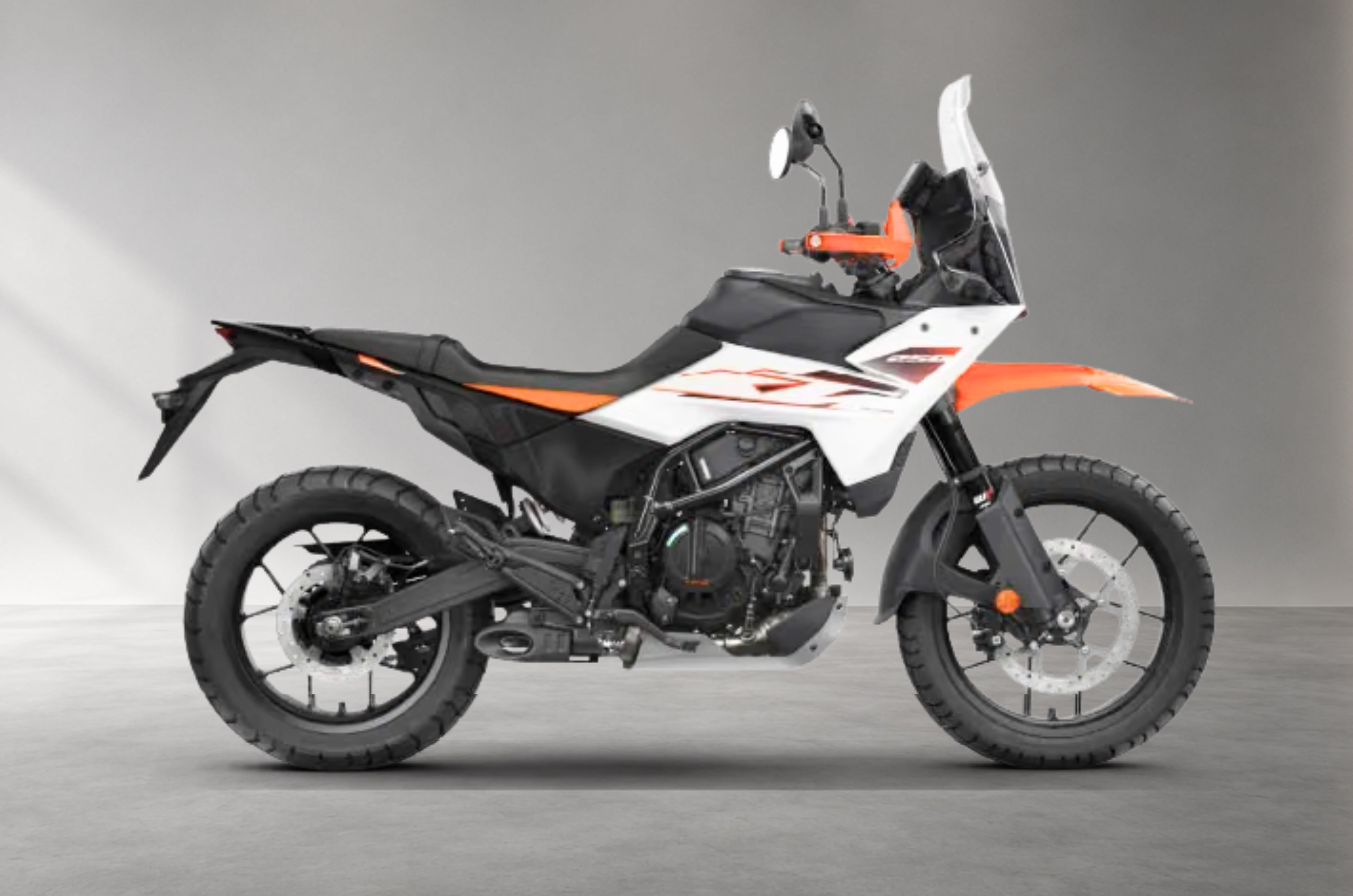
Inside render showing the KTM 250 Adventure

KTM’s entry-level adventure tourer is the 250 Adventure, which shares its engine with the 250 Duke and its platform with the bigger brothers. Its 249.07cc engine makes 31hp and 25Nm of torque. The fuel tank capacity is 14.5 litres, seat height is at 825mm, and kerb weight is 176kg.

Being the entry-level opinion, KTM has kept things simple in terms of features. It gets a bi-directional quickshift, a slip-and-assist clutch, and two ABS modes. For fancy features like ride modes, cruise control etc., you’ll have to step up the 390 Adventure with the 350cc engine (also on this list). The 250 Adventure runs on 19/17 front and rear wheels with alloy rims.

KTM offers a single variant for the 250 Adventure and has priced it at Rs 2.53 lakh.

6. Triumph Scrambler 400 X

Rs 2.65 lakh
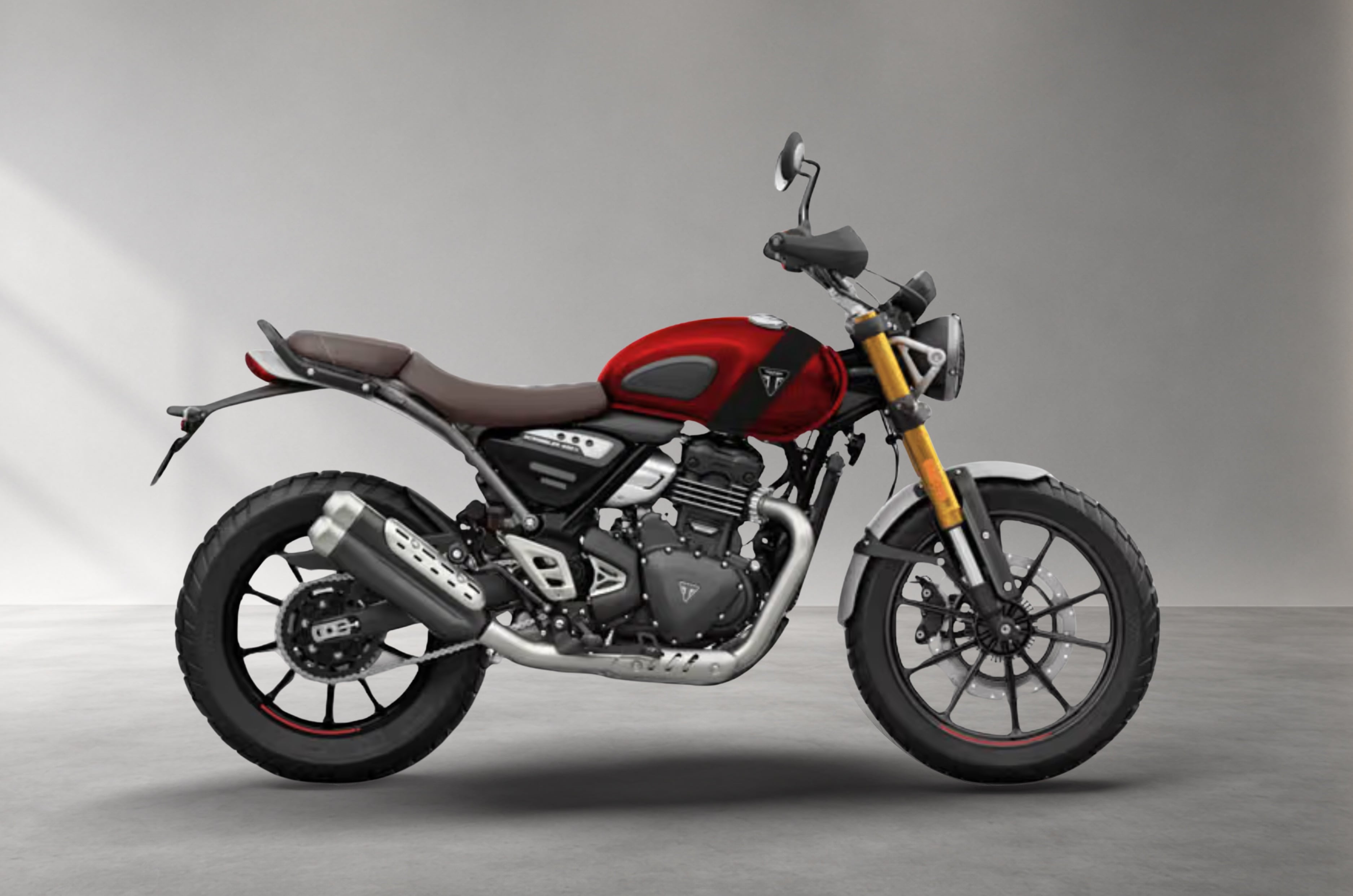
Inside render showing the Triumph Scrambler 400 X

Technically, the Scrambler 400 X isn’t an adventure tourer, but in the absence of a Tiger 400 (so far), it is the closest Triumph (and Bajaj) offers to one in India. With the downsizing, the Scrambler’s 349cc liquid-cooled engine makes 37hp and 32Nm of torque. The Scrambler 400 X has a 13-litre fuel tank, seat height is at 835mm and kerb weight is 185kg.

The Scrambler offers switchable dual-channel ABS, a slip-and-assist clutch, and traction control as standard rider aids. It comes with 19/17 front/rear wheels and only offers alloy rims in the X guise.

Triumph Scrambler 400 X is priced at Rs 2.65 lakh, but if you want to turn up the ADV look, there’s also a Scrambler 400 XC with tubeless cross spoke wheels and more accessories as standard for Rs 2.99 lakh. However, for all intents and purposes, the X and XC are near-identical.

5. KTM 390 Adventure (350cc)

Rs 2.87 lakh
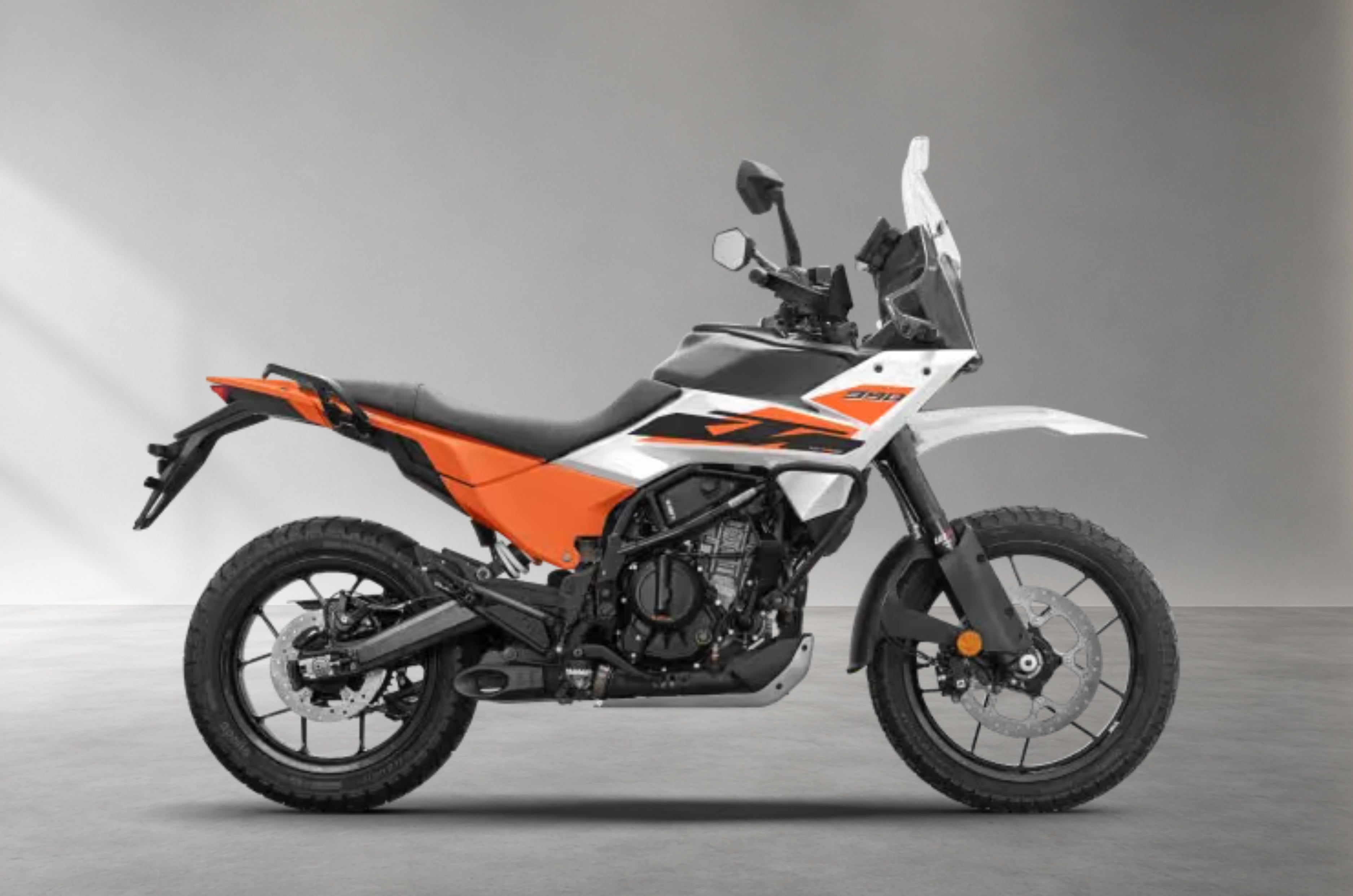
Inside render showing the KTM 390 Adventure with 350cc engine

KTM’s downsizing brought down the 399cc Adventures into 349.32cc, with the smaller engine making 41.5hp and 33.5Nm of torque. In terms of specification, the 350cc Adventure is pretty middle ground with a 14.5-litre fuel tank, 181kg kerb weight and 825mm seat height.

Besides the RTX 300, this is the only other motorcycle on this list under 3 lakh to offer cruise control as standard. It gets three ride modes, a bi-directional quickshifter, traction control, a 5-inch TFT screen, among other things. This version of the Adventure comes exclusively with 19/17 front/rear wheels and alloy rims.

The KTM 390 Adventure has a single variant with two colours and is priced at Rs 2.87 lakh.

4. Royal Enfield Himalayan (450)

Starts at Rs 3.08 lakh
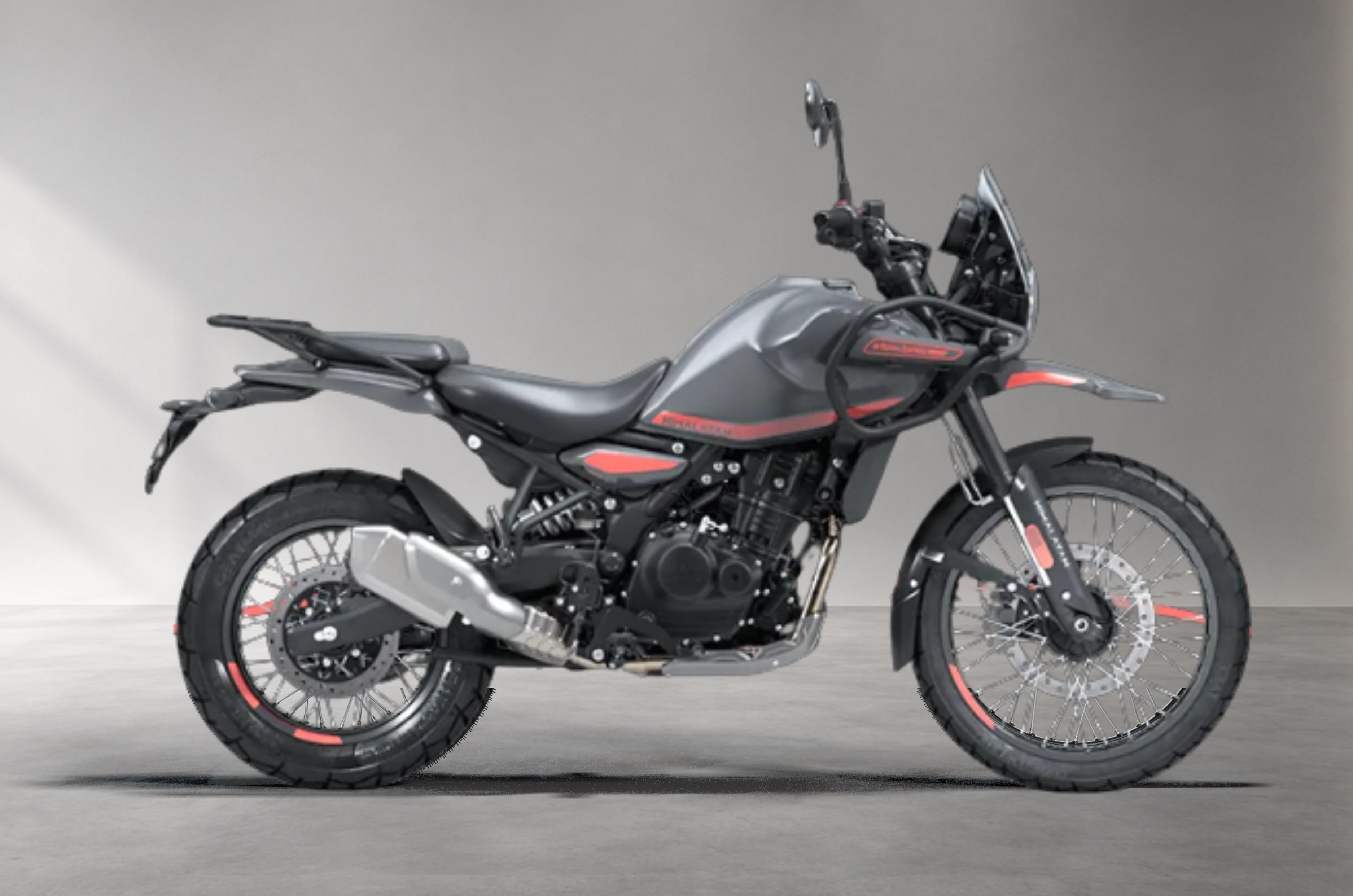
Inside render showing the Royal Enfield Himalayan 450

Royal Enfield’s Himalayan (450) gets quite a bit over its older/younger brother. Its engine is liquid-cooled (vs air-cooled on the 440) with 40.02hp and 40Nm of torque. Built on a completely new platform, the Himalayan 450 is three kilos lighter than the 440 at 196kg, and gets a markedly larger 17-litre fuel tank. The standard seat height ranges between 825-845mm, but it’s possible to drop that to 805mm with an accessory low seat.

On the features side too it offers a lot more than the 440, with a 4-inch TFT display with Google Maps powered navigation, two ride modes, and a slip-and-assist clutch. The Himalayan 450 comes with 21/17 front/rear wheels with tubed, wire-spoke rims as standard on the lower variants. However, on the top Mana Black variant Royal Enfield bundles tubeless, cross spoke rims as standard.

The Royal Enfield Himalayan starts at Rs 3.08 lakh for the base Kaza Brown colour and goes up to Rs 3.39 lakh for the Mana Black colour.

3. Kawasaki Versys-X 300

Rs 3.49 lakh
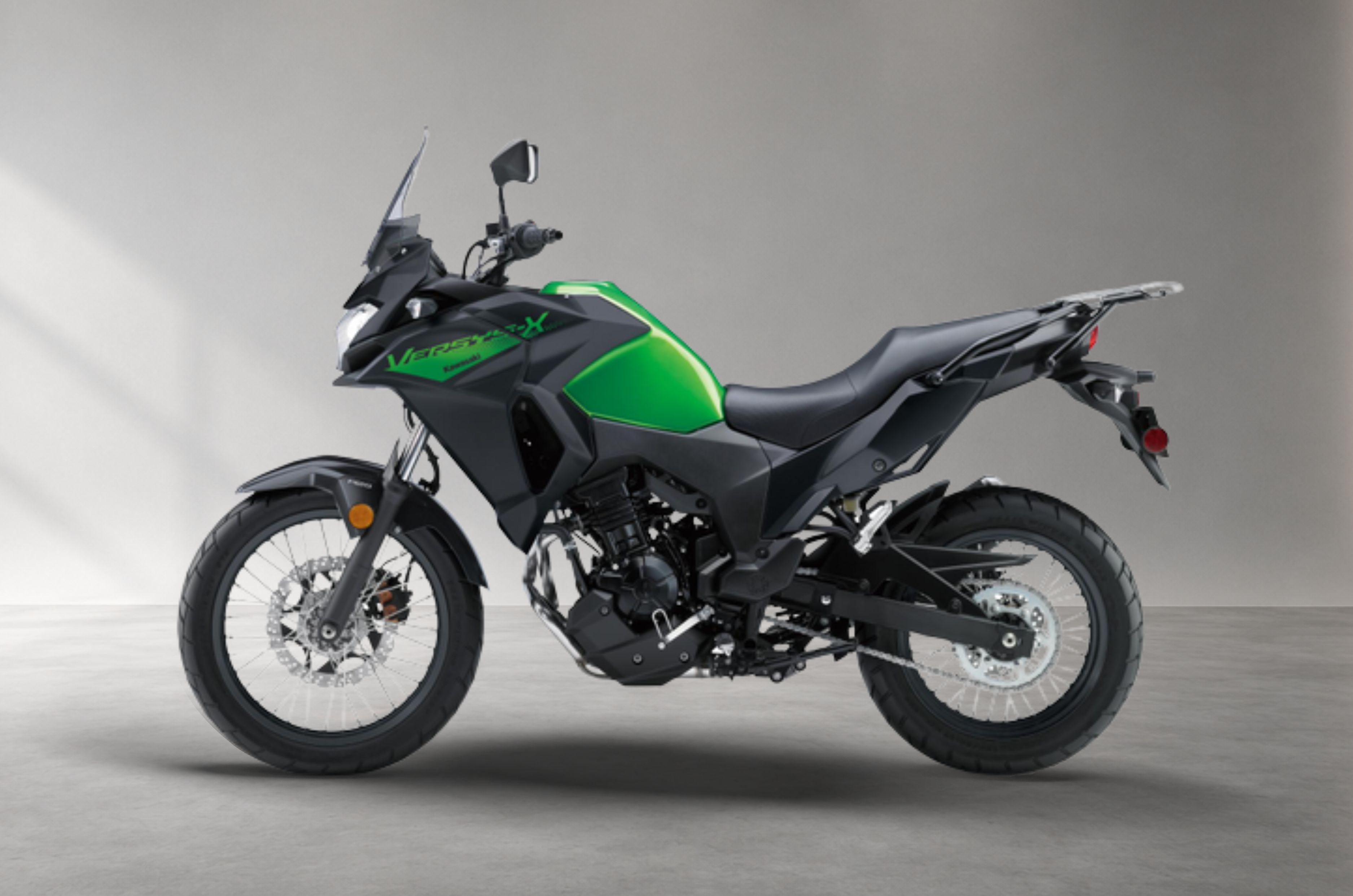
Inside render showing the Kawasaki Versys-X 300

The Kawasaki Versys-X 300 is one of two twin-cylinder options in this list. Its 296cc parallel-twin makes 39hp and 26Nm of torque and it’s liquid-cooled as well. It might just be the most accessible motorcycle on this list with a 175kg kerb weight, and an 815mm seat height.

Similar to the V-Strom 250 SX, the Versys-X 300 also maintains a slim list of features, dual-channel ABS and a slip-and-assist clutch. It has a 17-litre fuel tank (only one here to match the Himalayan 450), and Kawasaki only offers it with 19/17 front/rear wheels with wire-spoke rims running tubed tyres.

The Kawasaki Versys-X 300 is offered in one variant in a single Green/Black colour at Rs 3.49 lakh.

2. KTM 390 Adventure (S, X, R)

Starts at 3.50 lakh
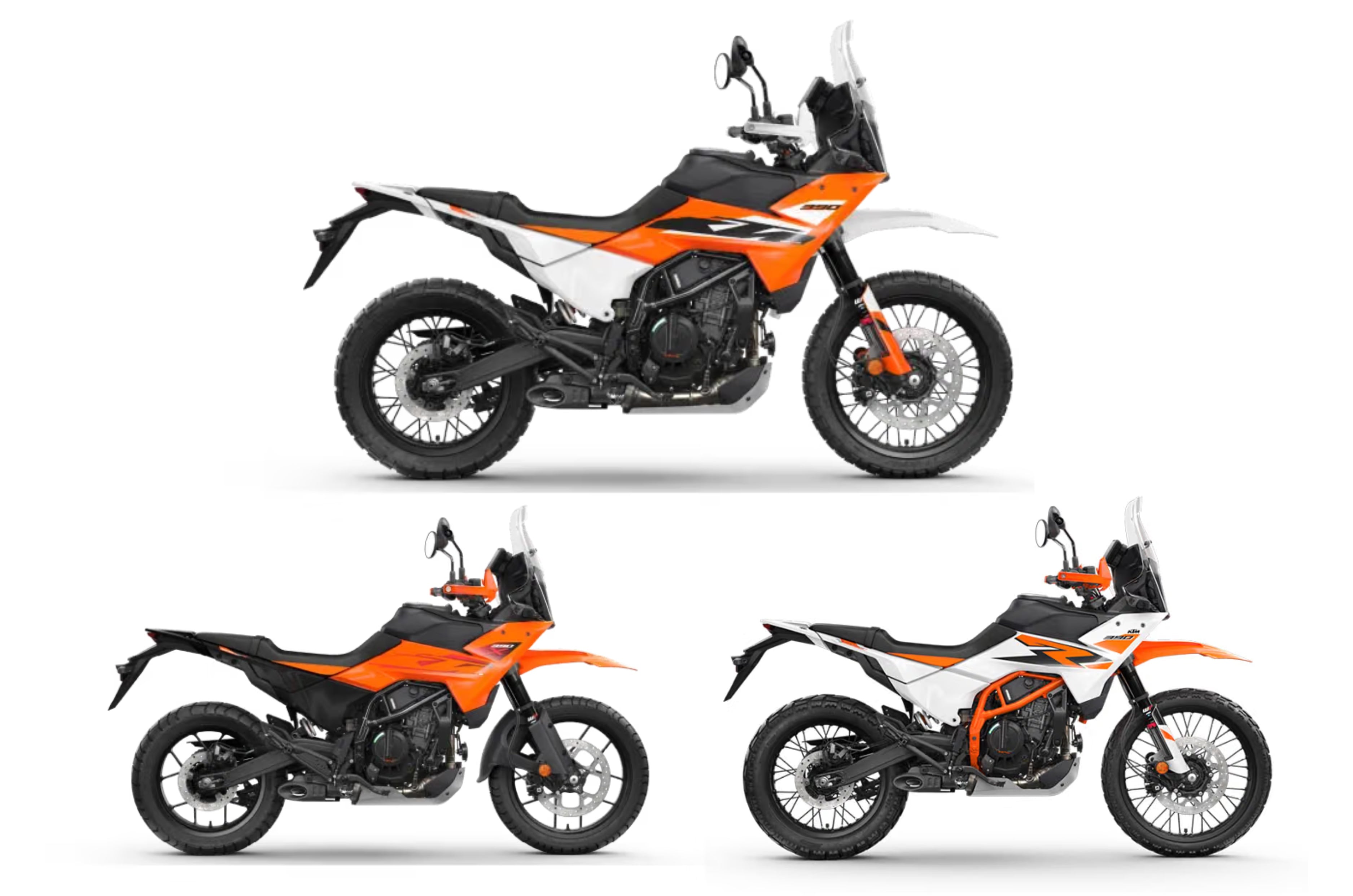
Inside render showing the KTM 390 Adventure S, R, and X in clockwise direction

These are the full scale 399cc engine versions of the KTM Adventure. They all make 46hp power and 39Nm of torque (4.5hp and 5.5Nm more than the 350cc engine). Fuel tank capacity is identical to the 350cc Adventure at 14.5 litres, as is the seat height at 825mm. However, the kerb weight varies across variants; the X weighs 181kg, S 182kg, and the R is the heaviest at 183kg.

The X gets an identical feature set as the 350cc Adventure, with the S stepping that up to adjustable front and rear suspension along with 21/17 front/rear wheels with tubeless spoke rims. The more off-road focussed R does not get the tubeless spoke rims, swaps the rear 17-inch wheel for an 18-inch one and runs on Mitas Enduro front and rear tyres.

The KTM 390 Adventure X is the most affordable of these three at Rs 3.45 lakh, with R taking a big step to Rs 3.86 lakh. The S is the most expensive of the bunch at Rs 4.04 lakh.

1. BMW F 450 GS

Starts at Rs 4.95 lakh
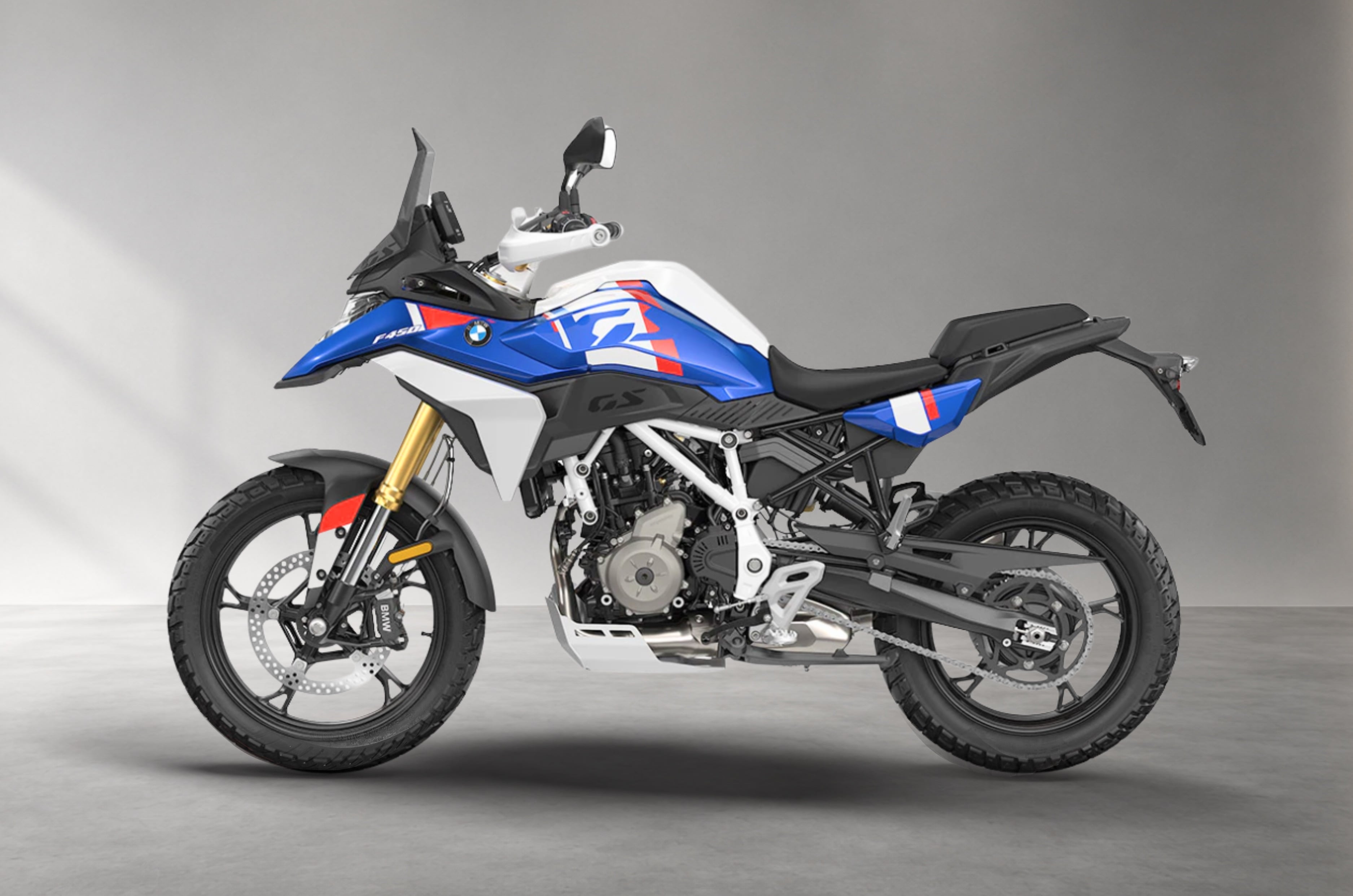
Inside render showing the BMW F 450 GS's top GS Trophy variant

BMW launched the F 450 GS in April this year at Rs 4.70 lakh and increased the prices for the model recently. The motorcycle gets a 420cc parallel-twin engine with 48hp of power and 43Nm of torque. The fuel tank capacity is 14 litres and the kerb weight is second lightest at 178kg, but the standard seat height is 845mm (the tallest in this list!).

Standard features are an 6.5-inch TFT display, three ride modes, slip-and-assist clutch, traction control, ride modes, and heated grips. On the higher variants, BMW offers a bi-directional quickshifter, an integrated windshield, ERC (Easy Ride Clutch), and adjustable suspension.

The BMW F 450 GS starts at Rs 4.95 lakh for the Base variant, Rs 5.15 lakh for the Exclusive variant, and Rs 5.60 lakh for the top GS Trophy variant.

BMW teases new roadster launch in October

BMW teases new roadster launch in October
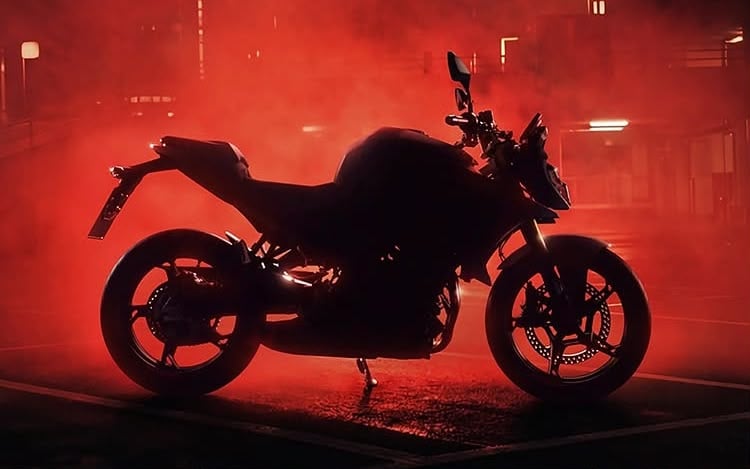
An outside, dark image teasing BMW's new roadster, expected to be called the F450R

BMW launched the F 450 GS in April this year, and it looks like they’re not stopping there for their entry-level motorcycles. They’ve just teased another motorcycle launch for October 1 on their social media page, and it could very well be a roadster based on the same platform as the F 450 GS.

  1. BMW’s new roadster likely to be called the F 450 R
  2. Likely to slot in below the F 450 GS
  3. To be revealed on October 1

New BMW roadster motorcycle

What can we expect on the G 310 R’s replacement?

Previously BMW 310’s were the brand’s entry-level offerings in India, with both the G310R and G 310 GS discontinued now. The track-focused G 310 RR that still exists is a joint project with TVS. In April, the German manufacturer debuted the F 450 GS built on a completely new platform, with a 420cc twin-cylinder engine with 48hp and 43Nm of torque, intended to be an adventure tourer. With a segment-first ERC (Easy Ride Clutch) and a 178kg kerb weight, the F 450 GS turned the spotlight onto itself quite successfully.

Now, BMW appears to be expanding the platform with a naked roadster motorcycle and it likely will share the engine with the F 450 GS, if not the entire platform. If we go by BMW’s naming convention, this should be called the F 450 R. While the image doesn’t reveal a lot of details about the motorcycle, we can see that it has a USD fork. The F 450 GS has a 43mm USD fork with 180mm travel, but this being a roadster, we can expect the travel to be reduced. The same should also apply to the monoshock. The GS Trophy variant of the F 450 GS offers adjustability at both ends, but it remains to be seen whether BMW extends the same kind of flexibility to the new bike as well.

BMW had recently increased the F 450 GS prices and it now starts at Rs 4.95 lakh, and it remains to be seen where this new motorcycle will slot in. For context, the Aprilia Tuono 457 Special Edition – this one’s would-be direct rival – is priced at Rs 3.99 lakh. The KTM 390 Duke R, on the single-cylinder side, is priced at Rs 3.45 lakh. BMW has mentioned the launch to be on October 1, 2026 5:30pm IST and we should get more details leading up to then.

Bentley Torcal revealed ahead of mid-2027 India launch

Bentley Torcal revealed ahead of mid-2027 India launch
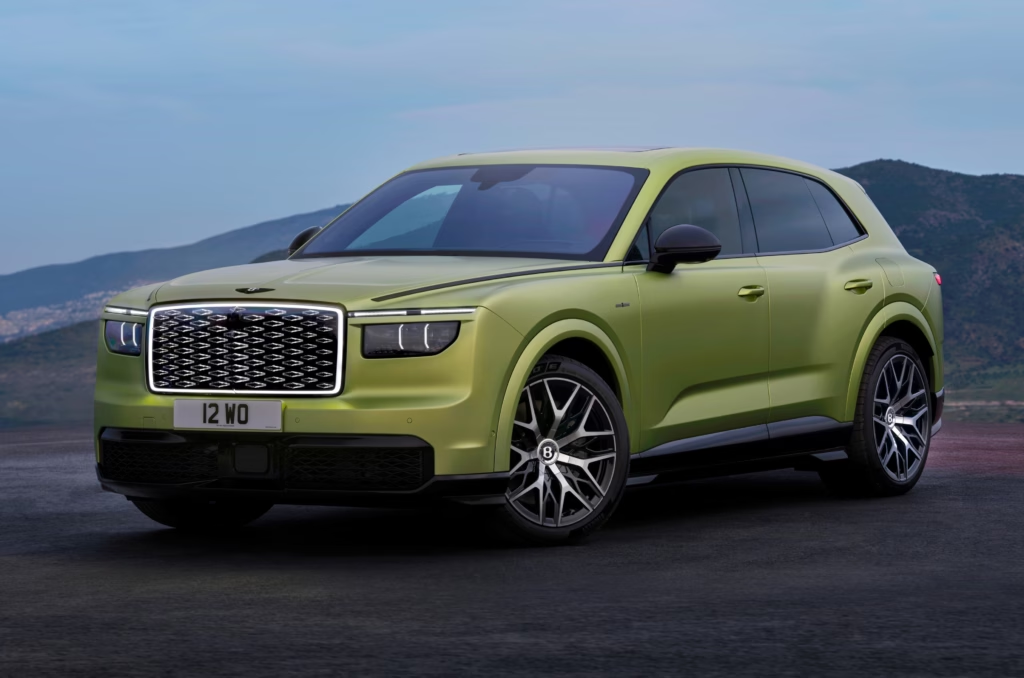
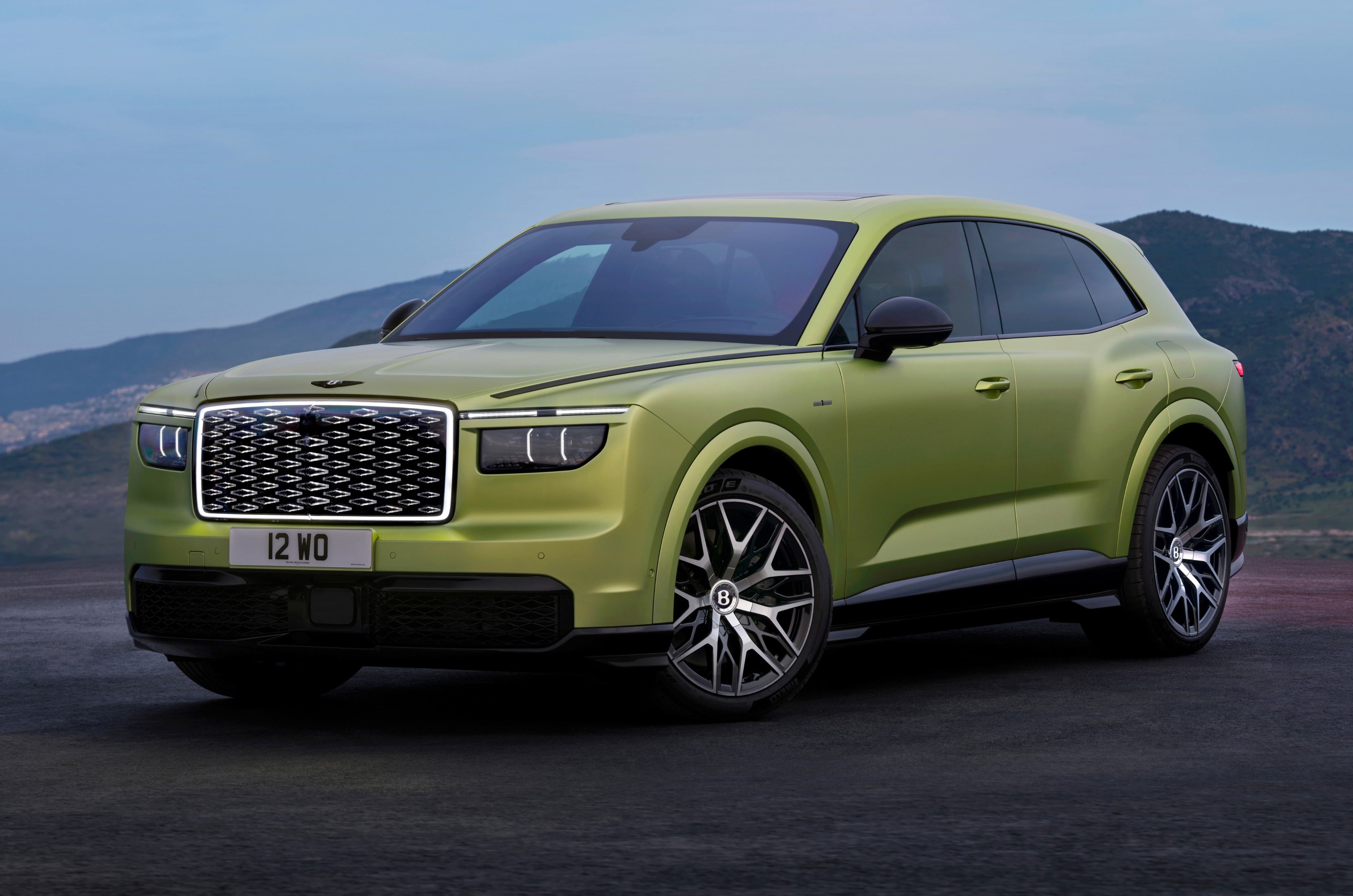
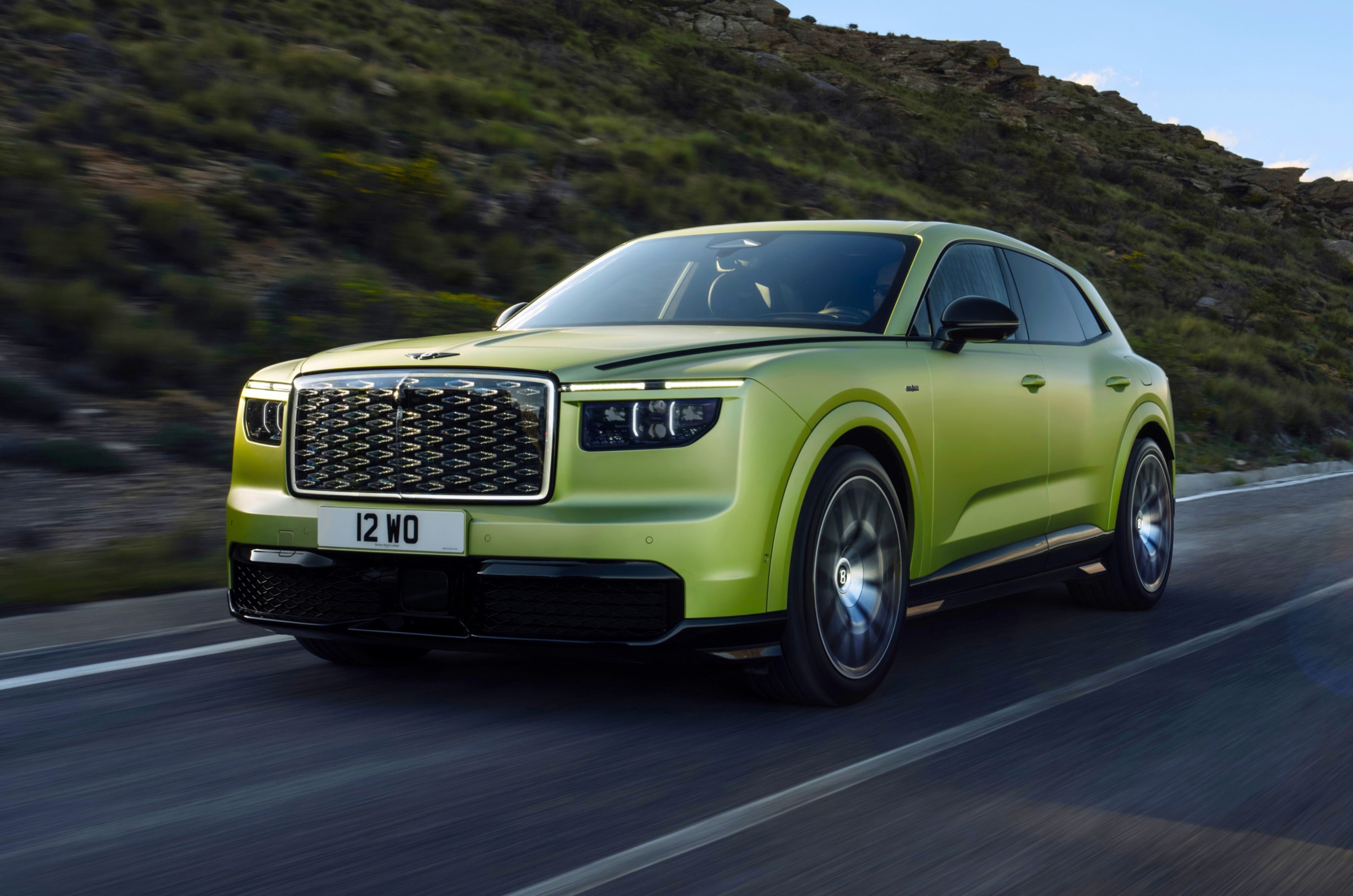
Bentley-Torcal-front-quarter-static

For 107 years, Bentley has been defined by what sits under the bonnet: supercharged Blowers, mighty W12s and thundering V8s. The Torcal has none of that. It’s Bentley’s fourth model line and its first electric car. It slots in below the Bentayga, and it will never get a petrol engine. Bentley also calls it the template for every Bentley that follows, whatever the powertrain.

Like many modern Bentleys, the Torcal is named after a natural wonder. El Torcal de Antequera is a dramatic landscape of weathered limestone in southern Spain. The car is also the first Bentley to wear the brand’s redesigned, modernised emblem, which was revealed last year. That leaves one question that matters. Take away the engine, and is it still a Bentley? We haven’t driven it yet, so the full answer will have to wait. After a close look at the First Edition, the fully loaded launch car, there’s plenty to go on.

Bentley Torcal exterior design: light is the new chrome

Designing an EV for a brand with this much pedigree was never going to be easy, but Robin Page’s in-house team at Crewe has done a fine job. The Torcal sits 50mm lower and is 120mm shorter than a standard-wheelbase Bentayga, yet it looks the better proportioned of the two. The wheelbase is just over three metres, the car is about five metres long, and the overhangs are short. Bentley’s signature ‘endless bonnet’ does much of the visual heavy lifting.

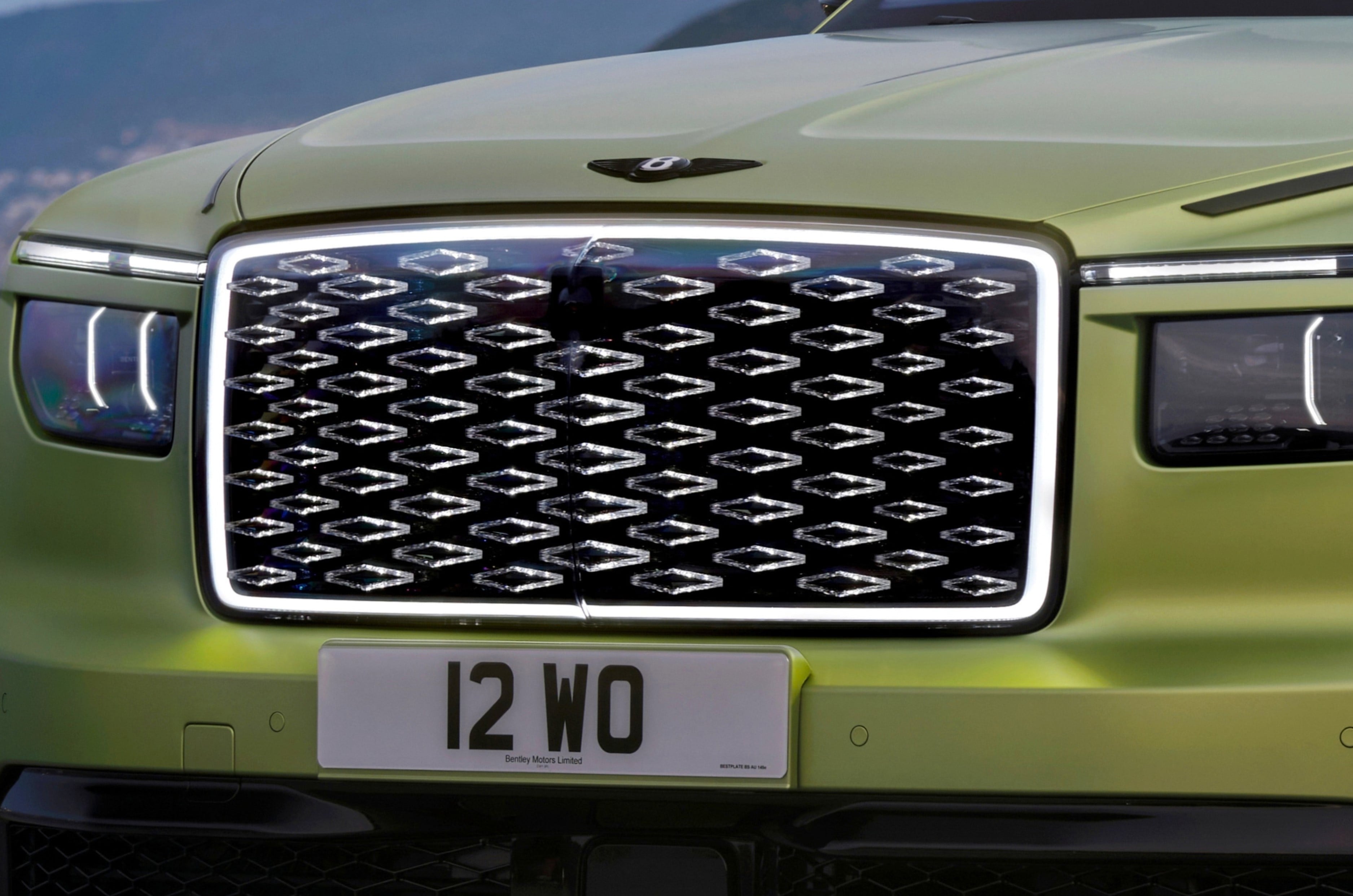
The Torcal gets a clear polycarbonate panel with diamond-like elements for a grille. 

An EV doesn’t need a grille for cooling, but Bentley argues that a car without one is faceless. The Torcal’s solution is an illuminated one with crystal-effect, diamond-like elements set behind a clear polycarbonate panel. It’s the car’s signature piece, and it will look spectacular filling someone’s rear-view mirror. The face echoes the Continental T, reinterpreted through slim, high-tech lighting.

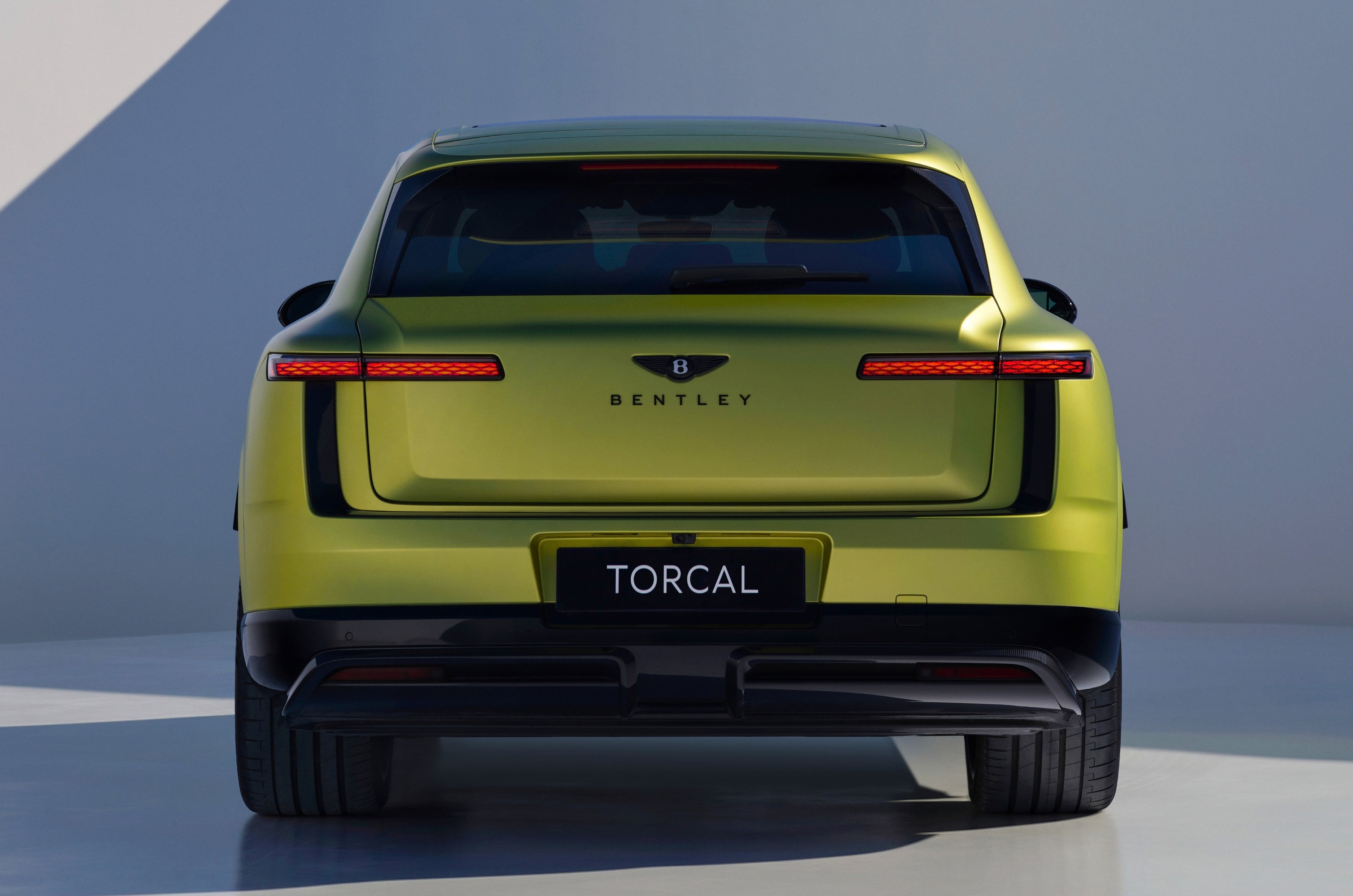
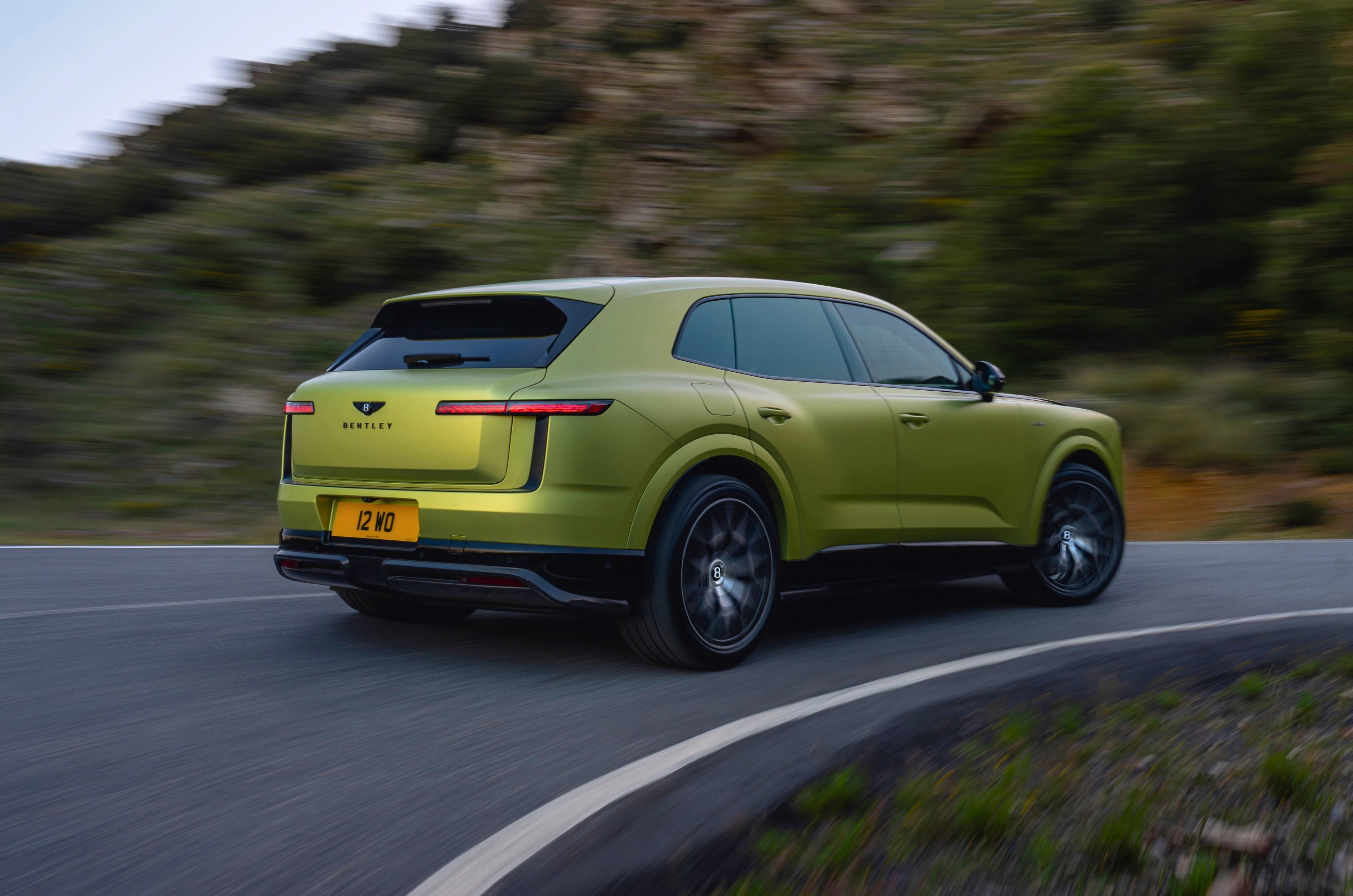
The flanks are deliberately free of fussy creases. The cabin tapers towards the rear so the body can swell over the back wheels, a look the designers call the ‘resting beast’. At the back, Bentley claims are some of the slimmest tail-lamps in the industry. A U-shaped motif ties them together and emphasises the car’s width.

U-shaped motif at the rear ties the tail lamps together. 

Our car rode on 22-inch wheels. The core car gets 21s as standard, and India-spec cars may well get the smaller, higher-profile rim. Other neat touches include a charging flap that slides open when you wave a hand over it, and a 90-litre frunk under that long bonnet. The 460-litre boot isn’t especially generous, and there’s no spare wheel, only a puncture repair kit. On Indian roads that could be an issue, though most owners will simply leave a flat to the chauffeur to fix 

Bentley Torcal interior: Screens, with restraint

The cabin is completely new, and the tricks start before you’re inside. All four doors are powered and radar-controlled. The driver shuts theirs by pressing the brake pedal, and passengers can close theirs simply by buckling up.

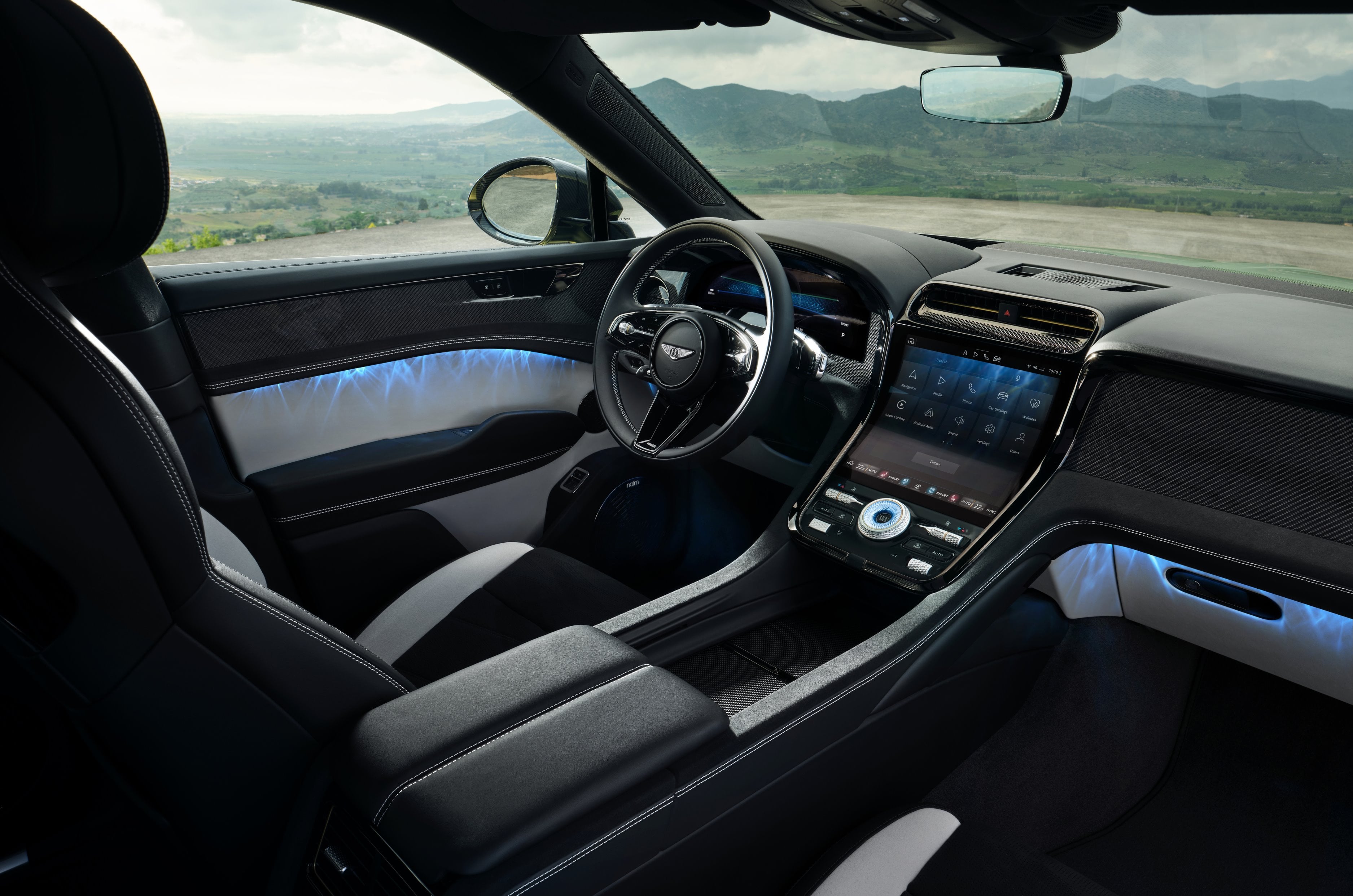
The first thing you notice is that Bentley hasn’t turned the Torcal into an iPad showroom. The centrepiece is the curved OLED centre screen. It doesn’t perch on the dash like a tablet; it sweeps down and flows into the centre console as one continuous form, and nothing else in the class looks quite like it. The OLED panel gives deep blacks and rich colours, and the curve brings every corner of the display within easier reach. Crucially, physical controls haven’t been binned. The switches have a beautiful knurled finish and satisfying, precise clicks, and purists will love them.

A curved OLED touchscreen infotainment is the centrepiece of the interior. 

There’s one gripe. The direction of the front air vents is set through the touchscreen, a trend creeping into many luxury cars, and a physical slider would have been far nicer. Otherwise, we haven’t seen any car balance digital and physical controls better.

The tech runs deep. A facial-recognition camera in the rear-view mirror identifies the driver and loads their seat, steering and ADAS settings. An augmented-reality head-up display projects navigation arrows and hazard markers into the driver’s line of sight.

Curated experience

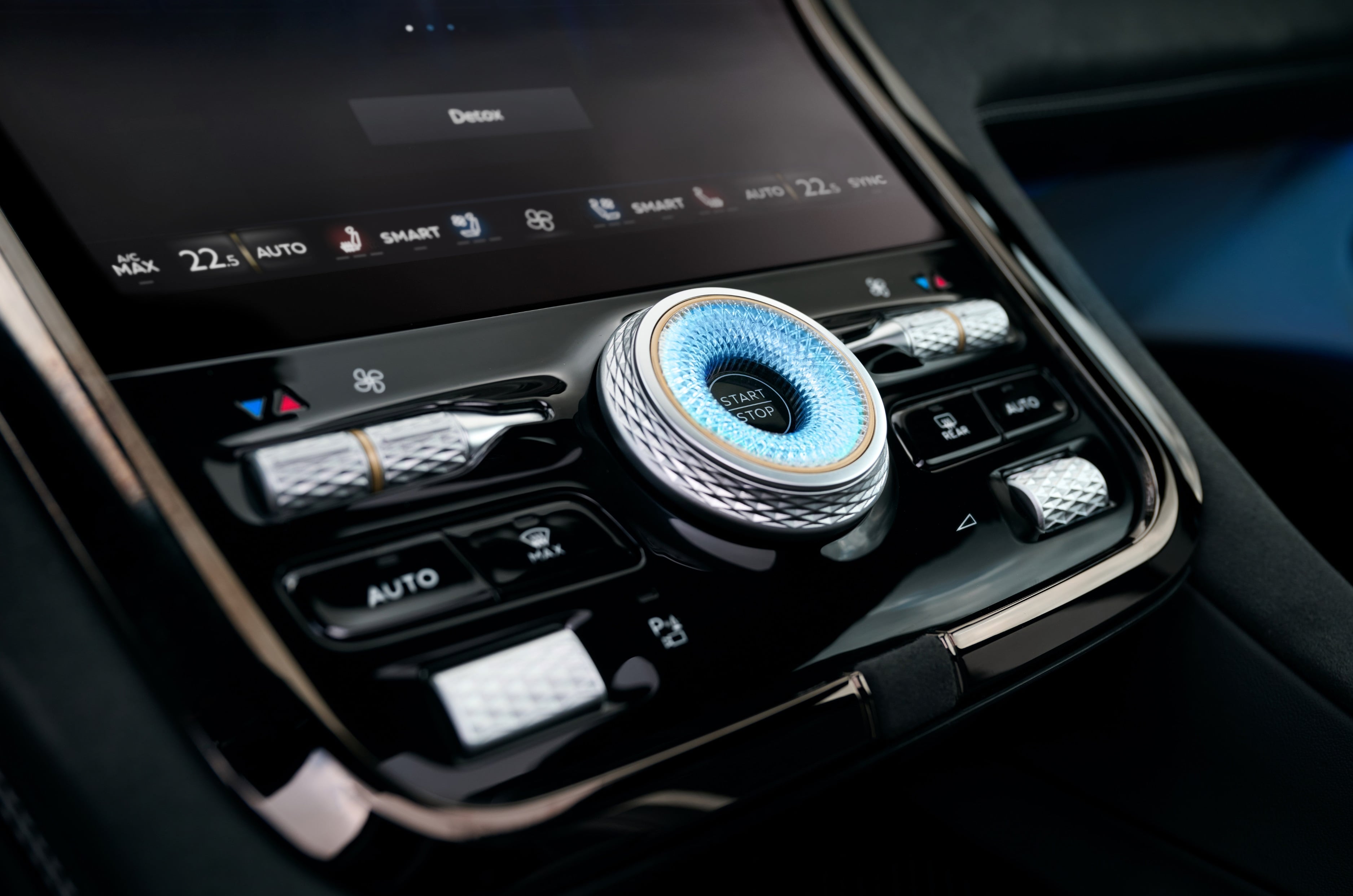
Twist the rotary collar around the starter button and you cycle through four Experience Modes. Each one changes the cabin’s lighting, sound, climate and displays as well as the car’s dynamics.

Rotary dial around the starter button can be used to cycle through four Experience modes. 

Sport bathes the cabin in blue rather than the expected red. Bentley’s reasoning is that red signals anger while blue signals focus, which makes it a better colour for driving fast. Bentley mode balances performance and comfort. Comfort mode calms things down and offers a ‘digital detox’ that hides all but essential information. Refresh ups the fresh-air flow and brightens the lighting.

Drumming up character

The hardest thing about an electric Bentley is making it feel like a Bentley. For traditional owners, that means sound. The 6¾-litre V8 is iconic, but it was never a perfect engine. Bentley’s view is that its flaws, like in humans, give it emotion and character. So rather than synthesising a flawless digital imitation, Bentley recorded real musicians on drums, viola and bass guitar. The result is the ‘Dynamic Symphony’, complete with tiny imperfections. It responds to torque demand and speed, grows louder in Sport, and can be switched off entirely. 

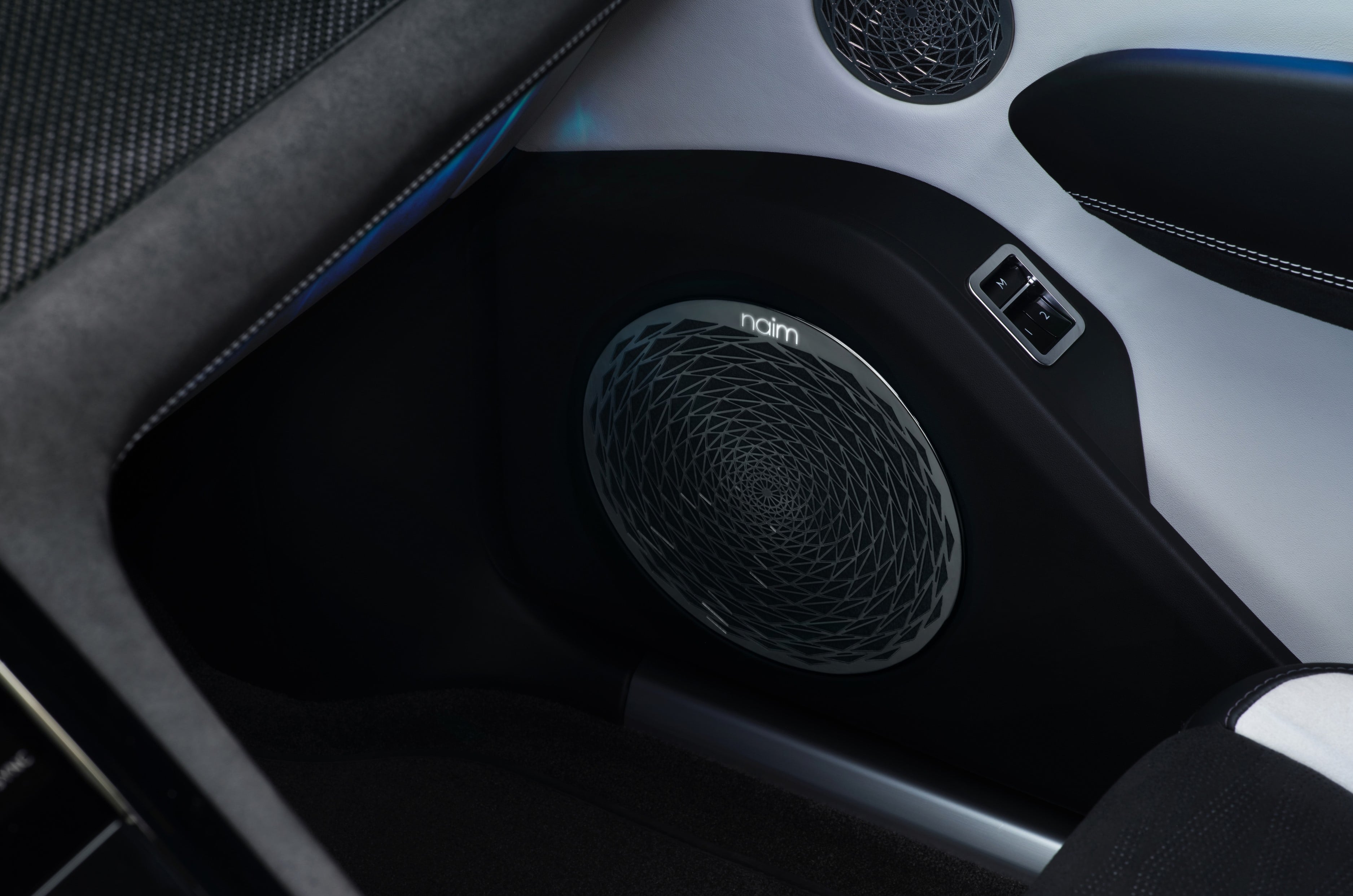
Optional Naim audio brings 28 speakers with Dolby Atmos 7.1 

The attention to sound goes further. The indicator tick is a recording of a hammer striking leather in Bentley’s upholstery workshop, and the touchscreen chime comes from a crystal glass. Standard audio is a 620W, 16-speaker system. The Naim option runs to 1,780W and 28 speakers, with headrest speakers, seat shakers and Dolby Atmos 7.1 

Material world

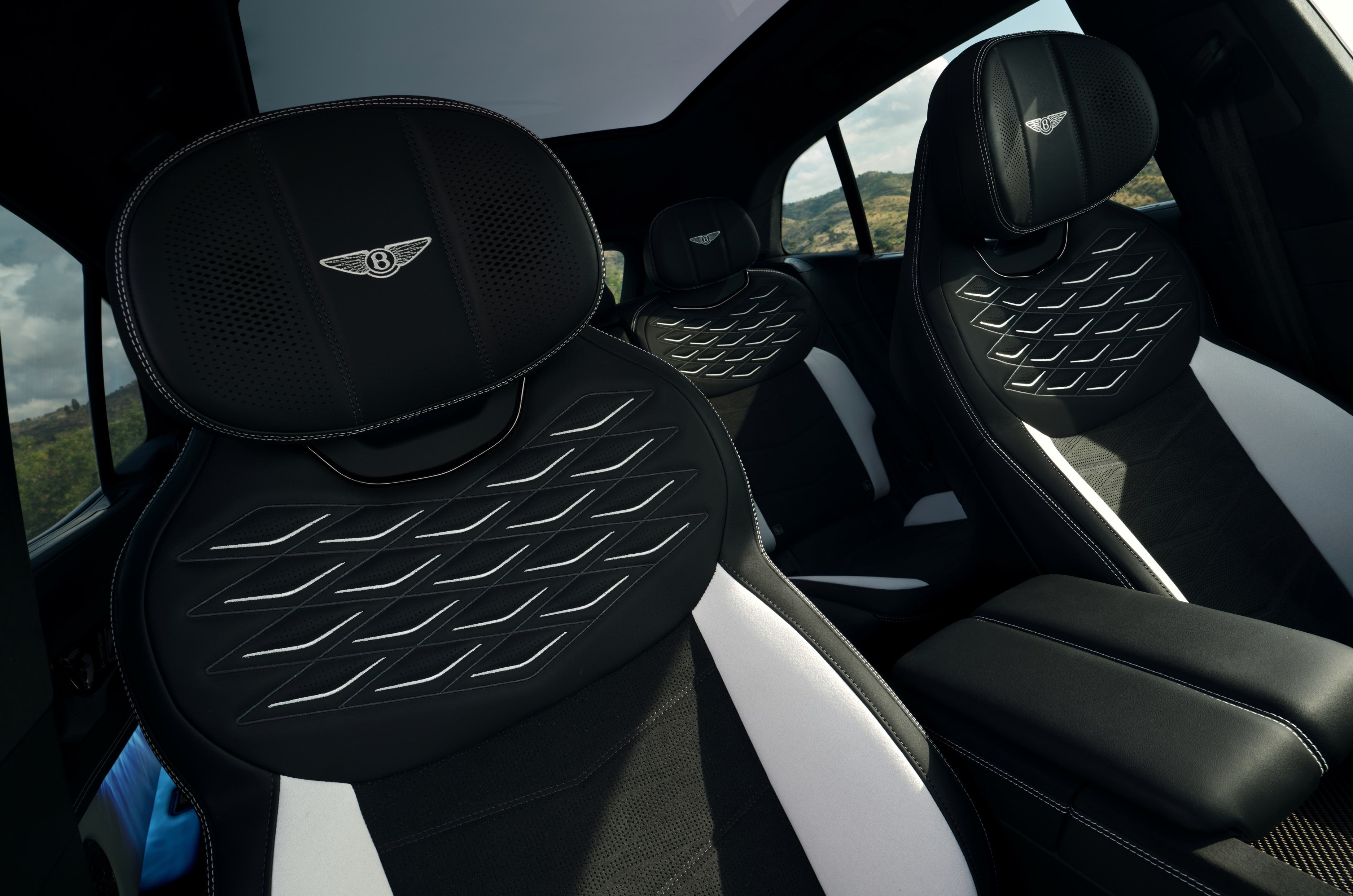
Materials are traditional Bentley, pushed further. There are wood veneers less than a millimetre thick, crisp aluminium and a deep piano black. Leather comes in 15 shades. The real headline is the world’s first 100 per cent Merino wool automotive fabric, developed with Somerset weavers Fox Brothers.

Scope for personalisation is vast, with 15 different shades just for the leather. 

New Mulliner finishes include Ombré Walnut, which presses up to 1,000 layers of walnut off-cuts and recycled paper into a veneer that fades from black to smoke. Sunburst Aluminium reinterprets the engine-turned dashboards of old Bentleys. Overhead, the Frosted Diamond sunroof uses switchable glass, so you decide how much light floods in. The scope for personalisation is vast. A second car we saw, trimmed in lighter upholstery with far more brushed aluminium, felt like a different interior altogether.

Bentley Trocal back seat experience 

Legroom and headroom at the back are quite decent. 

The rear seat matters most for Indian buyers, many of whom will be chauffeured. It’s impressive for a car smaller than a Bentayga. Under-thigh support is genuinely good, which is rare in an EV, where the battery usually pushes the floor up. Legroom and headroom are decent, though this is ultimately a car to be driven.

The rear climate vents get the physical controls the front vents lack. There are heated and cooled seats, and three USB-C ports, one of them rated at 100W for charging a laptop. The rear bench is also the first in a Bentley to power-fold.

Bentley Torcal specs, battery and range 

The Torcal gets a 113kWh battery for a claimed WLTP range of 600km. 

The Torcal rides on the PPE platform that underpins Porsche’s Cayenne Electric. The Cayenne tops 1,100hp in its most potent form, but Bentley has deliberately stopped short. The flagship makes 888hp and 1,350Nm, the most torque of any Bentley ever and has launch control which I doubt will ever be used!  That’s enough to take a roughly 2.7-tonne SUV from 0-100kph in 2.9 seconds. Bentley’s research found that most customers find anything more violent uncomfortable.

Two permanent-magnet motors draw from a 113kWh (net), 800V battery, which carries a 10-year, 100,000-mile warranty. Claimed range is 600km WLTP. This is a continent-crosser, so charging speed was a priority. On a 400kW charger, a 10-80 per cent top-up takes 16 minutes, and around 160km of range goes in during a seven-minute coffee stop. India currently has no such high-speed chargers, yet. 

It also gets fully active suspension and rear-wheel steering. 

The chassis is Bentley’s most advanced yet. Fully active suspension replaces anti-roll bars altogether, and five degrees of rear-wheel steer shrink the turning circle to 11.1m. Carbon-ceramic brakes with 440mm front discs are optional. The ADAS suite uses 25 radars, sensors and cameras. It can reverse the car along the last 50 metres of its route, and it can park itself in a designated space up to 200 metres away.

Bentley Torcal India launch plans 

The Torcal arrives in India in the second half of 2027. It’s a smidgen smaller than the Bentayga but will be substantially pricier, because EVs don’t get the same customs-duty benefit under the new UK-India FTA. Expect around Rs 4.5 crore, ex-showroom. Is it worth it? We’ll tell you once we’ve driven it. Standing still, at least, the Torcal makes a convincing case that a Bentley without an engine is still a Bentley.

MG Hector Tomahawk EV: What’s in a name?

MG Hector Tomahawk EV: What’s in a name?
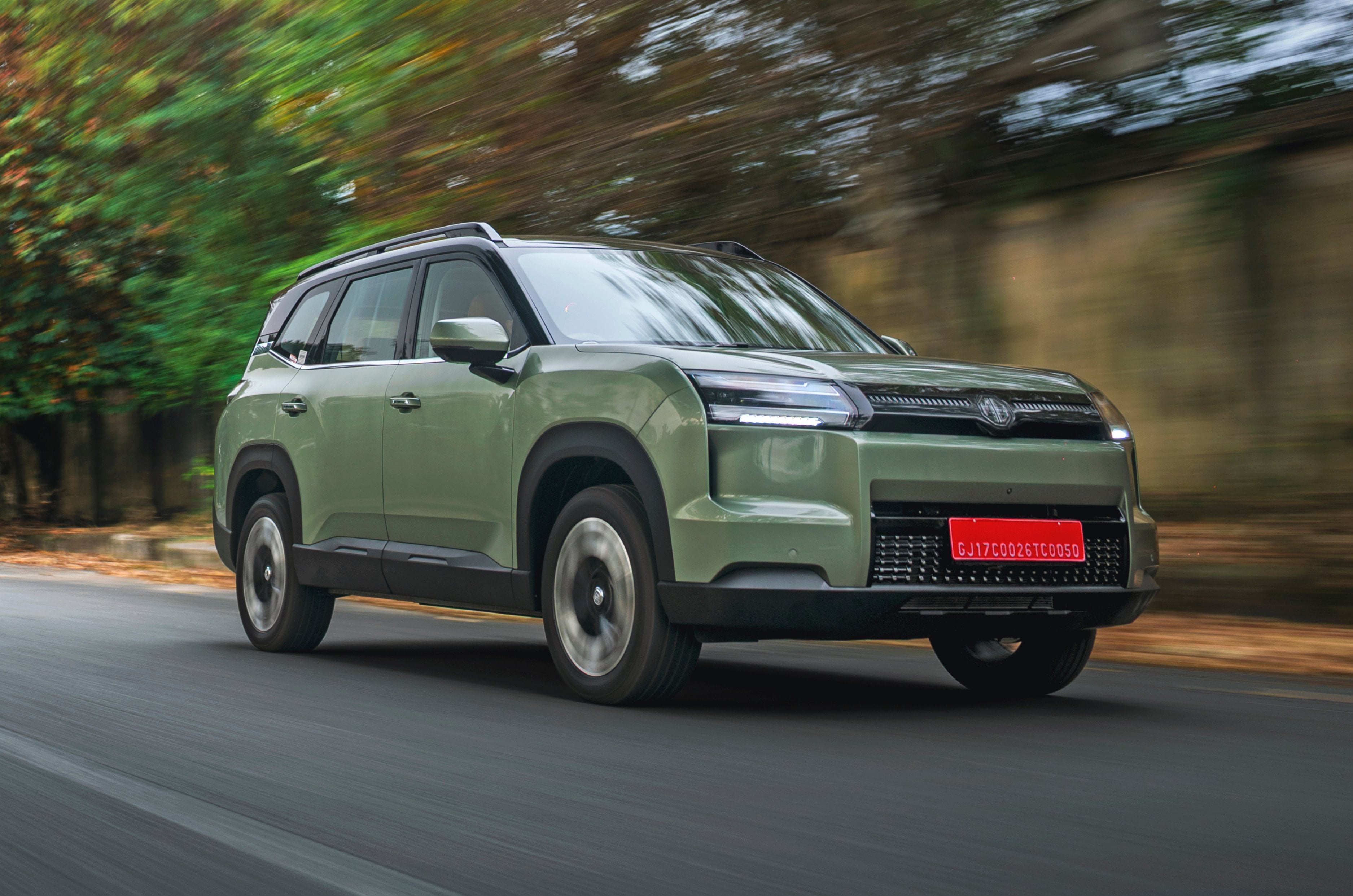
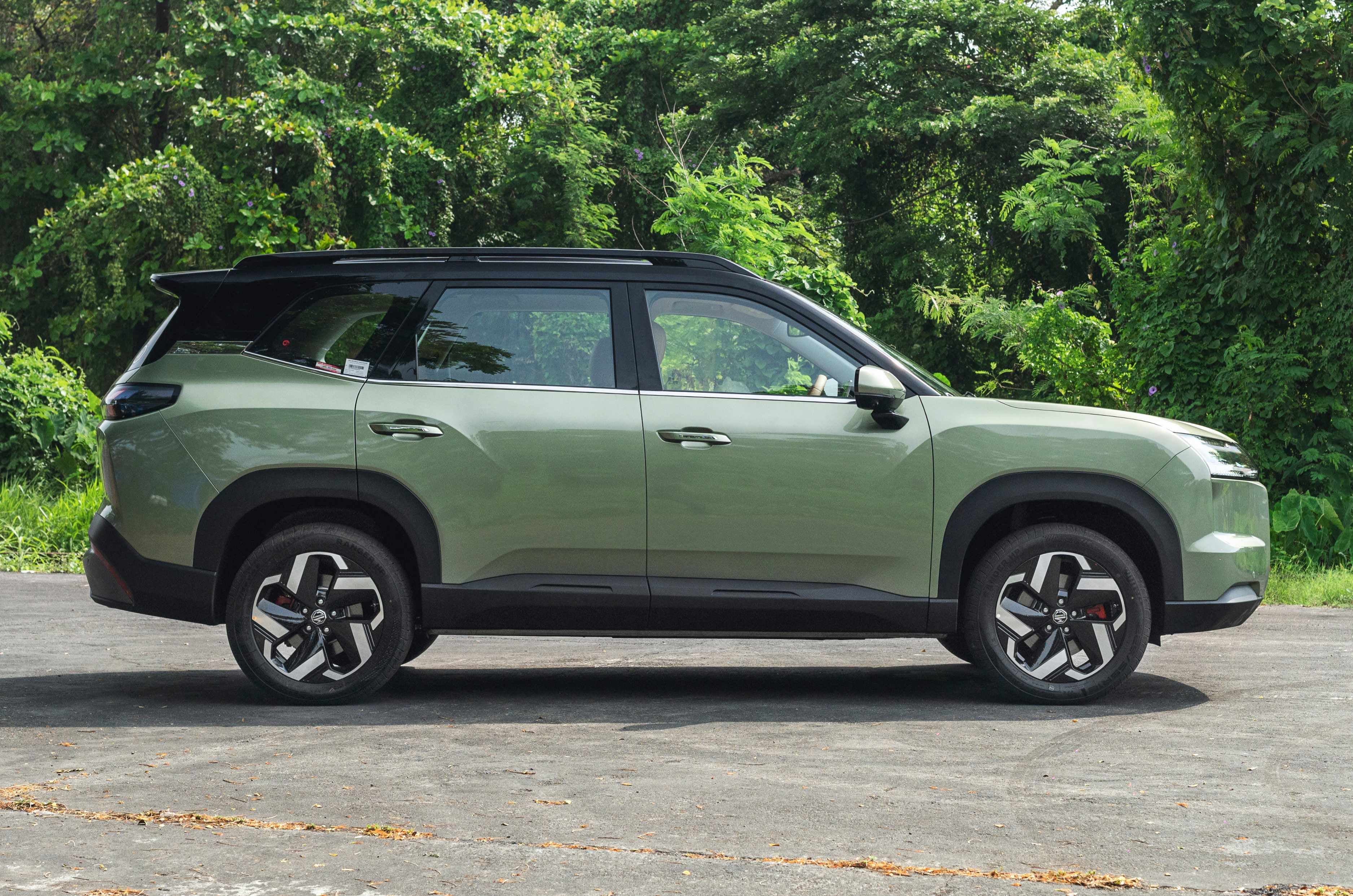
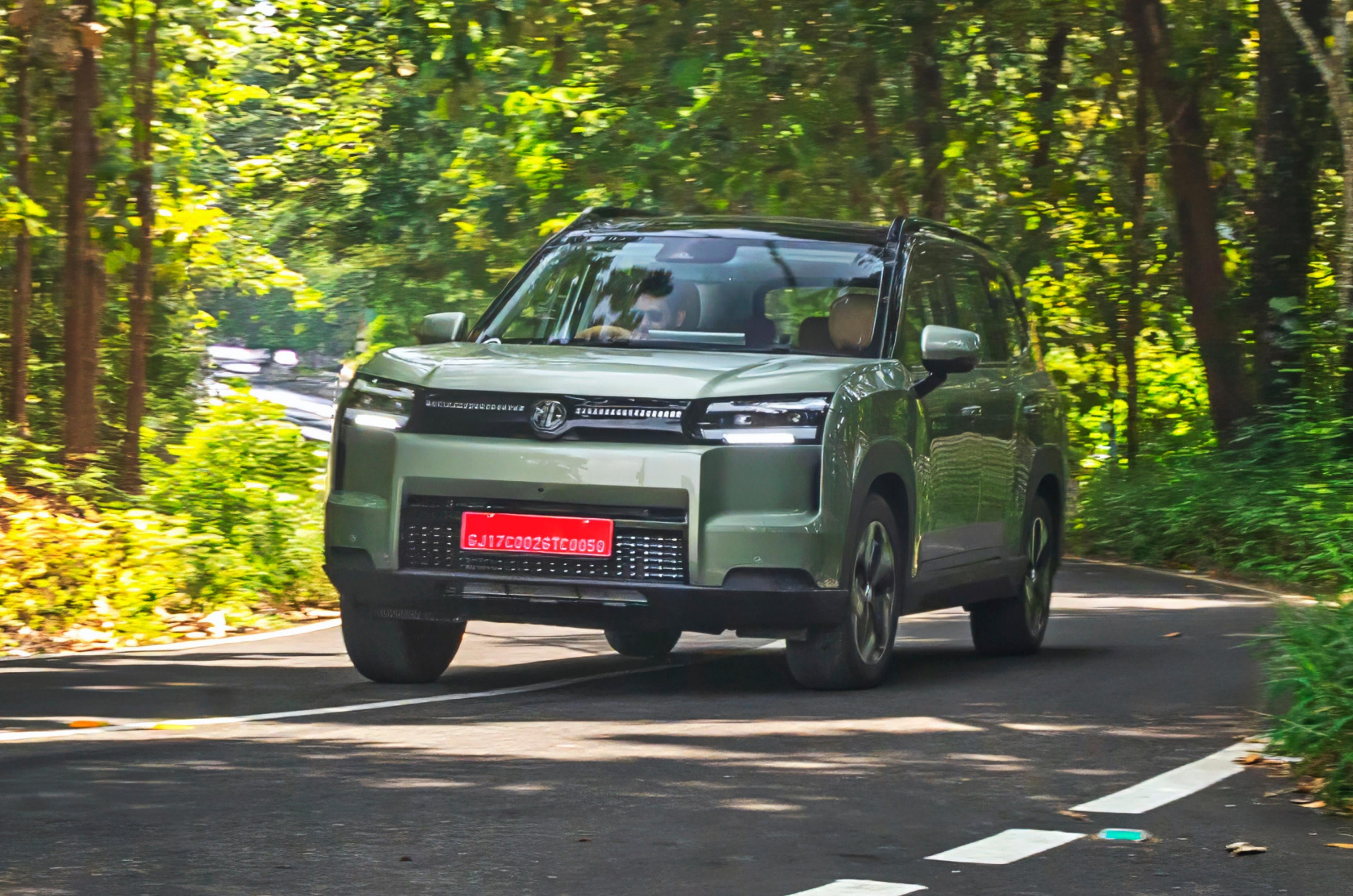
MG Hector Tomahawk EV front quarter tracking

MG’s newest SUV has been christened the Hector Tomahawk, but despite the name, it shares nothing with the ICE-powered Hector we’ve known since 2019. The Hector Tomahawk EV and PHEV are the first models on MG’s ADAPT architecture, which will eventually spawn strong hybrids and range-extender hybrids. We drove the Tomahawk EV in sunny Kochi to see how it stacks up in the ever-growing segment.

MG Hector Tomahawk EV Exterior Design and Engineering – 6/10

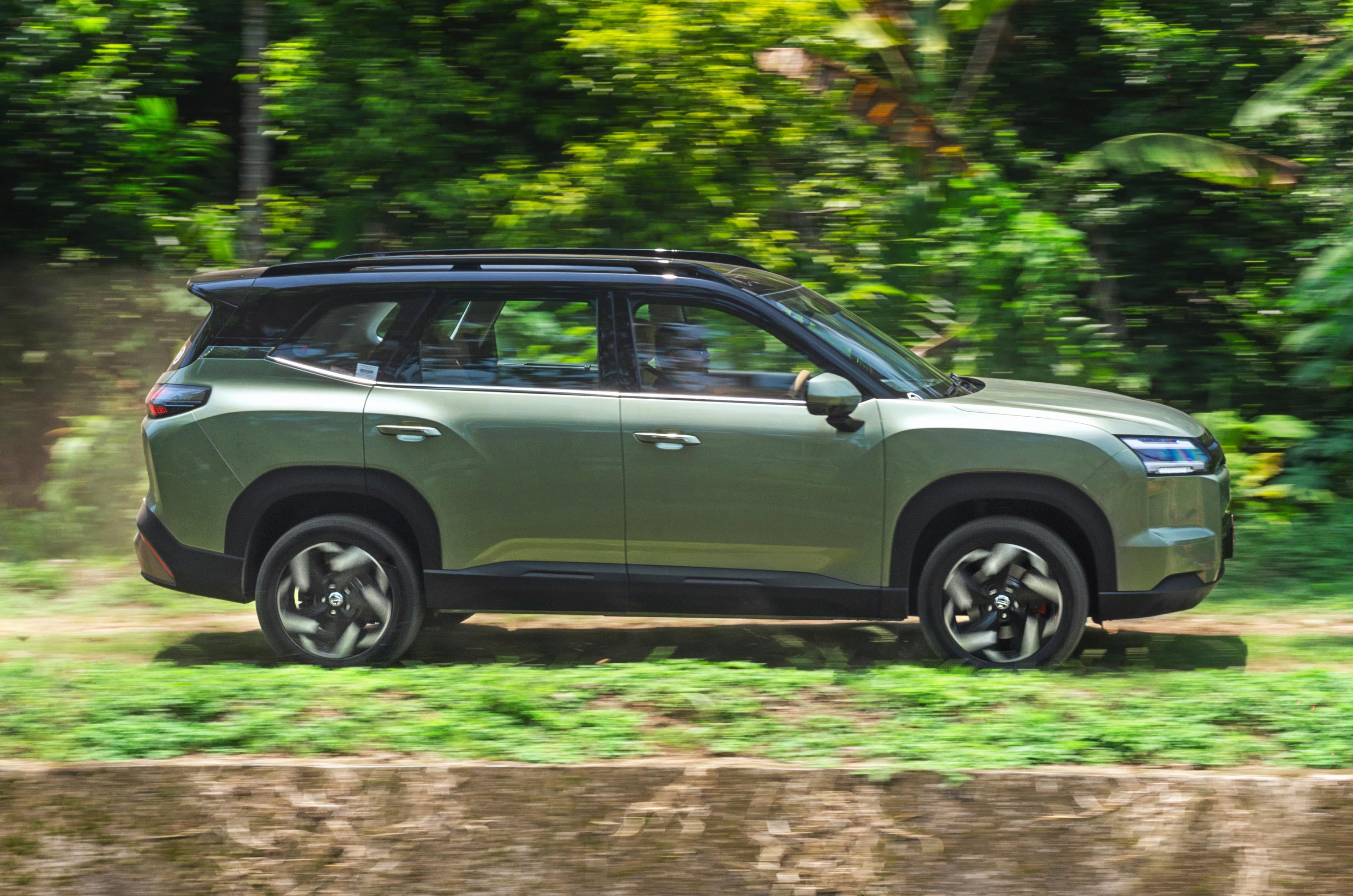
Let’s talk dimensions first. At 4,745mm long, 1,850mm wide, 1,770mm tall and with a 2,810mm wheelbase, the Tomahawk is larger than the Mahindra XEV 9S in all areas except width. Ground clearance, at 230mm (measured to battery), is also class-best. However, these numbers don’t translate to a particularly imposing stance. Instead, it straddles the line between an MPV and SUV.

Size doesn’t translate to an imposing stance; it straddles the line between an MPV and an SUV.

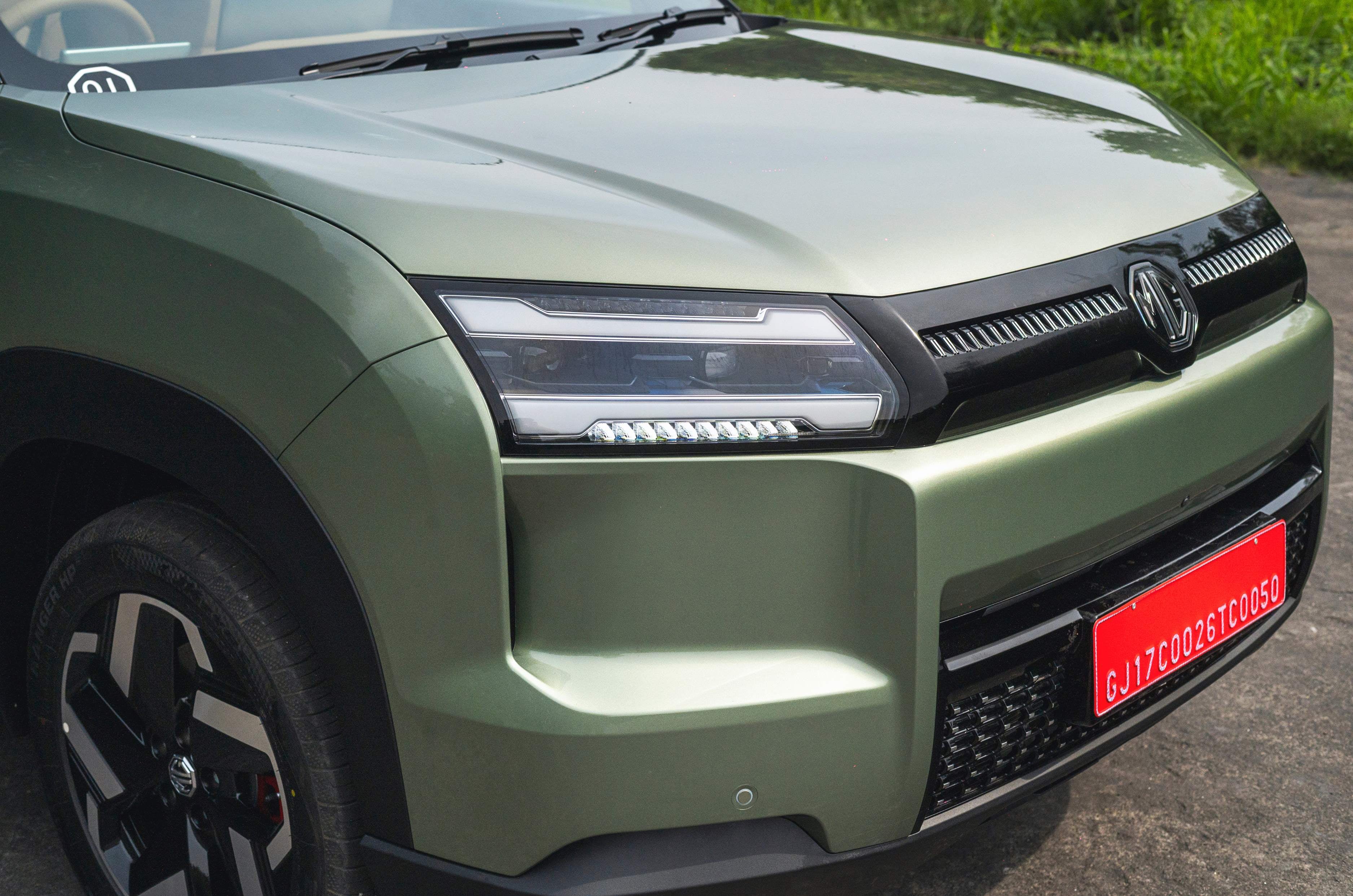
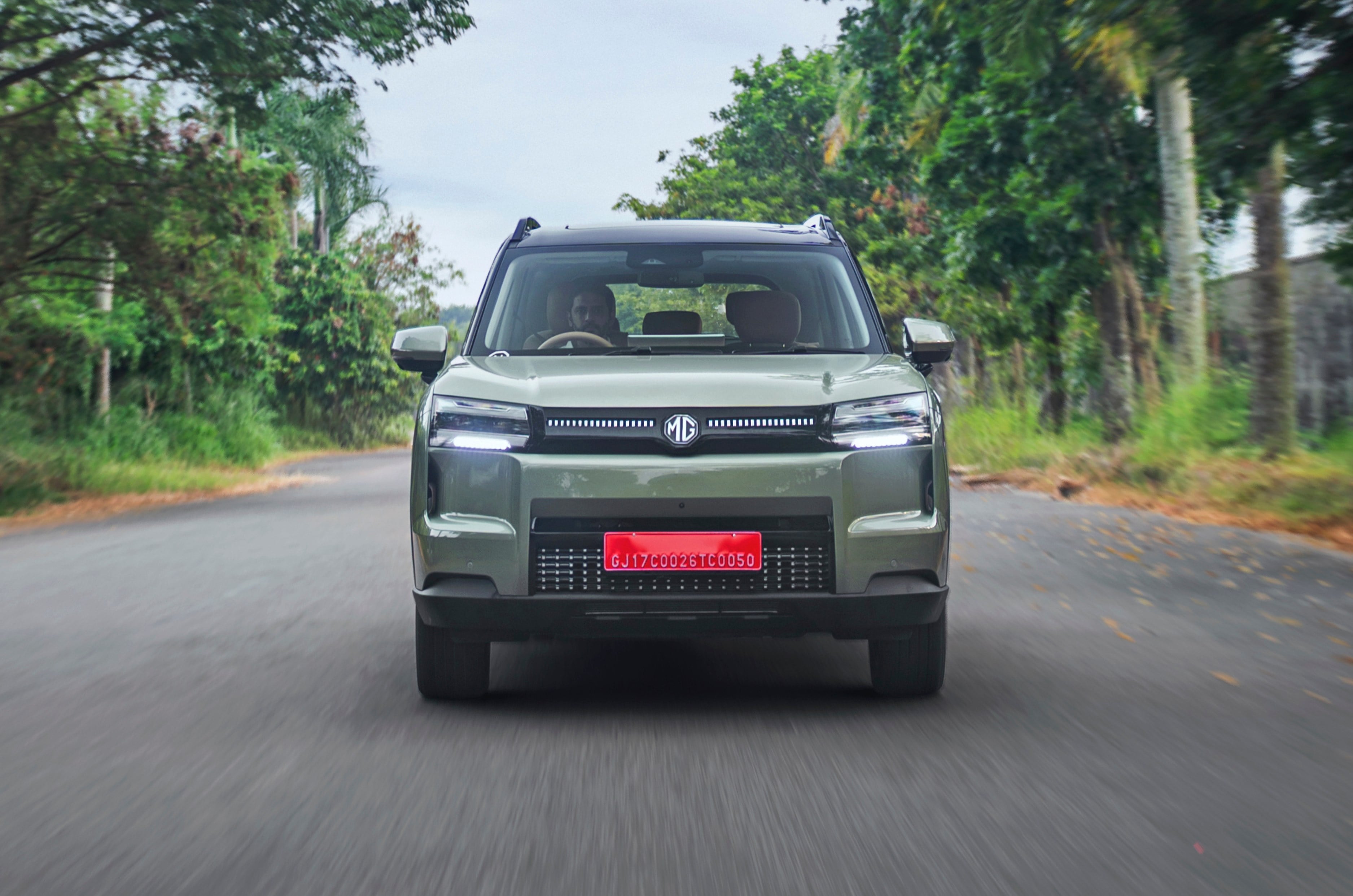
The design is clean and quite handsome, if a bit uninspiring. The front bumper is squared off with pass-through aero vents on the edges and chunky cladding lower down. Cooling requirements are met by slim slots in the centre section with some chrome detailing, while the conventional grille is blanked off and finished in gloss black. No light bar here, thankfully, but the MG logo does glow and is flanked by rectangular LED headlights with a subtle H-shaped light signature.

Large rectangular LED headlights have a subtle H in them; no light bar, but the MG logo glows.

In profile, it looks quite slab-sided, with sharp creases along the fenders and plastic wheel-arch cladding adding some definition. These, along with the chunky door cladding, attempt to give it a rugged appearance but are let down by 18-inch wheels that look a tad too small. No electric door handles here, just good old-fashioned pull types.

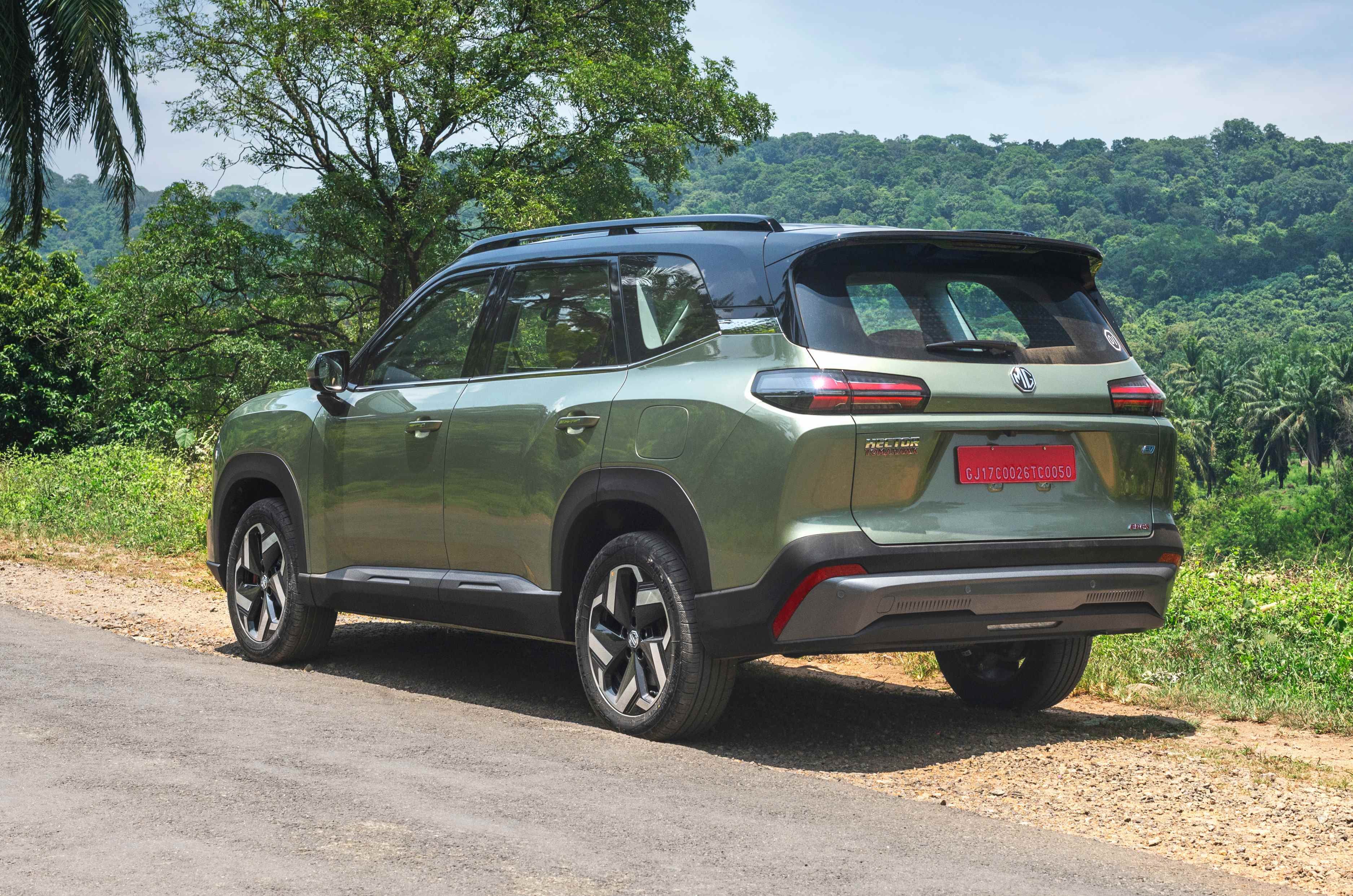
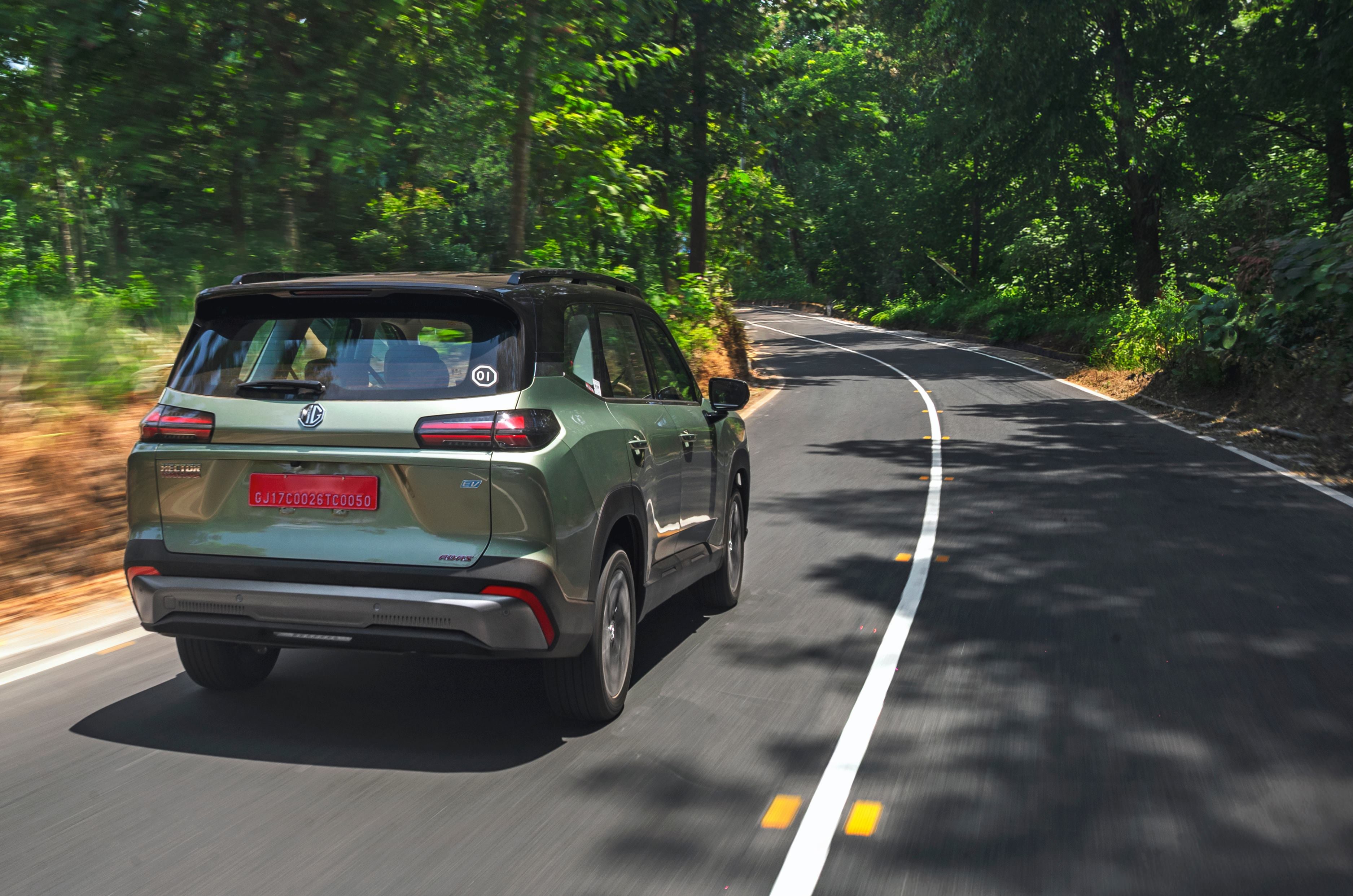
Further back are a set of intricate LED tail-lights that again resist the connected trend. MG’s love for badging is clear though, with four on the powered tailgate. Finishing things off nicely is a sculpted bumper with a grey trim piece and a centre-mounted reverse lamp. Overall, it’s a reasonably pleasing design, but it looks a tad dated and lacks the butch appeal of some rivals.

Overall styling is neatly done but somewhat uninspiring.

MG Hector Tomahawk EV Interior Space and Comfort – 8/10

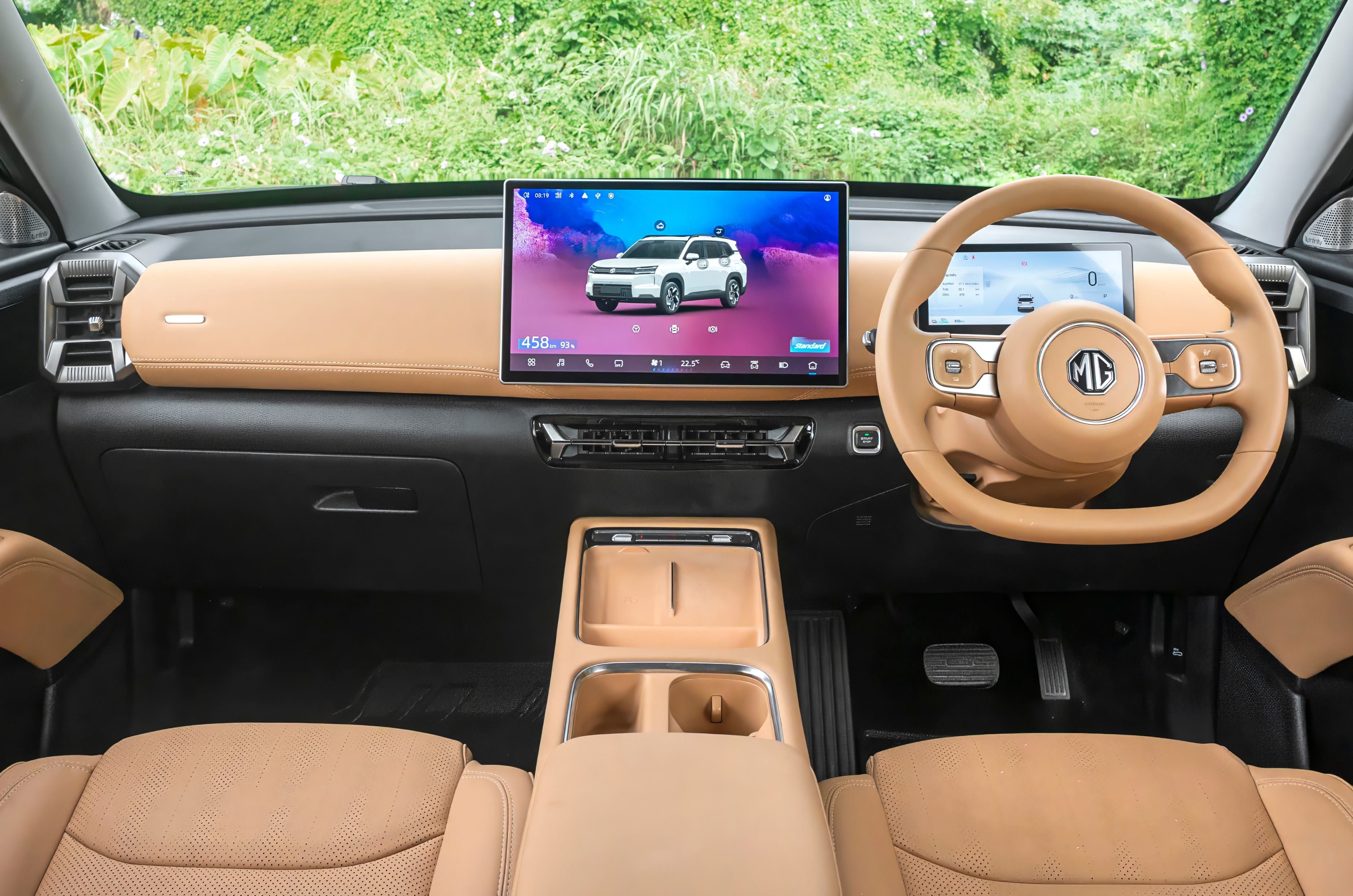
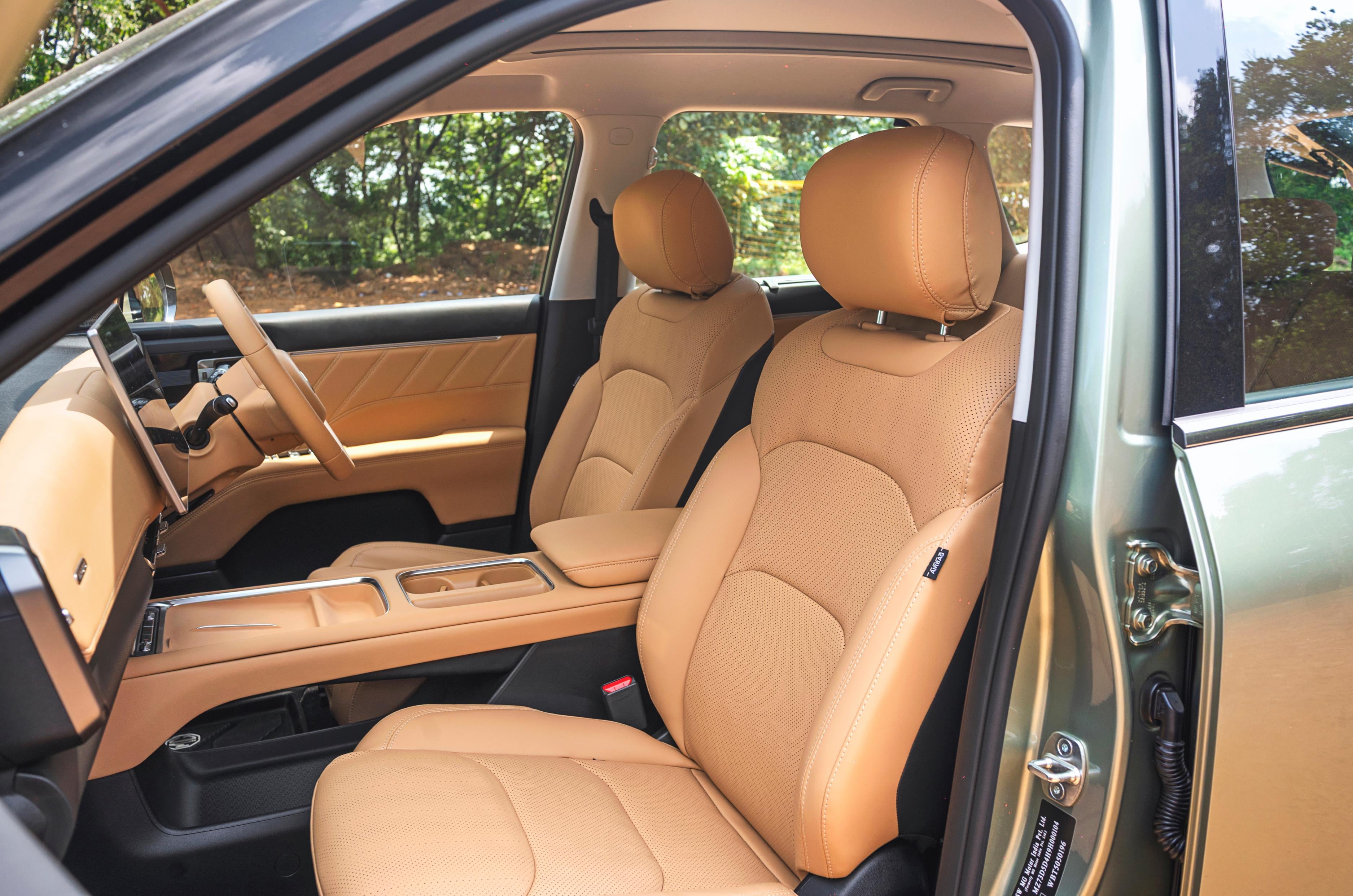
Inside, the dash features a familiar minimalistic layout with a large touchscreen front and centre. It looks premium and features soft-touch materials on the dash and doors, but lacks a certain wow factor, and the light tan colour palette might not be to all tastes. That said, the light tone and large windows do give it an airy ambience. Look hard, and you will find areas where fit and finish could be improved. The centre console in particular feels poorly textured and finished, which we were told is down to a supplier issue. Speaking of the centre console, the column-mounted drive selector frees up space here for a wireless charger, cupholders, multiple bins as well as a large pass-through cubby lower down, and the door bins are enormous too.

Minimalistic interior looks premium, but the light tan colour palette might not be to all tastes.

It’s easy to get into a comfortable and commanding driving position using the power-operated seats and reach-and-rake adjustment for the steering wheel. The seats themselves are wide, and despite the firm cushioning, they felt comfortable on our full day of driving. They are ventilated too, and the driver’s seat also gets a memory function.

Powered and ventilated front seats are wide and comfortable; driver’s seat gets a memory function.

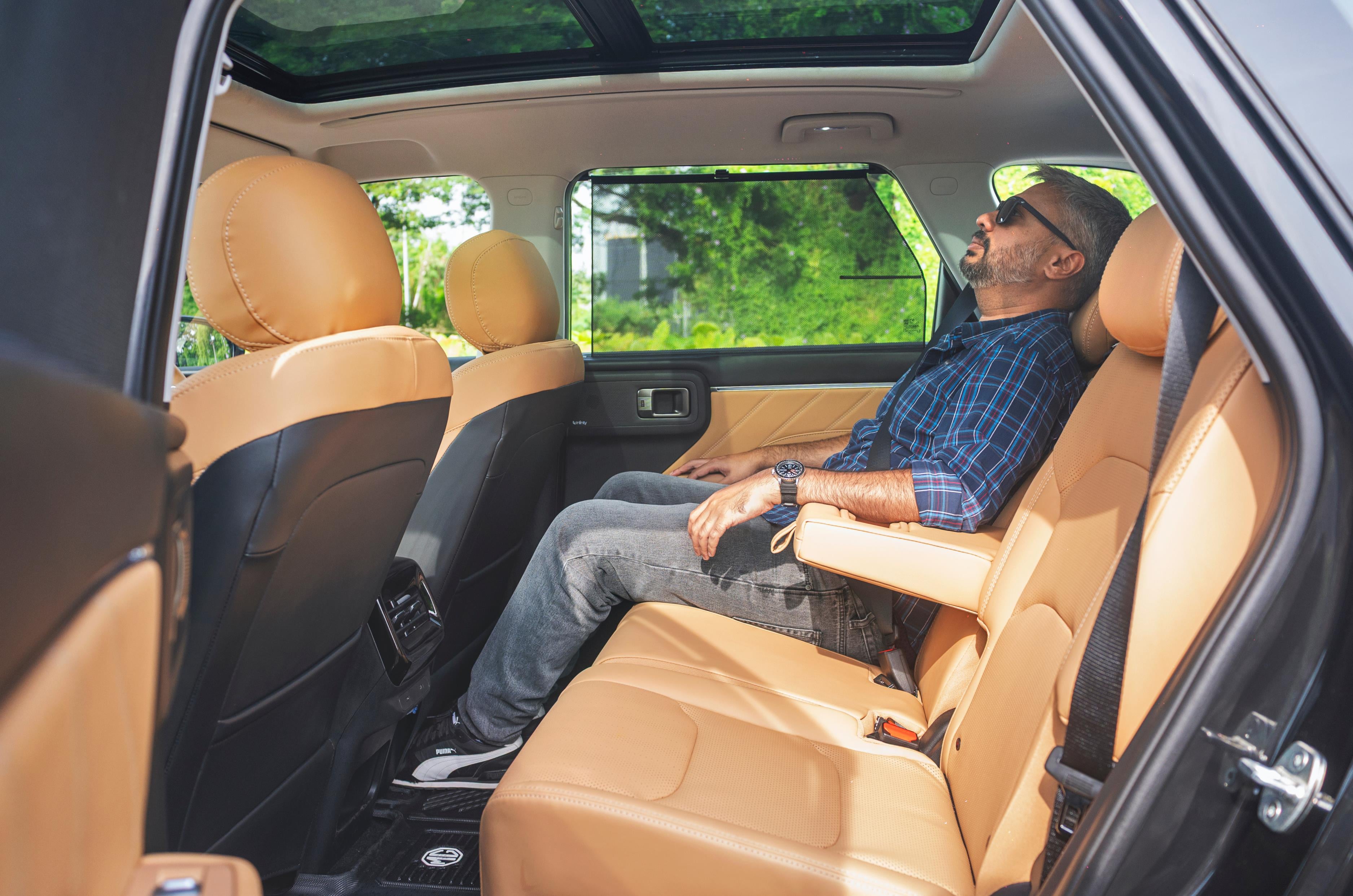
The Tomahawk has the second-longest wheelbase in class (next only to the Vinfast MPV 7), and it shows in the second row. Legroom is excellent, and while you do sit slightly knees-up, thigh support is adequate too. The seatback reclines pretty far back and features an armrest and three adjustable headrests. Window sunshades, AC vents and Type-C USB ports add to the rear-seat comfort and convenience.

The chauffeur-driven are well taken care of, with a comfy reclining bench, plenty of room all around and sunblinds.

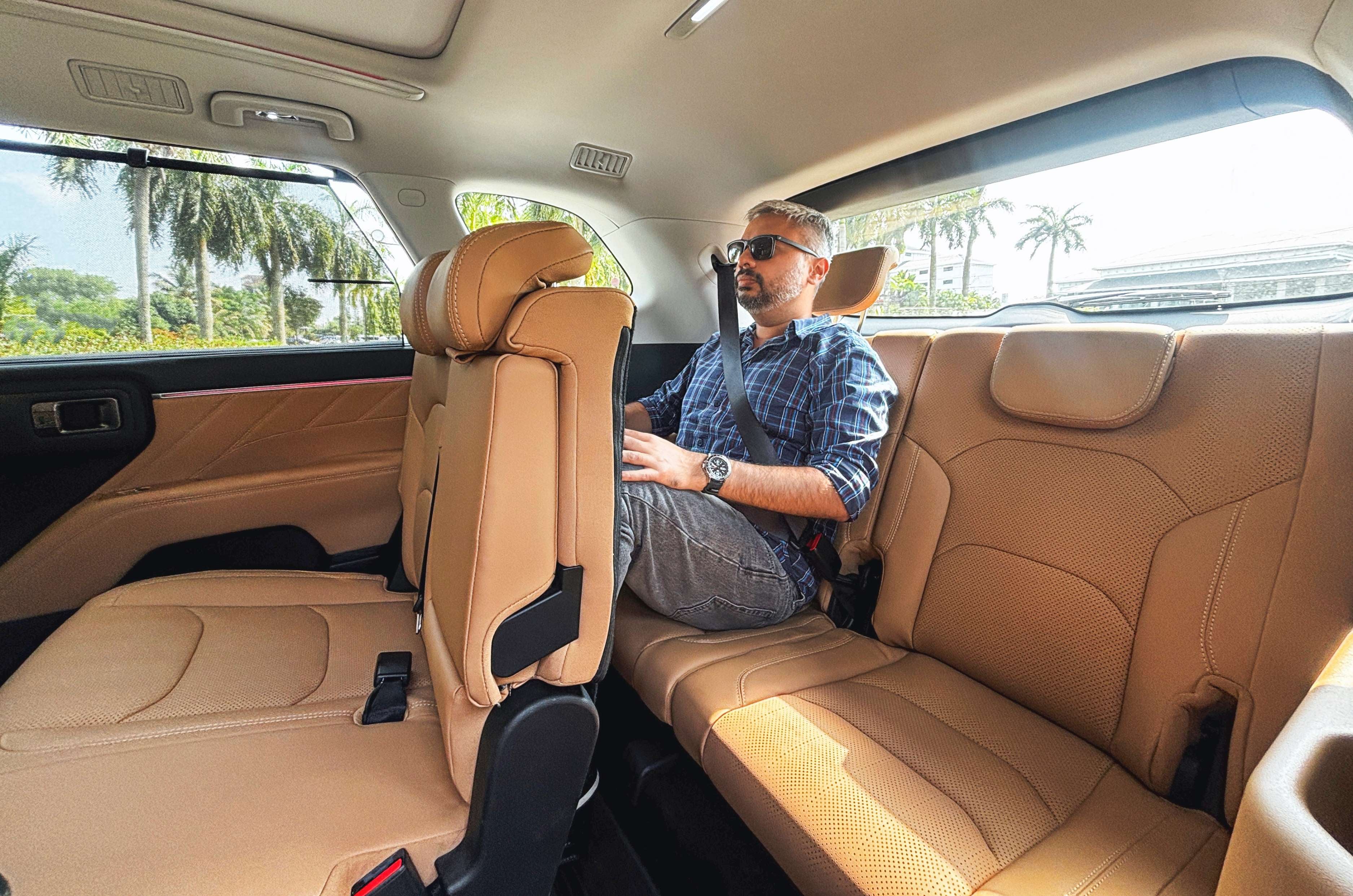
The Tomahawk EV is available in both 5- and 7-seater guises. The latter adds a sliding second row with one-touch tumble to access the third row, as well as more AC vents on the roof and a dedicated fan-speed control. Getting into the last row is surprisingly dignified thanks to a large aperture, but kneeroom depends largely on the middle-row passengers’ generosity, and the low seat means thigh support is non-existent. Headroom is good, though, and for short journeys, adults will be fine back there.

Third row will fit adults but with a slight compromise to the middle-row space.

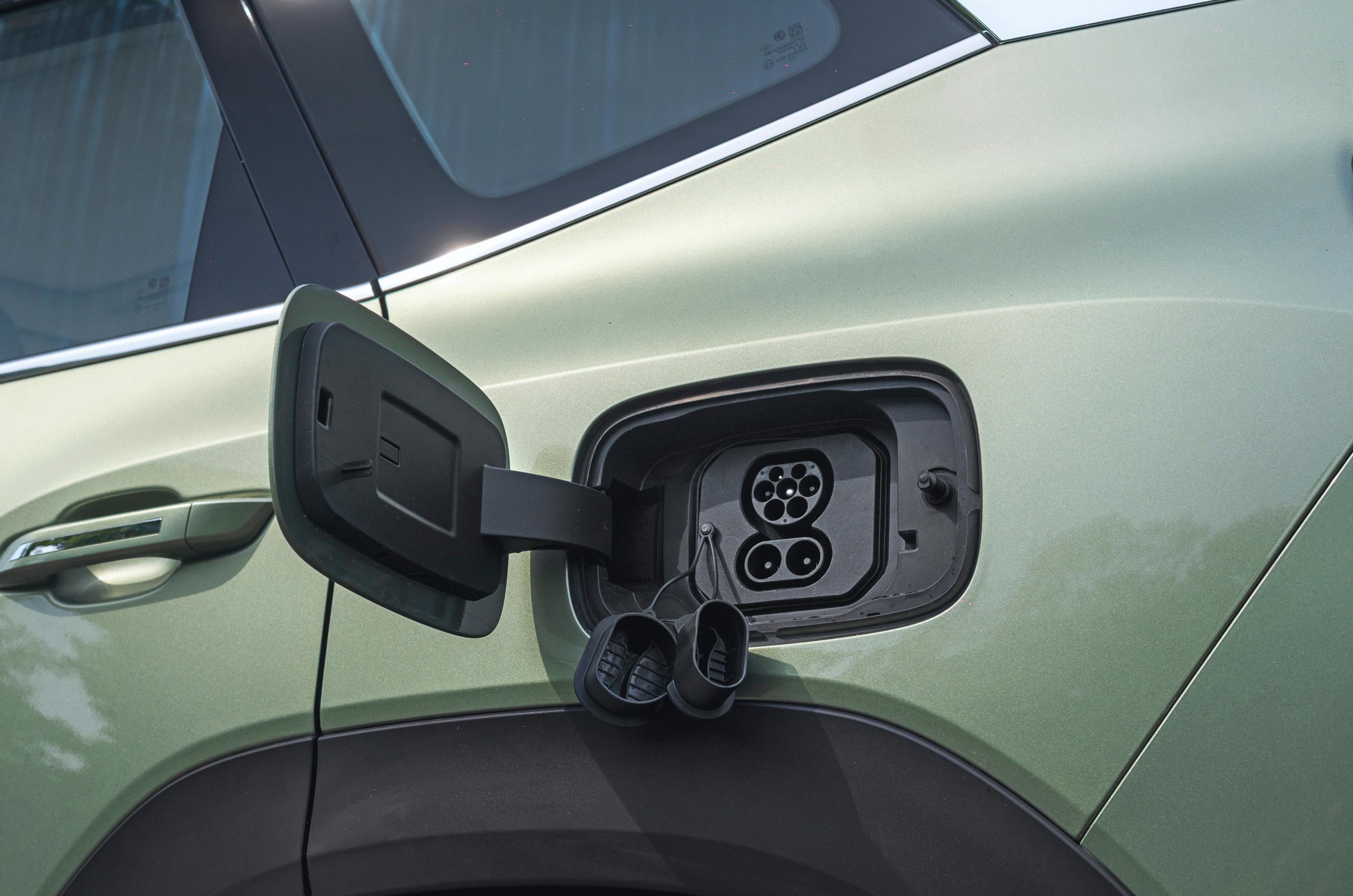
With the third row up, boot space stands at 192 litres – enough for a couple of carry-on bags – expanding to a generous 528 litres with it stowed. Under the boot floor are a few more storage cubbies, which are handy since there is no frunk – a miss considering there appears to be enough space under the bonnet. A space-saver spare is mounted underneath the car.

MG Hector Tomahawk EV Features and Safety – 8/10

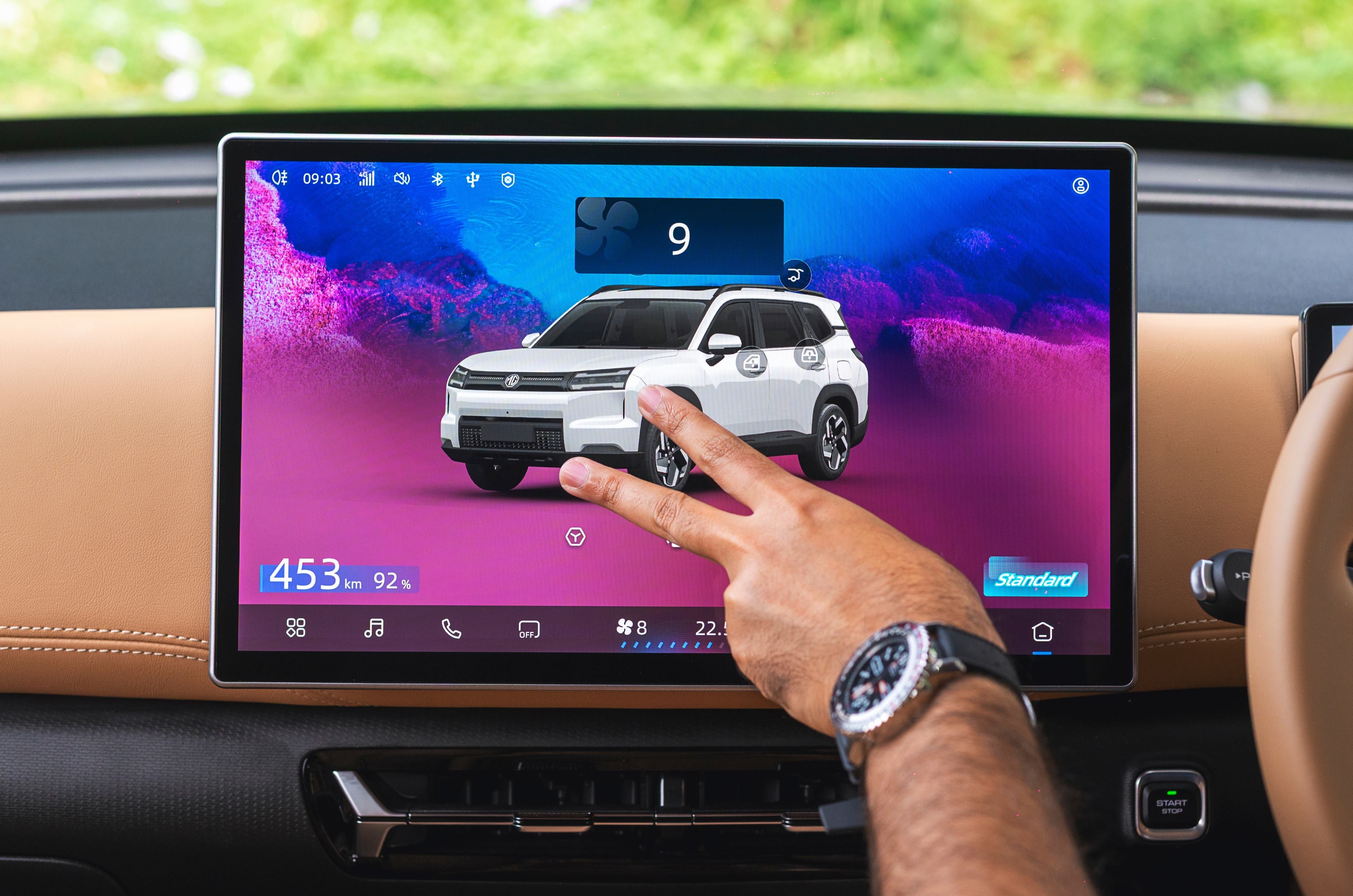
The minimalist interior layout means you reach for the 15.6-inch infotainment screen for most functions. While this can get distracting, physical and swipe-gesture controls together handle most basic HVAC and audio functions with surprising ease. Anything beyond basic, though, will require a deep dive into the screen. While the screen is sharp and snappy and the UI is clean, it can take a while to find your way through the maze of sub-menus. Wireless Android Auto and Apple CarPlay are also present, but using either hides the row of shortcuts at the bottom of the screen. Hardcoding these buttons to always stay on top would improve usability. The screen also often catches glare, which takes away from the otherwise sharp 360-degree camera.

Several functions are baked into the 15.6-inch touchscreen, but gesture controls for essential functions are quite intuitive.

Instrumentation is handled by an 8.8-inch display directly in front of the driver. The screen itself is sharp, but some smaller fonts might have you reaching for your reading glasses. Its real estate could also be better utilised by displaying the blind-view camera feed rather than the current pop-up on the centre screen. Other feature highlights include a sweet-sounding 10-speaker Infinity audio system, a panoramic sunroof that stretches over the second row, 256-colour ambient lighting, connected car tech, an AI assistant and more. It’s worth mentioning that the Tomahawk EV also gets a physical start/stop button, which is absent on the brand’s other EVs.

8.8-inch driver’s display is sharp, but some smaller fonts might have you reaching for your reading glasses.

A Level 2 ADAS suite is also available on the top Essence trim, with functions such as adaptive cruise control, lane keep assist and auto emergency braking. While there isn’t an official crash-test rating yet, the robust standard safety kit, including six airbags, ESP, all-wheel disc brakes and Isofix mounts, provides some confidence.

MG Hector Tomahawk EV Performance and Refinement – 7/10

The Tomahawk EV offers just one powertrain configuration – a 69.2kWh LFP battery pack powering a single motor on the front axle, producing 204hp and 310Nm, good for a claimed 0-100kph time of 8.2 seconds. Its front-wheel-drive layout puts it at a disadvantage against rivals from Tata and Mahindra, who offer either rear- or all-wheel drive and higher power outputs. The front-driven Hyundai Creta Electric or Kia Carens Clavis EV are closer matches, and the Tomahawk EV betters them on power and torque.

First EV on MG’s ADAPT architecture pairs a 69.2kWh battery with a front-mounted motor producing 204hp and 310Nm.

Initial throttle response is mild, making it quite easy to amble around town, but push harder, and you get a power spike resulting in torque steer. In Sport mode, you’ll hear the front tyres protest when made to put all that torque down on a less-than-perfect road. Standard mode dulls response slightly, but it can still catch new drivers off guard. With time, it is possible to drive around this, but the latest crop of rival EVs has mastered a more linear delivery. Eco mode feels a bit tepid and is best saved to counter range anxiety, while a Custom mode lets you customise power output and regen braking in increments of 10 percent. There are also three preset regen modes – Standard, Comfort and Strong – but no paddles to control them or one-pedal mode. Instead, you get an Intelligent setting that uses the ADAS sensors to adjust regen in real time based on the traffic in front of you.

Grip levels and body control are good, but FWD layout struggles to put power down.

Refinement is a bit of a mixed bag. While the motor is fairly muted and there is little wind or tyre noise coming through, you hear the suspension at work on rough patches.

MG Hector Tomahawk EV Range and Efficiency – 7/10

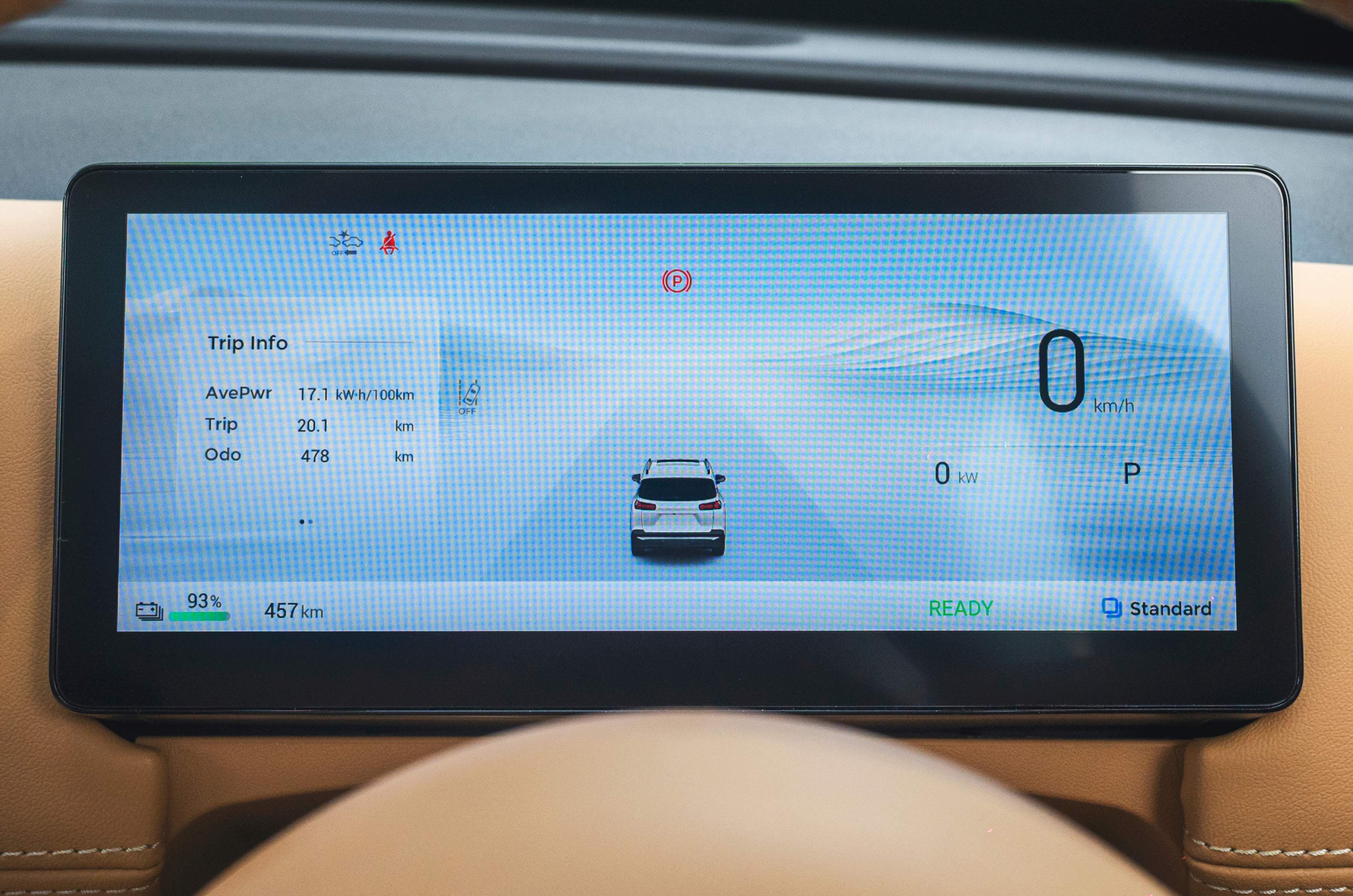
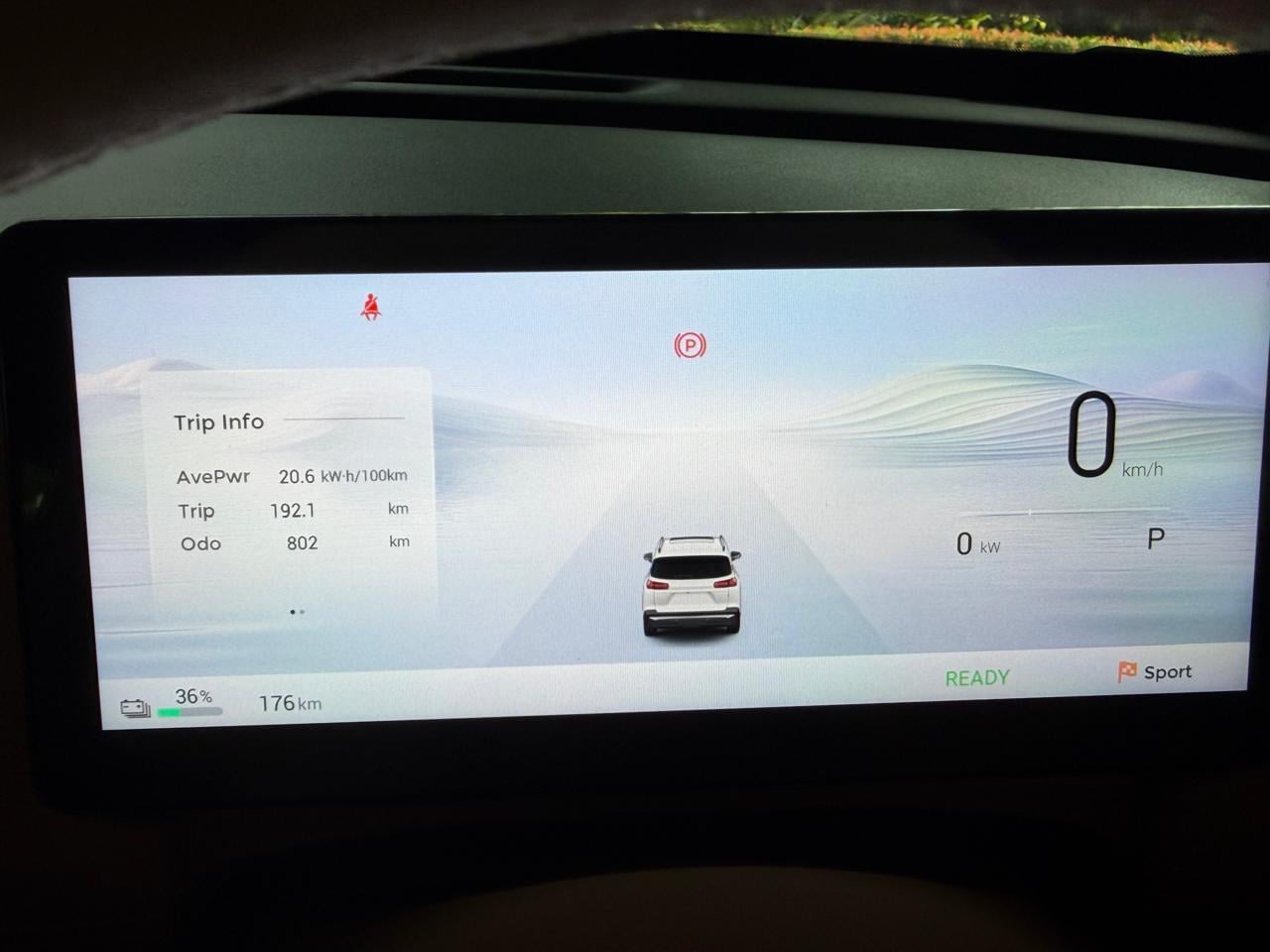
 A spirited highway drive from Kochi to Kozhikode covering 192km, resulted in an overall efficiency of 4.85km/kWh.

While the Hector name is often associated with poor fuel efficiency, the new EV and PHEV hope to change that. MG claims an MIDC range of 517km from its 69.2kWh battery pack. On a spirited drive from Kochi to Kozhikode covering 192km, we recorded an overall efficiency of 4.85km/kWh, translating to a real-world range of 336km. This was on a fast highway run, where the Tomahawk’s tall shape won’t do its efficiency any favours. We’ll put it through our standard real-world efficiency test when we have the car for longer.

DC fast charges at 90kW – slower than rivals but enough for a 30 to 80 percent top-up in a claimed 35 minutes.

Topping up the battery from 10 to 100 percent using the 7.4kW charger is said to take around 12.5 hours. It can also DC fast charge at speeds of up to 90kW, which is lower than its immediate rivals but still enough to take the battery from 30 to 80 percent in about 35 minutes.

MG Hector Tomahawk EV Ride Comfort and Handling – 7/10

Rides with more maturity than previous MG EVs, but suspension can be heard working.

The Hector Tomahawk EV makes a big step up in ride and handling compared to the ICE Hector, but there is still some room for improvement. It rides with more maturity than previous MG EVs, comfortably absorbing most of what we threw at it. However, you do hear the suspension working. Sharper bumps reveal an underlying firmness that occasionally comes through to the cabin. Most roads around Kochi were relatively smooth, and we weren’t able to experience it on rippled concrete, so we will reserve full judgement until we have the car for longer.

A big positive is how easy the Tomahawk is to drive for something this large. Visibility all around is excellent, and you can see the bonnet’s edges from the driver’s seat. A light steering also helps, and overall, it feels less intimidating to drive through tight traffic than, say, the XEV 9S.

230mm claimed ground clearance is best in class; wheelbase second only to VF MPV 7.

The steering also weighs up as speeds rise and feels reasonably direct, though the sheer amount of torque going to just the front wheels corrupts the feel. At a quick pace through the twisties, you feel the wheel tugging at your hands as you apply power. Body control is good, and it stays composed through quick direction changes, but a sedate pace is more its element. Braking is strong, with four-wheel discs bringing the heavy SUV to a confident halt.

MG Hector Tomahawk EV Value for Money – 7/10

Introductory pricing for the Hector Tomahawk EV starts at Rs 19.49 lakh and tops out at Rs 23.49 lakh. The Battery-as-a-Service (BaaS) scheme lowers the entry barrier to Rs 13.99 lakh, with battery rental set at Rs 4.90 per km. While all these prices are applicable to limited units only, this is quite aggressive pricing from MG.

Practical, comfortable and no-nonsense SUV will appeal to the chauffeur-driven but lacks the dynamic polish of its rivals.

When compared spec-for-spec, it undercuts the competition from Tata and Mahindra while offering a bigger battery and more performance than its Korean rivals. It has a spacious and comfortable cabin, a comprehensive feature set and is surprisingly easy to drive for its size. However, it lacks the dynamic polish of its rivals and therefore doesn’t feel like a latest-generation EV. As such, its Hector name starts to make more sense. It is a practical, comfortable, no-nonsense SUV that will appeal to the chauffeur-driven just like its forebear. Those looking to do the driving, though, are better off looking elsewhere.

Triumph Speed 400 and Tracker 400 prices reduced by up to Rs 7,000

Triumph Speed 400 and Tracker 400 prices reduced by up to Rs 7,000
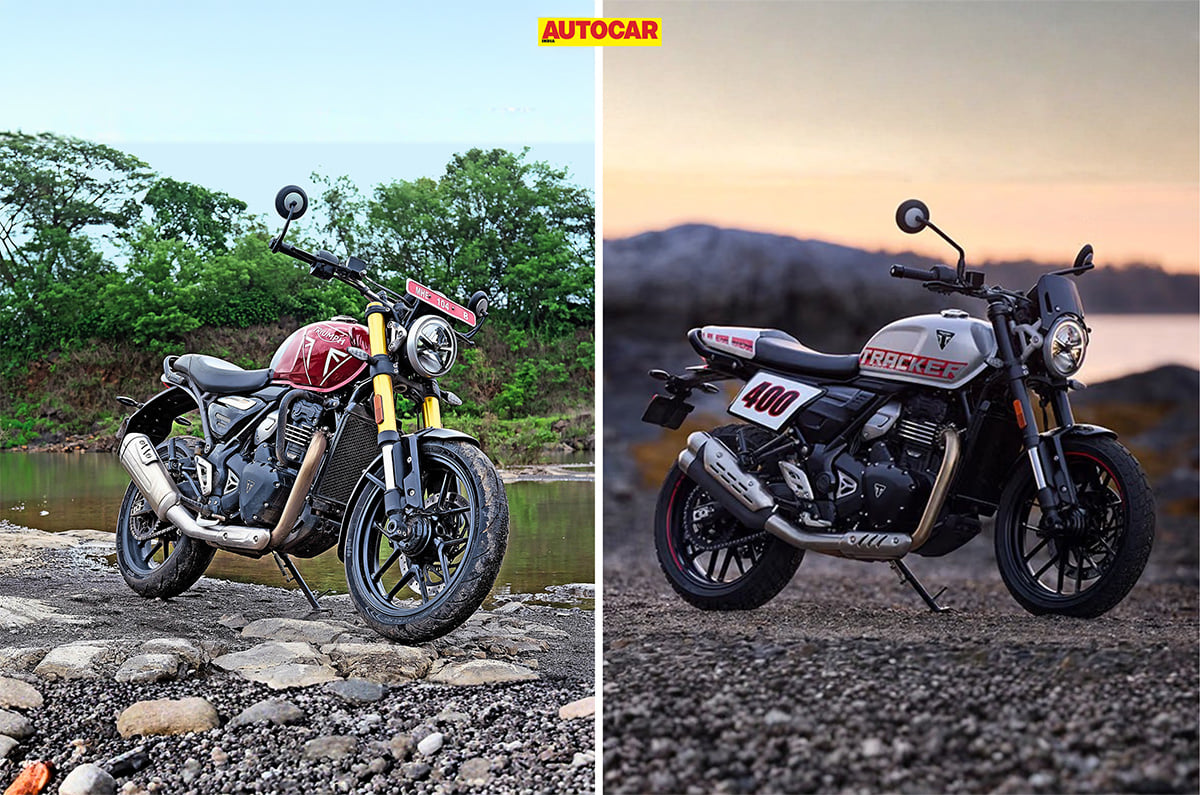
An outside image showing the Triumph Speed 400 and Tracker 400 side-by-side

Two months after it last increased the prices of all of their 400 motorcycles (with a 350cc engine), Triumph is back with a price change, but this time, it’s reducing the prices for two of them. This is the third time the prices are being revised this year since June. While the Scrambler 400 X hasn’t gotten any more affordable, it gets a new colour option.

All prices mentioned are ex-showroom, Delhi.

  1. Triumph has six 400 motorcycles in India with three different engine tunes
  2. Price changes apply only to the Speed 400 and Tracker 400
  3. Scrambler 400 X gets a new, exclusive colour option

Triumph 400s: What has and hasn’t changed?

The Roadsters are now separated more from the others

As mentioned earlier, this is the third time Triumph is revising the prices since unveiling the 350cc lineup in April this year. Back then, the Speed 400 was priced at Rs 2.32 lakh, and the Tracker 400 at Rs 2.46 lakh. With July’s price changes, the entire 400 portfolio became more expensive (listed in the ‘Old price’ column below). With the current adjustment, the Speed now costs Rs 2,000 more, while the Tracker has become cheaper by Rs 4,000.

The current price change only applies to the Speed 400 and the Tracker 400. The Speed’s price has been reduced by Rs 6,000, making its new ex-showroom price Rs 2.34 lakh. The Tracker’s price has been reduced by Rs 7,000, bringing its price down to Rs 2.42 lakh.

Model

Old price

New price

Difference

Speed 400

Rs 2.40 lakh

Rs 2.34 lakh

-Rs 6,000

Tracker 400

Rs 2.49 lakh

Rs 2.42 lakh

-Rs 7,000

Speed T4

Rs 2.09 lakh

Rs 2.09 lakh

Unchanged

Scrambler 400 X

Rs 2.65 lakh

Rs 2.65 lakh

Unchanged

Scrambler 400 XC

Rs 2.99 lakh

Rs 2.99 lakh

Unchanged

Thruxton 400

Rs 2.75 lakh

Rs 2.75 lakh

Unchanged

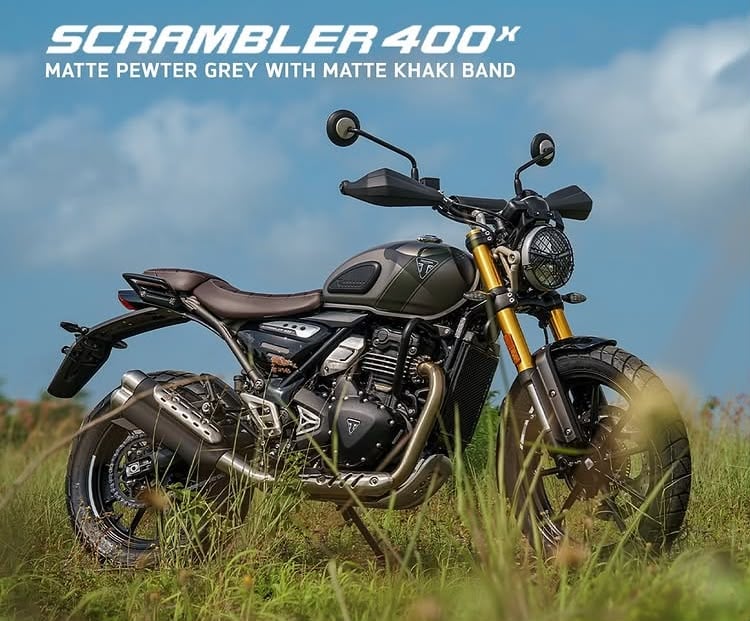
An outside showing the Triumph Scrambler 400 X in the new Matt pewter grey/Matt khaki green colour
The Scrambler 400 X gets a new Matt pewter grey/Matt khaki green colour

The only other motorcycle to change in any way is the Scrambler 400 X, which gains a new Matt pewter grey/Matt khaki green colour. It otherwise stays exactly the same mechanically and feature-wise, and continues with the same ex-showroom price. With these changes, Triumph’s three roadsters are now priced closer to each other than the other formats, but doesn’t change the hierarchy in any way. The Speed T4 continues as the most affordable Triumph 400, and the Scrambler 400 XC continues as the most expensive.

Jeep Wrangler JL-2A revealed as a retro tribute to 1945 Willys CJ-2A

Jeep Wrangler JL-2A revealed as a retro tribute to 1945 Willys CJ-2A
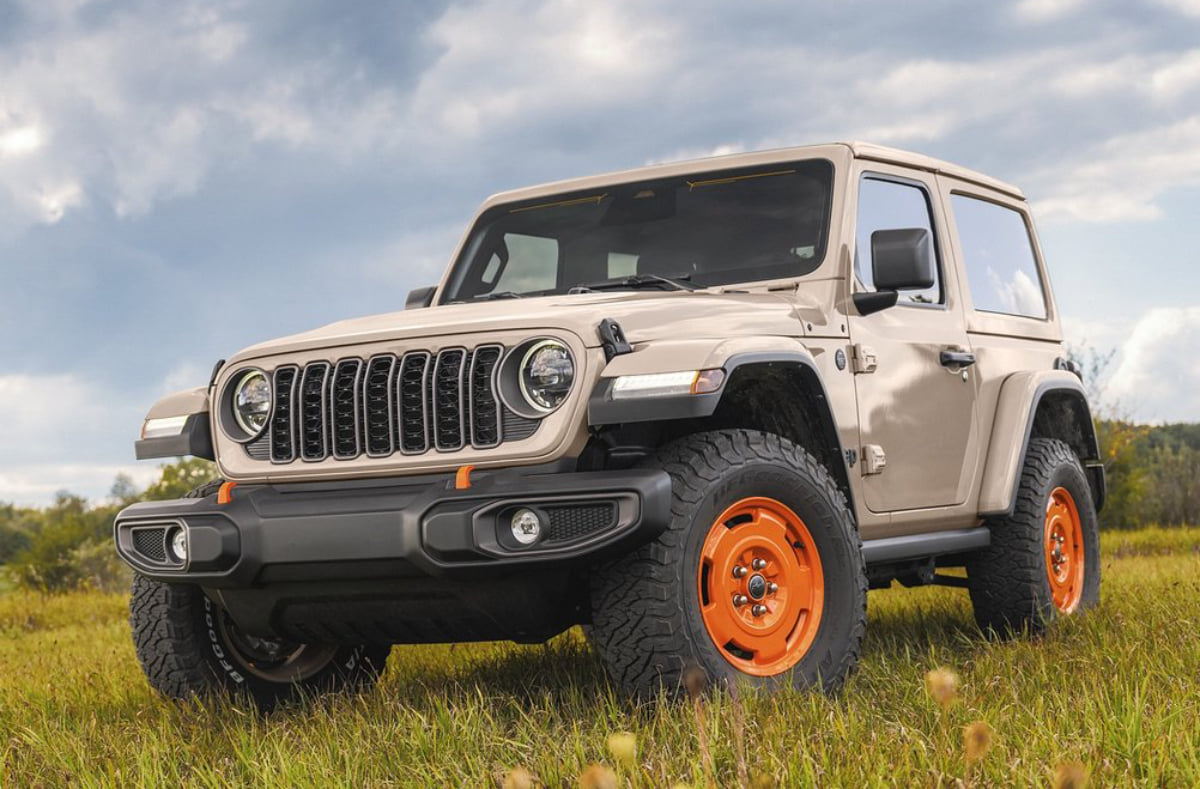
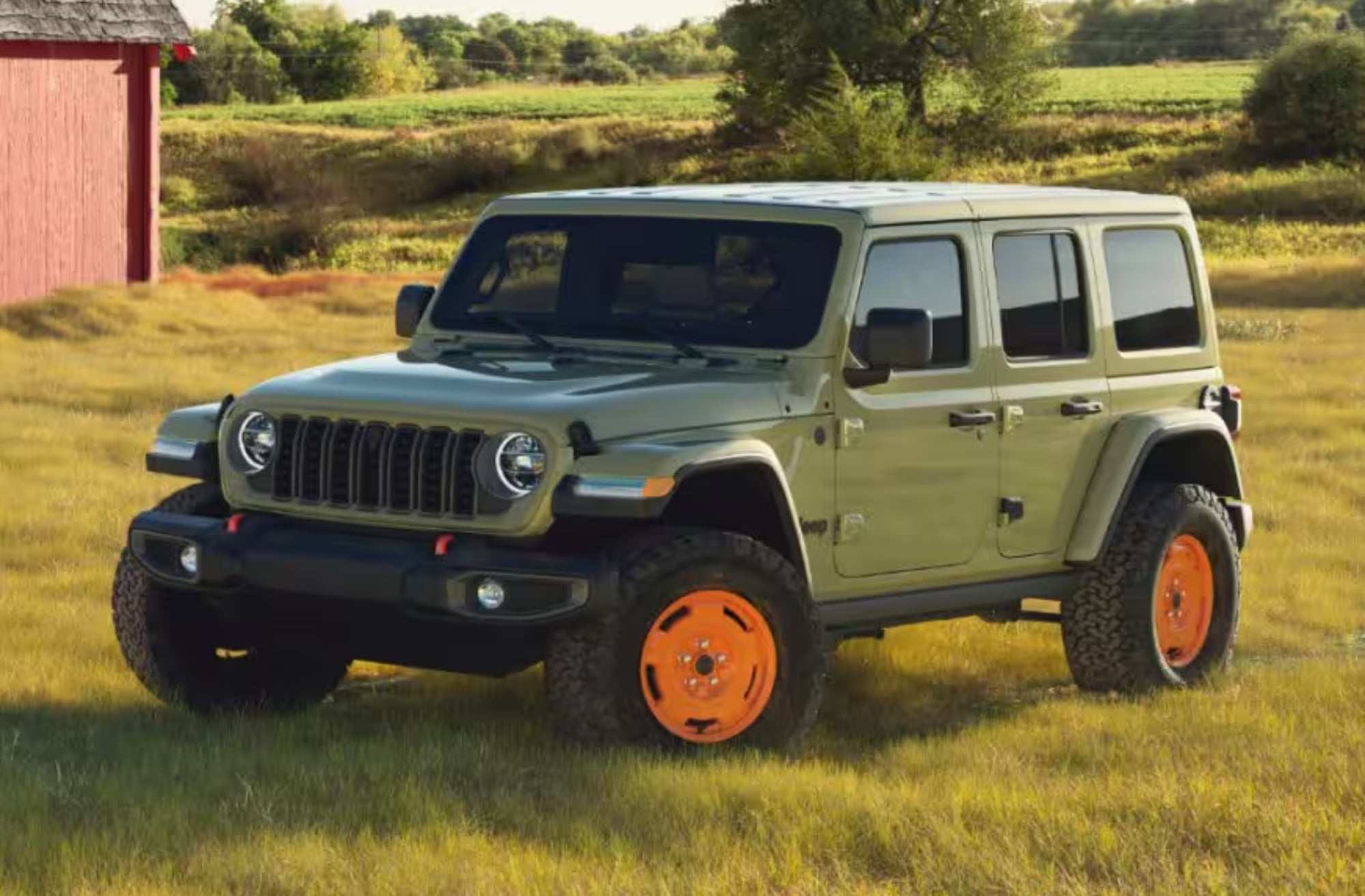
Jeep Wrangler JL-2A

Jeep has revealed the 2027 Wrangler JL-2A, a special edition inspired by the 1945 Willys CJ-2A, the brand’s first vehicle designed specifically for civilian use. Based on the Wrangler Rubicon, the JL-2A gets a range of exterior and interior changes inspired by the original Jeep, while its off-road hardware remains unchanged. Orders are set to open in October.

Jeep Wrangler JL-2A: Exterior

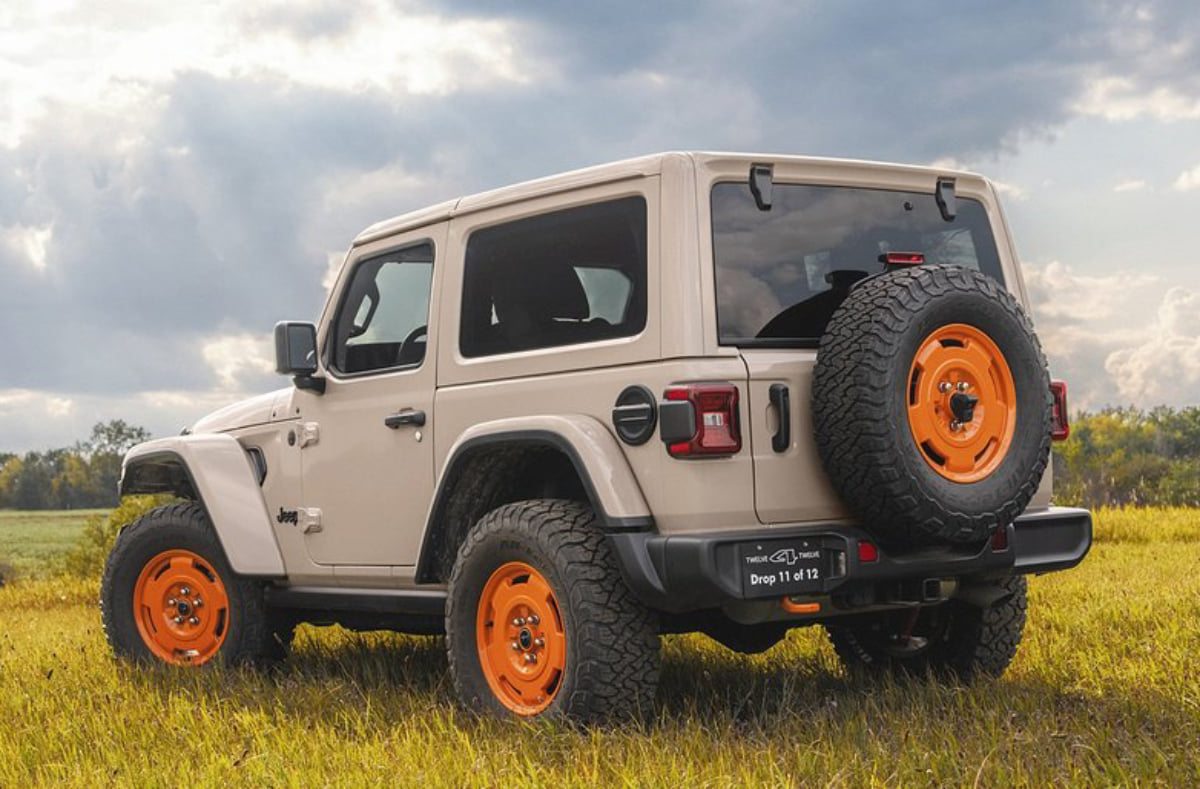
The JL-2A gets Gobi paint on the two-door version, inspired by the Harvest Tan finish offered on the original CJ-2A. The four-door version is available in ’41, an olive green shade. Both body styles can also be specified in Bright White, Sting Gray, Ghost and Joose. All versions get 17-inch Joose-painted retro wheels, paired with 33-inch BFGoodrich KO2 all-terrain tyres.

The exterior also gets orange tow hooks at the front and rear, Dark Metallic Grey accents on the seven-slot grille, body-colour fender flares and a three-piece hardtop. 

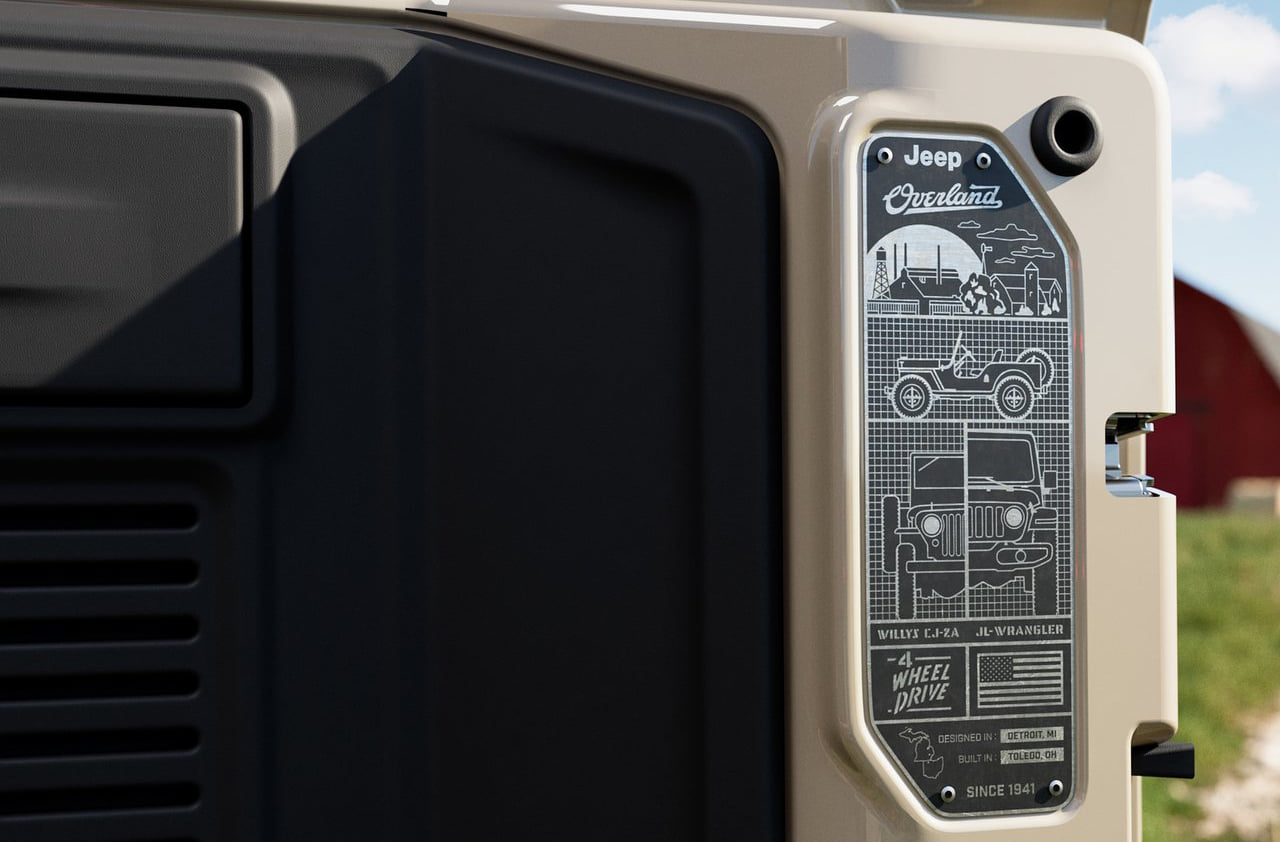
A plaque on the rear swing gate recreates the artwork from the original CJ-2A’s dashboard data plate, including farm and factory scenes.

Jeep Wrangler JL-2A: Interior

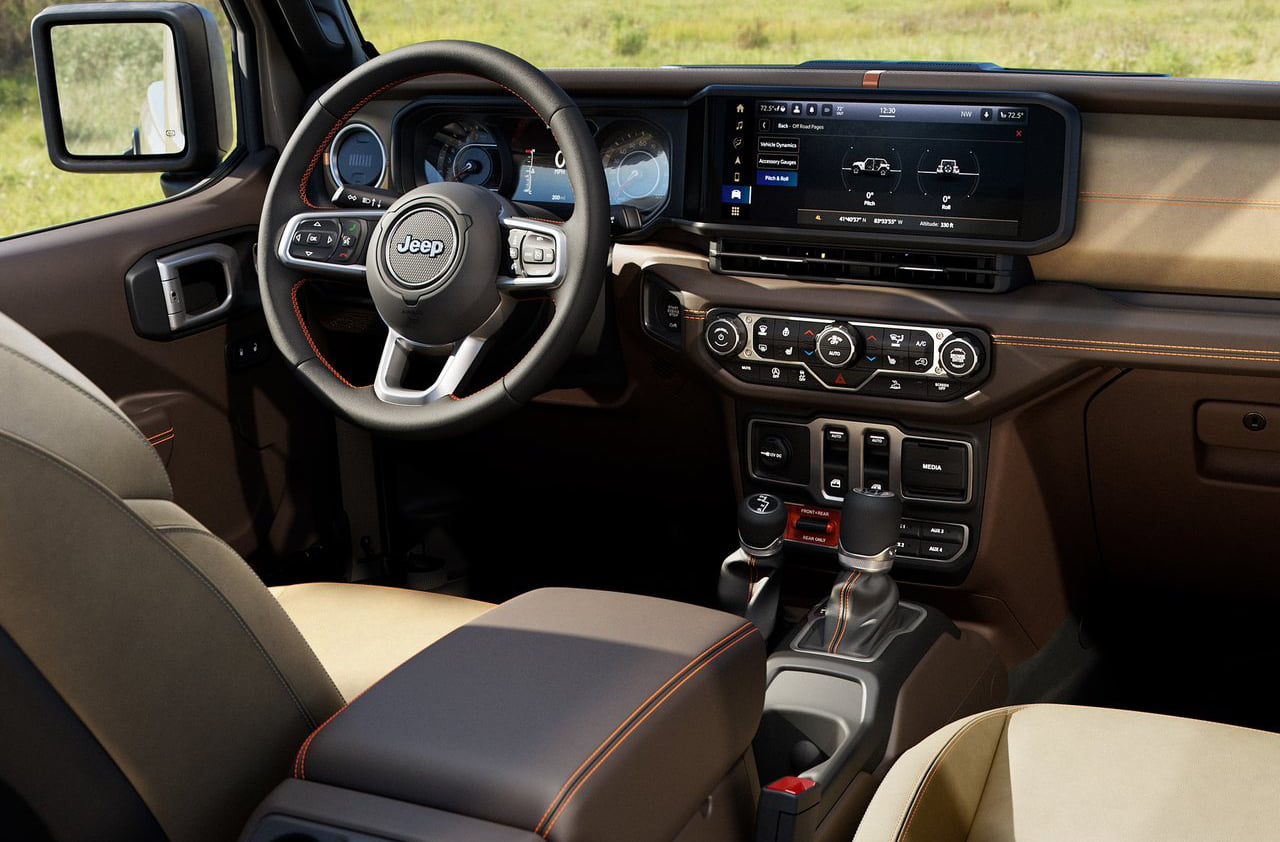
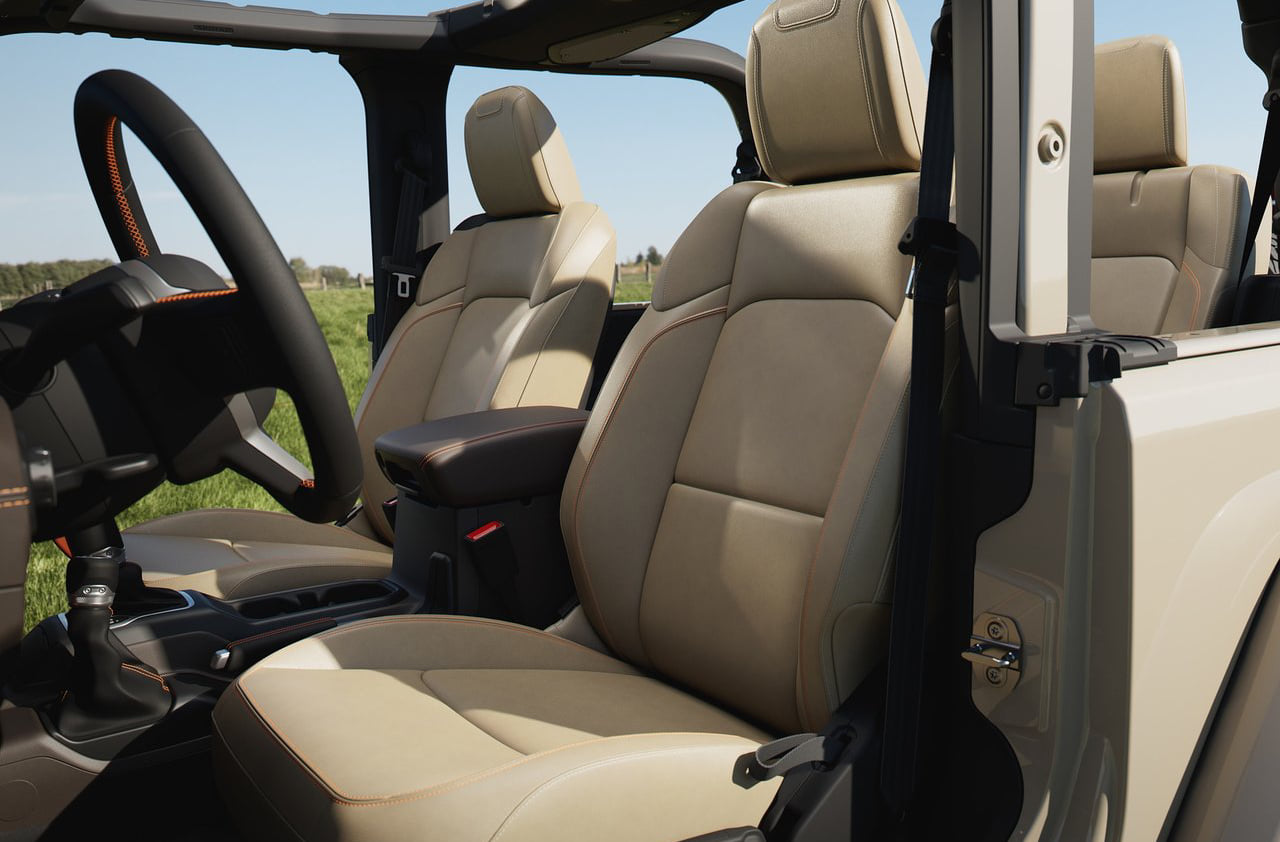
The cabin gets Nappa Heritage Tan leather seats,brown door panels, lower instrument panel and centre console, along with contrast orange contrast stitching. The gear shifter features a Willys-Overland badge, while the HVAC vents feature a seven-slot grille graphic on one side and a Willys silhouette on the other.

The Convenience Group is standard and includes remote start, an auto-dimming rear-view mirror and a universal garage door opener. A front TrailCam with an integrated washer is also standard.

Jeep Wrangler JL-2A: Powertrain and off-road hardware

Jeep has not announced any mechanical changes for the JL-2A. Based on the Wrangler Rubicon, the special edition retains electronic locking differentials at the front and rear, an electronic sway-bar disconnect and the Rock-Trac HD 4×4 system. 

The Rubicon is offered with a 285hp, 353Nm 3.6-litre V6 and a 270hp,400Nm 2.0-litre turbo-petrol engine, paired with either a six-speed manual or eight-speed automatic gearbox. Jeep has not specified which of these powertrain options will be offered with the JL-2A.

The JL-2A is the 11th limited-edition Wrangler introduced as part of Jeep’s Twelve 4 Twelve programme. Under the programme, Jeep is introducing one limited-edition Wrangler each month for 12 months. The JL-2A will be offered as a package for the 2027 Wrangler Rubicon, priced at USD 4,995 (Rs 4.79 lakhs). Orders will open in October.

Yamaha R15 V4 gets quickshifter on two more colour options

Yamaha R15 V4 gets quickshifter on two more colour options
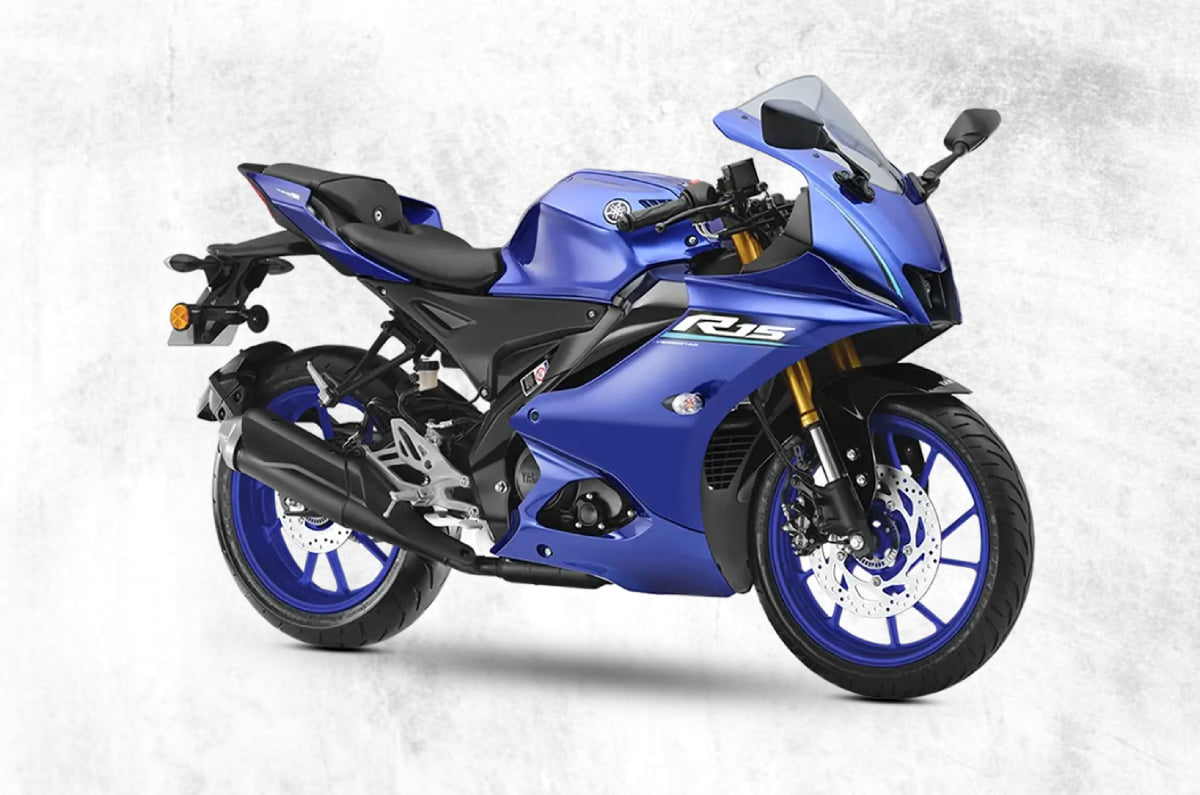
Yamaha R15 studio image

The Yamaha R15 V4 is available in a total of seven colours, and previously, only one of them, Intensity White, was available with the option of a quickshifter. Now, the manufacturer has made the option available on two other colours – Racing Blue and Matte Pearl White.

  1. R15 V4 quickshifter now offered on Racing Blue and Matte Pearl White colours
  2. Rs 4,650 premium over the standard variant in each colour
  3. 155cc single-cylinder engine continues to make 18.4hp and 14.2Nm

Yamaha R15 quickshifter details

No other changes have been made to the Yamaha R15

Unlike the Yamaha R2, on which some variants get a bidirectional quickshifter as standard, the one offered on the R15 is a unidirectional unit that enables clutchless upshifts only. The bike receives no other changes and continues to be powered by the 155cc, liquid-cooled, single-cylinder engine with peak output figures of 18.4hp and 14.2Nm.

All three colourways that come with the option of the quickshifter are priced at Rs 1.80 lakh with the quickshifter, and the bikes can also be had without it for Rs 1.75 lakh – a difference of Rs 4,650, to be exact.

Top 10 bestselling cars in August 2026: Punch back on top spot

Top 10 bestselling cars in August 2026: Punch back on top spot
Bestselling cars in August

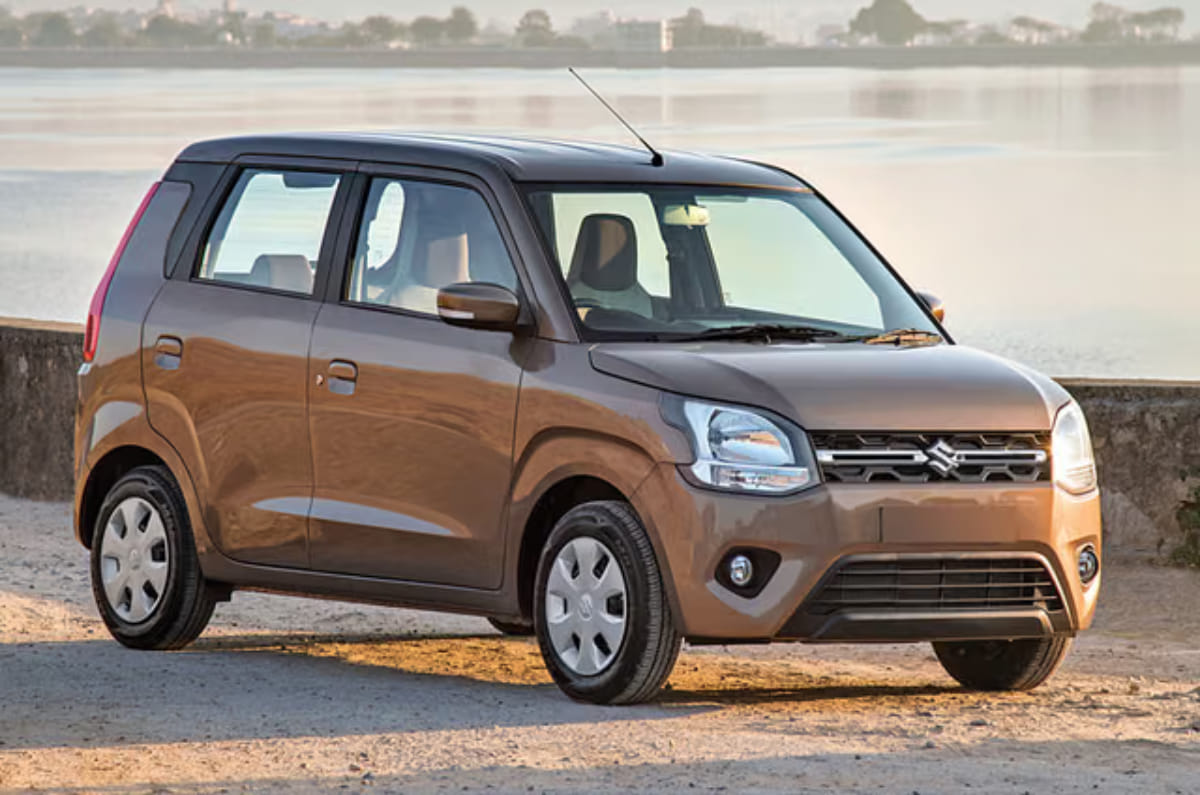
The Tata Punch was India’s best-selling car in August 2026, with 21,320 units sold, ahead of the Maruti Suzuki Wagon R and Swift. The top 10 models together recorded 1,83,037 units, up from 1,37,334 units in August 2025. Nine of the 10 models recorded year-on-year growth, with Maruti Suzuki accounting for six models in the list.

The year-on-year increase came against a lower base in August 2025, when buyers deferred purchases and manufacturers moderated dealer dispatches amid expectations of GST changes announced that month.

RankModelAugust 2026 sales (units)August 2025 sales (units)YoY growth (percent)
1Tata Punch21,32010,70499
2Maruti Suzuki Wagon R20,18014,55239
3Maruti Suzuki Swift19,83212,38560
4Maruti Suzuki Fronx18,73012,42251
5Maruti Suzuki Ertiga18,51618,4450
6Tata Nexon18,43114,00432
7Maruti Suzuki Dzire18,41816,50912
8Hyundai Creta16,28815,9242
9Maruti Suzuki Baleno15,74612,54925
10Mahindra Scorpio

15,576

9,84058
 Total

1,83,037

1,37,334

33

1. Tata Punch

Sales: 21,320 units

The Tata Punch topped the August 2026 sales rankings with 21,320 units, almost double the 10,704 units sold in August 2025. Its sales increased 99 percent year on year, the highest growth among the 10 models.

Tata’s smallest SUV is offered with multiple powertrain options, while its compact dimensions and ride and handling balance remain key strengths. The Punch rivals the Hyundai Exter and Citroen C3 and is priced from Rs 5.75 lakh to Rs 10.77 lakh.

2. Maruti Suzuki Wagon R

Sales: 20,180 units

The Maruti Suzuki Wagon R finished second in August 2026 with 20,180 units, up from 14,552 units in August 2025. Its sales increased 39 percent year on year, putting it 1,140 units behind the Tata Punch. 

Its spacious cabin, ease of driving and low running costs remain key strengths, although its light build and limited highway ability are drawbacks. The Wagon R rivals the Tata Tiago and Citroen C3 and is priced between Rs 4.99 lakh and Rs 7.24 lakh.

3. Maruti Suzuki Swift

Sales: 19,832 units

The Maruti Swift ranked third in August 2026 with 19,832 units, compared with 12,385 units in August 2025. Its sales increased 60 percent year on year, leaving it 348 units behind the Wagon R.

Its high fuel efficiency, light controls and easy-to-drive nature continue to support demand, although the top variants are priced close to the more premium Baleno. The Swift rivals the Hyundai Grand i10 Nios and Tata Tiago and is priced between Rs 5.84 lakh and Rs 8.74 lakh.

4. Maruti Suzuki Fronx

Sales: 18,730 units

The Maruti Suzuki Fronx was fourth in August 2026 with 18,730 units, compared with 12,422 units in August 2025. Its sales increased 51 percent year on year, leaving it 1,102 units behind the Swift.

The Fronx’s crossover styling, comfortable cabin and fuel-efficient powertrains continue to support demand, although it lacks some popular features. It rivals the Nissan Magnite and Renault Kiger and is priced between Rs 6.85 lakh and Rs 11.84 lakh.

5. Maruti Suzuki Ertiga

Sales: 18,516 units

The Maruti Suzuki Ertiga finished fifth in August 2026 with 18,516 units, almost unchanged from the 18,445 units sold in August 2025. Its sales were effectively flat year on year.

The Ertiga continues to hold the title of India’s highest-selling MPV. Its practical cabin, strong fuel efficiency and value-for-money positioning attract both private and fleet buyers, although it misses out on some features offered by rivals. It is priced from Rs 8.90 lakh to Rs 13.04 lakh and rivals the Kia Carens and Toyota Rumion.

6. Tata Nexon

Sales: 18,431 units

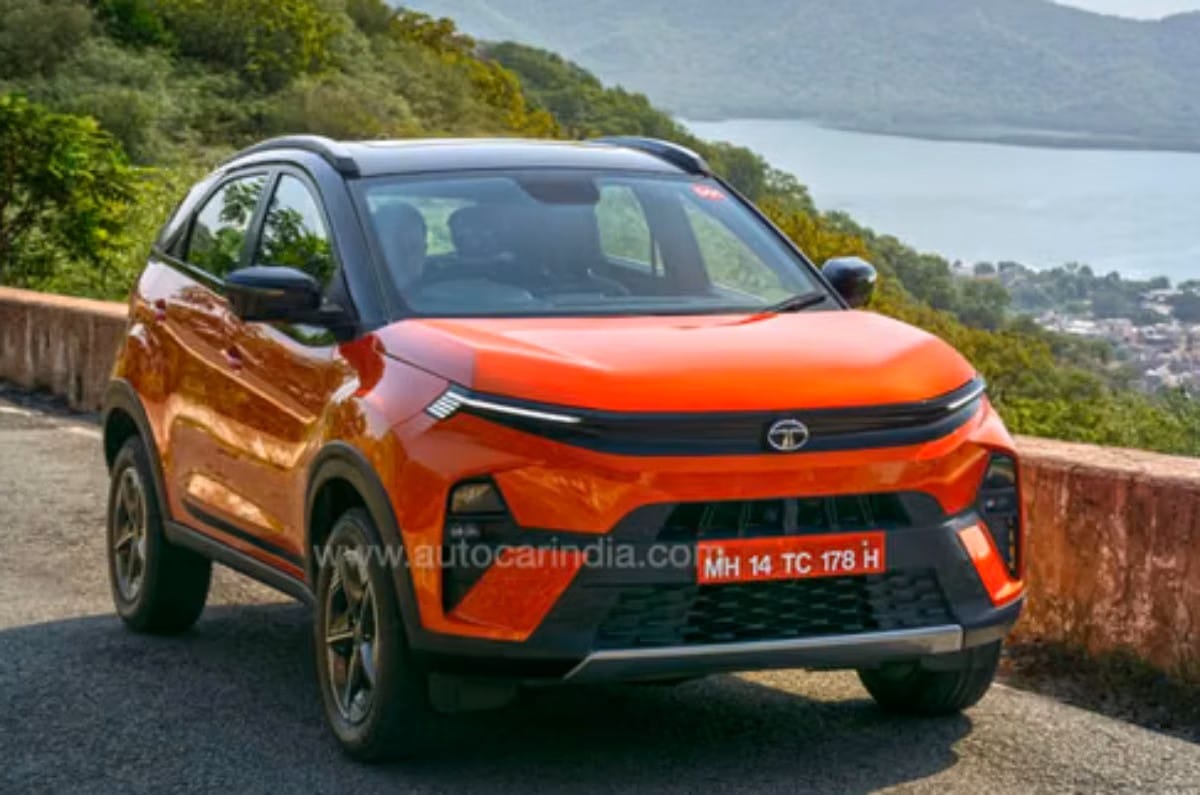
The Tata Nexon, including the ICE and EV versions, recorded 18,431 units in August 2026, up from 14,004 units in August 2025. Its sales increased 32 percent year on year, making it the sixth best-selling model in the month.

The Nexon is offered with petrol, diesel, CNG and EV powertrain options, along with a feature-rich cabin. However, its fit and finish are not as polished as some rivals. It competes with the Maruti Suzuki Brezza, Hyundai Venue, Kia Sonet and Mahindra XUV 3XO and is priced from Rs 7.40 lakh to Rs 14.52 lakh.

7. Maruti Suzuki Dzire

Sales: 18,418 units

The Maruti Dzire was seventh in August 2026 with 18,418 units, compared with 16,509 units in August 2025. Its sales increased 12 percent year on year, with the Dzire being the only sedan in the top 10.

Strong fleet demand, fuel efficiency and a well-balanced ride and handling setup continue to support the compact sedan’s volumes. The Dzire rivals the Hyundai Aura, Honda Amaze and Tata Tigor and is priced between Rs 6.31 lakh and Rs 9.41 lakh.

8. Hyundai Creta

Sales: 16,288 units

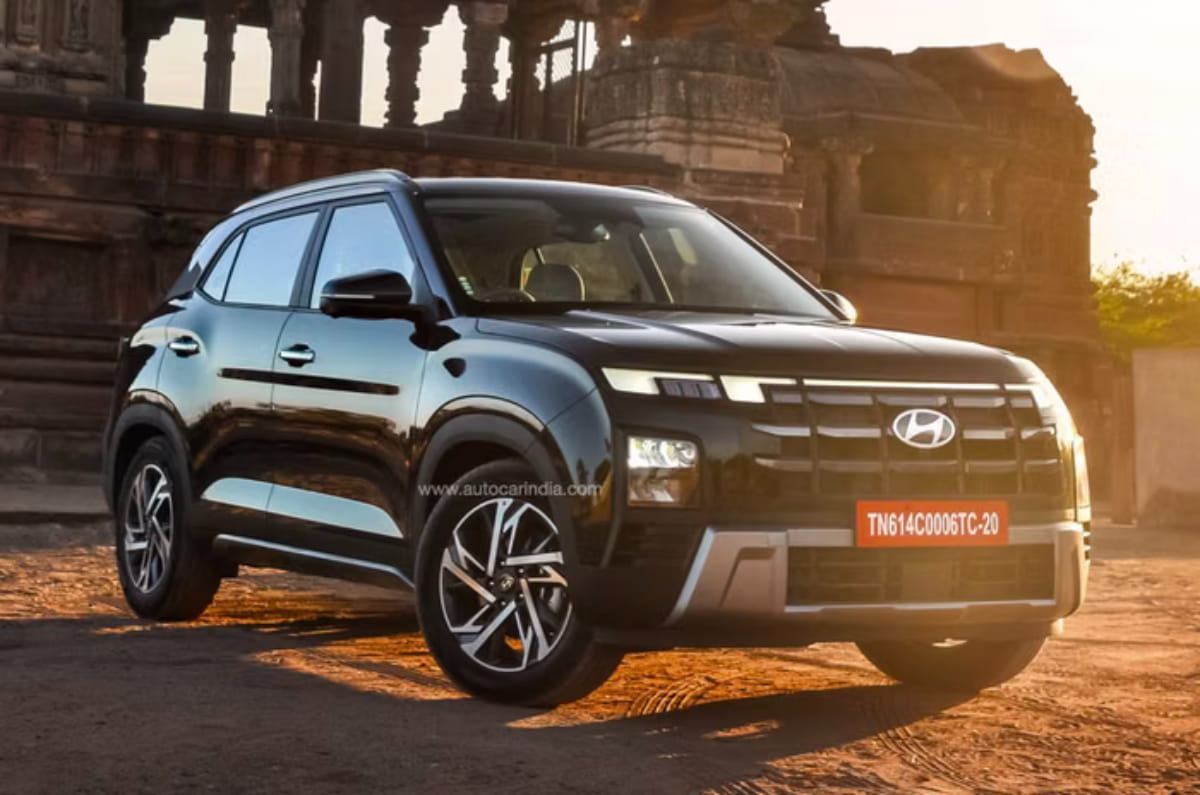
The Hyundai Creta finished eighth in August 2026 with 16,288 units, up from 15,924 units in August 2025. Its sales increased 2 percent year on year, making it the only Hyundai model in the top 10.

A roomy cabin and long feature list continue to attract buyers, although the top variants are expensive and some interior plastics could be better. The Creta rivals the Kia Seltos, Maruti Suzuki Grand Vitara, Toyota Urban Cruiser Hyryder, Honda Elevate and Tata Sierra. It is priced between Rs 10.91 lakh and Rs 20.11 lakh.

9. Maruti Suzuki Baleno

Sales: 15,746 units

The Maruti Suzuki Baleno ranked ninth in August 2026 with 15,746 units, compared with 12,549 units in August 2025. Its sales increased 25 percent year on year, making it the third Maruti Suzuki hatchback in the top 10.

The premium hatchback has recently received a facelift and rivals the Hyundai i20, Tata Altroz and Toyota Glanza. The Baleno is priced between Rs 5.99 lakh and Rs 9.99 lakh.

10. Mahindra Scorpio

Sales: 15,576 units

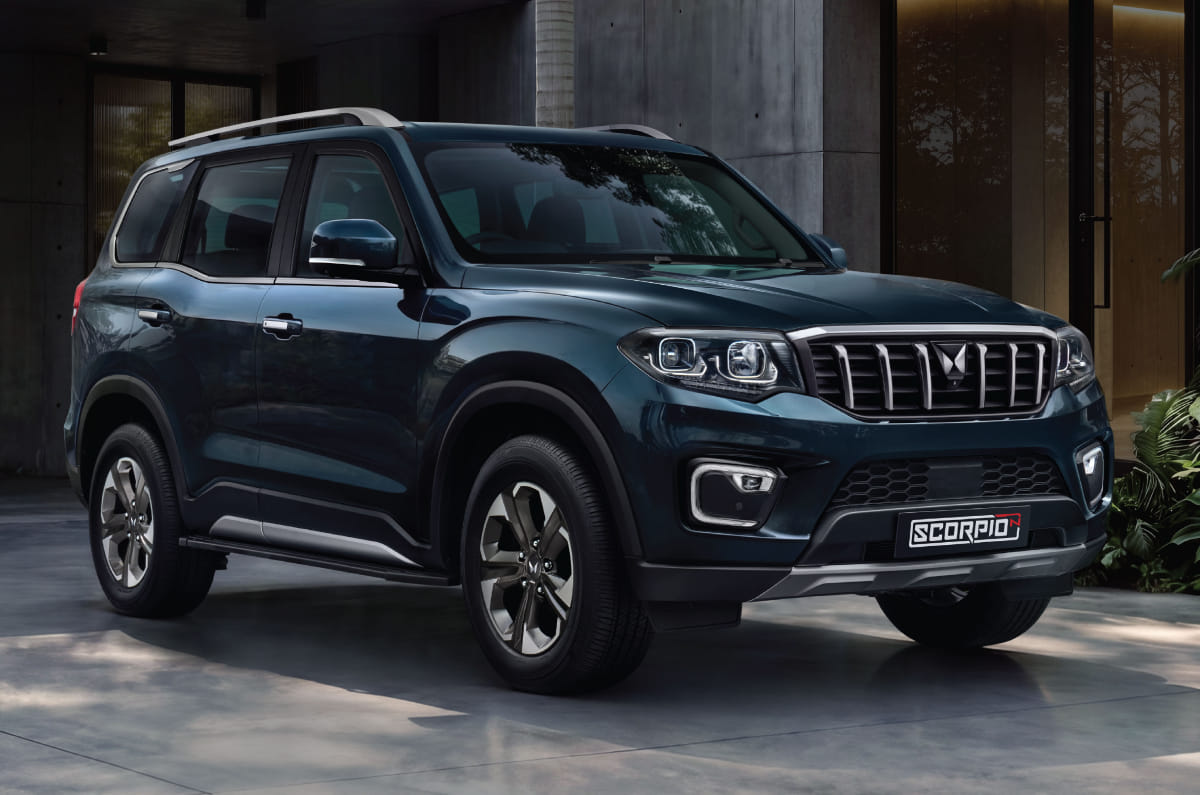
The Mahindra Scorpio, comprising the Scorpio N and Scorpio Classic, completed the August 2026 top 10 with 15,576 units, up from 9,840 units in August 2025. Its sales increased 58 percent year on year, the third-highest growth rate among the top 10 models.

The Scorpio nameplate remains popular for its strong engines, rugged character and off-road ability. However, the third-row seating is cramped and the luggage area is not particularly practical. The Scorpio N rivals the Tata Safari, Hyundai Alcazar and Mahindra XUV 7XO and is priced from Rs 13.69 lakh to Rs 25.49 lakh.

2027 Kawasaki Vulcan S launched at Rs 8.23 lakh

2027 Kawasaki Vulcan S launched at Rs 8.23 lakh
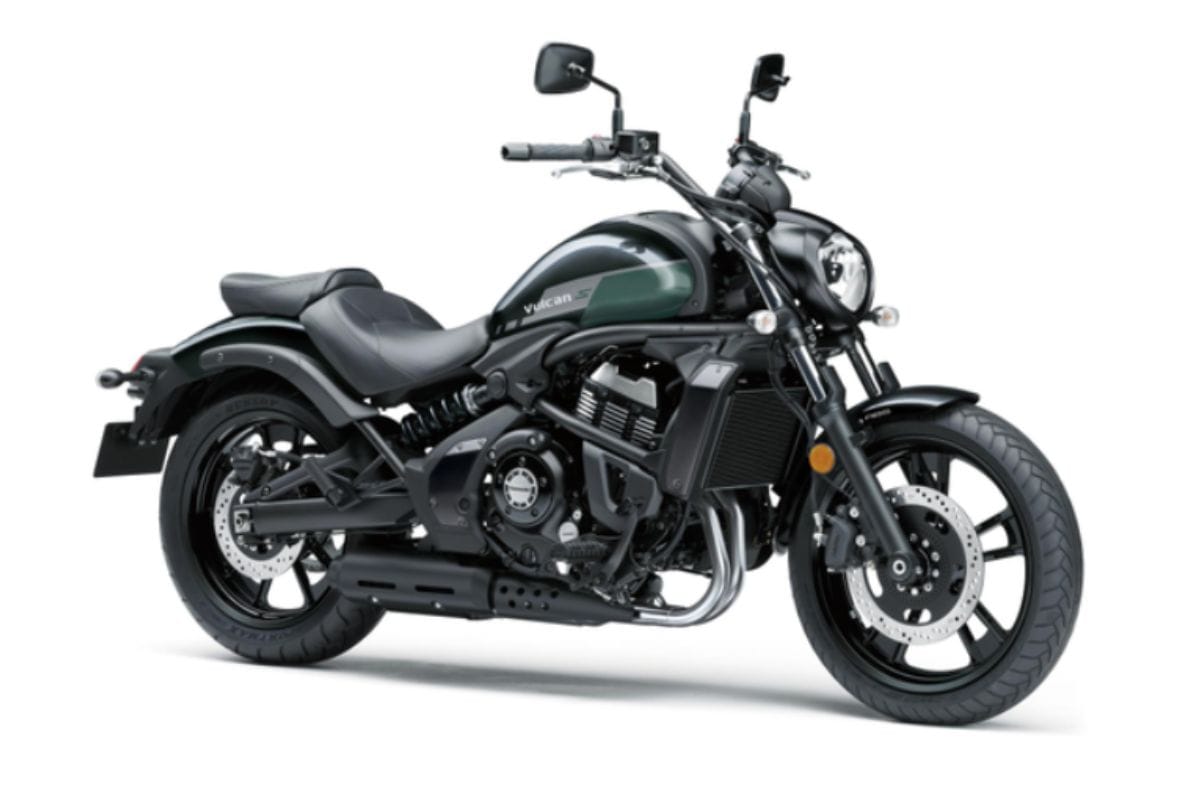
Render showing the Kawasaki Vulcan S in Metallic Carbon Gray colour.

Kawasaki has updated its cruiser, the Vulcan S, for 2027 with most of the same mechanicals intact as the current 2026 model. The main change is to the torque produced by the 649cc parallel-twin engine, and a new colour that brings a hint of green back to the touring Kawasaki. The other change is to the brakes, which have become slightly smaller than before.

  1. Gains the 1.4Nm torque lost with the 2026 model
  2. Disc rotors have become smaller on both ends
  3. Offered now in a single Metallic Carbon Gray colour with green highlights

2027 Kawasaki Vulcan S: What’s changed?

The cruiser gains the lost torque back, and a new colour

Most of the mechanicals on the Vulcan S continue to be carried forward with the 2027 version. However, when Kawasaki had updated the Vulcan S for 2026, the 649cc parallel-twin engine did lose 1.4Nm of torque, making 61hp and 61Nm of torque. With the 2027 update, Kawasaki has given that 1.4Nm back to the motorcycle; so it’s back to making 62.4Nm of torque, like the 2024 version. There have been no changes to the power, or the rev range at which the power and torque are delivered.

Also unchanged are the bike’s feature set. Which means the same analogue-digital instrument cluster as last time with dual-channel ABS the only rider aid on offer. Speaking of which, the dual-discs continue to take care of stopping duties, but the diameter of the discs have become smaller on both ends. The front disc rotor is now a 272mm unit (vs 300mm on the 2026 version) and the rear disc is a 216mm unit (vs 250mm). There have been no changes to the suspension on either end. Which means the travel continues unchanged too, the front 41mm fork has a 130mm travel, and the rear linkage monoshock has a 80mm travel with adjustable preload. While they do enable the Vulcan S to have an extremely accessible 705mm seat height, the ground clearance also stays at an anxiety-inducing 130mm. Kerb weight is once again unchanged at 235kg.

The Vulcan S is also offered in a different Metallic Carbon Gray colour with just a hint of bluish green, replacing the 2026 model’s Metallic Flat Spark Black colour. With all these changes, Kawasaki has priced the 2027 Vulcan S at Rs 8.23 lakh (ex-showroom) with the deliveries set to commence mid-September 2026. That is a Rs 10,000 premium over the 2026 Vulcan S it has replaced. The Vulcan S continues to operate in a segment with no direct rivals; and its closest rival, the Royal Enfield Super Meteor 650, continues to cost a much lower Rs 4.05 lakh (ex-showroom).

Top 6 Petrol rivals to the Ather Konarc

Top 6 Petrol rivals to the Ather Konarc
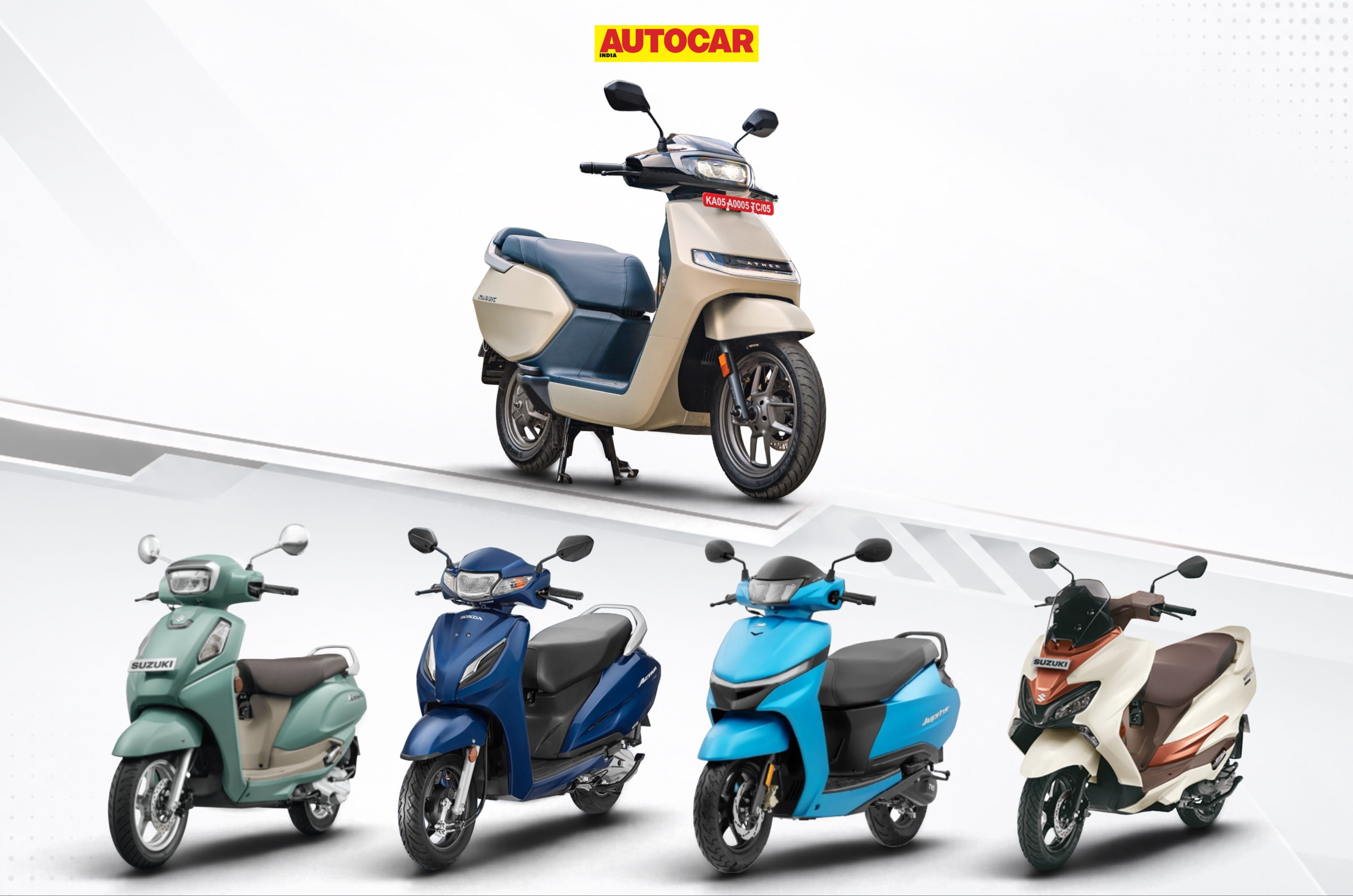
An inside render showing the Ather Konarc at the top; Suzuki Access, Honda Activa 6G, TVS Jupiter, and Suzuki Burgman Street at the bottom.

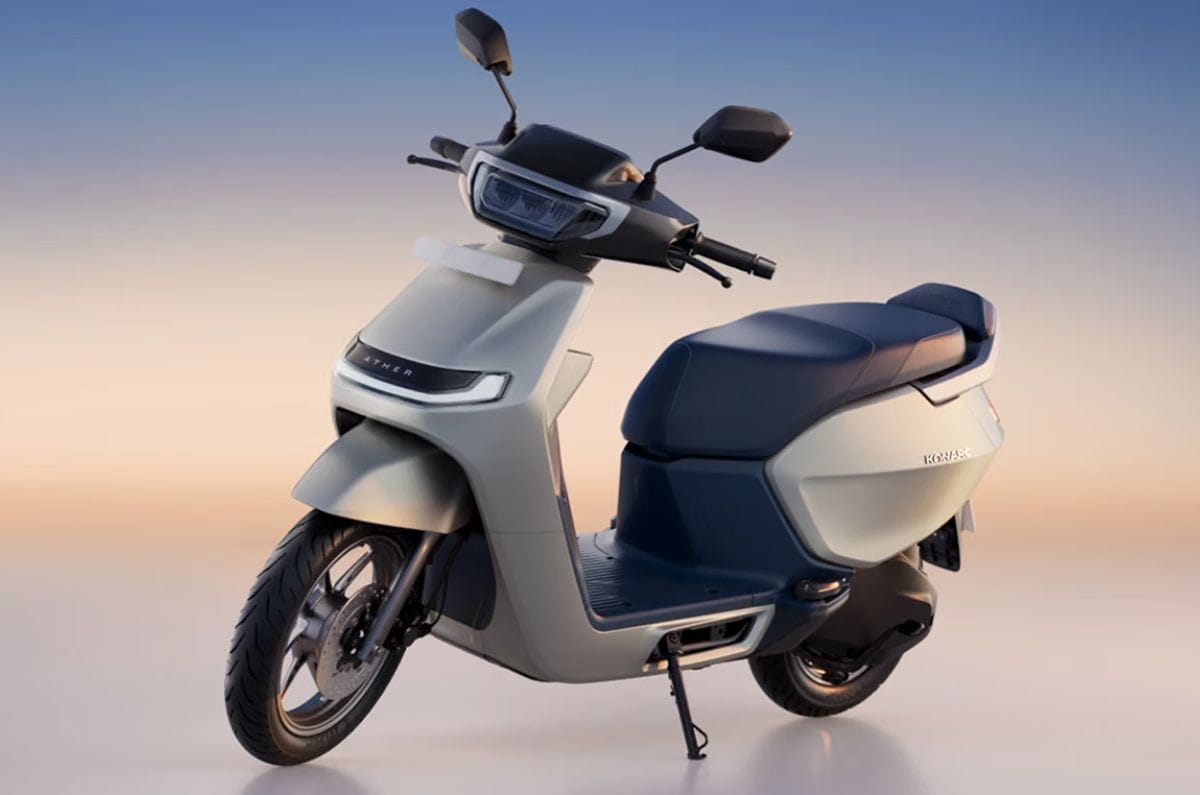
Family scooter. As soon as you read that, probably one specific scooter comes to your mind, summing up how the scooter industry has functioned the past two decades. However, over the past few years, EVs like the TVS iQube, River Indie, and the Ather Rizta have shown that they can go toe-to-toe with petrol scooters. The brand-new Ather Konarc is poised to add to that arsenal. However, if you aren’t quite convinced yet, here are some internal combustion engine (ICE) scooters you can look at instead.

All scooters are being compared to the Ather Konarc S 100, priced at Rs 99,999 (ex-showroom, Bengaluru). For Konarc, we haven’t considered features that require Ather StackPro subscription. All the other scooter prices mentioned are ex-showroom, Delhi.

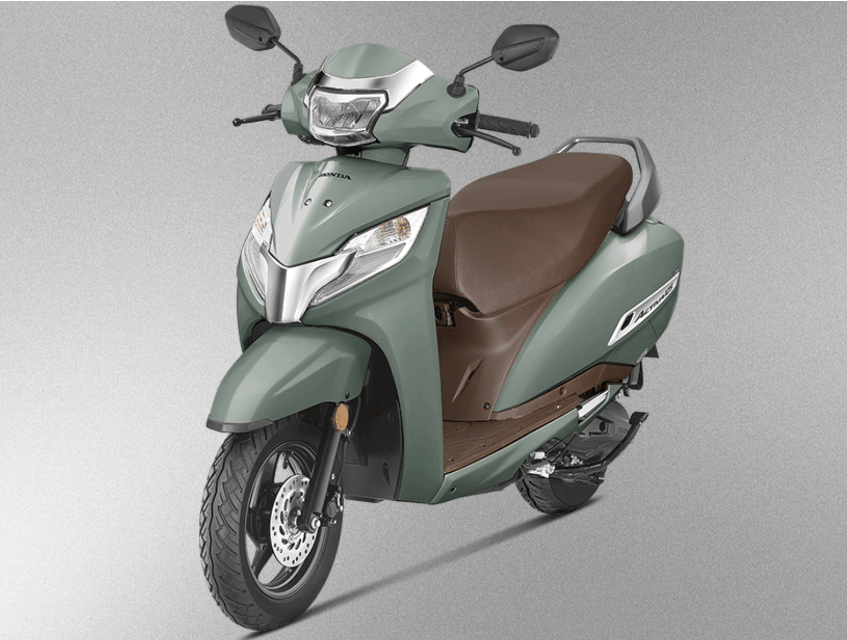
Honda Activa

Rs 76,083 onwards

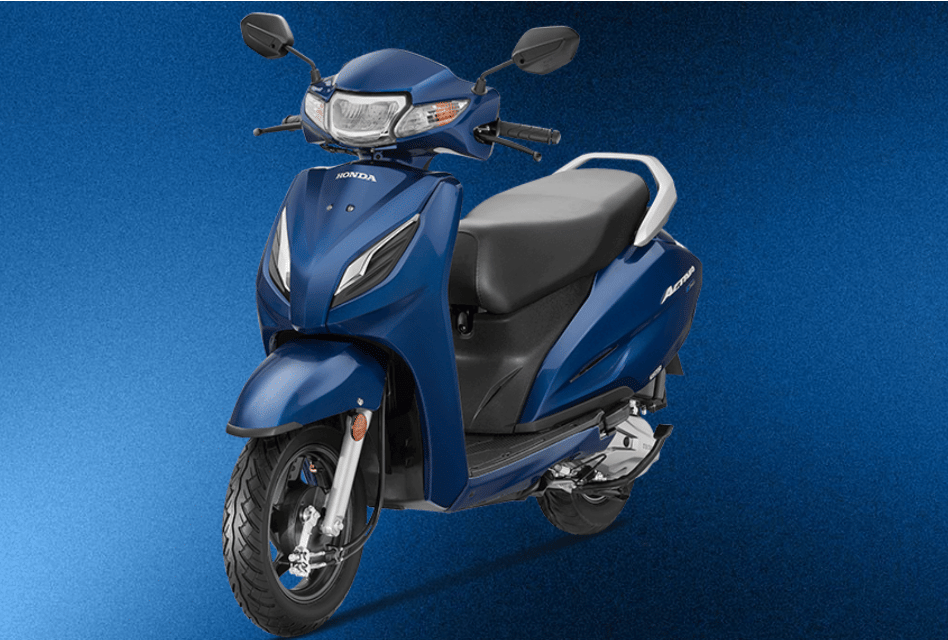
Honda Activa 6G in Decent Blue Metallic colour

The default family scooter and the one your mind reminded you of when you started reading this. You cannot go wrong with the Activa’s reliable 110cc engine and the trust the brand brings you. However, this and the 125 have a lean feature set compared to the other ICE scooters here. The Activa 110 gets a 4-inch TFT instrument cluster with turn-by-turn navigation, smartphone connectivity, a silent start and stop-start system via an Integrated Starter Generator (ISG), and a smart key on the top variant. With the Activa’s 54.4kpl fuel economy, you’re looking at a 270km range before coming to a standstill. The Activa’s prices tops out at Rs 91,082 which makes it close to the entry-level variants of the Ather Konarc and the Simple Wave.
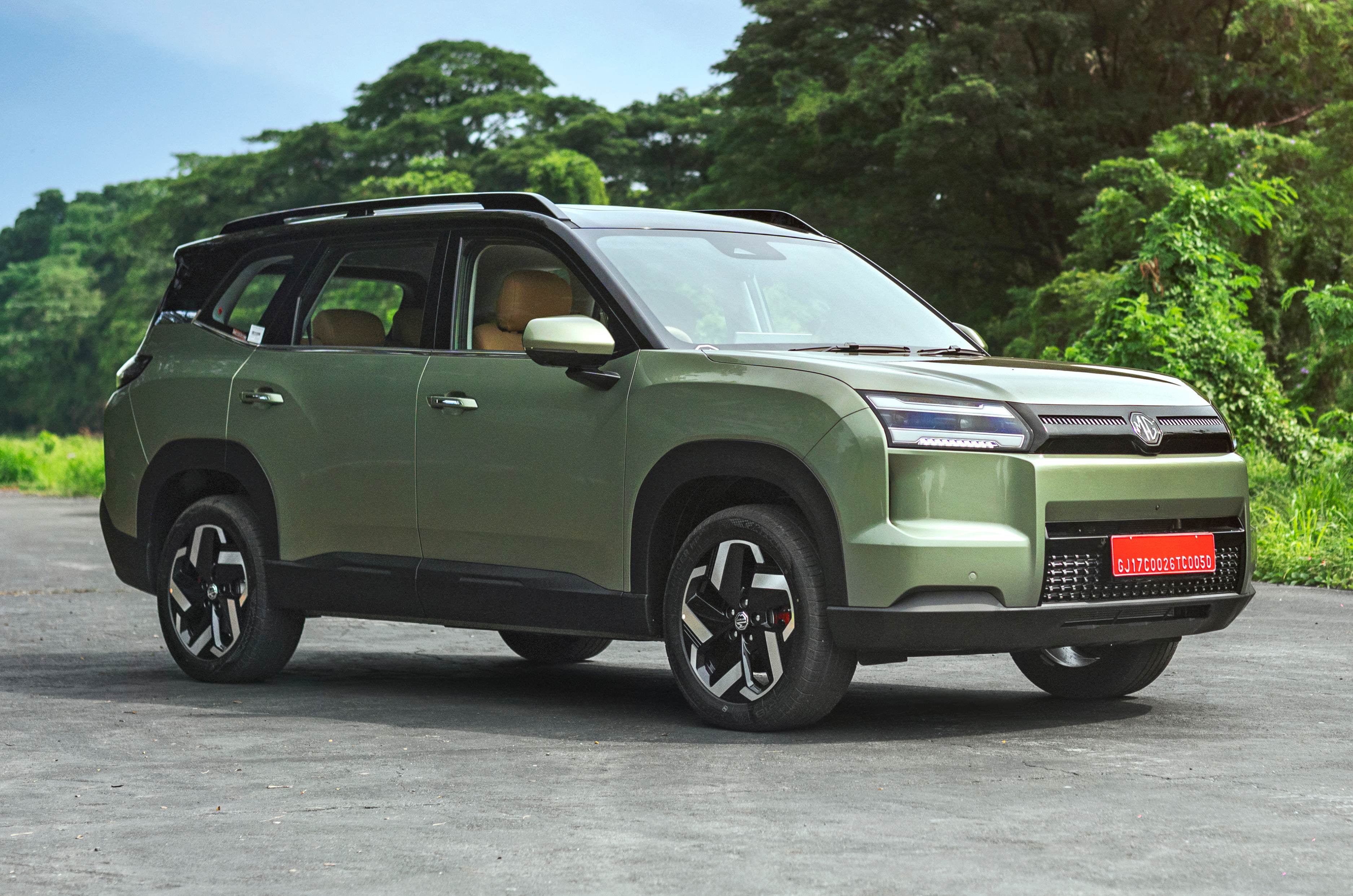
By paying Rs 9,000 more for the Konarc, you’ll get 100km IDC range, 70kph top speed, two ride modes, bigger 14/12-inch front/rear wheels, a bigger 31L under seat storage.

Honda Activa 125

Rs 91,178 onwards

Honda Activa 125 in Pearl Deep Ground Gray colour

The bigger Activa bumps up the cubic capacity to 124cc and increases the power by 0.4hp to 8.3hp and increases the torque by 1.4Nm to 10.5Nm compared to the 110, but is otherwise almost exactly the same as the 110. For that extra power and torque, the Activa 125 bumps up the prices and tops out at Rs 95,622. As such, the extra features you gain by switching to the Konarc also remain the same.

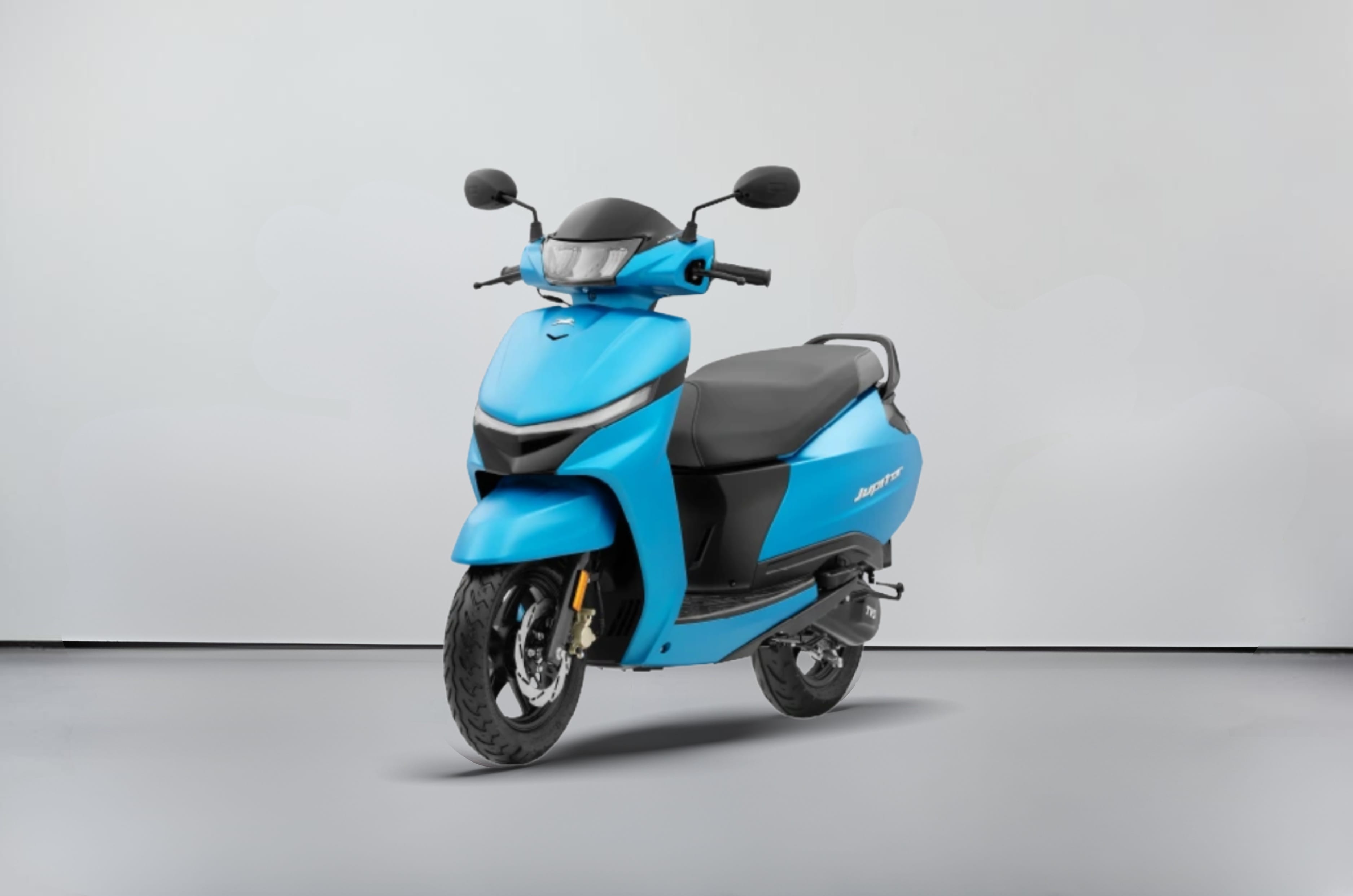
TVS Jupiter (110)

Rs 74,125 onwards

TVS Jupiter 110 in Dawn Matte Blue colour

The Activa’s biggest competitor is the Jupiter which received a comprehensive upgrade in 2024. TVS gave it an all-new 113.3cc engine with 7.9hp and 9.8Nm of torque (with 0.6Nm from the ISG). It also received a much sleekier design over its predecessor. As things stand today, the Jupiter has perhaps the largest feature set of any ICE scooter. Thanks to sharing the platform with its bigger brother, the new Jupiter gets a front fuel tank, 33L under seat storage (that’s still the largest on an ICE scooter). It also gets a wide floorboard, more storage on the front apron storage, an ISG, smartphone connectivity, 12-inch wheels at both ends, a front disc brake on higher variants, and a design that’s much more modern than any of its peers. With its 57kpl fuel economy, the Jupiter also has the Activa beat with a higher 285km range. The Jupiter starts at Rs 74,125 and tops out at Rs 89,825 for the dual-tone variant.

By stepping up to the Konarc by paying an additional Rs 10,174 over the top-most variant, you gain a larger 14-inch front wheel.

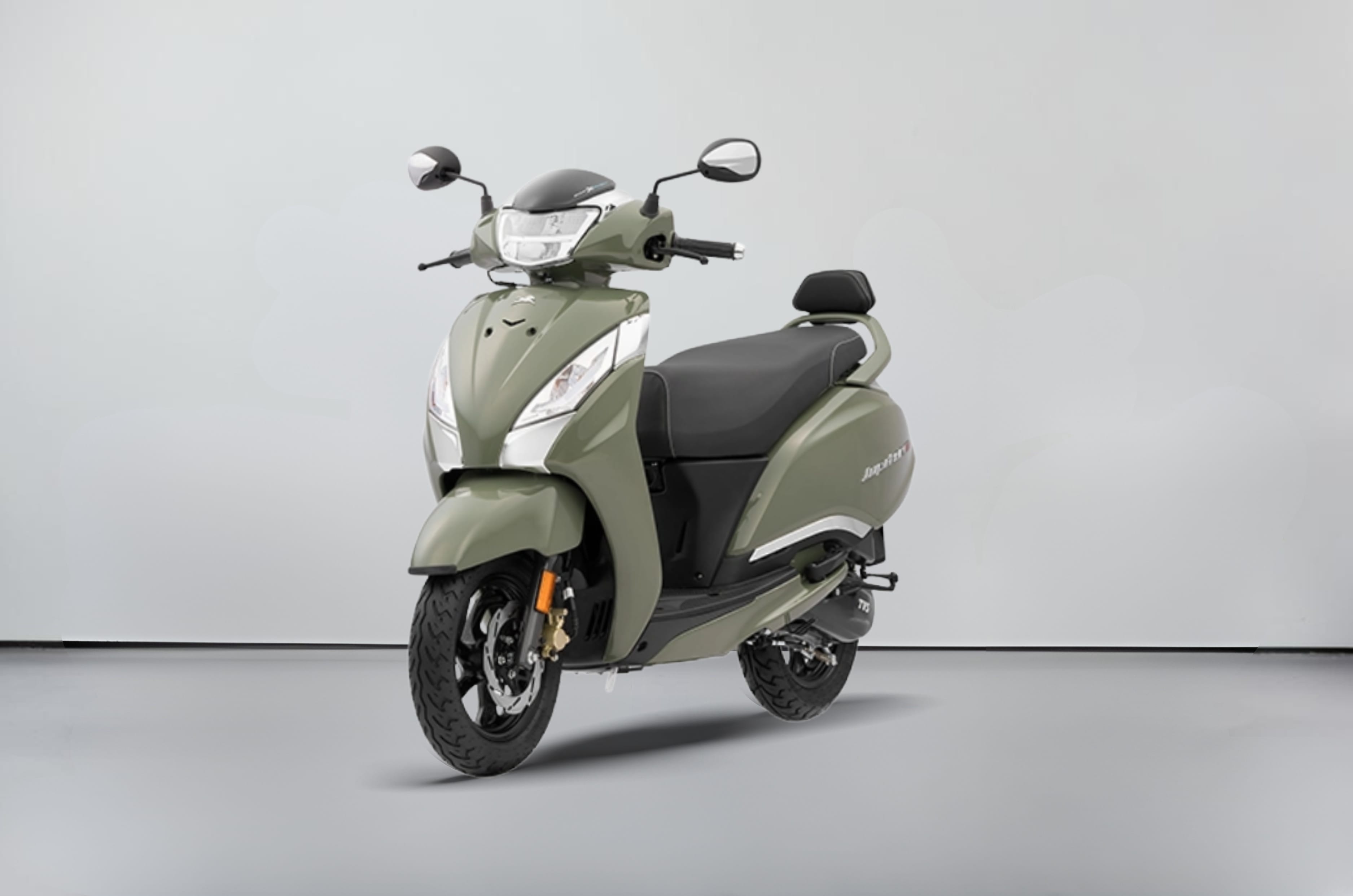
TVS Jupiter 125

Rs 81,700 onwards

TVS Jupiter 125 in Elite Green colour

The bigger Jupiter unfortunately didn’t quite get the rejuvenation. It’s stuck to essentially the same design from its debut in 2021. With the larger 124.8cc engine, you get 0.5hp extra power and 1.3Nm extra torque over the 110, with the ISG’s assistance; without it, they become 0.1hp and 0.7Nm extra, respectively. Sharing the same platform means that the new 110 has caught up to most of the 125’s features. Though, you do get a TFT display on the 125’s cluster, but it isn’t adding any real value. The Jupiter 125 starts at Rs 81,700 and tops out at Rs 89,935.

By stepping up to the Konarc for approximately Rs 10,000 extra, you gain a larger front tyre.

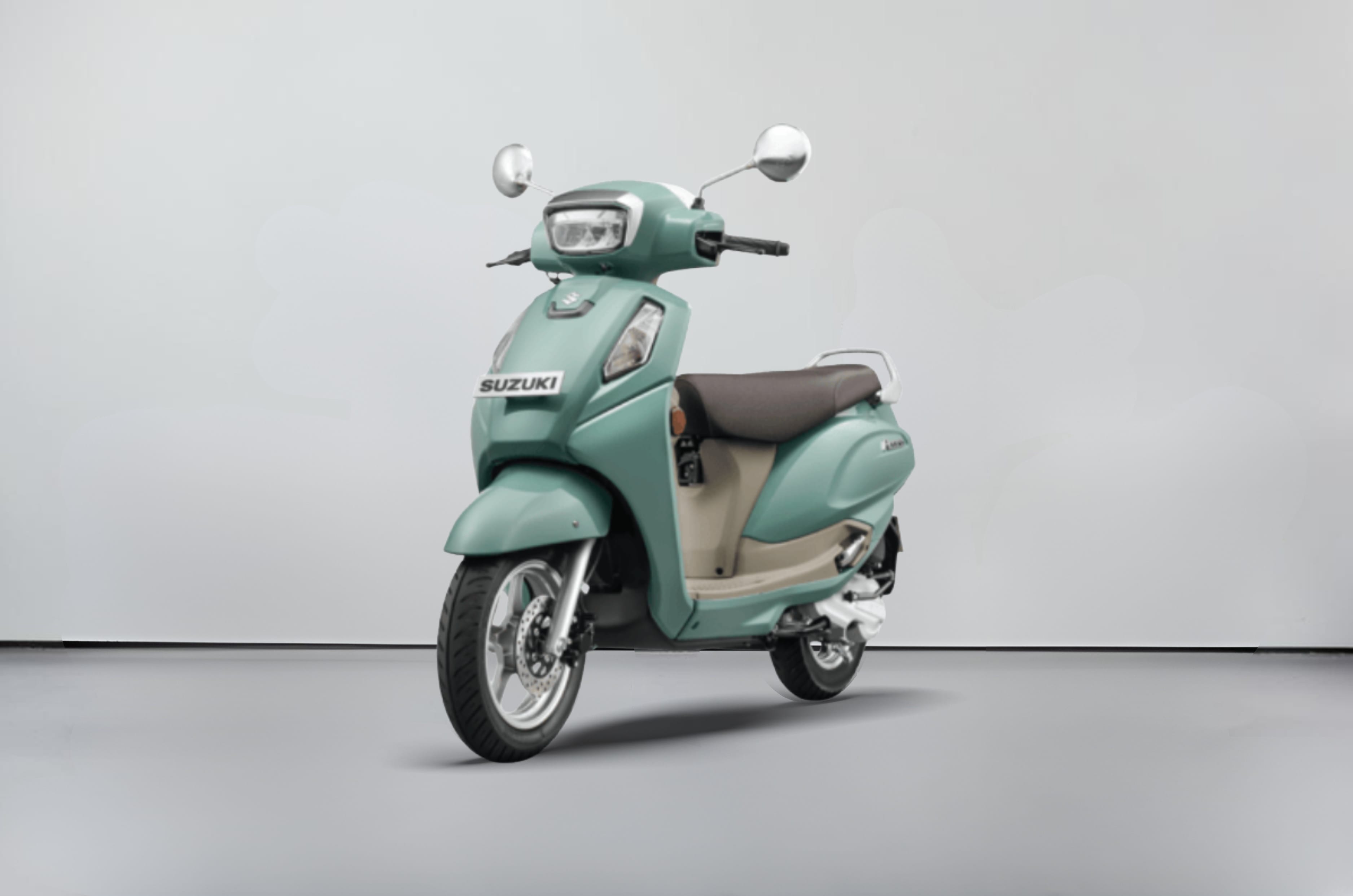
Suzuki Access (125)

Rs 82,185 onwards

Suzuki Access 125 in Solid Ice Green colour

The Suzuki Access has silently been one of the best-selling scooters in the family scooter segment and it received a comprehensive upgrade in early 2025. While there wasn’t a brand-new engine, Suzuki gave it a new frame and made scores of minute improvements to the engine that added up to make it a comprehensively better scooter. However, that also means there aren’t any new features to help the Access’ case. It sticks to a 12/10-inch front and rear wheel setup, a 24.4L under seat storage that now feels measly even for the ICE world. Suzuki did give it a TFT instrument cluster and single-channel ABS on the highest variant, but that’s about it. The Access starts at Rs 82,185 and will set you back by Rs 1.02 lakh for the TFT-ABS variant.
With the Ather Konarc, you will end up paying Rs 3,000 less and gain a larger 14/12-inch front and rear wheels, two ride modes, and a considerably larger 31L under seat storage but the Access is the only scooter here that offers the safety net of an ABS system.
Suzuki Burgman Street

Rs 1.03 lakh onwards

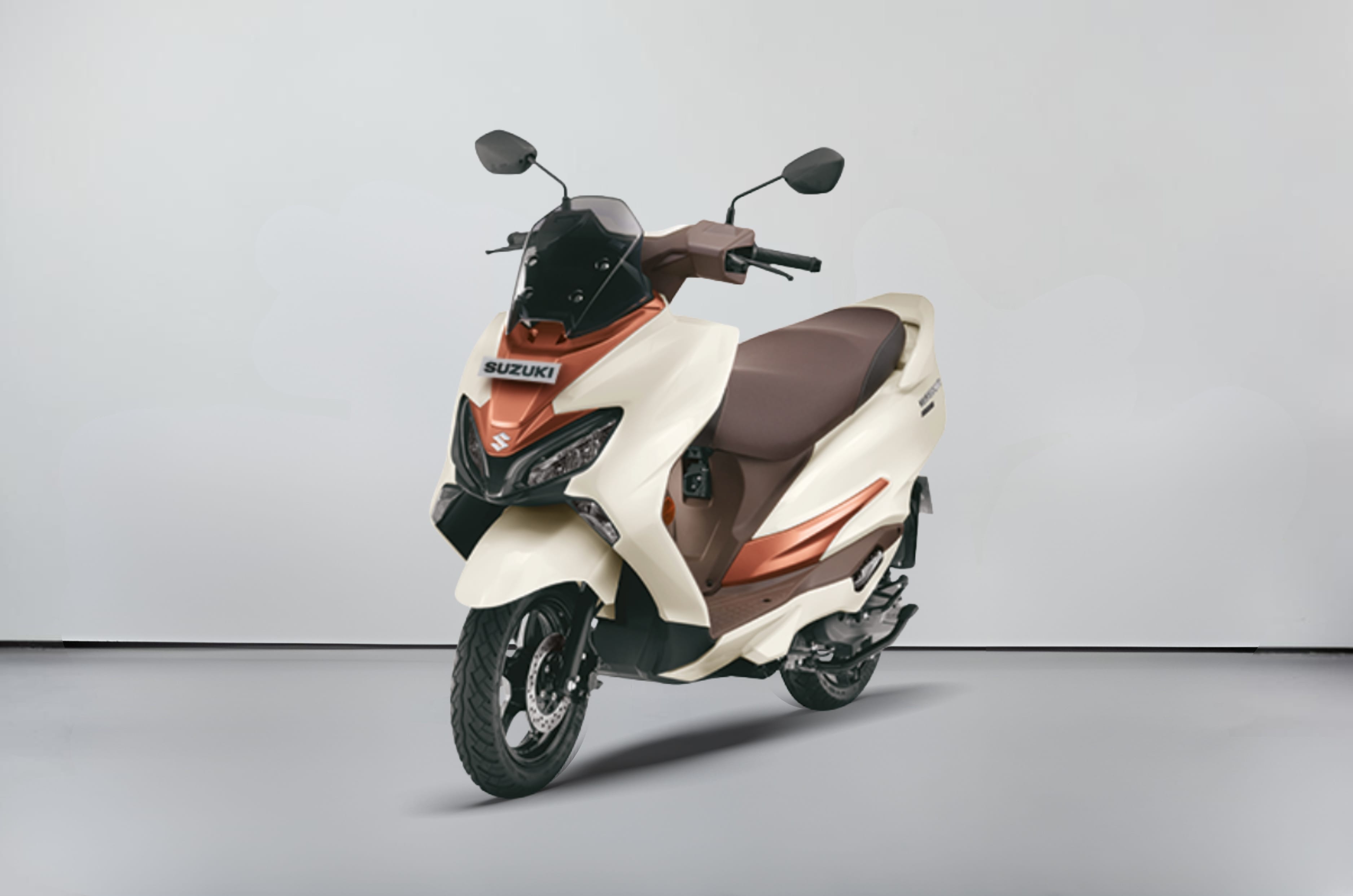
Suzuki Burgman Street in Grace White/Copper colour

The Burgman received most of the same upgrades as the Access in early 2026, with the maxi-scooter stance as its biggest differentiation. The Burgman Street exclusively gets a keyless system on the top-variant, but loses out on the single-channel ABS compared to the Access. On the dimensions front, it gets a 25mm longer wheelbase, 7kg additional weight, and 0.2 litres larger fuel tank compared to the Access. It’s also one of the two Suzuki scooters to have a 12/12-inch front and rear wheel setup in India; the older Burgman Street EX being the other one. Except for these differences and a different design, the Burgman Street shares its mechanicals and convenience features with the Access. The Burgman Street starts at Rs 1.03 lakh and the top TFT variant with the keyless system costs Rs 1.15 lakh.

By getting the Konarc instead, you end up saving about Rs 4,000 (Rs 12,000 compared to the top variant) and you gain a larger 14-inch front wheel, two ride modes, and of course, the larger 31L under seat storage.

Summary and conclusion

Ather Konarc in Celestial Gold colour

We understand that this article makes it seem like there’s no point in choosing the Ather Konarc in most cases; that’s not quite true. Getting an EV scooter might be the best decision for some people, especially ones with a fixed daily travel distance, living in either their own house, or a housing society that’s generous with setting up a home charger, and all the tech enthusiasts who would like to see how far EVs have come in the past few years. Just the novel riding experience of an EV might be enough to choose the Konarc for you. So, take a test ride of the Konarc S 100 when it becomes available. We’d like you to be aware of the closest ICE options, if you end up deciding the Konarc isn’t for you.

With Ather StackPro and Ather Connect subscription, the Konarc S can offer more smart features that none of the others here can hope to match, but there’s an additional price to be paid for them. Hence, if you’re after the most value for your money, there’s no question that ICE vehicles still offer more for their asking price.