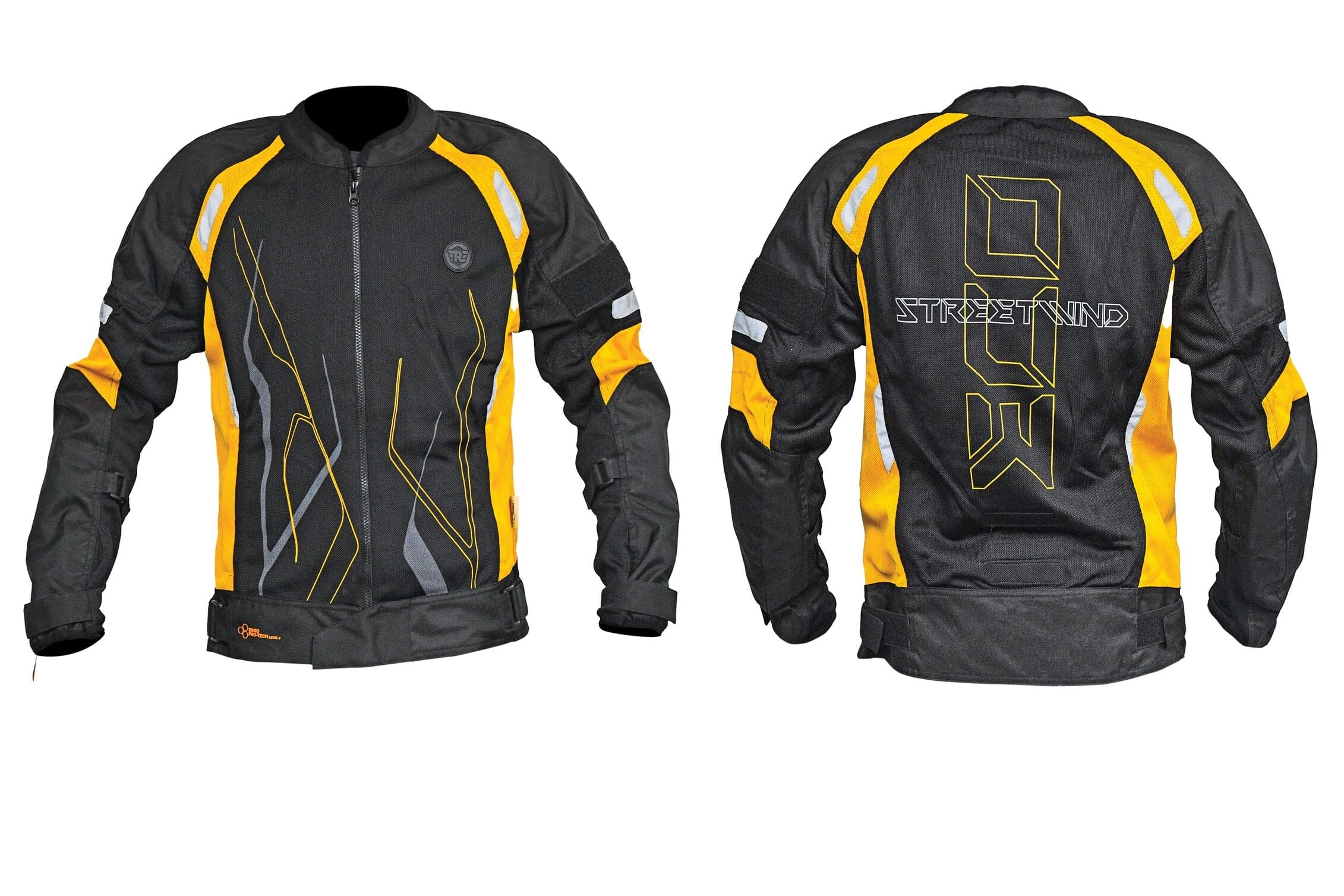
We’ve previously tested this jacket’s predecessor – the Streetwind Eco – and the biggest difference between it and the Eco 2 is in the aesthetics. Where the Eco sported a solid yellow chest and back area, the Eco 2 uses black with fine yellow and grey graphic lines, while the back gets neatly done Streetwind and Eco lettering. Like before, the jacket is available in other colourways too, but in this ‘Yellow’ version, the shade is now used as highlights on the forearms, chest and rib areas, so it’s less in-your-face but still striking enough to stand out from a sea of dull, all-black jackets.
Besides that, nothing much has changed since, but that’s just fine. Royal Enfield says this is India’s first sustainable riding jacket, made from recycled plastic bottles that are turned into yarn to weave the jacket. The weave is, of course, a mesh – RE says 90 percent is made of mesh – and it is very breathable.
We’ve had this all through summer, and ventilation has been good throughout. What’s nice is that even when you stop, you don’t feel like you’re steaming up inside. The feel of the fabric, too, is just fine and fairly soft against your body. It also has a cushioned collar, which feels nice and prevents the chafing that you tend to get from stronger fabrics. The fit seems to have improved, where earlier it felt a bit baggy, it fits tighter now, though this was on different testers this time around, but the size used was the same – small. As is the norm, there are regular adjustment tabs on the cuffs, waist, biceps, and forearms.
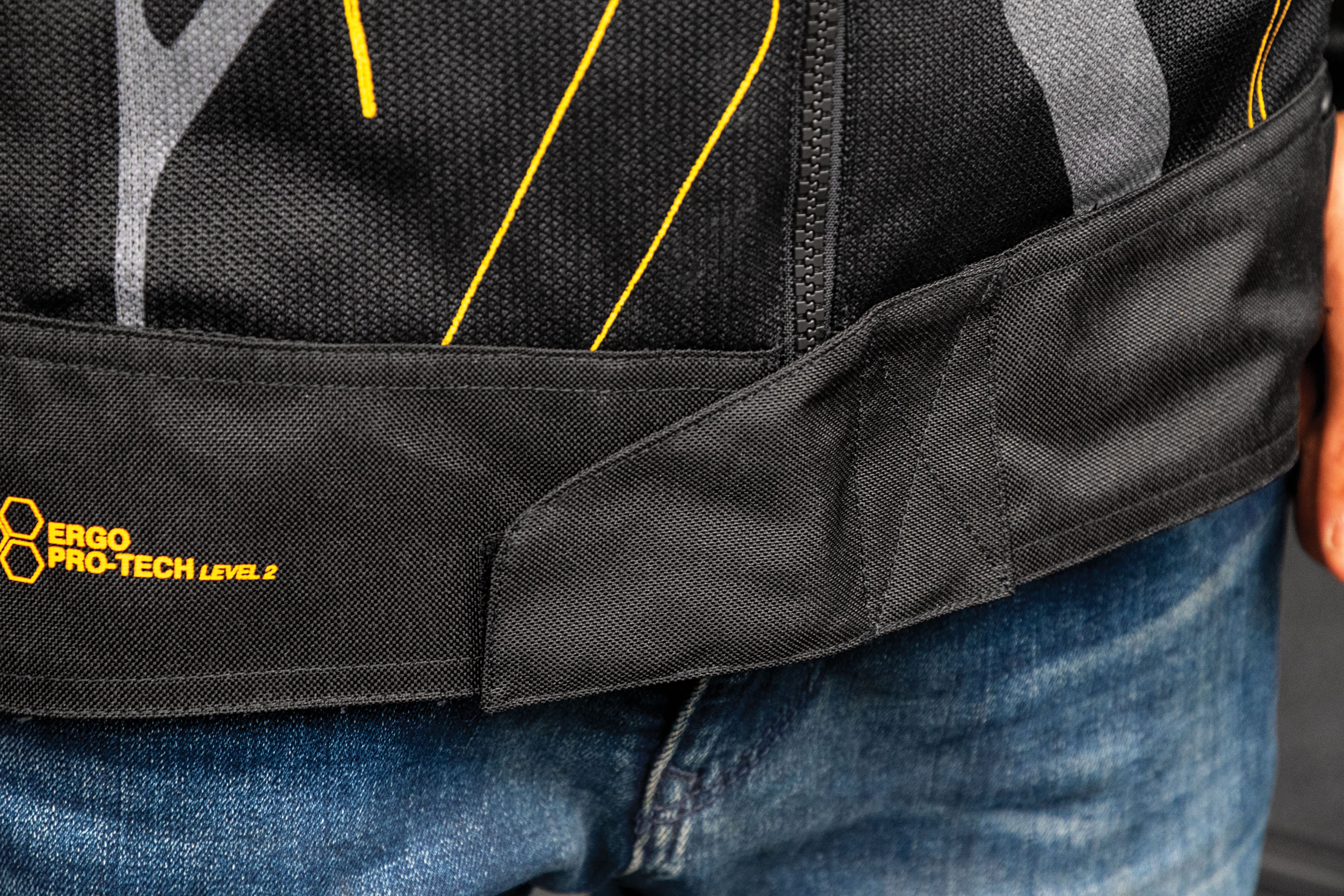
In terms of protection, the jacket is constructed with the recycled and abrasion-resistant 600d polyester and 610d Cordura fabric at impact zones. It offers CE level 2 protection via Royal Enfield’s Ergo pro-tech protectors at the shoulder and elbow. It does not have back or chest protectors; however a back protector can be added via the pocket provided.
As for utility, there are reflective accents at the front and back, along with Velcro patches on the left shoulder for any personalisation, and two front pockets with zippers, enough to accommodate a plus-sized phone.
If you are in the market for this jacket, you might find a few ongoing discounts. The MRP for this jacket stands at Rs 6,500. However, you can get it with quite a substantial discount of Rs 2,500 on multiple e-commerce websites, depending on size, bringing its effective price down to around Rs 4,000.
At its discounted price, the RE Streetwind ECO 2 does make a strong case for itself and could very well be your first investment in a proper riding jacket for the city and the occasional highway rides.
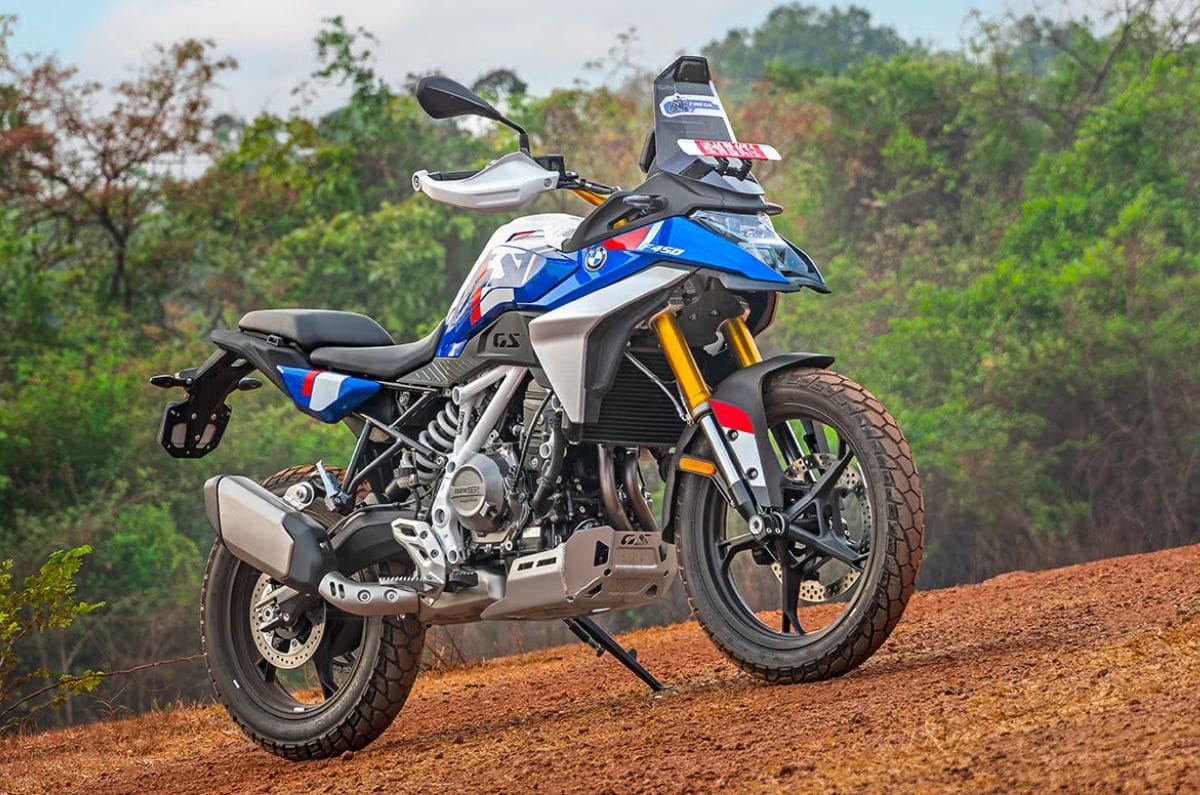
BMW launched the F 450 GS earlier this year as their new entry-level ADV, replacing the long gone G 310 GS in India. At launch, the motorcycle raised eyebrows with its ERC (Easy Ride Clutch) that effectively eliminated the need for using the clutch to shift gears. BMW had mentioned that the launch prices were introductory. Well, now the prices have been increased for all three variants.
No mechanical or feature changes
All three variants continue to get only one colour option each
All three variants have received price hikes
GS Trophy variant is Rs 30,000 more expensive now
To recap, the F 450 GS has three variants in India: Base, Exclusive, and GS Trophy. The Exclusive variant offered an up-and-down quickshifter as an extra over the base variant and the GS Trophy variant stepped it up with ERC and adjustability to the USD fork. India still hasn’t gotten the Sport variant that sits between Exclusive and Trophy with just the adjustable suspension. At launch, the Base variant cost Rs 4.70 lakh, the Executive variant cost Rs 4.90 lakh, and the GS Trophy variant cost Rs 5.30 lakh (all prices, ex-showroom, Delhi).
With the price increase, the Base variant now costs Rs 4.95 lakh, the Exclusive costs Rs 5.15 lakh, and the GS Trophy costs Rs 5.60 lakh. The base two variants have each received a Rs 25,000 increase and the top GS Trophy has received a Rs 30,000 increase. Other than the price increases, the motorcycle continues as-is with no changes to its mechanicals, or features; which means the same 420cc, twin-cylinder, liquid-cooled engine with 48hp and 43Nm of torque. That also means that there’s only one Cosmic Black colour for the Base and Executive variants. GS Trophy also gets one colour, but a different Racing Blue with red and white accents. On the feature side, ERC is still only on the Trophy variant and heated grips continue to be offered as standard, but cruise control is missing, even as an accessory.
When the first Bajaj Pulsar 150 broke onto the scene in 2001, it shattered the mould of what was expected of an accessible yet sporty commuter motorcycle. This recipe saw such widespread success that nothing Bajaj brought out since has been able to replace it. Therefore, the company went back to the drawing board and has now brought out a new generation of Classic Pulsars, spearheaded by the 125 and 150. In this review, we’ll share what the larger one was like to ride.
Bajaj Pulsar 150: What’s changed compared to before?
From the mechanicals to the tech, it is all-new
To start with, gone are the double-cradle frame and twin shock absorbers, replaced by a lighter and stiffer diamond frame and monoshock, respectively. Complementing the new chassis is a brand new motor. This engine started life as an engine from a similar displacement N model, but Bajaj has made certain changes to suit this application. The state of tune, various internals and the exhaust system are all different over here.
The Pulsar 150, understandably, has the sprightlier performance of the two.
Unlike before, the motor is now used as a stressed member of the chassis, and Bajaj has also peppered in the learnings it has made from the N range. For starters, the gearbox now has shorter, more tractable ratios, and there’s also a low rpm assist function, which raises engine rpm slightly to reduce stalling when you’re crawling at a higher gear at low speeds. Furthermore, higher variants of the 150 also come equipped with an Integrated Starter Generator (ISG), which brings in silent start and a reasonably quick start/stop system.
Pulsar 150 design and quality – 8/10
Looks uncannily similar to the older bike; feels very similar to sit on, too
Considering how much has changed underneath, it’s especially commendable that the Pulsar 150 looks this similar to before. Bajaj’s design team has deliberately gone to great lengths to package everything neatly and retain the bike’s instantly recognisable silhouette. Pulsar hallmarks that people appreciate, like a ‘wolf eye’ headlight, a chunky tank, sharp tank extensions and a pointy tail, all continue, and you won’t be mistaking it for anything other than a classic Pulsar. There are no complaints when it comes to quality, and it’s as well-finished as you’d expect from a commuter bike today.
Top variants come with a split seat.
Just like the near-unchanged design, the Pulsar 150’s ergonomics are almost the same as before – but that’s a good thing. You’re sat very neutrally, and the riding position is that of a textbook commuter with only slightly rearward pegs for the sporty touch that a Pulsar is known for. With a perch that’s just 795mm off the ground, the 150 strikes a nice chord by being friendly and approachable for both shorter folks and 6’1 Rishaad. To cater to the wants of different riders, Bajaj will sell you a Pulsar equipped with either a single piece seat or split seats. Both options are spacious – the single piece seat understandably more so – and decently padded, capable of accommodating two full-size people without them getting acquainted with each other too intimately.
Pulsar 150 performance – 8/10
Has enough pep for city and highway duties, engine stalls a little too easily, though
City traffic is where most Pulsar riders spend most of their time, so we did the same and found that the bike behaves exactly as you’d expect from a commuter. The motor has good low- and mid-range torque, and paired with the super light clutch, wading through the drudgery of traffic doesn’t feel too taxing.
The new engine is also super smooth, and should you choose to venture out onto the highway, the Pulsar can do that as well. The upper limit of the 150’s comfortable cruising speed is 90-95kph in its top 5th gear, which is par for the course in this class.
Engine
149.5cc, single-cylinder, air-oil cooled
Power
14hp at 8,000rpm
Torque
14.1Nm at 6,500rpm
Gearbox
5-speed
However, for all its strengths, the engine in the Pulsar 150 unit we were allotted displayed a tendency to stall a little too easily, and this happened on multiple occasions to both myself and Rishaad, who rode the bike.
Pulsar 150 ride and handling – 8/10
Behaves predictably and handles all situations well
While the chassis is largely the same between the 125 and 150, one noteworthy difference is that the bigger one uses a fatter 33mm fork, compared to the 31mm unit on the smaller bike. Also, unlike the 125, the Pulsar 150 comes with the government-mandated safety net of single-channel ABS. All variants come with a 260mm disc brake at the front, paired with either a 230mm drum brake on the lowest variant or a 230mm disc on the higher two variants.
Pulsar 150 behaves neutrally and predictably when subjected to a variety of riding conditions.
The best way to describe the new Pulsar 150’s handling is neutral and predictable. Neither does it feel as vague as the previous-gen model, nor does it feel as responsive as the N / NS models. The Classic Pulsar 150 retains its surefootedness in a straight line while introducing a newfound taut feeling when taking a corner. Its demeanour is predictable at all times, which is sure to inspire confidence in the varied sort of riders it will cater to. The brakes work well and bring the Pulsar to a stop in a quick fashion without much drama, although overenthusiastic usage will result in the rear locking up.
Fuel tank
14 litres
Seat height
785mm
Ground clearance
165mm
Kerb weight
141kg
Wheelbase
1,320mm
However, for all its strengths, the Pulsar 150 is not perfect, and there are some areas of improvement. The rear suspension feels slightly underdamped and springy, throwing you off the seat over larger road imperfections. The gearshifts, too, felt a little rubbery and vague, lacking a snick feel.
Pulsar 150 features and safety – 8/10
Comes with a lot of tech-y features on the top two variants
Following today’s market trends, even a humble commuter like this one now packs a dollop of tech. This includes a USB-C charging port, 4 riding modes (Sport, Tour, Road and Rain), Bluetooth connectivity for the dash via Bajaj’s app, which brings in a host of functions, and you can even cast your phone’s screen onto the TFT display, although some of these functions are still not available yet and will be rolled out at a later date.
Top variants also come with a colour TFT display and riding modes
To control the TFT display’s functions and switch between the riding modes on the top variants, you also have more comprehensive switchgear whereas the colour LCD dash on the lower variants is paired with a simpler switch cluster. Both displays are informative and well laid-out and bring an air of premiumness from the rider’s POV. Admittedly, most of these features aren’t going to add much value for most everyday riders but for the few that want their motorcycle to double up as a gadget, they’re there.
Pulsar 150 price and verdict – 8/10
It suits its intended purpose quite well
Aside from a few small misses, the new Pulsar 150 is a lovely commuter, which comes in at a price point that is more or less in line with the competition today. Prices start at Rs 1.15 lakh and go up to Rs 1.23 lakh (ex-showroom, Delhi). Compared to the last-gen 150, this latest-gen Pulsar’s prices have gone up by Rs 4,000-Rs 6,000, which is a digestible amount considering the sheer scale of new components in use here.
Given the huge demand for a bike that looks like a Classic Pulsar and the fact that this new-gen model is such a quantum leap ahead compared to the old ones while costing just a few thousand rupees more, Bajaj seems to have a winner on its hands.
Car buyers today are pretty spoilt for choice. Beyond a multitude of brands, body styles and variants, there are now more fuel options than ever before. Petrol, diesel, CNG, hybrid, electric, and soon even ethanol-powered vehicles are all vying for attention, making the decision increasingly complicated. So, which powertrain makes the most sense for you?
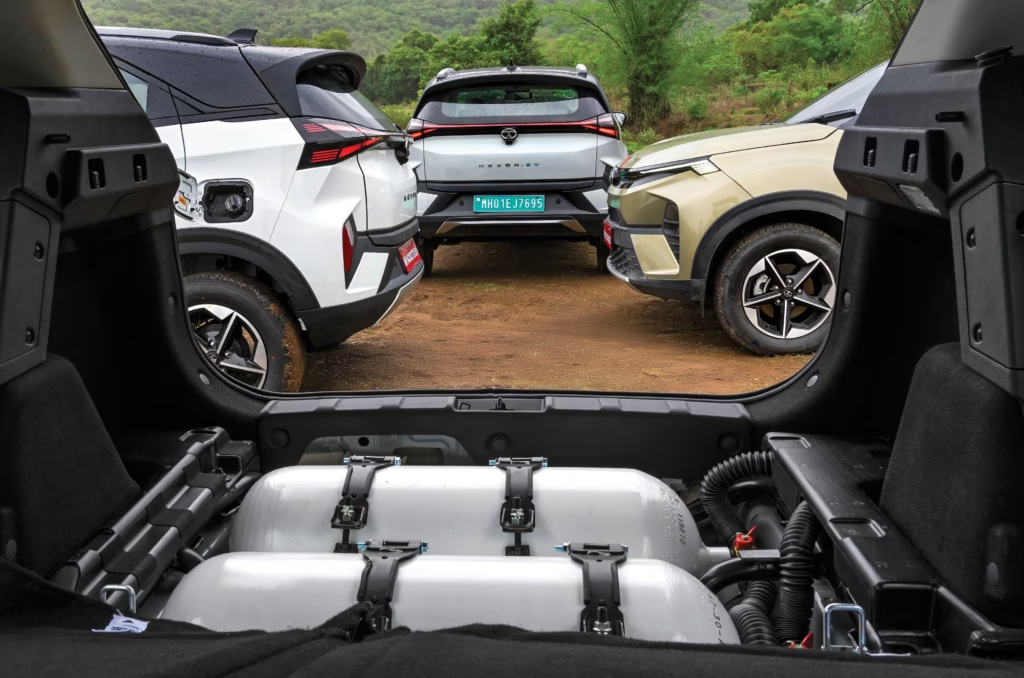
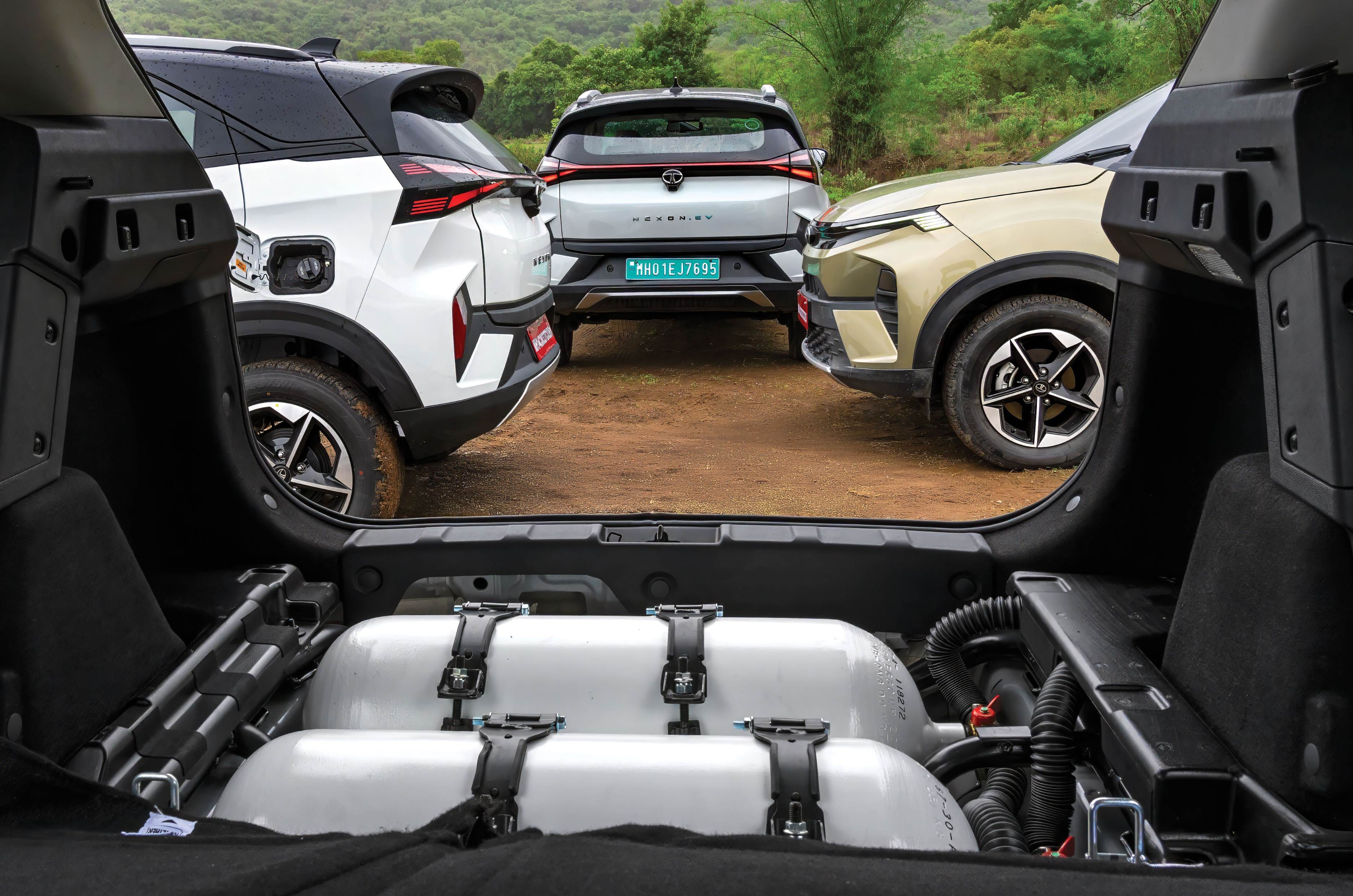
Tata Nexon models (left to right): Petrol, diesel, petrol-CNG and EV.
To answer that question, we turned to one of the most versatile models on sale in India – the Tata Nexon. Few vehicles offer such a broad range of powertrain choices, and with design, space, practicality, safety and features remaining largely consistent across the range, the Nexon provides the perfect platform to isolate the one key variable – the fuel itself. So, we got together the turbo-petrol, CNG, diesel, as well as the EV to find out each fuel’s pros and cons, and thus, which would best fit your needs.
Disclaimer: Fuel prices vary from state to state.
Tata Nexon turbo-petrol: Fuss free
Tata’s 1.2-litre, three-cylinder ‘Revotron’ turbo-petrol engine debuted with the Nexon in 2017 and received a power bump in 2020, taking outputs to 120hp and 170Nm. Today, it is offered with an unusually wide range of transmission choices – a 5-speed manual, 6-speed manual, 6-speed AMT and a 7-speed dual-clutch automatic.
Prices start at Rs 7.40 lakh and extend up to Rs 13.90 lakh, ex-showroom (excluding dual-tone, Dark and Red Dark editions). Its broad variant spread and attractive pricing are key reasons why the turbo-petrol accounts for 42 percent of all Nexon sales.
The engine offers decent driveability and benefits from selectable Eco, City and Sport drive modes. But outright performance, refinement and smoothness aren’t class-leading and not what you get from other turbo-petrols.
Within the range, the 7-speed DCA stands out as the most desirable option. Despite accounting for less than 4 percent of total Nexon sales, it is arguably the nicest ICE-powered Nexon on sale. The wet-clutch dual-clutch transmission prioritises smoothness over sportiness and suits the engine’s character well. While downshifts can occasionally feel a touch hesitant, the overall experience is noticeably more polished than the manual and AMT alternatives. Notably, the top-spec Turbo DCA is the best-equipped ICE version and is also the only version to offer ADAS.
Fuel efficiency, however, remains this powertrain’s weakest area. In our tests, the turbo-petrol DCA returned 7.7kpl in the city and 13.9kpl on the highway, translating to an average running cost of Rs 9.46 per kilometre – the highest among all Nexon powertrains.
To put that into perspective, even though a fully loaded Fearless + A PS DCA is Rs 2.65 lakh more affordable than a top-spec Empowered + A 45 EV, the EV’s significantly lower running costs (of Rs 1.03 per km using home charging) allow owners to recover that initial price difference in roughly 32,000km.
Tata Nexon diesel: Highway star
The diesel range starts at Rs 9.15 lakh and extends up to Rs 14.40 lakh for the top-spec AMT. Interestingly, while the diesel once outsold the petrol version in the Nexon’s early years, buyer preferences shifted following the BS6 transition, causing diesel sales to gradually decline to 13 percent. Despite this, Tata has persisted with the fuel, and today remains one of the few carmakers still offering diesel engines in its portfolio.
Instead of adopting a conventional SCR setup with a urea tank, AdBlue injection system and additional electronic controls, Tata developed a Lean NOx Trap system for the 1.5-litre, four-cylinder turbo-diesel engine. Despite this relatively low-cost passive emissions-control system, the price premium over an equivalent turbo-petrol variant remains around Rs 1 lakh – broadly in line with what rivals charge. The only tangible benefit for buyers is that, unlike many competitors, there is no urea tank requiring periodic top-ups, resulting in marginal savings over time and a bit less hassle.
Like the turbo-petrol, refinement isn’t this diesel’s strongest suit. And even though turbo lag is more perceptible than in the petrol iteration, performance flows in a rather strong manner, making it well-suited for highway drives. Its tall fuel efficiency also makes it ideal for those who cover long distances frequently. In our tests, the diesel-manual delivered an impressive average of 17.95kpl, resulting in a running cost of just Rs 5.30 per kilometre – significantly lower than the turbo-petrol.
Tata Nexon EV: Smooth operator
As India’s first widely accessible electric SUV from a domestic manufacturer, the Nexon EV played a pivotal role in democratising EV ownership. Combining brisk performance, usable real-world range and a relatively accessible price point, it opened up the Tata brand to an entirely new set of buyers. For a long time, it was India’s bestselling EV. Within the Nexon range, it accounts for 14 percent of total sales.
Today, the Nexon EV range spans Rs 12.49 lakh to Rs 17.49 lakh, with buyers able to choose between two battery packs – 30kWh and 45kWh. The line-up itself is relatively straightforward, with three trims available for each battery option.
In the real world, the 30kWh version can deliver a little over 200km on a charge, while the larger 45kWh battery can comfortably manage around 350km. For buyers seeking the smoothest and most refined driving experience, nothing quite matches the seamlessness of an EV. Acceleration feels brisk, and its zippy yet seamless performance makes for a hushed, enjoyable drive experience.
The two battery versions differ in more ways than just capacity. The 45kWh version uses Tata’s newer Gen 2 motor, which is lighter, more compact and more efficient than the Gen 1 unit used in the 30kWh variant. The long-range version’s more modern architecture also enables significantly faster DC charging. To put it into perspective, the 30kWh version takes about an hour to charge from 20-80 percent using a DC fast charger, whereas the 45kWh variant achieves the same in just 29 minutes. Not only does the larger battery offer greater range, but it is also quicker to recharge despite its higher capacity, making it the more suitable choice for longer highway journeys.
Interestingly, the EV also enjoys a feature advantage over the best-equipped turbo-petrol DCA, gaining a larger 12.3-inch touchscreen, rear disc brakes, and an electronic parking brake with auto-hold functionality.
Coming to the 45kWh version’s running cost, using a home charger (at an average cost of Rs 8 per unit of electricity), buyers can enjoy driving around at just Rs 1.03 per km. Even if users opt for public DC fast-charging, the rates of which range between Rs 24 and Rs 28 per unit, still, average running costs work out to merely Rs 3.34 per km, which is almost a third of the petrol-automatic’s number and about sixty percent of a diesel-manual’s cost per km.
Tata Nexon CNG: Jack of all trades
There’s a lot Tata has got right with the Nexon CNG. For starters, prices range from Rs 8.35 lakh to Rs 13.60 lakh, positioning it neatly between the petrol and diesel alternatives.
Under the bonnet is the same 1.2-litre, three-cylinder turbocharged engine found in the petrol Nexon. Not only is it India’s first turbo-petrol CNG SUV, but it is also the most powerful, producing 100hp and 170Nm when running on CNG. Impressively, peak torque remains identical to the petrol version, although it is available across a narrower band. As a result, driveability feels remarkably similar to the turbo-petrol, and users are unlikely to find themselves wanting for performance, whether in urban conditions or on the highway.
Being a turbocharged CNG engine, efficiency in city driving can take a hit. In our real-world city test involving frequent stop-start traffic, the Nexon CNG returned 15.1km/kg. Out on the highway, however, flowing traffic and the presence of a sixth gear helped it achieve close to 24km/kg. The end result is an average running cost of just Rs 4.28 per kilometre, making it the most economical option in the ICE line-up.
With driveability that’s remarkably close to the turbo-petrol, lower purchase and running costs than the diesel, and very few compromises in practicality or equipment, the Nexon CNG presents perhaps the strongest all-round case in the range. Its only notable drawback is the limited CNG infrastructure. While station availability continues to improve, rising CNG adoption often leads to longer queues and wait times at many outlets.
Unlike many CNG vehicles, the Nexon CNG doesn’t feel like a stripped-down, budget-focused alternative. It remains spacious, practical and generously equipped while delivering the lowest running costs of any ICE Nexon. Small omissions, such as cruise control, connected-car technology and JBL-branded speakers, are unlikely to be deal-breakers for most buyers.
Viewed through the lens of value, usability and cost of ownership, the Nexon CNG strikes perhaps the most convincing balance of the lot. Which perhaps explains why, despite being offered with just one engine and a manual gearbox, it now contributes more than a third of all Nexon sales.
Tata Nexon petrol vs diesel vs CNG vs EV: Verdict
The turbo-petrol’s lowest starting price, as well as the widest choice for buyers, is the reason behind its popularity. Our pick of the range, however, is the priciest 7-speed DCA, which delivers the smoothest and most polished Nexon ICE driving experience. That said, performance and efficiency aren’t exactly class-best.
The diesel’s impressive fuel efficiency and thus low running costs make it an ideal choice for those who rack up high annual mileages. Performance is the strongest among all ICE versions, and its torquey nature makes it an excellent highway companion, perfect for those who regularly cover long distances.
For buyers with reliable home charging, a predominantly urban usage pattern and high annual running, the EV is the one to pick. The 45kWh model has a genuinely usable real-world range and is also the most advanced version with a rich feature list, making it a very well-rounded option.
The Nexon CNG retains the petrol’s drivability, offers low running costs, a long range, and buyers aren’t forced to compromise features or practicality either. It thus strikes a convincing balance between price, performance and real-world usability, emerging as the sweet spot of the line-up.
Renault India is offering substantial benefits across its portfolio in September 2026. For the first time, the latest-gen Duster is available with attractive benefits. Additionally, the French carmaker is offering cash discounts, exchange or scrappage benefits, loyalty schemes and a corporate or rural offer on its line-up.
Disclaimer: Offers/benefits may vary by city and are subject to stock availability. Buyers are advised to check with their local dealer for exact figures. Customers can also check out Renault India’s official website for further details.
Renault Duster offers in September 2026
Benefits of up to Rs 1.8 lakh
Select variants of the Duster SUV are available with benefits of up to Rs 1.8 lakh. These include a cash discount of up to Rs 30,000 and an exchange or scrappage bonus of up to Rs 50,000. Upgrading from a Renault car gets customers a loyalty benefit of Rs 10,000, but buyers upgrading from an older iteration of the Duster get a loyalty benefit of Rs 1 lakh. The Renault midsize SUV has a price range of Rs 10.49 lakh to Rs 18.49 lakh.
Renault Kiger offers in September 2026
Benefits of up to Rs 85,000
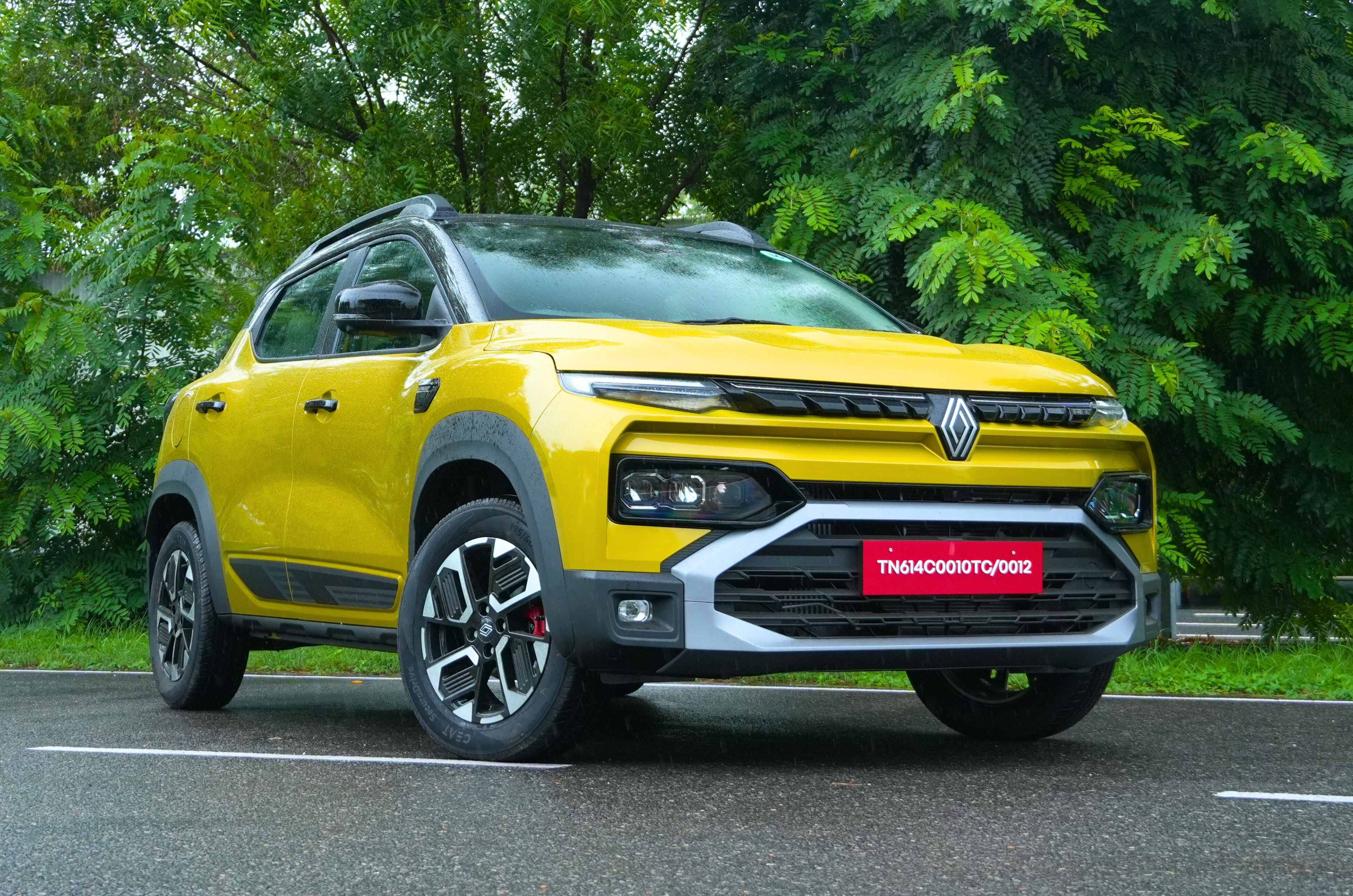
The Renault Kiger gets benefits of up to Rs 85,000 depending on the variant. These include a cash discount of up to Rs 30,000, a loyalty benefit of up to Rs 25,000 and an exchange or scrappage bonus of up to Rs 25,000. There’s also a corporate or rural offer of up to Rs 5,000. Renault’s crossover is priced between Rs 5.81 lakh and Rs 10.40 lakh.
Renault Triber offers in September 2026
Benefits of up to Rs 50,000
The Triber is available with benefits of up to Rs 50,000. These comprise a cash discount of up to Rs 20,000, an exchange or scrappage benefit of up to Rs 25,000 and a corporate or rural offer of up to Rs 5,000. Prices for the Renault MPV range between Rs 5.81 lakh and Rs 8.53 lakh.
Renault Kwid offers in September 2026
Benefits of up to Rs 40,000
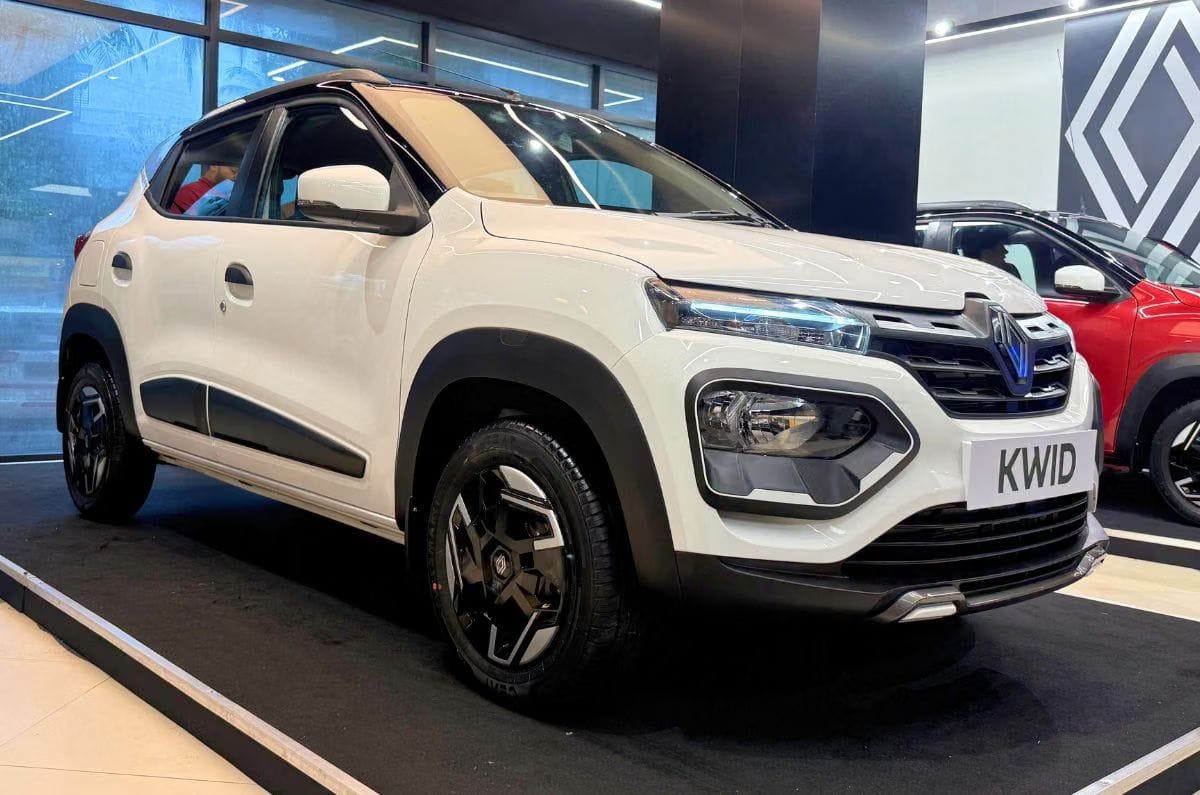
The Kwid is available with benefits of up to Rs 40,000. Select variants of Renault’s most affordable car get a cash discount of up to Rs 15,000 and a scrappage bonus of up to Rs 25,000. The entry-level hatchback has a starting price of Rs 4.53 lakh, while its top variant costs Rs 5.61 lakh.
After launching the original air-oil/cooled Himalayan with an upsized 440cc engine at Rs 2.29 lakh, the brand has now revealed prices for the accessories of this adventure motorcycle and in typical Royal Enfield fashion – it’s quite an exhaustive accessory list.
The most affordable accessory is priced at Rs 1,010
Touring mirror is priced at Rs 4,500
A cumulative pricing of essential luggage carrying accessories comes up to Rs 62,070
Royal Enfield accessories list
Luggage carrying accessories
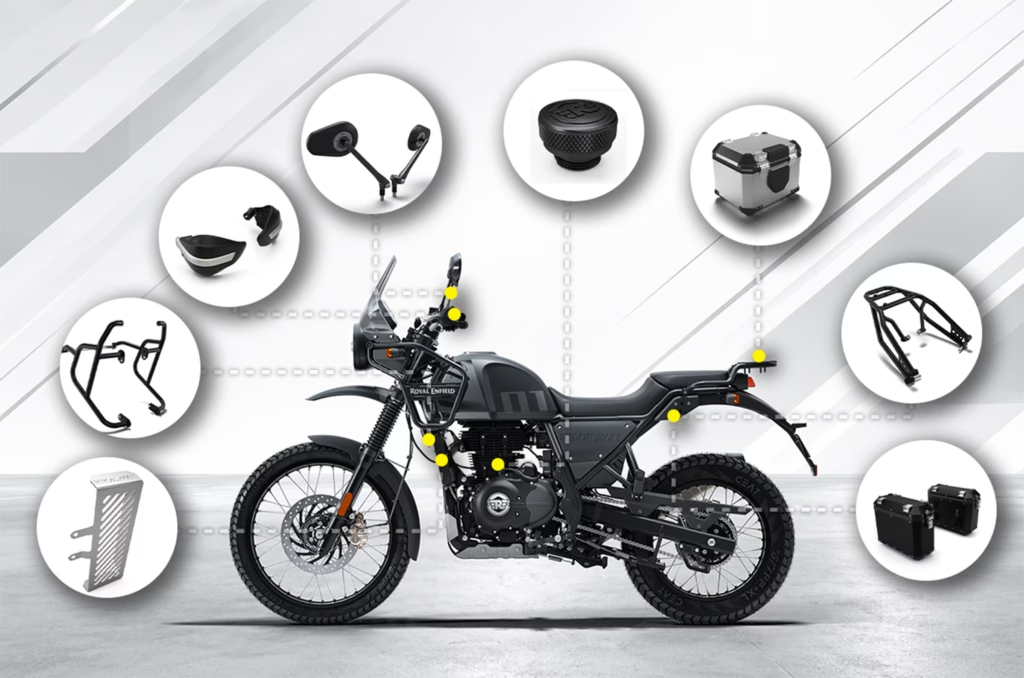
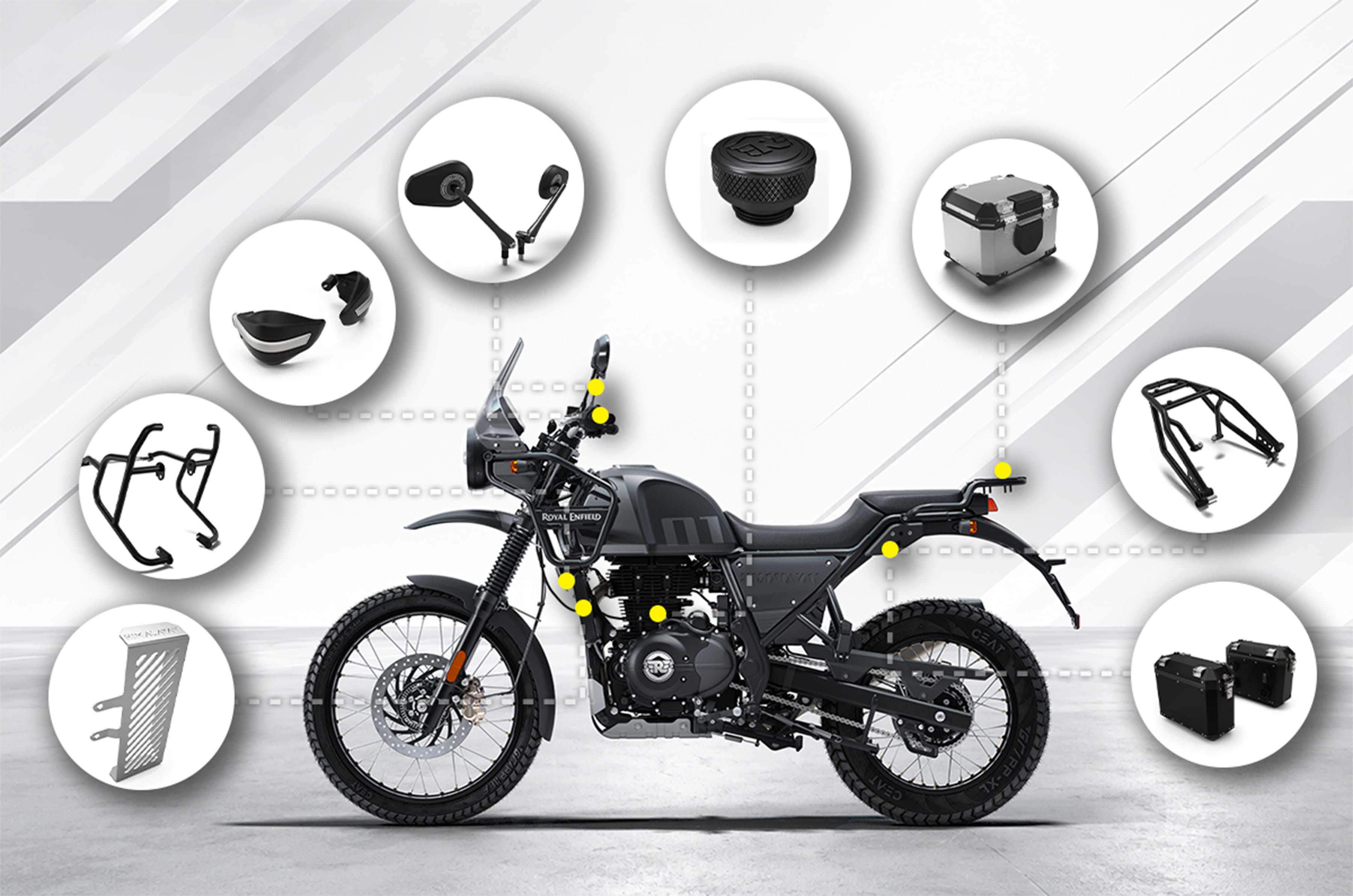
In most cases, a typical Himalayan owner aims to go the distance on this adventure motorcycle, and that generally requires carrying quite a lot of luggage. Royal Enfield offers a set of aluminium top boxes and panniers in silver and black. The former is priced at Rs 22,750, while the latter costs Rs 29,250.
In order to attach the pannier and top box, the bike requires a top-box rack and a side rack (Rs 3,750). The Himalayan comes standard with a top-box rack, but buyers can also opt for a more robust and larger top-box rack with additional plumbing to tether bungee cords. This is priced at Rs 3,900, while the top-box mount costs Rs 2,420.
The cumulative price of all the luggage-carrying accessories, including the robust top-box rack and pannier rack, adds up to around Rs 62,070.
Protective accessories
A tip-over on an adventure bike isn’t uncommon. After all, adventure riding involves taking your two-wheeler into uncharted territory. Protecting its components, and more importantly, the engine, is therefore important. Apart from the large, exaggerated aftermarket guards that the market is plagued with, Royal Enfield offers a few of its own. Thankfully, these are more utilitarian than ornate.
Starting with the most compact engine guard, this is one of the most discreet ways of protecting the engine. It attaches to the engine cover instead of jutting out like most guards do, and is priced at Rs 1,450. There’s another, larger engine guard (Rs 1,650) that juts out a bit more and will prevent the bike from dropping too low in the event of a fall.
Royal Enfield also offers an ‘Adventure’ engine guard that’s much larger and juts out quite a bit, offering more comprehensive protection. However, it looks visually bulky and will definitely add a few kilos to your Himalayan 450. It is priced at Rs 4,650.
Other protective accessories include an oil-cooler guard, available in two colours, priced at Rs 1,250. Royal Enfield also offers sliders (Rs 1,010), which are essentially 22mm tubes that can be fitted atop the guard, acting as the furthest point of contact. These can be easily replaced if scuffed, instead of having to replace the entire guard.
Convenience accessories
Stock Royal Enfield mirrors are notorious for coming loose over time. However, the touring mirrors are quite good and are available in two designs – round and tapered – priced at around Rs 4,500.
Another useful accessory is the touring rider and pillion seats, priced at Rs 1,995 and Rs 1,351, respectively.
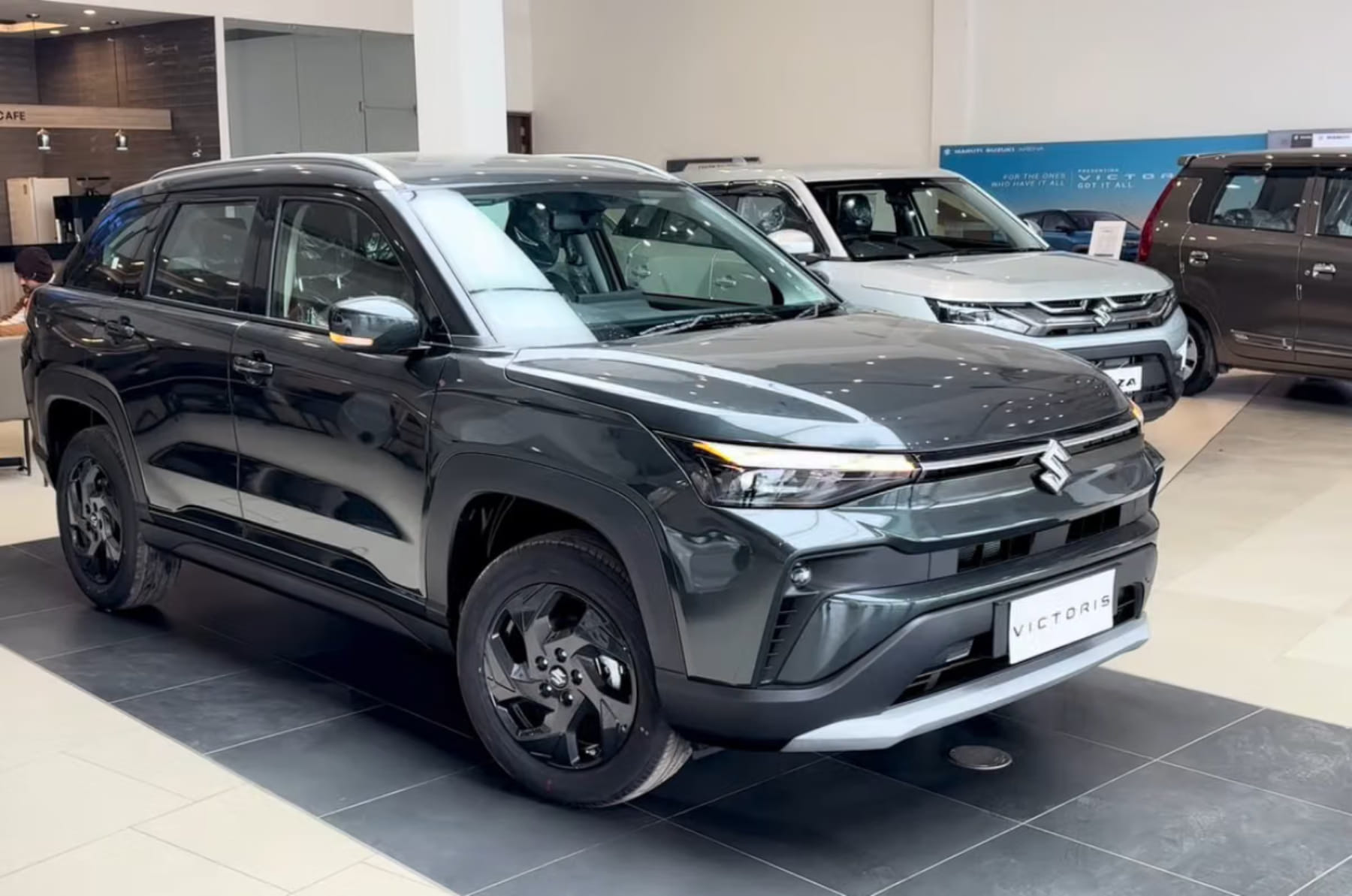
Maruti Suzuki is offering discounts on the Victoris, Swift, Wagon R, Alto K10, Celerio, S-Presso and Eeco in September 2026. The highest benefits this month are available on the Victoris strong hybrid, at up to Rs 1.35 lakh, while its petrol and CNG variants get benefits of up to Rs 85,000. These offers comprise cash discounts, exchange or scrappage bonuses, loyalty benefits, additional discounts and institutional discounts, depending on the variant.
Note: These offers are applicable until September 30 and may vary by city, dealership and stock availability. Please check with your nearest Maruti Arena dealership for the exact discounts.
Maruti Victoris discounts in September 2026
Up to Rs 1.35 lakh off
The Victoris strong hybrid gets benefits of up to Rs 1.35 lakh. These include a Rs 20,000 cash discount, exchange benefits of up to Rs 50,000, an additional discount of up to Rs 35,000, a Rs 30,000 loyalty benefit and a Rs 10,000 institutional discount. Customers opting for scrappage can avail of a bonus of up to Rs 45,000 instead of the exchange benefit.
The petrol and CNG variants get benefits of up to Rs 85,000. Both are eligible for an exchange bonus of up to Rs 30,000, an additional discount of up to Rs 15,000, a Rs 20,000 loyalty benefit and a Rs 10,000 institutional discount. The scrappage bonus is capped at Rs 25,000 for petrol variants and Rs 20,000 for CNG variants. The Victoris rivals the Hyundai Creta, Kia Seltos, Tata Sierra and Honda Elevate and is priced from Rs 10.50 lakh to Rs 19.99 lakh.
Maruti Wagon R discounts in September 2026
Up to Rs 57,500 off
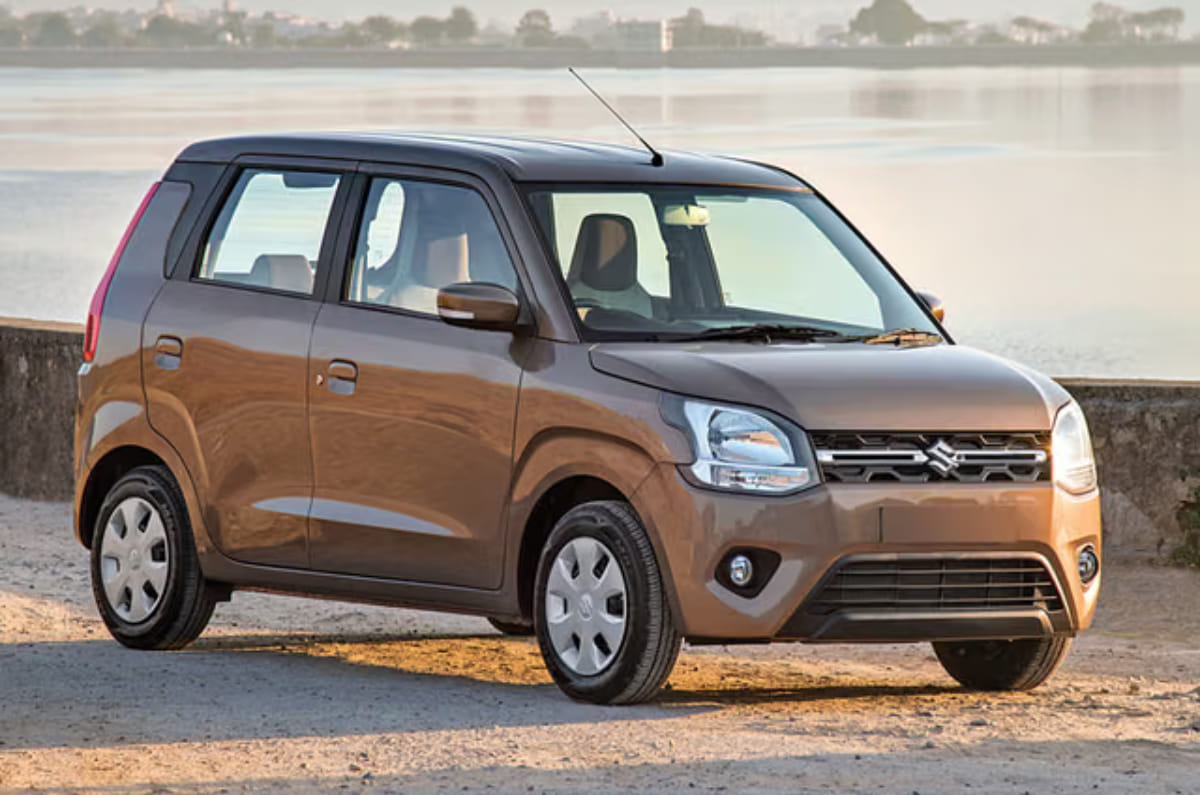
The Wagon R petrol gets benefits of up to Rs 57,500, comprising a Rs 30,000 cash discount, exchange bonus of up to Rs 15,000, additional discount of Rs 10,000 and institutional discount of Rs 2,500. Customers opting for scrappage can avail of a Rs 10,000 bonus instead of the exchange benefit. The CNG version gets benefits of up to Rs 47,500, including a Rs 20,000 cash discount, exchange bonus of up to Rs 15,000, additional discount of Rs 10,000 and institutional discount of Rs 2,500. Priced between Rs 4.99 lakh and Rs 7.24 lakh, the Wagon R rivals the Tata Tiago and Citroen C3.
Maruti Alto K10 discounts in September 2026
Up to Rs 52,500 off
The Alto K10 LXi petrol gets benefits of up to Rs 52,500, comprising a Rs 25,000 cash discount, exchange bonus of up to Rs 15,000, additional discount of Rs 10,000 and institutional discount of Rs 2,500. Other petrol variants get benefits of up to Rs 42,500, with the cash discount reduced to Rs 15,000.
CNG variants get benefits of up to Rs 37,500, including a Rs 10,000 cash discount, exchange bonus of up to Rs 15,000, additional discount of Rs 10,000 and institutional discount of Rs 2,500. A Rs 10,000 scrappage bonus is available instead of the exchange benefit. This rival to the Renault Kwid is priced between Rs 3.70 lakh and Rs 5.45 lakh.
Maruti Swift discounts in September 2026
Up to Rs 45,000 off
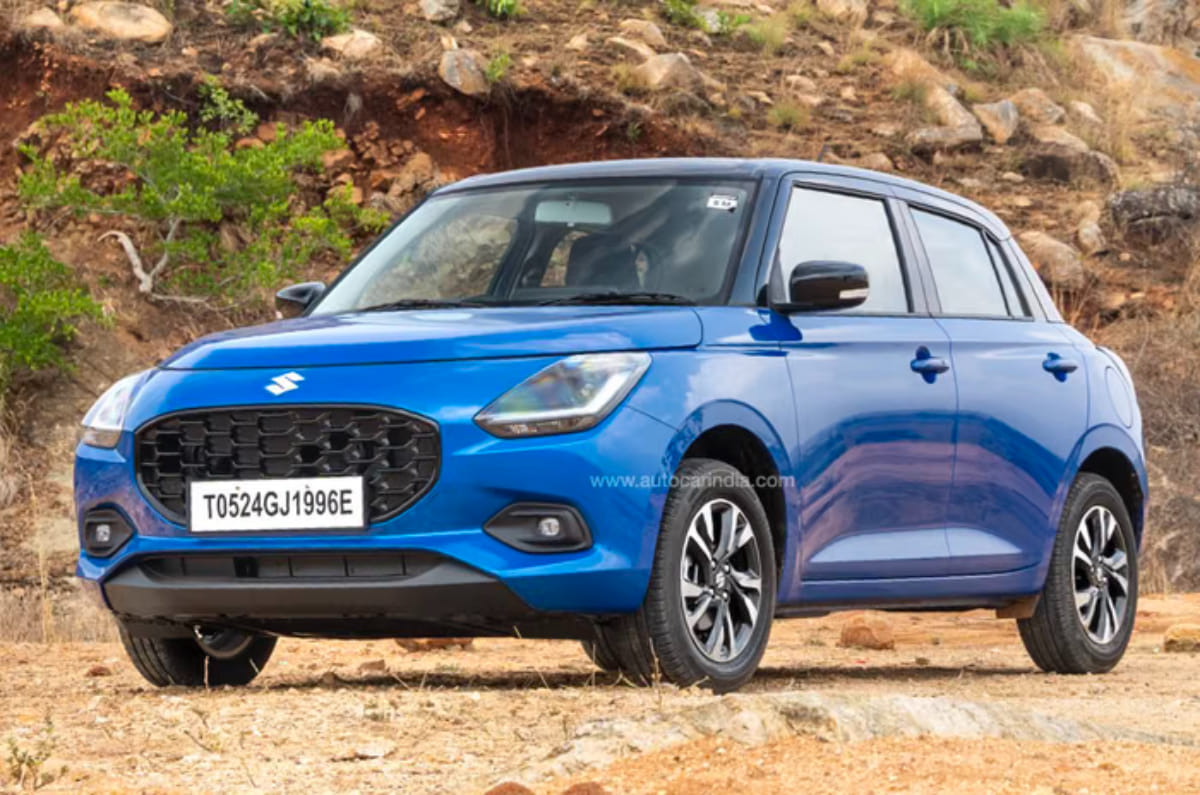
Petrol variants of the Swift get benefits of up to Rs 45,000, comprising a Rs 15,000 cash discount, exchange bonus of up to Rs 15,000, additional discount of Rs 10,000 and institutional discount of Rs 5,000. A Rs 10,000 scrappage bonus is available instead of the exchange benefit. CNG variants get benefits of up to Rs 30,000, comprising an exchange bonus of up to Rs 15,000, additional discount of Rs 10,000 and institutional discount of Rs 5,000.
The Swift is priced between Rs 5.84 lakh and Rs 8.74 lakh and rivals the Hyundai Grand i10 Nios and Tata Tiago.
Maruti Celerio discounts in September 2026
Up to Rs 42,500 off
The Celerio gets benefits of up to Rs 42,500 across its variants. These comprise a Rs 15,000 cash discount, exchange bonus of up to Rs 15,000 or a Rs 10,000 scrappage bonus , additional discount of Rs 10,000 and institutional discount of Rs 2,500. A rival to the Tata Tiago and Renault Kwid, the Celerio has a starting price of Rs 4.70 lakh, with the top-spec variant costing Rs 6.75 lakh.
Maruti Eeco discounts in September 2026
Up to Rs 42,500 off
The Eeco petrol gets benefits of up to Rs 42,500, comprising a Rs 15,000 cash discount, exchange bonus of up to Rs 15,000, additional discount of Rs 10,000 and institutional discount of Rs 2,500. The CNG version gets benefits of up to Rs 32,500, including a Rs 5,000 cash discount, exchange bonus of up to Rs 15,000, additional discount of Rs 10,000 and institutional discount of Rs 2,500. There is no applicable scrappage bonus for the Eeco this month. The Eeco is priced from Rs 5.28 lakh to Rs 6.46 lakh.
Maruti S-Presso discounts in September 2026
Up to Rs 37,500 off
The S-Presso petrol gets benefits of up to Rs 37,500, comprising a Rs 10,000 cash discount, exchange bonus of up to Rs 15,000, additional discount of Rs 10,000 and institutional discount of Rs 2,500. A Rs 10,000 scrappage bonus is available instead of the exchange benefit. Maruti’s most affordable offering currently, the S-Presso is priced from Rs 3.50 lakh to Rs 5.27 lakh and rivals the Renault Kwid and its stablemate Alto K10.
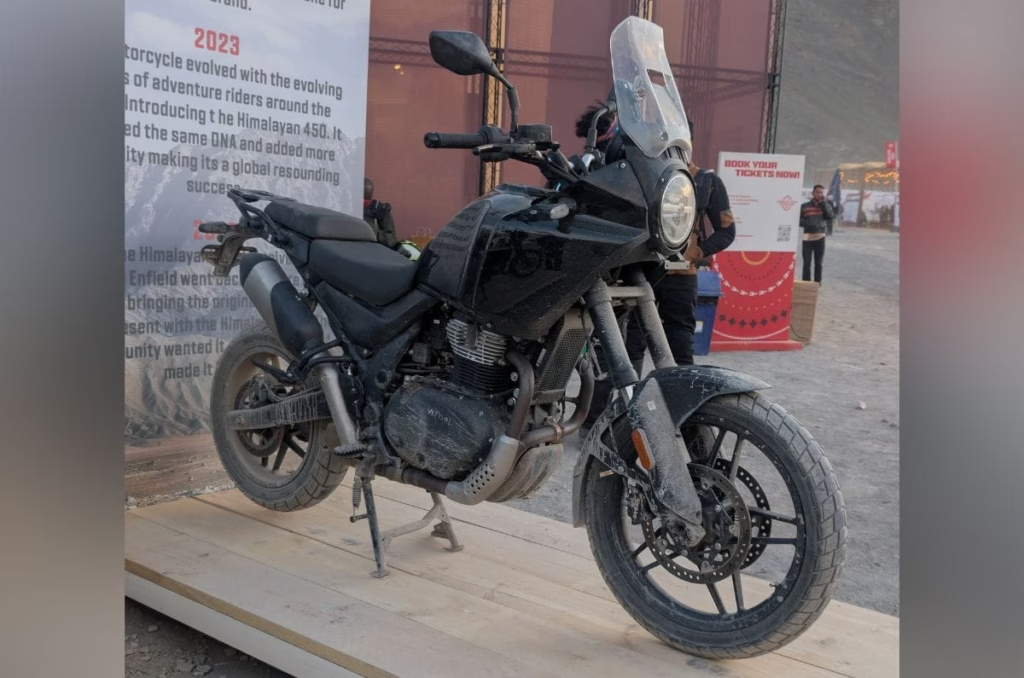
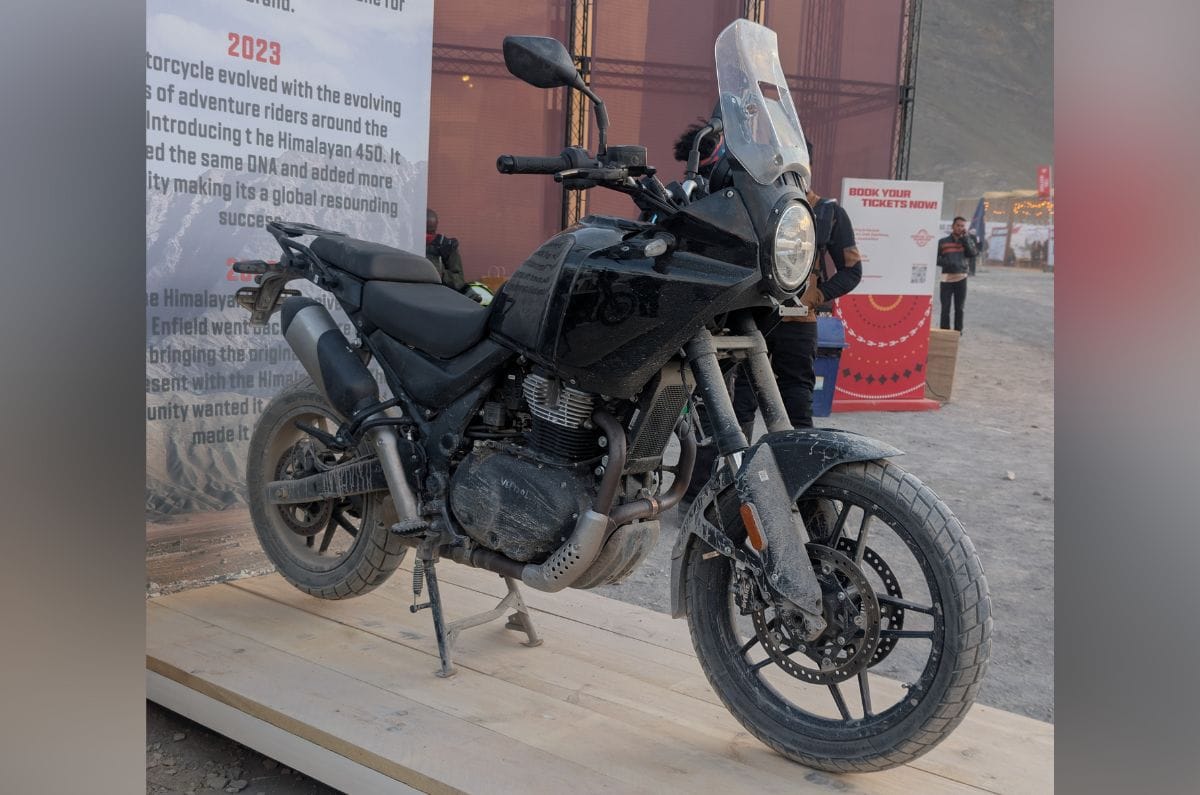
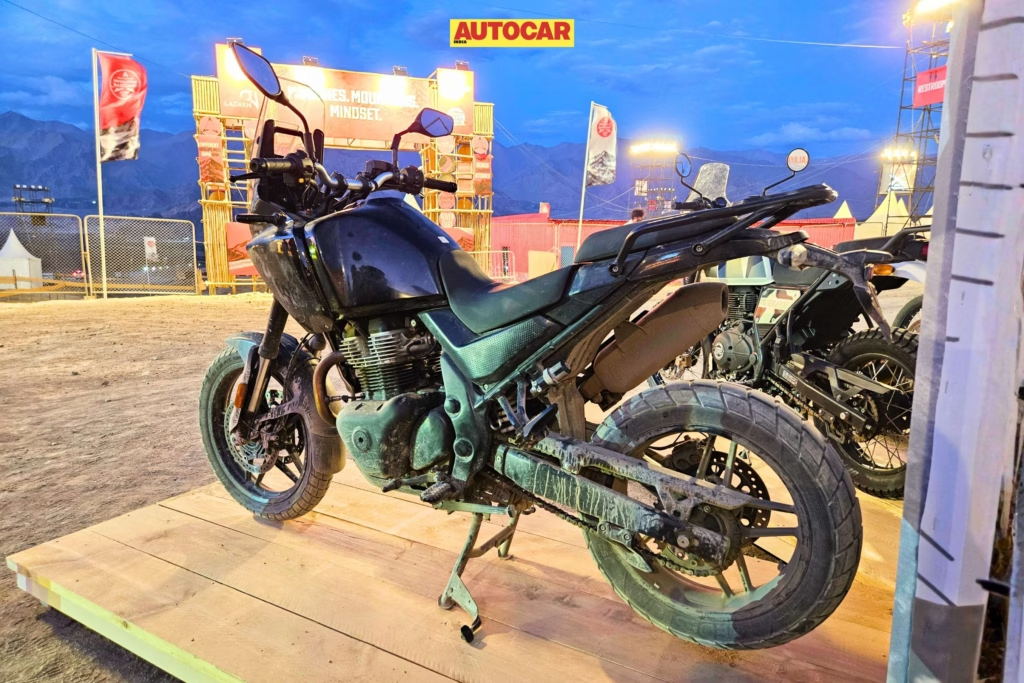
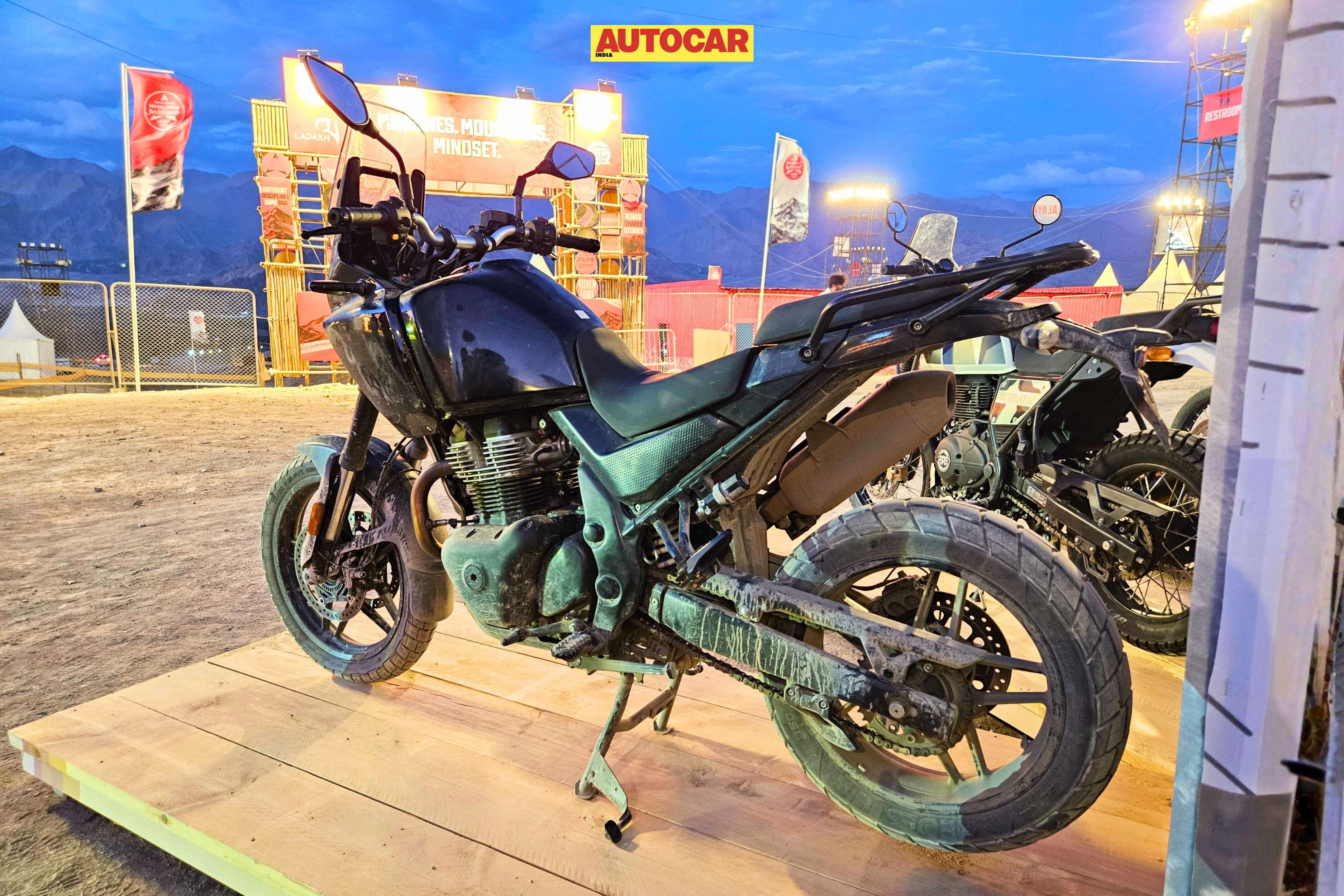
The Himalayan 750 is in the works, as we’ve known for several months now. It was first showcased at EICMA 2025 and has since been spotted being tested multiple times. During the Himalayan 440 event in Leh, we had the opportunity to get closer than ever before to Royal Enfield’s upcoming ADV, and we’ve got some interesting details for you to look forward to. And the biggest one might just be that it doesn’t aspire to be an off-roader.
Appears to swap the 21-inch front wheel on the 450 for a 19-inch unit
Gets cruise control and traction control, both a first for Royal Enfield
Preload-adjustable front and rear suspension could be limited to higher variants
Royal Enfield Himalayan 750: Power and performance
New, close to 750cc twin-cylinder engine
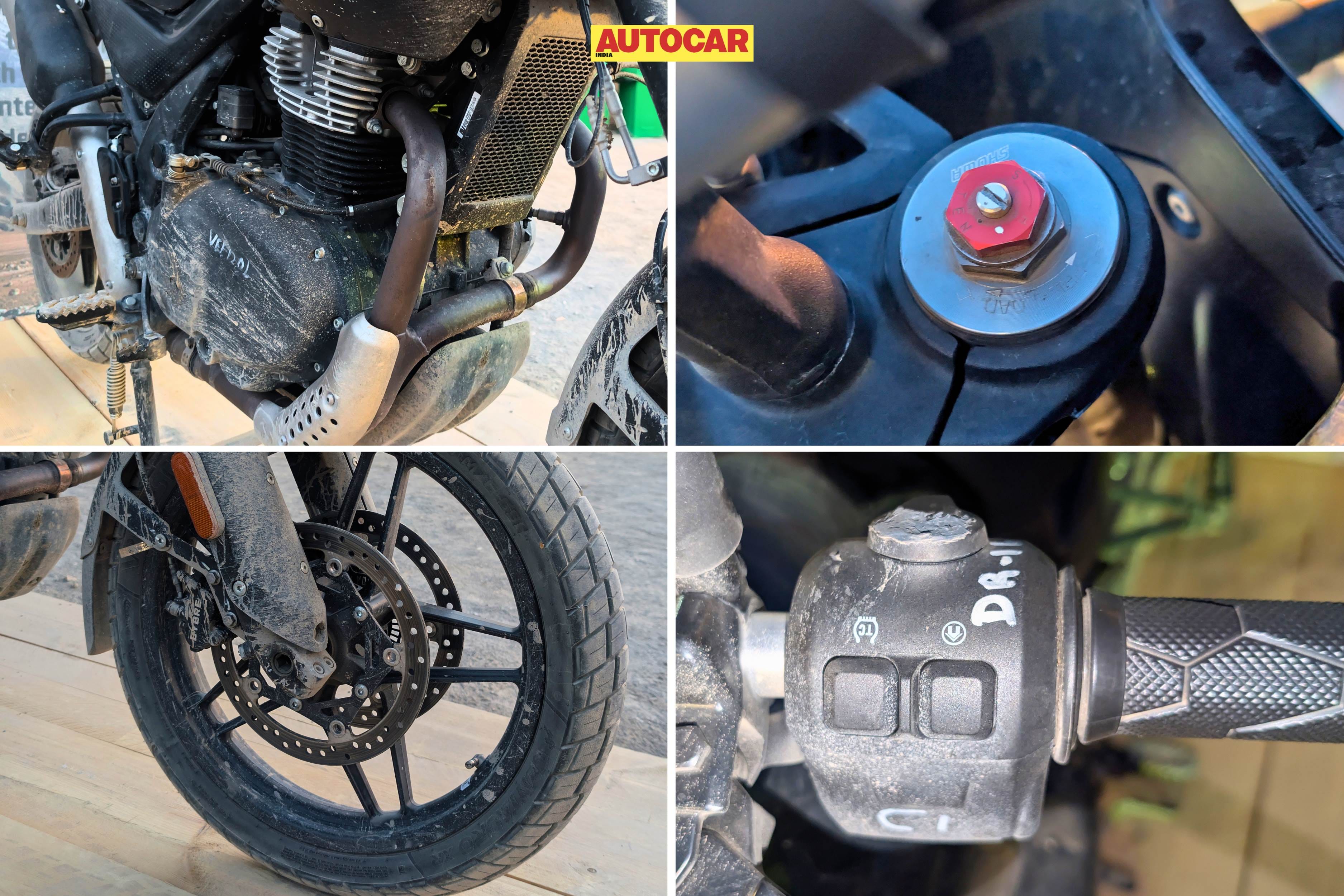
Perhaps the only thing we know regarding the engine is that it will displace close to 750cc and that the twin-cylinder unit shares its basic architecture with the existing 650cc parallel-twin mill. Exact power and torque details and characteristics are under wraps for now, but we’d expect it to be a marked improvement over the 650cc’s 47.4hp and 56.5Nm of torque in its most powerful form on the Bear 650. The new images give us a closer look at the exhaust routing, which, interestingly, looks similar to the Bear 650’s 2-in-1 setup, swapping the recognisable twin exhaust system used in all the other Royal Enfield 650s.
Royal Enfield Himalayan 750: Features
So many firsts for the brand
This is perhaps the biggest way the Himalayan 750 stands out from the other Royal Enfield models currently on sale. The prototype appears to have many features that have never been seen before on a production Royal Enfield. Starting alphabetically, we have adjustable front and rear suspension units. The front USD fork is a Showa-branded unit, and both legs have adjustable preload. The rear monoshock once again appears to be a linkage unit, but adjusting the preload on it seems far easier with a handy rotary knob on the left side. It’s worth noting that we’ll have to wait until the bike is officially launched to see whether this suspension setup makes it to production and whether adjustability will vary based on the variant.
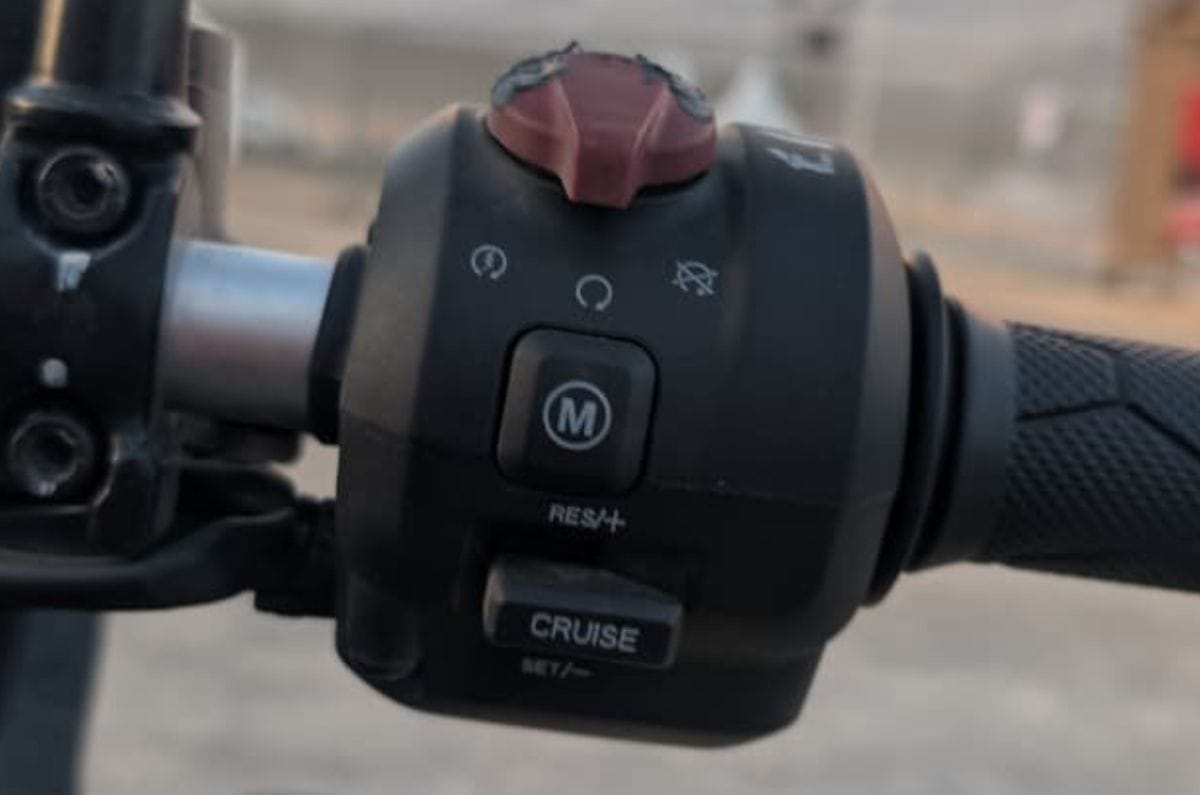
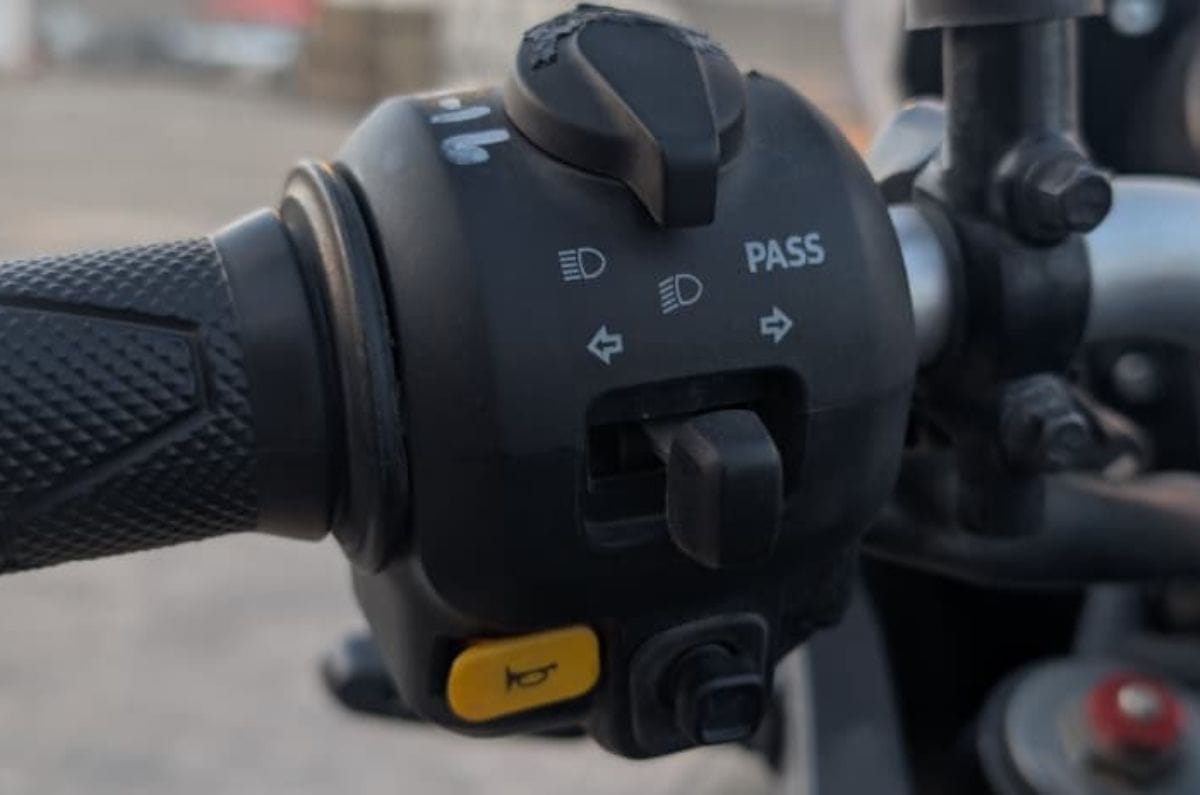
Next up we have features that signal the motorcycle’s intended purpose: long-distance touring. Cruise control, sorely missed on the Himalayan 450, is present on the bigger brother, with controls on the rear right switch cube. It’s likely similar to the ones available on the KTM 390 Adventure and the TVS RTX 300, and not an adaptive one like on higher-end motorcycles. And then we have traction control, present on the diametrically opposite side, front left of the switch cube. The presence of a dedicated button signals that the system might offer some adjustability or the option to turn it off altogether.
The list of features is longer still. We see front dual-disc brakes, once again a first for Royal Enfield, with ByBre calipers. The rear brake calipers are also from ByBre, with the swingarm appearing to share the design with the 450. One additional detail that we’ve spotted is the new Centauro XR tyres by Vredestein. The tread pattern appears to reflect some of the popular dual-use tyres, such as the CEAT GRIPP and Apollo Tramplr XR. Currently, the Centauro XR tyres aren’t listed on Apollo/Vredestein’s Indian websites, so further details are still unknown.
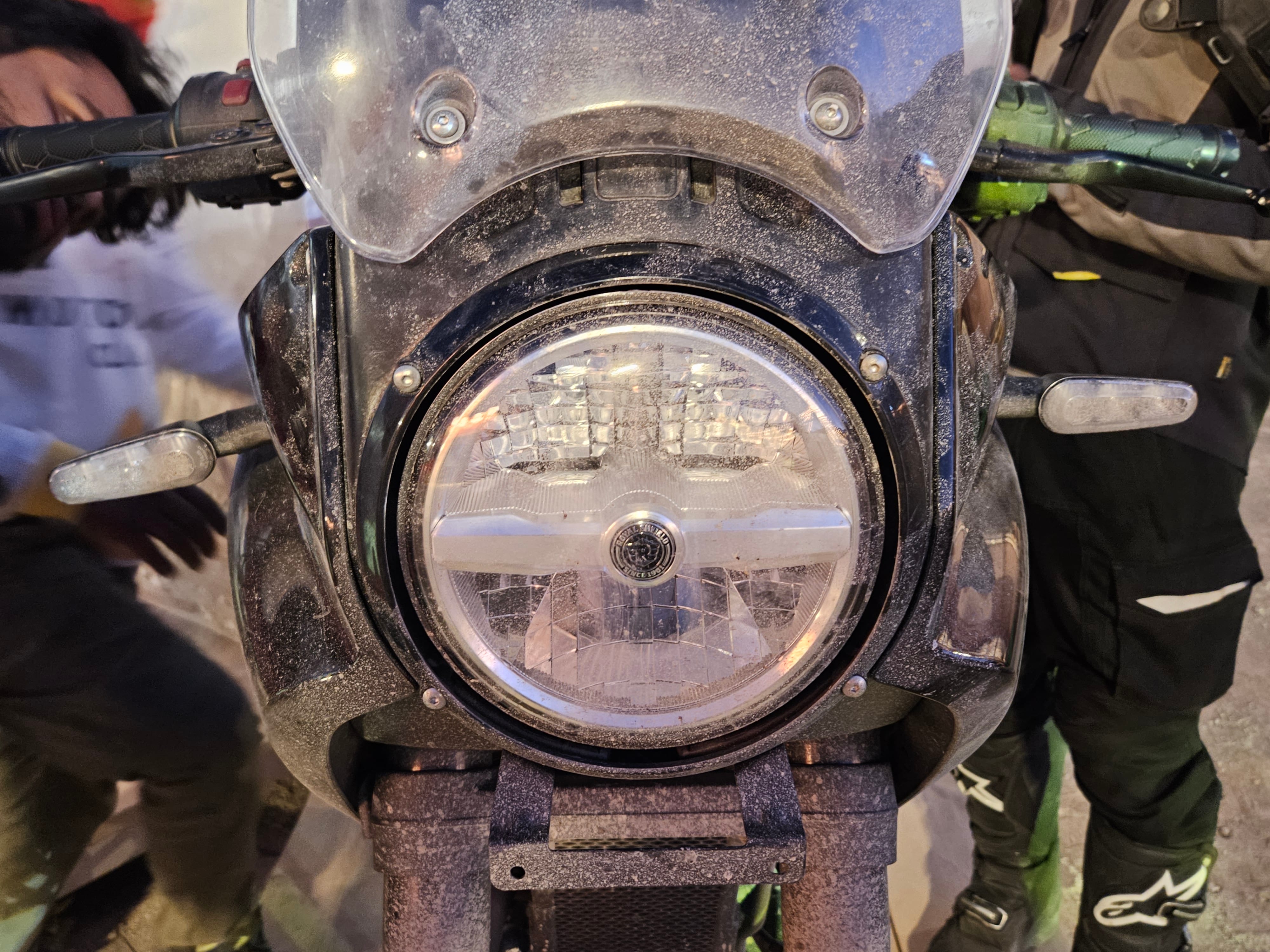
Speaking of shedding light, up front we have a new LED headlight unit – or one that appears to be – based on the assembly. Considering the headlights are one of the weakest parts, if not the weakest, of most current Royal Enfields, we hope that this is indeed a new one and that it’s a better unit, making night runs seem less daunting. Behind the headlight stands the TFT instrument cluster that was (unfortunately) turned off for this exhibition. At first glance, it looks similar to the ones on the Himalayan 450/Guerrilla 450 and Bear 650. However, it’s likely there will be upgrades to it considering the new array of features expected. That said, we can still expect the overall experience to be better, thanks to the redesigned joystick controller on the left switch cube.
Royal Enfield appears to be positioning the Himalayan 750 as a road-biased tourer with some off-road capabilities, and there couldn’t be a more obvious clue than the wheels. One, the front wheel is a 19-inch unit, unlike the 21-inch wheel we’re used to on the current Himalayans. Two, the prototype sports alloy rims, not spoked, also expected on a motorcycle aimed at off-roading. However, the model shown off at last year’s EICMA had cross-spoked rims, so it’s entirely possible that Royal Enfield might offer a higher variant with off-road-centric wheels and tyres; we’ll just have to wait and see. One minor detail that we’ve spotted is that both the gear shifter and the rear brake lever are hinged, meaning they can turn 90 degrees to the sides, ensuring they don’t bend or break away after a fall.
Royal Enfield Himalayan 750: Price
Expected to sit at the top of the range
Pricing details are once again under wraps, similar to the body panels on the motorcycle. However, considering that the Super Meteor 650 – the most expensive 650 – tops out at Rs 4.40 lakh (ex-showroom, Chennai), it’s reasonable to expect the Himalayan 750 to be priced closer to that range, if not over it. And there we go; those are the details we noticed from getting all up close and personal with the Himalayan 750 during the Himalayan Basecamp event. We should learn more about it during the global unveil, expected during EICMA 2026.
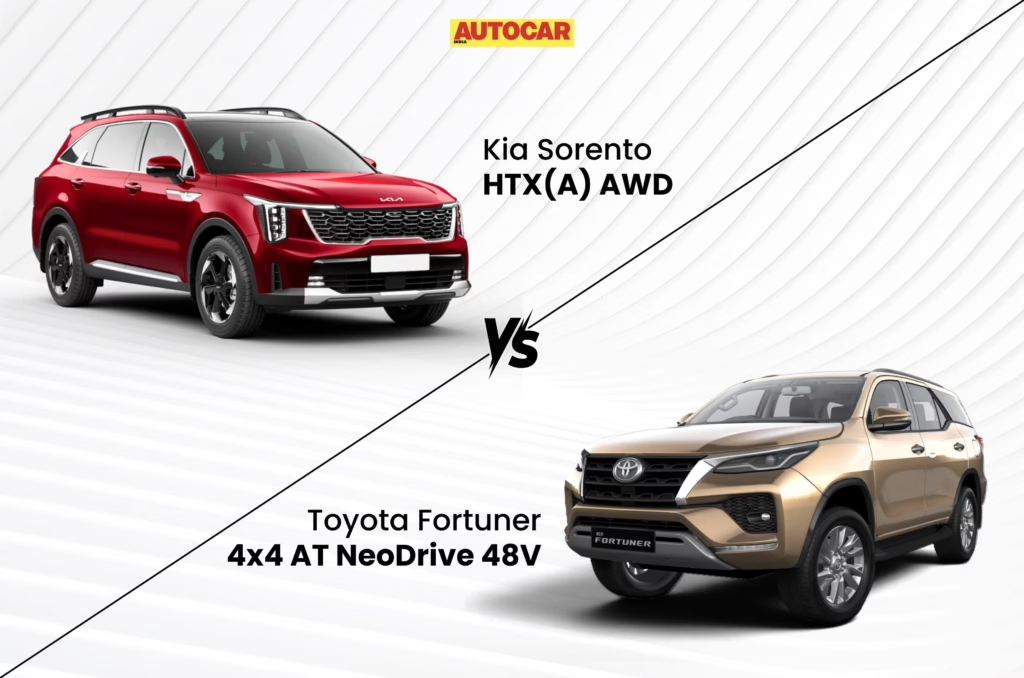
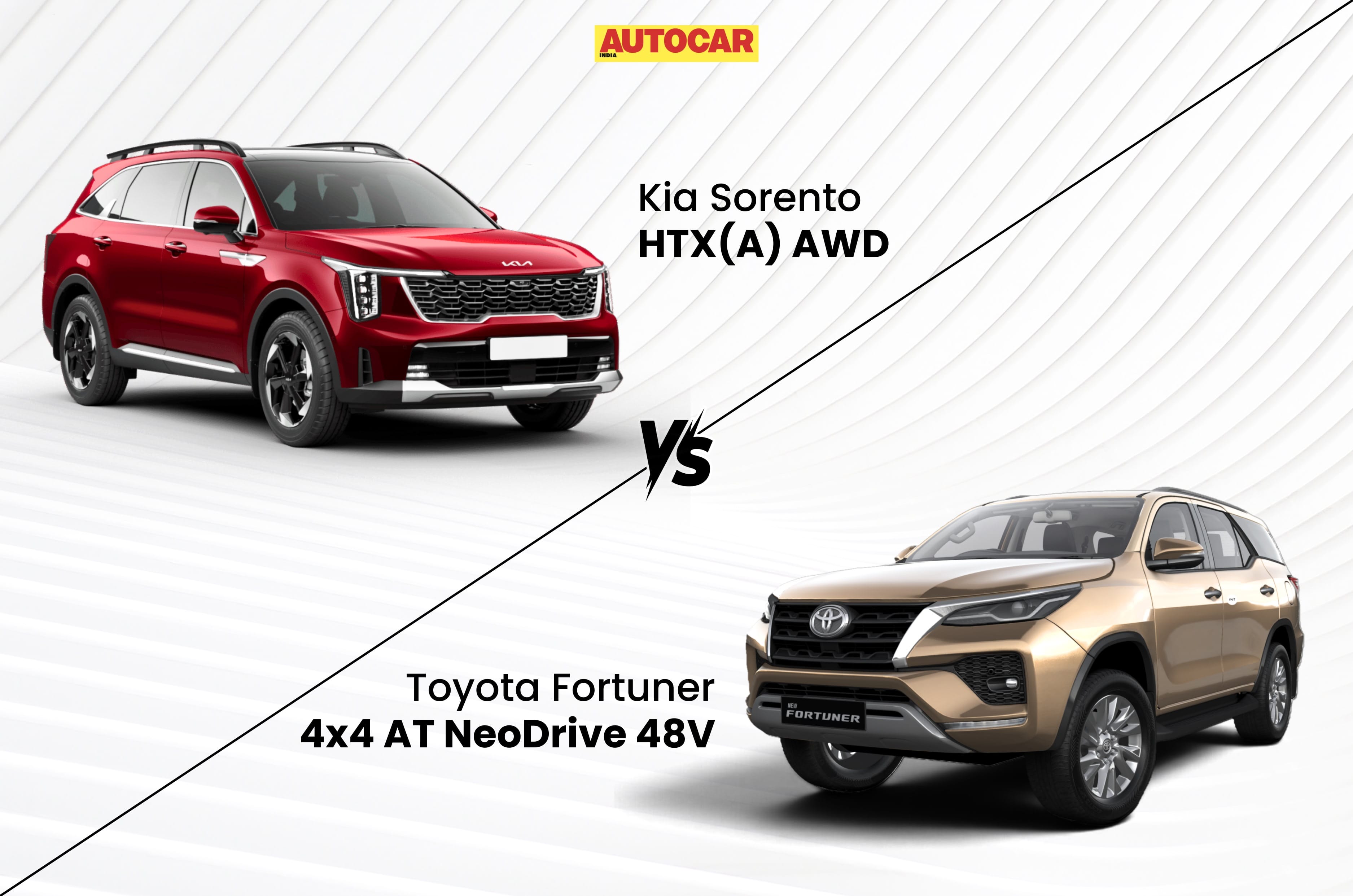
The Kia Sorento is now on sale in India as the Korean carmaker’s flagship ICE-powered SUV. It contends in the three-row premium SUV segment, directly rivalling the likes of the monocoque-based Skoda Kodiaq, Volkswagen Tayron, and Jeep Meridian. Additionally, the Sorento’s pricing overlaps with that of the ladder-frame-based Toyota Fortuner, which is one of the most popular SUVs in the Rs 30 lakh-50 lakh price bracket.
While the Fortuner isn’t as up-to-date or premium as the Sorento is, the Toyota SUV has accrued a reputation for toughness, reliability, and off-road prowess. Below, we’ve put together the top-spec diesel variants of the Sorento and Fortuner – the HTX(A) and 4×4 AT NeoDrive 48V, respectively – to see which one delivers more bang for your buck.
Kia Sorento vs Toyota Fortuner: Top-spec variant dimensions
Sorento is longer and wider, while Fortuner is taller
Sorento HTX(A)
Fortuner 4×4 AT NeoDrive 48V
Length (mm)
4,815
4,795
Width (mm)
1,900
1,855
Height (mm)
1,785
1,835
Wheelbase (mm)
2,815
2,745
Seating capacity
6/7
7
Wheel size (inches)
19
18
The Sorento is just 20mm longer than the Fortuner overall, but the Kia SUV’s wheelbase is 70mm longer. It’s also 5mm wider than the Fortuner, comes with larger wheels, and even offers a 6-seat layout with second-row captain’s chairs. However, the Fortuner does claw back some points on the height front, sitting 50mm taller than the Sorento.
Kia Sorento vs Toyota Fortuner: Top-spec diesel variant powertrains
Syros EV is quicker, e Vitara claims higher range and has a bigger battery
Sorento HTX(A)
Fortuner 4×4 AT NeoDrive 48V
Engine
2.2-litre, 4 cyls
2.8-litre, 4 cyls
Power (hp)
193
204
Torque (Nm)
442
500
Gearbox
8-speed DCT
6-speed AT
Mild hybrid system
No
Yes, 48V
Drive layout
FWD, AWD
AWD
The Fortuner undoubtedly has a larger and more powerful diesel engine than that of the Sorento, that too paired with a 48-volt mild hybrid system for functions like torque assist under load, engine start/stop, and brake energy recuperation. On the other hand, the Sorento comes with an 8-speed gearbox instead of a 6-speed one, which could enable better fuel efficiency on the highway. The top-spec Sorento diesel variant also offers a front-wheel drive layout for buyers who don’t need the enhanced go-anywhere capabilities afforded by all-wheel drive.
Kia Sorento vs Toyota Fortuner: Top-spec diesel variant exterior features
Sorento offers sequential indicators and more colours, while Fortuner gets more lighting
Sorento HTX(A)
Fortuner 4×4 AT NeoDrive 48V
LED auto headlamps
Yes
Yes
Front LED fog lamps
Yes
Yes
Rear fog lamps
No
Yes
LED tail-lamps
Yes
Yes
Puddle lamps
No
Yes
Roof rails
Yes
Yes
Powered ORVMs
Yes
Yes
Sequential indicators
Yes
No
Powered tailgate
Yes
Yes
Rear spoiler
Yes
Yes
Colour options
8, monotone
5, monotone
In this department, both SUVs are fairly well matched. The Sorento is uniquely equipped with sequential indicators, while the Fortuner is the only one here to offer rear fog lamps and puddle lamps. As for colour options, both are sold in monotone finishes only, with the Sorento offering two more than the Fortuner does.
Kia Sorento vs Toyota Fortuner: Top-spec diesel variant interior features
Sorento easily takes the win here
Sorento HTX(A)
Fortuner 4×4 AT NeoDrive 48V
Infotainment screen
12.3-inch
8-inch
Instrument cluster
12.3-inch digital
Analogue w/ MID
Heads-up display
Yes
No
Sunroof
Panoramic
No
Wireless charger
Yes
No*
Powered front seats
Yes
Yes
Ventilated front seats
Yes
Yes
Second-row ventilation
Yes
No
Dual-zone climate control
Yes
Yes
Ambient lighting
Yes
No
Sound system
12-speaker Bose
11-speaker JBL
Apple CarPlay & Android Auto
Wireless
Wired
Connected car tech
Yes
Yes
IRVM
Digital
Auto-dimming
Rear centre armrest
Yes
Yes
Sliding, reclining rear seats
Yes
Yes
*Available as an optional accessory.
The Sorento is majorly ahead of the Fortuner in terms of creature comforts. The Kia SUV has larger screens, a big sunroof, more speakers, wireless phone connectivity, rear-seat ventilation, ambient lighting, a fully digital IRVM, and more.
Kia Sorento vs Toyota Fortuner: Top-spec diesel variant driving features
Sorento gets more drive modes, adaptive cruise control, and auto park assist
Sorento HTX(A)
Fortuner 4×4 AT NeoDrive 48V
Drive modes
4
3
Terrain modes
3
6
Auto park assist
Yes
No
Paddle shifters
Yes
Yes
Cruise control
Adaptive
Yes
While the Sorento gets one additional drive mode (Eco, Sport, Smart, Normal) over the Fortuner (Eco, Normal, Sport), the latter signals its off-road focus by offering two more terrain modes (Mud, Sand, Rock, Dirt, Deep Snow) than the Kia SUV (Snow, Mud, Sand) does. However, the Sorento ups the convenience ante by including a smart park assist function, as well as adaptive cruise control, which can automatically adjust the car’s speed.
Kia Sorento vs Toyota Fortuner: Top-spec diesel variant safety features
Sorento packs several more safety features than the Fortuner does
Sorento HTX(A)
Fortuner 4×4 AT NeoDrive 48V
ADAS
Yes
No
Airbags
10
7
ABS w/ EBD
Yes
Yes
ESC
Yes
Yes
Hill hold control
Yes
Yes
TPMS
Yes
No*
360-degree camera
Yes
No*
Parking sensors
Front, rear, side
Front, rear
Built-in dashcams
Yes
No
Electronic parking brake
Yes
No
Rain-sensing wipers
Yes
No
ISOFIX child seat anchors
Yes
Yes
Disc brakes
Front, rear
Front, rear
*Available as an optional accessory.
Much like interior features, it’s a square win for the Sorento on the safety front. It not only packs side parking sensors and three more airbags over the Fortuner, but gets features completely missing from the Toyota SUV, like Level 2+ ADAS, rain-sensing wipers, an electronic parking brake with auto-hold, a tyre pressure monitoring system, a 360-degree camera, built-in dual-channel dashcam, and more.
Kia Sorento vs Toyota Fortuner: Top-spec diesel variant prices
Sorento is more affordable despite all the additional features
Sorento HTX(A)
Fortuner 4×4 AT NeoDrive 48V
Price (Rs, lakh)
38.49-38.69
43.12
Not only is the top-spec Sorento diesel much more feature-packed than the Fortuner, it’s cheaper by around Rs 4.5 lakh as well. The Fortuner is nearly a decade old, and it shows when compared to a more modern car like the Sorento. If you primarily drive on paved roads and want your car to be packed with bells and whistles, the Sorento is the obvious choice. However, if off-roadability, power, and outright durability are your main concerns, there’s still some merit in buying a Fortuner.
The Himalayan 750 is in the works, as we’ve known for several months now. It was first showcased at EICMA 2025 and has since been spotted being tested multiple times. During the Himalayan 440 event in Leh, we had the opportunity to get closer than ever before to Royal Enfield’s upcoming ADV and we’ve got some interesting details for you to look forward to. And the biggest one might just be that it doesn’t aspire to want to be an off-roader.
Appears to swap the 21-inch front wheel on the 450 for a 19-inch unit
Gets cruise control and traction control, both a first for Royal Enfield
Preload adjustable front and rear suspension could be limited to higher variants
Royal Enfield Himalayan 750: Power and performance
New, close to 750cc twin-cylinder engine
Perhaps the only thing we know regarding the engine is that it will displace close to 750cc, and that the twin-cylinder engine shares the basic architecture with the existing 650cc parallel-twin engine. Exact power and torque details and characteristics are under the wraps for now, but we’d expect it to be a marked improvement over the 650cc’s 47.4hp and 56.5Nm of torque in its most powerful form on the Bear 650. The new images give us a closer look at the exhaust routing; which interestingly looks similar to the Bear 650’s 2-in-1 setup, swapping the recognizable twin exhaust system used in all the other Royal Enfield 650s.
Royal Enfield Himalayan 750: Features
So many firsts for the brand
This is perhaps the biggest way the Himalayan 750 stands out from the other Royal Enfield models currently on sale. The prototype appears to have many features that have never been seen before on a production Royal Enfield. Starting alphabetically, we have adjustable front and rear suspension units. The front USD fork is a Showa branded unit and both legs have adjustable preload. The rear monoshock once again appears to be a linkage unit, but adjusting the preload on which seems far easier with a handy rotator knob on the left side.It’s worth noting that we’ll have to wait until the bike is officially launched to see whether this suspension setup makes it to production, and if adjustability will vary based on the variant.
Next up we have features that signal the motorcycle’s intended purpose: long distance touring. Cruise Control, missed sorely on the Himalayan 450, is present on the bigger brother with controls present on the rear right switch cube. It’s likely similar to the ones available on the KTM 390 Adventure and the TVS RTX 300, and not an adaptive one like on higher end motorcycles. And then we have traction control, present on the diametric opposite side, front left of the switch cube. The presence of a dedicated button signals that the system might offer some adjustability, or the option to turn it off altogether.
The list of features is longer still. We see front dual-disc brakes, once again a first for Royal Enfield, with ByBre calipers. The rear brake calipers are also from ByBre, with the swingarm appearing to share the design with the 450. One additional detail that we’ve spotted are the new Centauro XR tyres by Vredestein. The tread pattern appears to reflect some of the popular dual-use tyres, such as the CEAT GRIPP and Apollo Tramplr XR, etc., Currently, the Centauro XR tyres aren’t listed on Apollo/Vredestein’s Indian websites, so further details are still unknown.
Speaking of shedding light, up front we have a new LED headlight unit, or one that appears to be, based on the assembly. Considering the headlights are one of the—if not the—weakest part of most current Royal Enfields, we hope that this is indeed a new one and that it’s a better unit, making night runs seem less daunting. Behind the headlight stands the TFT instrument cluster that was (unfortunately) turned off for this exhibition. At first glance, it looks similar to the ones on the Himalayan 450/Guerrilla 450, and the Bear 650. However, it’s likely that there will be upgrades to it, considering the new swathe of features expected. That said, we can still expect the overall experience will be better, thanks to the redesigned joystick controller on the left switch cube.
Royal Enfield appears to be positioning the Himalayan 750 as a road-biased tourer with some off-road capabilities and there couldn’t be a more obvious clue than on the wheels. One, the front wheel is a 19-inch unit, unlike the 21-inch wheel we’re used to on the current Himalayans. Two, the prototype sports alloy rims, not spoked, also expected on a motorcycle aimed towards off-roading. However, the model shown off at last year’s EICMA had cross-spoked rims, so it’s entirely possible that Royal Enfield might offer a higher variant with off-road centric wheels and tyres; we’ll just have to wait and see. One minor detail that we’ve spotted is that both the gear shifter and the rear brake lever are hinged, meaning they can turn 90 degrees to the sides, ensuring they don’t bend or break away after a fall.
Royal Enfield Himalayan 750: Price
Expected to sit at the top of the range
Pricing details are once again kept under the wraps, similar to the body panels on the motorcycle. However, considering the Super Meteor 650—the most expensive 650—tops out at Rs 4.40 lakh (ex-showroom, Chennai), it’s reasonable to expect the Himalayan 750 to be priced closer to that range, if not over it. And there we go, those are the details we noticed from getting all up close and personal with the Himalayan 750 during the Himalayan Basecamp event. We should learn more about it during the global unveil, expected to happen during EICMA 2026.