It’s no secret that Volkswagen Group, the German behemoth that owns brands such as Audi, Bugatti and Lamborghini, is in financial trouble. Facing fierce competition from Chinese firms, the group already announced plans to lay off 50,000 employees in Germany alone by 2030, and the fate of several factories across the world has also become uncertain. We also received reports of the Volkswagen Group considering a simplified variant line-up for cars across its brands. It now appears the two-wheeler business will be impacted too.
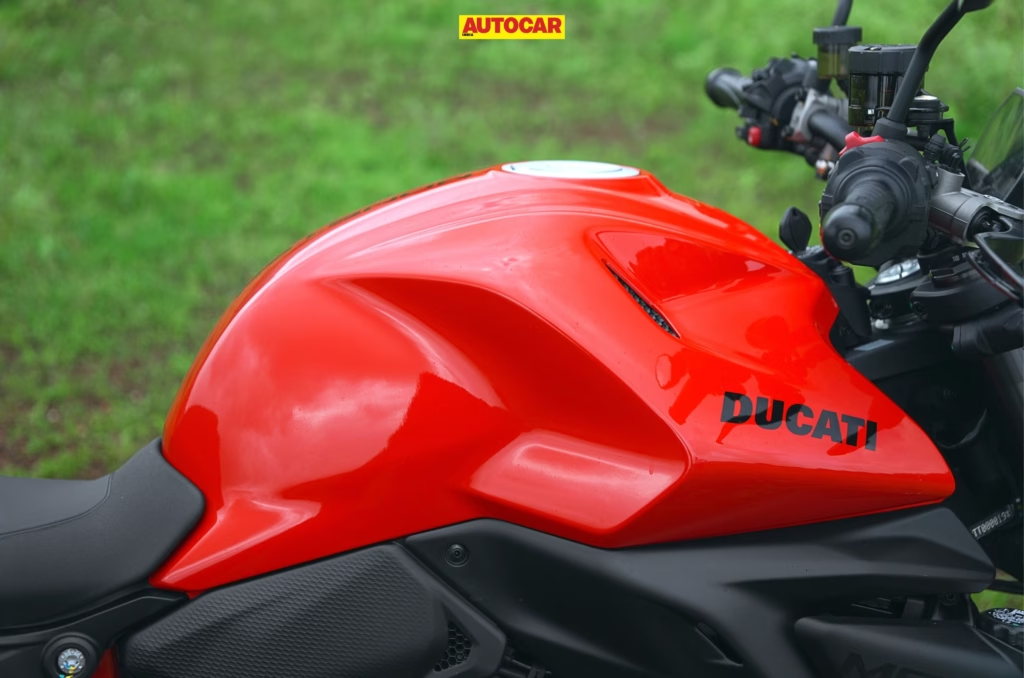
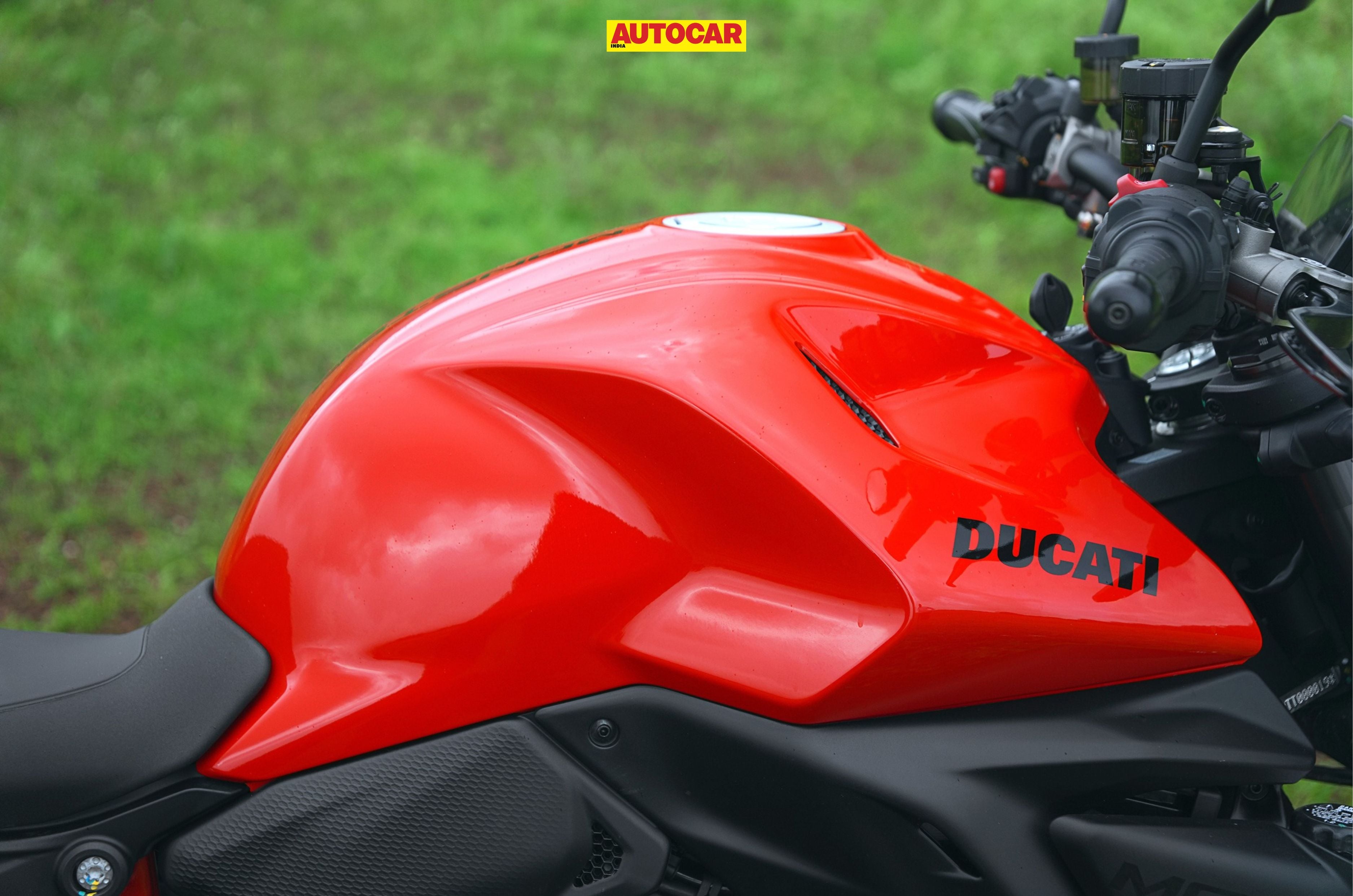
Ducati is one of the Volkswagen Group brands being evaluated for a possible sale
In 2025, it reported EUR 925 million revenue and EUR 52 million operating profit
Patritalia, another Italian company, had already made an offer for Ducati and MV Agusta
Ducati sale is under evaluation, but no decisions have been made yet
This isn’t the first time Ducati is being evaluated for sale
Claudio Domenicali, CEO of the Borgo Panigale manufacturer, confirmed that the parent group is evaluating the brand’s future. “We are aware of the shareholders’ plan to reevaluate its holdings. Ducati is one of these holdings, but no final decision has been made on Ducati yet: it’s one of the ongoing evaluations,” Domenicali told GPOne in a press interaction at the brand’s “Ducati 100 – A century on display” exhibition in Bologna, Italy. To be clear, this doesn’t mean Volkswagen Group is bent on selling Ducati; it merely confirms that it is evaluating that possibility. The brand is among 600 of the group’s 2,000 businesses being reviewed. Now, Audi CEO Gernot Dollner has confirmed Domenicali’s claim, saying, “It’s part of the evaluation process that we’ll also talk about Ducati, but nothing has been decided.”
Bloomberg reported in early June that Volkswagen Group’s supervisory board approved slimming down its portfolio by a third, with the layoffs being a part of it, and approved the sale of a 51 percent of its stake in Everllence ship-engine unit, which is expected to bring EUR 7.4 billion. In contrast, a Ducati sale is expected to bring around EUR 1.25 billion.
This isn’t the first time Ducati is being evaluated for sale. The group acquired Ducati in 2012 and then considered selling it in 2017 before quickly changing its mind. The Italian superbike manufacturer has steadily become synonymous with innovation in motorsport and has been highly successful in the World Superbike Championship (WSBK), MXGP and, of course, MotoGP. Ducati reported revenue of EUR 925 million and operating profit of EUR 52 million in 2025.
Ducati already has a potential buyer in Patritalia
An Italian investor who wants to have all-Italian technicians, MV Agusta and all MotoGP classes
If Volkswagen Group decides to hand off Ducati, there is already someone waiting in the lobby. In August, Italy-based Patritalia expressed more than an interest in acquiring Ducati, after doing the same for MV Agusta, which is also in hot water. However, some of Patritalia’s plans for the brands have already riled up quite the chatter, according to Visordown. The group has expressed interest in taking over as the sole engine supplier for Moto2, which is currently powered by Triumph, while also advocating for a more open market across all three MotoGP classes. Secondly, it has outlined a preference for Ducati to have a predominantly Italian workforce. Volkswagen Group had previously made it clear that Ducati isn’t up for sale, but considering things have changed since then, we will have to await further developments.
Triumph has been the sole engine supplier for Moto2 since 2019, when it took over from Honda. It also recently announced that it is bringing a new engine with increased peak power delivery to the class from next year. Moto3 is slated to get Yamaha as the sole engine supplier from 2028, with the R7 engine heavily modified and adapted for the class, replacing KTM and Honda. Changing either Triumph or Yamaha would require their consent, as well as consent from Liberty Media, the current owner of the MotoGP brand. Considering that both companies have announced plans for the future and that Volkswagen hasn’t been receptive to Patritalia’s bids so far, its aspirations have a slim chance of becoming a reality at the moment.
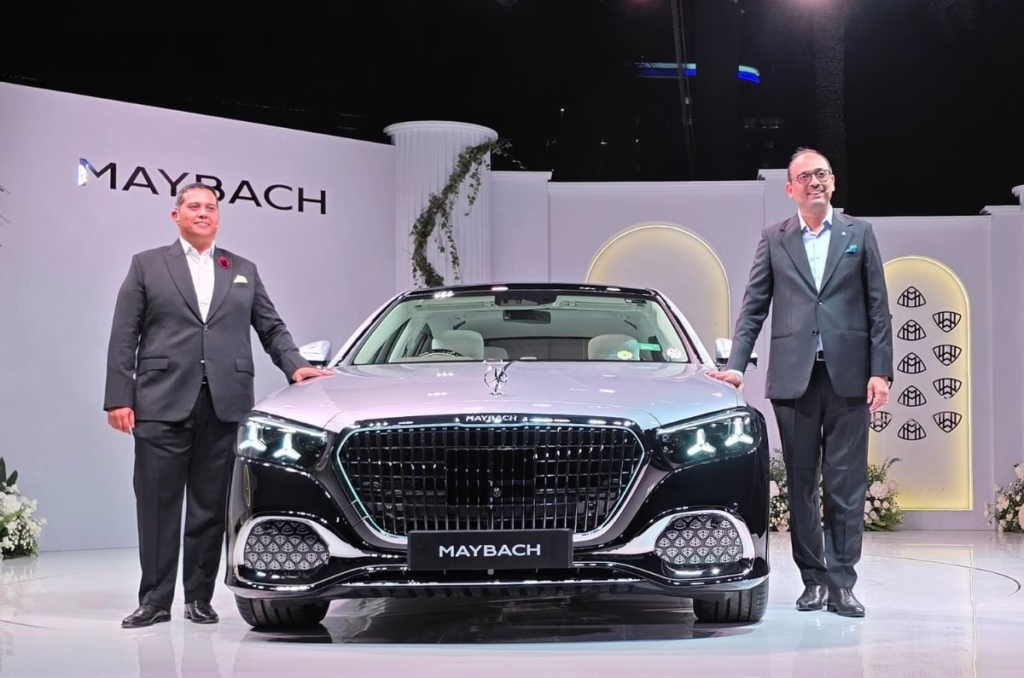
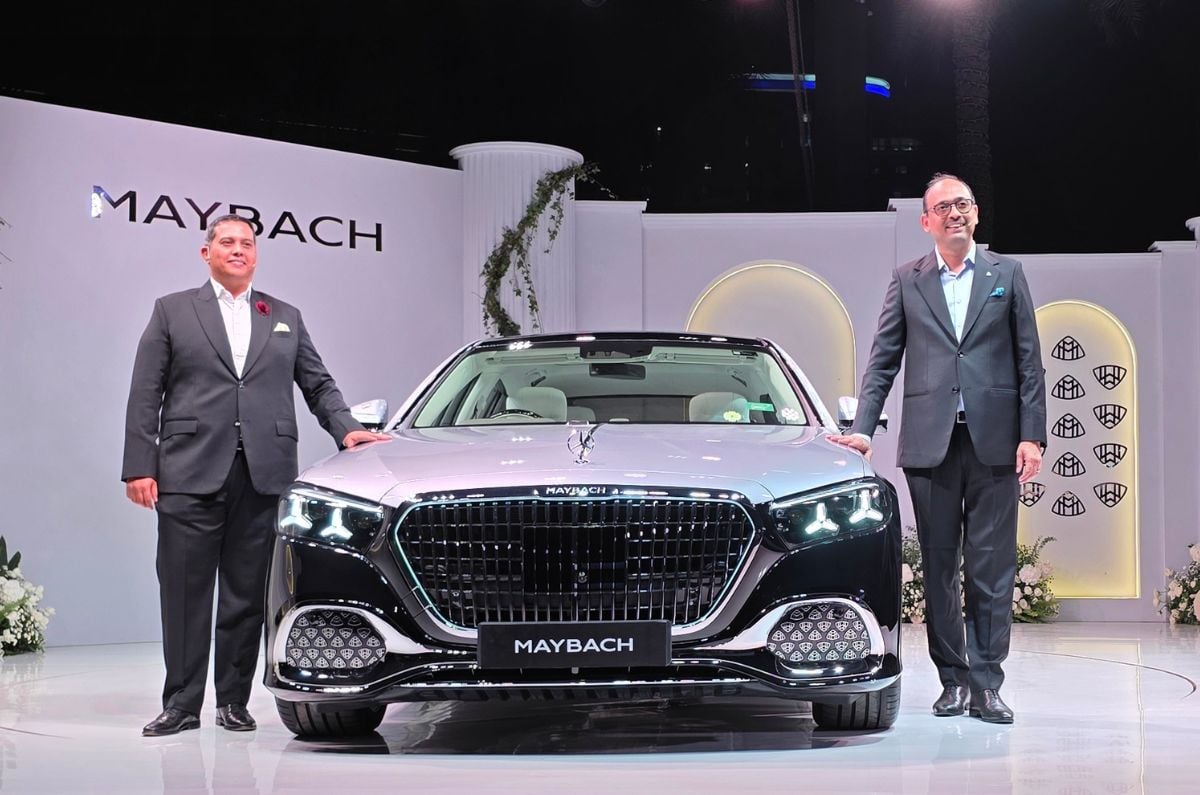
Mercedes-Benz has launched the Maybach S-Class facelift at Rs 3.35 crore (ex-showroom). It has been brought to India in S 580e guise, making it the first Maybach in India to be offered with a plug-in hybrid powertrain. Only 30 units have been allocated in the first batch, costing Rs 97 lakh more than the ‘regular’ S-Class Manufaktur Edition AMG Line that was launched just a couple of months ago. This is also Mercedes’s third PHEV in India, following the updated S-Class and AMG E 53 Hybrid. Mercedes says around 50 percent of its S-Class sales in India are of the Maybach variant.
Maybach S-Class comes to India in S 580e guise with 3.0-litre PHEV powertrain
Gets executive rear seats with full-length business console as standard
Offers 98km electric-only range thanks to a 22kWh battery
Mercedes-Maybach S 580e powertrain and specs
The new PHEV powertrain is one of the biggest updates to the Maybach S-Class, as the outgoing model was offered with a 4.0-litre V8. The S 580e uses a 443hp/560Nm 3.0-litre inline-six petrol engine paired with a 160hp/480Nm electric motor and a 22kWh battery. Total system output is 585hp and 750Nm, and it comes with all-wheel drive as standard. Mercedes claims the car can travel up to 98km and reach a top speed of 140kph on electric power alone. It also has a WLTP-certified fuel efficiency of 34.48kpl, although it’s likely not to be of much interest to a Maybach owner.
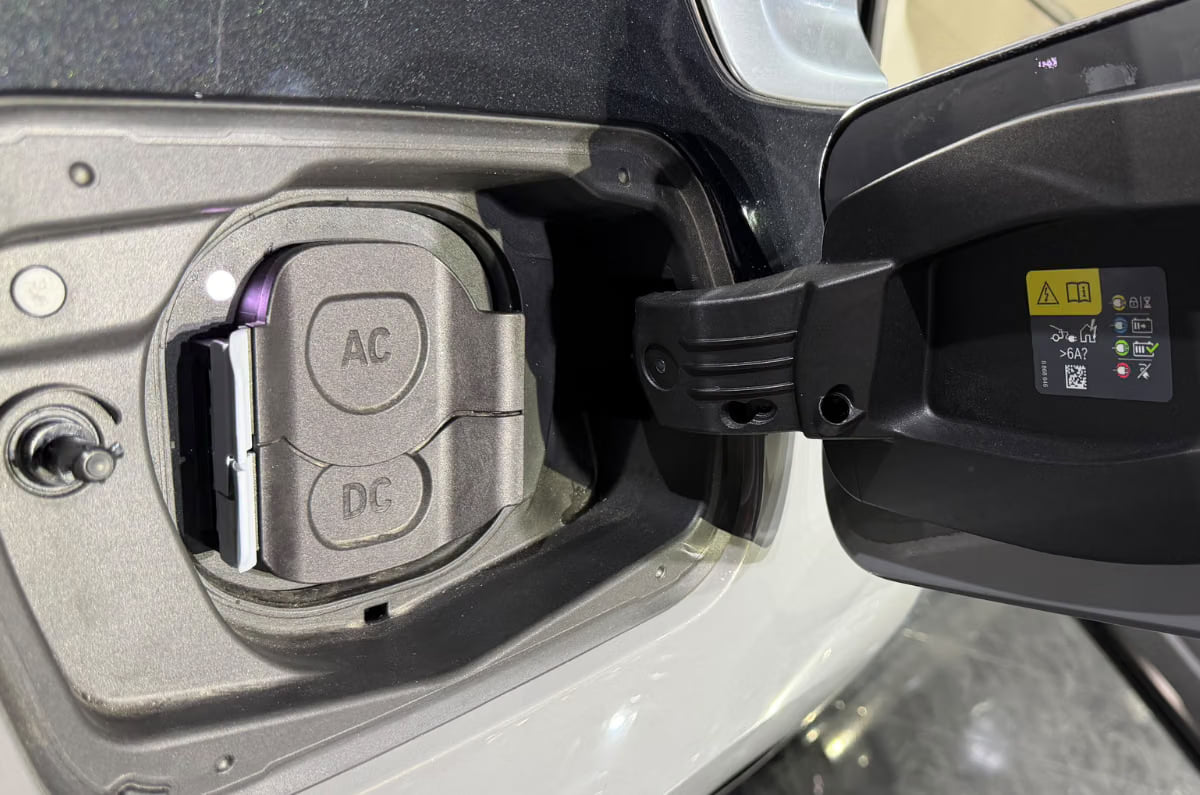
The S 580e offers three drive modes – Maybach, Electric and Battery Hold – along with adjustable energy recuperation, including one-pedal driving. As for charging, Mercedes will offer an 11kW AC on-board charger, and the car is also compatible with up to 60kW DC fast charging. The S 580e gets air suspension and rear-axle steering as standard.
Mercedes-Maybach S 580e interior and features
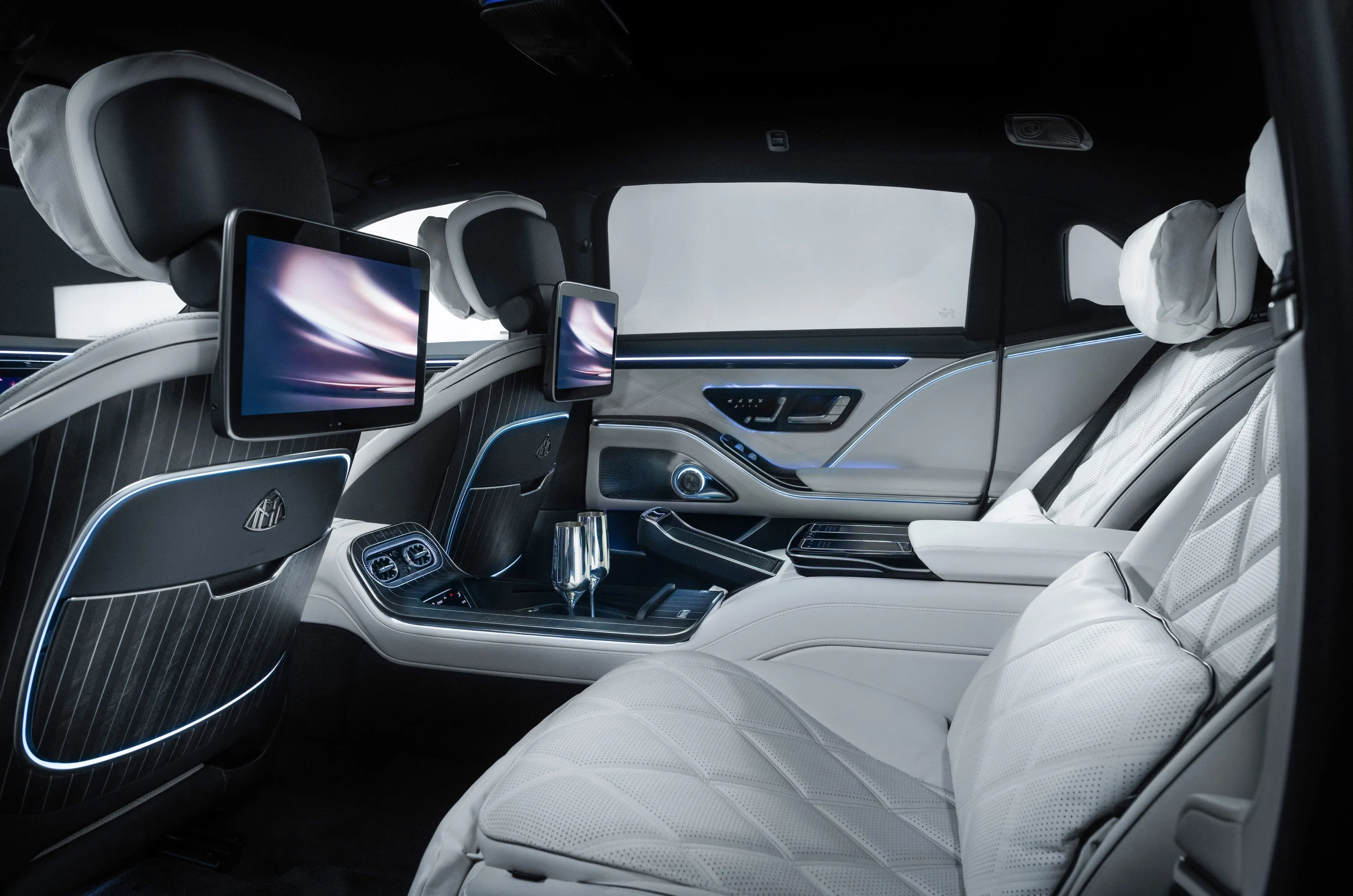
The focus of any Maybach is, of course, the back seat, and in that regard, Mercedes is offering the S 580e in a four-seat layout with executive seats with a full-length business console. Rear Comfort Package Plus is standard, offering fold-out tray tables, wireless charging pads, rear-compartment ambient lighting and even temperature-controlled cup holders. The seats recline to 43 degrees (compared to the regular S-Class’s 38 degrees) and are heated, ventilated and massaging. You also get two individual ‘smartphone’ remotes to operate everything instead of the tablet controller from before.
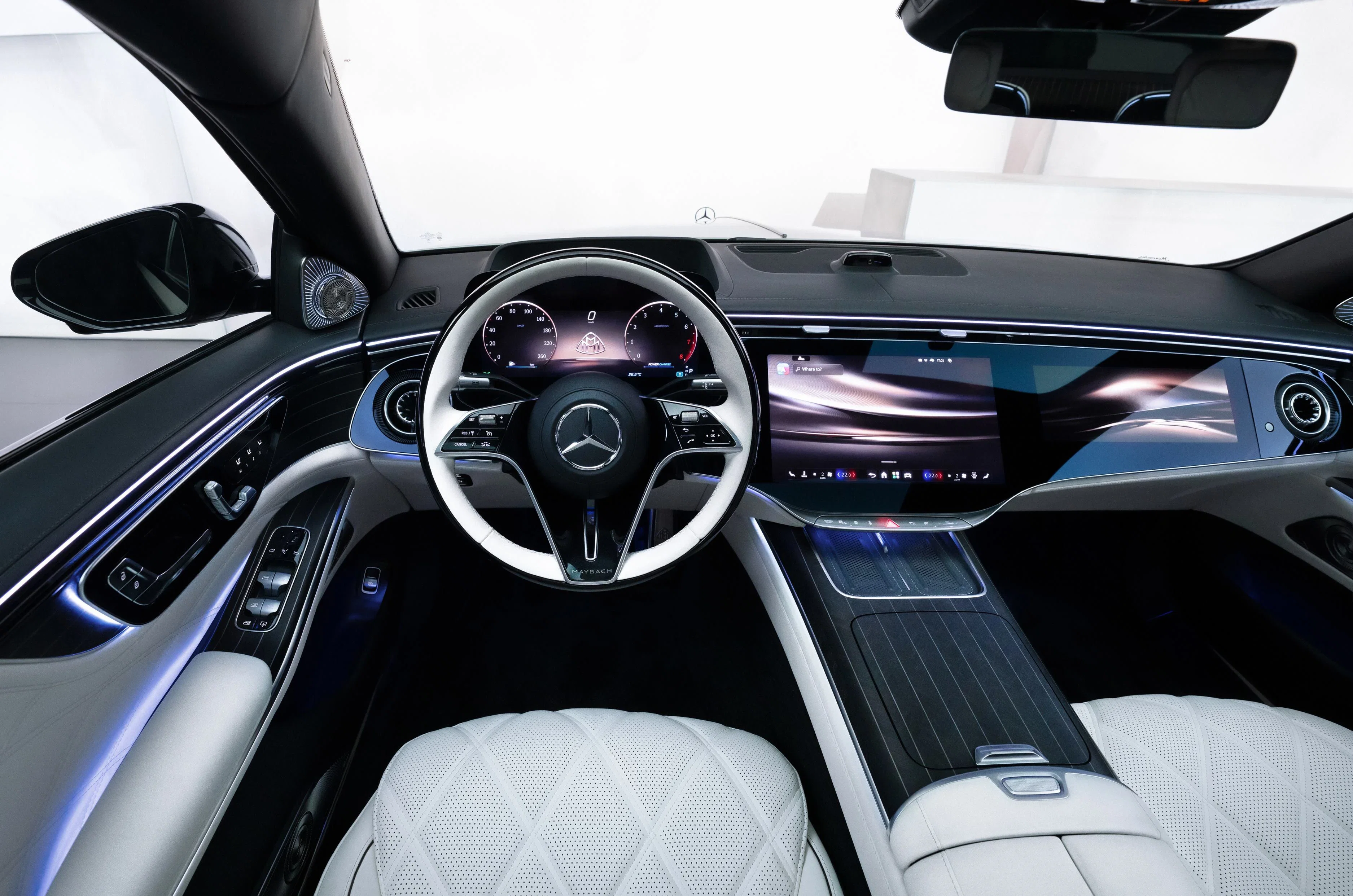
Up front, the dashboard remains largely unchanged from the regular S-Class. The MBUX Superscreen spans the front of the cabin, combining the central display with a front passenger display carrying a privacy function, while the driver gets a free-standing 3D display. The difference here is that you get a unique Maybach graphical theme for all screens, along with signature rose gold accents. Some of the equipment highlights include an augmented reality head-up display and navigation, a 31-speaker Burmester 4D surround sound system and two rear entertainment screens with wireless headsets.
The cabin is trimmed in Maybach-exclusive Nappa in crystal white and silver grey pearl, with Manufaktur piano lacquer trim, a Manufaktur roof liner in crystal white Nappa leather and Manufaktur seat backrest trim.
Mercedes-Maybach S 580eexterior design
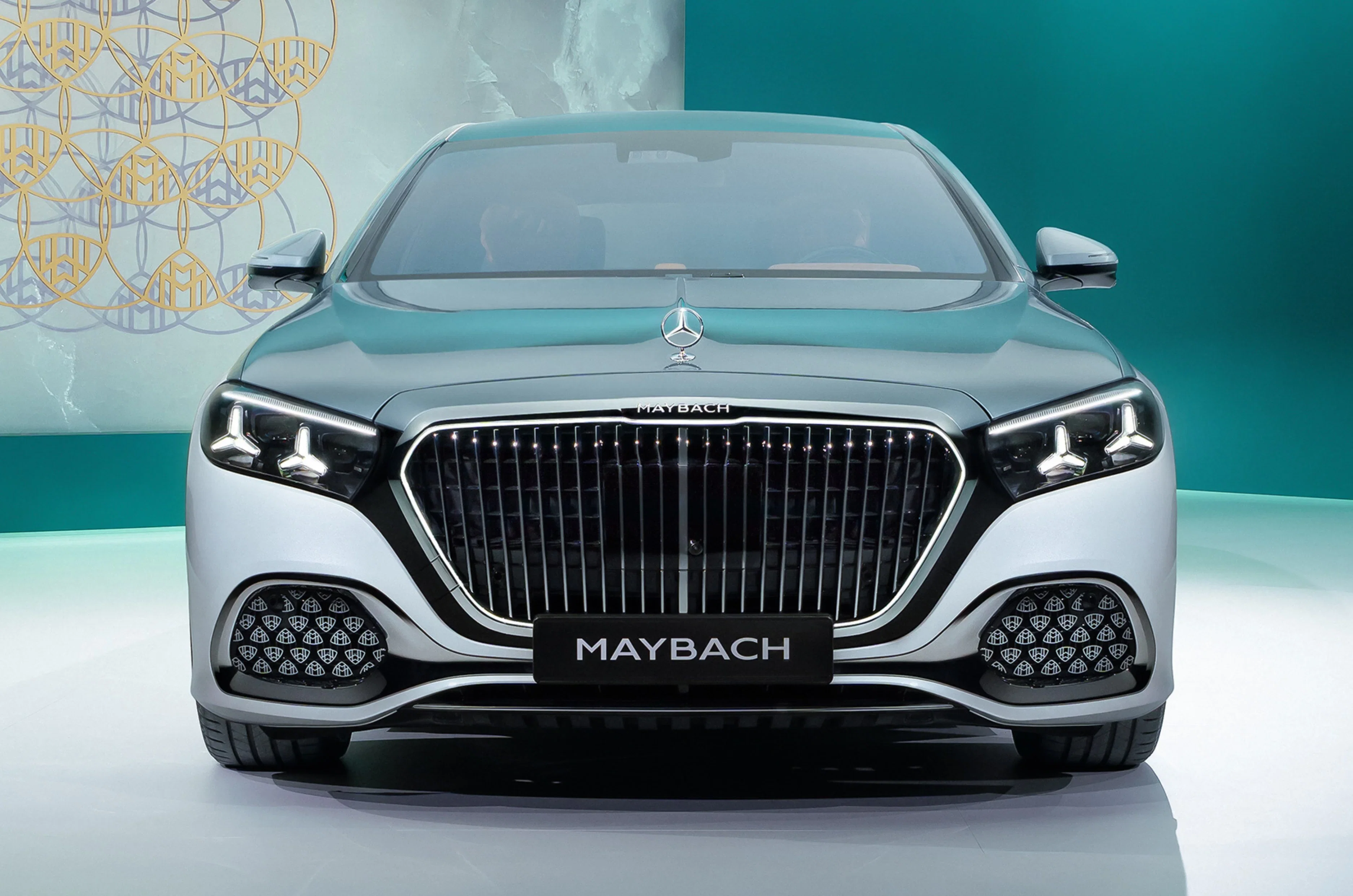
Changes to the exterior are similar to those on the regular S-Class facelift, albeit with a few Maybach-specific twists. For instance, here too the grille is 20 percent larger and framed by LED illumination, with an illuminated Mercedes star on the bonnet above. The difference is that the grille uses the Maybach signature vertical slats, and there’s an illuminated ‘Maybach’ wordmark above them.
The headlamps are the new, larger units with the latest version of Mercedes’s Digital Light ambient lighting and three-pointed star daytime running lamps (DRLs), but rather than the techie blue accents, there are rose gold embellishments with the Maybach logo on them.
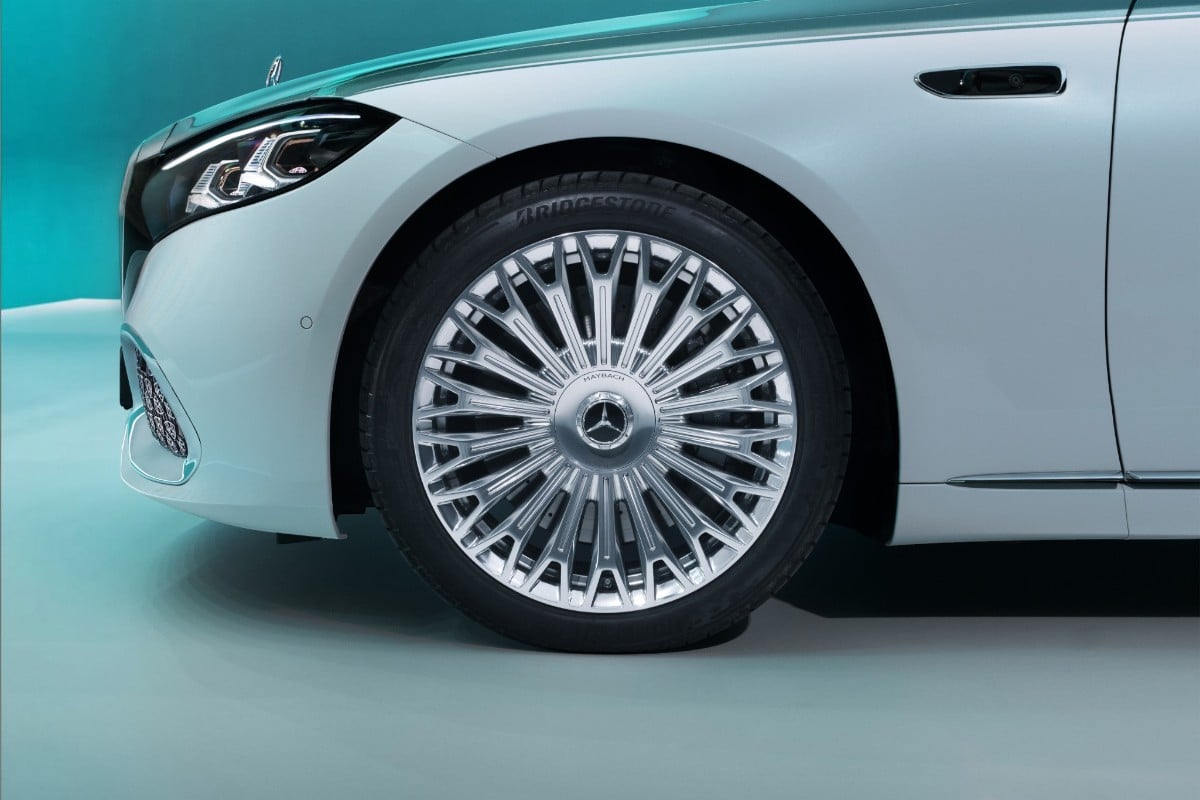
As before, the Maybach is 180mm longer than the long-wheelbase S, and that’s plain to see in profile. The India-spec model rides on 20-inch forged Maybach wheels, which also house a counterweighted Mercedes logo that always stays upright as the wheels turn. The Maybach logo on the D-pillar is illuminated as well, and the tail-lamps also get the triple-three-pointed star LED signature, like in the standard S-Class.
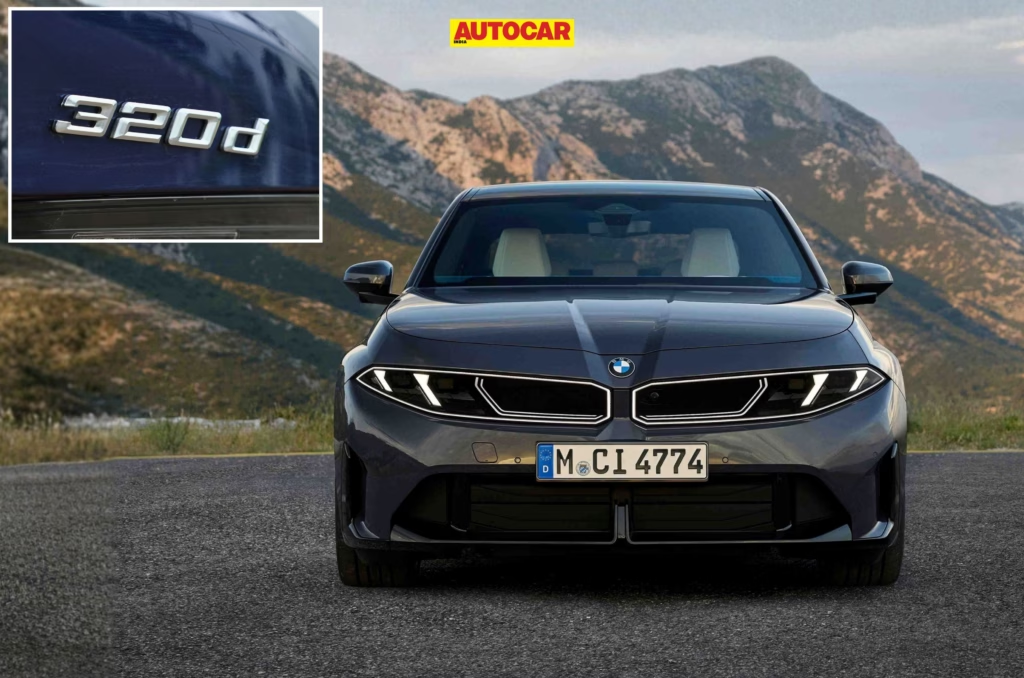
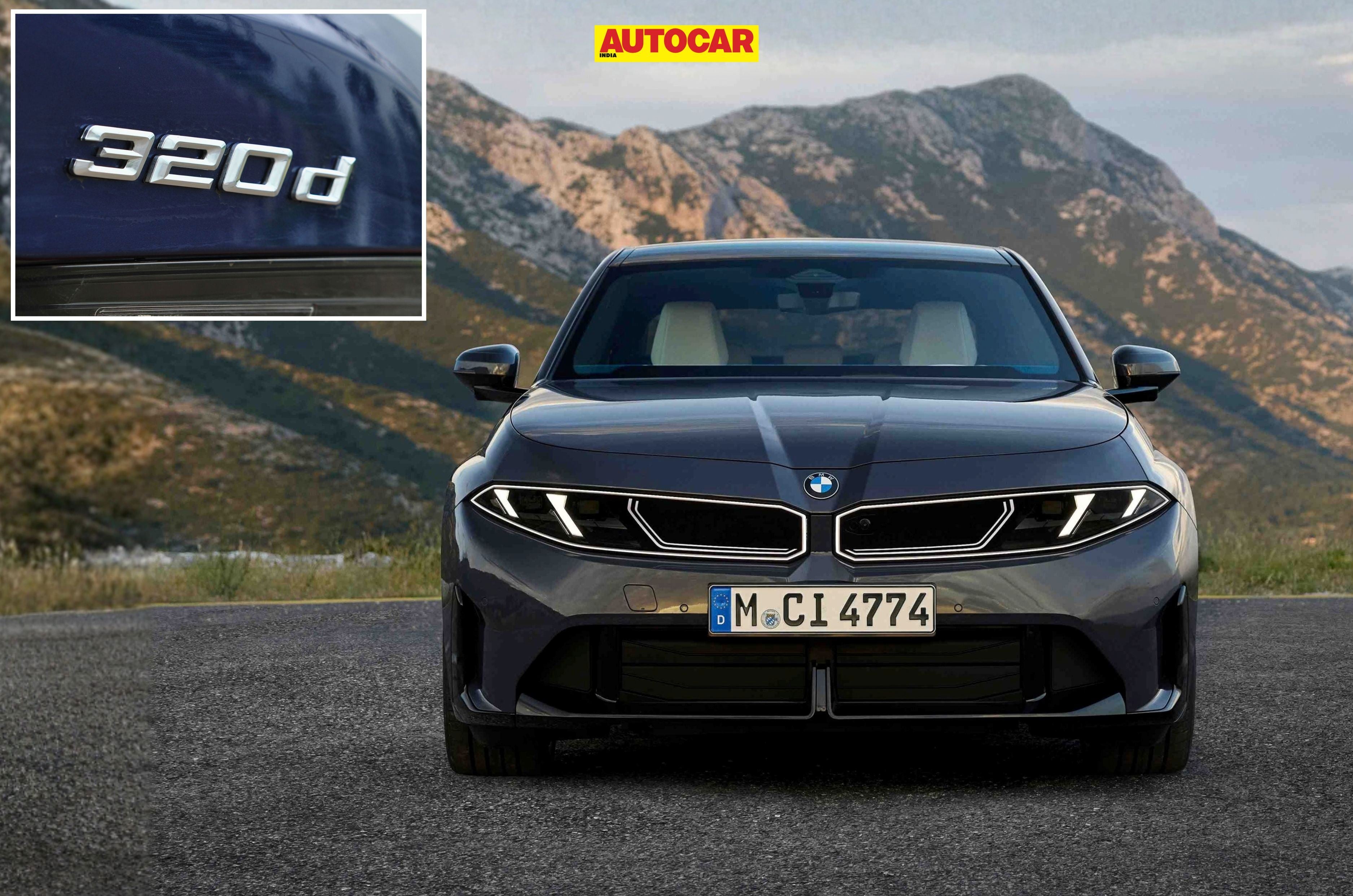
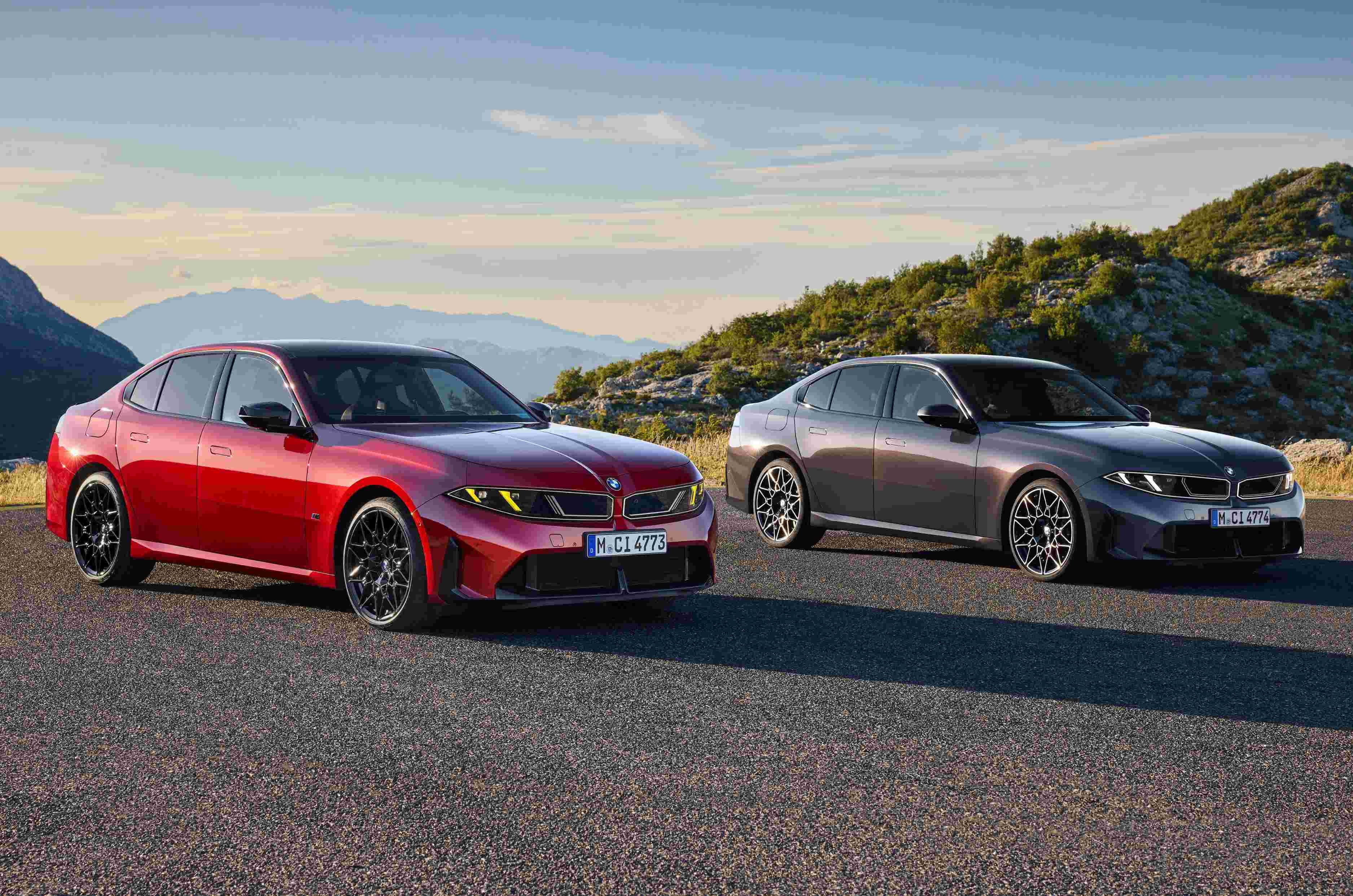
BMW has dropped diesel power from the eighth-generation 3 Series, codenamed G50, ending a run that dates back to the second generation (E30). The new G50 is offered with petrol engines, while a plug-in hybrid version is due to join the range in 2027. The fully electric i3 is also part of the eighth-generation 3 Series family.
G50 3 Series offered only with petrol engines
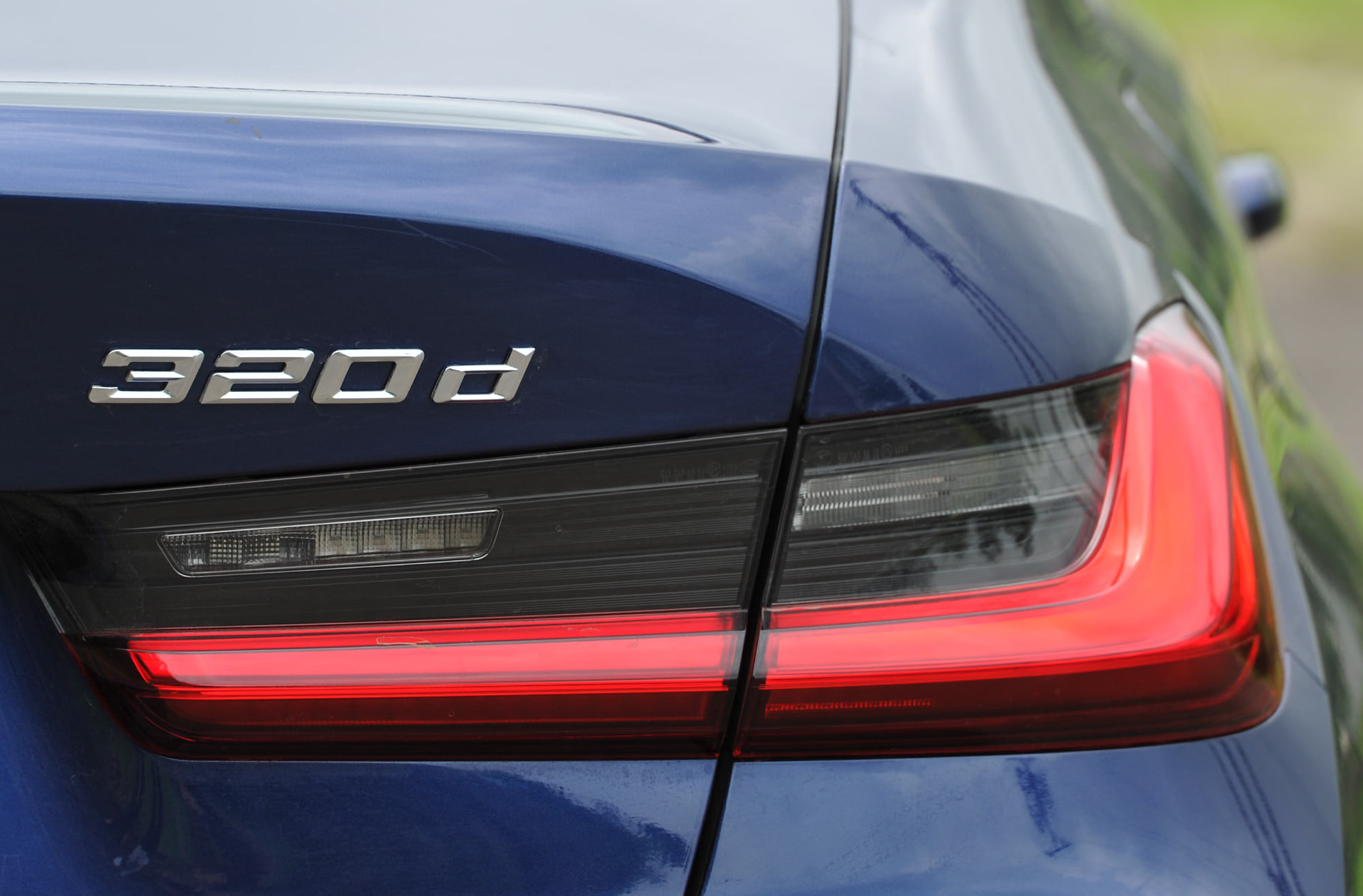
Speaking to members of the European press at the debut, BMW confirmed that the eighth-generation 3 Series will not be offered with a diesel engine. Besides the first-generation (E21), the G50 is the only other 3 Series generation without a diesel option. All other generations offered at least one diesel variant.
The G50 is available in 318, 320 and M350 xDrive forms. The 318 and 320 use 2.0-litre four-cylinder turbo-petrol engines with 48V mild-hybrid technology, while the M350 xDrive gets a 3.0-litre six-cylinder turbo-petrol mill with the same system.
BMW has not given a specific reason for removing diesel from the new-generation 3 Series, although it is likely in the interest of meeting increasingly stringent local emissions regulations.
Plug-in hybrid to join 3 Series range
BMW will add a plug-in hybrid version to the G50 range in 2027. Technical details of this version have not yet been announced. The fully electric BMW i3 is also part of the eighth-generation 3 Series family. The i3 40 xDrive and i3 50 xDrive are available with electric power, with claimed WLTP ranges of up to 710km and 912km respectively.
The result is a 3 Series range comprising petrol, plug-in hybrid and fully electric powertrains, with diesel no longer part of the new-generation line-up.
BMW’s shift from diesel to electrification in India
BMW’s changing powertrain strategy for the 3 Series is also reflected in its India portfolio. The company is increasingly pairing its petrol models with electric alternatives in India rather than offering diesel versions across these newer model lines. The 7 Series is available with a petrol engine, while the fully electric i7 is offered alongside it. The 5 Series LWB follows the same approach with the petrol-powered 5 Series and electric i5 LWB, while the X1 LWB is available with a petrol engine alongside the electric iX1 LWB.
None of these models is offered with a diesel engine in India. BMW’s electric models are therefore increasingly filling the role that diesel variants traditionally occupied as the more efficient option for buyers. The same transition is now evident in the new 3 Series in Europe, where the diesel has been dropped in favour of petrol, plug-in hybrid and fully electric options.
BMW India says electrification and its long-wheelbase range are two key areas of its current product strategy, with EVs accounting for 26 percent of its sales in the first half of 2026. The company expects the share of EVs in its sales to exceed 30 percent in the second half of the year.
BMW India has also seen some customers move from diesel to electric vehicles. The company says concerns around the long-term use and residual values of diesel cars have contributed to the shift in some markets, while it continues to offer diesel engines where demand remains strong.
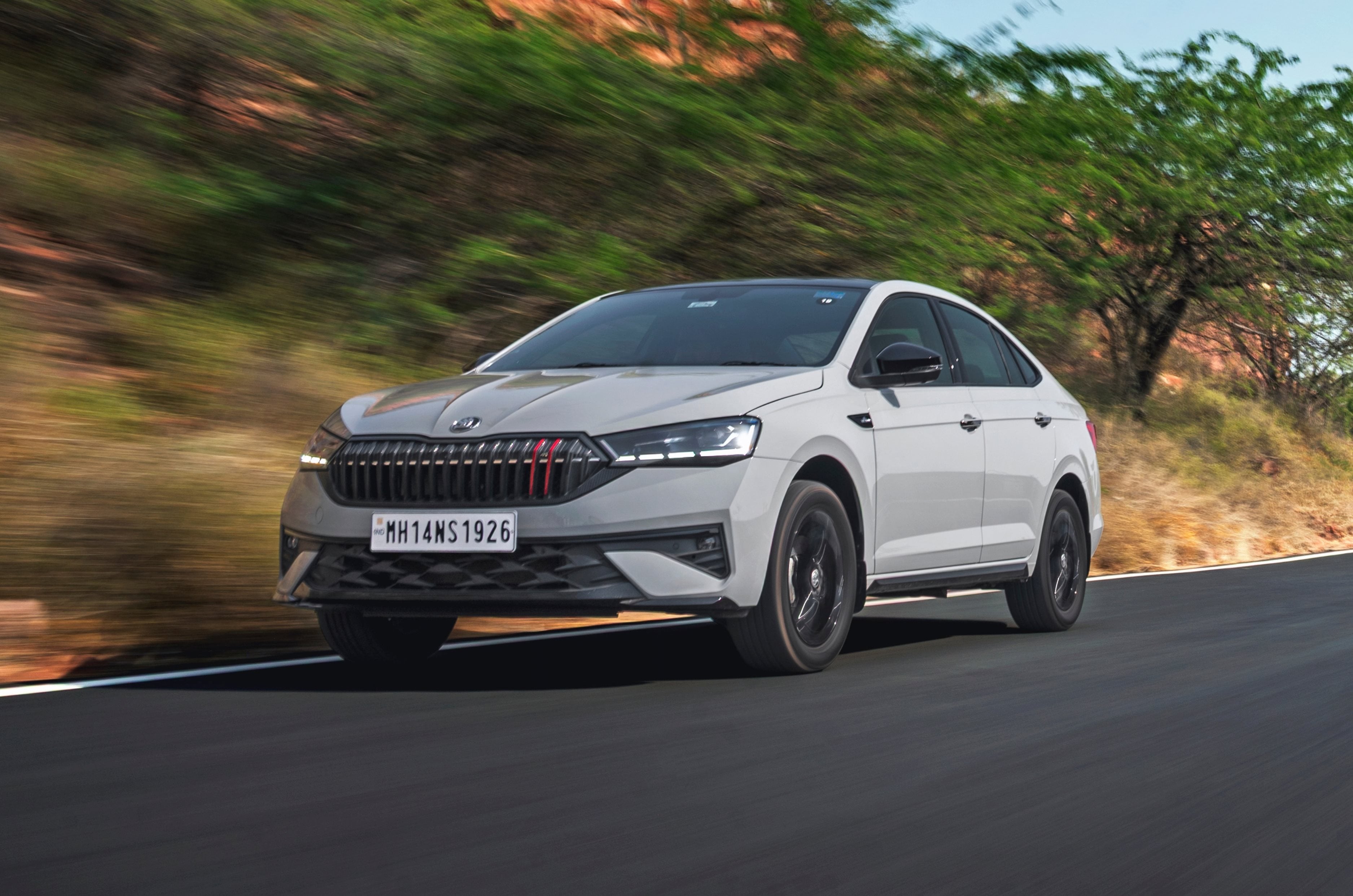
Skoda’s Slavia sedan has received its first major update since its introduction back in 2022. In order to keep it in touch with recently updated rivals like the Hyundai Verna and Honda City, the Slavia gets sharper styling, more equipment and even a significant mechanical change. Here’s what it’s like.
Skoda Slavia facelift exterior design and engineering – 8/10
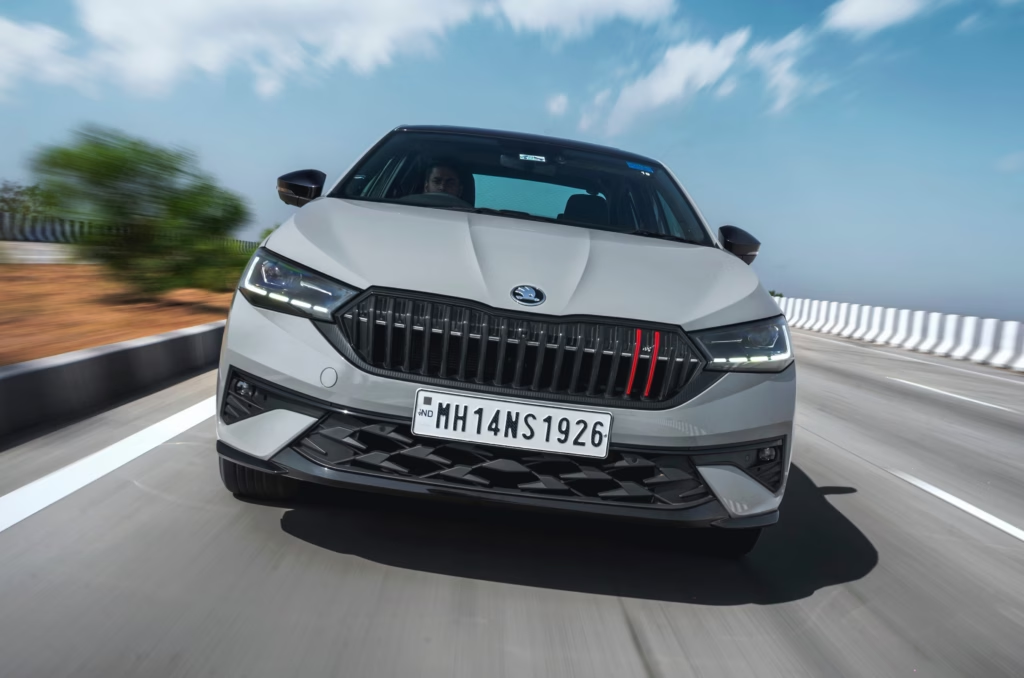
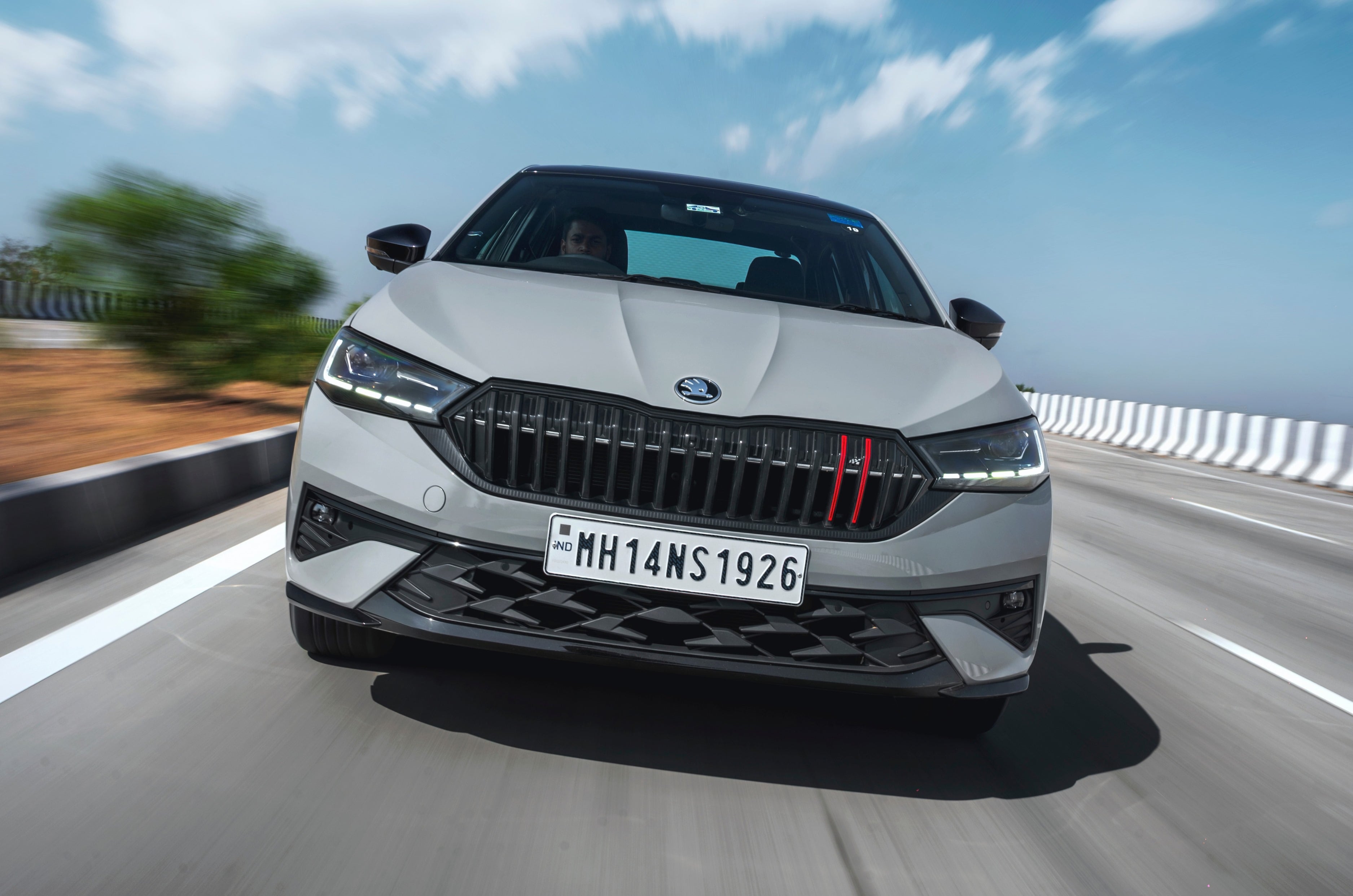
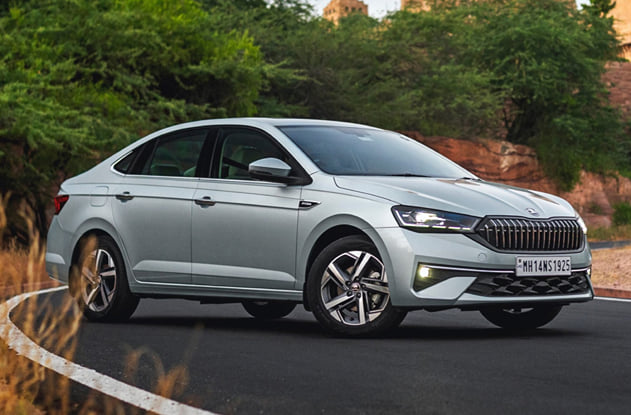
Skoda Slavia Prestige (left) and Monte Carlo (right)
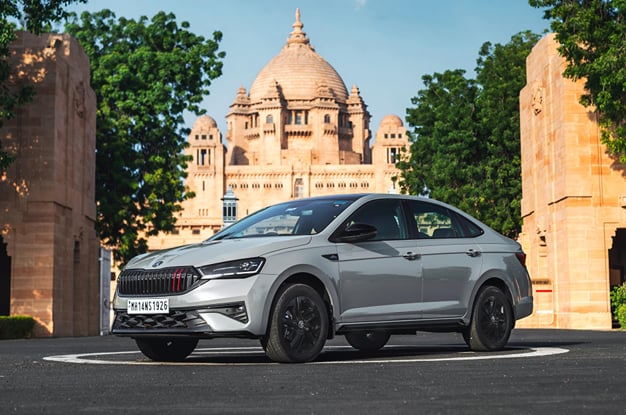
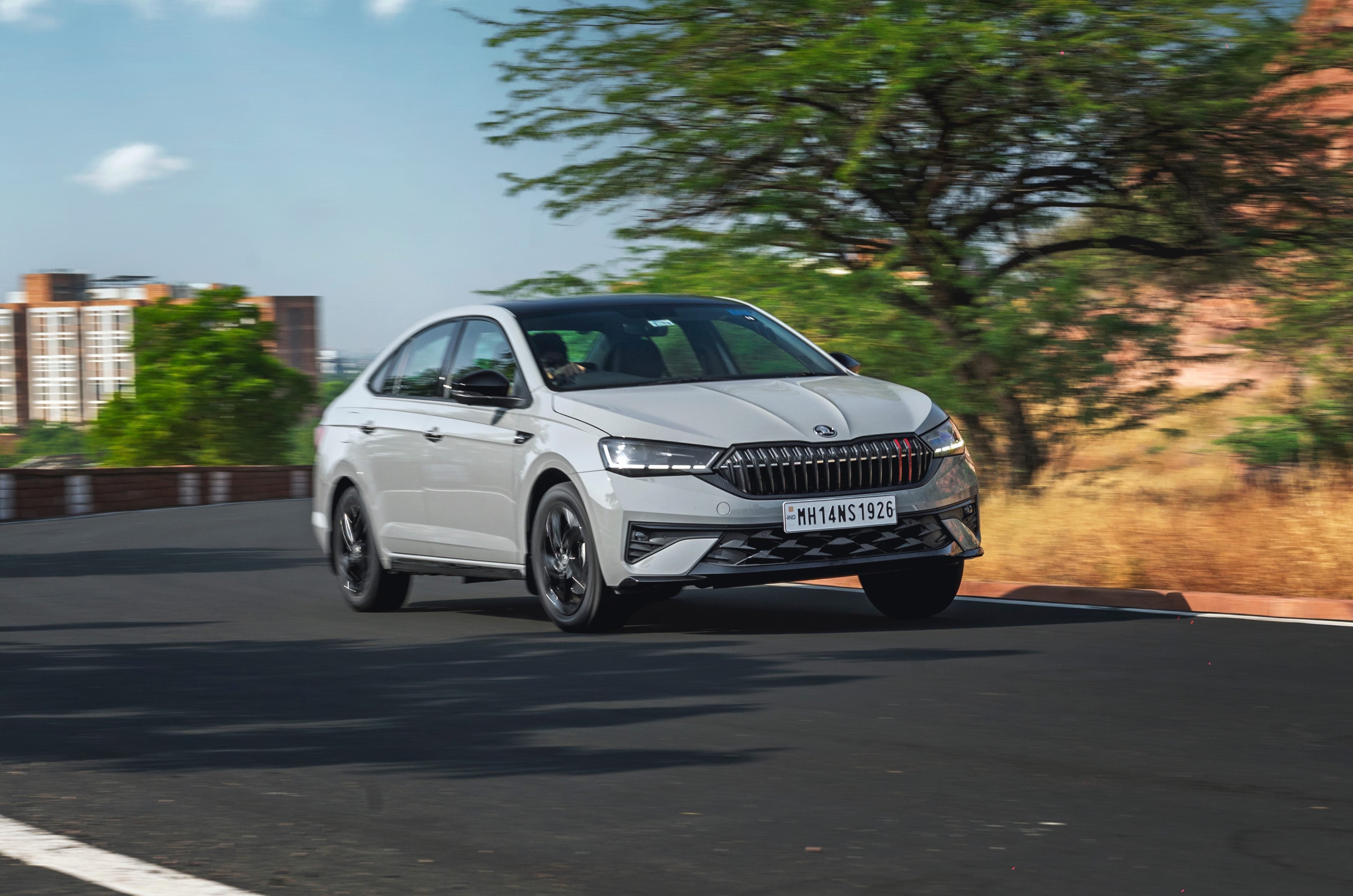
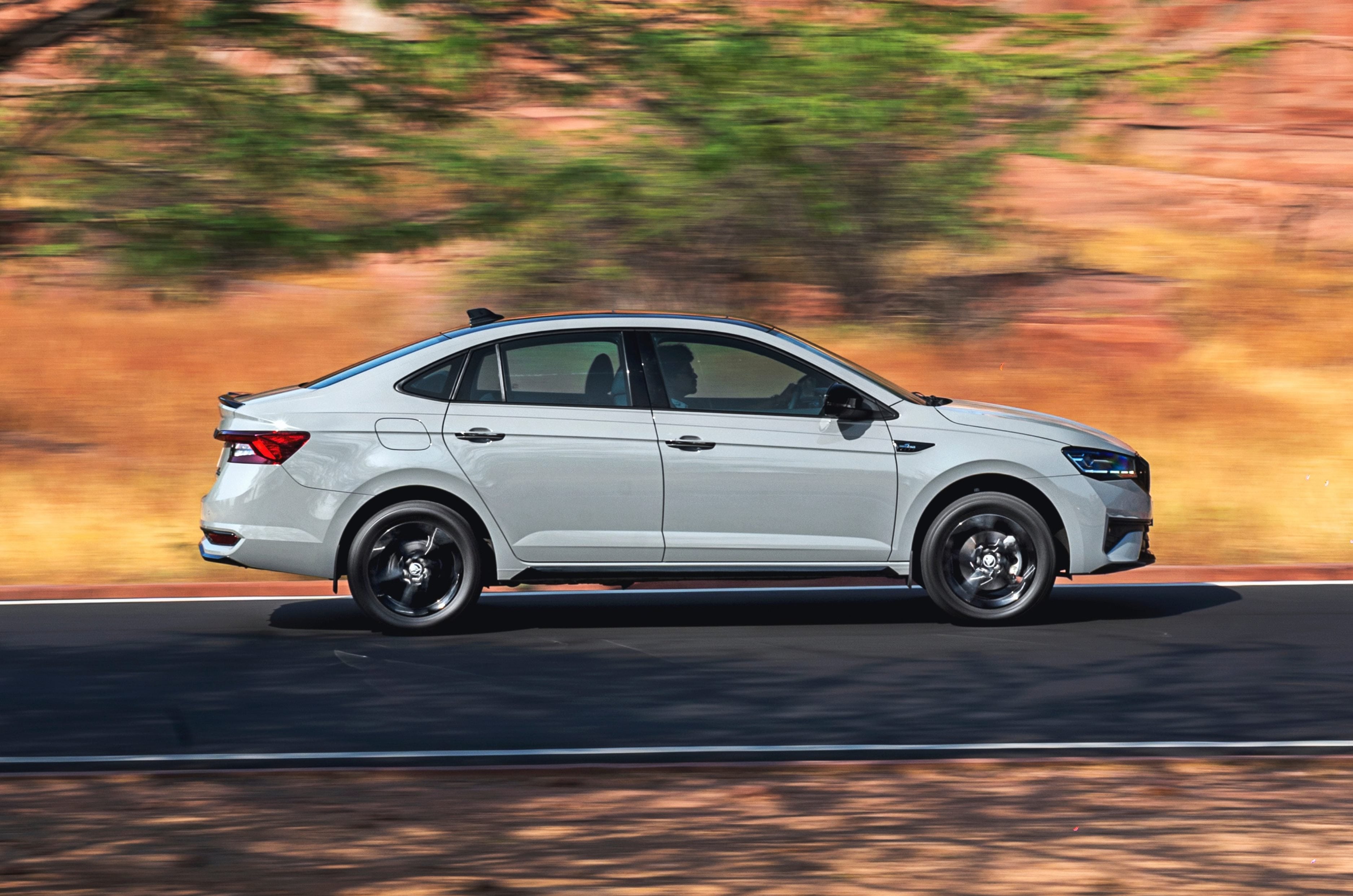
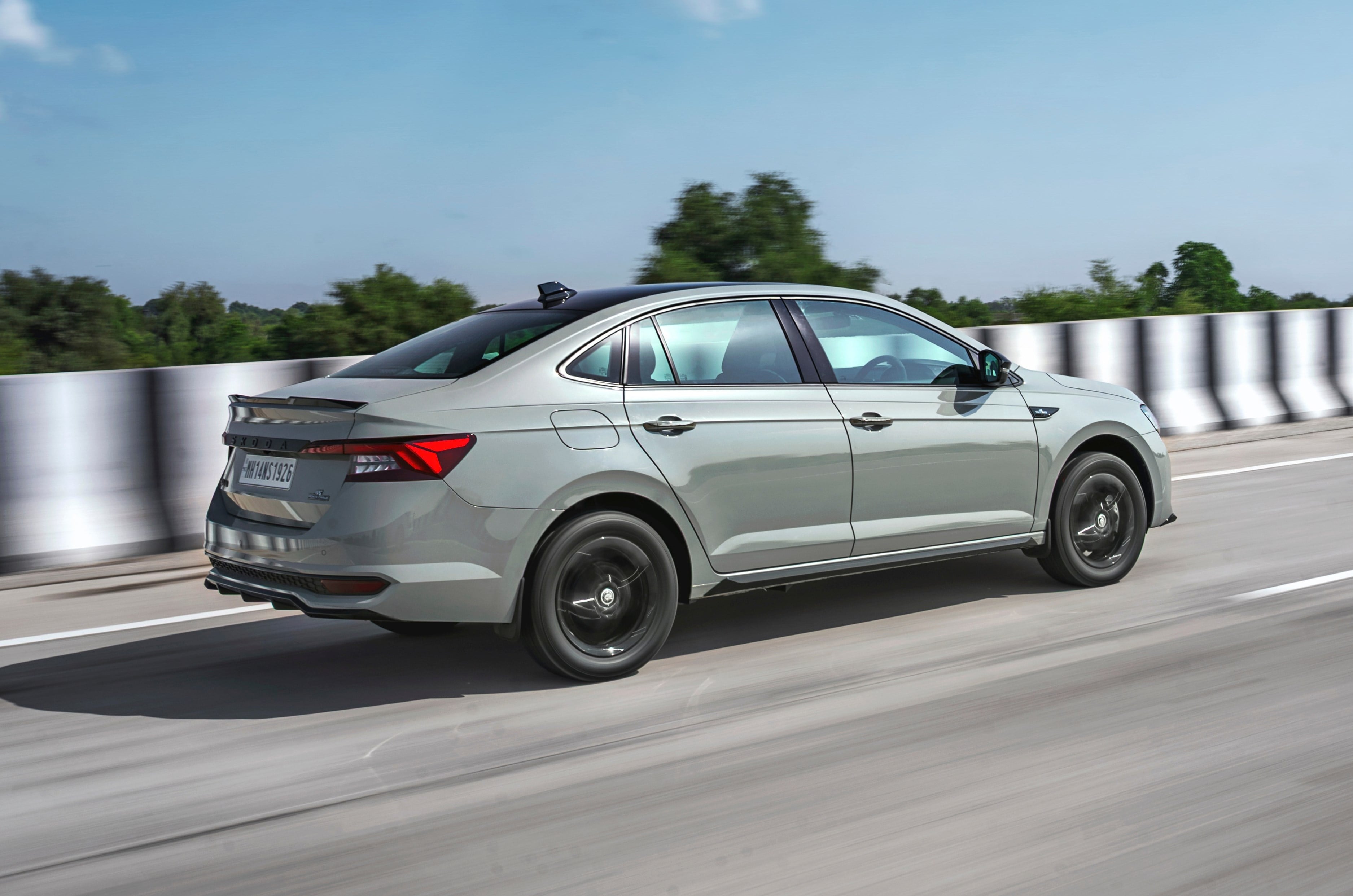
Being a facelift, the Slavia’s overall silhouette and proportions are unchanged, and that’s a good thing. Its design is clean and elegant rather than flashy, with crisp body lines, a long bonnet and a flowing roofline giving it a distinctly European appearance. The signature butterfly grille features new segmented chrome trim and sharp LED headlamps also get a new segmented LED DRL signature. The bumper is all new, featuring new LED fog lamps along with a reworked airdam. Along the sides, there’s a new design for the 16-inch alloys while the 179mm (unladen) ground clearance gives it a degree of SUV-like usability without making the sedan look too ungainly.
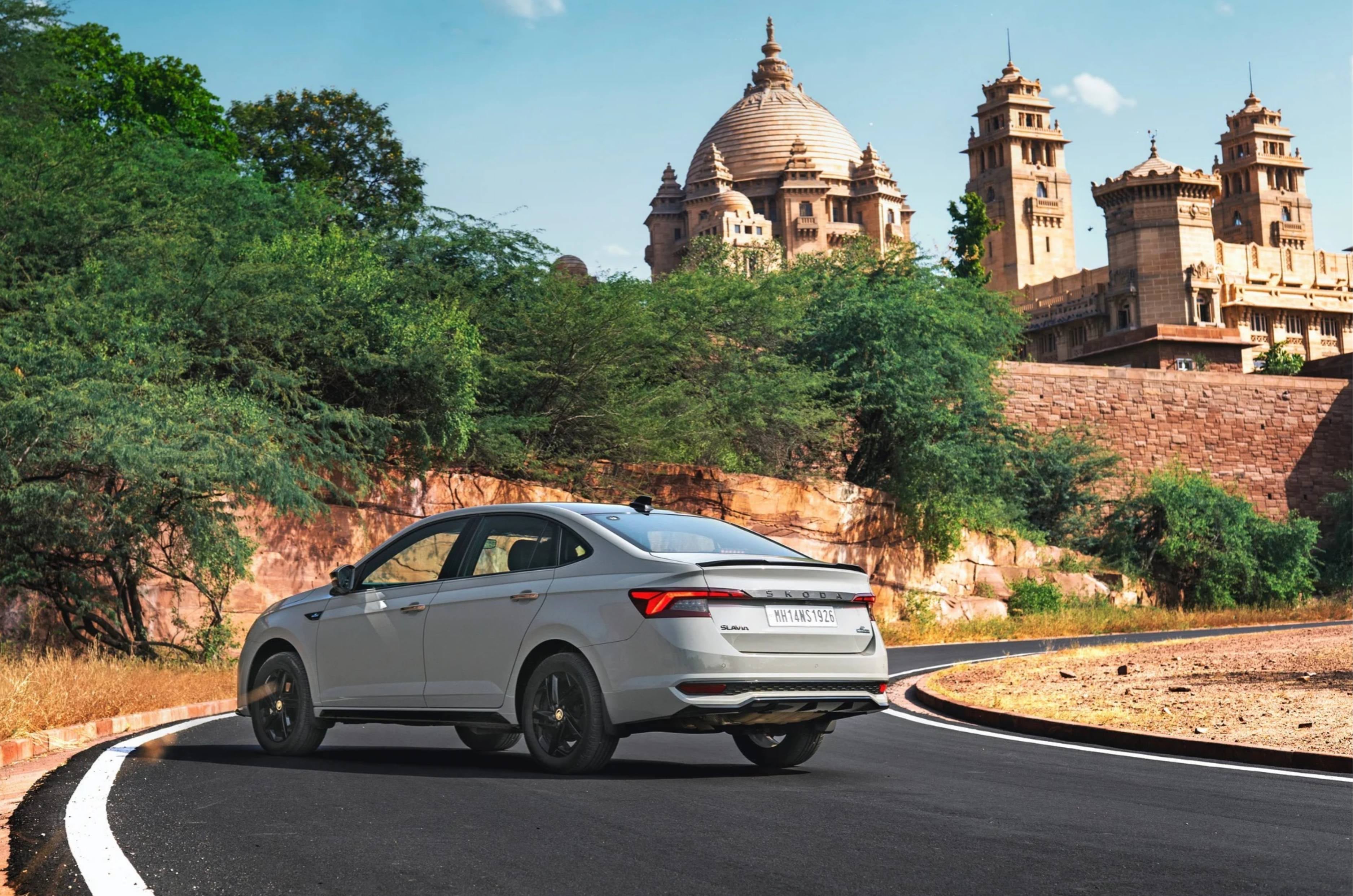
At the rear, it gets new sequential turn indicators and different LED elements in the tail lights. There’s a new trim piece connecting the tail-lights, with prominent ‘SKODA’ lettering, which gives the rear a cleaner, more contemporary look. As before, the Slavia is offered in a more luxurious Prestige trim, which brings chrome elements and a dual-tone finish for the alloys, and a sporty Monte Carlo trim that features blacked-out elements which include the grille, alloys, ORVMs, roof and bootlid spoiler. There’s also two new colours, Arctic Silver and Cappuccino Beige, which the former looking particularly tasteful.
Under the skin, the Slavia continues to use the MQB A0 IN platform, shared with the Kushaq and Volkswagen Virtus. This India-specific architecture allows the Slavia to retain its proper three-box sedan proportions while offering the ground clearance and practicality needed for Indian road conditions. Overall, the updates are evolutionary rather than revolutionary, but they do enough to keep the Slavia’s understated design looking fresh.
Skoda Slavia facelift interior space and comfort – 8/10
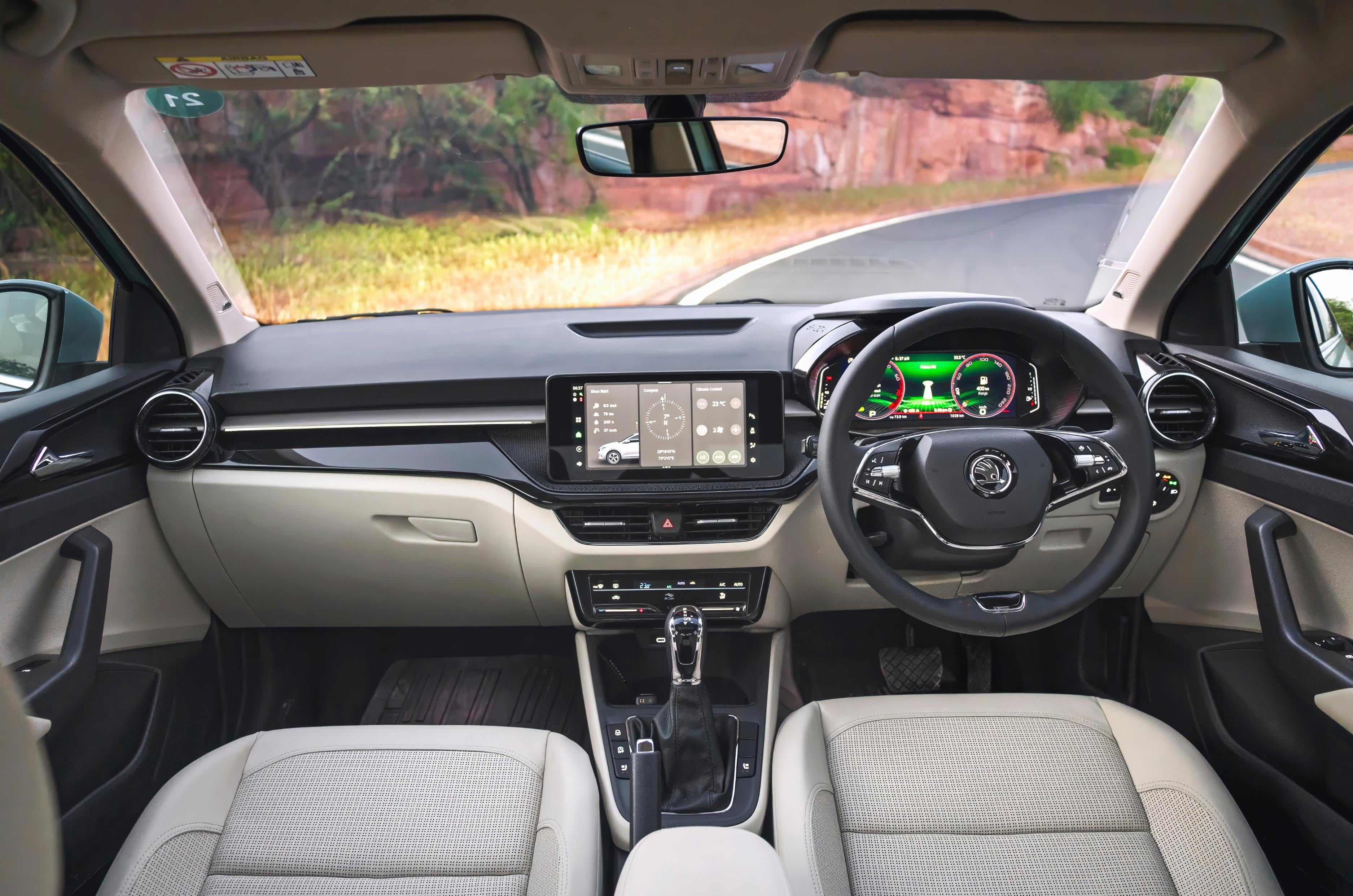
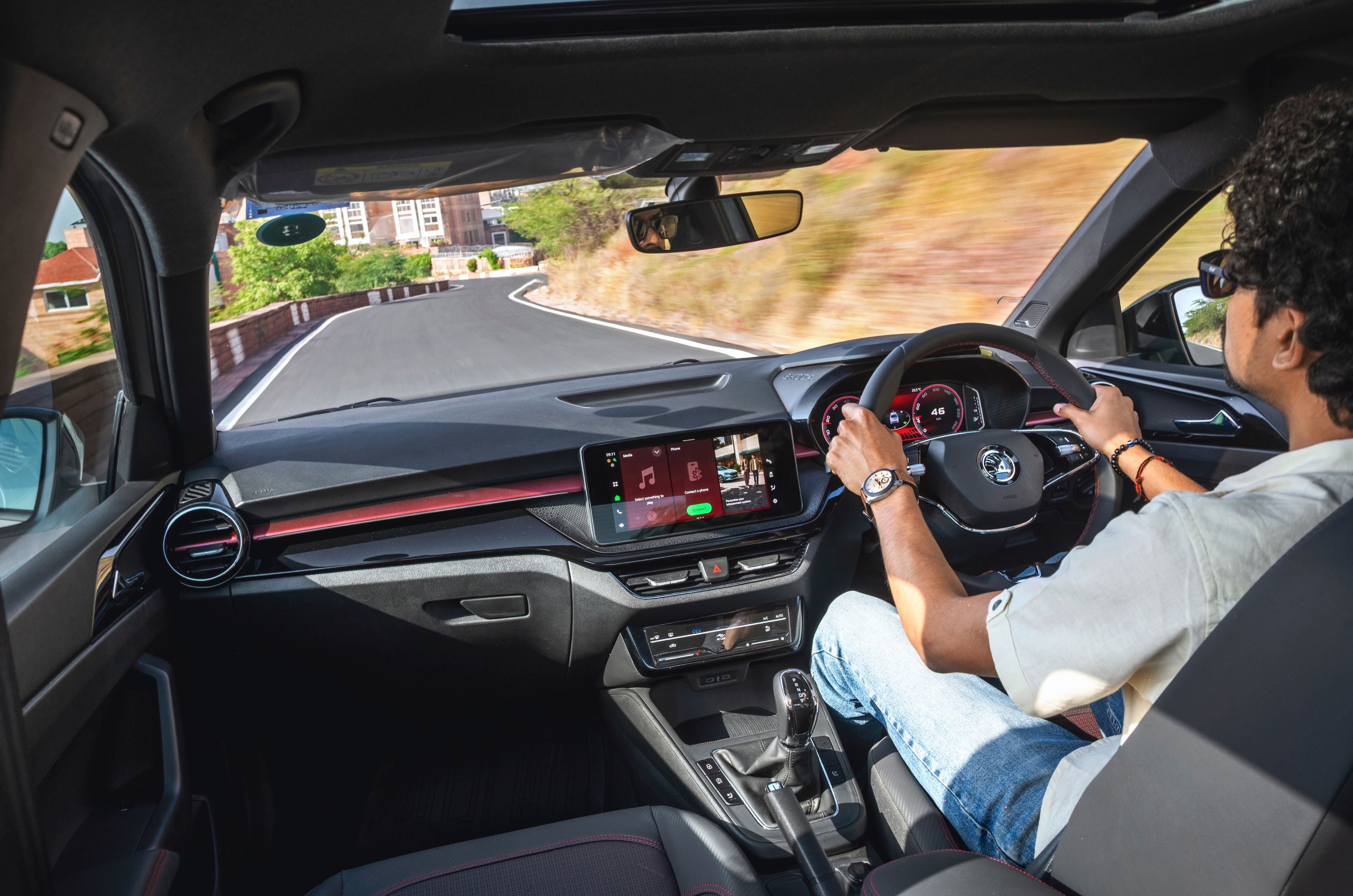
Step inside, and the door shuts with a reassuring thud and you’re greeted by the same layered dashboard. Like the exterior, the interior trim differs too depending on which trim you opt for. The more luxurious Prestige trim gets a beige and black upholstery with copper-coloured inserts on the dash, while the sporty Monte Carlo gets an all-black theme with contrasting red details on the dashboard, the stitching and the seat perforation. Build quality is solid overall, with a well put-together feel to the cabin. It’s also a practical space with plenty of storage spaces and the typical Skoda “Simply Clever” features like a ticket holder, coat hooks, phone pocket in the seatbacks and more.
The front seats are wide and supportive, with generous cushioning that makes the Slavia comfortable over long journeys, and finding your ideal driving position is easy too thanks to the electrically adjustable seats and reach/rake adjustment for the steering.
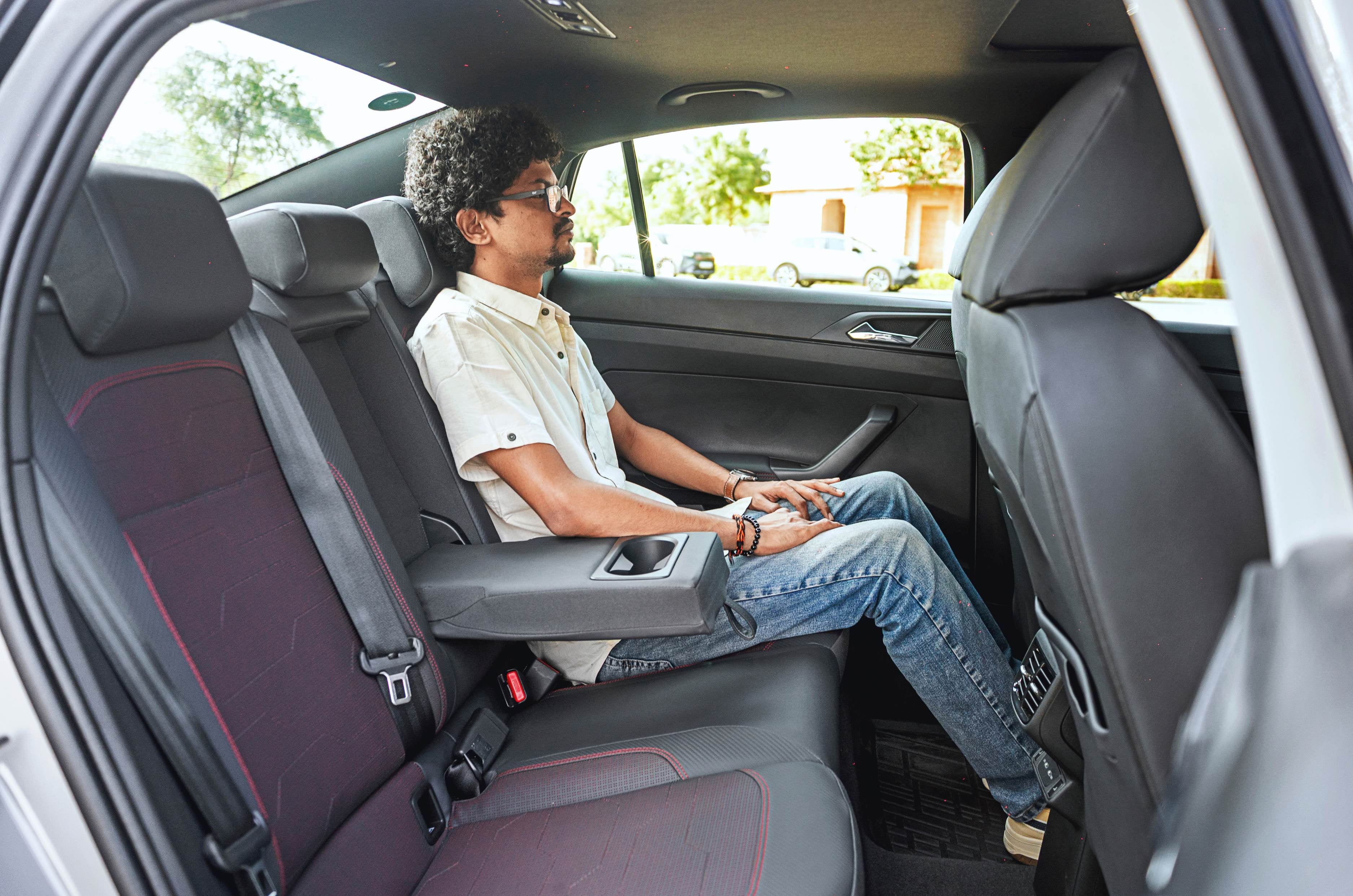
Rear-seat space remains one of Slavia’s biggest strengths. The long wheelbase translates into generous legroom and ample footroom, and the windows are also large enough. Headroom though, can be a little tight for taller passengers, and the contoured rear bench along with the transmission hump in the centre mean it’s more naturally suited to two adults than three.
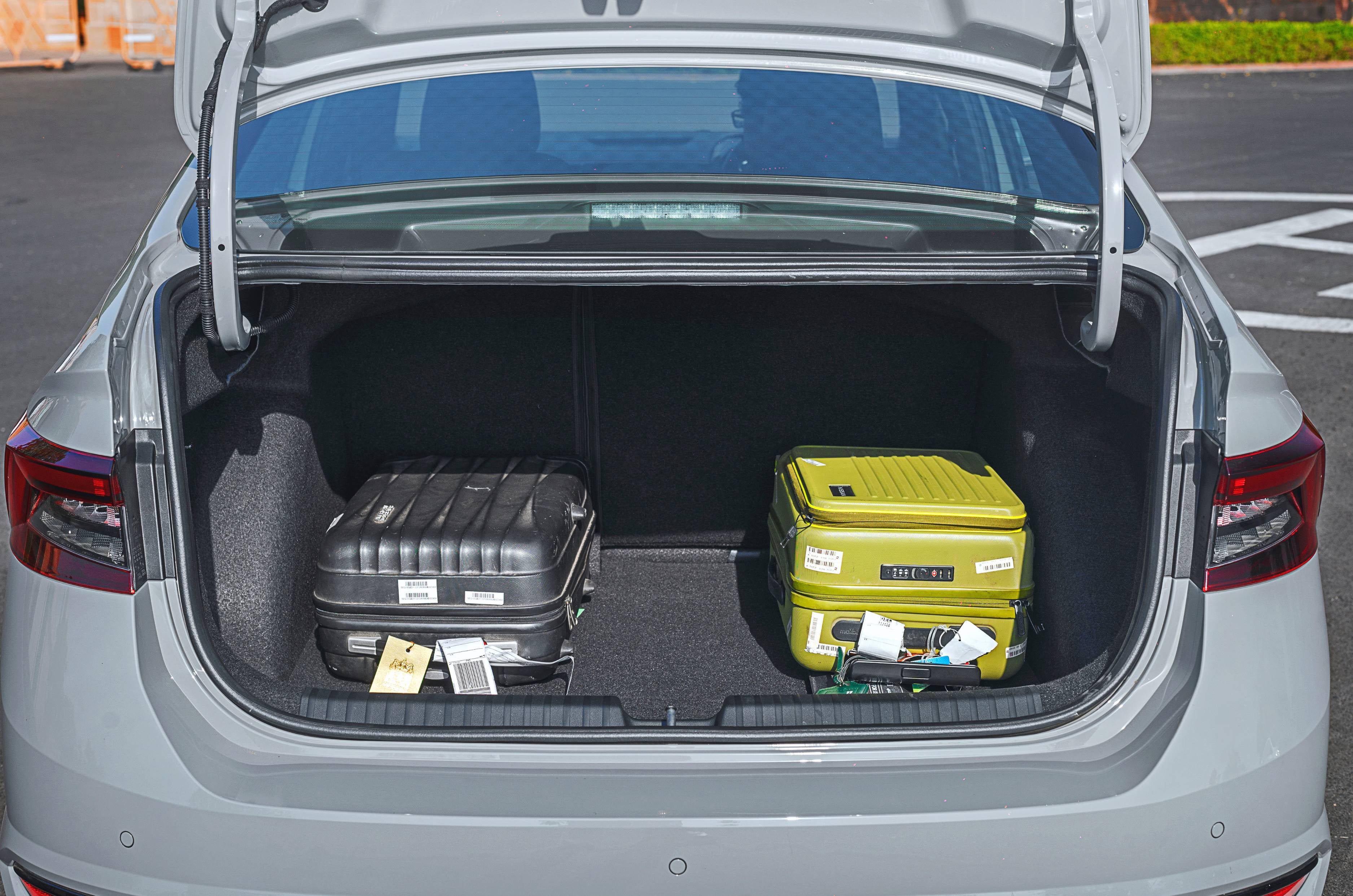
The 521-litre boot is among the largest in the segment, and the squared-off shape makes it easy to load. The 60:40 split-folding rear seats add further versatility. It also continues to get a space tyre and a subwoofer under the boot floor.
Skoda Slavia facelift features and safety – 9/10
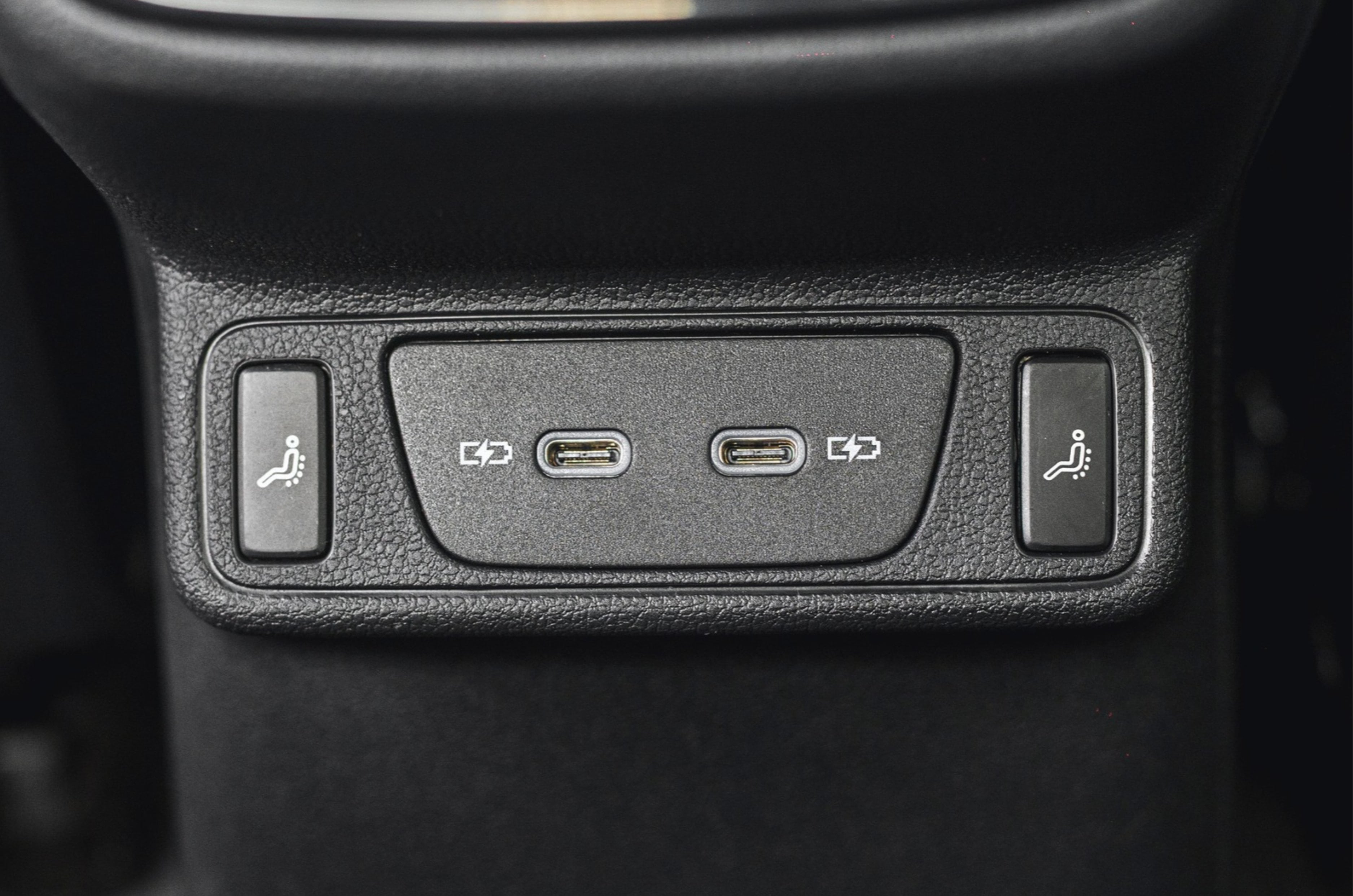
The Slavia facelift brings a useful upgrade in equipment, with the highlight being a segment-first rear seat massaging function. It’s a feature more commonly associated with larger, more expensive cars and adds another layer of comfort to what is already a spacious rear bench. This feature works very well and will be a hit with the chauffeur-driven.
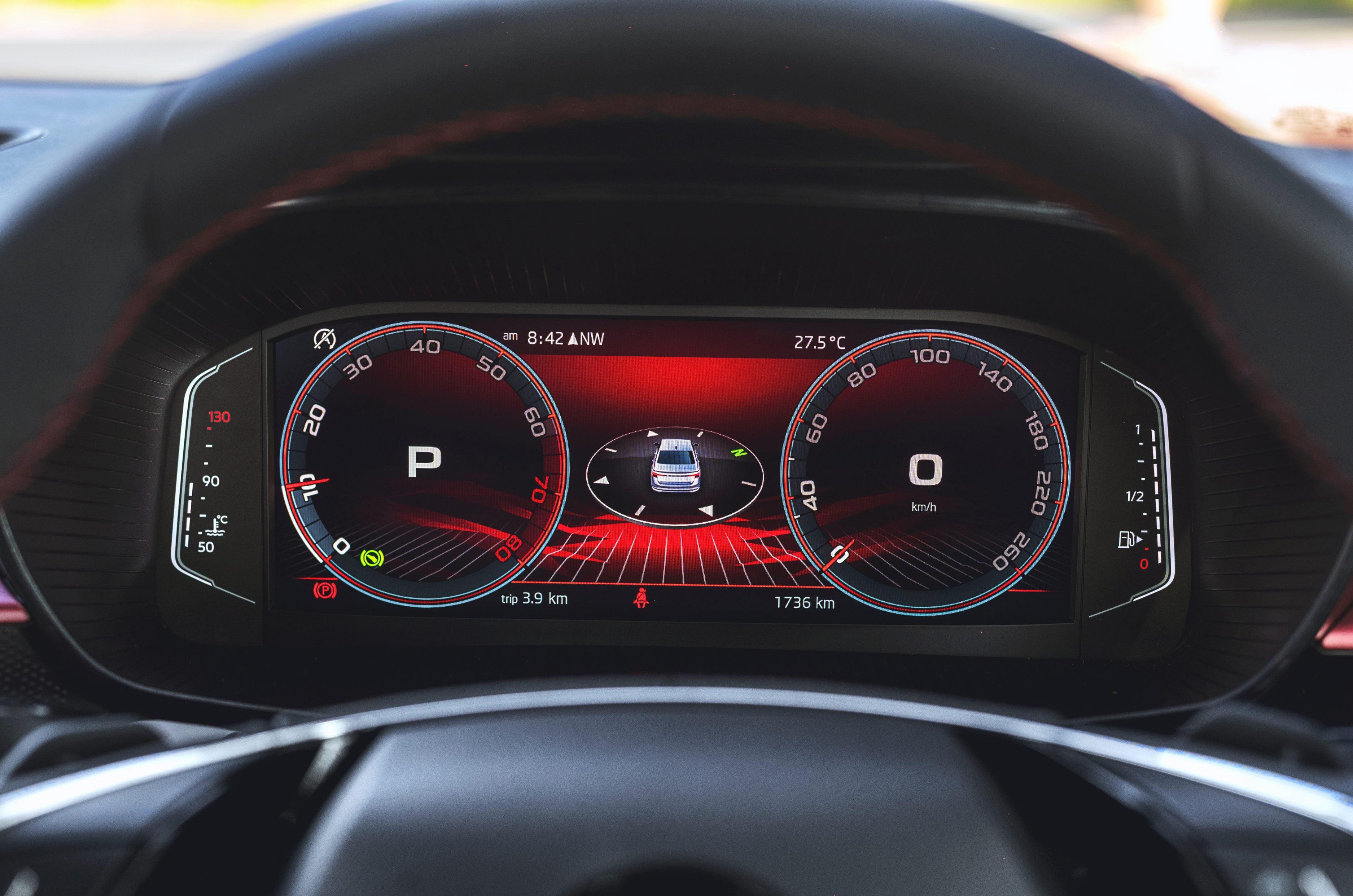
The infotainment and instrumentation have also been upgraded. The previous 10-inch touchscreen has been replaced by a slightly larger 10.1-inch unit, while the driver’s display grows substantially from 8 inches to 10.25 inches. Both screens get new graphics and additional features, giving the cabin a more contemporary feel and bringing the Slavia’s interface up to date. The touchscreen has a slick interface and also benefits from an AI voice assistant and connected car features, while the digital cluster gets multiple layouts along with a turn-by-turn navigation feature. The themes for both these screens also differ depending on whether you’ve gone for the Prestige or the Monte Carlo trim.
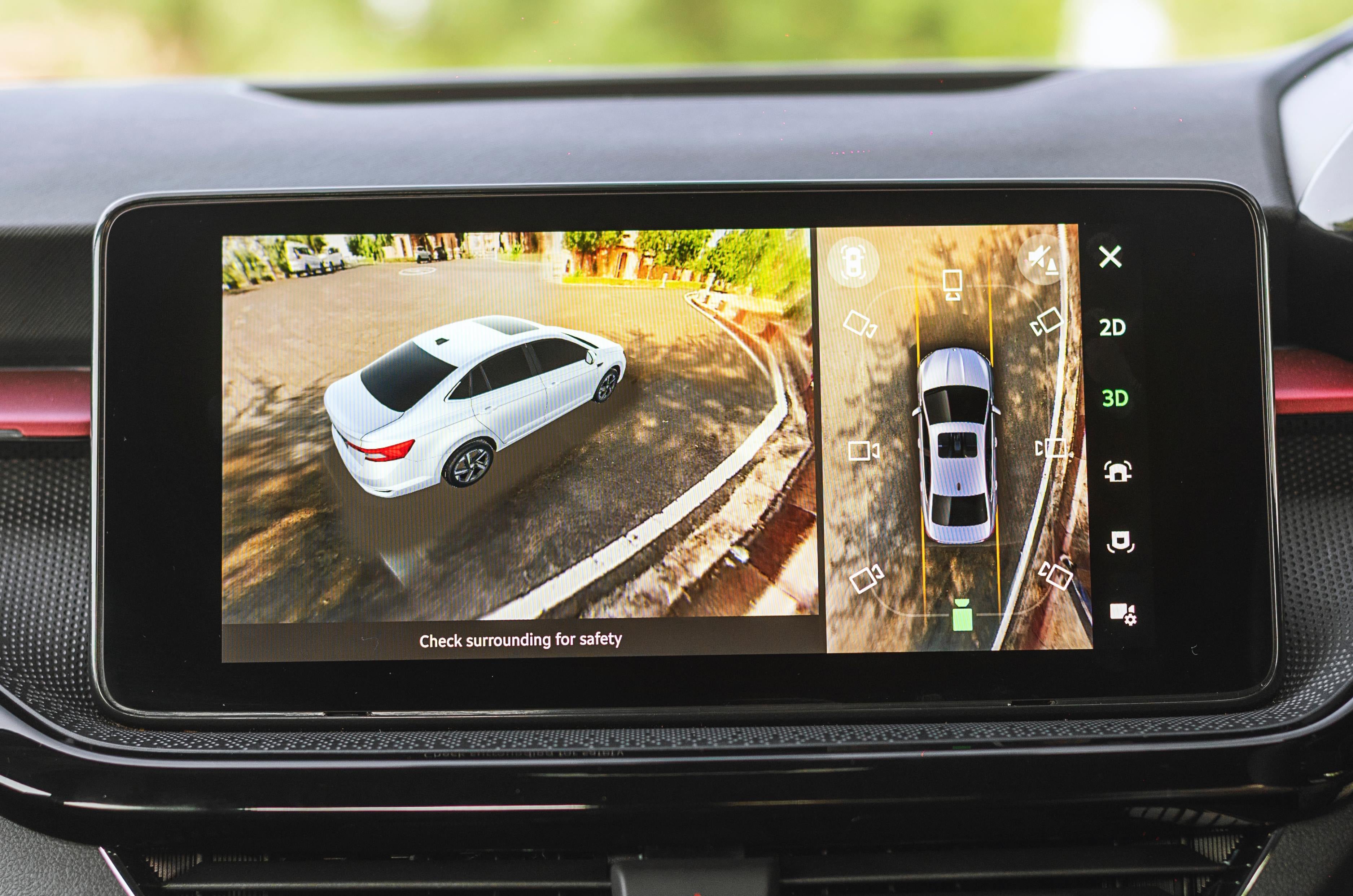
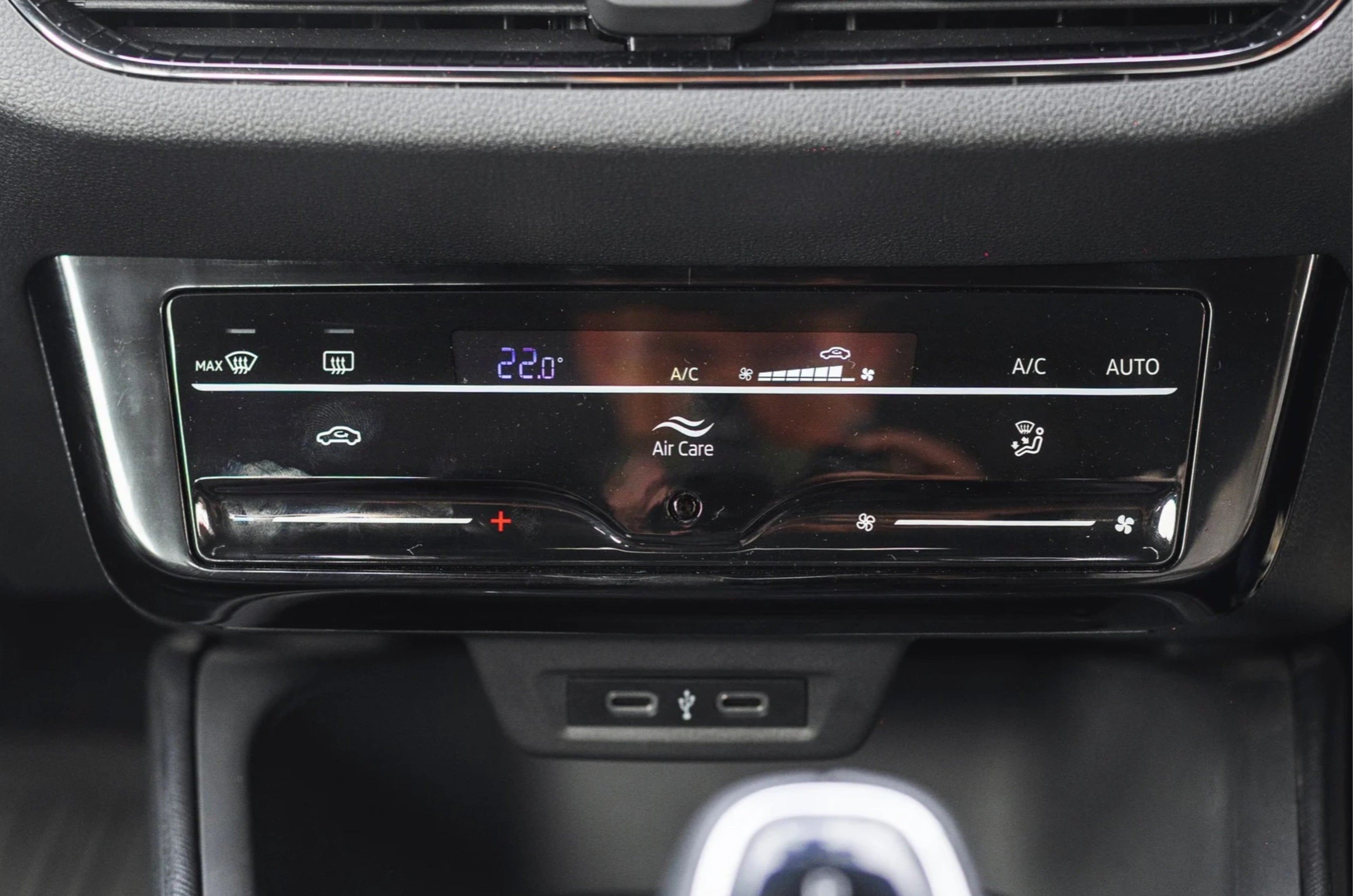
Another significant upgrade is the addition of a 360-degree camera, replacing the previous rear-view-only camera. This marks a huge improvement and the clarity and crispness of this camera is one of the best at this price point. And finally, like the Kushaq, the Slavia facelift also gets a new variable geometry compressor instead of a fixed geometry unit for the AC system, which has improved the cooling performance significantly.
Other than these, it continues to feature ventilated and powered front seats, a sunroof, wireless smartphone integration, a great-sounding audio system, auto climate control, ambient lighting, LED lights, auto headlamps/wipers, cruise control, leatherette upholstery, 6 airbags, ESC, traction control, hill-hold assist and much more. The pre-facelift Slavia has also received a full 5-star crash safety rating from Global NCAP. However, some features that rivals offer and are missing here include an electronic parking brake and ADAS tech.
All together, the feature additions make the facelift feel more complete, with the new screens, 360-degree camera and rear seat massage adding both convenience and a greater sense of sophistication to the cabin.
Skoda Slavia facelift powertrain and performance – 8/10
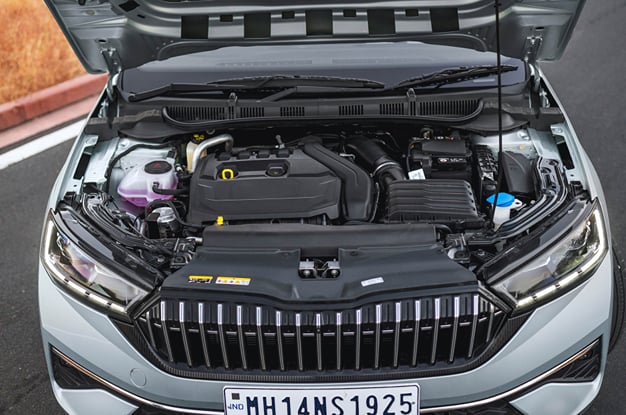
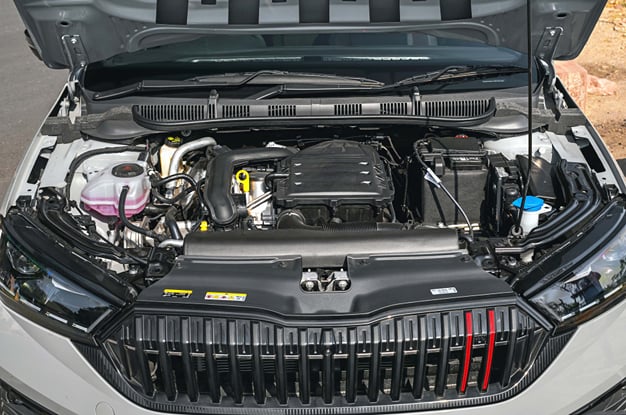
Skoda Slavia 1.0-litre TSI engine (left), 1.5-litre TSI engine (right)
The Slavia retains the same engine options as earlier, so you have a choice between two direct-injection turbo petrols. There’s a 1.0-litre, three-cylinder unit that puts out 115hp and 178Nm and a 1.5-litre, four-cylinder mill that produces 150hp and 250Nm.
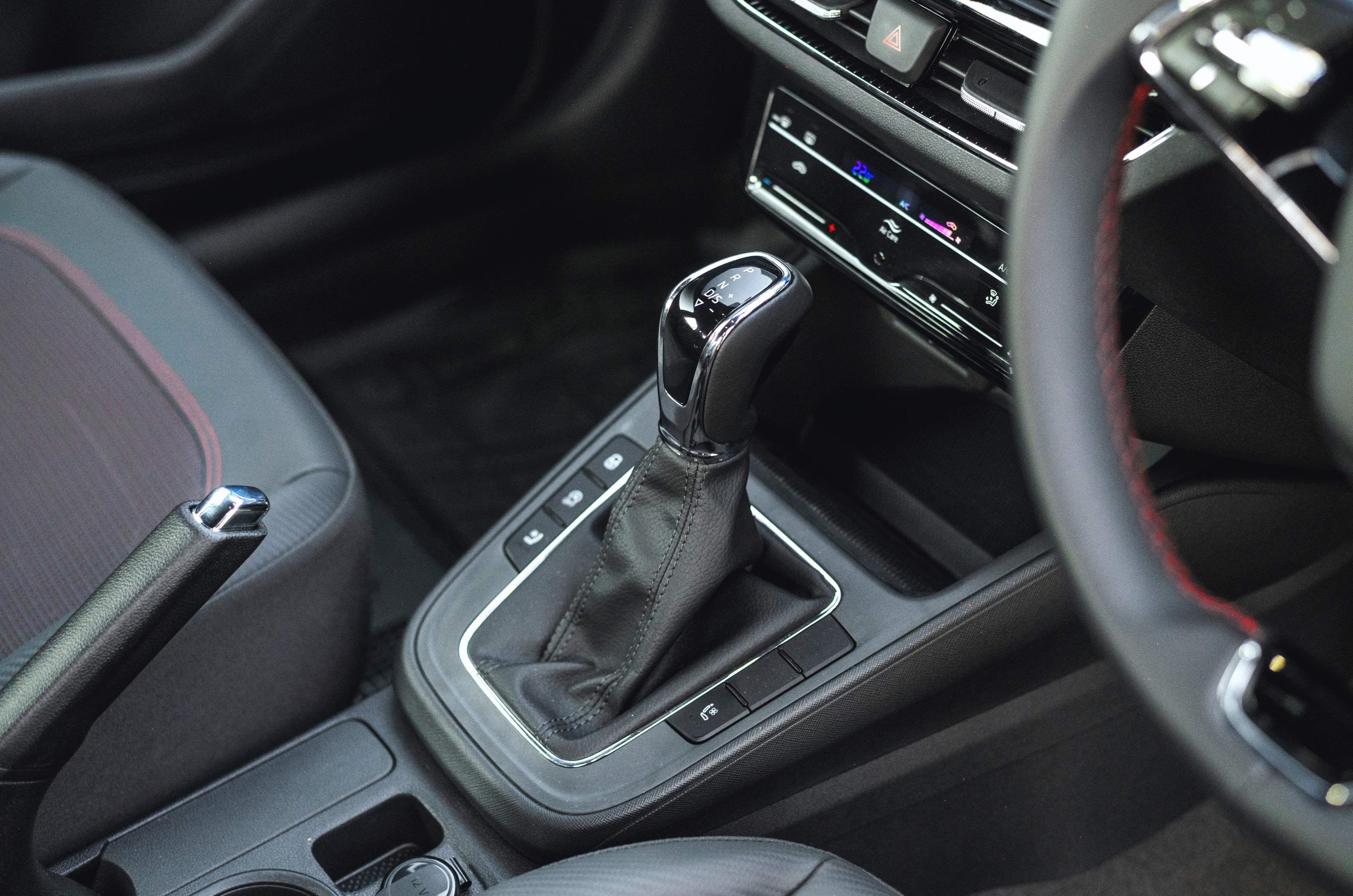
The 1.5 TSI can only be had with a 7-speed dual clutch automatic and enthusiasts will miss the option of a 6-speed manual with this engine, which was on offer earlier. The 1.0 TSI does get a 6-speed manual option, but the gearbox of major interest with this engine is the new 8-speed torque converter automatic. It’s the Aisin-sourced AQ300, replacing the earlier AQ250 6-speed unit, and this helps lower emissions and fuel consumption.
The new gearbox brings a welcome improvement to the Slavia’s low-speed manners. While the previous car had a tendency to leap forward from a standstill, this one now feels much more controlled than before. Once on the move, shifts are smooth and seamless, as you’d expect from a torque-converter automatic. What’s particularly impressive, though, is the speed of the manual shifts, whether you use the paddles or the Tiptronic gear lever. In manual mode, the gearbox also allows the engine to rev close to its limit before shifting up which makes the Slavia 1.0 TSI engaging to drive. The only real gripe with the gearbox is that all the ratios feel rather short. Third tops out at just over 100kph, while at 100kph in 8th, the engine is spinning at a little over 2,000rpm, which is higher than you’d expect given the number of ratios it has to play with.
Although we didn’t get a chance to time it, expect it to complete the 0-100kph sprint in around 11sec, similar to the 6-speed AT’s 11.16sec time. At idle, there is some of that familiar vibrations of a three-cylinder engine. It settles when you drive gently, but push beyond 3000rpm and the gravelly note makes itself heard inside. For the smaller and less powerful petrol engine, refinement could have been better, and more insulation would have helped too.
The 1.5-litre four-cylinder TSI continues unchanged and remains the stronger, more effortless performer of the two. Acceleration is brisk and flat-out performance is strong, while shifts via the paddles are, as expected, quick. The pre-facelift Slavia 1.5 TSI DSG managed 0-100kph in 8.96sec in our tests, and performance with the updated car should remain in the same ballpark.
Between the two engines, the 1.5 TSI is the one that feels more complete, not just because of its stronger performance but also because it is smoother and benefits from cylinder-deactivation technology. Under light engine loads, two of its four cylinders shut down to save fuel, and the transition is seamless as well. However like the 1.0, the 1.5-litre also becomes quite audible when worked hard and some road noise from coarse surfaces also make its way into the cabin.
Skoda Slavia facelift fuel efficiency – 7/10
Our brief test drive meant we didn’t get a chance to test the fuel efficiency of the Slavia facelift, however we have tested the Kushaq facelift which is mechanically identical. In our real-world fuel efficiency tests, the Kushaq 1.0 TSI AT averaged better than the 1.5 TSI DSG by 0.48kpl. In the city, the 1.0 TSI (10.7kpl) was more efficient than the 1.5 TSI (9.55kpl) by 1.15kpl, thanks to the 1.0’s lighter kerb weight and aggressive start/stop system. In contrast, the 1.5’s twin-cylinder deactivation tech helped it be more efficient on the highway (15.29kpl) than the 1.0 (15.10kpl) by 0.19kpl. However, we’re yet to test the 1.0 MT’s fuel efficiency.
Skoda Slavia facelift ride comfort and handling – 8/10
Ride and handling are areas where the Slavia continues to impress. Despite its generous 179mm ground clearance, the handling doesn’t feel compromised. Body roll is well controlled, while the car remains composed and predictable when you go around corners. The steering is on the lighter side but picks up weight progressively as speeds rise.
There is that typical low-speed firmness in the ride quality that you’d normally associate with European cars. But it never feels overly stiff and instead gives it tremendous stability at highway speeds. The suspension also deals with broken surfaces and undulations with maturity, absorbing sharper imperfections without becoming unsettled. It is this combination of an agile chassis, well-controlled body movements and mature ride quality that makes the Slavia enjoyable to drive.
The Slavia’s braking performance remains strong and reassuring but the 1.5 TSI has now gained rear disc brakes. During our test drive, we didn’t find a noticeable difference to the earlier drum brake setup. The 1.0 TSI meanwhile, continues with the same setup as before.
Skoda Slavia facelift value for money and verdict – 8/10
Prices for the Skoda Slavia facelift are set to be announced in the coming days, but expect it to cost a bit more than the Rs 10 lakh to 18.20 lakh (ex-showroom) the pre-facelift model demanded. What’s nice though is that the new 8-speed AT can be had right from the second-to-base Classic+ trim. As before, it continues to go up against the likes of the Hyundai Verna, Honda City and its Volkswagen sibling, the Virtus.
With this facelift, Skoda has enhanced the Slavia further with a sleeker design that looks timeless, important comfort and safety feature additions and relevant technical updates. Some shortcomings remain, like the slightly firm low speed ride, the absence of a manual gearbox with the more potent engine and it does miss a couple of features compared to rivals. But then whatever features have been added have enriched the experience, like the rear seat massage, the new AC compressor and the 360-degree camera. And as before, it remains very enjoyable to drive thanks to the punchy engines, the sorted handling and the mature high speed manners.
The Slavia facelift then, stands out as one of the most complete and well-rounded sedans around, with a great blend of comfort, practicality, features and driving pleasure.
FD interest calculator: शेयर बाजारों में गिरावट ने एक बार फिर निवेशकों को बैंक एफडी के बारे में सोचने को मजबूर कर दिया है। बैंक में पैसा रखना सुरक्षित है। रिटर्न की गारंटी है। निवेश करने के वक्त पता चल जाता है कि कुछ साल बाद निकालने पर पैसा कितना बढ़कर मिलेगा। अगर बात बात सीनियर सिटीजंस की हो तो सोने पर सुहागा। इसकी वजह यह है कि ज्यादातर बैंक सीनियर सिटीजंस को सामान्य डिपॉजिटर्स से ज्यादा इंटरेस्ट रेट ऑफर करते है।
सवाल है कि अगर कोई सीनियर सिटीजंस बैंक फिक्स्ड डिपॉजिट 5 लाख रुपये रखता है तो 5 साल बाद उसे कुल कितने पैसे मिलेंगे? इस सवाल का जवाब इस बात पर निर्भर करता है कि आप पैसा किस बैंक में रखते हैं और उसका सालाना इंटरेस्ट रेट क्या है। स्मॉल फाइनेंस बैंकों का इंटरेस्ट रेट प्राइवेट सेक्टर और सरकारी बैंकों के इंटरेस्ट रेट से ज्यादा है। ऐसे में उनमें पैसा रखना फायदेमंद हैं। स्मॉल फाइनेंस बैंक में पैसा रखना पूरी तरह सुरक्षित है।
पैसाबाजार डॉट कॉम की वेबसाइट पर उपलब्ध जानकारी के मुताबिक, 5 साल की एफडी पर सबसे ज्यादा इंटरेस्ट रेट सूर्योदय स्मॉल फाइनेंस बैंक का है।
नीचे अलग-अलग स्मॉल फाइनेंस बैंकों के पांच साल के इंटरेस्ट रेट्स दिए गए हैं।
Suryoday Small Finance Bank 5 साल के एफडी पर 8.5 फीसदी इंटरेस्ट रेट ऑफर कर रहा है।
Jana Small Finance Bank 5 साल के एफडी पर 7.77 फीसदी इंटरेस्ट रेट ऑफर कर रहा है।
AU Small Finance Bank 5 साल के एफडी पर 7.25 फीसदी इंटरेस्ट रेट ऑफर कर रहा है।
Equitas Small Finance Bank 5 साल के एफडी पर 7.50 फीसदी इंटरेस्ट रेट ऑफर कर रहा है।
ESAF Small Finance Bank 5 साल के एफडी पर 6.25 फीसदी इंटरेस्ट रेट ऑफर कर रहा है।
Ujjivan Small Finance Bank 5 साल के एफडी पर 7.70 फीसदी इंटरेस्ट रेट ऑफर कर रहा है।
सरकारी बैंक भी 5 साल के फिक्स्ड डिपॉजिट पर अट्रैक्टिव इंटरेस्ट रेट ऑफर कर रहे हैं। सरकारी बैंकों के इंटरेस्ट रेट की जानकारी नीचे दी गई है।
Bank of Baroda सीनियर सिटीजंस को पांच साल के एफडी पर 6.90 इंटरेस्ट रेट ऑफर कर रहा है।
Bank of India सीनियर सिटीजंस को पांच साल के एफडी पर 6.75 इंटरेस्ट रेट ऑफर कर रहा है।
Bank of Maharashtra सीनियर सिटीजंस को पांच साल के एफडी पर 5.50 इंटरेस्ट रेट ऑफर कर रहा है।
Canara Bank सीनियर सिटीजंस को पांच साल के एफडी पर 6.75 इंटरेस्ट रेट ऑफर कर रहा है।
Central Bank of India सीनियर सिटीजंस को पांच साल के एफडी पर 6.50 इंटरेस्ट रेट ऑफर कर रहा है।
Indian Bank सीनियर सिटीजंस को पांच साल के एफडी पर 6.50 इंटरेस्ट रेट ऑफर कर रहा है।
State Bank of India सीनियर सिटीजंस को पांच साल के एफडी पर 7.05 इंटरेस्ट रेट ऑफर कर रहा है।
Punjab National Bank सीनियर सिटीजंस को पांच साल के एफडी पर 6.45 इंटरेस्ट रेट ऑफर कर रहा है।
प्राइवेट बैंक 5 साल के एफडी पर सीनियर सिटीजंस को निम्नलिखित इंटरेस्ट रेट्स ऑफर कर रहे हैं:
Axis Bank 5 साल के एफडी पर 7.25 फीसदी इंटरेस्ट रेट ऑफर कर रहा है।
Bandhan Bank 5 साल के एफडी पर 6.60 फीसदी इंटरेस्ट रेट ऑफर कर रहा है।
HDFC Bank 5 साल के एफडी पर 6.90 फीसदी इंटरेस्ट रेट ऑफर कर रहा है।
Federal Bank 5 साल के एफडी पर 6.90 फीसदी इंटरेस्ट रेट ऑफर कर रहा है।
ICICI Bank 5 साल के एफडी पर 6.90 फीसदी इंटरेस्ट रेट ऑफर कर रहा है।
IDBI Bank 5 साल के एफडी पर 7.75 फीसदी इंटरेस्ट रेट ऑफर कर रहा है।
IDFC FIRST Bank 5 साल के एफडी पर 7.00 फीसदी इंटरेस्ट रेट ऑफर कर रहा है।
Kotak Mahindra Bank 5 साल के एफडी पर 7.75 फीसदी इंटरेस्ट रेट ऑफर कर रहा है।
सीनियर सिटीजंस को 5 लाख के एफडी पर 5 साल बाद कितना मिलेगा?
सीनियर सिटीजंस अपनी सुविधा के हिसाब से बैंक का चुनाव कर सकते हैं। लेकिन, उन्हें सबसे ज्यादा रिटर्न सूर्योंदय स्मॉल फाइनेंस बैंक में फिक्स्ड डिपॉजिट करने पर मिलेगा। अगर वे 5 लाख रुपये 5 साल के लिए इस बैंक में डिपॉजिट करते हैं तो उन्हें एफडी मैच्योर करने पर 7,61,397 रुपये मिलेंगे। इसमें मूलधन का 5 लाख रुपये शामिल है। इसका मतलब है कि सीनियर सिटीजंस को 5 लाख रुपये पर पांच साल में कुल 2,61,397 रुपये इंटरेस्ट के रूप में मिलेंगे।
UPI (यूनिफाइड पेमेंट्स इंटरफेस) के जरिए लेनदेन की संख्या चालू वित्त वर्ष की पहली छमाही यानि कि अप्रैल-सितंबर 2026 में 27 प्रतिशत बढ़कर करीब 145 अरब हो गई। पिछले वित्त वर्ष की समान तिमाही में UPI के जरिए 114 अरब लेनदेन हुए थे। भारतीय राष्ट्रीय भुगतान निगम (NPCI) के आंकड़ों के अनुसार, अप्रैल-सितंबर 2026 के दौरान UPI के जरिए 177 लाख करोड़ रुपये का लेनदेन हुआ। यह आंकड़ा एक साल पहले के 148 लाख करोड़ रुपये से 20 प्रतिशत ज्यादा है।
हालांकि सितंबर में UPI के जरिए लेनदेन मासिक आधार पर 1.8 प्रतिशत घटकर 2,407 करोड़ रहा। अगस्त में UPI के जरिए 2,450 करोड़ लेनदेन हुए थे। भारतीय रिजर्व बैंक के आंकड़ों के अनुसार, सितंबर में UPI के जरिए लेनदेन की कुल वैल्यू भी 1.50 प्रतिशत घटकर 29.37 लाख करोड़ रुपये रही, जो अगस्त में 29.82 लाख करोड़ रुपये थी। उद्योग से जुड़े लोगों का कहना है कि लेनदेन में गिरावट का कारण अगस्त में 31 दिन और सितंबर में 30 दिन होना है। सितंबर में प्रतिदिन औसत लेनदेन 80.2 करोड़ रहा, जबकि अगस्त में यह 79.1 करोड़ था।
15 अक्टूबर से 2000 रुपये से अधिक के UPI लेनदेन पर MDR
सरकार ने 15 अक्टूबर 2026 से मर्चेंट्स के लिए 2,000 रुपये से अधिक के UPI लेनदेन पर 0.4 प्रतिशत MDR लागू किया है। छोटे पेमेंट्स पर कोई शुल्क नहीं लगेगा। दो व्यक्तियों के बीच (पर्सन टू पर्सन) लेनदेन फ्री रहेगा, फिर चाहे भेजी गई राशि कितनी भी हो। UPI QR कोड के जरिए महीने में 1 लाख रुपये तक पेमेंट लेने वाले छोटे मर्चेंट किसी भी नए चार्ज से पूरी तरह मुक्त रहेंगे।
75,000 रुपये और उससे अधिक के लेन-देन के लिए, MDR की मैक्सिमम लिमिट प्रति लेन-देन 300 रुपये तक ही रहेगी। रेलवे, टेलिकॉम, बीमा, ईंधन और कृषि इनपुट सहित आवश्यक और कम मार्जिन वाले क्षेत्रों में 2,000 रुपये से अधिक के लेन-देन पर प्रति लेनदेन 5 रुपये का एकसमान MDR लागू होगा। म्यूचुअल फंड, सिक्योरिटीज और शेयर ब्रोकर व डीलर के जरिए किए जाने वाले पेमेंट पर 0.02 प्रतिशत MDR लगेगा, जो अधिकतम 300 रुपये होगा।
MDR लगाने का मकसद डिजिटल पेमेंट इकोसिस्टम के लिए एक टिकाऊ रेवेन्यू सिस्टम बनाना है। MDR वह फीस है, जो मर्चेंट डिजिटल ट्रांजेक्शन को प्रोसेस करने के लिए पेमेंट सर्विस प्रोवाइडर्स को देते हैं। इकट्ठा की गई रकम को UPI इकोसिस्टम में बैंकों और दूसरी एंटिटीज के बीच बांटा जाएगा। इकट्ठा किए गए कुल MDR का 40% ग्राहकों के बैंकों को, 30% पेमेंट गेटवे को, 20% UPI ऐप को और बाकी 10% UPI ऐप के स्पॉन्सर बैंक को जाएगा।
देश में सोने की कीमत में तेजी का दौर जारी है। 3 अक्टूबर की सुबह 24 और 22 कैरेट गोल्ड दोनों के भाव में उछाल है। राजधानी दिल्ली में 24 कैरेट गोल्ड 150460 रुपये प्रति 10 ग्राम पर है। दूसरे शहरों में भी कीमत चढ़ी है। अंतरराष्ट्रीय बाजार में हाजिर सोना 4,140.06 डॉलर प्रति औंस पर है। इस सप्ताह अब तक इसकी वैश्विक कीमत लगभग 3.4 प्रतिशत नीचे आई है। सोने और चांदी की देश के अंदर कीमतें डोमेस्टिक फैक्टर्स के साथ-साथ ग्लोबल फैक्टर्स से भी प्रभावित होती हैं।
देश के कुछ बड़े शहरों में गोल्ड रेट
दिल्ली में सोने की कीमत: दिल्ली में 24 कैरेट सोने की कीमत 150460 रुपये प्रति 10 ग्राम है। 22 कैरेट का भाव 137910 रुपये प्रति 10 ग्राम है।
मुंबई और कोलकाता: मुंबई और कोलकाता में 22 कैरेट सोने की कीमत 137760 रुपये प्रति 10 ग्राम, जबकि 24 कैरेट सोने की कीमत 150290 रुपये प्रति 10 ग्राम है।
चेन्नई में सोने की कीमत: 24 कैरेट सोने की कीमत 150290 रुपये प्रति 10 ग्राम है। 22 कैरेट का भाव 137760 रुपये प्रति 10 ग्राम है।
पुणे और बेंगलुरु में कीमत: इन दोनों शहरों में 24 कैरेट गोल्ड की कीमत 150290 रुपये प्रति 10 ग्राम और 22 कैरेट गोल्ड की कीमत 137760 रुपये प्रति 10 ग्राम है।
रॉयटर्स के मुताबिक, HSBC ने 2026 और 2027 के लिए सोने की औसत कीमत का अनुमान घटाकर क्रमशः 4,490 डॉलर प्रति औंस और 4,825 डॉलर प्रति औंस कर दिया है। बैंक का कहना है कि सोने की कीमत पर निकट भविष्य में और दबाव पड़ सकता है। HSBC को उम्मीद है कि कीमतें गिरने पर, खासकर 4,000 डॉलर के आसपास या उससे नीचे जाने पर, केंद्रीय बैंक फिर से सोना खरीदना शुरू कर देंगे।
चांदी की कीमत
दूसरी कीमती धातु चांदी की कीमत में गिरावट है। 3 अक्टूबर की सुबह चांदी देश में 234900 रुपये प्रति किलोग्राम पर है। अंतरराष्ट्रीय बाजार में हाजिर चांदी यानि कि स्पॉट सिल्वर की कीमत 60.36 डॉलर प्रति औंस है। इस साल जनवरी में देश के अंदर चांदी की कीमत 4 लाख रुपये प्रति किलोग्राम के रिकॉर्ड हाई पर पहुंच गई थी।
FD Interest Calculator: अगर आपके पास ₹1 लाख की एकमुश्त रकम है और आप इसे 10 साल के लिए निवेश करना चाहते हैं, तो FD एक विकल्प हो सकता है। खासकर, शेयर बाजार में भारी उतार-चढ़ाव को देखते हुए। हालांकि, FD में सिर्फ ब्याज दर देखना काफी नहीं है। यह भी समझना जरूरी है कि ब्याज कैसे जुड़ता है और 10 साल में आपकी रकम कितनी हो सकती है।
मान लीजिए आपको 10 साल की FD पर 7% सालाना ब्याज मिलता है। अगर यह क्युमुलेटिव FD है और ब्याज को FD में ही जुड़ने दिया जाता है, तो कंपाउंडिंग का फायदा मिलता है। इस स्थिति में ₹1 लाख की रकम 10 साल बाद करीब ₹2 लाख हो सकती है।
अलग-अलग ब्याज दर पर कितना पैसा बनेगा?
10 साल की अवधि और तिमाही कंपाउंडिंग मानें, तो अलग-अलग ब्याज दर पर ₹1 लाख की रकम लगभग इतनी हो सकती है:
सालाना ब्याज
10 साल बाद रकम
कुल ब्याज
6%
₹1.81 लाख
₹81,400
7%
₹1.91 लाख
₹90,600
7%
₹2.00 लाख
₹1.00 लाख
7.50%
₹2.10 लाख
₹1.10 लाख
8%
₹2.21 लाख
₹1.21 लाख
इस कैलकुलेशन से पता चलता है कि लंबी अवधि में ब्याज दर का छोटा अंतर भी रकम पर असर डालता है। उदाहरण के लिए, 6% की जगह 8% ब्याज मिलने पर 10 साल बाद रकम करीब ₹39,400 ज्यादा हो सकती है।
कंपाउंडिंग का क्या फायदा है?
क्युमुलेटिव FD में ब्याज नियमित तौर पर आपके खाते में नहीं आता। वह FD में जुड़ता रहता है। इसके बाद अगले चक्र का ब्याज मूल रकम के साथ जुड़ी ब्याज की रकम पर भी मिलता है।
यही कंपाउंडिंग है। लंबी अवधि में इसका असर ज्यादा साफ दिखाई देता है। इसलिए FD चुनते समय सिर्फ शुरुआती ब्याज दर नहीं, बल्कि ब्याज के भुगतान और कंपाउंडिंग के तरीके को भी देखना चाहिए।
हर महीने ब्याज चाहिए तो?
अगर आपका मकसद हर महीने इनकम लेना है, तो मंथली इंटरेस्ट पेआउट वाली FD अलग विकल्प है। इसमें ब्याज नियमित तौर पर आपके बैंक खाते में आ सकता है।
इस स्थिति में ब्याज FD में वापस नहीं जुड़ता। इसलिए 10 साल बाद मिलने वाली मैच्योरिटी रकम क्युमुलेटिव FD से अलग होगी। बदले में आपको निवेश के दौरान नियमित ब्याज मिलता रहेगा।
10 साल की FD करने से पहले ये बातें देखें
लंबी अवधि की FD करते समय ब्याज दर के साथ कुछ दूसरी शर्तें भी देखनी चाहिए। FD क्युमुलेटिव है या मंथली पेआउट वाली, समय से पहले निकालने पर क्या नियम हैं और प्रीमैच्योर क्लोजर पर कितना ब्याज मिलेगा, इन बातों का असर आपके रिटर्न पर पड़ सकता है।
FD से मिलने वाला ब्याज टैक्स के दायरे में आता है। इस पर आपके इनकम स्लैब के हिसाब से टैक्स लग सकता है। इस बात का भी ध्यान रखना चाहिए।
Disclaimer: यहां दी गई जानकारी सिर्फ सामान्य जागरूकता के लिए है। किसी भी निवेश, लोन, टैक्स, बीमा या दूसरे वित्तीय फैसले लेने से पहले संबंधित एक्सपर्ट्स से सलाह जरूर लें। मनीकंट्रोल किसी भी फाइनेंशियल प्रोडक्ट या सर्विस की सिफारिश नहीं करता।
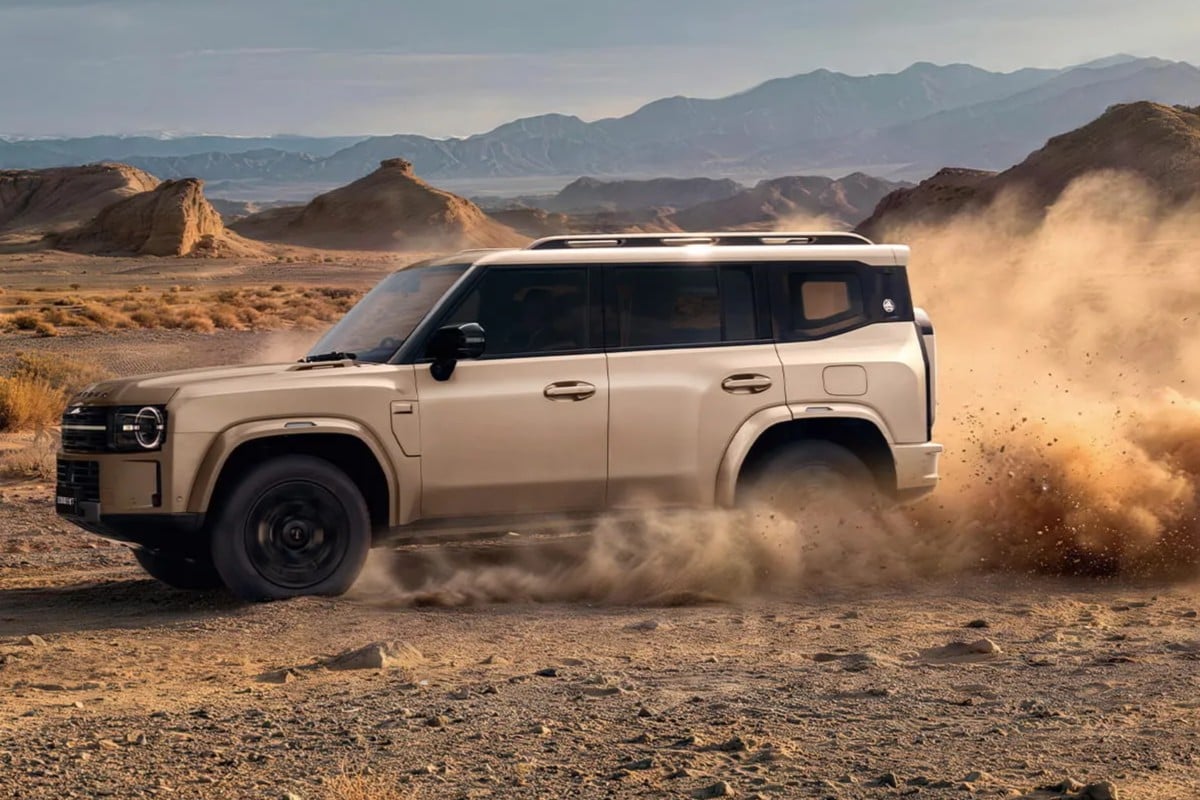
A facelifted version of the Jetour T2 has been launched in global markets. The Jetour T2 facelift was first unveiled in August at the Chengdu Motor Show in China, and gets some design revisions, more features, and powertrain tweaks. Interestingly, this updated iteration went on sale not long before the launch of the pre-facelift Jetour T2 under the JSW Combat name in India.
Jetour T2 facelift exterior design
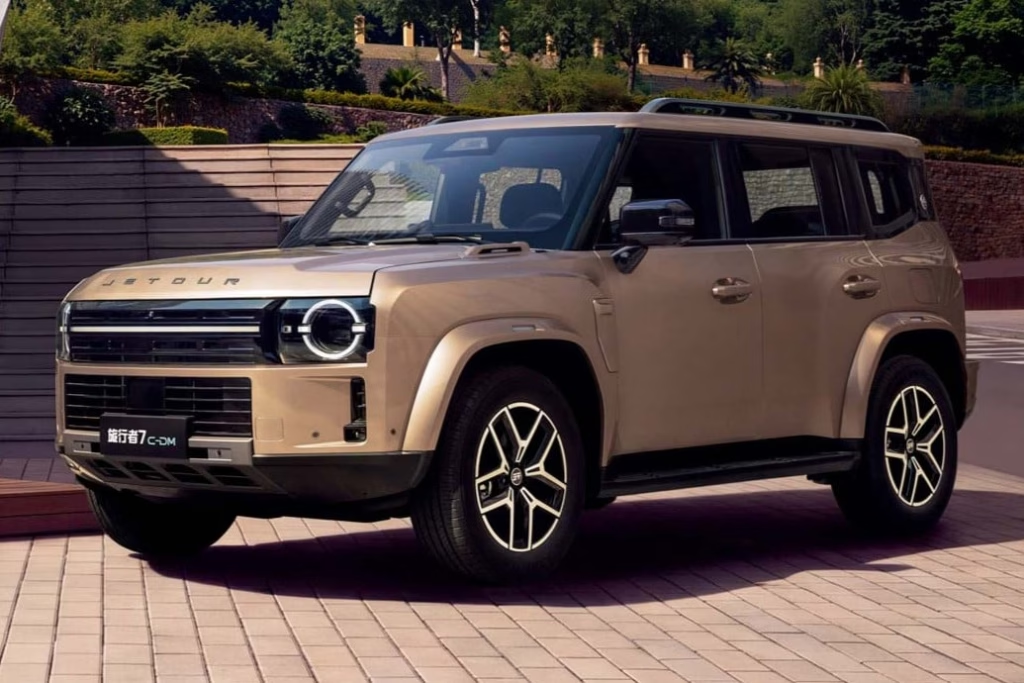
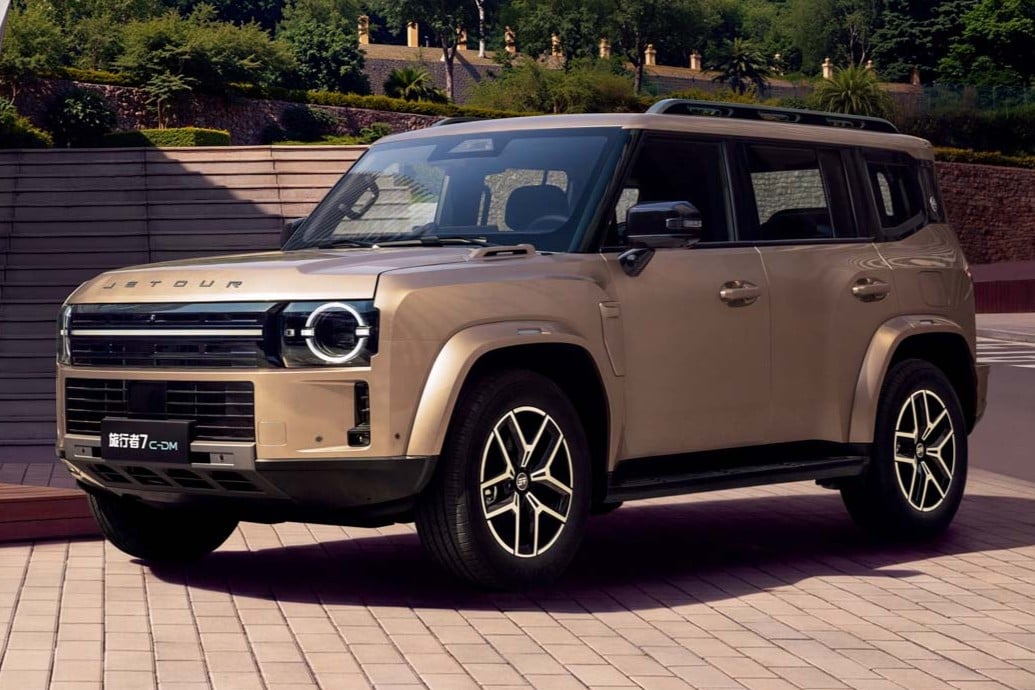
The updated Jetour T2 retains the prior version’s boxy proportions, but with a few notable styling updates. Most of these are up front, such as circular DRLs in the headlamps, a new grille housing an LED strip, and a much cleaner front bumper. The Jetour wordmark has also been relocated from the grille to the leading edge of the bonnet.
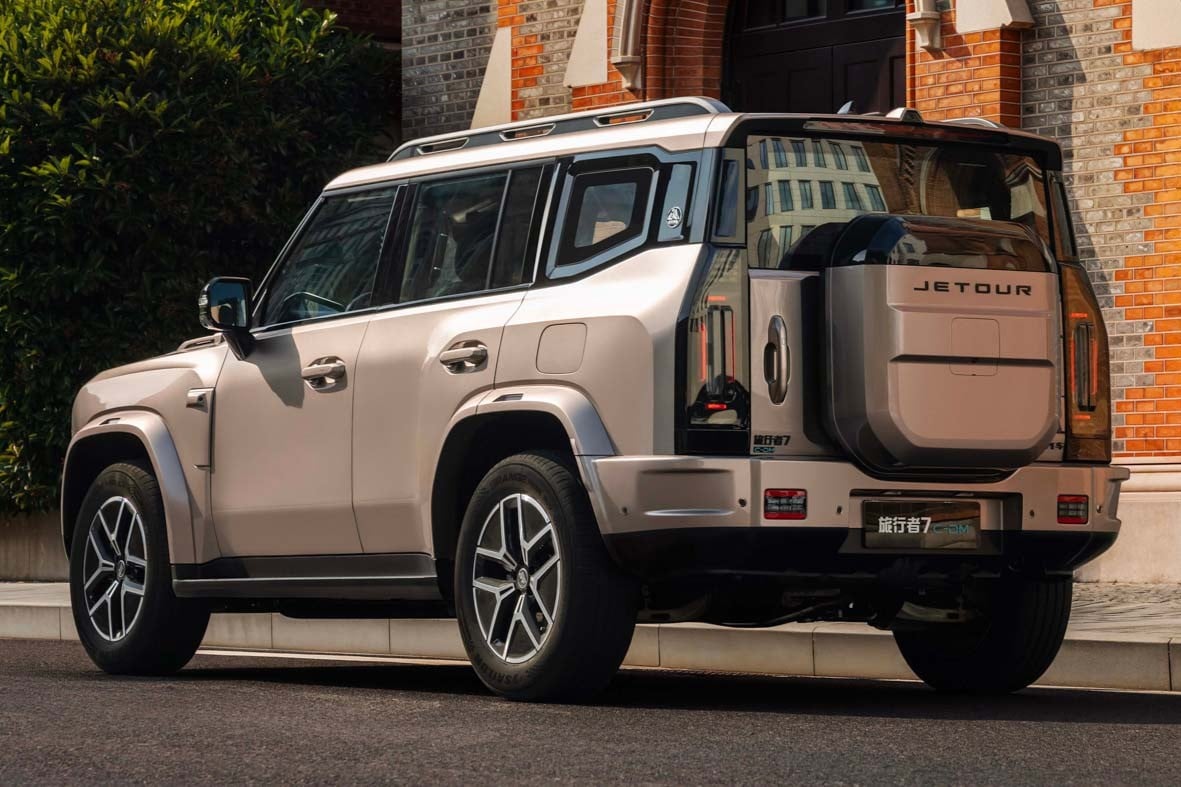
Over to the side, the Jetour T2 facelift gets new alloy wheel designs, as well as body-coloured wheel arches. The rear end sees some revisions too, particularly a cleaner bumper design, an updated spare wheel cover with a Jetour wordmark, and a discreet roof spoiler.
Jetour T2 facelift interior and features
Inside, the Jetour T2 facelift takes on a more premium slant than its predecessor. The beige colour scheme lends the cabin an airier vibe, the seats are upholstered in quilted leatherette, and the dashboard looks to be fitted with leatherette trim – the open storage space in front of the co-driver looks to be closed-off in the facelifted model. There’s also a new three-spoke flat-bottomed steering wheel, and the AC vents have fresh designs too.
The 10.25-inch digital driver’s display and 15.6-inch infotainment touchscreen remain unchanged in size, but the latter is now powered by a stronger Qualcomm Snapdragon 8255 chip that allows for the integration of a new voice-controlled AI assistant. Other notable features include 10-way powered front seats with a massage function, dual wireless charging pads, a 23-speaker sound system, an ADAS suite, and 256-colour ambient lighting.
Jetour T2 facelift powertrains
The Jetour T2’s powertrain offerings vary widely by market, but looking at the China-spec model, the facelifted version continues to offer a 184hp 1.5-litre four-cylinder turbo-petrol engine in the base variant. This mill is paired with a 7-speed dual-clutch automatic that sends power to the front wheels. All other petrol variants of the facelifted Jetour T2, meanwhile, get a 254hp 2.0-litre turbo-petrol engine with the same 7-speed DCT and AWD. A big change here is that the top-spec petrol variant comes with an 8-speed automatic gearbox instead.
As for the plug-in hybrid (PHEV) variants of the Jetour T2 facelift, the 156hp 1.5-litre turbo-petrol engine has been retained, but the dual electric motors have been replaced by a single unit that develops 307hp and 330Nm. The 3-speed dedicated hybrid transmission (DHT) is now a 1-speed unit as well. These updates have been made in the interest of efficiency, as even with a slightly smaller 26.61kWh battery pack, the facelifted Jetour T2 PHEV manages a WLTP-certified 108km pure-electric range – up by 8km. There’s a larger 45.12kWh battery pack on offer too, which bumps the rated pure-electric range to 173km – an increase of 11km over the prior 43.24kWh unit.
Is the Jetour T2 facelift coming to India
As noted previously, the pre-facelift Jetour T2 PHEV is set to launch in India in the coming months as JSW Motors’s debut model, the Combat. Since JSW Motors has been extensively testing the pre-facelift Jetour T2, it’s quite unlikely that the facelifted version will make it here in the short term. As it stands, JSW Motors has yet to even communicate the launch date of the Combat, and recent media reports allege that the carmaker has pushed its debut from the festive season to mid-December.
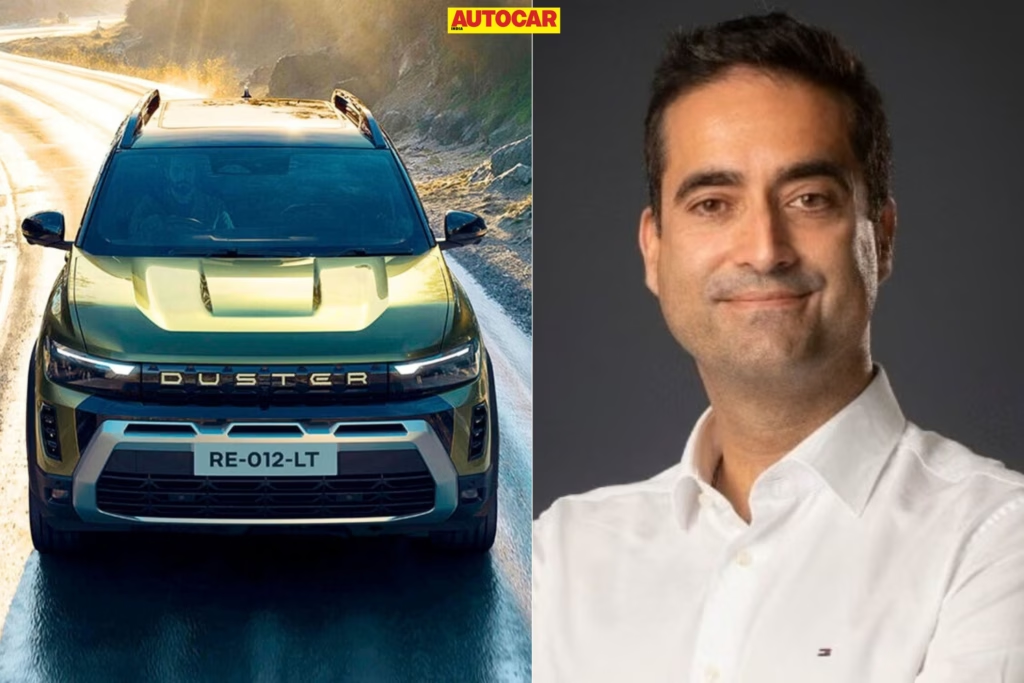
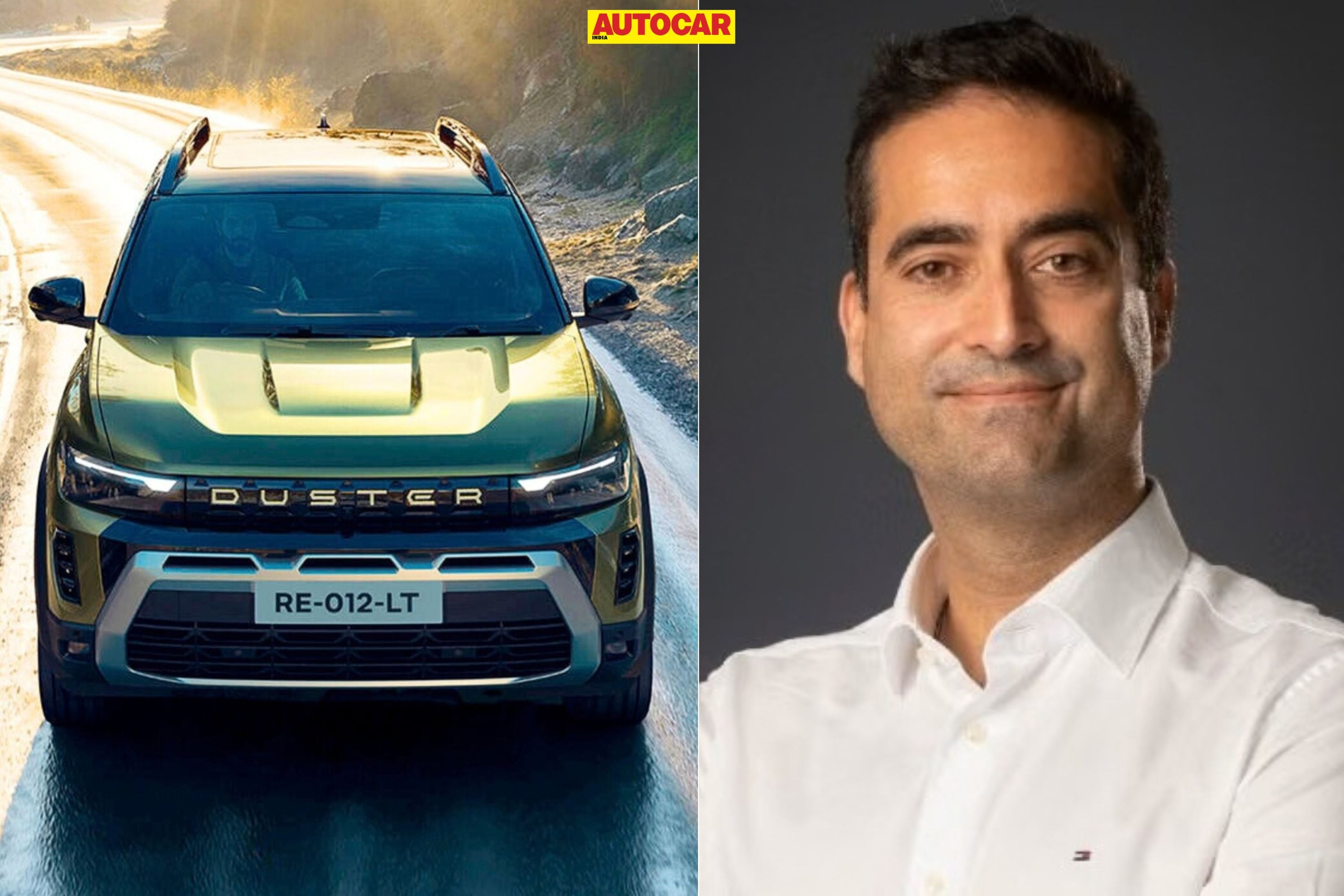
Renault India is gearing up to launch its first strong-hybrid powertrain under the bonnet of the Duster on October 17. The French carmaker expects strong-hybrid cars to become major volume drivers in India over the coming years. Speaking to our sister publication, Autocar Professional, Francisco Marques – Renault India’s Vice President for Sales and Marketing – described strong hybrids as a bridge between combustion-powered cars and EVs: “Hybrid is the perfect transition.”
Strong hybrids could drive sales for the next 20 years, says Marques
Marques expects this transitional period to last much longer than the immediate future. “Hybrid is going to be the main volume-making technology probably for the next 10, 15, or 20 years to come,” he said. According to Marques, EVs are not yet ready to dominate the Indian market on their own, with charging infrastructure and charging capacity likely to limit the pace of adoption.
The Indian passenger vehicle market continues supporting multiple powertrain technologies, including hybrids, CNG, and EVs, instead of one technology immediately replacing another. “Until EVs become something more, then there will be hydrogen,” Marques stated. He also expects strong hybrids to attract customers who might otherwise opt for diesel. “I see diesel declining, I see a strong hybrid growing very fast. And it’s related to the offer,” he said. Interestingly, diesel car sales grew by 15 percent year-on-year in the first half of CY2026, indicating that there still is a lot of demand for them.
More powertrain variety can improve the Duster’s slow sales pace
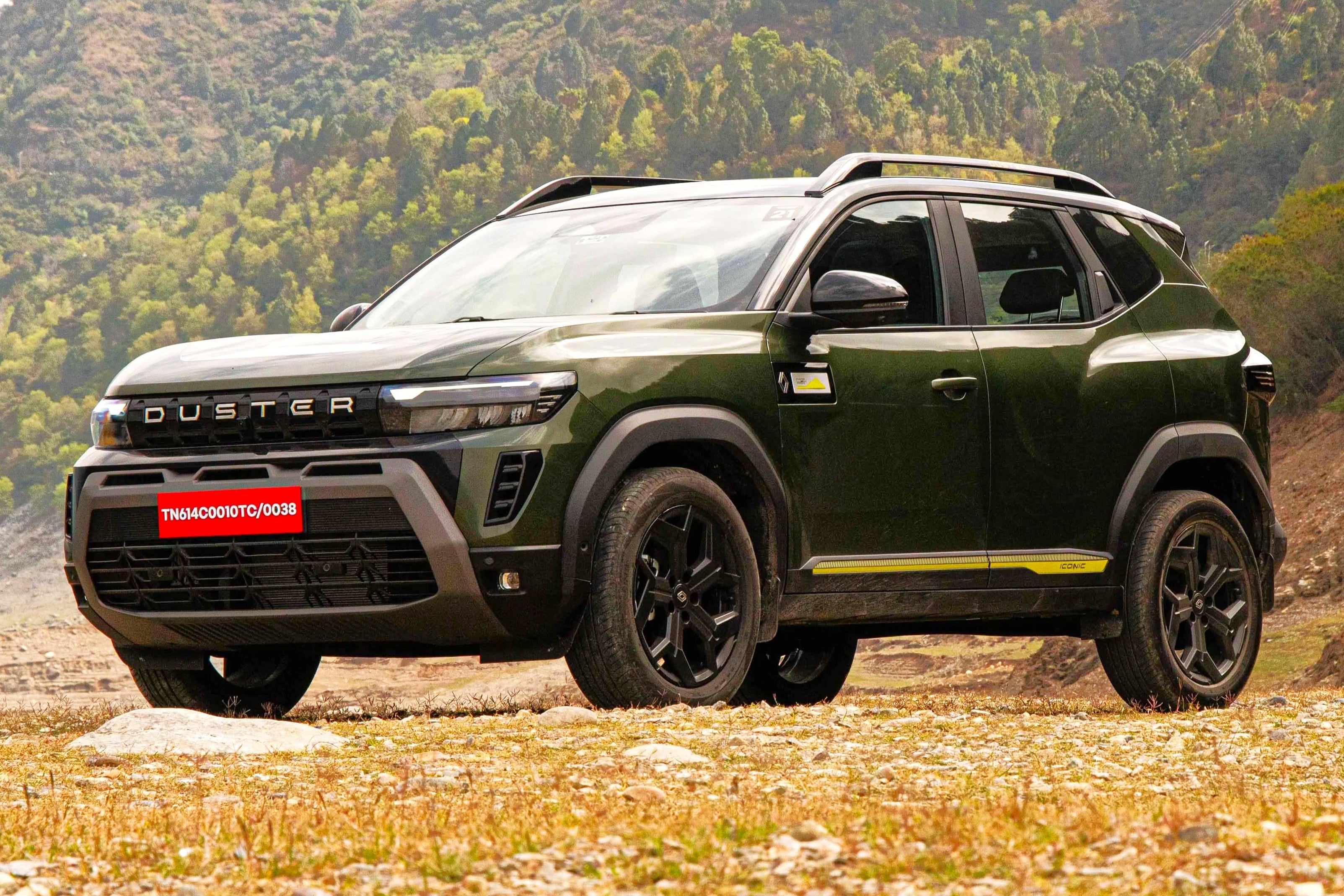
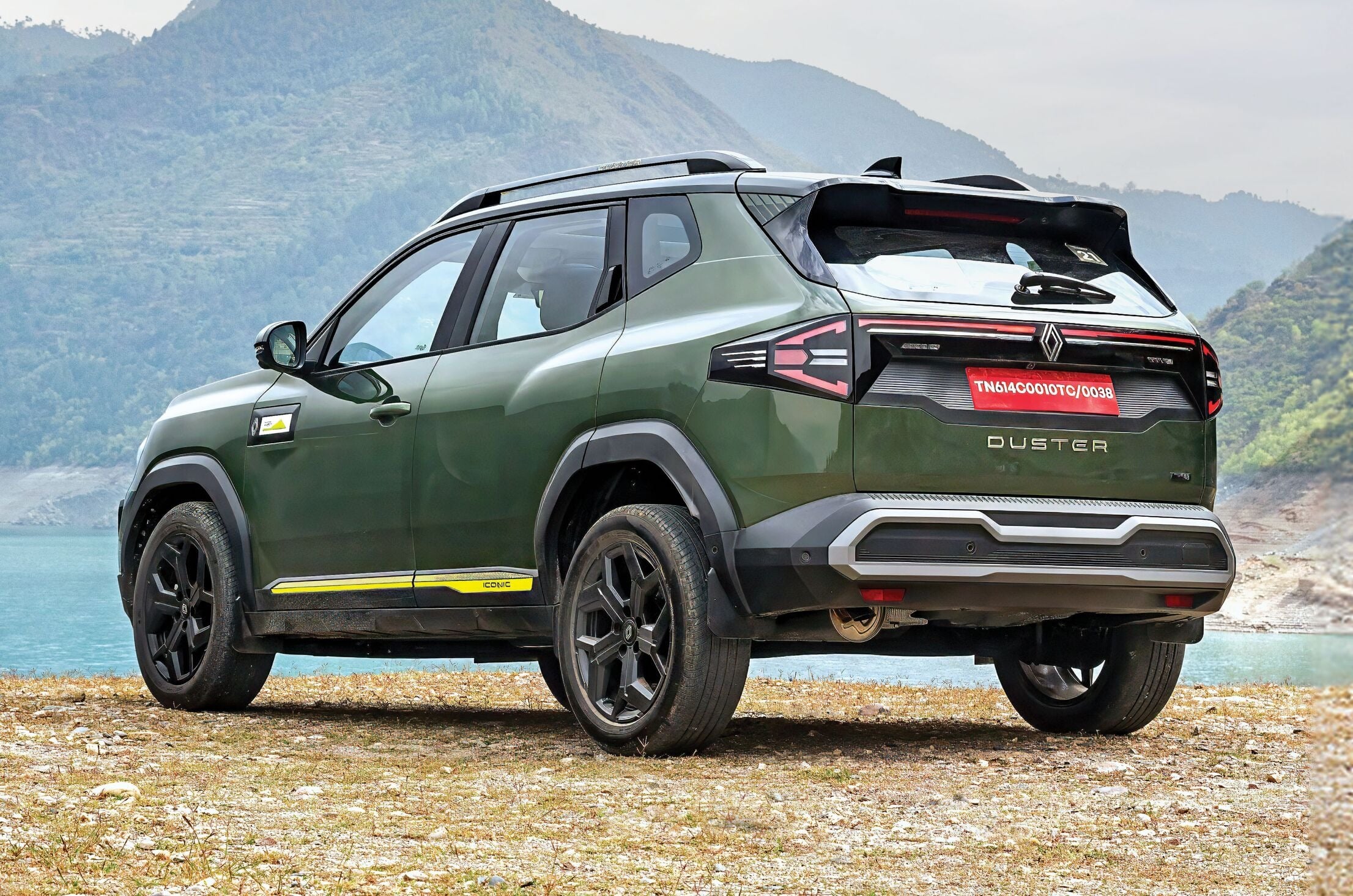
Since it went on sale in March, the Duster has been available exclusively with turbo-petrol engines – a sore point for many fans of the original Duster and its punchy 1.5-litre K9K diesel mill. It doesn’t help that many of the Duster’s midsize SUV rivals feature broader powertrain offerings: naturally aspirated petrol, diesel, CNG, hybrid, and electric. The lack of variety in fuel types is likely one of the reasons why the Duster has been falling behind in the sales charts – it managed a mere 406 wholesales in August, and has sold fewer than 7,000 units since launch. For perspective, the Kia Seltos sells an average of 10,000-11,000 units a month, while the segment-dominating Hyundai Creta averages 15,000-16,000 units sold.
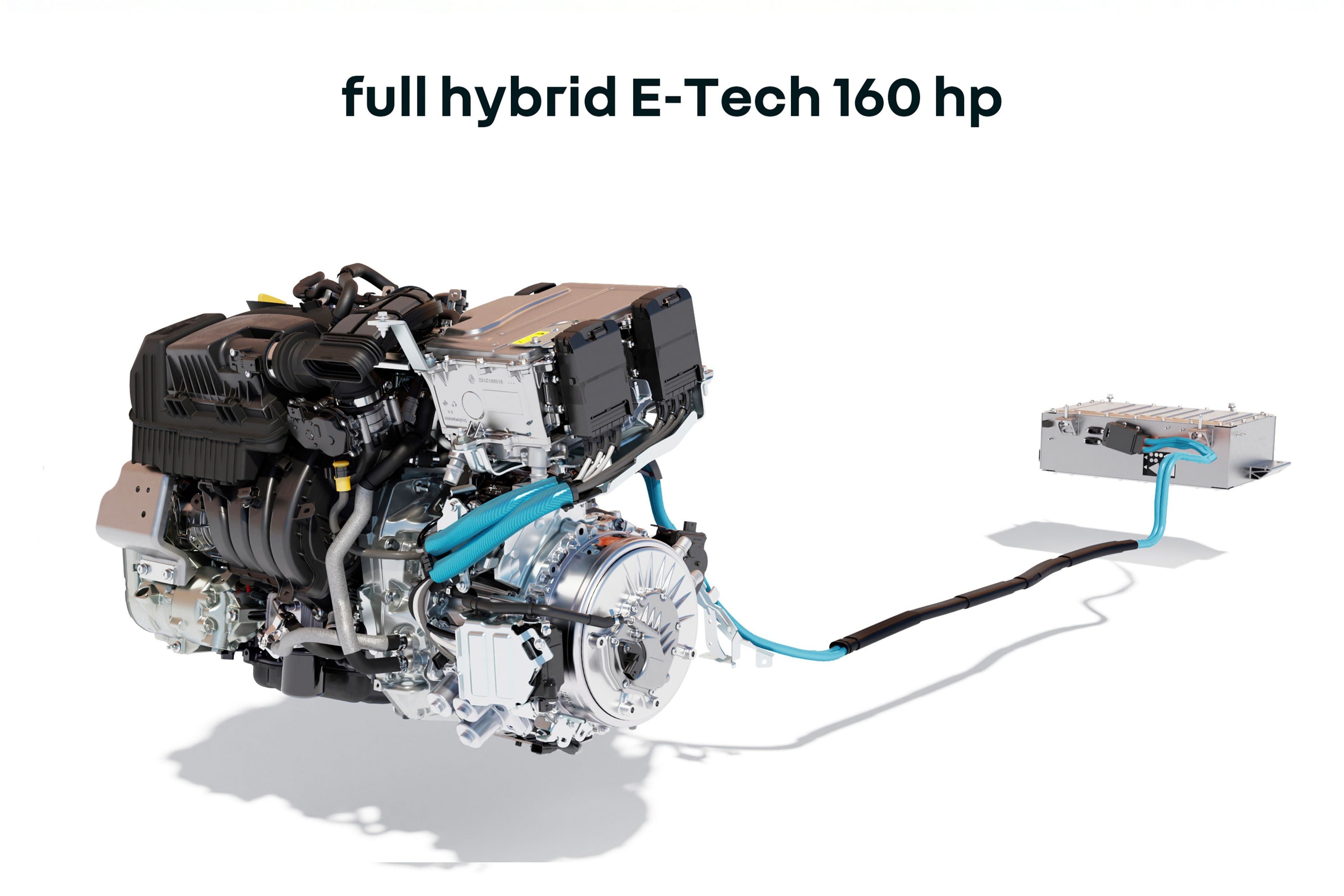
A strong-hybrid powertrain will let the Duster directly rival the subset of hybrid midsize SUVs, namely the Toyota Hyryder, Maruti Grand Vitara, and Maruti Victoris. On paper, the Duster’s upcoming ‘E-Tech 160’ hybrid setup has an edge over those of its rivals. Where the Hyryder, Victoris, and Grand Vitara use a 116hp 1.5-litre three-cylinder strong-hybrid system and an e-CVT gearbox, the Duster’s E-Tech 160 powertrain combines a larger 1.8-litre four-cylinder naturally aspirated petrol engine, two electric motors, and a 1.4kWh battery pack (the Hyryder has a 0.6kWh unit). Combined output is 160hp and 172Nm, with drive sent to the wheels through a segment-first 8-speed dedicated hybrid transmission. Renault also claims that the E-Tech 160 can deliver 80 percent of urban driving in all-electric mode.
That said, pricing is likely to be crucial to the Duster hybrid’s reception in the market, which is why Renault has been working on localising the E-Tech 160. Strong-hybrid variants of the Grand Vitara, Hyryder, and Victoris are priced in the Rs 16 lakh-20 lakh (ex-showroom) ballpark, so if the Duster hybrid is priced similarly, or even lower, Renault can trigger renewed interest in its midsize SUV.