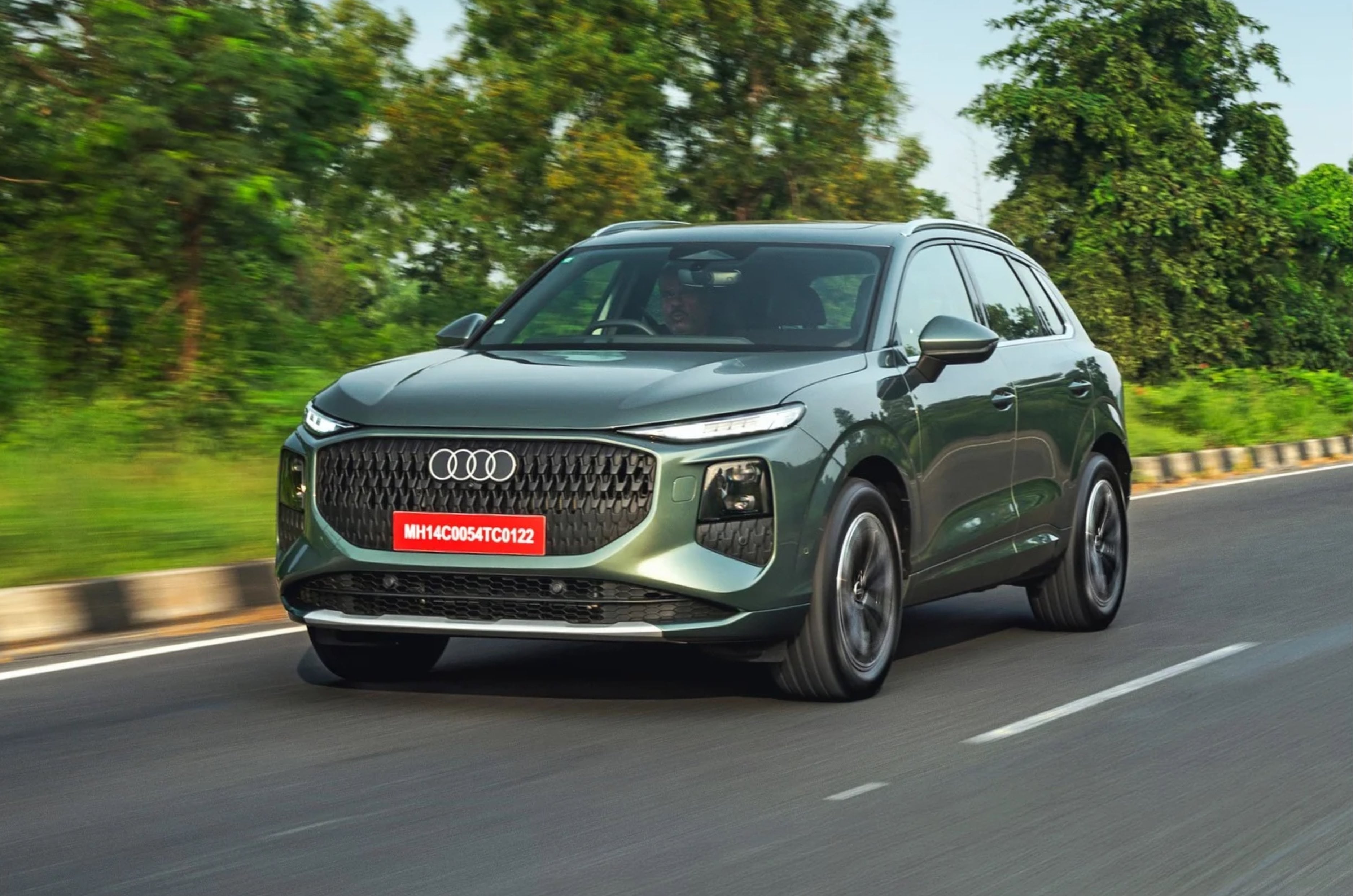
Audi Q3 review: a fresh start for Audi

Audi Q3 review: a fresh start for Audi
Audi Q3 India review

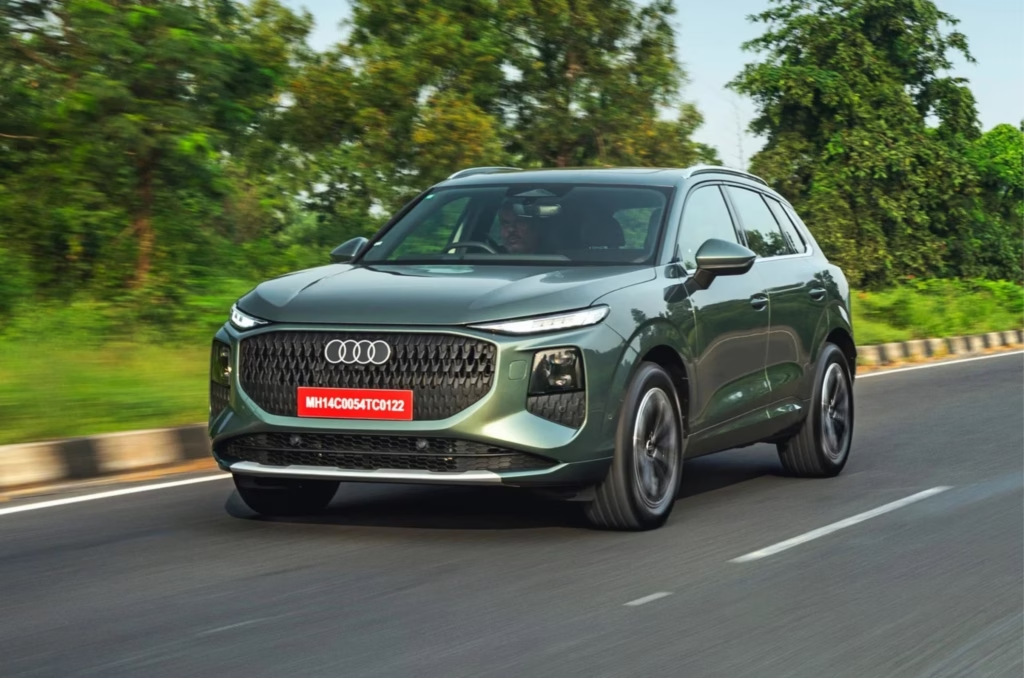
It would be easy to file the third-generation Q3 as just another new model but it isn’t. For Audi India, this is closer to a reset. The brand has spent the past few years soldiering on with ageing, outdated products and its showroom traffic has paid the price for this freeze in new products. But that’s all changed now. With fresh investment pouring in from its headquarters, Audi is on a new product offensive which has been kicked started with the Q3. This compact SUV is also the entry point into the brand, so it carries the burden of delivering  the maximum sales. There’s a lot riding on the Q3’s gentle shoulders and Audi is hopeful that this will model will mark the turning point for the brand. But first, Audi has to convince customers. Is the new Q3 a quantum leap over the past Q3? We drove it in Goa to find out.

Audi Q3 Exterior Design and Engineering – 8/10

The crisp, edgy lines of the old car have made way for something more fluid and flamboyant. The new Q3 has grown marginally in every dimension, but the 2,681mm wheelbase is unchanged, so it keeps the compact footprint its urban buyers like.
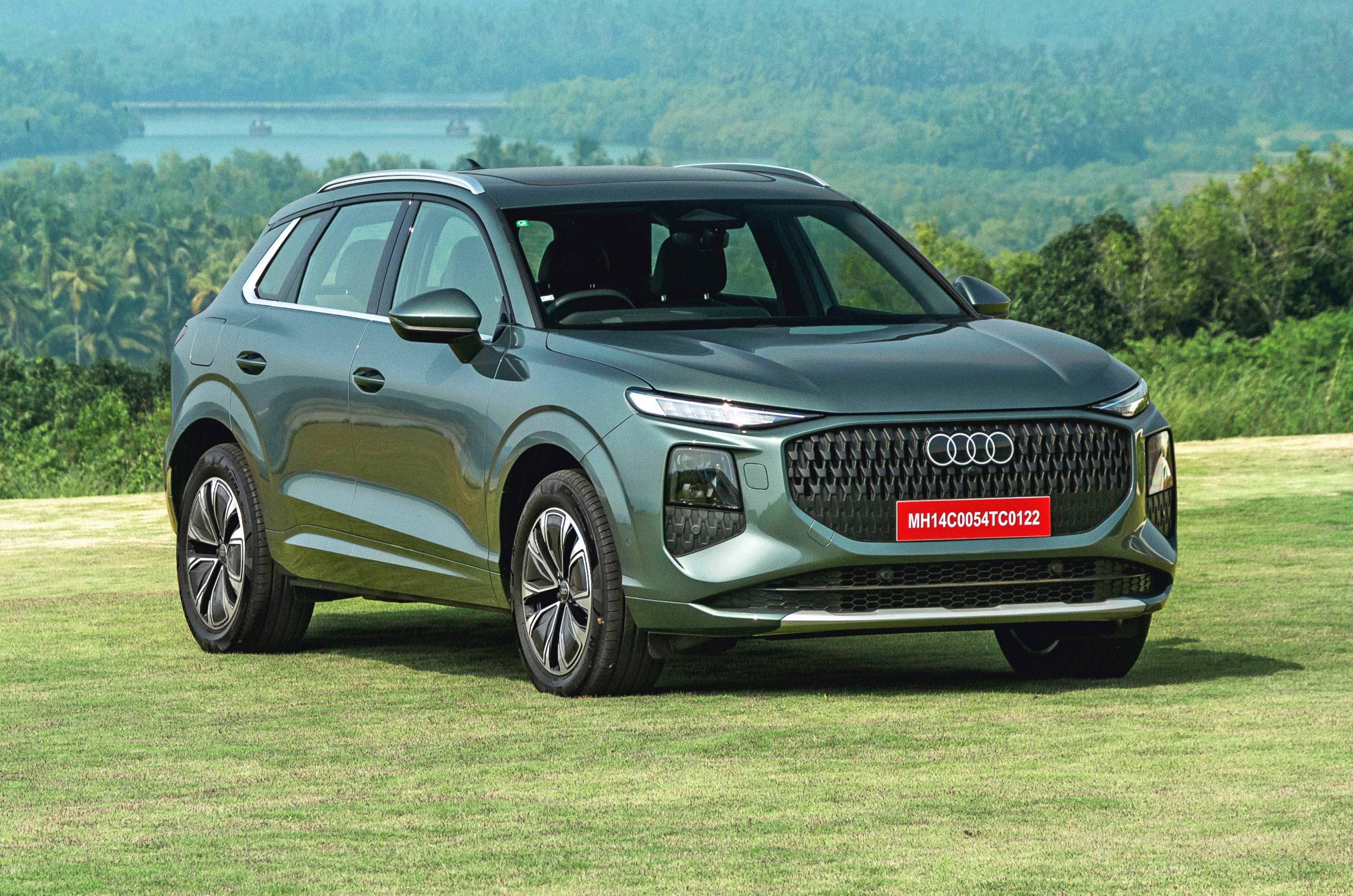
A fluid and flamboyant new design language replaces the edgy styling of the old car

The face is split in two. Slim LED daytime running lights sit up top and double as dynamic indicators, while the main headlamps are stacked below. The wide honeycomb grille certainly makes a statement, and its flat 2D logo hides the ADAS radar. Up close, though, the grille’s finish looks a touch plasticky for a car wearing four rings.

Lighting is the real party piece. The Digital Matrix LED units use micro-LED technology, with some 25,600 individually controlled pixels per headlamp. That lets them do far more than dip and glare-free high beam. They can project a carpet of light in your own lane, and when you flick the indicator, the beam stretches across to illuminate the lane you are moving into. It’s a clever way to flag your intent and place the car on dark, unlit roads. The DRLs also offer four selectable light signatures via the touchscreen. There is a caveat. The projection tricks are at their best on pitch-black roads; with streetlights around, the effect is largely lost.
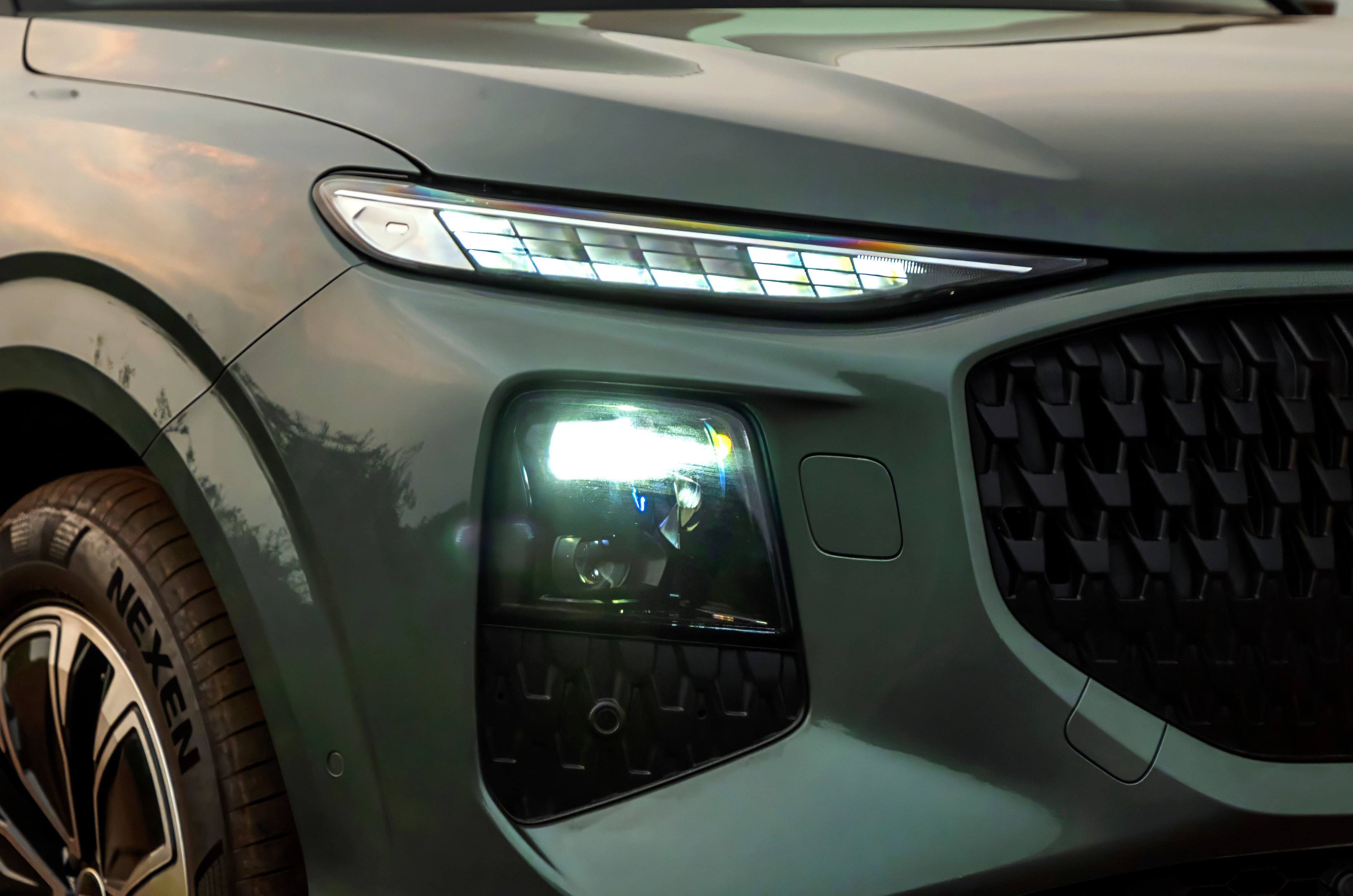
Trick Digital Matrix LED headlights use 25,600 individually controlled pixels per side

In profile, brushed aluminium below the windows and gloss black above create a floating-roof effect, and the rear haunches add a hint of muscle. For once, the wheels deserve a mention too. Audi has rarely nailed its alloy designs, but these are genuinely striking, wrapped in chunky, high-profile rubber. At the back, split LED tail-lamps are joined by a slim light bar and an illuminated Audi logo, and the tailgate is powered.
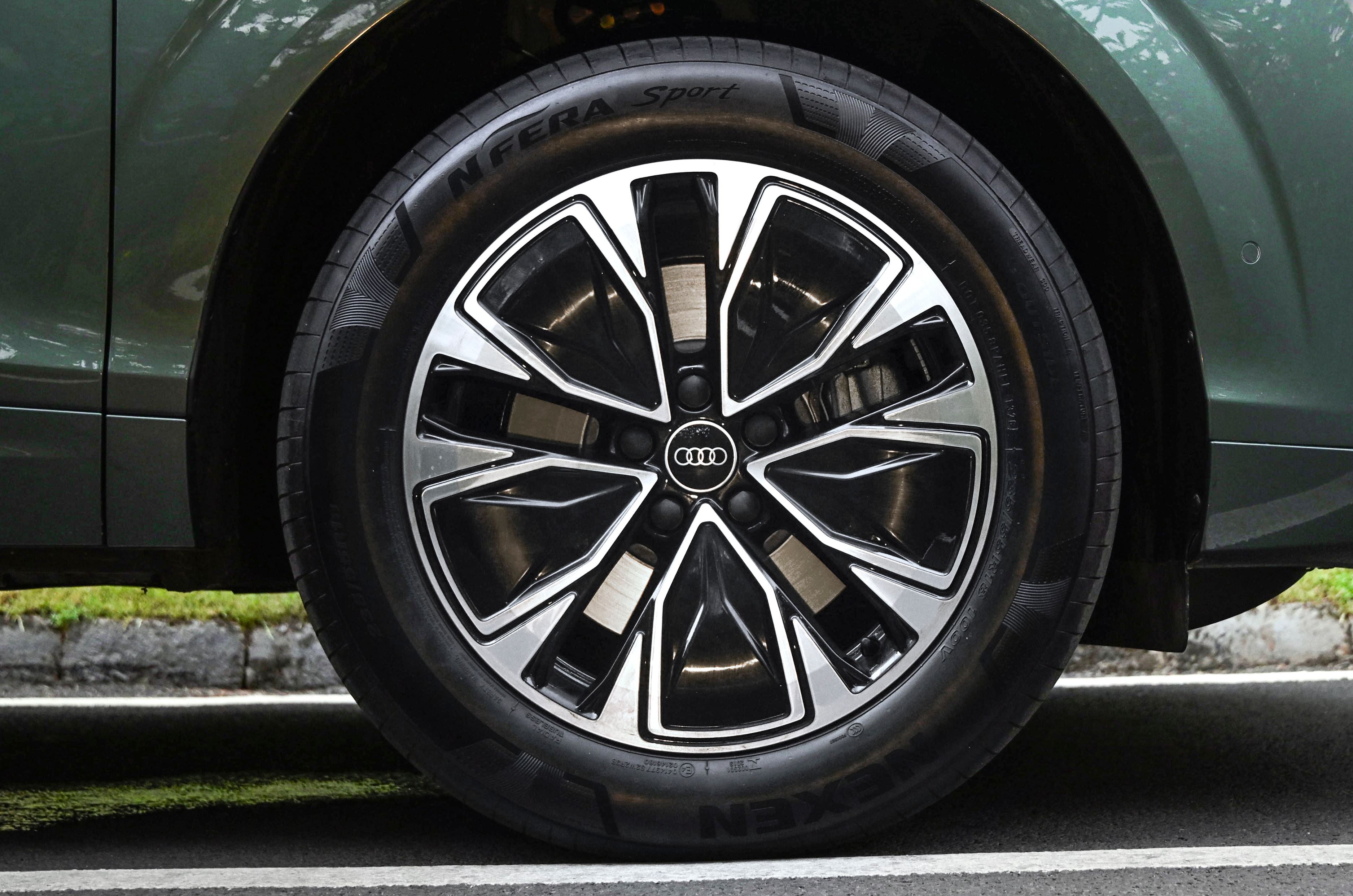
Stunning 18-inch alloys get self-leveling centre caps and are wrapped in high-profile tyres

Audi Q3 Interior Space and Comfort – 8/10

Step inside and the leap over the old Q3 is obvious. The dashboard is clean and contemporary, anchored by a curved panel that houses an 11.9-inch driver’s display and a 12.8-inch touchscreen. Fabric replaces leather across much of the cabin and the lower plastics are on the hard side. Yet the overall impression is of a cabin that’s solidly screwed together, and it feels more robust than its German rivals. Small details help: the fat tabs that adjust the air-con vents have a reassuringly substantial action.
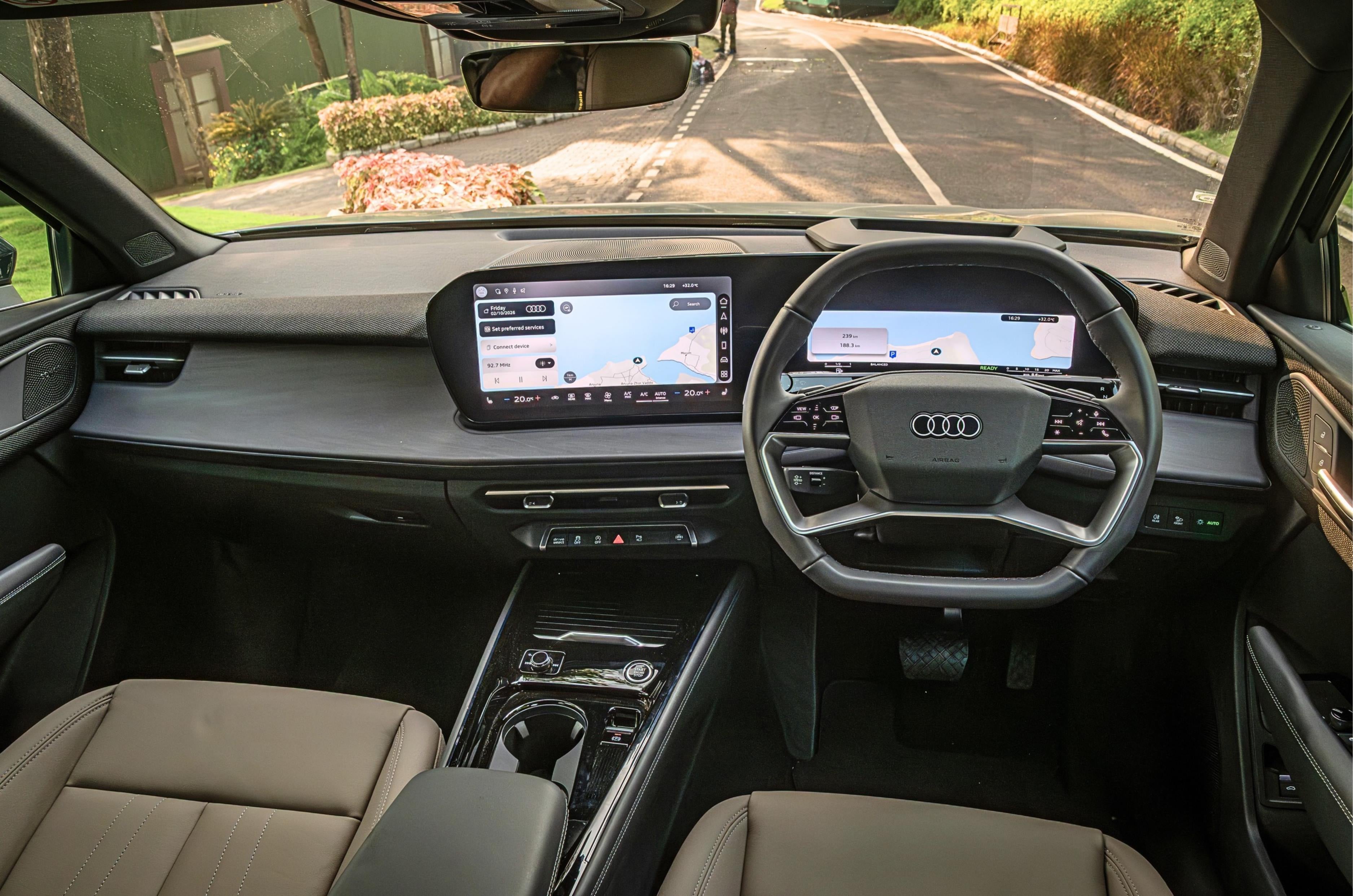
New interior is a big leap over the last model and feels better built than its German rivals

The hexagonal steering wheel takes some getting used to. So does the new control stalk, which Audi has loaded with an astonishing number of jobs: indicators, front and rear wipers and headlamp controls all live on one chunky lever. The gear selector moves to a stalk of its own on the other side. It feels awkward at first, but within a day it becomes second nature.
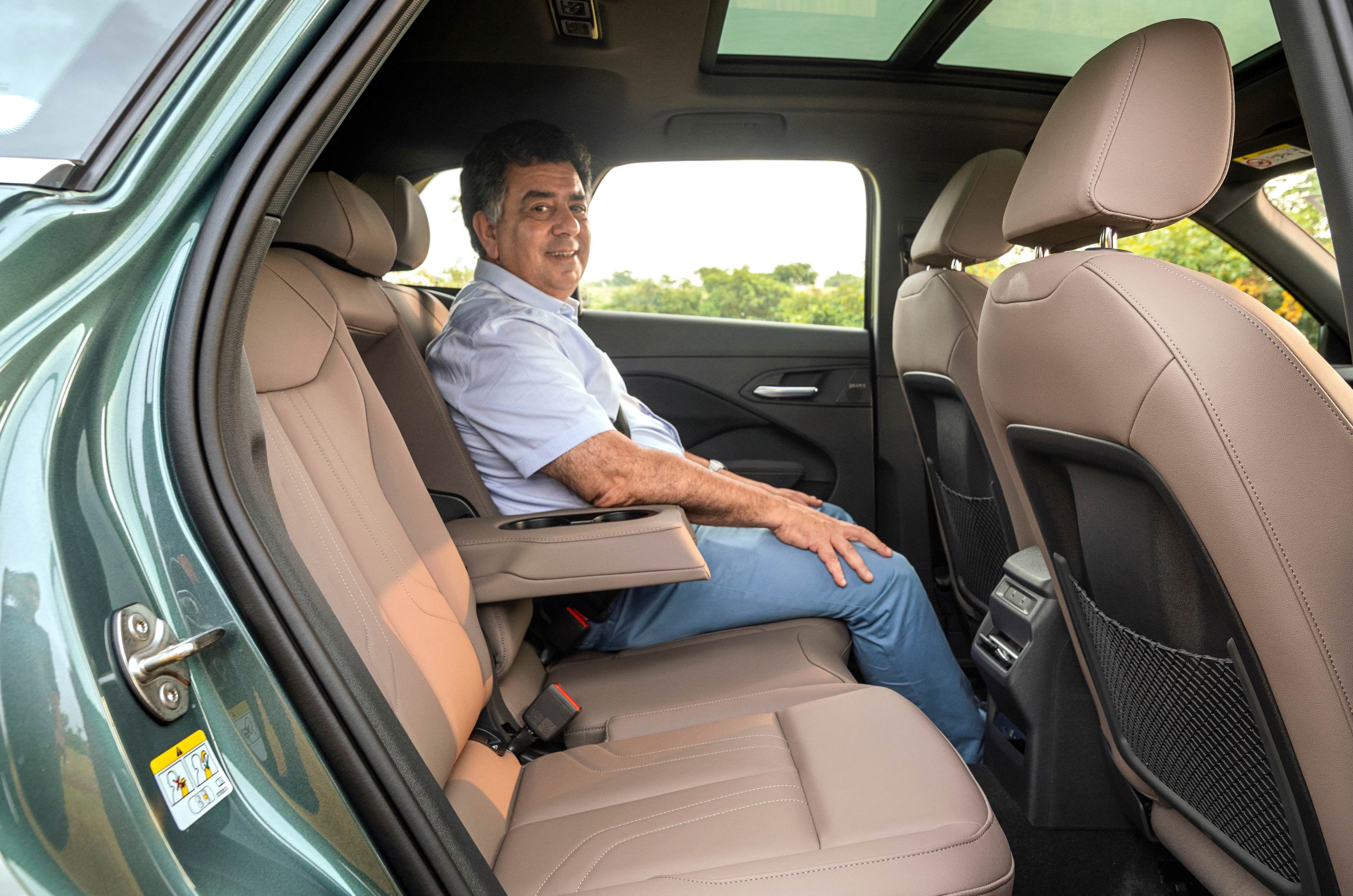
Two adults will be comfortable in the back seat, but a third will feel like a sqeeze

The front seats are generous, well bolstered and very comfortable over long stints. The rear hasn’t moved on much from the old car. Two large adults will be fine, but three is a squeeze; think of it as a four-seater with an occasional fifth. Rear passengers do get a third climate zone and two USB-C ports. The boot is spacious, and it’s good to find a space-saver spare under the floor.
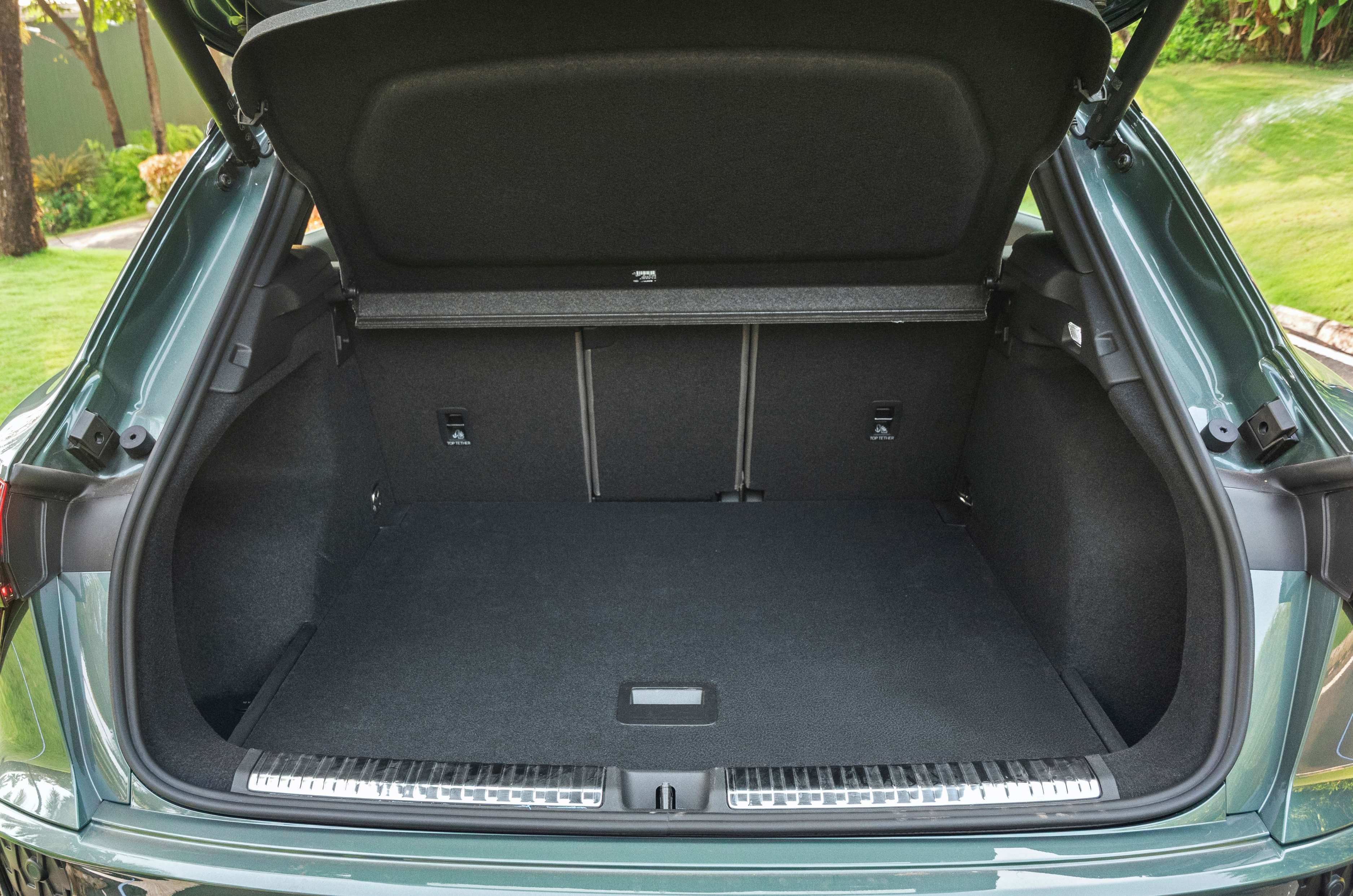
Powered tailgate opens to a large 488-litre boot; seats split 40:20:40 for longer items

Audi Q3 Features and Safety – 7/10

The curved touchscreen works well, and the curvature itself cuts out glare and reflections. Response is smooth and quick, though the icons are, in typical Audi fashion, a bit subdued and not instantly distinguishable. Physical buttons are fewer, but the climate controls sit permanently at the base of the screen, so you never dig through menus to change the temperature or blower speed.  A head-up display brings key information into your line of sight and the fonts are crisp and sharp.
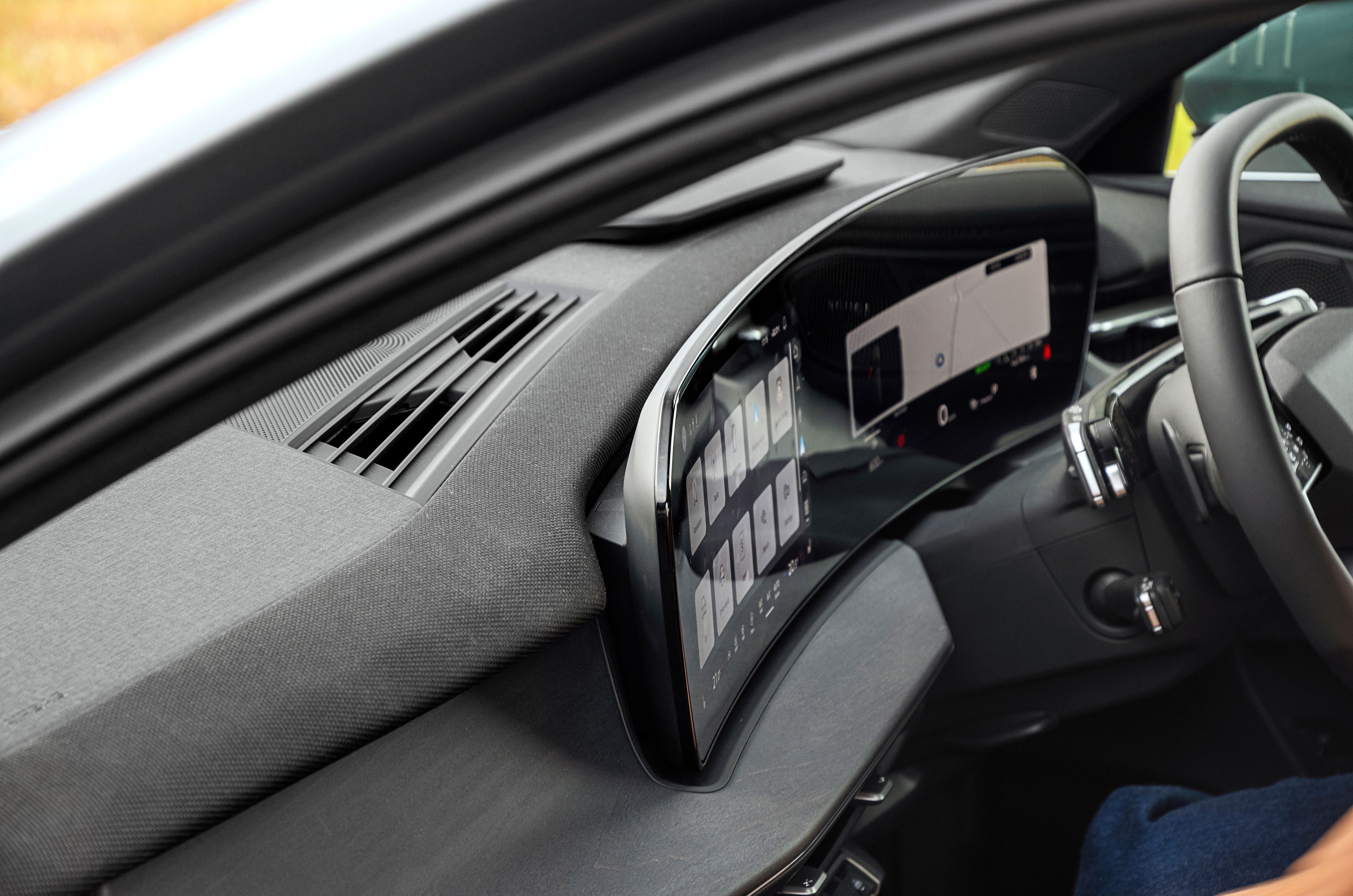
Curved display cuts out glare and reflections

Audi’s own navigation is good, but integrated Google Maps, increasingly the benchmark, is expensive to licence and hence missing. The instrument cluster is surprisingly basic too, with little configurability and minimal choice of layouts and that’s a let-down from the brand that pioneered the virtual cockpit.

We also hit a software glitch with our iPhones. Wireless phone mirroring connected initially, then dropped out and refused to reconnect, prompting a switch to USB. It’s the sort of bug an over-the-air update should fix.
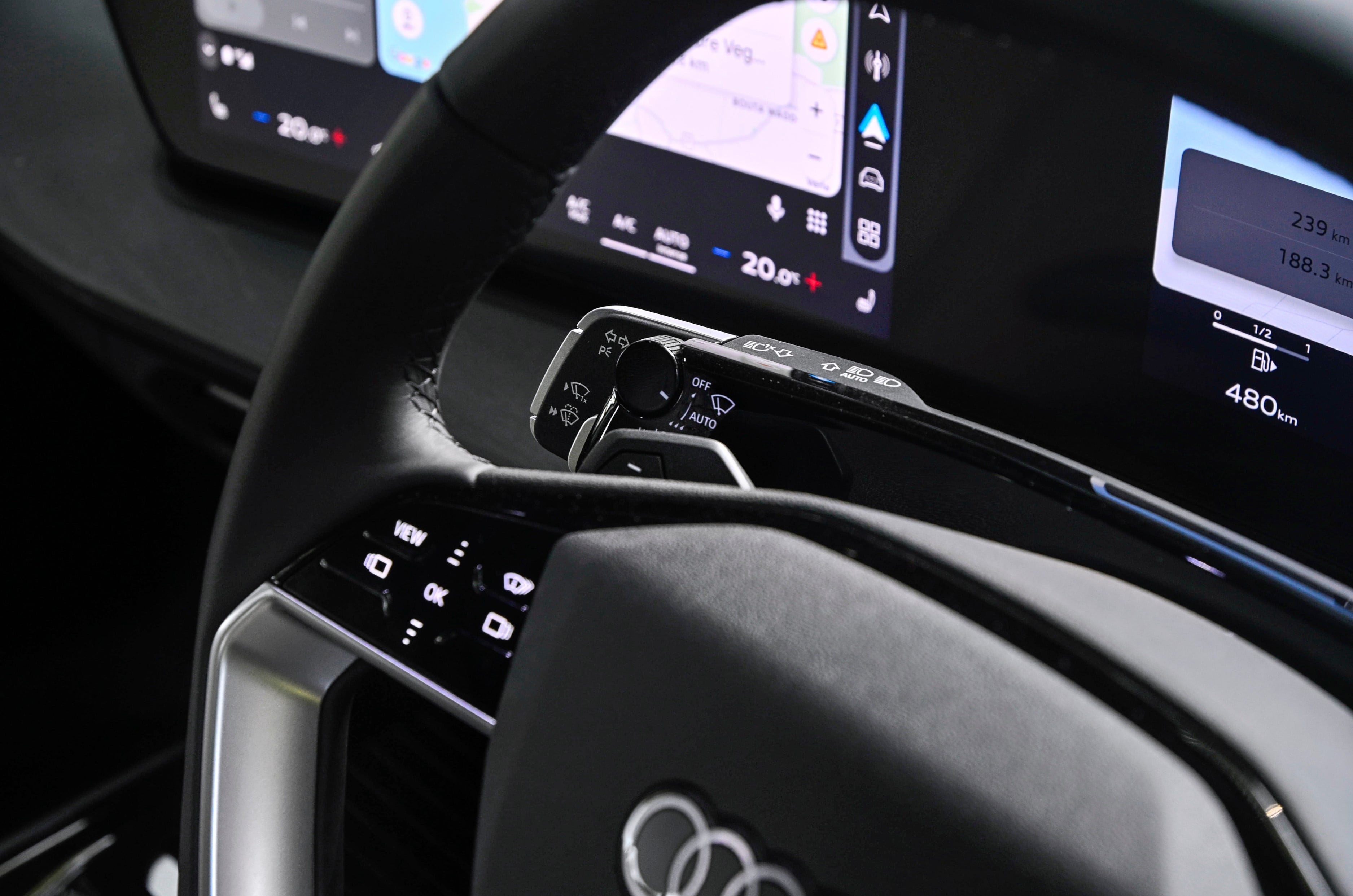
Lighting and wiper controls are odd at first but easy to get used to

The equipment list isn’t thin. There’s a superb-sounding 12-speaker Sonos system, a large panoramic sunroof, powered and heated front seats with driver memory, nine airbags and adaptive cruise control. That cruise works well, too. But for a car costing over Rs 50 lakh and launching in 2026, there gaps that are hard to overlook.

There is no lane-keep assist, so the ADAS suite stops at adaptive cruise. A full Level 2+ package is now table stakes in this class, all the more so when far cheaper mass-market cars offer one. There are no ventilated seats either, near-essential in our climate. The biggest miss, though, is a 360-degree camera, something a great many buyers actively look for. The reversing camera’s resolution is disappointing, although there is an auto-park function.
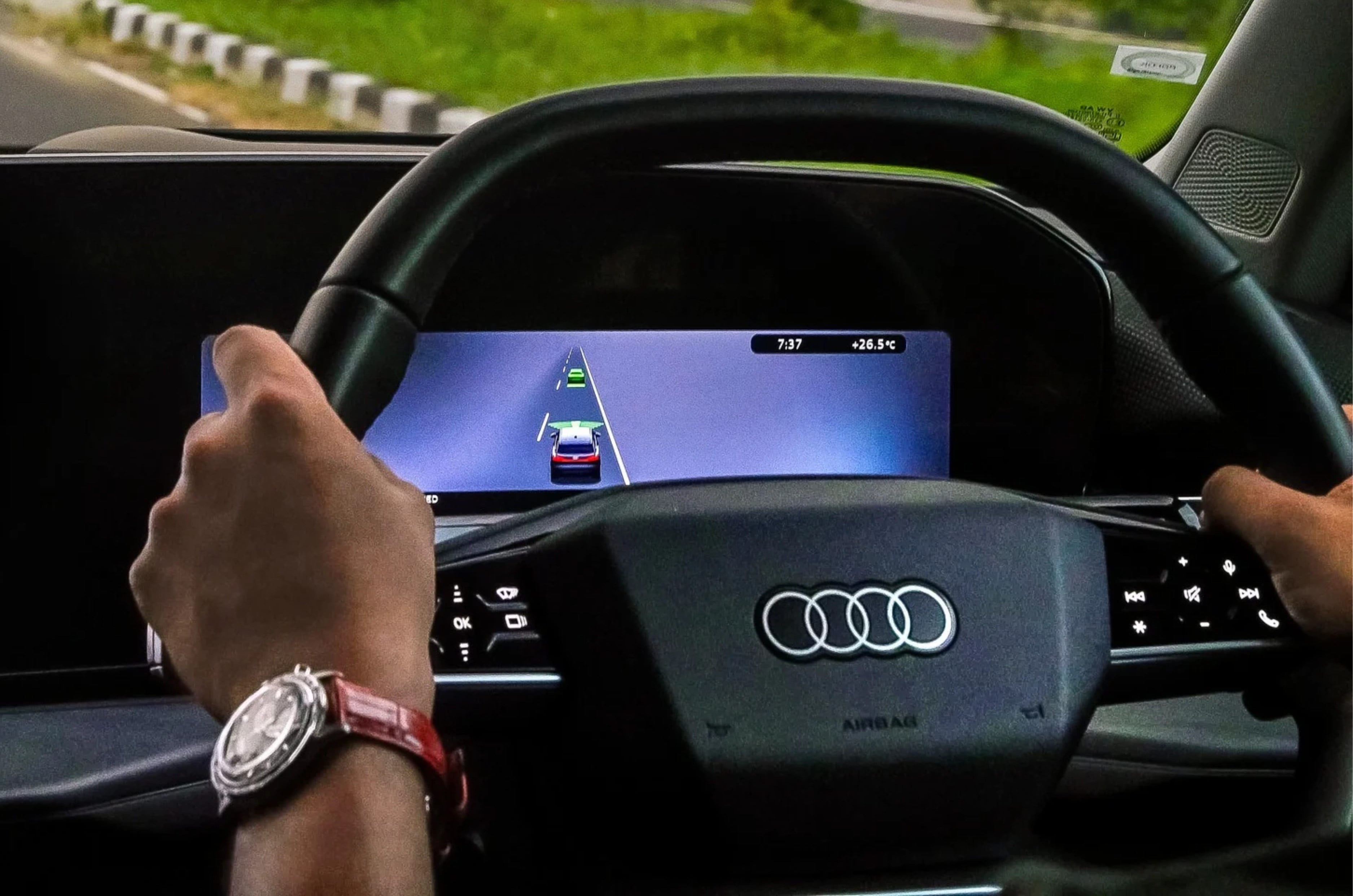
ADAS kit limited to auto emergency braking and adaptive cruise control

None of this is unusual for its rivals. But as the newest kid on the block, the Q3 should have moved the game on, and here it hasn’t.

Audi Q3 Performance and Refinement – 9/10

The engine is the star of the show. Audi’s 2.0 TFSI makes 201bhp and 320Nm, and it is smooth, strong and refined. That alone hands the Q3 a massive edge over the underwhelming, smaller-capacity motors in the X1 and GLA.
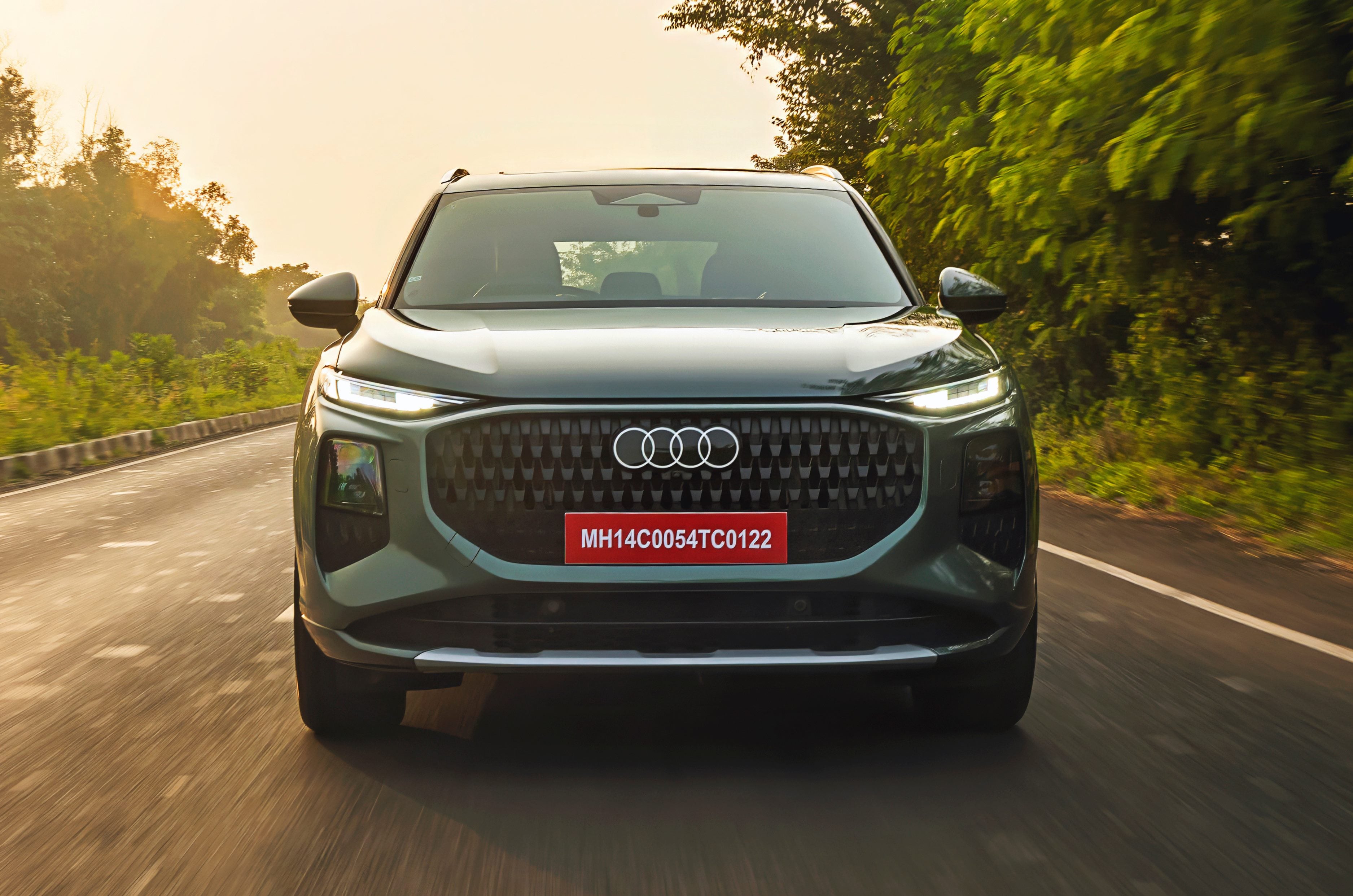
Strong and refined 2.0 TFSI makes 204hp and 320Nm, enough for 0-100kph in 7.1 seconds

It isn’t flawless. At low revs there’s a brief hesitation before it gathers itself and pulls smartly, which is why we left it in Dynamic mode most of the time. Once on the boil, though, it is eager and free-revving, a reminder of why this is the best 2-litre turbo-petrol in the business. Around town it feels responsive; on the highway it builds pace effortlessly. Audi claims 0-100kph in 7.1sec, which puts the Q3 at the top of its class.

The 7-speed dual-clutch remains a fine partner, eager to drop a gear to keep the engine in its powerband. Flick it into Sport or reach for the paddles if you want to take charge. Quattro all-wheel drive is now standard on every Q3, not an option, and there’s a range of drive modes including an off-road setting to make the most of it. It’s good insurance on slippery surfaces and gives the Q3 an edge over rivals when conditions turn tricky. Whether many owners need it, or more importantly will pay extra for it, is another question.
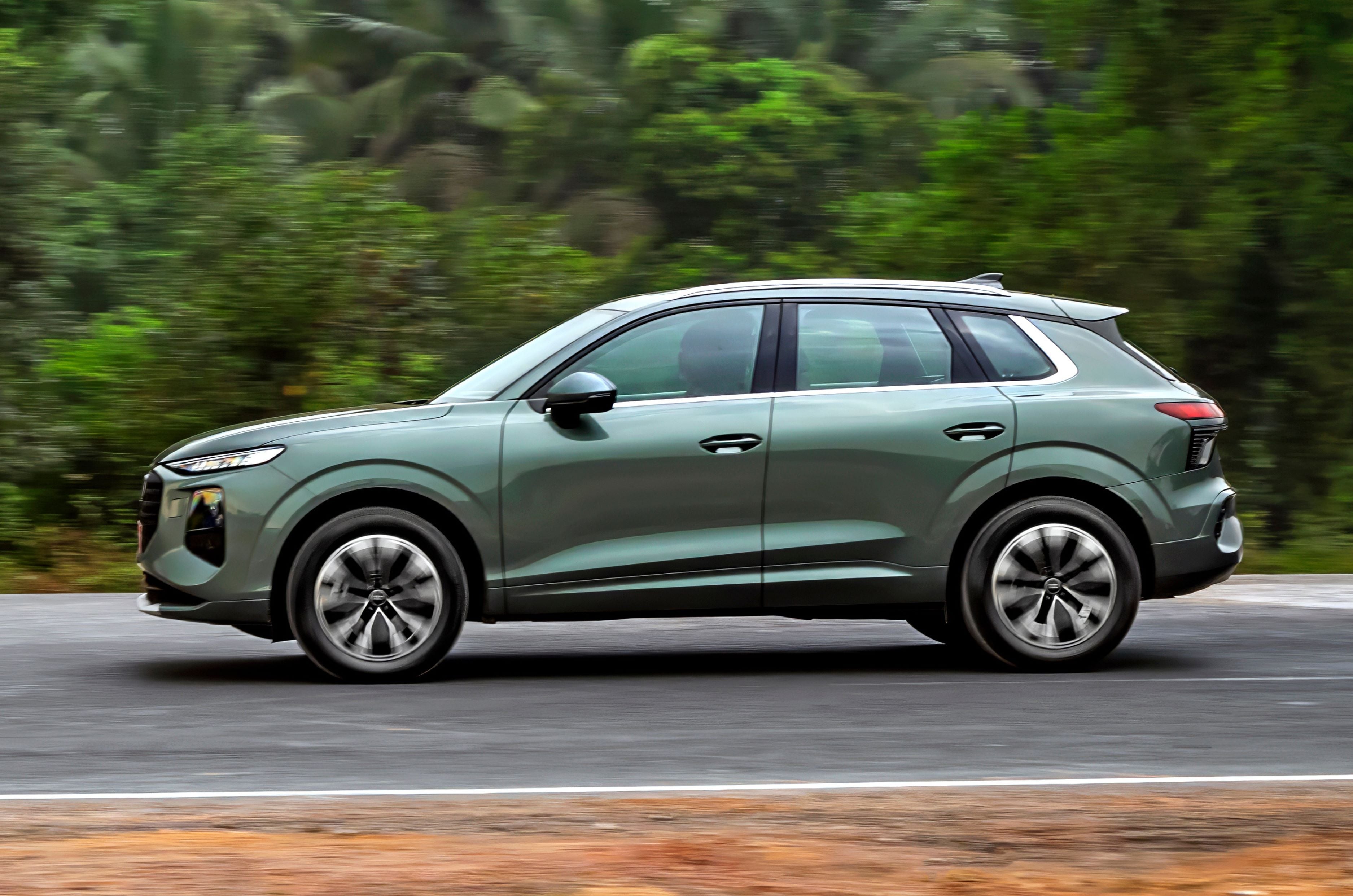
Strikes a great balance of ride and handling; gets Quattro all-wheel drive as standard

Audi Q3 Ride Comfort and Handling – 9/10

The big surprise is the handling. The variable-ratio steering adjusts its response to both speed and lock, so its light and effortless at parking speeds, then quicker and more direct as you wind on more lock. Barring a touch of slack around the straight-ahead, it is accurate and weights up superbly.

Quick steering often makes a car nervous at speed. Not here. The Q3 stays stable and reassuring when the needle climbs, yet changes direction with an agility you simply don’t expect from an Audi SUV.
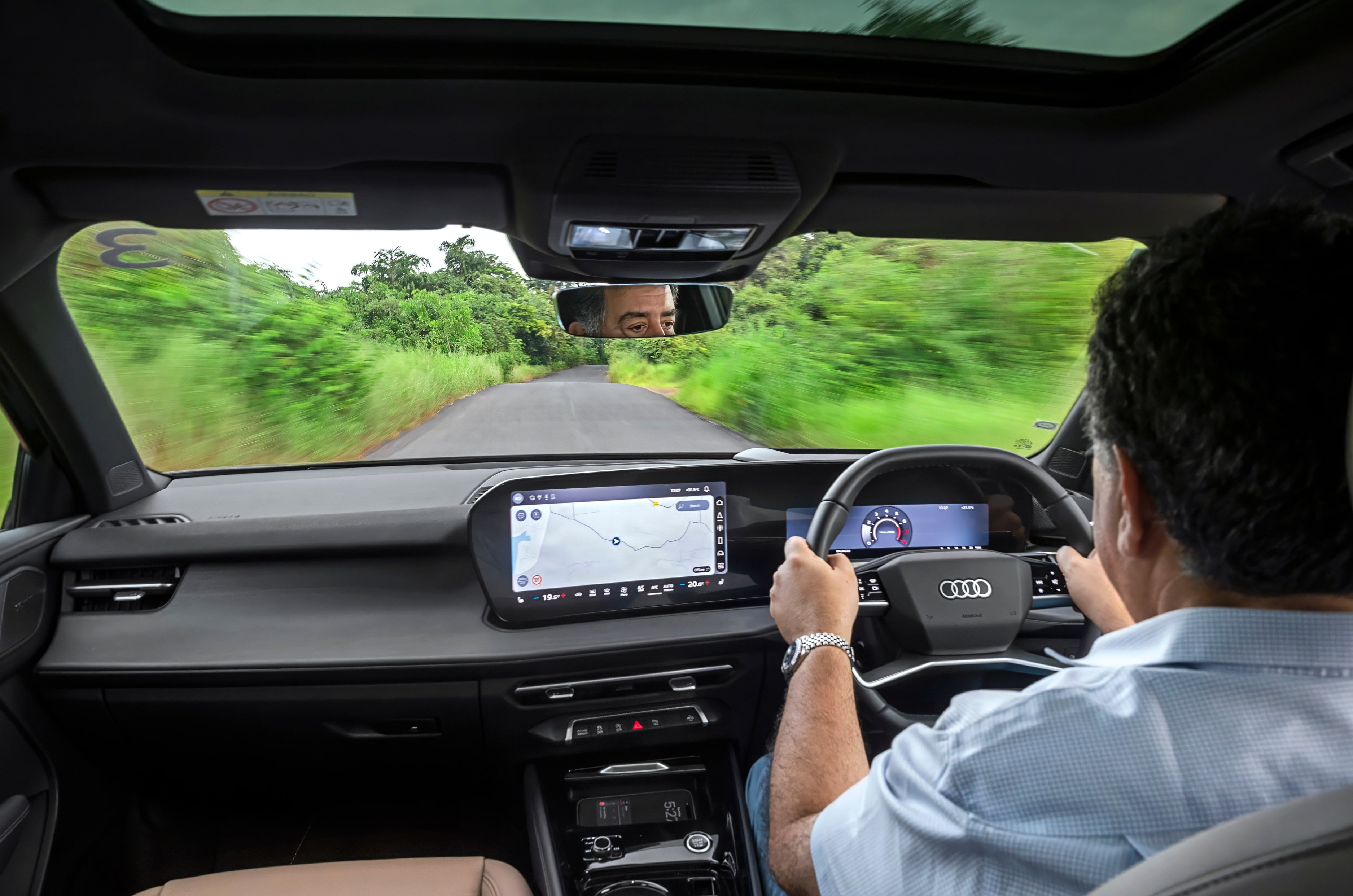
New Progressive Steering is light at parking speeds, but gets sharper and more direct as speeds rise

What you do expect from an Audi is a good ride, and the Q3 delivers. It is on the firm side but never uncomfortable, soaking up potholes and broken patches with real composure. A big help is the 55-profile tyres. Their roughly 130mm sidewall is the first line of defence, absorbing much of the shock before it reaches the suspension and, ultimately, the cabin.

Audi Q3 Value for Money – 8/10

The new Q3 is a superbly engineered car, and its mechanical package sits well ahead of its rivals. The cabin is a big step up too, but given its timing, the Q3 doesn’t quite leapfrog the competition here; it lands a little short on equipment.

What it does do is drive brilliantly. It is by far the nicest car to drive in its class, and that matters, because Audi says 84 percent of Q3 owners drive themselves.
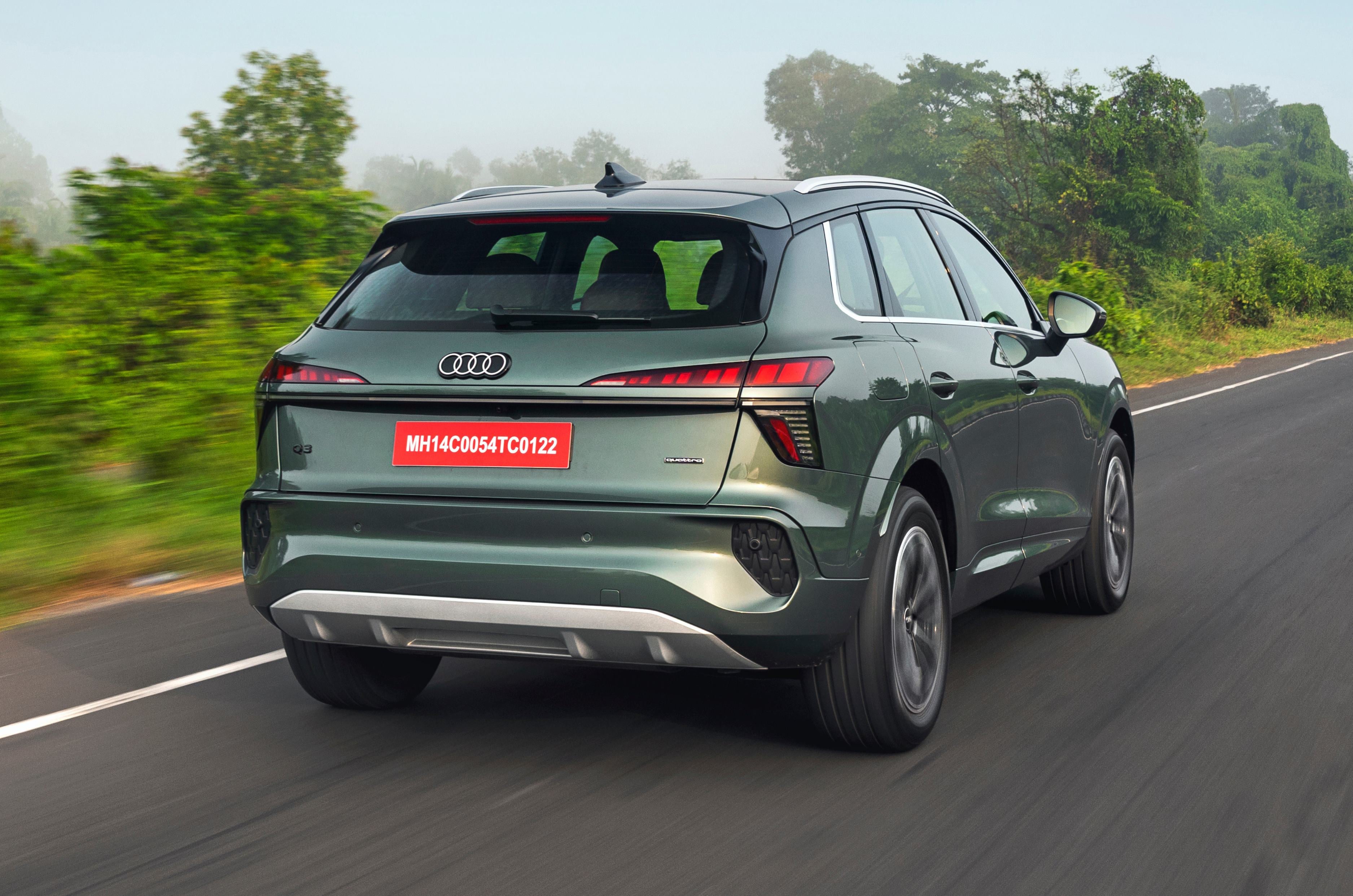
Easily the nicest car to drive in its class, but doesn’t leapfrog the competition in terms of features

A lot now rides on price. At around Rs 65 lakh on-road, it is steep. Not because the car isn’t worth it, but because buyers may balk at paying so much more than the outgoing Q3, whose transaction price had slipped to around Rs 40 lakh.

On the product front, though, Audi has come back with a bang. A brilliant powertrain, a superb blend of ride and handling and a genuinely classy feel make the Q3 the enthusiast’s pick of the class. If this is the opening act, Audi’s reset is off to a promising start.
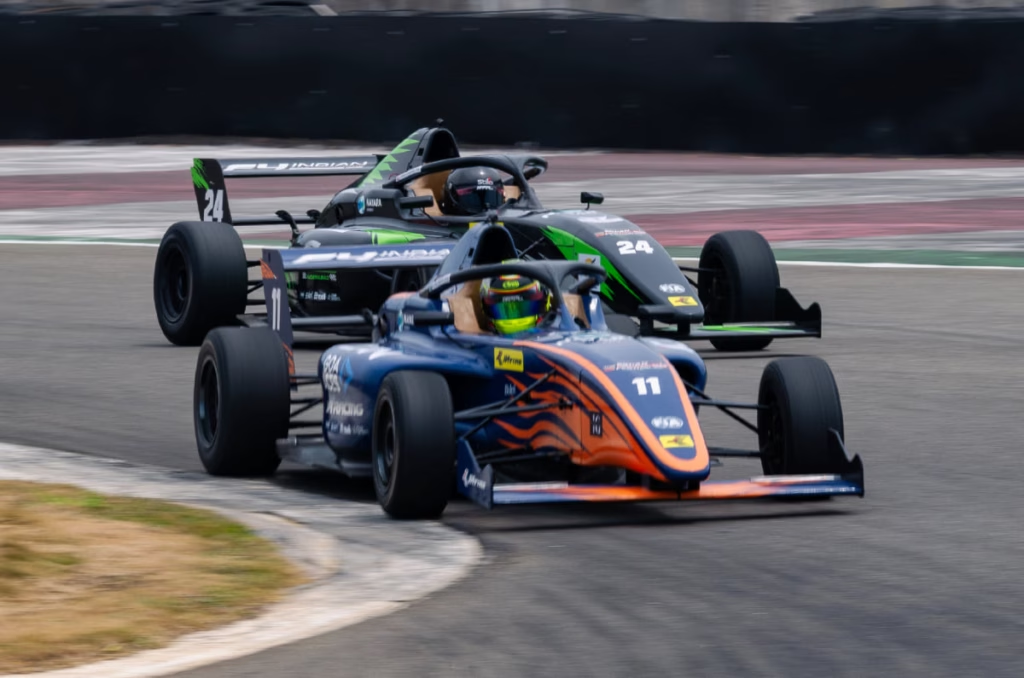
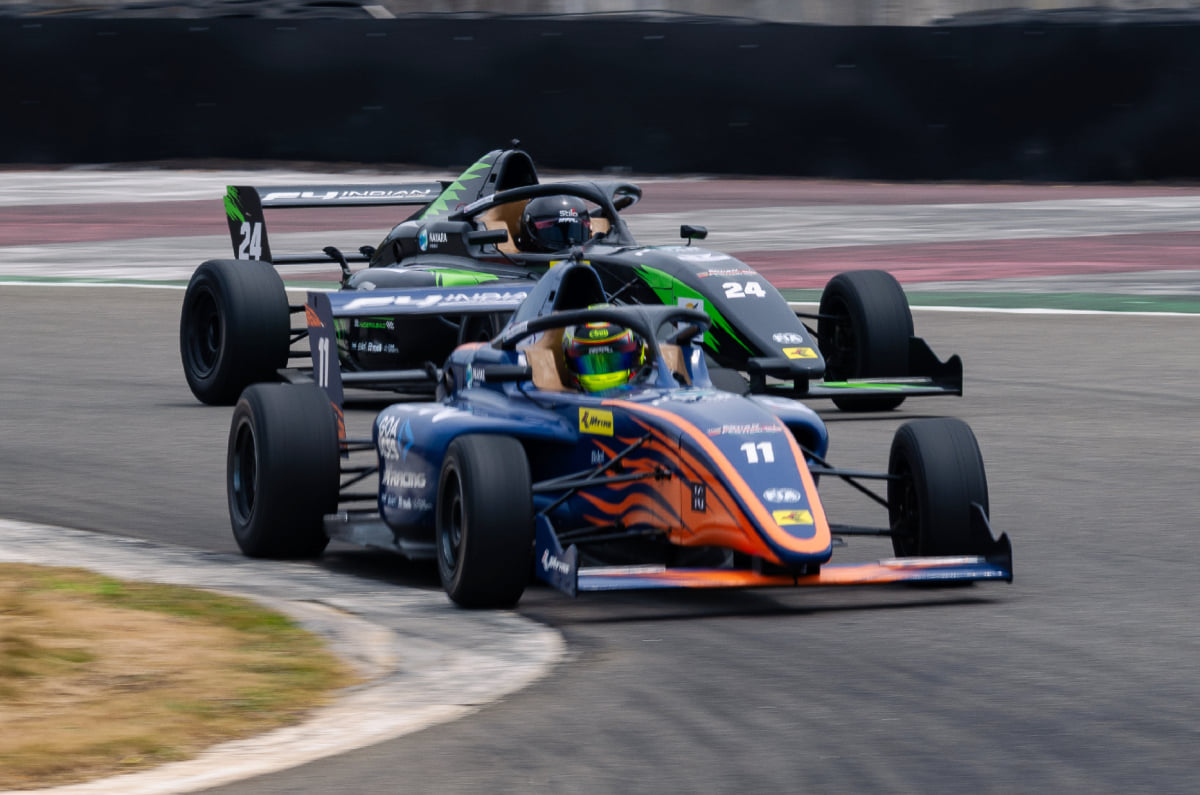
Indian Racing League, F4 India to make BIC debut

Indian Racing League, F4 India to make BIC debut
Indian Racing Festival Buddh International Circuit

The Indian Racing Festival, which includes both the Indian Racing League and F4 Indian Championship, has announced its full calendar for the 2026 season. Two new venues join the calendar this year – India’s former F1 track Buddh International Circuit and the new Navi Mumbai Street Circuit.
  1. BIC will host two rounds 
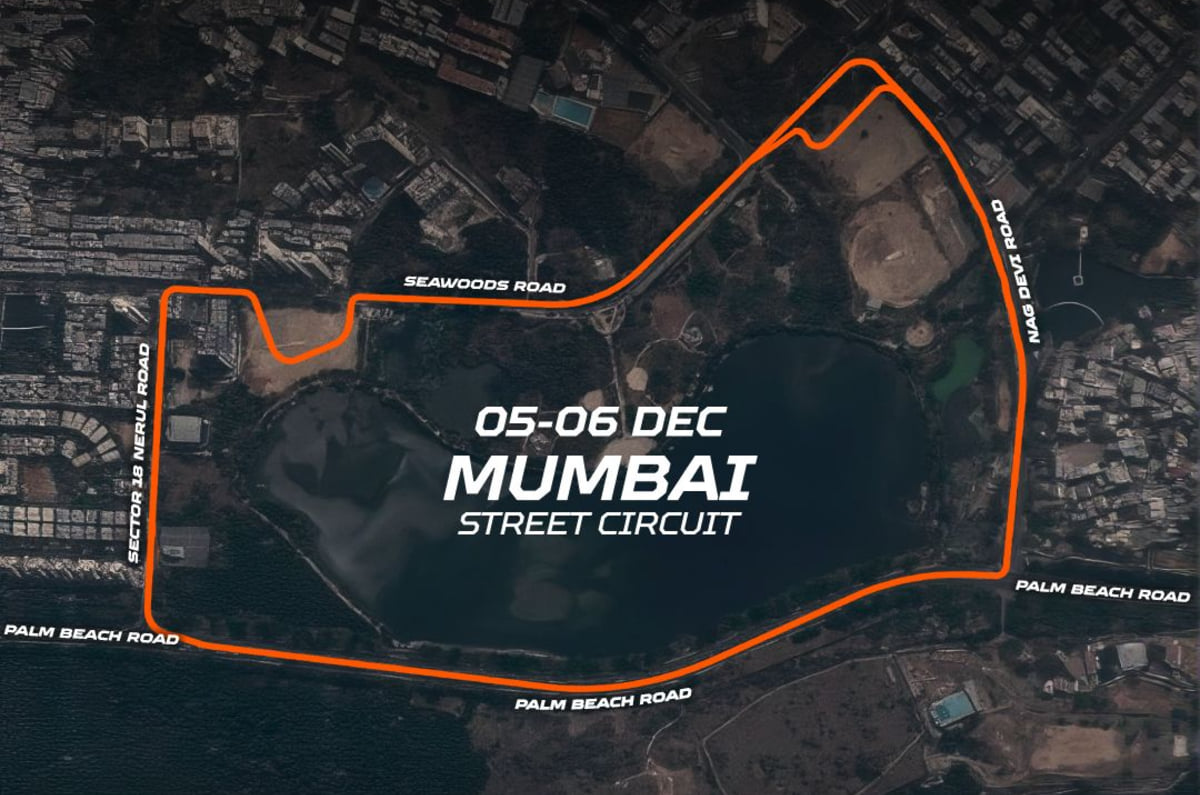
  2. Finale at Navi Mumbai Street Circuit on December 5-6

2026 Indian Racing Festival calendar announced

Buddh International Circuit, Navi Mumbai Street Circuit added as new venues

The 2026 F4 India season already kicked off in September, with two rounds held at Coimbatore’s Kari Motor Speedway. Kichcha’s Kings Bengaluru driver Aris Kyriakou currently holds the overall lead, but Goa Aces JA Racing’s Luviwe Sambudla is just five points behind in second place.

The next round will be held at Chennai’s Madras International Circuit, which will also host Round 1 of the 2026 Indian Racing League. After this, both series will head to the BIC for the very first time for two rounds. 

The BIC famously hosted the F1 Indian GP from 2011 to 2013. With F4 India being an FIA-certified championship, this will also mark the first time that FIA-level racing will return to the track after 13 years.

Navi Mumbai Street Circuit

The Navi Mumbai Street Circuit will then make its debut this December, hosting the finale round. The track was initially scheduled to debut in 2025, but was this was later postponed to 2026.  The 3.69 km street circuit runs along Palm Beach Road, with an anti-clockwise layout including 11 turns. This will also be the Indian Racing Festival’s second night race, following the Chennai event held in 2024. All rounds will be streamed live on JioHotstar and Start Sports in India. 

The latest announcement also confirms that the series will not be racing at the Goa street circuit this season. 

2026 F4 India calendar

Round                  

Venue

Dates

1

Kari Motor Speedway

September 11-13

2

Kari Motor Speedway

September 18-20

3

Madras International Circuit

October 22-23

4

Buddh International Circuit

October 31-November 1

5

Buddh International Circuit

November 28-29

6

Navi Mumbai Street Circuit

December 5-6

2026 Indian Racing League calendar

Round                  

Venue

Dates

1

Madras International Circuit

October 22-23

2

Buddh International Circuit

October 31-November 1

3

Buddh International Circuit

November 28-29

4

Navi Mumbai Street Circuit

December 5-6

TVS MotoSoul 6.0 to be held on December 11-12

TVS MotoSoul 6.0 to be held on December 11-12
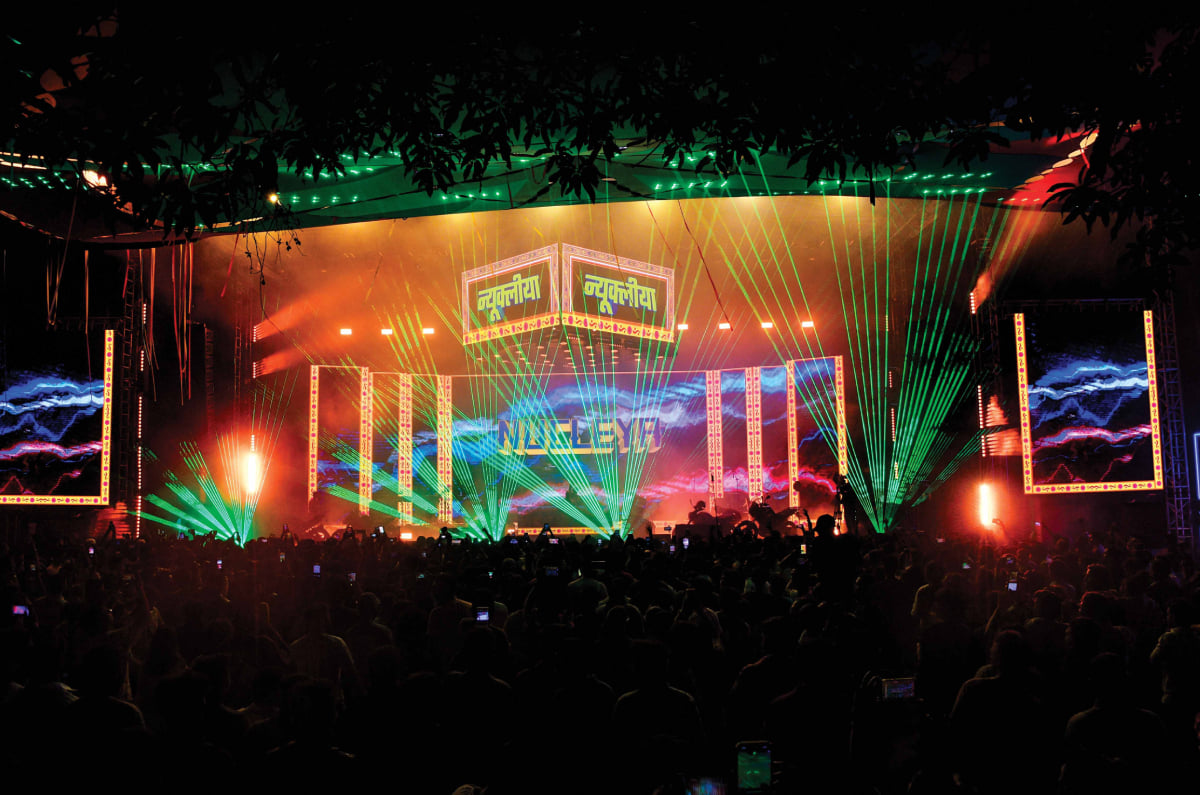
nucleya performing at TVS MotoSoul 5.0

TVS Motor Company has announced that the sixth edition of its flagship motorcycling festival, TVS MotoSoul, will be held in Goa on December 11 and 12, 2026.

  1. TVS MotoSoul to return to Goa for its sixth edition
  2. Last year’s edition saw the launch of the TVS Ronin Agonda Edition and 20th anniversary Apache models

TVS MotoSoul 6.0: What to expect

Product reveals and custom builds have been a fixture at every edition

Previous editions of MotoSoul have seen TVS use the platform for product and tech announcements. The 2023 edition saw the launch of the Apache RTR 160 4V with dual-channel ABS. In 2024, TVS unveiled the RT-XD4 300 engine platform, which eventually made its way into the RTX 300. In 2025, TVS launched the Ronin Agonda Edition alongside limited-run models to celebrate the 20th anniversary of the Apache brand.

Custom builds have been another consistent highlight, with TVS collaborating with international builders across multiple editions to create bespoke versions of the Apache and Ronin, including café racer, bobber, scrambler, supermoto and flat-track-inspired interpretations. Merchandise and accessory collaborations have also expanded year on year, with past editions announcing tie-ups with Alpinestars, GIVI and MT Helmets.

With the sixth edition of MotoSoul, we can expect TVS to carry on that tradition, and we’ll share more details once we have them.

एक अरब वोटरों की चाभी—सीमा खन्ना

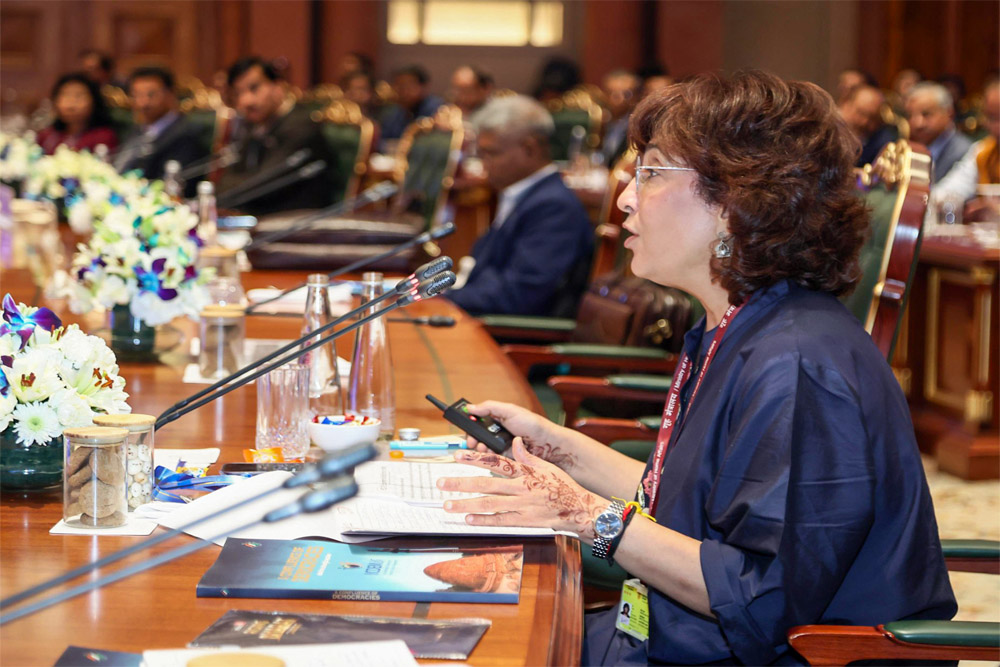
भारत राष्ट्र-राज्य के 145 करोड़ लोगों, एक अरब यानी कोई सौ करोड़ मतदाताओं के रिकॉर्ड की डिजिटल चाबी और मतदाता सूचियों की धांधली के पासवर्ड का नाम है—सीमा खन्ना। दुनिया कृत्रिम बुद्धिमत्ता (AI) से निरंकुश राक्षसी तंत्र (Despotic System), डिजिटल तानाशाही की जिन आशंकाओं में उसके प्रोटोटाइप की झलक देखती है, उसकी एक भारतीय प्रतीक, नमूना हैं चुनाव आयोग की सीमा खन्ना (डायरेक्टर जनरल, इन्फॉर्मेशन टेक्नोलॉजी, चुनाव आयोग)।

सवाल है कैसे यह महिला भारत के एक अरब मतदाताओं की डिजिटल मतदाता सूची के दरवाजे की चाबी? तो जान ले बात मामूली वेबसाइट या ऐप की नहीं है। मतदाताओं को काटने-जोड़ने व मतदाता सूचियों को जैसा चाहे बनाने वाले, कंट्रोलर याकि ECINet की बनवाई डिजिटल व्यवस्था है। इसमें चुनाव आयोग ने अपने चालीस से अधिक apps और portals को समेटा-बांधा हुआ है। मतदाता का registration, application, voter list में नाम, e-EPIC, शिकायत—सब इसी ecosystem में। चुनाव आयोग इसे “one unified platform” कहता है। जनवरी में इसके औपचारिक लॉन्च पर मुख्य चुनाव आयुक्त ज्ञानेश कुमार ने बेशर्मी से झूठ बोला था कि इसे कानून के अनुरूप बनाया गया है। DG-IT सीमा खन्ना ने तब कहा—technology अब support function नहीं, strategic enabler है; ECINet transparency, efficiency, credibility और public trust बढ़ाता है।

पर इसी को लेकर चुनाव आयोग के बाकी दो चुनाव आयुक्त—सुखबीर सिंह संधू और विवेक जोशी—ने फाइलों में अलग लिखा। चार नवंबर 2025 को Deputy Election Commissioner ने सीमा खन्ना और दूसरे वरिष्ठ अफसरों को लिखकर साफ किया—ERO, DEO और CEO के जो statutory functions हैं, वे उन्हीं को करने हैं, किसी और को नहीं। आईटी सिस्टम कानून के अनुरूप होना चाहिए, “without any exception”। फिर 2 जनवरी को सीमा खन्ना को दोबारा लिखा गया—software ऐसा हो कि ERO को कानून से मिली discretion किसी तरह restricted न हो।

भला क्यों लिखना पड़ा?

क्योंकि मतदाता सूची की संवैधानिक-वैधानिक व्यवस्था का मूल विचार उलटा पड़ रहा था। दिल्ली में कोई एक बाबू (यानी सीमा खन्ना की चाबी, उसका पासवर्ड, उसके access point) बैठकर देश की voter list नहीं बनाता। constituency में Electoral Registration Officer होता है। वही कानून से अधिकृत अधिकारी है। नागरिक उसके सामने दस्तावेज देता है। वह जांचता है। वह तय करता है कि नाम जुड़ेगा या हटेगा।

लेकिन अब बीच में मशीन थी। और मशीन की चाबी दिल्ली में! एक आईटी अफसर के हाथ में (मतलब प्रदेशों के चुनाव अधिकारियों, आईएएस अफसरों, कैबिनेट सचिव से लेकर पूरी नौकरशाही में किसी के भी पास नहीं। न मंत्रियों के पास। न ही मंत्रिमंडल, मंत्रालयों आदि किसी के प्रति accountable, जवाबदेह)।

16 अप्रैल 2026 को चुनाव आयुक्त संधू ने खुद फाइल पर दर्ज किया कि IT division ने पिछले कुछ महीनों में कई नए modules और portals विकसित किए, लेकिन उन्हें न तो इसकी जानकारी दी गई और न वे Commission के सामने रखे गए। उन्होंने यहां तक लिखा कि उन्हें नए developments का पता मीडिया से चल रहा है। उन्होंने कहा—DG-IT सभी Commissioners को जानकारी दें और जरूरी approvals लिए बिना गतिविधि न करें।

फिर 29 मई 2026 को दूसरे चुनाव आयुक्त विवेक जोशी ने खतरे का असली नाम लिखा—“gradual centralisation of the electoral roll database.” और इलाज भी सुझाया। स्वतंत्र audit हो। IIT जैसे बाहरी विशेषज्ञ से जांच कराई जाए और certify किया जाए कि voter database में बदलाव करने की credentials संबंधित statutory authorities के अलावा किसी के पास नहीं हैं।

सोचें, खुद भारत के Election Commissioner कह रहे है—जांच कराओ कि देश की voter list बदलने की digital credentials किस-किस के पास हैं! फिर अगस्त में संधू ने और साफ लिखा। राज्यों के CEO, DEO और ERO बता रहे थे कि उन्हें ERONet का “proper and complete access” नहीं है। उनकी वैधानिक शक्तियां DG-IT स्तर के centralised control से सीमित हो रही हैं। संधू ने सीमा खन्ना के पद के बारे में रिकॉर्ड पर लिखा कि DG-IT को statutory authorities को कानून से मिला पूरा access और operational freedom रोकने का कोई legal authority नहीं है।

पर न चुनाव आयुक्त की सुनना। न देश के जमीनी, चुनावी अफसरों की चिंता। जाहिर है सीमा खन्ना को सुनने, परवाह करने की भला क्या जरूरत है, जब प्रधानमंत्री नरेंद्र मोदी और गृहमंत्री अमित शाह को सीमा खन्ना के कंट्रोल से वह सब प्राप्त है जो चुनावी धांधलियों के आर्किटेक्ट या अपने ही पन्ना प्रमुखों से स्क्रीन पर नाम काटने-जोड़ने का काम धड़ल्ले से फ्रॉड डिजिटल इंडिया के जरिए प्राप्त हो रहा हो?

और ‘इंडियन एक्सप्रेस’ में छपा उदाहरण हकीकत की पुष्टि है। सत्य गोवा के 97 नागरिकों के अनुभवों का है। इनके बतौर मतदाता नाम काटे जाने के बाद सुप्रीम कोर्ट में जब याचिका हुई, तब सुप्रीम कोर्ट का निर्देश हुआ। गोवा ERO/AERO ने कागज देखे। 97 लोगों को योग्य पाया। पहले उन्हें हटाने का जो फैसला हुआ था, उसे reverse करना था।

लेकिन ECINet में reverse करने का option ERO अफसरों के पास नहीं!

सो गोवा के Chief Electoral Officer के कार्यालय ने सात दिनों में आठ ईमेल दिल्ली भेजे। सीमा खन्ना को हर बार copy किया गया। 18 फरवरी को चुनाव आयोग के अपने Deputy Election Commissioner ने DG-IT को साफ लिखा कि चुनाव आयोग का IT system सुप्रीम कोर्ट के निर्देश के अनुसार जरूरी कार्रवाई को block नहीं कर सकता। ERO के निर्णय के अनुसार कार्रवाई facilitate की जाए।

फिर?

21 फरवरी को final voter list प्रकाशित हुई। वे 97 मतदाता जस के तस बाहर।

‘इंडियन एक्सप्रेस’ ने 20 सिंतबर को सभी 97 नाम जांचे। सभी 97 सूची से बाहर थे। Goa के CEO संजय गोयल ने अखबार से कहा कि उन्होंने आयोग को बताया था कि इन लोगों को शामिल किया जाना है। और फिर वह वाक्य जो पूरे Digital India को नंगा कर देता है—“The call (to not include) was theirs.” ‘इंडियन एक्सप्रेस’ ने सीमा खन्ना से पूछा कि final roll से पहले rollback facility क्यों enable नहीं की गई। अखबार के मुताबिक जवाब नहीं मिला।

तो सवाल सीमा खन्ना नाम की एक महिला का नहीं है। उन्हें कोई “एक अरब वोटरों की मालिक” नहीं कह सकता। लेकिन लोकतंत्र को यह जरूर जानना चाहिए कि एक अरब मतदाताओं के database की digital keys की architecture क्या है।

और इसका Super-admin कौन है? किसके पास read access है? किसके पास write access? कौन नाम बदल सकता है? कौन reversal रोक सकता है? प्रत्येक बदलाव का क्या immutable audit trail है या नहीं? क्या Commissioners उसे देख सकते हैं? क्या बाहरी independent audit कभी हुआ? चुनाव आयुक्त विवेक जोशी ने जो independent audit मांगा था उसका क्या हुआ?

और सबसे बड़ा सवाल—यदि देश के तीन चुनाव आयुक्तों में से दो को ही अपने चुनाव आयोग के IT architecture पर ये सवाल लिखने पड़ें, तो भारत का साधारण मतदाता किस भरोसे सोए?

पहले वोट की रखवाली कानून करता था। फिर चुनाव अधिकारी करता था। अब बीच में software खड़ा है। और यह software आया कहां से? किसने बनवाया? कैसे बना? देश में बना या विदेश में इजराइल जैसे किसी देश से बनवाया गया?

कानून मतदाता के बारे में दो टूक कहता है—ERO फैसला करेगा। और ERO कहता है कि फलां नागरिक योग्य है, वैध मतदाता है। फिर सुप्रीम कोर्ट भी कहता है—सुनो और निर्णय करो।

और सीमा खन्ना के software की screen कहती है—Access denied!

क्यों? भला कौन है इसका SUPER ADMIN? उसकी credentials किसके पास हैं? यदि ERO के पास नहीं, राज्य के CEO के पास नहीं और खुद चुनाव आयुक्तों को इस पर सवाल लिखने पड़ रहे हैं, तो आखिर उस डिजिटल दरवाजे की आखिरी चाबी किसके पास है? नरेंद्र मोदी-अमित शाह की चुनावी मशीनरी से क्या उसका रिश्ता है? क्या इनके पन्ना प्रमुखों और उसके चुनावी control rooms की voter-data machinery तथा चुनाव आयोग के database के बीच कोई तकनीकी access, interface या data-flow है? यदि नहीं, तो चुनाव आयोग ने अब तक, ऐसे भंडाफोड के बाद भी सार्वजनिक रूप से स्पष्ट दवाब क्यों नहीं दिया?

हे राम! यह है मां भारत का Digital India—मनुष्य प्राणियों को वैध और अवैध ठहराने वाले यमराजों के दरवाजों के चौकीदारों का मोदी राज! क्या नहीं?

2026 F4 India: Sambudla, Bonu score wins at Round 2

2026 F4 India: Sambudla, Bonu score wins at Round 2
F4 India Bhuvan Bonu

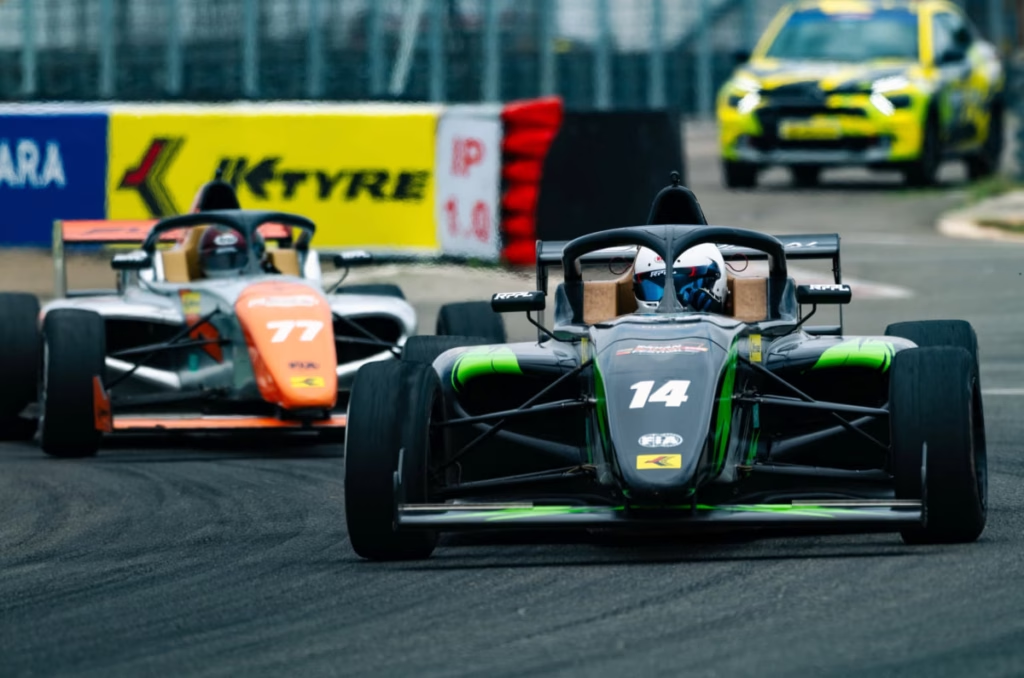
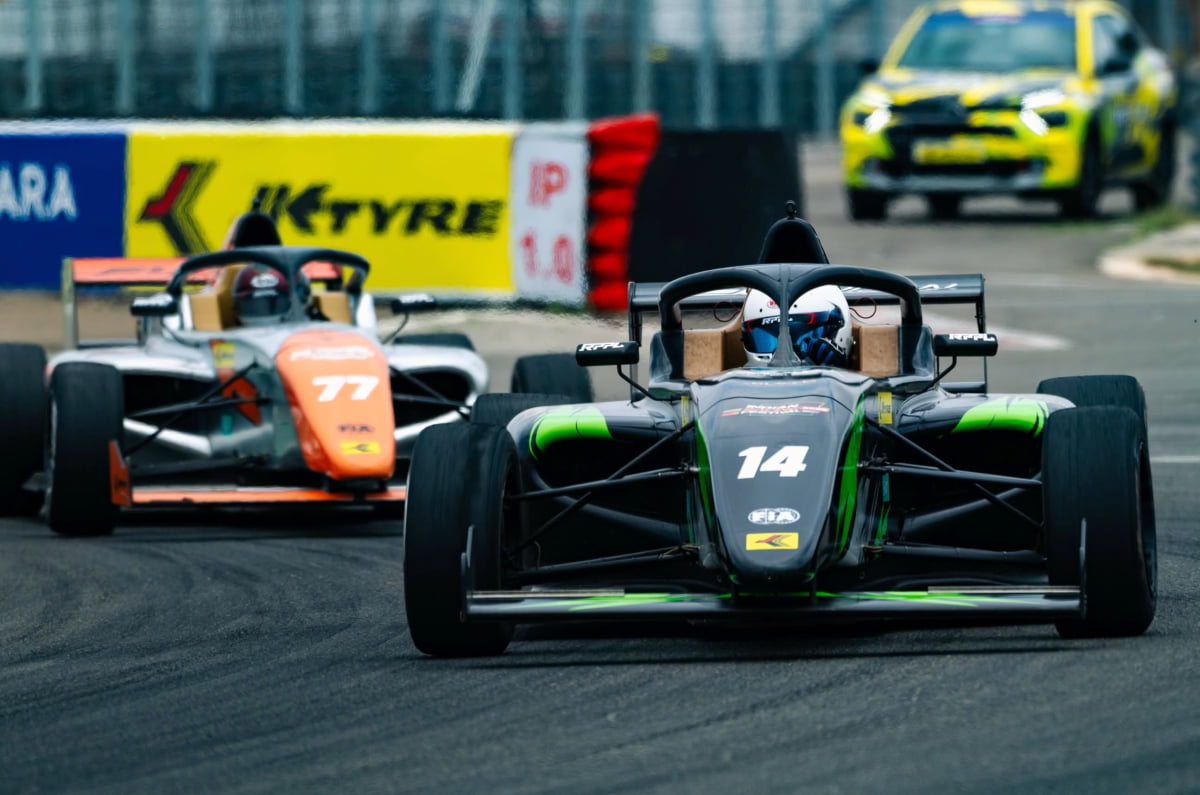
Goa Aces JA Racing’s Luviwe Sambudla clinched two race wins at Round 2 of the F4 Indian Championship, held at Kari Motor Speedway. Hyderabad Blackbirds’ Bhuvan Bonu also won a race, becoming the first Indian winner this season.

  1. Sambudla is now just five points behind Sambudla in the standings
  2. Next round at Madras International Circuit

F4 India Round 2: Goa Aces JA Racing, Hyderabad Blackbirds win races    

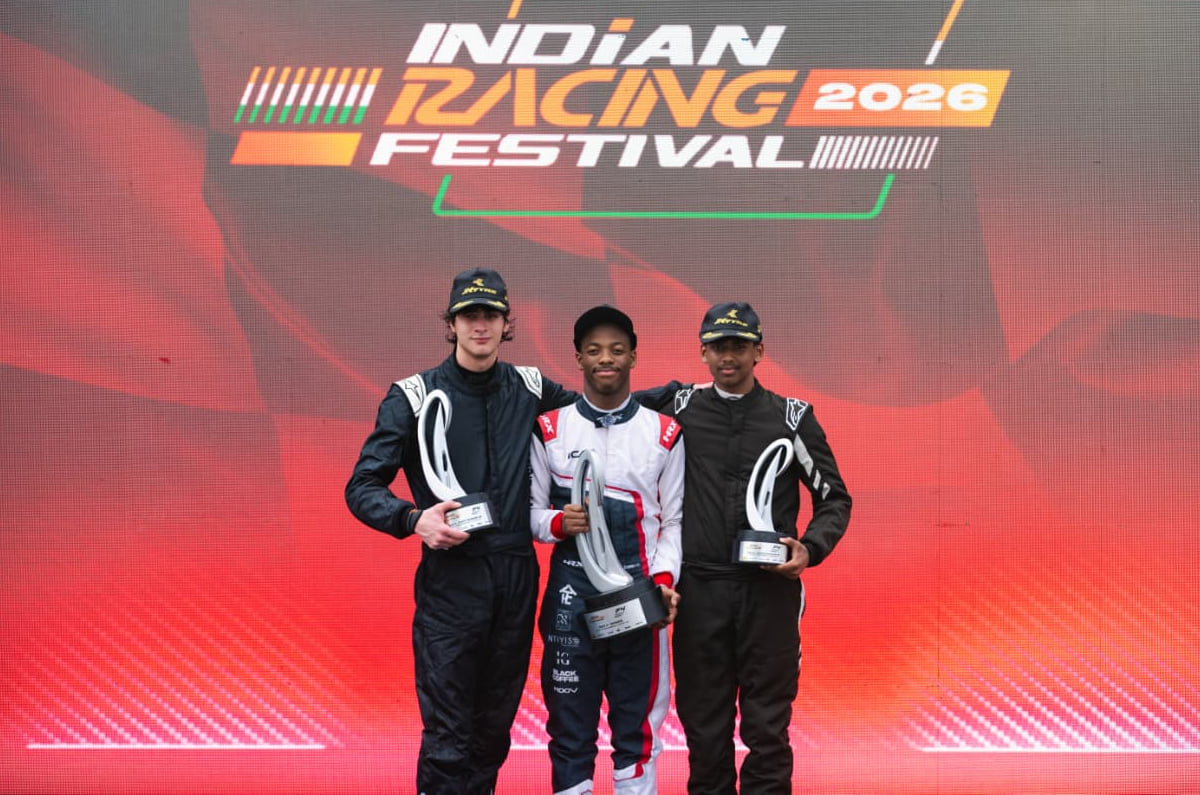
F4 India Round 2 podium

Starting from pole position, Sambudla took a lights-to-flag victory Race 1. The race was interrupted by a safety car after Mathias Alexander Forland made contact with Sai Aditya. Nevertheless, Sambudla held on to the lead after the re-start and even went on to set the fastest lap of the race. Aris Kyriakou finished second, while Speed Demons Delhi’s Ntiyiso Mabunda secured his first podium of the season in third.

Bonu converted reverse-grid pole position to victory in Race 2. He was followed by Mahlori Mabunda, but the Godspeed Kochi driver was handed a five-place grid penalty and dropped to P7 as a result. This promoted Speed Demons Delhi’s Ntiyiso Mabunda to second place, while Kyriakou completed the podium. 

Sambudla retired from Race 2 after contact with Kolkata Royal Tigers’ Aaron Mehta at Turn 1. But he bounced back in Race 3, clinching his third win this season. Kyriakou finished second, followed by Kolkata Royal Tigers’ Swarnav Das.

2026 F4 India standings

Kyriakou held a 13-point lead after the opening round, also held at Kari Motor Speedway. Despite not winning a single race in Round 2, he holds on the overall lead, but Sambudla has now closed the gap to just five points. Bonu is third overall, 42 points behind Kyriakou.

F4 India will next head to the Madras International Circuit for Round 3 on October 23-25.

F4 India Race 1 results

1. Luviwe Sambudla (Goa Aces JA Racing)

2. Aris Kyriakou (Kichcha’s Kings Bengaluru)

3. Ntiyiso Mabunda (Speed Demons Delhi)

F4 India Race 2 results

1. Bhuvan Bonu (Hyderabad Blackbirds)

2. Ntiyiso Mabunda (Speed Demons Delhi)

3. Aris Kyriakou (Kichcha’s Kings Bengaluru)

F4 India Race 3 results

1. Luviwe Sambudla (Goa Aces JA Racing)

2. Aris Kyriakou (Kichcha’s Kings Bengaluru)

3. Swarnav Das (Kolkata Royal Tigers)
 

Autocar’s Day Out: M-ployees of the month

Autocar's Day Out: M-ployees of the month

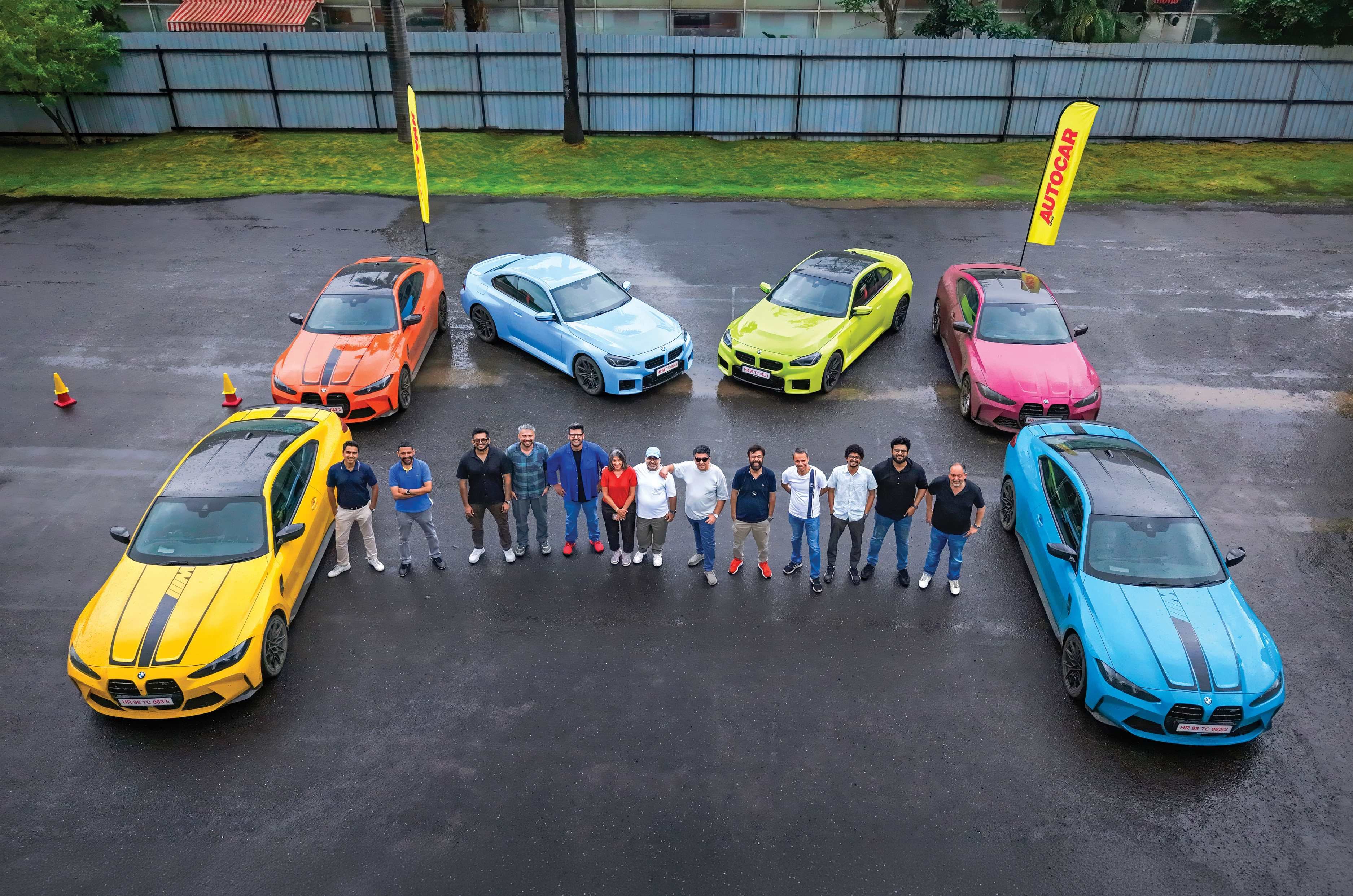
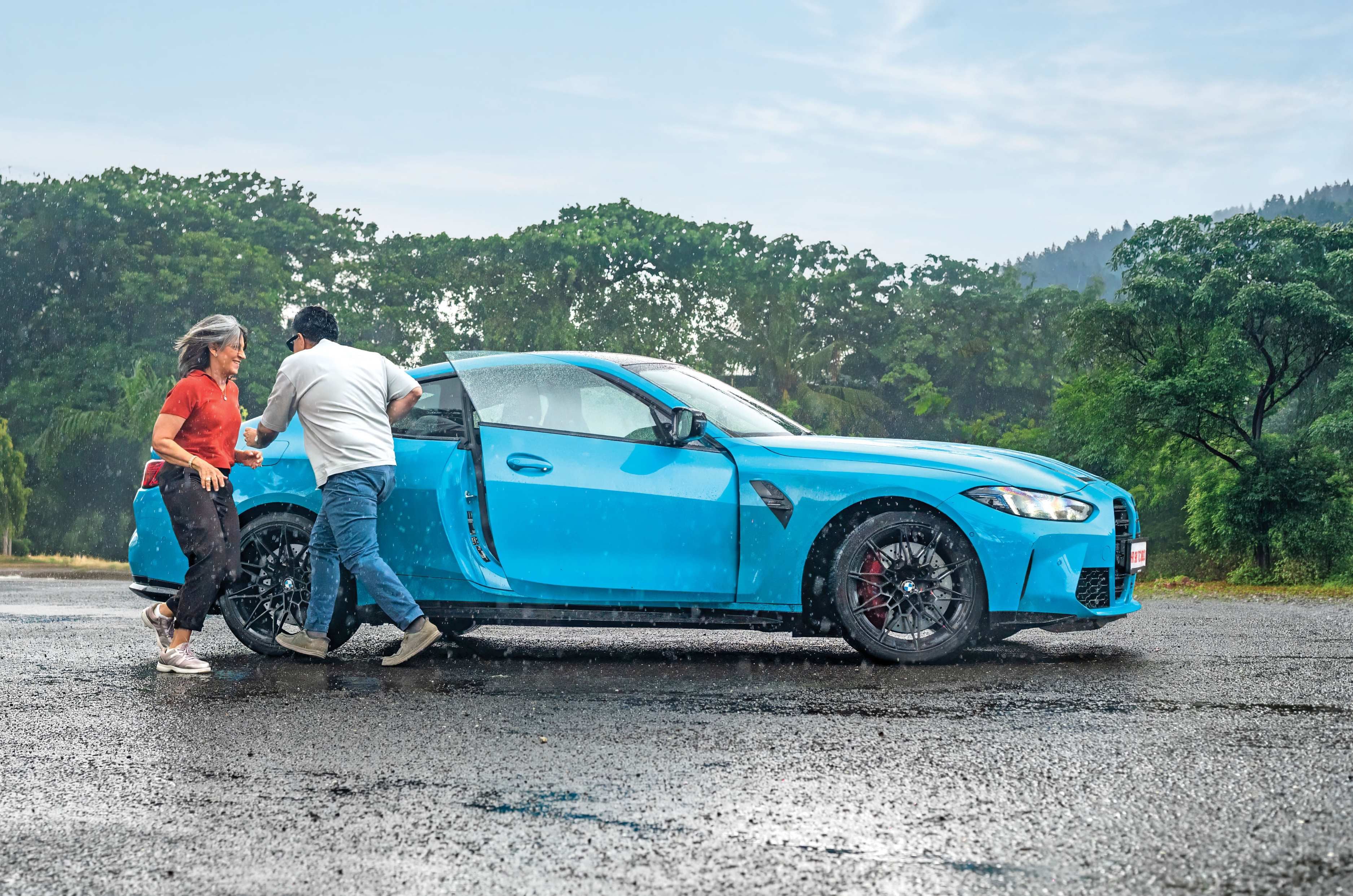
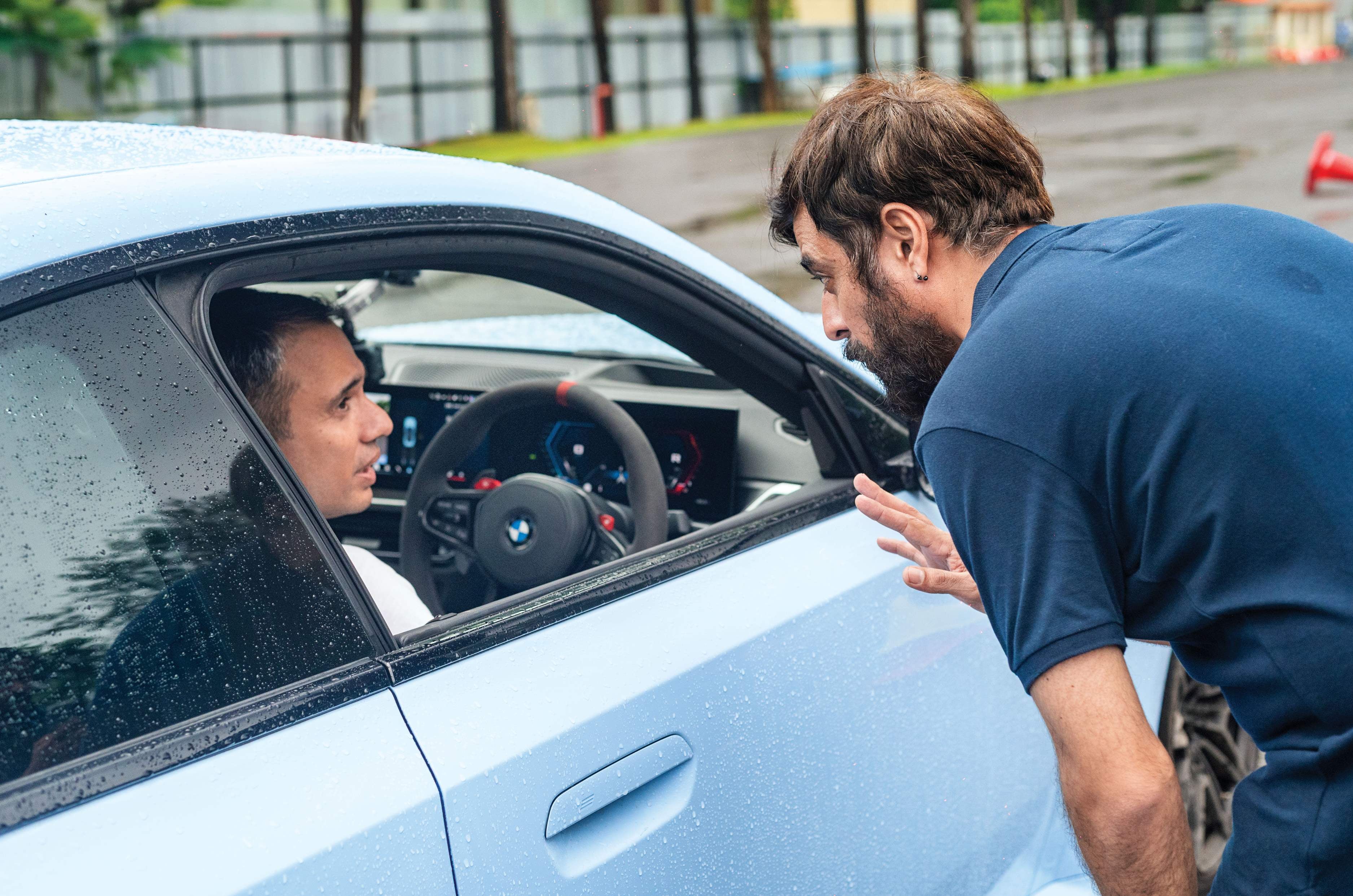
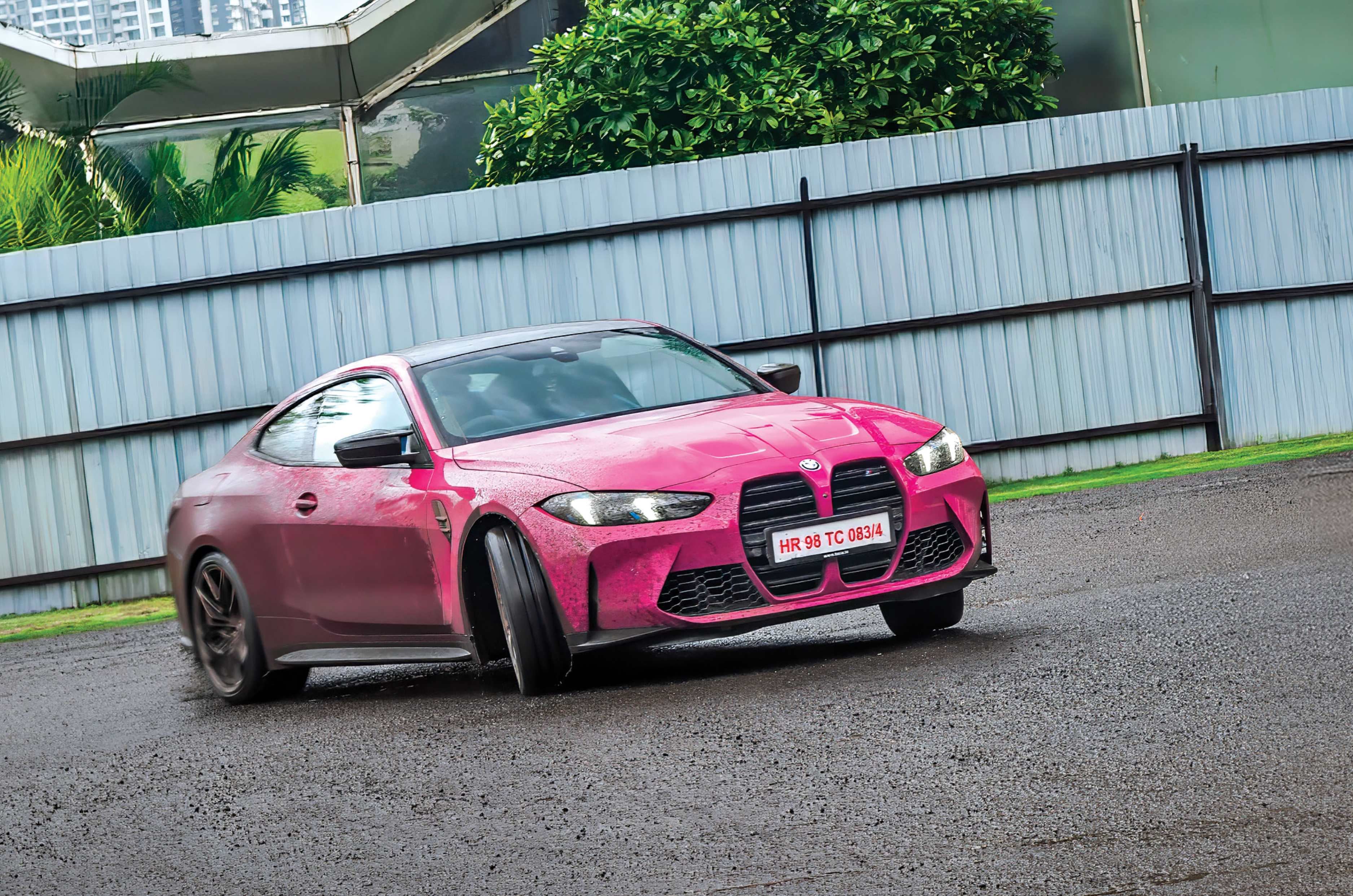
Company off-sites are designed to take employees away from the chaos and stress of everyday work for a few moments of relaxation. At Autocar India, things are a bit different. No cocktails by the pool or playing Housie before dinner. Instead, what we got were six BMW M cars (four M4s and two M2s) and a deserted concrete ground thanks to our friends at Raymond Realty. The day brought pouring rain, wet socks and no breakfast. Sounds like punishment, but not to us.

The objective was simple: pick a car, do your best in the three challenges and earn bragging rights for the rest of the year.

We rarely get to compete against each other, and with equal machinery, there could be no excuses. This was going to be intense.

Challenge 1: The Slalom Switch

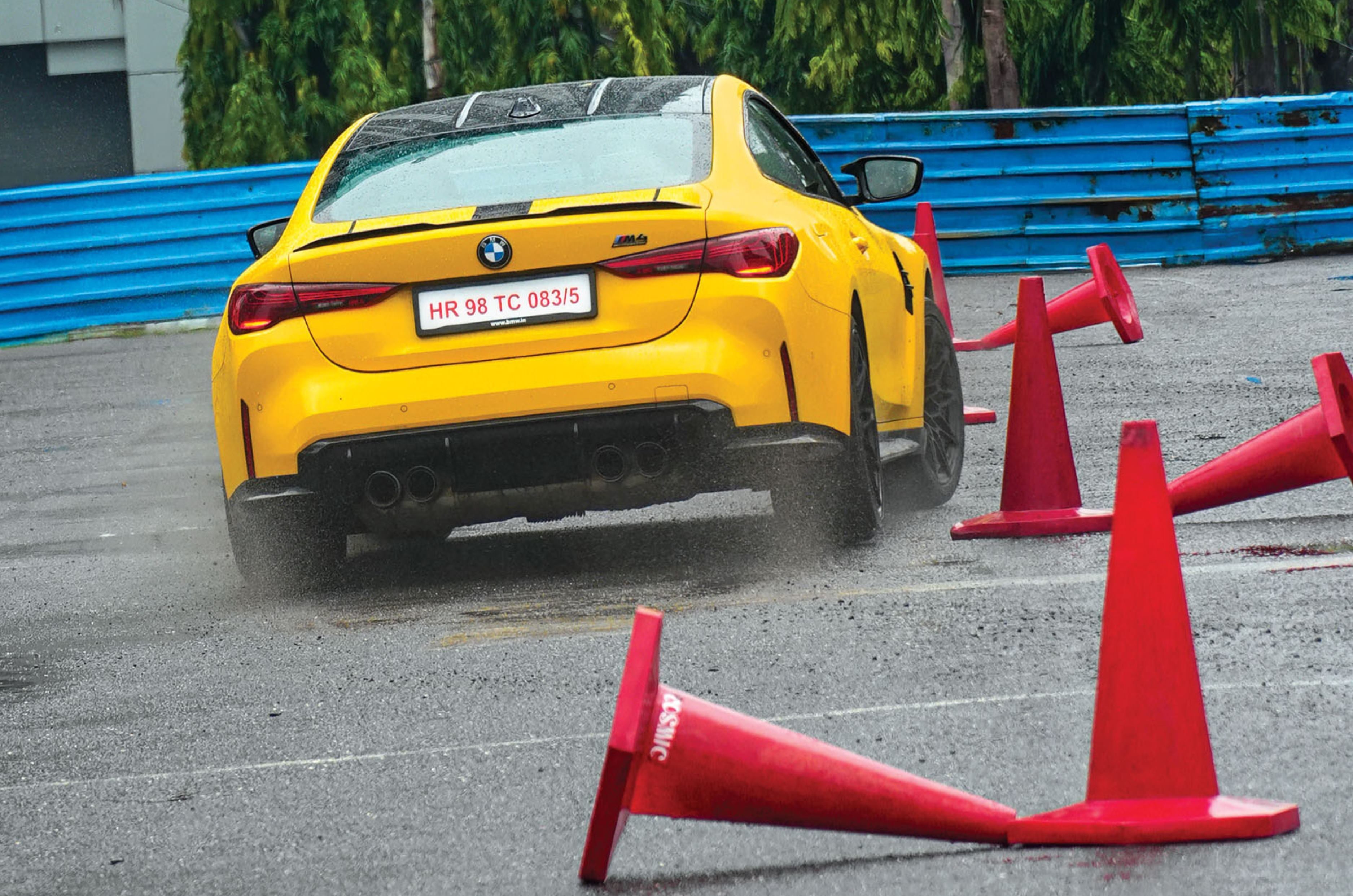
Partners picked by (un)lucky draw from a bag of M&M’s as colourful as our Ms, each pair then picks a BMW and makes their way through the cones to the other side. Switch drivers and race back through the cones, then stop within the start box. Hit a cone or fail to stop within the box and you earn a penalty.

The M4 might be tail-happy, but it can also dance its way through cones with precision.

Gavin and Ameya chose an M2 for its compact size. However, the drivers’ wildly different body sizes would play spoilsport here, as finding a seat position that suited both was an issue. A clean run with decent athleticism resulted in a time of 35.93sec.

Soham and Sergius followed in the other M2, with a bit of wheelspin off the line. A rapid driver change, thanks to their slender builds, meant a quick 34.36sec. The time to beat.

Lenny and I went against conventional wisdom and picked the bigger, more powerful M4 over the compact and nimble M2. It might be heavier, but we wanted the power advantage for off-the-line speed, given that each run had, in reality, two launches. We went through the cones super-quick, but we bungled the driver swap, nearly running into each other, and with Soham slamming the door shut and me spending precious seconds opening it, the time, then, was simply thrown away and, well, not worthy of printing. 

What was meant to be a relaxing team outing turned into a war.

The chaos subsided as Hormazd arrived with Renuka. Ready to prove that experience counts more than anything else, they put in an honest effort with the M4, which was commendable. But on the way back, Renuka clipped a few cones, which added big chunks to their time. 

Self-proclaimed racers Saumil and Rahul were confident as they snuck into the fuchsia M4, certain they could put down the power best. A clean run and swap, but a controversial on-the-line stop caused a ruckus. Penalty given; the time was 36.23sec.

Rahul advising us all before each run, and we dutifully didn’t follow a word of what he said.

Next, Shapur and Nikhil. Power over light weight here, as the pair went for another 530hp M4. The speed gained at launch was soon lost at the driver swap – they both literally ran into each other – and for good measure, hit a cone on the way back, resulting in a penalty and a time of 42.24sec. A new low.

In the end, seeing how incompetent we were at working together, we abandoned teamwork and did the runs by ourselves and agreed the following challenges should be run solo. 

Challenge 2: The Free Kick

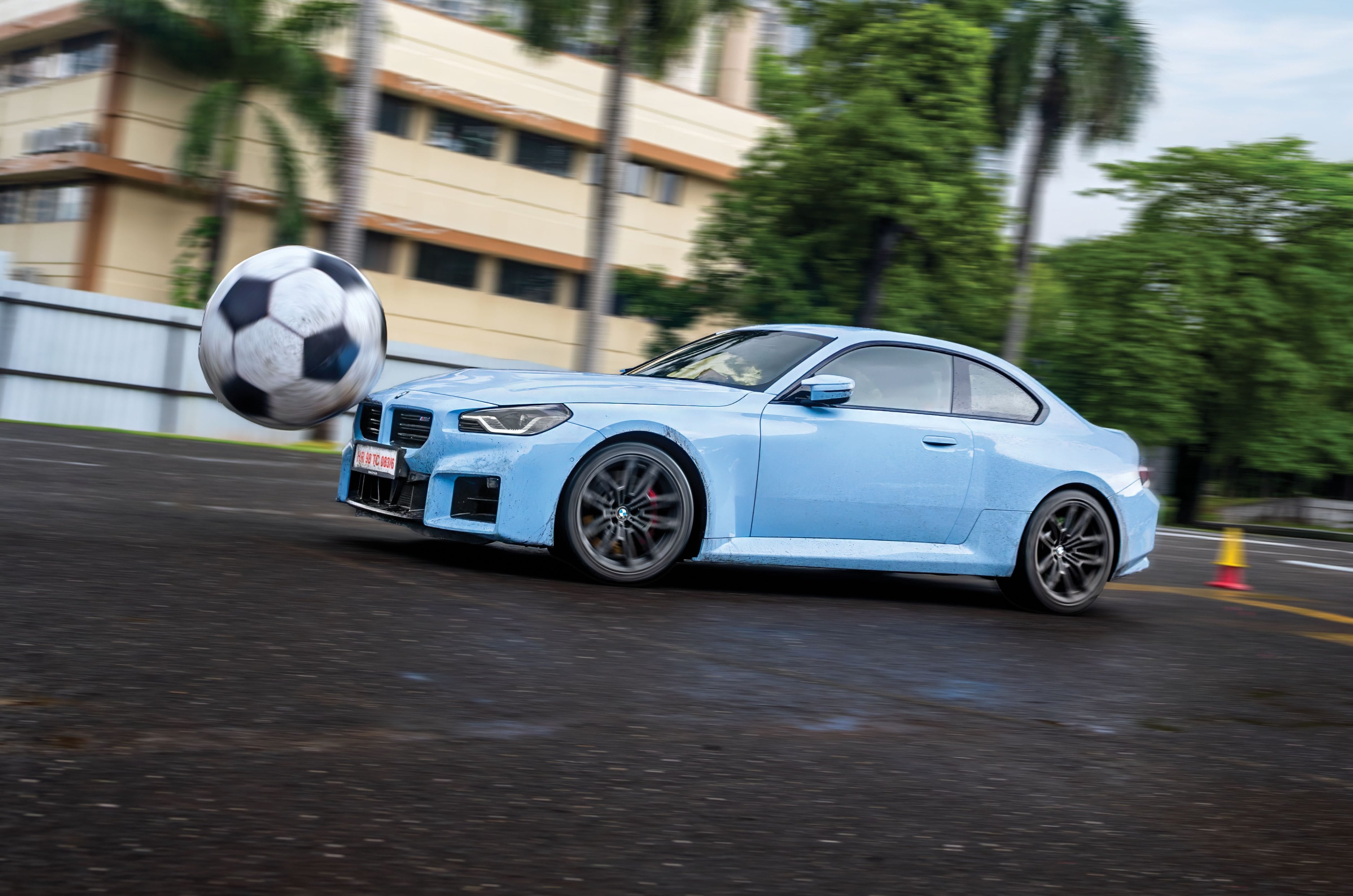
Hop into an M2, line up behind the large inflatable football and race to the finish line, ensuring the ball goes past the flag poles. The fastest to score a goal wins. The M2 was the car of choice, thanks to its upright front-end, which would be a safe bet for pushing a giant football.

The M2 is agile, surefooted and has massive grip.

With the pressure of being from football-crazy Goa, Sergius had his work cut out. But he did Goans proud, guiding the ball with swift, deft steering corrections, and in 9.9sec, we had our first goal and the time to beat.
A run-up-style start with a hard launch turned out to be the fastest way, though, as Rahul scored the goal in just over seven seconds. Talk about choosing the wrong career.

A Zidane-style Panenka was Ameya’s strategy as the ball flicked up with none of Zidane’s flair. A poor 16.64sec, but he managed to score. After watching the slow approach fail, Soham powered through the first half, only to lose the ball and have to reverse to get it in. Way off the times set so far.  With a smooth start, Gavin lost the ball towards the end and had to waste time getting around it, which took over 18 seconds. At least the goal counts.

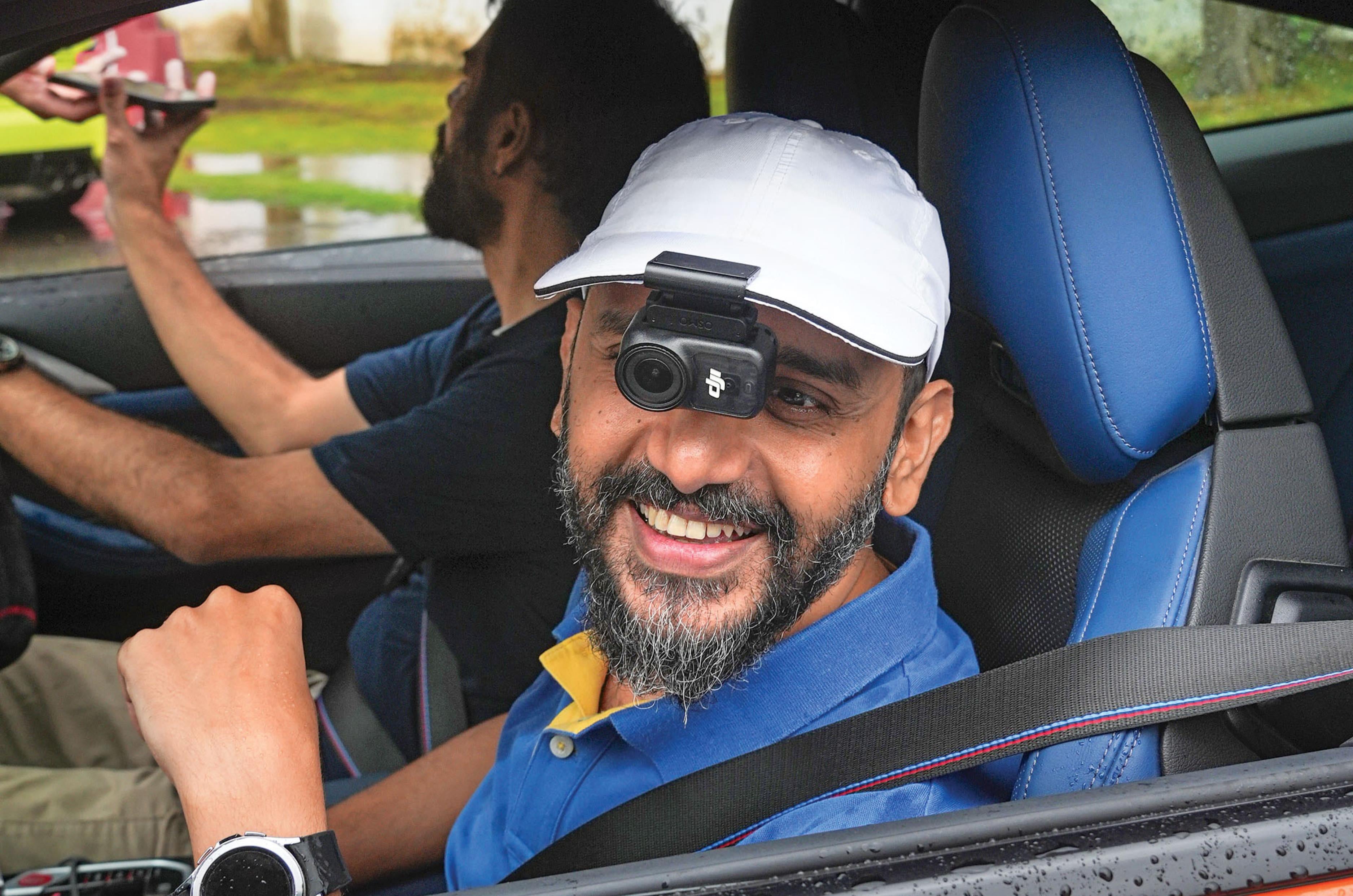
Content is king, and the more angles we have, the more the evidence.

Since the company had paid for the ball (and would also likely have to cover any damage to the car), Hormazd chose the slow-and-steady way. He eased the ball very slowly into the goal, but we cheered louder than we ever had. Appraisals are around the corner. An overly cautious approach, using 4 of the 460hp available, still resulted in Nikhil missing the ball and failing to get it through the posts. Second attempt made it through at a glacial pace.

With enough evidence of how to go about it, I had to choose between rough and smooth, and the former was more enticing. It looked dramatic as the ball flung high, but pushing it through the goal wasted time.

Finally, in an attempt to beat Rahul, using his style, Shapur hit the ball so far off that, by the time it bounced once, he had already reached ahead. He managed to get it in after much effort, but by his next attempt, the ball had deflated. Good riddance.

Challenge 3:The Drift King

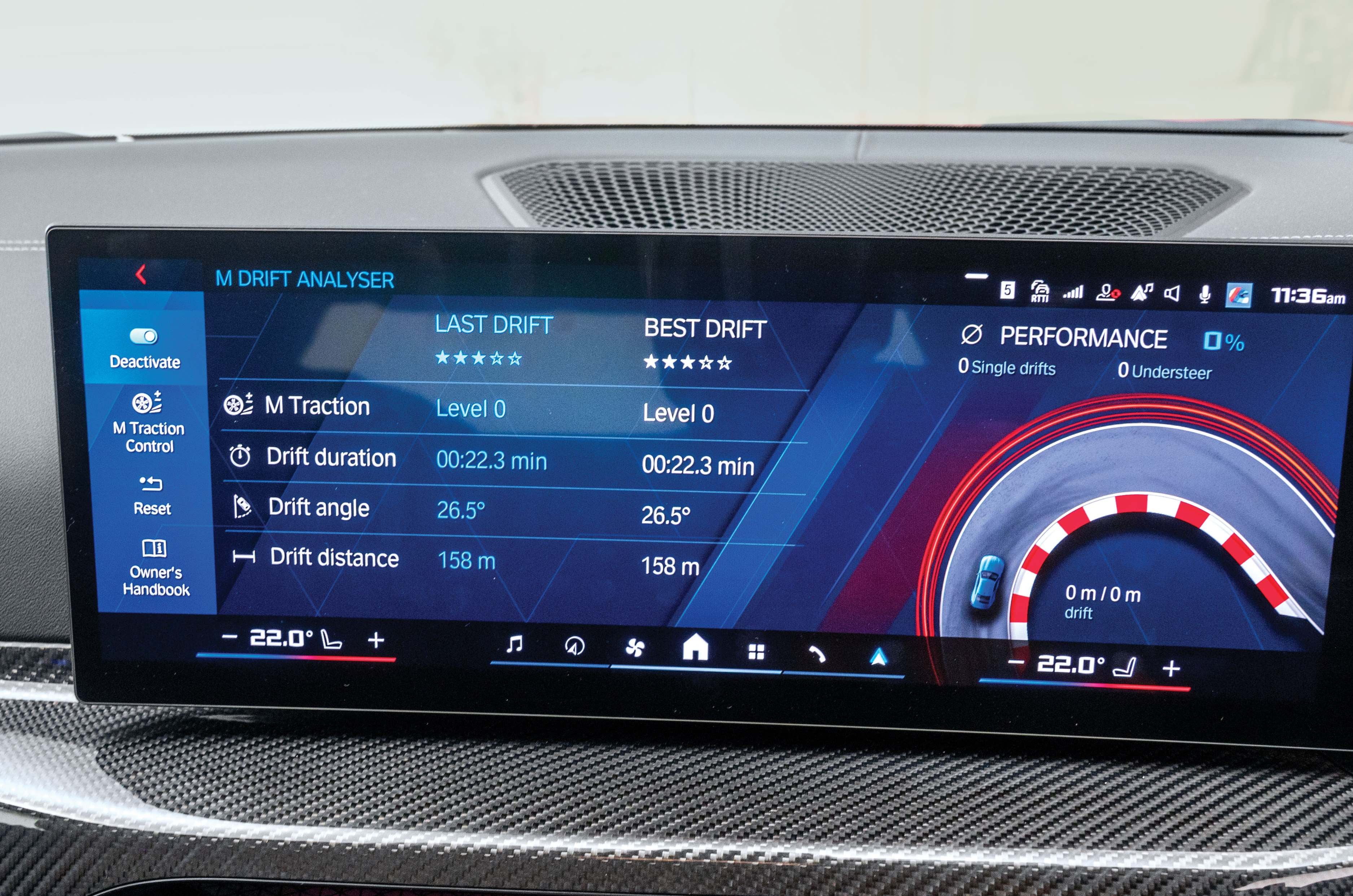
Engage ‘Drift Mode’ in the M4 and achieve the best possible score on the Drift Meter.

Rear wheel drive mode and adjustable traction settings allow for some proper tail-out fun on the M4. 

Before we got to sideways action, we stopped for some grub. As ridiculous as it sounded to have lunch right before drifting in circles, who can get between a bunch of car journos and brown bags of greasy food? After washing down carbs with sugar, we hopped into the M4s for the ultimate bragging rights. The M4 and M2 are both exceptionally playful, and it doesn’t take a lot to get them to break traction. However, the Drift Meter and the extra power of the M4 made it the default choice for drifting.

The drift analyser on the M4 gives you a detailed report of your work with no place to hide.

To begin with, we were all pretty rubbish, but the levels of traction control and the incredible steering feel meant it wasn’t long before everyone got meaningful slides in. Holding it and making circles was something only a few of us managed, with the Drift Meter further confusing us all. Still, the table alongside tells the story, and while it will start a new war in the office, it was surely worth it.

Off-sites like these might seem like another day at work, but if the point is to relax and rejuvenate, no beach resort will ever come close to smoking some tyres.

M-ployee

Drift angle

Drift distance

Goal time

Slalom time

Sergius

23.4deg

233 metres

9.96 seconds

18.88 seconds

Hormazd

30deg

248 metres

16.28 seconds

22.85 seconds

Lenny

25.5deg

241 metres

31.34 seconds

17.68 seconds

Nikhil

36.4deg

34 metres

30.85 seconds

17.39 seconds

Soham

28.5deg

161 metres

24.51 seconds

18.51 seconds

Shapur

28.7deg

186 metres

31.31 seconds

17.6 seconds

Gavin

34deg

337 metres

18.93 seconds

18.66 seconds

Jay

27.3deg

129 metres

17.38 seconds

18.03 seconds

Rahul

26.5deg

128 metres

7.4 seconds

17.89 seconds

Saumil

39deg

341 metres

19.91 seconds

22.96 seconds

Kawasaki Z900 gets offers worth Rs 1.25 lakh in Mumbai and Goa

Kawasaki Z900 gets offers worth Rs 1.25 lakh in Mumbai and Goa
Kawasaki Z900 Right Side View

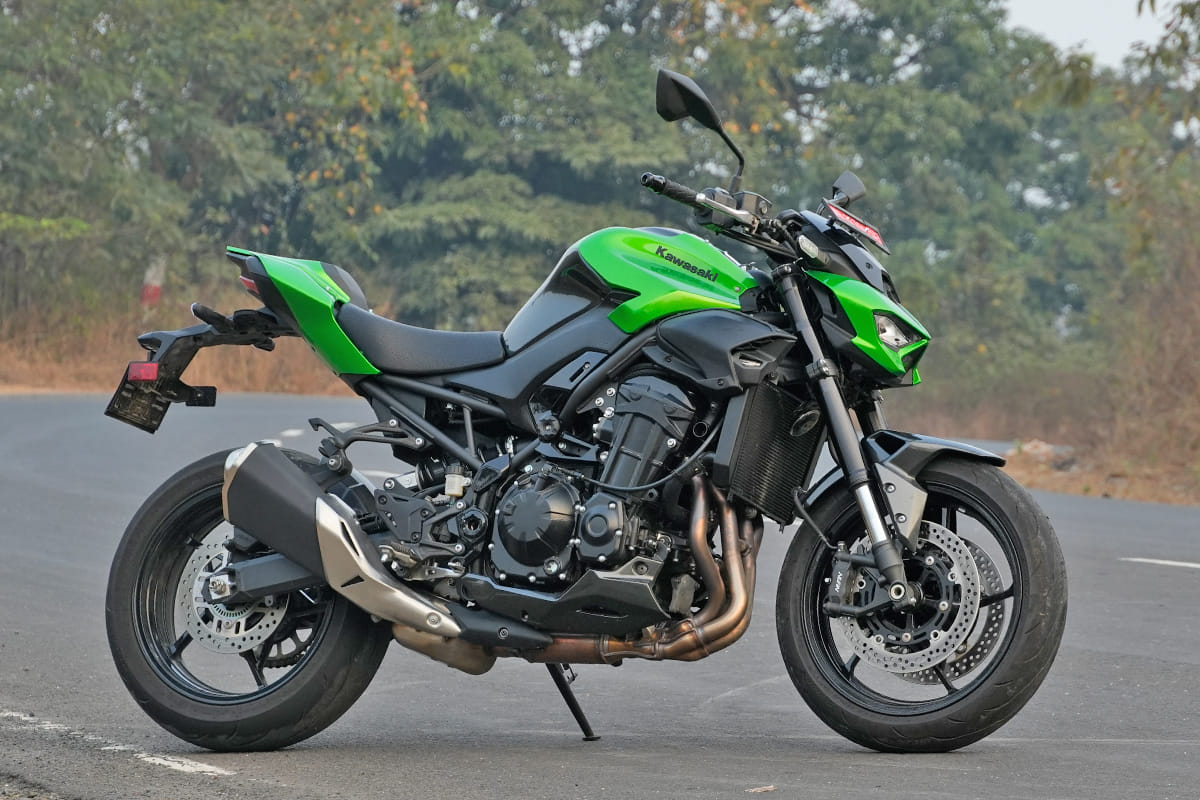
The Kawasaki Z900 is one of the most popular in-line four motorcycles in India. With the brand cache and a price that seems far more reasonable than its rivals, it’s no surprise that it’s been one of the bestsellers for the Japanese manufacturer.

  1. The discount is through a zero percent interest scheme, for the three-year EMI tenure
  2. Includes accessories like a frame slider, radiator guard, and fork slider worth Rs 25,000

Kawasaki Z900 available through a zero percent interest scheme

A bundle of cash discount and accessories

Anzen Kawasaki, the official dealer for Kawasaki in Mumbai and Goa, is currently offering a zero percent interest scheme for the Z900, with a down payment of Rs 5 lakh on its Rs 9.99 lakh ex-showroom price. The zero percent interest part applies exclusively to the 36 months EMI tenure. You will end up saving Rs 1 lakh in interest with the scheme, which Anzen is offering as an up front discount. This effectively brings down the Z900’s ex-showroom price to Rs 8.99 lakh. In addition to that, you get Rs 25,000 worth of accessories such as a frame slider, a radiator guard, and a fork slider at no extra cost.

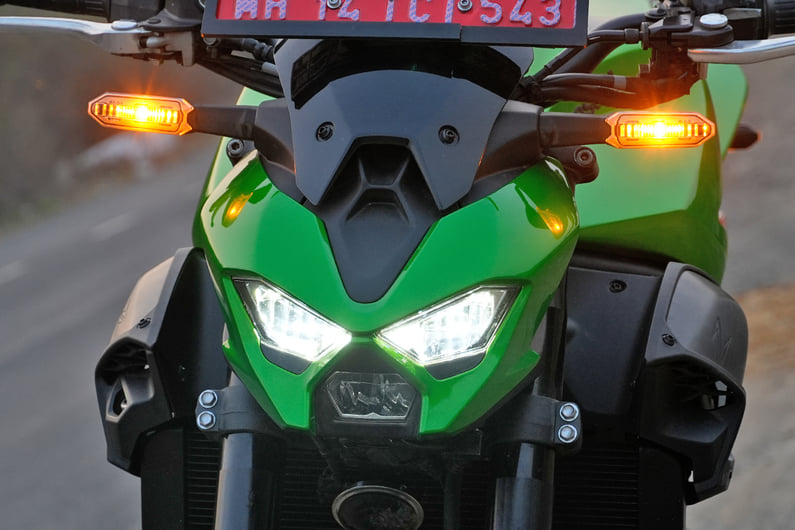
If you’re unfamiliar with the Z900 until now, the sport-naked motorcycle last received a comprehensive list of upgrades to its design and gained some new features last year. It’s powered by a 948cc in-line-four-cylinder, liquid-cooled engine with 125hp and 98.6Nm of torque. In India, it’s available in two colours: lime green (a Kawasaki signature shade) and metallic spark black. It’s currently being imported as a completely built-up unit (CBU) and can only be had as a single seater.

2026 F4 India: Aris Kyriakou in the lead after Round 1

2026 F4 India: Aris Kyriakou in the lead after Round 1
F4 India Aris Kyriakou Kichcha's Kings Bengaluru

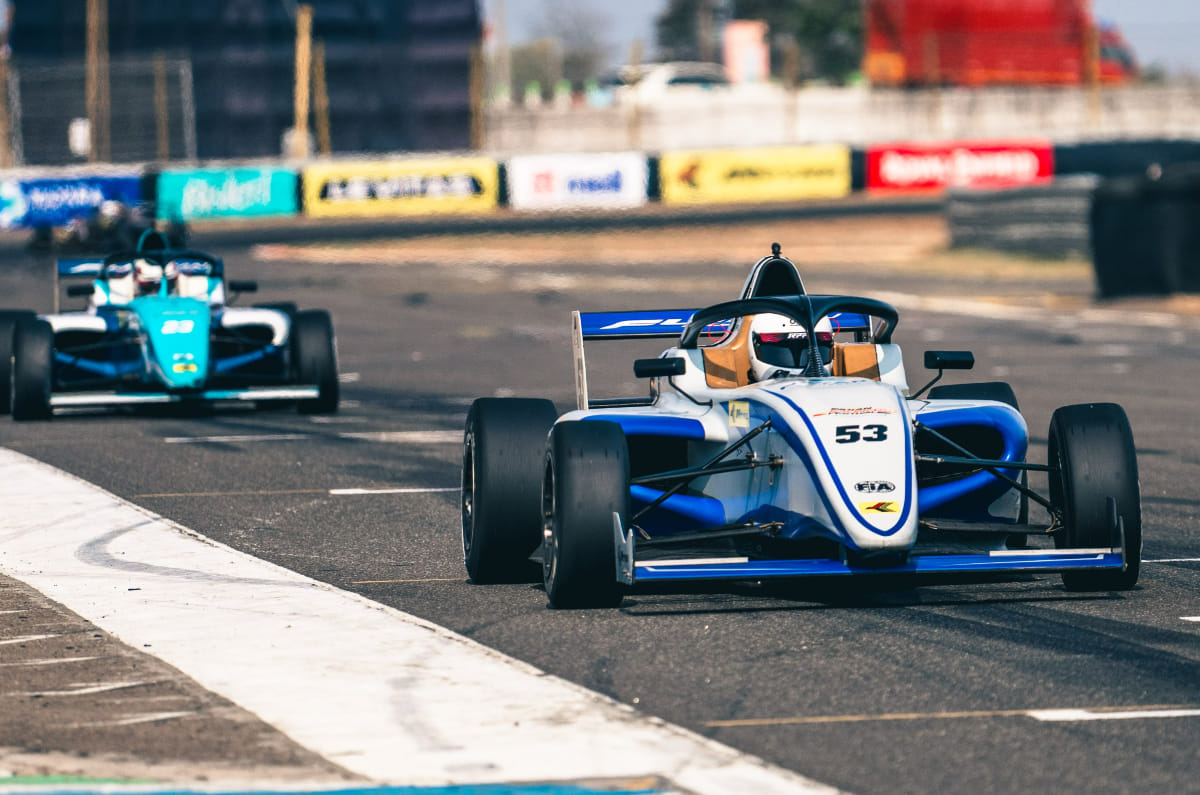
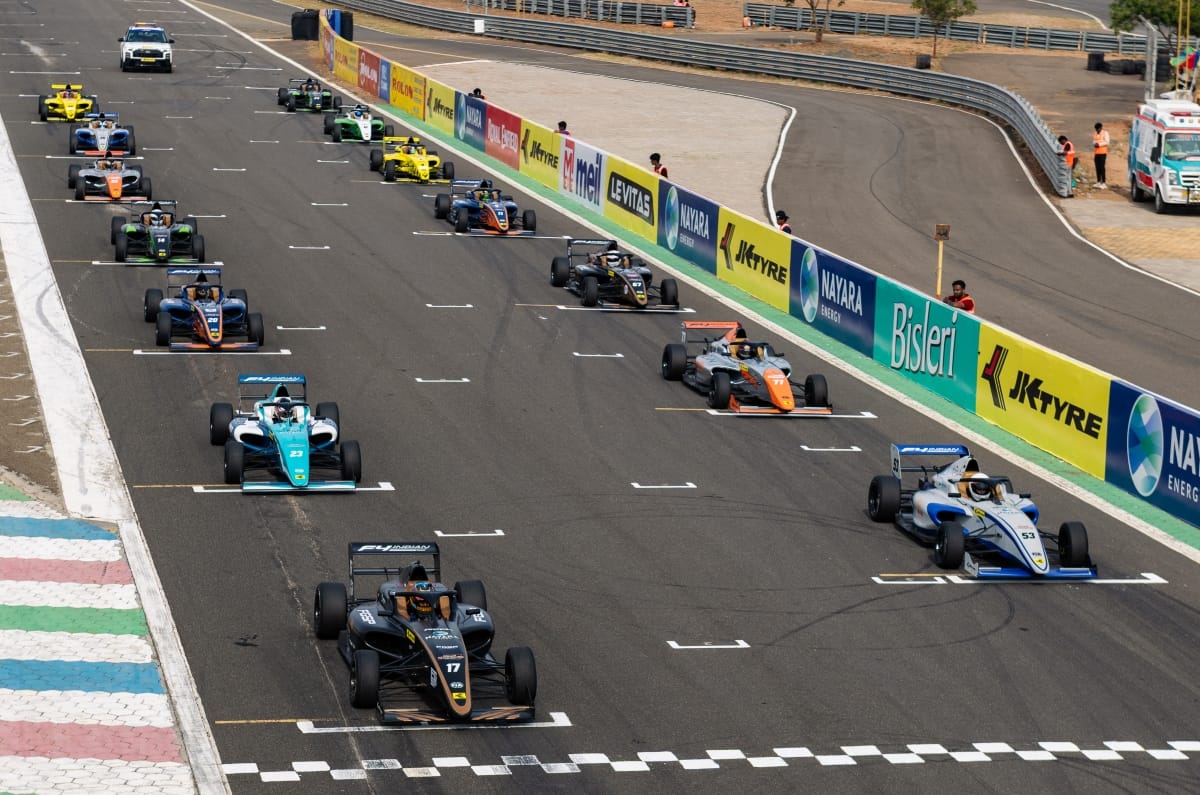
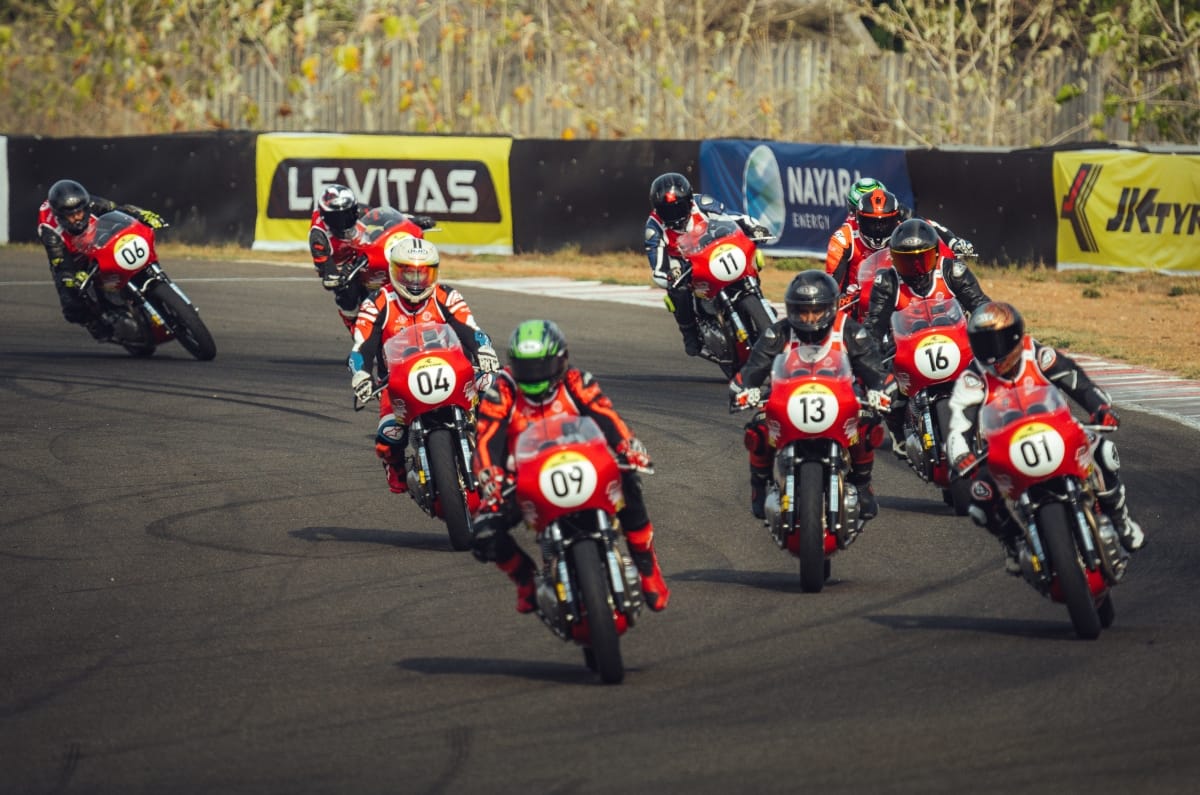
The 2026 Indian Racing Festival kicked off at Coimbatore’s Kari Motor Speedway. The opening round, held from September 12-13, hosted the F4 Indian Championship and Royal Enfield Continental GT Cup. The Indian Racing League, meanwhile, will get underway later in October with a shorter four-round calendar that concludes at the new Navi Mumbai street circuit.

Kichcha’s Kings Bengaluru’s Aris Kyriakou made an impressive start to the season, finishing on the podium in all three F4 India races and even winning Race 3. Over in the Royal Enfield Continental GT Cup, Senthil Kumar took a clean sweep, winning all three races in the Professionals category.

  1. Kyriakou finished on the podium in all three F4 India races
  2. Kumar takes clean sweep in Continental GT Cup Pro 

2026 F4 India Round 1

F4 India Round 1

The F4 Indian Championship gives drivers the opportunity to earn valuable Super Licence points, which are needed to compete in F1. As a result, the championship has been attracting rising talent from around the globe and this year’s grid features drivers representing eight different countries.

After starting from eighth on the grid, Goa Aces JA Racing’s Luviwe Sambudla pulled off an incredible recovery drive in Race 1. He moved into podium contention by Lap 4. A mid-race Safety Car then bunched up the pack, and the South African driver went on to claim victory 2.245 seconds ahead of Kyriakou.

In Race 2, Goa Aces JA Racing’s Aryan Narola converted pole position into victory. He fended off pressure from Kyriakou to win by a margin of just 0.624 seconds. This result also makes the 15-year-old the second-youngest race winner in the championship’s history.

After two back-to-back podium finishes, Kyriakou finally bagged victory in Race 3 after keeping Mahlori Mabunda at bay. The Australian driver’s consistent run in Round 1 sees him take the overall lead, 13 points ahead of Sambudla. Mehta is third overall, six points behind Sambudla.

F4 India Race 1 results

1. Luviwe Sambudla (Goa Aces JA Racing) 
2.  Aris Kyriakou (Kichcha’s Kings Bengaluru)
3. Aaron Mehta (Kolkata Royal Tigers)

F4 India Race 2 results

1. Aryan Narola (Goa Aces JA Racing)
2. Aris Kyriakou (Kichcha’s Kings Bengaluru)
3. Swarnav Das (Kolkata Royal Tigers)

F4 India Race 3 results

1. Aris Kyriakou (Kichcha’s Kings Bengaluru)
2. Mahlori Mabunda (GodSpeed Kochi)
3. Aaron Mehta (Kolkata Royal Tigers)

2026 Royal Enfield Continental GT Cup Round 1

Royal Enfield Continental GT Cup Round 1

Alongside F4 India, the Kari Motor Speedway also hosted the opening round of the 2026 Royal Enfield Continental GT Cup, presented by JK Tyre. The series features a new format this year, with separate grids for its two categories. The Professionals are racing on the GT-R750, while the Amateurs are racing on the GT-R650.

Former National Champion Senthil Kumar made his debut in the Professionals category this year. He’s already gotten off to a dominant start, winning all three races held over the weekend. Both Allwin Xavier and Anish D Shetty finished on the podium in all three races.
Kabir Sahoch, meanwhile, dominated in the Amateurs category, also taking a clean sweep.

Royal Enfield Continental GT Cup Race 1 results (Pro)

1. Senthil Kumar
2. Allwin Xavier
3. Anish D Shetty

Royal Enfield Continental GT Cup Race 2 results (Pro)

1. Senthil Kumar
2. Anish D Shetty
3. Allwin Xavier

Royal Enfield Continental GT Cup Race 3 results (Pro)

1. Senthil Kumar
2. Anish Shetty
3. Allwin Xavier

Royal Enfield Continental GT Cup Race 1 results (Amateurs)

1. Kabir Sahoch
2. Saurav Dey
3. Brandon Dsouza

Royal Enfield Continental GT Cup Race 2 results (Amateur)

1. Kabir Sahoch
2. Saurav Dey
3. Vaibhav Rao

Royal Enfield Continental GT Cup Race 3 results (Amateur)

1. Kabir Sahoch
2. Harish Yodhin
3. Prashaant C
 

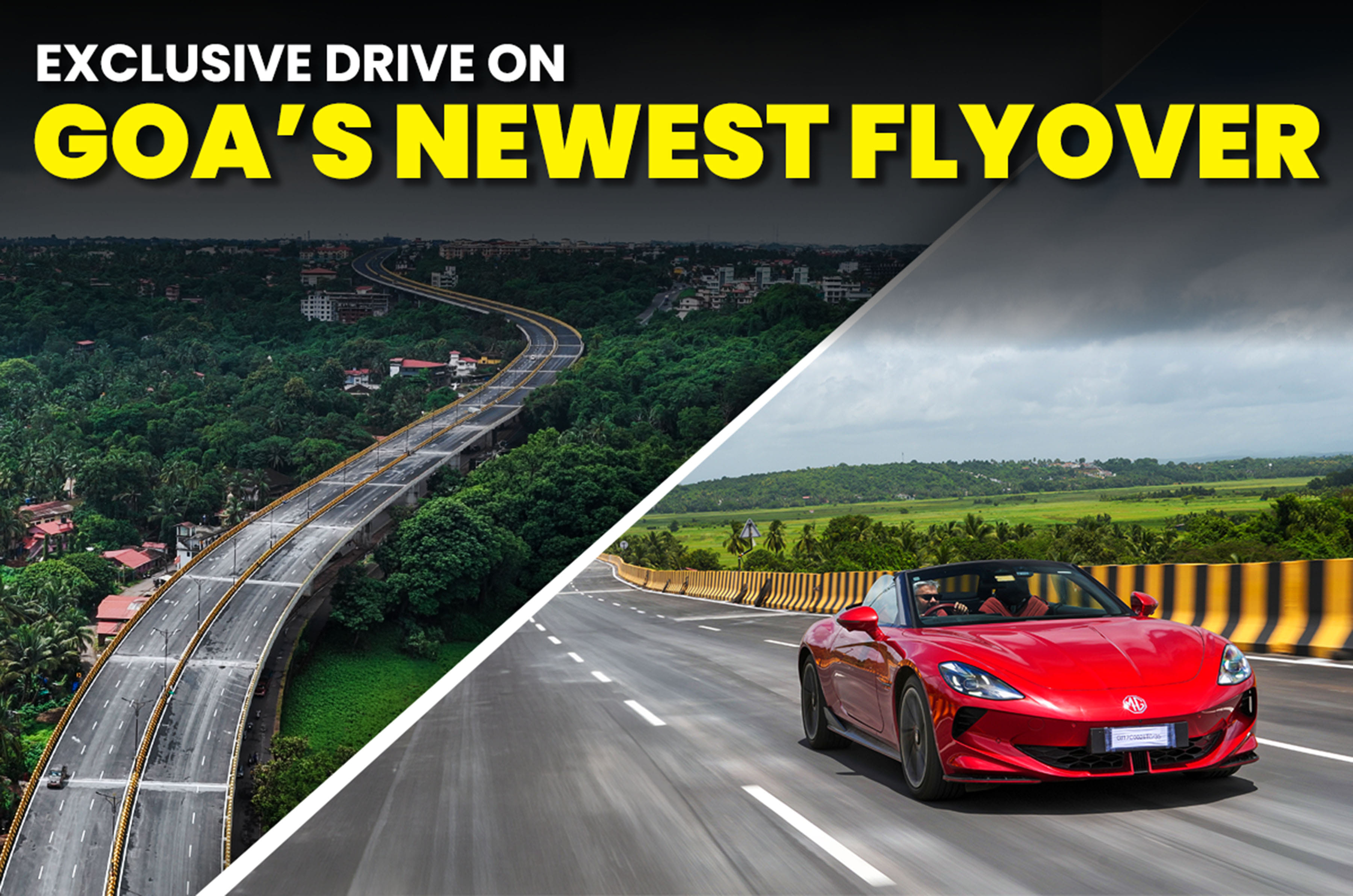
Cruising down Goa’s Porvorim Elevated Corridor in an MG Cyberster

Cruising down Goa’s Porvorim Elevated Corridor in an MG Cyberster
Goa Porvorim Elevated Corridor Flyover

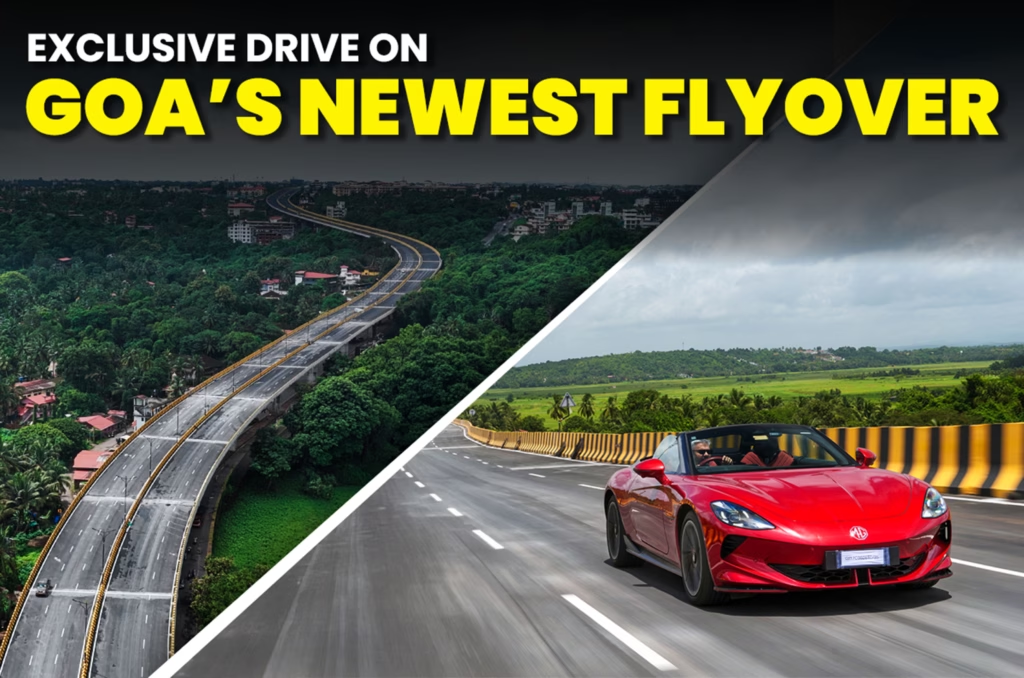
If a holiday in Goa is a fixture on your calendar, you will have noticed that the state has changed a fair bit in the last few years. There is a new airport to fly into, new bridges replacing the old, not to mention the wider highways. The latest upgrade to the state’s road network is the Porvorim Elevated Corridor, targeting a major bottleneck on NH66. We were given an exclusive opportunity to experience it for ourselves before the official inauguration on Sep 9, and we brought along a very ‘Goa’ car for the occasion – the MG Cyberster.

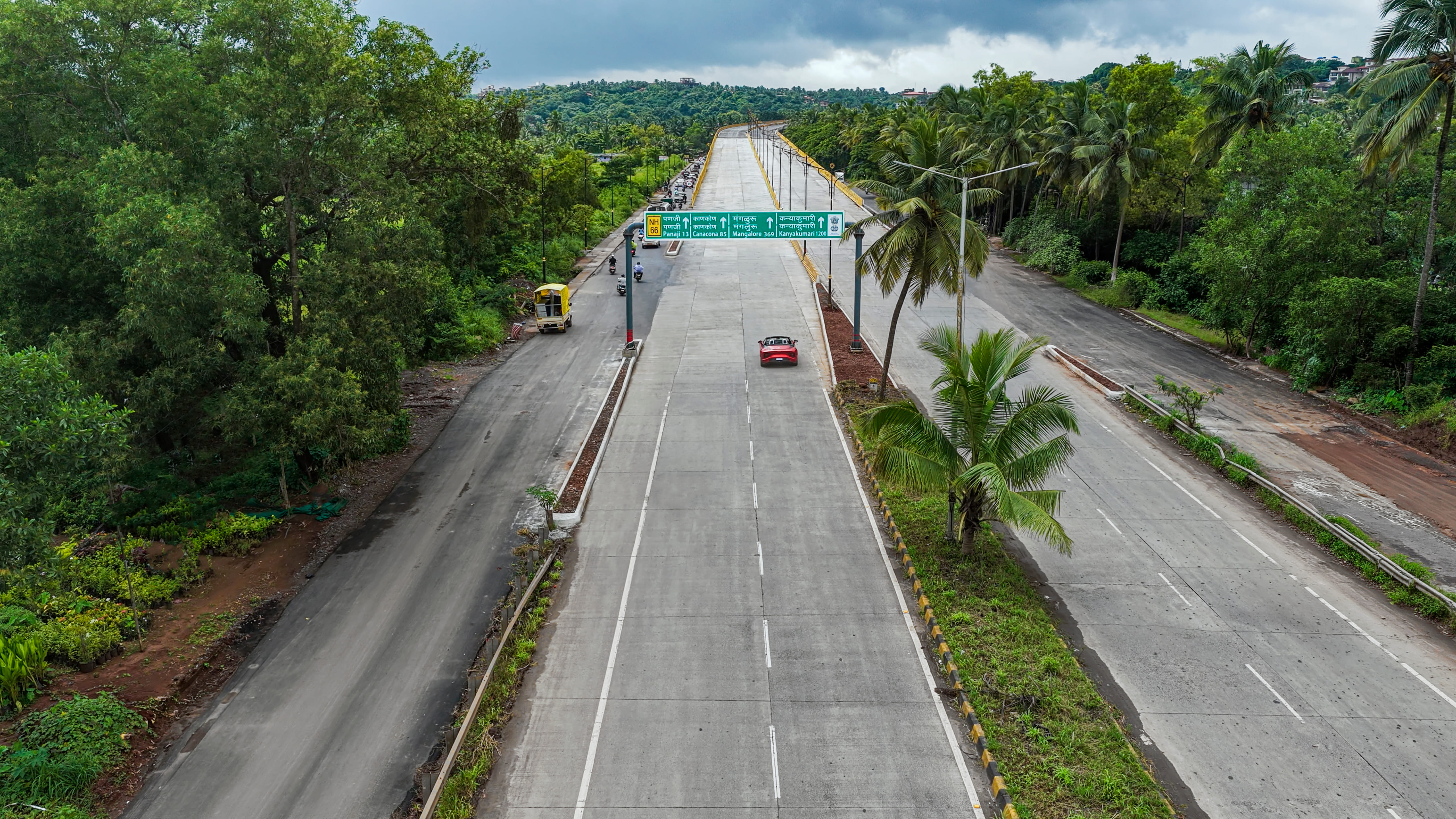
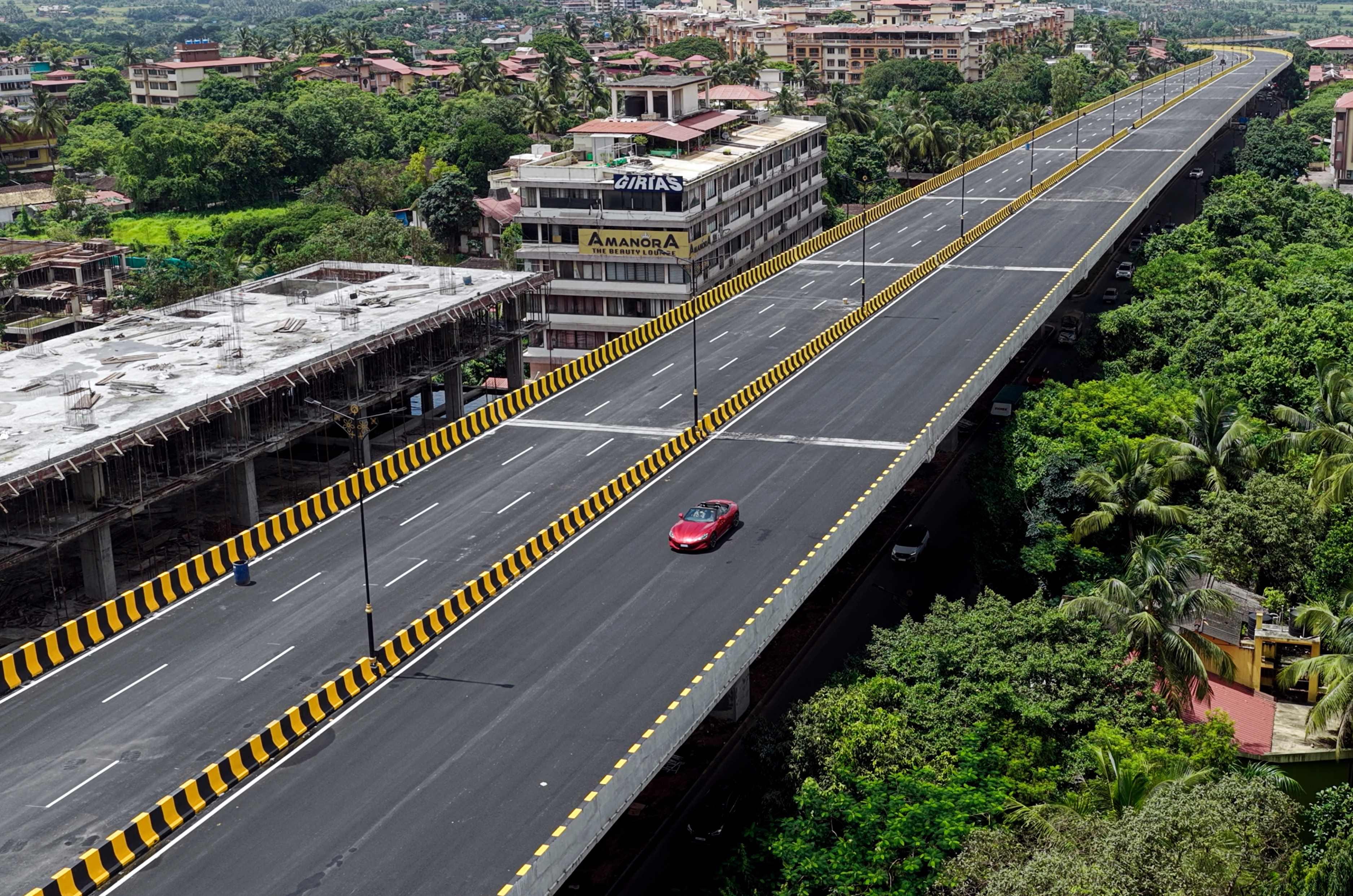
First, a bit of quick history and geography. National Highway 66 is a 1,640km arterial highway running from Panvel in Maharashtra to Kanyakumari in Tamil Nadu. 124km of NH66 is in Goa and, for years, Porvorim has been its most notorious bottleneck. The new 5.15km Porvorim Elevated Corridor lets traffic sail clean over all that congestion below, connecting directly to the Atal Setu bridge that crosses the Mandovi River. It promises to cut travel time between Mapusa in the north and the capital Panaji by up to 30 minutes – a claim we set out to test.

Six-laned Porvorim Elevated Corridor brings North Goa and Panaji closer than ever.

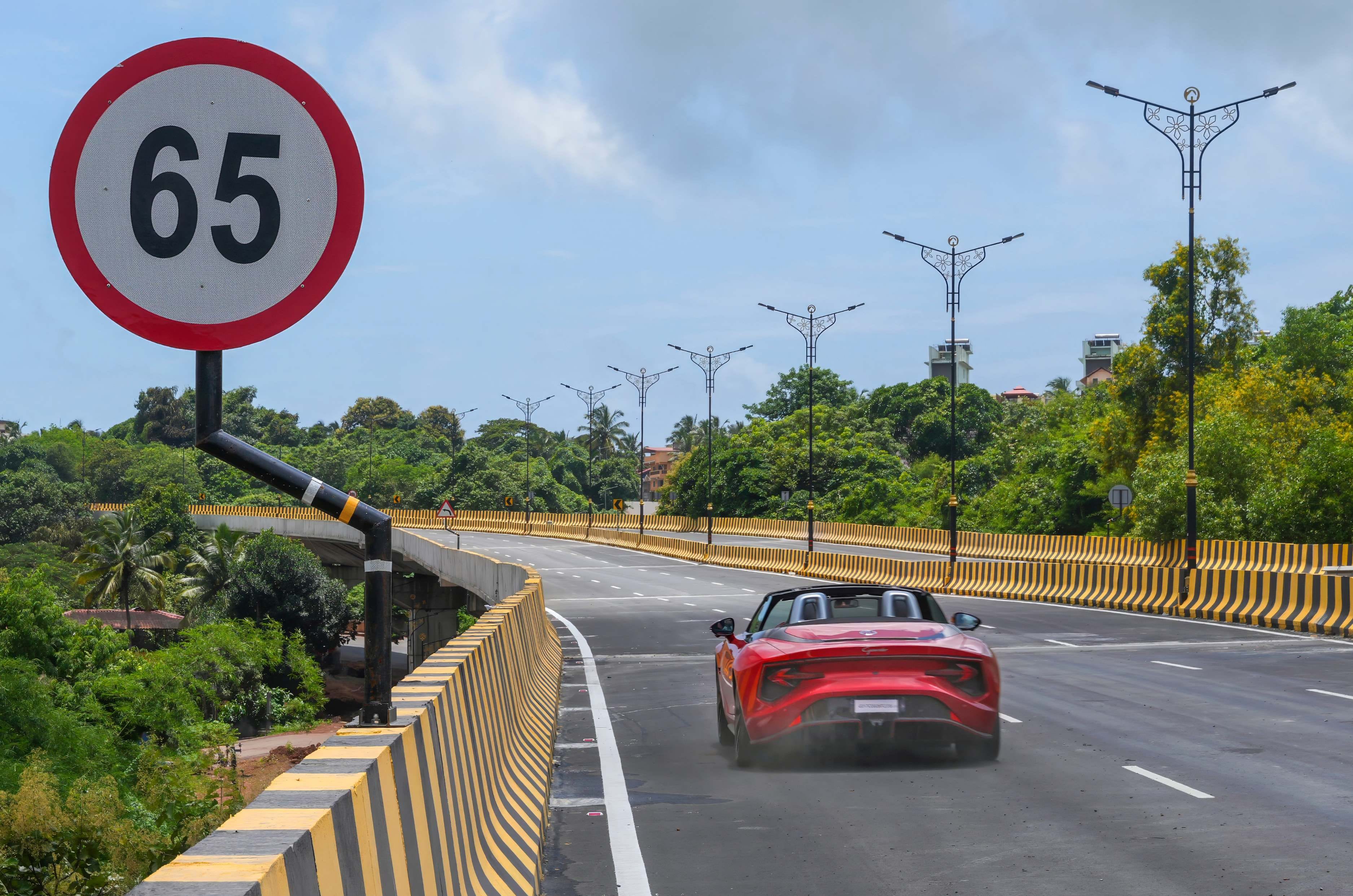
Our starting point was the north end of the corridor, a couple of kilometres away from Guirim village near Mapusa. We started our stopwatch on the concrete ramp leading up the PEC – one we would only stop once we crossed over the Atal Setu Bridge and entered Panaji. And even with 510hp and 725Nm on tap and the road all to ourselves, we would be sticking to the 65kph speed limit.

From the concrete on-ramp, it’s only a few metres until you drive onto the actual viaduct section, which is paved tarmac broken up only by expansion joints. It is not completely straight either – the north end has some lovely sweeping curves. In a car like the Cyberster, it is quite tempting to push through the bends but, exercising restraint, we instead indulged in the joys of open-top motoring. The Cyberster drops its top in 10 seconds at speeds up to 50kph, giving us superb views all around. Importantly, it also raises the top just as quickly, which comes in handy during sudden showers.

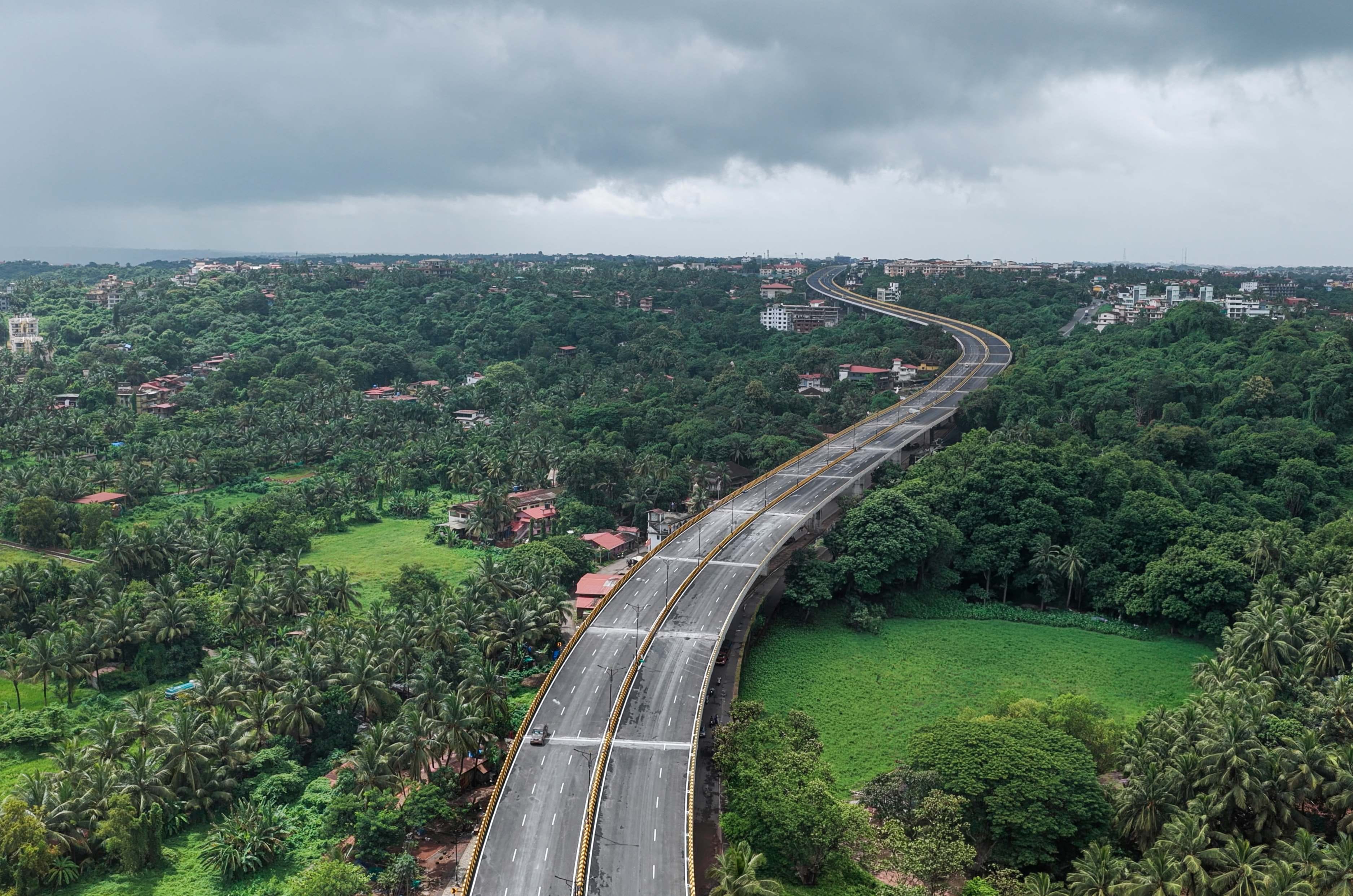
No more jams! 5.15km flyover sails over congestion at Porvorim junction.

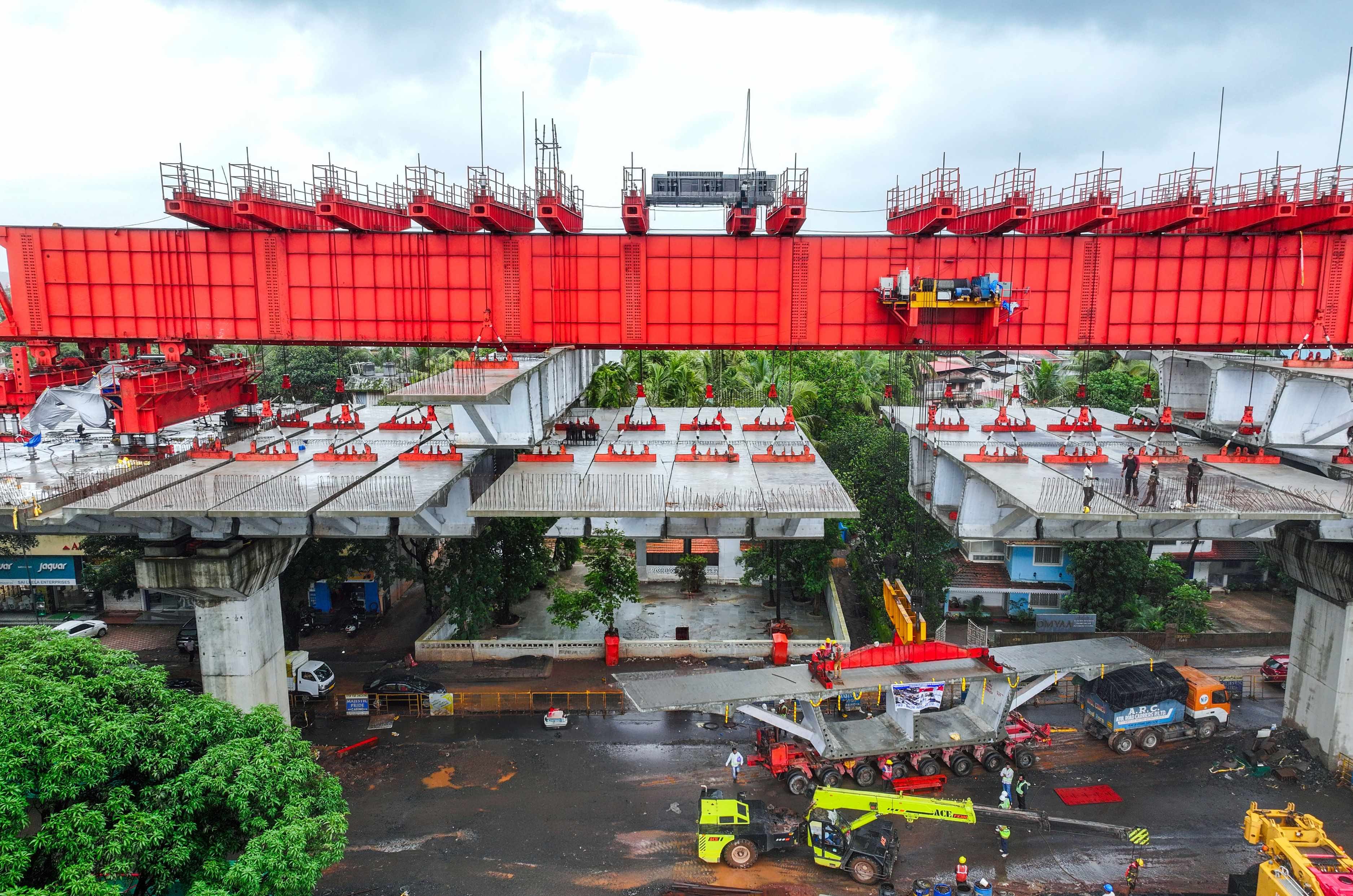
From the driver’s seat, the panoramic view of Porvorim’s greenery was quite stunning – something you would never notice stuck in traffic below. Drive on, and the road becomes arrow-straight, and you start to notice how close some of the buildings are to the corridor. This proximity to adjoining structures, along with the fact that NH66 had to stay operational below, were among the biggest challenges the engineers faced.

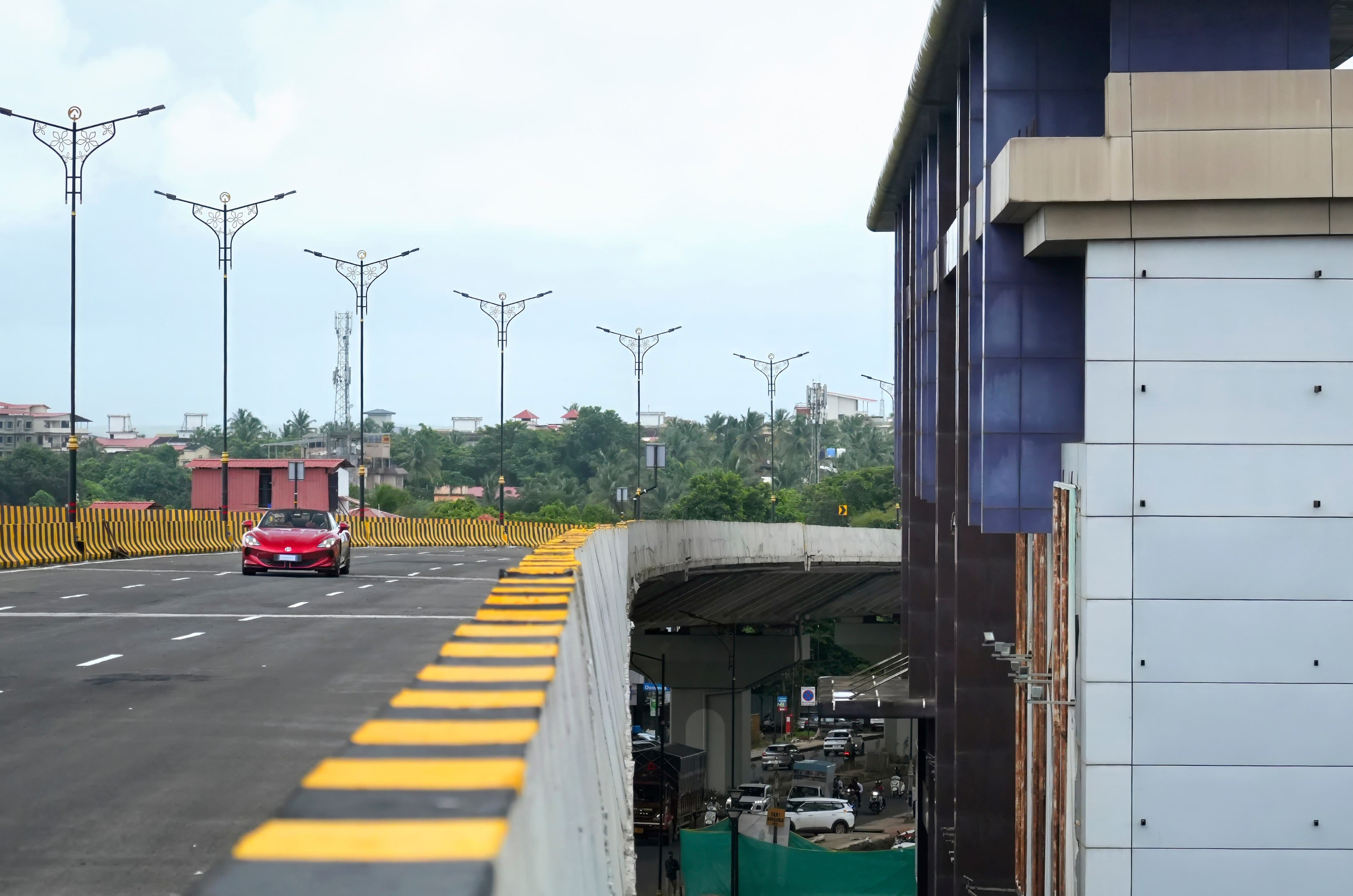
Some buildings were a little too close for comfort making construction quite challenging.

The 4.19km viaduct section is supported by 87 pillars. Each span running between two pillars requires between 13 and 17 individual pre-cast concrete sections. These sections are about 24 metres wide and weigh a whopping 120 tonnes each. They were cast in a yard down the road, trucked to the site, hoisted 11 metres high and installed in place – all in a narrow space between buildings with absolutely no room for error, while ensuring minimal traffic disruptions below.

Considering the challenges, it is quite remarkable that the Porvorim Elevated Corridor was completed in just two years and five months. Below the main structure, 10.30 kilometres of service roads and 28 minor junctions keep local traffic moving, while the corridor sails above it all. Also featured are eight box culverts and a rainwater harvesting system, so the monsoon doesn’t slow traffic down. A modern lighting setup with 515 streetlights has already been installed, while two high-mast lights and ten overhead gantries with cameras are to be put up soon. All constructed at a cost of Rs 641.46 crore.

New flyover part of NH 66 open to cars, two-wheelers and CVs. Speed limit 65kph.

Before long, we were passing the Mall de Goa – close enough to see the expressions on the faces of people in the food court, as they watched the bright red Cyberster whizz past their window. As we made our way down the off-ramp, the stopwatch showed that it had been just over four and a half minutes. Heading towards the Atal Setu, we merged with the dozens coming from the diversion and became part of regular traffic. 

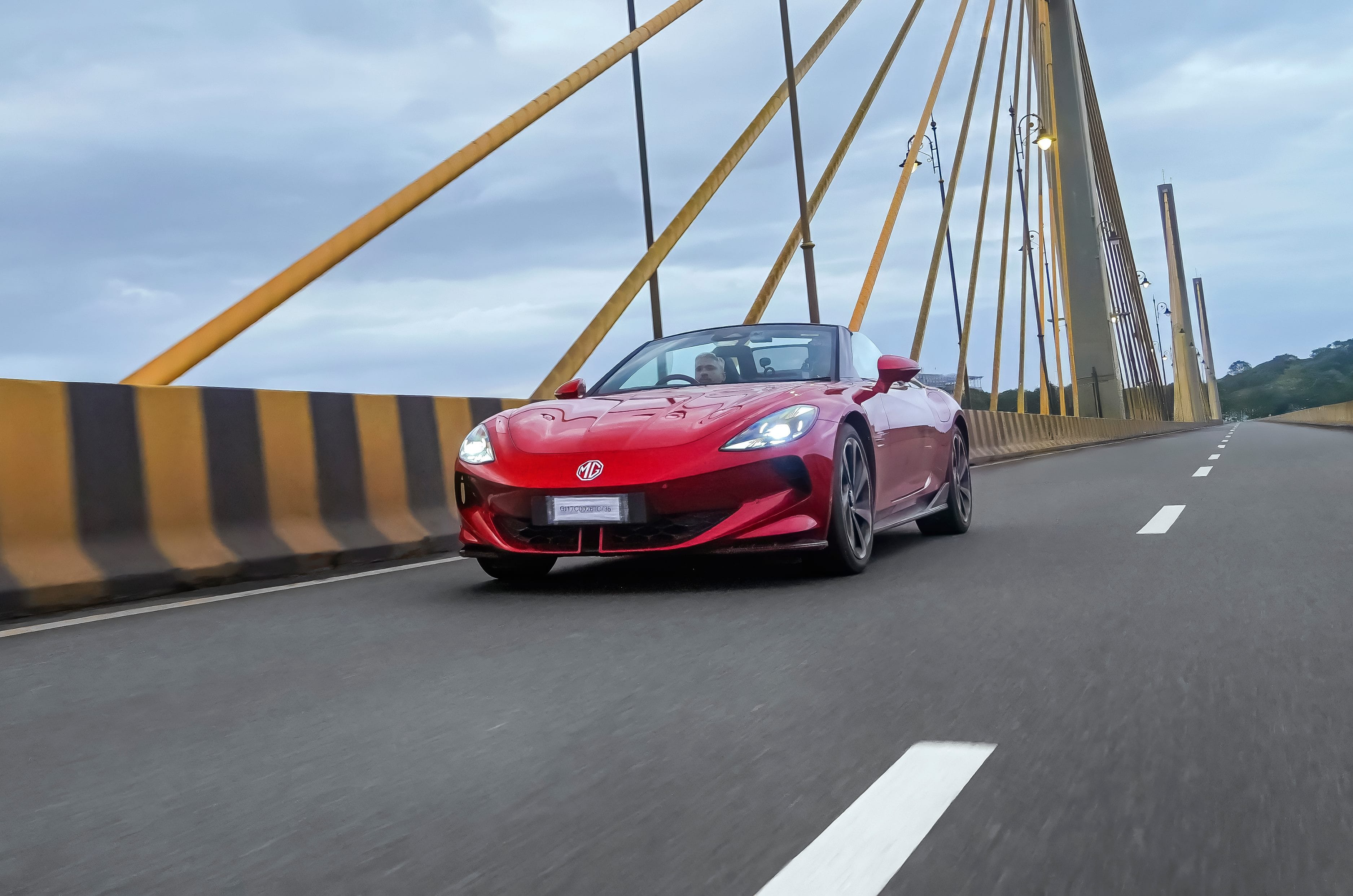
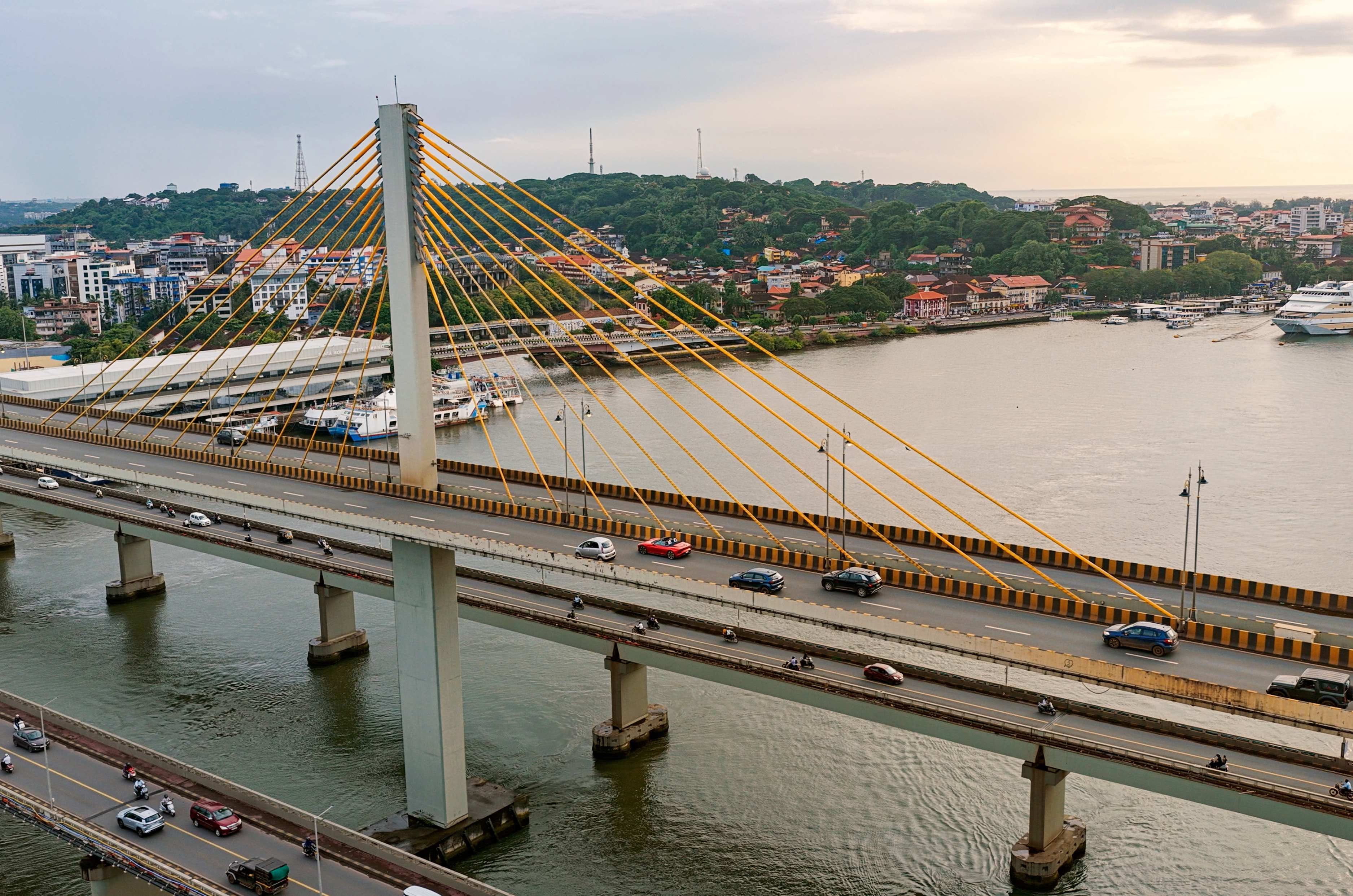
And just like that, we were climbing the Atal Setu bridge, which would take us across the Mandovi River and into Panaji. To the right, stunning views of Panaji city and Miramar beach in the distance, and to the left, Old Goa with its historic churches, while above me, through the open roof of the Cyberster, panoramic views of the bridge’s iconic pylons and yellow cable stays.

Drop top MG Cyberster a great match for Goa’s vibe

Coming down the Atal Setu into Panaji, our stopwatch read just under 10 minutes. Even if you factor in a couple of extra minutes for traffic once the PEC opens, it equates to a real-world saving of about 30 minutes in peak hours, which is quite significant. In fact, the PEC is said to have a capacity of 70,000 PCU, or passenger car units, per day, so traffic flow is expected to be quite swift. Simultaneously, it will reduce the burden on the service and other connecting roads below the corridor, improving flow for local traffic too.

Connects directly to (yet another) Atal Setu bridge and brings you closer to Goa’s historic sites.

The Porvorim Elevated Corridor, along with other recent infra projects such as the Atal Setu, the New Zuari Bridge and the widening of NH66, is expected to boost the economy by improving intra-state connectivity to Goa’s industrial hubs, as well as flow between the airports and ports. It should also make commutes easier for residents and change the way tourists experience Goa – less time spent travelling, more time to explore the beaches, the culture and everything Goa has to offer.

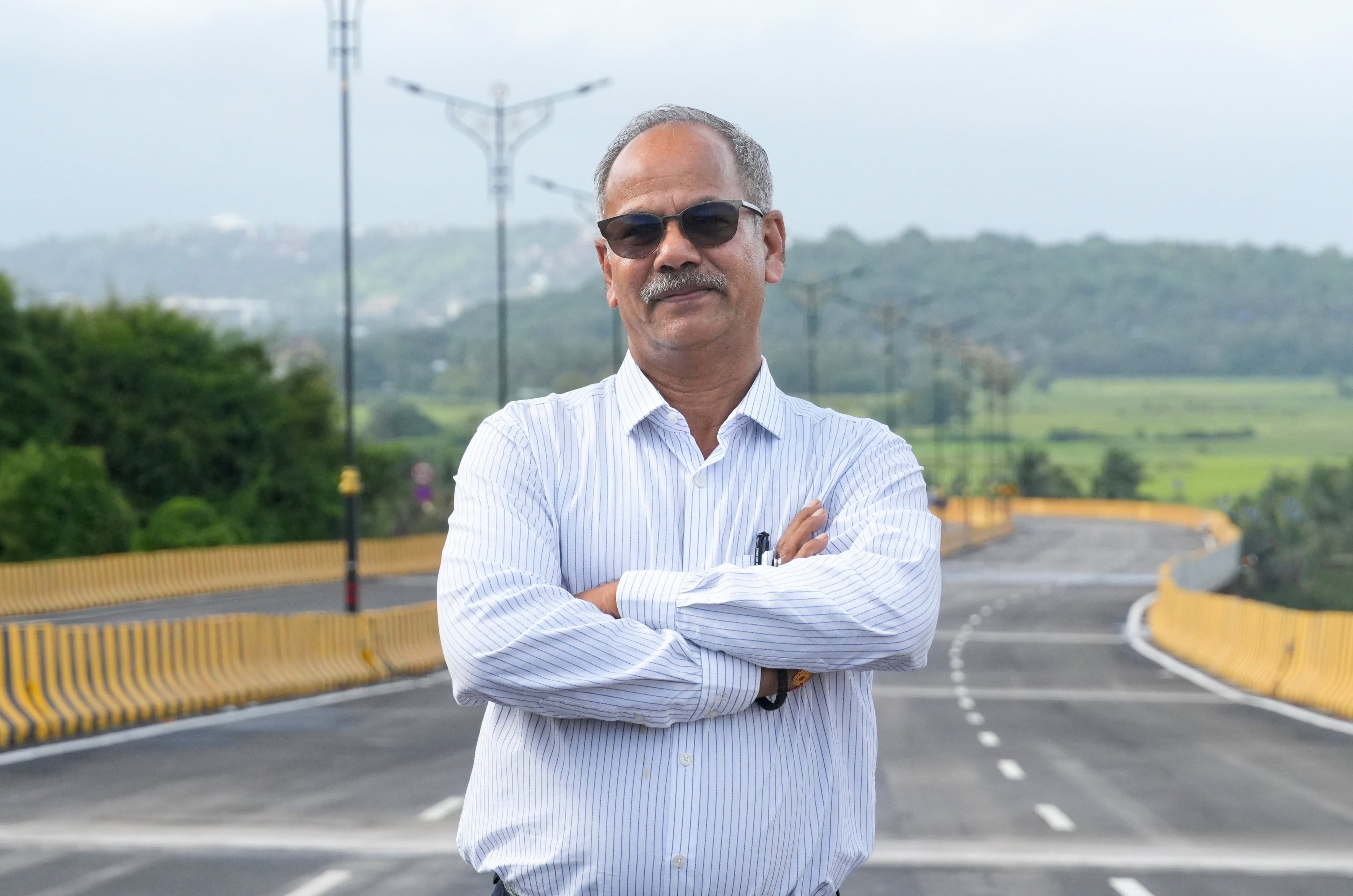
In conversation with Sandip Prabhu Chodnekar, Principal Chief Engineer, Goa Public Works Department (PWD)

On the challenges faced during construction

This bridge is about 24 metres wide, but the right of way is only 25 metres. Constructing such a wide structure when both sides are already fully developed was very challenging. One of the biggest challenges was lifting the segments. Each segment is nearly 24 metres wide and weighs around 120 tonnes. We could not divert the traffic, so we had to carry out most of the work at night. During the daytime, we stopped heavy traffic so that the segments could be lifted safely and normal traffic could resume quickly.

Lifting 25 metre wide sections that weigh 120 tonnes called for nerves of steel.

On other highlights of the project

We tried to harvest the rainwater to recharge the groundwater and increase the water table. There is a median between the service roads below, where we are also planting trees. The corridor’s rainwater harvesting system collects the water and directs it into this median. From there, the water flows into pits that we have dug and filled with aggregates and strainers, allowing the rainwater to percolate into the ground. This helps harvest the rainwater and increase the water table on the plateau during the monsoon.

On traffic and usage

Below the corridor, things will be quite different. Once around 50,000 PCUs of traffic are taken off the existing four-lane road, there could be a tendency for people to park on these lanes. So, we will have to manage parking as well. We have streamlined the junctions and completely reworked the at-grade traffic flow. Motorcycles are also allowed on the Porvorim Elevated Corridor. 

In conversation with Dr. Pramod Sawant, Chief Minister, Goa

On the importance of the project

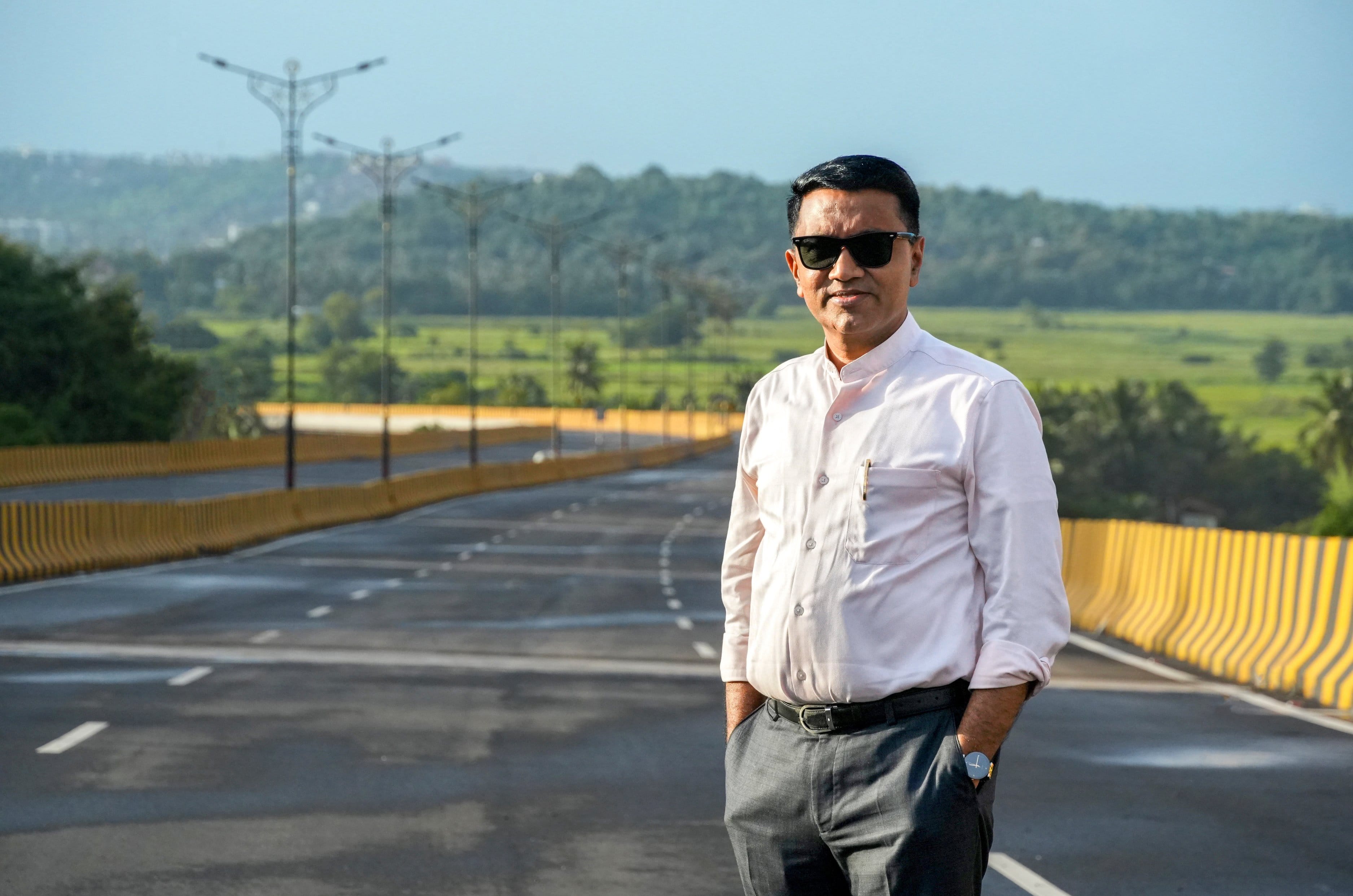
The Porvorim Elevated Corridor is actually important not only for Goa but also for Maharashtra, Karnataka and Kerala. Porvorim had become a problem because it is a congested and newly developed city, with development on both sides of the road. Even after the road was widened, it was very difficult to manage, and it had become an accident-prone zone. That is why the Porvorim flyover was required, to ensure smooth traffic on NH-66. 

Greater connectivity a boon for residents, tourists and businesses. 

On the project’s wider connectivity benefits

With the opening of Manohar International Airport in North Goa, there was a need to improve connectivity towards South Goa. People arriving at Manohar International Airport and travelling towards South Goa were facing a lot of congestion. Now, that congestion will be reduced and this will definitely help tourism and vehicle movement in the state.

Furthermore, there will be better connectivity between the airports and ports, which will have  a positive economic impact. It is also a very important project for the people of Goa. Especially those travelling between North Goa and the capital; they will save time and money, and their daily commute will become much easier.

On Goa’s future infrastructure plans

Almost all the projects on the National Highway network in Goa have been completed. One of the remaining projects is the Borim Bridge, which will connect the Ponda side. The tendering process for it will happen in the next few days.

We are planning to improve connectivity across rural Goa, from one end of Maharashtra towards Karnataka. We are considering a ring road for Goa, because traffic currently comes into the interior areas and cities. In the future, we want traffic to be able to move around the interior villages and across the state without having to enter the cities.

Simple Energy crosses 10,000 annual sales for the first time

Simple Energy crosses 10,000 annual sales for the first time
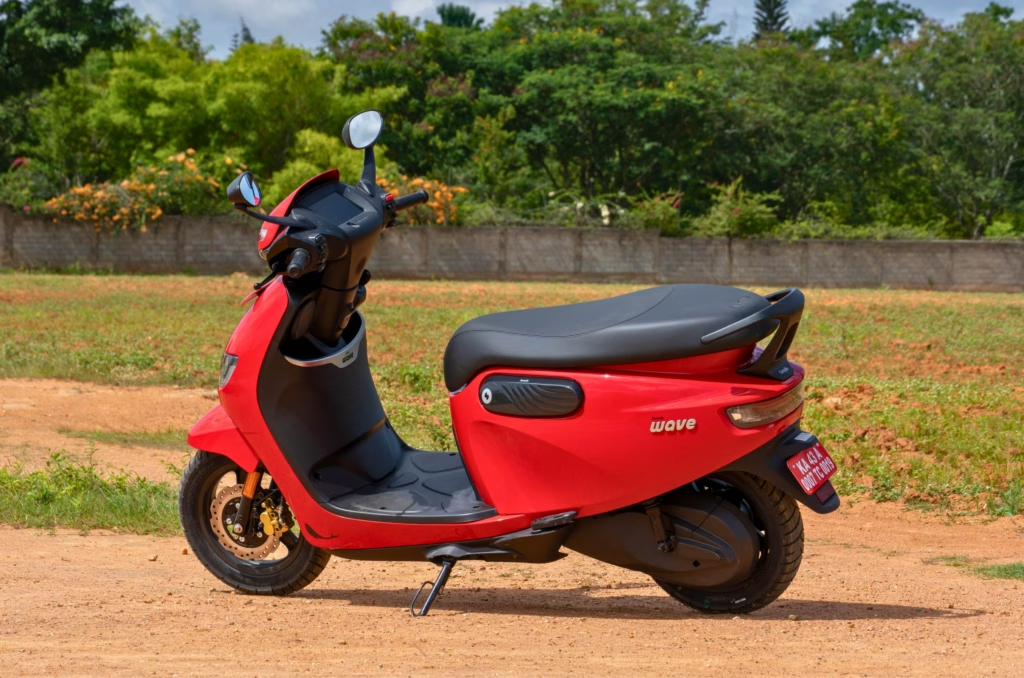
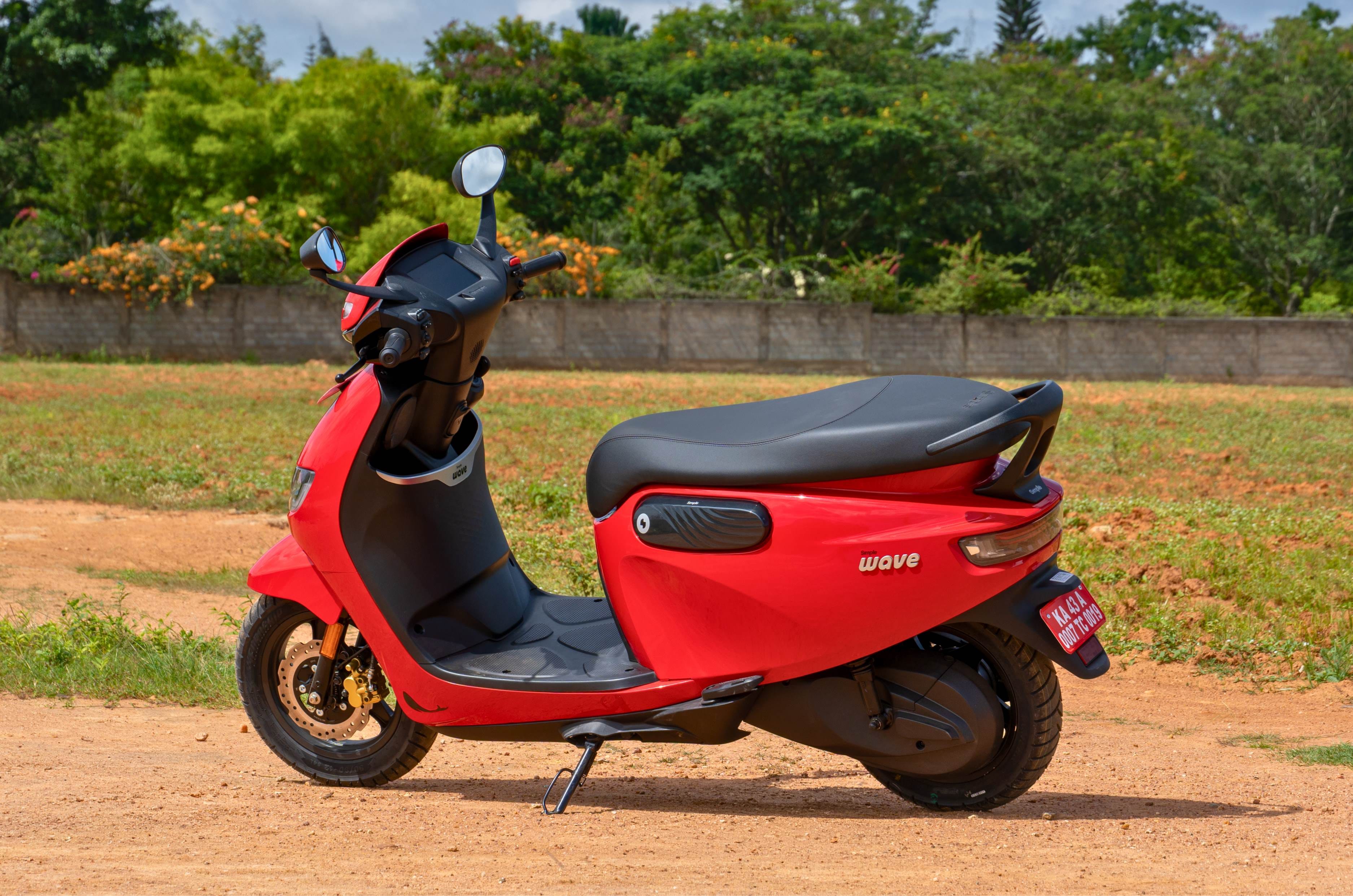
An outside shot showing the left side of the Simple Wave in Coral Red colour.

Simple Energy, which has been a regular in the monthly top 10 electric 2W OEM listing since February 2026 with its Simple One performance EV scooter, has clocked cumulative sales of over 10,000 units in the first eight months of this year. As per Vahan, between January and August 2026, the Bengaluru-based EV startup registered deliveries of 10,429 units, which is 203 percent more compared to last year’s 3,436 units for the same period. This momentum comes just as Simple launched its most affordable scooter yet, Wave, priced at Rs 1.10 lakh (ex-showroom, Bengaluru) and its entry into the family scooter segment.

  1. Wave makes the brand more accessible with a lower Rs 1.10 lakh ex-showroom price
  2. Brand has consistently averaged as the top nine EV seller in India since February 2026

Wave is expected to be the sales topper for Simple

The family EV scooter is based on One, but more practical

With the Wave, Simple Energy is hoping to make, well, waves in the family e-scooter segment, which has been dominated by the TVS iQube, Bajaj Chetak and Hero Vida for the past couple of years. Add Ather Rizta with its steadily growing sales, and the new Konarc to that list of rivals as well. Compared to the more performance-based One, Wave targets a much wider customer with its base S 2.2 variant pricing (Rs 1.10 lakh, ex-showroom) as also the focus around everyday practicality, ride comfort, and usability across different rider demographics.

The scooter has four variants as per the battery capacity. The base Wave S is offered in two battery capacities: 2.2kWh (110km IDC range) and 2.7kWh (132Km IDC range). While the middle variant, Wave, has a 3.7kWh battery and 171km of IDC range, and the top Wave + variant has a 5kWh battery and has a 243km IDC range, the highest in its segment. Simple has announced that deliveries will commence on September 25.

Production capacity and showrooms are being increased

The increased presence is expected to improve the brand’s sales

In tandem with the Wave’s launch and expected market demand, the company states that it is scaling its manufacturing and retail footprint. The company currently has a production capacity of 3,000 units per month, and has over 75 outlets across 63 cities in India including Bengaluru, Delhi, Patna, Nagpur, Bhopal, Agra, Goa, Vijayawada, Hyderabad, Kochi, and Chennai.

Simple Energy Sales

Year

Units

YoY percentage change

CY2023

66


CY2024

1,433


CY2025

6,628

362

CY2026

10,429

203

Cumulative total

18,556


As per Vahan’s data, From January 1 till August 31, 2026

For Simple, whose highest monthly retails were in March 2026 (1,780 units), the new Wave gives it an opportunity to target the highest-selling sub-category in e-2Ws: the family scooter. Simple ranked 13 in CY2025 sales and entered the top 10 for the first time in February 2026 and has consistently averaged ninth position since. The brand has cumulatively sold 18,556 units since sales began in 2023. It remains to be seen if the Wave turns out to be the much needed boost for the brand to climb up higher on that list.

With inputs from Stephen Raj Antony.