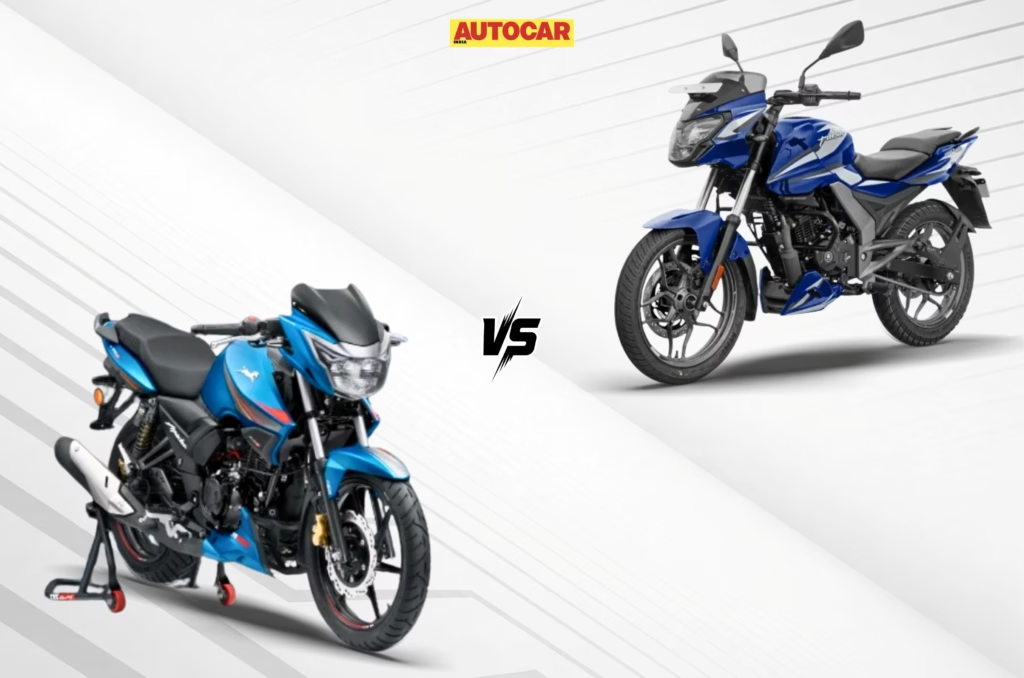
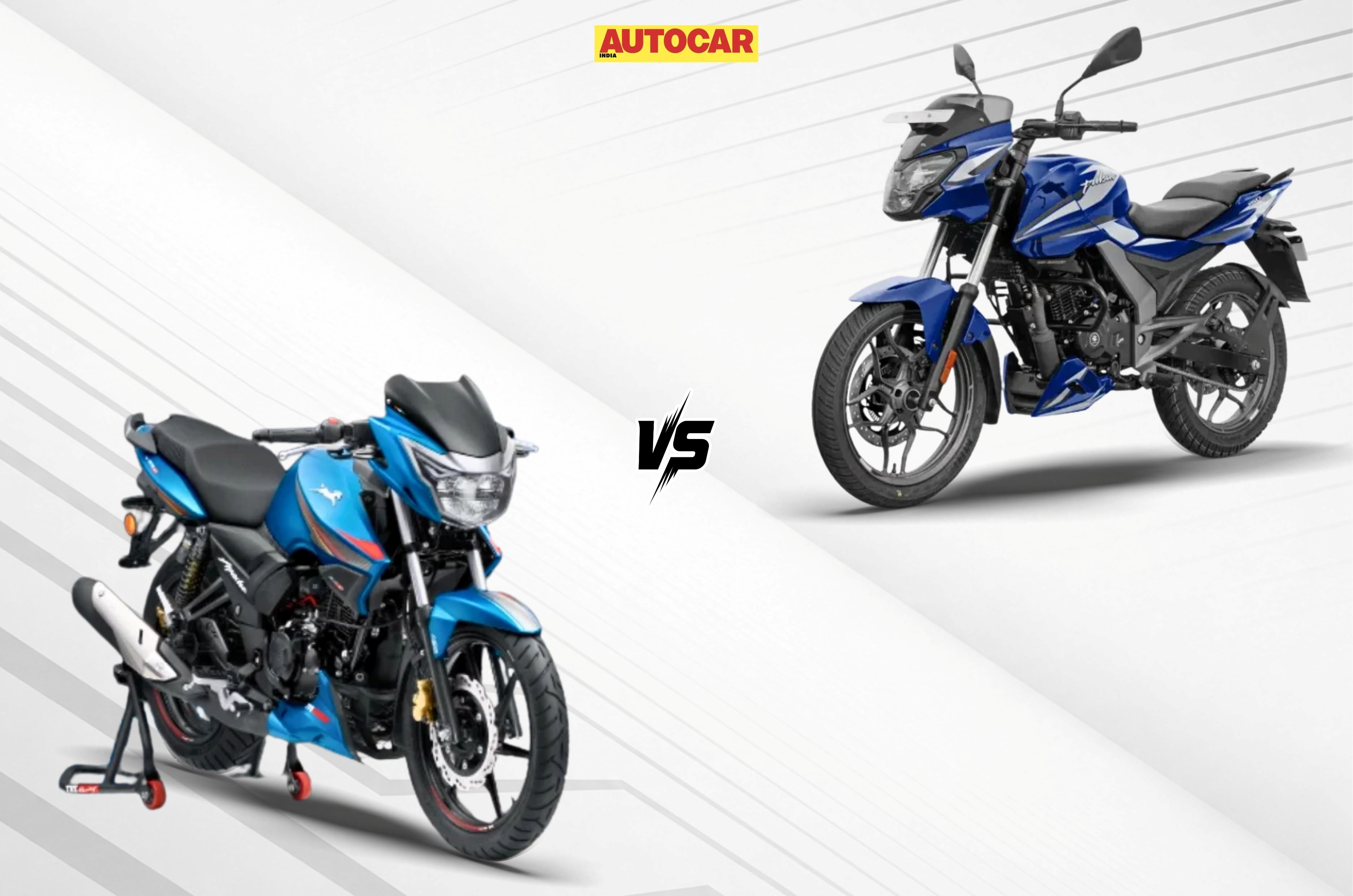
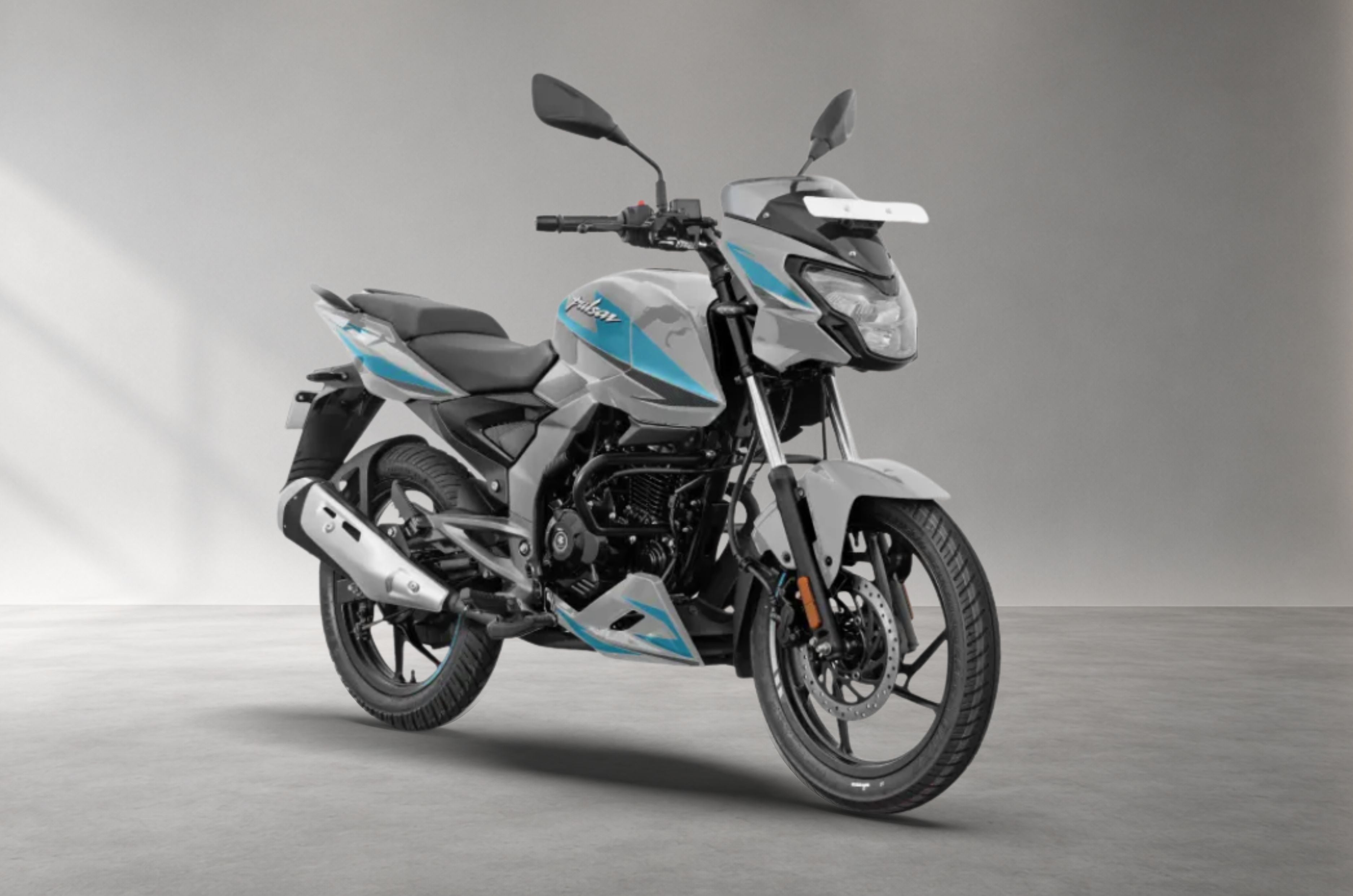
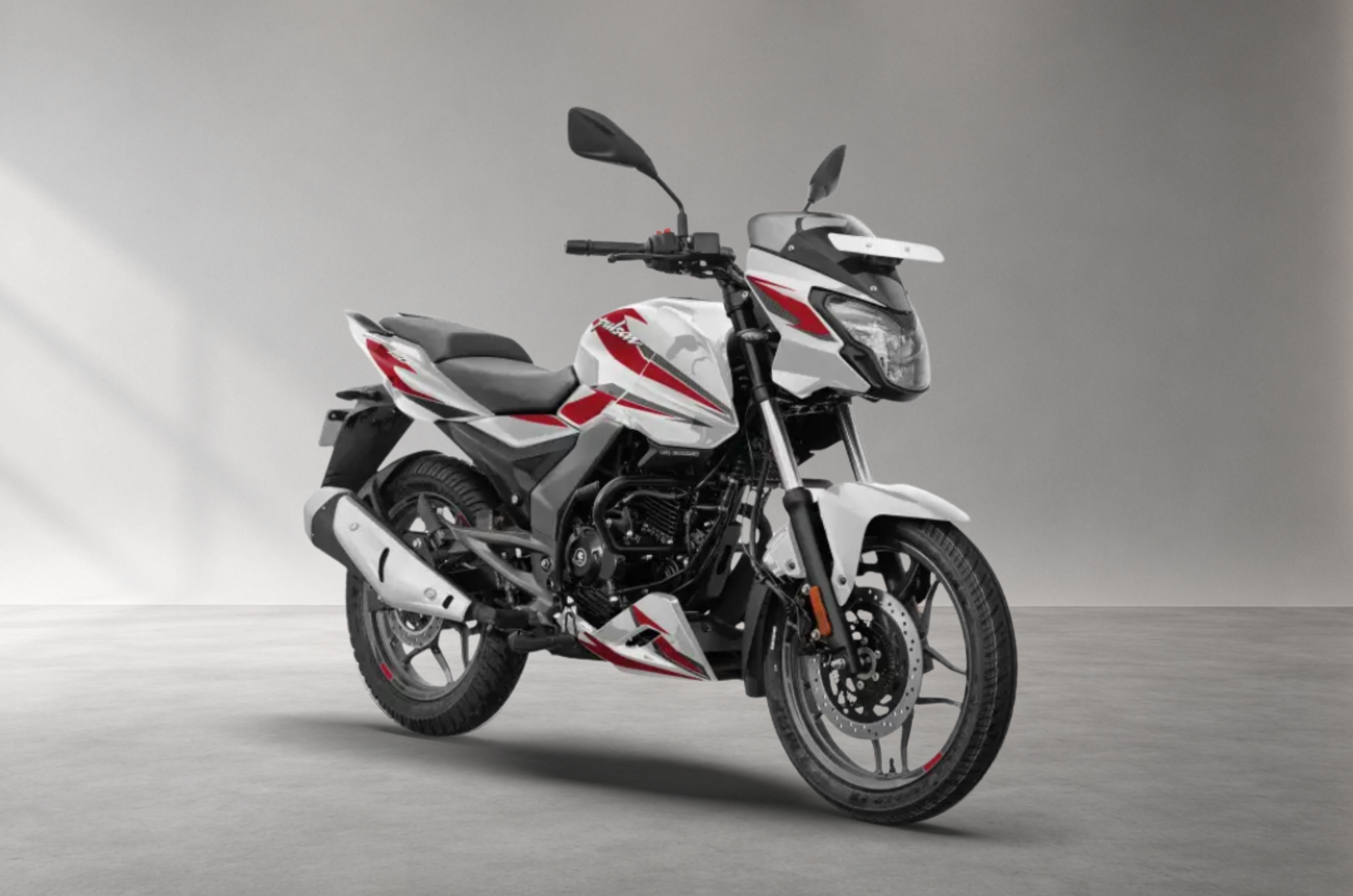
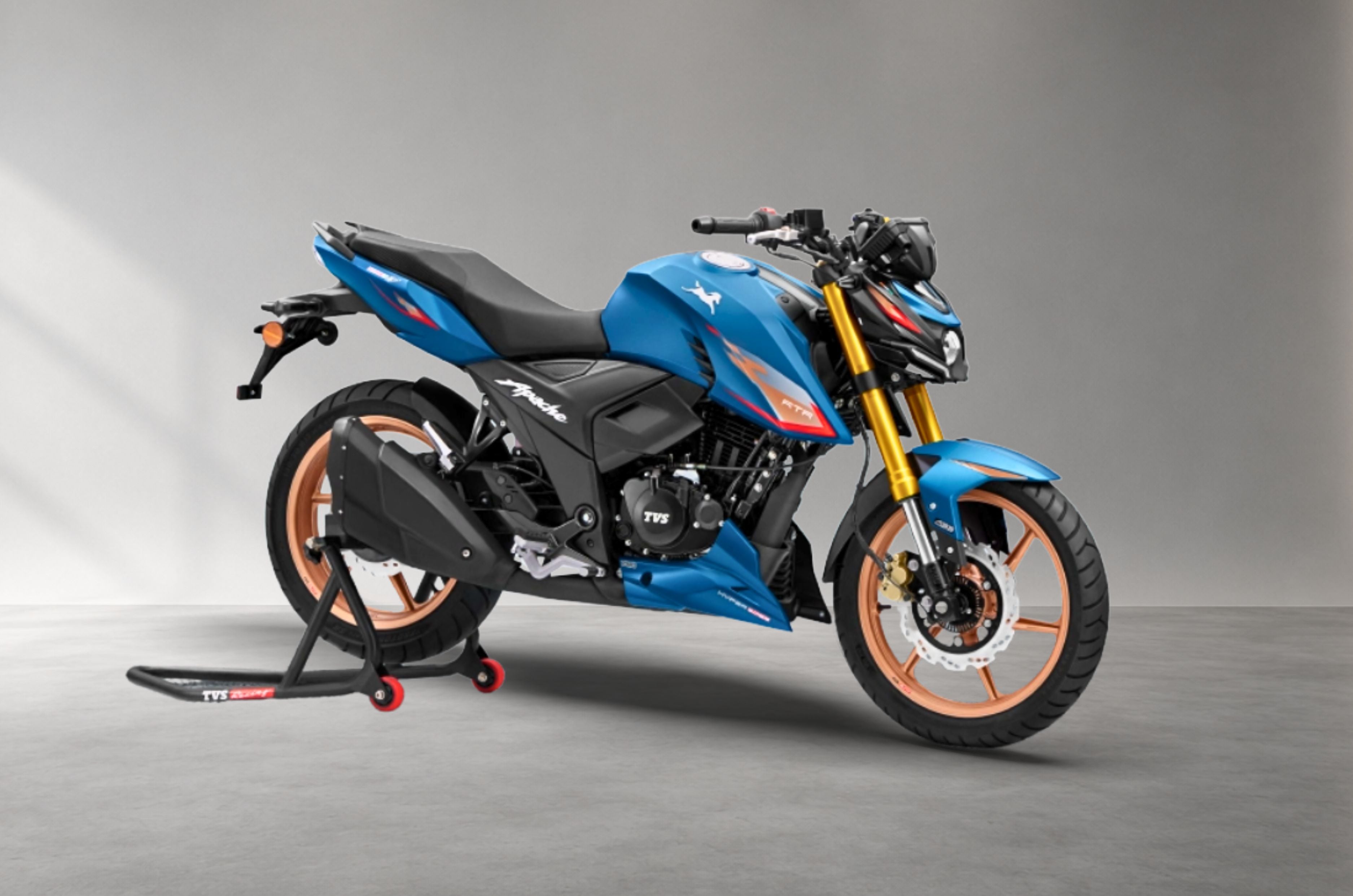
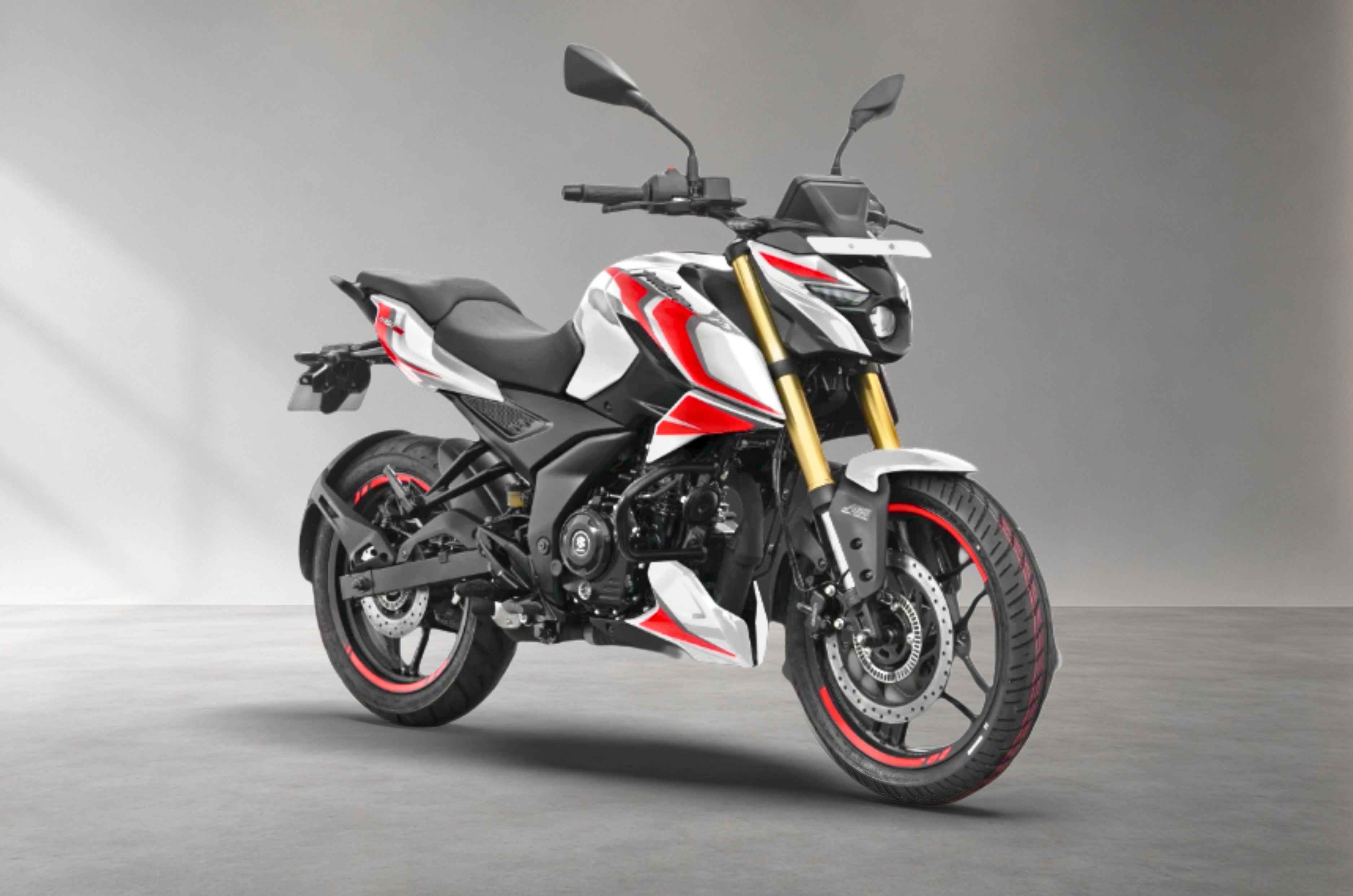
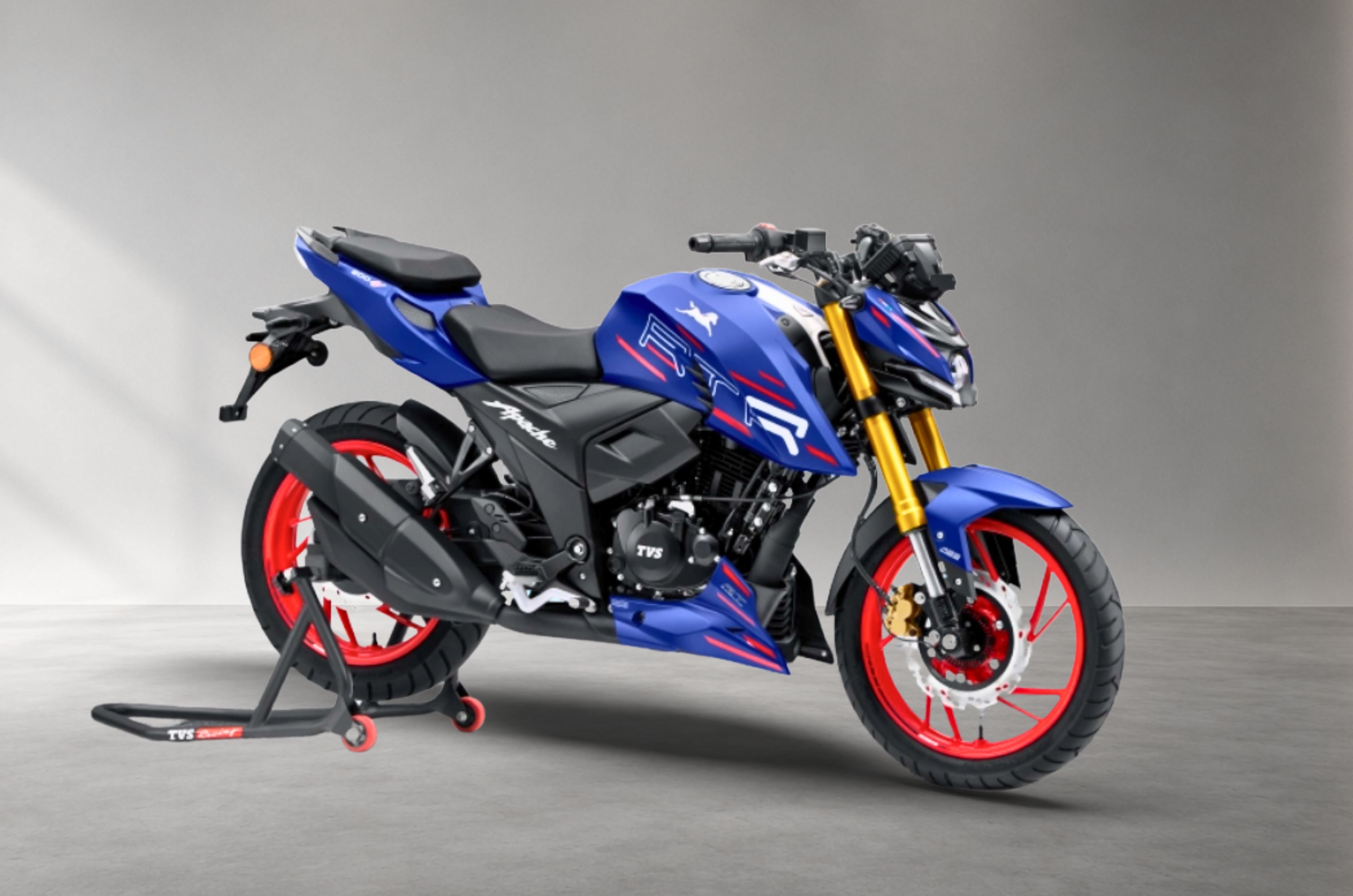
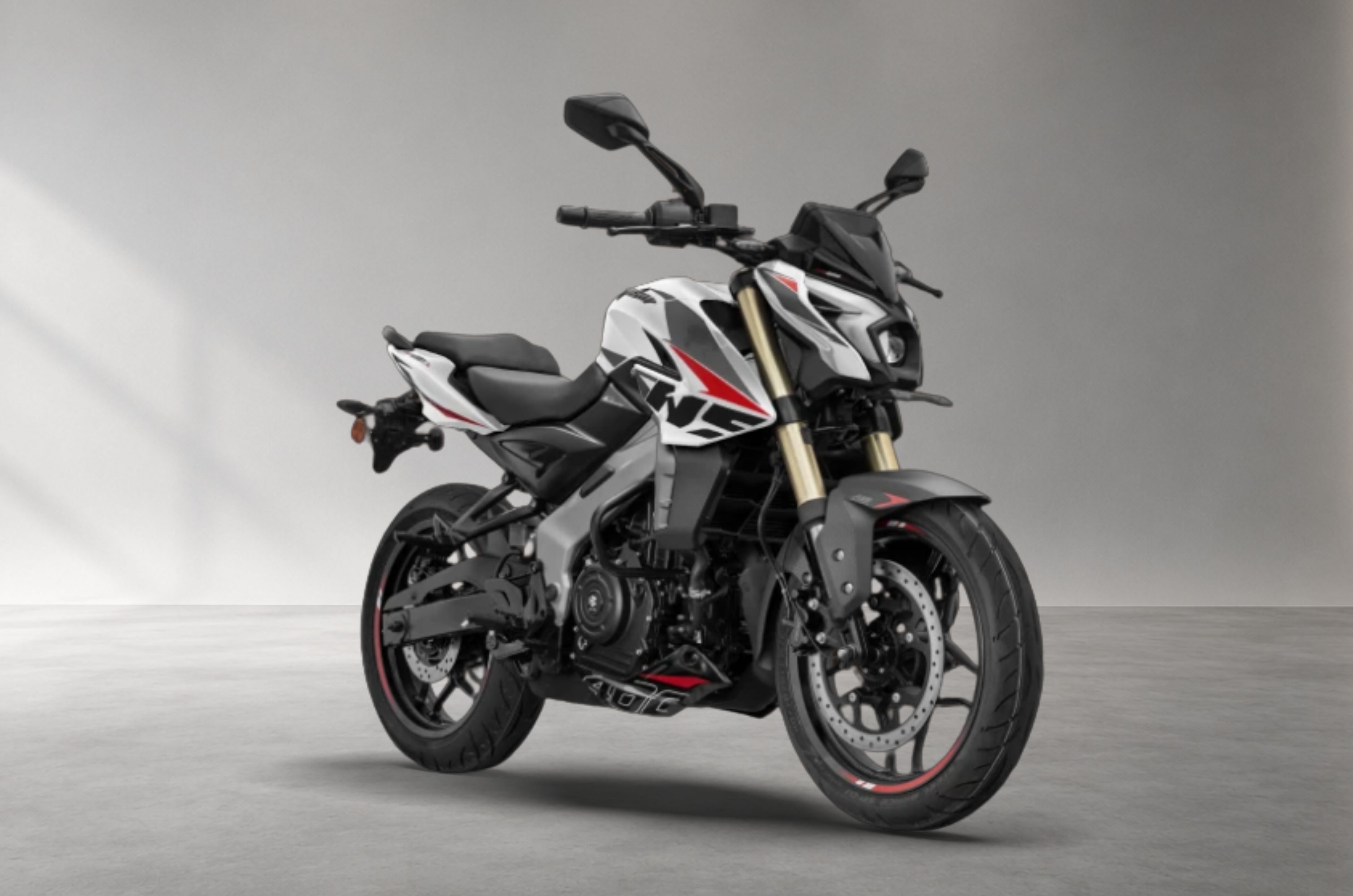
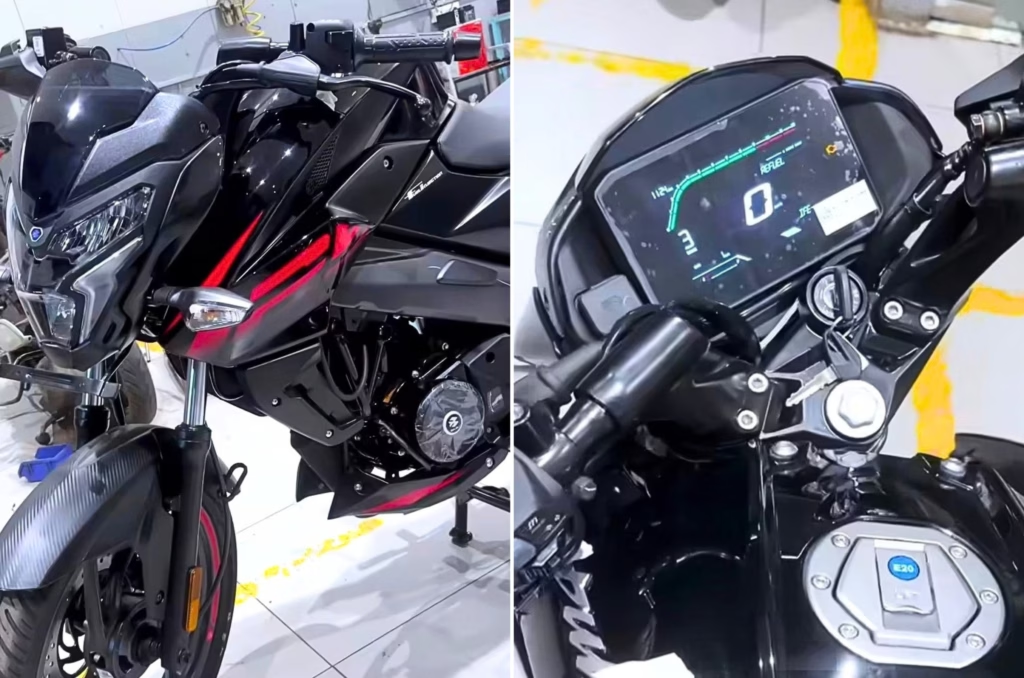
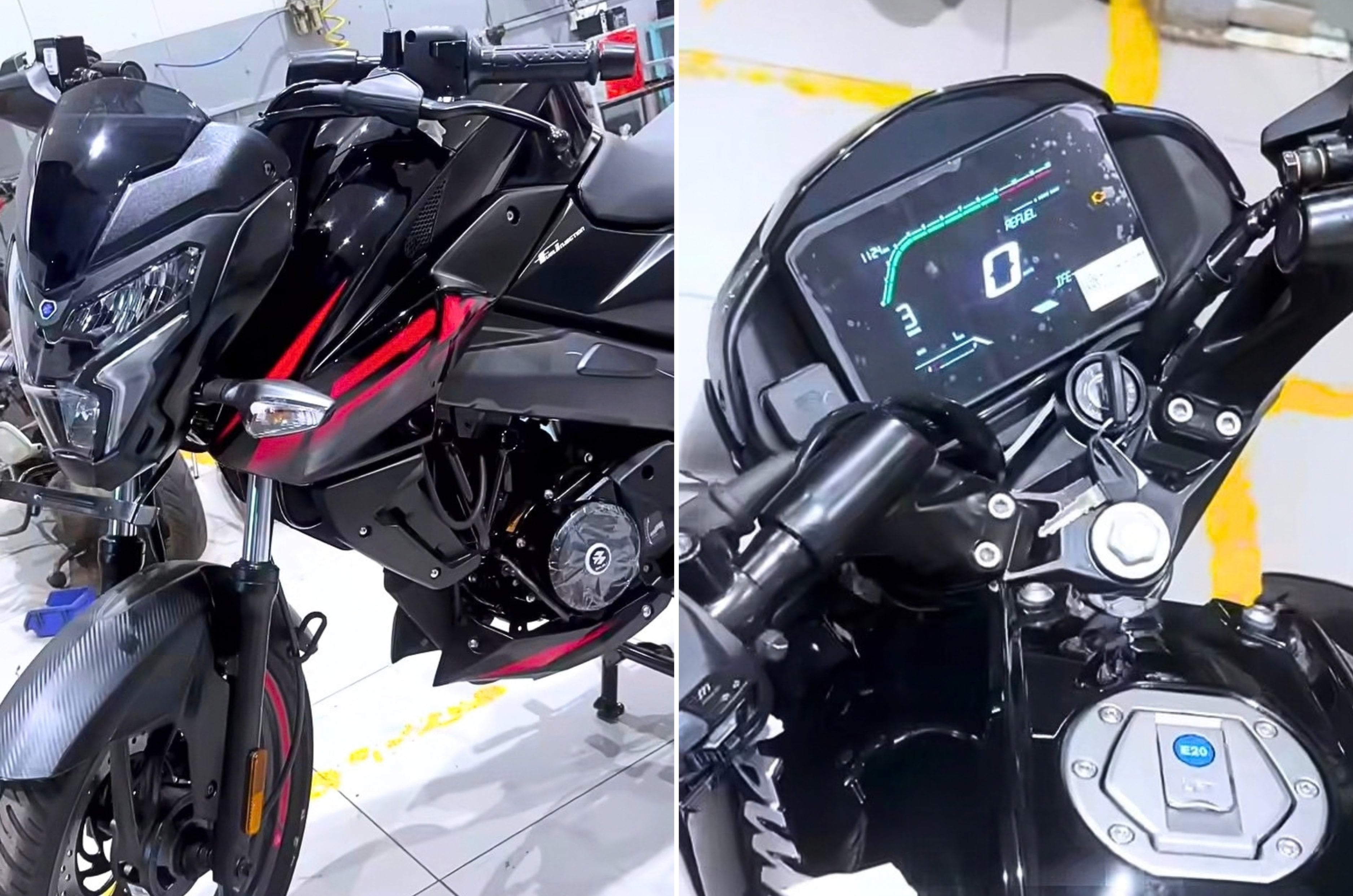
Bajaj launched the very first Pulsar 150 all the way back in 2001. TVS first responded with the Apache 150 in 2005, and upped the ante with the 160 in 2006. Bajaj, for the Pulsar’s 25th anniversary, effectively rebuilt the Pulsar 150 from scratch, marking some of its biggest changes since the original. TVS responded to this by introducing a new top-variant for the Apache 160 2V with traction control. At the time of writing, the difference in prices between the two is less than the price of six litres of petrol. If you’re not sure which one of these street-nakeds is right for you, we can help with that.
Bajaj Pulsar 150 vs TVS Apache RTR 160 (2V): Engine and output
The older motorcycle is… better?
Bajaj Pulsar 150
TVS Apache RTR 160 (2V)
Engine
149.5cc, single-cylinder, oil-cooled
159.7cc, single-cylinder, air-cooled
Power
14hp at 8,000rpm
16.04hp at 8,750rpm
Torque
14.1Nm at 6,500rpm
13.85Nm at 7,000rpm
Transmission
5-speed
5-speed
Power-to-weight ratio
99.29hp/tonne
115.40hp/tonne
Despite being the older motorcycle of the two, it’s the Apache that has the upper hand in this area. It has the better number for all the metrics; although it delivers both peak power and peak torque higher up in the rev range compared to the Pulsar. The Apache’s power and torque figures vary according to the chosen ride mode, and for this comparison, we’ve taken the figures from the Sport mode, the most powerful one of the three on offer.
Bajaj Pulsar 150 vs TVS Apache RTR 160 (2V): Dimensions and weight
Pulsar gets a notably larger fuel tank
Bajaj Pulsar 150
TVS Apache RTR 160 (2V)
Fuel tank
15 litres
12 litres
Ground clearance
186mm
180mm
Seat height
795mm
790mm
Kerb weight
141kg
139kg
Wheelbase
1338mm
1300mm
With an all-new diamond frame, Bajaj was able to achieve a weight reduction of 9kg on the Pulsar 150 compared to the previous version. However, the Apache is still lighter by 2kg for its top-most variant. It’s also most accessible with a 5mm lower seat height. Do note that the lower seat height also translates to a 6mm lesser ground clearance, and the Pulsar gives you three extra litres of capacity on its fuel tank. In this segment, that translates to at least 120km, not an insignificant number.
Bajaj Pulsar 150 vs TVS Apache RTR 160 (2V): Tyres, brakes, and suspension
TVS (mostly) has the stronger ride package
Bajaj Pulsar 150
TVS Apache RTR 160 (2V)
Tyres (F,R)
80/100-17, 100/90-17
90/90-17, 120/70-17
Brakes (F,R)
260mm disc, 230mm disc; single-channel ABS
270mm disc, 240mm disc; dual-channel ABS
Suspension (F,R)
Telescopic fork, monoshock
Telescopic fork, twin-shock
Bajaj had reduced the rear tyre size on the Pulsar 150 with the new version; the older top variant (Split Seat) had a 120/80-17 size rear tyre. As things stand, the TVS gets the larger tyre on both ends. Do note that TVS gives a slightly smaller 110/80-17 rear tyre on the lower variant. The Apache also has larger disc sizes for its brakes, but both motorcycles get 130mm drum brakes on the lower variants. Apache is the only motorcycle to offer dual-channel ABS, even if it’s limited to the top-two variants. In this section, the Pulsar’s only real advantage is that its newer frame gives it a monoshock, whereas the TVS continues with a twin-shock.
Bajaj Pulsar 150 vs TVS Apache RTR 160 (2V): Features
Newer is better
This is where the Pulsar makes its strongest case to be your motorcycle of choice. The top variant of the Pulsar 150 now gets a 5-inch TFT screen (first debuted on the Pulsar N160 SS) with Google Maps mirroring support, an integrated starter-motor-generator (ISG) to enable silent starts as well as an auto stop/start system. The TVS makes its age very obvious with its LCD instrument cluster; however, it still has bluetooth on the higher variants and can connect to your smartphone for call and SMS alerts, just like the Bajaj.
Considering how long it’s been since TVS gave it a major upgrade though, it’s impressive how well the Apache holds up against the all-new Pulsar. To give you two examples, both companies offer their own solutions for making low speed riding easier (in stop-and-go traffic, for example); Bajaj calls its version Crawl Mode and TVS calls its version Glide Through Technology (GTT). Both also offer all LED lighting, a feature that reached the TVS later than Bajaj. However, only the Apache gets traction control.
Bajaj Pulsar 150 vs TVS Apache RTR 160 (2V): Price
Neck-and-neck
Bajaj Pulsar 150
TVS Apache RTR 160 (2V)
Price (ex-showroom, Delhi)
Rs 1,15,233-1,28,650 lakh
Rs 1,13,890-1,27,990 lakh
Bajaj has two variants of the Pulsar 150, with a lower variant replacing the TFT screen for an LCD one and losing out on the features that are associated with it. TVS, at the time of writing, offers seven variants for the Apache RTR 160, all separated by about Rs 3,000 difference. However, it’s the Apache that’s more affordable to purchase, even if the difference is just Rs 660. Hopefully, the other differences are enough to help you choose one over the other.
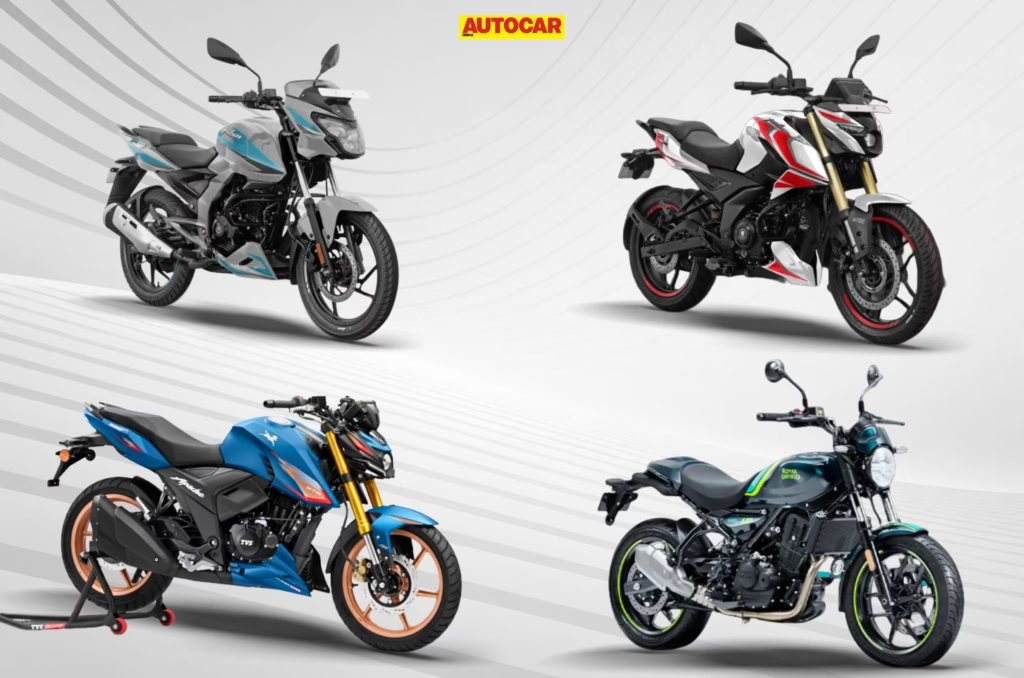
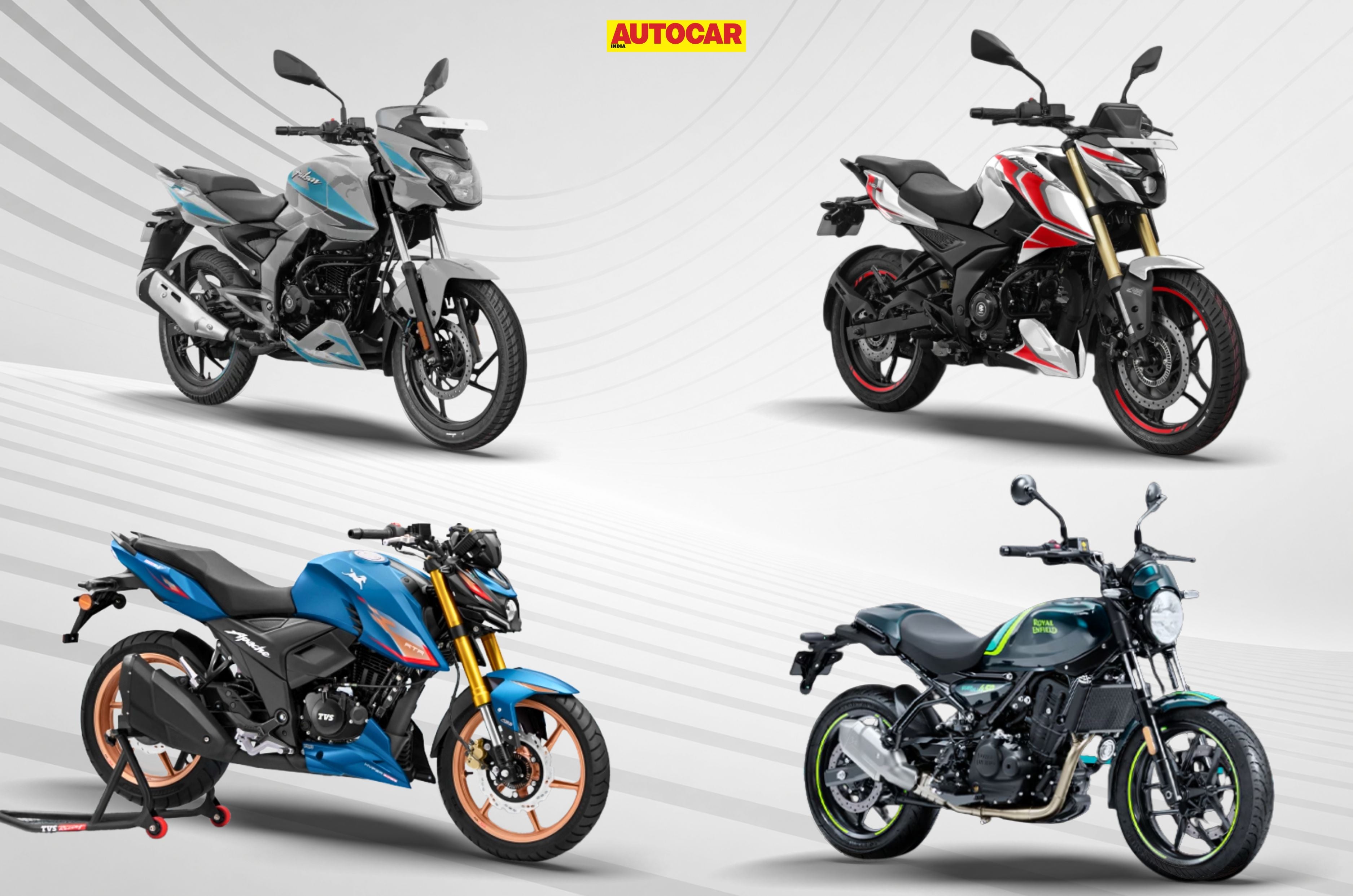
Navigation has been one of the major challenges for every aspiring motorcyclist. Unfortunately, major smartphone OS manufacturers don’t deem us profitable enough to solve it for us; but, our OEMs might have a smarter solution for that, by way of Google Maps mirroring. Today, you can buy a motorcycle for as low as Rs 1.04 lakh and still be able to navigate your way through your city, or wherever your heart takes you. Speaking of, let’s start with that very motorcycle.
All prices mentioned are ex-showroom, Delhi for the specific variant with Google Maps mirroring feature.
Bajaj Pulsar 125
Rs 1.04 lakh
Bajaj had comprehensively upgraded the classic Pulsar 125 with many changes and a whole slew of features, including Google Maps mirroring on the top-most Split Seat variant. Besides that, you get a 124.58cc engine with 12.1hp and 11.4Nm, a front disc brake, and three ride modes. A decent choice if you mostly commute in the city, but if you find yourself on the open roads on every chance you get, look at the bigger brother.
Bajaj Pulsar 150
Rs 1.29 lakh
Admittedly, Rs 25,000 isn’t a small step-up in this price range. However, besides retaining the same feature-set and silhouette, on the Pulsar 150 you get a larger 149.5cc engine with 14.1hp and 14.1Nm, which should make highway stints seem less stressful on you and the motorcycle; and saying that you have the Pulsar 150 has a better ring to it, but that’s a subjective opinion. If Bajaj isn’t your brand of choice, though, we have another Indian manufacturer known for pushing the envelope on features.
TVS Apache RTR 160 4V
Rs 1.41 lakh
TVS has made the Apache series synonymous with features over the past few years, so of course it responded to Bajaj upgrading the classic Pulsars. Its best-selling Apache RTR 160 4V now also has a TFT display that supports Google Maps mirroring. TVS, in its usual fashion, turns things up a notch by offering even more power from its 159.7cc engine (17.55hp and 14.73Nm) and a whole lot more features like dual-channel ABS, traction control, a slipper clutch, more premium design, etc., That’s quite a bit more for Rs 12,000 over the Pulsar 150 but if you wonder whether Bajaj has a similar offering, fret not.
Bajaj Pulsar N160 SS
Rs 1.43 lakh
This is the first motorcycle on which Bajaj debuted the new 5-inch TFT screen with Google Maps mirroring. It’s since been extended to other Pulsars. Over the Pulsar 150, the N160 SS offers a bigger 164.9cc engine with 18.5hp and 14.4Nm (directly sparring with the RTR 160 4V), ride-by-wire, traction control, one extra ride mode, a slipper clutch, and a more modern design that may suit your preferences better. The N160 SS also offers dual-channel ABS as standard. If you feel like you’re done with the 150-160cc class, the next upgrade is closer than you think.
TVS Apache RTR 200 4V
Rs 1.50 lakh
The Apache RTR 200 4V has now been relegated to getting the “et al” treatment from TVS so now it is almost too close to the RTR 160, one might say. However, it retains the bigger 197.75cc engine with close to 21hp and 17.25Nm. The only other feature that still remains exclusive to the 200 is the preload-adjustable USD fork that TVS brought back, with the recent update. Worth paying Rs 7,000 extra You decide, but if you are somehow not satisfied with the value on offer, the next motorcycle wears value-for-money as a badge of honour on its sleeve.
Bajaj Pulsar NS400Z
Rs 1.90 lakh
Bajaj’s downsized 349cc Pulsar NS400Z has gone down in price again, and the company gave it the same TFT unit as on the other Pulsars just two days ago; and we might see it in even more of their motorcycles soon. Anyway, the NS400Z gives you a steep jump in power with 40.6hp and 33Nm. It retains the feature-set from the N160 SS as-is with power and torque as its biggest differentiation from almost every other motorcycle on this list. If you’re in a phase of your life where you’re on long rides more often than commutes, you might prefer the next motorcycle more.
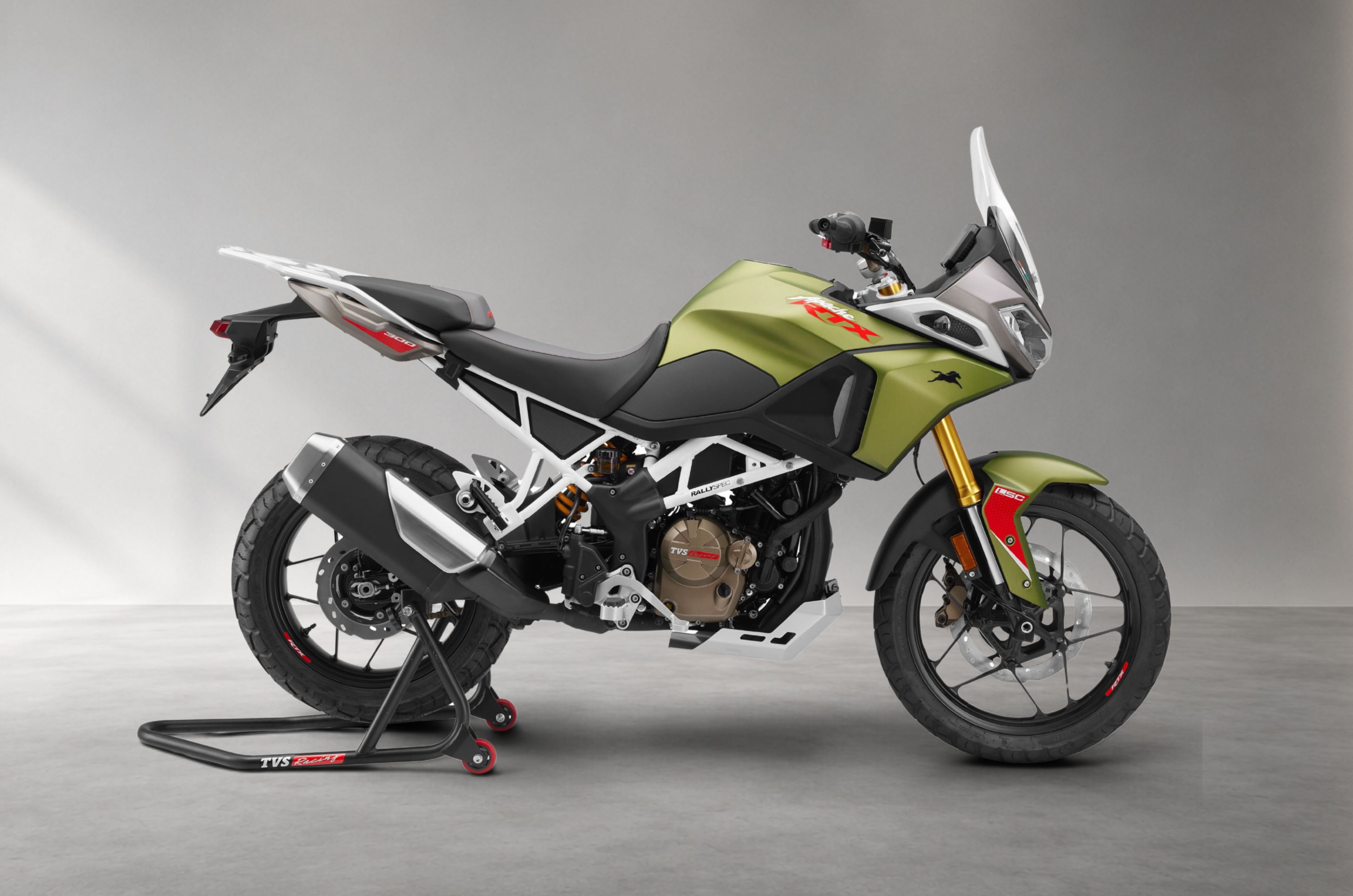
TVS Apache RTX 300
Rs 2.19 lakh
TVS’s first adventure tourer popularised the feature in question a year ago, offering it on the top and BTO variants. Compared to the NS400Z, you get a smaller 299.1cc engine with 36hp and 28.5Nm. However, the Apache RTX 300 is no slouch in features in any other way, matching the NS400Z on every feature on offer. If you’re an experienced motorcyclist who’d like to tune your ride more minutely, stepping up to the BTO variant at Rs 2.39 lakh might be worth it, considering it gives your adjustable suspension on both ends. If none of these sound exciting enough for you, maybe see if the last one does the trick.
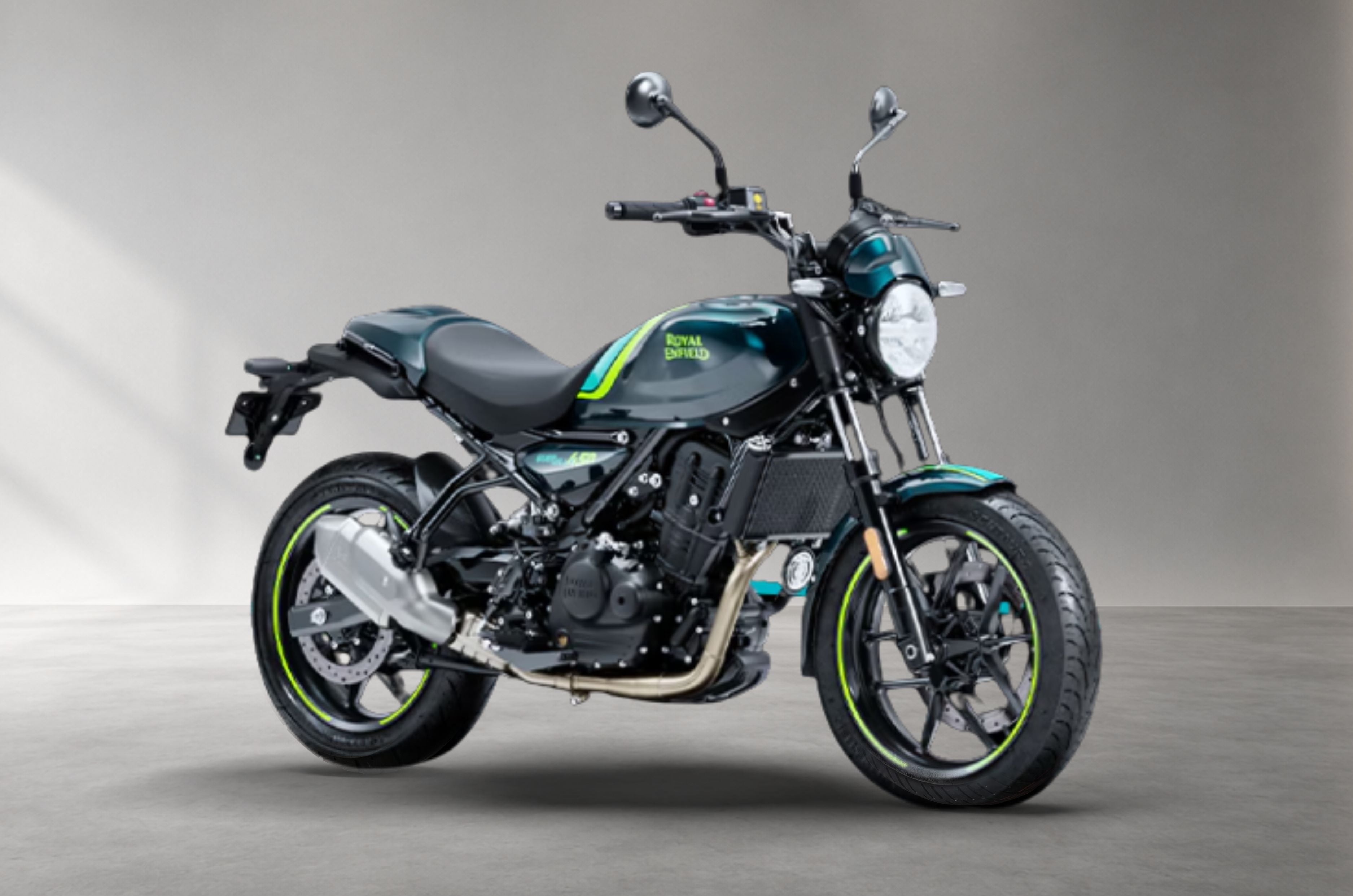
Royal Enfield Guerrilla 450
Rs 2.51 lakh
Royal Enfield introduced a new 4-inch TFT display with the Himalayan 450 that could project Google Maps powered navigation onto it, making the Chennai-UK based manufacturer technically the first to have figured this solution out. If you didn’t know this already, pressing and holding the M button on your Guerrilla 450 (and the Himalayan and Bear 650) will change the dials to the ‘digital’ look. After that, connecting your smartphone to the Royal Enfield app and starting navigation will make the whole map show on your display.
Getting back to the Guerrilla 450 itself, it’s Royal Enfield’s take on a sport-naked. Similar to most motorcycles on this list, its primary purpose isn’t touring, but when has that ever stopped the determined? The Guerrilla also has a 450cc engine that doles out 40.02hp and 40Nm, making it the most powerful motorcycle on this list. It goes toe-to-toe with the other motorcycles in terms of the features on offer, although most of the additional price is for its extra power (and the 40 percent GST of course).
That concludes the list of motorcycles under Rs 3 lakh with Google Maps mirroring, for now. We expect Bajaj to extend the same TFT display to even more of their portfolio in the near future. TVS might respond to that in their own, unique way so this list is all but guaranteed to grow even more in the near future. It’s one more significant hurdle removed for a motorcyclist, and every meaningful step counts.
While scooters are more practical than motorcycles, the choice comes down to how and where you use them. I have preferred motorcycles for daily commuting, mainly because their larger wheels and better suspension tend to offer a more composed ride, while the extra performance makes quick progress through traffic easier.
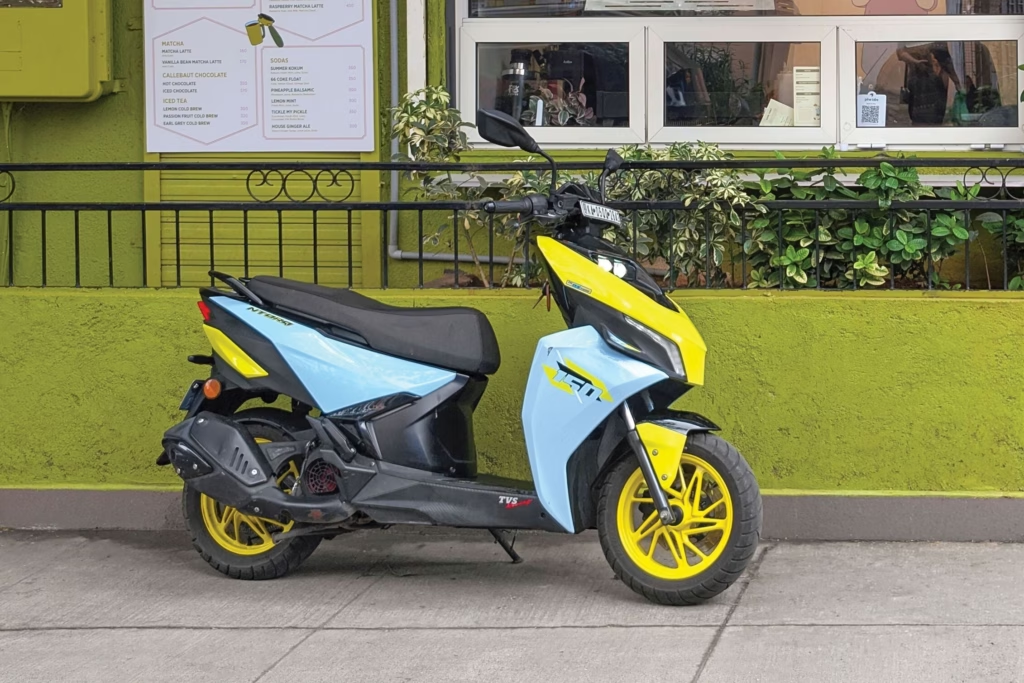
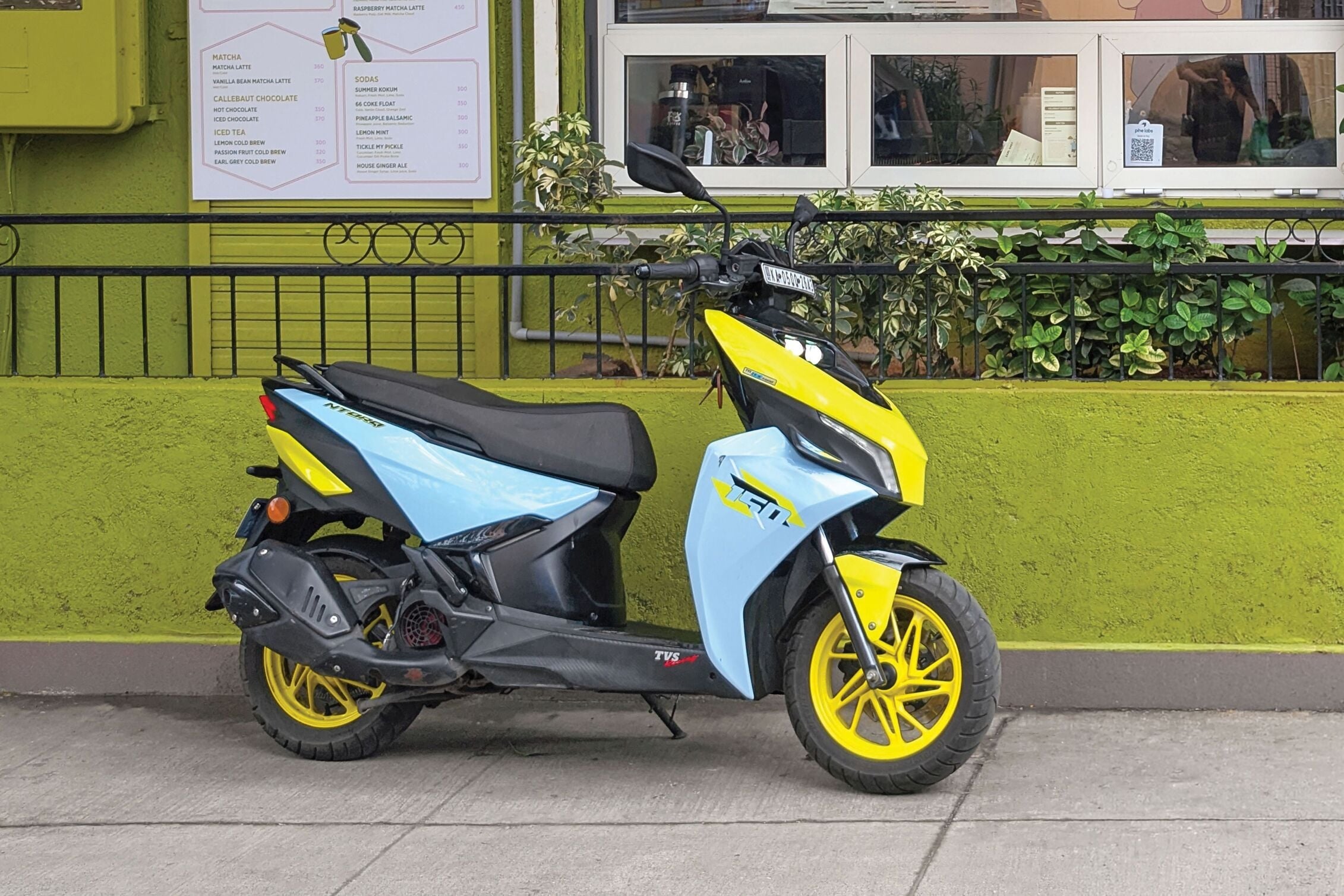
With our long-term motorcycles already being used by other colleagues, I found myself spending more time with the TVS Ntorq 150. Since our last report, it has covered another 1,000km.
The first thing any enthusiast is likely to appreciate about the Ntorq is its performance. Overtakes are easy, and you rarely need to twist the throttle all the way to make a quick move through traffic. Adding to the character of this scooter is an engaging exhaust note. The riding modes also add a useful layer of versatility. During torrential rains, with poor visibility and slippery roads, I found Street mode quite useful. It slightly reduces power delivery, making it easier to manage when conditions aren’t ideal.
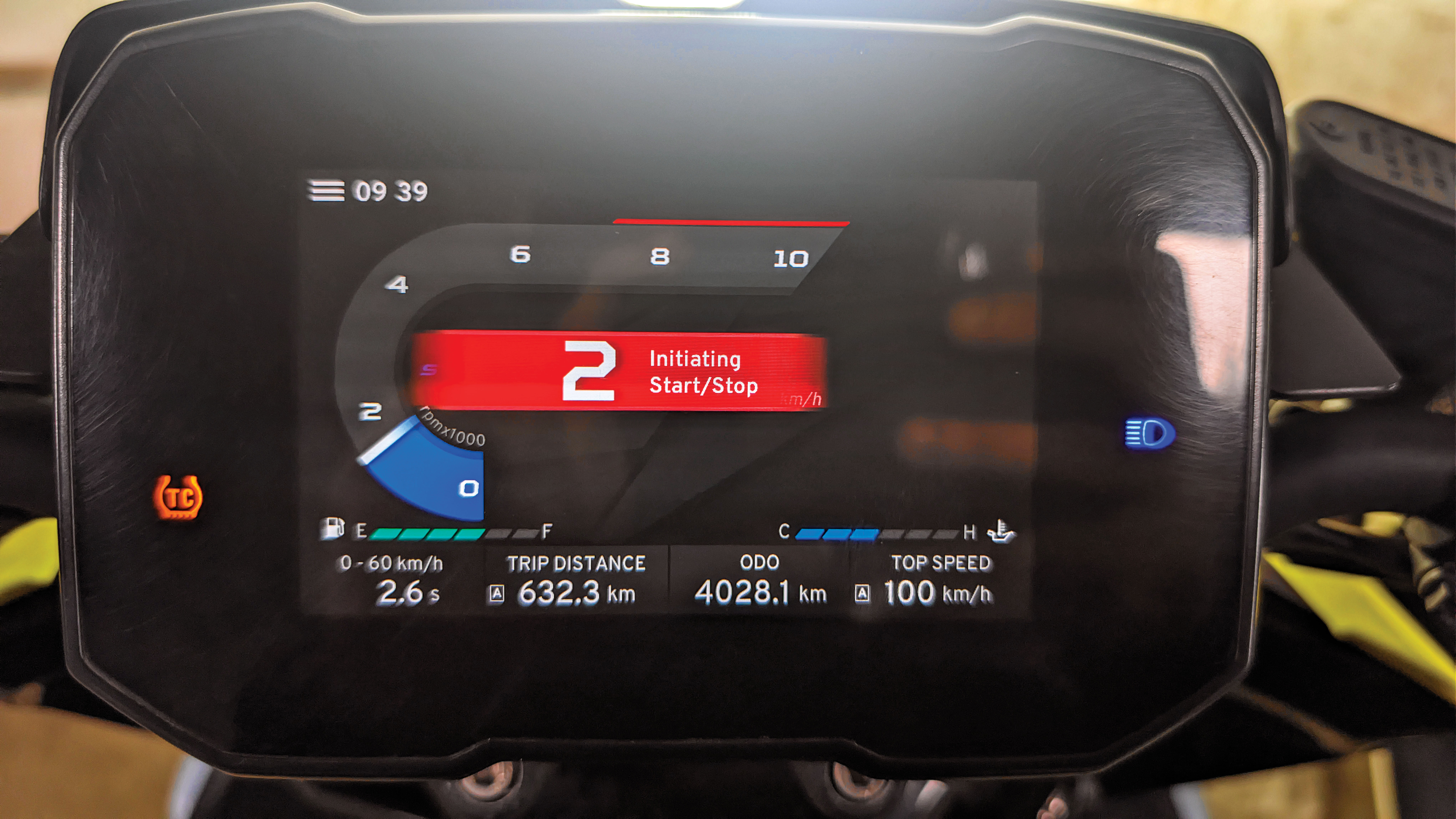
However, I don’t particularly like the start-stop system that is activated in Street mode. It takes a second longer than I would like to restart when the throttle is opened, which can be irritating when launching away from a traffic light. I prefer switching it off and letting the engine idle instead.
Start/stop feature takes a little longer than expected to restart the scooter.
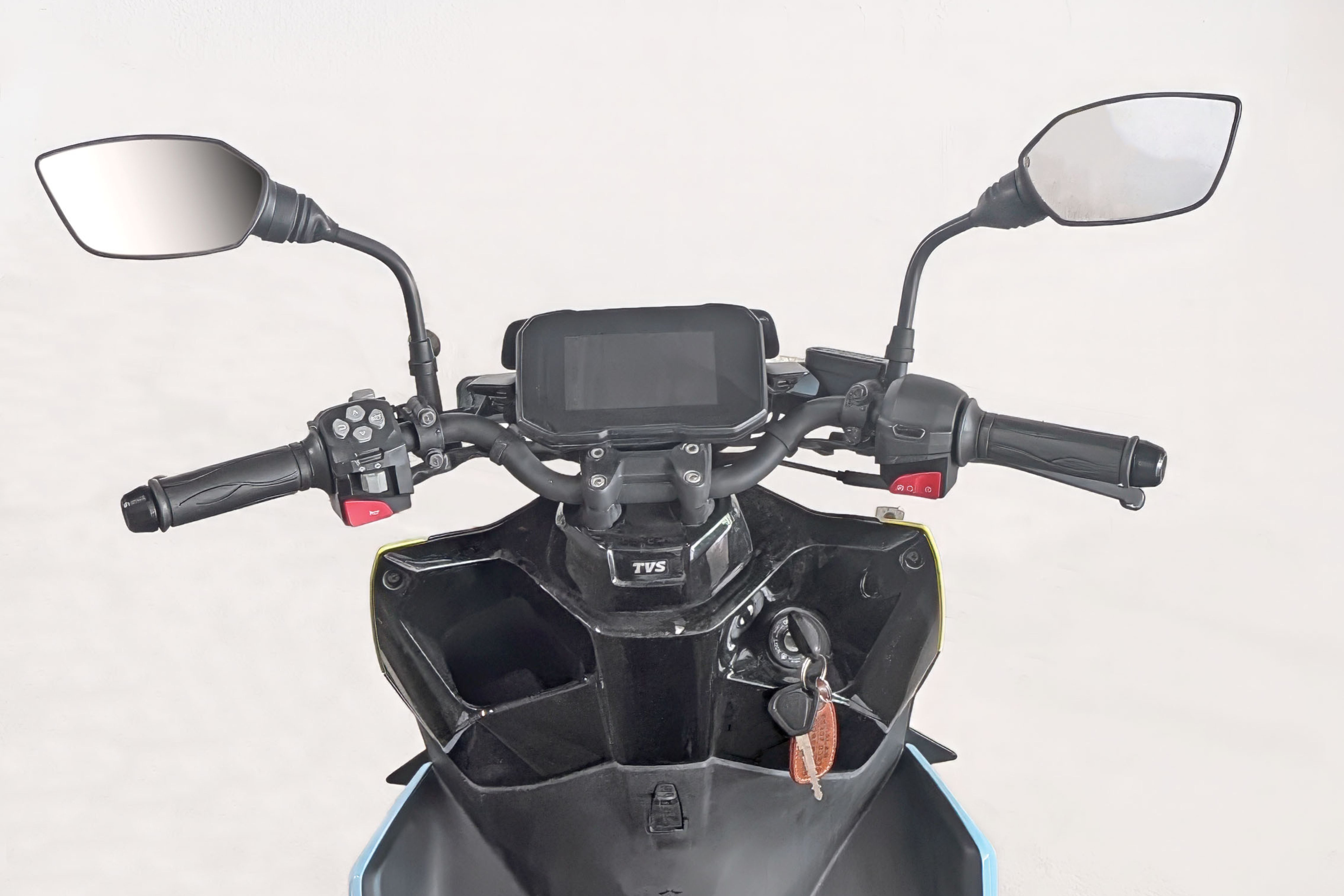
The mirrors are another small annoyance. They provide a good field of view, but they stick out quite a bit and can make squeezing through tight traffic gaps a bit more difficult.
Mirrors jut out too much and come in the way of filtering through tight traffic.
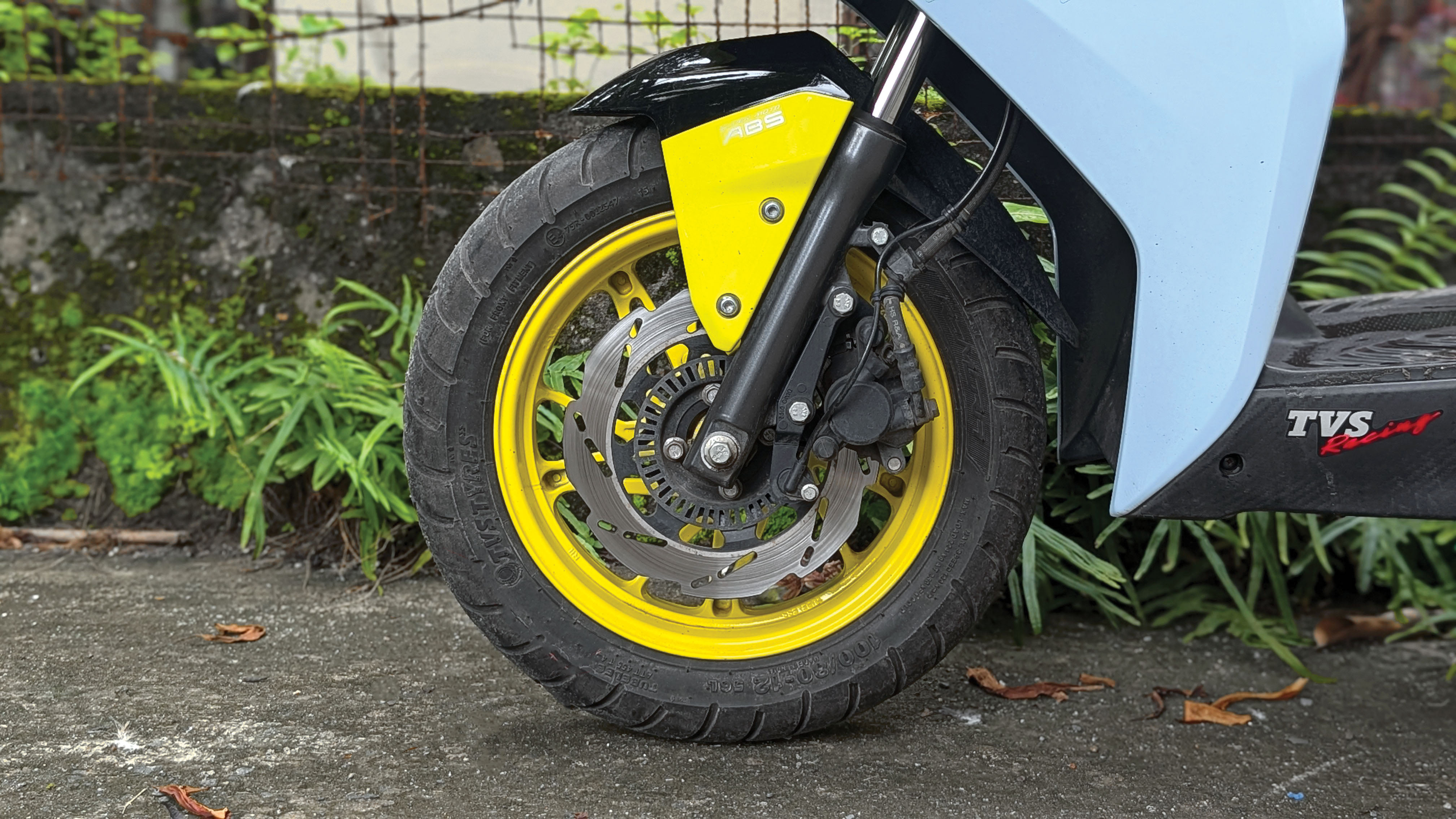
The front disc brake, on the other hand, has been impressive, offering strong stopping power, while the ABS isn’t intrusive. I have noticed that the rear drum brake needs adjustment roughly every 300km, though.
The front disc brake offers strong performance, and the ABS is not intrusive.
Despite being a sport-oriented scooter, its suspension does a really good job of dealing with potholes and broken roads. In fact, I would say it handles rough roads better than several family-oriented scooters I have used in the past.
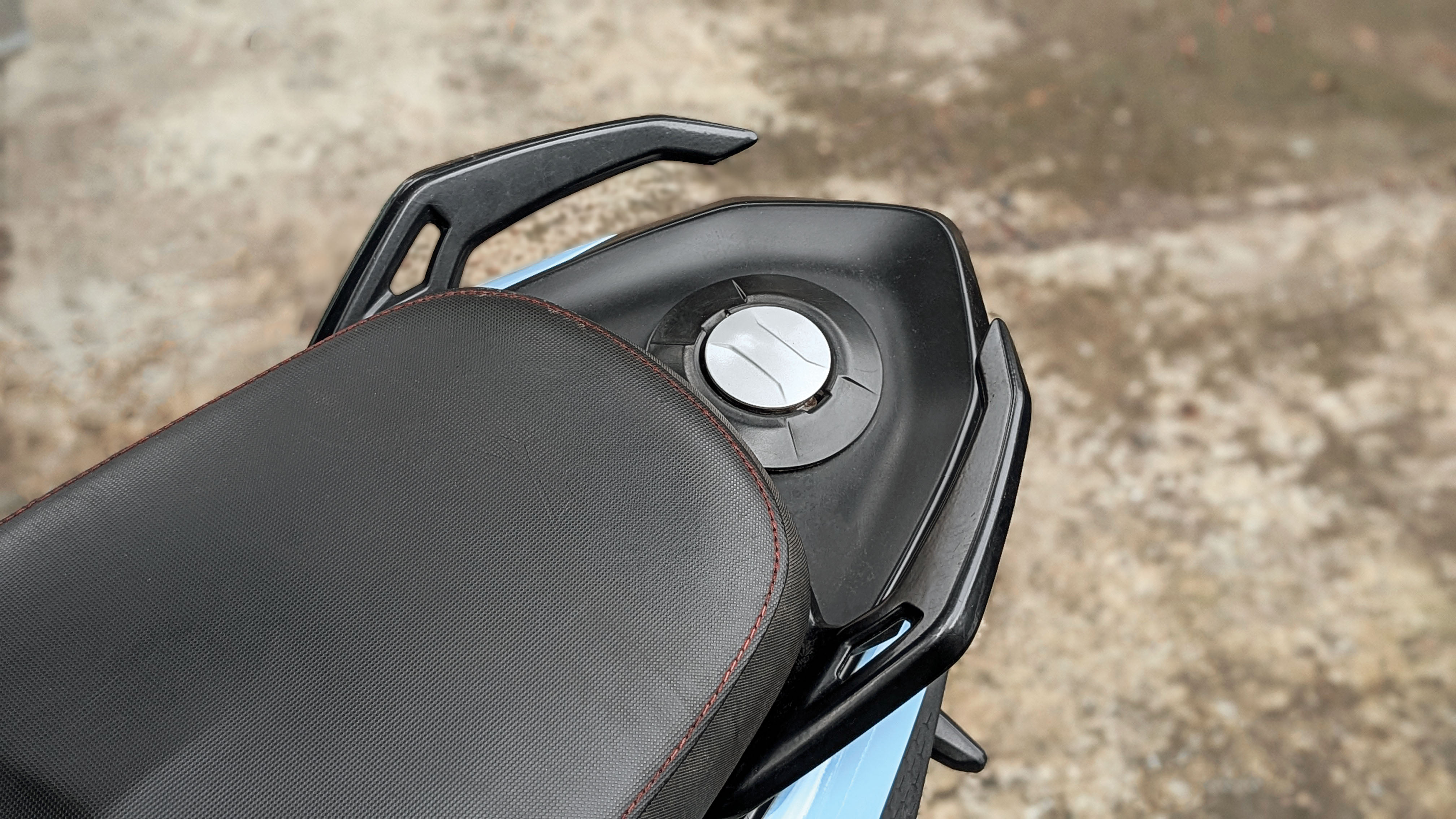
In terms of convenience, the under-seat storage is adequate for my requirements, while the left-hand switchgear makes navigating the menus on the TFT display fairly straightforward. The external fuel filler is another small but useful touch.
The convenience of an external filler makes fuel stops very efficient.
After another 1,000km, the Ntorq 150 has made a convincing case for itself as a daily commuter. It has the performance to keep an enthusiast entertained, the ride quality to tackle our battered roads and enough everyday convenience to make commuting easy. It isn’t without a few niggles, but the longer I spend with it, the more I understand why this sporty scooter makes a strong argument for leaving the motorcycle at home for the daily grind.
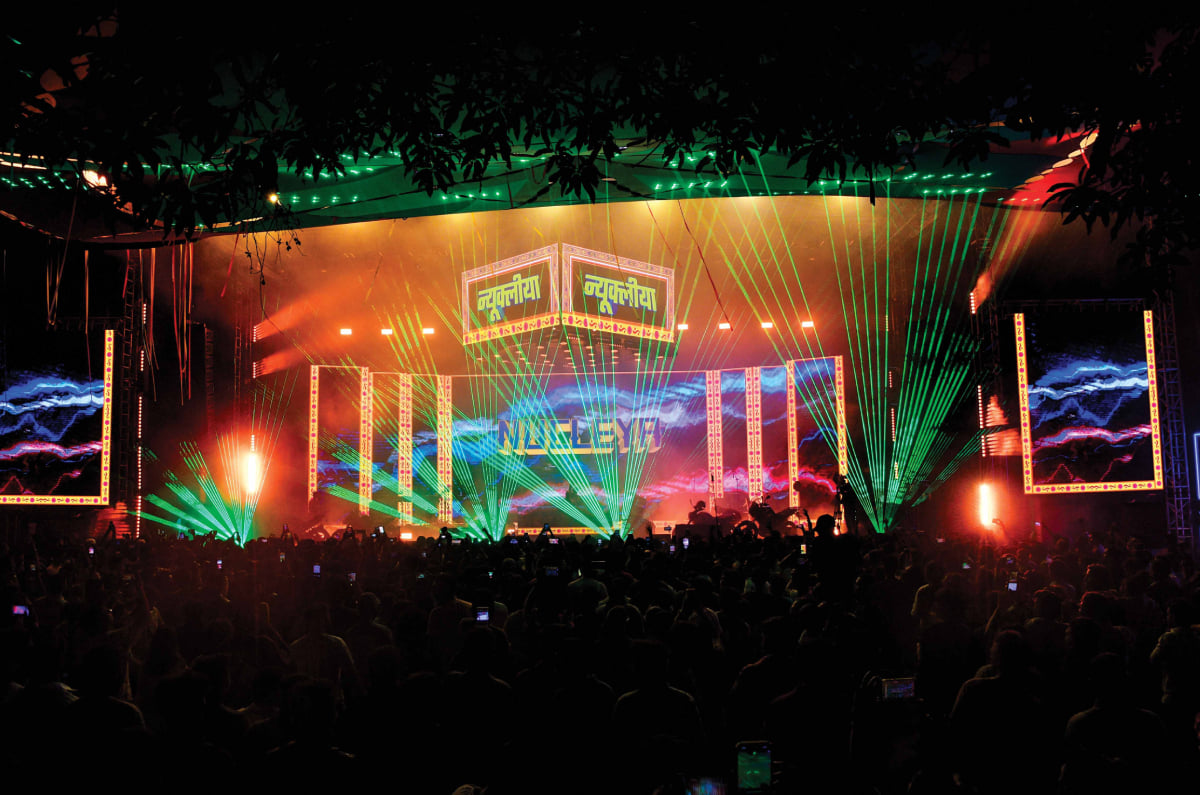
TVS Motor Company has announced that the sixth edition of its flagship motorcycling festival, TVS MotoSoul, will be held in Goa on December 11 and 12, 2026.
TVS MotoSoul to return to Goa for its sixth edition
Last year’s edition saw the launch of the TVS Ronin Agonda Edition and 20th anniversary Apache models
TVS MotoSoul 6.0: What to expect
Product reveals and custom builds have been a fixture at every edition
Previous editions of MotoSoul have seen TVS use the platform for product and tech announcements. The 2023 edition saw the launch of the Apache RTR 160 4V with dual-channel ABS. In 2024, TVS unveiled the RT-XD4 300 engine platform, which eventually made its way into the RTX 300. In 2025, TVS launched the Ronin Agonda Edition alongside limited-run models to celebrate the 20th anniversary of the Apache brand.
Custom builds have been another consistent highlight, with TVS collaborating with international builders across multiple editions to create bespoke versions of the Apache and Ronin, including café racer, bobber, scrambler, supermoto and flat-track-inspired interpretations. Merchandise and accessory collaborations have also expanded year on year, with past editions announcing tie-ups with Alpinestars, GIVI and MT Helmets.
With the sixth edition of MotoSoul, we can expect TVS to carry on that tradition, and we’ll share more details once we have them.
त्योहारों का सीजन बस शुरू होने वाला है और अक्टूबर आते ही लोग घर की जरूरत का सामान खरीदने की तैयारी करने लगते हैं। अगर आप भी इस बार नई वॉशिंग मशीन, LED TV या फ्रिज खरीदने का प्लान बना रहे हैं, तो आपके लिए एक जरूरी खबर है। दरअसल, 1 अक्टूबर 2026 से इन सामानों की कीमत बढ़ सकती है। ऐसे में त्योहारी ऑफर्स का इंतजार करने से पहले कीमतों में होने वाले बदलाव पर नजर रखना आपके लिए फायदेमंद हो सकता है।
जाने-माने टिप्सटर अभिषेक यादव के अनुसार, AC की कीमतें 5% से 8% तक बढ़ सकती हैं, जबकि कुछ ब्रांड दूसरे होम अप्लायंस की कीमतों में भी करीब 3% से 4% तक इजाफा कर सकते हैं। यह संभावित कीमत बढ़ोतरी ऐसे समय में सामने आई है, जब दिवाली का शॉपिंग सीजन आने वाला है। इस दौरान आमतौर पर लोग घर के लिए नए इलेक्ट्रॉनिक्स और होम अप्लायंस खरीदना पसंद करते हैं।
I forgot to post this, starting tomorrow i.e. October 1 appliance prices are increasing in India
AC prices are going up by 5 to 8%, and some brands are also raising prices of fridges, washing machines and LED TVs by around 3 to 4%
LG is hiking AC prices by 5 to 7% from October 1, Haier by around 5% on ACs and 2 to 3% on TVs and washing machines, and Blue Star, Godrej and others have also confirmed hikes, some from October and some from November
Reason is costly copper, steel, plastics and freight, and this is already the third price hike this year
Haier even says it may raise prices again in December and January, around 15% in total by January
One good thing, shops still have old stock at old prices, so if you were planning to buy an AC or fridge for Diwali, better do it soon
फ्रिज, वॉशिंग मशीन और टीवी की कीमतें भी बढ़ सकती हैं
लीक हुई जानकारी के अनुसार, कीमतों में बढ़ोतरी सिर्फ एयर कंडीशनर तक ही सीमित नहीं है। कुछ मैन्युफैक्चरर्स के कीमतें बदलने की वजह से रेफ्रिजरेटर, वॉशिंग मशीन और LED टेलीविजन के भी महंगे होने की संभावना है।
यादव ने X पर लिखा कि Haier टेलीविजन और वॉशिंग मशीन की कीमतों में लगभग 2% से 3% की बढ़ोतरी करने की योजना बना रहा है। वहीं, Blue Star, Godrej और अन्य ब्रांड्स ने भी कीमतों में बढ़ोतरी की पुष्टि की है, हालांकि अलग-अलग ब्रांड्स के लिए इसे लागू करने की तारीखें अलग-अलग हो सकती हैं।
यादव ने X पर लिखा, “LG 1 अक्टूबर से AC की कीमतों में 5 से 7% की बढ़ोतरी कर रहा है, Haier AC पर लगभग 5% और TV व वॉशिंग मशीन पर 2 से 3% की बढ़ोतरी कर रहा है, और Blue Star, Godrej व अन्य ने भी बढ़ोतरी की पुष्टि की है। कुछ अक्टूबर से और कुछ नवंबर से।”
आखिर क्यों बढ़ रही हैं होम अप्लायंस की कीमतें?
होम अप्लायंस की कीमतों में बढ़ोतरी के पीछे कई वजहें हो सकती हैं। इनमें कच्चे माल और सामान की ढुलाई यानी ट्रांसपोर्टेशन की बढ़ती लागत प्रमुख कारण मानी जा रही है। फ्रिज, वॉशिंग मशीन और TV जैसे प्रोडक्ट बनाने में कॉपर, स्टील और प्लास्टिक जैसी चीजों का बड़े पैमाने पर इस्तेमाल होता है। इसके अलावा, सामान को एक जगह से दूसरी जगह पहुंचाने का खर्च बढ़ने से भी कंपनियों की कुल लागत बढ़ सकती है।
टिप्स्टर अभिषेक यादव ने कीमतों में बढ़ोतरी की वजह बताते हुए महंगे कॉपर, स्टील, प्लास्टिक और बढ़ी हुई फ्रेट लागत का जिक्र किया है। उनके मुताबिक, इस साल कंपनियों की ओर से यह तीसरी बार कीमतों में बढ़ोतरी हो सकती है।
अगर कंपनियों की प्रोडक्शन और ट्रांसपोर्ट लागत आगे भी बढ़ती रहती है, तो आने वाले महीनों में होम अप्लायंस की कीमतों में और बदलाव देखने को मिल सकते हैं। हालांकि, कीमत कितनी बढ़ेगी और कब से लागू होगी, यह हर कंपनी के फैसले पर निर्भर करेगा।
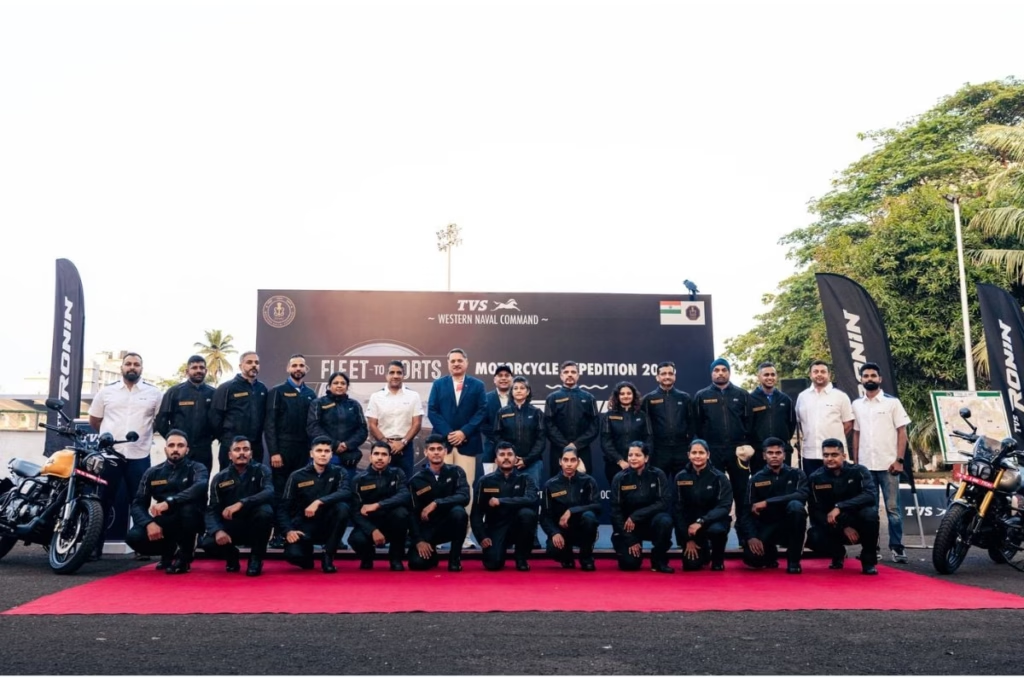
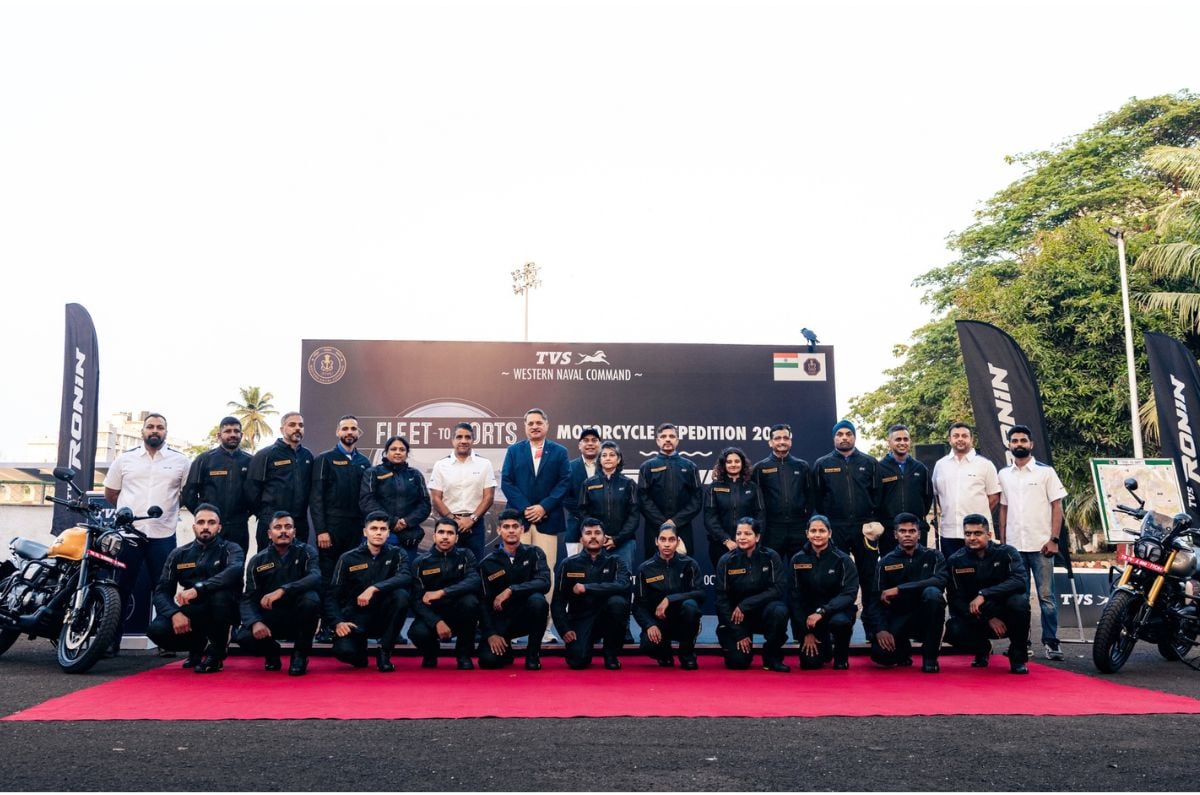
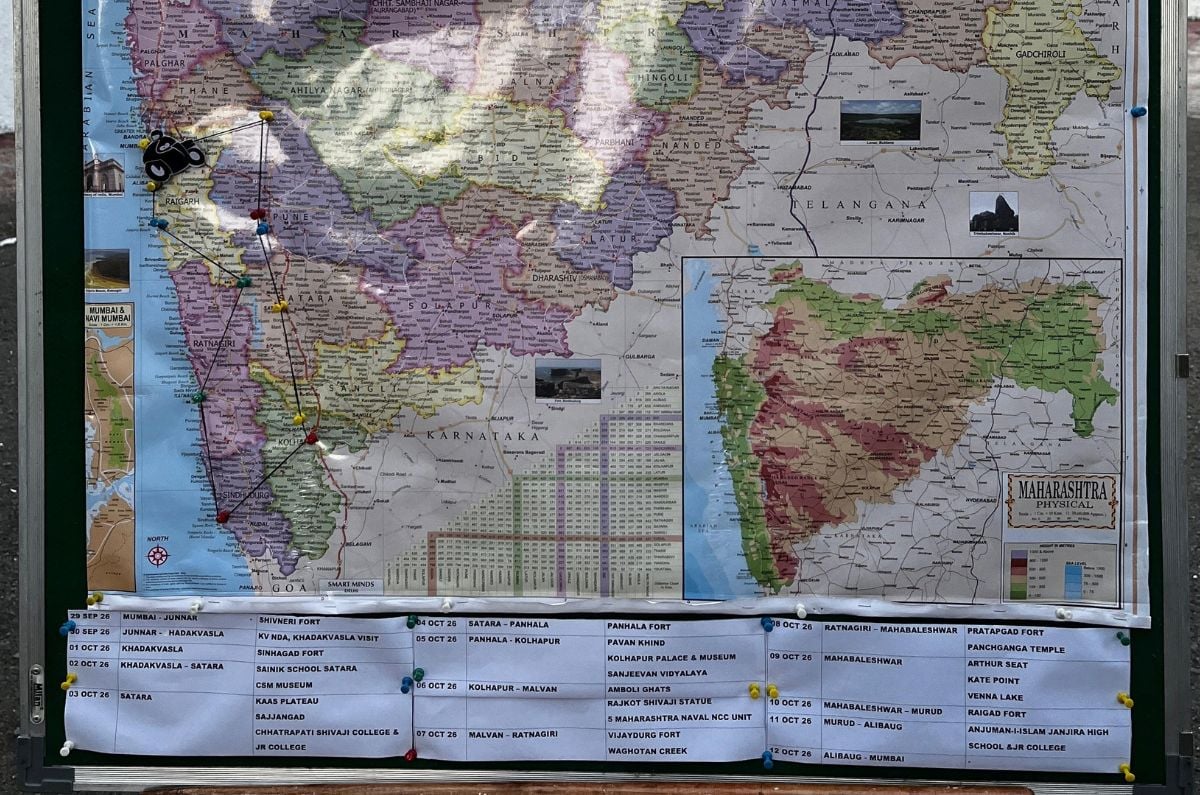
The Indian Navy, in association with TVS Motor Company, has set out on a ‘Fleet to Forts’ expedition with 25 riders on the Ronin intending to cover 1600km across Maharashtra over the next 14 days. The route covers ten historic forts associated with Chhatrapati Shivaji Maharaj, founder of the Maratha empire.
The 25-member group consists men and women of various ranks
TVS will also provide additional technical, logistical and media support
‘Fleet to Forts’ expedition: Mission and Vision
An itinerary centred around the past and the future
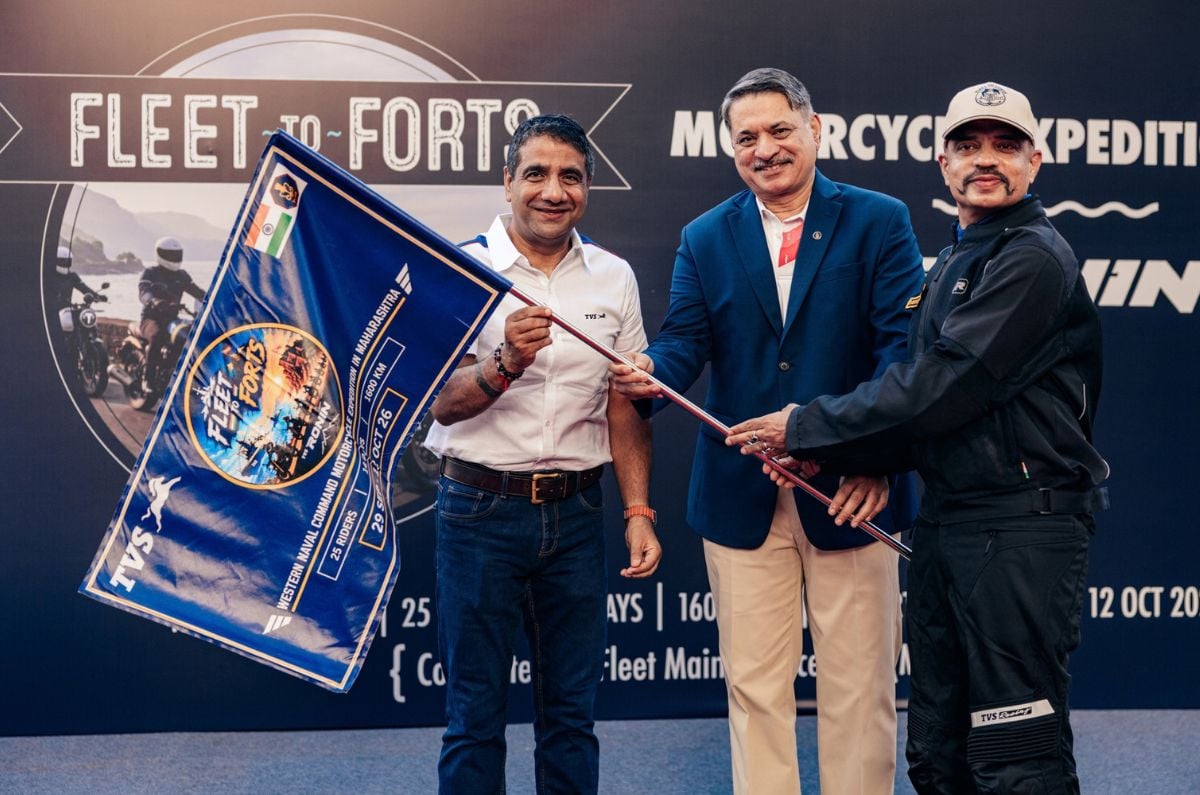
The expedition was flagged off yesterday by Vice Admiral Rahul Vilas Gokhale (Chief of Staff for the Western Naval command) and Mr Vimal Sumbly (Head of Business, TVS Motor Company). The expedition will be led by Captain Shekhar Deshpande, with the 25-member group of both men and women consisting of Officers, Sailors, and Agniveers. With the expedition, the group aims to bring awareness about the career opportunities in the Indian Navy, with a special focus on the Agnipath scheme – Indian Government’s short term recruitment program for personnel below Officer rank in the armed forces.
Left to right: Mr Vimal Sumbly (Head of Business – TVS), Vice Admiral Rahul Vilas Gokhale (Chief of Staff – Western Naval command) and Captain Shekhar Deshpande (Lead rider for the expedition)
The expedition started from Kohli Stadium, Mumbai with an aim to get back to the city by October 12. The route cuts through interior Maharashtra with the objective of exploring Maharashtra’s maritime history and legacy, and to inspire the next generation to join the Indian Navy. Speaking at the event, Vice Admiral Rahul Vilas Gokhale called on the riders to propagate the message to young Indians about serving the nation with pride.
Mr Vimal Sumbly said in his address that the ethos of the expedition deeply resonates with that of the Ronin and that he’s honoured to continue working with the Indian Navy. The Ronin recently received a new Base+ variant, priced at Rs 1.42 lakh (ex-showroom, Delhi) in two new colours, Desert Beige and Sunlit Yellow. With it, there are now a total of four variants ranging between Rs 1.30 lakh and Rs 1.63 lakh. Besides providing the motorcycles for the event, TVS has also equipped the riders with riding gear and will continue to offer logistics, technical and media support for the expedition.
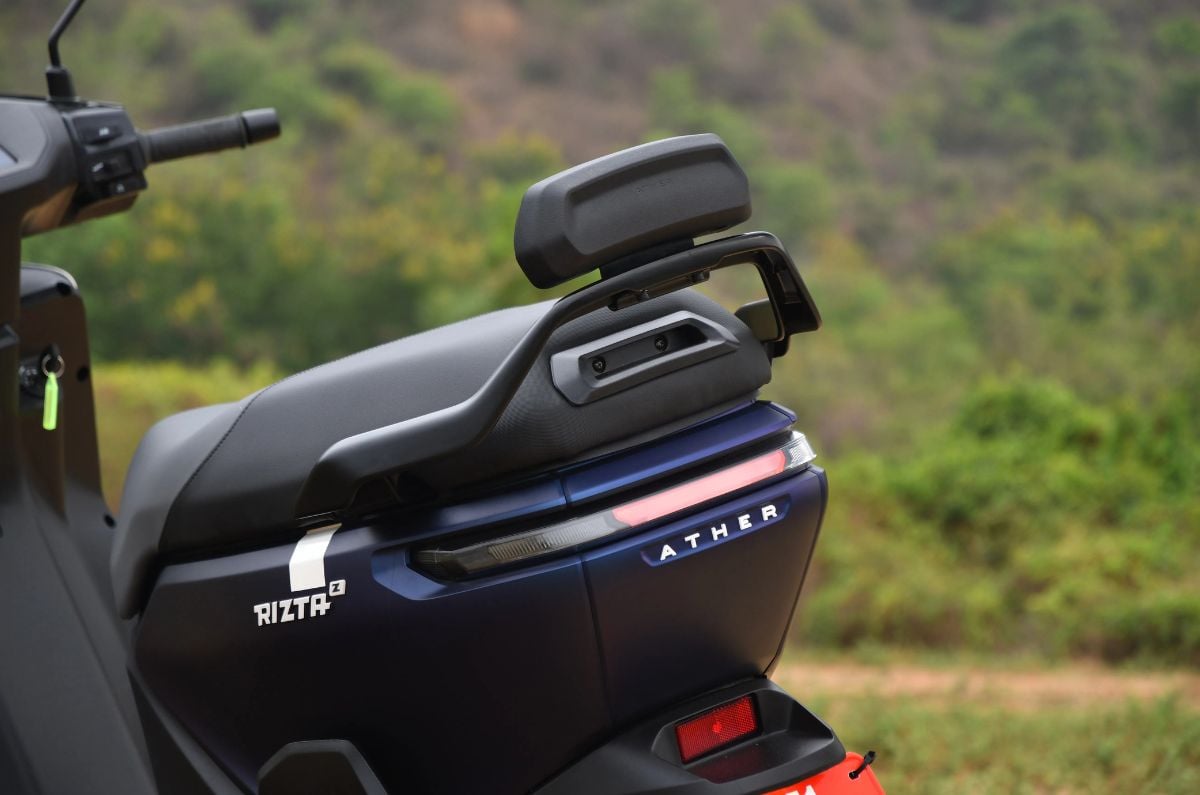
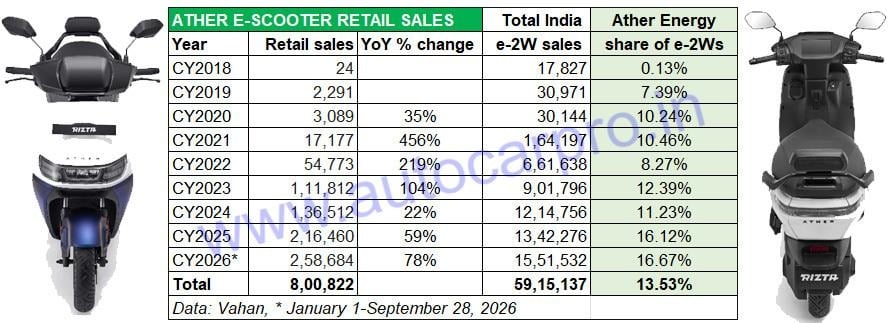
Ather has become the fourth Indian electric two-wheeler manufacturer to attain cumulative retail sales (customer deliveries) of over 8 lakh units. As per the data available on the Vahan portal, the Bengaluru-based company crossed the milestone on September 28, 2026.
Ather has delivered 4.75 lakh scooters since January 2025
217 units of the Konarc sold in its first month
Rizta currently leads Ather’s sales, but Konarc is expected to eat into it
Ather is the fourth Indian e2W maker to cross 8 lakh units in sales
59 percent of its sales came since 2025
Other EV manufacturers to sell over 8 lakh scooters are Ola, TVS and Bajaj via Chetak. While Ola crossed 10 lakh sales in March this year, TVS raced past Ola in August to become India’s second EV manufacturer to sell 10 lakh scooters. Bajaj crossed the 8 lakh sales milestone in June. Except Ola, the other three manufacturers mentioned above have maintained a steady pace of growth so far.
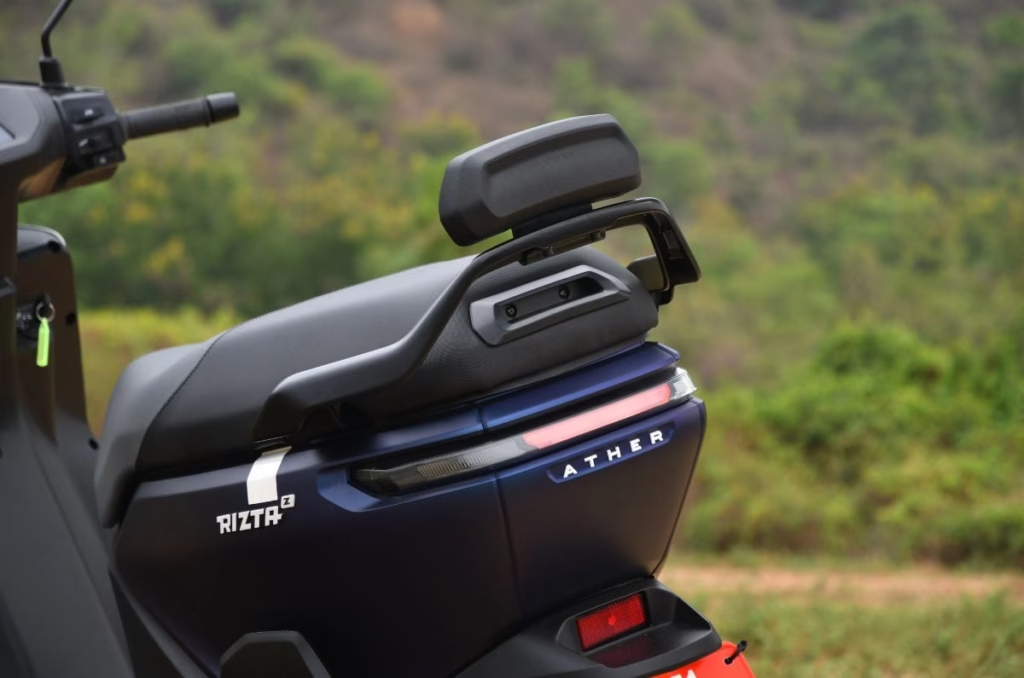
As the retail statistics reveal, Ather’s growth has taken off in the past four years, with sales accelerating since 2025. Between January 2025 and September 28, 2026, Ather delivered 4.75 lakh scooters, which means that 59 percent of the brand’s total sales have come in the past 21 months, led by its flagship, the Rizta family e-scooter. The company launched Konarc on August 29.
In 2023, when Ather’s retail sales crossed the 1 lakh mark, its market share jumped to 12 percent. In 2024, it clocked 1.36 lakh units and an 11 percent market share. Ather achieved its highest-ever monthly sales in March this year with 36,633 units. It also crossed the 30,000-unit sales mark four times in the past year (since October 2025).
In August, Ather dispatched 29,694 e-scooters to its dealers across India. This marked the third-highest monthly wholesales for the company after June and July, respectively. While the Rizta accounted for 76 percent of those sales and the 450 series 23 percent, the new Konarc sold 217 units in its first month.
The Konarc strategically targets the mainstream mass-market scooters like the TVS iQube, Orbiter, Bajaj Chetak, Hero Vida VX2, Simple Wave and the new Ola S1 Z. It will likely take some sales away from the Rizta. However, Ather appears to be fine with that since the Konarc gives it a higher margin than the Rizta, as per chief business officer Ravneet Phokela. Rather than competing with existing e-scooters, Ather will try to convince more ICE scooter owners to buy the Konarc instead, Phokela had added. With its momentum, Ather could end the year with total sales of 3.5 lakh units.
Bajaj, like we predicted, appears to be bringing a slew of updates across their line-up. Only a few days after the Pulsar NS400Z was spotted with the new TFT display, now the entry-level NS125 looks to be next in line. Just like the NS400Z, the update seems to be centred around colours and an updated display.
There could be a higher variant with a TFT display; same as the one from the all-new Pulsar 125 etc.,
Updated colour options also expected, mechanical changes unlikely
Updated Pulsar NS125 could launch soon
New colours and an instrument cluster are the main changes
Just last week, we spotted the NS400Z – the apex NS – with an updated TFT display and colour schemes. Bajaj had first introduced the display with the SS variant of the N160, later giving it to the top variants of the classic Pulsar 125 and 150 as well. The headlining feature of the display was the ability to mirror Google Maps navigation on the bike. Later, updated versions of the N250 and the NS200 were also spotted testing, sporting the new display. Now, the entry-level NS125 looks to be getting an updated display too.
The production-looking version of the Pulsar NS125 was spotted with a new LCD screen, replacing the negative LCD unit on the current version. While the images give us a look at the model with an LCD screen (also available on lower variants of the 125, 150, and N160), there will likely be a higher variant with the same TFT display as the aforementioned siblings. Bajaj appears to have slightly updated the colours too, bringing the palette closer to the recently updated Pulsars. The images show us the bike in black/red, black/neon green, and black/grey.
Besides these two changes, the baby NS is expected to remain unchanged. Which means, it’ll hang on to its 124.45cc engine delivering 12hp and 11Nm of torque. For context, the updated classic Pulsar 125 has a 124.38cc engine that makes 11.8hp and 10.8Nm of torque. TVS Raider, the current best-seller of the sporty 125s, has a 124.8cc engine making 11.38hp and 11.2Nm of torque (11.75Nm on ISG variants). Since the motorcycle appears to have reached dealerships already, deliveries will likely start soon as well. Currently, the Bajaj Pulsar NS125 starts at Rs 99,622 and it remains to be seen if that increases with these updates.
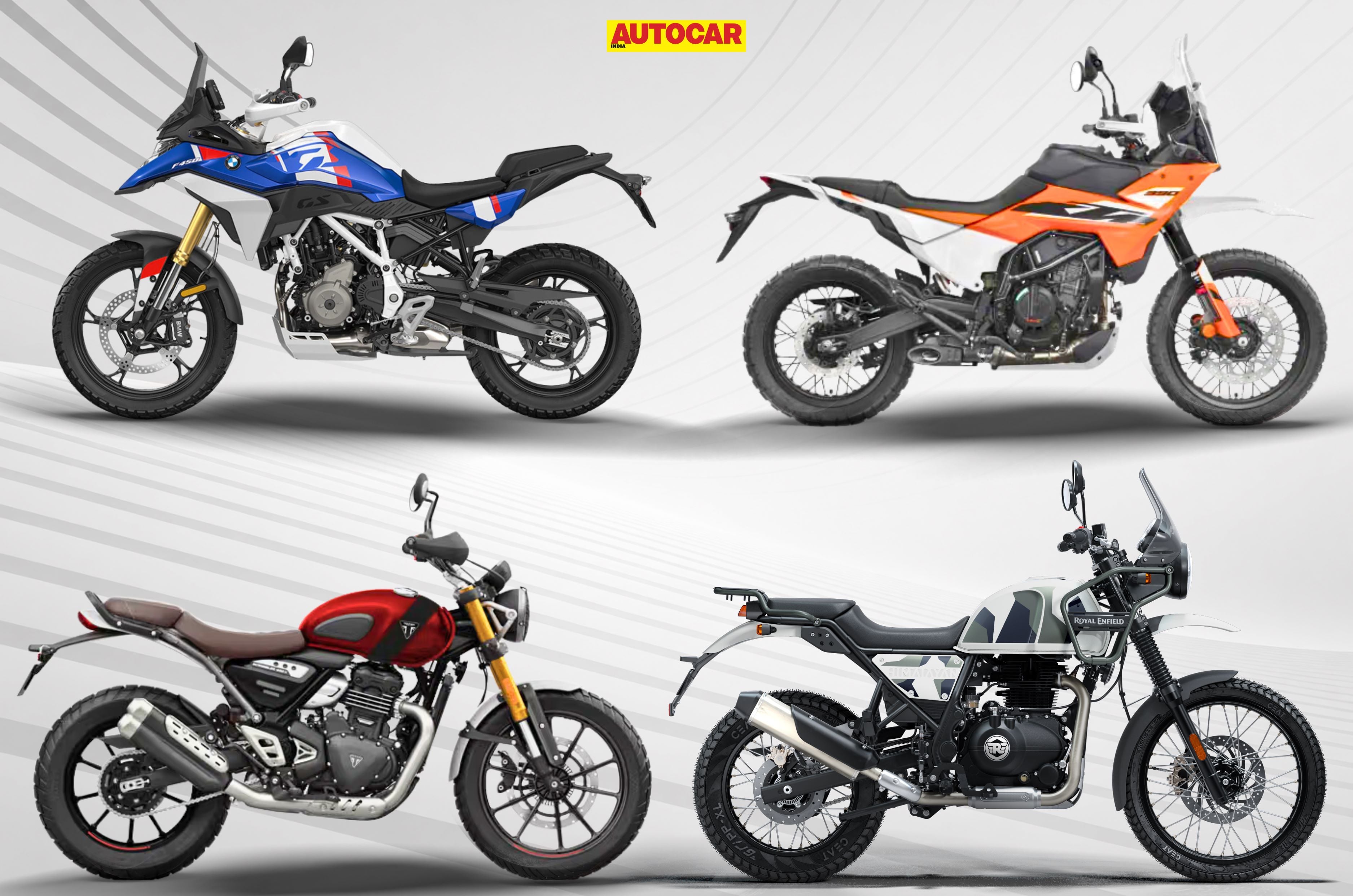
Ten years ago, Royal Enfield made adventure tourers mainstream with the original Himalayan 411 and the segment has slowly, but surely grown since. As with any other thing that gains popularity, this segment also has gained different kinds of options. On the one hand, we have the V-Strom that’s effectively a Gixxer 250 on stilts, and on the other, we have the KTM 390 Adventure S that looks to strike a fine balance between both adventure and touring capabilities. Admittedly, this can get a bit overwhelming, so here are all the adventure touring motorcycles you can buy in India right now between Rs 2-5 lakh.
All prices mentioned are ex-showroom, Delhi.
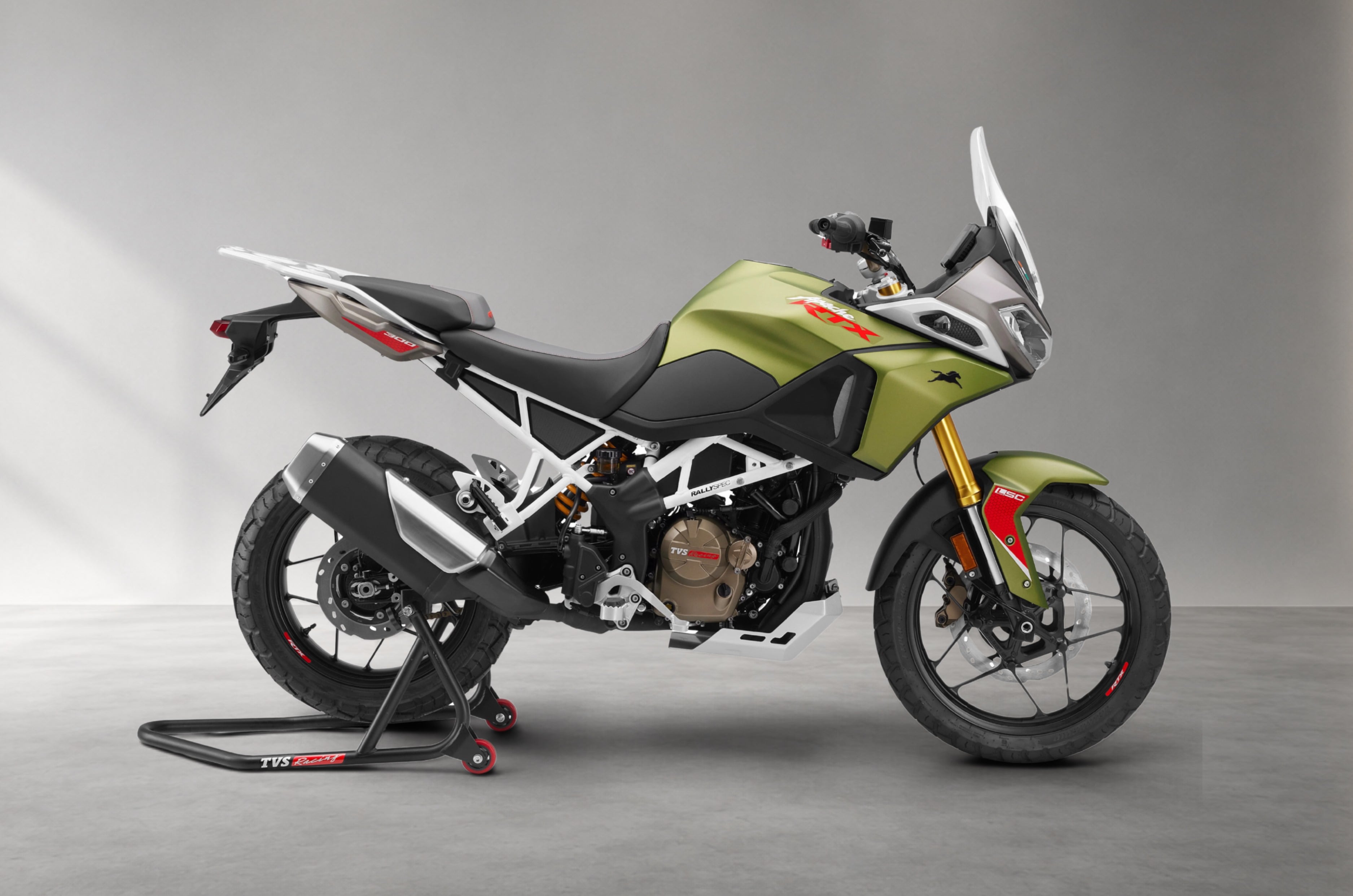
11. TVS Apache RTX 300
Starts at Rs 1.99 lakh
TVS is the most recent (new) entrant into the segment, with the Apache RTX 300 redefining how many features you can pack into on a relatively affordable budget. The RTX’s 299.1cc single-cylinder, liquid-cooled engine with 36hp and 28.1Nm of torque isn’t the most exciting but has the ability to keep going as long as you’re willing to, except for the oddly small 12.5-litre fuel tank. The TVS sticks to a 19/17 front/rear wheel setup and only comes with alloy rims.
TVS offers four ride modes and cruise control as standard with the higher variants stepping that up to a bi-directional quickshifter, traction control, and Google Maps mirroring on the 5-inch TFT screen. It also has a very good headlight as standard, and the top BTO variant adds adjustable suspension too, both aimed at increasing the sense of safety and comfort. The 835mm seat height and 180kg kerb weight combo might look daunting on paper, but they aren’t a big hindrance in practice.
The TVS Apache RTX 300 spans Rs 1.99 lakh for the Base variant and Rs 2.39 lakh for the BTO variant.
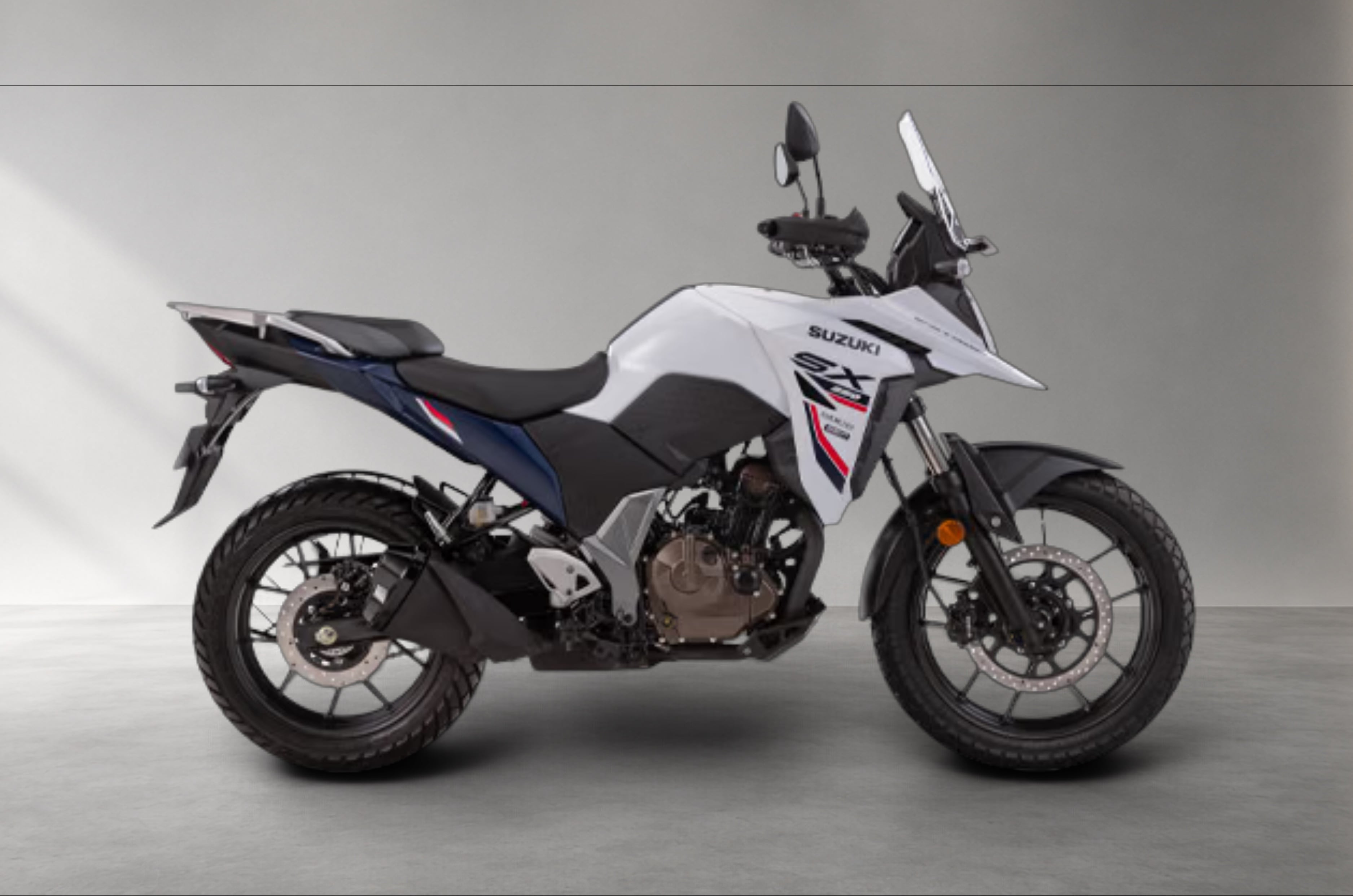
10. Suzuki V-Strom SX
Rs 2.01 lakh
Suzuki’s adventure tourer is mostly a tourer because it is a re-engineered Gixxer 250 with a taller stance. But, don’t let that stop you from considering it seriously because its 249cc engine with 26.5hp and 22.2Nm of torque has more than enough to make long days seem effortless. The 12-litre fuel tank capacity seems small on paper, but it is possible to make the Suzuki quite efficient. It has a 835mm seat height, but the 167kg kerb weight softens that blow.
As is typical for Japanese products in this class, the V-Strom SX is light on features, with dual-channel ABS the only rider aid on offer. However, it also makes a great case for reliability, helped further by Suzuki’s brand cachet. The Suzuki runs on 19/17 front/rear wheels and only gets alloy rims.
The Suzuki V-Strom SX has a single variant and costs Rs 2.01 lakh.
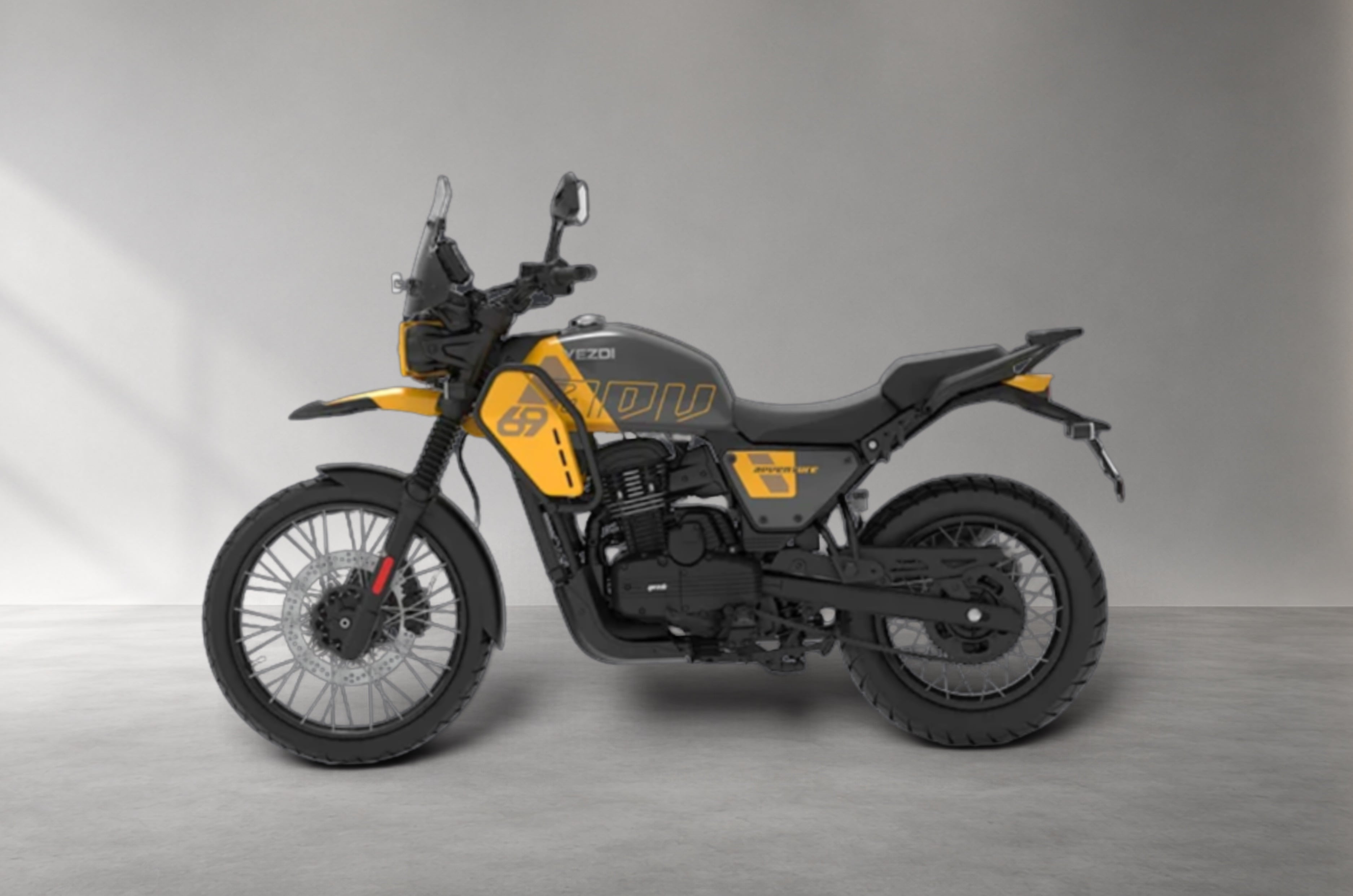
9. Yezdi Adventure
Starts at Rs 2.06 lakh
Classic Legends’ Yezdi had comprehensively upgraded their adventure tourer earlier this year. The 334cc engine is now liquid-cooled and makes 29.6hp and 29.8Nm of torque. The fuel tank capacity is a healthy 15.5 litres and the Yezdi Adventure has a 815mm seat height and weighs about 198kg.
Along with an updated design, the Adventure gained features like an asymmetrical dual headlamp, all LED lighting, three ABS modes, traction control and a rerouted exhaust for better heat management. Yezdi also offers tubeless, cross spoke wheels as accessories for Rs 20,000 extra, if you’d like to embrace the adventure look with the convenience of tubeless tyres. Standard fitments are 21/17 front/rear tubed, wire-spoke wheels.
The Yezdi Adventure starts at Rs 2.06 lakh for the base Nebula Blue White colour and goes up to Rs 2.13 lakh for the top Yellow Falcon colour.
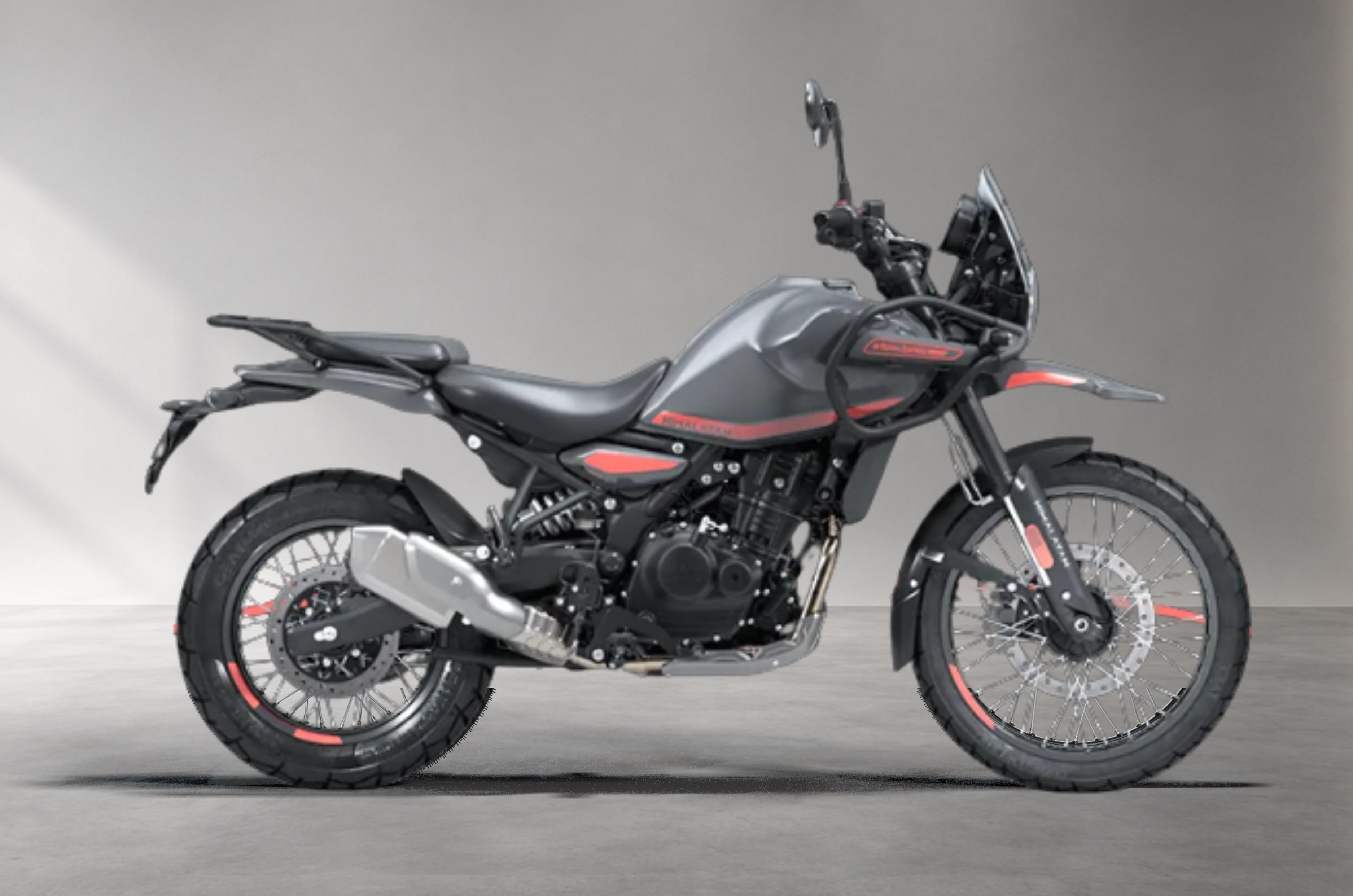
8. Royal Enfield Himalayan 440
Rs 2.29 lakh
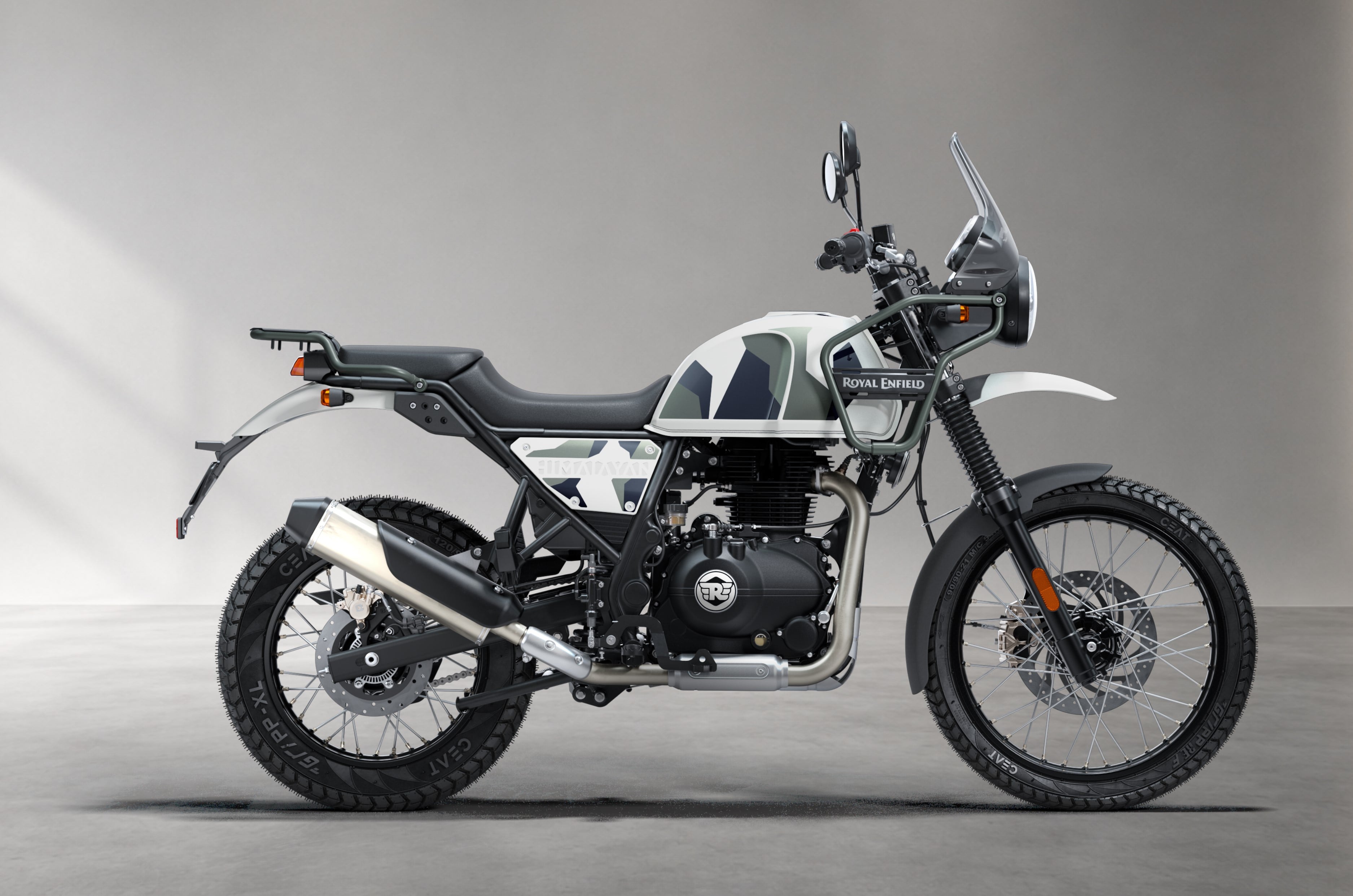
Royal Enfield has resurrected the air/oil-cooled Himalayan 440 for 2026. The 443cc engine (shared with the Scram 440) makes 25.4hp and 34Nm of torque and the Himalayan stays true to its roots by only offering switchable dual-channel ABS and the Tripper navigation pod as notable features. The seat height remains at 800mm, as does the fuel tank capacity at 15 litres; which also means the weight remains unchanged at 199kg as well. Royal Enfield has stuck to a tubed 21/17 wheel setup on the Himalayan 440.
Most of the mentioned specifications, are common to the Scram 440. Its base variant starts lower at Rs 2.25 lakh for wire spoke rims, and the higher variant offers alloy rims at Rs 2.32 lakh.
Uncharacteristic for Royal Enfield, all three colours of the Himalayan 440 cost the same Rs 2.29 lakh.
7. KTM 250 Adventure
Rs 2.53 lakh
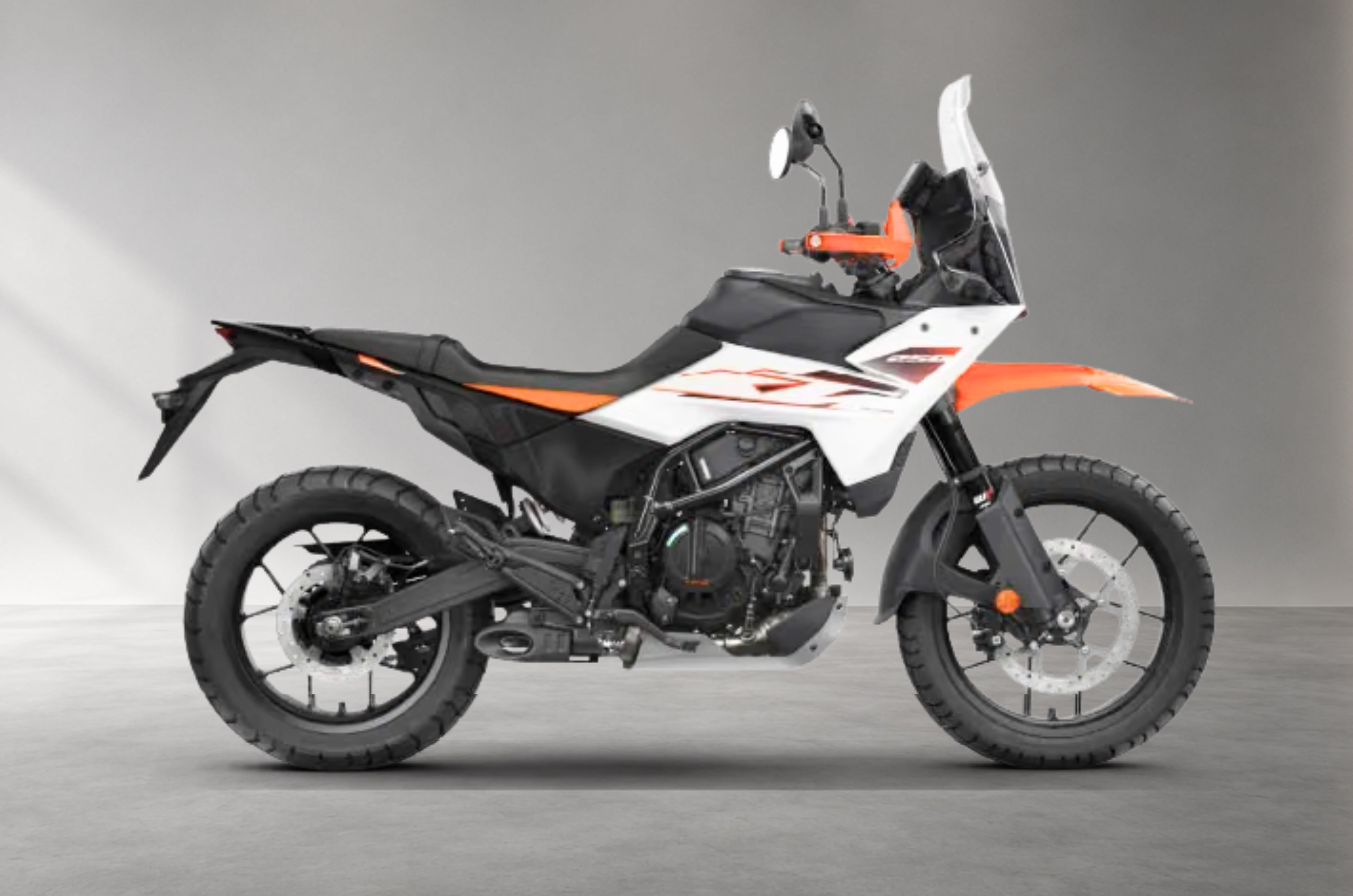
KTM’s entry-level adventure tourer is the 250 Adventure, which shares its engine with the 250 Duke and its platform with the bigger brothers. Its 249.07cc engine makes 31hp and 25Nm of torque. The fuel tank capacity is 14.5 litres, seat height is at 825mm, and kerb weight is 176kg.
Being the entry-level opinion, KTM has kept things simple in terms of features. It gets a bi-directional quickshift, a slip-and-assist clutch, and two ABS modes. For fancy features like ride modes, cruise control etc., you’ll have to step up the 390 Adventure with the 350cc engine (also on this list). The 250 Adventure runs on 19/17 front and rear wheels with alloy rims.
KTM offers a single variant for the 250 Adventure and has priced it at Rs 2.53 lakh.
6. Triumph Scrambler 400 X
Rs 2.65 lakh
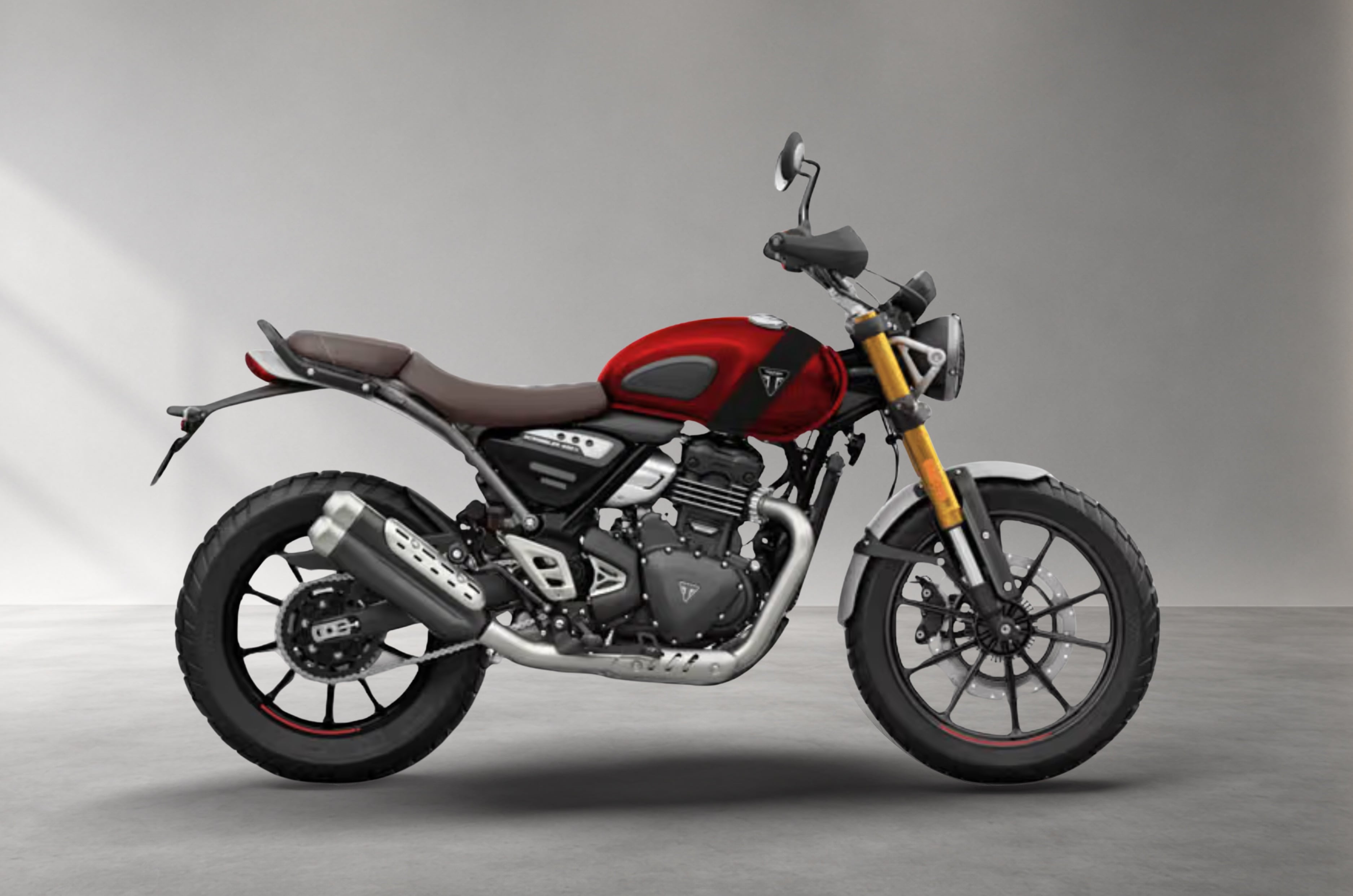
Technically, the Scrambler 400 X isn’t an adventure tourer, but in the absence of a Tiger 400 (so far), it is the closest Triumph (and Bajaj) offers to one in India. With the downsizing, the Scrambler’s 349cc liquid-cooled engine makes 37hp and 32Nm of torque. The Scrambler 400 X has a 13-litre fuel tank, seat height is at 835mm and kerb weight is 185kg.
The Scrambler offers switchable dual-channel ABS, a slip-and-assist clutch, and traction control as standard rider aids. It comes with 19/17 front/rear wheels and only offers alloy rims in the X guise.
Triumph Scrambler 400 X is priced at Rs 2.65 lakh, but if you want to turn up the ADV look, there’s also a Scrambler 400 XC with tubeless cross spoke wheels and more accessories as standard for Rs 2.99 lakh. However, for all intents and purposes, the X and XC are near-identical.
5. KTM 390 Adventure (350cc)
Rs 2.87 lakh
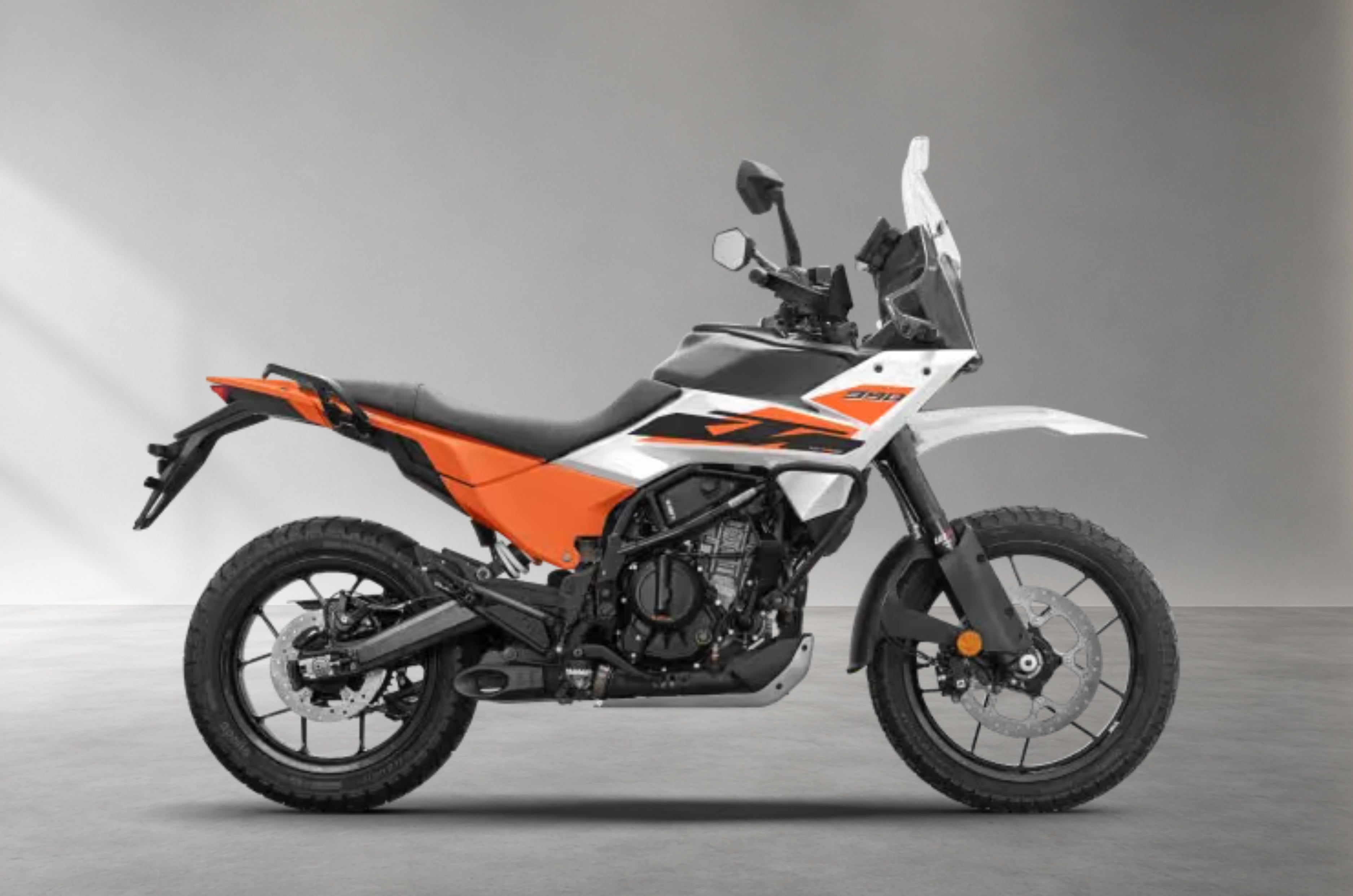
KTM’s downsizing brought down the 399cc Adventures into 349.32cc, with the smaller engine making 41.5hp and 33.5Nm of torque. In terms of specification, the 350cc Adventure is pretty middle ground with a 14.5-litre fuel tank, 181kg kerb weight and 825mm seat height.
Besides the RTX 300, this is the only other motorcycle on this list under 3 lakh to offer cruise control as standard. It gets three ride modes, a bi-directional quickshifter, traction control, a 5-inch TFT screen, among other things. This version of the Adventure comes exclusively with 19/17 front/rear wheels and alloy rims.
The KTM 390 Adventure has a single variant with two colours and is priced at Rs 2.87 lakh.
4. Royal Enfield Himalayan (450)
Starts at Rs 3.08 lakh
Royal Enfield’s Himalayan (450) gets quite a bit over its older/younger brother. Its engine is liquid-cooled (vs air-cooled on the 440) with 40.02hp and 40Nm of torque. Built on a completely new platform, the Himalayan 450 is three kilos lighter than the 440 at 196kg, and gets a markedly larger 17-litre fuel tank. The standard seat height ranges between 825-845mm, but it’s possible to drop that to 805mm with an accessory low seat.
On the features side too it offers a lot more than the 440, with a 4-inch TFT display with Google Maps powered navigation, two ride modes, and a slip-and-assist clutch. The Himalayan 450 comes with 21/17 front/rear wheels with tubed, wire-spoke rims as standard on the lower variants. However, on the top Mana Black variant Royal Enfield bundles tubeless, cross spoke rims as standard.
The Royal Enfield Himalayan starts at Rs 3.08 lakh for the base Kaza Brown colour and goes up to Rs 3.39 lakh for the Mana Black colour.
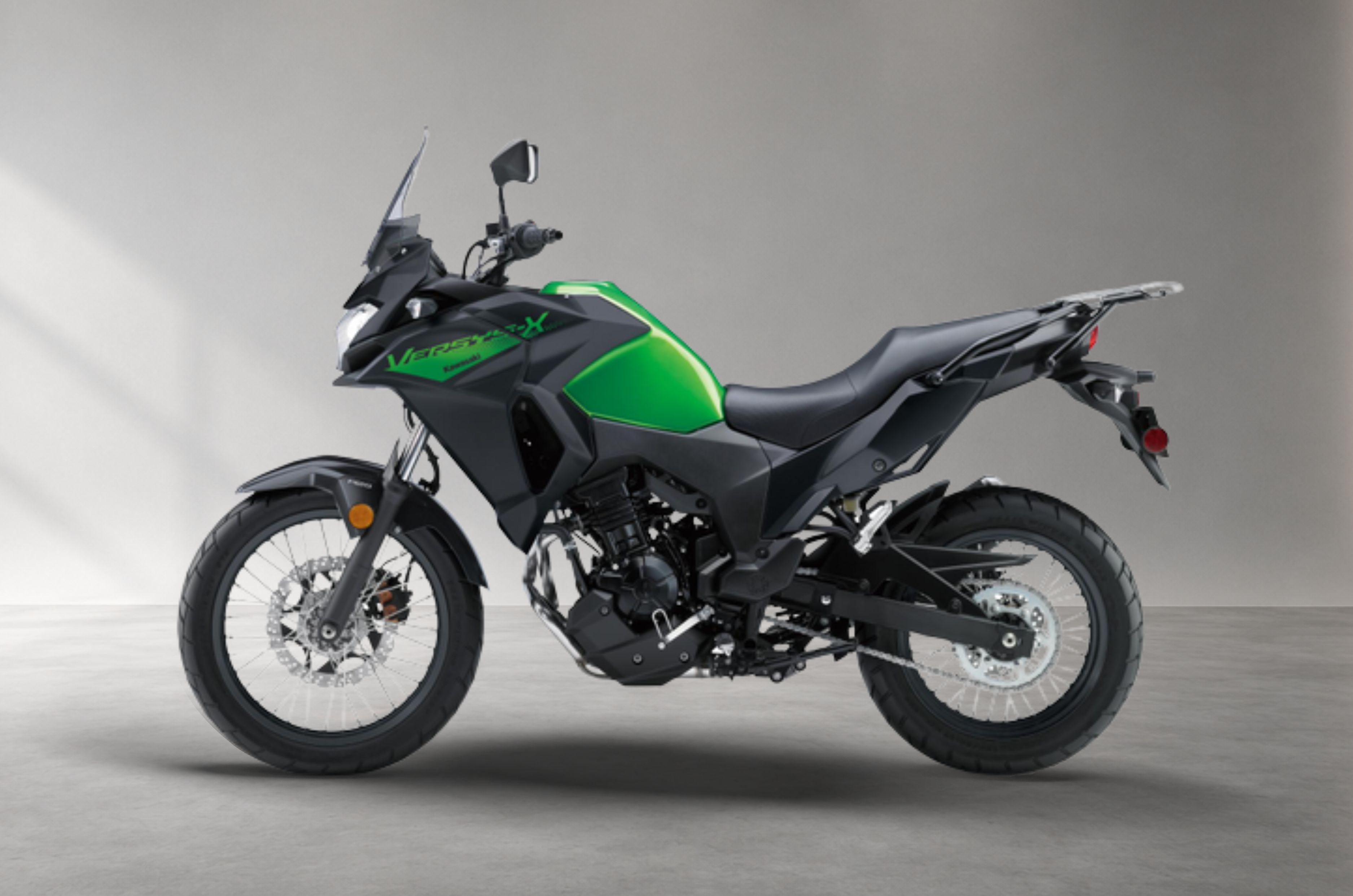
3. Kawasaki Versys-X 300
Rs 3.49 lakh
The Kawasaki Versys-X 300 is one of two twin-cylinder options in this list. Its 296cc parallel-twin makes 39hp and 26Nm of torque and it’s liquid-cooled as well. It might just be the most accessible motorcycle on this list with a 175kg kerb weight, and an 815mm seat height.
Similar to the V-Strom 250 SX, the Versys-X 300 also maintains a slim list of features, dual-channel ABS and a slip-and-assist clutch. It has a 17-litre fuel tank (only one here to match the Himalayan 450), and Kawasaki only offers it with 19/17 front/rear wheels with wire-spoke rims running tubed tyres.
The Kawasaki Versys-X 300 is offered in one variant in a single Green/Black colour at Rs 3.49 lakh.
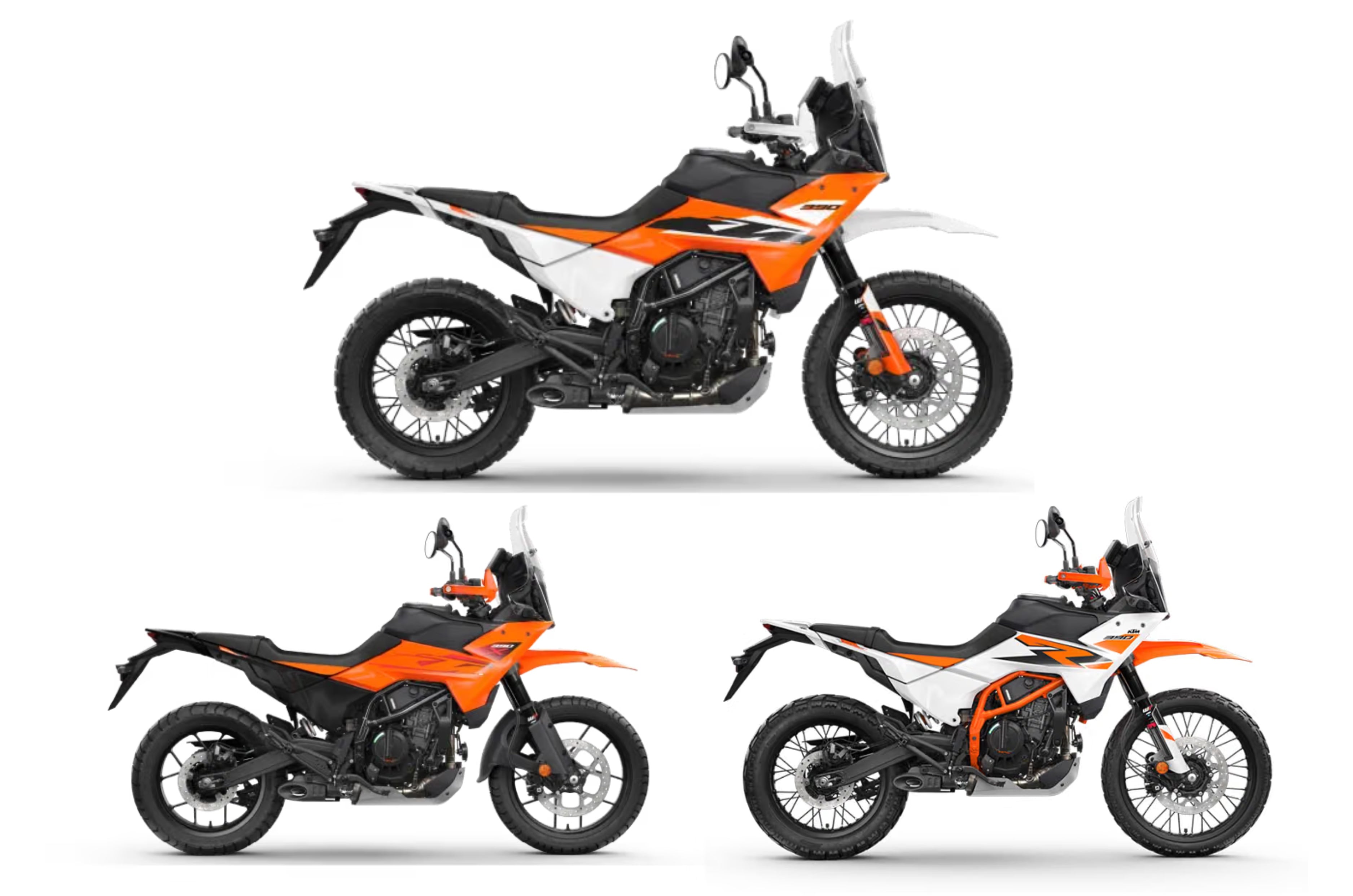
2. KTM 390 Adventure (S, X, R)
Starts at 3.50 lakh
These are the full scale 399cc engine versions of the KTM Adventure. They all make 46hp power and 39Nm of torque (4.5hp and 5.5Nm more than the 350cc engine). Fuel tank capacity is identical to the 350cc Adventure at 14.5 litres, as is the seat height at 825mm. However, the kerb weight varies across variants; the X weighs 181kg, S 182kg, and the R is the heaviest at 183kg.
The X gets an identical feature set as the 350cc Adventure, with the S stepping that up to adjustable front and rear suspension along with 21/17 front/rear wheels with tubeless spoke rims. The more off-road focussed R does not get the tubeless spoke rims, swaps the rear 17-inch wheel for an 18-inch one and runs on Mitas Enduro front and rear tyres.
The KTM 390 Adventure X is the most affordable of these three at Rs 3.45 lakh, with R taking a big step to Rs 3.86 lakh. The S is the most expensive of the bunch at Rs 4.04 lakh.
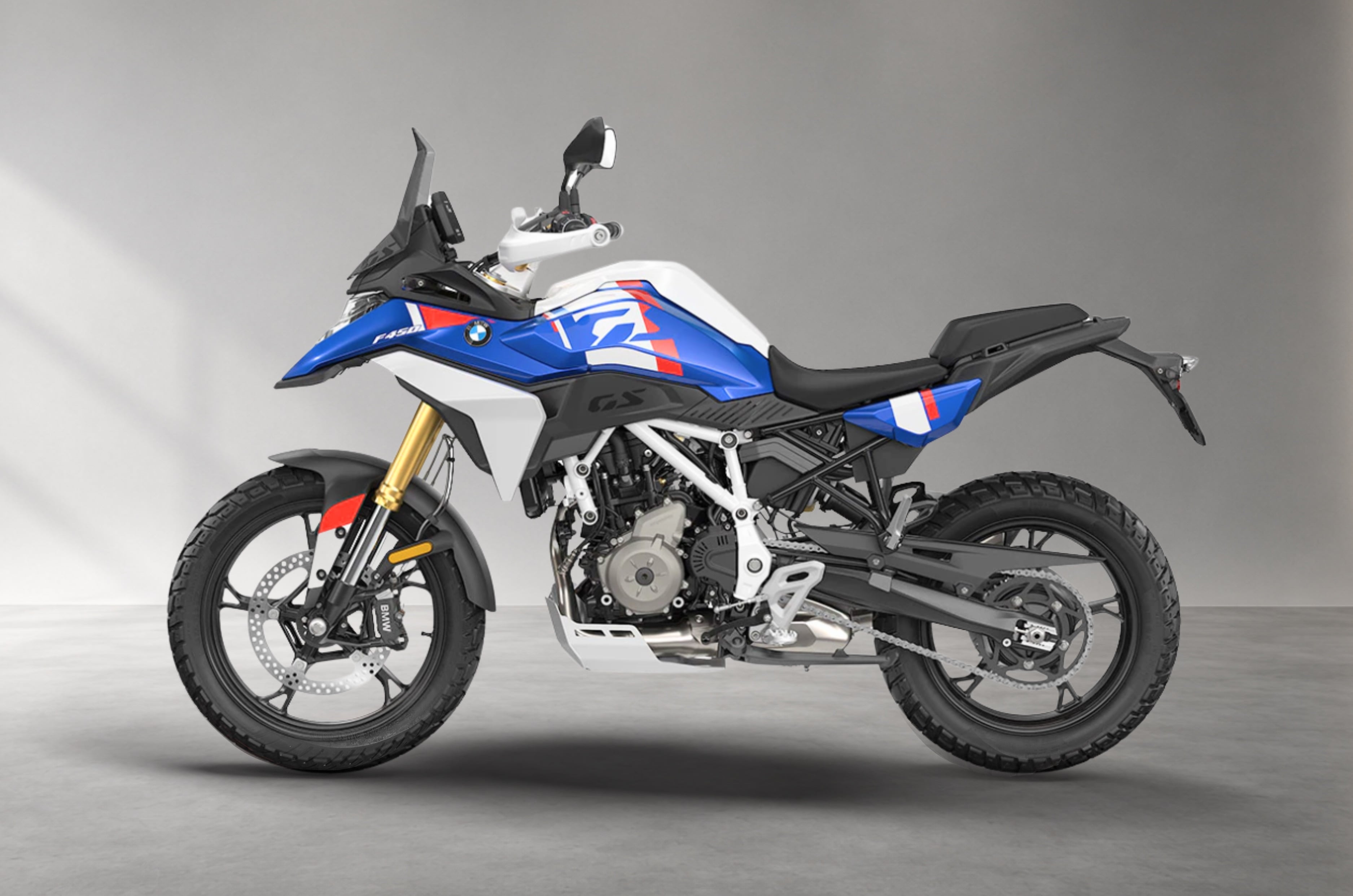
1. BMW F 450 GS
Starts at Rs 4.95 lakh
BMW launched the F 450 GS in April this year at Rs 4.70 lakh and increased the prices for the model recently. The motorcycle gets a 420cc parallel-twin engine with 48hp of power and 43Nm of torque. The fuel tank capacity is 14 litres and the kerb weight is second lightest at 178kg, but the standard seat height is 845mm (the tallest in this list!).
Standard features are an 6.5-inch TFT display, three ride modes, slip-and-assist clutch, traction control, ride modes, and heated grips. On the higher variants, BMW offers a bi-directional quickshifter, an integrated windshield, ERC (Easy Ride Clutch), and adjustable suspension.
The BMW F 450 GS starts at Rs 4.95 lakh for the Base variant, Rs 5.15 lakh for the Exclusive variant, and Rs 5.60 lakh for the top GS Trophy variant.
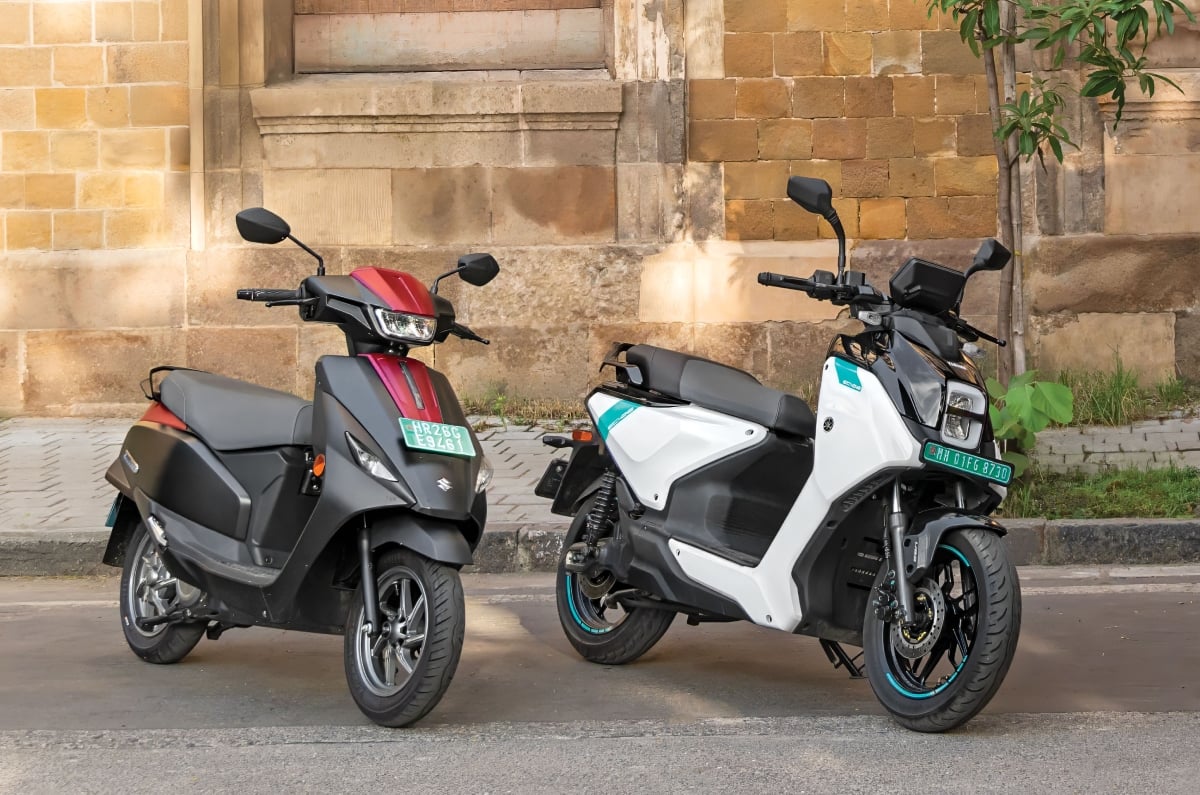
While the Indian manufacturers have been quick to capitalise on the EV boom, the Japanese have been rather more measured in their approach. Honda arrived in 2025 with not one but two in-house electric scooters, though both had unique limitations that prevented them from succeeding.
Suzuki, like Honda, chose to develop its own platform from scratch, but its e-Access appears expensive for what it offers. Yamaha, meanwhile, took a markedly different route for its more affordable offering and partnered with an Indian startup. The EC-06 is, in essence, a more expensive River Indie in sharper clothes.
So if you’ve been waiting for a Japanese e-scooter, you now have two choices, but like their very different inceptions, both also offer you two very different flavours of electric scooter. The question, then, is which one deserves your money – and whether either deserves it over the competition.
Not hiding in plain sight
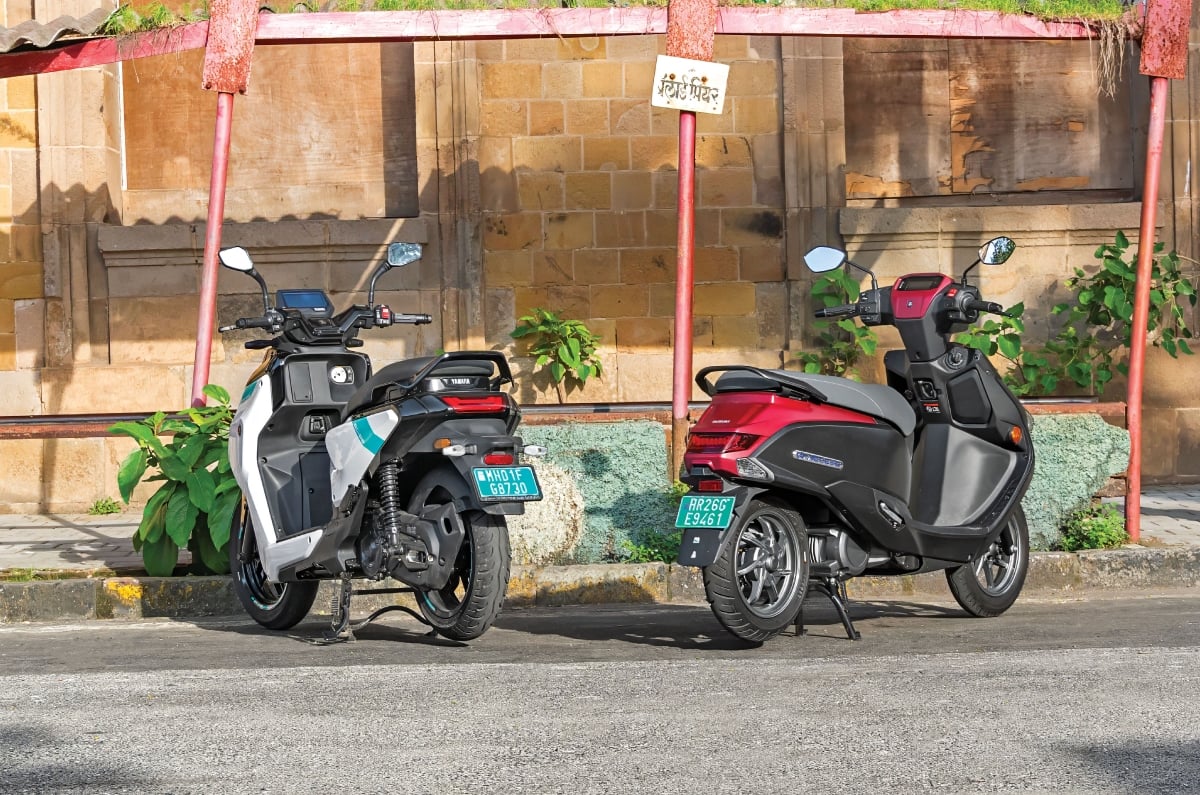
Subtle, these scooters are not. Both take distinctly left-field approaches to styling and will stand out from the crowd. Over the fortnight we spent with them, the EC-06 consistently drew more positive attention thanks to its chunky, squared-off proportions. The e-Access found its niche too, though its double duck-bill nose, flowing front panels with a contrastingly boxy tail make it more of an acquired taste.
Yamaha EC-06
Suzuki e-Access
Kerb weight
132kg
122kg
Seat height
770mm
765mm
Underseat storage
24.5 litres
17 litres
Ground clearance
145mm (laden)
160mm (unladen)
Climb aboard and their personalities diverge further still. The e-Access feels more like a conventional scooter. Despite its compact dimensions, it never feels cramped, even for taller riders, while its 765mm seat height makes it instantly approachable for shorter ones.
The EC-06, by comparison, feels a size larger. Its riding triangle is noticeably roomier, which taller riders will appreciate in a segment that seldom caters to them. Yet, with a friendly 770mm seat height, it remains fairly unintimidating for shorter riders. In fact, tall riders will want a higher seat.
Different strokes
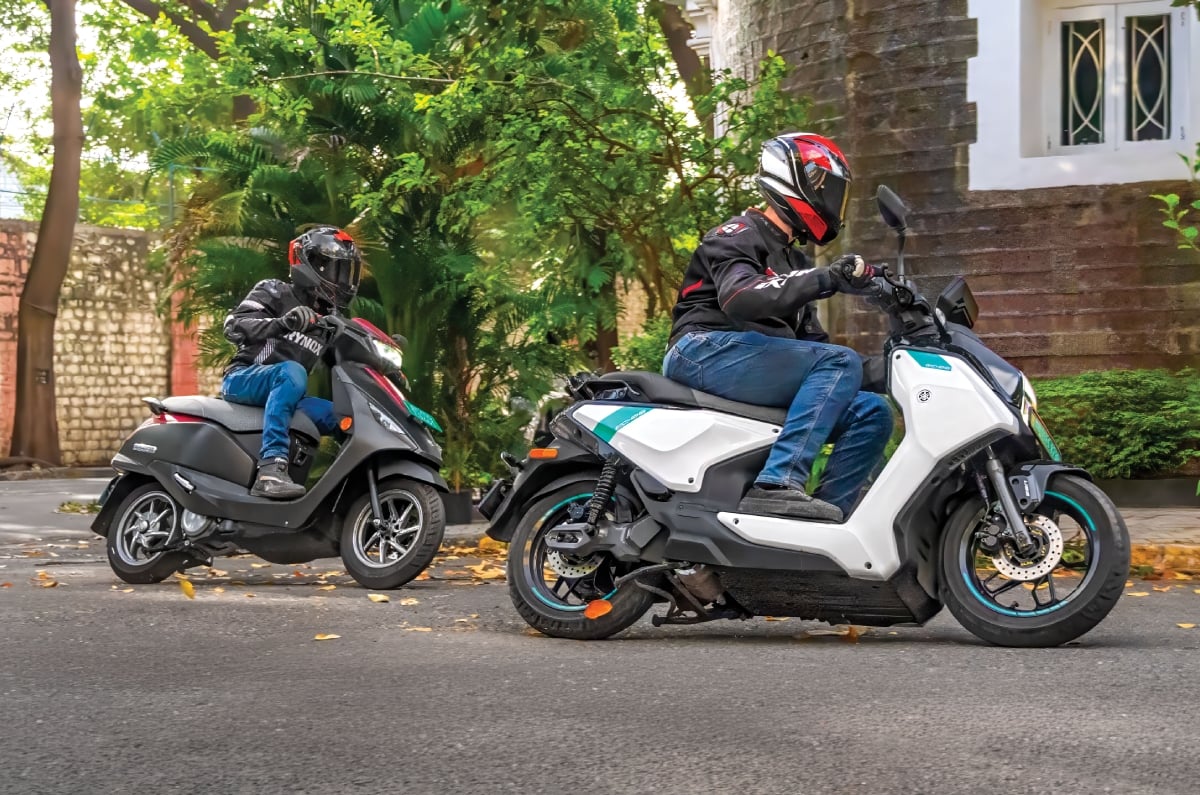
The riding experience of both also reflects two very different engineering philosophies. The 122kg e-Access feels exceptionally light on its feet; whether wheeling it around a parking space or flicking it into a bend, it responds eagerly – actually, a bit too eagerly. Some of that can be attributed to Suzuki mounting the battery pack vertically beneath the seat, a decision that, as you will read further on, has implications elsewhere too.
Yamaha EC-06
Suzuki e-Access
Battery capacity / chemistry
4kWh / NMC
3.072kWh / LFP
Motor
Permanent Magnet Synchronous
Permanent Magnet Synchronous
Power
6.7kW
4.1kW
Torque
26Nm
15Nm
Like the latest Burgman, its ride also errs towards the firmer side rather than the plush feel of a TVS iQube. It isn’t uncomfortable by any means, but it is something worth paying attention to on a test ride. Taller riders will also discover the Suzuki’s compactness during full-lock U-turns, where their knees will foul the handlebar.
On the flip side, the EC-06 is relatively heavier and slower to steer, but it’s a small tradeoff. That’s because its larger 14-inch wheels lend it greater stability at faster speeds and also help it dismiss broken roads with admirable composure. Its absorptive suspension also factors in here, though particularly sharp impacts can provoke a slight judder in the fork.
E-Access has the more flighty, energetic demeanour, whereas the EC-06’s handling is more sure-footed.
The Yamaha’s seat, however, leaves quite some room for improvement. Its forward-sloping shape constantly makes you slide forward, necessitating frequent shuffling about. The padding is also too soft, and after just 30 minutes or so, you find yourself sinking into the seat pan. This results in a gradually more knees-up riding position, which might sound like a trifling problem at first but one that becomes increasingly apparent over longer journeys.
Neither one gets ABS, which feels like quite an egregious oversight considering their price points. Nevertheless, the Yamaha’s brakes inspire greater confidence because they are powerful without being overly aggressive, and its wider tyres also provide better traction. The Suzuki’s brakes, conversely, are almost too sharp. On Mumbai’s slippery concrete roads, they demand a more measured touch when coming to a halt quickly.
Not that you’ll often rely heavily on them. That’s partly down to the well-calibrated regenerative braking system and partly because the e-Access’ performance is quite unremarkable. Not only is it much slower than the EC-06, but it also feels noticeably less eager than the petrol-powered Access. It’s perfectly usable in the city, but on faster roads, overtakes require planning. Unsurprisingly, the Yamaha feels considerably livelier. It accelerates with genuine enthusiasm in its top Power mode, the regenerative braking is seamlessly calibrated in all 3 modes (Standard and Eco being the other two) and, despite using chain drive, its drivetrain is remarkably silent – akin to a hub-mounted motor.
Feel Good (?) Features
Build quality on both is reassuringly solid and exactly what one expects from the Japanese. At these prices, however, there are a few omissions that are difficult to overlook.
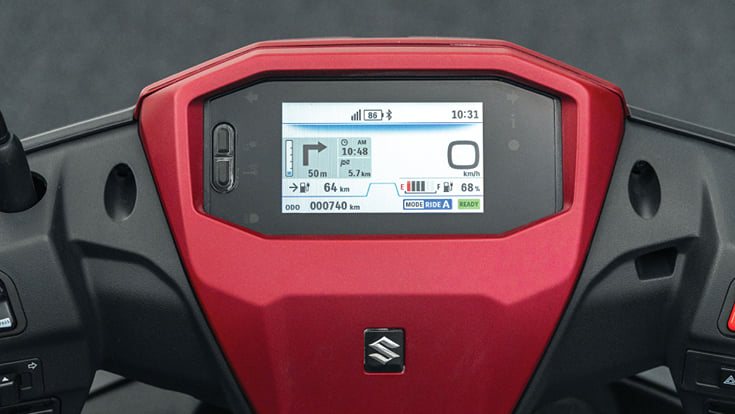
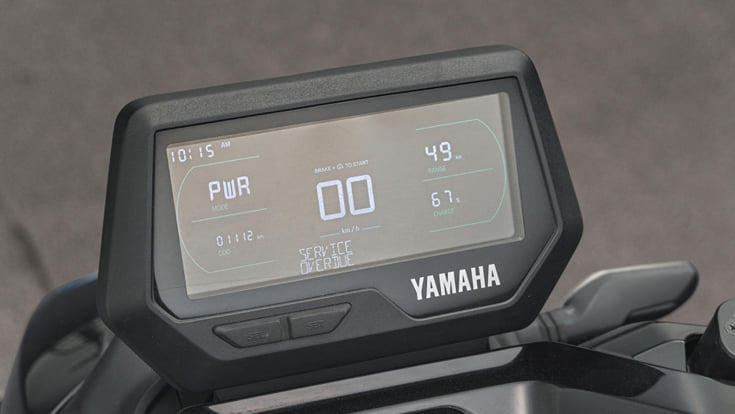
The e-Access employs the same TFT display found on the ICE Access 125 and Burgman, both of which cost substantially less. Yamaha, meanwhile, supplies only the slower 480W charger, despite the considerably more affordable River offering a faster 750W unit as a Rs 3,000 option.
Same TFT as ICE Access; EC’s negative LCD is simpler but well laid out.
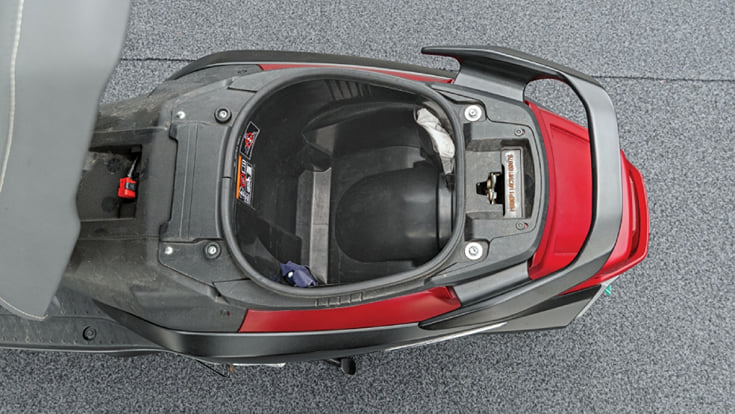
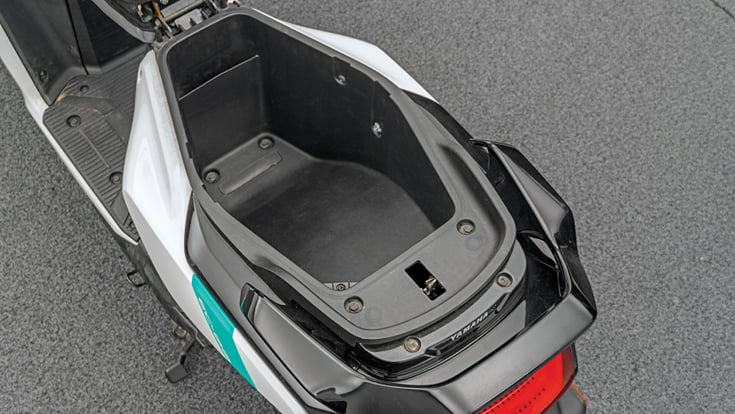
The EC-06 also sacrifices a lot of storage compared to the Indie. Its 24.5-litre under-seat boot is far short of the latter’s enormous 43-litre boot and trails established rivals such as the iQube, Rizta and Chetak. The River’s lockable 12-litre glovebox has been omitted too, though Yamaha has used this to reposition the charging port to a more convenient location.
e-Access’ 17L boot far too small and oddly shaped; Yamaha’s 24.5L boot is more usable but not segment-leading.
If the Yamaha’s storage is merely average, the Suzuki’s is positively outclassed. The battery’s position beneath the seat results in just 17 litres of bootspace – roughly half what you’ll find on rivals like the Rizta and Chetak. In fact, even the ICE Access 125 offers you quite a bit more storage space. The e-Access’ boot is also shaped quite awkwardly, and unless the charger’s cables are folded with almost Victorian precision, it simply refuses to fit.
Range Rovers?
An electric scooter ultimately needs to deliver one thing above all else – promising range to reduce your running costs. In Ride A mode, which delivers full performance and max regen, the e-Access covered a little over 88km in our range test. Given its smaller 3kWh battery and its use of safer, but less energy-dense, LFP chemistry, the result is respectable in isolation; however, compared to the market’s front-runners, it falls far short.
Yamaha EC-06
Suzuki e-Access
0-40kph
3.46s
4.94s
0-60kph
6.82s
11.93s
Roll-on Acceleration
20-50kph
3.31s
5.46s
30-70kph
7.34s
17.01s
50-80kph
10.96s
–
Our test on the EC-06 was conducted in its middle Standard mode, which retains full performance but softens throttle response compared to Power mode. It covered 114km, comfortably exceeding the distance initially predicted. Both scooters deserve praise here, as their range indicators proved refreshingly honest, not indulging in optimistic guesswork.
Yamaha EC-06
Suzuki e-Access
60-0kph
22.87m
24.64m
Using Eco mode will naturally extend the range on both, though with reduced acceleration and lower top speeds. Thankfully, neither becomes painfully slow. Even in Eco, both climb flyovers and keep up with city traffic without reducing themselves to rolling roadblocks.
While the Yamaha’s range is undoubtedly more impressive, its charging time is a rather different story. The supplied 480W charger requires a glacial ten hours to replenish a flat battery. Meanwhile, the Suzuki’s 600W unit requires around six hours to do the same, although its battery pack is also smaller.
One thoughtful detail both manufacturers deserve credit for is the inclusion of a dedicated charger bag. It is a small touch, but one that should help protect the charger from spending years rattling around inside the boot.THE BIGGER PICTURE
Judged purely against each other, the result is straightforward – the EC-06 clearly wins. It offers superior performance, greater comfort, longer range and also costs much less than the e-Access.
Yamaha EC-06
Suzuki e-Access
Price (ex-showroom, Bengaluru)
Rs 1.71 lakh
Rs 1.92 lakh
However, if you zoom out and look at the broader market, the context changes. At Rs 1.71 lakh, the Yamaha is hardly inexpensive, and the Suzuki, which is knocking on the door of Rs 2 lakh, is even worse off. When proven alternatives from TVS, Ather, Bajaj, Vida and River offer similar or even superior alternatives for substantially less money, the Japanese appear more like fringe players and less like mainstream contenders.
There will undoubtedly be a small demographic of buyers for whom a Japanese badge carries enough cachet to justify this big premium. However, for the rest of us, the more keenly priced and proven homegrown contenders are the better bet.