Royal Enfield Himalayan 750: What you should expect

Royal Enfield Himalayan 750: What you should expect
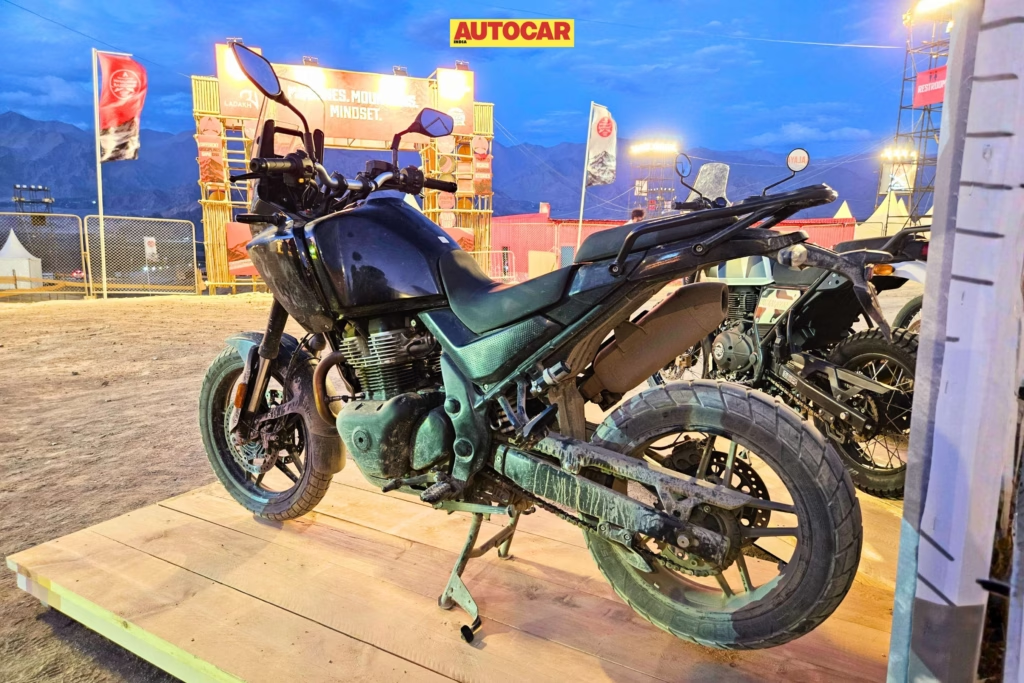
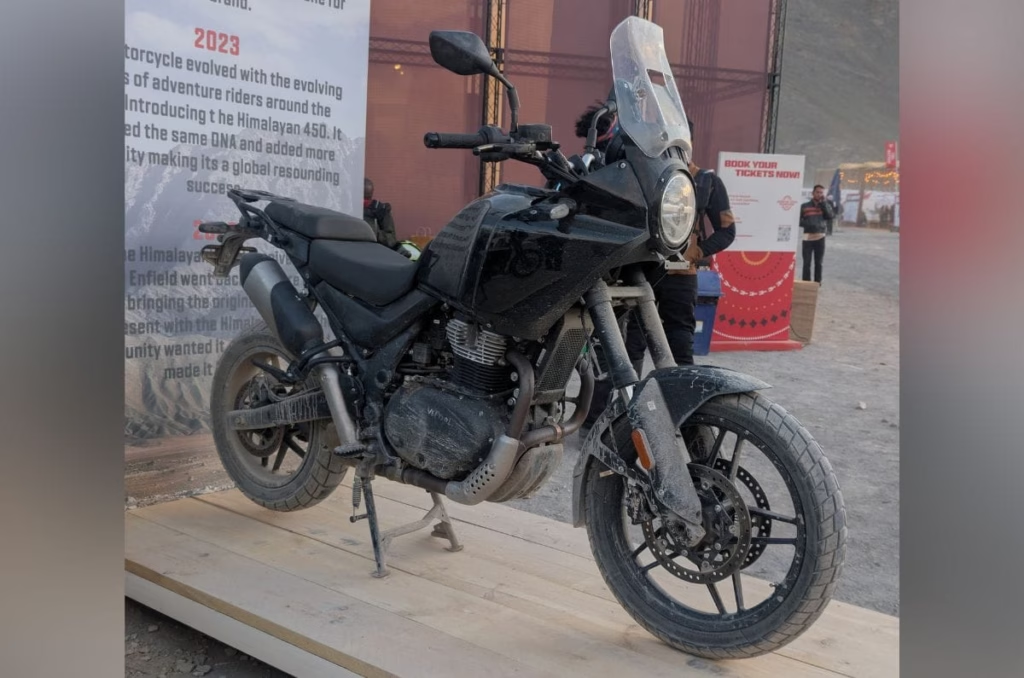
An outside image showing the front three quarter of the Himalayan 750

The Himalayan 750 is in the works, as we’ve known for several months now. It was first showcased at EICMA 2025 and has since been spotted being tested multiple times. During the Himalayan 440 event in Leh, we had the opportunity to get closer than ever before to Royal Enfield’s upcoming ADV, and we’ve got some interesting details for you to look forward to. And the biggest one might just be that it doesn’t aspire to be an off-roader.

  1. Appears to swap the 21-inch front wheel on the 450 for a 19-inch unit
  2. Gets cruise control and traction control, both a first for Royal Enfield
  3. Preload-adjustable front and rear suspension could be limited to higher variants

Royal Enfield Himalayan 750: Power and performance

New, close to 750cc twin-cylinder engine

Perhaps the only thing we know regarding the engine is that it will displace close to 750cc and that the twin-cylinder unit shares its basic architecture with the existing 650cc parallel-twin mill. Exact power and torque details and characteristics are under wraps for now, but we’d expect it to be a marked improvement over the 650cc’s 47.4hp and 56.5Nm of torque in its most powerful form on the Bear 650. The new images give us a closer look at the exhaust routing, which, interestingly, looks similar to the Bear 650’s 2-in-1 setup, swapping the recognisable twin exhaust system used in all the other Royal Enfield 650s.

Royal Enfield Himalayan 750: Features

So many firsts for the brand
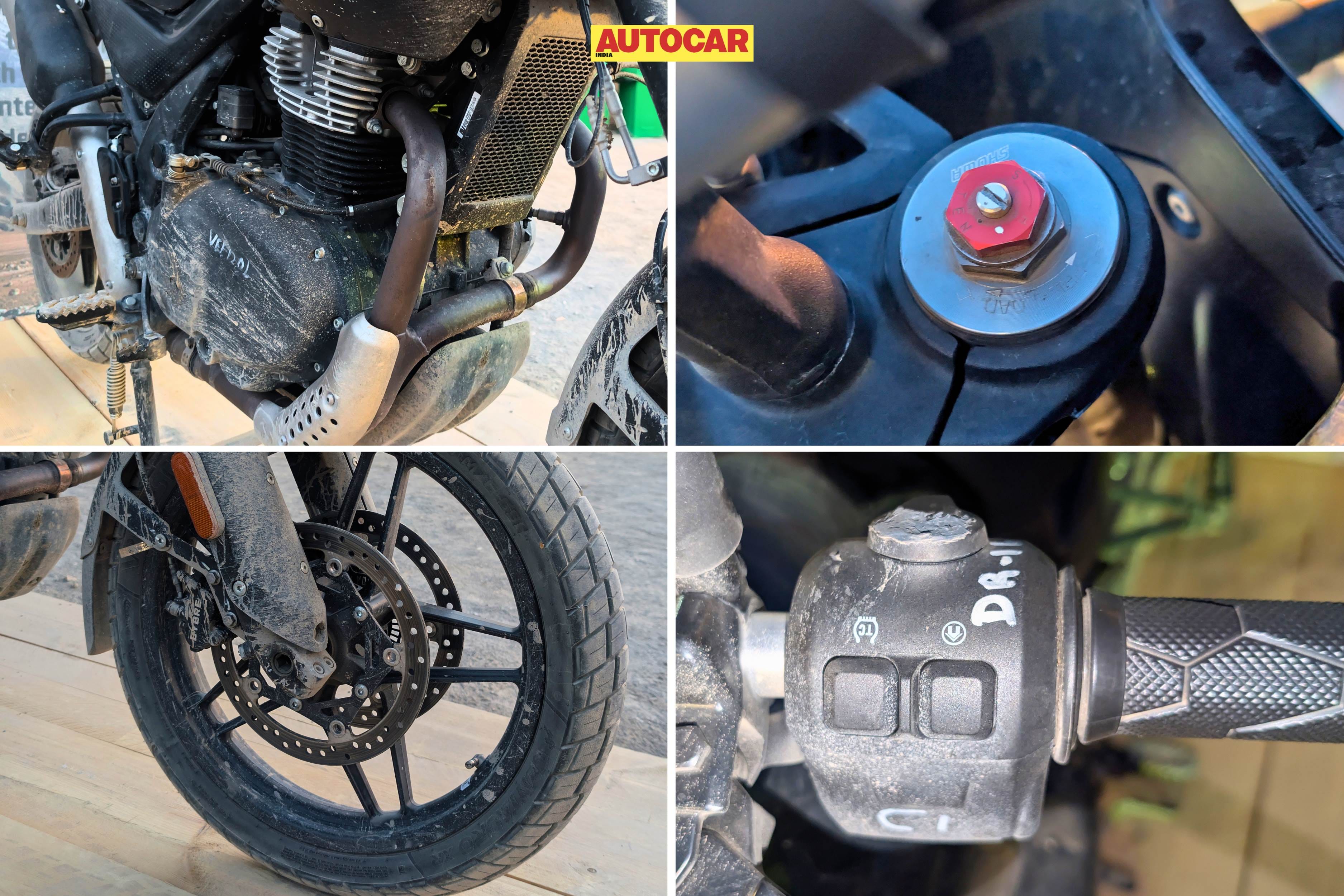
Collage highlighting the major new features on the Himalayan 750

This is perhaps the biggest way the Himalayan 750 stands out from the other Royal Enfield models currently on sale. The prototype appears to have many features that have never been seen before on a production Royal Enfield. Starting alphabetically, we have adjustable front and rear suspension units. The front USD fork is a Showa-branded unit, and both legs have adjustable preload. The rear monoshock once again appears to be a linkage unit, but adjusting the preload on it seems far easier with a handy rotary knob on the left side. It’s worth noting that we’ll have to wait until the bike is officially launched to see whether this suspension setup makes it to production and whether adjustability will vary based on the variant.
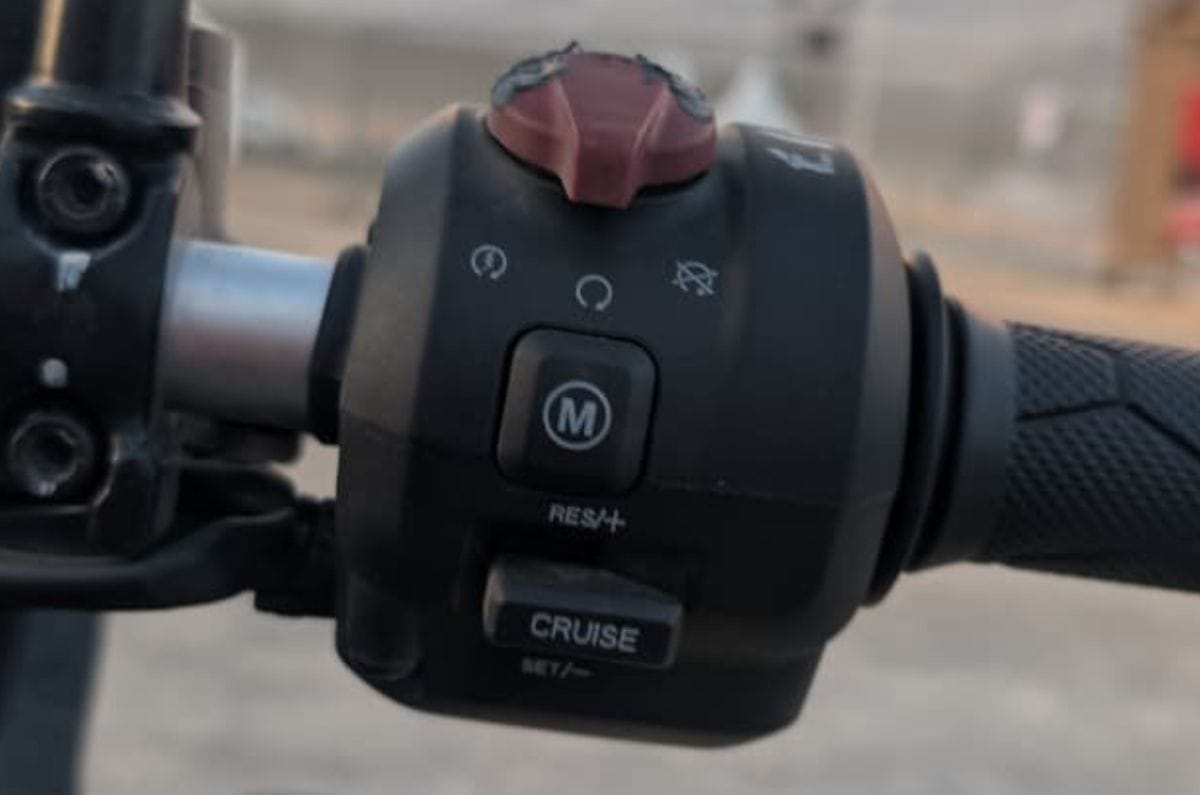
Close up shot of the Cruise controls on the Himalayan 750

Next up we have features that signal the motorcycle’s intended purpose: long-distance touring. Cruise control, sorely missed on the Himalayan 450, is present on the bigger brother, with controls on the rear right switch cube. It’s likely similar to the ones available on the KTM 390 Adventure and the TVS RTX 300, and not an adaptive one like on higher-end motorcycles. And then we have traction control, present on the diametrically opposite side, front left of the switch cube. The presence of a dedicated button signals that the system might offer some adjustability or the option to turn it off altogether.

The list of features is longer still. We see front dual-disc brakes, once again a first for Royal Enfield, with ByBre calipers. The rear brake calipers are also from ByBre, with the swingarm appearing to share the design with the 450. One additional detail that we’ve spotted is the new Centauro XR tyres by Vredestein. The tread pattern appears to reflect some of the popular dual-use tyres, such as the CEAT GRIPP and Apollo Tramplr XR. Currently, the Centauro XR tyres aren’t listed on Apollo/Vredestein’s Indian websites, so further details are still unknown.
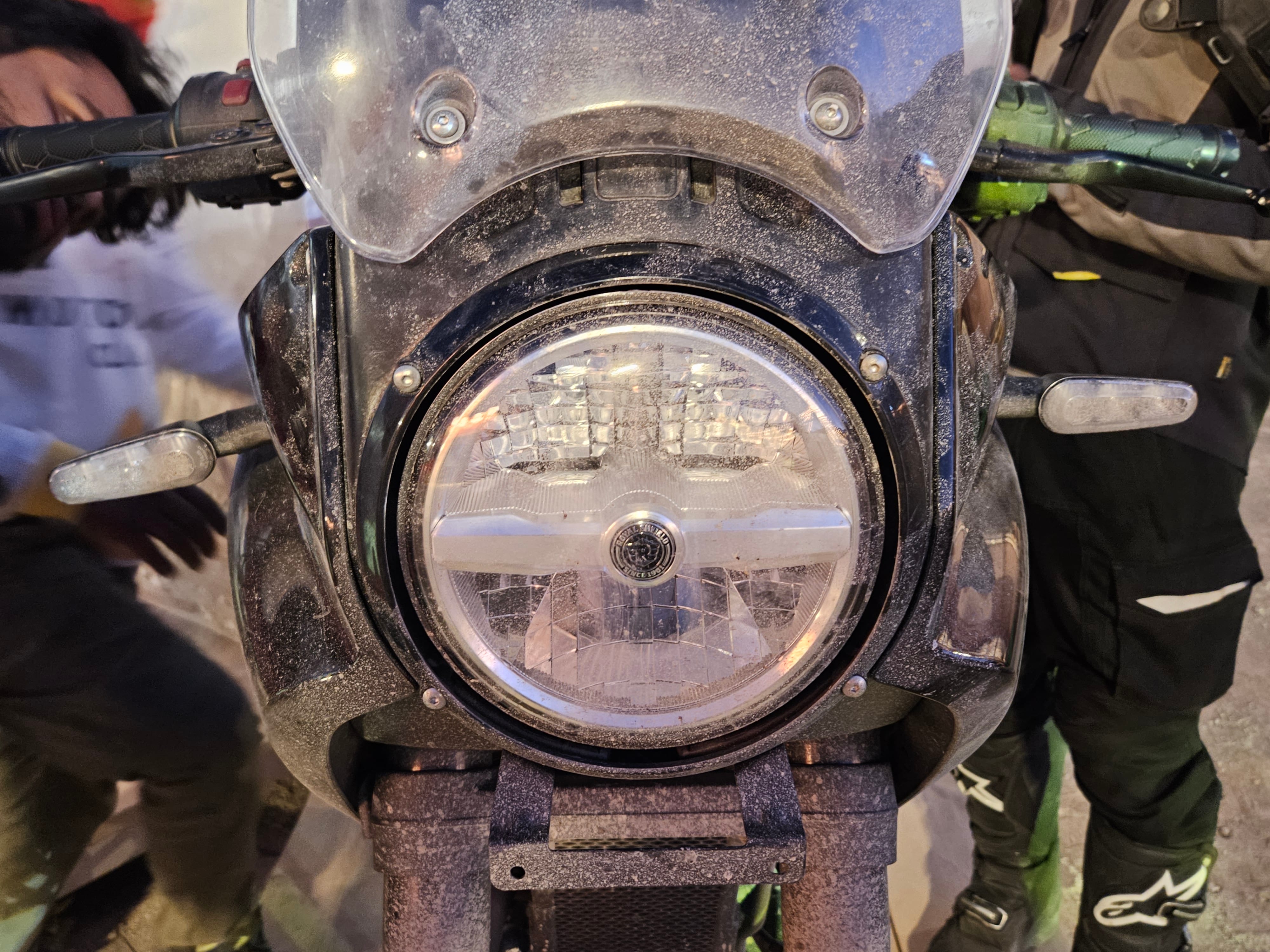
Close up shot of the Himalayan 750's LED headlight

Speaking of shedding light, up front we have a new LED headlight unit – or one that appears to be – based on the assembly. Considering the headlights are one of the weakest parts, if not the weakest, of most current Royal Enfields, we hope that this is indeed a new one and that it’s a better unit, making night runs seem less daunting. Behind the headlight stands the TFT instrument cluster that was (unfortunately) turned off for this exhibition. At first glance, it looks similar to the ones on the Himalayan 450/Guerrilla 450 and Bear 650. However, it’s likely there will be upgrades to it considering the new array of features expected. That said, we can still expect the overall experience to be better, thanks to the redesigned joystick controller on the left switch cube.
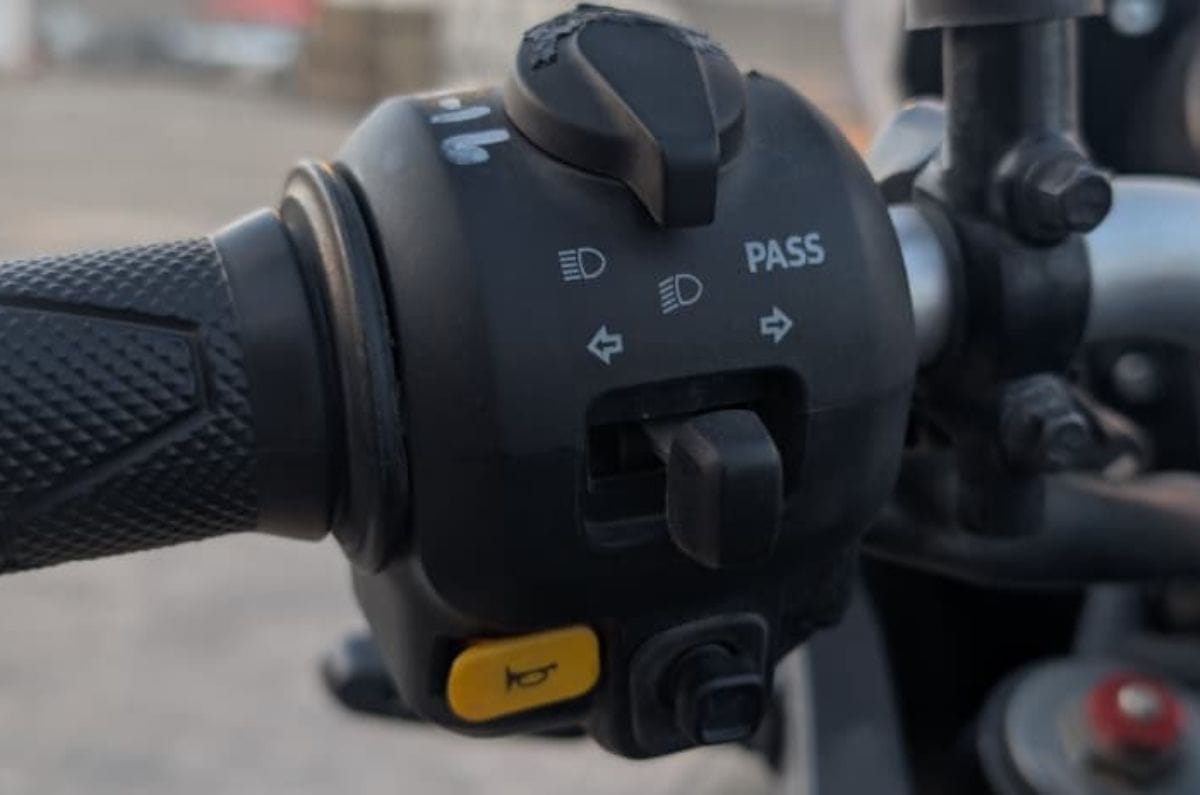
Close up shot of the new joystick on the Himalayan 750

Royal Enfield appears to be positioning the Himalayan 750 as a road-biased tourer with some off-road capabilities, and there couldn’t be a more obvious clue than the wheels. One, the front wheel is a 19-inch unit, unlike the 21-inch wheel we’re used to on the current Himalayans. Two, the prototype sports alloy rims, not spoked, also expected on a motorcycle aimed at off-roading. However, the model shown off at last year’s EICMA had cross-spoked rims, so it’s entirely possible that Royal Enfield might offer a higher variant with off-road-centric wheels and tyres; we’ll just have to wait and see. One minor detail that we’ve spotted is that both the gear shifter and the rear brake lever are hinged, meaning they can turn 90 degrees to the sides, ensuring they don’t bend or break away after a fall.

Royal Enfield Himalayan 750: Price

Expected to sit at the top of the range

Pricing details are once again under wraps, similar to the body panels on the motorcycle. However, considering that the Super Meteor 650 – the most expensive 650 – tops out at Rs 4.40 lakh (ex-showroom, Chennai), it’s reasonable to expect the Himalayan 750 to be priced closer to that range, if not over it. And there we go; those are the details we noticed from getting all up close and personal with the Himalayan 750 during the Himalayan Basecamp event. We should learn more about it during the global unveil, expected during EICMA 2026.
Simple Energy crosses 10,000 annual sales for the first time

Simple Energy crosses 10,000 annual sales for the first time
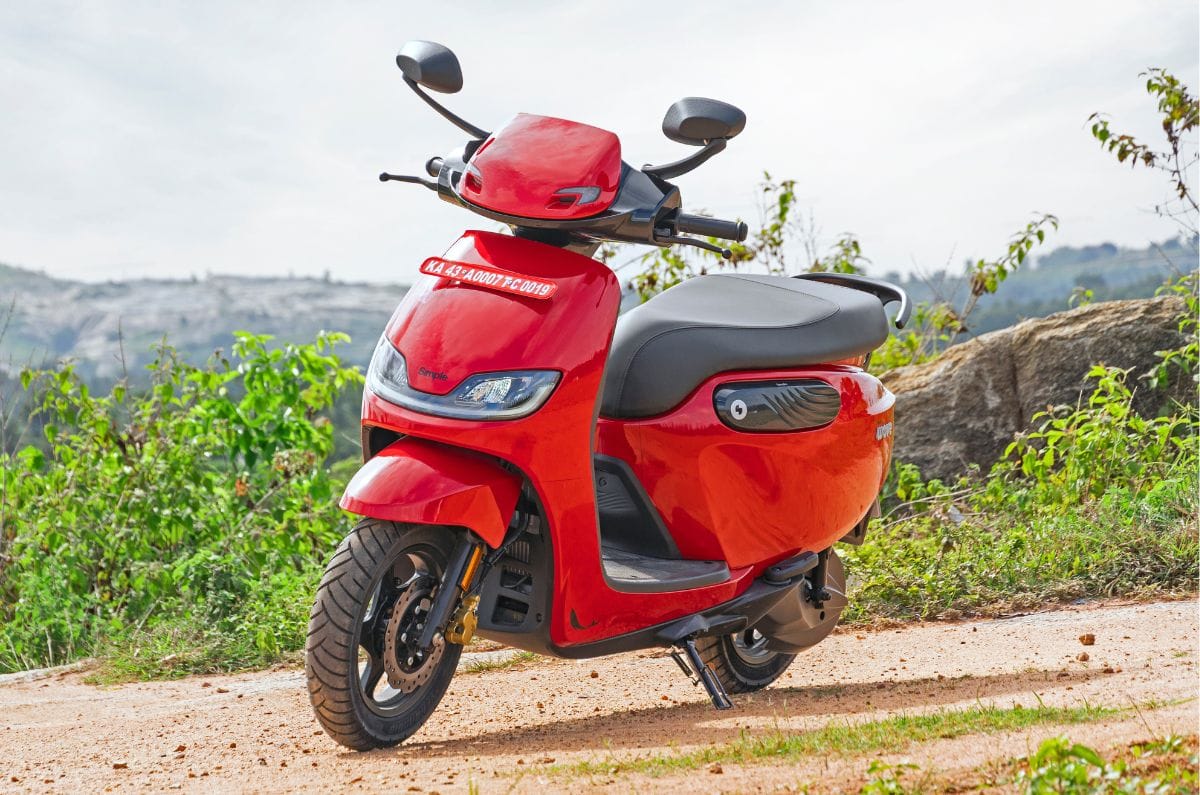
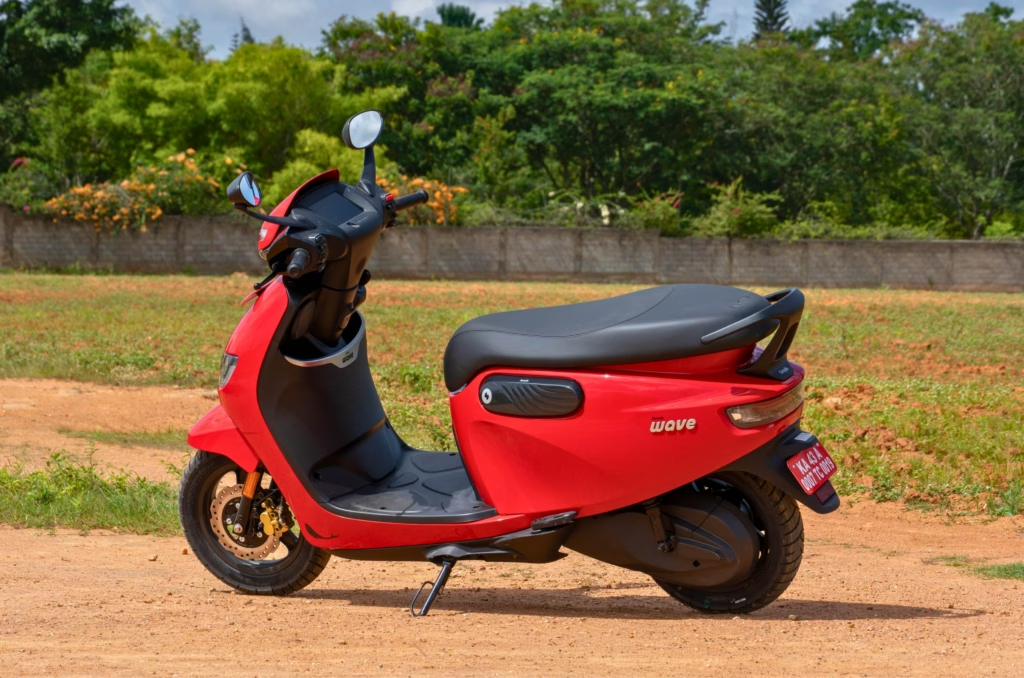
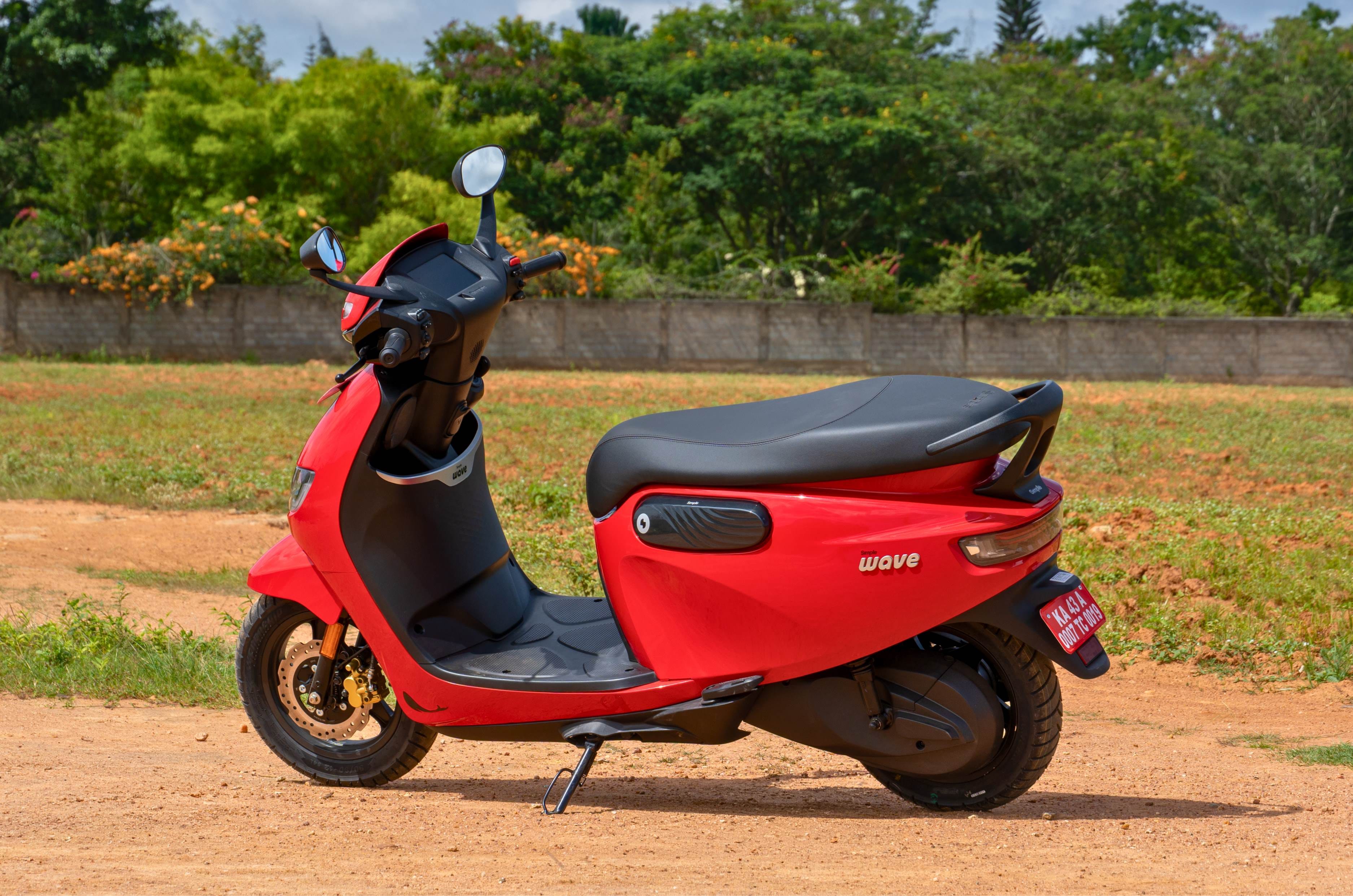
An outside shot showing the left side of the Simple Wave in Coral Red colour.

Simple Energy, which has been a regular in the monthly top 10 electric 2W OEM listing since February 2026 with its Simple One performance EV scooter, has clocked cumulative sales of over 10,000 units in the first eight months of this year. As per Vahan, between January and August 2026, the Bengaluru-based EV startup registered deliveries of 10,429 units, which is 203 percent more compared to last year’s 3,436 units for the same period. This momentum comes just as Simple launched its most affordable scooter yet, Wave, priced at Rs 1.10 lakh (ex-showroom, Bengaluru) and its entry into the family scooter segment.

  1. Wave makes the brand more accessible with a lower Rs 1.10 lakh ex-showroom price
  2. Brand has consistently averaged as the top nine EV seller in India since February 2026

Wave is expected to be the sales topper for Simple

The family EV scooter is based on One, but more practical

With the Wave, Simple Energy is hoping to make, well, waves in the family e-scooter segment, which has been dominated by the TVS iQube, Bajaj Chetak and Hero Vida for the past couple of years. Add Ather Rizta with its steadily growing sales, and the new Konarc to that list of rivals as well. Compared to the more performance-based One, Wave targets a much wider customer with its base S 2.2 variant pricing (Rs 1.10 lakh, ex-showroom) as also the focus around everyday practicality, ride comfort, and usability across different rider demographics.

The scooter has four variants as per the battery capacity. The base Wave S is offered in two battery capacities: 2.2kWh (110km IDC range) and 2.7kWh (132Km IDC range). While the middle variant, Wave, has a 3.7kWh battery and 171km of IDC range, and the top Wave + variant has a 5kWh battery and has a 243km IDC range, the highest in its segment. Simple has announced that deliveries will commence on September 25.

Production capacity and showrooms are being increased

The increased presence is expected to improve the brand’s sales

In tandem with the Wave’s launch and expected market demand, the company states that it is scaling its manufacturing and retail footprint. The company currently has a production capacity of 3,000 units per month, and has over 75 outlets across 63 cities in India including Bengaluru, Delhi, Patna, Nagpur, Bhopal, Agra, Goa, Vijayawada, Hyderabad, Kochi, and Chennai.

Simple Energy Sales

Year

Units

YoY percentage change

CY2023

66


CY2024

1,433


CY2025

6,628

362

CY2026

10,429

203

Cumulative total

18,556


As per Vahan’s data, From January 1 till August 31, 2026

For Simple, whose highest monthly retails were in March 2026 (1,780 units), the new Wave gives it an opportunity to target the highest-selling sub-category in e-2Ws: the family scooter. Simple ranked 13 in CY2025 sales and entered the top 10 for the first time in February 2026 and has consistently averaged ninth position since. The brand has cumulatively sold 18,556 units since sales began in 2023. It remains to be seen if the Wave turns out to be the much needed boost for the brand to climb up higher on that list.

With inputs from Stephen Raj Antony.

Royal Enfield Himalayan 750: What you should expect

Royal Enfield Himalayan 750: What you should expect
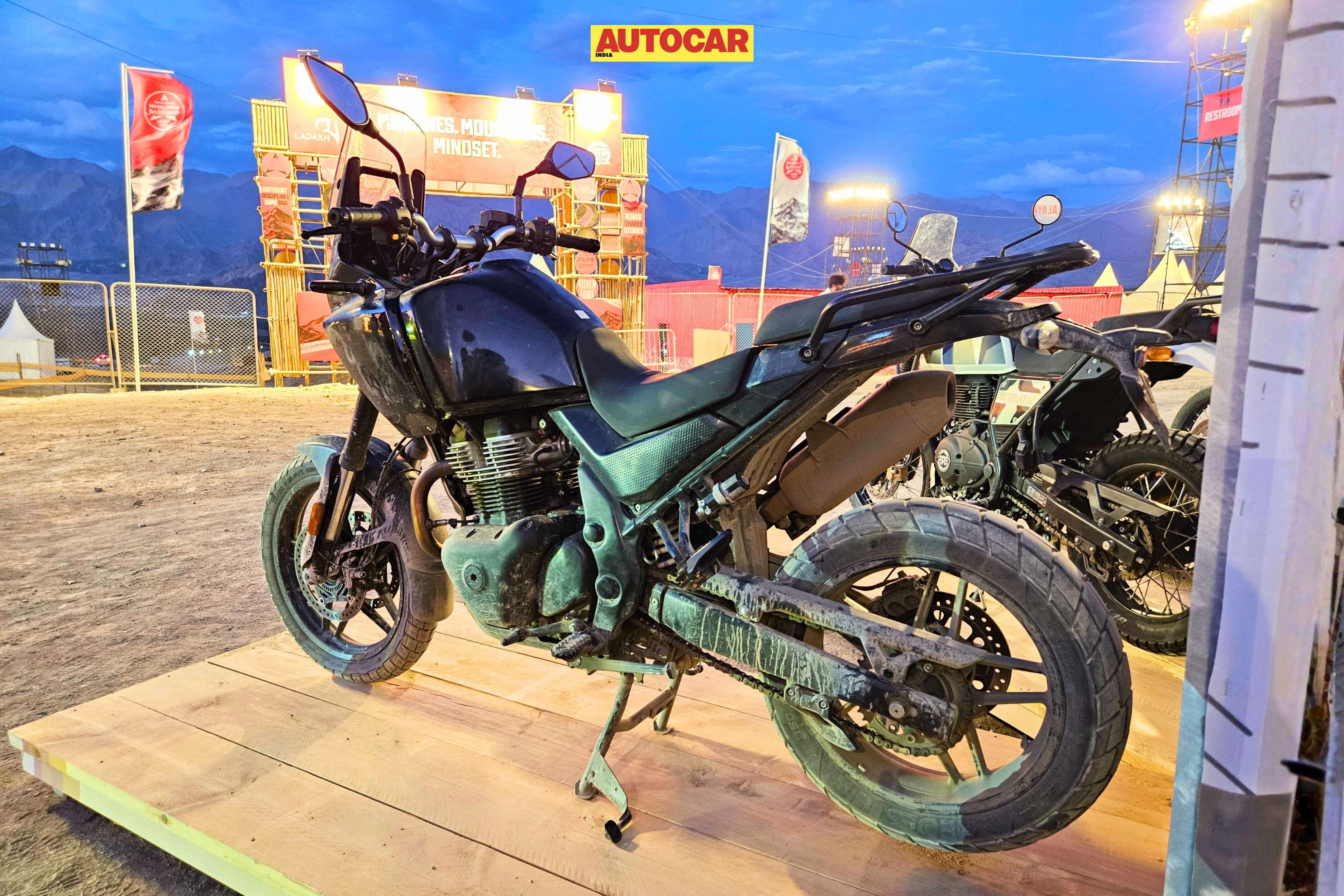
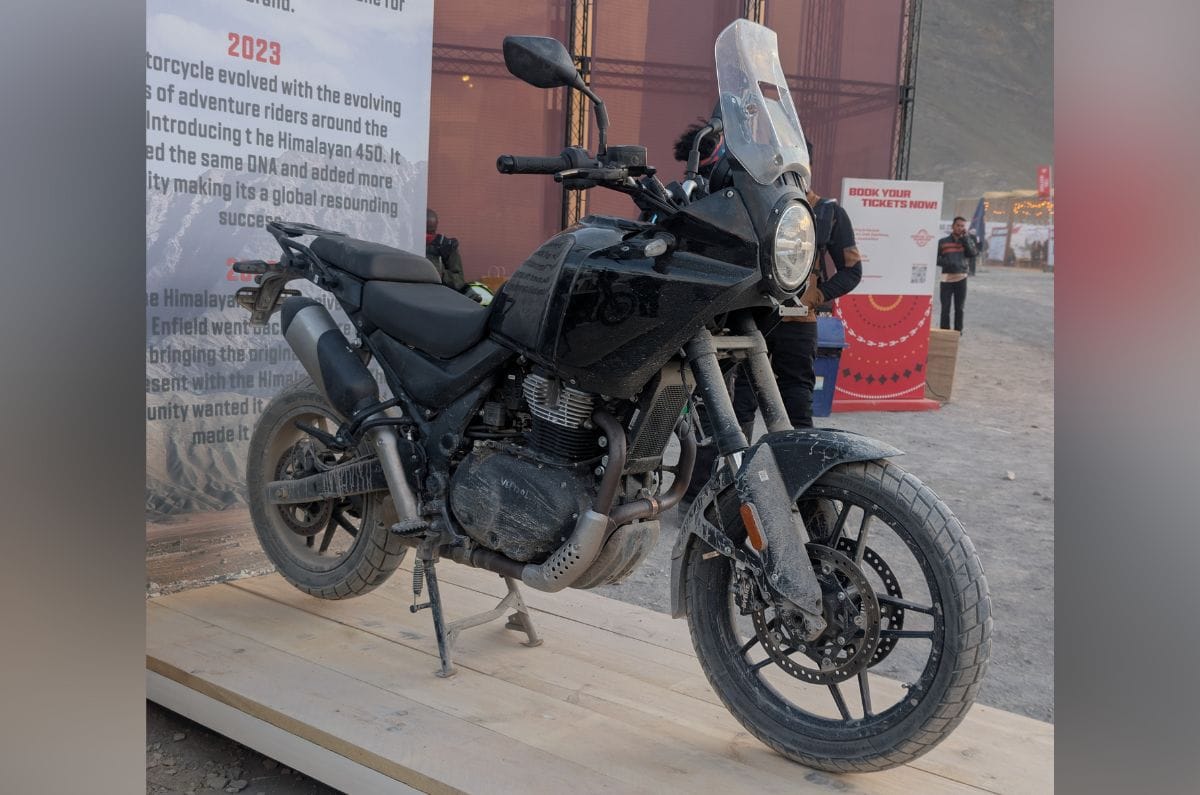
An outside image showing the rear three quarters of the Himalayan 750

The Himalayan 750 is in the works, as we’ve known for several months now. It was first showcased at EICMA 2025 and has since been spotted being tested multiple times. During the Himalayan 440 event in Leh, we had the opportunity to get closer than ever before to Royal Enfield’s upcoming ADV and we’ve got some interesting details for you to look forward to. And the biggest one might just be that it doesn’t aspire to want to be an off-roader.

  1. Appears to swap the 21-inch front wheel on the 450 for a 19-inch unit
  2. Gets cruise control and traction control, both a first for Royal Enfield
  3. Preload adjustable front and rear suspension could be limited to higher variants

Royal Enfield Himalayan 750: Power and performance

New, close to 750cc twin-cylinder engine

Perhaps the only thing we know regarding the engine is that it will displace close to 750cc, and that the twin-cylinder engine shares the basic architecture with the existing 650cc parallel-twin engine. Exact power and torque details and characteristics are under the wraps for now, but we’d expect it to be a marked improvement over the 650cc’s 47.4hp and 56.5Nm of torque in its most powerful form on the Bear 650. The new images give us a closer look at the exhaust routing; which interestingly looks similar to the Bear 650’s 2-in-1 setup, swapping the recognizable twin exhaust system used in all the other Royal Enfield 650s.

Royal Enfield Himalayan 750: Features

So many firsts for the brand

Collage highlighting the major new features on the Himalayan 750

This is perhaps the biggest way the Himalayan 750 stands out from the other Royal Enfield models currently on sale. The prototype appears to have many features that have never been seen before on a production Royal Enfield. Starting alphabetically, we have adjustable front and rear suspension units. The front USD fork is a Showa branded unit and both legs have adjustable preload. The rear monoshock once again appears to be a linkage unit, but adjusting the preload on which seems far easier with a handy rotator knob on the left side.It’s worth noting that we’ll have to wait until the bike is officially launched to see whether this suspension setup makes it to production, and if adjustability will vary based on the variant.

Close up shot of the Cruise controls on the Himalayan 750

Next up we have features that signal the motorcycle’s intended purpose: long distance touring. Cruise Control, missed sorely on the Himalayan 450, is present on the bigger brother with controls present on the rear right switch cube. It’s likely similar to the ones available on the KTM 390 Adventure and the TVS RTX 300, and not an adaptive one like on higher end motorcycles. And then we have traction control, present on the diametric opposite side, front left of the switch cube. The presence of a dedicated button signals that the system might offer some adjustability, or the option to turn it off altogether.

The list of features is longer still. We see front dual-disc brakes, once again a first for Royal Enfield, with ByBre calipers. The rear brake calipers are also from ByBre, with the swingarm appearing to share the design with the 450. One additional detail that we’ve spotted are the new Centauro XR tyres by Vredestein. The tread pattern appears to reflect some of the popular dual-use tyres, such as the CEAT GRIPP and Apollo Tramplr XR, etc., Currently, the Centauro XR tyres aren’t listed on Apollo/Vredestein’s Indian websites, so further details are still unknown.

Close up shot of the Himalayan 750's LED headlight

Speaking of shedding light, up front we have a new LED headlight unit, or one that appears to be, based on the assembly. Considering the headlights are one of the—if not the—weakest part of most current Royal Enfields, we hope that this is indeed a new one and that it’s a better unit, making night runs seem less daunting. Behind the headlight stands the TFT instrument cluster that was (unfortunately) turned off for this exhibition. At first glance, it looks similar to the ones on the Himalayan 450/Guerrilla 450, and the Bear 650. However, it’s likely that there will be upgrades to it, considering the new swathe of features expected. That said, we can still expect the overall experience will be better, thanks to the redesigned joystick controller on the left switch cube.

Close up shot of the new joystick on the Himalayan 750

Royal Enfield appears to be positioning the Himalayan 750 as a road-biased tourer with some off-road capabilities and there couldn’t be a more obvious clue than on the wheels. One, the front wheel is a 19-inch unit, unlike the 21-inch wheel we’re used to on the current Himalayans. Two, the prototype sports alloy rims, not spoked, also expected on a motorcycle aimed towards off-roading. However, the model shown off at last year’s EICMA had cross-spoked rims, so it’s entirely possible that Royal Enfield might offer a higher variant with off-road centric wheels and tyres; we’ll just have to wait and see. One minor detail that we’ve spotted is that both the gear shifter and the rear brake lever are hinged, meaning they can turn 90 degrees to the sides, ensuring they don’t bend or break away after a fall.

Royal Enfield Himalayan 750: Price

Expected to sit at the top of the range

Pricing details are once again kept under the wraps, similar to the body panels on the motorcycle. However, considering the Super Meteor 650—the most expensive 650—tops out at Rs 4.40 lakh (ex-showroom, Chennai), it’s reasonable to expect the Himalayan 750 to be priced closer to that range, if not over it. And there we go, those are the details we noticed from getting all up close and personal with the Himalayan 750 during the Himalayan Basecamp event. We should learn more about it during the global unveil, expected to happen during EICMA 2026.
Two-wheeler retail sales up 19.7 percent in August

Two-wheeler retail sales up 19.7 percent in August

Two-wheeler retail sales in India rose 19.69 percent year on year to 17,14,610 units in August 2026, according to the Federation of Automobile Dealers Associations (FADA). The segment recorded its highest-ever August sales, although volumes declined 5.70 percent from July, when dealers retailed 18,18,289 two-wheelers. August 2025 sales stood at 14,32,537 units.

  1. Retail sales reach 17.15 lakh units, highest for an August
  2. Share of EVs in two-wheeler sales crosses 10 percent in a non-festive month
  3. Honda leads the market as dealers turn optimistic ahead of the festive season

FADA attributed the strong year-on-year growth to healthy rural demand and improved affordability following the GST 2.0 rollout. The month-on-month decline was attributed to the seasonal monsoon slowdown, rainfall in some regions and the inauspicious Shravan/Aadi period.

Rural two-wheeler retail grew 20.25 percent year on year in August, slightly ahead of the 19.07 percent growth recorded in urban markets. Compared with July, however, two-wheeler sales fell 6.85 percent in rural areas and 4.38 percent in urban centres.

EVs accounted for 10.68 percent of total two-wheeler retail sales in August, up from 7.66 percent a year ago. The share of electric models was 11.24 percent in July. FADA noted that August was the first non-festive month in which EVs comprised over 10 percent of two-wheeler sales.

As for fuel type, petrol continued to dominate the two-wheeler market with an 89.23 percent share, while CNG and LPG models together accounted for 0.08 percent.

Honda Motorcycle and Scooter India remained the largest two-wheeler OEM in August with a 26.09 percent market share, retailing 4,47,342 units. Hero MotoCorp was second with 4,13,996 units and a 24.15 percent share, while TVS Motor Company sold 3,53,746 units and had a 20.63 percent share.

Bajaj Auto retailed 1,57,149 two-wheelers, giving it a 9.17 percent share, followed by Suzuki Motorcycle India with 1,04,217 units and a 6.08 percent share. Royal Enfield recorded 94,448 units and a 5.51 percent share.

Among the electric-focused manufacturers listed separately by FADA, Ather Energy sold 28,757 units and had a 1.68 percent share, while Ola Electric registered 13,852 units and a 0.81 percent share. Greaves Electric Mobility, River Mobility and BGauss recorded 8,613, 5,141 and 4,845 units, respectively.

With the festive season approaching, FADA expects two-wheeler demand to strengthen in September. Rural cash flows and late-season rainfall remain key factors that could influence sales, while the continued shift towards alternative powertrains is expected to support the market.

Dealer sentiment for September remains positive, with 67.09 percent of dealers expecting growth, 27.35 percent expecting a flat market and 5.56 percent anticipating de-growth. For the September-November period, 81.62 percent of dealers expect the market to grow.

With inputs from Eshisha Java

Simple Wave 3.7 review: A promising family EV but…

Simple Wave 3.7 review: A promising family EV but…
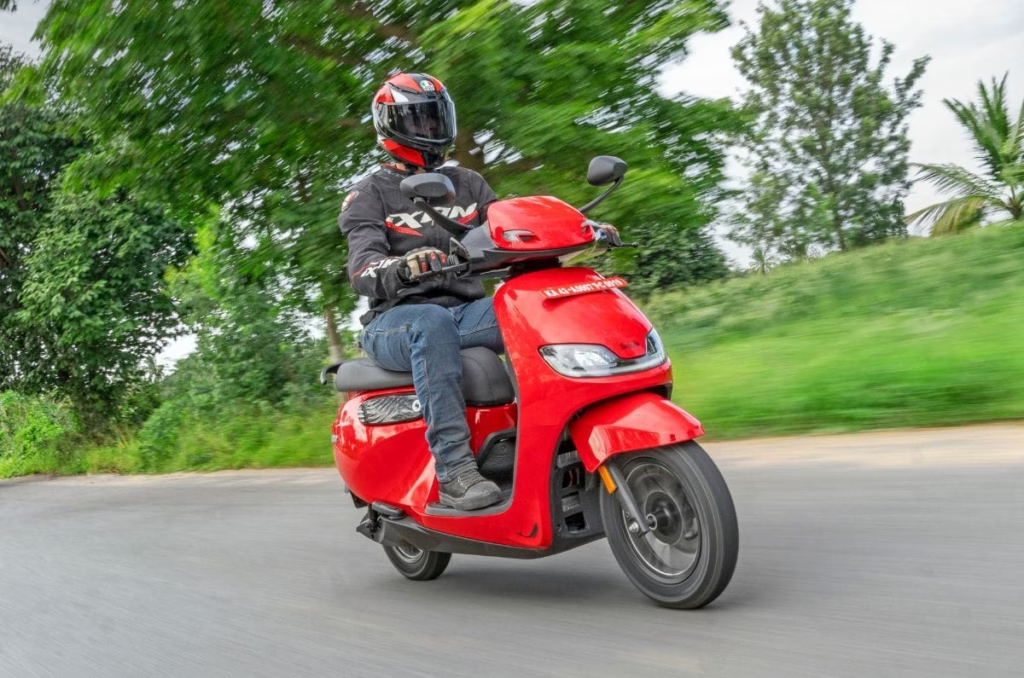
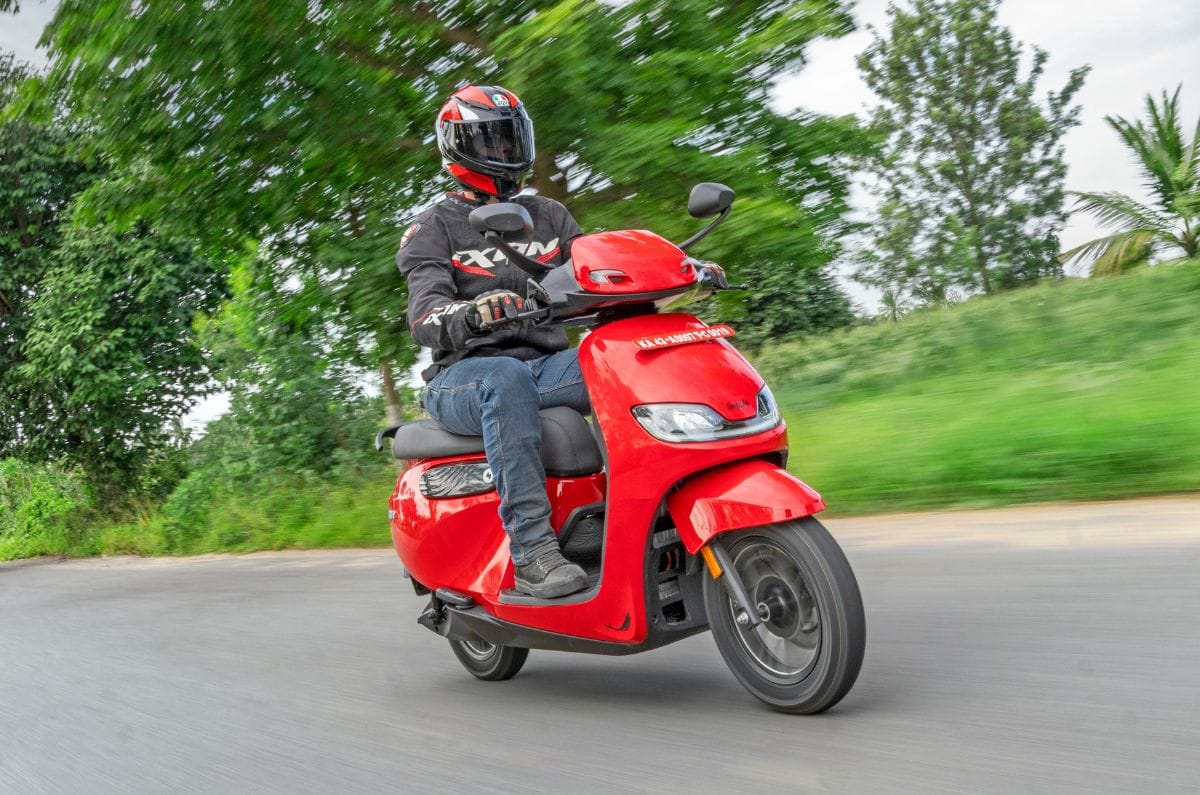
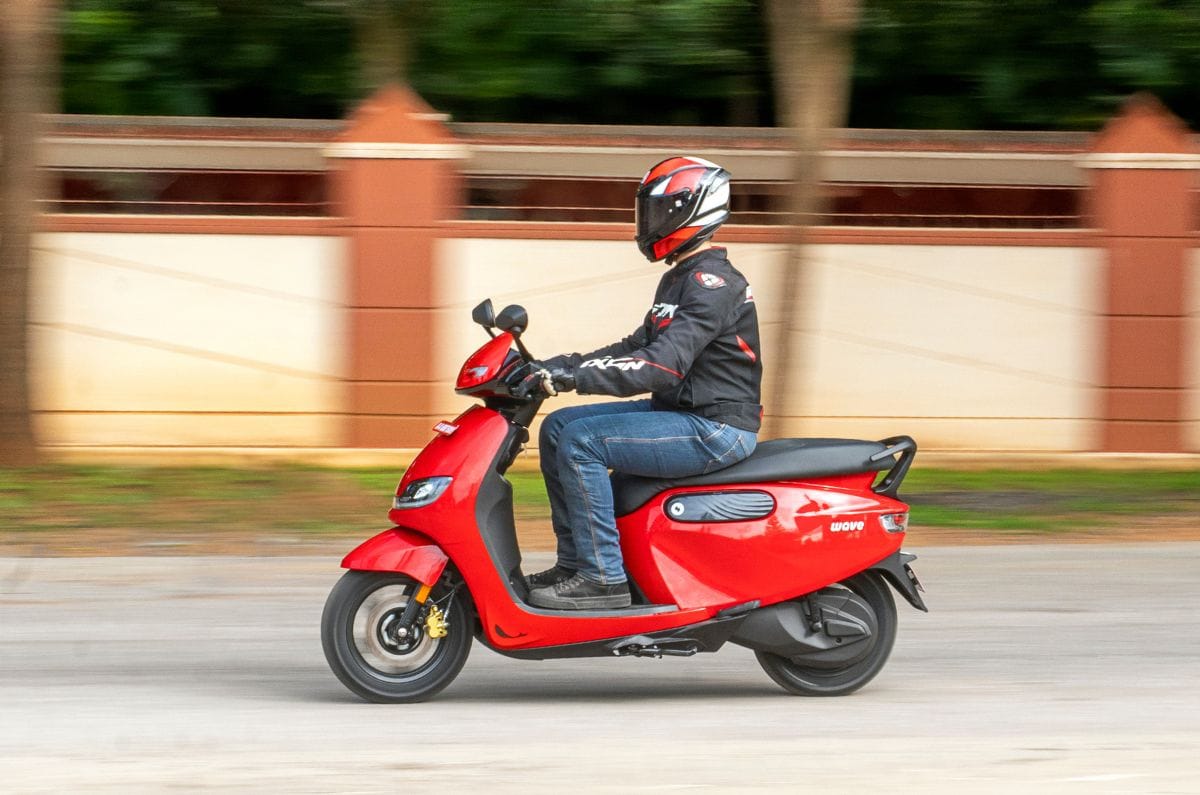
Simple Wave 3.7 tracking shot

The Simple Wave is an interesting proposition in the increasingly crowded electric scooter space. Its rounded, smooth looks certainly grab attention and, as we found out, it is comfortable, spacious and offers brisk performance. There’s plenty to like here, so let’s dive right in.

Simple Wave Design and quality – 8/10

Looks unique and features many chassis changes over the One

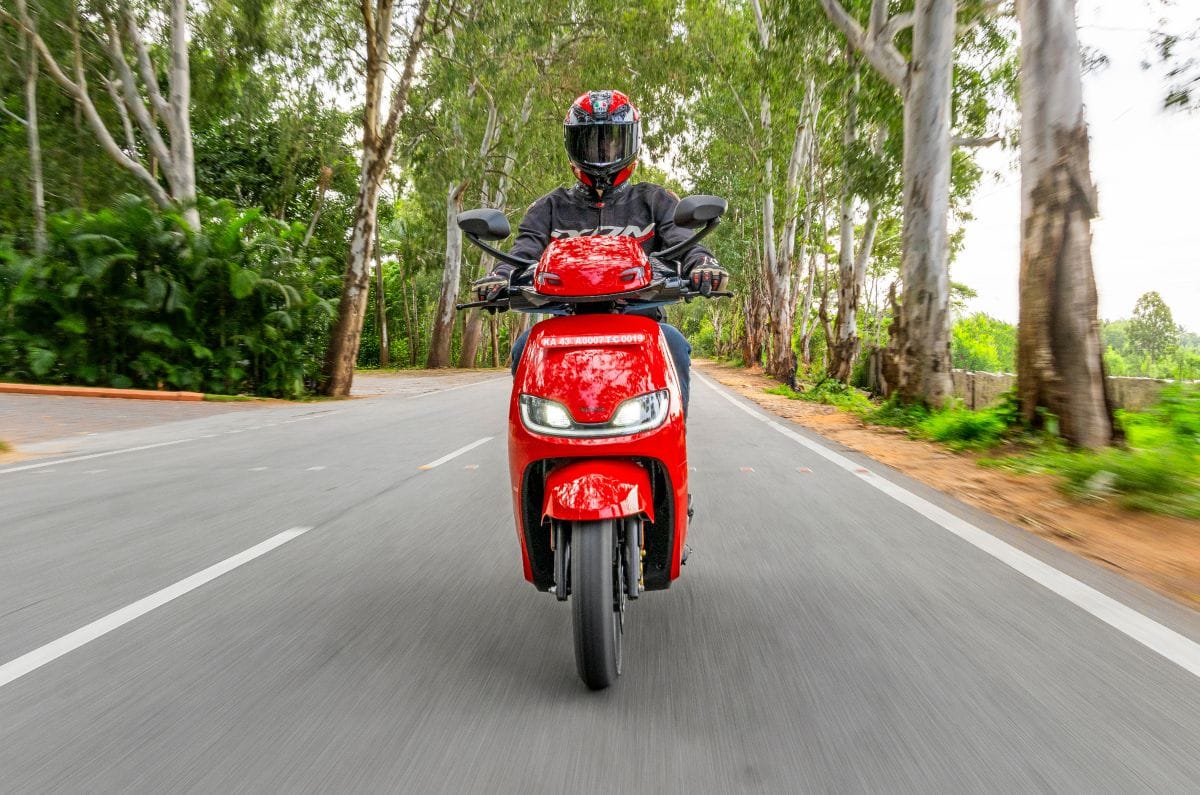
Design is subjective, of course, but the Wave looks good to my eyes with its smooth, rounded edges and distinctive silhouette. It’s got a good level of finish too, and the brighter colour options – red and blue – help it stand out. Simple has designed the Wave as a more accessible, family-oriented scooter, without making it look or feel built down to a cost.

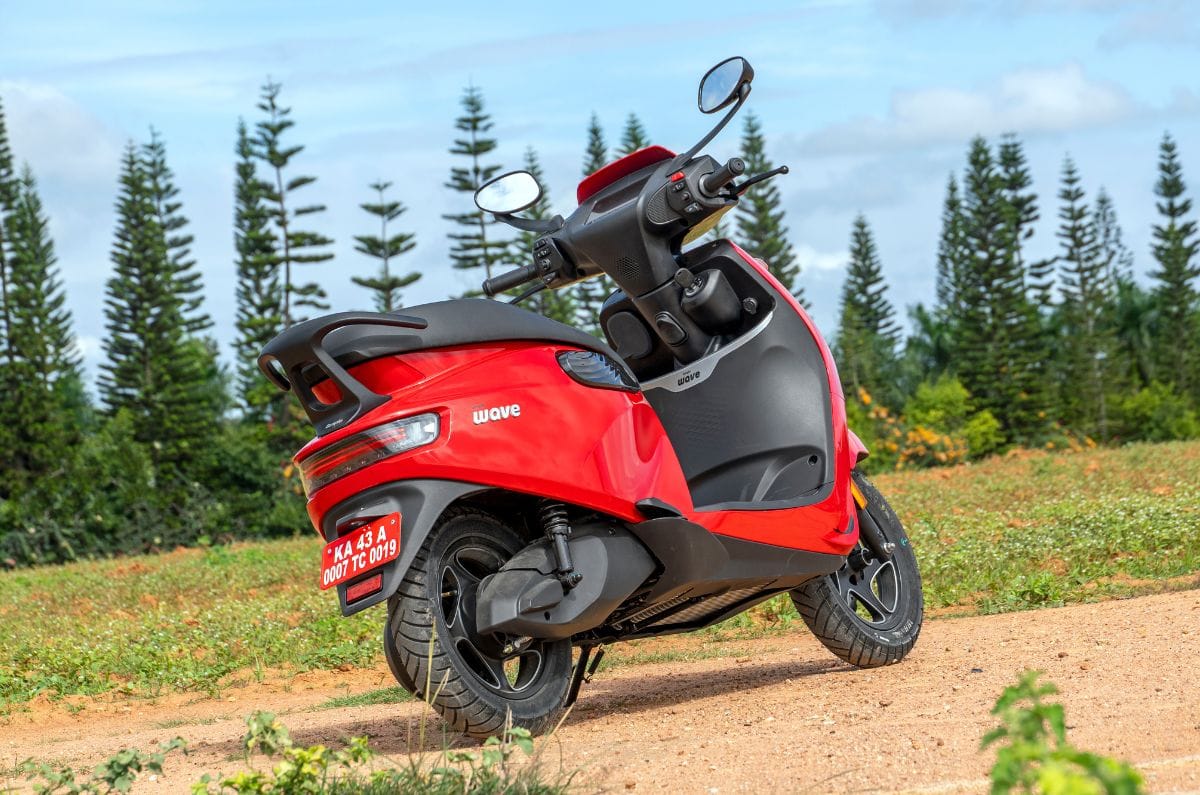
It has a quirky design and surely stands out, especially in the brighter colour options.

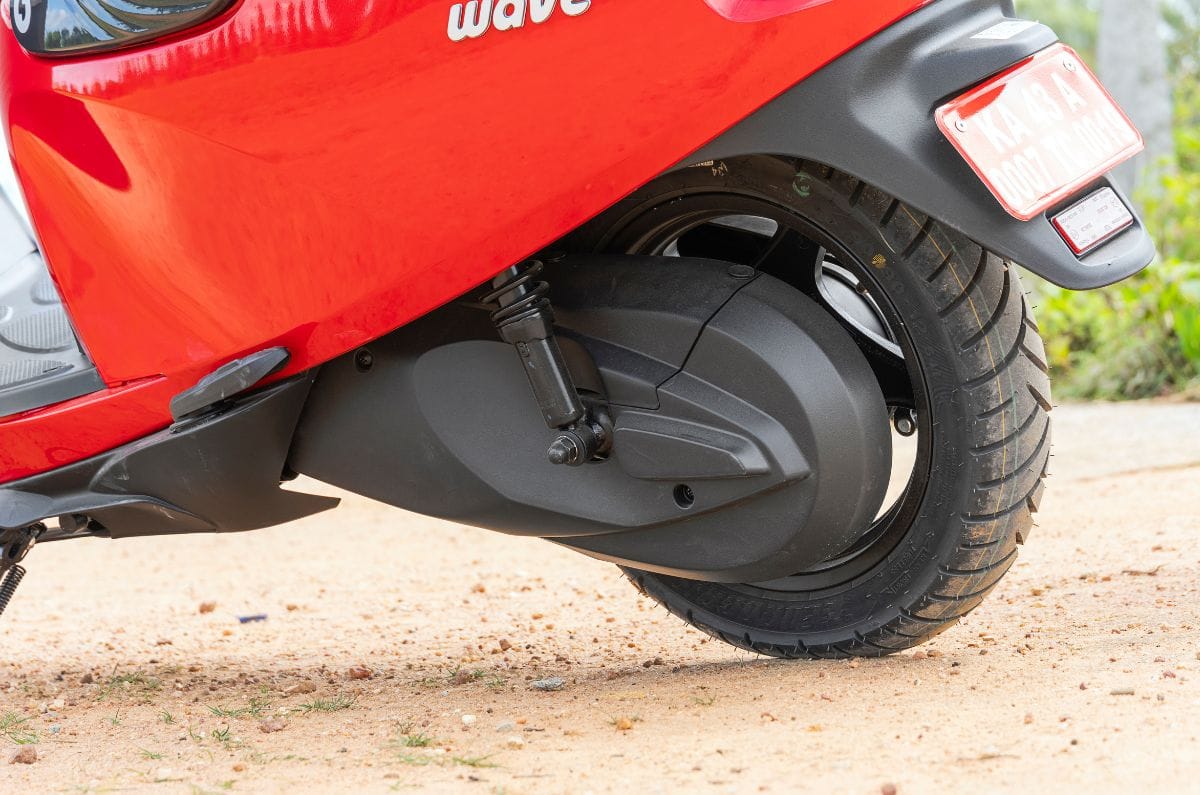
Compared to the sporty Simple One, the Wave’s chassis is quite different. The rear subframe has been reworked to accommodate the bigger boot and twin shocks (which replace the One’s monoshock). The Wave also uses a simpler, more cost-effective tubular swingarm instead of the cast unit on the One.

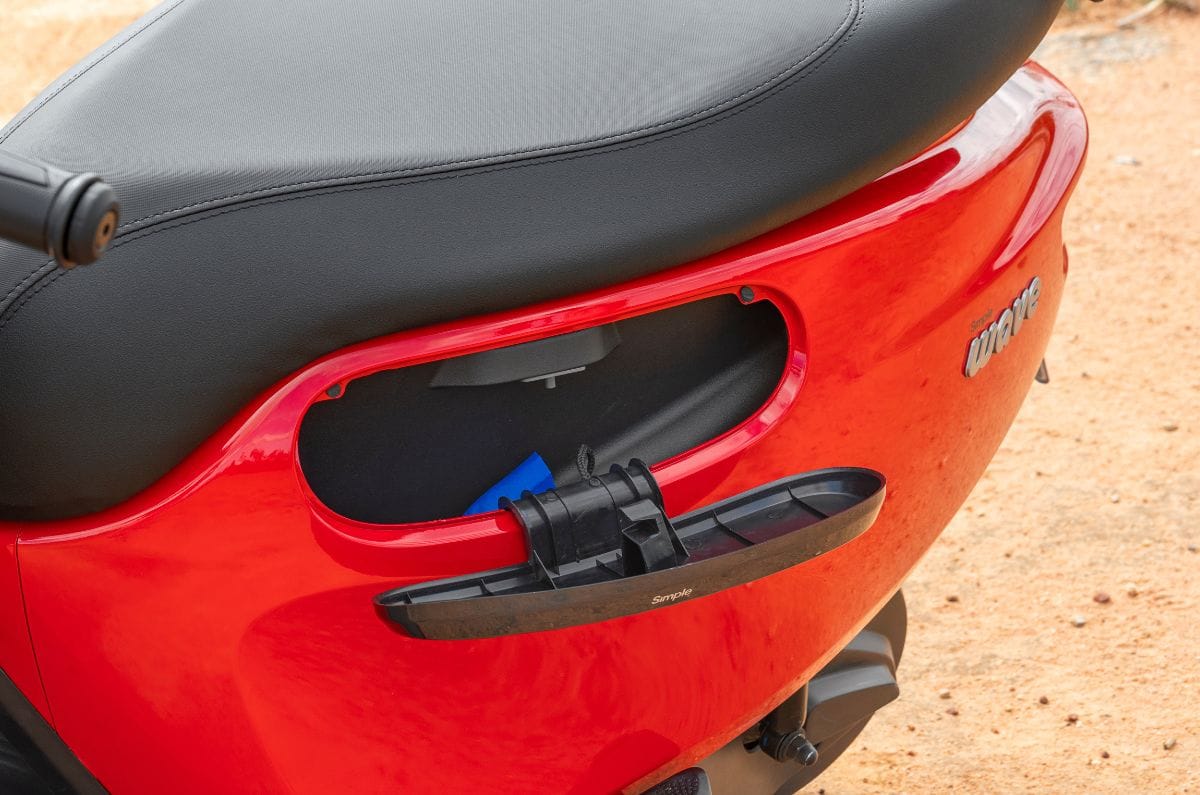
Lockable and weatherproof 4L“Pill” storage cubbies are a thoughtful touch, RH cubby is an accessory.

Simple Wave Ergonomics and comfort – 9/10

Offers a supple ride and ample space for two people

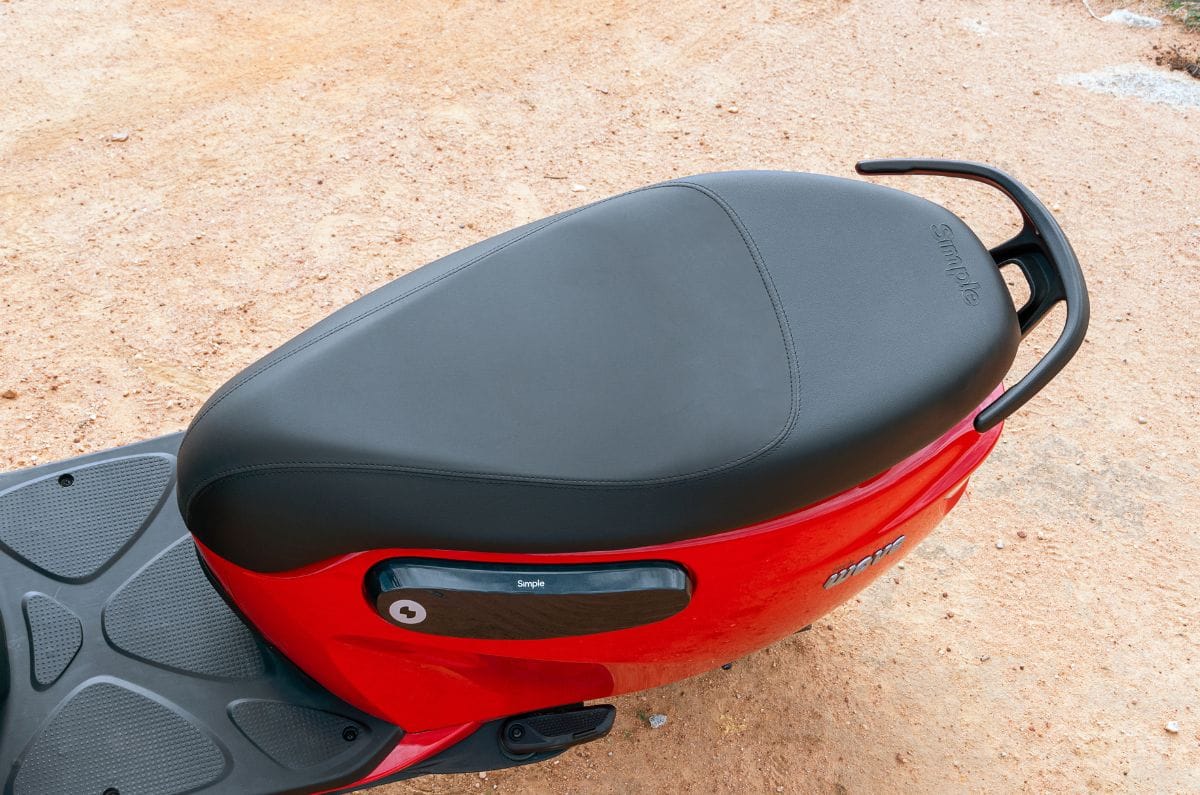
The differences only get more pronounced once you sit on the Wave. Its seat is long, wide and will easily accommodate two full-size adults, while its relatively low 775mm seat height makes it friendly for shorter riders.

That low seat height is no accident either; Simple took feedback from customers who had the One and incorporated it into the Wave. This is why the Wave also has a lower handlebar to make it more approachable for shorter and female riders. This has a trade-off, however. Taller riders will find the handlebar fouls their knees during tight, lock-to-lock U-turns.

Riding position is spot-on and ride comfort too is excellent.

Other than that, the Wave is rather sorted ergonomically. Ride comfort is excellent for a scooter, and that isn’t a surprise given that the Simple One itself was quite comfortable. The Wave builds on that with a composed and plush ride that suits its intended role.

Depending on the variant, the Wave weighs between 121-128kg with the 3.7kWh TFT variant provided to us sitting roughly in the middle of that range (124.5kg). We found the Wave handled predictably, without any unwelcome surprises, feeling stable and sure-footed without compromising agility expected of a scooter.

Spacious, well-paded seat can comfortably seat 2 full-size adults.

Simple Wave Performance and range – 9/10

Performance is more than sufficient, Eco mode truly usable

Like the One, the Wave offers really brisk performance, but still feels approachable enough for everyday use. The 3.7 version gets three riding modes – Eco, Ride and Sport – and both Ride and Sport offer more than enough performance for everyday use, which isn’t really a surprise. In Ride the top speed is 75kph, whereas Sport takes it up to 90kph (speedo-indicated, not actual).

The real surprise, however, is Eco mode. Yes, it feels duller than the other two modes, but it isn’t crippled in the way Eco modes on other EVs. The Wave can still get up to around 50-55kph quite respectably and overtake traffic, making Eco genuinely usable even on faster roads or in a big city.

It handles predictably and surefootedly in all scenarios.

Given that the Wave uses the same motor as the OneS making 6.4kW and 52Nm, this performance is no surprise. However, on the Wave, the motor drives the rear wheel via a chain drive, not a belt as seen on the One models.. While a chain will be more maintenance-intensive than a belt, replacing it should be more affordable. Simple has worked to reduce powertrain noise with measures such as a rubber-damped sprocket, but there is still some motor noise. However, it’s much quieter than an Ather Rizta or 450, although far from dead silent like an Ather Konarc or TVS iQube.

Another welcome change to the One is the throttle response. Unlike the older One models we tested, where the scooter could continue accelerating briefly after the throttle was closed, the Wave’s accelerator behaves much more intuitively. It also gets traction control, although the throttle calibration is so smooth, you’re unlikely to need it in dry conditions but it will be a useful safety net in the wet.

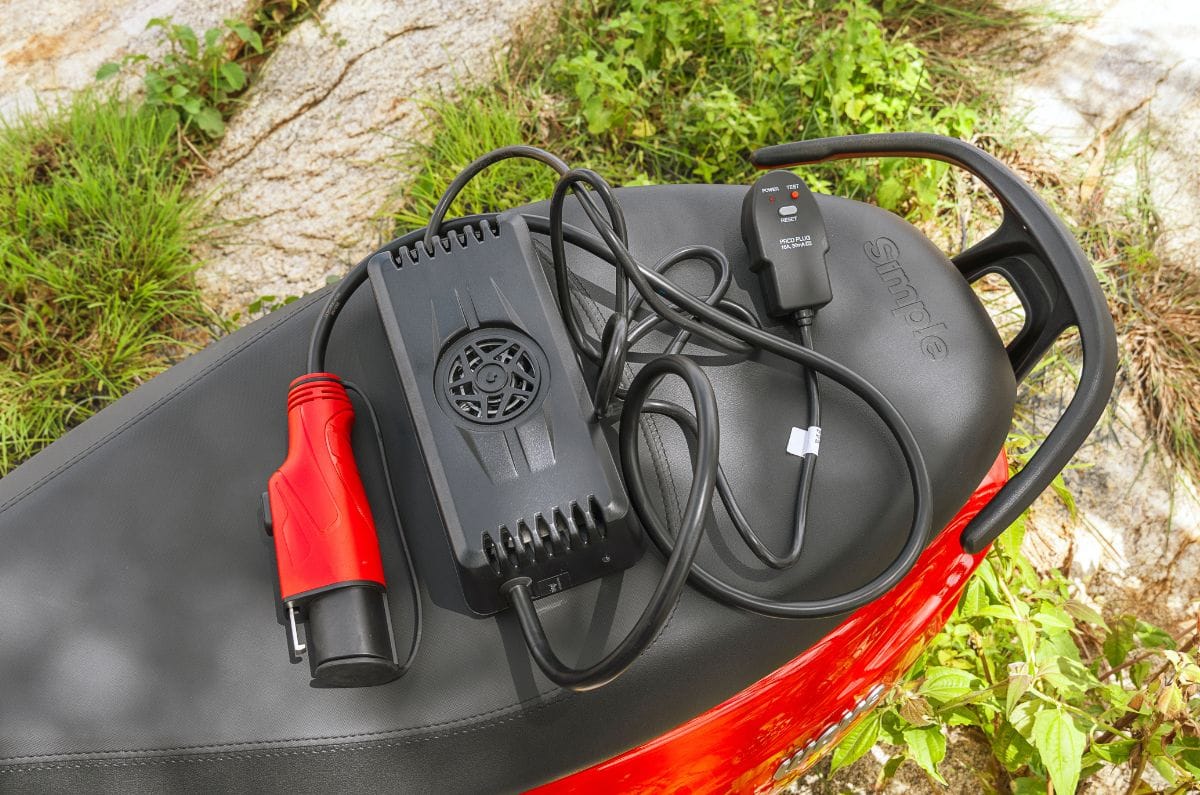
Fast 750W charger is standard on all variants.

Powering the Wave are four battery packs, depending on the variant you choose: 2.2kWh, 2.7kWh, 3.7kWh and 5kWh. The IDC ranges Simple claims are 110km, 132km, 171km and 243km, respectively. The first two use LFP (Lithium Ferrous Phosphate) chemistry, while the larger batteries use NCA (Nickel Cobalt Aluminium) cells.

The range indicator also appears to be quite trustworthy although we’ll reserve final judgement on real-world range until we can conduct a full test back in Mumbai. What is also nice is that all variants of the Wave come with a fast 750W charger which enables a pretty quick 0-80 percent claimed charging time of 3hr30min on the 3.7kWh version we were riding.

The standard warranty on the Wave is three years/30,000km, with five years/50,000km and 15 years/2 lakh km extended options also available. The price of these optional longer warranties has not been shared with us.

The Wave’s motor feeds power to the rear wheel via a chain, not a belt like on the One.

Simple Wave Features – 9/10

Massive 63L boot and Pill storage cubbies are very useful

While range without sacrificing usable performance is surely valuable on an EV, practicality is an important consideration as well. Storage is one of the Wave’s big strengths. There’s a useful front cubby, while the two “Pill” storage boxes on either side of the body panels are particularly nifty allowing you quick access to essentials you may need to reach for without having to get off the scooter. Each offers 4 litres of lockable weatherproof storage; the left one is standard, while the right is an accessory.

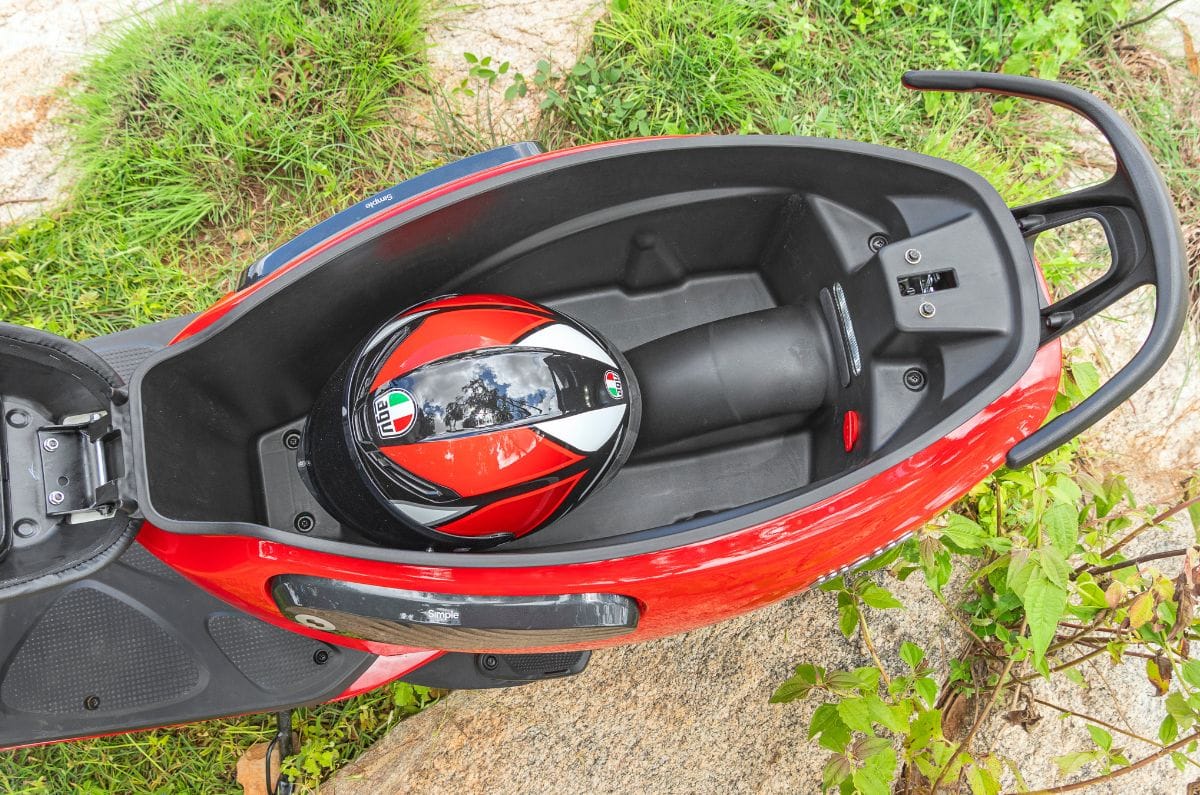
An undoubtedly big USP on the Wave is its cavernous 63L boot, the largest on any Indian scooter to date.

What is also an undoubtedly big USP on the Wave is its cavernous 63 litre boot, which is the largest on any Indian scooter to date. This should prove to be more than enough for everyone in the family! That being said, 63 litres is an enormous number and while this boot is undoubtedly big, I’m do find myself struggling to comprehend how it is nearly 50 percent bigger than the already cavernous 43 litre boot in the River Indie.

There’s plenty of technology too, including hill hold, drop-safe functionality, theft alerts and Bluetooth connectivity to your phone via the app. The TFT-equipped versions bring even more tech, while the brake-lock clasp is a small but useful touch.

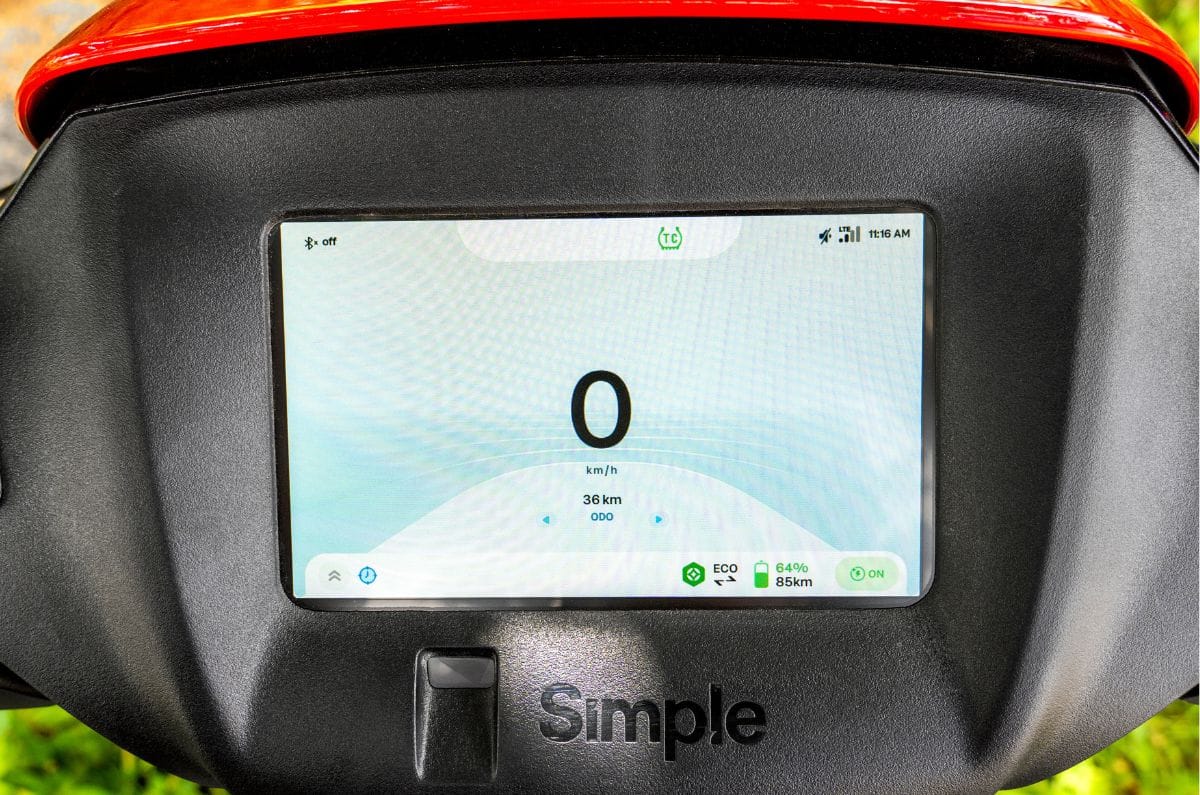
TFT display is well laid-out and has a lot of tech but misses touch functionality.

Simple Wave Price and verdict – 8/10

Scooter has a lot of strengths but is pricey; company yet to prove itself

There isn’t a lot to dislike about the Wave as a scooter. It’s comfortable, spacious, well finished and quick enough to serve its intended purpose very well. However, for all its accomplishments, the Wave doesn’t come cheap. Sure, the Rs 1.10 lakh starting price is tempting, but as you climb the variants ladder, the Wave gets seriously expensive, topping out at Rs 1.90 lakh (ex-showroom, Bengaluru). That said, Simple is one of the few brands offering the option of a 5kWh battery in the family e-scooter space, which is commendable.

However, more than pricing, the bigger issue is that the company is yet to properly scale up its dealer network and establish an aftersales network that delivers the premium experience a buyer will expect after shelling out the money Simple is asking for. The Wave is a good product, but customers paying a premium for an electric scooter will expect not just a solid product but also dependable after-sales support.

The Wave has a lot of strengths but Simple is yet to prove itself in the market.

Ultimately, the Wave’s biggest challenge is that it comes from a start-up that has made plenty of big promises and statements over the past five years but still has a lot to prove. Its dealer network remains minuscule compared with the big players, and long-term reliability still remains unknown.

There’s a lot for Simple to do, but the good news is that the Wave is a genuinely likeable product. If the company can iron out the business side of things, the Wave has the potential to catapult Simple from just another niche start up to a much bigger player. Of course, doing so is a huge challenge and not an overnight process. Simple has a long road ahead of it, but the good news is that it finally has a convincing product to aid in that journey. 
 

8 things to know before buying TVS Jupiter 110 Dual-Tone Edition

8 things to know before buying TVS Jupiter 110 Dual-Tone Edition
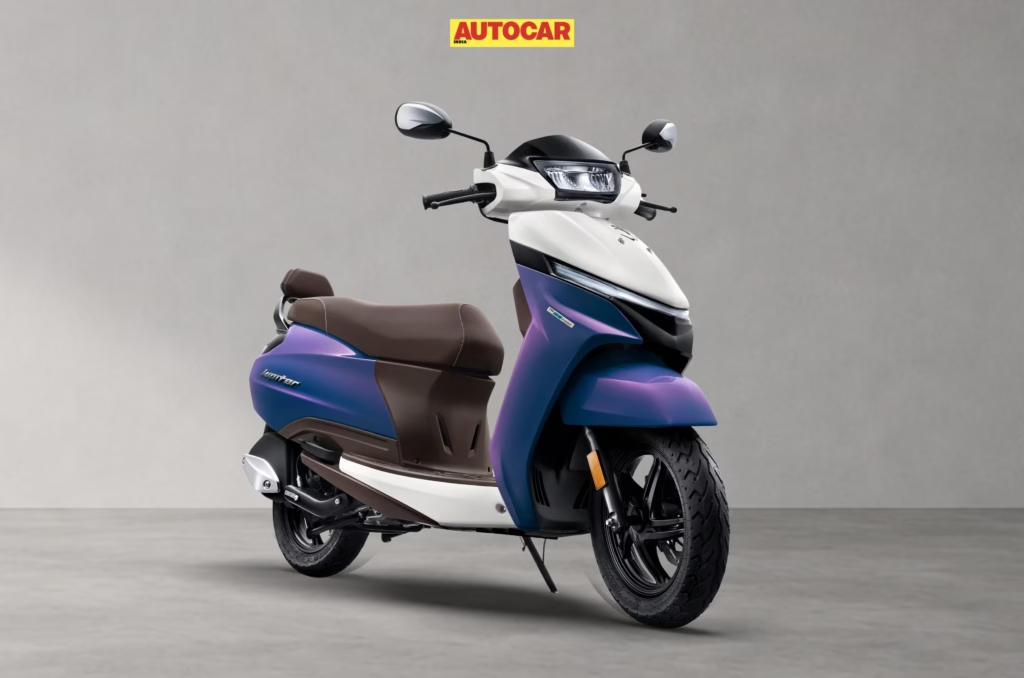
Inside render of the TVS Jupiter 110 in Spectral Blue colour.

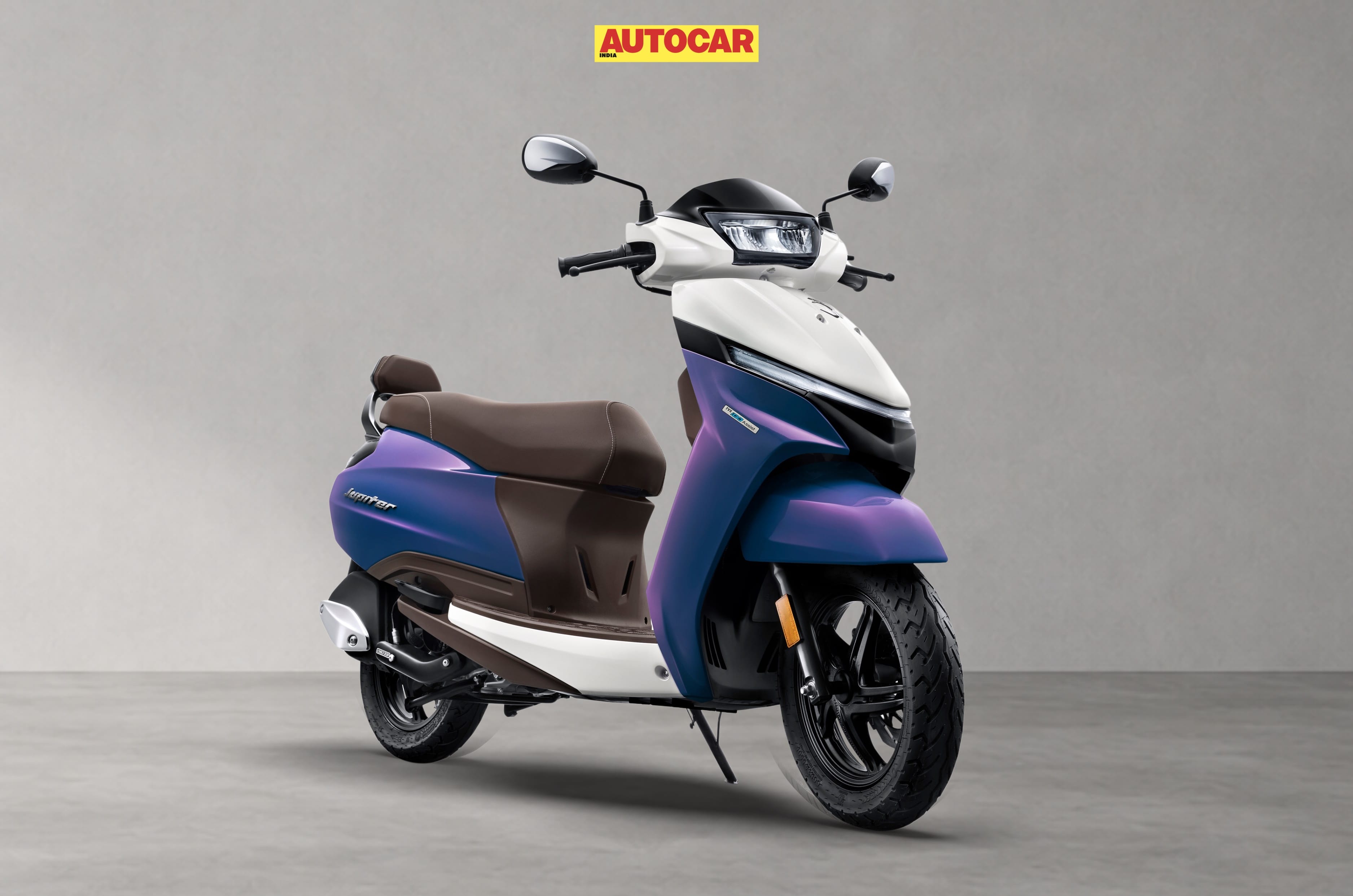
TVS has a new variant for the Jupiter 110, their family scooter, called the Dual-Tone Edition. Offered in two exclusive Spectral Blue and Spectral Copper colours, the new variant sits at the top of the range at Rs 89,825 (ex-showroom, Delhi). If the colours and the price appeal to you, here are some things you need to know before deciding to buy one.

1. How is the Dual-Tone Edition different from the SmartXonnect Disc variant?

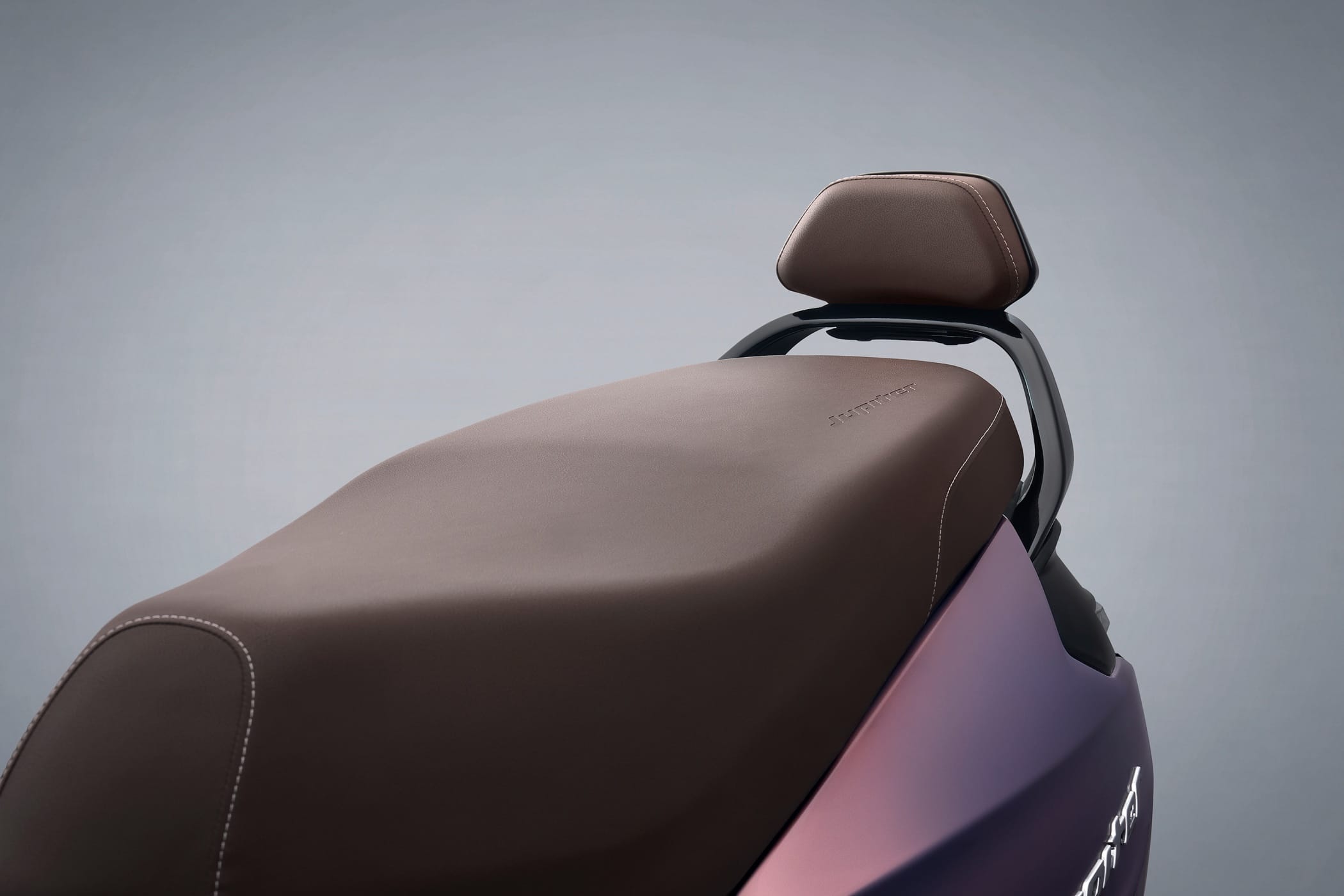
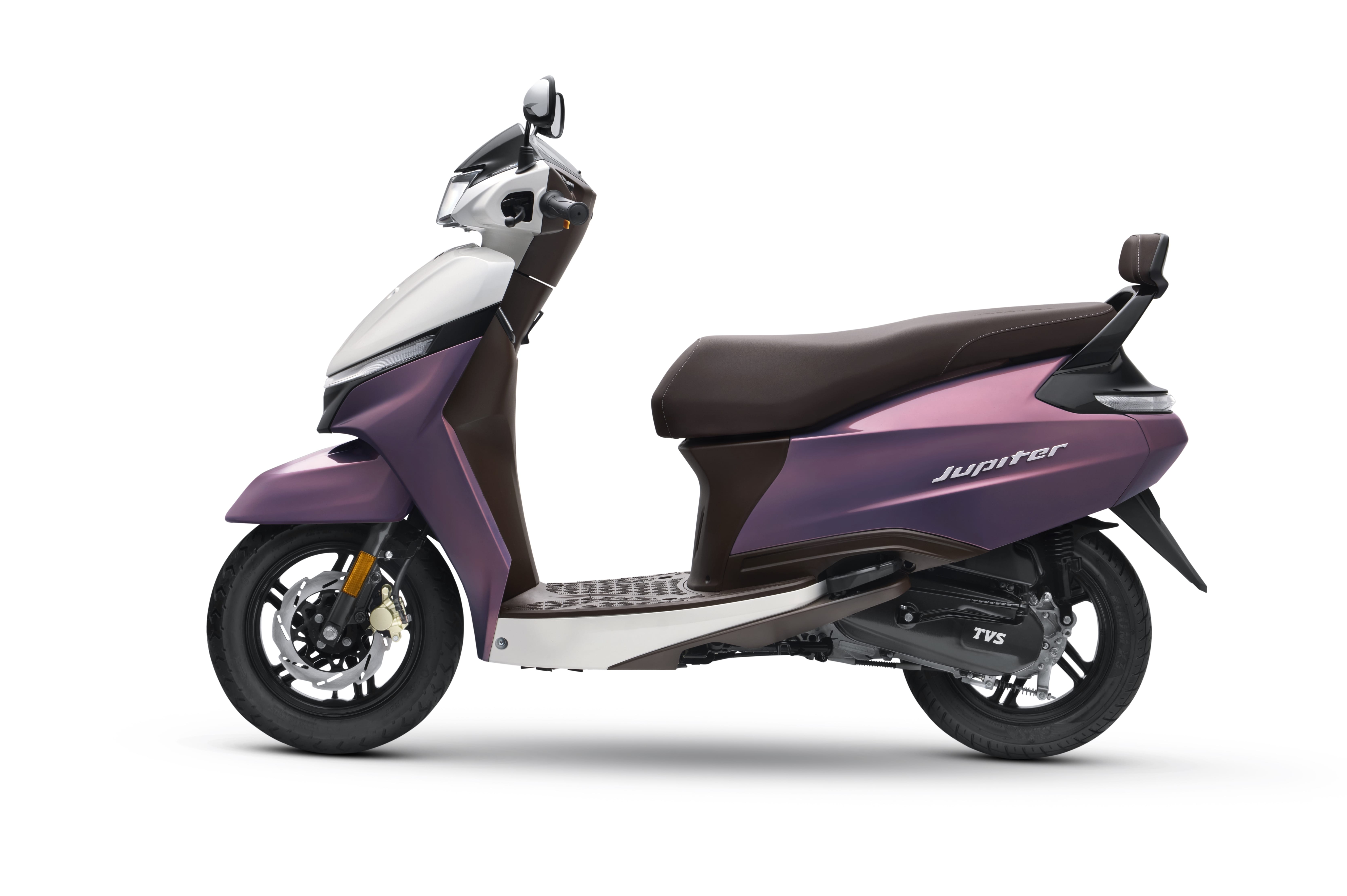
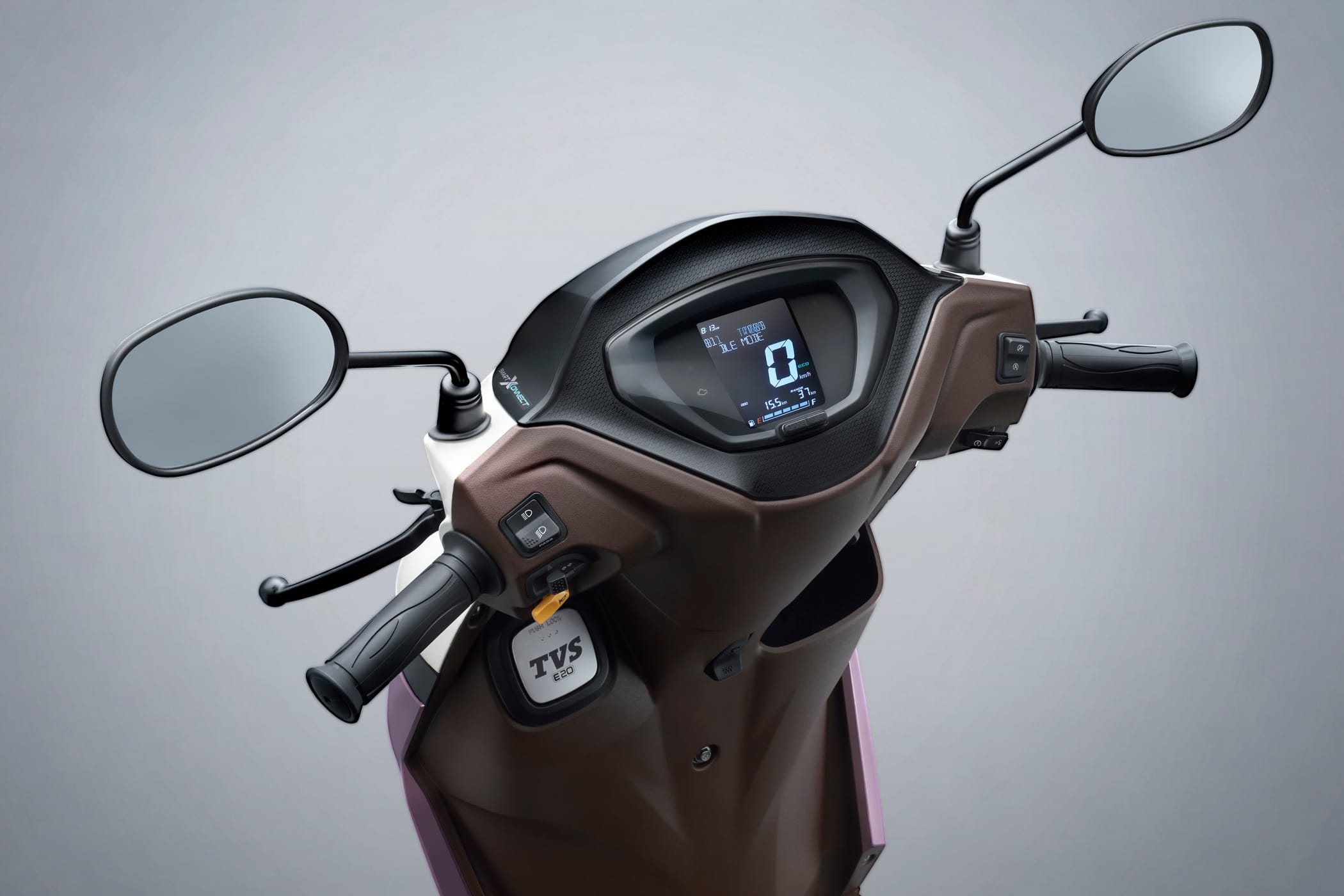
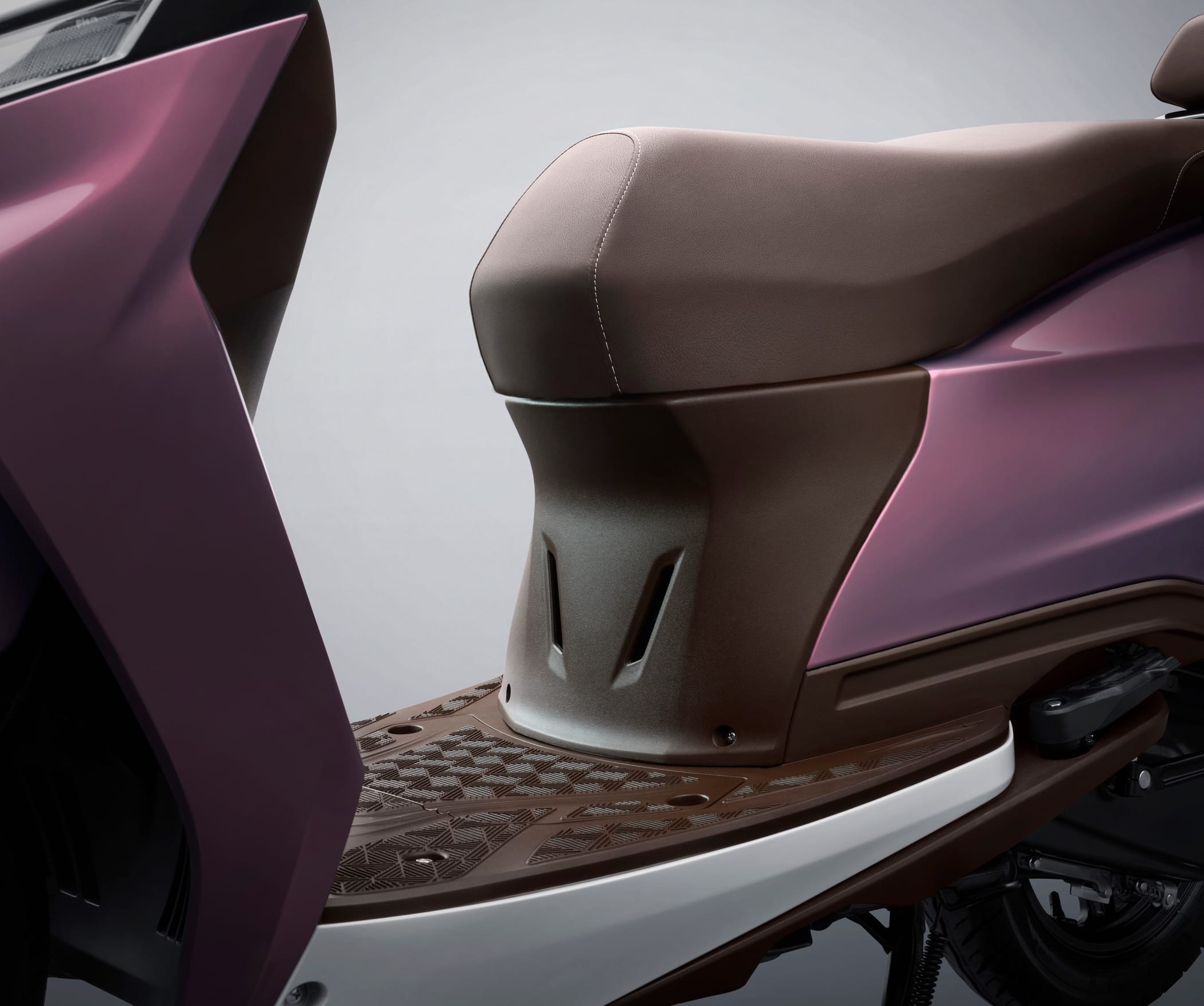
The obvious difference is in the colours, with the new variant sporting dual-tone colour scheme with two colours over SmartXonnect’s single colour scheme, offered in three colours at the moment. Besides that, the dual-tone variant gets colour co-ordinated inner panels, new seat colour, and partial chrome mirrors. The Spectral variant offers two new features, an integrated backrest and sequential indicators, the latter is a segment-first.

Image showing the Jupiter Dual-tone's colour co-ordinated inside panels.
Image showing the new brown seat on the Jupiter Dual-tone variant

2. How many variants are there in the TVS Jupiter now?

At the moment, TVS Jupiter has six different variants across a Rs 15,000 price range. The base variant, Drum starts at Rs 74,125 and the Spectral Edition comes in at Rs 89,825. Both prices are ex-showroom, Delhi.

Image showing the left side of the Jupiter 110 in Spectral Copper colour.

3. Why do some Jupiter variants have SXC in their name?

That’s an abbreviation for SmartXonnect, TVS’ smartphone connectivity suite. Currently, it’s offered in the top four variants, which of course includes the Spectral Edition though it doesn’t have SXC in the name. With the suite, you can connect the Jupiter to your smartphone to gain features like call and SMS alerts, turn-by-turn navigation, find my scooter, and the connected variants exclusively get a vertical, fully digital instrument cluster. The others stick to a different analogue-digital cluster.

Image showing the instrument cluster on the TVS Jupiter Dual-tone variant

4. Are there any changes to the convenience features offered with the new variant?

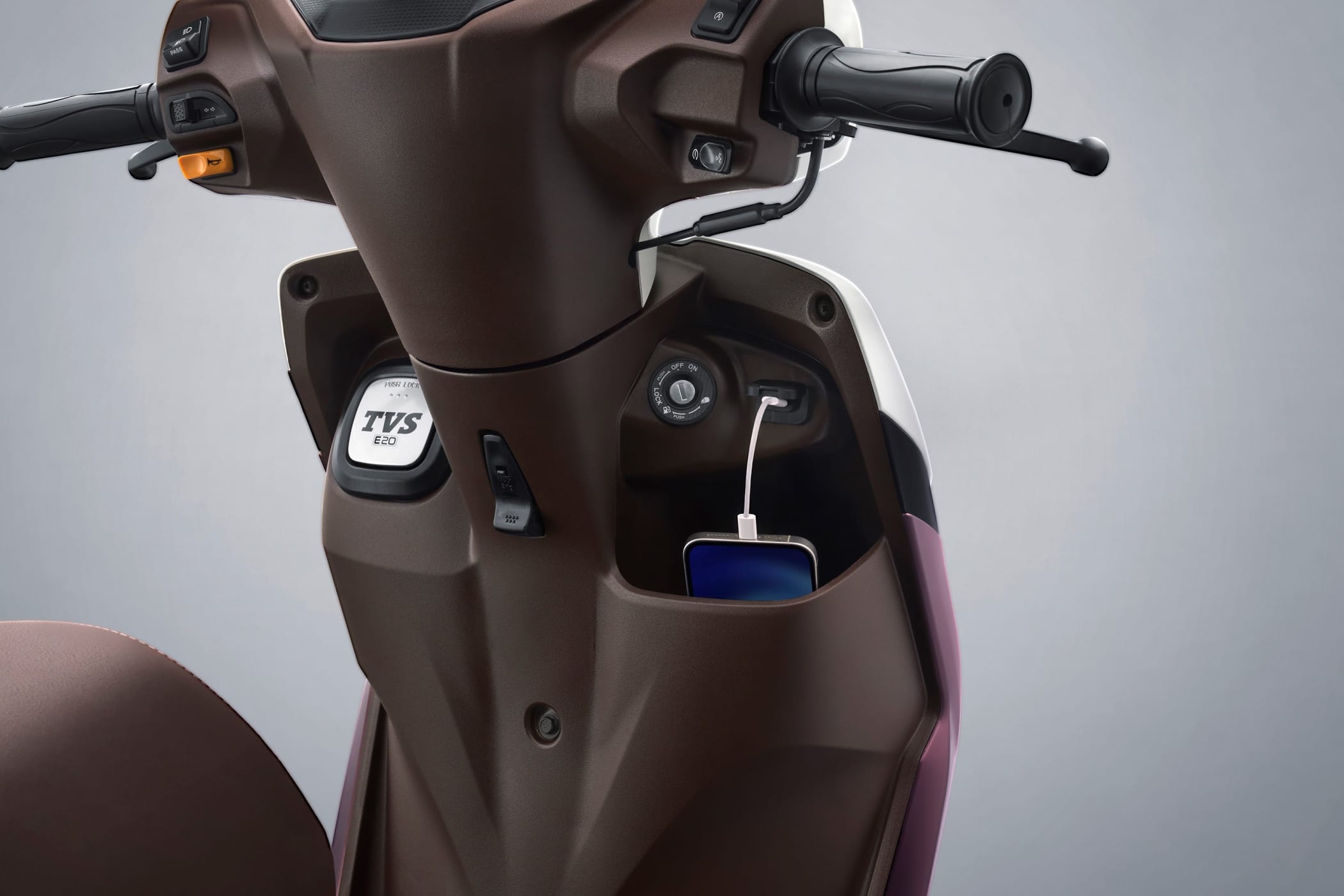
No, the Jupiter continues with a 33L boot that’s the largest on any ICE scooter in its segment. It also retains the USB charger at the front, enabling you to charge your devices on the go. Other auxiliary convenience features like the front apron mounted fuel tank and the easy to operate centre stand also continue on offer.

Image showing the Jupiter's front USB charger and apron mounted fuel tank

5. What’s TVS iGo assist? Is that also exclusive to SmartXonnect variants?

Yes, it is. iGo assist refers to TVS’ integrated starter generator (ISG). It enables features like silent start, auto stop/start at traffic to conserve fuel and adds 0.6Nm of torque to the existing 9.2Nm of torque on the scooter.

6. I want a front disc brake. What’s the most affordable Jupiter variant I can buy?

TVS currently offers the front disc brake only with SmartXonnect included, so the most affordable variant with one is SmartXonnect Disc, coming in at Rs 86,825 (ex-showroom, Delhi).

7. Some Jupiter 125 variants are priced similar to the 110. Should I buy that instead?

Sure, as long as you don’t mind the older looking design on the 125. The Jupiter 125 offers a front disc brake without SmartXonnect. However, the 125, as the name suggests, does get a larger engine that should lend it some additional power but that could also affect its frugality. Both the scooters share the platform so the experience will be similar, but take a test ride before deciding for or against one.

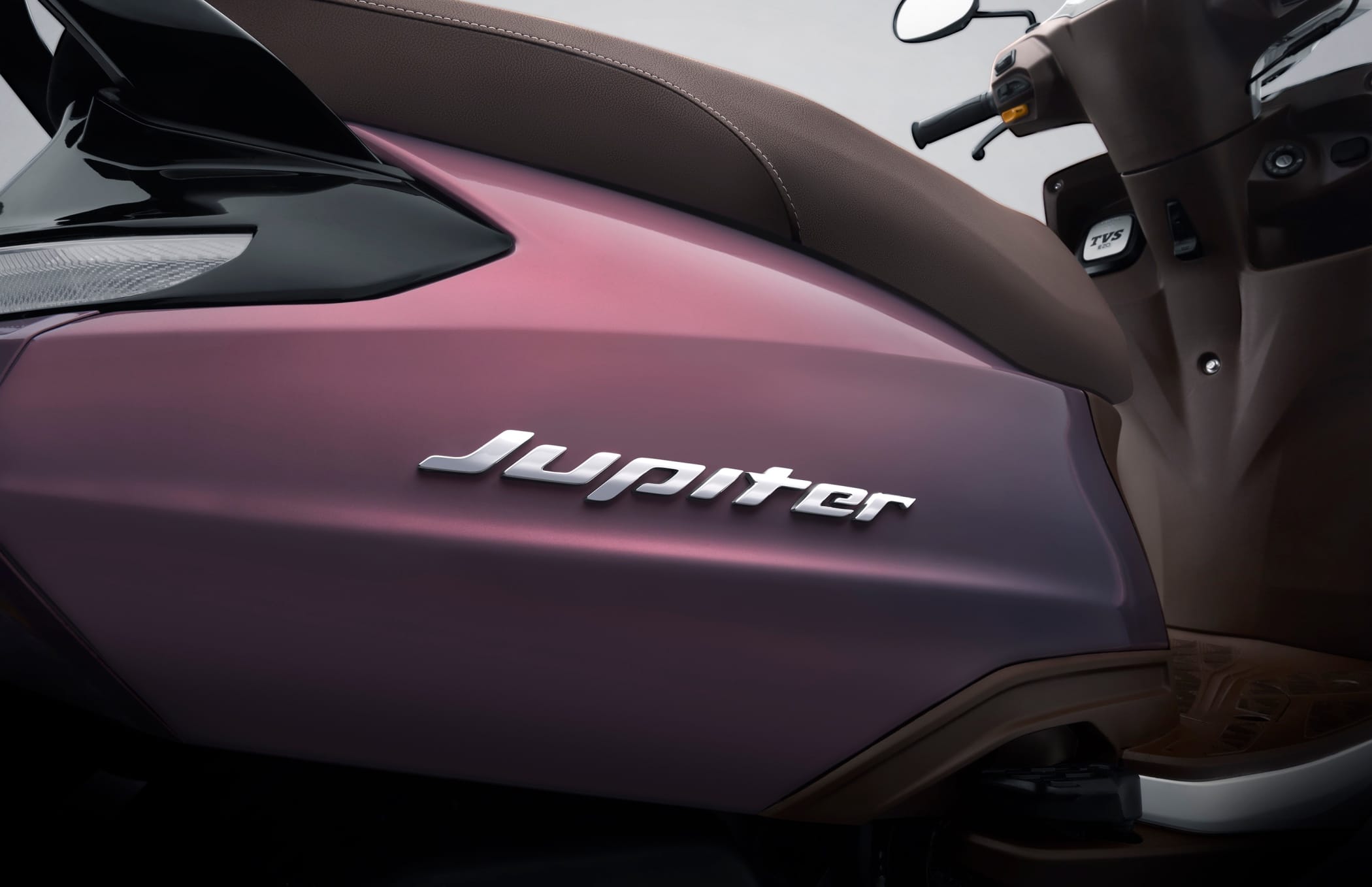
Image showing the Jupiter logo on the right side of the scooter, in Spectral Copper colour

8. The Access 125 is also priced similar to the Jupiters. Worth considering?

Absolutely. The Access has always been a value 125 offering and that continues with the latest one as well. Worth checking out if you’re alright with the extremely conventional family scooter design.
 

SIAM elects Shenu Agarwal as President for 2026-27

SIAM elects Shenu Agarwal as President for 2026-27

The Society of India Automobile Manufacturers (SIAM) elected Shenu Agarwal, Managing Director and Chief Executive Officer of Ashok Leyland, as President for the 2026-27 term. SIAM is the apex national body representing all major vehicle and vehicular engine manufacturers in India. The decision was finalised at an executive committee meeting during the 2026 SIAM Annual Convention on Thursday.

  1. Shenu Agarwal succeeds Tata Motors’s Shailesh Chandra as SIAM President
  2. Agarwal served as SIAM Vice President during his previous term

Agarwal has served as SIAM Vice President during his previous term. Taking over as President, he succeeds Shailesh Chandra, Managing Director and CEO of Tata Motors Passenger Vehicles.

K N Radhakrishnan (left), Santosh Iyer (right).

K N Radhakrishnan, Director and CEO of TVS Motor, was elected Vice President by SIAM. Santosh Iyer, Managing Director and CEO of Mercedes-Benz India, took over as Treasurer for the current term.

Ather Konarc S 125 vs TVS Orbiter V2: Price and specifications compared

Ather Konarc S 125 vs TVS Orbiter V2: Price and specifications compared
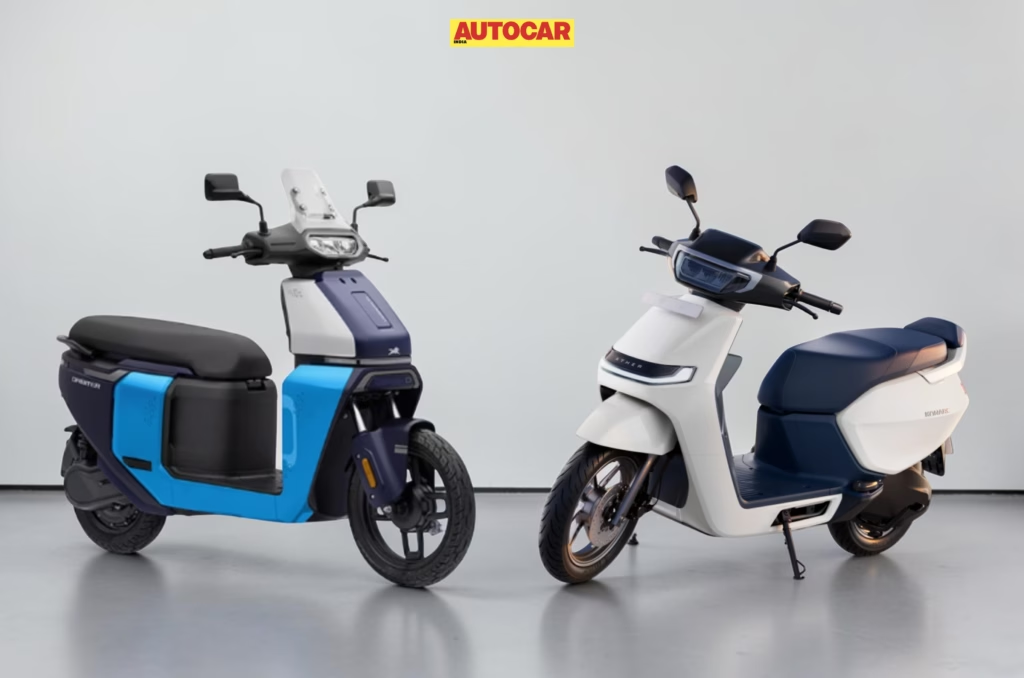
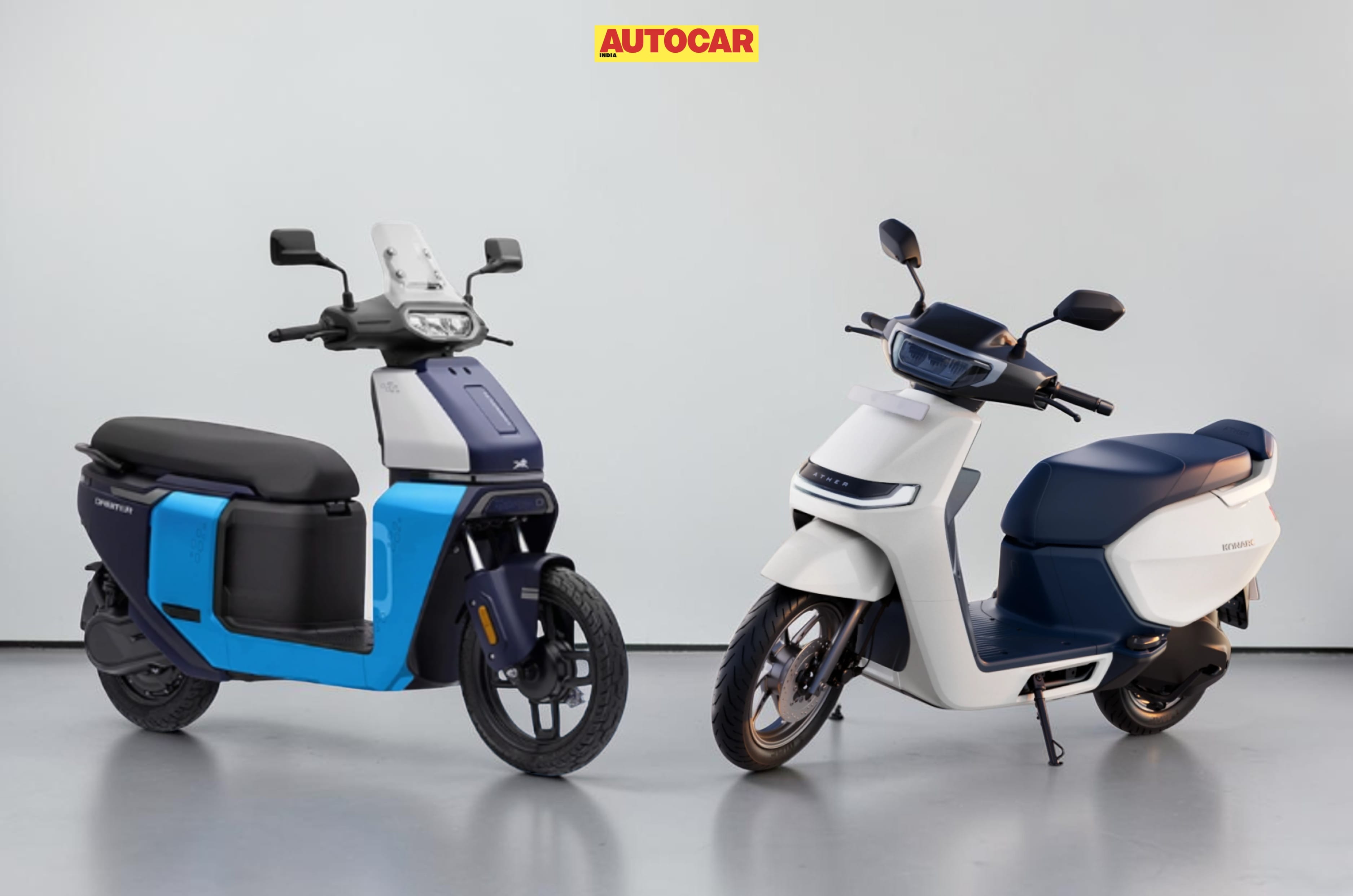
A render showing the Ather Konarc S 125 and TVS Orbiter V2

Ather has launched the Konarc with a brand-new EL platform at prices starting as low as Rs 99,999. This makes the scooter an obvious rival to the TVS Orbiter, which was revealed last year to target the urban scooter market. Since the Ather Konarc’s entry-level variant isn’t due for release until late next year, let’s see how the Konarc S 125, available later this month, compares to the TVS Orbiter V2.

Ather Konarc S 125 vs TVS Orbiter V2: Motor, battery and charging

Orbiter has more battery capacity and range


Ather Konarc S 125

TVS Orbiter V2

Peak motor power

4kW

2.9kW

Rated torque

16Nm

NA

Claimed top speed

70kph

69kph

Battery capacity

2.7kWh

3.1kWh

Claimed charge time (0-80 percent)

4h30m

4h10m

IDC range

125km

158km

Starting with the motor, the TVS Orbiter falls short of the Ather in terms of peak power. TVS has not mentioned a peak torque output for the Orbiter. However, the Orbiter bounces back with a higher battery capacity and range, as well as a quicker 0-80 charge time with a faster 650W bundled charger.

That said, both scooters offer optional hardware to speed up charging times. The Ather Konarc comes with a built-in 450W charger as standard, and it can be bundled with an external 450W charger for a faster 900W total charging speed, cutting the time down to 2 hours and 25 minutes. The Orbiter also offers a faster 950W charger as an add-on accessory, but it takes a longer 2 hours and 38 minutes to get to 80 percent from nil.

Ather Konarc S 125 vs TVS Orbiter V2: Dimensions and underpinnings

Orbiter is more accessible


Ather Konarc S 125

TVS Orbiter V2 

Wheelbase

1,352mm

NA

Seat height

770mm

760mm

Ground clearance

NA

165mm

Kerb weight

126.5kg

112kg

The Orbiter starts strong with an advantage in two important areas for a practical scooter: seat height and ground clearance. The Konarc is also the heavier scooter, with a 14.5kg higher kerb weight than the Orbiter. TVS hasn’t shared the wheelbase figure for the Orbiter.

Ather Konarc S 125 vs TVS Orbiter V2: Brakes, tyres and suspension

Konarc has the better ride package


Ather Konarc S 125

TVS Orbiter V2

Brakes (F, R)

220mm disc, 130mm drum

Drum, drum

Tyres (F, R)

90/90-14, 100/90-12

90/80-14, 90/90-12

Suspension (F, R)

Telescopic, monoshock

Telescopic, twin shock

The hardware package is where the Konarc gains significant ground. It gets a front disc brake compared to the Orbiter’s drum brake, along with wider front and rear tyres. Suspension setups are more evenly matched between the two, although the real-world experience could tip the scales towards one.

Ather Konarc S 125 vs TVS Orbiter V2: Features

TVS remains in (surprising) lockstep

Ather has reserved most of the headlining new features, such as the TFT instrument cluster, auto (boot) pop, smart key, and so on, for the Z line. The Konarc S gets a DeepView LCD instrument cluster and comes with AirWalk, which takes the motor’s assistance to make manually moving the scooter easier. Considering Ather’s tech-savviness, this is unsurprising. Some other tech-powered features include turn-by-turn navigation, AutoHold (hill hold), Vehicle FallSafe, TrueRange, and Find my Scooter, among others. The catch, however, is that all of them require you to pay for Ather StackPro, a one-time Rs 16,000 add-on to the Konarc S 125’s ex-showroom price.

The Orbiter, on the other hand, has a much smaller LCD cluster but matches almost all of Konarc’s features, such as turn-by-turn navigation, hill-hold, smartphone connectivity, theft and tow alerts, crash and fall alerts and motor cut-off on fall. TVS also offers cruise control, which is currently only on the Ather 450 series of scooters. Right now, you get access to all the features mentioned above at no extra cost on the Orbiter, but it remains to be seen if that will change, as the TVS iQube charges an annual subscription of Rs 999 for some advanced features.

Ather Konarc S 125 vs TVS Orbiter V2: Price

Konarc starts higher, and it only gets more expensive


Ather Konarc S 125

TVS Orbiter V2

Price (ex-showroom, Bengaluru)

Rs 1.23 lakh

Rs 1.15 lakh

The two variants in comparison here make the Ather about Rs 8,000 more expensive than the Orbiter. If you prefer access to all the smart features offered by Ather StackPro, that will increase the gap even further. Even though the two e-scooters are aimed at bringing in more mainstream users to the brands, both have been designed with different demographics in mind. If you happen to be in the common demographic, though, you should definitely take a test ride before picking one over the other because the on-paper specs don’t tell the whole story.

TVS outsells Hero and Honda to top bike and scooter sales in August 2026

TVS outsells Hero and Honda to top bike and scooter sales in August 2026
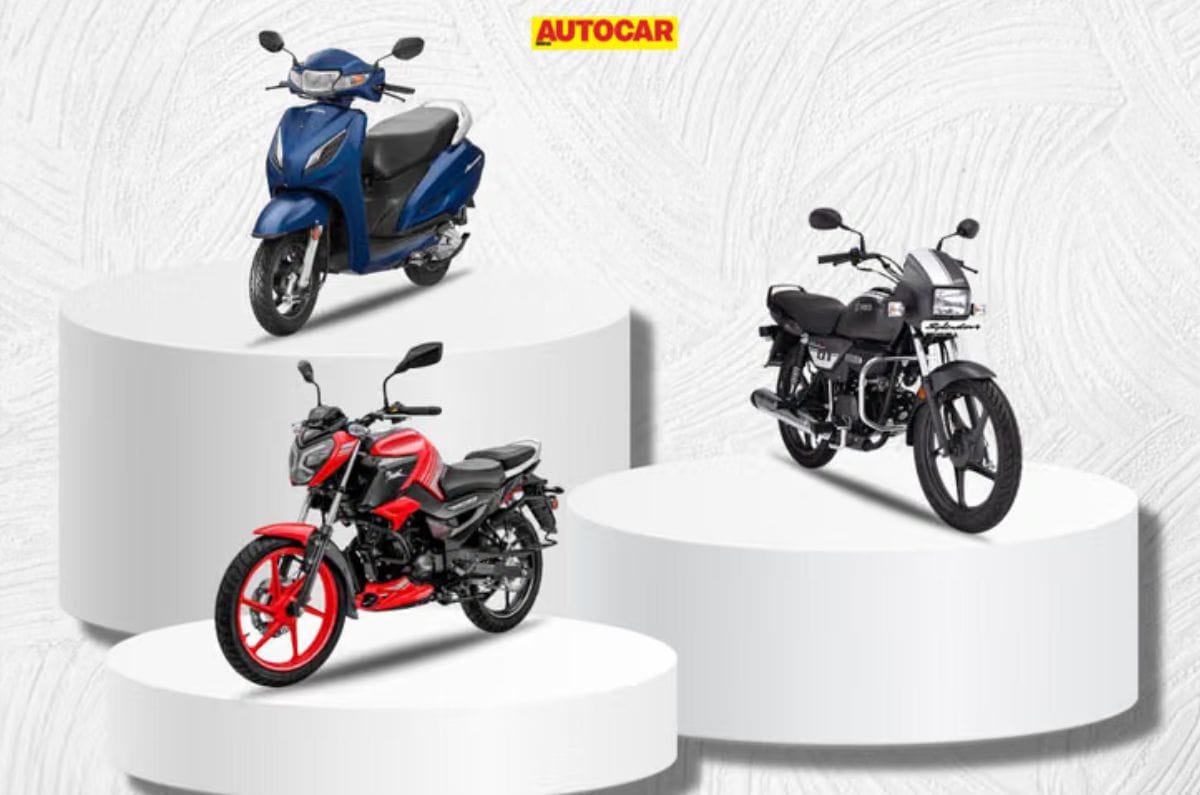
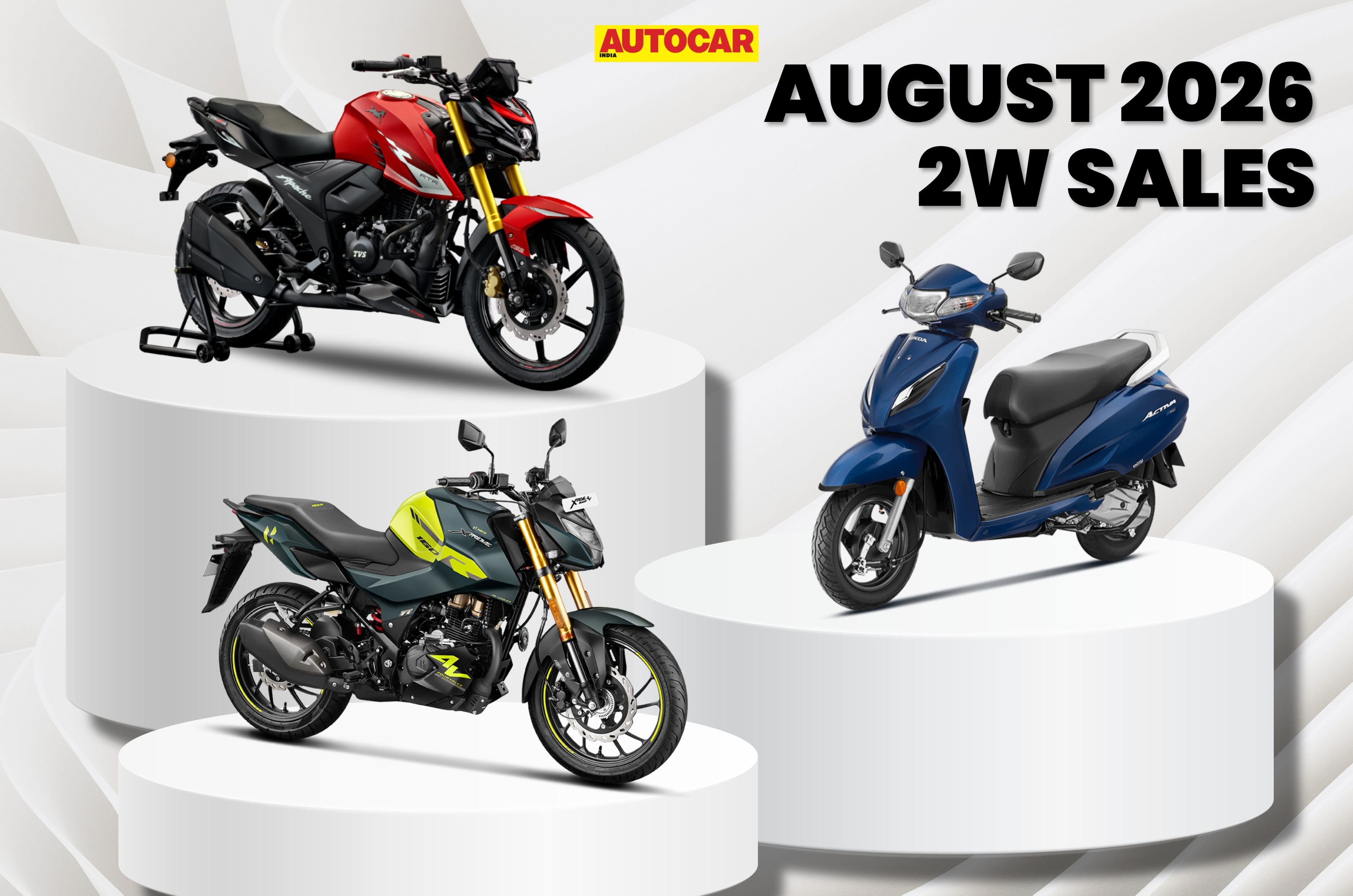
Graphic with TVS Apache, Honda Activa, and Hero Xtreme 160 4V on a podium

August 2026 delivered strong year-on-year growth across the board as manufacturers gear up for the festive season, but the standout story was TVS Motor Company leapfrogging both Honda and Hero MotoCorp to become India’s largest two-wheeler manufacturer by monthly dispatches for the first time.

TVS Motor: 5,91,437 units

TVS recorded its highest-ever monthly two-wheeler sales this past August, with dispatches climbing 21 percent year-on-year from 4,90,788 units last August. This pushed it past both Honda and Hero for the top spot this month. Domestic two-wheeler sales grew 18 percent to 4,33,796 units, while the company’s electric two-wheeler business posted growth of 137 percent to 59,453 units. TVS also continued to lead as an exporter, shipping 1,57,641 two-wheelers overseas, up 29 percent year-on-year.

Honda: 5,79,162 units

Honda Motorcycle & Scooter India (HMSI) posted 8 percent YoY growth, with total sales rising from 5,34,861 units last August. Domestic sales grew at the same 8 percent clip to 5,17,329 units, while exports rose by a sharper 15 percent to 61,833 units.

Hero MotoCorp: 5,68,398 units

Hero two-wheeler dispatches grew a modest 2.65 percent year-on-year from 5,53,727 units. Domestic ICE dispatches stood at 5,16,747 units, while the Vida brand continued its strong run with 25,558 units dispatched – a 38 percent growth. Exports fell 24.6 percent to 26,093 units from 34,588 a year earlier.

Bajaj Auto: 4,43,748 units

Bajaj two-wheeler dispatches grew 30 percent YoY from 3,41,887 units. Domestic sales rose 10 percent to 2,01,898 units, while exports jumped 53 percent to 2,41,850 units, continuing the company’s run as one of India’s largest two-wheeler exporters.

Royal Enfield: 1,26,479 units

Royal Enfield motorcycle sales grew 11 percent YoY from 1,14,002 units. Domestic sales rose 11 percent to 1,14,204 units, while exports grew 10 percent to 12,275 units. The month saw the launch of the Classic 350 Gorkha Edition and an updated Continental GT 650, alongside continued momentum for the Flying Flea C6, which the brand says has crossed 50,000 customer-driven kilometres in its current sole market of Bengaluru.

Suzuki: 1,20,611 units

Suzuki posted 6 percent year-on-year growth from 1,13,936 units, driven largely by domestic sales, which rose 13 percent to 1,03,118 units. Exports declined to 17,493 units from 22,307 units a year earlier.

Simple Wave Launched from Rs 1.10 lakh

Simple Wave Launched from Rs 1.10 lakh
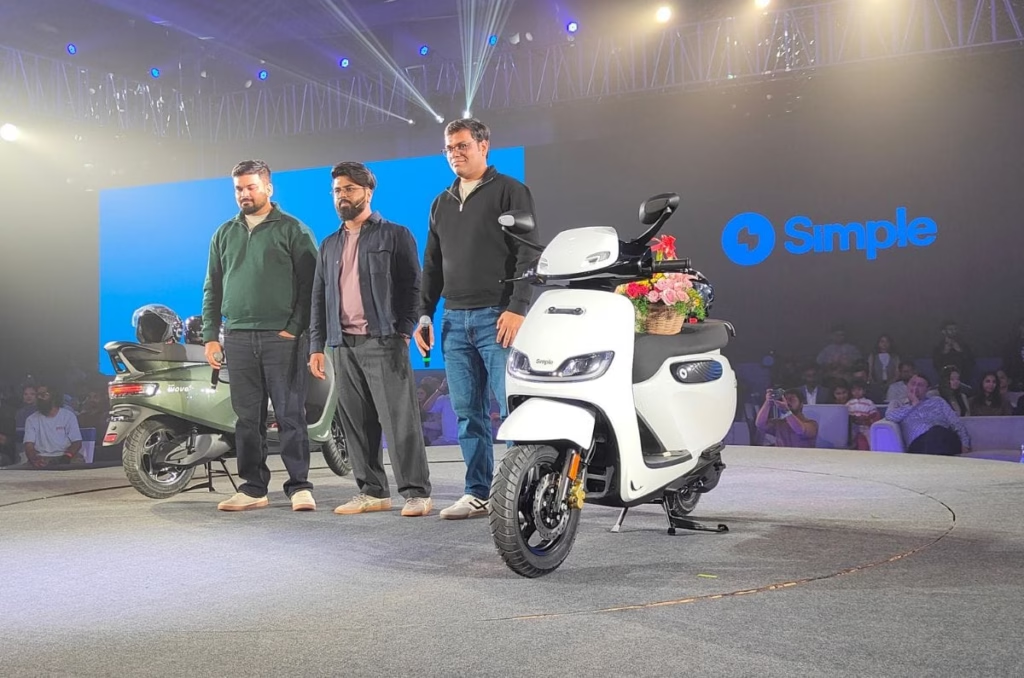
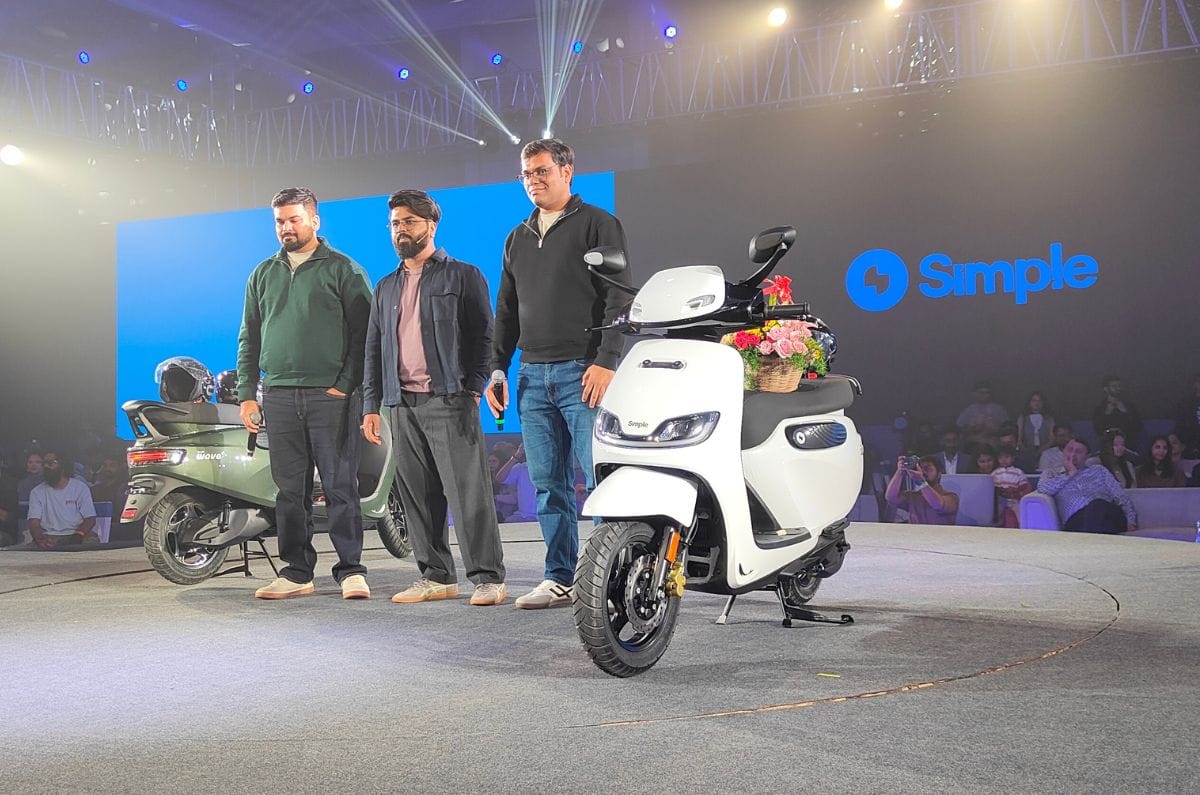
An indoor shot showing the new Wave scooter with the founders of Simple Energy on stage

Simple, the Bengaluru based EV startup, has finally launched their family scooter Wave today. The scooter was first spotted testing back in March this year and was earlier referred to as Arrive during development. Simple is looking to position this as a mass market scooter compared to their sharp, performance focussed One and One S.

  1. Simple Wave has four variants; six, if you count instrument cluster options
  2. Lowest variant has a 2.2kWh battery, top variant has a 5kWh battery
  3. Delivery starts from 25 September 2026

Simple Wave: What you should know

New and improved motor, battery, and design

The Wave is based on an updated platform of the brand’s One scooter range. The first update is to the suspension, with the Wave using a twin shock rear suspension (compared to the One’s monoshock) and a much longer seat. Speaking of which, the Wave has a whopping 920mm long seat, claimed to be the longest scooter seat in the country. The other headline is the 70L storage in the Wave. Of which, 63 litres come from the under seat compartment, three litres on the front apron cubby, and four litres from a quick access pocket on the left side of the rider’s seat (called Pill Storage). An identical pocket for the right side is offered as an accessory.

The Wave has four variants by battery capacity. The base WaveS is offered in two battery capacities, 2.2kWh and 2.7kWh with 110km and 132km of IDC range, respectively. The middle variant, Wave, has a 3.7kWh battery and 171km of IDC range, and the top Wave+ variant has a 5kWh battery and 243km of IDC range. Wave+ currently has the highest range in its segment. Compared to the One range, the powertrain has seen updates all over. The 6.4kW motor has been updated to third generation and so has the Battery Management System, with the overall size of the motor reduced by 15 percent.

For context, the One uses a 5kWh battery and an 8.8kW motor; the One S has a 3.7kWh battery and a 6.4kW motor. They offer up to 265km and 190km of claimed range, respectively. Do note that there’s also a One Ultra with a 6.5kWh battery and a motor with 8.8kW of power with a claimed 400km range, but the delivery dates for that have not been announced so far. The One Ultra is currently the most expensive scooter from Simple, priced at Rs 2.35 lakh (ex-showroom, Bengaluru).

The scooter’s design has also shifted to a sleeker silhouette, letting go of the One’s sharp and aggressive lines. Simple claims it’s inspired by water, as opposed to air for the One range. However, the Wave retains the 7-inch TFT instrument cluster. The Wave+ gets it as standard, whereas the lower variants offer an option between the TFT or an InfinityBlack LCD cluster. The WaveS variants get three ride modes (EcoX, Eco, and Ride) with a claimed top speed of 75kph. Wave and Wave+ variants add an additional Sports mode and increases the top speed to 90kph. The 2.2kWh variant is available in two colours, 2.7kWh variants in four, and the 3.7kWh and 5kWh variants in six colours.

First spotted on the test mule, the Wave swaps the rear disc from the One range for a more cost-effective rear drum brake but retains the Combined Braking System (CBS) across all four variants. However, the One scooters offer traction control as standard rider aid, with the Wave limiting it to — called GripSense now — on the higher variants. Dimensions-wise, compared to the One range, seat height has been lowered by 5mm to 775mm and ground clearance has been increased by 3mm to 175mm.

The Simple Wave has been priced starting at Rs 1.10 lakh (ex-showroom, Bengaluru). Simple has announced that deliveries commence from September 25. Prices for the higher variants hasn’t been revealed, and Simple hasn’t clarified if the delivery date applies to all the variants. With its pricing, the Simple Wave directly rivals other EV scooters like the new Ather Konarc, Bajaj Chetak, Hero Vida, and TVS iQube, with range as its biggest trump card over all of them.