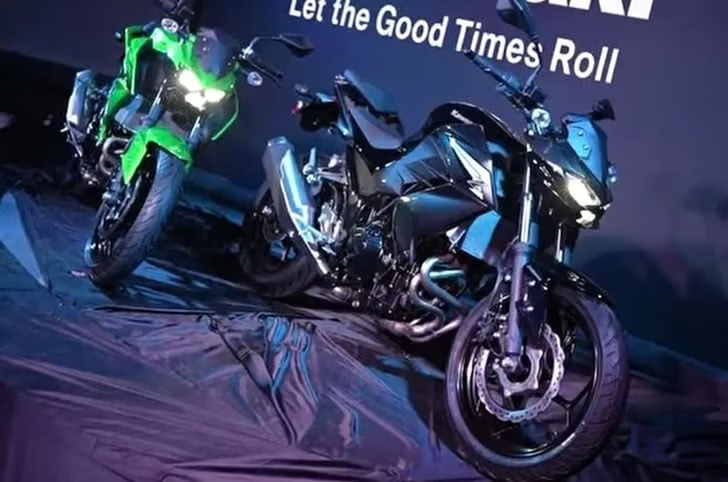
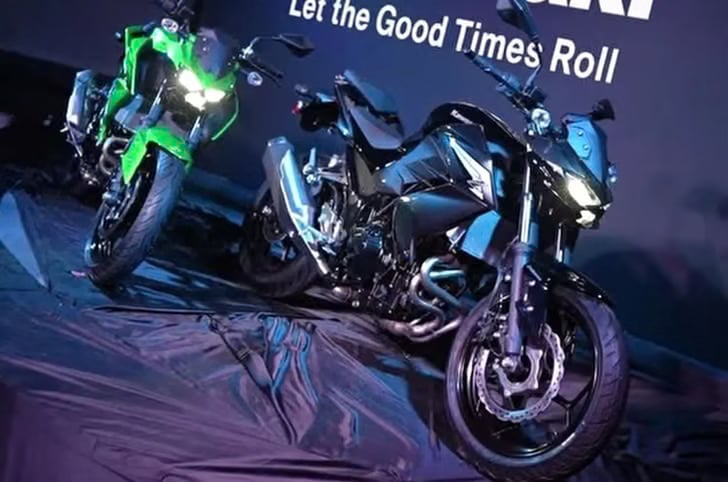
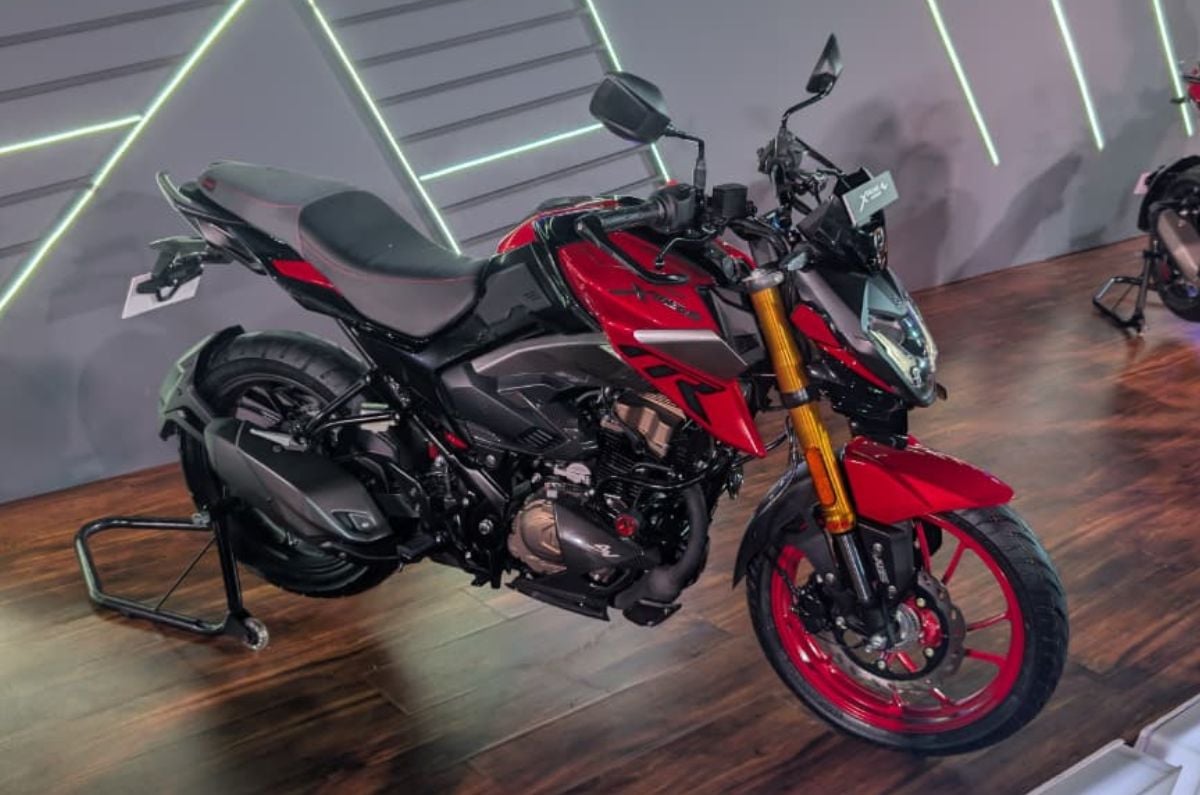
The Kawasaki Z300 is the Japanese brand’s new entry-level street naked, which will sit at the bottom of its Z lineup, drawing styling cues from the larger Z900. It is built on the same platform as the Ninja 300 and brings a parallel-twin engine to a segment largely dominated by single-cylinder bikes, going up against the KTM 390 Duke and TVS Apache RTR 310.
1. What engine does the Kawasaki Z300 use?
The Z300 is powered by a 296cc liquid-cooled parallel-twin engine producing 39hp and 26.1Nm of torque, paired with a six-speed gearbox. The engine is shared with the Ninja 300, but the Z300’s upright ergonomics, largely thanks to a wide, single-piece handlebar, should give it a more relaxed character than its faired sibling.
2. What features does the Kawasaki Z300 get?
The Z300 gets a new instrument cluster with smartphone connectivity, which should be an upgrade over the dated yet charming analogue semi-digital console on the Ninja 300. During the launch livestream, we spotted more than one type of display. One appeared to be a negative LCD unit, while another had a white backlight and could be a TFT screen. This suggests the Z300 may be offered in multiple variants with different feature levels, but Kawasaki is yet to confirm the full variant breakdown.
3. What colours will the Kawasaki Z300 be available in?
The Kawasaki Z300 will be available in two colours at launch – Green and Black.
4. Which bikes will the Kawasaki Z300 rival?
The Z300’s closest rivals are the KTM 390 Duke and the TVS Apache RTR 310. Both are single-cylinder motorcycles with more performance-oriented chassis setups, although the Z300’s parallel-twin engine should give it an edge in refinement. The Z300 might not match them in terms of outright performance, but the Kawasaki badge and twin-cylinder engine give it a distinct proposition in this segment.
5. What is the Kawasaki Z300 price?
‘Kawasaki had scheduled a full price and specification reveal for October 20, but pricing is yet to be confirmed on the Kawasaki India website at the time of writing. For context, the faired Ninja 300 is currently listed at Rs 3.34 lakh (ex-showroom, India). The Z300 gets a new instrument cluster, at the very least, but also has less bodywork. A price in the range of Rs 3.20 lakh to Rs 3.50 lakh (ex-showroom) seems likely, but we’ll update this once Kawasaki confirms the official pricing.
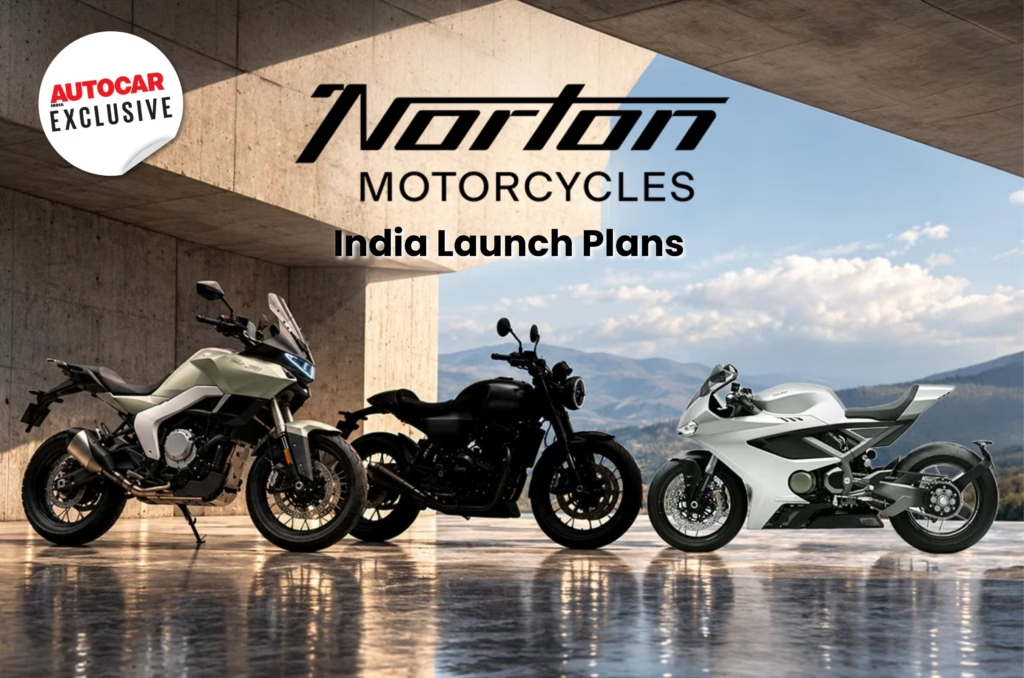
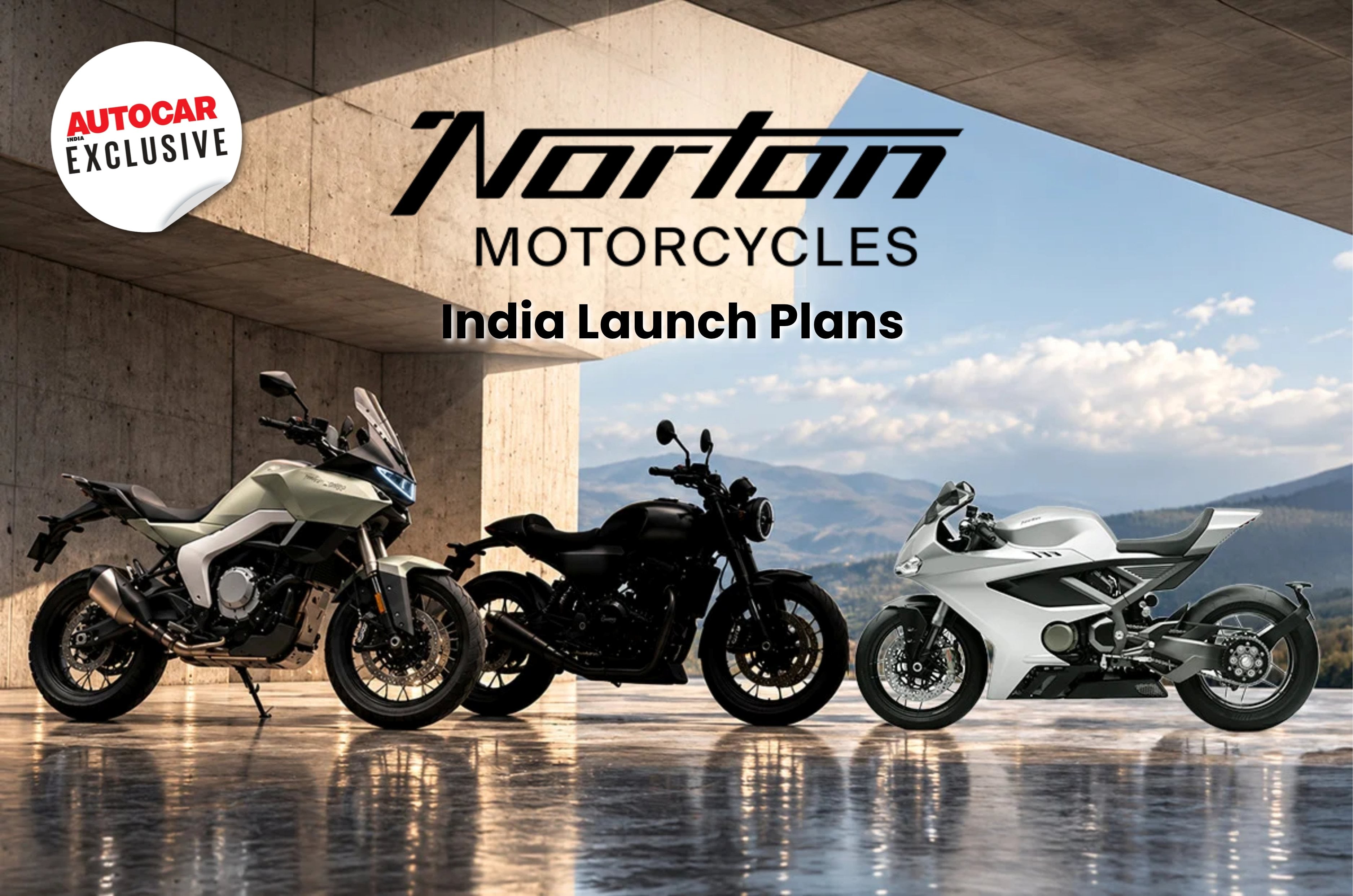
We first rode the Norton Manx R superbike overseas in May and this was followed by the Atlas adventure bike in July. At the time in June, TVS had said that the Atlas would be introduced in India later in the year. It had also scheduled the launch of TVS Paddock, its premium retail channel, for the second quarter of FY27. Paddock will serve as the retail outlet for both Norton products as well as select TVS premium vehicles across the country.
Norton motorcycles will be retailed out of a few exclusive Norton outlets as well as a new TVS Paddock dealer network
Three paddock outlets will be set up by December 2026
Norton line-up will be initiated with the Atlas, followed by Manx R and the new single-cylinder motorcycle
Norton’s reach in Europe, US and India
Indian dealer network still being established
We recently reported on the company’s new 450cc class liquid cooled single cylinder roadster making its debut at ECMA 2026. In its official response to our queries sent, a company spokesperson said, “Norton is set to launch in India soon following the brand’s presence at EICMA this year, when the next key stage of the resurgence will be revealed”.
However, the company did not provide an updated Paddock rollout schedule. Current preparations are understood to point to around three Paddock outlets by December, although a larger network is being sought. The number of outlets that will be operational when motorcycle sales begin has yet to be finalised. Under the tentative India rollout plan, the Atlas could launch in January 2027, with the Manx following by March if that schedule holds. The sequence could see Norton introduce three to four products during 2027, although the final model mix and launch dates have not been announced. As for the new single cylinder roadster, that bike is likely to be launched in India alongside overseas markets in the second half of next year.
While Norton’s India innings is yet to begin, the company spokesperson says that the Manx R and Atlas launched earlier this year are being delivered to customers across Europe. The naked Manx and road-biased Atlas GT have not yet been formally launched. The company said it now has more than 50 retailers across 10 markets, including the UK, Italy, France, Germany and Spain. Preparations for a United States launch are continuing, subject to the final stages of vehicle certification.
“As Norton continues to build the brand globally, it is important to ensure that Norton’s entry into India is equally meaningful and thoughtfully executed,” the spokesperson said. “The positive response to Norton’s products in Europe gives us confidence, and more on Norton’s India plans will be shared in due course.”
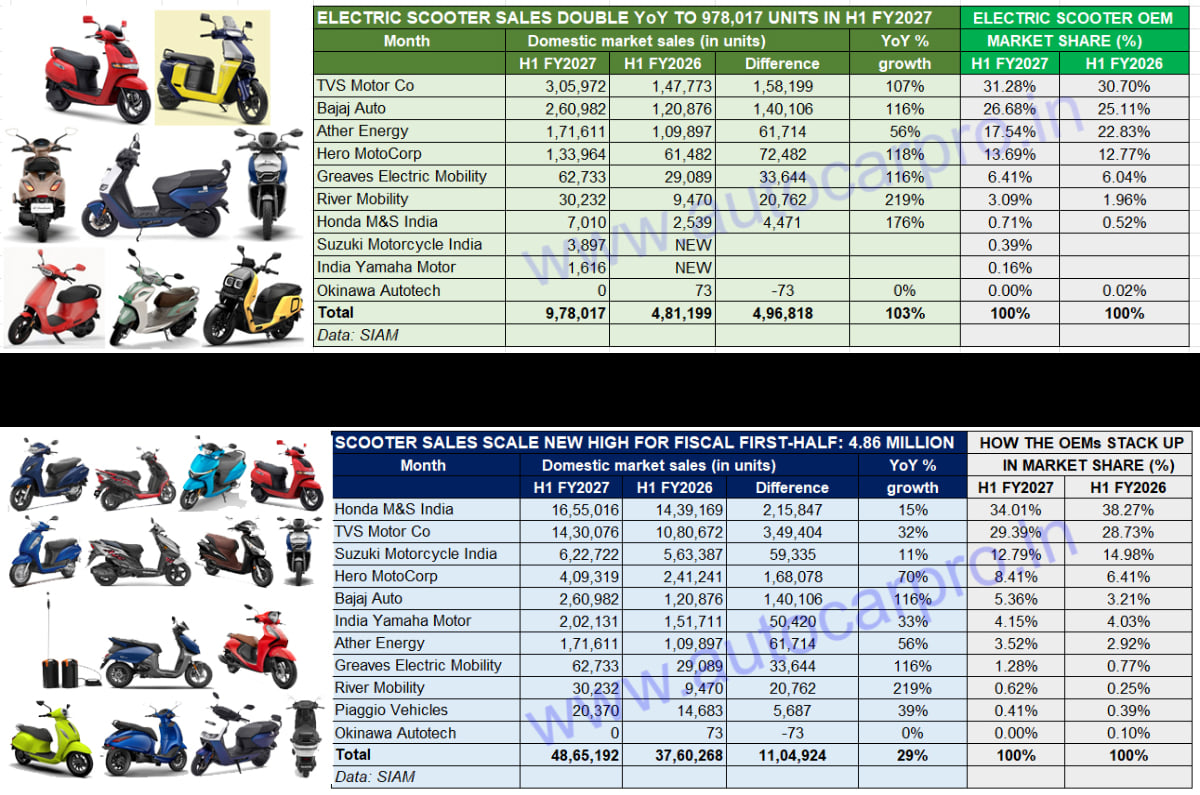
Two-wheeler manufacturers have dispatched a record 48,65,192 scooters in the domestic market in the first half (H1) of FY2027. That’s an additional 10.8 lakh units over the same period last year, representing a 29 percent increase. The six-month period included two monthly records: April 2026 opened as the best-ever April, with 6,91,993 units, while September registered 9,95,576 units – the highest monthly total ever for the category and just 4,424 units short of the million-unit (10 lakh) milestone.
Zooming out, the scale of the growth becomes clearer. Scooter sales have more than doubled over 12 years. In H1 FY2016, the total was 2.4 million units, whereas FY2027’s first half has already reached about 60 percent of FY2026’s full-year record of 8.11 million units.
Electric scooters double, claim a 20 percent share
Honda leads overall, TVS grows faster
The fastest-growing part of the segment is electric. E-scooter wholesales hit 9,78,017 units in H1 FY2027, up 103 percent year-on-year from 4,81,199 units in H1 FY2026. This surge has pushed EVs’ share of total scooter sales from 13 percent to 20 percent in a single year.
TVS Motor Company leads the e-scooter market, with 3,05,972 iQube and Orbiter units dispatched, up 107 percent year-on-year, giving it a 31 percent share. Bajaj Auto is second, with 2,60,982 Chetak and Yulu units – a 116 percent jump – and a 27 percent share. Together, the two account for 58 percent of all e-scooters sold in the first half. Ather Energy, with 1,71,611 units and 56 percent growth, held third place, though its share dipped from 23 percent to 18 percent as the market expanded. Hero MotoCorp’s Vida dispatched 1,33,964 units, up 118 percent, for a 14 percent share.
The three Japanese players – Honda, Suzuki and Yamaha – collectively sold 12,523 e-scooters, accounting for a combined 1 percent share. Honda led the group with 7,010 units, up 176 percent.
Across ICE and EV models combined, Honda Motorcycle & Scooter India remains the category leader with 1.65 million units, up 15 percent, although its market share has dipped from 38 percent to 34 percent. TVS Motor Company is in second place with 1.43 million units and 32 percent growth, adding 3,49,404 units year-on-year. Nearly half of that incremental volume came from its electric lineup.
Suzuki, with 6,22,722 units and 11 percent growth, and Hero MotoCorp, with 4,09,319 units and 70 percent growth, hold third and fourth place, respectively. Bajaj Auto has climbed to fifth with 2,60,982 units and 116 percent growth, displacing Yamaha, which recorded 2,02,131 units, up 33 percent. Ather Energy is seventh with 1,71,611 units, while River Mobility has entered the top 10, overtaking Piaggio with 30,232 units of the Indie scooter.
With the festive season now underway, the industry will be looking to convert the strong H1 momentum into retail sales. Whether Q3 and Q4 can sustain the near-30 percent growth rate needed to push scooter sales past 10 million units for the first time remains to be seen, but the trajectory points firmly in that direction.
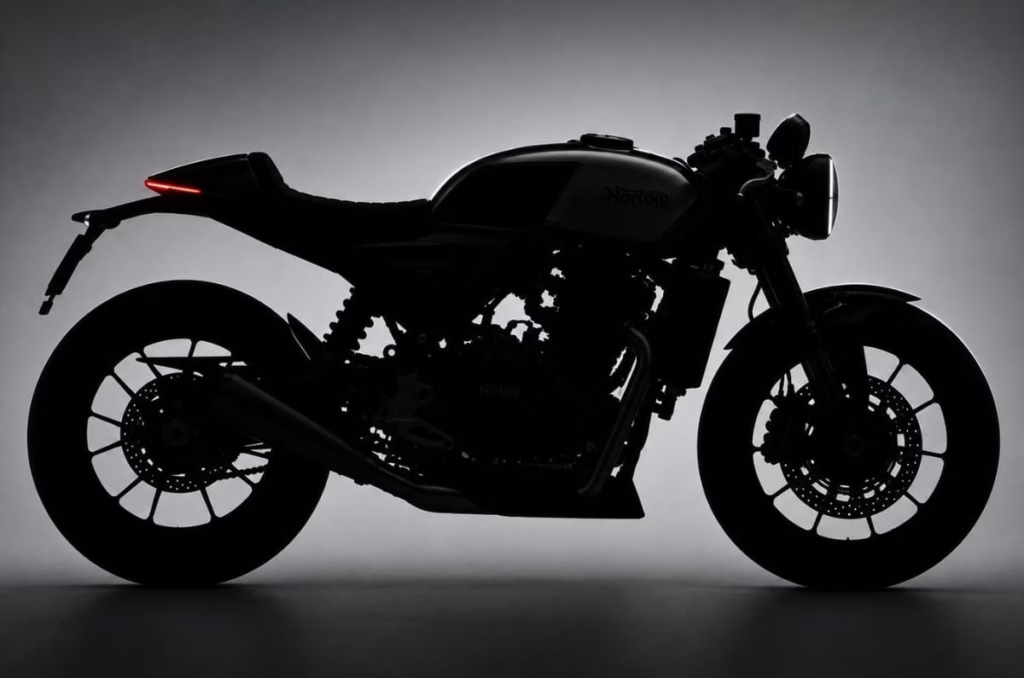
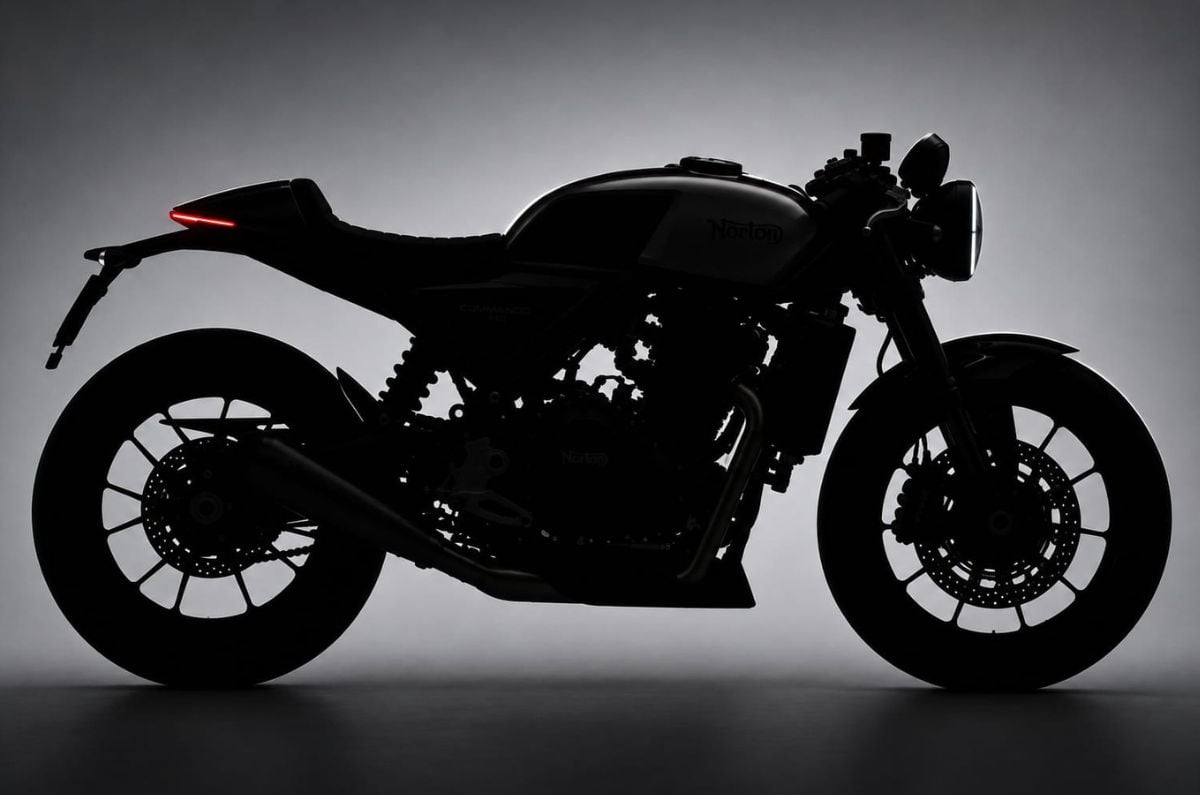
Norton Motorcycles will premiere its much-awaited 450cc-class single-cylinder roadster at EICMA 2026 in Milan, expanding its range with a motorcycle aimed at higher volumes in India and overseas. Autocar Professional expects the motorcycle to produce around 40-45hp and 40-45Nm. The engine is likely to be liquid-cooled and is expected to come with a 6-speed gearbox. The roadster will be the first model on a new platform understood to be called the H-series, with other body styles to follow. It will sit below the TVS Motor-owned British marque’s twin-cylinder Atlas range and V4-powered Manx family.
Norton Atlas is expected to first launch in India, in Q1 2027
New Norton single-cylinder motorcycle will launch overseas and in India simultaneously
Will also be manufactured at TVS’ Hosur plant
New Norton single-cylinder platform at EICMA 2026
Expected to launch in India and overseas in 2027
Autocar Professional understands that TVS plans to begin Norton’s India rollout in the January-March 2027 quarter, if not sooner, starting with the Atlas, followed by the Manx. The H-series roadster is expected to launch simultaneously in India and global markets in the second half of 2027. Responding to queries from Autocar Professional, a Norton spokesperson said the brand’s India introduction would follow its appearance at this year’s Milan show. “Norton is set to launch in India soon following the brand’s presence at EICMA this year, when the next key stage of the resurgence will be revealed,” the spokesperson said. The company has not officially confirmed the roadster’s platform name, engine capacity, output, pricing or sales timeline.
Norton has recently trademarked three names in India – Roven, Inter and Avalon and the first single cylinder bike may bear one of them. In 2025, the company also trademarked the Norton Electra name here, and this followed on the trademarking of the Norton Combat name in 2023.
Reimagined Norton under TVS
Design and ease of use is at the new Norton’s core
Differentiated design is central to TVS’s effort to give Norton a contemporary identity while retaining its British heritage. Simon Skinner, Head of Design, Norton Motorcycles, is leading the development of a design language connecting the brand’s products across capacities and categories. The roadster will extend that approach to a motorcycle intended to sell in larger numbers.
As we have seen with the thoroughly modern designs on the Atlas and V4, it is safe to anticipate modern, pared-back styling, with selected mechanical components exposed and others concealed. This could help distinguish the roadster in a segment where several competitors draw heavily on retro styling. According to Norton, the Manx R received the “Best of the Best” distinction at the 2026 Red Dot Award: Design Concept. Norton Design was also recognised at the 2026 International Design Excellence Awards in the United States.
The roadster is expected to prioritise manageable weight and ease of use, particularly in city riding. It could feature 17-inch wheels and equipment drawn from Norton’s larger motorcycles, potentially including an eight-inch TFT touchscreen, riding aids and multiple riding modes. Final specifications remain unconfirmed.
Taking on Royal Enfield
How does Norton plan to combat the 350cc onslaught?
The platform represents a significant bet on the global mid-size motorcycle market. The opportunity spans roughly the 350cc-750cc categories, with annual volumes estimated at around 15 lakh-20 lakh units. This broad classification includes motorcycles marketed as 350cc models whose actual displacement is slightly lower.
It will bring Norton into closer competition with Royal Enfield and Triumph in India and overseas. However, the new single-cylinder Nortons will face a specific challenge in India. That is the fact that they will not come under the 350cc segment, unlike the massively popular RE 350 range and the recently re-engineered 349cc Triumph line in India. The result is that they will attract the much higher 40 percent GST rate instead of 18 percent. Norton is likely to position these bikes at a premium that will be justified by higher levels of technology and a heavy focus on design, quality and detail.
Royal Enfield’s dominance in India demonstrates the demand for motorcycles used for daily travel, touring and leisure riding. Its extensive dealer network, broad product range and established riding community also present a substantial challenge for Norton. Overseas, Royal Enfield has expanded into many of the markets the TVS-owned British marque is targeting. For TVS, the single-cylinder Norton offers a way to participate more widely in this market. Additional body styles on the same platform would help spread development costs and reach buyers with different riding preferences.
The India distribution plan
TVS is yet to confirm showroom rollout schedule for India
Norton’s design and heritage will form part of its appeal, but pricing, service coverage and parts availability will be important to building sustained sales, particularly in India. TVS had said in June that the Norton Atlas would be introduced in India later in the year. It had also scheduled the launch of TVS Paddock, its premium retail channel for both Norton and select premium TVS products, for the second quarter of FY27. The latest official response did not provide an updated Paddock rollout schedule.
Current preparations are understood to point to around three Paddock outlets by December, although a larger network is being sought. The number of outlets that will be operational when motorcycle sales begin has yet to be finalised. The company said it now has more than 50 retailers across 10 markets, including the UK, Italy, France, Germany and Spain. Preparations for a United States launch are continuing, subject to the final stages of vehicle certification.
Norton said its European test-ride programme had introduced the new motorcycles to thousands of riders. Foster + Partners has designed its showroom environments. TVS acquired Norton in April 2020. Its FY2025-26 annual report records investments exceeding GBP 250 million in rebuilding the business and identifies the marque as an important part of its premium-isation strategy, particularly in developed markets.
India already supports that expansion through manufacturing. The first Atlas motorcycles rolled off TVS’s Hosur production line in June, combining Norton’s UK design and engineering with its parent’s manufacturing operations. Production for the new single-cylinder range will also be out of Hosur.
With inputs from Anurag Chaturvedi and Rishaad Mody.
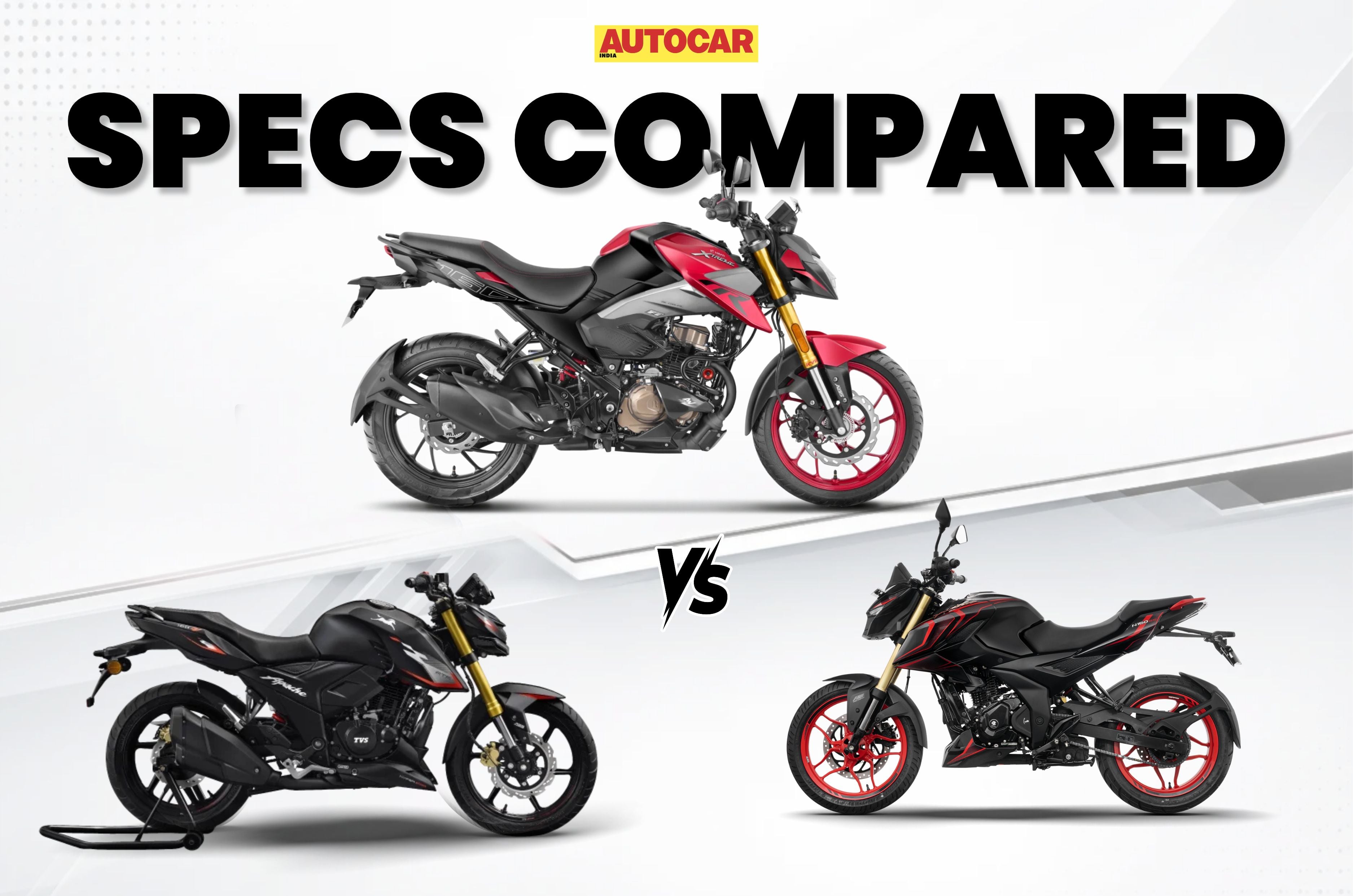
The 160cc segment was kickstarted and subsequently dominated by the TVS Apache RTR 160 and now, the RTR 160 4V is the manufacturer’s best-selling Apache, with the RTR 160 (2V) following in its footsteps. Bajaj has been attacking this duo with a trident of motorcycles, the N160, classic 150, and the NS160. In this fight, Hero’s offering the Xtreme 160R has taken a backseat all this while, but Hero’s looking to get in the front with the newly updated version of its street-naked motorcycle. Does it, really? Let’s see.
Hero Xtreme 160R 4V Carbon vs Rivals: Engine and output
Bajaj has the biggest engine with the most power
Hero Xtreme 160R 4V Carbon
TVS Apache RTR 160 4V
Bajaj Pulsar N160 SS
Engine
163.2cc, single-cylinder, oil-cooled
159.7cc, single-cylinder, oil-cooled
164.9cc, single-cylinder, oil-cooled
Power
17.1hp at 8,750rpm
17.6hp at 8,650rpm
18.5hp at 9,500rpm
Torque
14.6Nm at 6,500rpm
14.7Nm at 7,500rpm
14.4Nm at 8,000rpm
Transmission
5-speed
5-speed
5-speed
Power-to-weight ratio
114.77hp/tonne
120.21hp/tonne
122.52hp/tonne
Hero left the 163.2cc engine almost completely untouched, only raising the peak power output by a meagre 0.2hp compared to earlier. Bajaj’s upgrade to the N160 was more comprehensive than Hero and TVS, even though the other two motorcycles are chronologically newer. Said update has thus helped the N160 SS maintain the highest horsepower of the trio, though it comes in third with respect to torque.
However, the torque race is a very close one and thus unlikely to matter in real-world conditions. The noteworthy jump in power also helps Bajaj maintain a higher power-to-weight ratio, despite being the heaviest of the three motorcycles.
Hero Xtreme 160R 4V Carbon vs rivals: Dimensions and weight
Pulsar is the heaviest, but makes up for it
Hero Xtreme 160R 4V
TVS Apache RTR 160 4V
Bajaj Pulsar N160 SS
Fuel tank capacity
12 litres
12 litres
14 litres
Ground clearance
165mm
180mm
165mm
Kerb weight
149kg
146kg
151kg
Seat height
805mm
790mm
795mm
Wheelbase
1,329mm
1,357mm
1,348mm
None of these motorcycles received a generational change to the platform so the numbers largely remain the same as earlier. Starting off with the Xtreme 160R 4V, Hero has given it some additional features which has made it 1.5kg heavier than the previous Combat Edition and the seat height is a negligible 5mm taller too.
TVS added exactly two new features to the Apache so it remains exactly where it was before and is the motorcycle with the lowest seat height, while having the most amount of ground clearance. The Pulsar N160 is the heaviest of the lot, but also has two additional litres of fuel tank capacity, which is a factor in the additional weight. In this class, that translates to – at the very least – 80km of real-world range so that’s not a small advantage to the Bajaj.
Hero Xtreme 160R 4V Carbon vs Rivals: Tyres, brakes and suspension
Hero has a smaller rear brake and TVS has a narrower front tyre
Hero Xtreme 160R 4V
TVS Apache RTR 160 4V
Bajaj Pulsar N160 SS
Tyres (F, R)
100/80-17, 130/70R17
90/90-17, 130/70R17
100/80-17, 130/70R17
Brakes (F, R)
276mm disc, 220mm disc, dual-channel ABS
270mm disc, 240mm disc, dual-channel ABS
300mm disc, 230mm disc, dual-channel ABS
Suspension (F, R)
37mm USD fork, monoshock
37mm USD fork, monoshock
37mm USD fork, monoshock
Things continue to even out in this section but Bajaj makes a statement with the largest front disc rotor, which is actually from a class above. All three offer dual-channel ABS as standard on the top variants, and all have a lower variant with right-side-up (RSU) telescopic fork and single-channel ABS. Hero is the only manufacturer to offer a KYB, who is a suspension specialist, built fork but also has given the Xtreme 160R the smallest rear disc. TVS technically does have the smallest tyre of the three, but it’s not alarmingly small to imply handling issues.
Hero Xtreme 160R 4V Carbon vs Rivals: Features
Hero’s redemption attempt
This is the area Hero has caught up the most to the other two, after design. Though the Combat Edition added quite a bit to make the Xtreme 160R last year, the fight now feels even across the board, which is a great thing for you and me as consumers.
On the top Carbon variant, you get a 4.2-inch TFT display that goes toe-to-toe with the other two on this list. Xtreme 160R is the only motorcycle in this segment to give you cruise control and TVS, despite technically being the oldest platform of the lot, gives a tough fight to the other two. In terms of outright feature-set, the Bajaj still offers a higher number of features, such as an additional ride mode, document storage on the display and the likes, but TVS and Hero fight valiantly. The Hero still misses out on features such as, a slip-and-assist clutch, a dedicated mode to make low speed riding easier (Crawl mode on Bajaj, GTT on TVS) and Google Maps mirroring. So, if you’re looking for the most feature-loaded Hero, take a gander at the Xtreme 250R, which also got updated with quite a bit of features and is sitting in the segment above.
Hero Xtreme 160R 4V Carbon vs Rivals: Price
Carefully treading the affordable-line
Hero Xtreme 160R 4V
TVS Apache RTR 160 4V
Bajaj Pulsar N160 SS
Price (ex-showroom)
Rs 1.27-1.41 lakh
Rs 1.20-1.42 lakh
Rs 1.22-1.43 lakh
Hero is currently the most expensive of the three, especially if you’re looking to get the base variant; beyond that, digging further into the price difference will be splitting hairs, so look at the other sections to see if they help you make a choice. That being said, the 160cc segment in India is one of, if not, the most competitive one so whichever one you choose, you’re unlikely to make a truly bad one. See which motorcycle catches your eye the fastest and pulls your heart strings the hardest after the test ride, and you’ll probably know what you’re bringing home.
If you’re determined to live in the xtreme, er, extreme, Hero is currently taking bookings for the all-new Xtreme 160R 4V, whereas the other two motorcycles are already available in their respective showrooms. Unlike its bigger brother, the 160R 4V will be available in all Hero showrooms across the country – which is quite a large network. Deliveries for it are expected to begin in November.
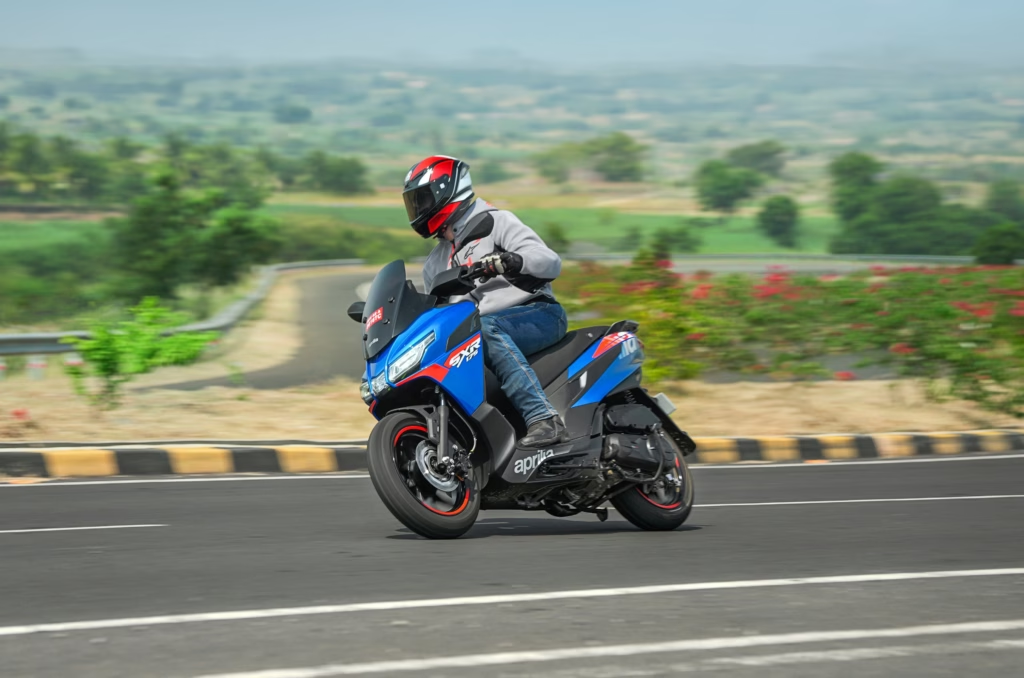
Aprilia may not be the biggest player in the Indian scooter market but it is certainly one of the most radical. It was the first to give us a taste of a true-blue affordable performance scooter with the SR 150 in 2015 and in 2020 the company then upped the ante and introduced India to a premium, yet attainable maxi-style scooter with the SXR 160.
However, six years is a long time and in this interim, the niche that Aprilia was the sole occupant of has now been infringed upon by TVS, Hero, Yamaha and more recently, even Honda! To counter, Aprilia has now taken the next step in the SXR’s evolution and has introduced two models with new engines (125cc and 175cc), more features and a GT suffix. We were given a chance to sample the larger 175cc version and here are our initial impressions.
Aprilia SXR GT 175 Design and features – 7/10
It’s an old design but still looks good; has received a good features upgrade
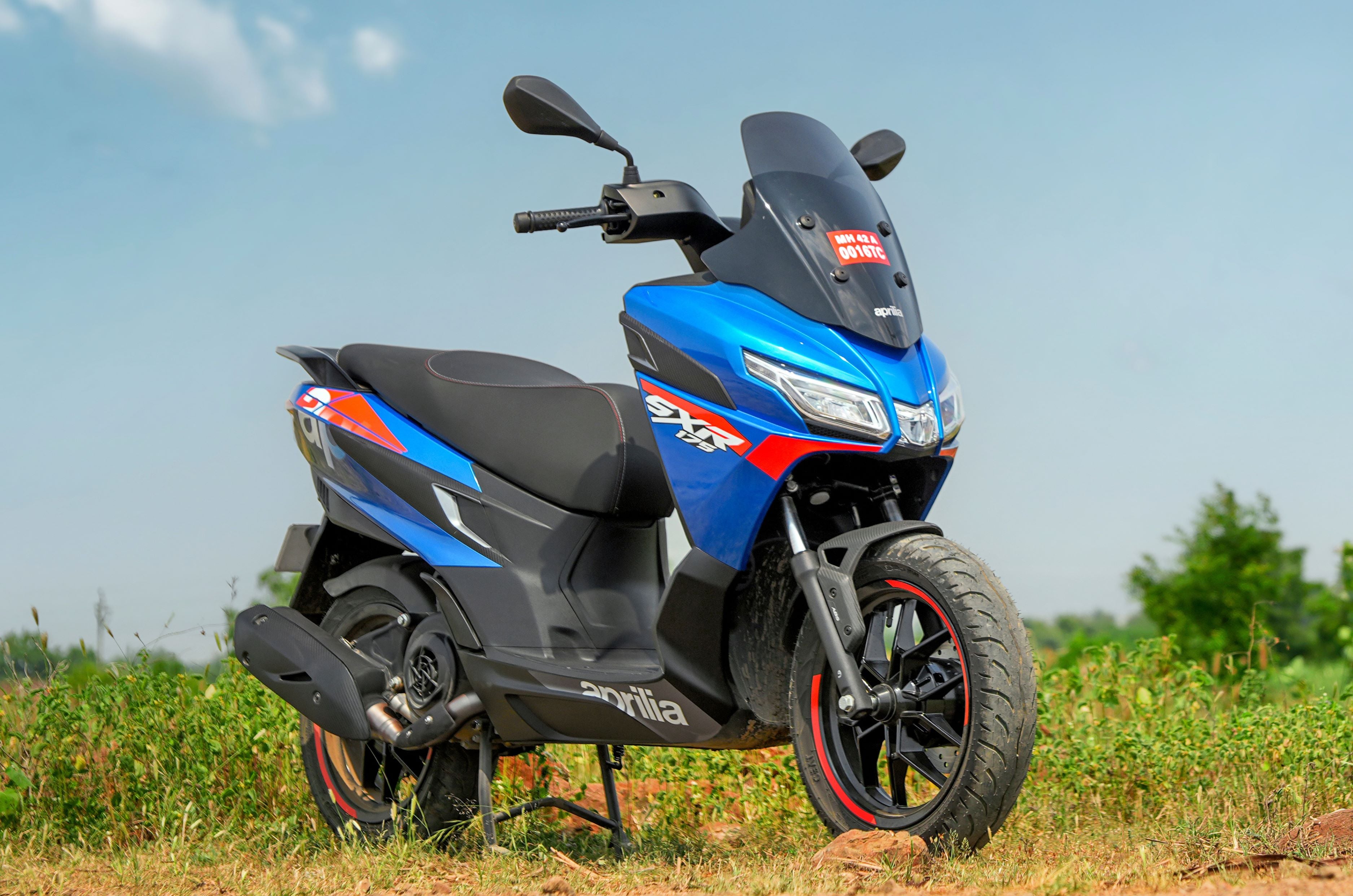
This design may be 6 years old, but it still manages to look good and turn heads
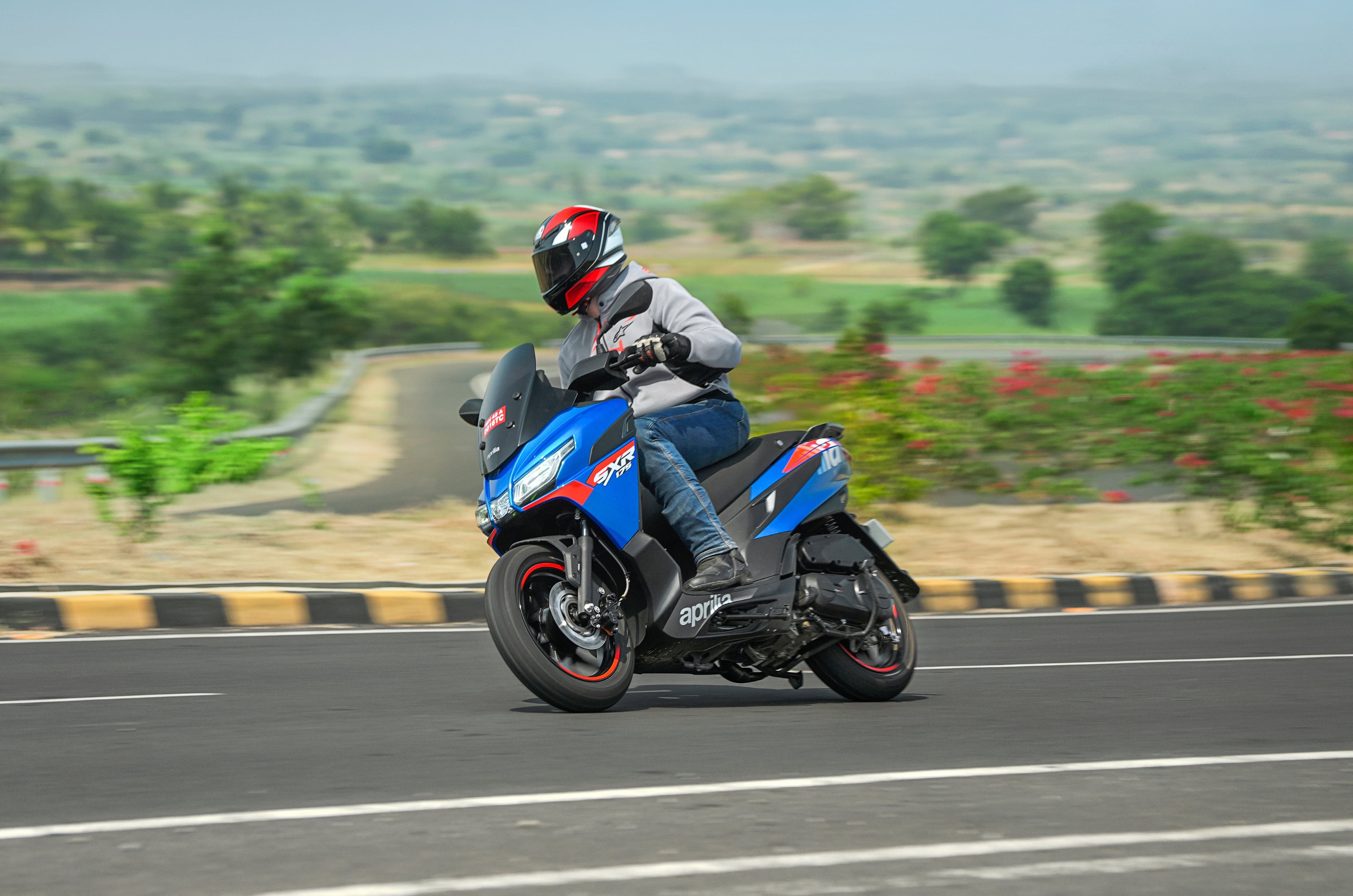
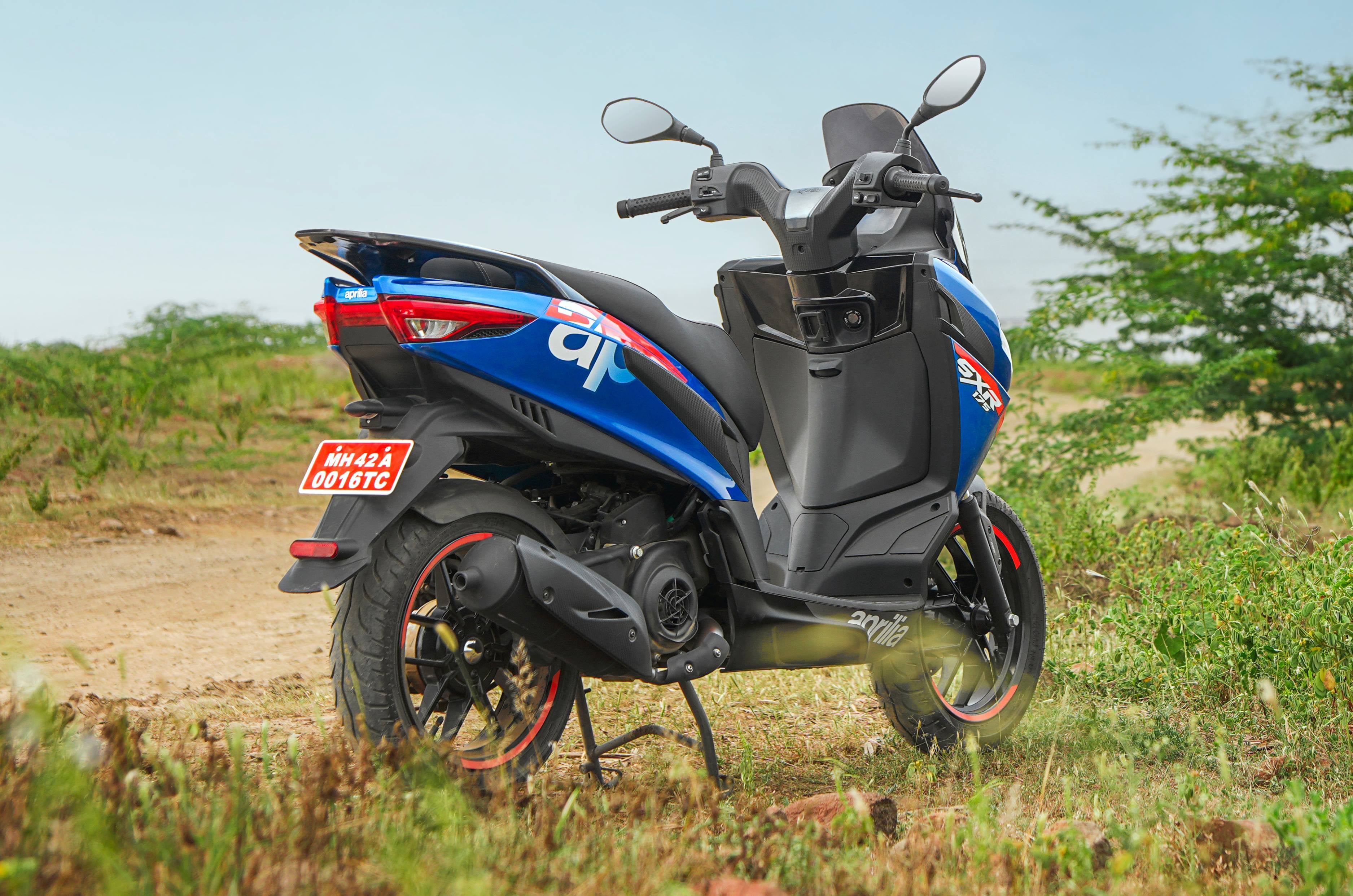
At this juncture, you’re probably wondering aside from the new colours and graphics, how different is the SXR GT 175 to the erstwhile SXR 160 it replaces? The answer to that question is, not very much. Aside from larger 14-in wheels, the SXR GTs look identical to the models they replace and you can certainly feel like it wouldn’t be unreasonable to expect more from the company. However, what you can’t deny is that the scooters still look handsome and striking without going over the top, despite looking nearly the same as they did 6 years ago – that’s Italian design brilliance for you! There are three new colours on offer – the vibrant blue you see here accompanied by a stealthy black and a camo army green scheme.
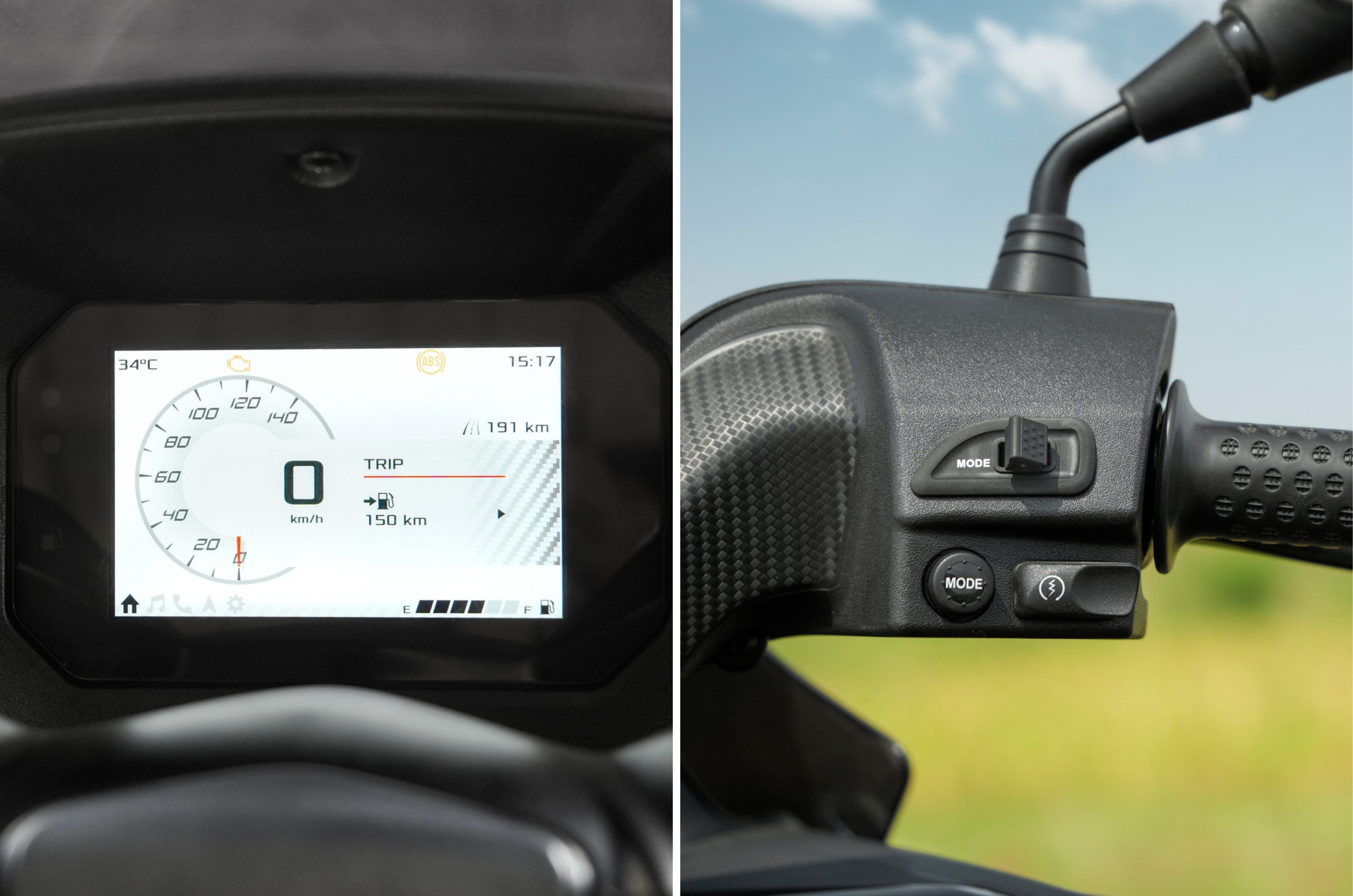
5-in TFT also shared with SR 175, is well laid out but UI isn’t entirely straightforward
However, once you get astride, you’ll realise that there are a fair few changes going on. For starters, the SXR GT 175 uses the same bright and well laid-out colour TFT display as the SR 175 and this dash is replete with Bluetooth functionality which brings in call/notification alerts & navigation prompts. Like that scooter, the overall user interface is a bit complicated and you will need to learn some of the secret handshakes necessary to fully utilise it. Another gripe I have with this dash is that while it has a lot of tech, you have to make do with a single trip meter, which seems like a small but unnecessary omission.
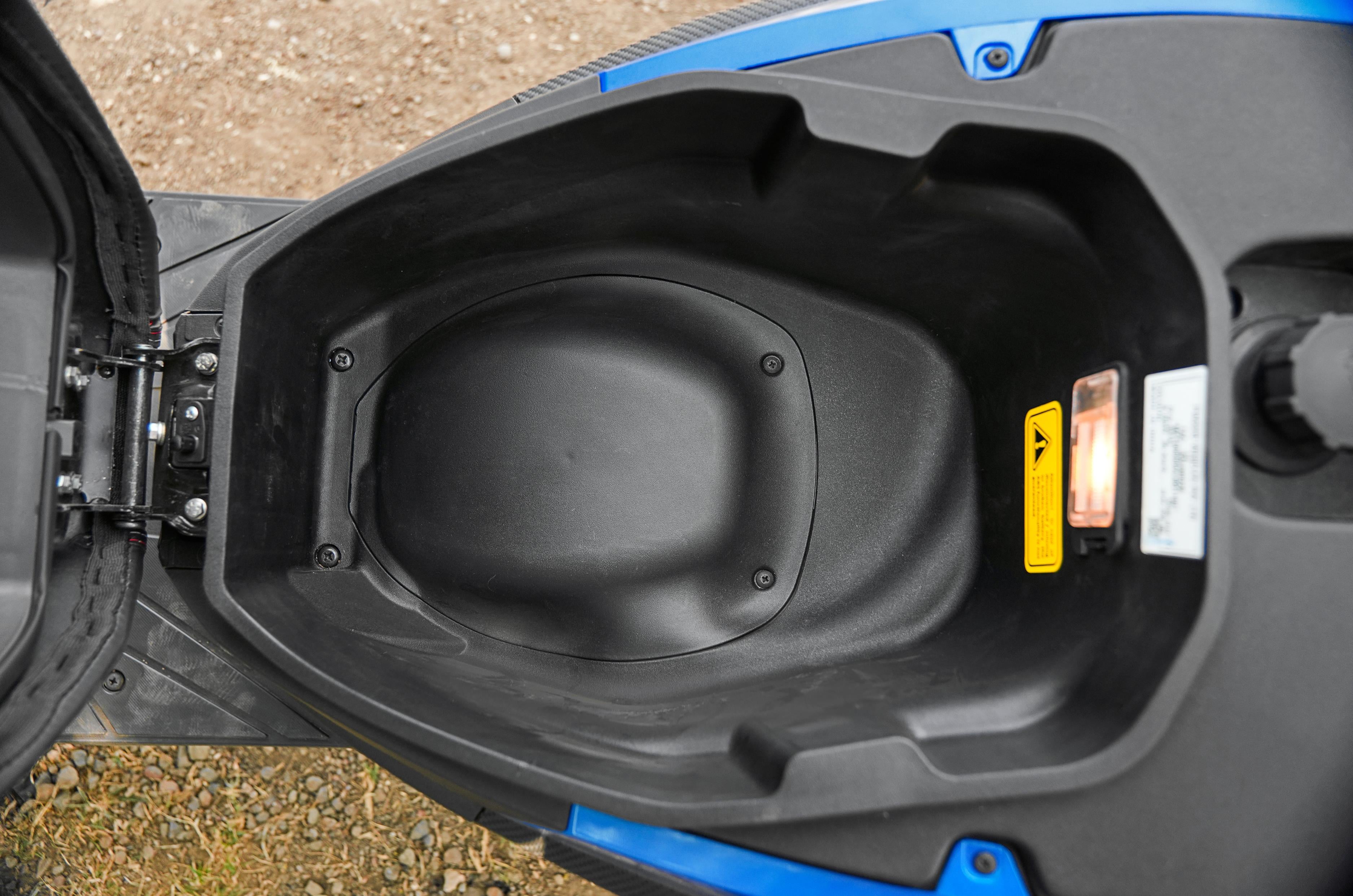
Bootspace is nothing to write home about
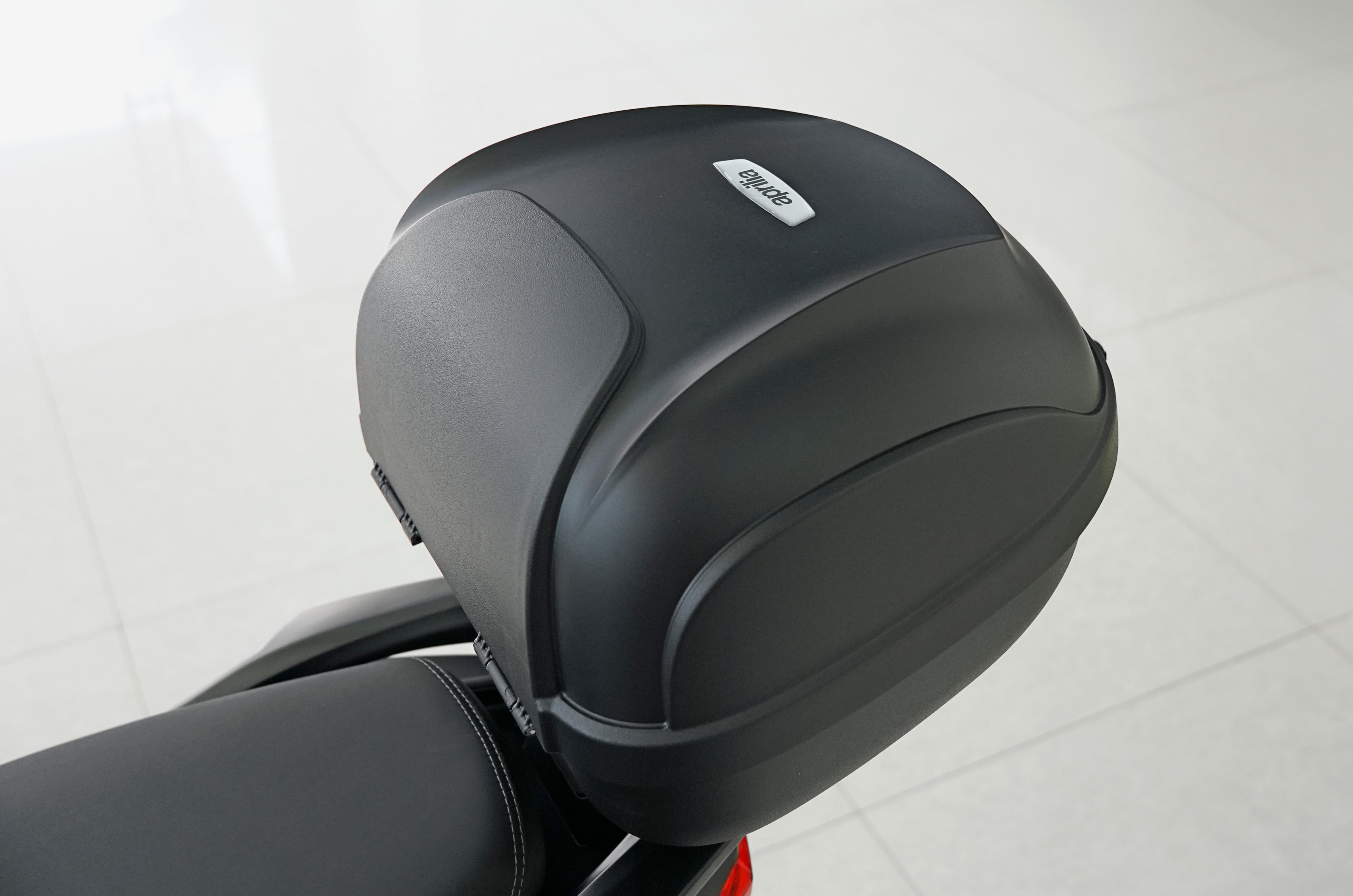
Another small omission is the absence of a multi-function ignition key slot, which means you need to remove the key and put it in its dedicated slot to open the seat and access the boot – something most smaller and cheaper scooters have long moved past. The underseat storage space here isn’t anything to write home about either. However, Aprilia will sell you a pretty spacious 32 litre accessory top box to alleviate that issue, although we don’t have a price for that yet.
But Aprilia will sell you an accessory 32L top box to alleviate that issue
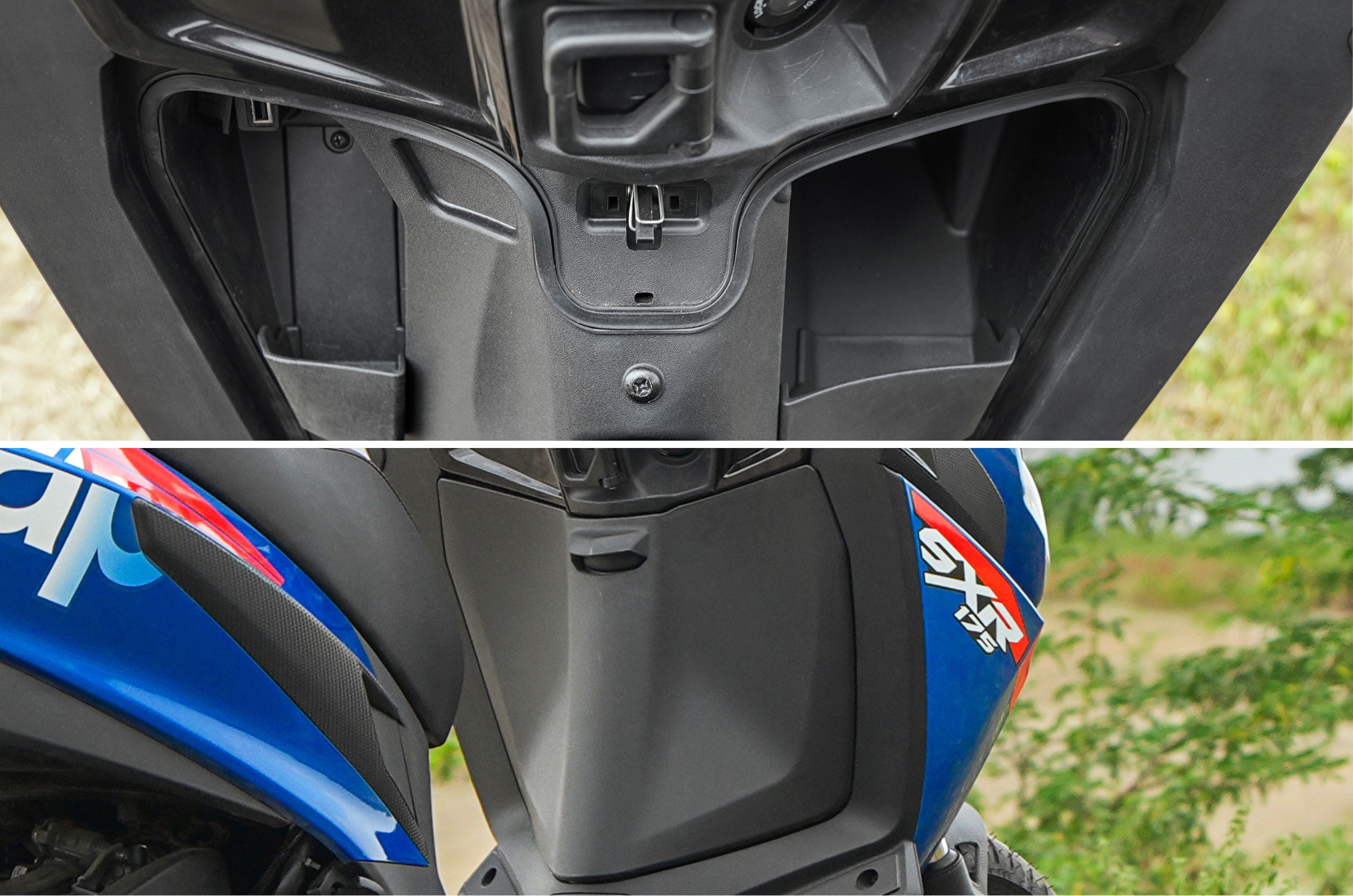
What is a nifty storage solution that comes as standard – carried over from the SXR 160 – are the fully enclosed cubbies on the front apron, and one of them even has a USB-A charging port. While this is surely a safe and practical storage area for your knick-knacks, it’s not the most convenient solution to access when on the move. That’s because you first need to come to a stop, then twist the key to its off position and press it inwards to unlock the cubby.
Enclosed, lockable area opens up to reveal 2 small cubbies; one of them has a USB Type-A charger
Aprilia SXR GT 175 Ergonomic – 7/10
Has one of the tallest seat heights in the scooter space; rider’s triangle is neutral
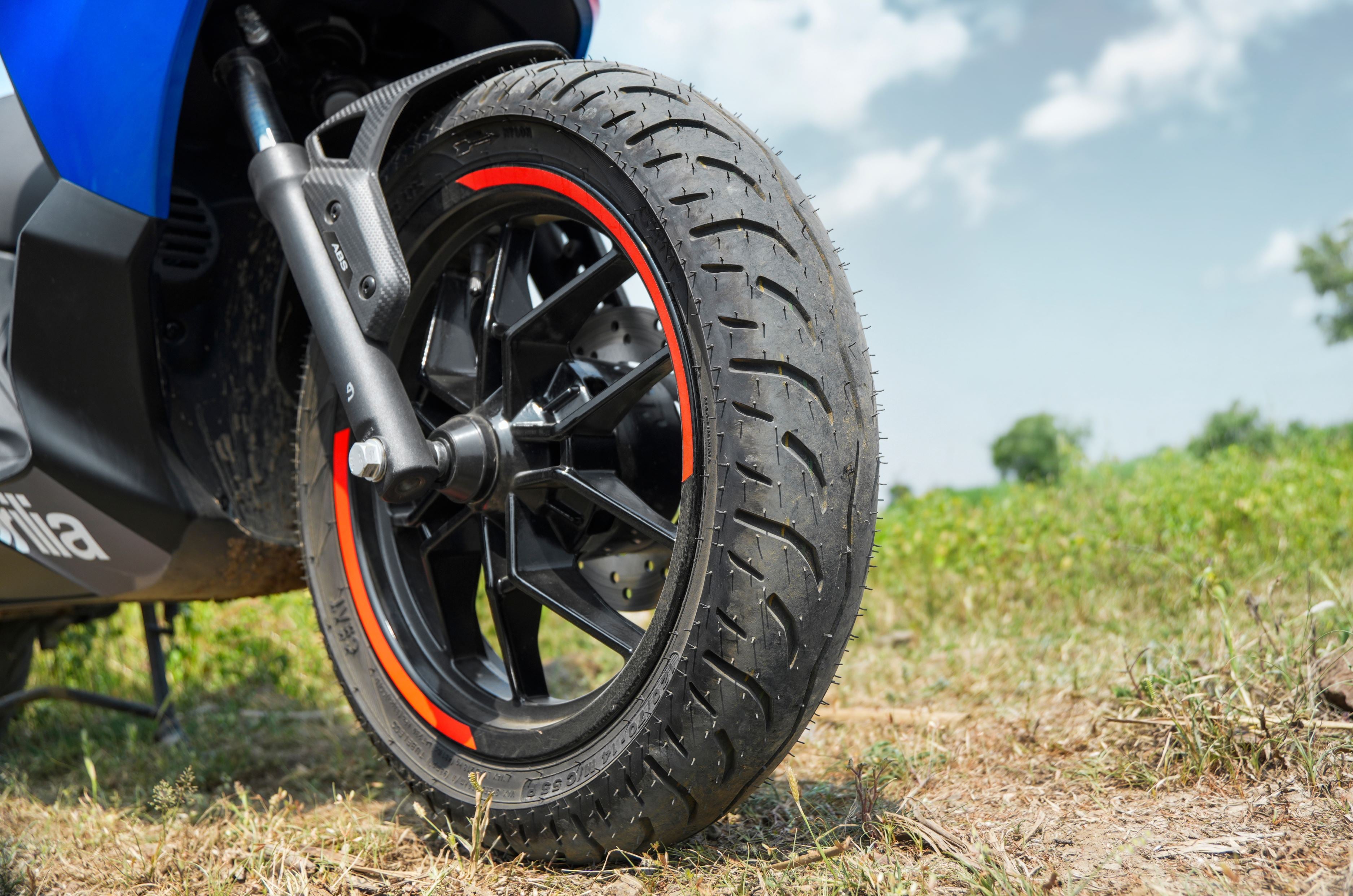
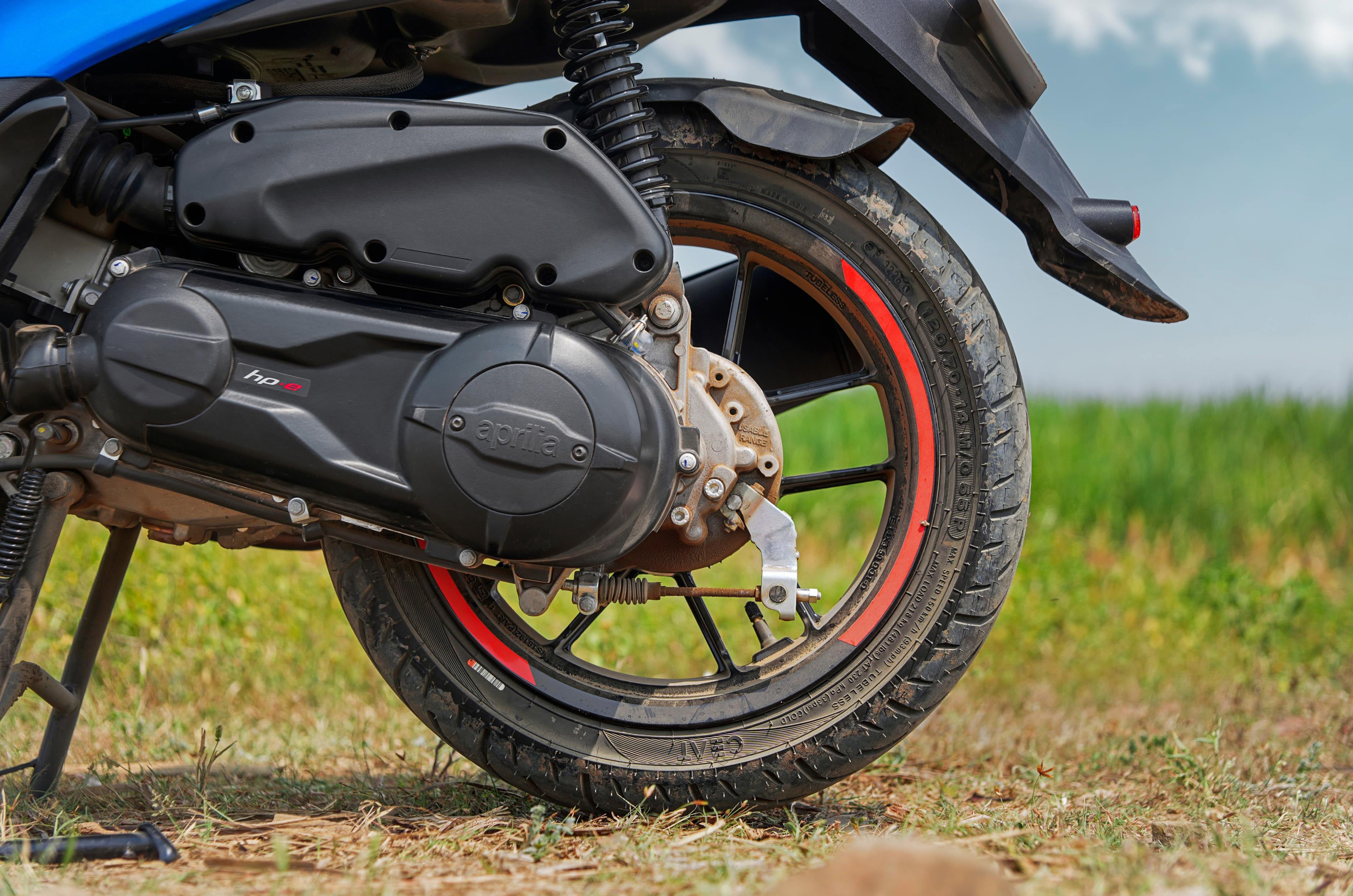
Of course, the new feature that is visible most prominently on the SXR GT is its new 14-inch wheel setup, which has its set of pros and cons. On the plus side, the proportions of the scooter are now better than ever before and its ground clearance has also now risen to 170mm – always a good thing on our unpredictable roads. However, because of the larger wheels, the SXR’s seat height has now risen to 800mm, which makes it the tallest seat height on any made-in-India petrol scooter.
14-inch wheels bring in surefooted handling and high-speed stability but the trade-off is heavier steering at slower speeds demanding more effort
Credit where it’s due, this number may seem big on paper but in the real world its not an unapproachable machine. Our photographer Omkar (who’s 5’2) could move the scooter around at our shoot location while seated without too much trouble. However, for someone that wants a friendly and approachable machine, the 132kg SXR is not where you should be looking.
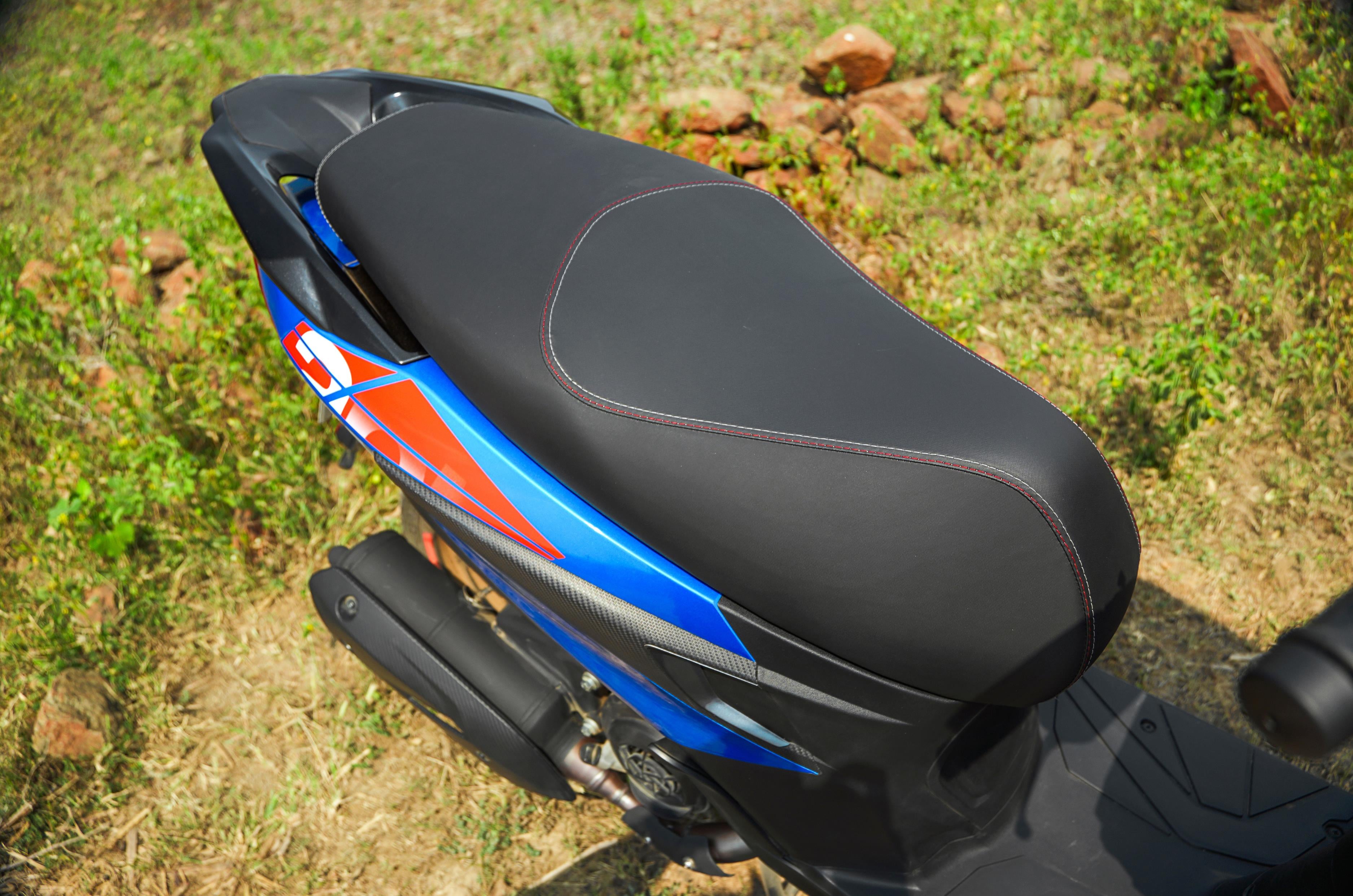
Aside from that, the SXR’s ergonomics haven’t changed and it retains the neutral and upright riding position from before. The seat’s padding is on the stiffer side, which will be especially noticeable on shorter trips but it works well for longer durations and for a person like myself that’s on the heavier side of the scale (80kg without gear). What, however, doesn’t work for a taller person like me (5’11) is that the handlebar is placed a tad low and fouls my knees when making lock-to-lock u-turns.
Neutral and upright ergonomics are unchanged from before; spacious seat’s padding is on the stiffer side
Aprilia SXR GT 175 Performance – 8/10
Engine provides sprightly performance, is smooth at high speeds
While practicality and convenience are one half of the story when it comes to a scooter like this, what plays an equally important role is how the scooter rides and handles. It will probably not come as any surprise to you when I say that this is surely a fun scooter.
From the moment you thumb the starter and the motor settles into its gruff idle, the 174.4cc, 3-valve motor makes its intentions quite clear – it wants to be ridden quickly. While the vibrations do subside once you get going, the engine clearly rewards energetic riding because the faster you go, the smoother it seems to get! Not just 80kph, even at a speedo-indicated 100kph, it remains absolutely smooth at all the touch points with no signs of protest. For all you top speed nuts, we were able to see an indicated 110kph on the display before the rev limiter kicked in.
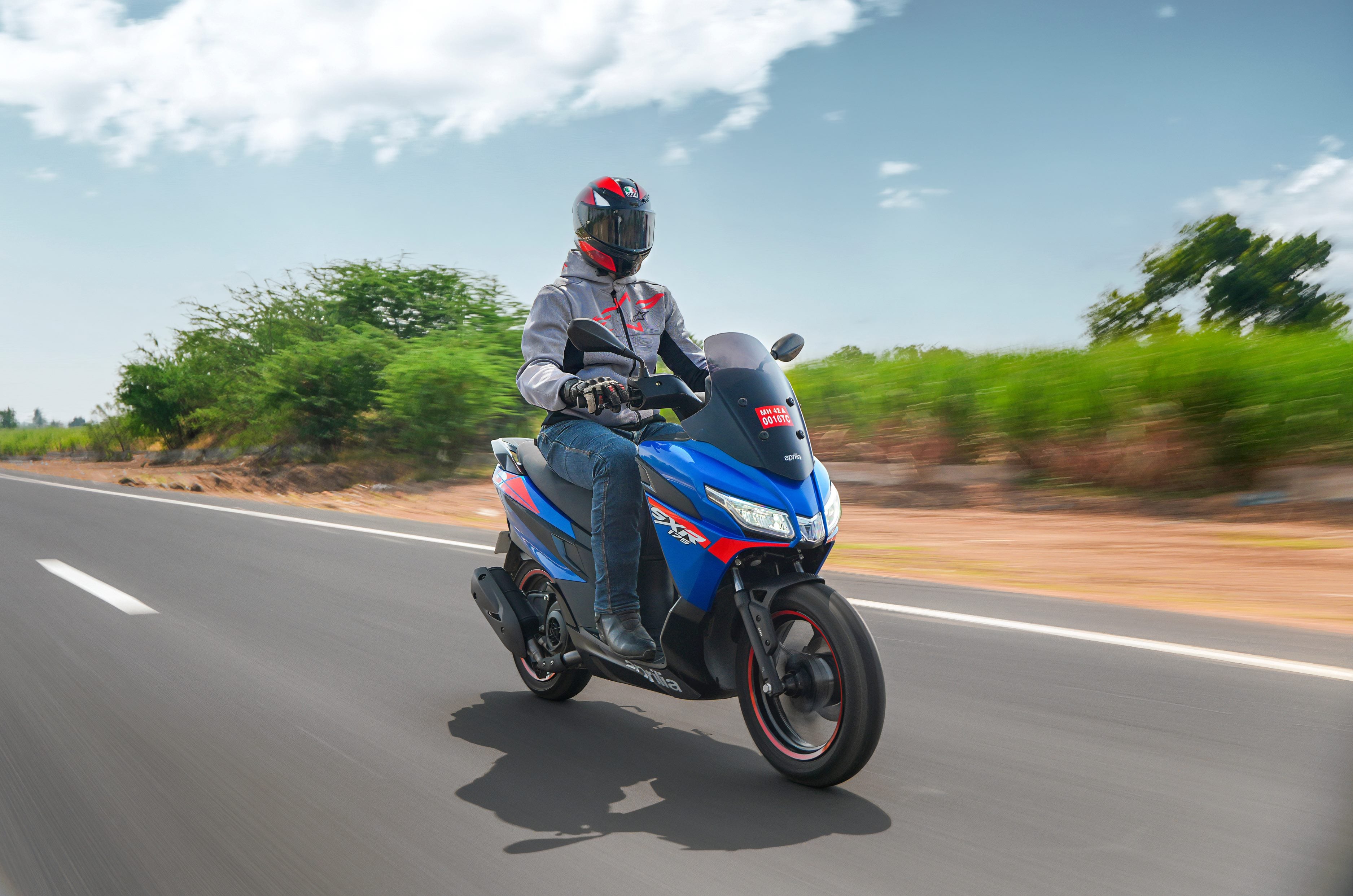
Sprightly 174.4cc engine shared with SR 175 has enough performance to placidly sustain 80-100kph
While the SXR is a quick scooter, from what I remember, it doesn’t feel as quick as the lighter and sportier SR. The 0-50kph dash is quite energetic but after that, acceleration becomes more measured. Nevertheless, this level of performance is more than acceptable for our environs and you’ll rarely wish for more power.
Aprilia SXR GT 175 Ride and Handling – 7/10
Planted and surefooted handler, but not the easiest to manage at slower speeds
Equally as enticing as its performance is the SXR GT 175’s handling. The new and bigger 14 inch wheels lend it a newfound sense of stability around corners and at higher speeds. To ride, this feels like a proper maxi scooter experience rather than just a styling exercise. However, the tradeoff is noticeably heavier steering at slower speeds which demands quite a bit more effort. If you’re going to spend a lot of time in dense stop and go traffic that you constantly need to manoeuvre around, the SXR GT is not the ideal machine for that task.
To account for these larger wheels, Aprilia has also tuned the SXR’s suspension differently to before. The damping and shock absorption are really quite composed at the rear but the fork feels stiff and jarring over rough roads and does bottom out over larger, sharper-edged bumps. Since Mumbai’s roads are dominated by these conditions, we’re not sure how comfortable the SXR GT will be there, but hope to find out soon.
It sticks to the Aprilia SXR formula of giving you a decently-priced, good-looking scooter with both functional practicality and zippy performance
Well-priced and stands out but its not for everyone
In the scooter segment, Aprilia operates in its own niche where people that really value style and performance continue to choose its offerings over mainstream options. We don’t see that changing with the SXR GT because even though it is more well-rounded than its sporty SR sibling, it still has some hurdles to overcome both on the product’s as well as the after-sales side and fresh styling would have helped increase the appeal after all these years. Nevertheless, the company assures us it is working on the after sales front and it aims to have 250 showrooms in India before the year ends, up from the current 230. Still, that’s vastly lower than the sales reach of Aprilia’s rivals.
To sum up, this latest iteration hasn’t really diverged from what has been the cornerstone of the Aprilia SXR formula – to give you a decently-priced, good-looking scooter with both functional practicality and zippy performance. Speaking of price, the SXR GT 175 is priced at Rs 1.30 lakh (introductory, ex-showroom, Maharashtra) which is a pretty decent price considering what it brings to the table. If you must have a stylish and fun scooter that stands out of the crowd without breaking the bank, the Aprilia SXR GT should be on your radar.
The Xtreme 160R 4V has been Hero’s answer since 2023 to the Bajaj Pulsar NS160 and the TVS Apache RTR 160, although it hasn’t been as popular. Late last year, the brand launched a higher variant of it called the Combat Edition with cruise control, ride-by-wire and an updated negative LCD screen from the GlamourX 125 and now it’s taking that further with a refined design and TFT display. The bigger Xtreme 250R also sees some big improvements alongside its younger brother.
Retains the 164.32cc, oil-cooled engine; peak power has increased to 17.1hp
Top Carbon variant gets a TFT display
Standard costs Rs 1.27 lakh, Pro costs Rs 1.37 lakh and Carbon costs Rs 1.41 lakh
Hero Xtreme 160R 4V: What’s new?
Sharper design and a stronger feature set
Hero has started the updates with the design of the Xtreme 160R 4V. Compared to the previous Combat Edition, the entire silhouette has been sharpened and it’s most obvious in the fuel tank and the rear seat cowl. There are also new colours and variants on offer. The current base variant has been rechristened to Standard variant, the Combat Edition has become Pro, and a new top-variant called Carbon. Standard gets Firestorm Red and Pearl Black and Pro gets Pro Red and Pro Black. Carbon gets Carbon Red, Carbon Black, Carbon Grey and Abrax Orange.
Moving onto mechanical changes, all variants of the Xtreme 160R retain the 164.32cc, oil-cooled engine but peak power has marginally increased to 17.1hp (versus 16.9hp earlier) delivered 250rpm later in the rev range at 8,750rpm. Torque figures remain unchanged, 14.6Nm at 6,500rpm. However, Hero has separated the Standard variant from the other two quite significantly by way of features. It gets a telescopic front suspension and retains a mechanical throttle. While dual discs are also retained, it only has single-channel ABS and gets the LCD console from the Combat Edition, one of two things it shares with the Pro; the other being the design.
The Pro variant, except for the changes mentioned above, remains identical to the Combat Edition. Which means, ride-by-wire is standard with three ride modes (Rain, Road and Sports), as is cruise control. The front suspension on this one is a 37mm KYB USD fork and the rear is a monoshock that has adjustable preload. Dual-channel ABS is standard and the brake specifications remain the same too, 276mm front and 220mm rear. On the dimensions-front, seat height has gone up by a negligible 2mm to 805mm and the kerb weight by 1.5kg to 149kg.
The top Carbon variant is identical to Pro, except for its new TFT display. While the TFT display itself is shared with the Xpulse 210, Hero has changed the layout and design of it to better suit the Xtreme 160R’s sporty characteristics. There’s no difference in weight between the three variants.
With the updated design and additional features, the Hero Xtreme 160R 4V Standard comes in at Rs 1.27 lakh, Pro sits at Rs 1.37 lakh, a significant Rs 10,000 increase. Top Carbon costs Rs 1.41 lakh. Hero specifies all three variants’ prices as introductory. The current base variant costs Rs 1.35 lakh and the Combat Edition Rs 1.38 lakh; though we can’t compare the two base variants directly, the Combat edition has effectively become cheaper by Rs 1,000, with an updated design. The Haryana-based manufacturer says bookings are open today across all its showrooms in India and deliveries will begin from November, in time for the festive season.
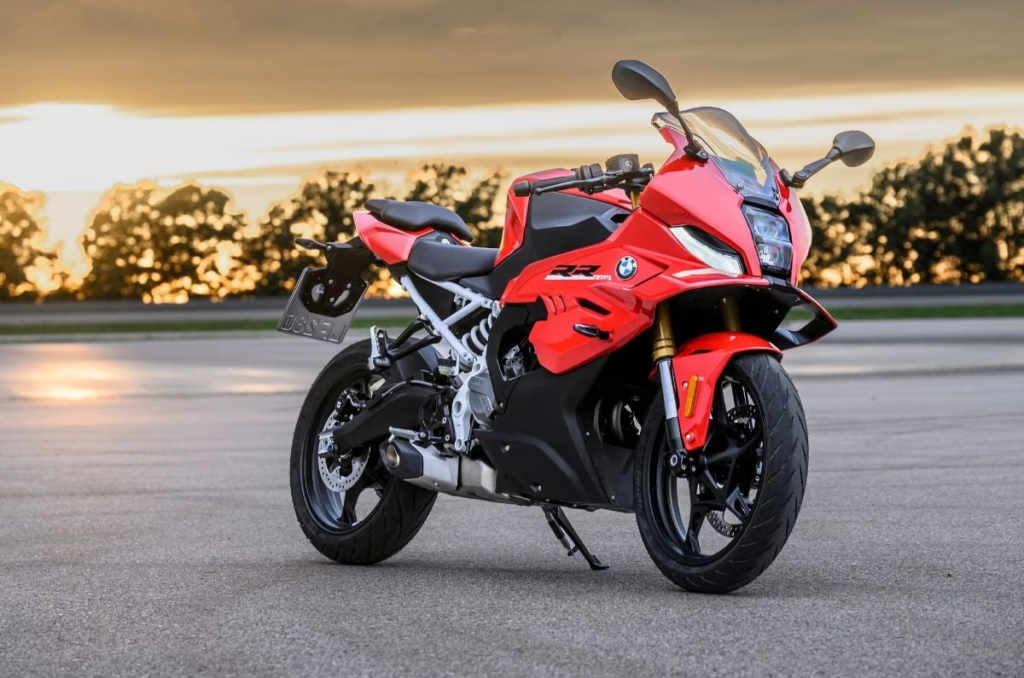
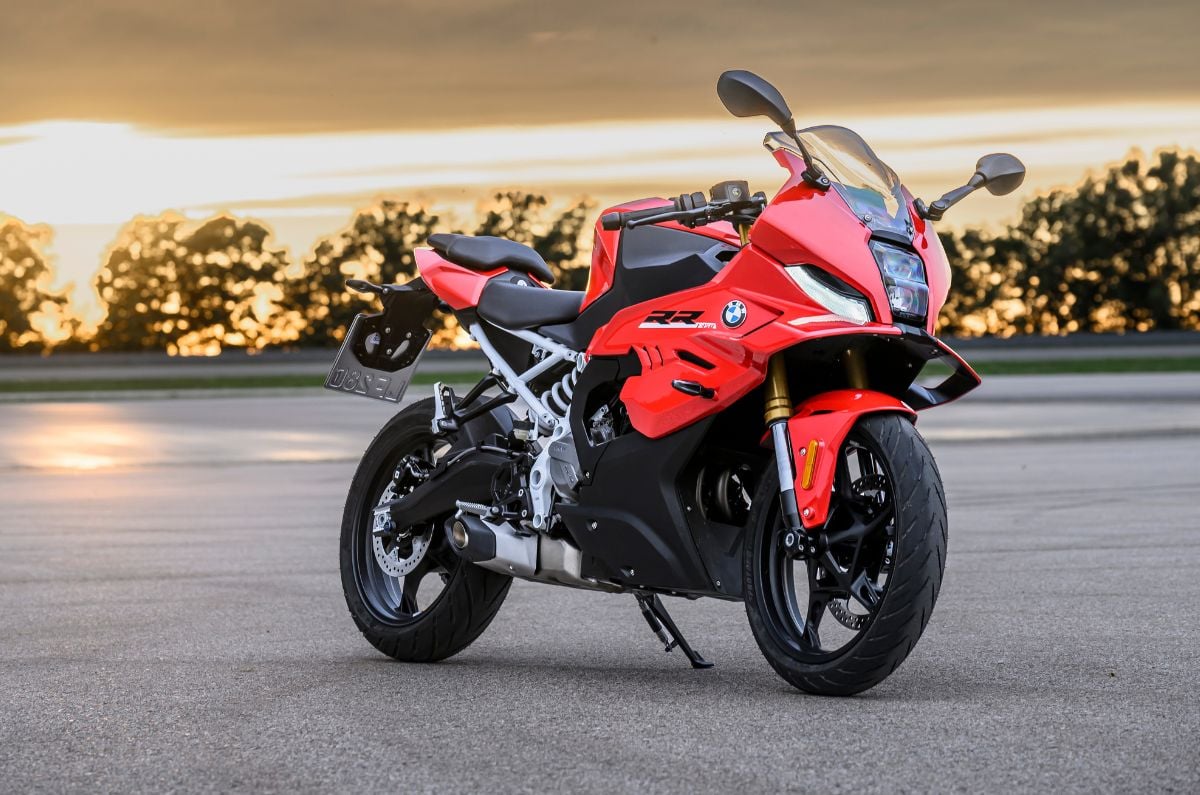
BMW has revealed the third motorcycle based on its 420cc engine platform, the F 450 RR. This follows the F 450 GS which was revealed last November and the F 450 R, which debuted as recently as two weeks ago. This trio of motorcycles are manufactured by TVS in Hosur.
The F 450 RR’s 420cc, twin-cylinder, liquid-cooled mill continues to mete out 48hp at 8,750rpm and 43Nm at 6,750 rpm. Other technical aspects such as the suspension, brakes and kerb weight are closer to its sport-naked sibling, the F 450 R. The standard seat height is 790mm and BMW offers two seat options, to either increase it to 810mm, or drop it down to 775mm. Brakes are the same as the R, a 310mm front disc with a Brembo four-piston monobloc caliper and a ByBre 240mm rear disc. The base variant of the F 450 RR has a kerb weight of 177kg (178kg with ERC).
The F 450 RR has four variants, Base, Exclusive, M Sport and M Sport with Innovation Package. As standard, all four get the exact same rider aids as the R, some of which are, dual-channel and lean-sensitive ABS, a 6.5-inch TFT display with smartphone connectivity, and three ride modes (Rain, Road and Race).
BMW hasn’t revealed prices for the F 450 RR, or a timeline for an Indian launch, like the F 450 R. For context, the F 450 GS reached our shores six months after its international reveal, which means that the R and the RR could be expected in the first quarter of 2027. Once they get here, we anticipate the F 450 R to be the most affordable option with the F 450 RR sitting between it and the F 450 GS.
The Indian scooter industry has hit a new milestone, recording its highest-ever monthly dispatches in September 2026. A total of 9,95,576 scooters were dispatched during the month, marking a substantial 34 percent jump over the 7,42,602 units sold in September 2025 and comfortably surpassing the previous monthly record of 8,55,715 units set just a month earlier, in August 2026.
Highest monthly total in the segment’s history, falling just 4,424 units short of the 10 lakh mark
Honda led with 3,83,035 units, followed by TVS at 2,77,115 units
Electric scooter dispatches reached 1,86,692 units
September 2026 scooter sales
Honda and TVS dominate sales
Honda Motorcycle and Scooter India led the segment by a wide margin, dispatching 3,83,035 units – a 46 percent year-on-year increase – to claim roughly 38 percent of the market. TVS Motor Company was second with 2,77,115 units, up 29 percent, accounting for around 28 percent of the market. Together, the two OEMs accounted for approximately two-thirds of all scooter dispatches during the month.
Suzuki and Hero MotoCorp rounded out the top four, with 1,06,274 units (+1 percent) and 96,254 units (+67 percent), respectively.
Electric scooters continue their climb
The electric segment had another strong showing, with 1,86,692 scooters dispatched in September – a 68 percent year-on-year increase. This was the second-highest month on record for electric scooters, behind only August 2026, when dispatches reached 1,88,714 units.
TVS led the charge in terms of EV volumes, with its iQube and Orbiter models together clocking 62,347 units – more than double the year-ago figure. Hero MotoCorp’s Vida range sold 28,962 units, up 88 percent, while Bajaj’s Chetak posted 28,862 units, also up 88 percent. Ather Energy dispatched 30,121 units, a 20 percent increase, with its recently launched mass-market Konarc expected to add further momentum.
For the April-September period, scooter dispatches totalled 48.2 lakh units, up 29 percent year-on-year, underlining the segment’s consistent growth trajectory heading into the festive second half of the fiscal year.
BMW has revealed the third motorcycle based on its 420cc engine platform, the F 450 RR. This follows the F 450 GS which was revealed last November and the F 450 R, which debuted as recently as two weeks ago. These trio of motorcycles are manufactured by TVS in Hosur.
F 450 RR shares the same 420cc engine and chassis with the other two BMW 450s
Total of three colour options available across four variants
No prices or an Indian launch timeline, just like the F 450 R
BMW F 450 RR: What you should know
A familiar engine and chassis, fine-tuned for track use
BMW’s newest entry to its entry-level motorcycle segment shares its engine and steel tubular chassis that carries said engine as a stressed member, similar to its other two 450s. Its 420cc, twin-cylinder, liquid-cooled mill continues to mete out 48hp at 8,750rpm and 43Nm at 6,750 rpm. Other technical aspects such as the suspension, brakes and kerb weight are closer to its sport-naked sibling, the F 450 R, with sportbike-like design details like winglets and a full fairing, of course.
The F 450 RR has 17-inch tyres at both ends, KYB-supplied 43mm USD fork and monoshock suspension units – the latter offers rebound and preload adjustability as standard. The standard seat height is 790mm and BMW offers two seat options, to either increase it to 810mm, or drop it down to 775mm. Brakes are the same as the R, a 310mm front disc with a Brembo four-piston monobloc caliper and a ByBre 240mm rear disc. The base variant of the F 450 RR has a kerb weight of 177kg.
The F 450 RR has four variants, Base, Exclusive, M Sport and M Sport with Innovation Package. As standard, all four get the exact same rider aids as the R, some of which are, dual-channel and lean-sensitive ABS, a 6.5-inch TFT display with smartphone connectivity, and three ride modes (Rain, Road and Race). The Base gets a single Cosmic Black colour. Stepping up to the Exclusive variant gets you the Racing Red colour, a bi-directional quickshifter and Sport suspension that adds rebound and compression adjustability to the USD fork. The third M Sport variant gives you an additional user-customisable Race Pro ride mode and an Snaefell white/M Motorsport color scheme. The top variant, M Sport with Innovation Package, cinches down the package with ERC (Easy Ride Clutch) – BMW’s take on clutchless riding that we first saw on the F 450 GS.
BMW hasn’t revealed prices for the F 450 RR, or a timeline for an Indian launch, like the F 450 R. For context, the F 450 GS reached our shores six months after its international reveal, which means that the R and the RR could be expected in the first quarter of 2027. Once they get here, we anticipate the F 450 R to be the most affordable option with the F 450 RR sitting between it and the F 450 GS. Currently, the F 450 GS Base starts at Rs 4.95 lakh. BMW has another built-by-TVS sportbike in its line-up, the G 310 RR listed on the BMW Motorrad India website. The G 310 R and G 310 GS were discontinued last year, leaving the future of the G 310 RR uncertain.